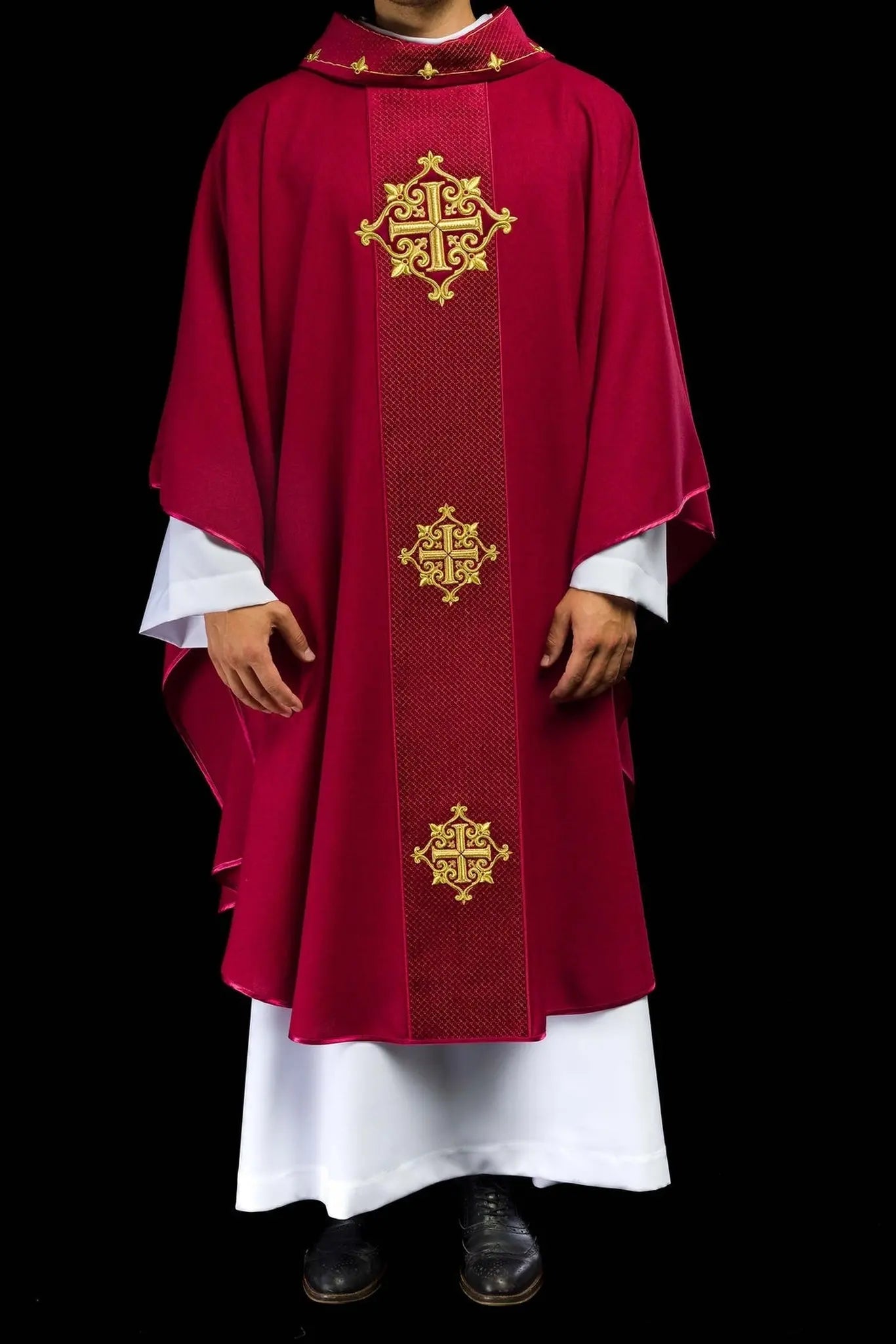
Easter Vestments and Liturgical Textiles
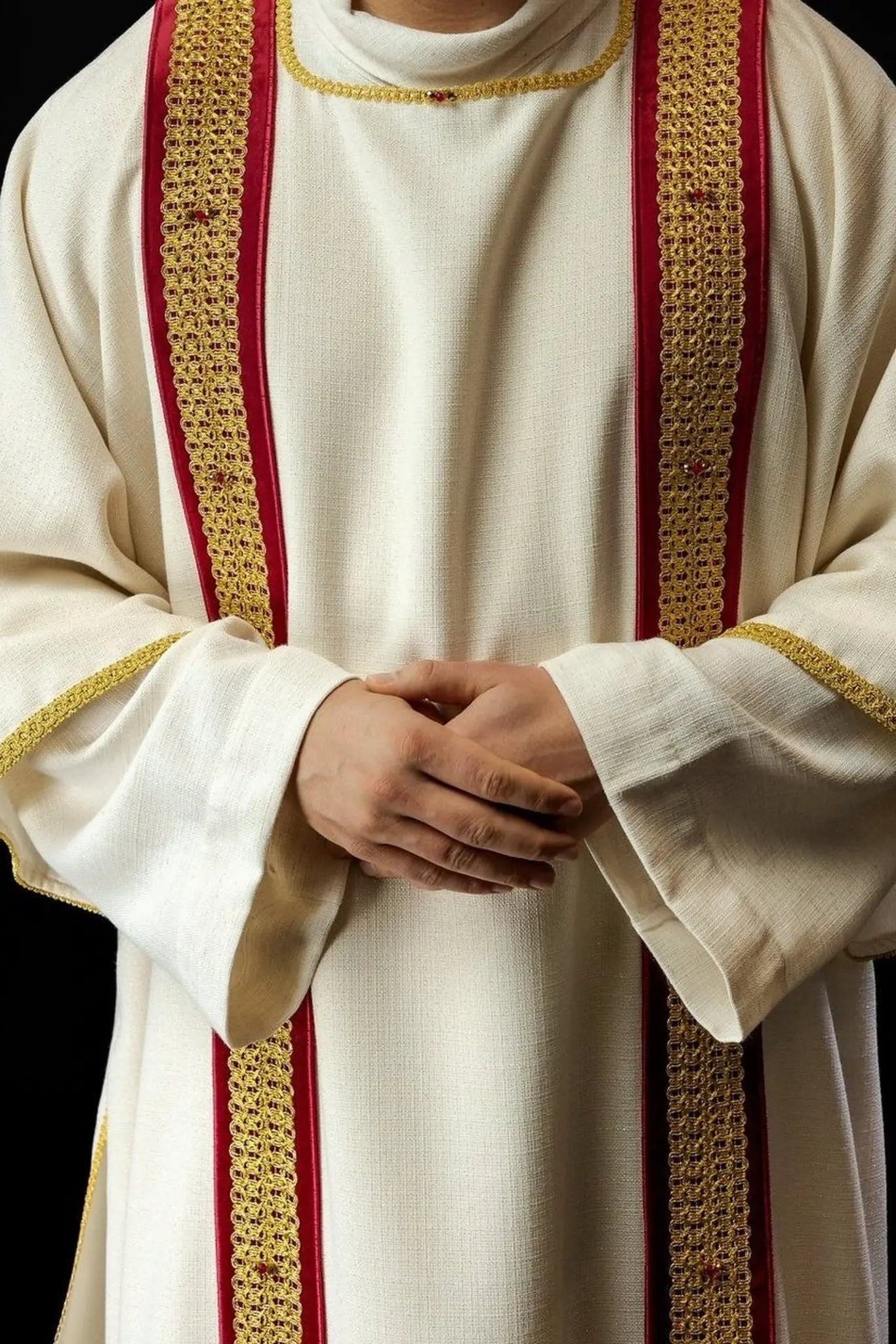
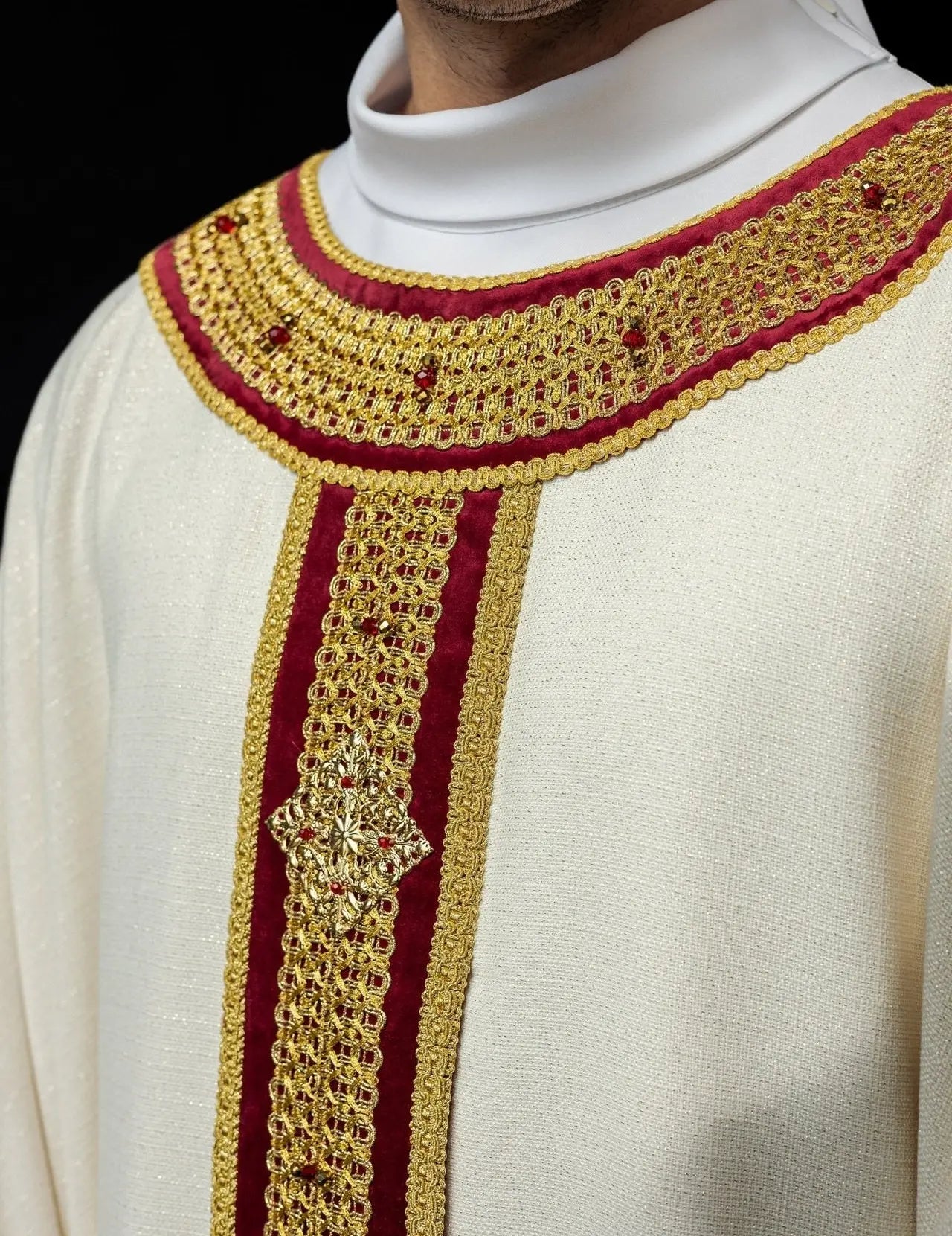
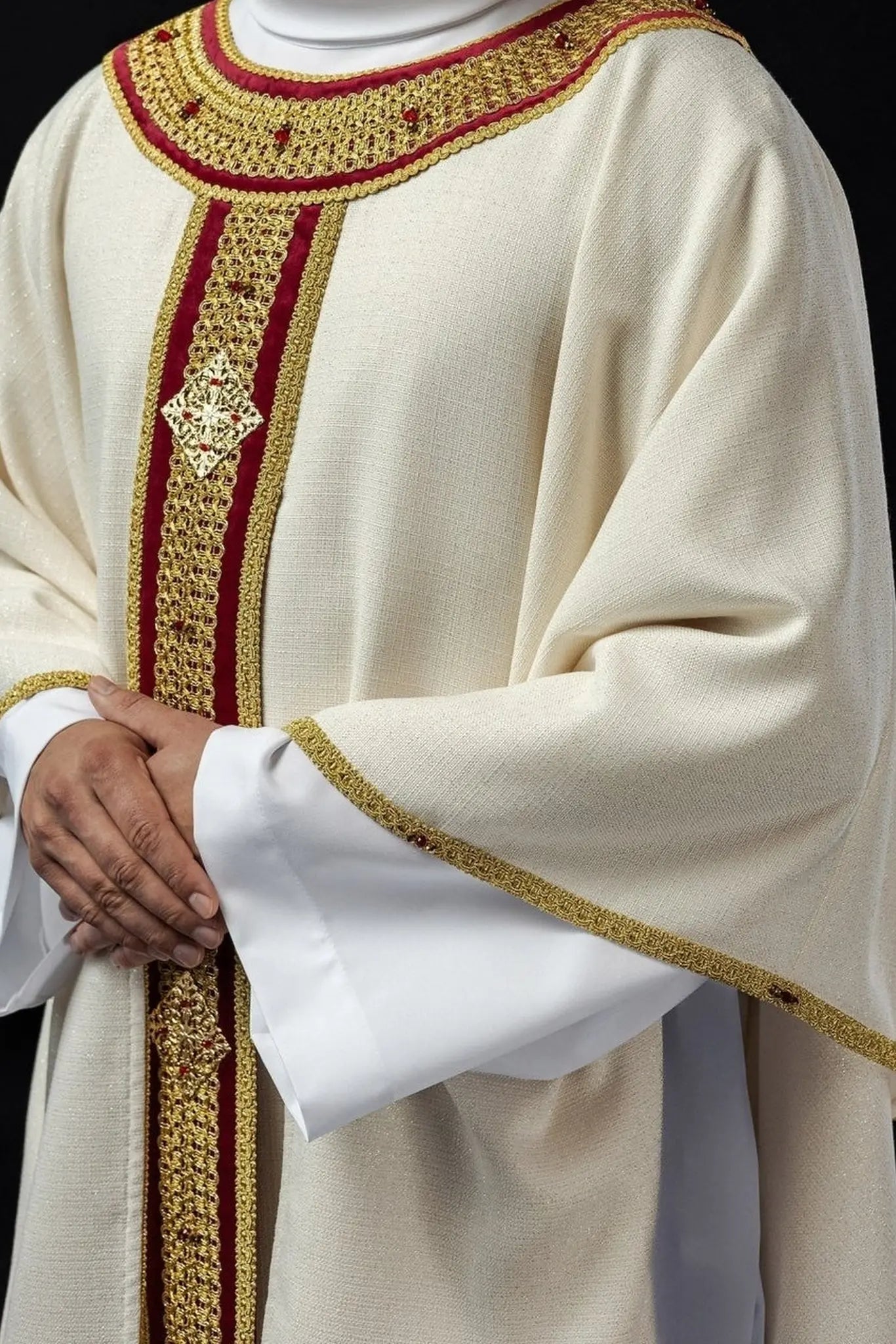
The Easter collection gathers vestments and church textiles prepared for the most joyful season of the liturgical year: the celebration of the Resurrection of the Lord and the weeks of Eastertide that follow. It is designed for parishes, chapels, religious houses and clergy who need coherent garments and altar appointments for Easter Sunday, the Easter Octave, solemn Masses, processions, parish celebrations and services marked by the Paschal mystery. The collection includes embroidered chasubles, clergy stoles, copes, dalmatics, pulpit covers, chalice veils, altar cloths and related liturgical textiles whose imagery and color language speak of victory over death, new life, sacrifice fulfilled and the light of the risen Christ.
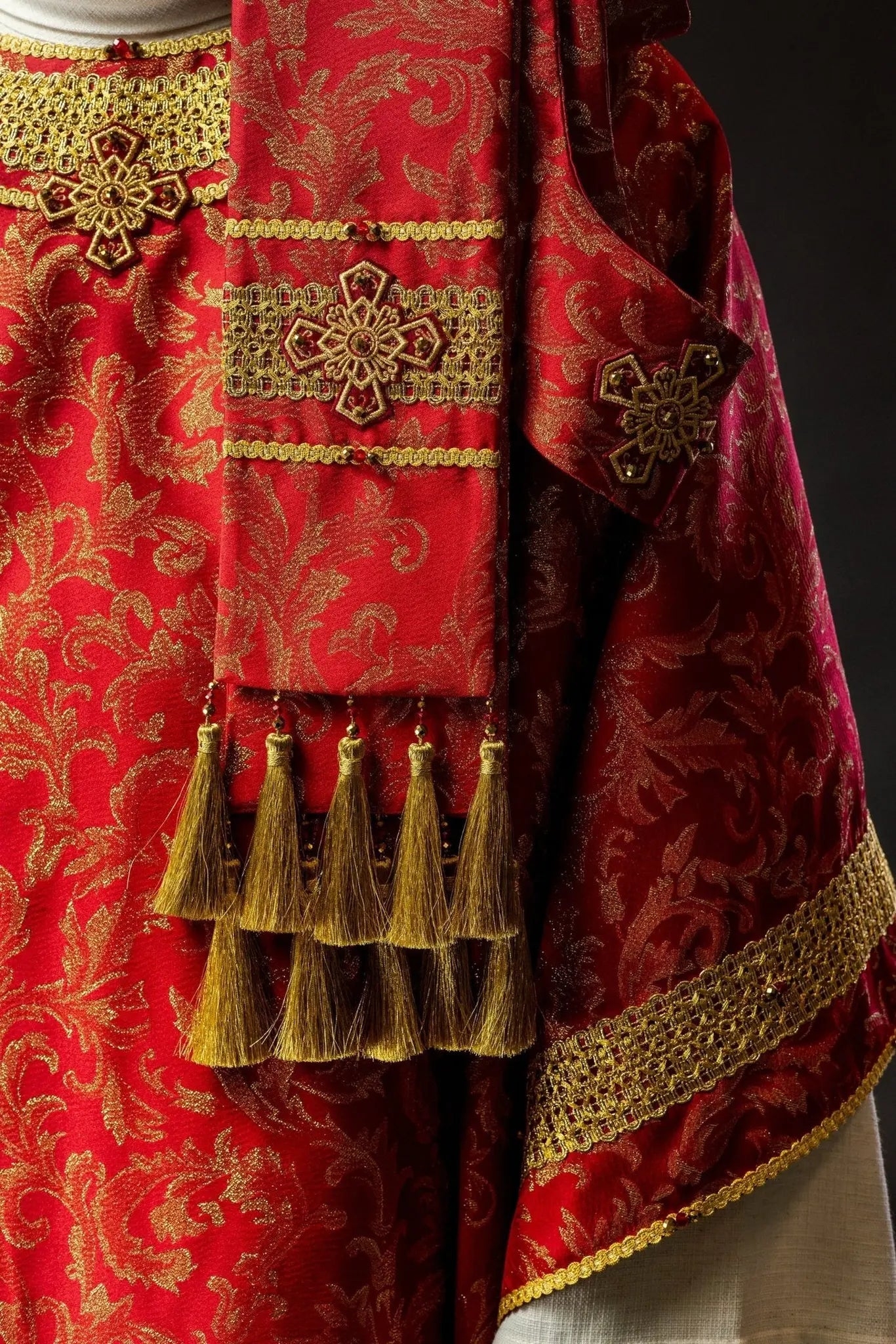
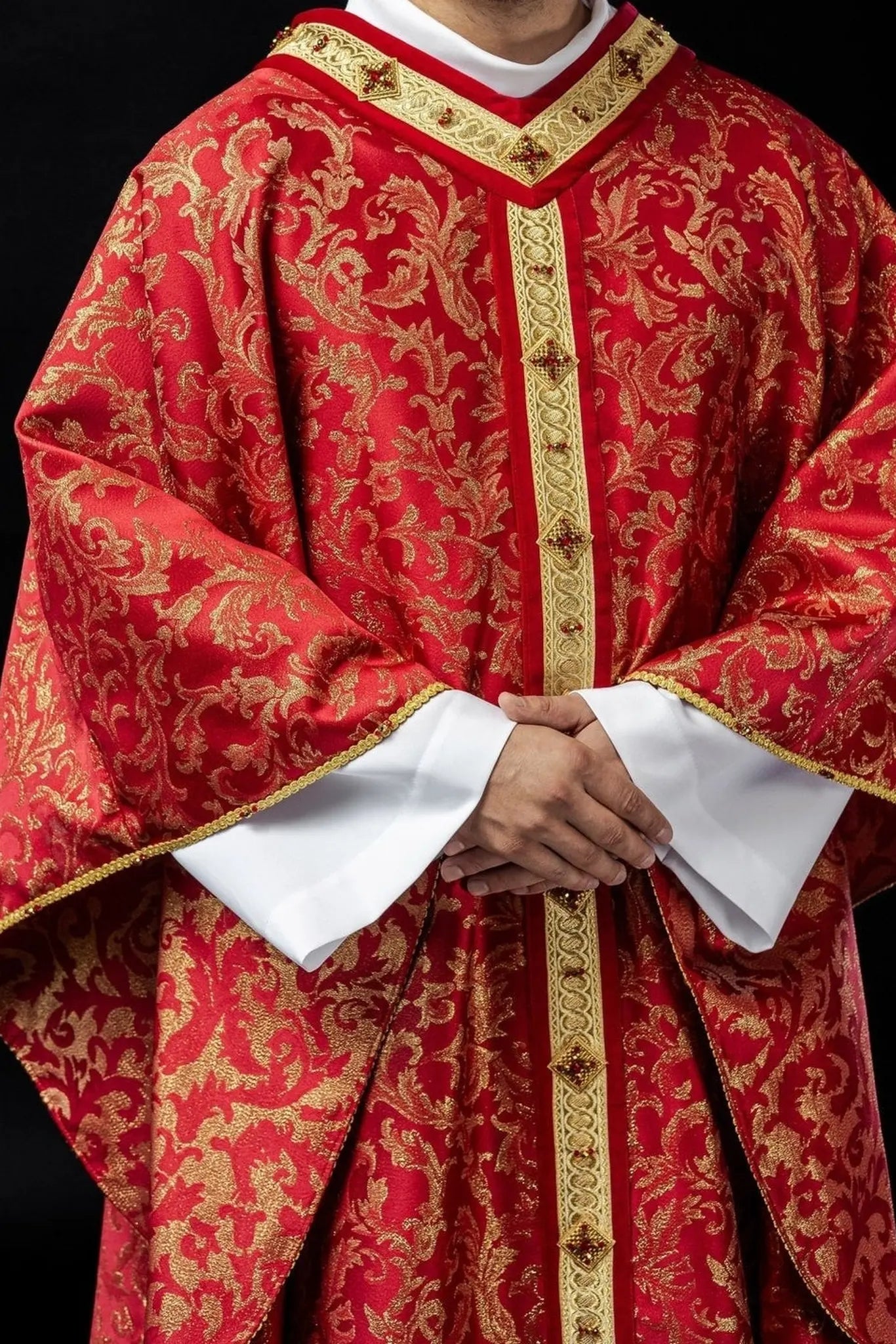
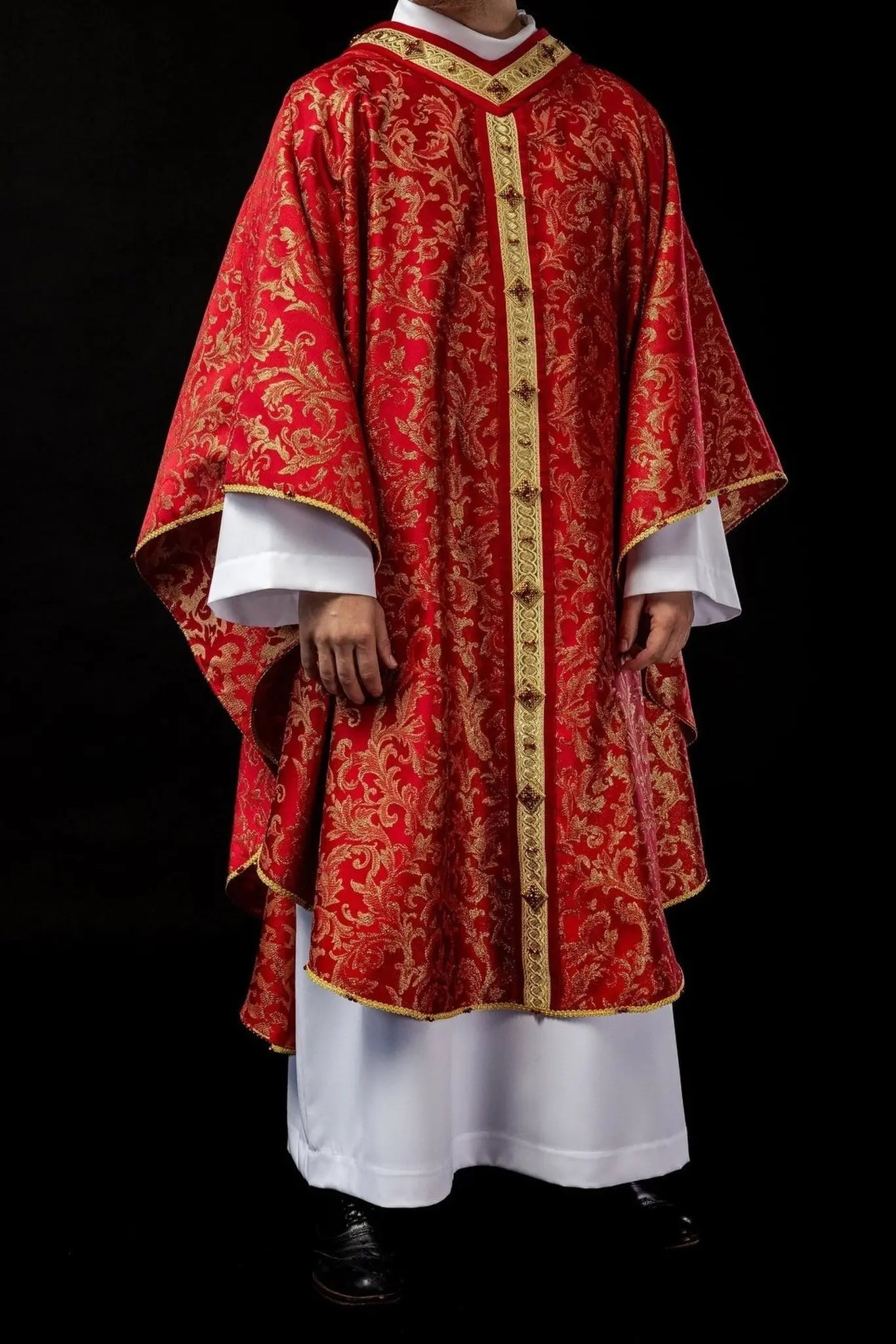
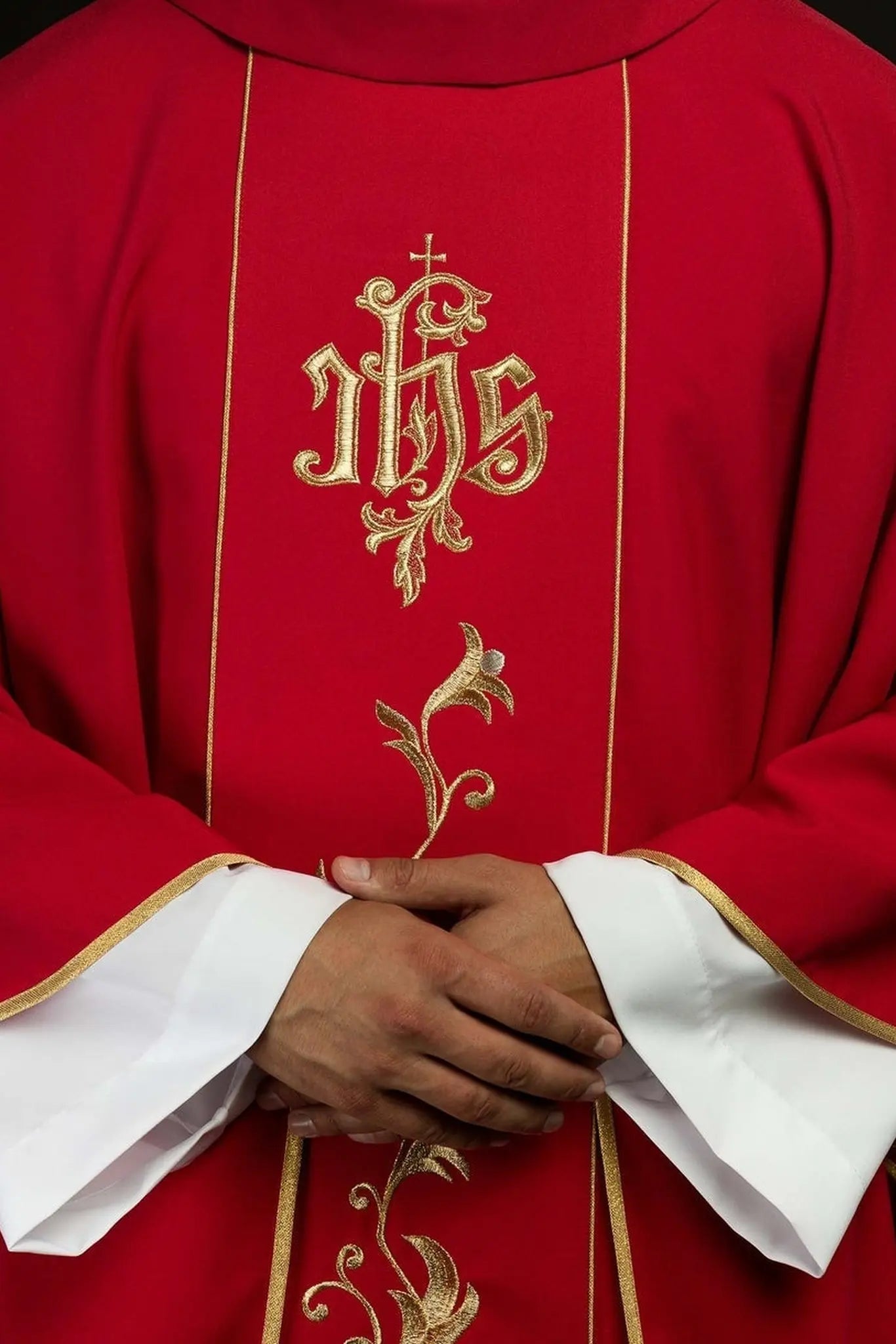
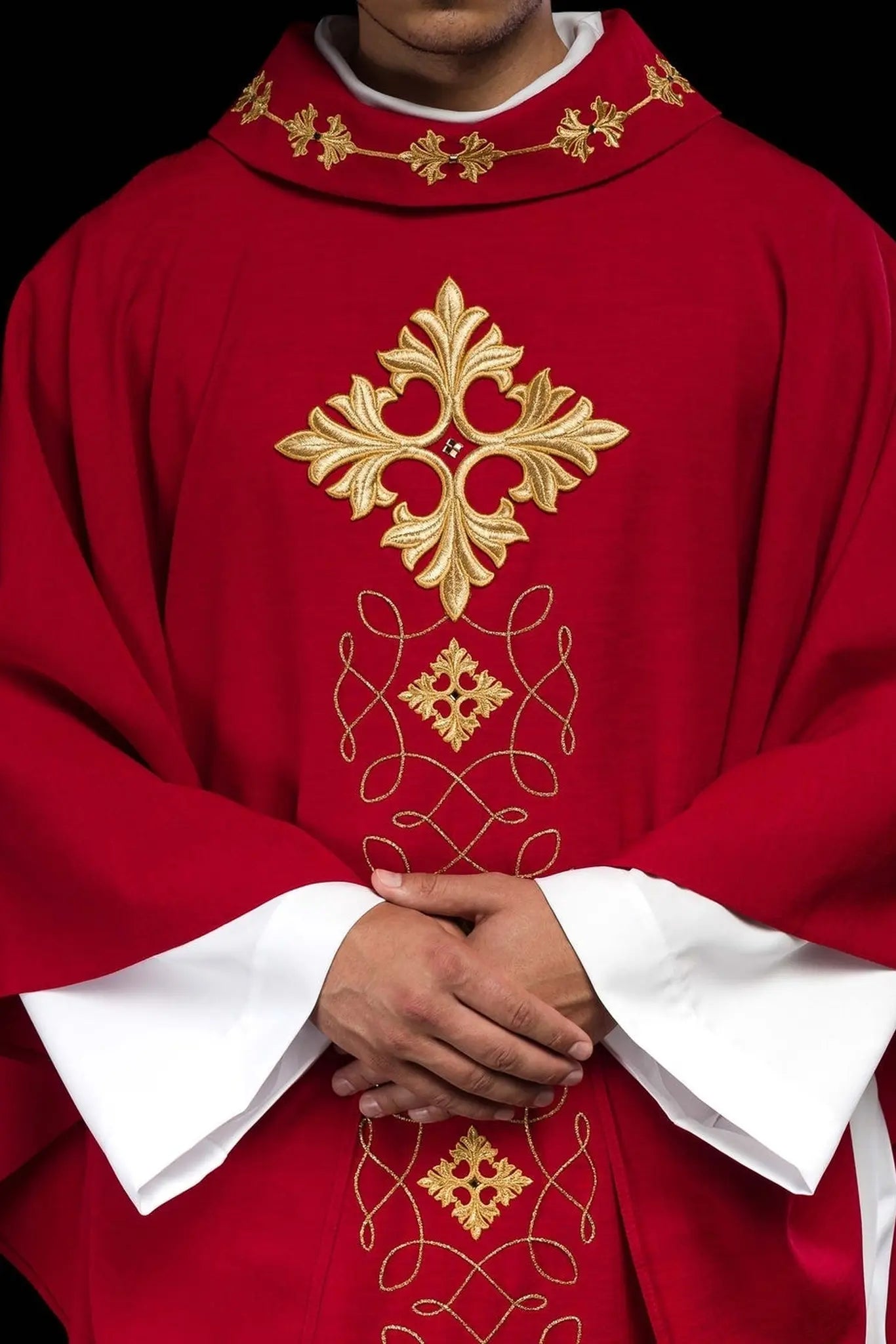
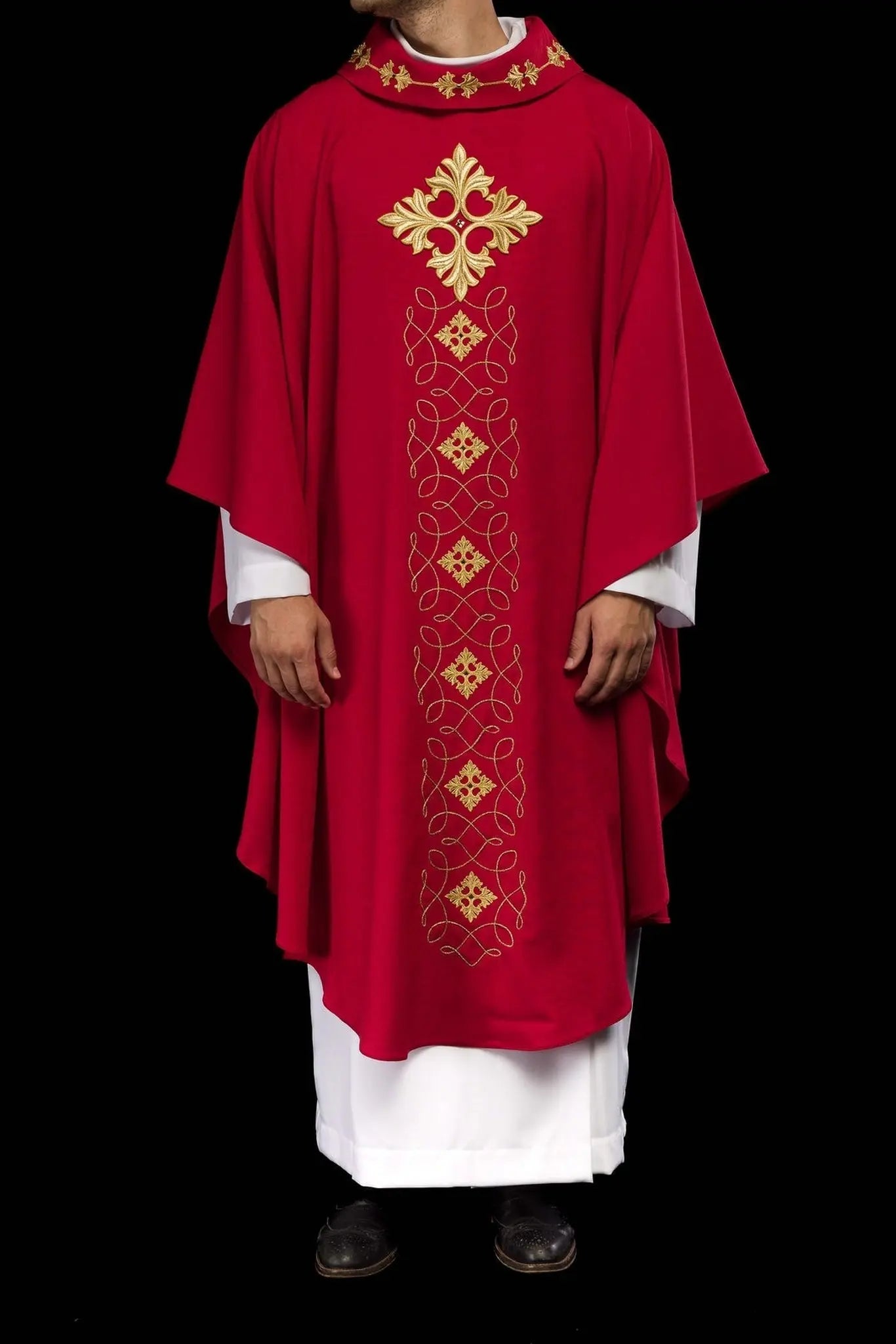
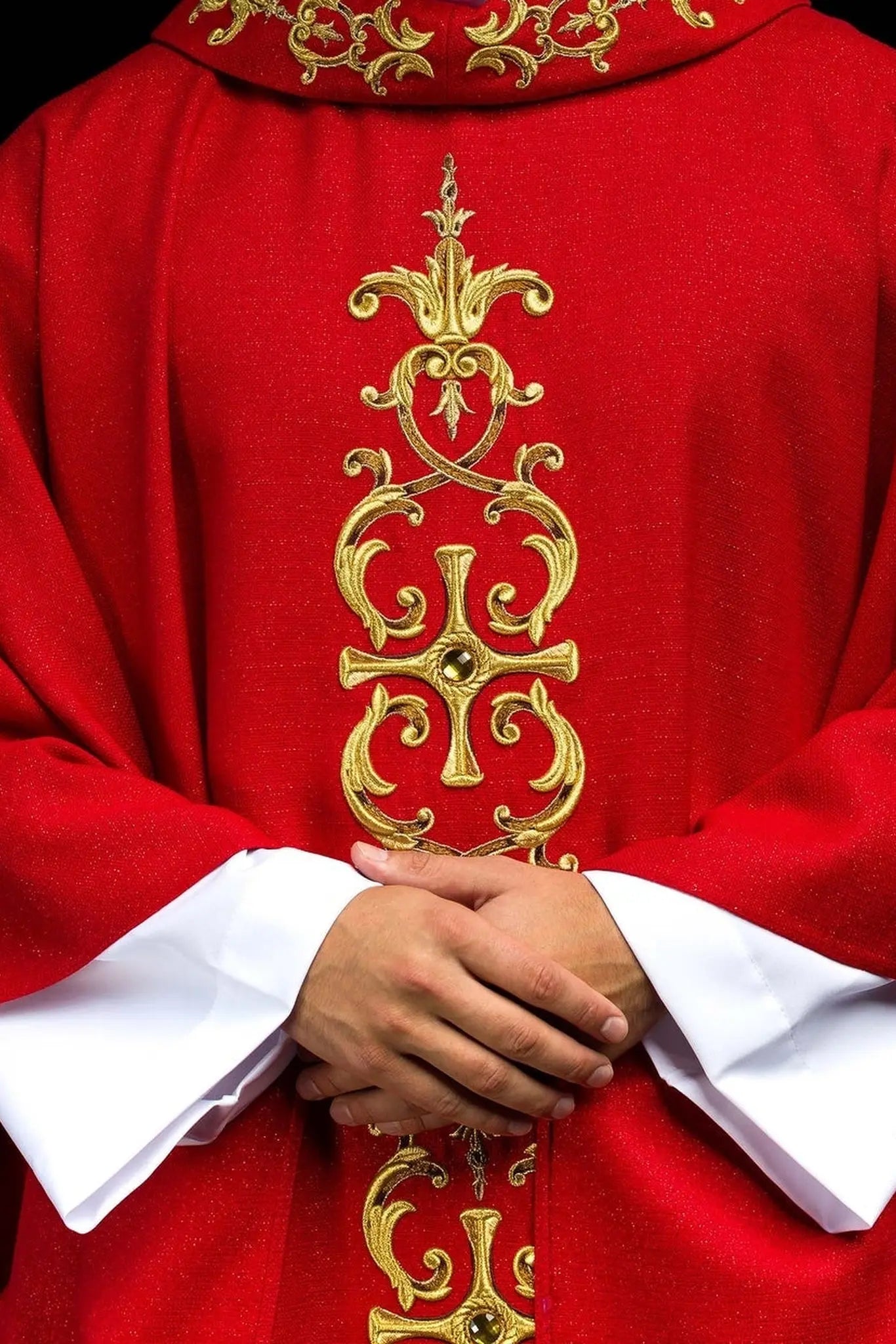
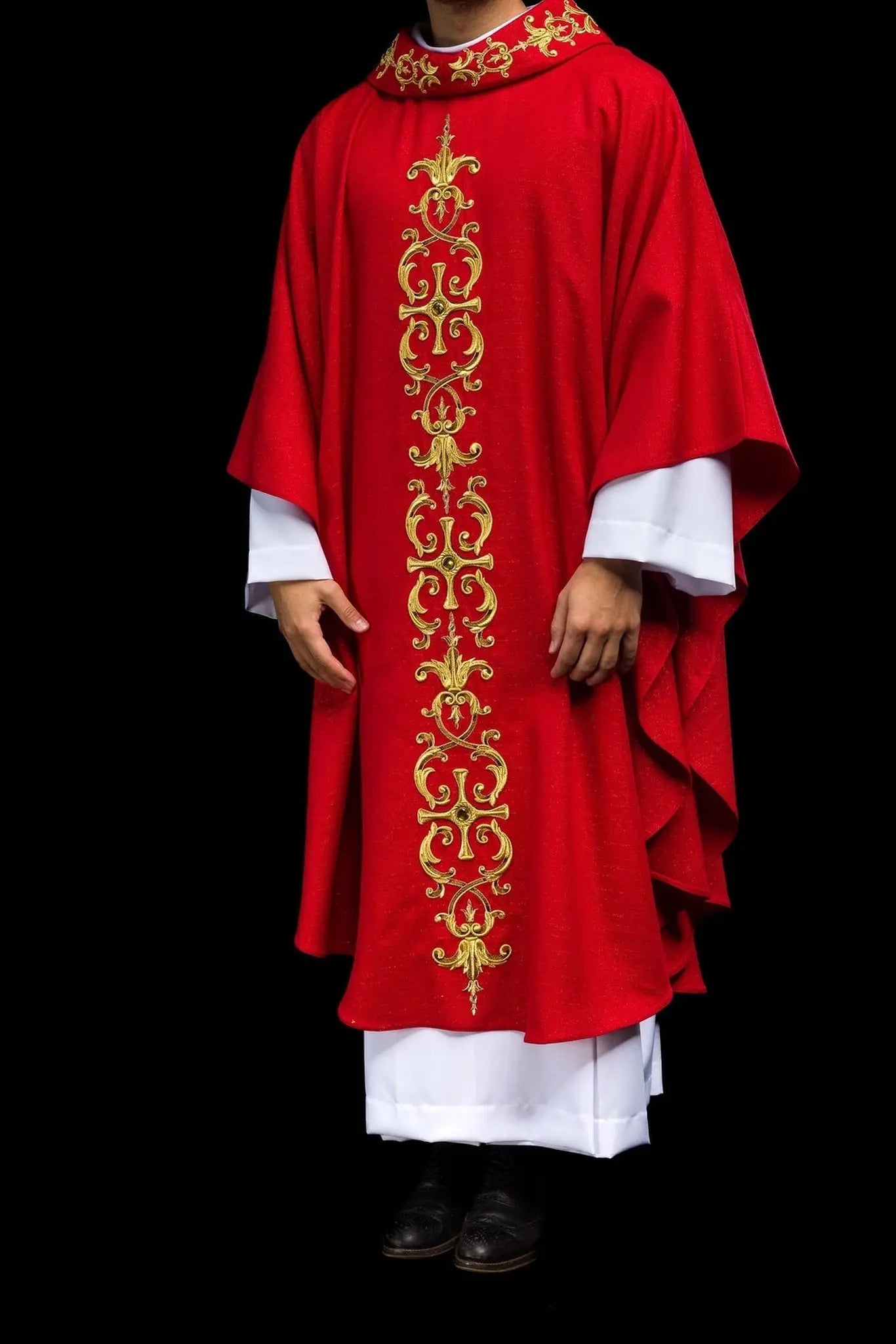
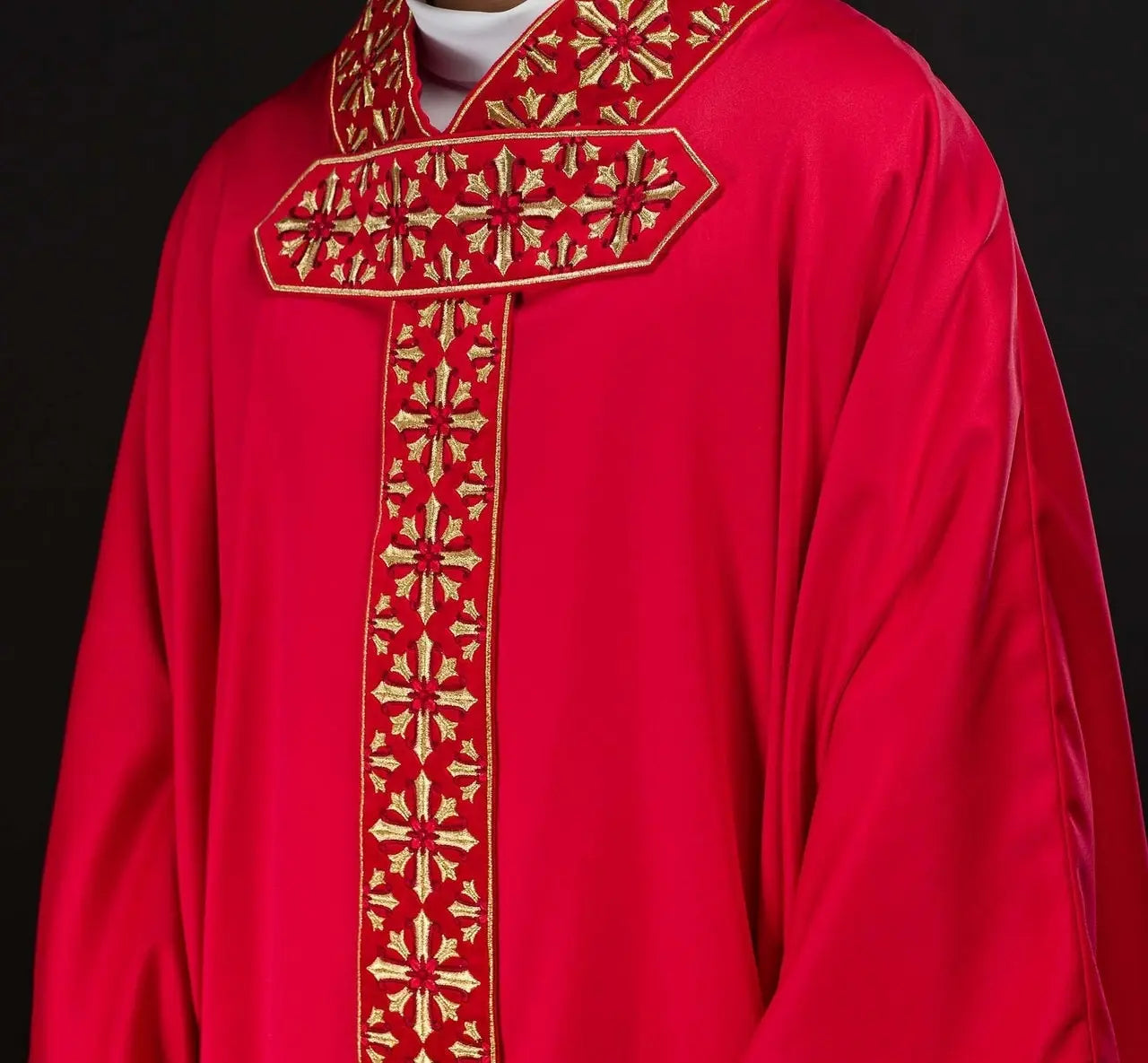
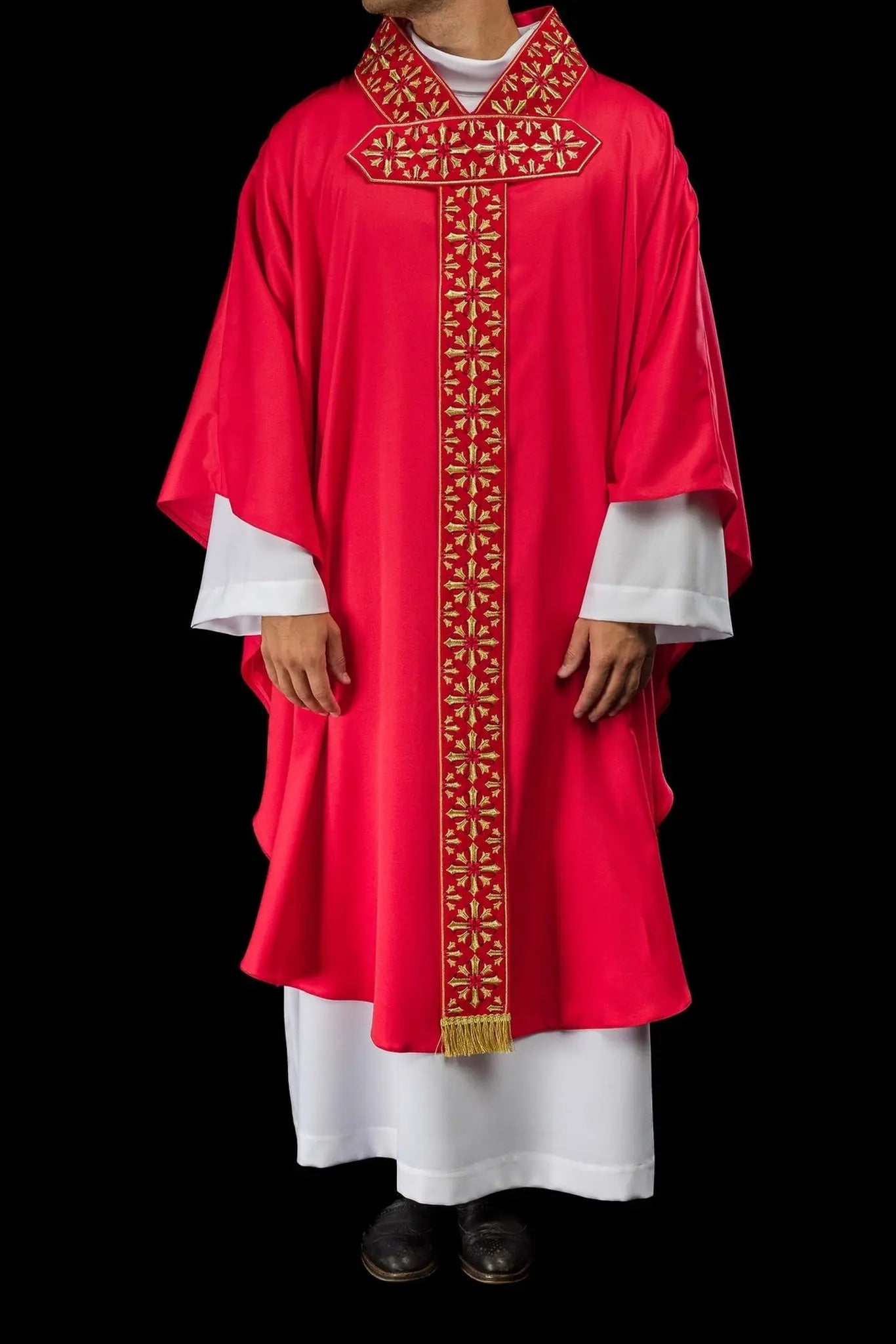
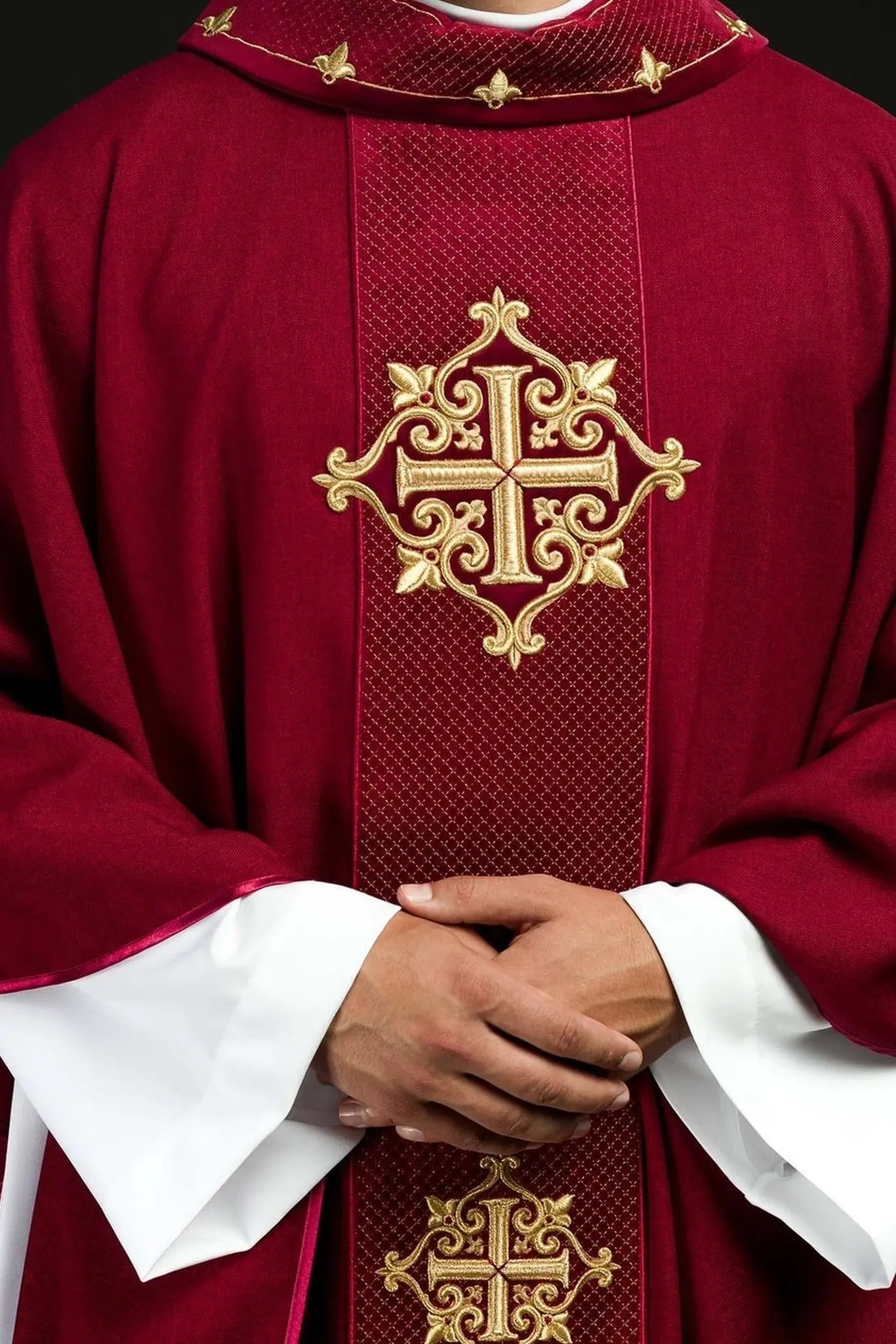
Easter liturgy is not only solemn; it is radiant. The choice of vestments and textiles should help the church interior express the joy of the Resurrection while remaining faithful to liturgical use. White, ecru and gold are especially fitting for Easter Masses because they are associated with glory, purity, festal celebration and the triumph of Christ. Red may also appear in this collection where the design, feast or local use connects the celebration with the Passion, the Cross, the Holy Spirit, martyrs, or a particular parish devotion. For a wider view of garments used throughout the church year, see the main liturgical vestments collection.
What belongs in the Easter collection
This collection focuses on pieces that visually and theologically support Easter worship. Chasubles are central for the priest celebrant at Mass, while stoles, copes and dalmatics help complete the vesting needs of clergy and assisting ministers. Church textiles such as pulpit covers, chalice veils and altar cloths bring the same Paschal symbolism to the sanctuary, ambo, altar and Eucharistic setting. When selected together, these items create a harmonious liturgical environment rather than a set of unrelated decorations.
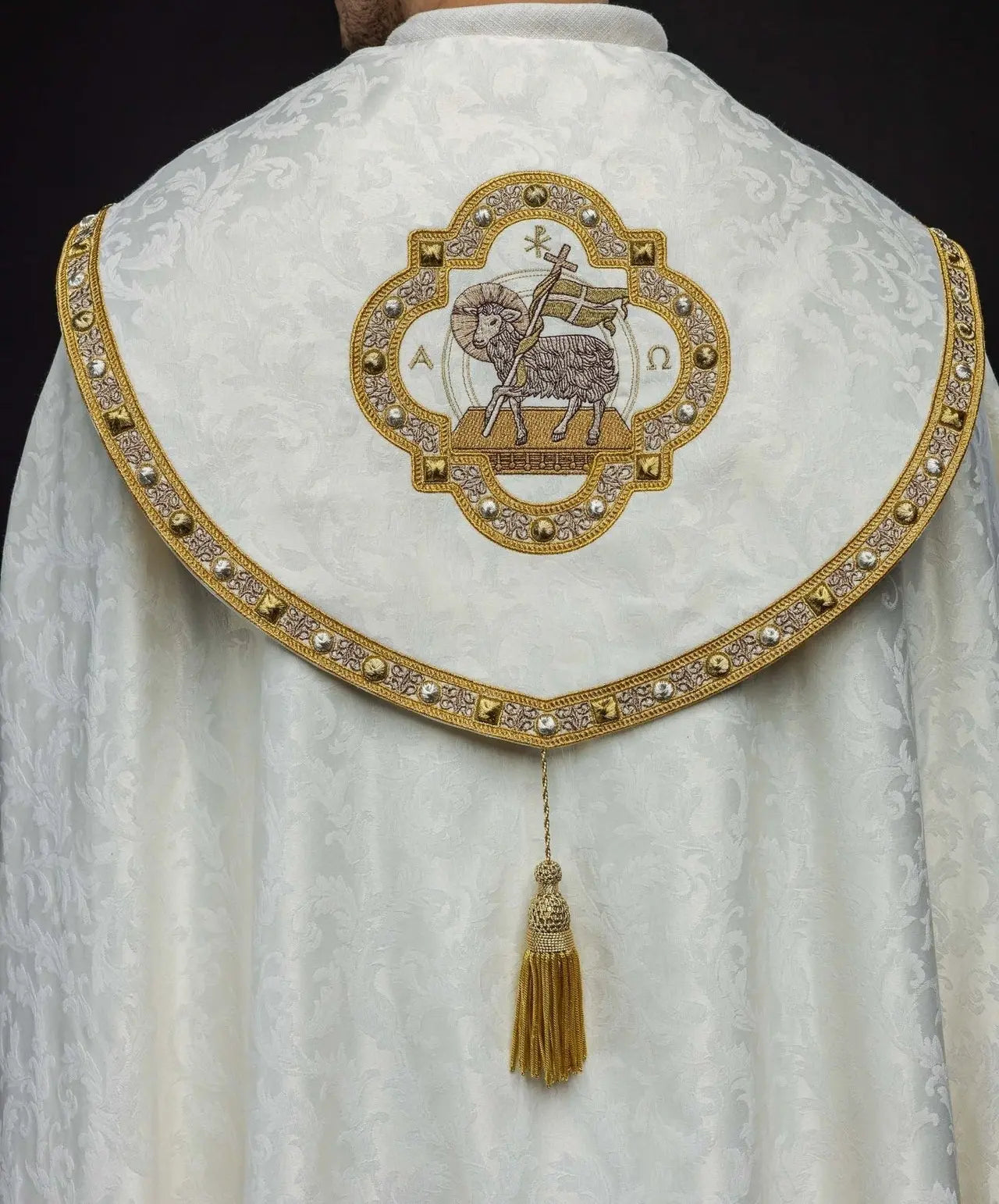
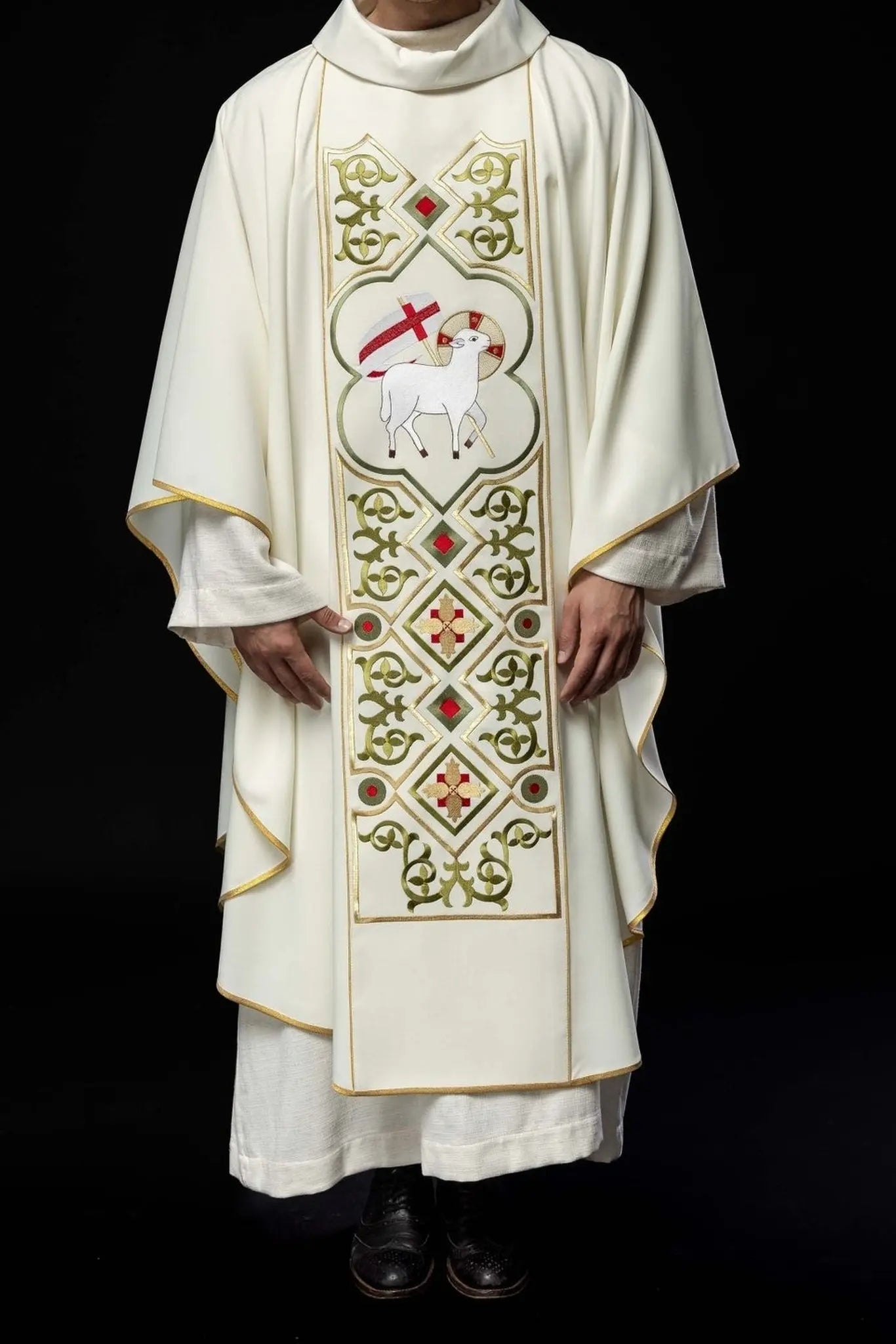
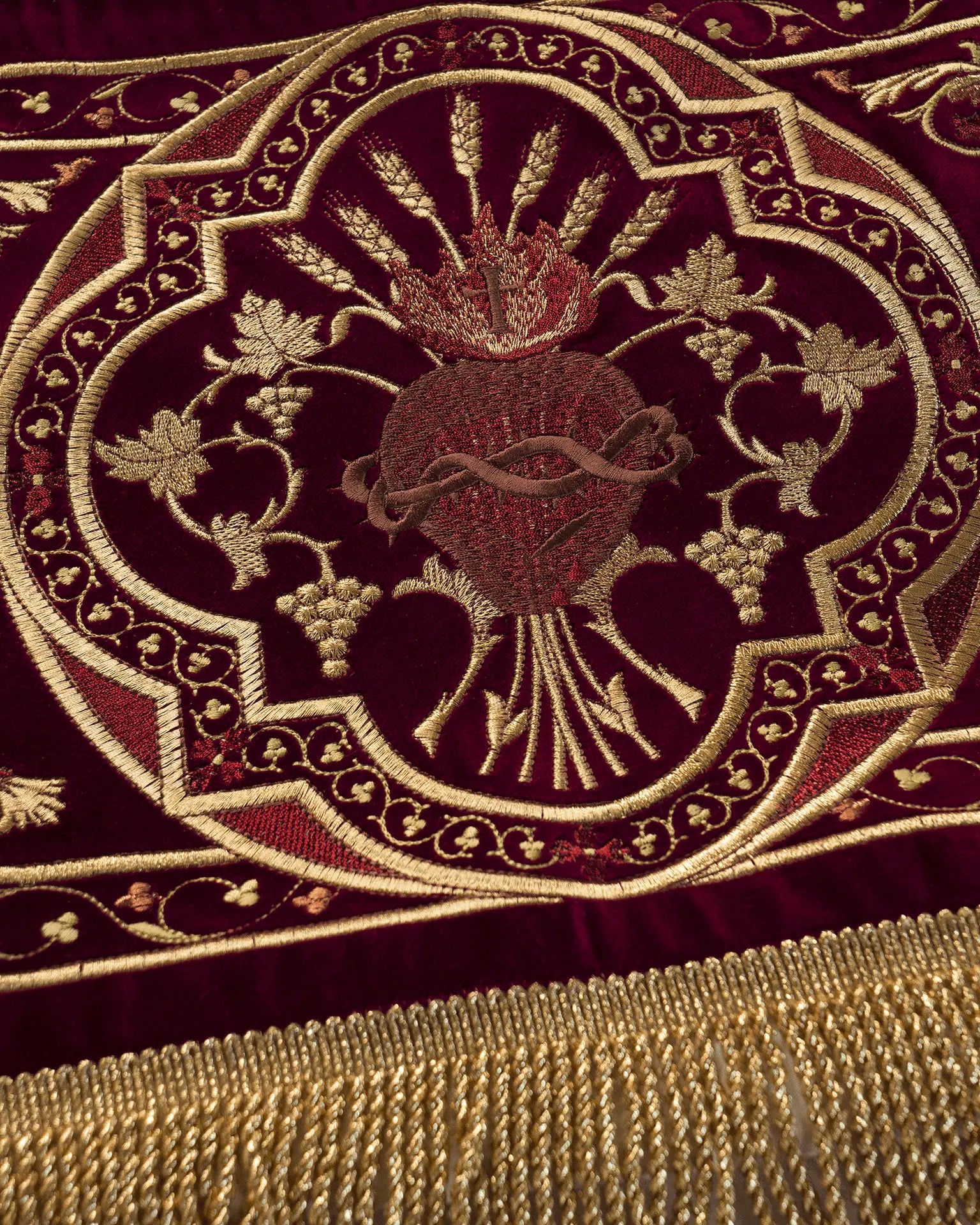
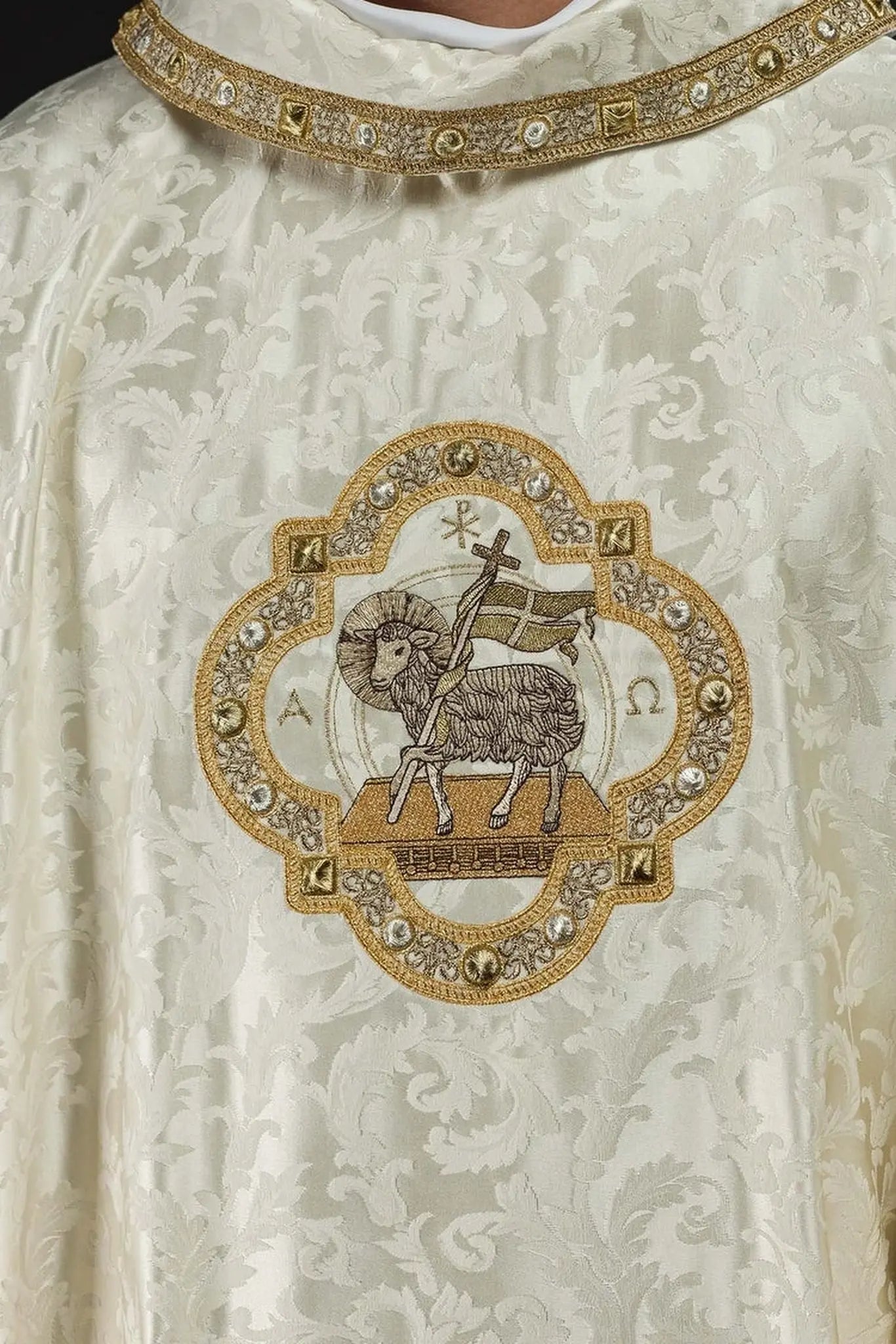
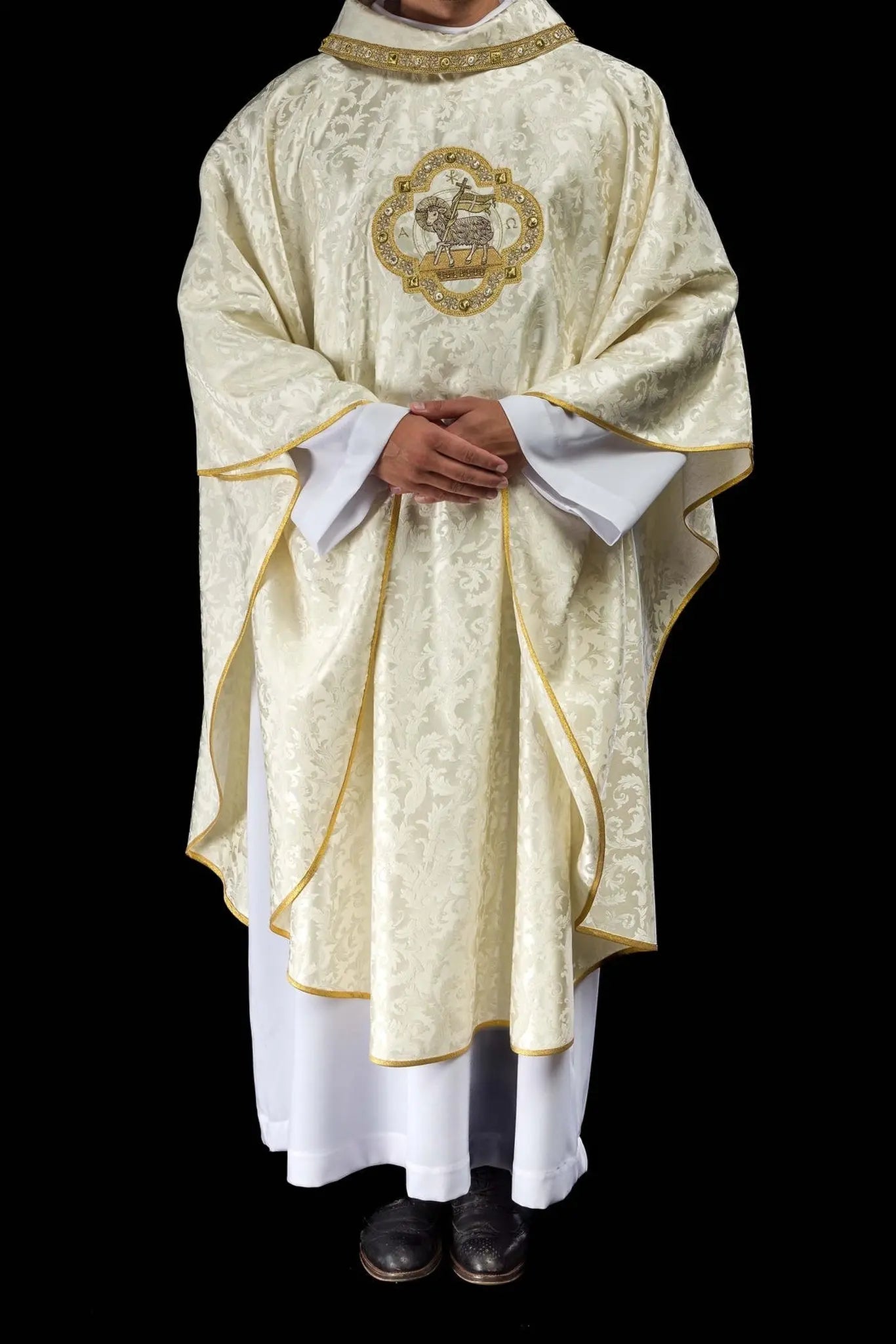
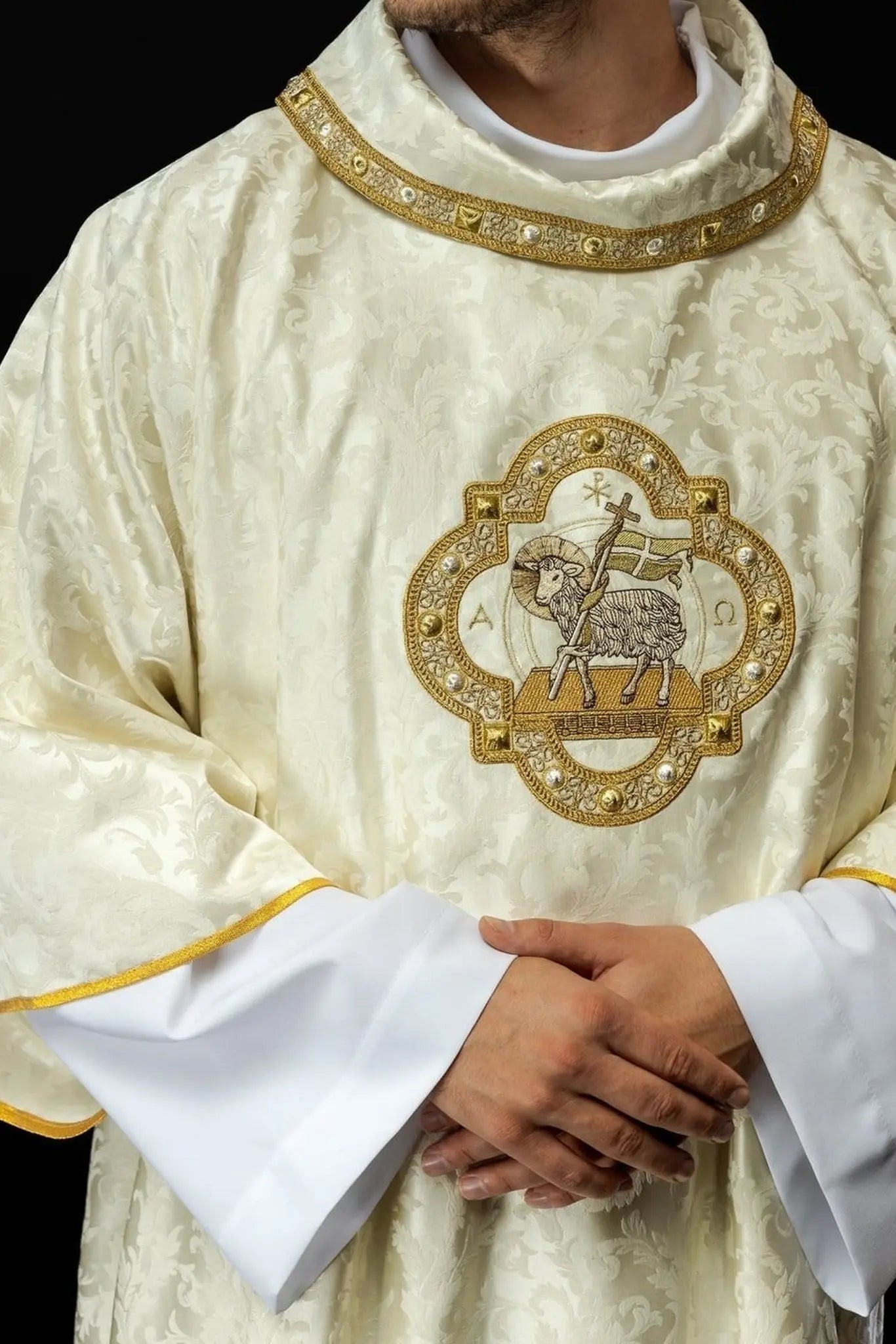
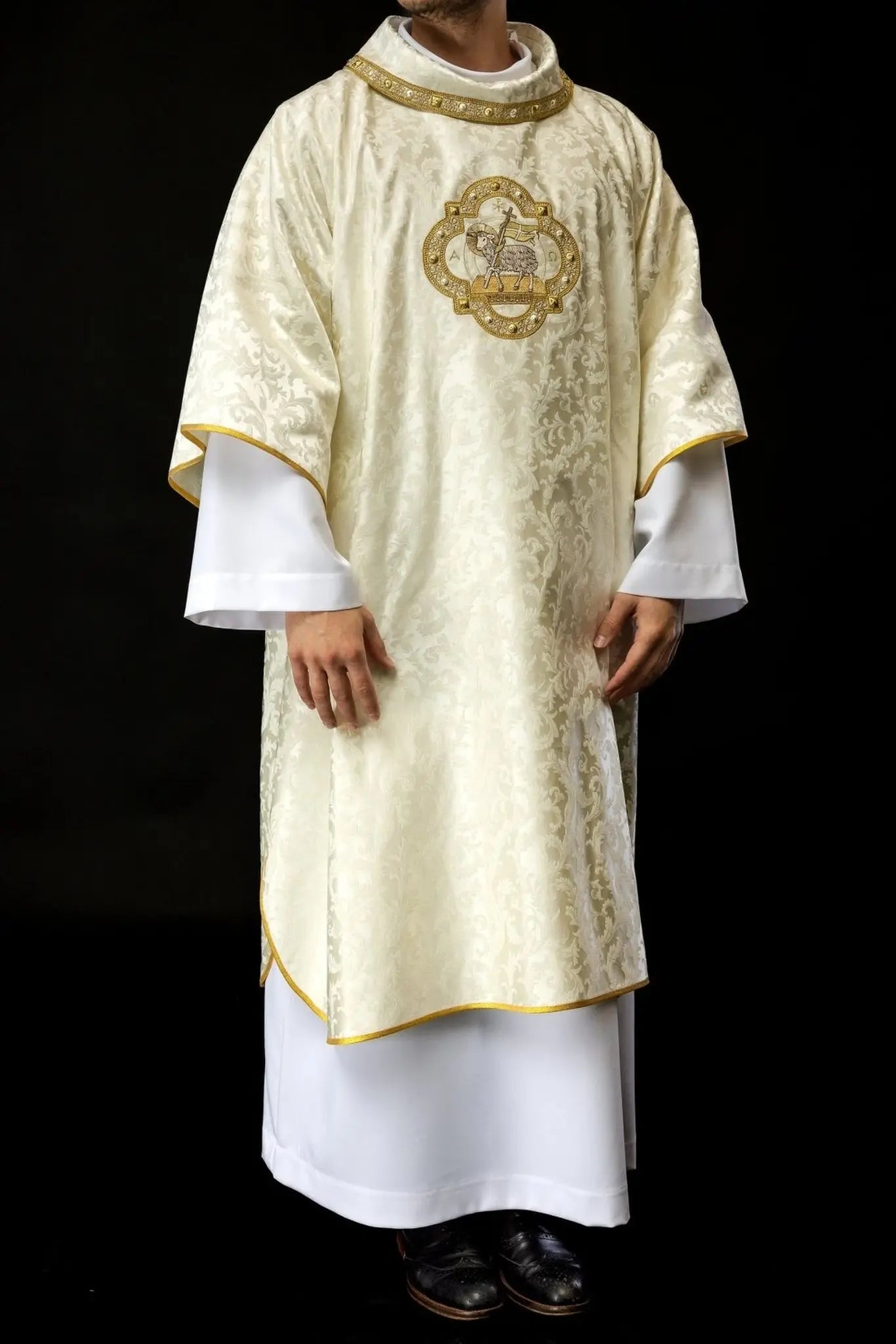
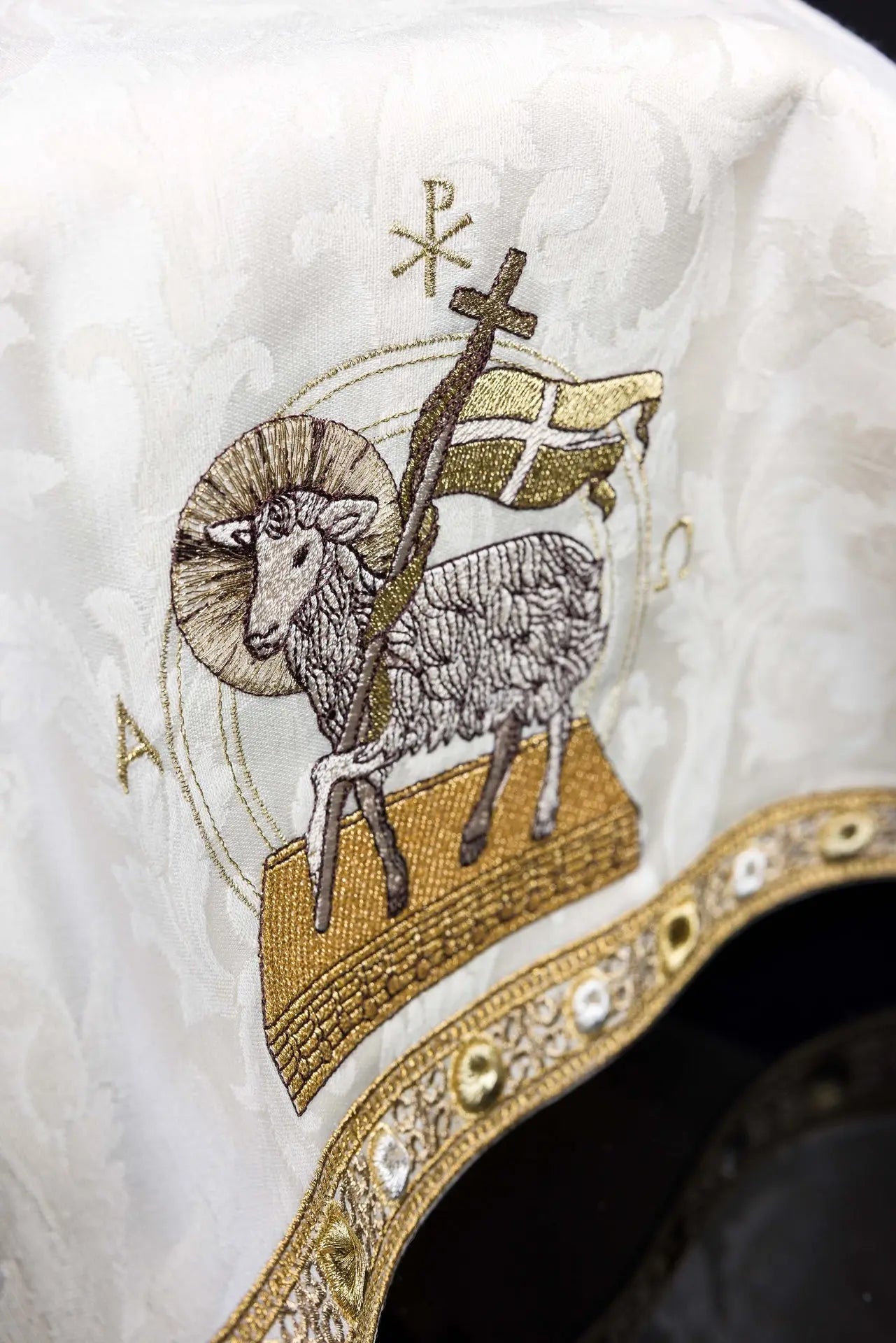
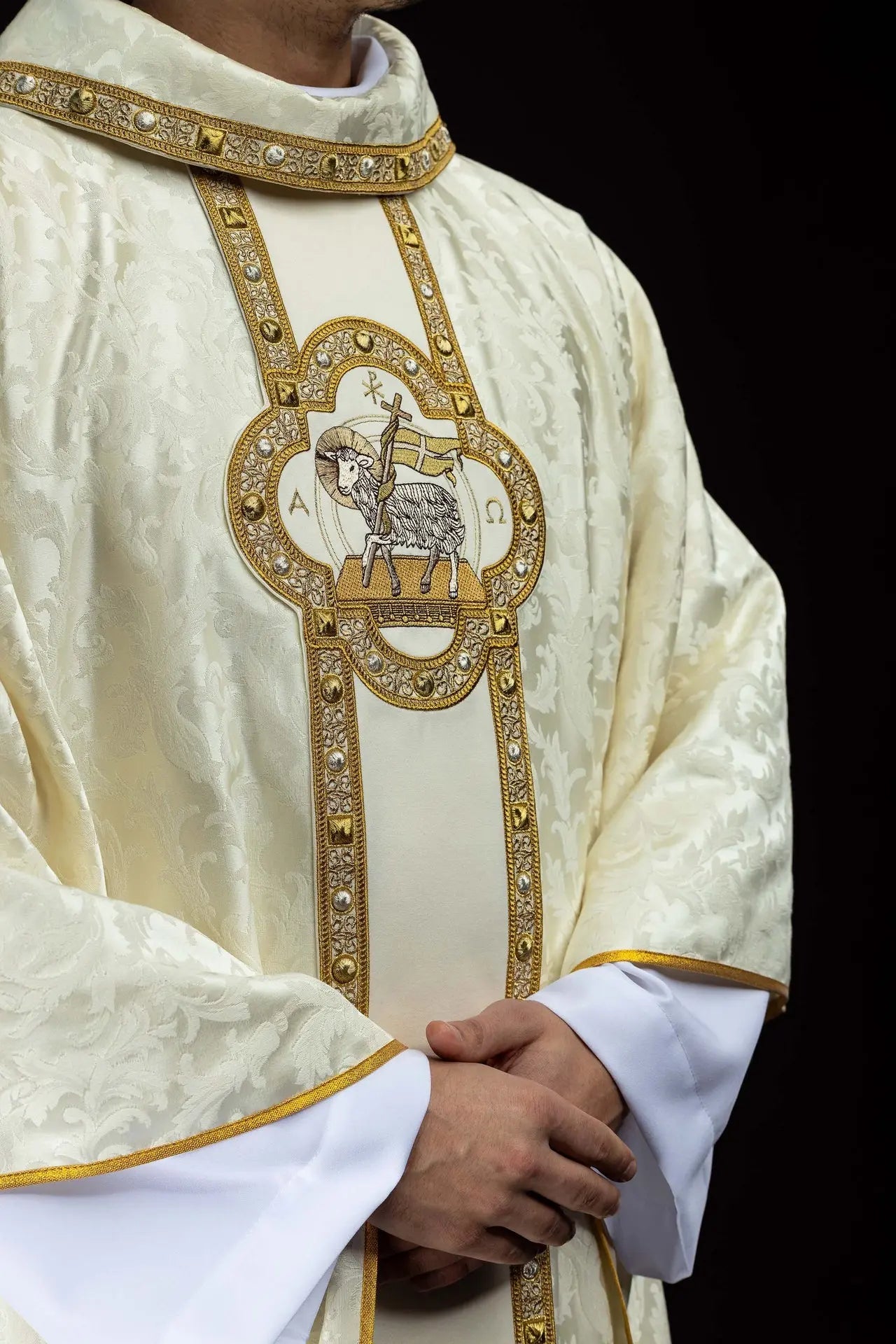
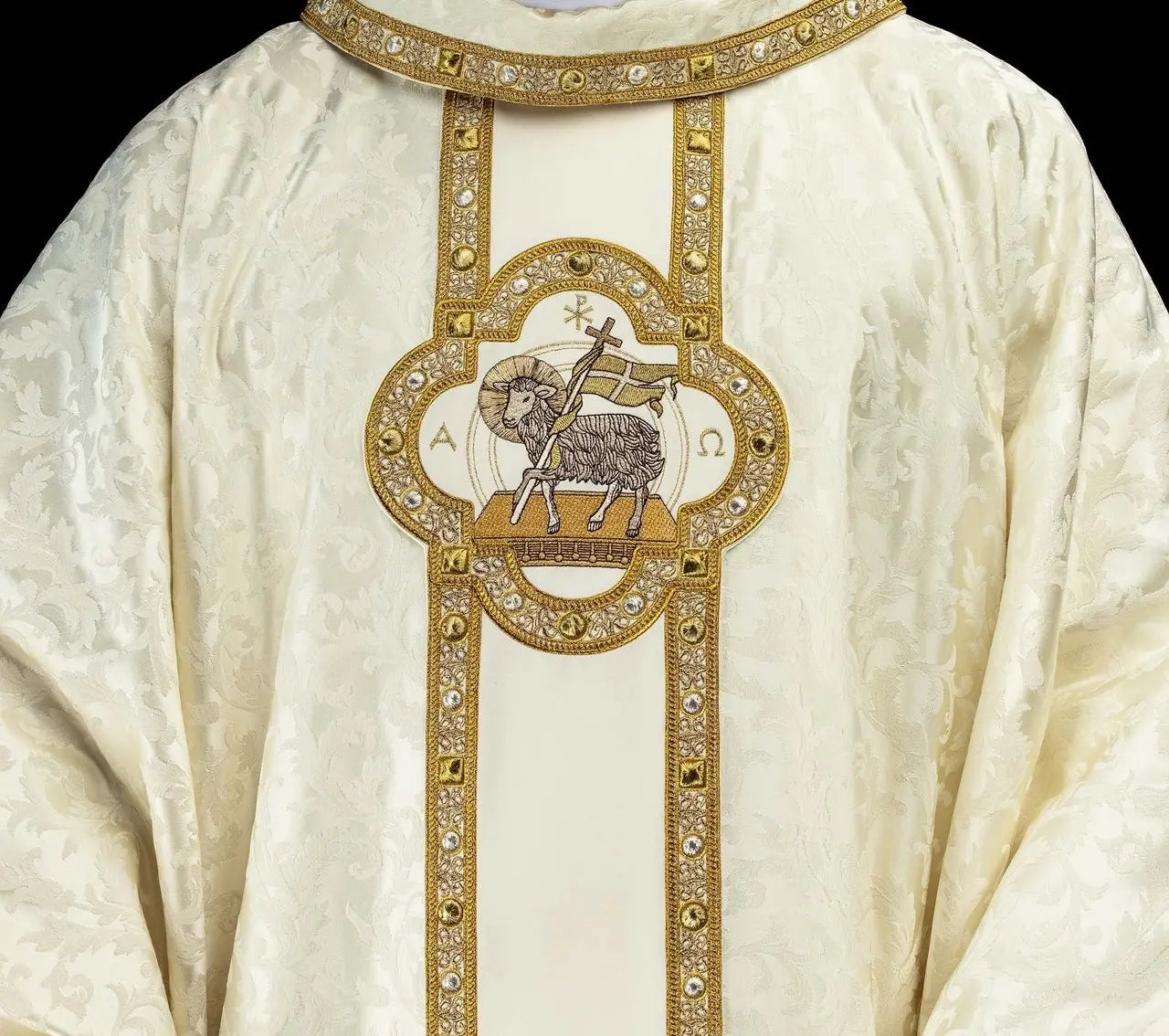
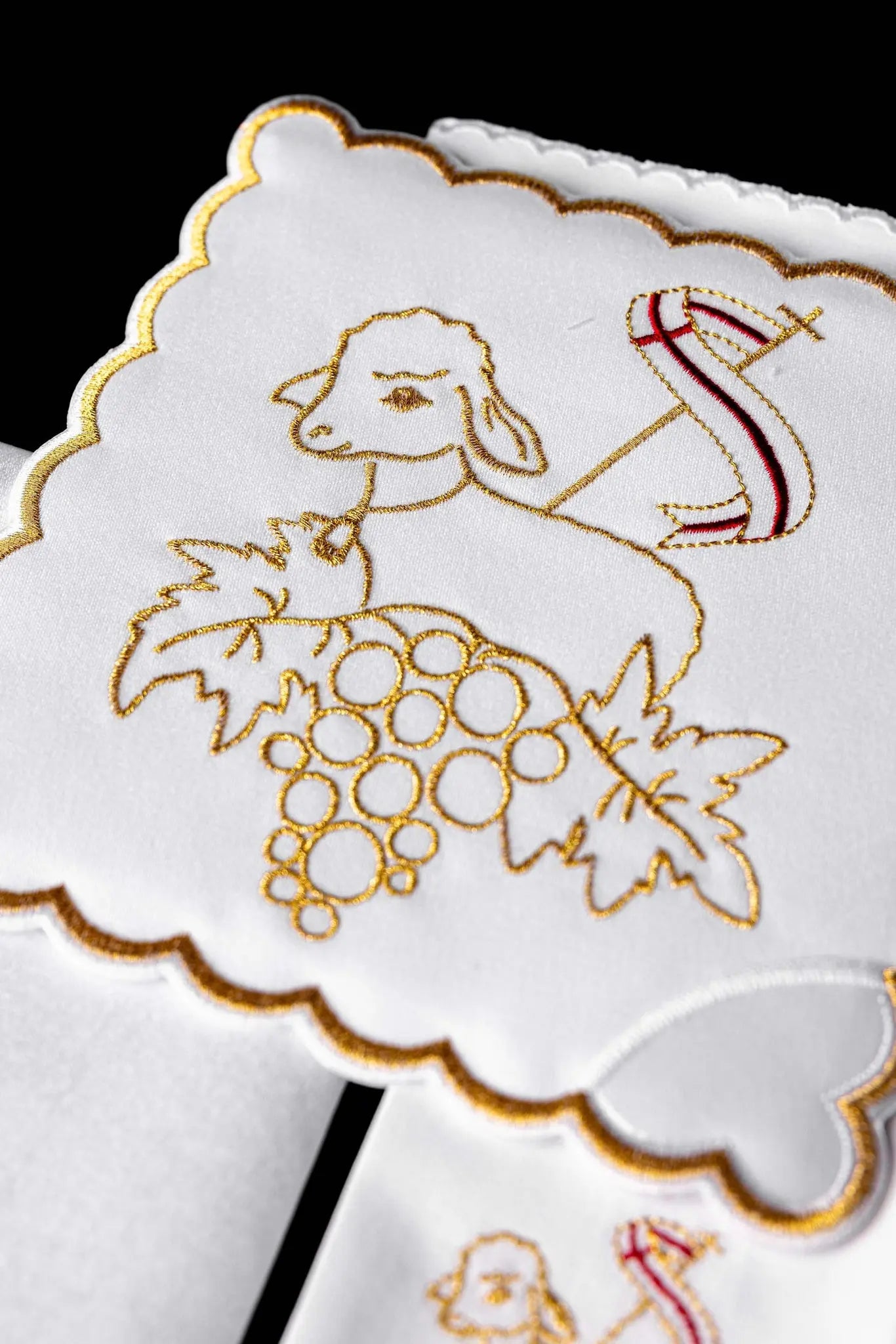
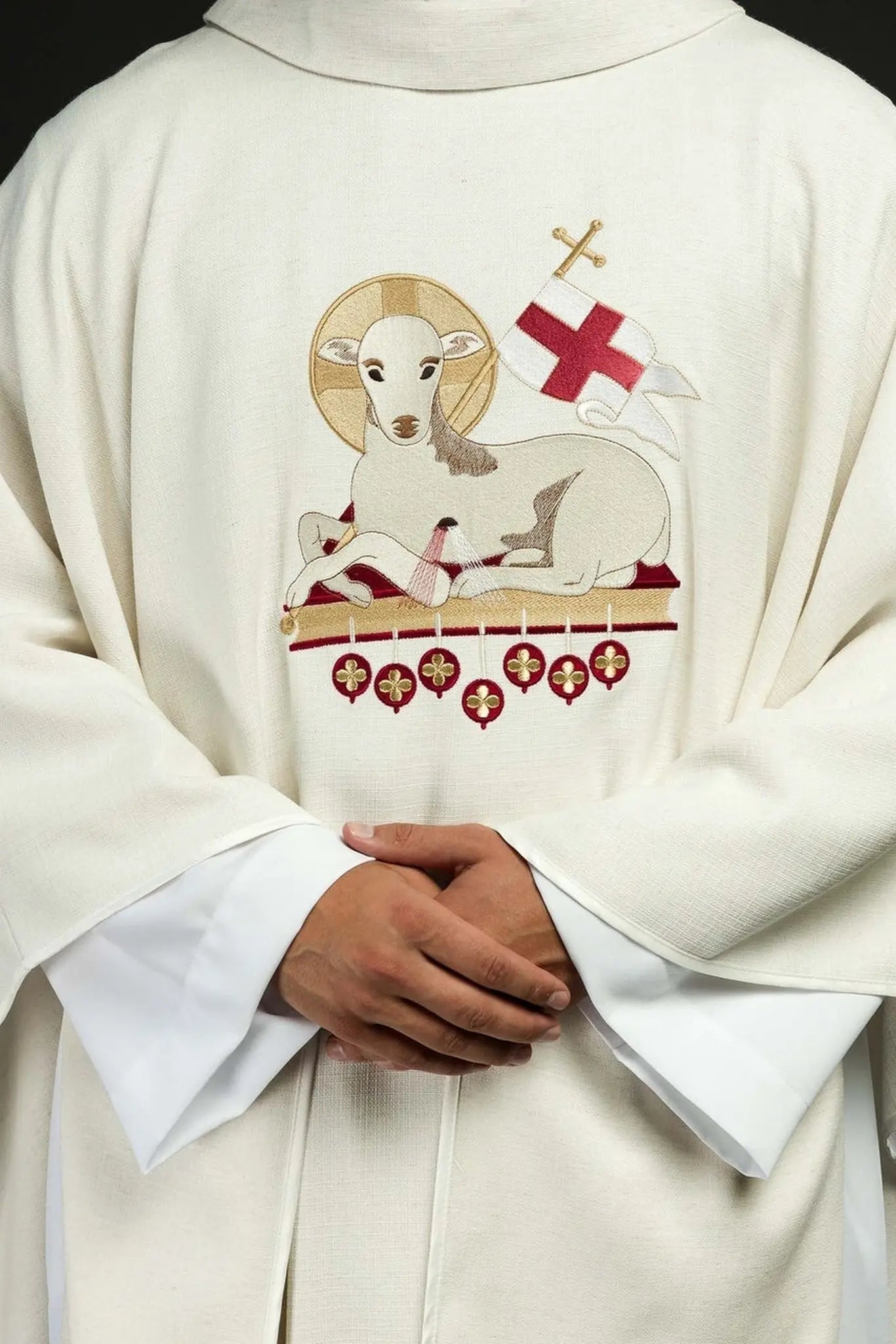
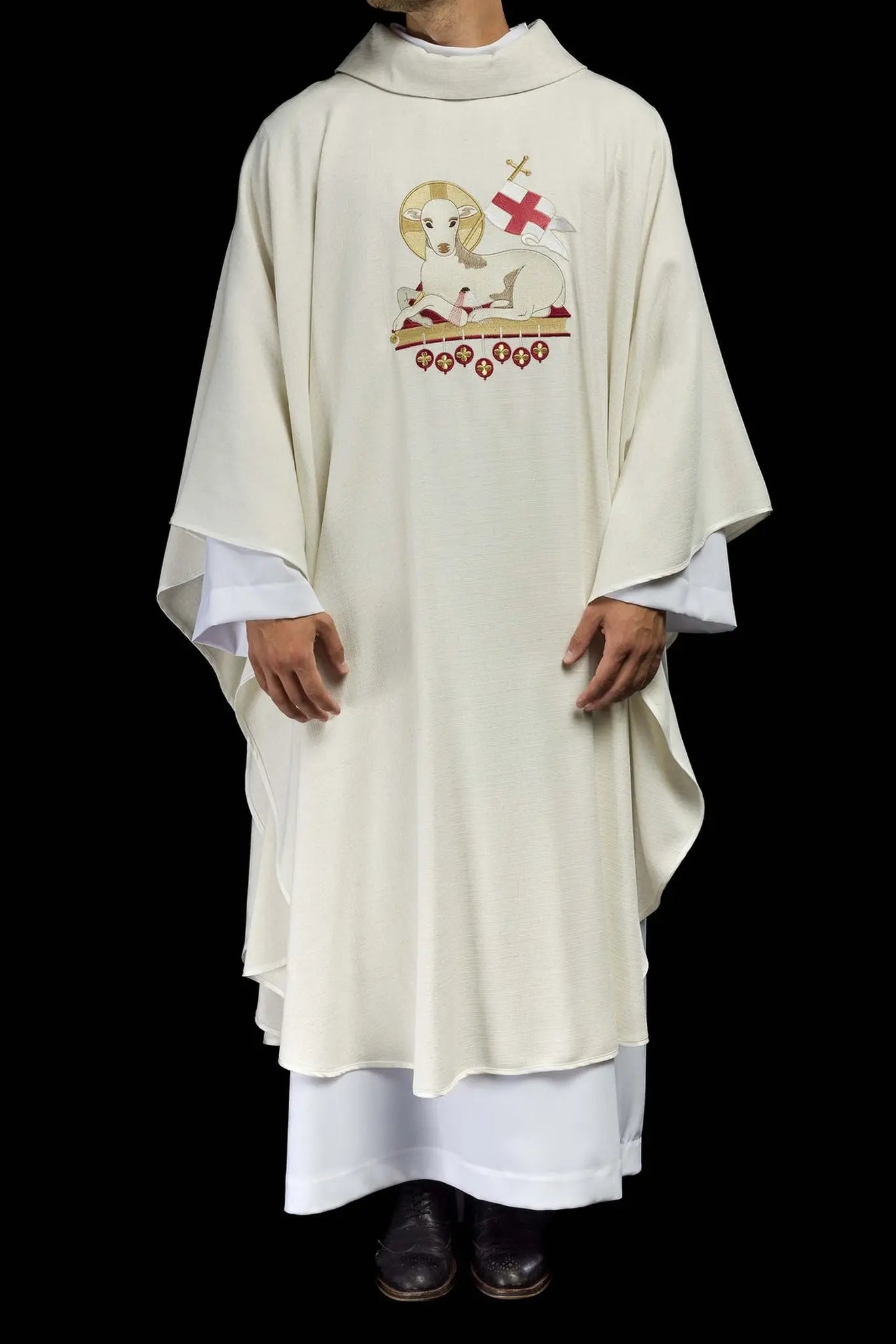
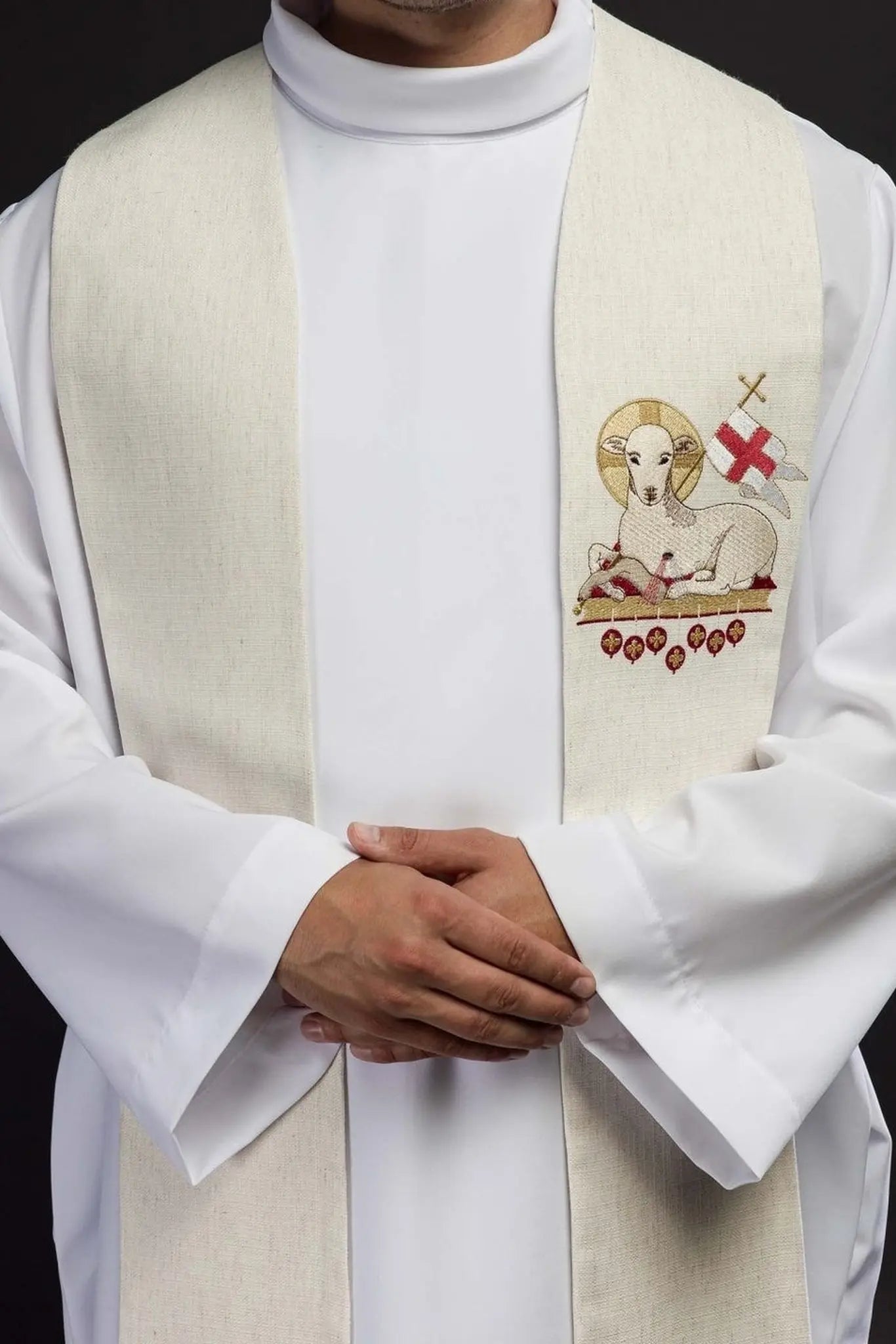
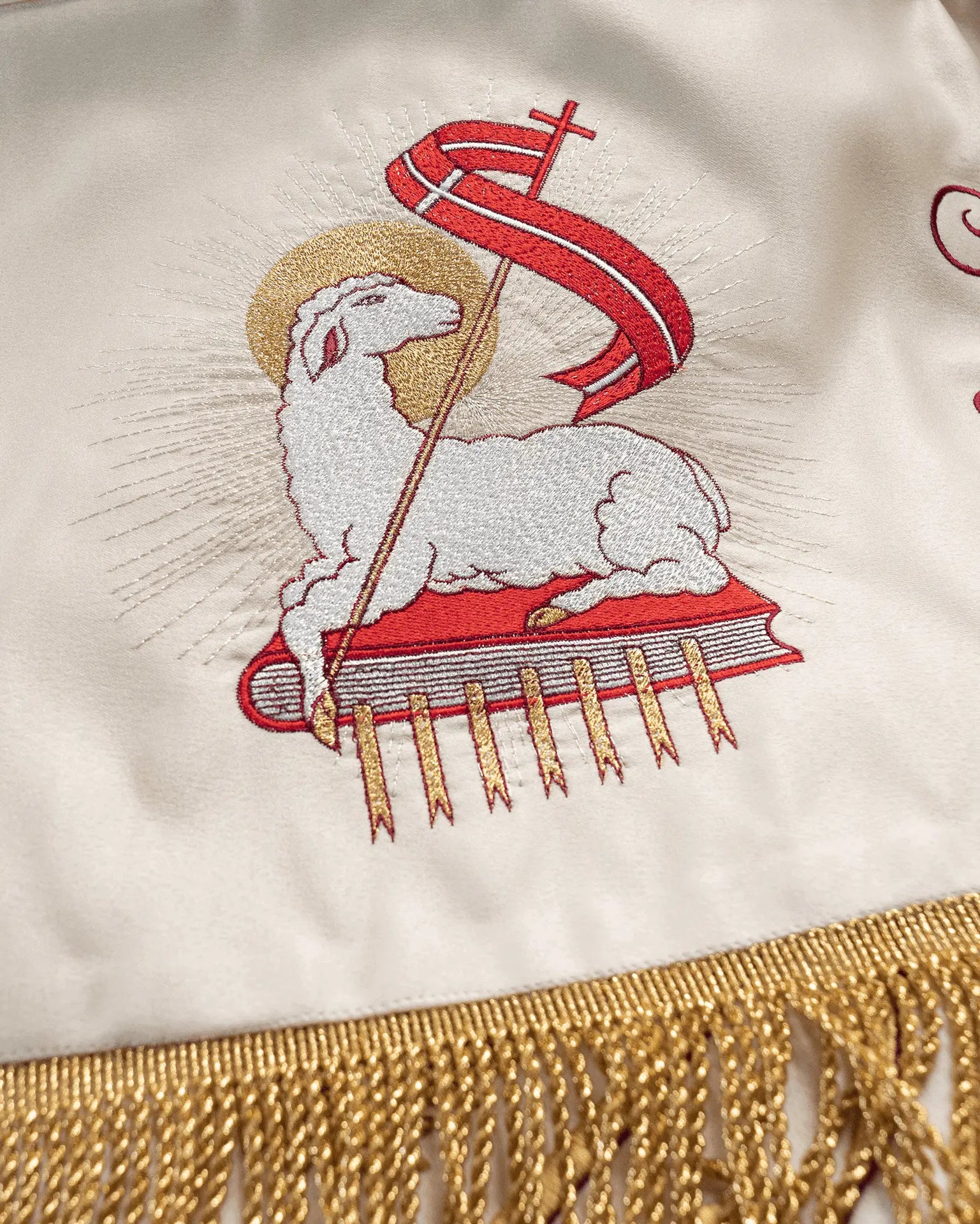
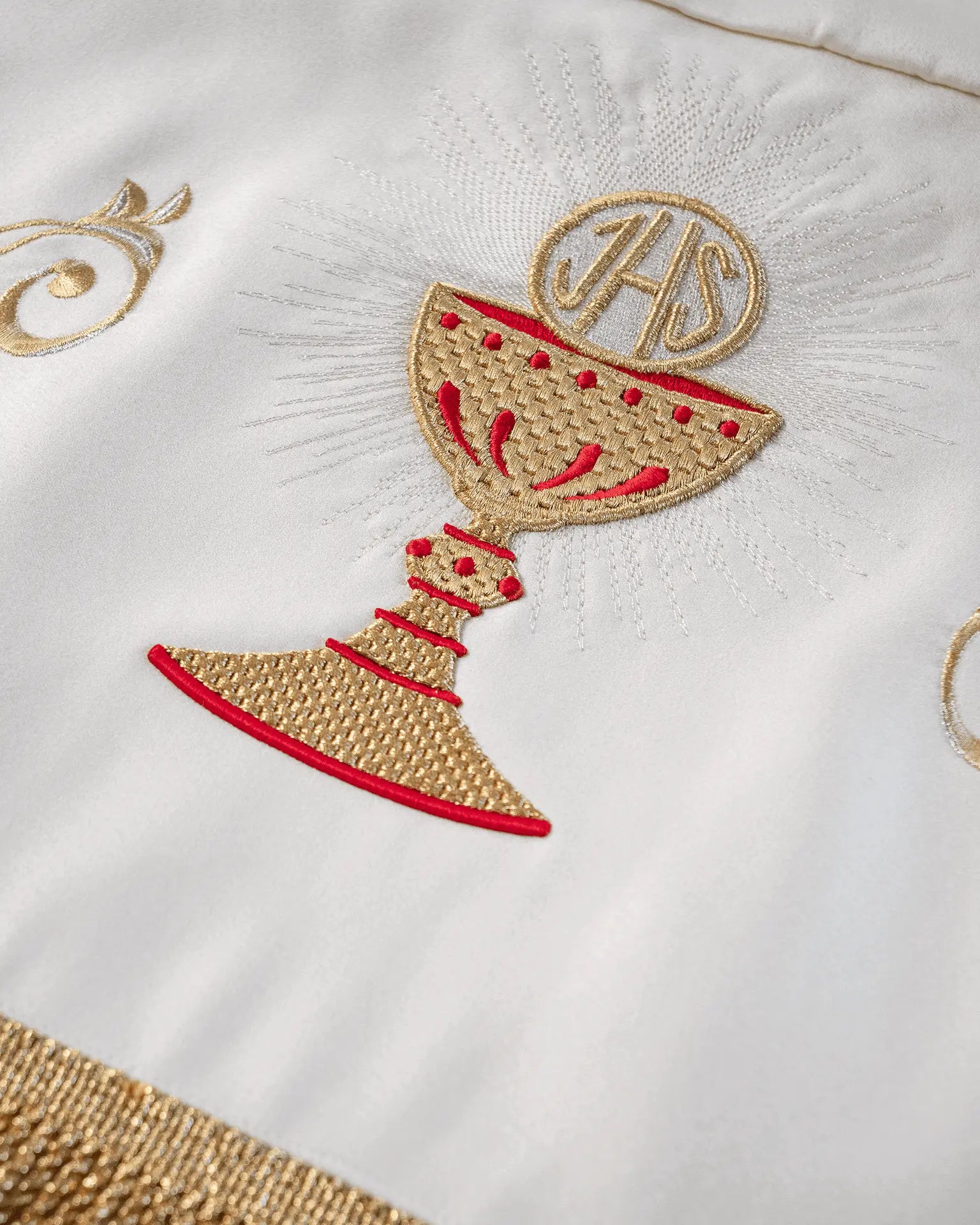
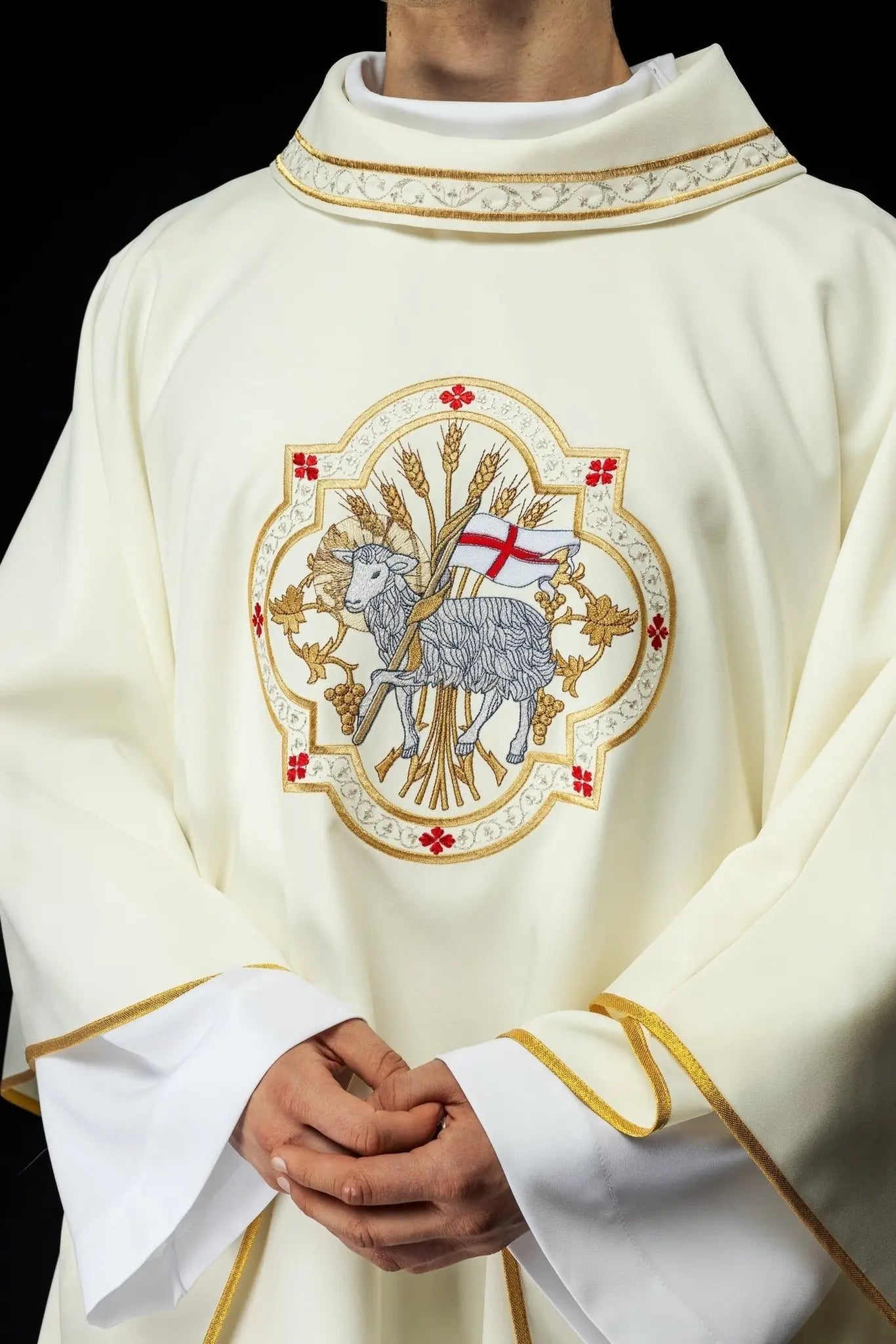
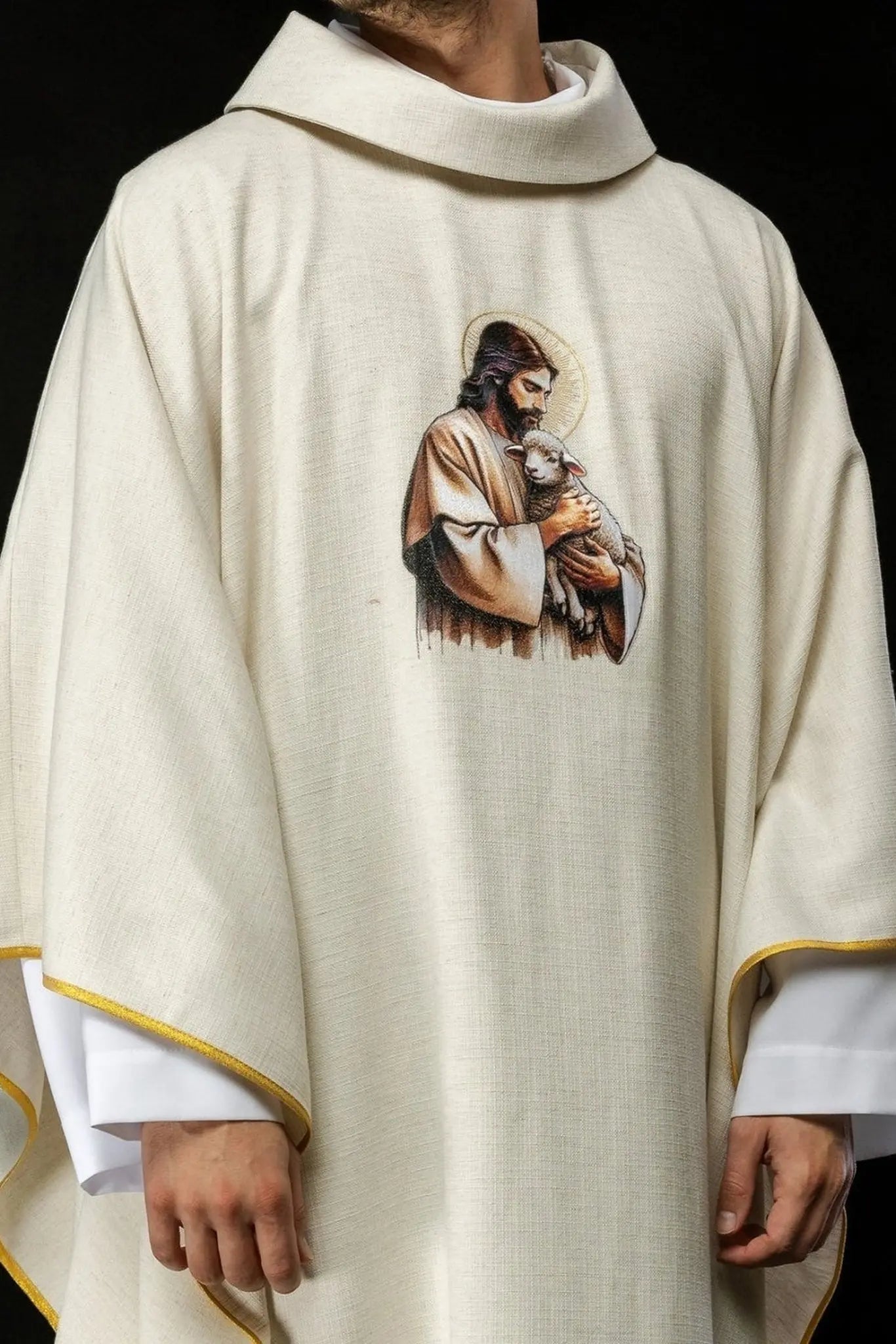
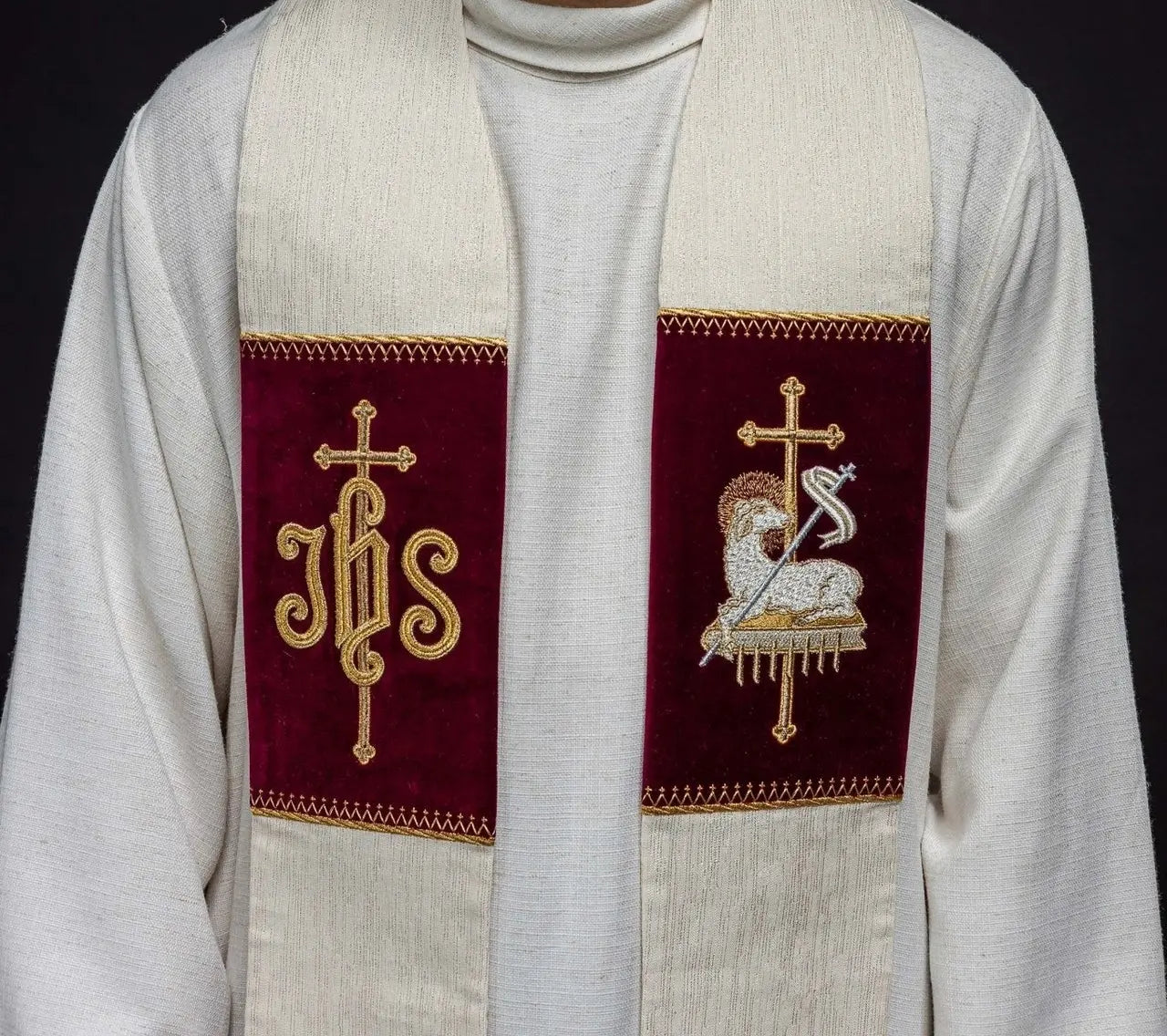
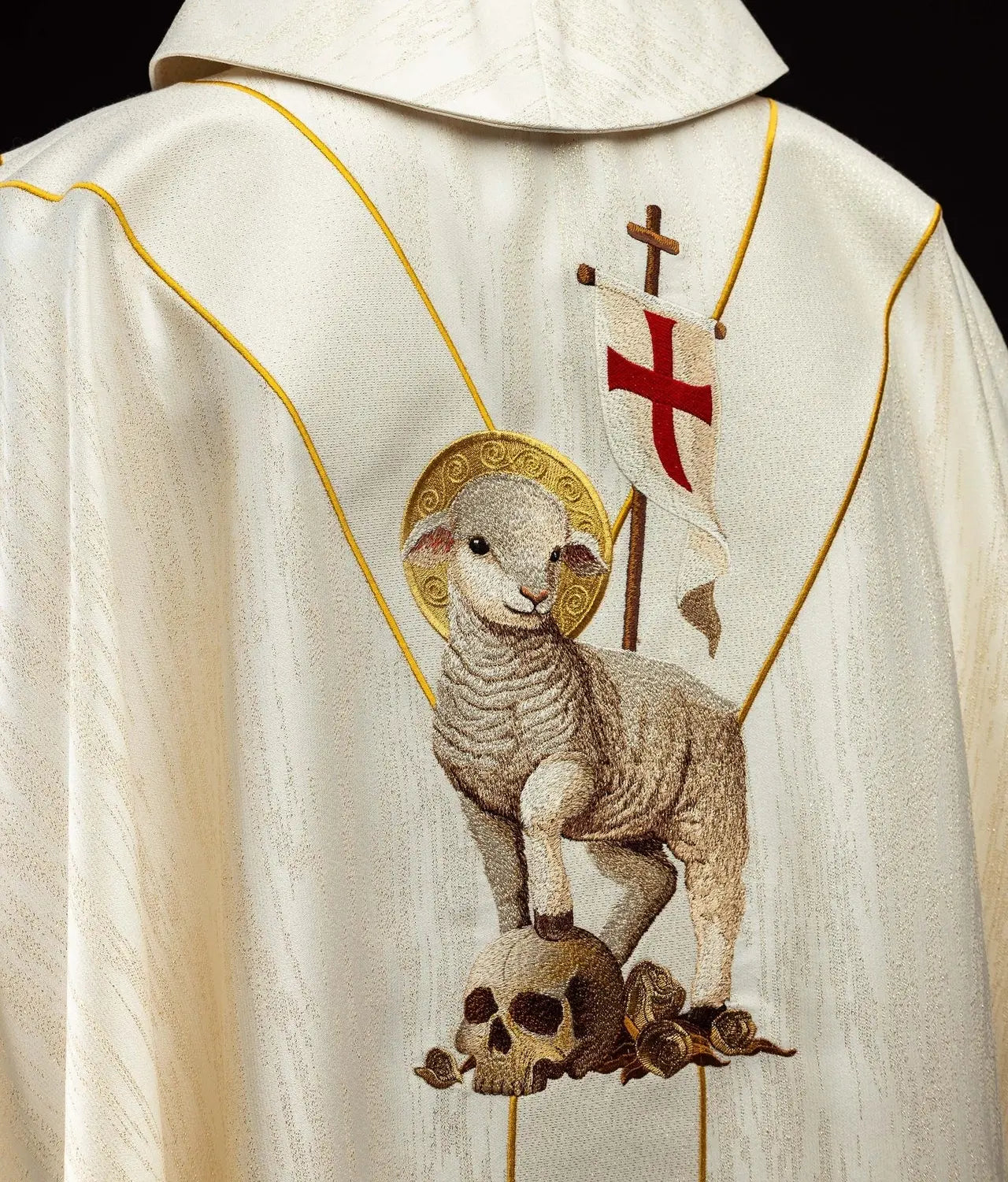
Typical Easter motifs include the Paschal Lamb, the Cross, the JHS monogram, rays of glory, rich orphrey bands, lilies, vine patterns, stones, rope ornament and decorative embroidery that emphasizes the dignity of the feast. A chasuble with an Easter Lamb motif can become the visual center of the Mass, while a matching stole or pulpit cover extends the theme to preaching, processions and other rites. In larger celebrations, a cope or dalmatic can strengthen the unity of the clergy's vesture, especially when the same embroidery style or color palette is repeated.
Chasubles for Easter Masses
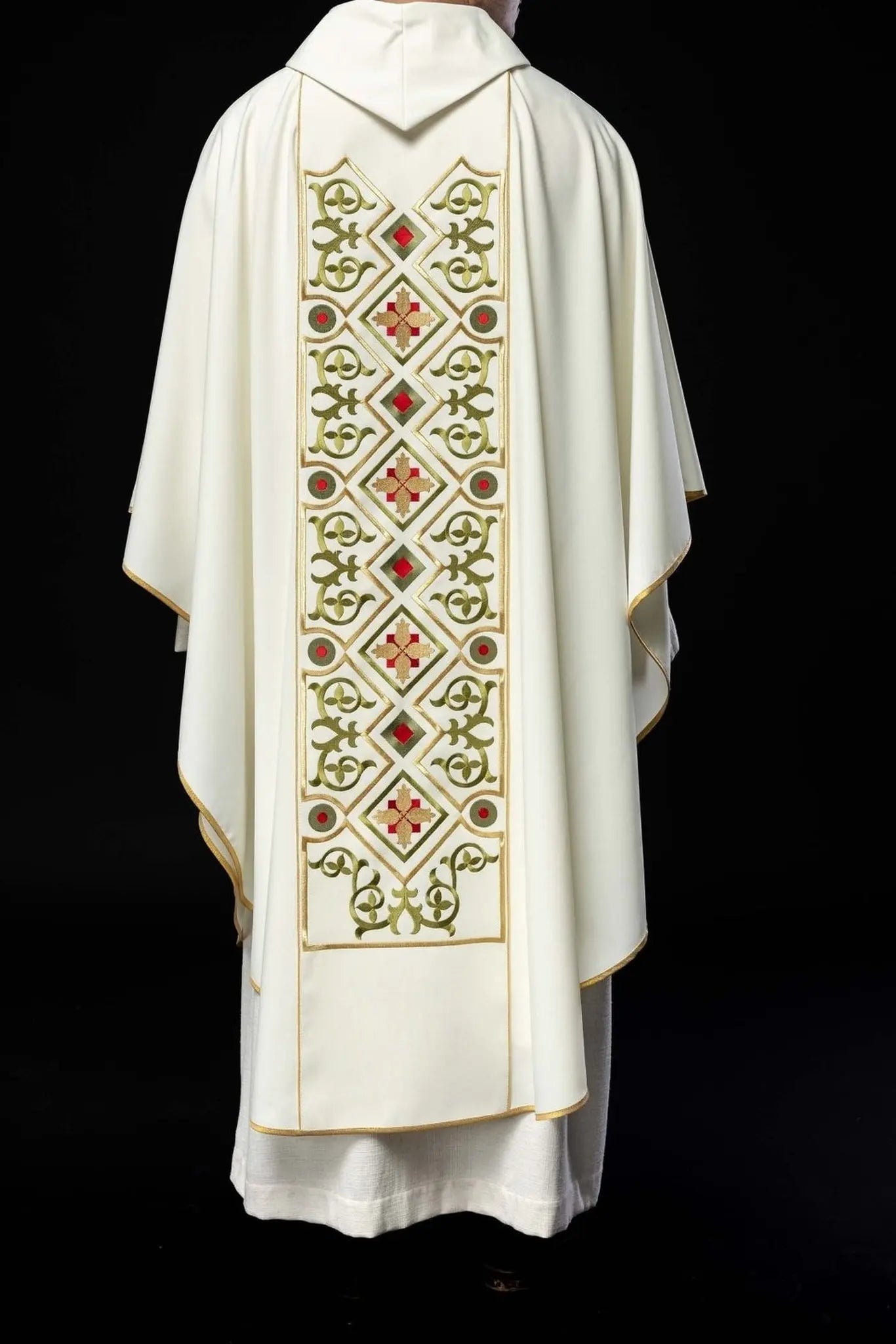
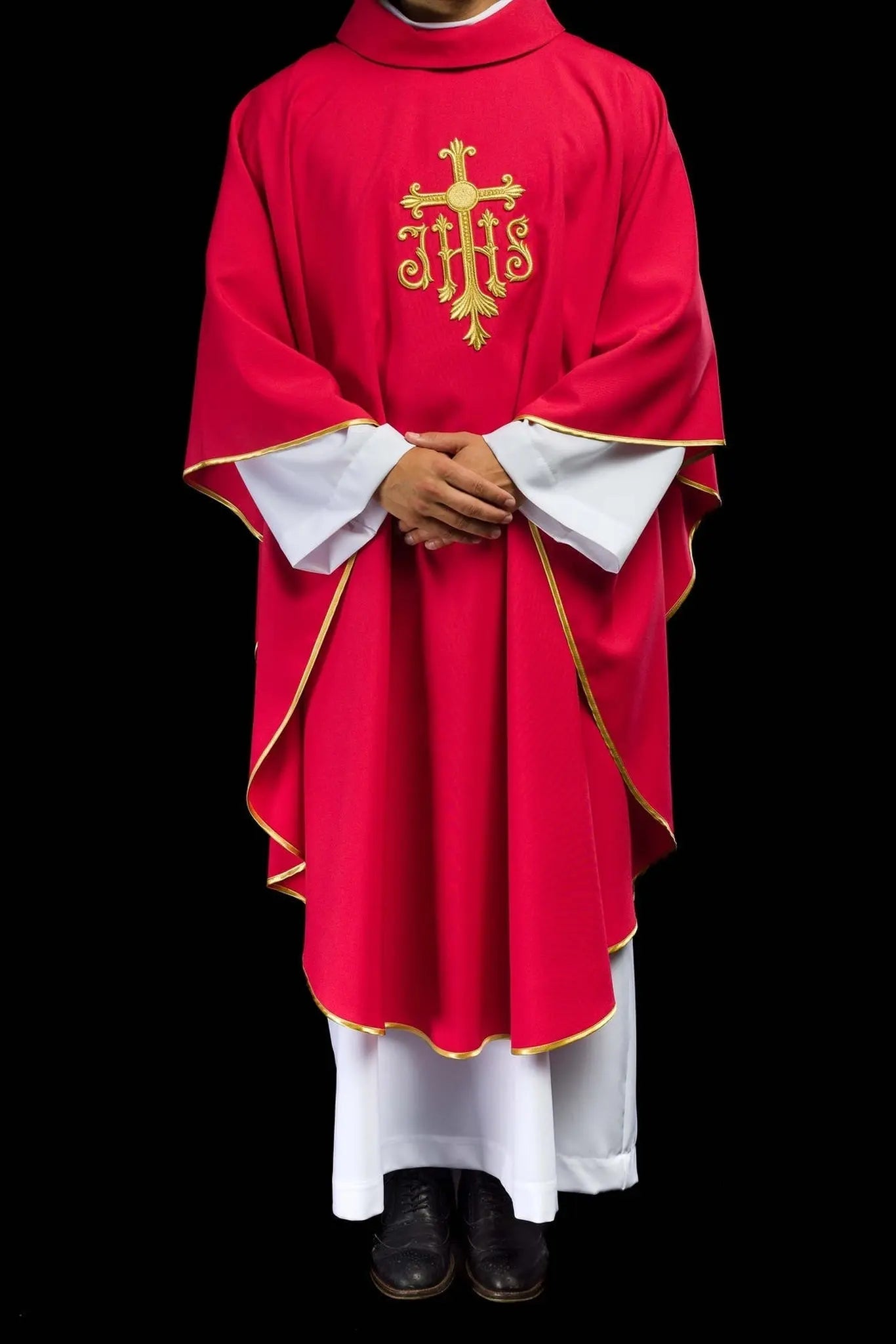
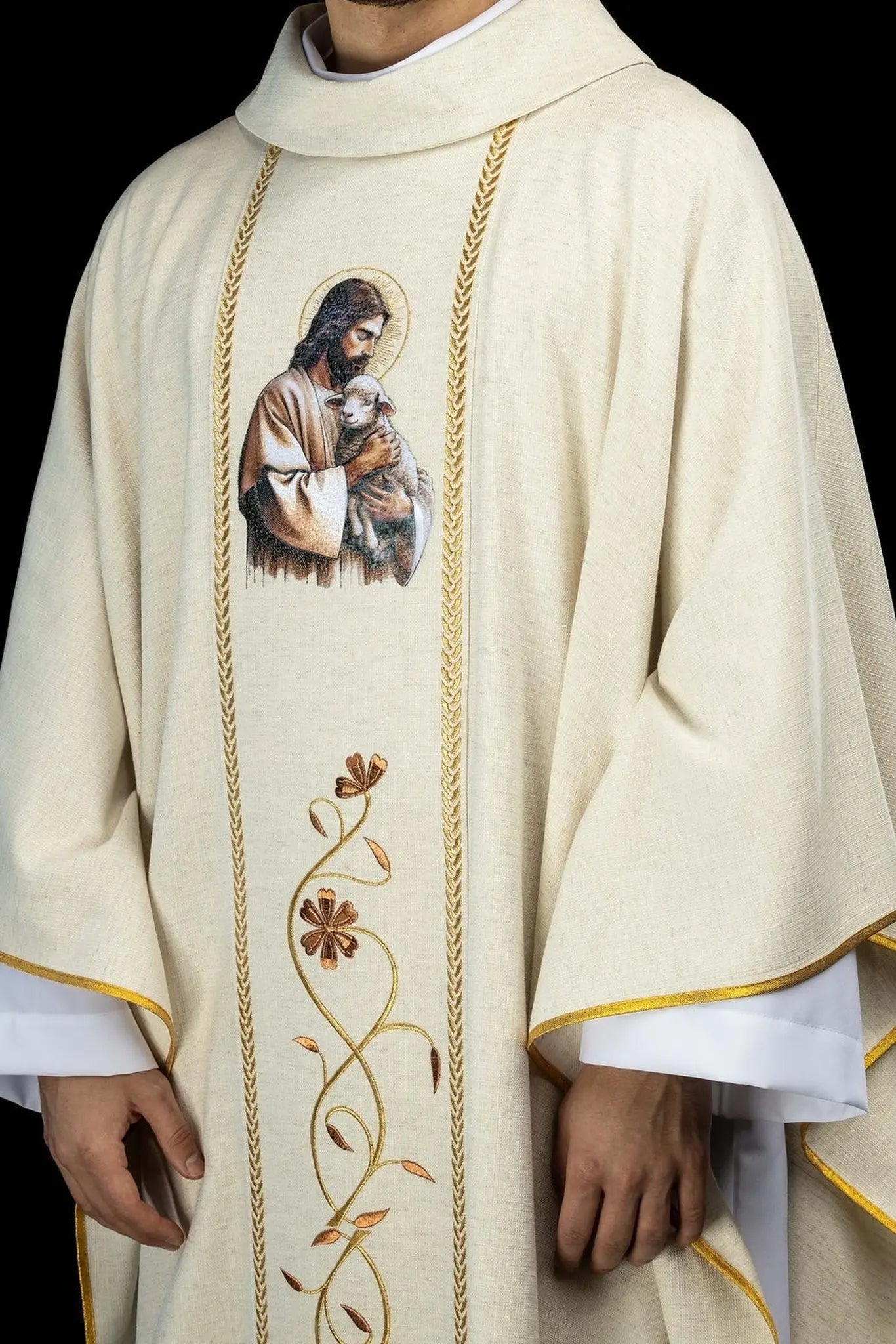
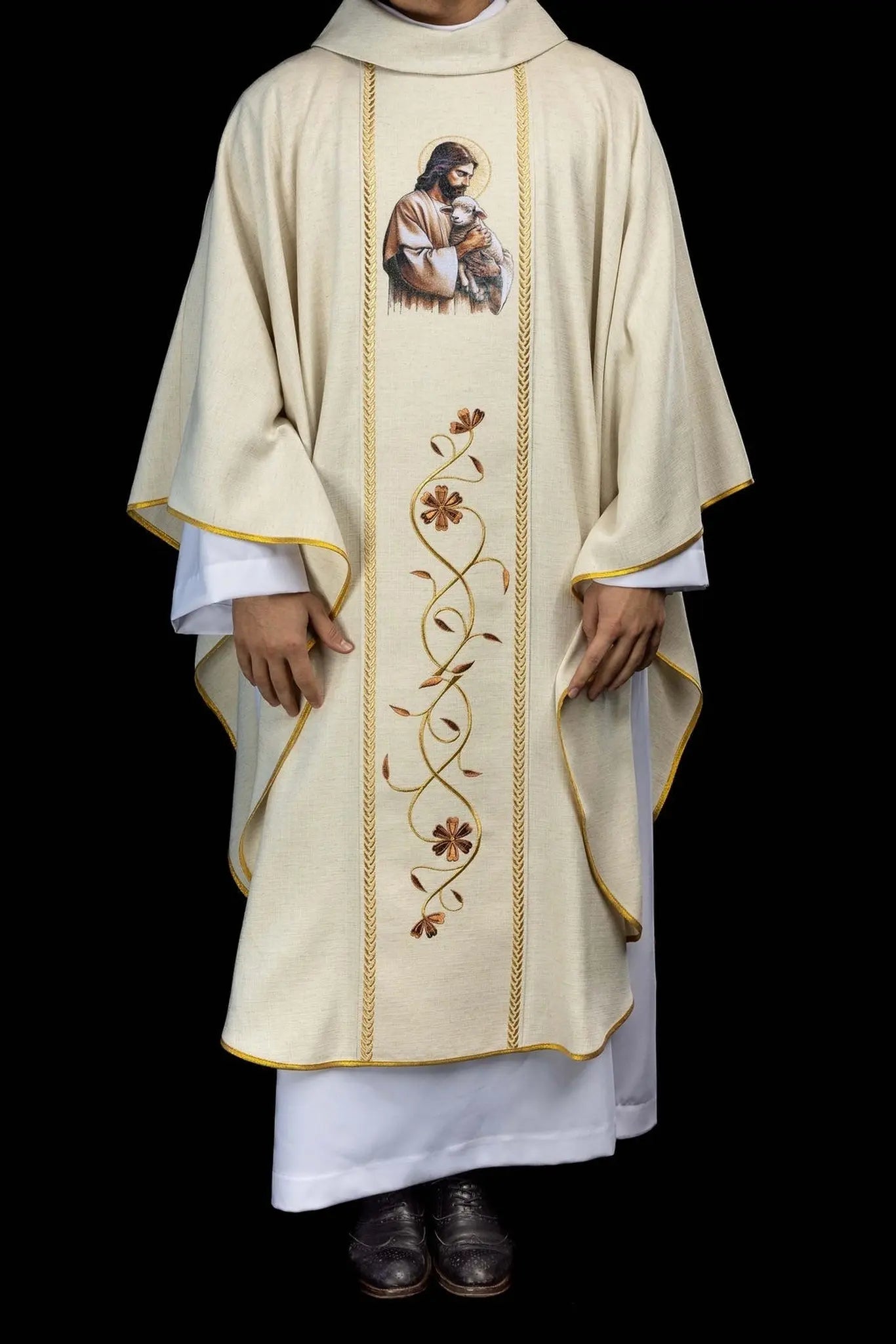
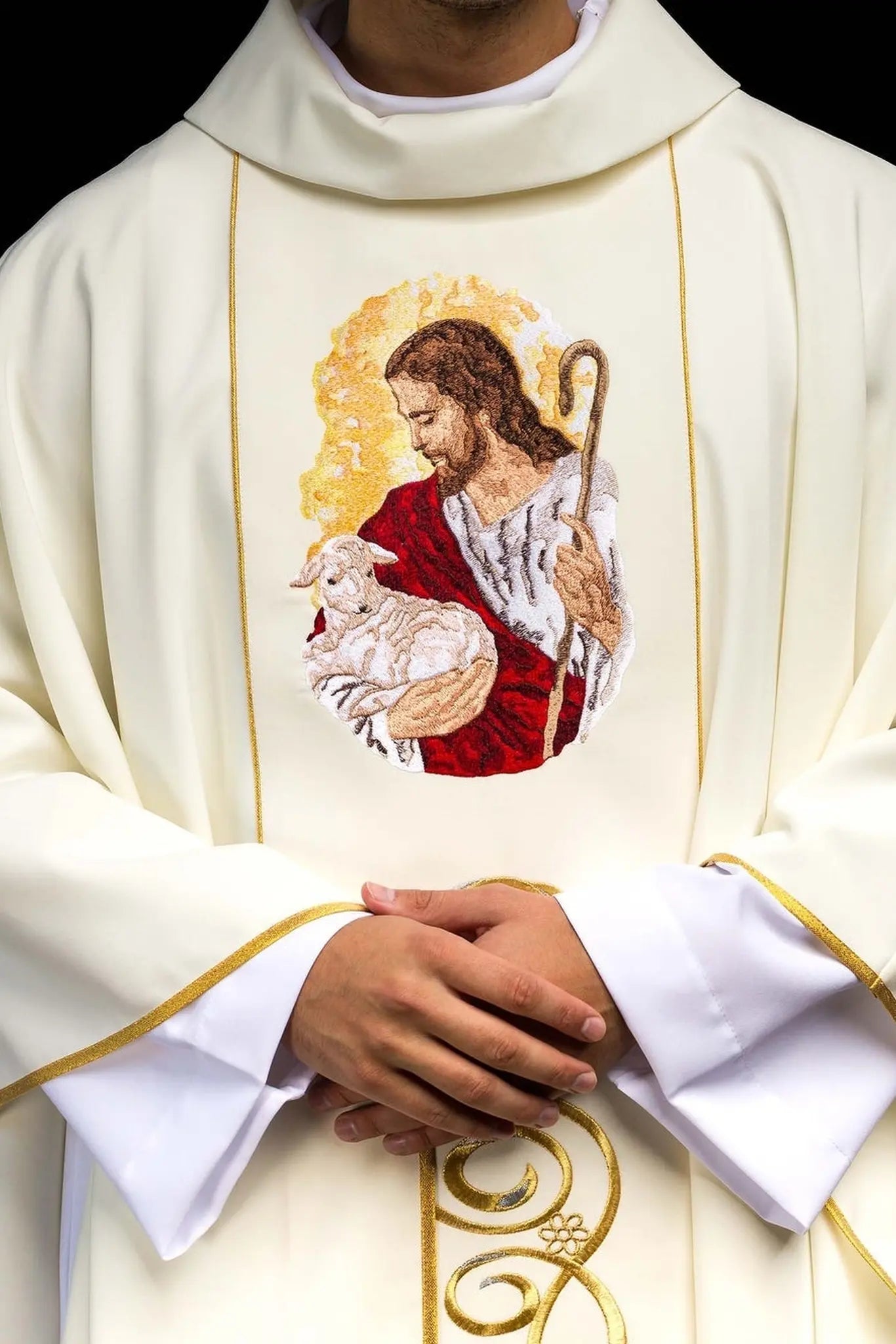
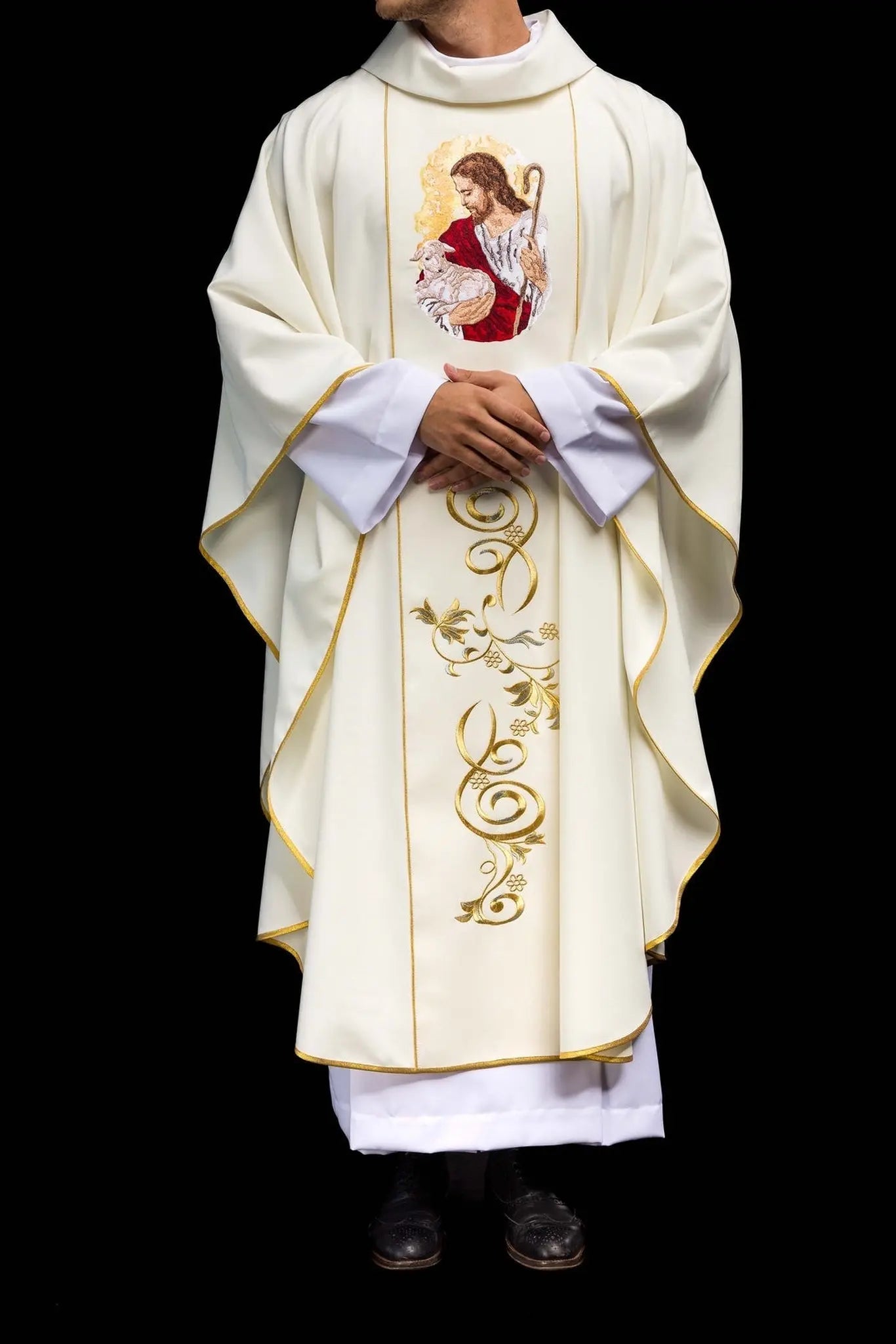
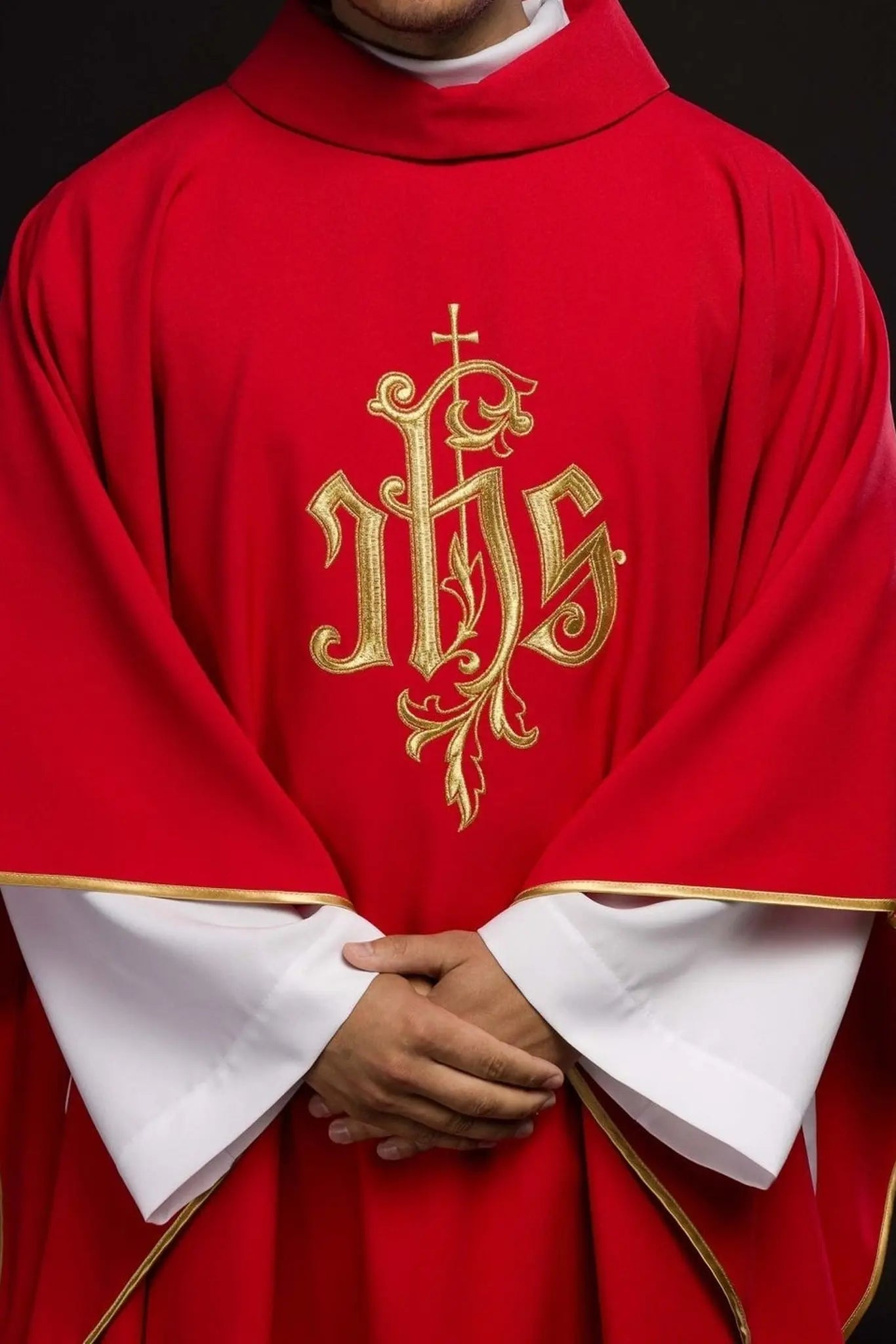
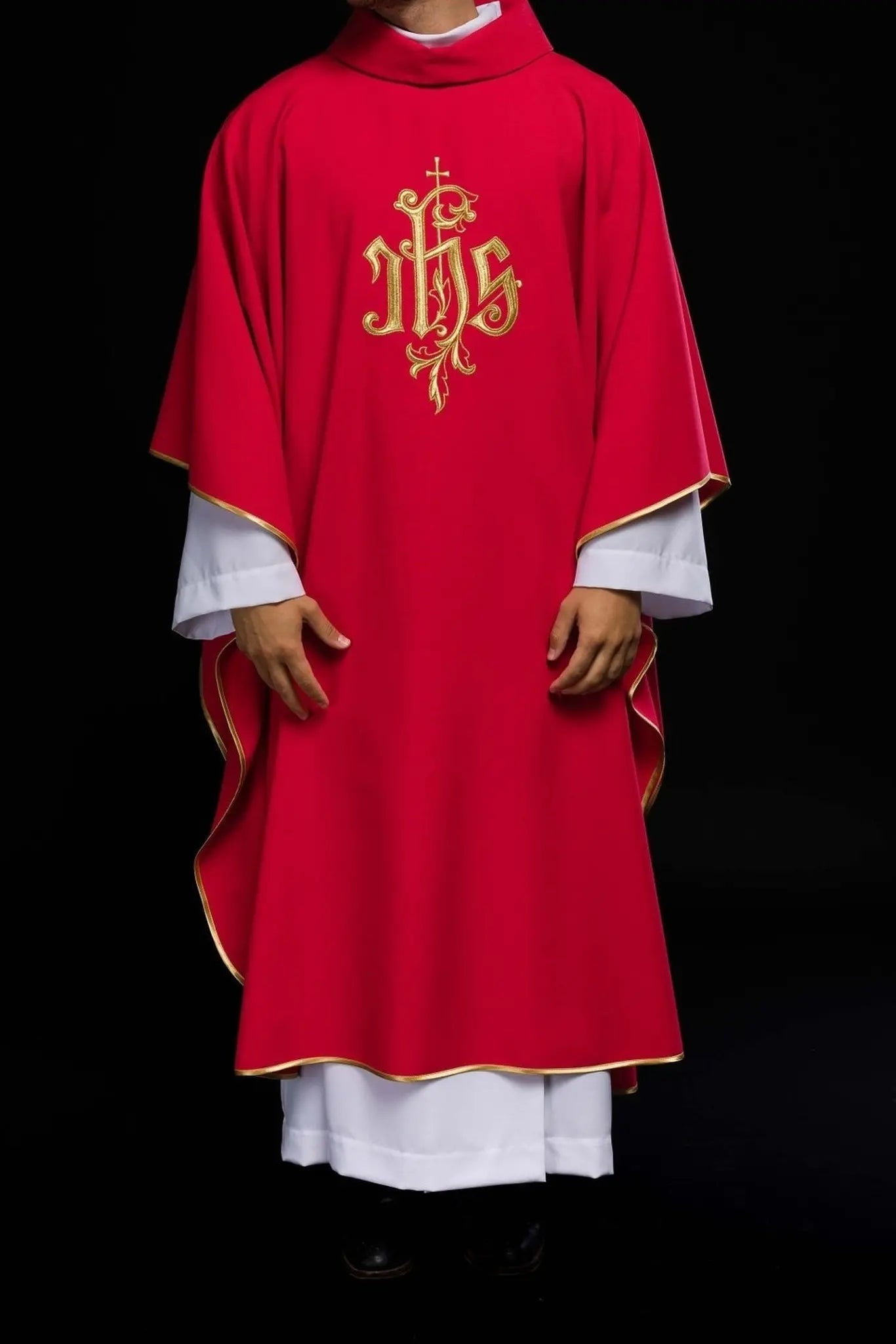
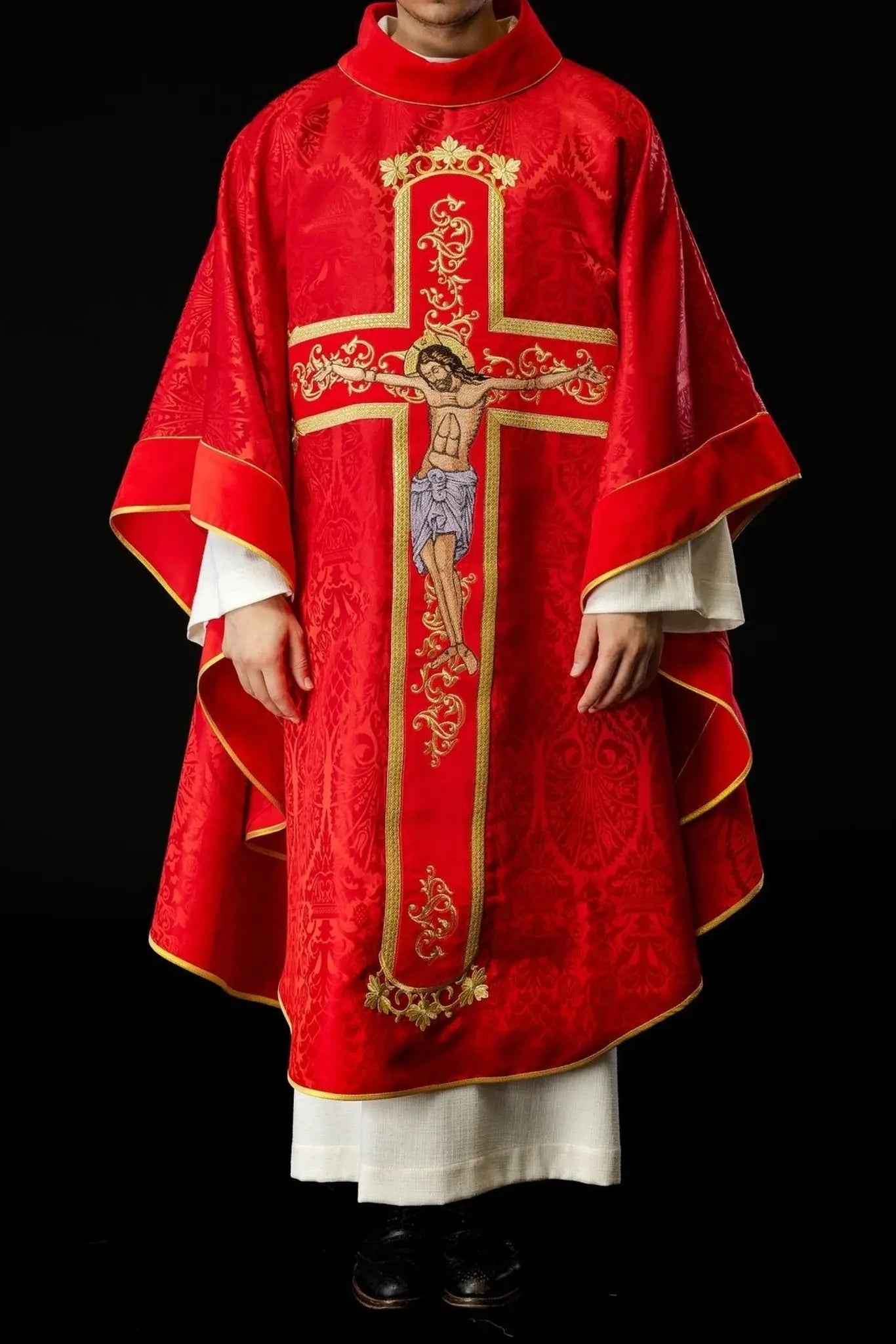
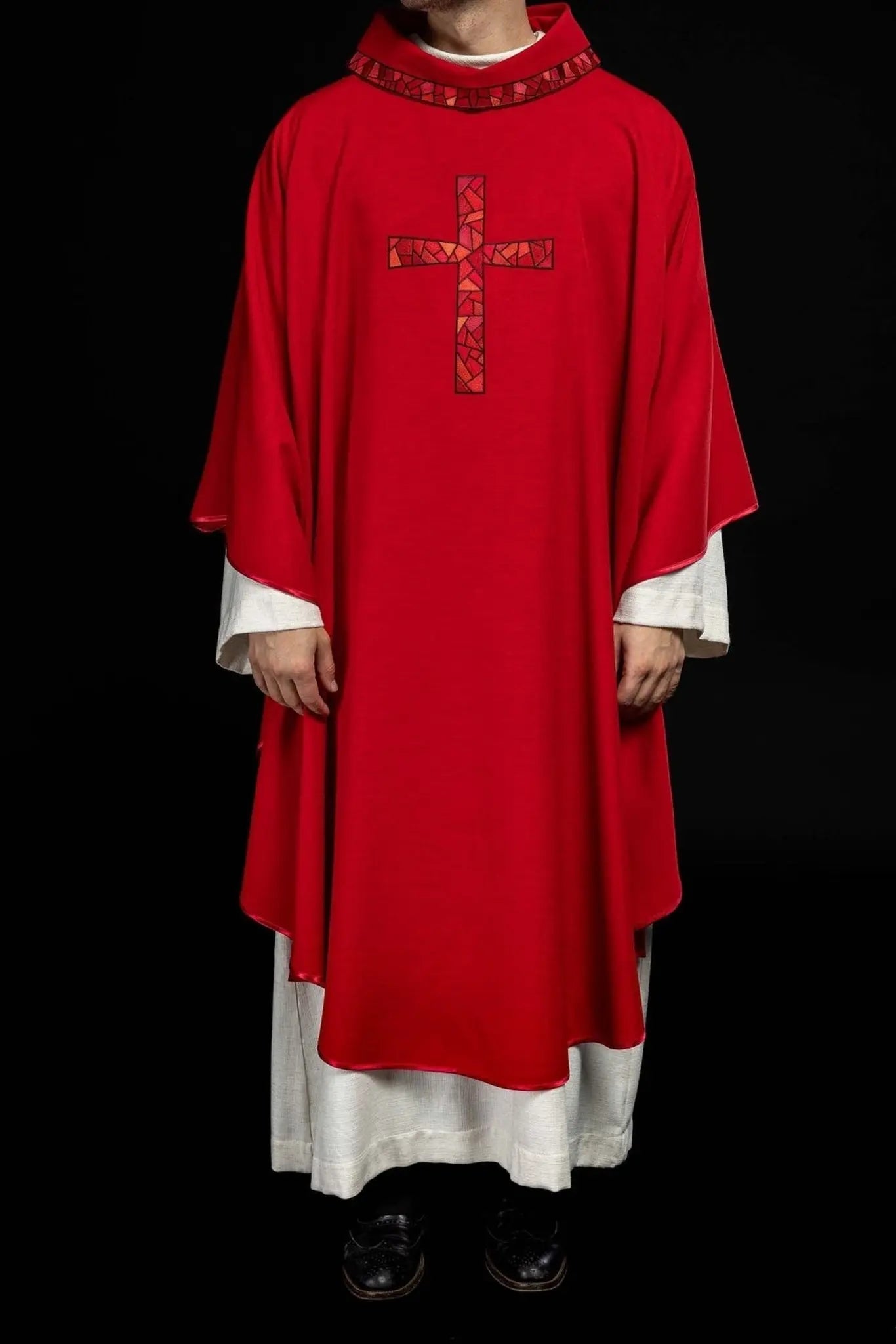
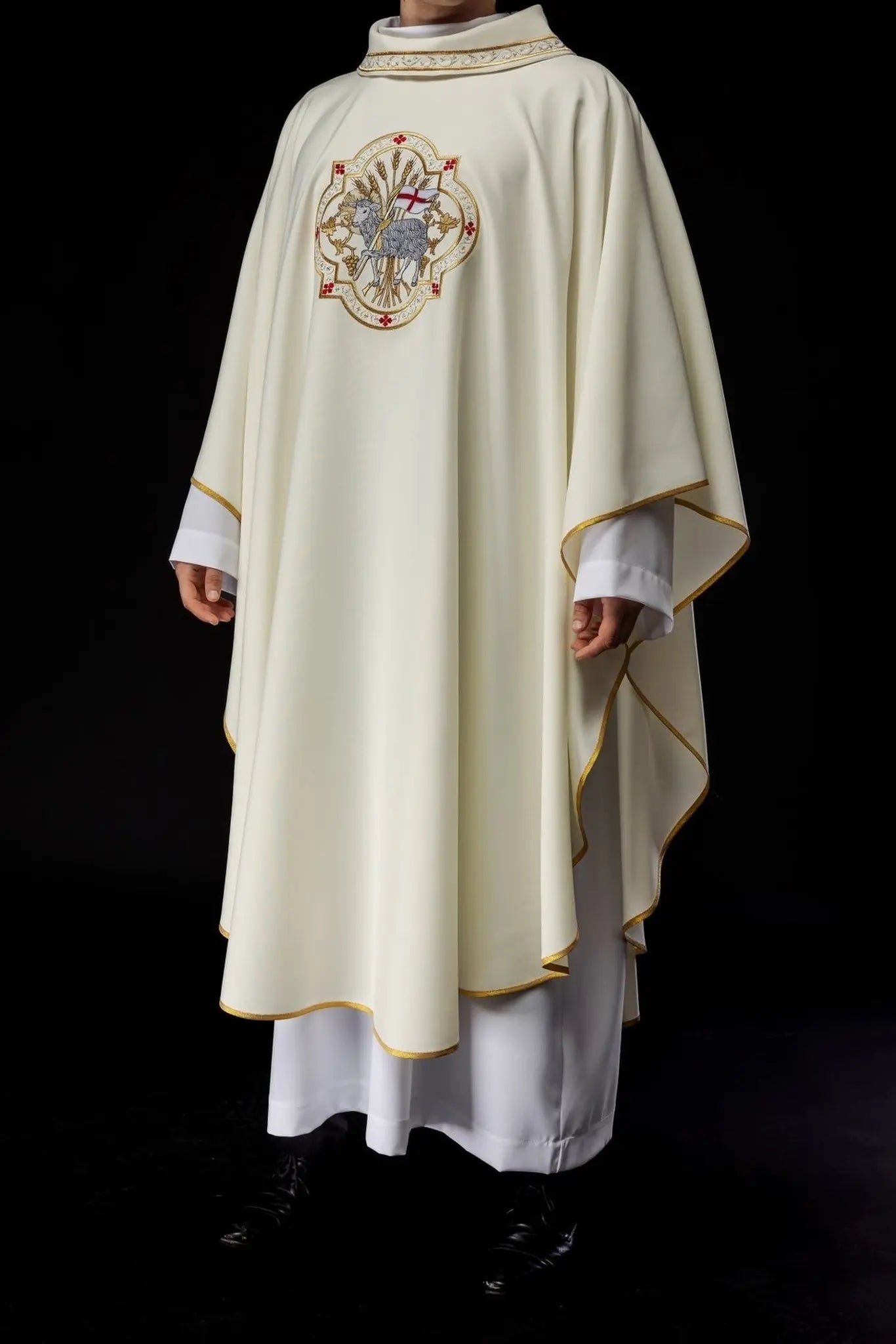
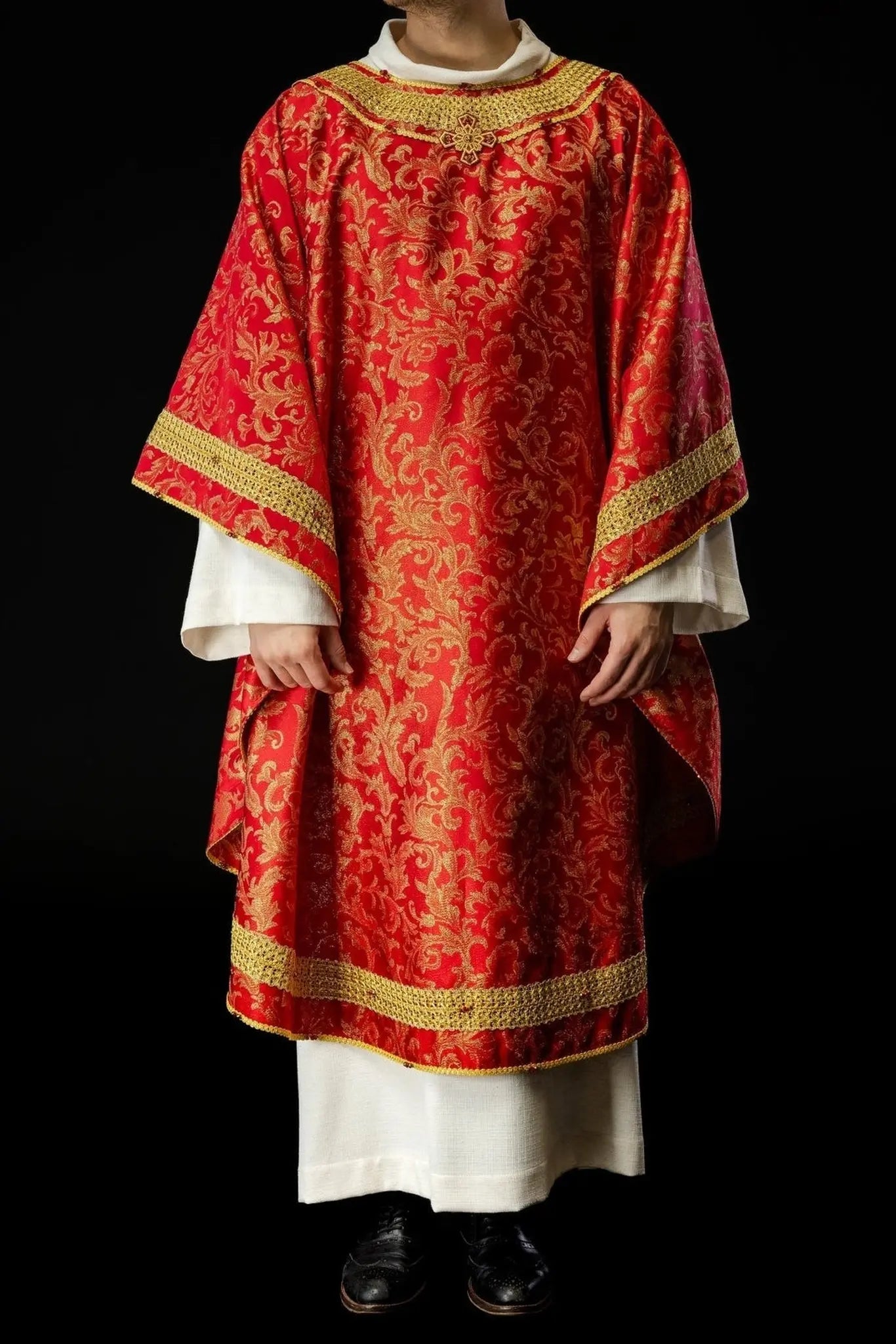
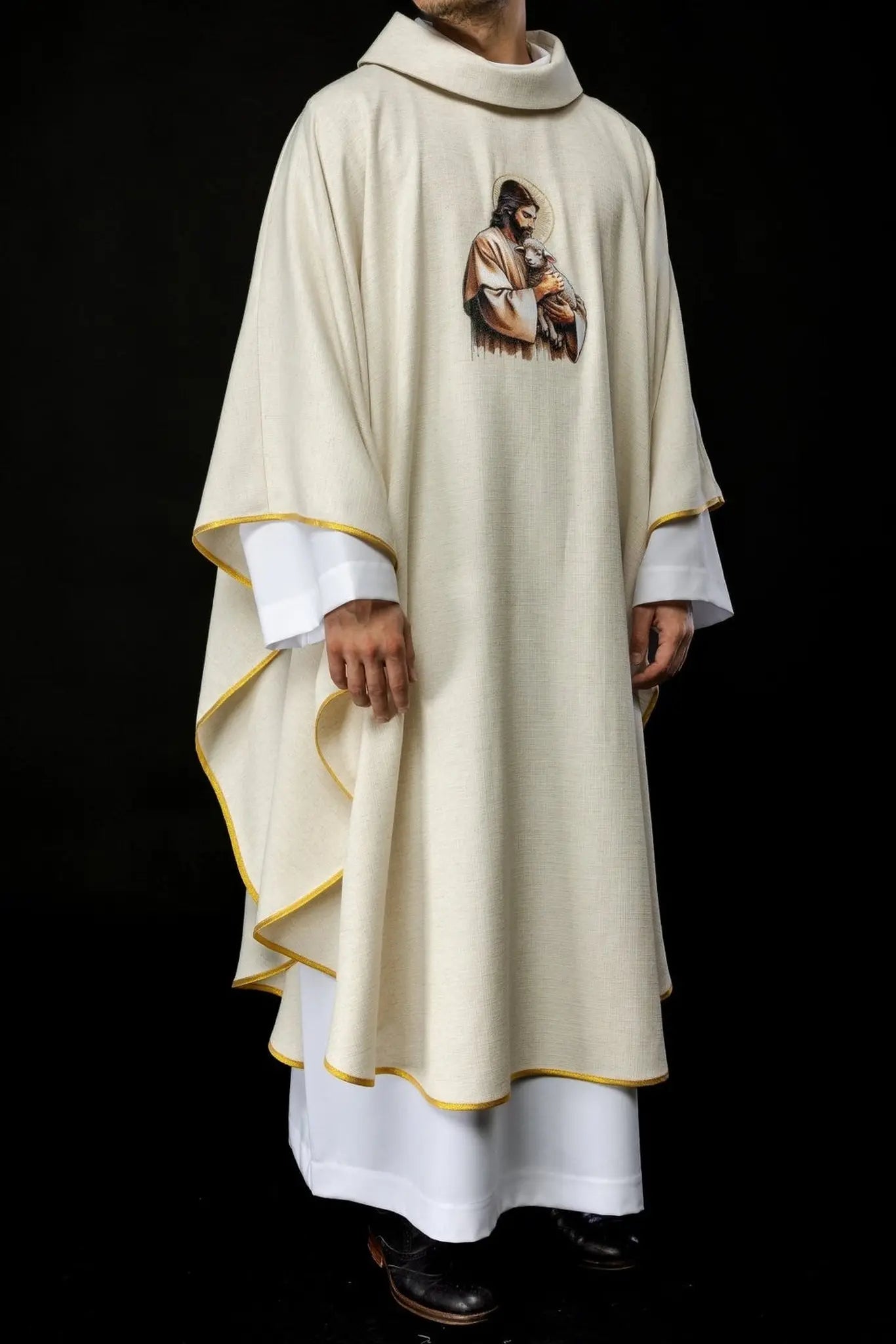
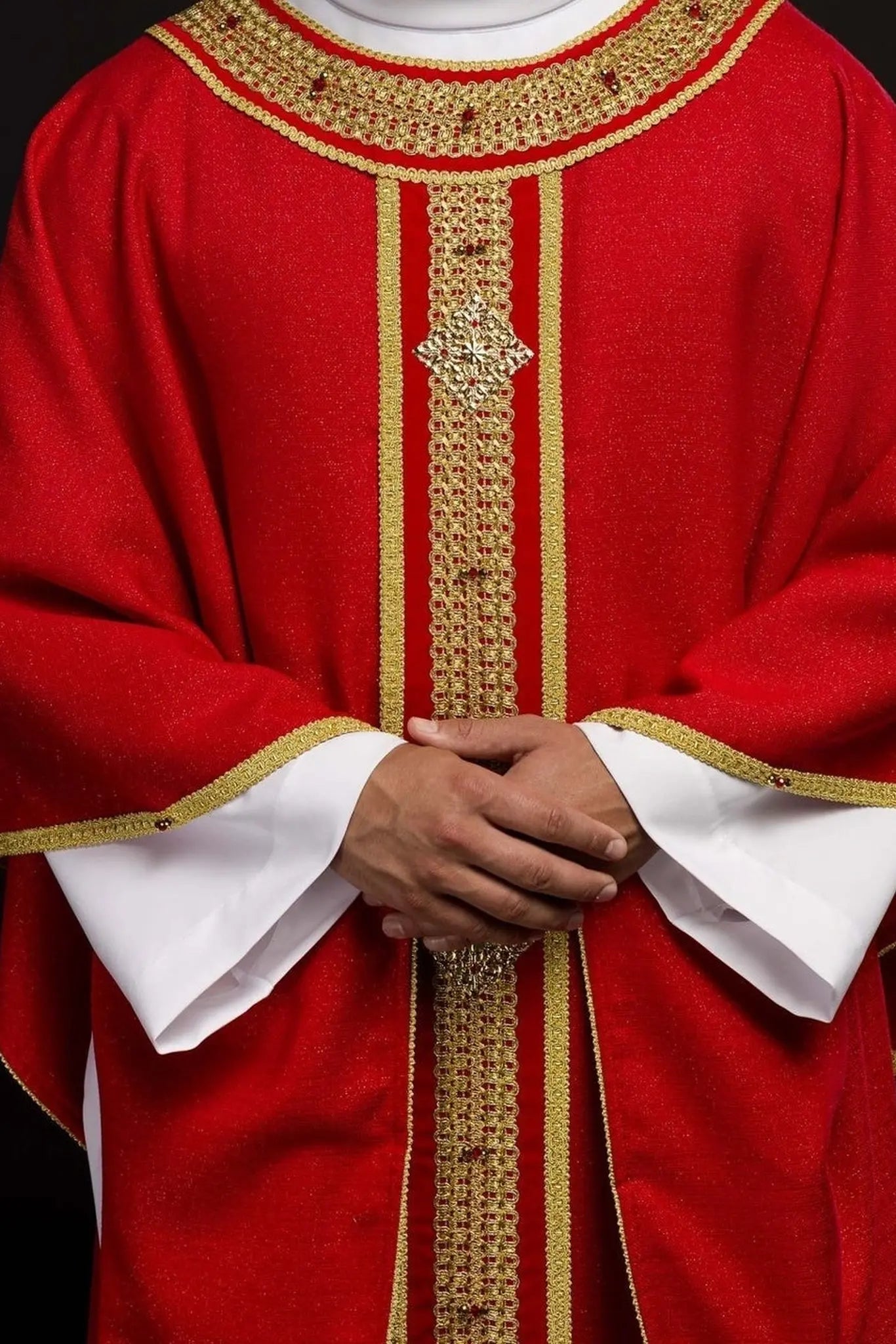
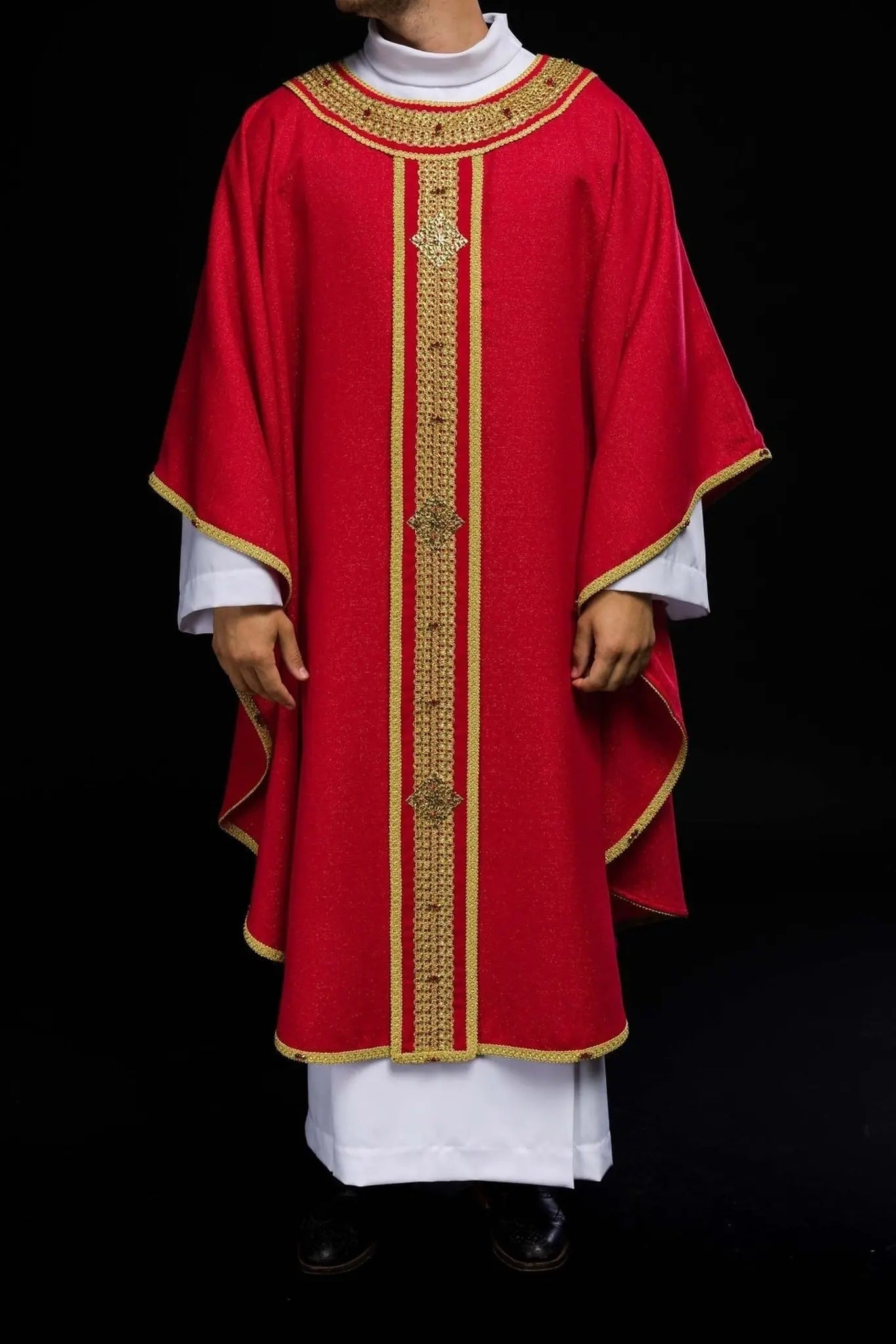
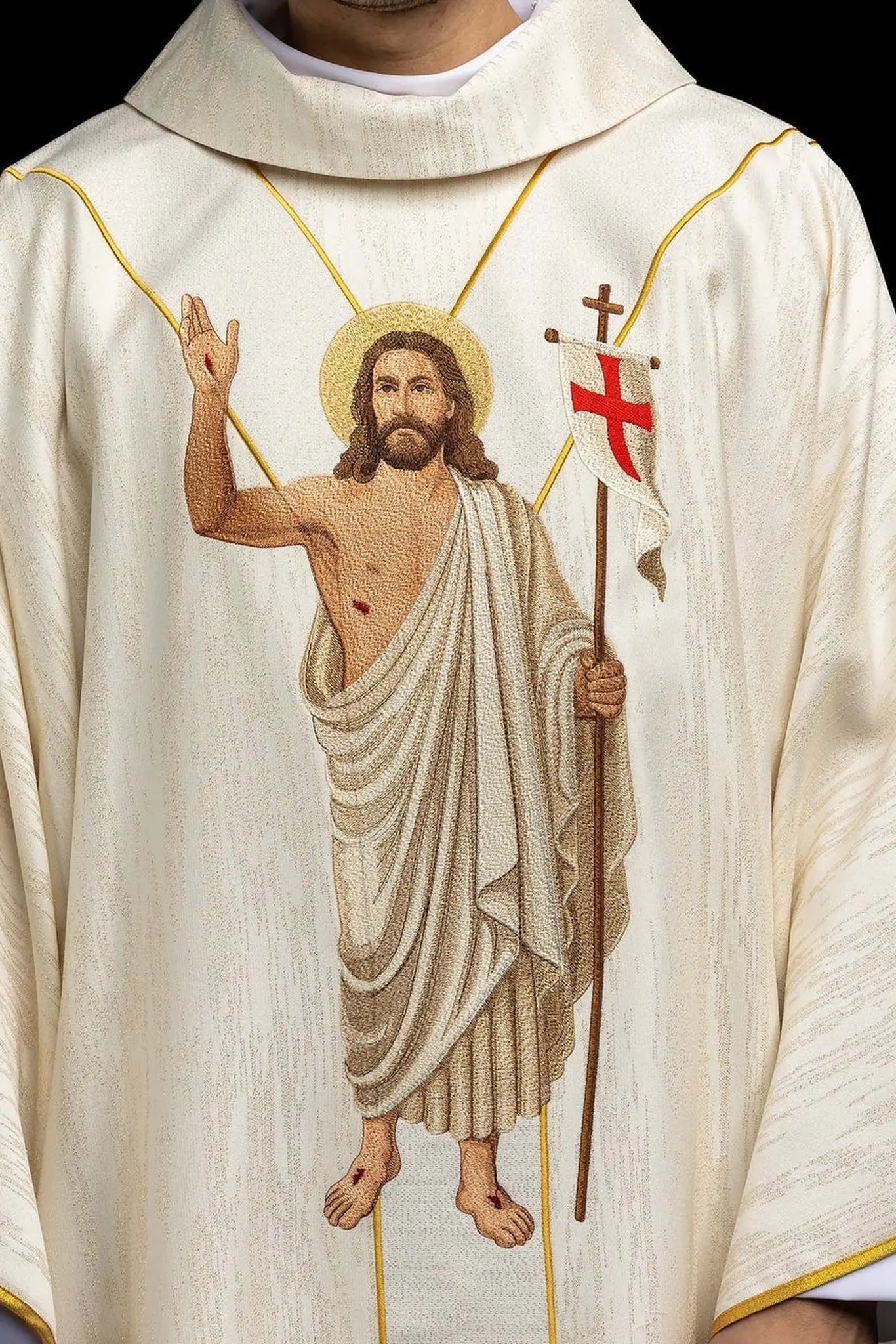
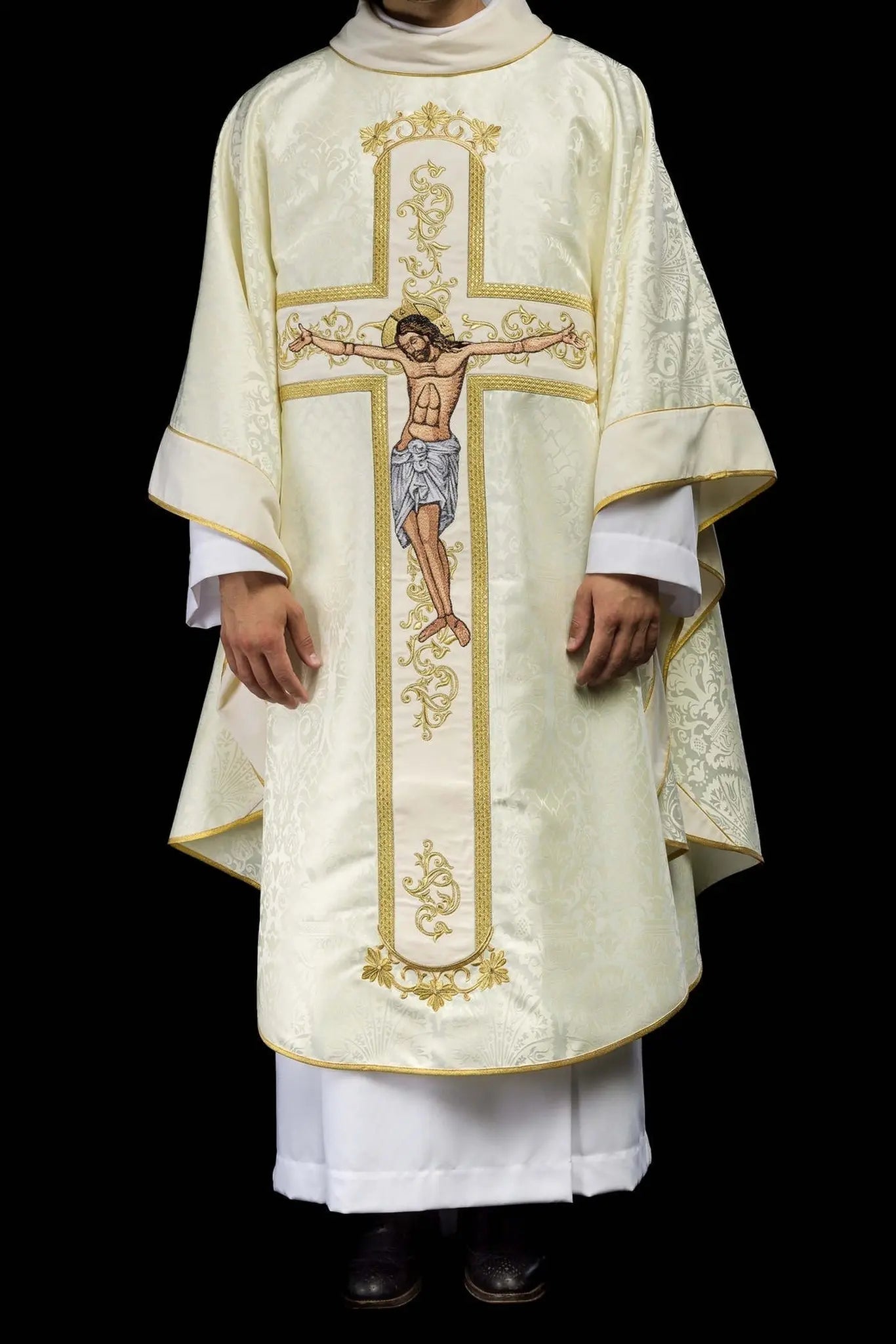
The chasuble is the outer vestment worn by a priest or bishop during the celebration of Mass. For Easter, a festive chasuble should make the Resurrection theme clear without overwhelming the liturgy. White and ecru chasubles with gold embroidery are suitable for Easter Sunday, the Easter Octave and many solemn celebrations during Eastertide. Gold chasubles may be chosen when a parish wants a particularly solemn visual expression, while richly embroidered red designs can be used where the day or local liturgical context calls for red.
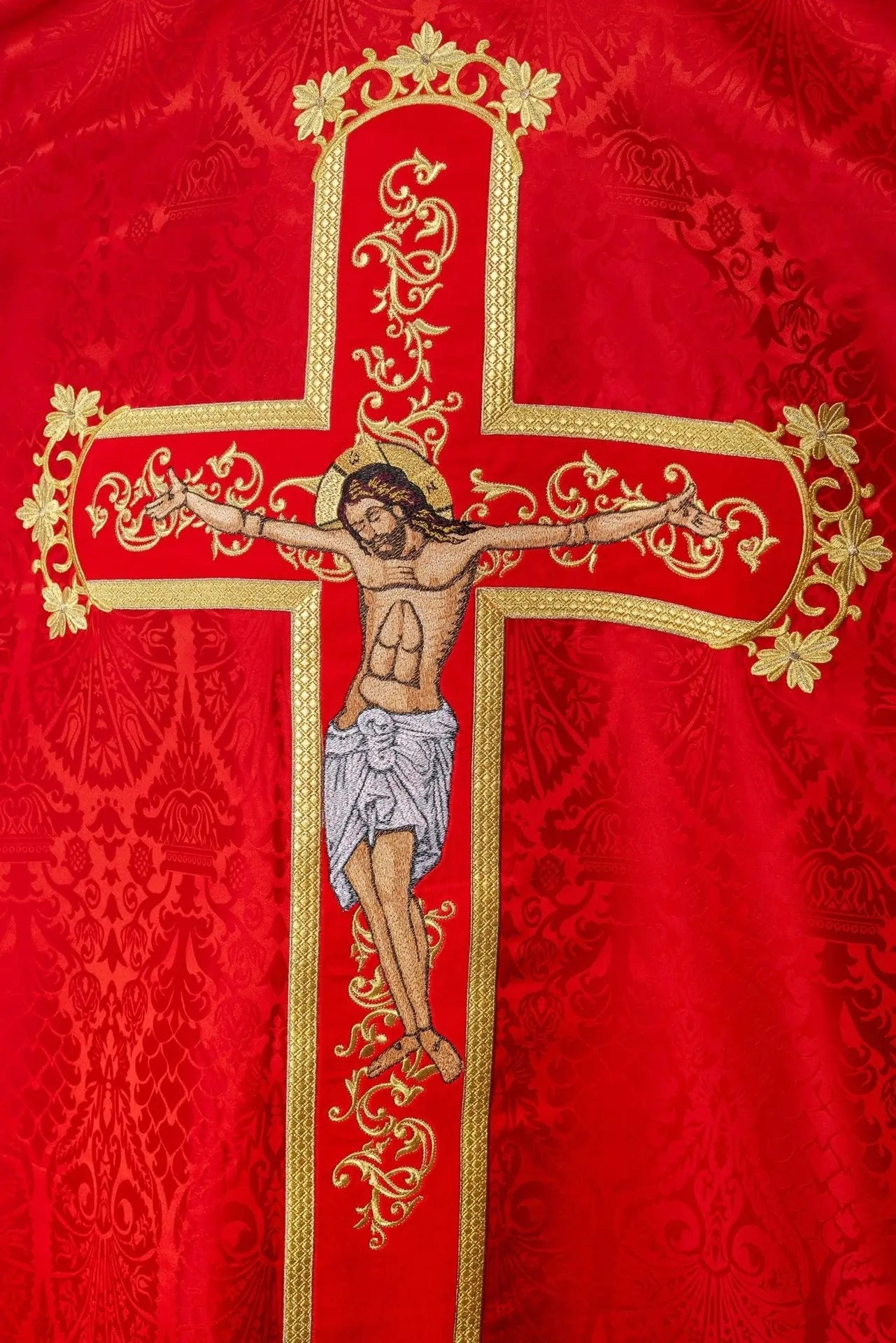
When choosing an Easter chasuble, consider the size of the church, the character of the sanctuary and the way the vestment will be seen from a distance. Large embroidered symbols such as the Paschal Lamb or a clear Cross are especially readable in spacious churches. More delicate ornamental patterns may be suitable for chapels, weekday Masses in the Easter season, or settings where a refined and balanced appearance is preferred. You can compare broader designs in the chasubles collection, or review festive color options in gold chasubles and ecru chasubles.
Symbols of the Resurrection
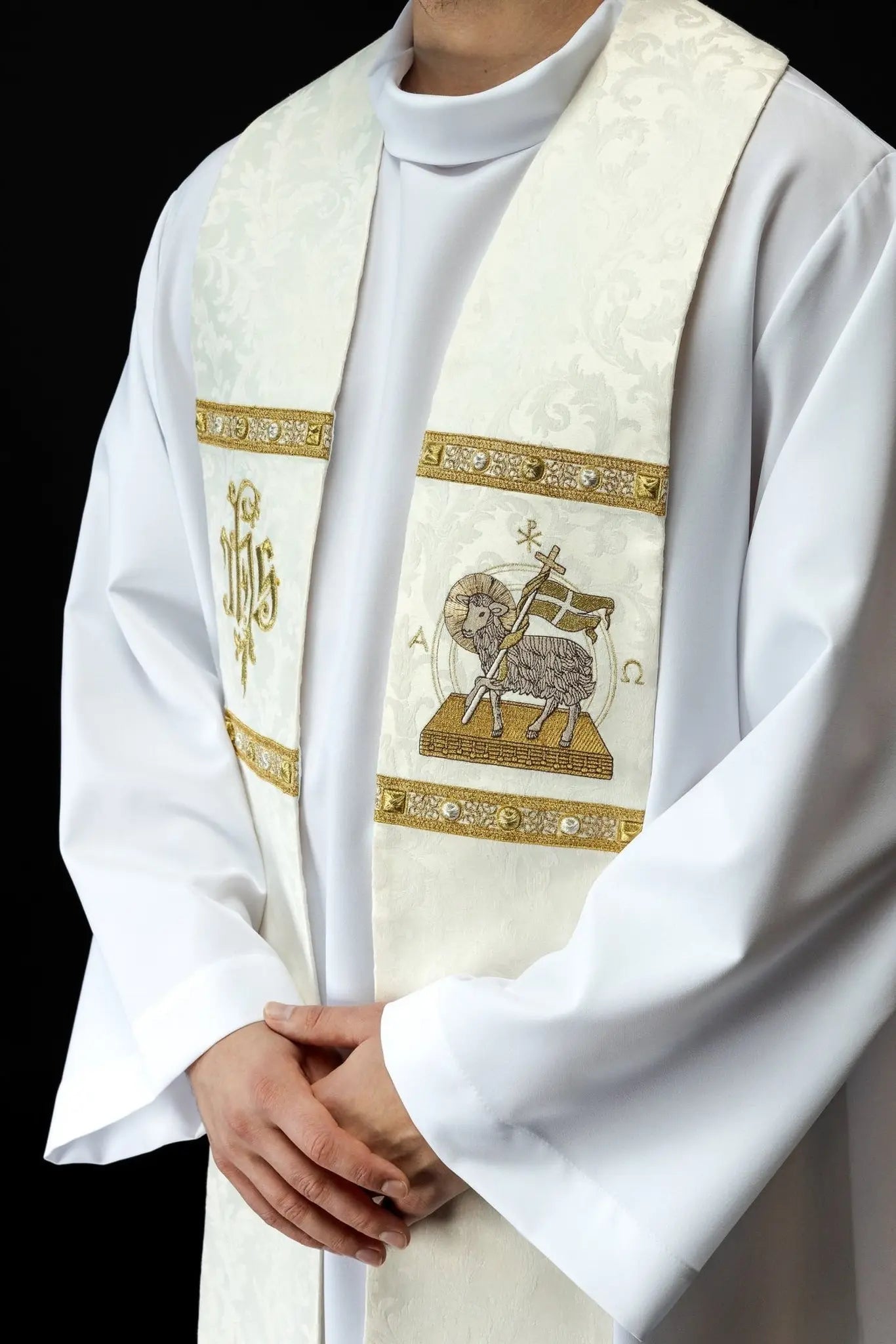
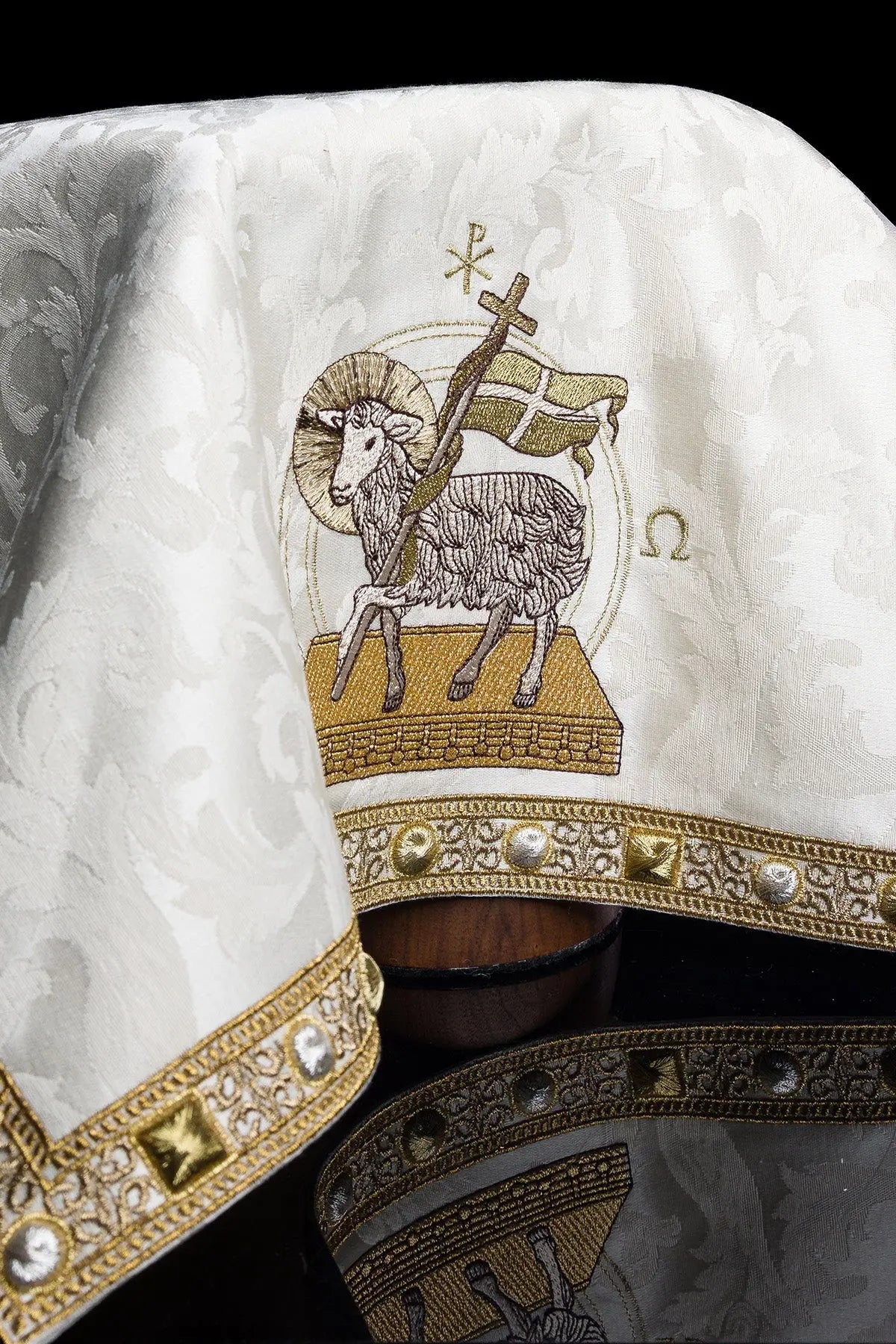
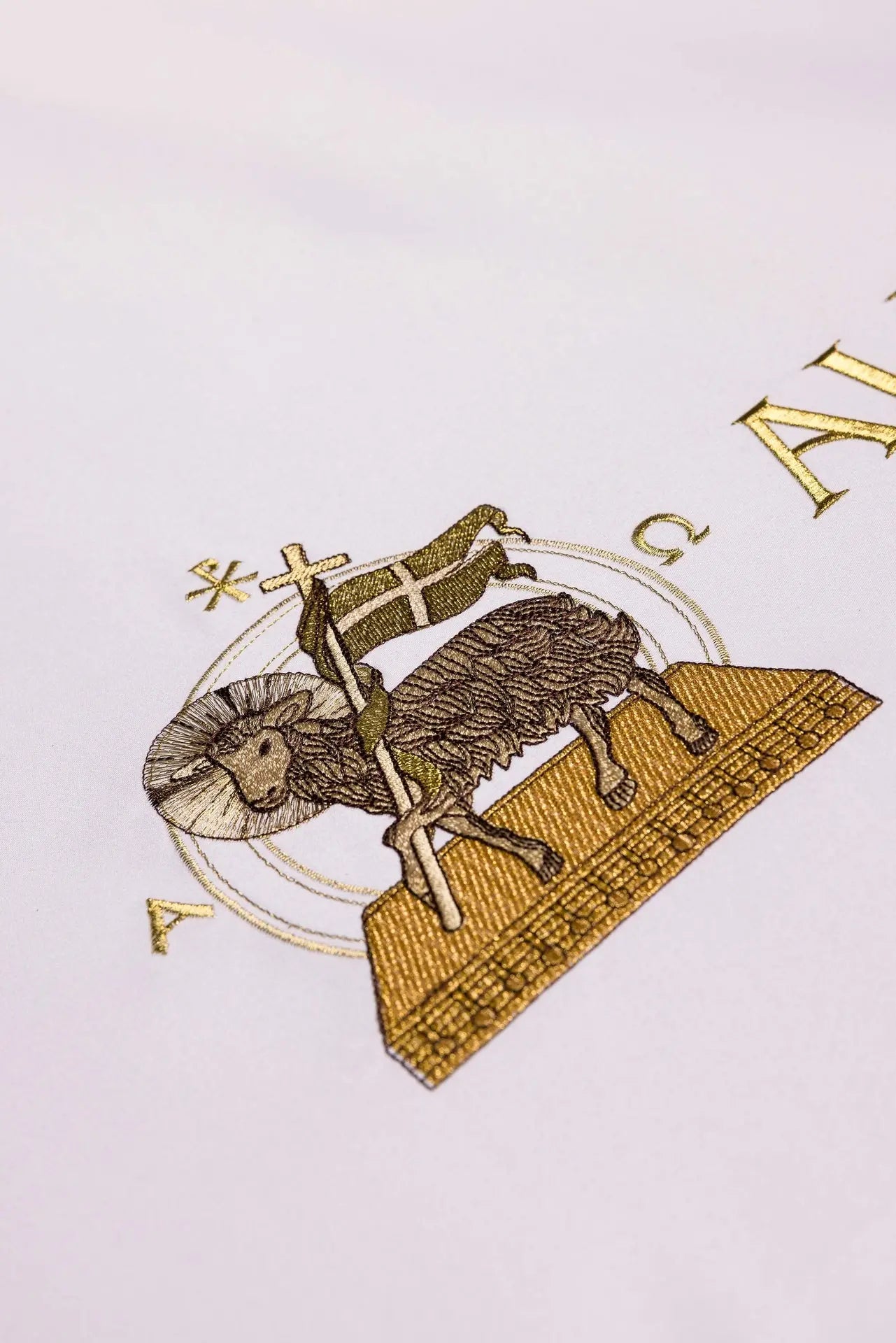
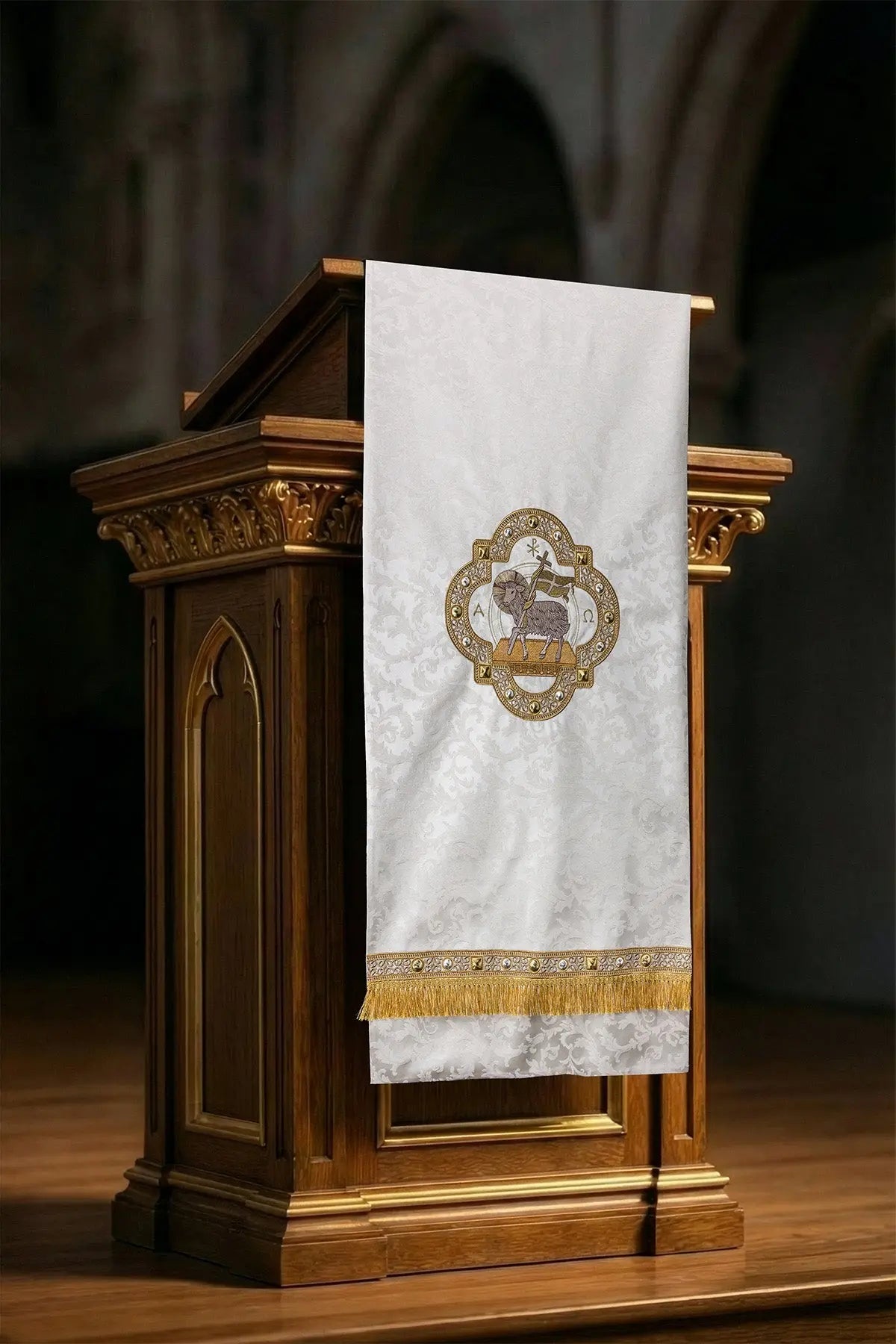
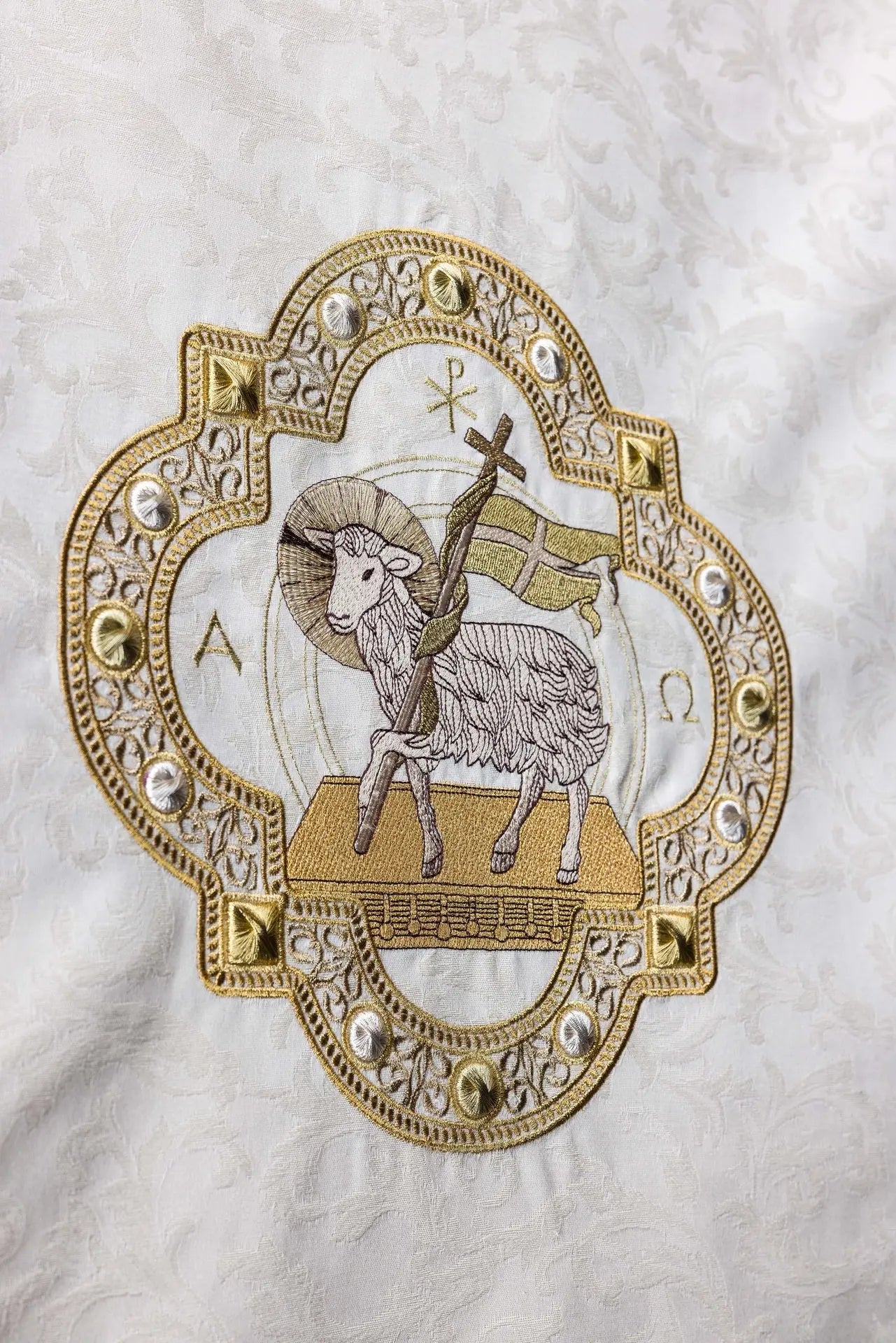
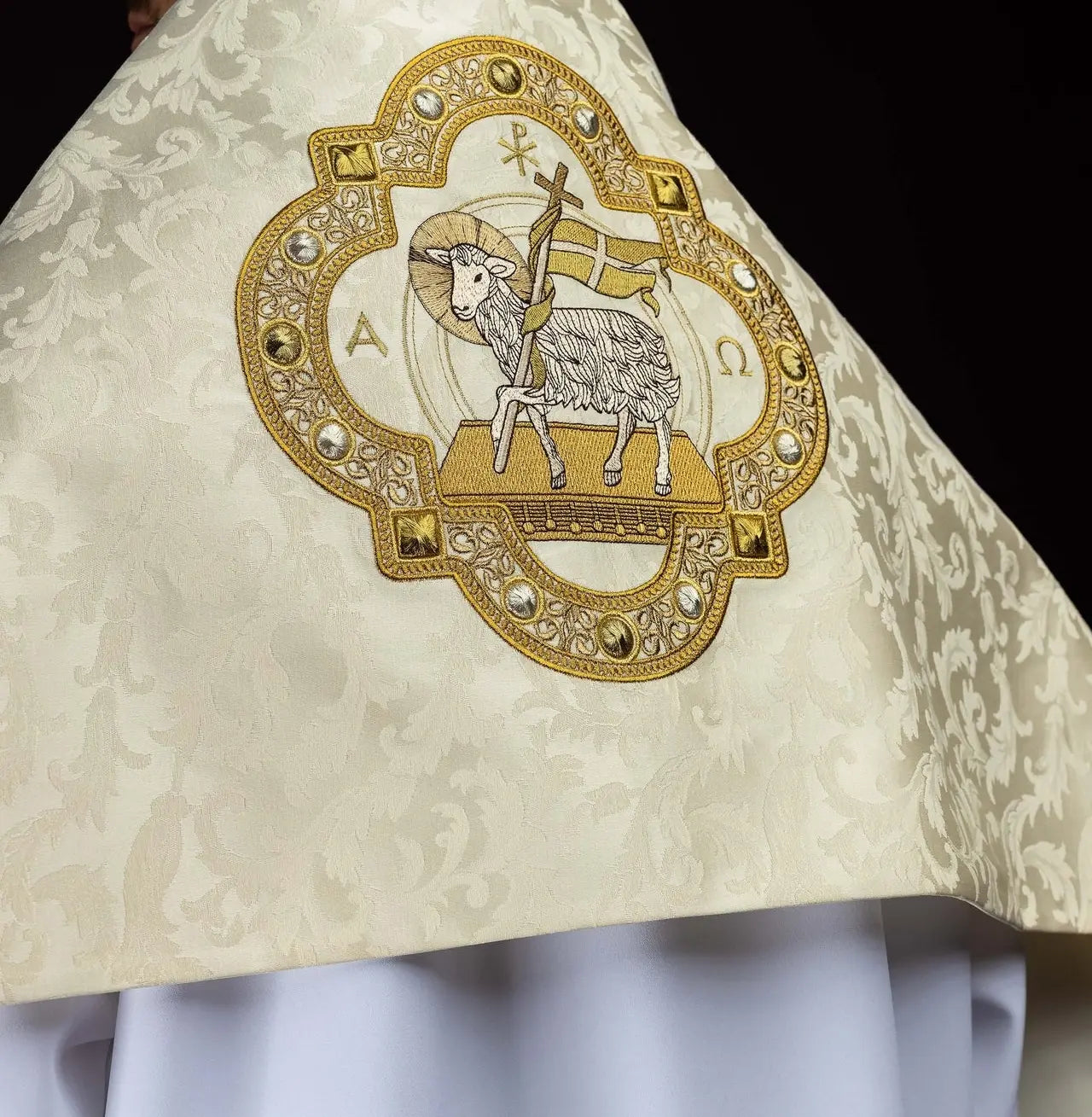
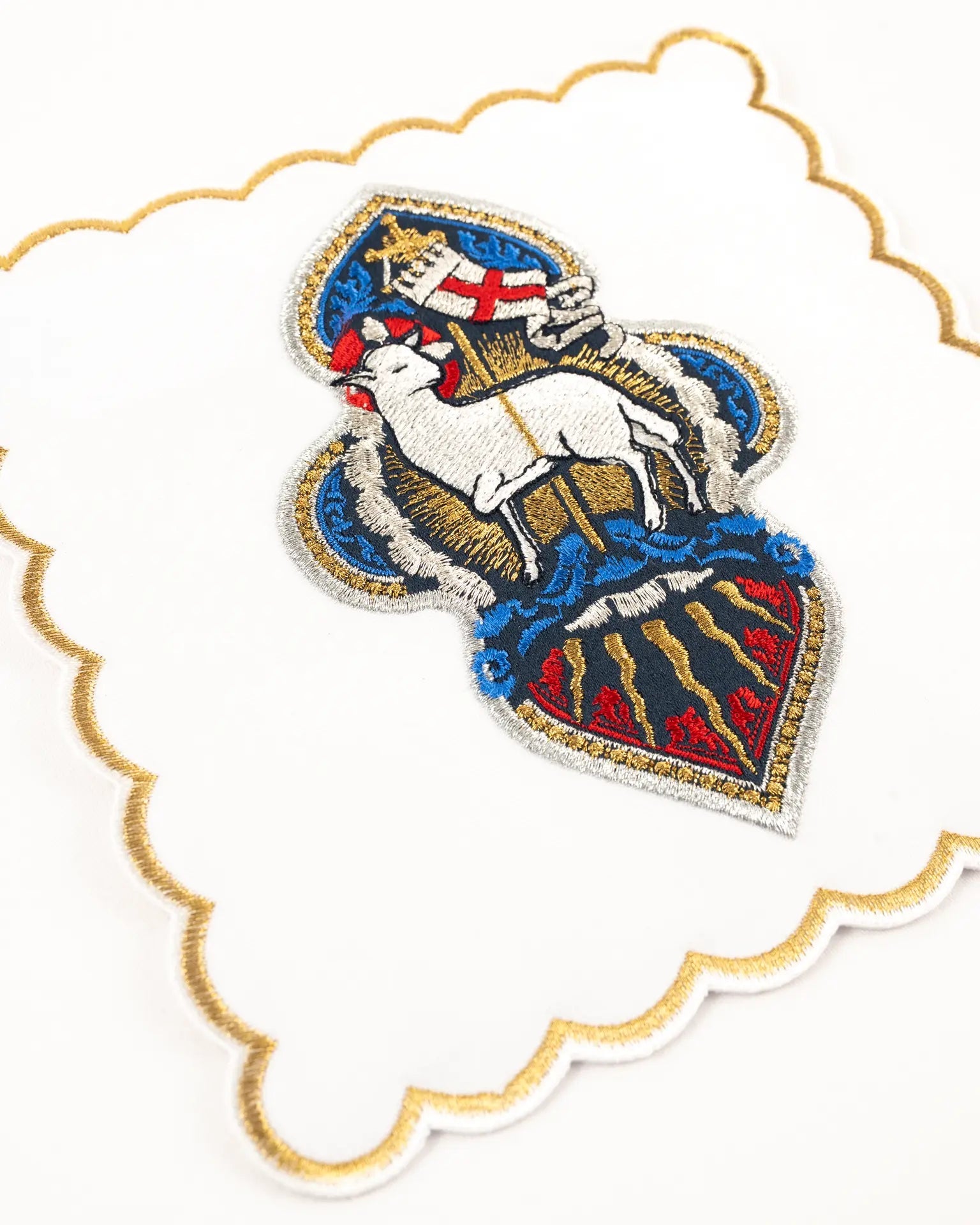
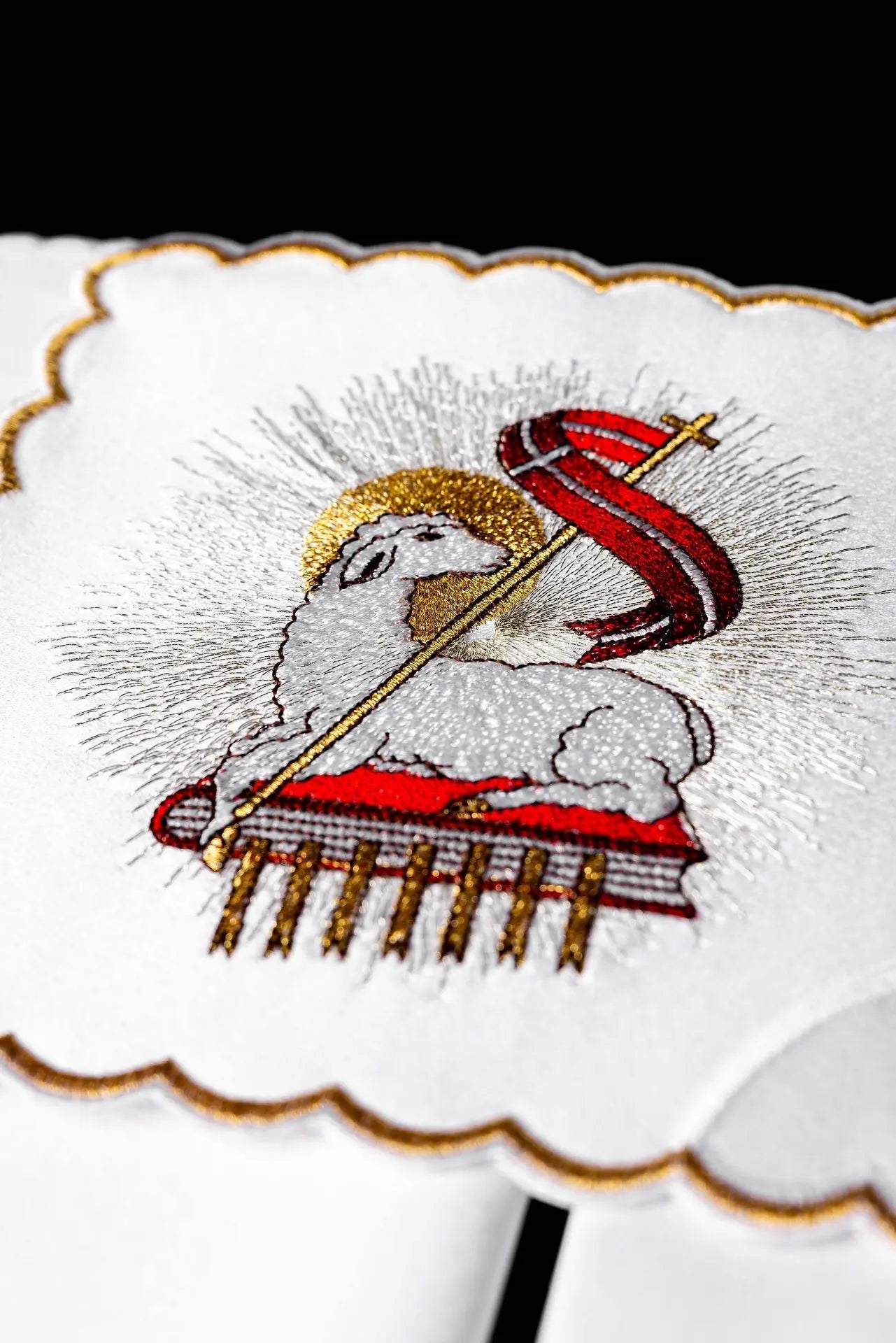
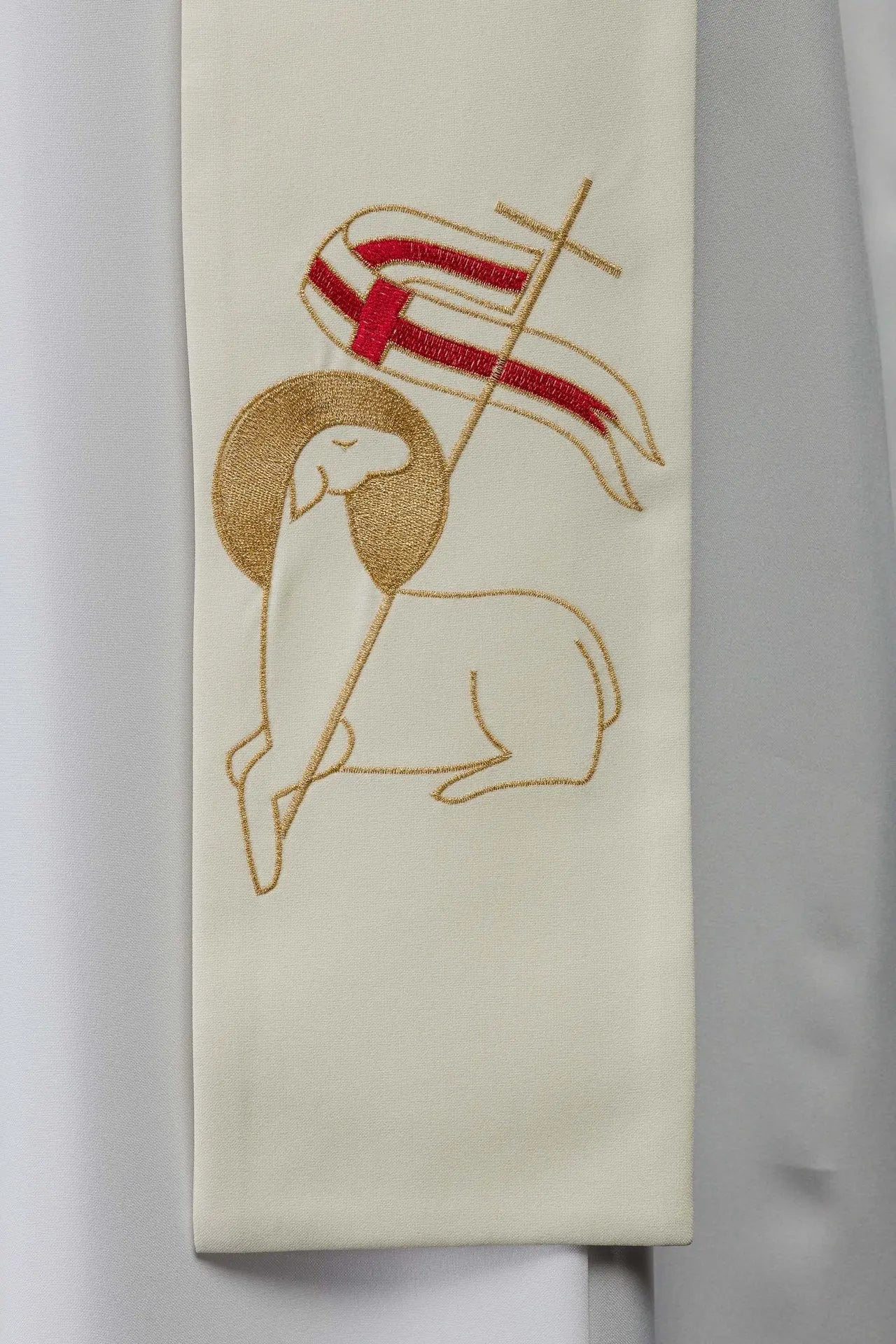
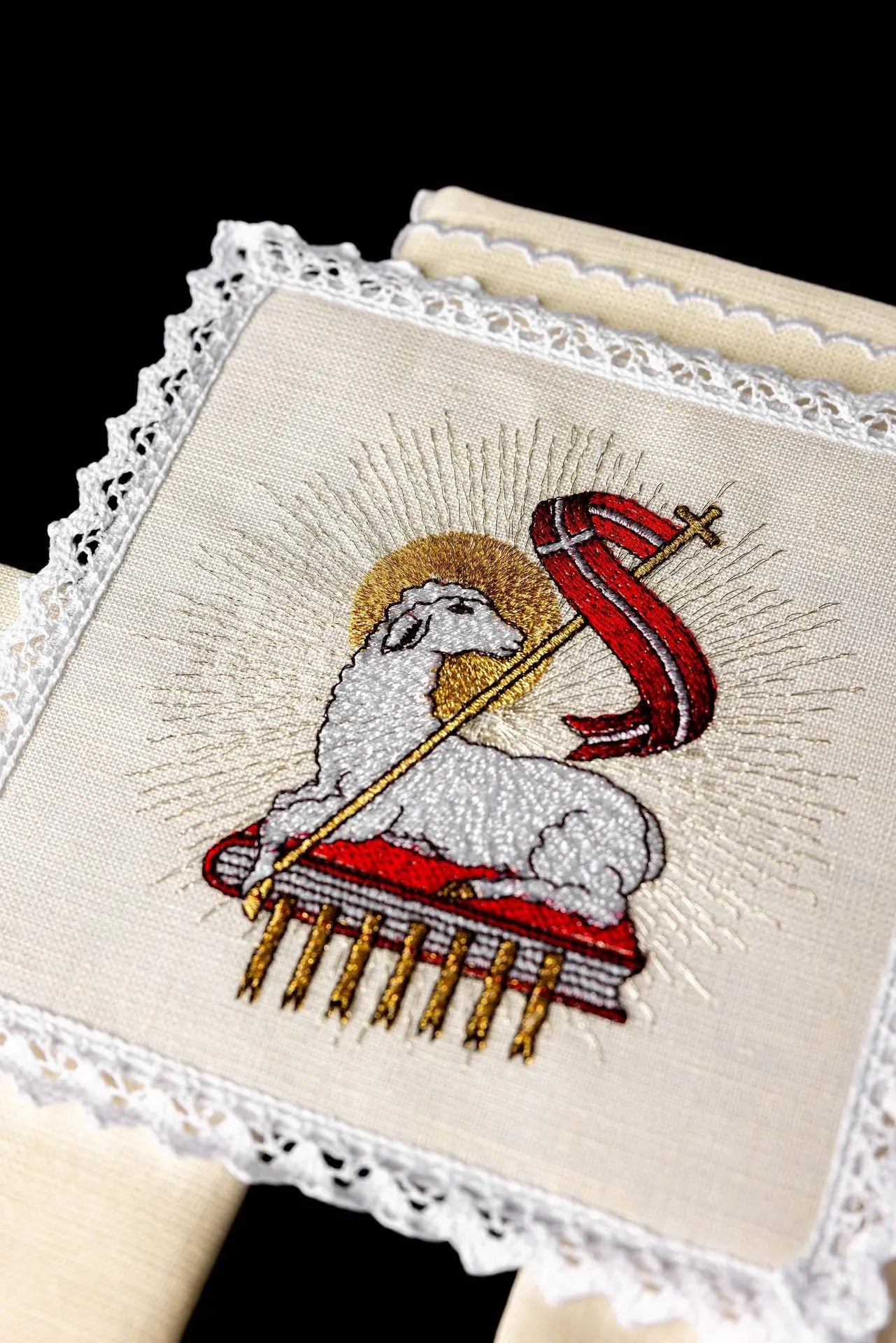
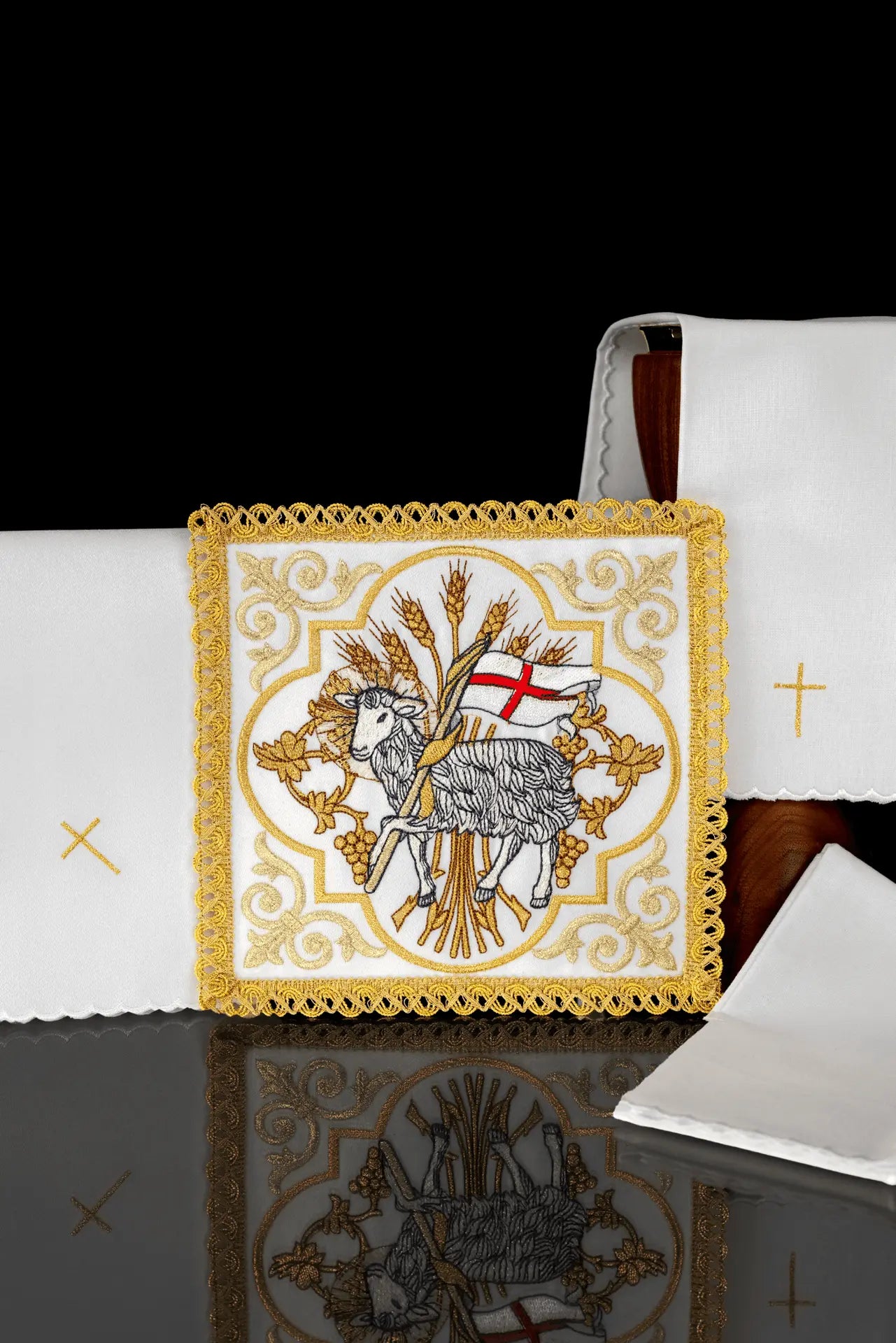
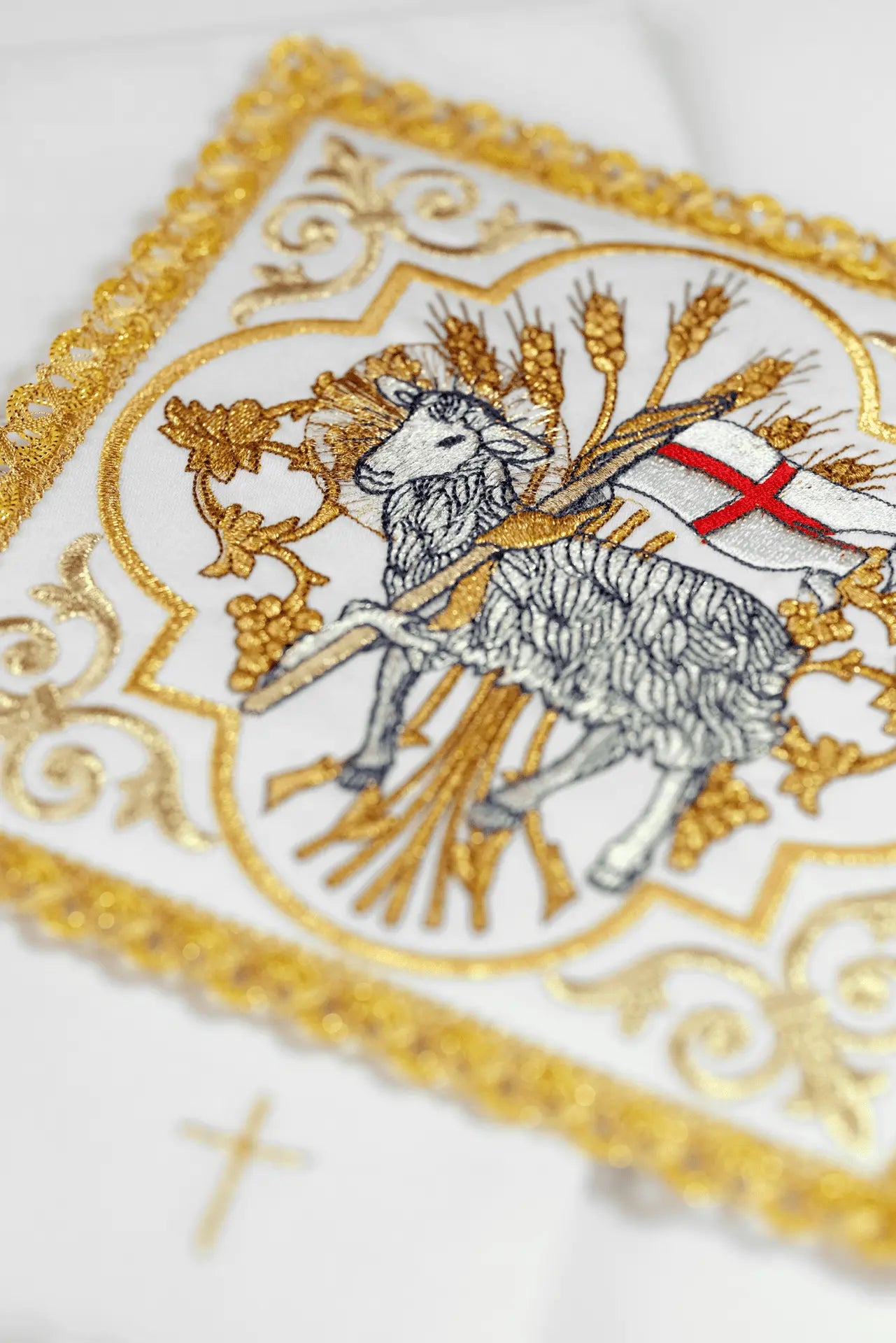
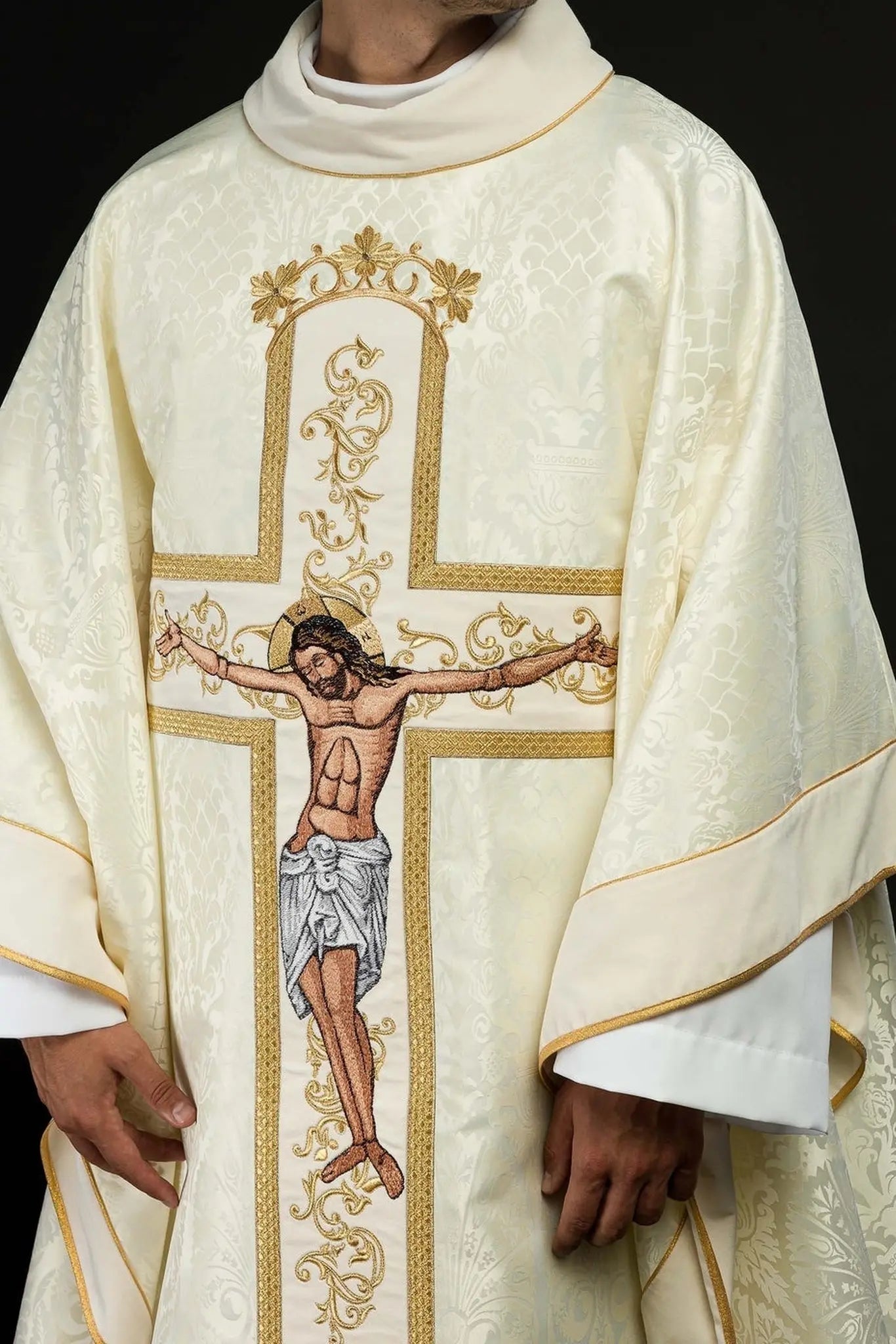
The Paschal Lamb is one of the strongest Easter symbols because it connects Christ's sacrifice with His victory and the celebration of the Eucharist. Lamb embroidery on a chasuble, stole, dalmatic or pulpit cover makes the connection between altar, Word and sacrifice visually clear. Cross embroidery remains equally important, but in Easter designs it is often shown with brightness, rays, ornament or gold accents, emphasizing that the Cross is the sign of victory rather than defeat.
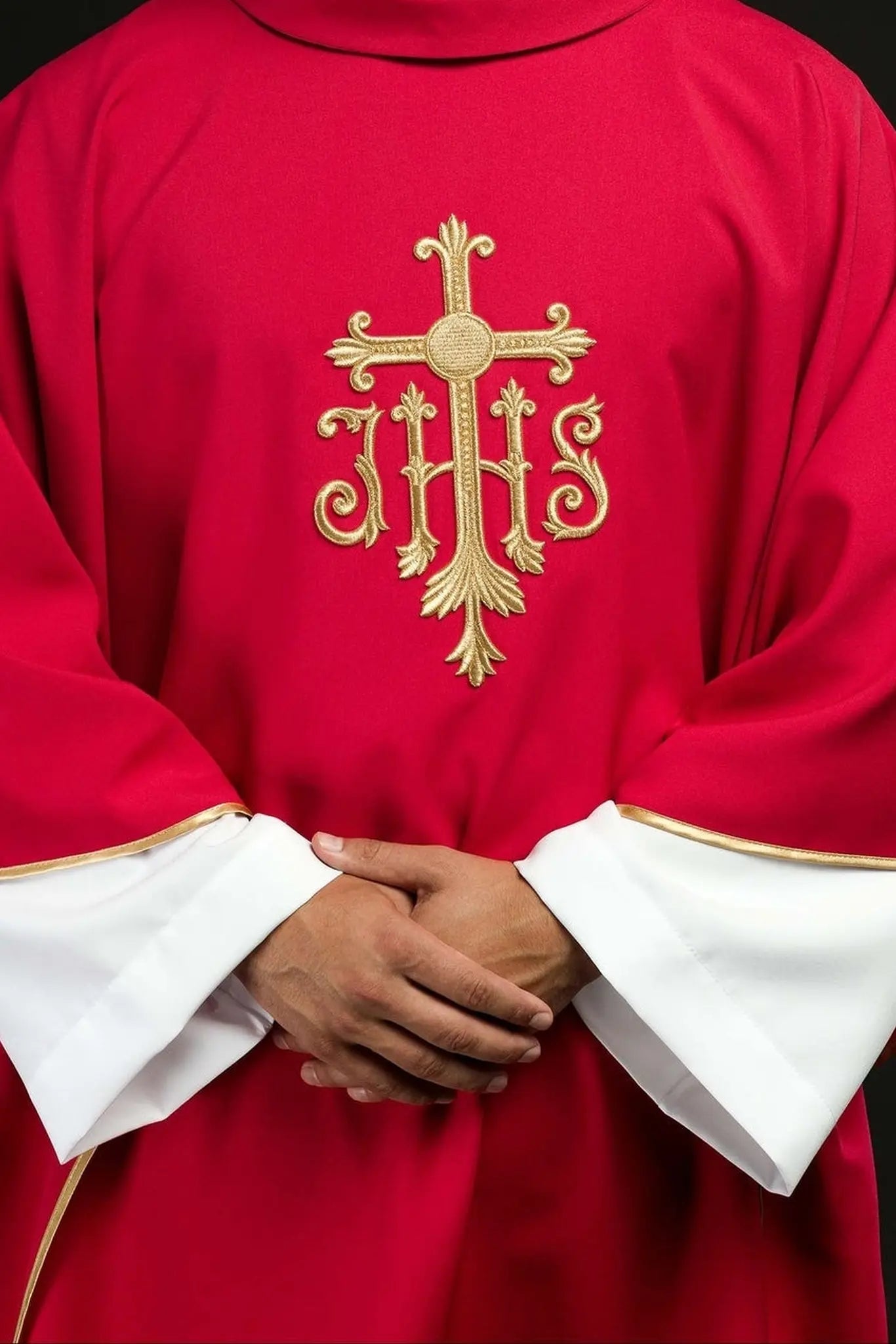
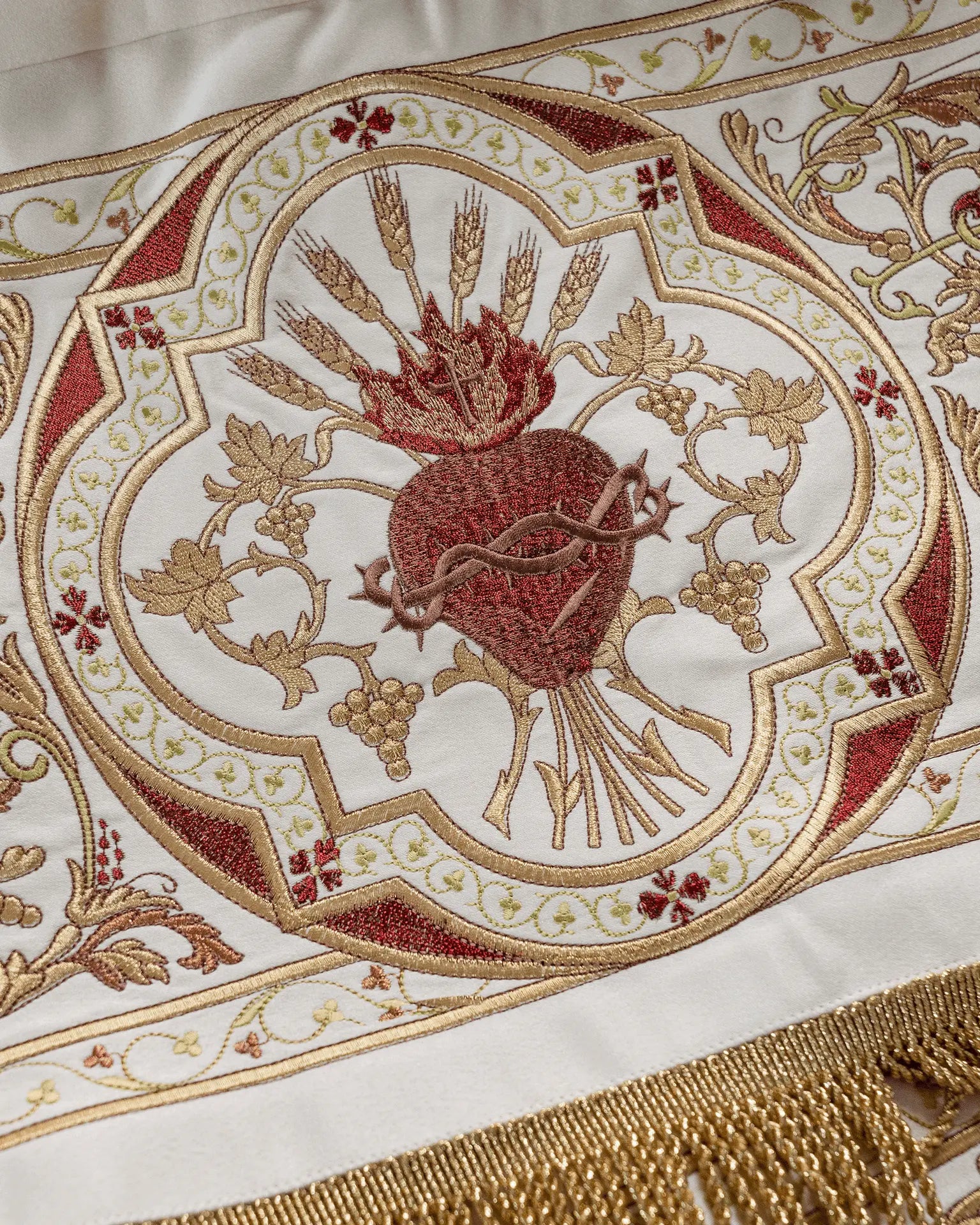
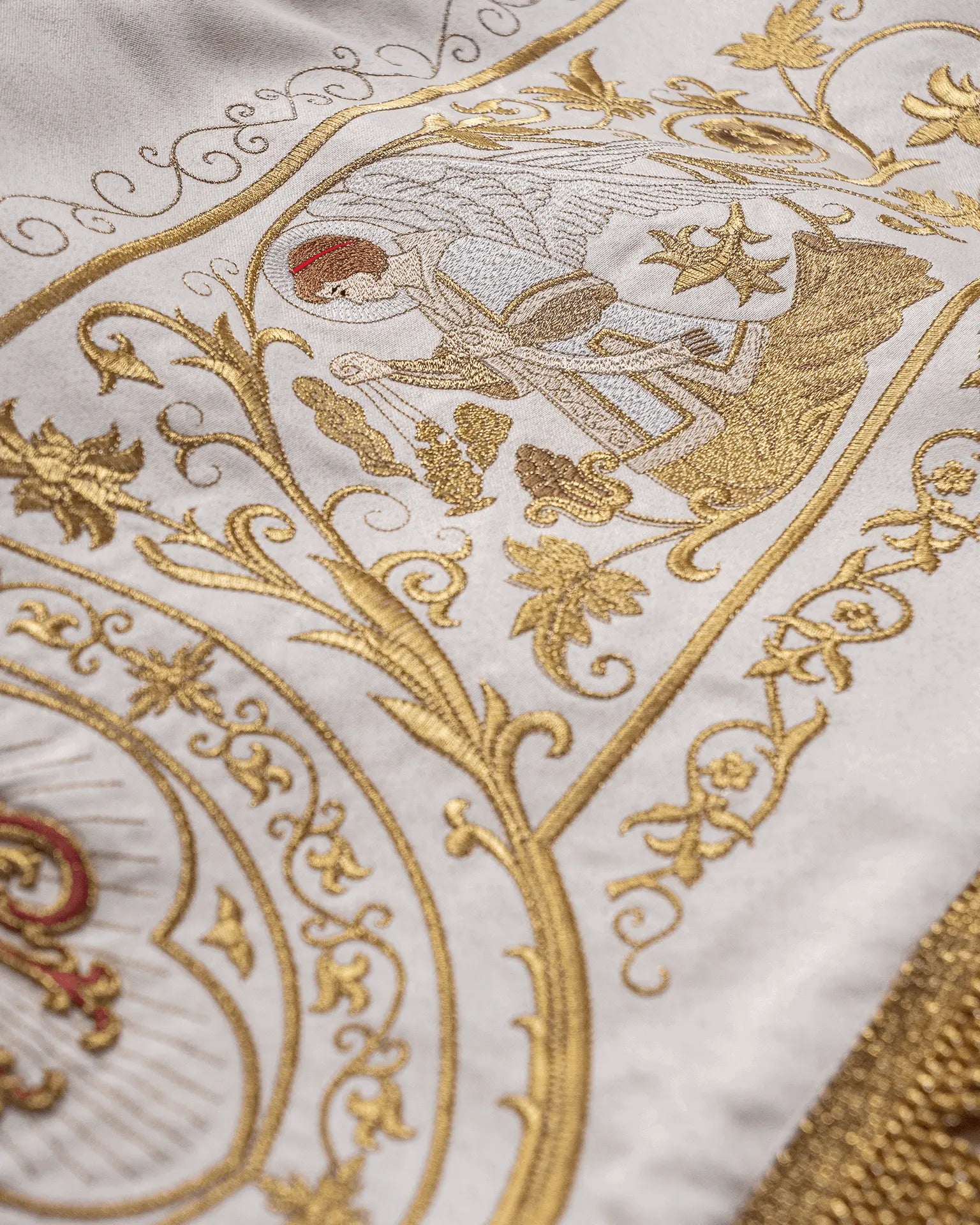
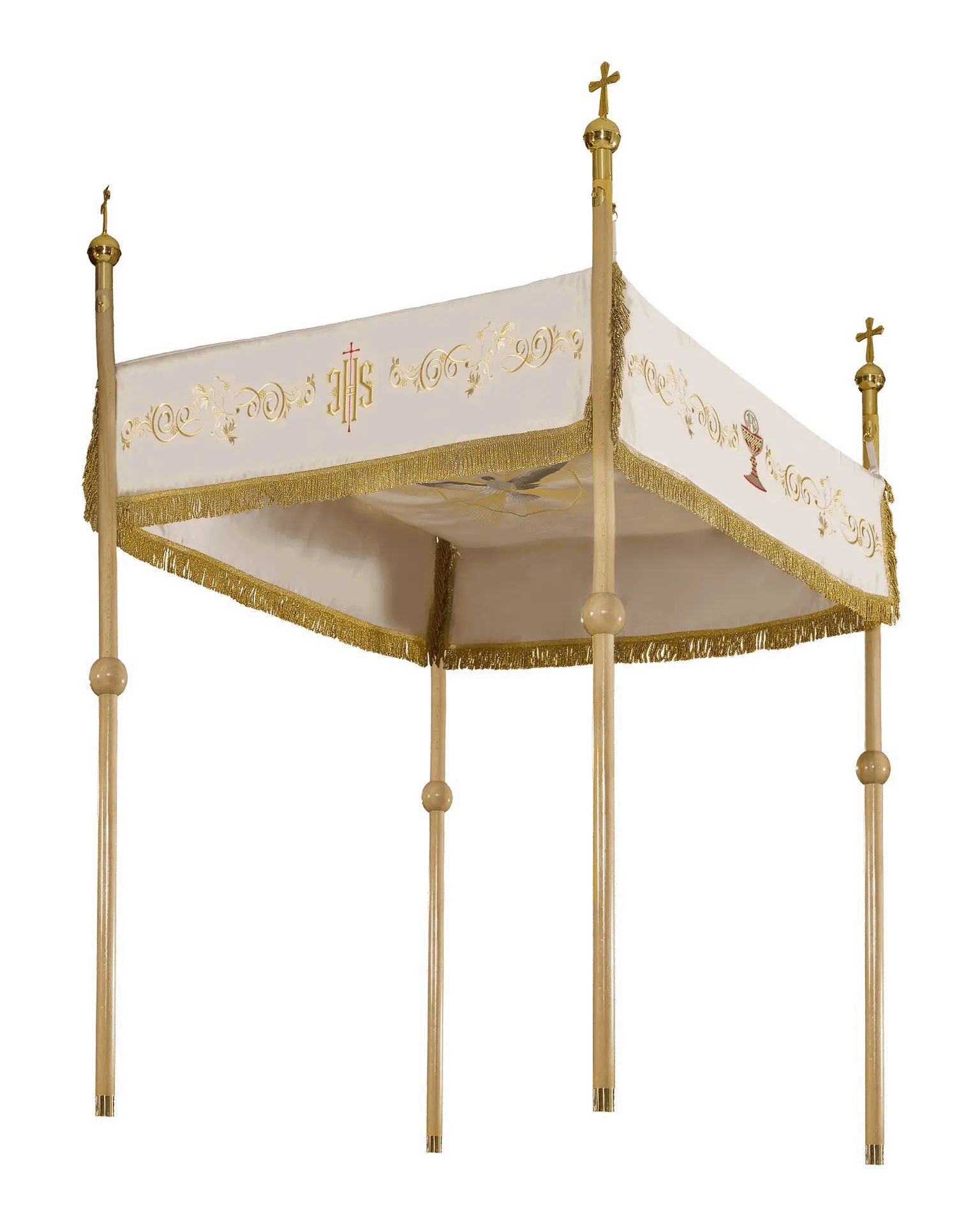
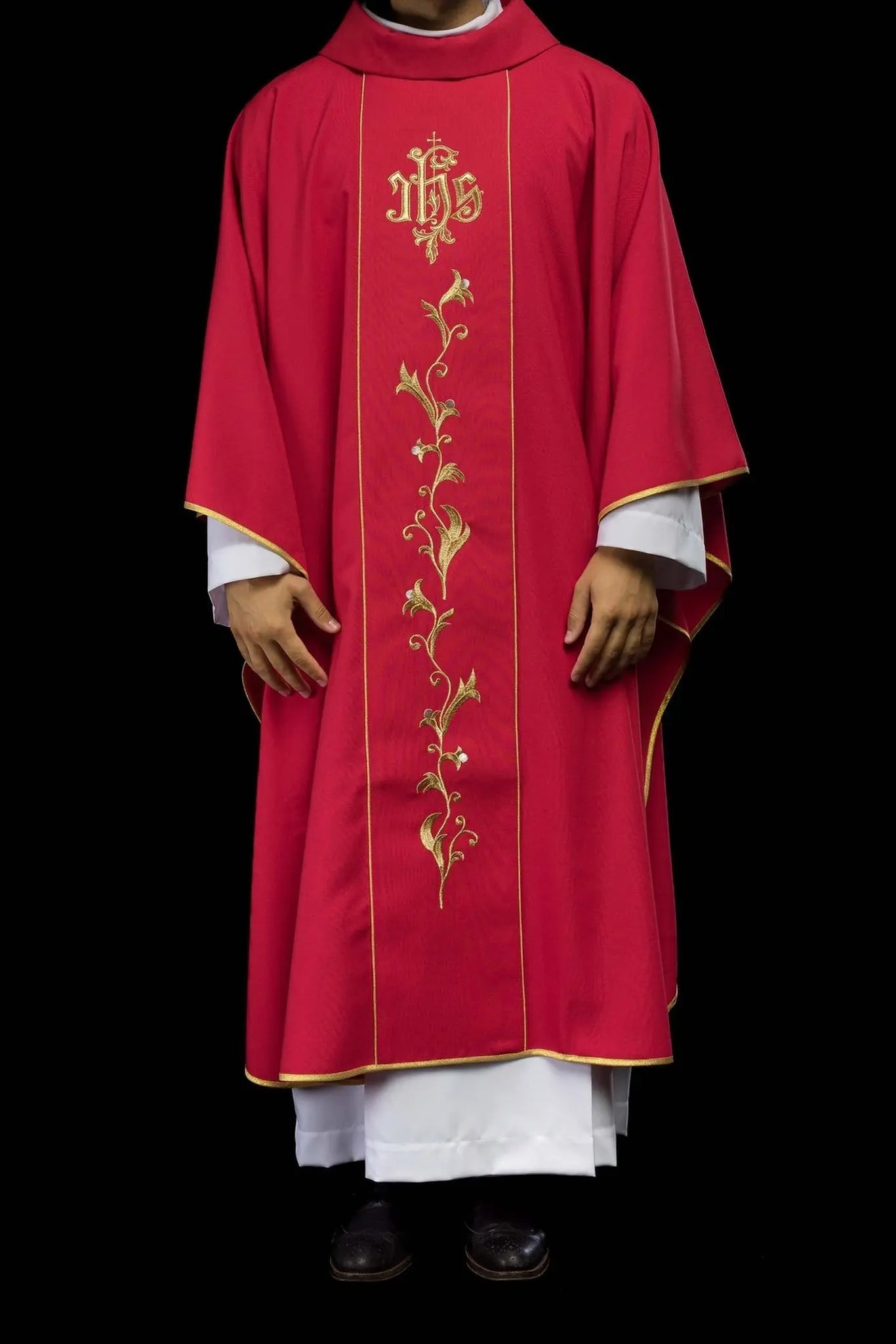
JHS embroidery, lilies and ornamental bands also work well for Easter. The JHS monogram points directly to the Holy Name of Jesus, while lily motifs are often associated with purity, new life and festal solemnity. Orphrey bands and decorative fabric panels can frame the central symbol and help the vestment retain a dignified shape. These details are practical as well as symbolic: they help the garment read clearly during processions, at the altar and in photographs from major parish celebrations.
Stoles, copes and dalmatics for the Easter season
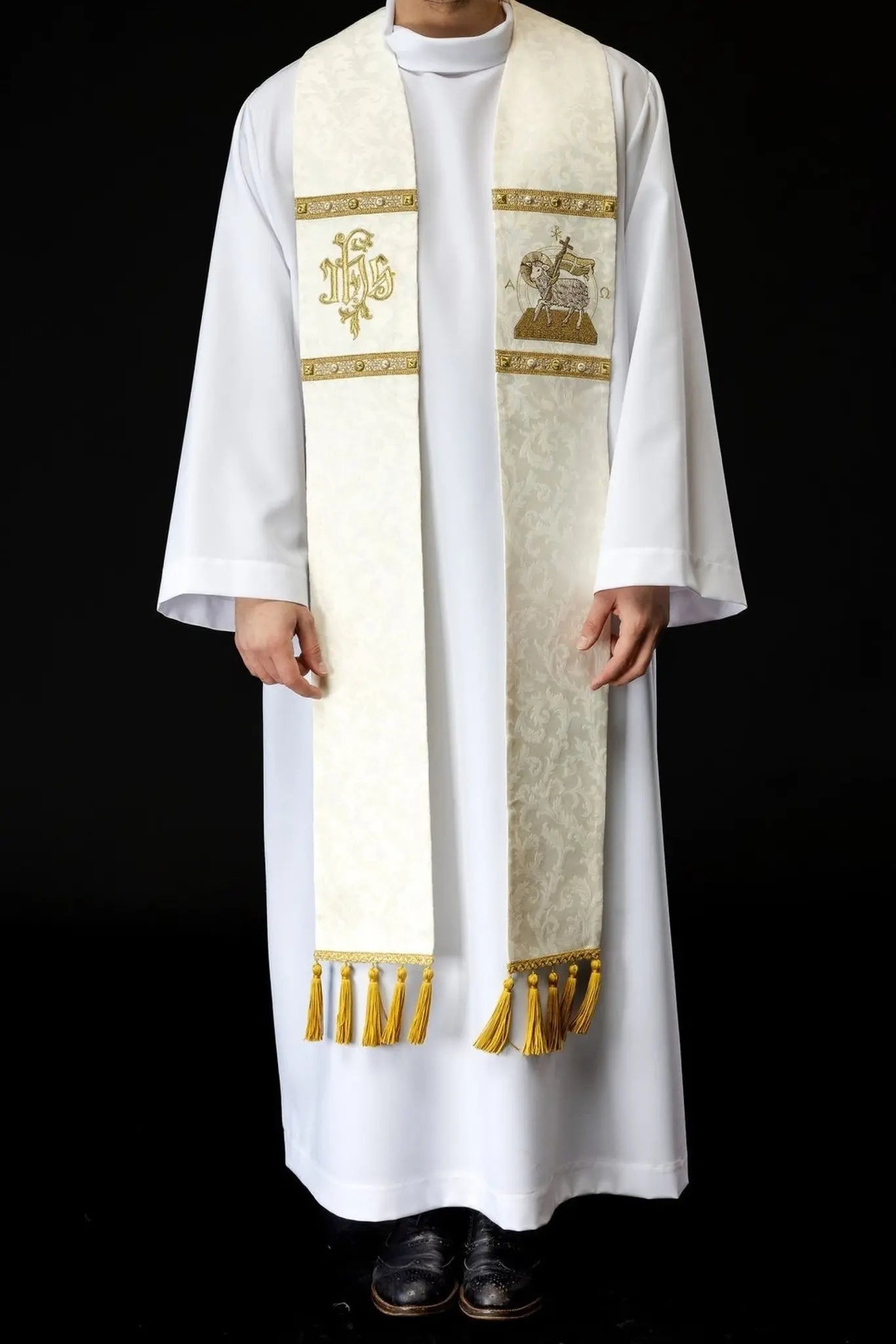
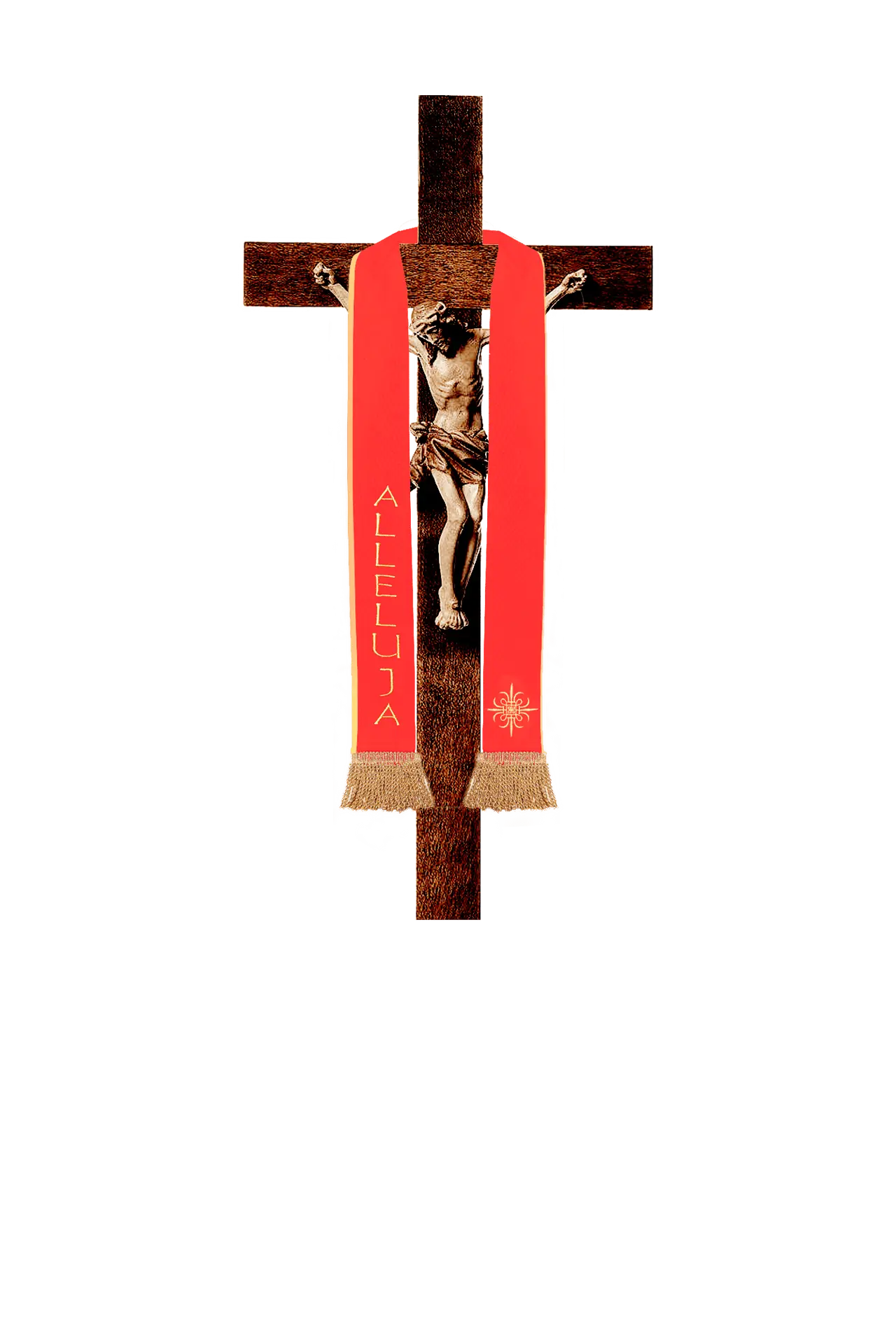
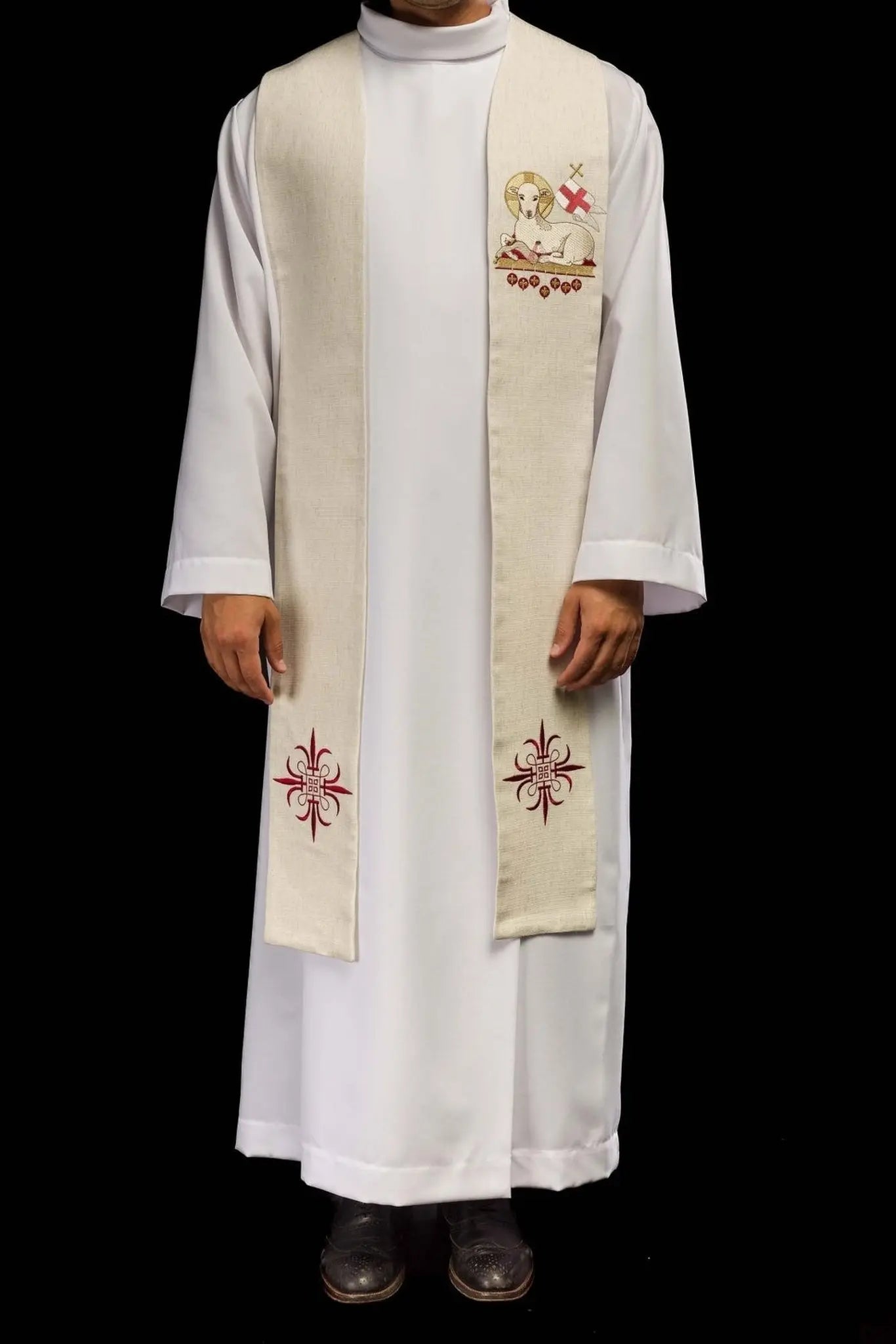
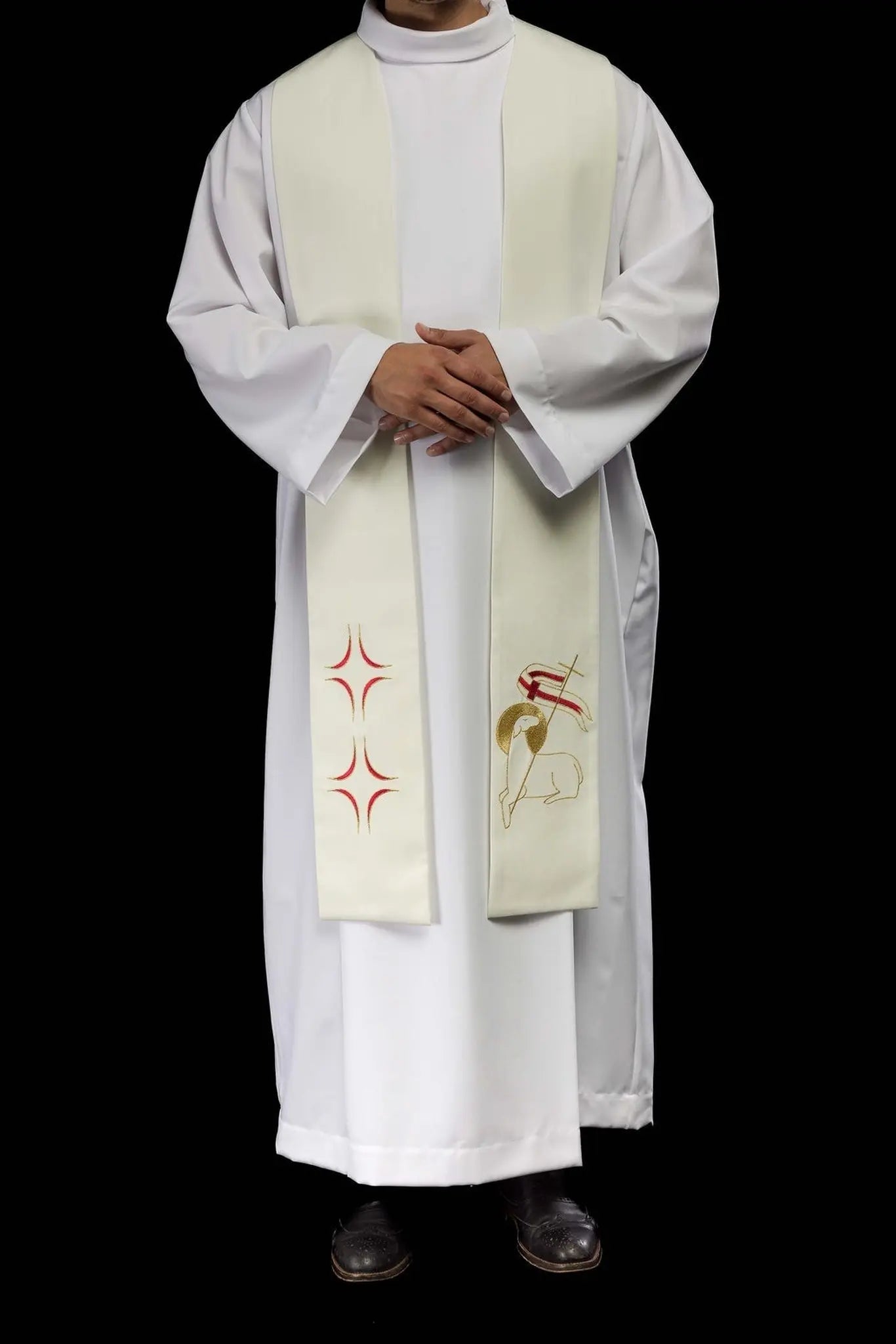
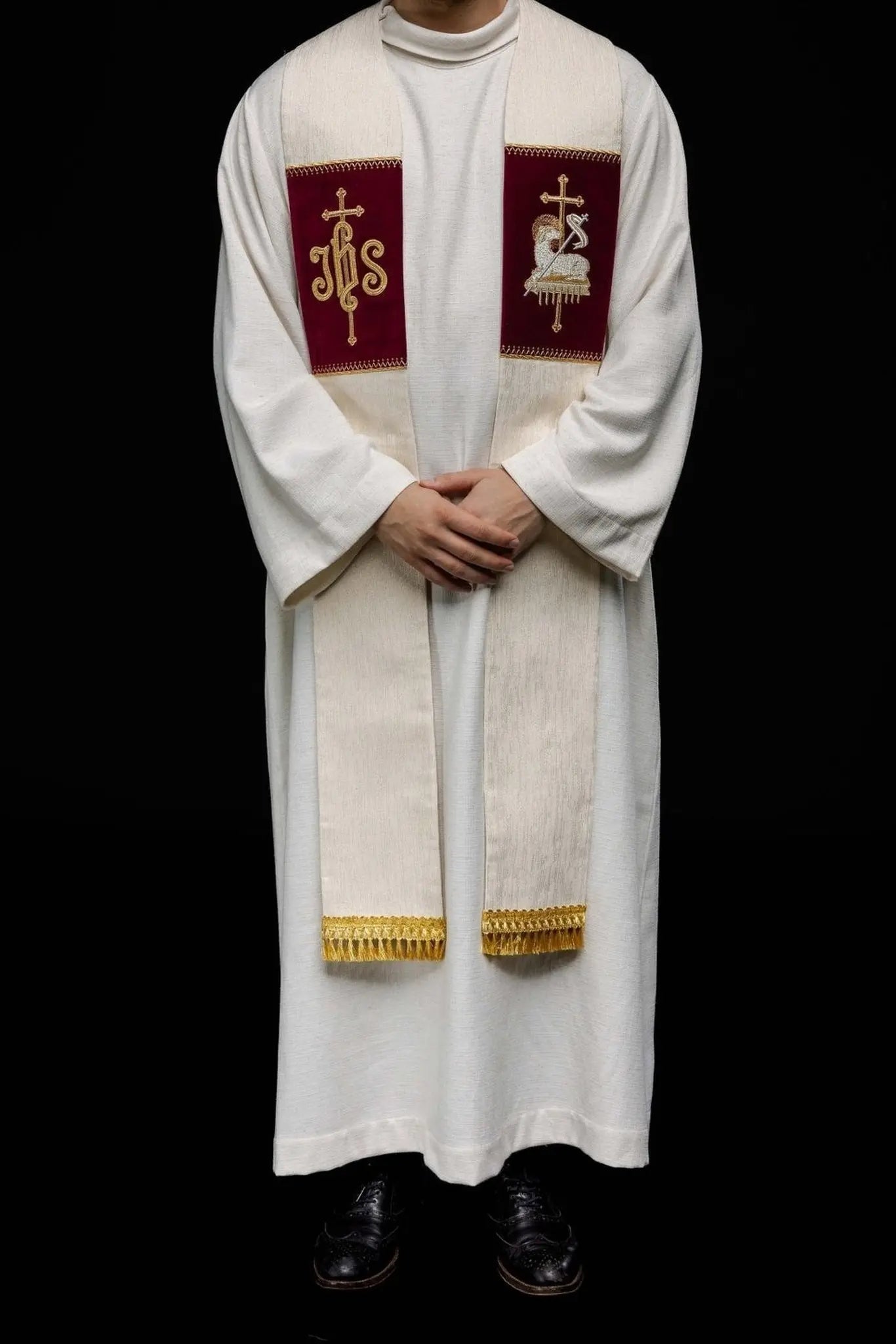
A stole is an essential clergy vestment used in many liturgical and sacramental contexts. Easter stoles in white, ecru, gold or suitable red designs can be worn with an alb for Mass according to the role of the minister, as well as for blessings, services, processions and pastoral celebrations during Eastertide. Choosing a stole that repeats the motif of the chasuble, such as the Lamb, Cross or alleluia-themed embroidery, helps maintain visual unity. Related options can be found in clergy stoles.
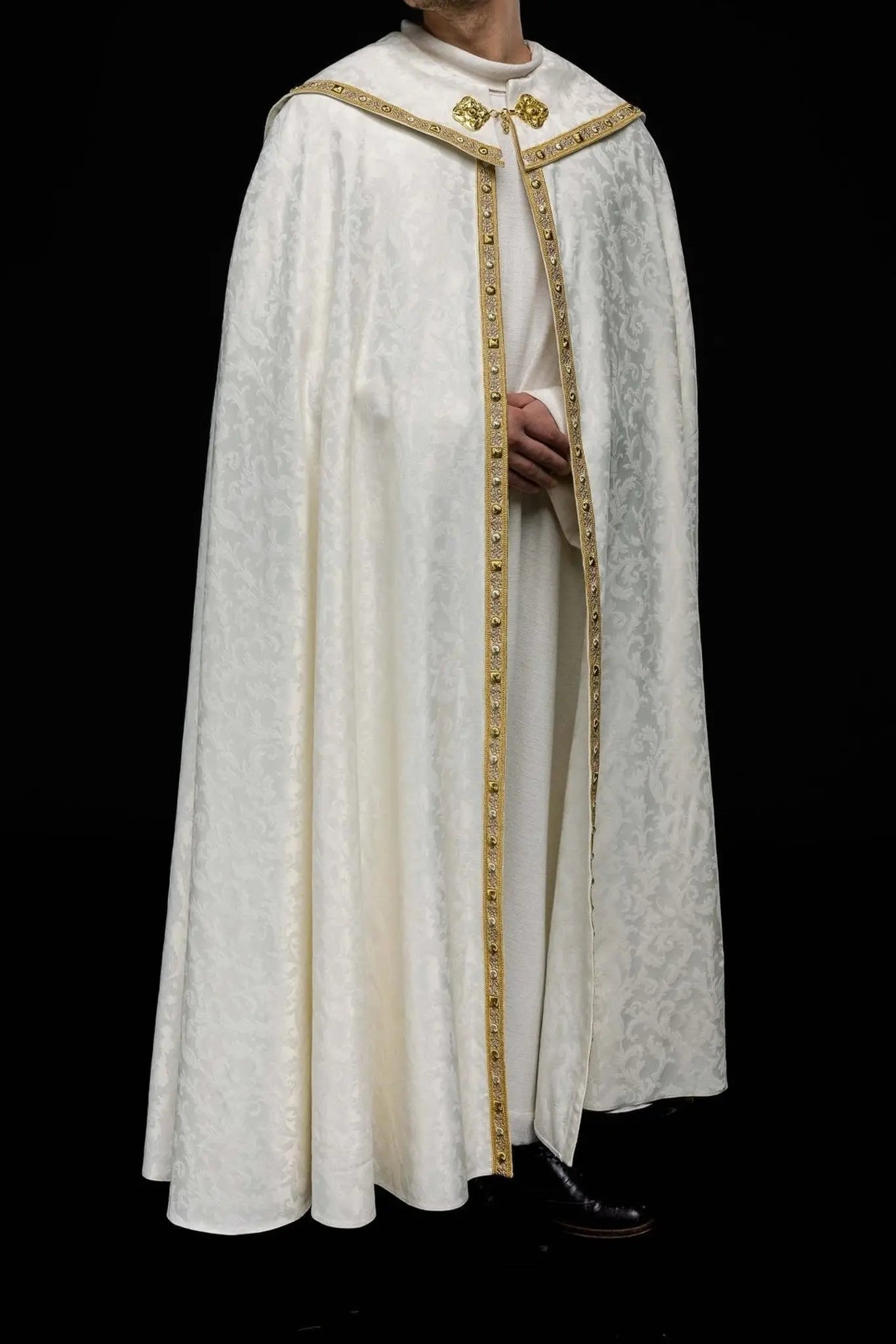
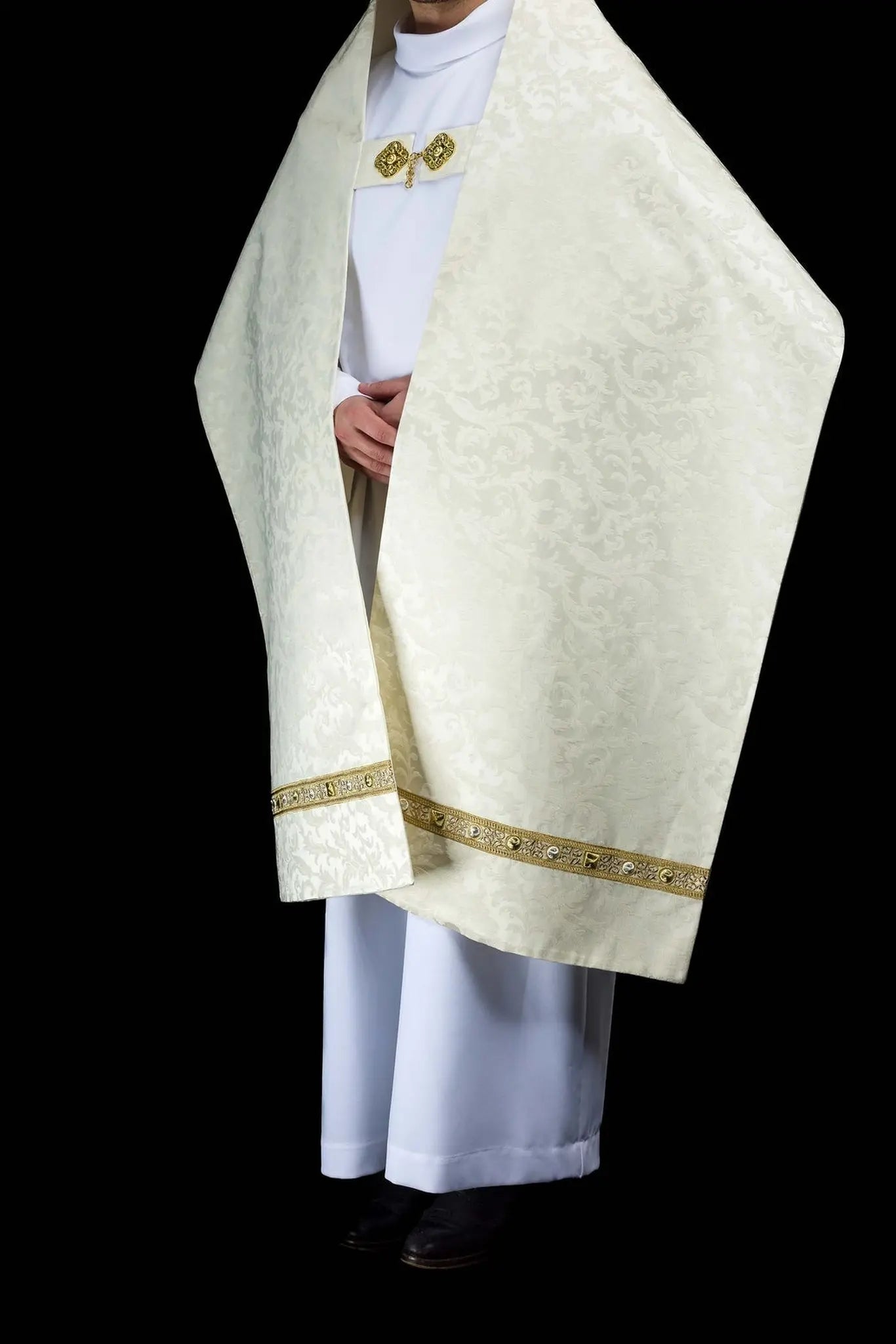
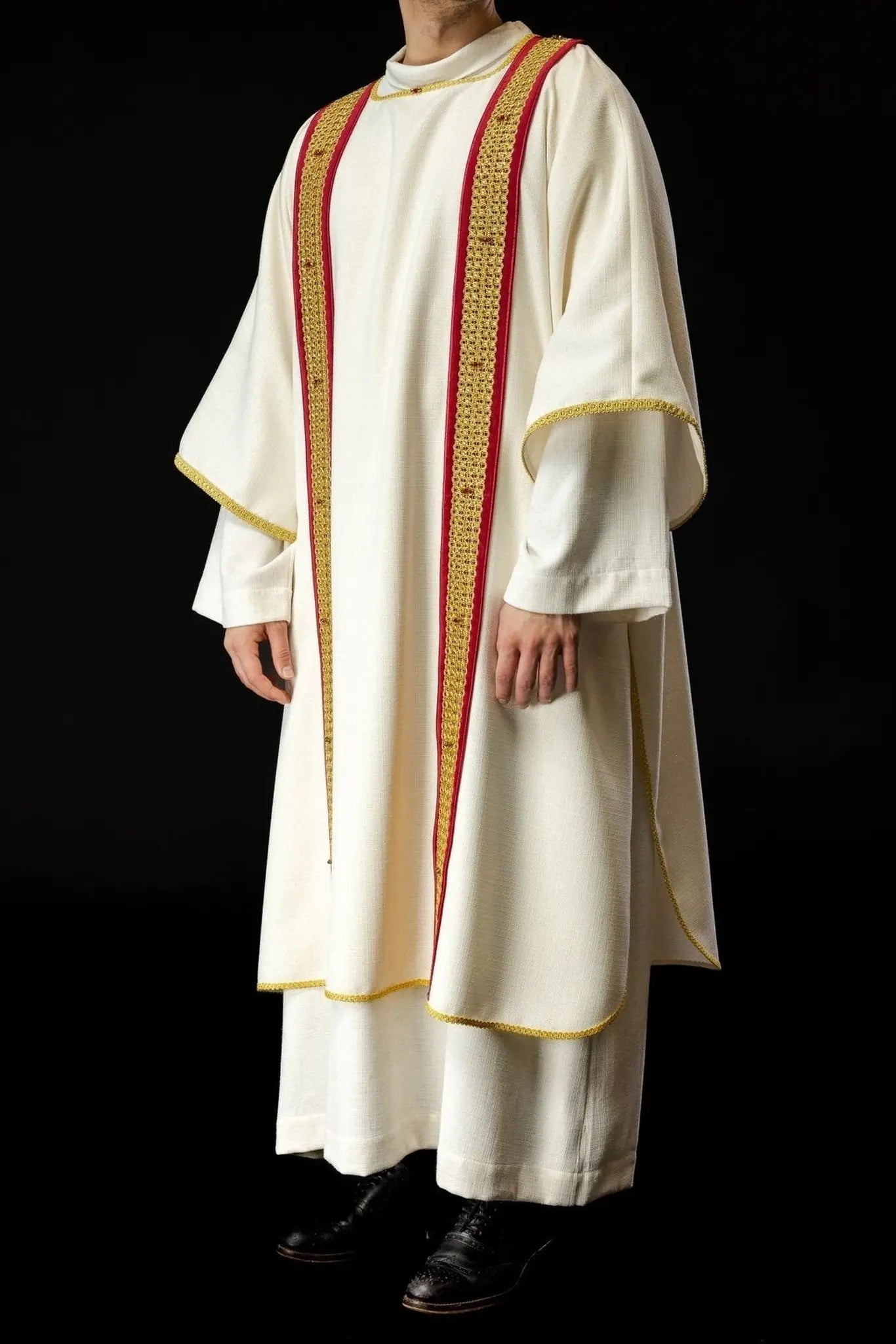
Copes are especially useful for solemn liturgies outside Mass, processions, blessings and celebrations where a richer outer vestment is appropriate. An Easter cope with cross embroidery, velvet detailing or gold ornament can support a solemn entrance, Benediction or special parish service. Dalmatics serve the deacon at Mass and can complete a more formal Easter vestment set when coordinated with the priest's chasuble. For clergy teams, matching or complementary garments are often the easiest way to create a dignified and unified sanctuary appearance.
In practical terms, parishes may select one major Easter chasuble first and then add a stole, cope or dalmatic in a similar color and motif. This approach helps control the visual language of the celebration and makes future purchases easier. For example, a Paschal Lamb chasuble can be paired with an Easter Lamb stole, while a cope with cross embroidery can coordinate with a simpler chasuble that uses the same color family.
Altar cloths, pulpit covers and chalice veils
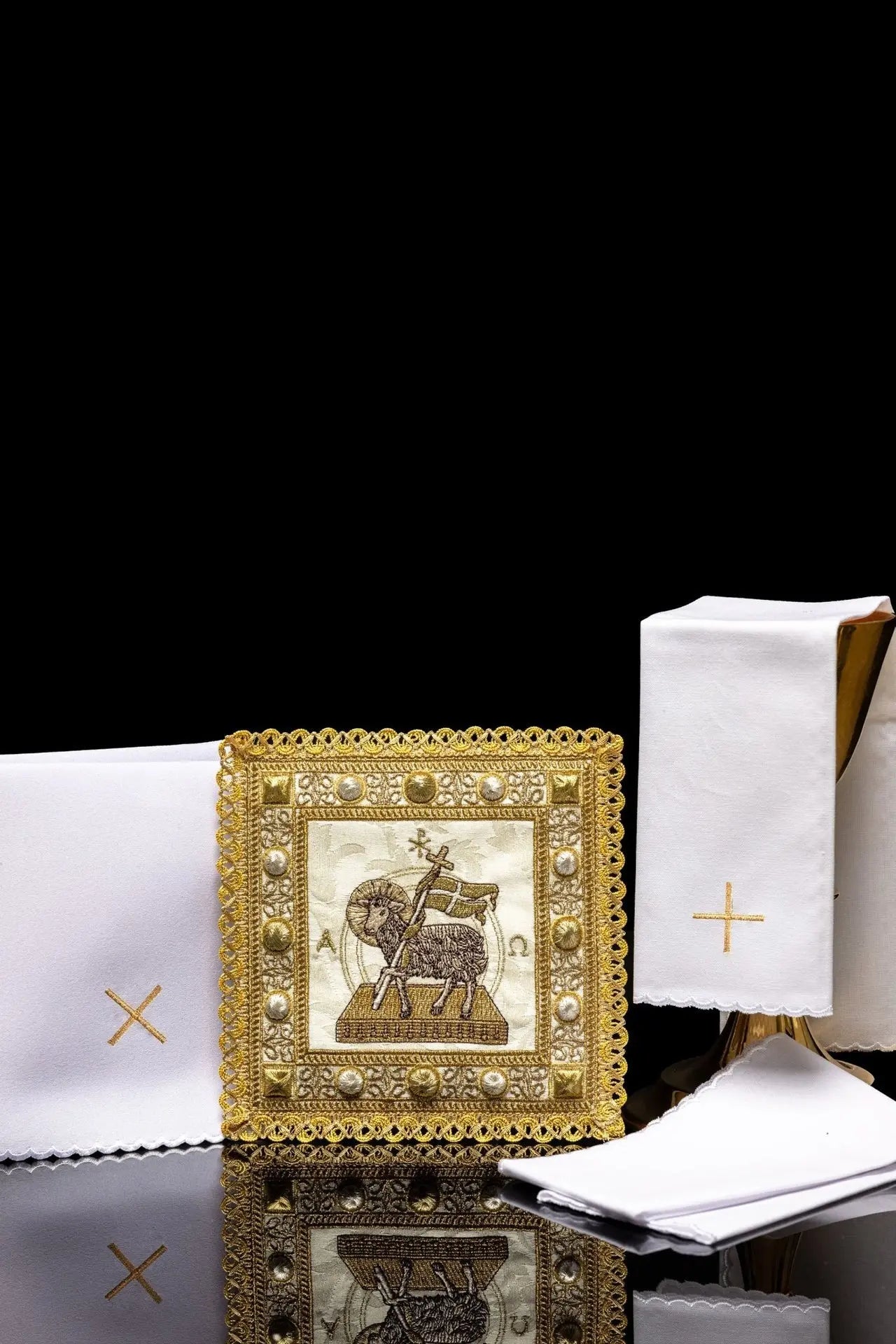
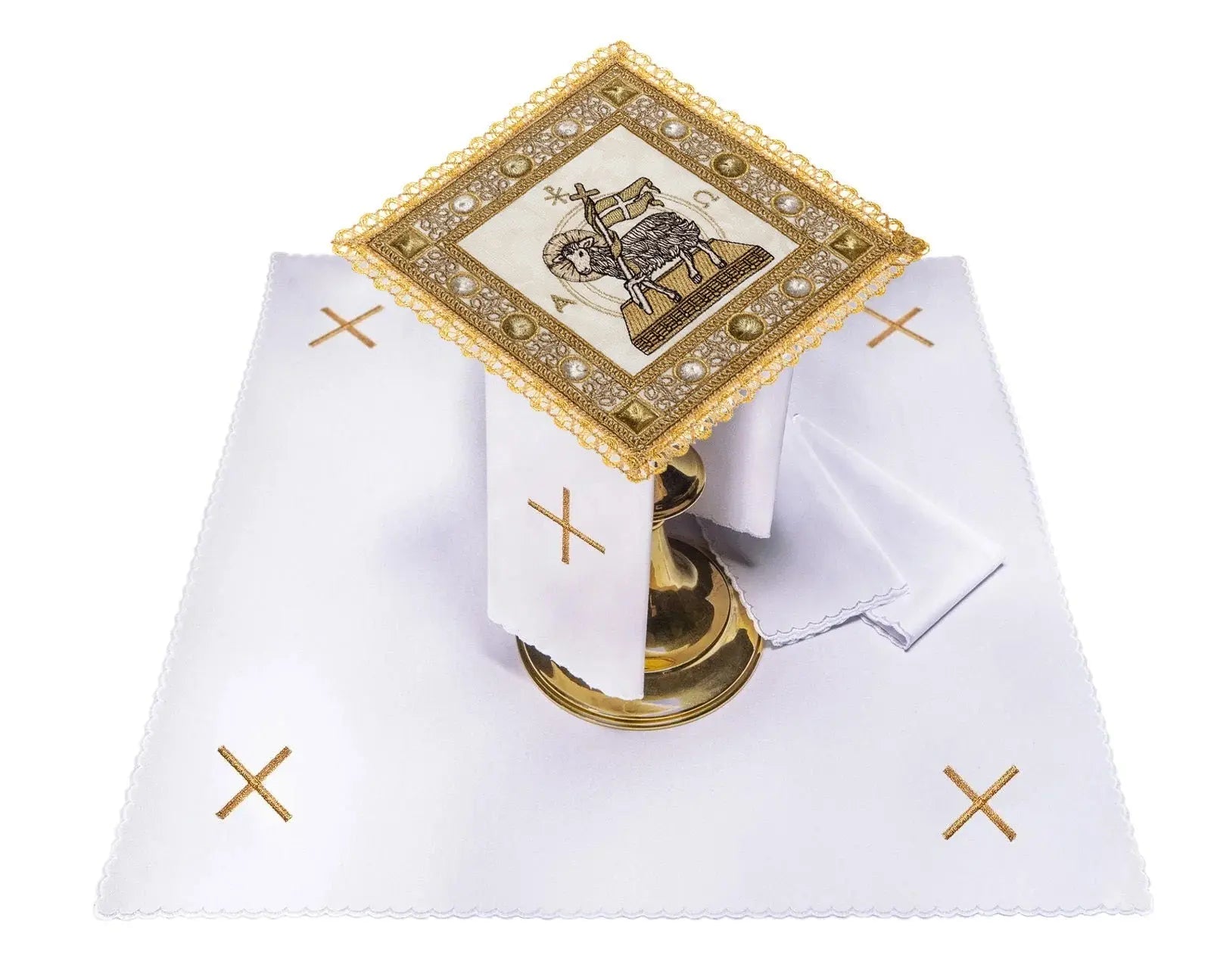
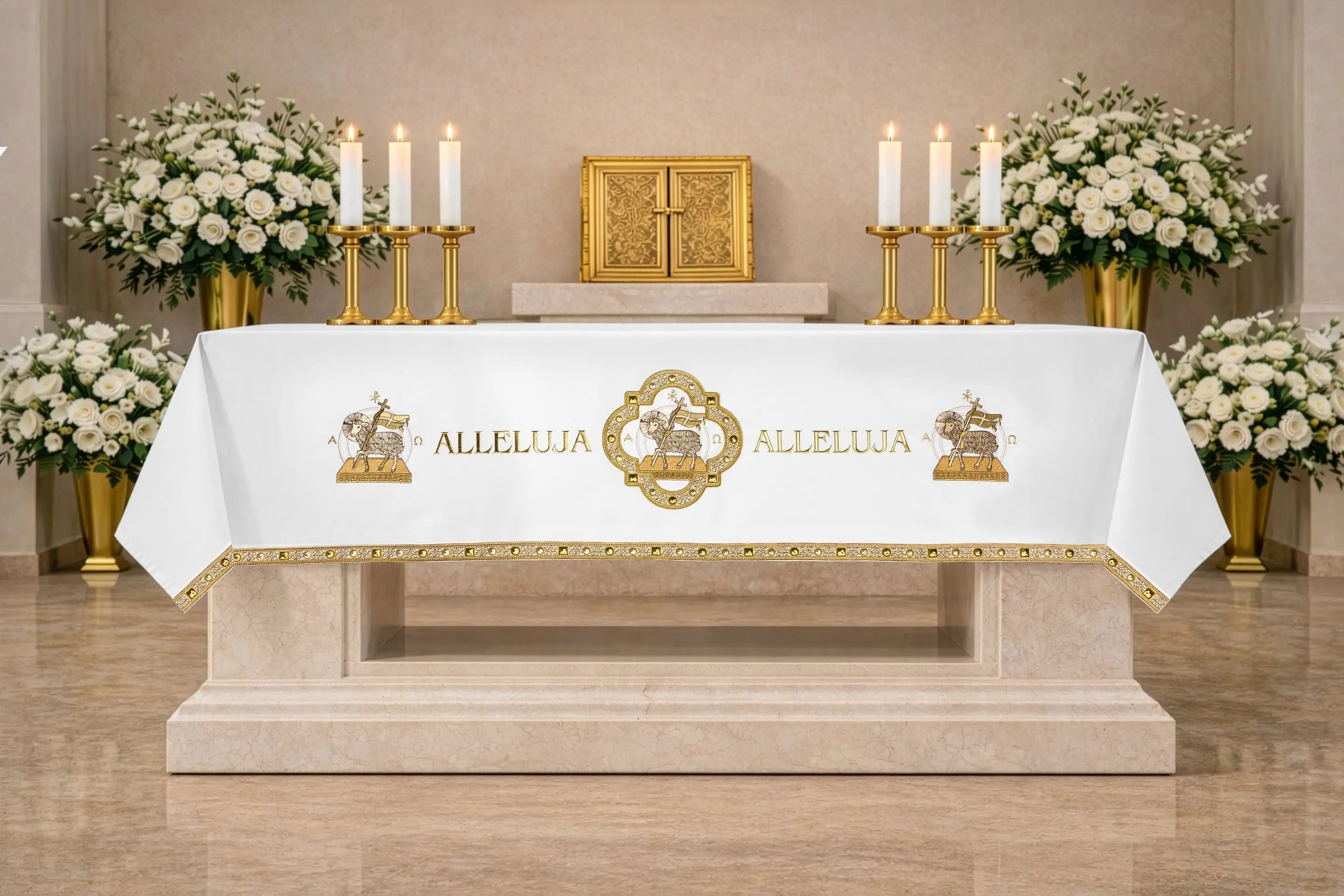
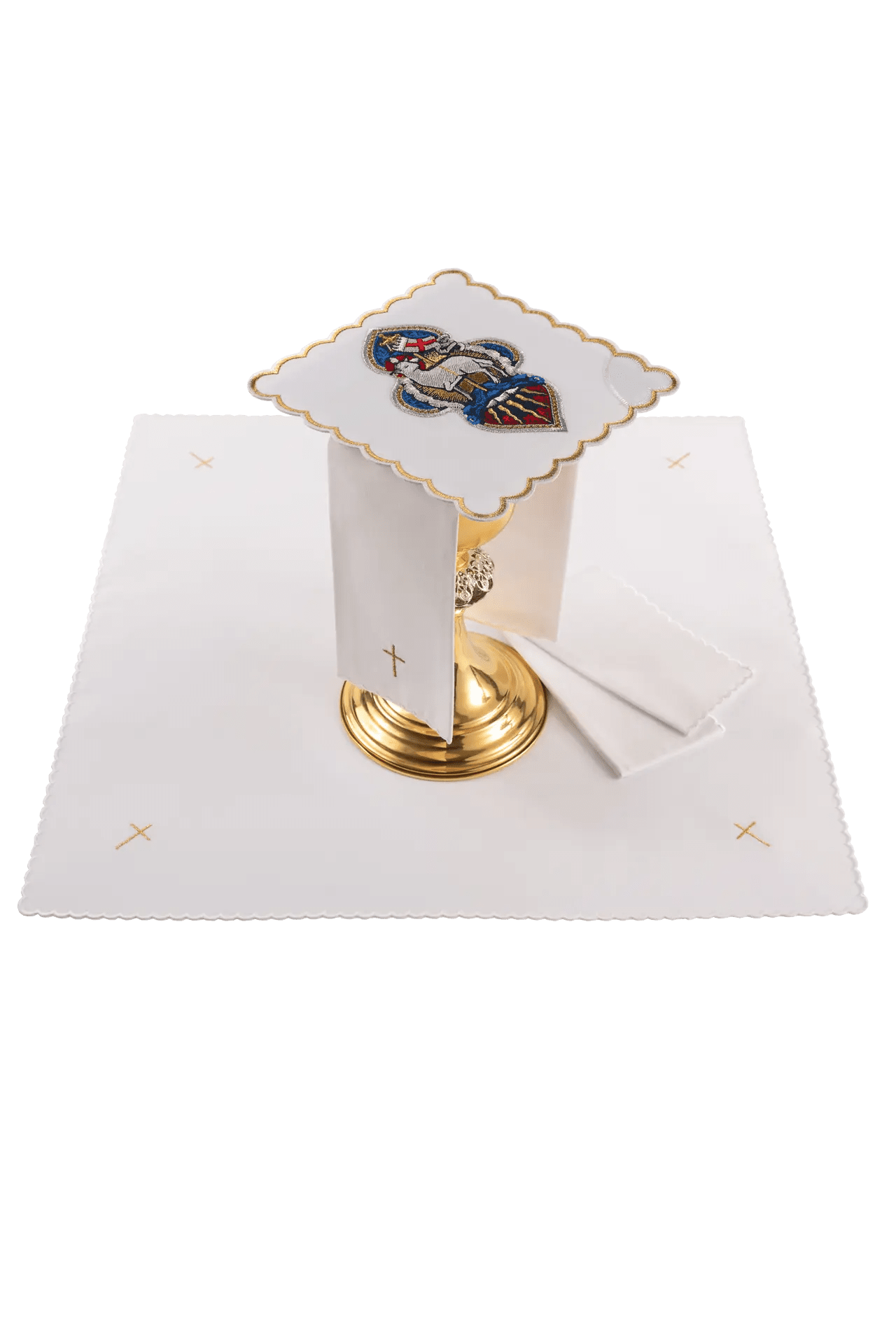
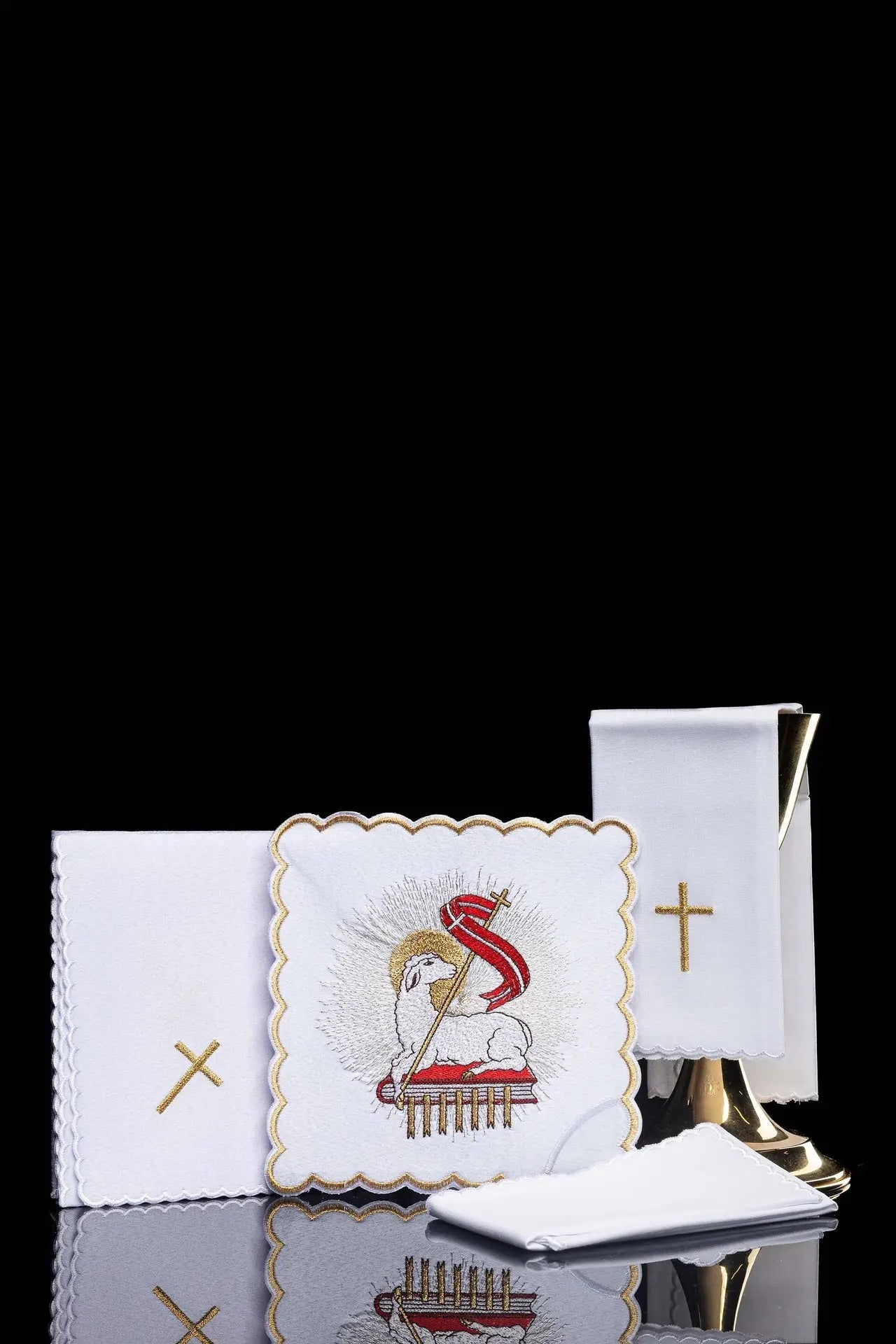
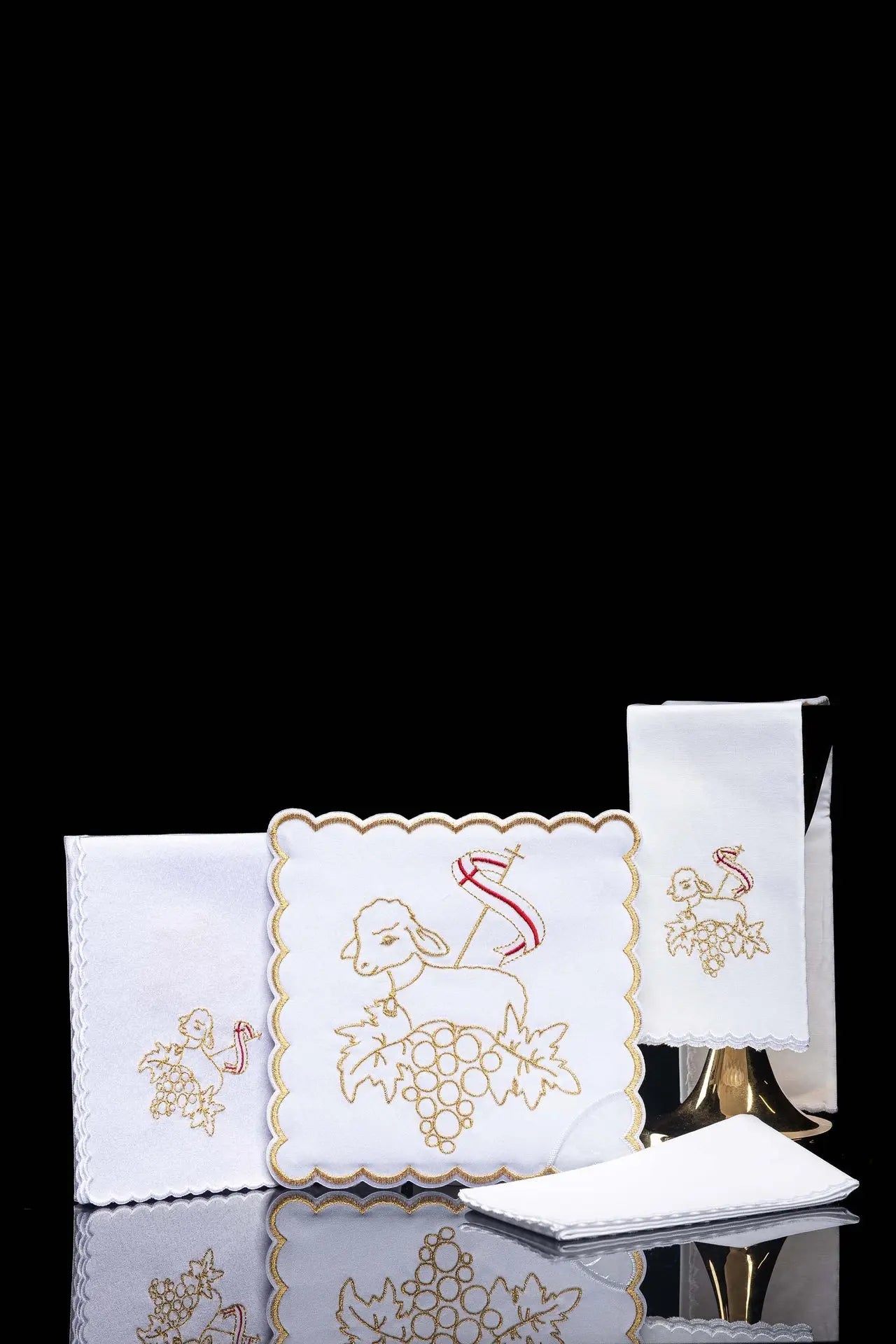
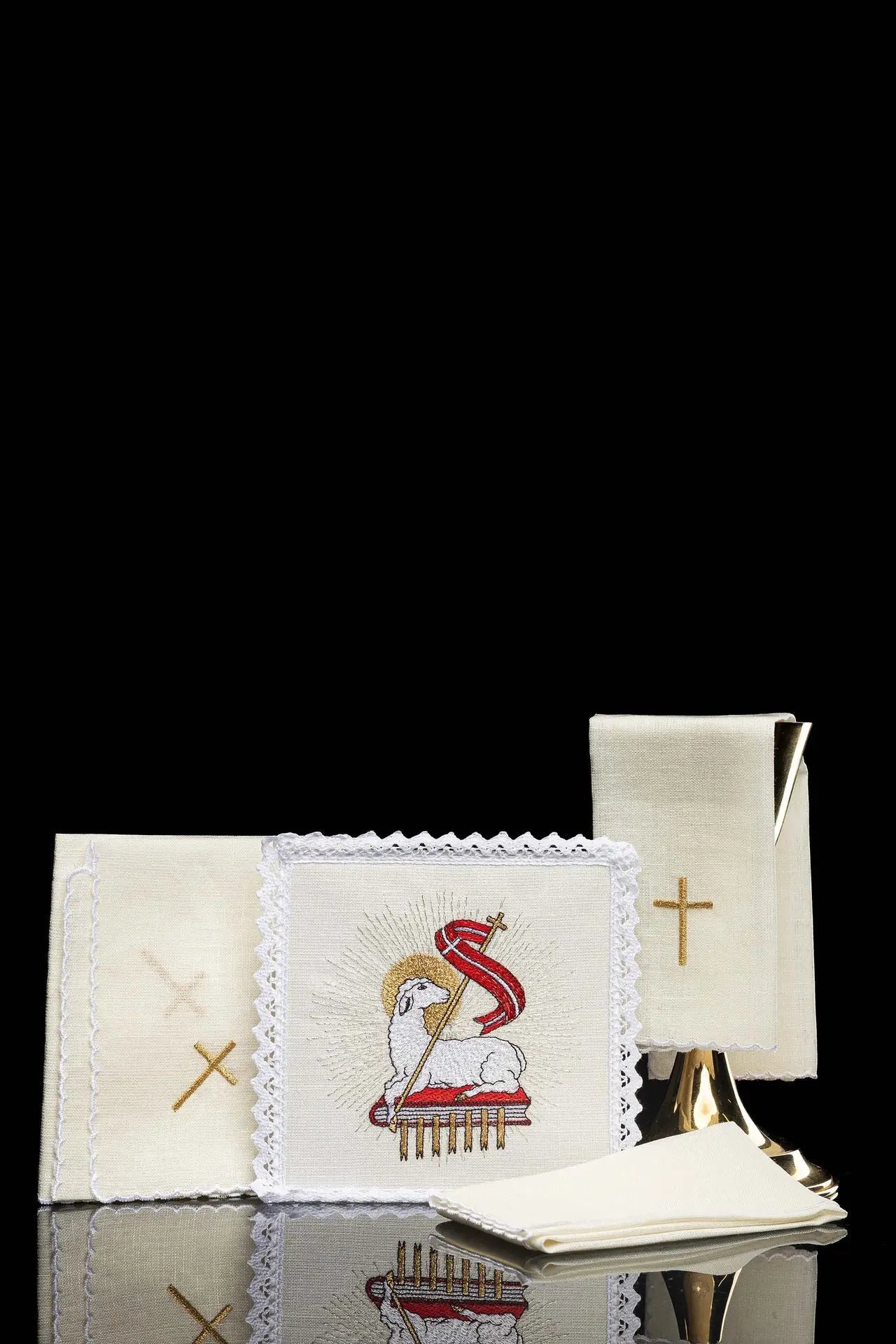
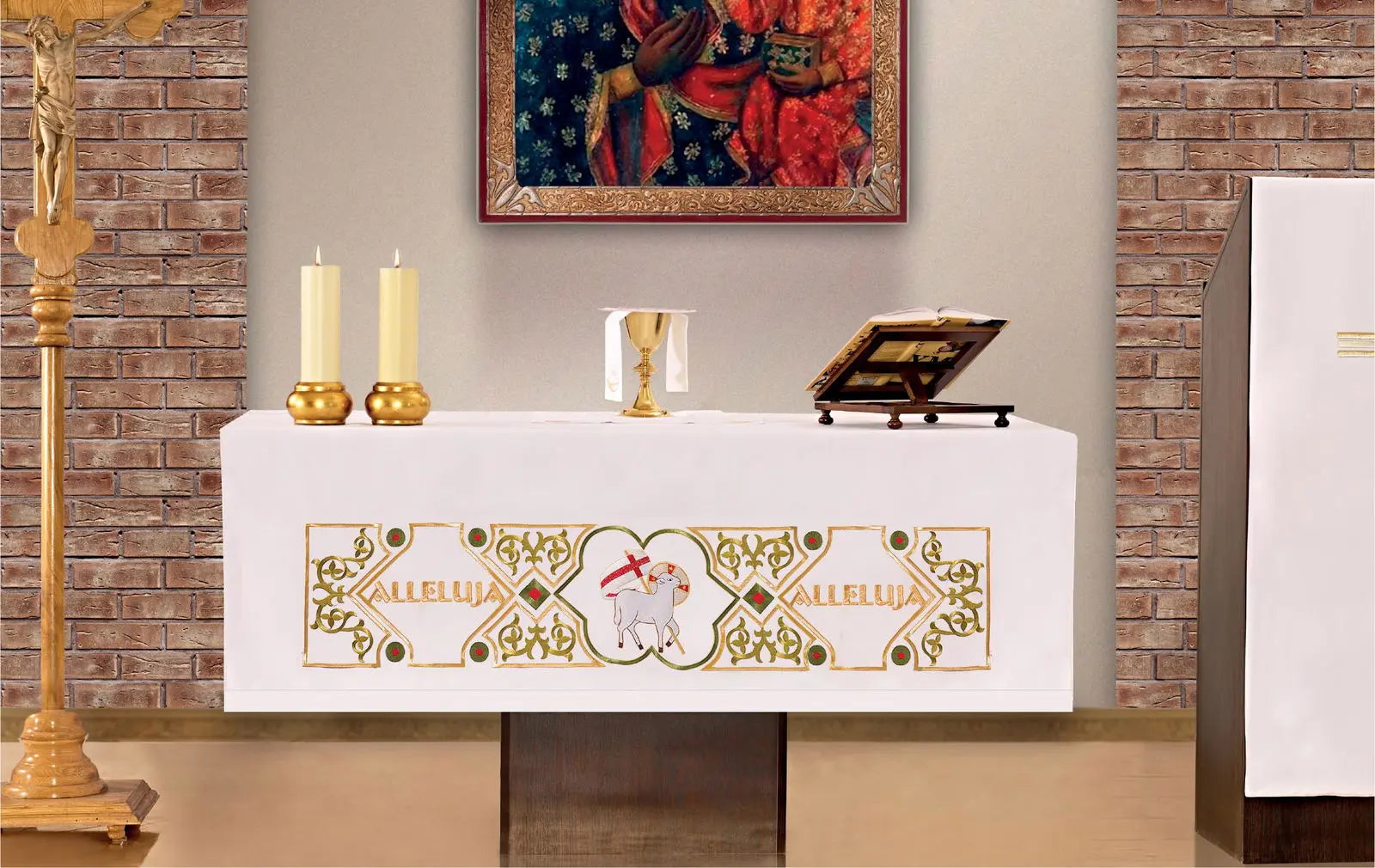
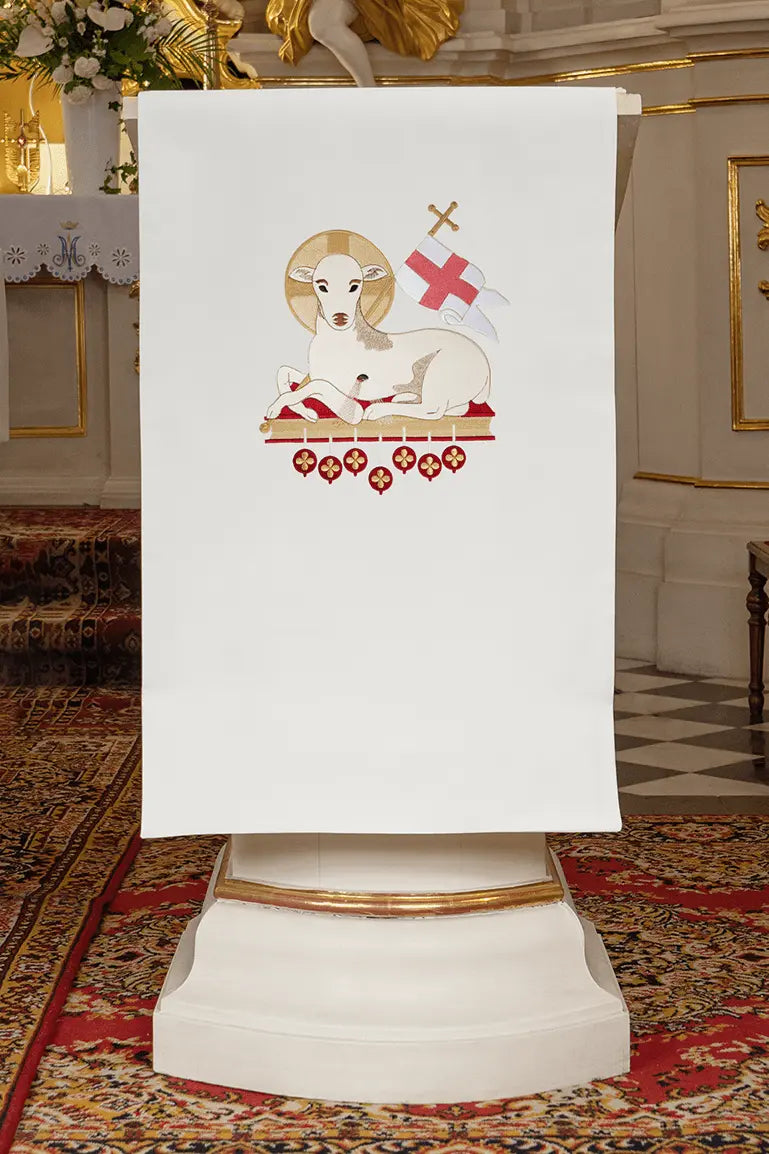
Easter vesture is not limited to garments. The sanctuary itself should reflect the season, especially at the altar and ambo. Altar cloths, pulpit covers and chalice veils allow the Easter theme to appear in the places where the Word is proclaimed and the Eucharist is celebrated. A pulpit cover with Paschal Lamb embroidery can make the proclamation of the Resurrection visually present at the ambo. A chalice veil in a matching color can complete the Eucharistic setting with discretion and dignity.
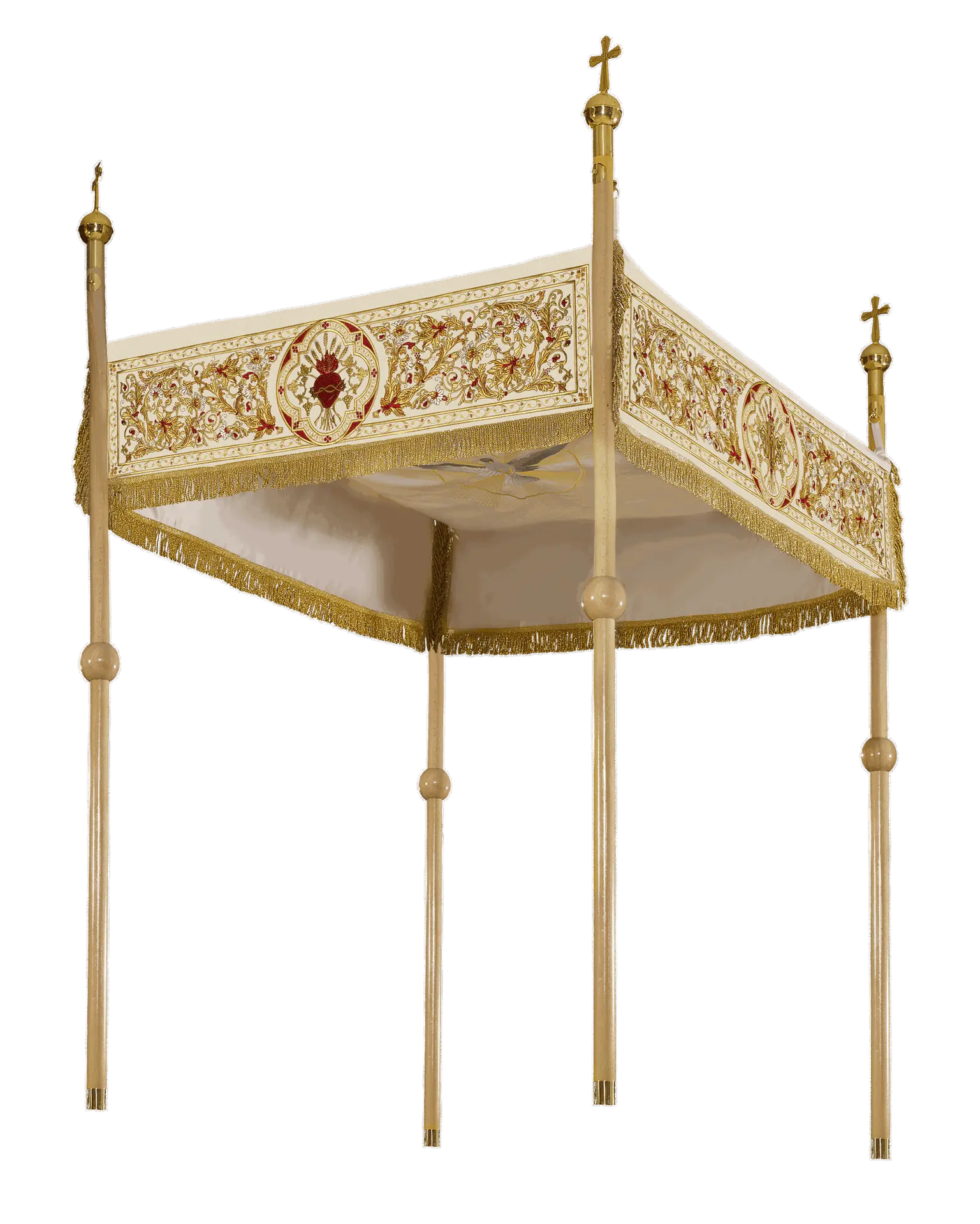
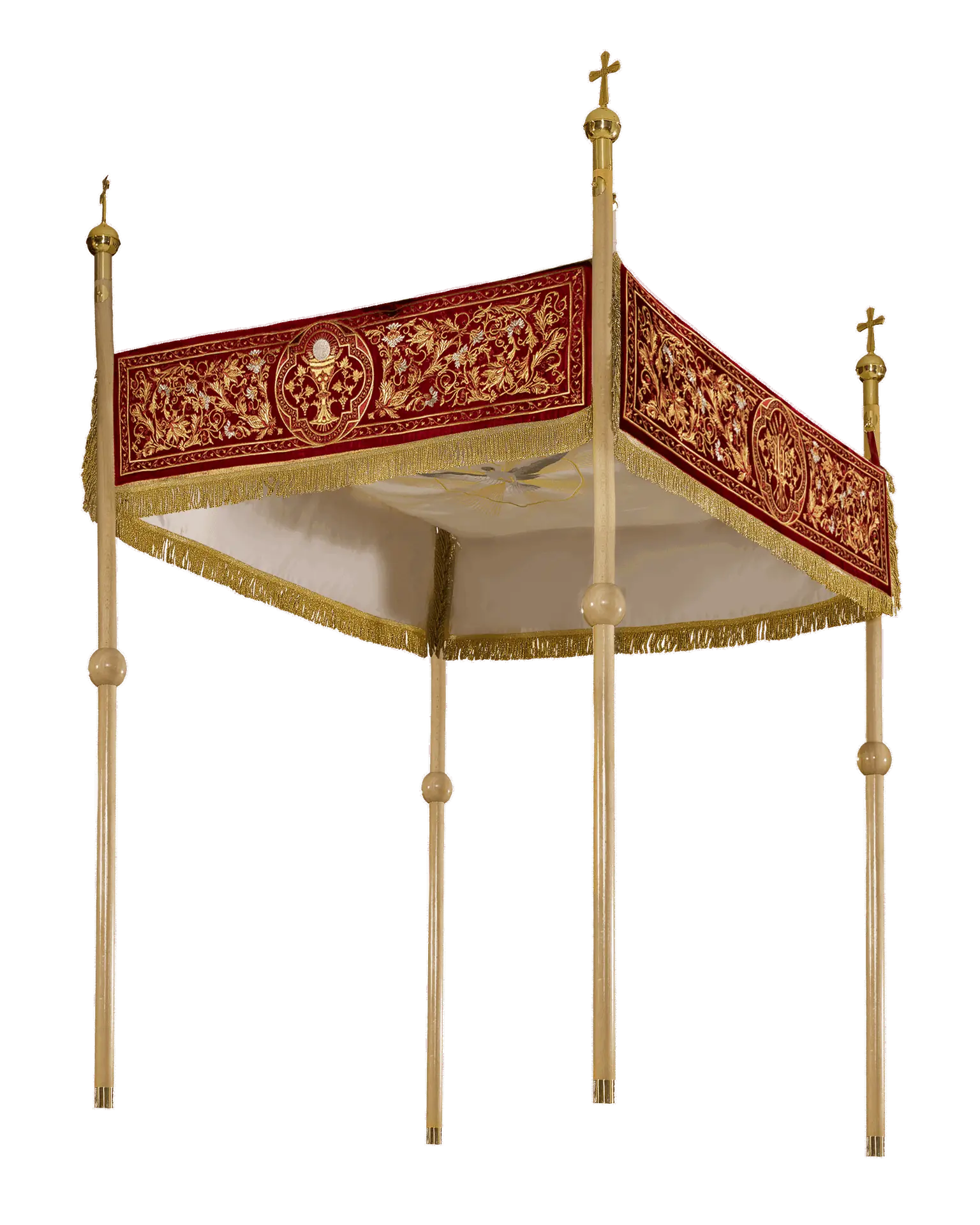
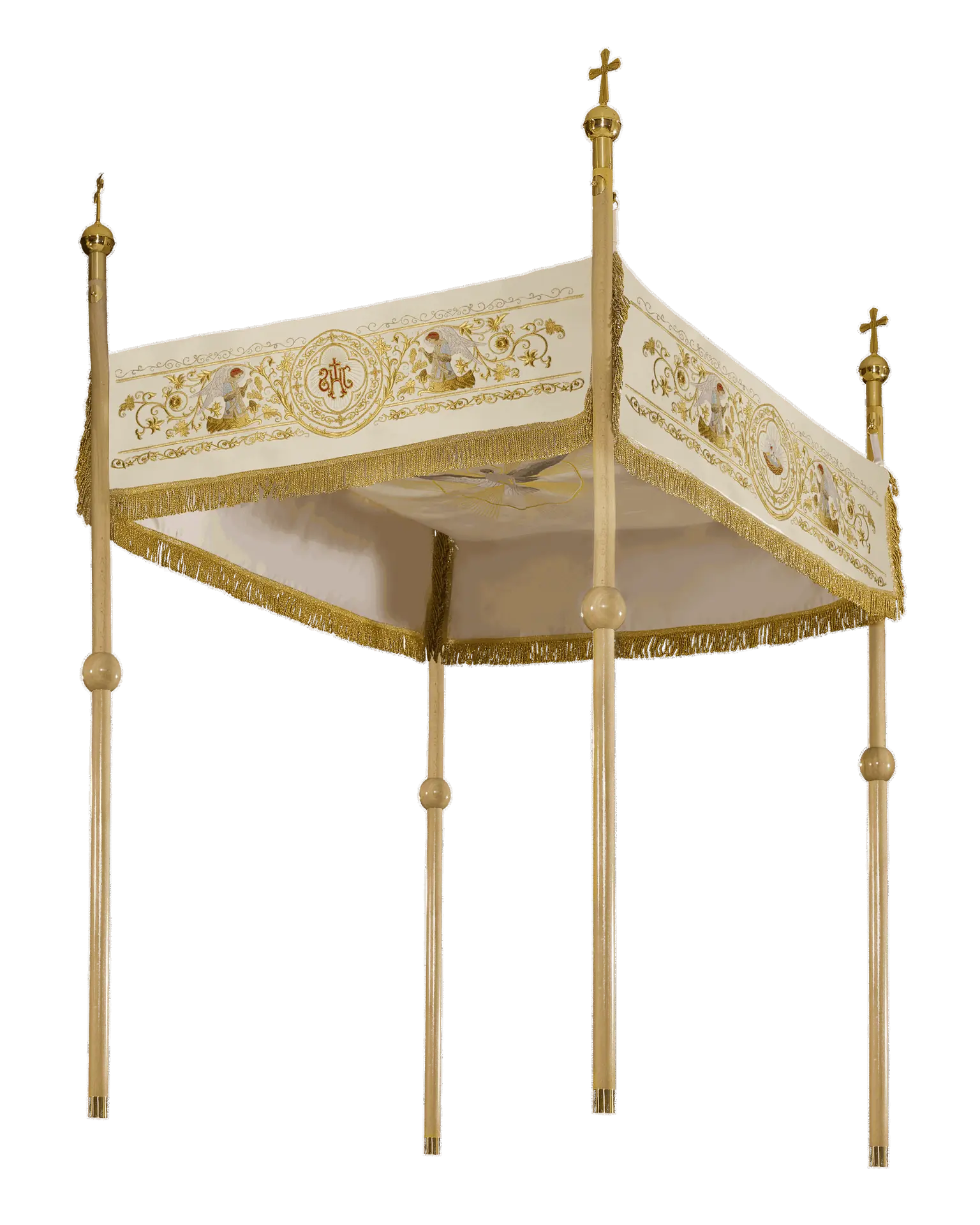
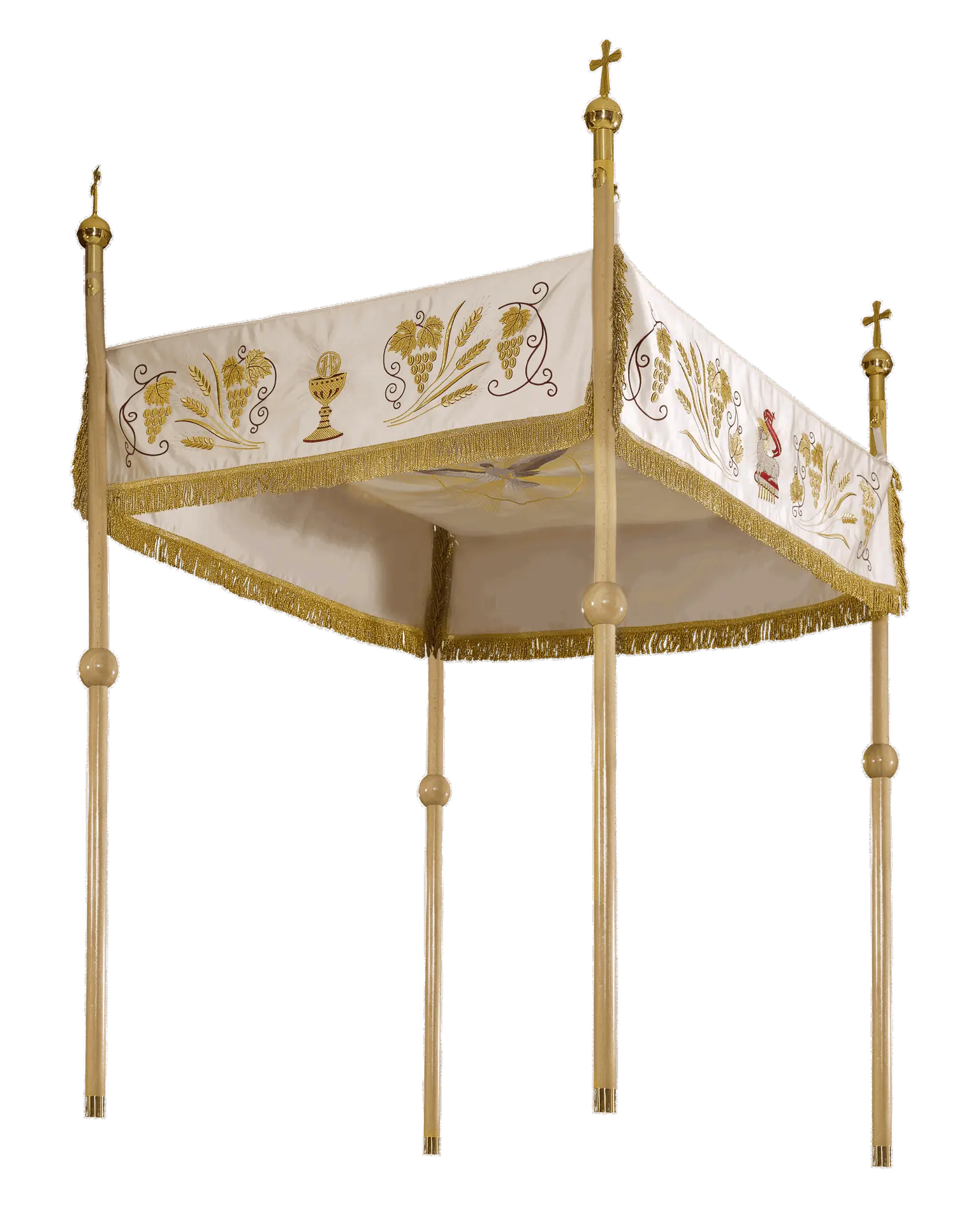
Altar textiles should be chosen with attention to proportion, embroidery placement and the existing architecture of the church. A richly embroidered frontal or altar cloth can be suitable for a spacious sanctuary, while a simpler altar cloth may be better where the altar already has strong decorative features. Pulpit covers should not compete with the Lectionary or ambo design; they should frame the place of proclamation with a clear but balanced symbol. For broader textile choices, see altar cloths, pulpit covers and chalice veils.
How to choose Easter vestments for a parish
Begin with the main liturgical use. If the parish needs a vestment for Easter Sunday Mass, a white, ecru or gold chasuble with a strong Resurrection symbol is usually the first priority. If the need is for a complete sanctuary setting, add a pulpit cover, chalice veil or altar cloth that repeats the same motif or color. If the church celebrates processions, solemn blessings or services during Eastertide, a cope may be a stronger addition than another chasuble. If there is a deacon regularly serving at Mass, a dalmatic coordinated with the chasuble can complete the set.
-
For Easter Sunday: choose white, ecru or gold chasubles with Paschal Lamb, Cross, JHS or light-filled embroidery.
-
For the Easter Octave: select vestments that remain festive but are practical enough for repeated use during several days of solemn celebration.
-
For Eastertide: consider designs that are joyful and dignified without being limited to one single Sunday.
-
For processions and blessings: look for copes, stoles and coordinating textiles that photograph well and remain readable from a distance.
-
For sanctuary unity: match the dominant motif across chasuble, stole, pulpit cover, chalice veil and altar cloth where possible.
Fabric weight and finish also matter. A richly decorated chasuble can be suitable for the principal Mass, while a lighter or simpler vestment may be more comfortable for multiple services during the Easter season. Decorative stones, velvet belts, embroidered orphreys and textured fabrics can create a solemn effect, but they should be chosen with the celebrant's comfort and the parish's care routine in mind. The goal is not only visual richness, but a garment that serves the liturgy well over many seasons.
Easter and the rhythm of the liturgical year
Easter stands at the center of the Christian liturgical year, but it is closely connected with the seasons that come before and after it. Lent prepares the Church through penance and conversion; Easter celebrates the Resurrection; Corpus Christi later focuses attention on the Eucharistic presence of Christ. Because these seasons use different colors and symbols, it is helpful to plan vestments as part of a complete liturgical wardrobe. For the penitential period before Easter, see Lent. For the Eucharistic solemnity that follows later in the year, see Corpus Christi.
This distinction helps avoid confusion in purchasing. Purple Lenten vestments should not be treated as Easter vestments, even if they are used near the same time of year. Easter textiles should communicate joy, victory and new life. Corpus Christi items may share Eucharistic imagery, but they often emphasize adoration, procession and the Blessed Sacrament more directly. When each collection is used for its proper purpose, the church's visual language becomes clearer and more catechetical for the faithful.
Coordinating color, embroidery and church interior
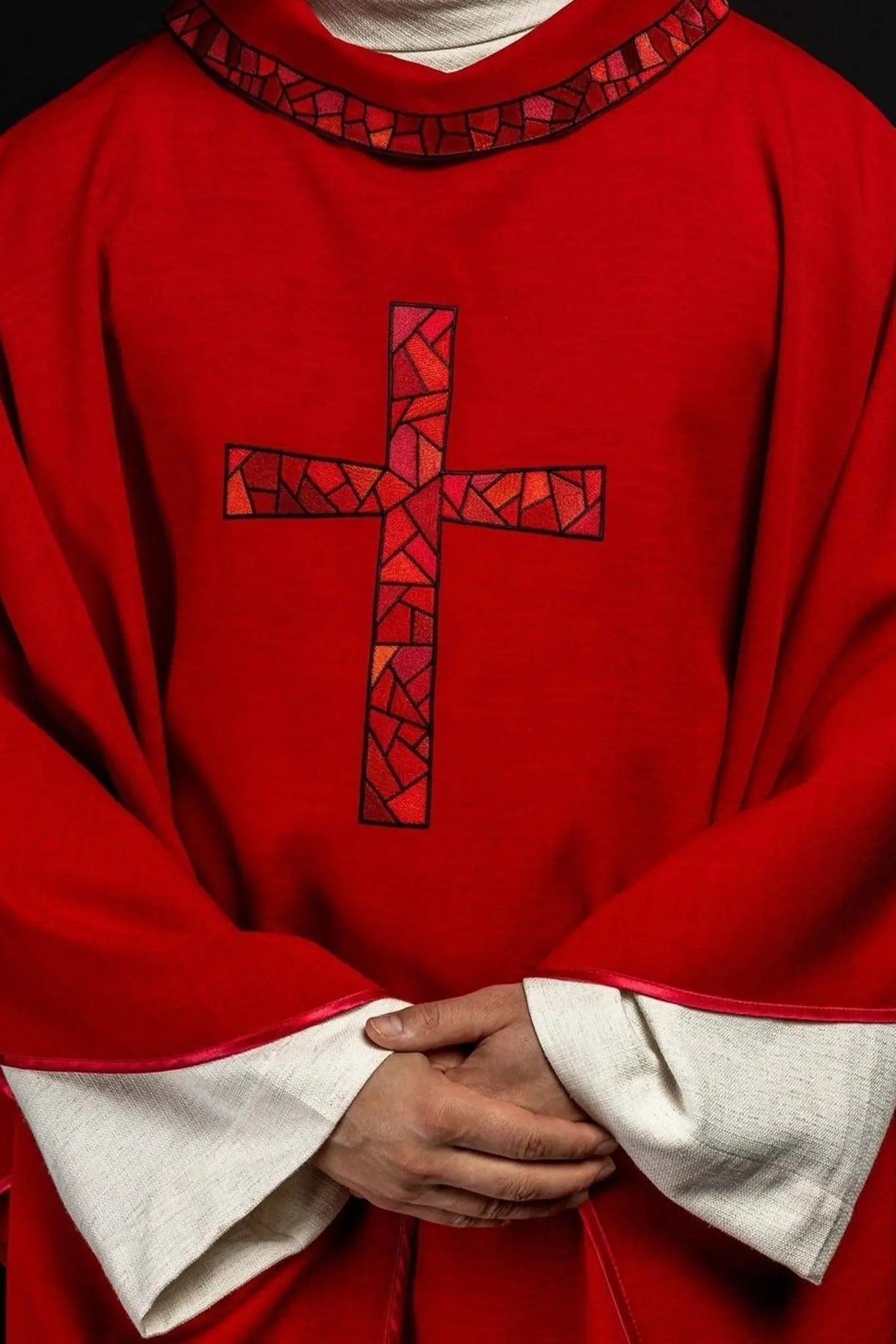
A strong Easter set usually begins with a clear color decision. White and ecru give a clean, luminous appearance and can be paired with gold embroidery for a classic Paschal look. Gold is more solemn and may be chosen for principal celebrations or churches with a traditional interior. Red can be appropriate in specific liturgical contexts, especially when the symbolism or assigned color calls for it, but it should not replace the usual white or gold language of Easter Sunday without a reason.
Embroidery should also be chosen with the church interior in mind. A sanctuary with simple architecture can carry a highly decorated chasuble or altar frontal beautifully. A heavily ornamented church may benefit from a vestment whose central symbol is clear and whose surrounding decoration is more restrained. Pulpit covers and chalice veils are especially helpful for tying the space together because they repeat the motif without requiring every textile to be identical.
For a coherent set, choose one primary motif and one primary color family. A Paschal Lamb motif can be repeated on a chasuble, stole and pulpit cover. A Cross design can connect a cope with a chalice veil. A gold or ecru palette can be extended from the priest's vestment to altar cloths and ambo textiles. This approach gives the parish flexibility: pieces can be used together for the most solemn days and separately for smaller celebrations during Eastertide.
Care and long-term use
Easter vestments are often used during the most important and most visible celebrations of the year, so long-term care should be considered before purchase. Embroidered garments and textiles should be stored in a dry, clean place, protected from excessive sunlight, crushing and contact with rough surfaces that may catch threads. Copes and chasubles are best stored so that embroidery is not folded sharply. Chalice veils, pulpit covers and altar cloths should be kept flat or folded carefully according to their fabric and decoration.
Before cleaning any embroidered vestment or textile, follow the care guidance provided for the specific fabric and ornamentation. Decorative stones, metallic threads, velvet elements and dense embroidery may require more delicate handling than plain fabric. Proper care helps preserve the brightness of Easter colors and the clarity of the sacred motifs, allowing the same pieces to serve the parish through many celebrations of the Resurrection.
Frequently Asked Questions (FAQ)
Which colors are most appropriate for Easter vestments?
White, ecru and gold are the most common choices for Easter because they express joy, glory and the Resurrection of Christ. Gold may be used for especially solemn celebrations, while red should be selected only when the liturgical day, design purpose or local context makes it suitable.
What should a parish buy first for Easter Mass?
For most parishes, the first priority is a festive chasuble for the priest celebrant, preferably with a clear Easter symbol such as the Paschal Lamb, Cross or JHS monogram. After that, a matching stole, pulpit cover, chalice veil or altar cloth can help create a more complete sanctuary setting.
Can Easter chasubles be used after Easter Sunday?
Yes. Many Easter chasubles are suitable for the Easter Octave and for celebrations during Eastertide, provided that their color and symbolism fit the liturgical day. Designs centered on the Resurrection, light, the Lamb or the Cross often remain appropriate beyond Easter Sunday itself.
How can I coordinate a chasuble with altar textiles?
Choose one shared element, such as a Paschal Lamb motif, gold embroidery, ecru fabric or a cross pattern. Repeating that element on the chasuble, stole, pulpit cover, chalice veil or altar cloth creates unity without requiring every piece to be identical.
Are dalmatics and copes part of an Easter vestment set?
They can be. A dalmatic is used by a deacon at Mass, while a cope may be used for processions, blessings and solemn services outside Mass. When their color and embroidery coordinate with the priest's chasuble, they help the whole celebration appear ordered and festive.
What Easter motif is the most recognizable for church use?
The Paschal Lamb is especially recognizable because it directly connects Easter, sacrifice and the Eucharist. The Cross, JHS monogram, lilies and radiant gold ornament are also common choices, especially when the parish wants a design that can be used throughout the Easter season.