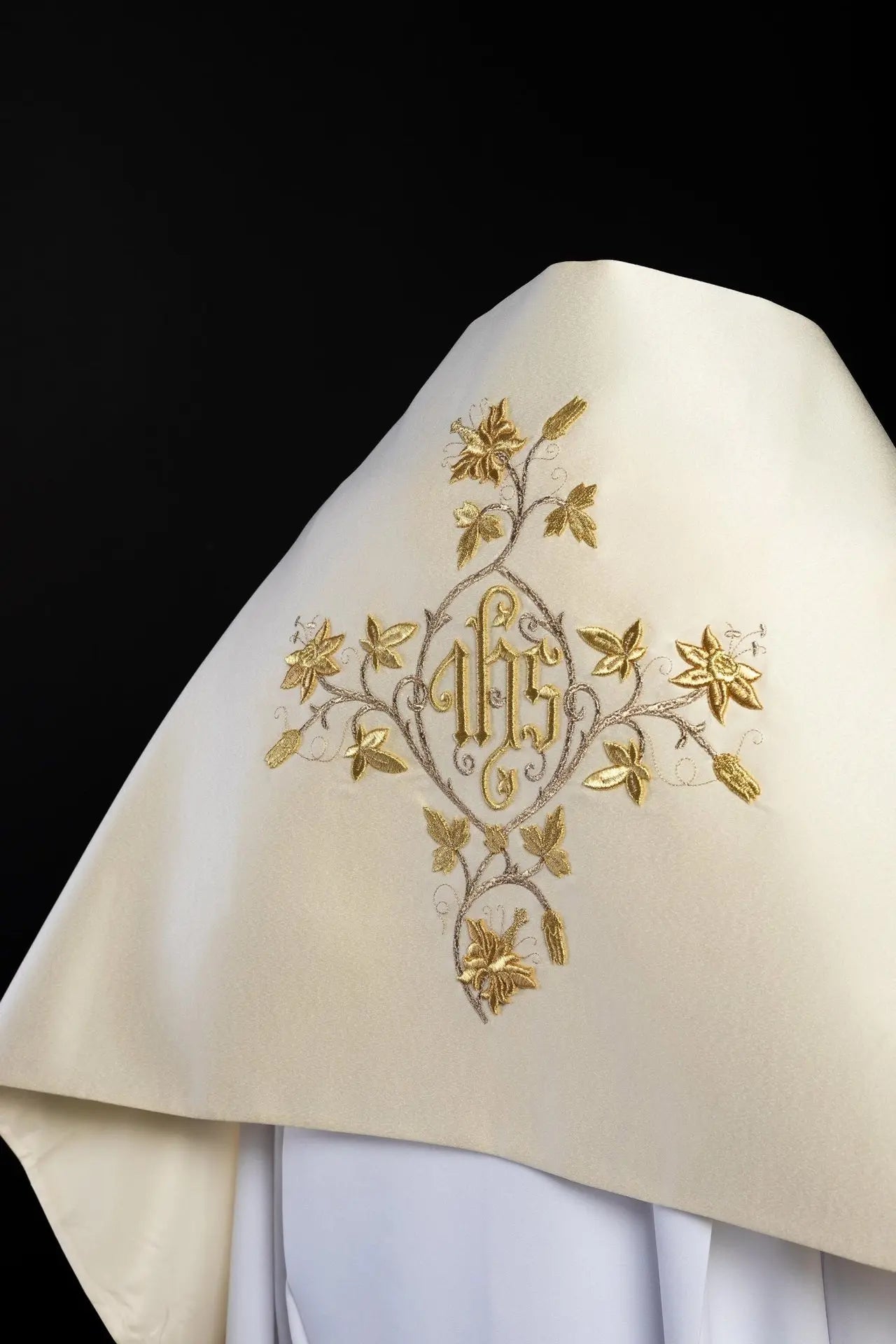
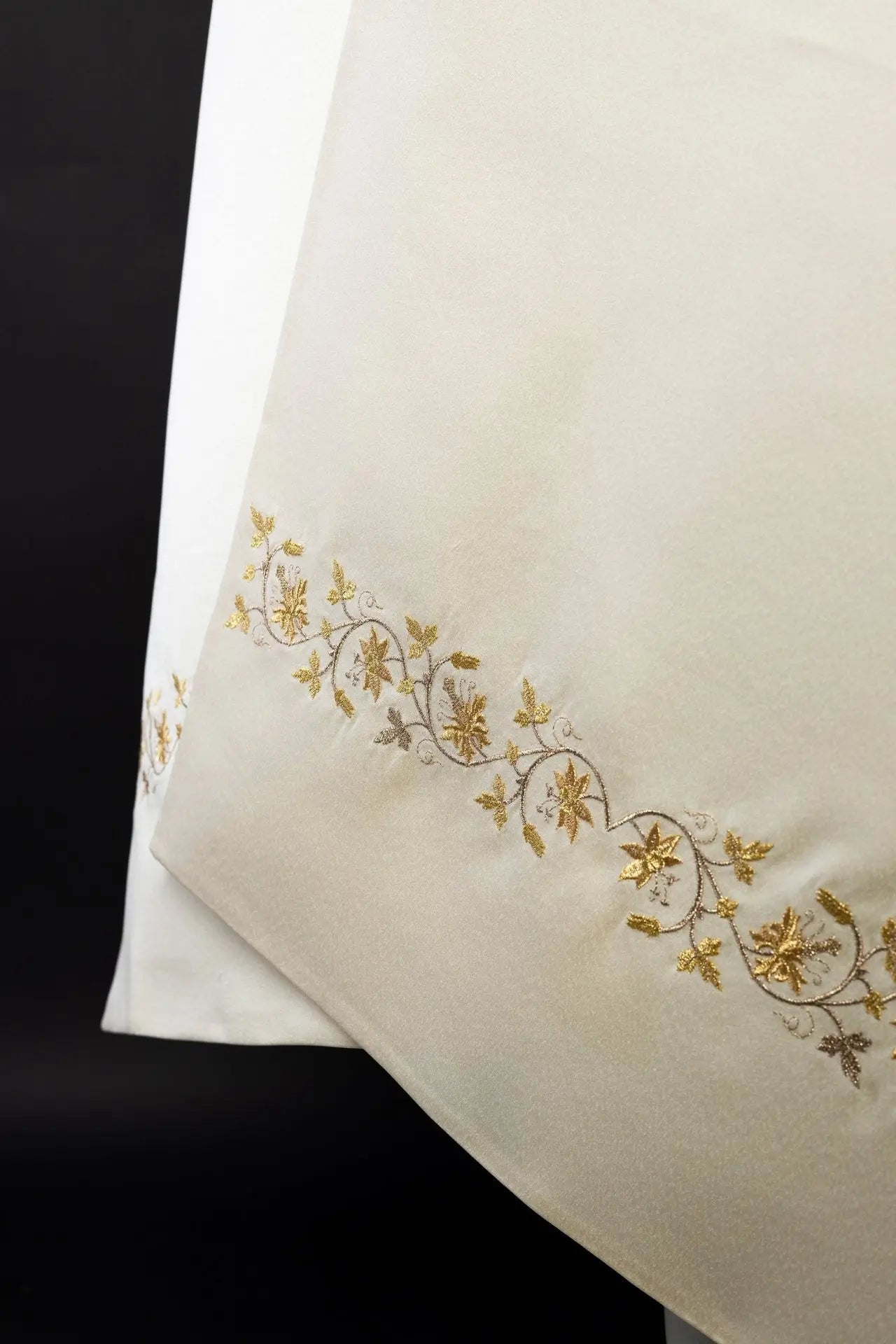
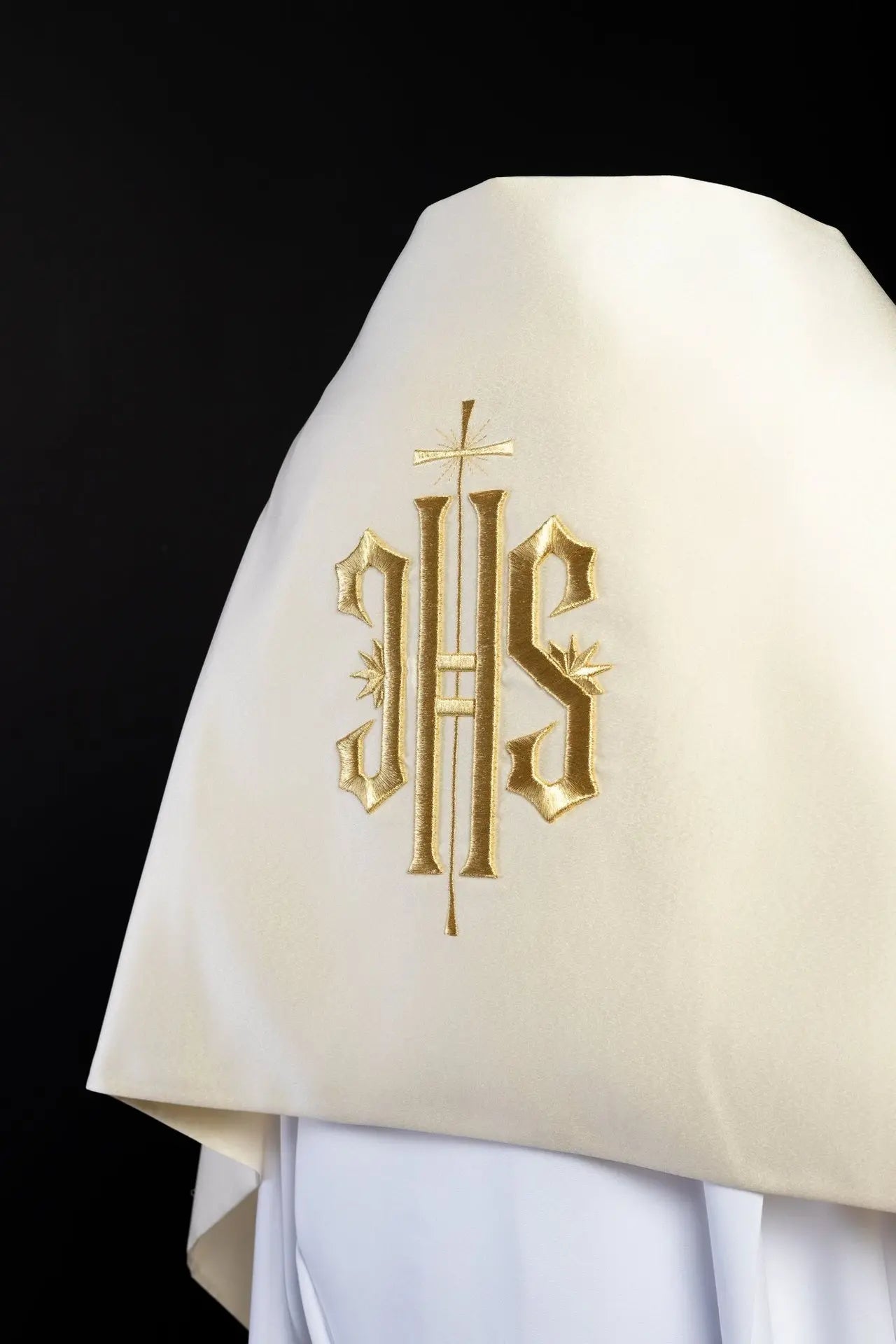
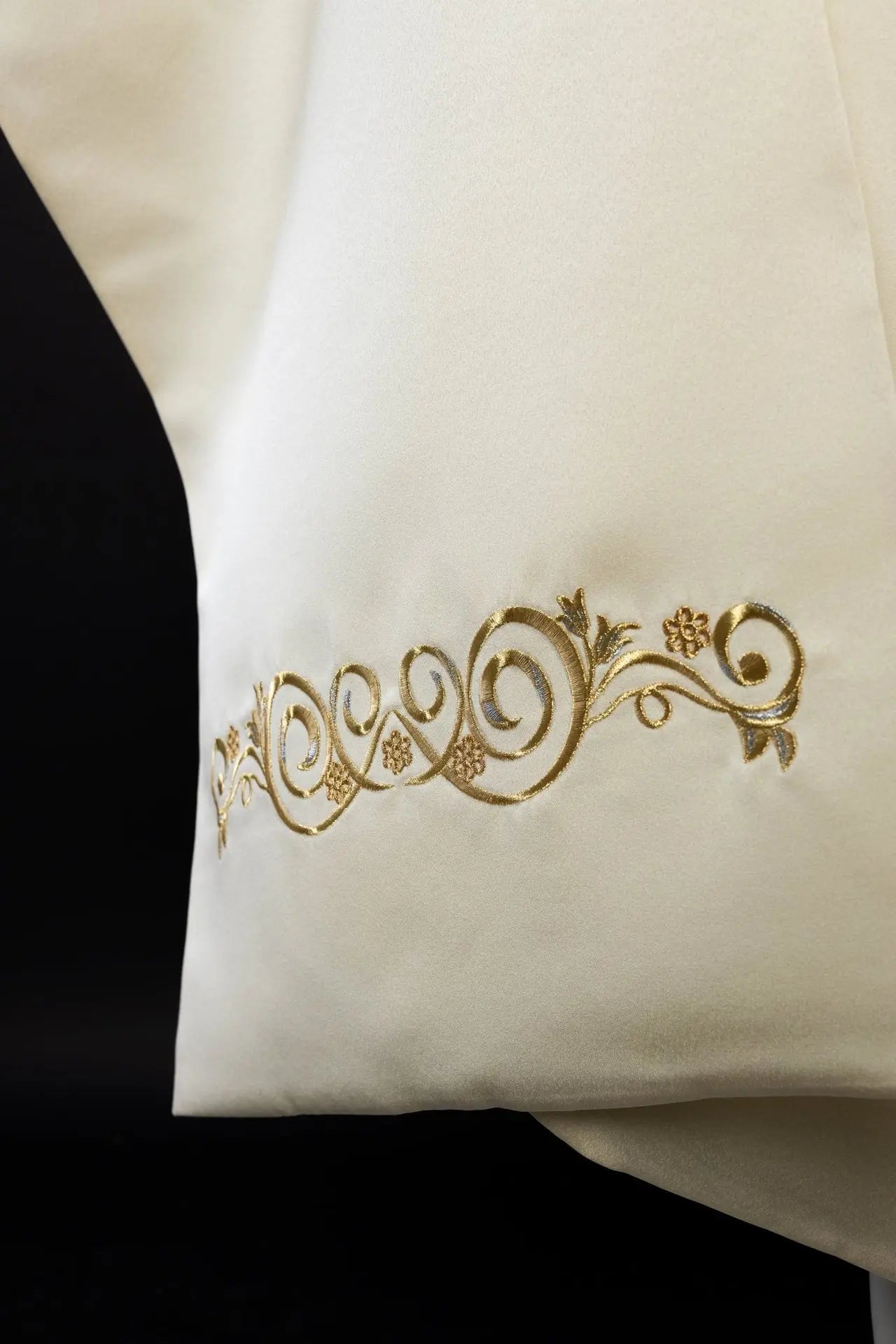
Humeral Veils for Benediction, Processions, and Eucharistic Worship
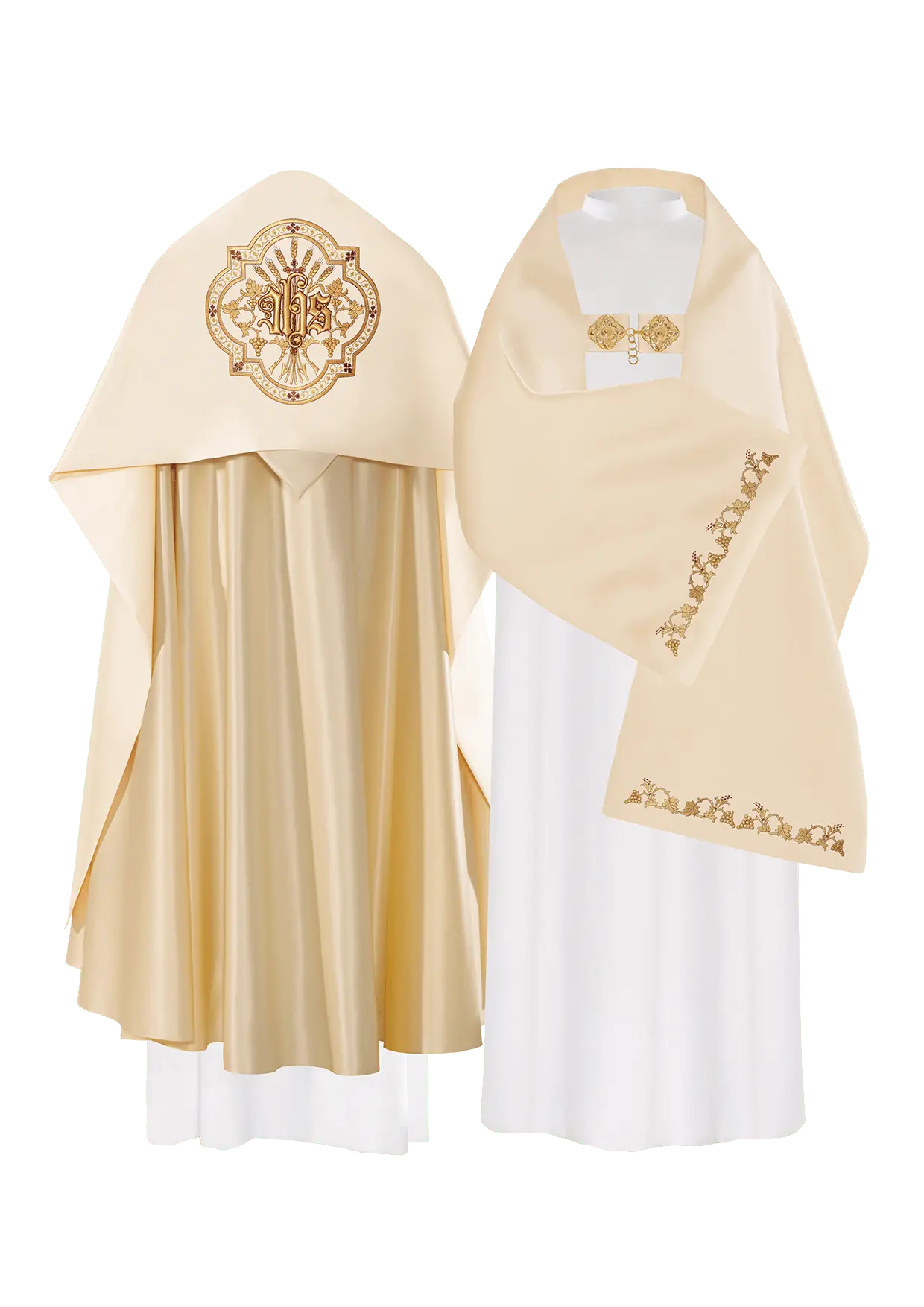
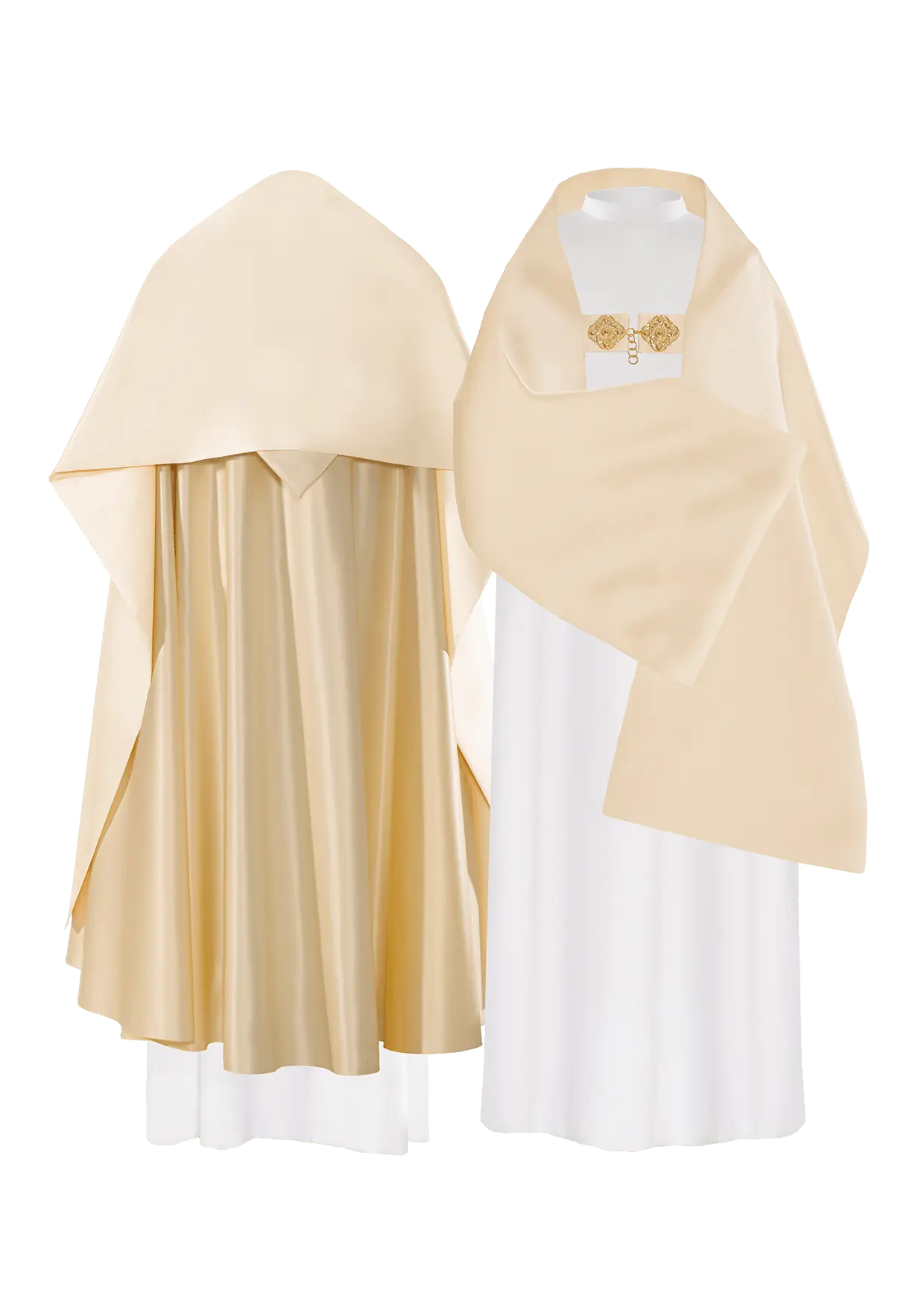
A humeral veil is one of the most recognizable vestments used in solemn Eucharistic worship. Worn over the shoulders and across the hands, it allows a priest or bishop to hold the monstrance, ciborium, reliquary, or other sacred vessel with a visible sign of reverence. This collection brings together humeral veils created for Benediction of the Blessed Sacrament, Eucharistic processions, Corpus Christi celebrations, Marian devotions, parish feasts, retreats, and other liturgical occasions in which the sacred object being carried is treated with particular honor.
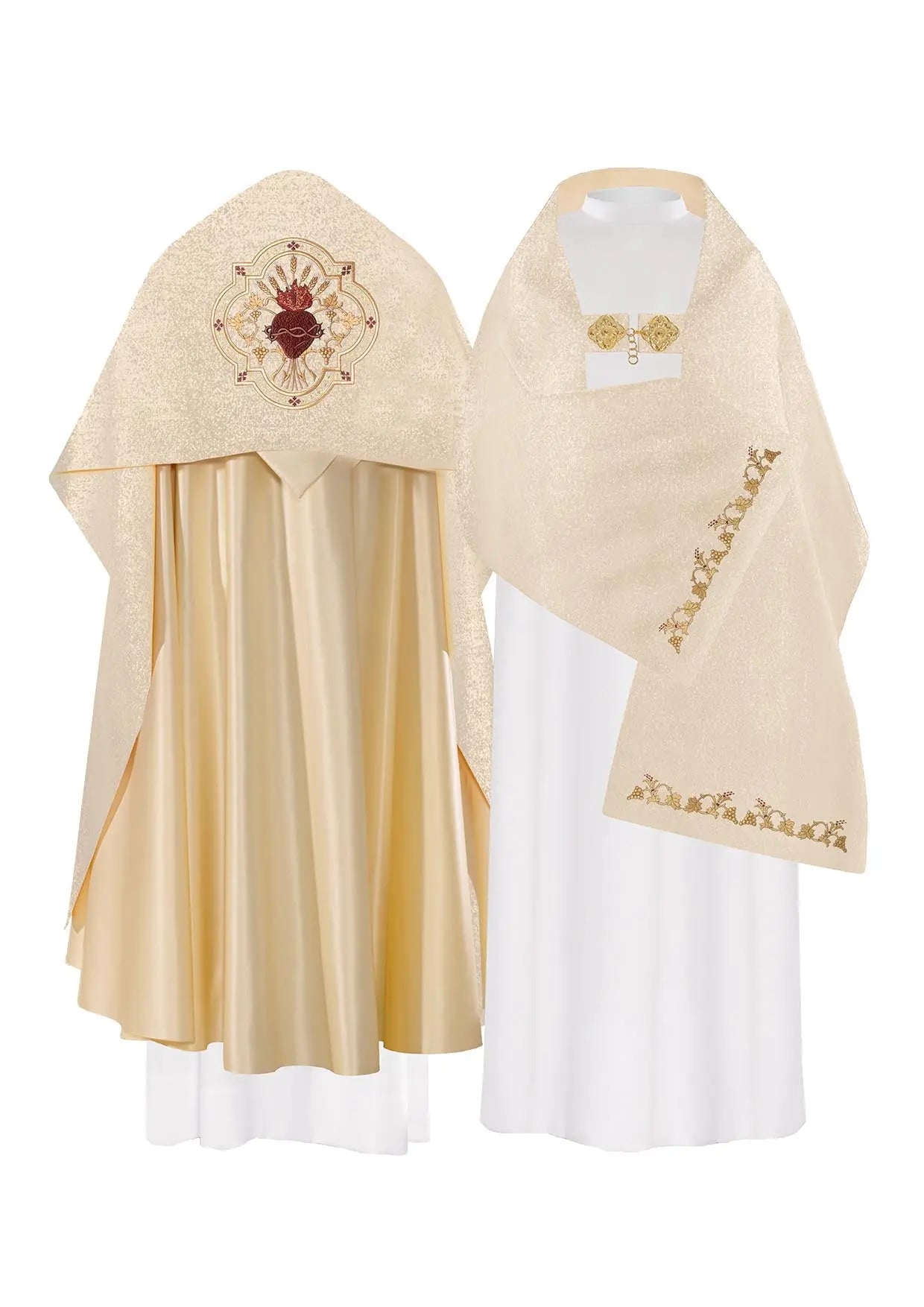
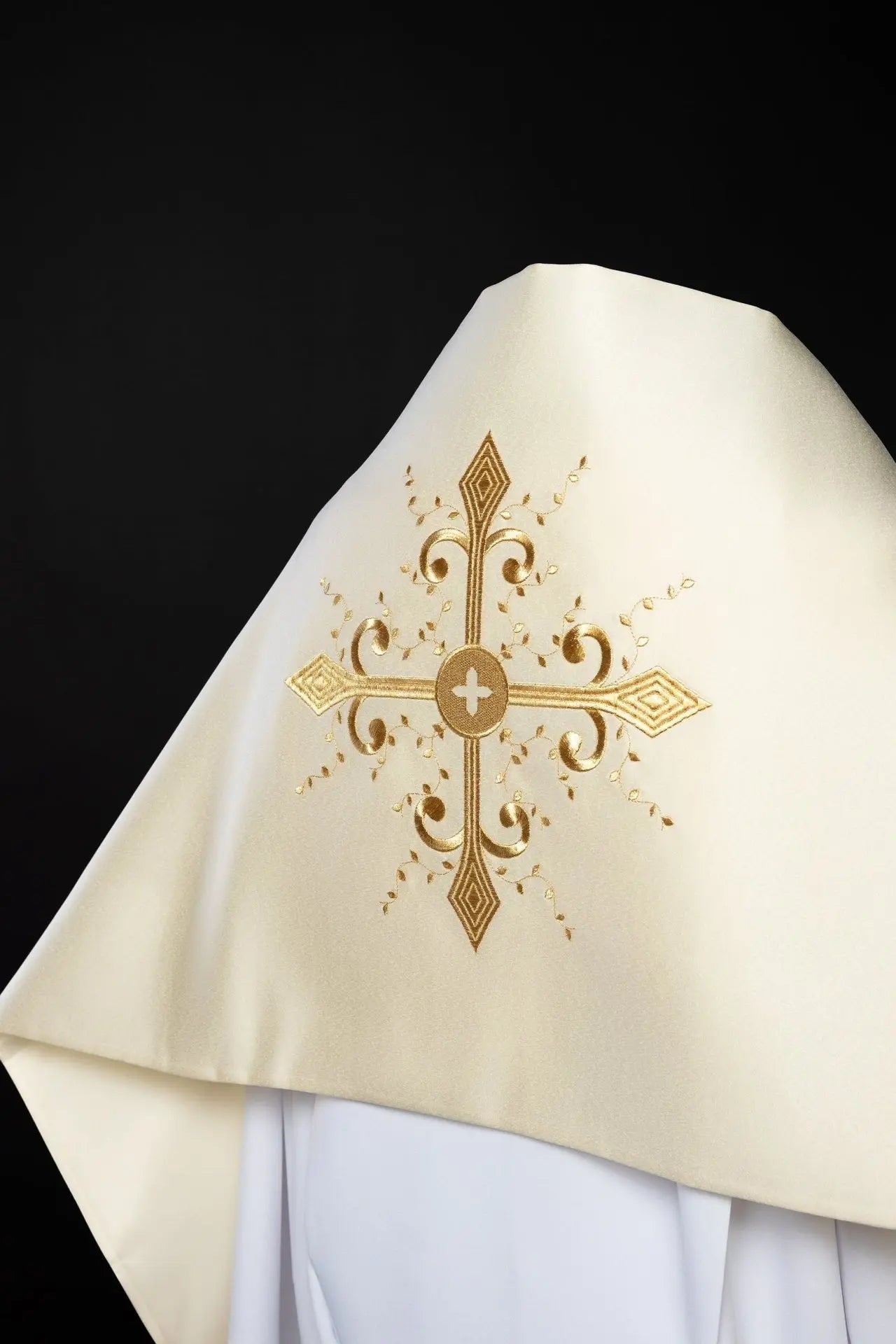
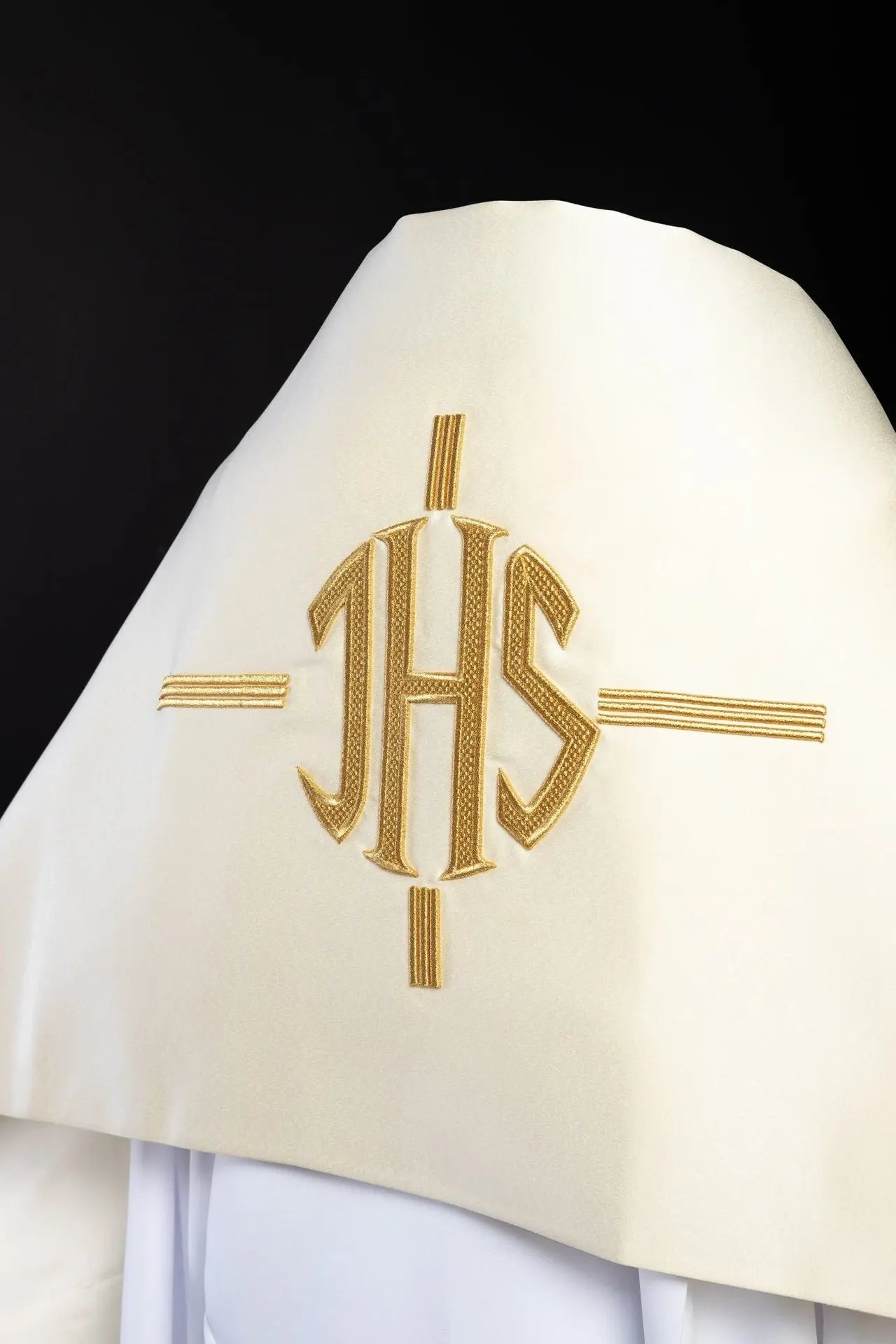
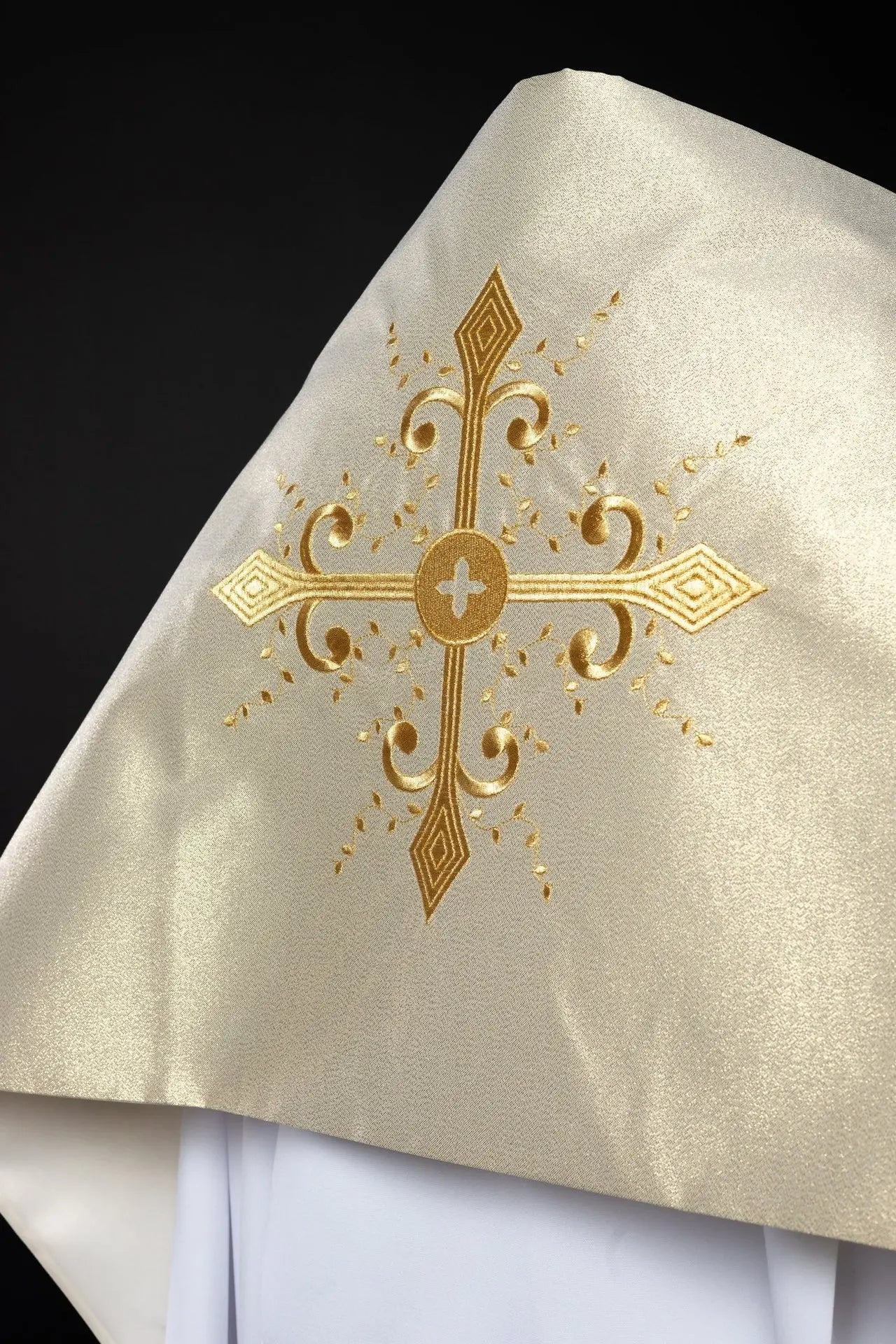
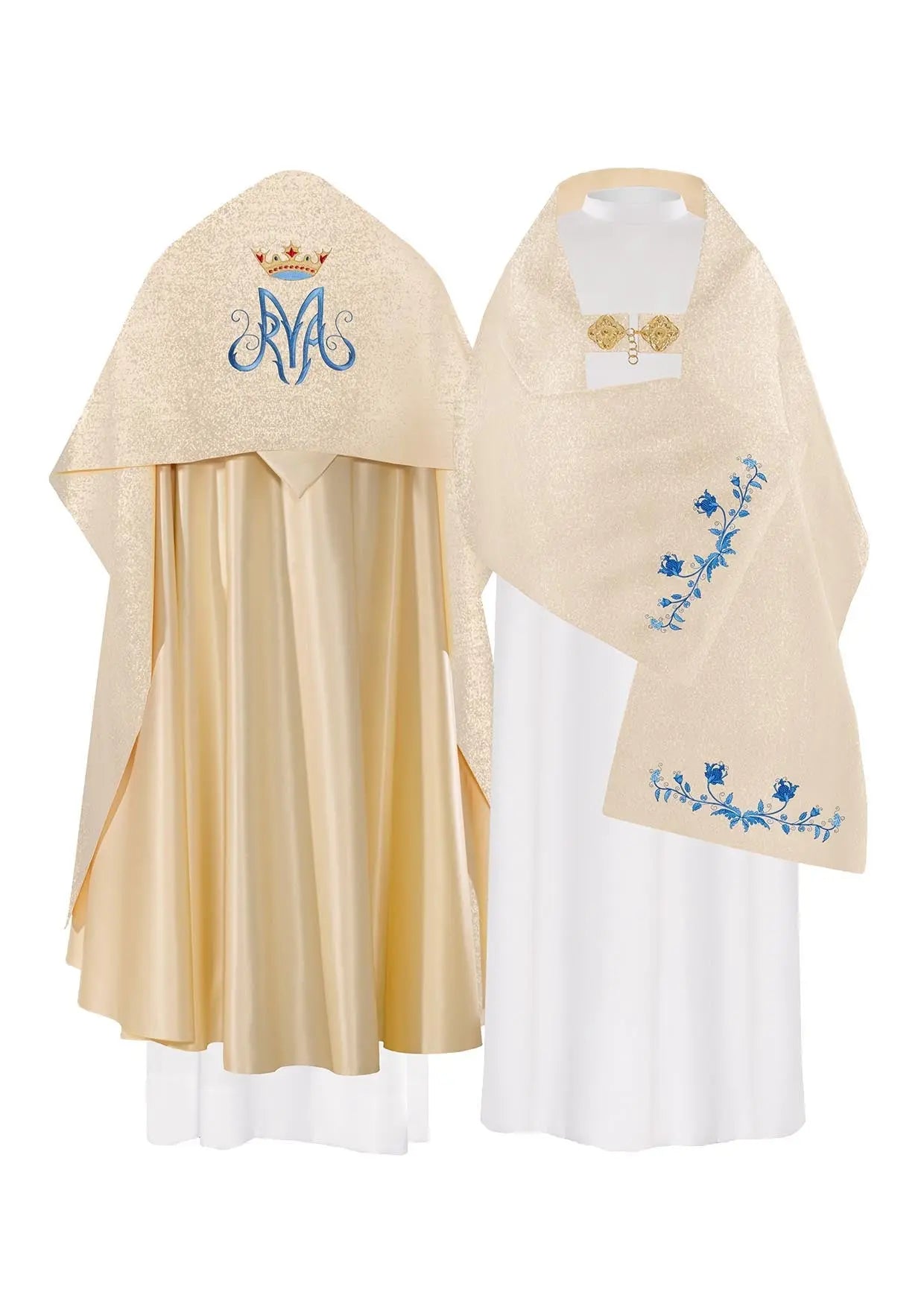
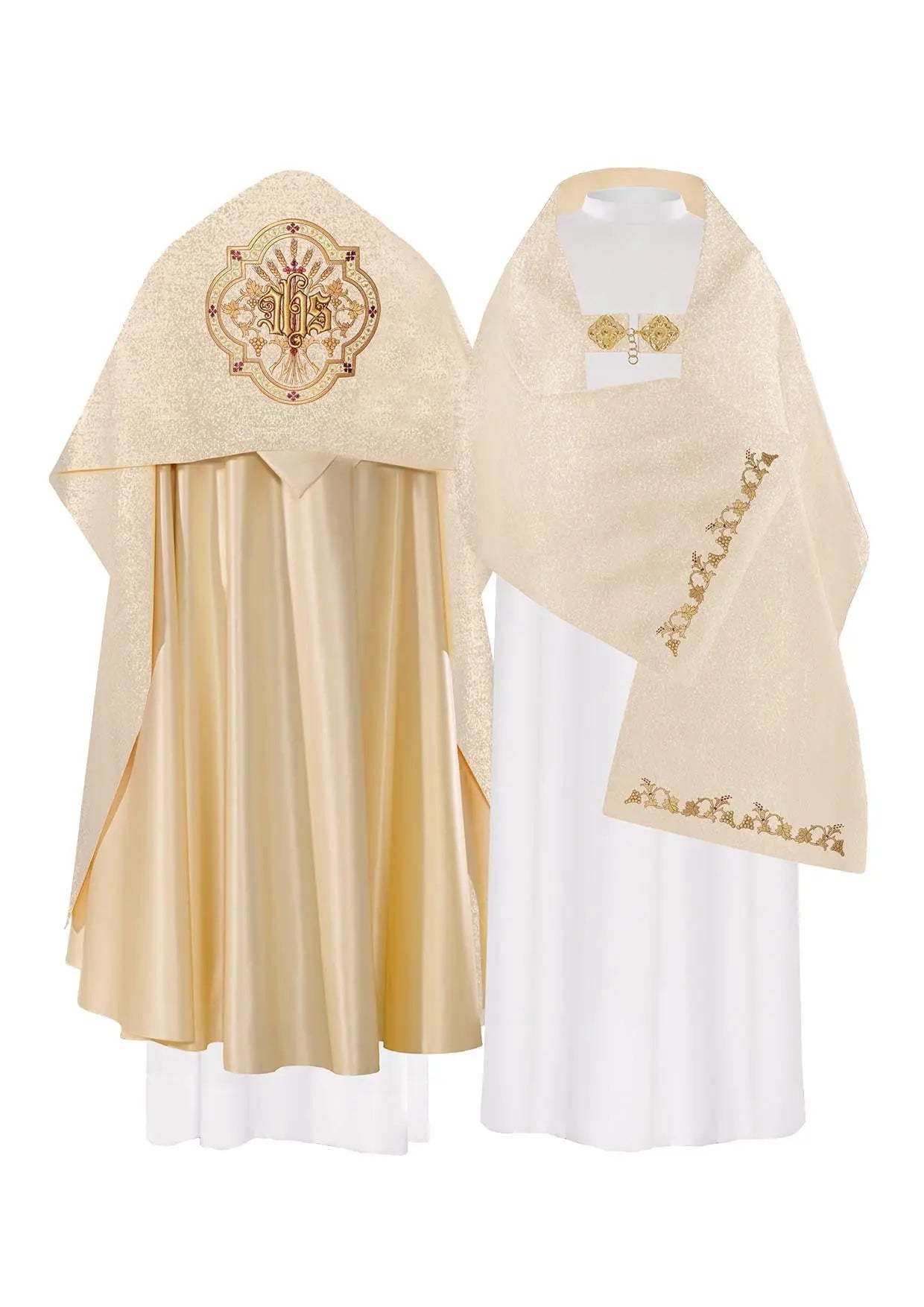
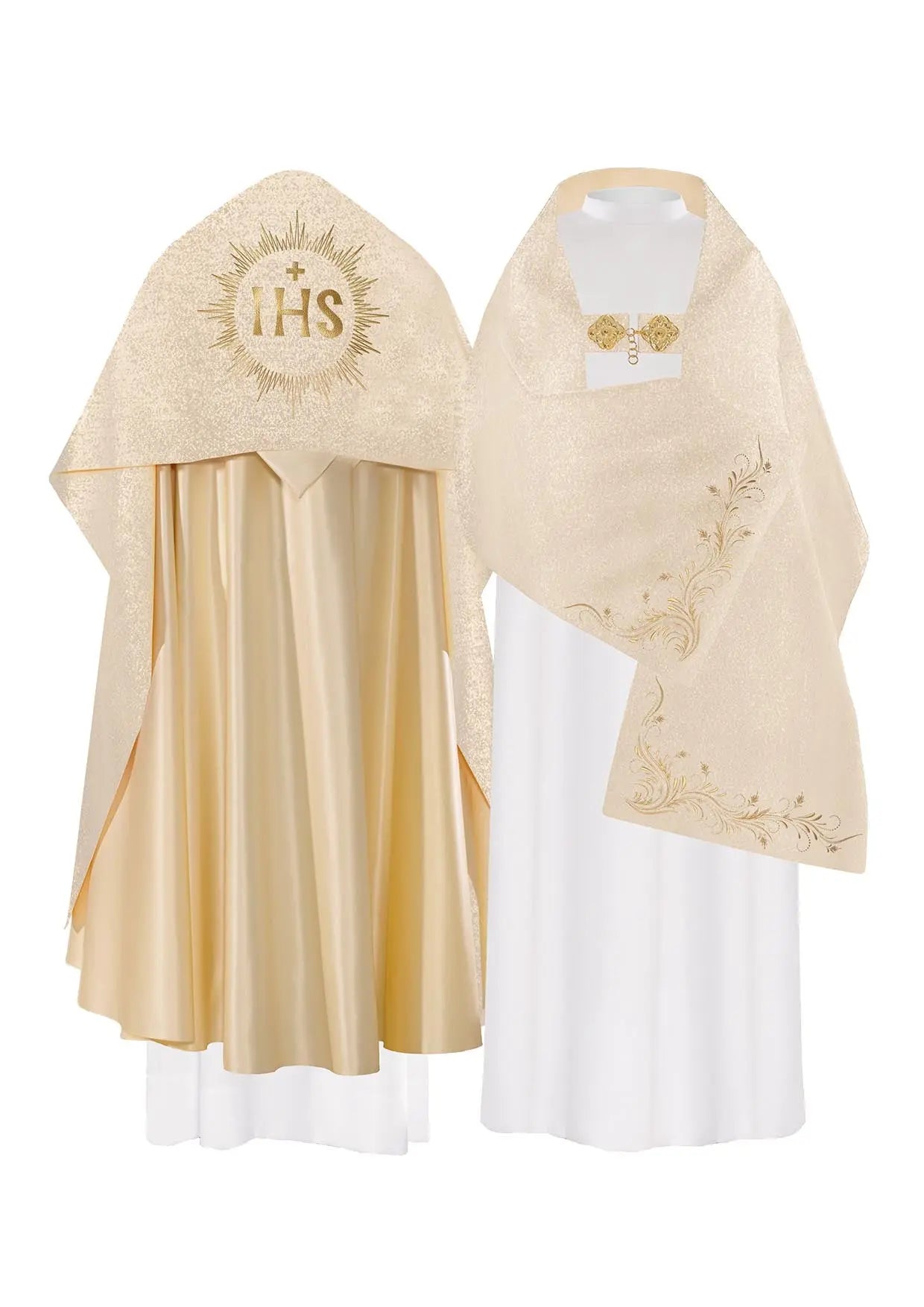
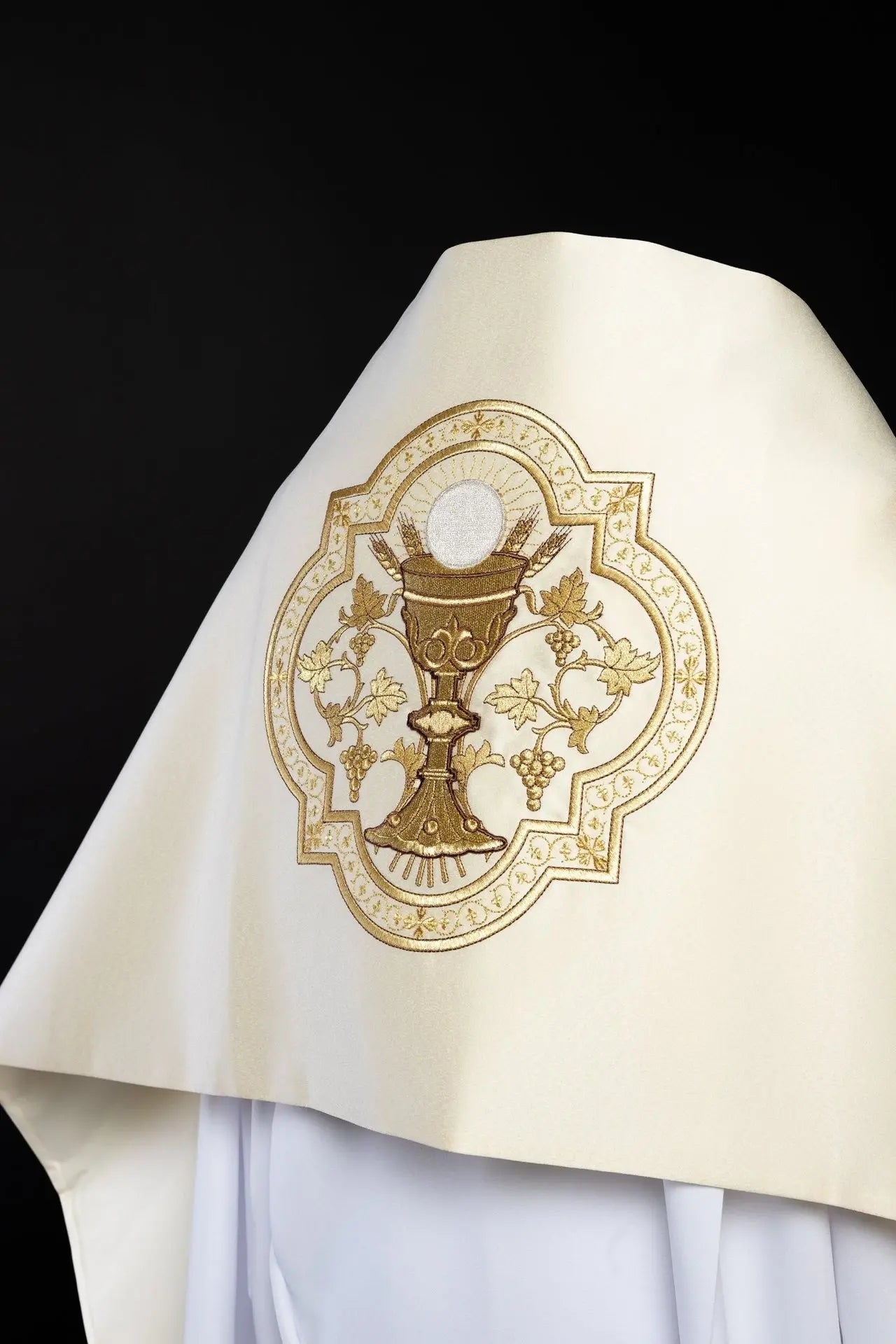
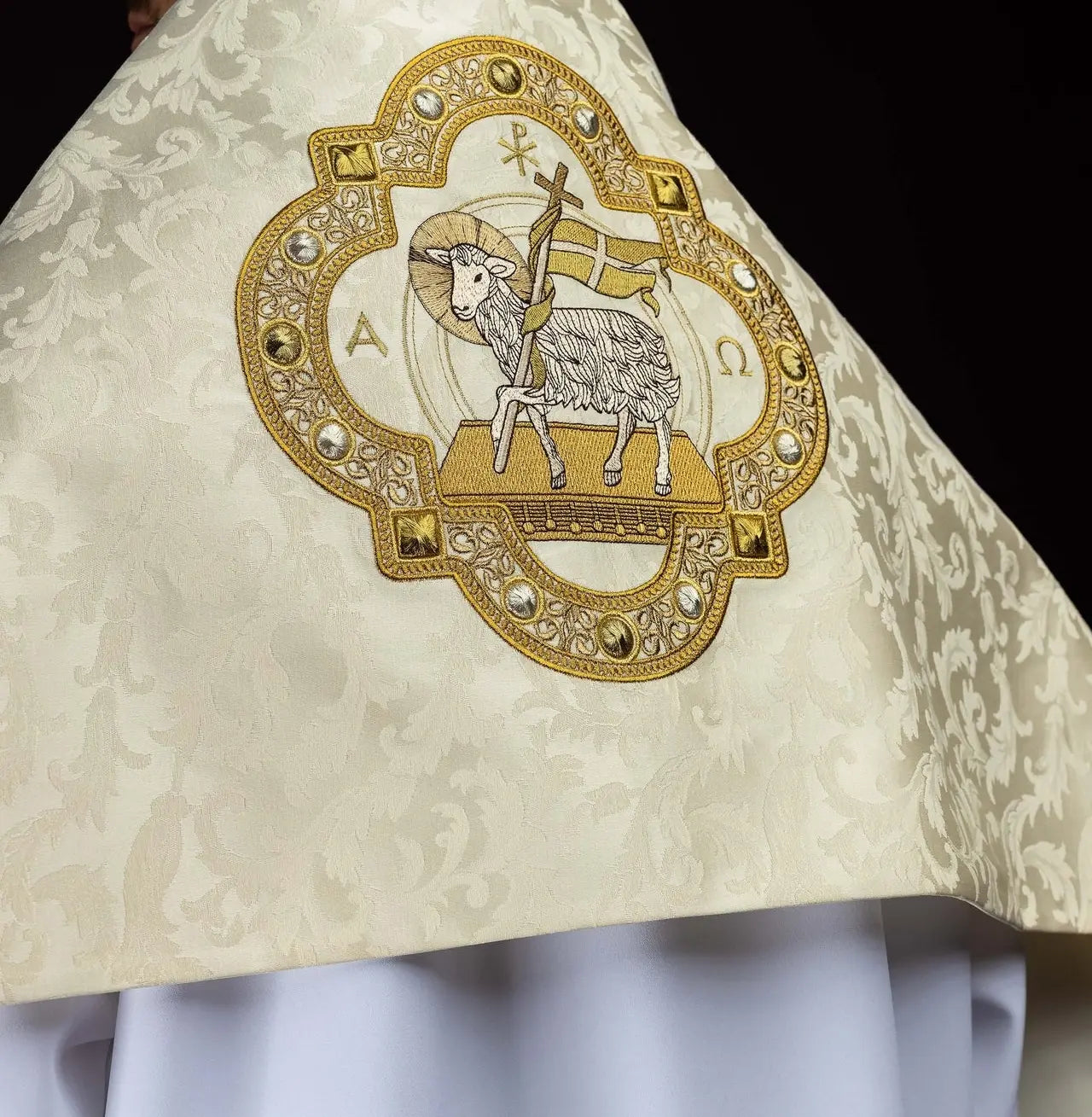
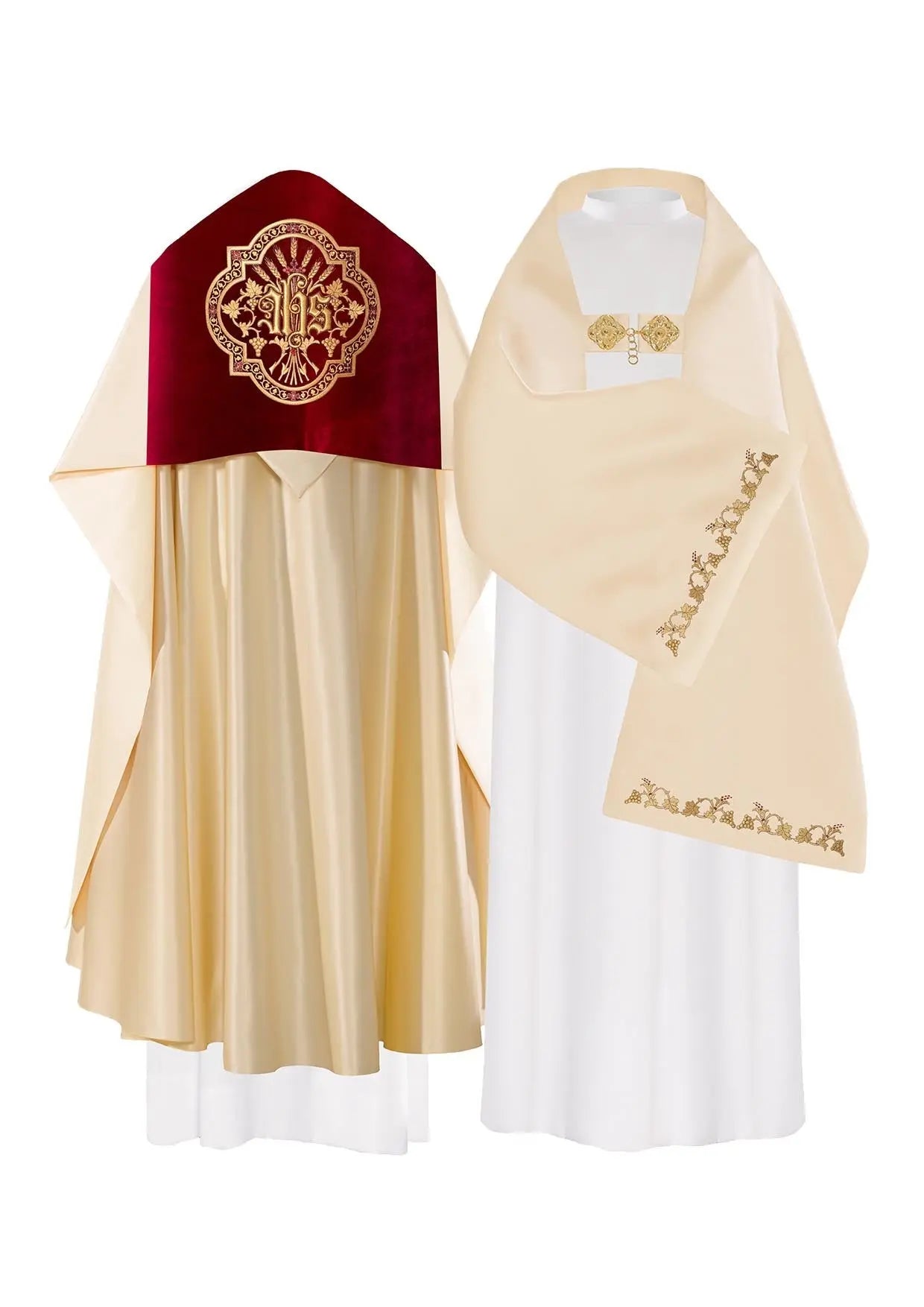
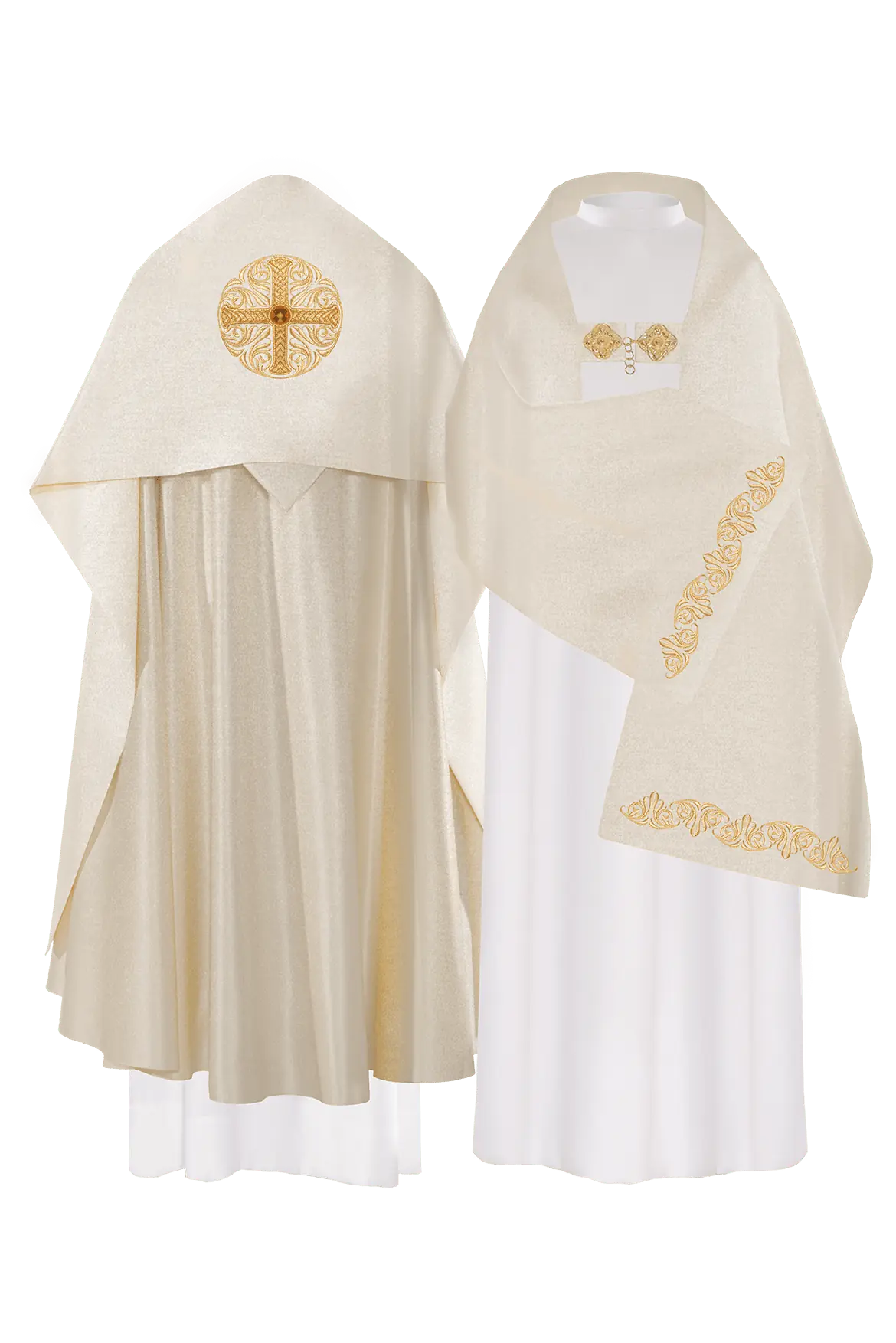
The veils in this collection include richly embroidered designs as well as more restrained styles suited to regular parish use. Live product examples include gold and ecru humeral veils, Marian motifs, IHS embroidery, cross embroidery, PX symbolism, velvet details, and designs dedicated to the Heart of Jesus. These choices make it easier to match the veil to the season, the vessel being carried, the church interior, or the existing vestments used by the celebrant and ministers.
What Is a Humeral Veil Used For?
The principal liturgical use of the humeral veil is during Exposition and Benediction of the Blessed Sacrament. When the priest or bishop blesses the faithful with the monstrance, the veil covers the shoulders and hands, emphasizing that the blessing comes from Christ present in the Eucharist, not from the personal action of the minister. This is why humeral veils are often chosen with great care for adoration chapels, parish Benediction, Corpus Christi processions, retreats, missions, and solemn Eucharistic services.
The humeral veil may also be used when carrying a ciborium with the Blessed Sacrament or, according to local custom and appropriate liturgical practice, when carrying certain relics in solemn procession. In each case, the veil creates a visual and devotional distinction between ordinary handling and ceremonial carrying. For complete Eucharistic celebrations, many parishes coordinate the humeral veil with monstrances, processional canopies, and other solemn accessories used during exposition or outdoor processions.
Designs, Symbols, and Liturgical Character
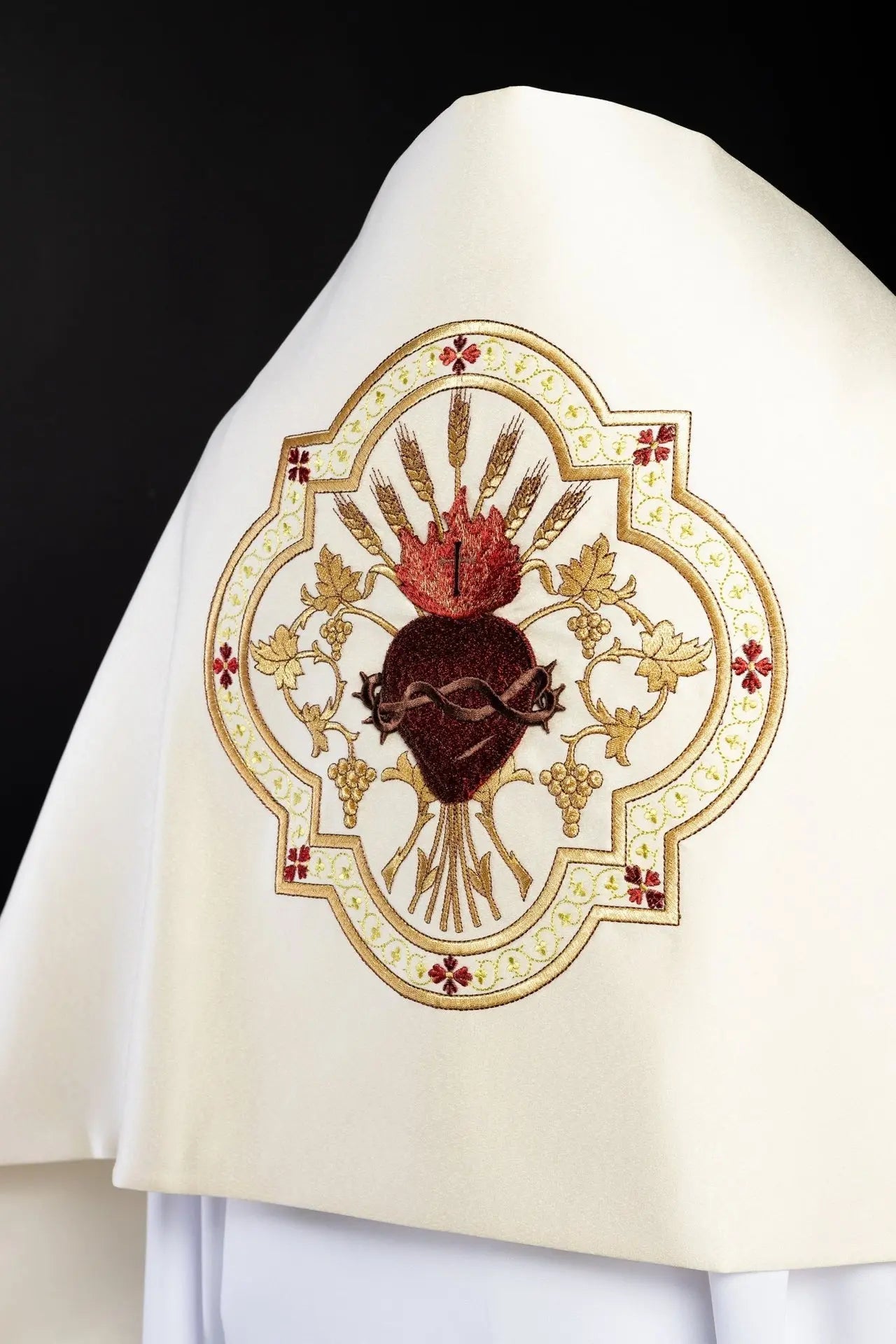
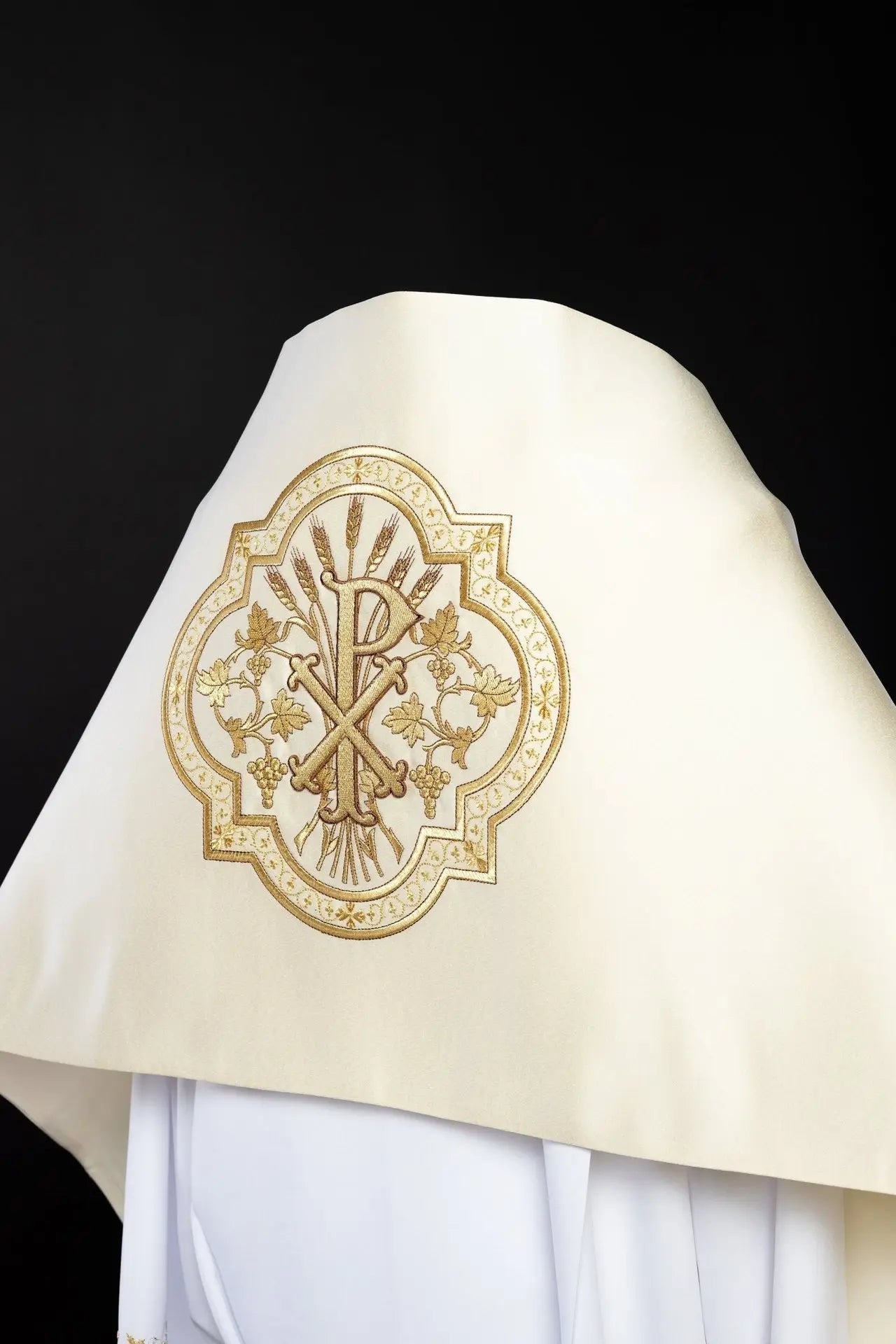
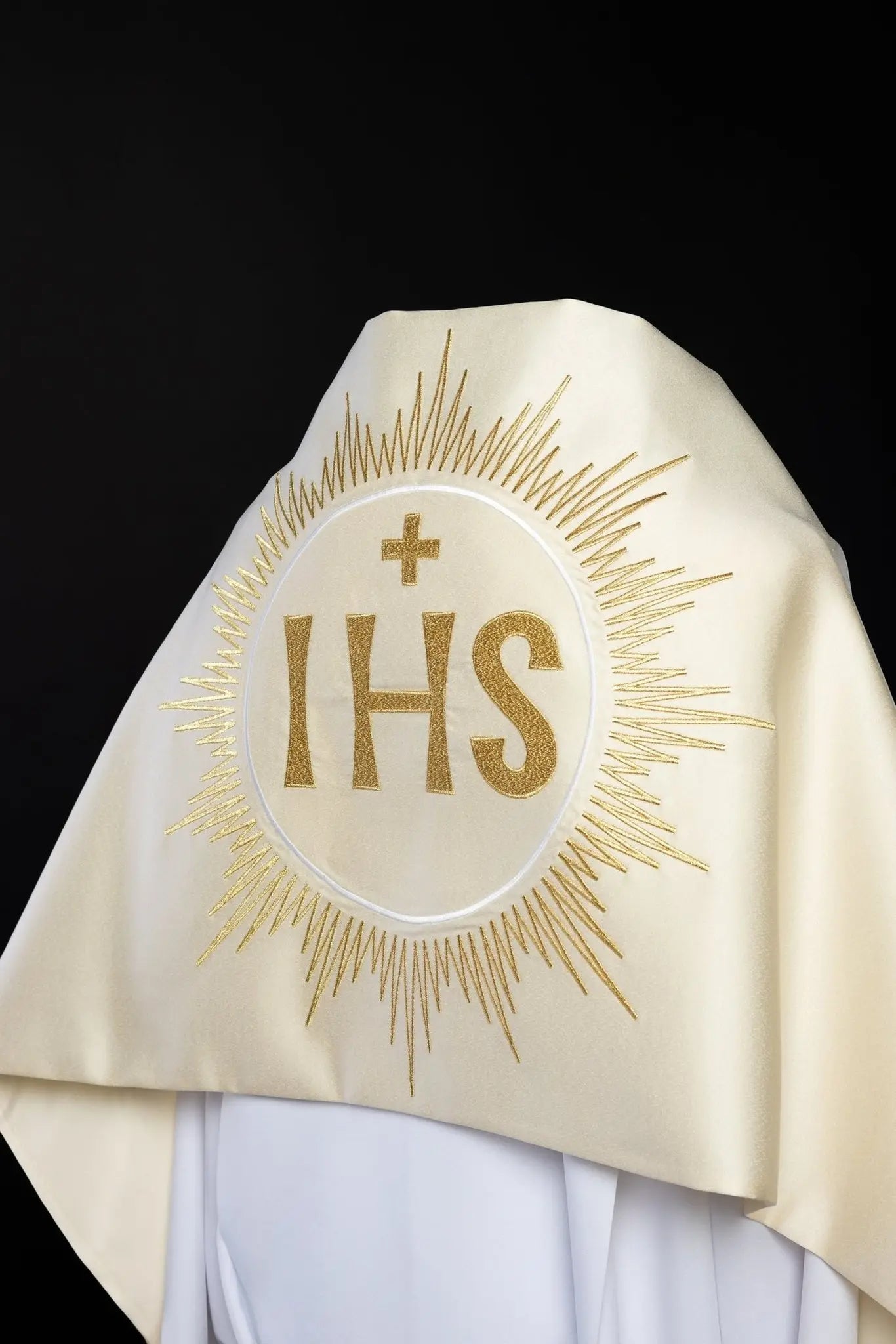
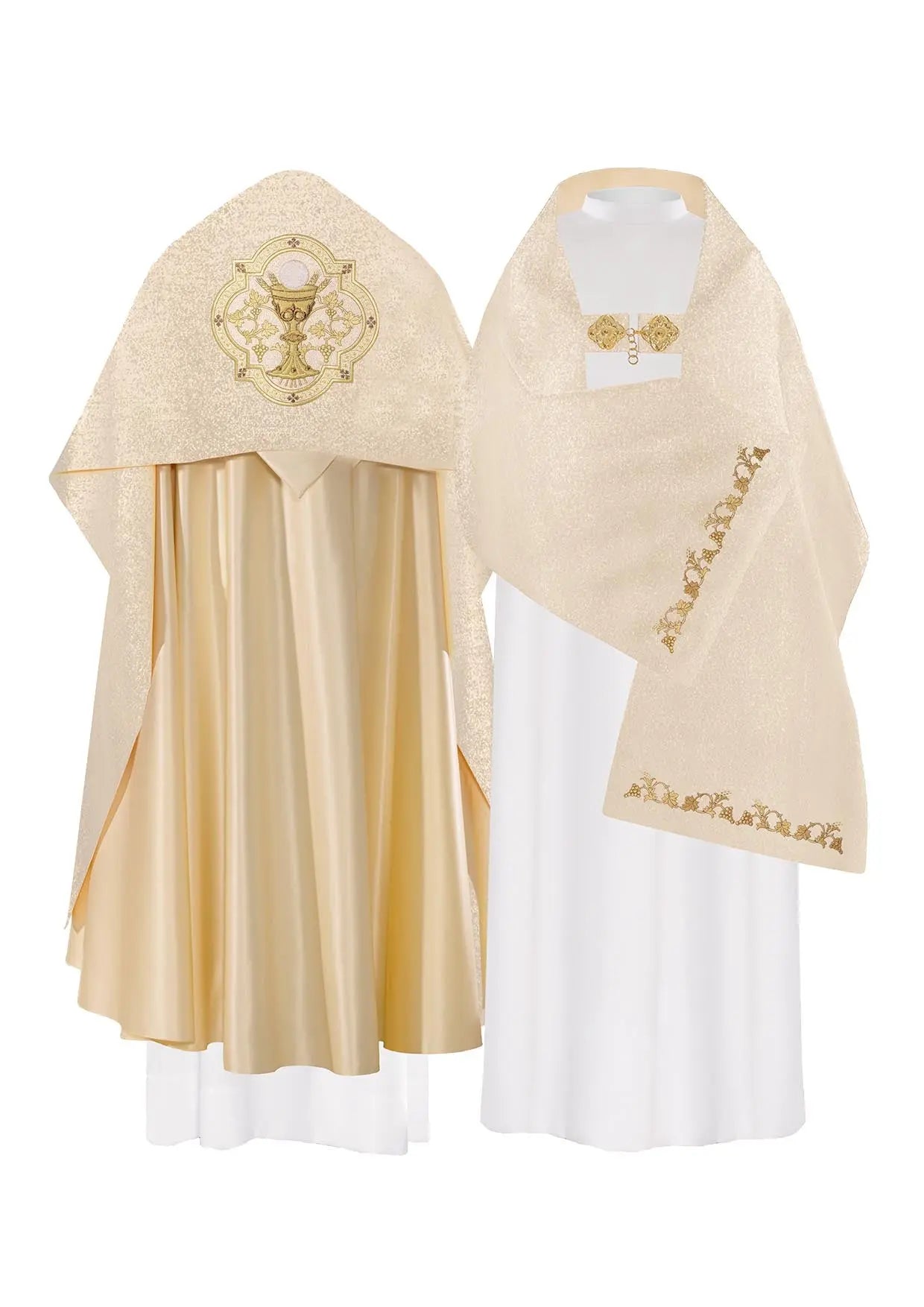
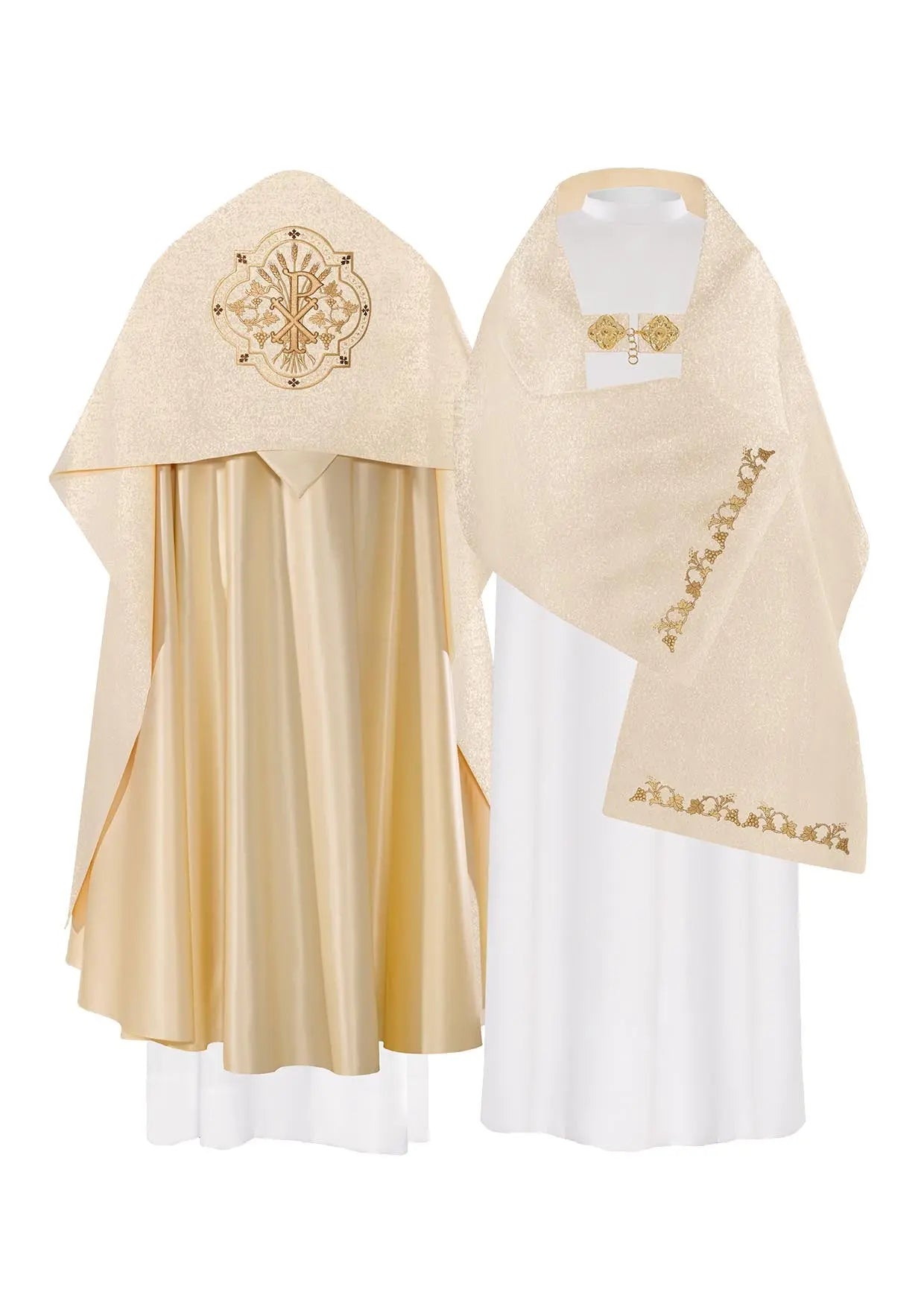
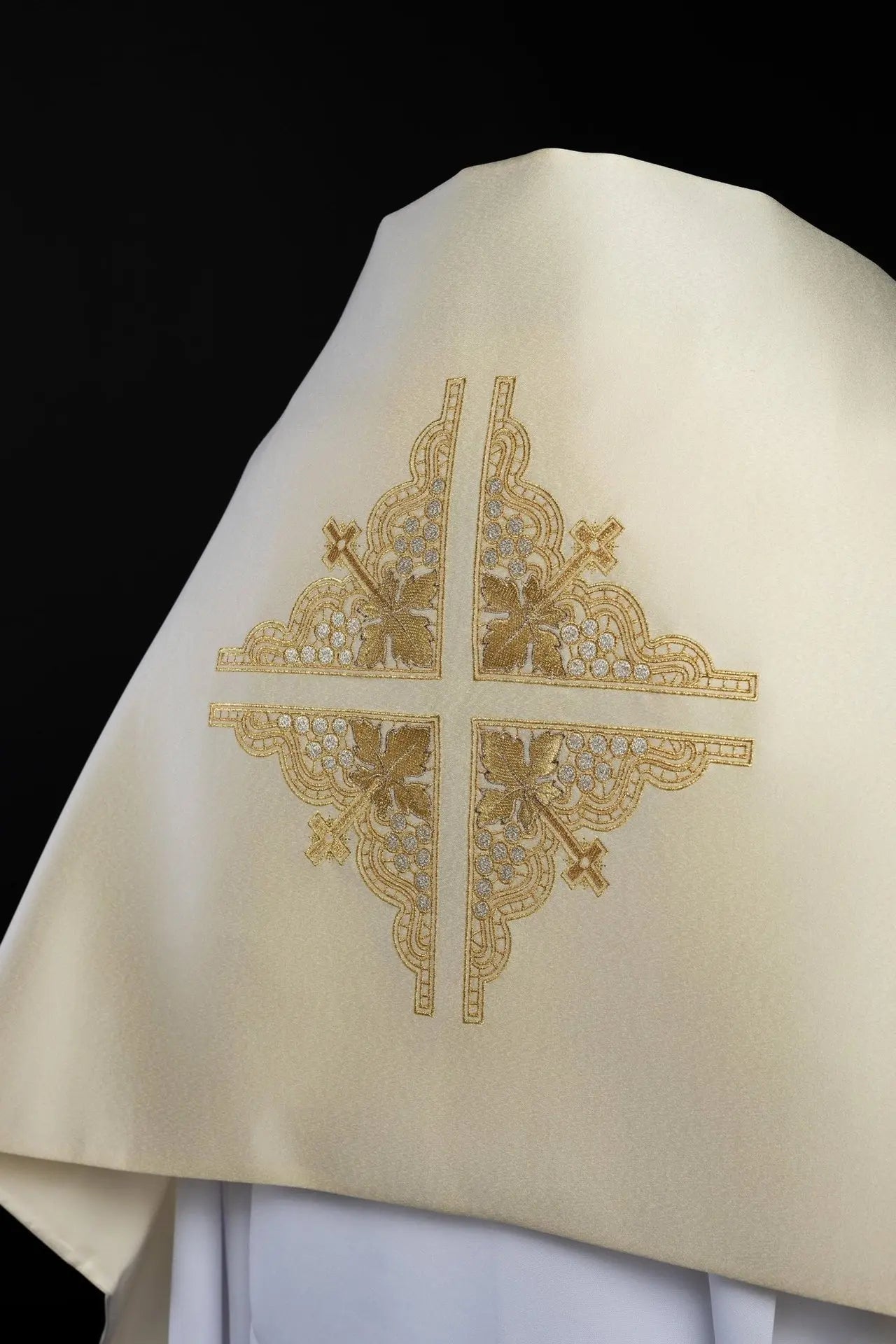
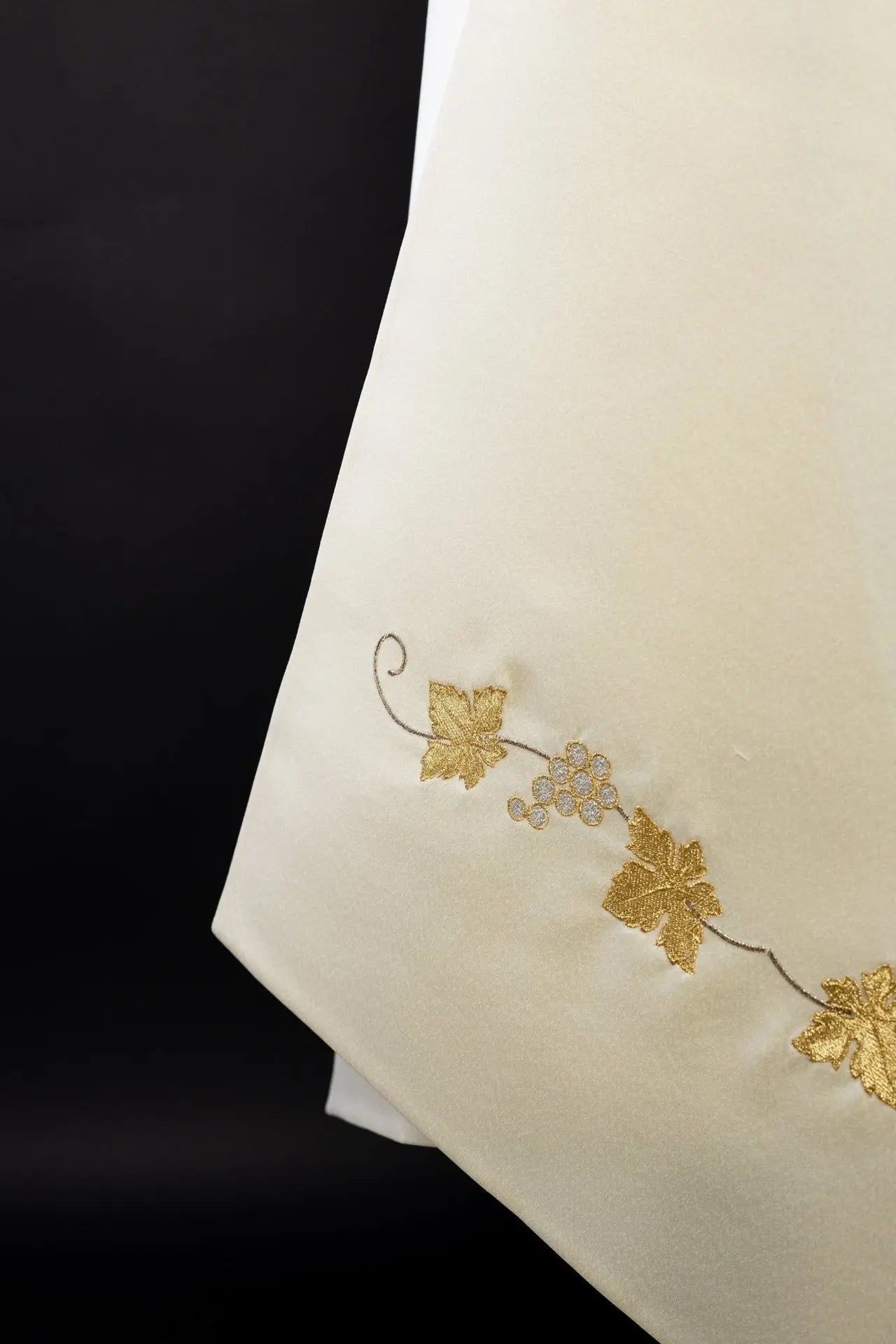
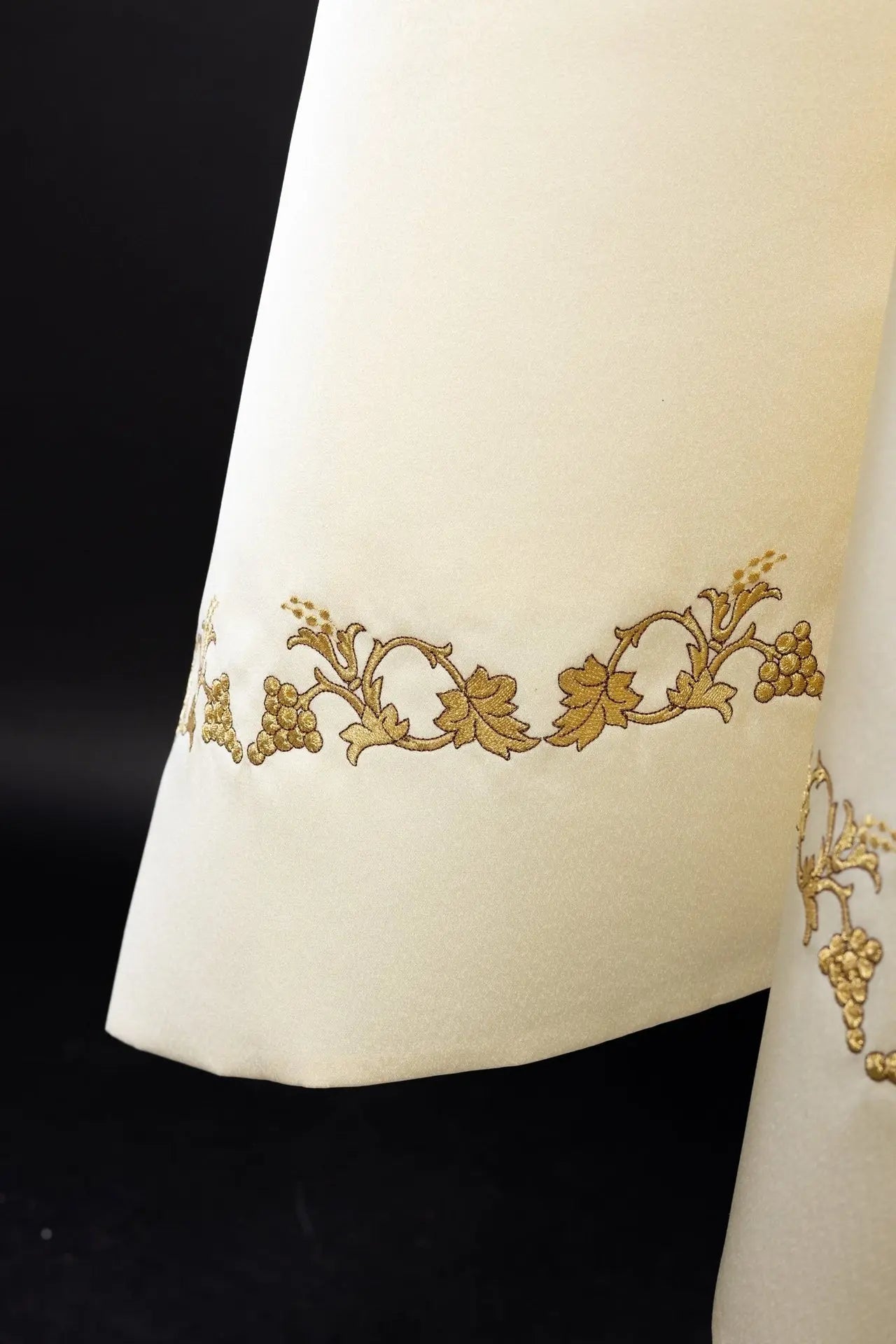
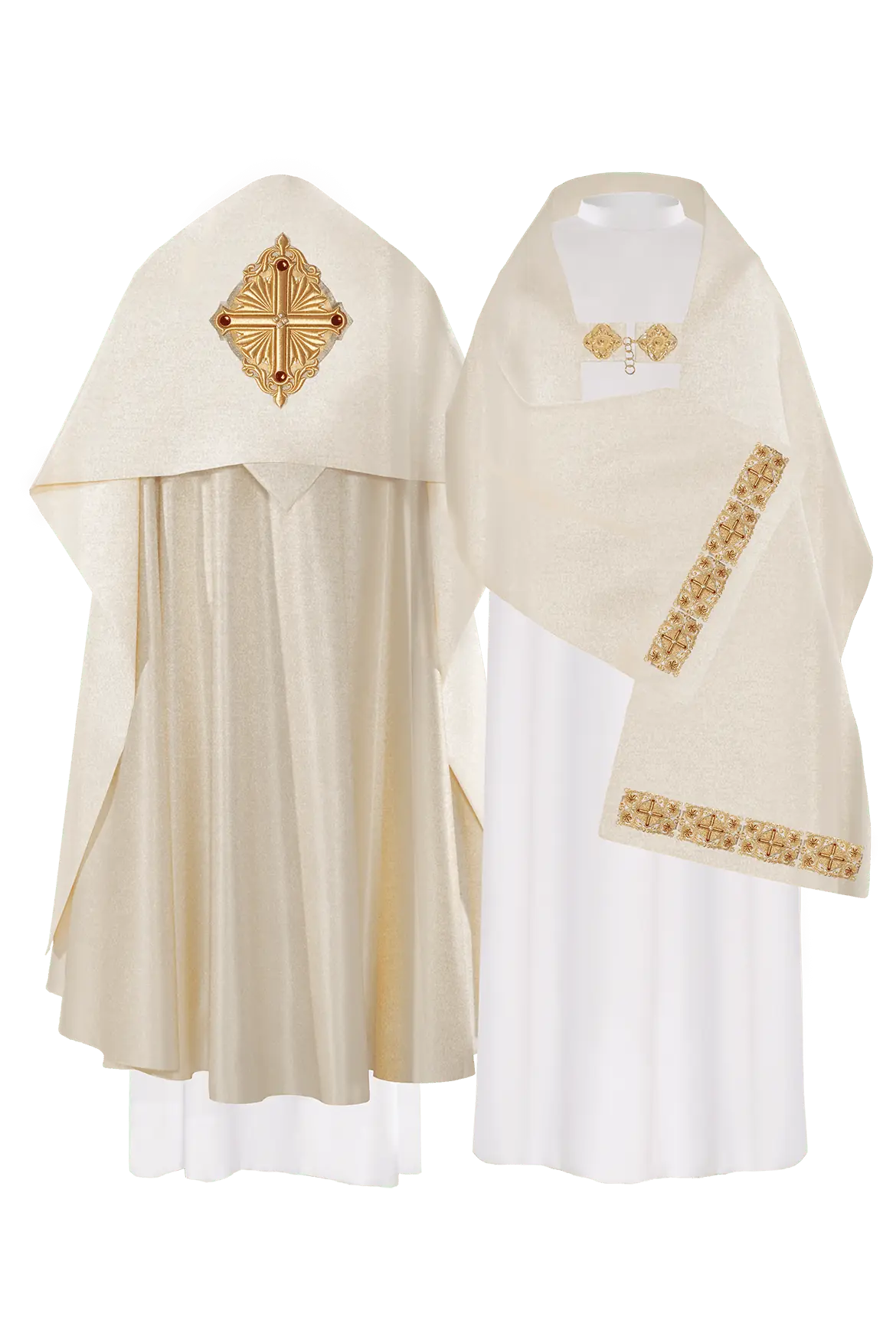
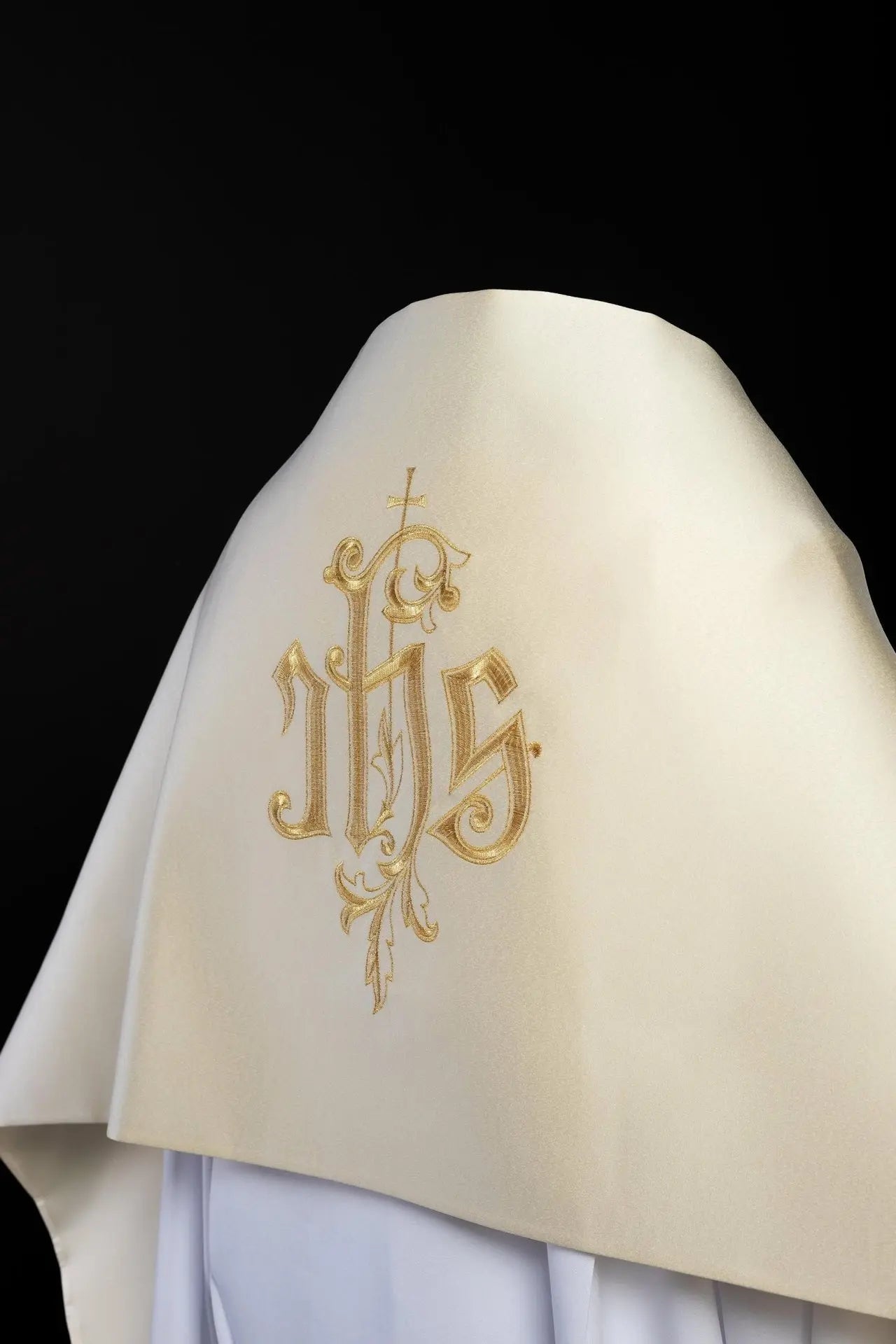
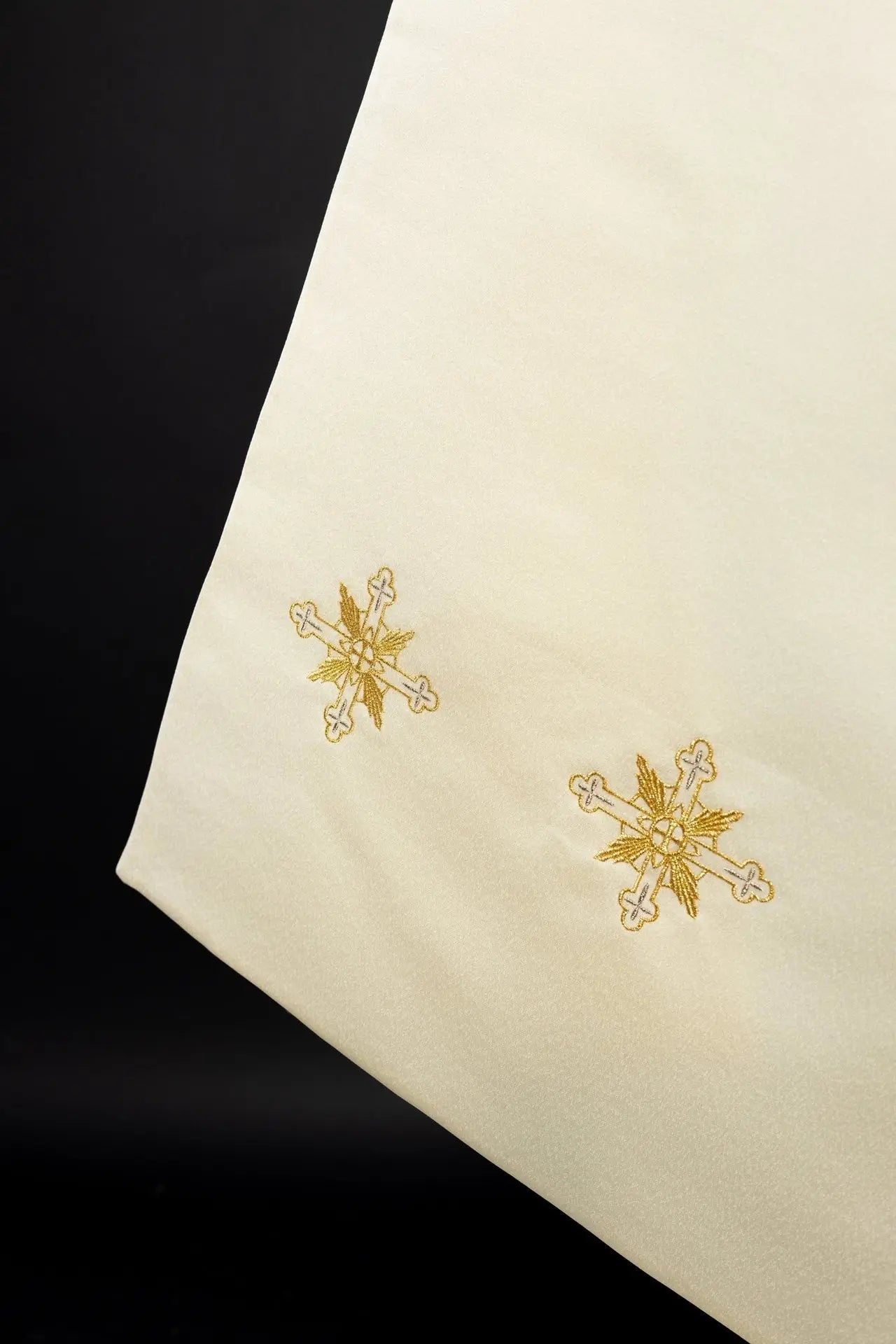
Many humeral veils are decorated with Eucharistic or Christological symbols, including the IHS monogram, a cross, the PX symbol, rays, vines, floral ornaments, and gold or silver threadwork. These motifs are not merely decorative. They help identify the veil with the mystery being celebrated and give the liturgy a clear visual focus. A gold embroidered veil can be especially fitting for solemn feasts, Eucharistic congresses, Corpus Christi, parish anniversaries, and occasions where a festive appearance is desired.
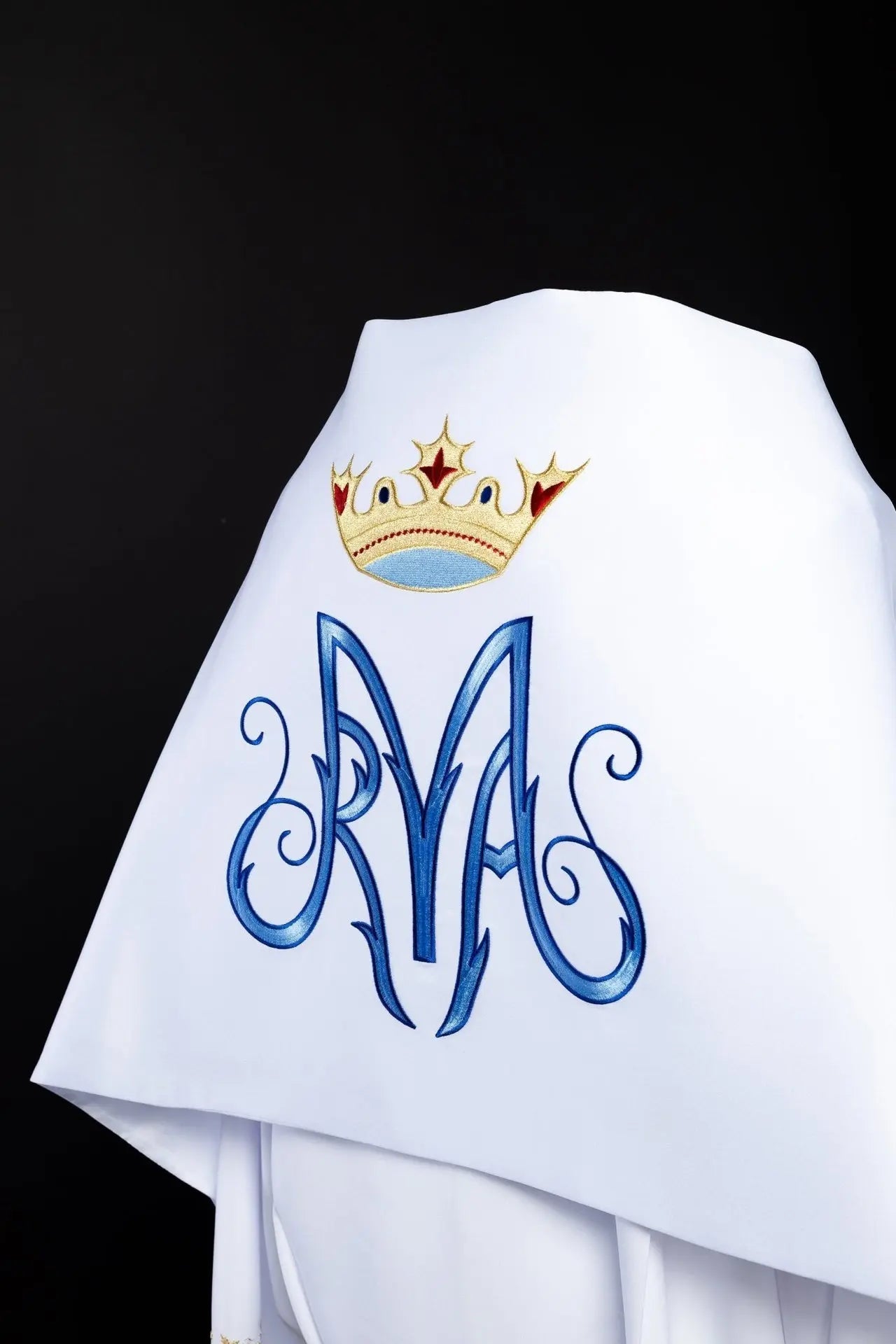
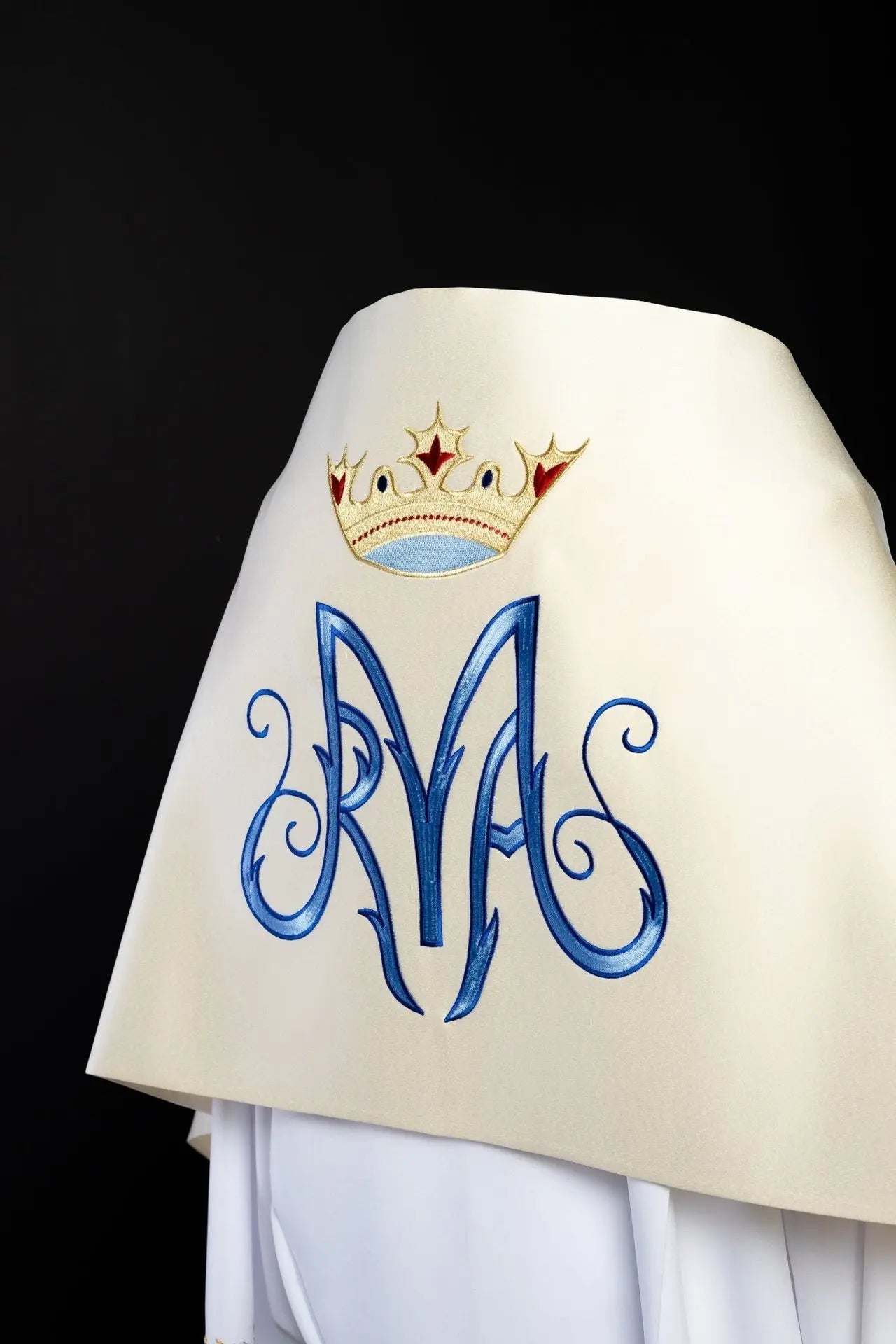
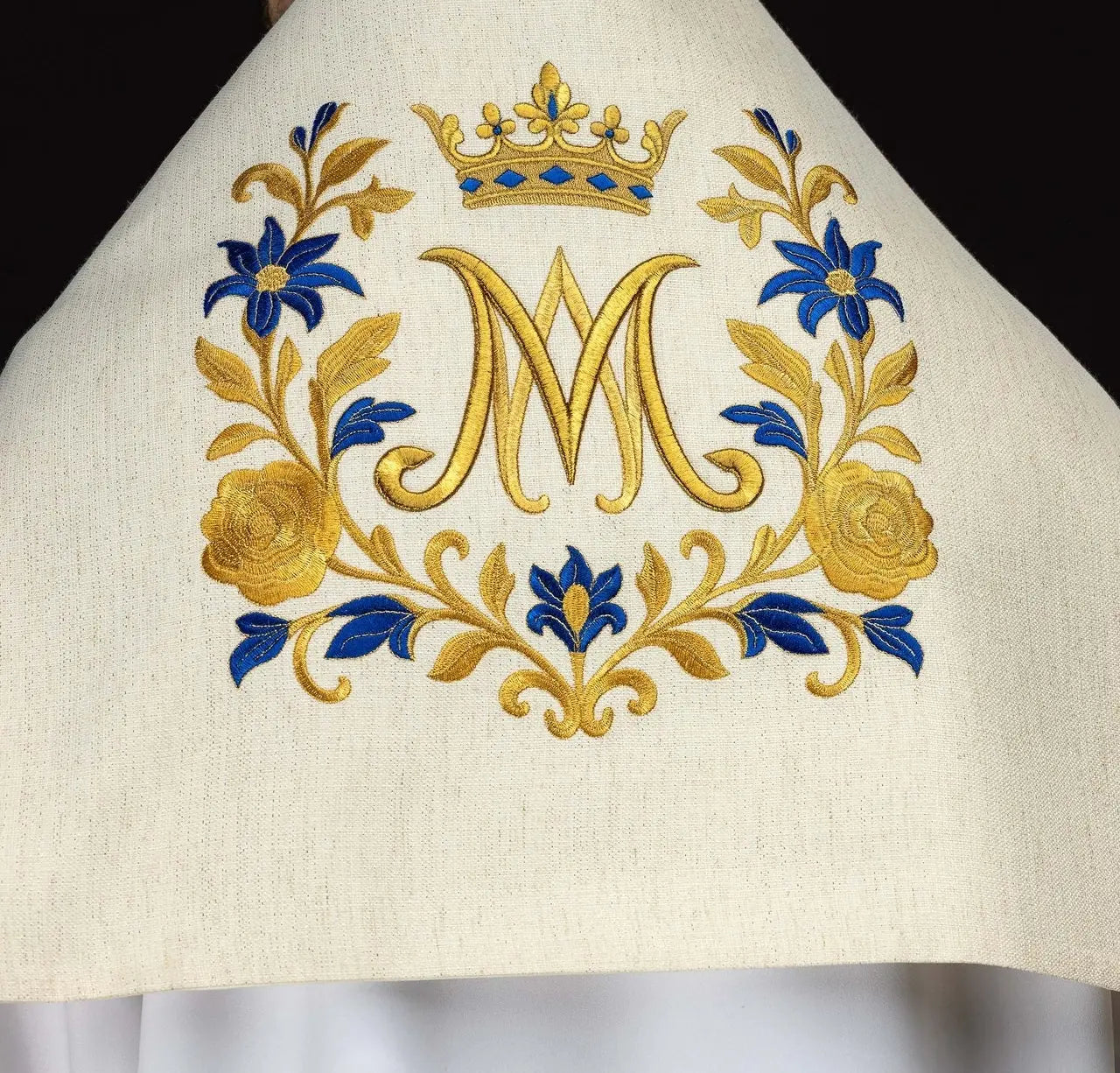
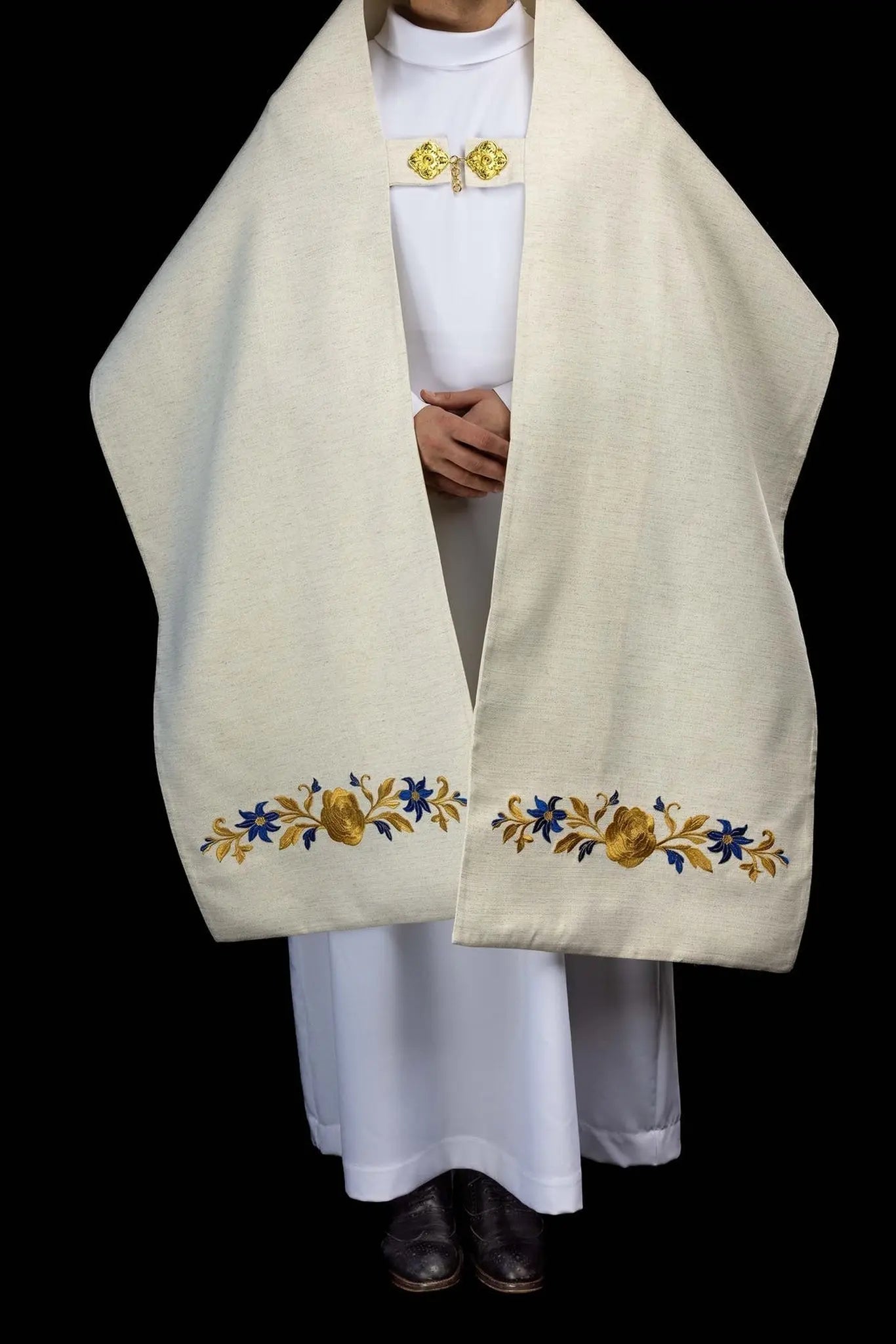
Marian humeral veils, including white or ecru designs with Marian embroidery, are often chosen for churches dedicated to the Blessed Virgin Mary, Marian months, pilgrimages, rosary services with Eucharistic adoration, or feast days where Marian devotion accompanies the liturgical setting. For related vestments and textiles with Marian symbolism, you may also explore the Blessed Virgin Mary collection.
Ecru and white veils offer a refined, classic appearance and are especially practical because they harmonize with many sanctuaries and with several liturgical settings. Gold veils create a more festive tone and pair naturally with solemn Eucharistic worship. Embroidered cross motifs are versatile and can be used throughout the year, while Heart of Jesus designs are especially meaningful for churches, chapels, and communities with a devotion to the Sacred Heart.
How to Choose the Right Humeral Veil
When selecting a humeral veil, first consider its main purpose. A parish that frequently celebrates Benediction may prefer a durable, dignified veil that is easy to coordinate with regular vestments. A church preparing for Corpus Christi or a major Eucharistic procession may choose a richer gold or ecru design with more visible embroidery. A chapel dedicated to adoration may favor symbolism centered on the Eucharist, the cross, IHS, or the Heart of Jesus.
-
For Benediction: choose a veil with dignified Eucharistic symbolism, especially IHS, cross, rays, or gold embroidery.
-
For Corpus Christi: consider a more solemn design that coordinates with the monstrance, canopy, cope, and other processional elements.
-
For Marian churches and feasts: select a Marian motif in white or ecru, especially when it will be used with Marian vestments or altar textiles.
-
For frequent parish use: choose a balanced design with durable fabric, careful finishing, and embroidery that remains elegant without being overly heavy.
-
For special celebrations: a richly embroidered gold veil can create a strong ceremonial focus and pair well with festive vestments.
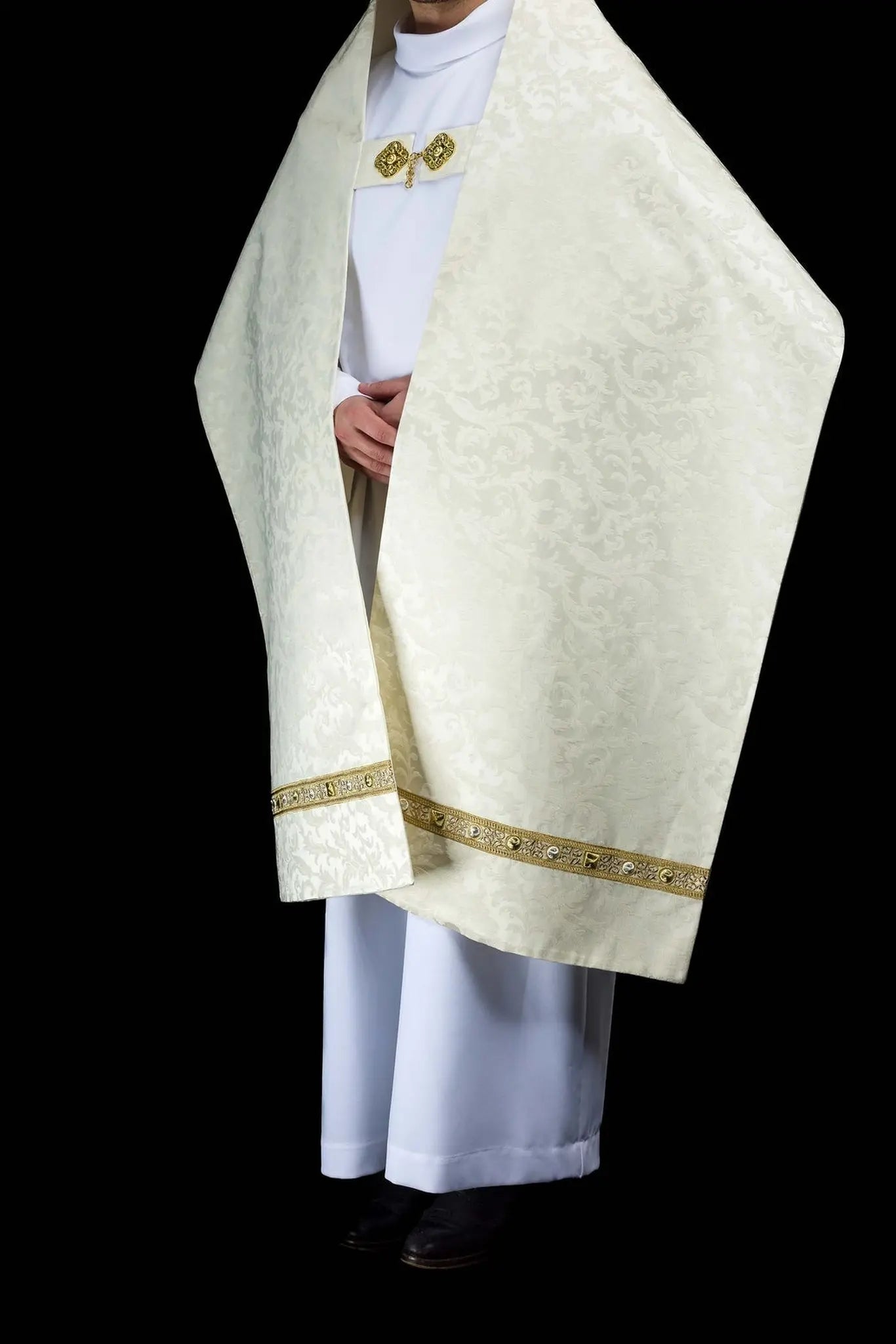
It is also worth considering how the humeral veil will coordinate with other liturgical vestments. During Benediction the celebrant often wears a stole and cope, so the veil should harmonize with the set rather than compete with it. For a complete solemn appearance, many communities pair a humeral veil with copes in matching or complementary colors. When the same church also uses matching altar textiles, chalice accessories, or processional items, the sanctuary gains a coherent and reverent visual language.
Humeral Veils, Chalice Veils, and Ciborium Veils
A humeral veil should not be confused with a chalice veil or ciborium veil. Although all three are liturgical textiles, their functions are different. The humeral veil is worn by the minister over the shoulders and hands during certain rites. A chalice veil covers the chalice before and after the preparation of the gifts, while a ciborium veil may cover a ciborium used for the Blessed Sacrament. For altar and vessel coverings, see chalice veils and ciborium veils.
This distinction matters when preparing a sacristy inventory. A parish may need all three types of veils, but they are not interchangeable. The humeral veil must have the right scale, drape, and form for being worn across the shoulders. It must also allow the minister to hold the monstrance or sacred vessel securely while keeping the ceremonial gesture clear and dignified. Chalice and ciborium veils, by contrast, are sized and shaped for covering vessels, not for being worn.
Materials, Embroidery, and Craftsmanship
A well-made humeral veil should combine beauty with practical liturgical use. It needs enough structure to lie properly on the shoulders, enough softness to drape naturally, and careful finishing so that the fabric does not distract from the rite. Embroidery should remain clear from a distance, especially during processions and Benediction, while also showing fine detail when seen near the altar.
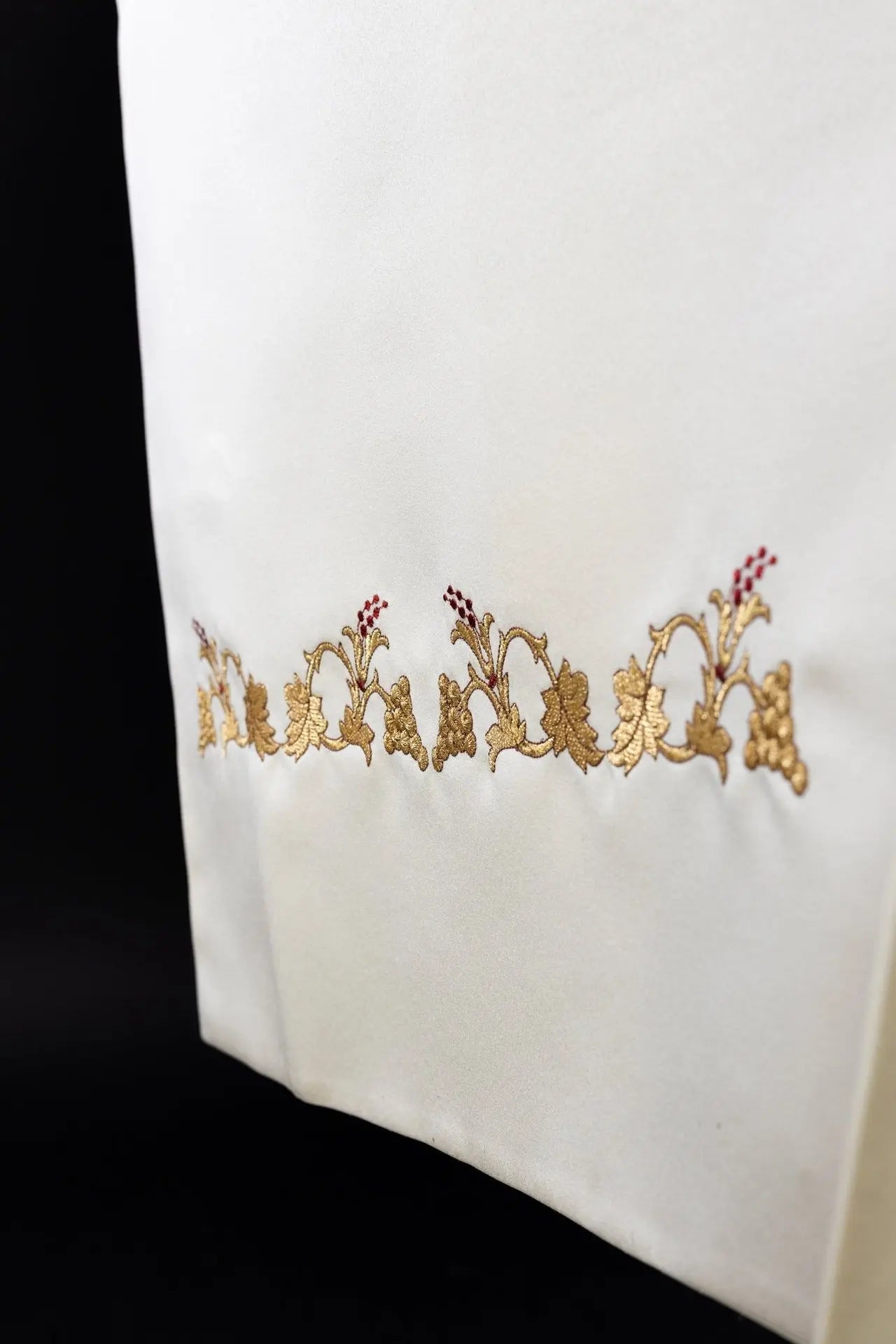
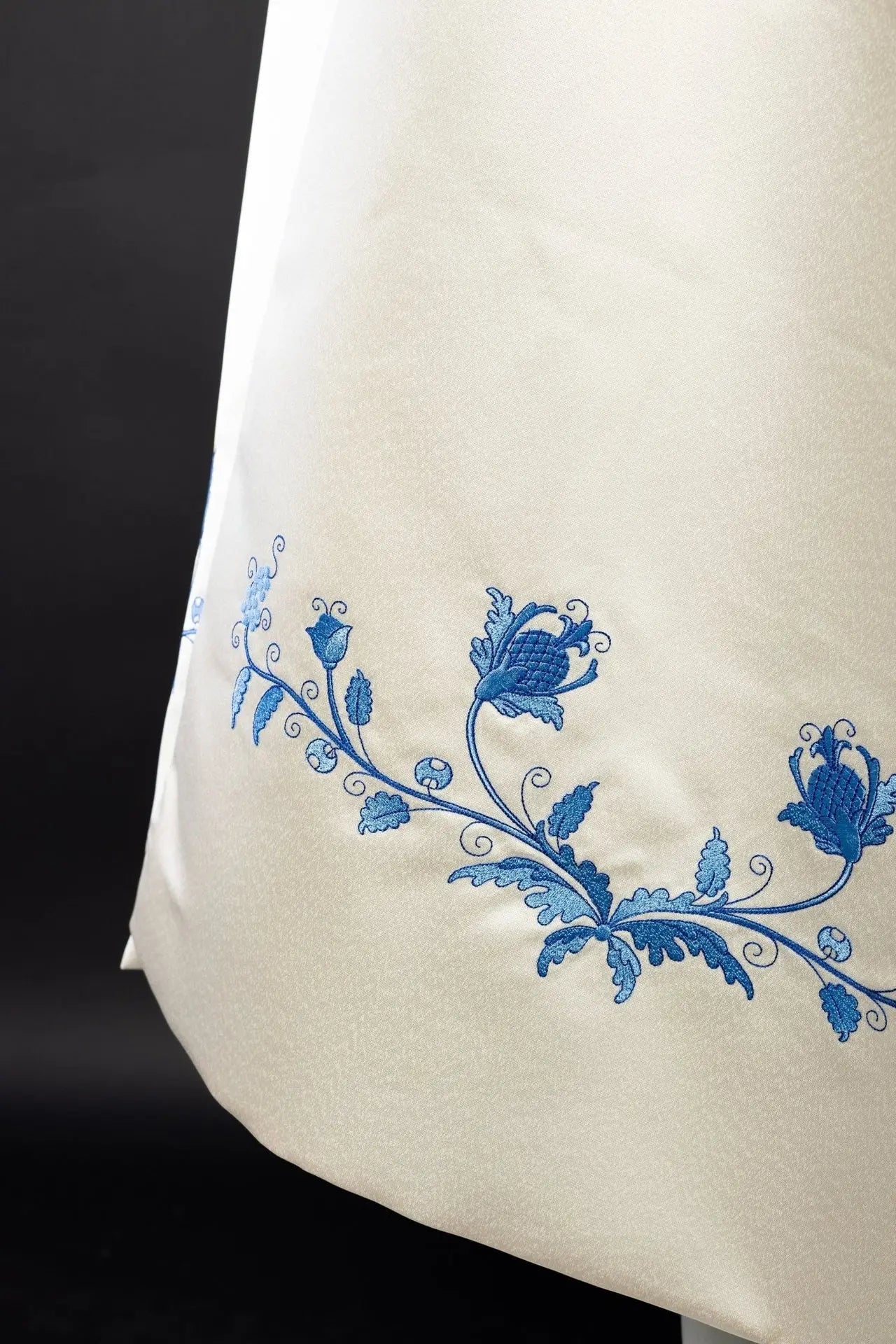
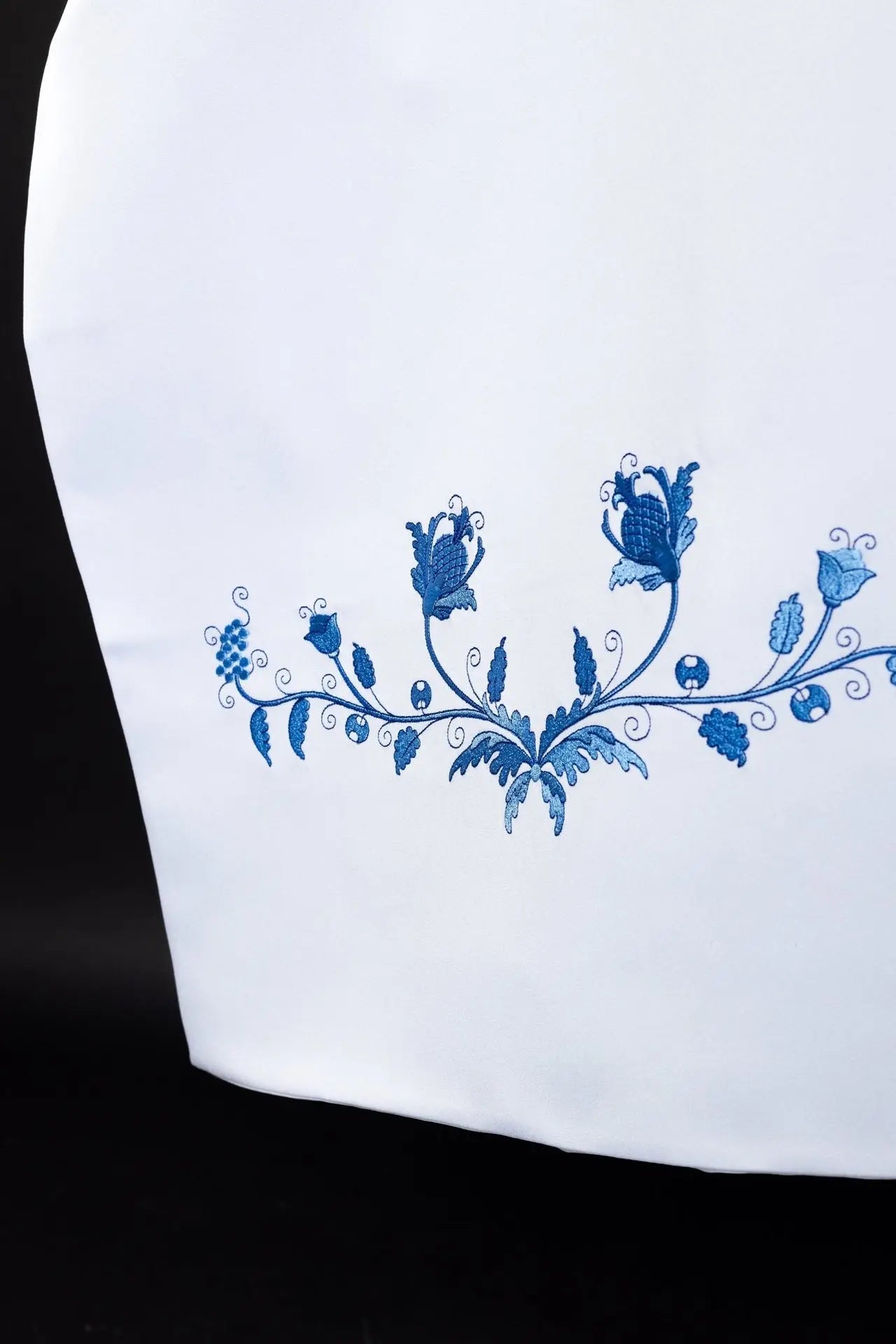
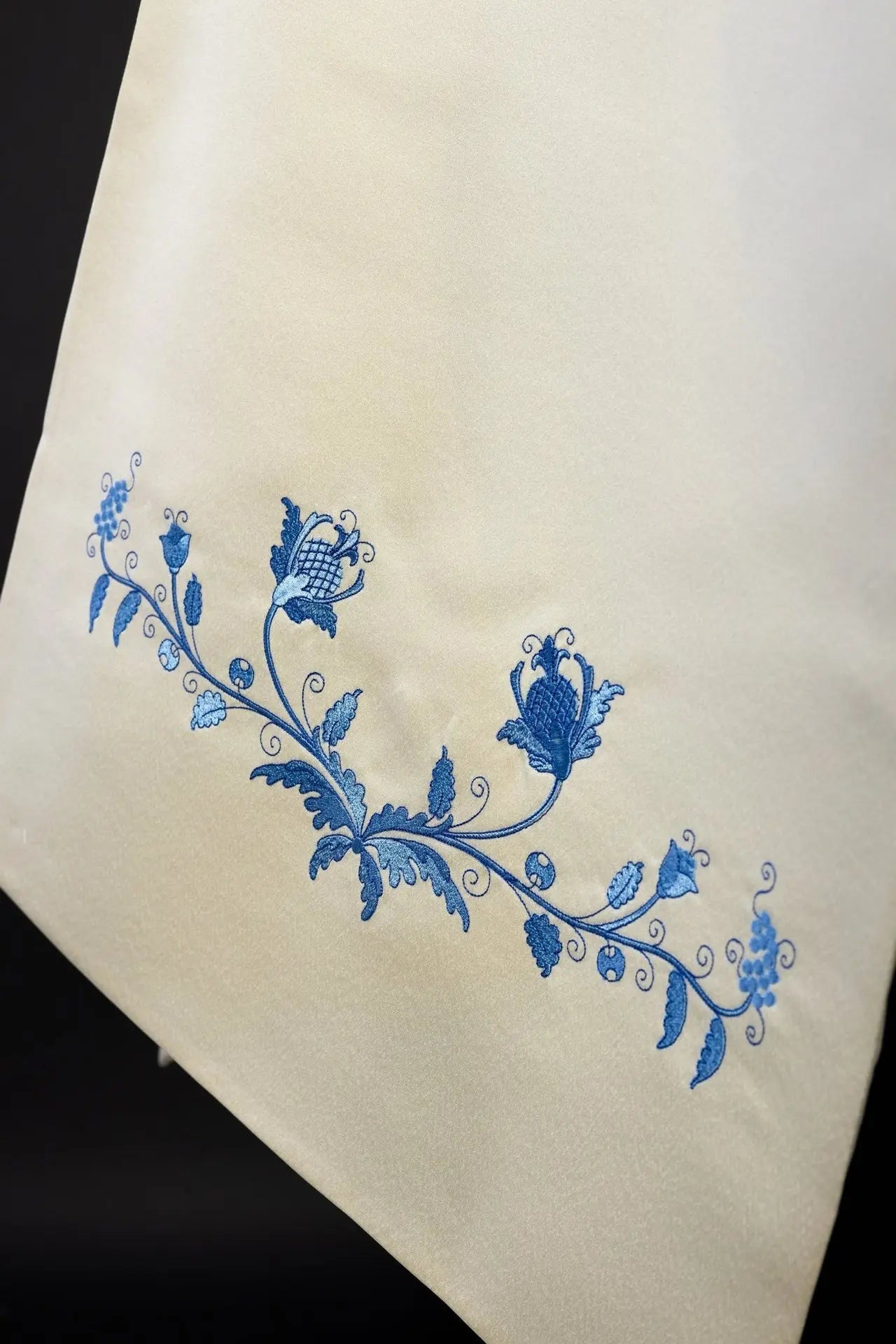
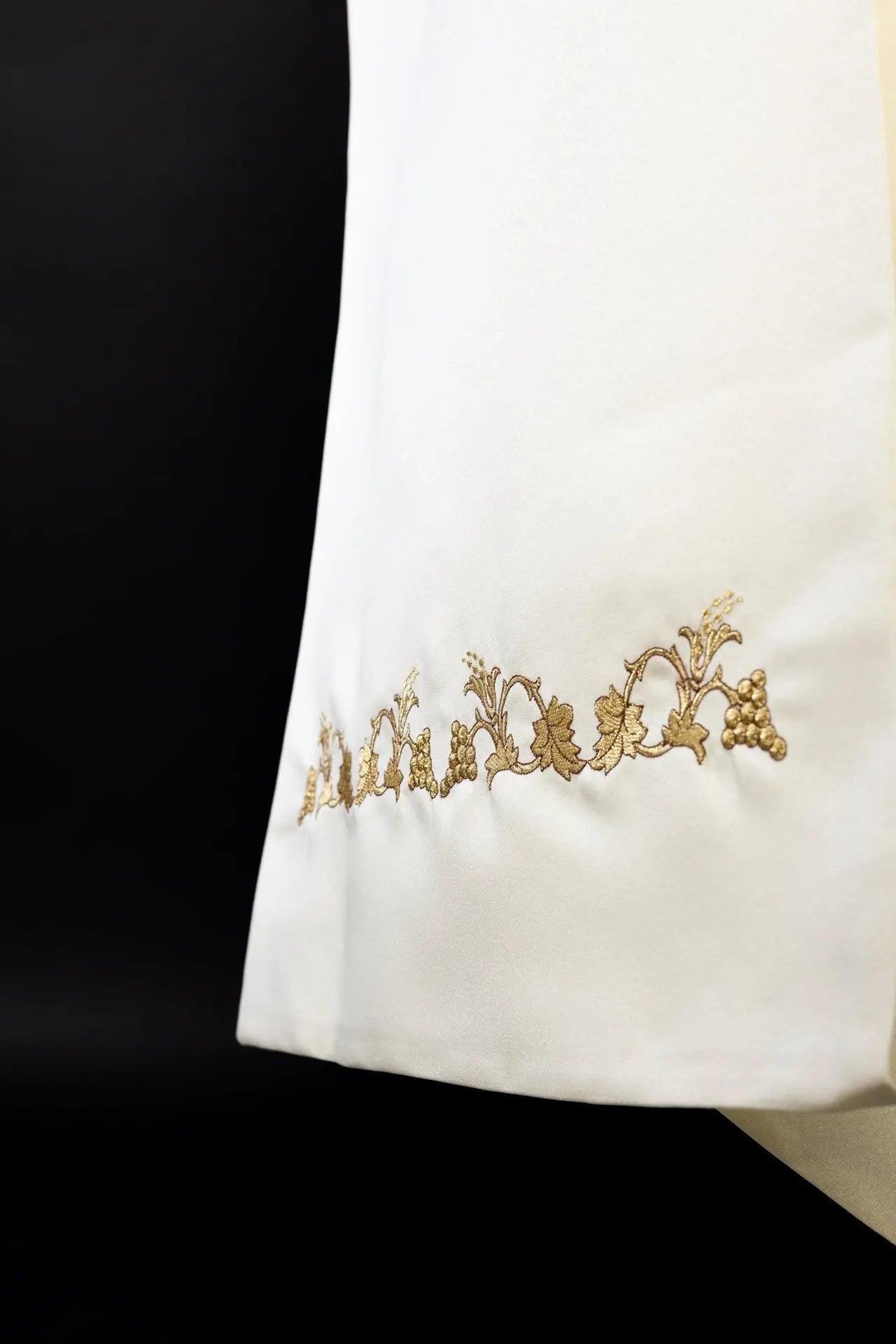
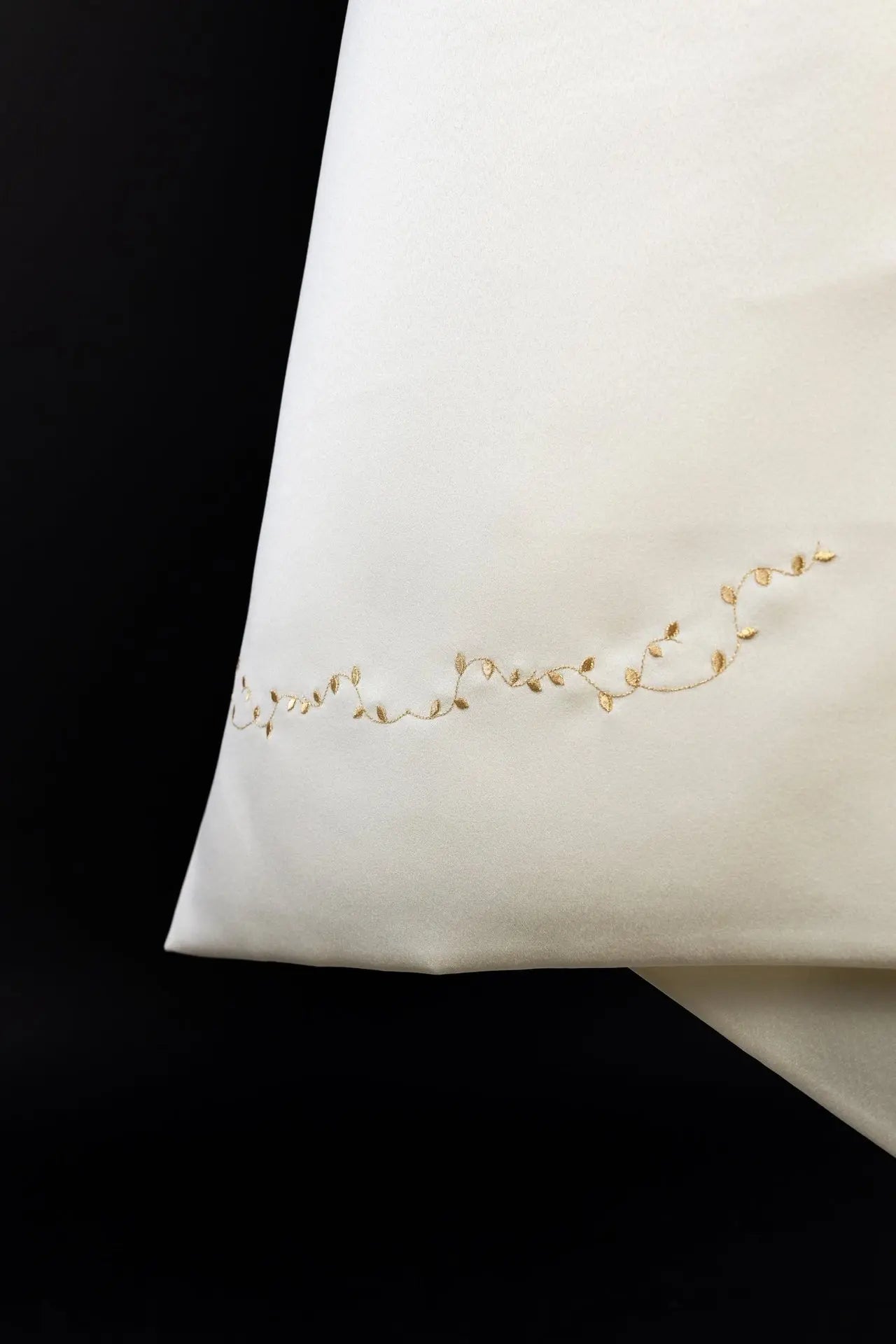
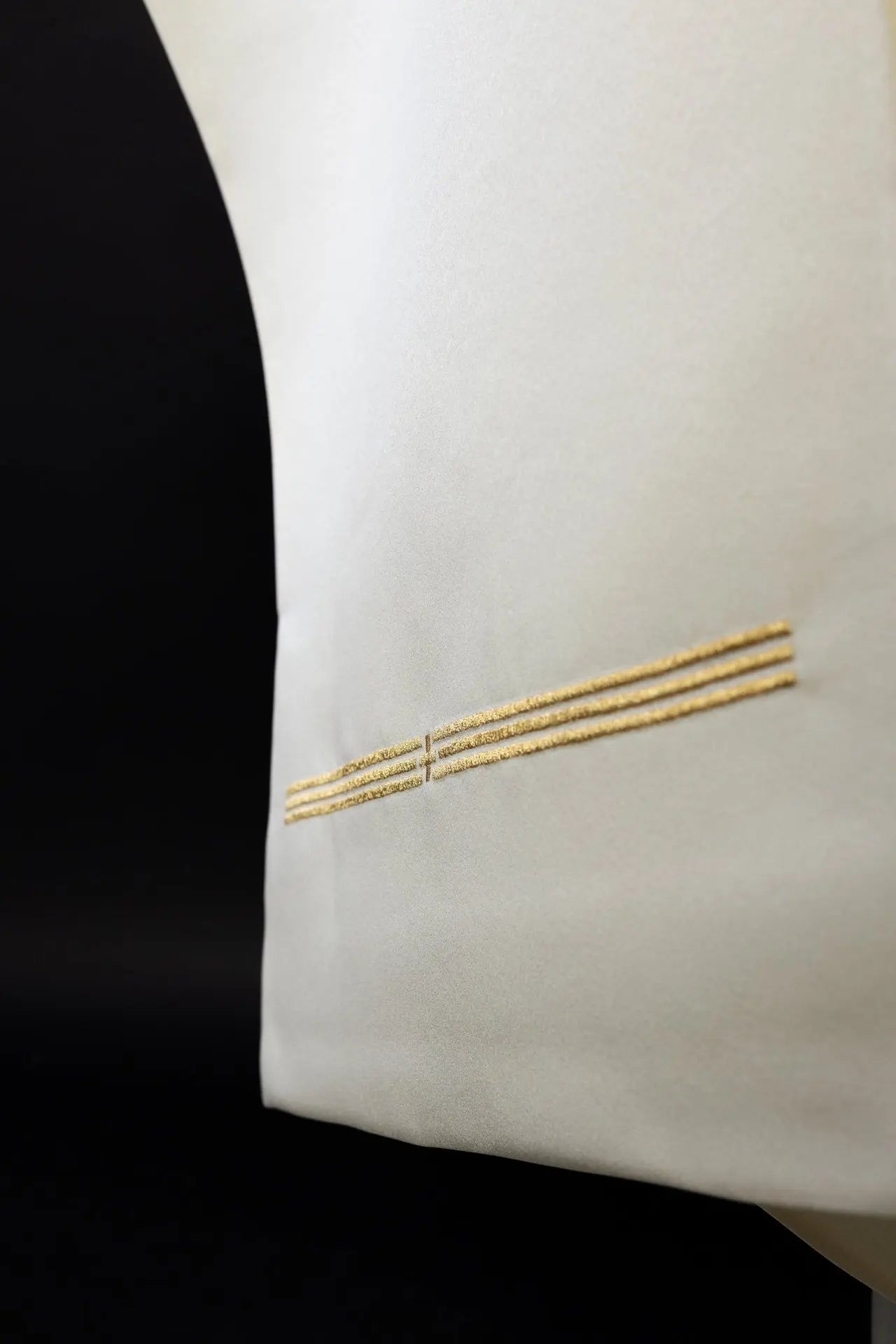
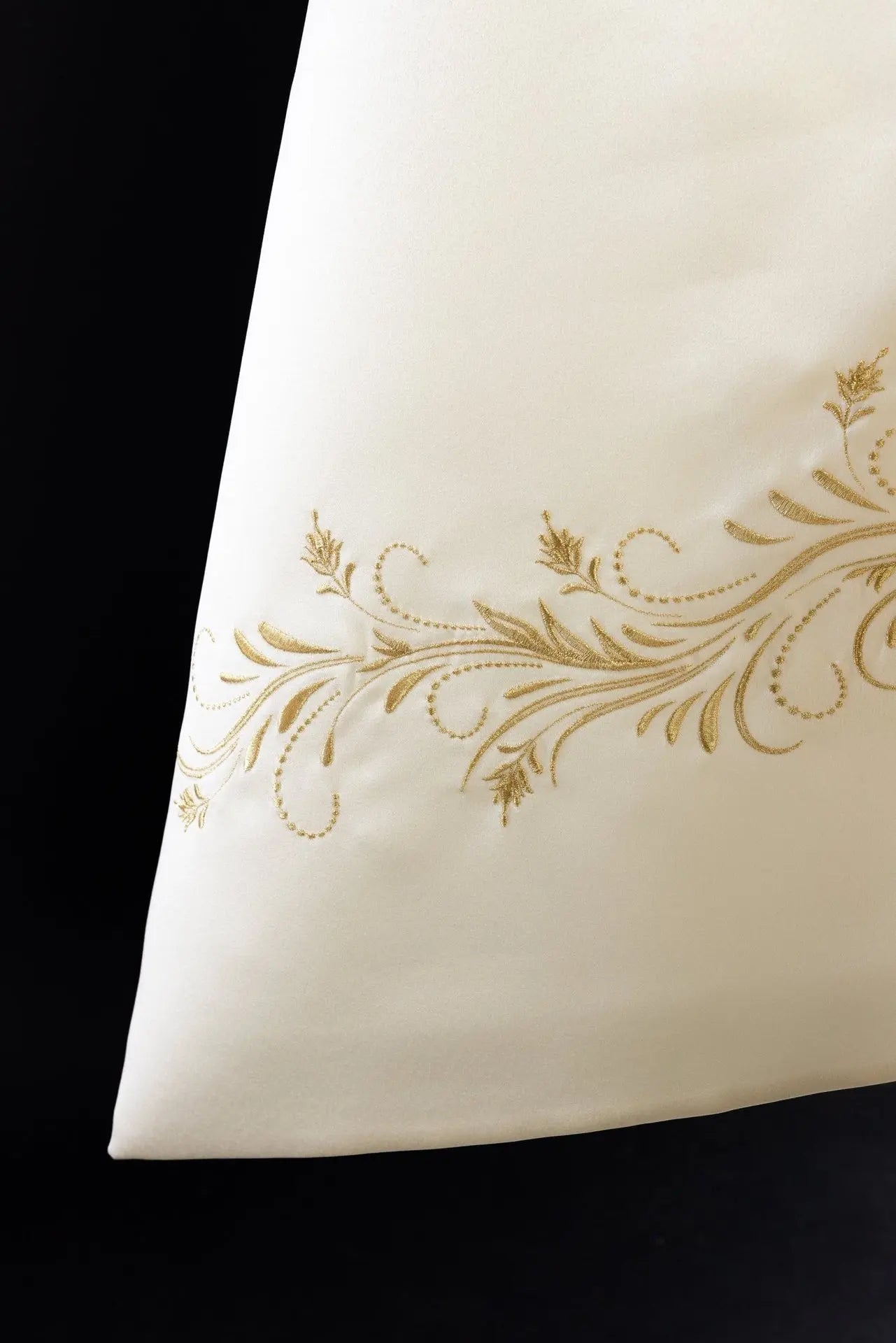
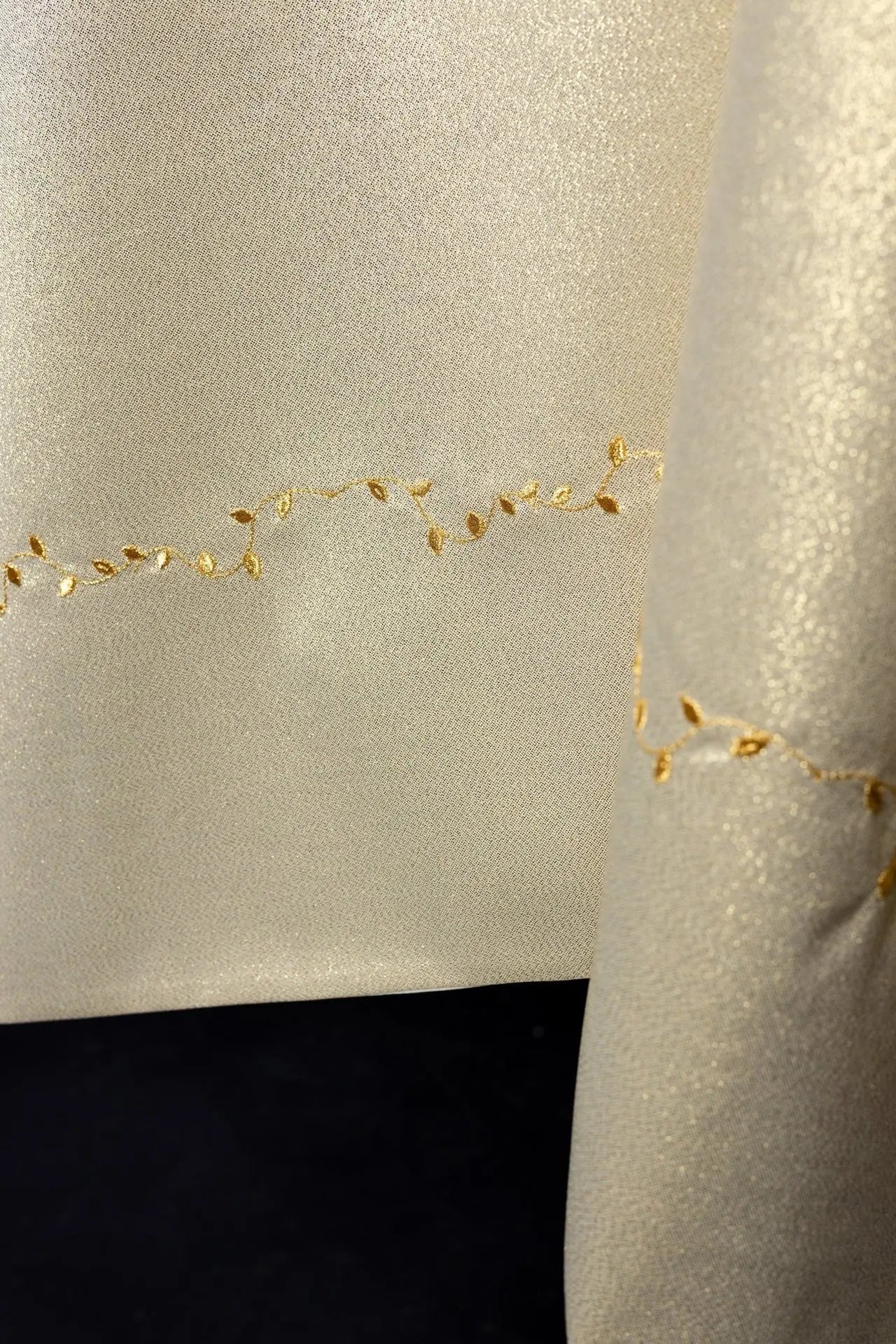
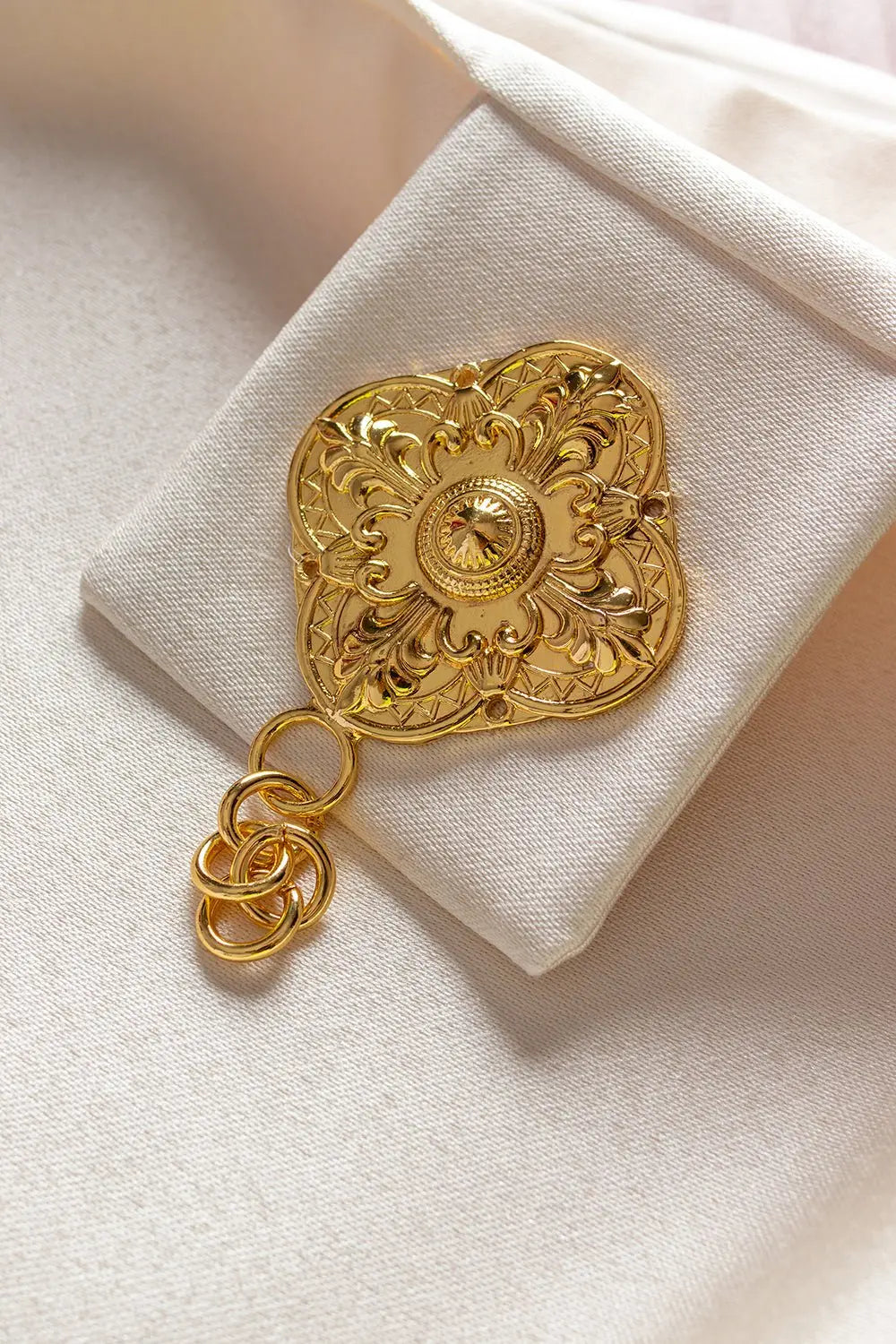
The collection includes designs that use gold embroidery, ecru fabric, Marian imagery, cross motifs, IHS symbols, PX symbolism, and decorative borders. These elements support both devotional meaning and visual harmony. A richly embroidered center panel can frame the action of blessing with the monstrance, while ornamental borders help the veil remain balanced when spread over the shoulders. For churches that prefer understated sacred textiles, simpler embroidered designs offer dignity without excessive ornament.
Liturgical Seasons and Occasions
White, ecru, and gold are especially common for Eucharistic celebrations because they express solemnity, joy, and honor. They are suitable for Benediction, Eucharistic adoration, Corpus Christi, many feasts of the Lord, and festive parish celebrations. For the Feast of Corpus Christi and related Eucharistic processions, see the Corpus Christi collection for complementary items and seasonal context.
Although humeral veils are most strongly associated with Eucharistic worship, the design may also reflect a particular devotion or church dedication. A Sacred Heart motif can be chosen for parishes with that title or for June devotions. Marian embroidery can suit shrines, chapels, and parish communities with a strong Marian identity. Cross embroidery remains universal and appropriate throughout the year, especially when the parish wants one reliable veil for many ceremonies.
Care and Sacristy Storage
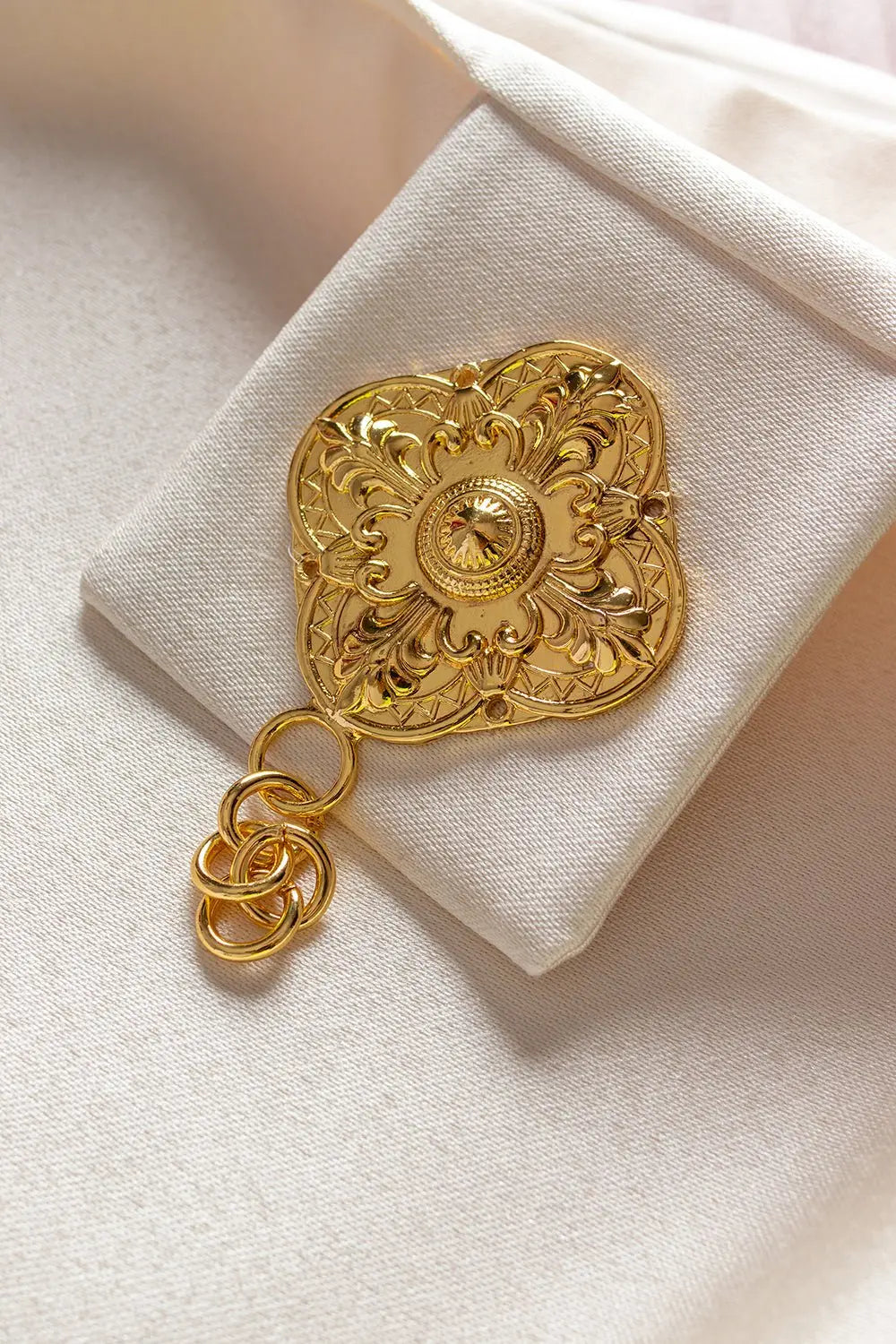
Because humeral veils often include embroidery, metallic threads, or decorative trim, they should be handled with care after each liturgy. The veil should be allowed to rest flat or hang properly before storage, especially after outdoor processions or long ceremonies. Avoid folding heavy embroidery sharply, as repeated creasing can affect both the fabric and the ornament. A breathable garment cover or dedicated sacristy storage space helps protect the veil from dust, moisture, and accidental damage.
Cleaning should always follow the care instructions for the specific fabric and decoration. In most cases, professional cleaning is the safest option for embroidered liturgical textiles. Regular inspection is also useful: check borders, clasps, lining, embroidery, and areas that rest over the hands. Good sacristy care allows the humeral veil to retain its dignity and continue serving the parish for many years.
Frequently Asked Questions (FAQ)
When is a humeral veil required?
It is most closely associated with Benediction of the Blessed Sacrament, when the priest or bishop blesses the faithful while holding the monstrance. It may also be used in solemn processions with the Blessed Sacrament or in other rites where a sacred vessel or relic is carried with special reverence.
What color humeral veil should a parish choose?
White, ecru, and gold are the most versatile choices for Eucharistic worship and solemn feasts. Gold is often selected for major celebrations, while white or ecru works well for regular Benediction, adoration chapels, Marian settings, and churches that prefer a classic appearance.
Is a humeral veil the same as a chalice veil?
No. A humeral veil is worn over the shoulders and hands by the minister. A chalice veil covers the chalice on the altar or credence table. They belong to related categories of liturgical textiles, but their size, form, and liturgical function are different.
Can a humeral veil be used with a cope?
Yes. In solemn Benediction and processions, the humeral veil is commonly used together with a cope. Choosing complementary embroidery, fabric tone, and liturgical color helps the vestments appear unified during the rite.
Which motifs are most appropriate for Eucharistic worship?
IHS, cross, PX, rays, wheat, grapes, and Sacred Heart motifs are especially fitting because they direct attention to Christ and the Eucharistic mystery. Marian motifs may also be appropriate when the celebration takes place in a Marian church, shrine, or devotional context.