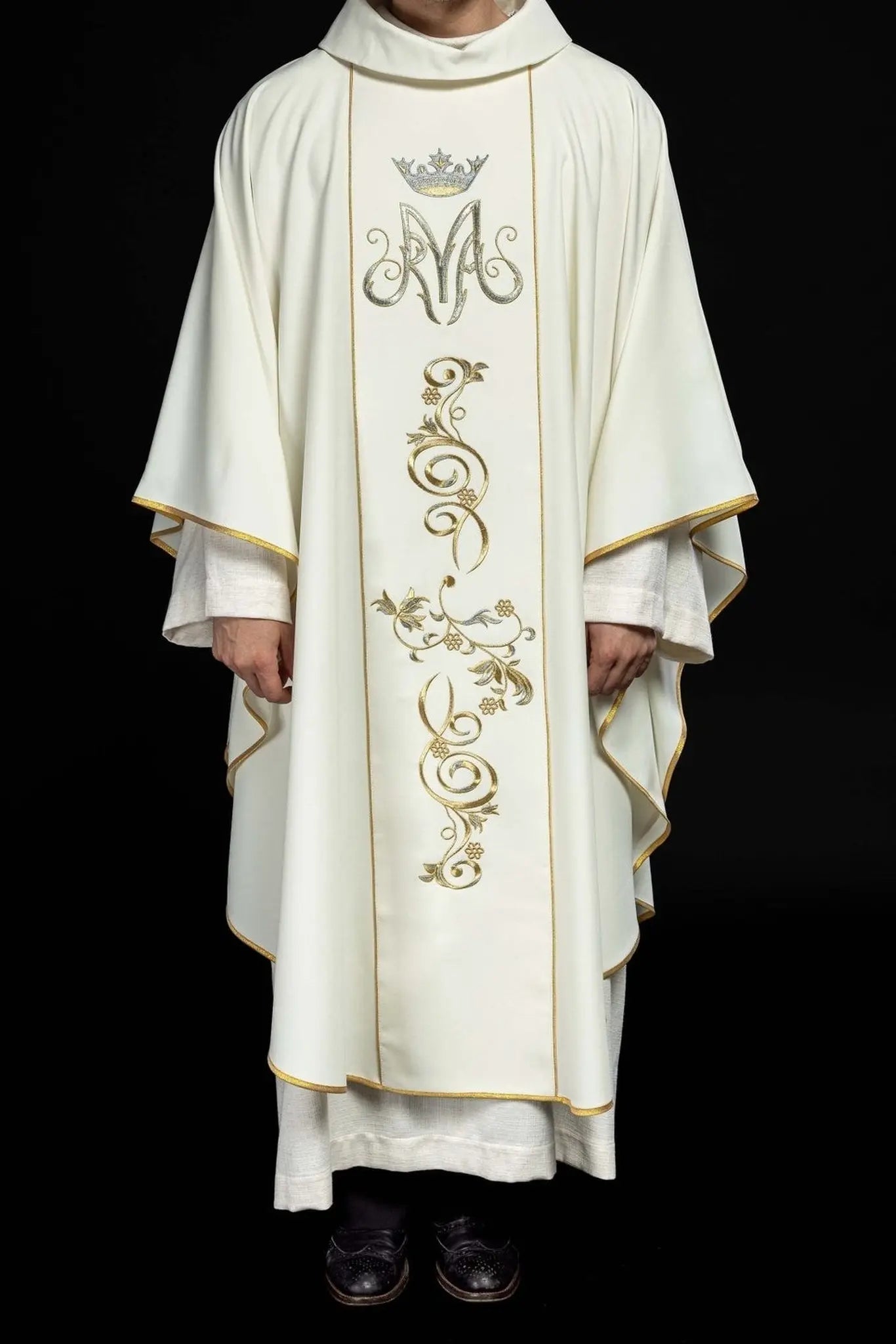
Marian Chasubles for Feasts of the Blessed Virgin Mary
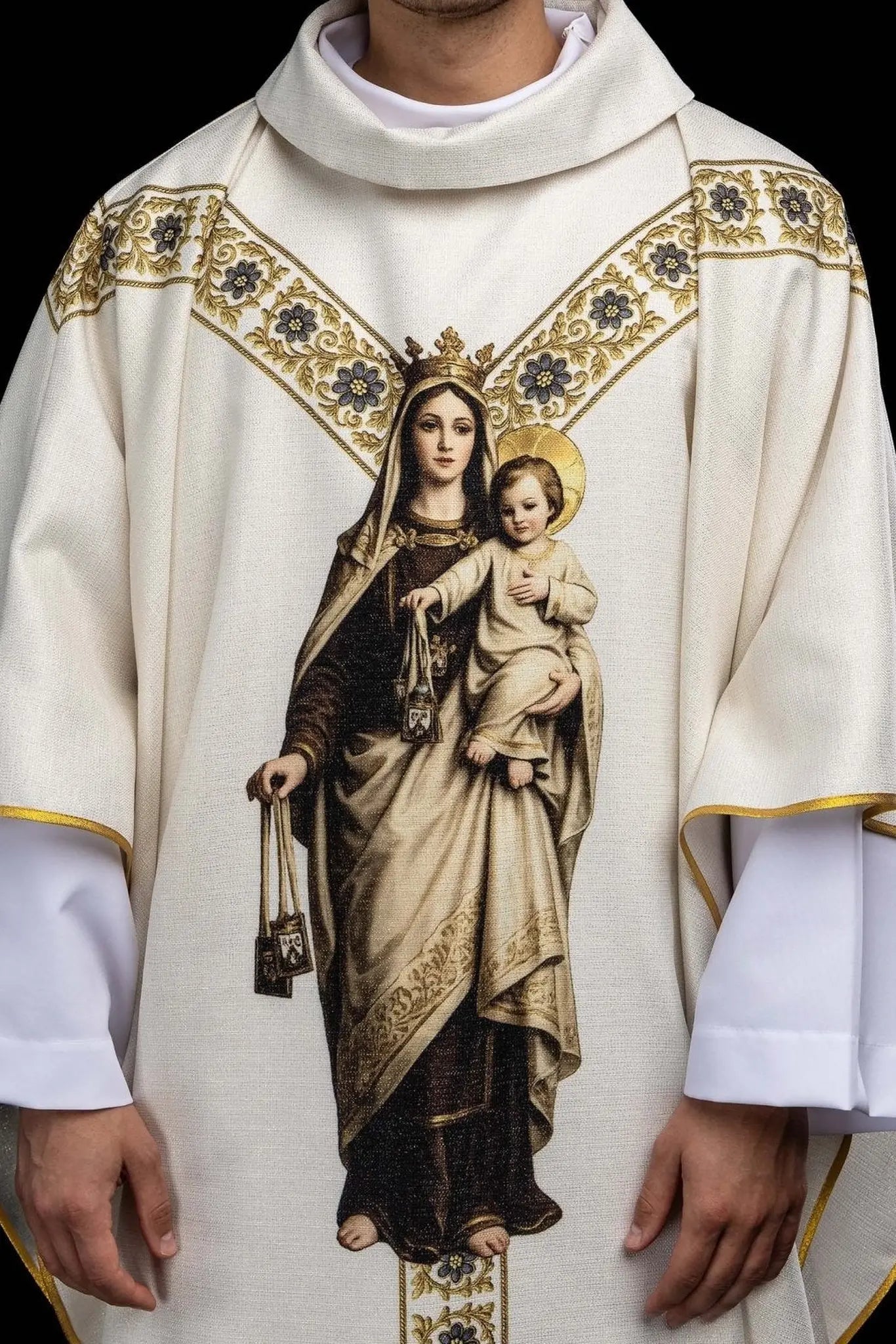
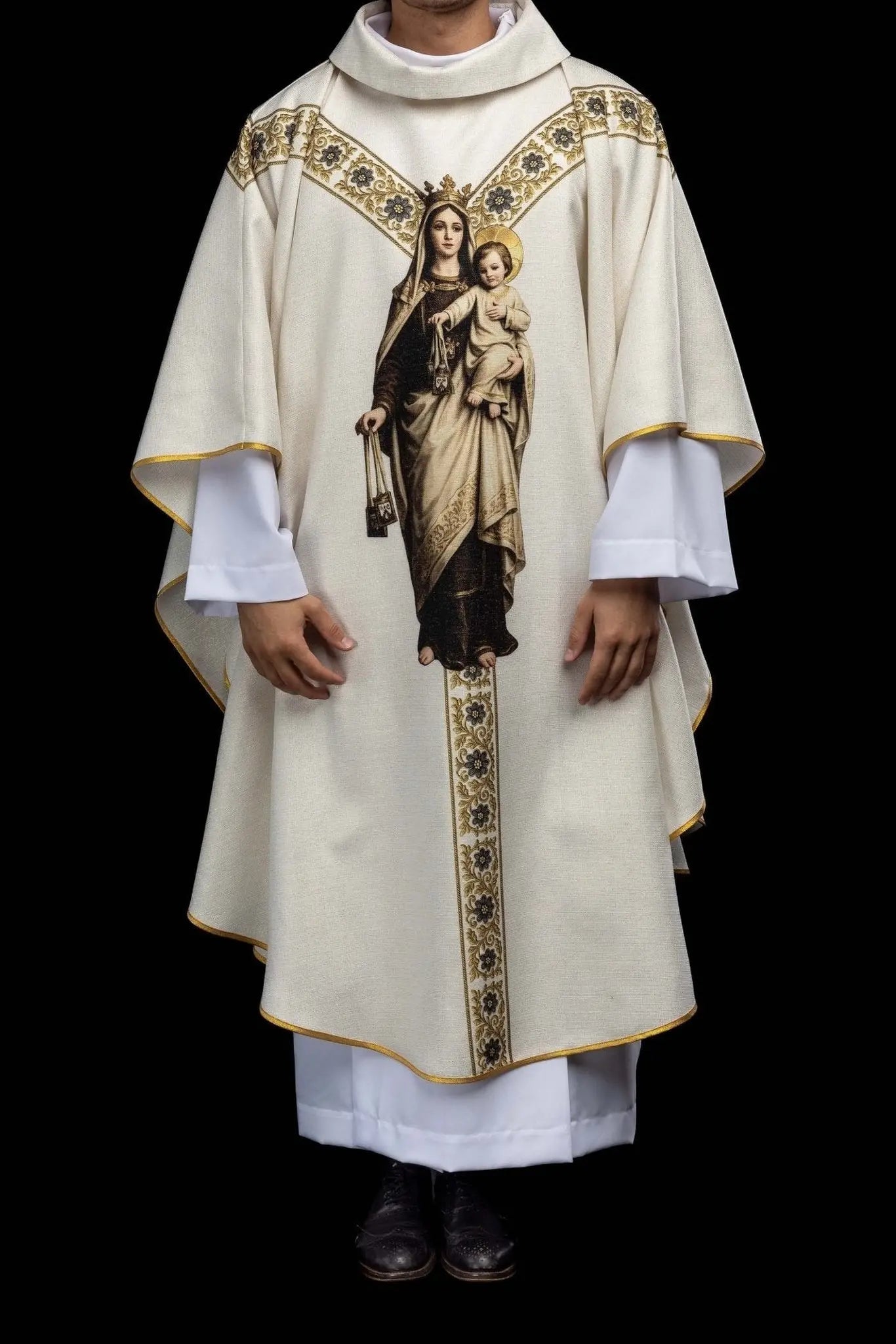
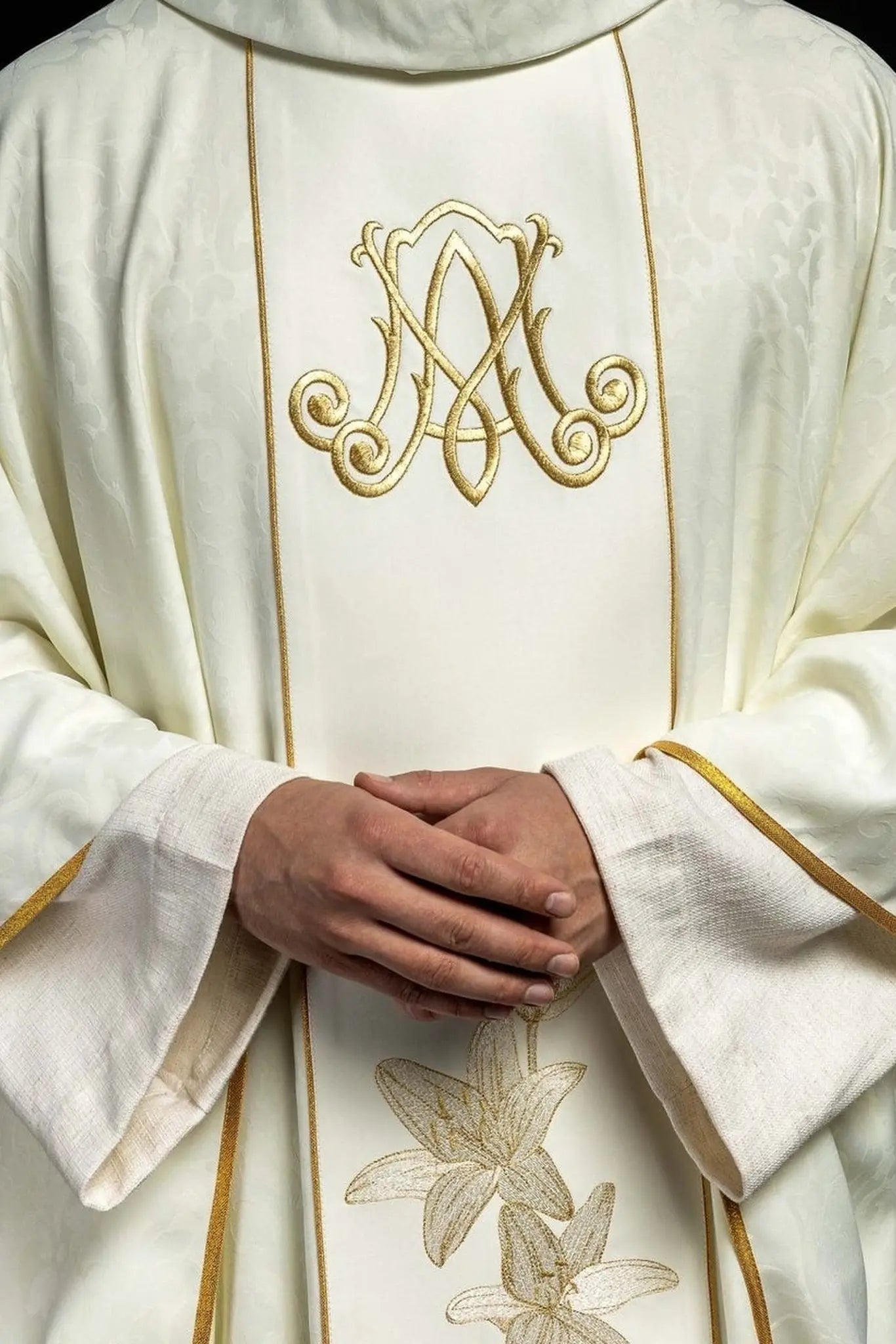
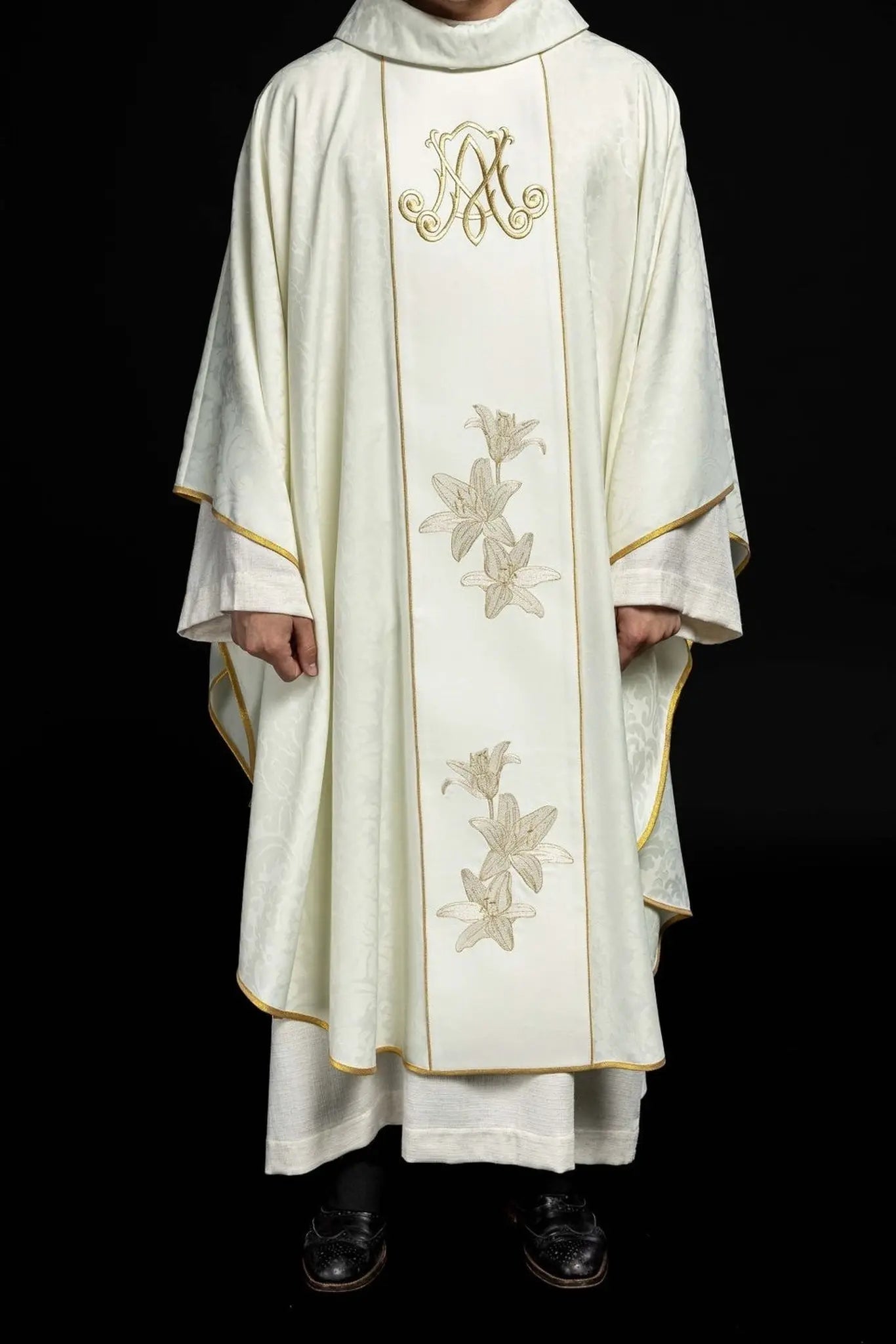
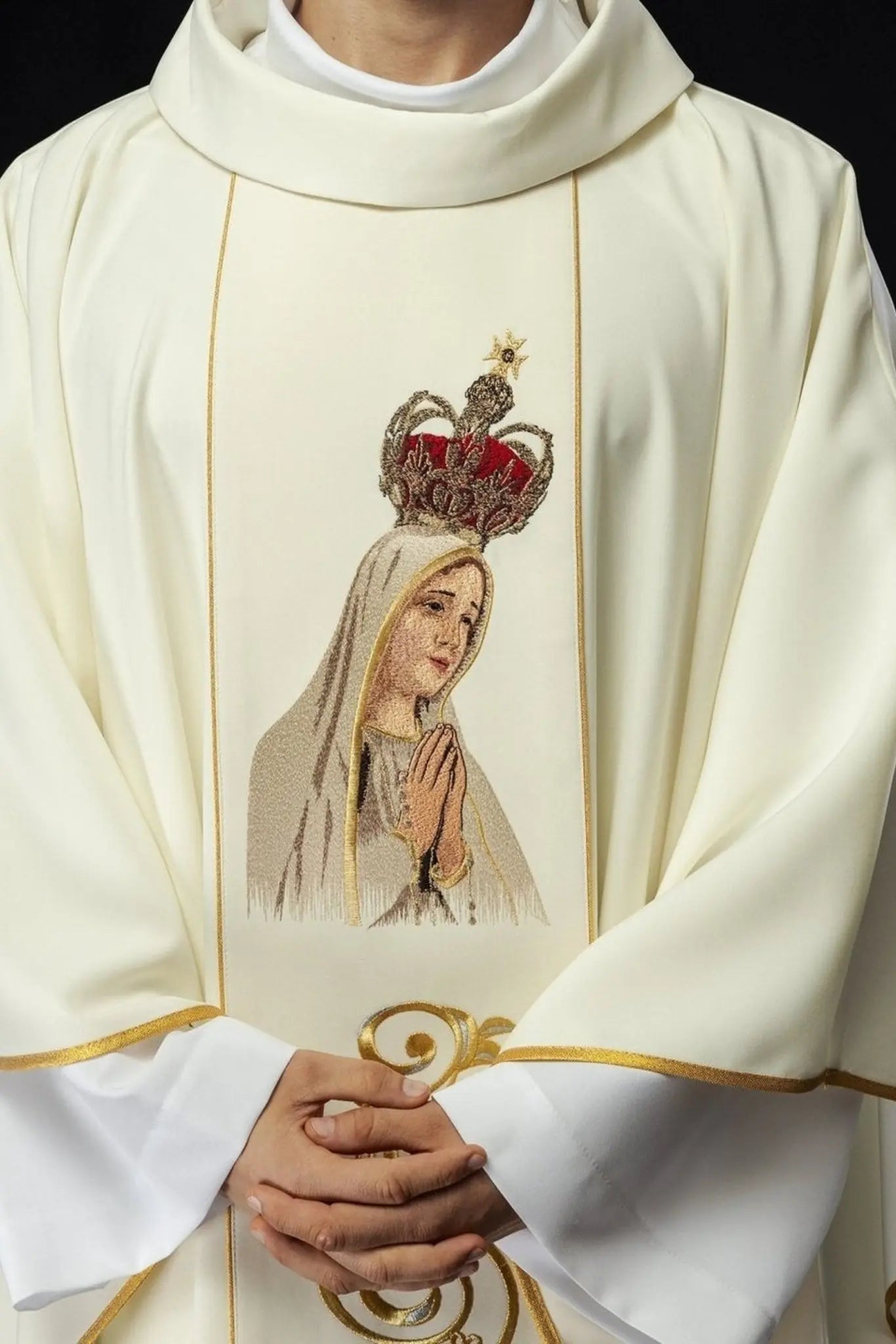
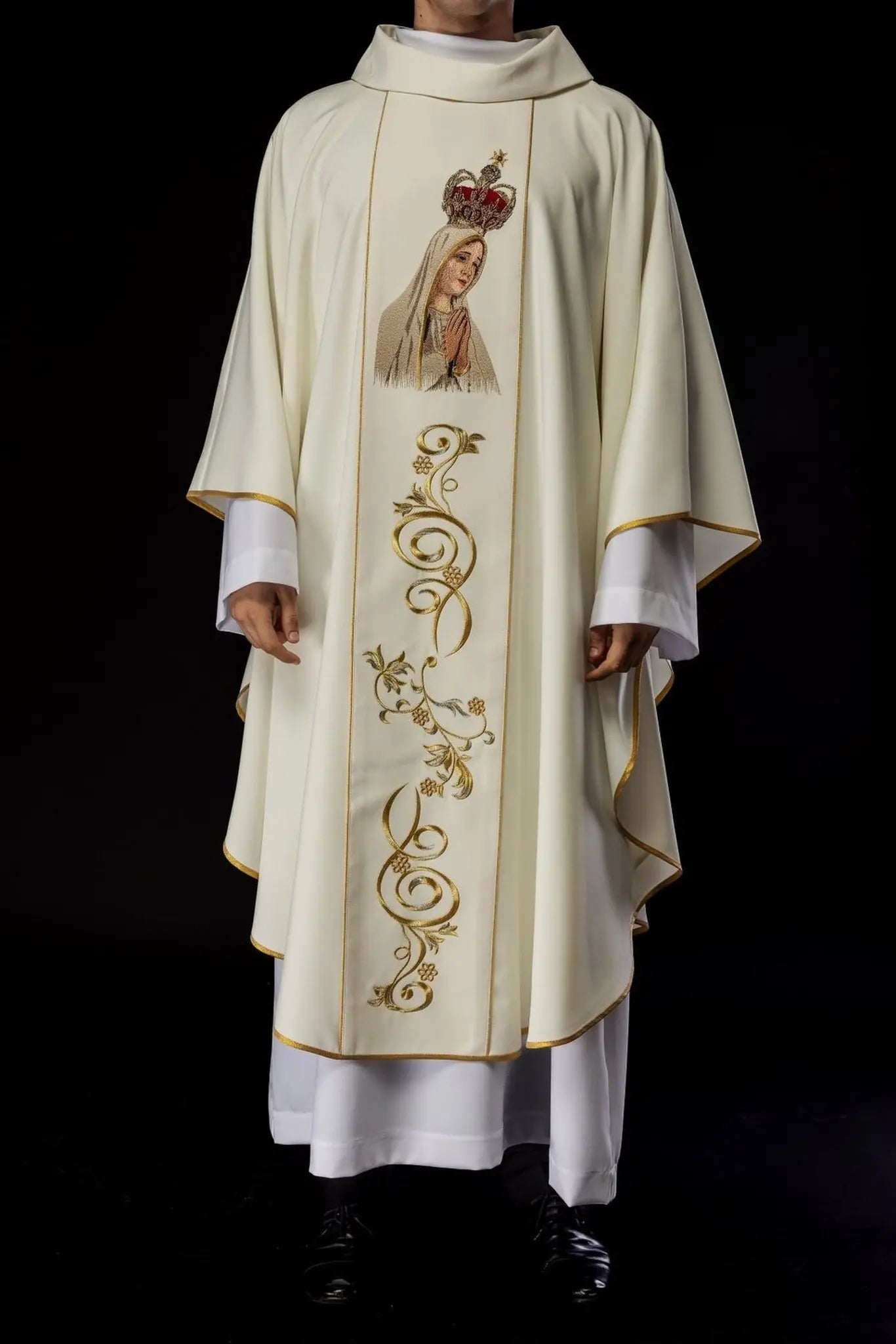
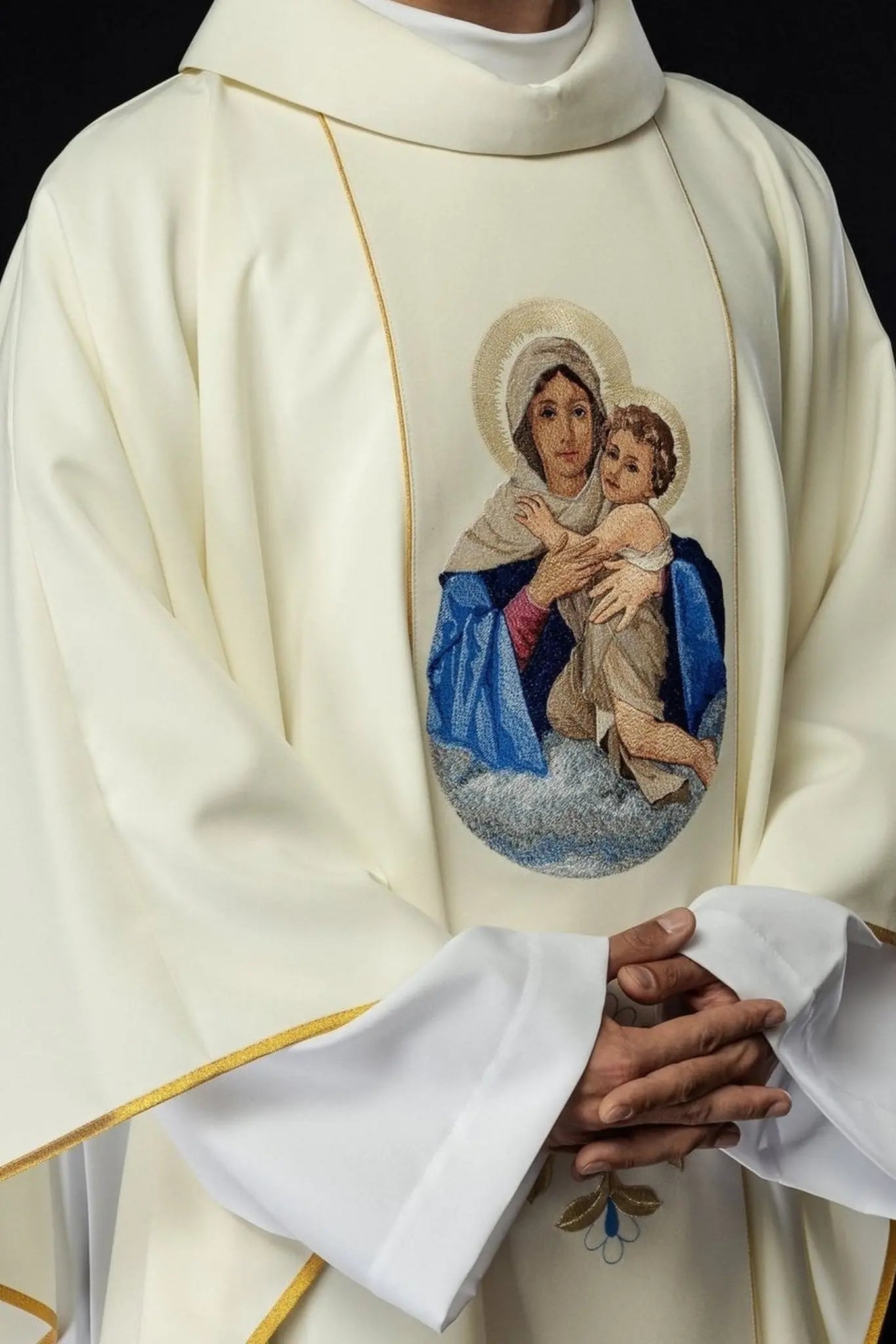
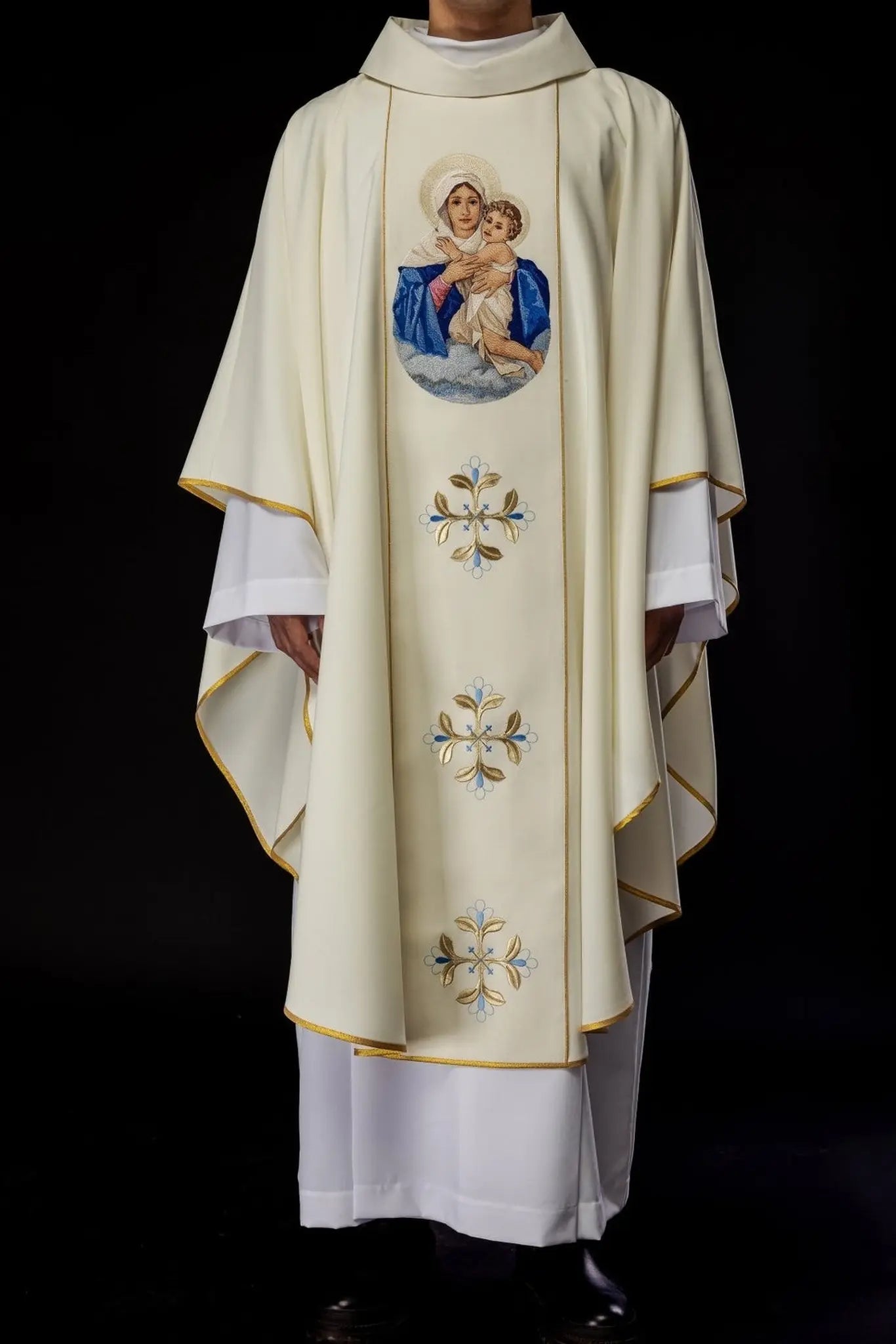
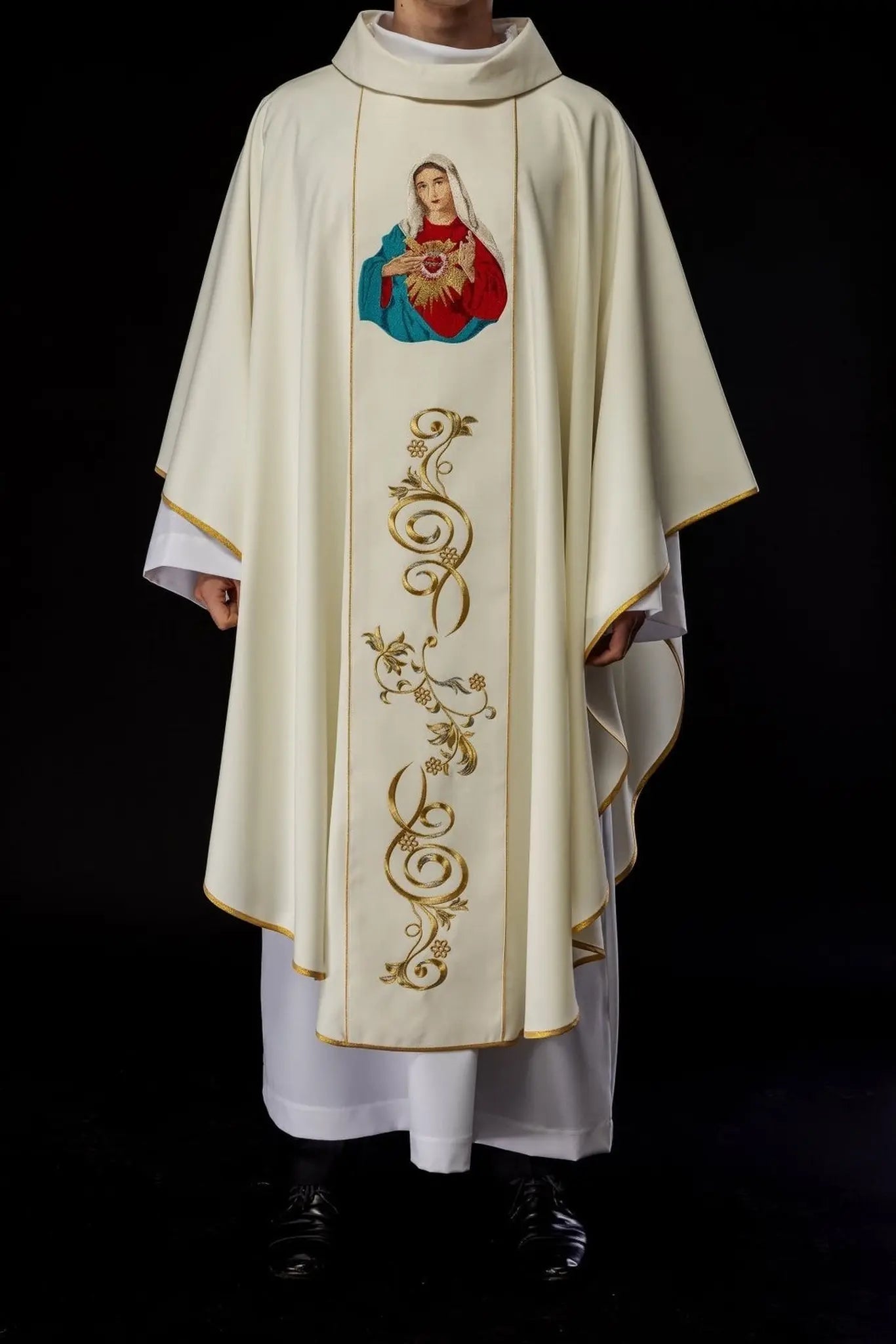
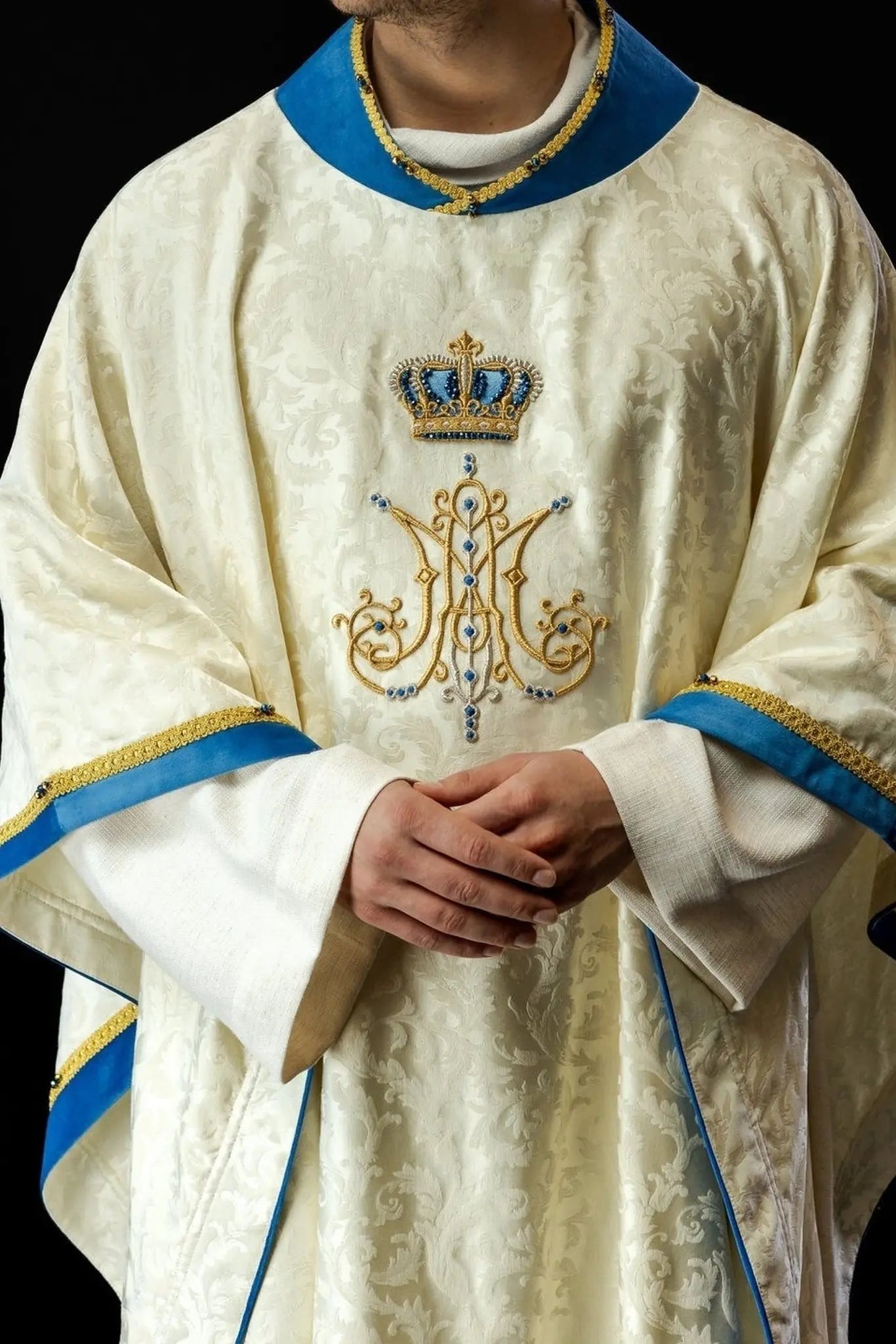
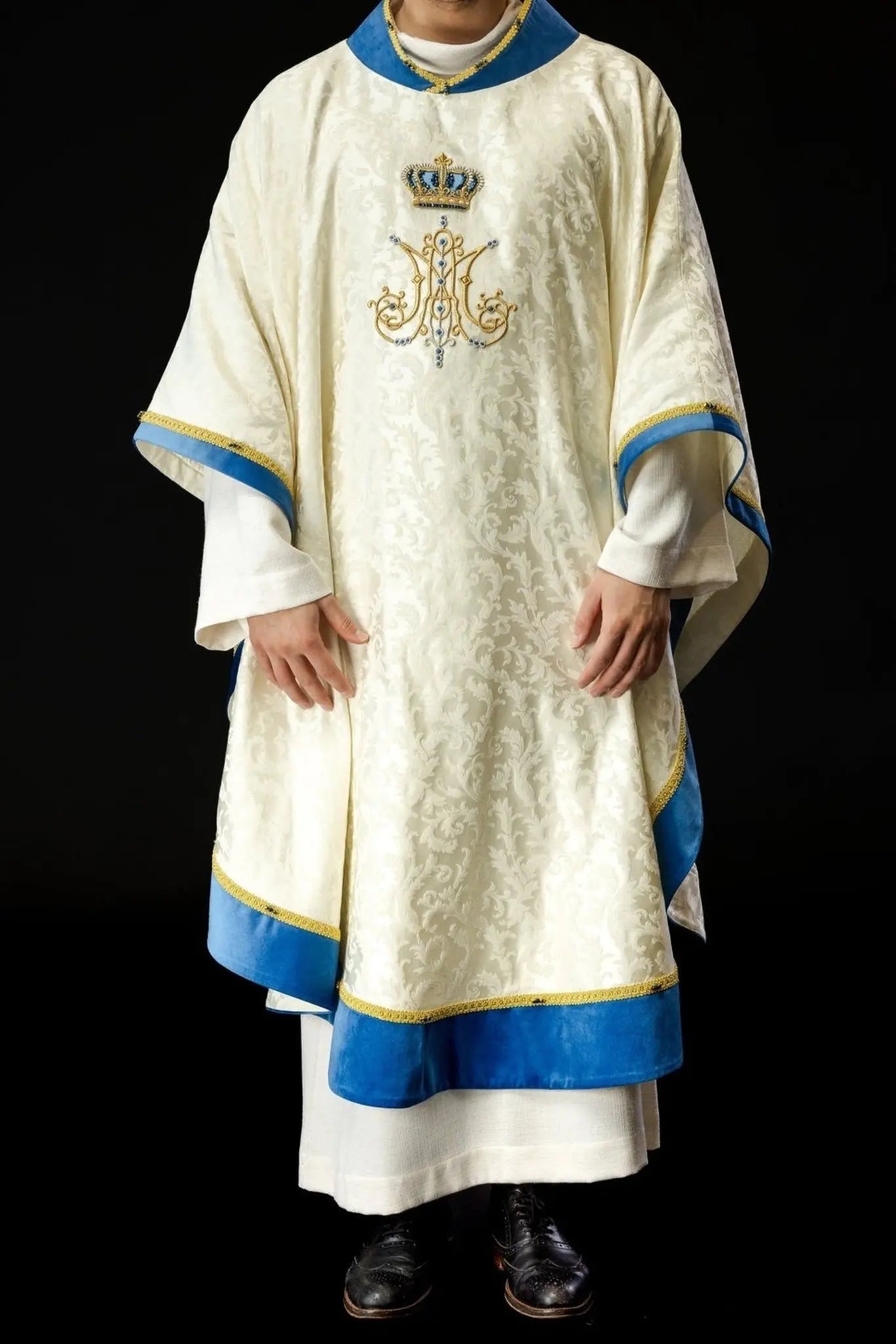
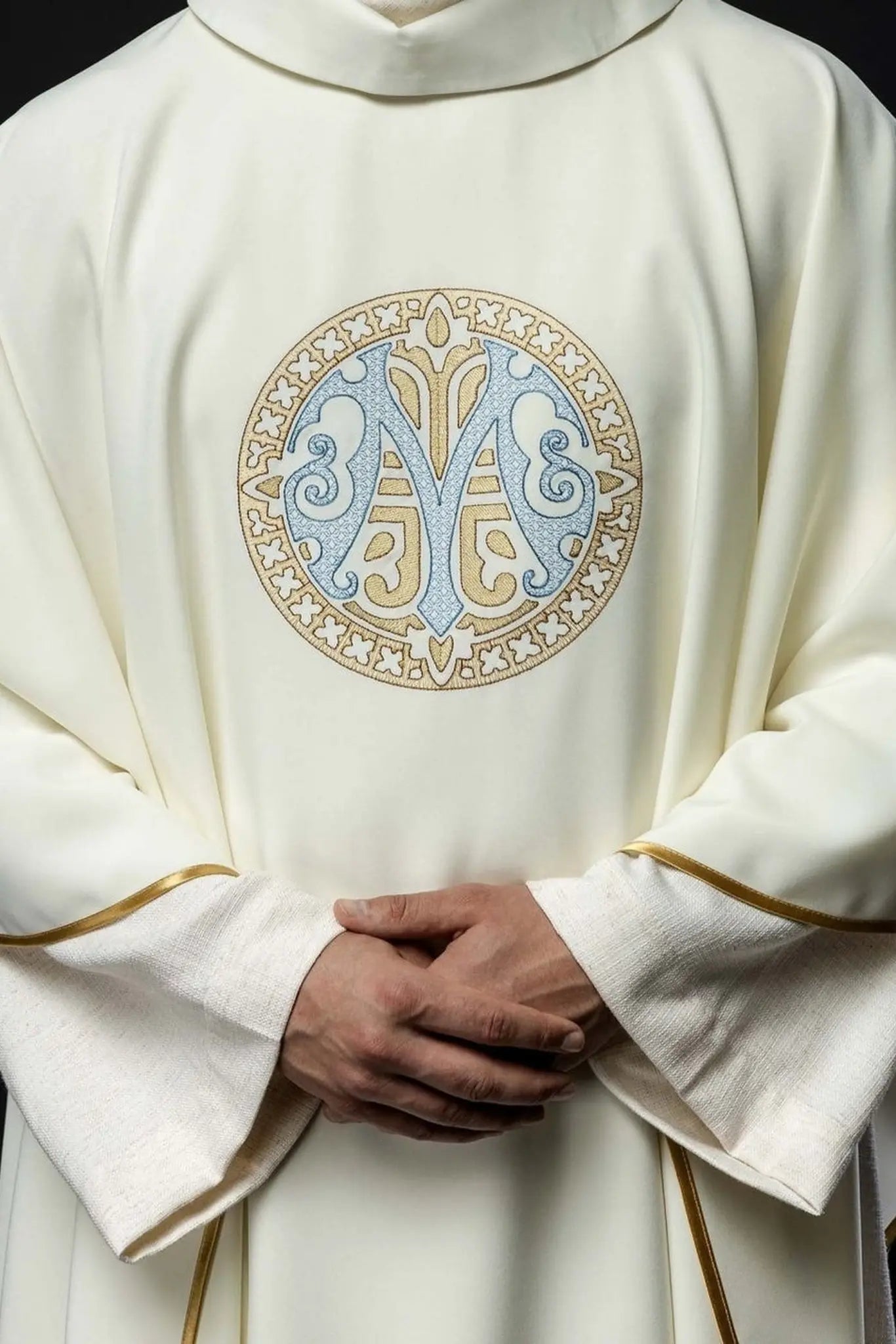
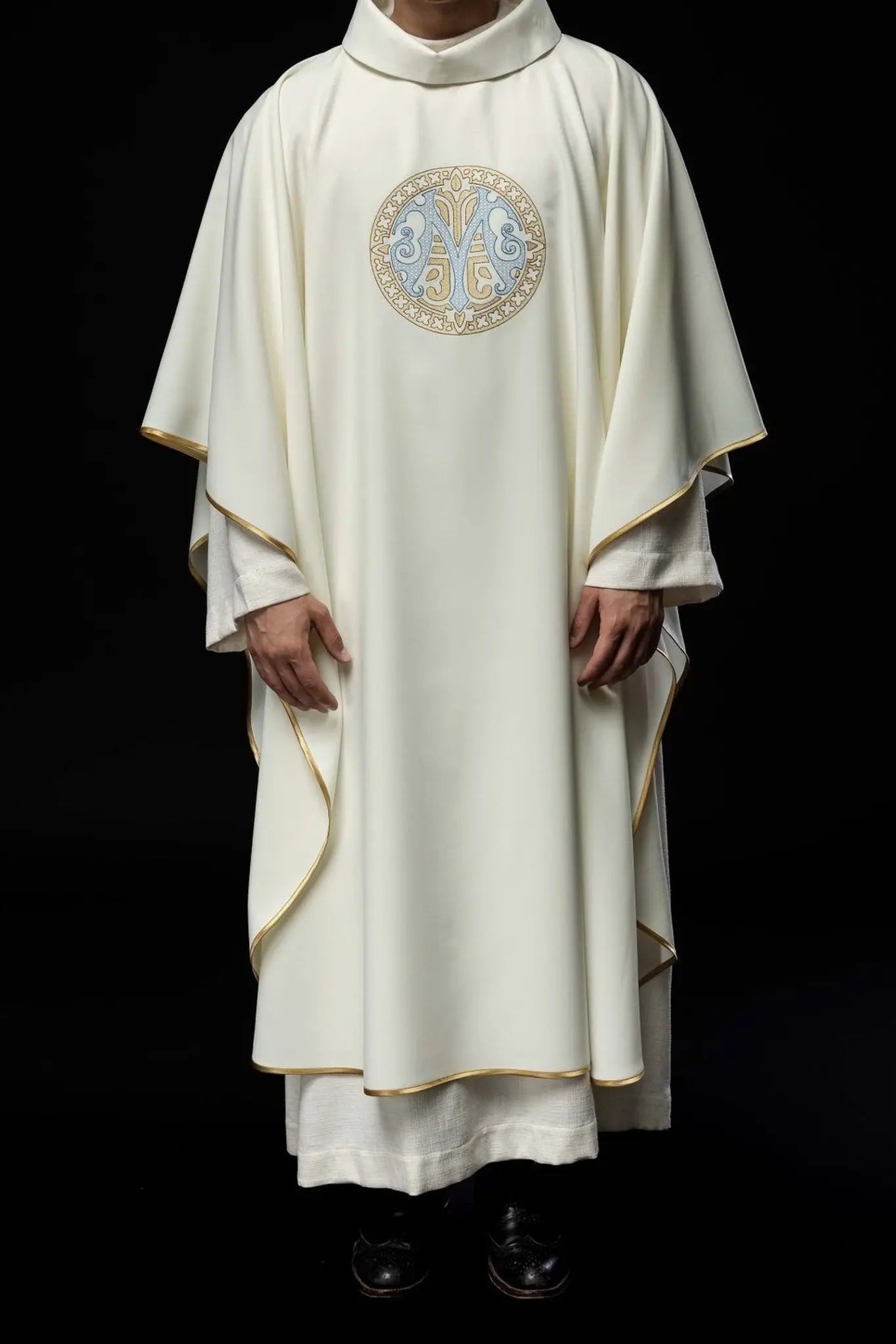
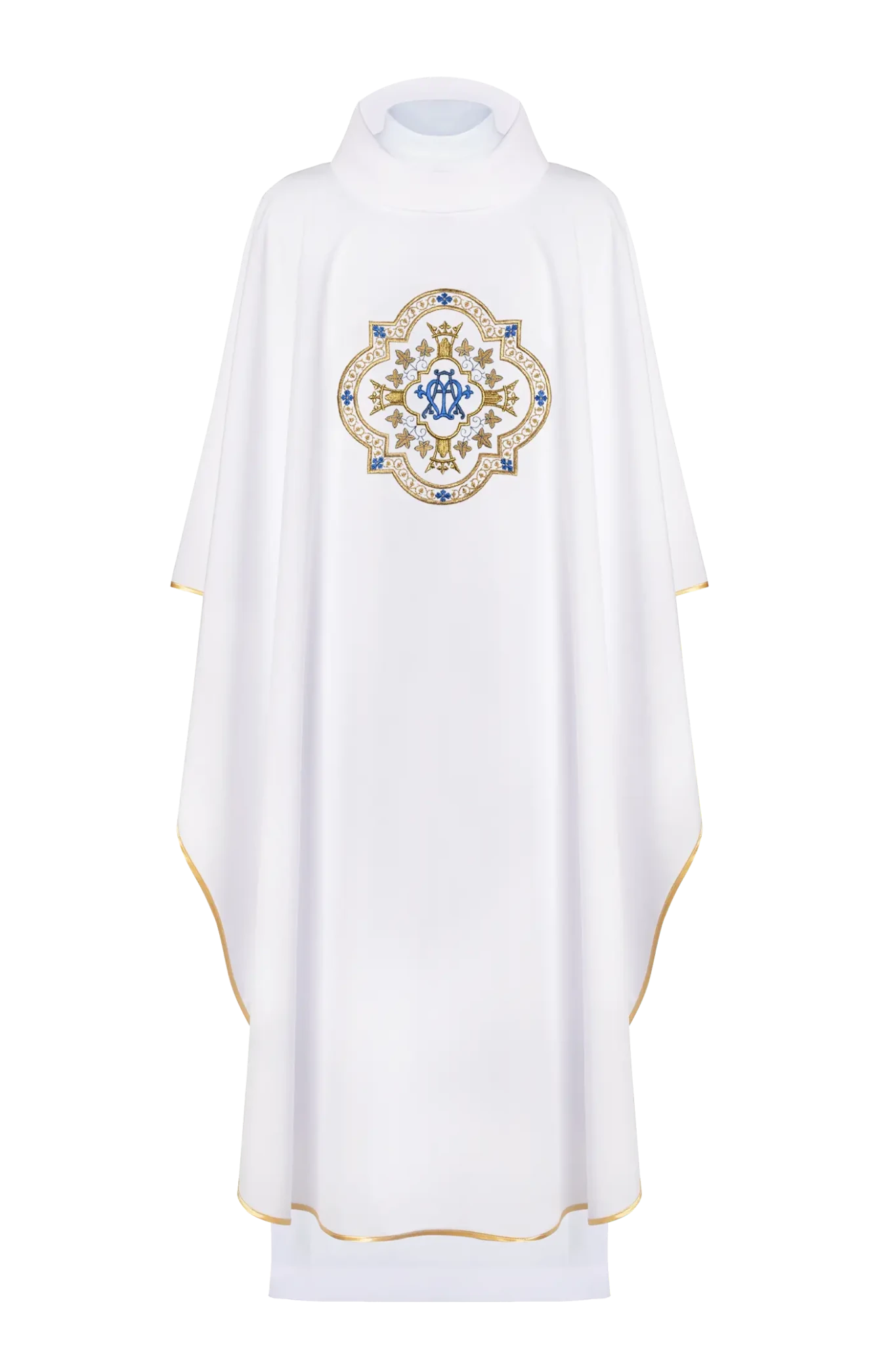
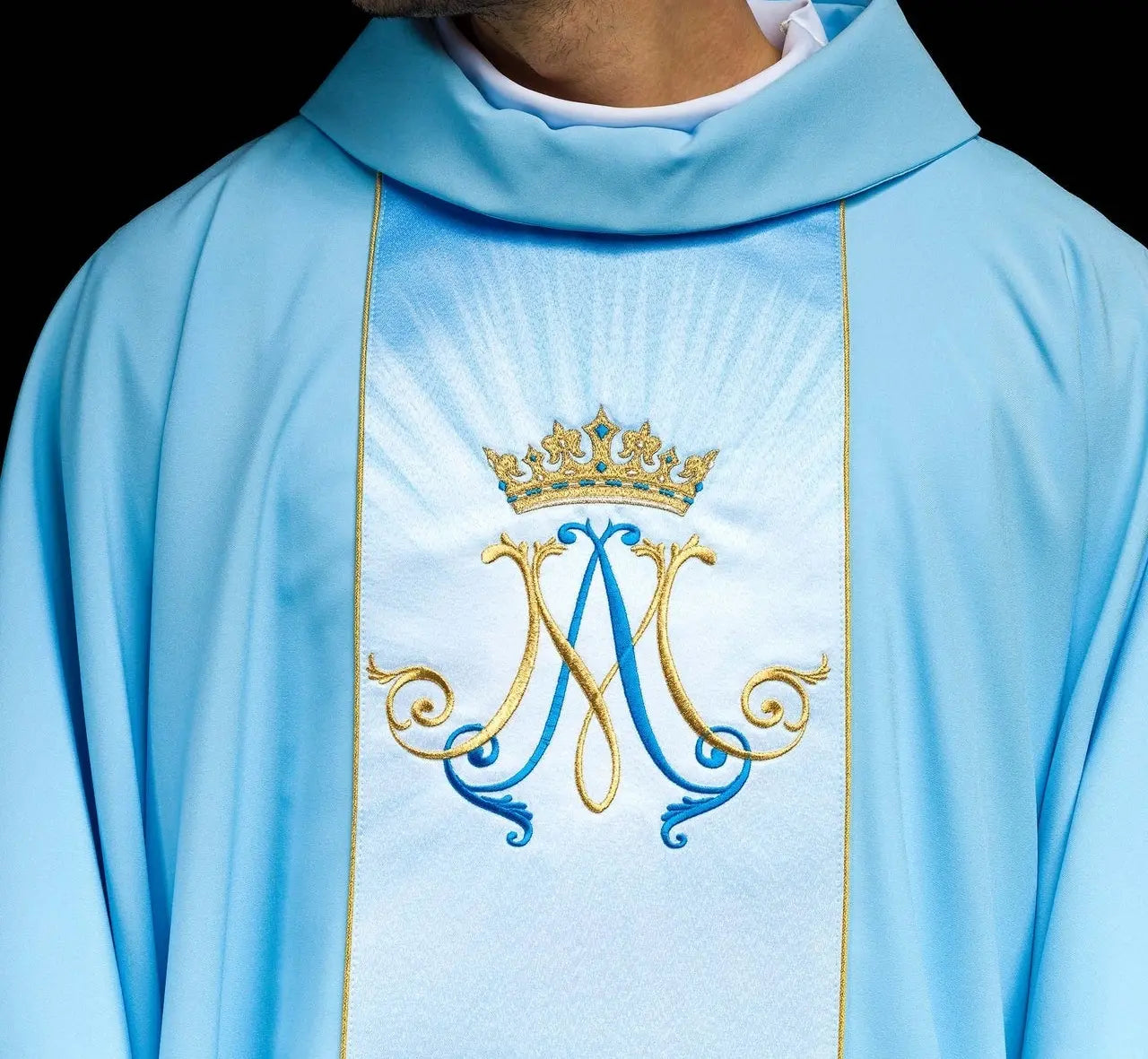
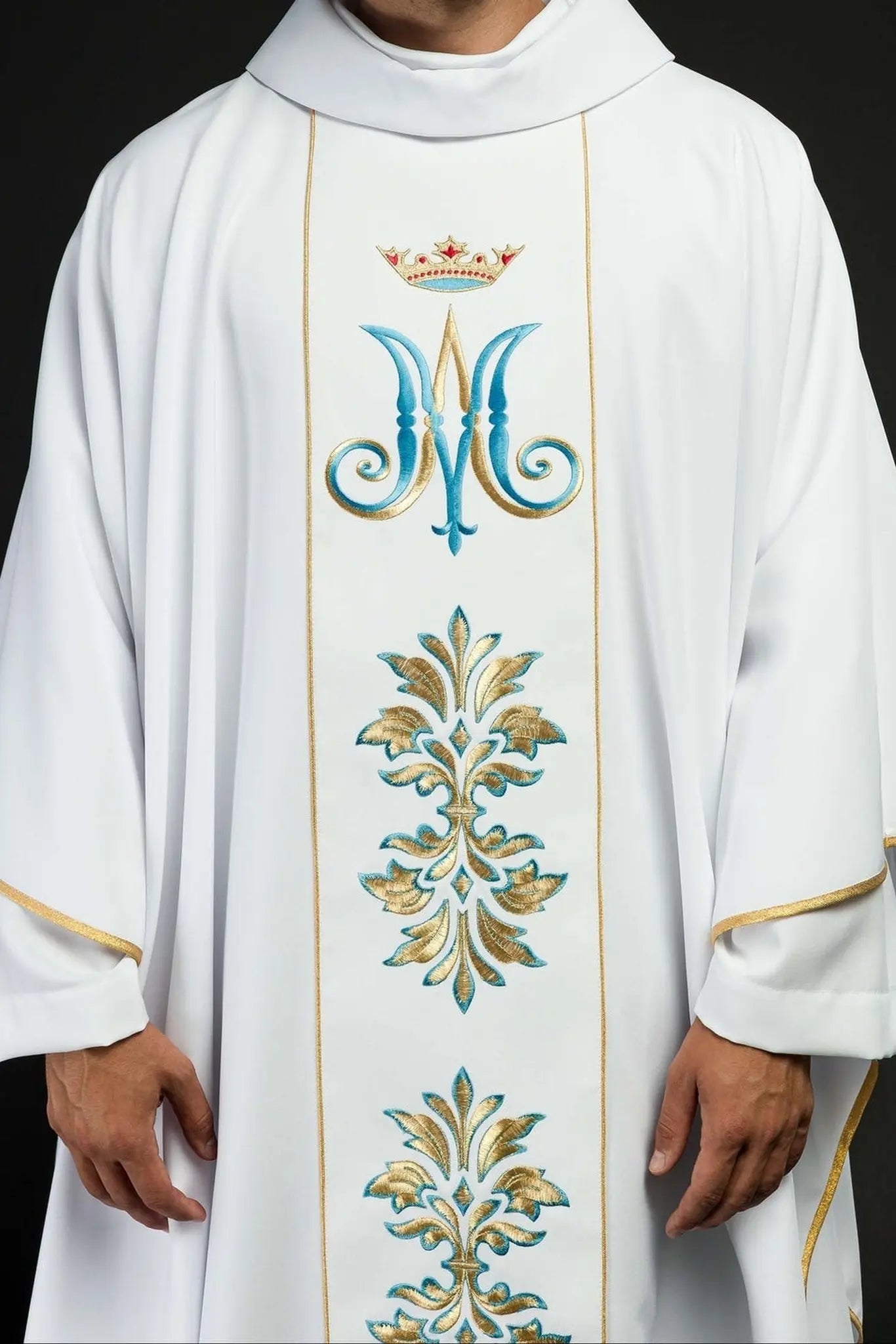
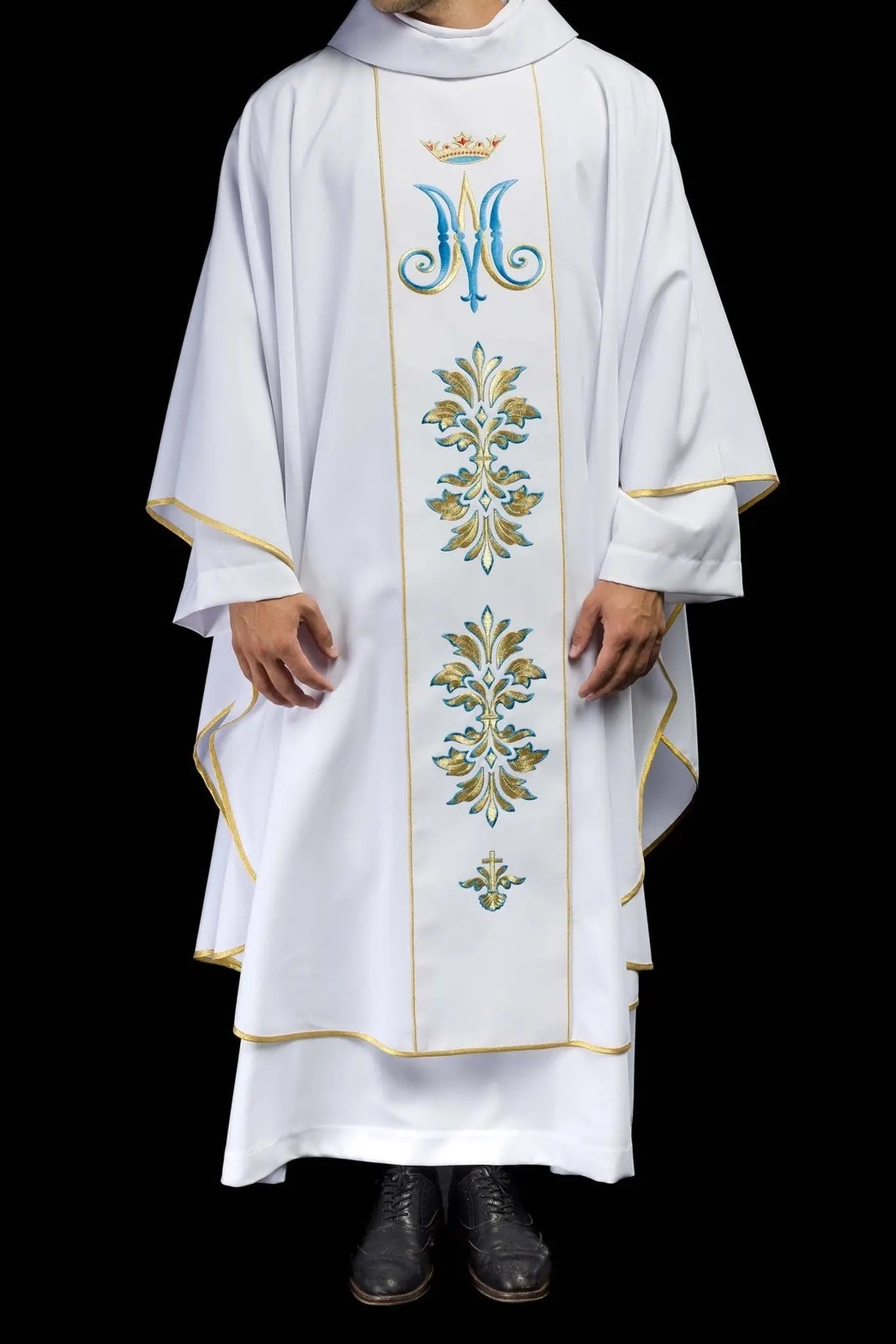
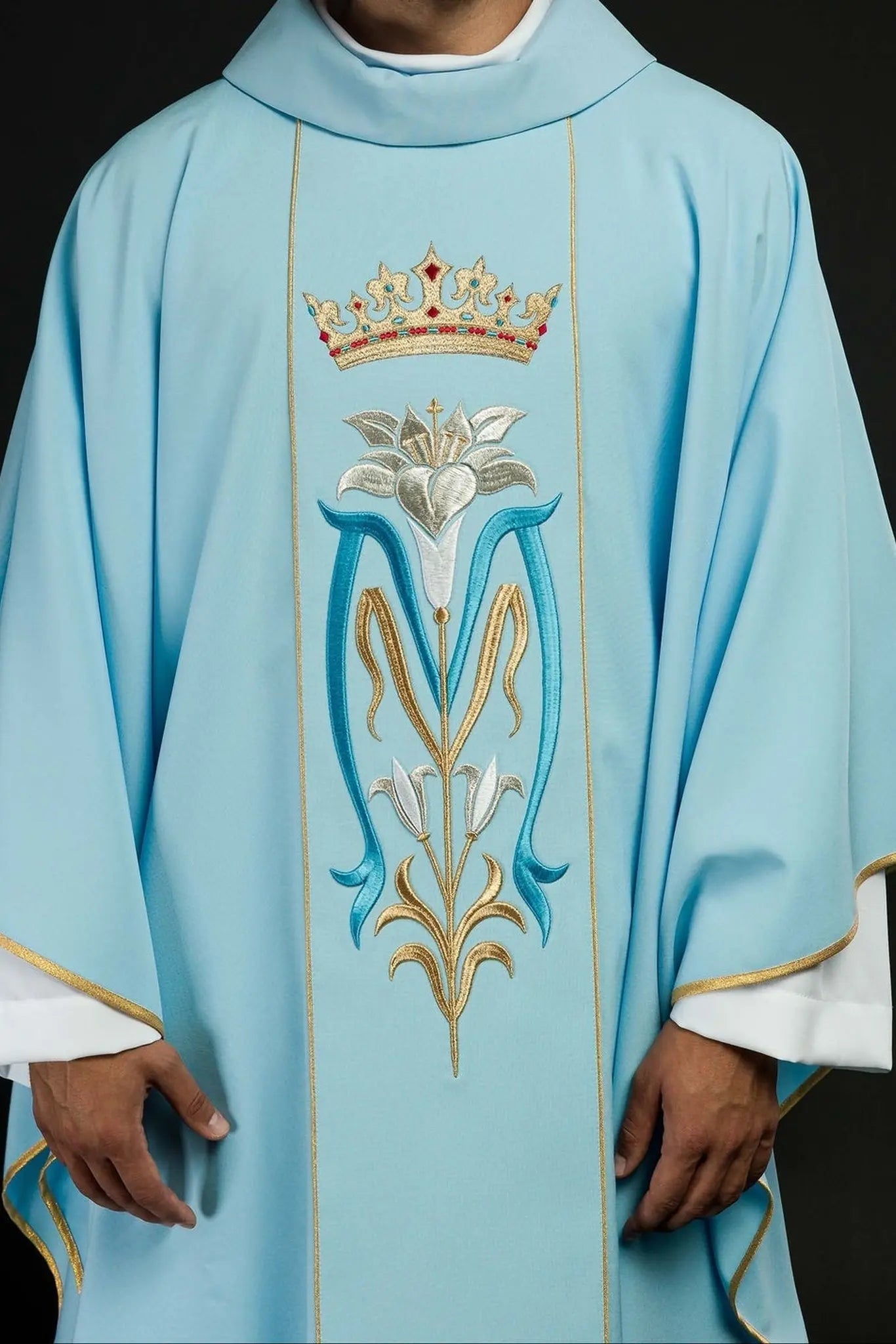
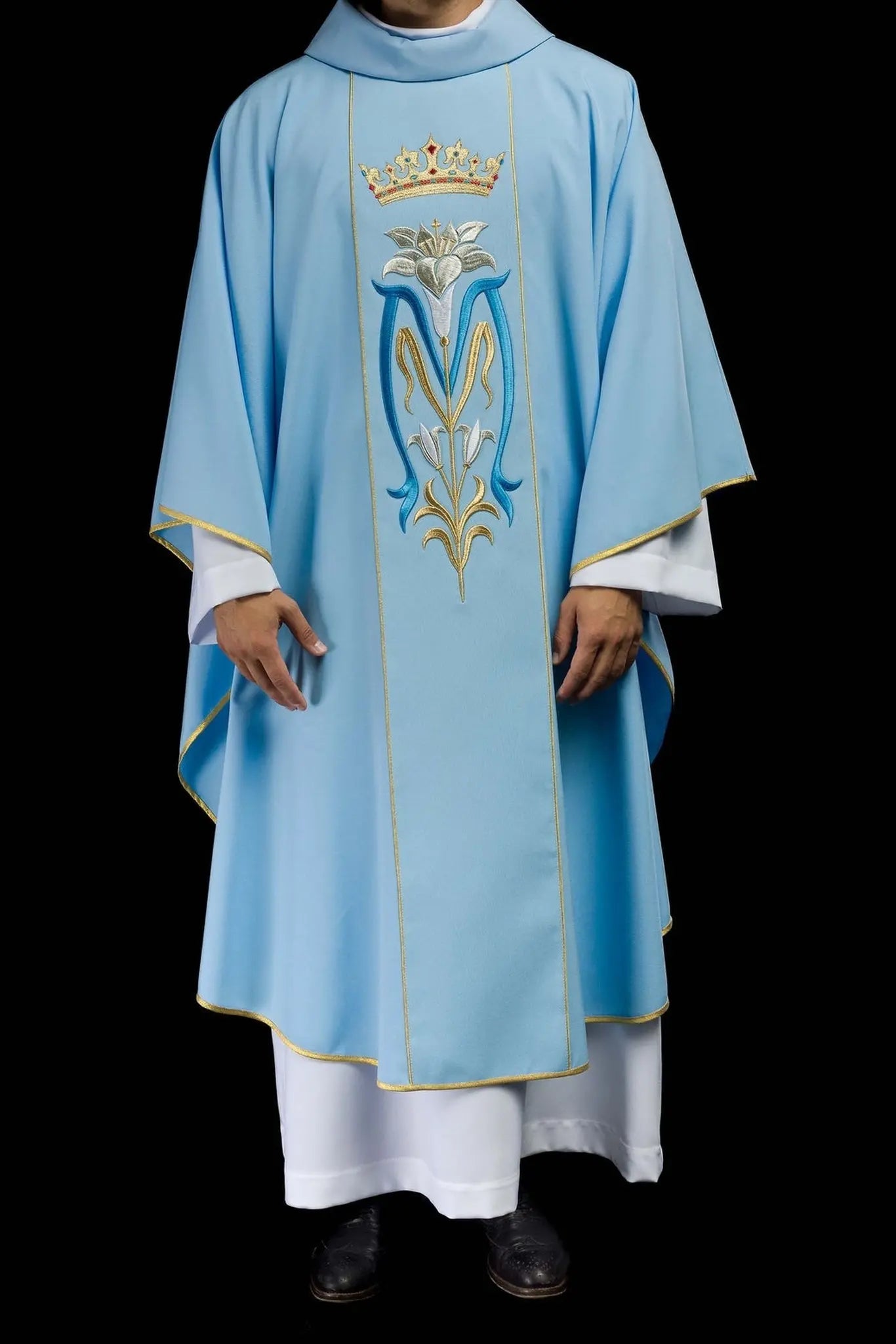
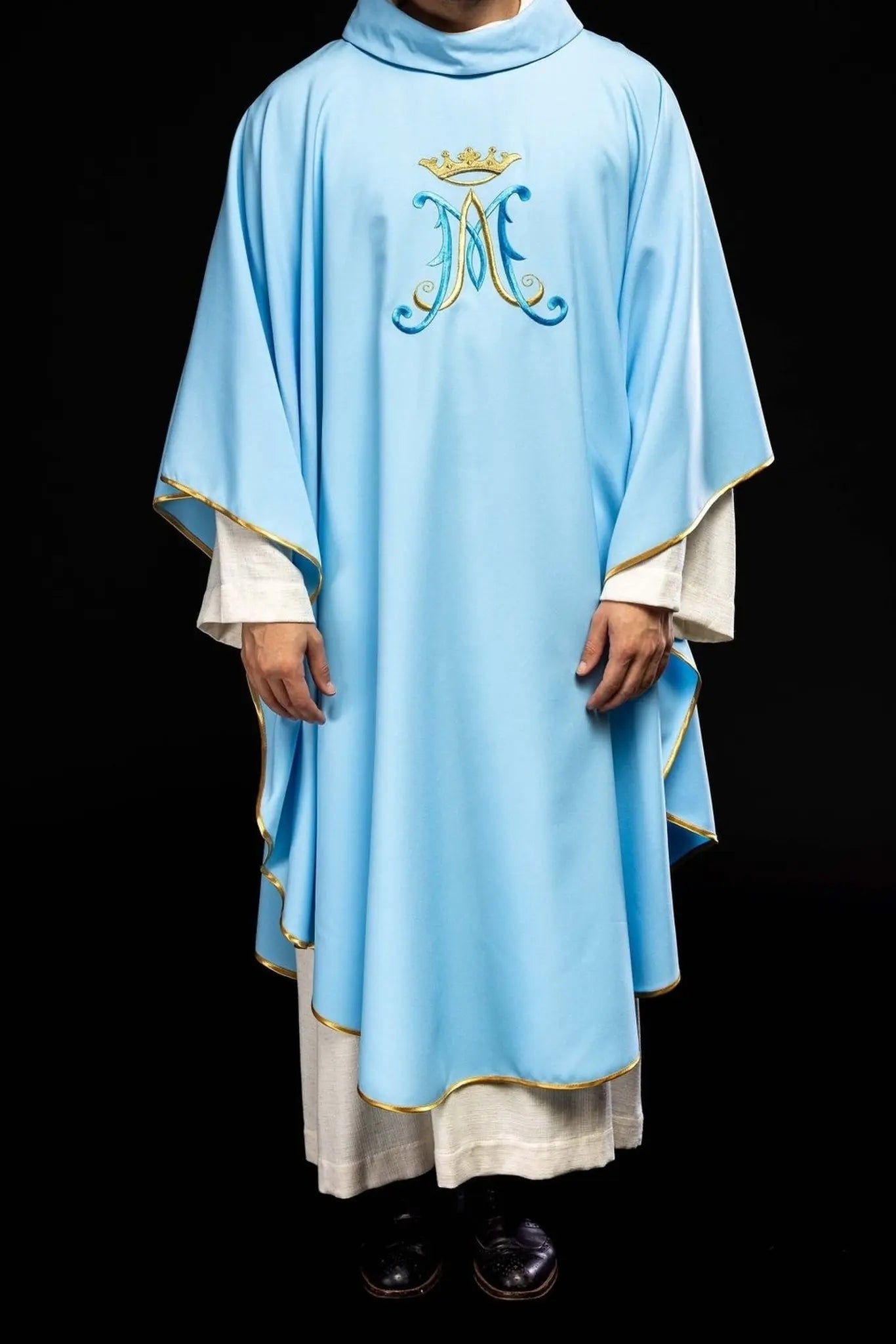
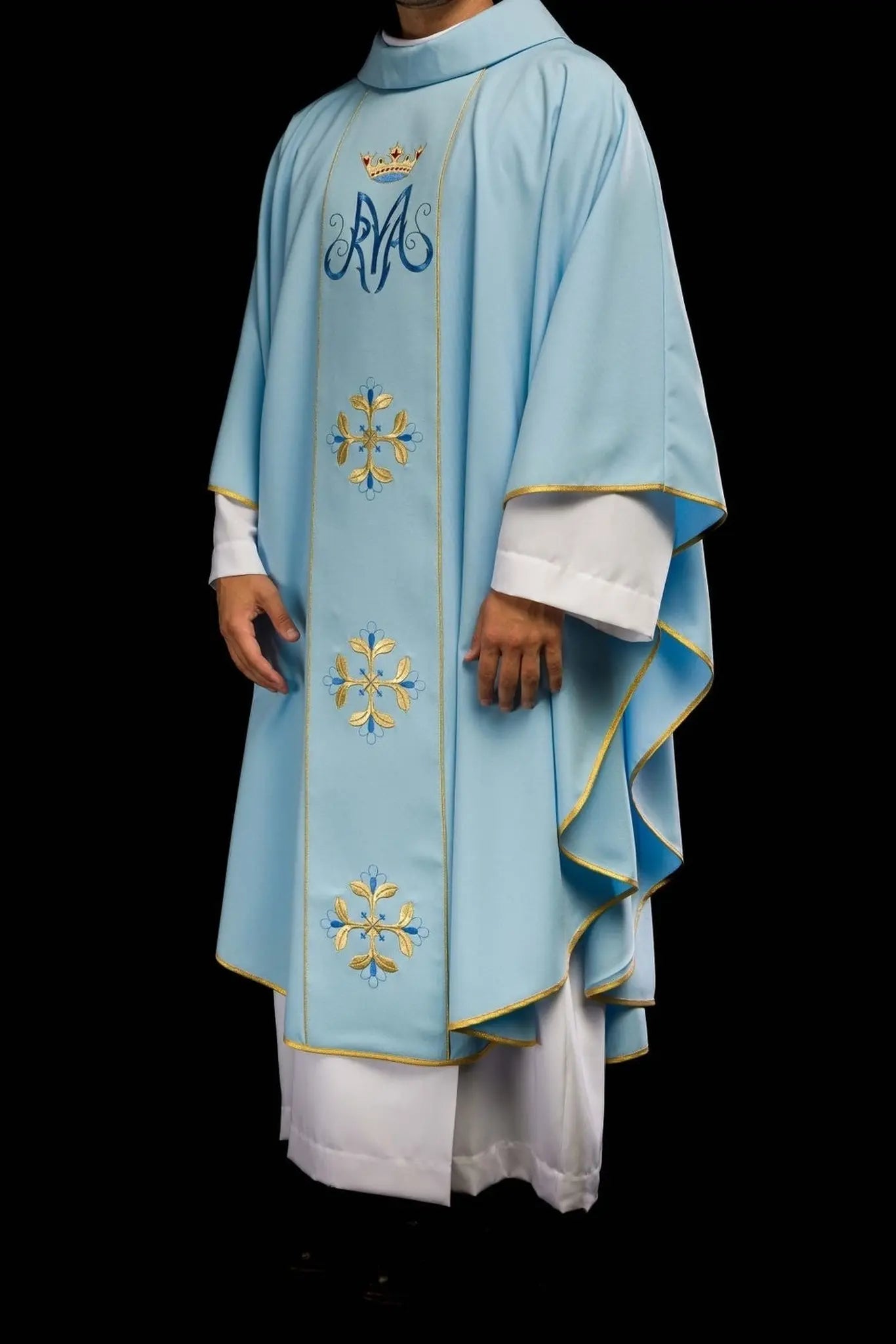
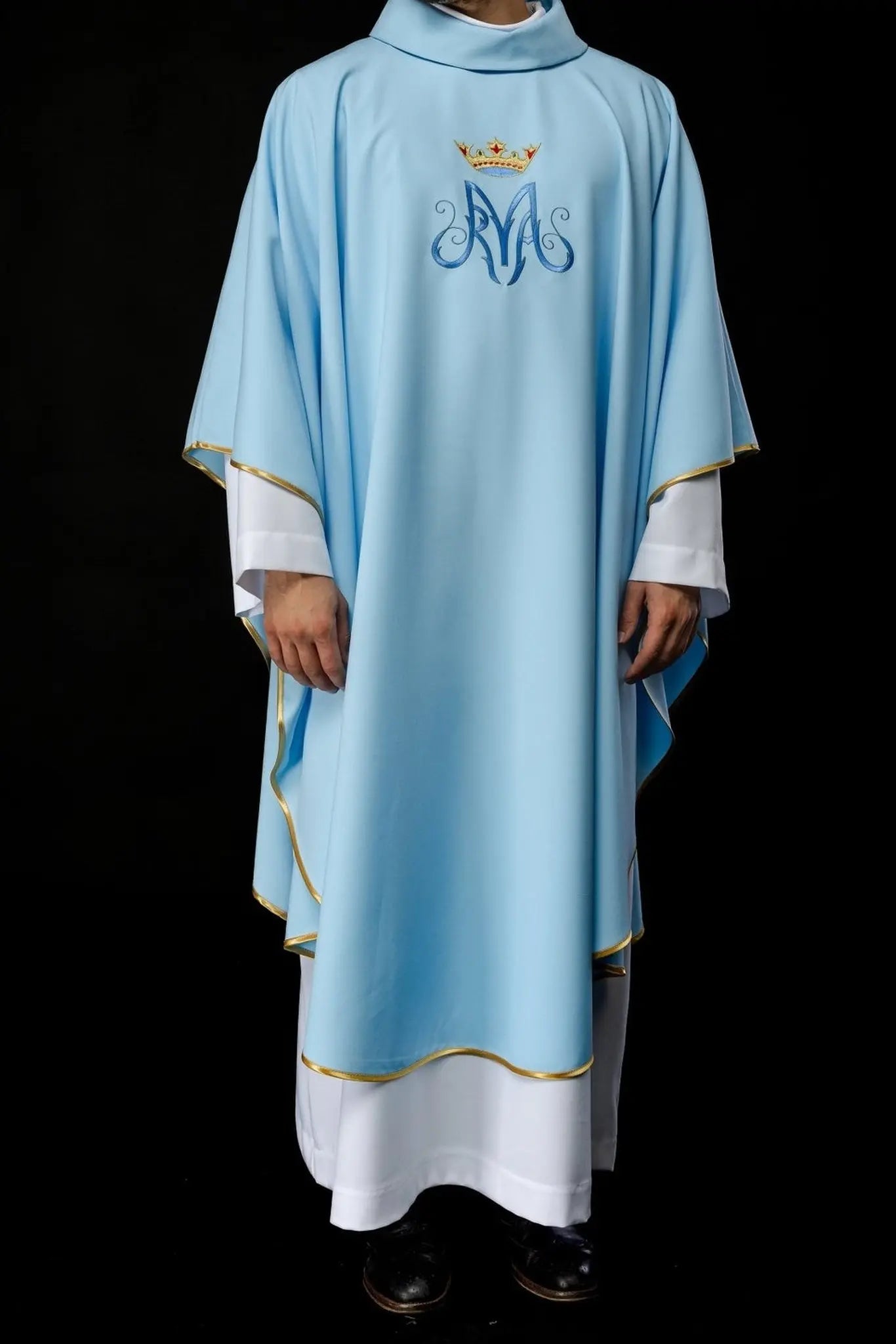
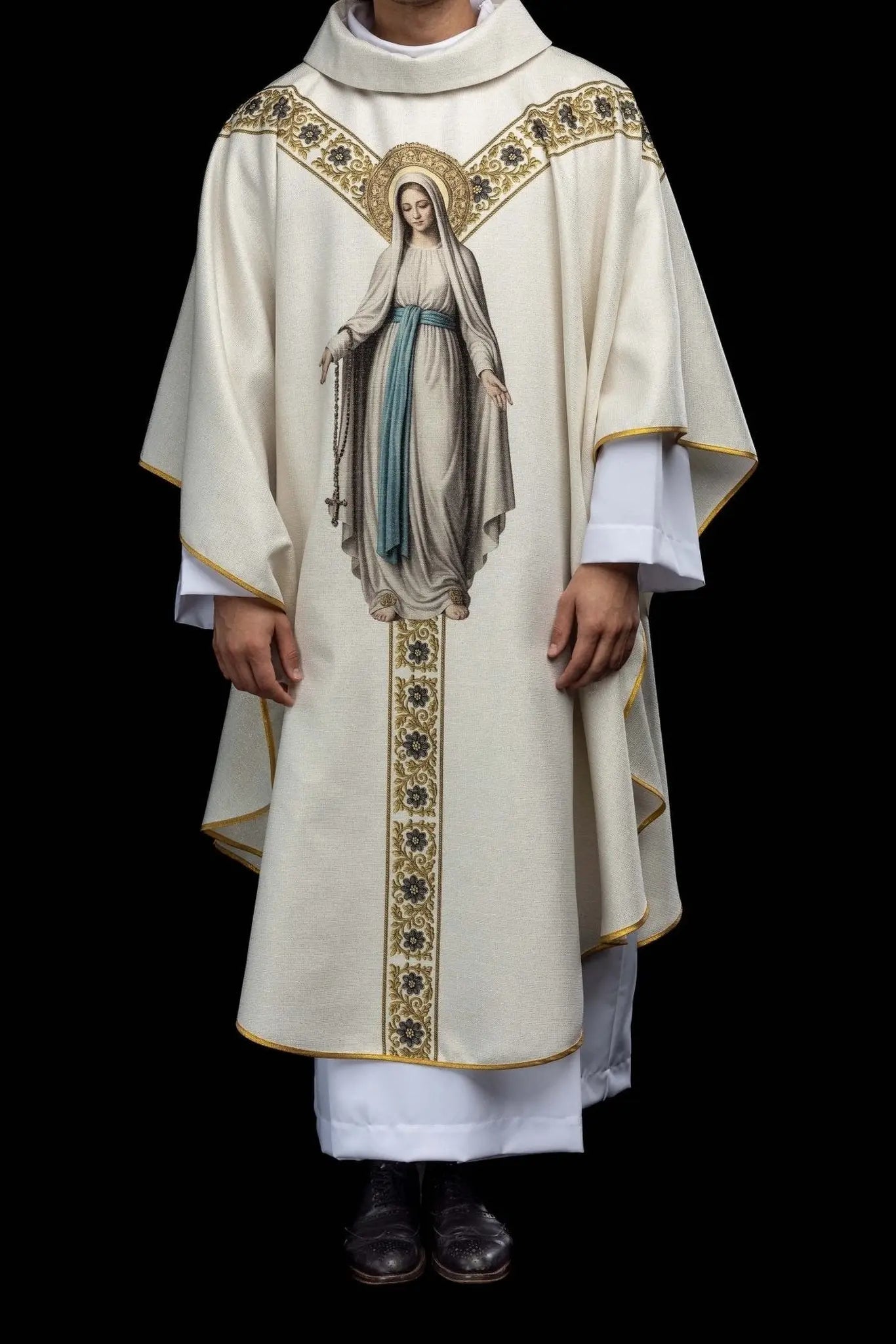
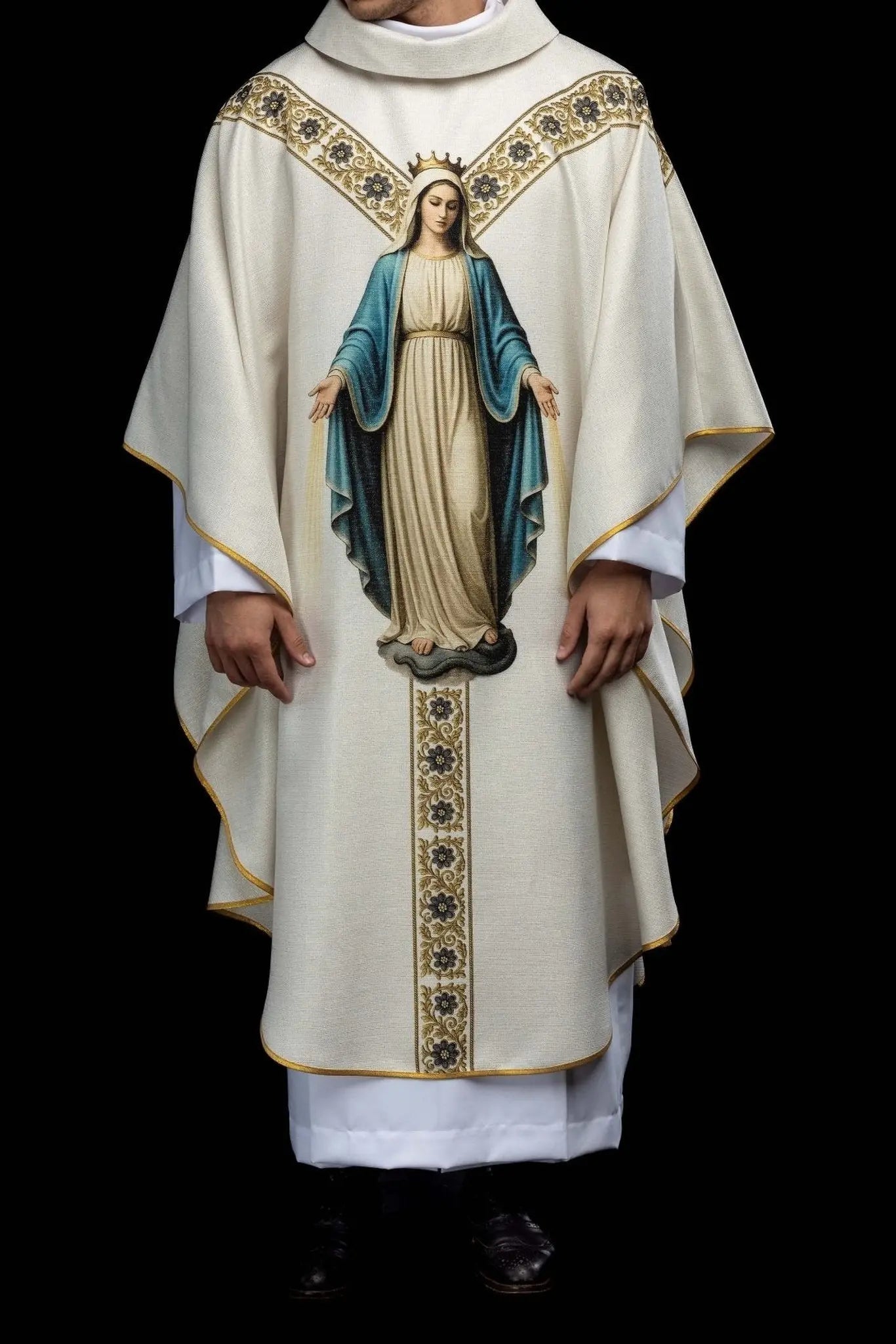
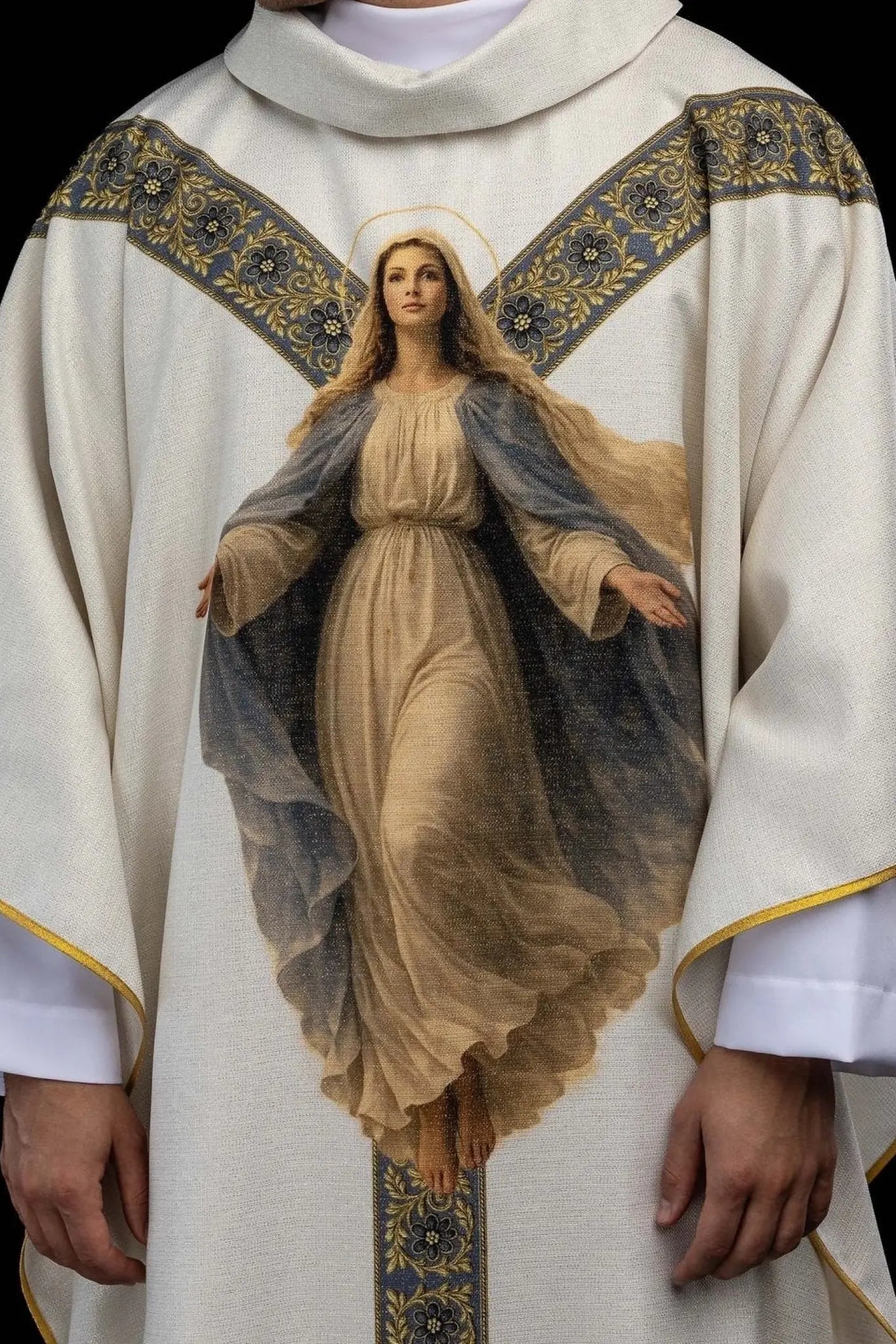
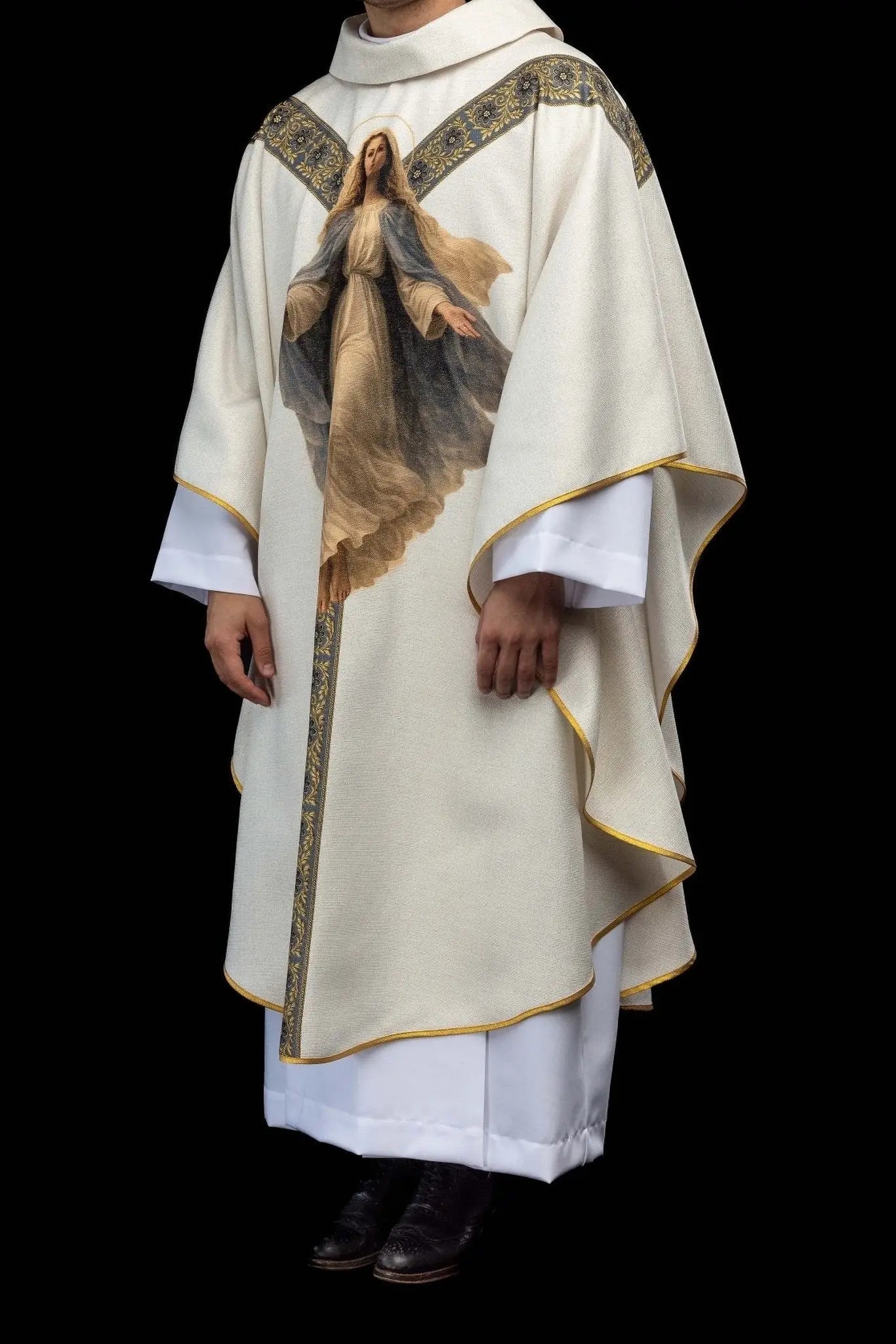
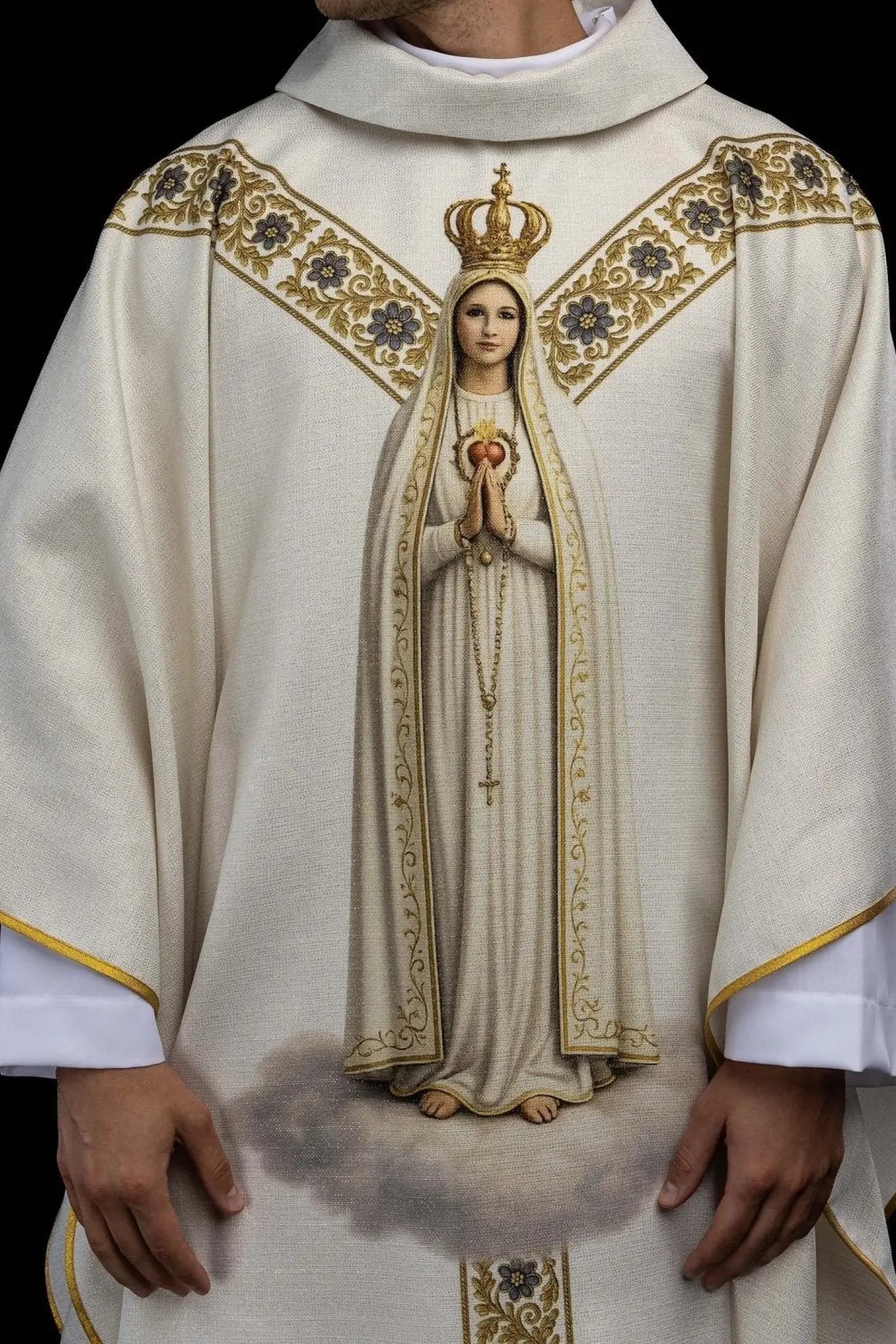
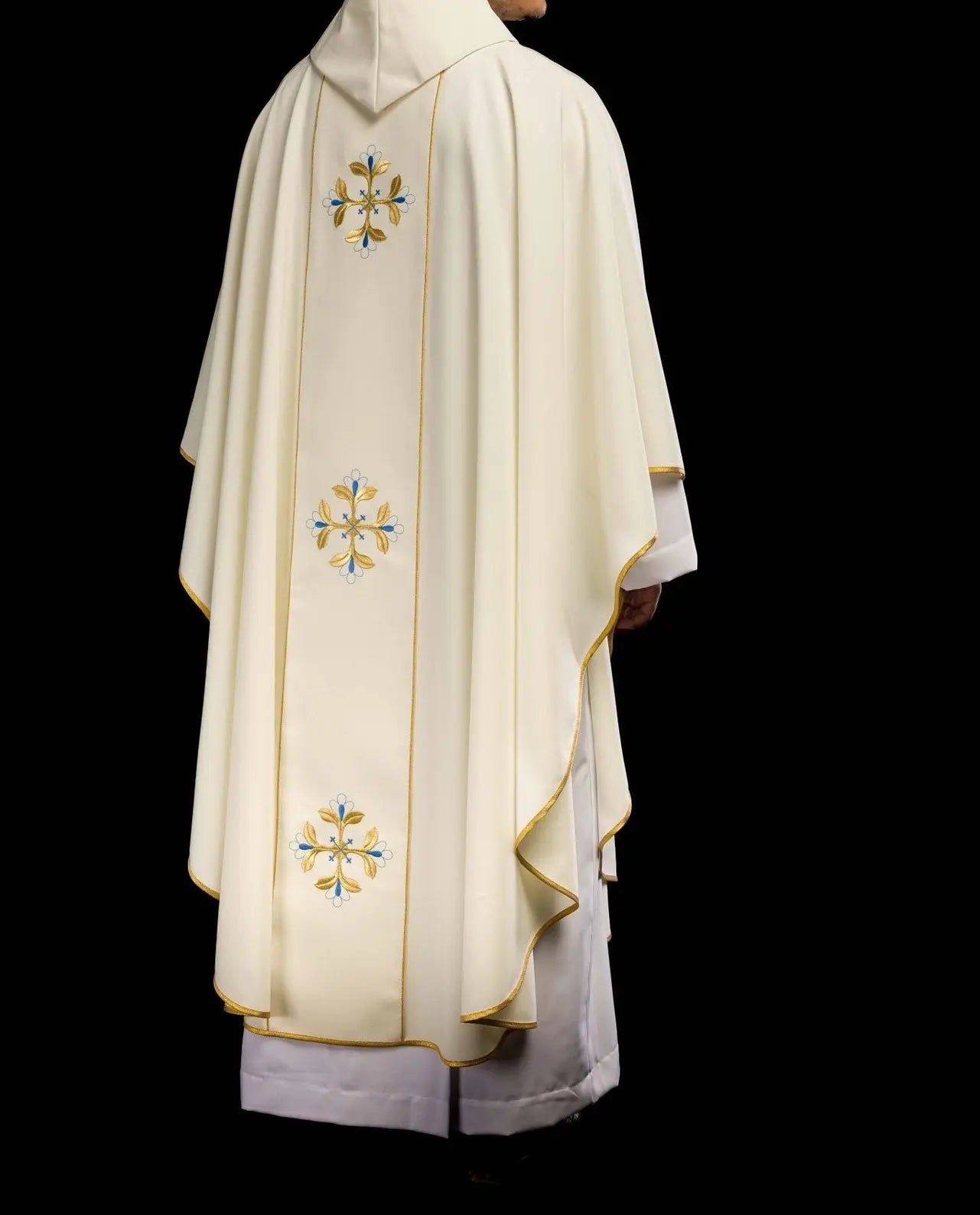
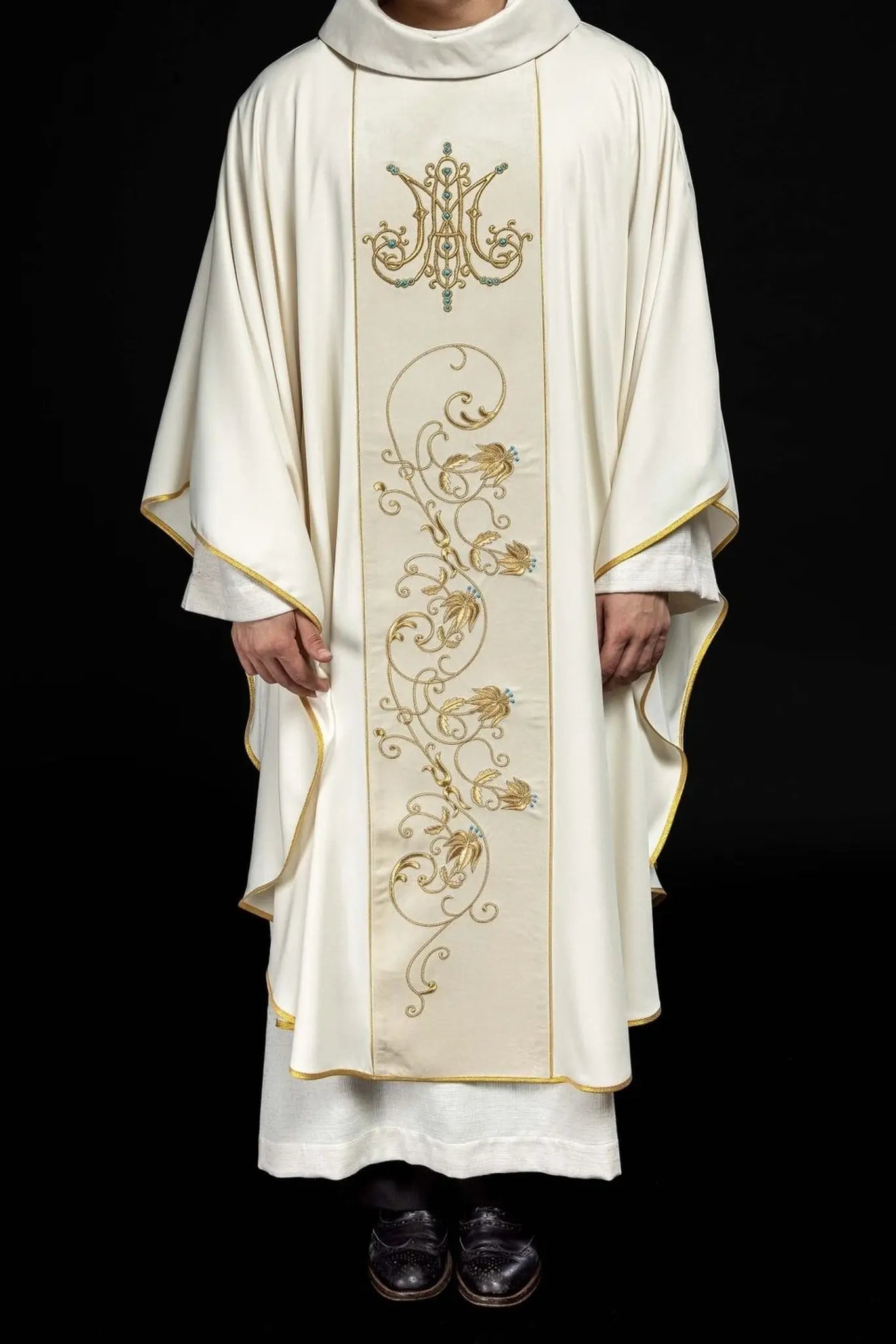
Marian chasubles are Eucharistic vestments prepared for Masses and solemn celebrations connected with the Blessed Virgin Mary. This collection gathers chasubles whose color, embroidery, fabrics, and iconography help express Marian devotion within the liturgy: the purity of Mary, her maternal intercession, her closeness to Christ, and her place in the prayer of the Church. They are intended for priests and bishops celebrating Mass on Marian feasts, parish patronal days, votive Masses of the Blessed Virgin Mary, pilgrimages, novenas, anniversaries of Marian shrines, and other occasions where the liturgical calendar or local devotion calls attention to the Mother of God.
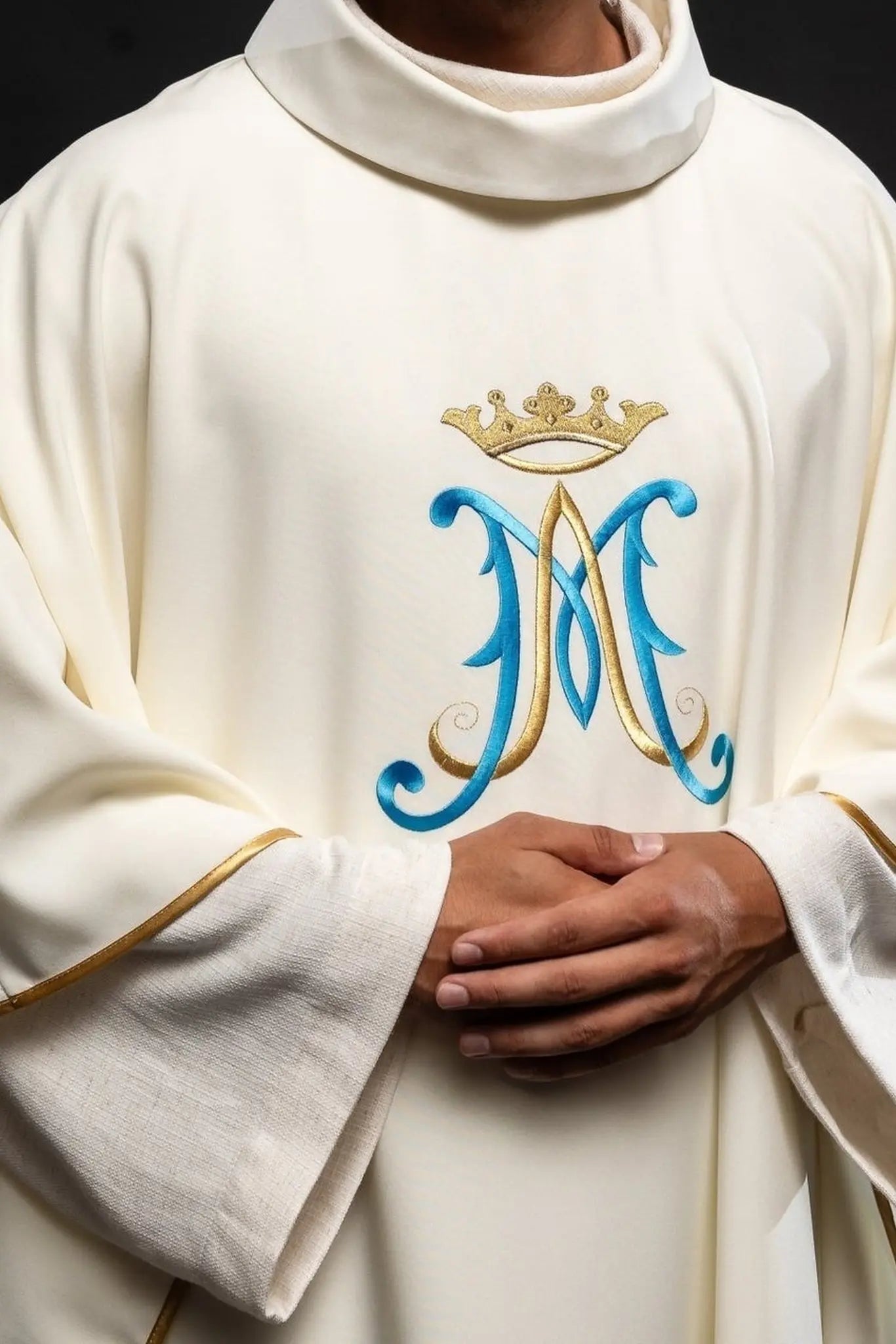
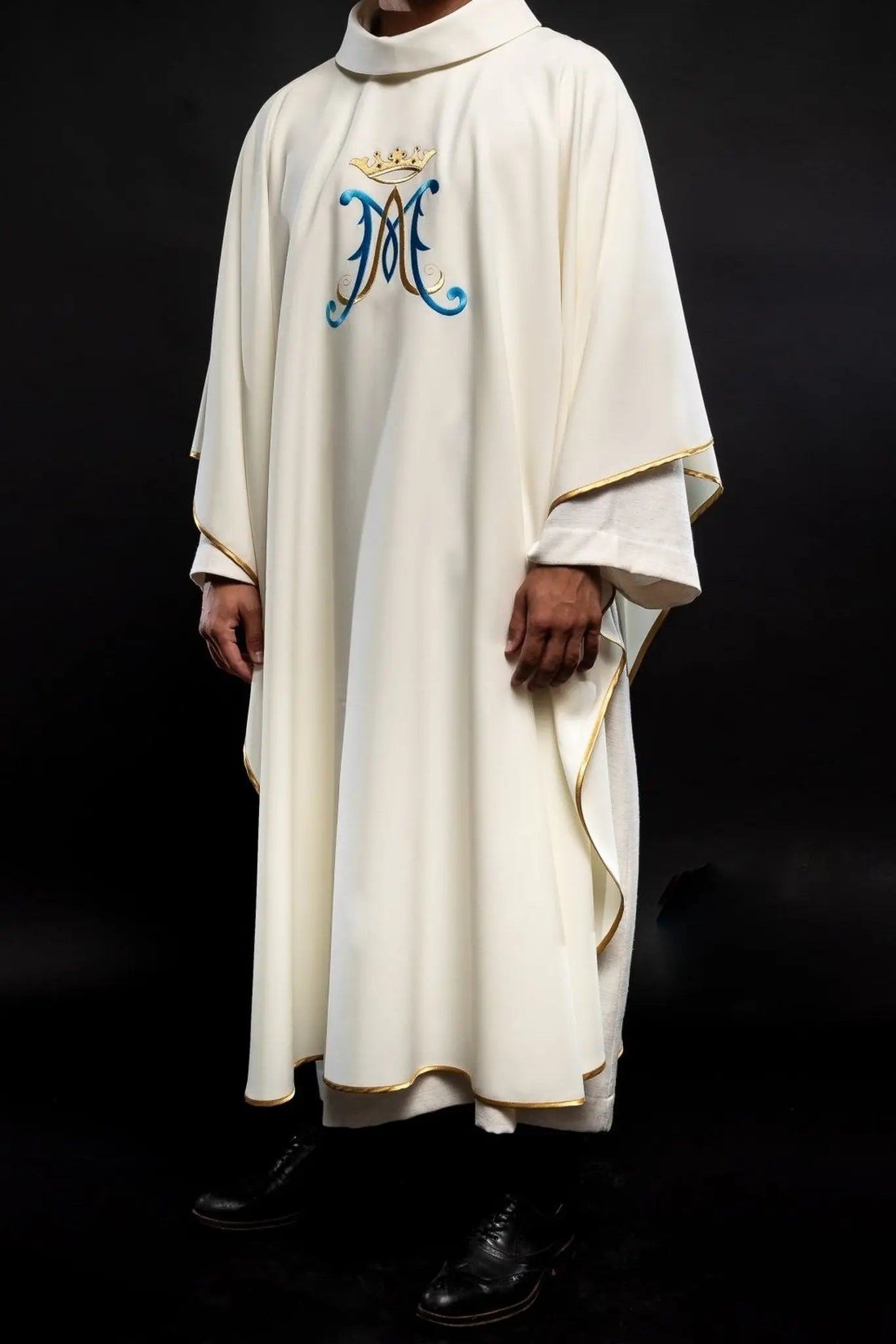
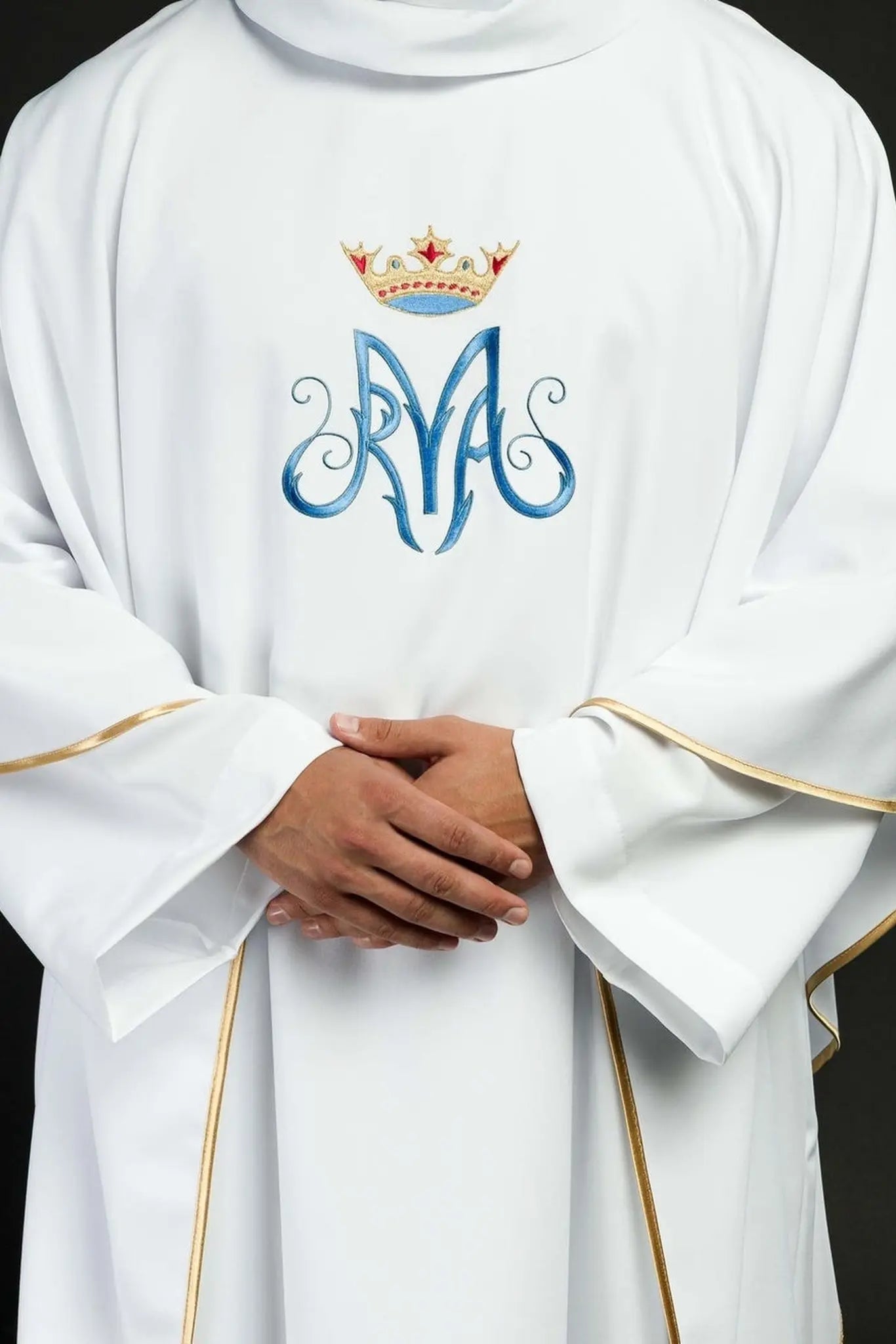
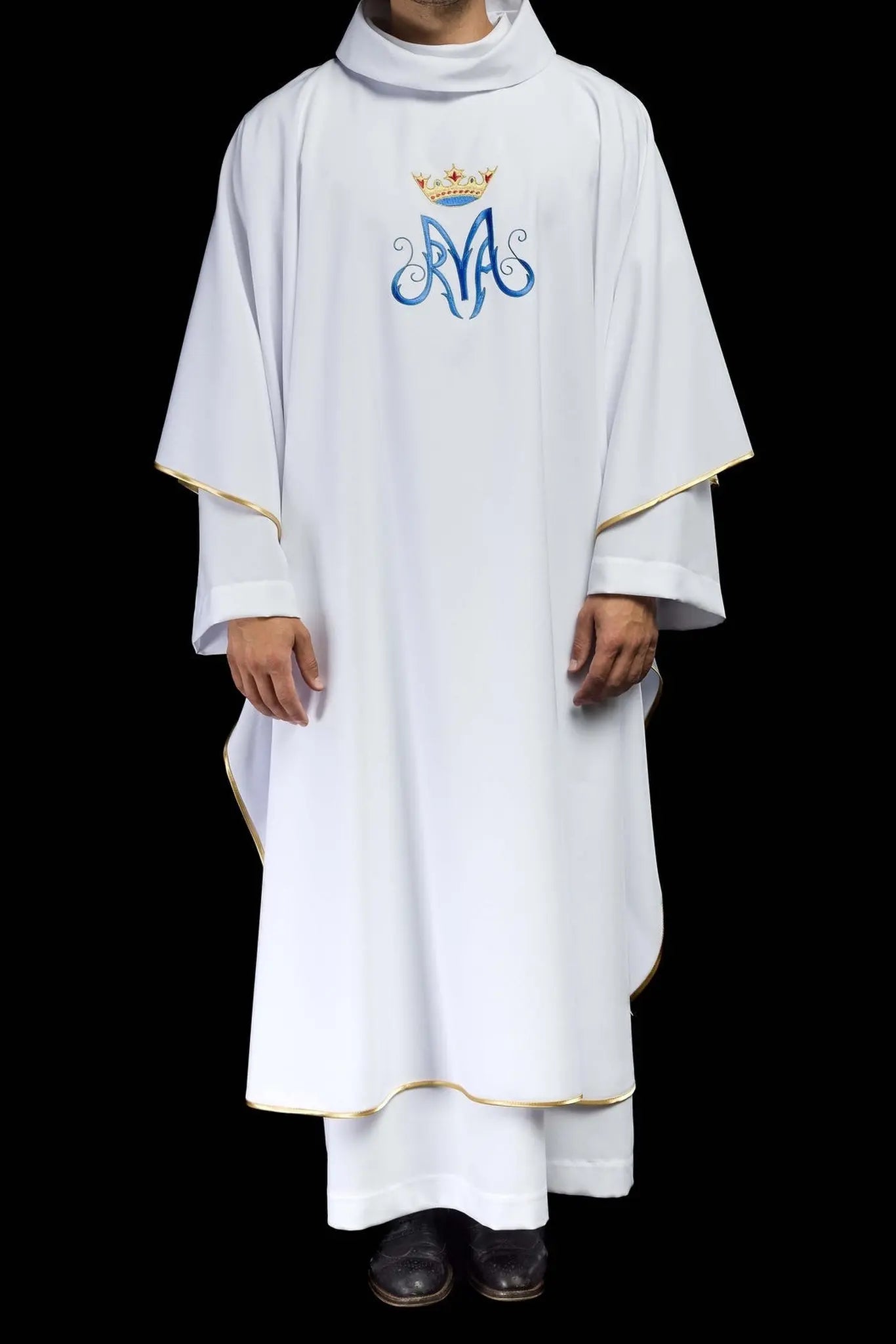
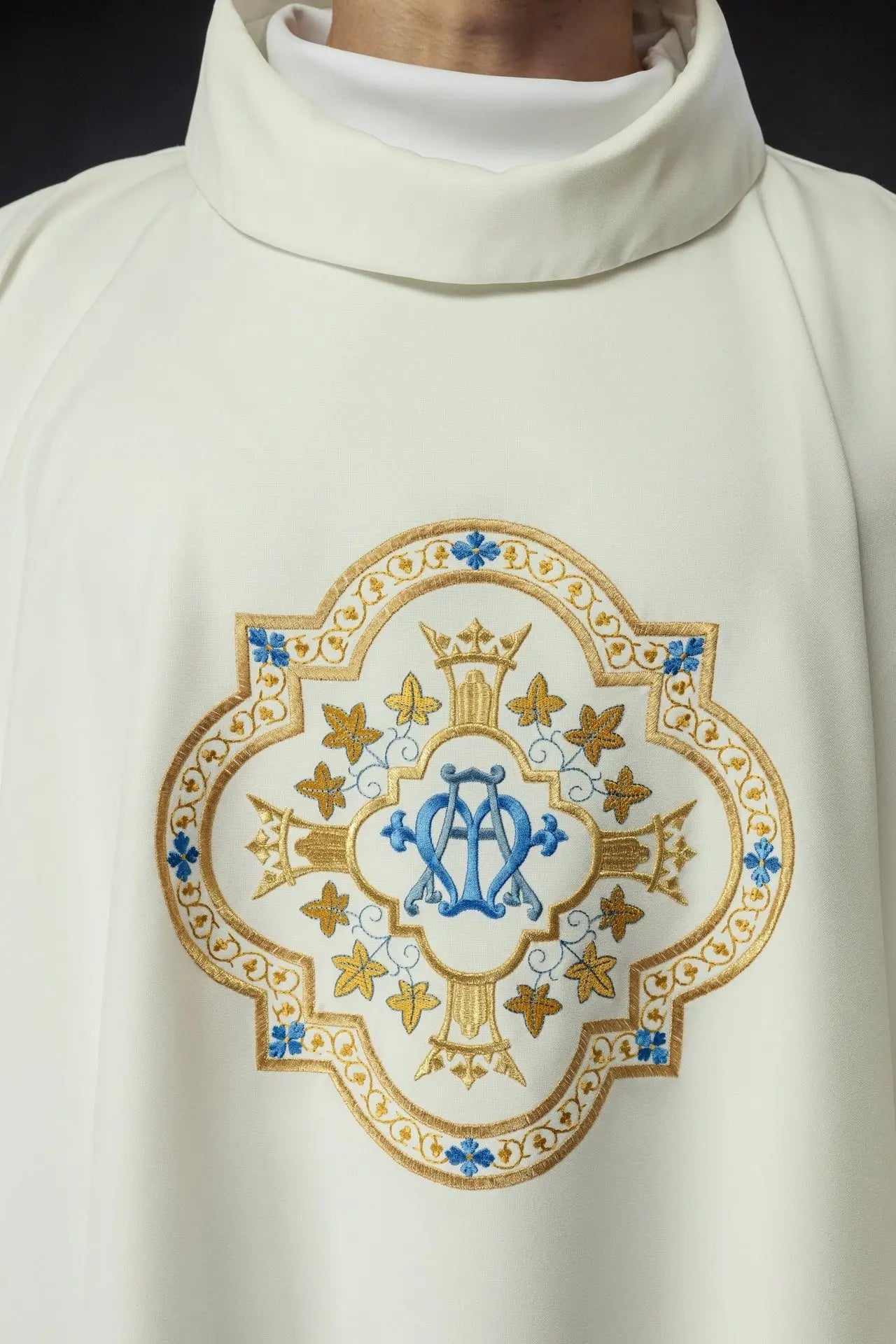
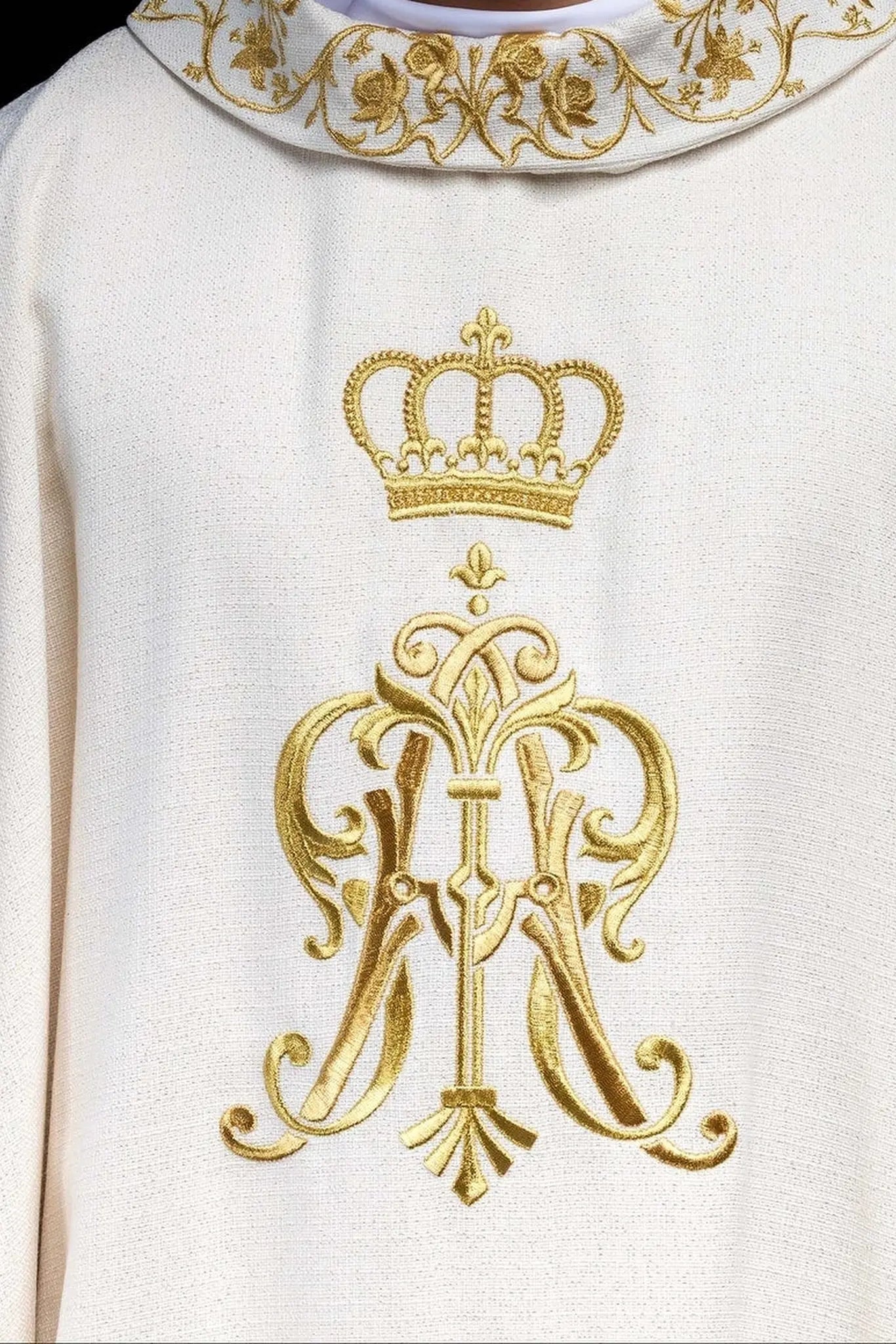
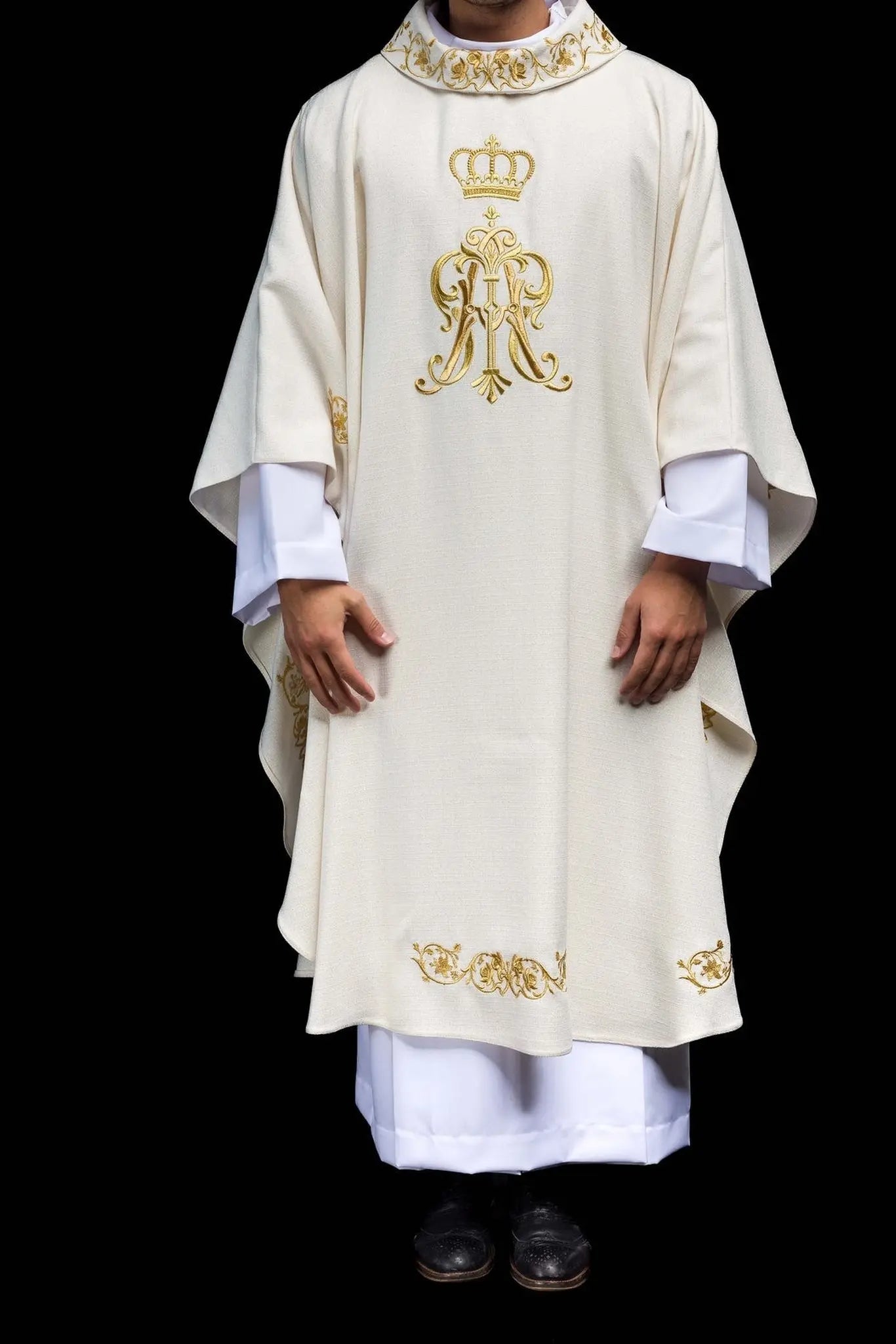
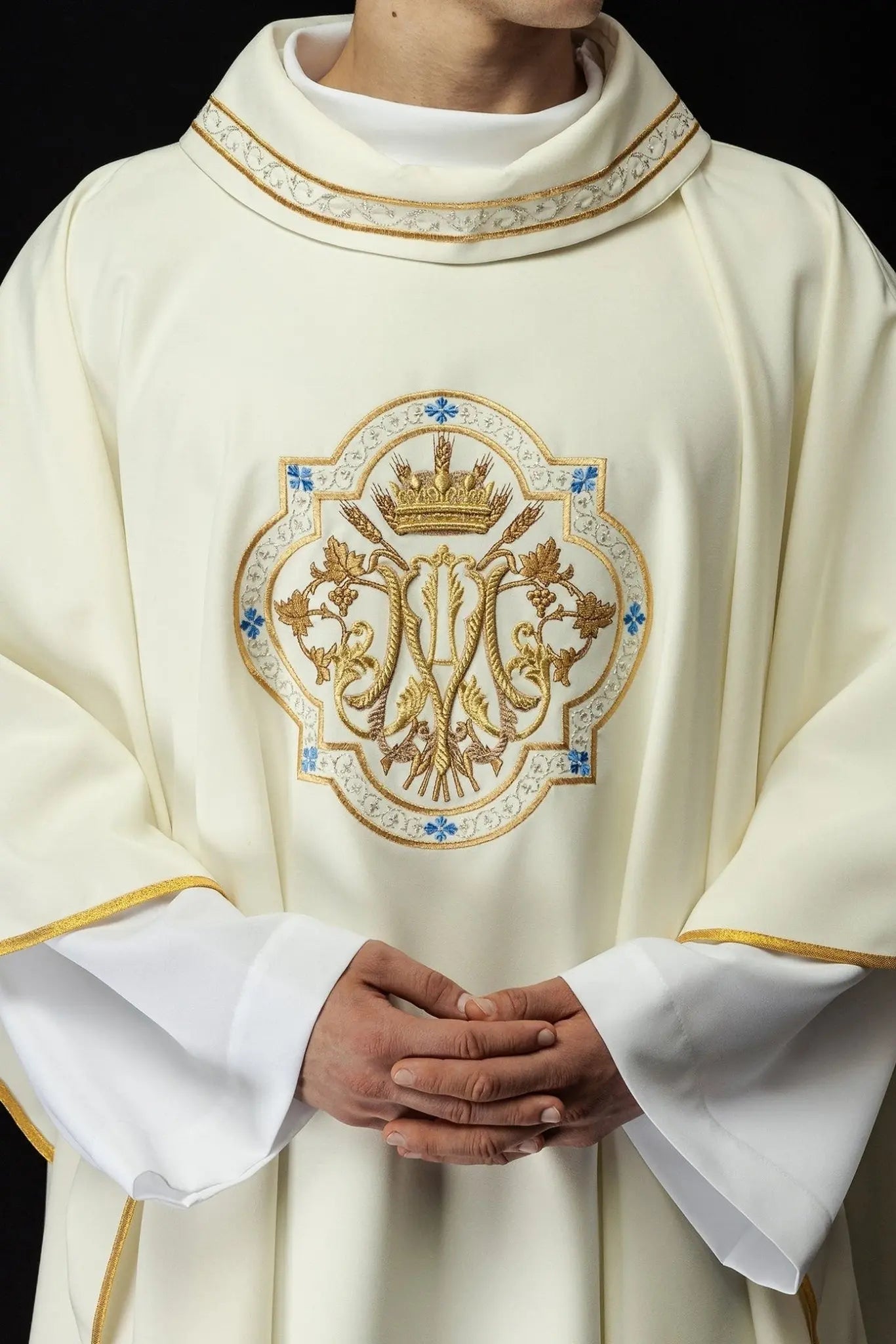
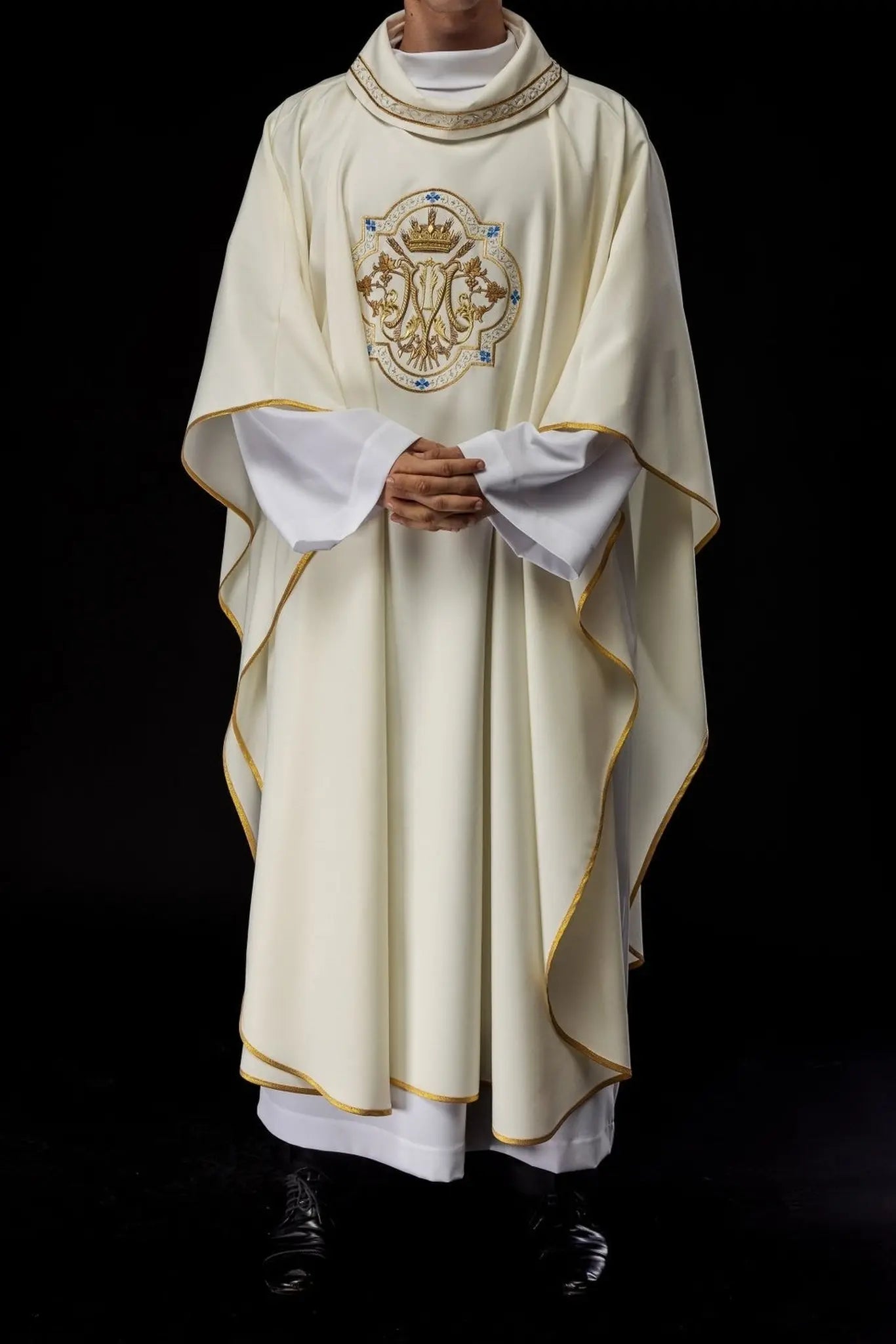
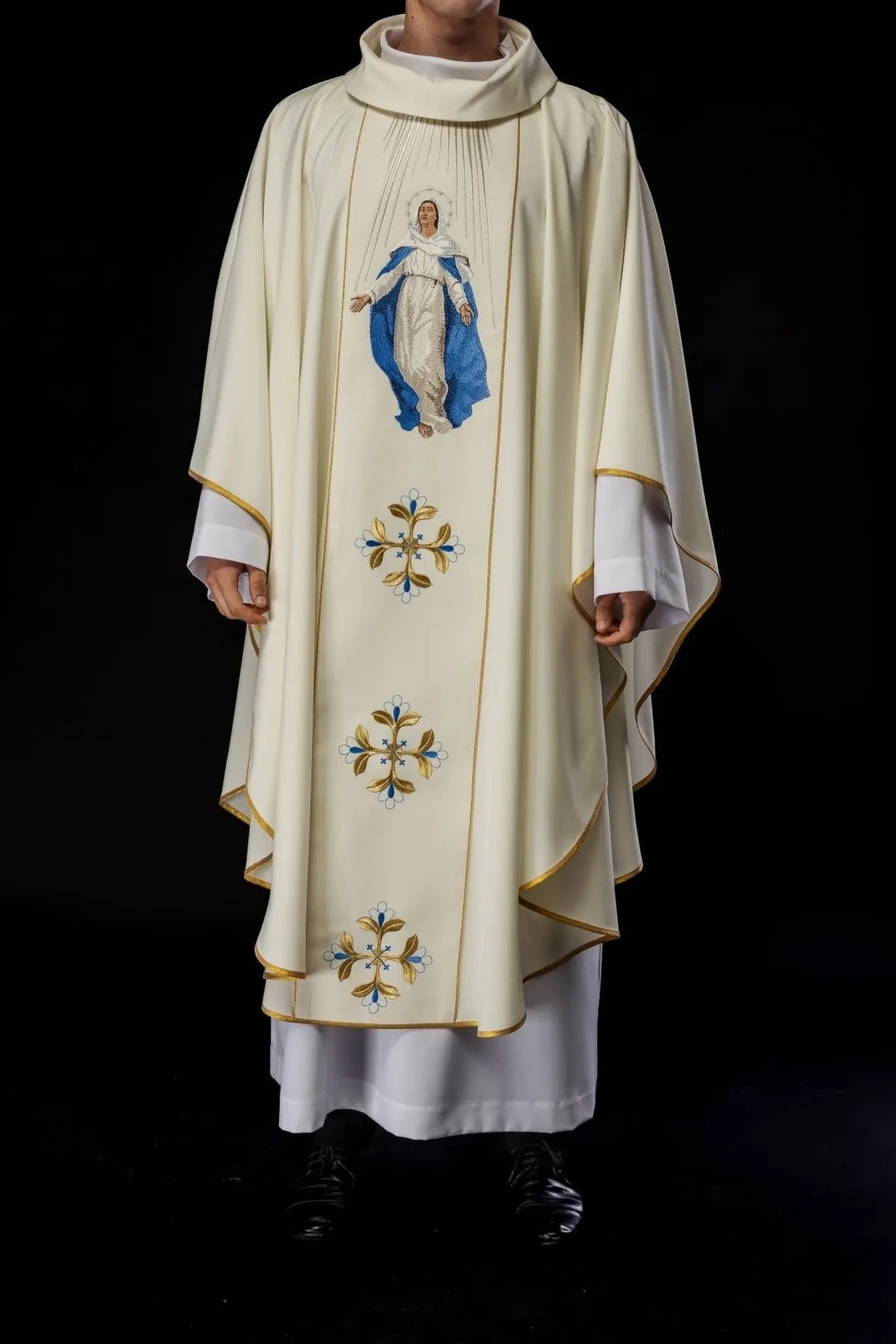
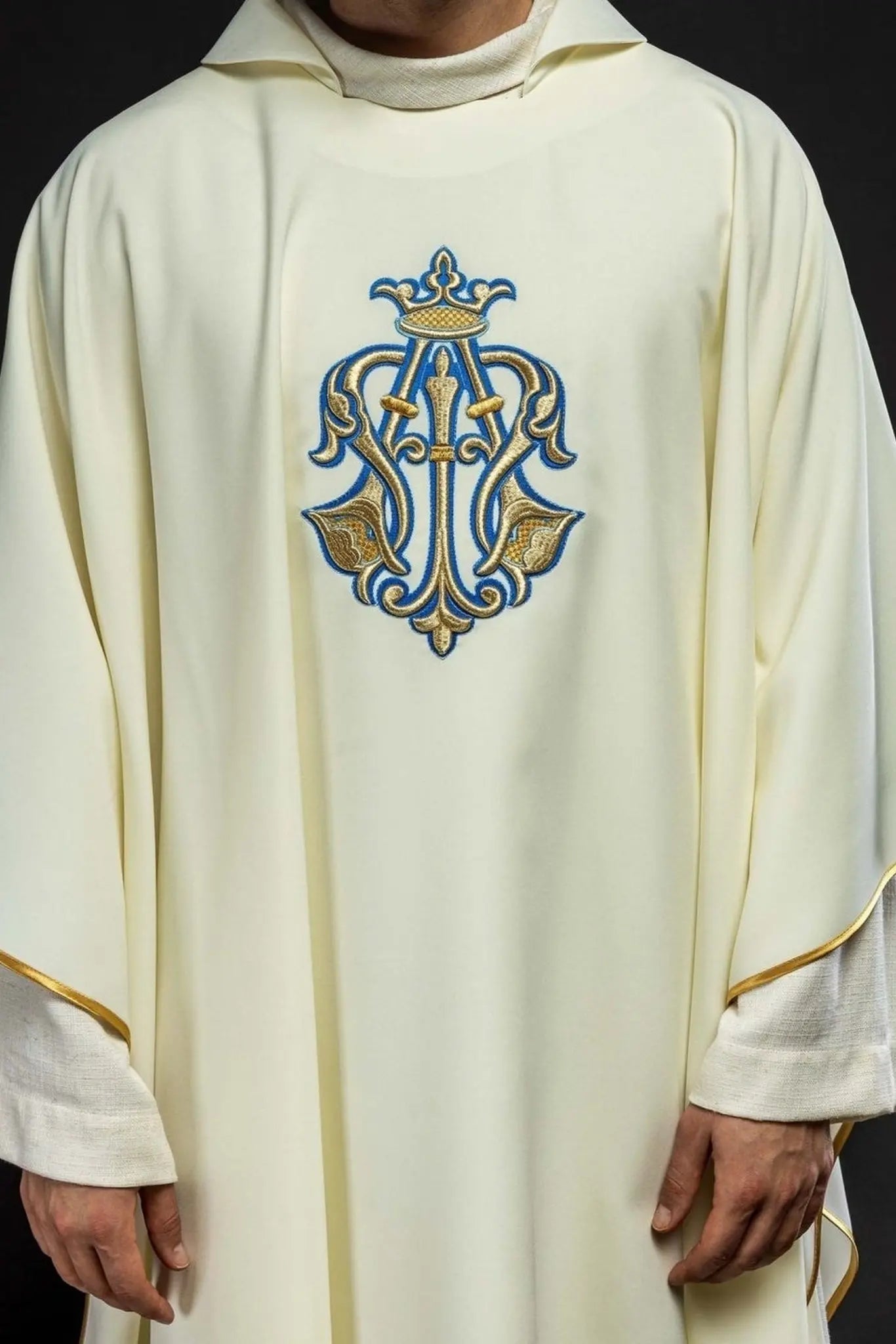
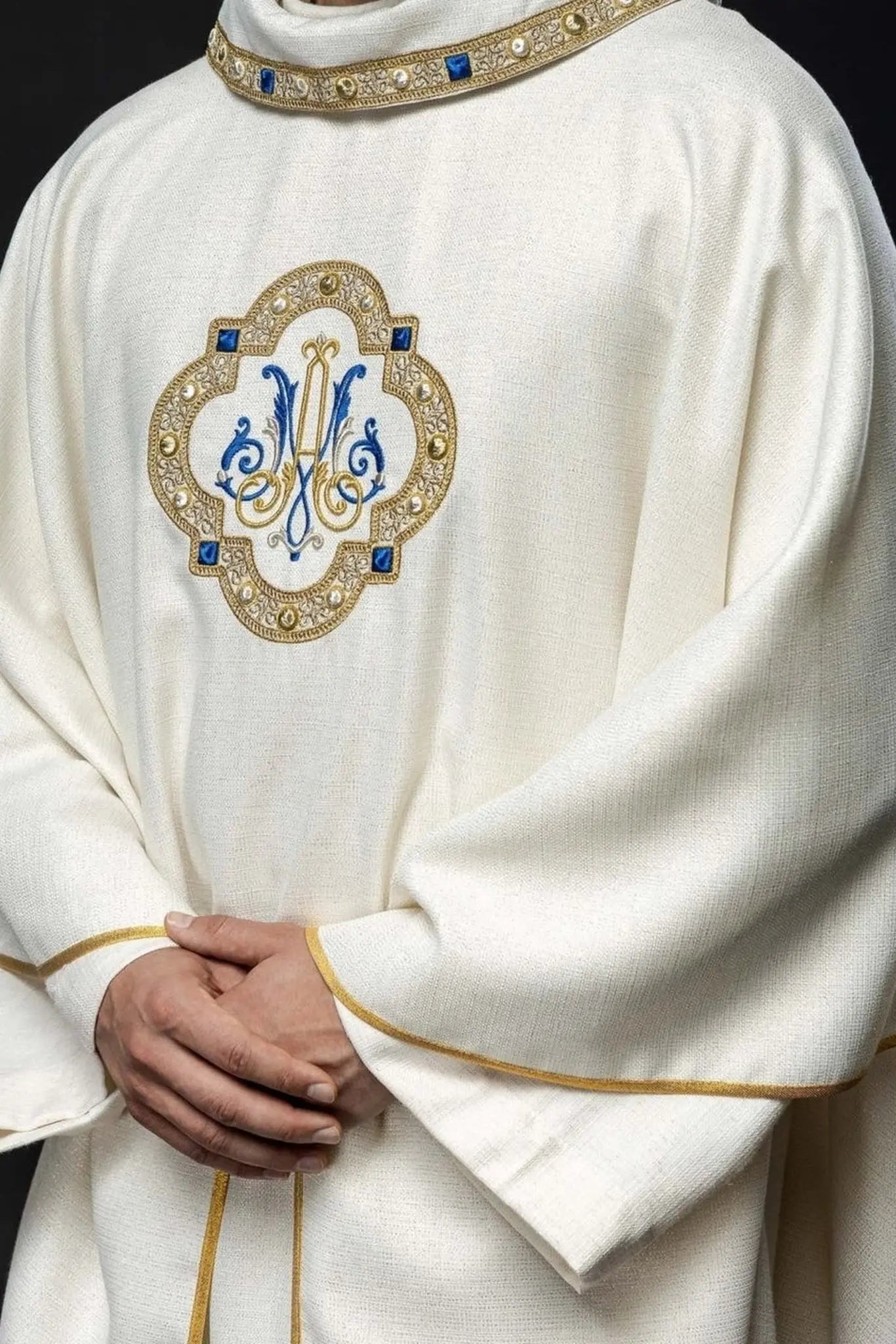
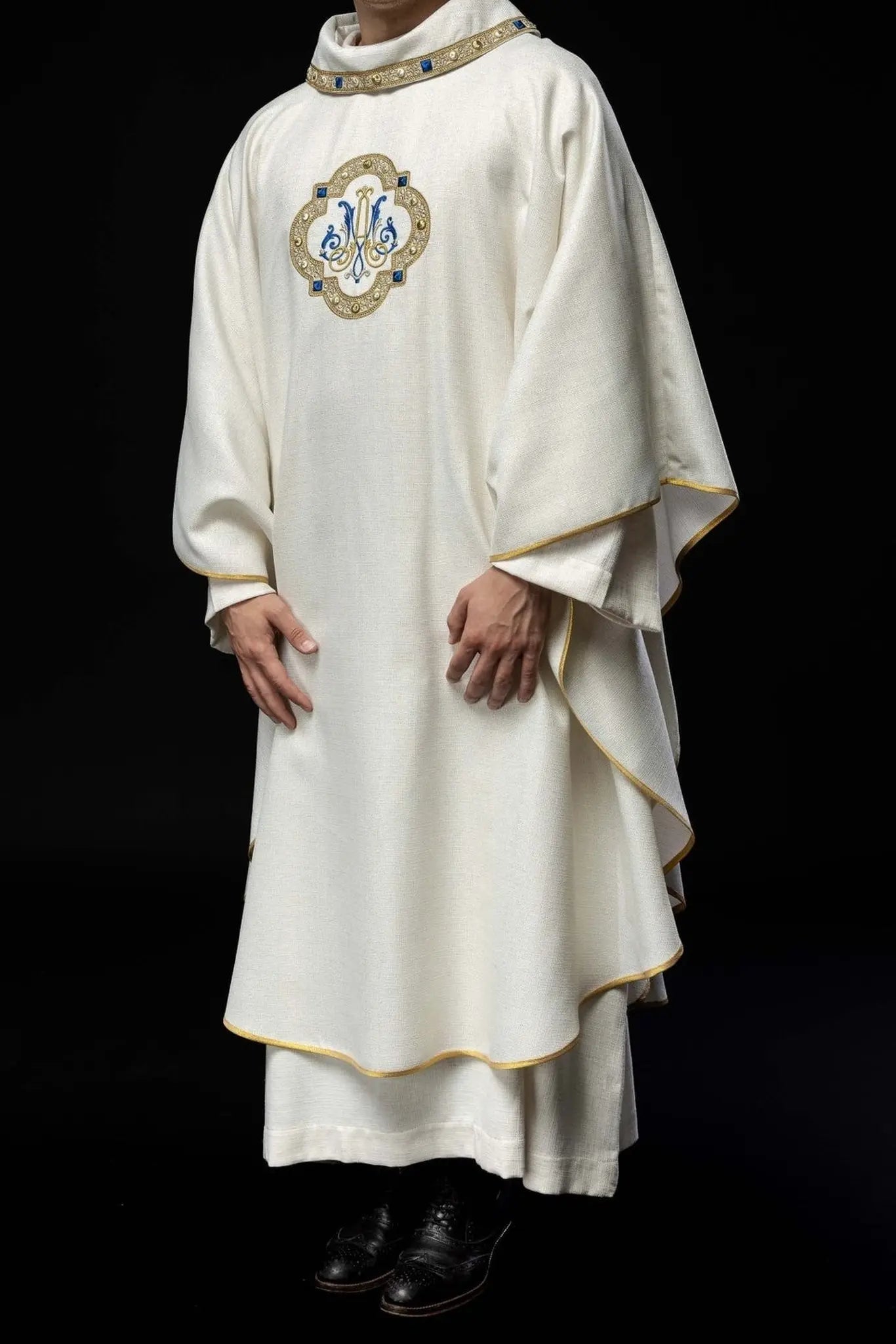
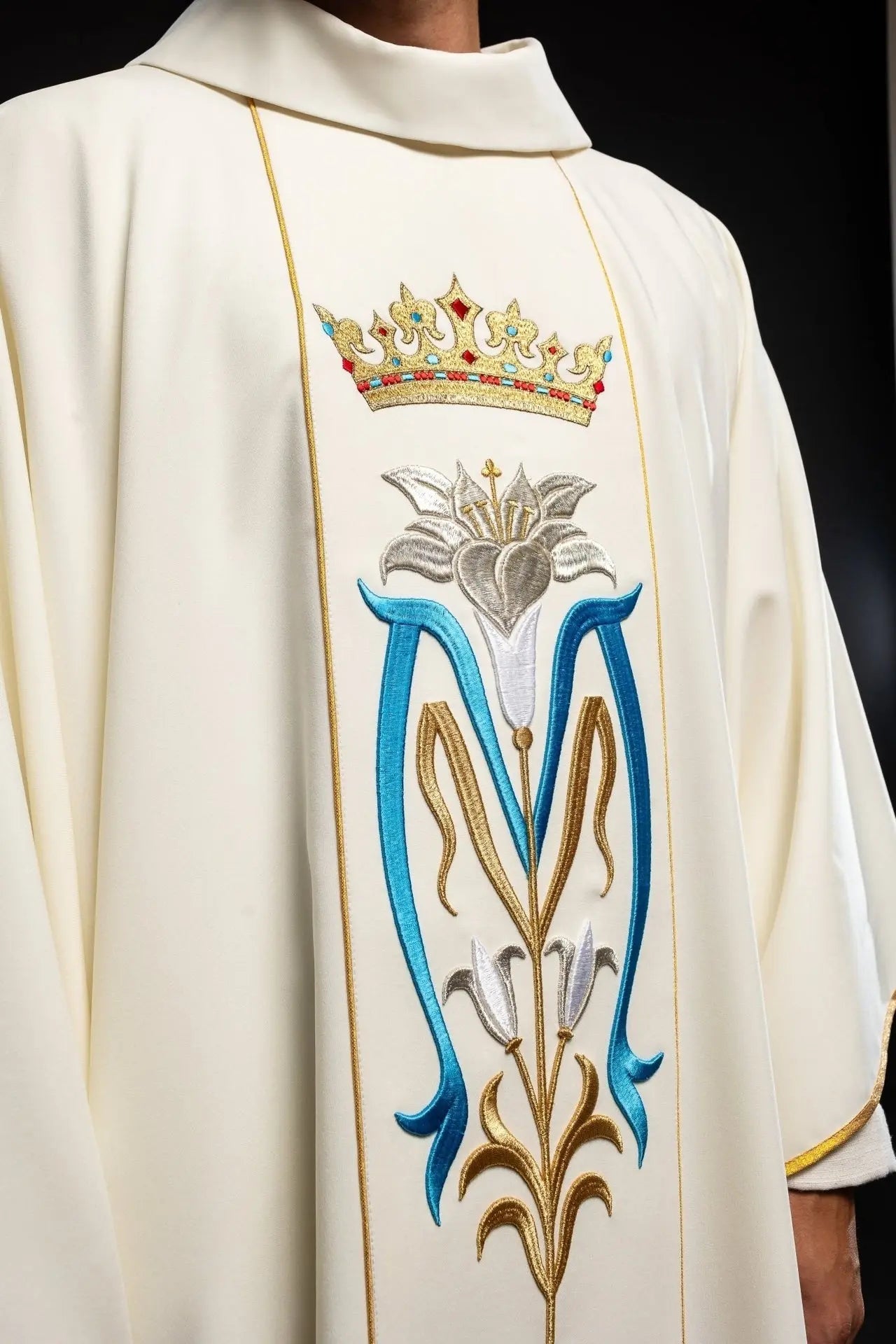
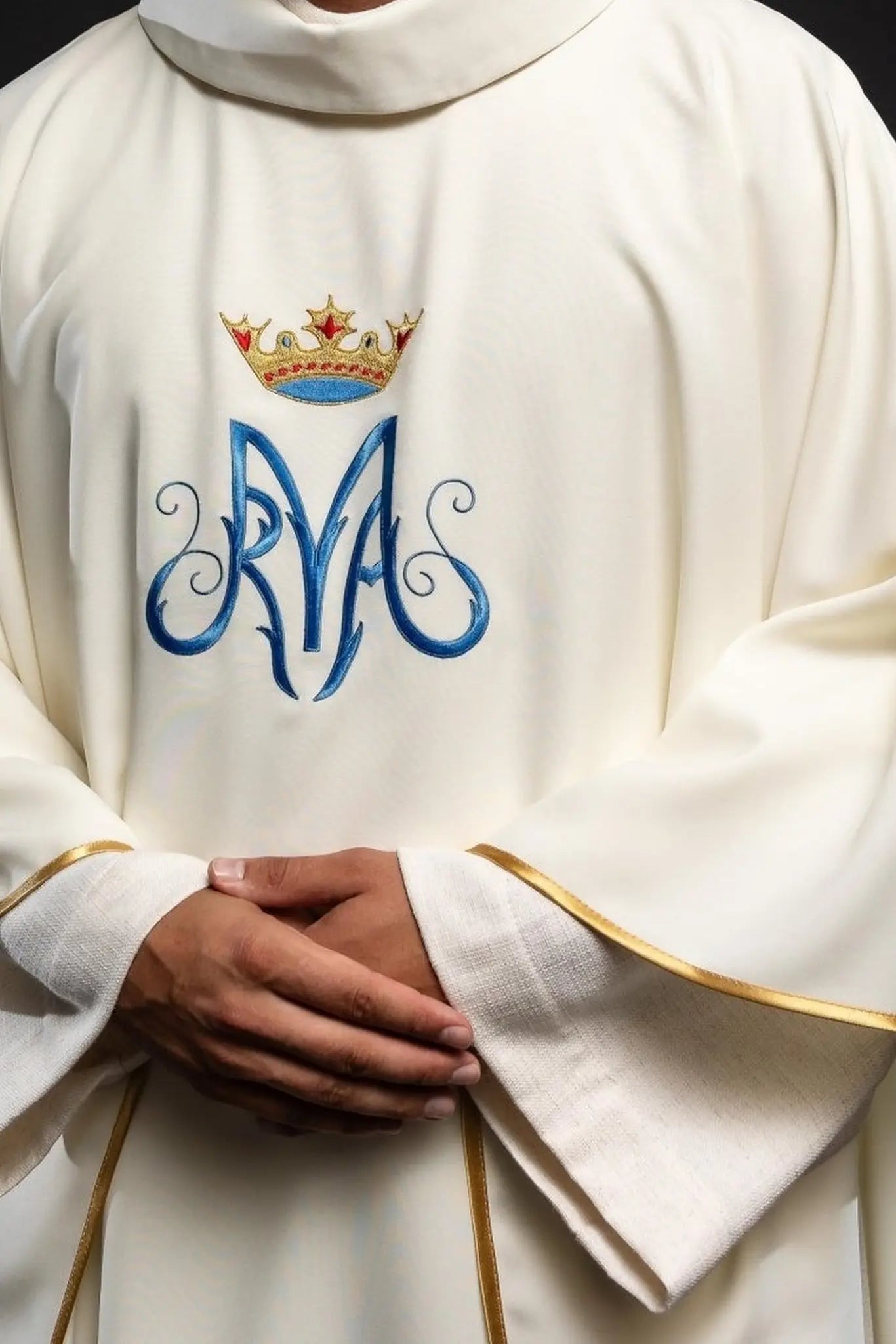
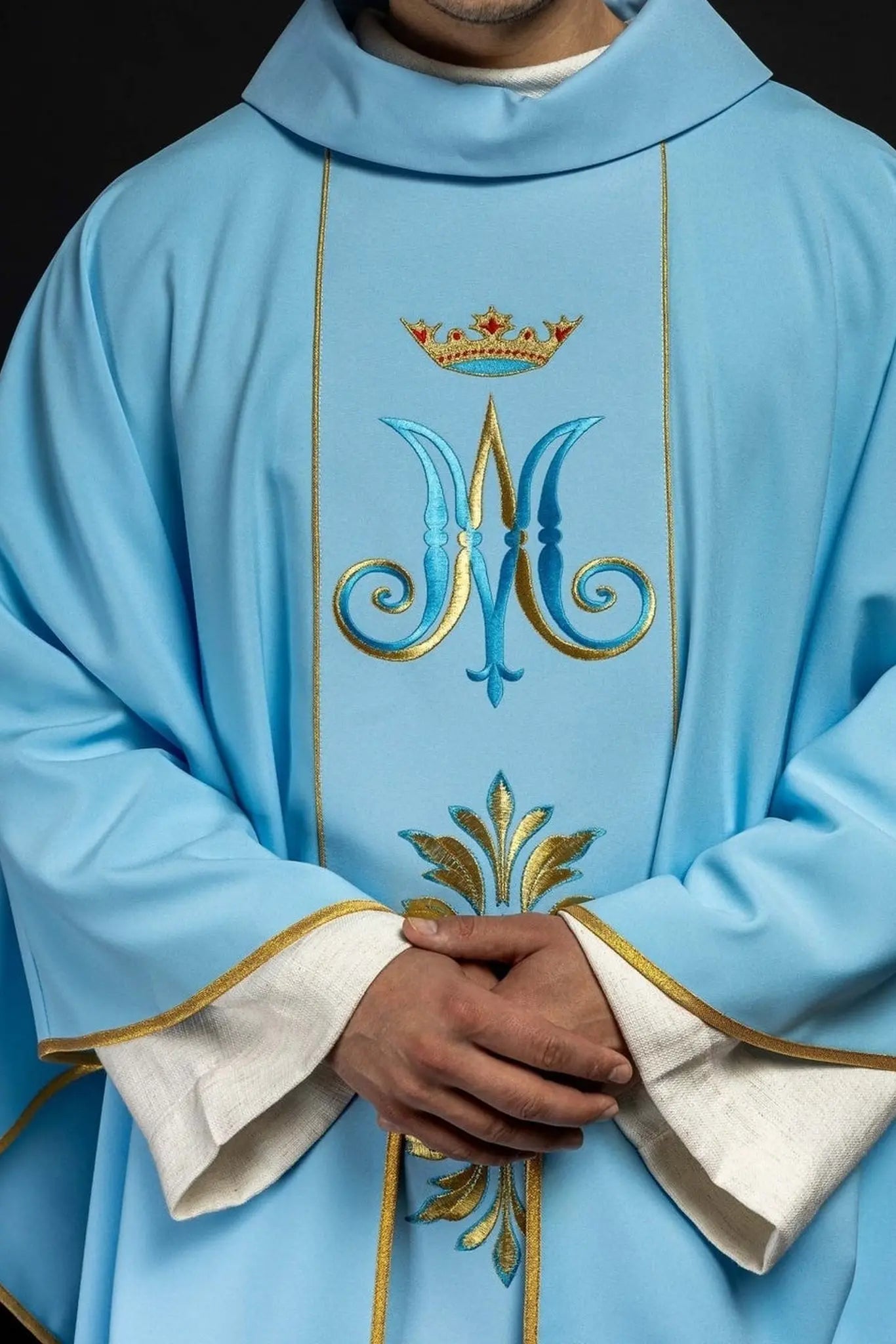
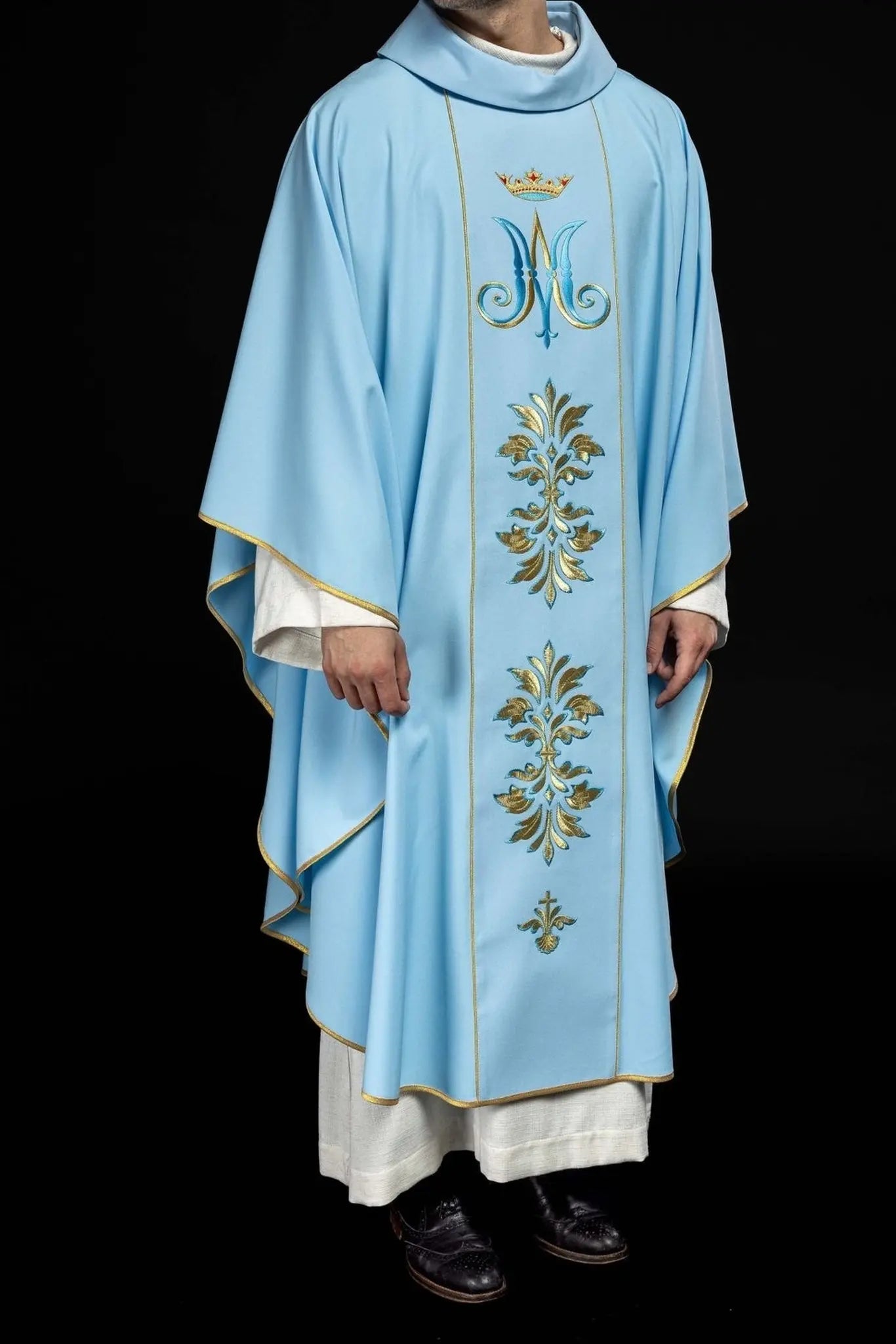
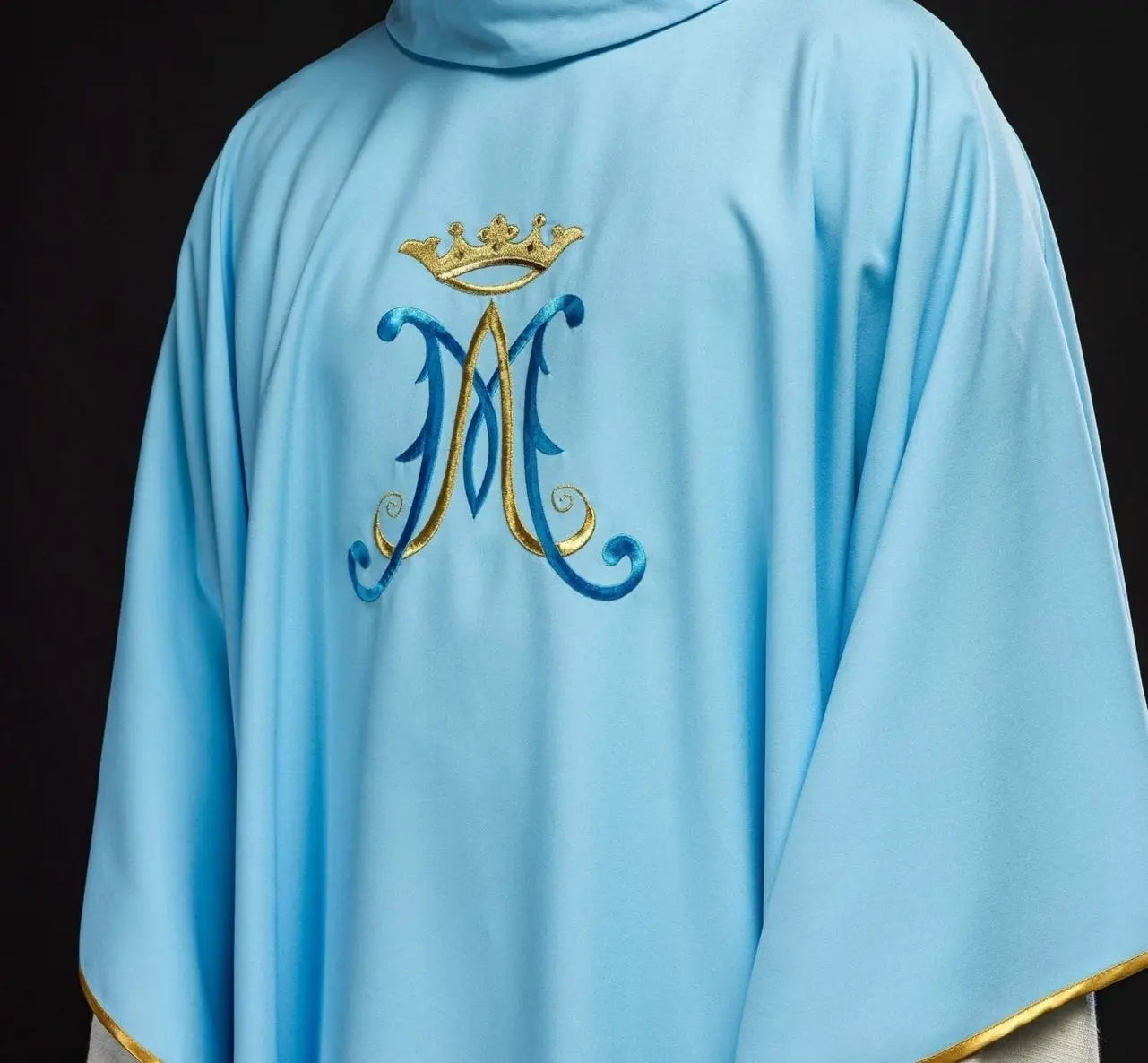
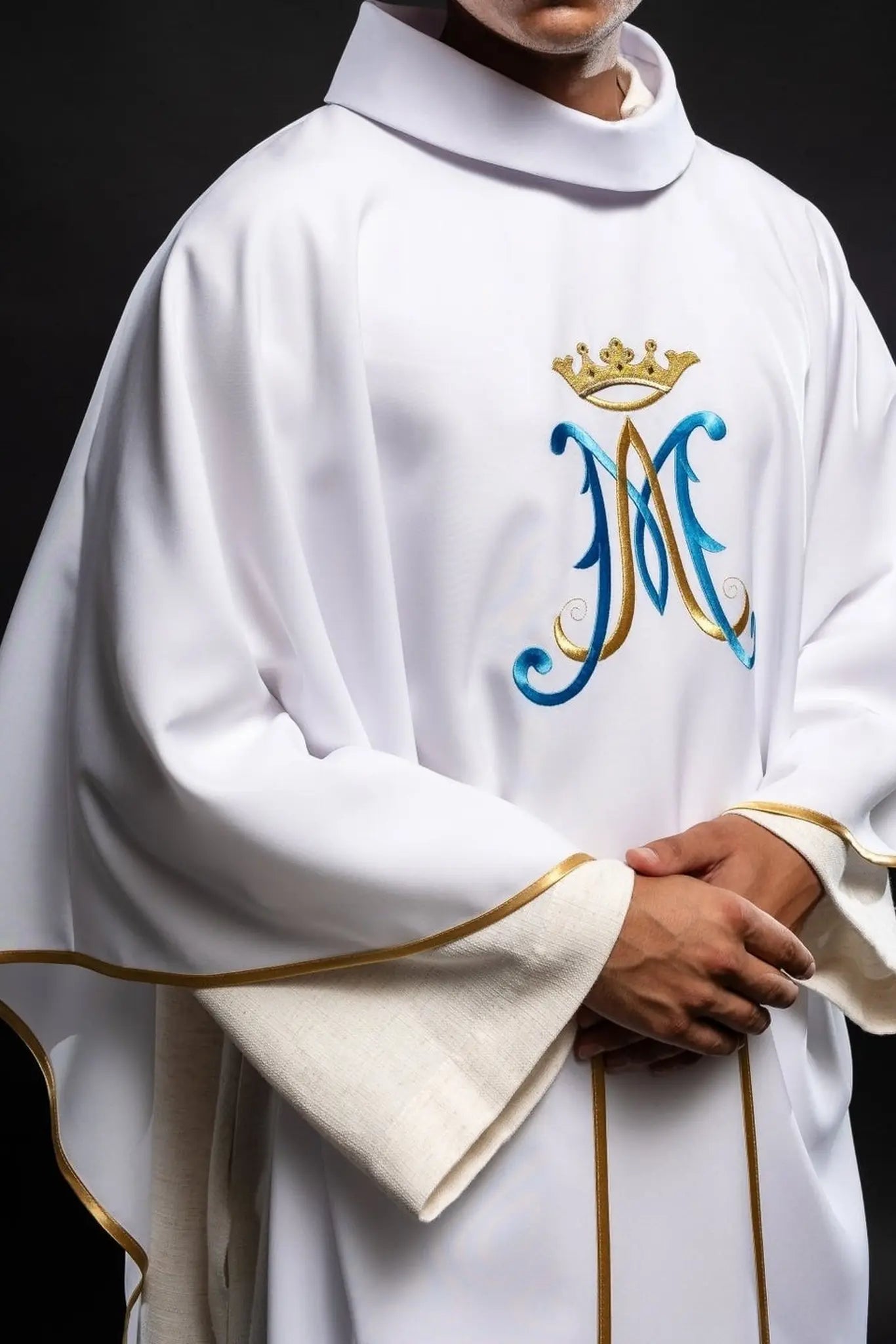
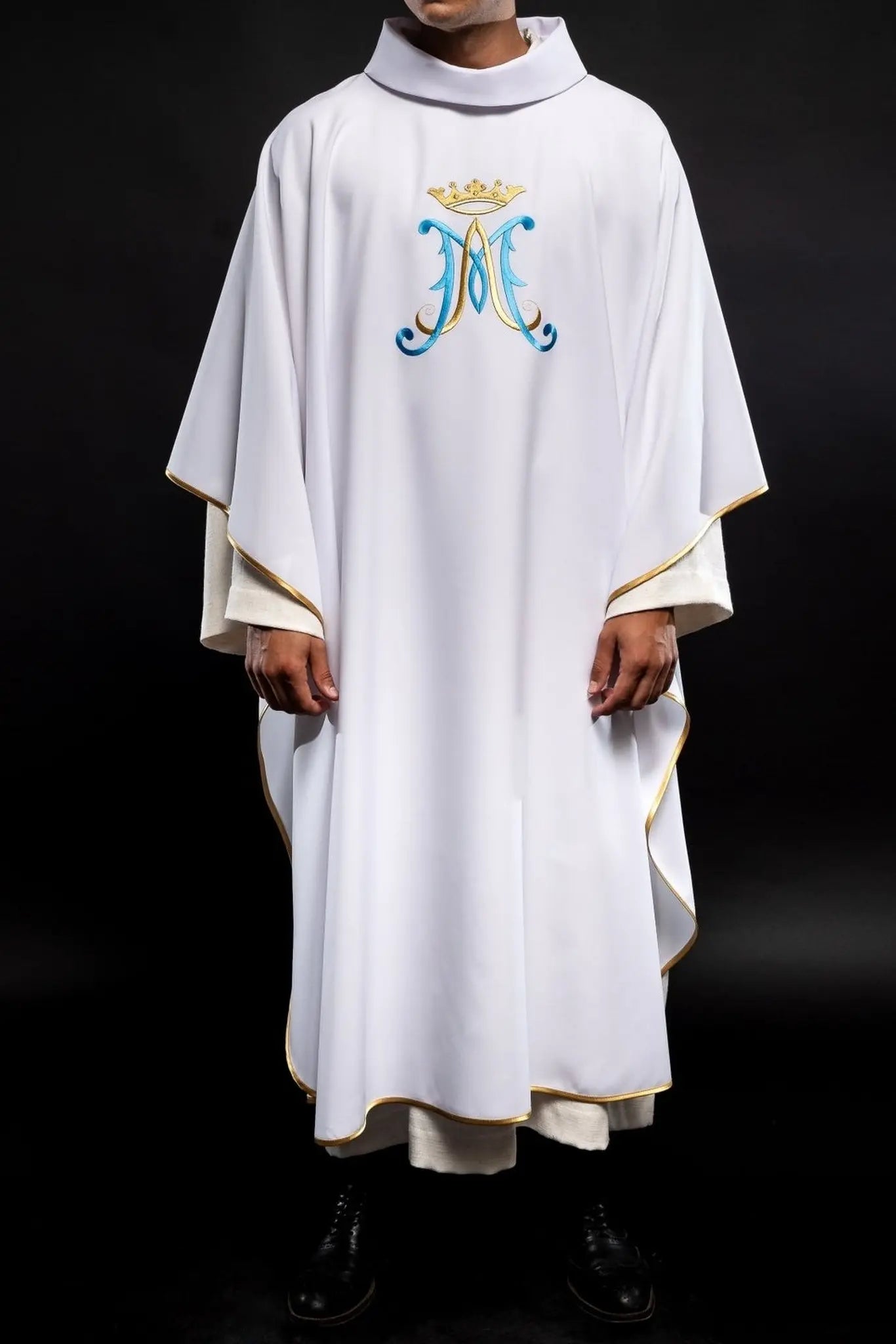
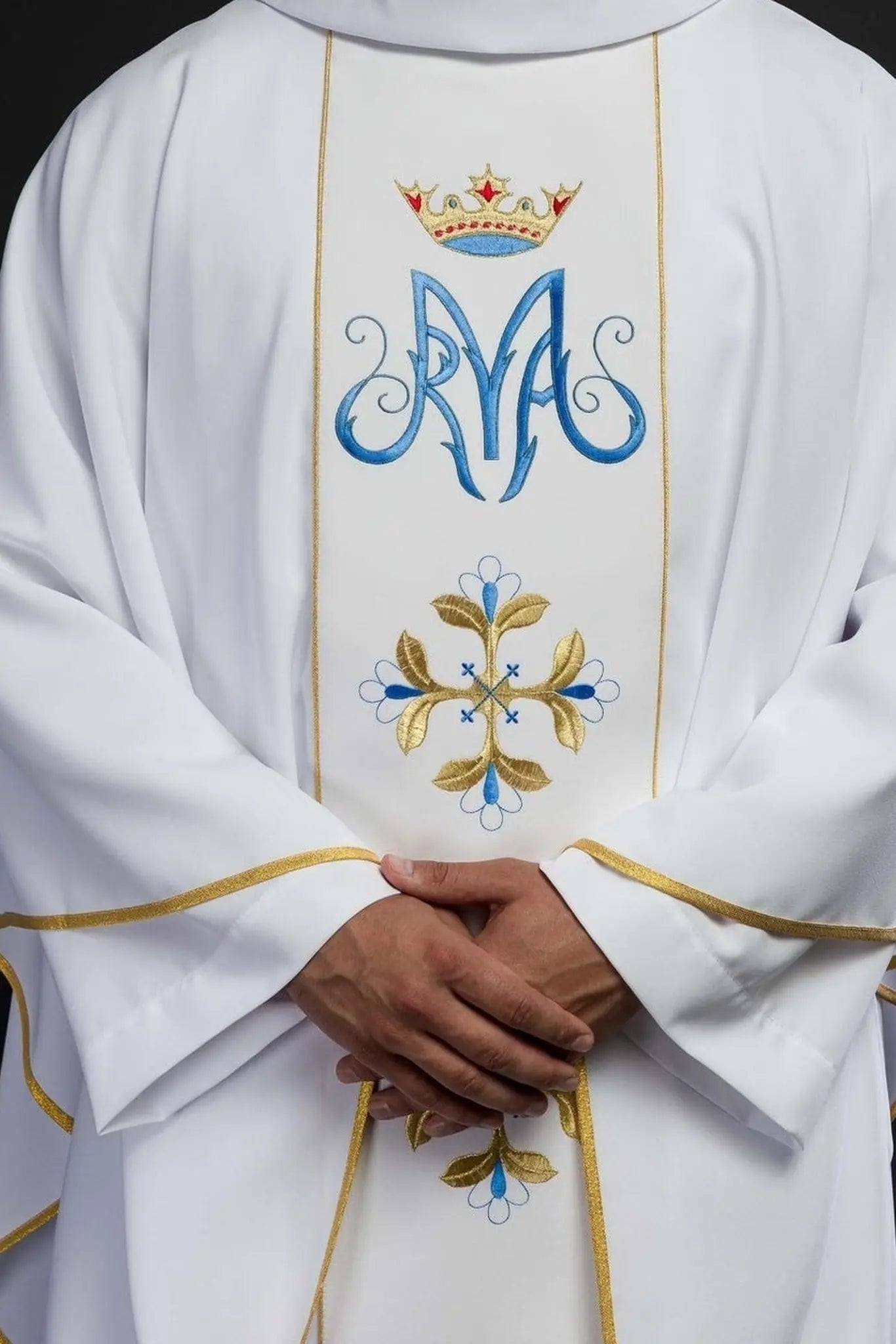
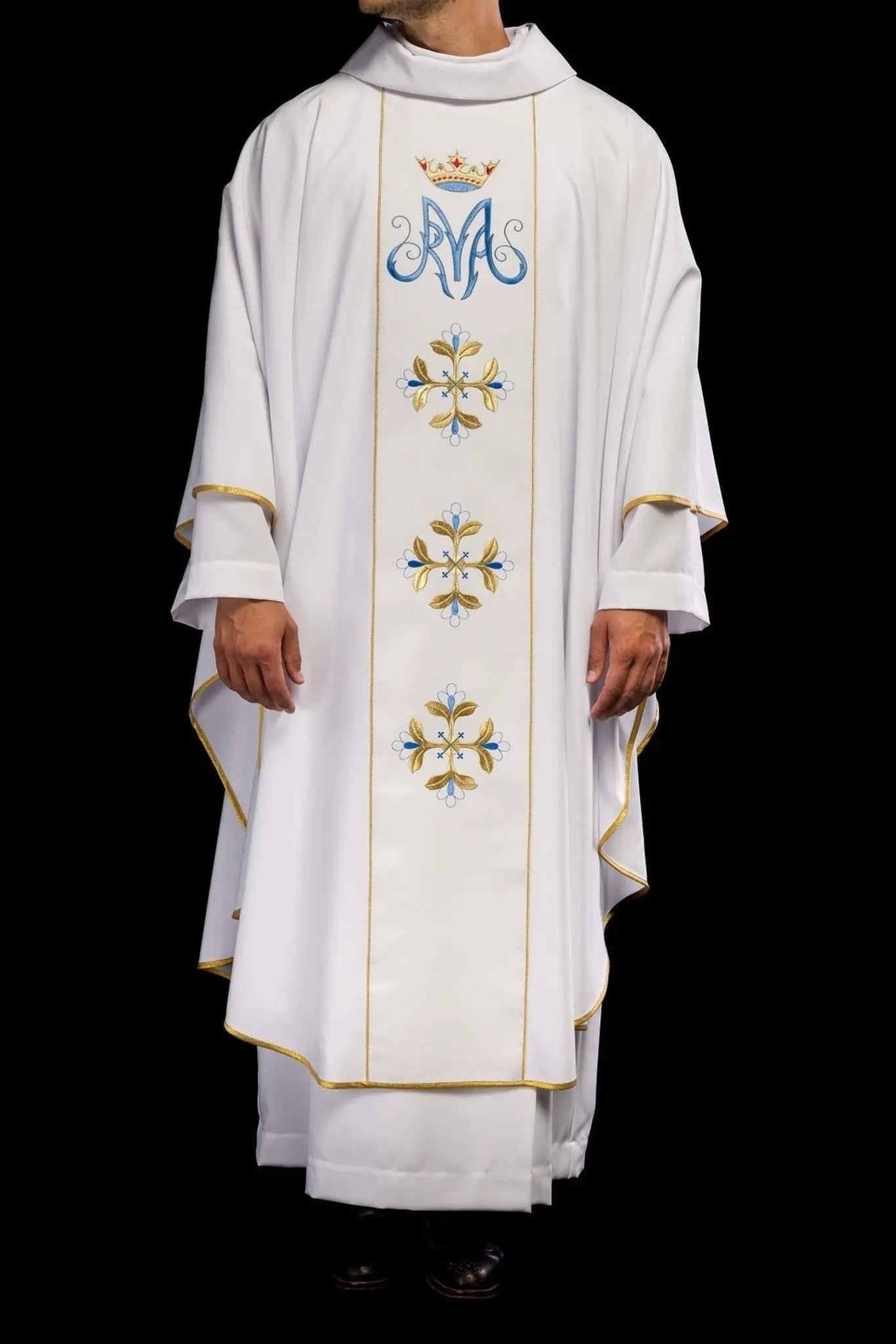
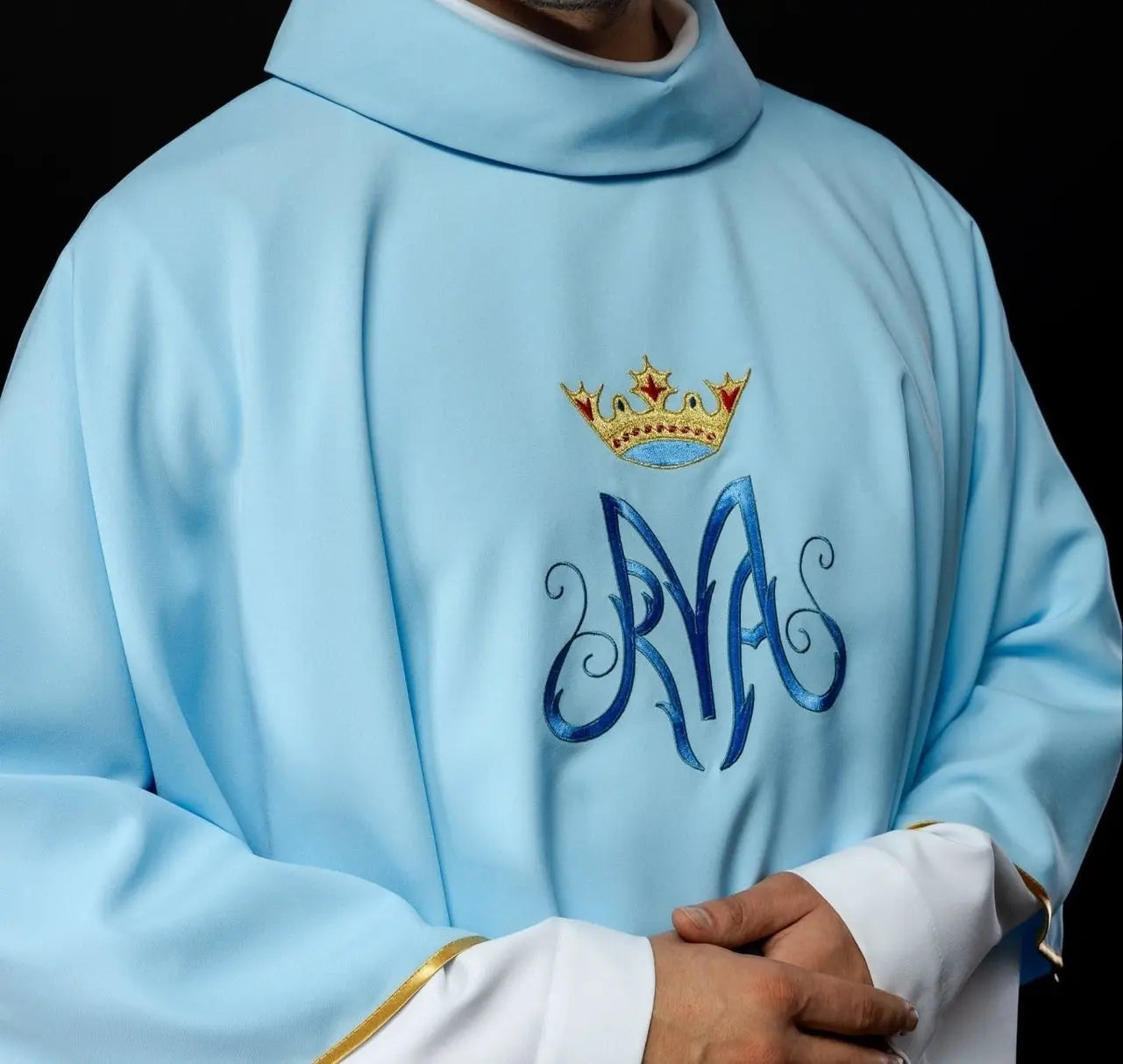
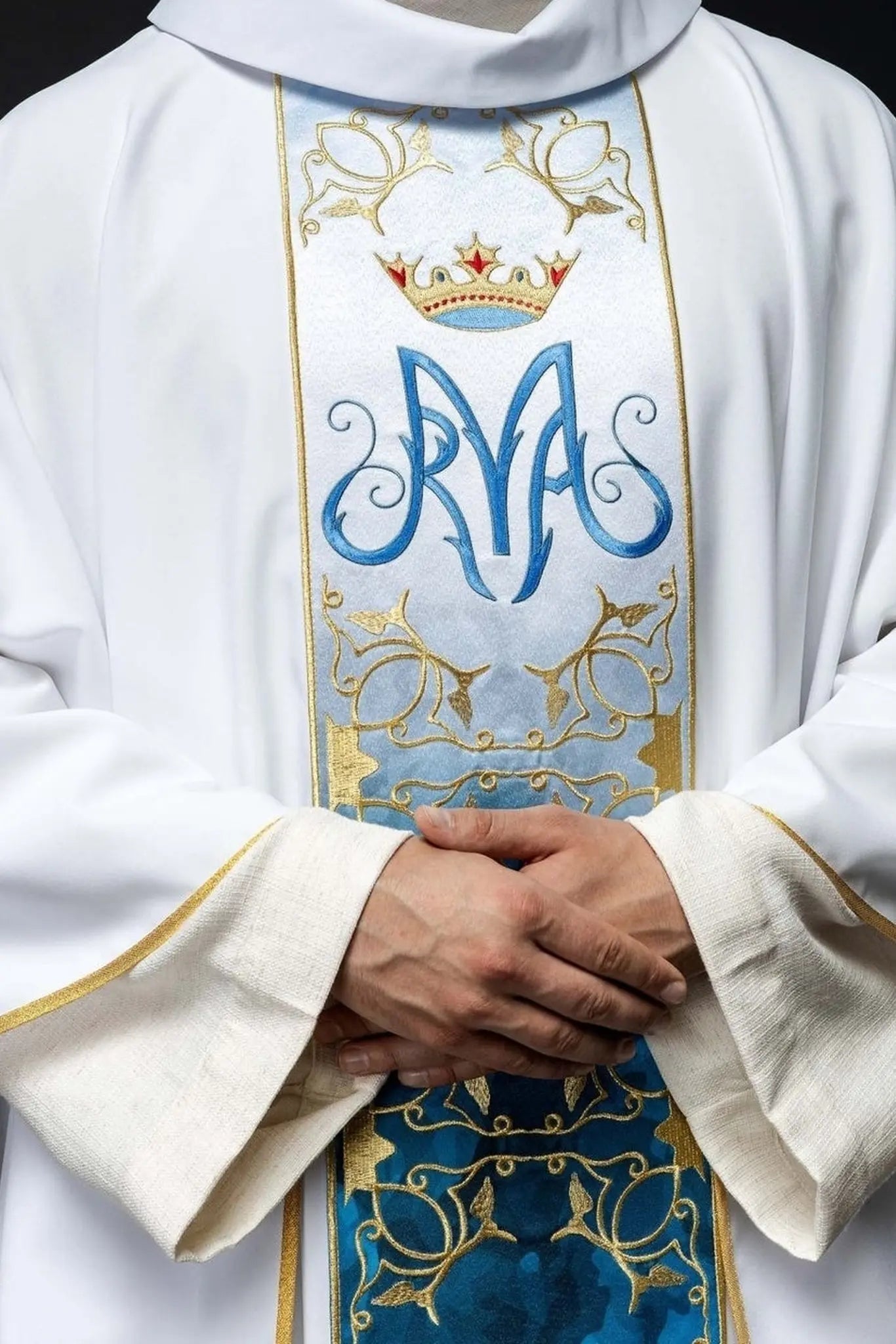
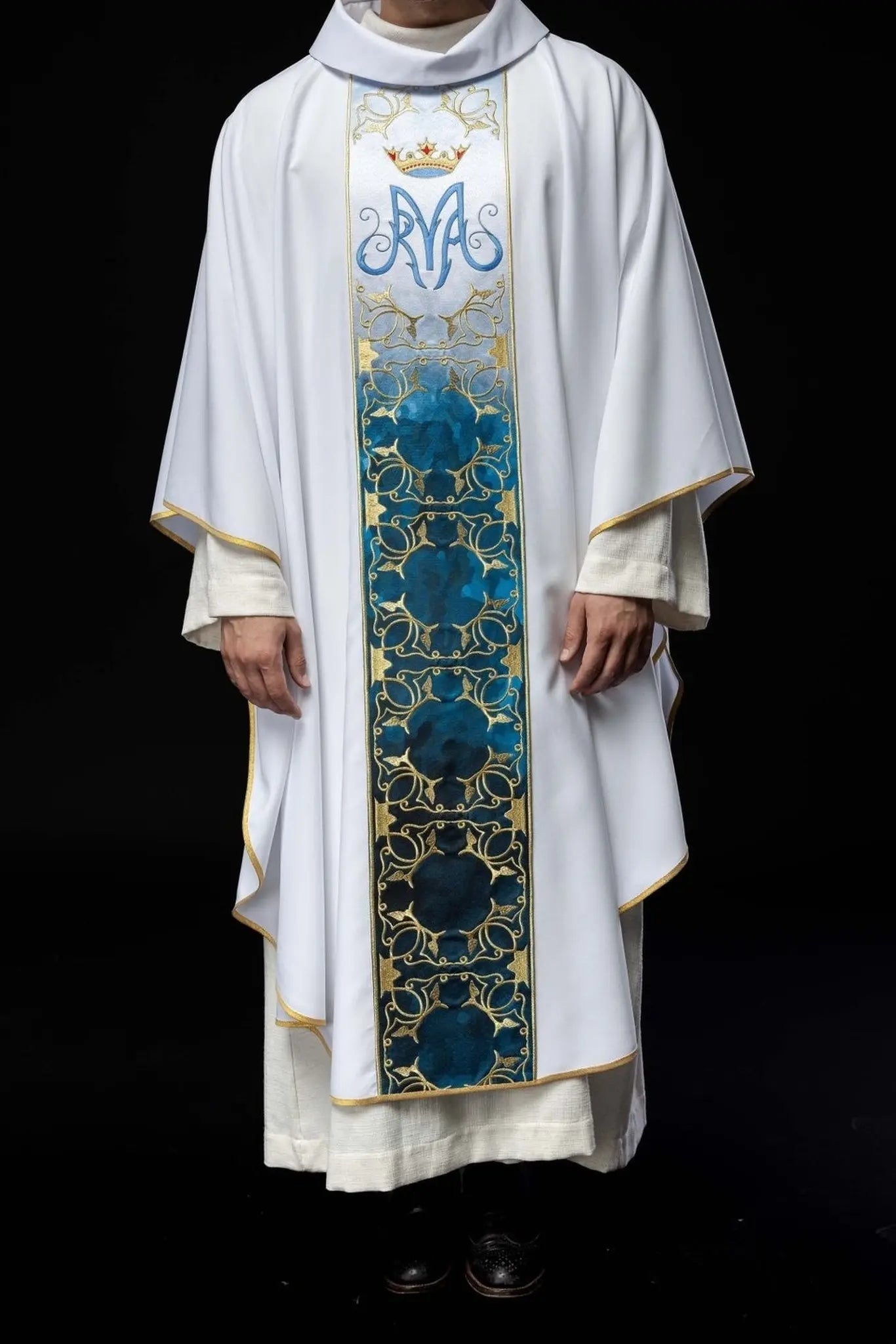
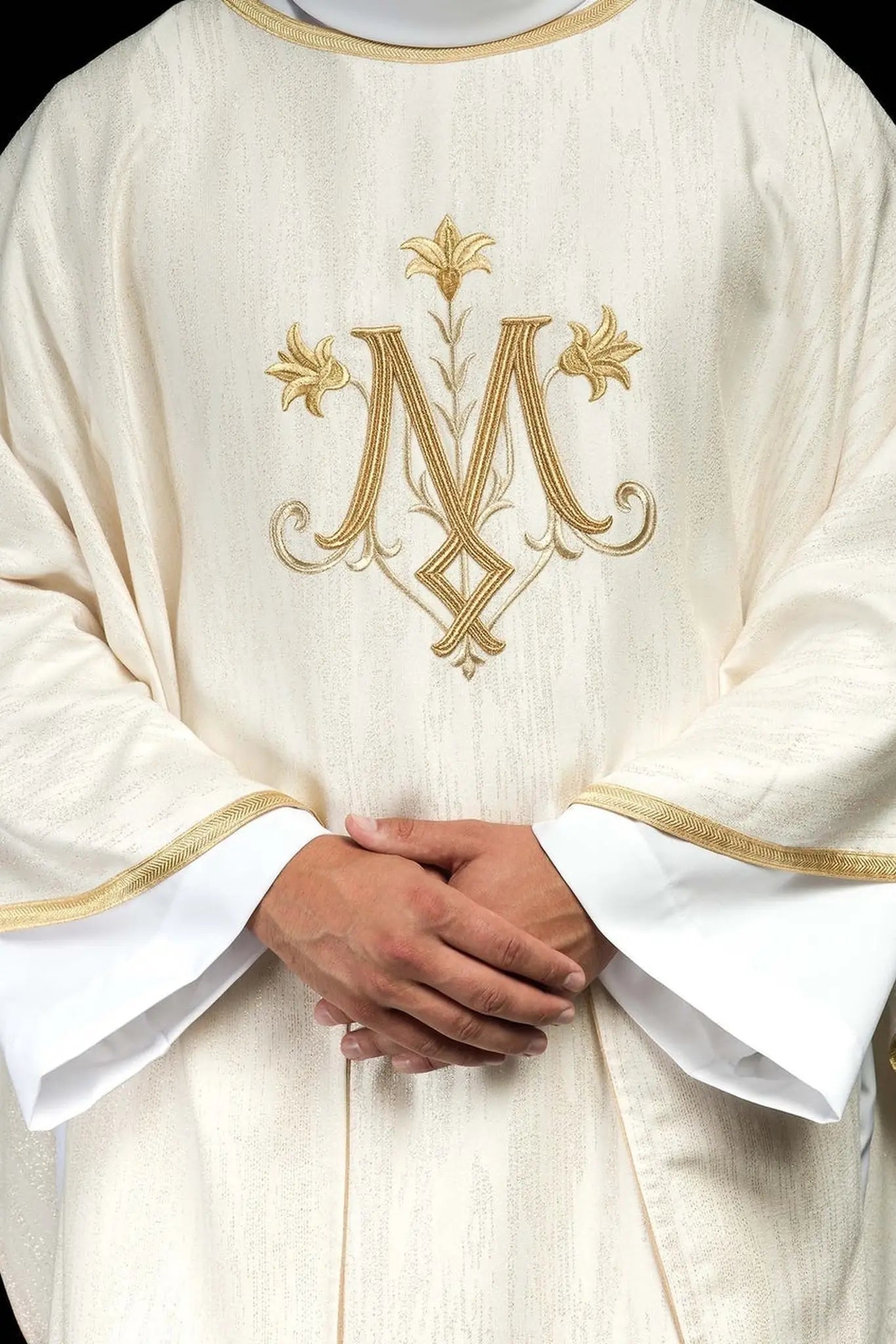
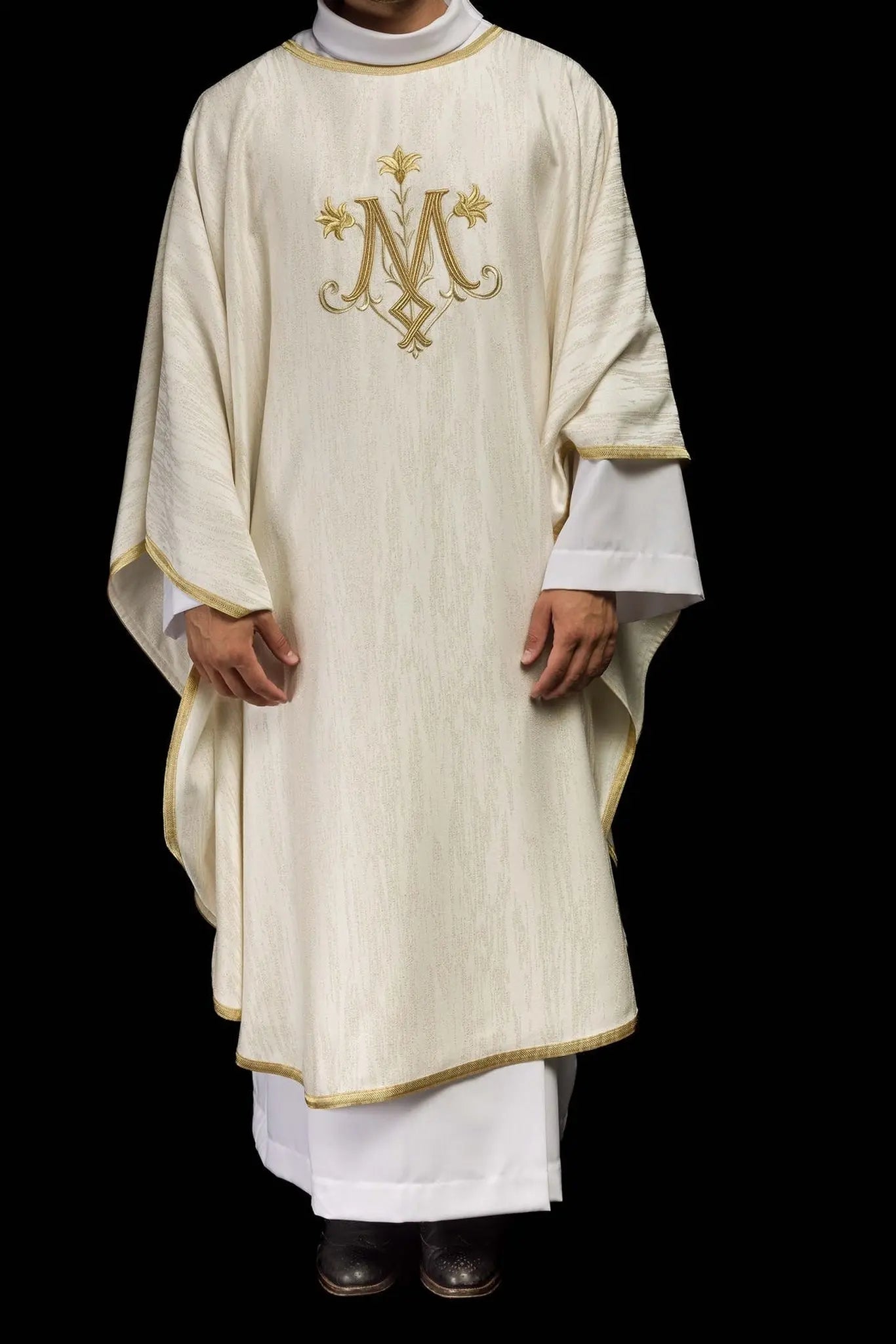
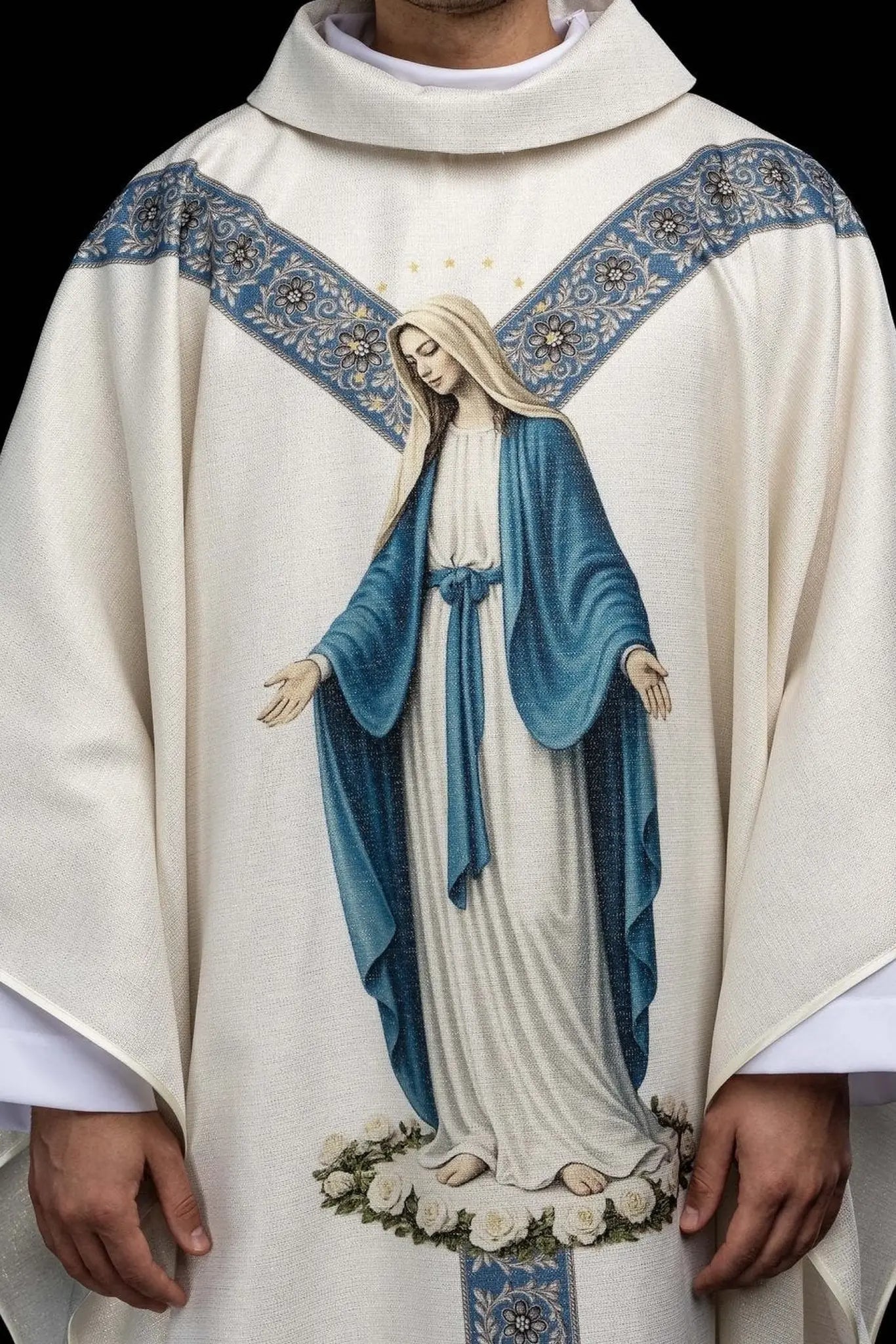
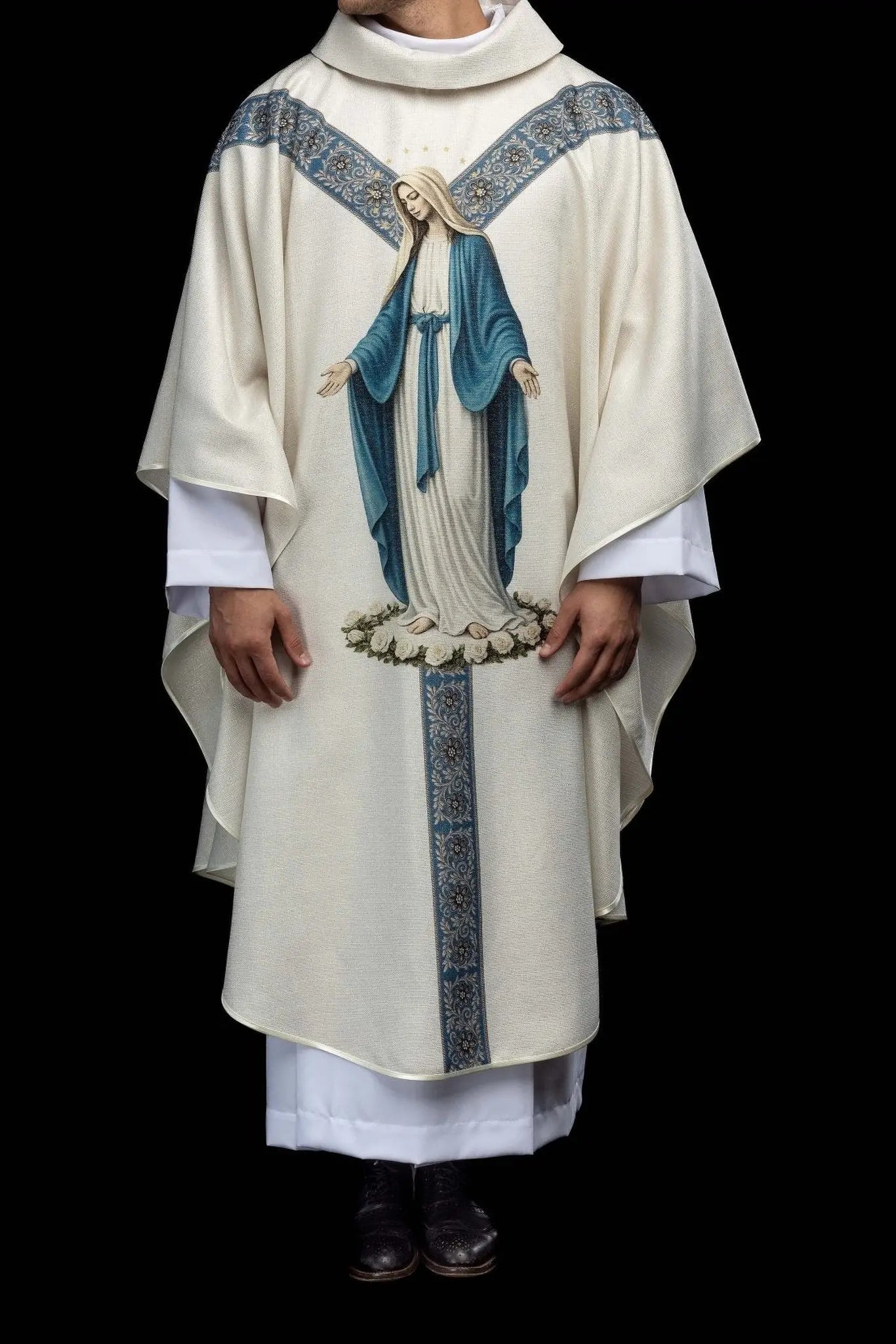
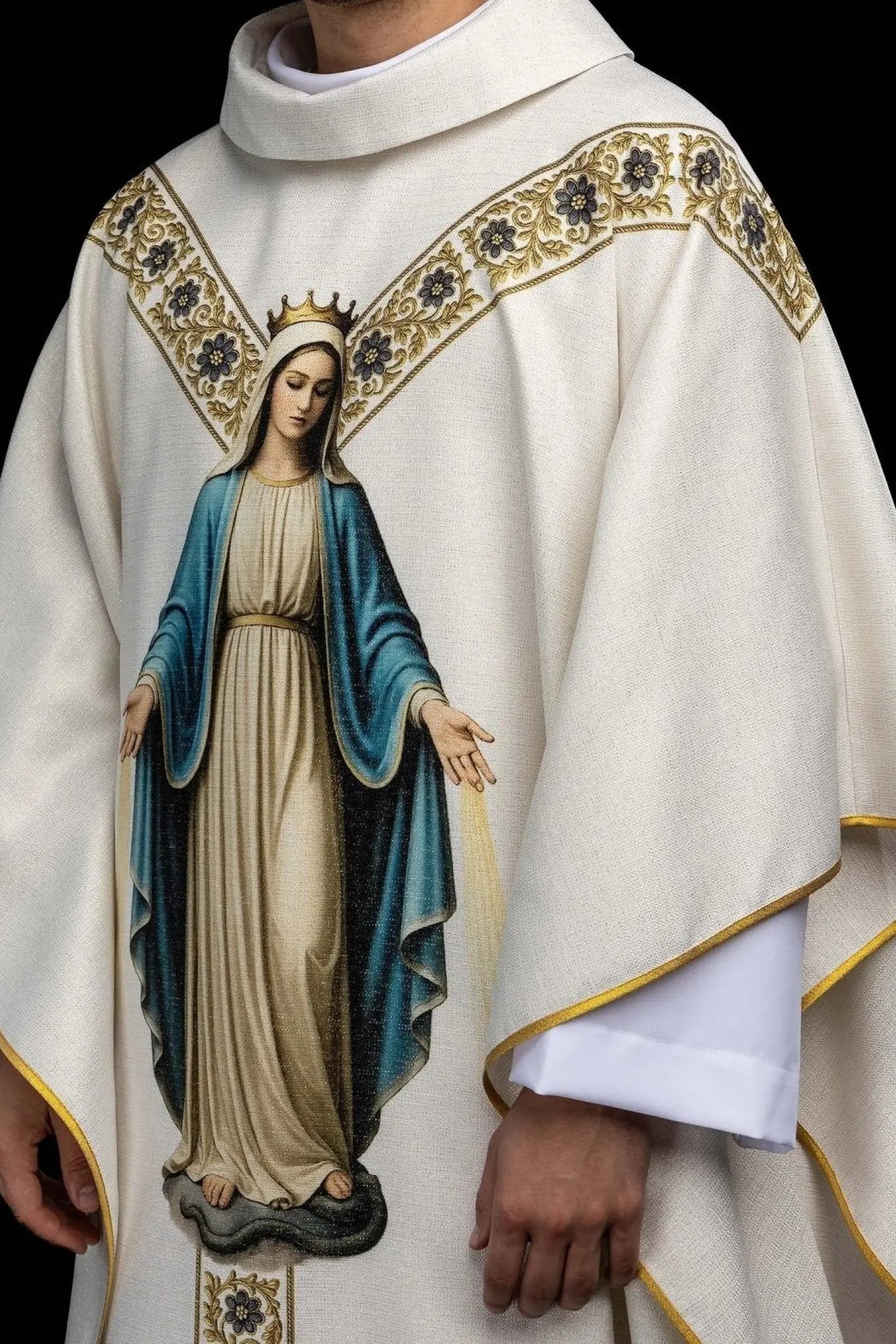
The collection belongs within our broader range of chasubles, but it has a more specific devotional focus. Instead of being defined only by a liturgical color, Marian chasubles are chosen because their design refers directly to Mary through symbols such as lilies, roses, stars, crowns, monograms, or images inspired by Marian titles and apparitions. Many designs use white, ecru, gold, or blue details to create a solemn and recognizable Marian appearance, while still remaining suitable for reverent liturgical use.
What belongs in the Marian chasubles collection?
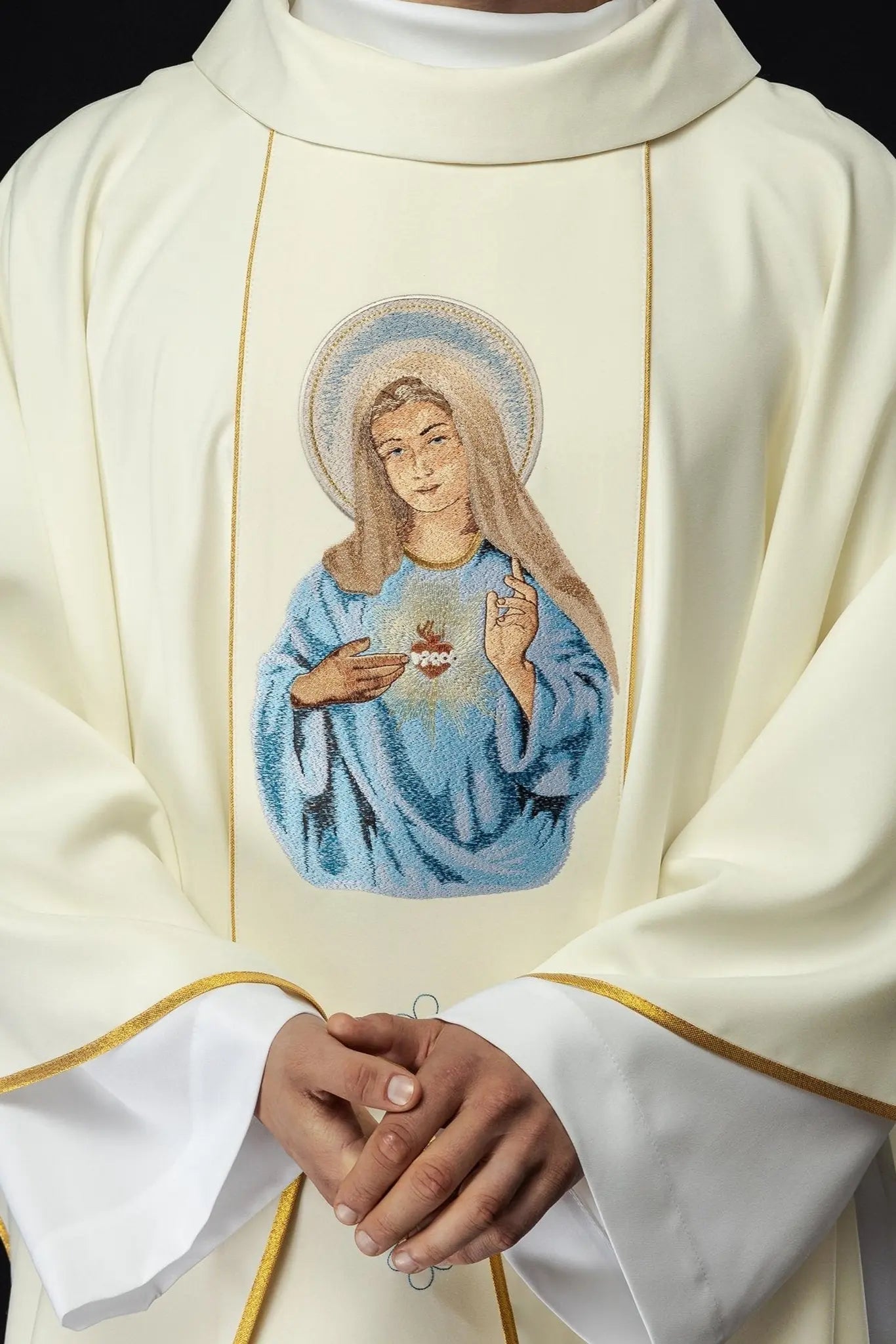
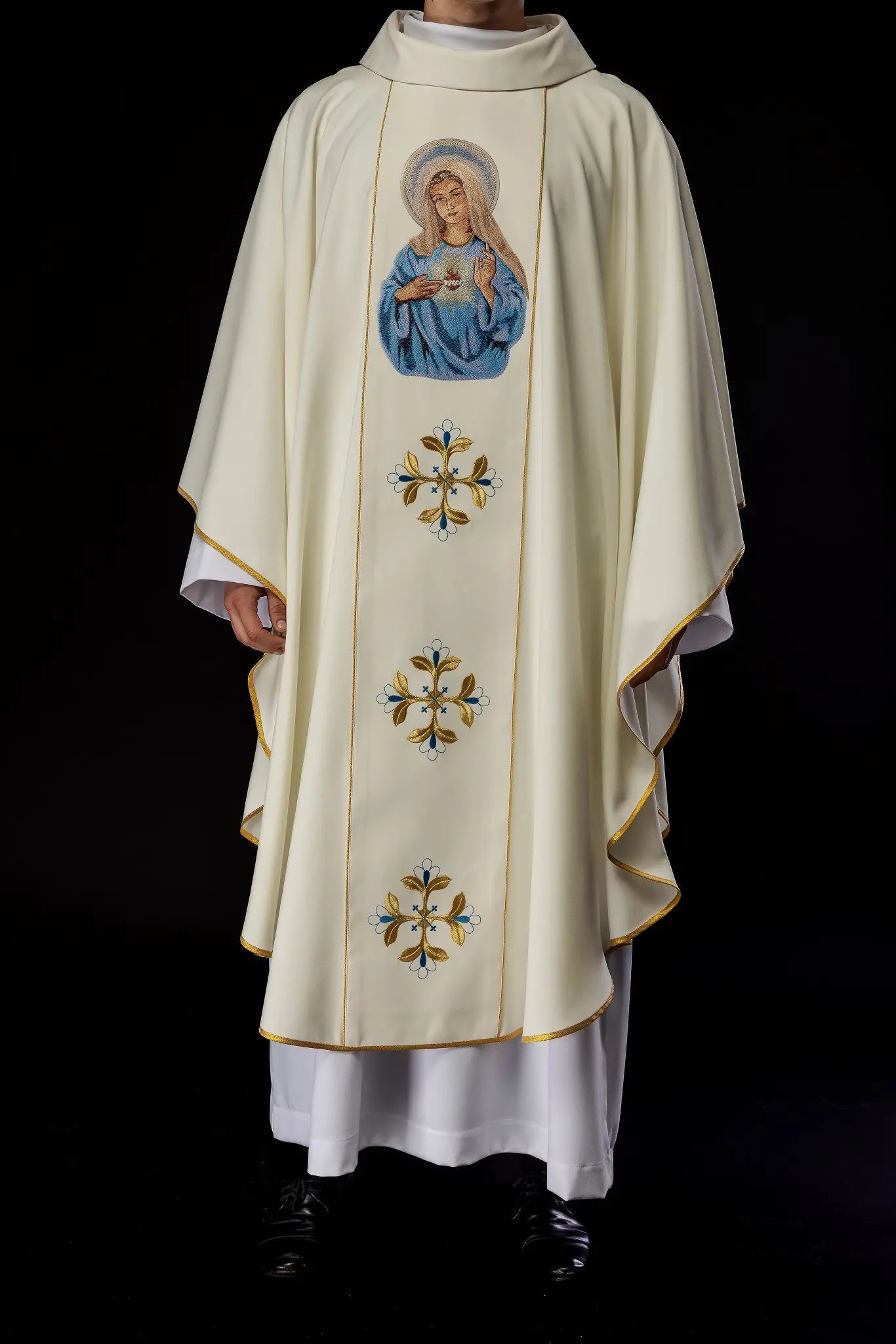
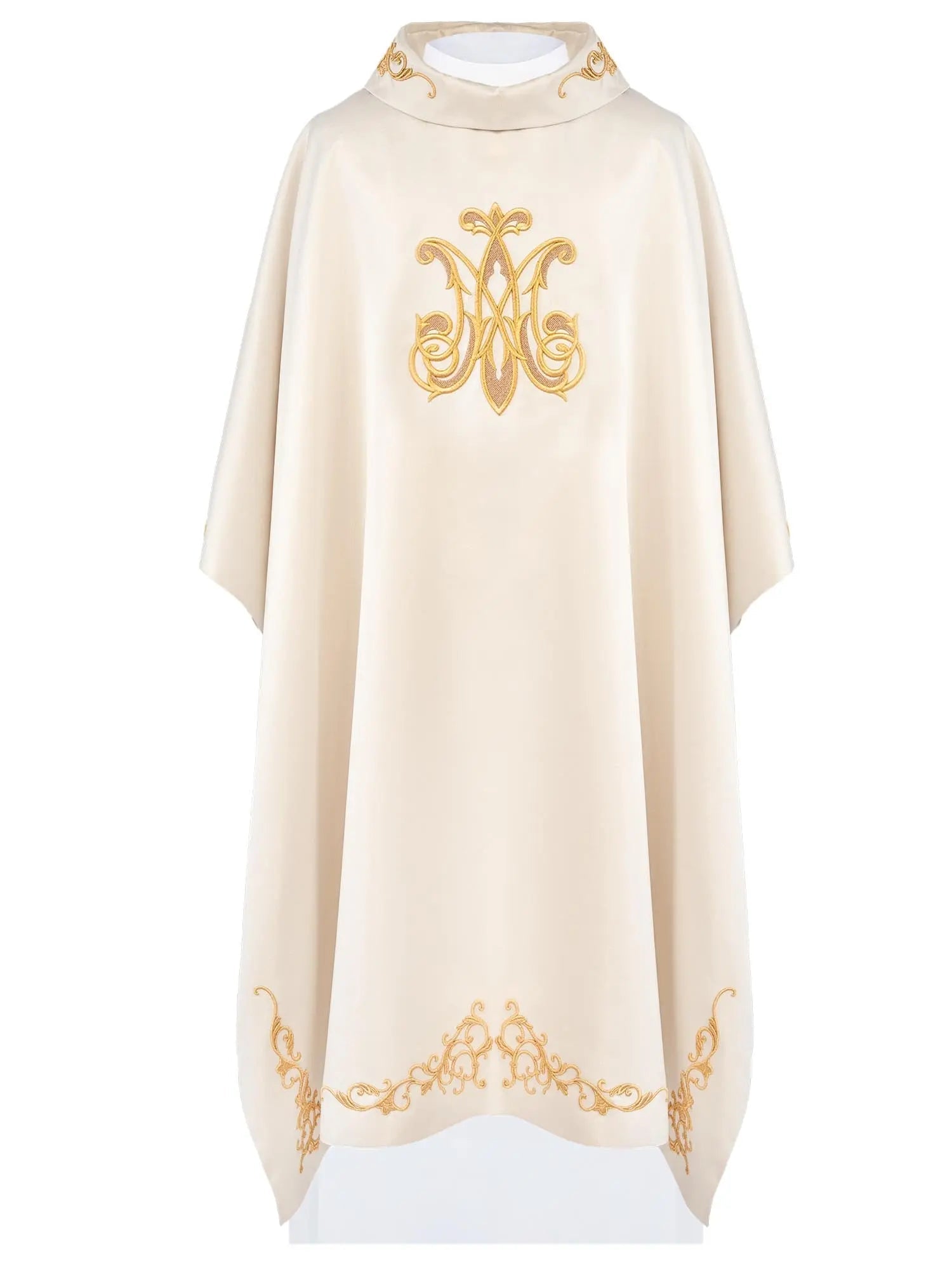
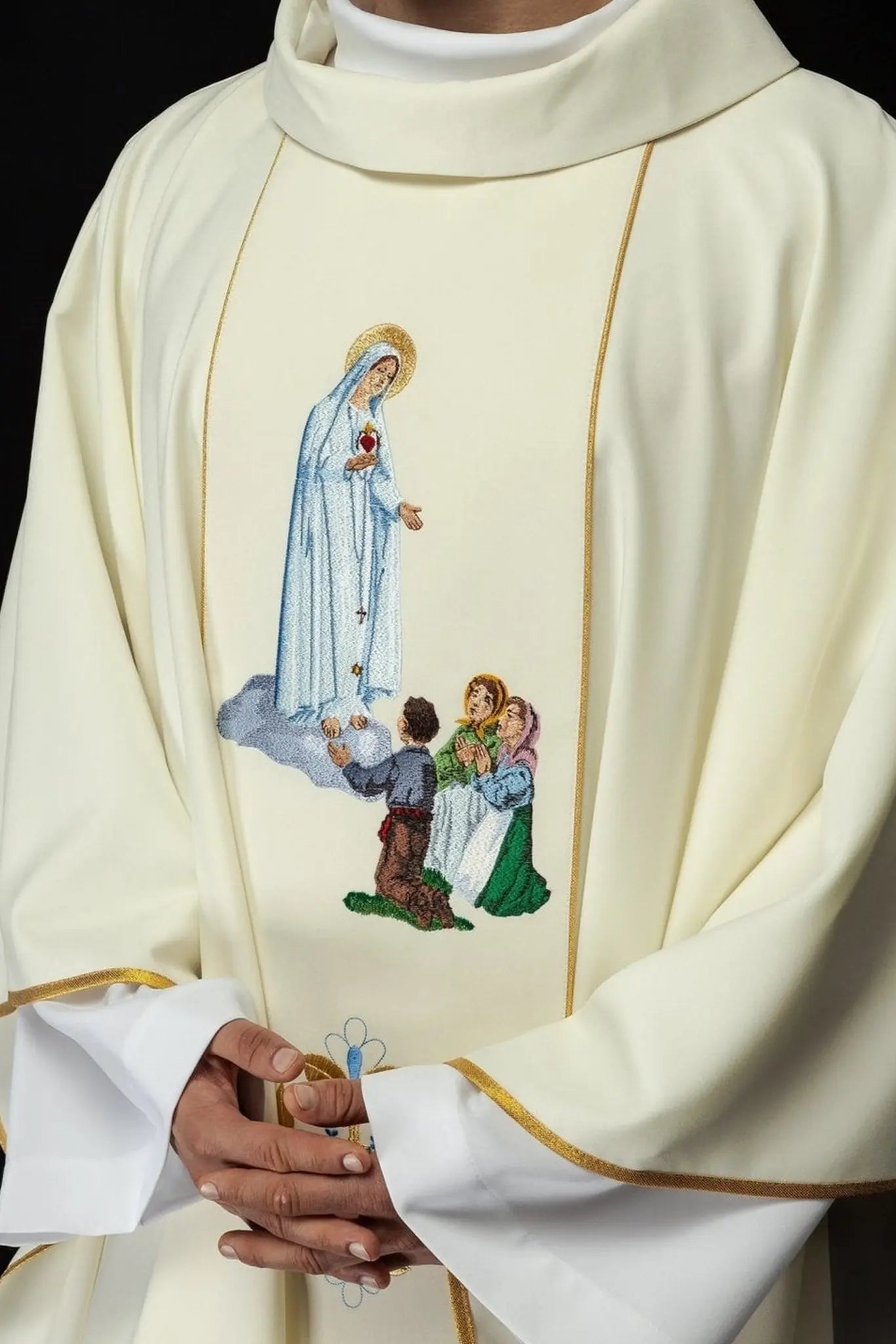
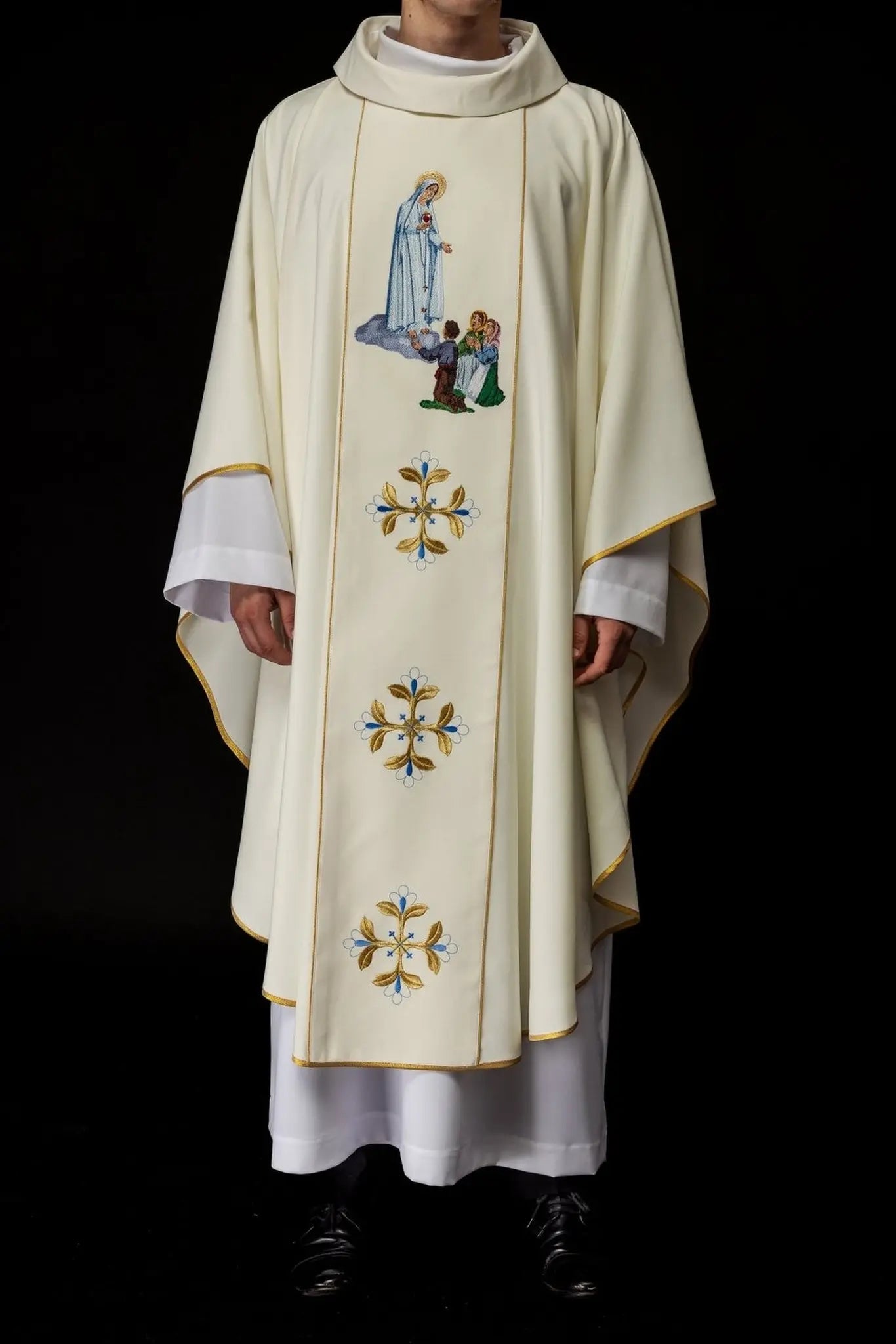
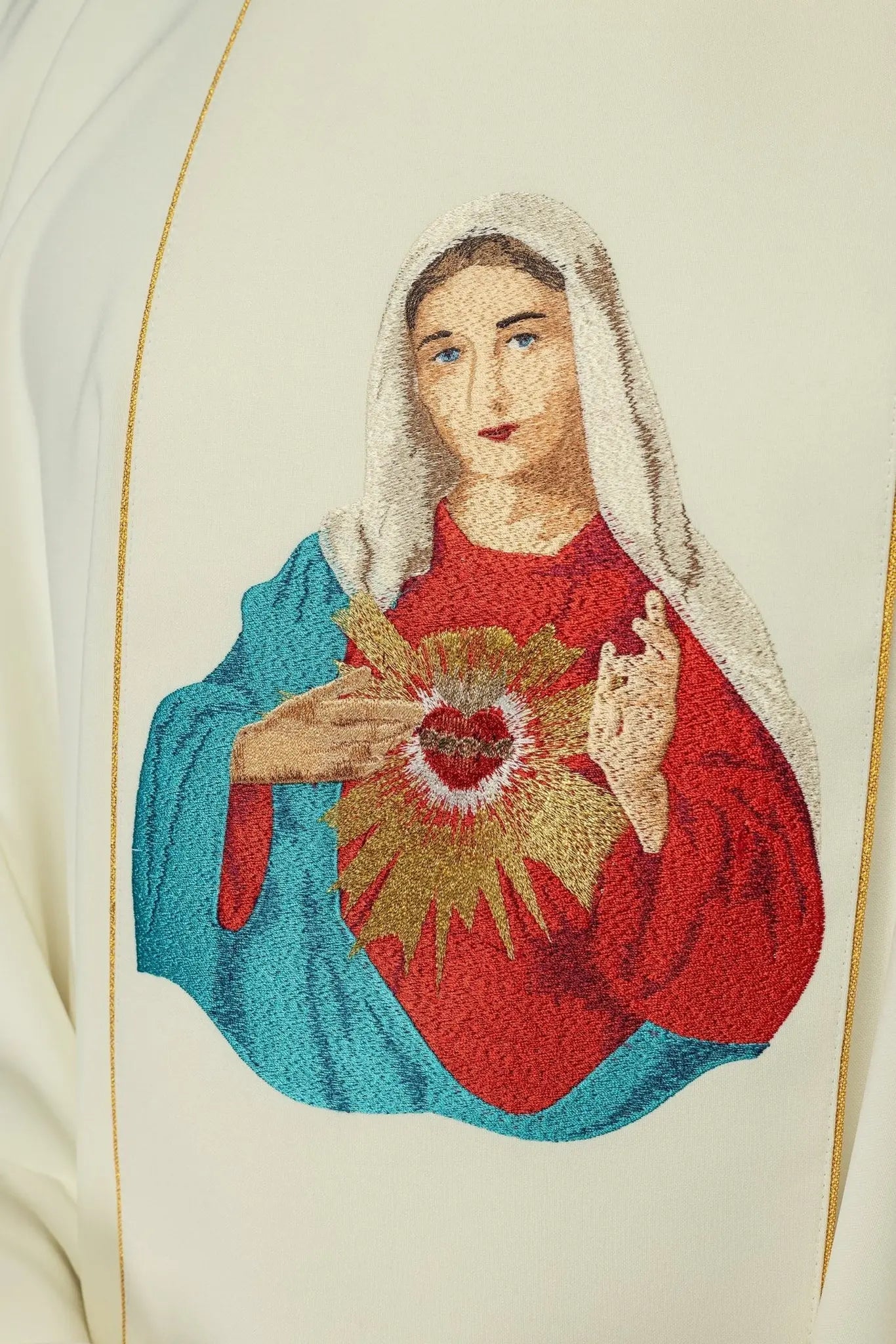
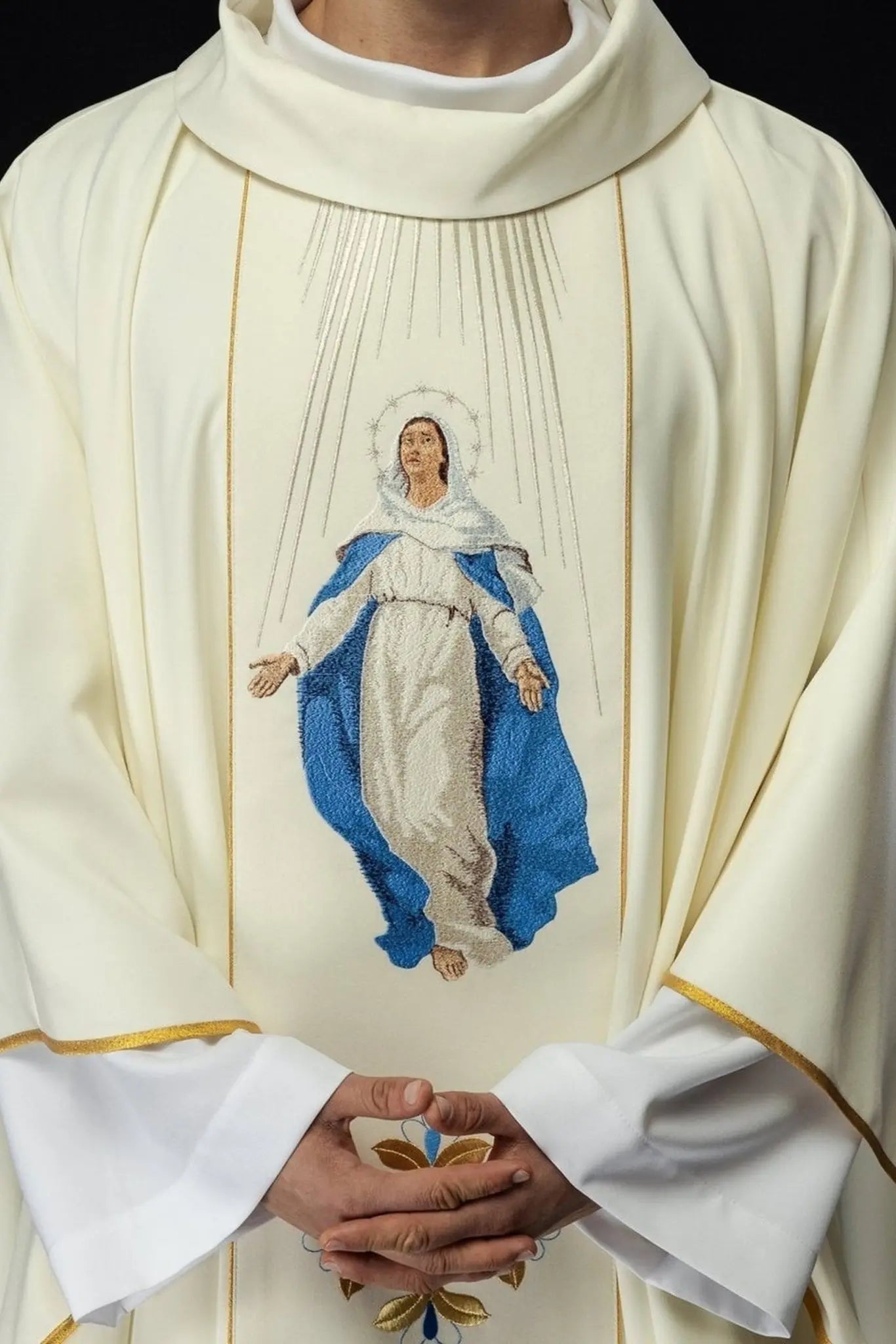
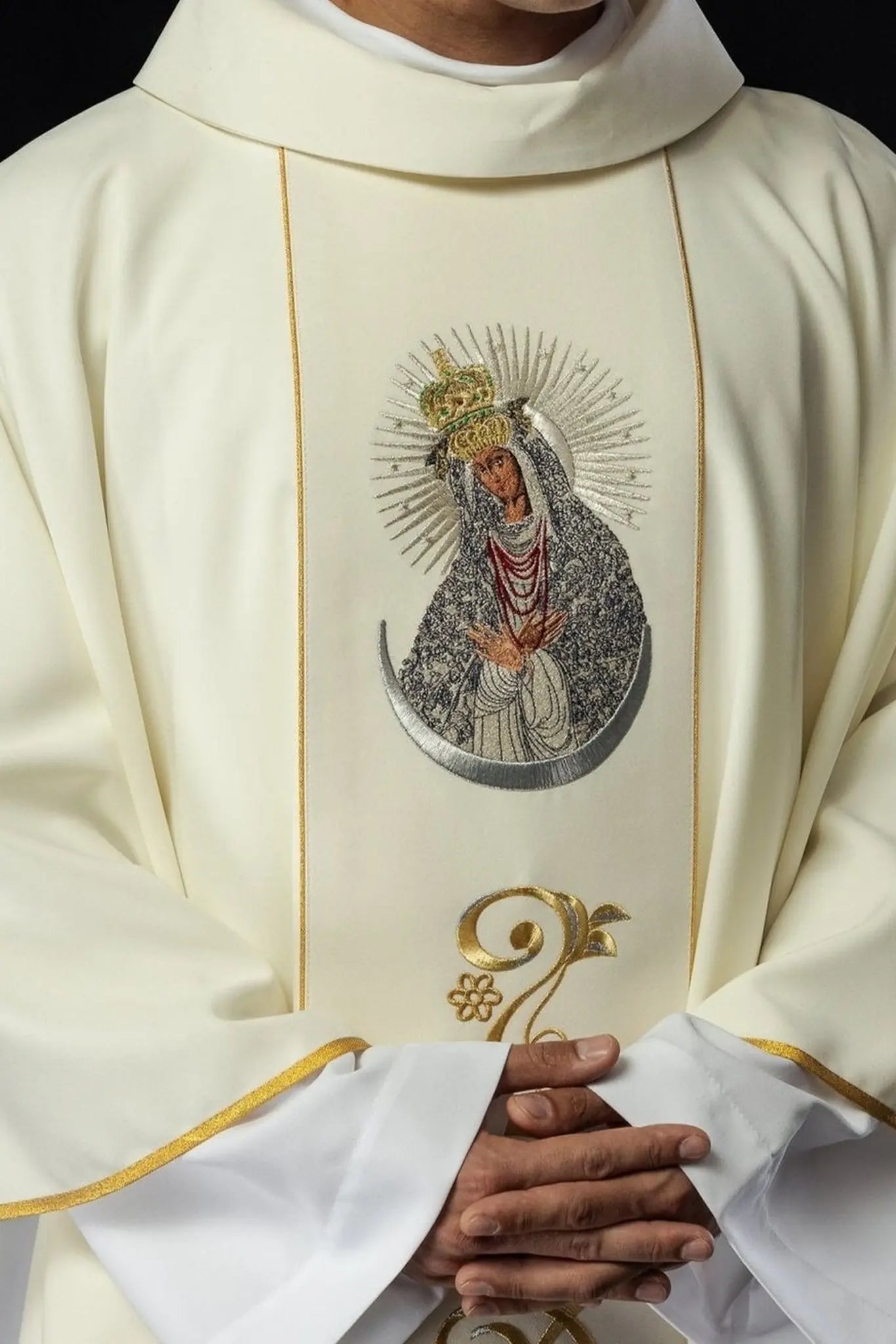
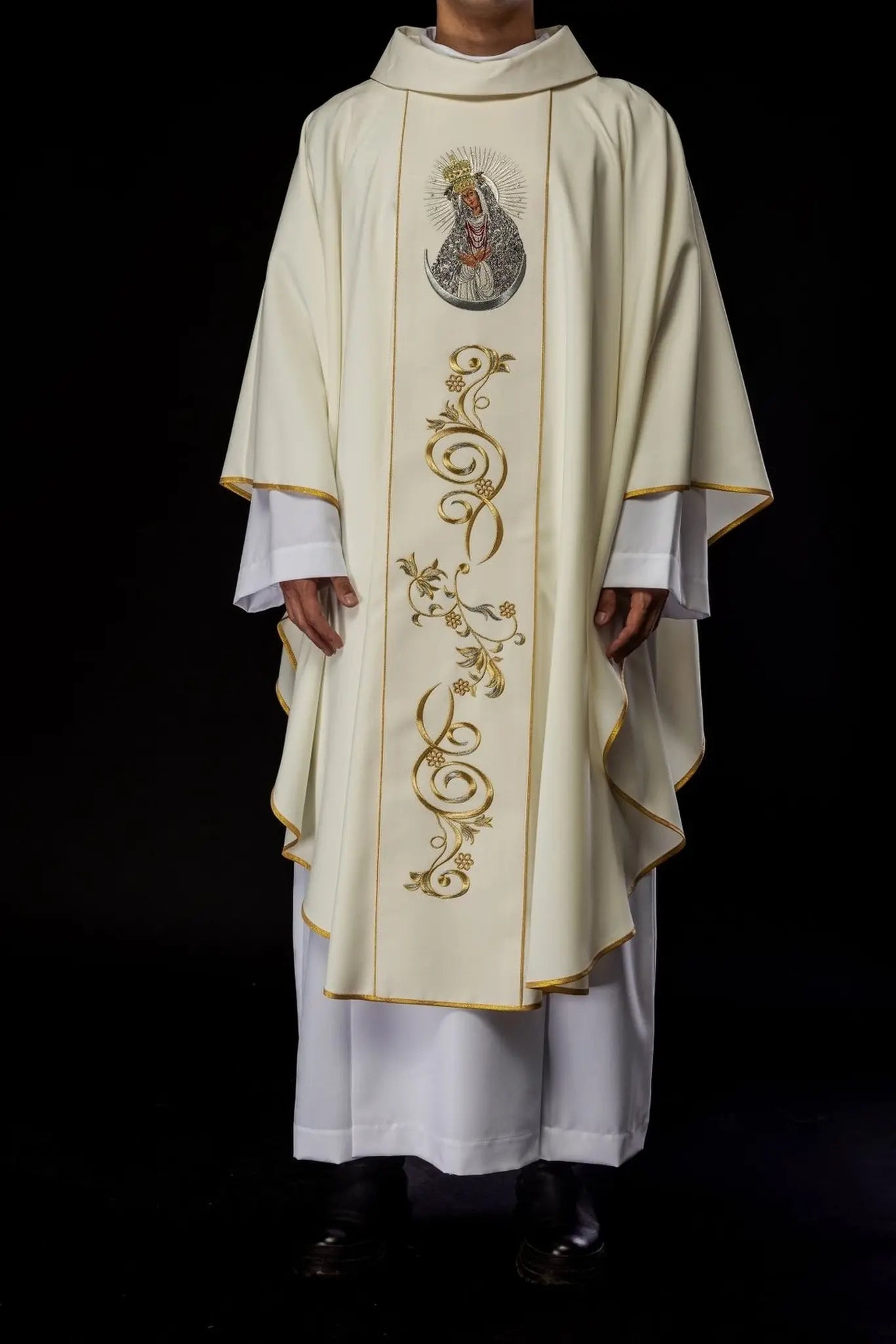
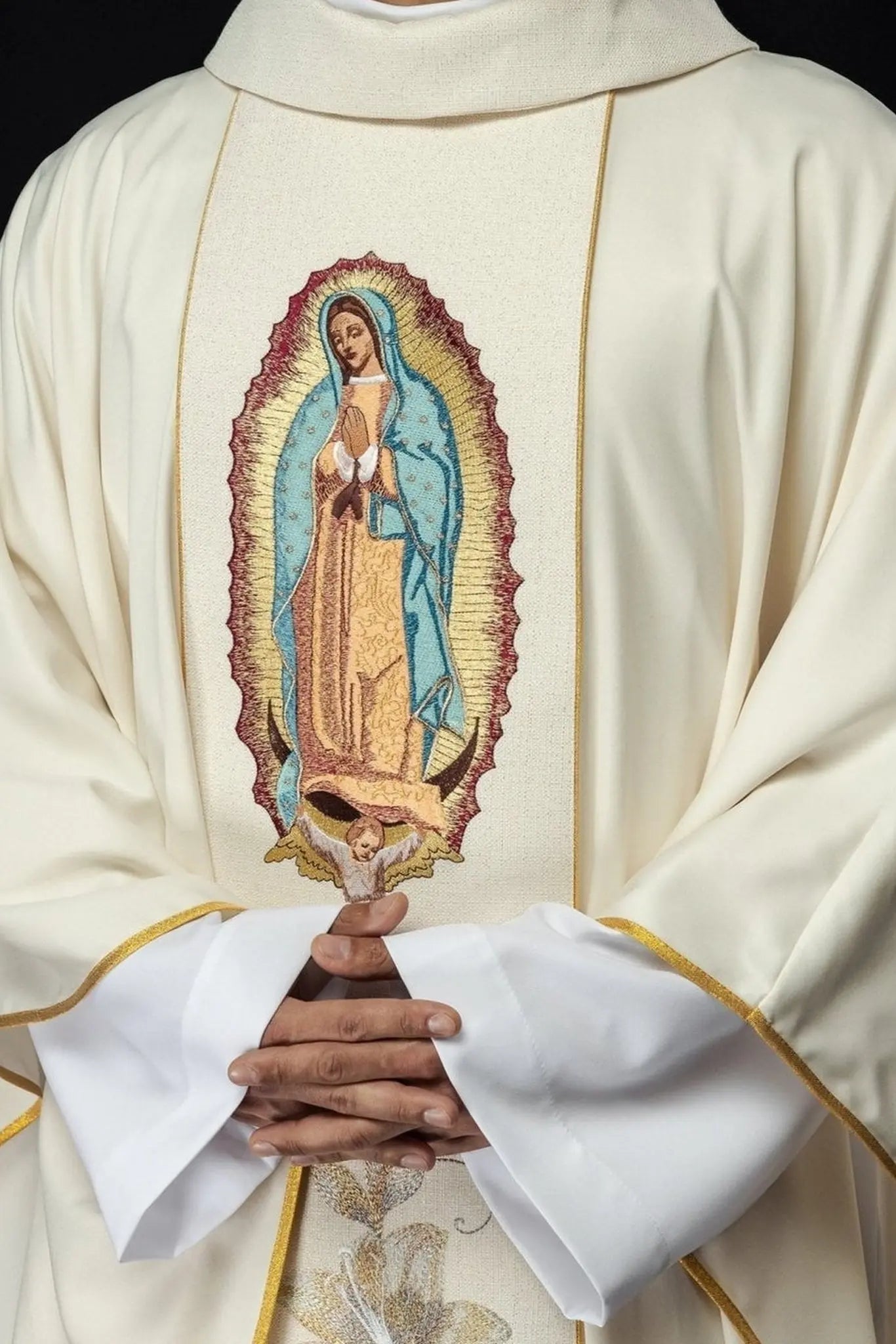
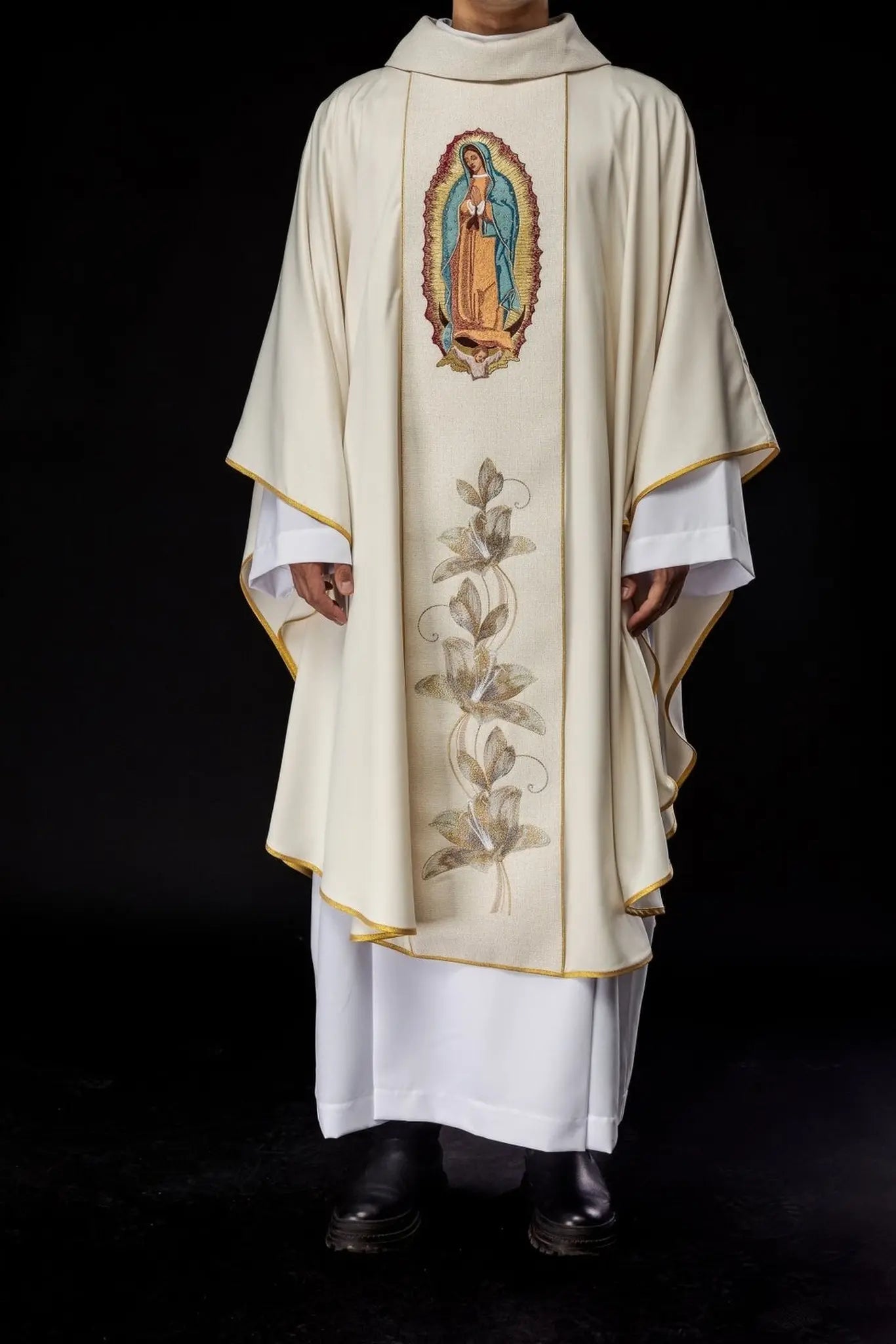
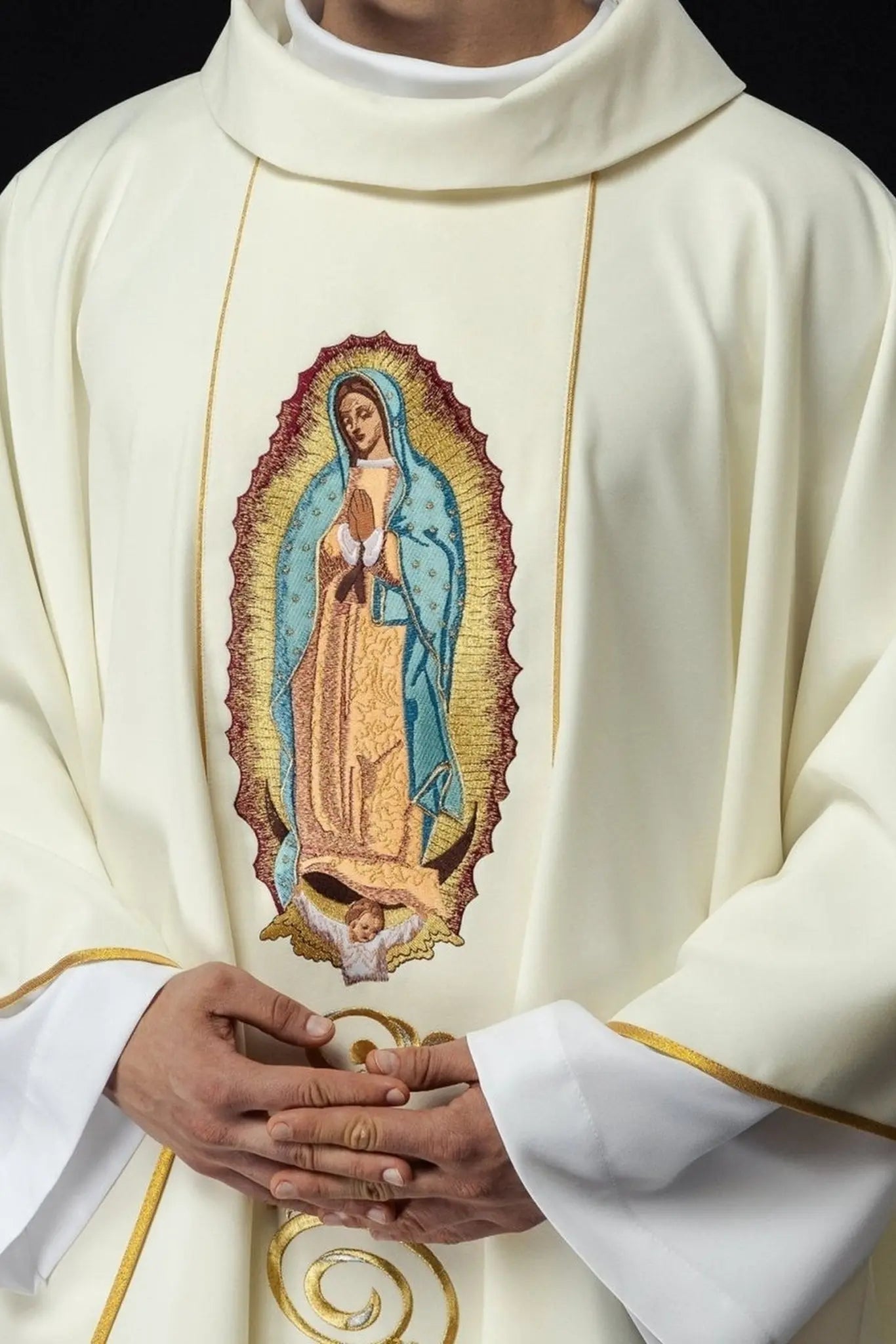
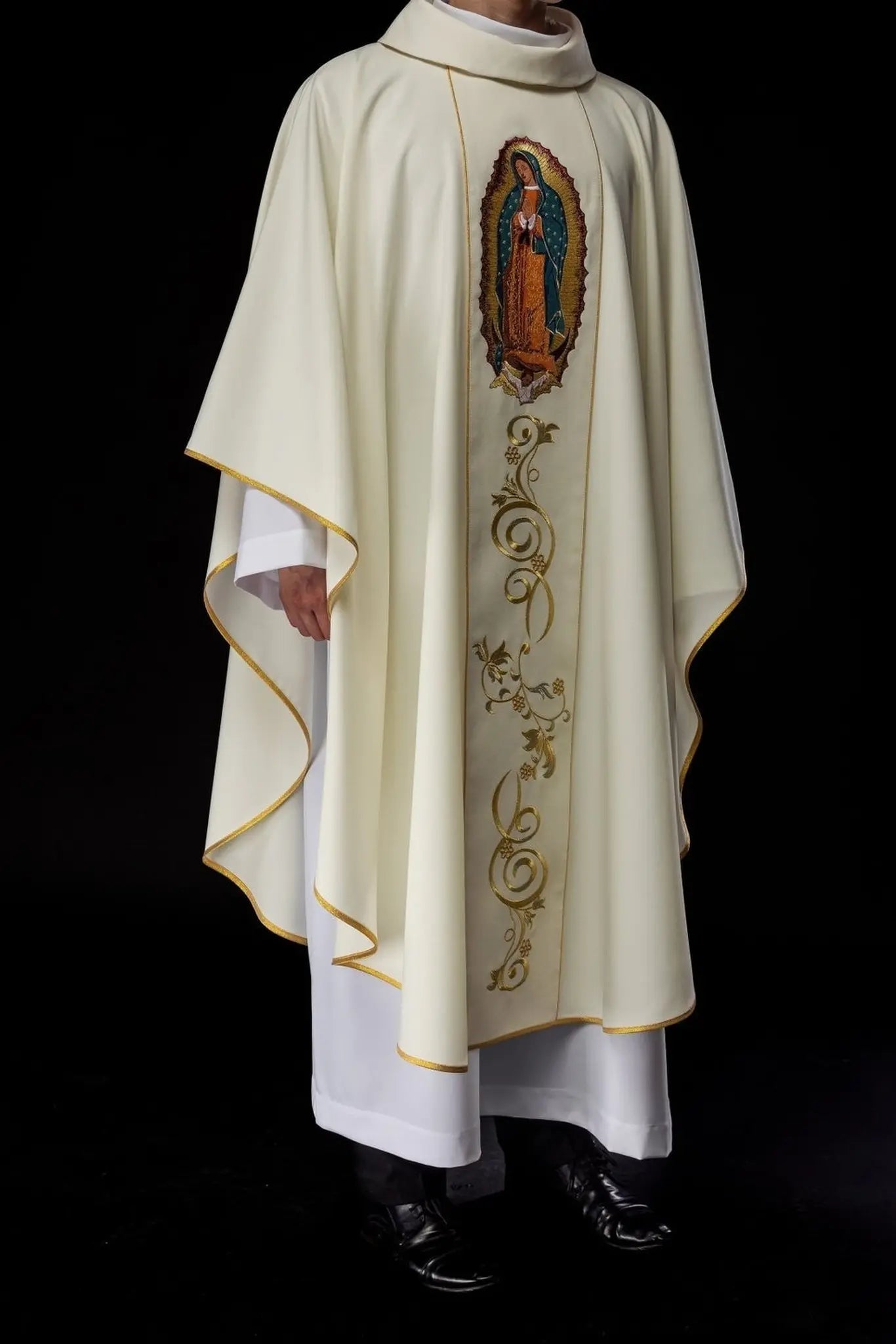
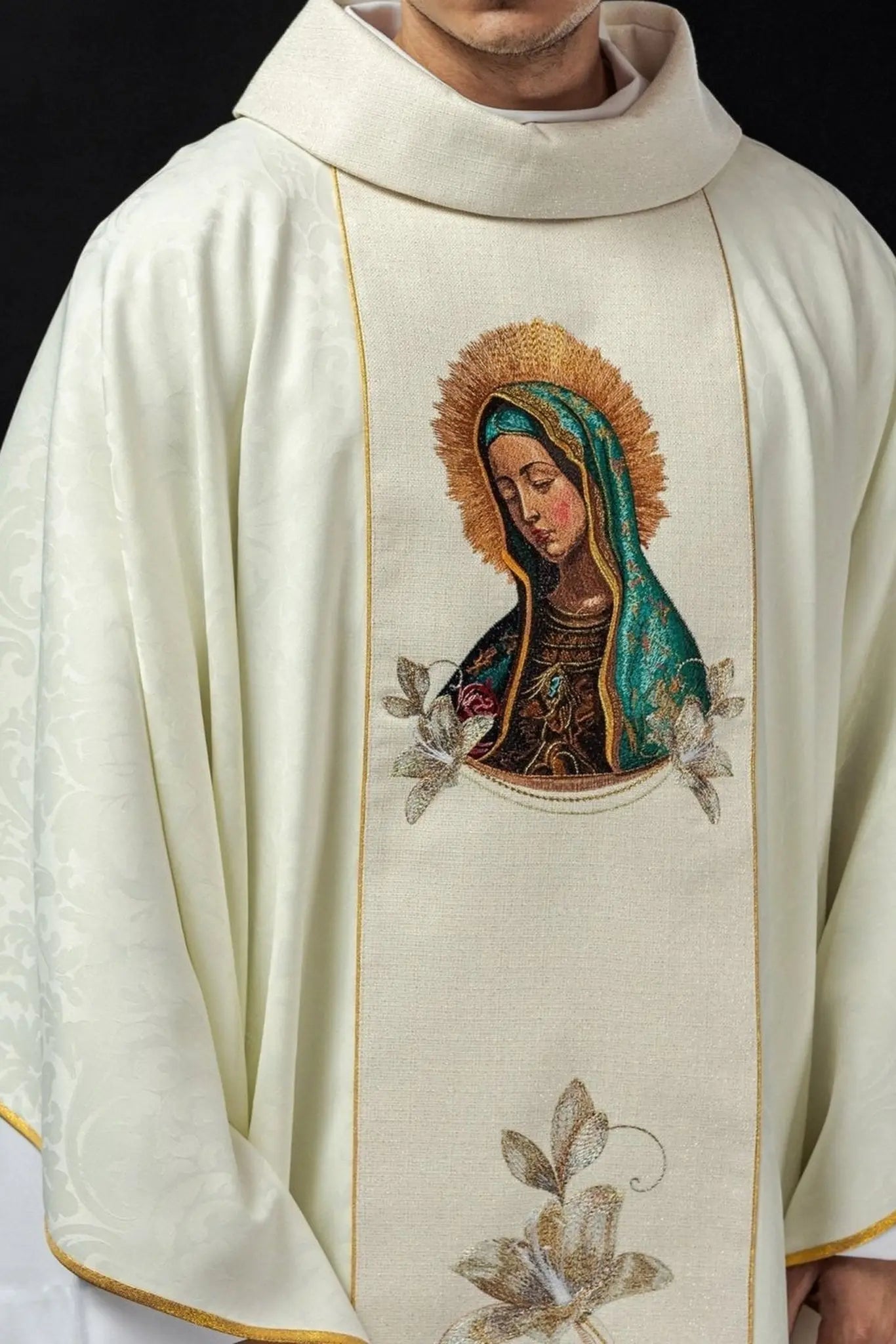
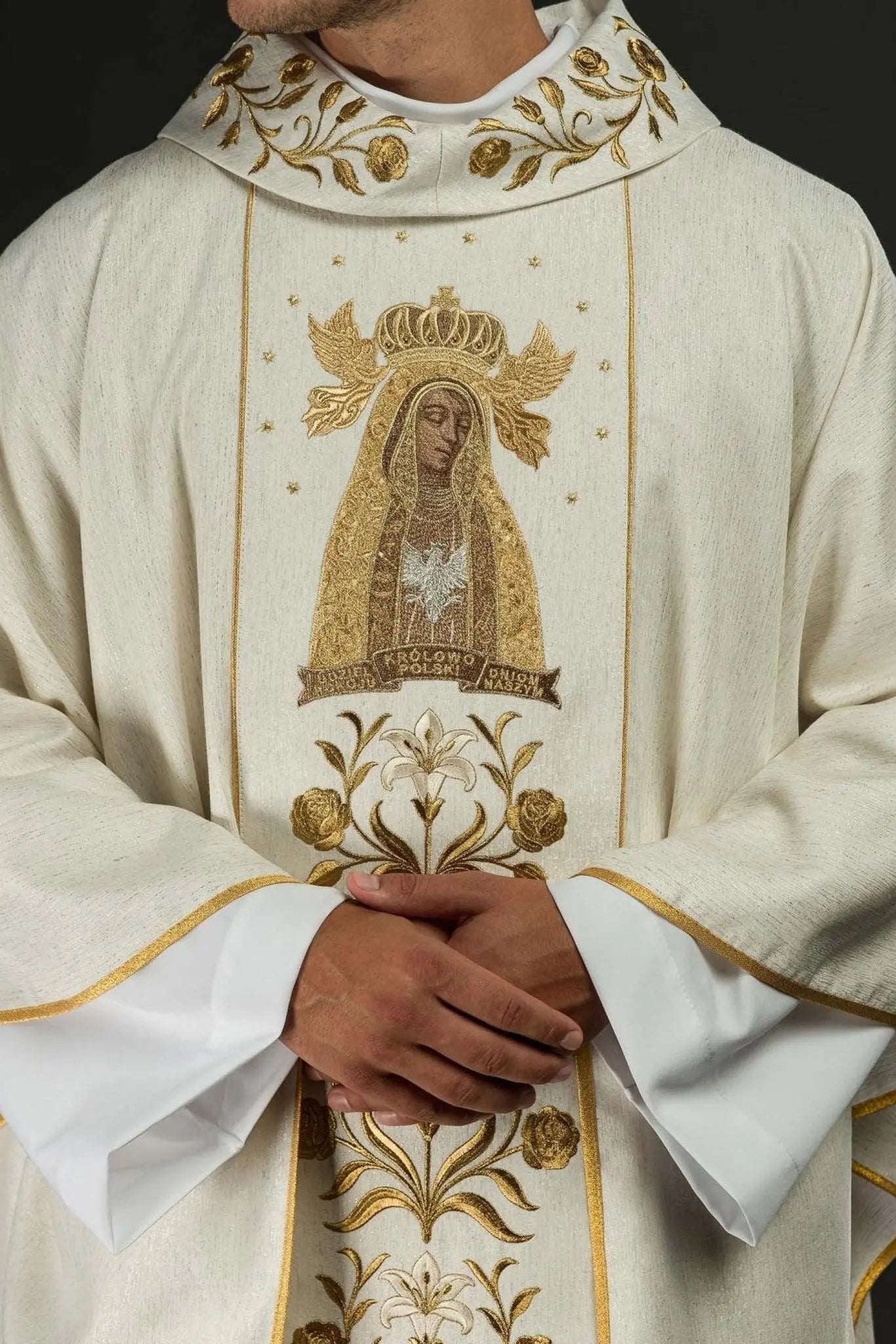
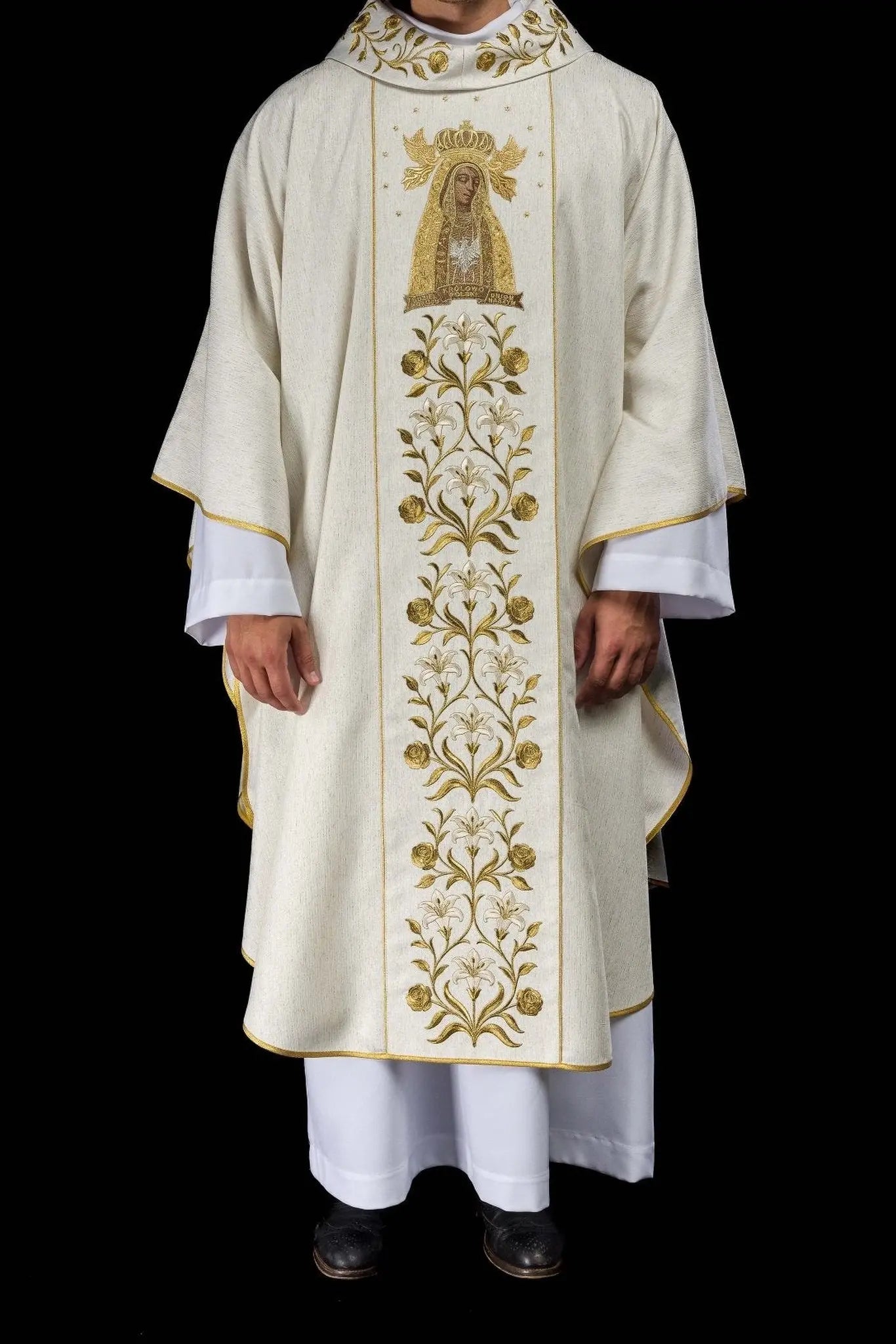
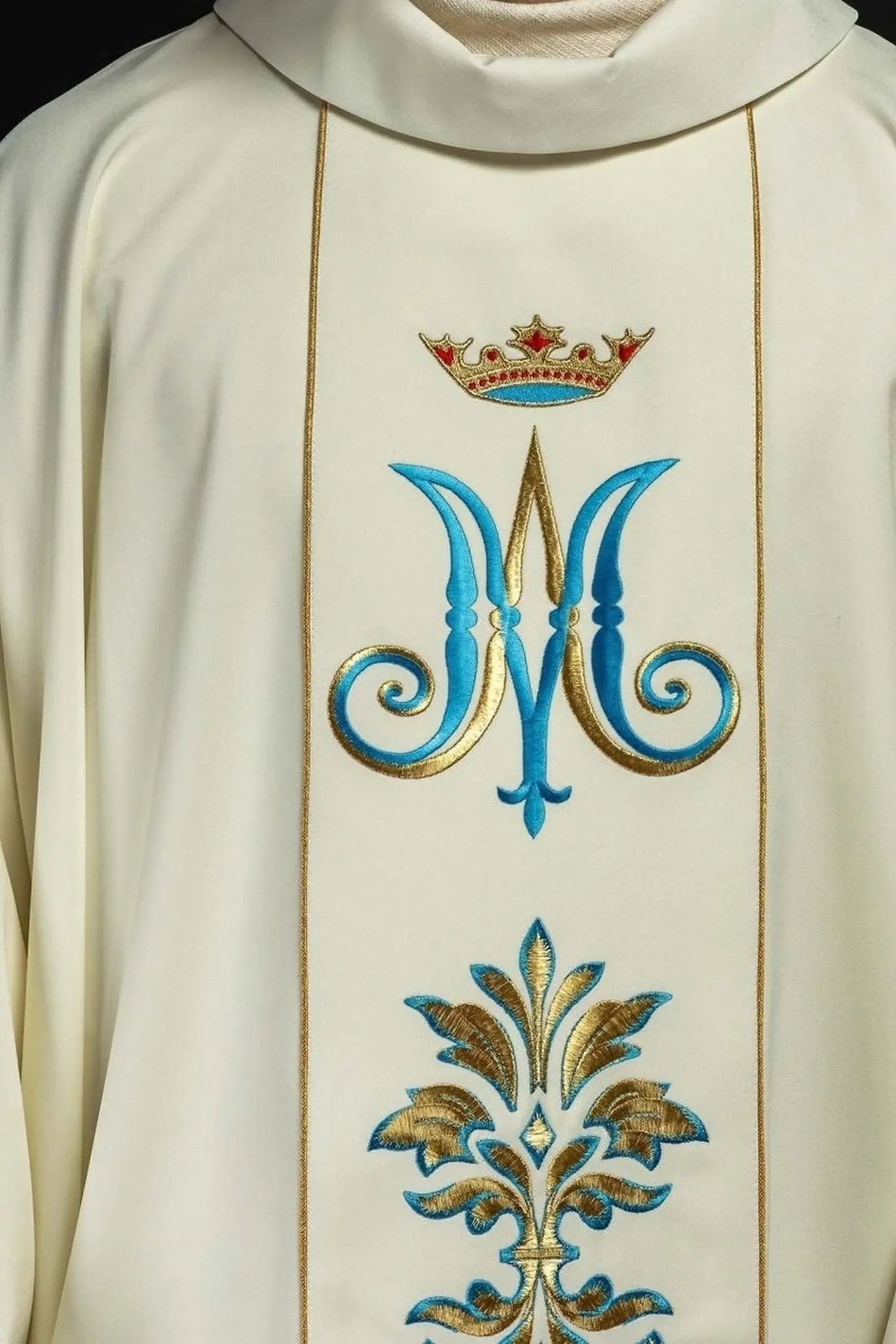
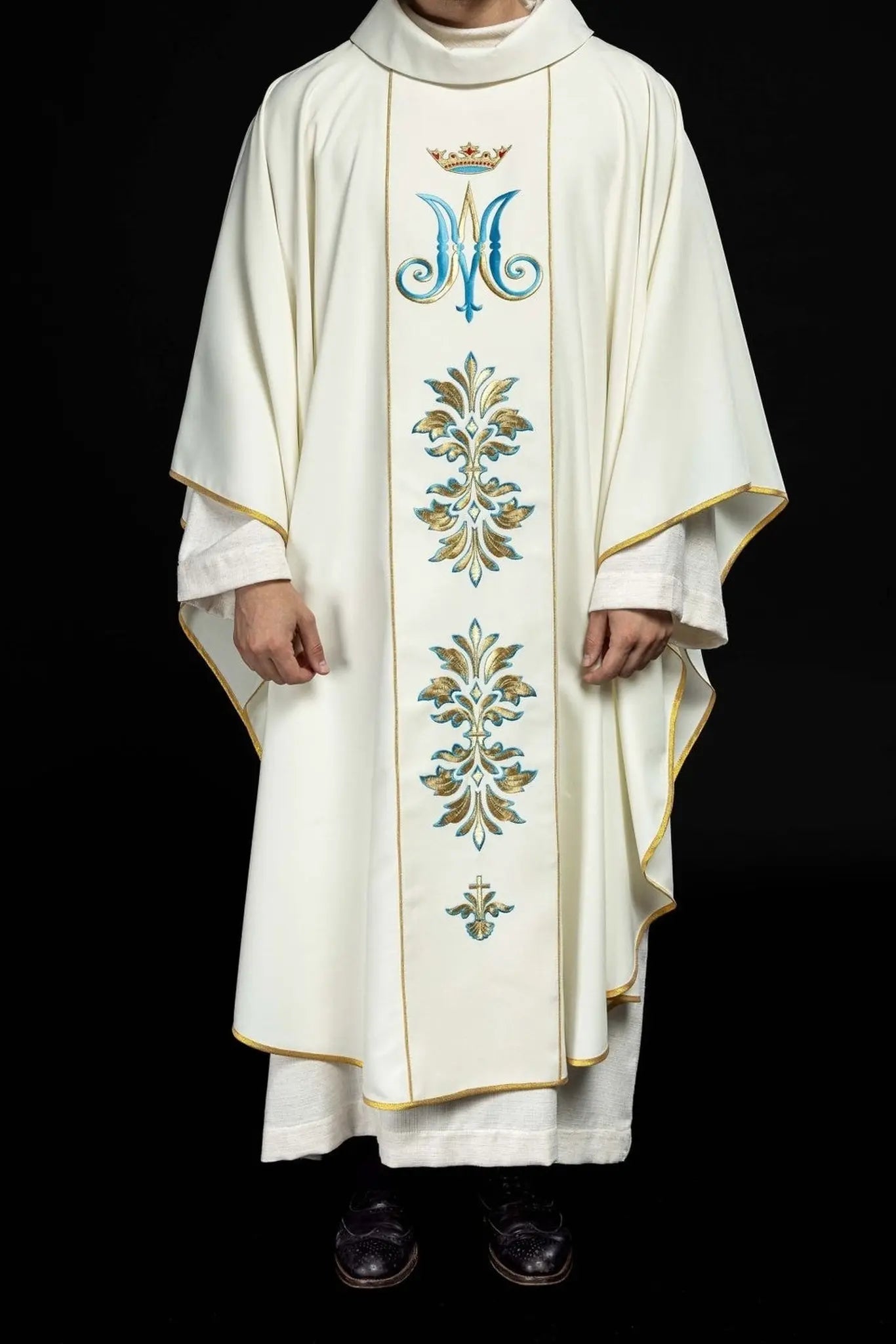
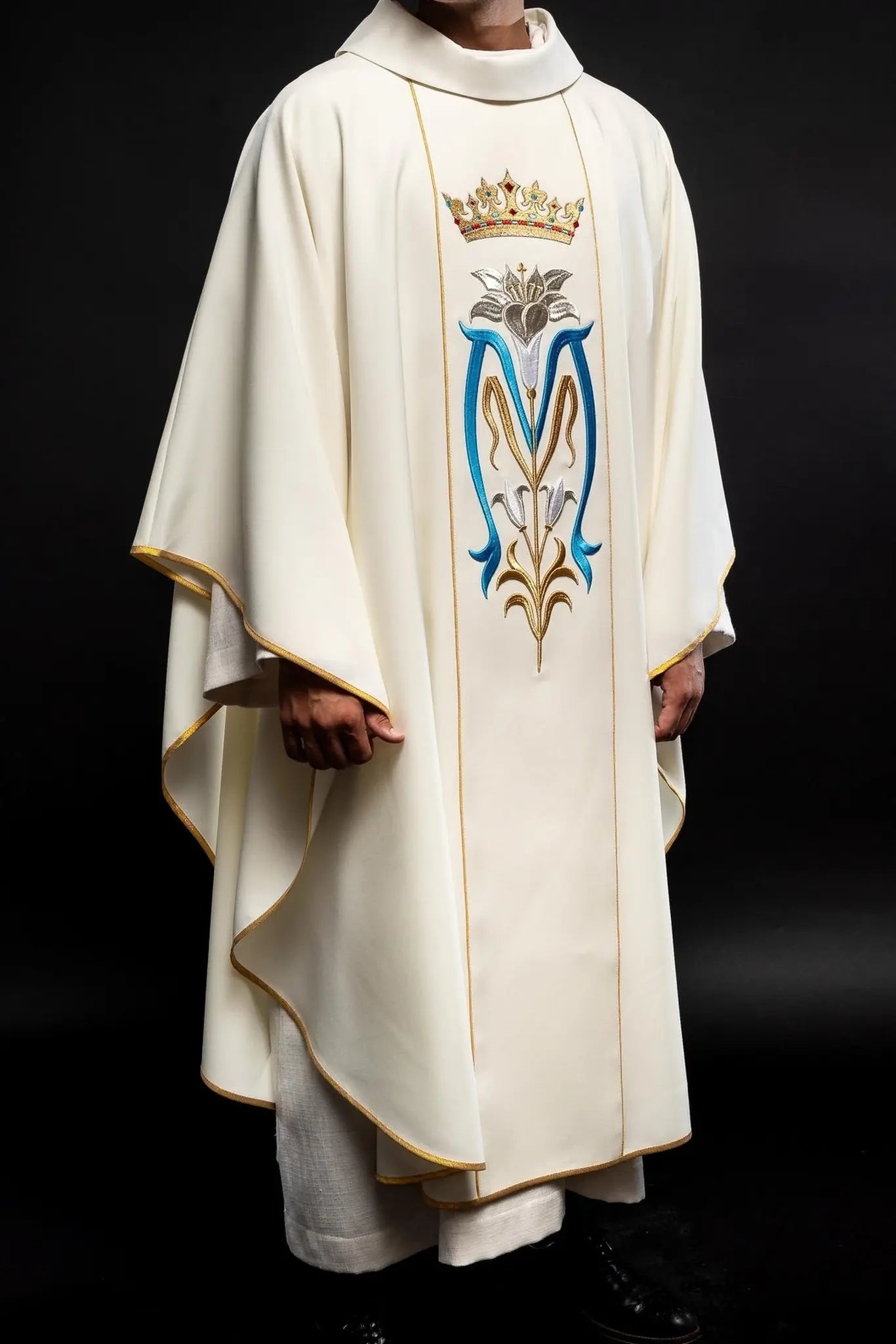
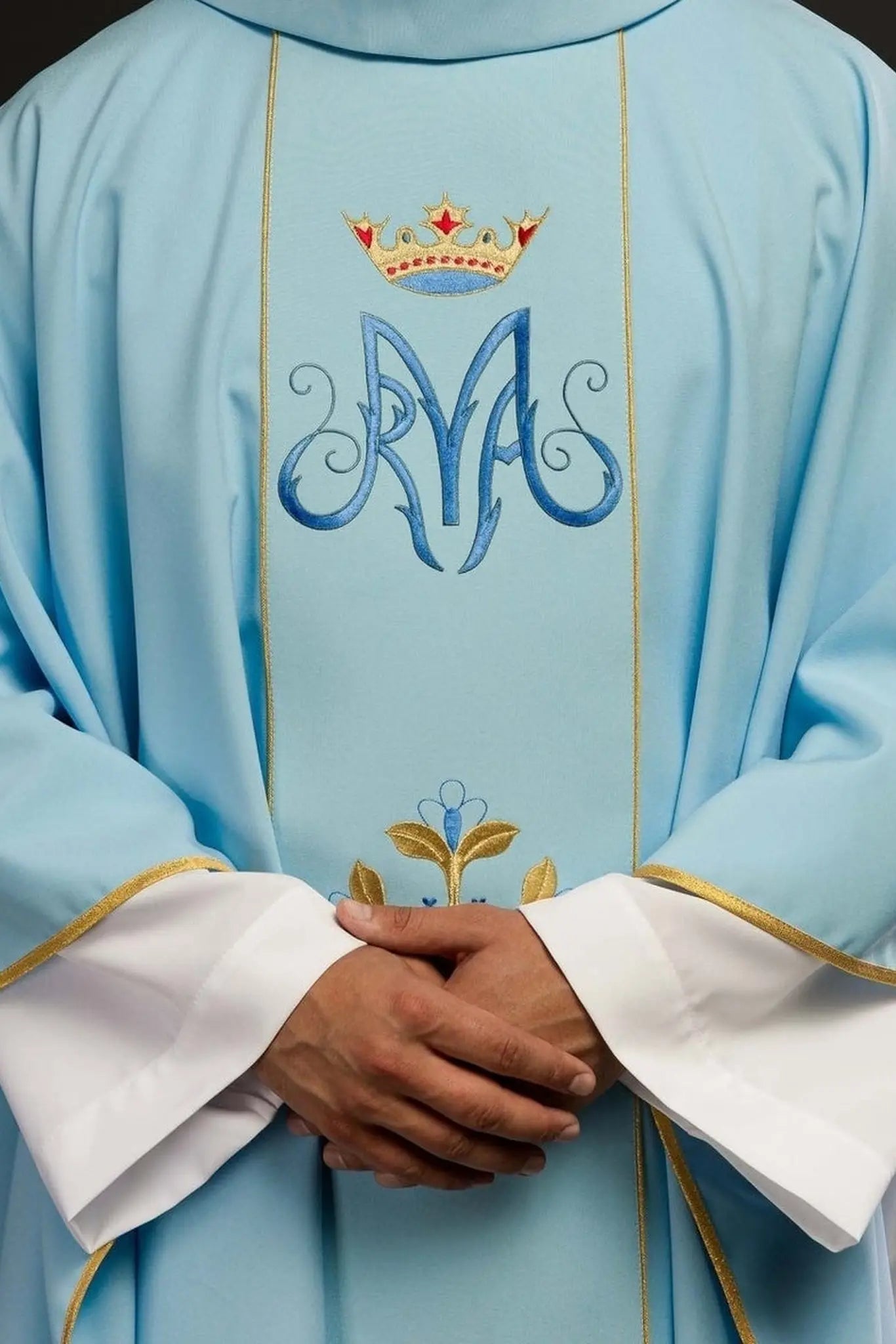
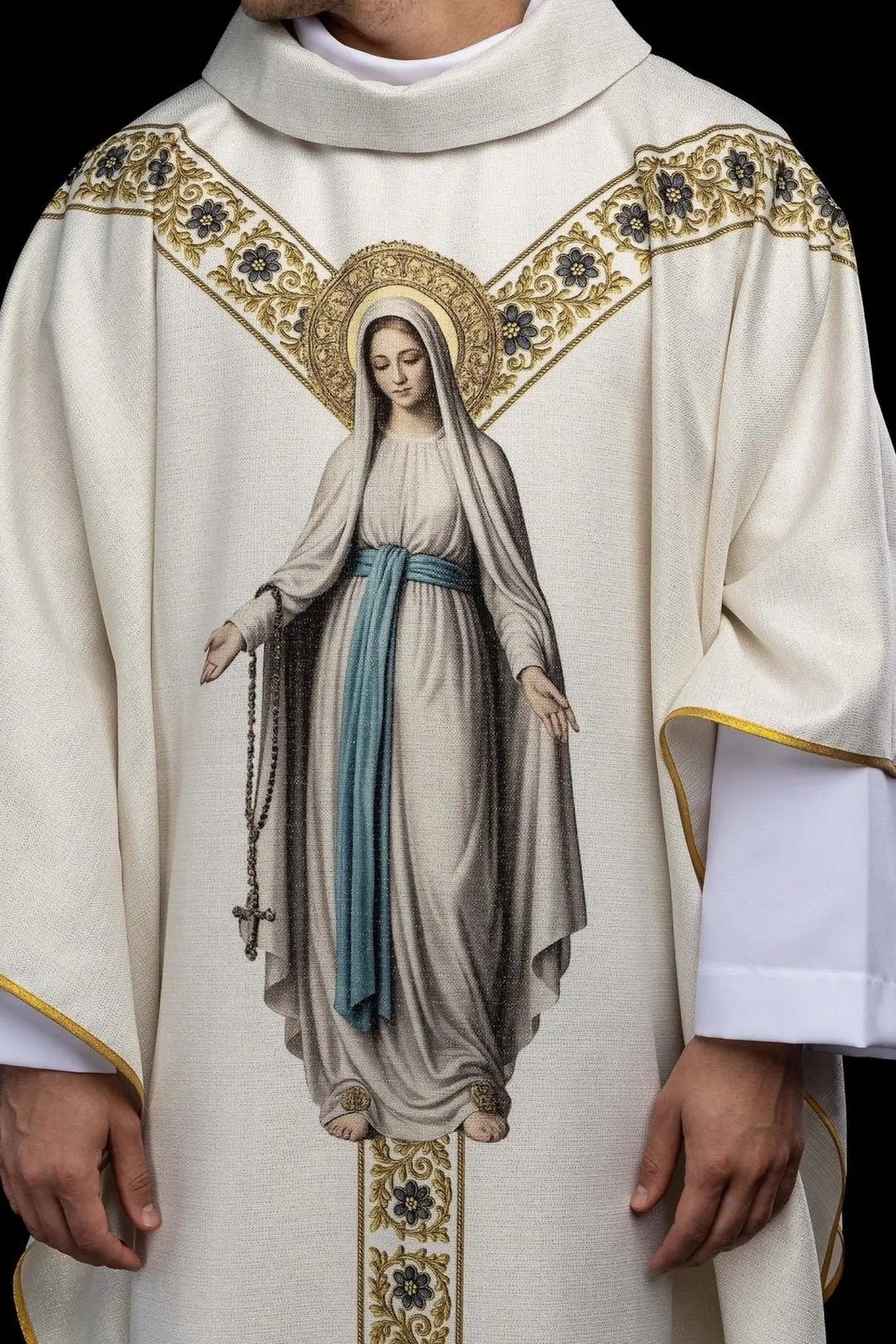
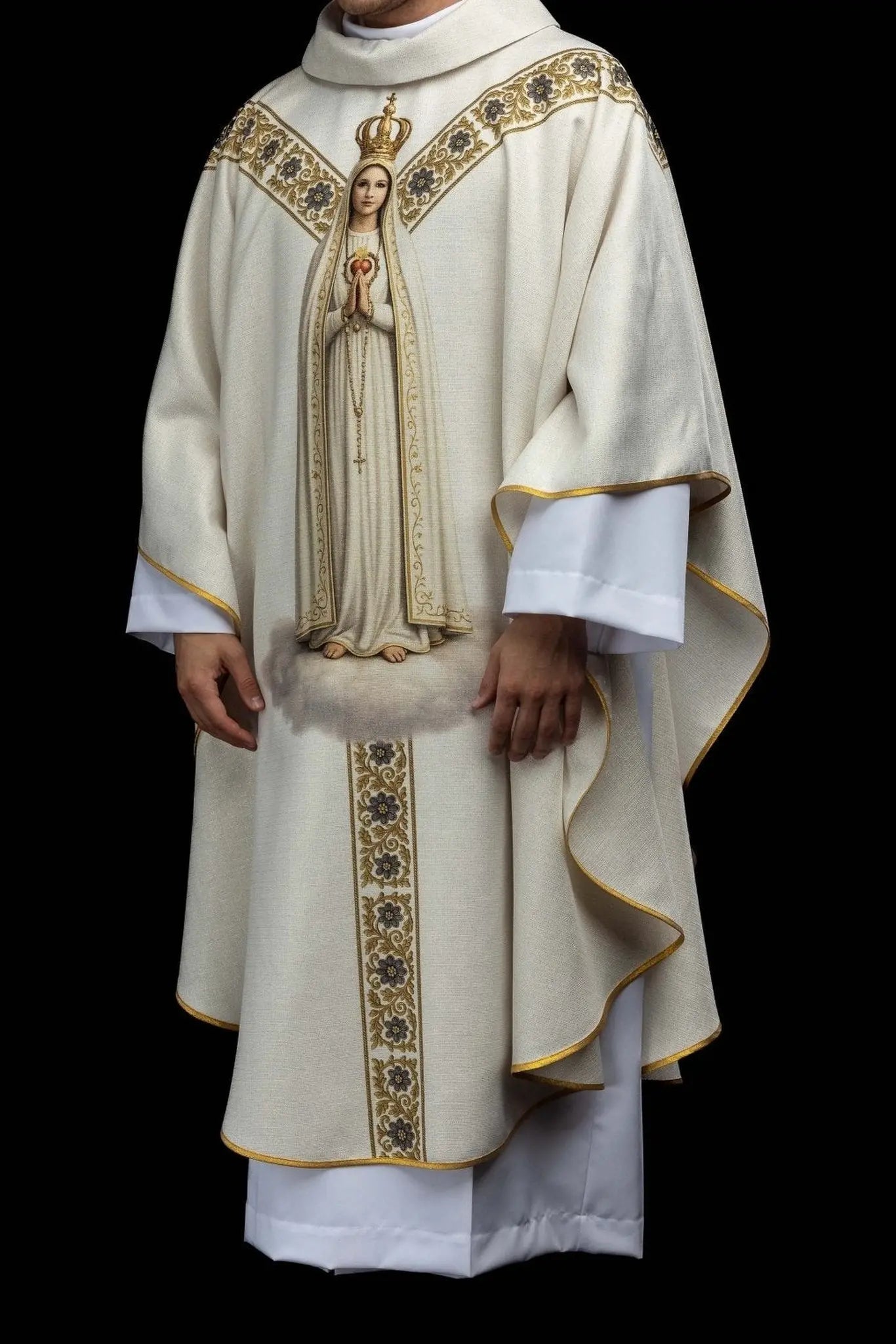
This collection includes chasubles with Marian embroidery, Marian imagery, or decorative programs clearly associated with the Blessed Virgin Mary. A chasuble may be simple and restrained, with a Marian monogram or floral ornament, or more richly decorated with an image of Our Lady, a crown motif, radiant stars, or embroidery referring to the Immaculate Conception, the Assumption, the Queenship of Mary, Our Lady of the Rosary, Our Lady of Lourdes, Our Lady of Fatima, or another approved Marian devotion. The shared purpose is the same: to help the celebrant vest for the Eucharist in a way that is visually coherent with the feast or devotion being celebrated.
Marian vestments often work best when the parish wants a chasuble that is distinct from a general white or gold vestment, yet not overly seasonal. A white chasuble may be appropriate for many feasts, but a Marian chasuble immediately communicates the occasion through its symbols. This can be useful for parish Masses on the Solemnity of Mary, the Holy Mother of God, the Annunciation, the Visitation, the Assumption, the Nativity of the Blessed Virgin Mary, Our Lady of Sorrows, Our Lady of the Rosary, the Immaculate Conception, Marian Saturdays, and local Marian commemorations.
Symbolism used in Marian vestments
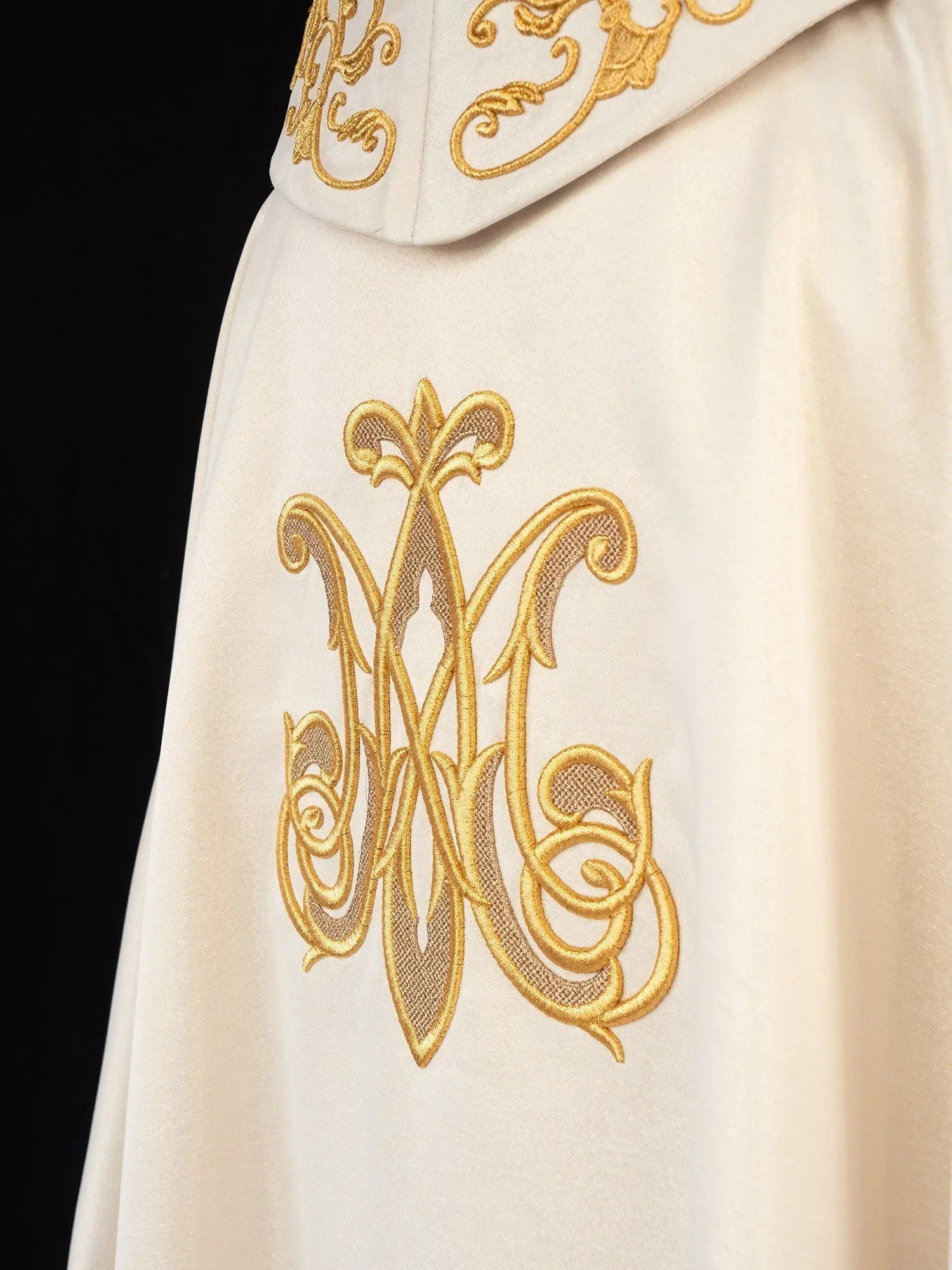
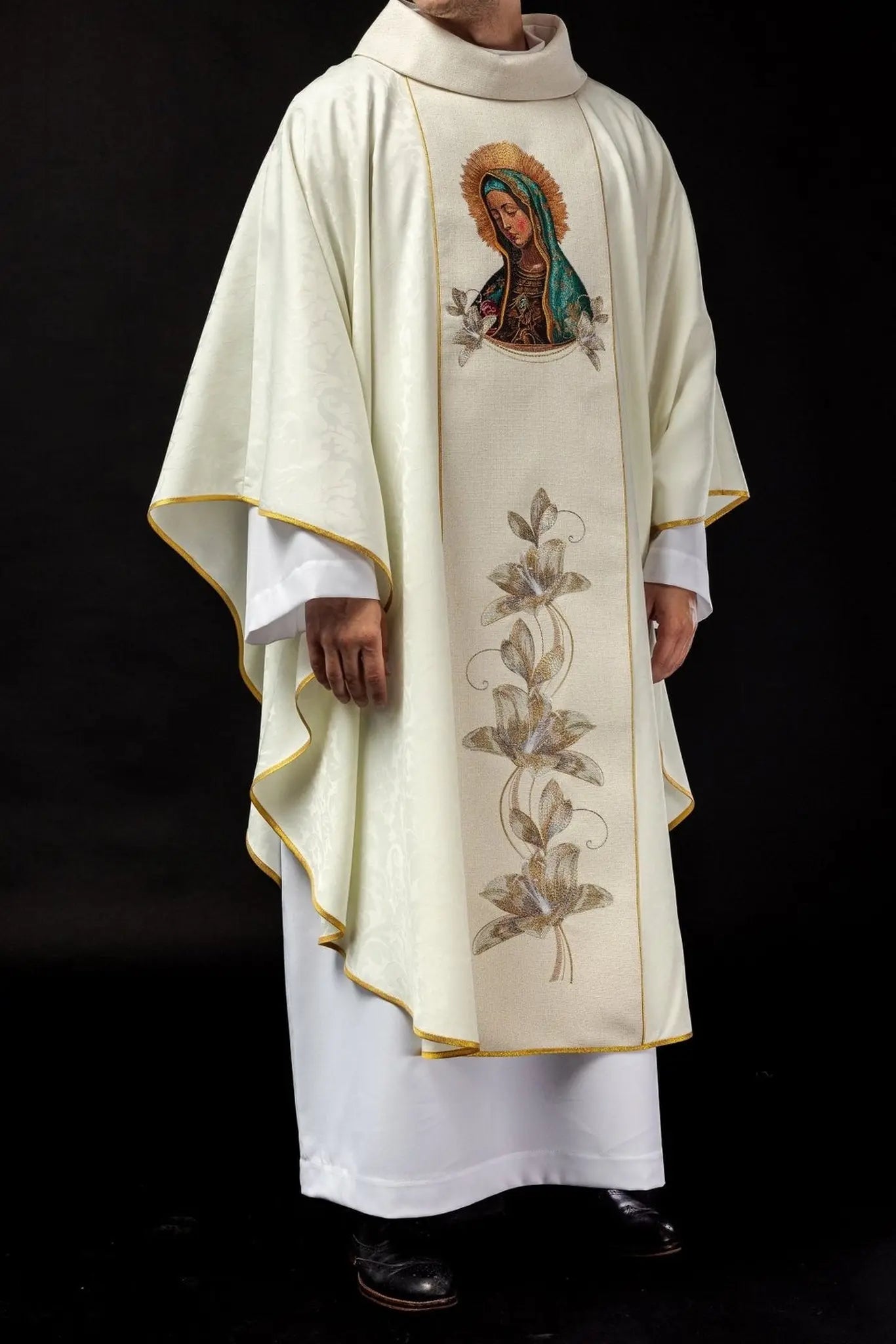
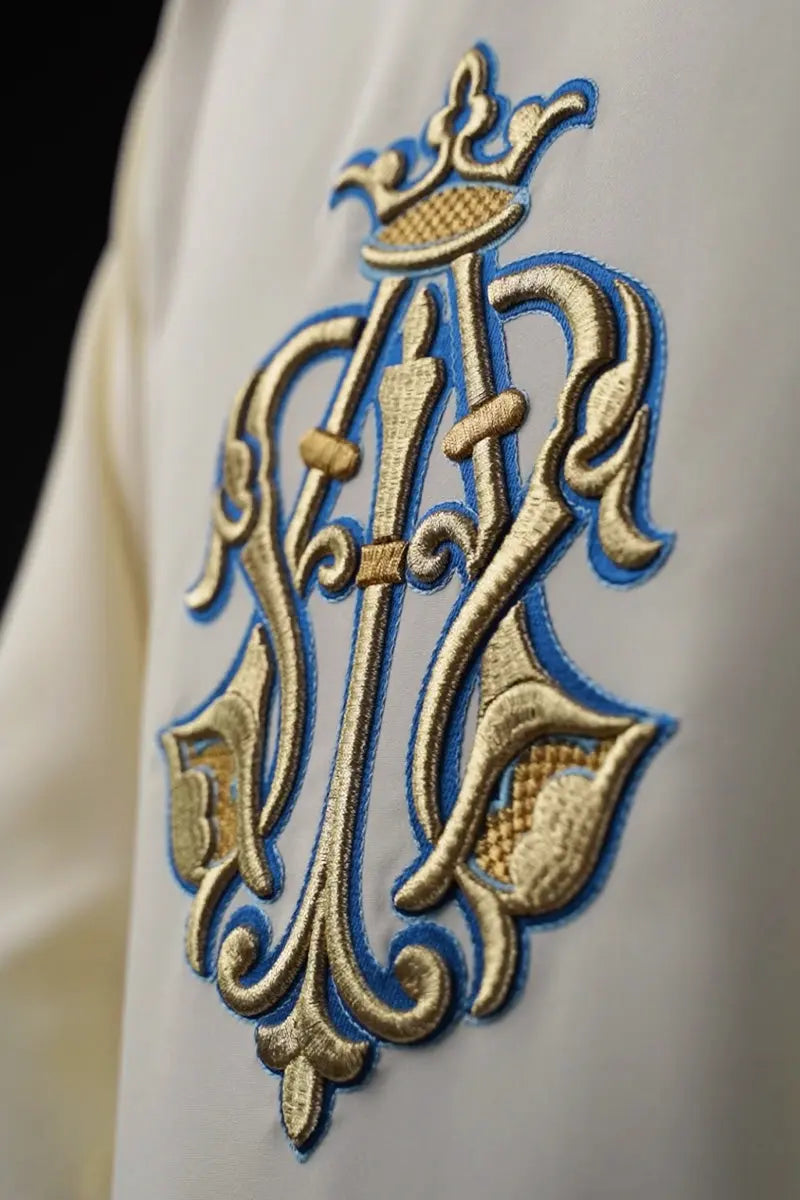
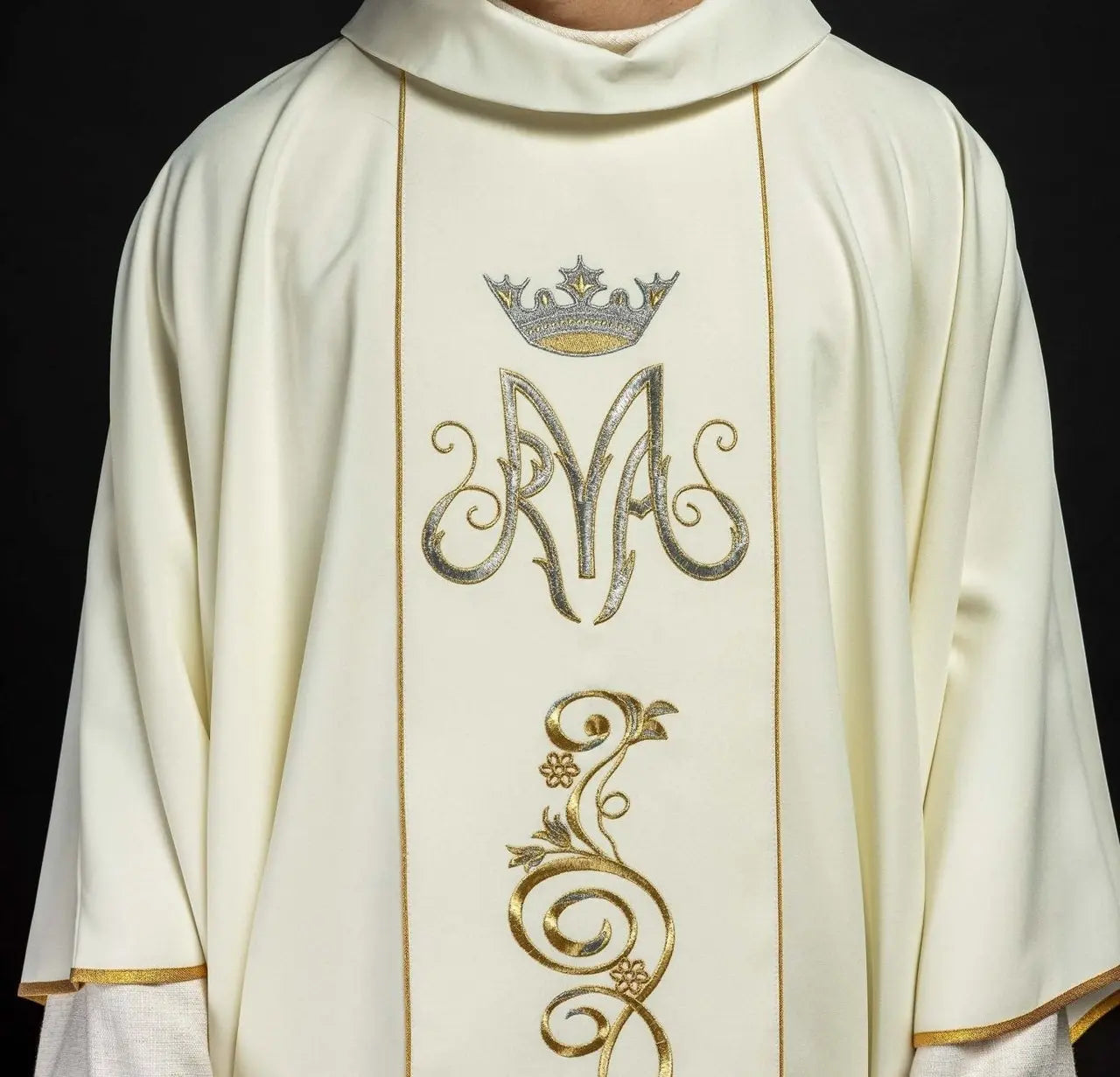
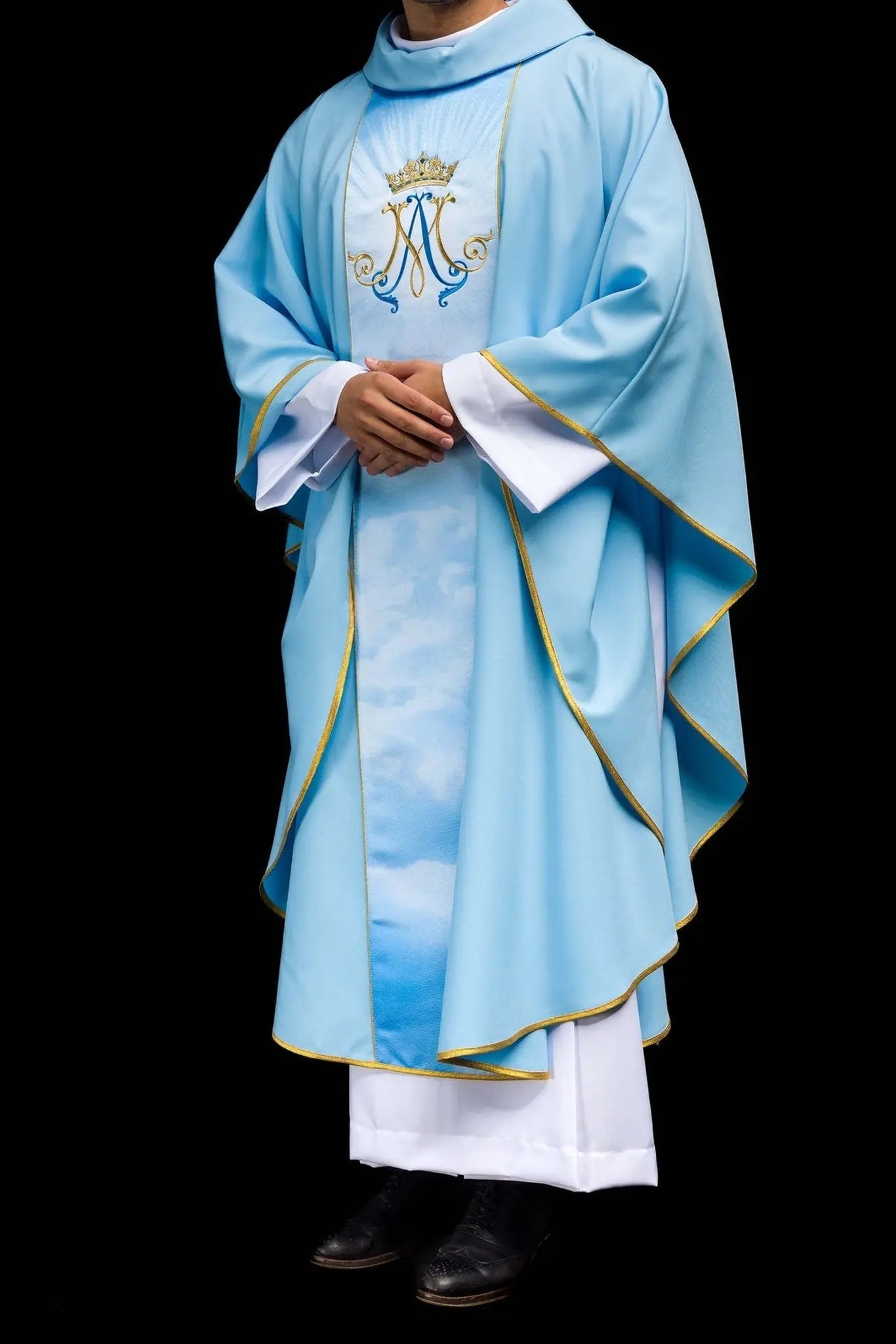
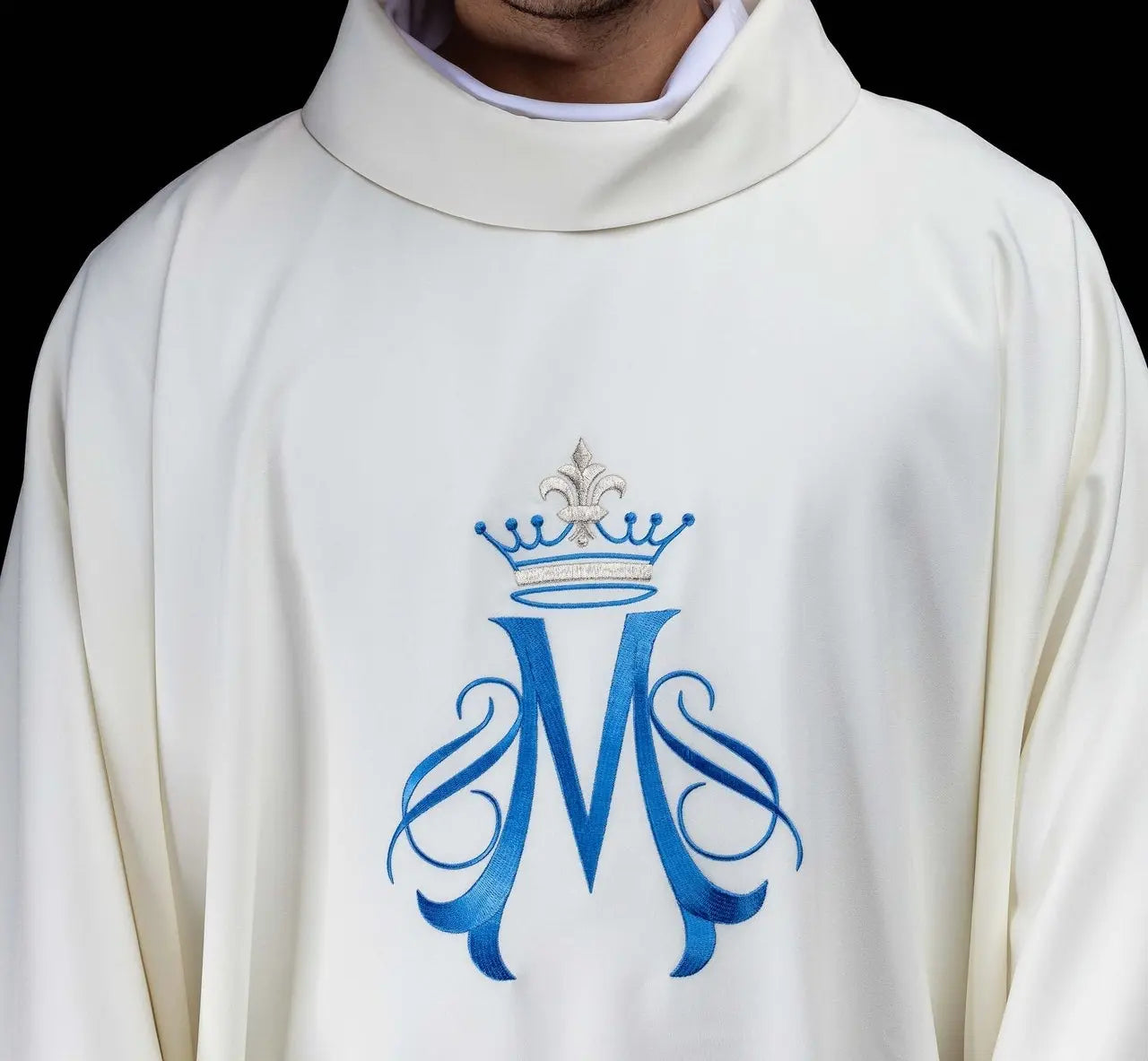
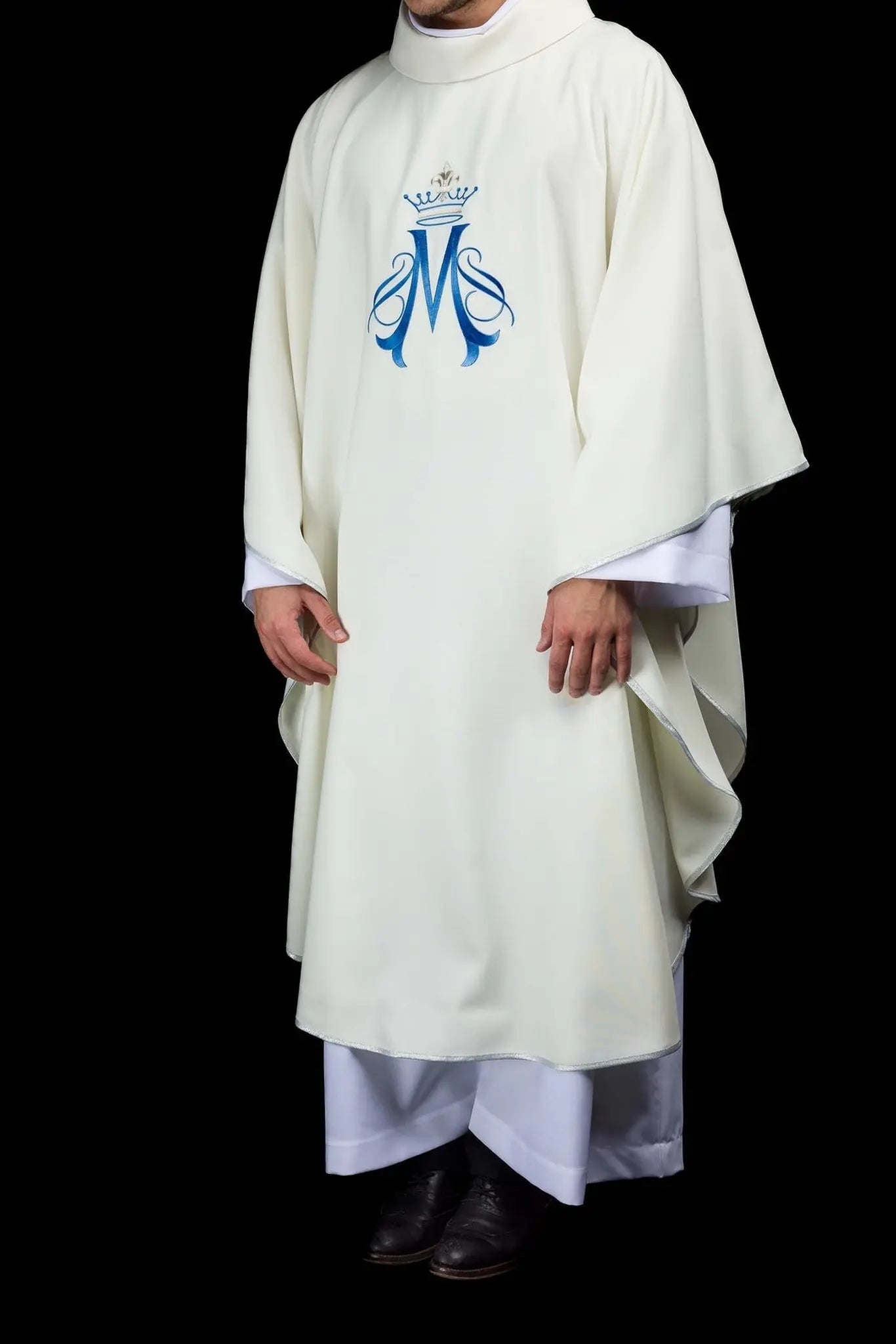
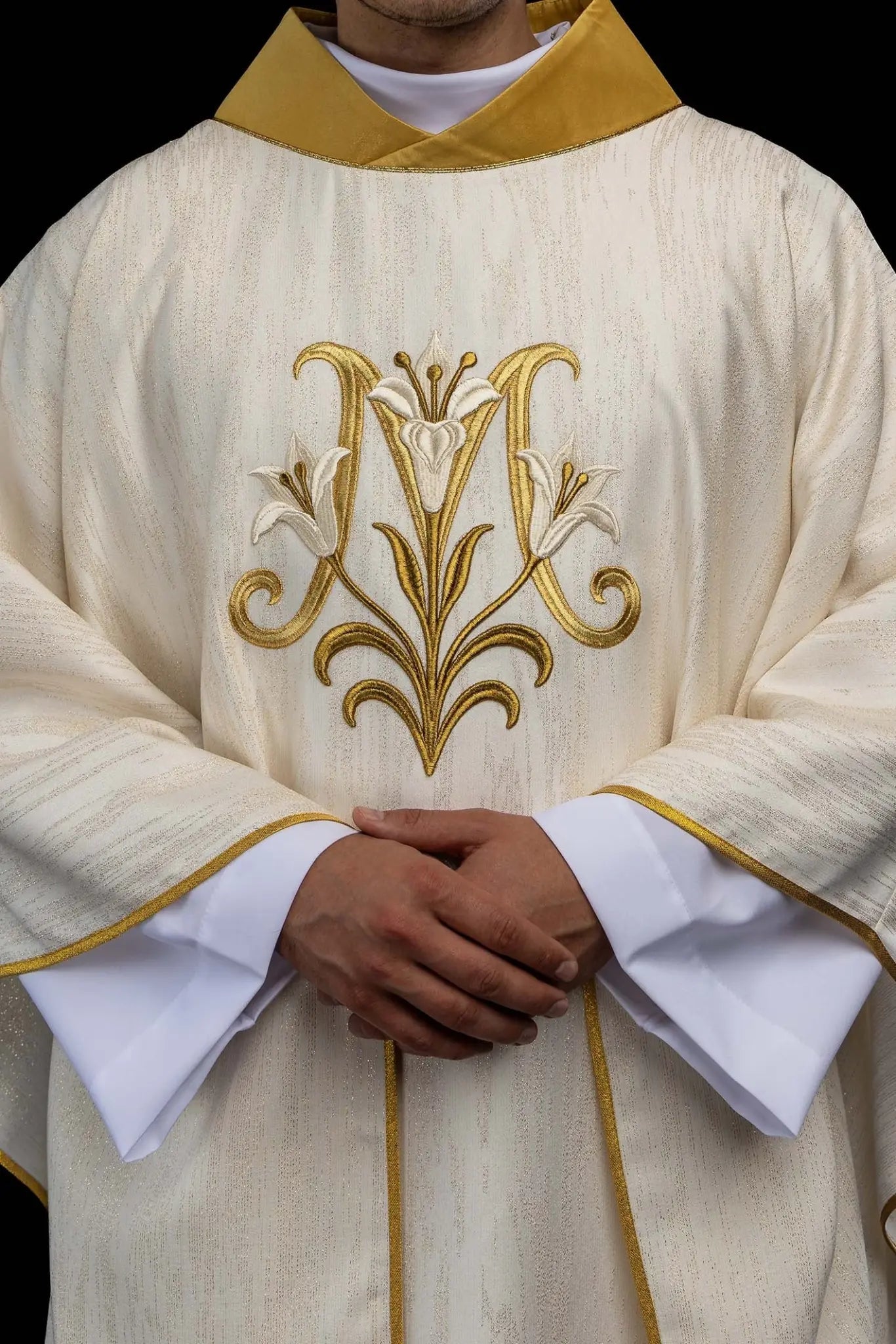
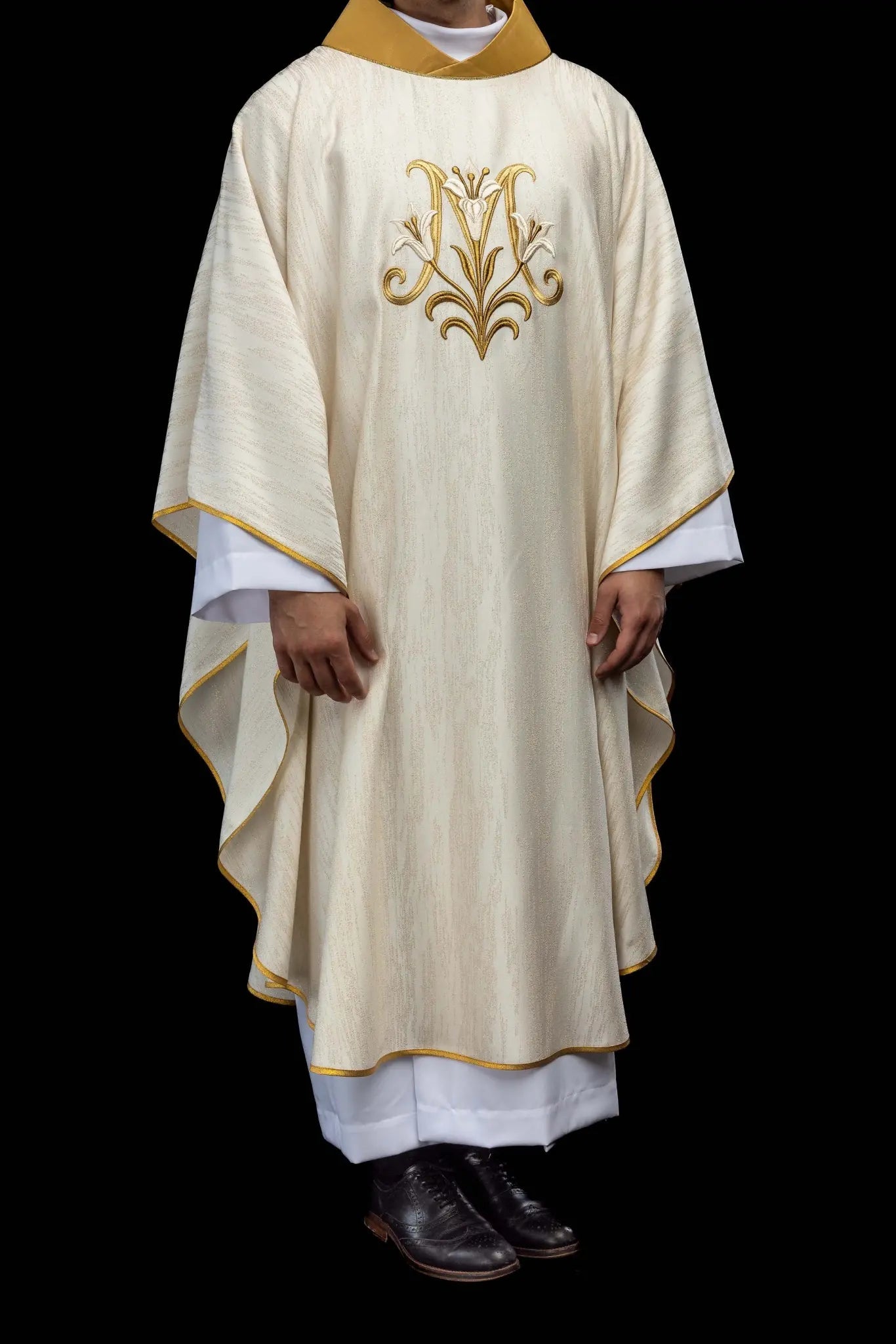
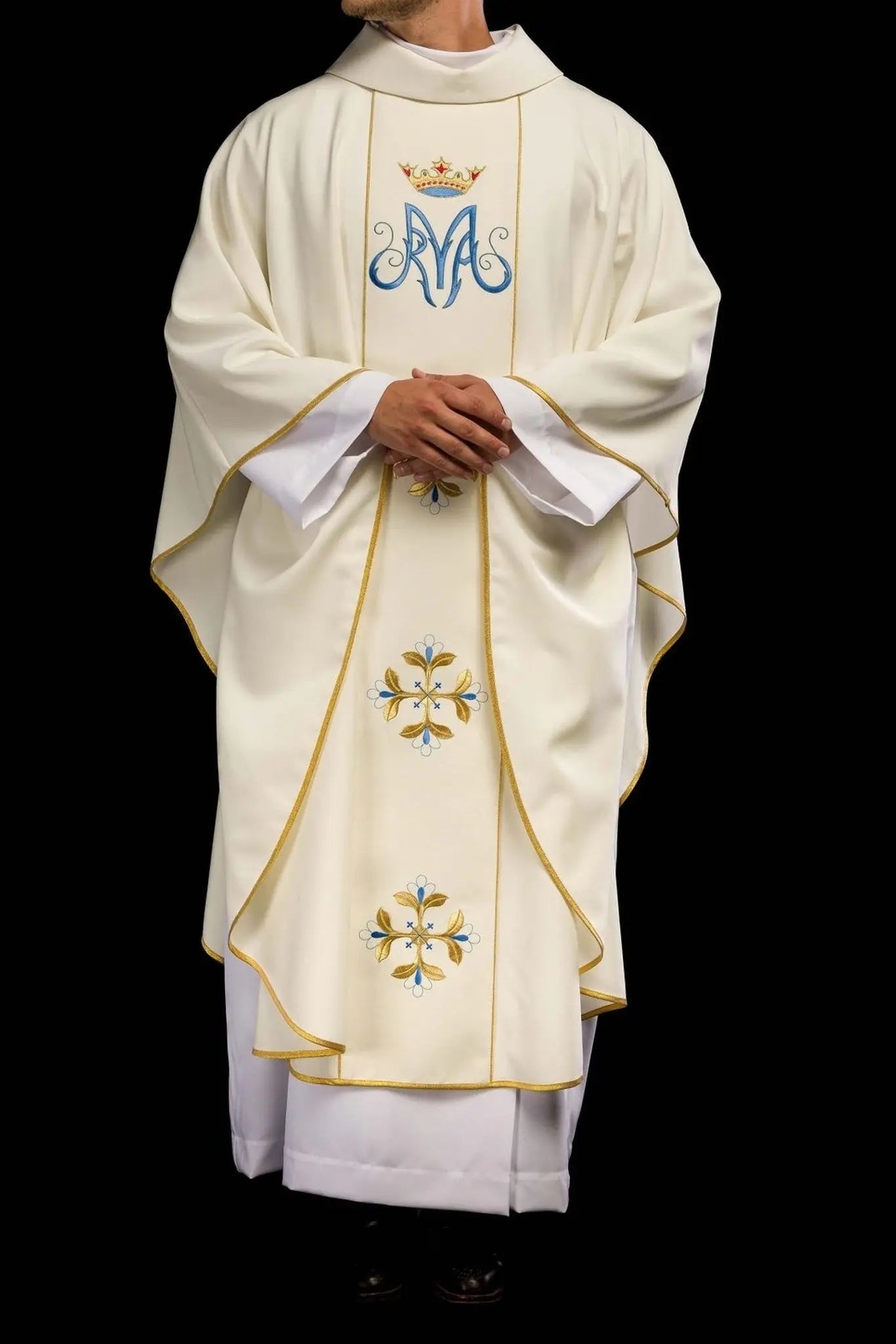
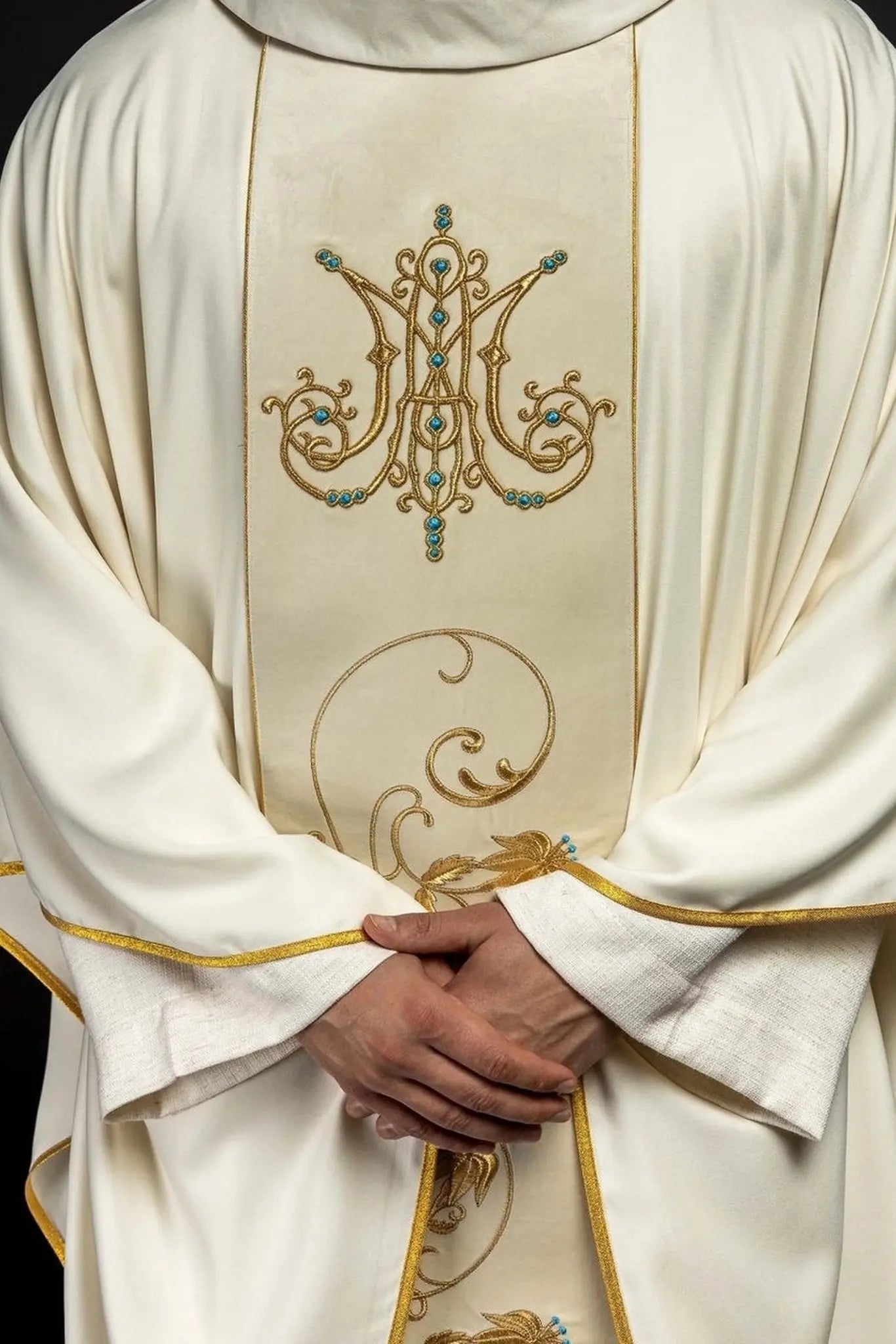
The symbolism of Marian chasubles should be beautiful, clear, and theologically respectful. Lilies commonly refer to Mary's purity and openness to God's will. Roses may recall Marian titles, Marian gardens, the rosary, or Mary as Queen. Stars can evoke the title Star of the Sea and the image of Mary guiding the faithful toward Christ. Crowns and golden rays emphasize queenship and glory, while the letter M, sometimes combined with a cross, can create a simple and readable Marian sign. Blue accents are often associated with Marian devotion in sacred art, while white and gold remain especially common for solemn feasts because they express joy, light, and festal dignity.
When choosing a Marian chasuble, it is worth considering how the embroidery will be read from a distance. A highly detailed image may be fitting for a shrine or chapel dedicated to a particular Marian devotion, while a simpler symbol can be more versatile in a parish sacristy. The best choice is not always the most ornate one. A balanced design, good fabric drape, and clear central motif usually serve the liturgy better than decoration that distracts from the altar, the prayers, or the Eucharistic action.
Liturgical occasions and color considerations
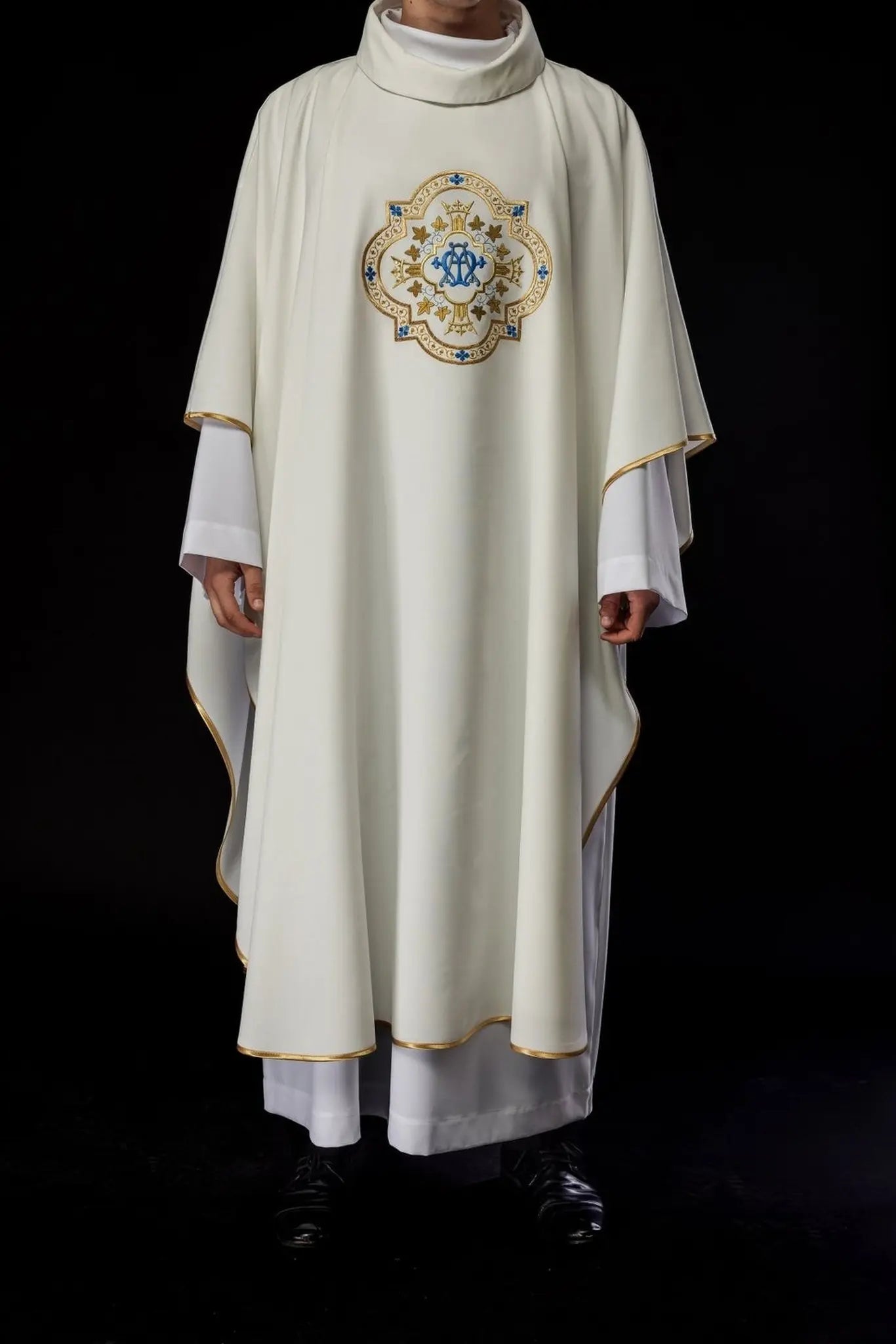
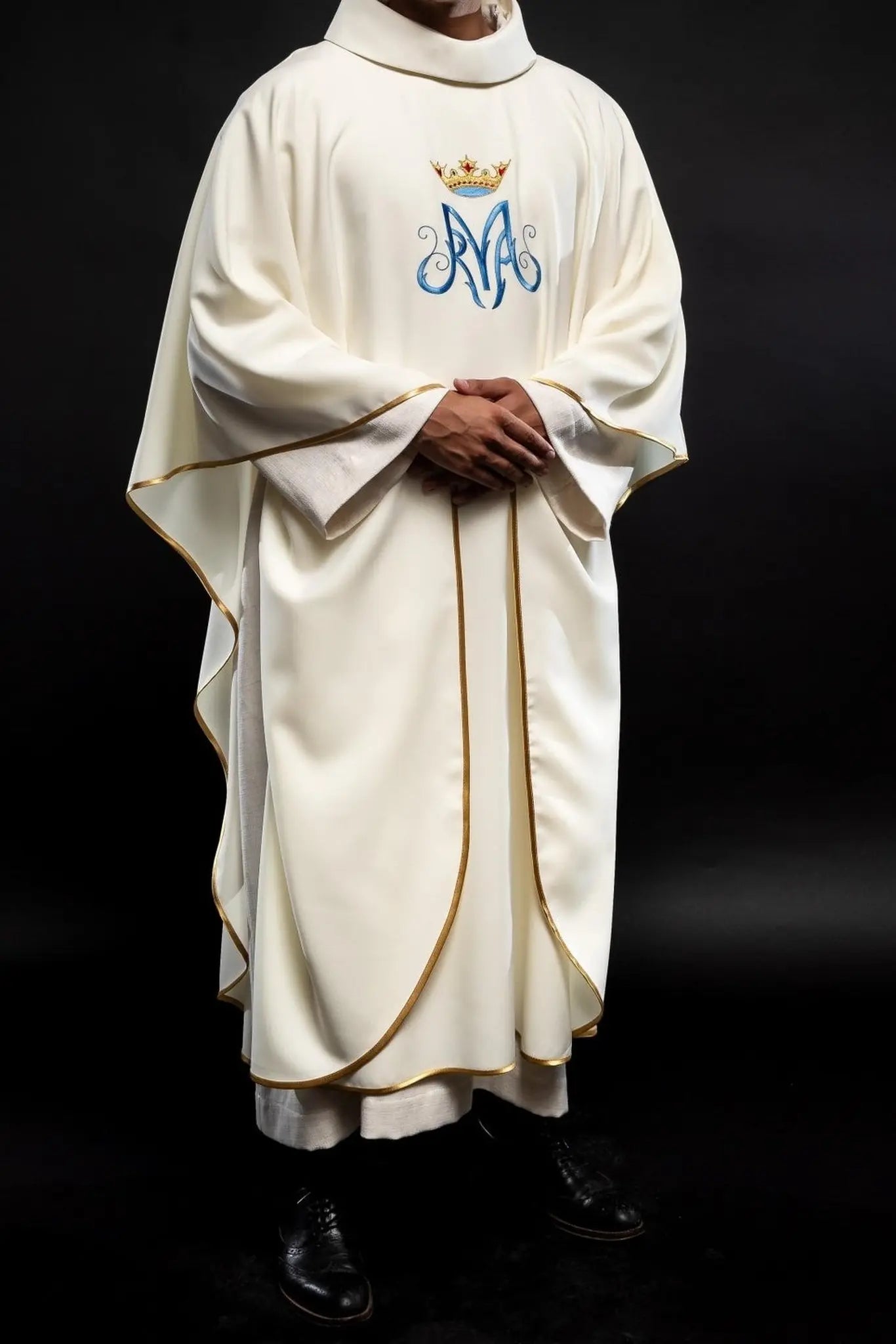
Marian chasubles are often used when white or gold vestments are permitted for feasts and memorials of the Blessed Virgin Mary. White expresses purity, joy, and celebration; gold may be used where a more solemn festal tone is desired. Ecru can provide a warm and elegant alternative to bright white, especially when the embroidery is gold, blue, or multicolored. For a wider color-based selection, related options are available in ecru chasubles and gold chasubles.
Not every Marian celebration requires a specially Marian design, but such a vestment can strengthen the visual unity of the liturgy. In a parish with regular First Saturday devotions, Marian novenas, rosary processions, or a church dedication connected with Our Lady, a Marian chasuble can become a practical part of the regular vestment rotation. In a shrine, retreat house, or chapel, it may be used even more frequently, especially where the pastoral life of the community is strongly shaped by Marian prayer.
This collection should also be distinguished from seasonal or color-specific chasubles. Green chasubles are used for Ordinary Time and are best chosen through the green chasubles collection. Purple chasubles are used especially for Advent, Lent, and penitential celebrations, and can be compared in the purple chasubles collection. Rose chasubles are not simply pink vestments; they are used on Gaudete Sunday and Laetare Sunday, and related options can be found in rose chasubles. Marian chasubles, by contrast, are grouped by devotional subject and iconography rather than only by liturgical color.
How to choose a Marian chasuble
Begin with the intended use. For a parish that needs one versatile Marian vestment, a refined white, ecru, or gold design with a clear Marian symbol is often the most practical option. It can serve many feasts without being limited to one apparition or one local title of Mary. For a shrine, pilgrimage church, or community with a strong devotion to a particular image of Our Lady, a chasuble with a more explicit Marian representation may be more appropriate. For a priest's personal vestment set, the best choice may depend on whether the chasuble will be used mainly for solemn feast days, weekday votive Masses, or special devotional celebrations.
Fabric and cut also matter. A fuller Gothic cut gives generous movement and is often chosen for contemporary parish use. A Roman style has a more structured appearance and can be appropriate in communities that prefer a traditional visual form. Embroidery weight, lining, collar shape, and overall proportion should support comfort at the altar. A Marian chasuble should look dignified when the priest is standing, seated, preaching, and celebrating at the altar, not only when it is displayed flat.
Consider the surrounding liturgical environment as well. In a church with a strongly ornamented sanctuary, a simpler vestment can appear noble and balanced. In a plain chapel, a richer embroidered chasuble may bring visual focus to the feast. If the parish already owns many white and gold vestments, a Marian chasuble with blue accents or a distinctive Marian image may fill a real gap in the sacristy. If the parish is building a coordinated set, related Marian pieces such as Marian stoles can help create a consistent appearance for concelebrants, clergy assisting at devotions, or non-Eucharistic services where a stole rather than a chasuble is used.
Relationship to other Marian and liturgical collections
Marian chasubles are part of a wider visual language used in church textiles. A parish may combine a Marian chasuble with altar linens, pulpit covers, or veils that repeat similar colors or symbols. When the celebration centers on the Blessed Virgin Mary, the wider thematic collection Blessed Virgin Mary can help locate related items beyond chasubles. For the credence table and chalice preparation, the Marian chalice sets collection may be a natural complement.
It is also useful to compare Marian chasubles with chasubles with saints. Both collections may include figurative embroidery, but their focus differs. Marian chasubles are dedicated to the Mother of God and Marian celebrations, while chasubles with saints may be chosen for patronal feasts, religious communities, parish namesakes, or particular saints whose intercession is honored locally. This distinction helps a parish choose a vestment that matches the feast rather than selecting only by decorative preference.
Care and long-term use
Because Marian chasubles often include detailed embroidery, careful handling is important. After use, the vestment should be allowed to air before storage. It should be hung on a suitable hanger or kept flat according to the cut and fabric, avoiding pressure on raised embroidery. Breathable garment bags help protect the chasuble from dust while reducing the risk of trapped moisture. Professional cleaning is usually the safest option, especially where metallic threads, appliqué, lining, or delicate fabric are present. Regular inspection of seams, collar edges, and embroidered areas helps keep the vestment ready for solemn occasions.
A well-chosen Marian chasuble can serve a parish for many years. Its value is not only decorative. It becomes part of the community's visible memory of Marian feasts, parish missions, jubilee celebrations, First Saturday Masses, and moments of prayer entrusted to Mary's intercession. When the design is dignified, the material durable, and the symbolism clear, the vestment can support the celebration without drawing attention away from Christ, to whom all authentic Marian devotion leads.
Frequently Asked Questions (FAQ)
When is a Marian chasuble used?
A Marian chasuble is used by a priest or bishop when celebrating Masses connected with the Blessed Virgin Mary, including Marian solemnities, feasts, memorials, votive Masses, shrine celebrations, parish patronal days, and devotional occasions such as First Saturday Masses. The exact use should always respect the liturgical calendar and the color permitted for the celebration.
Is a Marian chasuble the same as a white chasuble?
Not exactly. Many Marian chasubles are white, ecru, or gold, but the defining feature is the Marian design rather than the base color alone. A plain white chasuble can be used for many joyful feasts, while a Marian chasuble includes symbols or imagery that specifically refer to the Mother of God.
Can blue be used in a Marian chasuble?
Blue is widely associated with Mary in Christian art and devotional design, so it may appear as an accent, embroidery color, or decorative element. The permitted liturgical color for the Mass still depends on the calendar and local norms. Many parishes choose a white, ecru, or gold base with blue Marian details for a clear but balanced effect.
How do I choose between a Marian symbol and an image of Our Lady?
A symbolic design, such as lilies, stars, a crown, or a Marian monogram, is usually more versatile across many feasts. An image of Our Lady is especially fitting when the church, chapel, or community has a particular Marian title or devotion. The choice should match how often the vestment will be used and whether it is intended for general Marian celebrations or one specific devotion.
What other items can coordinate with a Marian chasuble?
Marian stoles, chalice sets, pulpit covers, and other textiles with similar colors or motifs can create a coherent celebration, especially for shrines or parish feasts. Coordination should remain restrained: the chasuble is central for the celebrant at Mass, while supporting textiles should echo the theme without overwhelming the sanctuary.