Stoles with Sacred Images
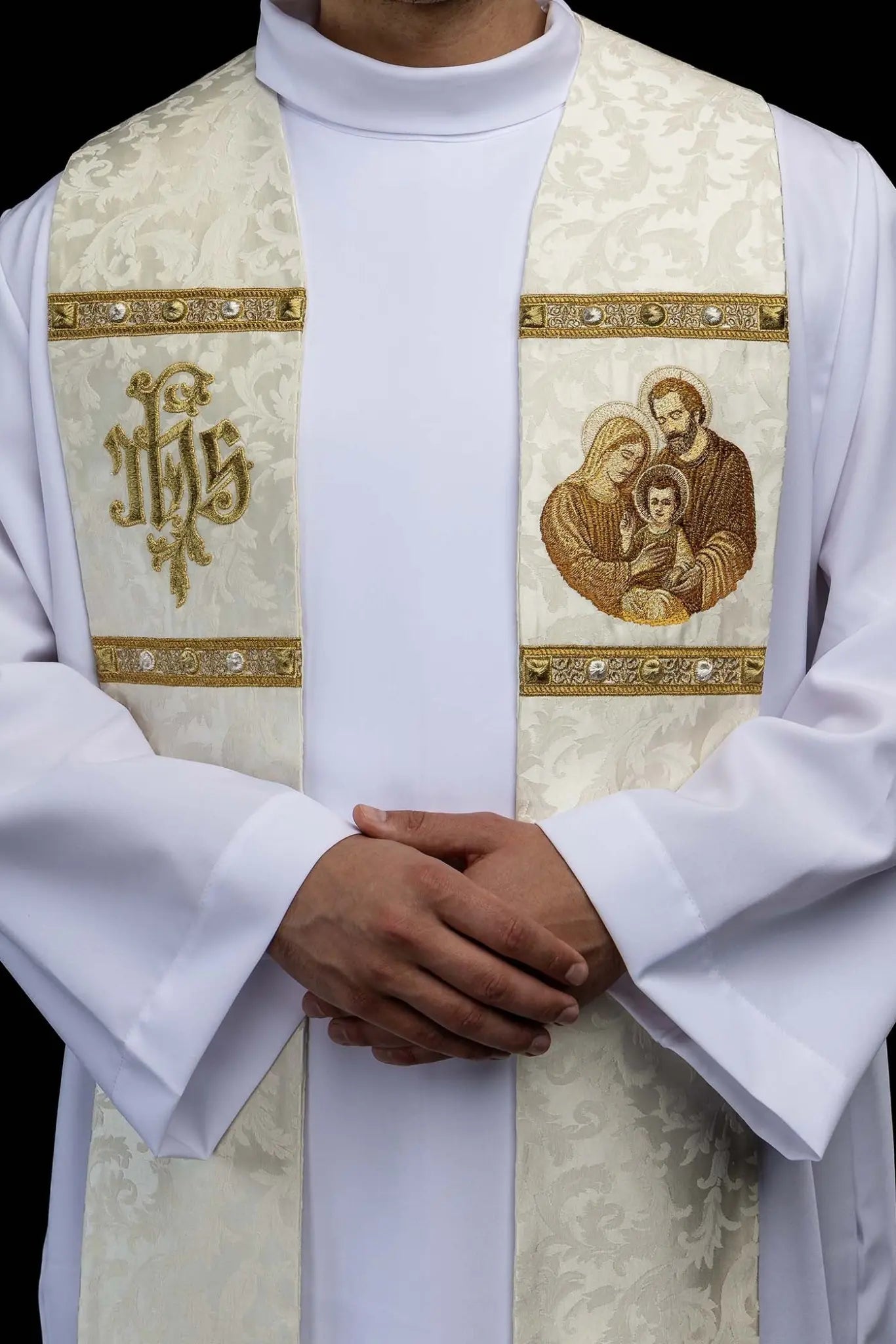
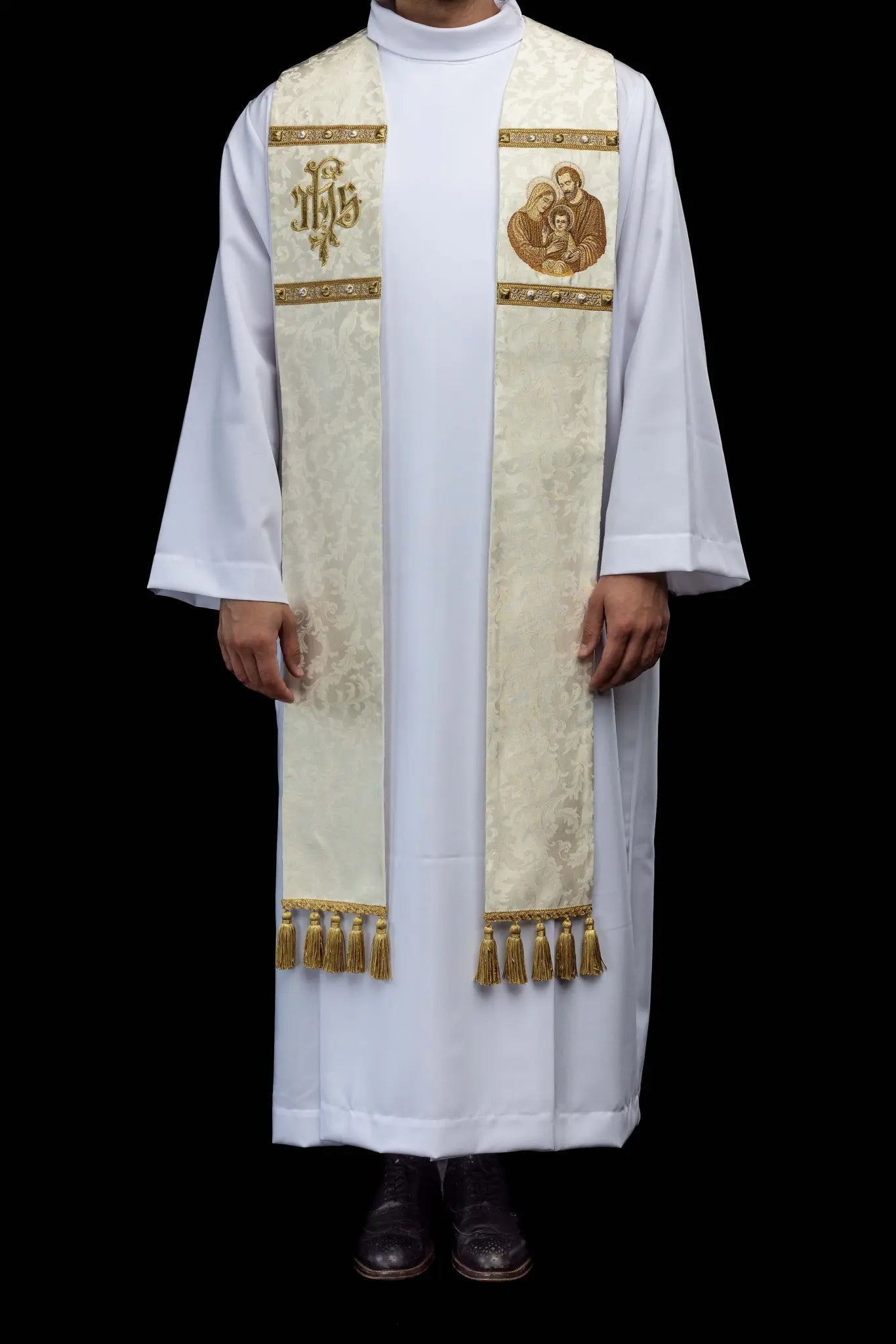
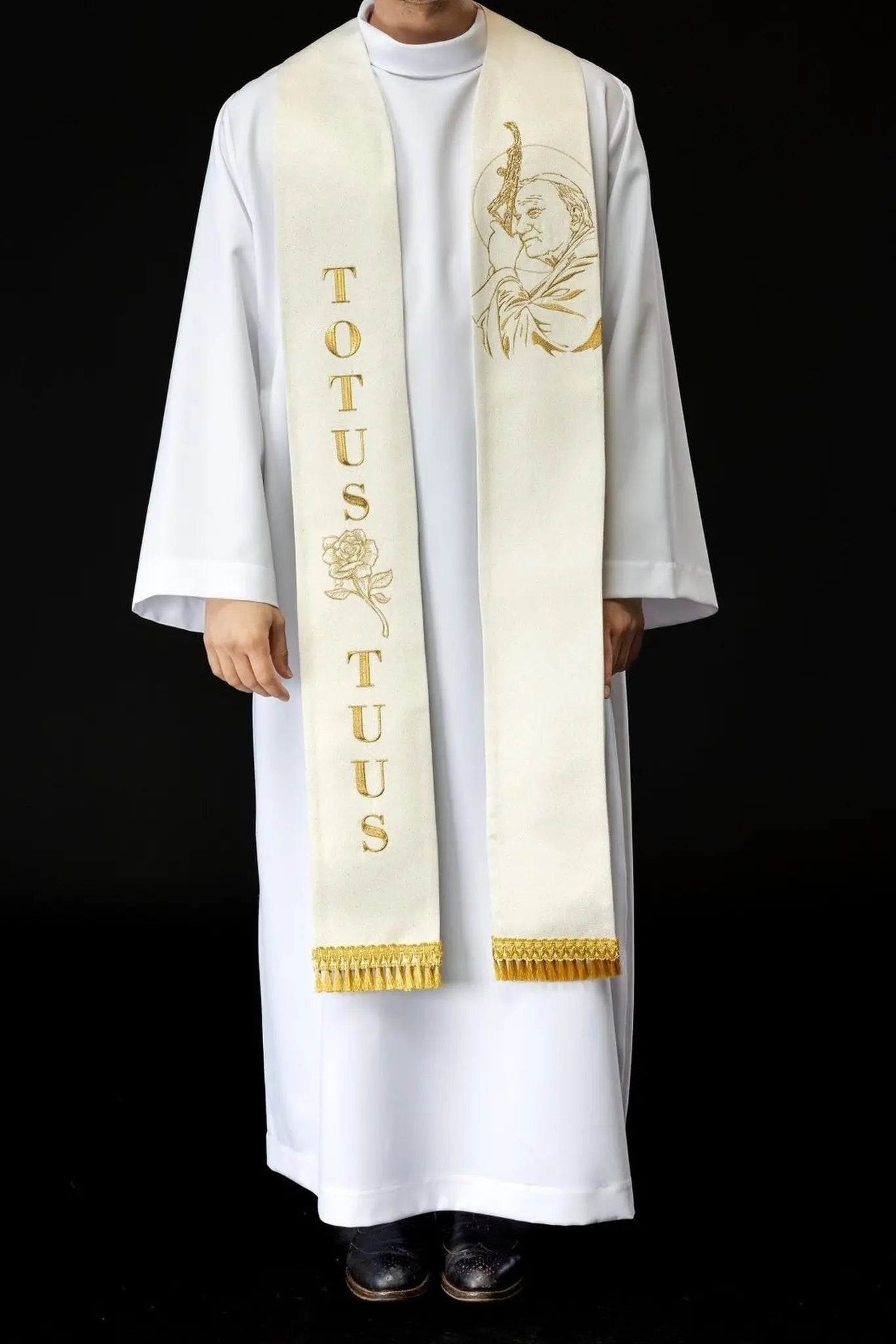
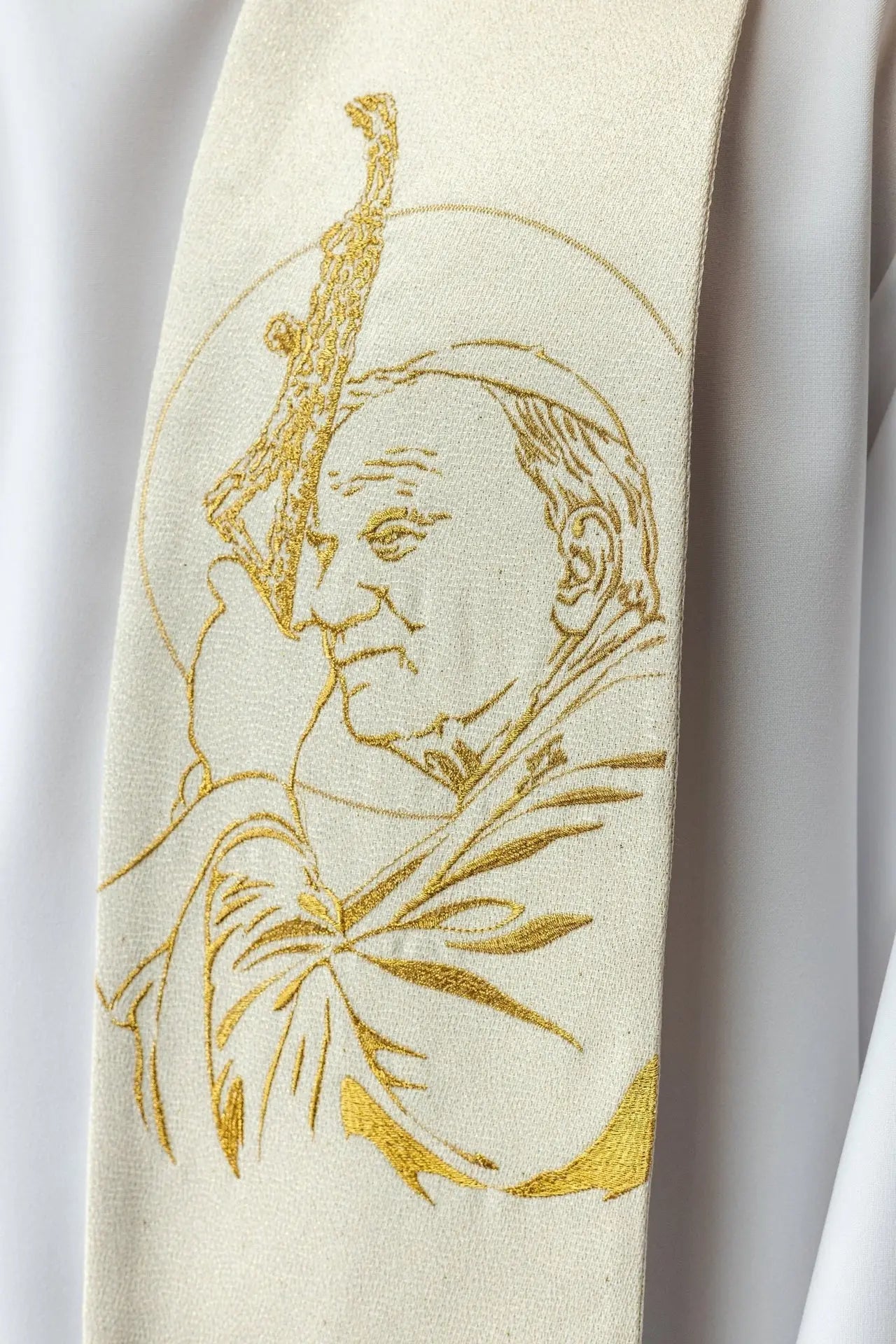
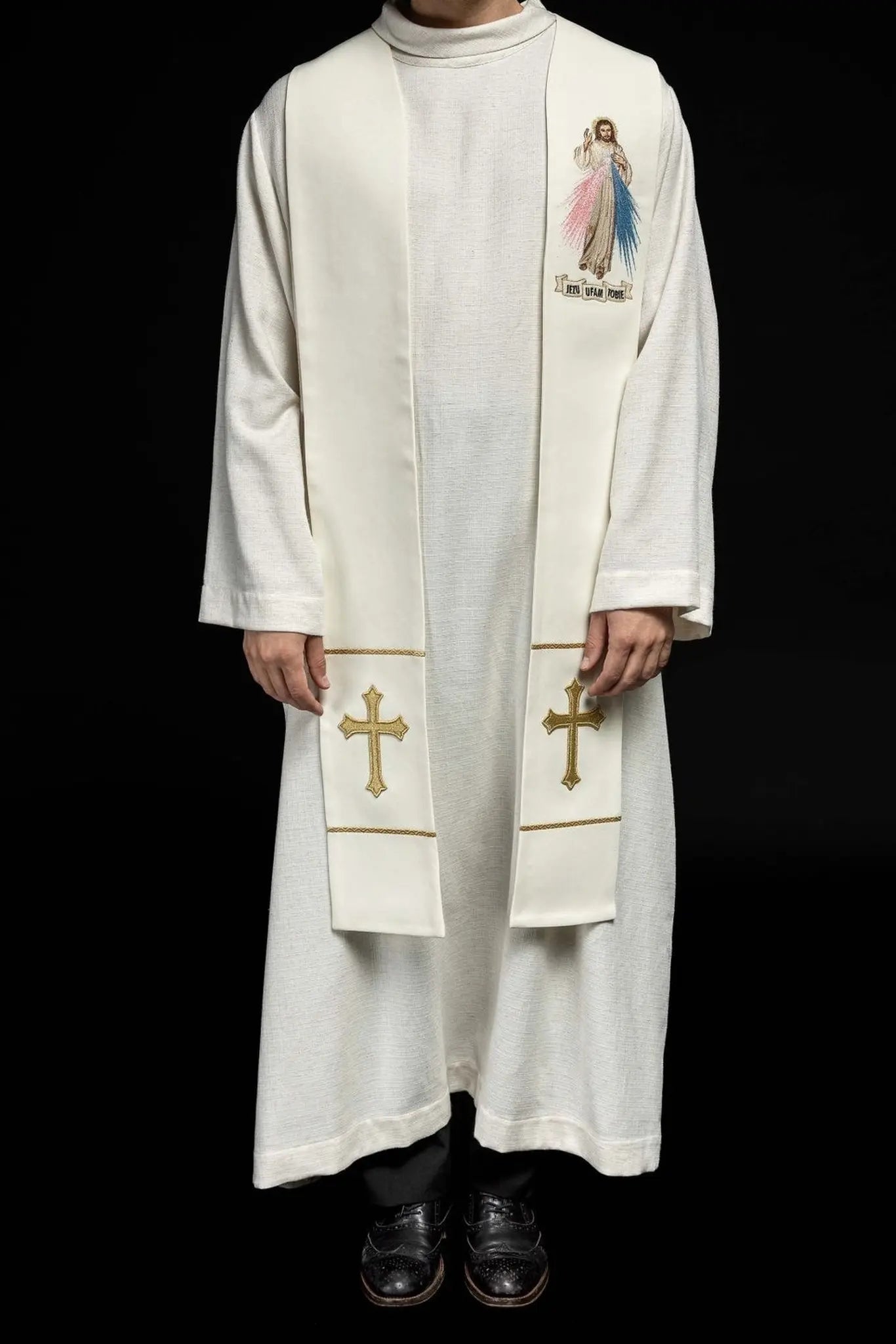
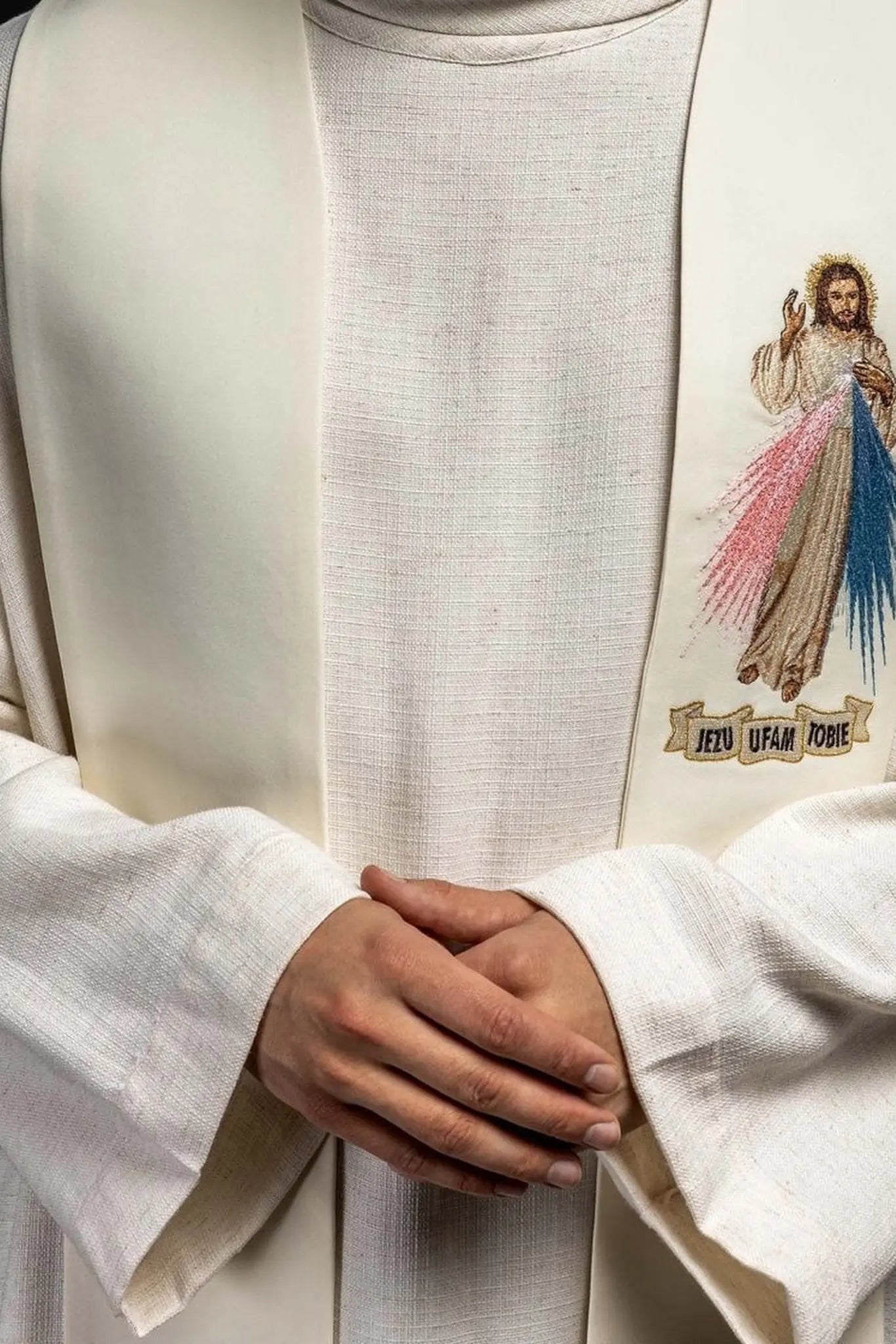
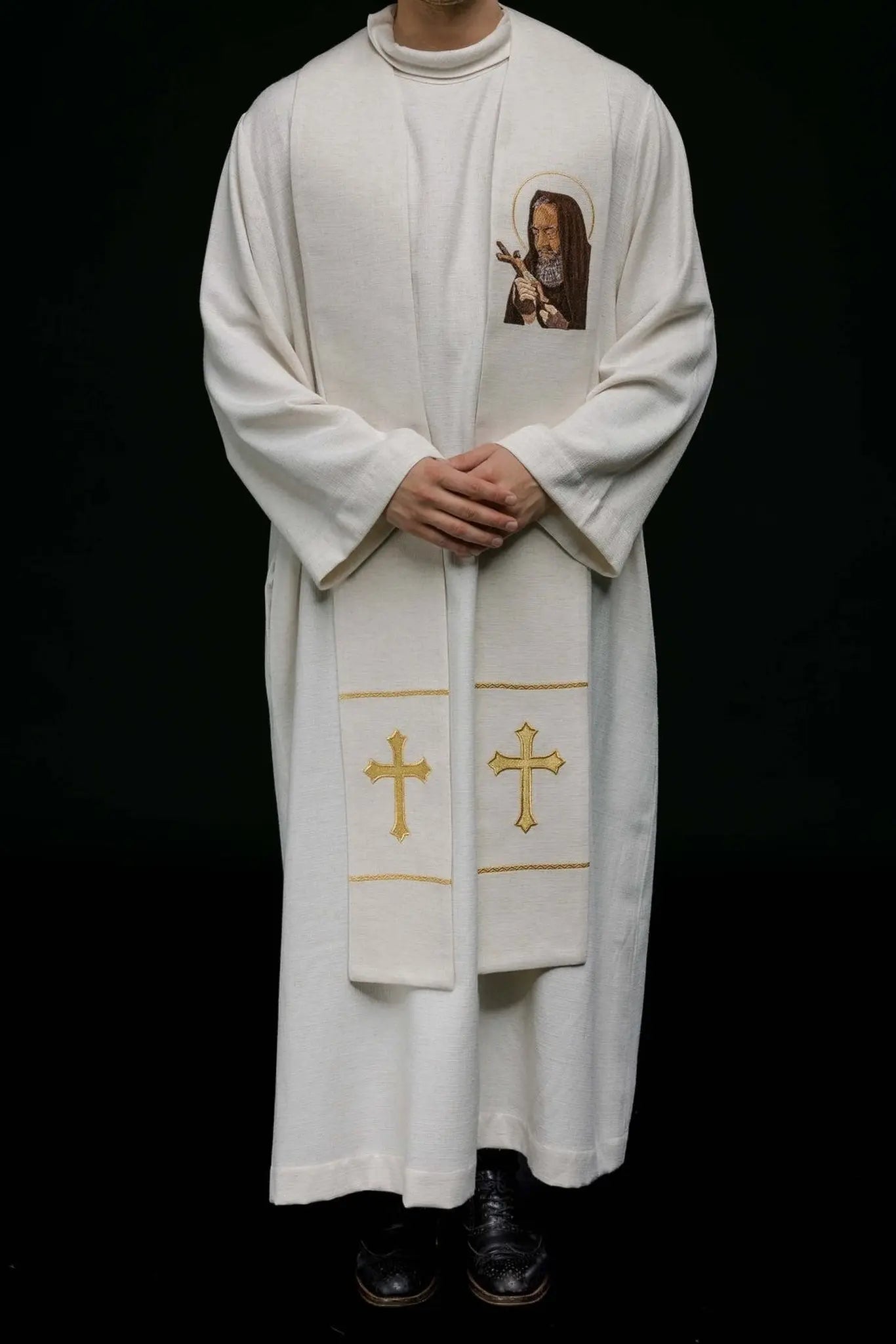
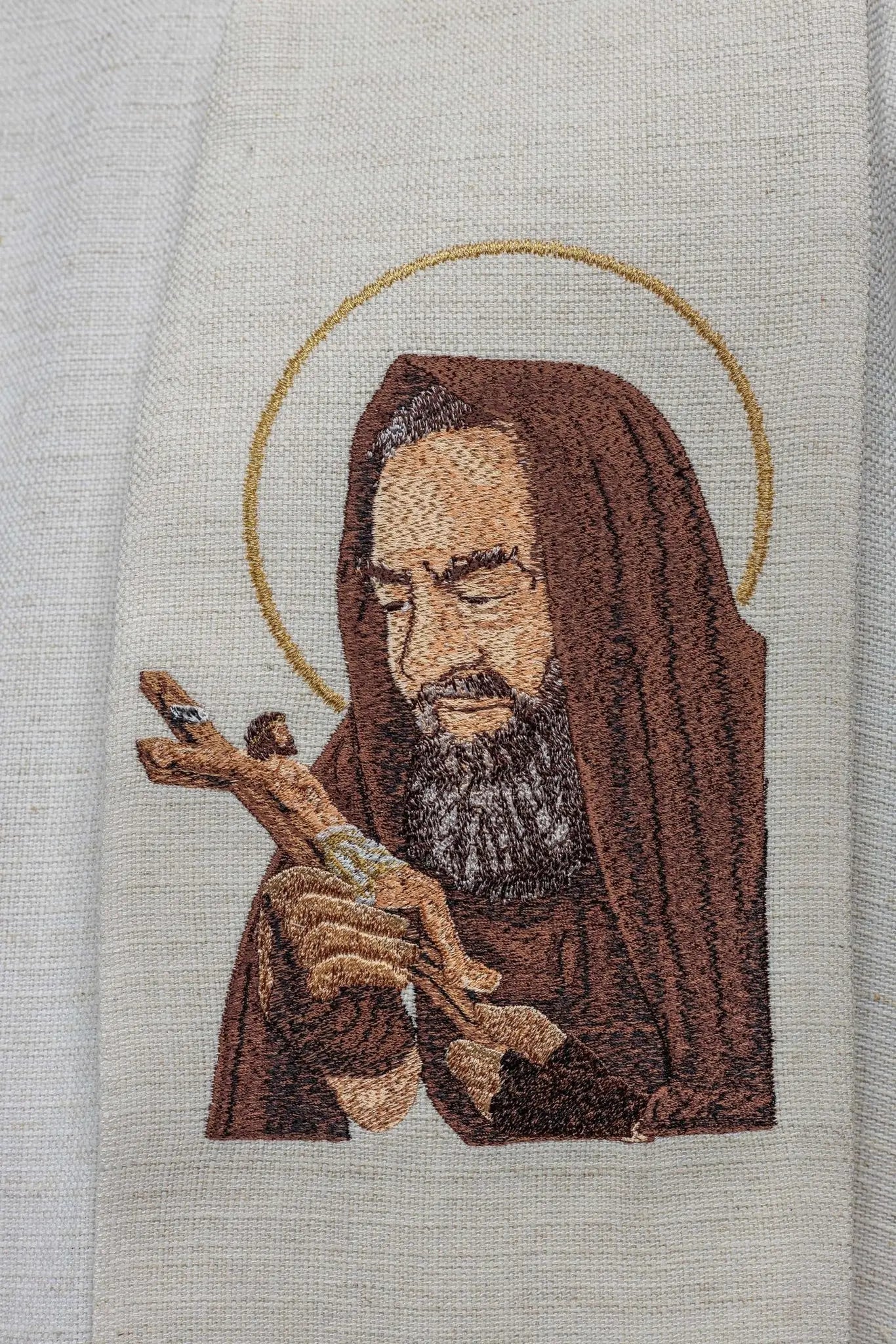
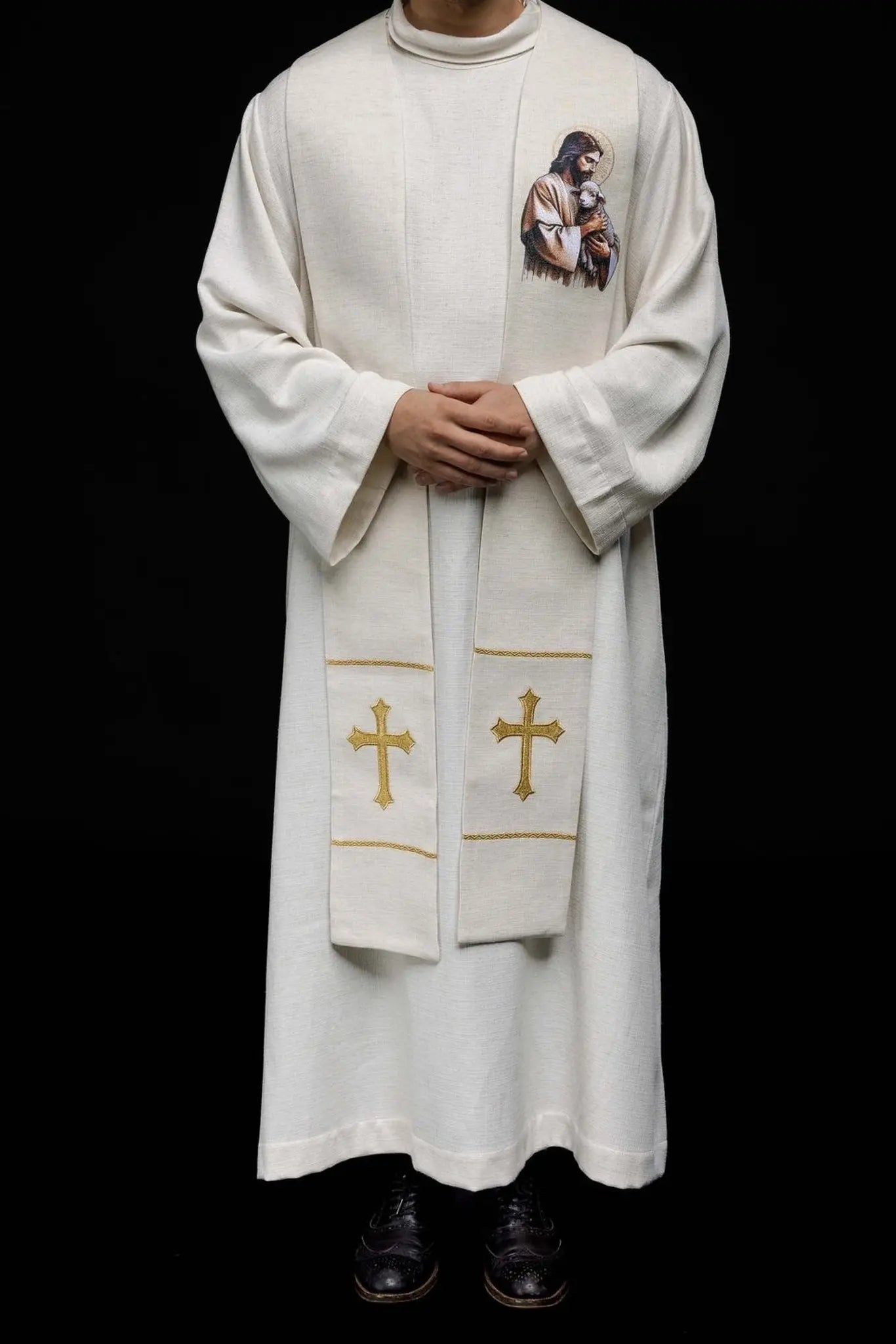
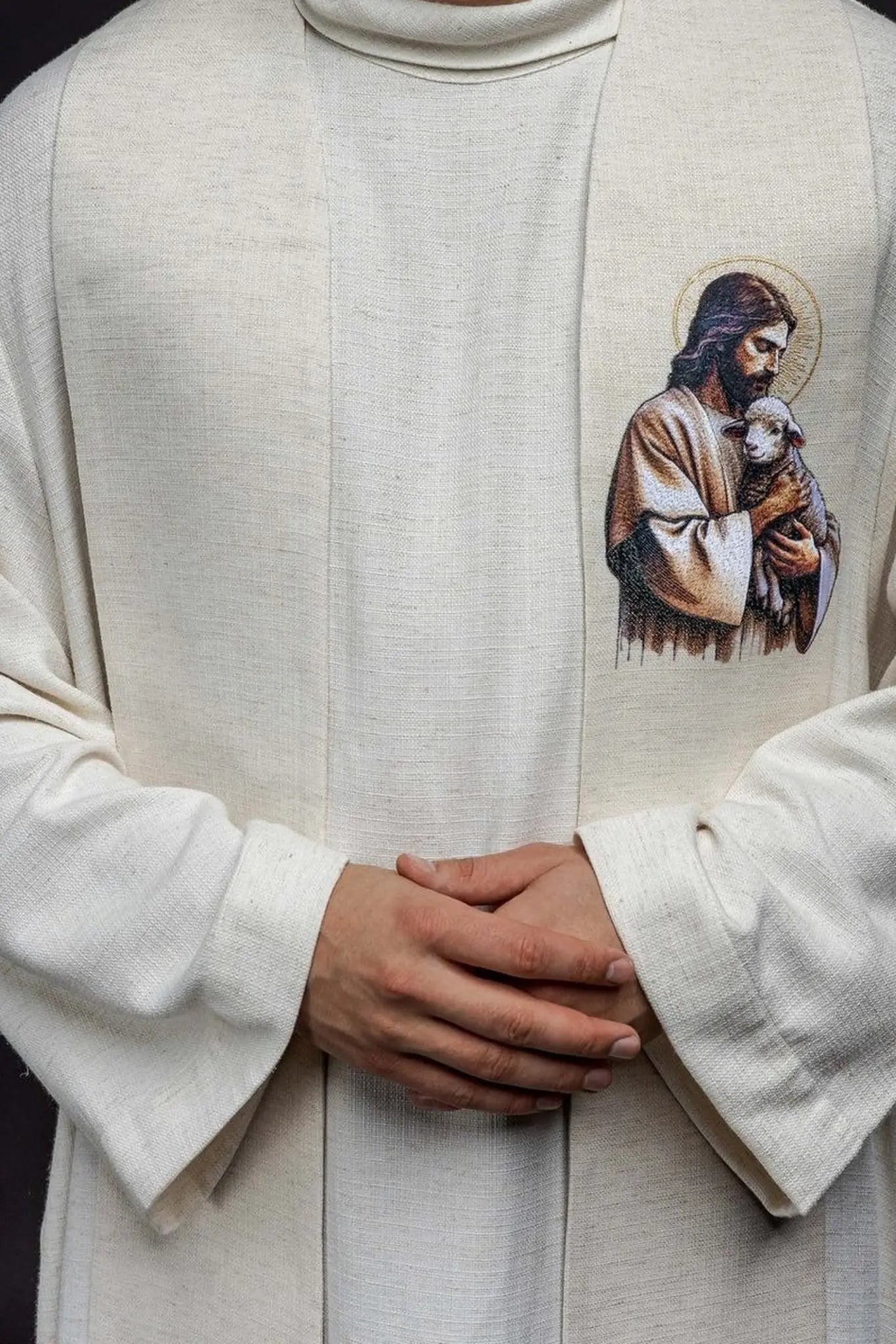
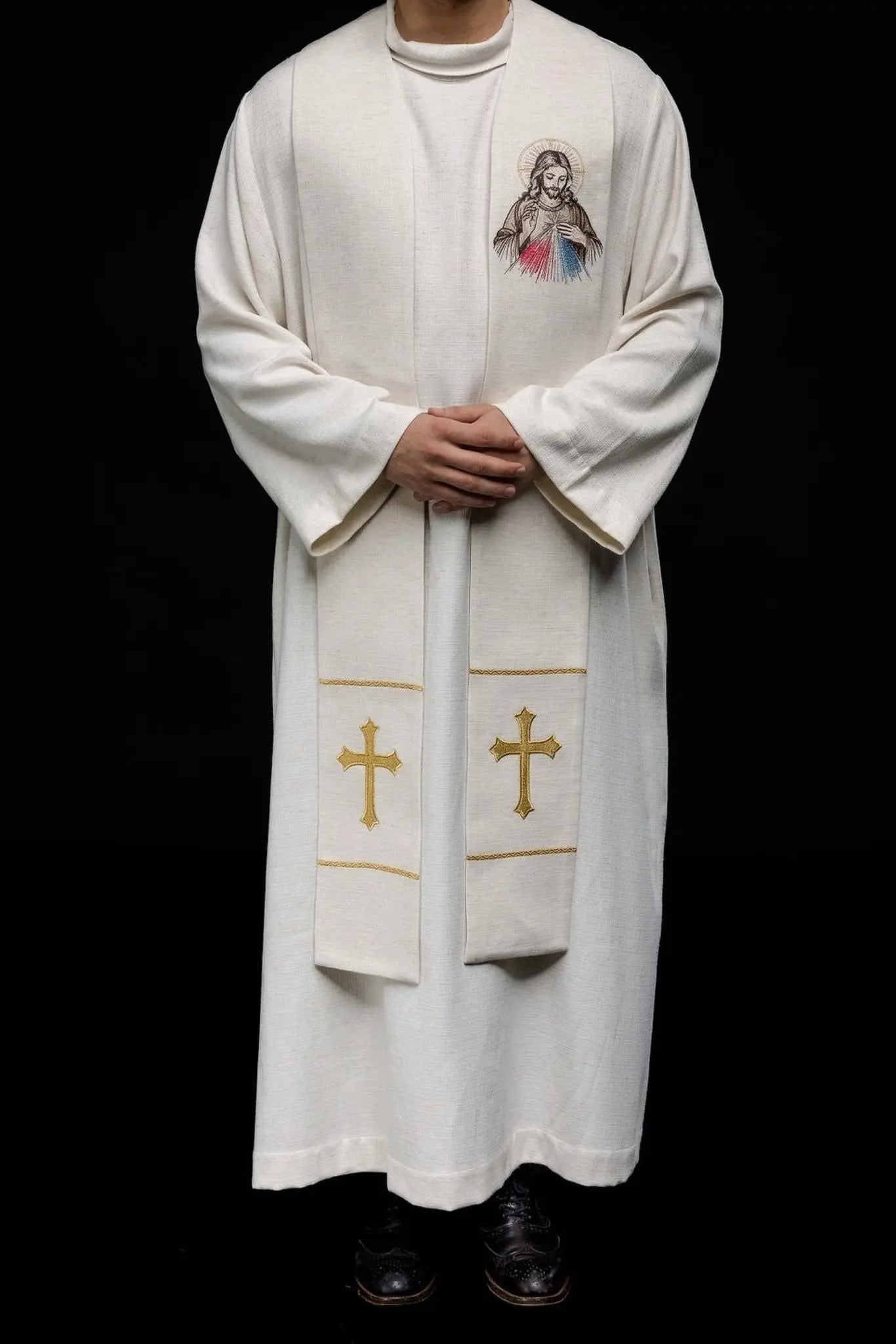
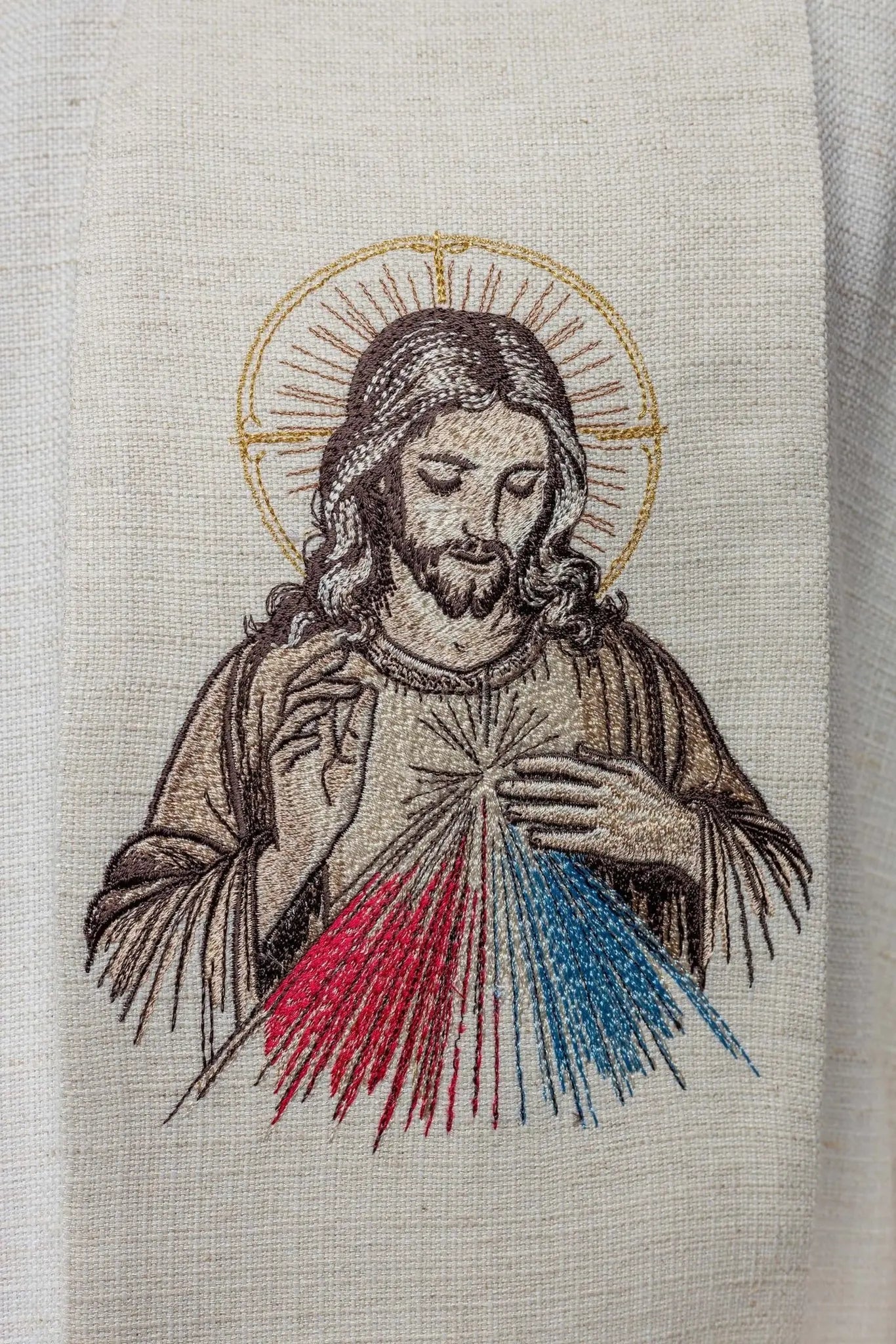
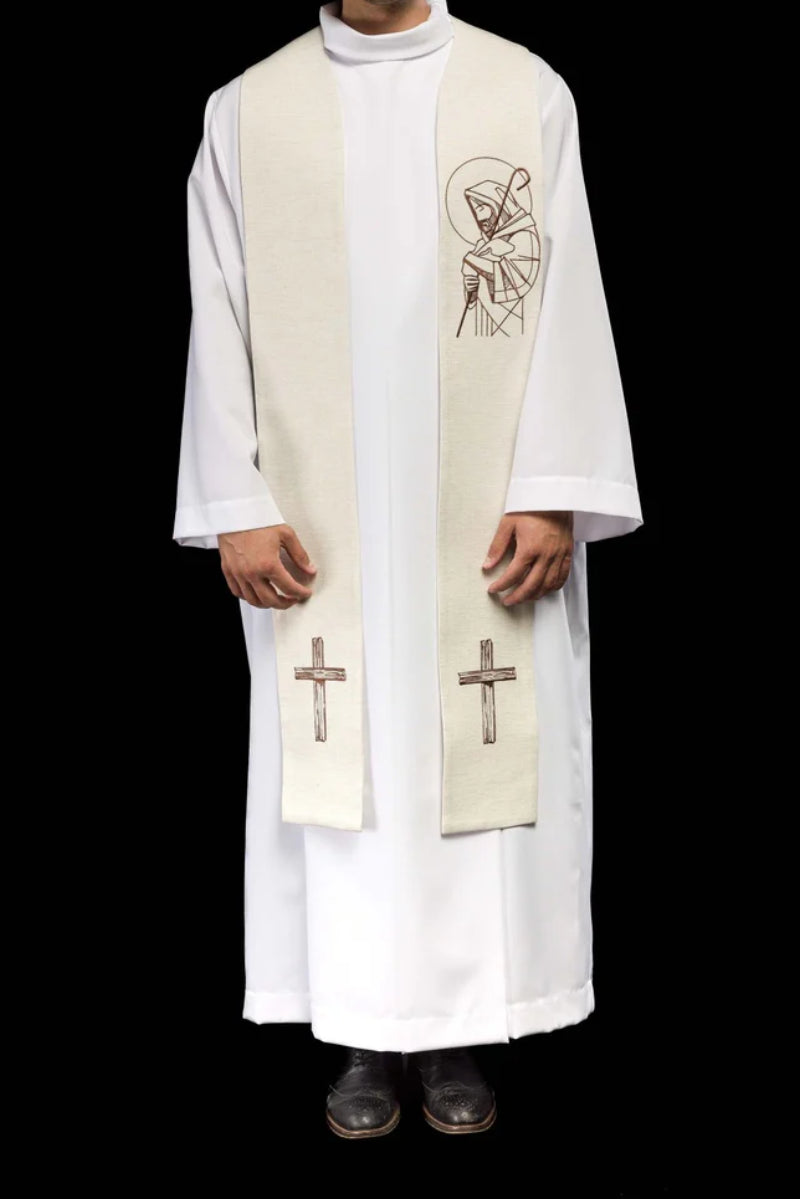
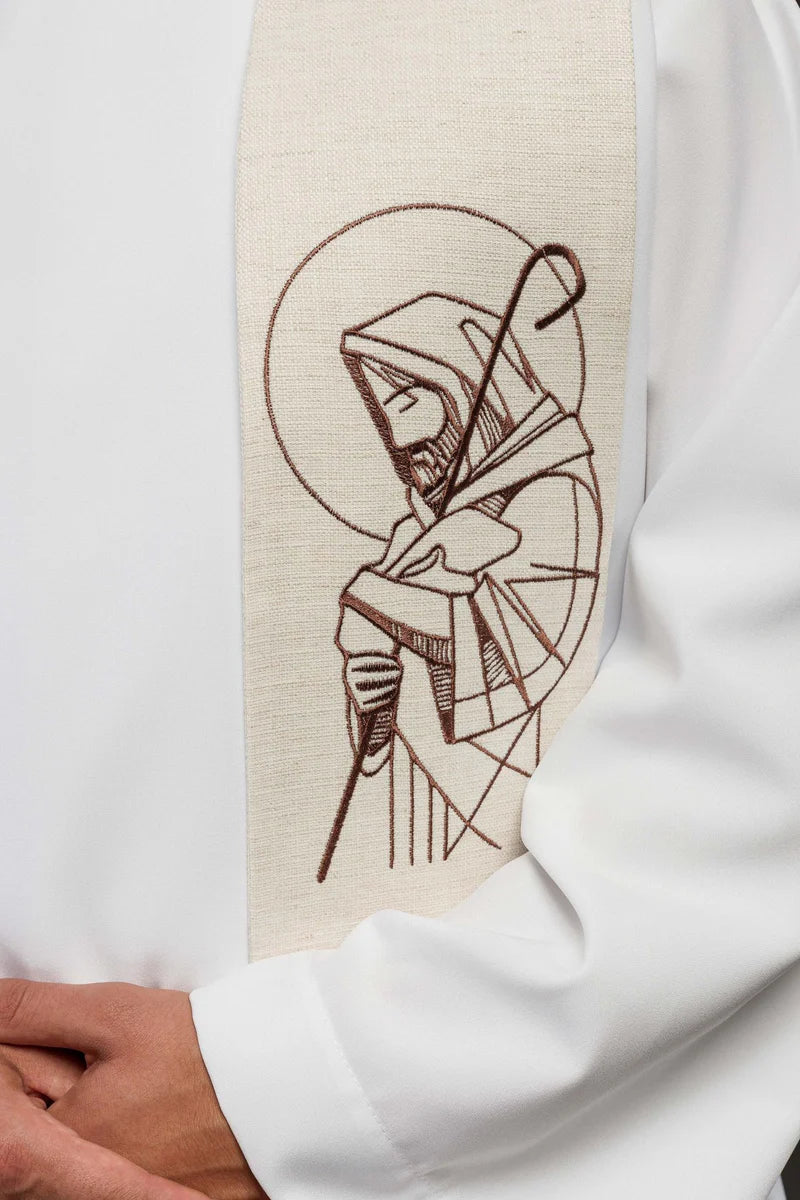
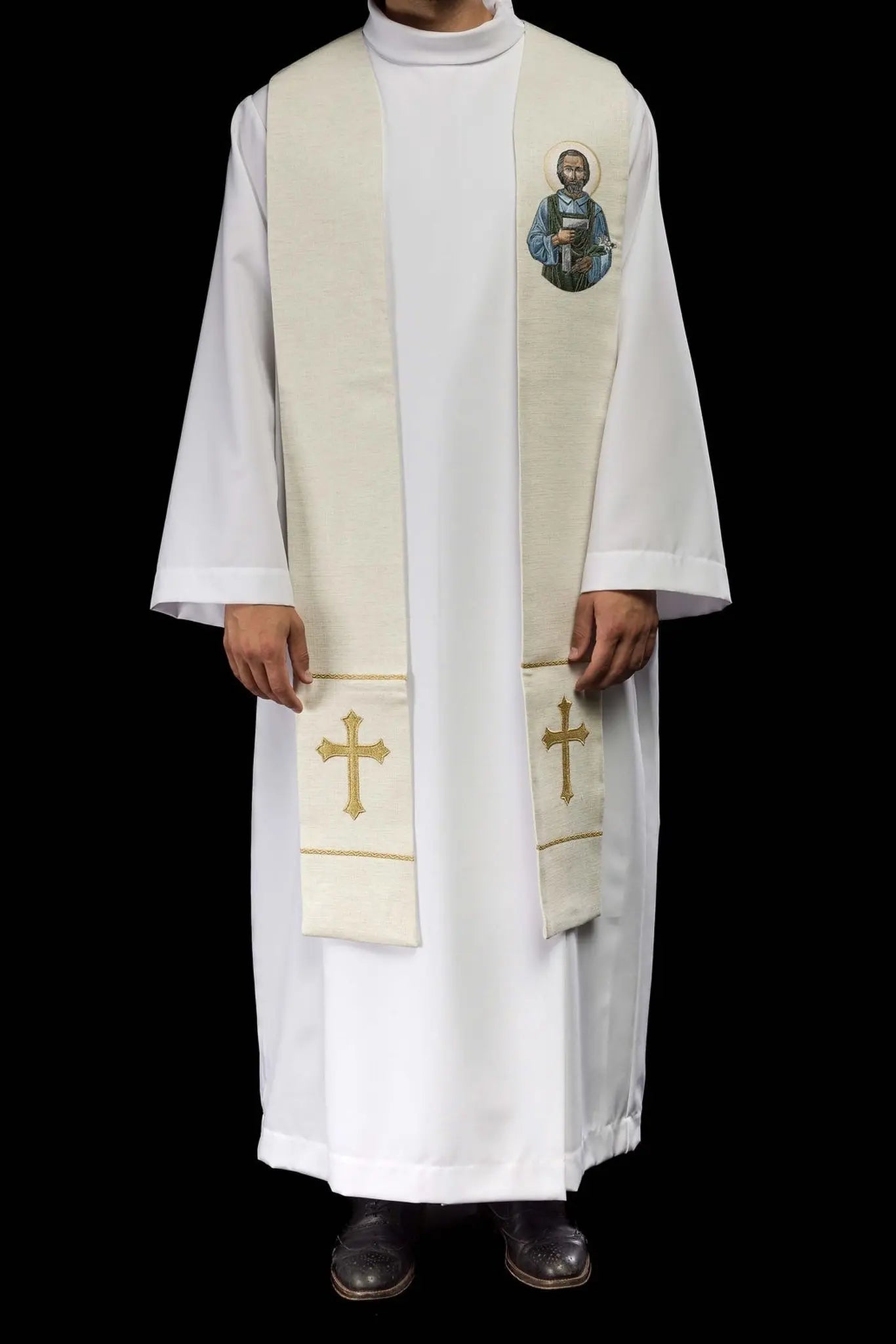
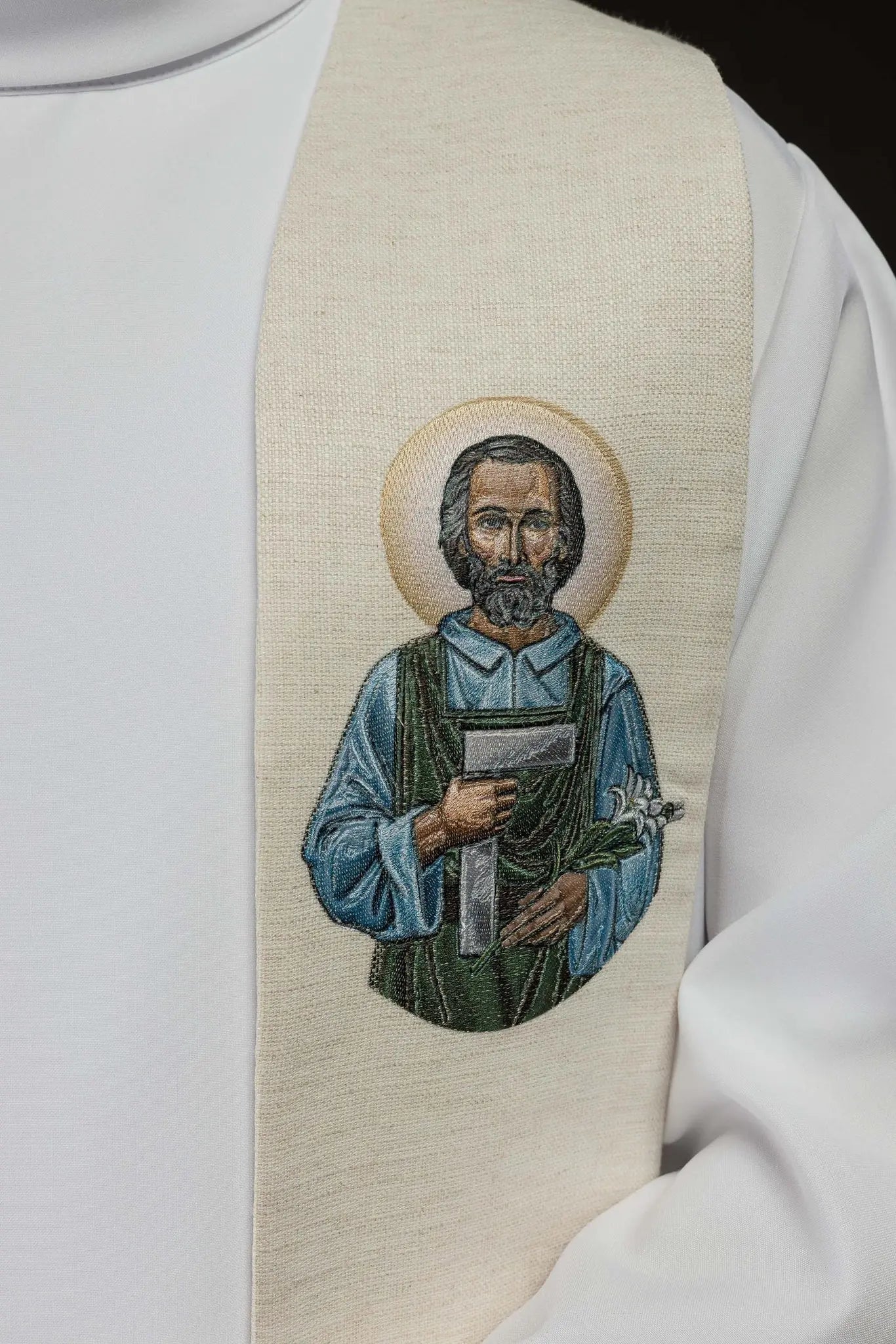
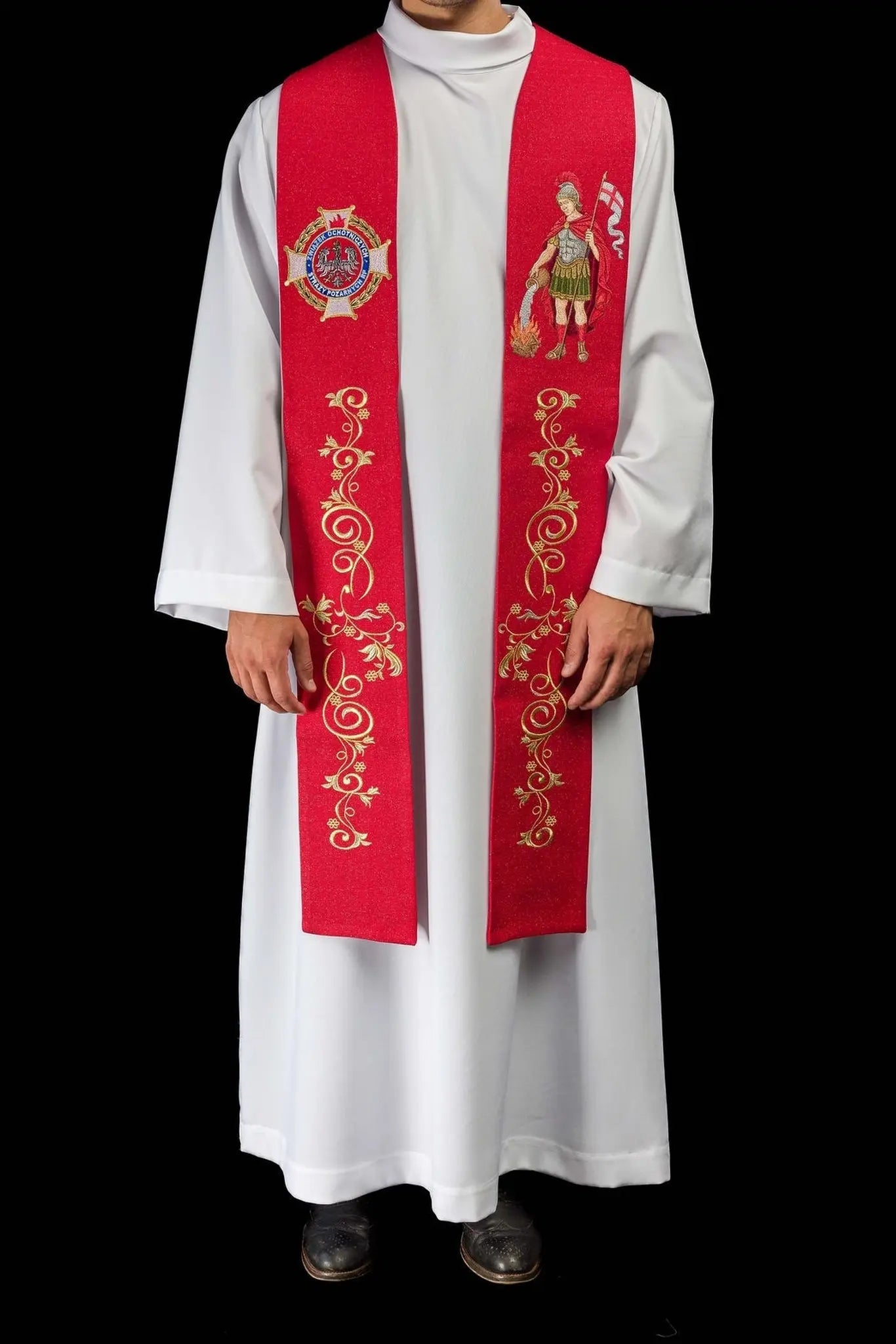
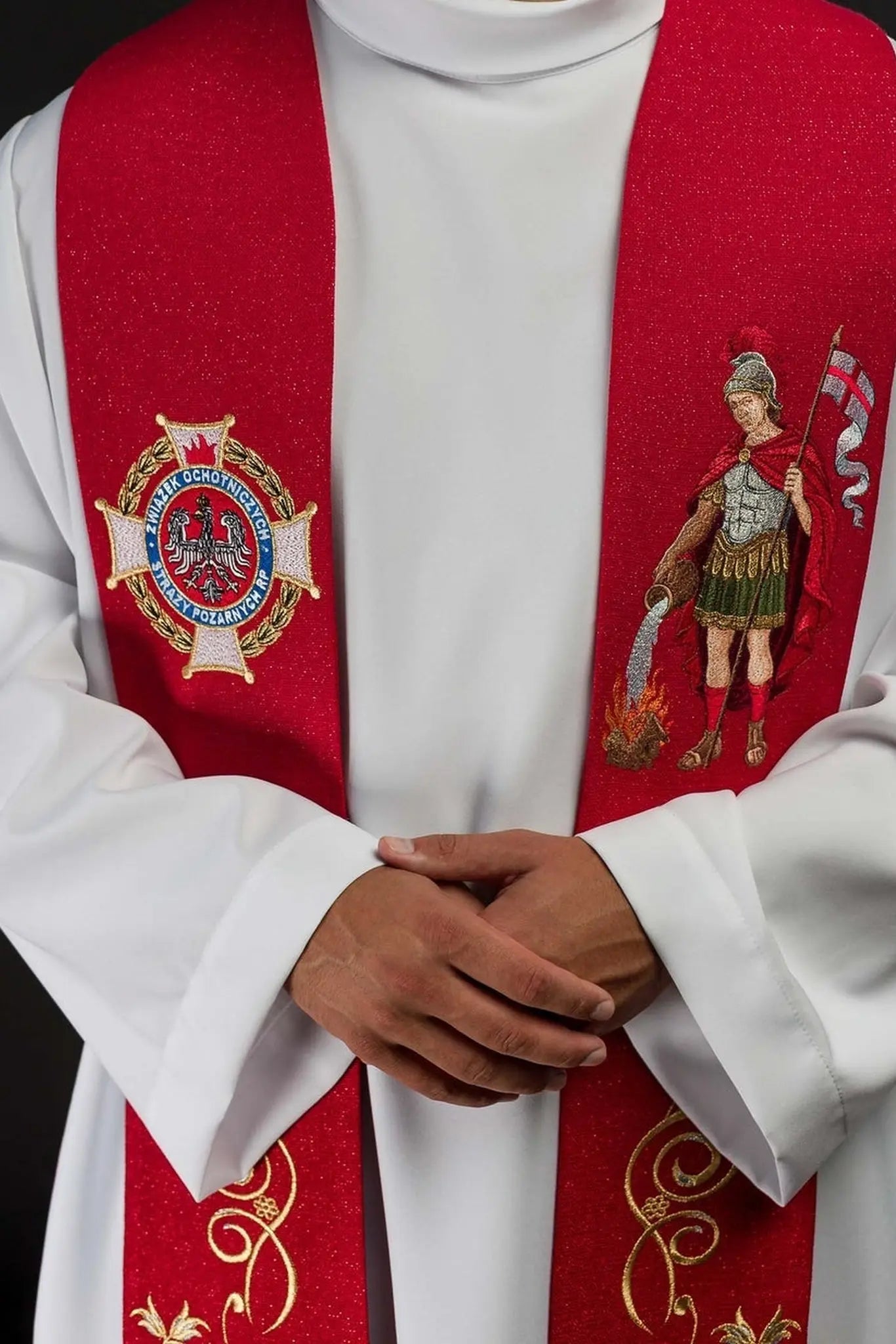
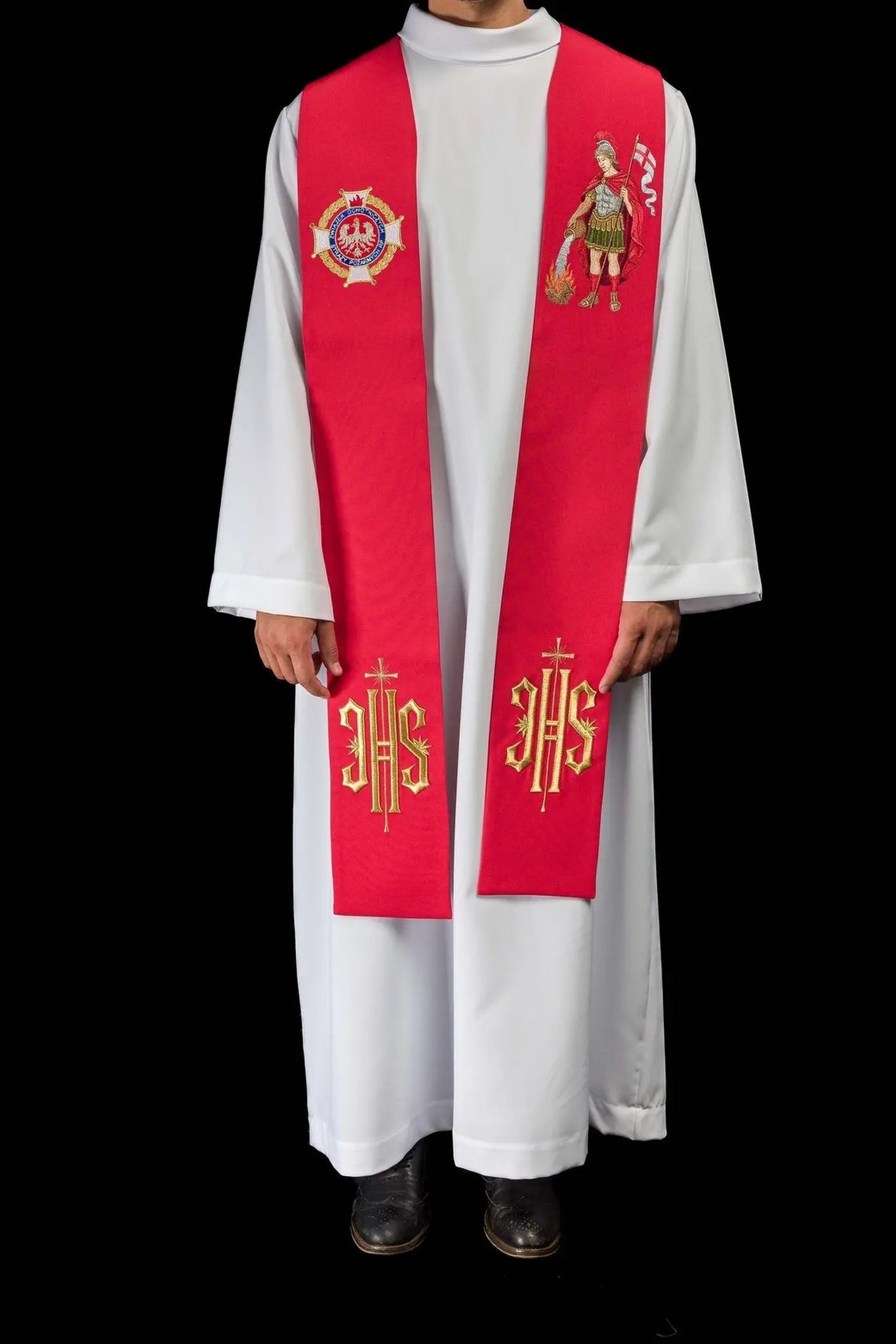
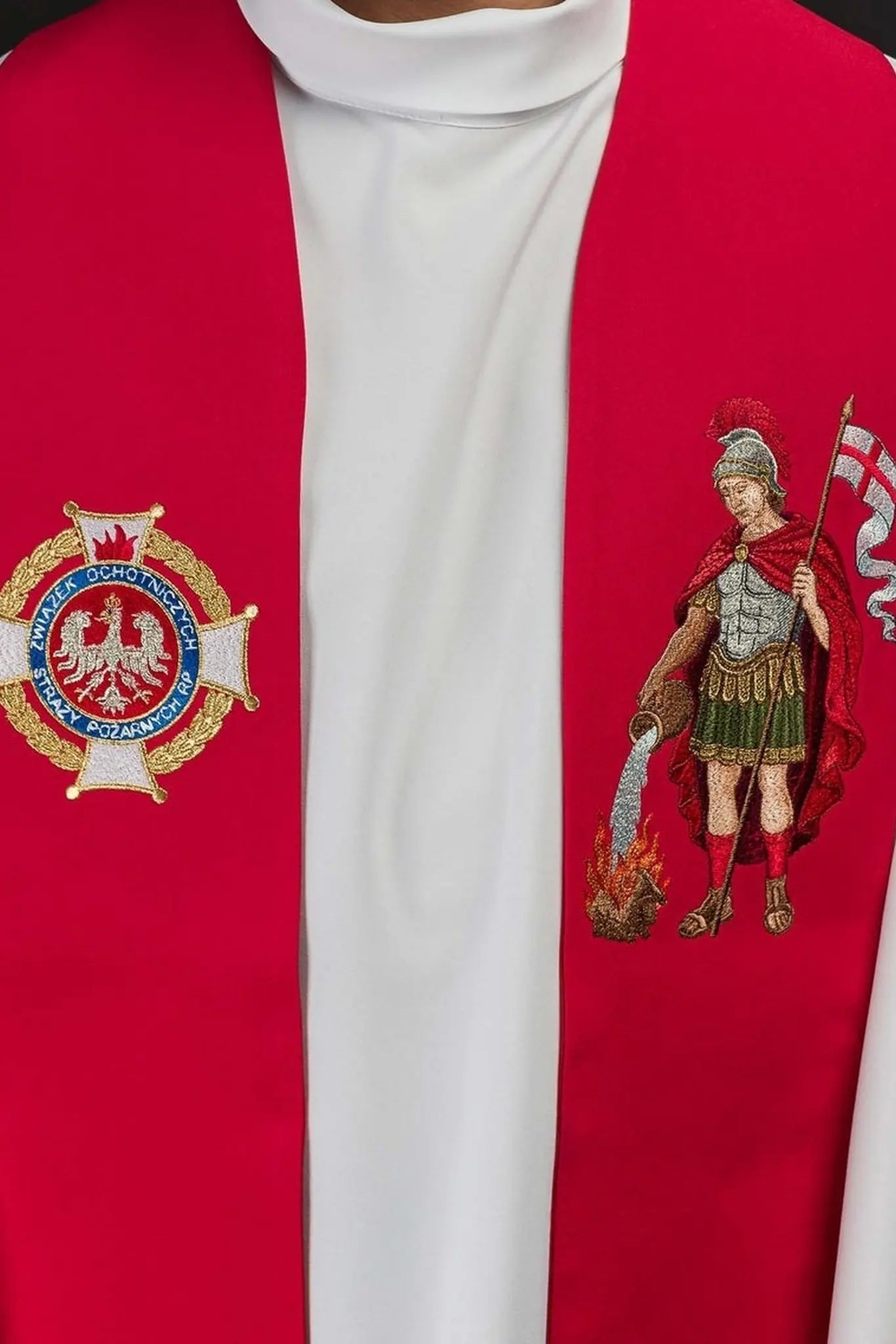
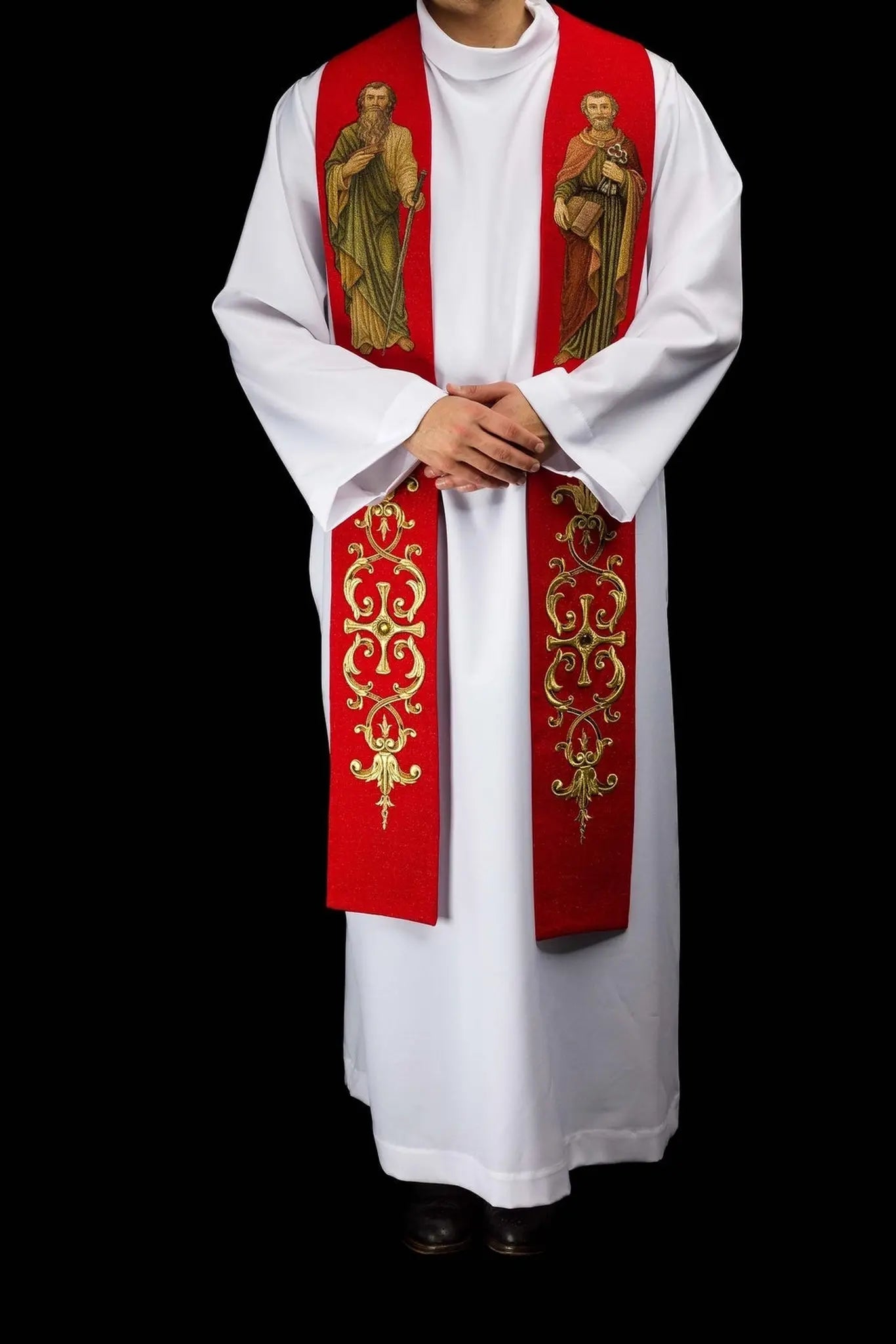
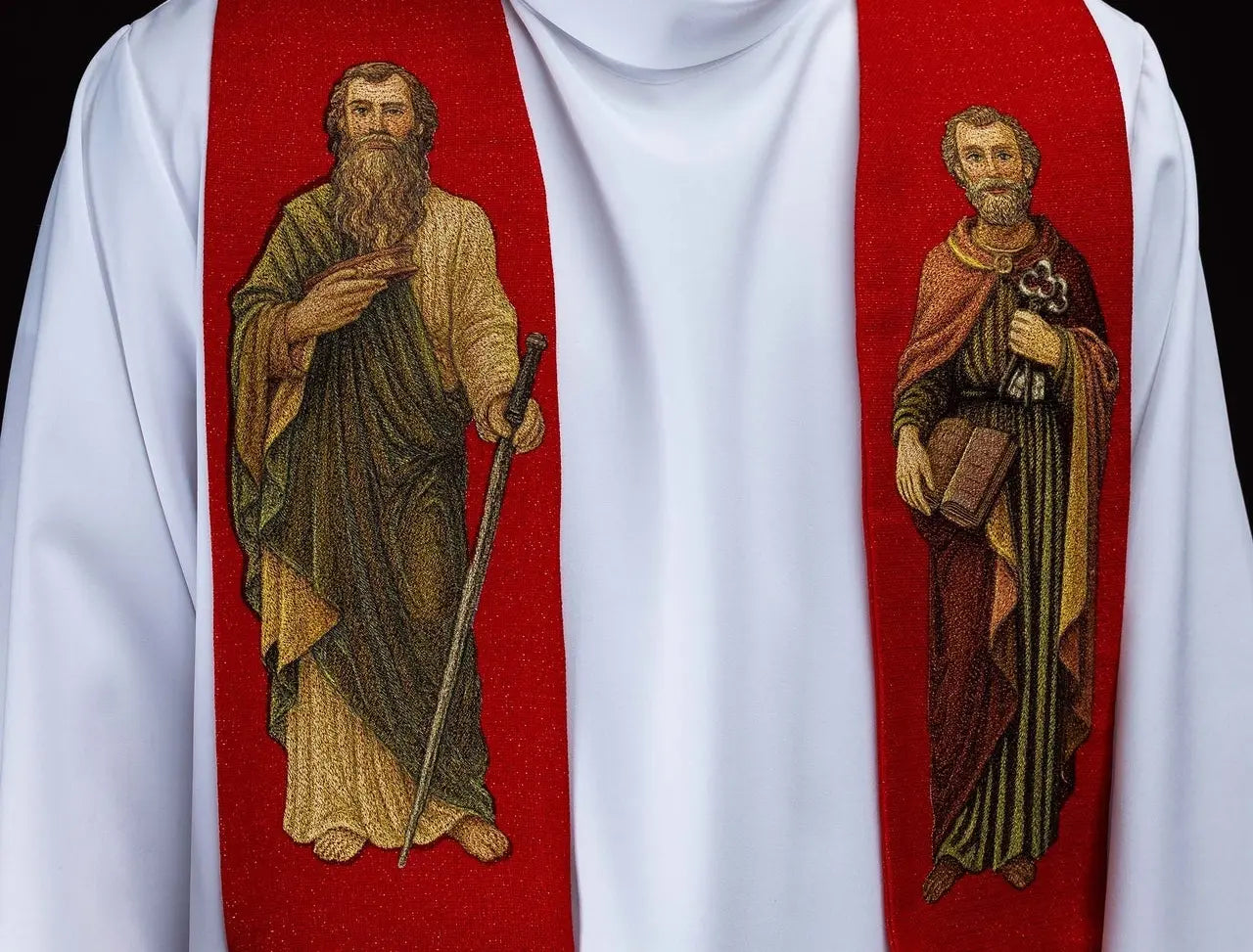
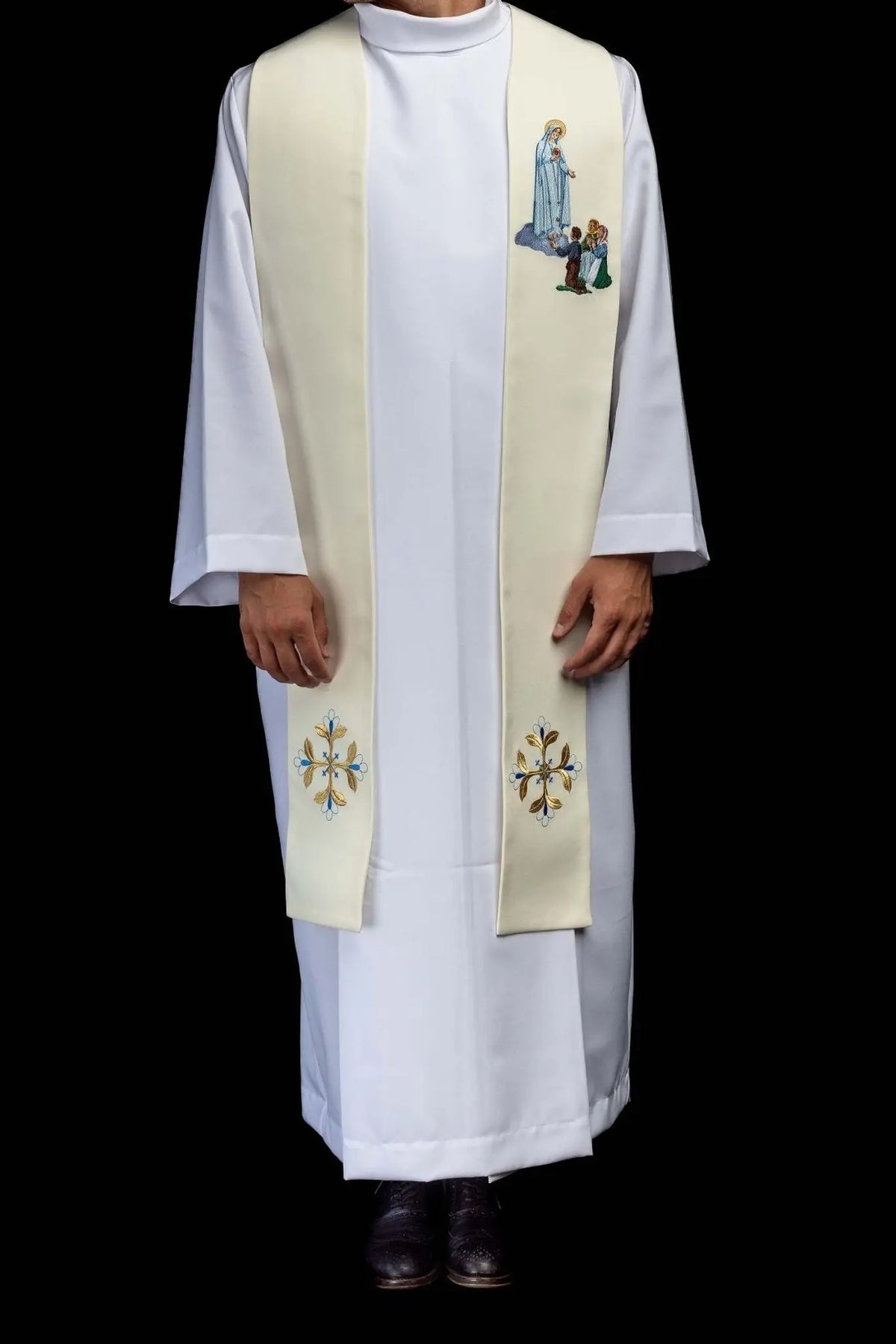
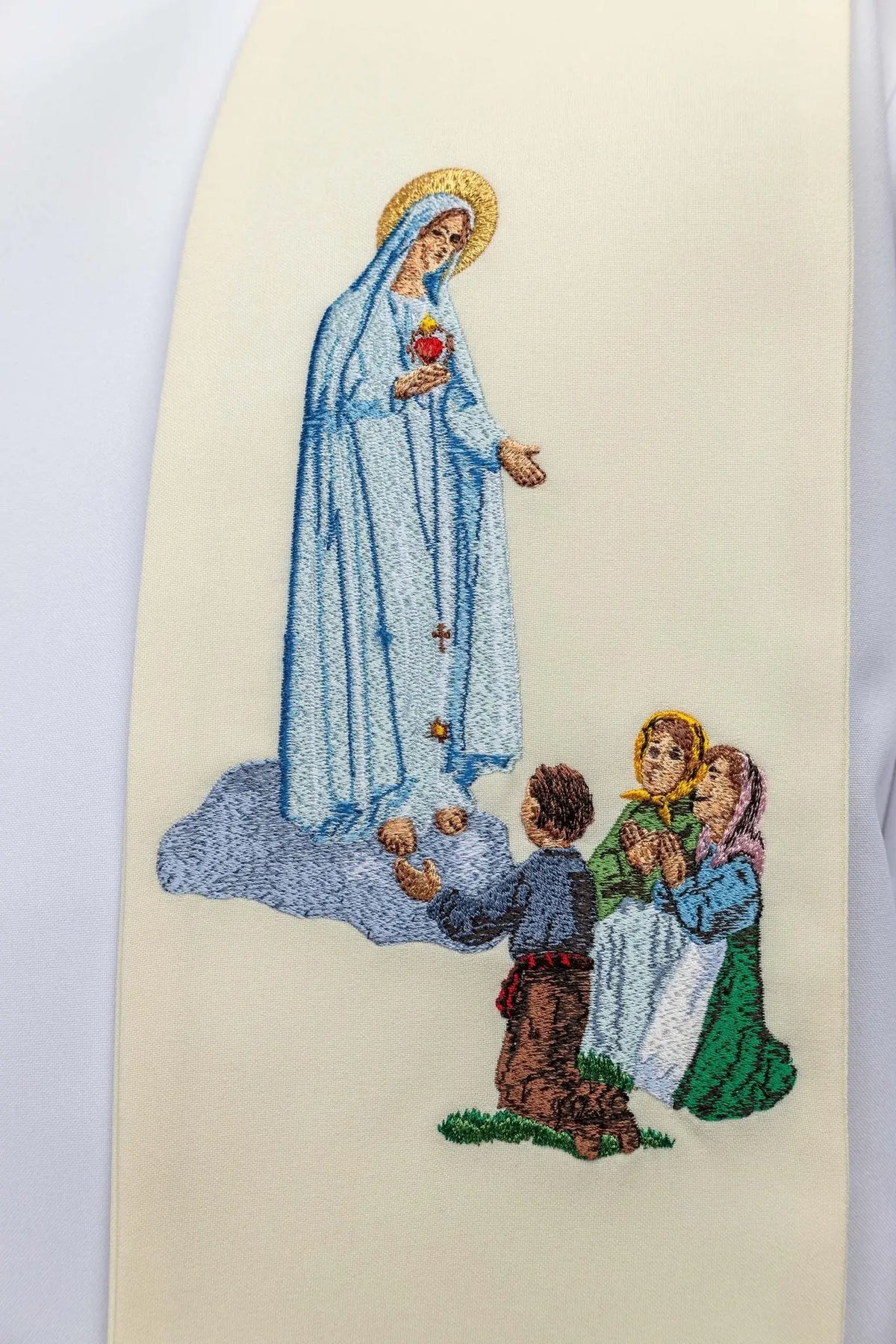
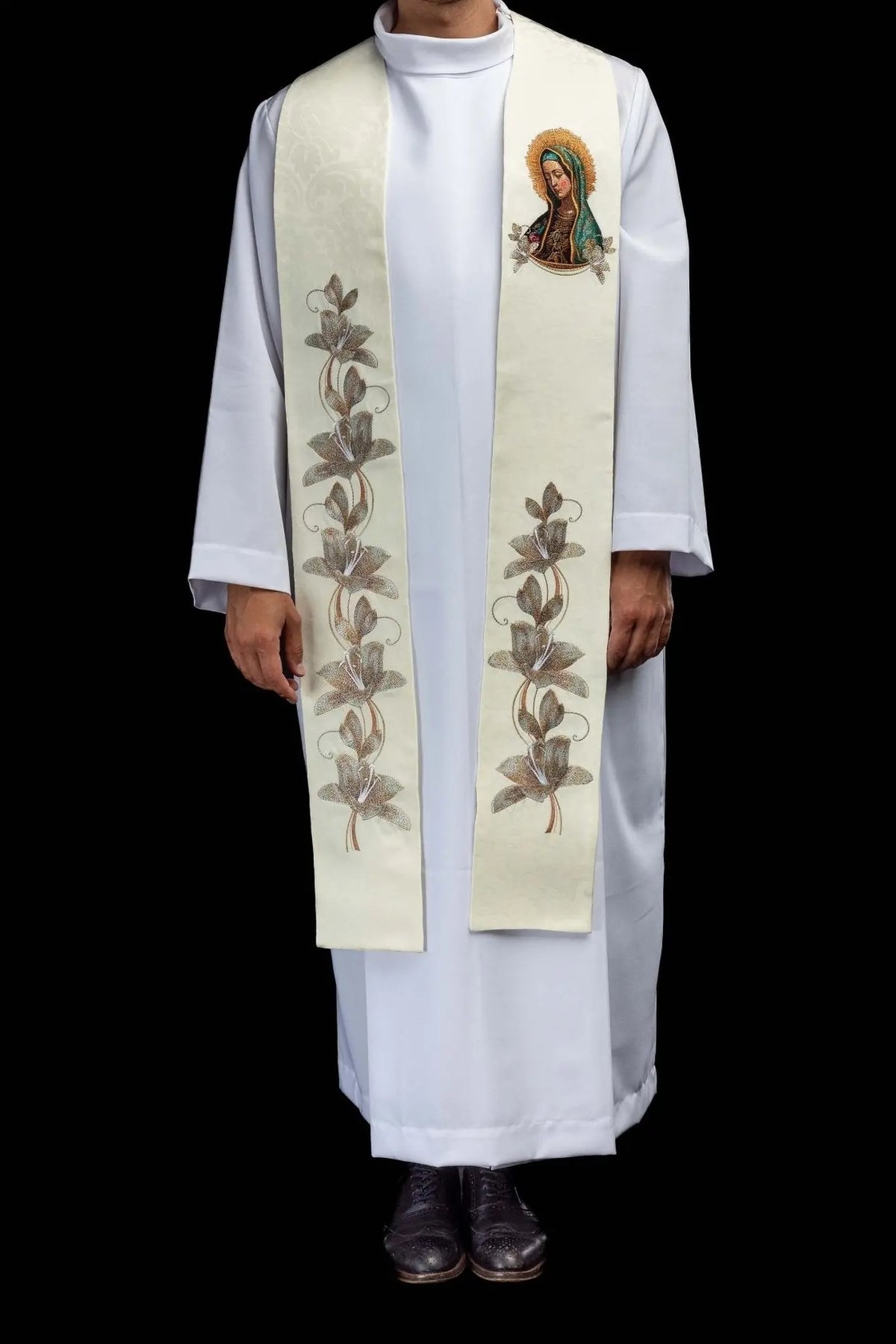
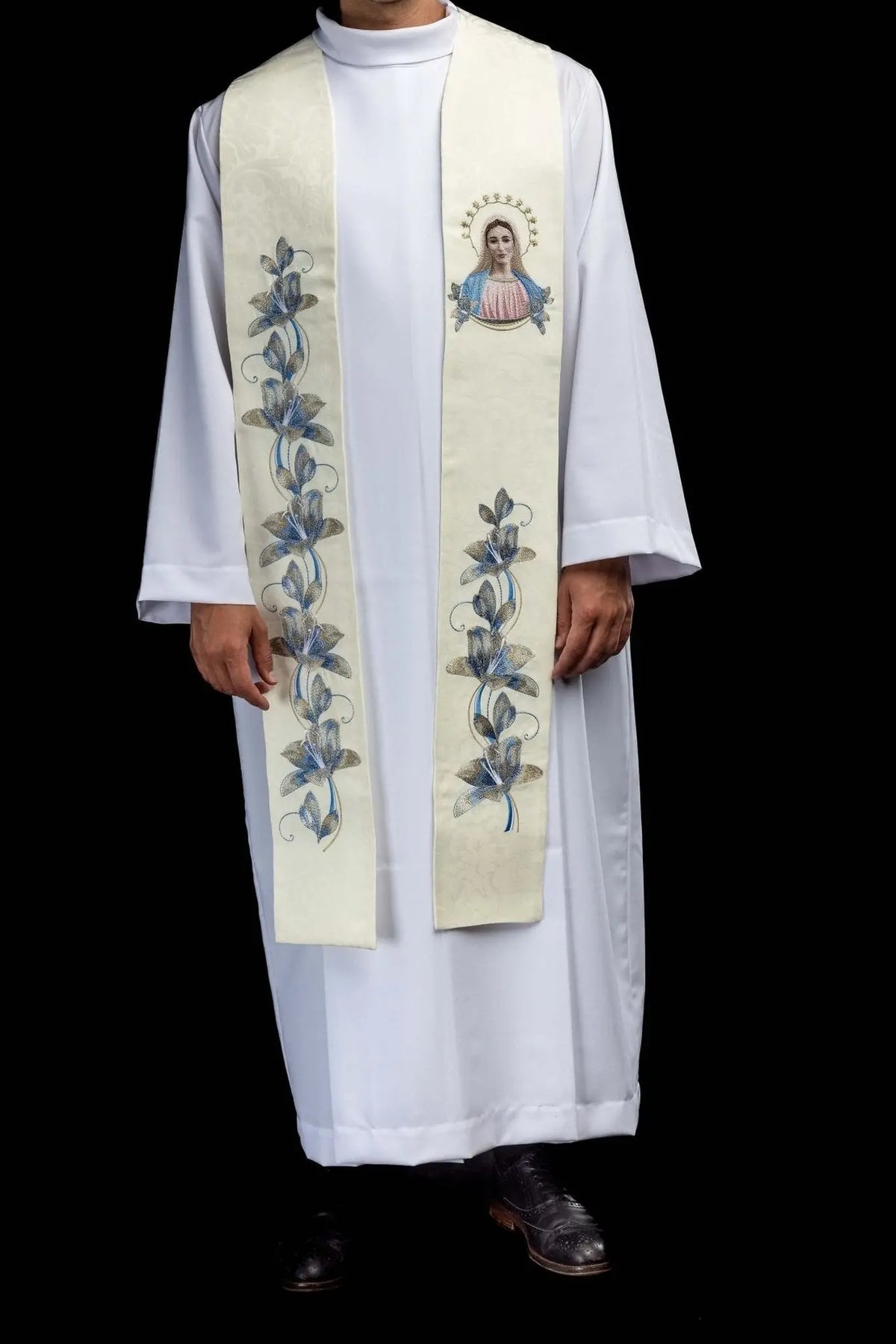
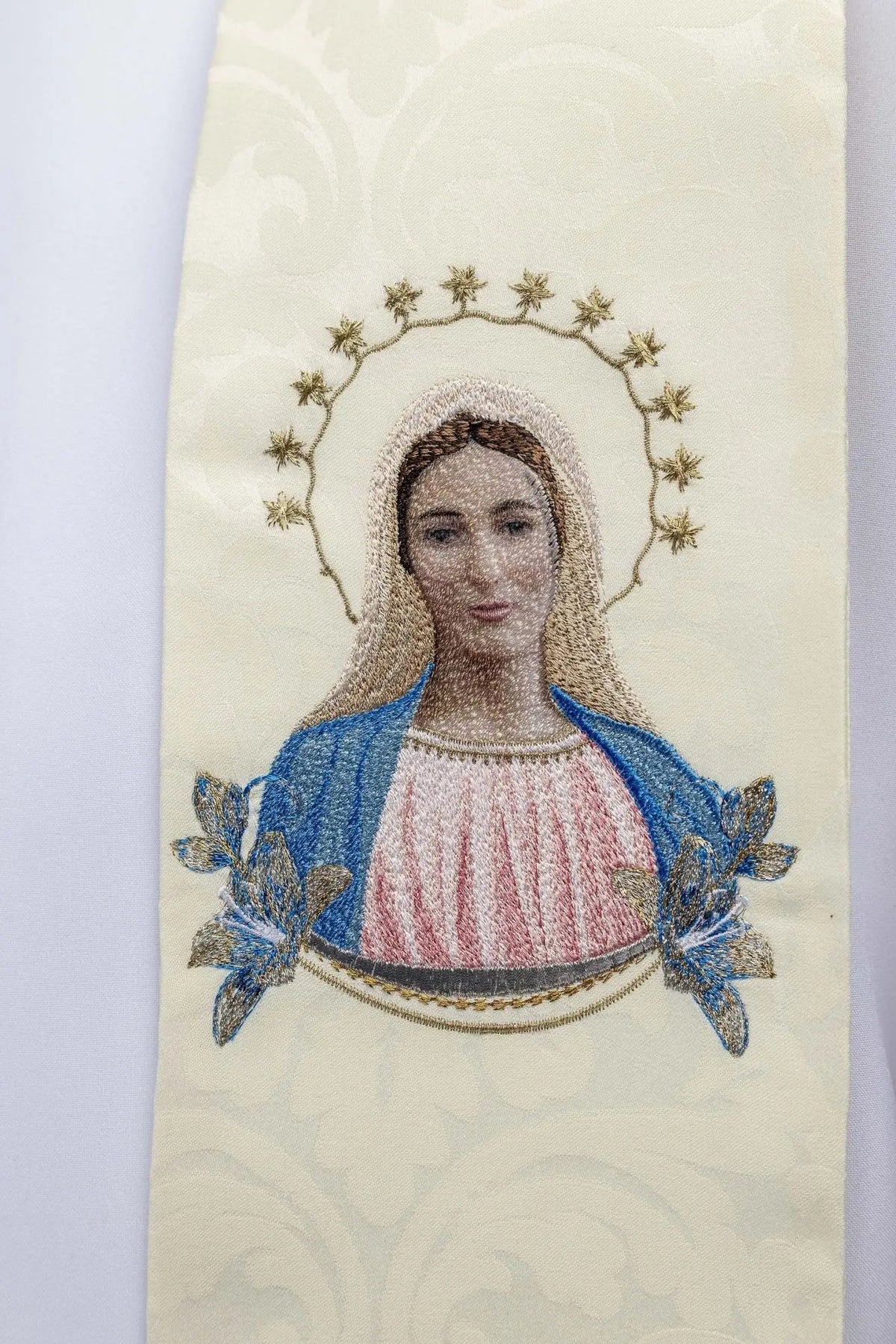
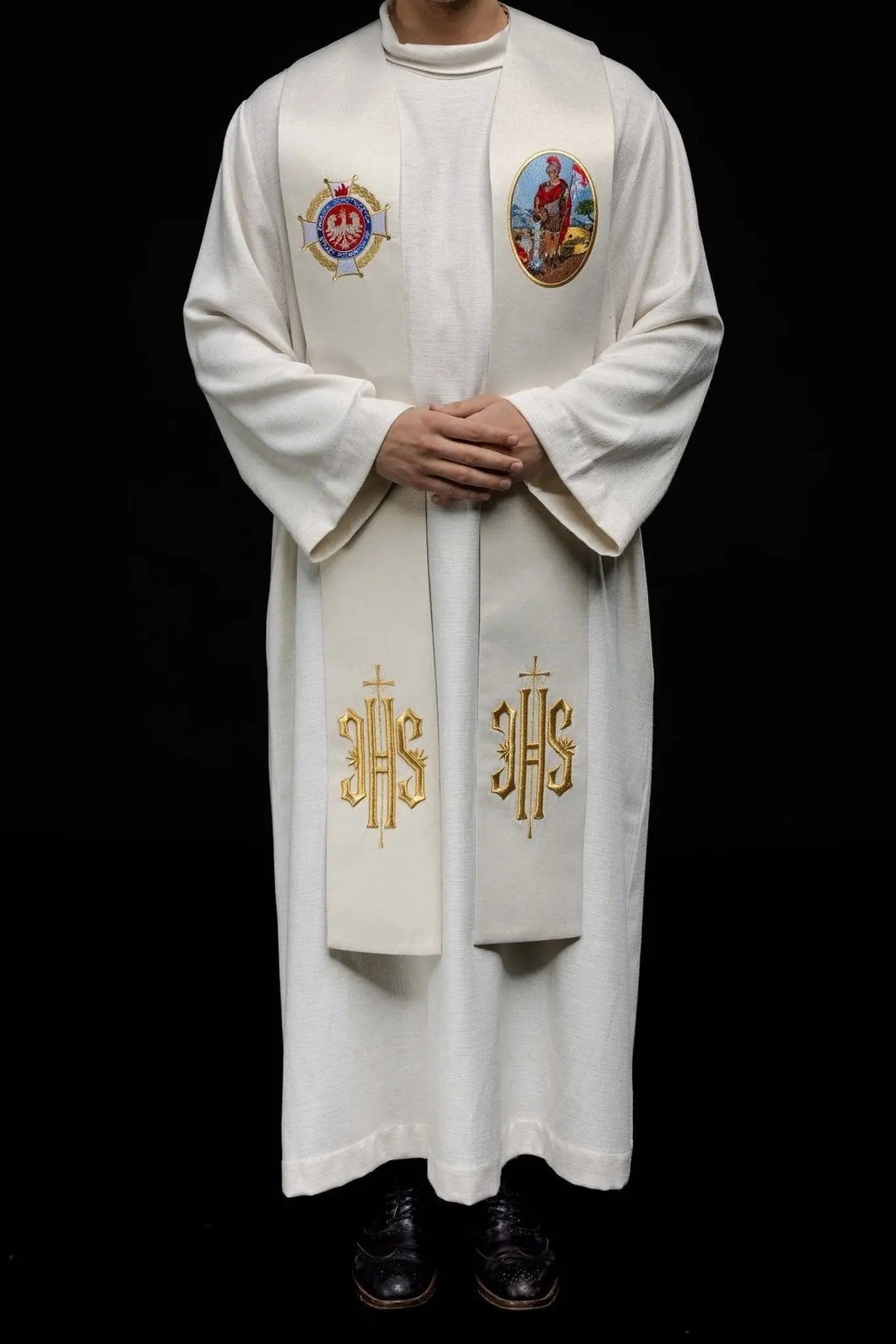
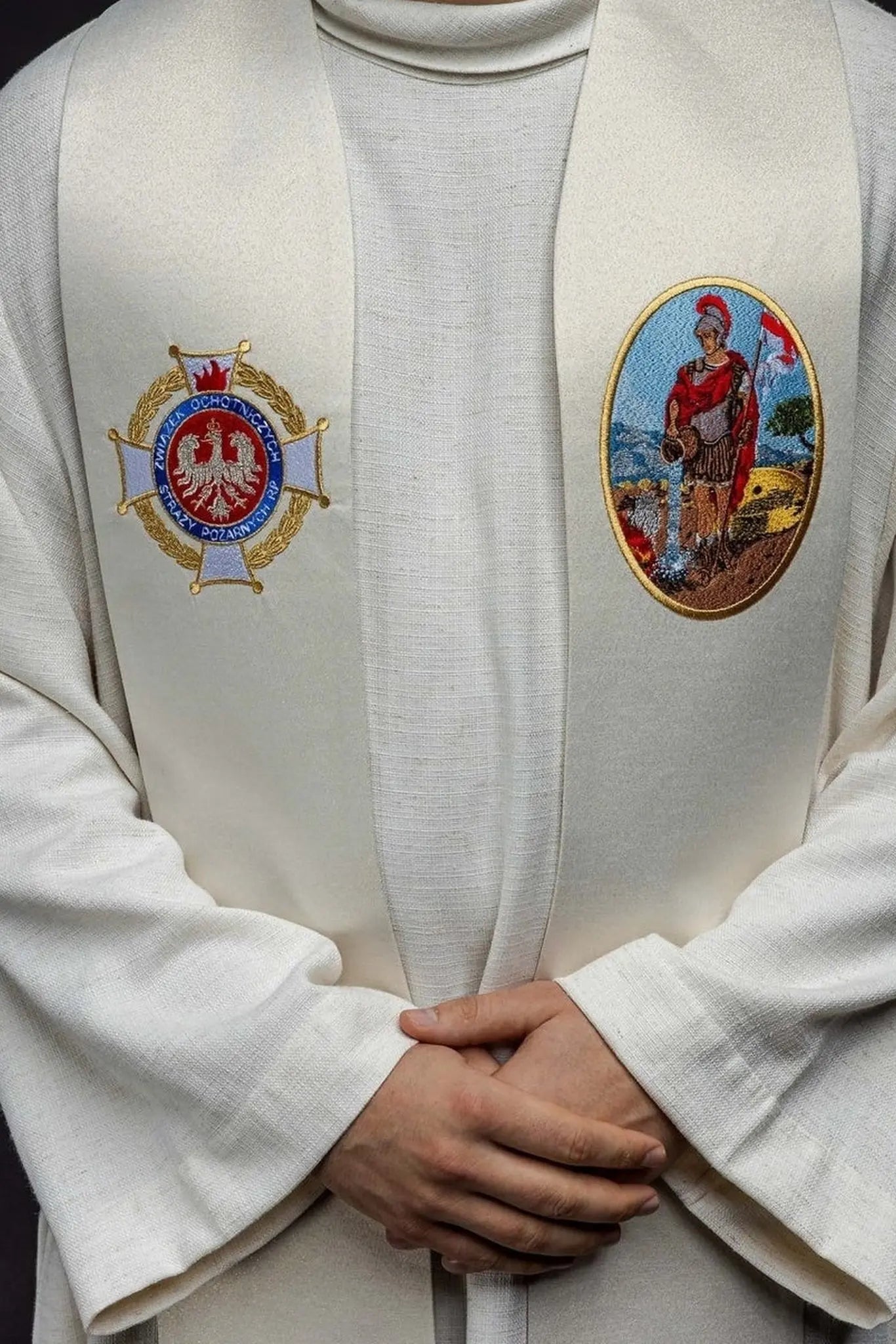
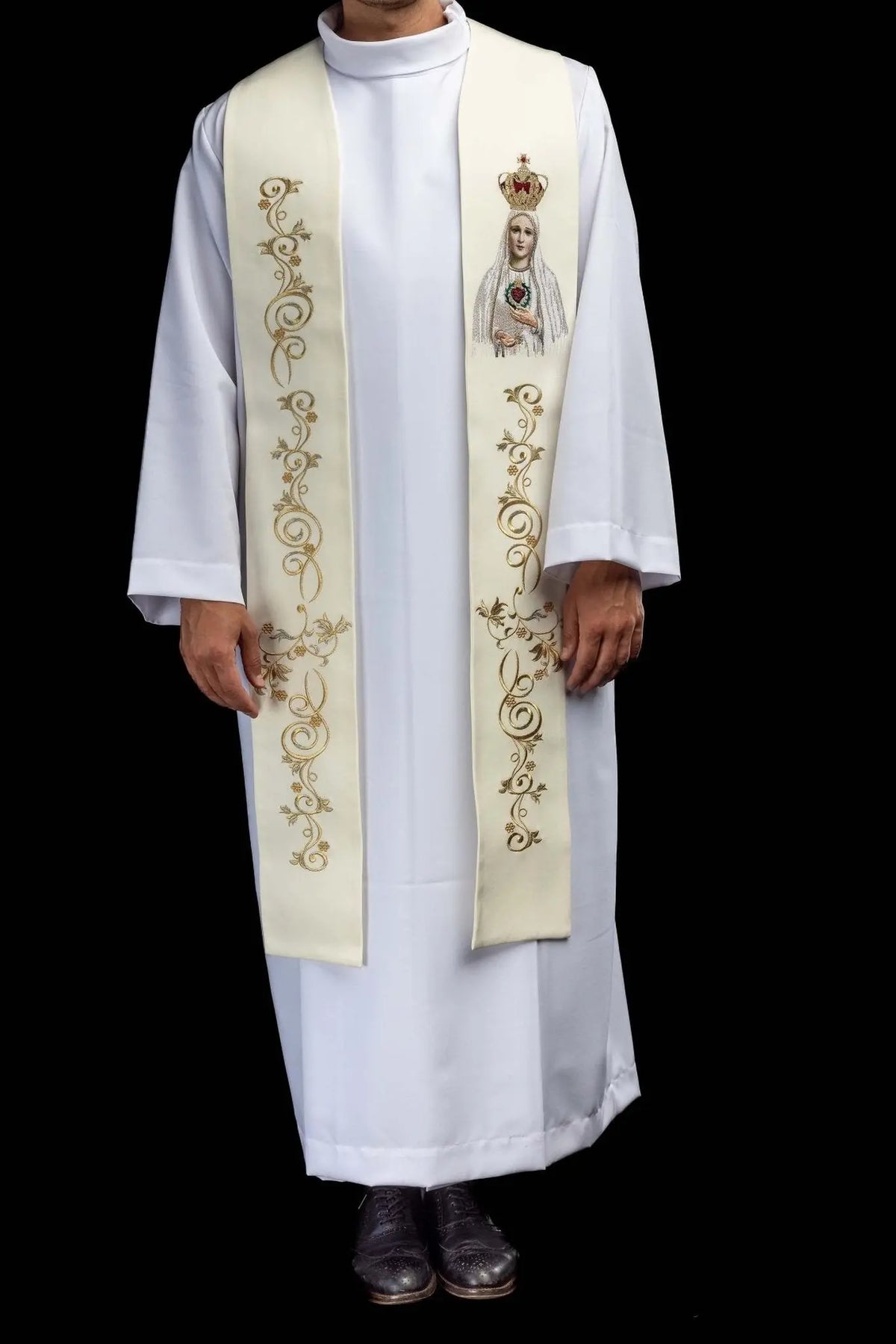
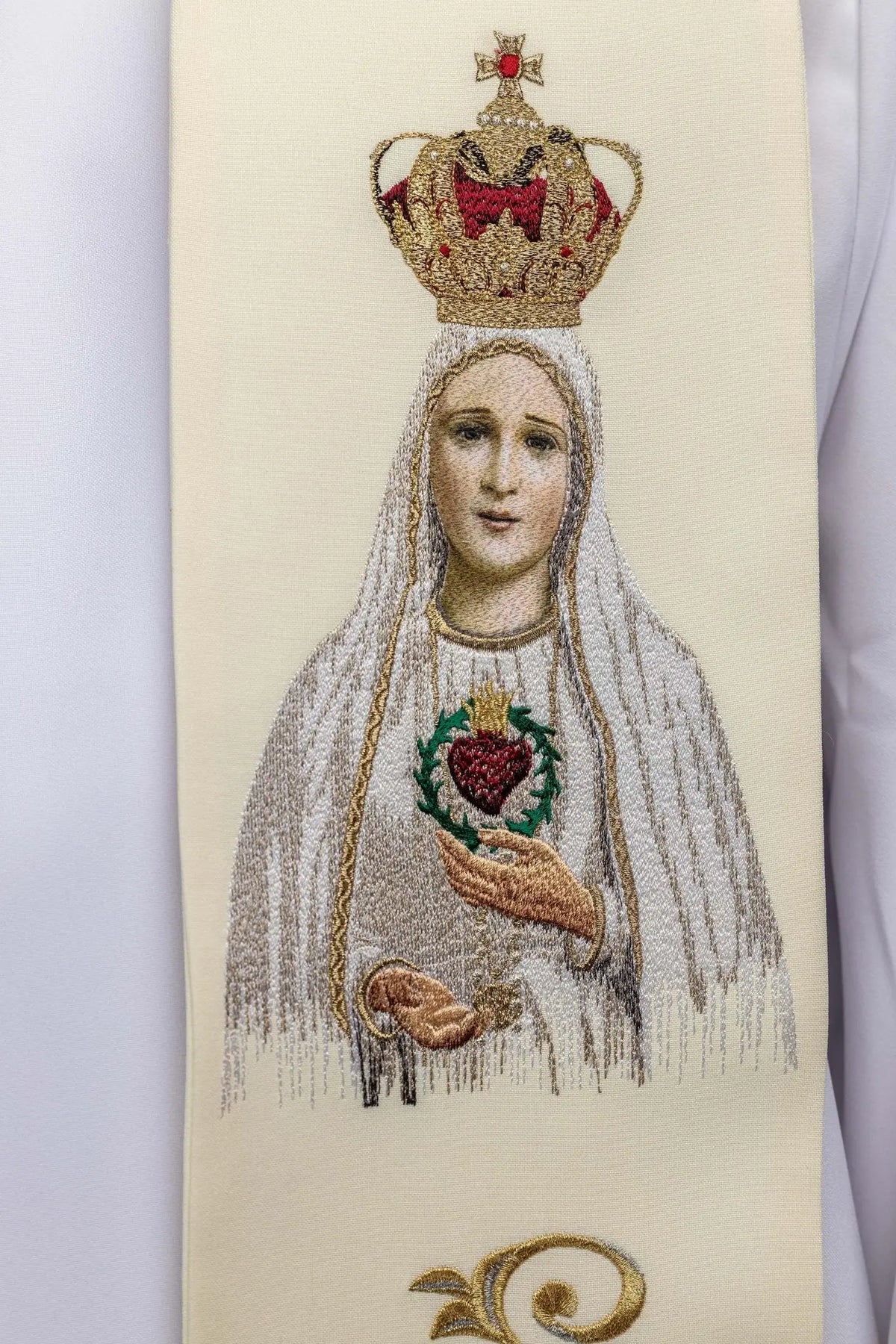
Stoles with sacred images are chosen when the vestment is meant to carry a clear devotional message as well as the proper sign of ordained ministry. This collection gathers embroidered clergy stoles decorated with images of Christ, saints, holy patrons, and related Christian symbols. The designs may include Divine Mercy Jesus, Jesus the Good Shepherd, the Holy Family, Saint Joseph the Worker, Saint Florian, Saint John Paul II, Saint Padre Pio, Saints Peter and Paul, IHS monograms, lamb imagery, crosses, floral ornament, and other motifs connected with prayer, patronage, and the liturgical year.
A stole is more than an accessory. In the Roman Catholic liturgy and in many Christian traditions, it is a visible sign of ordained service. Priests and bishops wear the stole around the neck and hanging down in front, usually under the chasuble at Mass or over the alb or surplice for other rites. Deacons wear the stole diagonally from the left shoulder to the right side. Because it is used so frequently, the design should be beautiful, dignified, comfortable, and suited to the celebrations for which it will be worn.
What belongs in this collection
This collection focuses on embroidered stoles in which the central decorative element is a sacred image rather than only a color, border, or abstract ornament. Some designs emphasize Christological devotion, such as Divine Mercy, the Sacred Heart, the Good Shepherd, or the Paschal Lamb. Others are connected with saints and patrons, including stoles for parish feasts, chaplaincy, confirmation celebrations, priestly anniversaries, patronal solemnities, memorial days, and local devotions. For a broader view of all stole categories, visit clergy stoles.
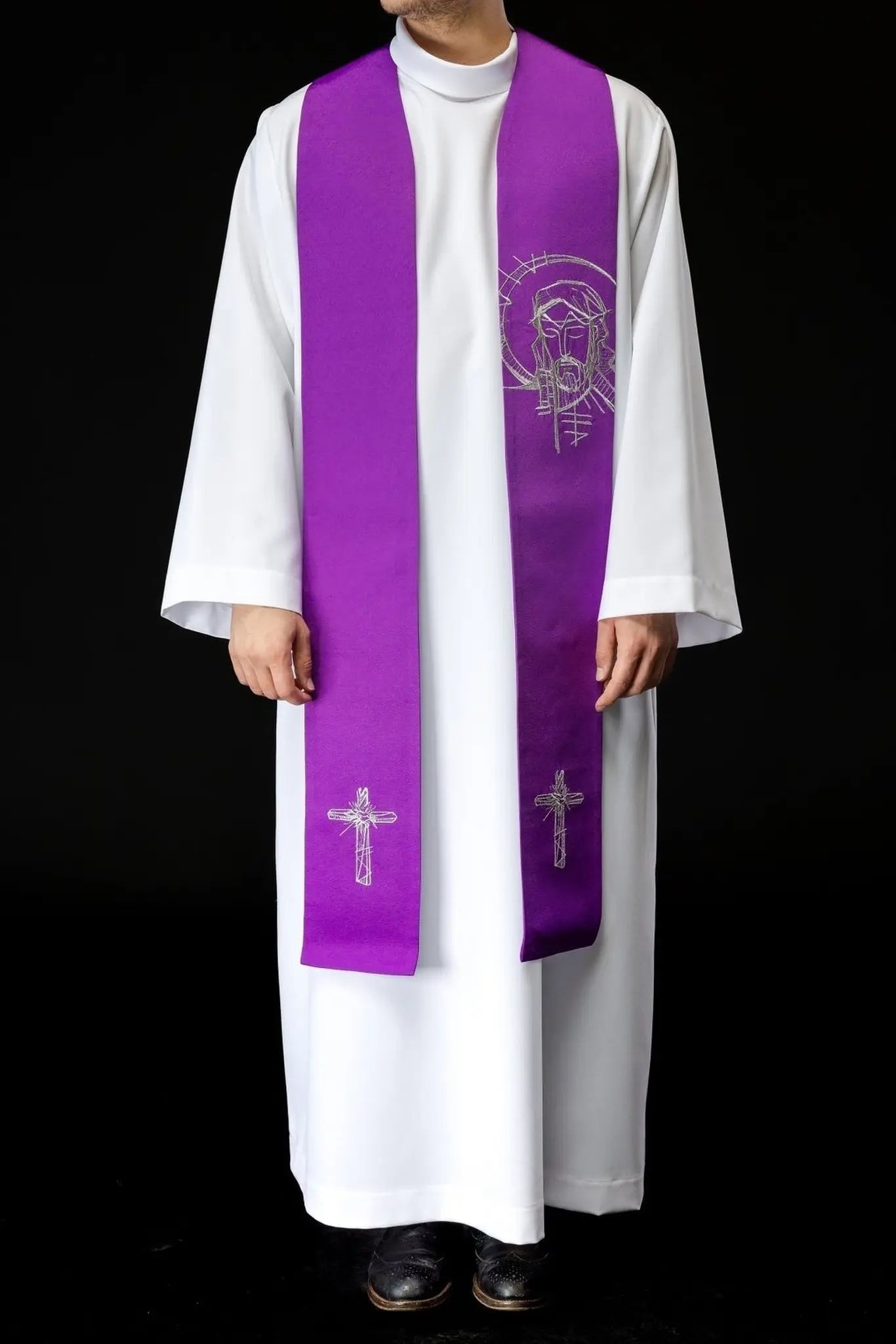
The collection may include ecru, white, red, purple, green, gold, and other liturgical tones depending on the selected design. Ecru and white are often chosen for feasts of the Lord, saints who were not martyrs, weddings, baptisms, Eucharistic devotion, and solemn occasions. Red stoles are often connected with martyrs, the Holy Spirit, Palm Sunday, Good Friday, and celebrations with apostolic or martyr themes. Purple is used in penitential seasons and rites, especially Advent, Lent, and services of reconciliation. Green belongs to Ordinary Time, while gold may be selected for especially solemn celebrations when local liturgical norms allow it.
Liturgical use and devotional meaning
A stole with a sacred image can help connect the vestment to the prayer of the day. A stole with Divine Mercy Jesus is naturally associated with Divine Mercy devotions, confession, pastoral care, retreats, and celebrations centered on trust in Christ. A Good Shepherd motif is especially meaningful for parish ministry, vocations, priestly anniversaries, and pastoral occasions. Stoles with Saint Joseph, Saint Florian, Saint John Paul II, Saint Padre Pio, or Saints Peter and Paul can support patronal feasts, parish missions, chaplaincy work, and celebrations where a particular saint is honored.
These stoles are also useful outside Mass. They may be worn for baptisms, weddings, funerals, blessings, processions, Eucharistic adoration, the sacrament of reconciliation, pastoral visits, and devotional services, according to the role of the minister and the rubrics of the rite. When the stole will be used with a chasuble, the color and motif should harmonize with the main vestment. When it will be visible over an alb or surplice, the embroidery, trimming, and fabric have a stronger visual role and should be chosen with the setting in mind.
How to choose an embroidered stole with an image
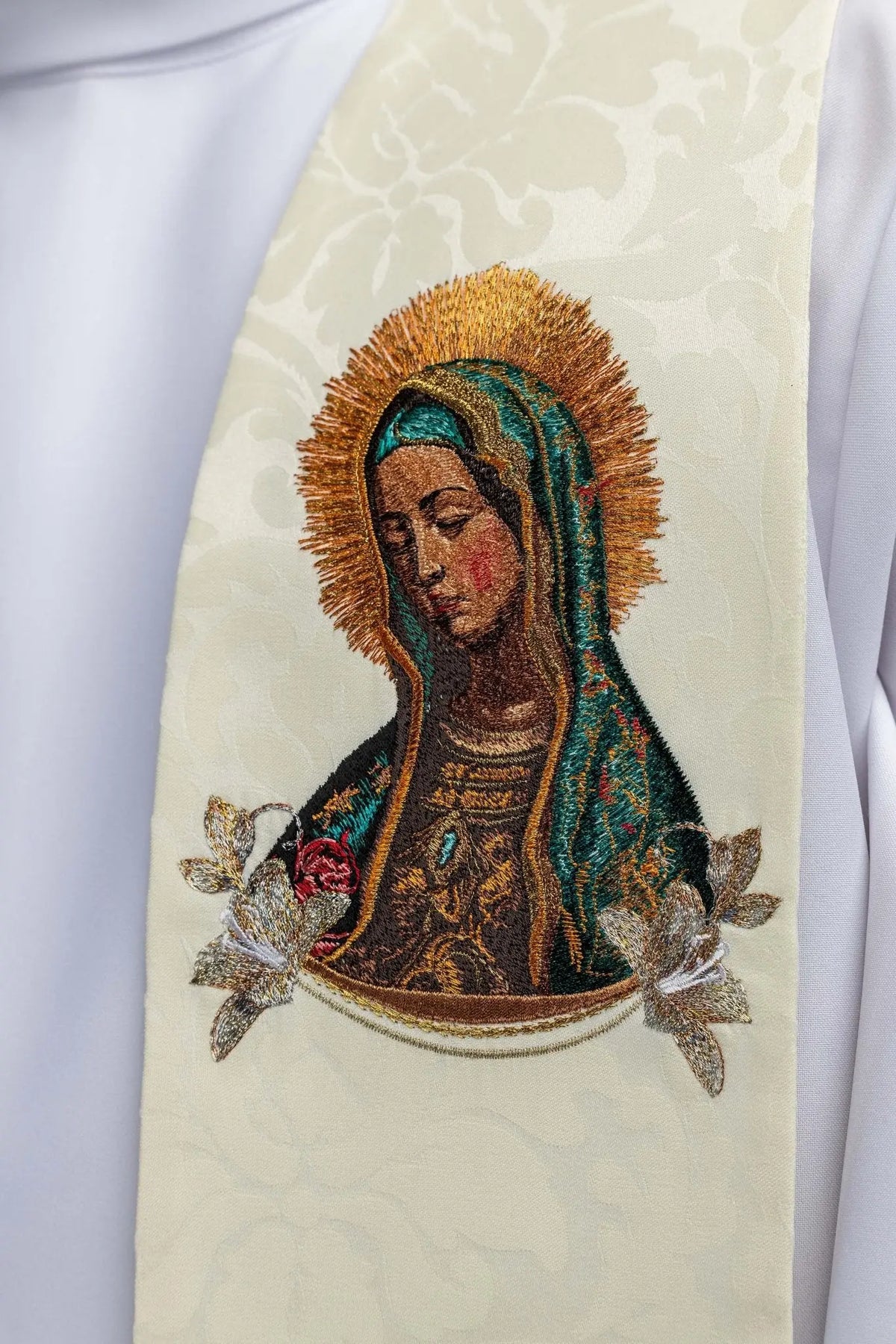
Begin with the intended use. A stole for frequent parish ministry should be versatile, comfortable, and easy to coordinate with other vestments. A stole for a patron saint, jubilee, anniversary, or shrine may be more elaborate and more closely tied to one image. For celebrations of the Blessed Virgin Mary, the related Marian stoles collection may be a better match, especially when the design is primarily Marian in color and iconography. For devotions to the Sacred Heart, related vestments and textiles can also be explored in the Sacred Heart of Jesus collection.
Next, consider the liturgical color. Red imagery is often appropriate for martyrs, apostles, the Holy Spirit, and certain solemn rites, so red clergy stoles may be useful when color is the main selection criterion. Purple stoles support penitential seasons and confession ministry; related options are gathered under purple clergy stoles. If the stole is intended for Marian feasts or blue-toned devotional designs, the Blessed Virgin Mary collection can help coordinate the wider liturgical set.
Finally, look at the scale and placement of the embroidery. A large figure of Christ or a saint creates a strong focal point and works well for solemn devotions, feast days, and special pastoral occasions. Smaller images combined with IHS, crosses, gold trim, or ornamental fabric can be more versatile. Tassels, fringe, lining, and the weight of the textile also matter because the stole must sit properly on the alb and remain comfortable throughout the rite.
For priests, bishops, and deacons
Most stoles in this category are priestly stoles, worn around the neck and falling evenly in front. They are suitable for priests and bishops when the vestment form and color correspond to the celebration. Deacons require a diagonal form, so shoppers looking specifically for that cut should compare the dedicated deacon stoles collection. Choosing the correct form is important: the image may be beautiful, but the stole must also match the ministerial office and be worn according to the proper liturgical tradition.
When ordering for a parish, chapel, religious house, or shrine, it is often helpful to coordinate the stole with other pieces used on the same day. A stole with a saint can be paired with a matching chasuble, altar cloth, pulpit cover, chalice veil, or chalice linen set when the visual theme is repeated in the sanctuary. For Mass vestments using similar sacred imagery, see chasubles with saints. This helps create a coherent liturgical environment without overloading the celebration with unrelated motifs.
Embroidery, fabric, and durability
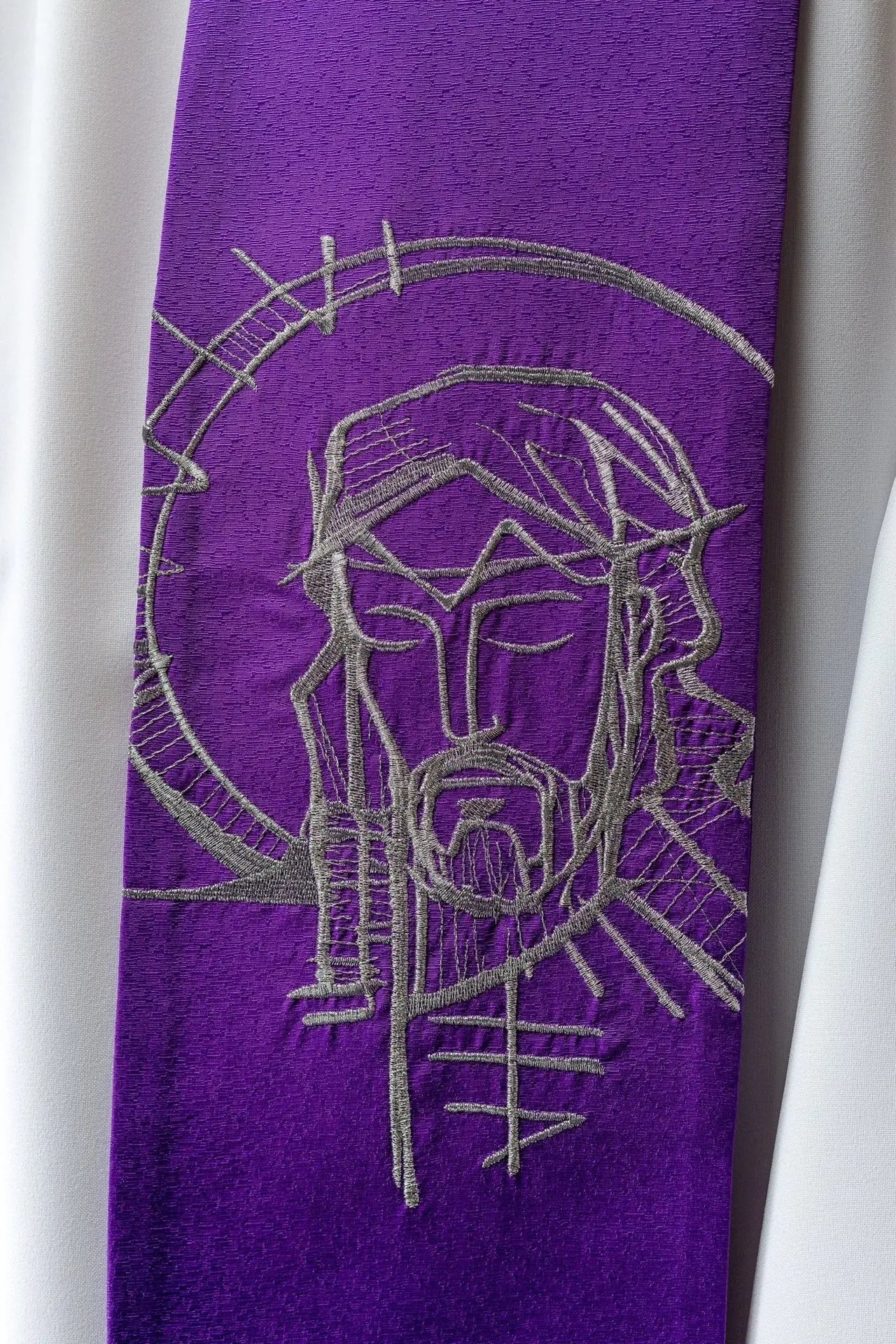
The value of an embroidered stole depends on both its iconography and its construction. A clear image requires careful thread selection, precise outlines, and stable fabric so the design remains readable from a distance. Gold and colored embroidery can highlight halos, garments, inscriptions, and ornamental borders. Decorative fabric may add solemnity, while simpler backgrounds can keep attention on the sacred image itself.
For regular ministry, durability and comfort are essential. The stole should lie flat, resist twisting, and remain balanced while the priest or deacon moves during the rite. A lined stole often has better structure, while carefully finished ends and secure tassels protect the piece during repeated use. Proper storage also matters: stoles should be kept clean, dry, and away from direct sunlight. Delicate embroidery is best protected by professional cleaning or by following the specific care guidance for the fabric.
When this collection is the right choice
- Choose it for stoles with images of Christ, saints, holy patrons, and devotional themes.
- Use it for patronal feasts, parish missions, pastoral ministry, confessions, blessings, retreats, and special anniversaries.
- Compare it with color-based stole collections when the liturgical season is more important than the image.
- Pair it with related chasubles or altar textiles when a coherent sanctuary set is needed.
- Check whether the stole is priestly or diaconal before ordering for a specific minister.
This collection is especially helpful when the stole should express a particular devotion without losing the dignity and clarity required for sacred worship. The right design can support the theme of the celebration, honor a patron saint, or accompany a ministry that returns often to the same spiritual message. At the same time, the stole remains a liturgical vestment, so its color, form, and use should always serve the rite rather than distract from it.
Frequently Asked Questions (FAQ)
Are these stoles only for feast days of saints?
No. Many designs are suitable for saint feast days, but others focus on Christ, Divine Mercy, the Good Shepherd, the Holy Family, or general devotional symbolism. They may be used whenever the color, image, and form fit the rite and the local liturgical practice.
Can a priest wear a stole with an image for confession or blessings?
Yes, provided the stole is appropriate to the rite and the minister. Images such as Divine Mercy Jesus or the Good Shepherd are often meaningful in pastoral contexts because they emphasize mercy, guidance, and care. The color should still be chosen with the season or service in mind.
What is the difference between this collection and Marian stoles?
This collection includes a wider range of sacred images, including Christ, saints, and patronal motifs. Marian stoles are focused specifically on the Blessed Virgin Mary and are often chosen for Marian feasts, processions, shrines, and devotions.
Are these stoles suitable for deacons?
Only stoles made in the diagonal diaconal form are suitable for deacons. A standard priestly stole should not be used as a deacon stole. When ordering for a deacon, check the cut and compare the dedicated deacon stole category.
How should I match a stole with a chasuble or alb?
Match the stole first by liturgical color, then by the formality and theme of the celebration. A richly embroidered stole works well with a simple alb for blessings or devotions, while at Mass it should harmonize with the chasuble rather than compete with it visually.