
Sort by
3 products
Rose Pulpit Covers for Gaudete and Laetare Sundays
Liturgical meaning of rose pulpit covers
Rose pulpit covers belong to a very specific and meaningful part of the liturgical year. They are used to dress the ambo, lectern, or pulpit from which the readings, psalm, Gospel acclamation, homily, and intercessions are heard by the faithful. Because this place is closely connected with the proclamation of the Word of God, the textile placed there should be more than a decorative cloth. It should support the language of the liturgy, harmonize with the sanctuary, and show that the Church has entered a particular moment of expectation, hope, and restrained joy.
In the Roman liturgical tradition, rose is associated above all with Gaudete and Laetare. Gaudete Sunday is the Third Sunday of Advent, when the Church looks toward the nearness of Christmas with a brighter note of rejoicing. Laetare Sunday is the Fourth Sunday of Lent, when the faithful are encouraged by the approach of Easter. In both seasons, the penitential character remains present, but rose softens the visual tone. A rose pulpit cover helps express this change clearly in the sanctuary, especially when it is coordinated with other rose or violet textiles.
What belongs in this collection
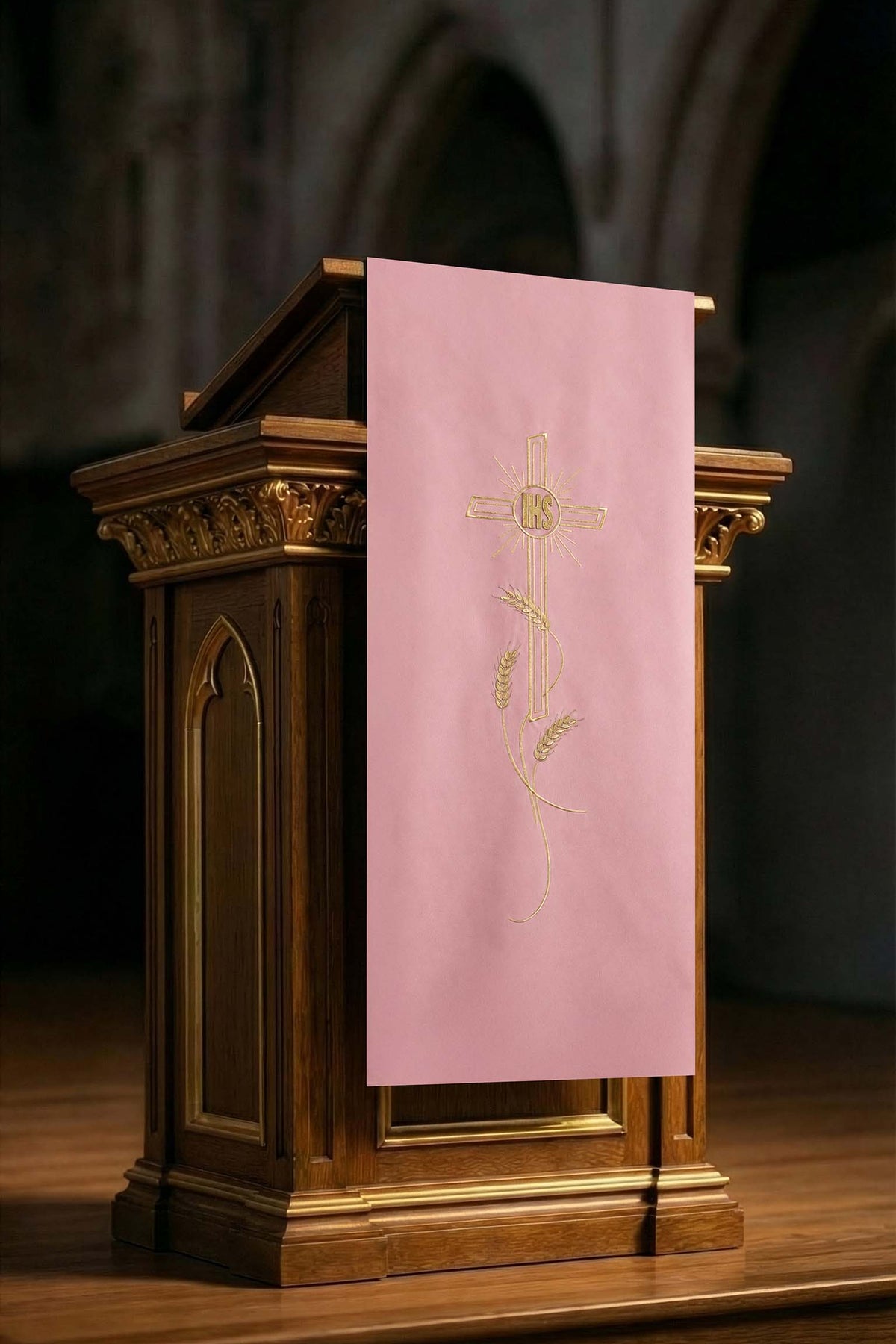
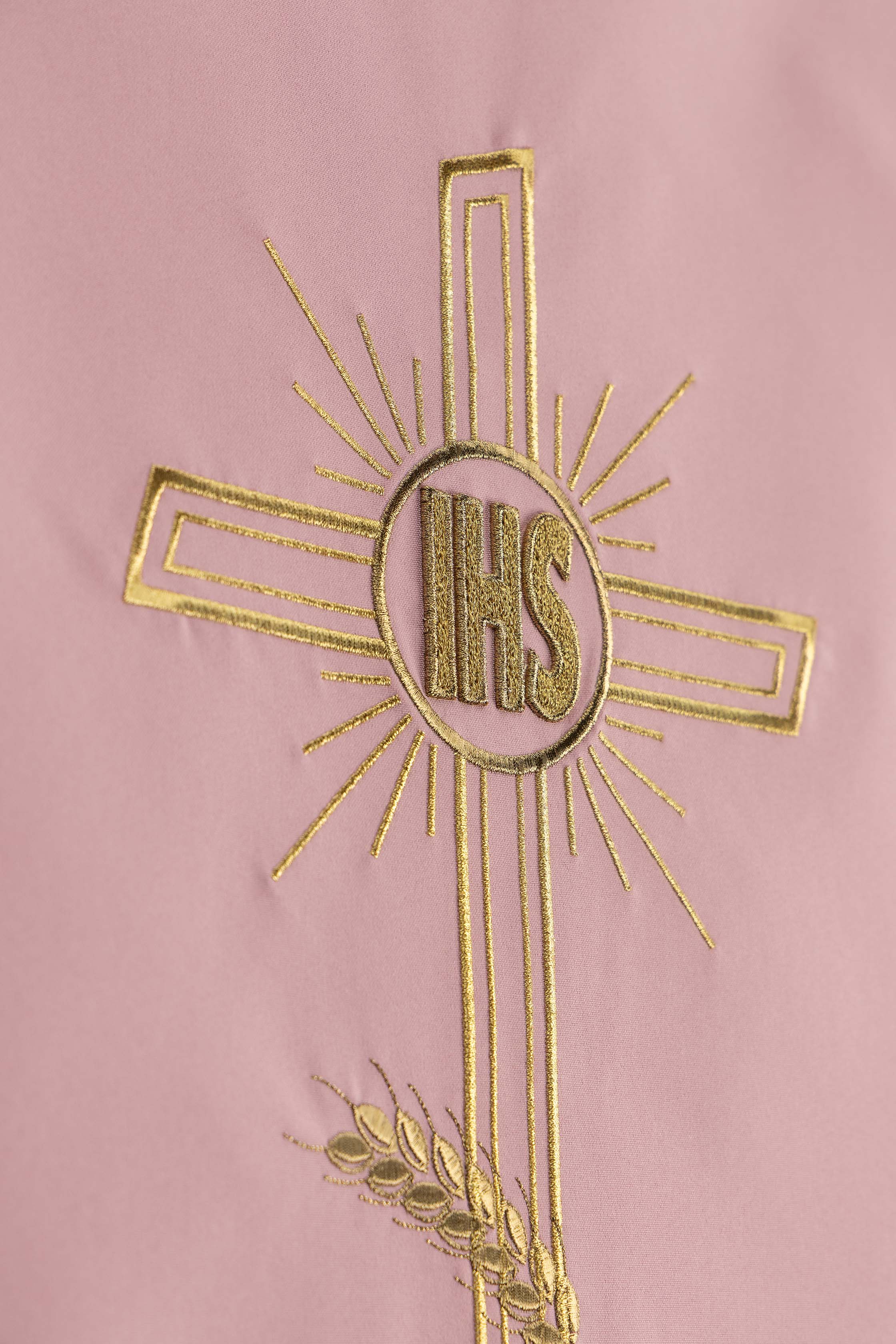
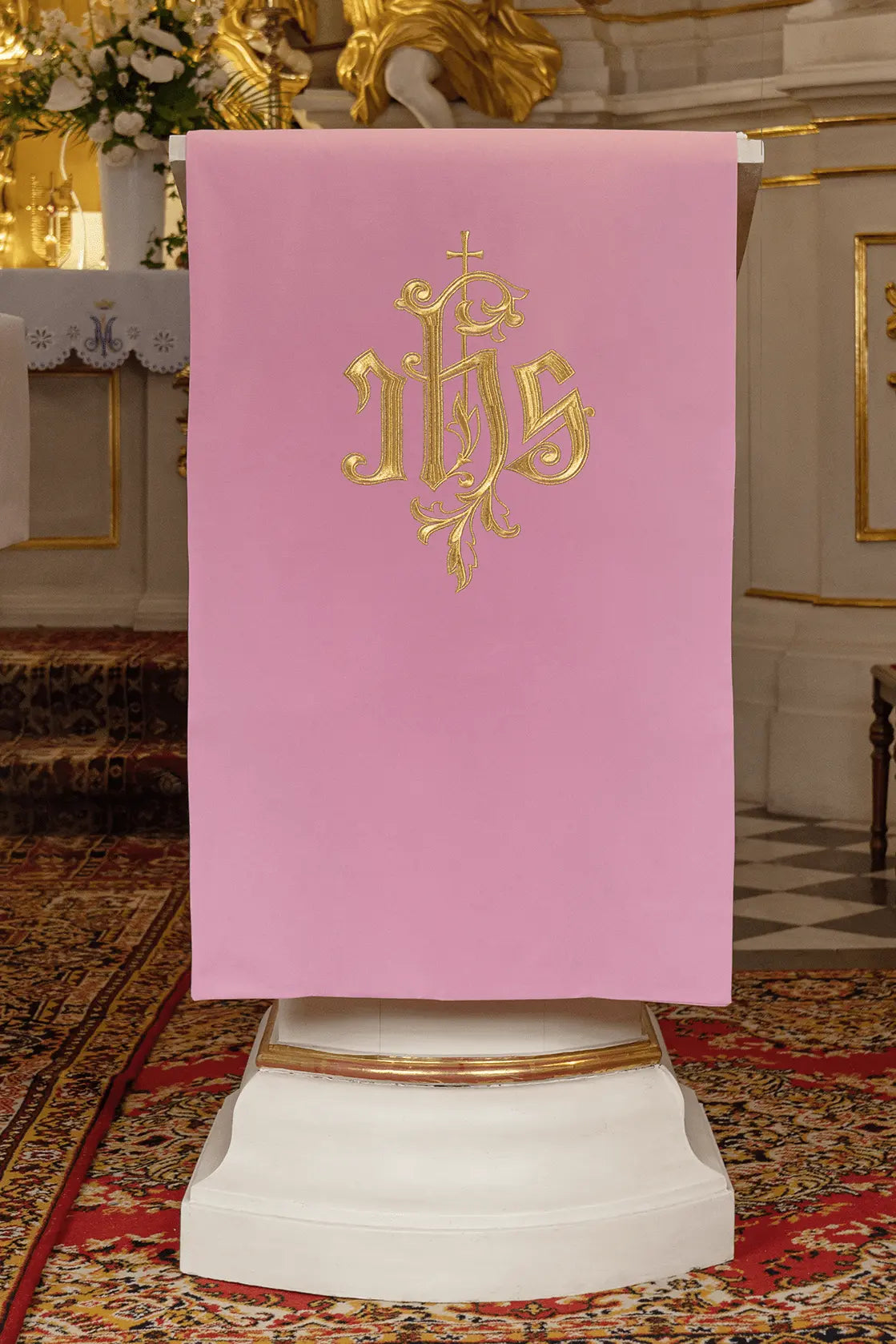
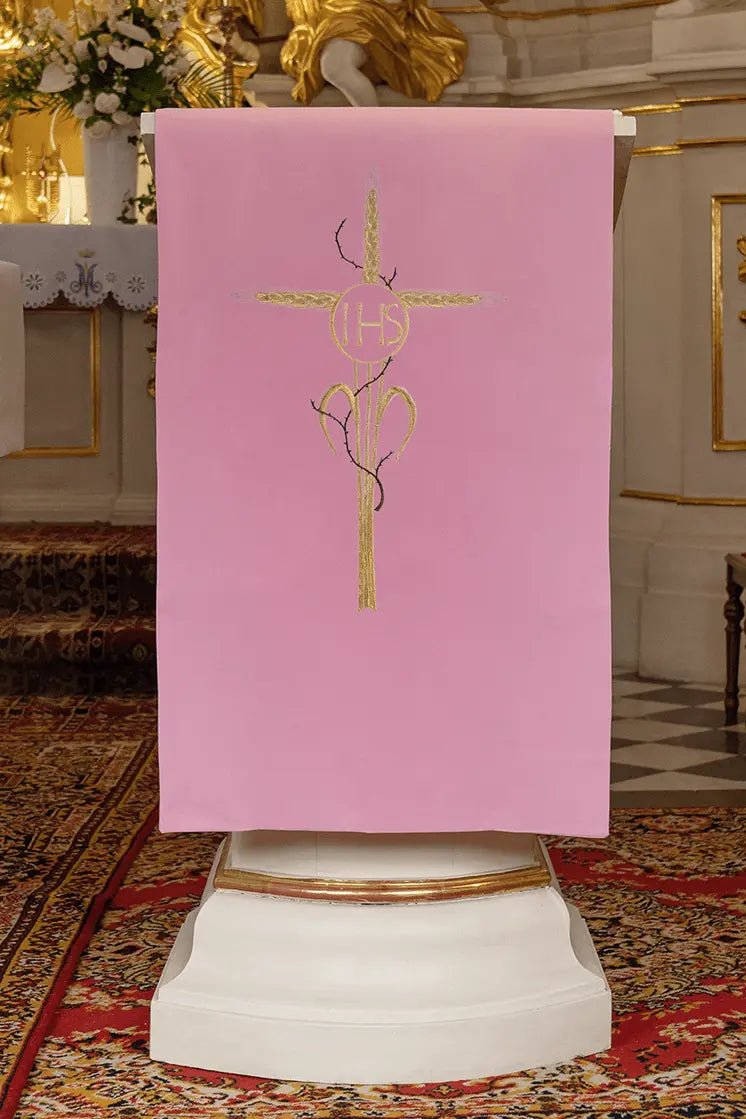
This collection is focused on rose pulpit covers and lectionary cloths prepared for use at the place of proclamation. The visible designs include embroidered Christian motifs such as the cross and the IHS monogram, both of which are appropriate for textiles connected with Scripture and the liturgy. These pieces may be used on a pulpit, lectern, or lectionary table, depending on the arrangement of the church. Their role is to frame the book and the spoken Word with a dignified textile accent that is seasonal without overwhelming the sanctuary.
The collection should be understood as part of the wider range of pulpit covers, not as an altar cloth or a vestment. Pulpit covers differ from altar tablecloths, chalice veils, stoles, and chasubles because they are made for a fixed liturgical furnishing rather than for the priest, deacon, sacred vessels, or altar mensa. This distinction matters when building a complete church set: the ambo or pulpit textile should match the liturgical color and design language, but it should also be sized and selected for the exact place where the Word is proclaimed.
When to use rose in the sanctuary
Rose is not a general substitute for purple, red, or white. It is a special color used on limited occasions, most commonly Gaudete Sunday and Laetare Sunday. For parishes that follow this tradition, the change from purple to rose is immediately visible: the sanctuary becomes lighter, while still preserving the contemplative character of Advent or Lent. A rose pulpit cover is especially helpful because the ambo is highly visible during the Liturgy of the Word. Even a small seasonal textile can communicate the liturgical shift clearly to the congregation.
During Advent, rose textiles may be introduced on Gaudete Sunday alongside rose vestments, an Advent wreath candle, or other appropriate seasonal accents. During Lent, the same color may appear on Laetare Sunday as a sign of encouragement before the final weeks of preparation for Easter. Churches that do not use rose every year may still keep a rose pulpit cover as part of a complete liturgical color set, ensuring that the ambo is not left visually disconnected when rose vestments are worn.
Design details: cross, IHS, and dignified embroidery
The most suitable embroidery for a rose pulpit cover is clear, reverent, and readable from the nave. A gold cross can emphasize the centrality of Christ and the Paschal mystery, while the IHS monogram points to the Holy Name of Jesus. These motifs are especially fitting for a textile used near the lectionary because they draw attention to the sacred character of the Word being proclaimed. Rose fabric combined with gold embroidery creates a warm, liturgically appropriate contrast without turning the piece into a decorative object detached from worship.
When choosing a cover, it is helpful to consider how much embroidery the sanctuary can visually carry. A richly decorated church may need a more balanced design, while a simple chapel may benefit from a stronger central motif. The goal is not to compete with the lectionary, altar, crucifix, or tabernacle, but to create harmony. A well-chosen pulpit cover should be visible enough to mark Gaudete or Laetare, yet restrained enough to serve the liturgy rather than distract from it.
How to choose the right rose pulpit cover
The first practical point is placement. Some churches use a pulpit cover that hangs from the front of the ambo; others use a cloth placed beneath or near the lectionary. Before selecting a design, measure the width, drop, and visible front area of the pulpit or lectern. A cover that is too narrow may look accidental, while one that is too long may interfere with movement or obscure carved details. The best fit looks intentional, lies smoothly, and remains secure during Mass and other services.
The second point is coordination. If the celebrant will wear rose chasubles, the pulpit cover should support the same liturgical tone. If clergy or servers use rose stoles, a matching or complementary ambo textile can make the sanctuary feel prepared as one coherent setting. Exact fabric matches are not always necessary, but the shade, embroidery color, and symbolic motifs should not clash. Gold embroidery, cross motifs, and IHS details are versatile choices for this purpose.
The third point is the wider color set used in the parish. Many churches already own purple pulpit covers for Advent and Lent, along with white, green, or red textiles for other seasons and feasts. Rose completes this cycle for the two Sundays when the Church permits or encourages a lighter tone within a penitential season. This is why a rose pulpit cover is often purchased not as a single isolated item, but as part of a complete and well-organized sacristy textile collection.
Relationship to altar cloths and other church textiles
Rose pulpit covers are part of the larger family of altar cloths and church textiles, but their purpose is distinct. Altar cloths are used on or around the altar. Chalice linens are prepared for the sacred vessels. Chalice veils cover the chalice. Stoles and chasubles are worn by ordained ministers according to their office and liturgical role. A pulpit cover belongs to the ambo or lectern, so it should be chosen with the architecture of that space in mind.
For a complete Gaudete or Laetare setting, a parish may coordinate the pulpit cover with the celebrant vestment, clergy stole, altar frontal, chalice veil, or other seasonal textiles. This does not mean every textile must carry the same embroidery. In many sanctuaries, the most elegant effect comes from repeating one element, such as a gold cross or IHS motif, across several items. This keeps the visual language coherent while allowing each textile to fulfill its own function.
Care and storage
A rose pulpit cover is usually used only a few times each year, so careful storage is important. After use, the cloth should be clean and completely dry before it is put away. Folding should follow the natural lines of the fabric whenever possible, and embroidered areas should not be pressed under heavy objects. If the piece includes raised embroidery or decorative thread, it is best to avoid rough handling and to store it in a breathable protective cover.
Cleaning should always respect the fabric and embroidery. Dust may often be removed gently, while more serious marks should be treated according to the care instructions for the specific textile. Because liturgical embroidery can include delicate threads, professional cleaning may be preferable for difficult stains. Regular inspection before Advent and Lent helps ensure that the cover is ready before Gaudete or Laetare Sunday arrives.
A focused textile for joyful anticipation
A rose pulpit cover has a quiet but important role in the church interior. It marks the proclamation area with the color of joyful anticipation and helps the faithful recognize the liturgical character of the day. In Advent it points toward the coming of the Lord at Christmas; in Lent it offers encouragement on the road toward Easter. The textile does not replace the Word proclaimed from the ambo, but it frames that place with seasonal meaning and visible care.
For churches building a complete liturgical textile set, this collection offers a focused choice for two highly recognizable Sundays. Rose is used rarely, which makes the details especially noticeable when it appears. A well-fitted pulpit cover with a cross or IHS embroidery can bring unity to the sanctuary, support the celebrant's vestments, and make the color of Gaudete and Laetare visible in the place where Scripture is heard.
Frequently Asked Questions (FAQ)
When should a rose pulpit cover be used?
A rose pulpit cover is most commonly used on Gaudete Sunday, the Third Sunday of Advent, and Laetare Sunday, the Fourth Sunday of Lent. It may be placed on the pulpit, ambo, or lectern to reflect the lighter, joyful tone permitted within those penitential seasons.
Is a rose pulpit cover the same as a pink pulpit cover?
In everyday language the color may sometimes be called pink, but the proper liturgical term is rose. For church use, rose is the more precise word because it refers to the traditional color used on Gaudete and Laetare Sundays.
What symbols are appropriate on a rose pulpit cover?
The cross and IHS monogram are especially suitable because they relate directly to Christ and to the proclamation of the Word. Gold embroidery is a common choice because it remains dignified, visible, and easy to coordinate with other sanctuary textiles.
How do I choose the correct size?
Measure the front width and desired hanging length of the pulpit or lectern before ordering. The cover should sit securely, hang evenly, and avoid blocking microphones, carved panels, or the open lectionary area.
Can a rose pulpit cover be coordinated with other liturgical items?
Yes. Many churches coordinate it with rose chasubles, stoles, chalice veils, or altar frontals used on the same day. The items do not need to be identical, but the shade, embroidery color, and central motif should work together.