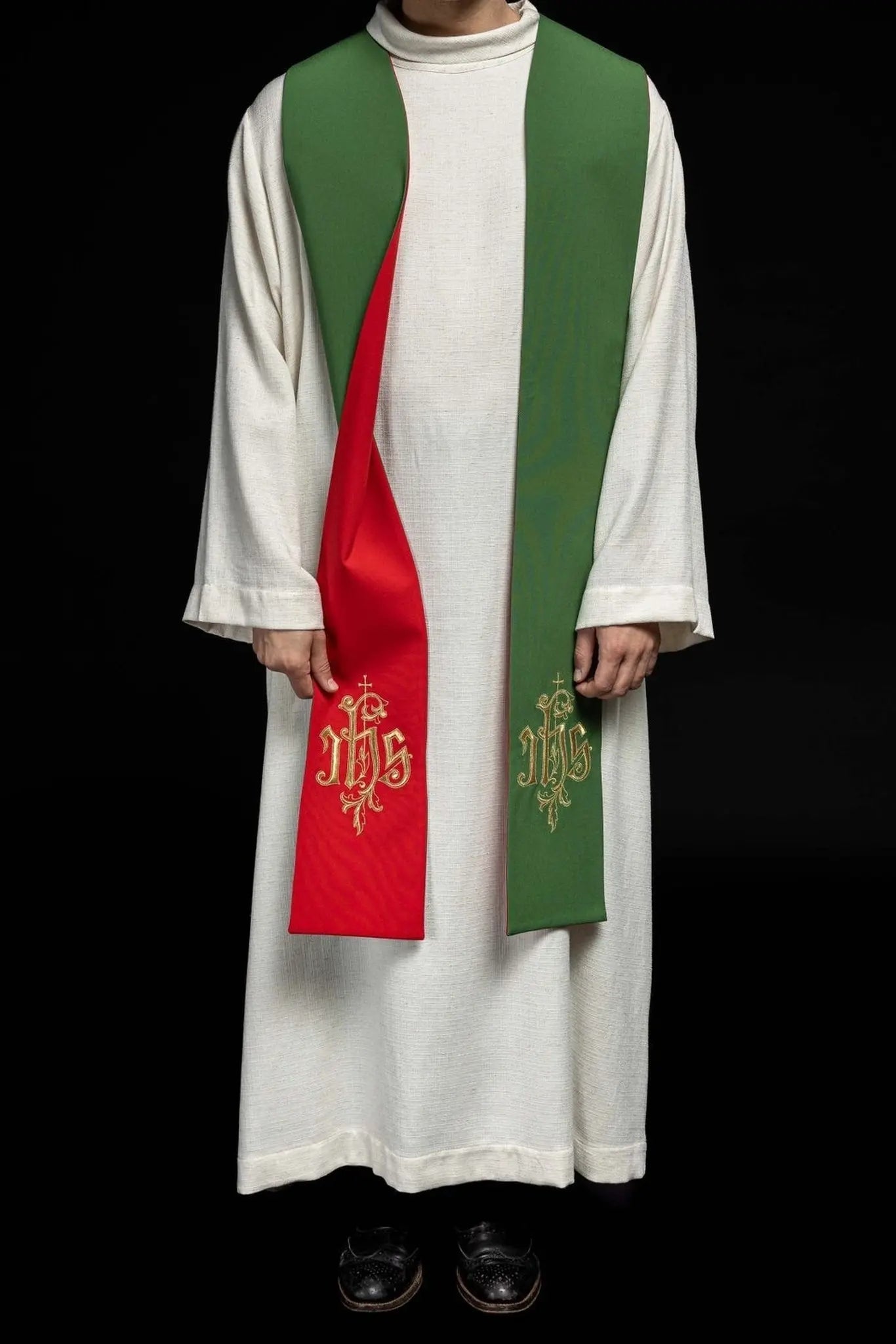
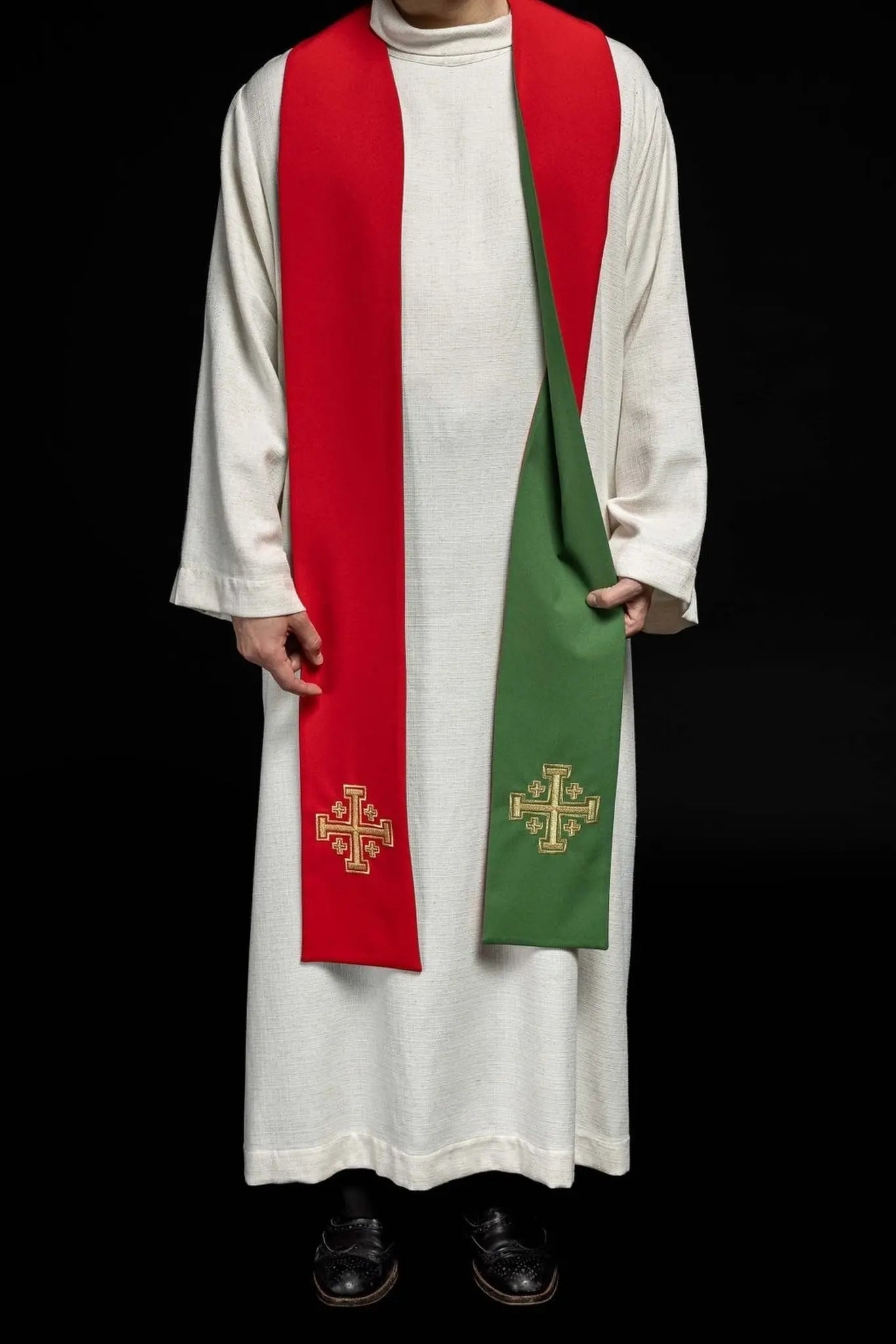
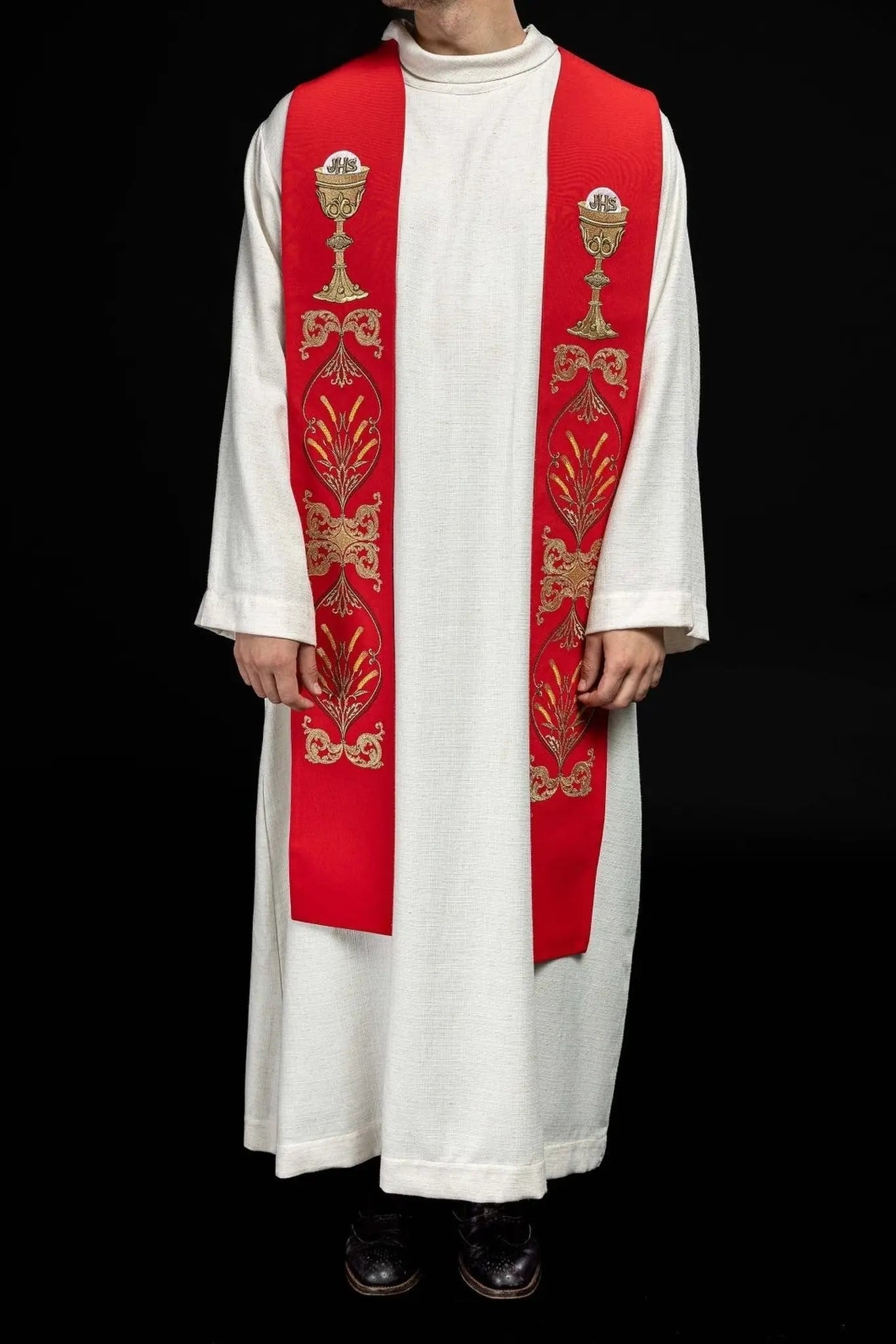
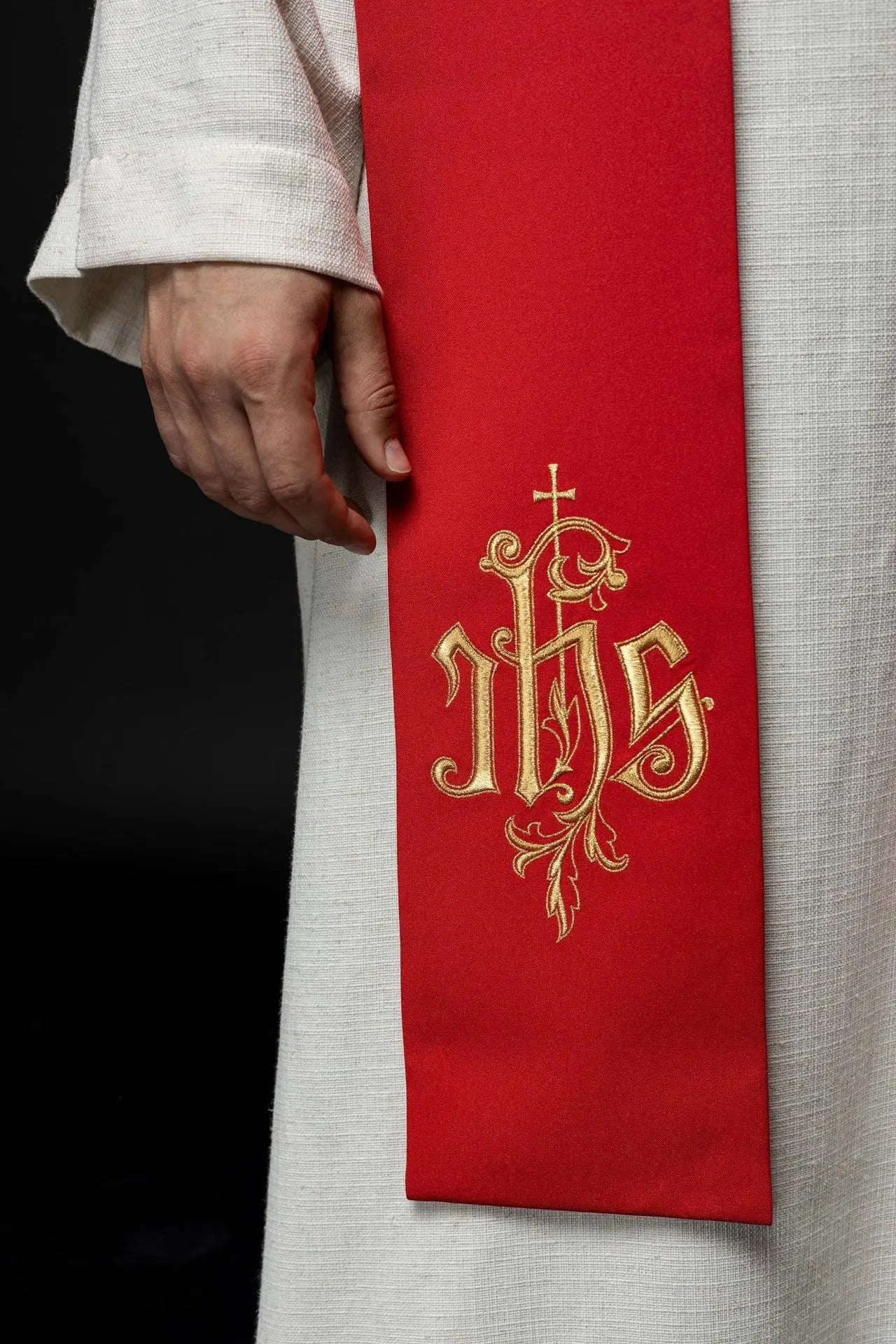
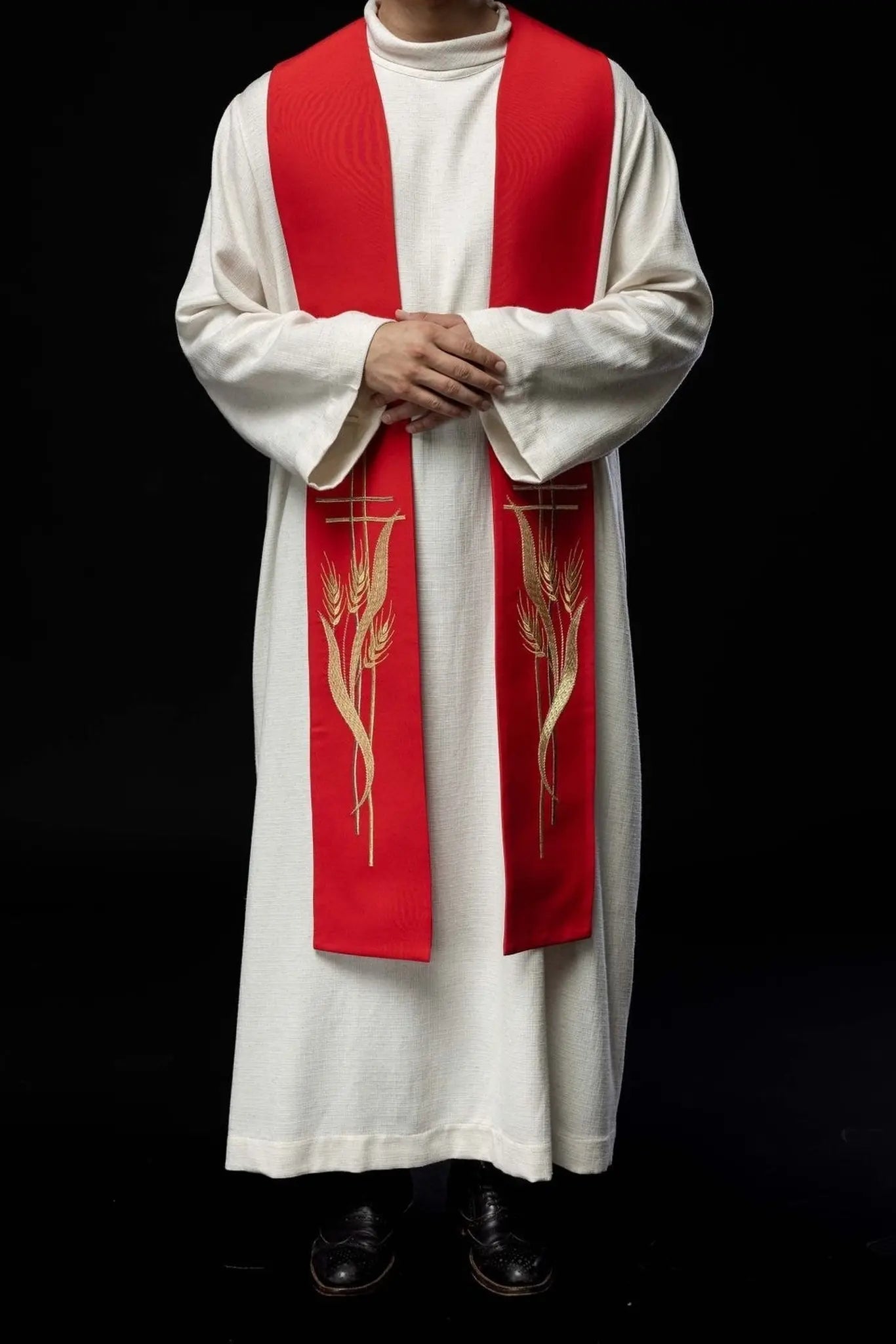
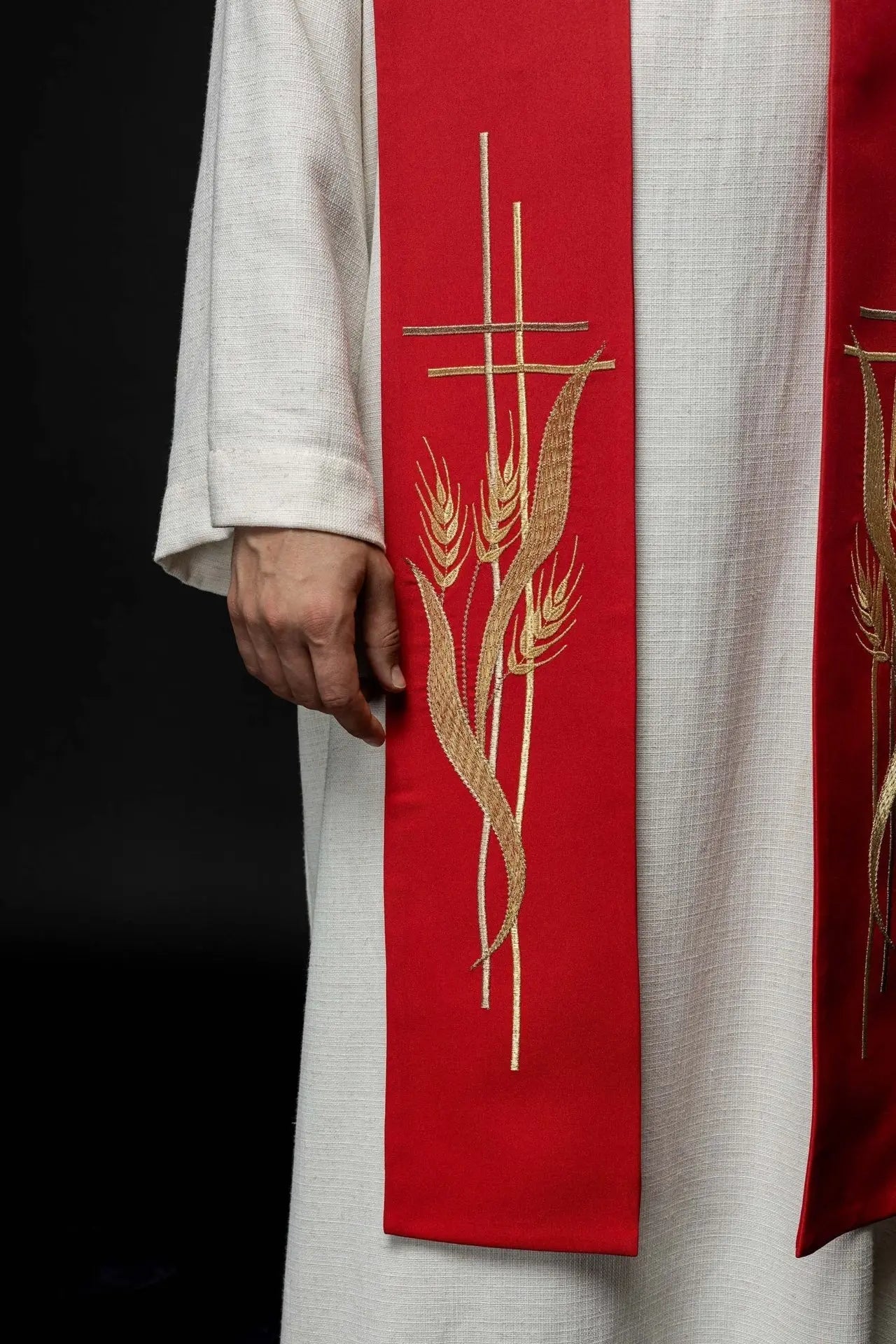
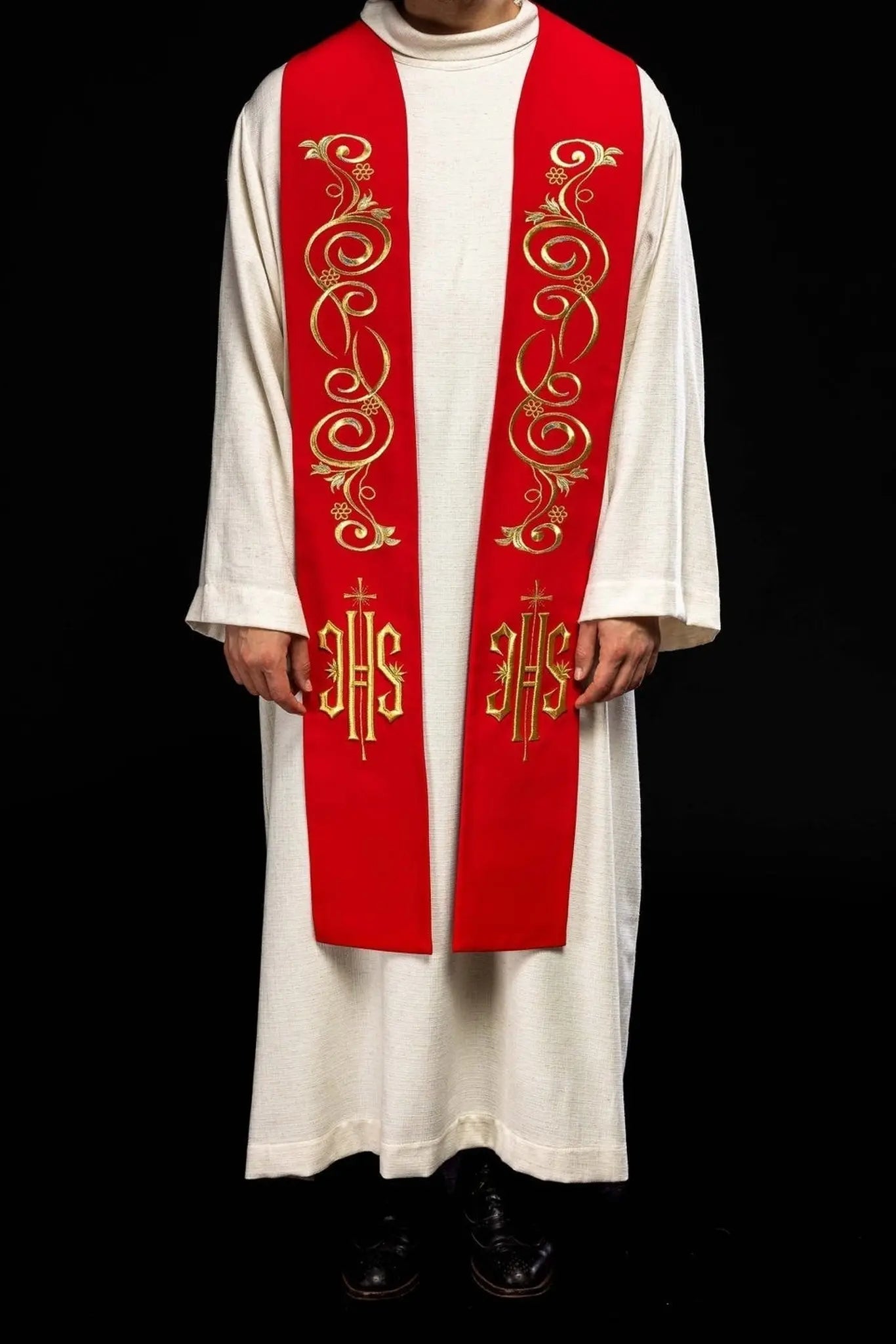
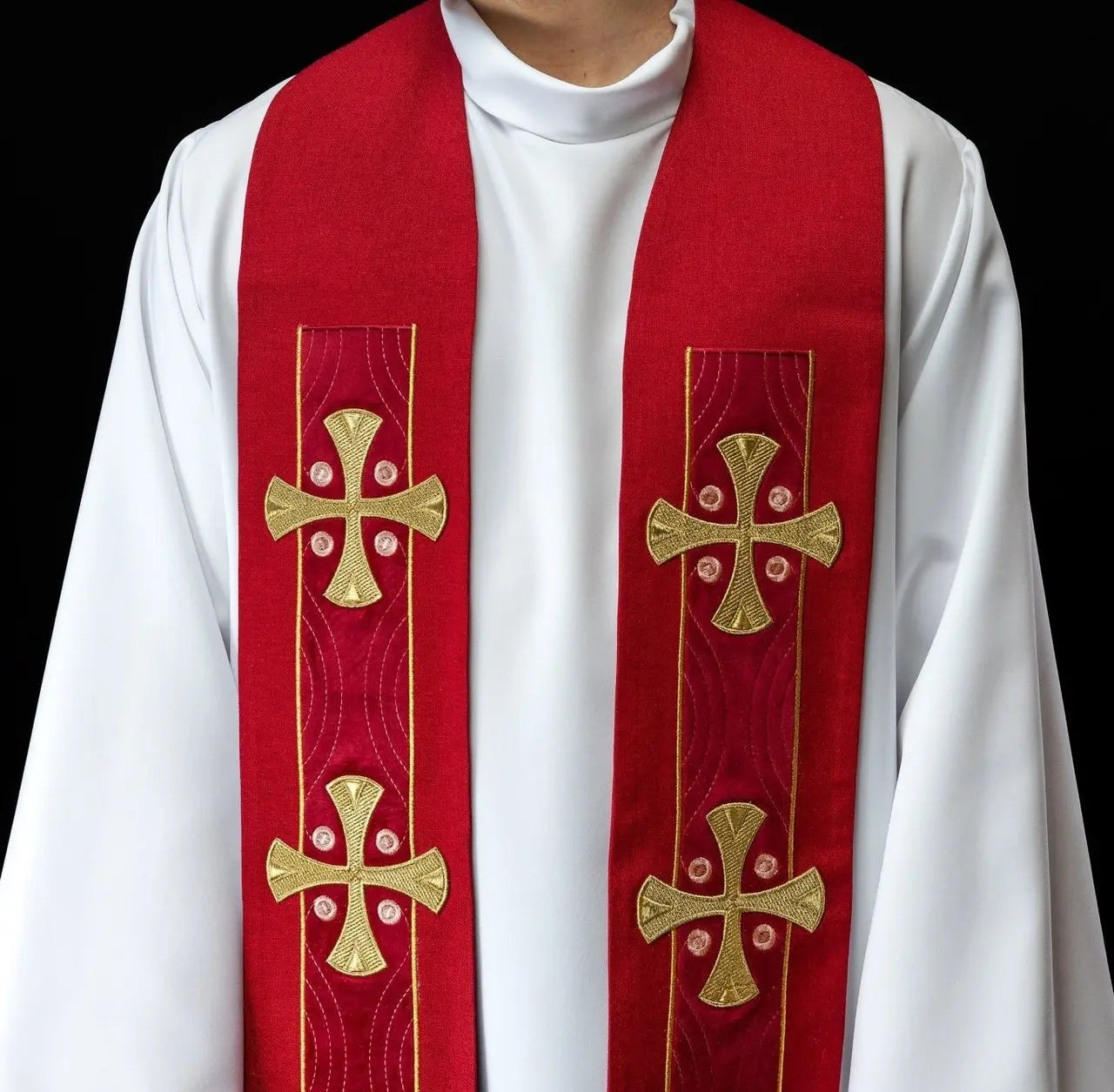
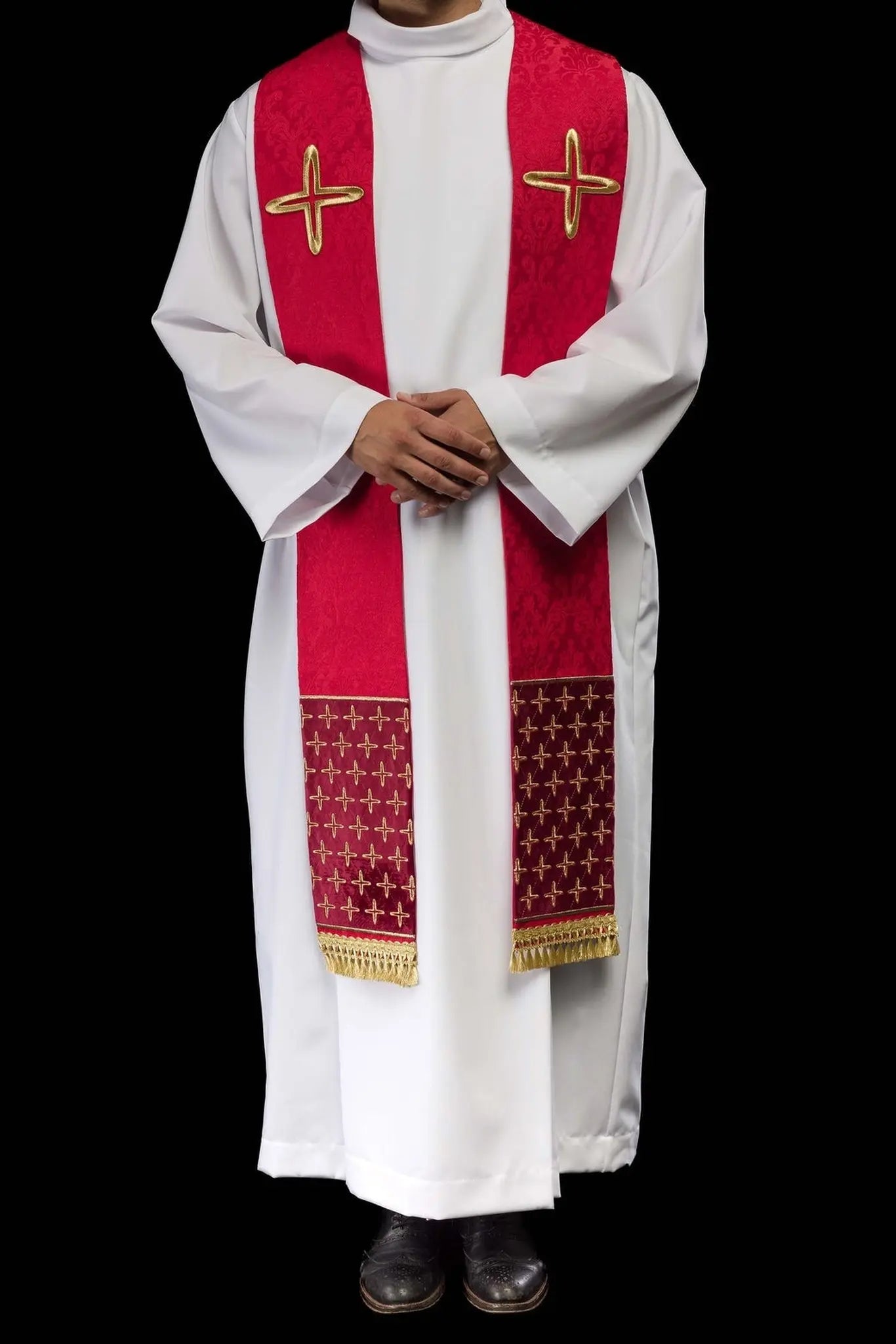
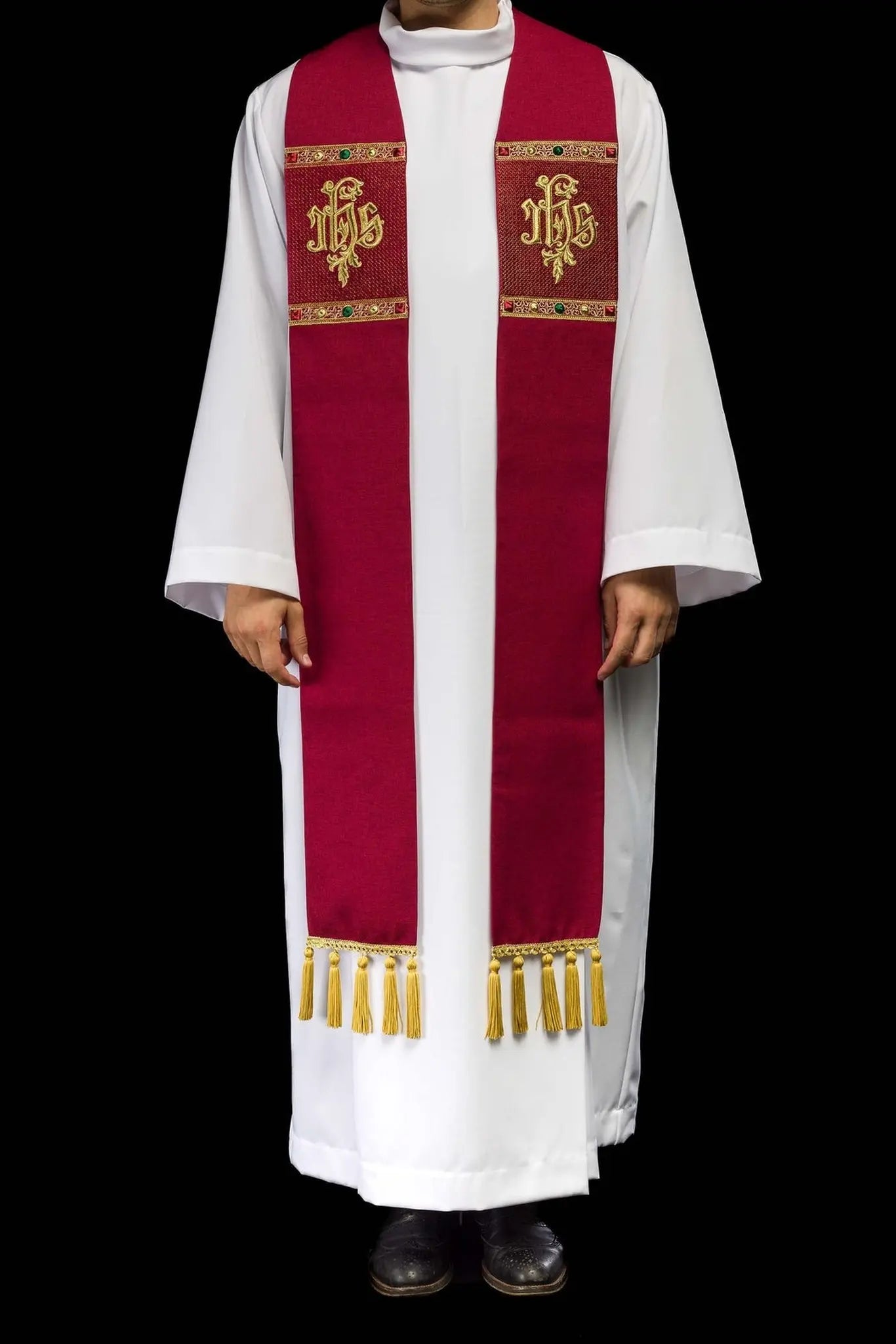
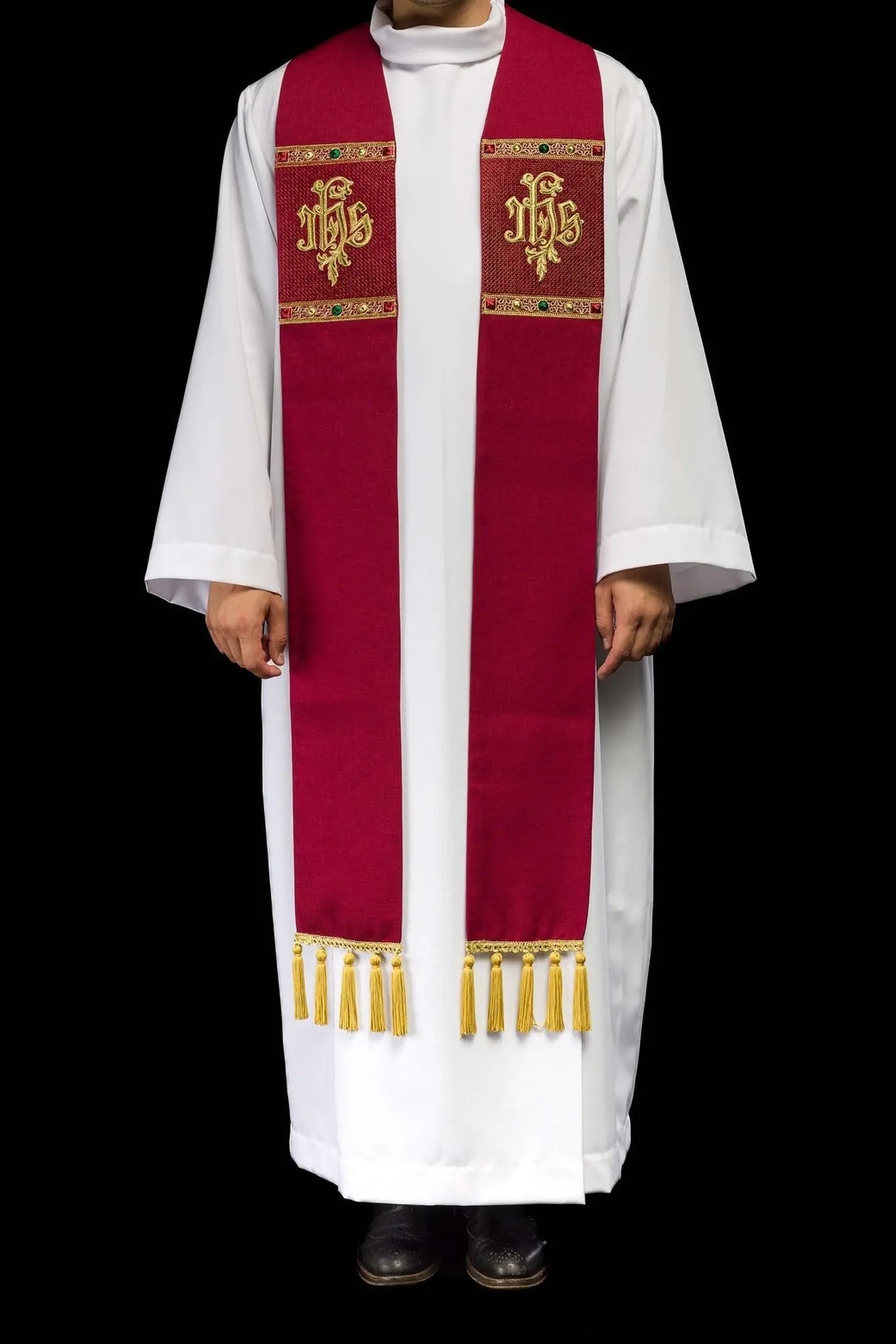
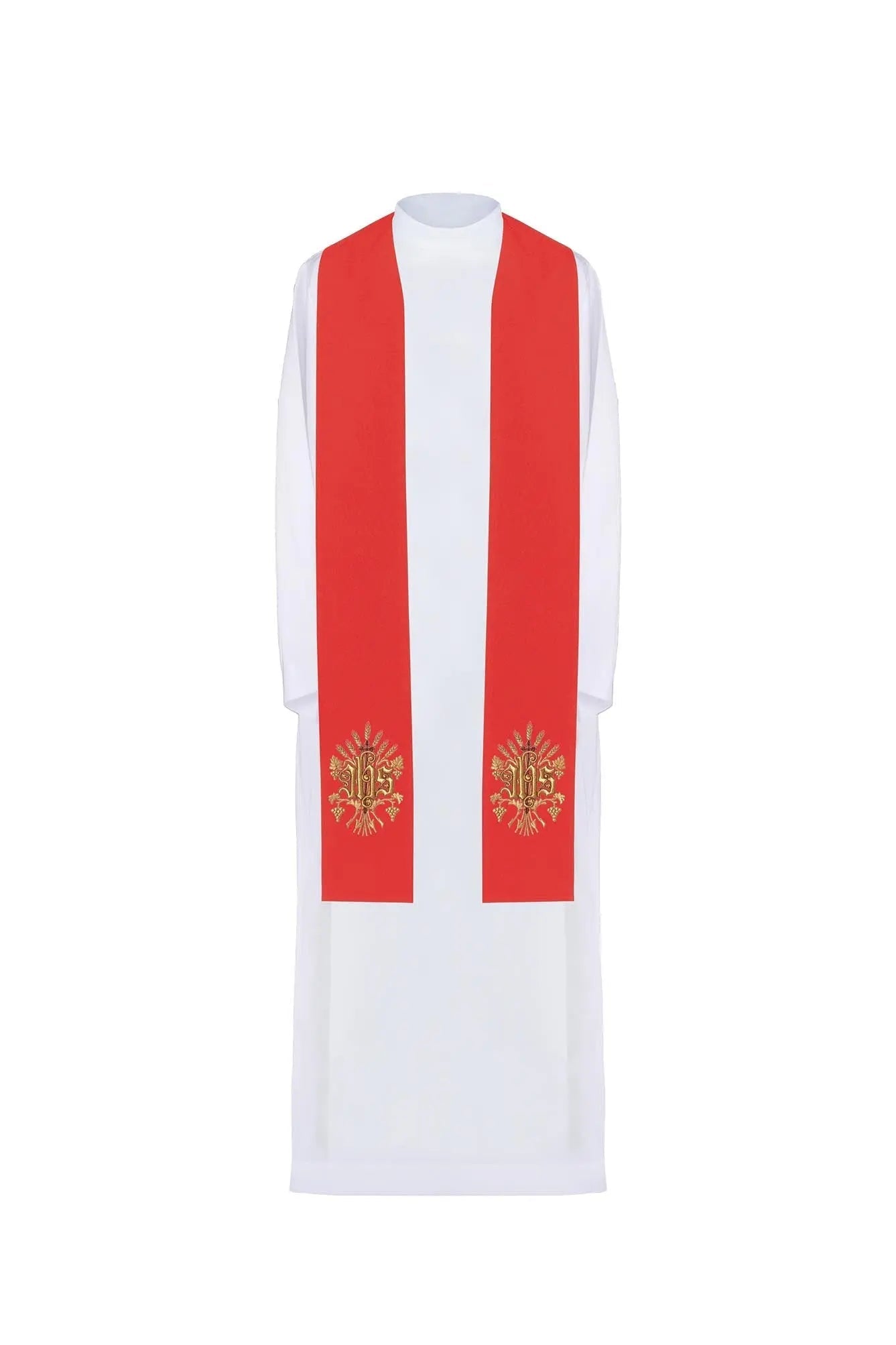
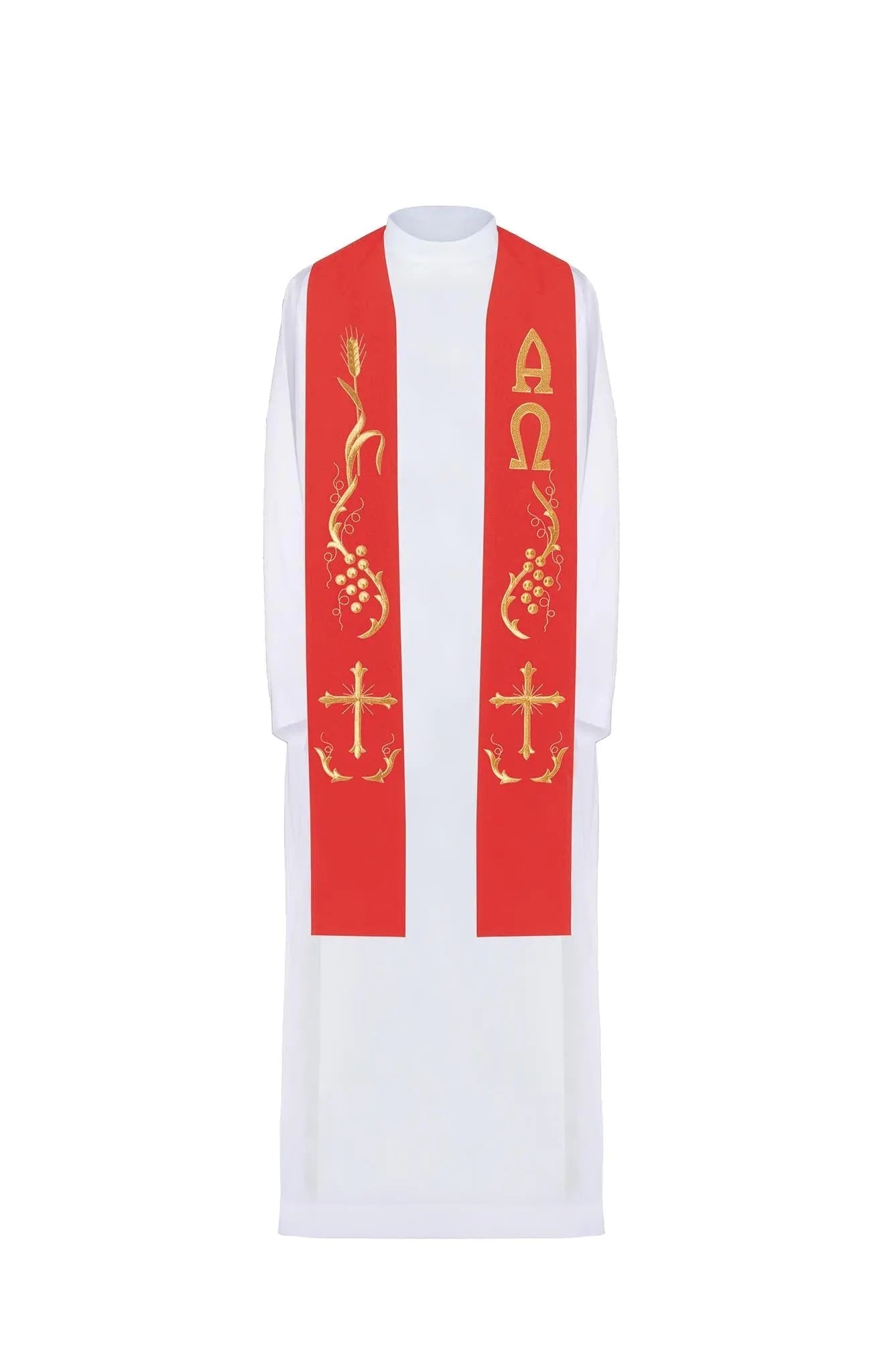
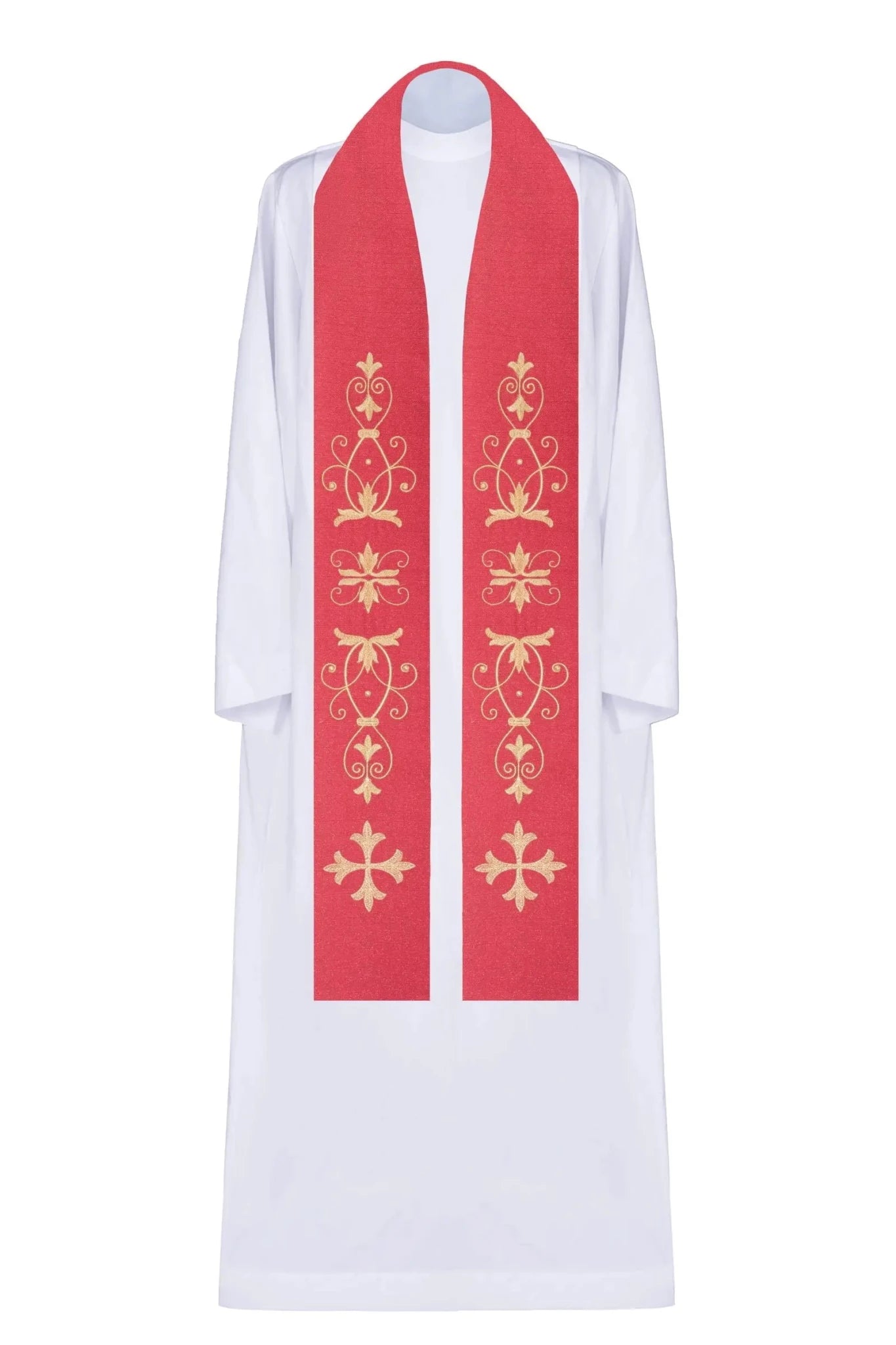
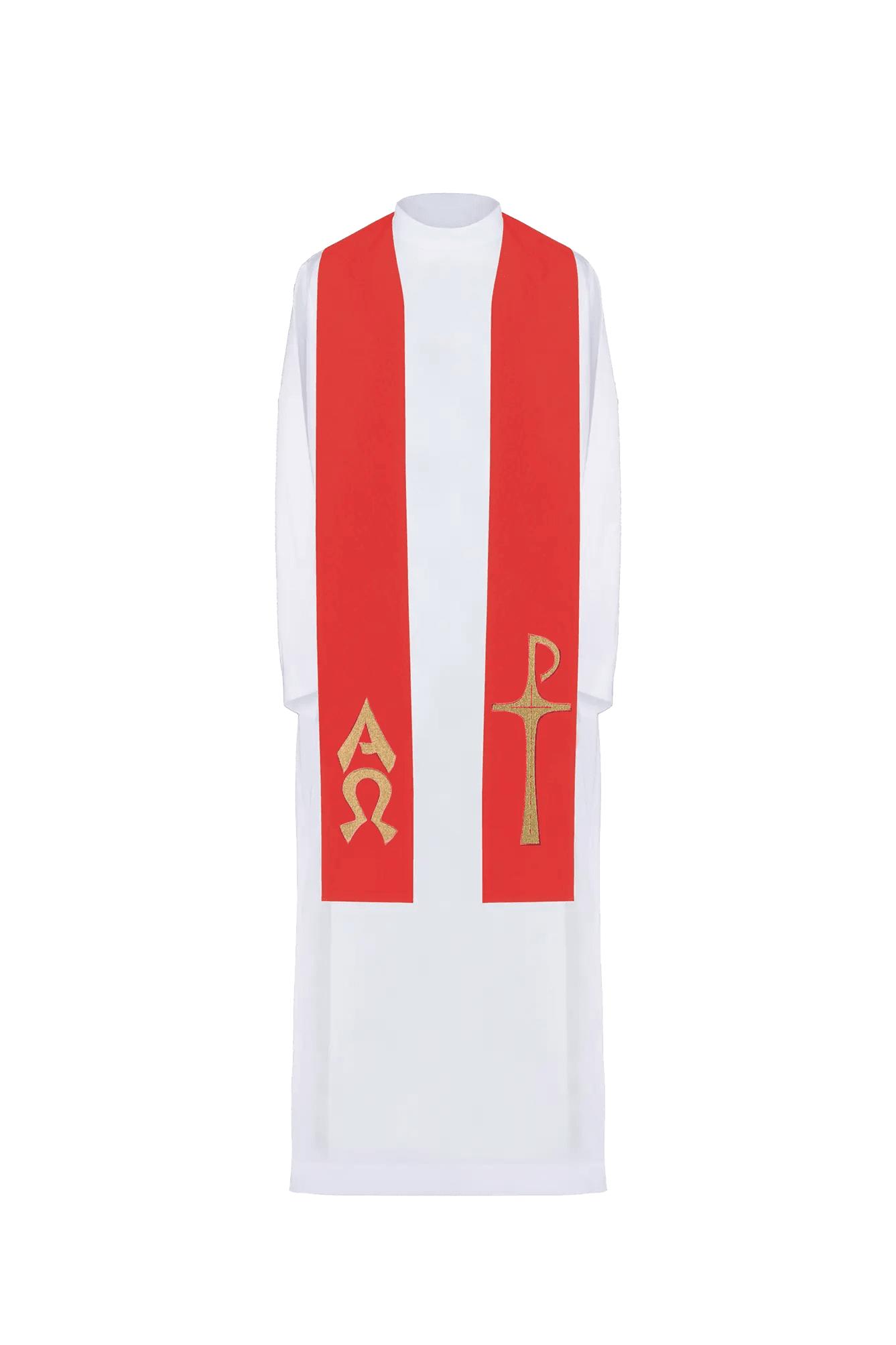
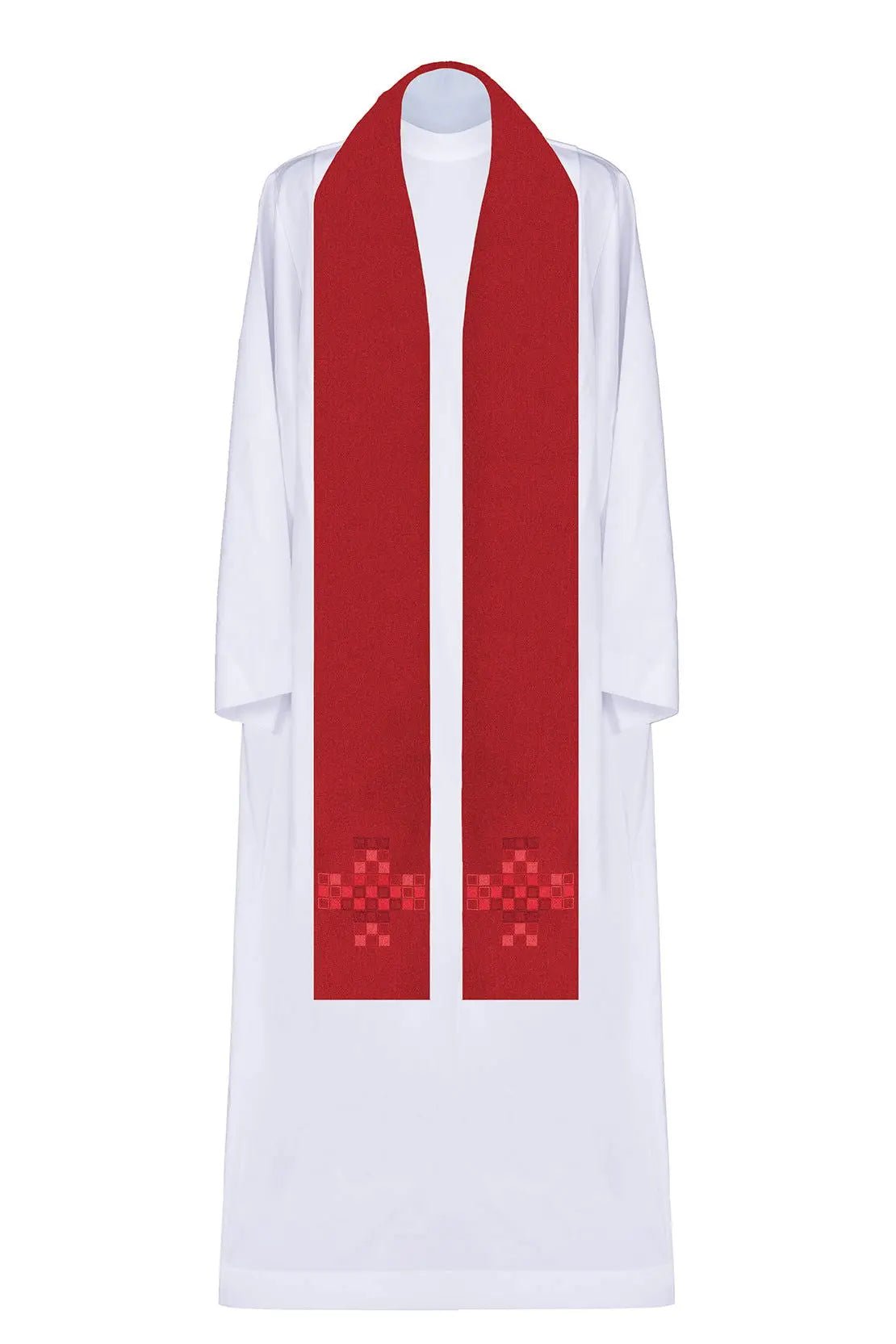
Red Clergy Stoles for Pentecost, Passiontide and Martyr Feasts
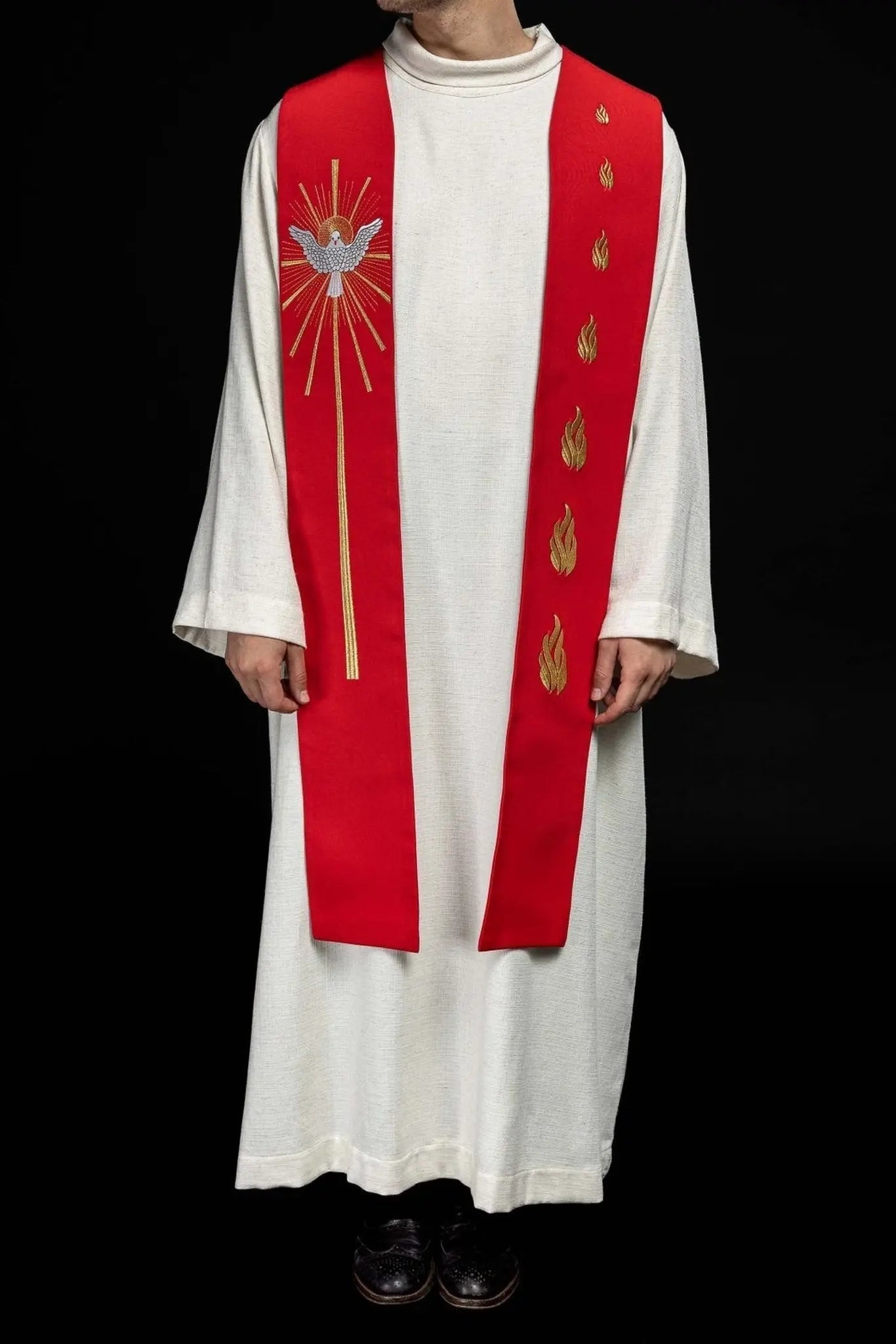
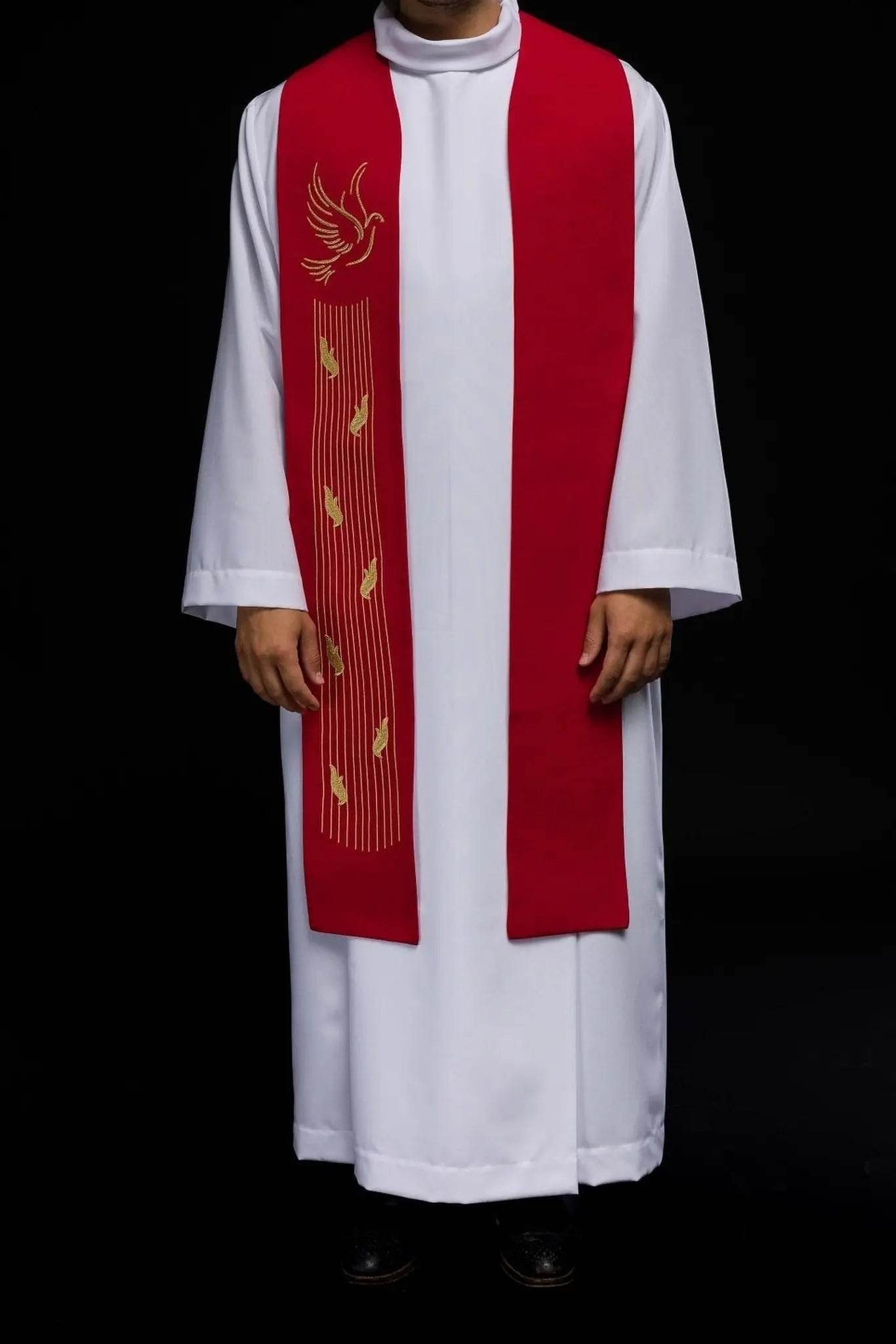
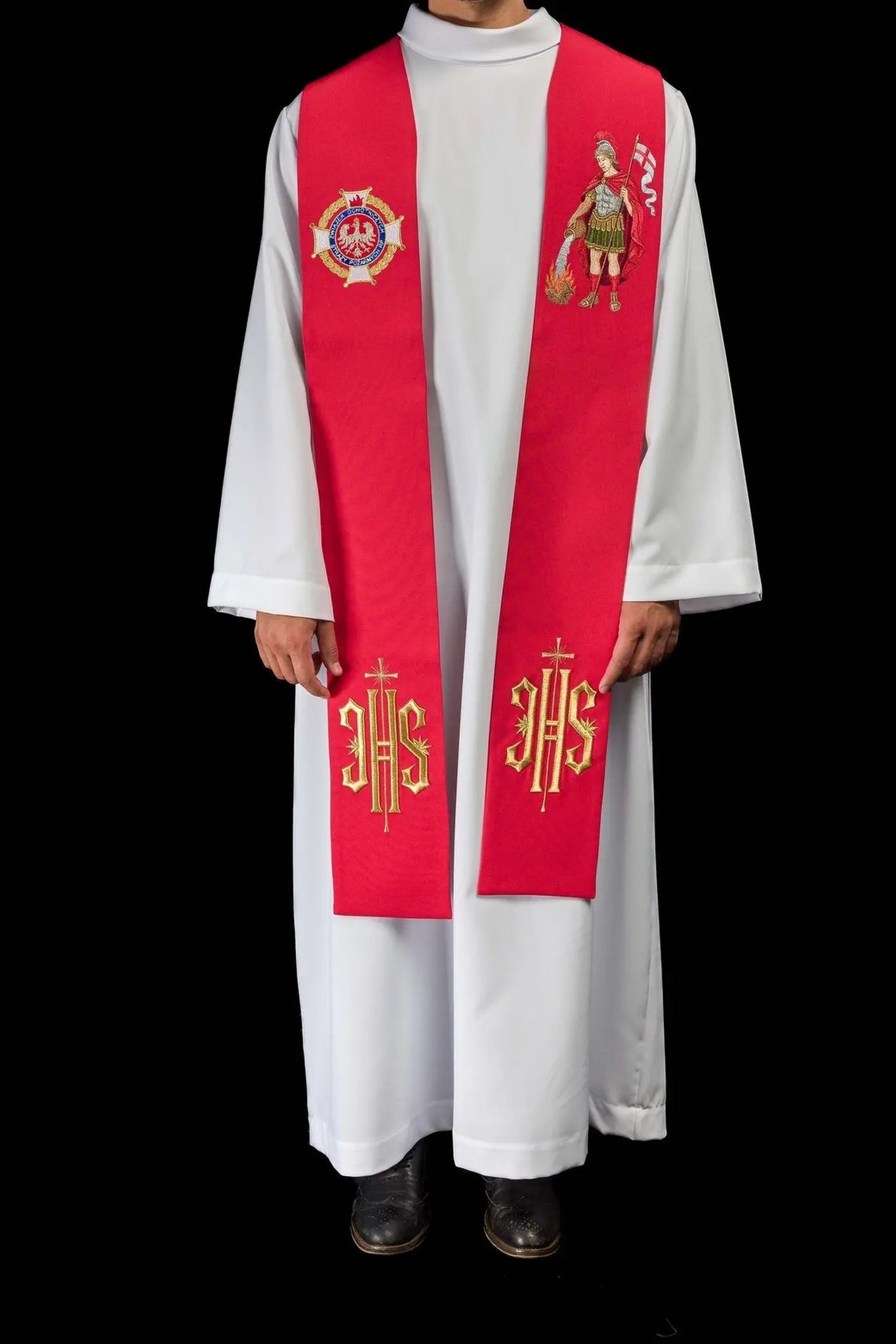
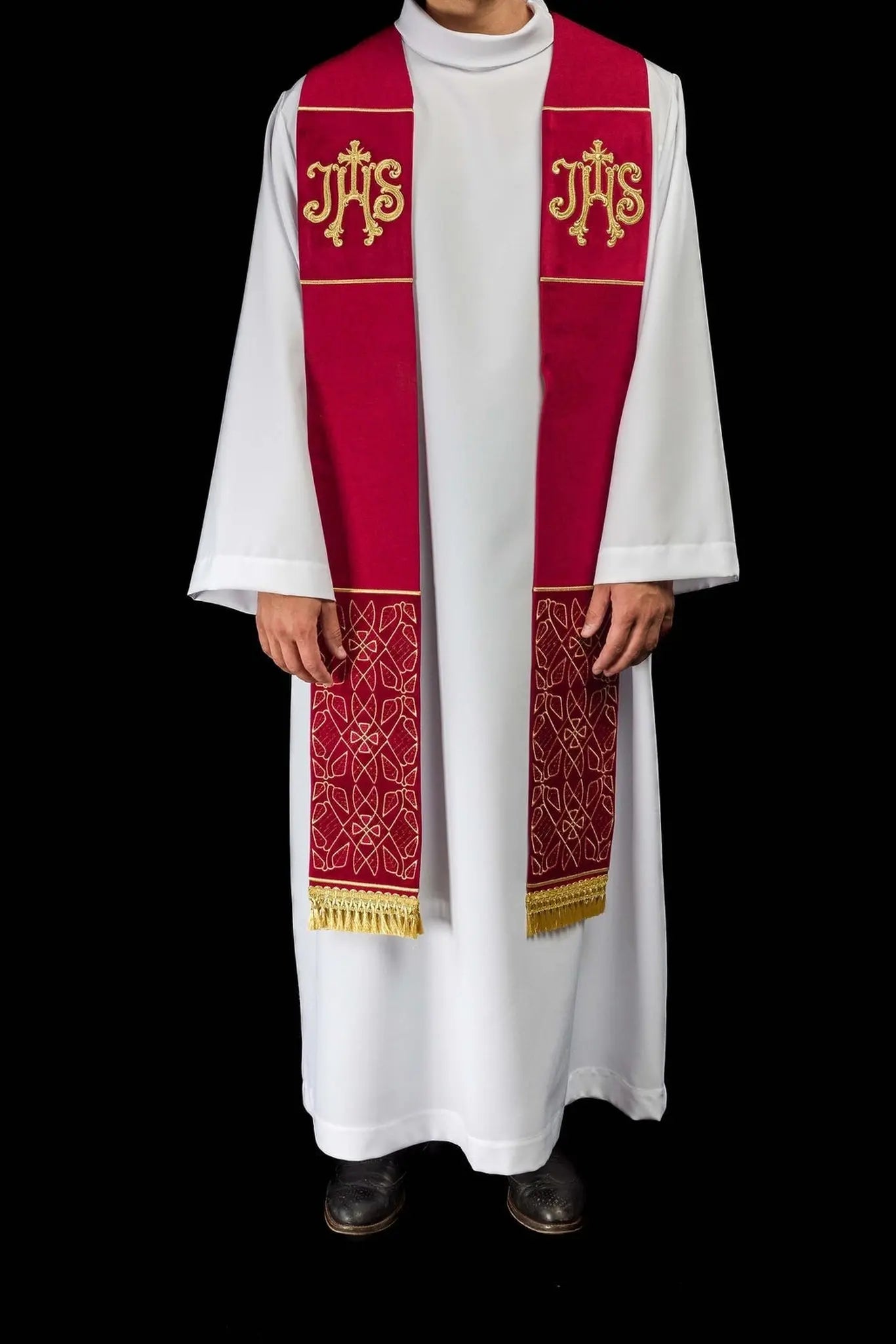
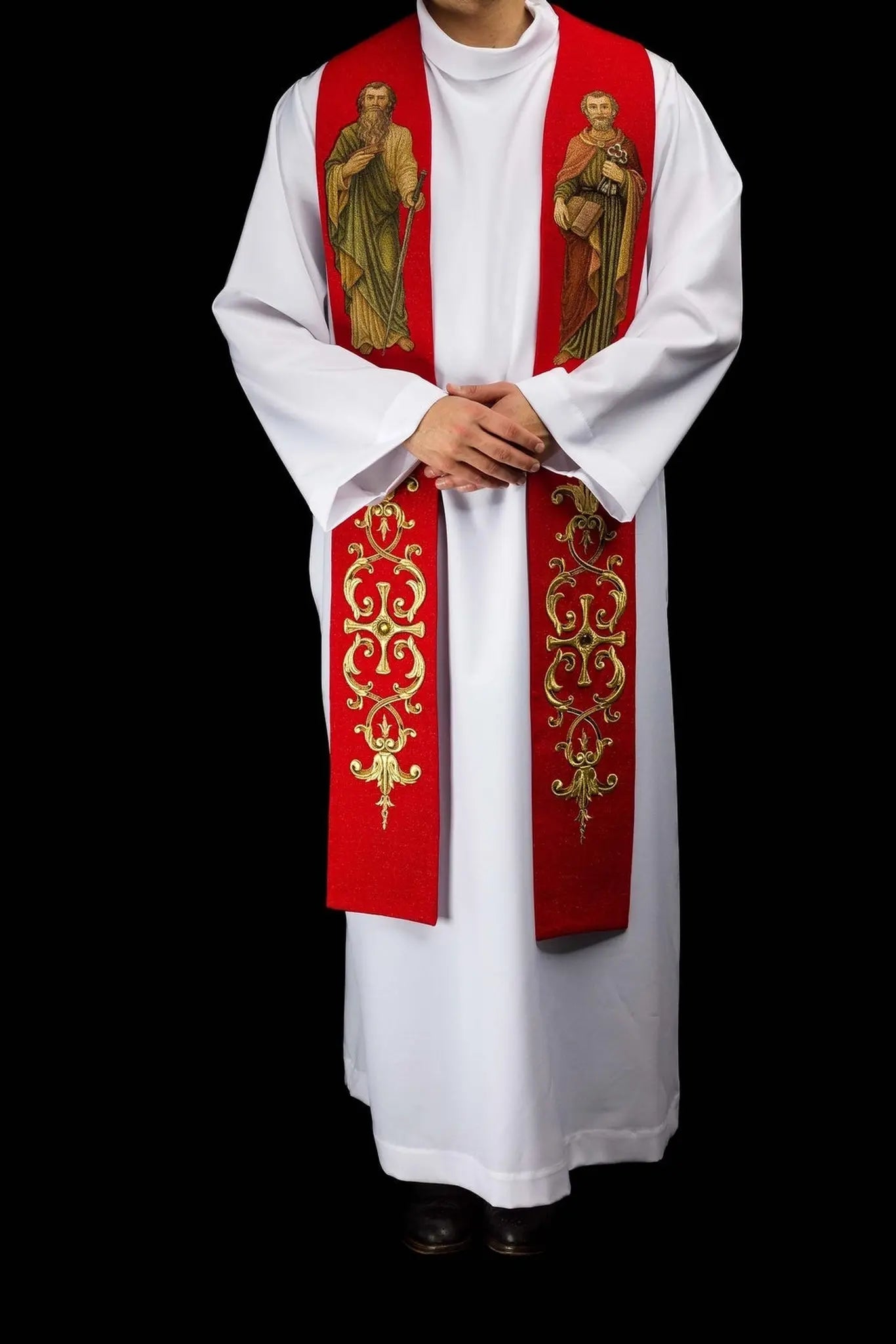
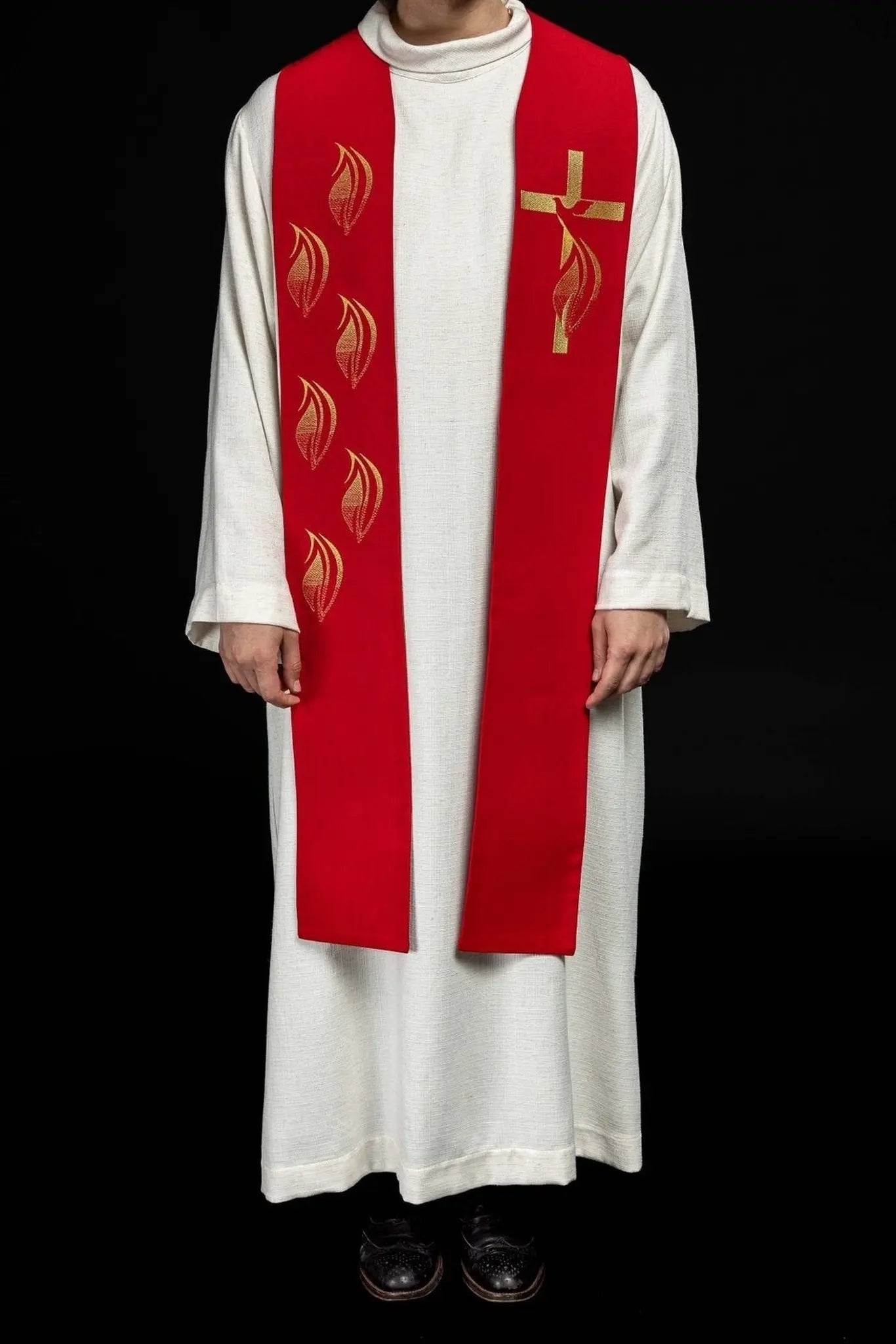
Red clergy stoles are liturgical vestments worn when the Church gives visible expression to the fire of the Holy Spirit, the blood of Christ, the Passion of the Lord and the witness of the martyrs. This collection gathers red stoles for clergy who need a dignified vestment for celebrations such as Pentecost, Palm Sunday, Good Friday, feasts of apostles and evangelists, and memorials or feasts of martyrs. A red stole is not simply a decorative accessory; it is a liturgical sign placed close to the priest or deacon as he exercises his ministry in prayer, preaching, blessing and sacramental service.
The red color makes a clear visual statement in the sanctuary. It is solemn, intense and deeply connected with sacrifice, love, courage and the Holy Spirit. For that reason, a well-chosen red stole should be appropriate both for festive celebrations and for more restrained Passion liturgies. In this collection, the purpose is to help churches, clergy and sacristies select a red stole that harmonizes with the wider set of clergy stoles already in use, while remaining faithful to the meaning of the liturgical season or feast.
When red clergy stoles are used
Red is traditionally used in several important parts of the liturgical calendar. At Pentecost, it recalls the tongues of fire and the gift of the Holy Spirit poured out upon the Church. During celebrations connected with the Passion of Christ, especially Palm Sunday and Good Friday, it points to the blood of the Lord and the mystery of redemption. On the feasts of apostles, evangelists and martyrs, red honors witness, courage and the shedding of blood for faith.
Because the stole is worn during ordained ministry, its color should correspond with the liturgical celebration. A red stole may be used when the celebrant or assisting clergy wear red vestments, and it can also serve in services where the stole is the principal visible vestment over an alb or cassock and surplice. For a coordinated sanctuary setting, many parishes pair red stoles with red chasubles for the principal celebrant and with red textile accents near the ambo, such as red pulpit covers, when this suits local custom and the architecture of the church.
Meaning of red in Christian liturgy
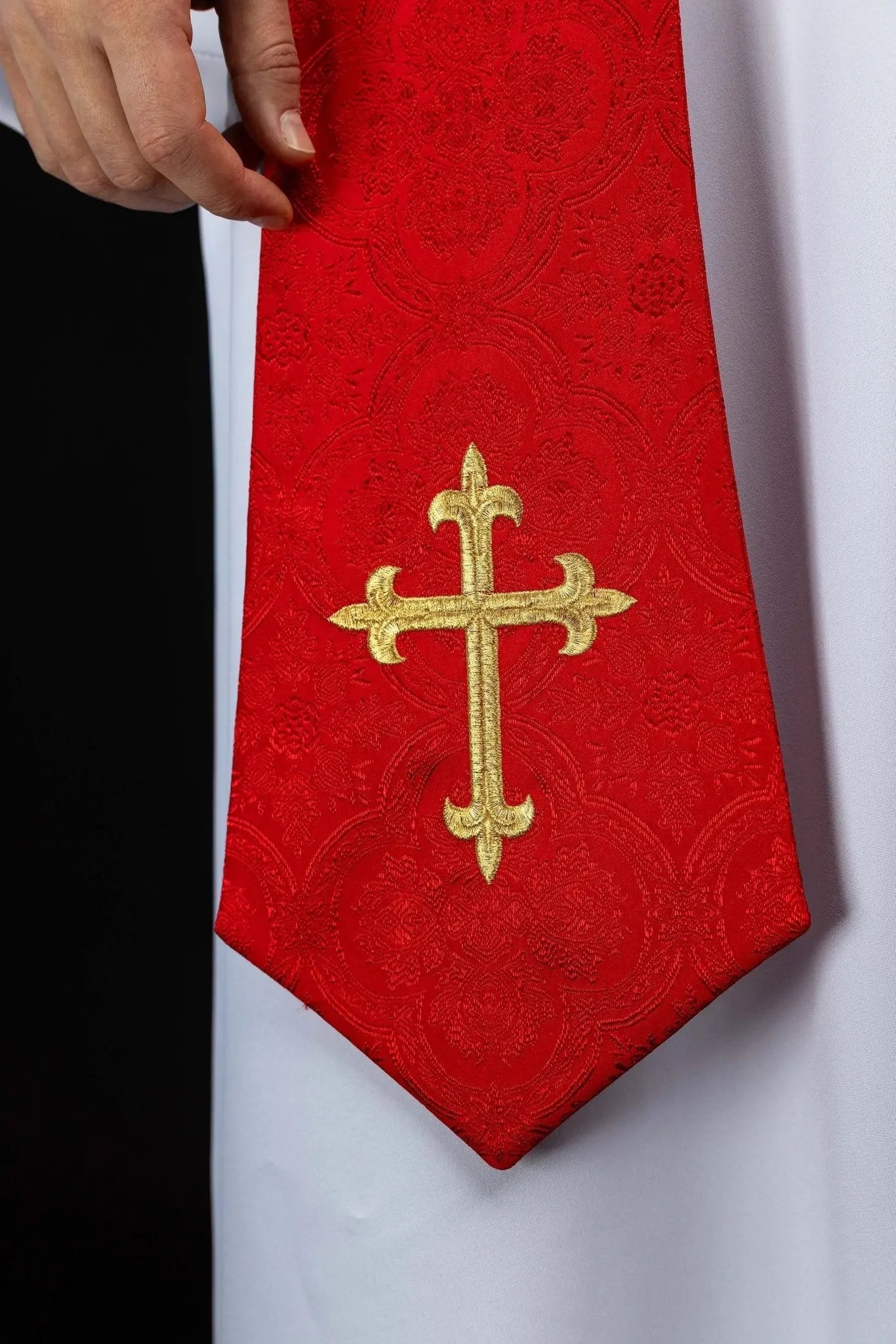
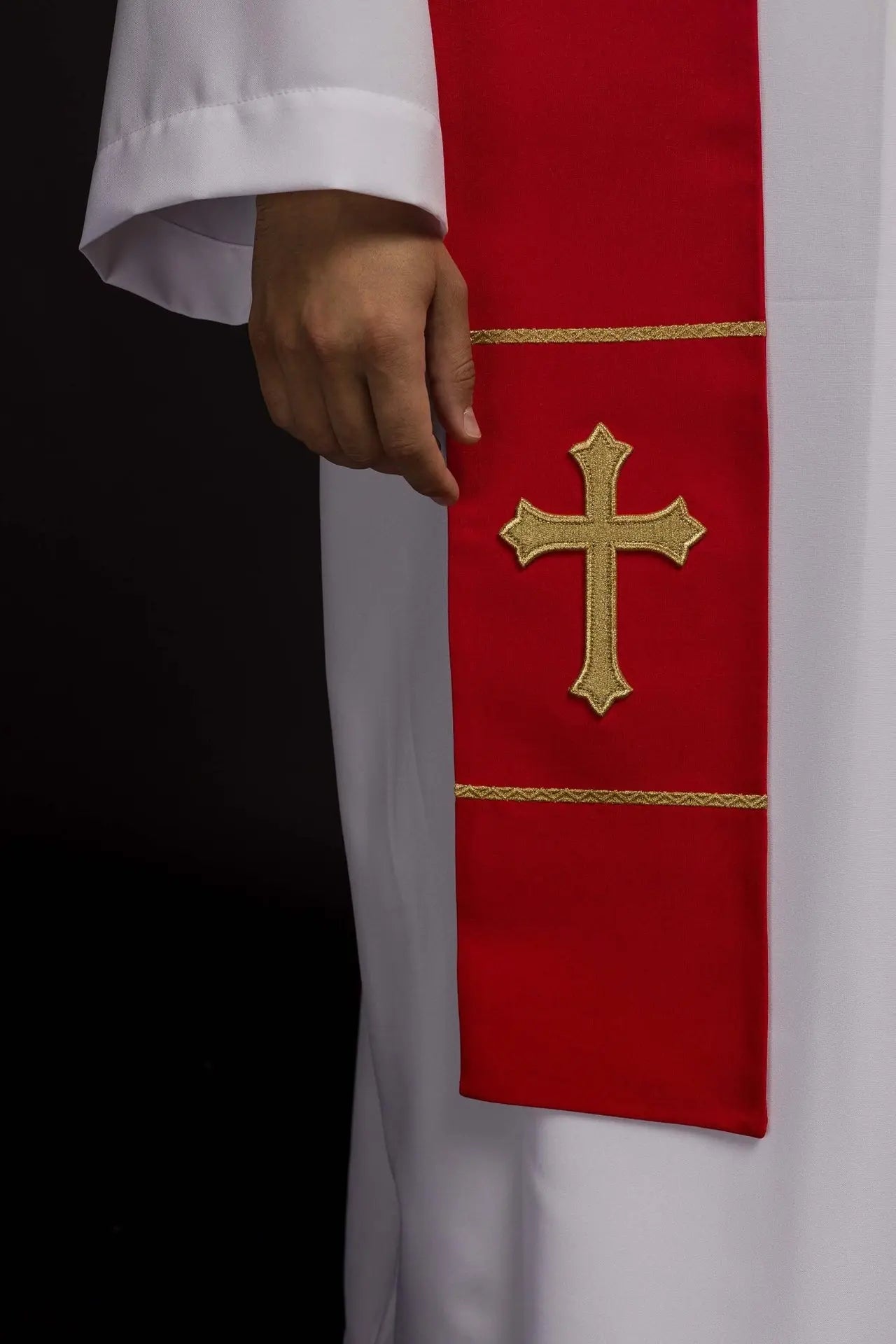
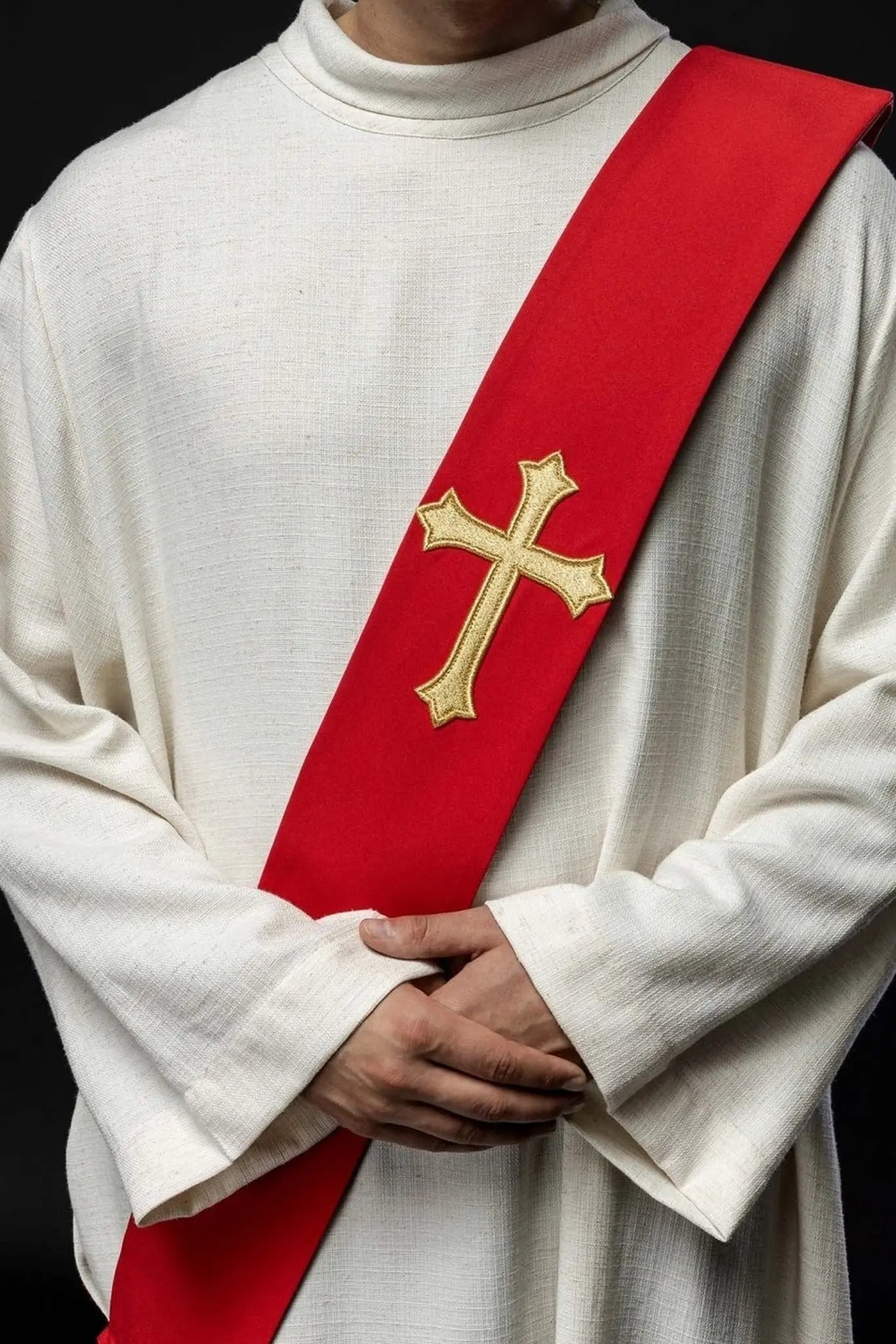
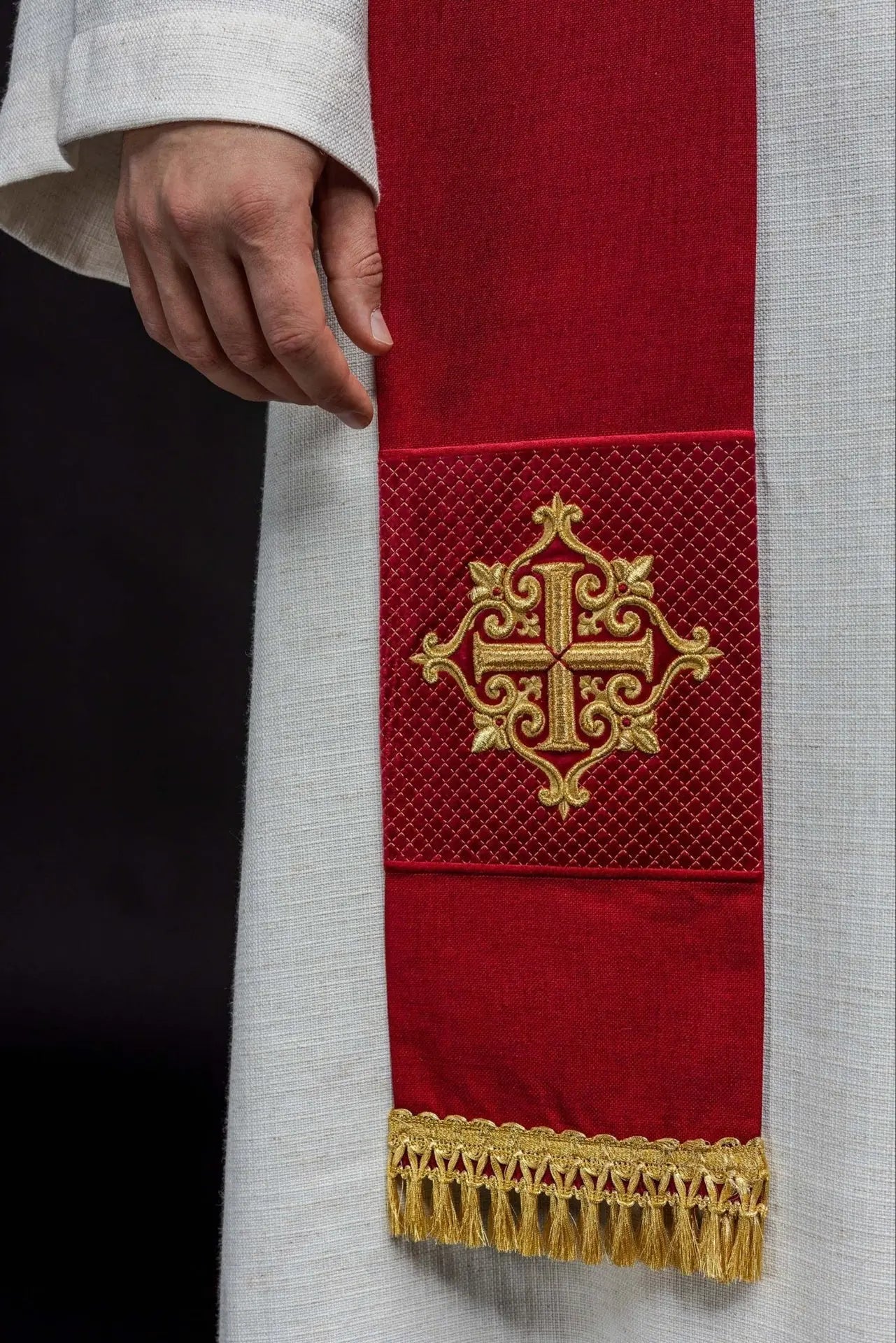
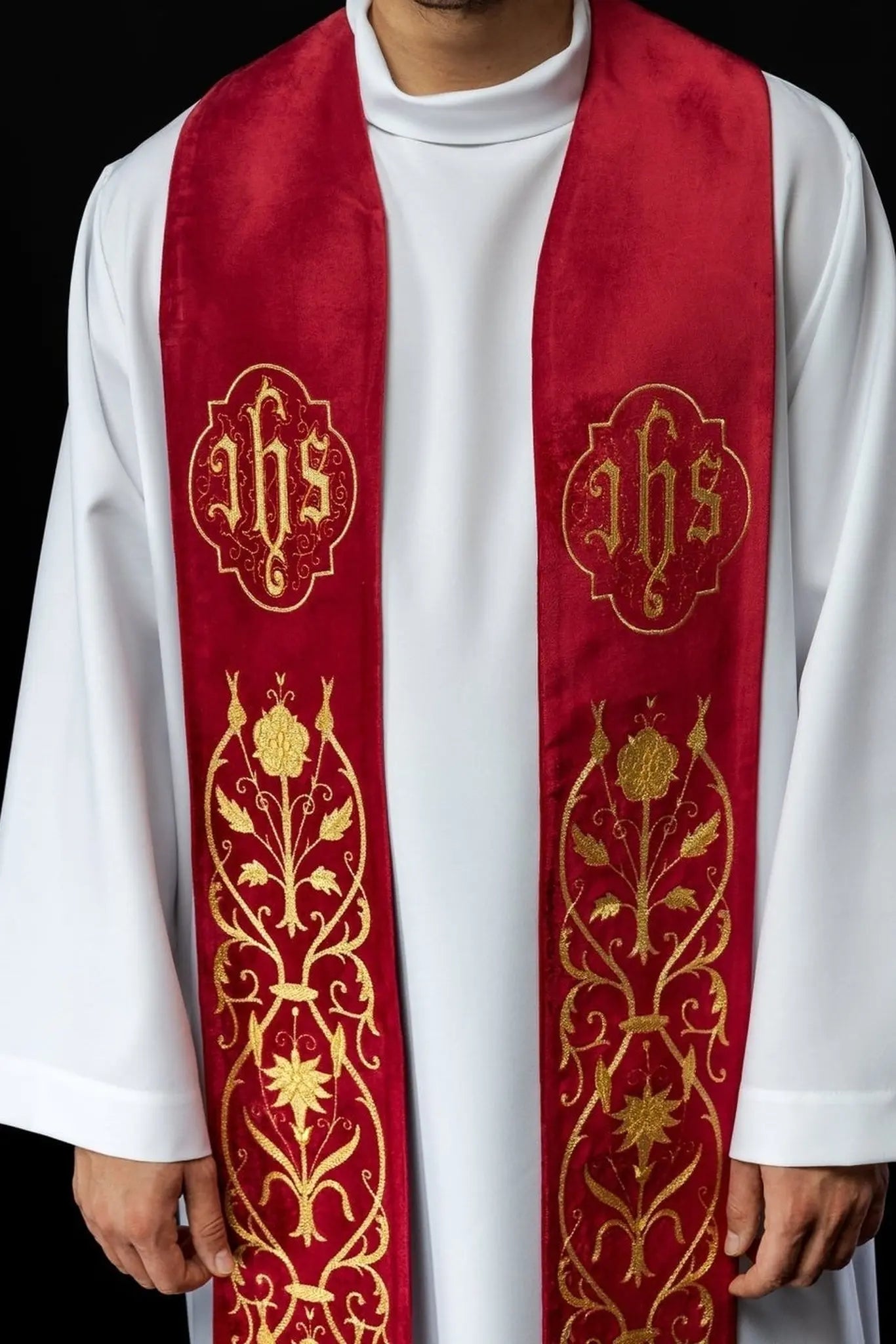
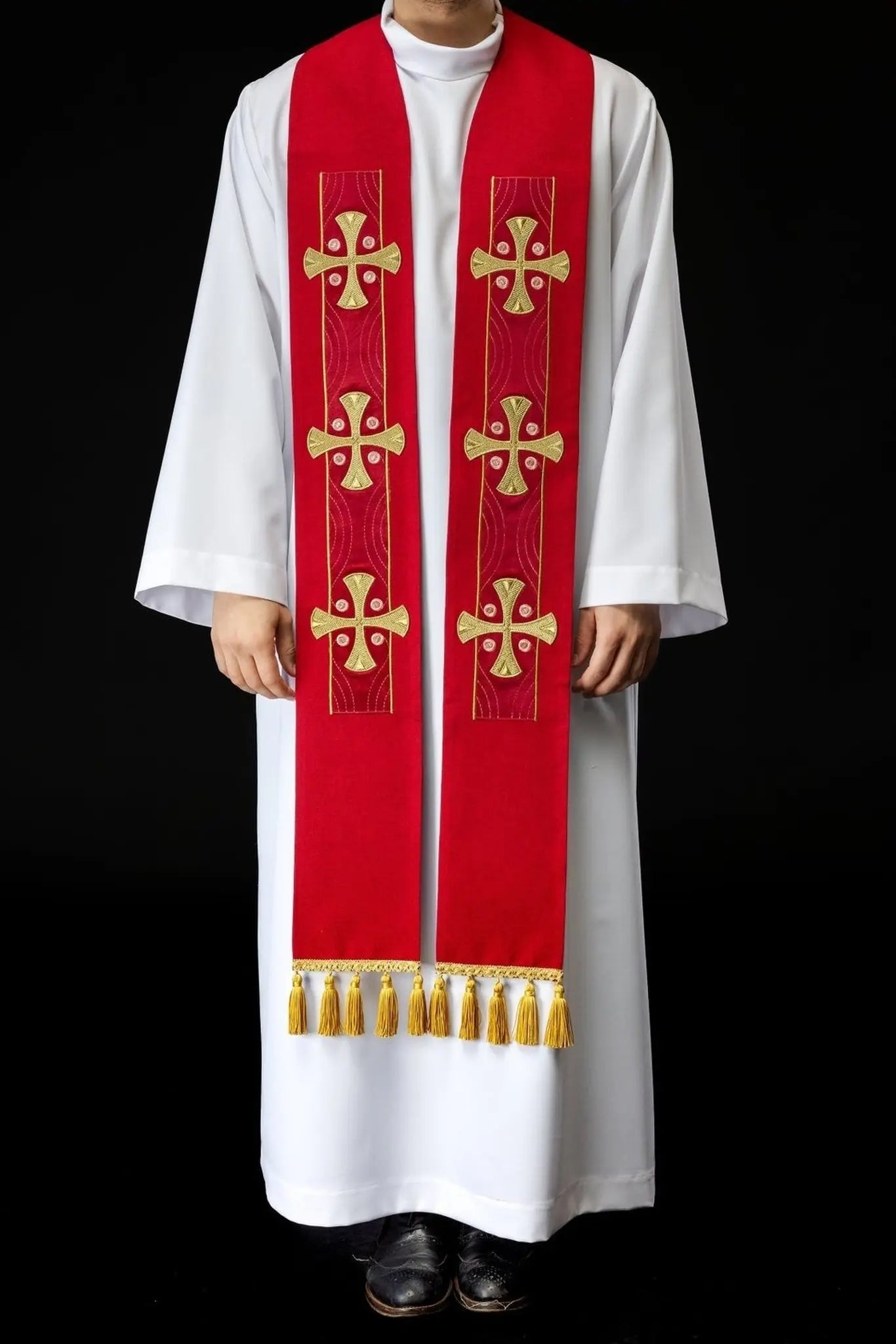
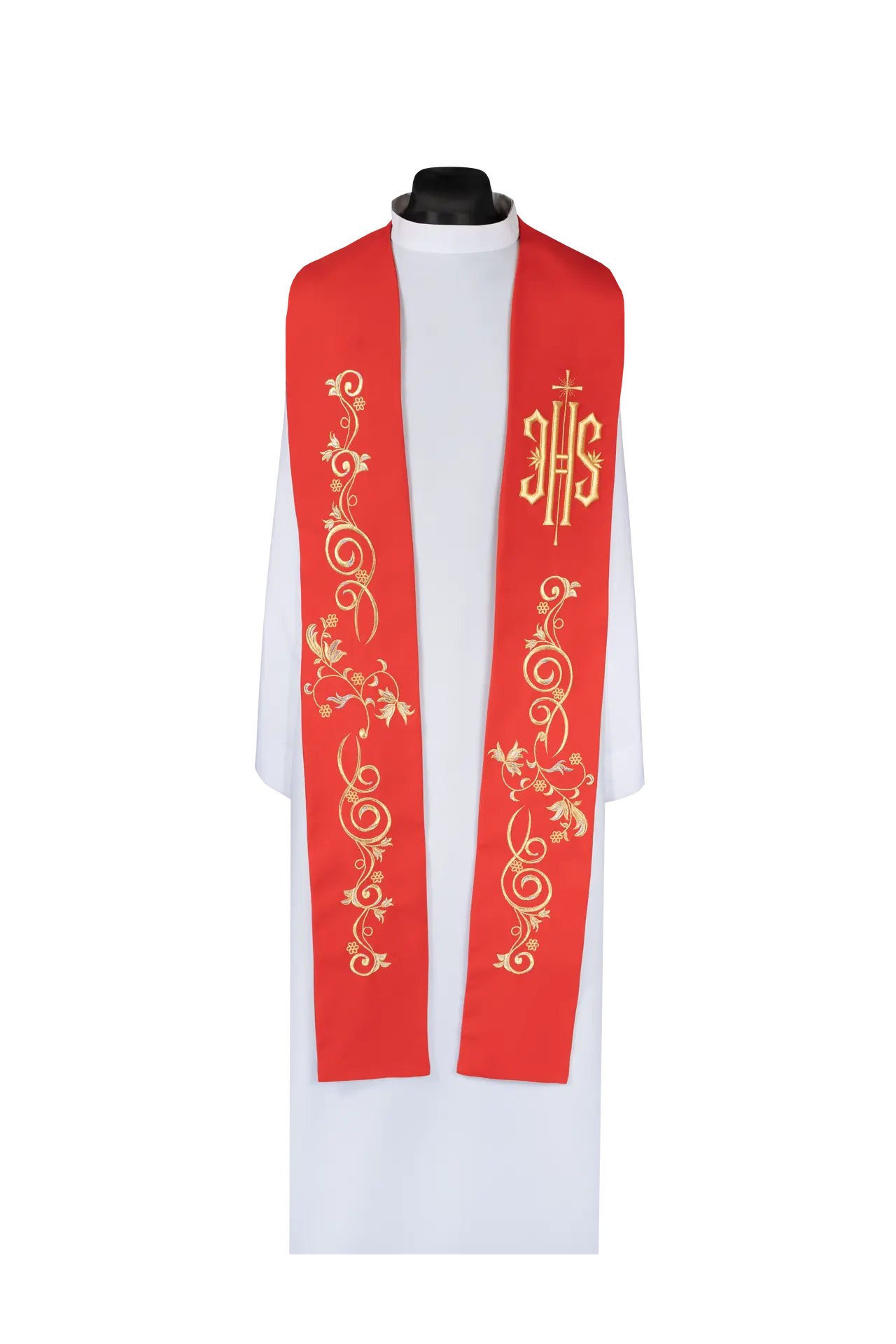
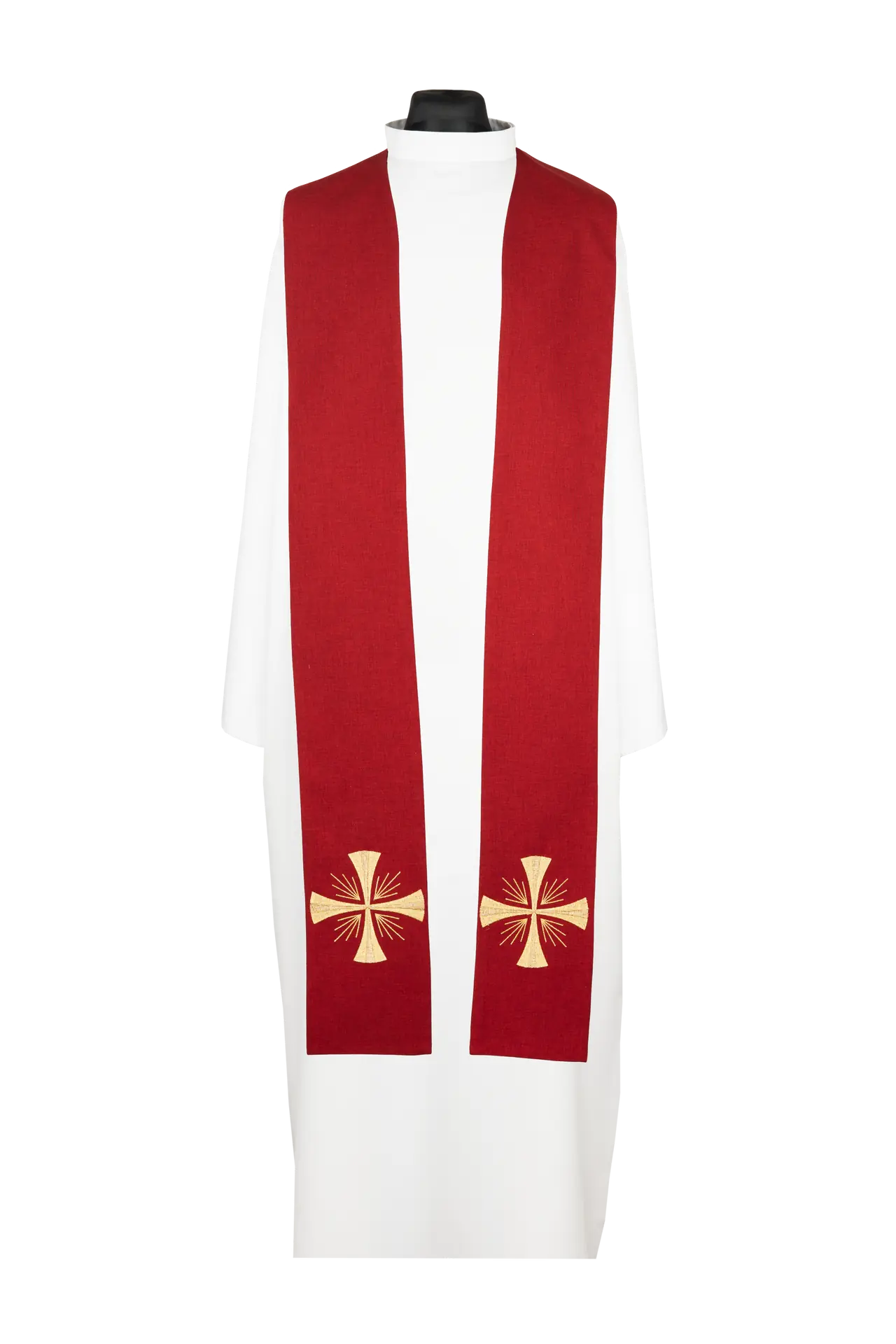
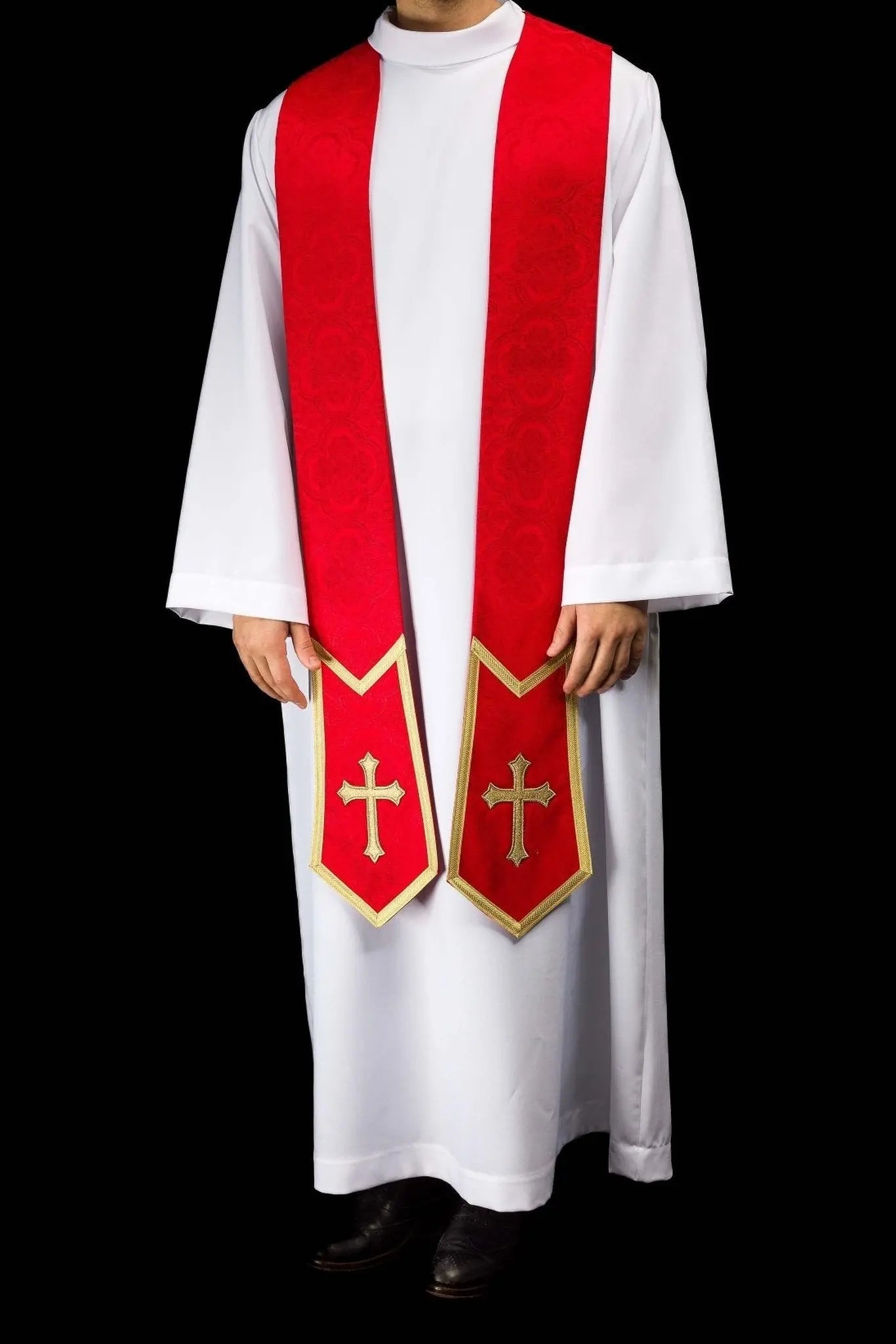
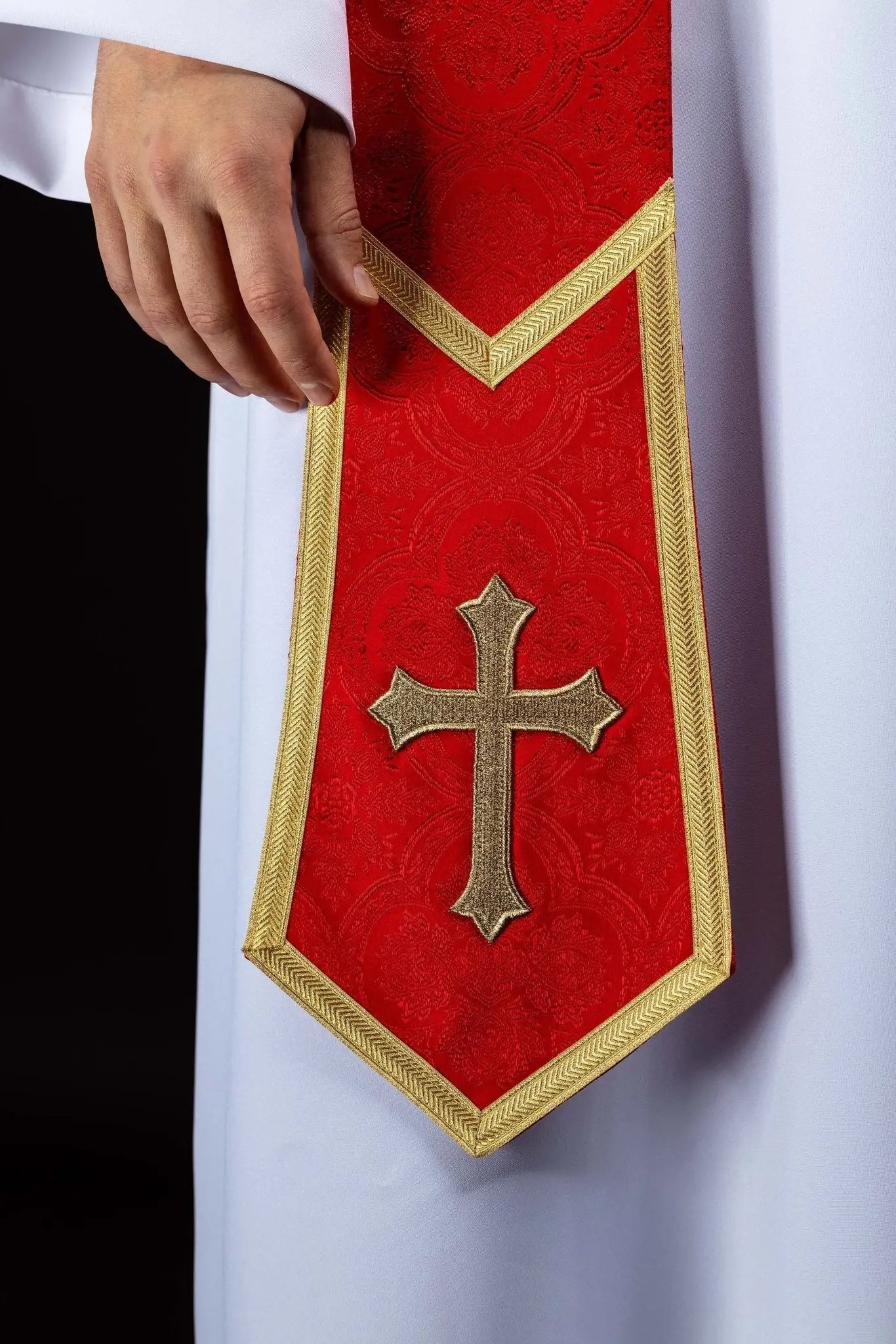
The symbolism of red is rich and direct. It speaks of the burning presence of the Holy Spirit, the love of Christ, the blood of the Savior and the testimony of the martyrs. In a liturgical space, red should therefore be neither casual nor merely ornamental. Its strength needs to be balanced by suitable fabric, proportion, embroidery and finish. A red stole with a simple cross may be fitting for solemn Passion services, while a more richly embroidered design may be chosen for Pentecost or a patronal feast connected with a martyr.
This is also why red should be distinguished from rose. Rose vestments belong to Gaudete Sunday in Advent and Laetare Sunday in Lent, where permitted by local practice. Red, by contrast, has its own distinct use and should not be treated as a substitute for rose. If the celebration calls for the lighter liturgical color, the more appropriate adjacent category is rose stoles. Keeping these colors distinct helps the parish vestment set remain coherent and liturgically accurate.
How to choose a red stole
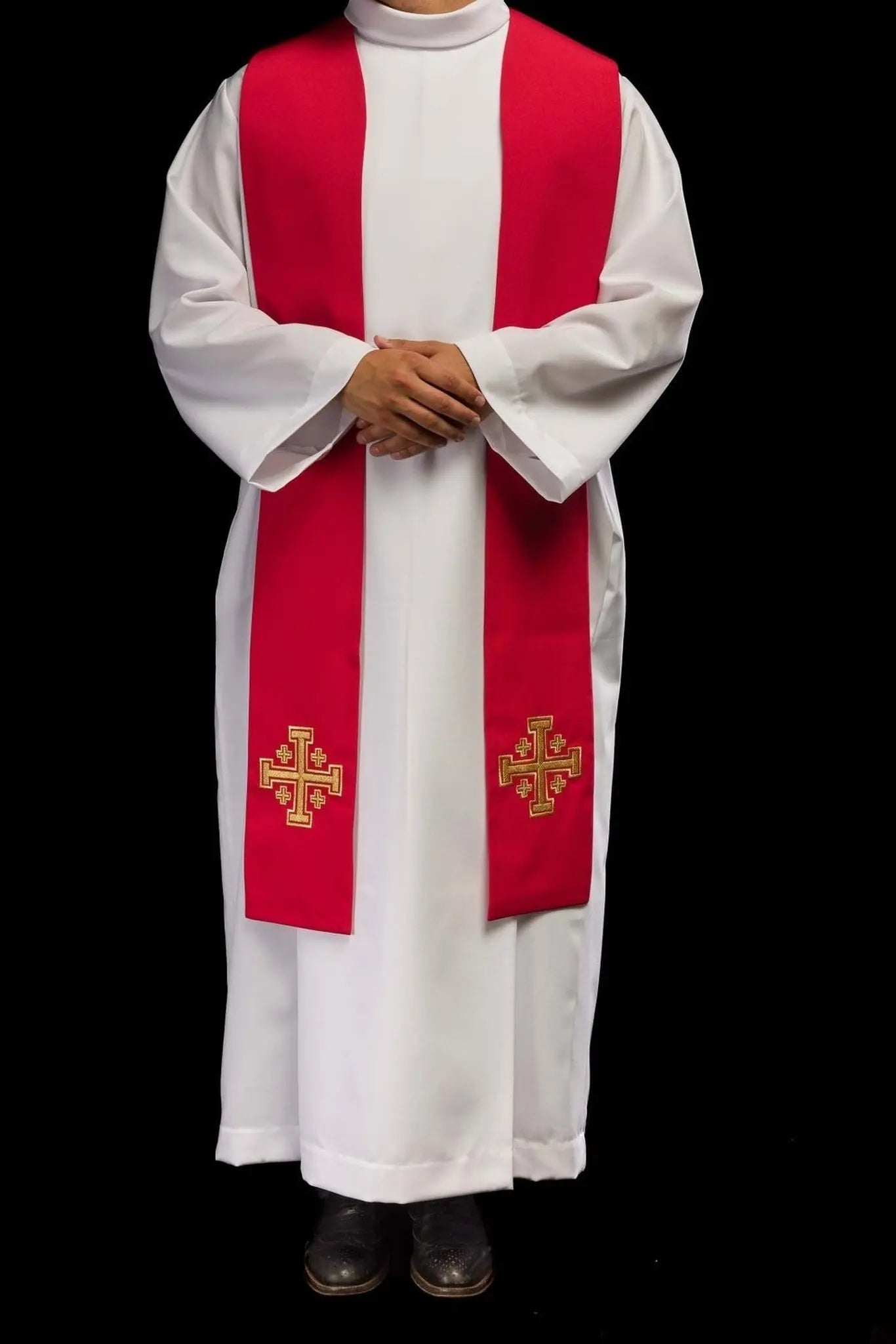
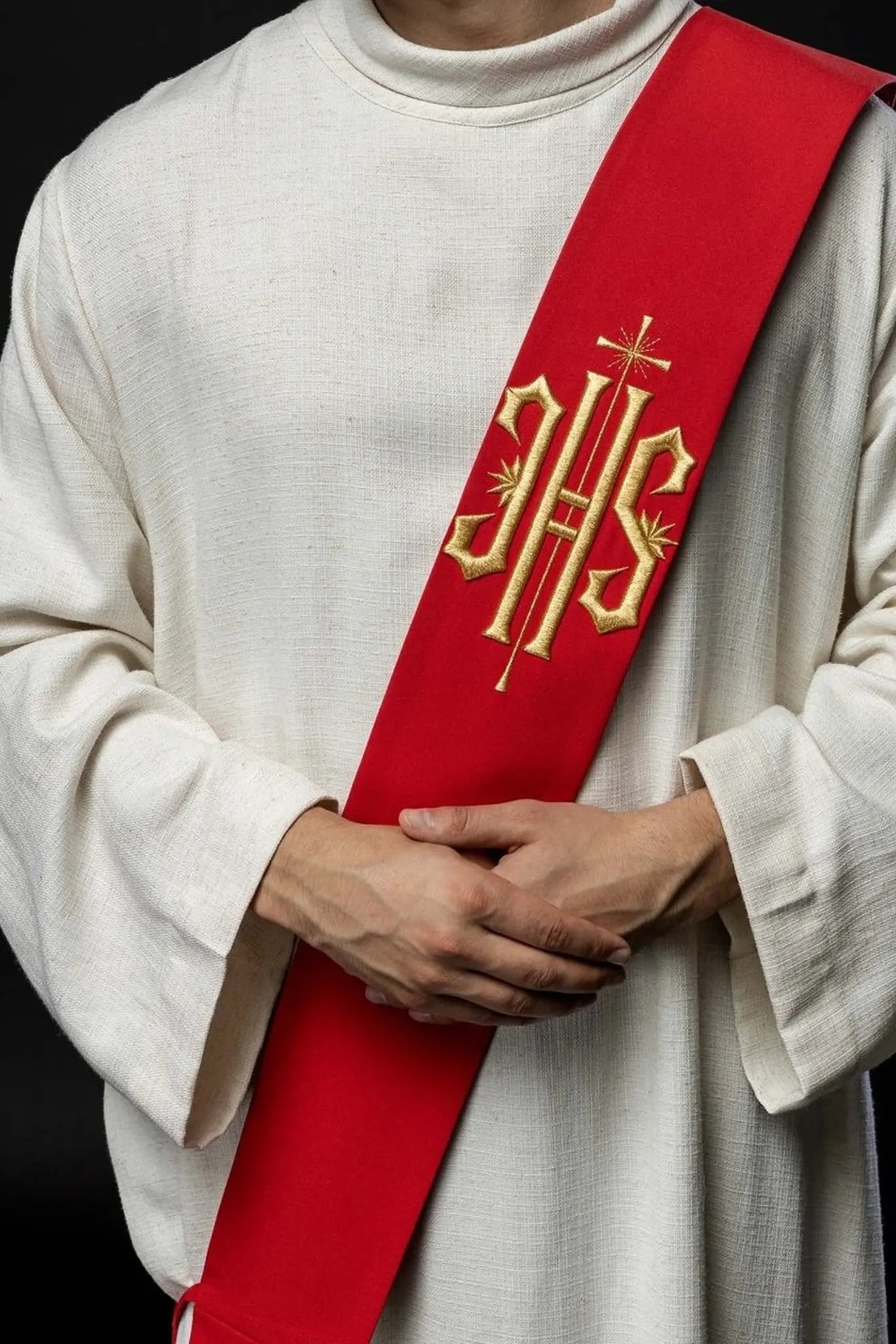
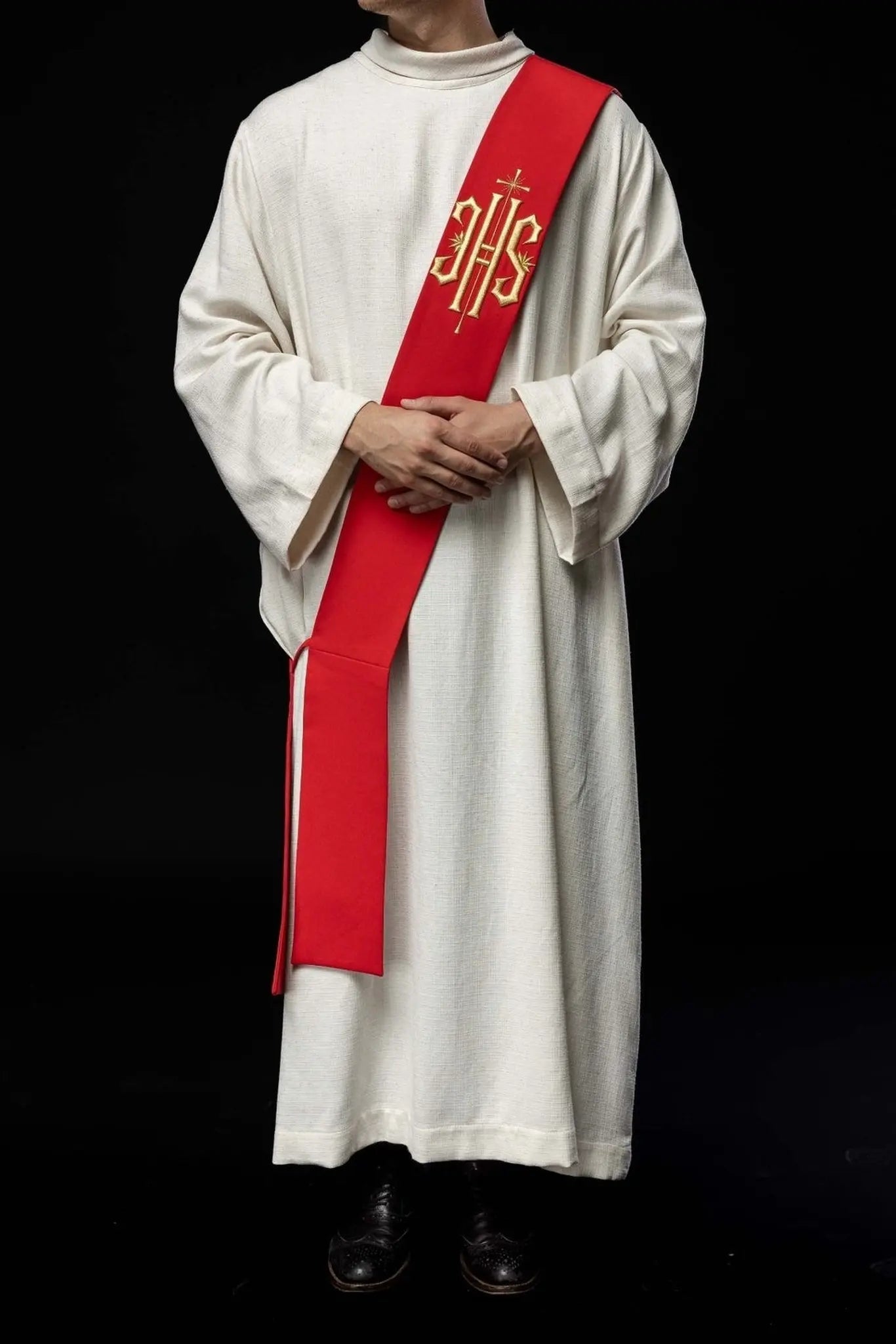
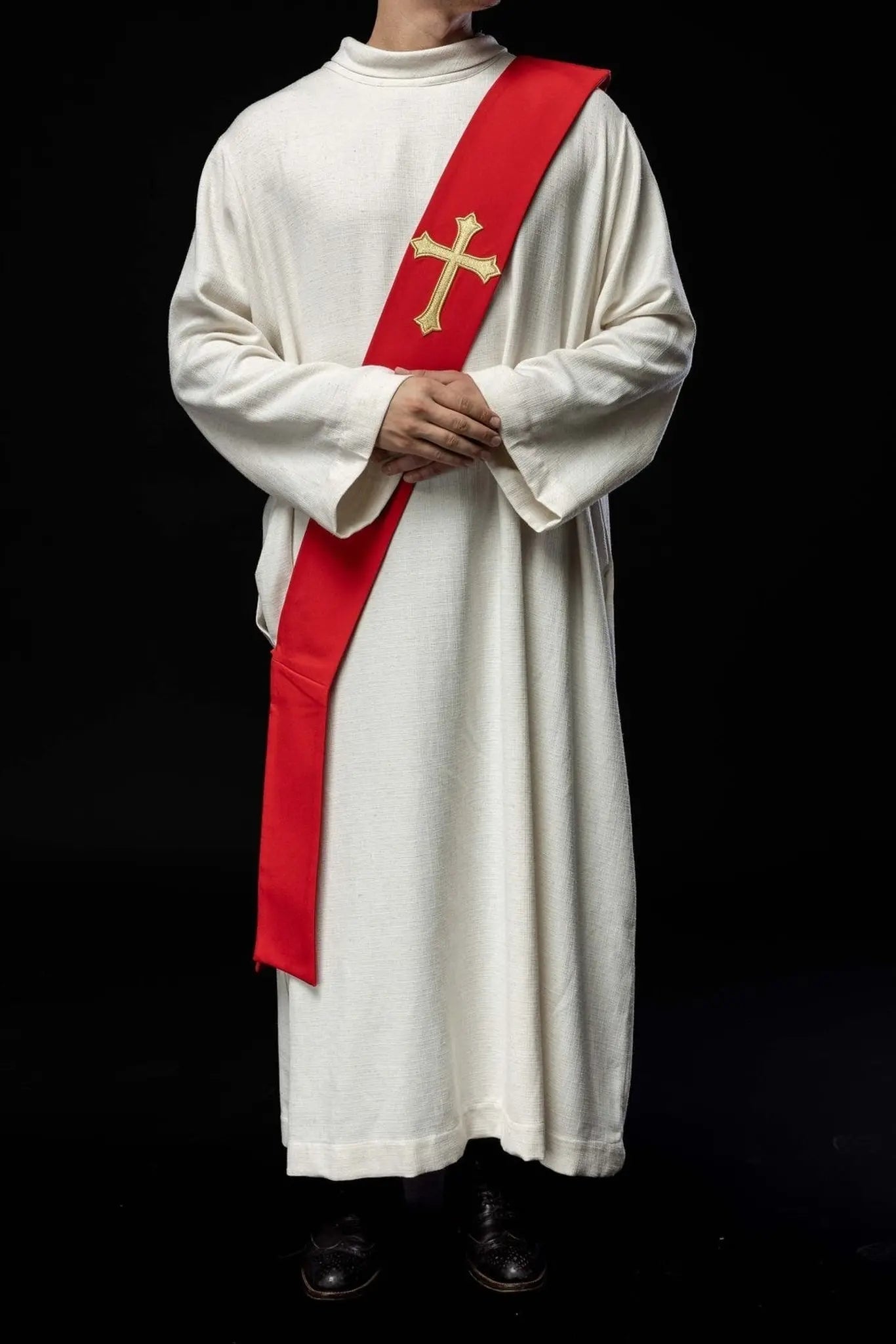
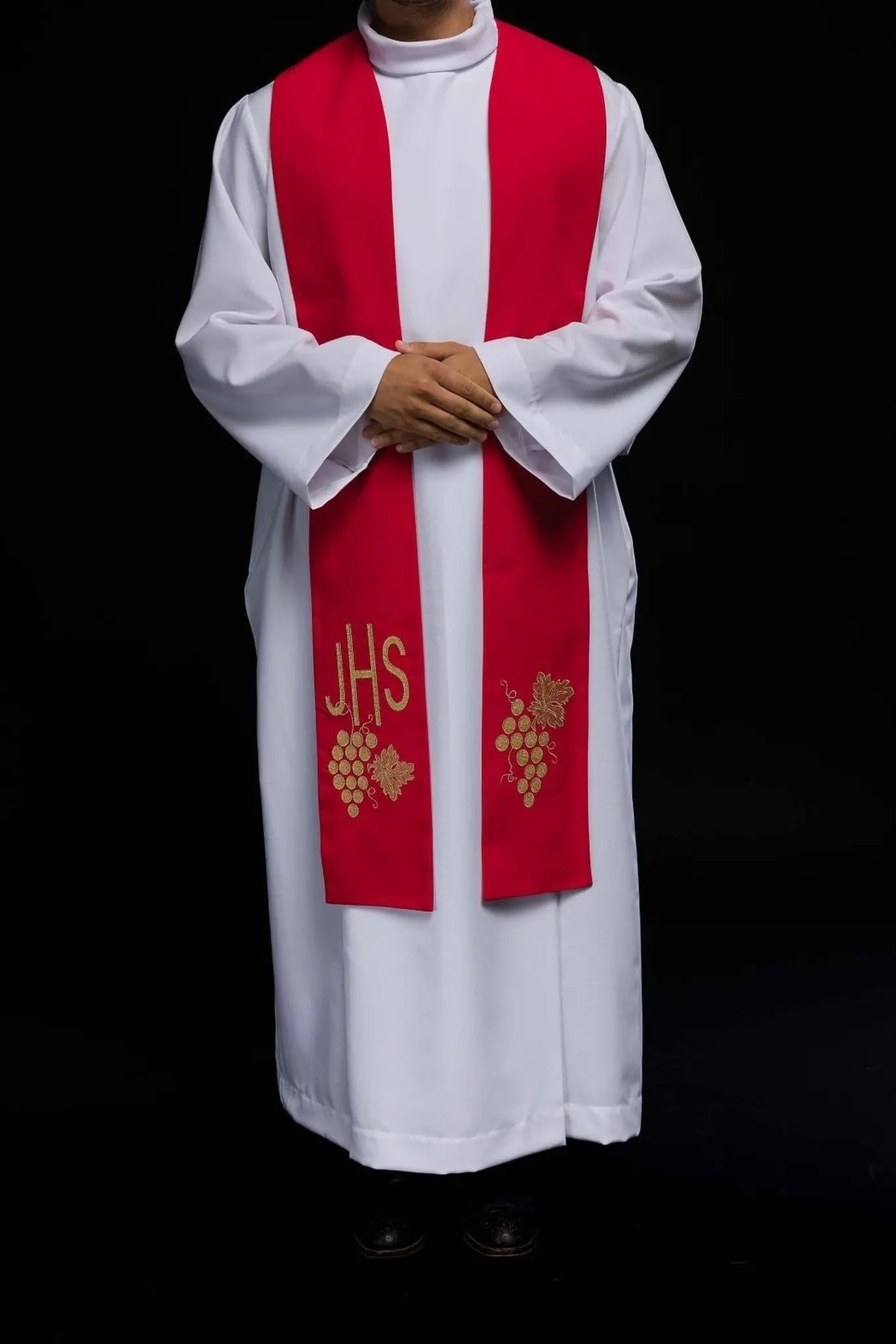
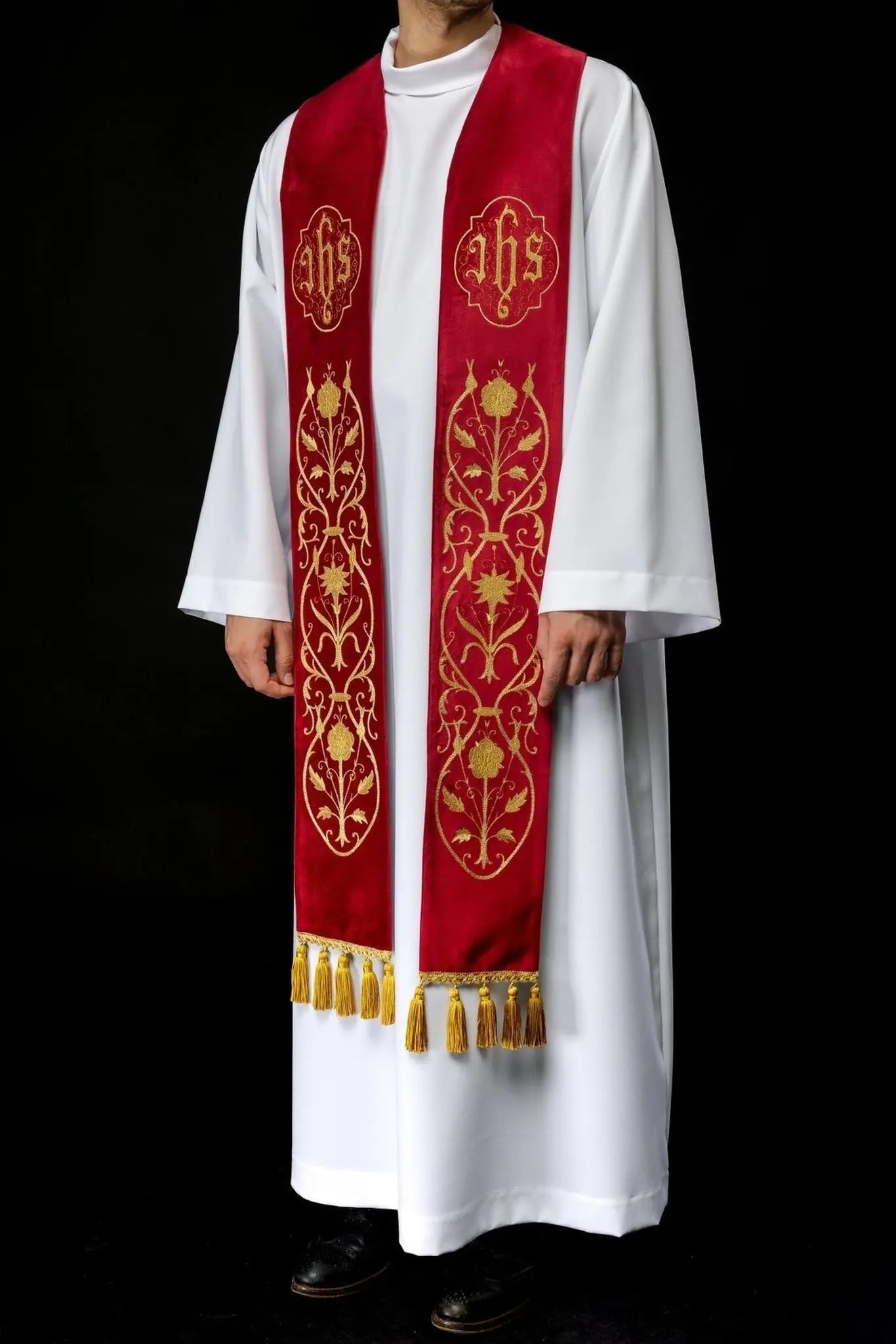
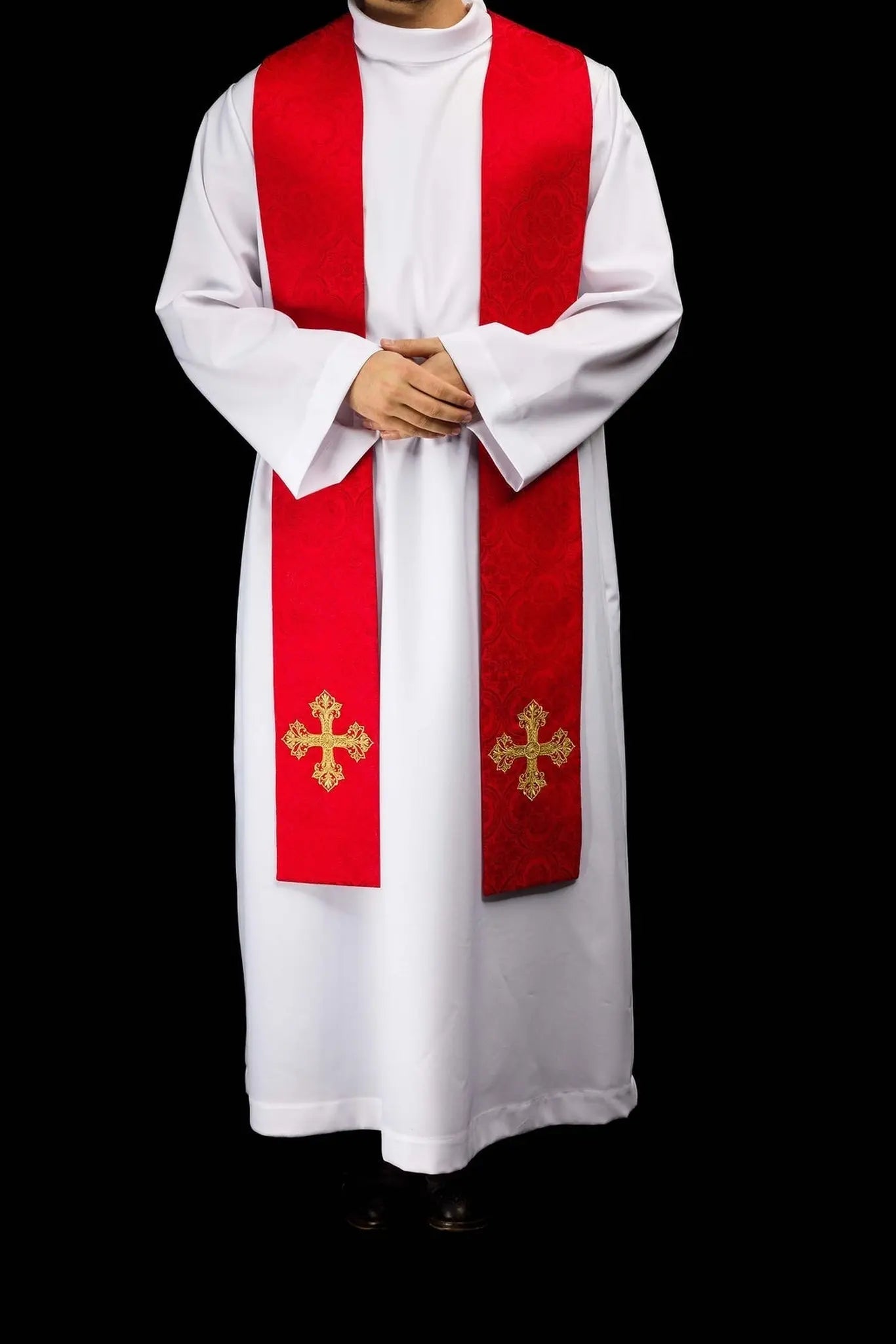
Choosing a red stole begins with the form of ministry for which it will be used. A priest typically wears the stole hanging straight from the shoulders, while a deacon wears a stole diagonally across the body. If the purchase is for diaconal ministry, the better starting point is the dedicated deacon stoles collection. For priests and concelebrants, the red clergy stole should sit comfortably over the alb and should not distract from the chasuble when both are worn together.
Proportion matters. A stole that is too narrow may look visually weak in a large sanctuary, while one that is too wide can feel heavy or dominate the rest of the vesture. Length should allow the stole to fall neatly and remain comfortable during movement, processions, blessings and preaching. Churches purchasing for multiple clergy often prefer a balanced design that works for a range of body types and can be used by visiting priests or concelebrants without appearing overly personal.
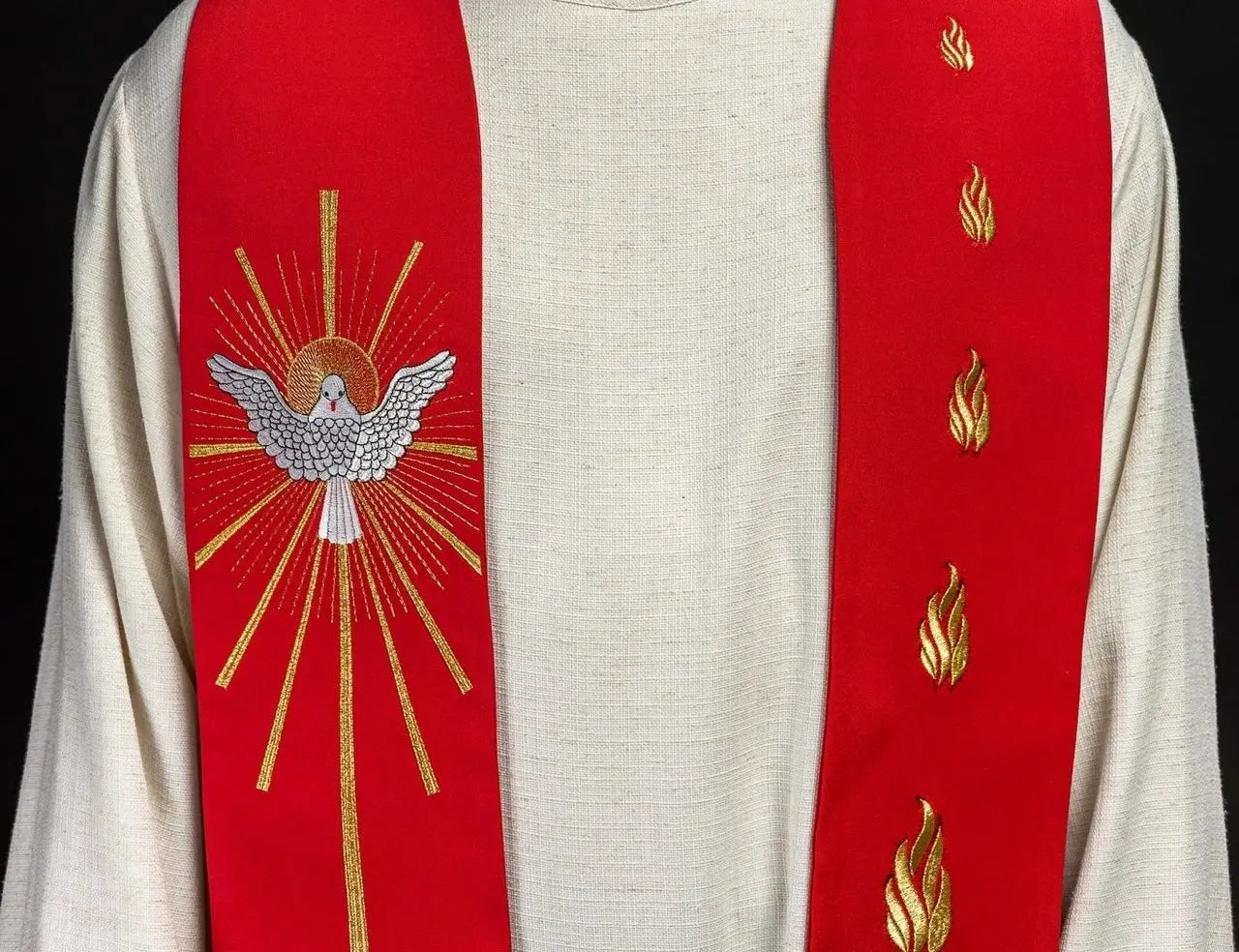
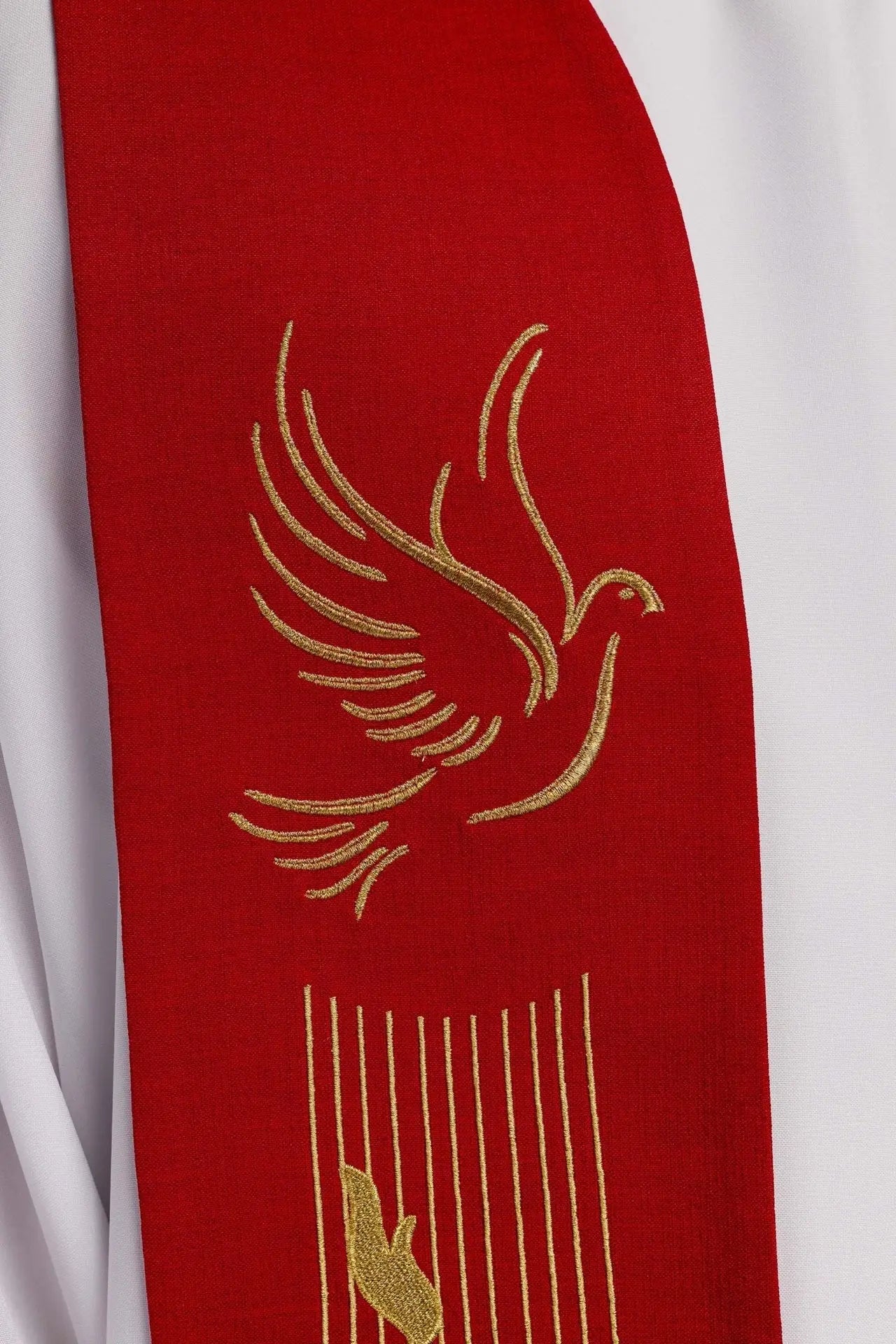
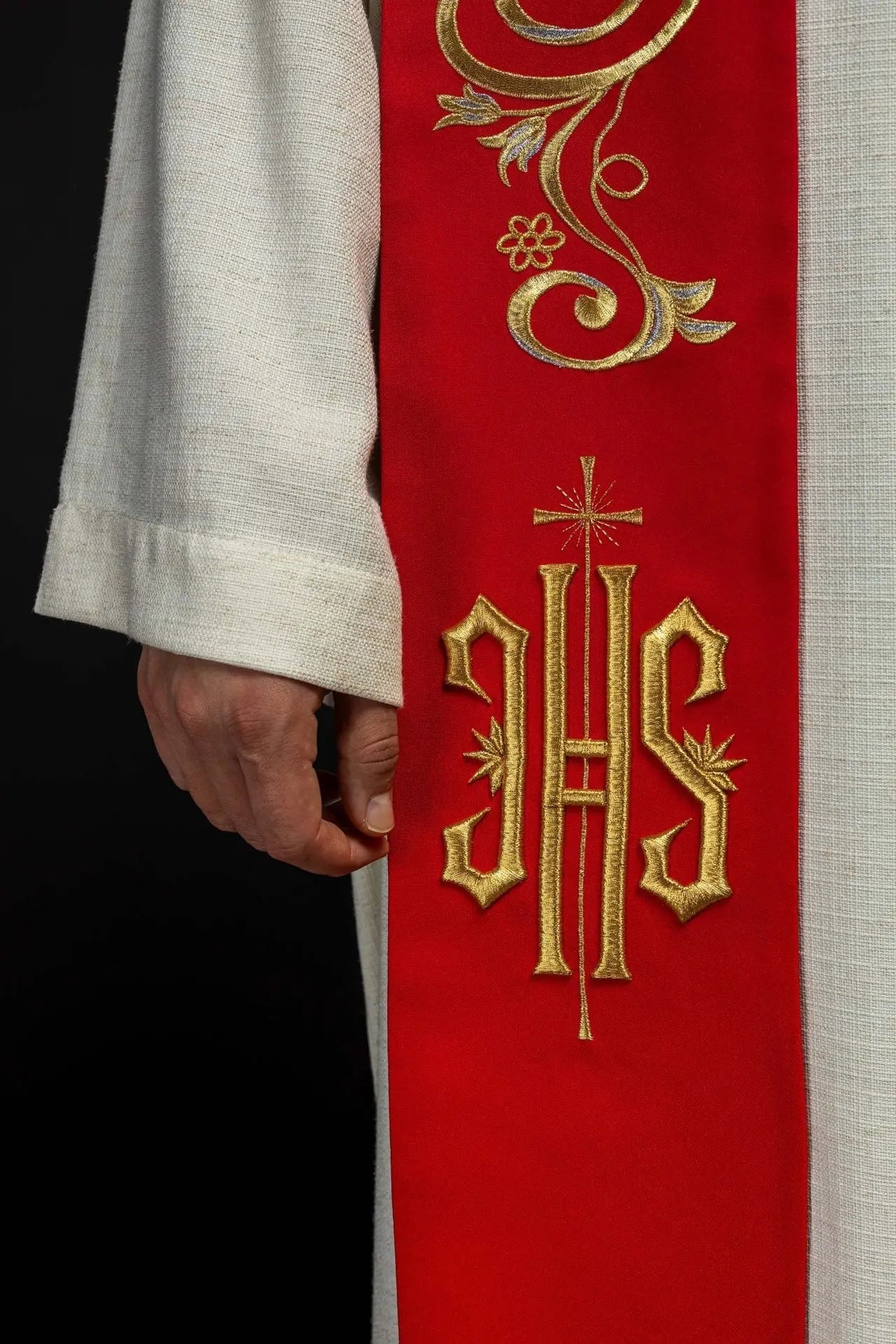
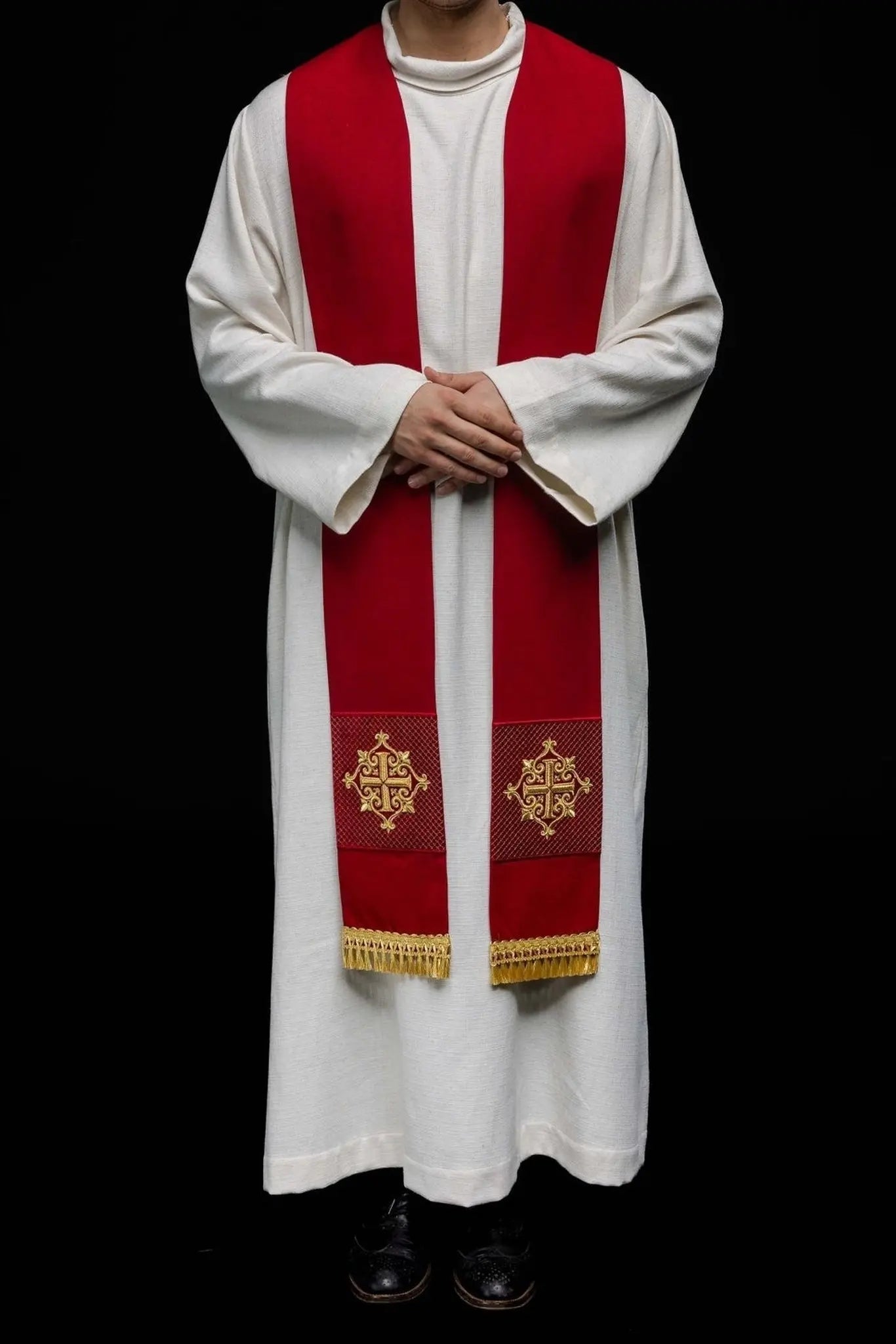
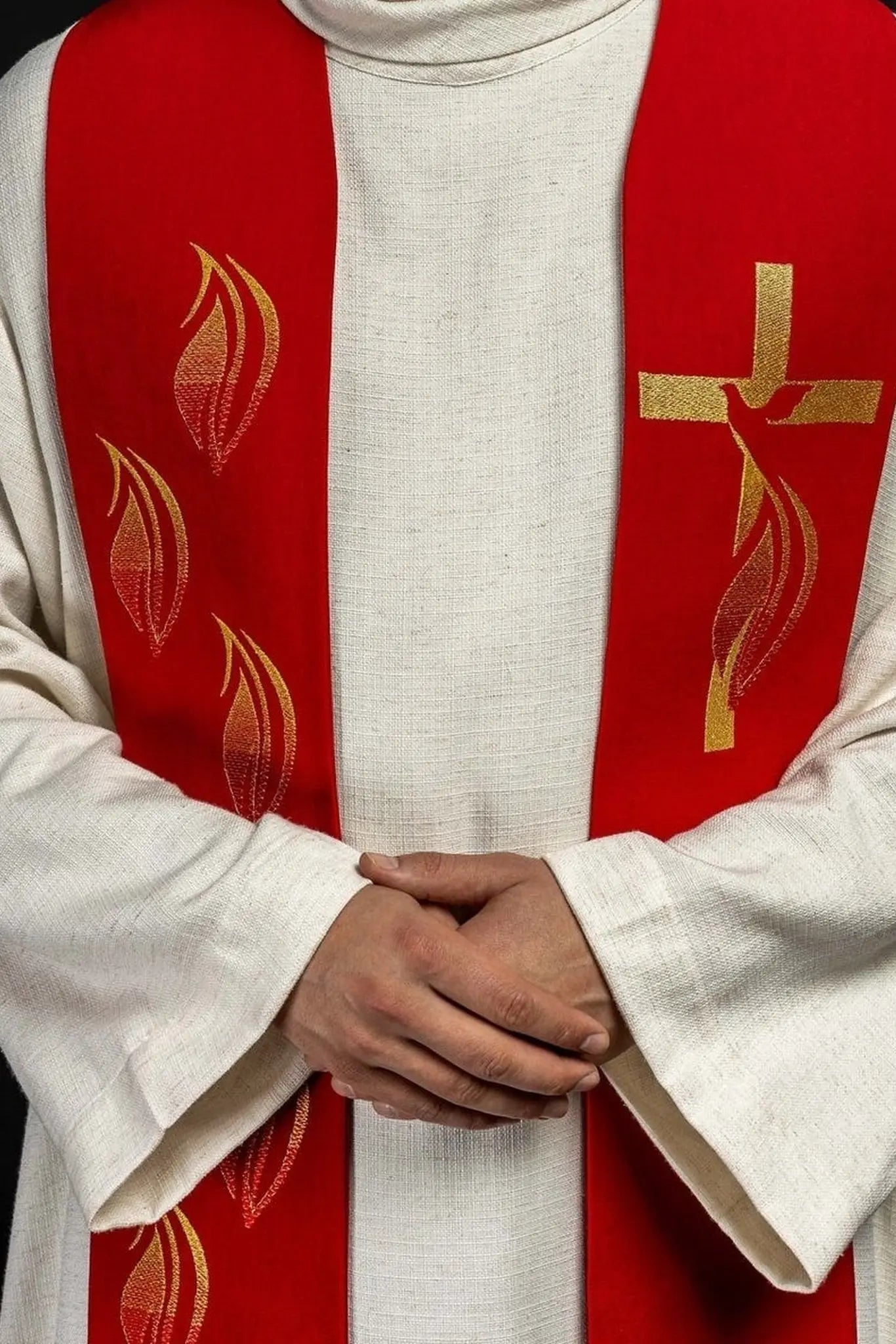
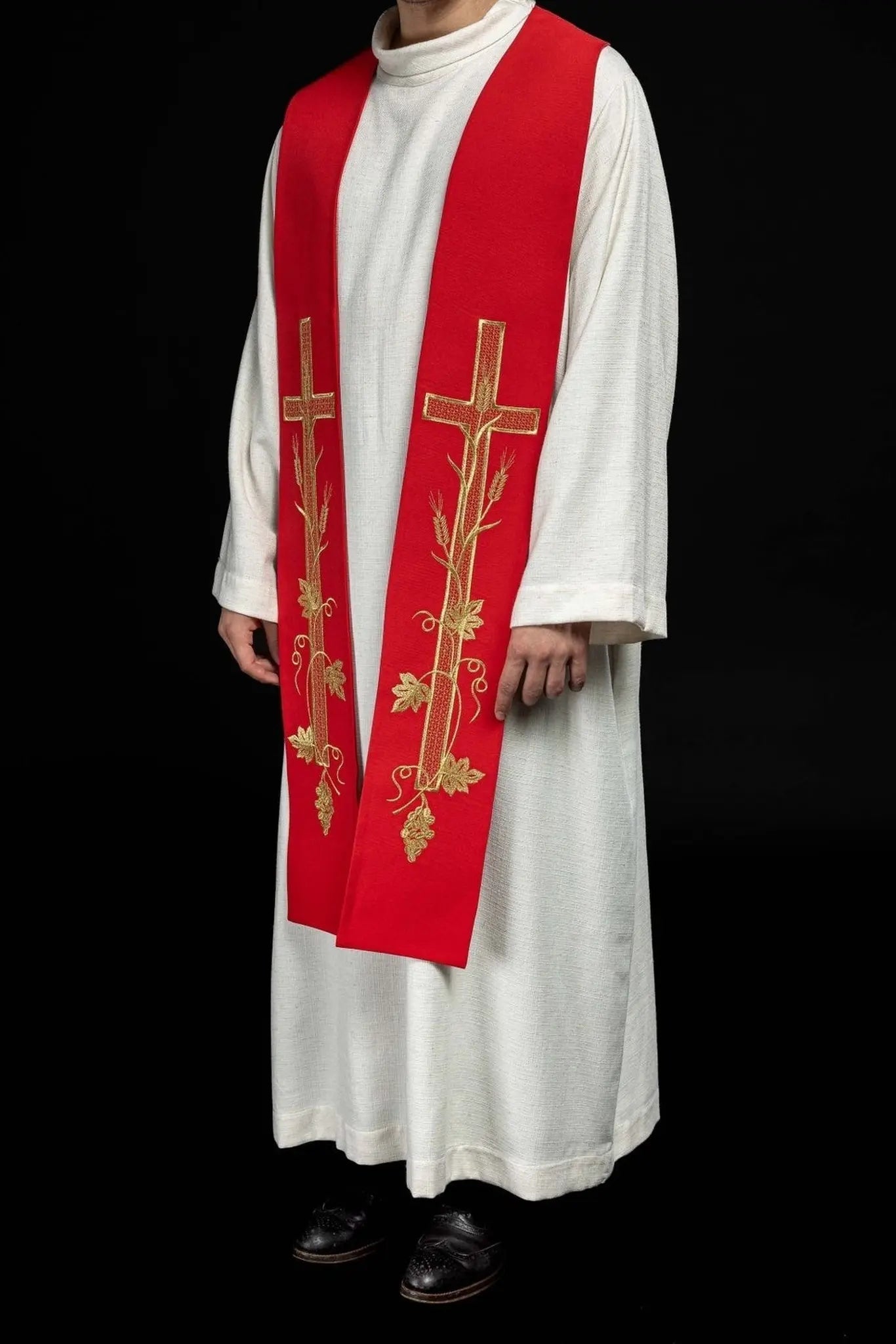
Design should be chosen according to the most common use. For Pentecost, motifs connected with the Holy Spirit, flame, cross or sacred geometry can support the feast without becoming overly complex. For Passiontide and Good Friday, a restrained cross, subtle gold accent or sober embroidery may be more suitable. For martyrs and apostles, a dignified red stole can communicate both festivity and solemn witness. The best option is often the one that serves several appointed red days without being limited to only one occasion.
Embroidery, symbols and visual harmony
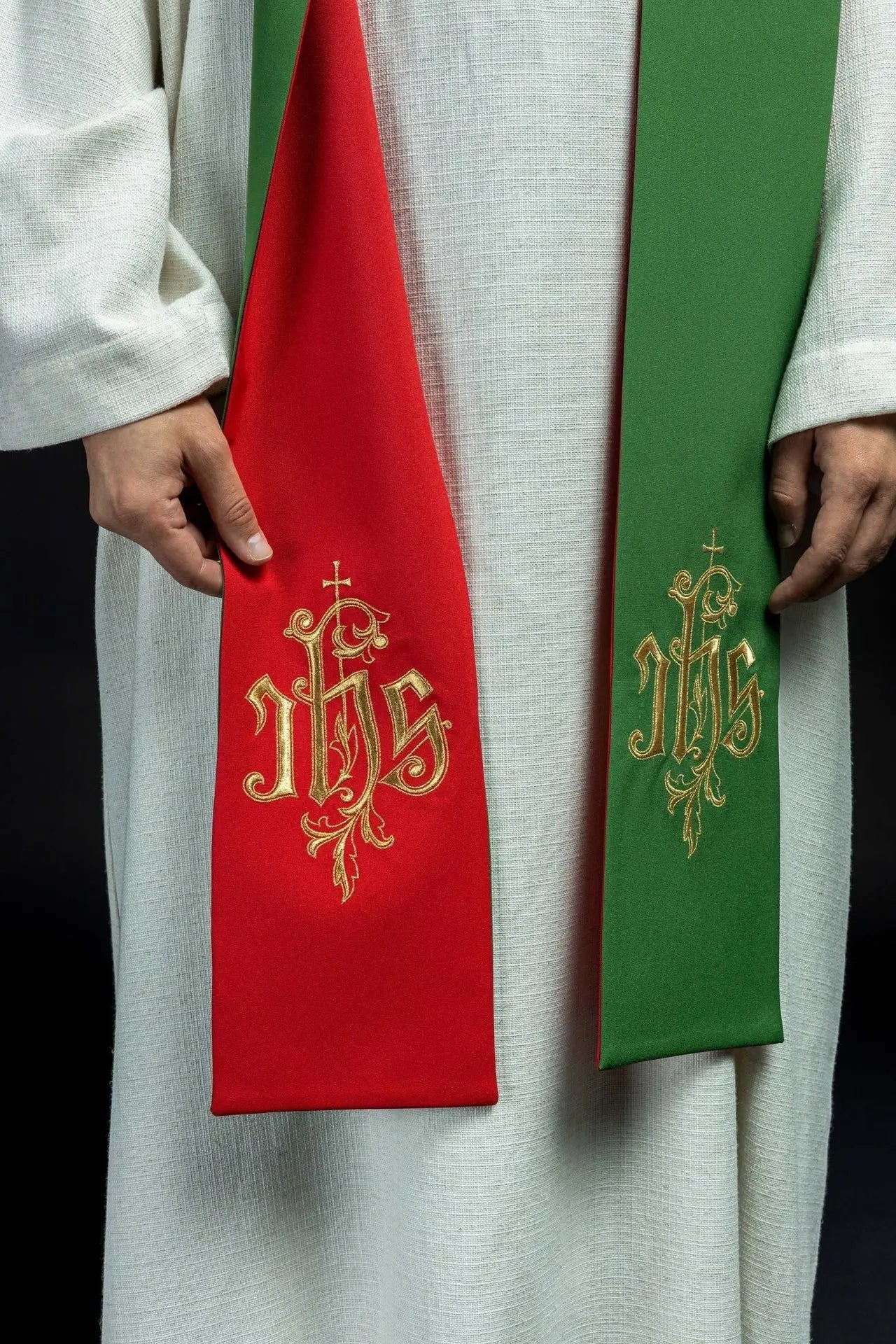
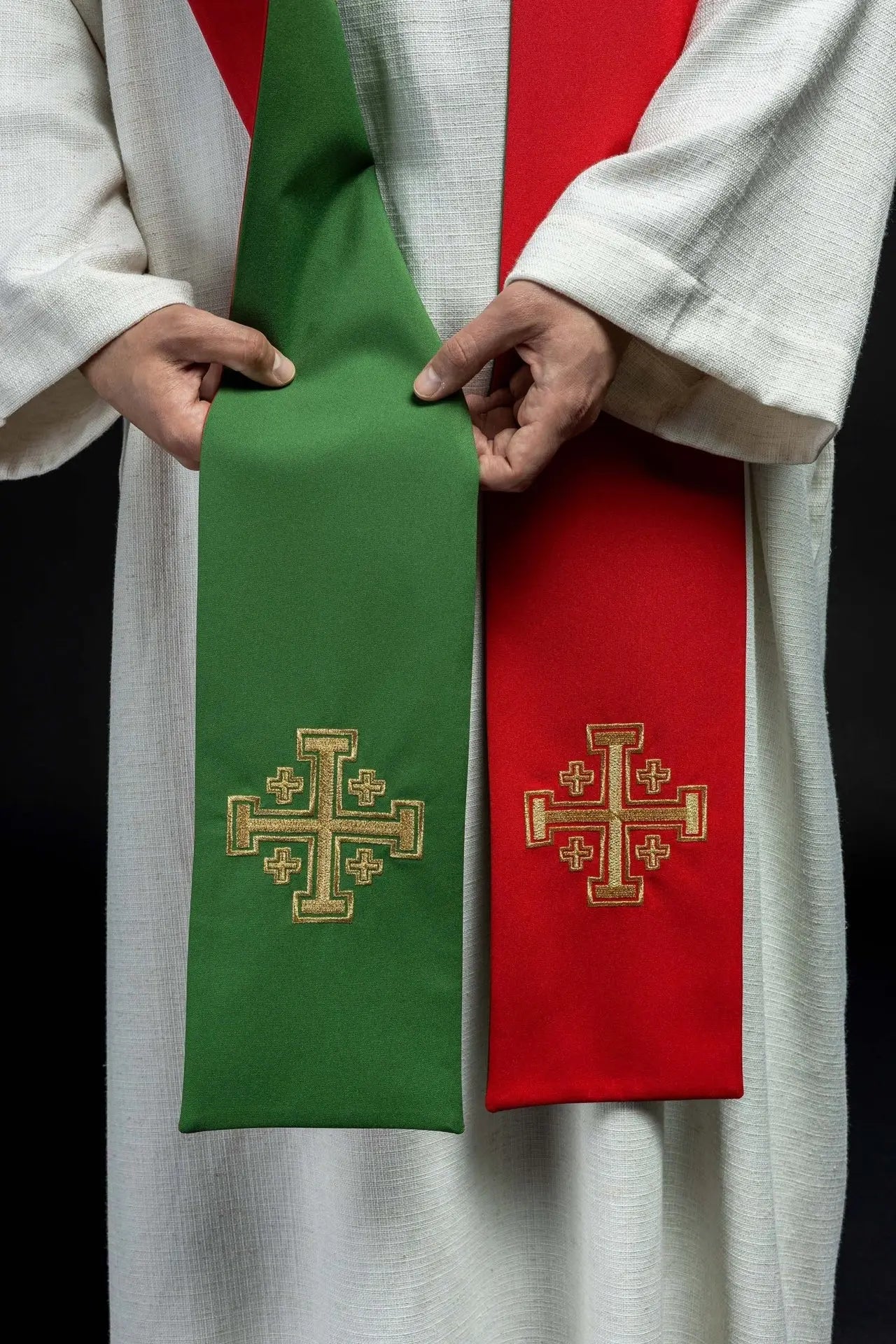
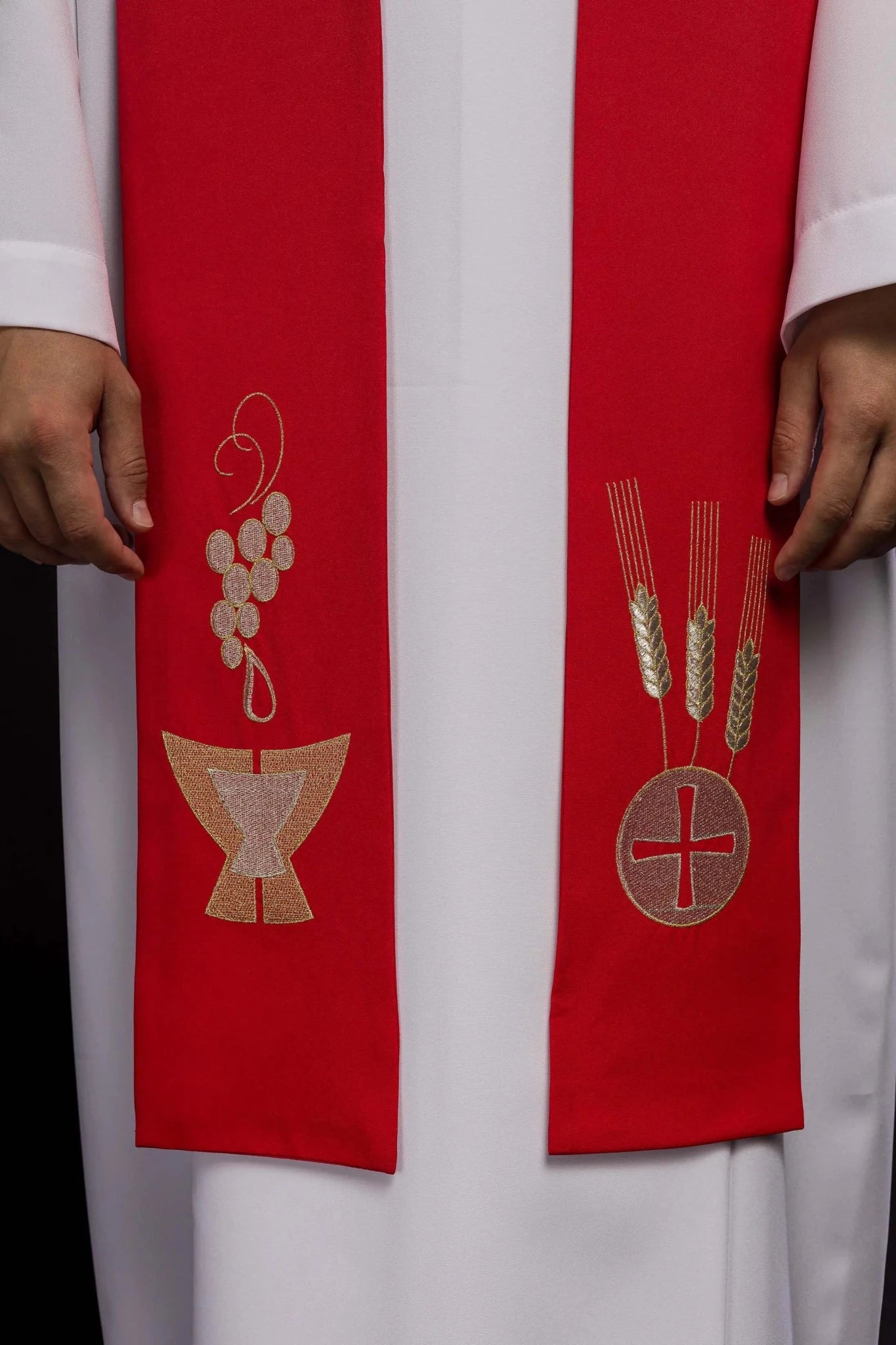
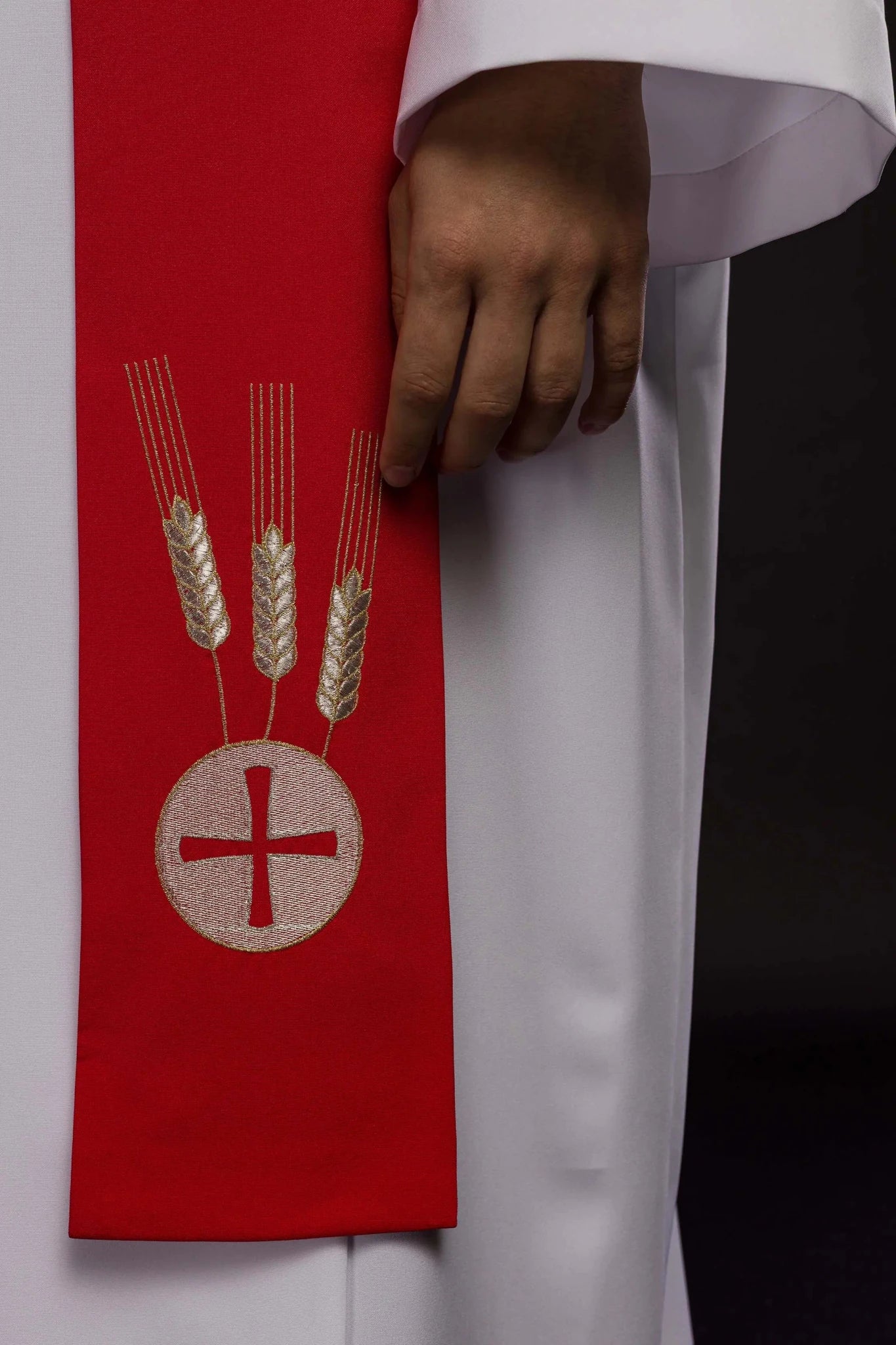
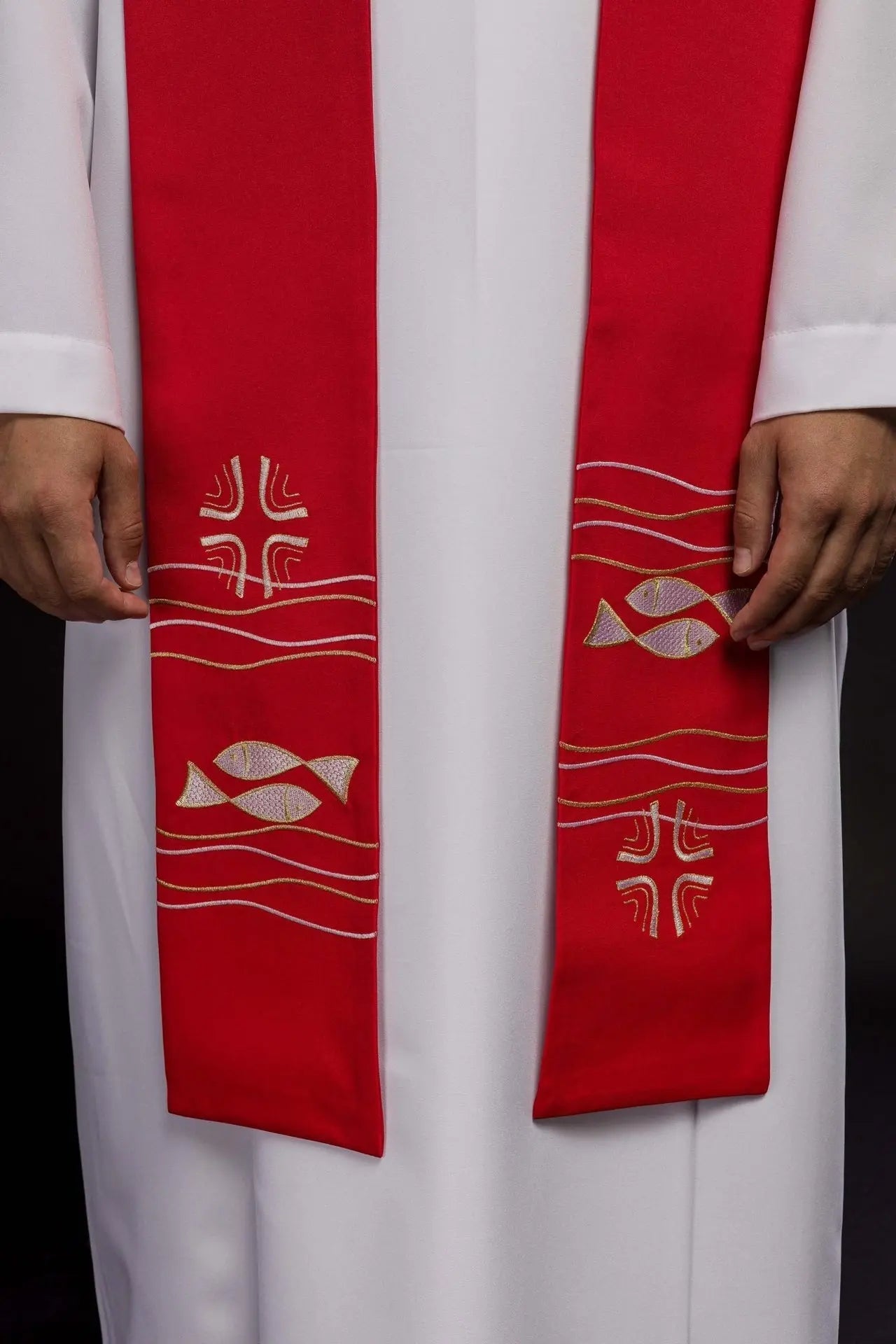
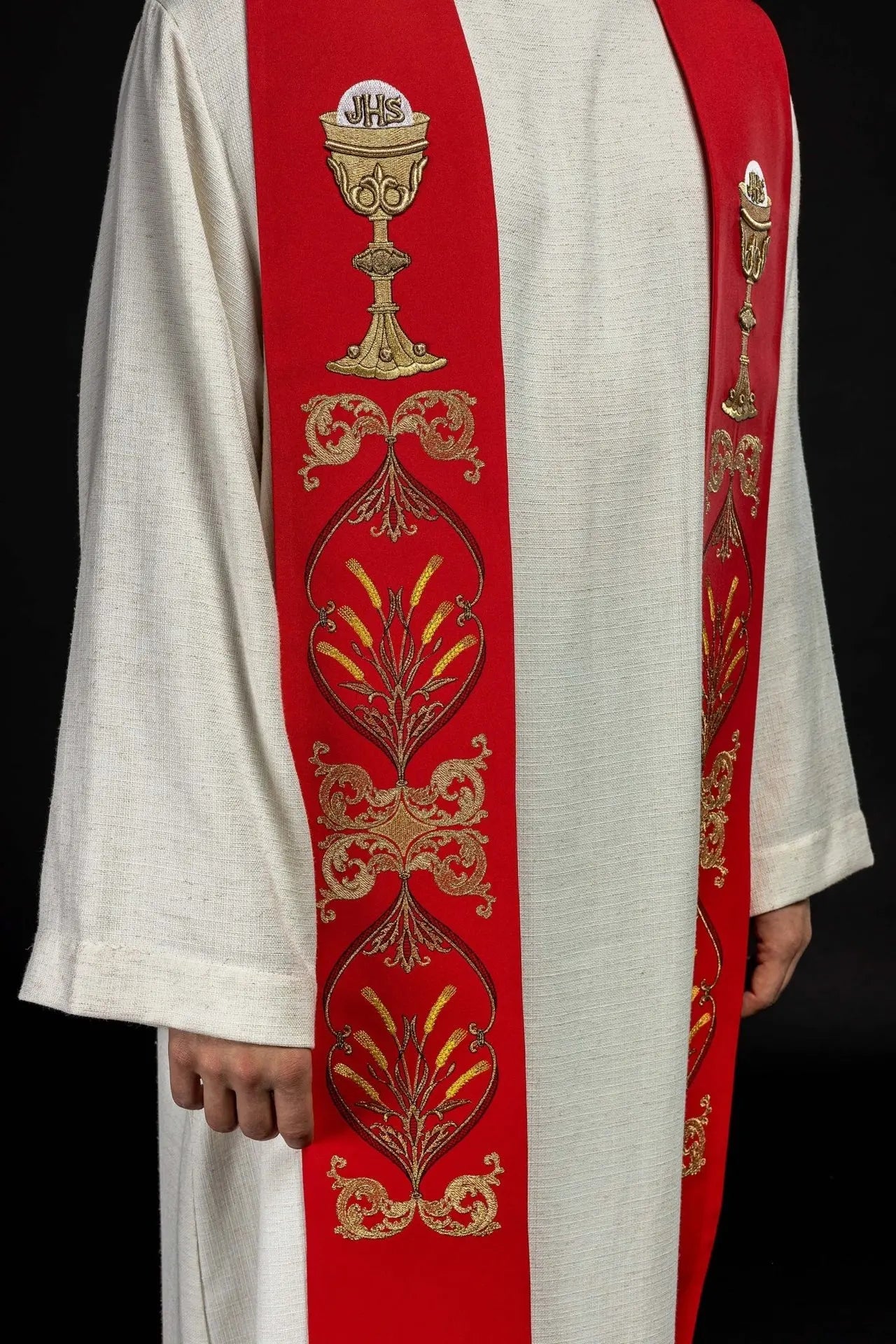
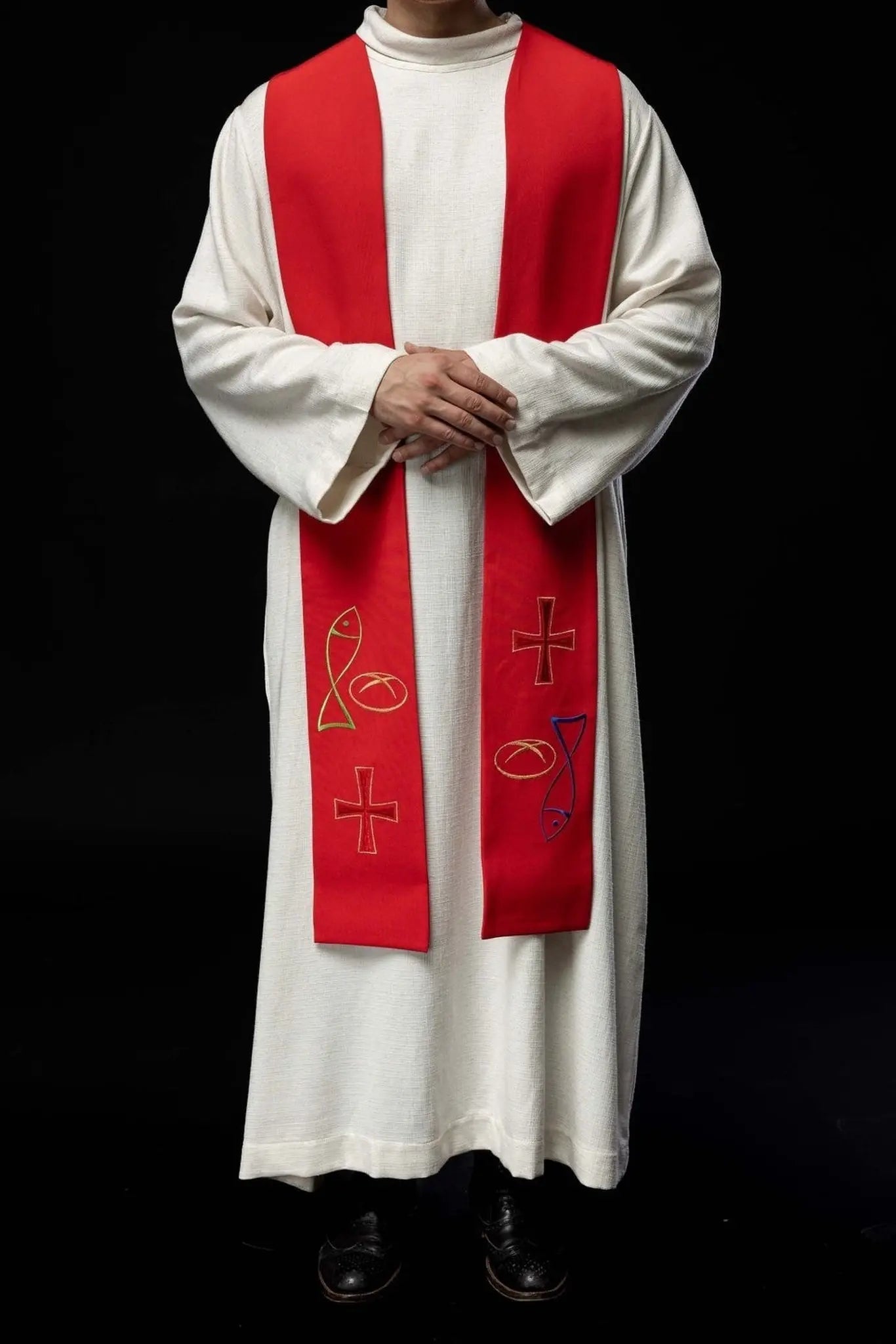
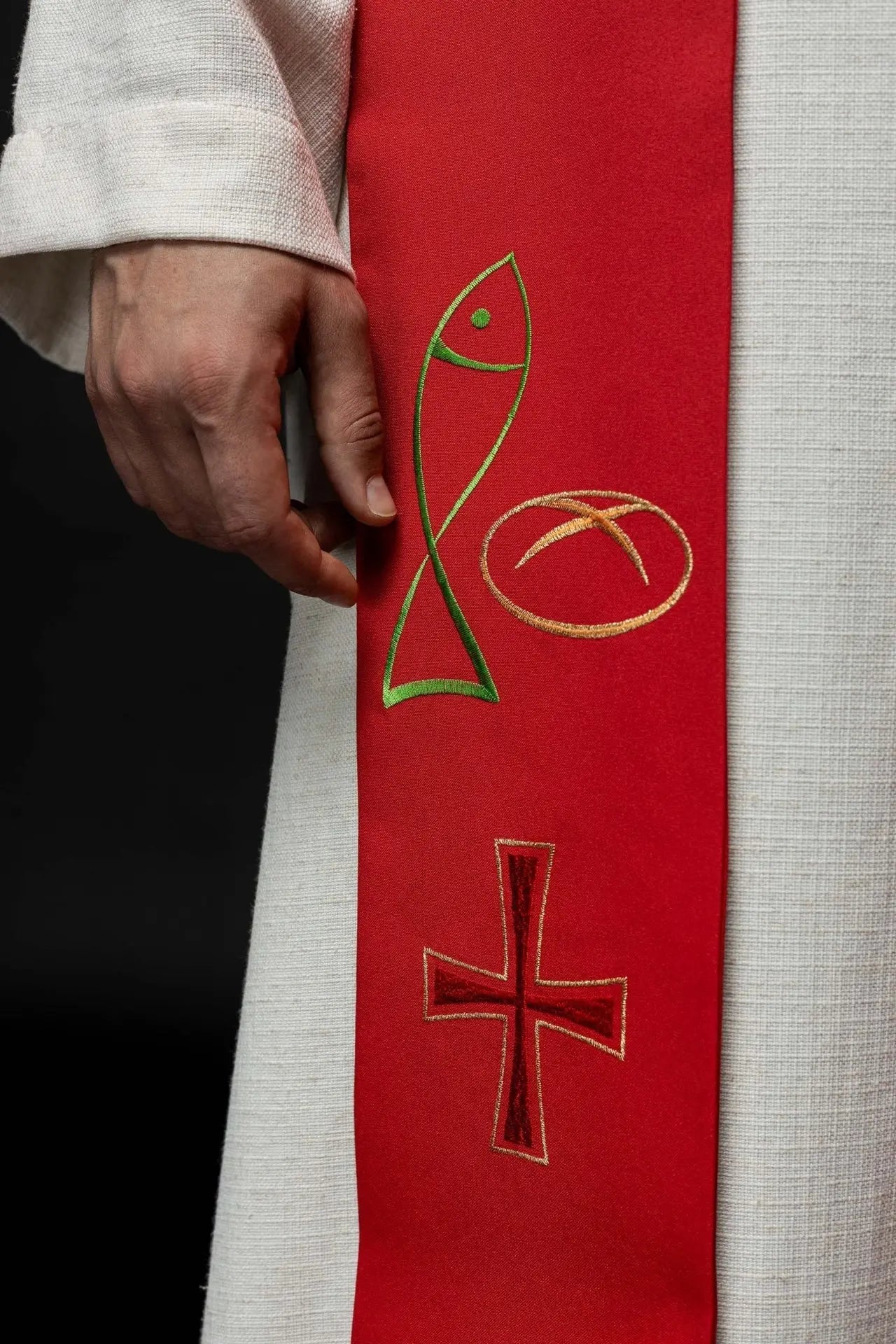
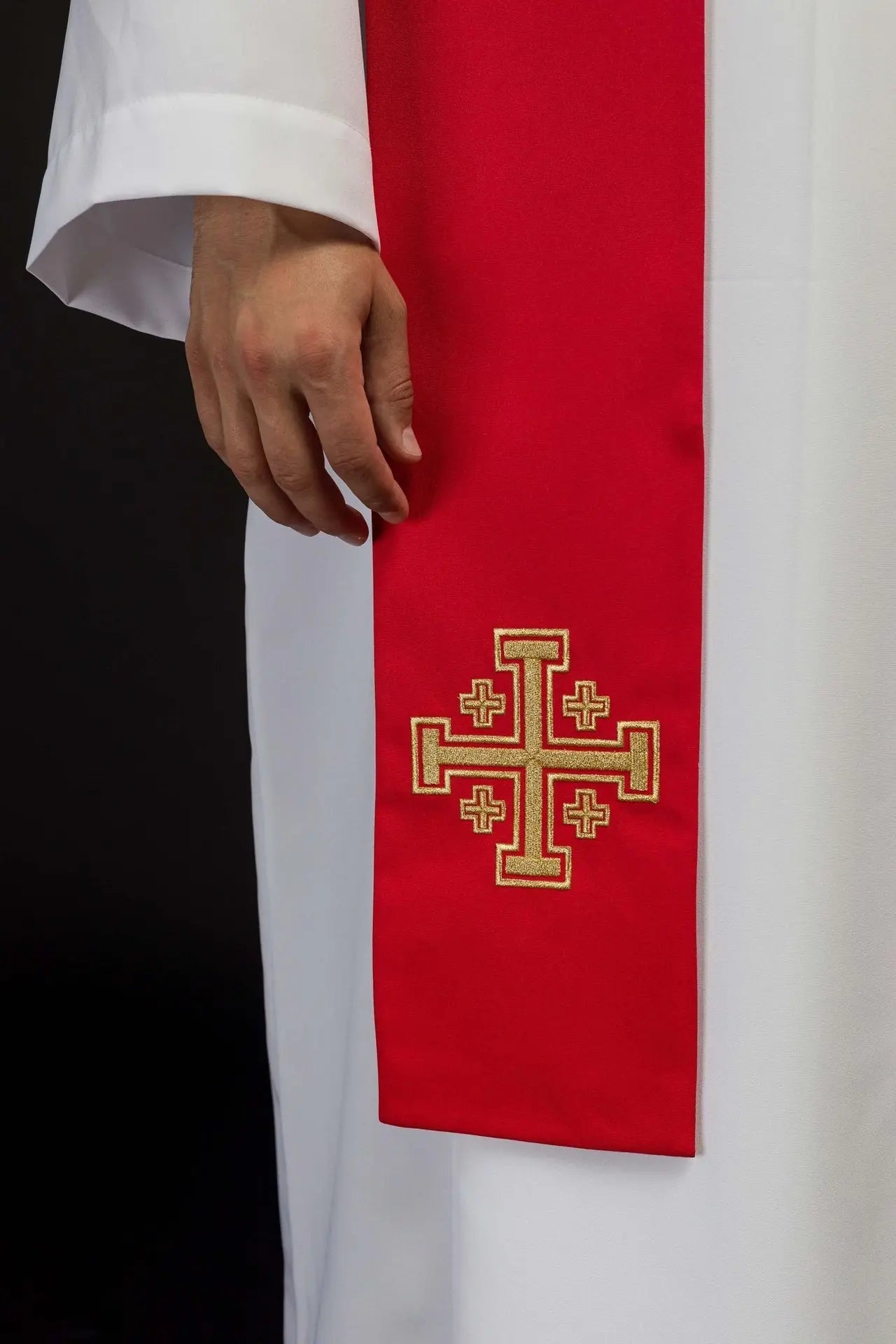
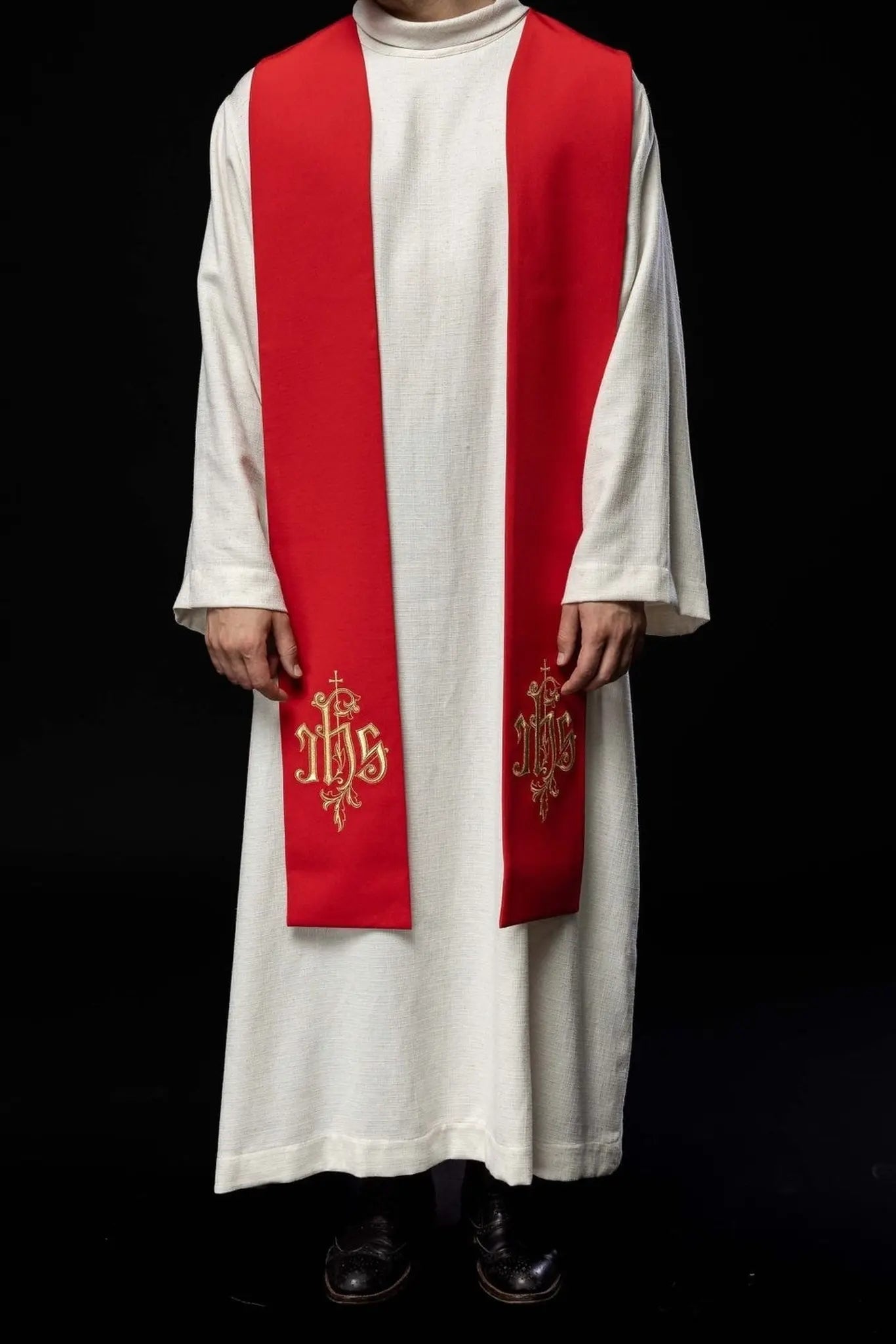
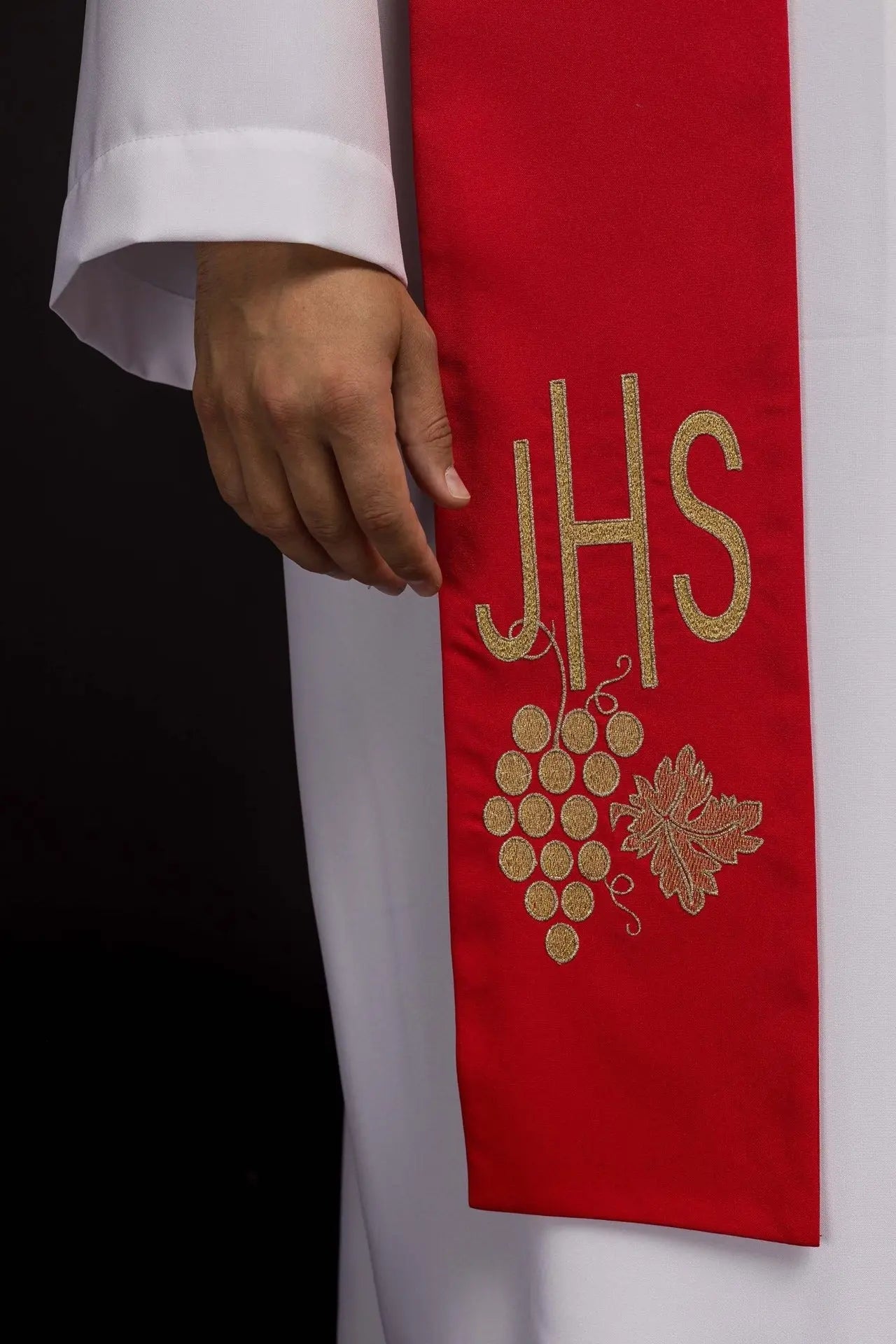
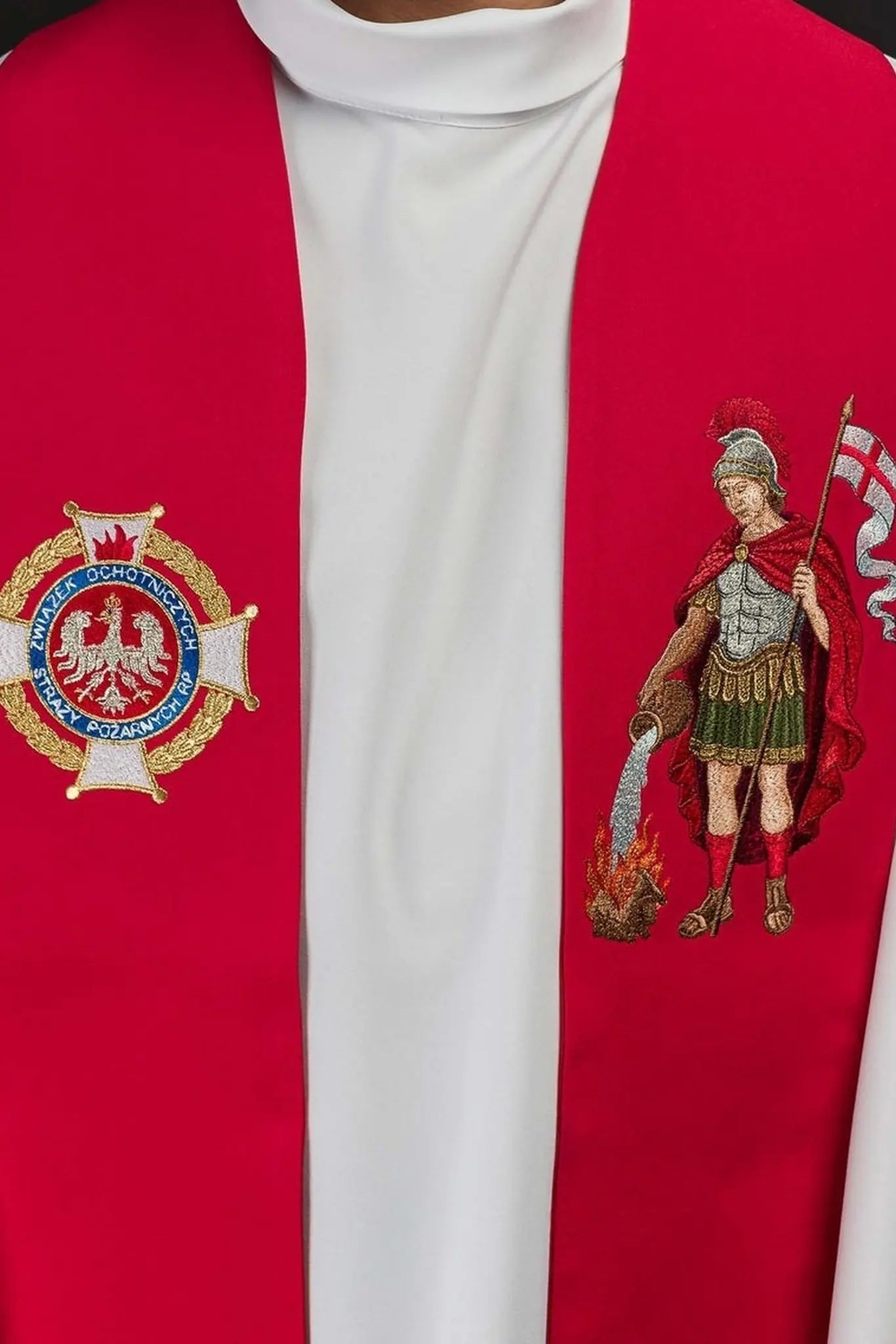
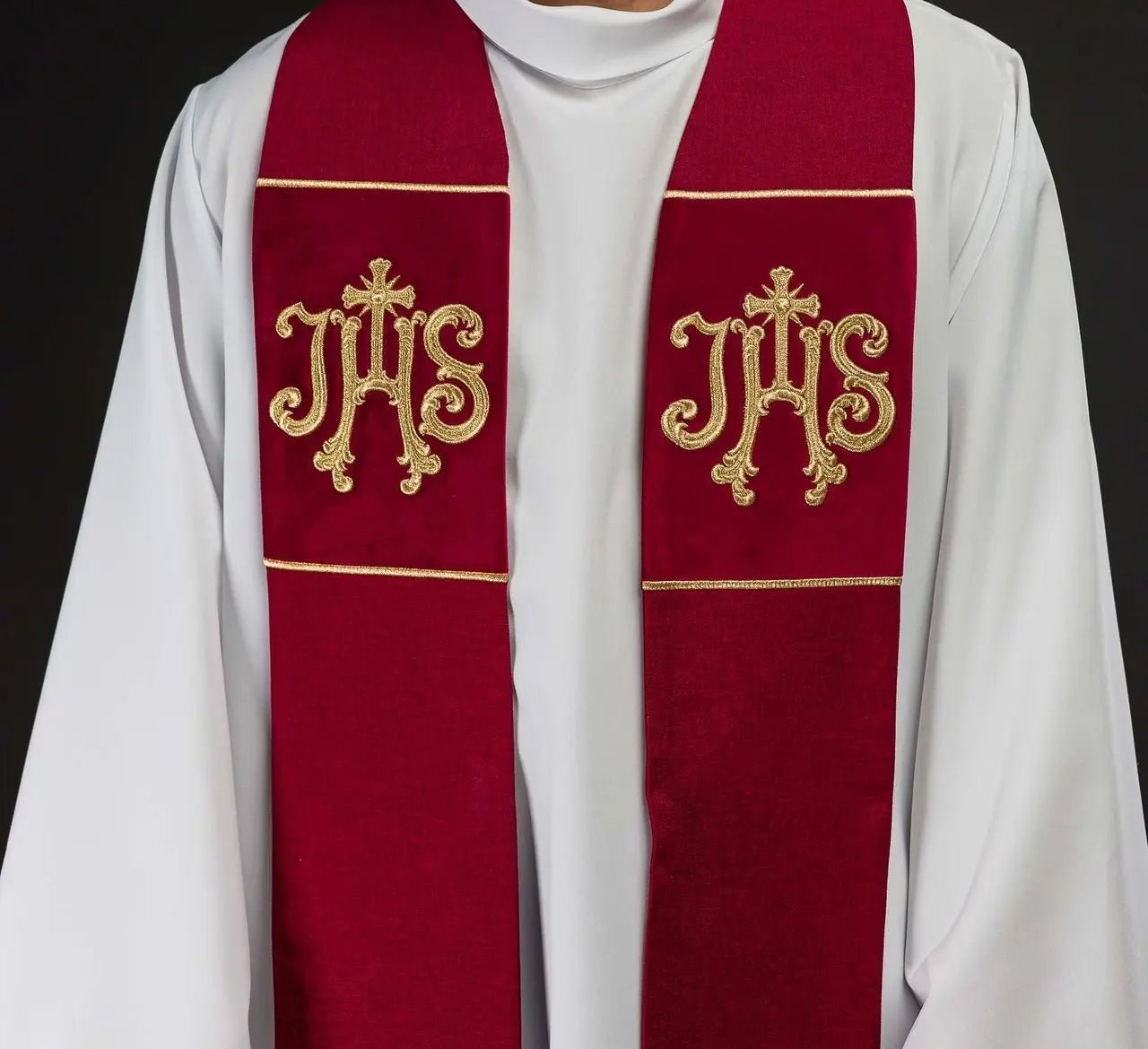
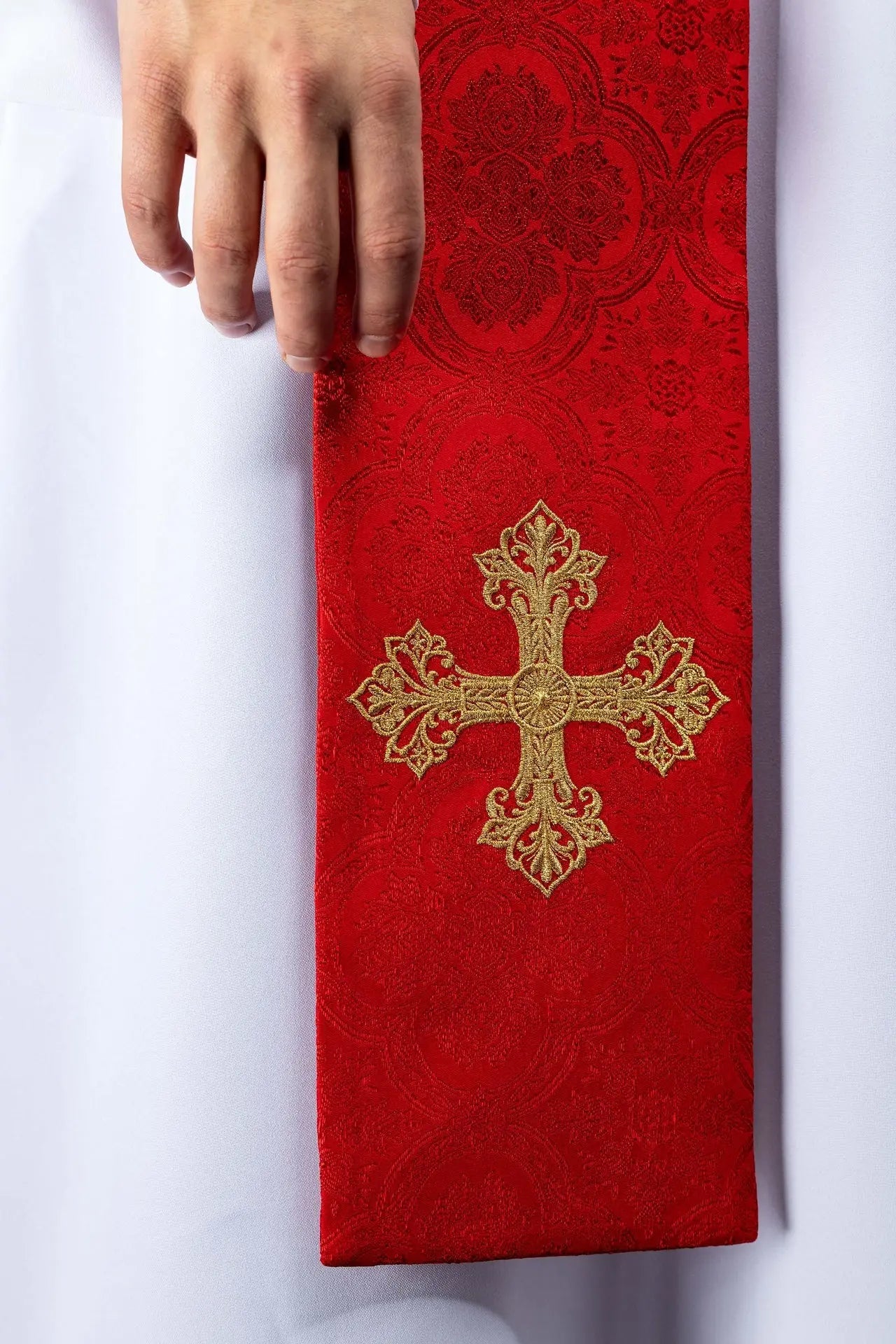
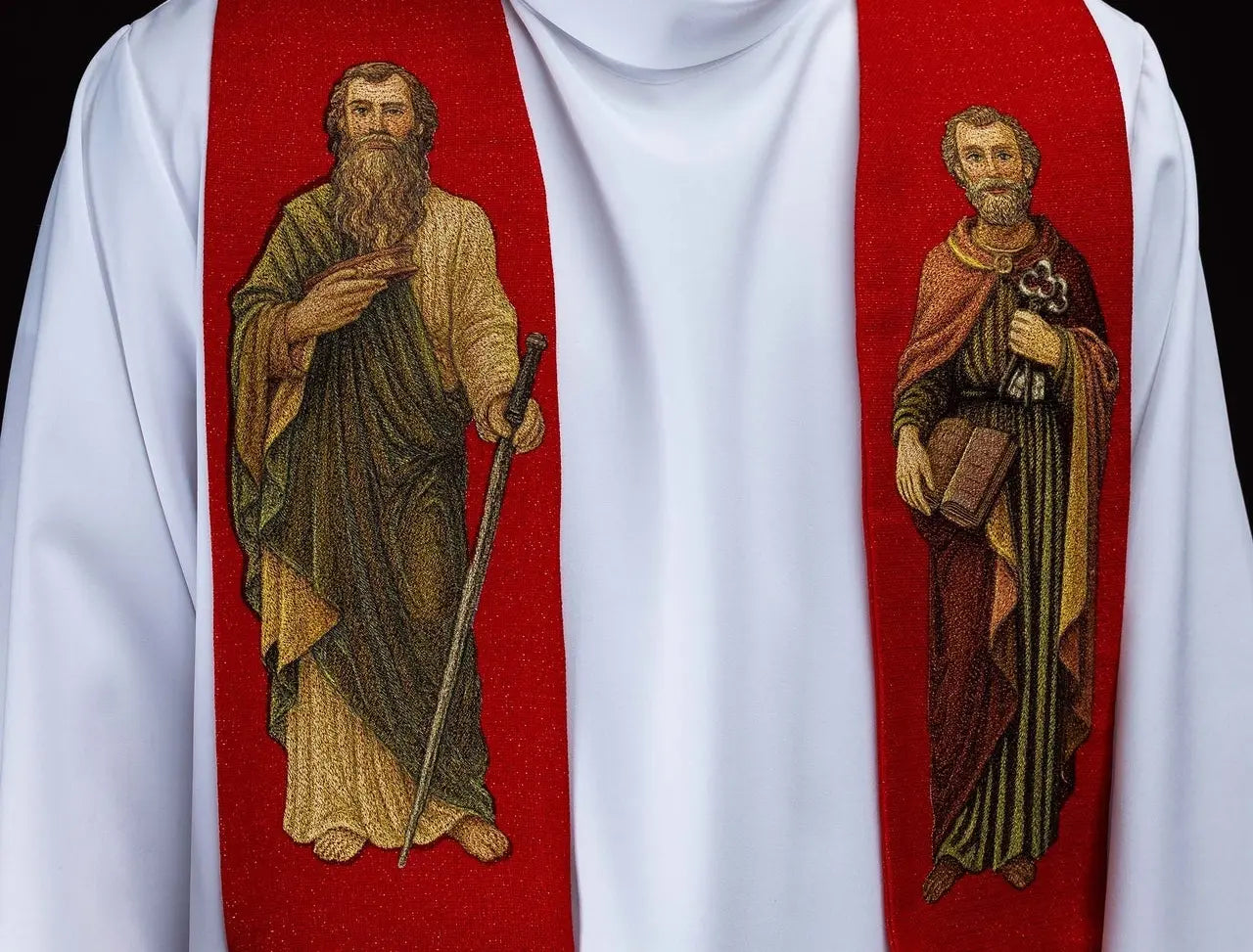
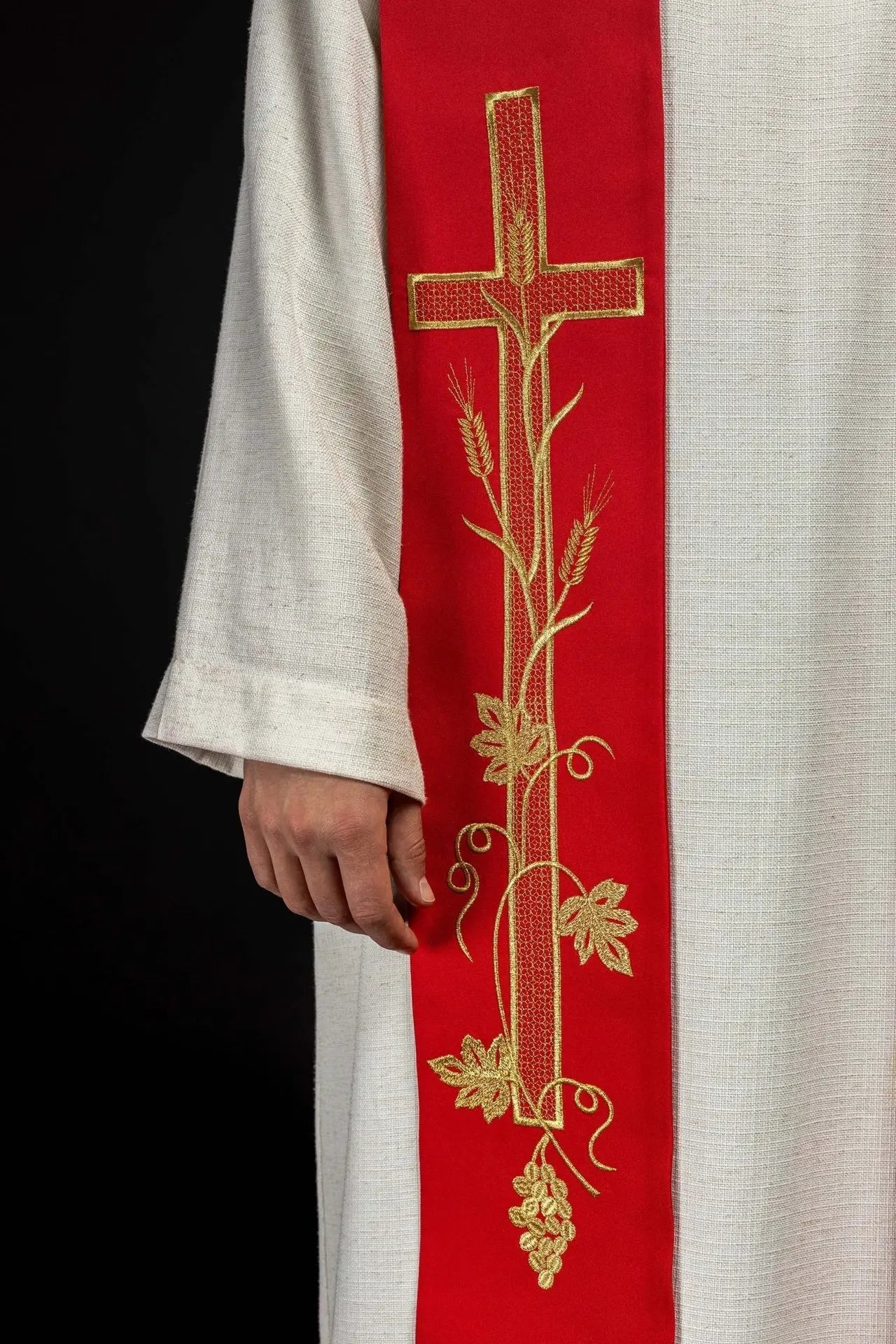
Red stoles may include crosses, Eucharistic symbols, vine patterns, rays, dove motifs, decorative bands or other sacred ornamentation. Embroidery should strengthen the liturgical meaning of the garment rather than compete with it. A clear central symbol can be effective when the stole is worn over a plain alb, while more delicate ornament may be preferable when it is intended to accompany a richly decorated chasuble.
When building or refreshing a parish vestment set, consider how the stole relates to other colors and categories. Red is usually one part of a broader liturgical wardrobe that may also include green for Ordinary Time, purple for Advent and Lent, white or ecru for solemn feasts, and gold for highly festive celebrations. For comparison and seasonal planning, related categories such as purple clergy stoles and gold clergy stoles can help a parish choose a consistent style across several liturgical colors.
Some churches also prefer stoles with more specific iconography. If the liturgy, parish dedication or pastoral setting calls for a saintly image, the collection of stoles with saint imagery may provide a more focused direction. For the red color itself, however, the most versatile designs are usually those that remain clear, reverent and usable across Pentecost, Passion services and martyr feasts.
Red stoles for parish, chapel and pastoral ministry
A red clergy stole can serve in many settings beyond the principal parish Mass. It may be used in chapels, religious houses, hospital ministry, school liturgies, processions and devotional services when red is the appointed liturgical color or when local rubrics call for it. For priests who travel or assist in several churches, a well-made red stole is a practical vestment to keep ready for the major feasts and solemn services of the year.
For sacristies, red stoles are often purchased in multiples so that concelebrants or assisting clergy can be vested consistently. In such cases, it is wise to choose a design that is dignified but not overly specialized. A parish may reserve a more ornate stole for the principal celebrant while keeping simpler matching stoles for concelebration, reconciliation services or other pastoral use. This approach keeps the sanctuary visually ordered without requiring every piece to be identical.
Quality, comfort and care
The source text emphasizes craftsmanship, durable construction, careful embroidery and attention to finishing. Those qualities are especially important for red stoles because they may be used at some of the most solemn and visually memorable liturgies of the year. Good stitching, a stable shape, neat edges and well-placed ornament allow the stole to fall properly and remain dignified during repeated use.
Care should follow the instructions supplied with the individual stole. As a general rule, embroidered liturgical garments should be handled carefully, stored flat or on a suitable hanger, protected from moisture and kept away from prolonged direct sunlight. After use, the stole should be allowed to air before storage, especially if it has been worn during long services, processions or warm weather. Careful storage helps preserve the red color, the embroidery and the overall shape of the vestment.
Building a coherent red vestment set
For a church that is completing its liturgical wardrobe, the red stole should be considered alongside chasubles, pulpit textiles and other sanctuary appointments. A matching or complementary red chasuble helps the celebrant maintain visual unity, while a compatible ambo or pulpit cover can support the liturgical color in the worship space. The goal is not to overdecorate, but to create a clear and reverent visual language for the feast or season.
At the same time, red should not be chosen where another color is liturgically required. Green remains the usual color for Ordinary Time, purple for penitential seasons, white or ecru for many feasts of the Lord and saints who were not martyrs, and rose for the specific Sundays traditionally associated with Gaudete and Laetare. A thoughtful choice of stole color helps clergy and congregation read the liturgy visually before a word is spoken.
Frequently Asked Questions (FAQ)
When should a red clergy stole be worn?
A red clergy stole is worn when red is the appointed liturgical color, especially for Pentecost, Palm Sunday, Good Friday, celebrations of the Passion of the Lord, feasts of apostles and evangelists, and memorials or feasts of martyrs. It may also be used in services where local liturgical norms call for red.
Is a red stole the same as a rose stole?
No. Red and rose are distinct liturgical colors. Red is connected with the Holy Spirit, the Passion of Christ and martyrs. Rose is used only on specific Sundays in Advent and Lent where that custom is observed. For Gaudete or Laetare, choose rose rather than red.
Can a priest wear a red stole without a red chasuble?
In some services the stole may be the main visible vestment worn over an alb or other permitted clerical vesture. At Mass, the stole is normally worn together with the proper outer vestment. The exact use should follow the rubrics and local practice of the church.
How should I choose between a simple and embroidered red stole?
A simple red stole is versatile and well suited to solemn services, reconciliation settings and concelebration. A more embroidered stole may be chosen for Pentecost, patronal feasts or major celebrations. The best choice depends on how often it will be used and whether it must coordinate with existing vestments.
Are red clergy stoles suitable for deacons?
Deacons wear stoles in a different form, diagonally across the body. If the stole is intended for a deacon, choose a properly cut deacon stole rather than a priest-style stole. This preserves both comfort and correct liturgical appearance.
What other red items can coordinate with this collection?
For a complete red setting, many churches coordinate the stole with a red chasuble for the celebrant and red textiles at the ambo or pulpit where appropriate. Matching is not always necessary, but harmony in shade, embroidery style and symbolic language helps the sanctuary look ordered.