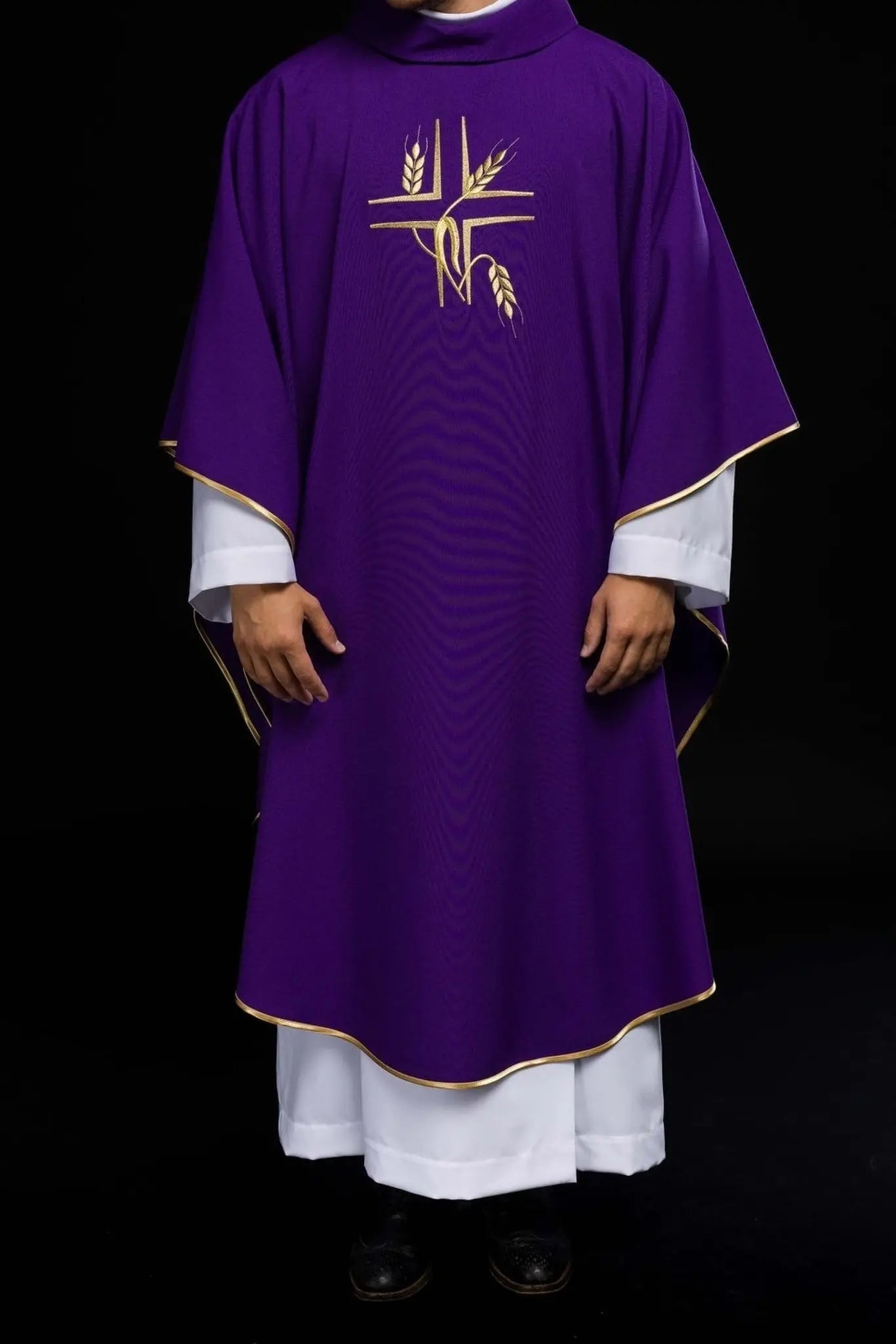
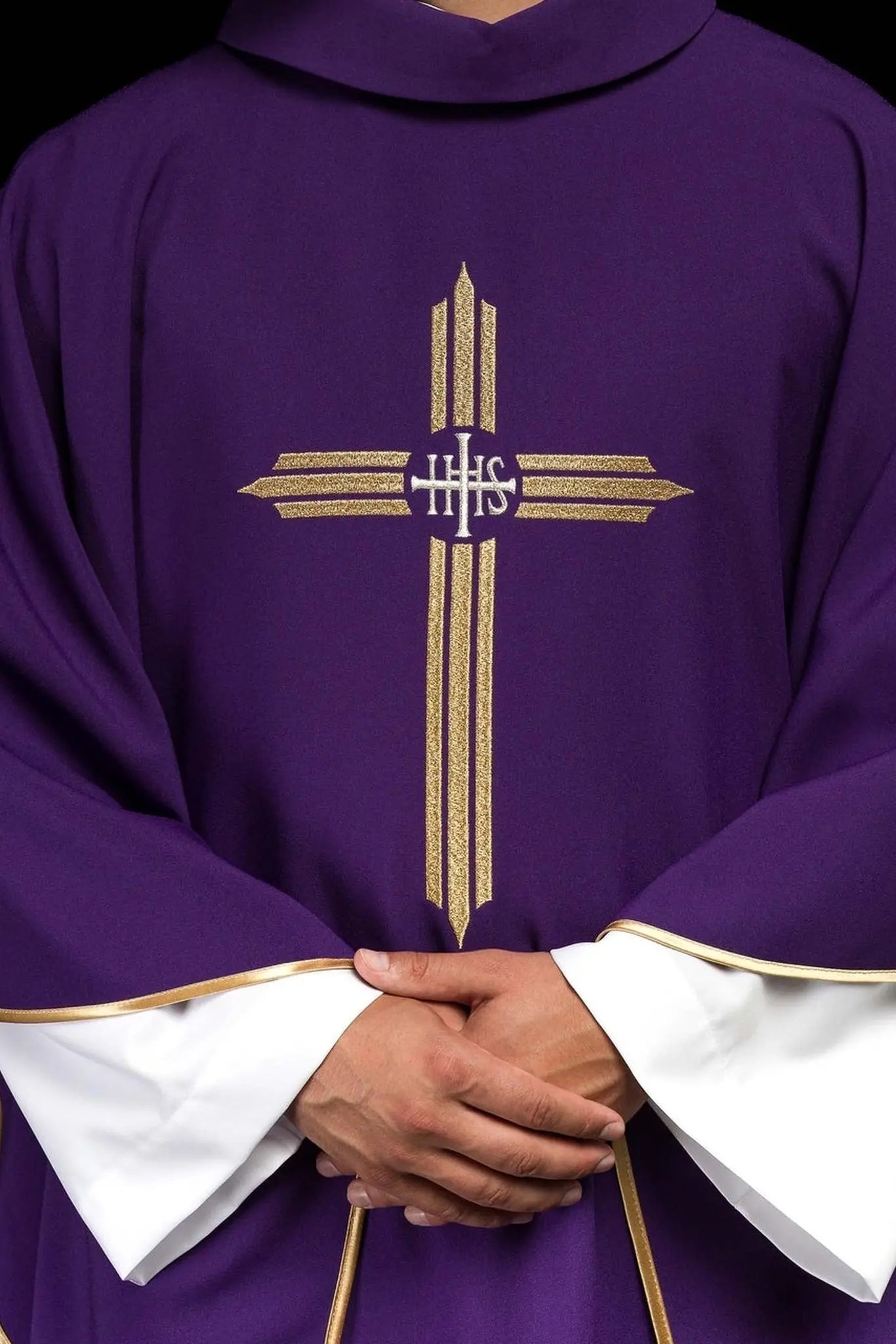
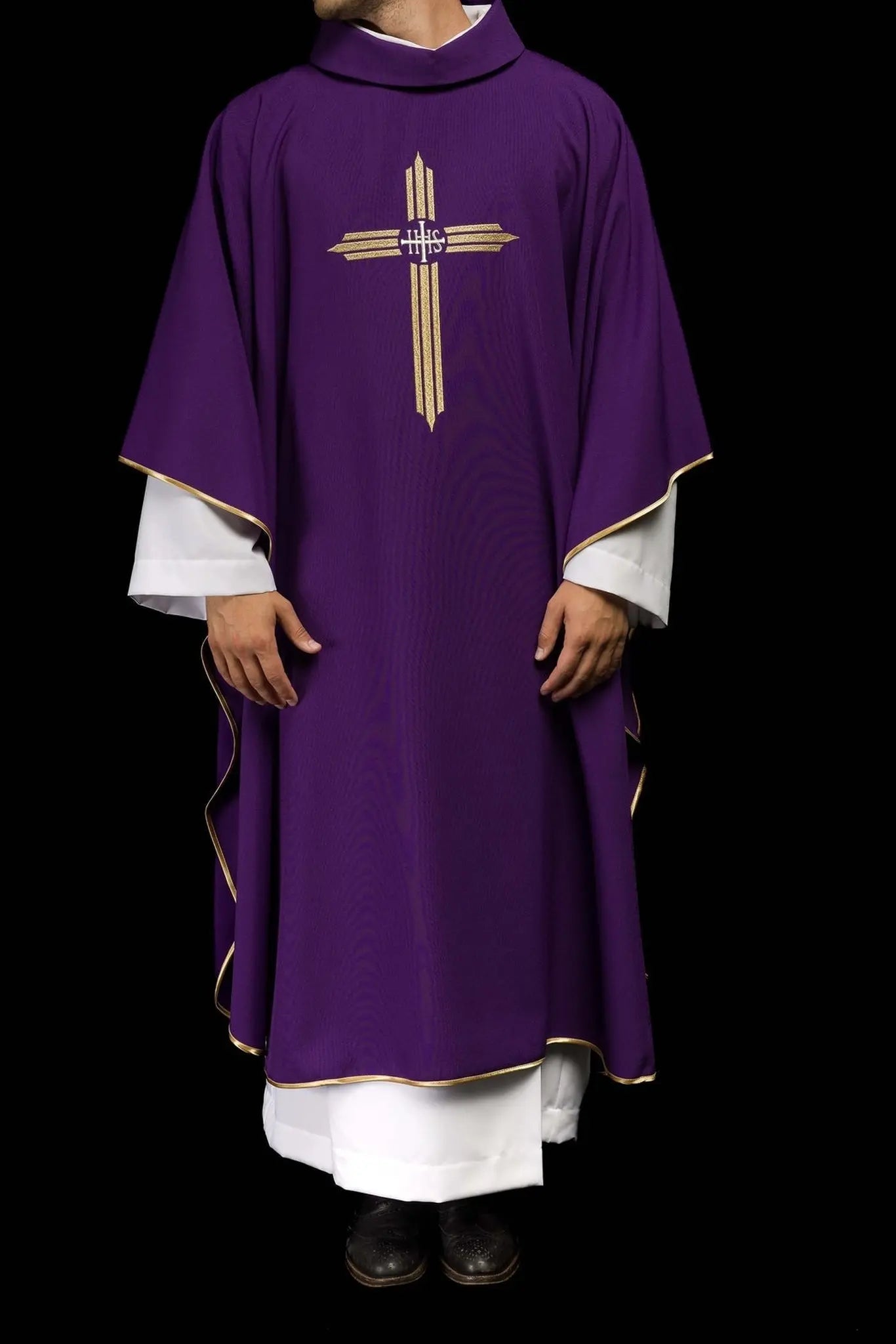
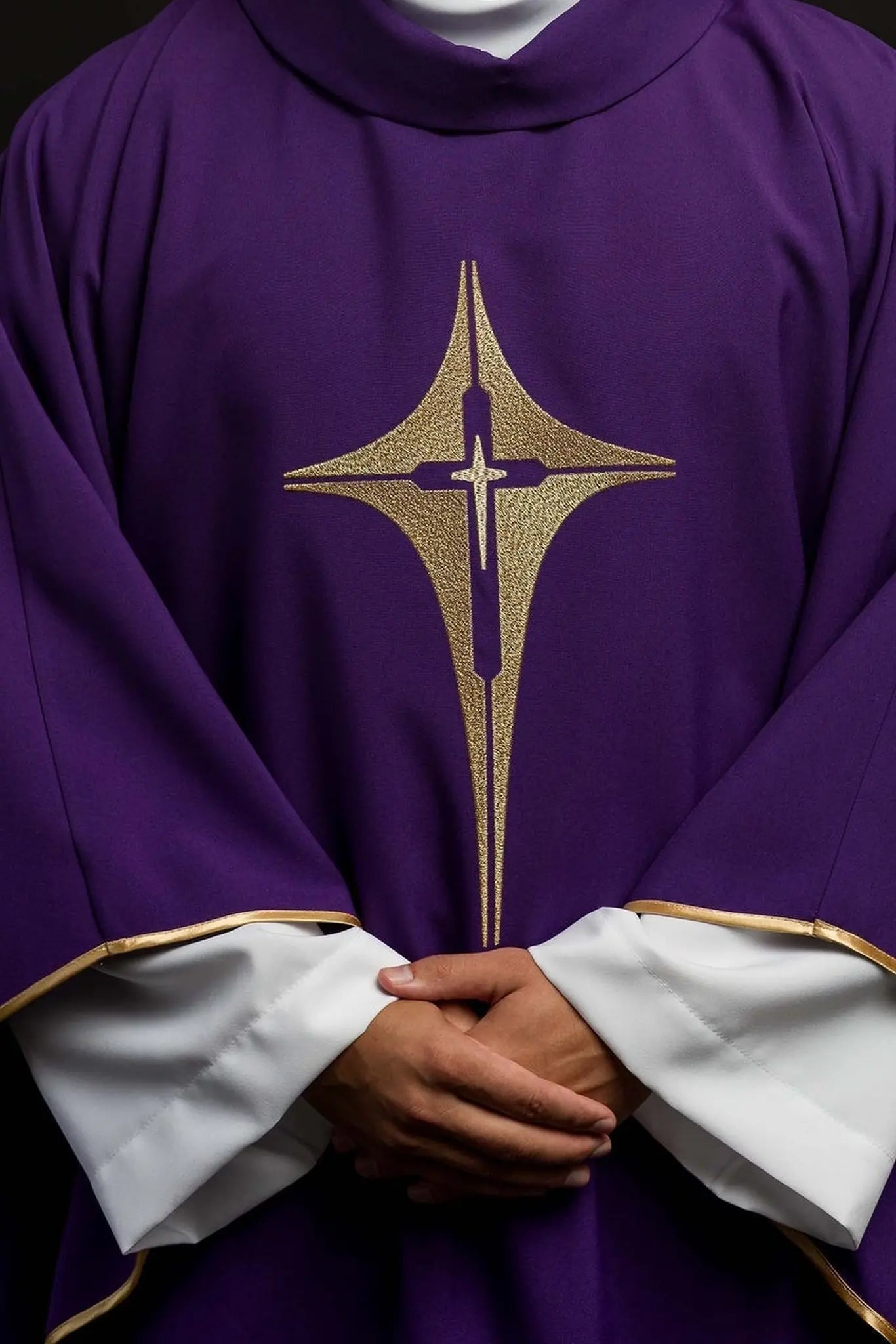
Lent Liturgical Vestments and Church Textiles
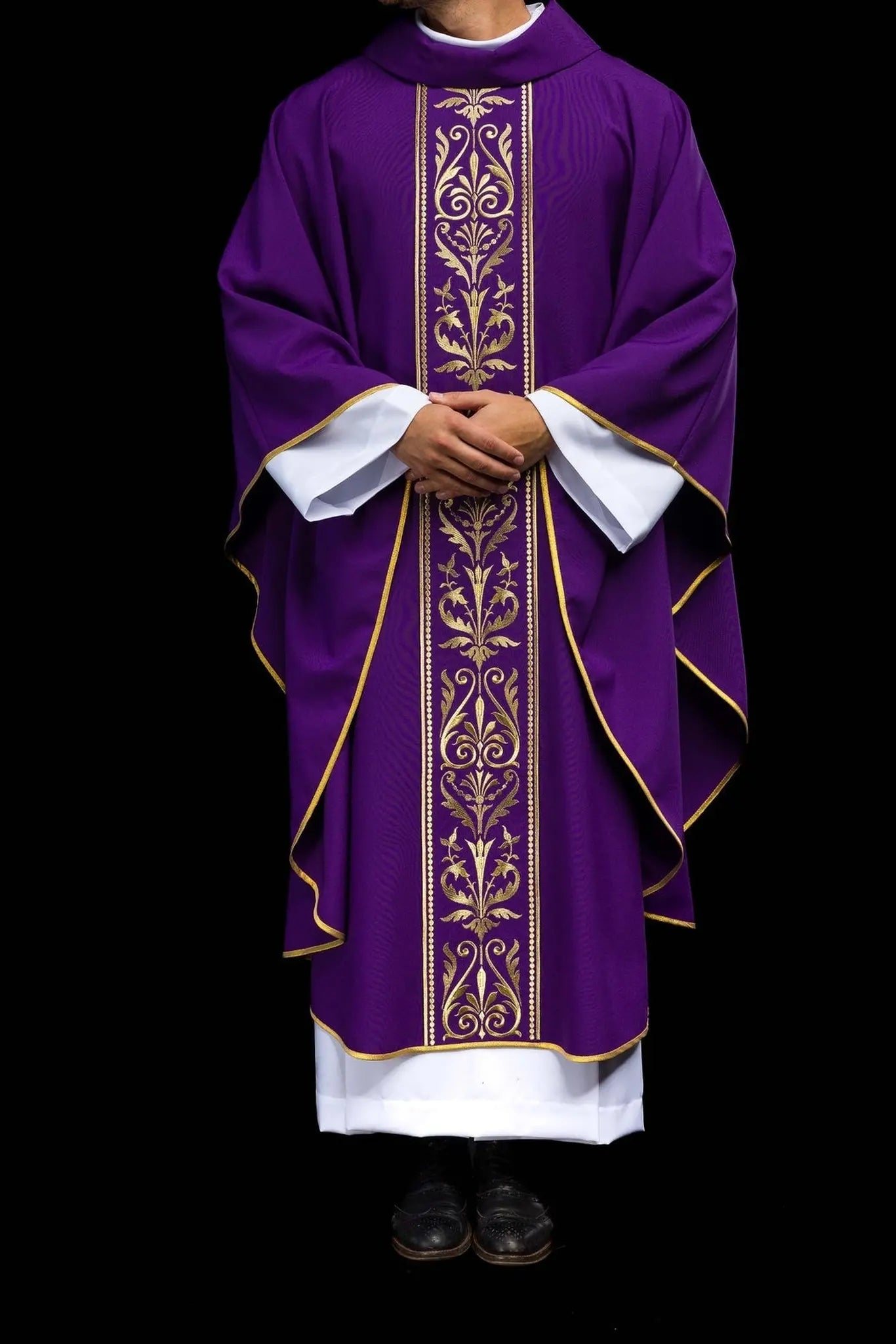
The Lent collection brings together liturgical vestments and church textiles chosen for the penitential season that leads the Church toward the celebration of Easter. Its central color is violet, traditionally associated with conversion, preparation, penance, humility, and the hope that comes through Christ's Passion and Resurrection. The items in this collection are intended for parishes, chapels, religious communities, and clergy who need a coherent visual language for Masses, devotions, penitential services, retreats, Stations of the Cross, Lenten missions, and other celebrations held during this solemn part of the liturgical year.
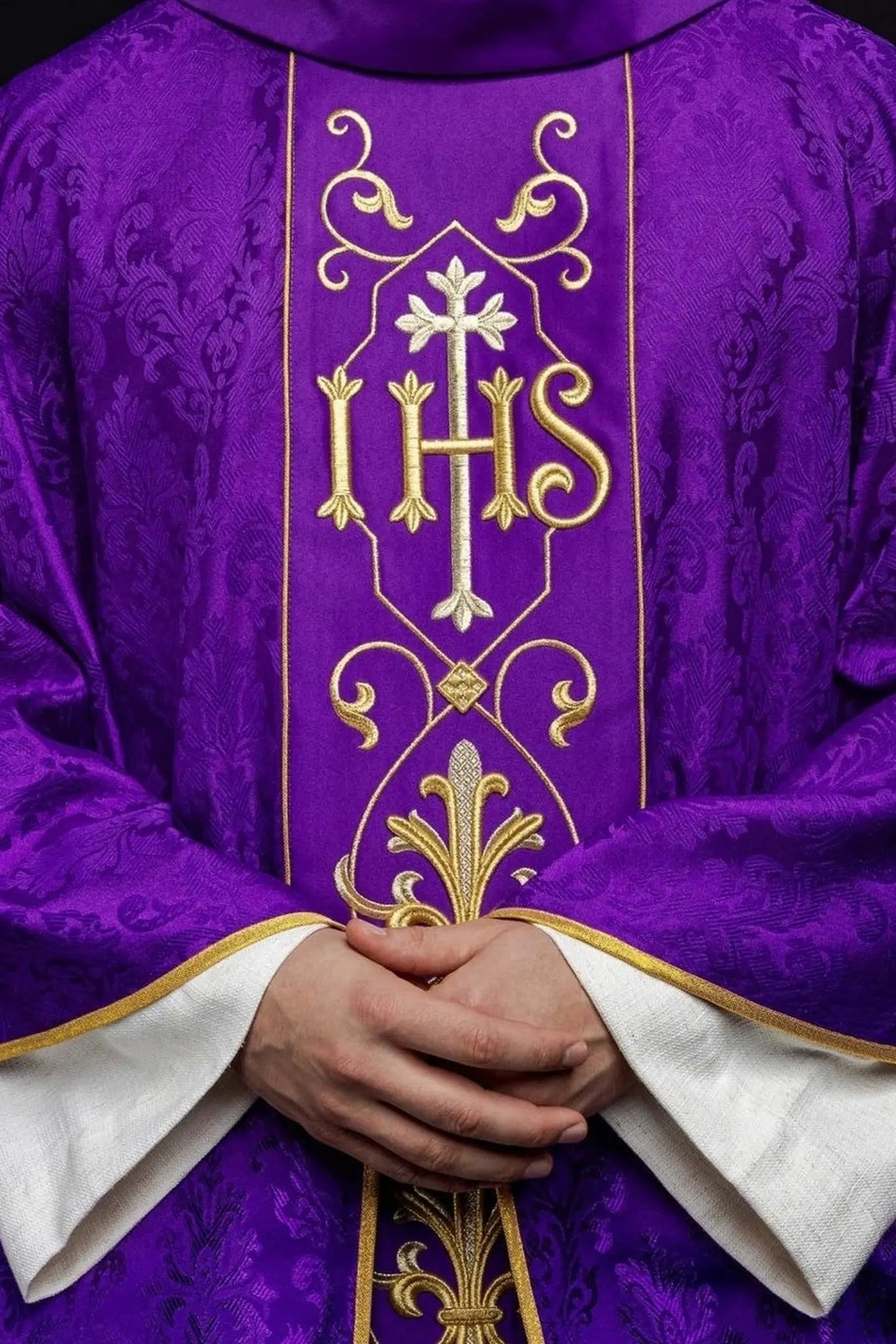
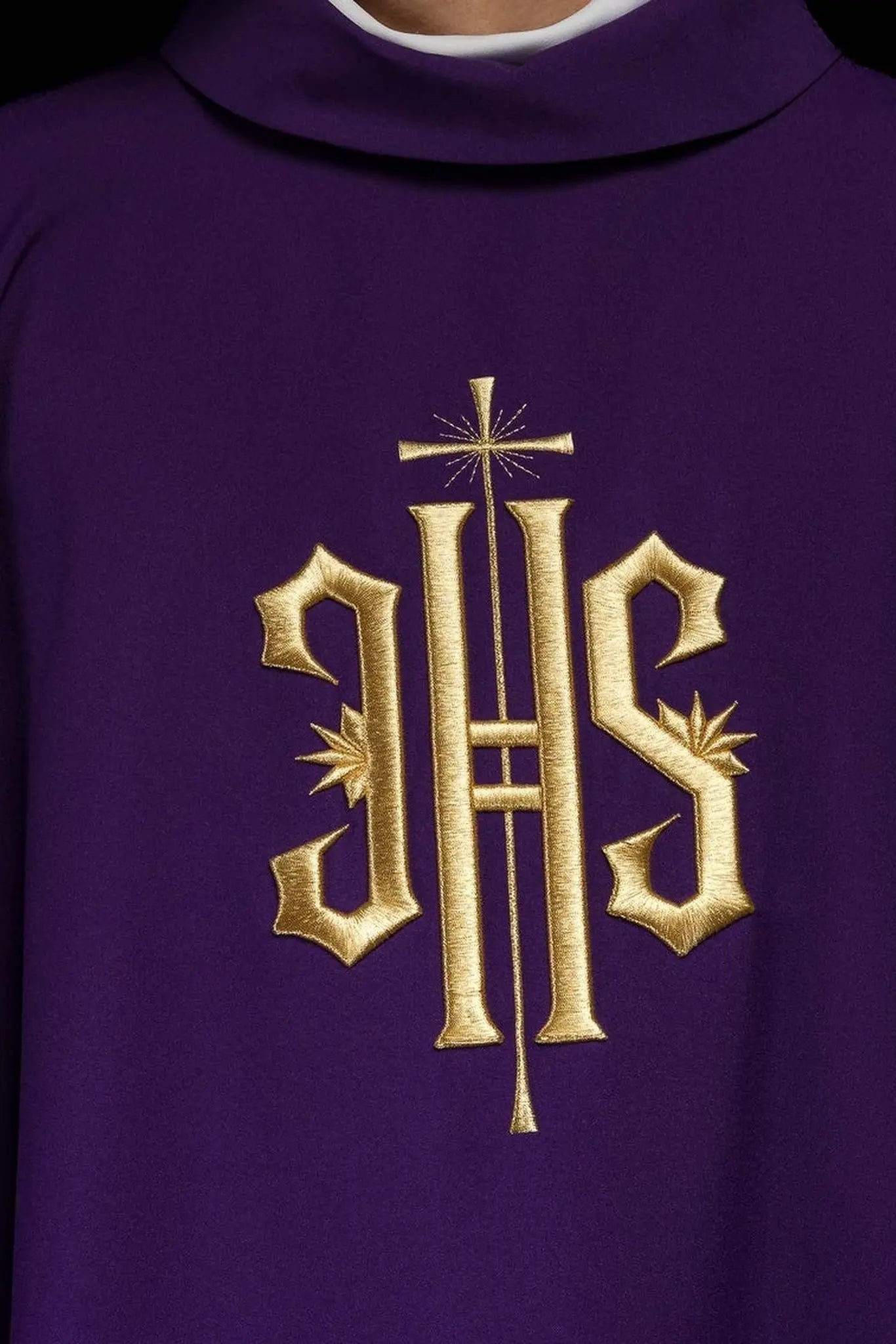
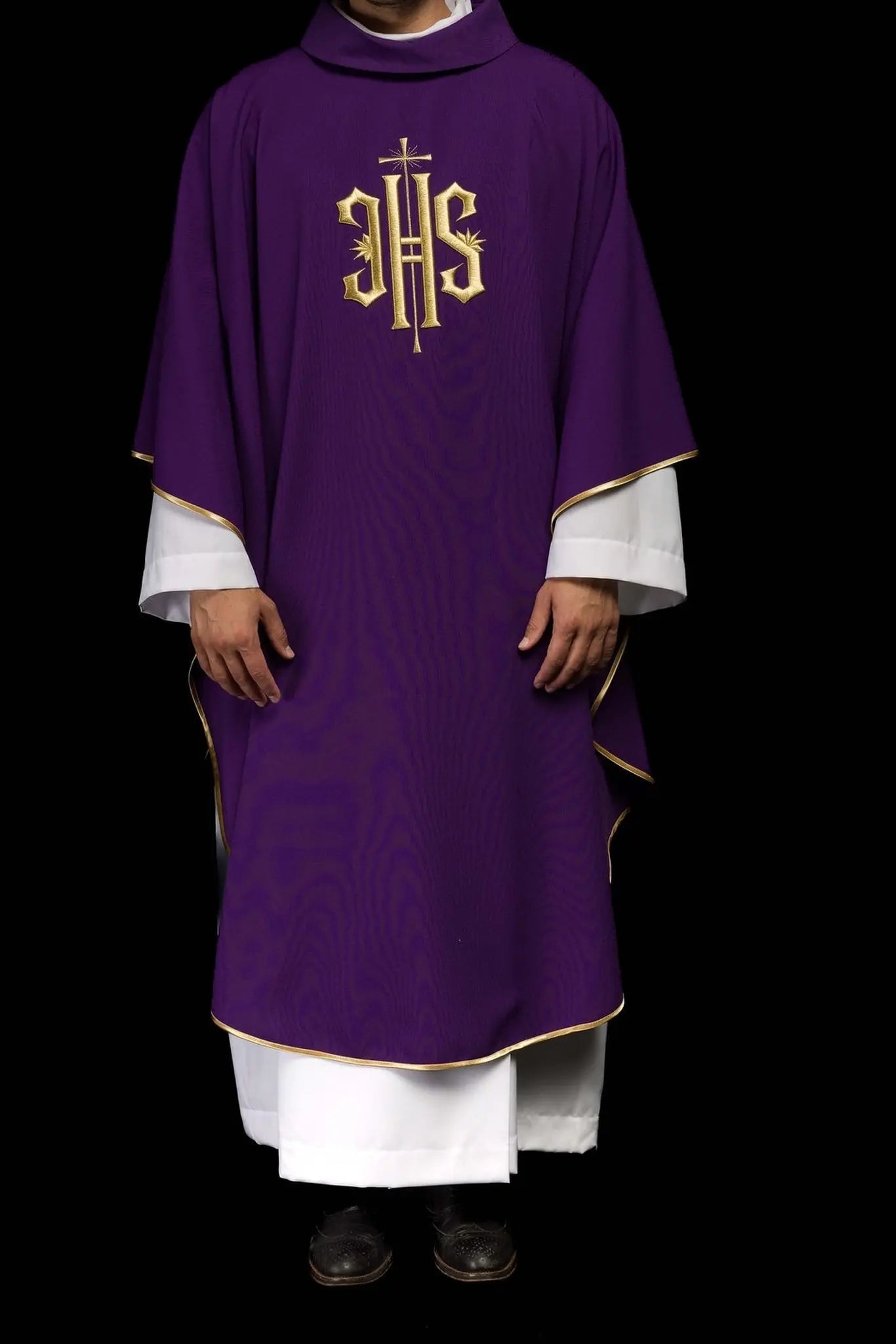
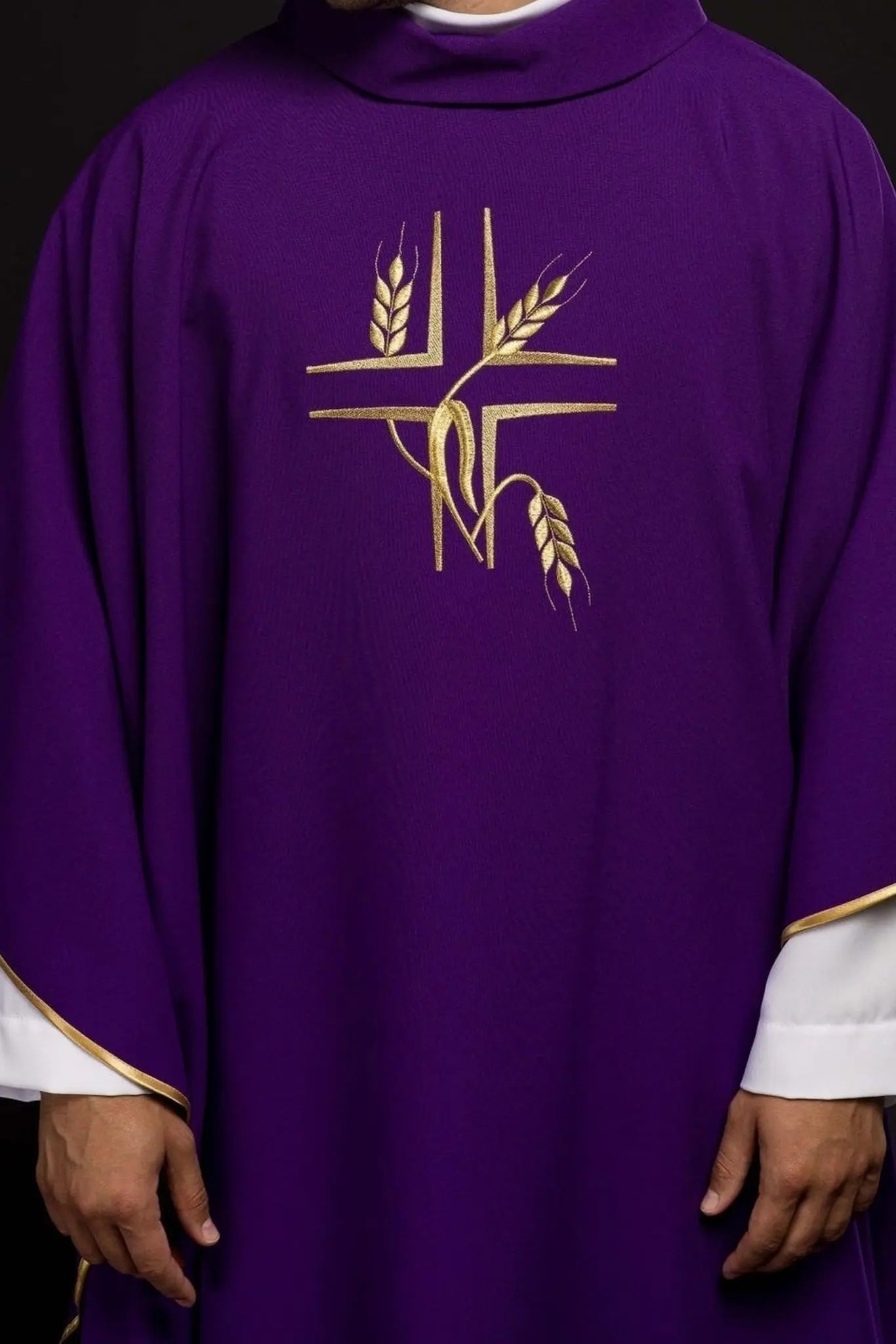
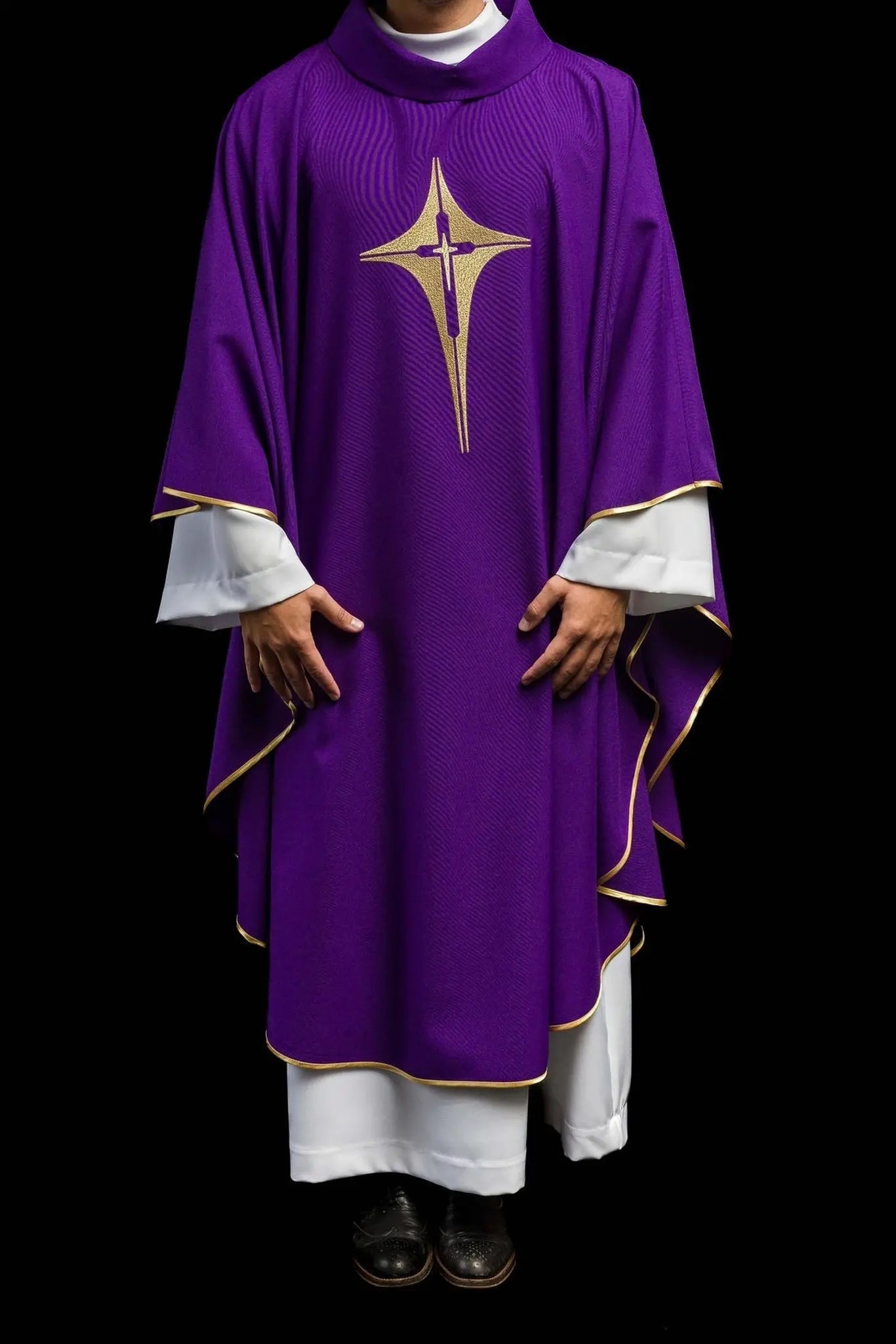
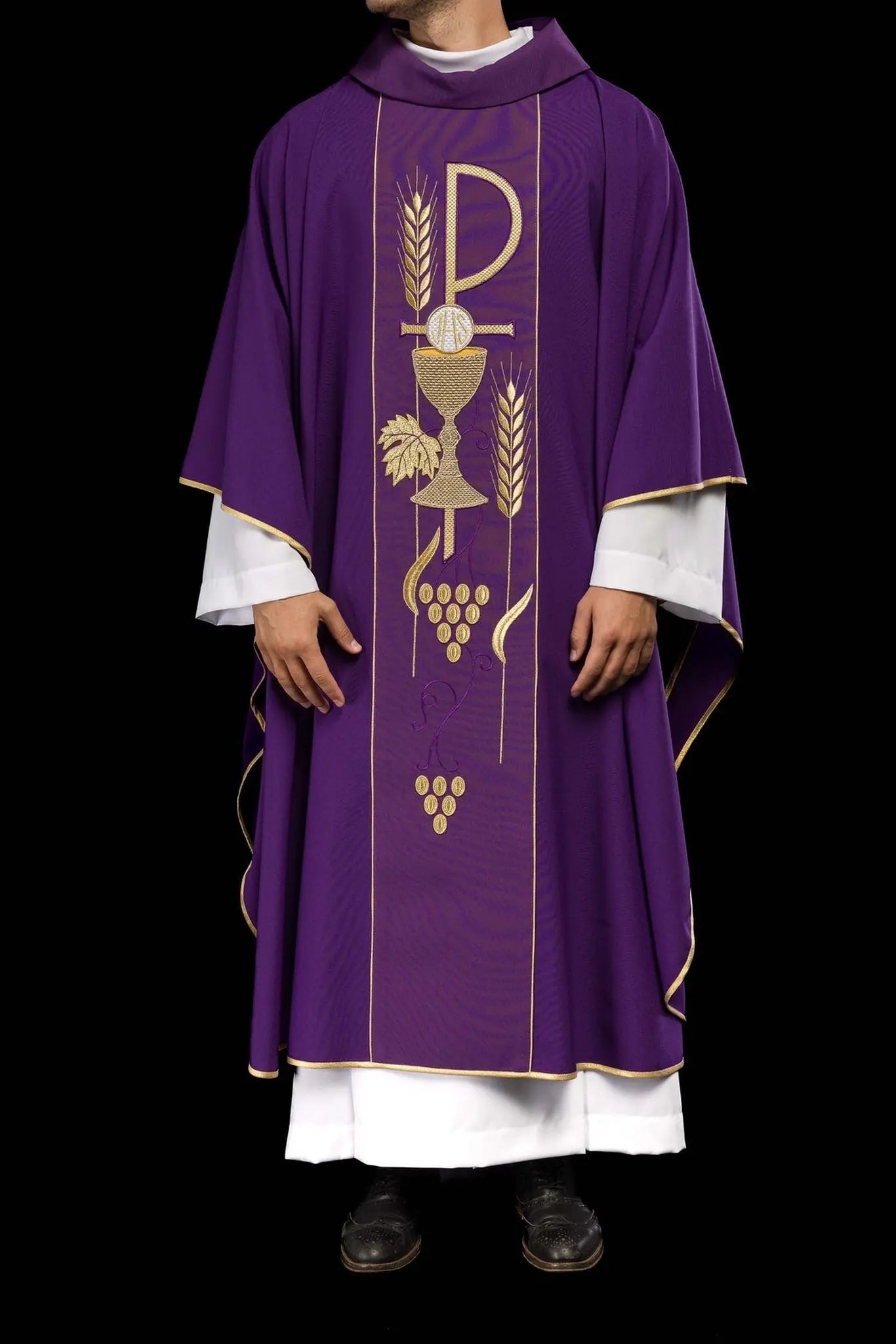
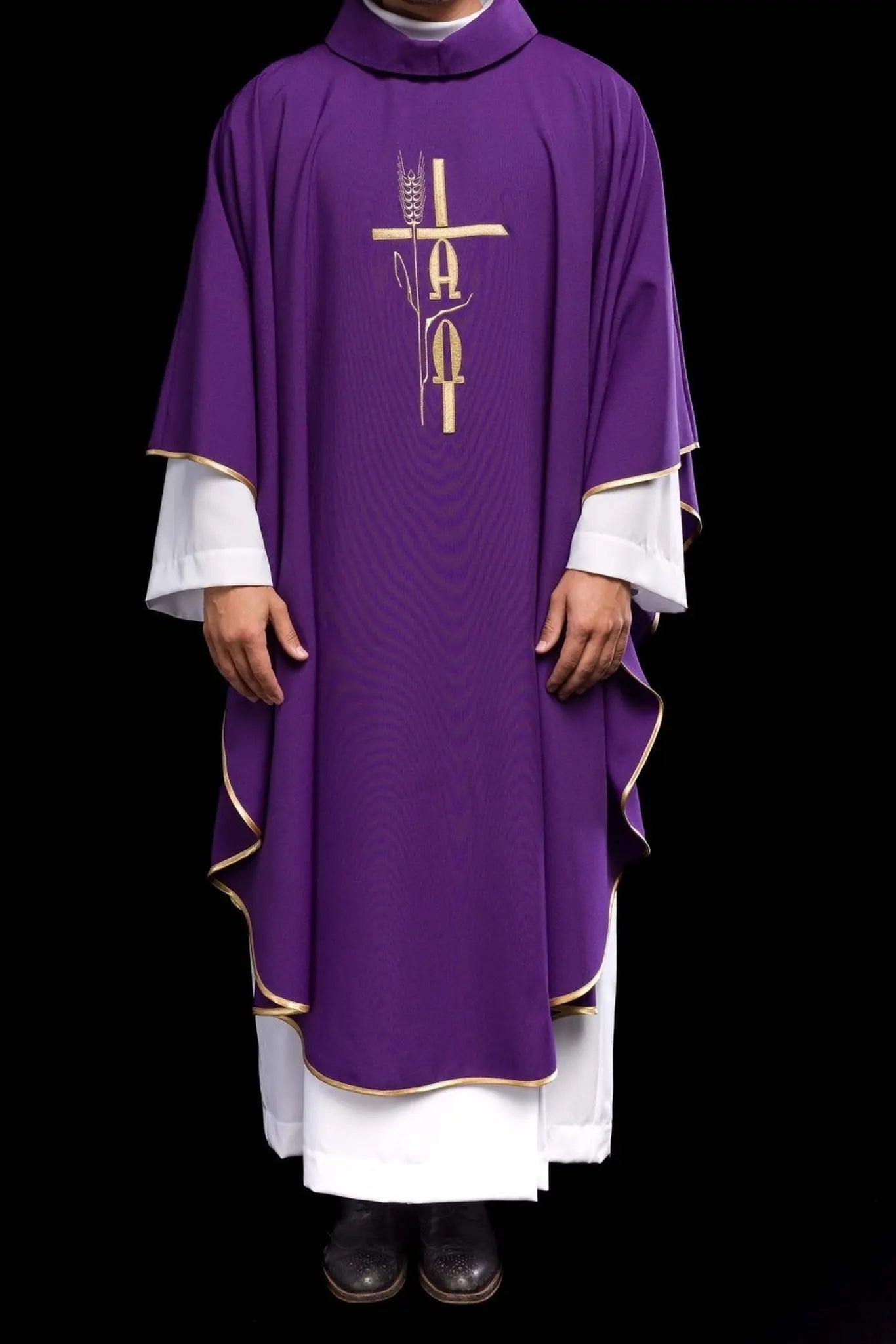
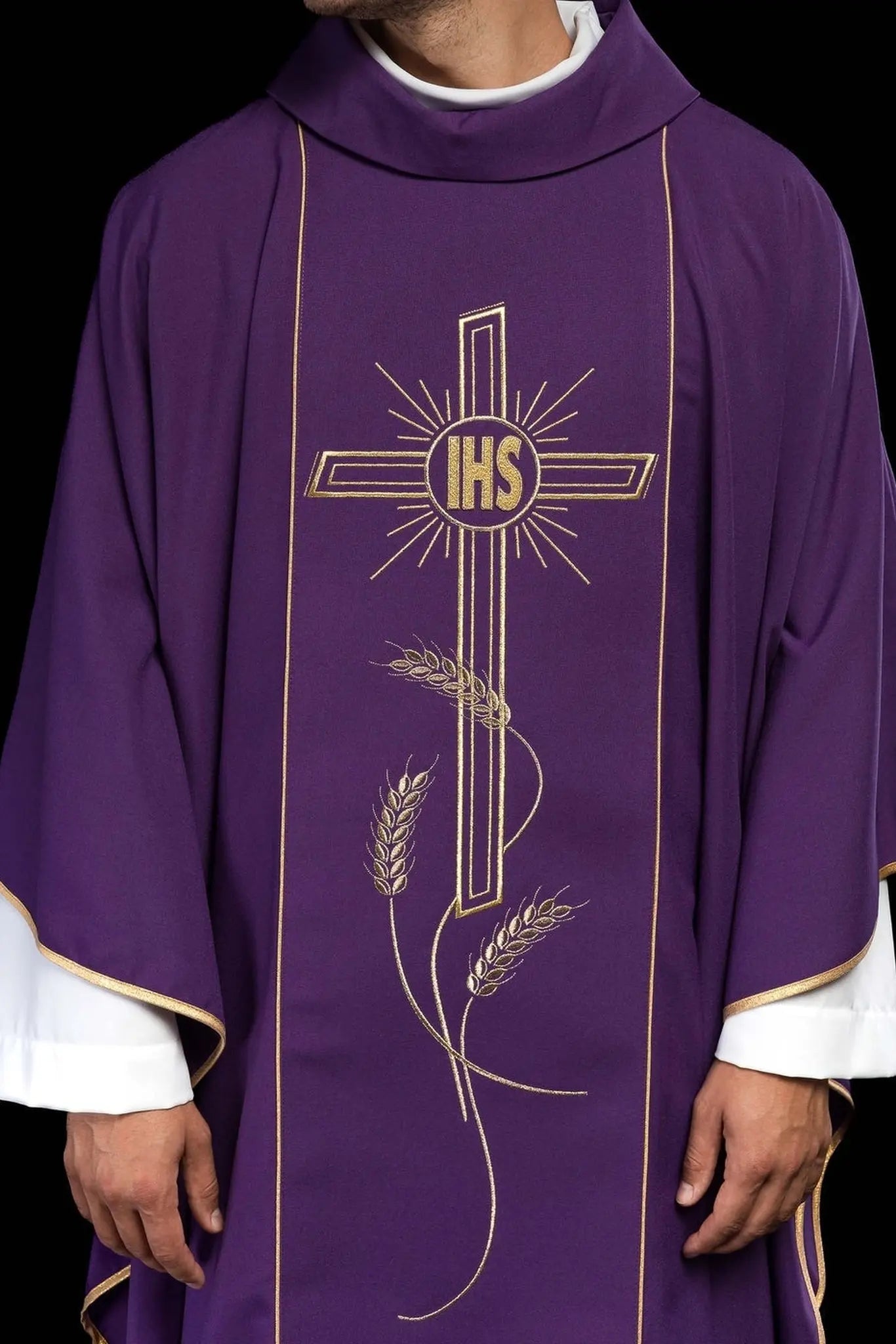
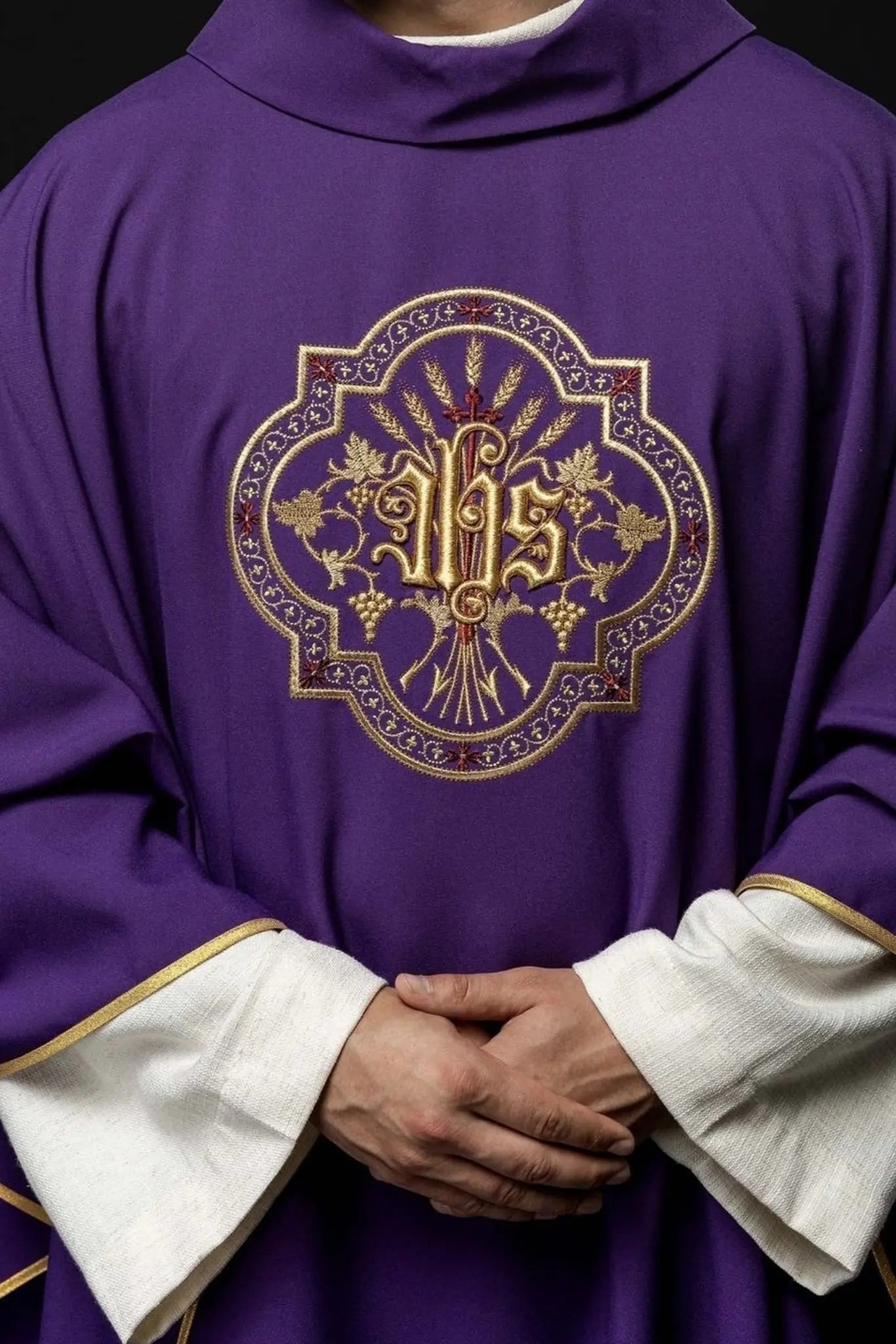
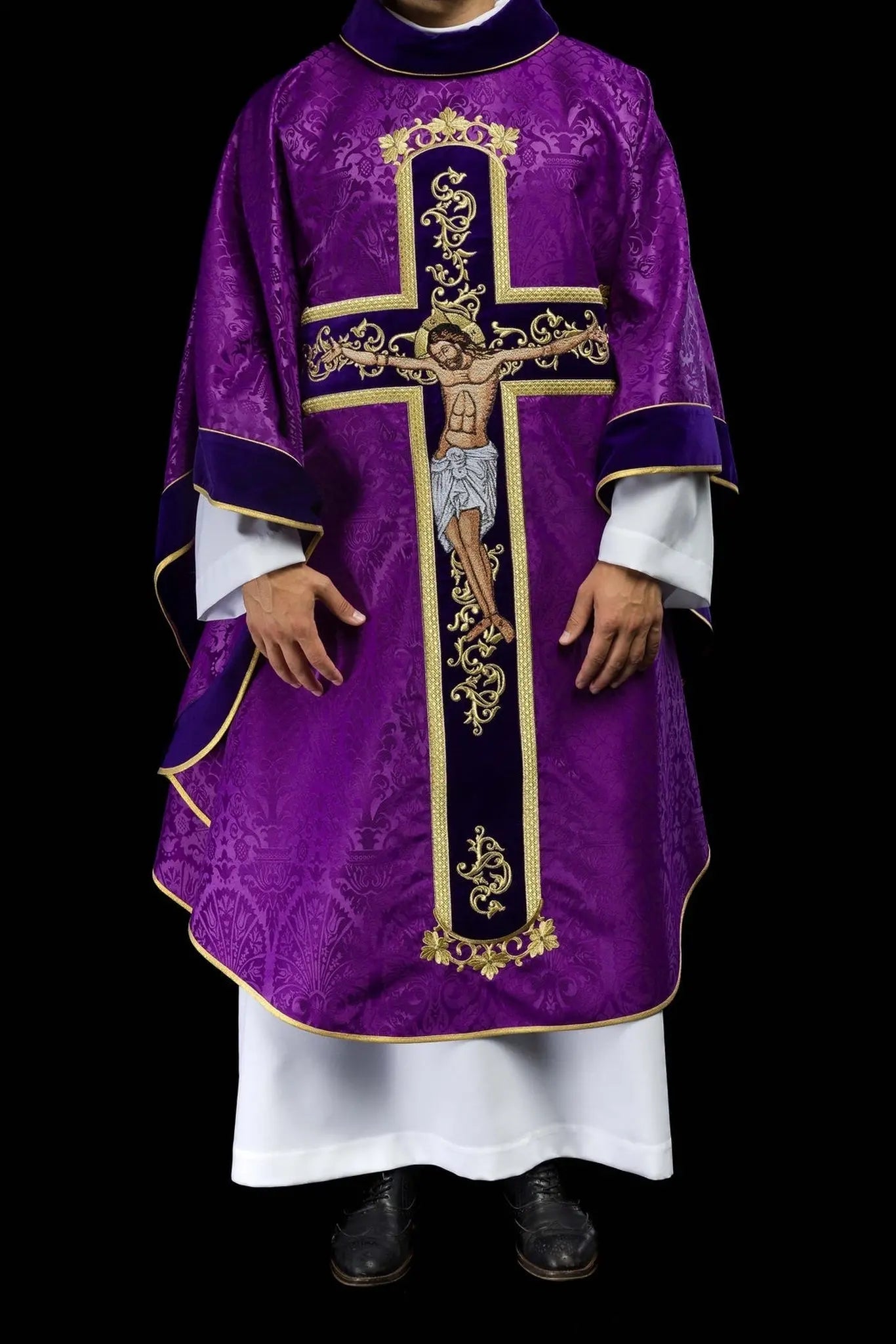
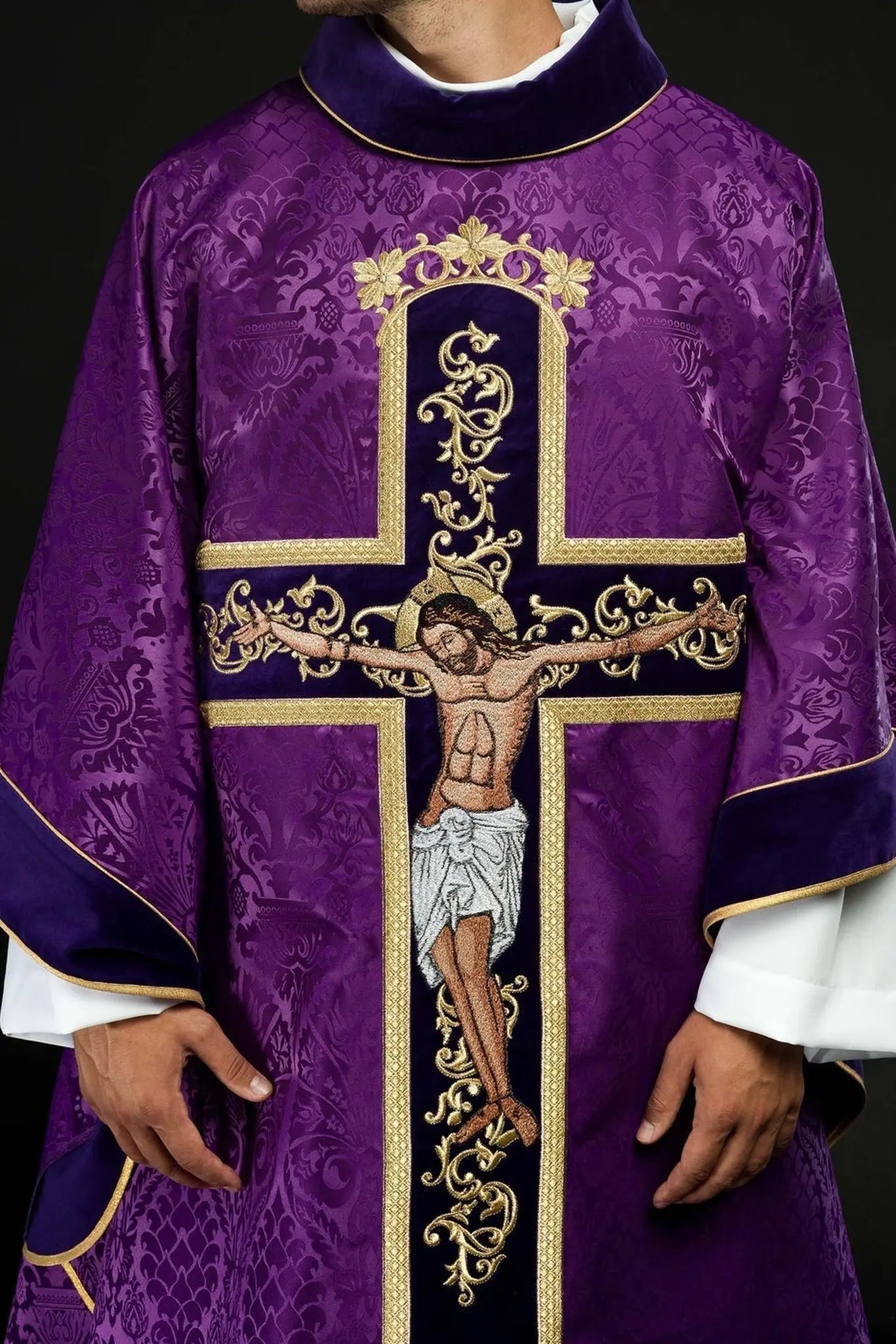
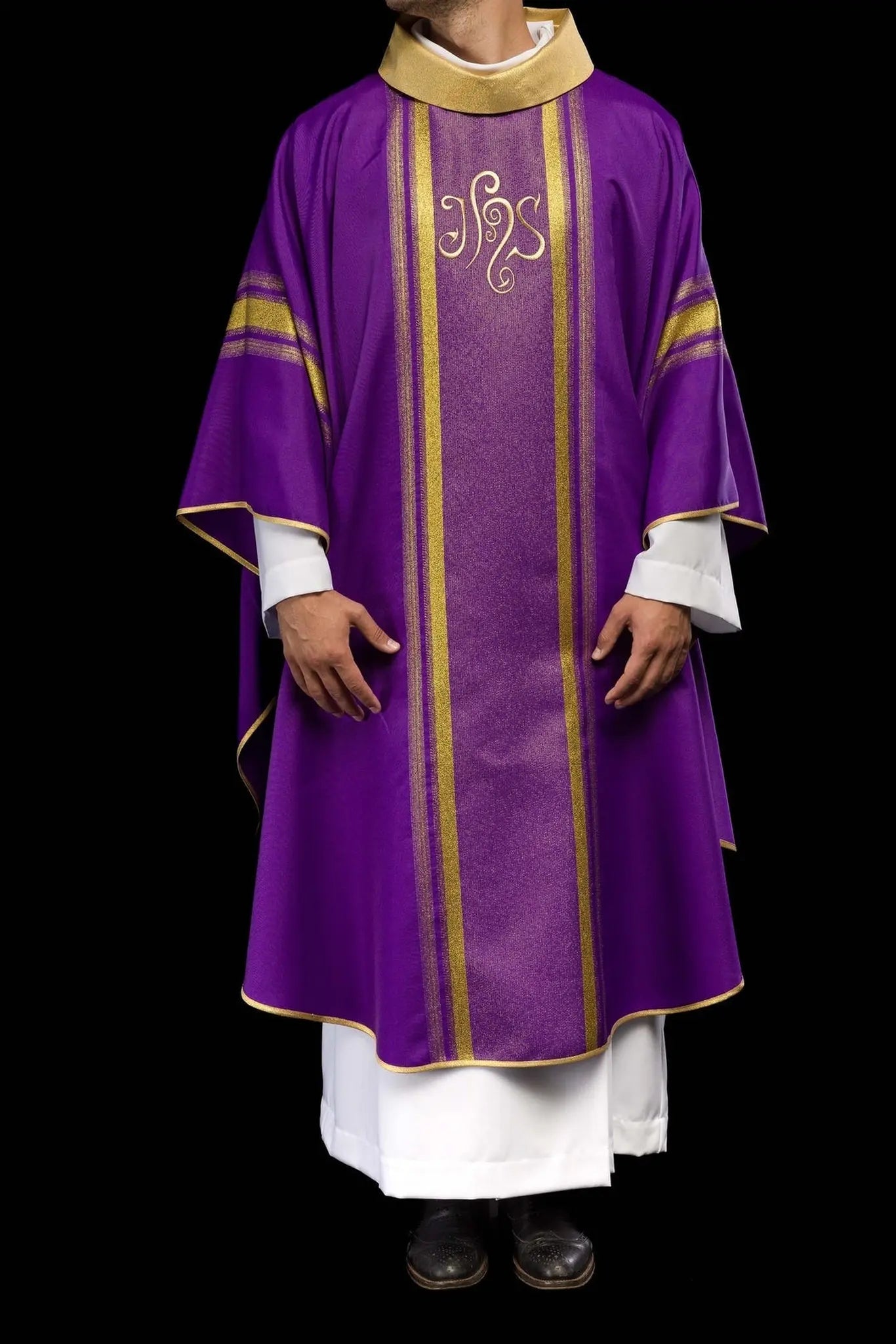
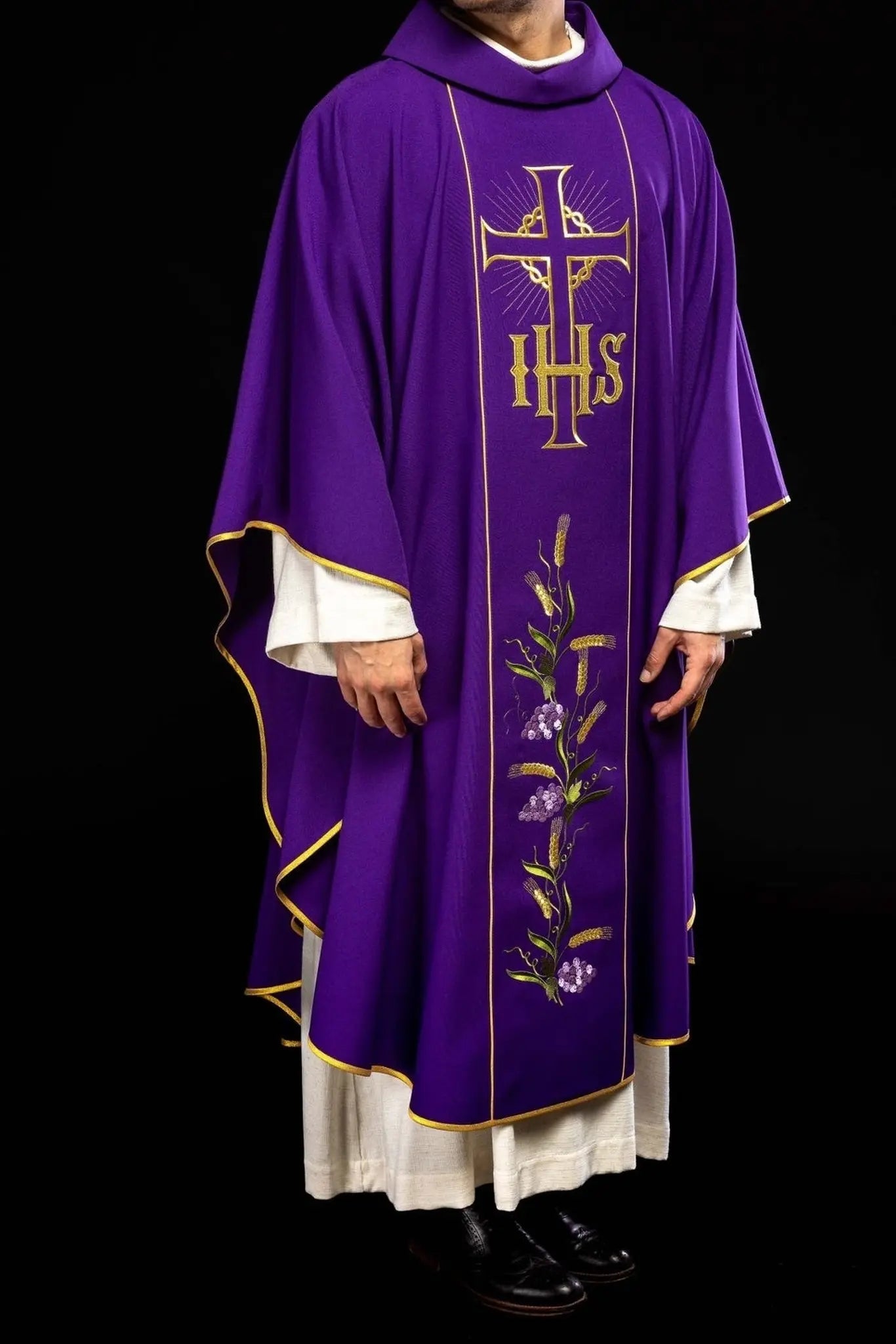
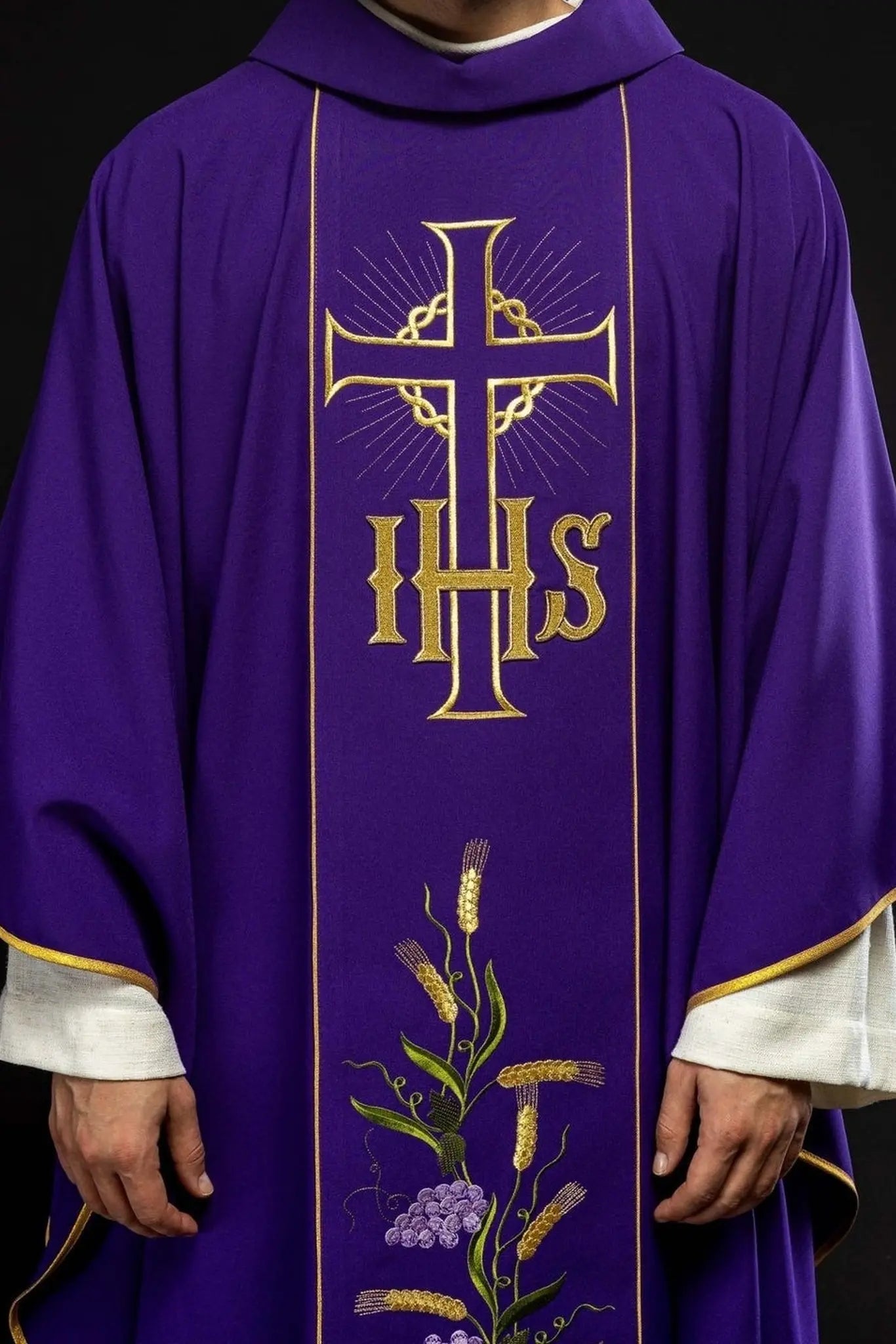
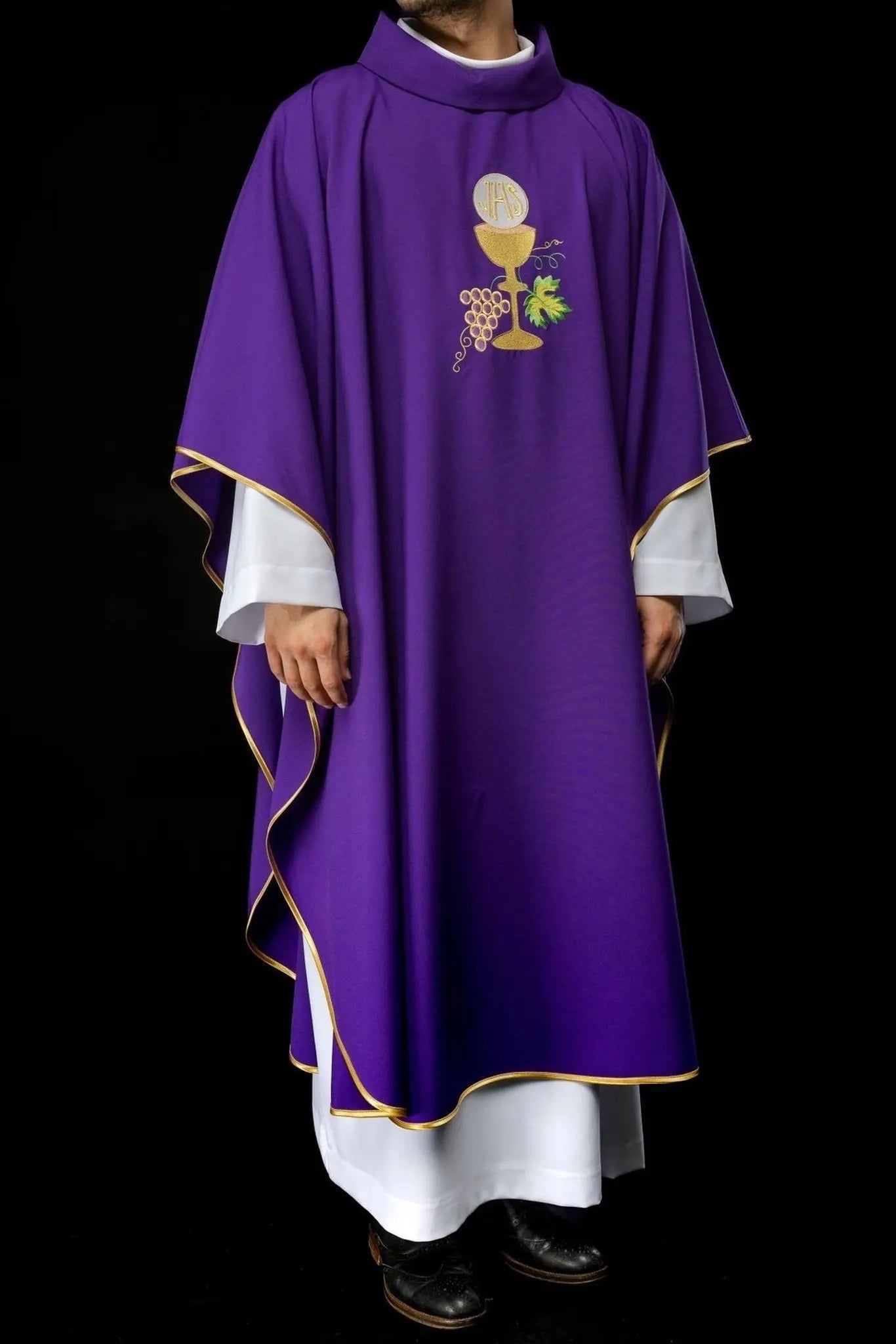
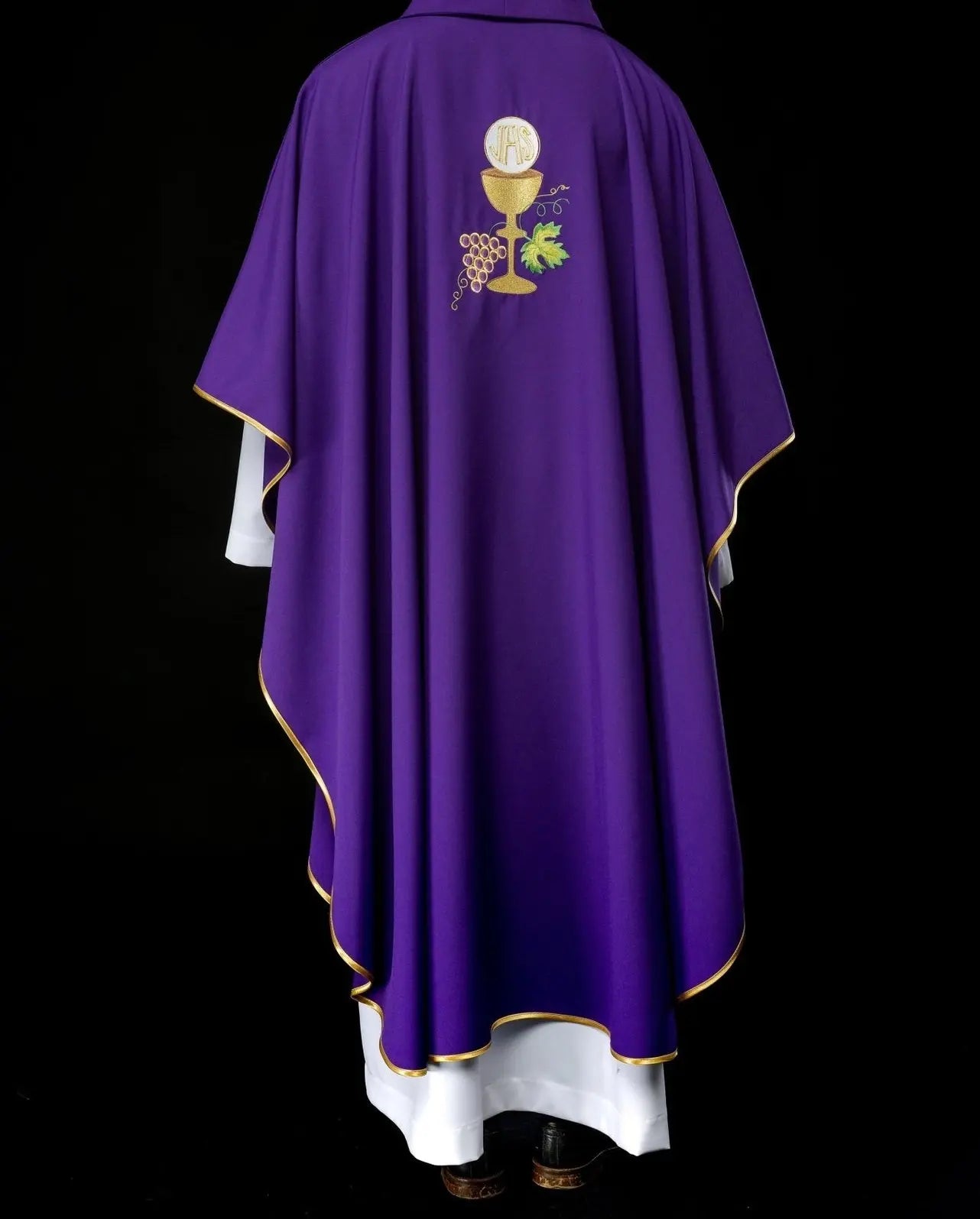
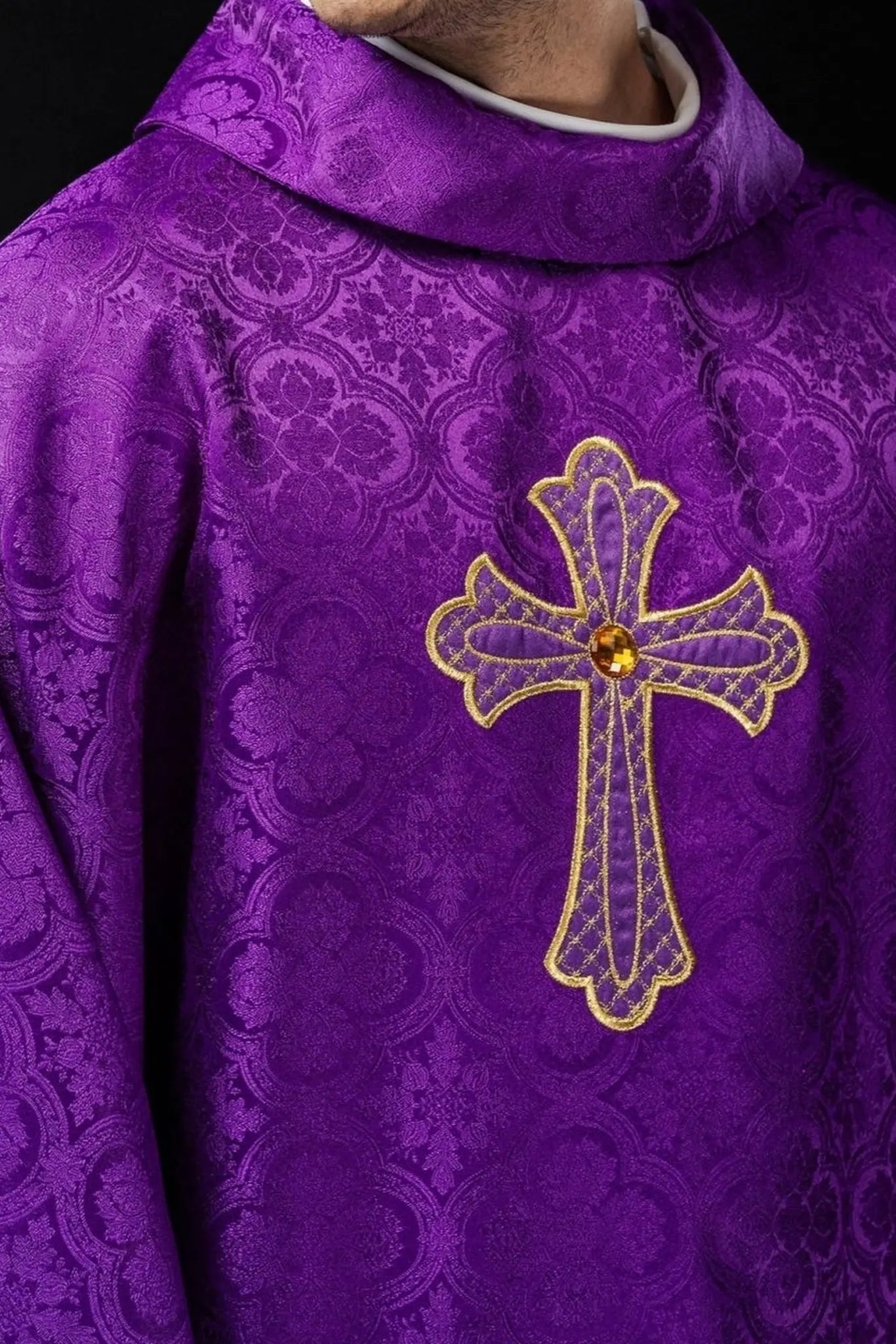
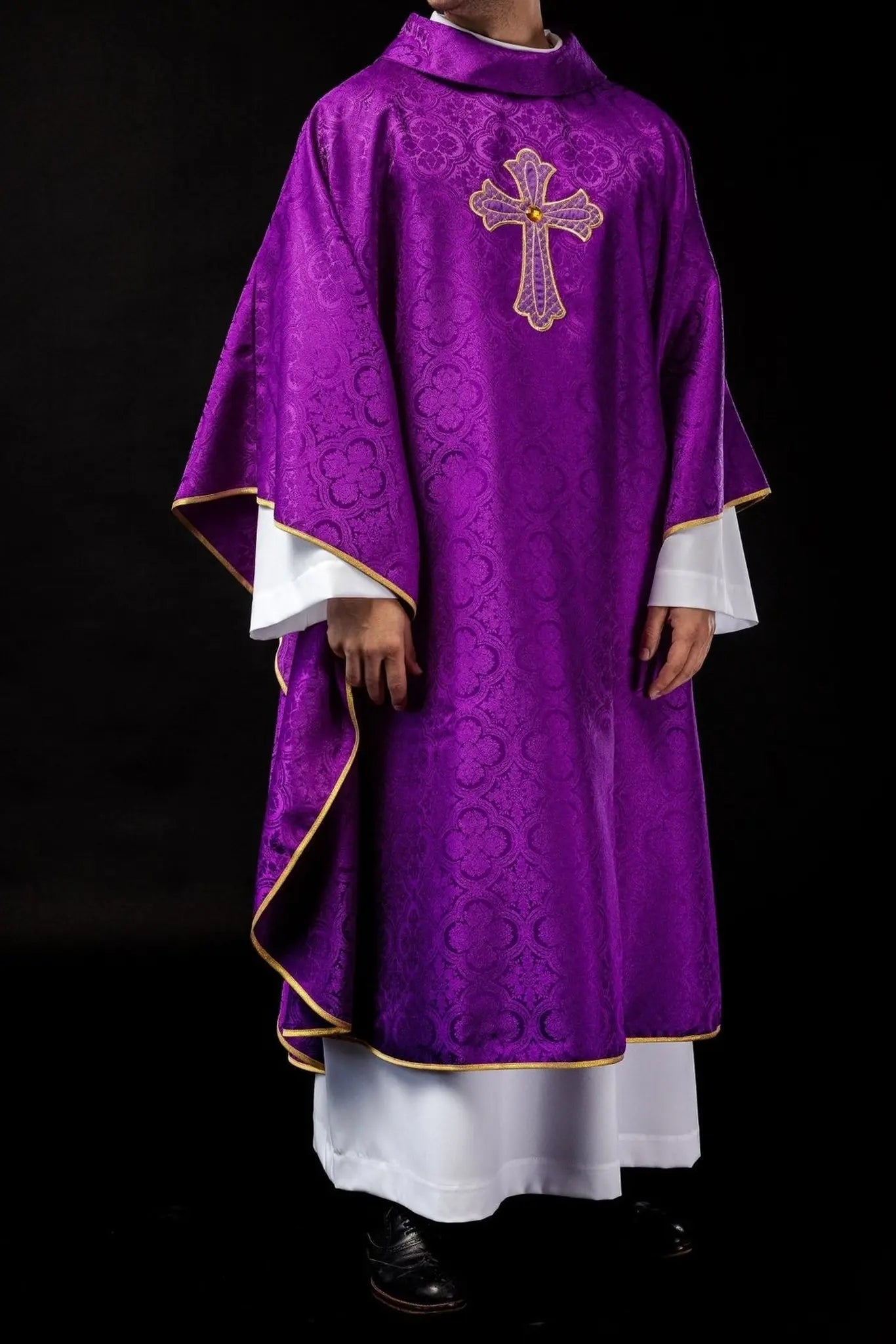
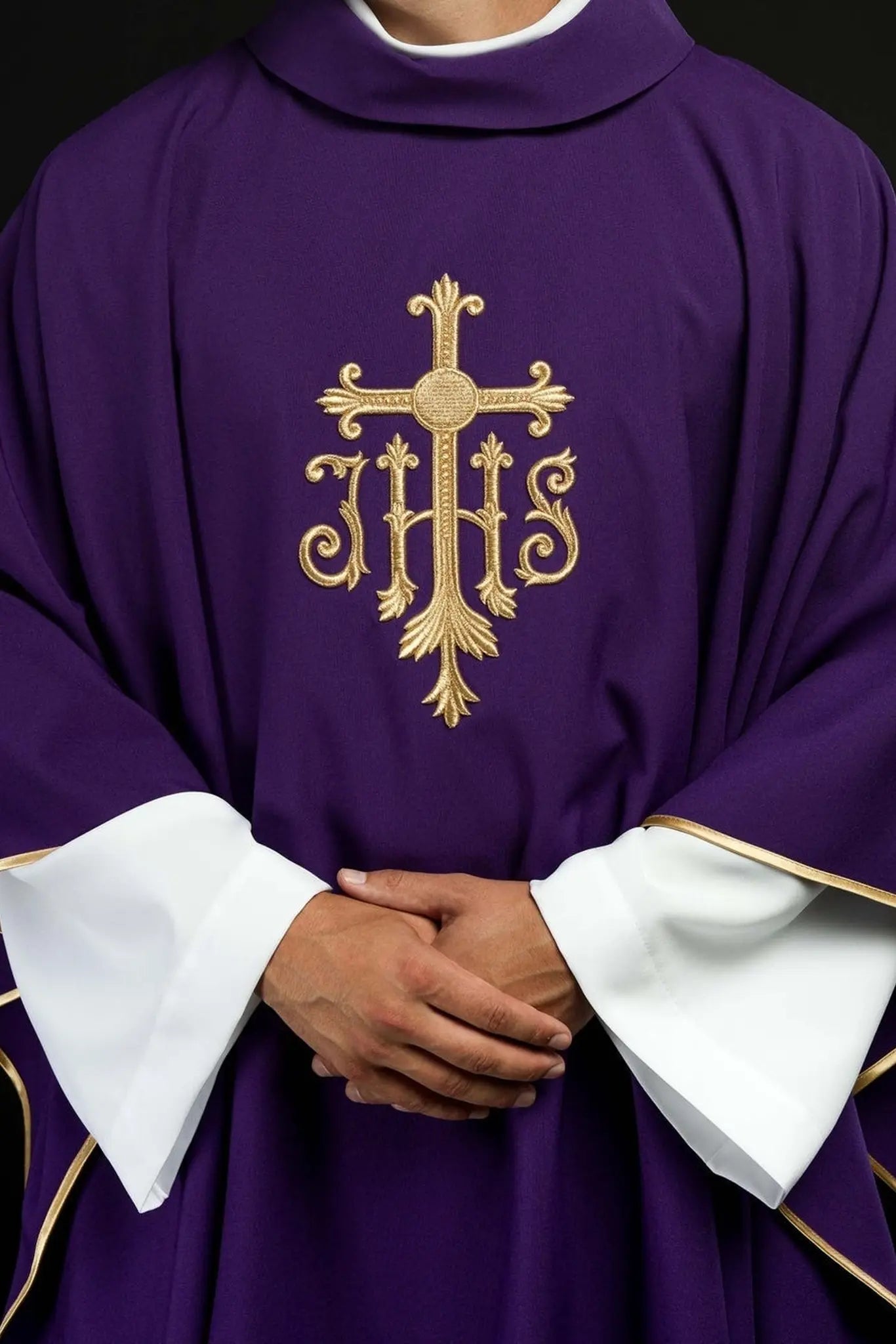
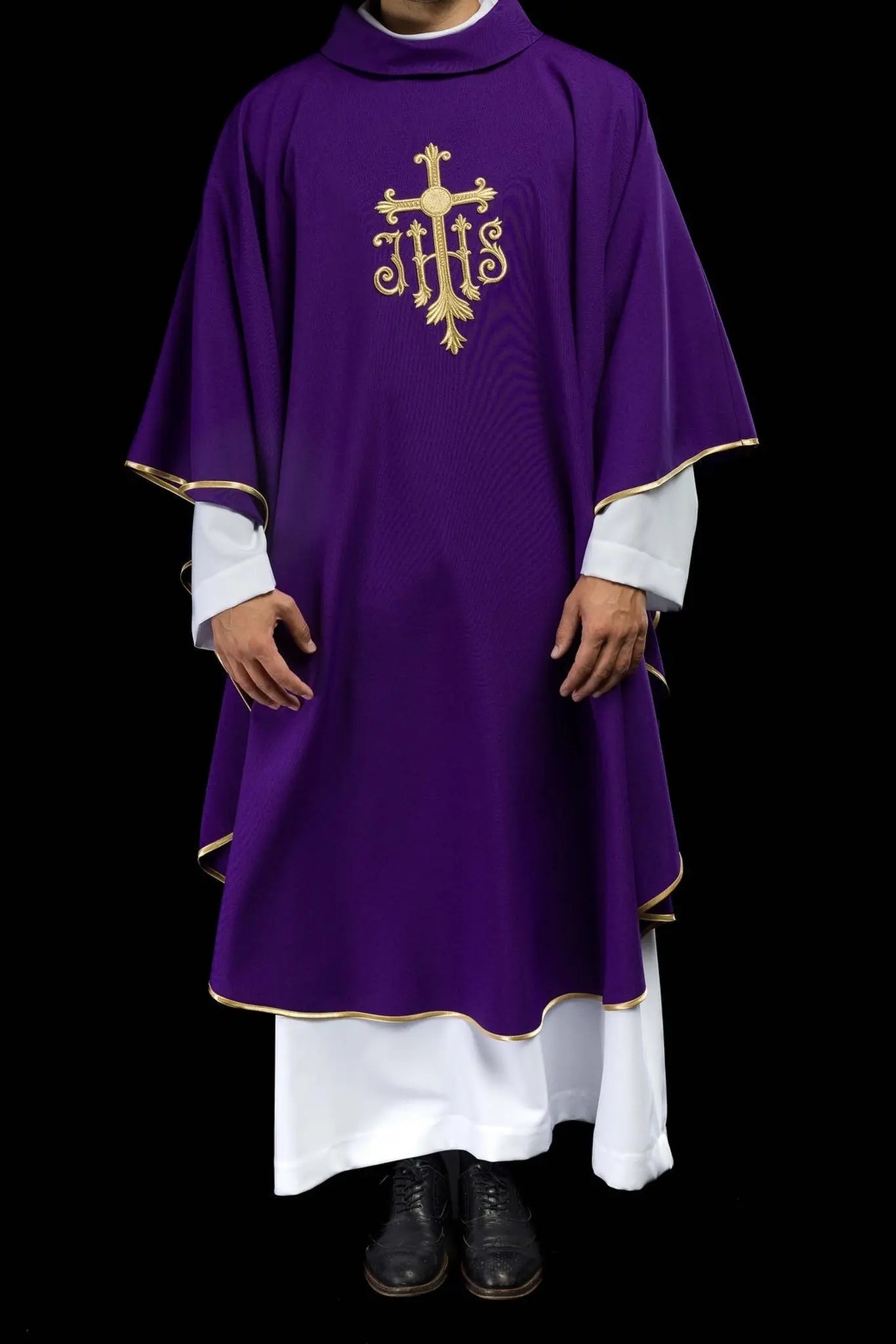
Within this collection you will find Lenten chasubles, stoles, copes, chalice linen sets, lectern and altar textiles, and related pieces that help create a dignified and prayerful setting. Many designs use purple fabric or purple accents, often with embroidery that refers to the Cross, the Passion of Christ, the Eucharist, the IHS monogram, the chalice, grapes, or restrained ornamental motifs. The aim is not visual excess, but a balanced composition that supports worship and expresses the distinctive character of Lent: sober, reverent, and directed toward renewal.
For a broader overview of vestments beyond this season, see the main liturgical vestments collection. If your parish is specifically selecting Mass vestments, the chasubles section is the closest related category, while the dedicated purple chasubles collection is especially relevant for Lent, Advent, funerals where violet is used, and penitential celebrations. This Lent collection, however, gathers seasonal items in one place so that clergy and sacristans can coordinate vestments and linens more easily.
The Liturgical Meaning of Lent
Lent is a time of preparation before Easter, marked by prayer, fasting, almsgiving, repentance, and deeper attention to the mystery of salvation. The sacred liturgy gives visible expression to this spiritual movement through texts, music, ritual restraint, and color. Violet vestments help the faithful recognize the penitential character of the season and distinguish it from the festive brightness of Christmas and Easter. The color also carries a royal association, recalling Christ the King who enters His Passion in humility.
Because Lent is not merely a decorative theme, the vestments used during this season should be selected with care. A Lenten chasuble, stole, or cope should serve the liturgy first. It should be suitable for the celebration, comfortable for the minister, proportionate to the church interior, and clear in its symbolism. A simple purple vestment may be the right choice for weekday Masses, parish retreats, or confessions. A more richly embroidered design may be appropriate for Sundays of Lent, solemn parish services, or celebrations that gather a larger community.
What Belongs in the Lent Collection
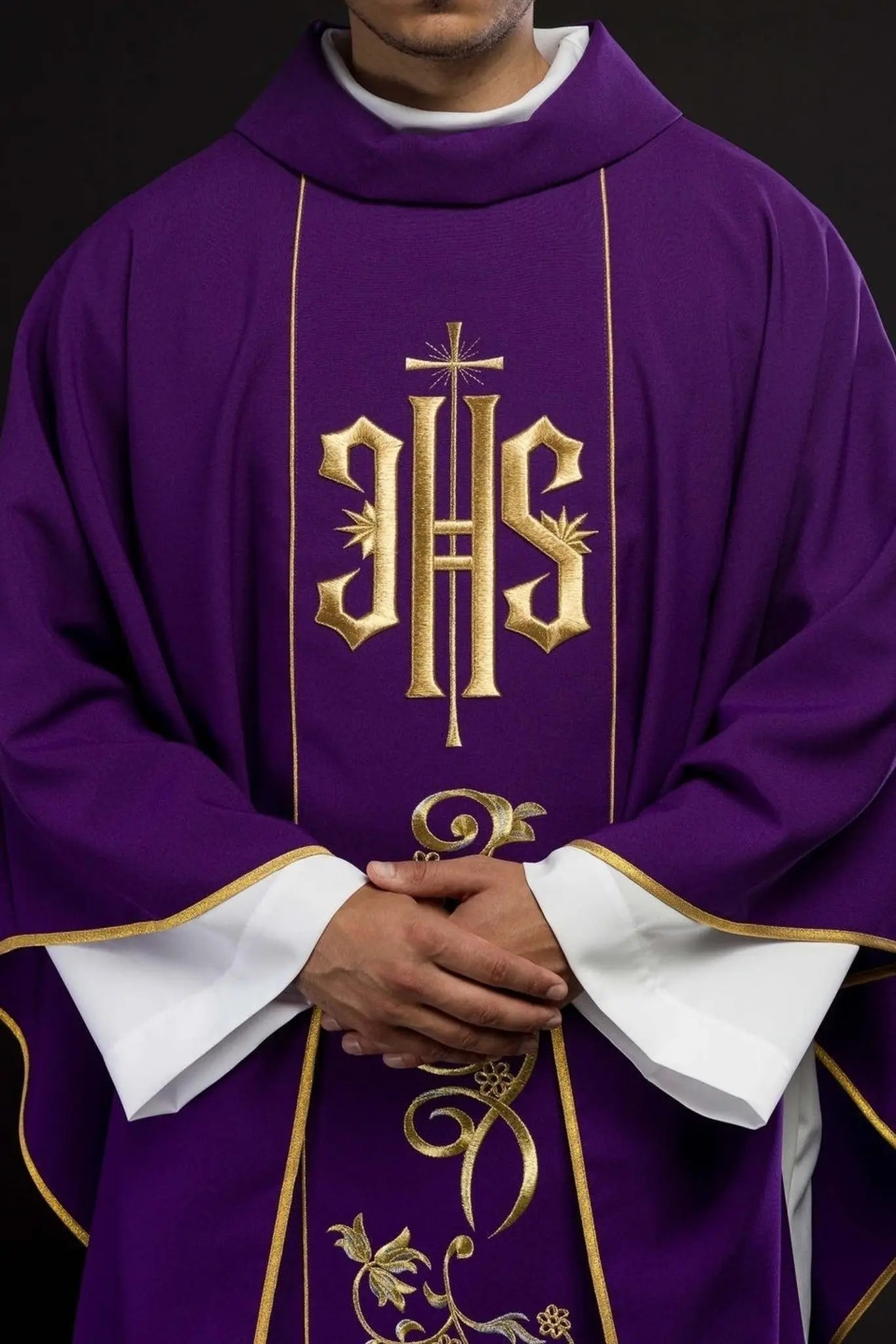
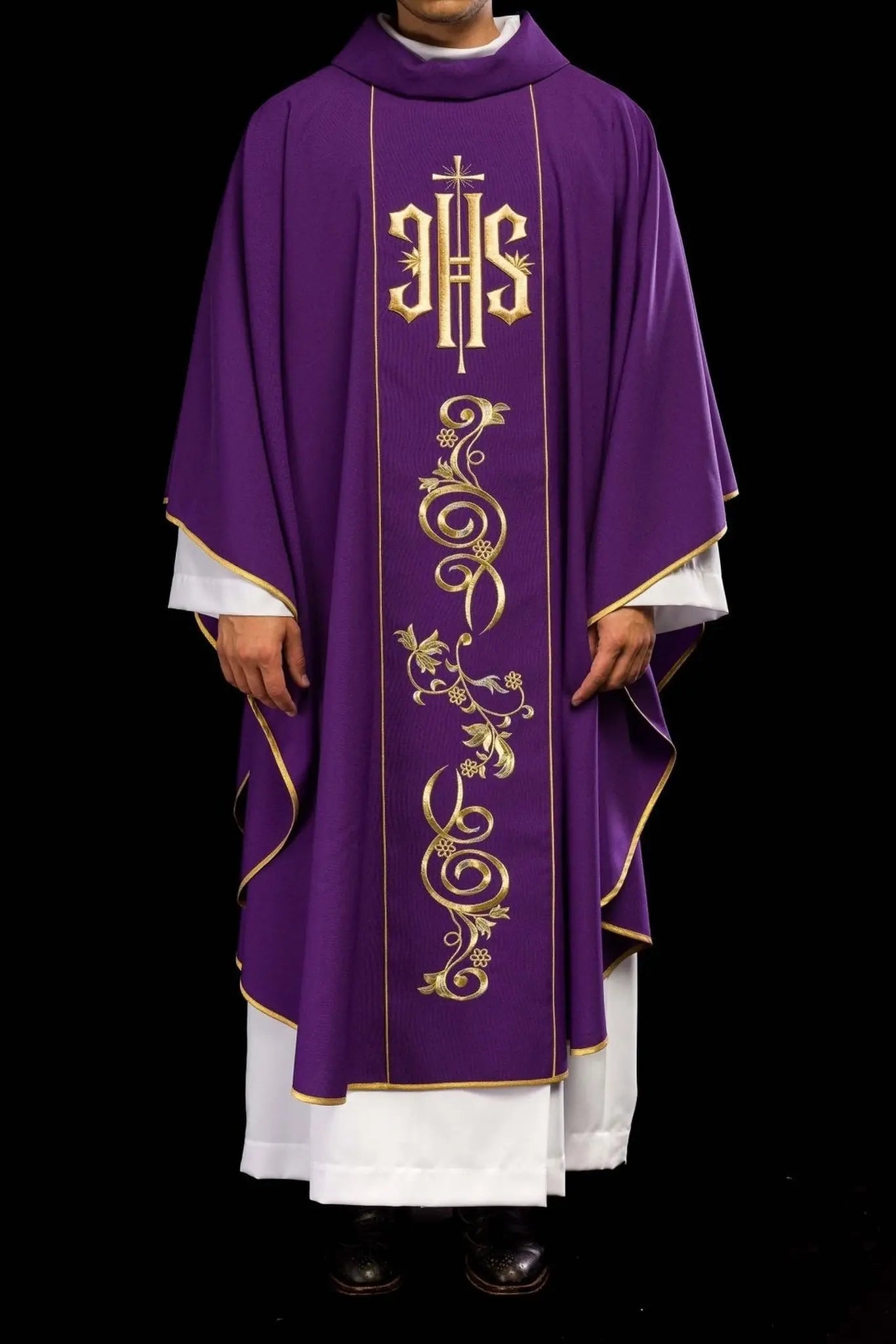
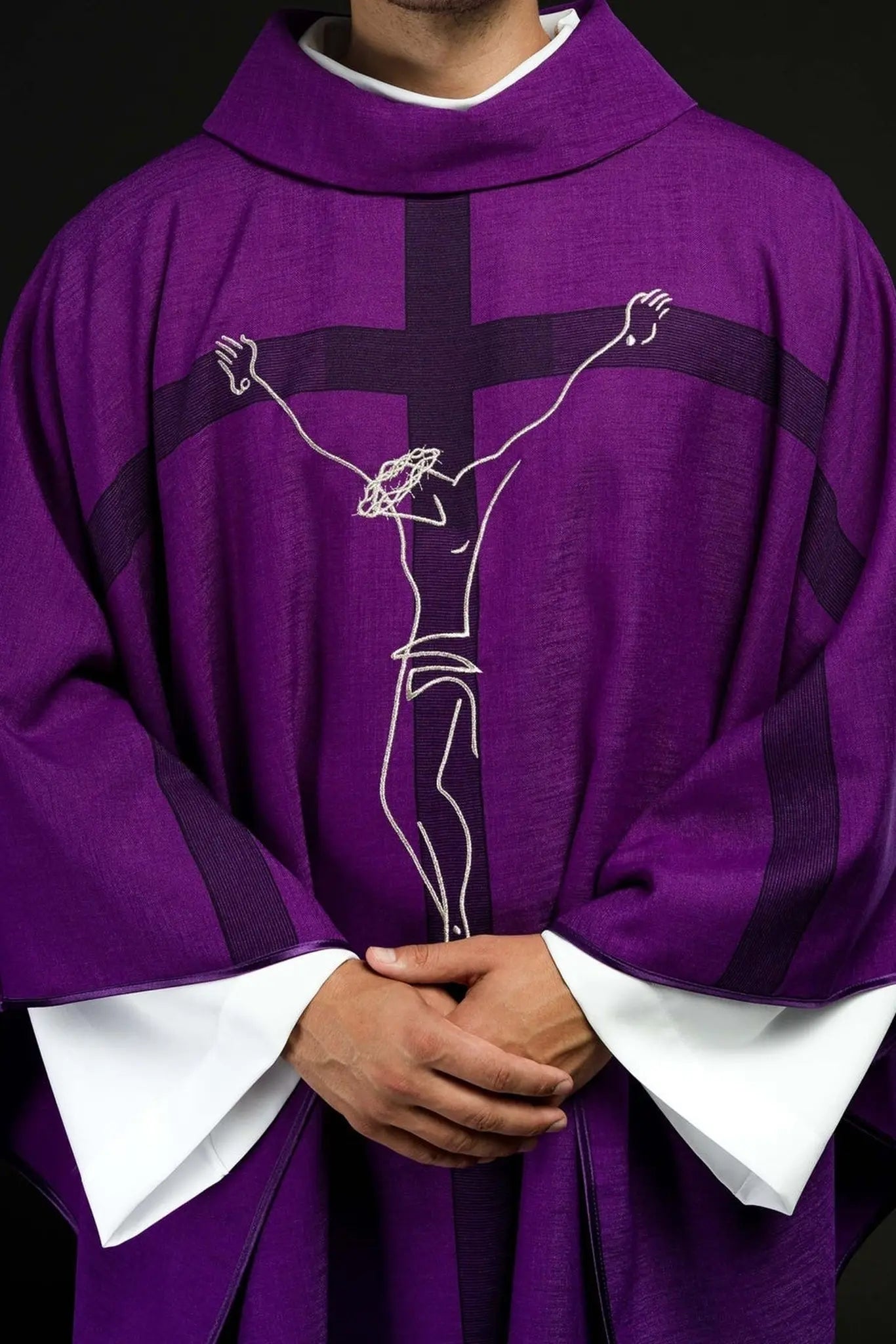
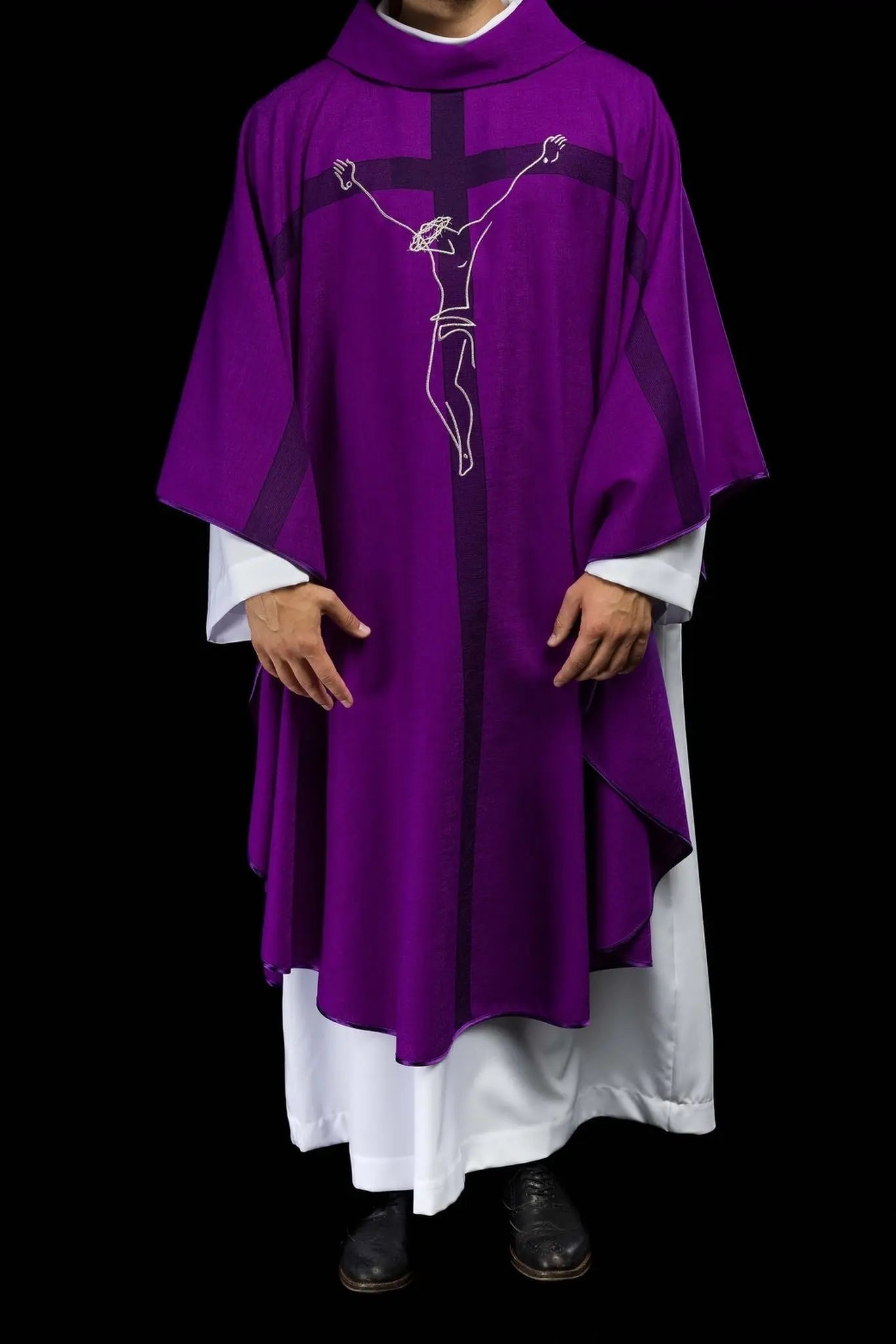
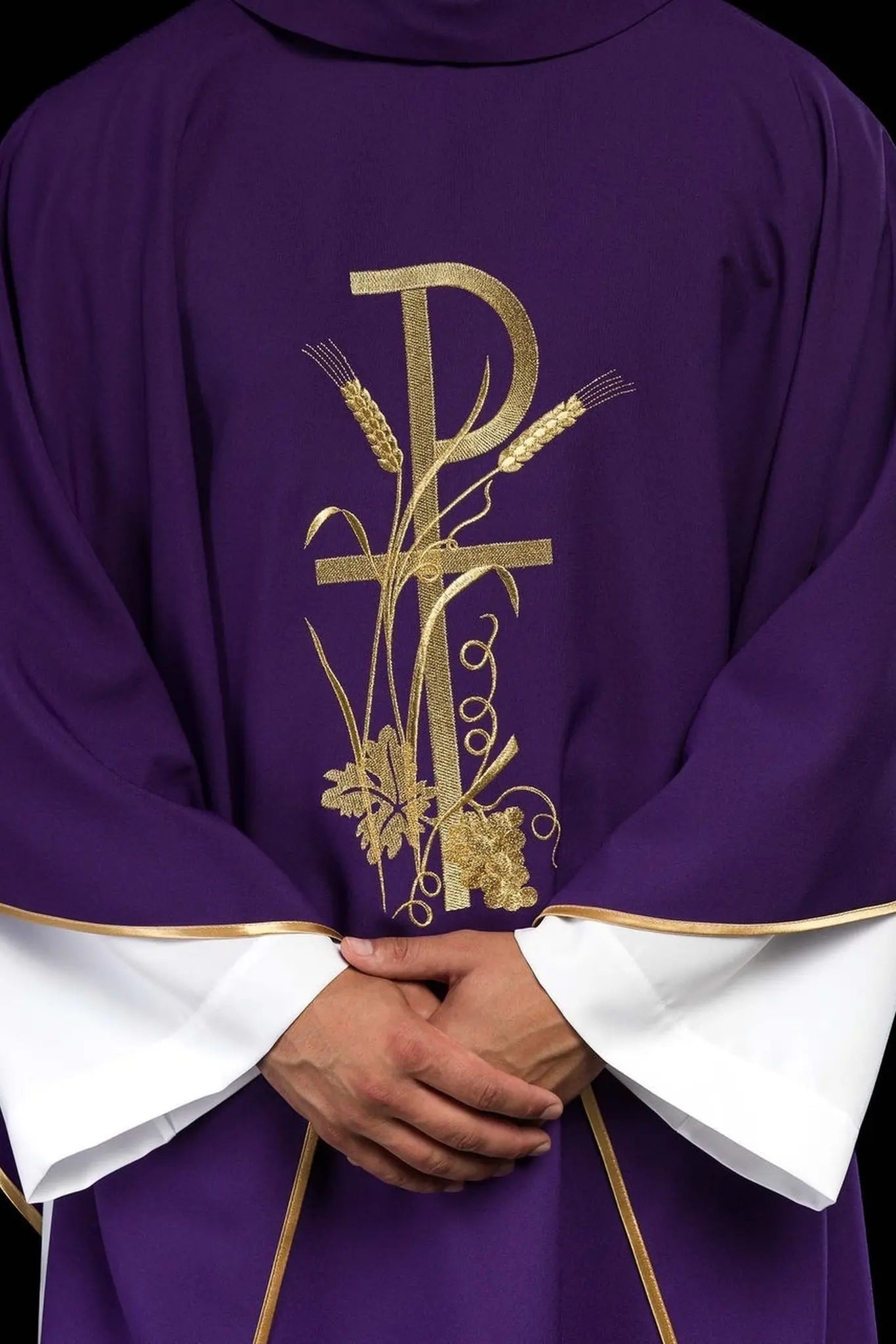
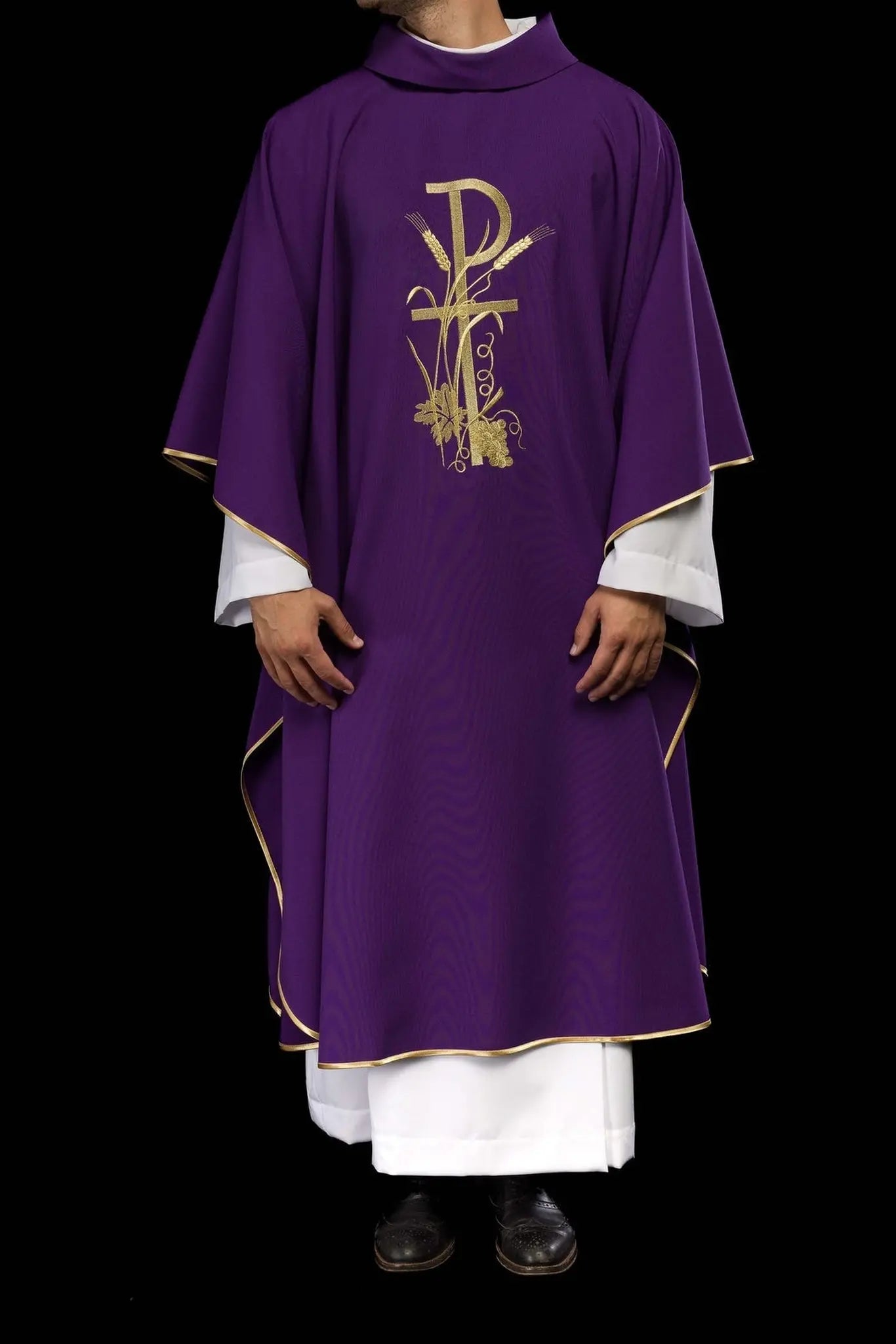
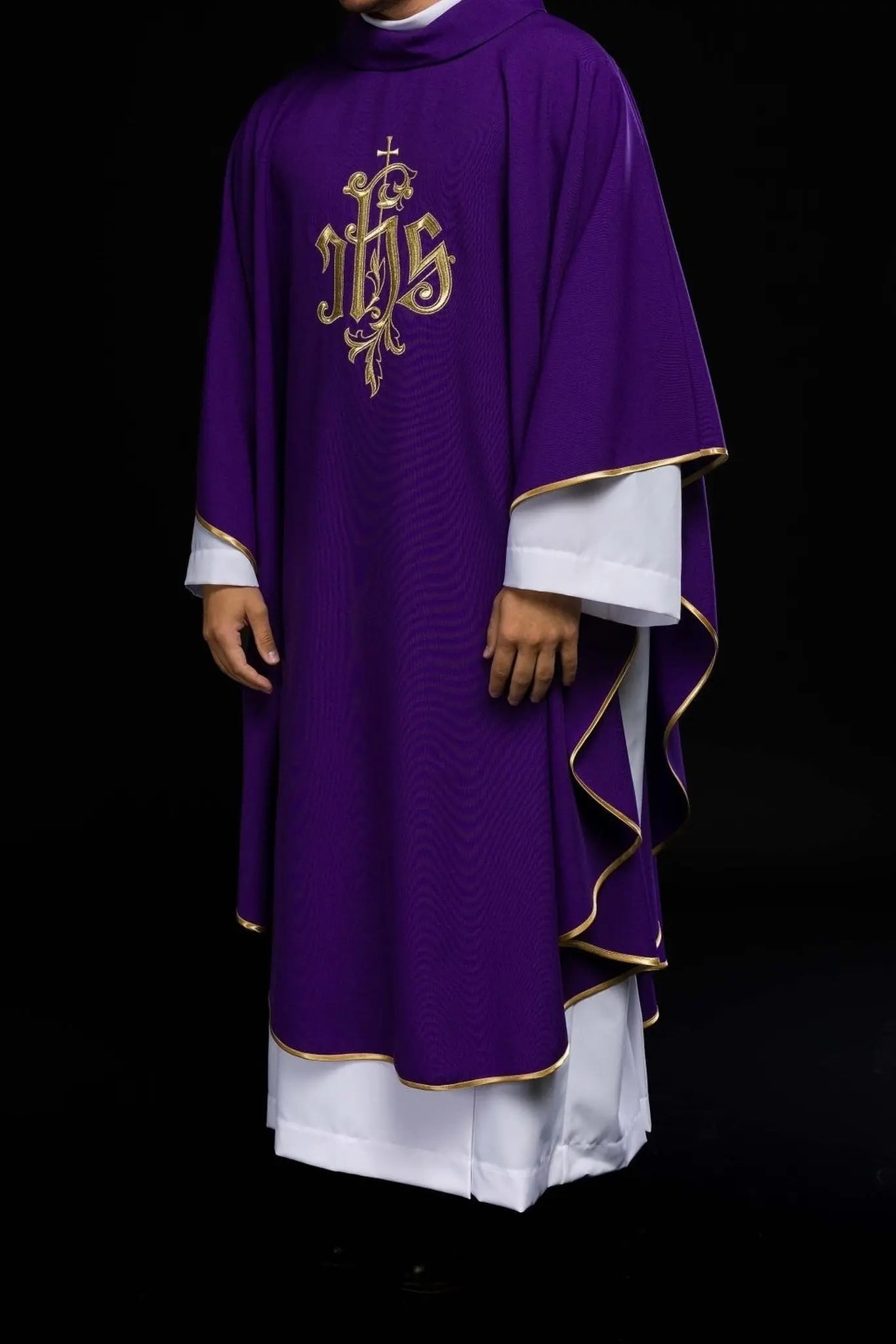
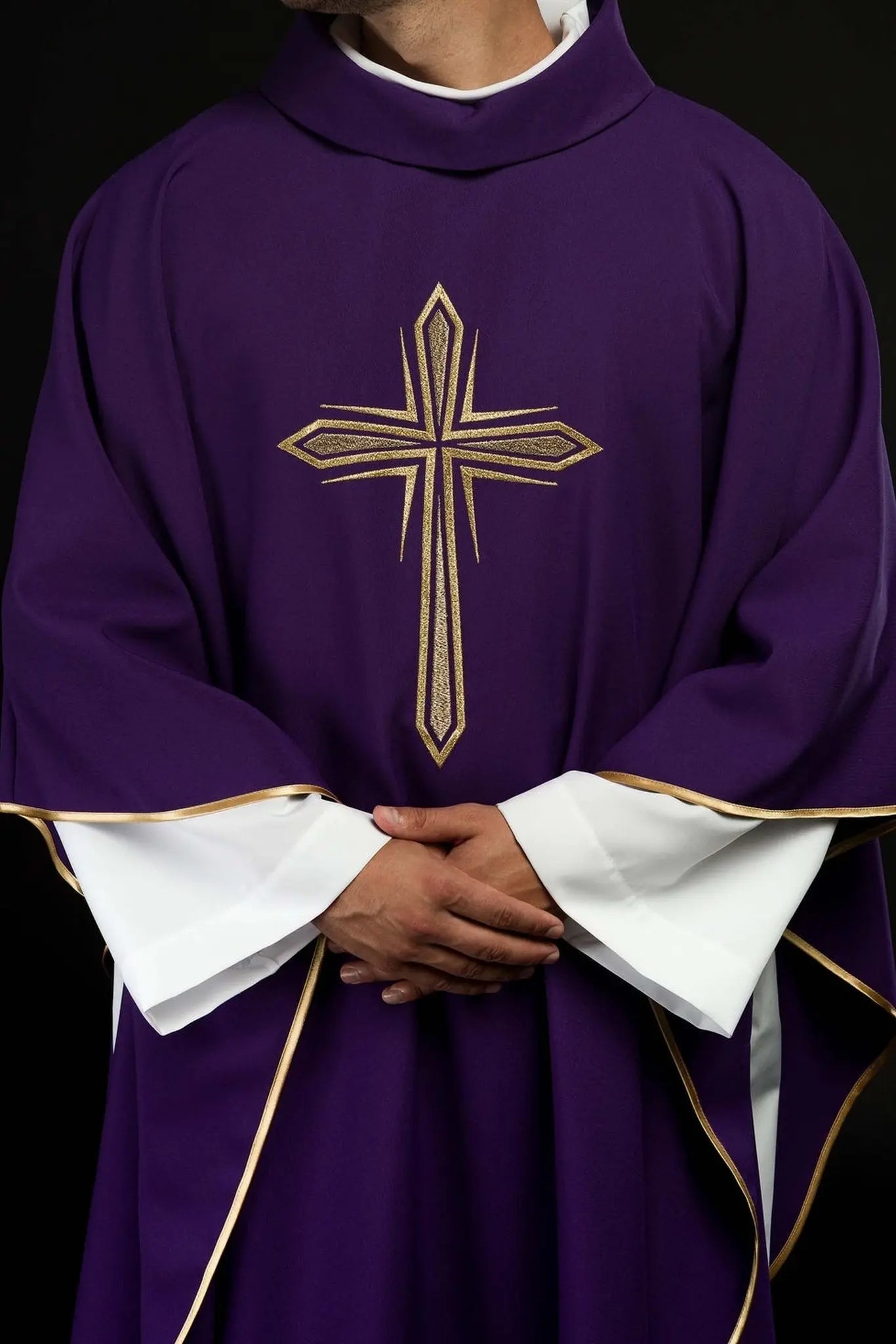
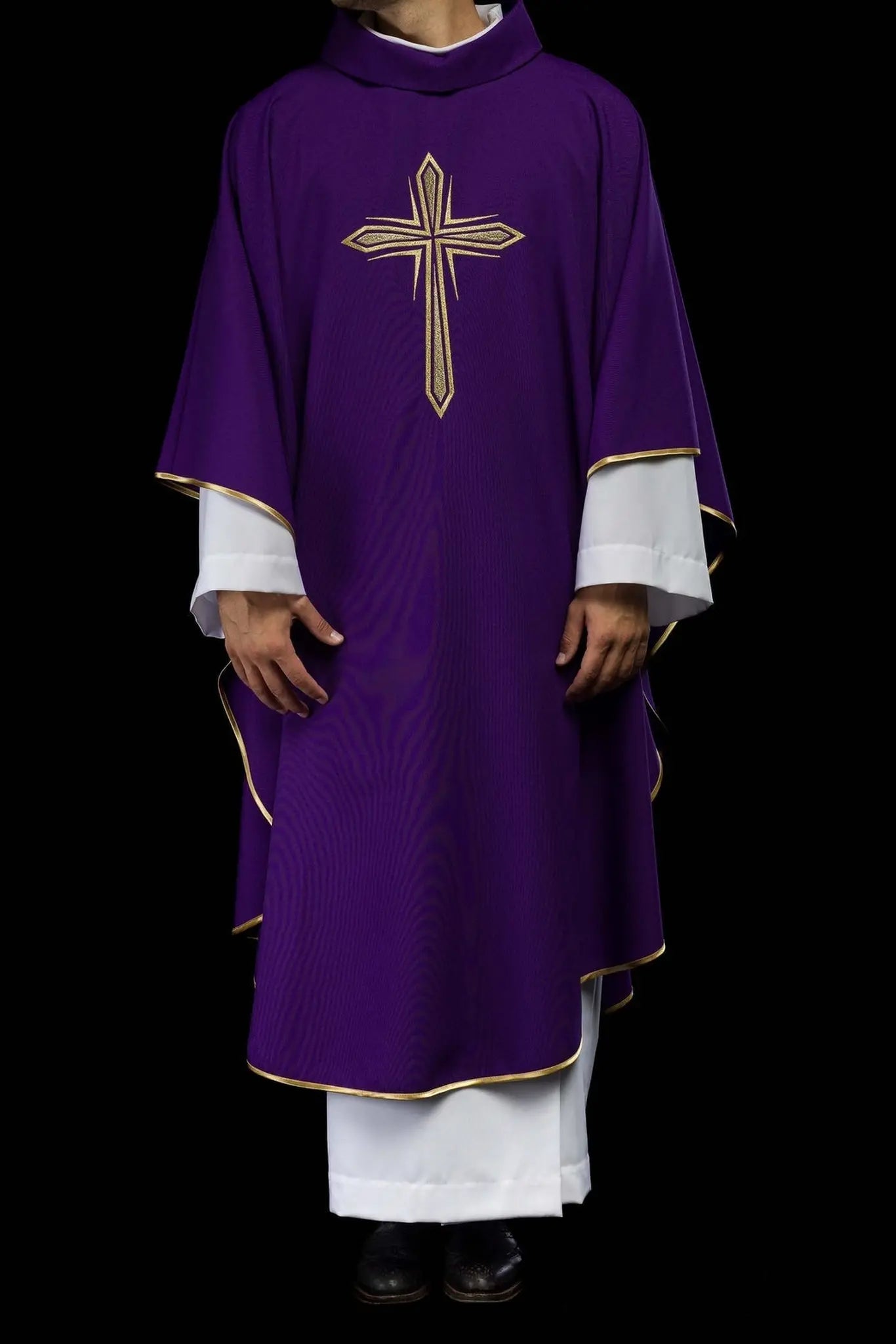
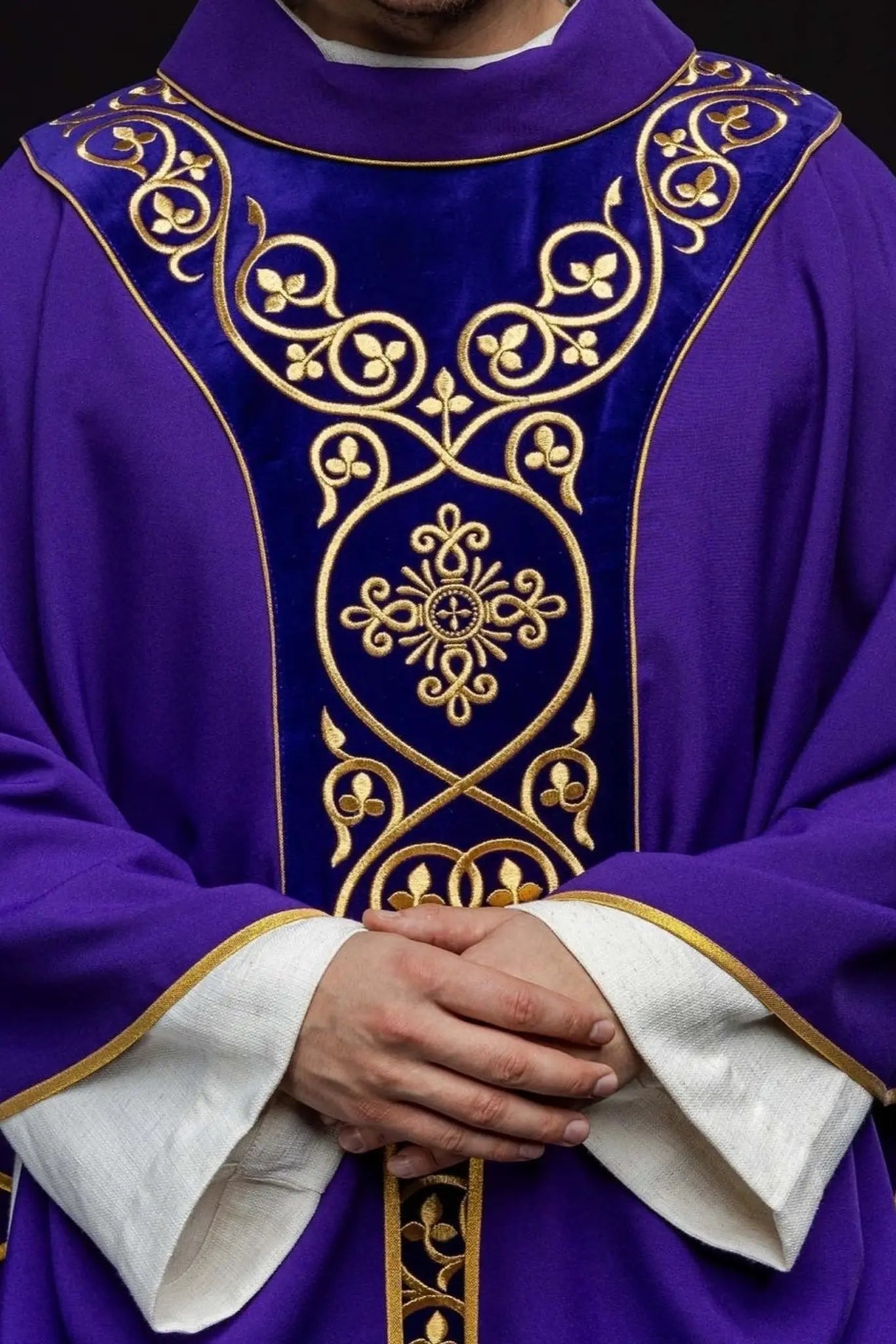
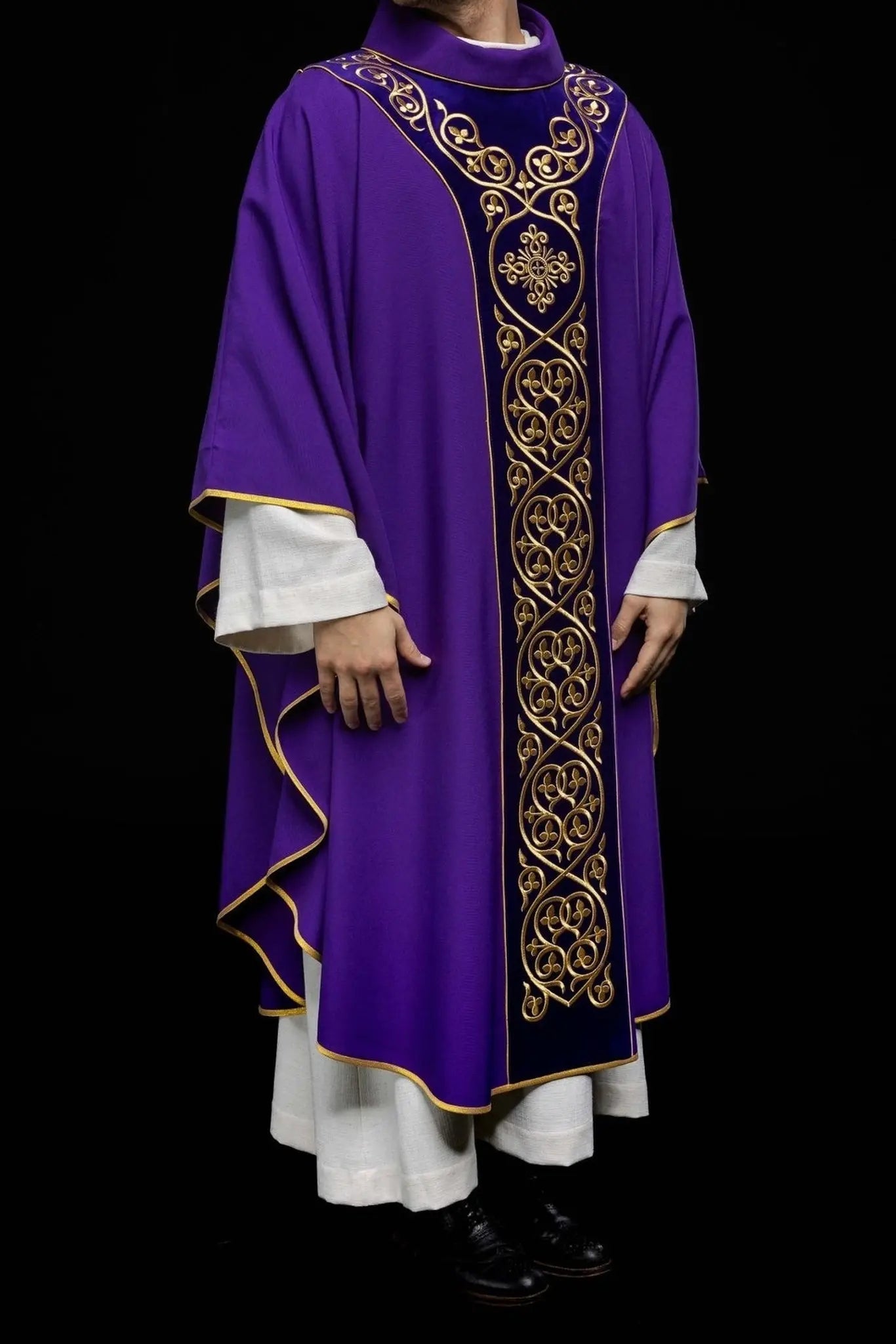
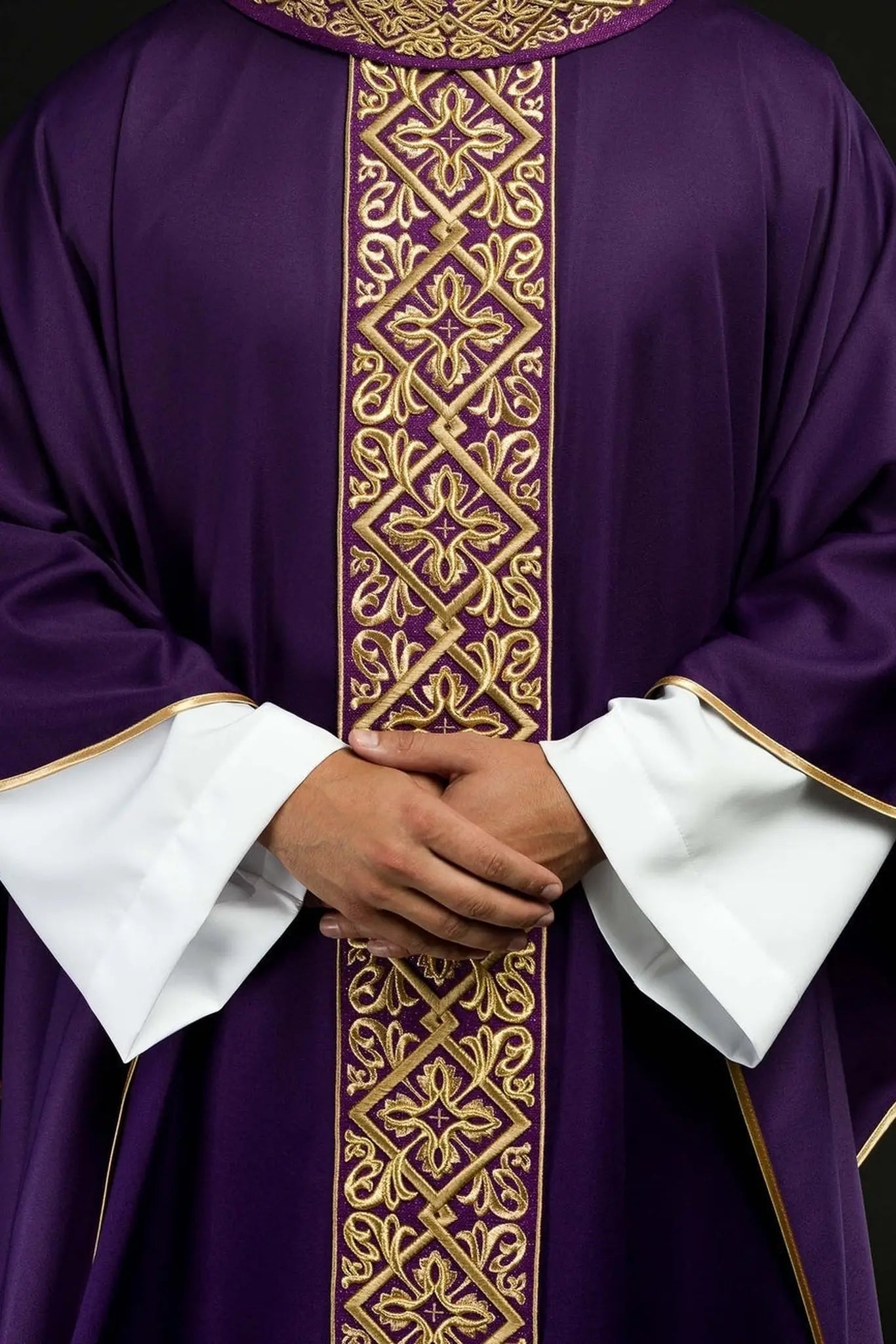
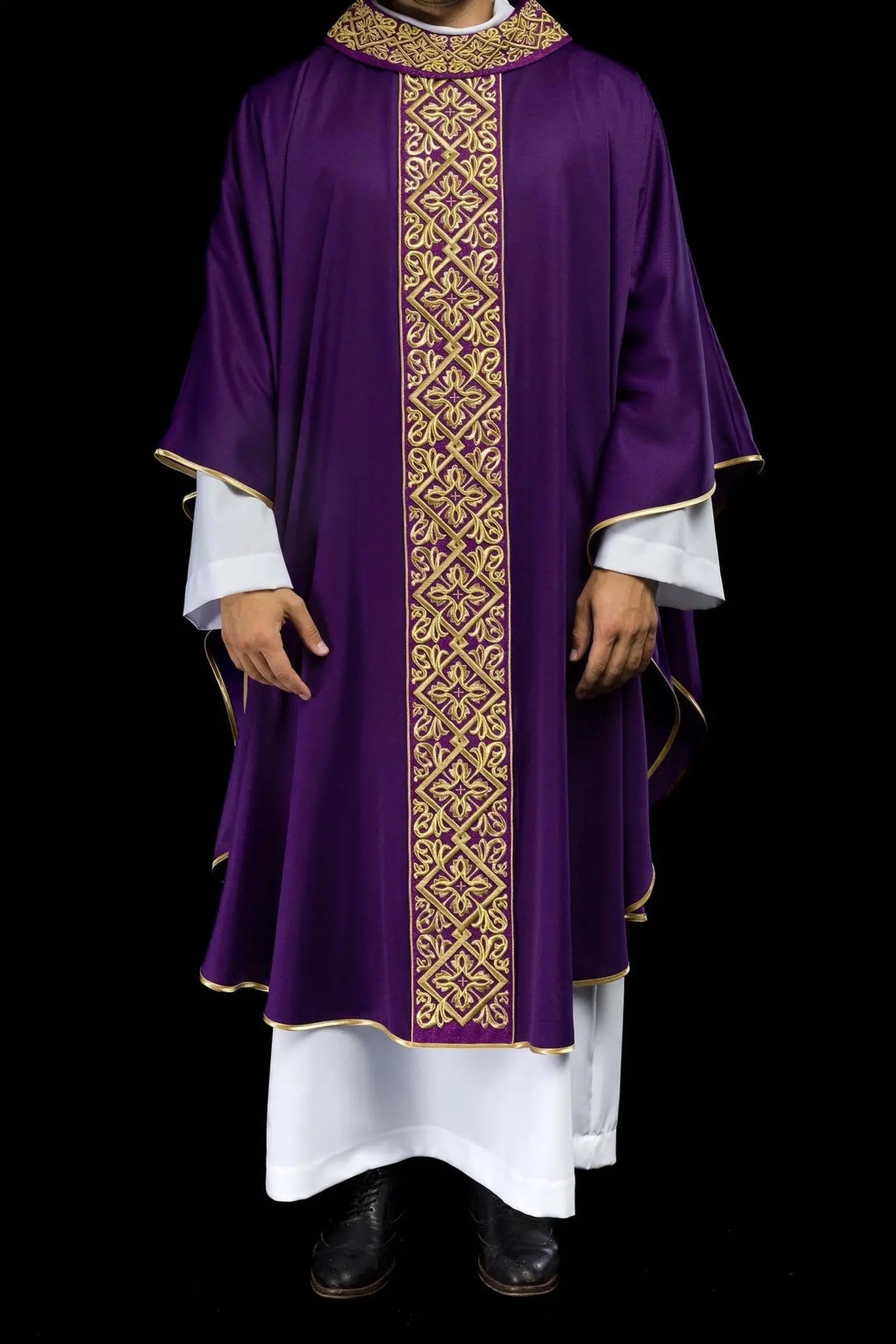
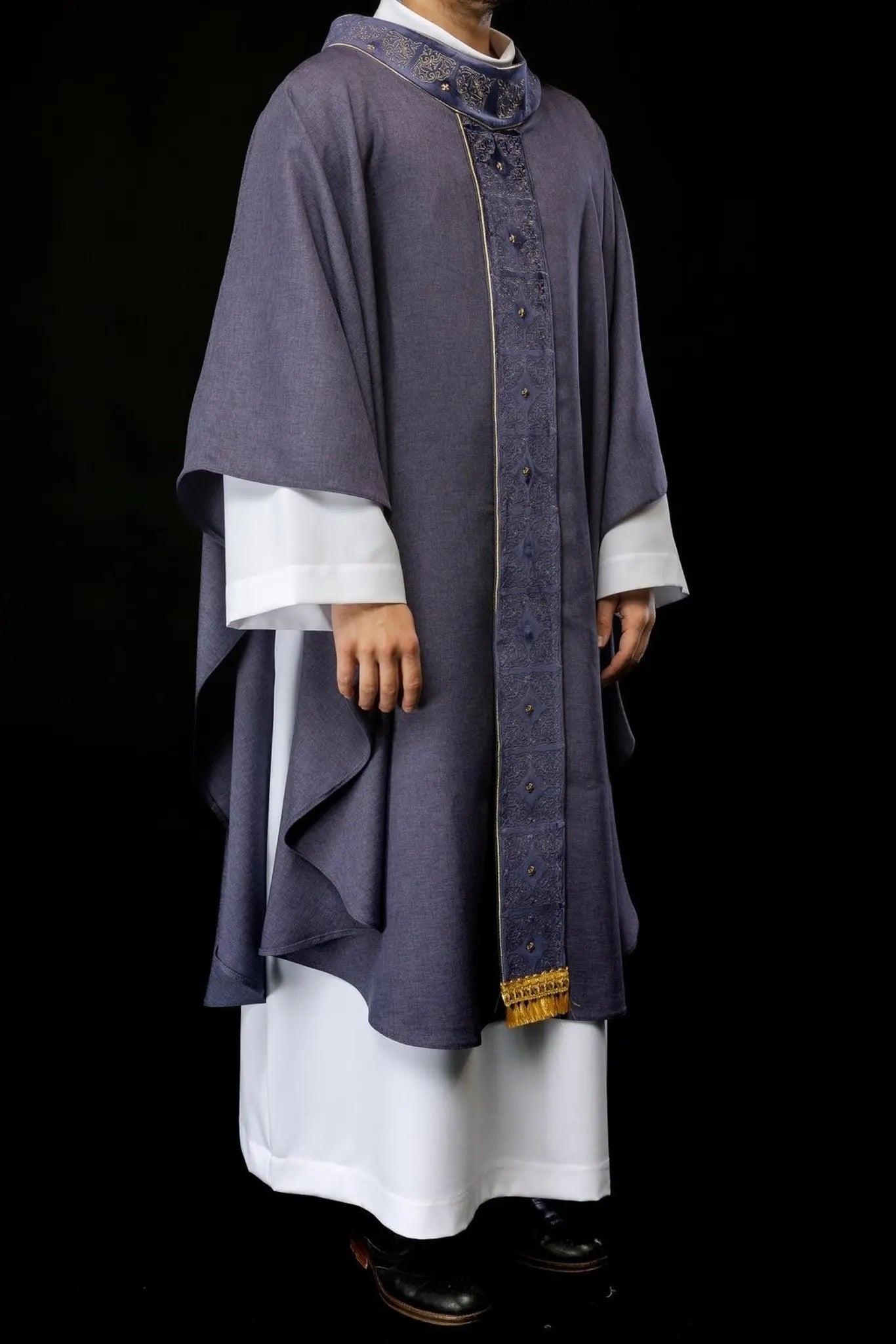
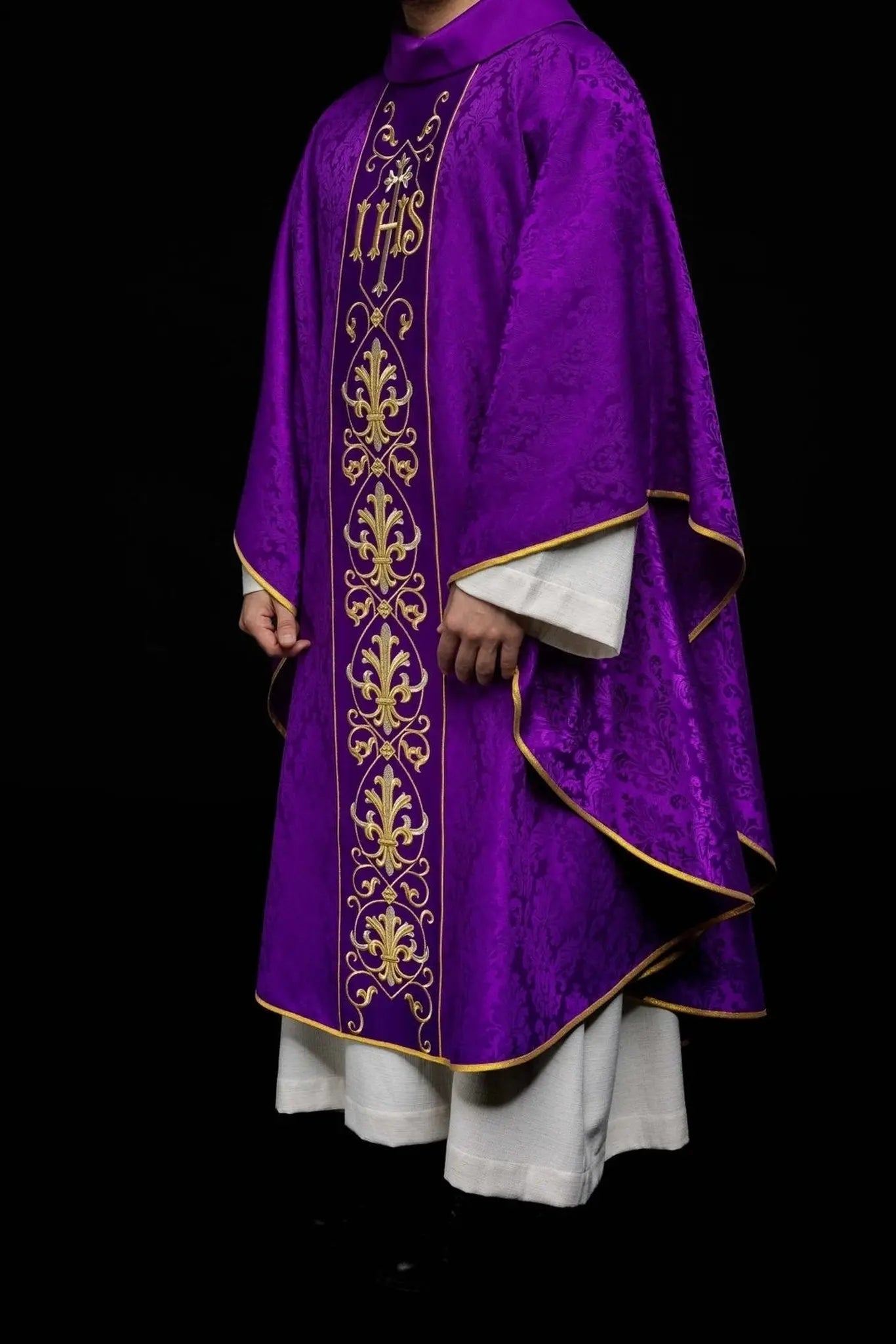
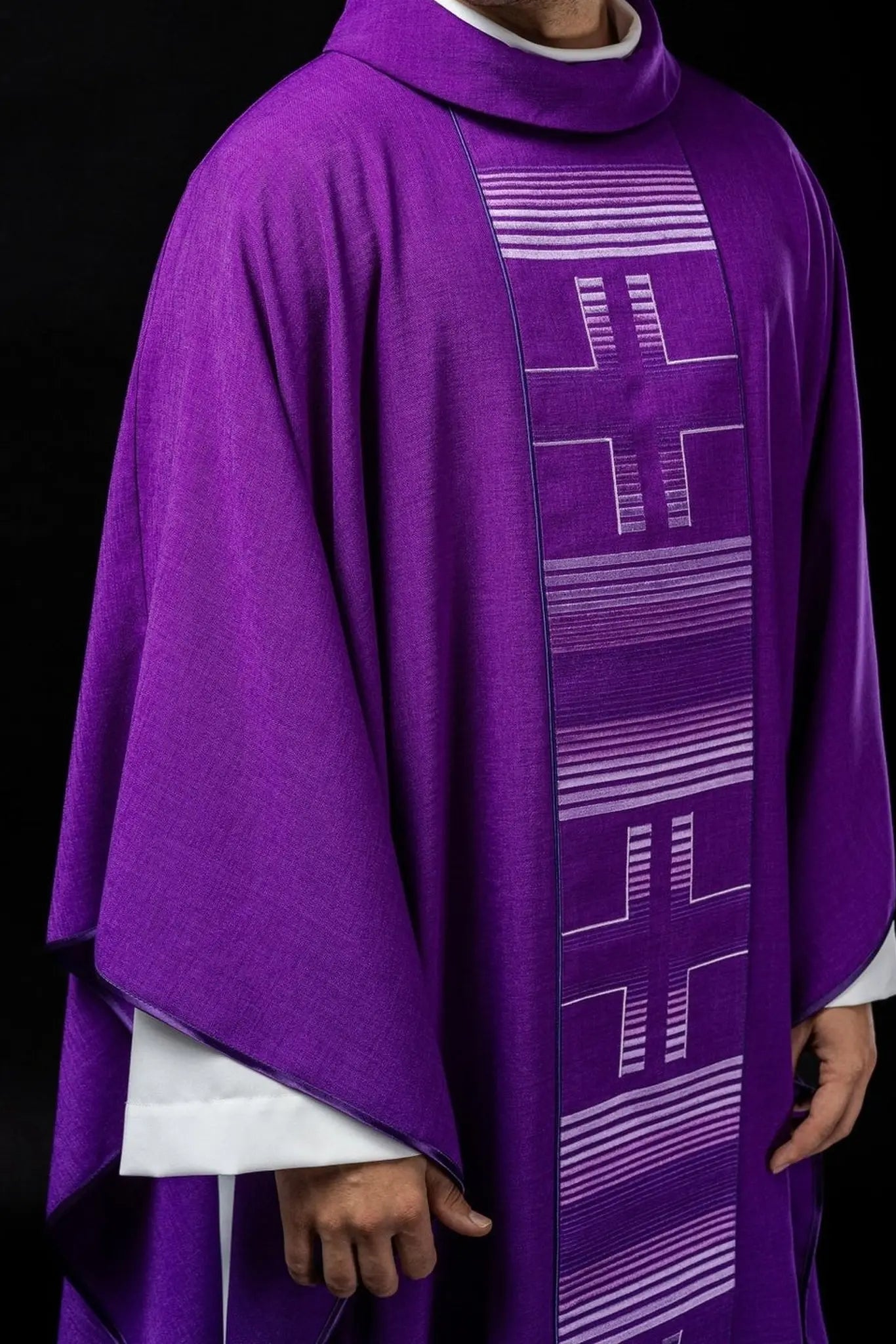
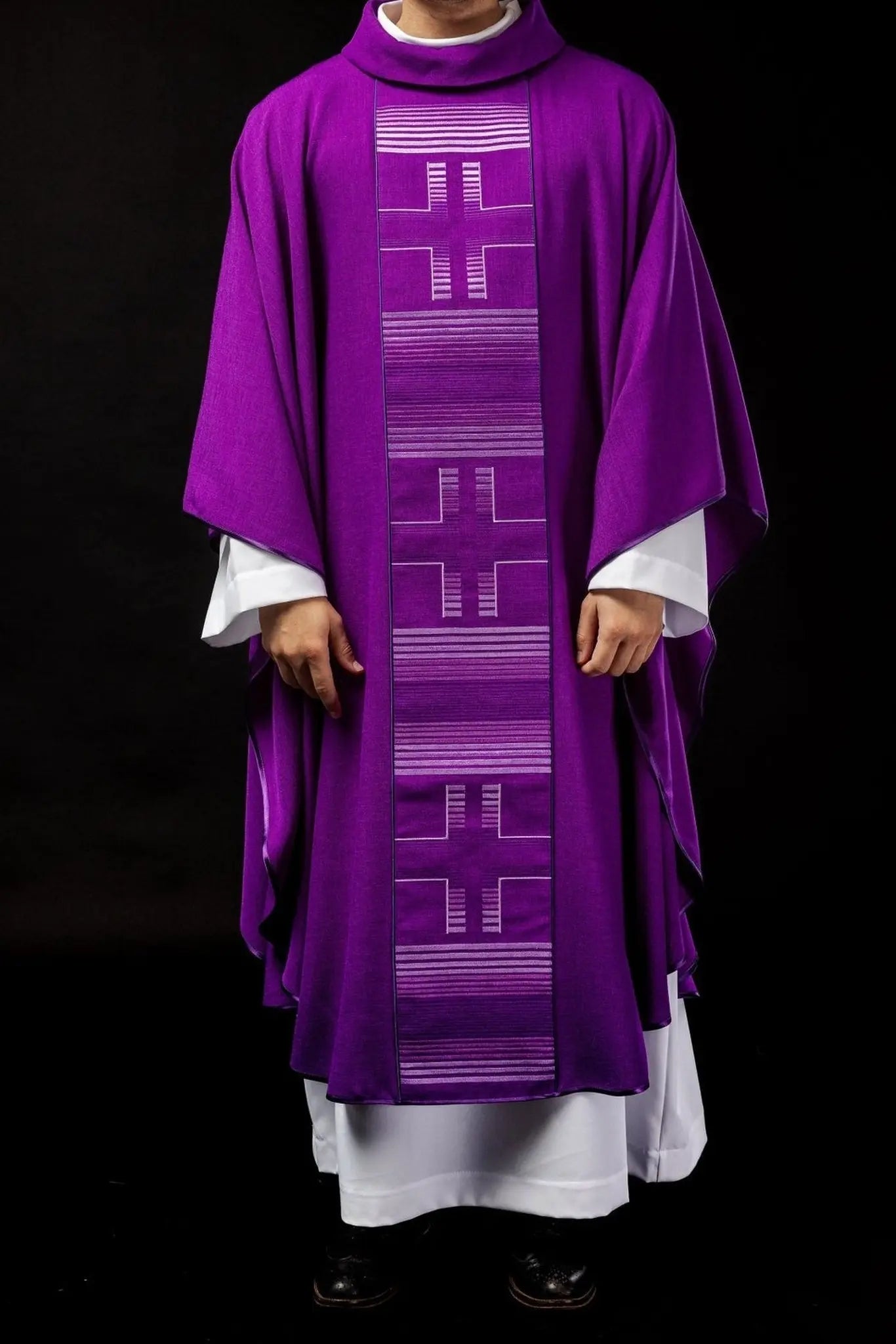
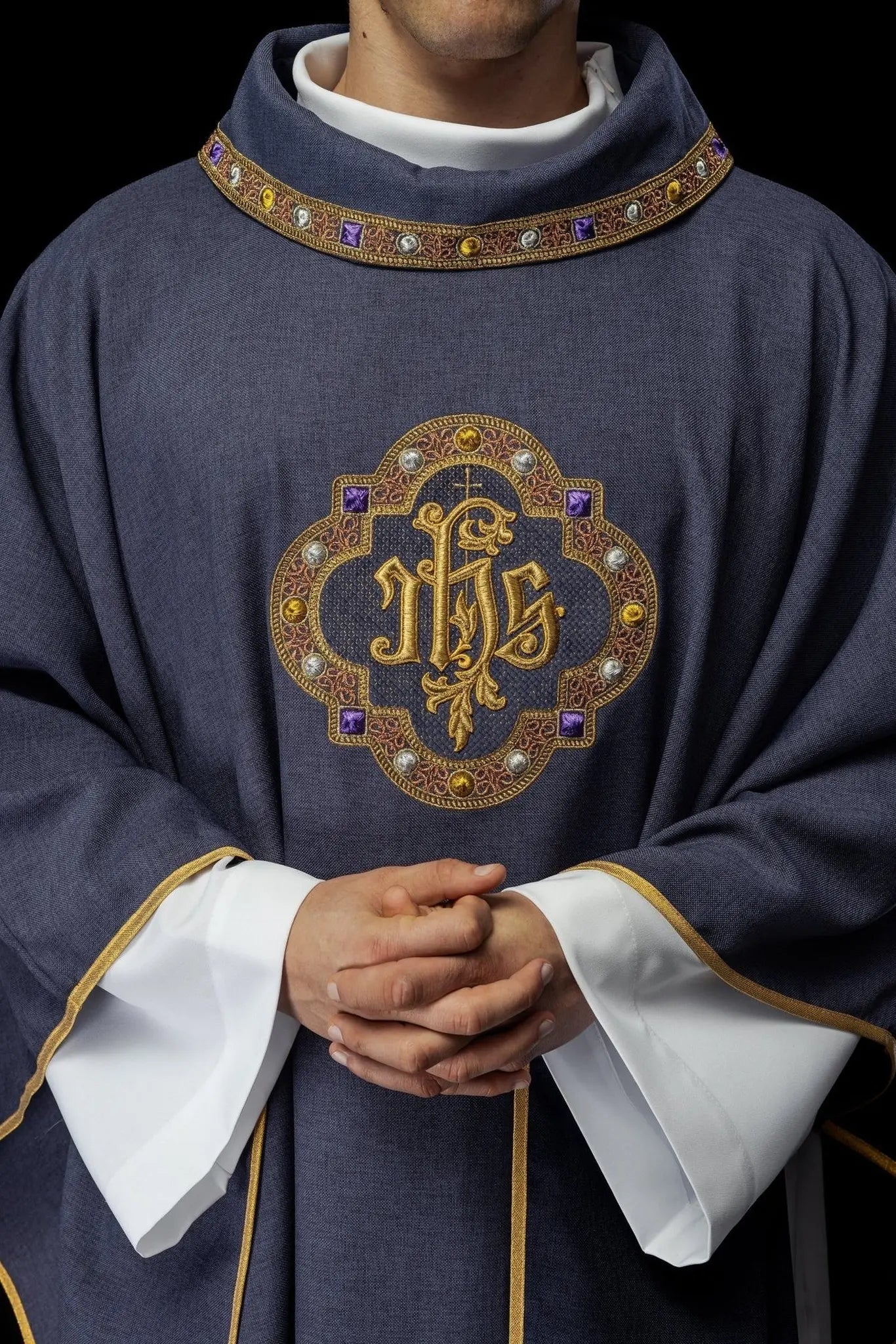
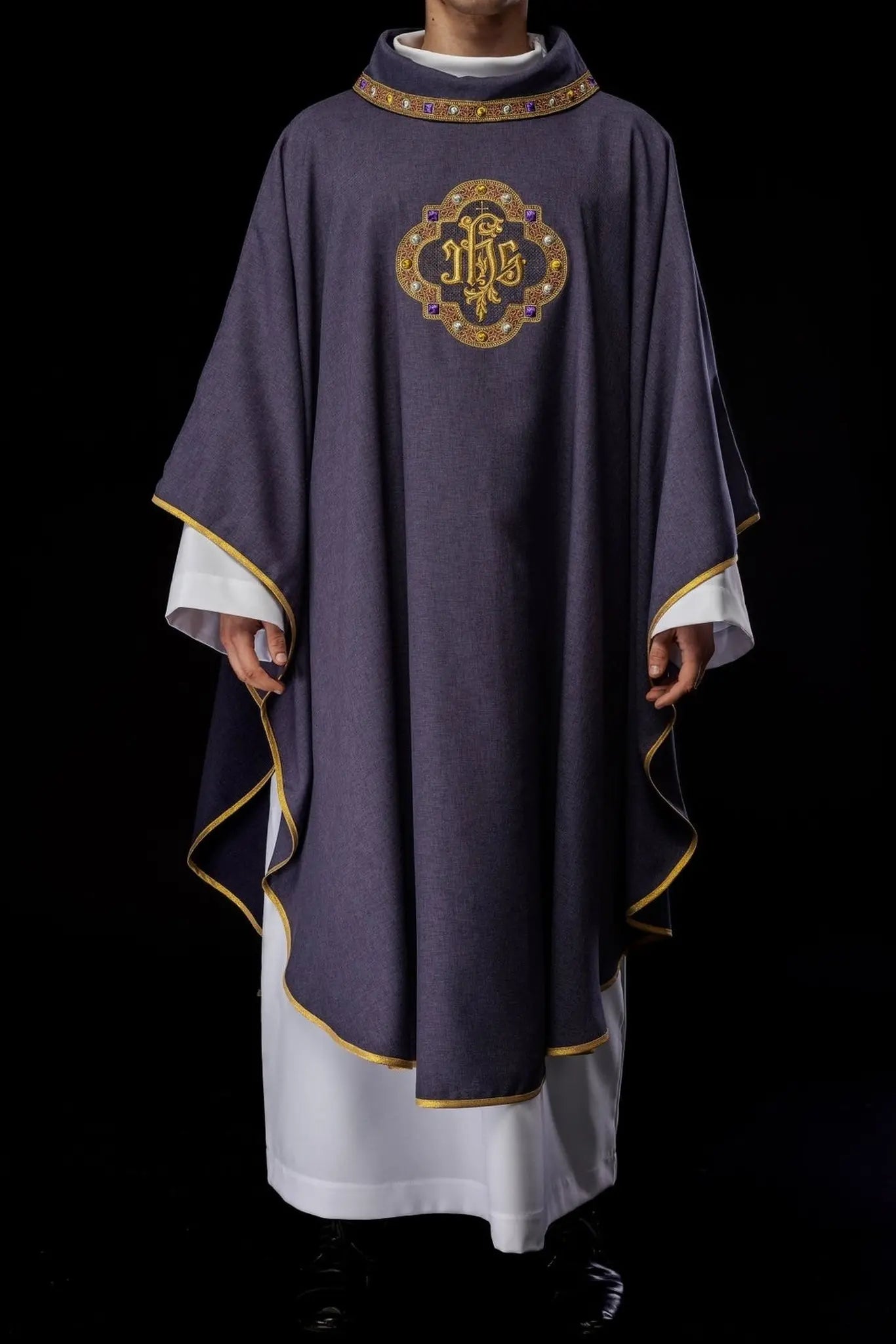
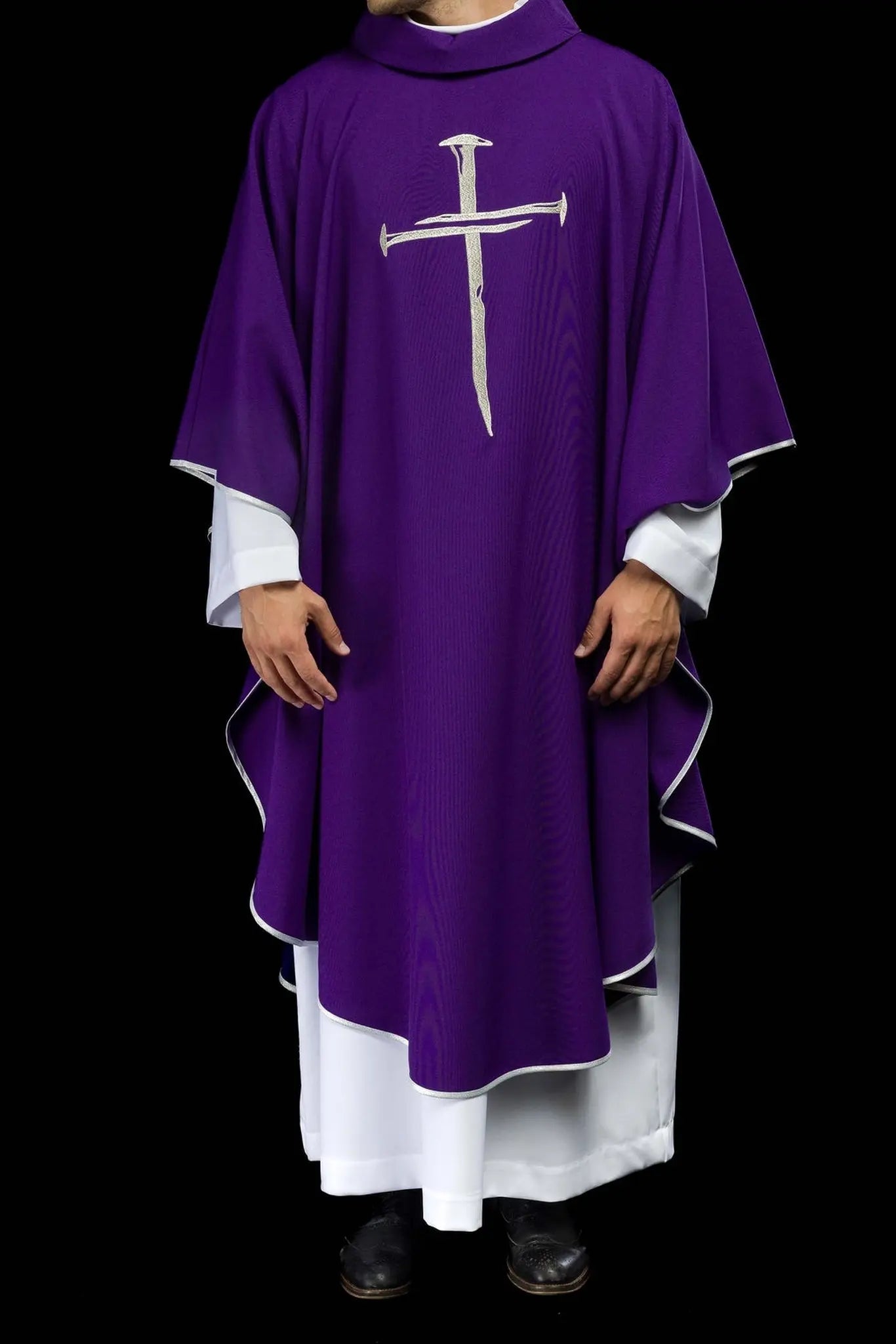
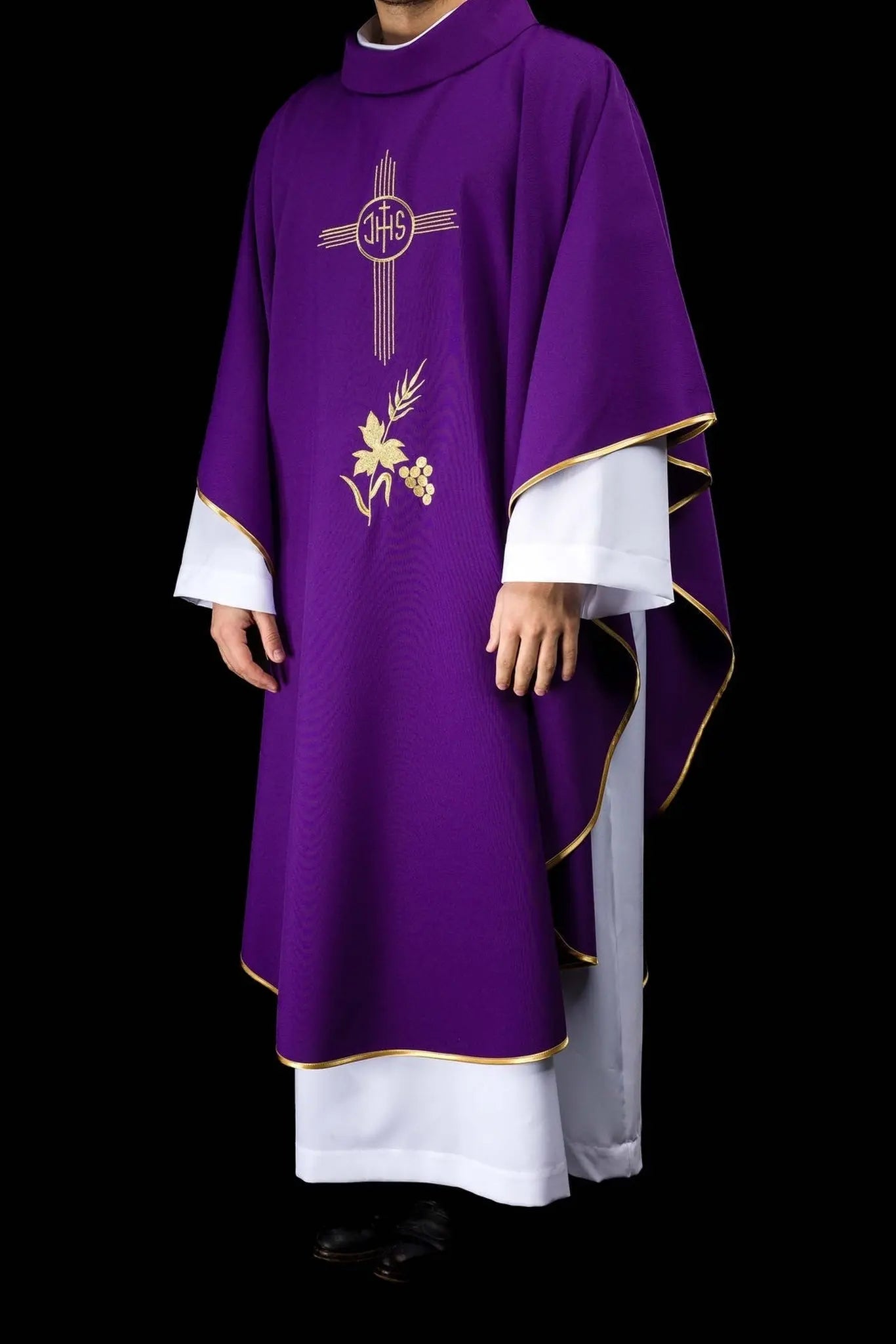
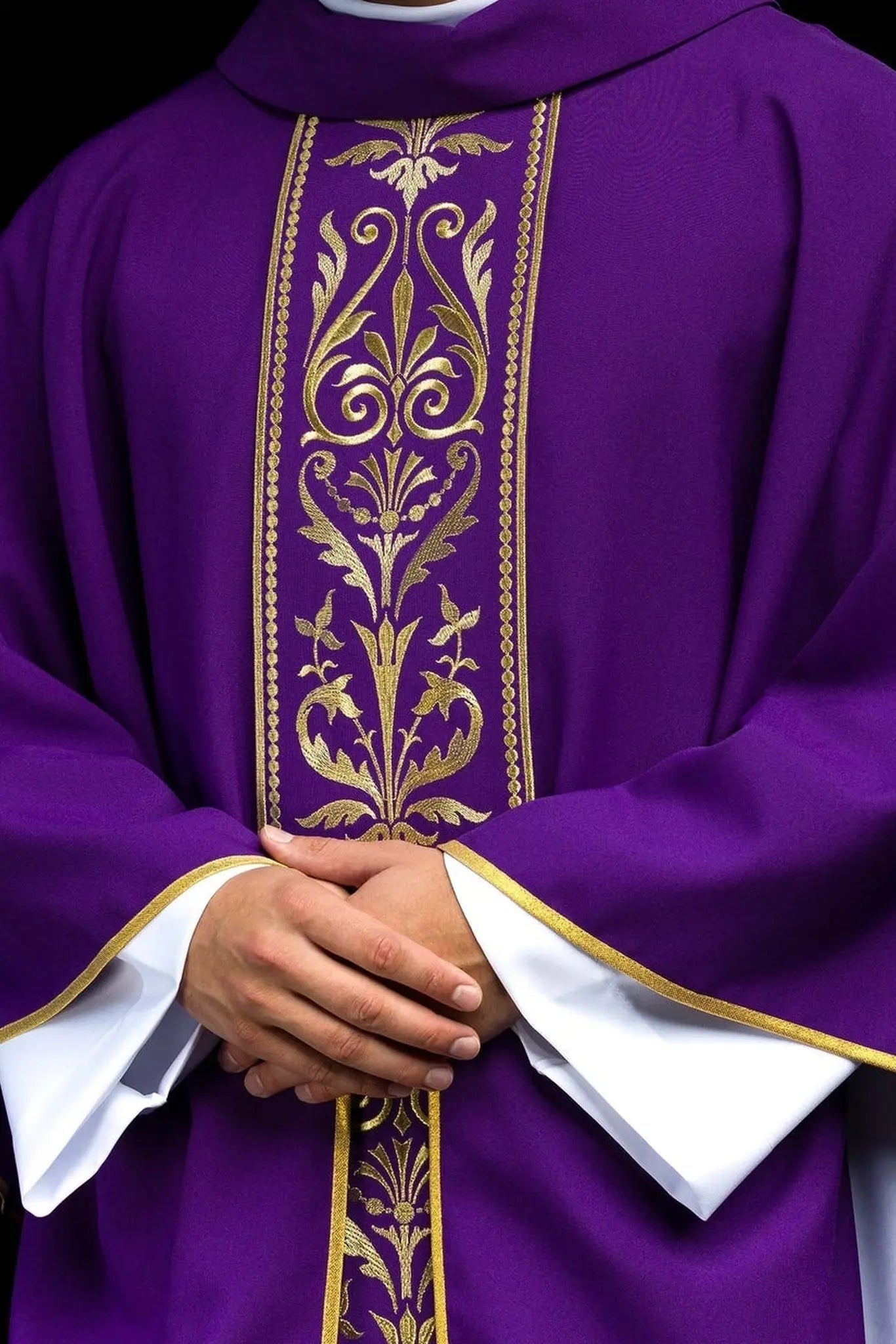
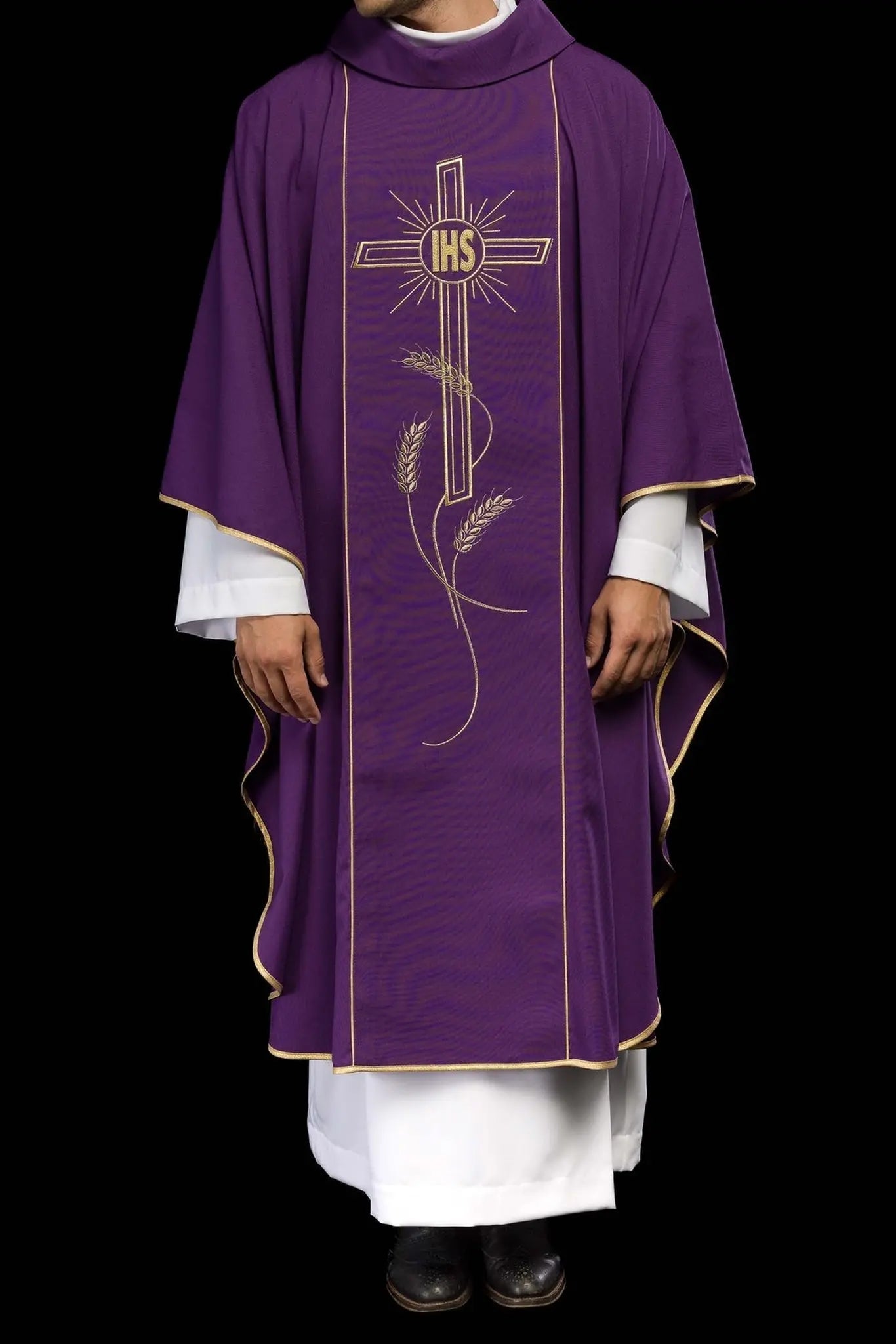
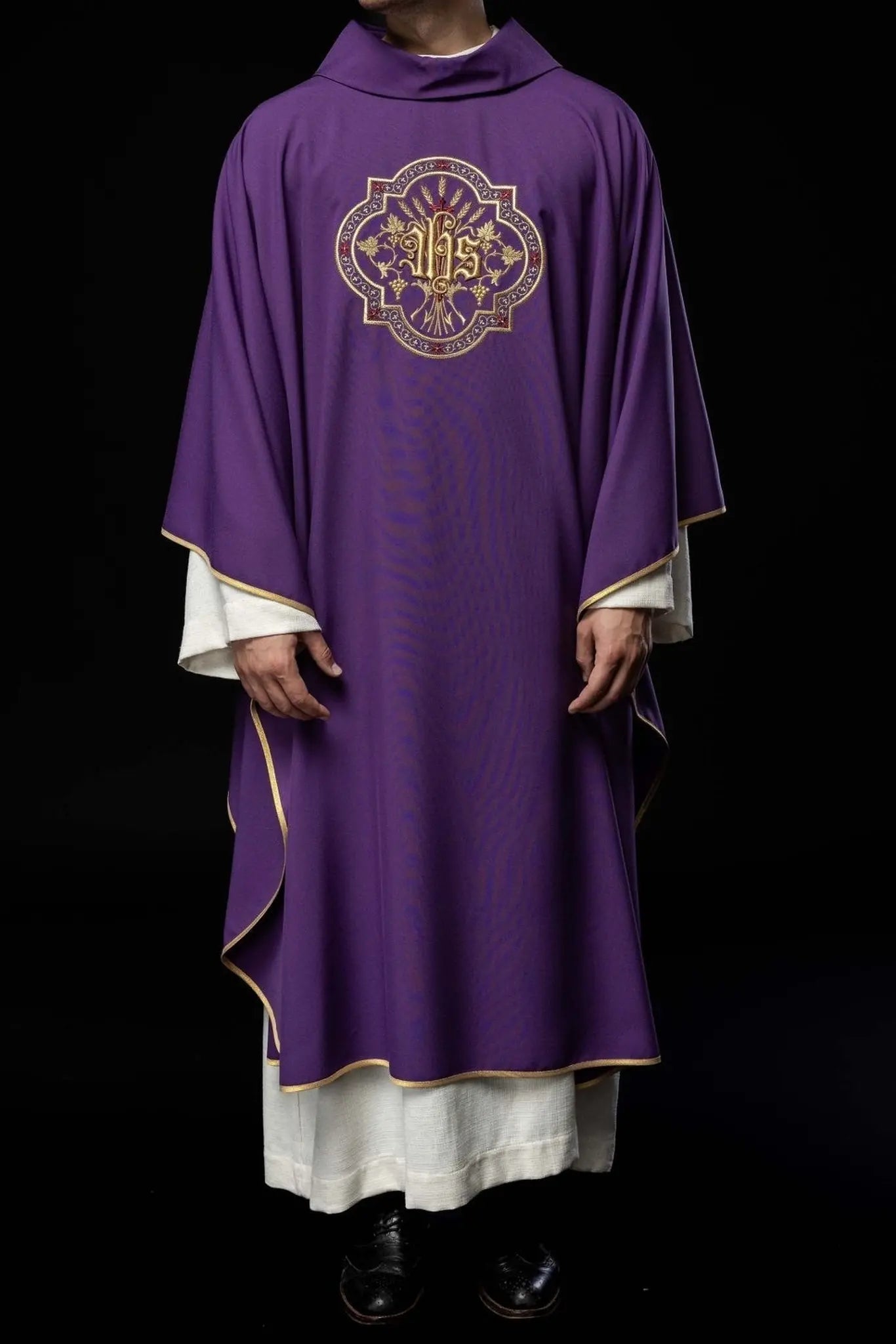
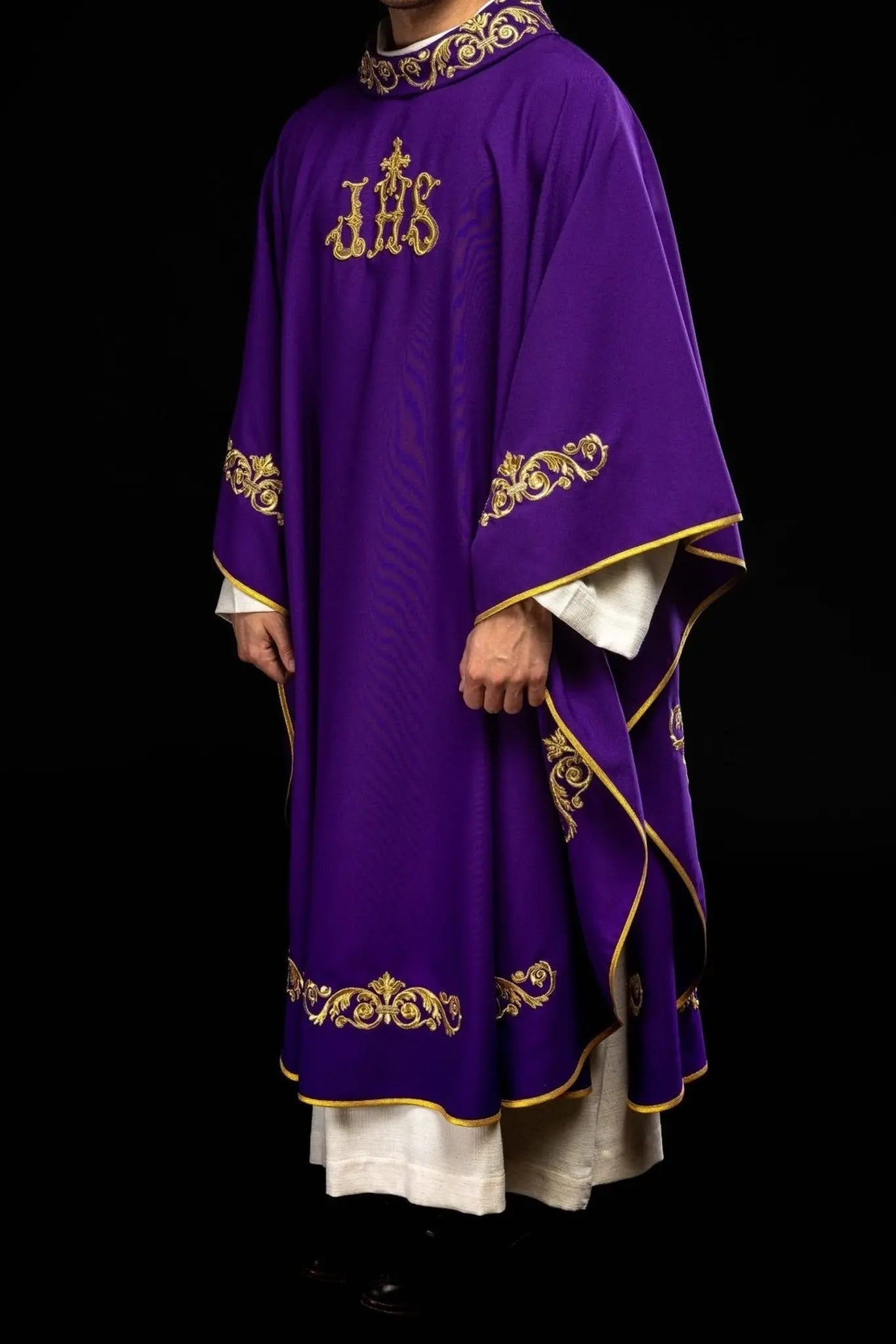
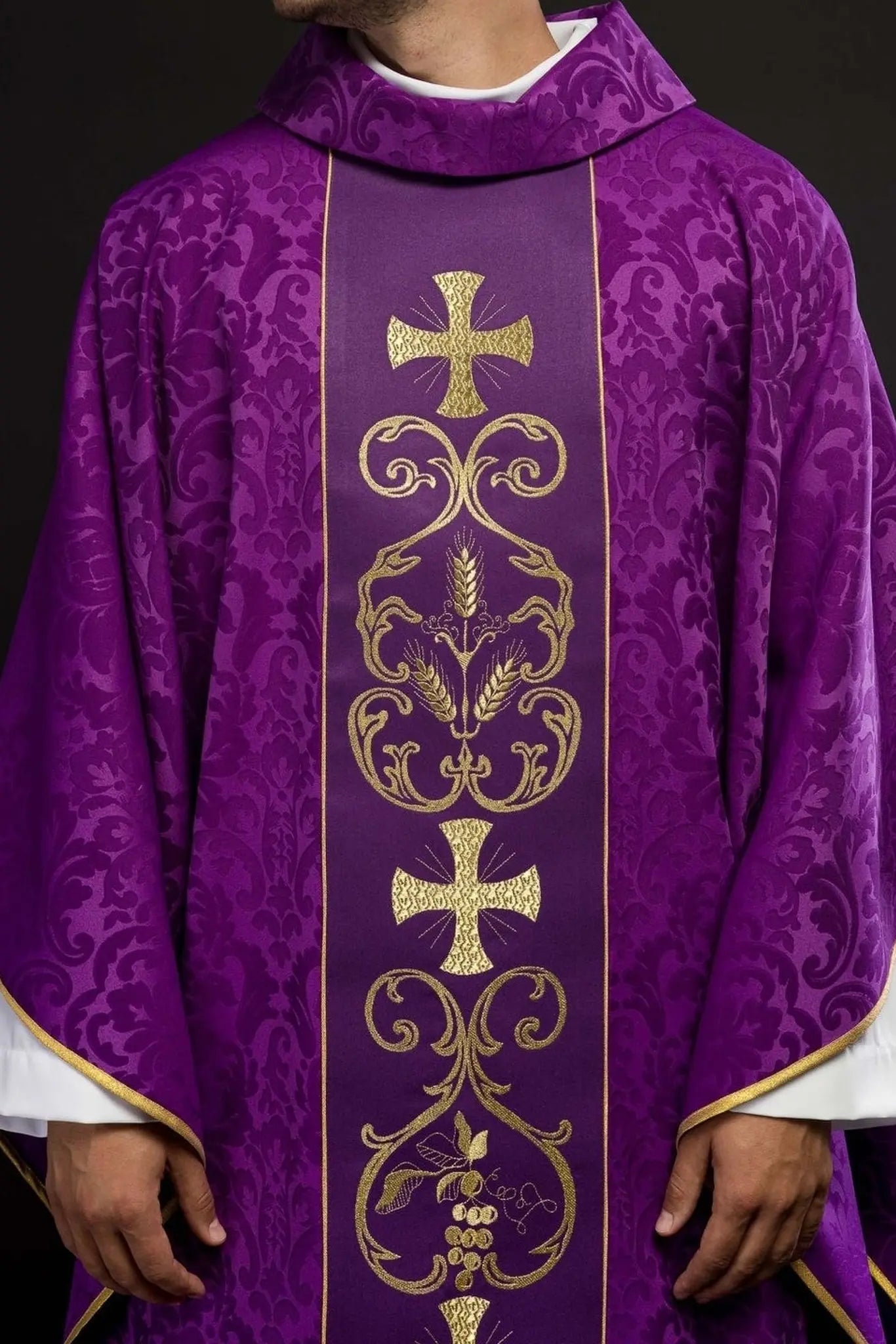
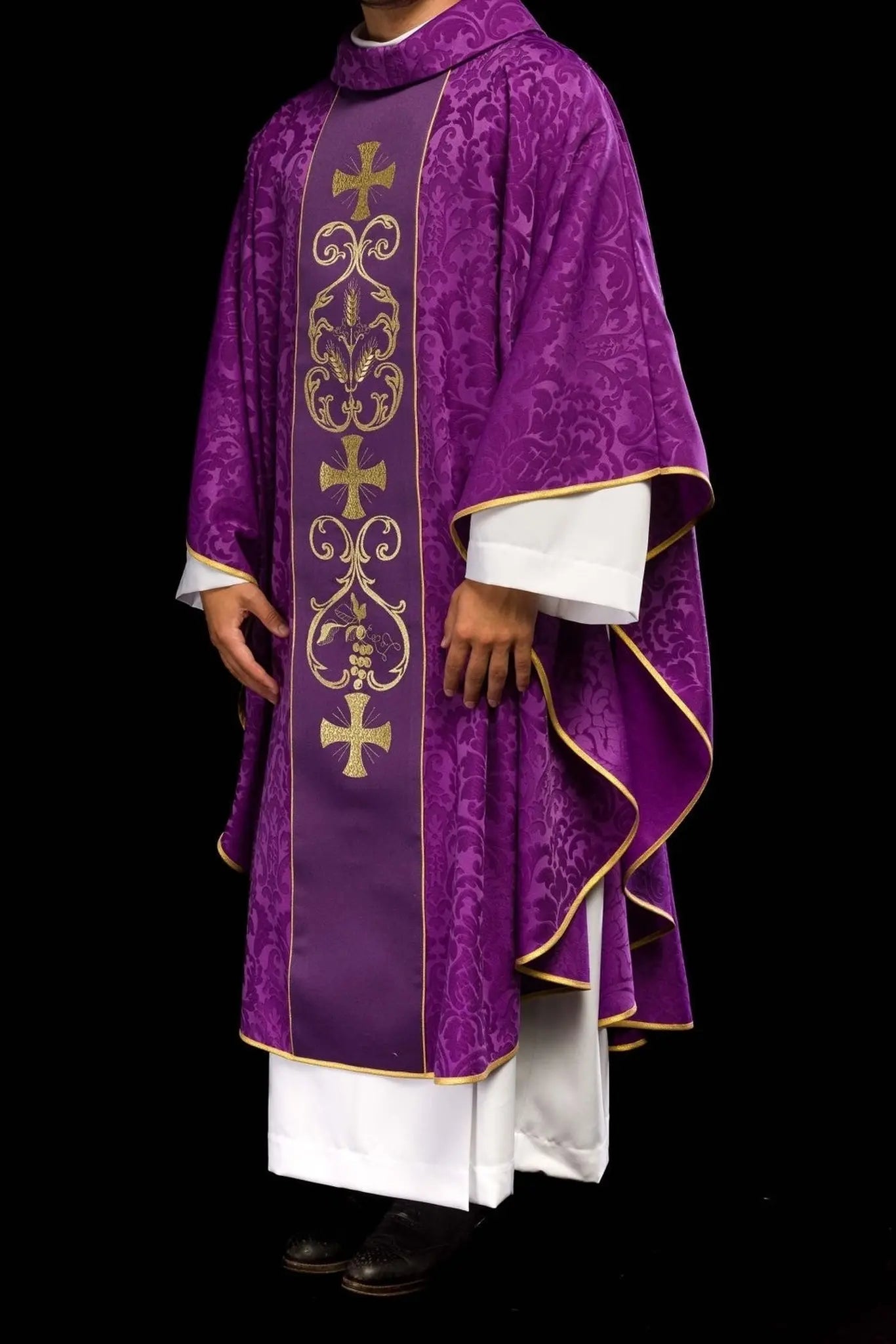
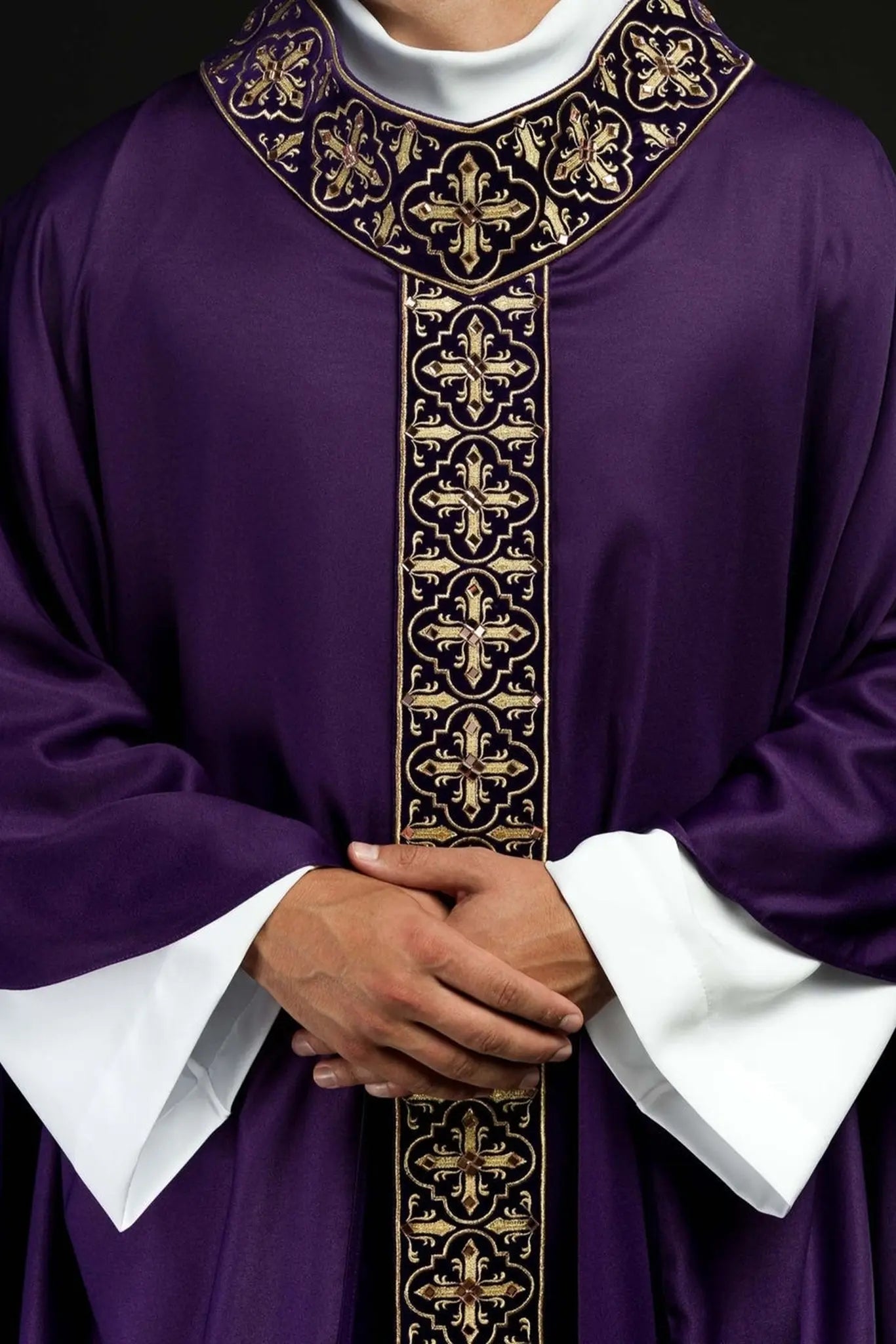
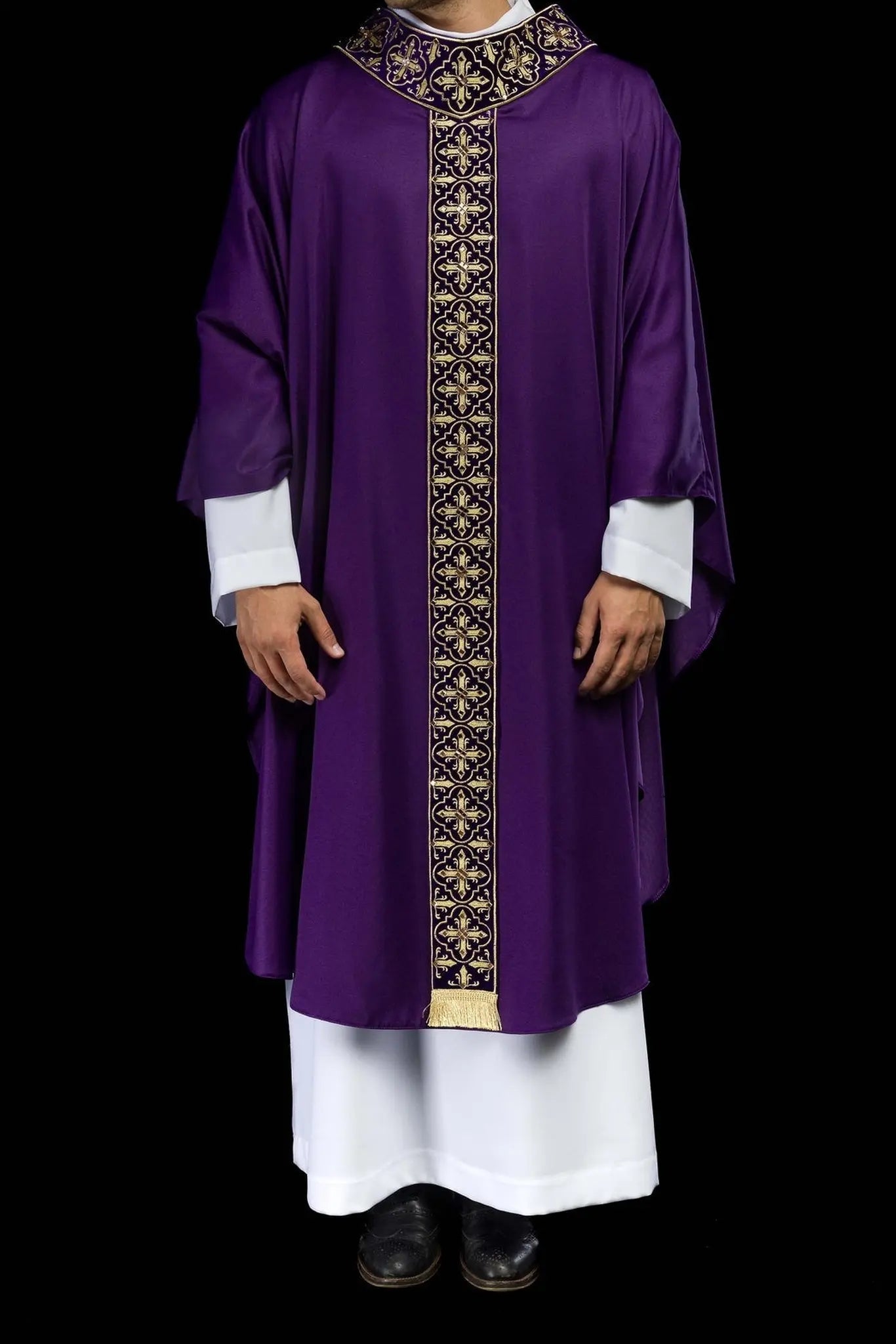
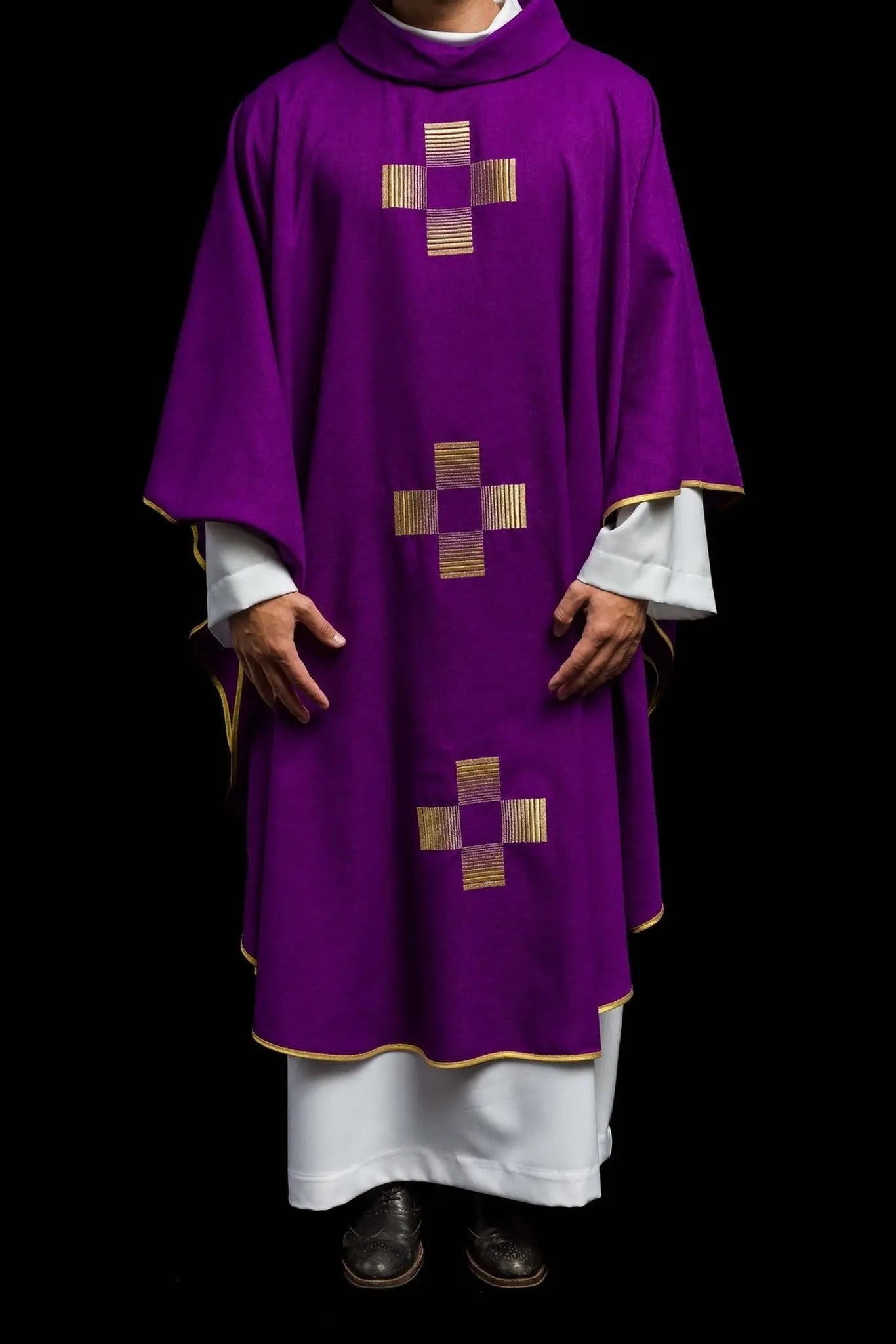
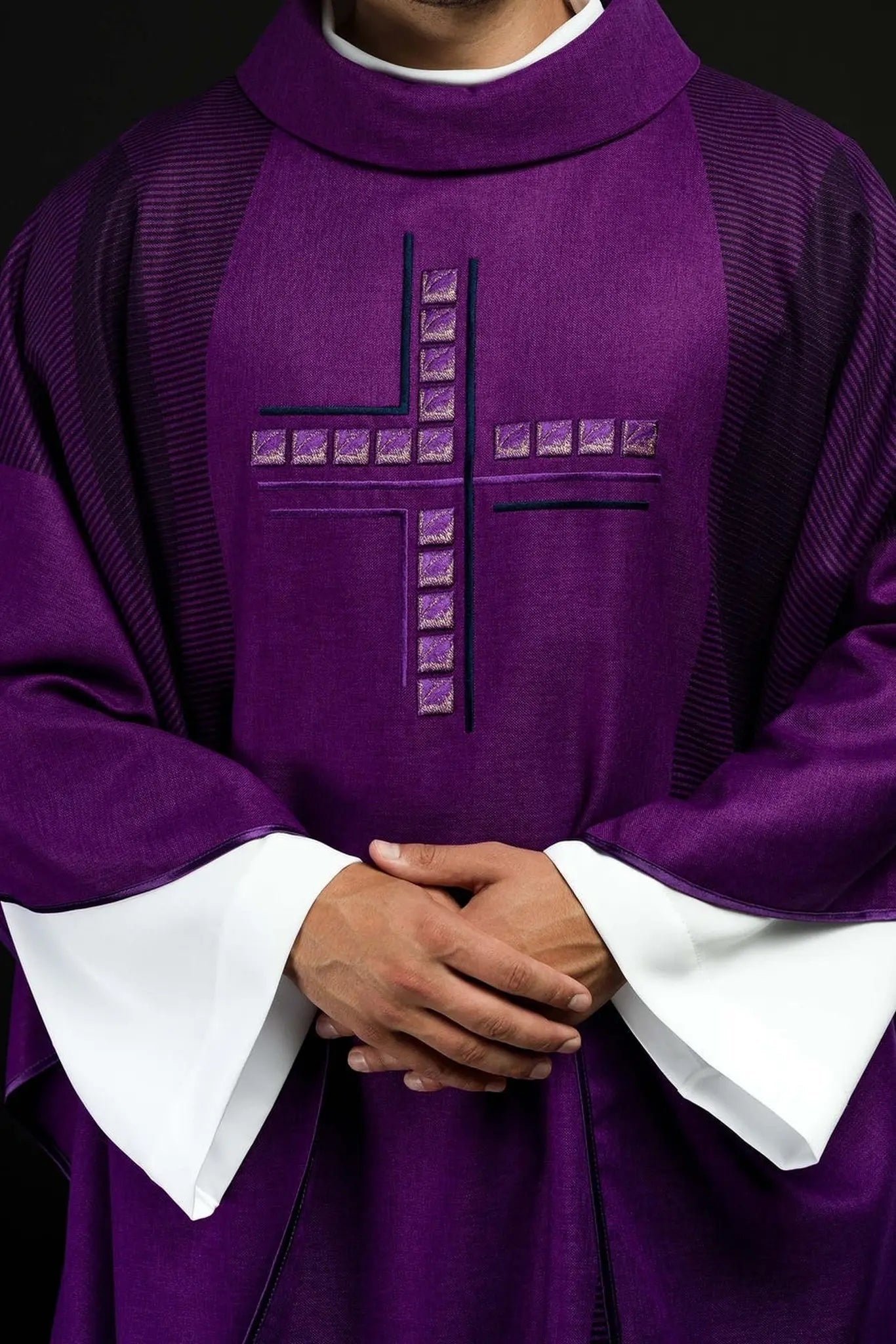
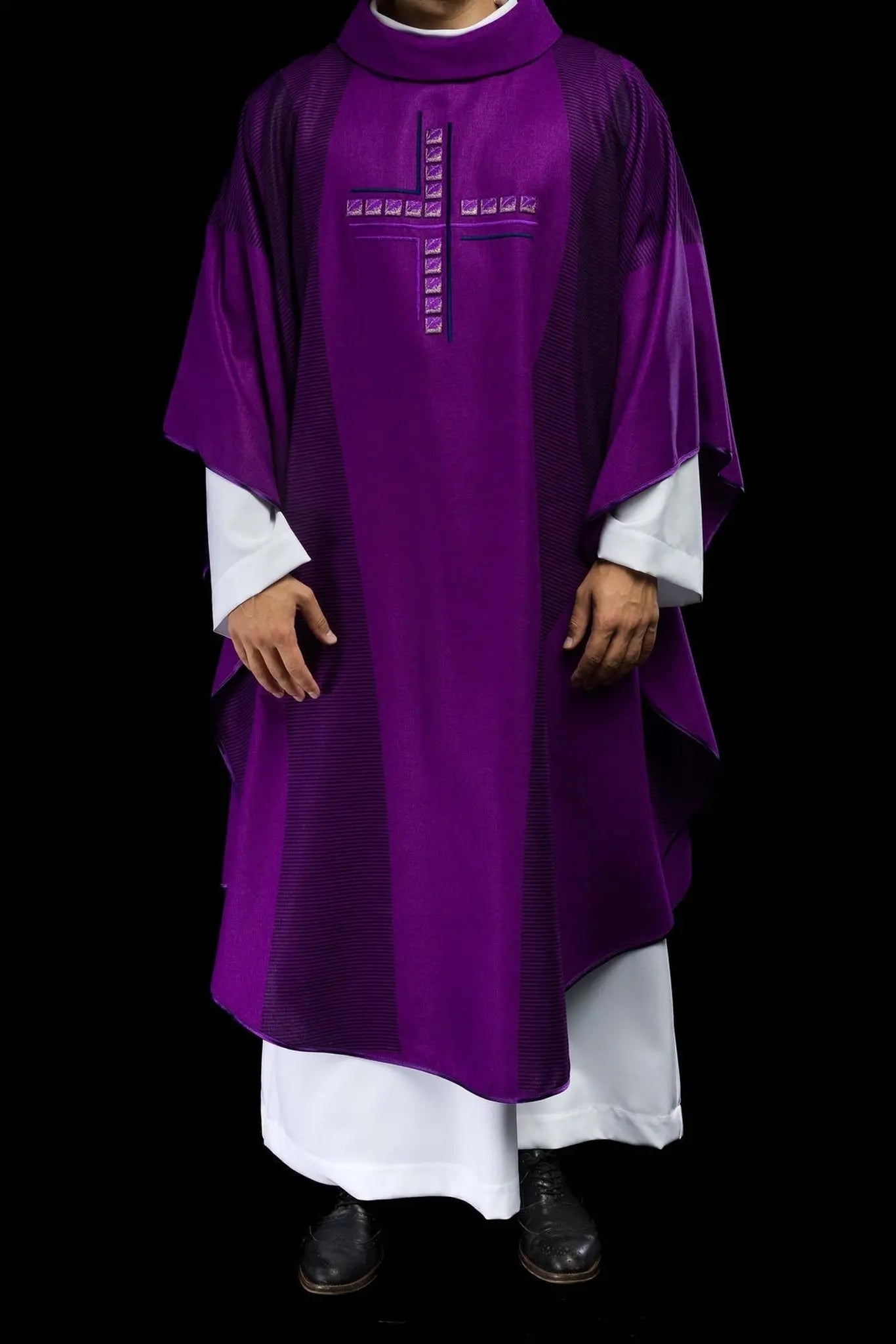
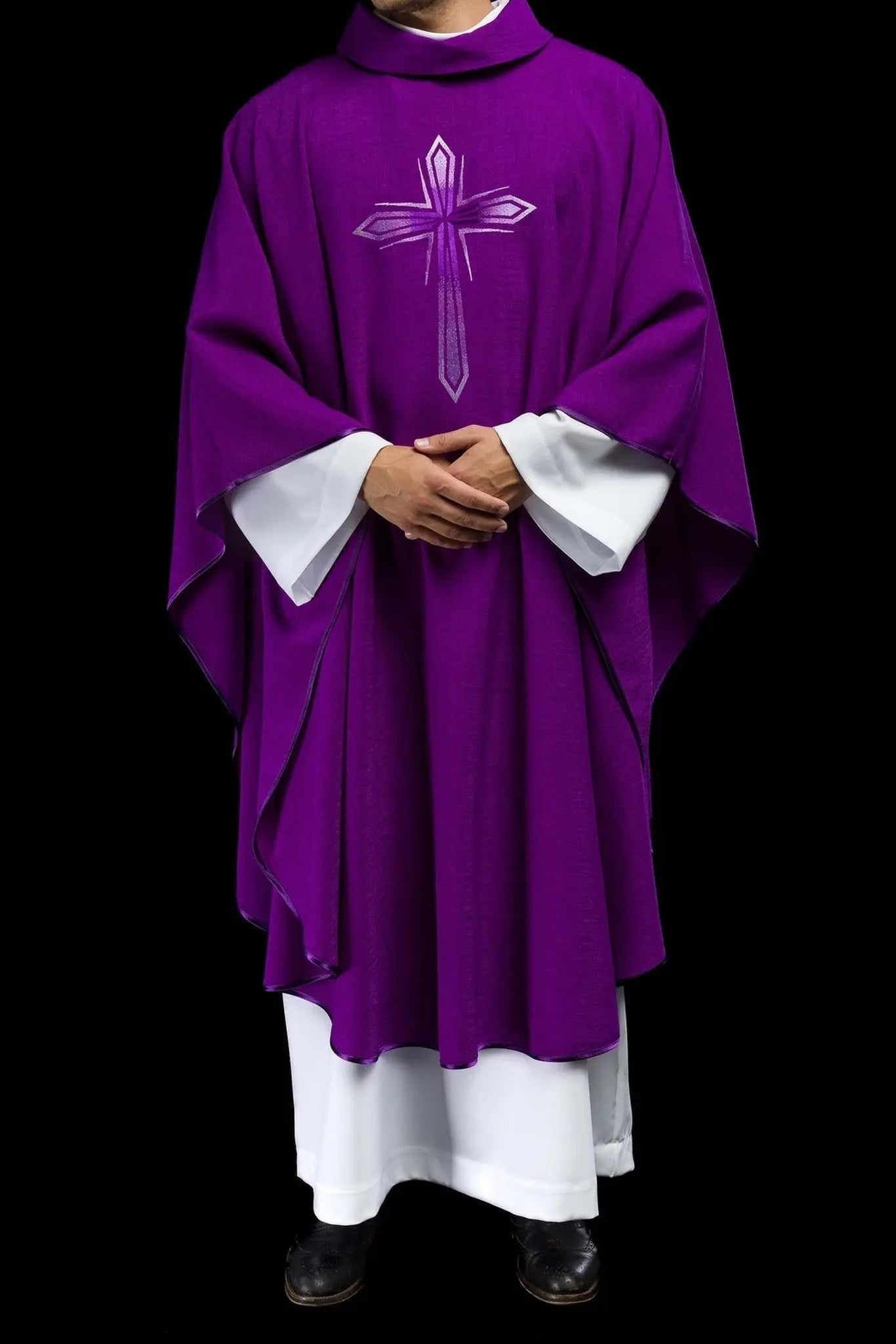
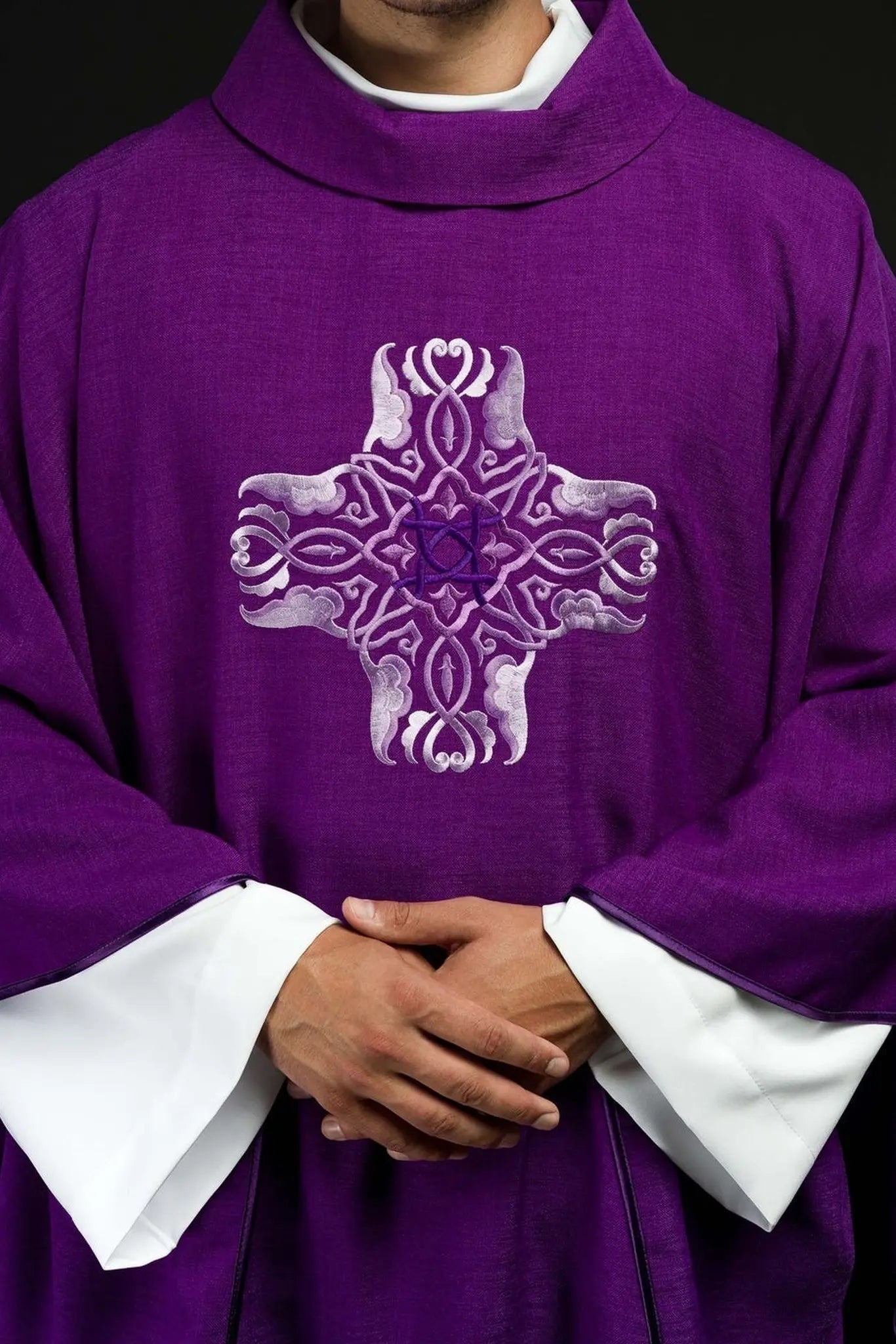
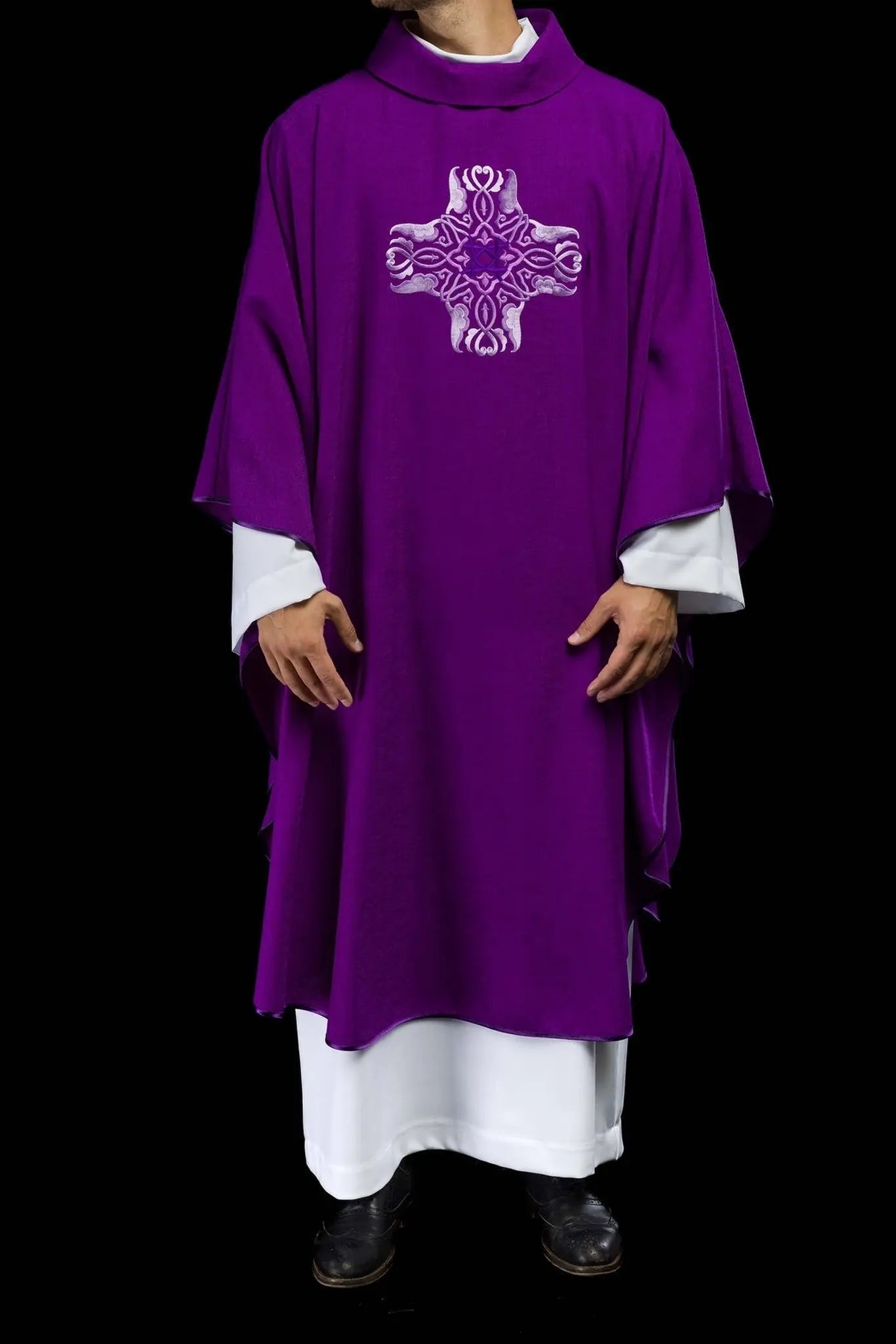
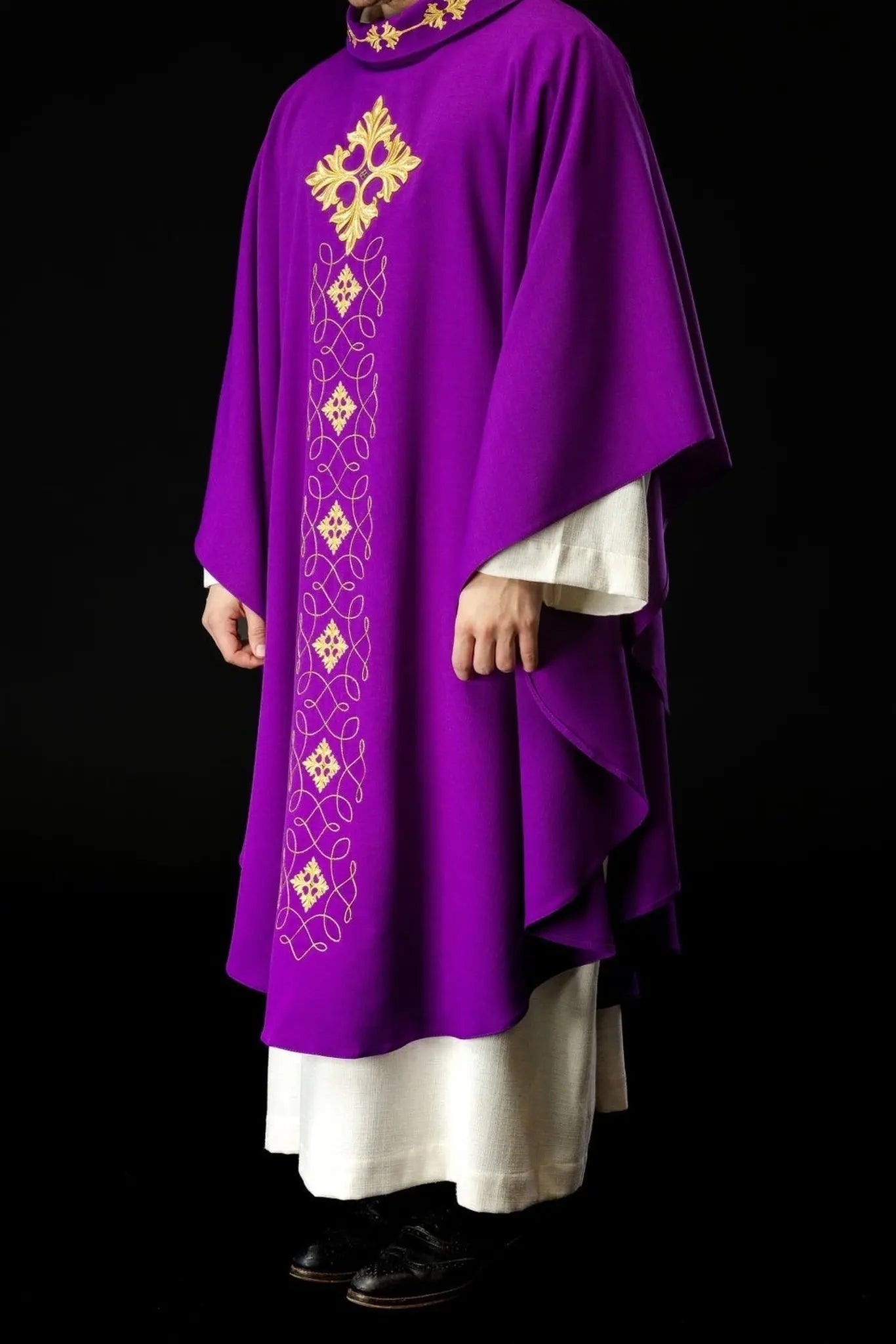
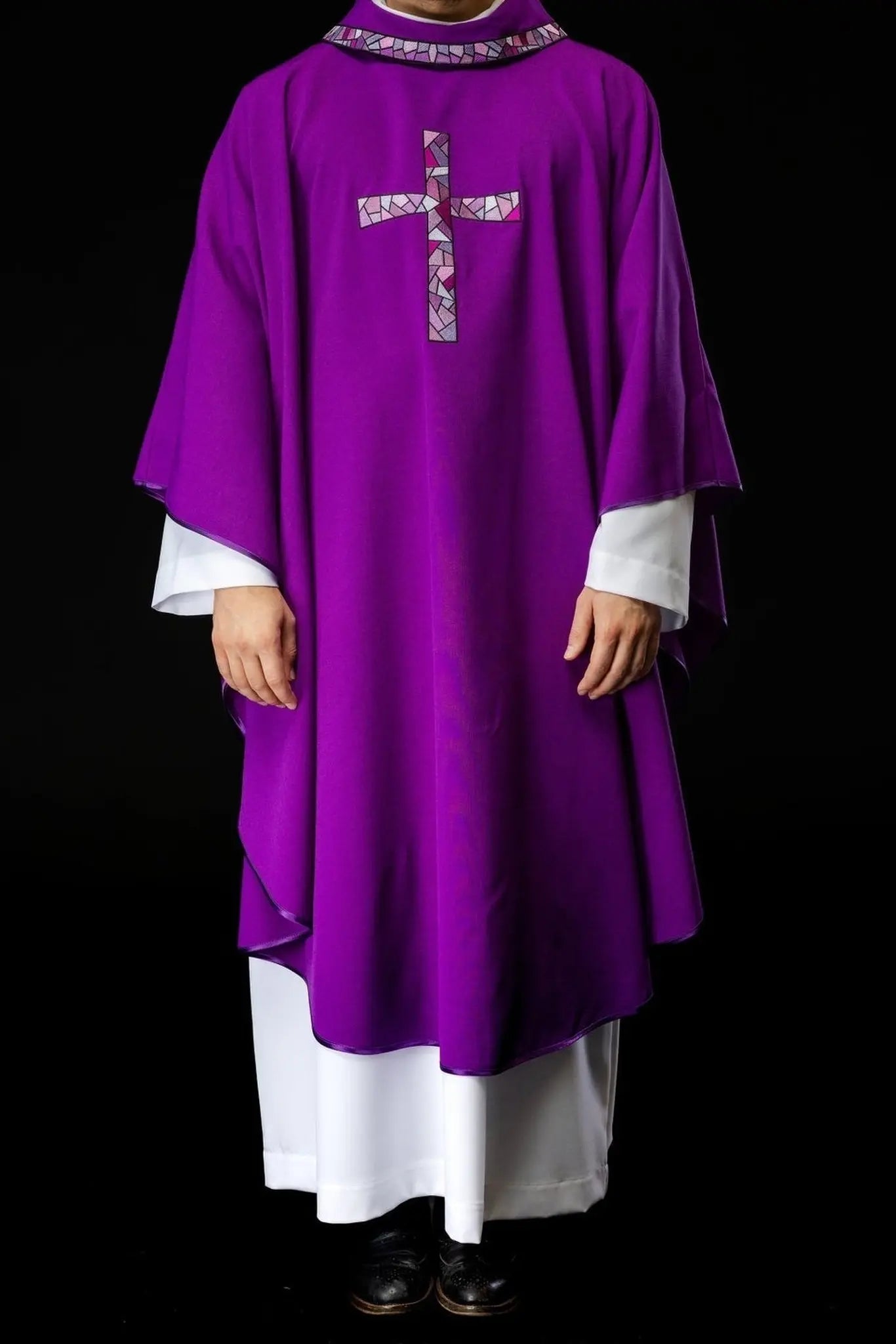
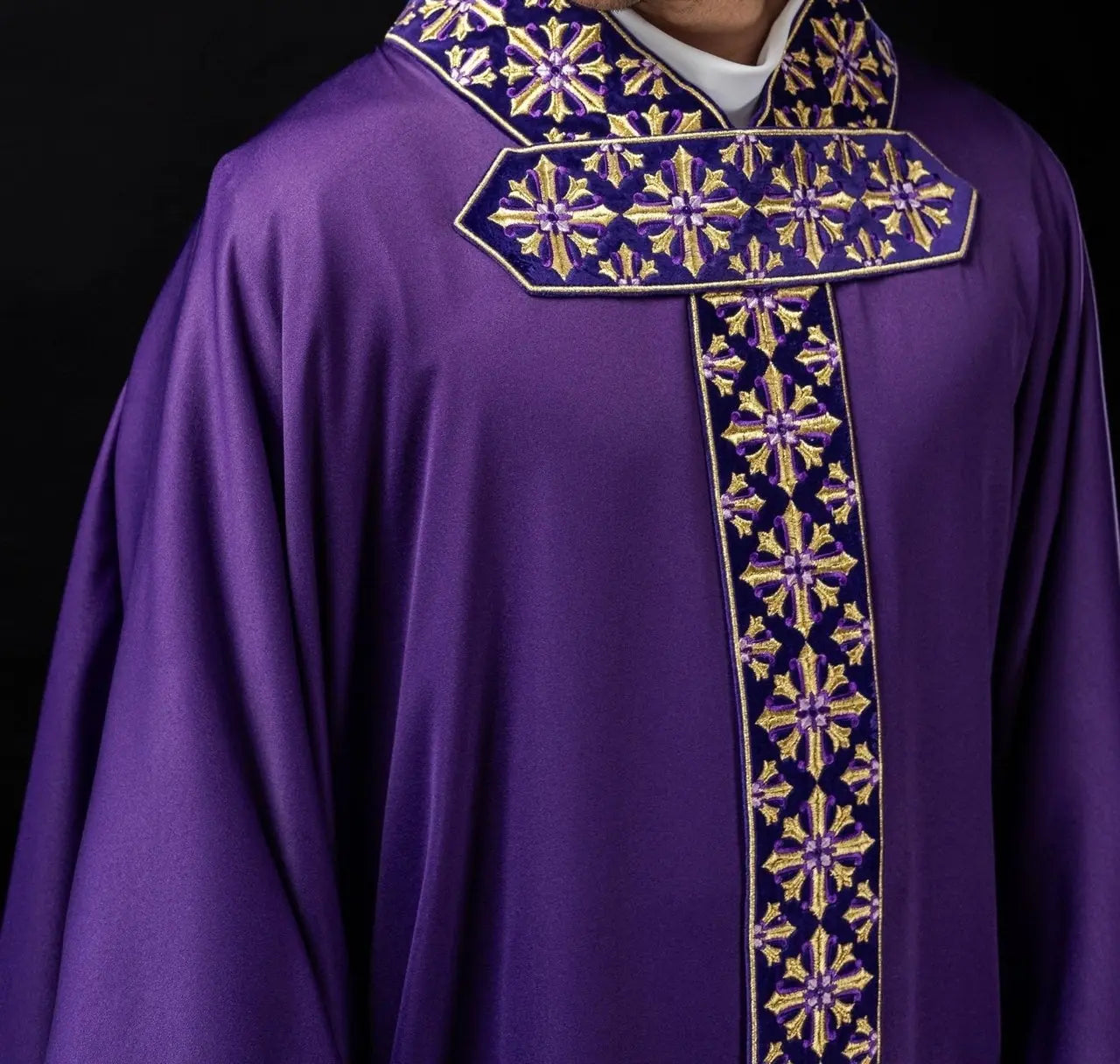
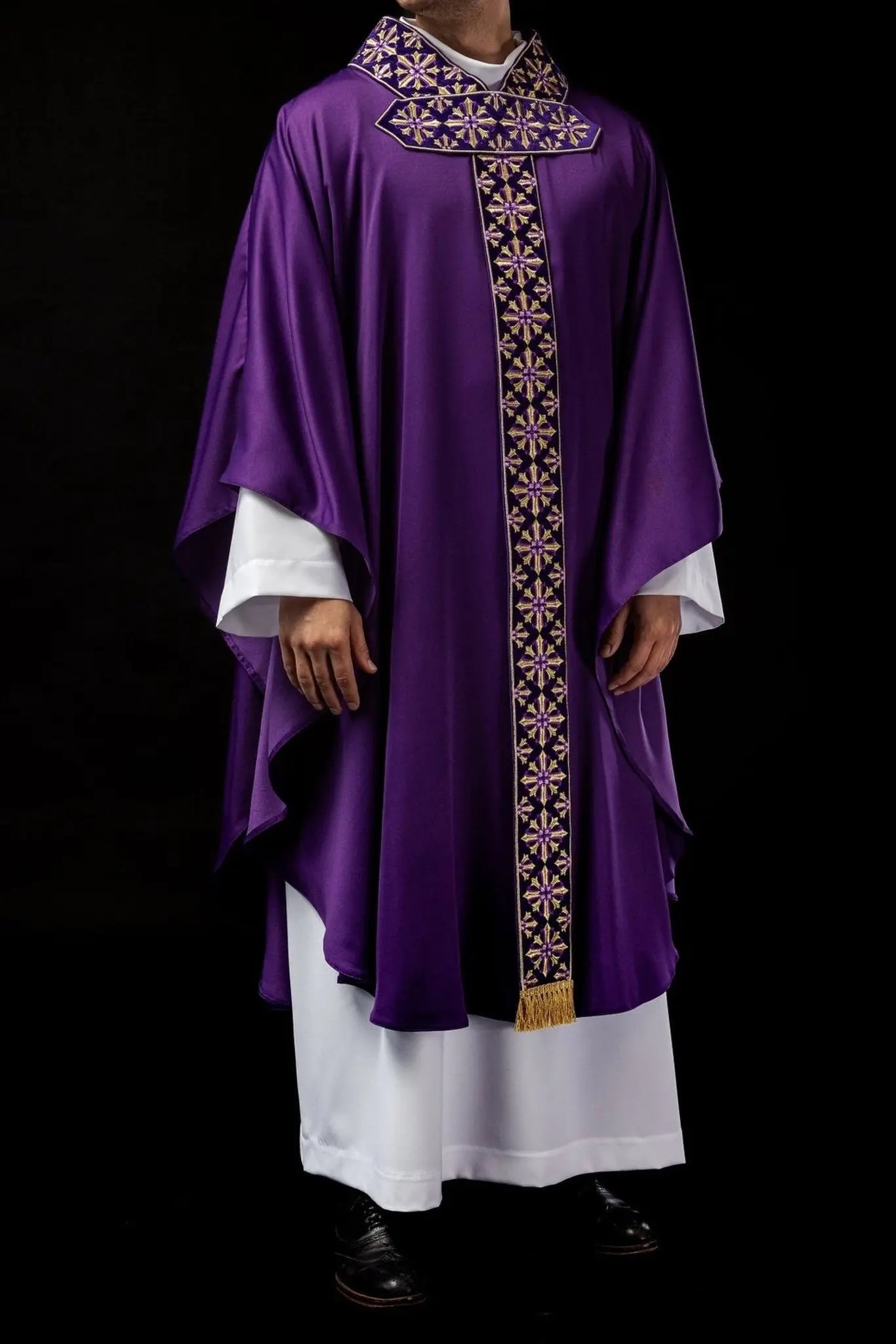
The primary items in this collection are chasubles for priests and bishops celebrating Mass during Lent. A chasuble is the outer Eucharistic vestment worn over the alb and stole, and it often becomes the most visible sign of the liturgical day. Lenten chasubles in this collection may include Gothic-style flowing forms, more structured Roman-inspired designs, embroidered front panels, decorative bands, crosses, Eucharistic motifs, or subtle ornamentation in gold, silver, or tonal thread.
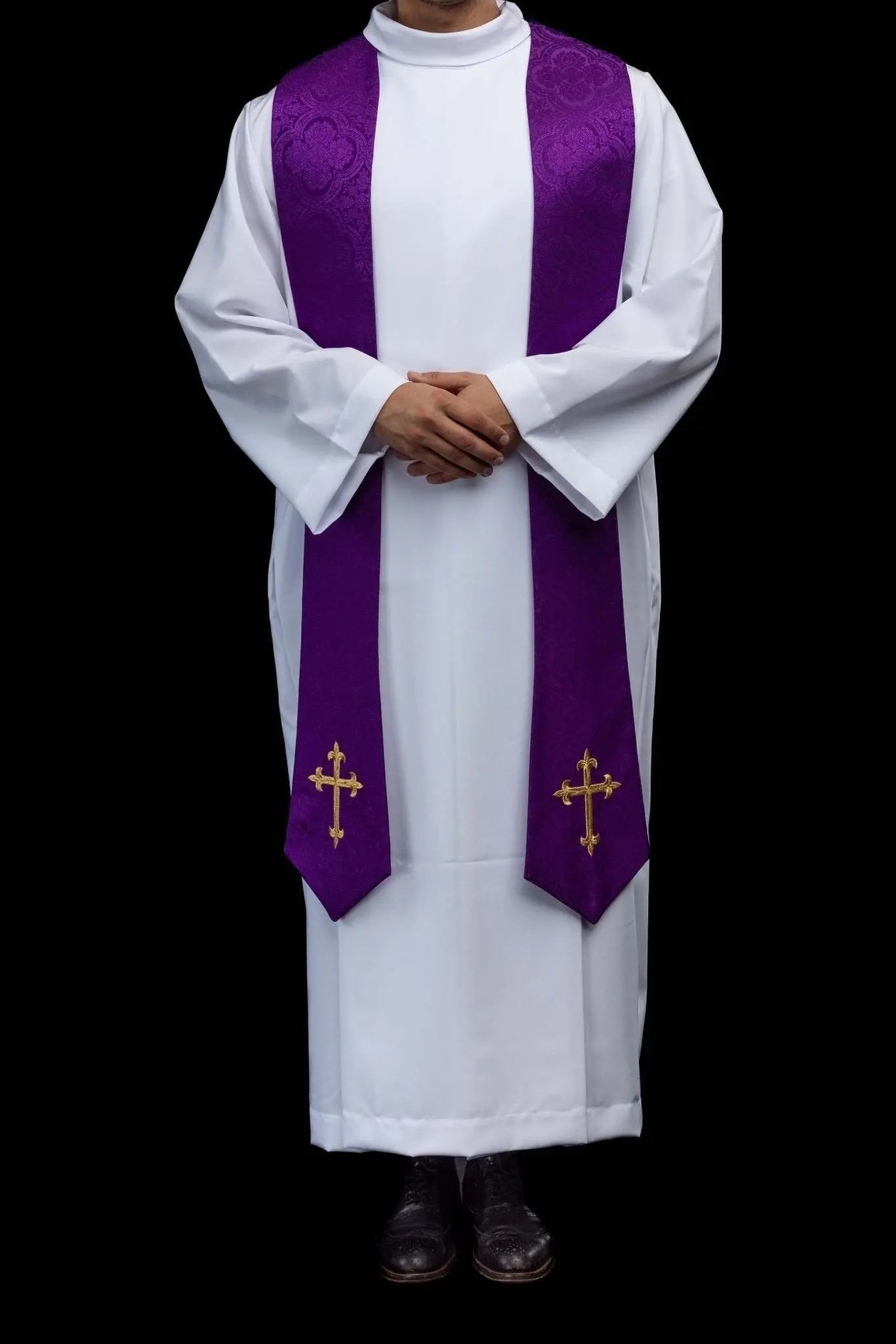
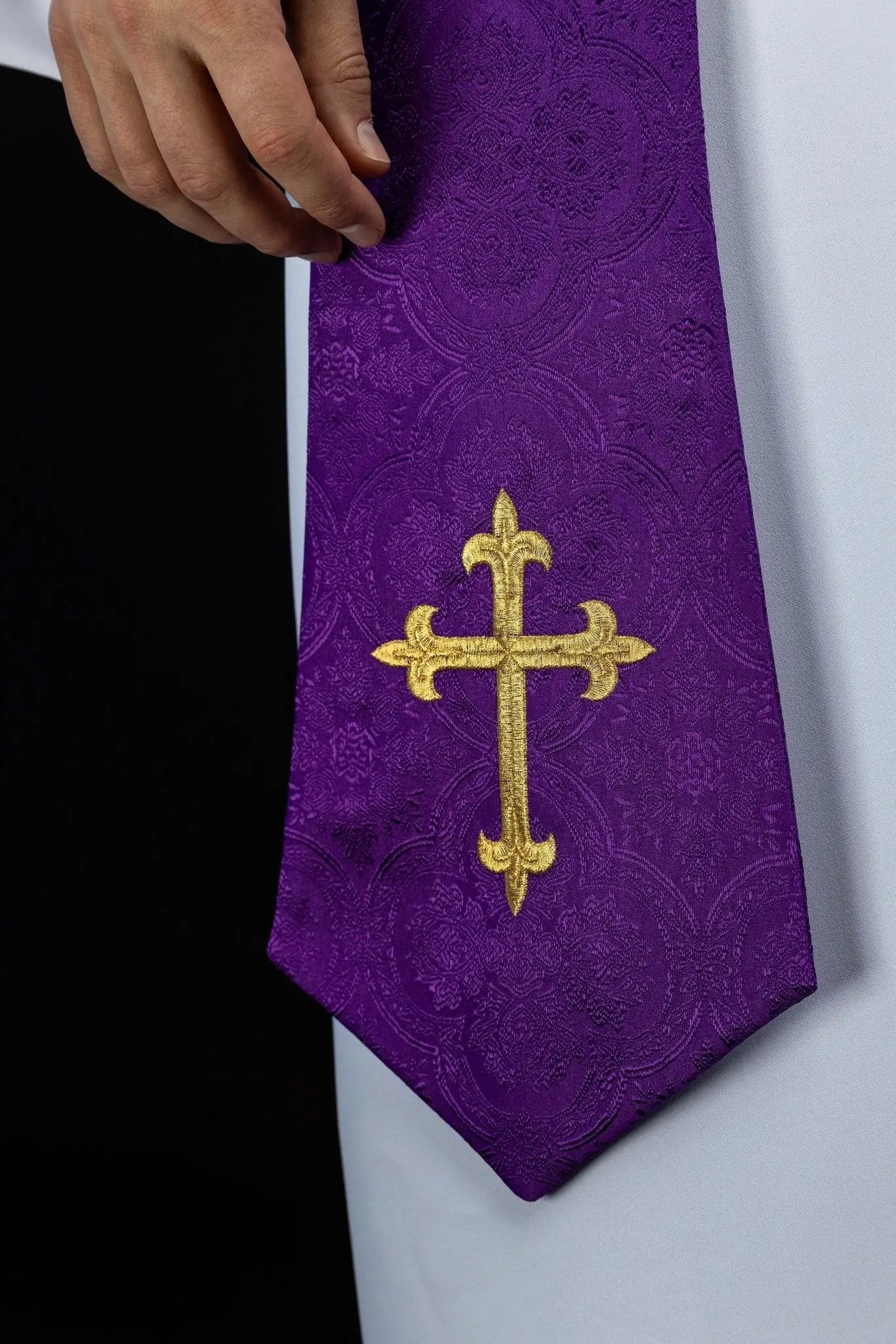
Stoles are also essential, especially for the celebration of the sacraments and pastoral ministry. Purple stoles are used during Lent by priests and deacons according to their proper form of vesture and ministry. They are particularly useful for confessions, blessings, penitential services, Lenten retreats, and pastoral visits. For a wider selection by type and color, you may also compare this collection with clergy stoles and the more focused purple stoles category.
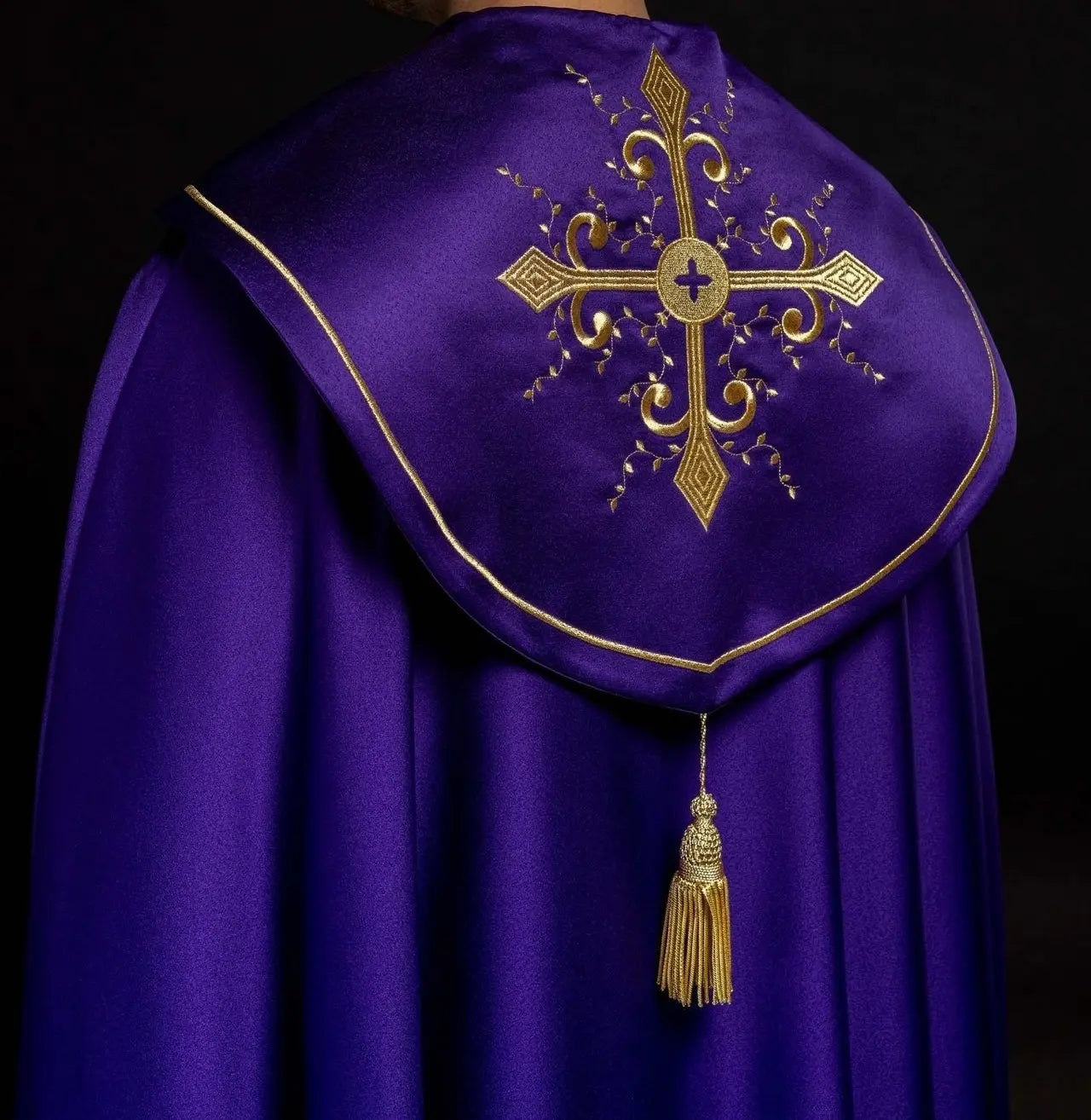
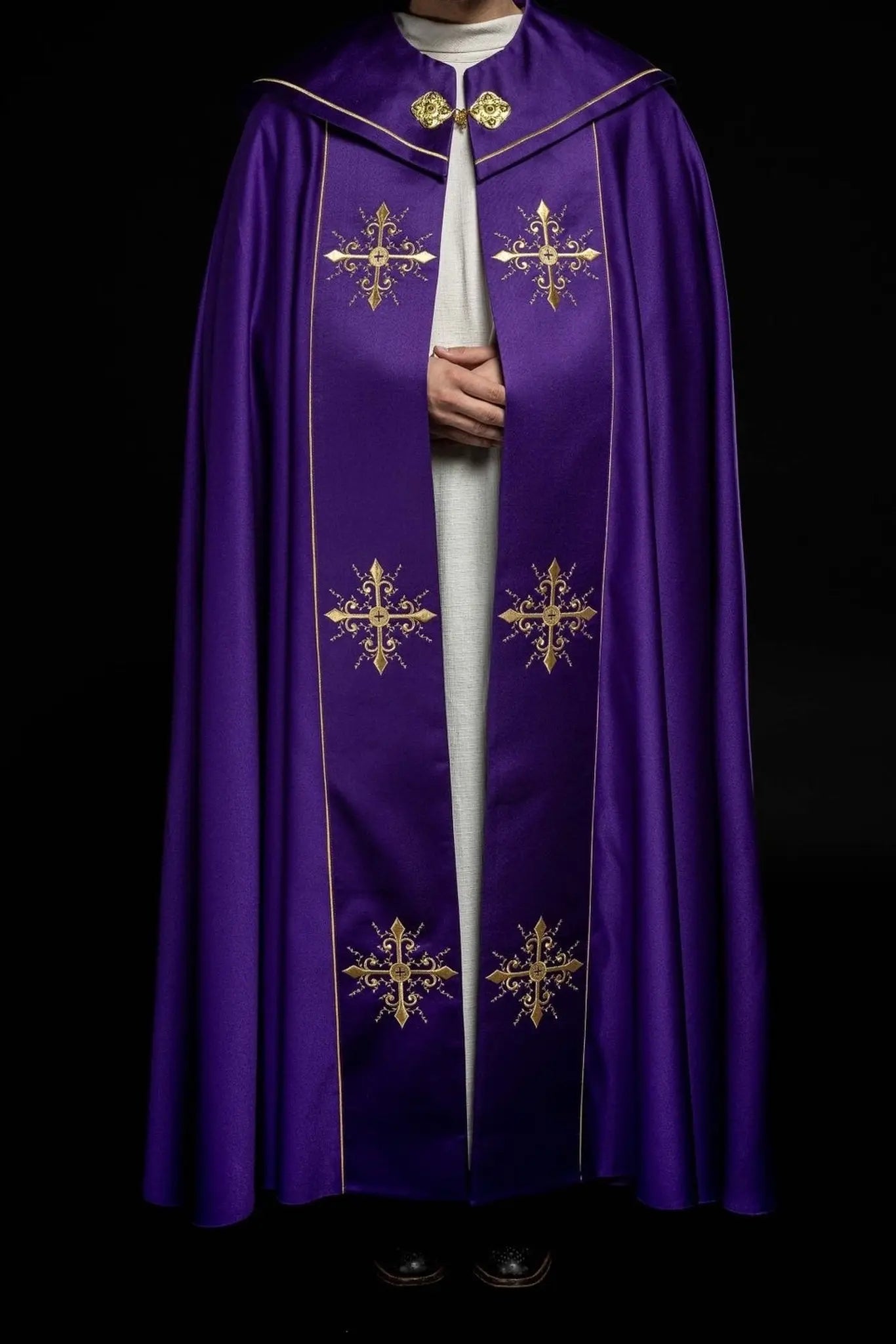
Copes and capes appear in Lenten settings when the liturgy calls for a solemn vestment outside the celebration of Mass, such as certain processions, Eucharistic devotions, the Liturgy of the Hours, or other services according to local practice. Purple copes with Eucharistic or Passion motifs can help maintain a coherent seasonal character when the service is not centered on the chasuble. Related designs can also be found in the copes collection.
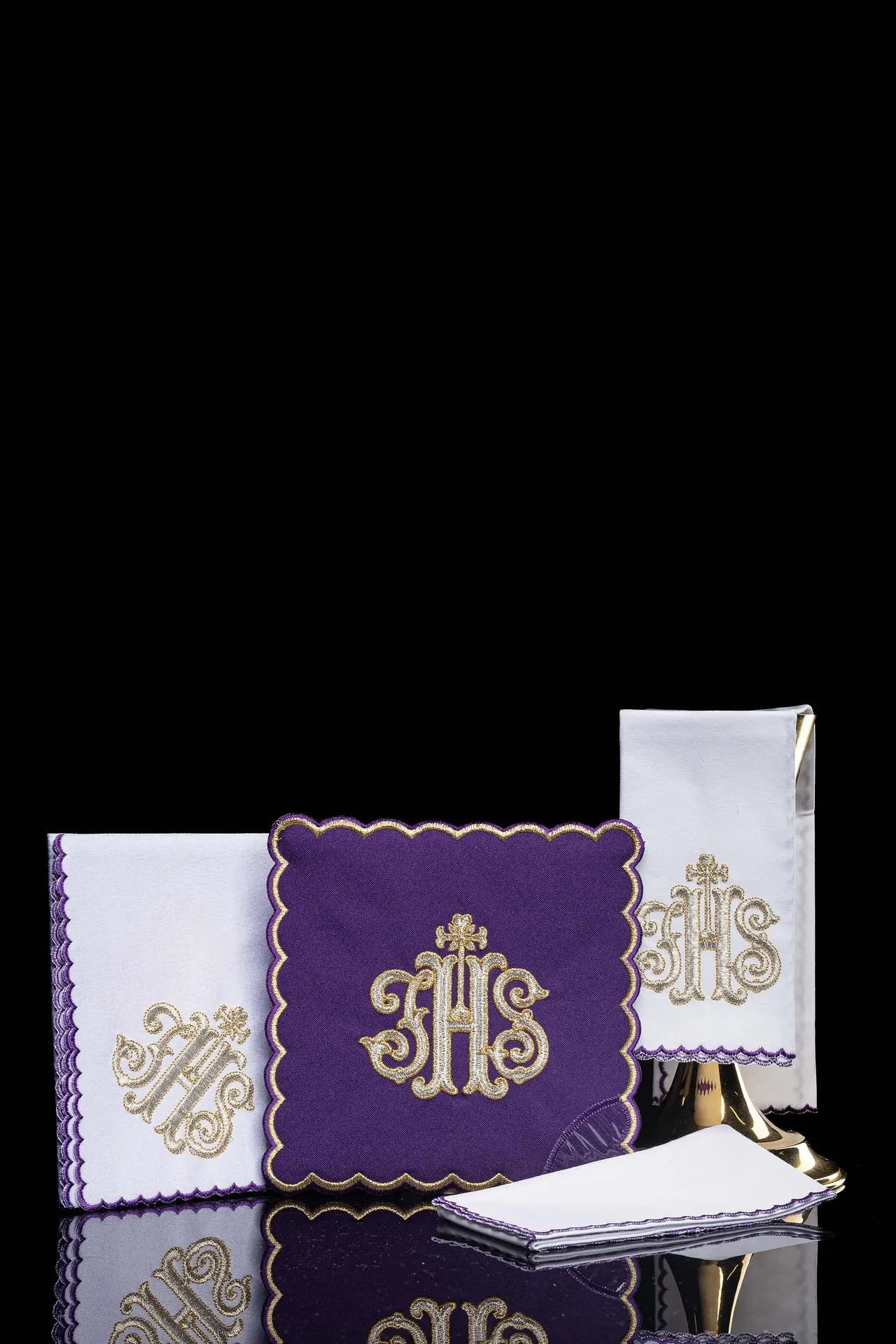
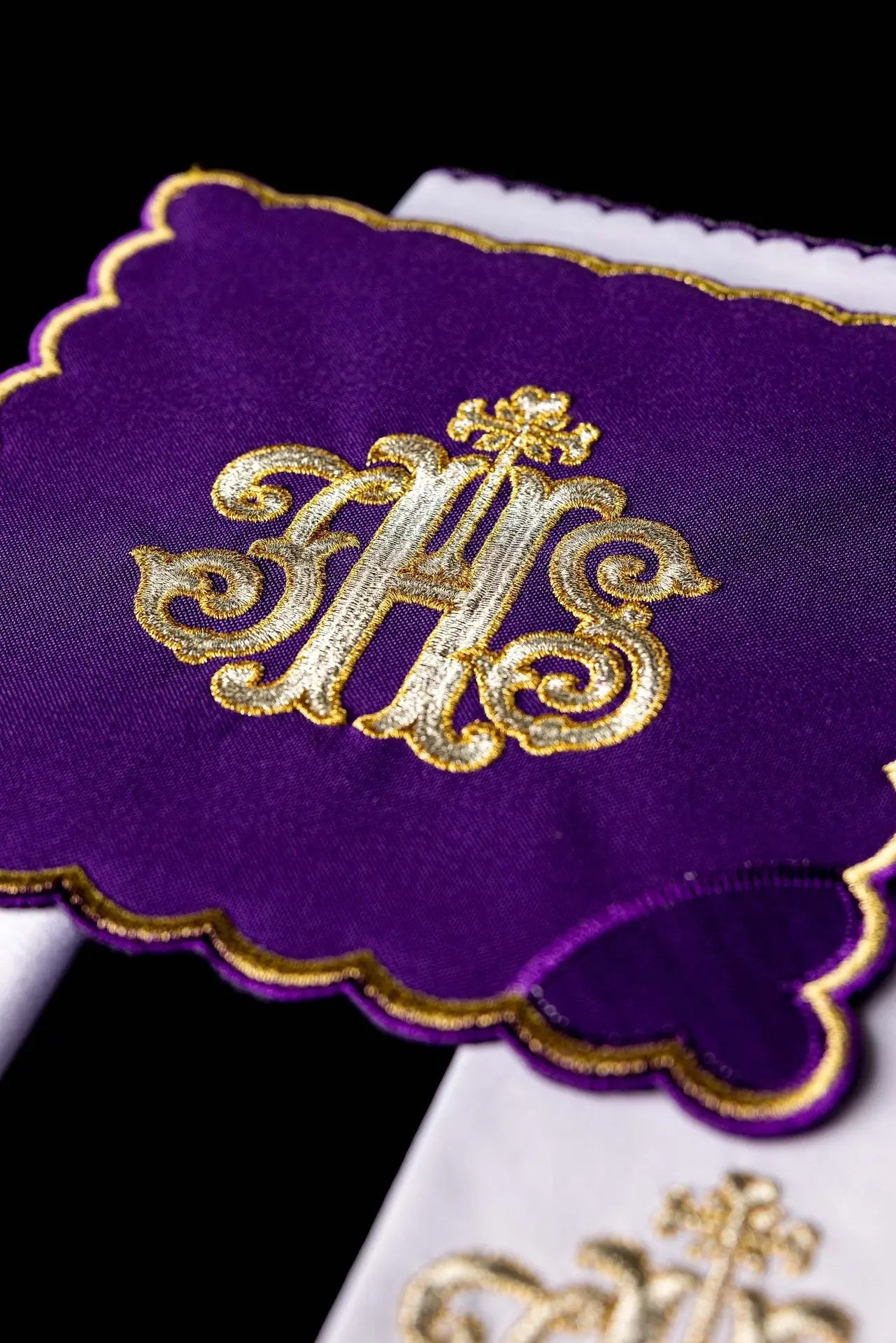
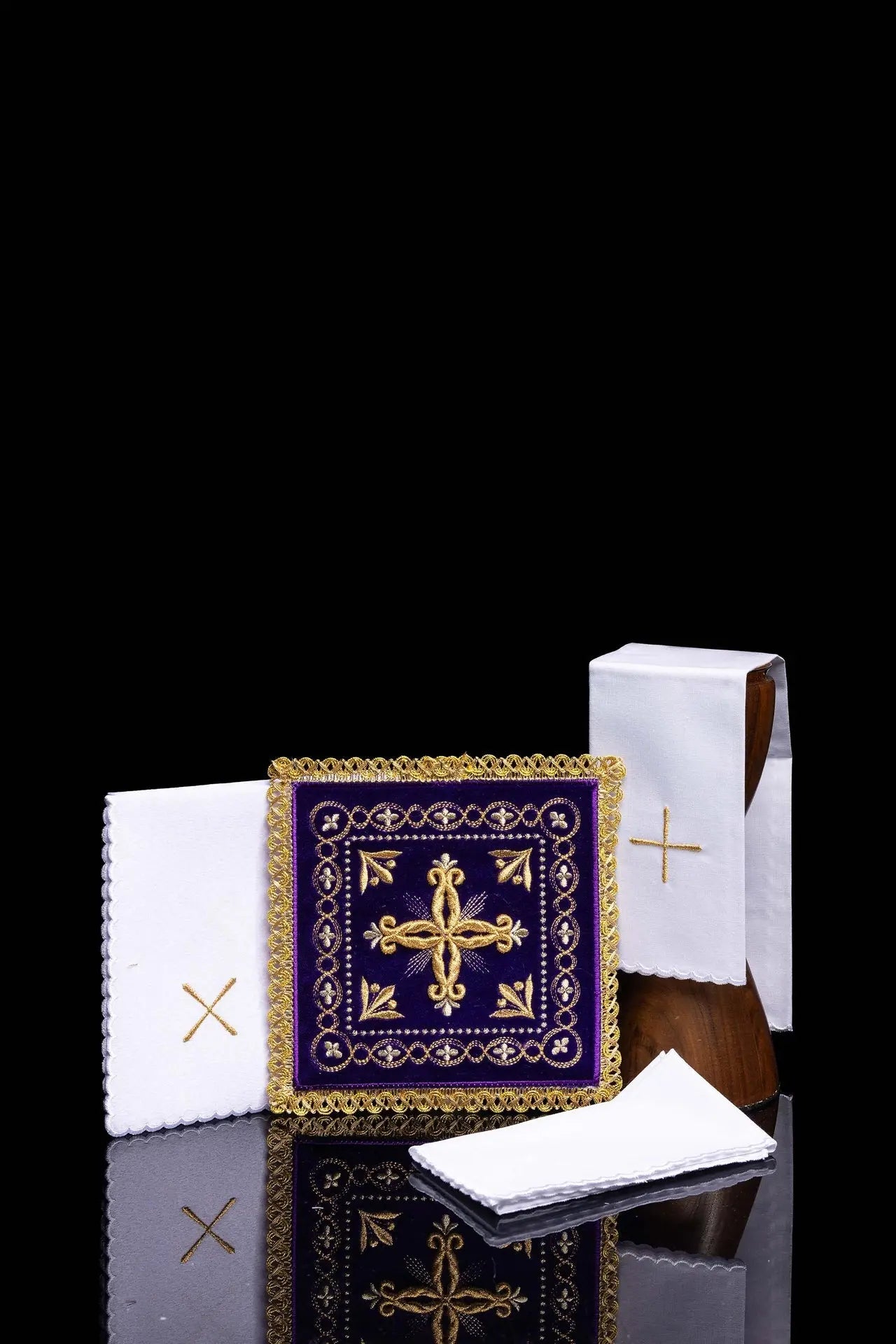
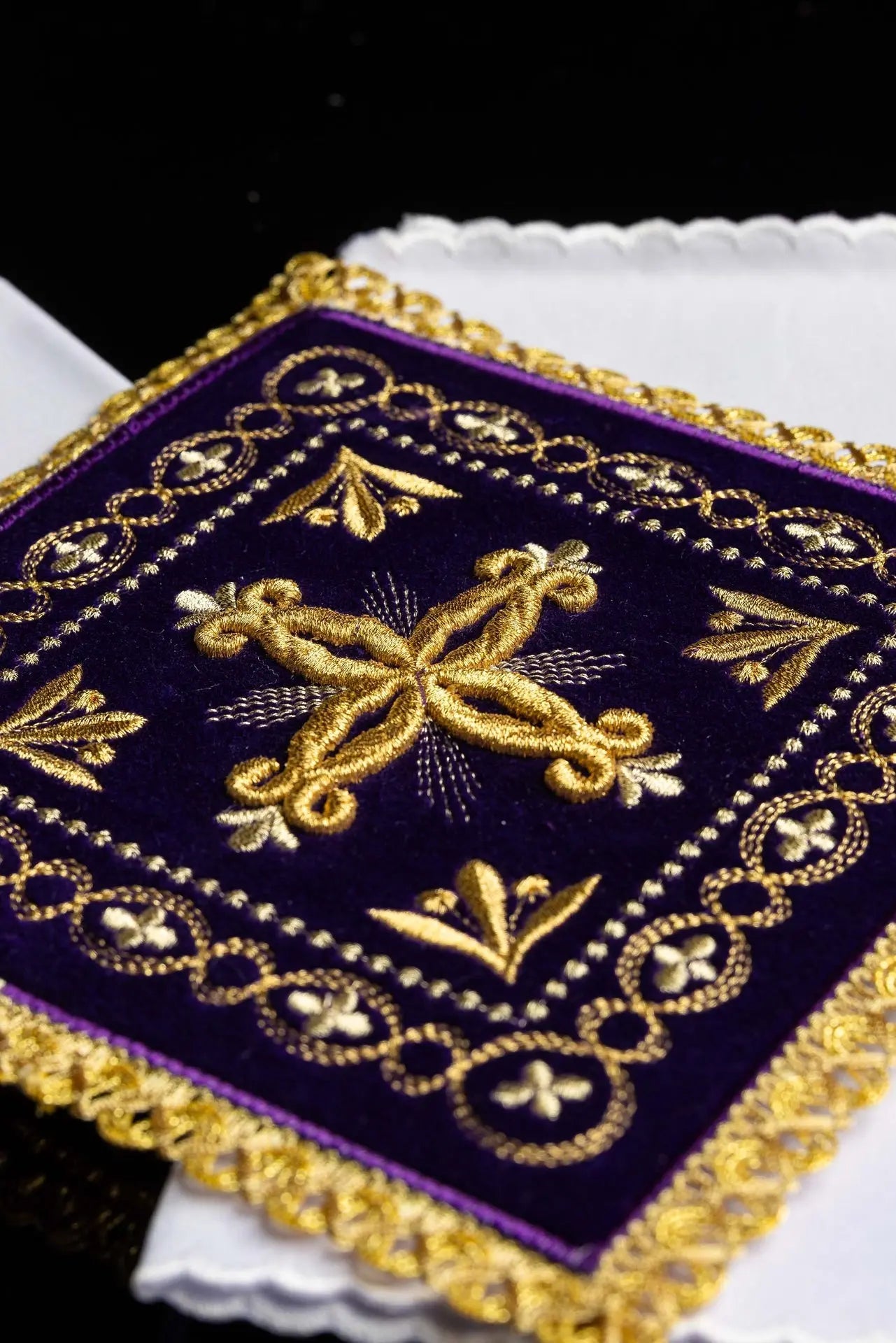
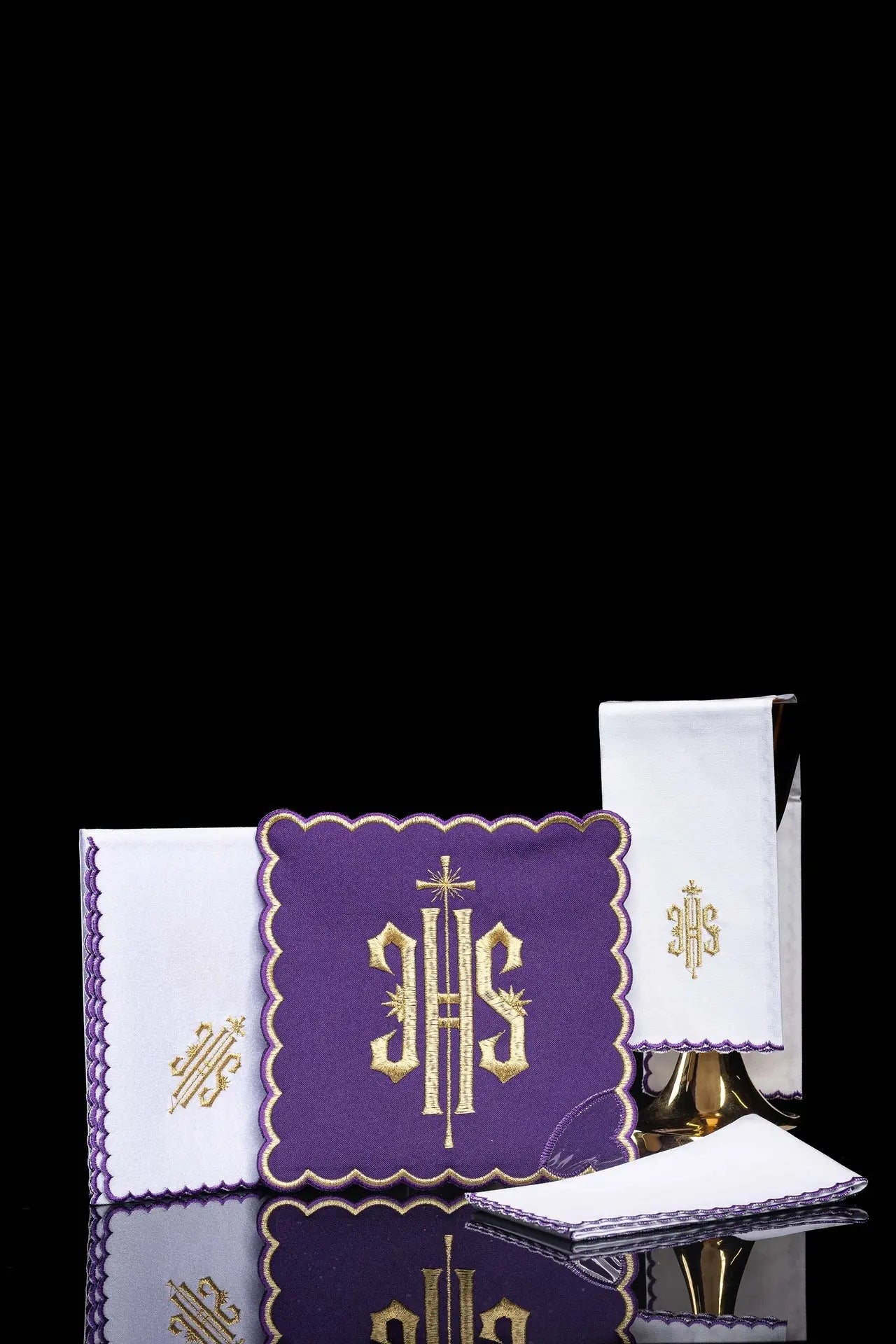
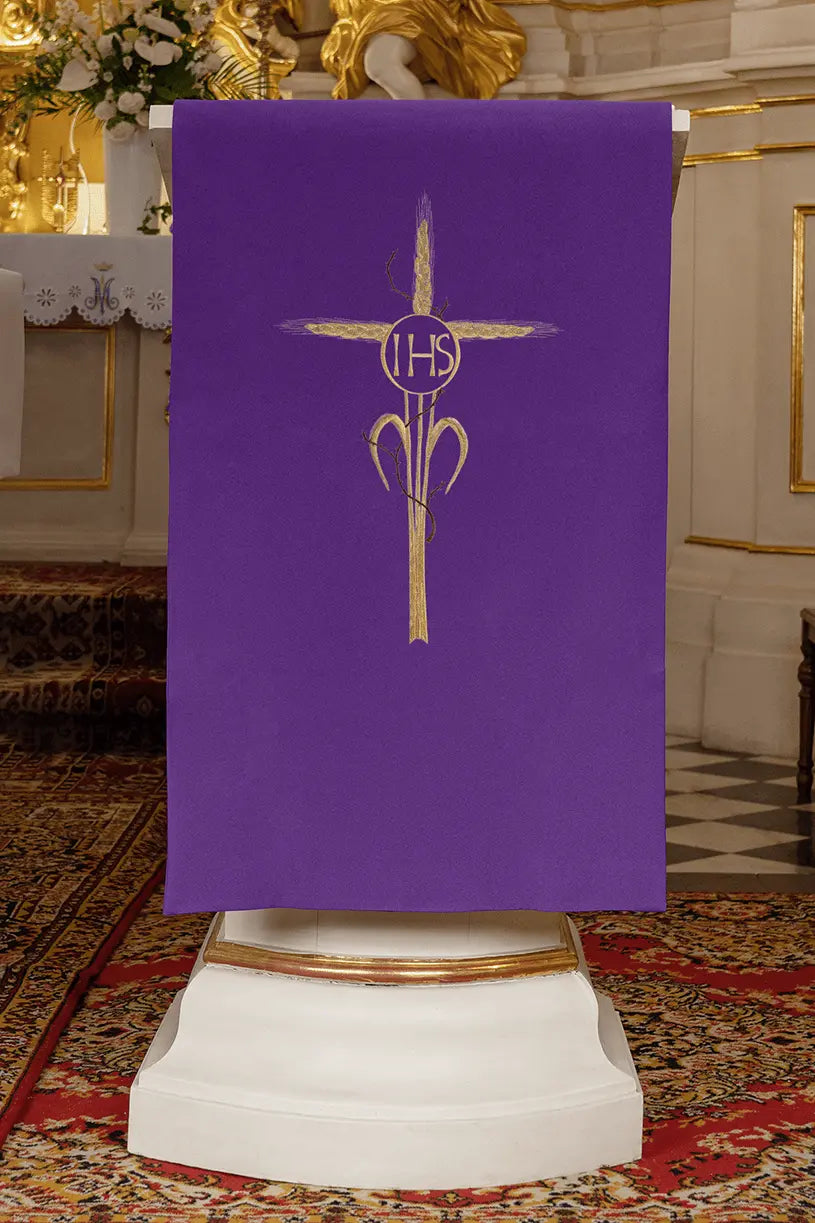
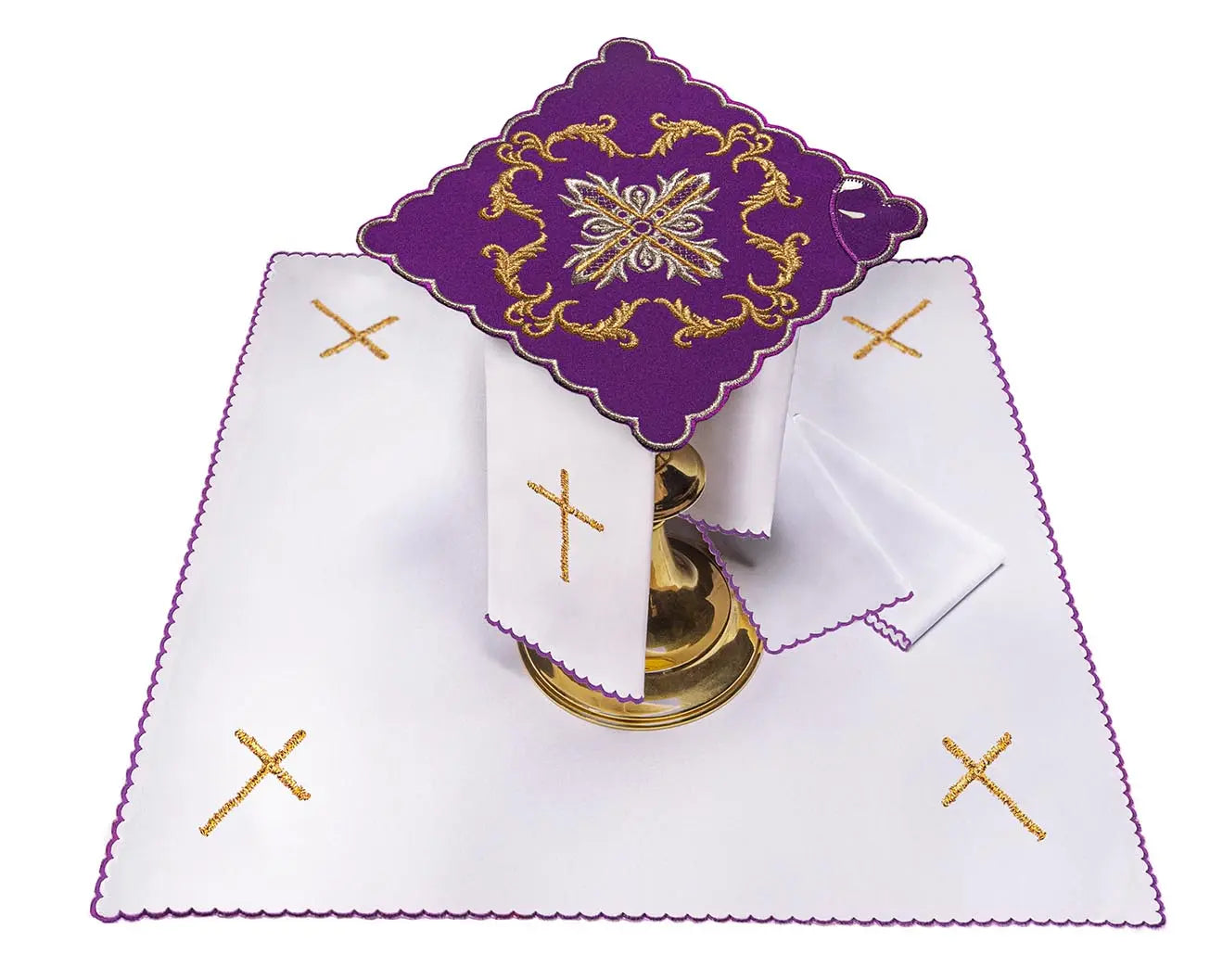
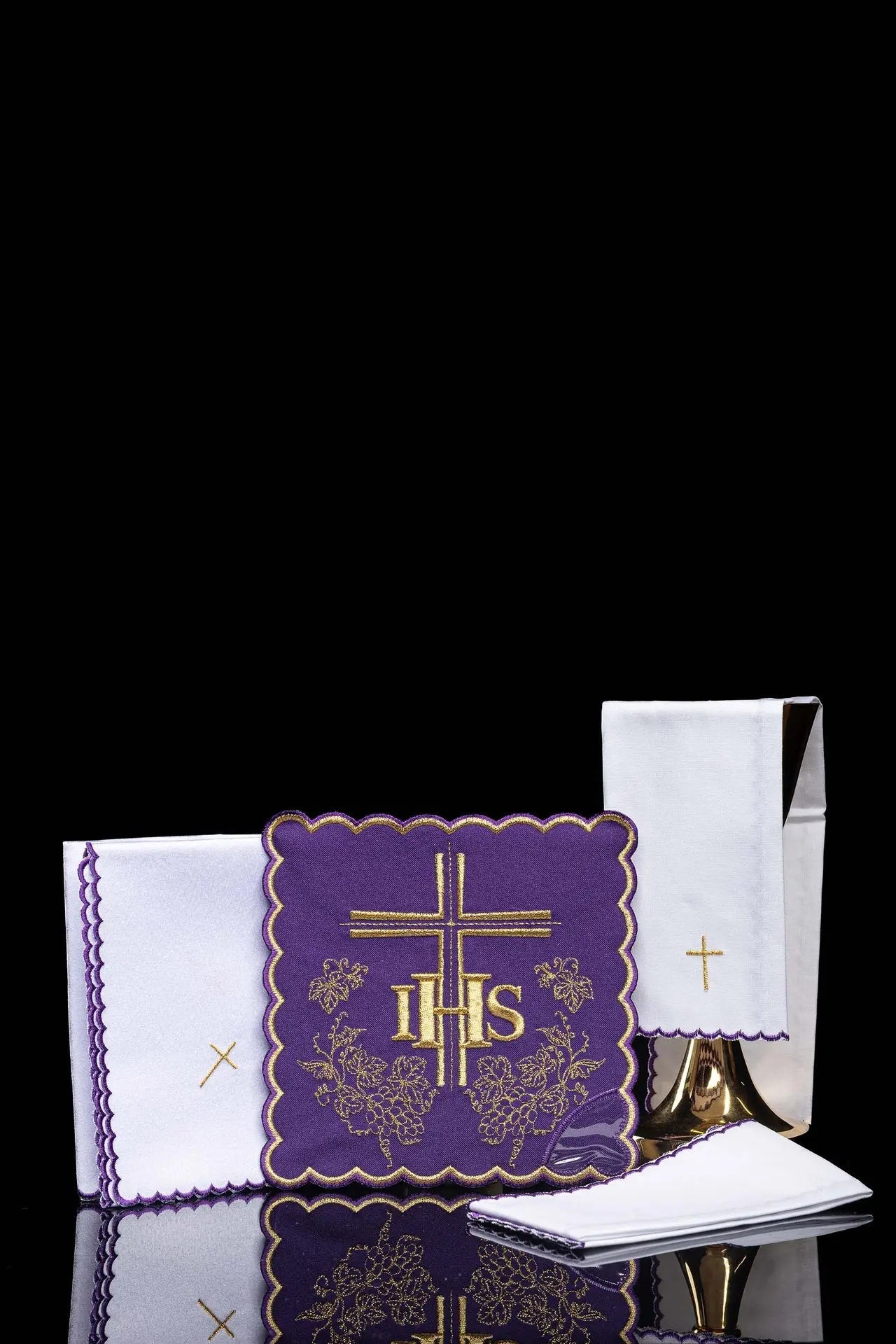
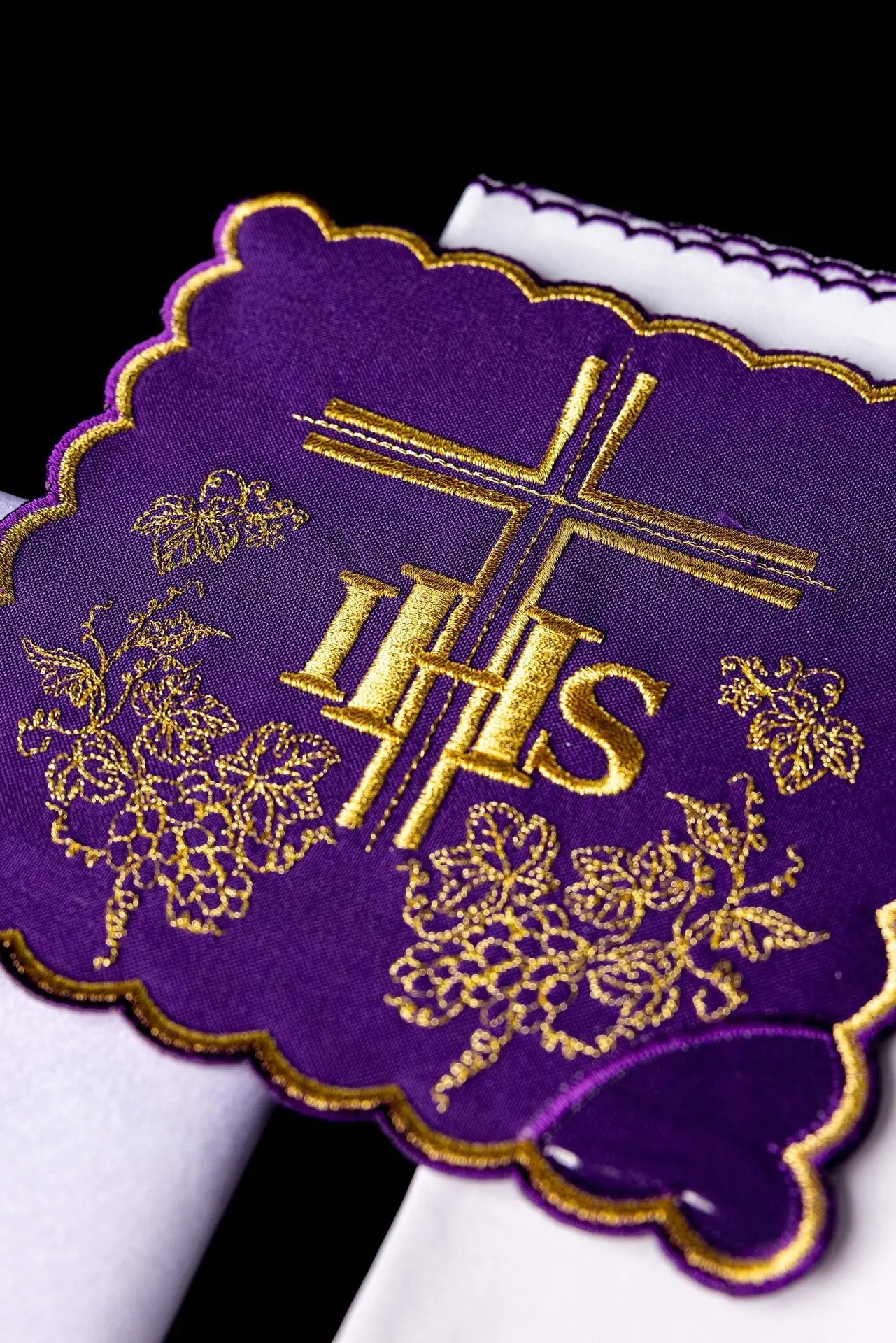
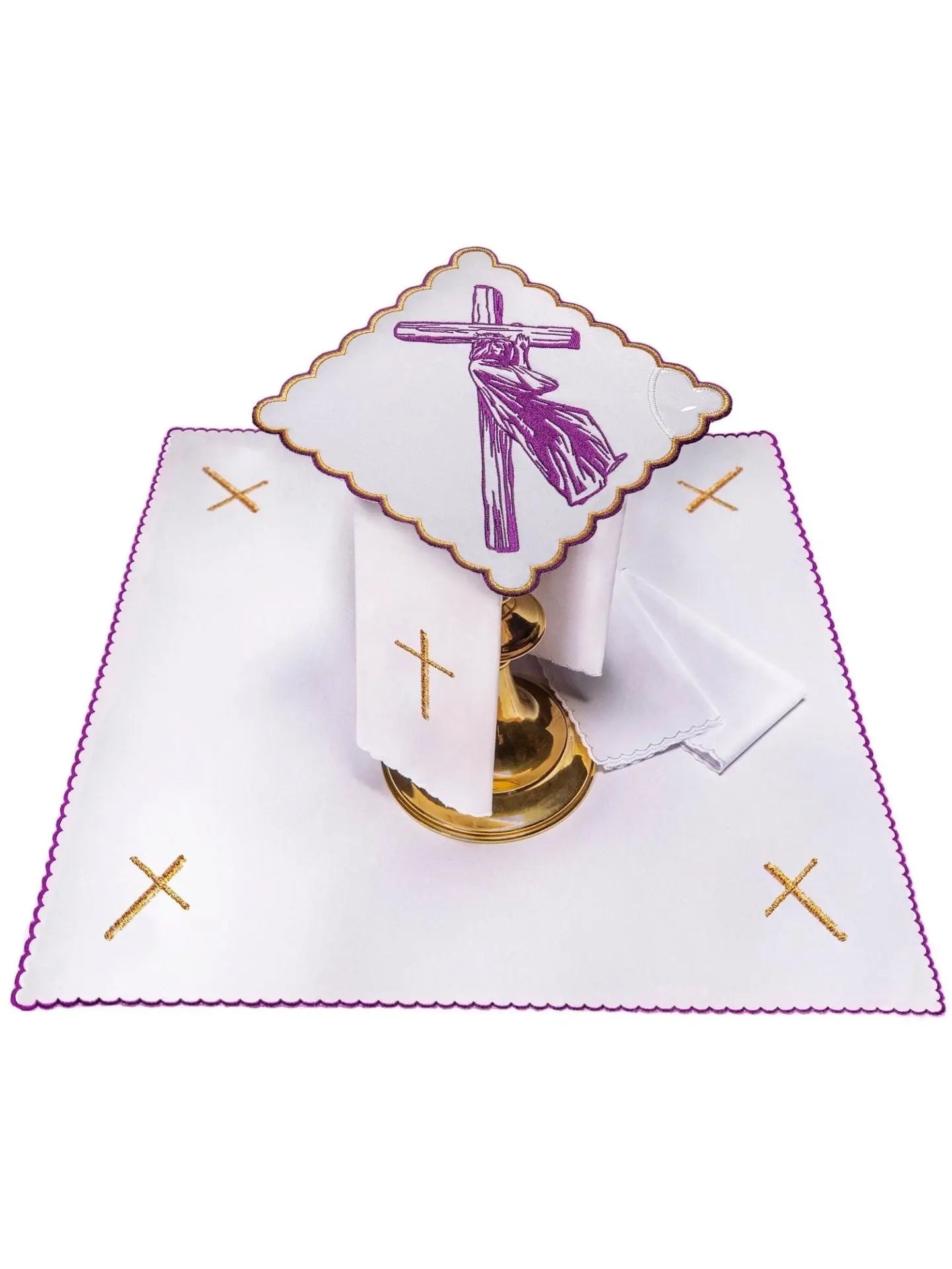
Church textiles also have an important role in Lent. Chalice linen sets, chalice veils, lectern napkins, pulpit covers, altar linens, and altar cloths can visually connect the altar, ambo, and sanctuary with the season. A purple chalice set or a textile embroidered with the IHS monogram, cross, chalice, or grapes can be used to support the Eucharistic focus of the celebration while maintaining the restrained Lenten tone. For linens and altar-related pieces beyond this seasonal selection, see altar linens and chalice linen sets.
Violet, Rose, and Seasonal Color Choices
Violet is the standard color of Lent in the Roman liturgical tradition. It expresses penance, preparation, and conversion. It is appropriate for most Lenten Masses and many related services, including penitential liturgies and Stations of the Cross. Purple vestments can vary from deep violet to lighter shades, so a parish may choose a tone that harmonizes with existing altar cloths, sanctuary textiles, or previously purchased vestments.
Rose has a specific and limited place in the Lenten season: it may be used on Laetare Sunday, the Fourth Sunday of Lent. Rose expresses a moment of moderated joy in the middle of the penitential journey, anticipating the joy of Easter while Lent still continues. For that reason, rose vestments should not replace violet throughout the whole season. When rose vestments are needed, the related Gaudete and Laetare collection and the rose chasubles category are the more precise places to compare options.
White or ecru may appear during certain solemnities or feasts that fall within Lent, depending on the liturgical calendar and local norms, but they are not the ordinary color of the Lenten season itself. Green belongs to Ordinary Time, not to the Lenten weekday and Sunday cycle. When planning a sacristy wardrobe, it is useful to keep the seasonal distinctions clear: violet for Lent, rose for Laetare Sunday where used, white or ecru for particular feasts, and green for Ordinary Time.
Choosing a Lenten Chasuble
When choosing a Lenten chasuble, begin with the liturgical setting. A parish that celebrates many weekday Masses may need a simple, durable violet chasuble that is easy to use often and easy to coordinate with existing stoles. A church preparing for Sunday celebrations, diocesan services, or major Lenten devotions may prefer a design with more visible embroidery, a decorated front band, or a strong central cross. A chapel with a small sanctuary may benefit from a restrained design, while a larger church can carry a more prominent motif without overpowering the liturgical action.
The cut of the chasuble also matters. A flowing Gothic chasuble gives broad, graceful lines and allows the fabric to move naturally during the celebration. A Roman or semi-Roman style offers a more structured silhouette and may suit communities with a more traditional visual preference. In both cases, the chasuble should fit the celebrant comfortably, allow free movement, and maintain a dignified appearance when standing, sitting, processing, or celebrating at the altar.
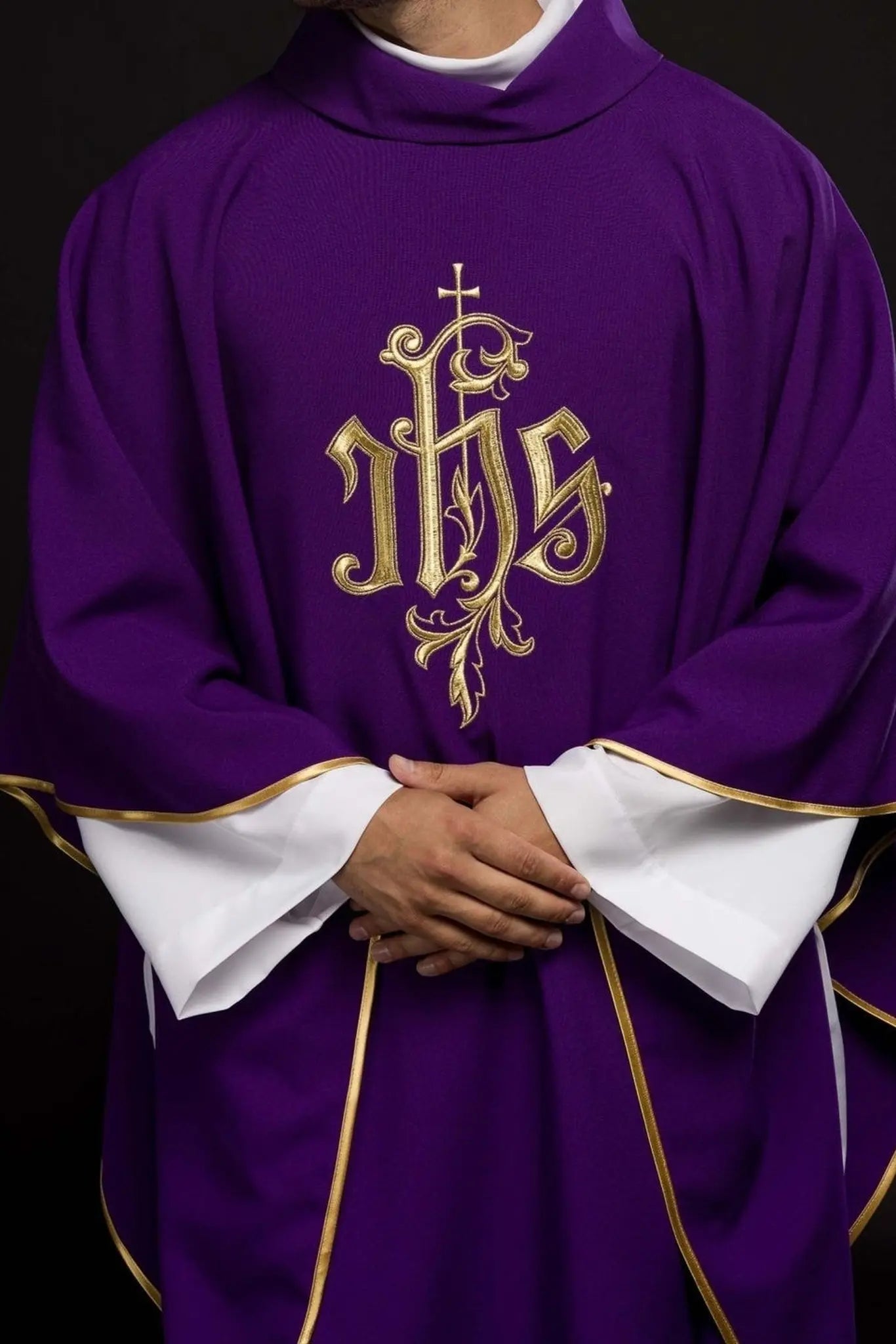
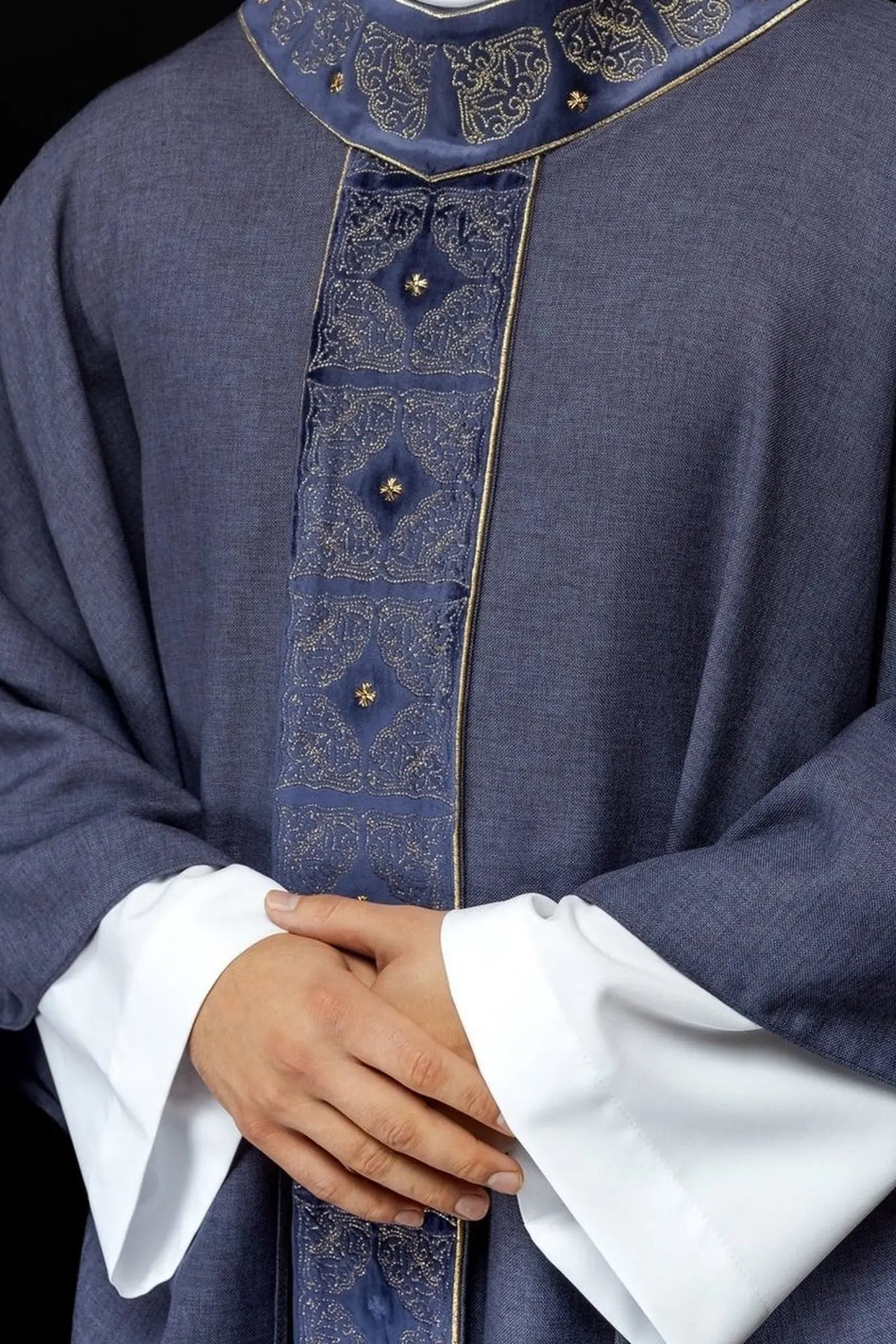
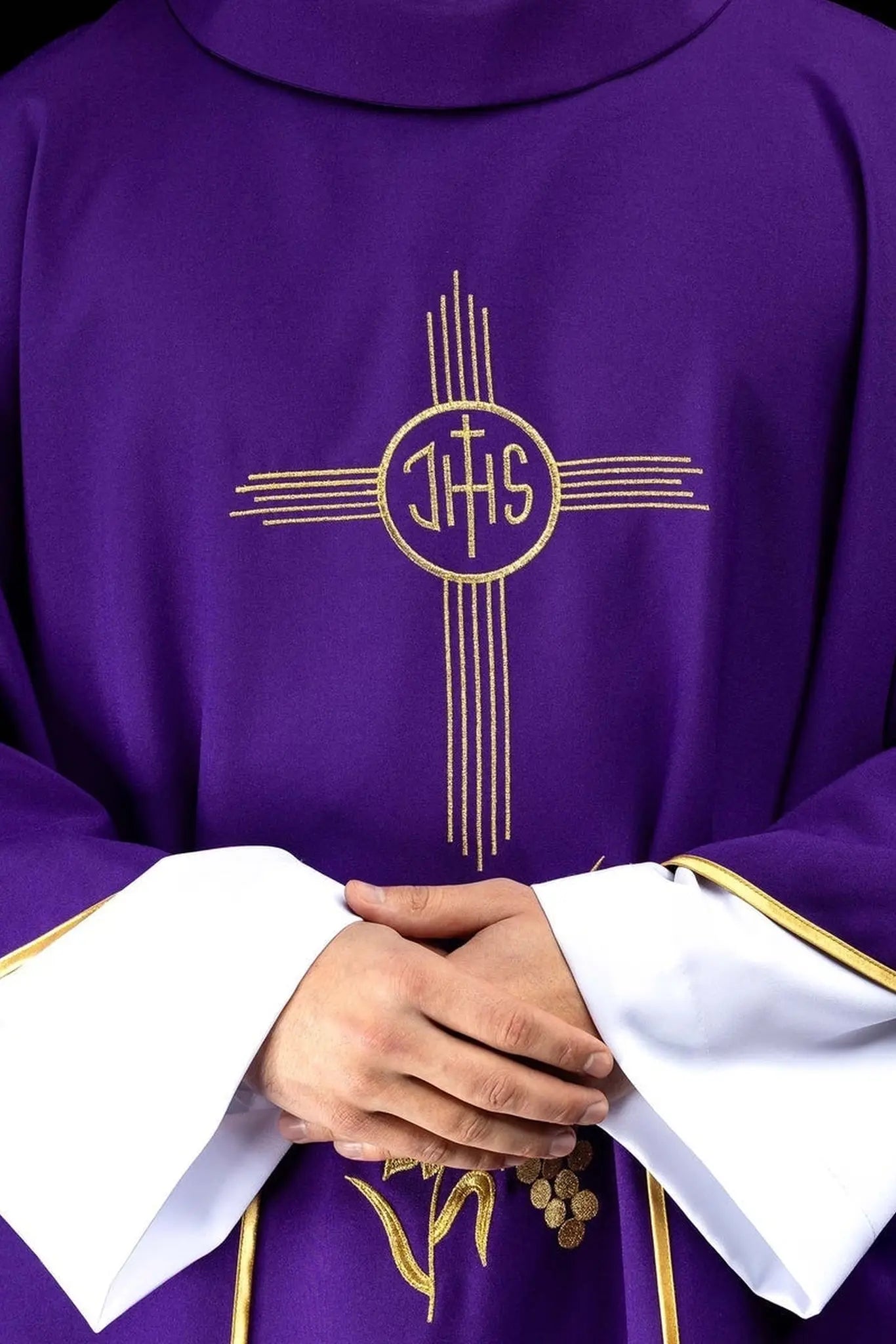
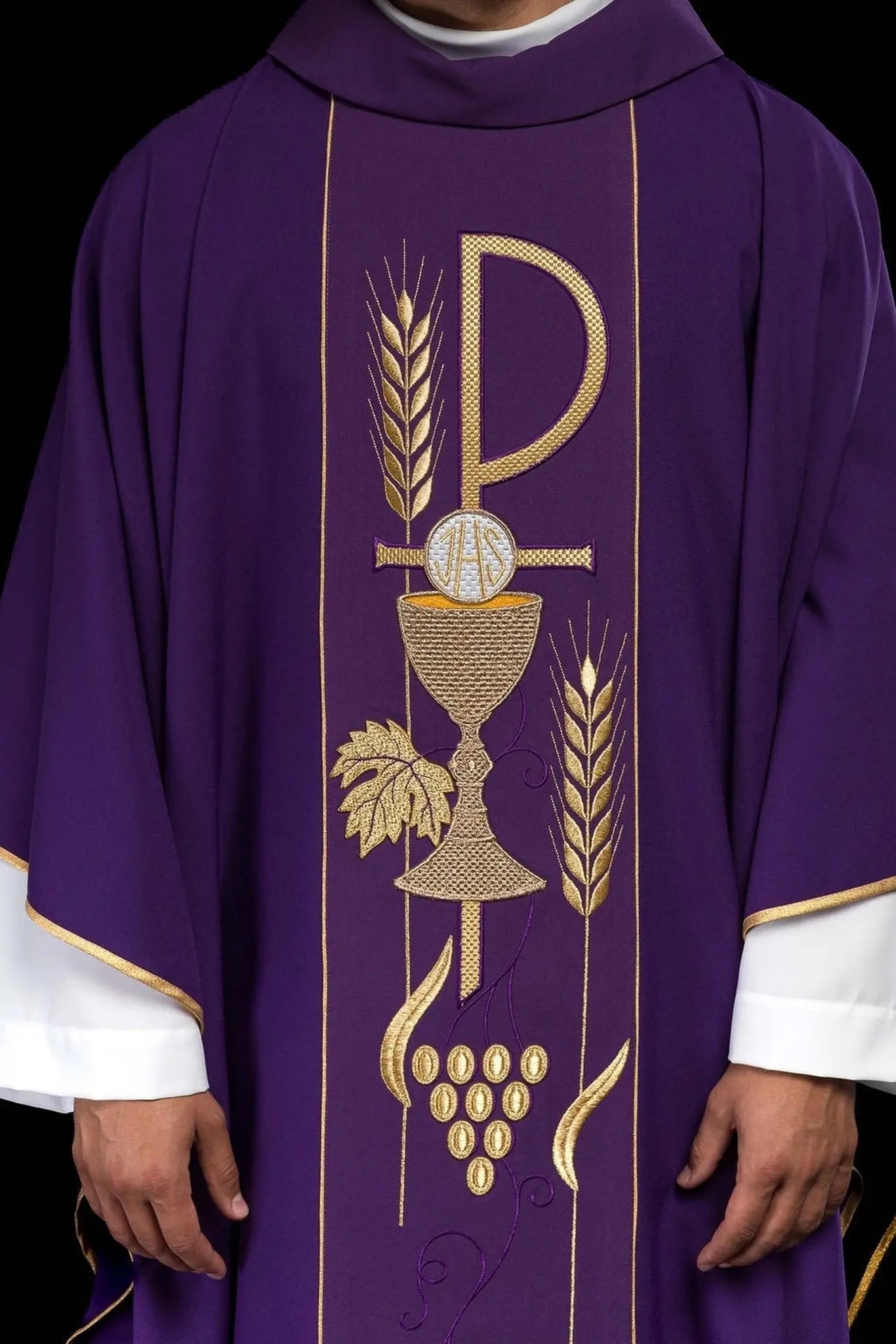
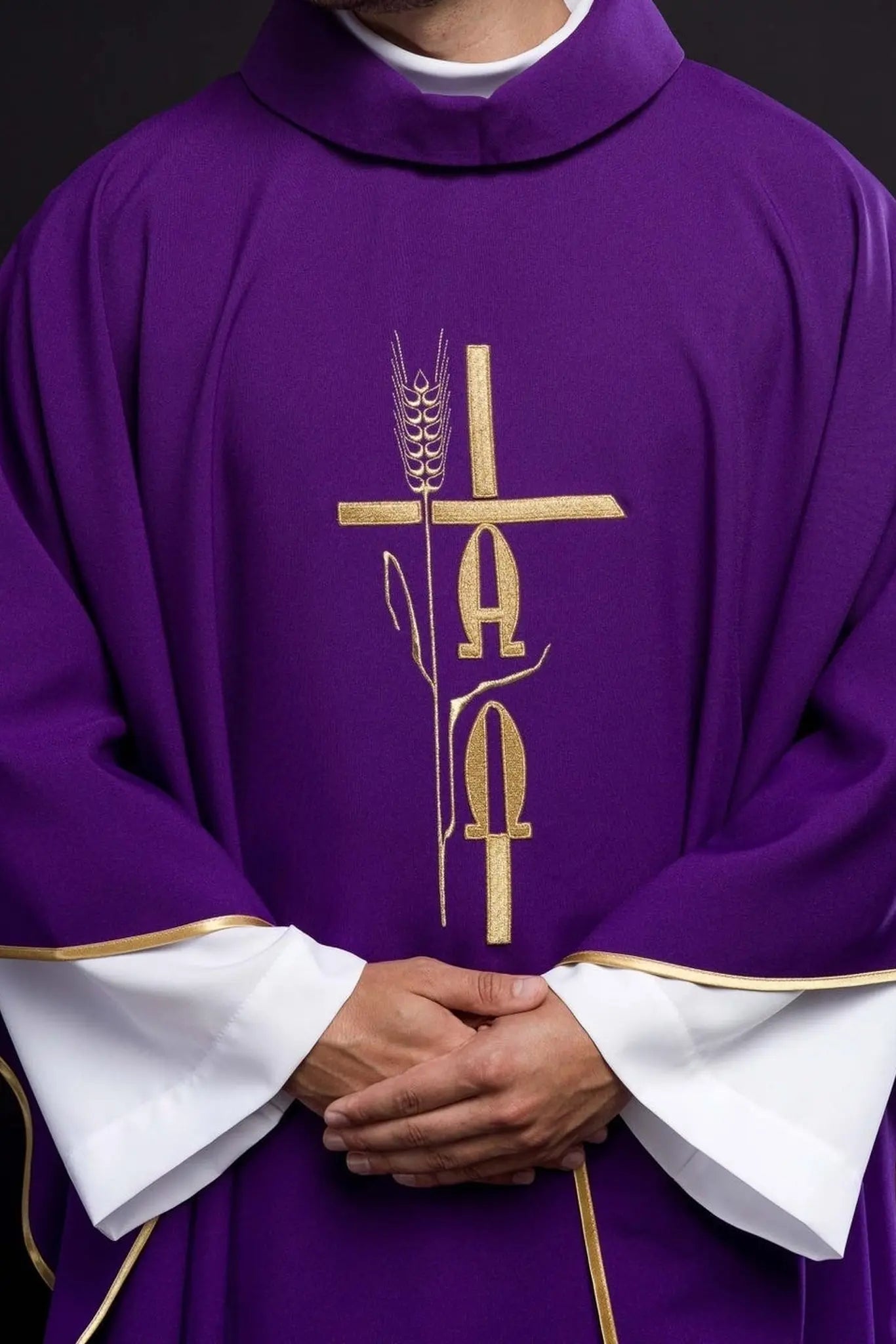
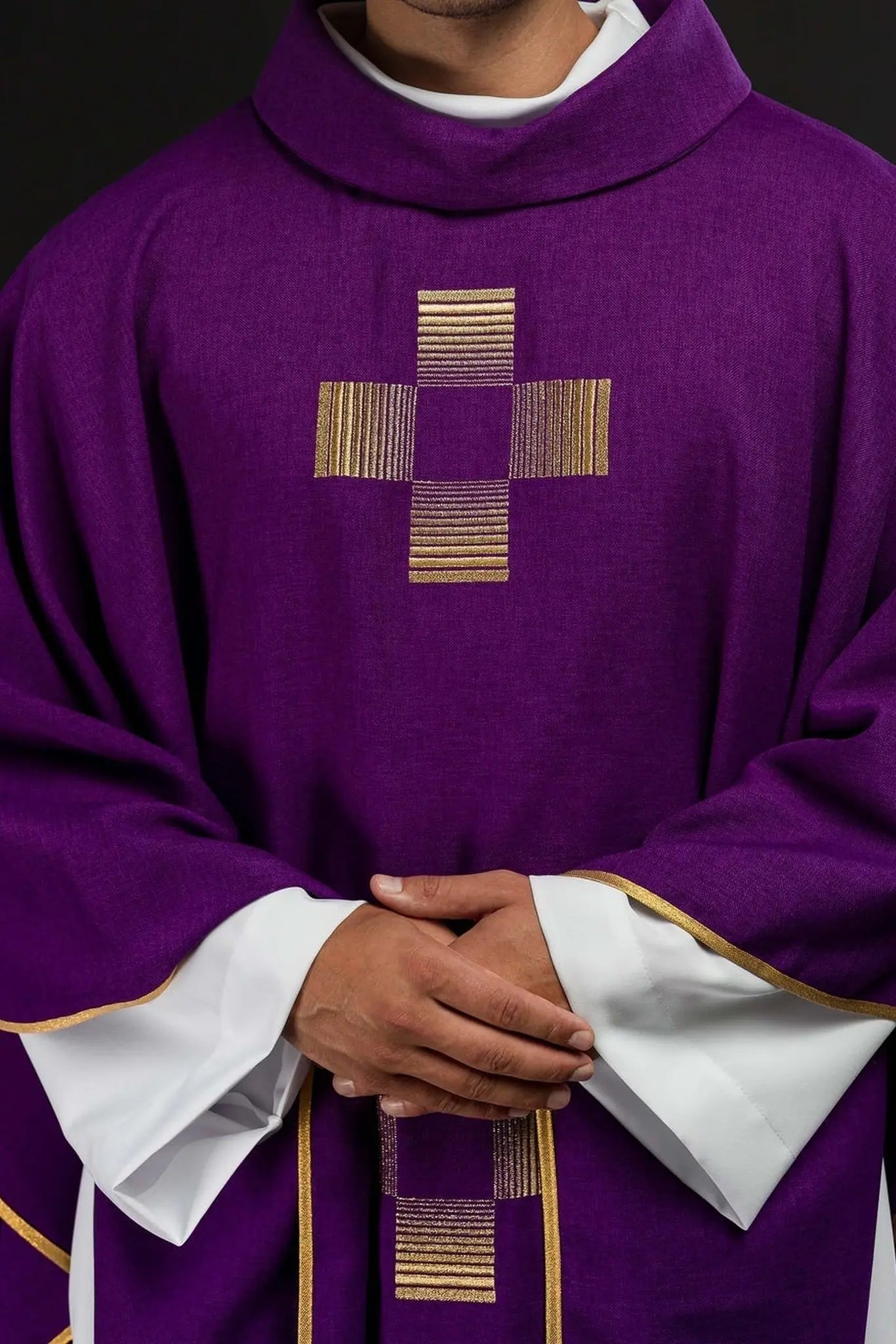
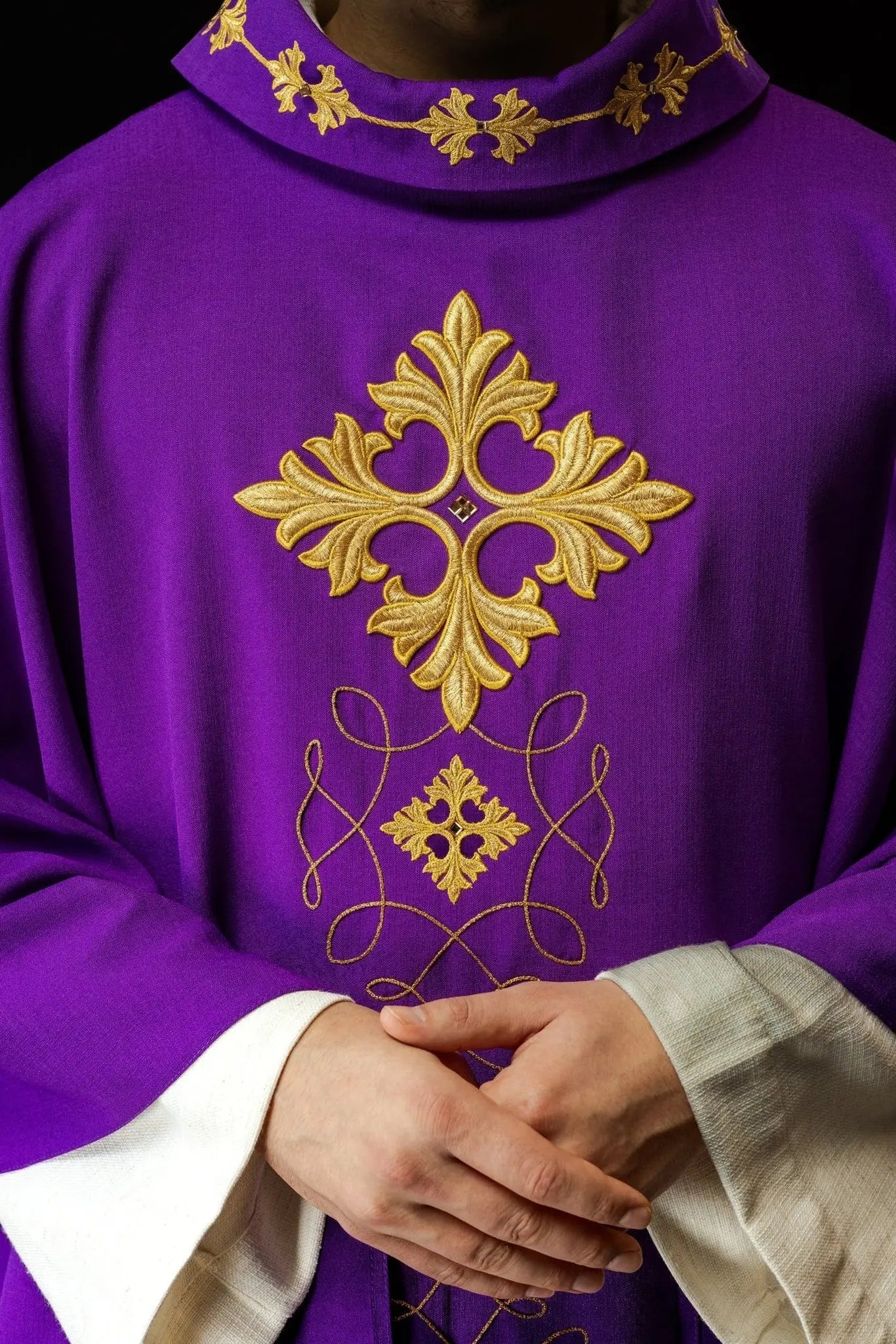
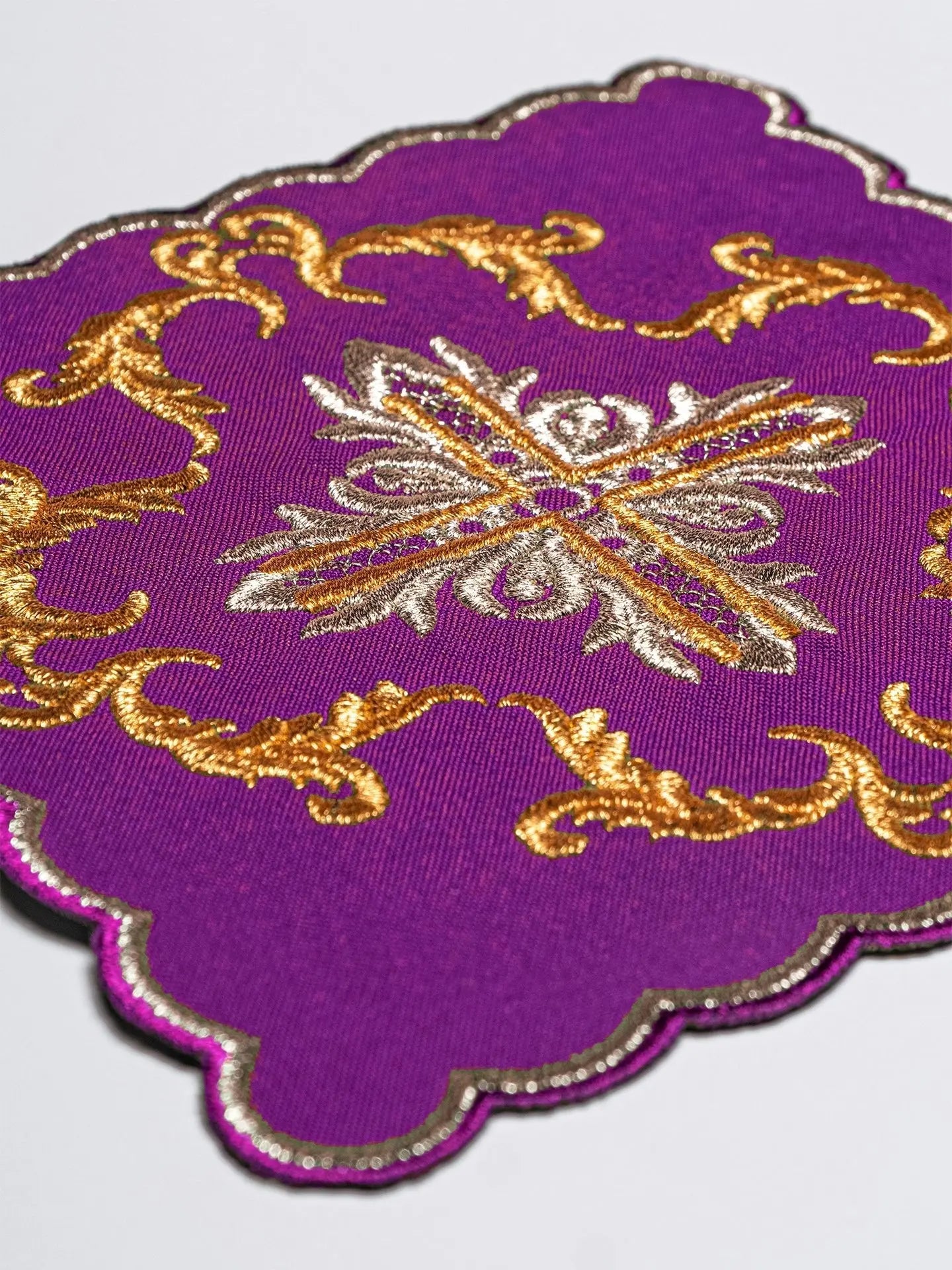
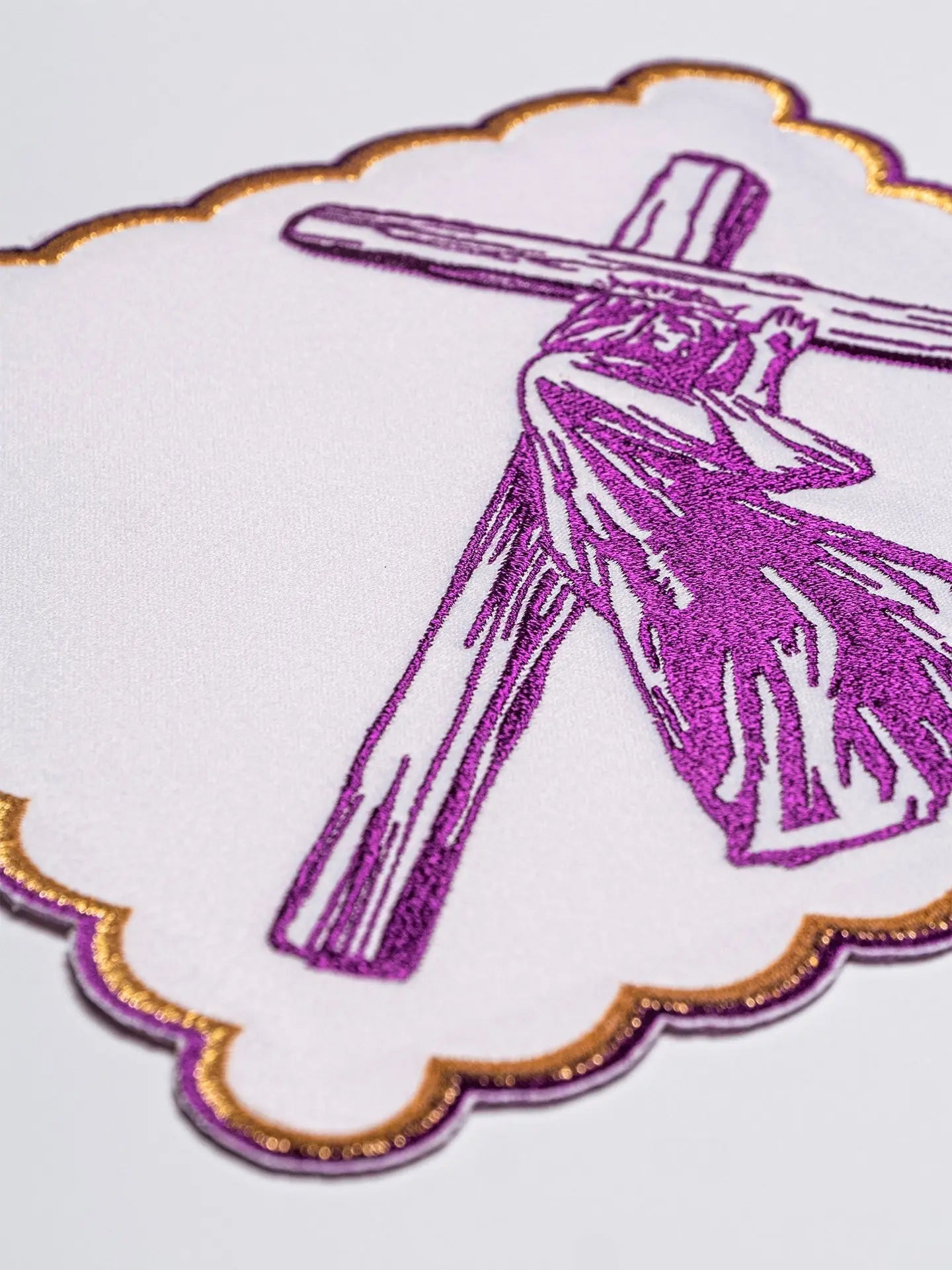
Embroidery should be chosen according to the meaning of the season. Crosses, thorns, Eucharistic symbols, the IHS monogram, the chalice, grapes, and restrained geometric ornament can all be appropriate. Gold embroidery can be used in a measured way, particularly when it highlights the Cross or Eucharistic symbolism rather than creating a festive effect better suited to Easter or Christmas. Silver, dark thread, or tonal embroidery may create a quieter expression for Lenten weekdays and penitential services.
Coordinating Stoles, Copes, and Linens
A well-prepared Lent sacristy usually includes more than one chasuble. Coordinated stoles are needed for sacramental ministry and for clergy who are not wearing a chasuble. A purple stole may be used for the Sacrament of Reconciliation, Lenten preaching, blessings, and pastoral settings. Deacons use deacon stoles according to their proper form, and priests use priest stoles according to theirs, so the category and form should be checked before purchase.
Copes are useful when the celebration calls for a solemn outer vestment outside Mass. A purple cope can be paired with a stole for Lenten devotions, the Liturgy of the Hours, or Eucharistic services where the rubrics and local custom call for it. If a parish already owns a Lenten chasuble with a particular cross or IHS motif, a cope with related embroidery can help maintain unity without requiring an exact duplicate.
Textiles complete the sanctuary setting. A chalice linen set may include pieces used around the chalice and paten, while a chalice veil covers the chalice before the preparation of the gifts and after purification where customary. Pulpit or lectern textiles can mark the ambo with the seasonal color, and altar linens should remain dignified, clean, and suitable for sacred use. The visual connection between vestment, chalice set, and sanctuary textile can make the Lenten environment feel intentional without becoming theatrical.
Embroidery and Symbolism for Lent
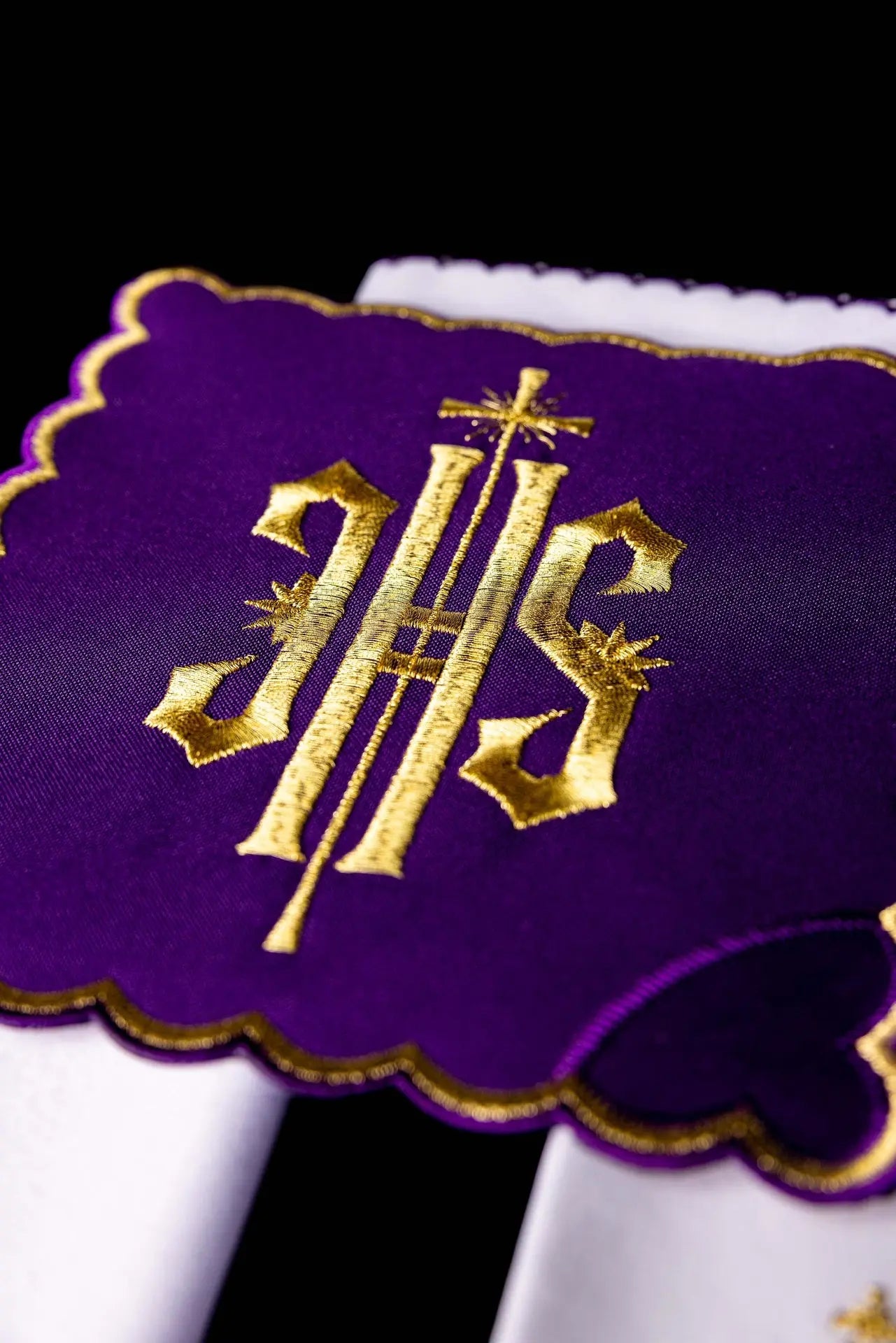
Lenten embroidery often speaks most strongly when it is disciplined. The Cross is the clearest sign, especially when placed centrally on the chasuble or cope. A Jerusalem cross, a Passion cross, a simple Latin cross, or a cross combined with grapes and chalice imagery can connect the penitential journey of Lent with the Eucharistic sacrifice. The IHS monogram is also common, pointing to the Holy Name of Jesus and keeping the focus on Christ rather than on decoration alone.
Grapes, wheat, the chalice, and Eucharistic ornament can be especially fitting for Sunday Mass and for parishes that want the vestment to express both penance and hope. Lent is ordered toward the Paschal Mystery, so a Lenten vestment does not need to appear severe in a negative sense. It may be sober and beautiful at the same time, with embroidery that carries theological meaning and draws the eye toward the altar.
When comparing embroidered designs, look at scale, contrast, and placement. A large gold motif on dark purple fabric will be more visible in a large nave or during a procession. A tonal purple design may be better for smaller chapels or weekday use. Decorative bands can elongate the silhouette of the chasuble, while a centered cross gives a direct focal point. The best choice is the one that fits the liturgical use, church architecture, and existing sacristy items.
For Weekdays, Sundays, and Lenten Devotions
Different Lenten celebrations may require different levels of formality. Weekday Masses often benefit from simple violet chasubles that are practical, dignified, and not overly ornate. Sundays of Lent may call for a more elaborate chasuble, especially when the parish wants a stronger visual distinction from weekday celebrations. Parish missions, retreats, penitential services, and Stations of the Cross may require stoles, copes, lectern textiles, or other accessories depending on the structure of the service.
For the Sacrament of Reconciliation, a purple stole is often the most practical and frequently used Lenten vestment. Parishes that schedule additional confession times during Lent should consider whether they have enough stoles for all priests assisting. For Eucharistic devotions, a cope, humeral veil, and related linens may be needed according to the form of the service. If your community regularly holds Lenten adoration or processions, the humeral veils collection may be useful for completing the set.
For Holy Week, the liturgical color changes according to the specific day and rite, so Lent items should be chosen with that distinction in mind. Violet remains important, but it is not the only color used in Holy Week. Red, white, and other vestments may be needed for particular celebrations. This collection supports the Lenten season broadly, while neighboring seasonal collections can help complete the sacristy for the entire liturgical year.
How This Collection Relates to Adjacent Seasons
Lent shares violet with Advent, but the two seasons have different accents. Advent is a season of waiting and expectation before Christmas, while Lent is a season of penance and preparation for Easter. Some violet vestments can serve both seasons if the symbols are general, such as a simple cross or restrained ornament. However, designs with strong Passion imagery are more specifically Lenten. To compare the seasonal tone, you can view the related Advent collection.
Christmas and Easter celebrations usually call for white, ecru, gold, or more festive ornament, so they should be visually distinct from Lent. Ordinary Time uses green, and therefore should not be confused with Lenten violet. If your church is planning a full sacristy renewal, it may be useful to select Lenten vestments alongside sets for Ordinary Time and other major seasons so that color, quality, and fit remain consistent throughout the year.
The Lenten collection also connects naturally with collections devoted to Eucharistic devotion and major feasts, because many Lenten designs include chalice, grapes, wheat, cross, and IHS motifs. These symbols are not limited to one season, but their color and composition determine where they fit best. A purple chalice motif belongs naturally in Lent, while a white or gold Eucharistic design may be more appropriate for Corpus Christi or other festive celebrations.
Fabric, Fit, and Practical Use
Liturgical vestments are used repeatedly, often in demanding parish schedules, so practical details matter. The fabric should drape well, hold its shape, and support the embroidery without pulling or wrinkling excessively. The lining, collar, and finishing should contribute to comfort and durability. For chasubles, the width and length should suit the celebrant and the liturgical space. For stoles, the length and cut should correspond to the wearer and ministry. For copes, closure, weight, and movement are especially important.
Parishes should also consider how often the vestment will be used. A simple weekday chasuble may need to withstand frequent wear during the forty days of Lent. A more ornate Sunday chasuble may be used less often but should remain visually strong in solemn liturgies. Chalice sets and altar textiles should be chosen with care because they are handled closely in sacred rites and must remain clean, properly stored, and suitable for repeated use.
When ordering a coordinated set, it is useful to compare shade and motif rather than relying on the word purple alone. Different fabrics reflect light differently, and embroidery can shift the overall impression of the vestment. A deep violet chasuble with gold embroidery will feel different from a lighter purple textile with tonal thread. Both may be appropriate, but they serve different visual and pastoral needs.
Care and Storage of Lenten Vestments
Proper care helps preserve the beauty and dignity of sacred vestments. Embroidered chasubles, stoles, copes, and linens should be stored in a clean, dry place away from direct sunlight. Chasubles and copes are best kept on suitable hangers or in garment covers that protect the fabric from dust and friction. Stoles should be stored flat or hung in a way that prevents creasing. Linens should be folded carefully after laundering and kept separate from items that could snag embroidery.
Cleaning should follow the care recommendations for the specific fabric and construction. Delicate embroidery, metallic thread, velvet accents, and structured pieces may require professional cleaning. Small marks should not be treated aggressively, because harsh rubbing or unsuitable detergents can damage fabric and thread. Sacristans should also inspect vestments before Lent begins so that missing closures, loose threads, or cleaning needs can be addressed before the busiest weeks of the season.
Building a Complete Lenten Sacristy
A complete Lent selection may include several layers: a primary Sunday chasuble, one or more simpler weekday chasubles, priest stoles, deacon stoles if needed, a cope for devotions, chalice linens, a chalice veil, and sanctuary textiles such as lectern or pulpit pieces. Not every parish needs every item immediately, but planning by function helps avoid mismatched purchases. The most important question is how the item will be used in the real rhythm of parish life.
For a small chapel, a single dignified purple chasuble and matching stole may be enough. For a parish with multiple priests, several confession times, Lenten missions, and Sunday Masses in a large church, a broader selection is more practical. For communities with strong Eucharistic devotion, a cope, humeral veil, and chalice textiles may be especially important. This collection allows those different needs to be considered together while keeping the Lenten character clear.
Frequently Asked Questions (FAQ)
What color vestments are normally used during Lent?
Violet is the normal liturgical color for Lent. It expresses penance, conversion, and preparation for Easter. Rose may be used on Laetare Sunday, the Fourth Sunday of Lent, where this custom is observed, but it does not replace violet for the whole season.
Are Lenten chasubles only for Sundays?
No. A Lenten chasuble may be used for weekday Masses, Sundays of Lent, parish retreats, penitential celebrations that include Mass, and other Eucharistic liturgies during the season. Many parishes choose simpler violet chasubles for weekdays and more decorated ones for Sundays.
Which items should be coordinated with a Lenten chasuble?
The most useful matching items are a purple stole, chalice linen set, chalice veil, and, where needed, a cope for solemn devotions. Coordinating the motif, shade, or embroidery style helps the sanctuary look unified without requiring every piece to be identical.
Can the same purple vestment be used for Advent and Lent?
Yes, a simple violet vestment with general Christian symbolism may serve both Advent and Lent. Designs that strongly emphasize the Passion, thorns, or penitential imagery are more specifically suited to Lent, while Advent may call for a quieter theme of expectation.
What symbolism is most appropriate for Lenten embroidery?
Crosses, the IHS monogram, chalice and grapes, wheat, and restrained ornamental bands are especially fitting. These motifs connect the season of repentance with the Eucharist and the Paschal Mystery while keeping the visual tone reverent.
How should a parish choose between a simple and ornate Lenten vestment?
Consider the celebration, church size, and frequency of use. Simple violet vestments work well for daily Mass and confessions. More elaborate embroidery may be better for Sundays, Lenten missions, or solemn services where the vestment needs to remain visible in a larger sanctuary.