
Sort by
19 products
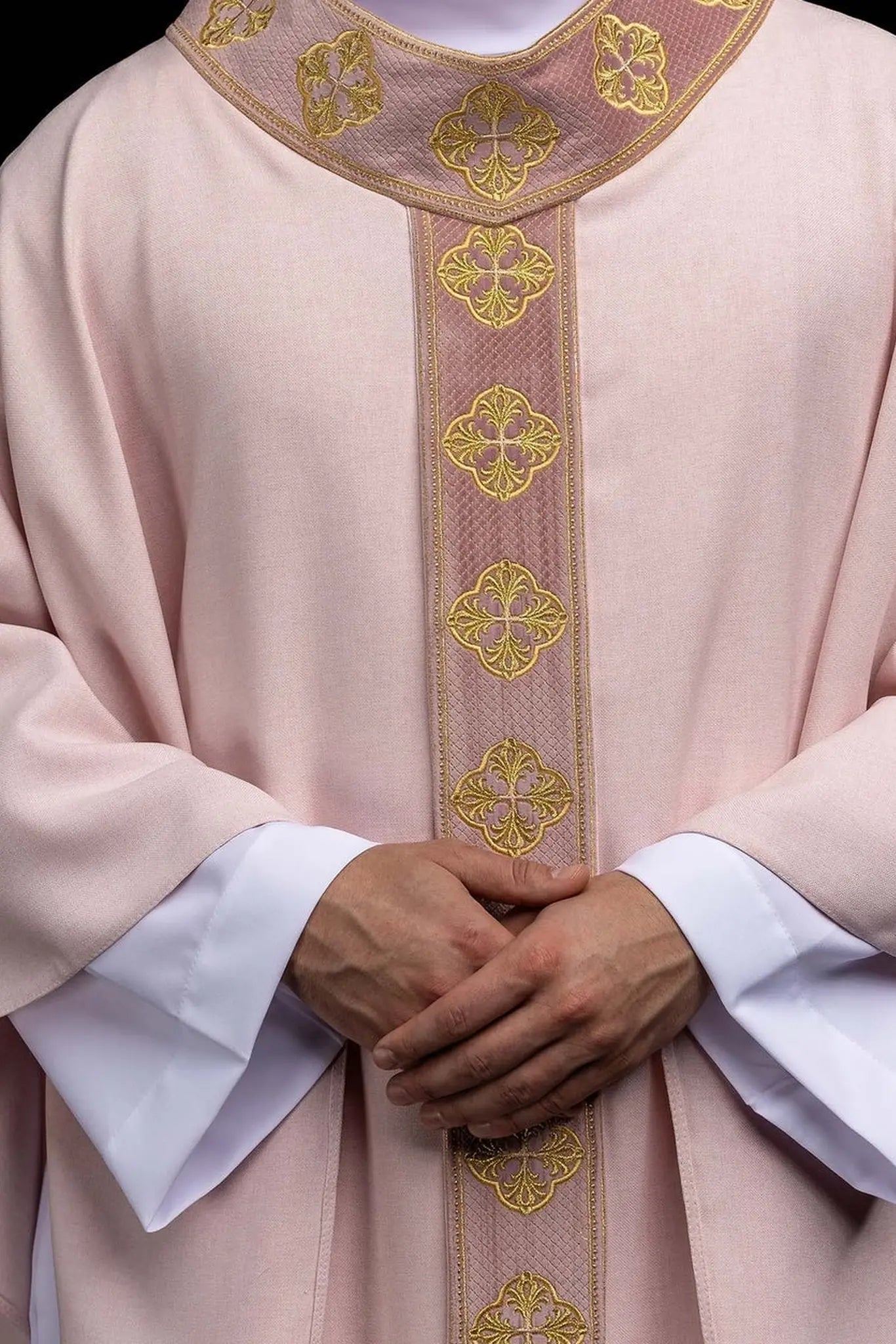
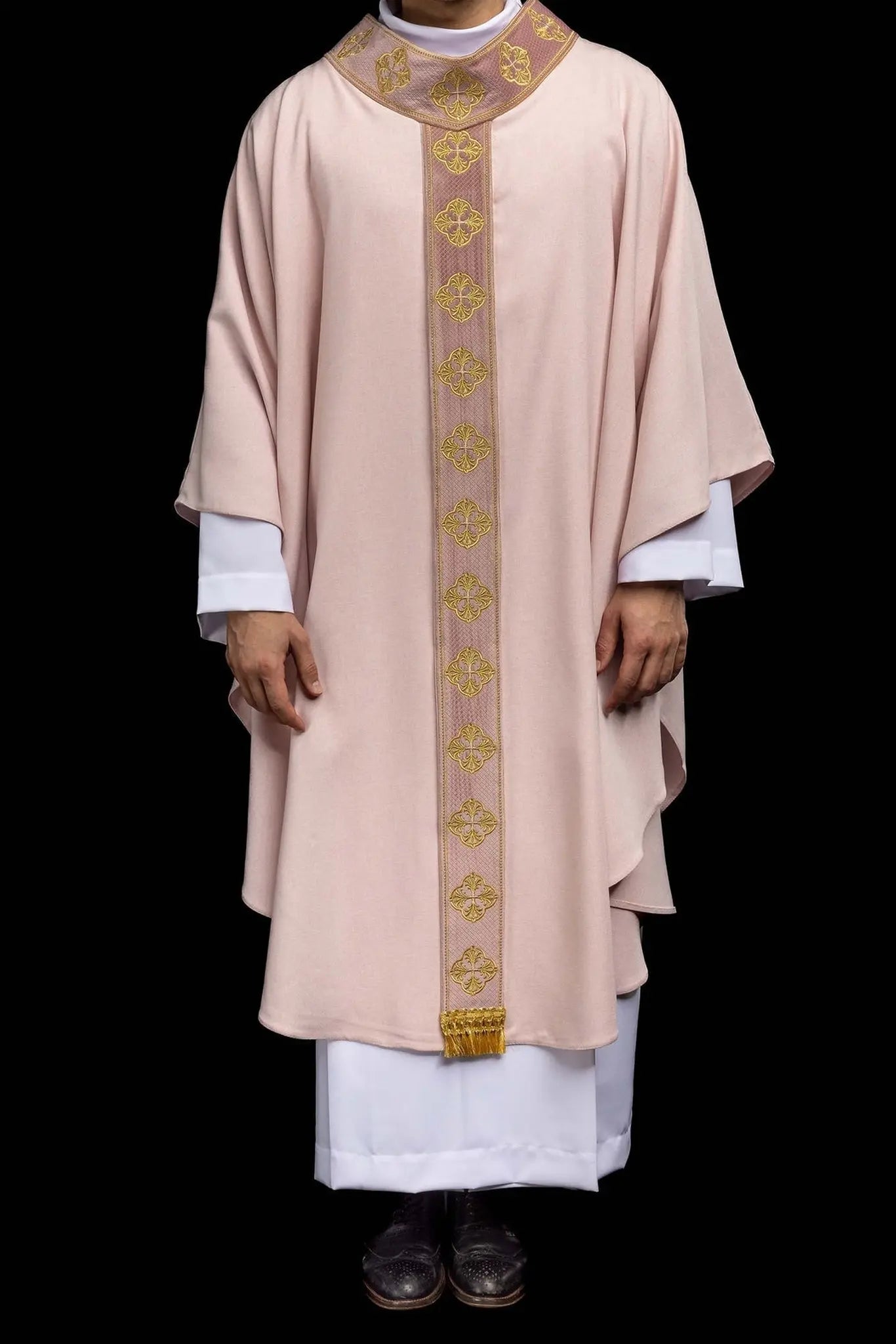
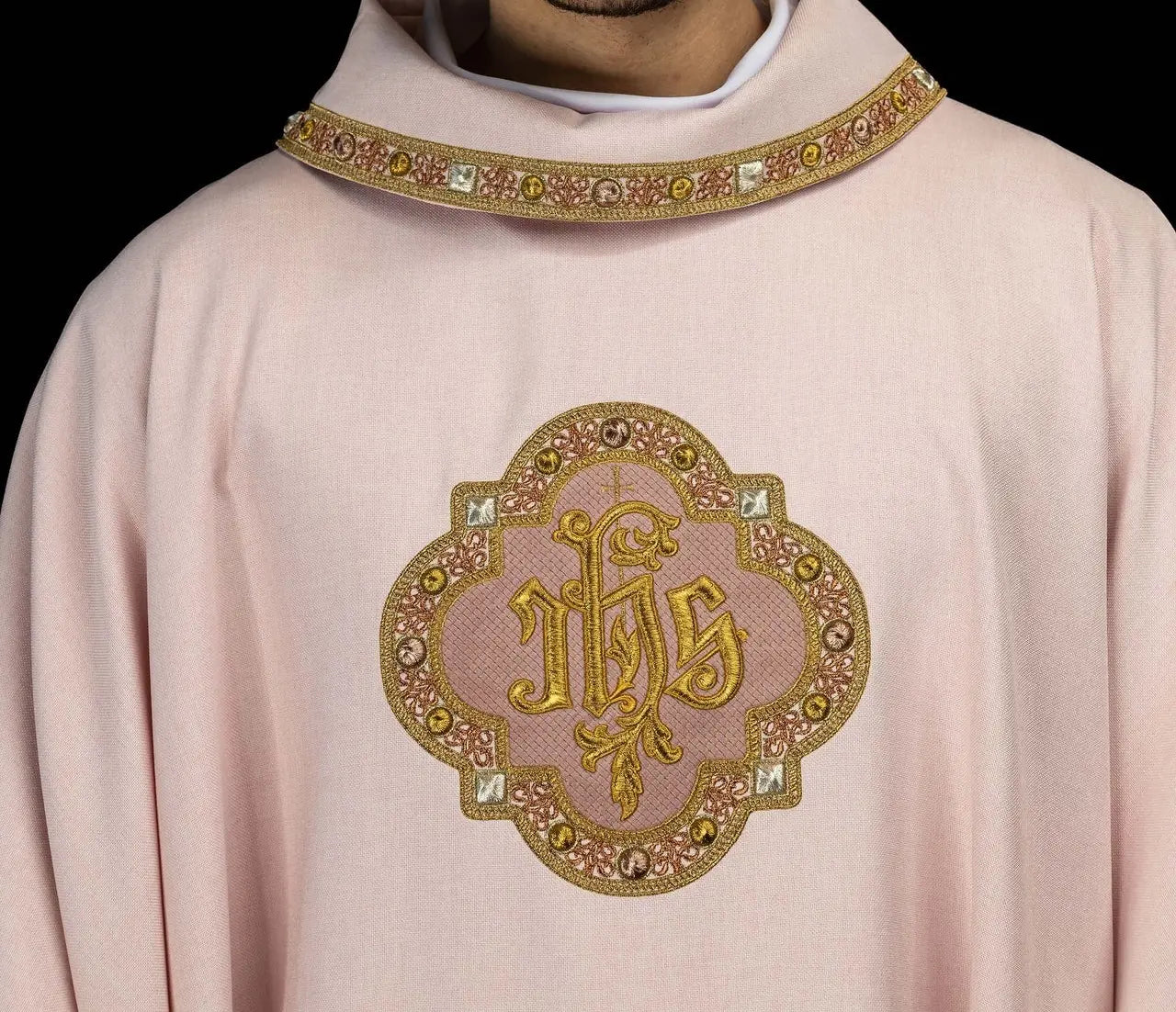
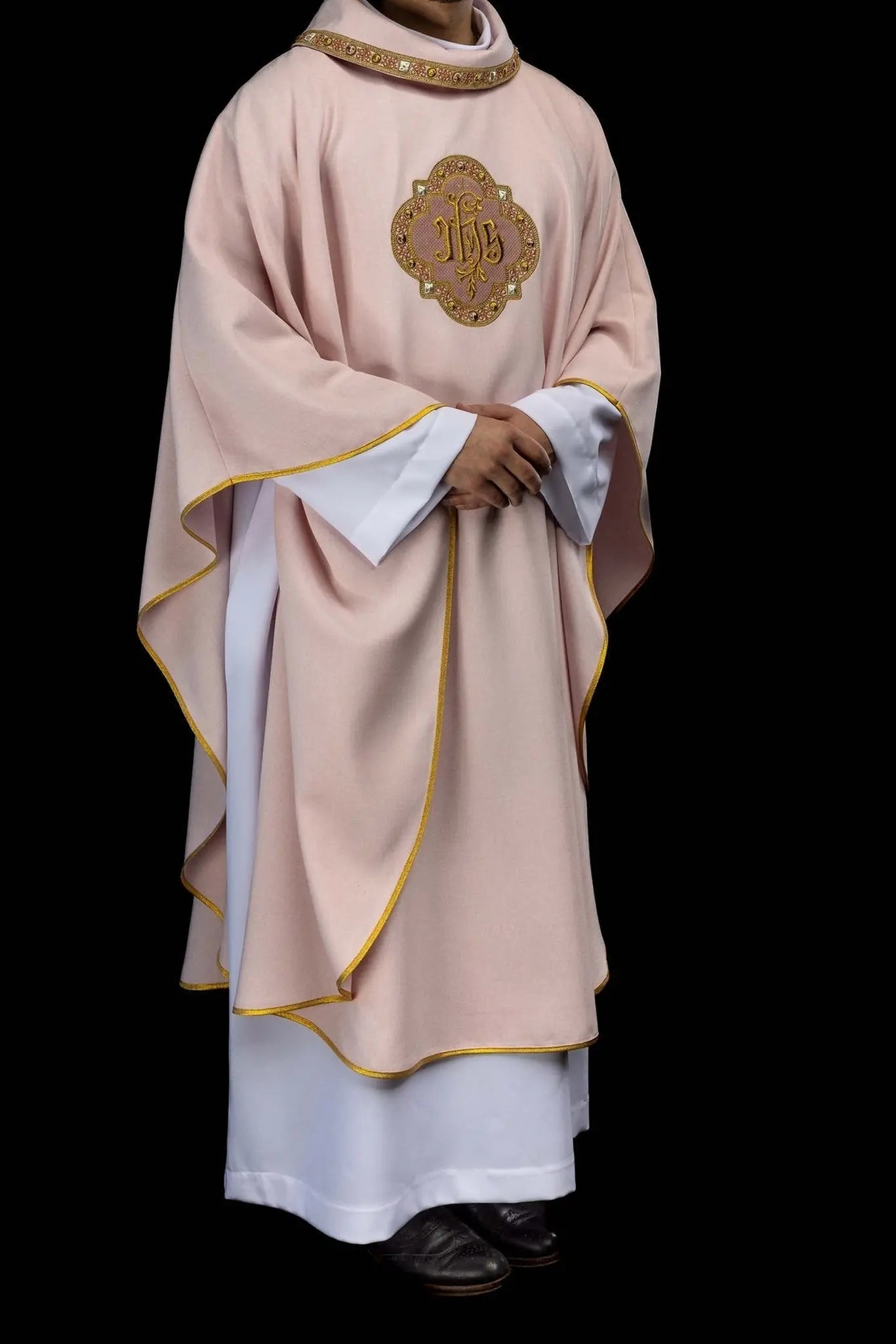
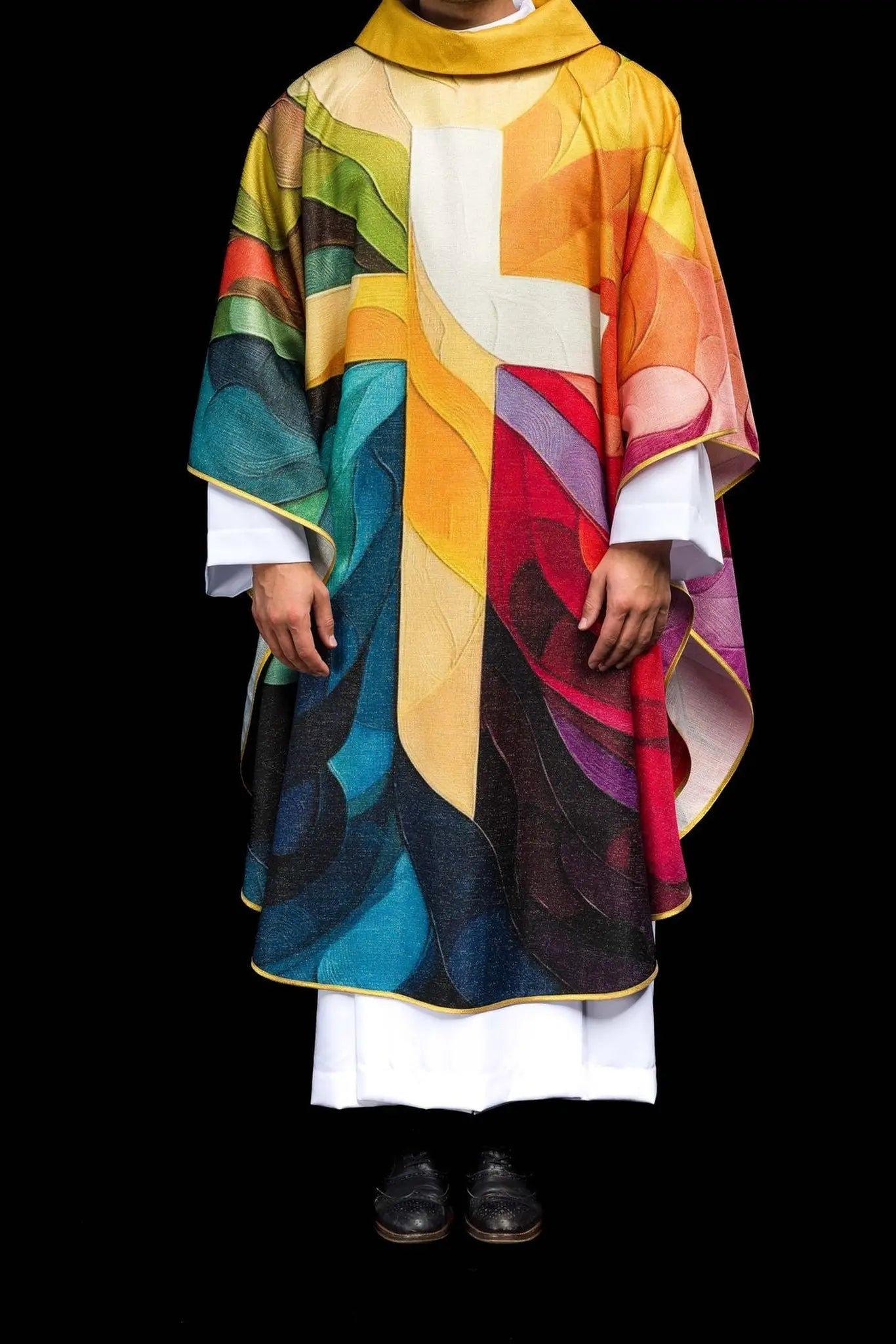

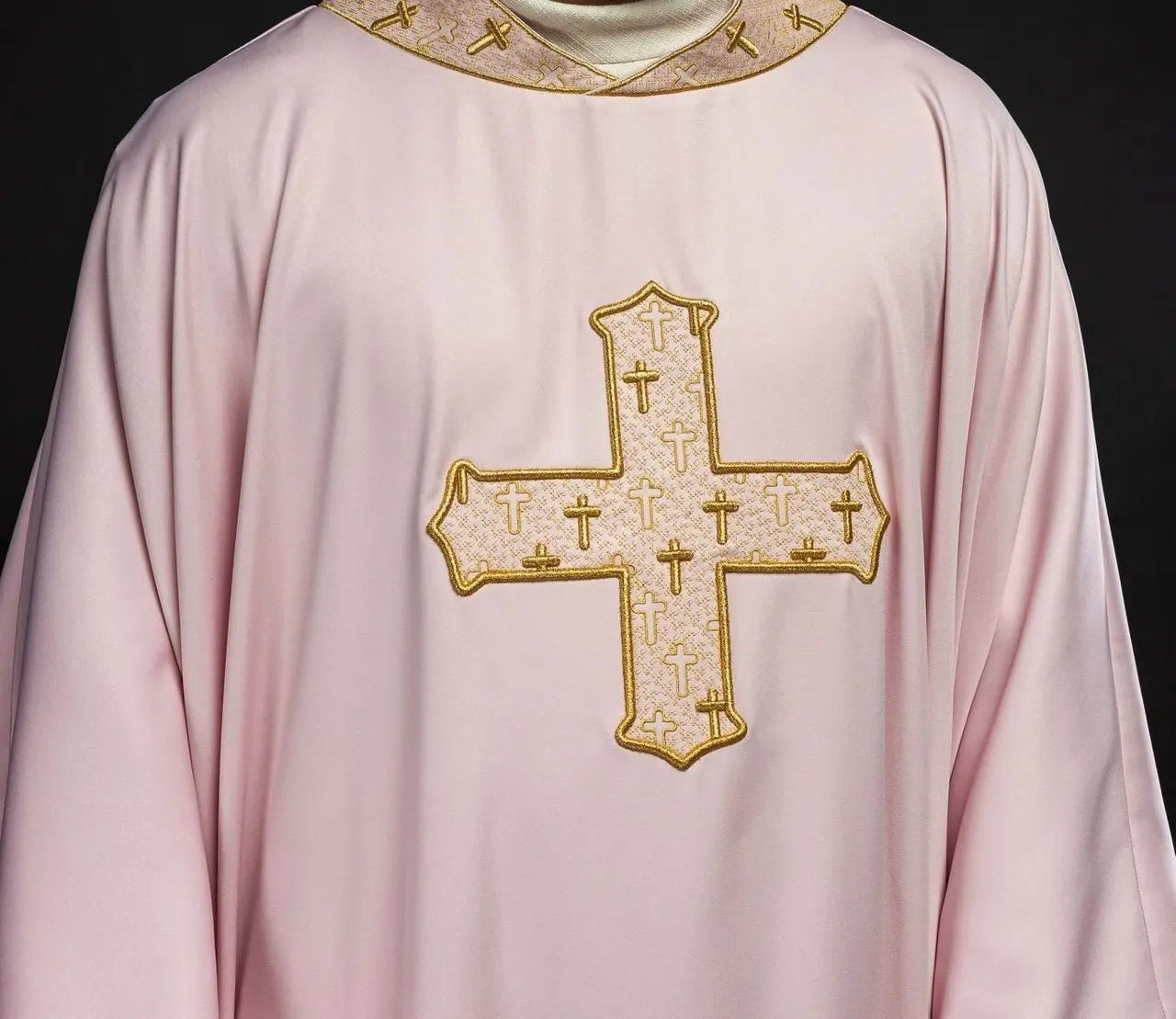
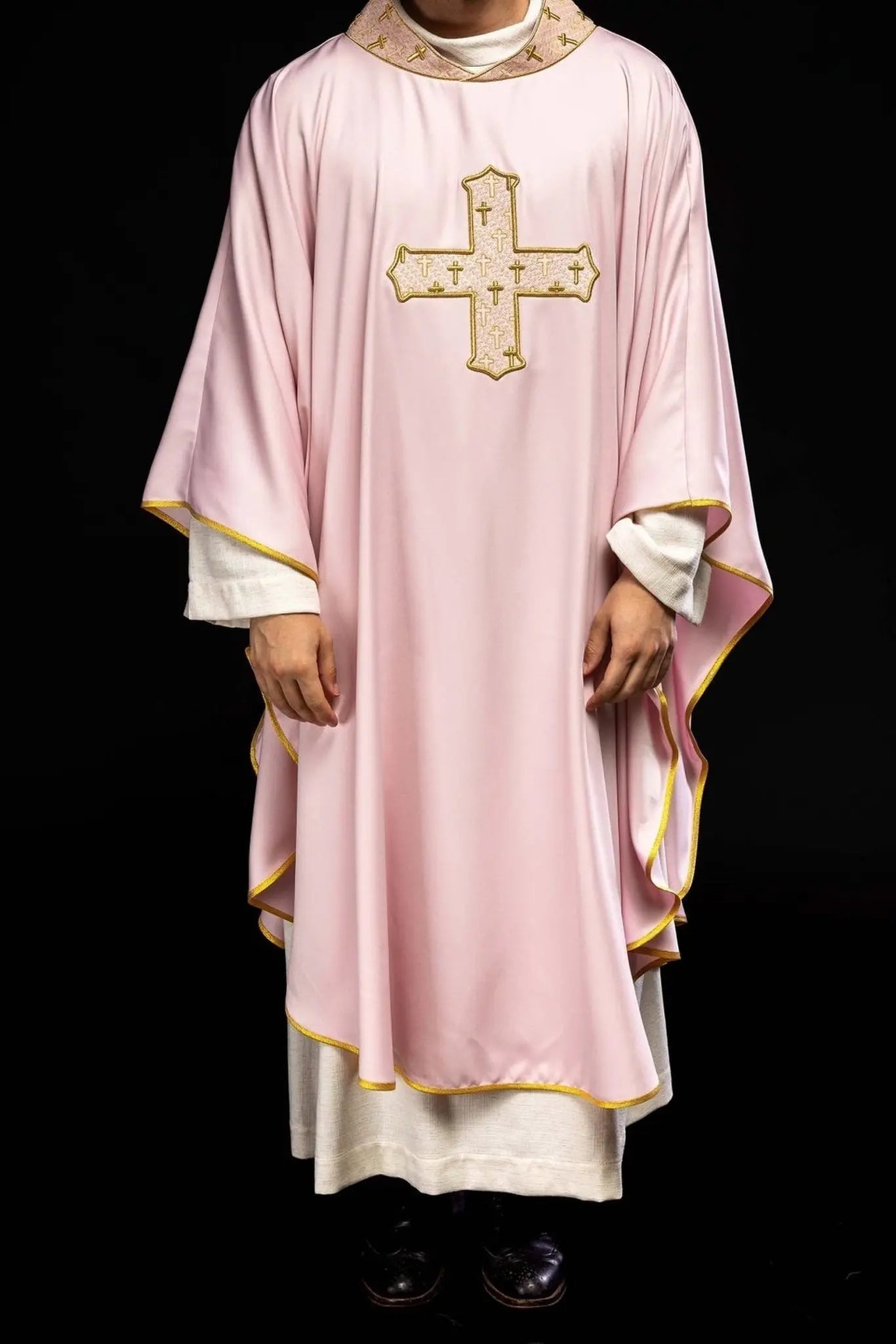
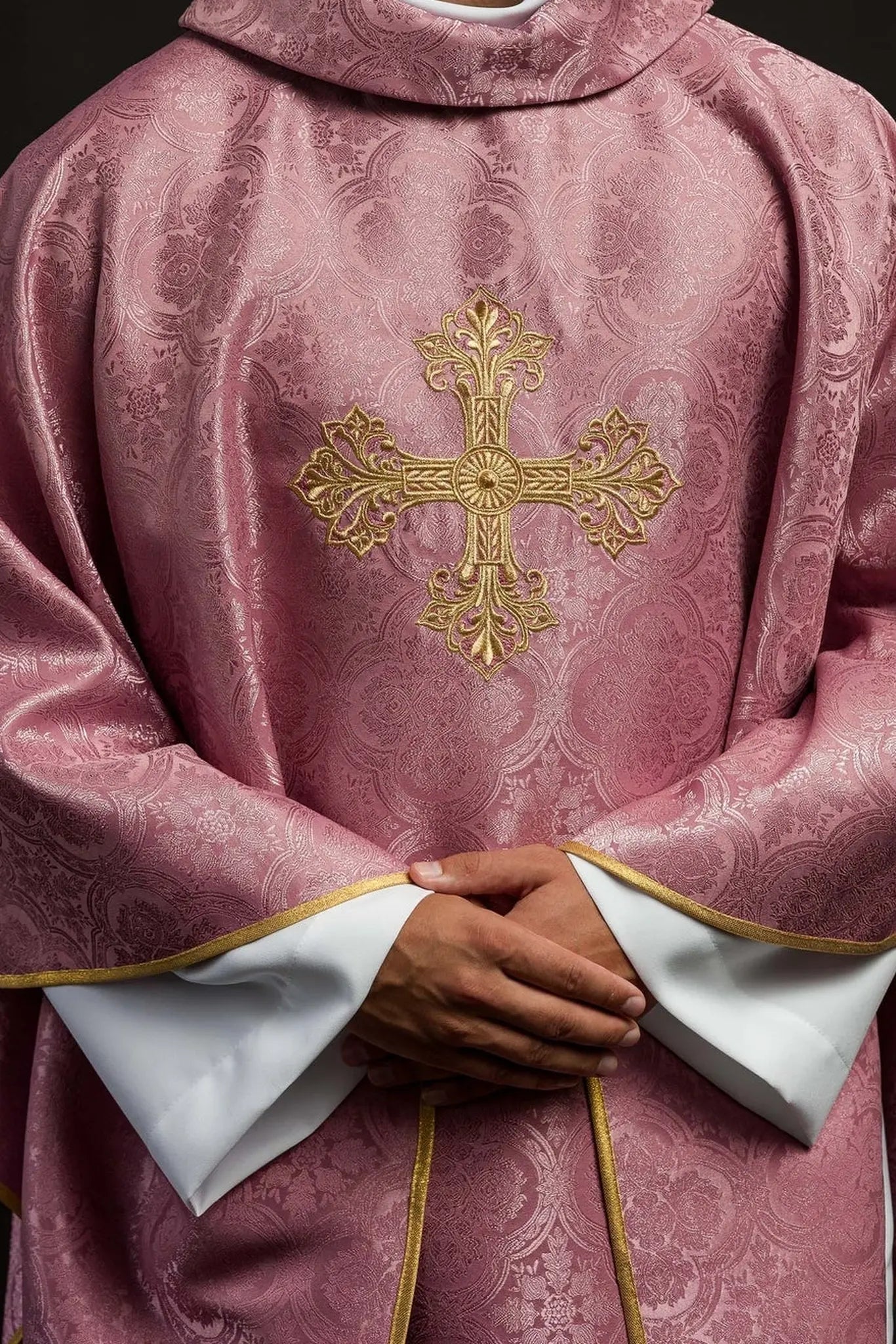

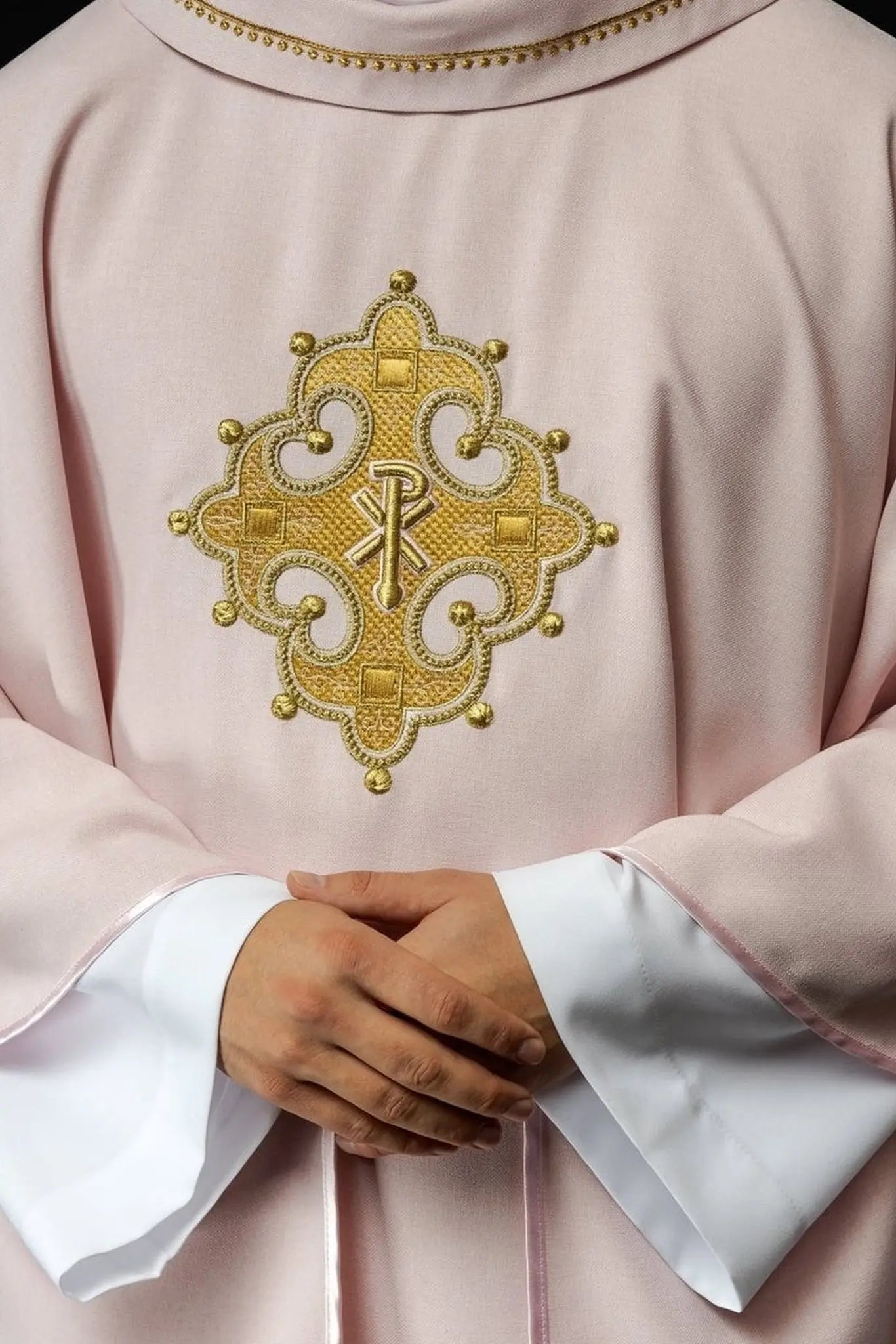
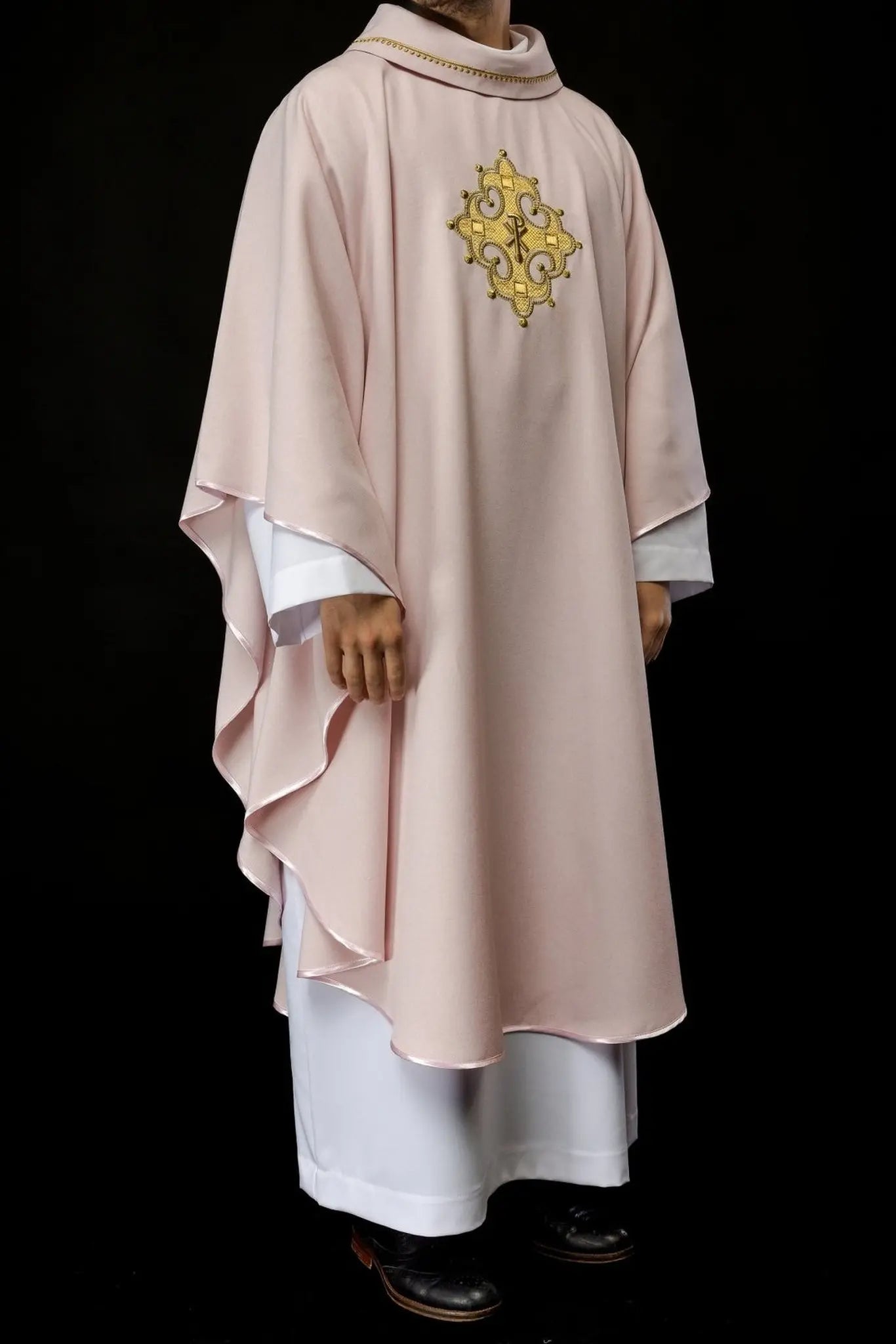
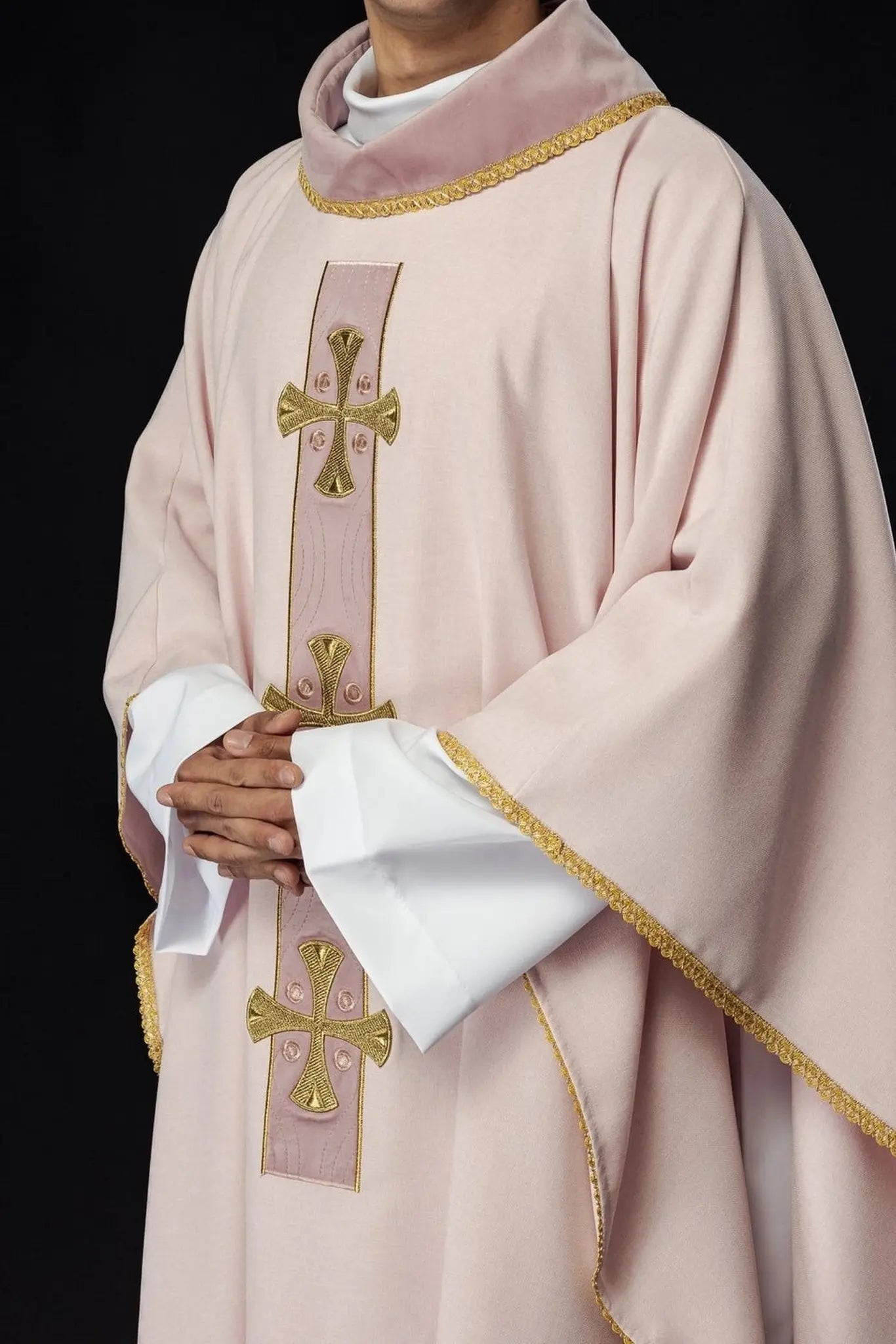
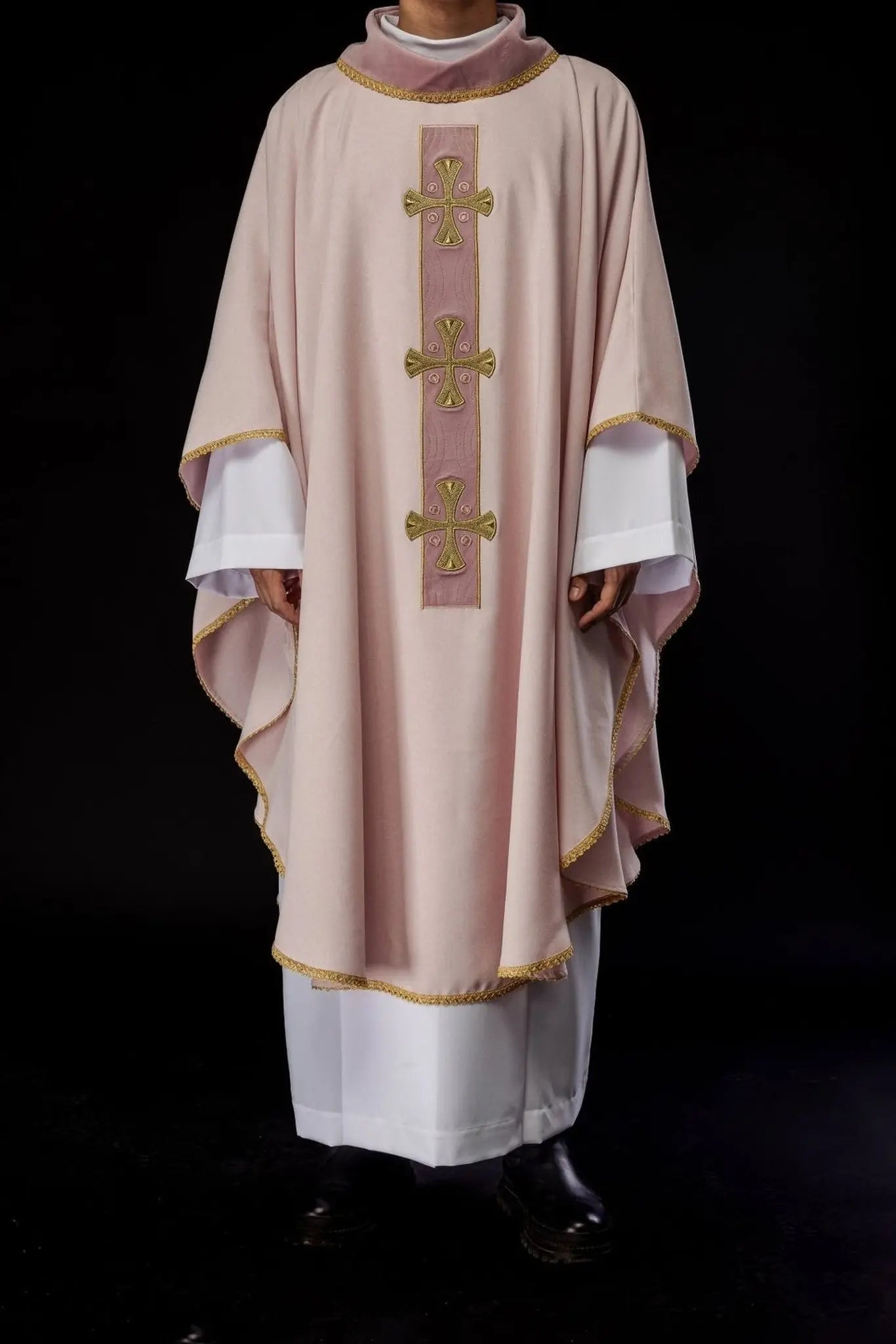
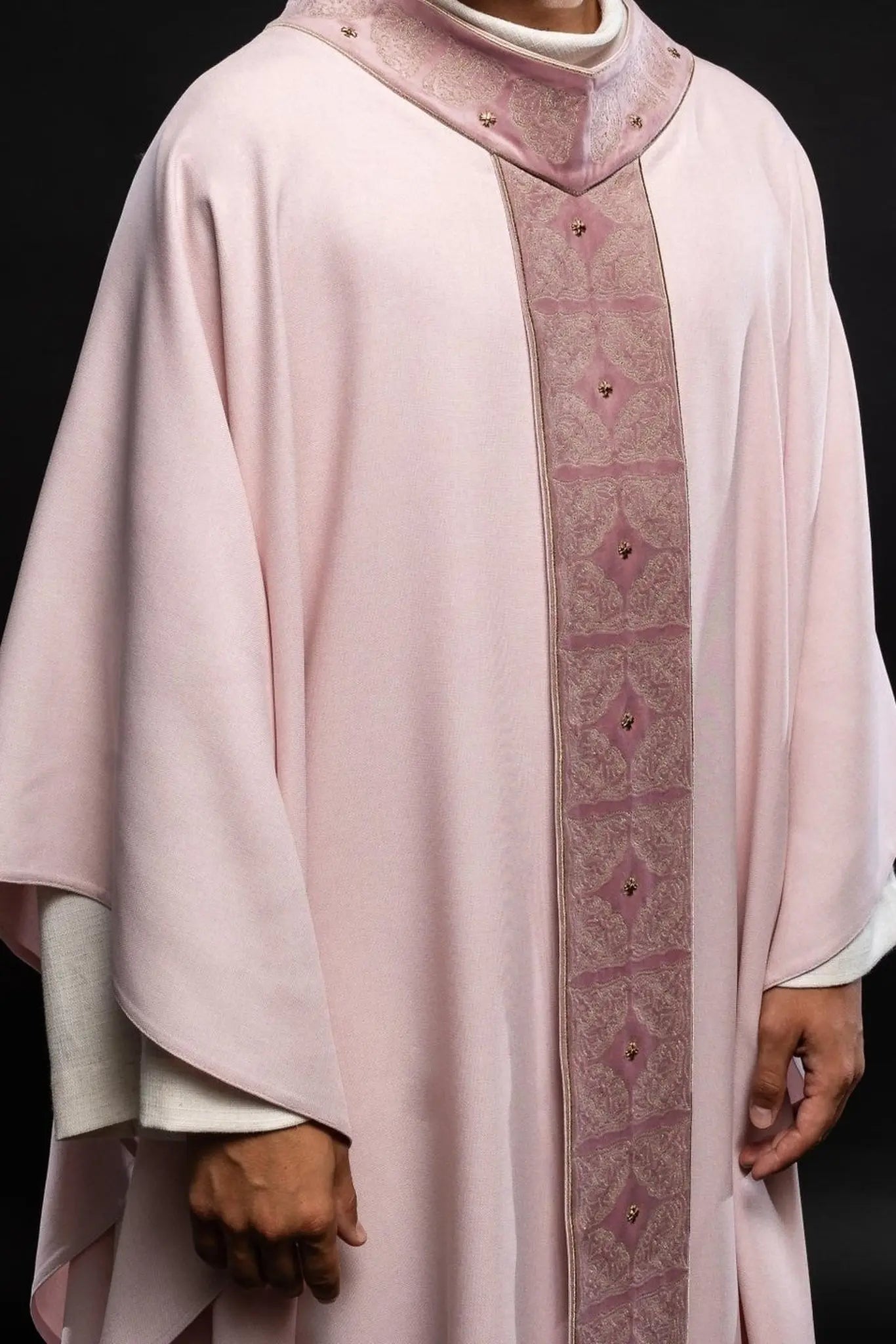
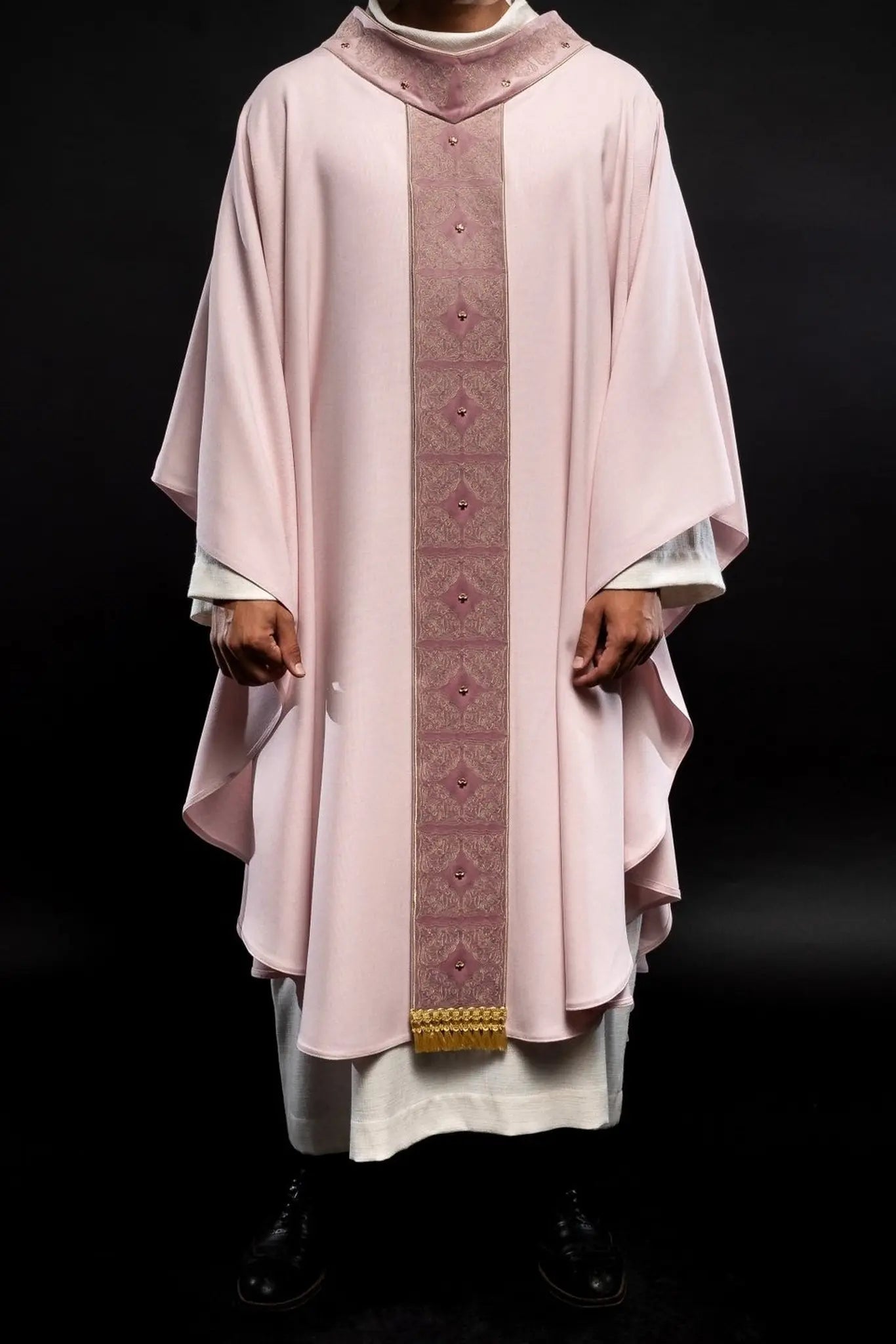
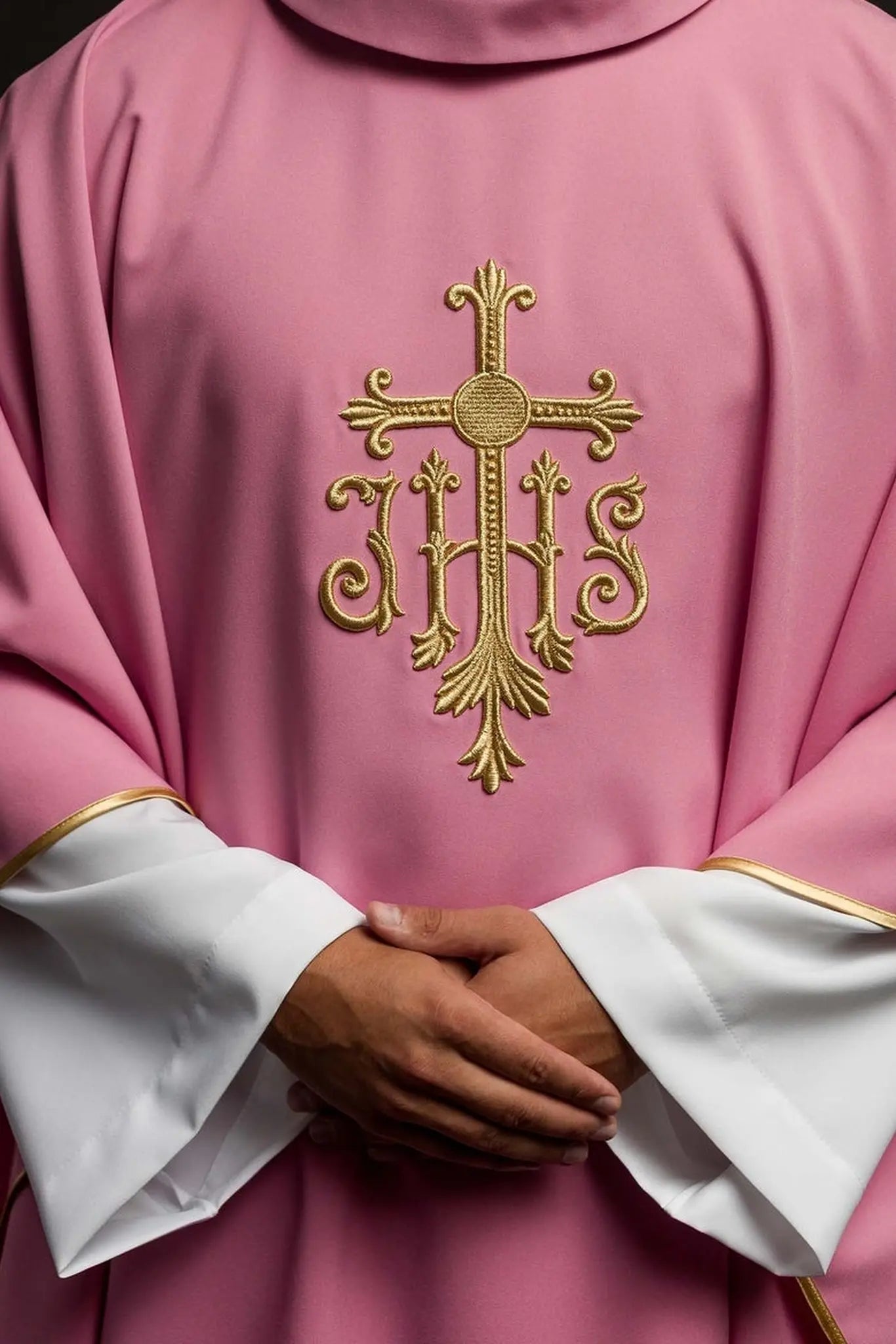
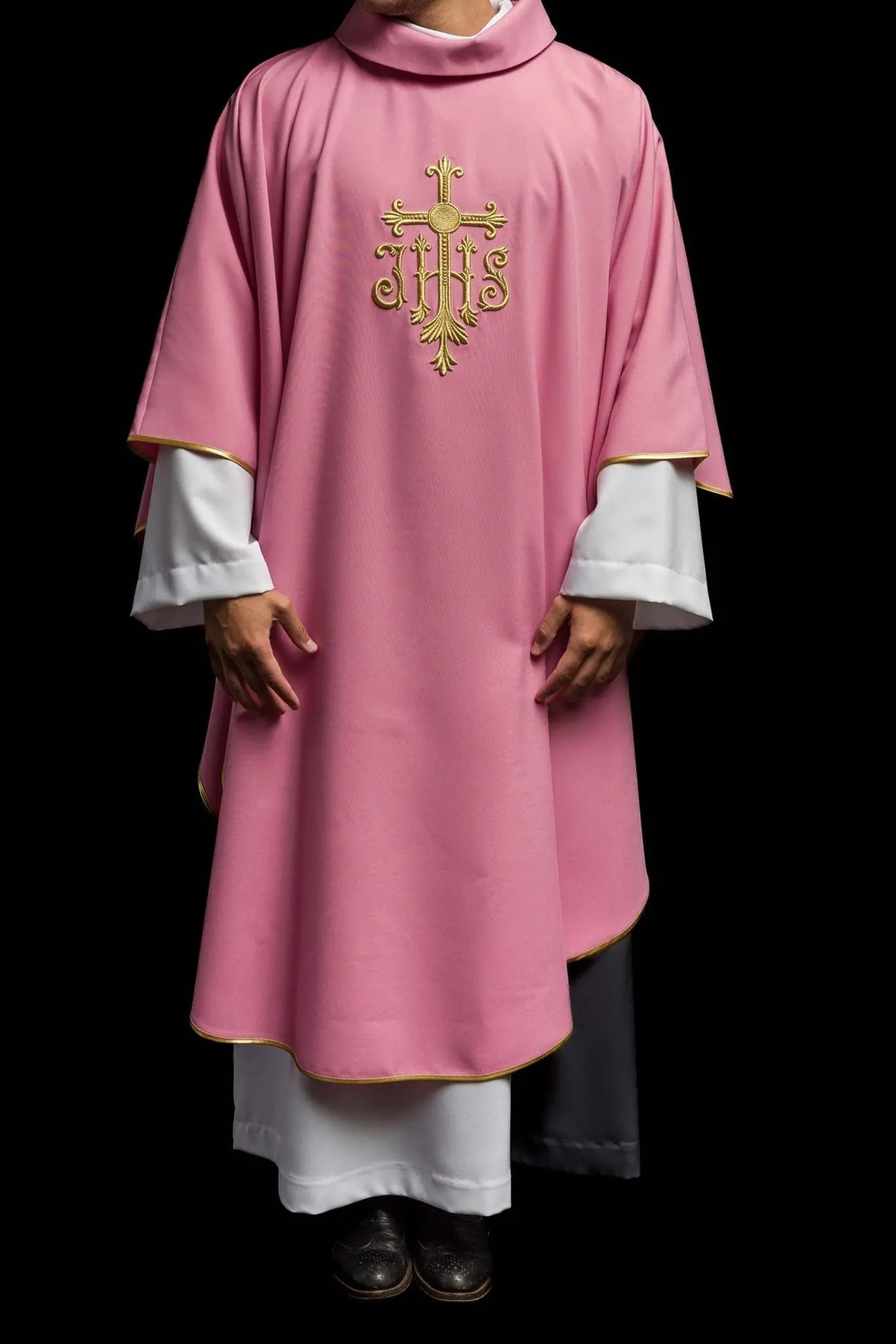
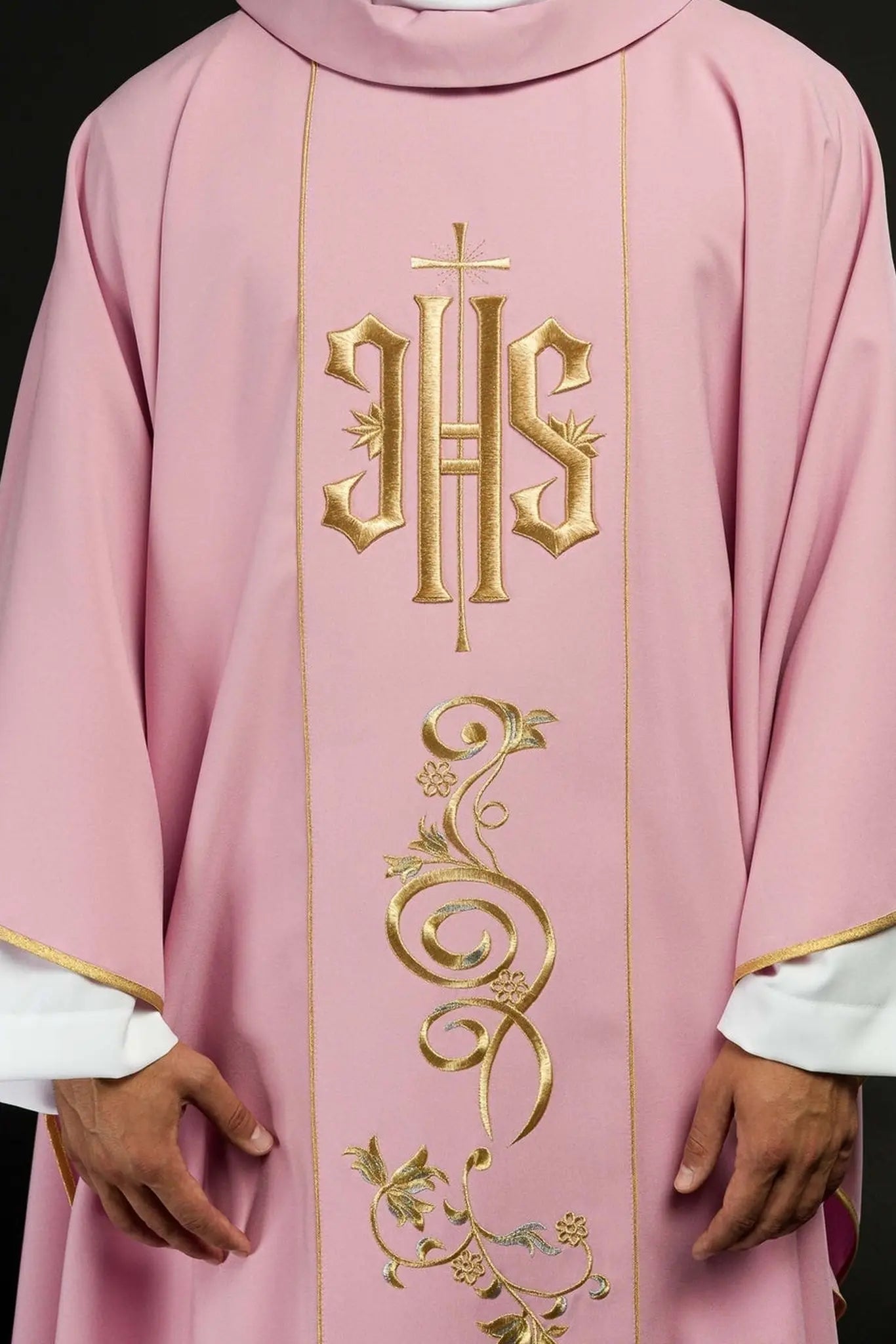
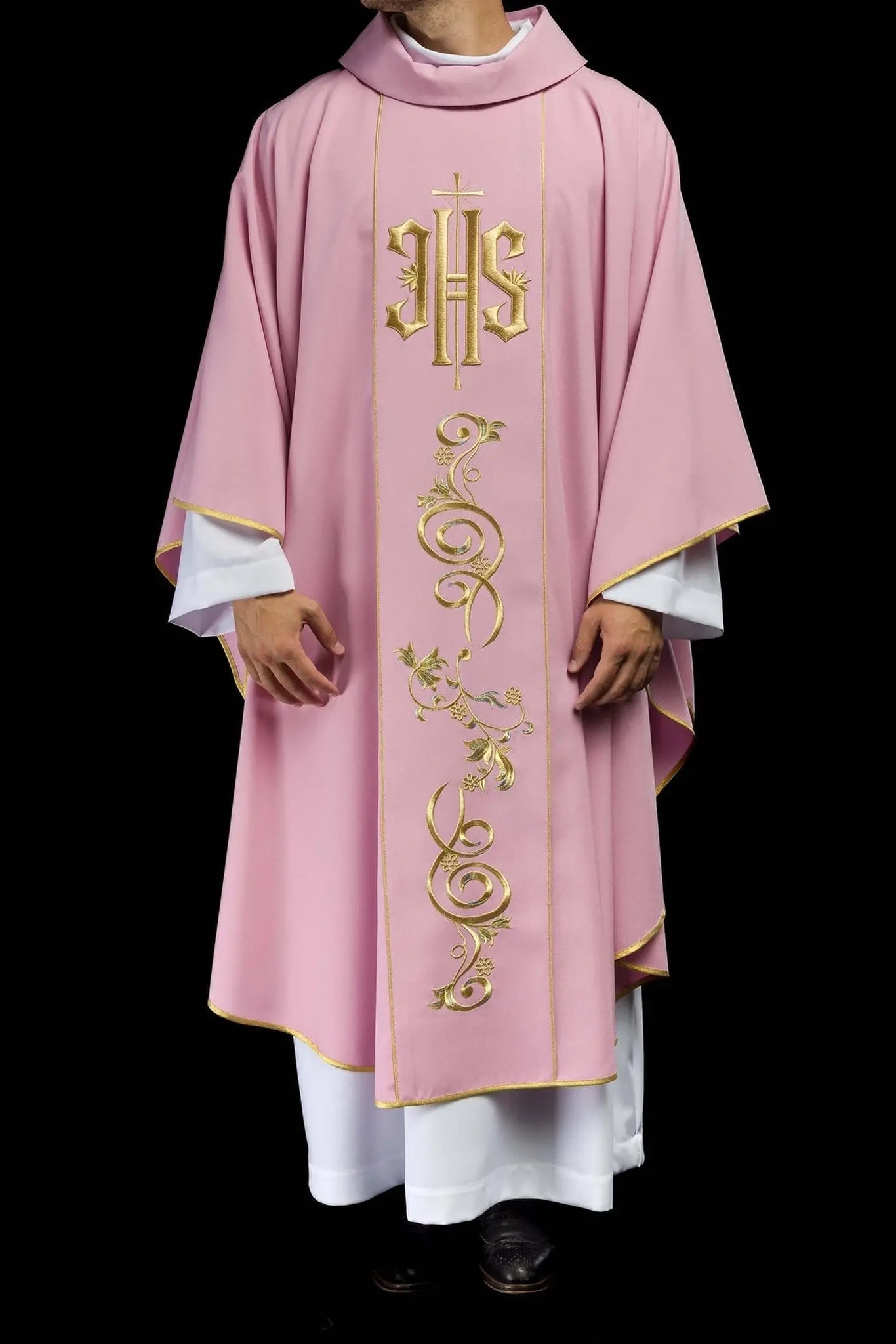
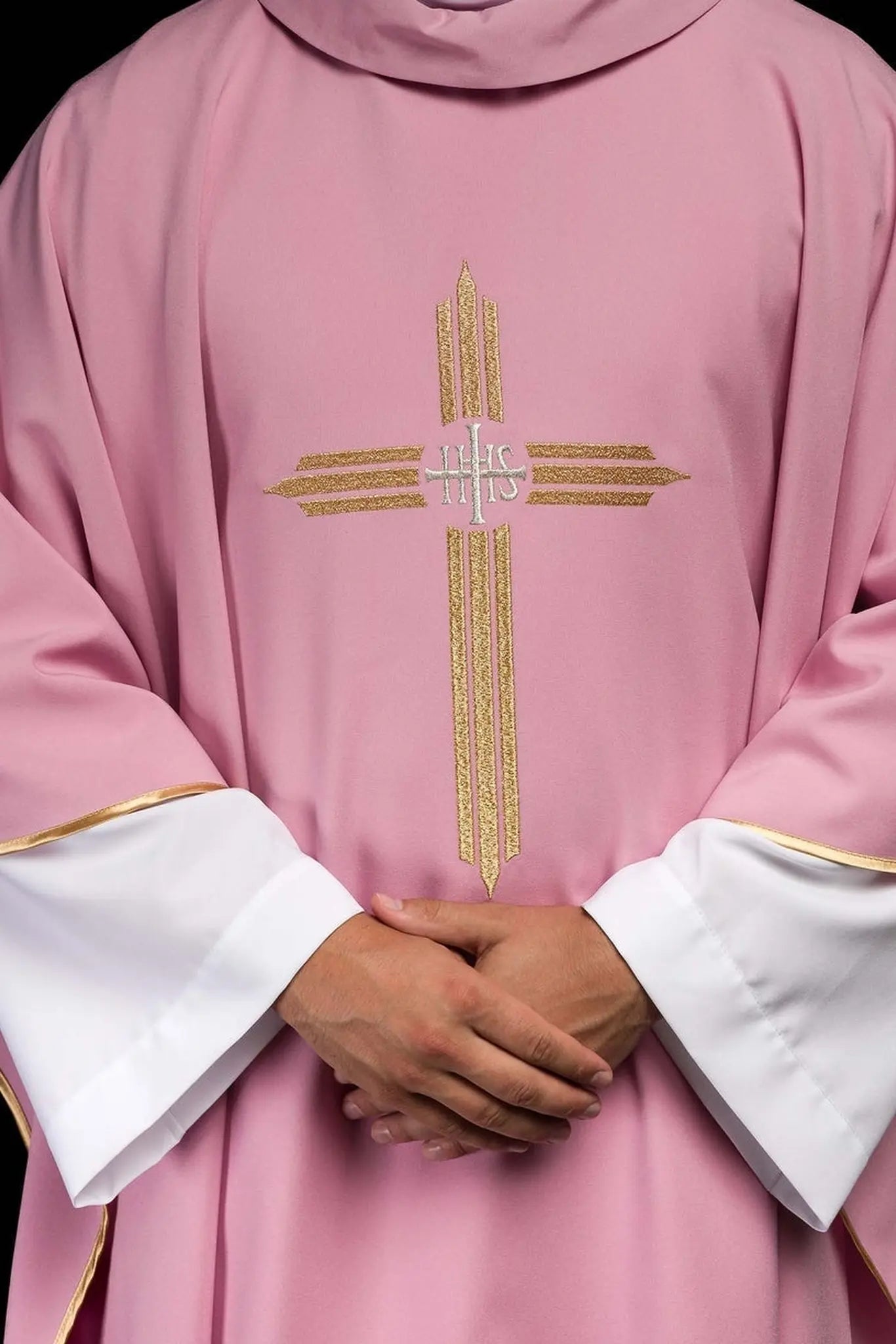
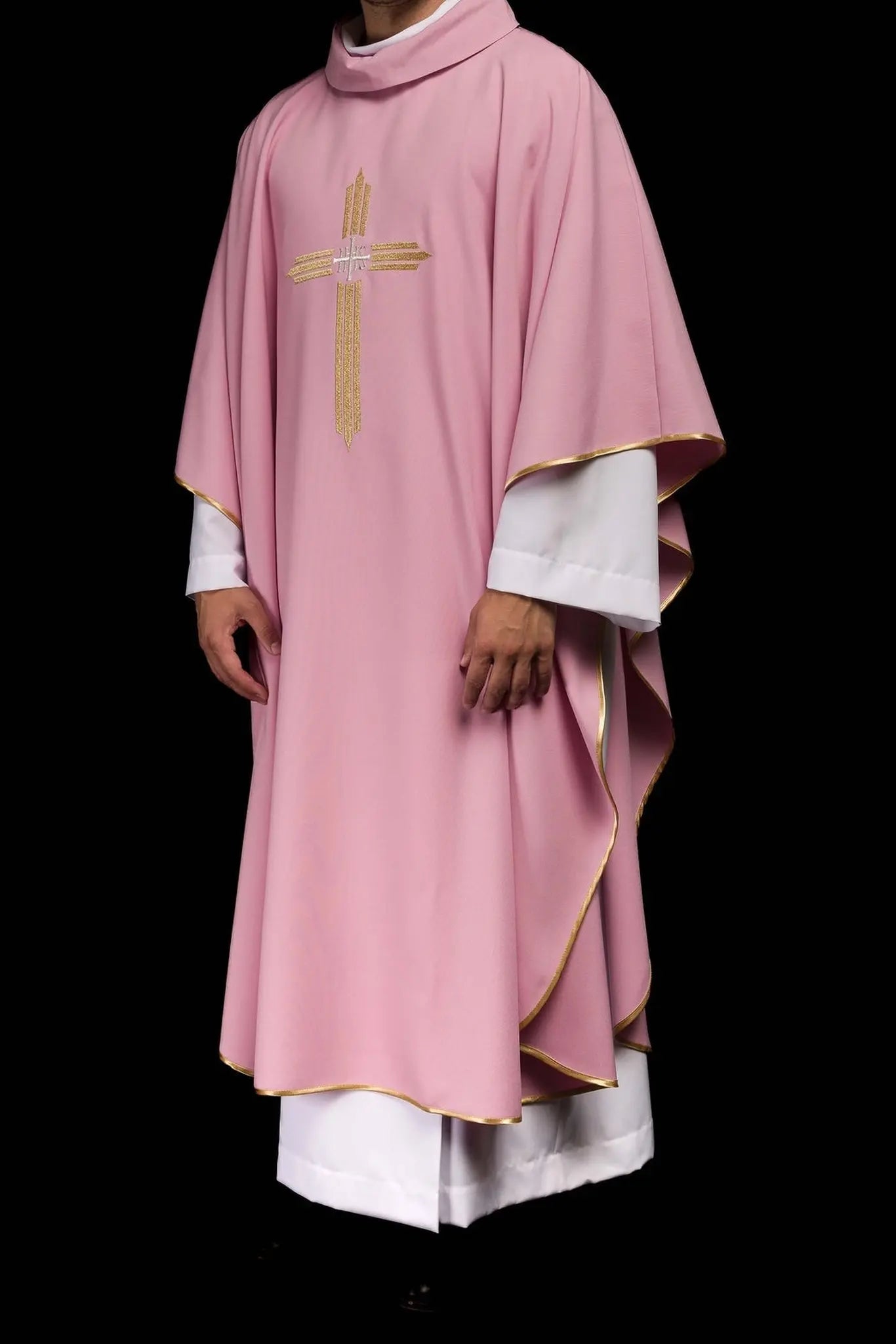
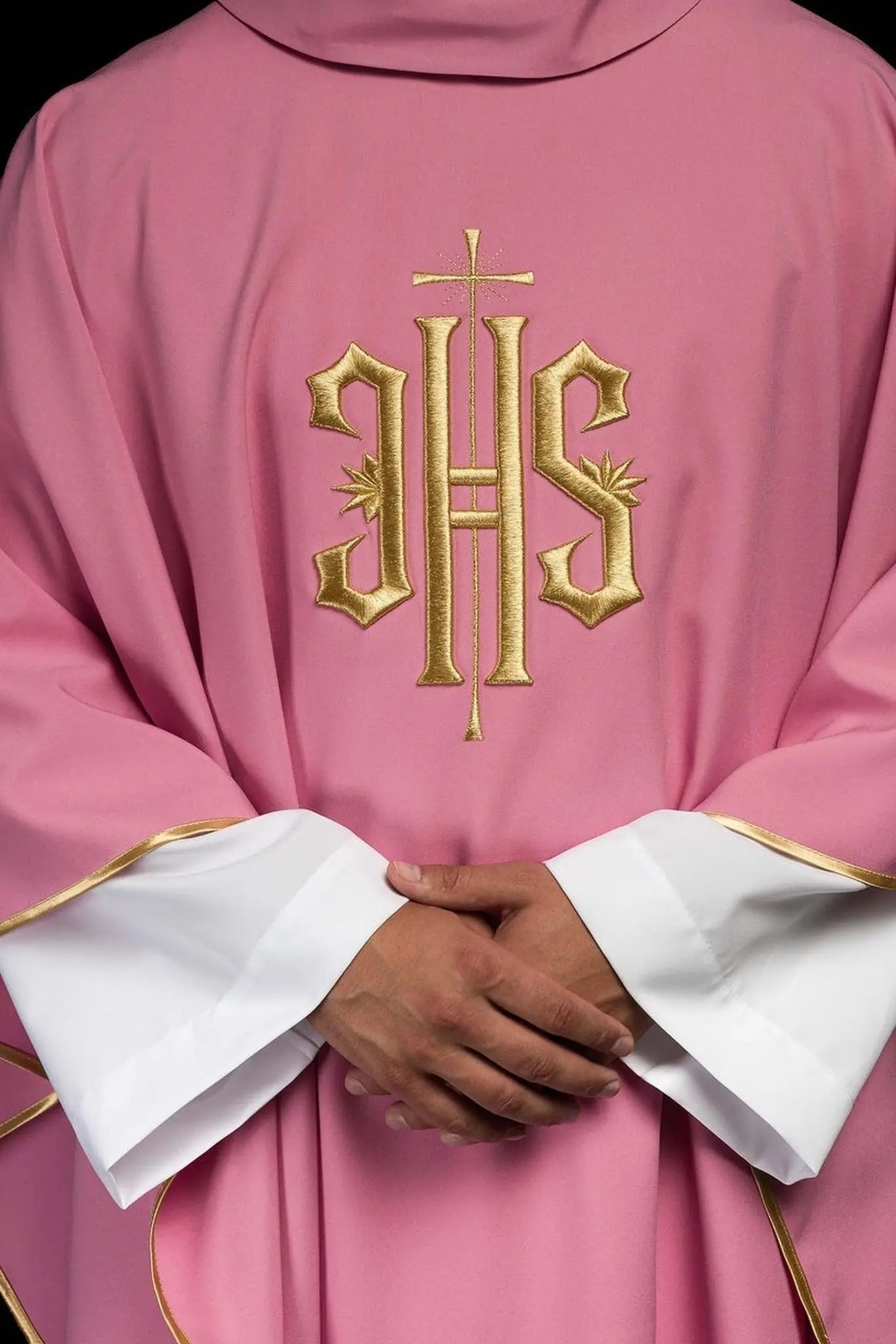
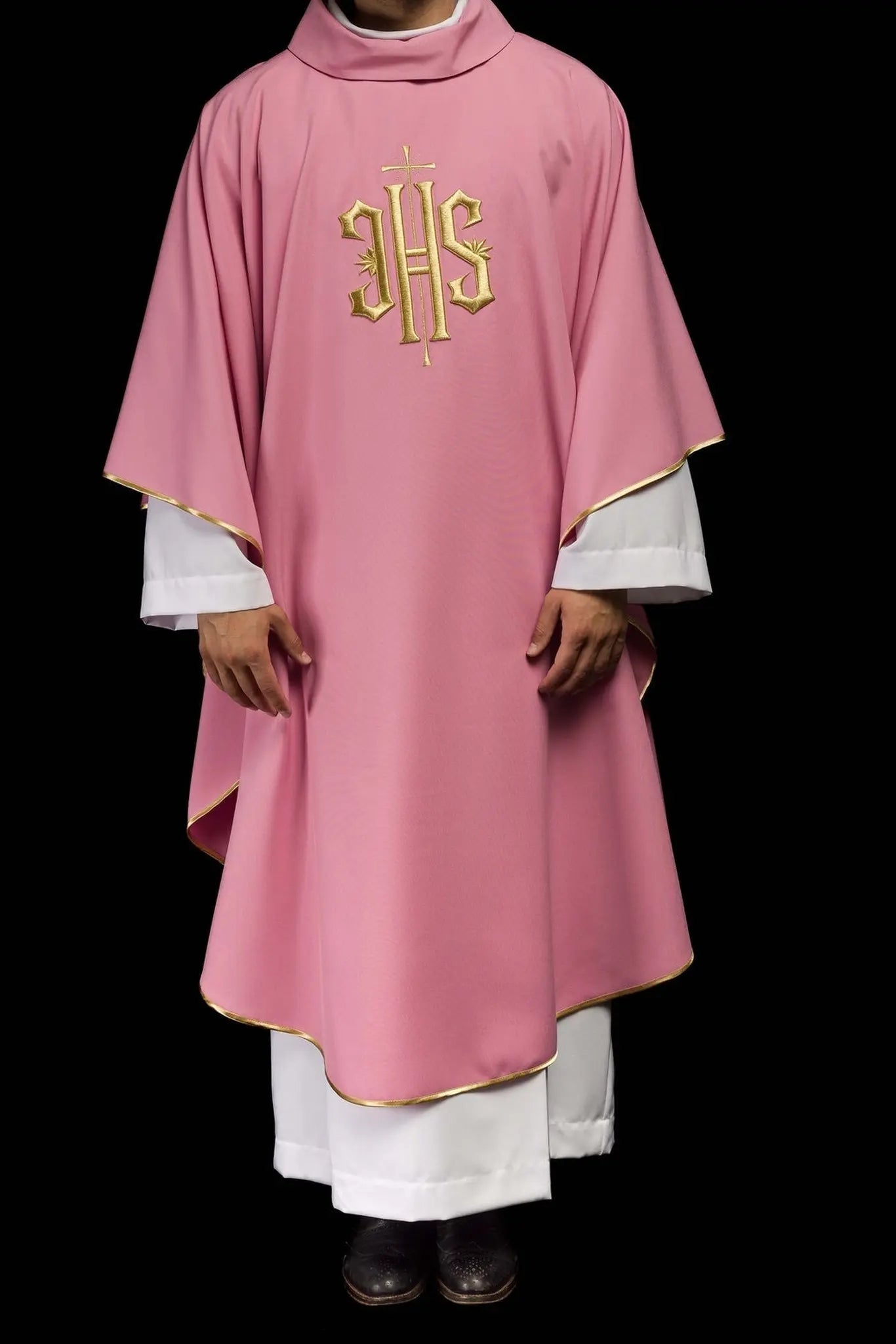
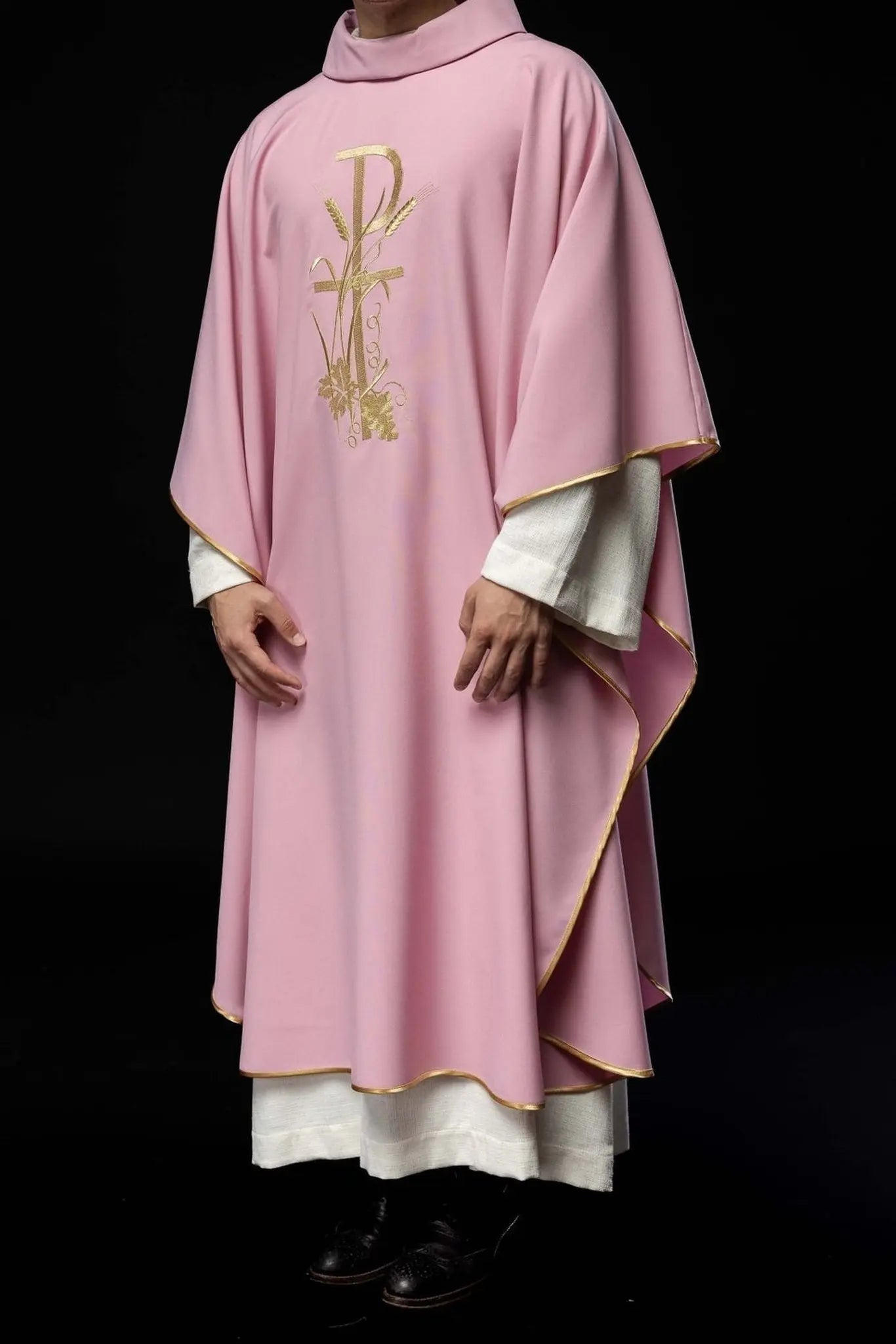
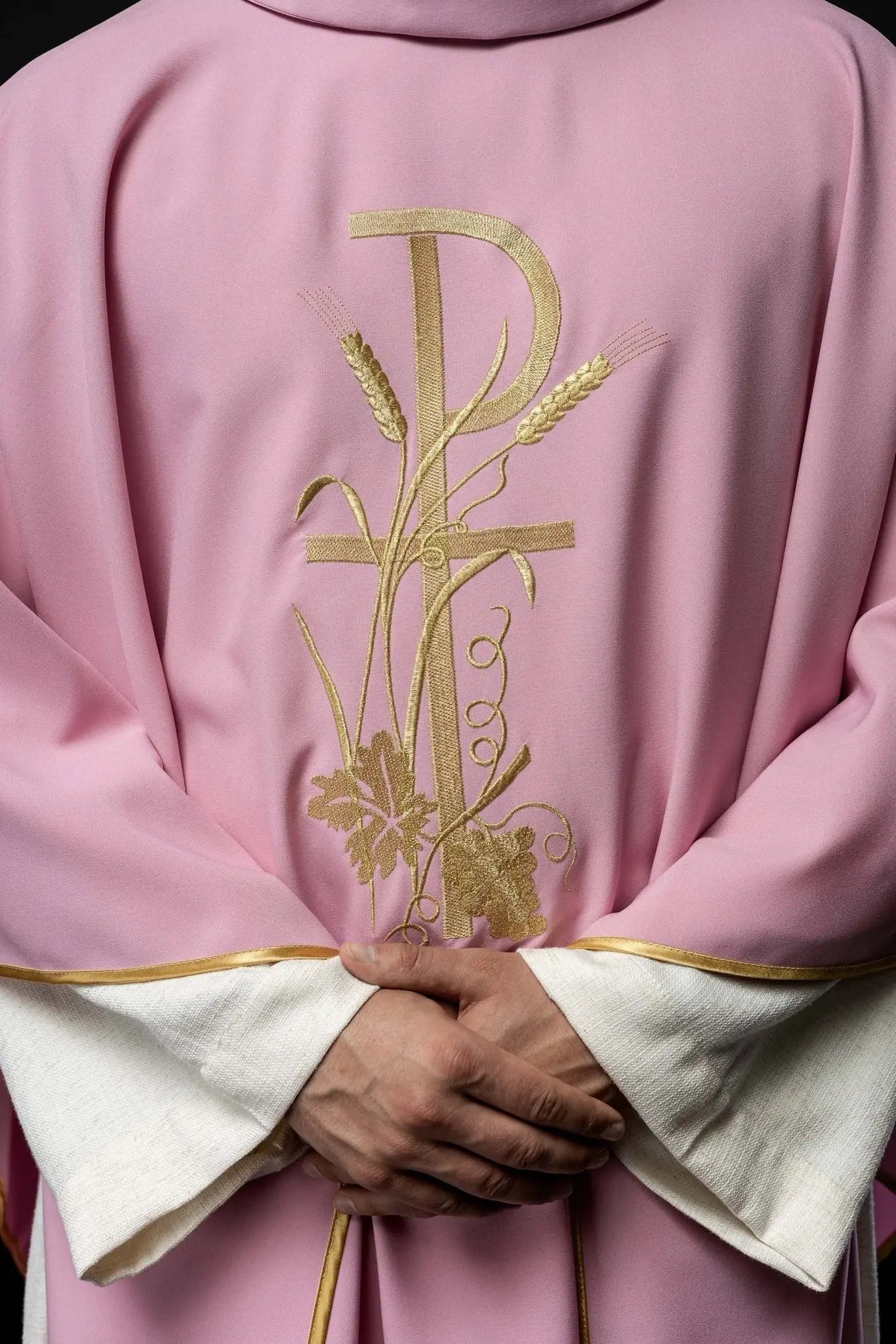
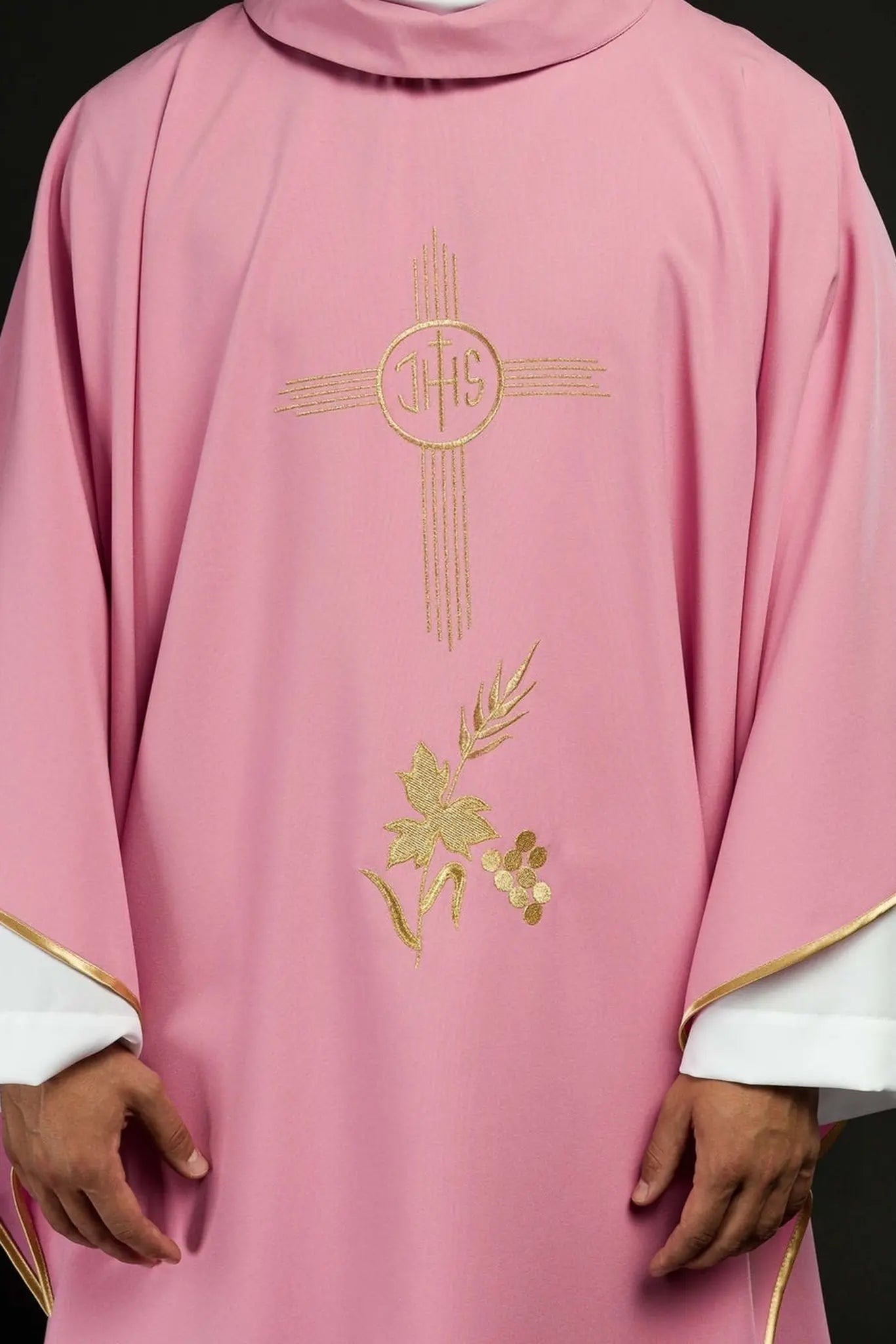

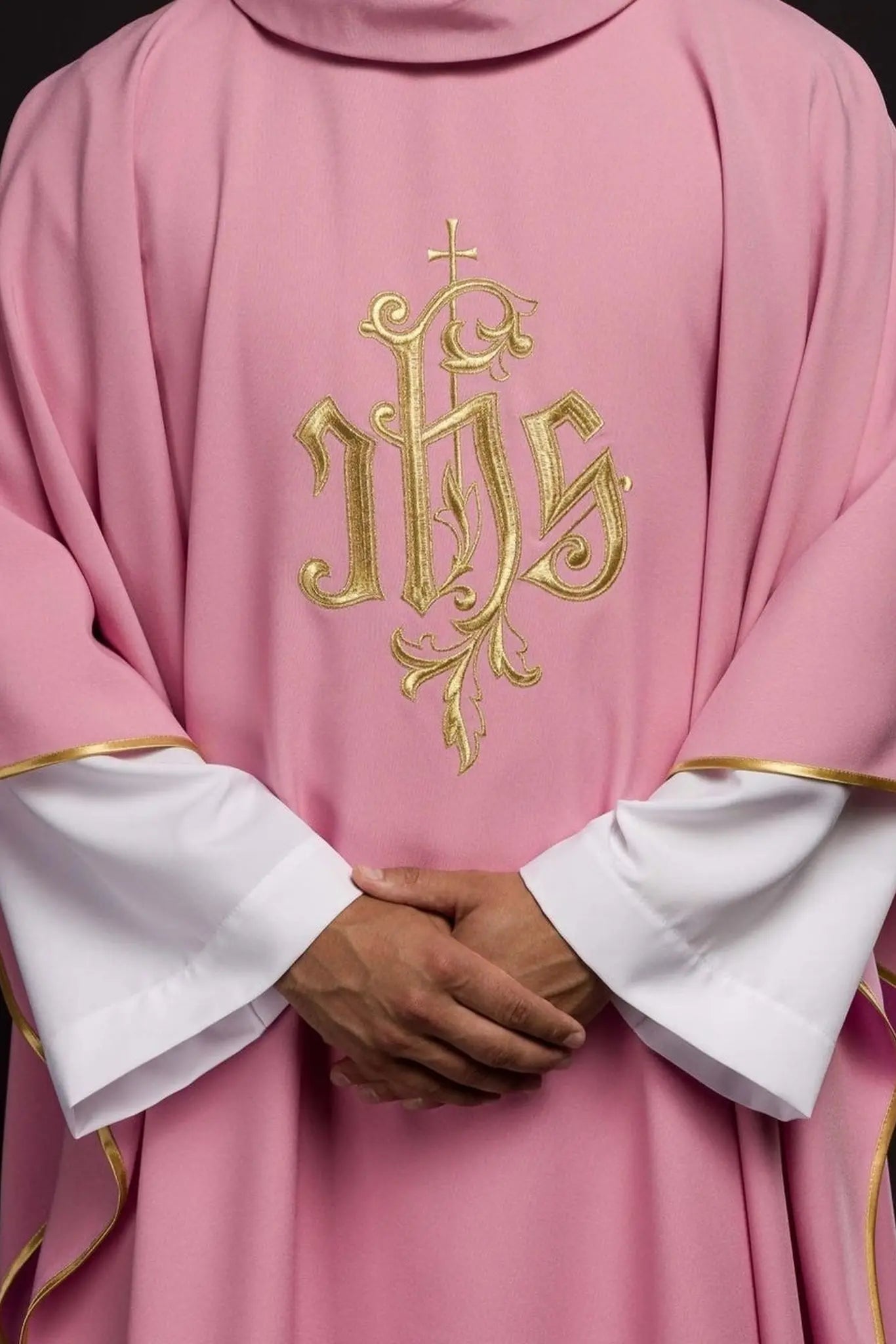
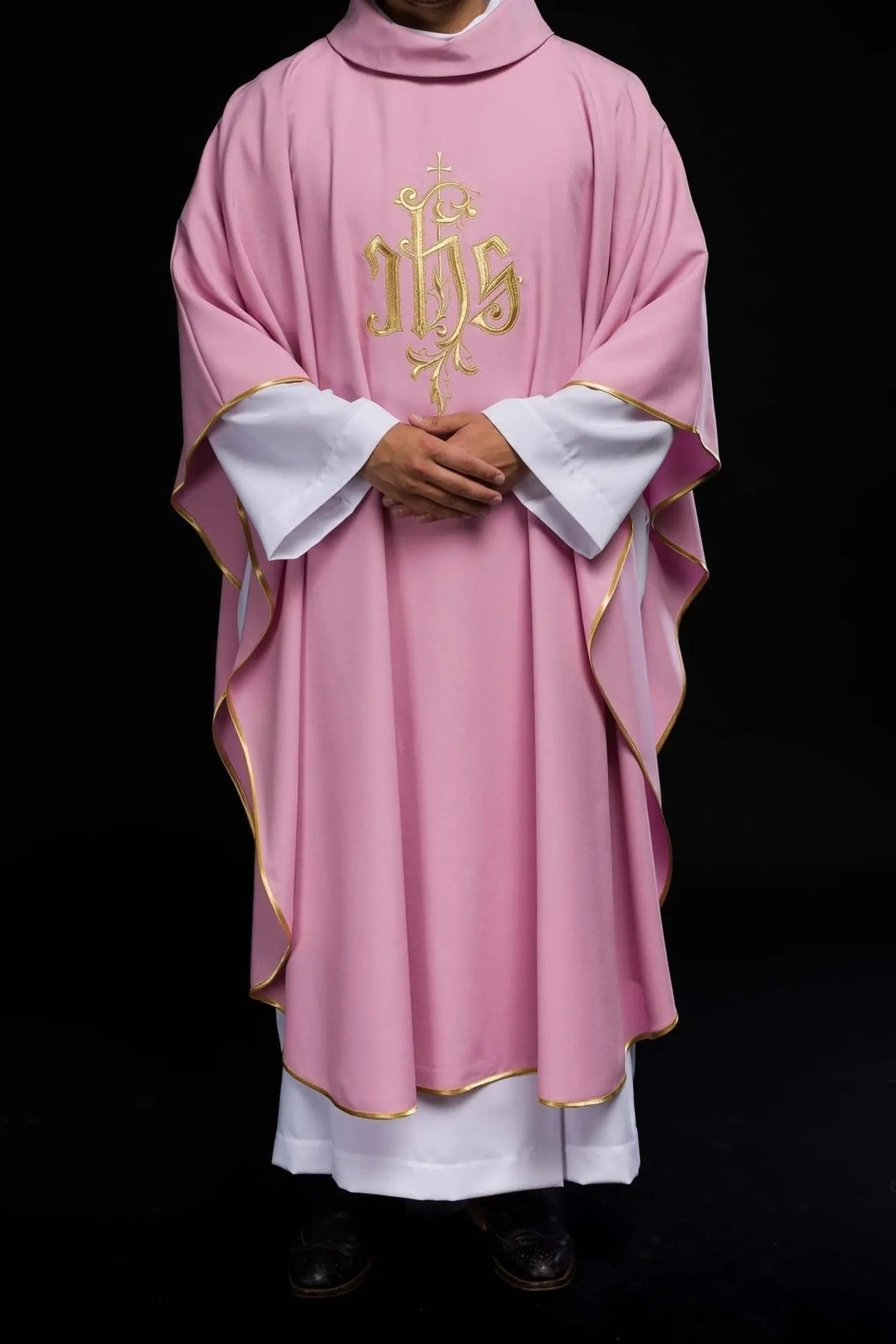
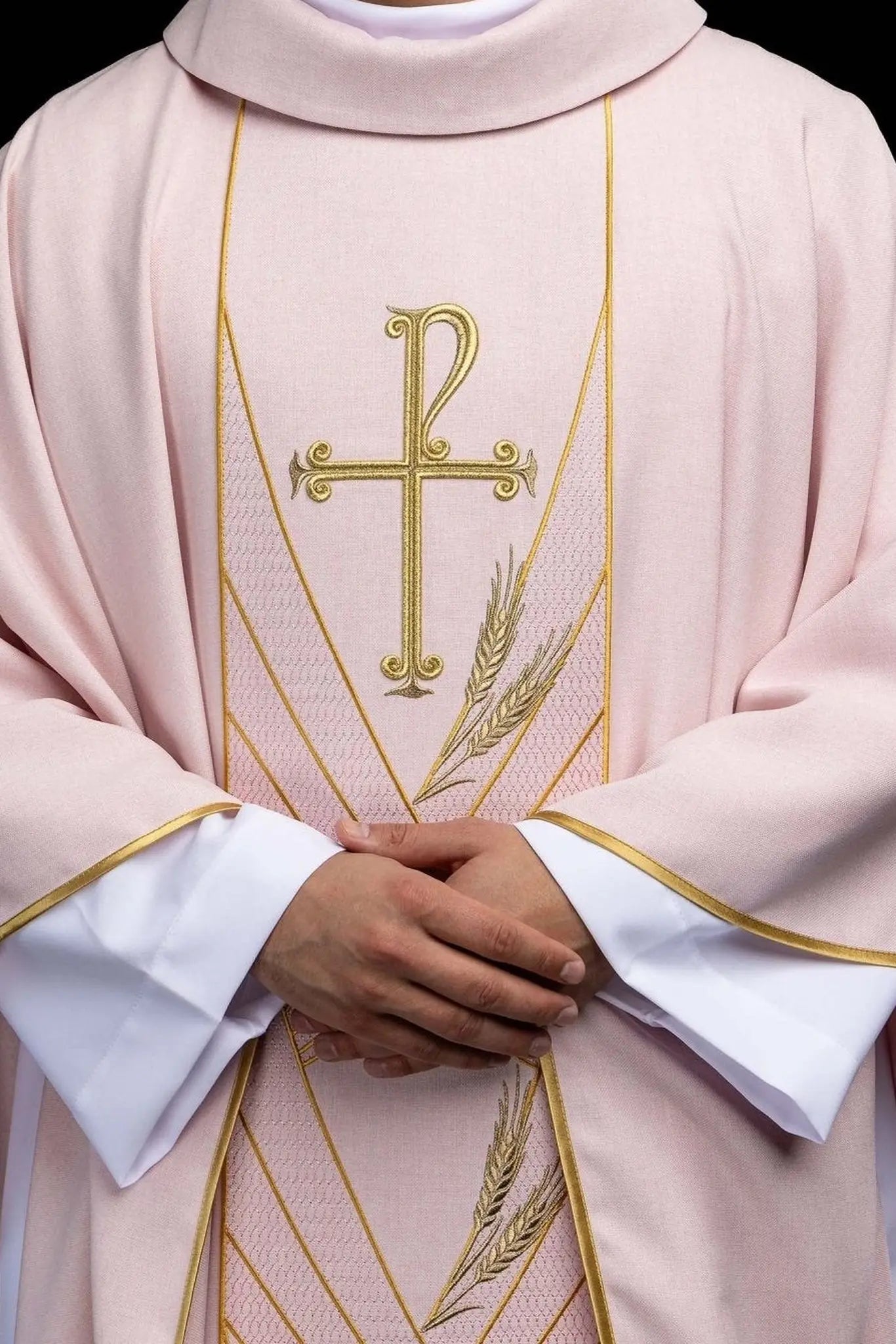
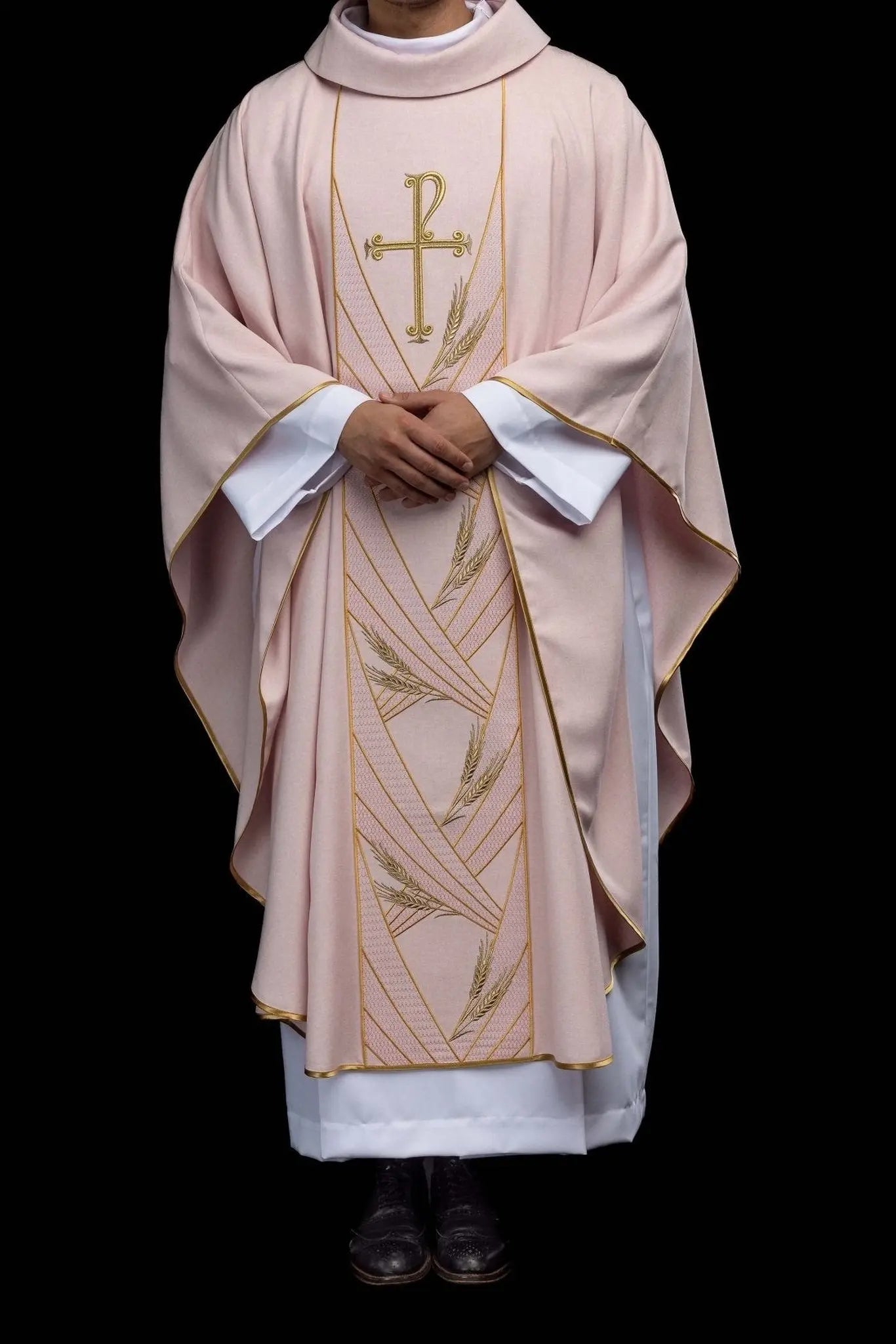
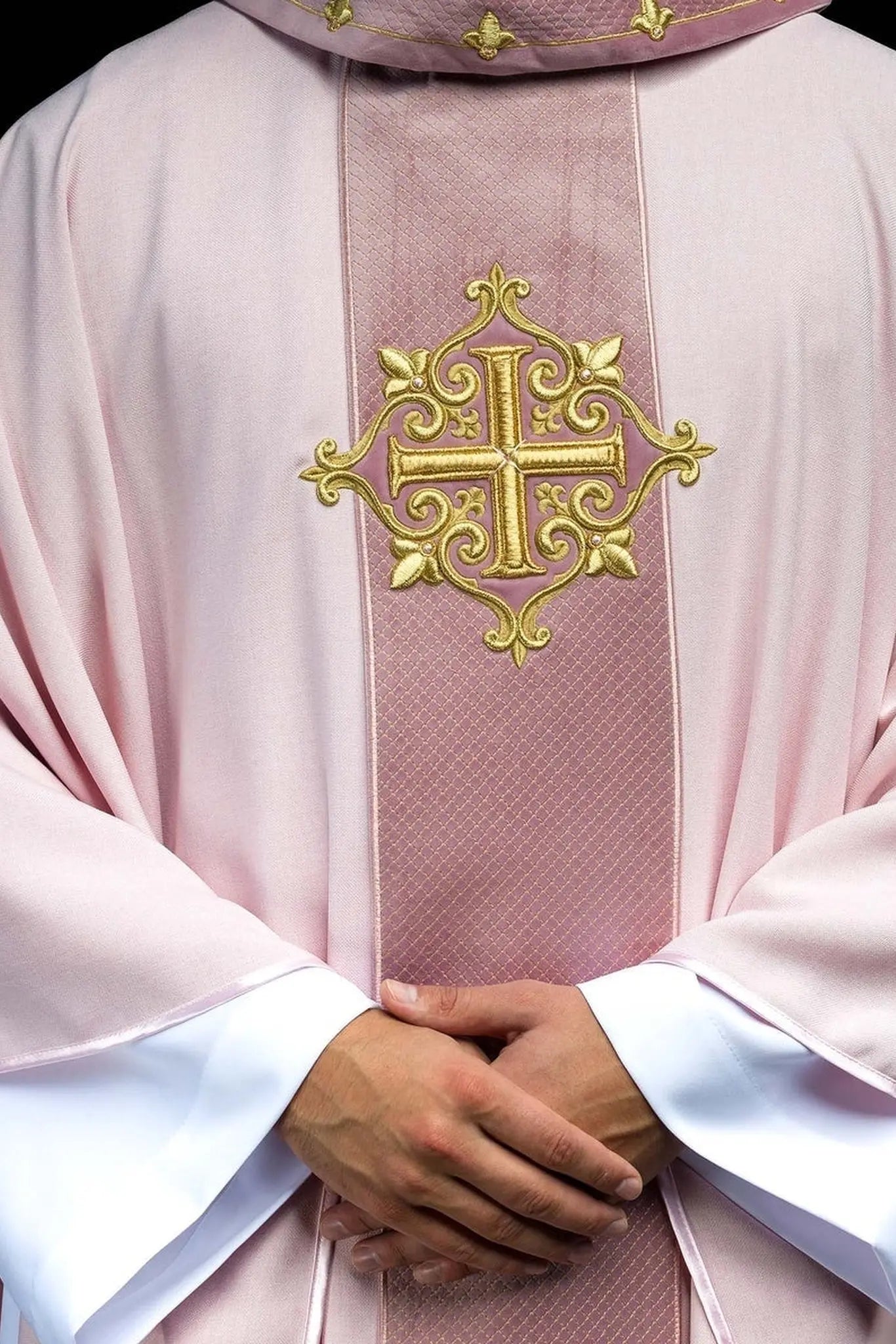
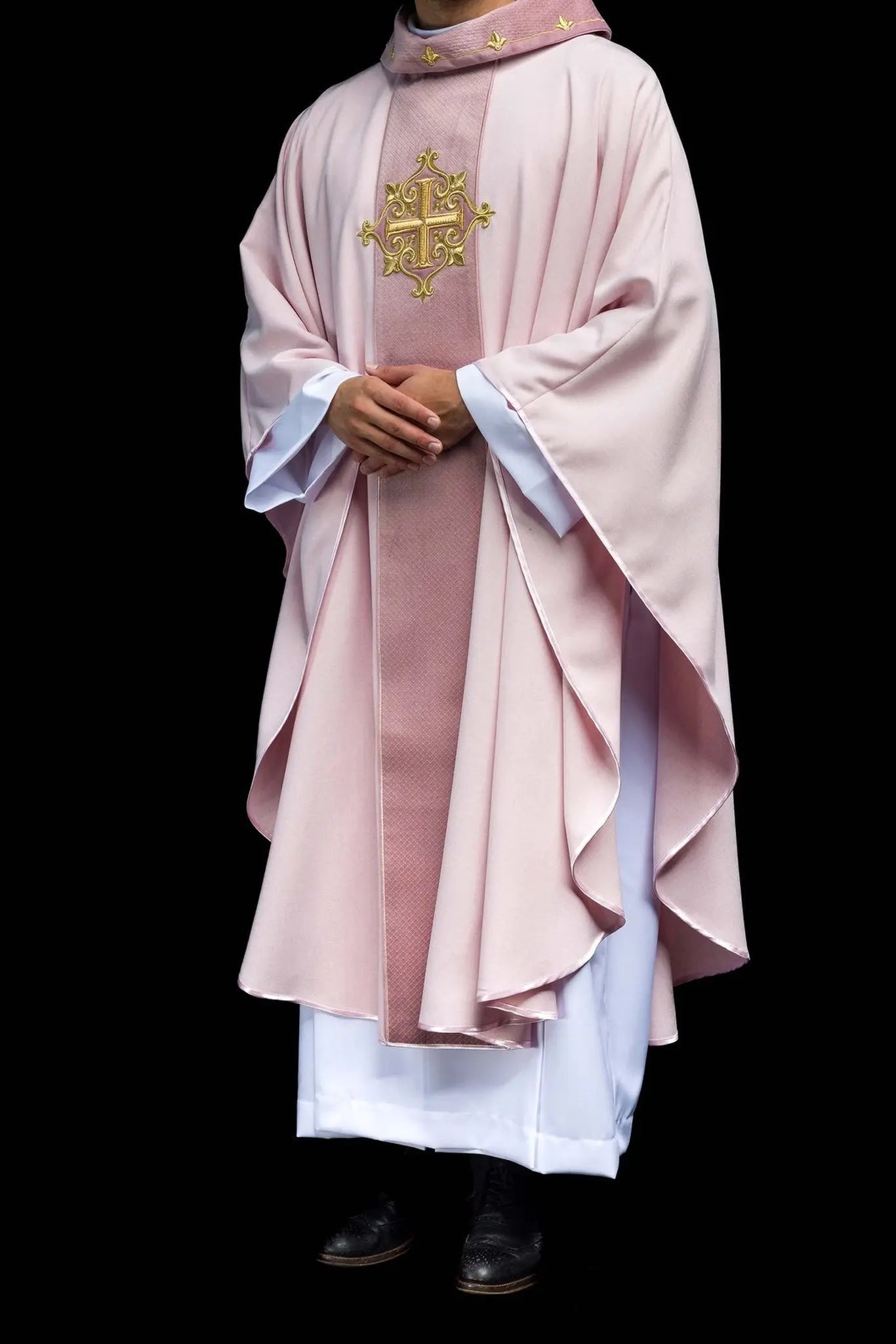
Rose Chasubles for Gaudete and Laetare Sundays
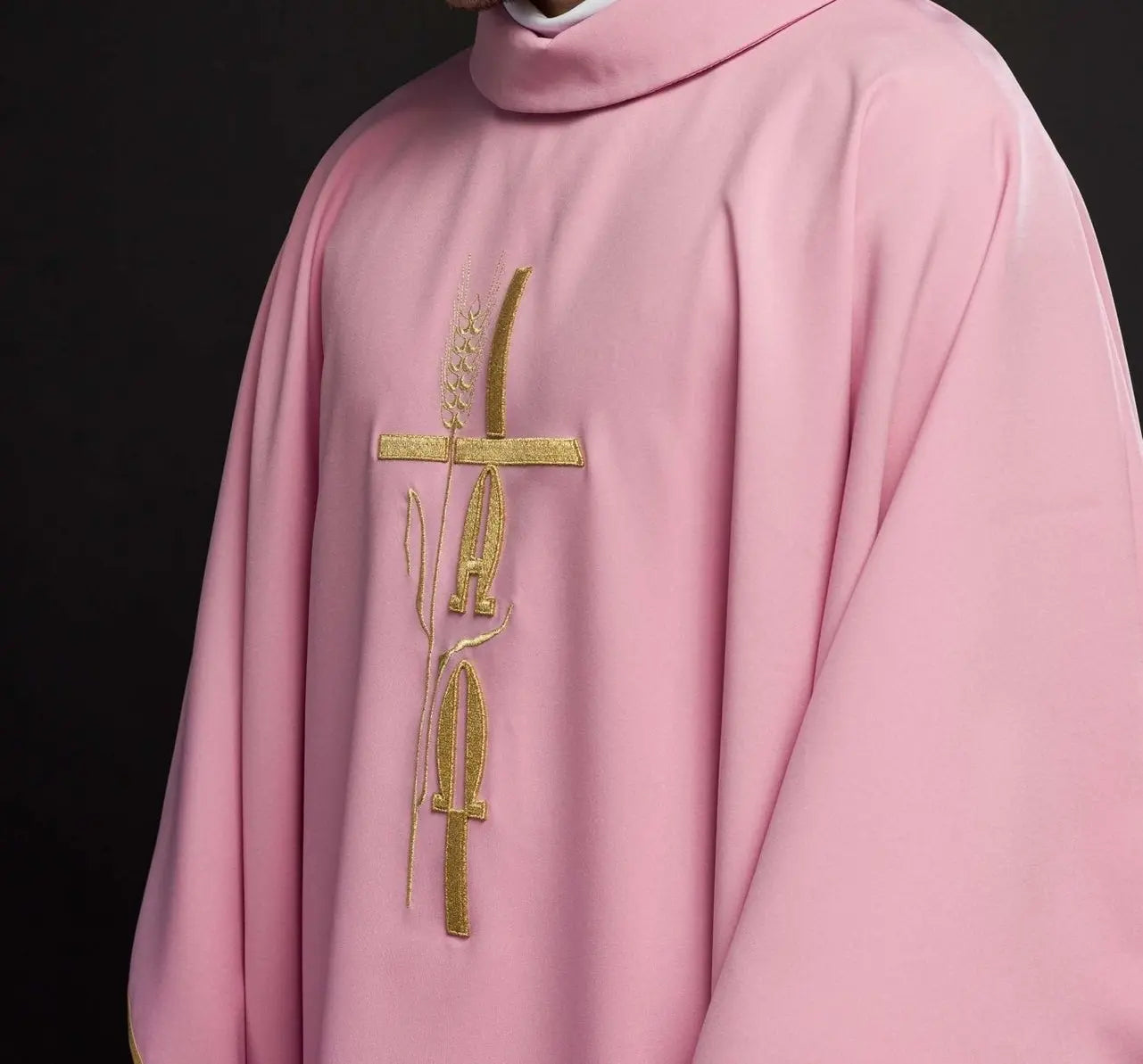
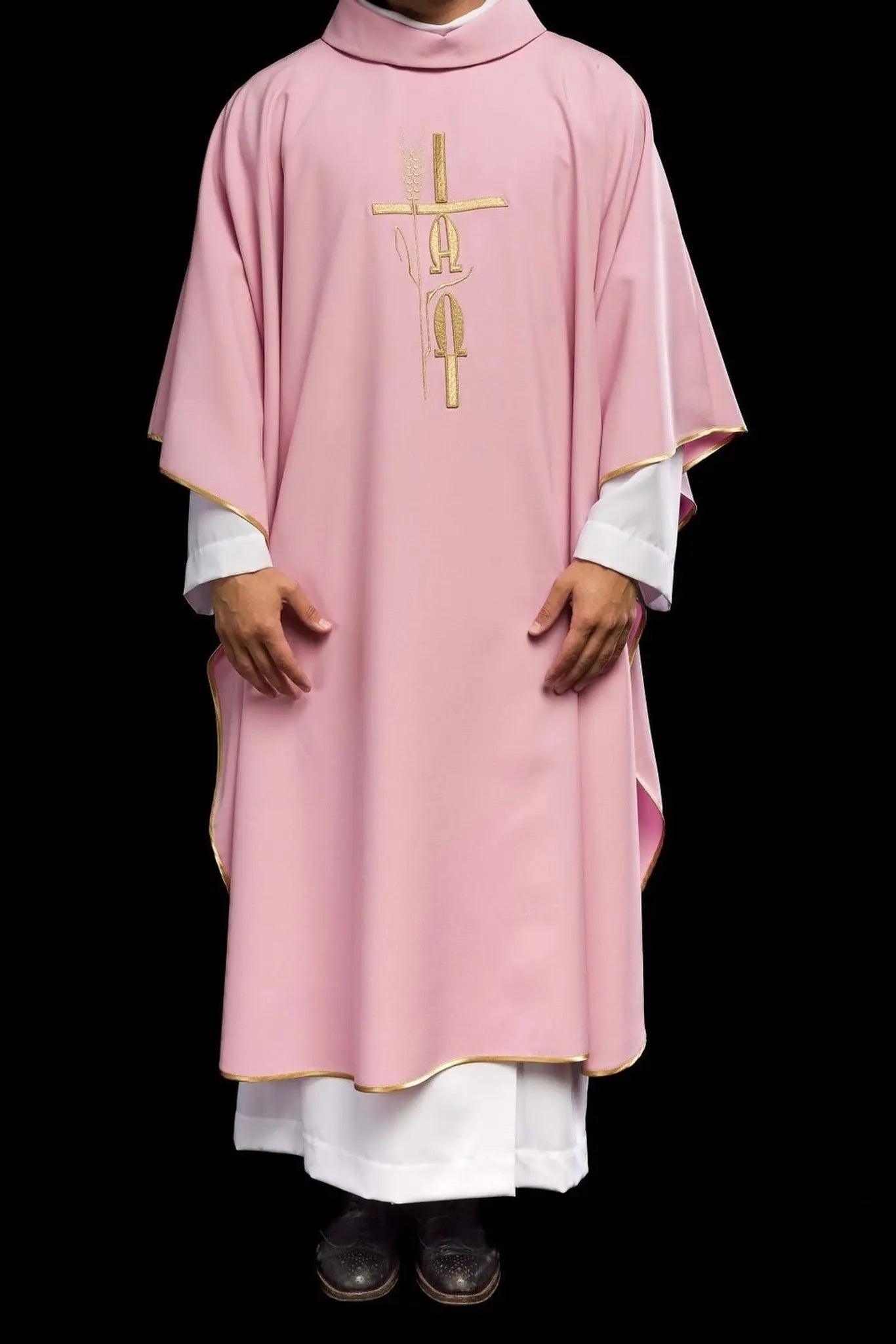
Rose chasubles are liturgical vestments reserved for moments of restrained joy within seasons of preparation and penance. In the Roman Catholic liturgy, the rose color is traditionally associated above all with Gaudete Sunday, the Third Sunday of Advent, and Laetare Sunday, the Fourth Sunday of Lent. These two Sundays briefly brighten the tone of the season: Advent turns the heart toward the nearness of Christmas, while Lent allows the faithful to glimpse the joy of Easter before the final days of penitential preparation. This collection gathers rose chasubles for priests and bishops who need a vestment that is liturgically precise, visually dignified, and suitable for these rare but meaningful celebrations.
The original name of this collection used the common word pink, but the more accurate liturgical term is rose. Rose is not simply a decorative shade; it is a symbolic color within the tradition of sacred vesture. It expresses moderated rejoicing, hope, and consolation without losing the spiritual seriousness of Advent and Lent. For this reason, a rose chasuble should not look like an ordinary festive garment. It should harmonize with the sanctuary, the season, and the prayers of the Mass, offering a gentle contrast to violet while still remaining reverent. When a parish prepares for Gaudete or Laetare Sunday, choosing a well-made rose chasuble helps communicate the liturgical meaning of the day without lengthy explanation.
What belongs in this collection
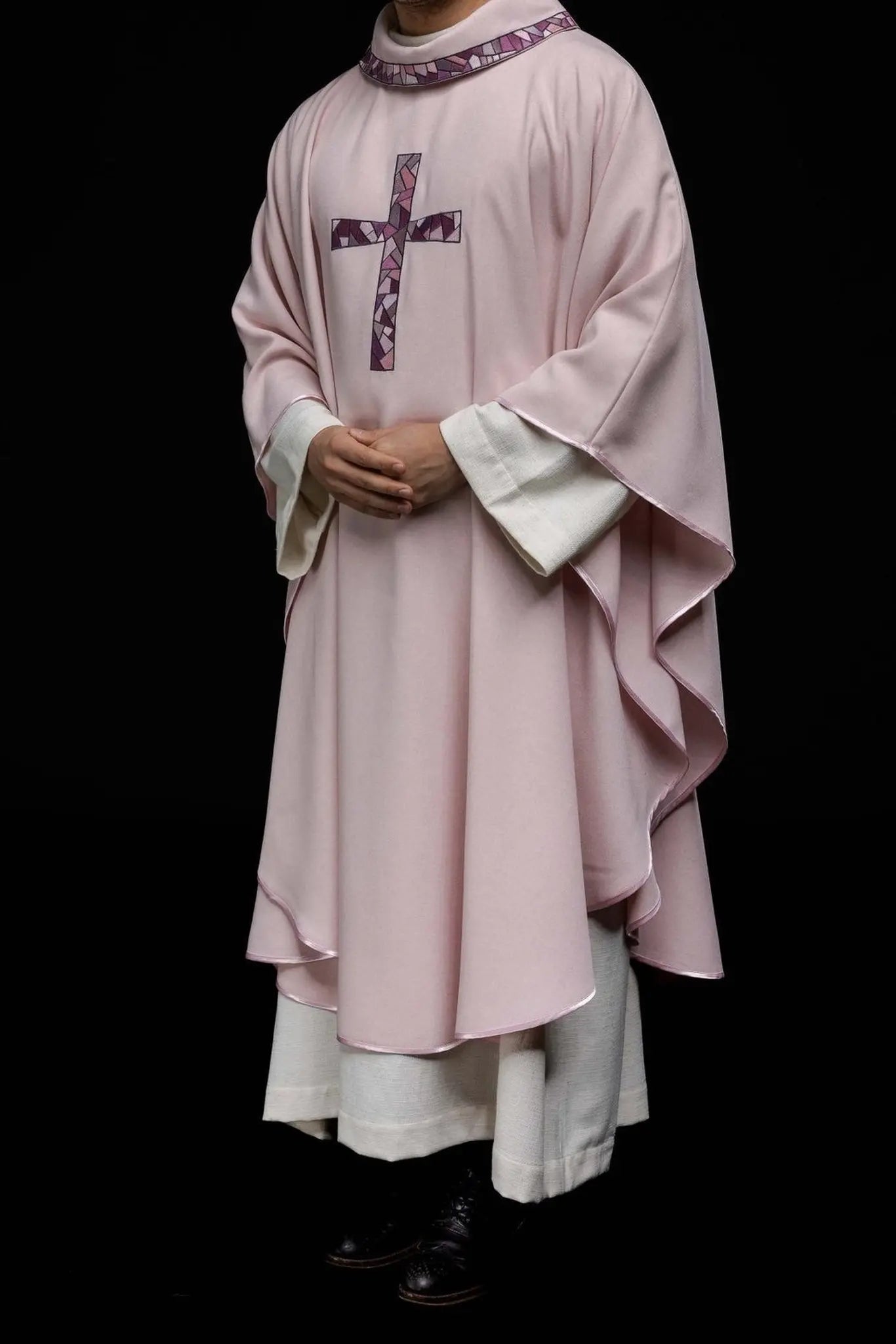
This collection is dedicated to rose chasubles: the outer Mass vestment worn by a priest or bishop over the alb and stole during the celebration of the Eucharist. The collection may include Gothic chasubles with a flowing cut, Roman-style chasubles with a more structured profile, embroidered chasubles, simple chasubles for regular parish use, and more decorative models for solemn celebrations. The shared feature is the rose liturgical color, prepared for the limited occasions when the Church permits or recommends this color.
Because a chasuble is a priestly Mass vestment, it should be distinguished from adjacent categories. A matching stole can complete the vesting set, but a stole alone is not a chasuble. Deacons wear dalmatics rather than chasubles at Mass. Altar frontals, pulpit covers, chalice veils, ciborium veils, and other paraments may coordinate with a rose vestment, but they serve different liturgical functions. Customers looking for the wider vestment category can compare this collection with all chasubles, while those preparing a complete set for the same Sunday may also consider related rose textiles and accessories where available.
Liturgical meaning of the rose color
Rose vestments are used because the liturgy itself changes tone on two particular Sundays. The entrance antiphon for Gaudete Sunday begins with the call to rejoice, and Laetare Sunday likewise invites Jerusalem and the faithful to rejoice. The Church does not abandon the preparatory character of Advent or the penitential discipline of Lent, but it introduces a note of consolation. Rose is therefore a sign of joy held within expectation. It is lighter than violet, but not as fully festive as white or gold.
For this reason, rose chasubles are especially appropriate for parishes that wish to follow the liturgical calendar carefully. Some communities may celebrate Gaudete and Laetare Sunday with violet vestments if rose is not available, but a dedicated rose chasuble makes the symbolism clearer. It also helps the faithful notice the shift in the season: the Nativity is drawing near in Advent, and the Resurrection is approaching in Lent. For broader seasonal planning, this collection naturally connects with the Gaudete and Laetare selection, as well as with vestments and church goods for Advent and Lent.
When rose chasubles are used
The principal occasions for rose chasubles are clear and limited. They are not general Marian vestments, and they should not be treated as a substitute for white, gold, violet, or red whenever a softer color is desired. The most important uses are:
- Gaudete Sunday: the Third Sunday of Advent, when the Church expresses joyful expectation as Christmas approaches.
- Laetare Sunday: the Fourth Sunday of Lent, when the penitential season is lightened by a foretaste of Easter joy.
In ordinary Roman Catholic practice, feasts of the Blessed Virgin Mary are normally celebrated in white or another permitted festive color according to local norms, not rose simply because the theme is Marian. A parish seeking Marian vestments should look at Marian chasubles, while a parish preparing for solemnities and festive celebrations may compare rose with gold chasubles or ecru and white-toned options. Keeping these distinctions clear protects the integrity of the liturgical calendar and helps each vestment speak in the right context.
How to choose a rose chasuble
Choosing a rose chasuble involves more than selecting a pleasant shade. The first question is liturgical use: will the vestment be worn once or twice a year in a parish, in a chapel, for a religious community, or in a cathedral setting? A parish that needs a dependable vestment for annual Gaudete and Laetare Sundays may prefer a balanced design with clear embroidery and durable fabric. A community that celebrates solemn liturgy with a fuller ceremonial style may choose richer ornament, more elaborate orphreys, and a more formal cut.
The second question is the tone of the rose color. A good liturgical rose should be recognizably different from violet and from red, yet dignified enough for the altar. Soft rose shades can be gentle and contemplative, while deeper rose tones may appear stronger in large sanctuaries or under bright lighting. The color should not look like casual fashion pink; it should serve the worship of the Church. Gold, silver, white, or subtle contrasting embroidery can help the vestment maintain a sacred character while still expressing the joy of the day.
The third question is the cut. Gothic chasubles usually provide a flowing silhouette and generous movement, which many priests prefer for contemporary parish celebrations. Roman chasubles offer a more traditional structure and may be selected for churches that emphasize a classical vestment style. Customers comparing shapes and traditions may find the Roman chasubles collection useful. The right cut should allow comfortable movement at the altar, at the ambo, during incensation when applicable, and throughout the Eucharistic Prayer.
Embroidery, symbols, and sacred ornament
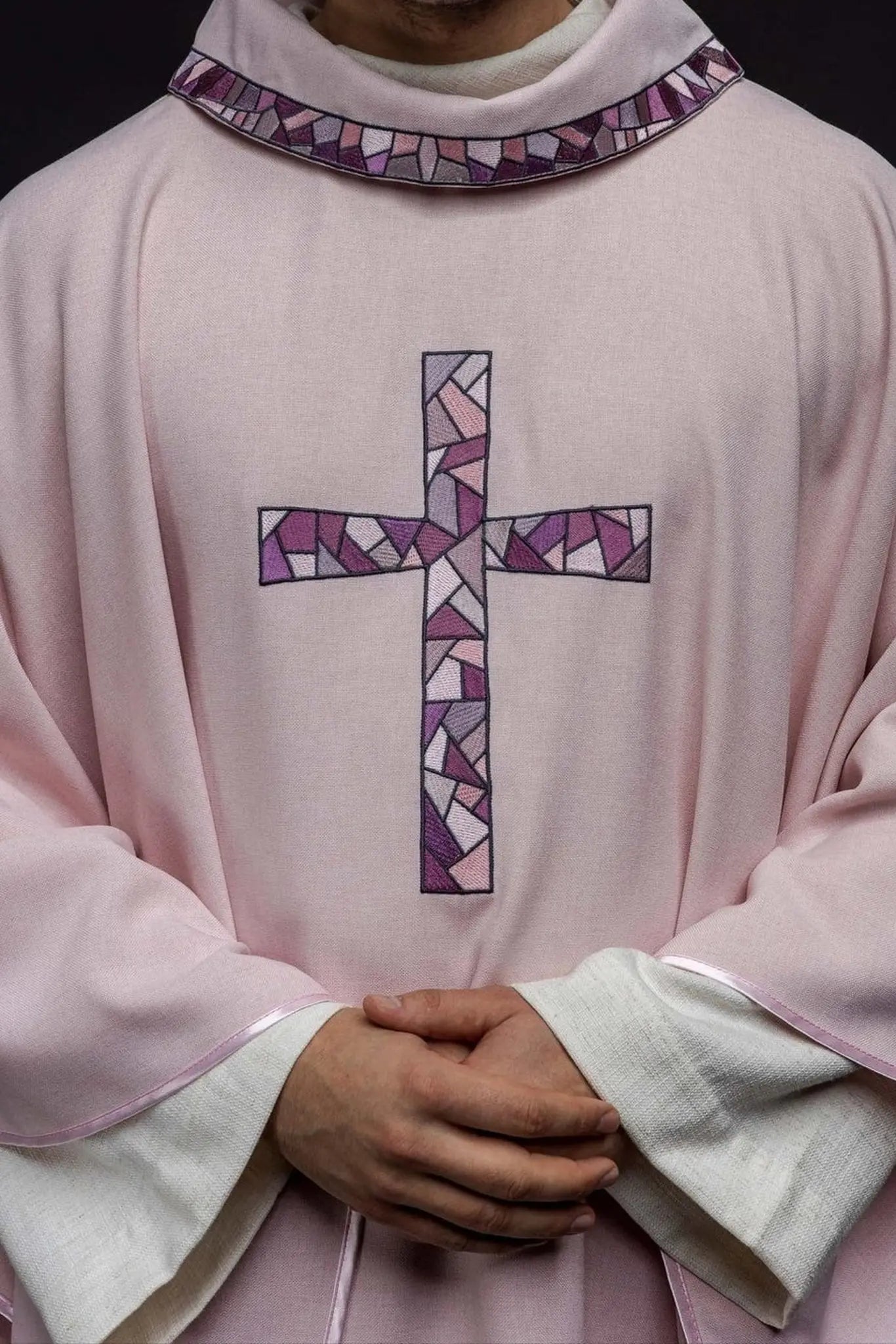
Embroidery gives a rose chasuble its devotional focus. Common motifs include the cross, Eucharistic symbols, vines, floral ornament, Marian-inspired details where the design is still suitable to the day, and ornamental bands that frame the central panel. On rose fabric, gold embroidery often emphasizes festive warmth, while silver or white embroidery can create a lighter and more restrained appearance. The goal is not decoration for its own sake, but a vestment that supports prayer and visibly belongs to the sacred liturgy.
Some rose chasubles are intentionally simple, allowing the color itself to carry the message of Gaudete or Laetare Sunday. Others include richer embroidery for a solemn Mass, a cathedral liturgy, or a parish that wants a distinctive vestment for these Sundays. When selecting ornament, it is helpful to consider the scale of the church, the lighting, the existing altar appointments, and whether the chasuble will be used with a matching stole, chalice veil, pulpit cover, or altar frontal. A design that appears subtle in a product image may look more pronounced in the sanctuary, while very complex embroidery may need a larger space to be appreciated properly.
Coordinating rose vestments with the liturgical year
Rose chasubles sit between the stronger seasonal identities of Advent and Lent. During Advent, most Masses use violet, but Gaudete Sunday permits rose as a sign of rejoicing. Customers preparing a complete Advent sacristy may also need violet vestments and other seasonal pieces. During Lent, the same logic applies: violet remains the main color of the season, but Laetare Sunday introduces rose. For nearby color categories, compare this collection with purple chasubles, which are used through Advent and Lent more broadly.
Rose should also be differentiated from green, red, gold, ecru, black, and Marian vestments. Green is used for Ordinary Time, red for Palm Sunday, Good Friday, the Holy Spirit, martyrs, and other specified celebrations, gold or white-toned vestments for major feasts and solemnities where permitted, and black or violet for funeral contexts according to local practice. This collection focuses only on rose chasubles, so it is most useful for clergy and sacristans who already understand their yearly vestment cycle and want to complete it with the color used on Gaudete and Laetare Sundays.
Practical features for parish and chapel use
A rose chasuble is often worn only a few times each year, but it should still be comfortable, well constructed, and easy to manage. The fabric should drape cleanly over the alb, maintain its shape, and allow the priest to lift his arms without restriction. The neckline should sit neatly, and the length should be appropriate for the wearer. Embroidery should be securely finished so that the vestment can be used repeatedly over many years rather than treated as a fragile display piece.
Care is also important. Rose fabric can show discoloration if exposed to strong sunlight for long periods, so storage away from direct light is recommended. Embroidered vestments should be handled according to the care instructions supplied with the garment, especially when metallic threads, decorative trims, or delicate fabrics are present. A breathable vestment cover and careful hanging can help preserve the drape and embroidery. Because Gaudete and Laetare Sundays arrive at predictable points in the year, many sacristies inspect the rose chasuble in advance, giving time to steam, air, or prepare the vestment before the liturgy.
For whom these chasubles are intended
Rose chasubles are intended for priests and bishops celebrating Mass. They may be purchased by parishes, chapels, religious houses, seminaries, retreat centers, Catholic schools, and individual clergy. A parish that has only violet vestments may decide to add a rose chasuble to make the liturgical year more visible to the faithful. A priest who travels for ministry may want a dignified and manageable rose vestment for occasional use. A sacristan may choose one rose chasuble that coordinates with existing altar appointments, especially if the church already owns rose stoles or other rose paraments.
When building a complete vestment plan, it is useful to view rose as one part of the larger category of liturgical vestments. A well-equipped sacristy normally includes the main seasonal colors and then adds specialized pieces for particular feasts, devotions, or ceremonial needs. Rose is one of the most limited colors in terms of frequency, but its rarity gives it strong visual and pastoral value. When the faithful see the rose chasuble, they immediately recognize that the season has reached a point of encouragement and hope.
Why choose a rose chasuble from this collection
This collection is organized to help clergy and church buyers find rose chasubles without confusion between similar but distinct categories. The text, title, and SEO terminology have been aligned with the correct liturgical color. Instead of treating rose as a general decorative pink, the collection presents it as a specific vestment color for Gaudete and Laetare Sundays. This makes the collection easier to understand for priests, parish staff, sacristans, and buyers comparing different colors of chasubles.
The best rose chasuble is one that combines correct liturgical use, suitable color tone, comfortable construction, and sacred ornament. It should look joyful without being casual, distinctive without being distracting, and durable enough to remain part of the sacristy for many years. Whether the design is simple or richly embroidered, the purpose remains the same: to clothe the celebrant in a vestment that expresses the Church’s call to rejoice in the midst of preparation.
Frequently Asked Questions (FAQ)
Are rose chasubles the same as pink chasubles?
In everyday language they are often called pink, but the more precise liturgical term is rose. Rose refers to the specific color traditionally used on Gaudete Sunday and Laetare Sunday. For church purchasing, rose is the better term because it avoids the impression of a fashion color and connects the vestment to its proper liturgical meaning.
When should a priest wear a rose chasuble?
A priest may wear a rose chasuble principally on Gaudete Sunday, the Third Sunday of Advent, and Laetare Sunday, the Fourth Sunday of Lent. These days introduce a note of joy within seasons that are otherwise marked by preparation, expectation, or penance. If a parish does not own rose vestments, violet is commonly used instead, but rose makes the symbolism more visible.
Can rose chasubles be used for Marian feasts?
In ordinary Roman Catholic usage, Marian feasts are not the normal occasion for rose vestments. They are usually celebrated with white or another permitted festive color according to the liturgical norms followed by the parish. For Marian celebrations, it is better to choose a Marian chasuble rather than a rose chasuble intended for Gaudete or Laetare Sunday.
What embroidery works well on a rose chasuble?
Gold, silver, white, and subtle ornamental embroidery usually work well on rose fabric. Crosses, Eucharistic motifs, vines, and restrained floral designs can all be suitable when they support the meaning of the Mass. The best choice depends on whether the parish wants a simple seasonal vestment or a more solemn piece for a principal Sunday Mass.
Should a rose chasuble match a rose stole?
A matching rose stole is recommended because the stole is worn under the chasuble and completes the priestly vesting set. Exact matching is not always required, especially if the stole is mostly hidden, but coordinated color and embroidery create a more orderly appearance at the altar. A parish preparing a full rose set may also consider coordinating pulpit or altar textiles where appropriate.
How is a rose chasuble different from a purple chasuble?
Purple is the regular liturgical color for Advent and Lent, while rose is used only on the joyful midpoint Sundays of those seasons. Purple emphasizes preparation, penance, and expectation. Rose softens that tone and announces consolation and hope. For a complete sacristy, both colors are useful because they serve different moments in the same liturgical seasons.