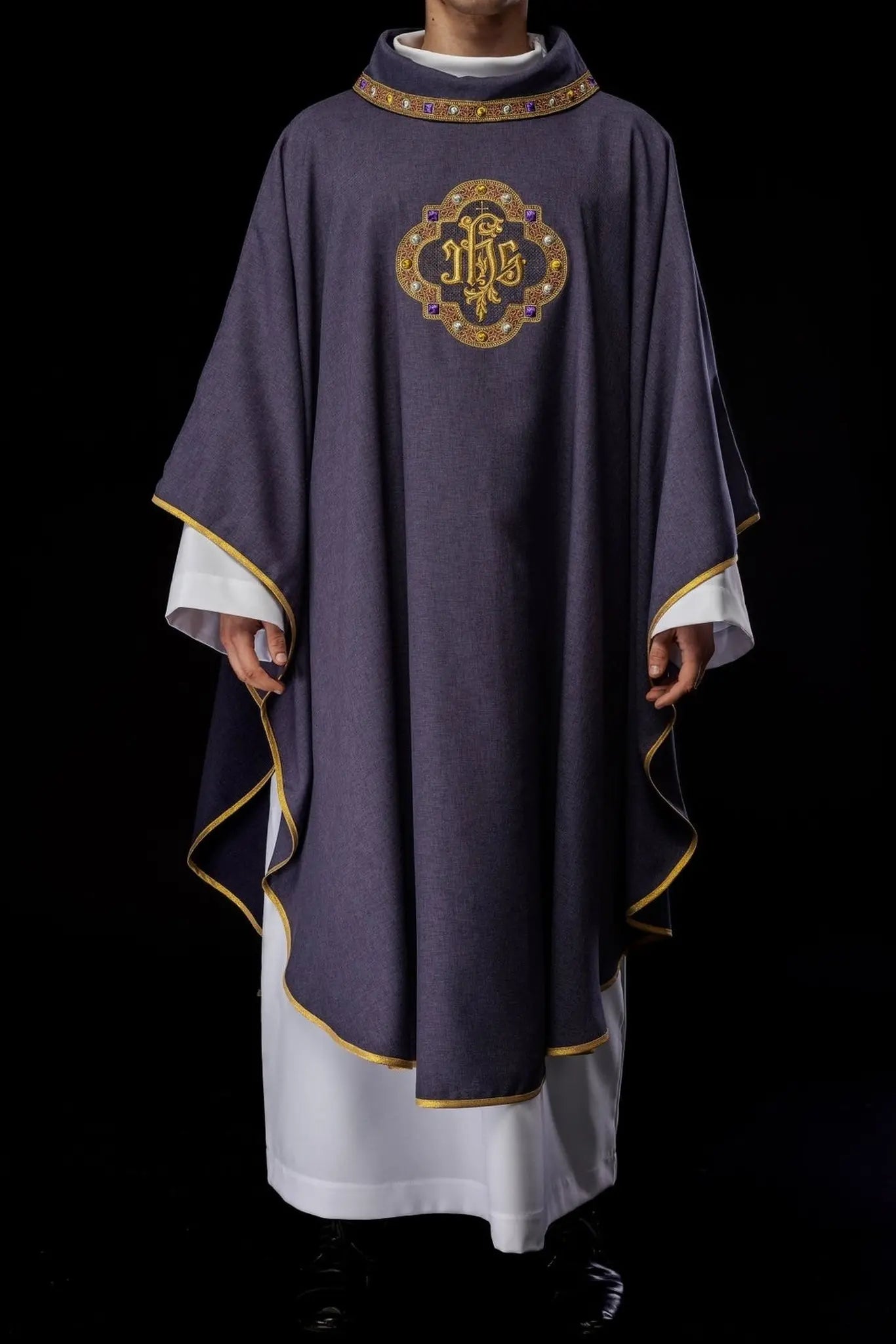
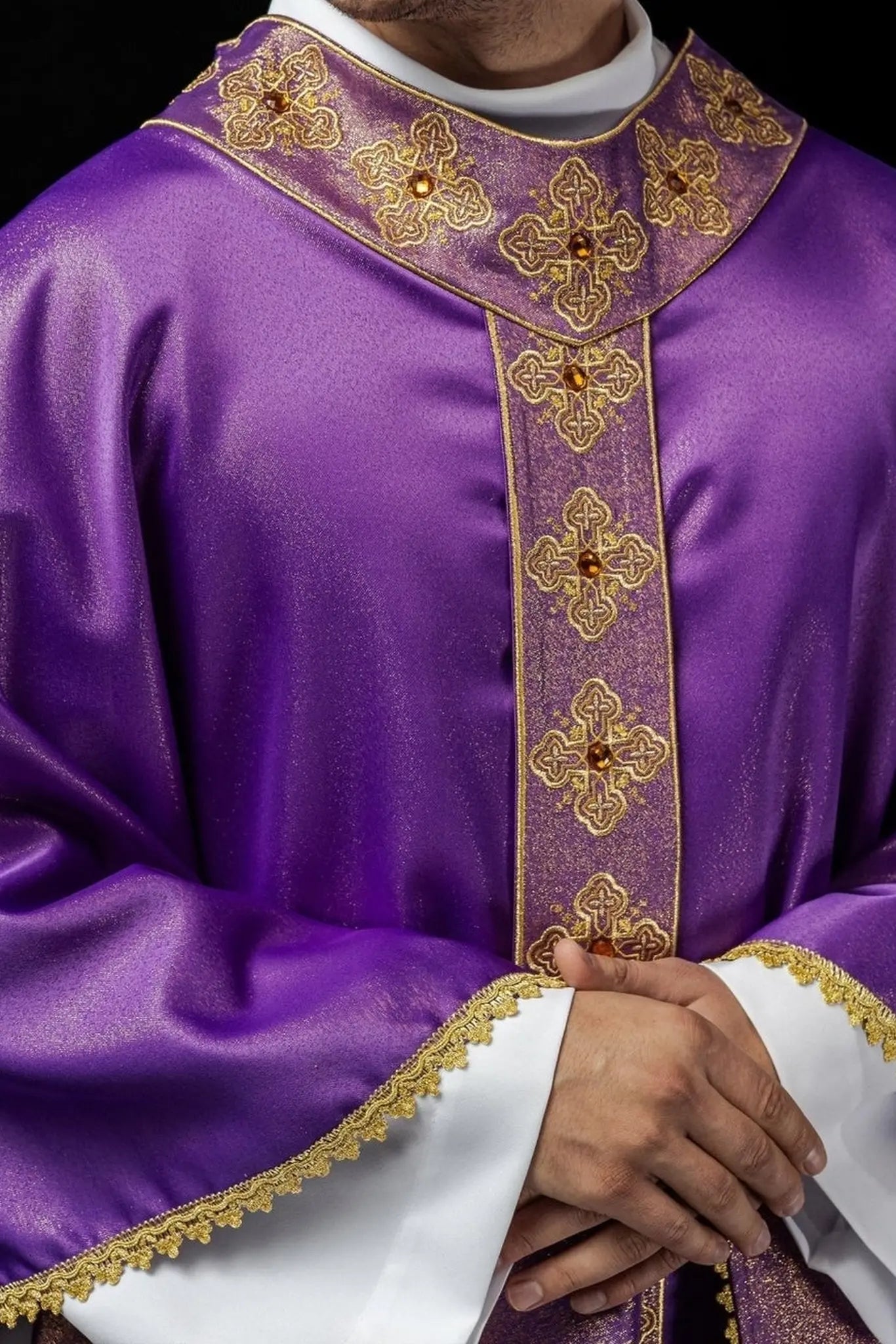
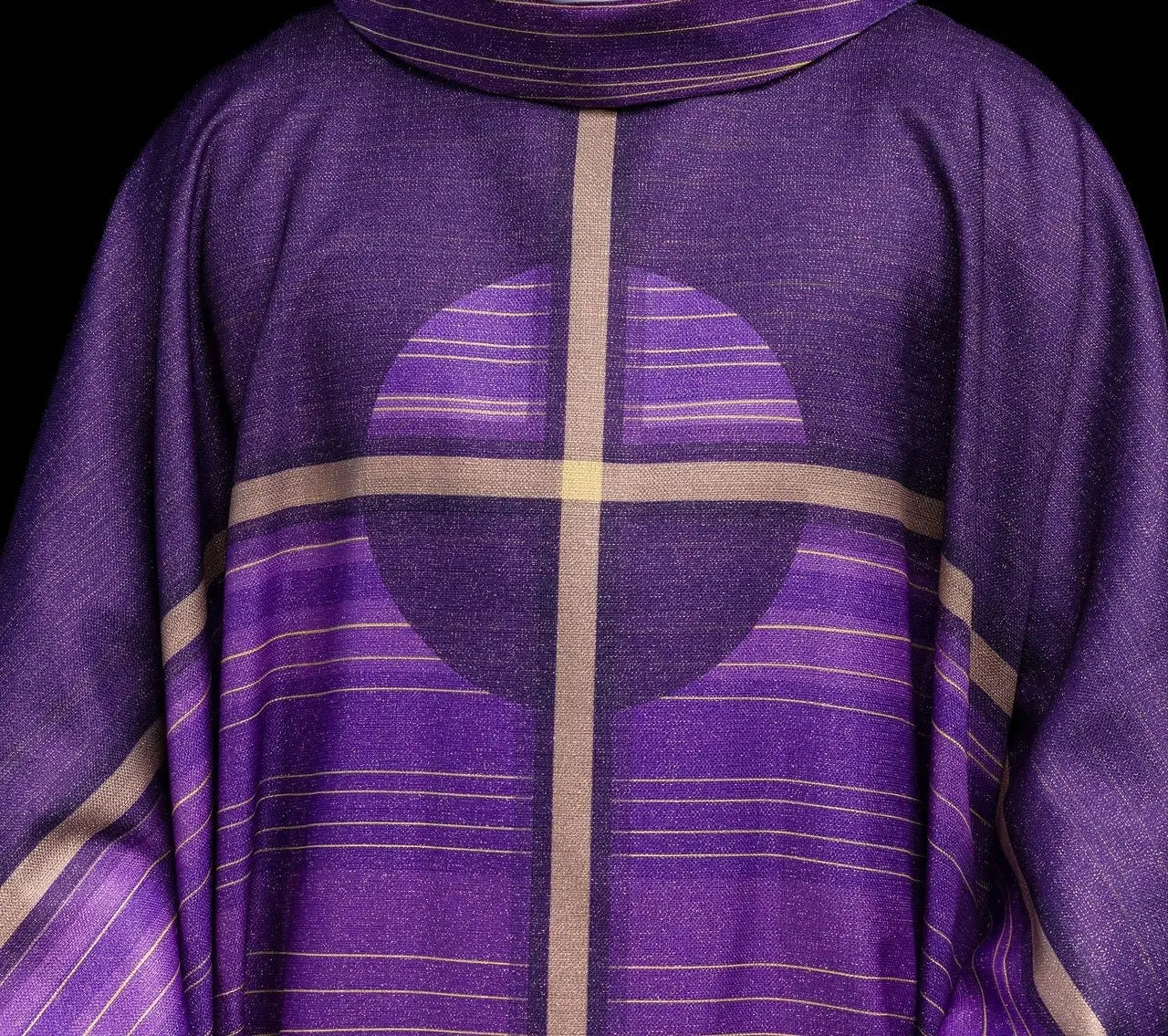
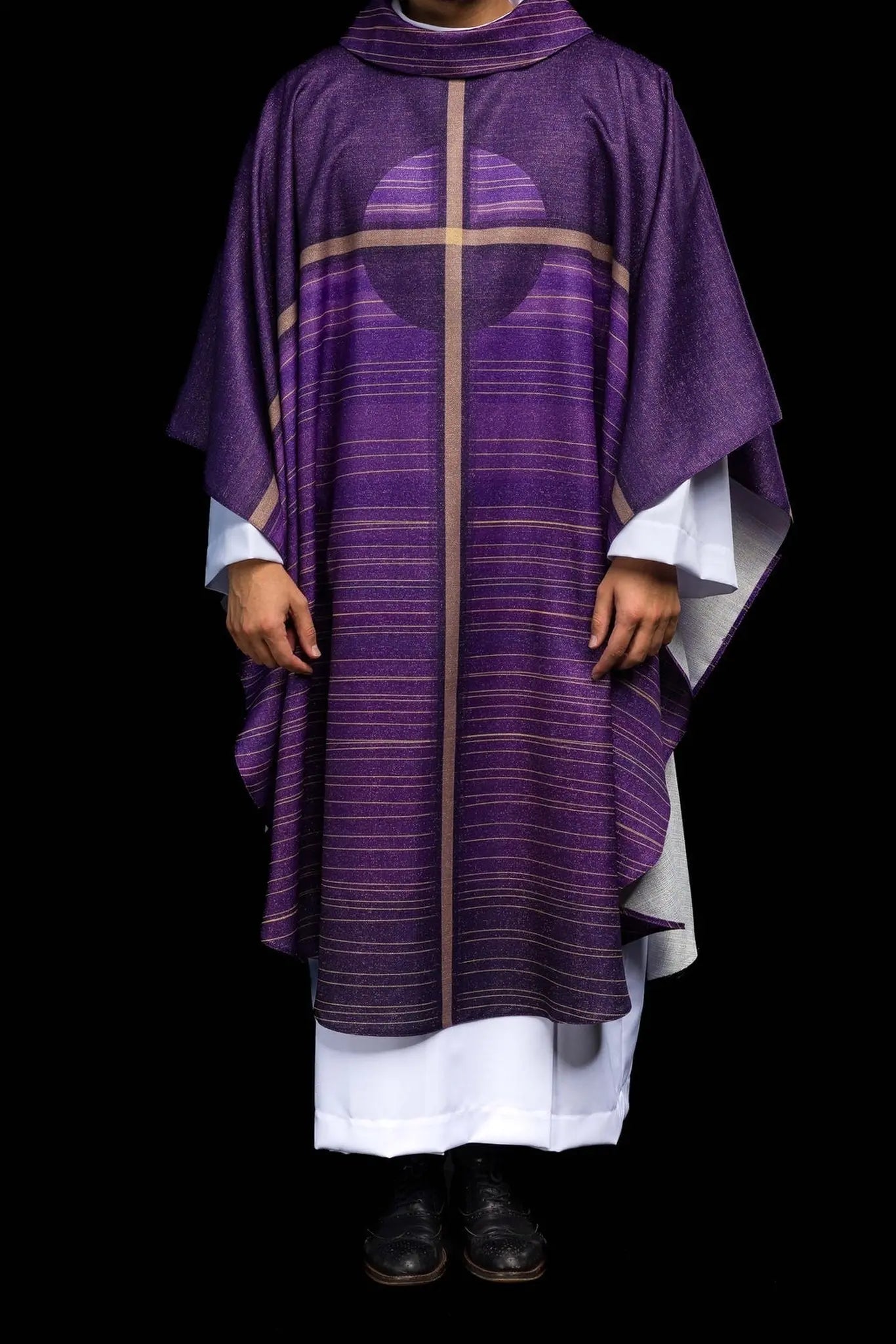
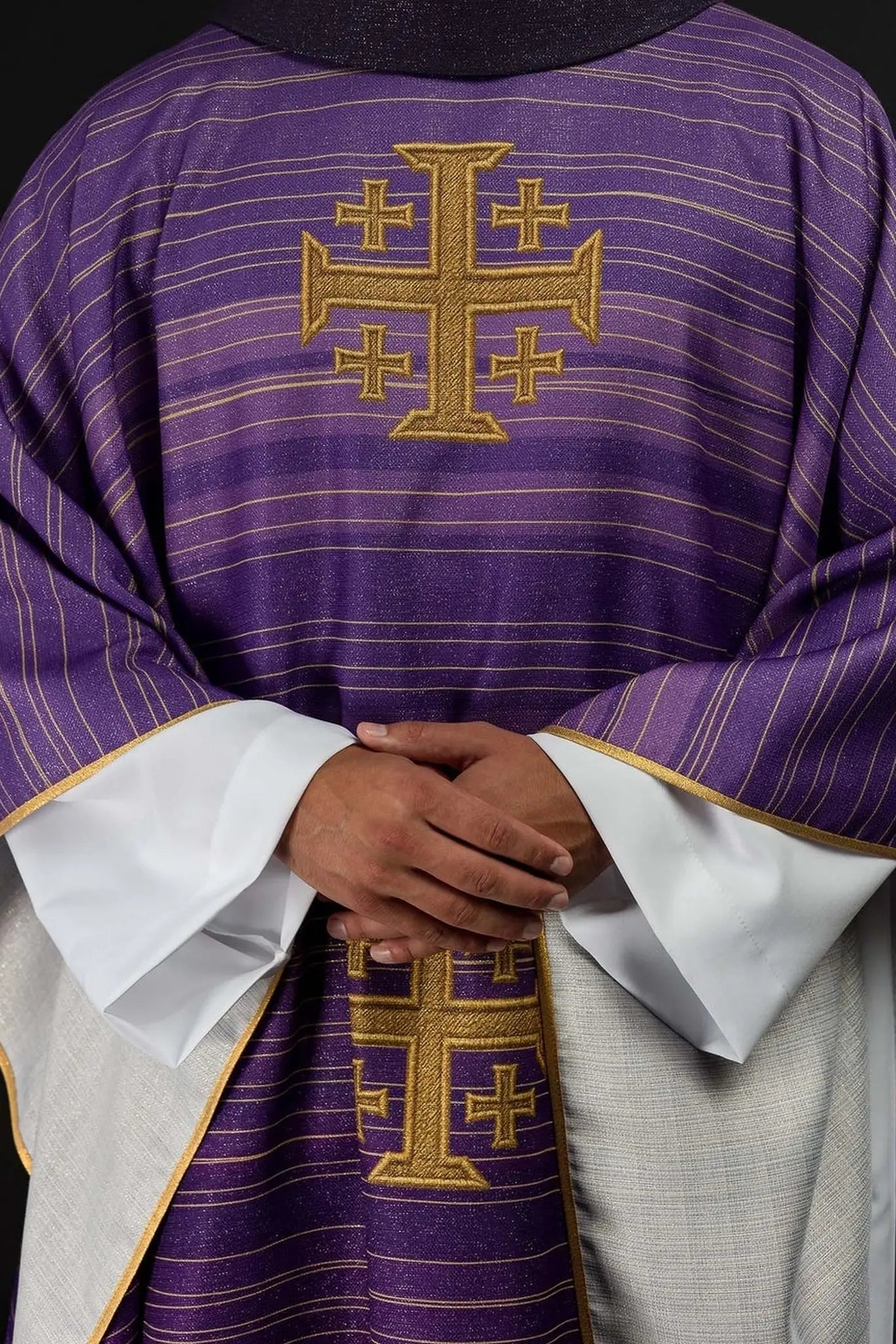
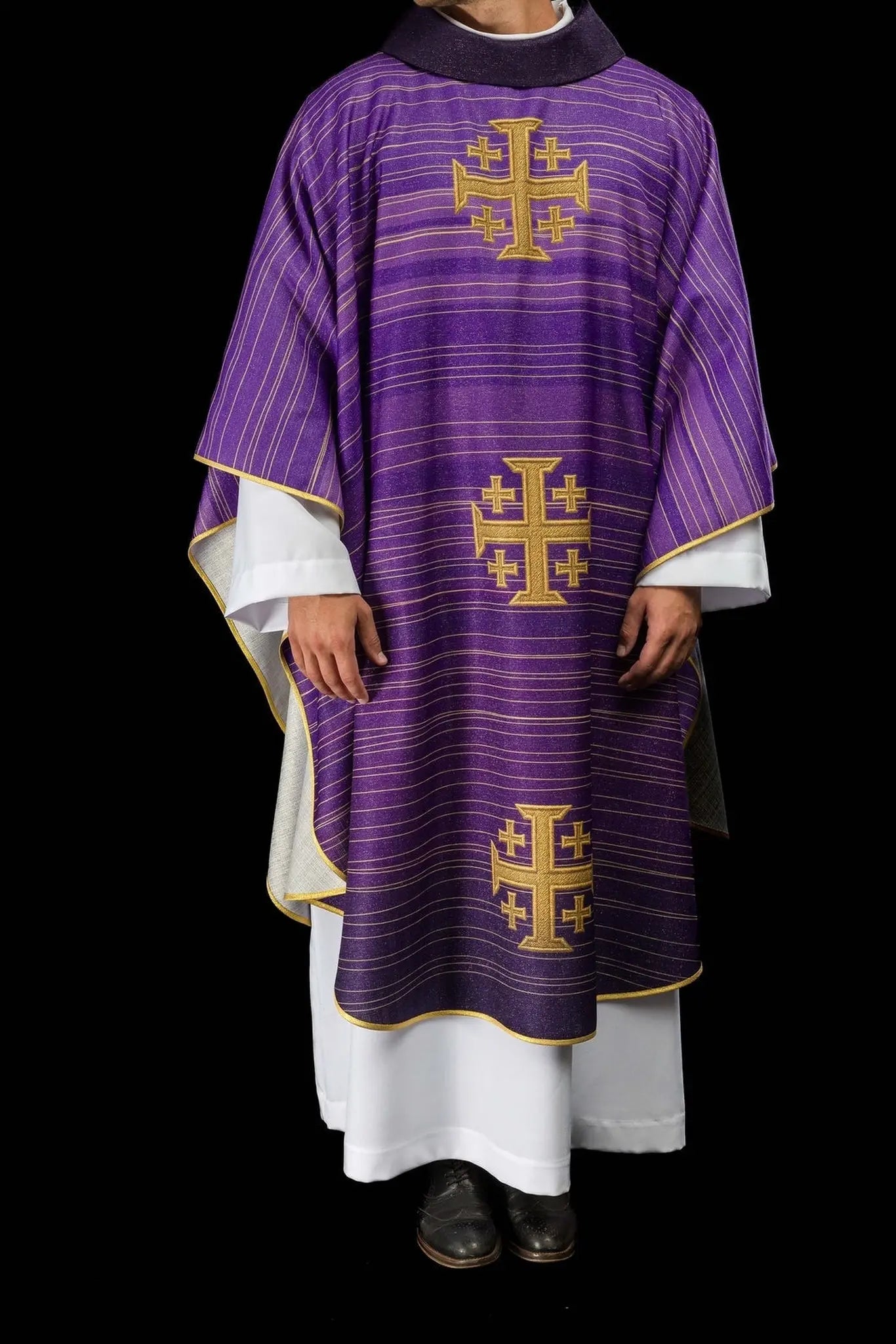
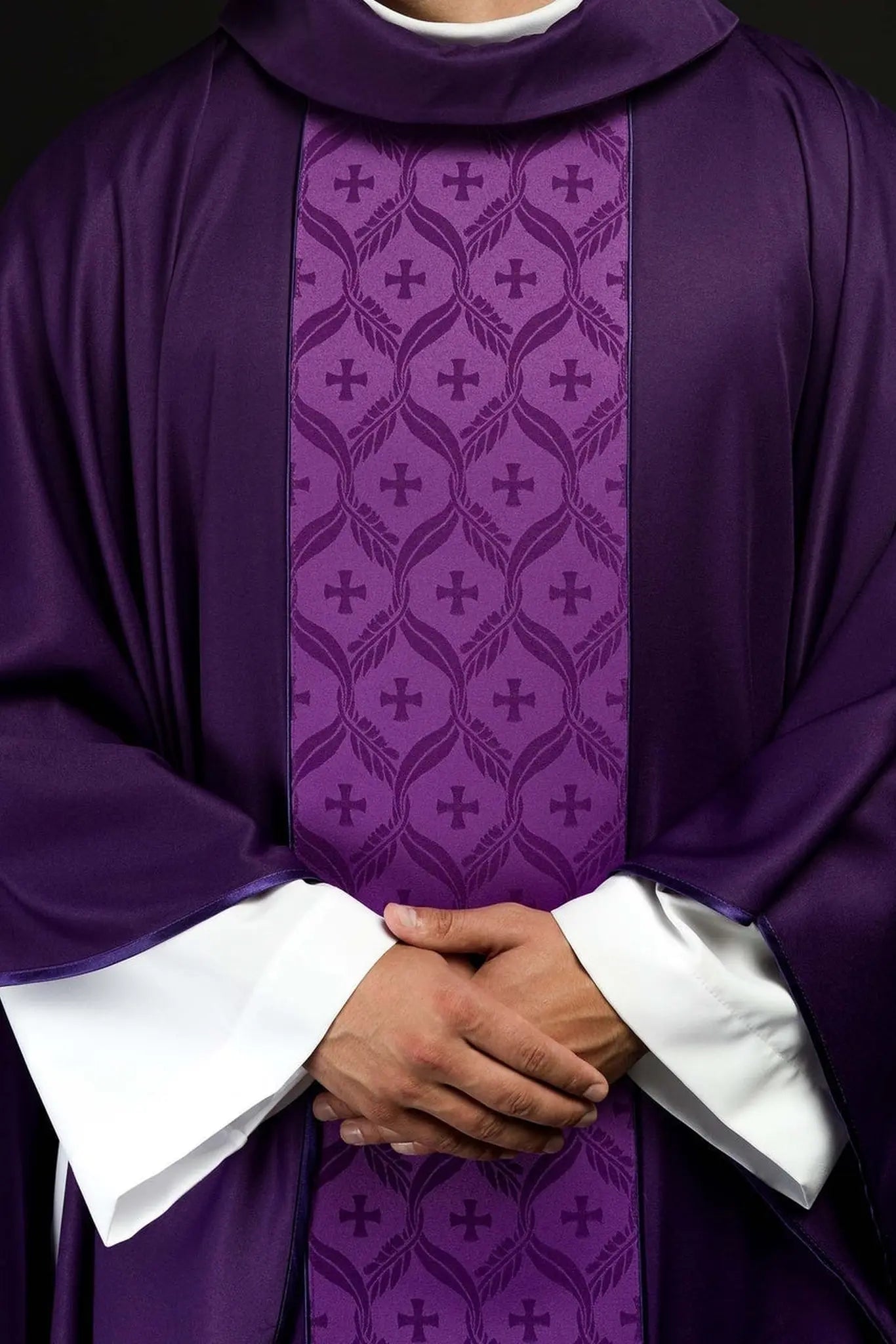
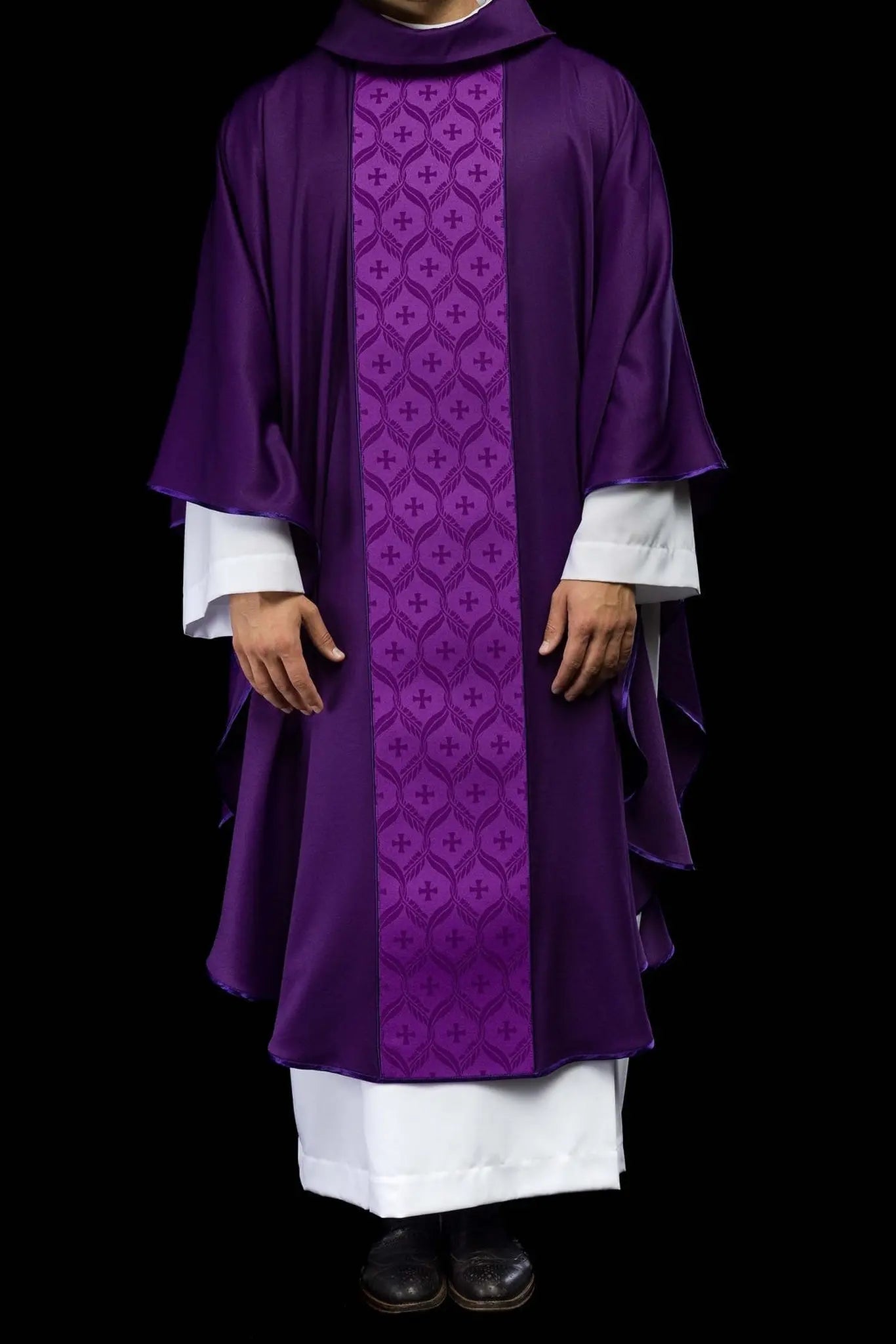
Purple Chasubles for Advent, Lent, and Penitential Liturgies
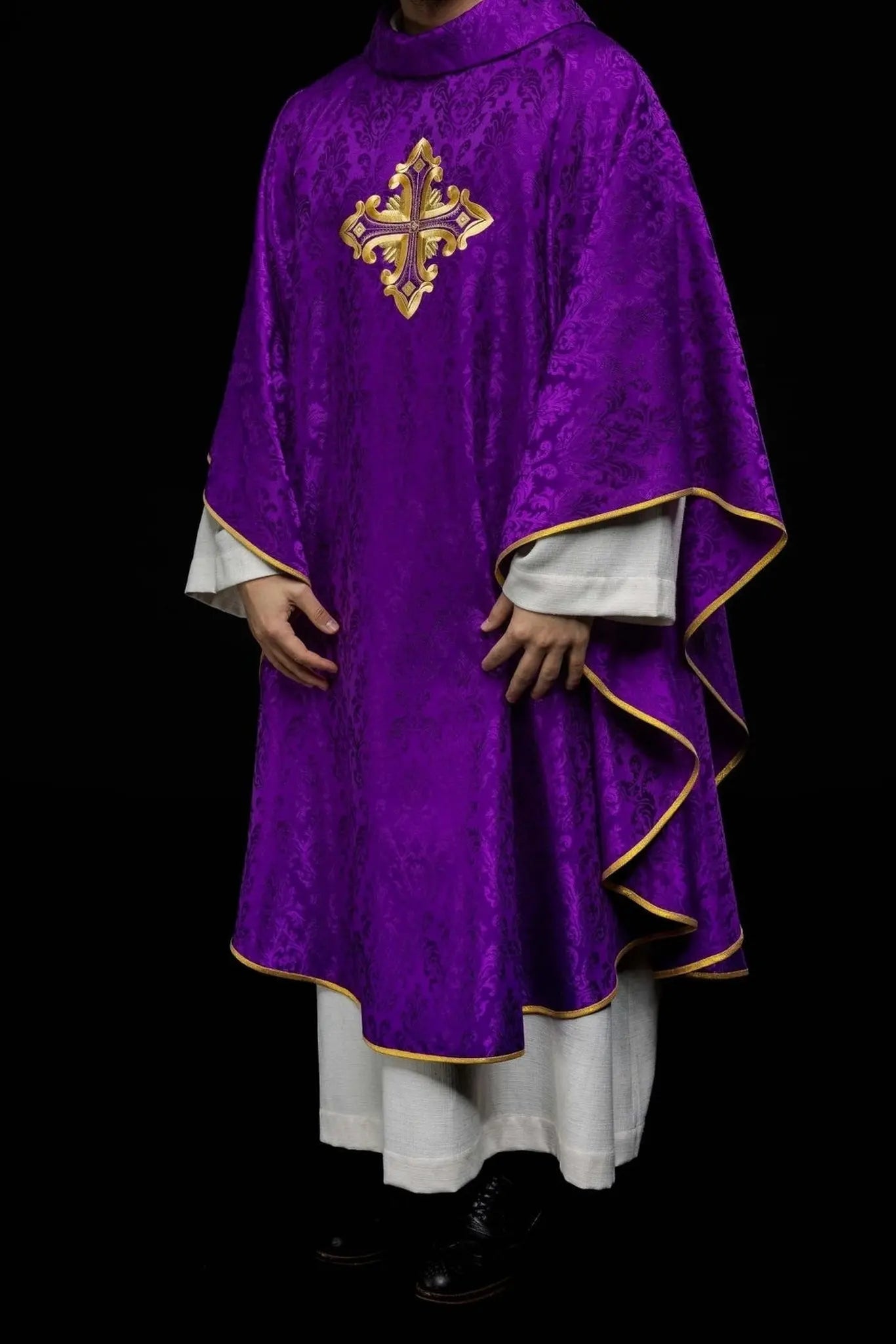
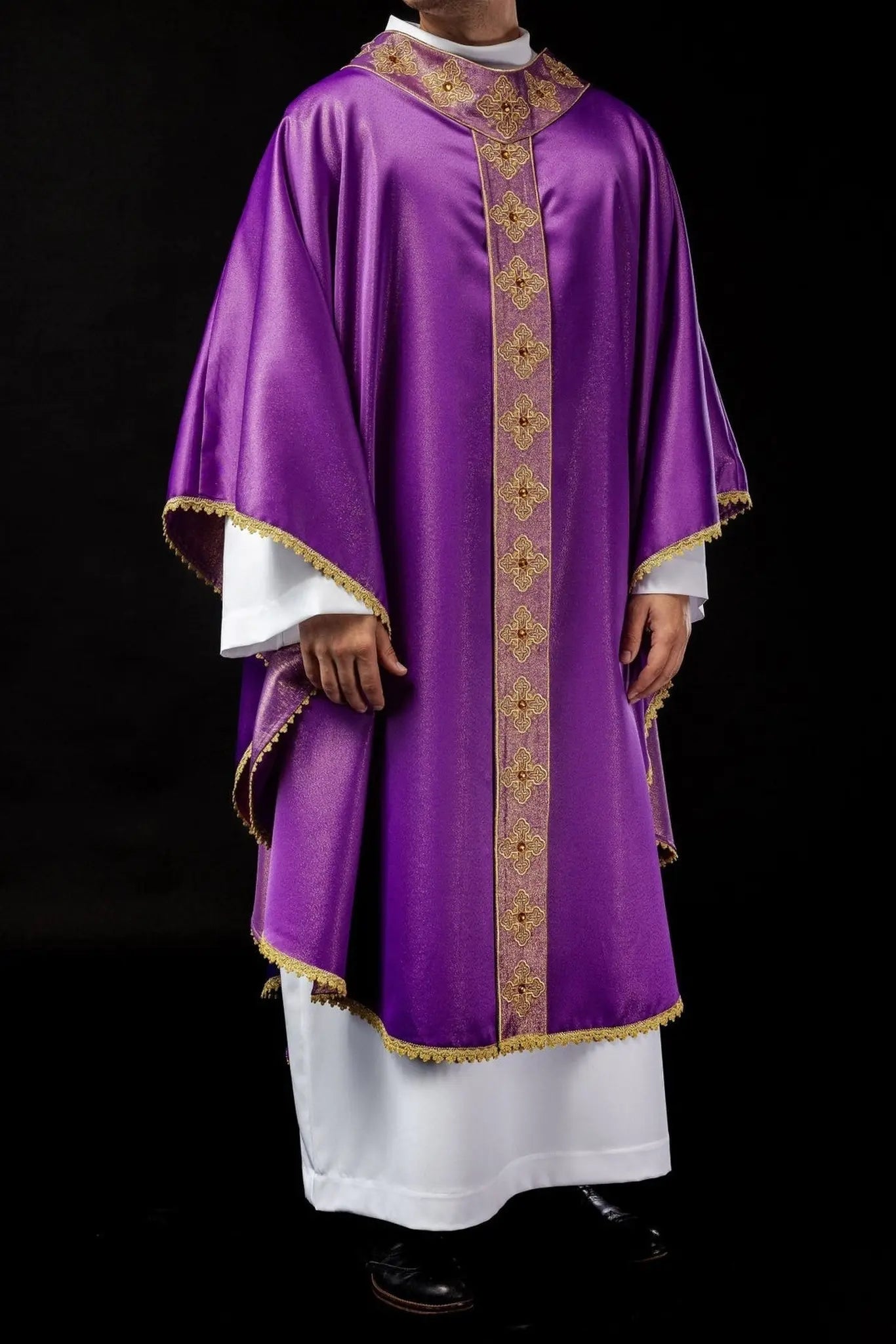
Purple chasubles belong to the liturgical color family used when the Church calls the faithful to preparation, penance, conversion, and sober hope. This collection gathers chasubles intended for the celebrating priest at Mass, especially during Advent and Lent, and for other services where violet or purple vestments are appointed by the liturgical calendar or local custom. The color is not decorative only: it helps the congregation read the spiritual tone of the day before a word is spoken. In Advent, purple points toward watchfulness, longing, and preparation for the coming of Christ. In Lent, it expresses repentance, discipline, and the journey toward the Paschal Mystery.
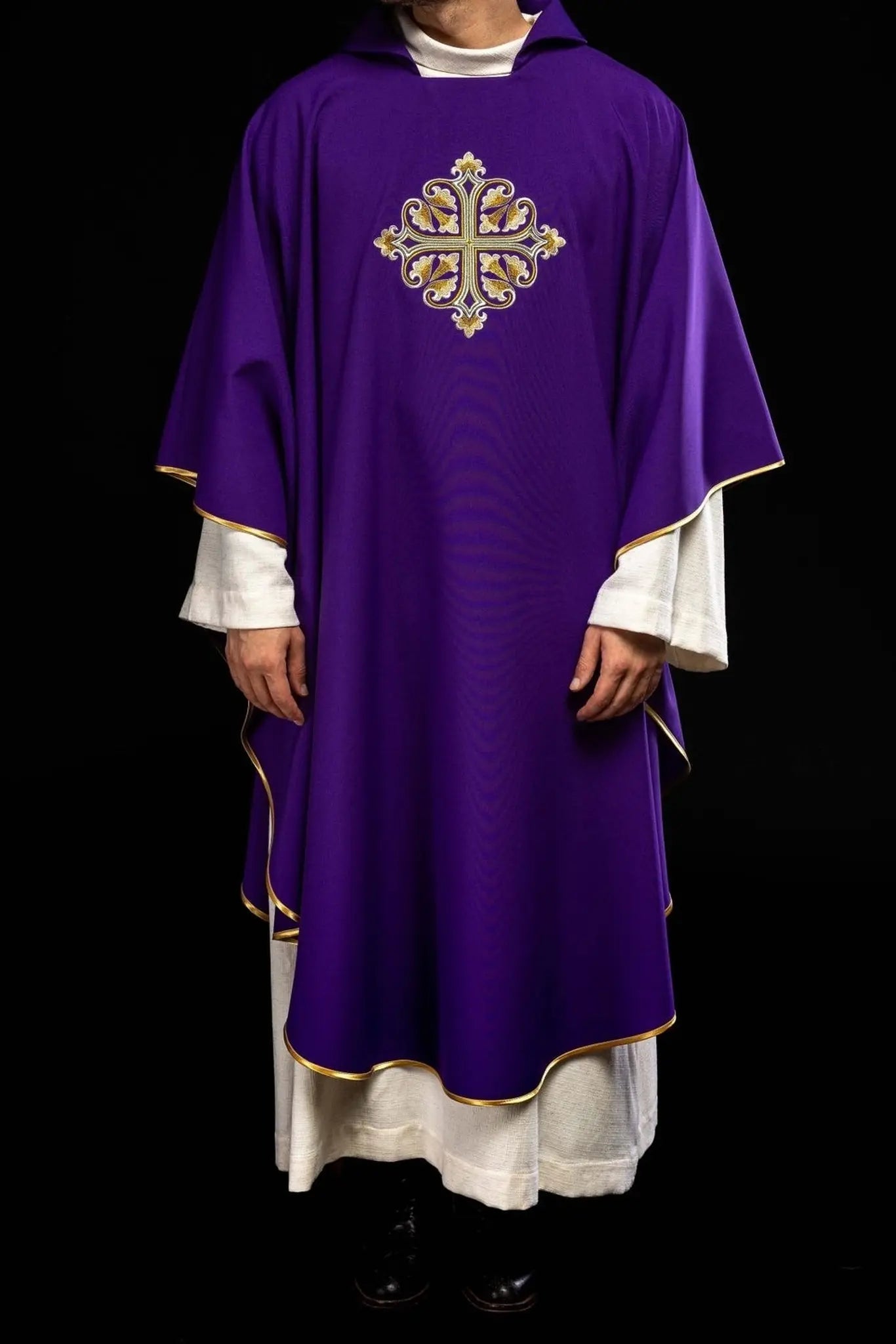
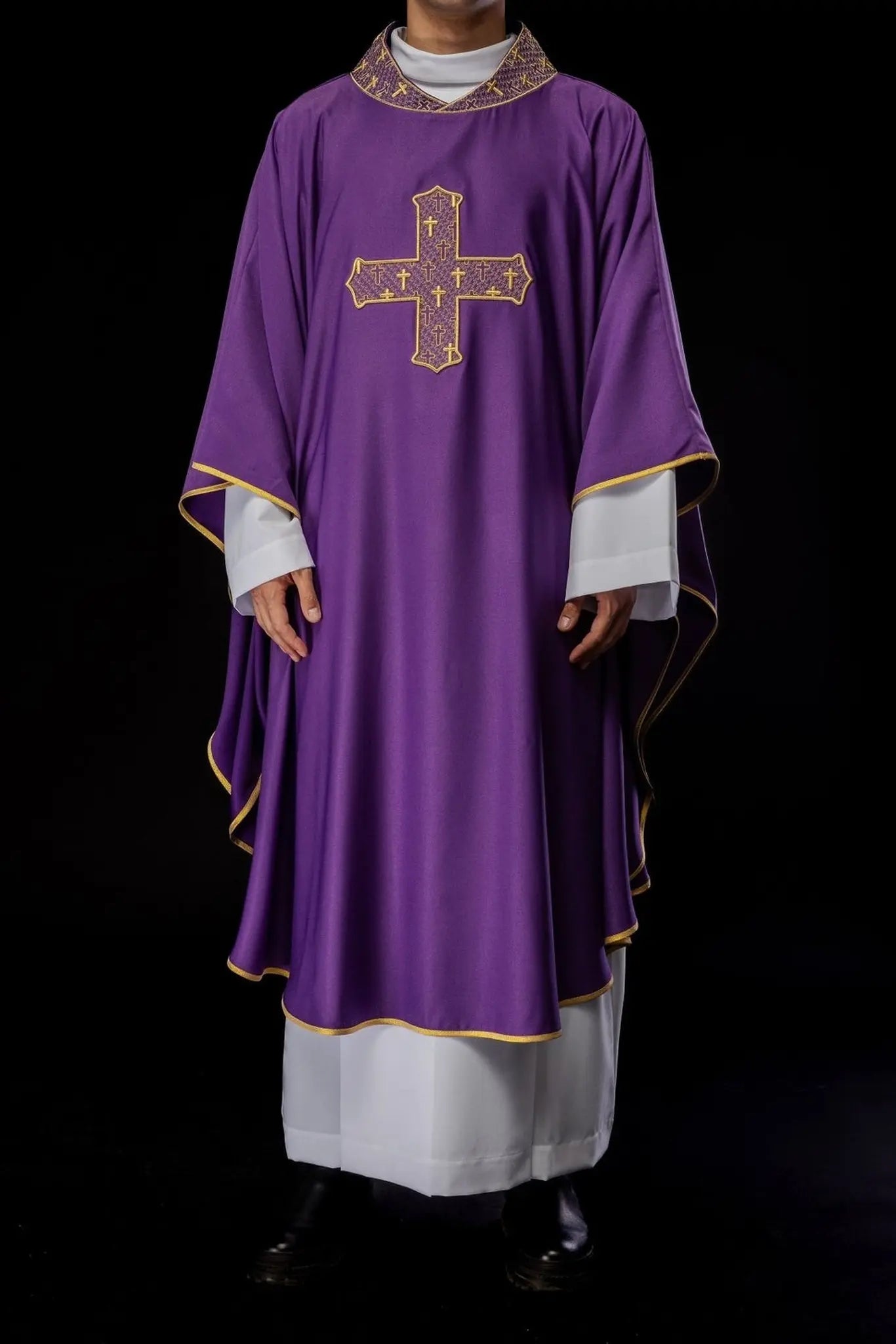
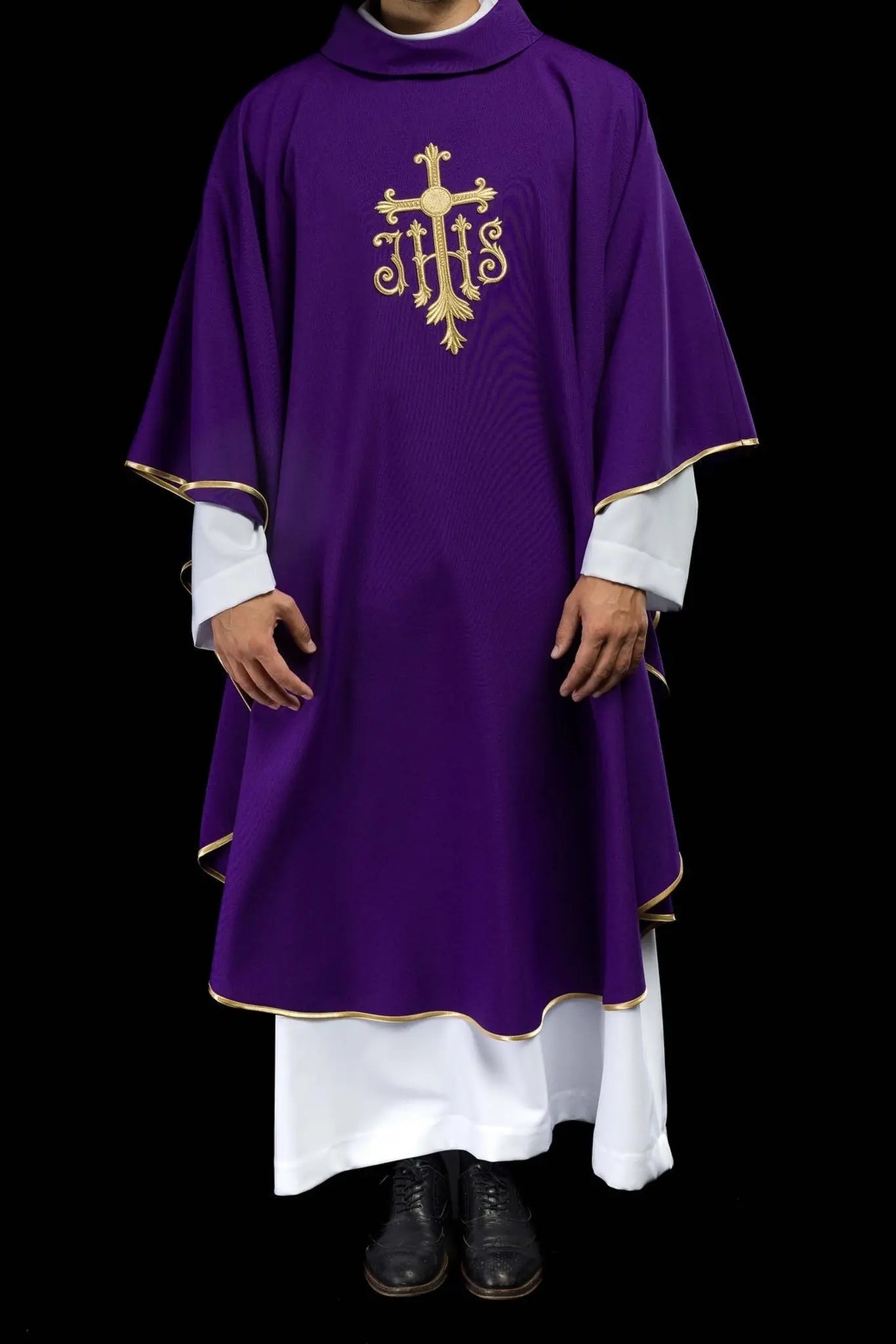
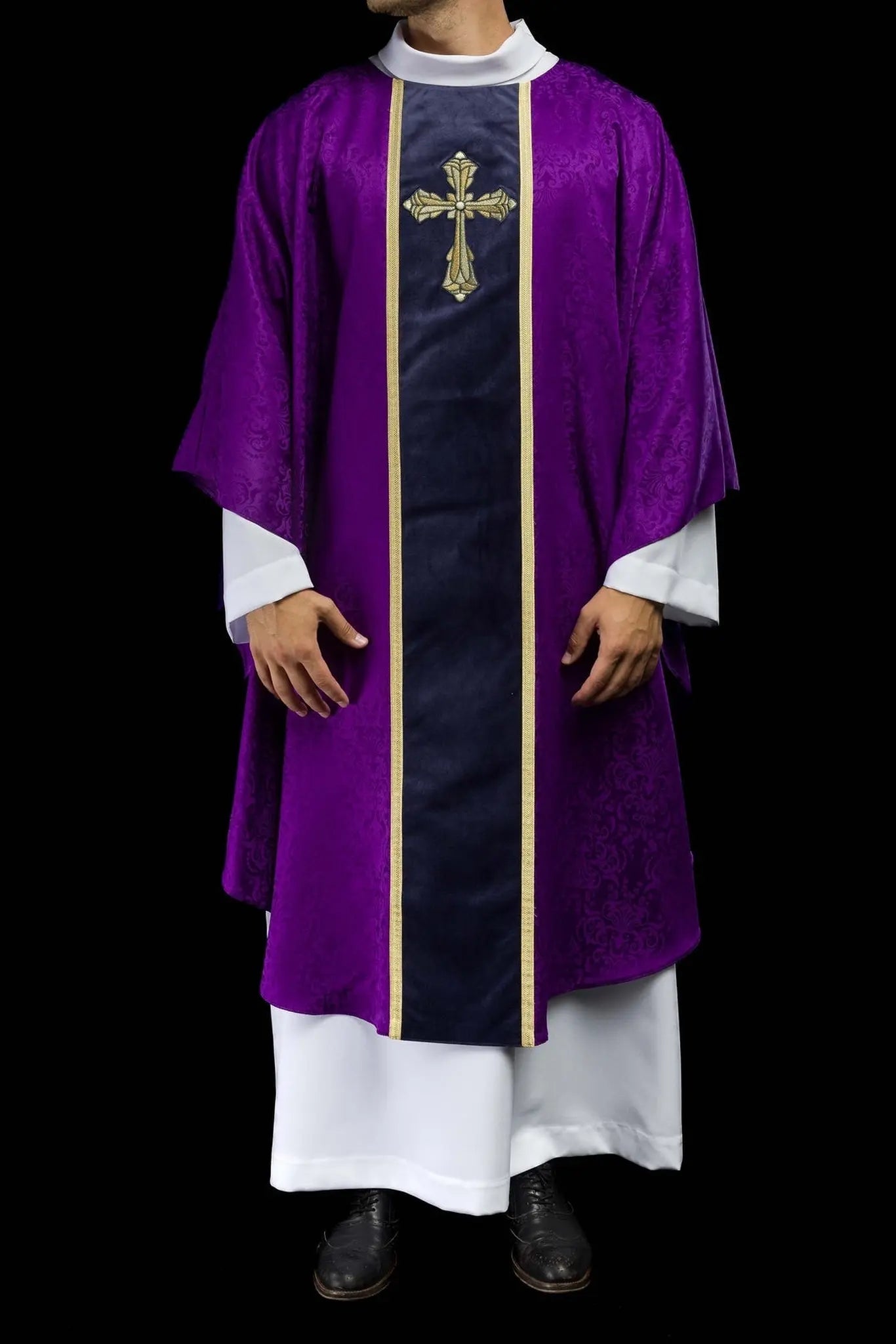
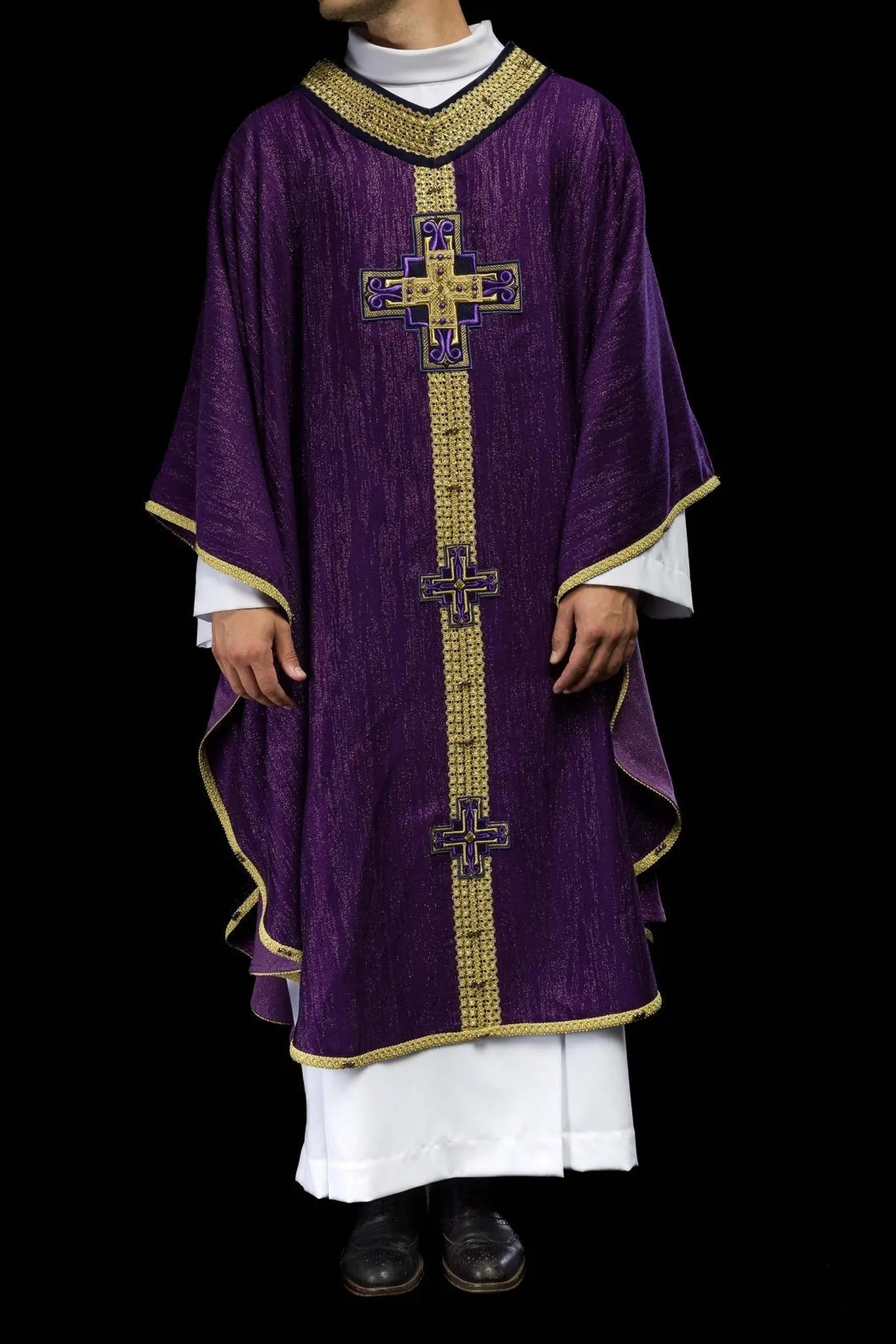
The chasuble is the principal outer vestment worn by the priest who celebrates the Eucharist. Its broad, enveloping form has long been associated with charity and with the yoke of Christ carried in ordained ministry. Because the chasuble is so visible at the altar, the choice of color, cut, ornament, and fabric matters. A purple chasuble should support the dignity of the rite without distracting from it. It may be simple and restrained for daily Mass in Lent, more ornate for Sundays in Advent, or richly embroidered for parish celebrations that still require a penitential liturgical color.
When purple chasubles are used
Purple, often called violet in official liturgical terminology, is most closely connected with two major seasons: Advent and Lent. For parish sacristies, chapels, religious houses, and seminaries, a reliable purple chasuble is therefore an essential part of the basic vestment set. It is also useful for penitential celebrations, some votive or ritual Masses according to the rubrics, and services connected with Reconciliation. Where the parish prepares a complete seasonal setting, the chasuble may be coordinated with a matching stole, chalice veil, pulpit cover, or altar textile so that the whole sanctuary speaks with one clear visual language.
For the broader vestment category, see chasubles. Seasonal selections can also be planned together with the Advent collection and the Lent collection, especially when a parish is refreshing several items before a new liturgical year. Purple is different from rose: rose vestments are used only on particular Sundays such as Gaudete Sunday in Advent and Laetare Sunday in Lent, so they should not replace the standard purple chasuble used throughout the rest of those seasons.
Liturgical meaning of purple and violet
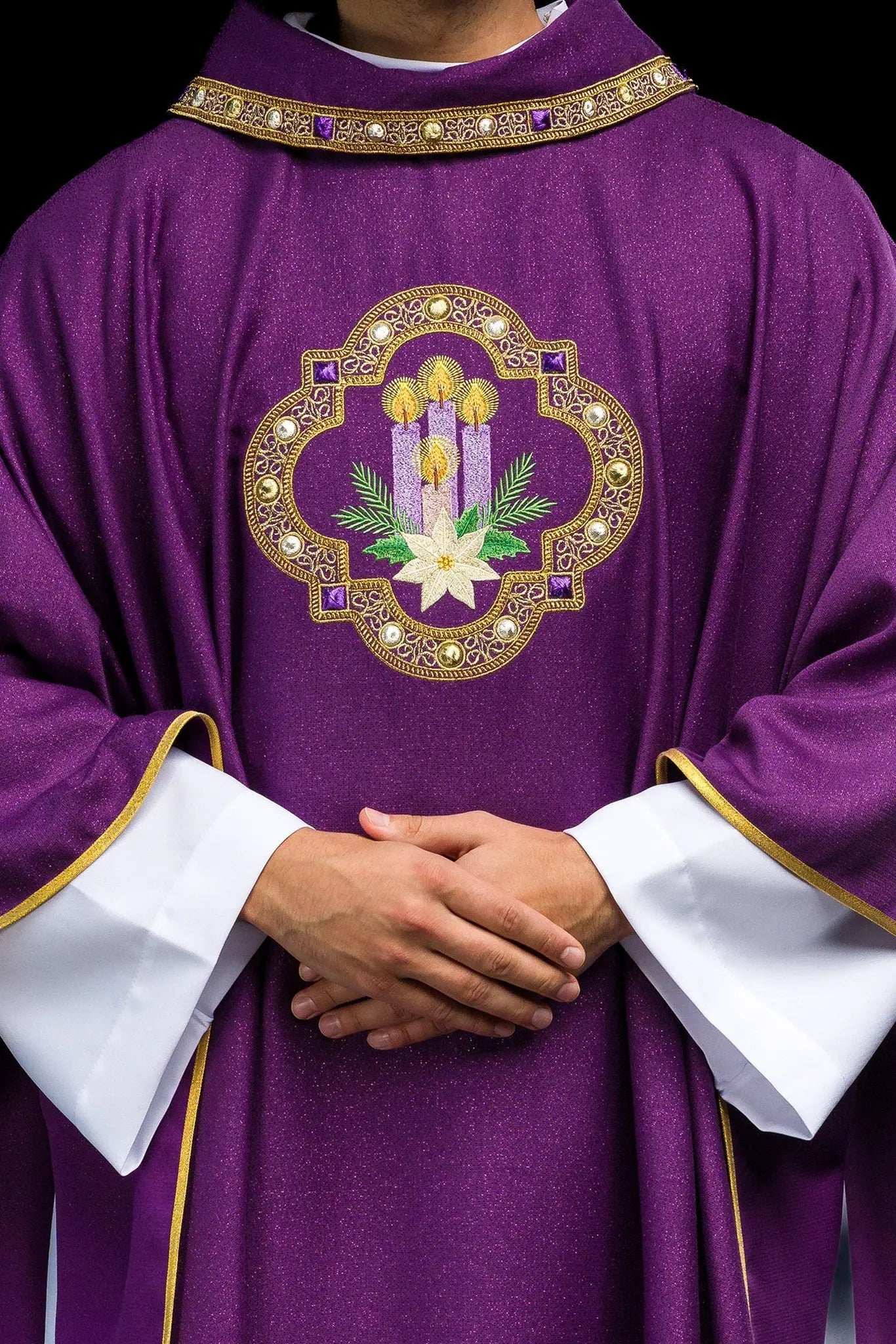
The theological meaning of purple is layered. It carries associations with humility, repentance, expectation, royal dignity, and sober joy. During Advent, the color reminds the faithful to wait actively: to prepare, to listen, and to turn toward the Lord. During Lent, it becomes a visible sign of fasting, prayer, almsgiving, and conversion. In both seasons, purple does not remove beauty from the liturgy. Rather, it gives beauty a quieter and more contemplative character.
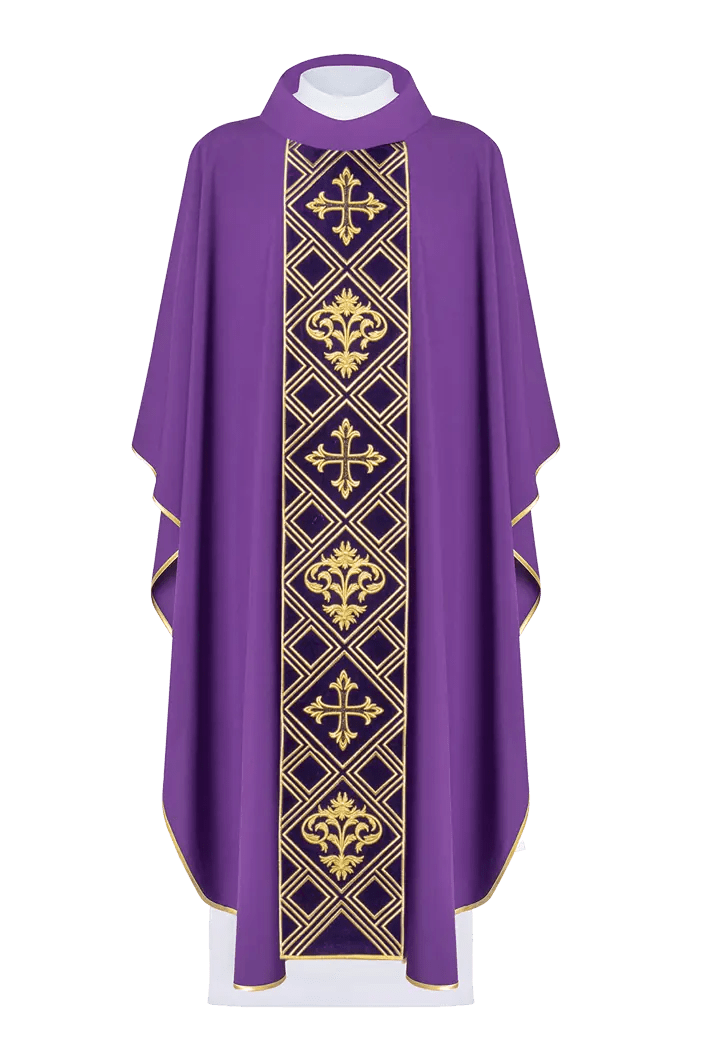
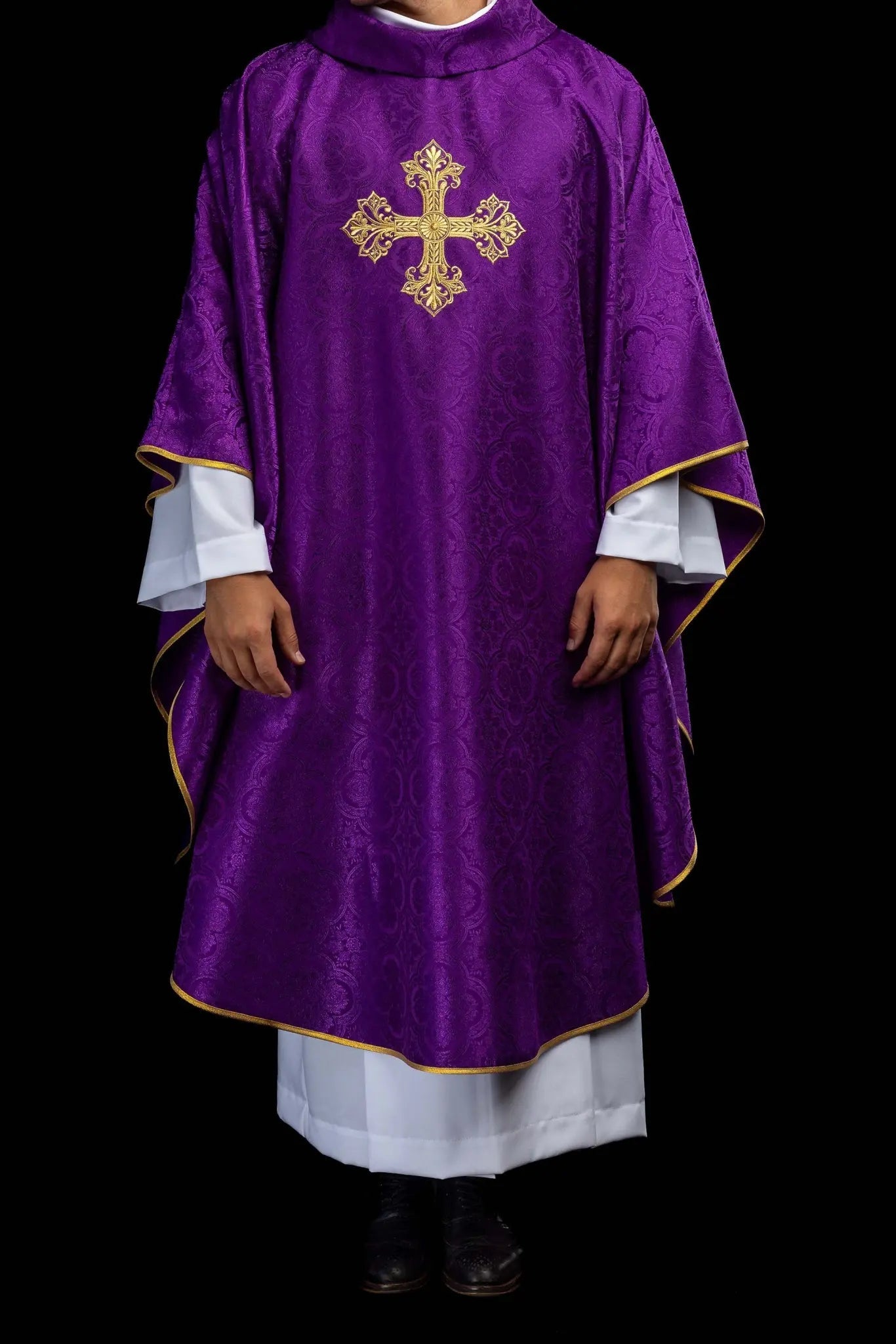
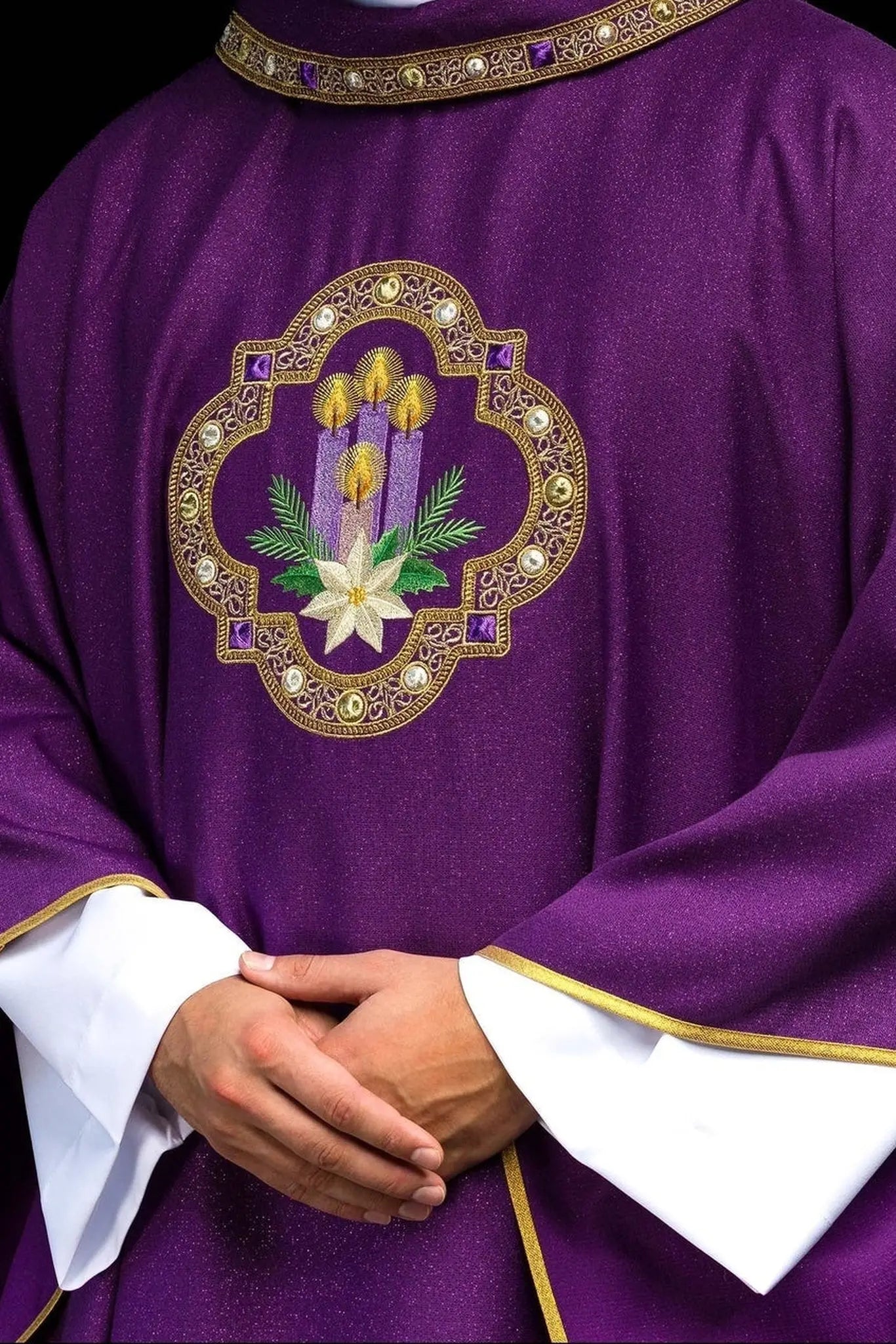
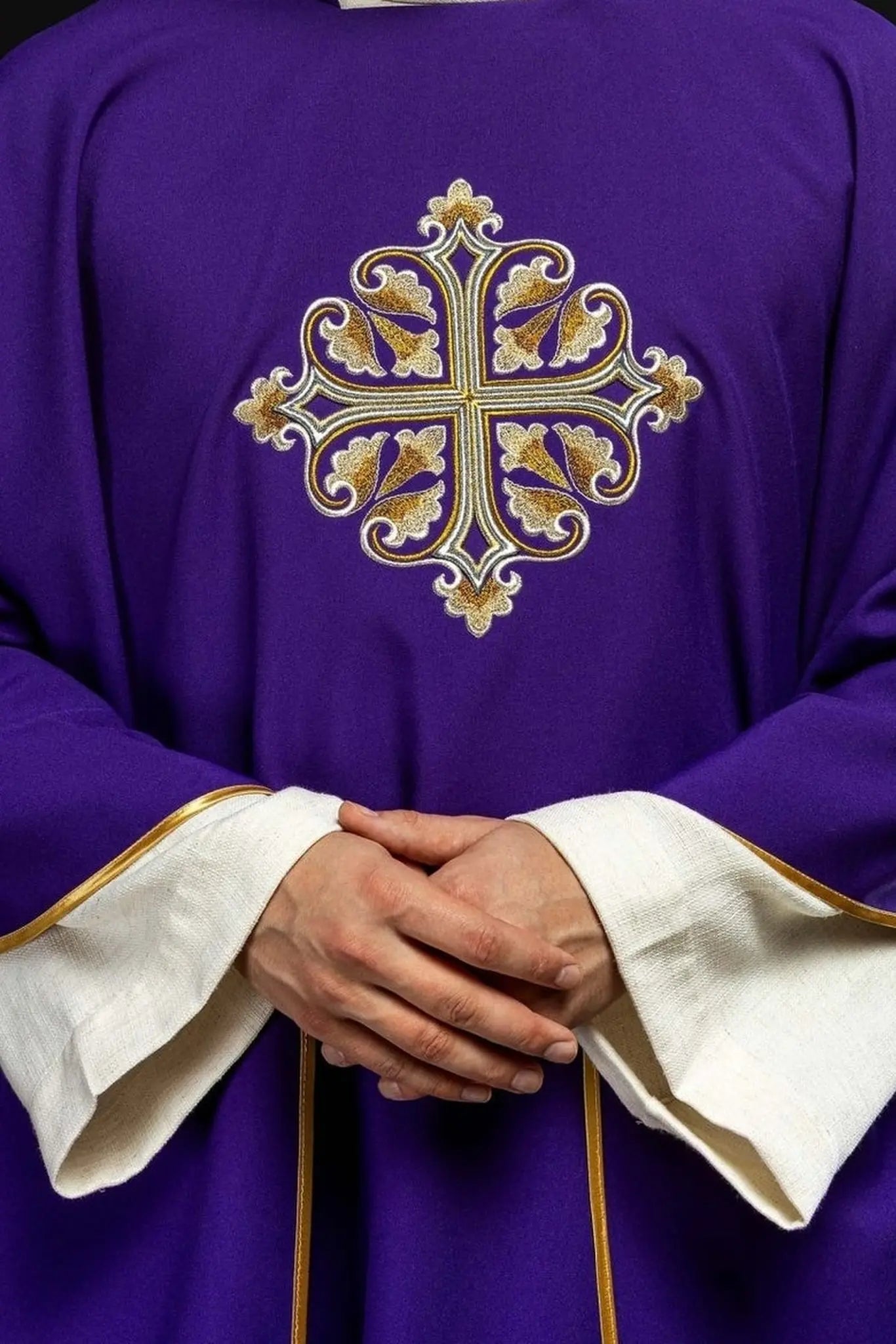
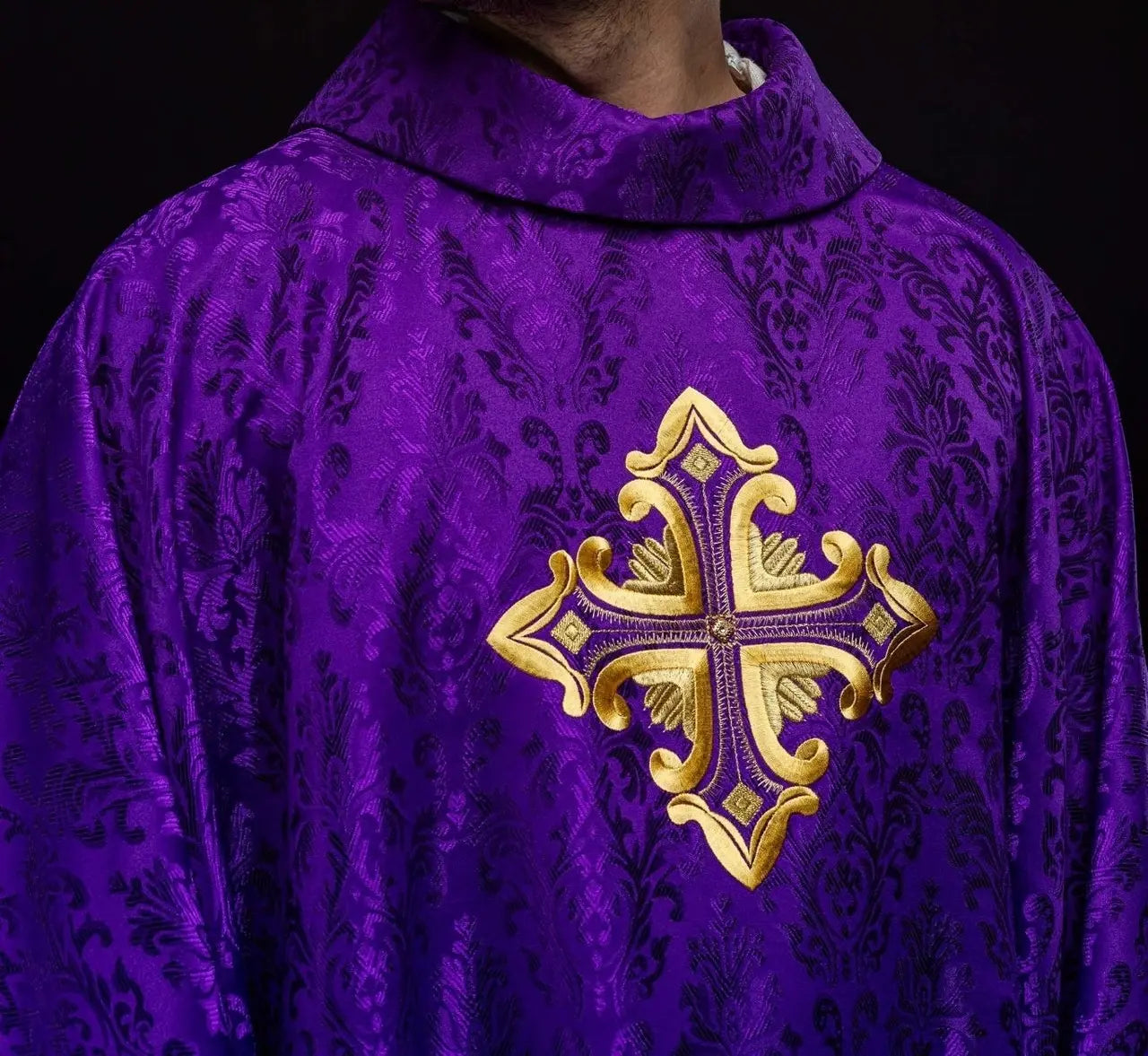
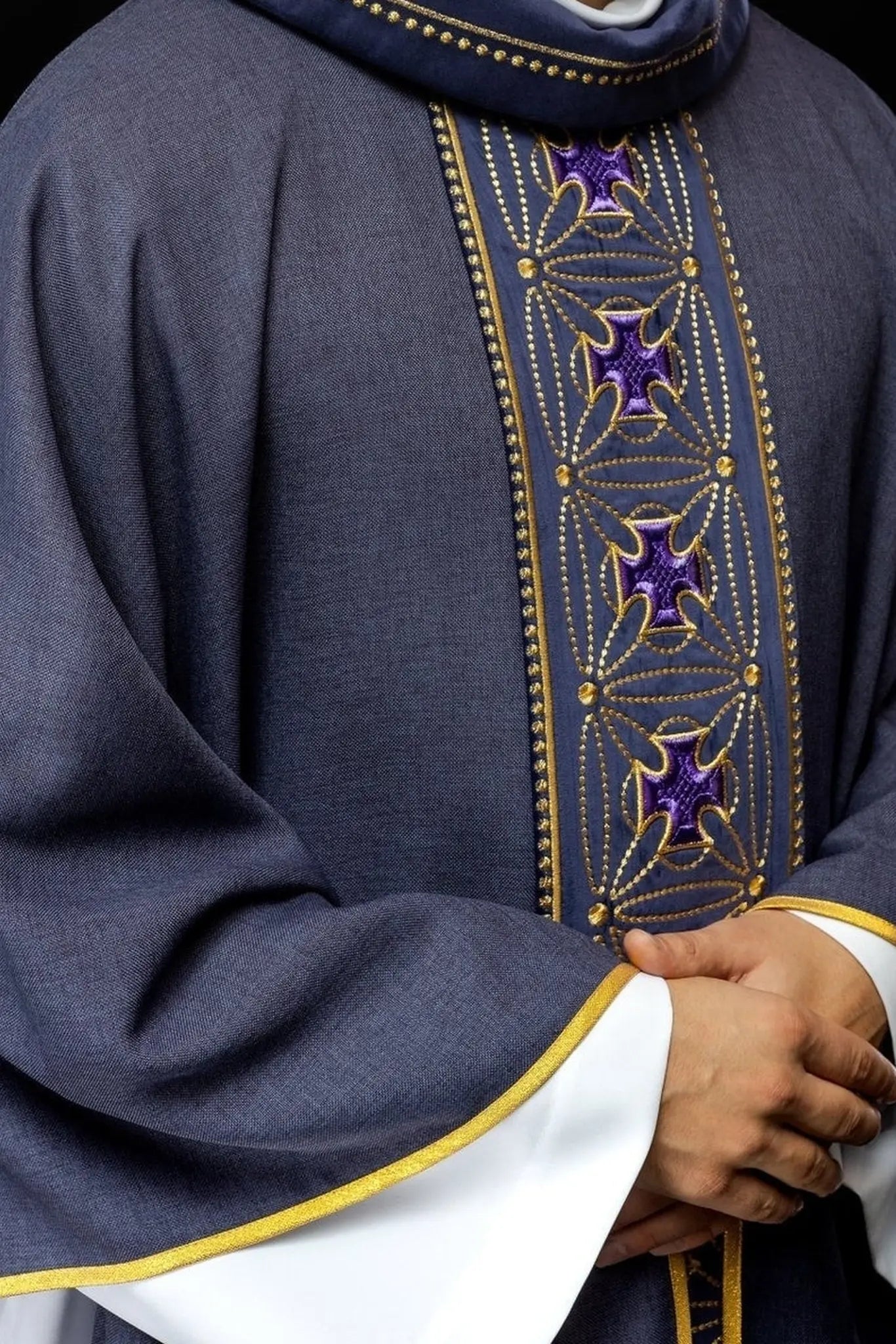
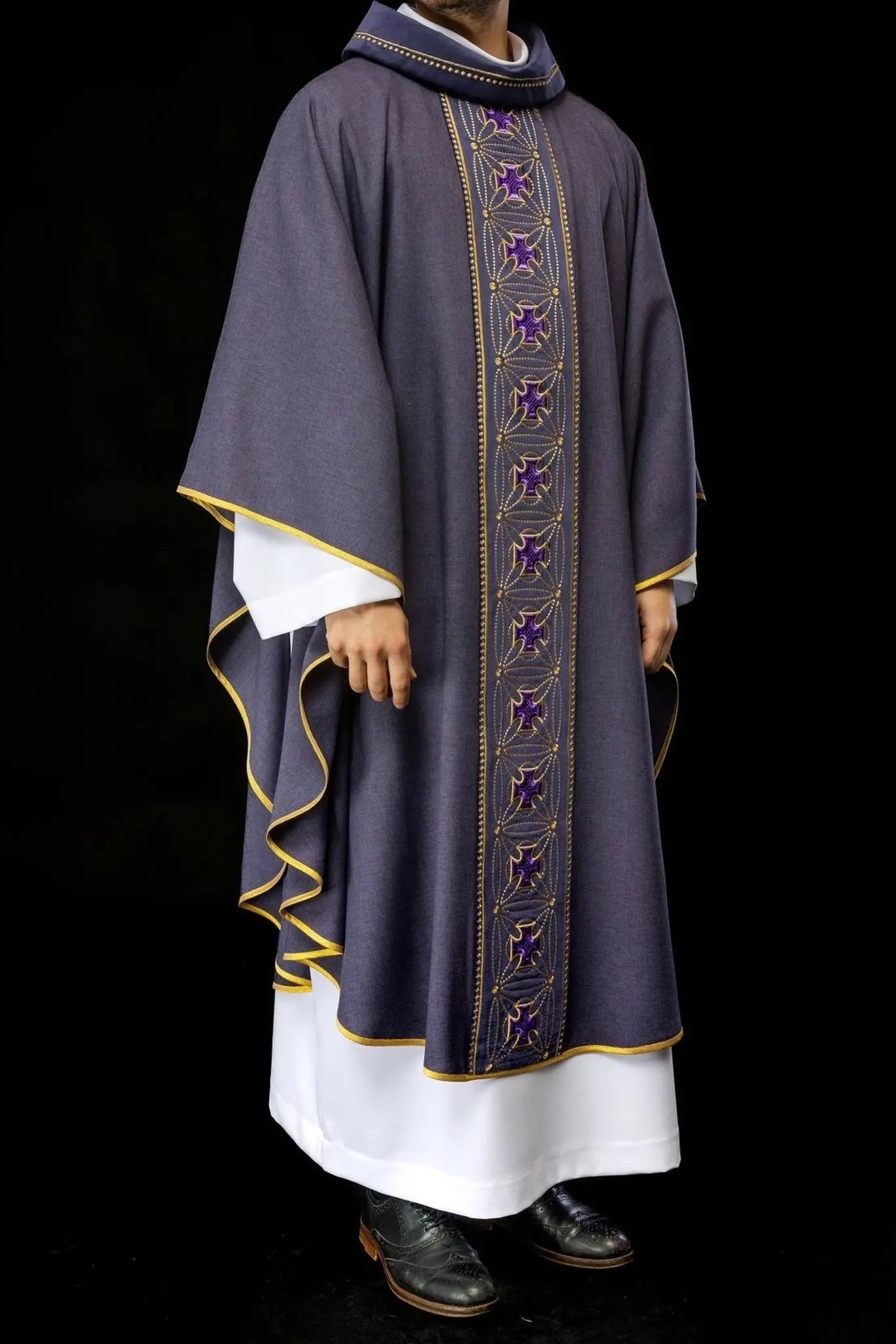
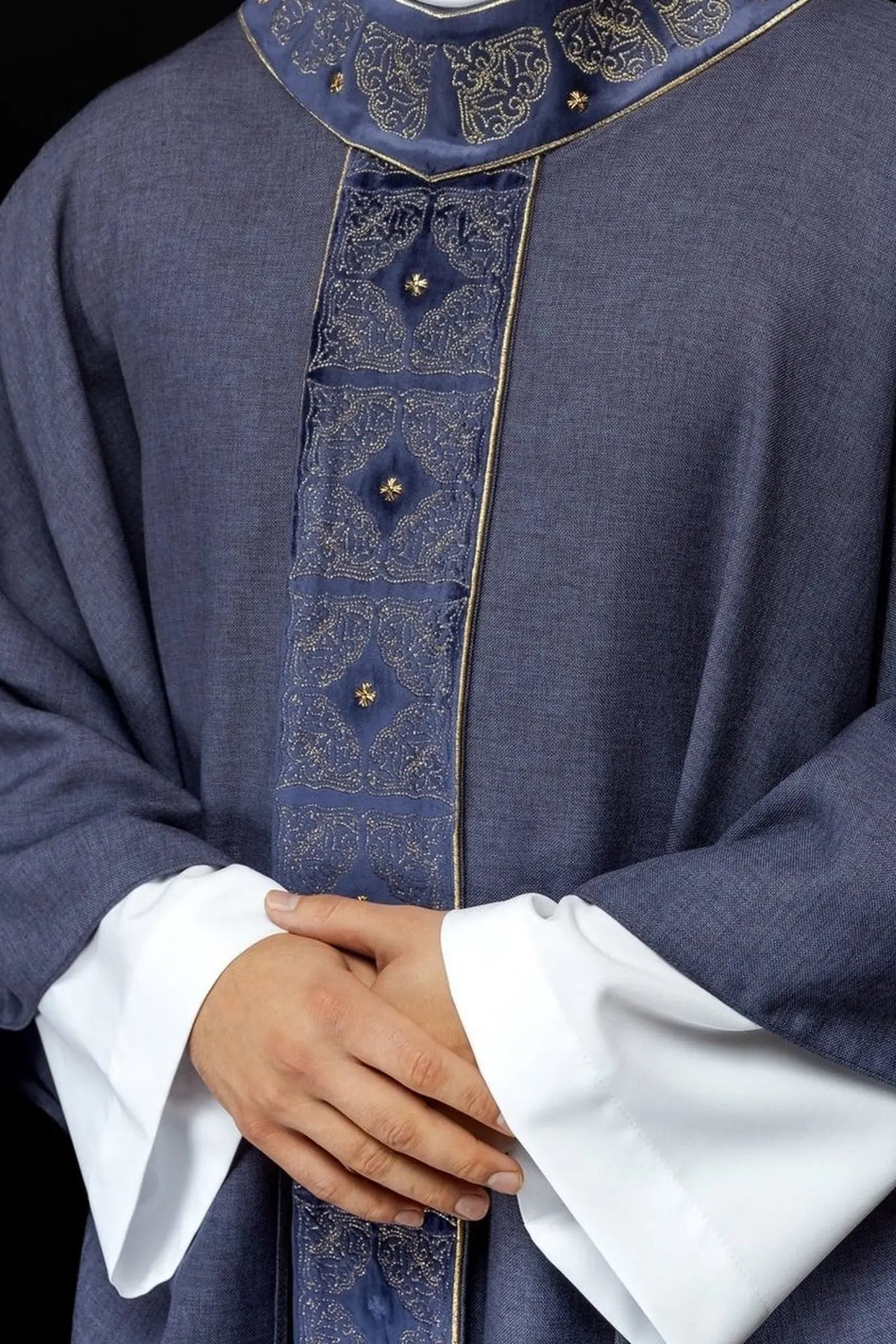
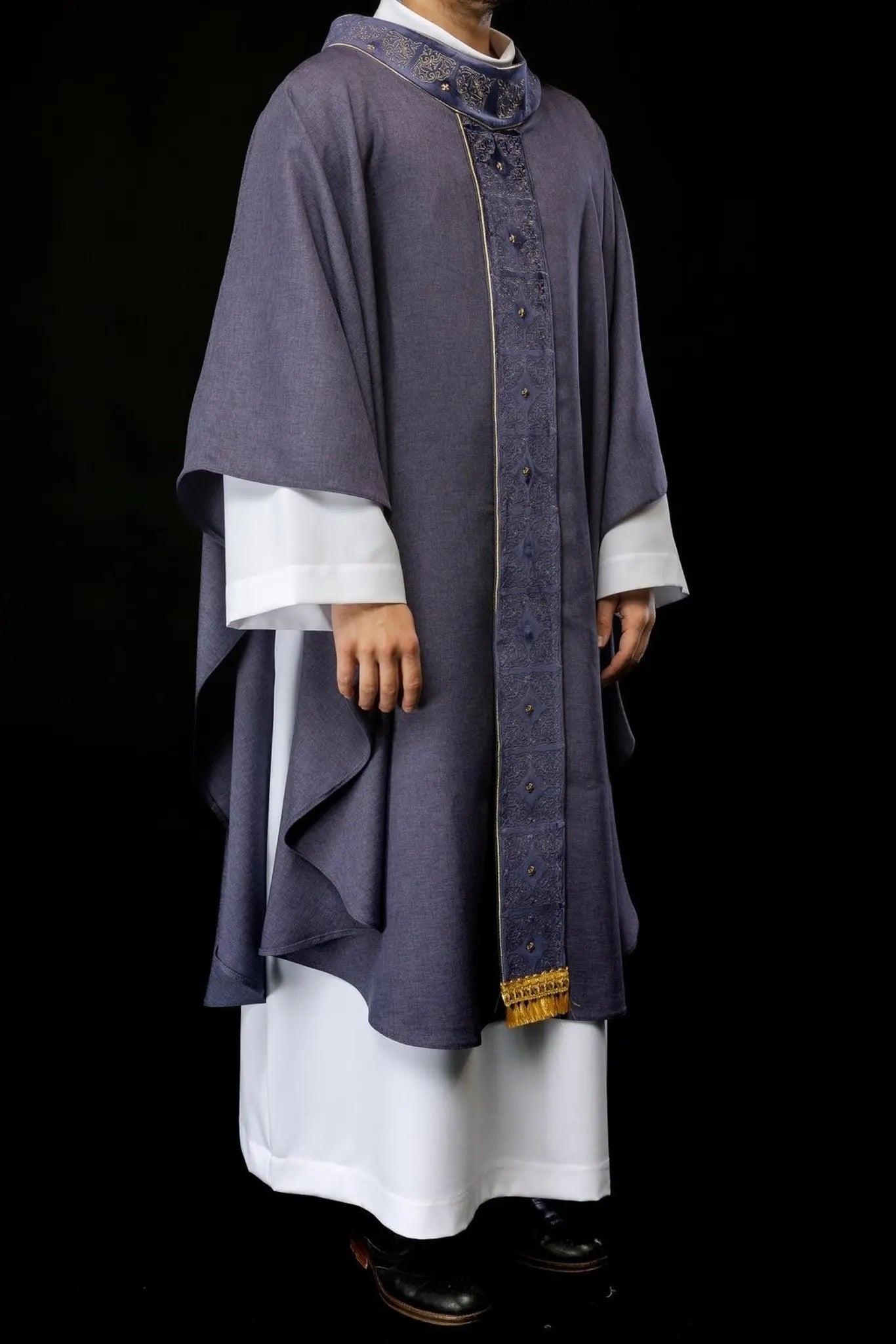
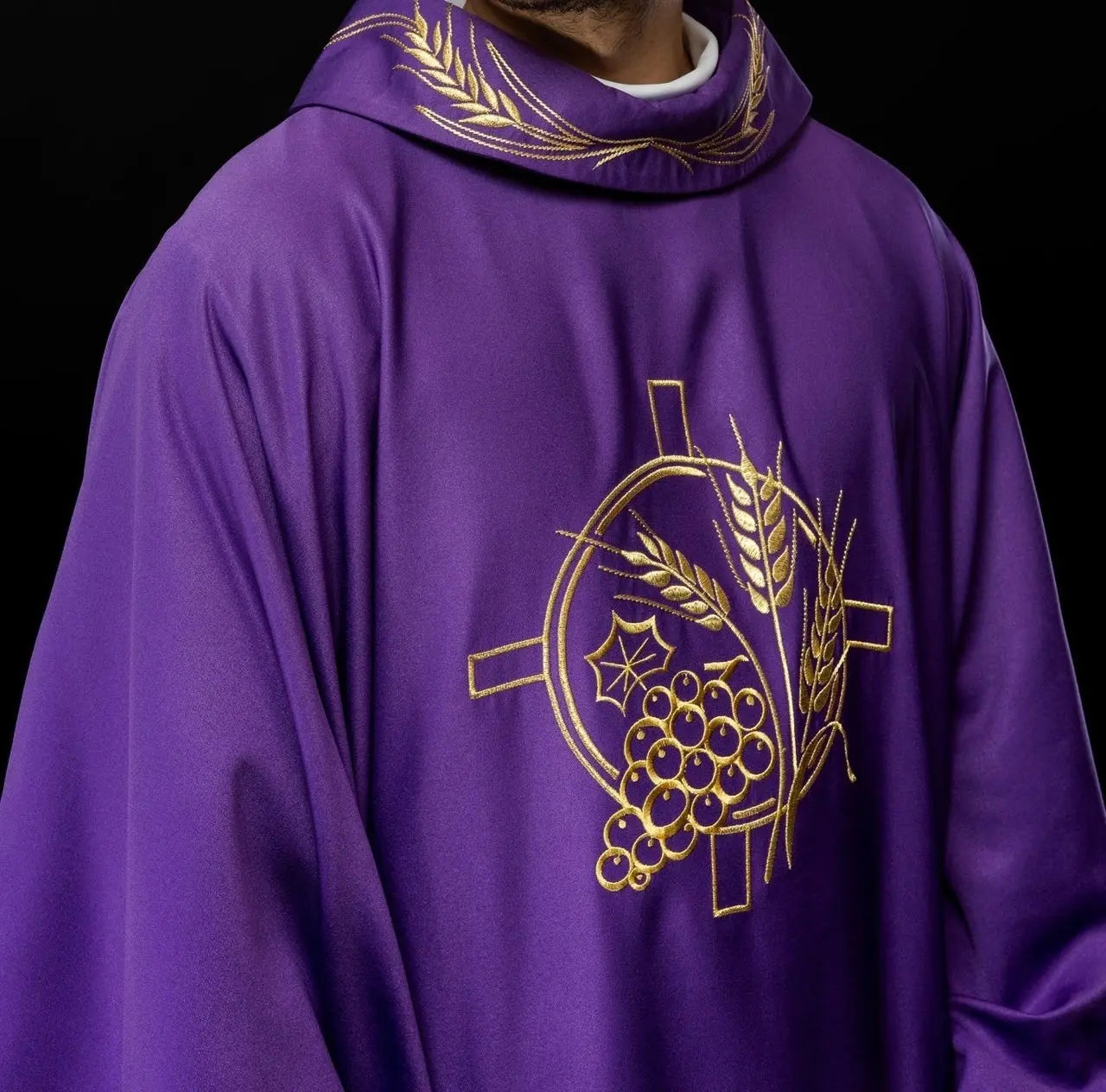
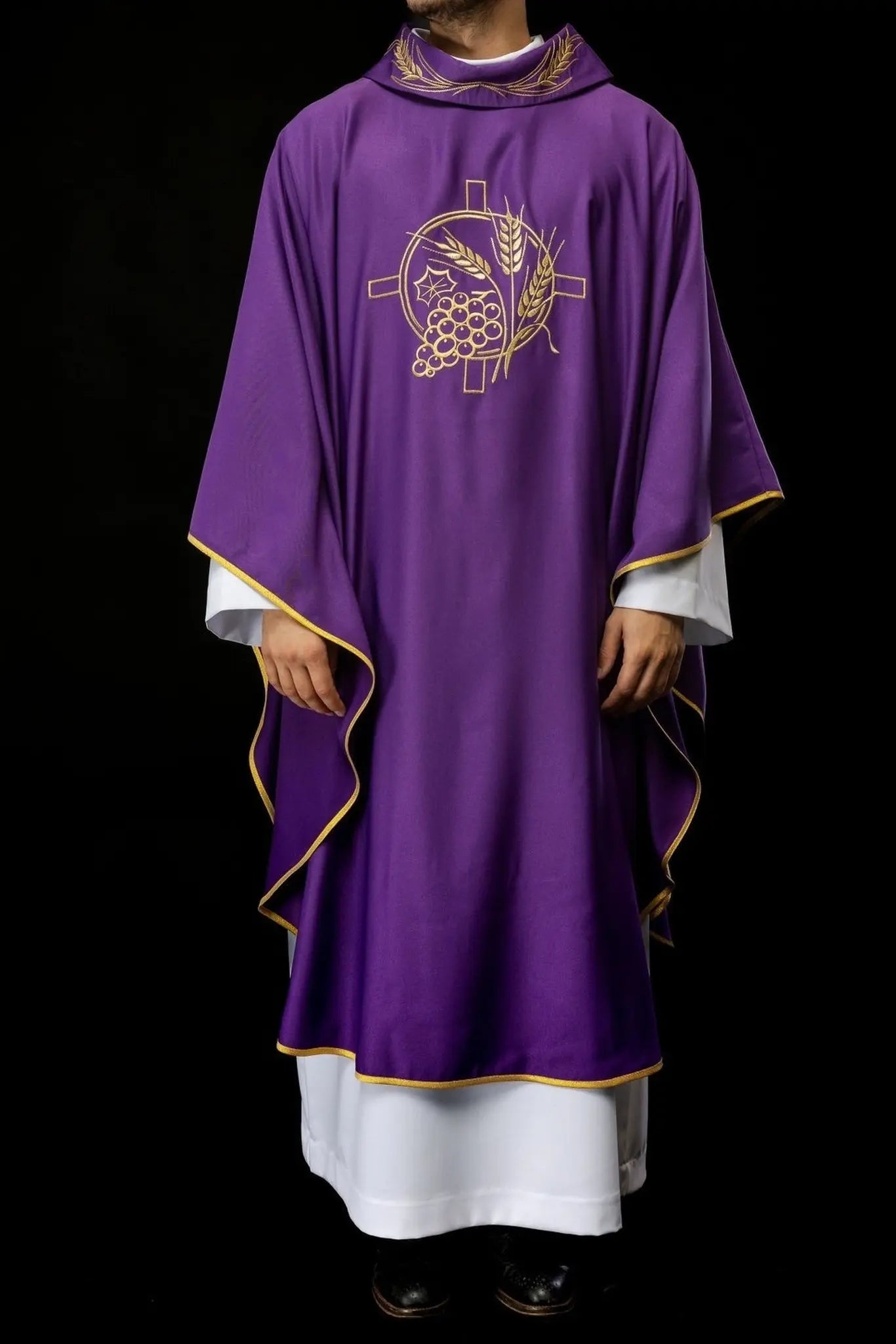
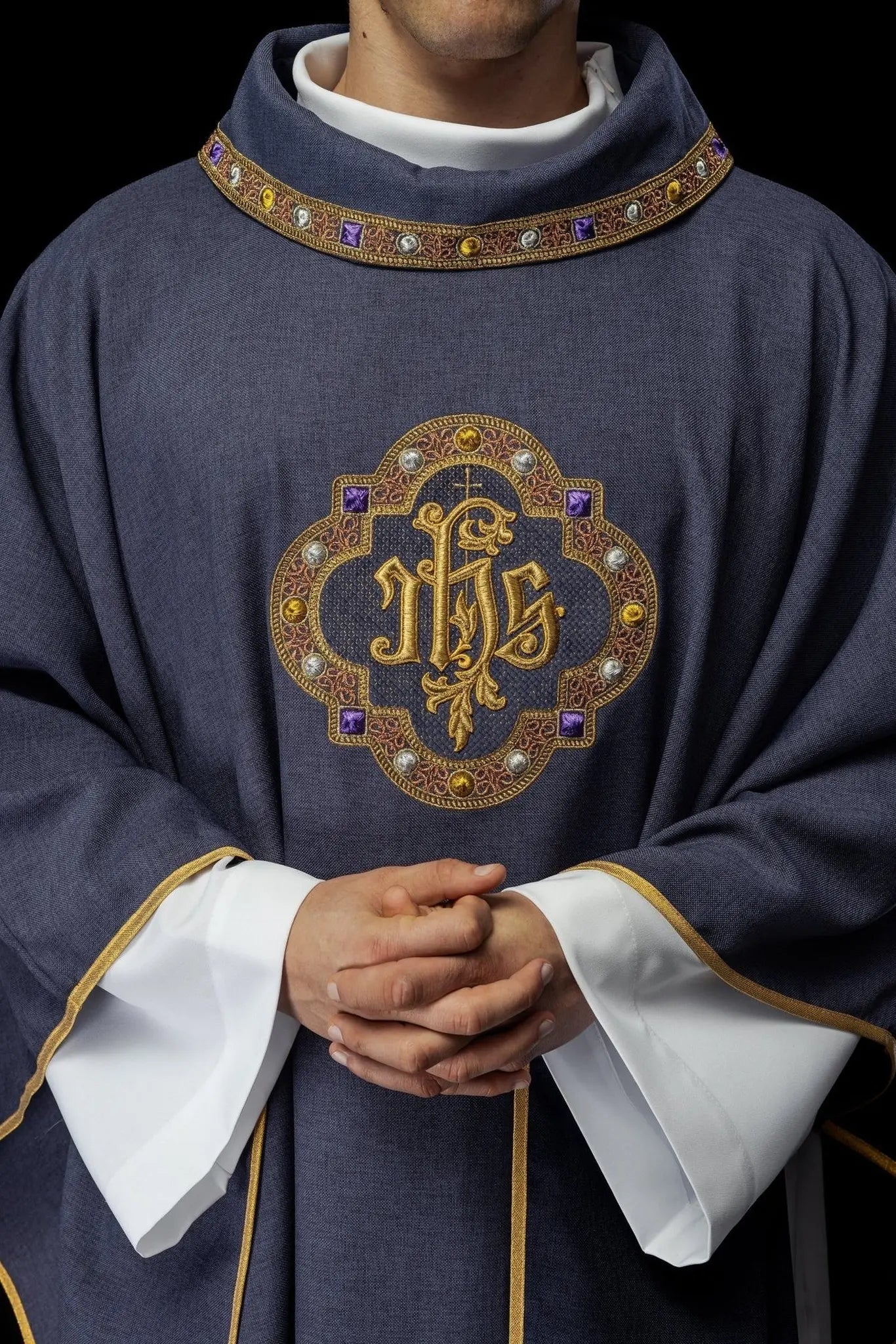
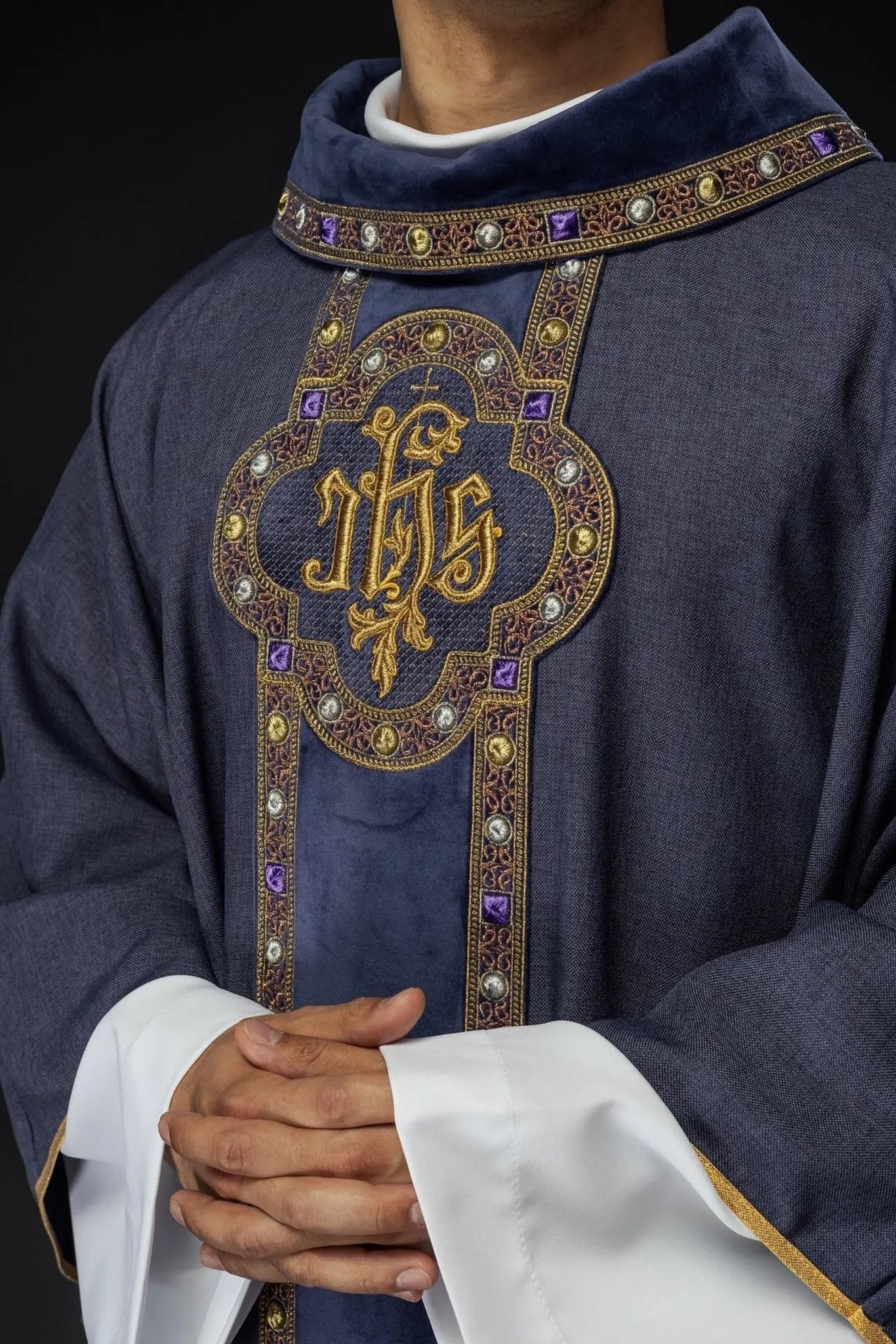
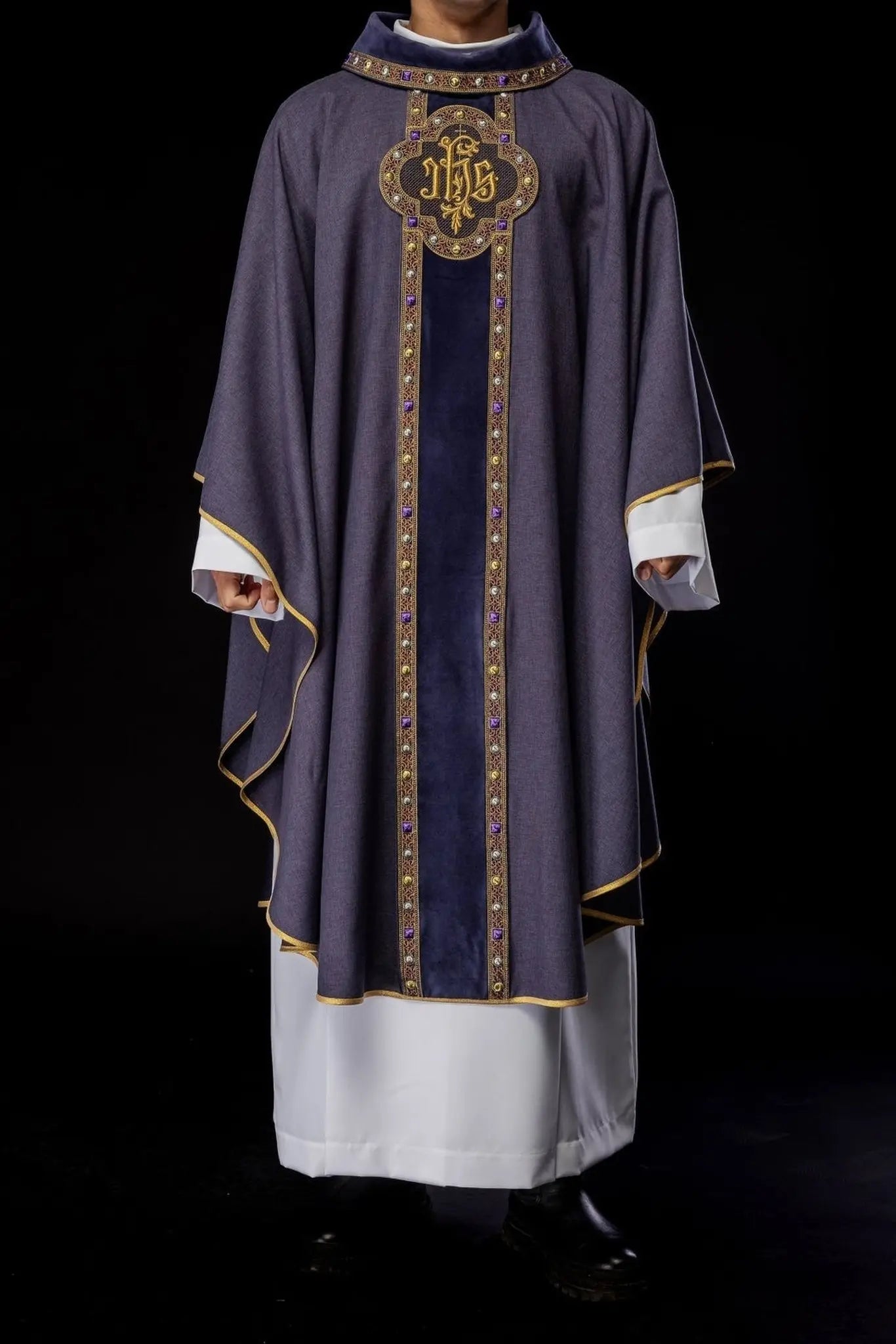
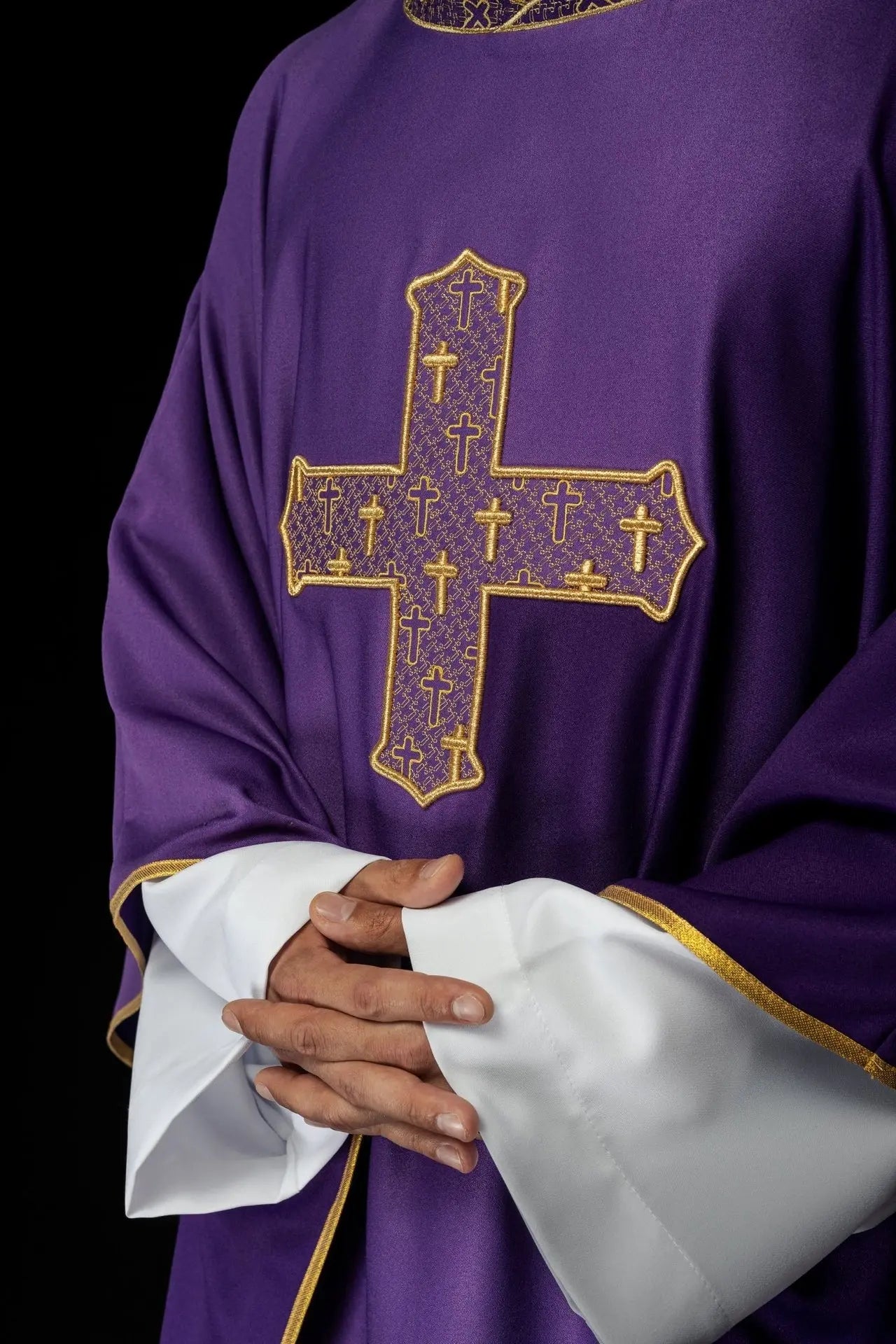
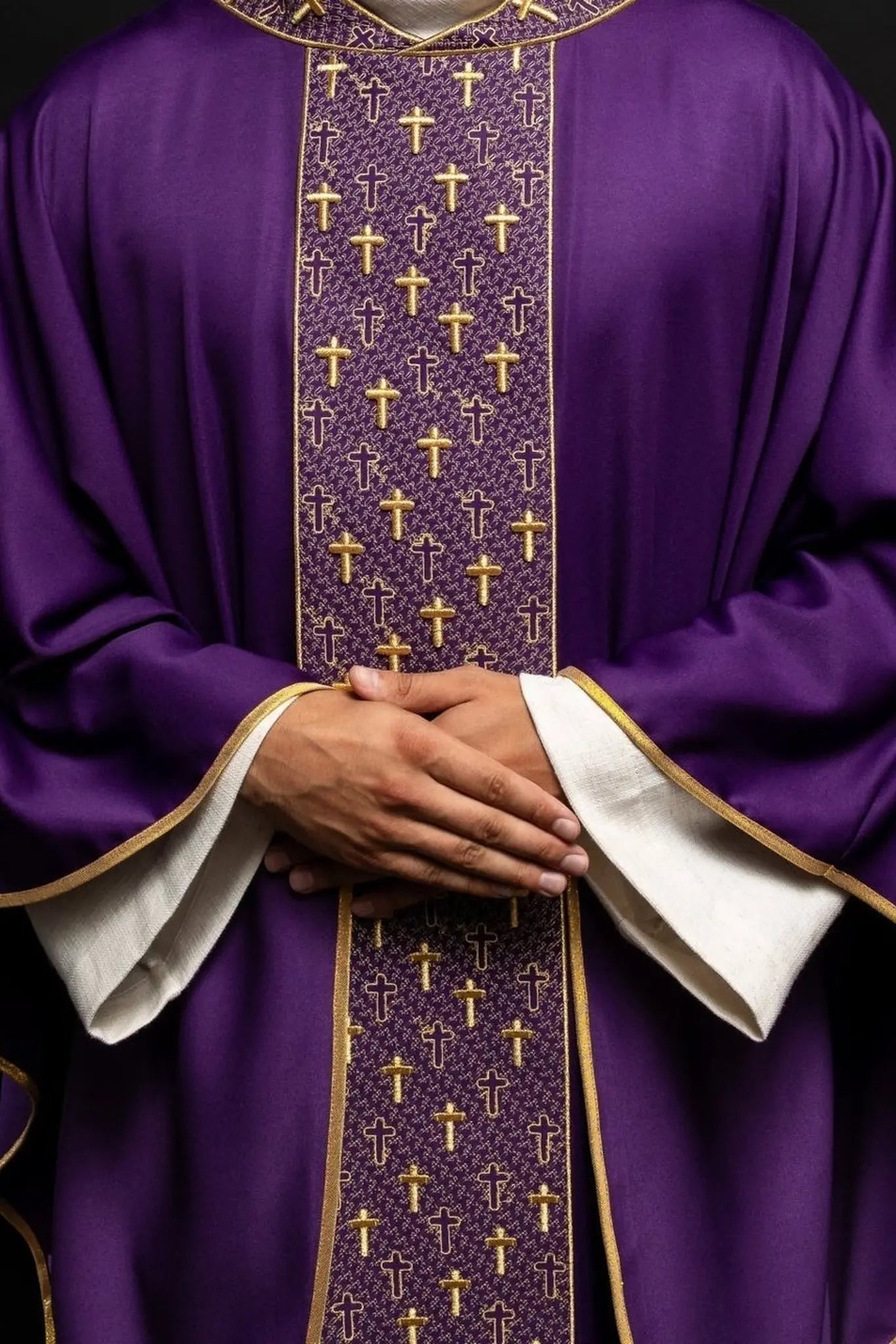
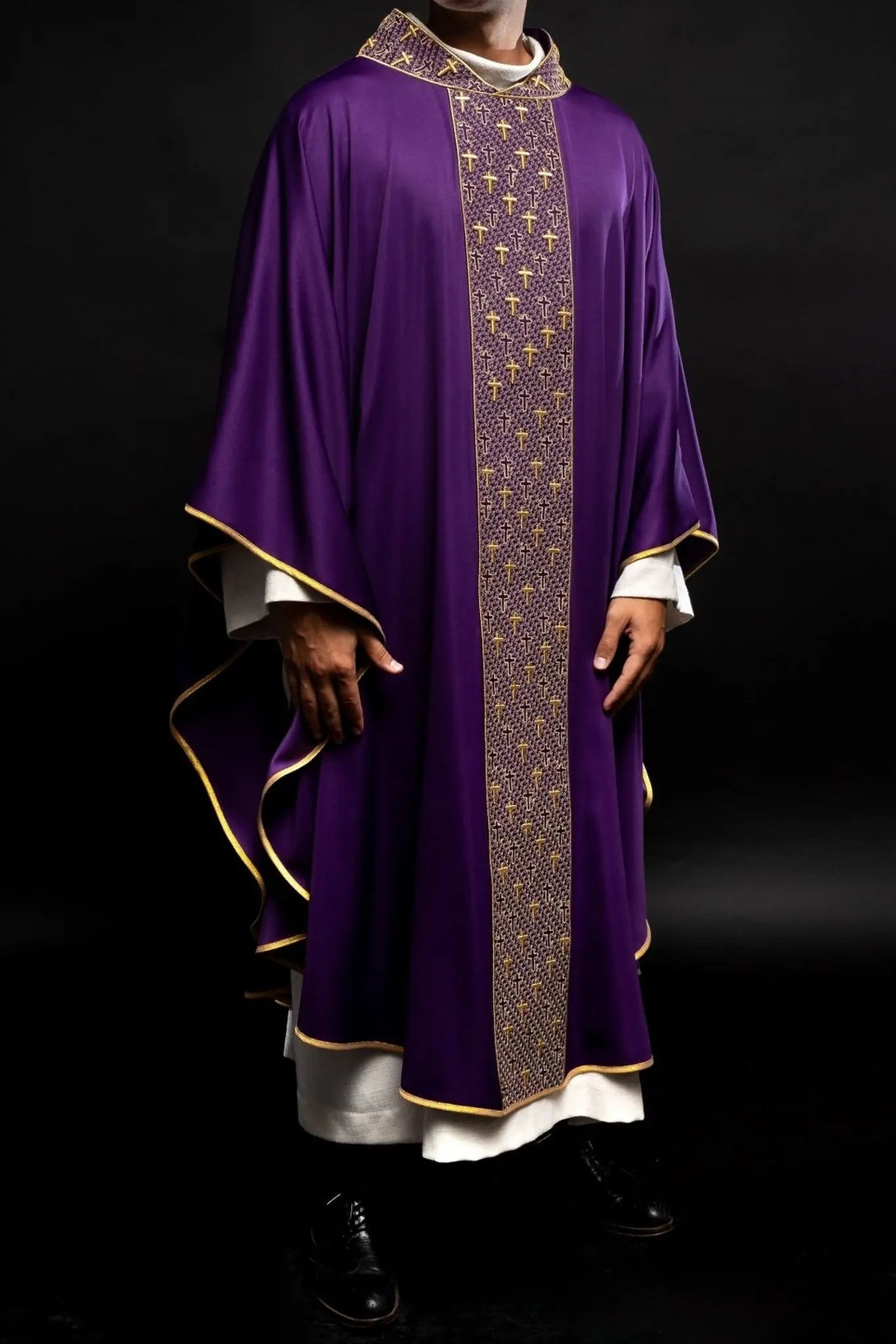
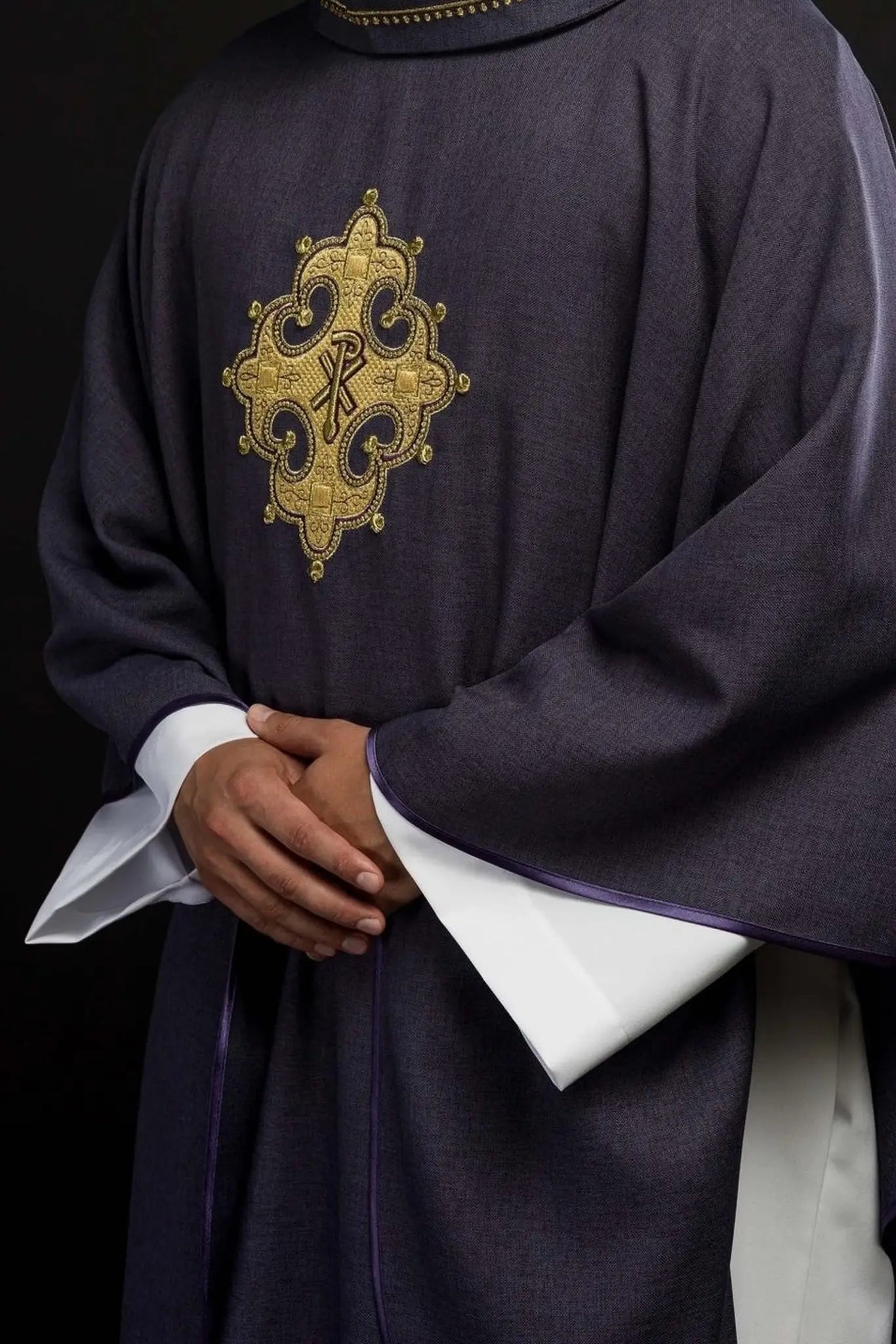
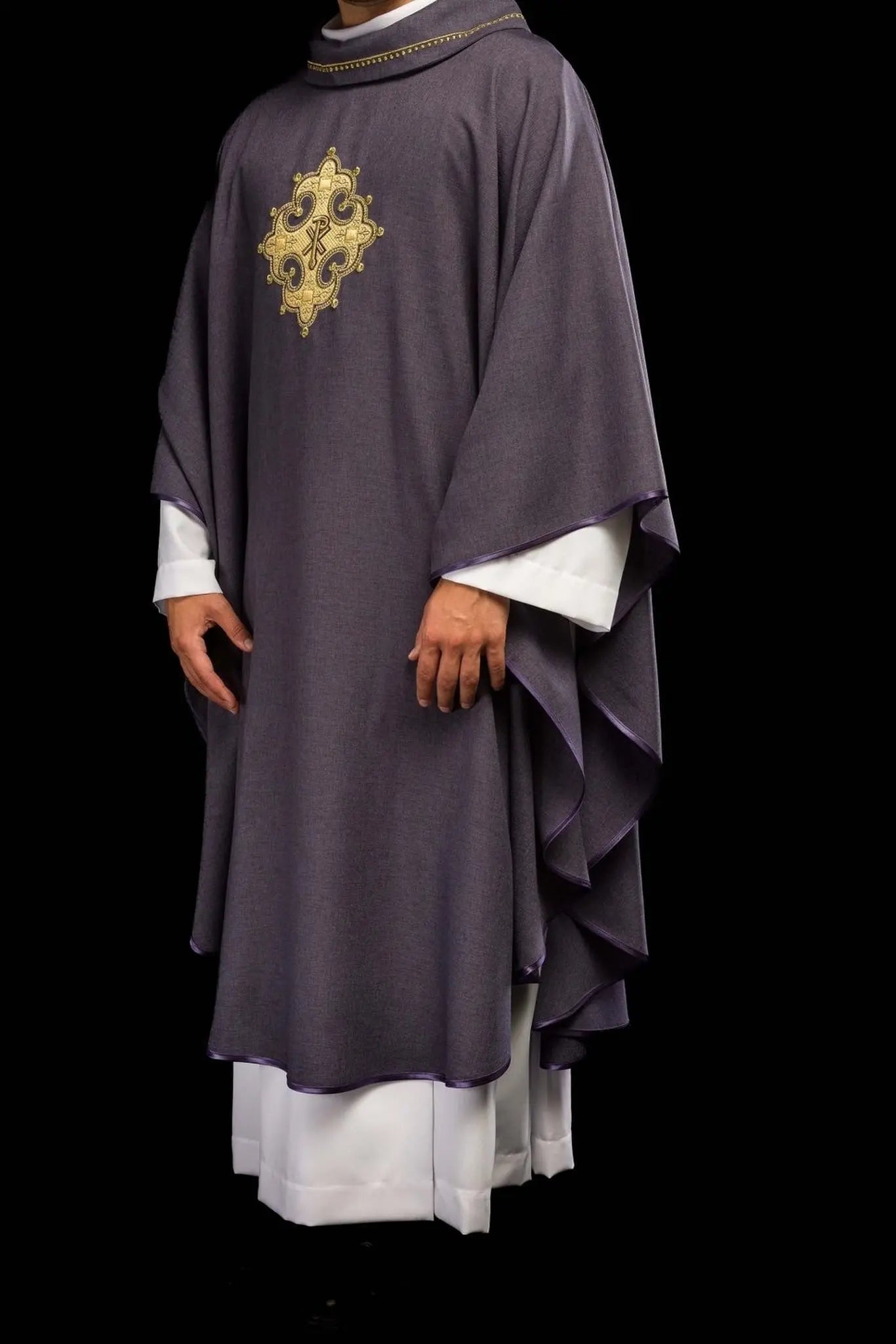
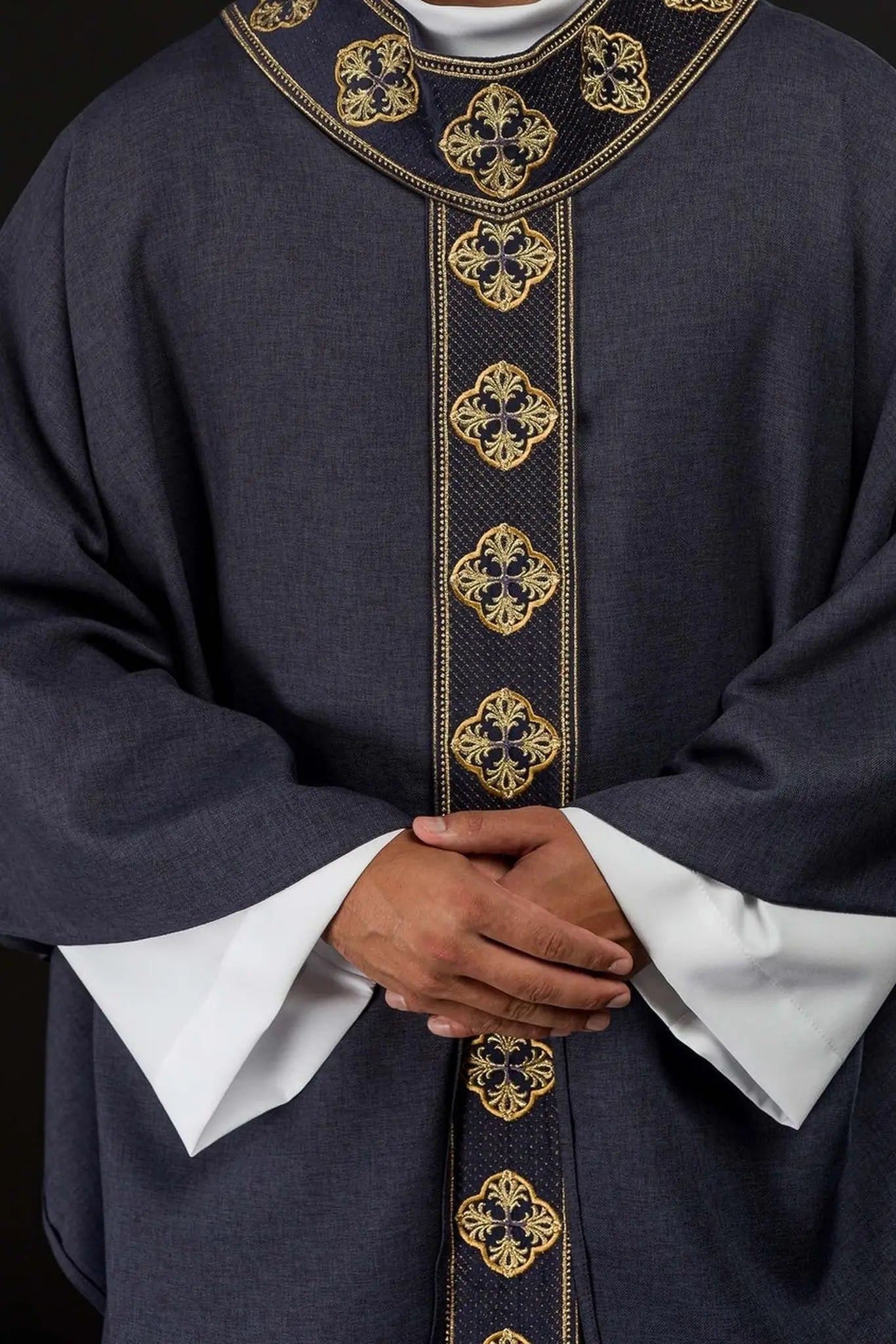
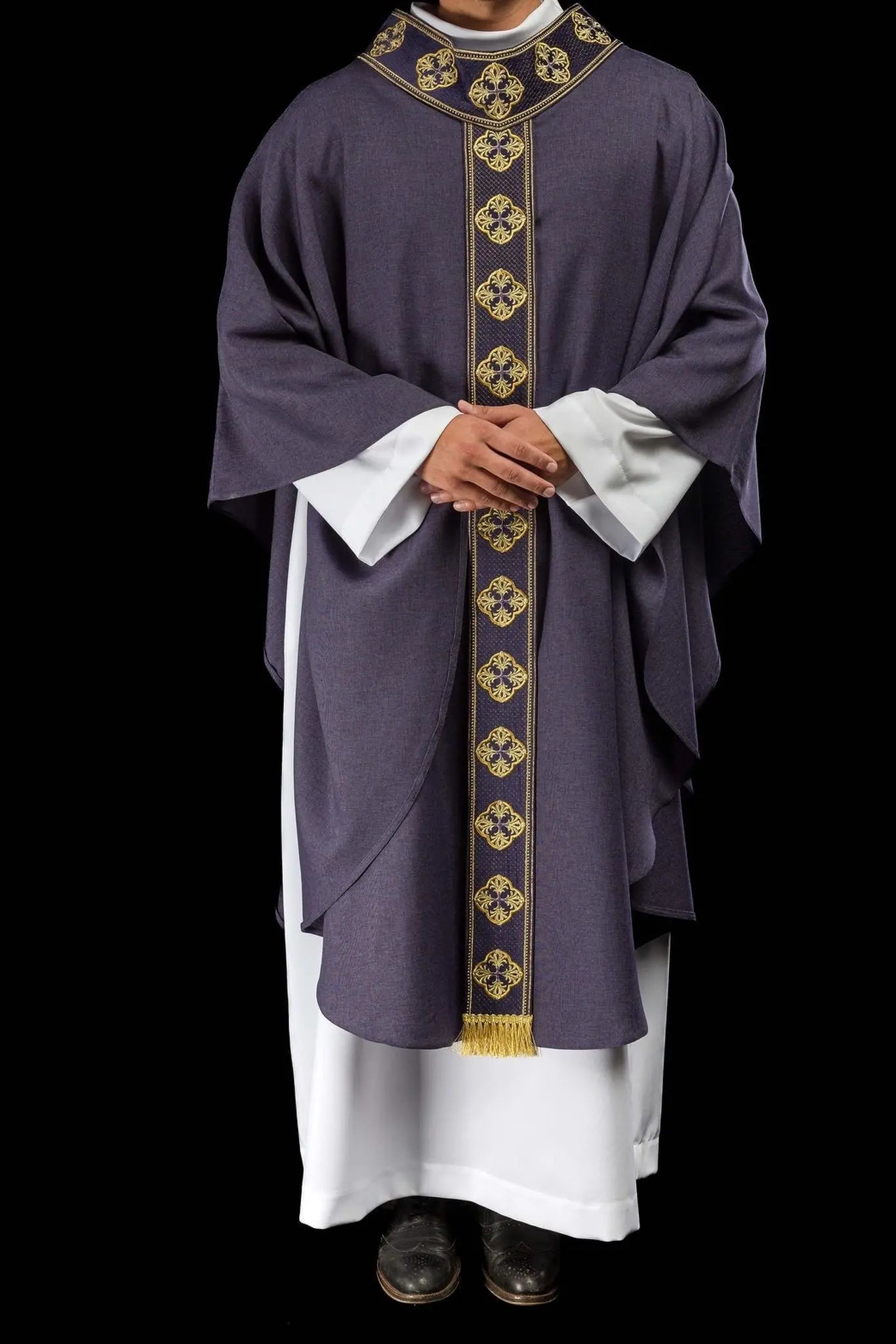
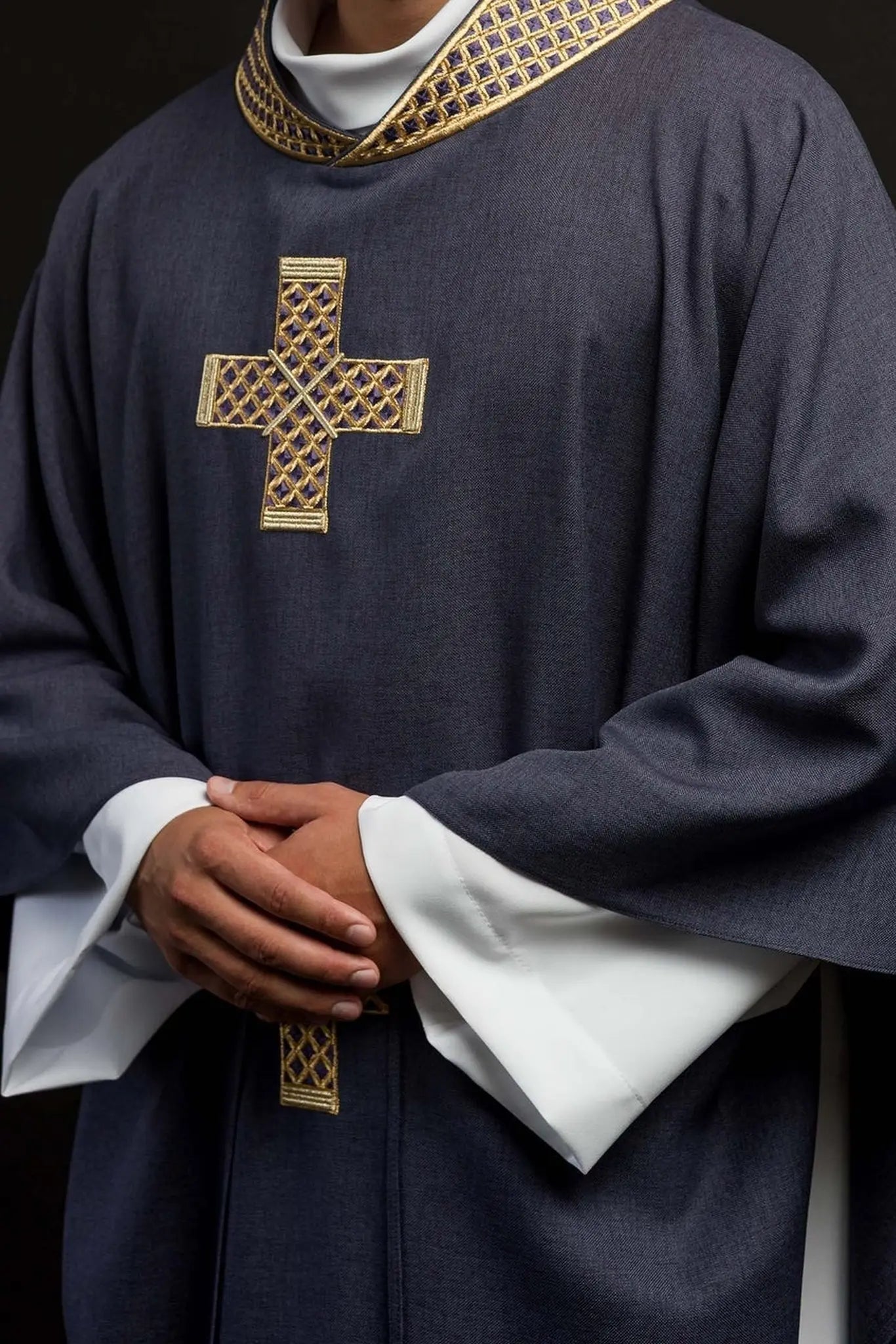
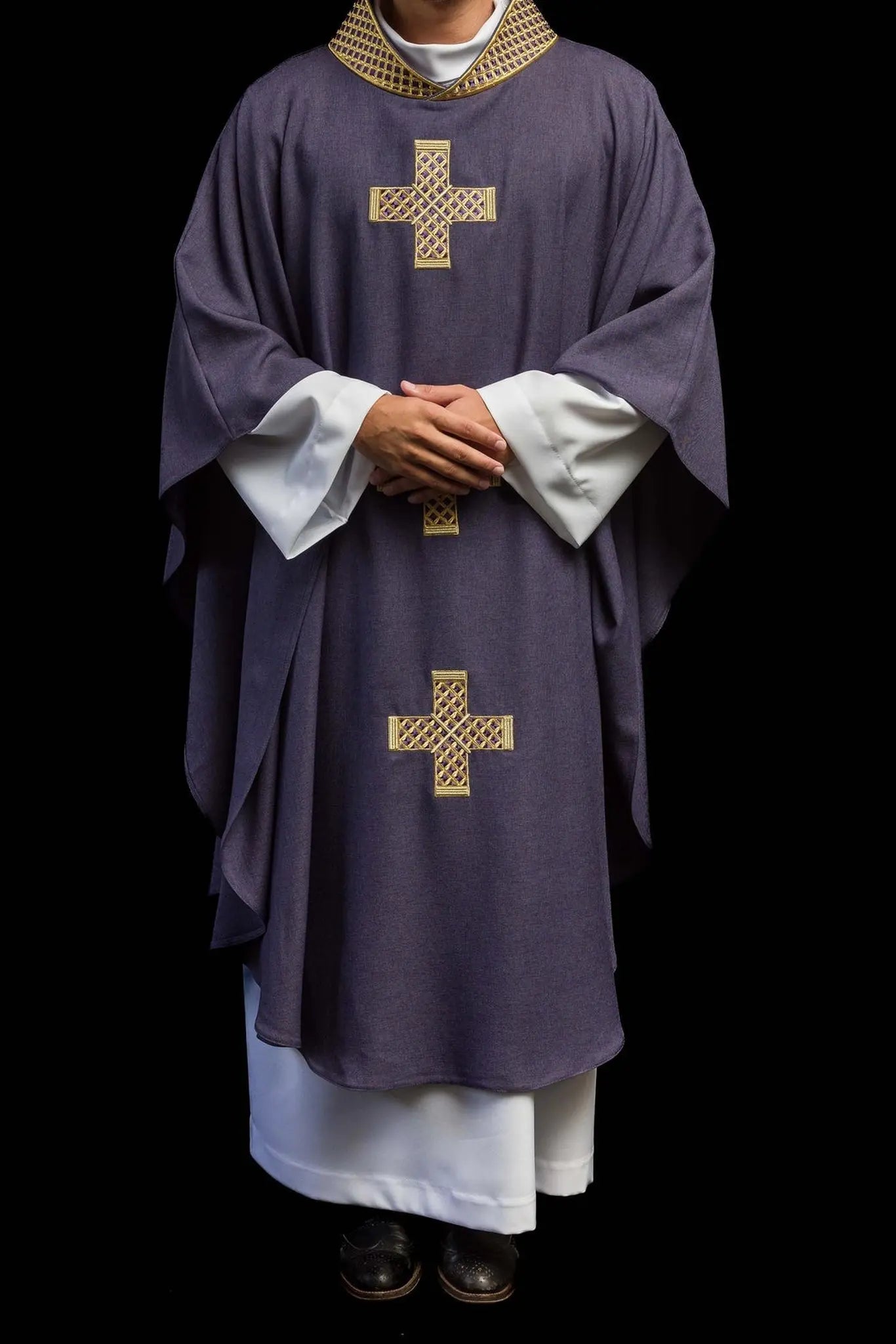
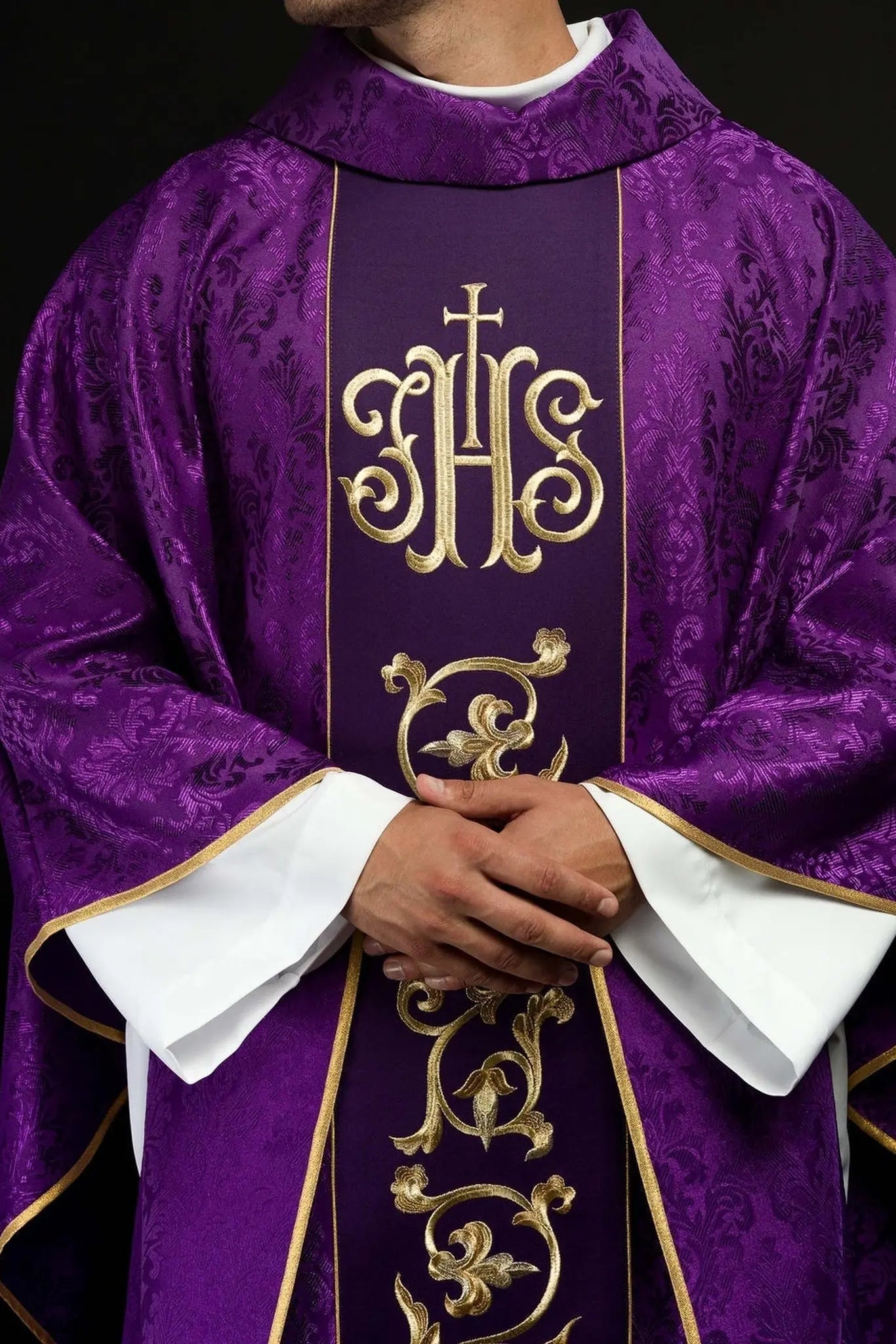
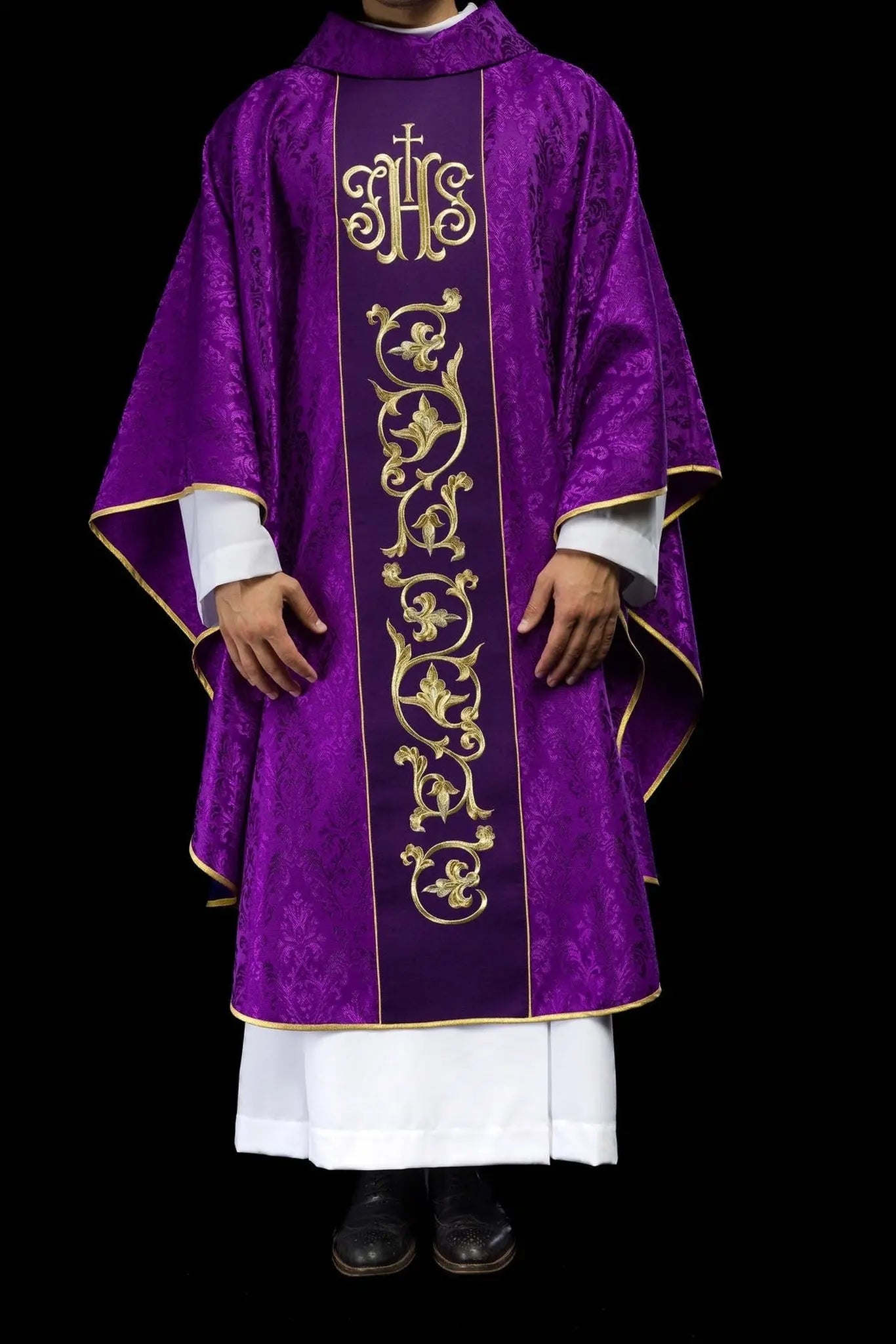
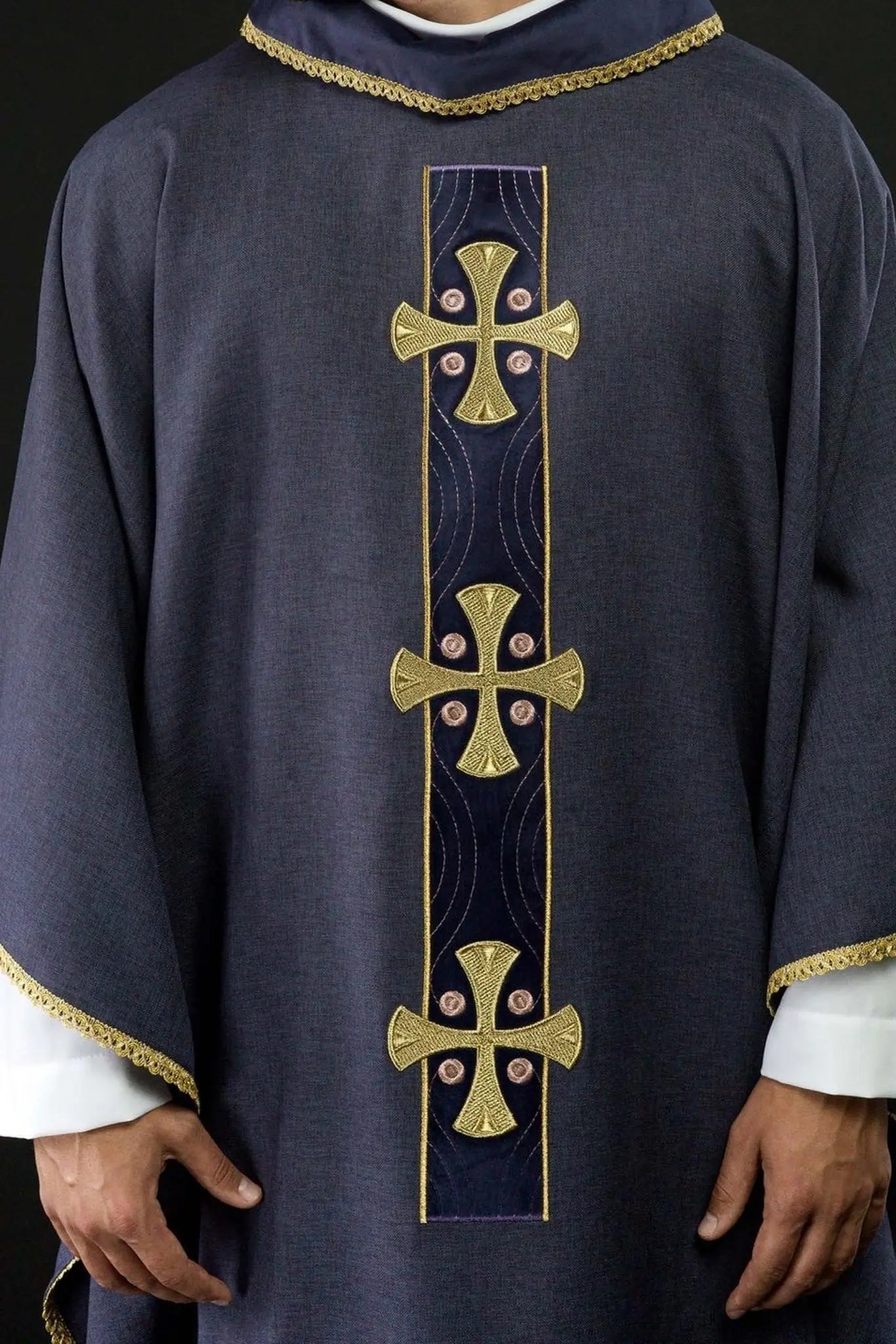
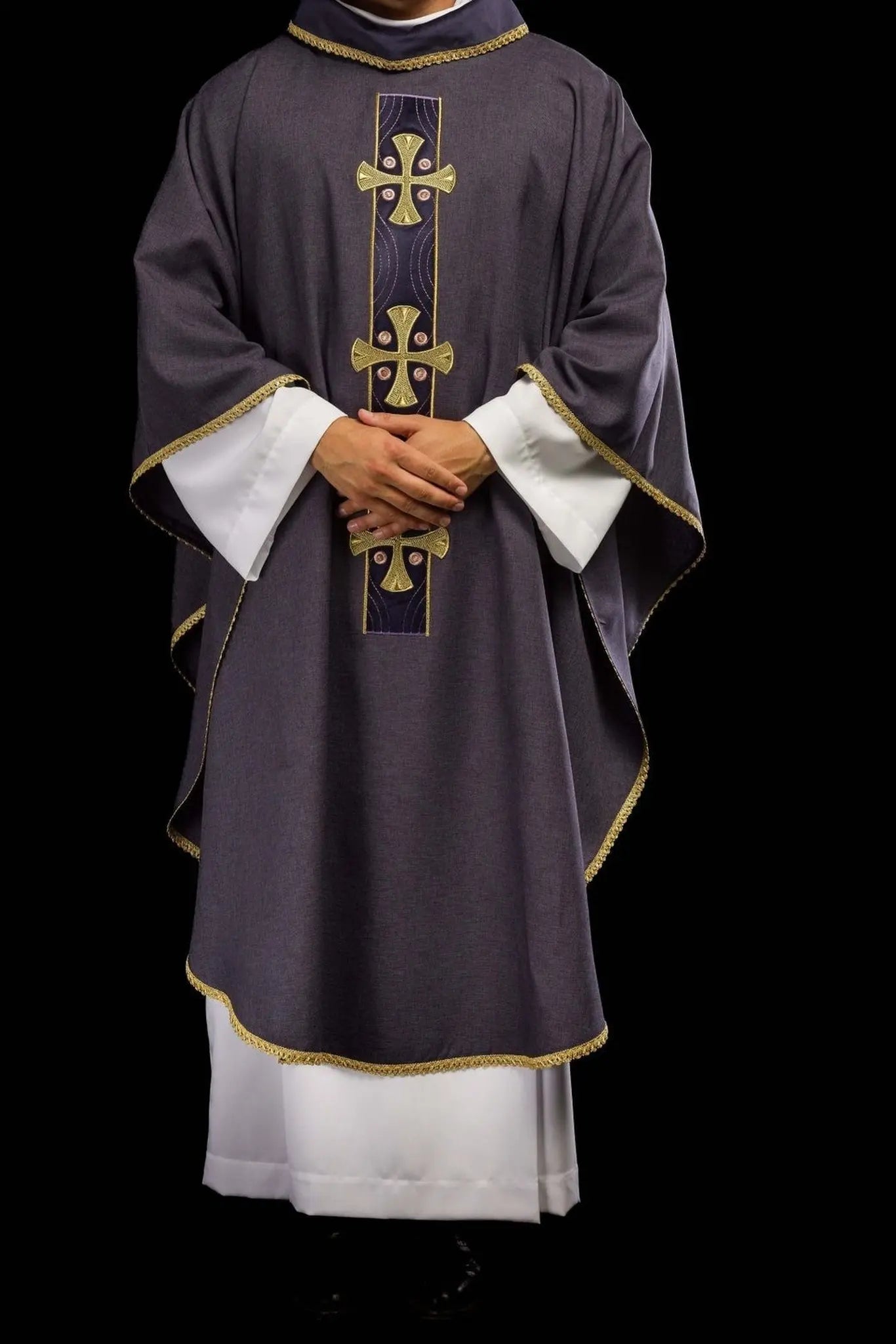
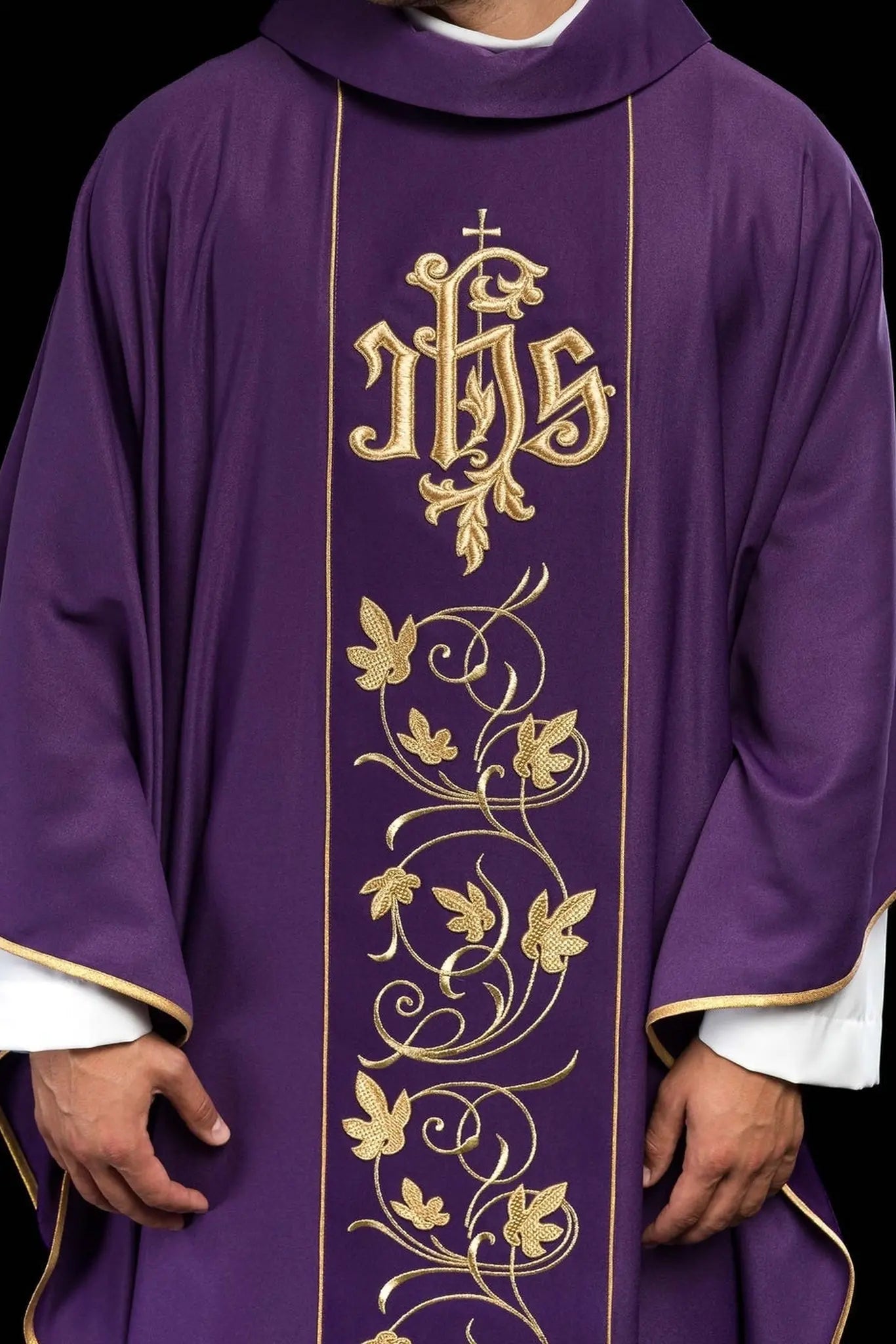
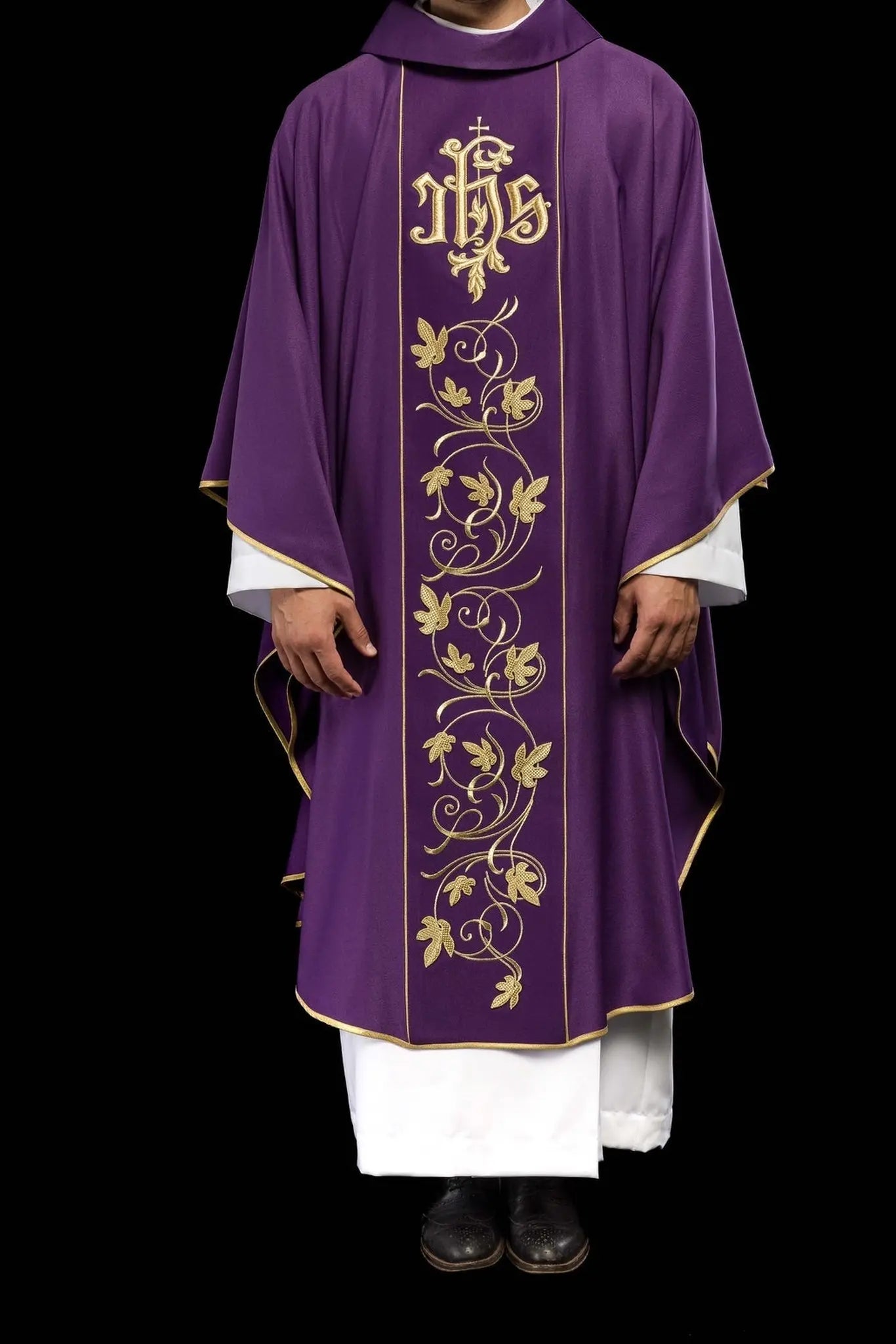
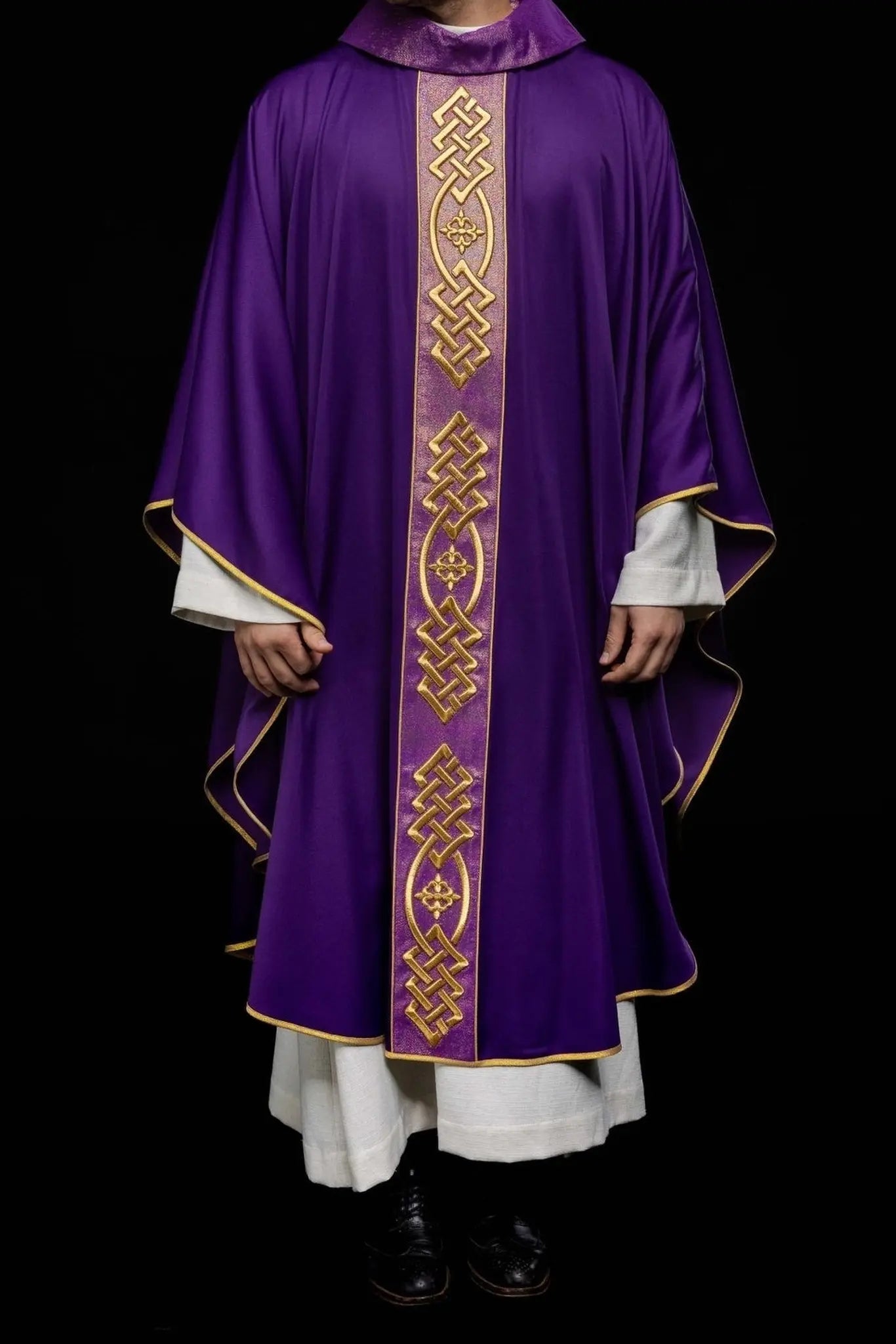
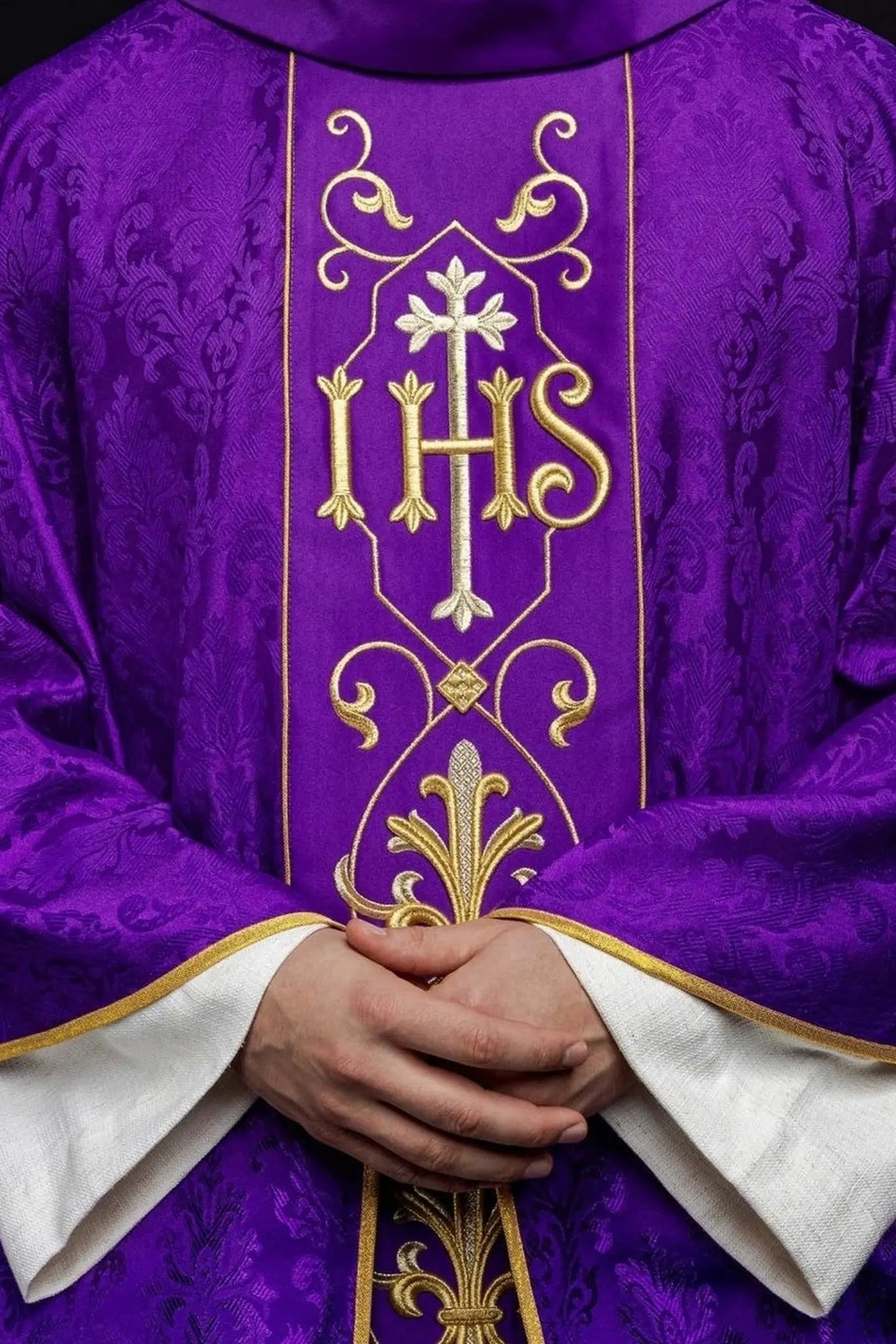
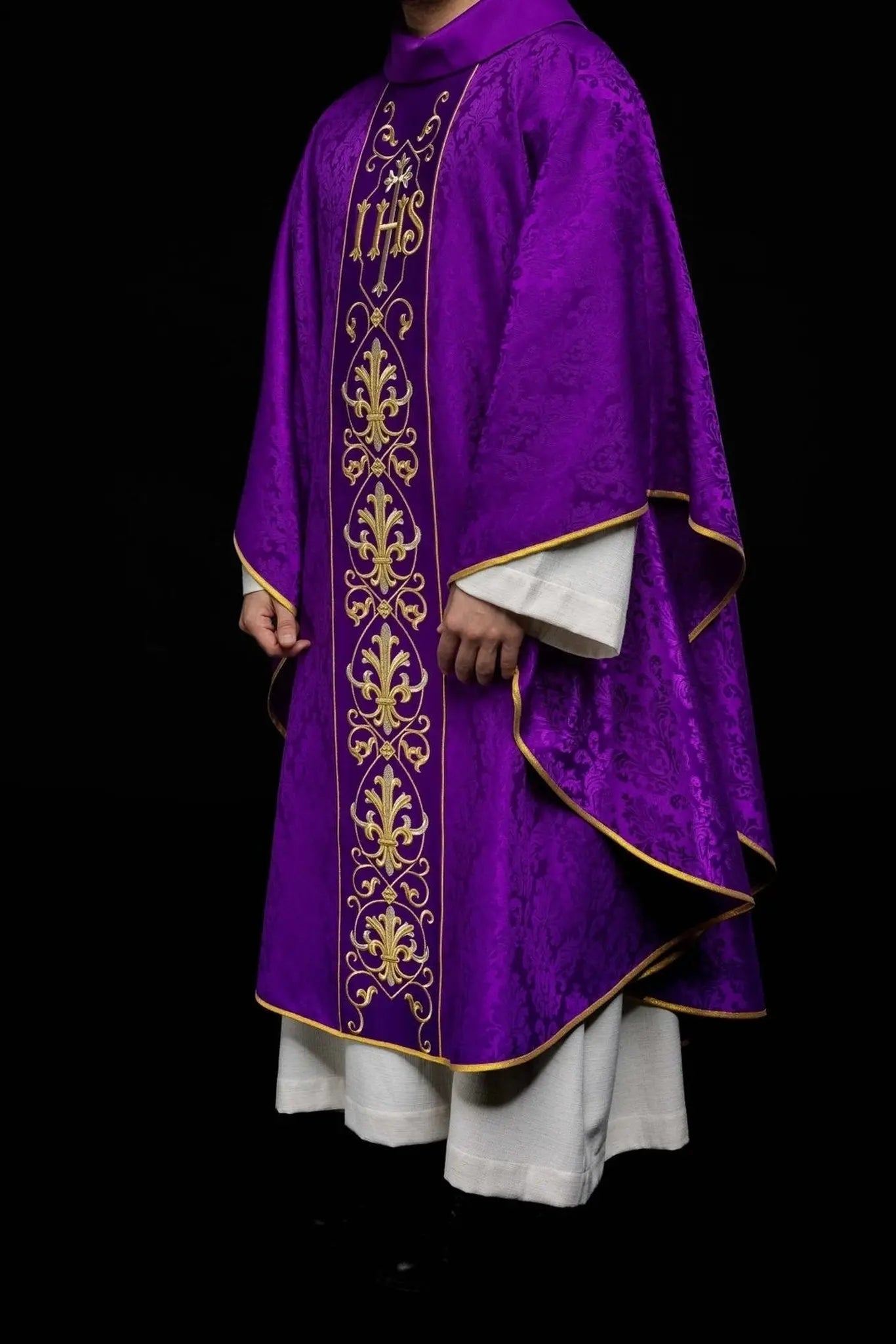
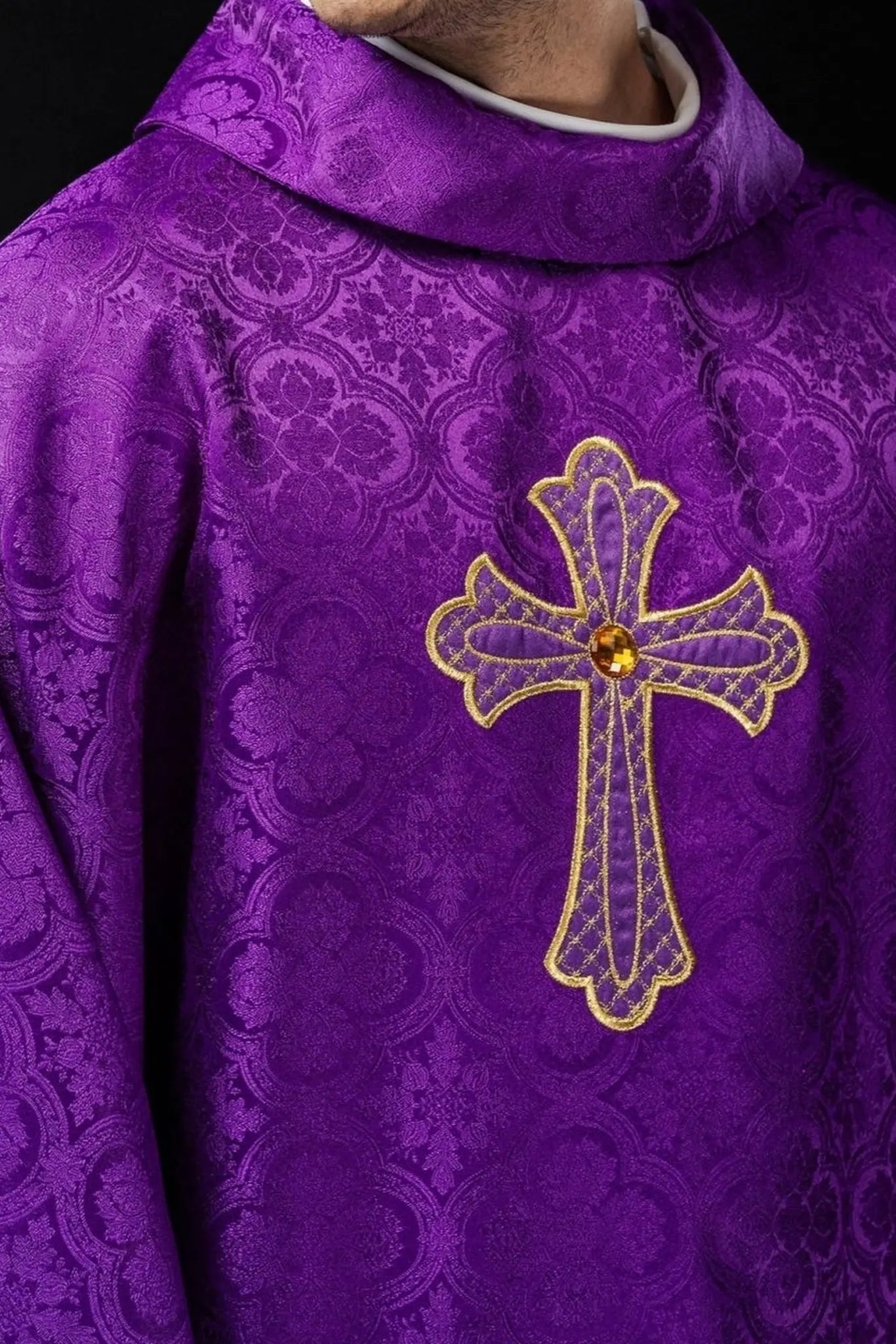
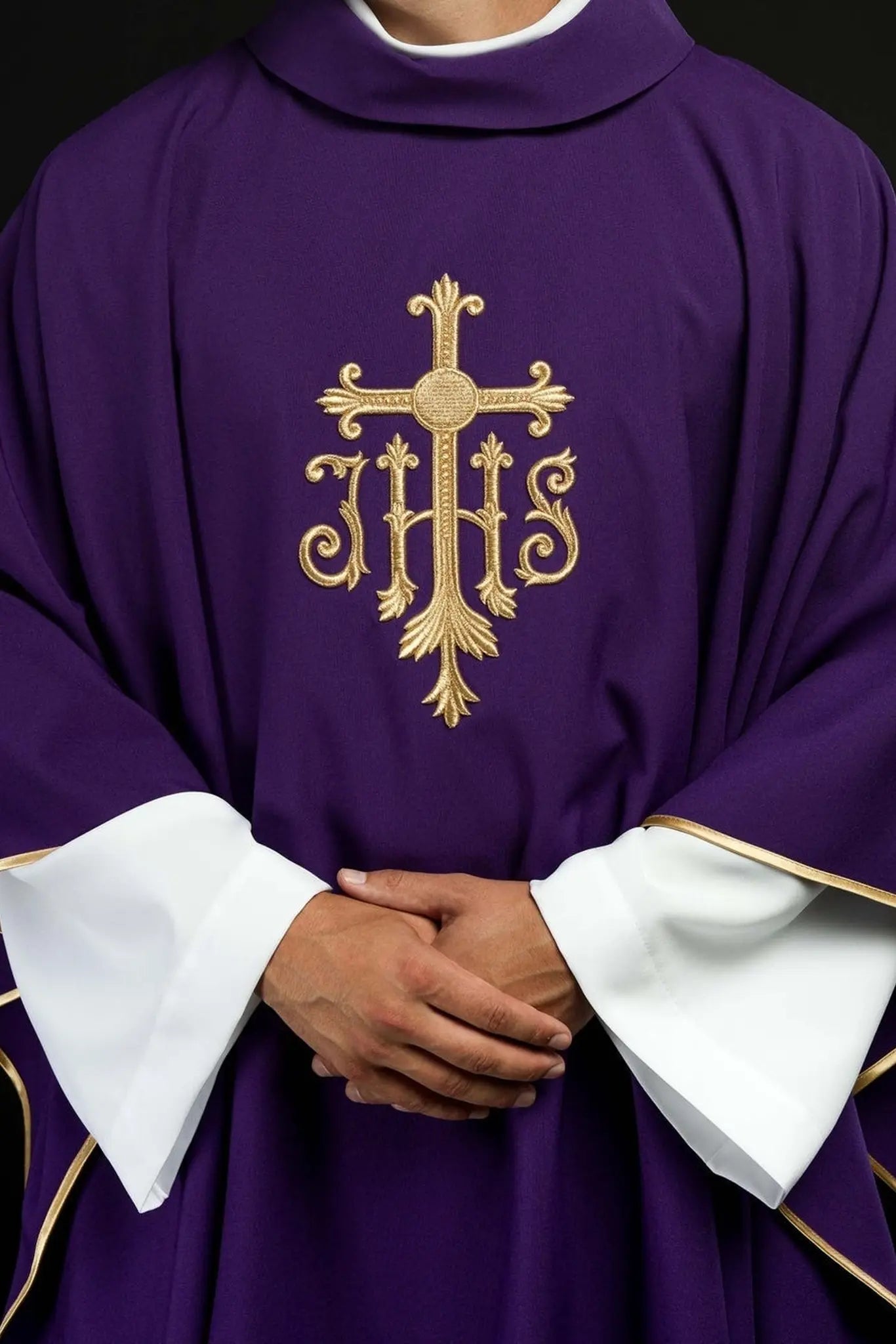
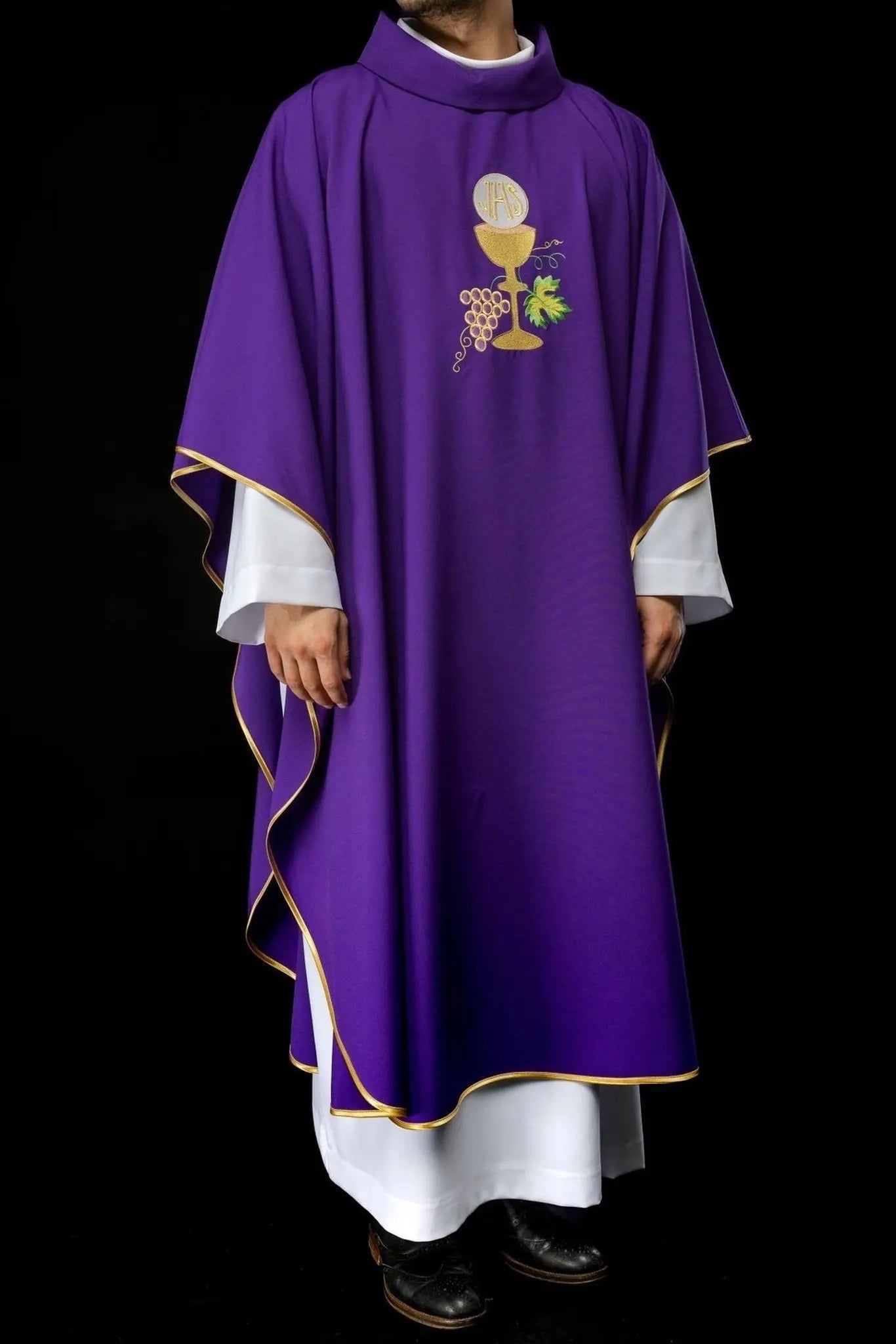
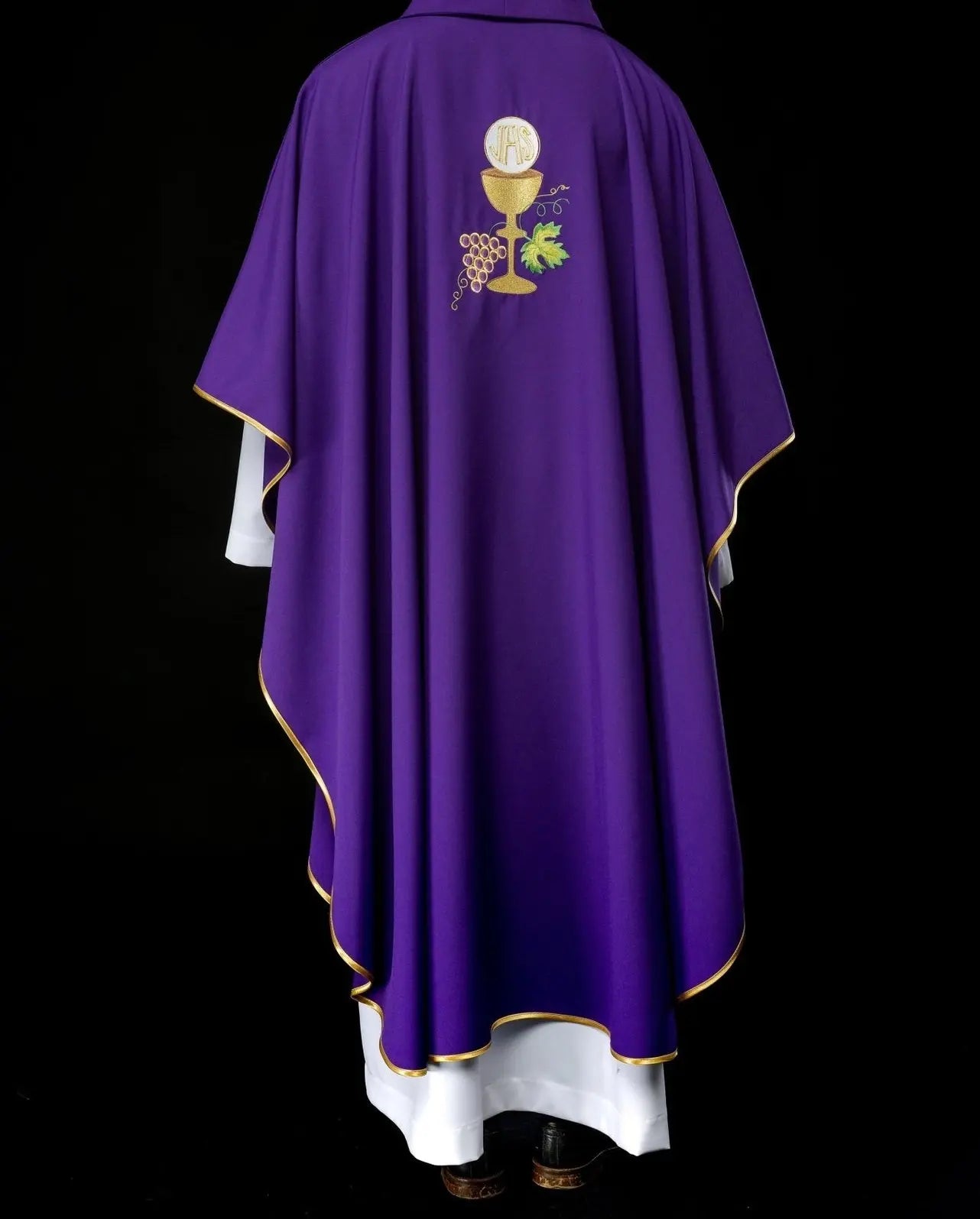
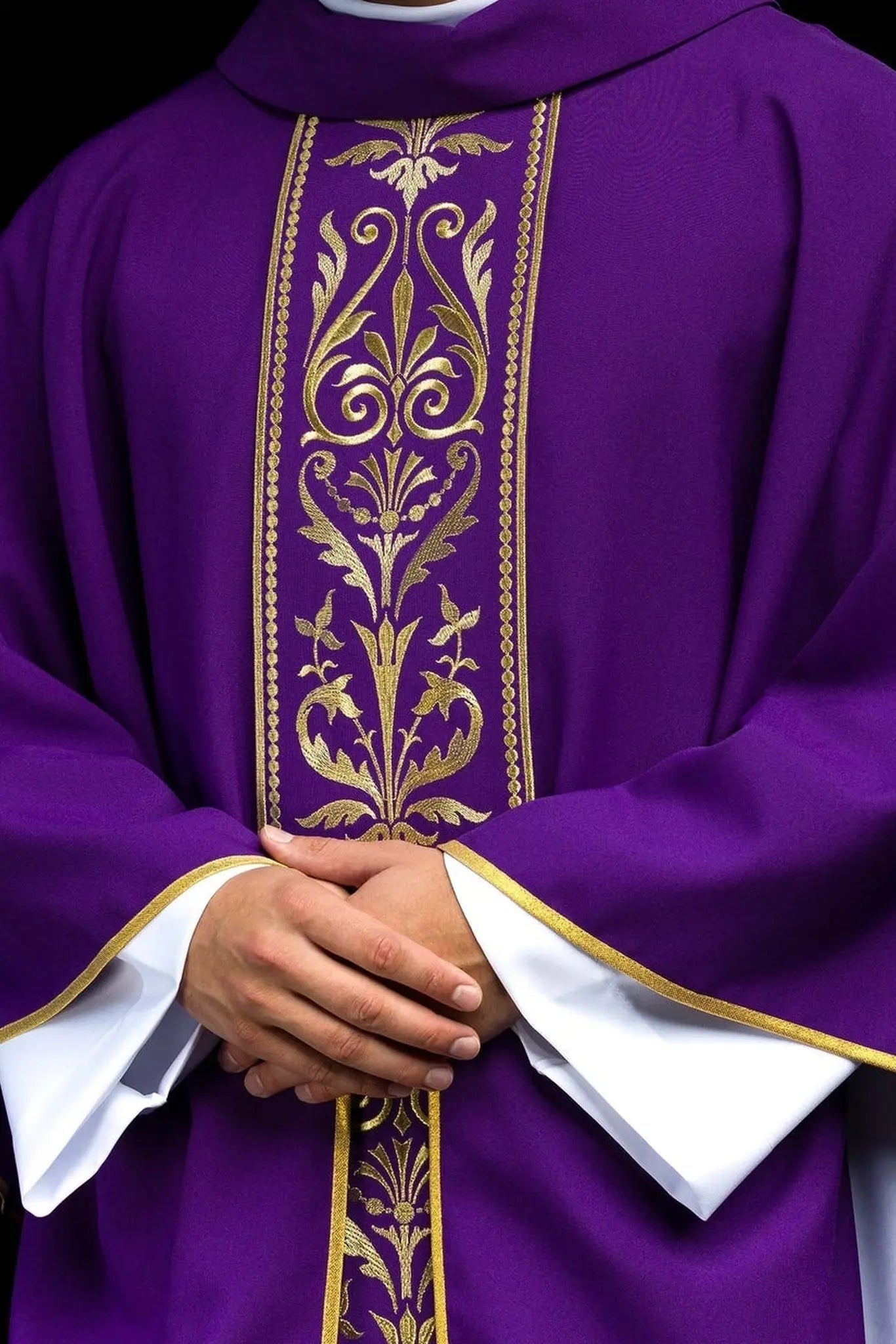
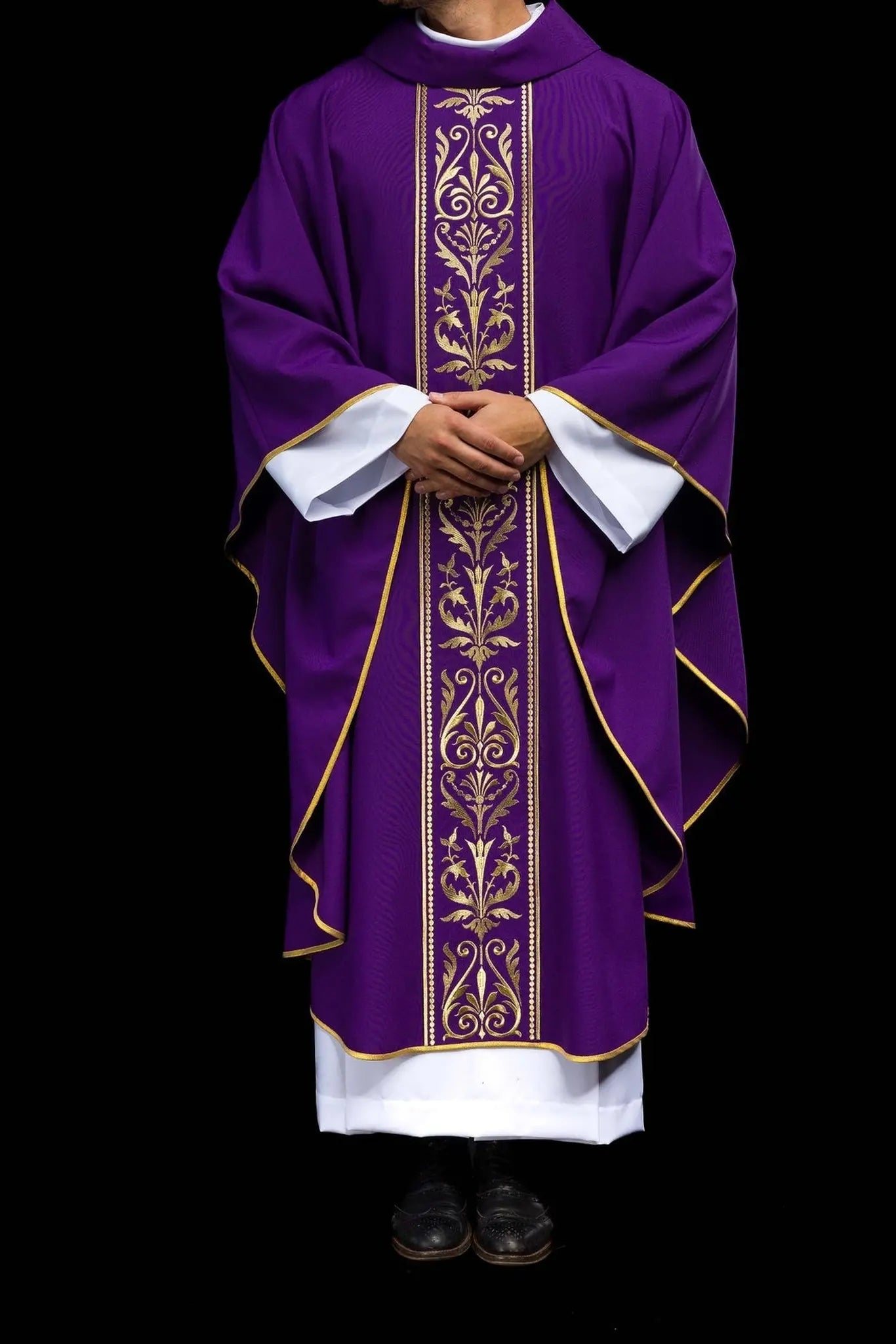
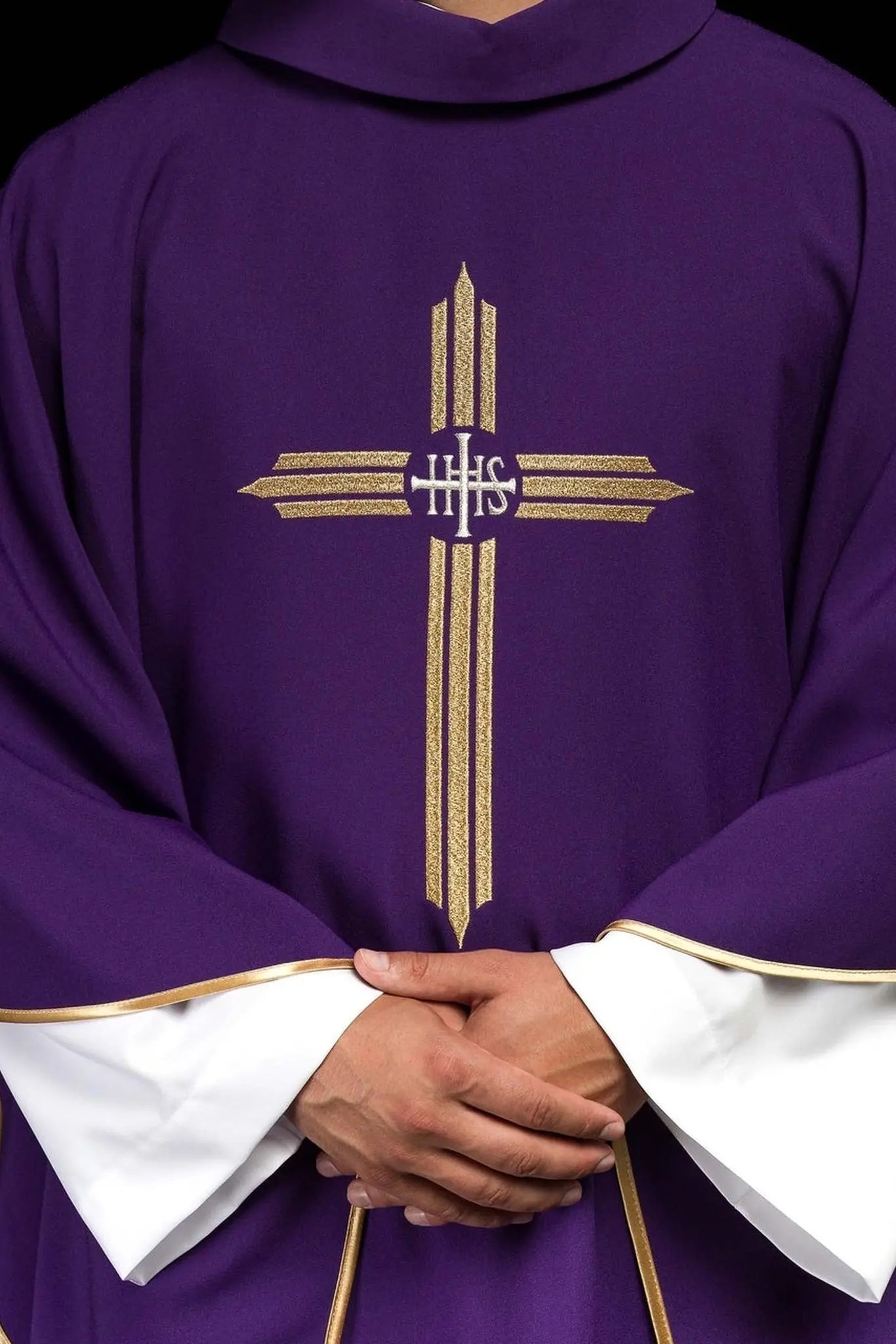
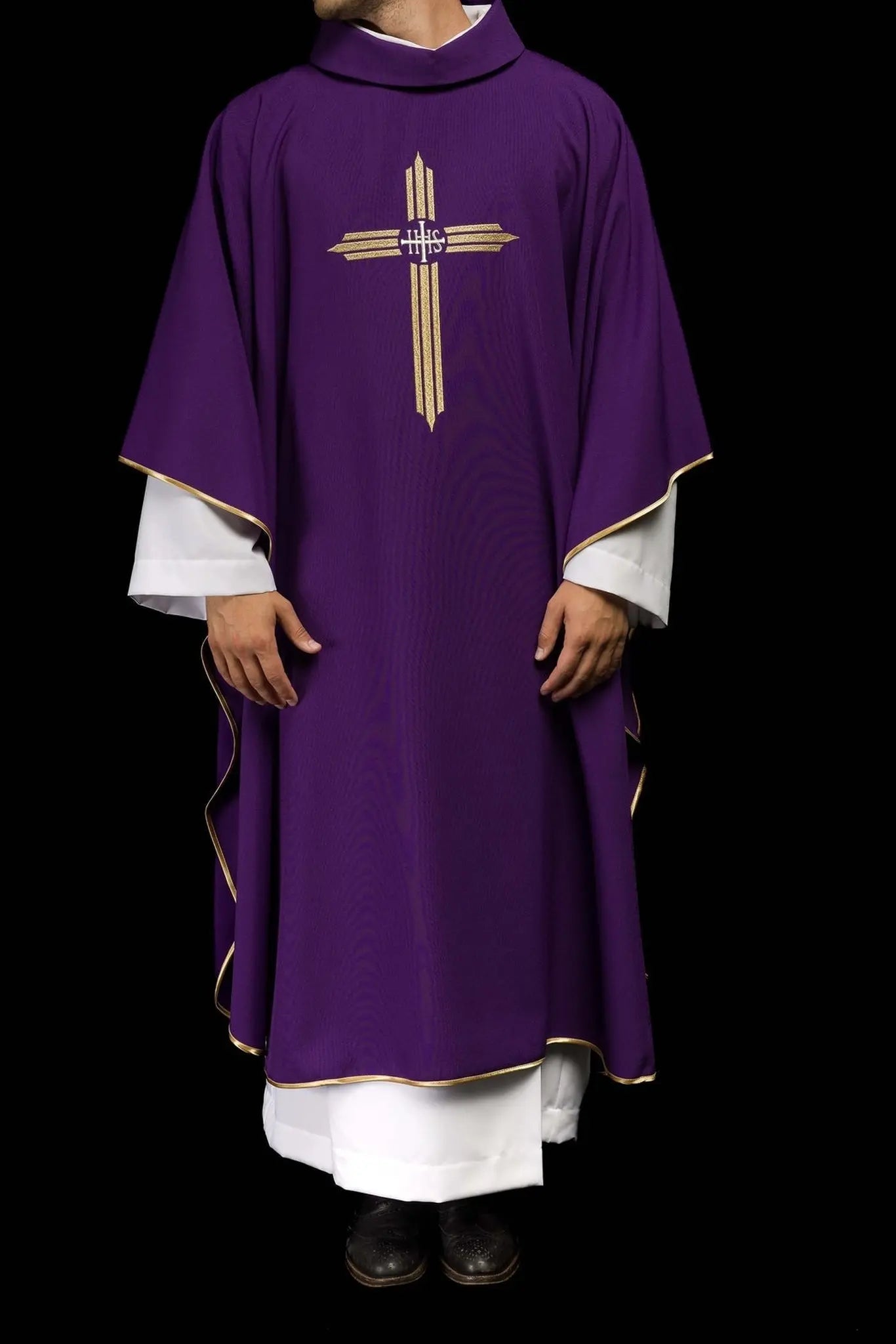
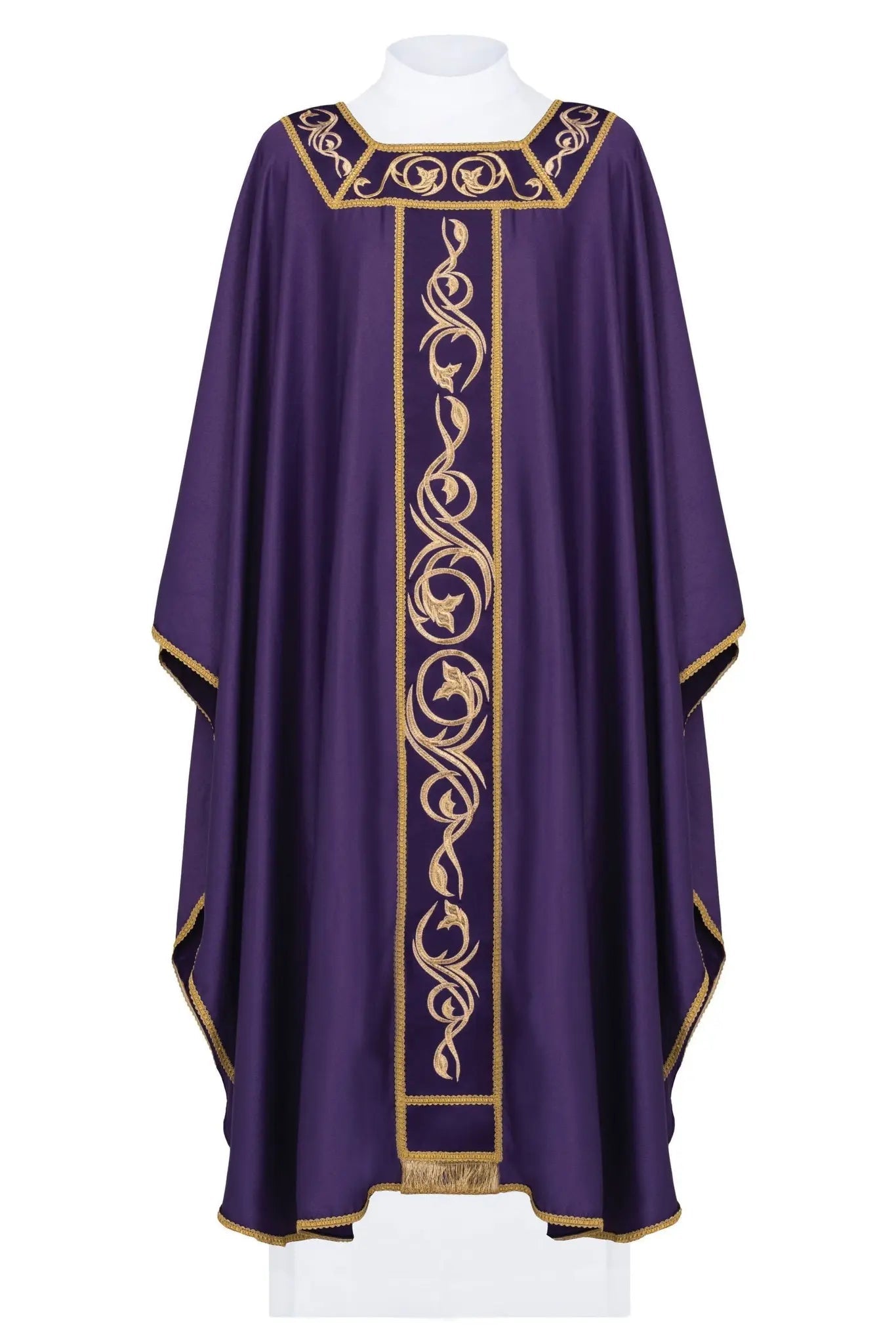
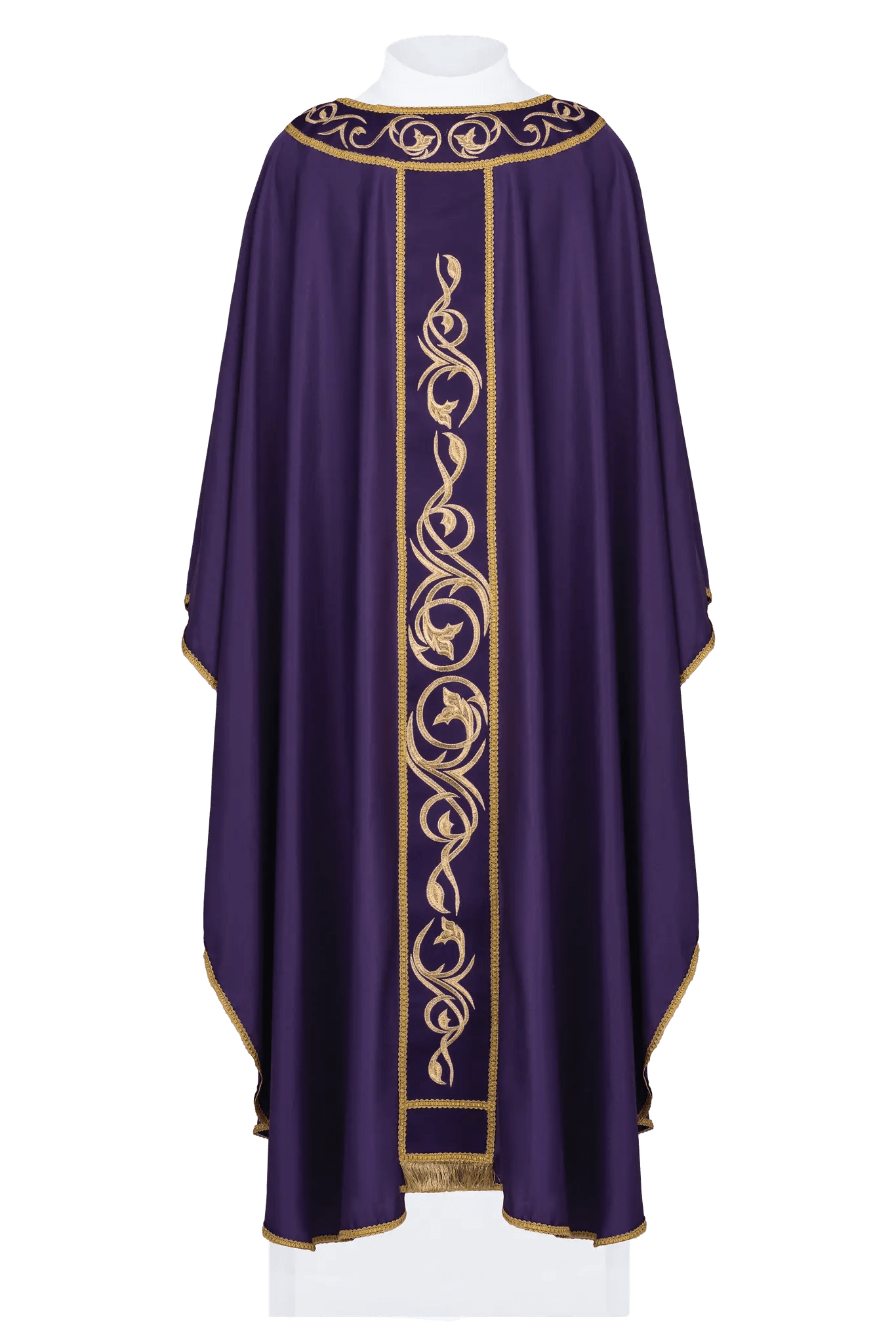
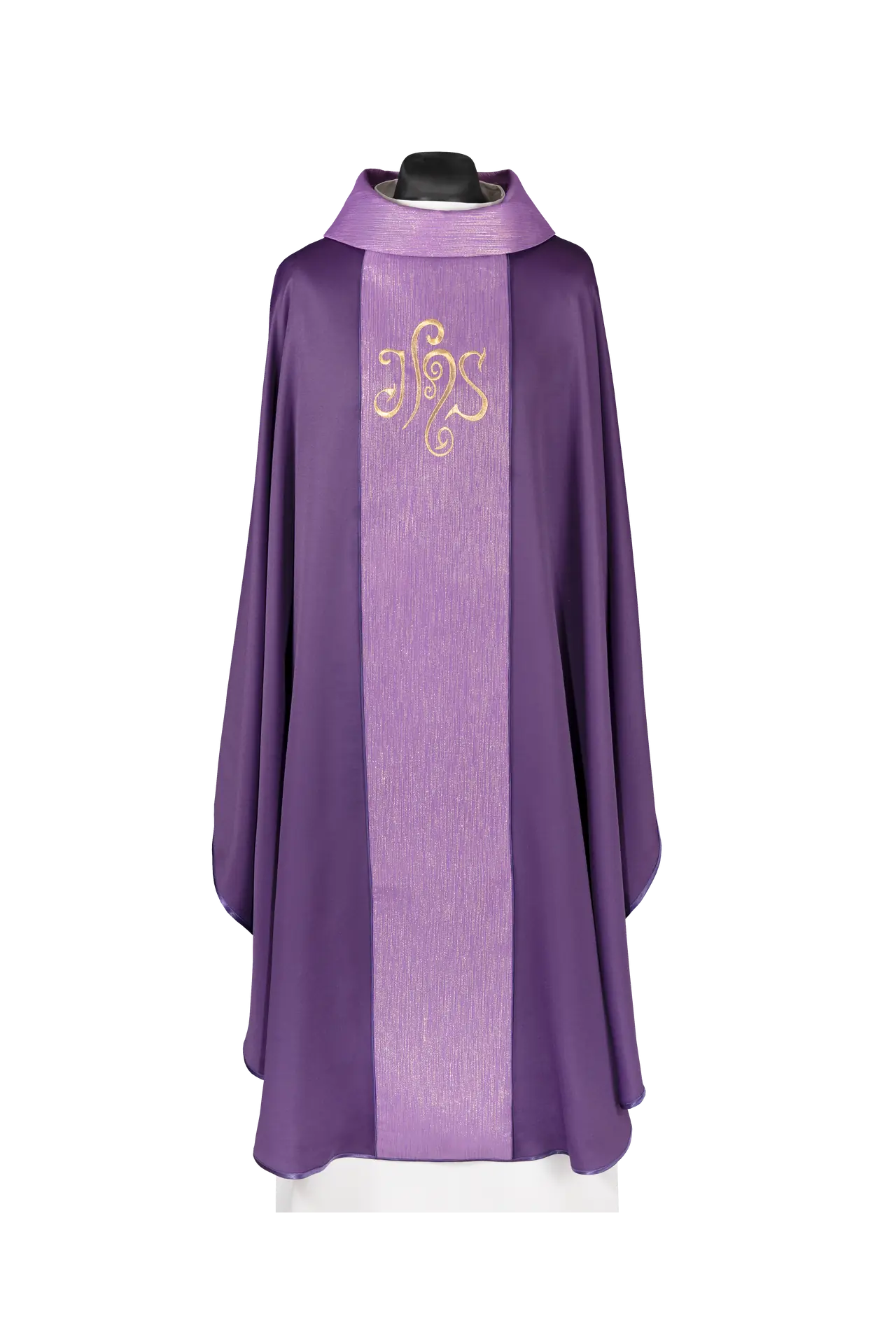
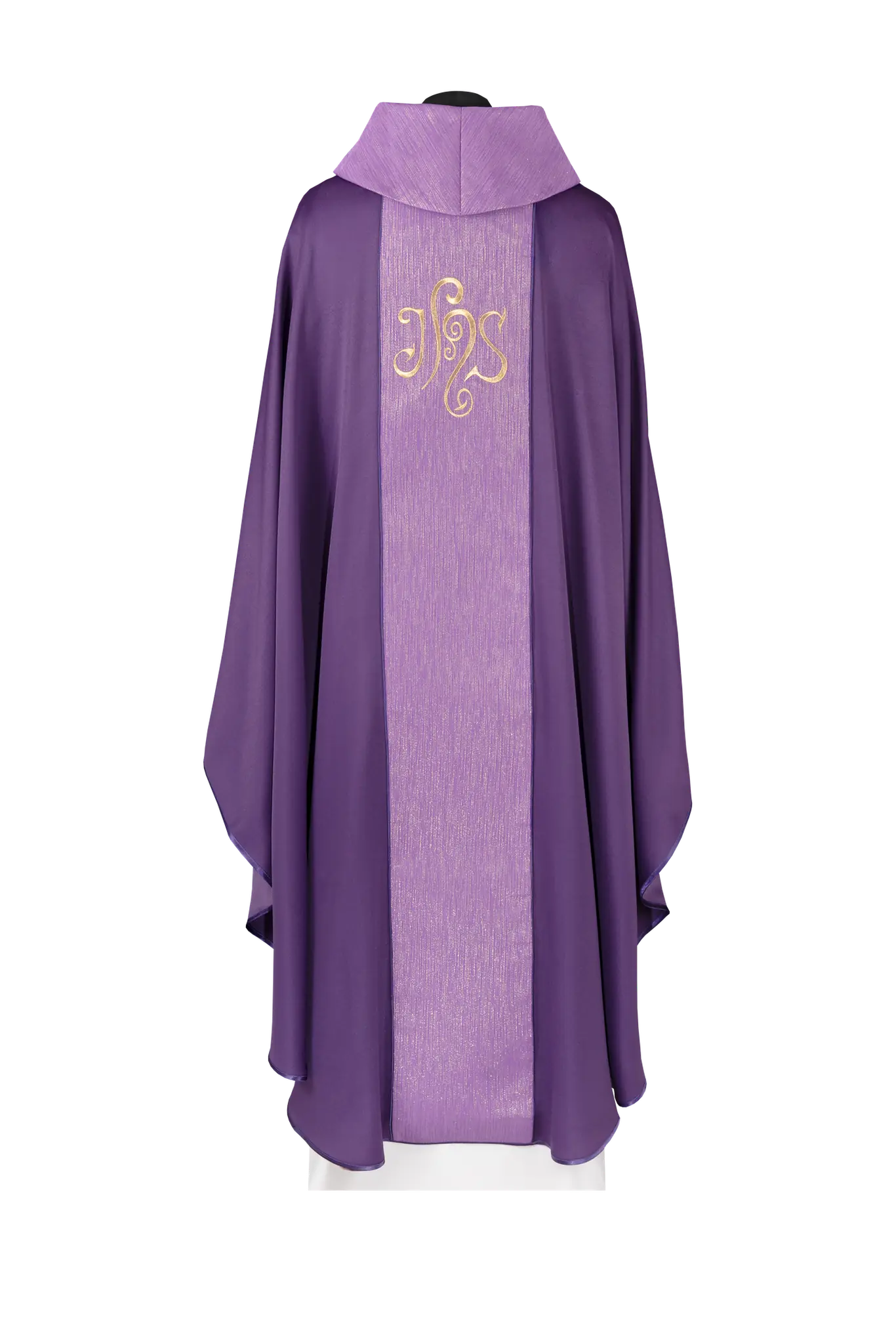
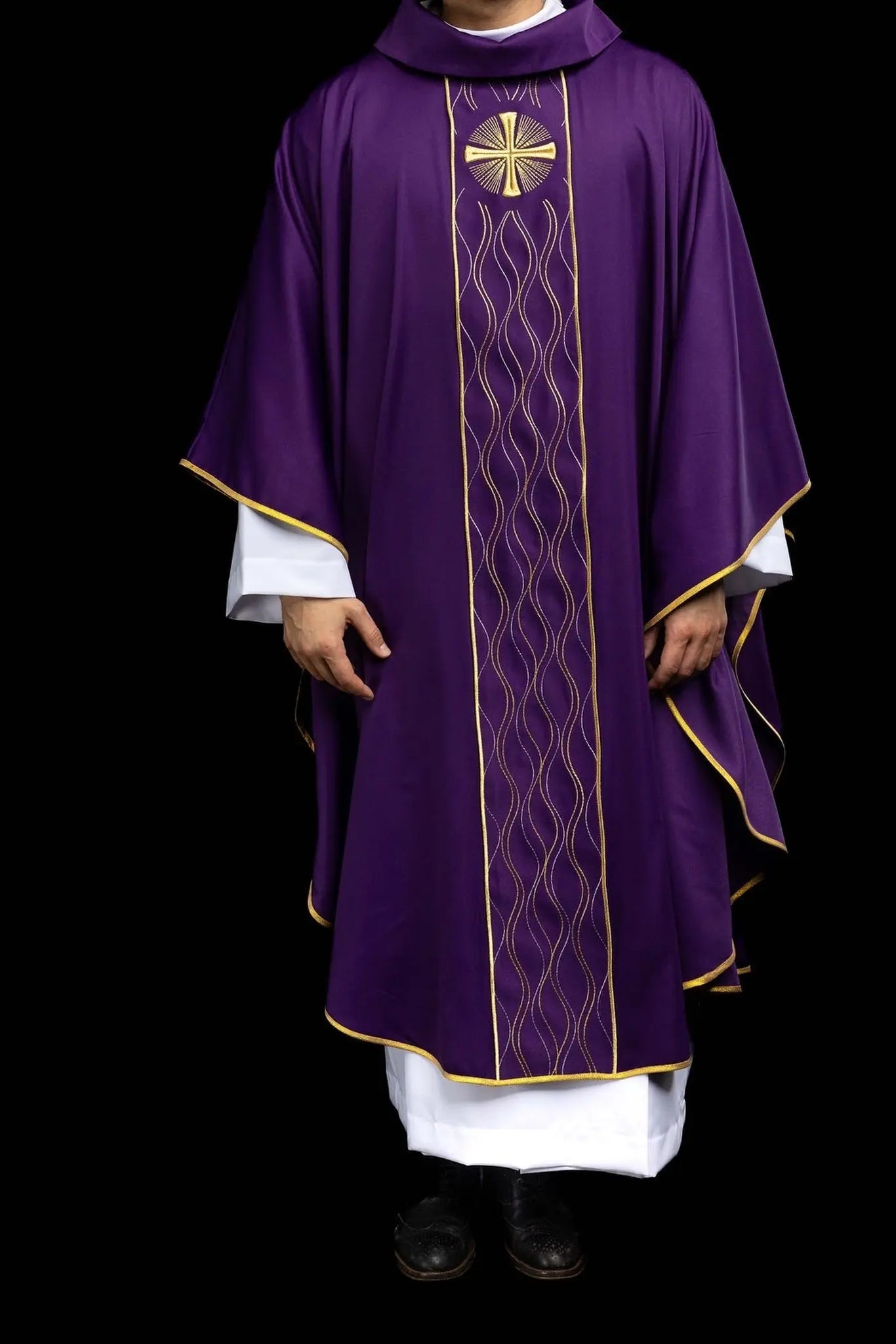
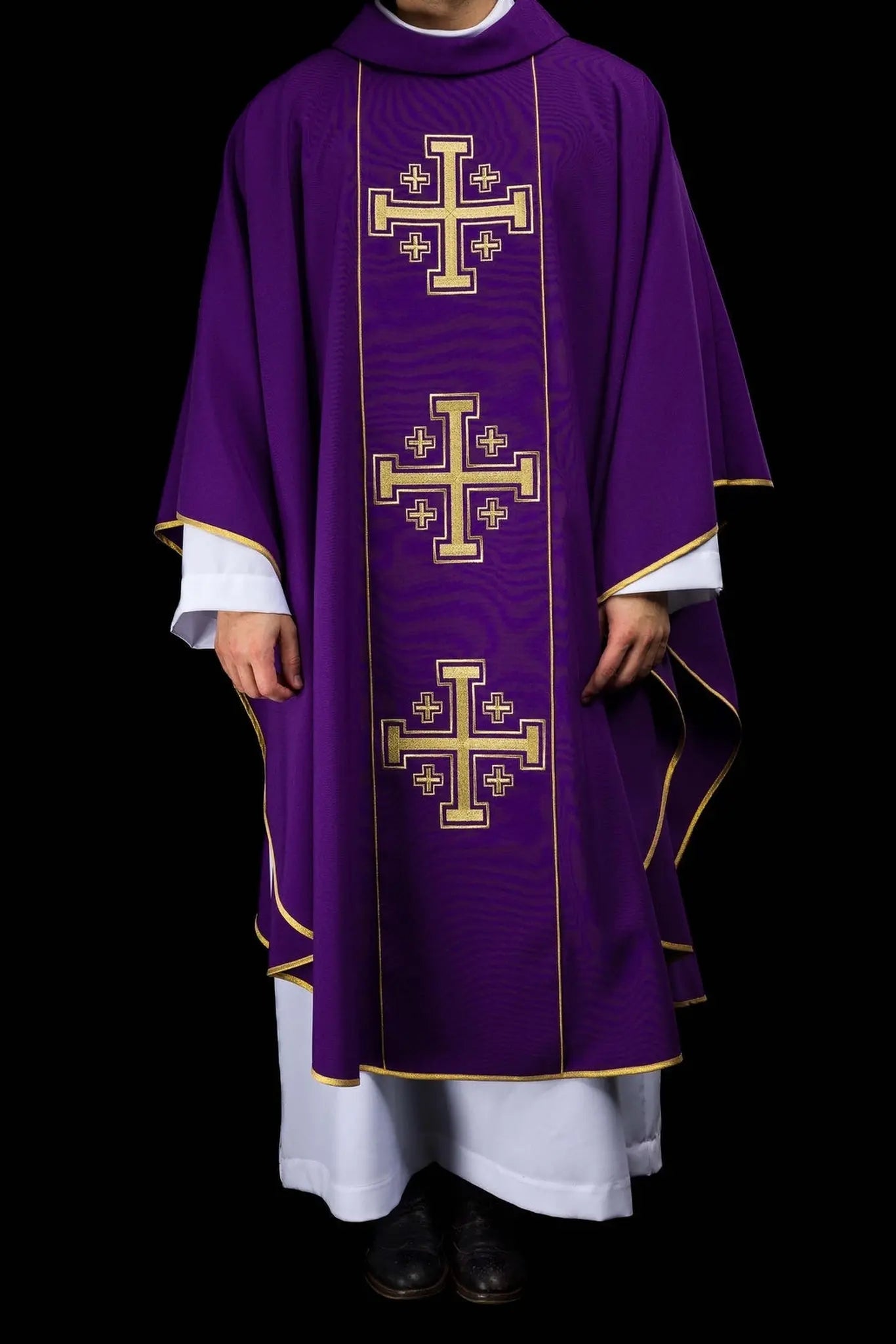
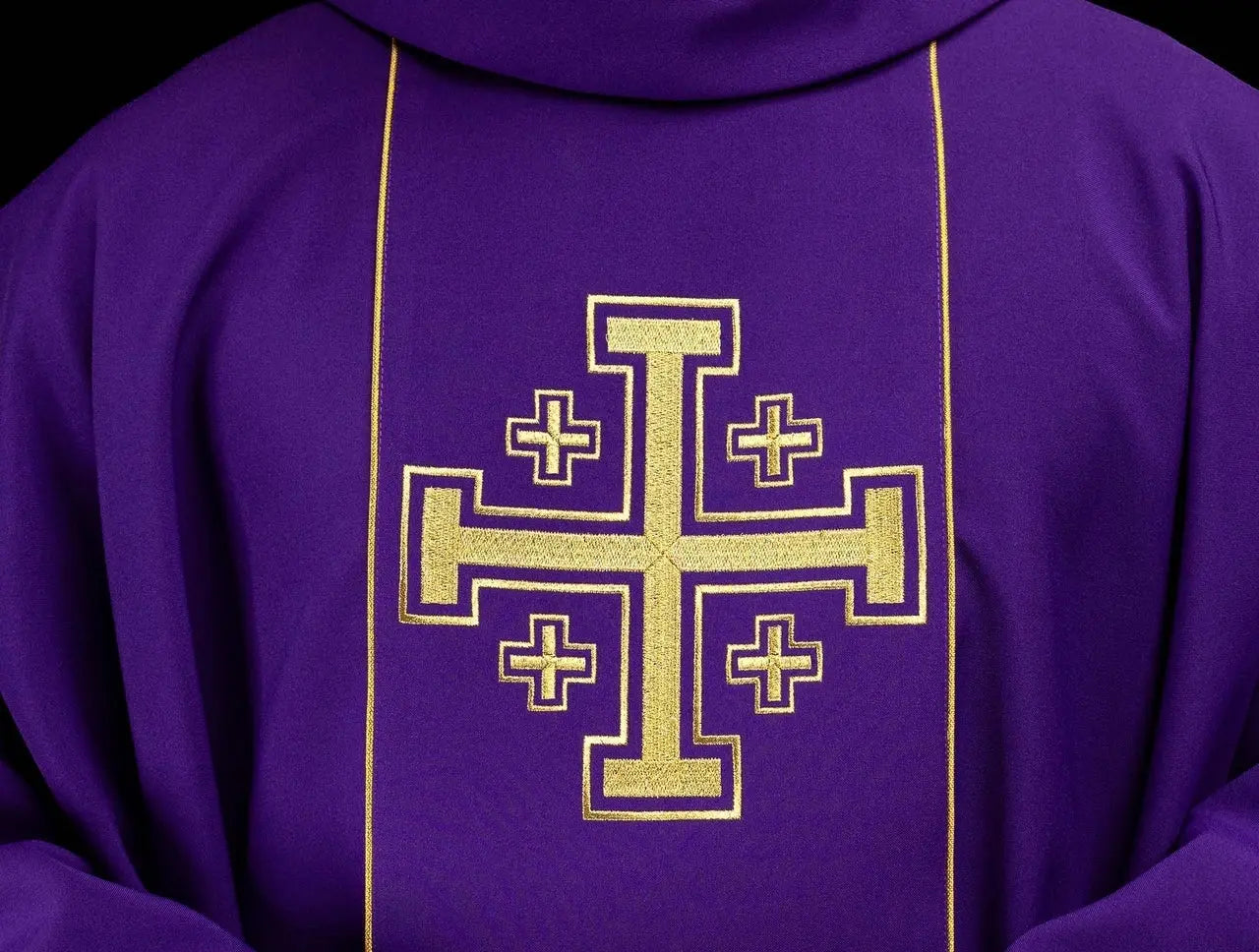
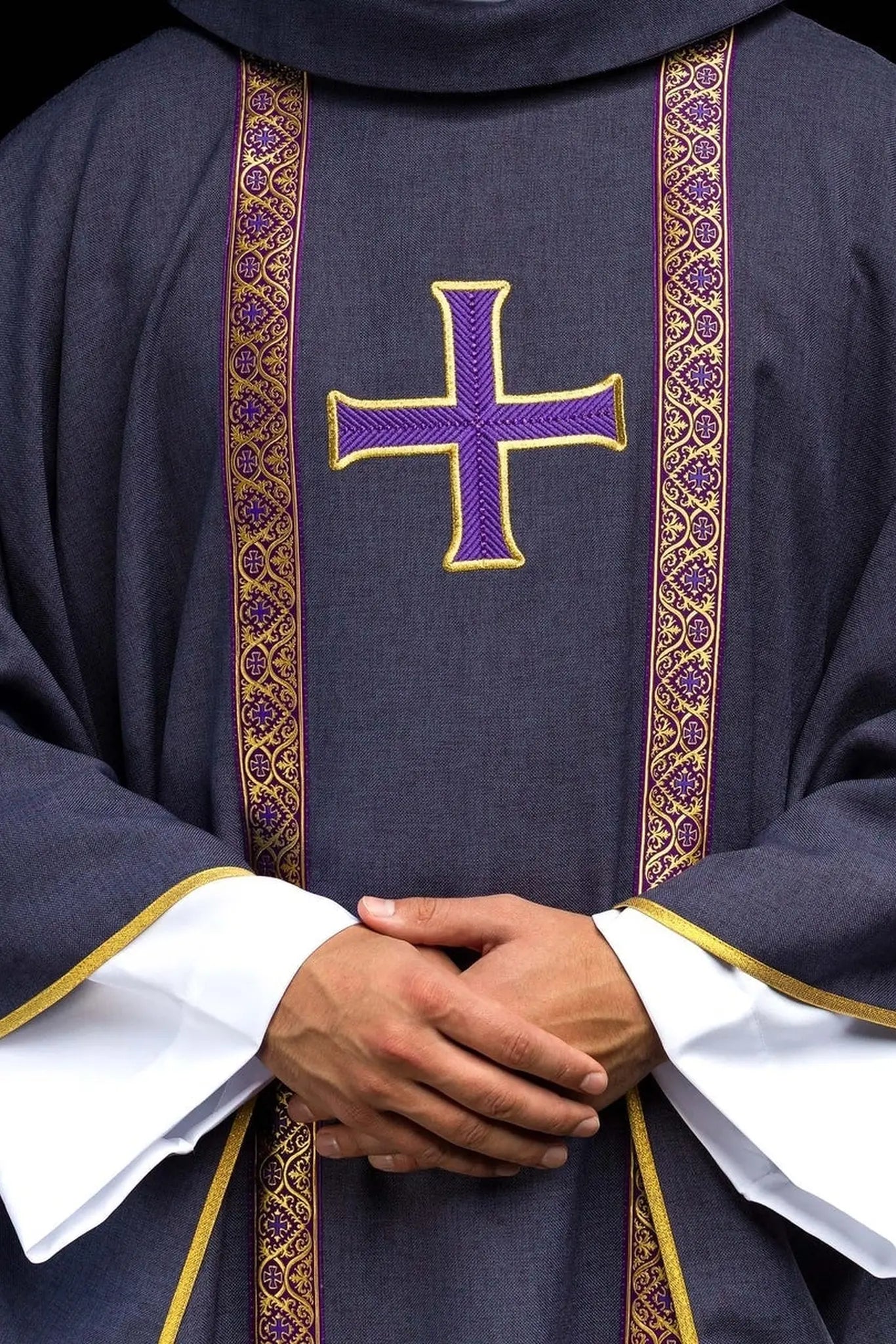
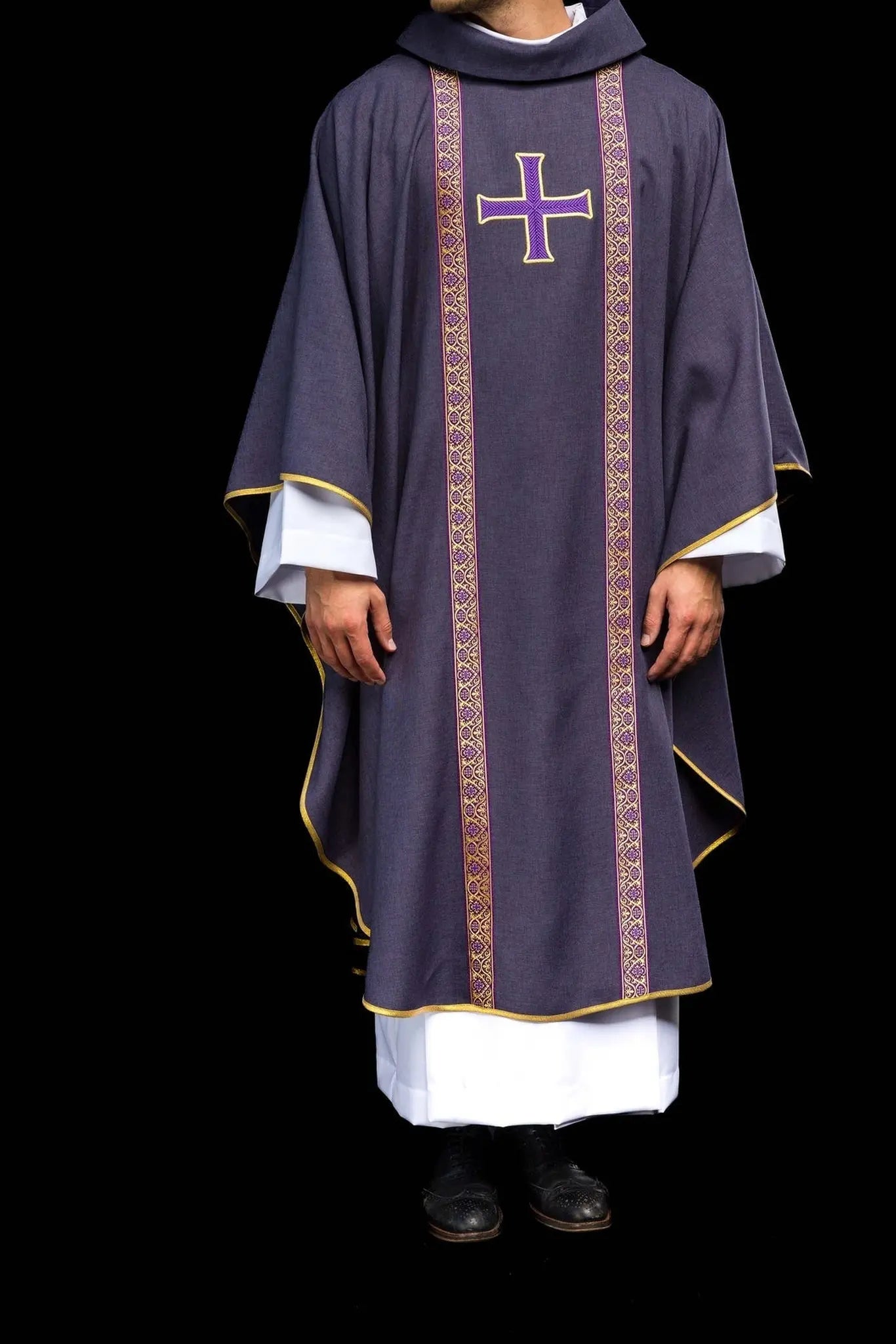
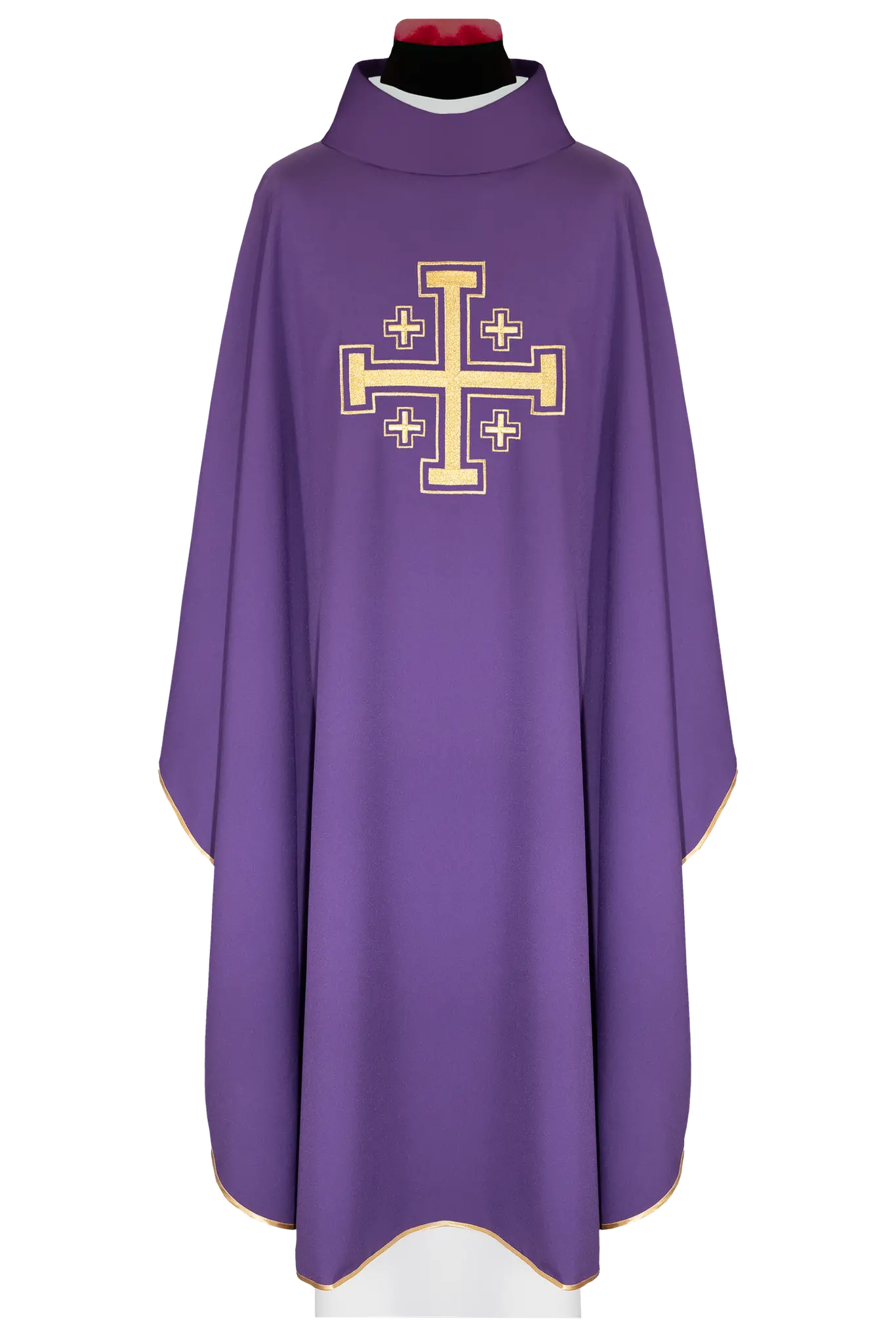
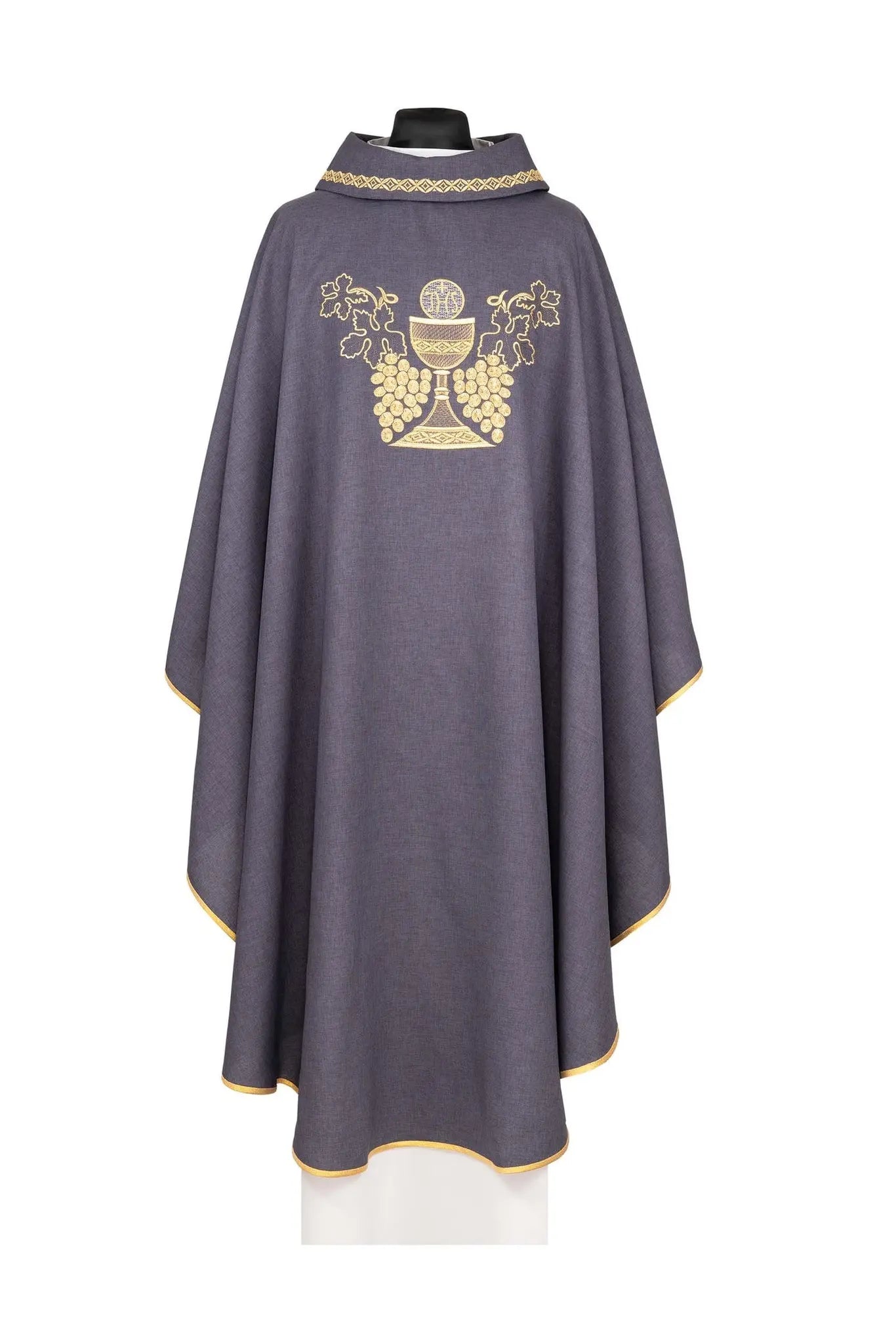
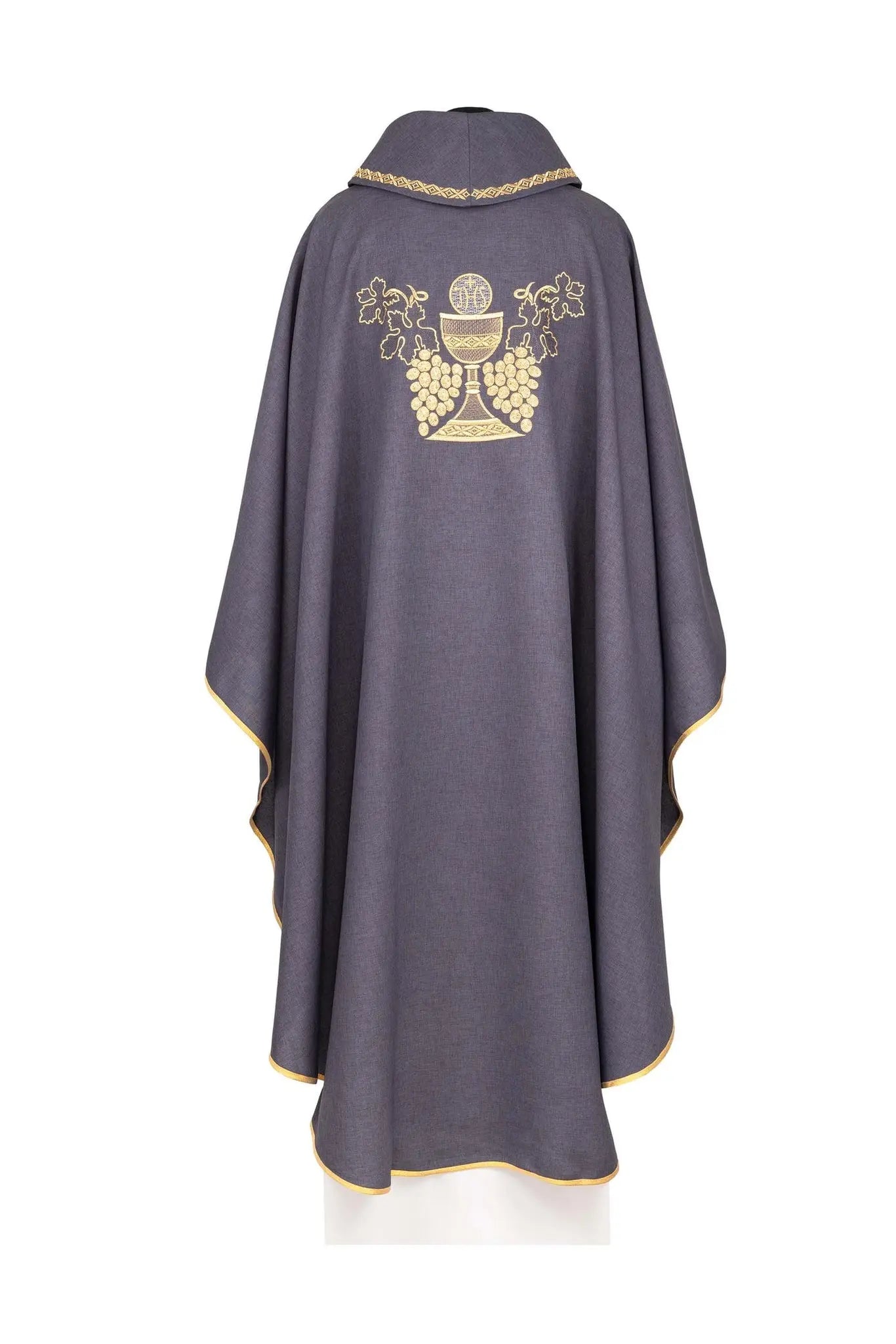
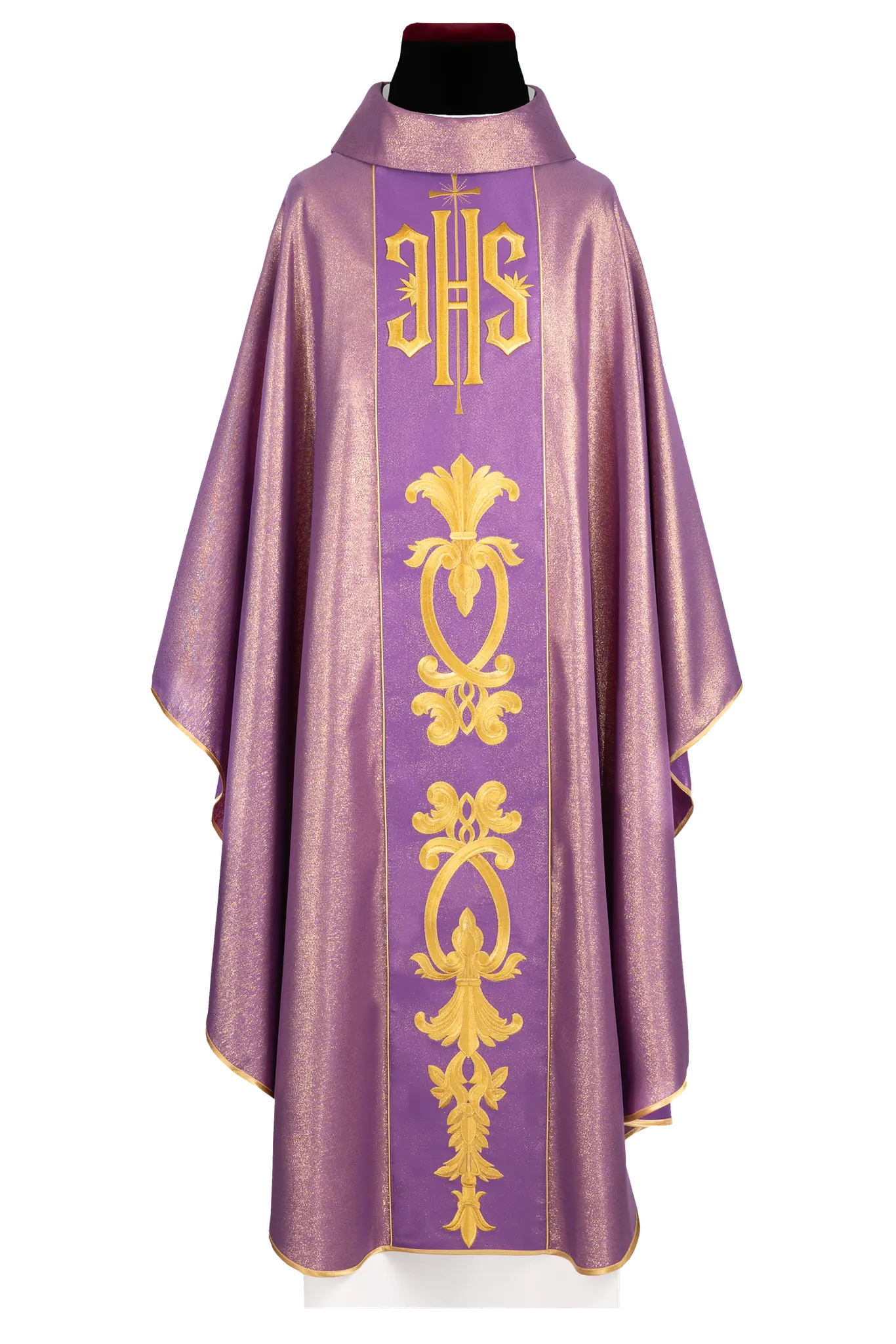
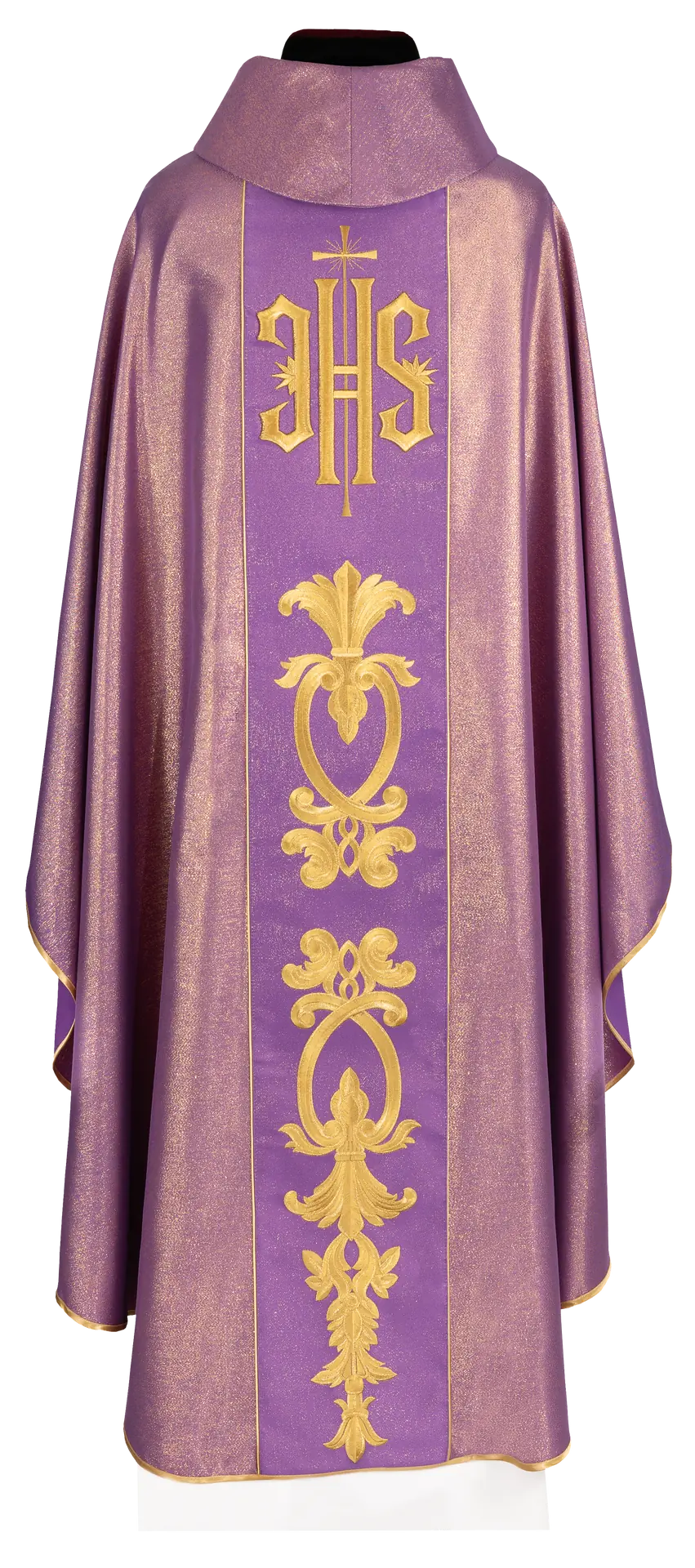
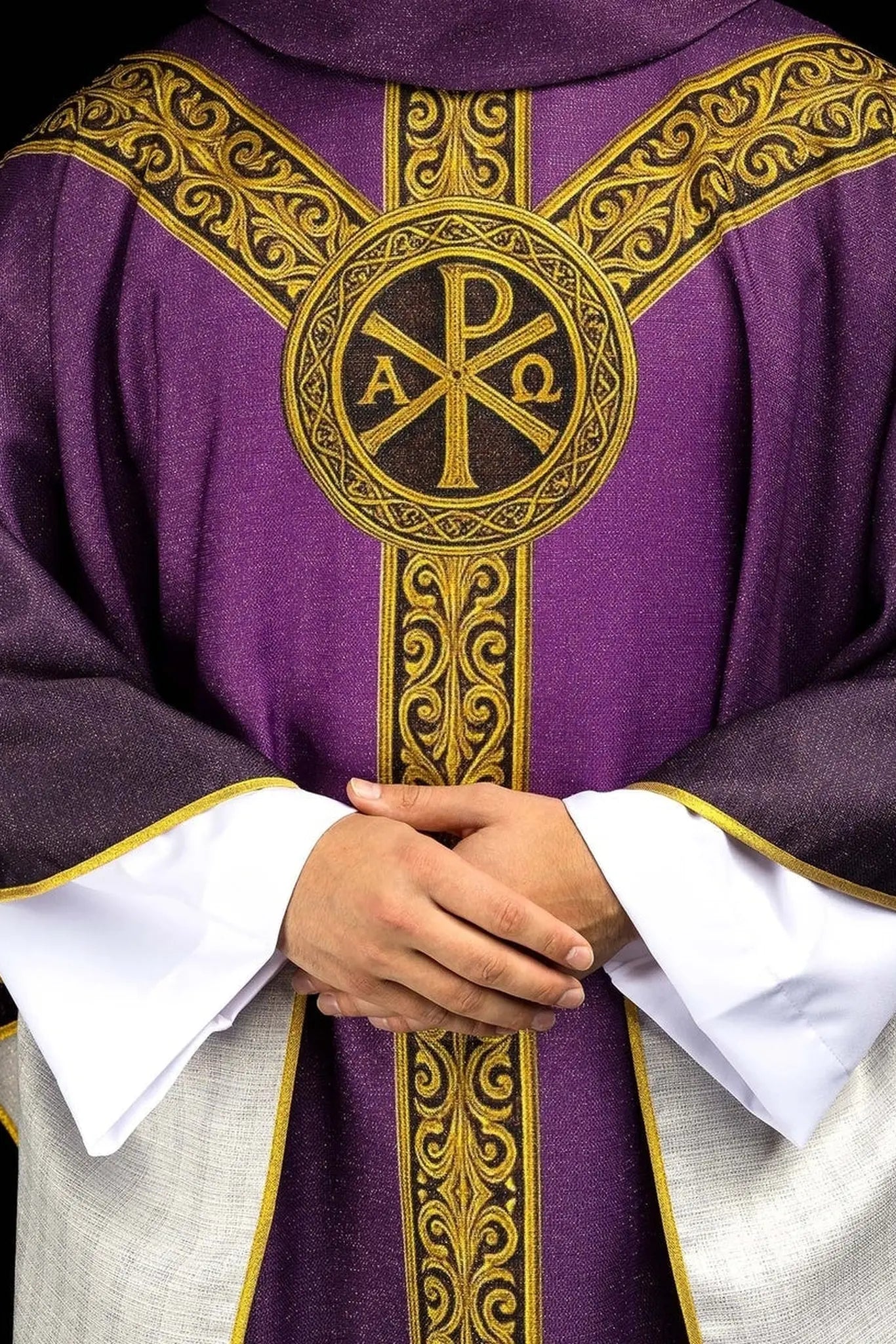
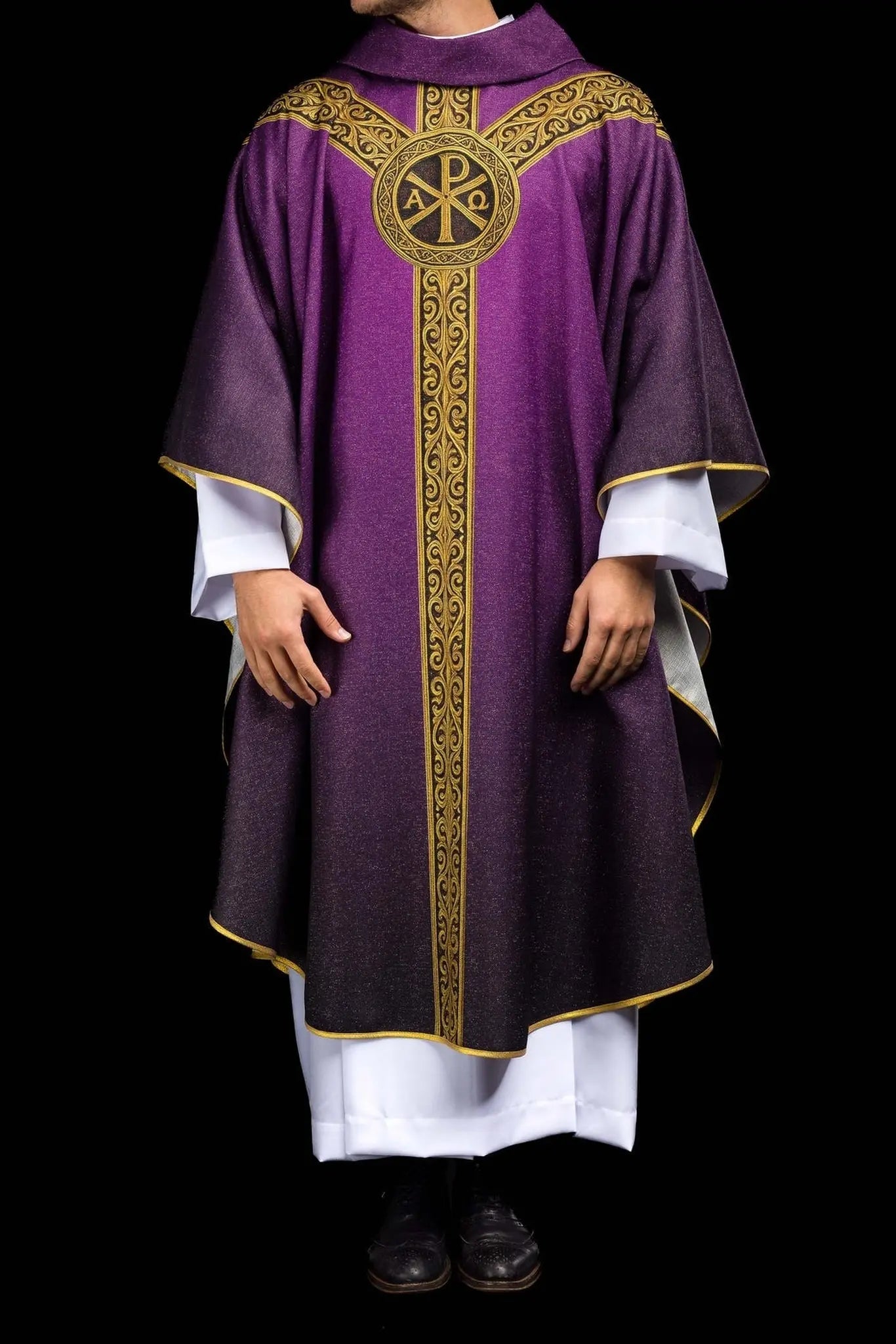
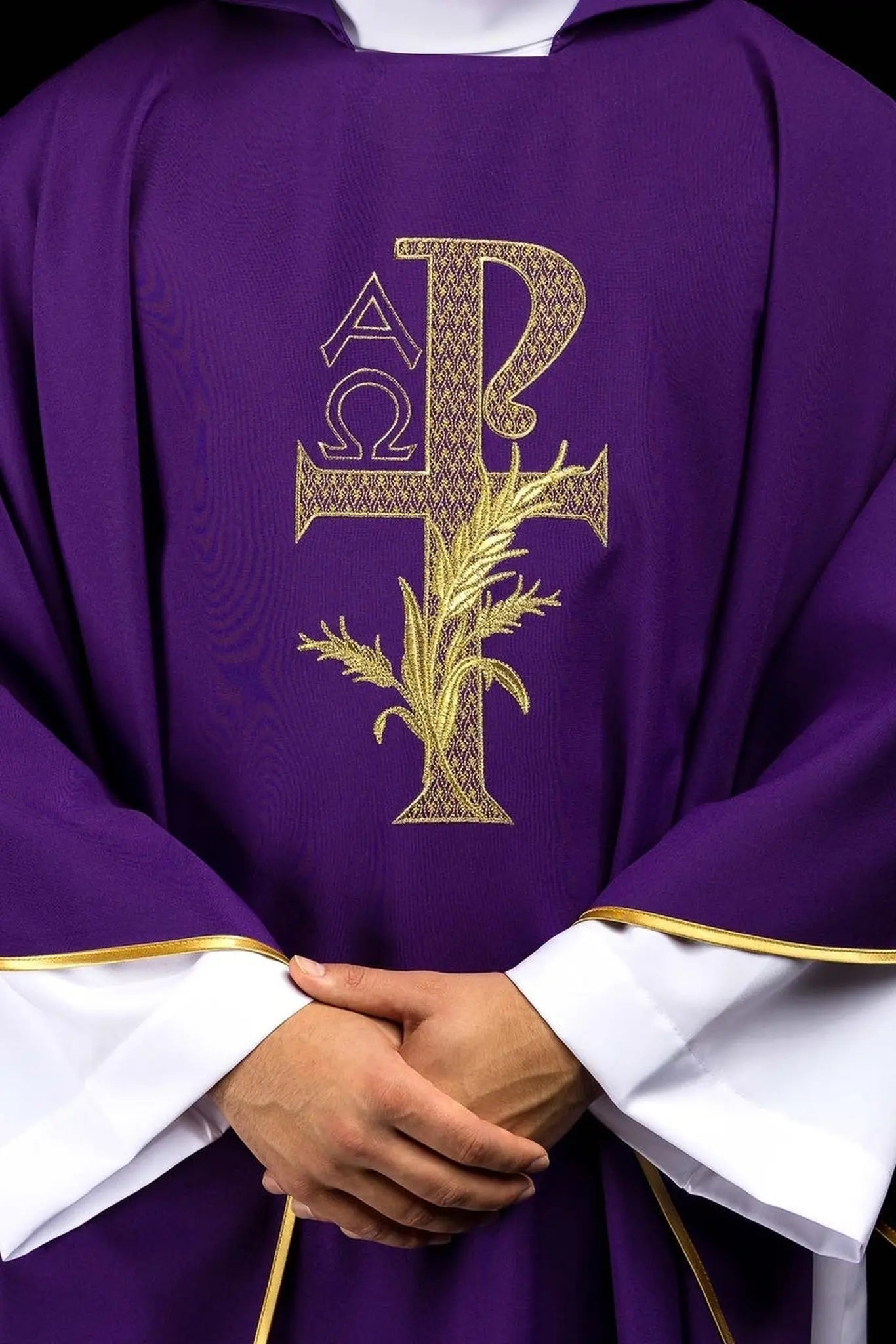
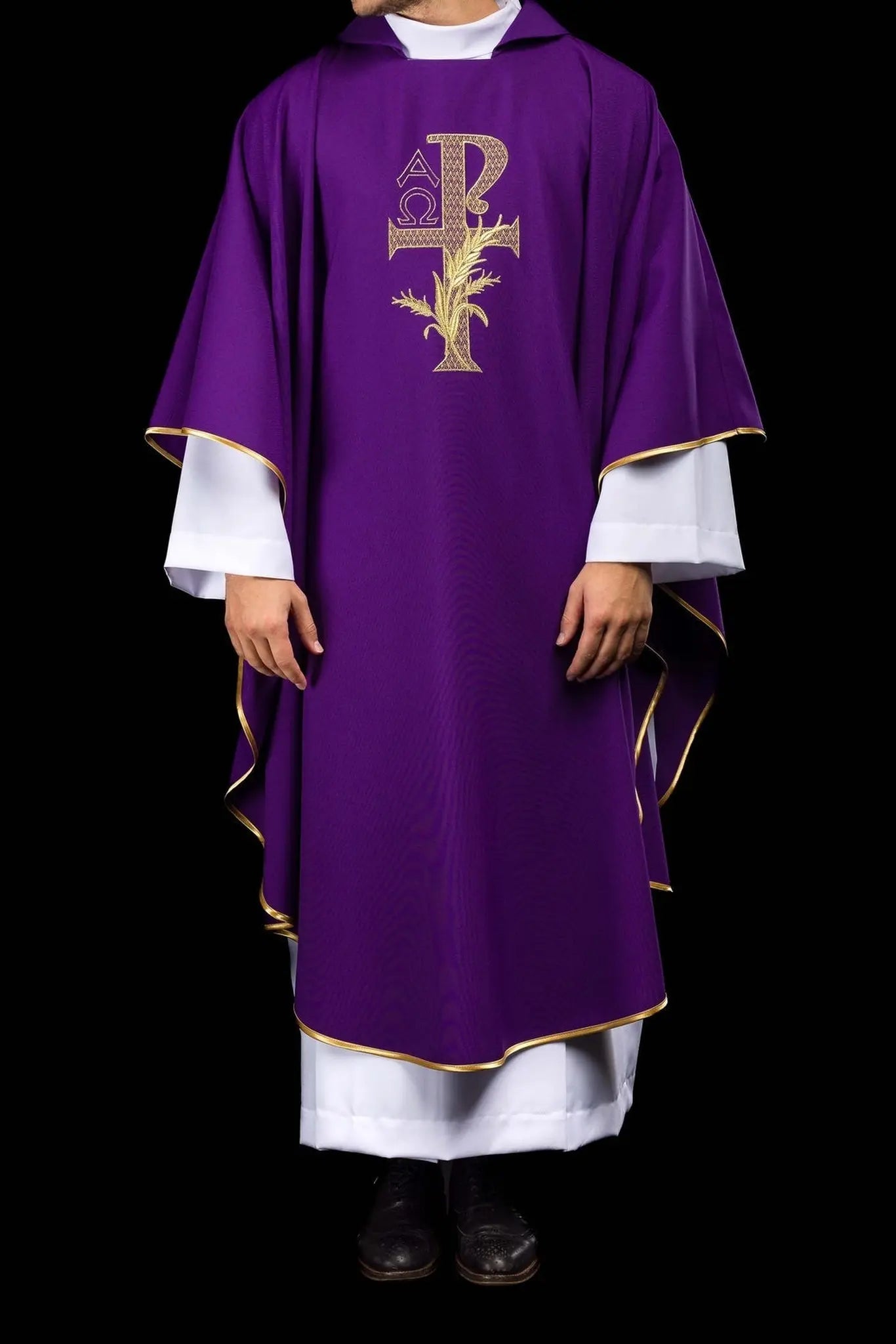
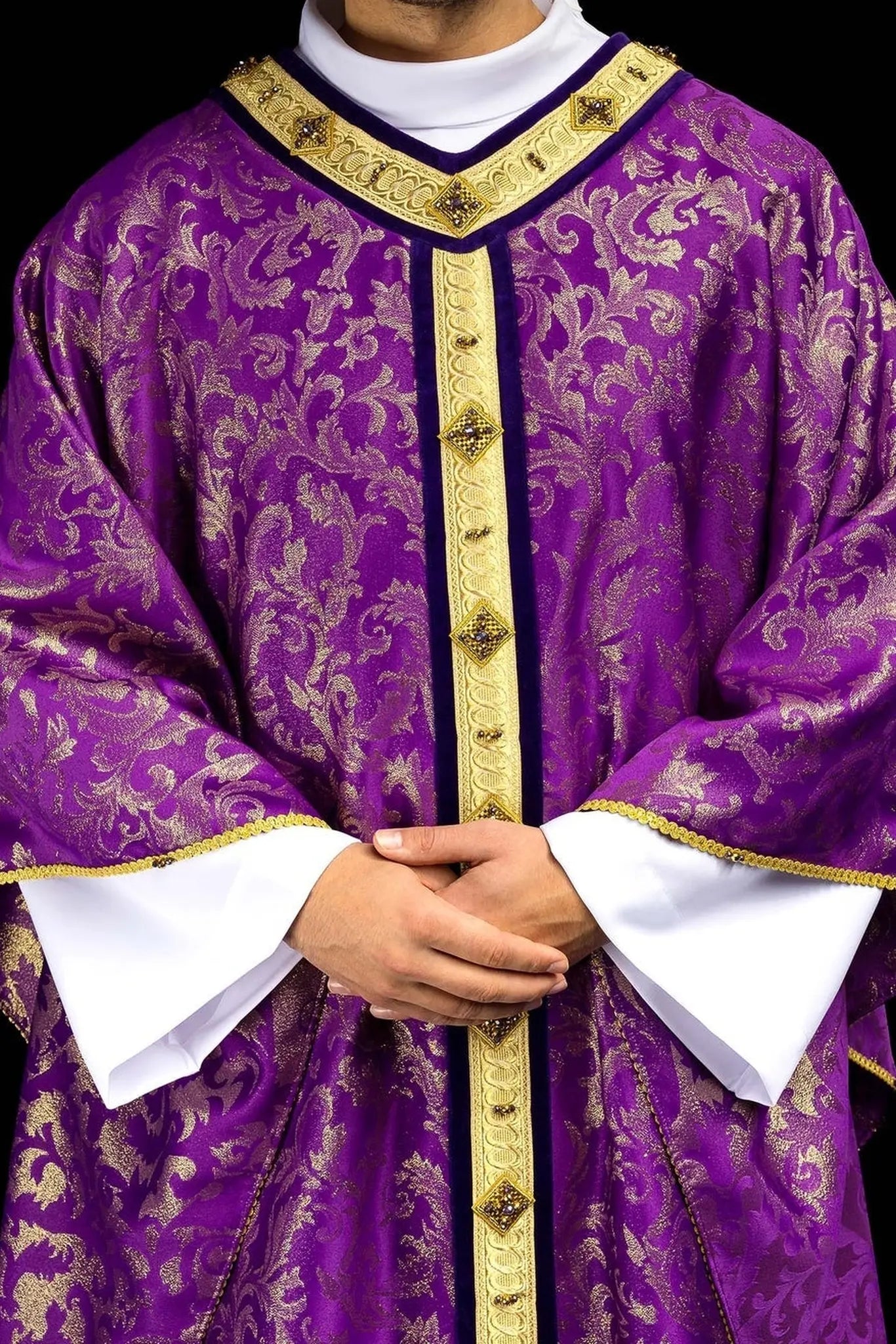
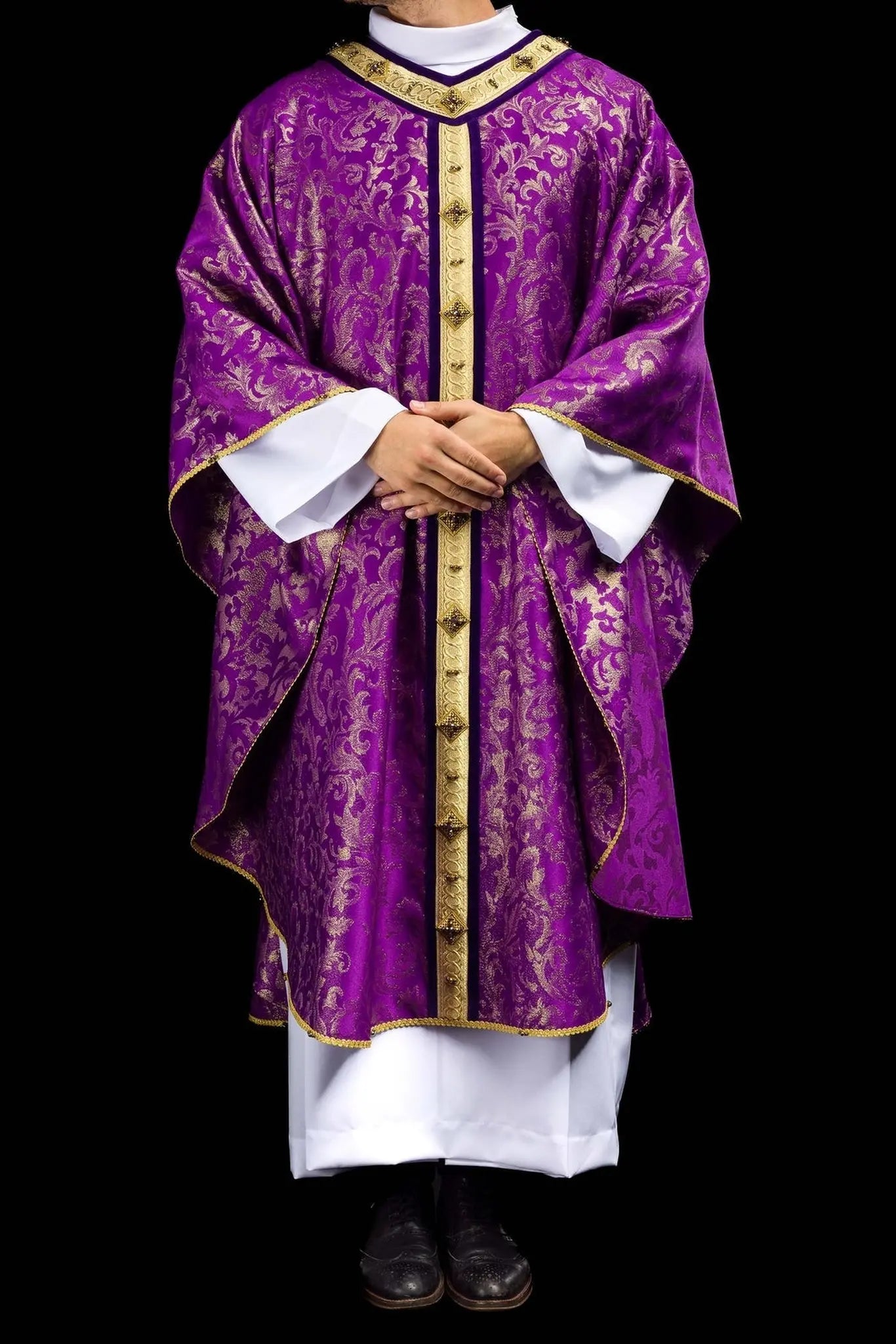
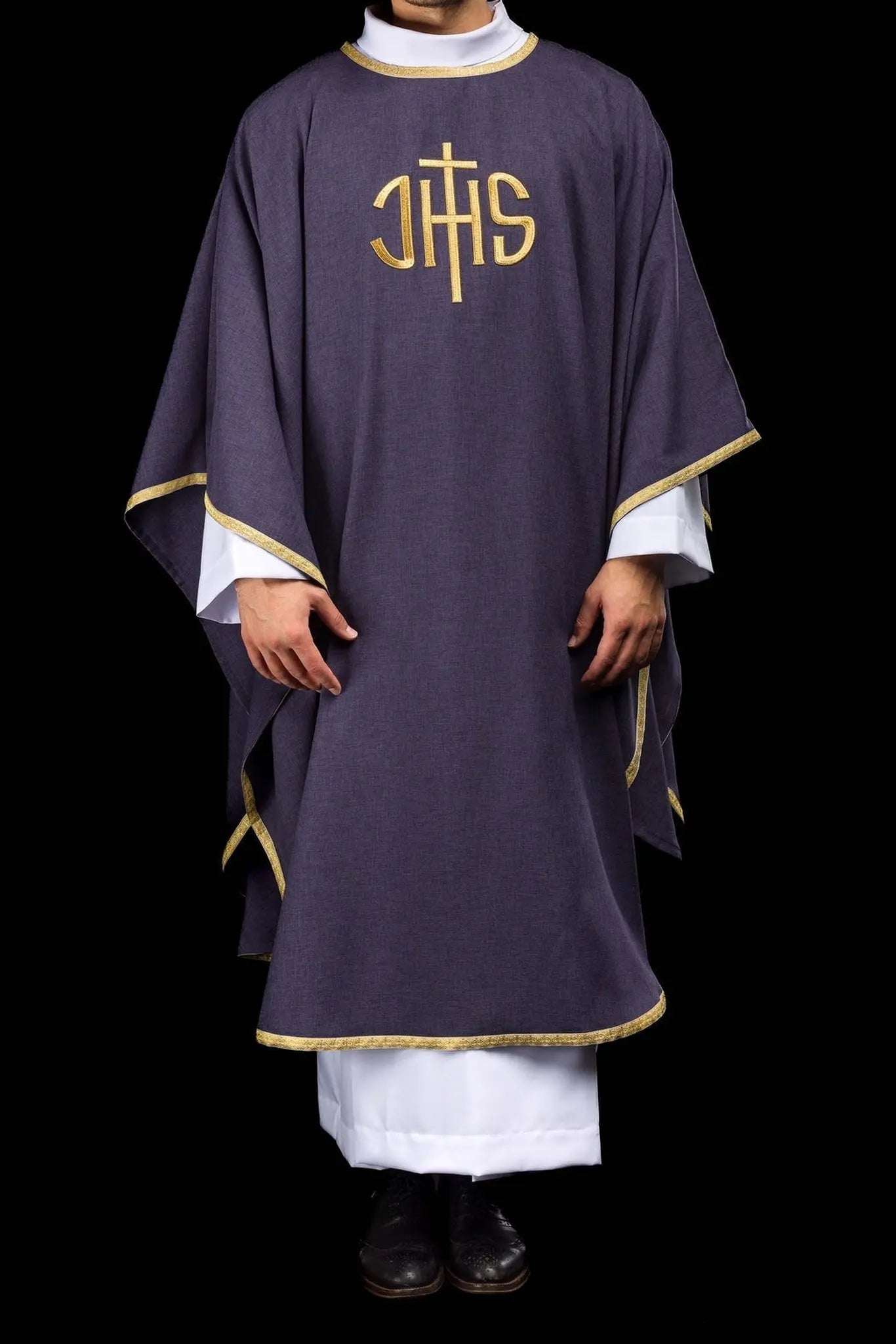
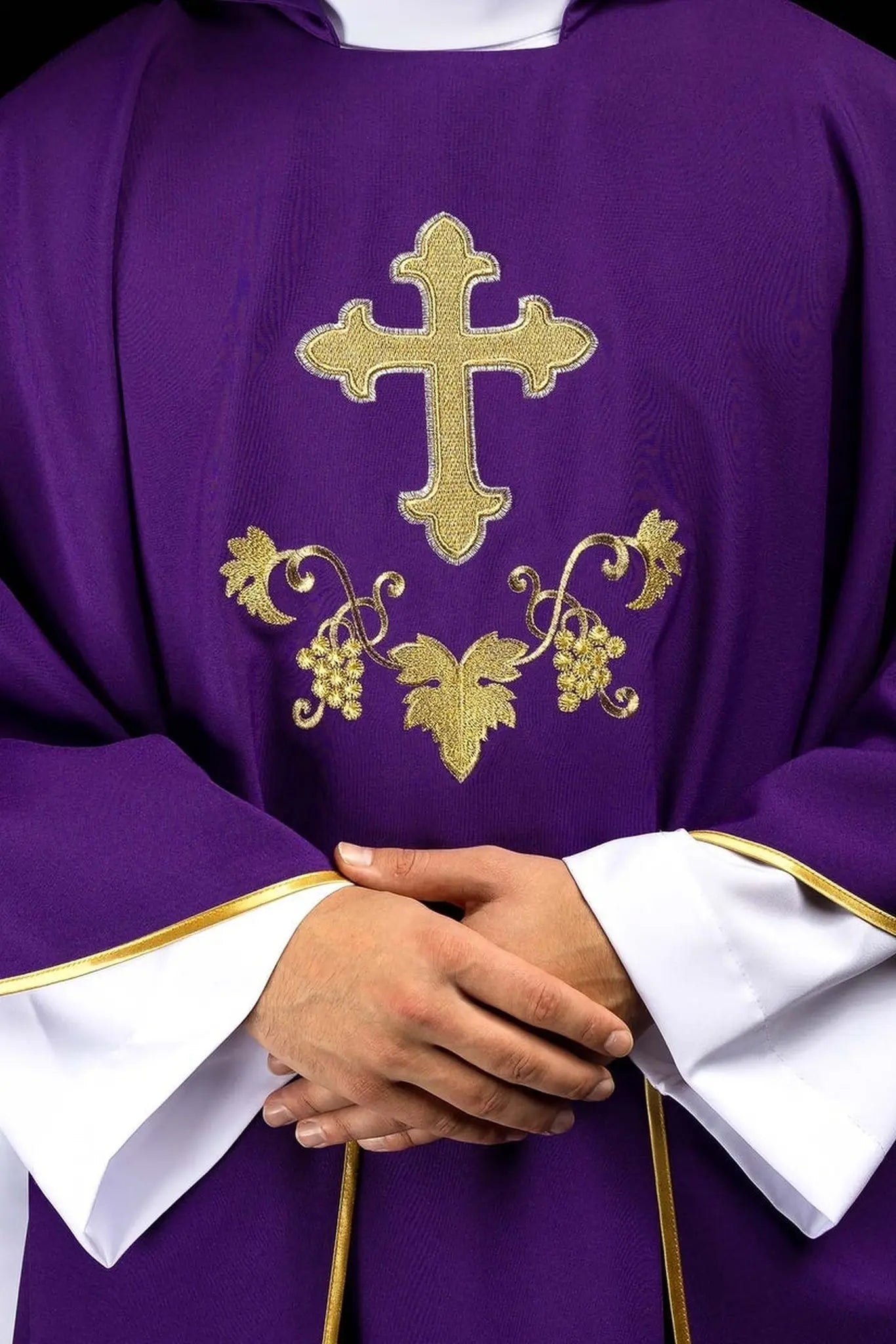
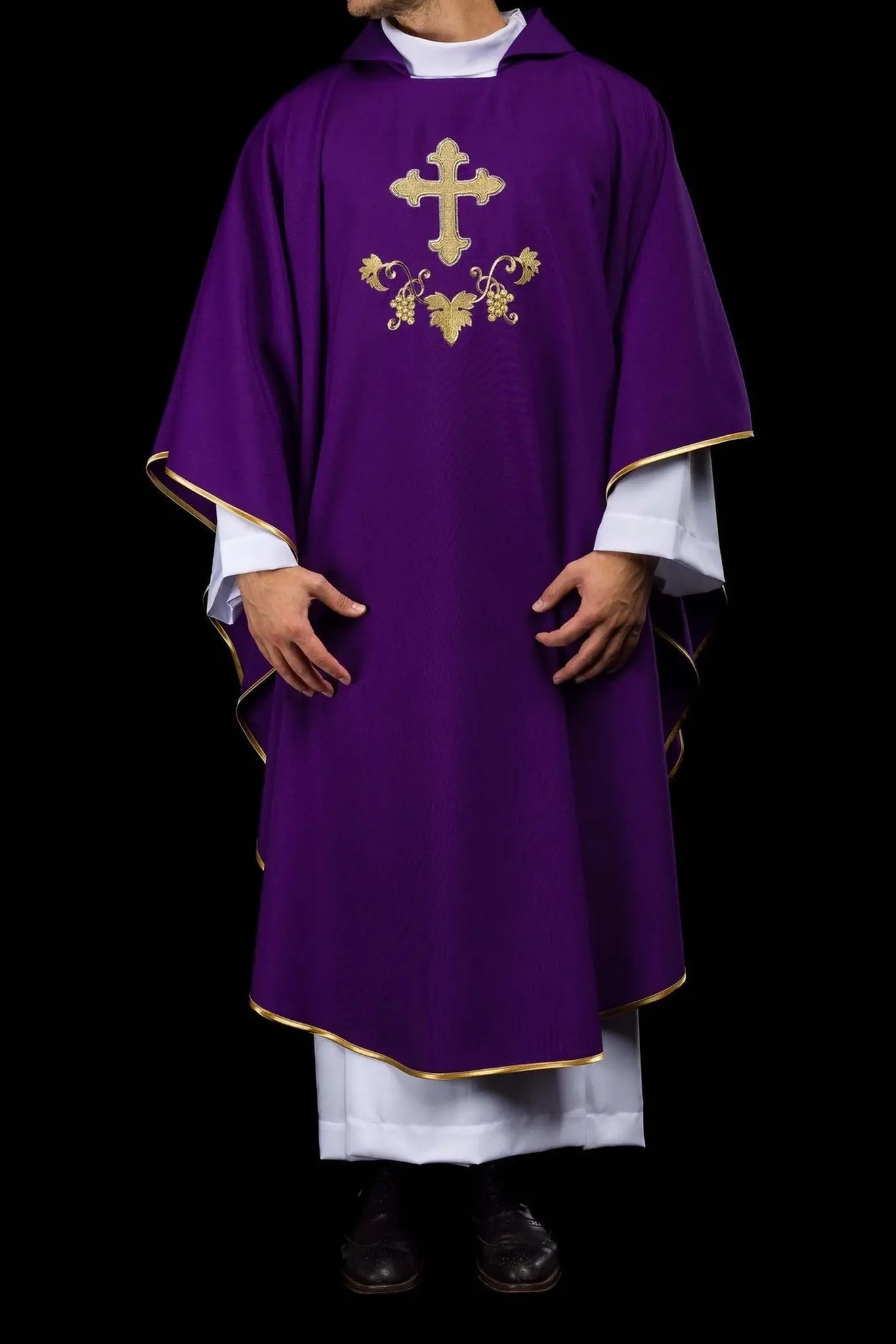
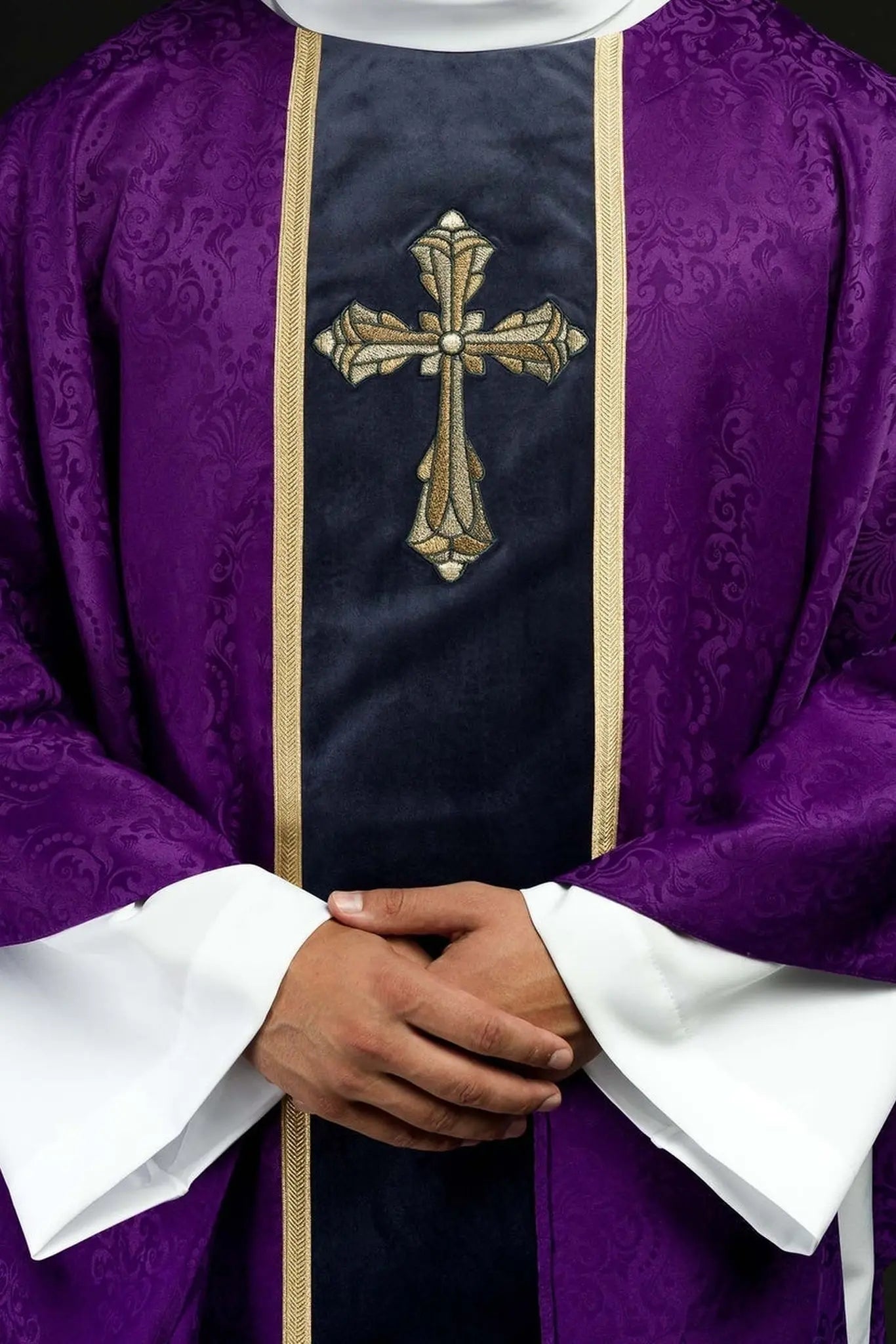
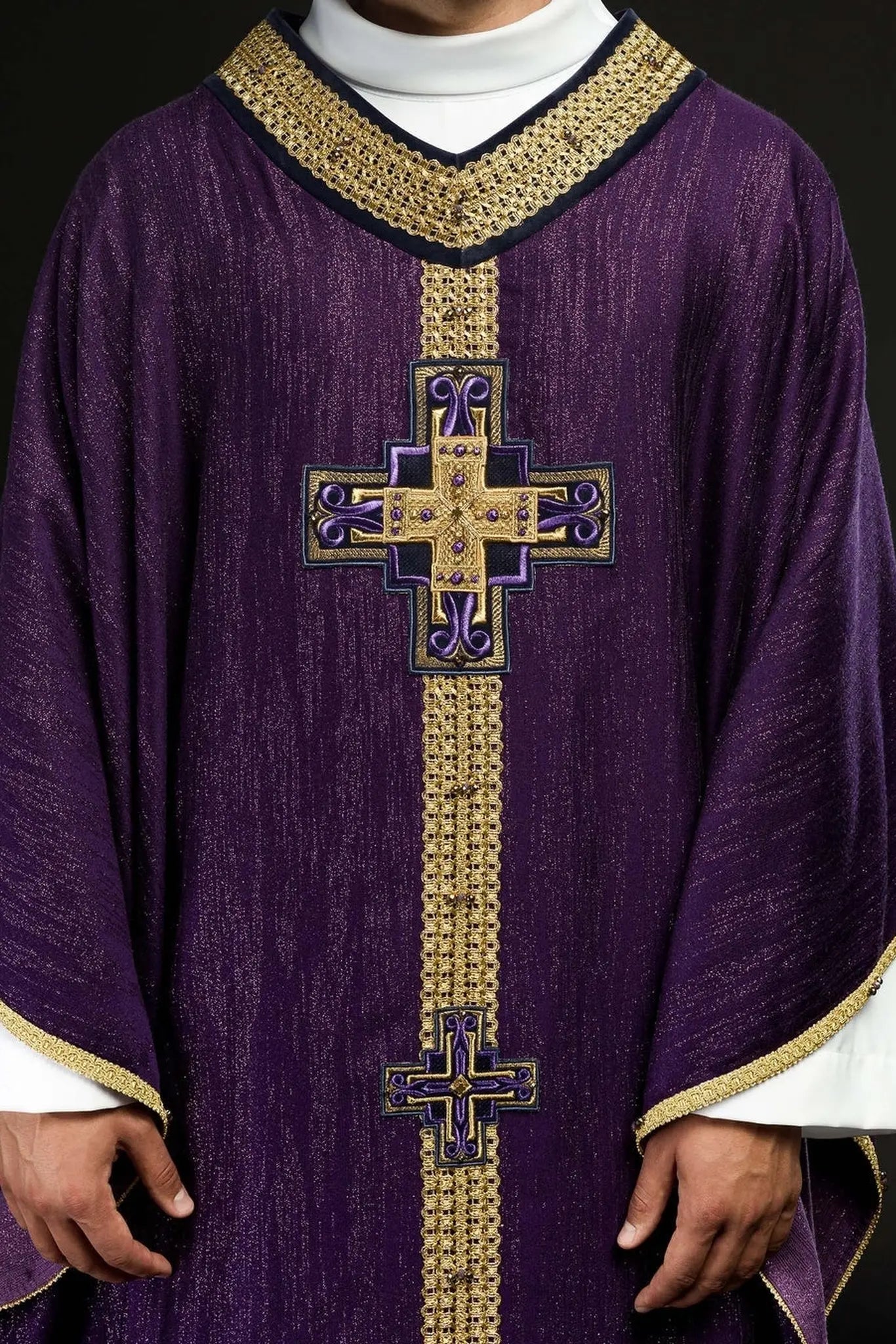
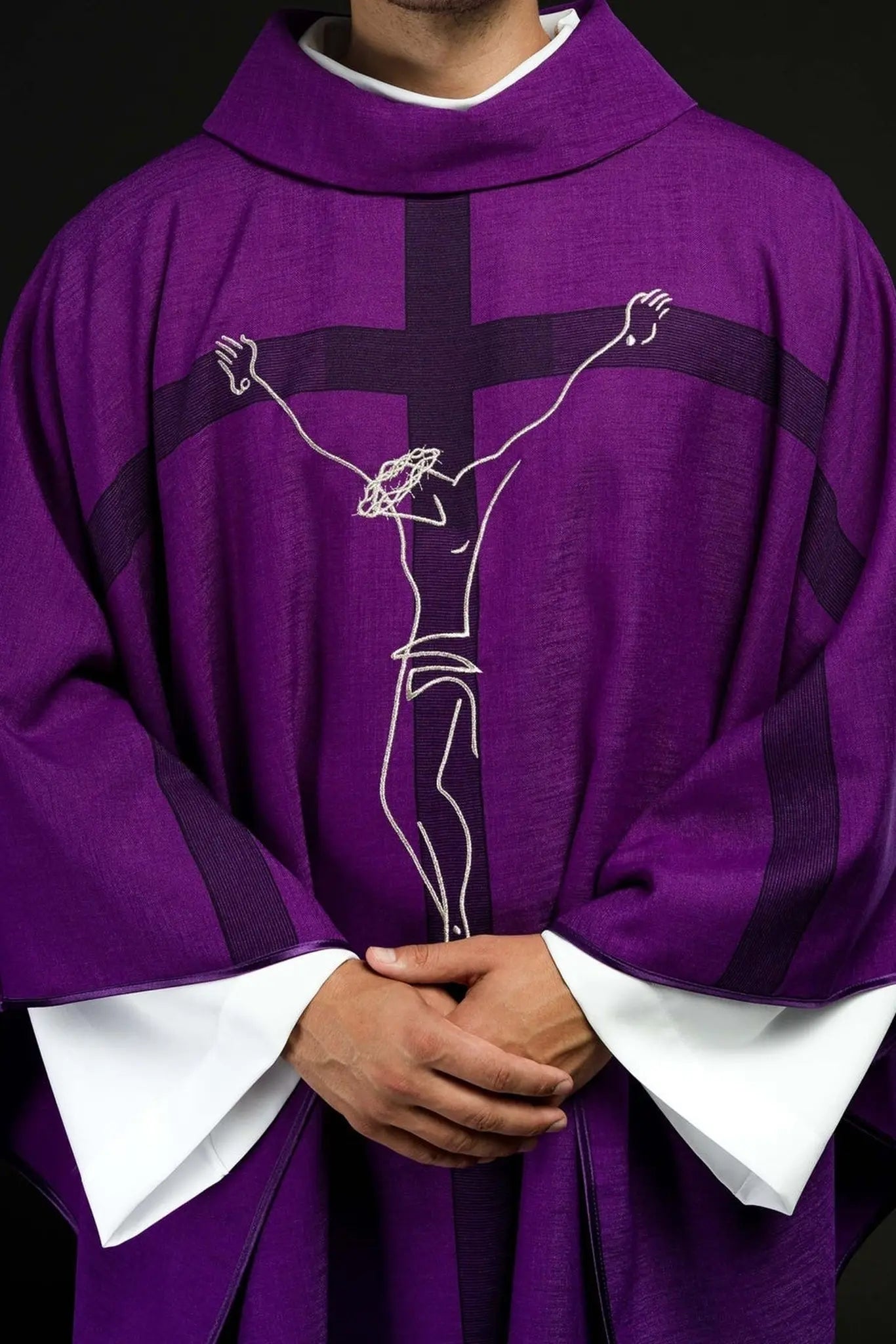
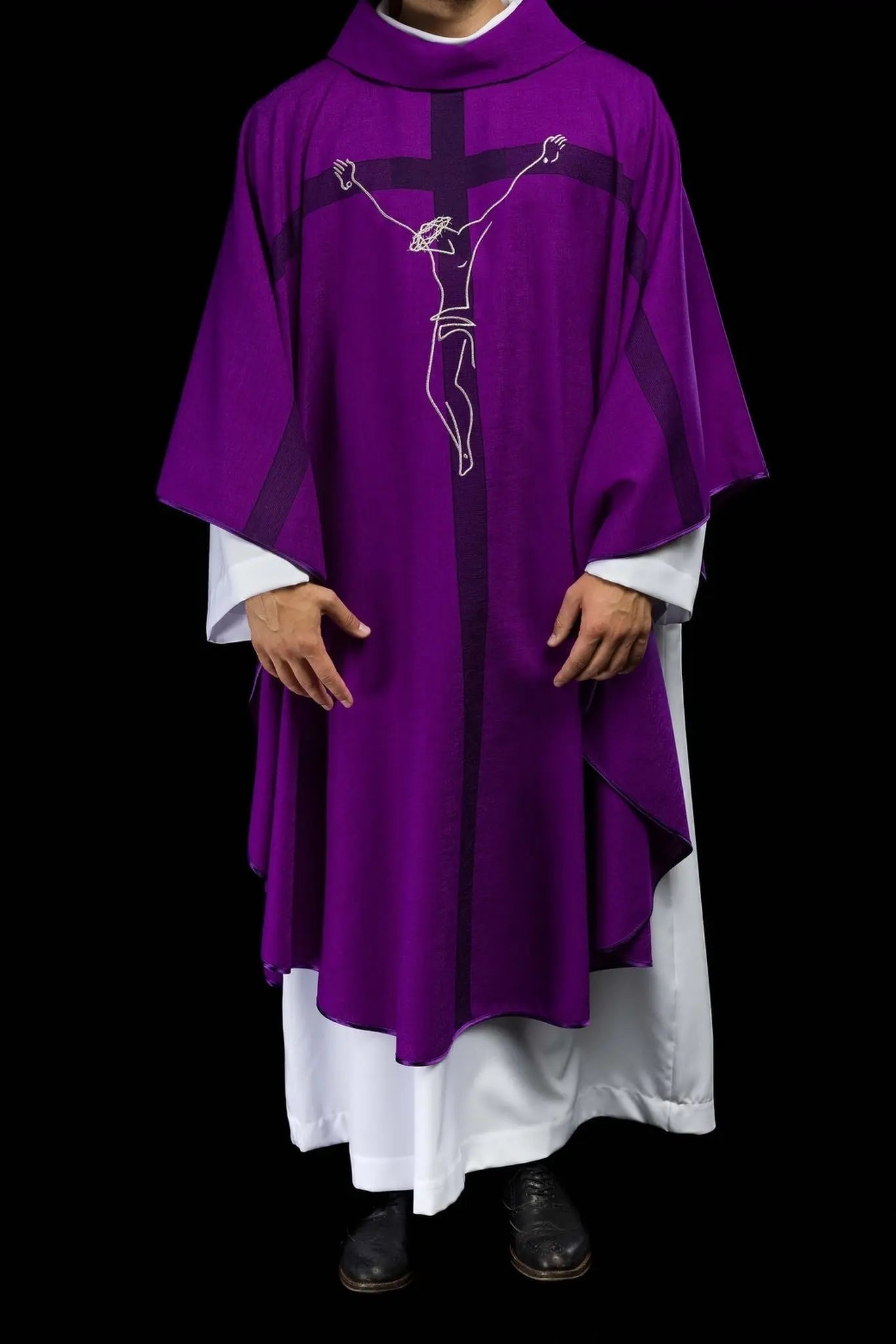
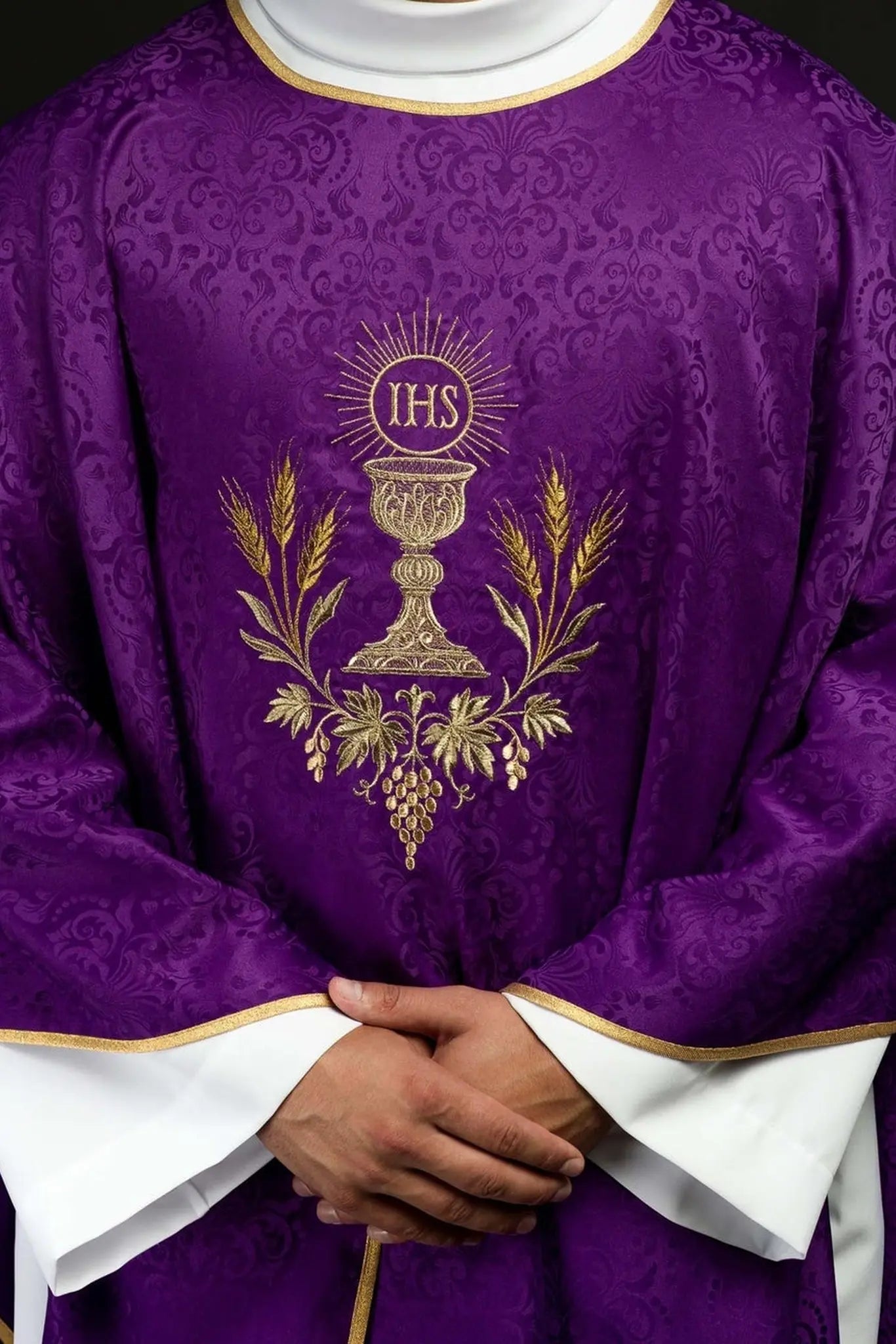
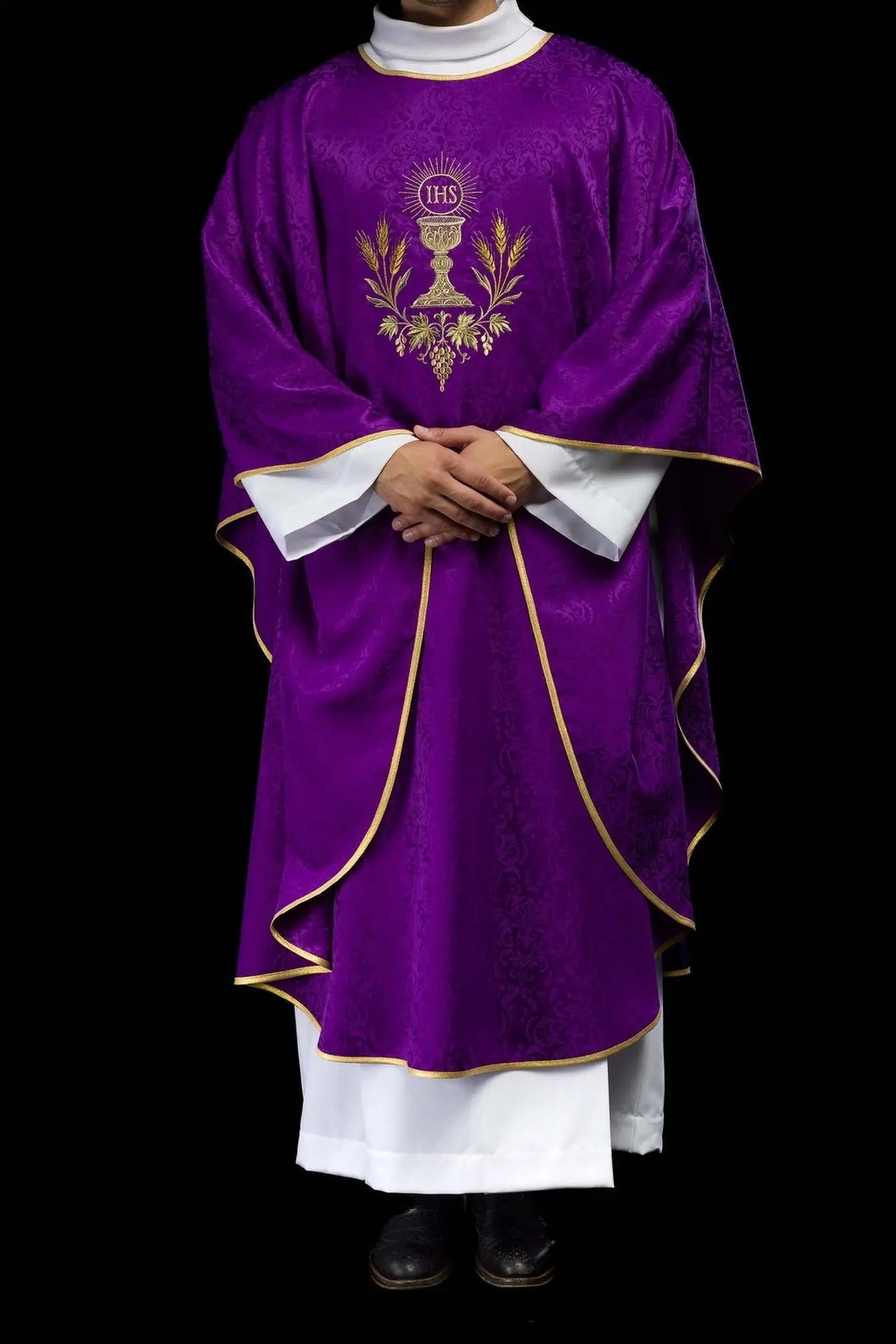
A well chosen purple chasuble can therefore be dignified without being excessive. Embroidery may include crosses, vine patterns, IHS monograms, Eucharistic motifs, or vertical orphreys that draw attention toward the altar and the act of worship. Subtle designs are often preferred for weekday Masses and penitential services, while more elaborate purple chasubles can be suitable for Sundays, solemn parish liturgies within the season, or cathedral and monastic settings where richer vesture is customary.
Styles, cuts, and ornamentation
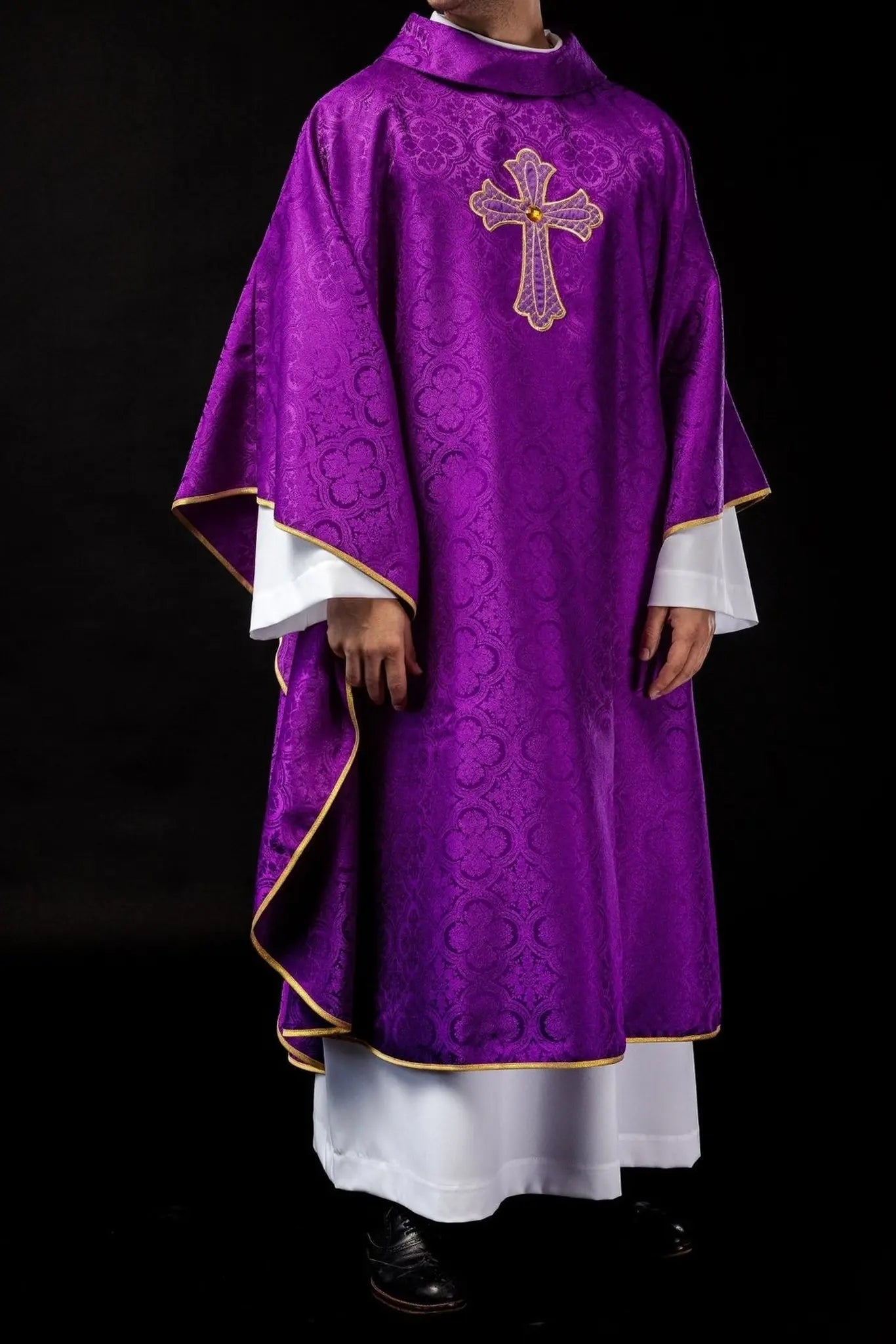
This collection may include flowing Gothic chasubles, more structured Roman chasubles, and other traditional forms depending on the available designs. Gothic chasubles are valued for their ample drape and ease of movement at the altar. Roman chasubles offer a more defined historical silhouette and are often chosen for communities that prefer a traditional visual style. To compare that specific cut, browse Roman chasubles.
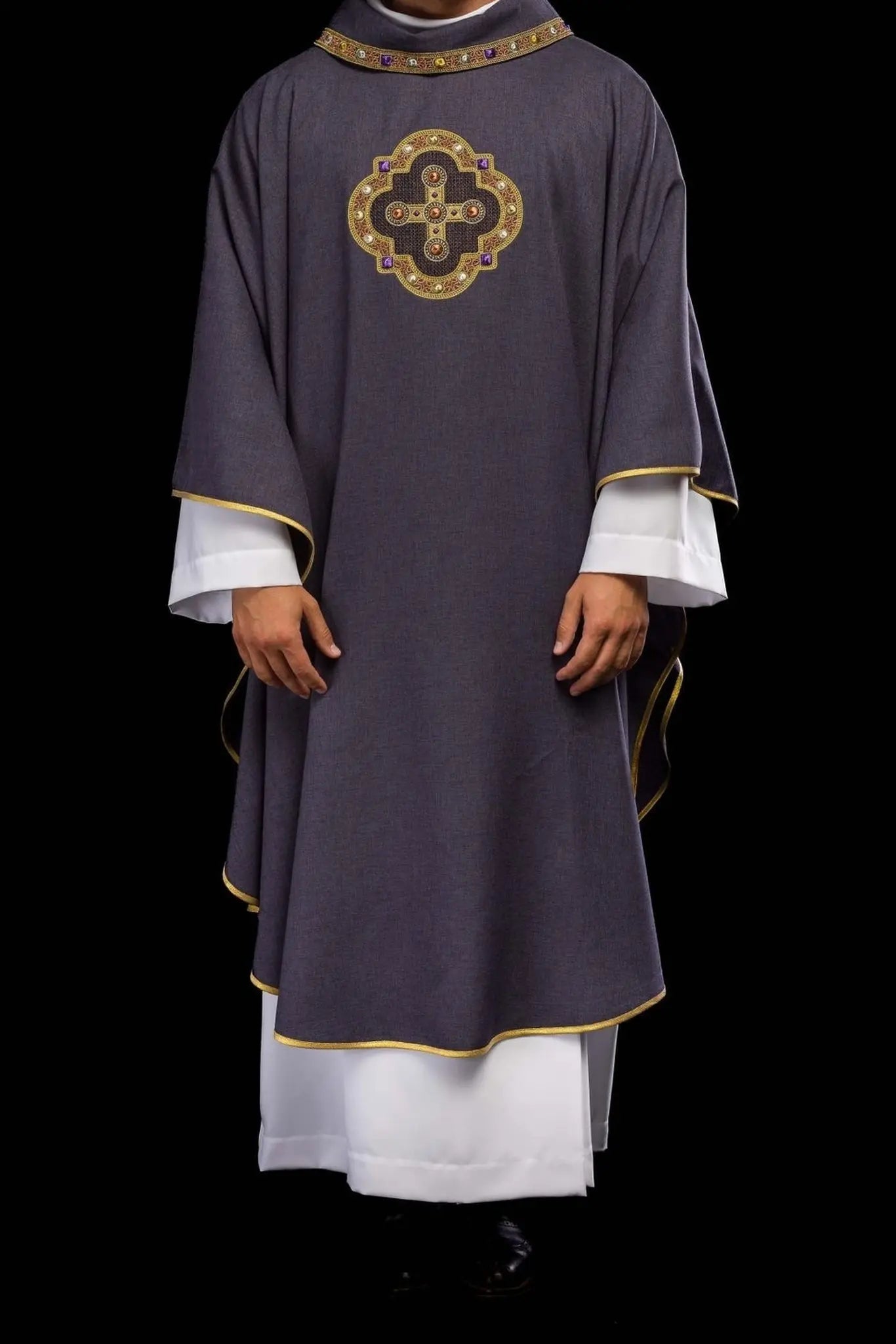
When choosing between styles, consider the type of liturgy, the architecture of the church, and the vesting habits of the celebrant. A lighter, fuller chasuble may be practical for frequent parish use. A more ornamented piece may serve best for Sundays in Advent or Lent. A very restrained chasuble may be especially appropriate for Ash Wednesday, weekday Lenten Masses, penitential services, or retreats. The key is balance: the vestment should be clearly purple, visibly liturgical, and comfortable enough for the priest to celebrate with dignity.
How to choose a purple chasuble
Start with the liturgical purpose. A parish that needs one dependable vestment for the entire season may prefer a versatile design with classic embroidery and a balanced shade of violet. A sacristy with several purple vestments may choose one simpler chasuble for weekdays and one more formal chasuble for Sundays. If the chasuble will be used often, pay attention to the fabric weight, lining, neckline, and way the vestment falls over the alb. Comfort is not a secondary matter; a chasuble that sits well helps the celebrant move naturally during the entrance procession, the Liturgy of the Word, the Eucharistic Prayer, and Communion.
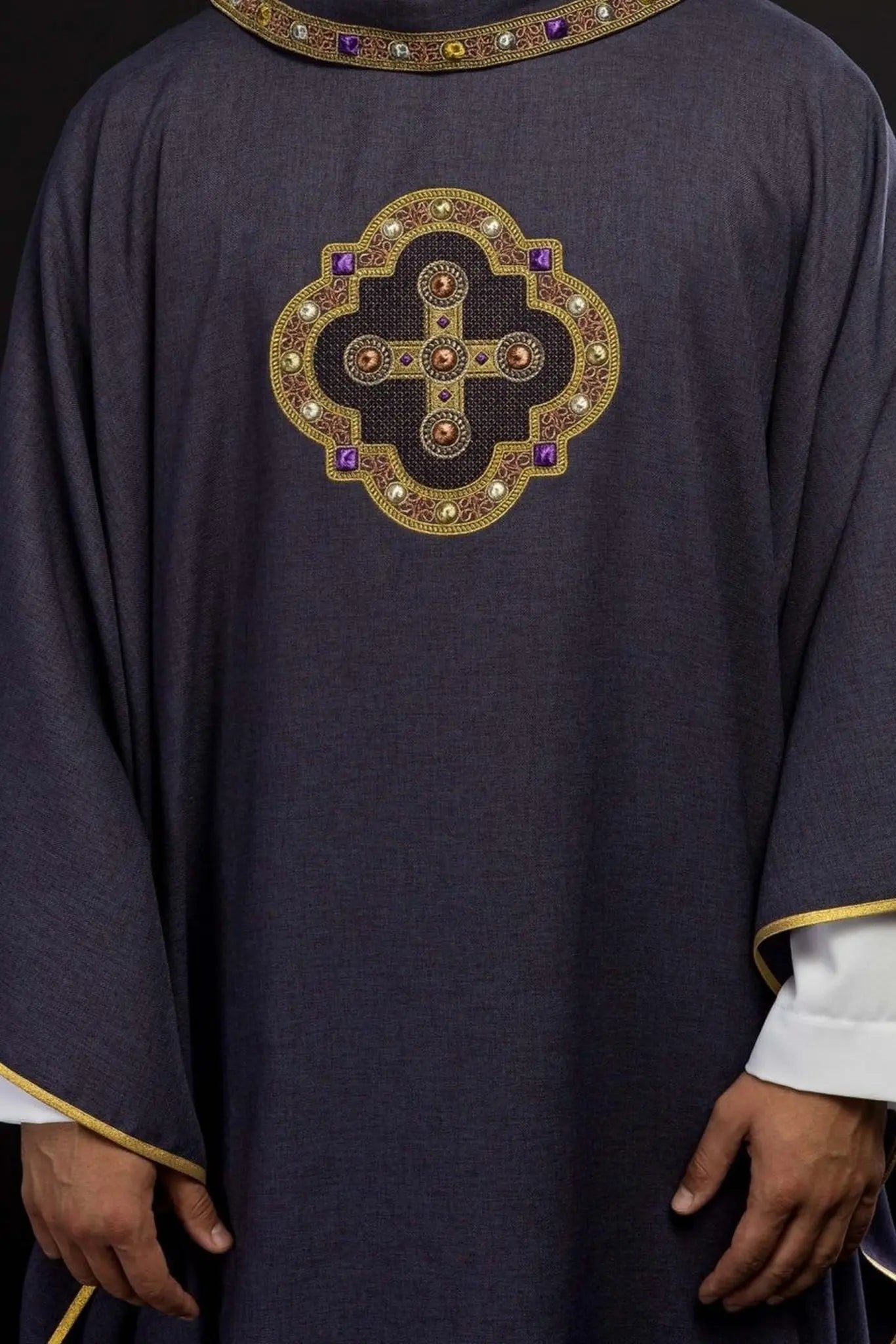
Next, consider the shade and embroidery. Some purple chasubles are deep and solemn, suited to Lent and penitential rites. Others are slightly brighter violet, often fitting Advent well because the season carries a tone of hopeful preparation. Embroidery can either create a strong focal point or remain understated. A central orphrey, cross, or Eucharistic symbol can make the chasuble suitable for parish Sundays, while discreet patterning may be better for daily Mass. Where multiple clergy serve together, matching or harmonized vestments help create visual unity without requiring every item to be identical.
Related vestments and sanctuary textiles
A purple chasuble is often part of a larger liturgical set. The celebrant normally wears a stole beneath the chasuble, so it is worth checking purple clergy stoles when replacing or completing a vestment set. For the ambo or pulpit, coordinated purple pulpit covers can extend the seasonal color through the sanctuary. These related items are especially useful for Advent missions, Lenten retreats, parish penance services, and churches that want a coherent seasonal appearance.
Adjacent chasuble collections may be useful when building a complete sacristy wardrobe. Green chasubles serve Ordinary Time, while red chasubles are used for Palm Sunday, Good Friday, Pentecost, martyrs, and the Holy Spirit according to the calendar. For Gaudete and Laetare, use rose chasubles rather than standard purple. Keeping these colors distinct helps avoid confusion and respects the liturgical meaning assigned to each season and feast.
Craftsmanship and practical care
Purple chasubles should combine liturgical clarity with durable construction. Fabric, lining, embroidery, and finishing all affect how the vestment looks after repeated use. A good chasuble should hang evenly, allow the arms to move comfortably, and maintain its shape during processions and at the altar. Embroidery should be placed so that it remains visible without restricting the fall of the garment. The best design is not always the most ornate one; it is the one that serves the rite, the celebrant, and the community with dignity.
Care should follow the instructions provided for the specific vestment. Many embroidered liturgical garments require gentle handling and professional cleaning rather than machine washing. The chasuble should be stored on a broad hanger or laid flat in a clean, dry place so that folds do not crush the fabric or embroidery. After use, allow the vestment to air before storage. Avoid direct heat on embroidered areas, and use caution when pressing. Good care preserves the color, structure, and sacred character of the vestment over many liturgical seasons.
For parishes, chapels, and religious communities
This collection is intended for communities that need purple chasubles with clear liturgical purpose. A parish may need a main chasuble for Sunday Mass, additional simpler chasubles for concelebrants, or a set suitable for Lenten missions and reconciliation services. A chapel may prefer one dignified piece that can serve both Advent and Lent. A monastery or seminary may require several coordinated purple vestments for daily use. In each case, the same principle applies: the vestment should be beautiful, seasonally correct, and appropriate for the reverence of the Eucharist.
When planning purchases, think beyond a single day. Purple returns every liturgical year and is used for long stretches of the calendar. A dependable purple chasuble is therefore not occasional decoration but a core sacristy item. It should be chosen with the same care as white, green, red, and rose vestments, so the community can celebrate each season with visual consistency and theological accuracy.
Frequently Asked Questions (FAQ)
Are purple chasubles used in both Advent and Lent?
Yes. Purple or violet chasubles are used throughout most of Advent and Lent. In Advent the color emphasizes preparation and expectation; in Lent it emphasizes repentance, discipline, and conversion. A single well chosen purple chasuble can serve both seasons if the design is balanced and not tied too strongly to only one theme.
Is purple the same as rose for Gaudete and Laetare Sunday?
No. Rose is a distinct liturgical color used on Gaudete Sunday in Advent and Laetare Sunday in Lent where the custom is observed. Purple remains the standard color for the rest of those seasons. Parishes that celebrate these Sundays with the proper color should use a rose chasuble rather than substituting an ordinary purple one.
Who wears a purple chasuble?
The chasuble is worn by the priest or bishop who celebrates Mass. Deacons do not wear chasubles; their proper outer vestment is the dalmatic. A purple stole may be worn with the chasuble by the celebrant and may also be used separately for certain rites where a stole is appointed.
Should a parish choose a simple or ornate purple chasuble?
Both can be appropriate. A simple purple chasuble is useful for weekday Masses, Ash Wednesday, penance services, and retreats. A more ornamented design may be chosen for Sundays in Advent or Lent. Many sacristies benefit from having one restrained vestment for frequent use and one more formal option for principal celebrations.
What related items help complete a purple liturgical set?
Matching purple stoles, pulpit covers, chalice veils, and other sanctuary textiles can create a coherent seasonal setting. The most important item is the celebrant vestment, but coordinated accessories help the whole church reflect the penitential or preparatory character of the season.