Rose Vestments for Gaudete and Laetare Sunday
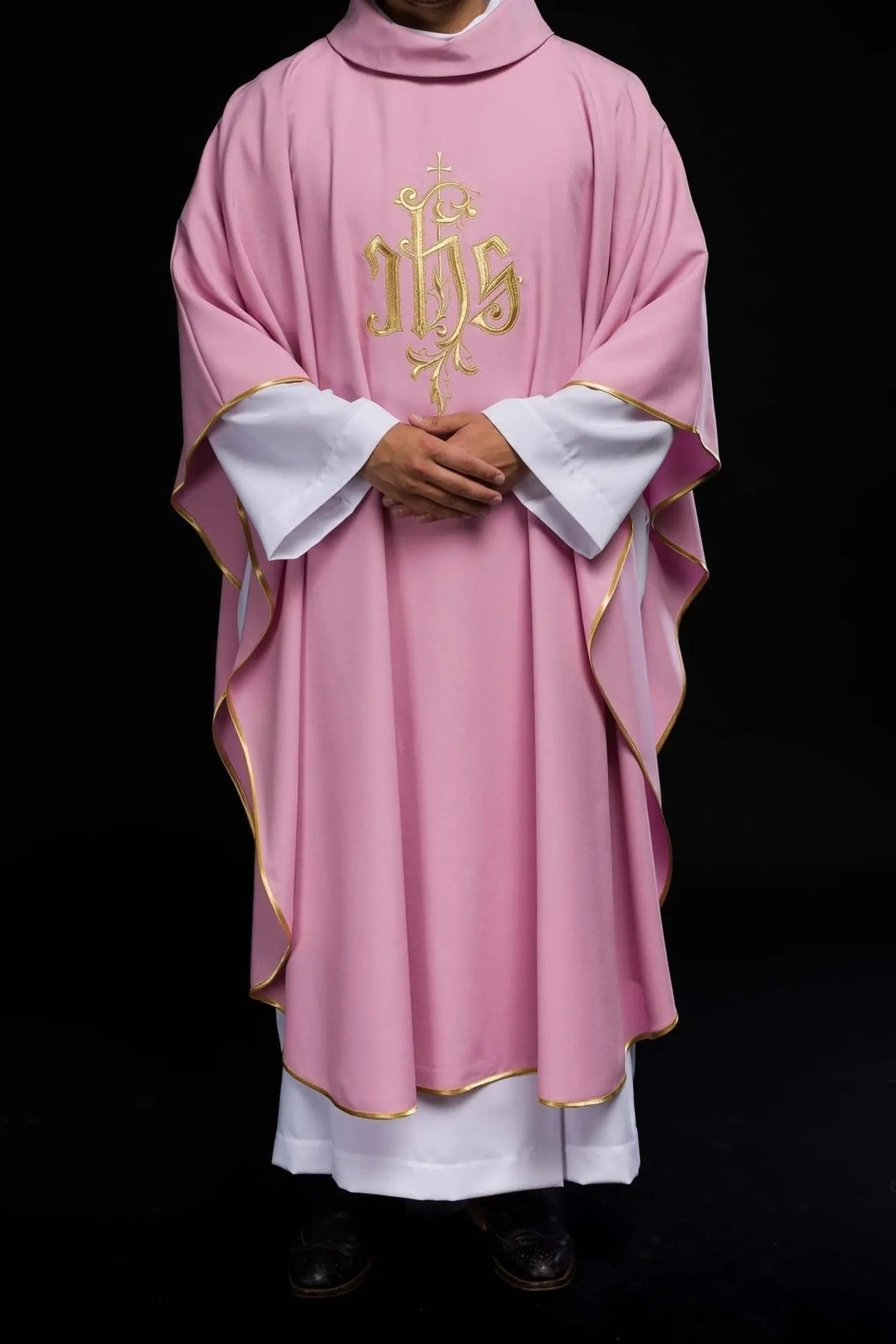
Rose vestments have a precise place in the liturgical year. This collection is prepared for Gaudete Sunday in Advent and Laetare Sunday in Lent, the two moments when the Church permits rose as a sign of joyful expectation within seasons marked by preparation and penance. Instead of presenting rose simply as a decorative pink tone, the selection focuses on vestments and altar textiles that help the celebration express a measured, reverent joy: the nearness of Christmas during Advent and the approaching Paschal mystery during Lent.
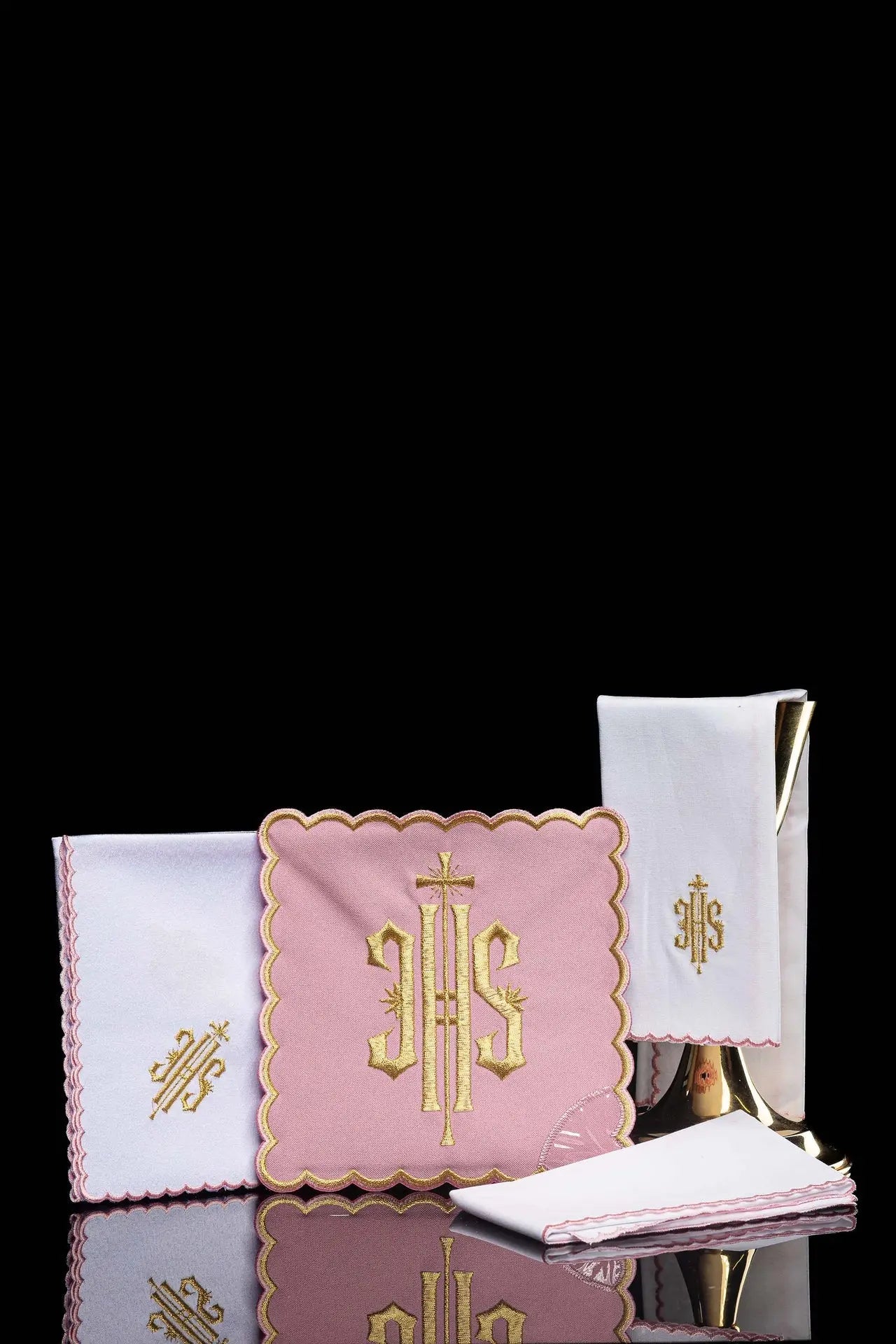
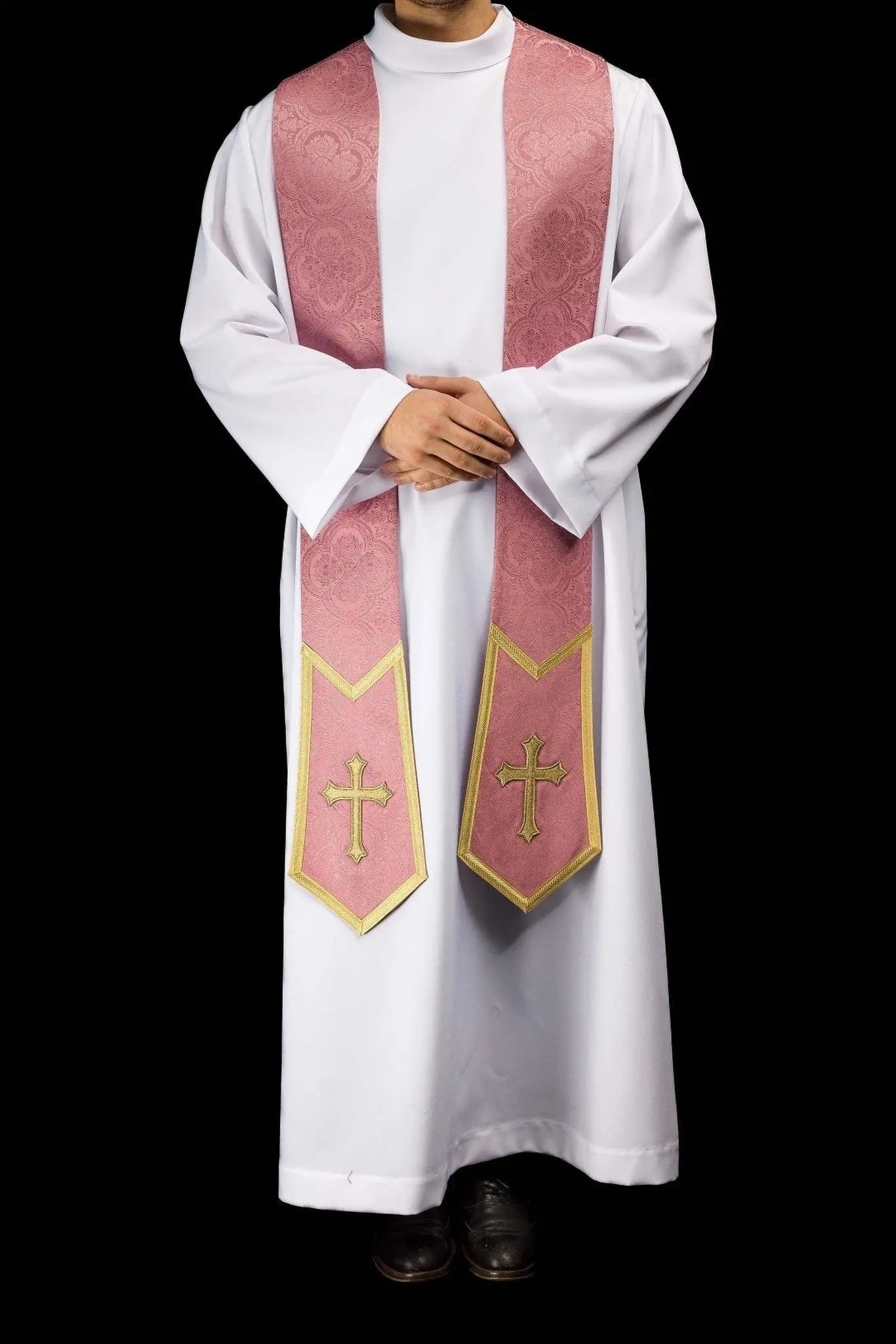
The collection includes rose chasubles for priests and bishops, clergy stoles and deacon stoles, rose dalmatics for deacons, chalice veils, and chalice linen sets suited to the same liturgical setting. These pieces can be chosen as a coordinated set for the sanctuary or as individual additions to an existing parish vestment wardrobe. When a parish already owns purple vestments for the penitential weeks, rose pieces create a clear visual distinction for the particular Sundays traditionally associated with Gaudete and Laetare.
Liturgical meaning of rose for Gaudete and Laetare
Rose is used only on limited occasions, which is why it often draws special attention when it appears at Mass. On Gaudete Sunday, the Third Sunday of Advent, rose points to the joy of the Lord's coming while Advent continues. On Laetare Sunday, the Fourth Sunday of Lent, it brings a note of consolation and hope before Holy Week. The color does not replace the theological seriousness of the season; it softens the visual tone of purple with a restrained brightness that belongs to these Sundays.
For churches planning the full liturgical year, this collection sits naturally between the broader Advent collection and the Lent collection. It is especially useful for parishes that want the vestment color to match the appointed liturgical day rather than relying on purple for every Sunday of Advent and Lent. Rose can also be coordinated with metal-thread embroidery, cross motifs, IHS symbols, or more restrained woven patterns depending on the style of the church interior and the solemnity of the celebration.
What belongs in this collection
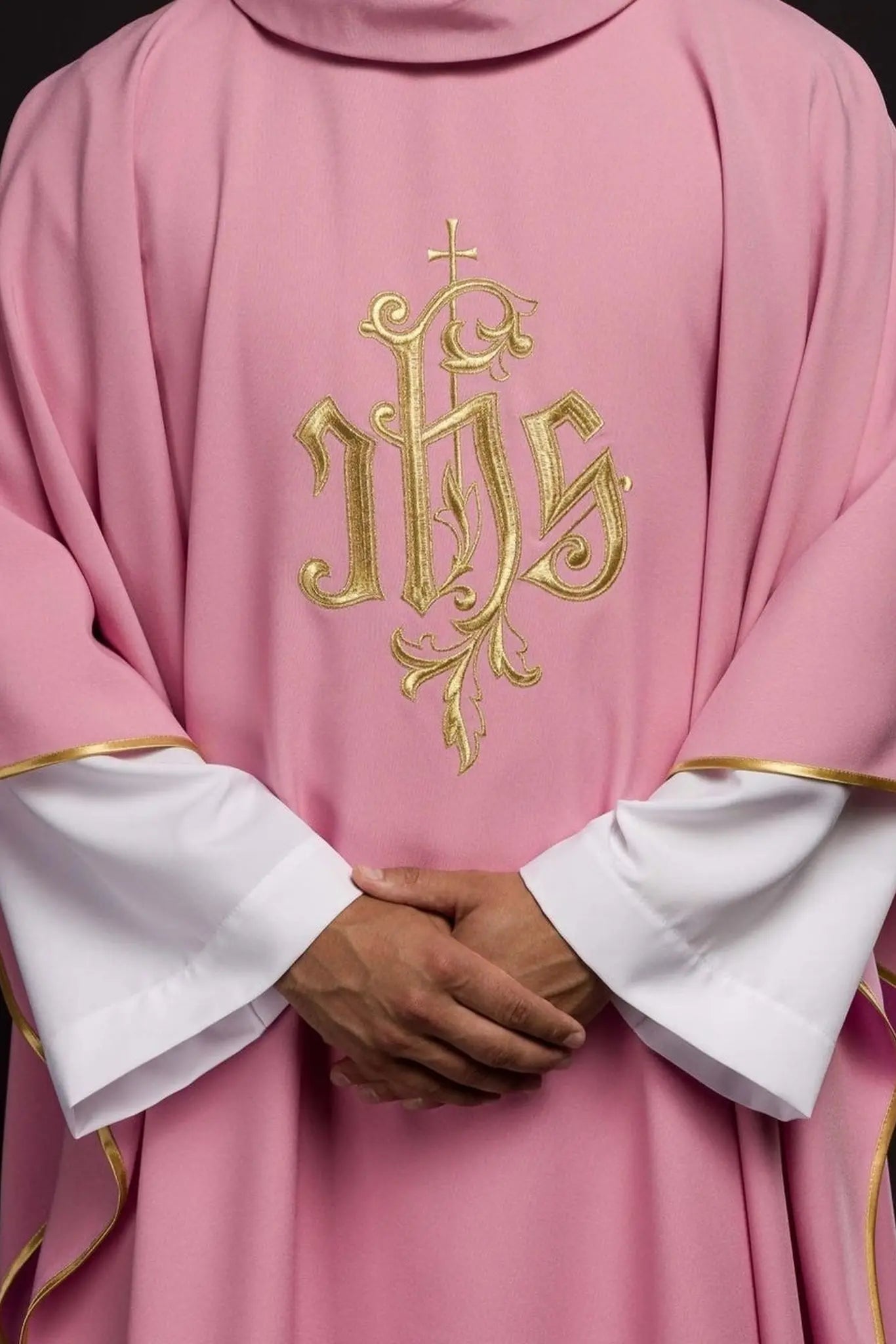
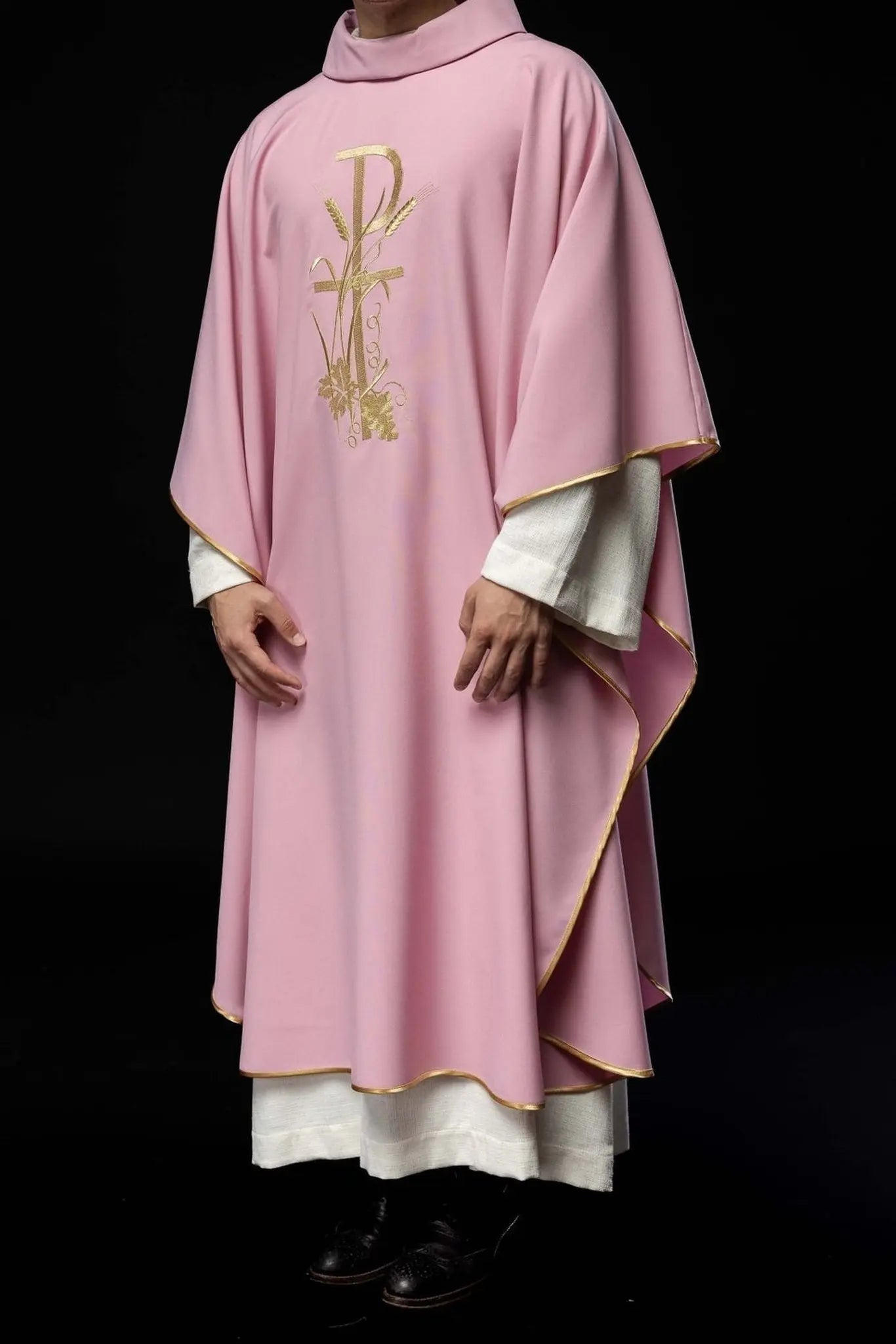
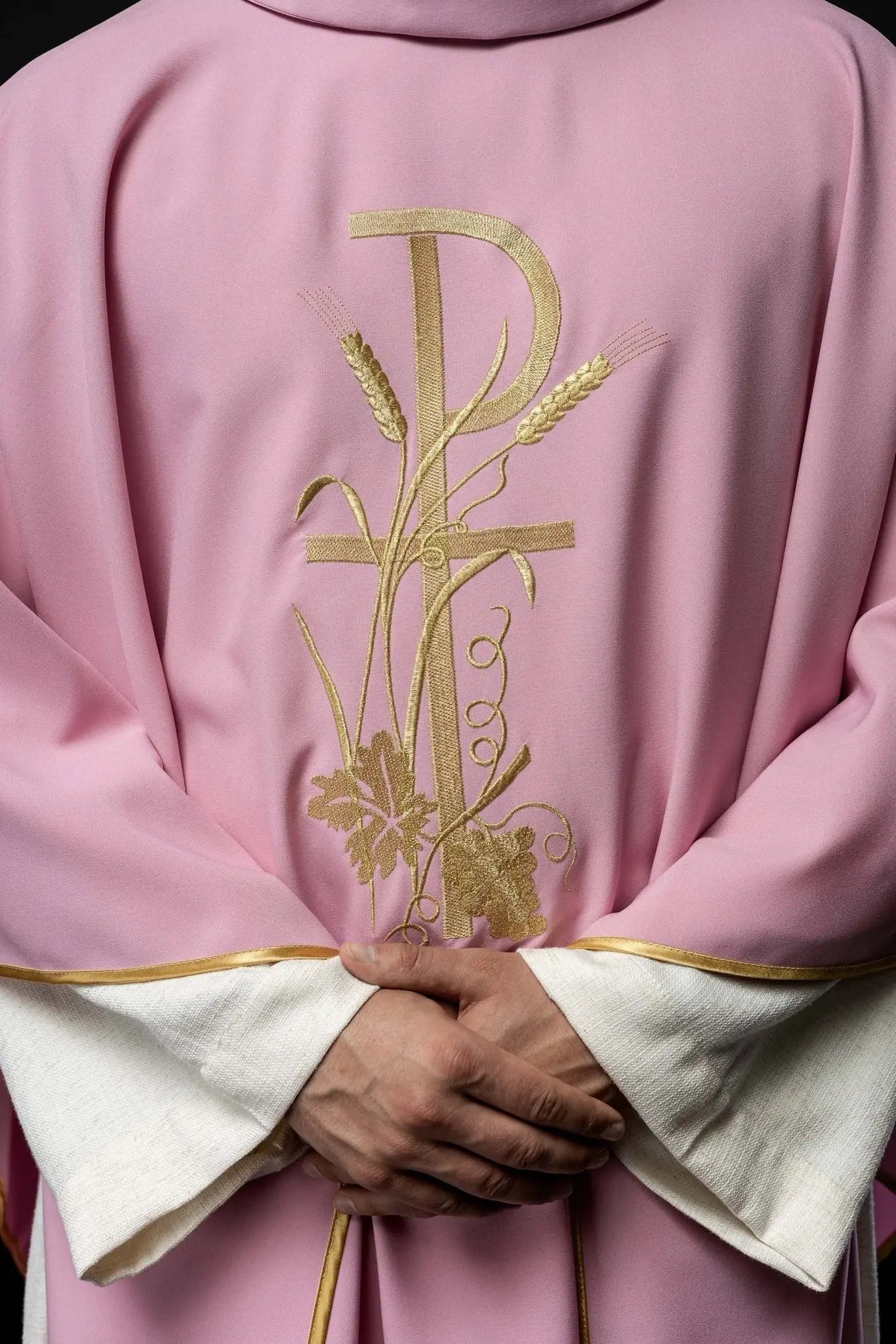
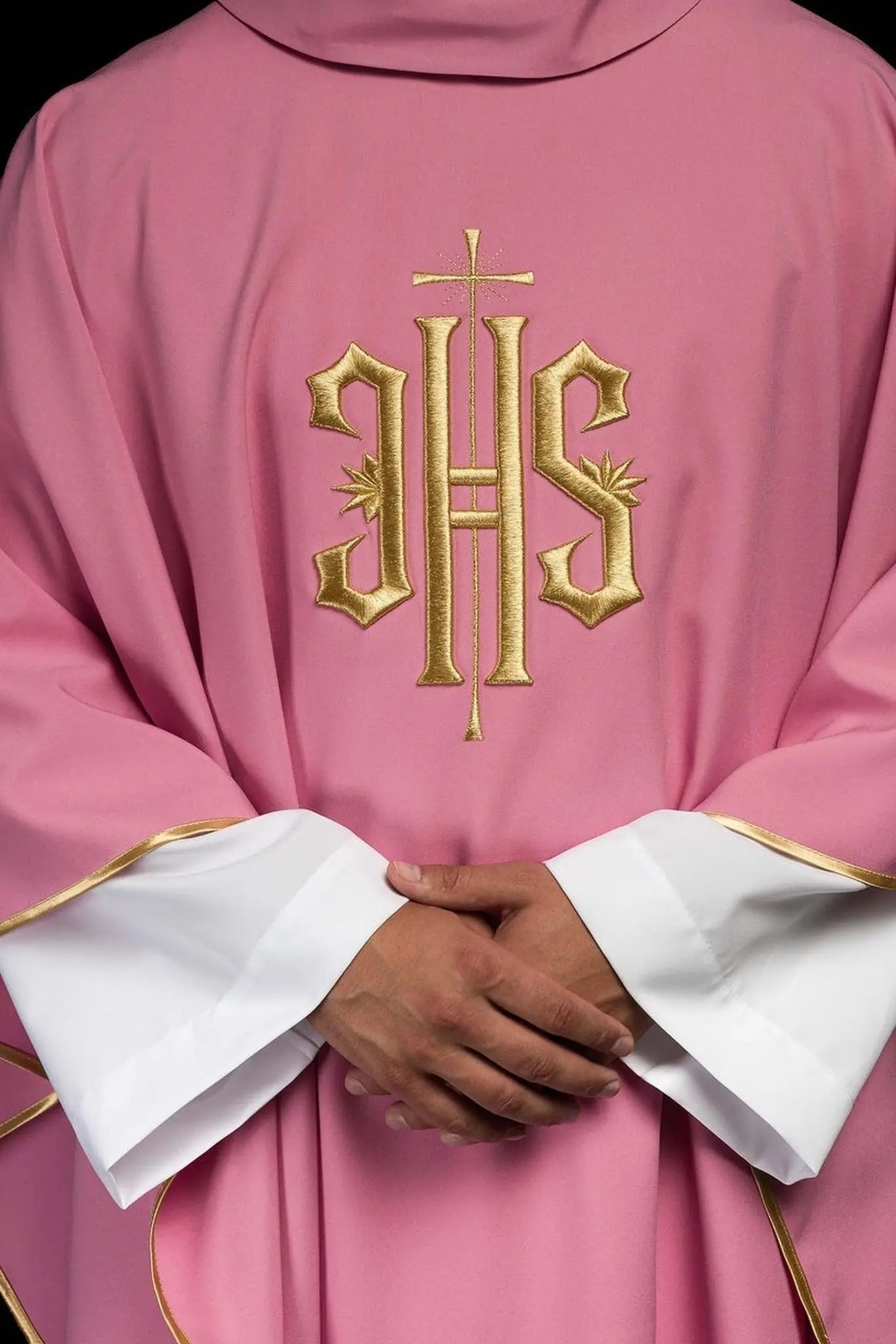
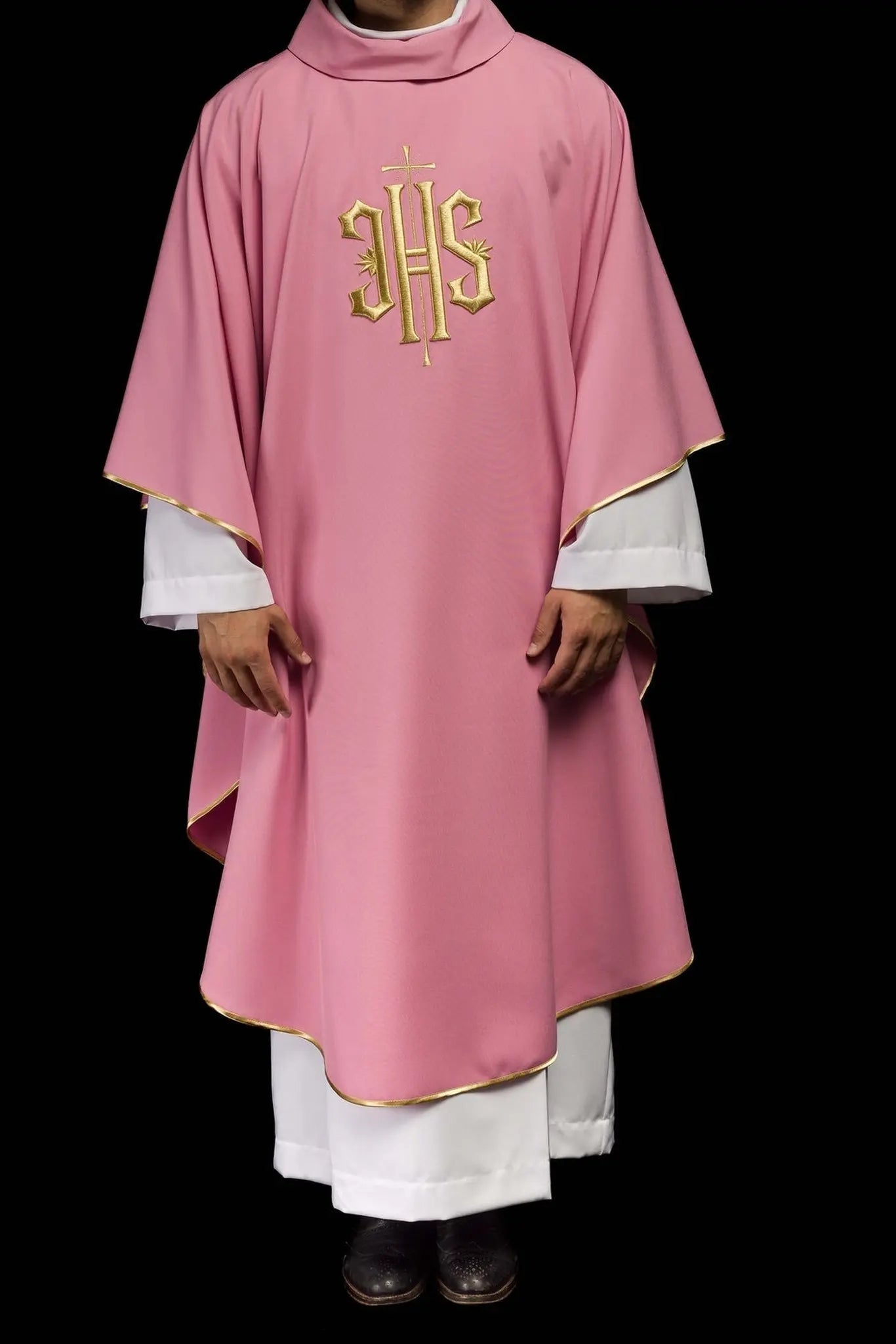
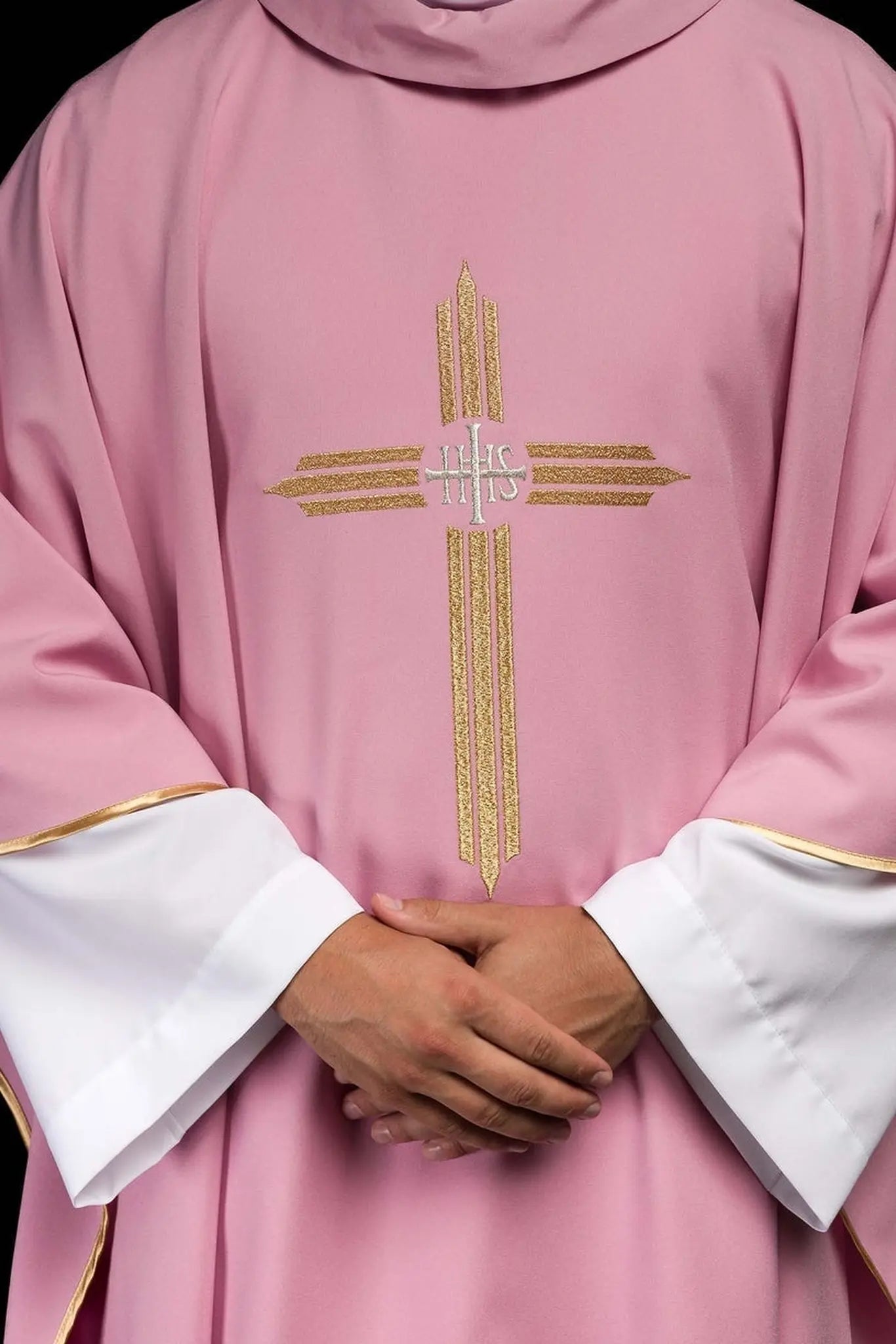
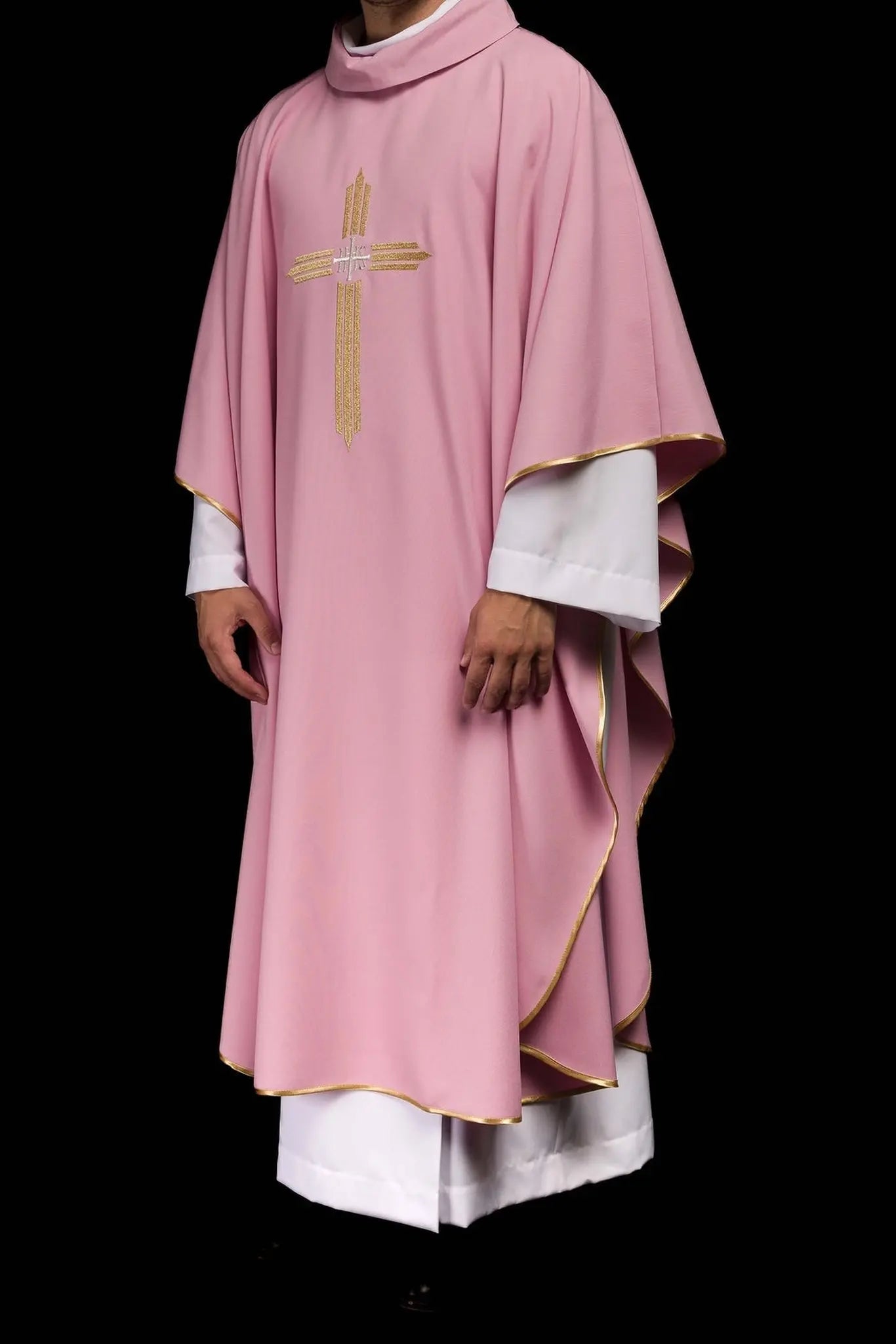
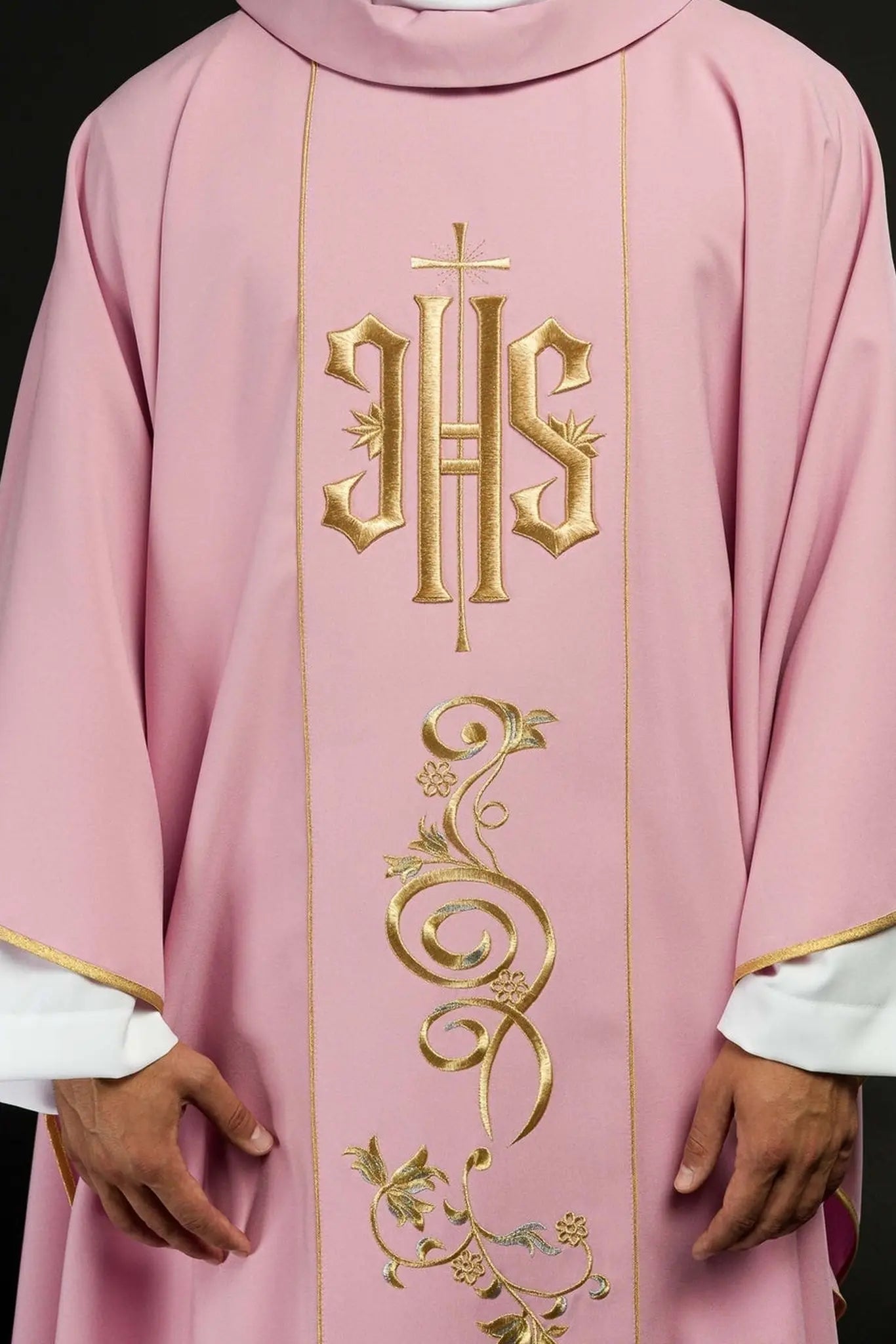
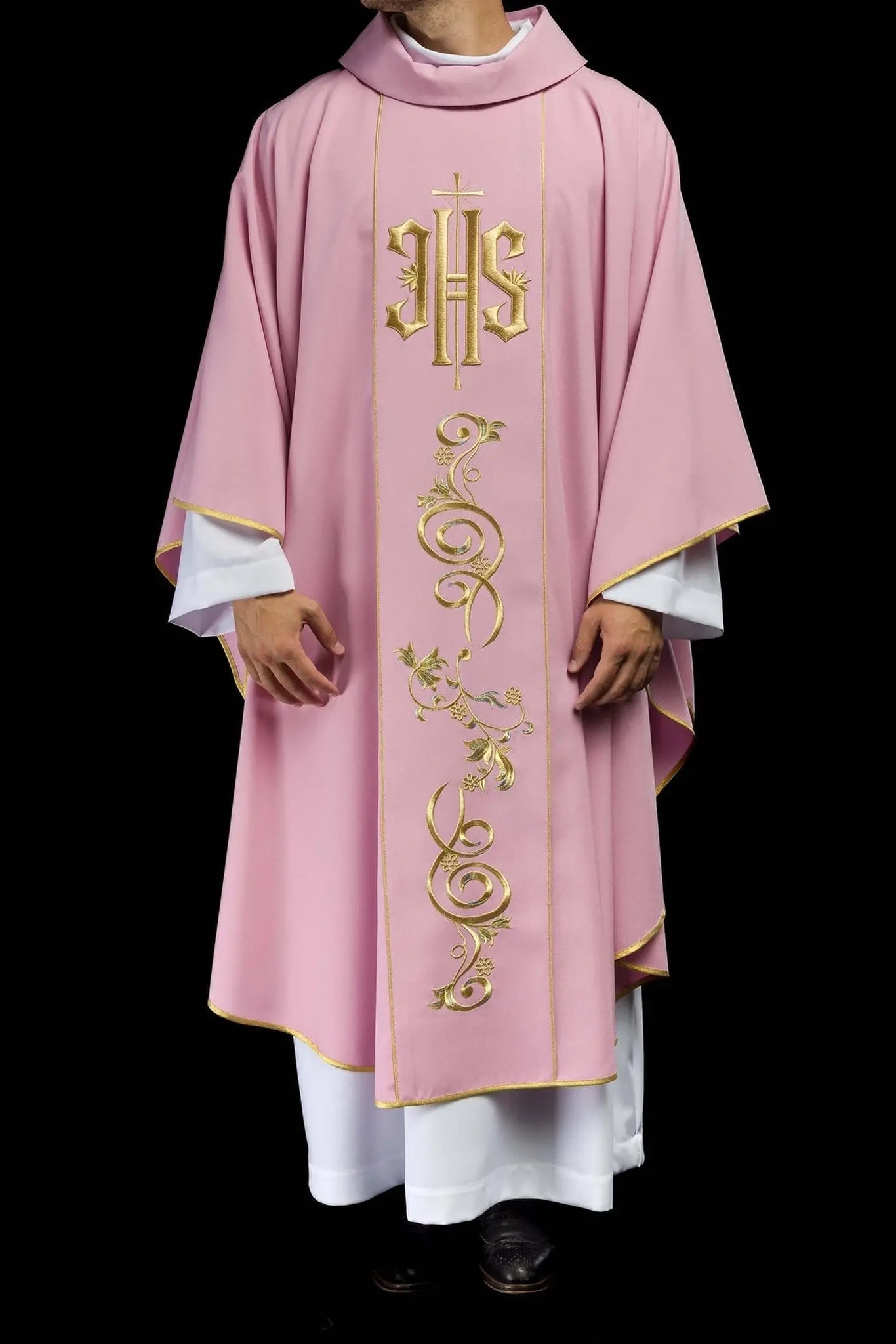
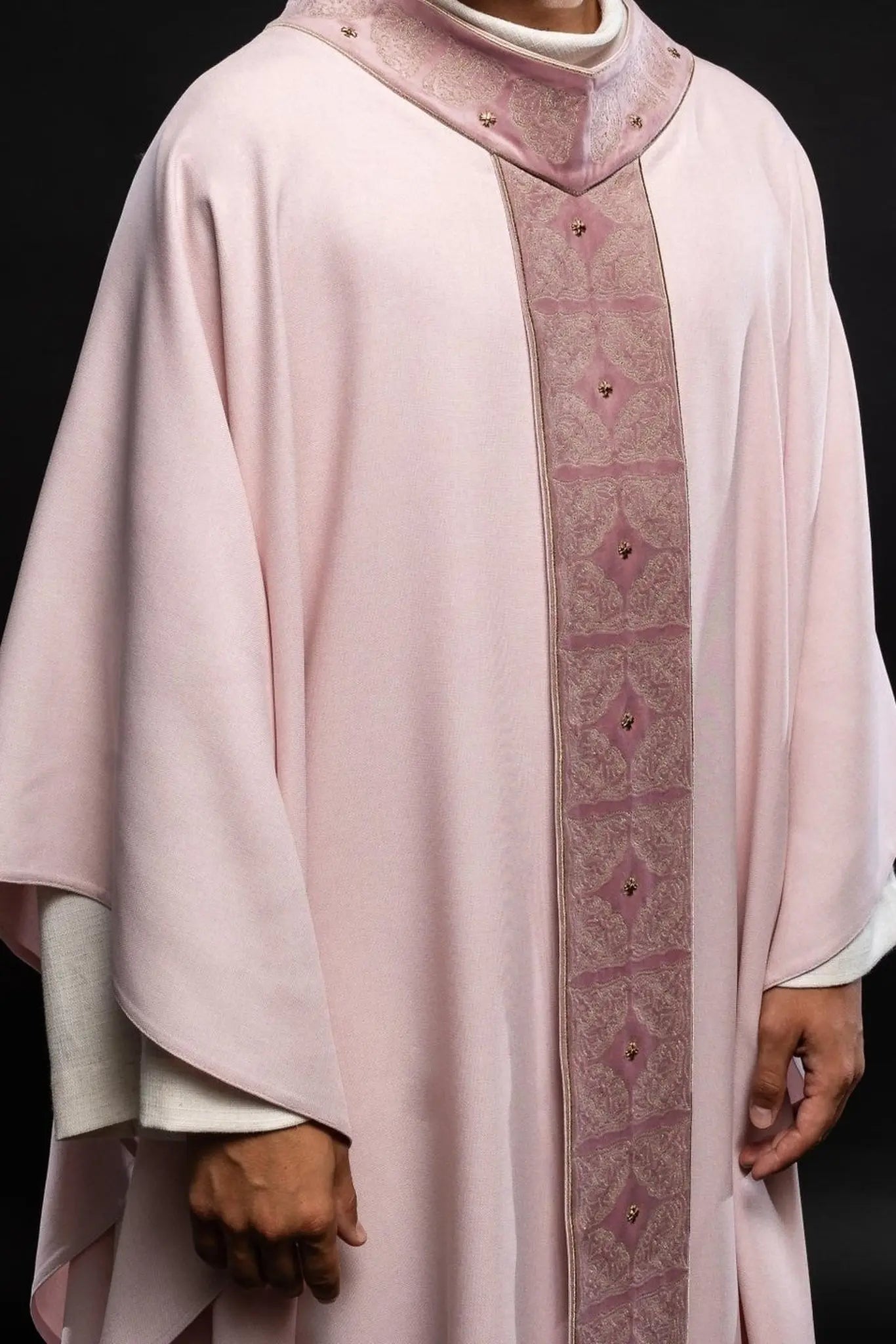
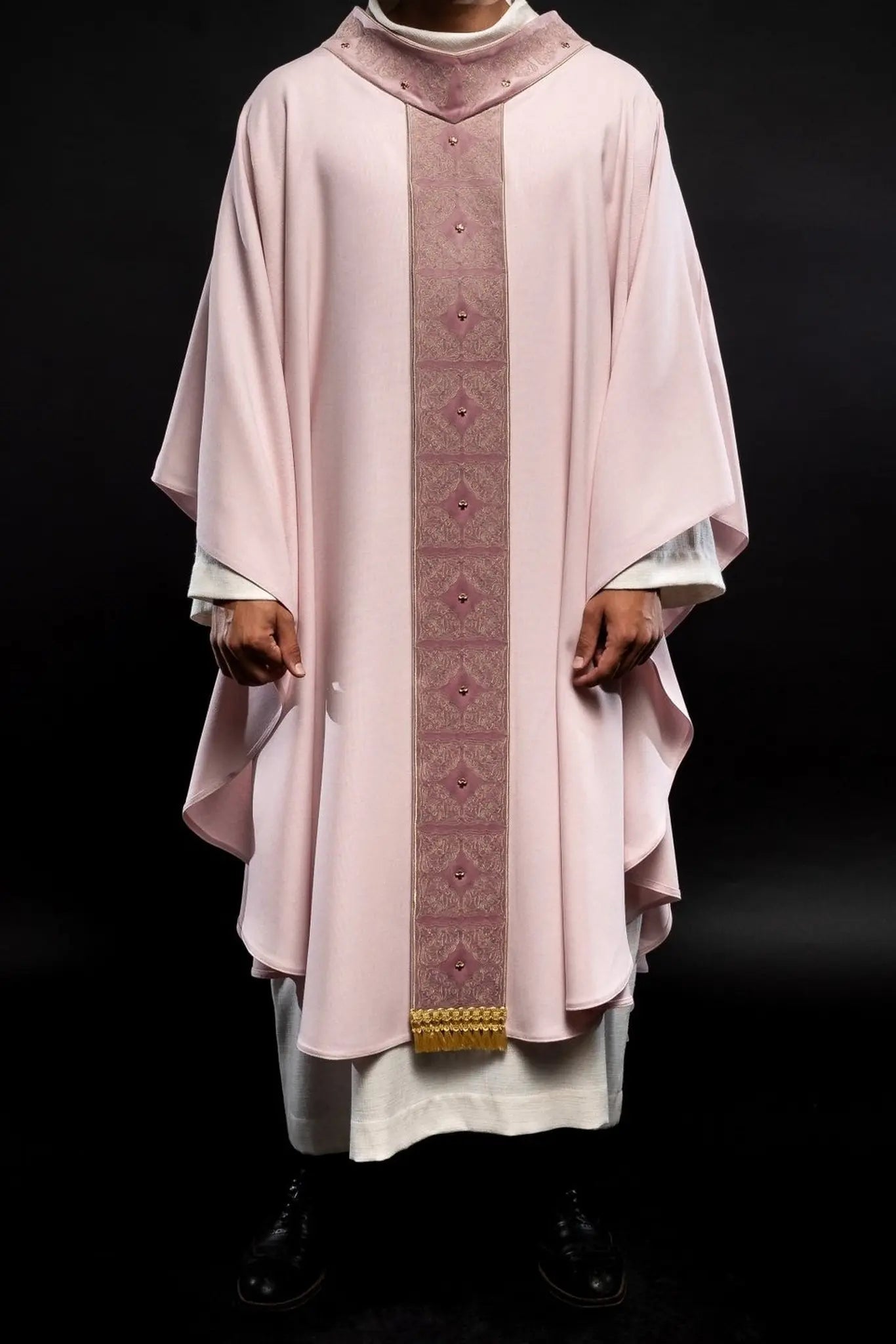
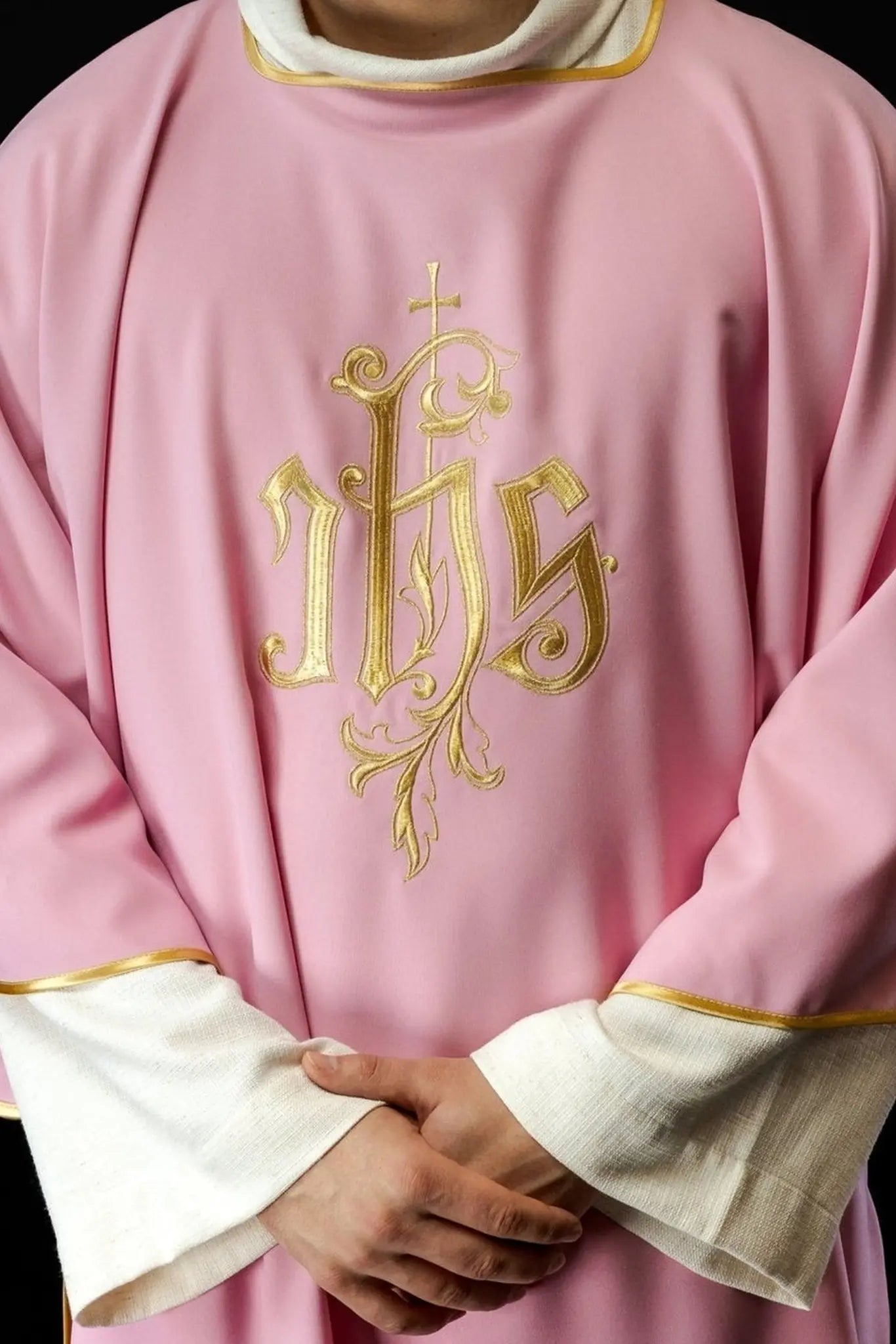
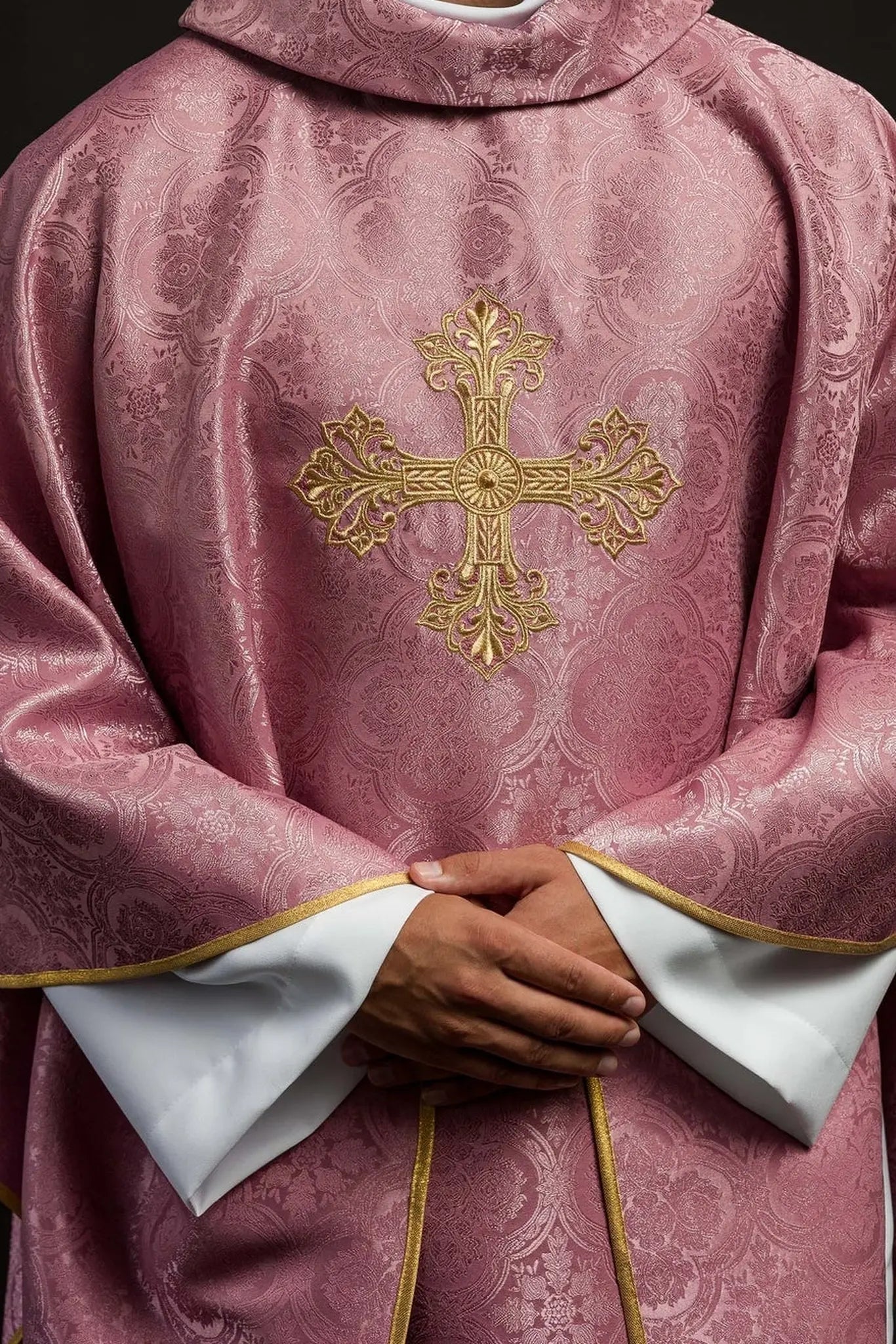
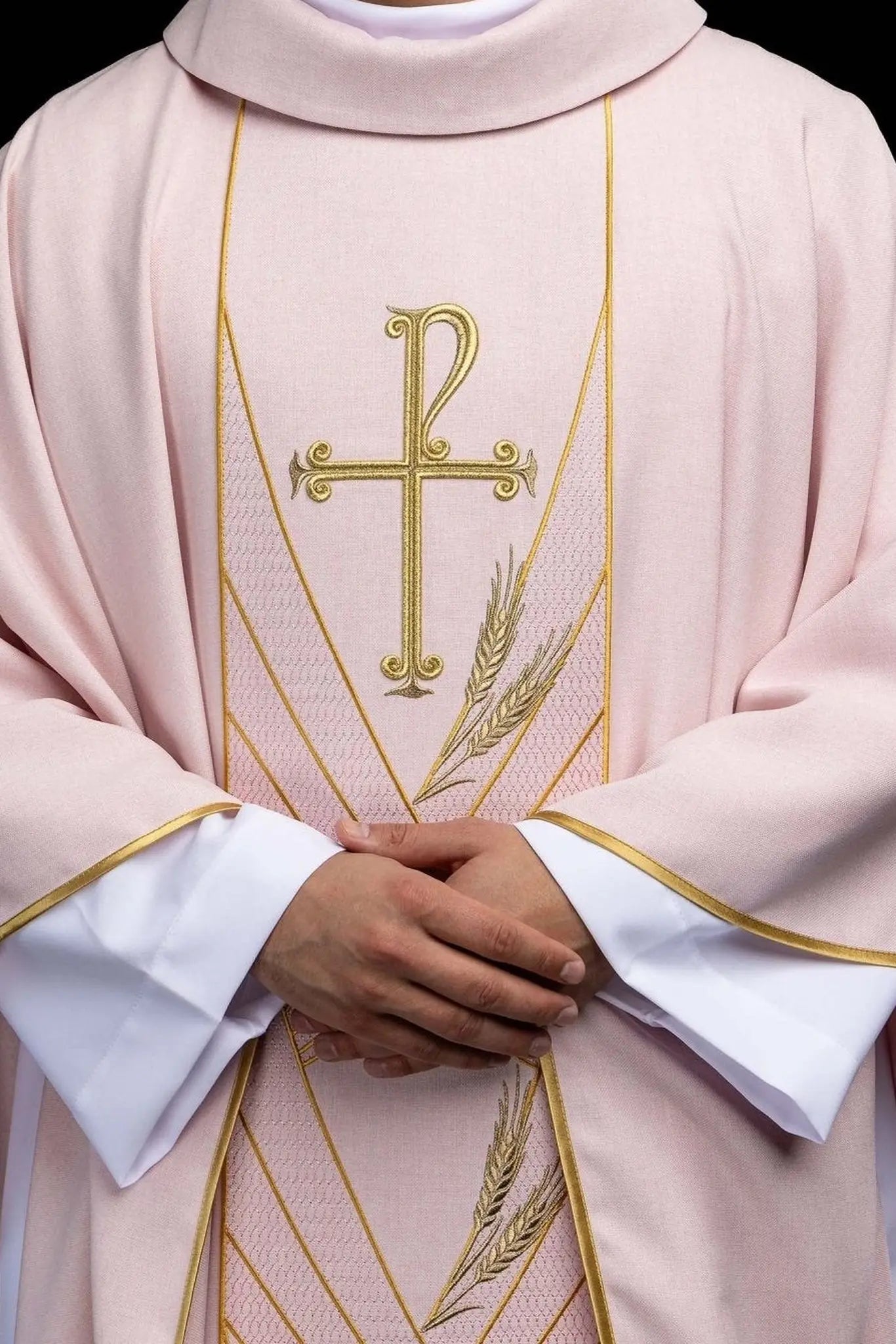
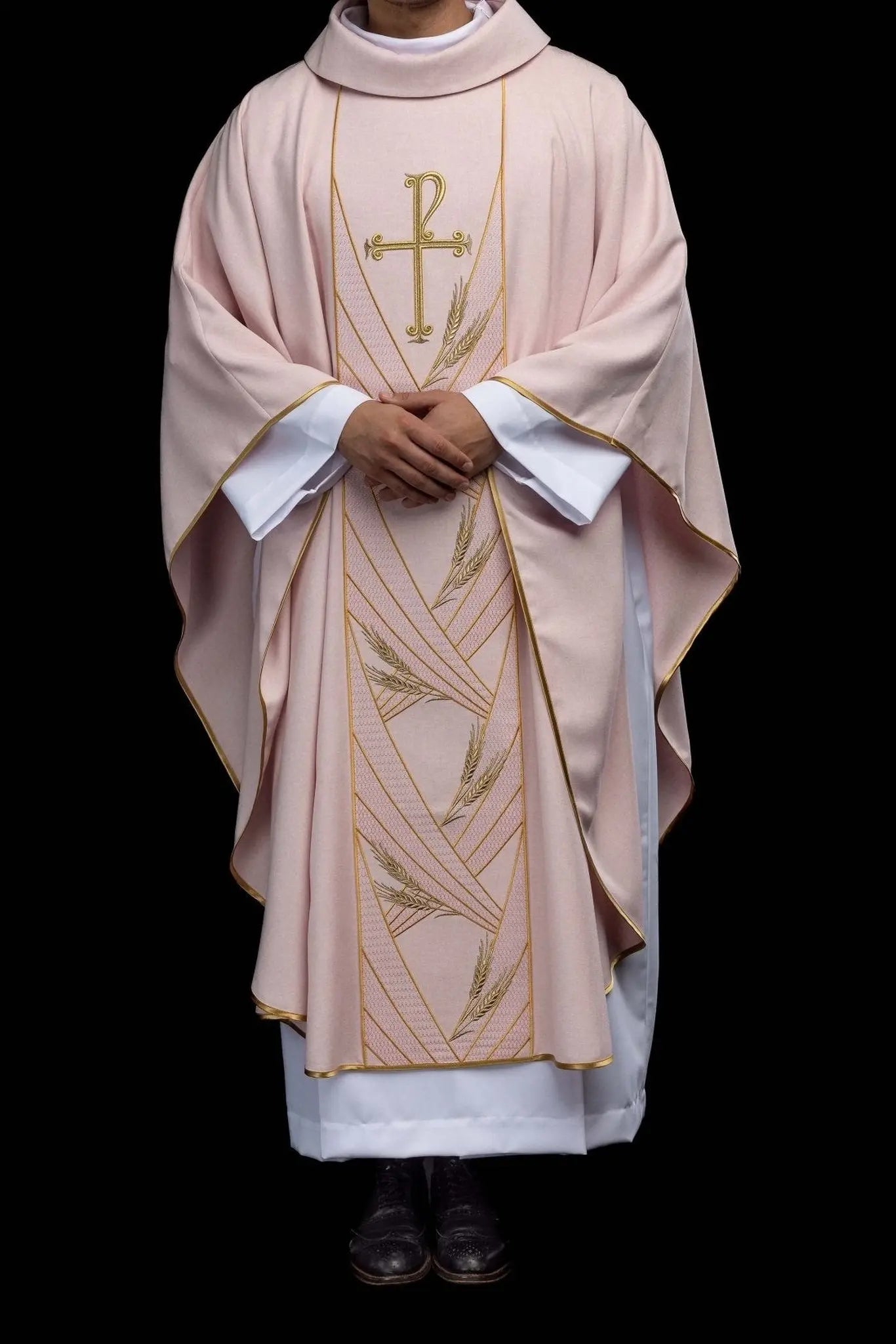
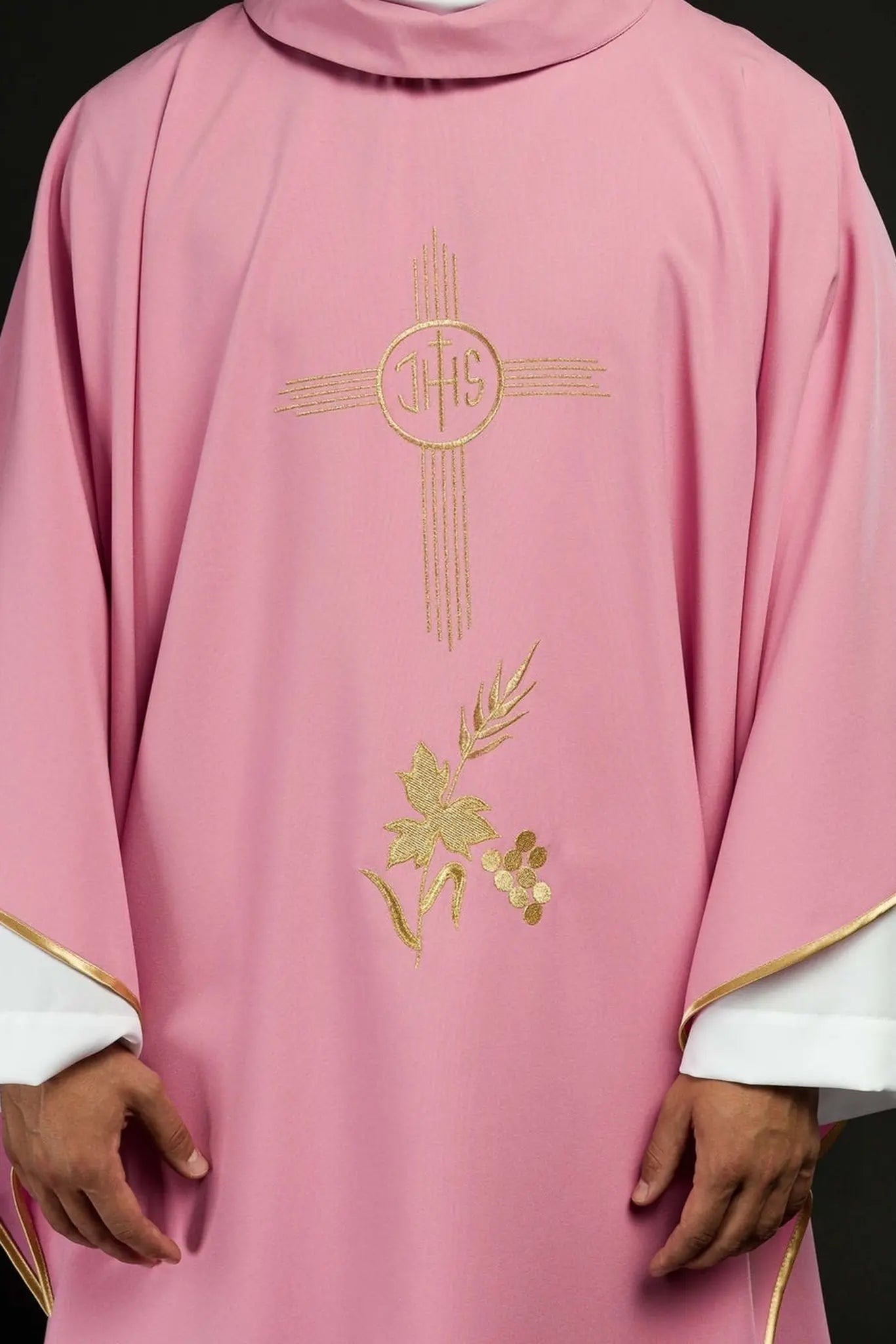
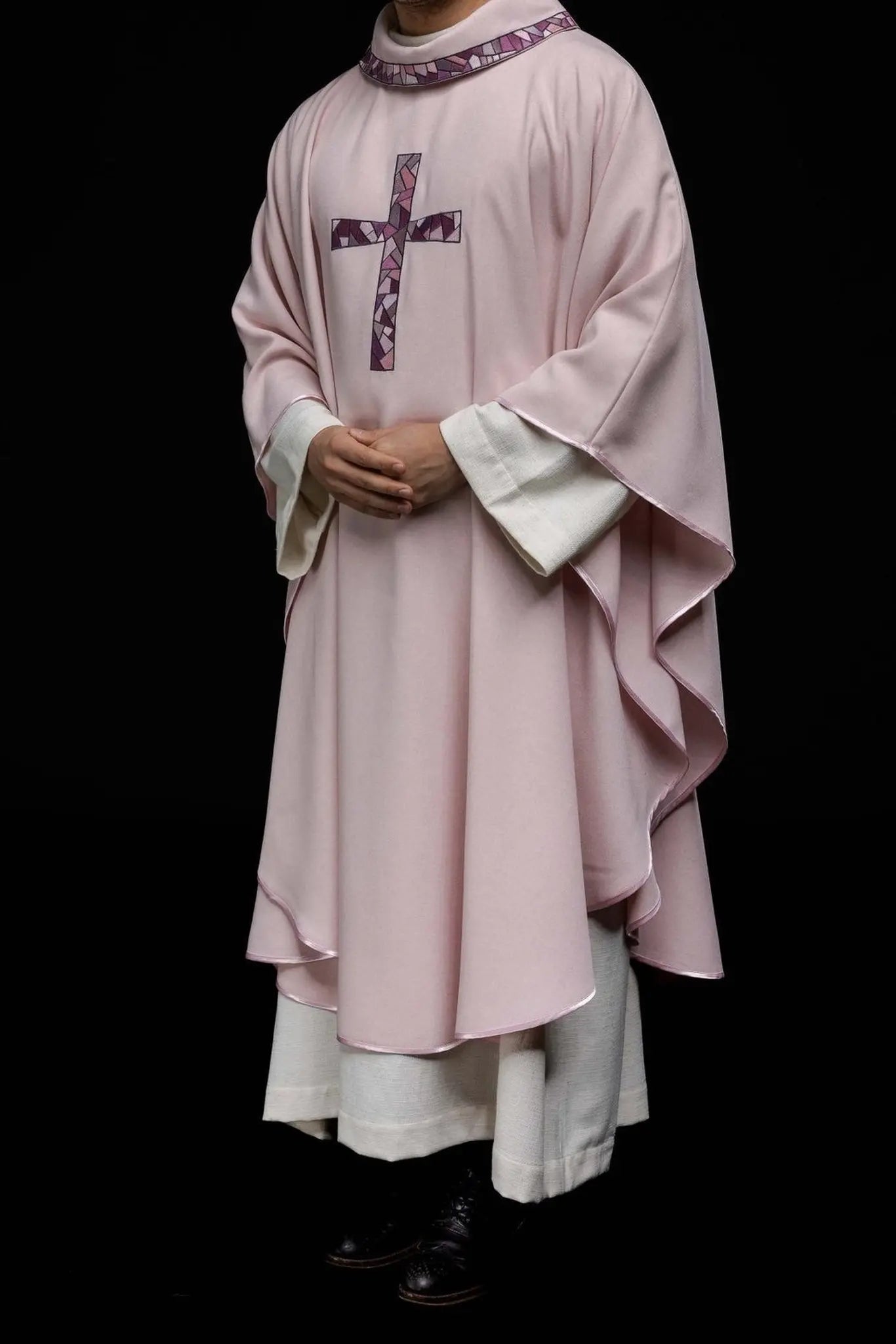
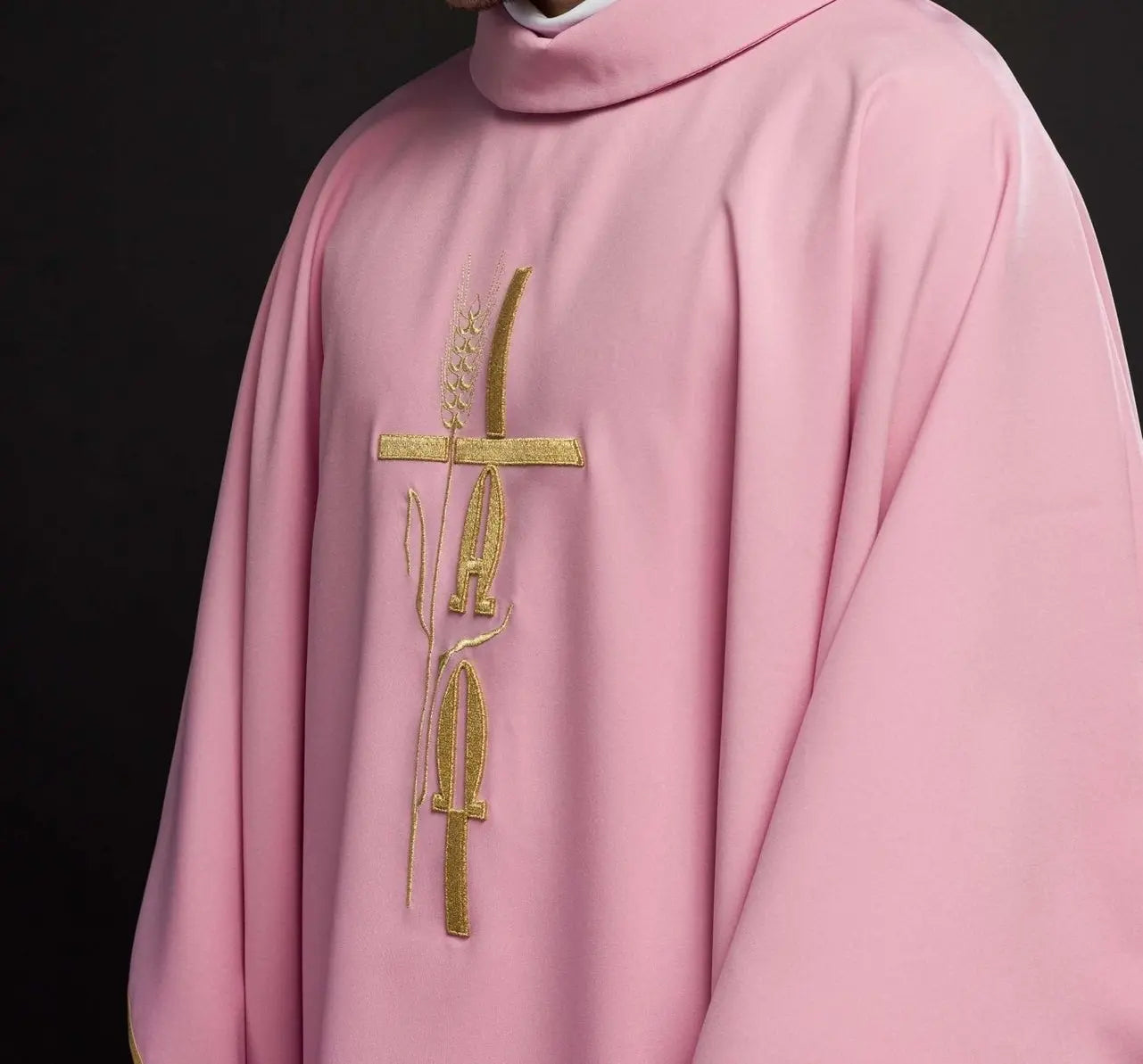
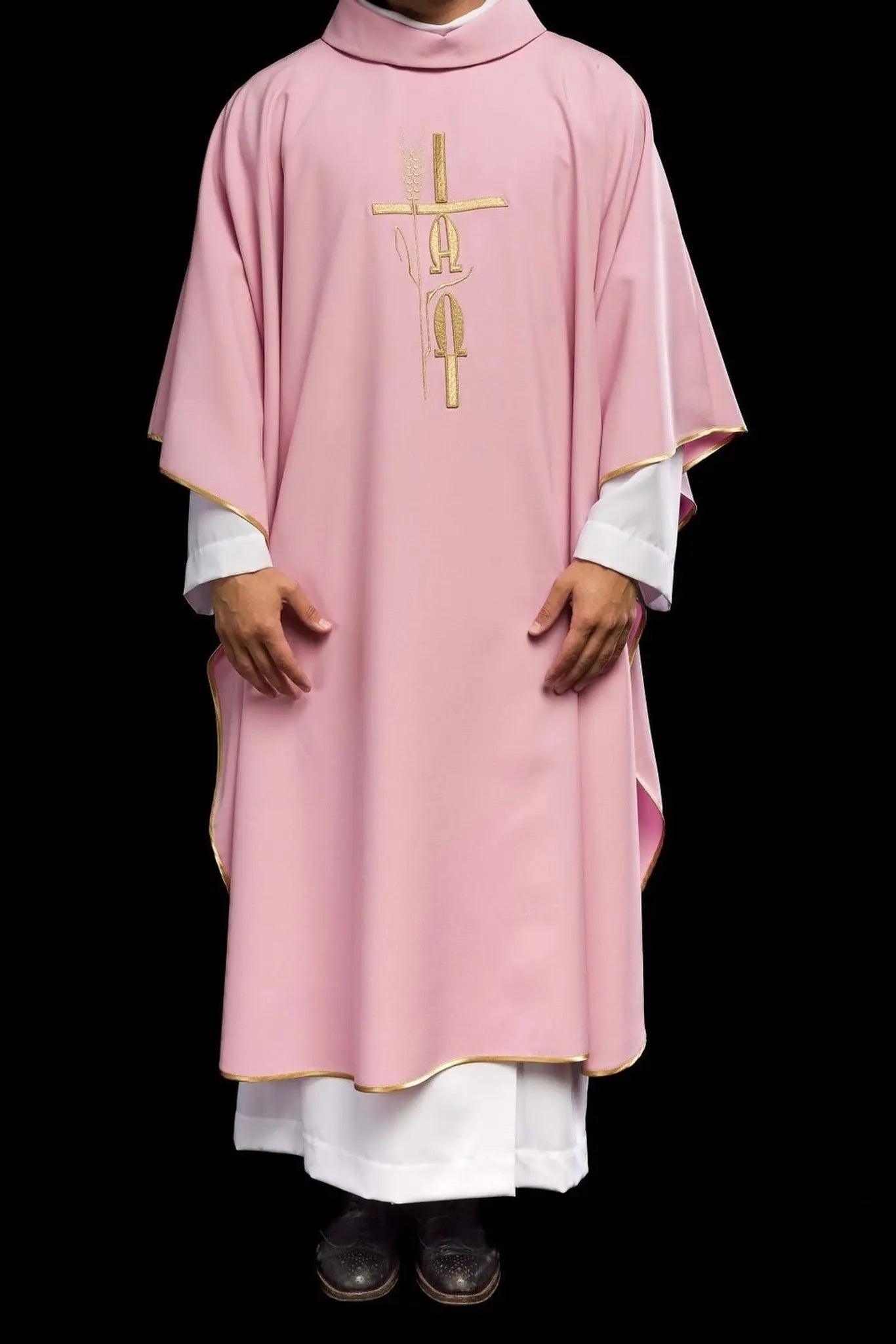
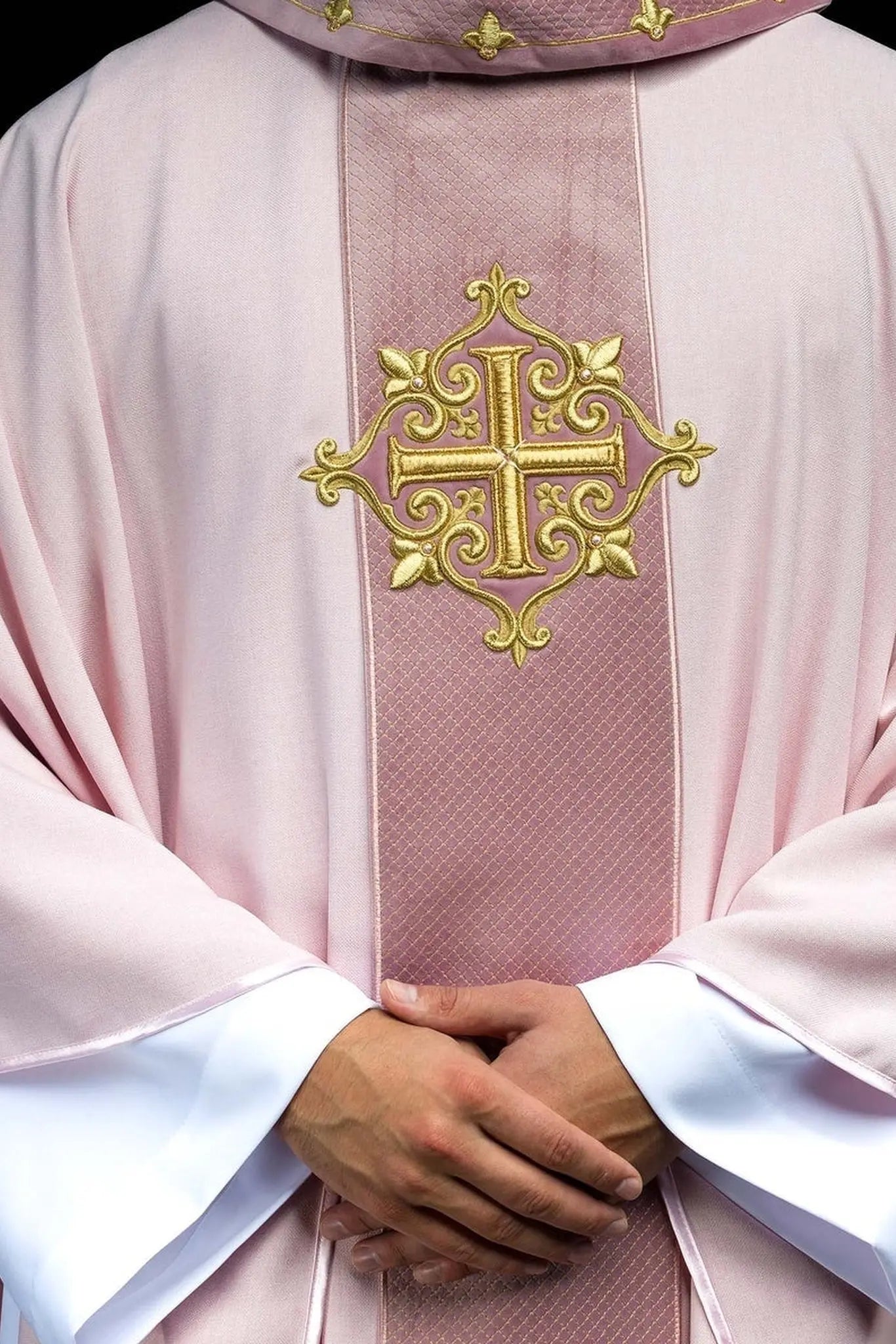
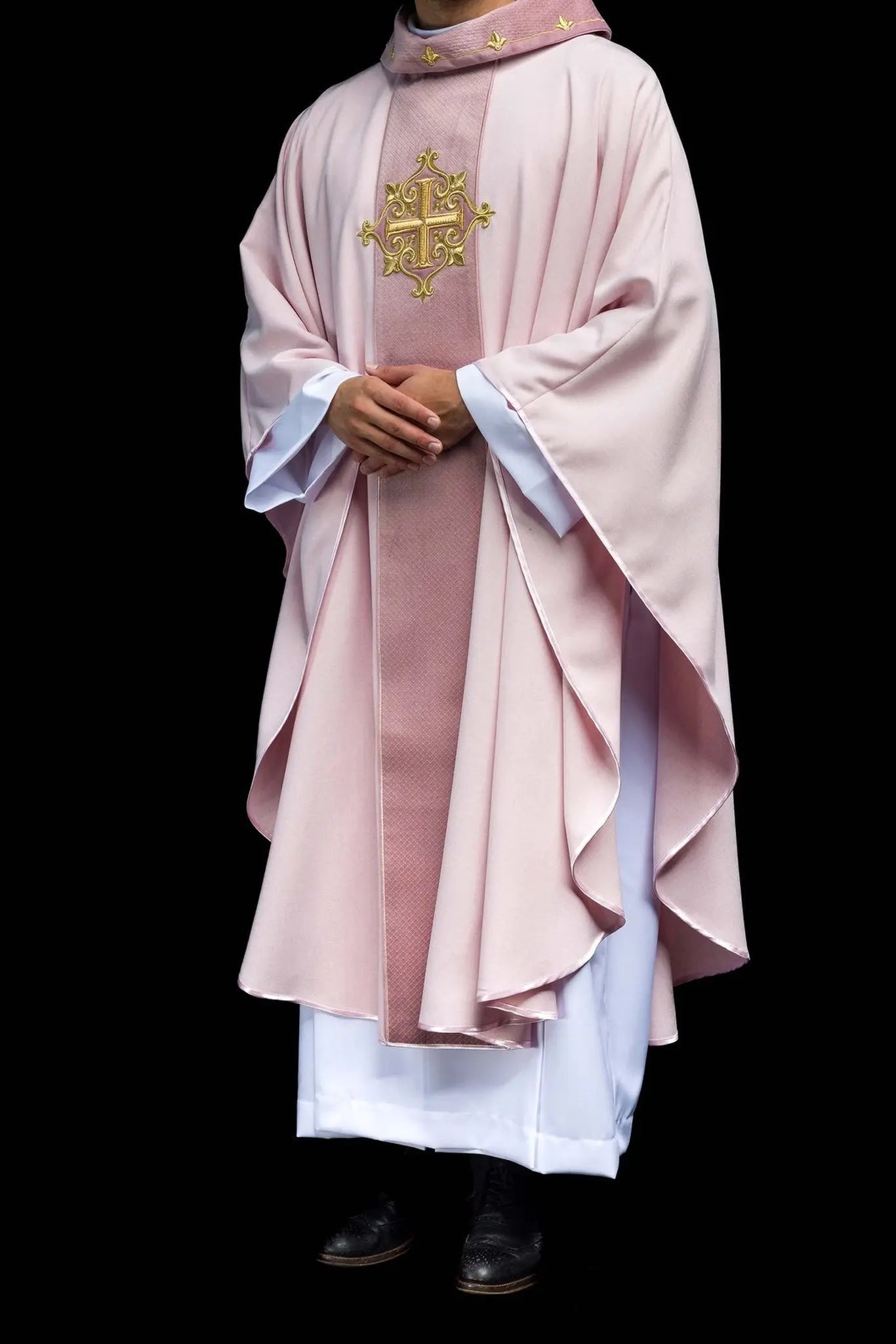
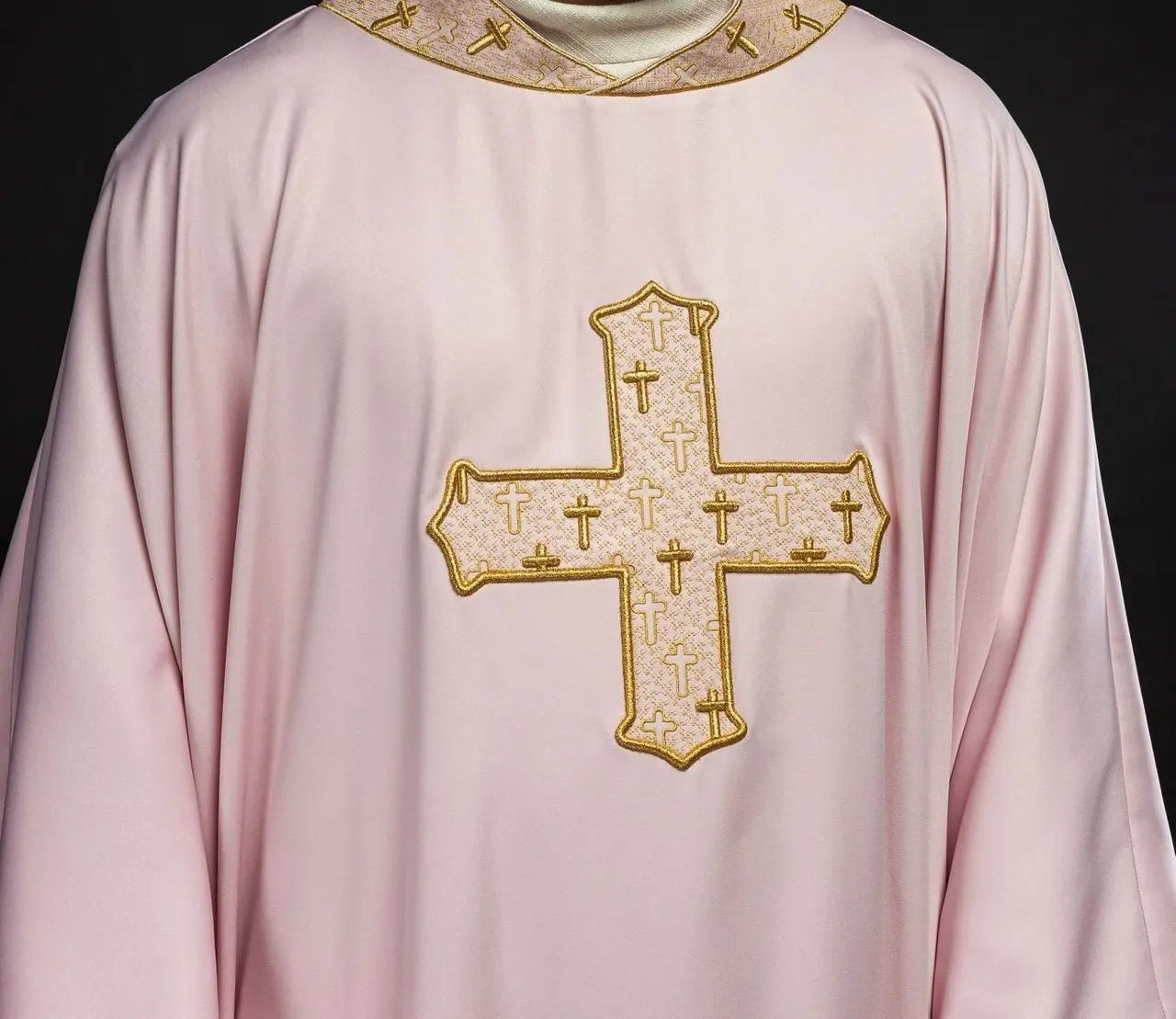
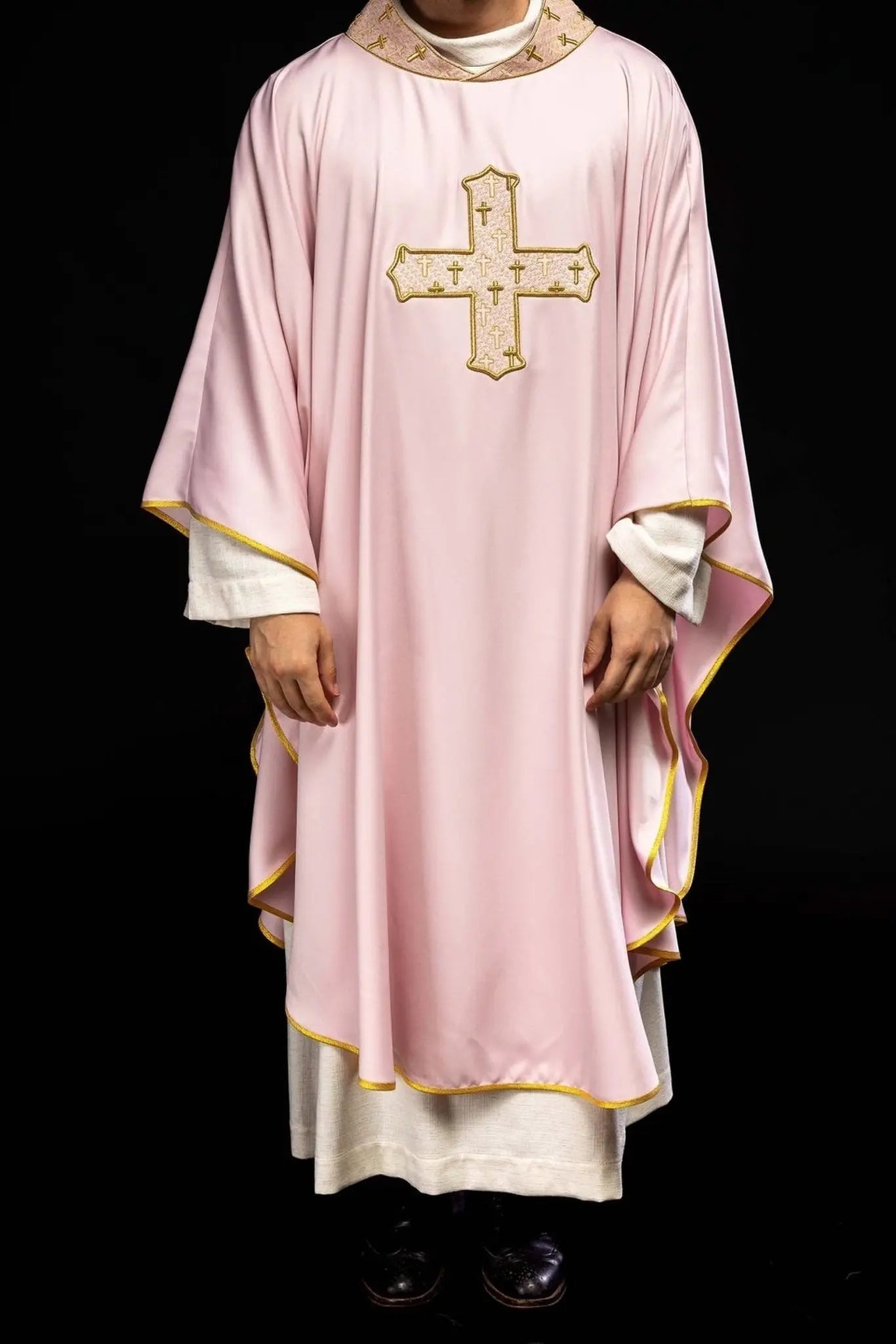
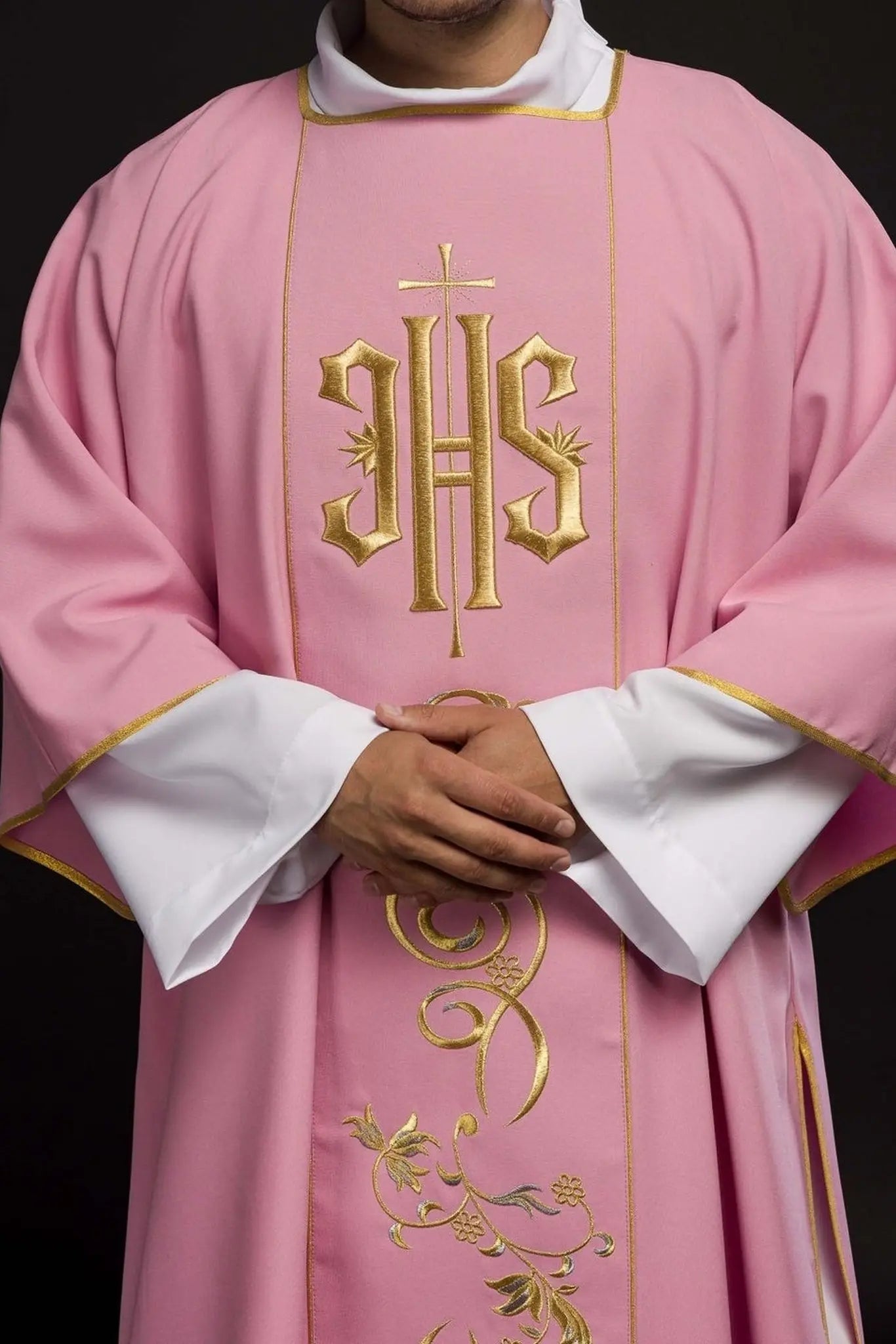
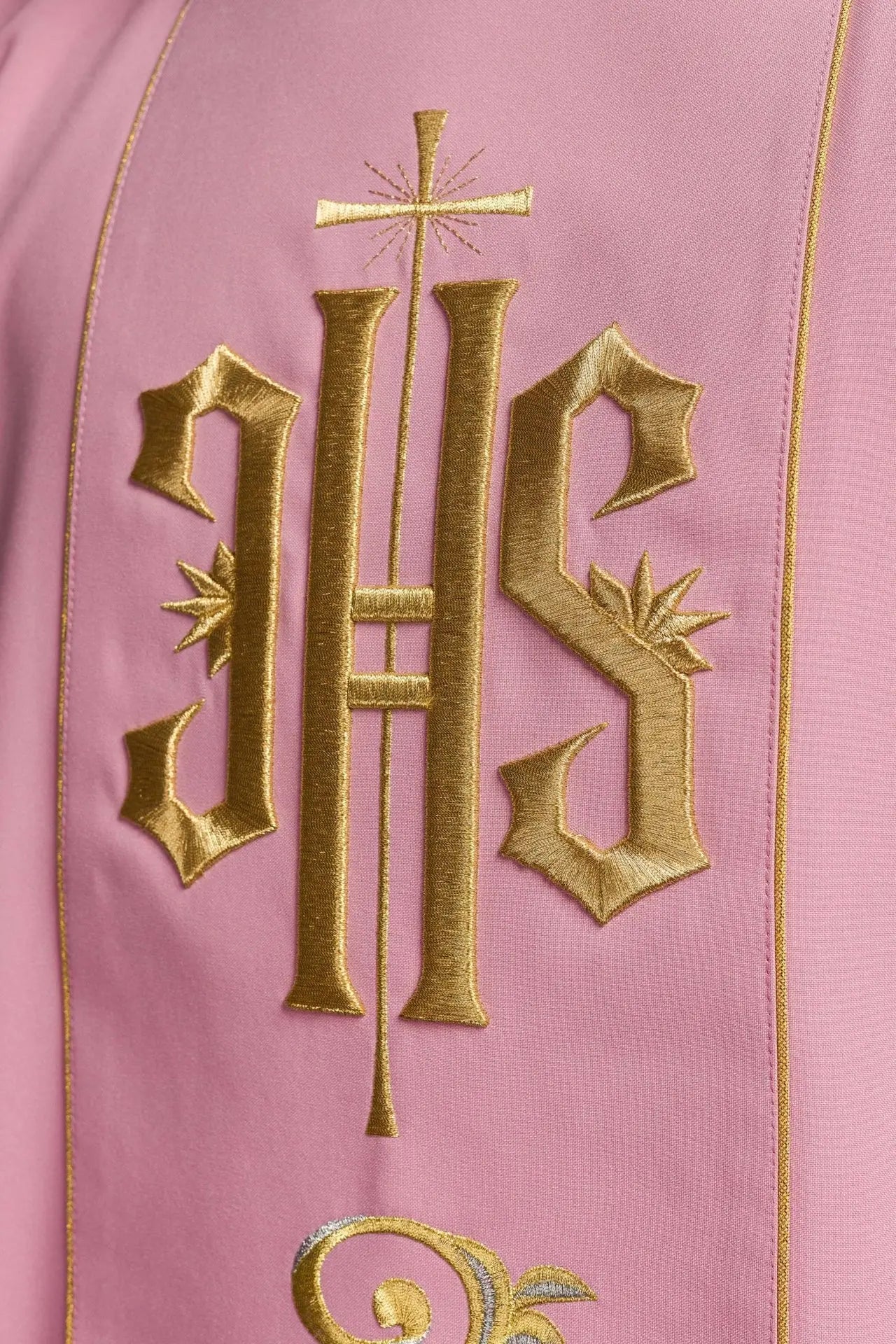
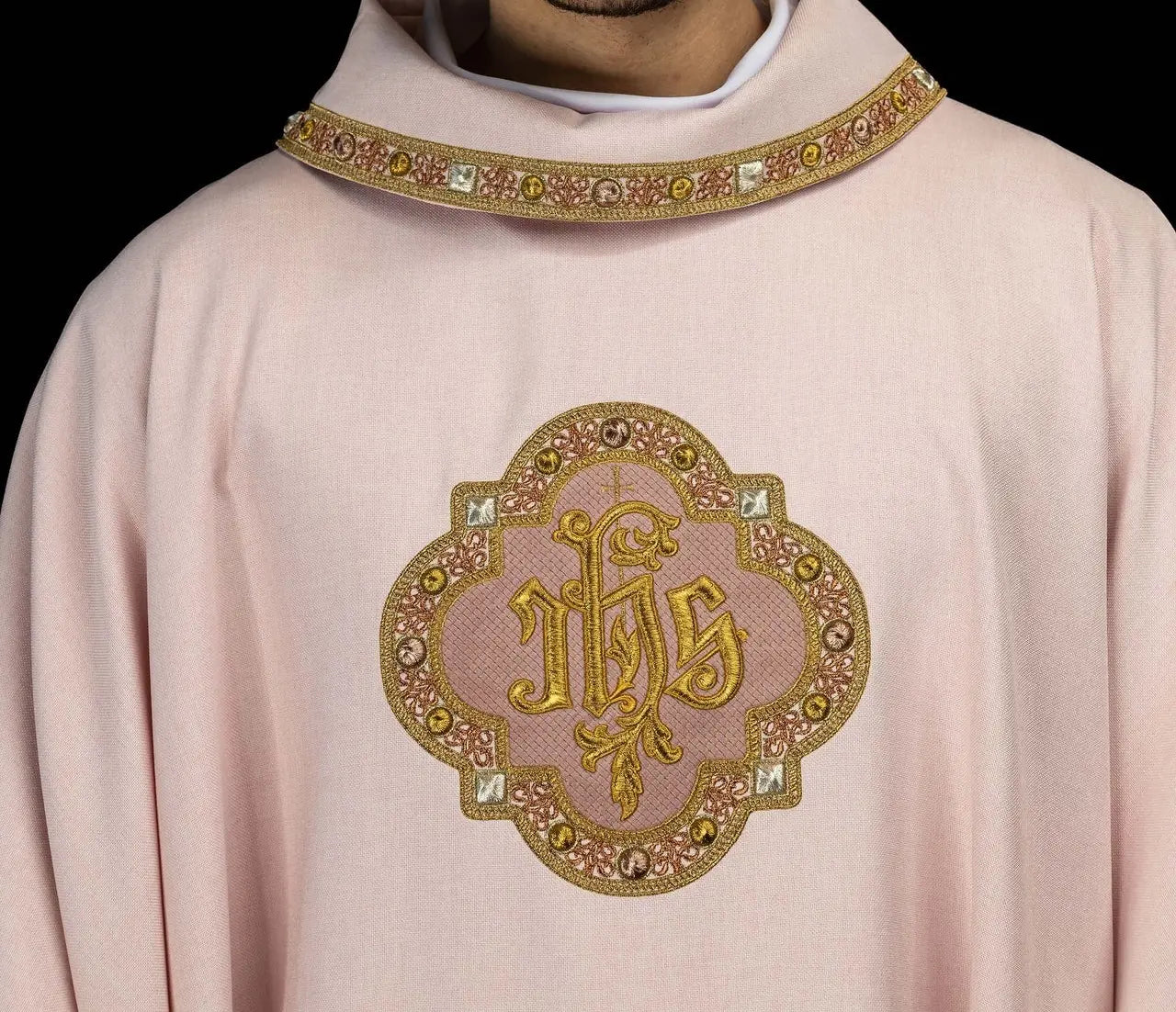
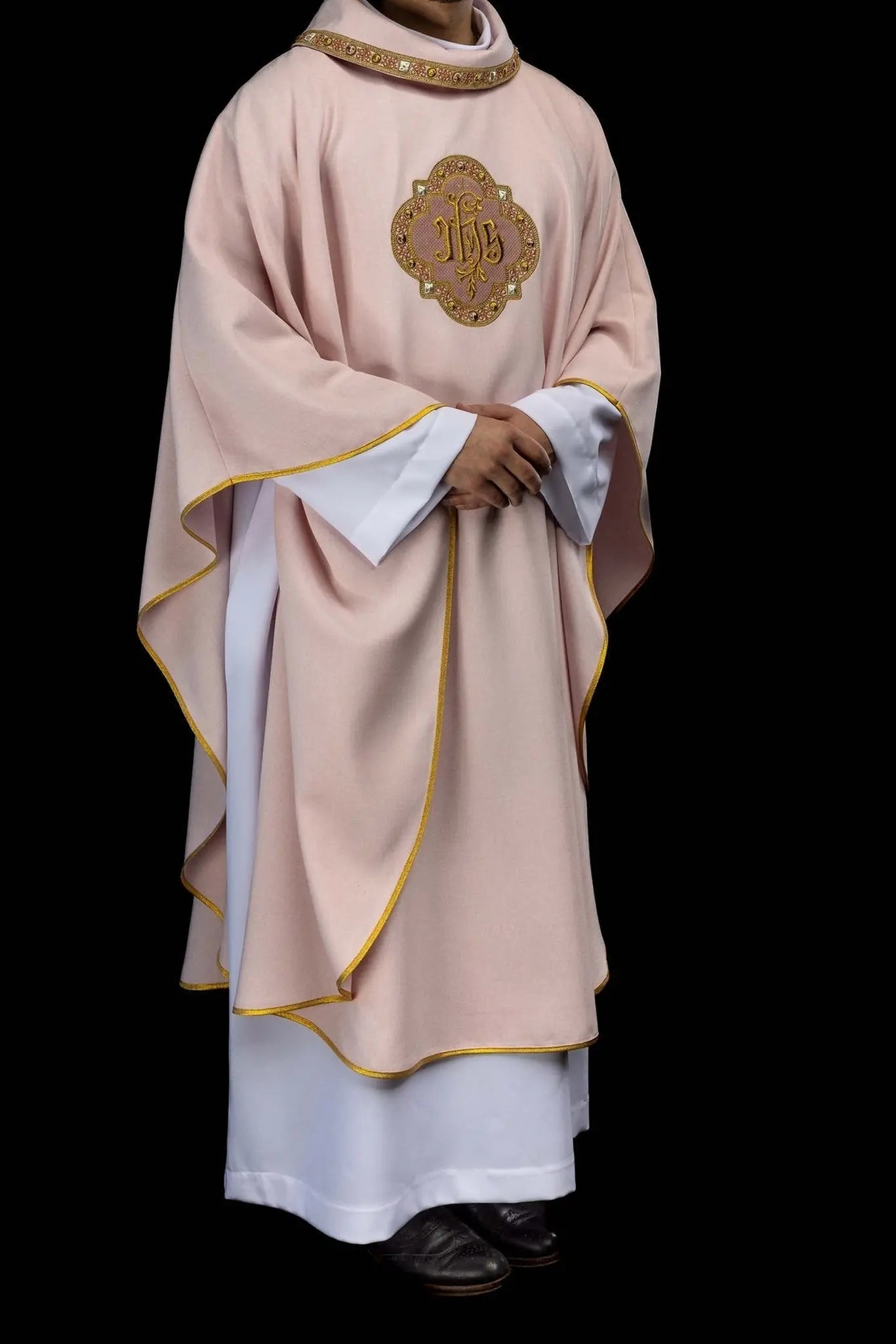
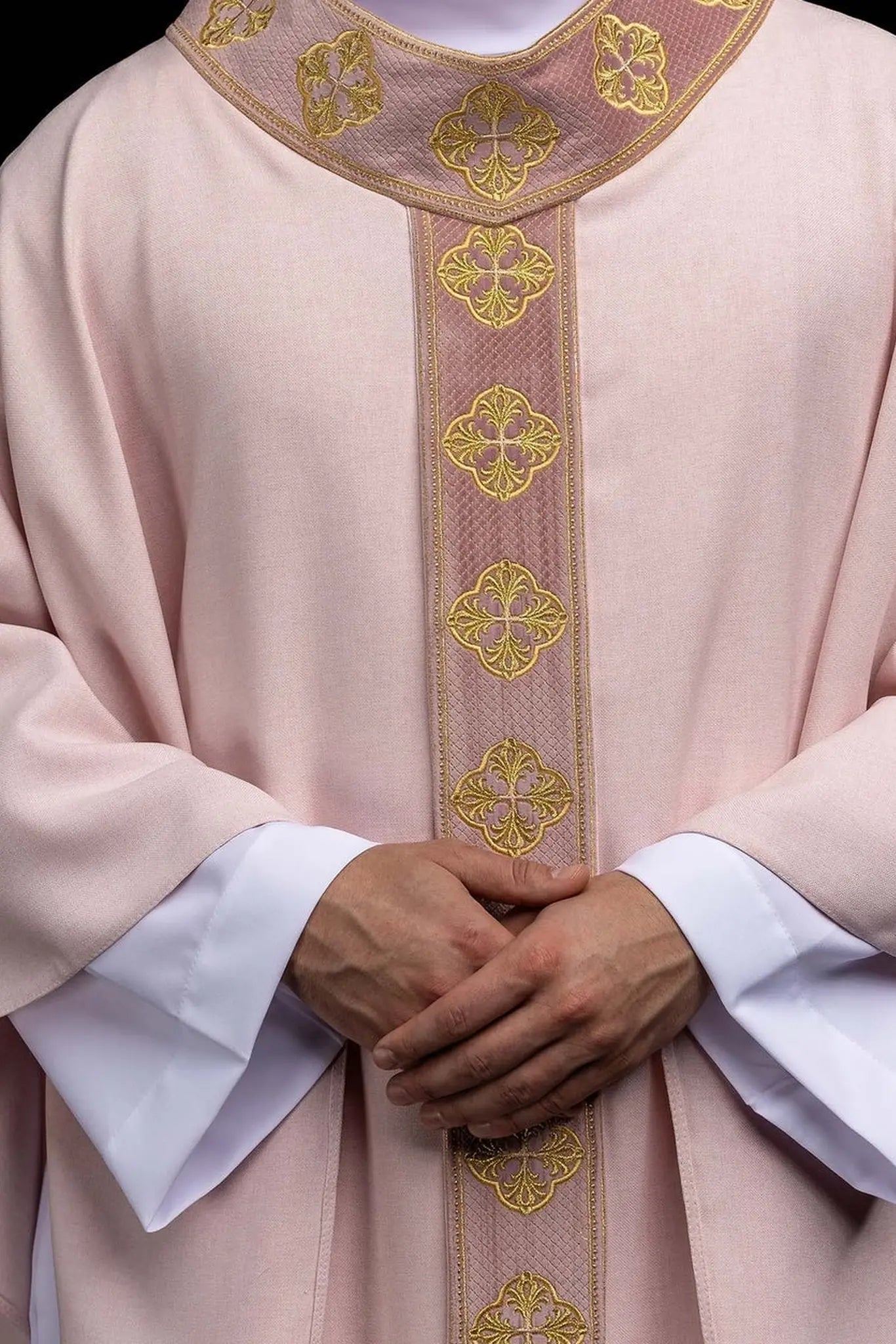
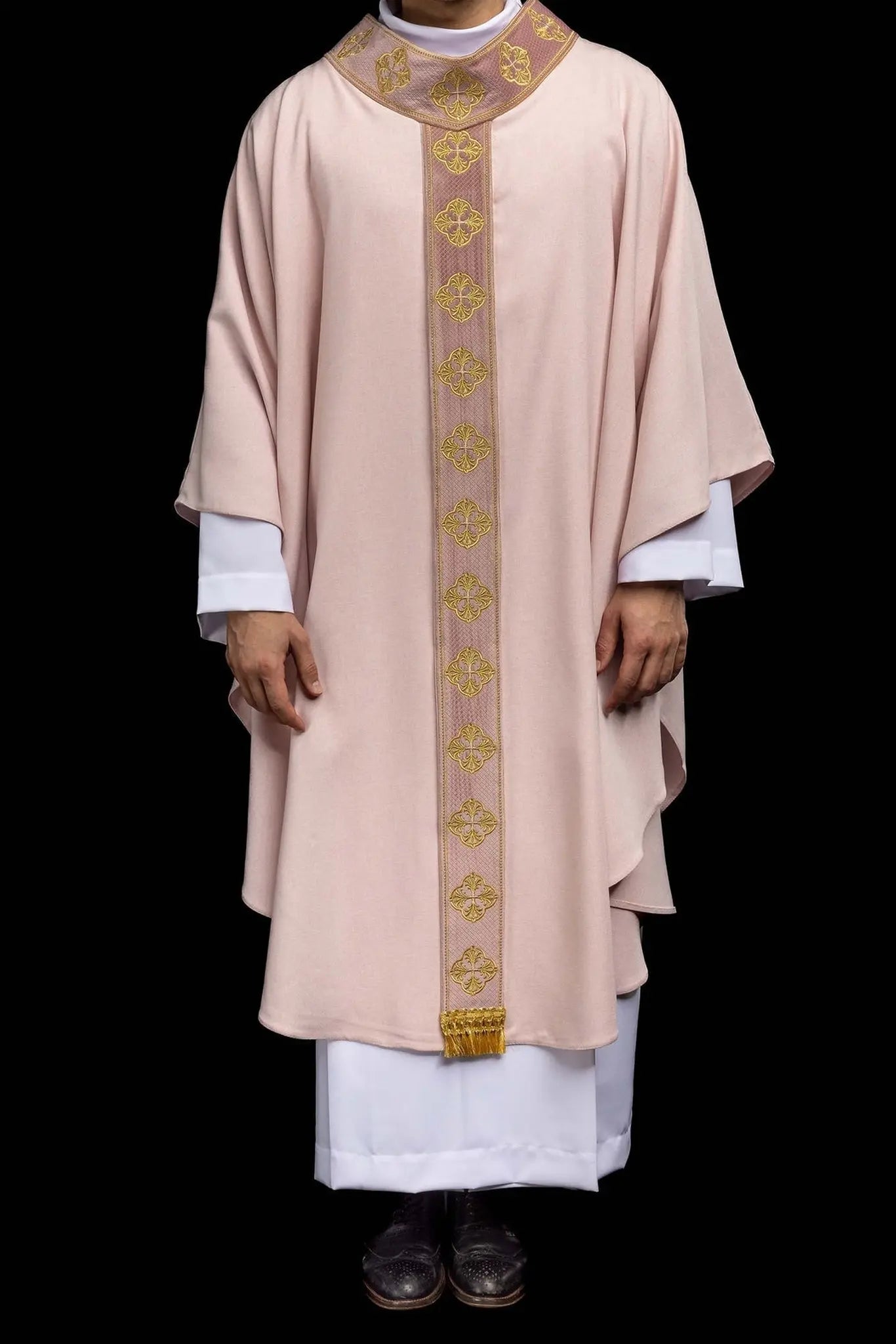
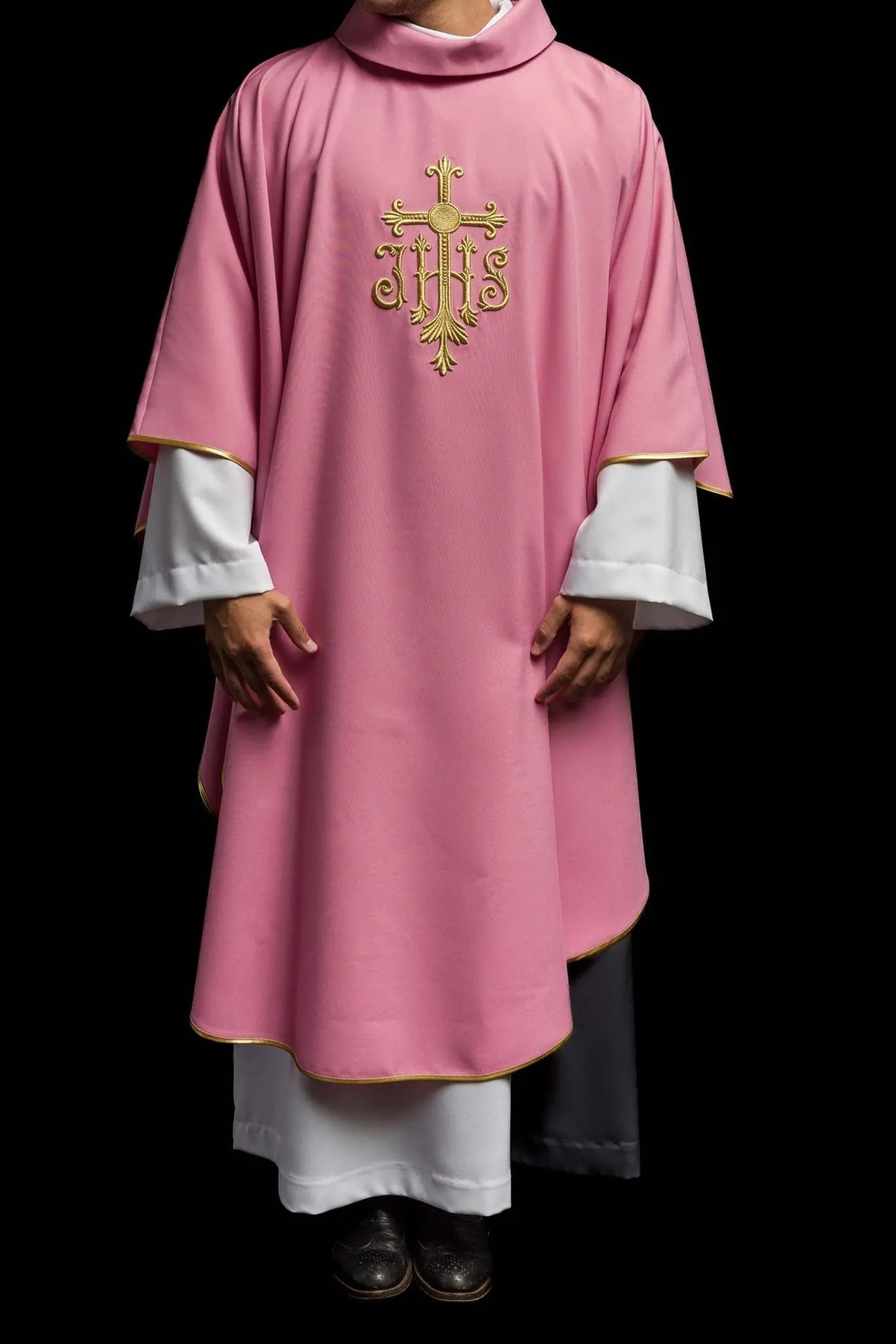
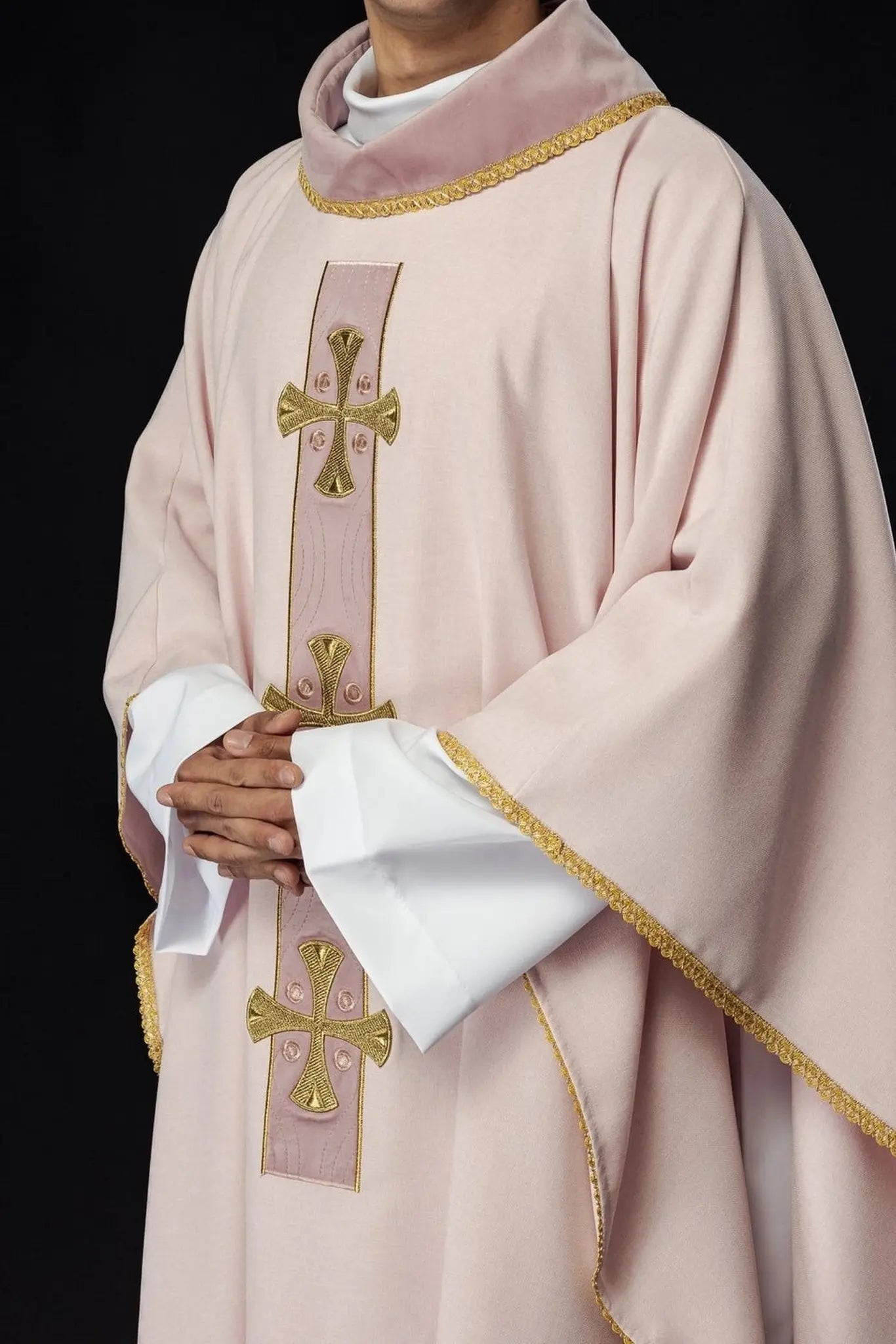
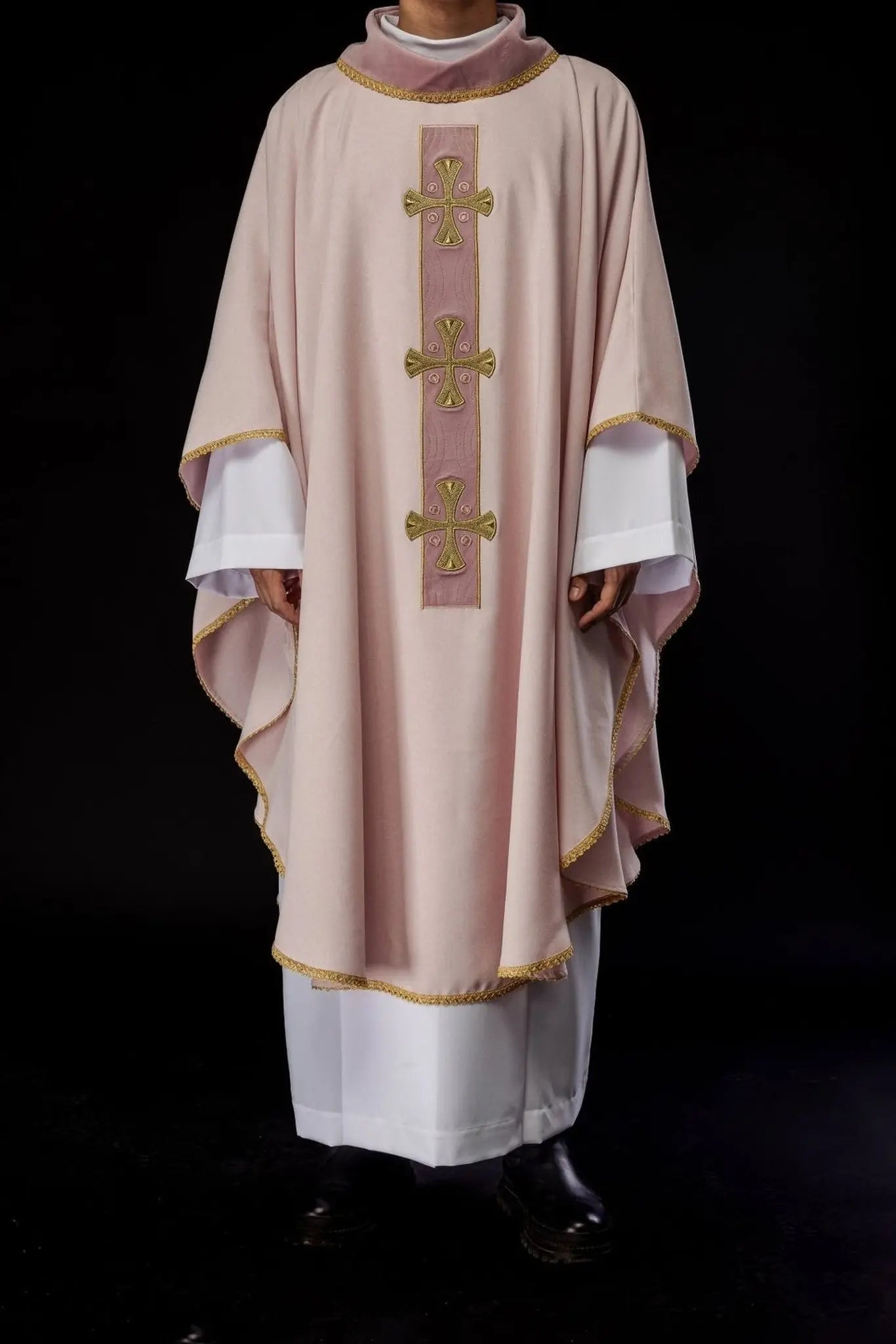
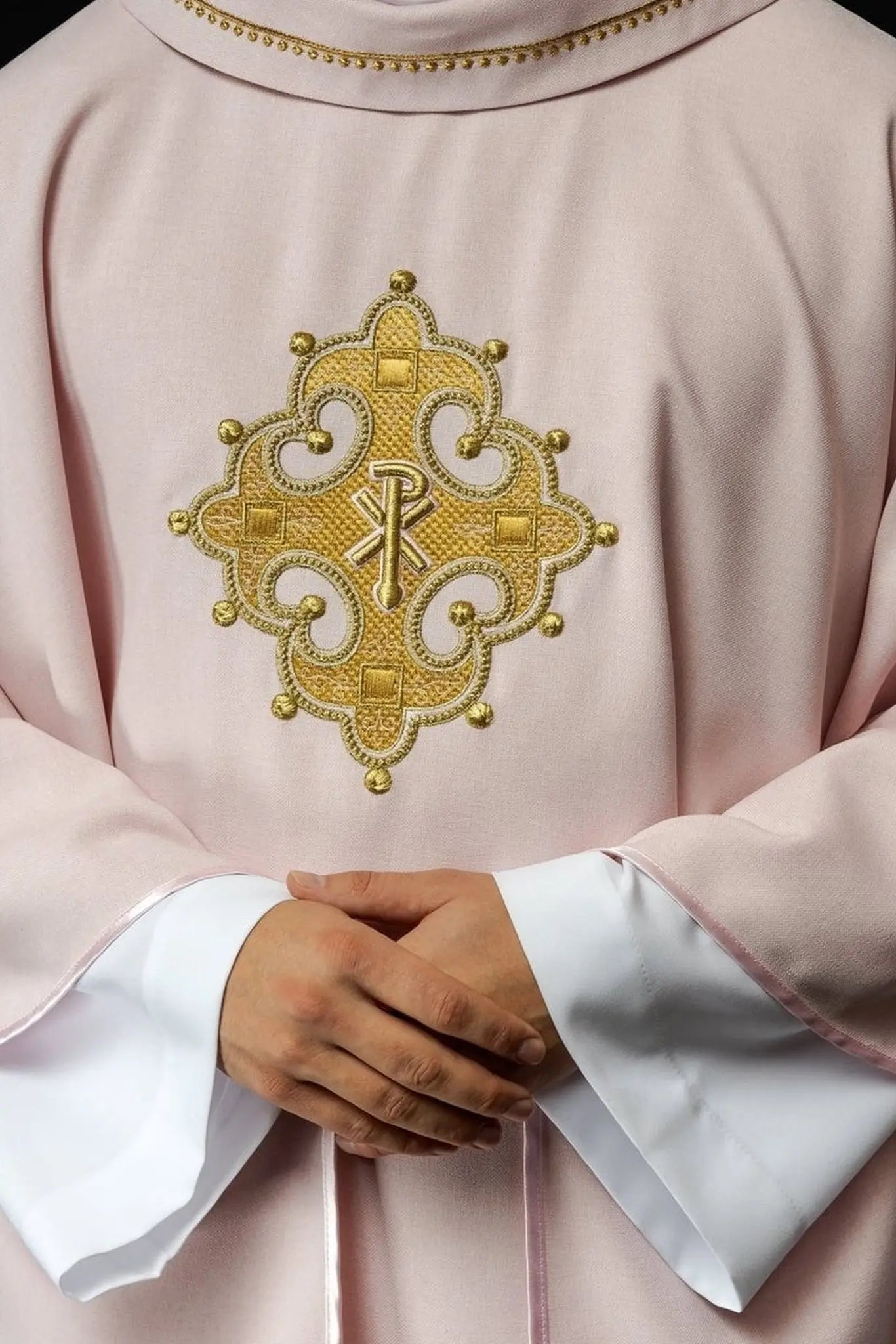
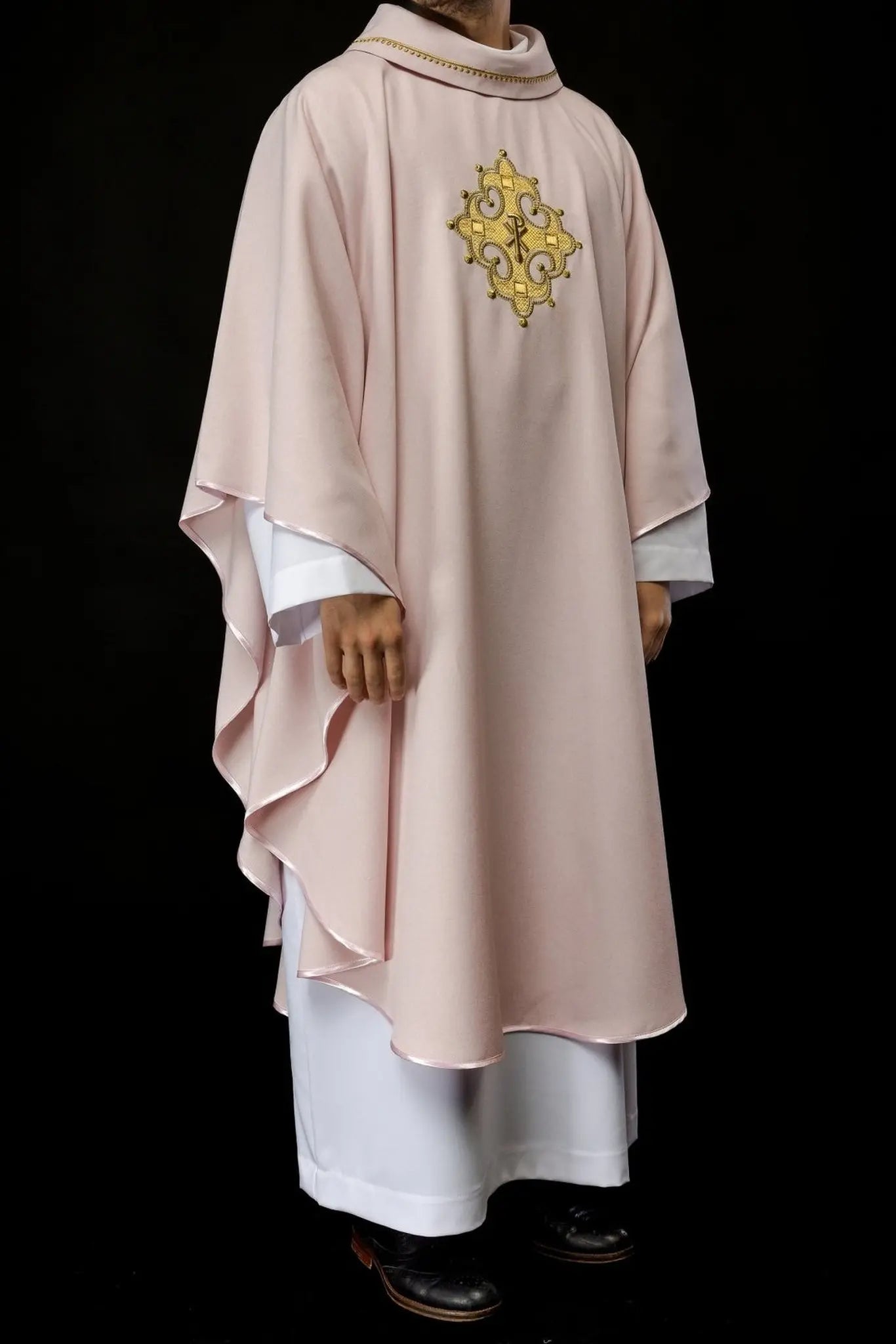
The central vestment in the collection is the rose chasuble, worn by the priest celebrant at Mass. The selection may include designs with embroidered bands, collars, crosses, IHS motifs, jacquard fabrics, patterned panels, velvet accents, and gold or light trim. A rose chasuble should be chosen with attention to the sanctuary lighting, the size of the church, and the degree of ornamentation already present on the altar and ambo.
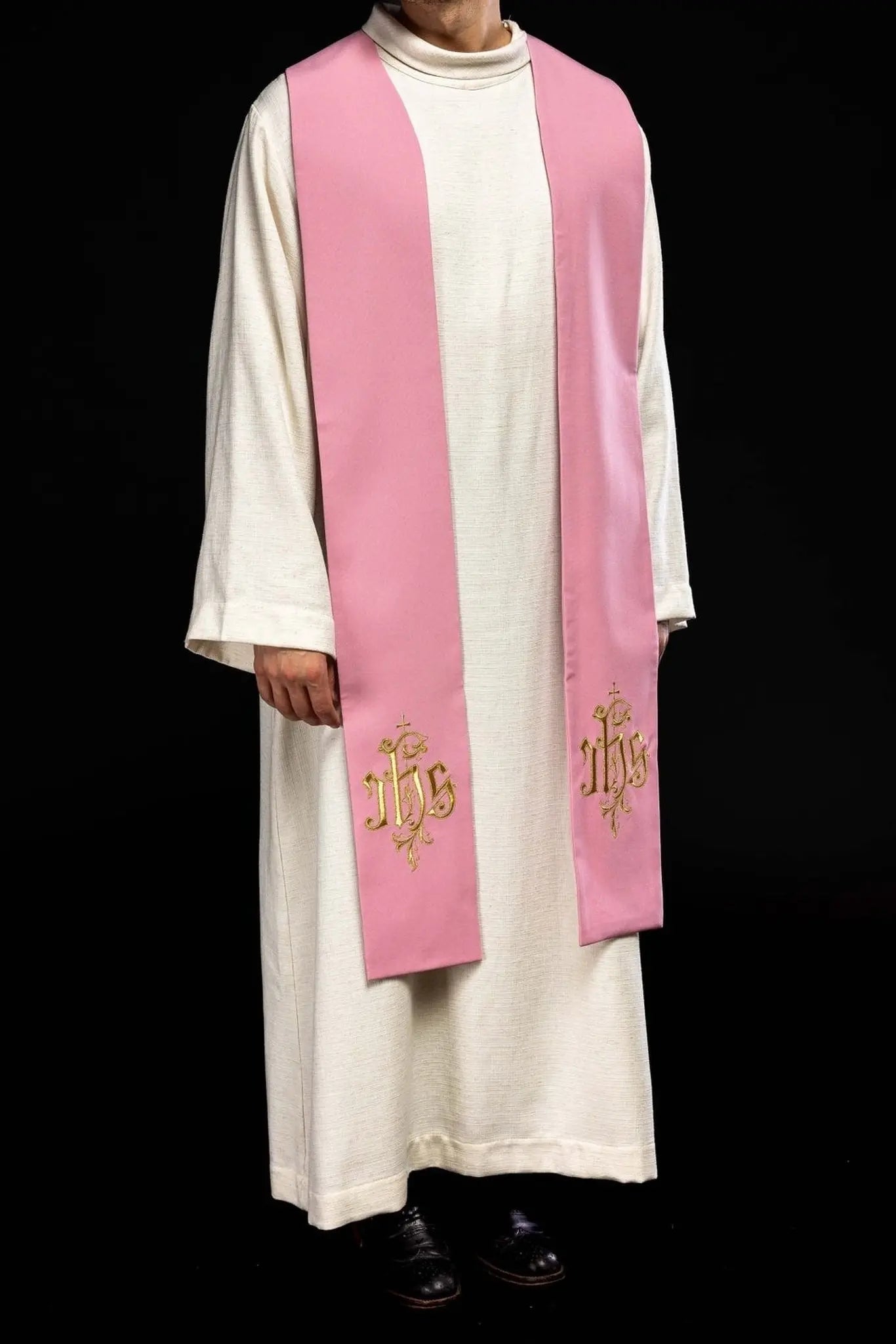
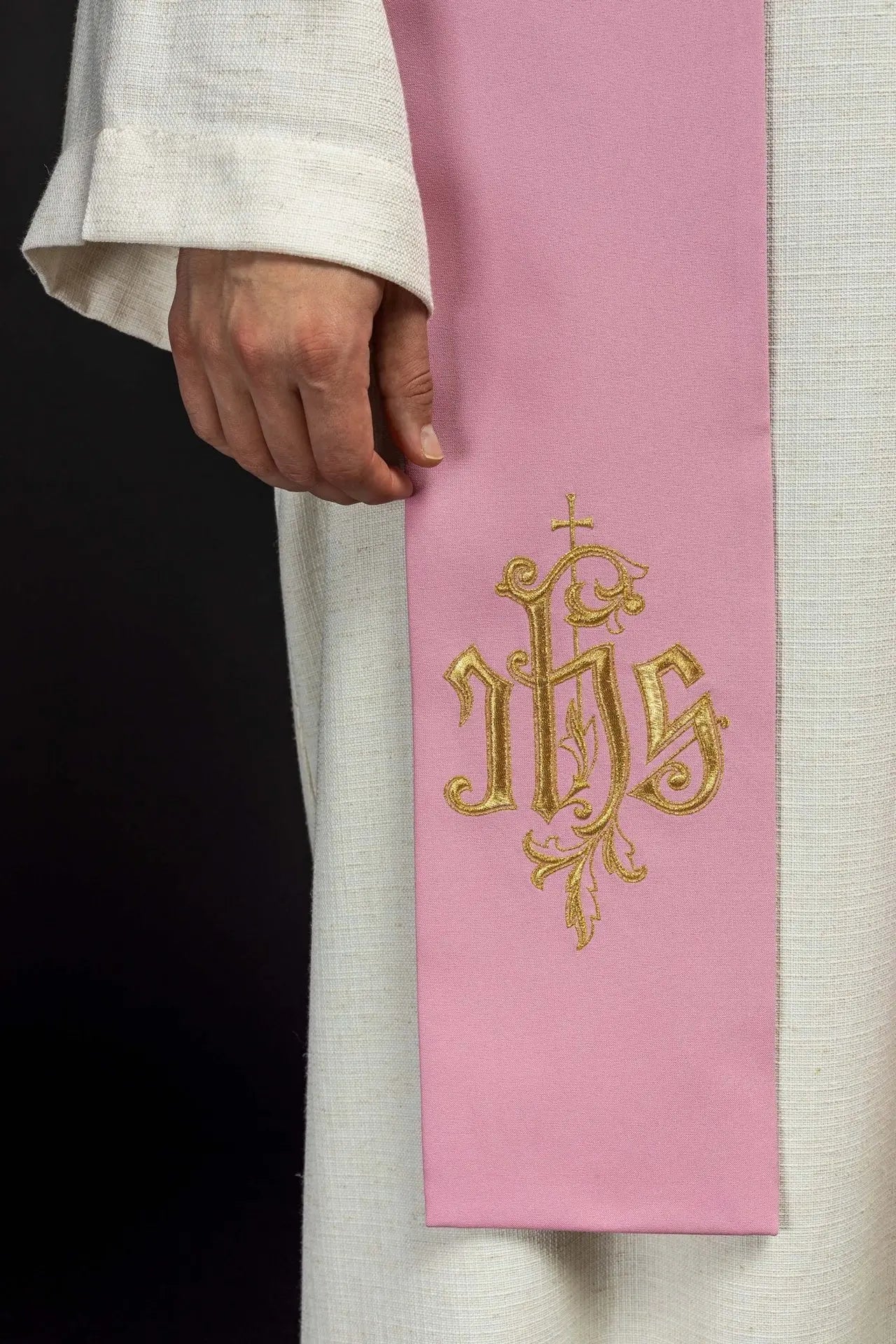
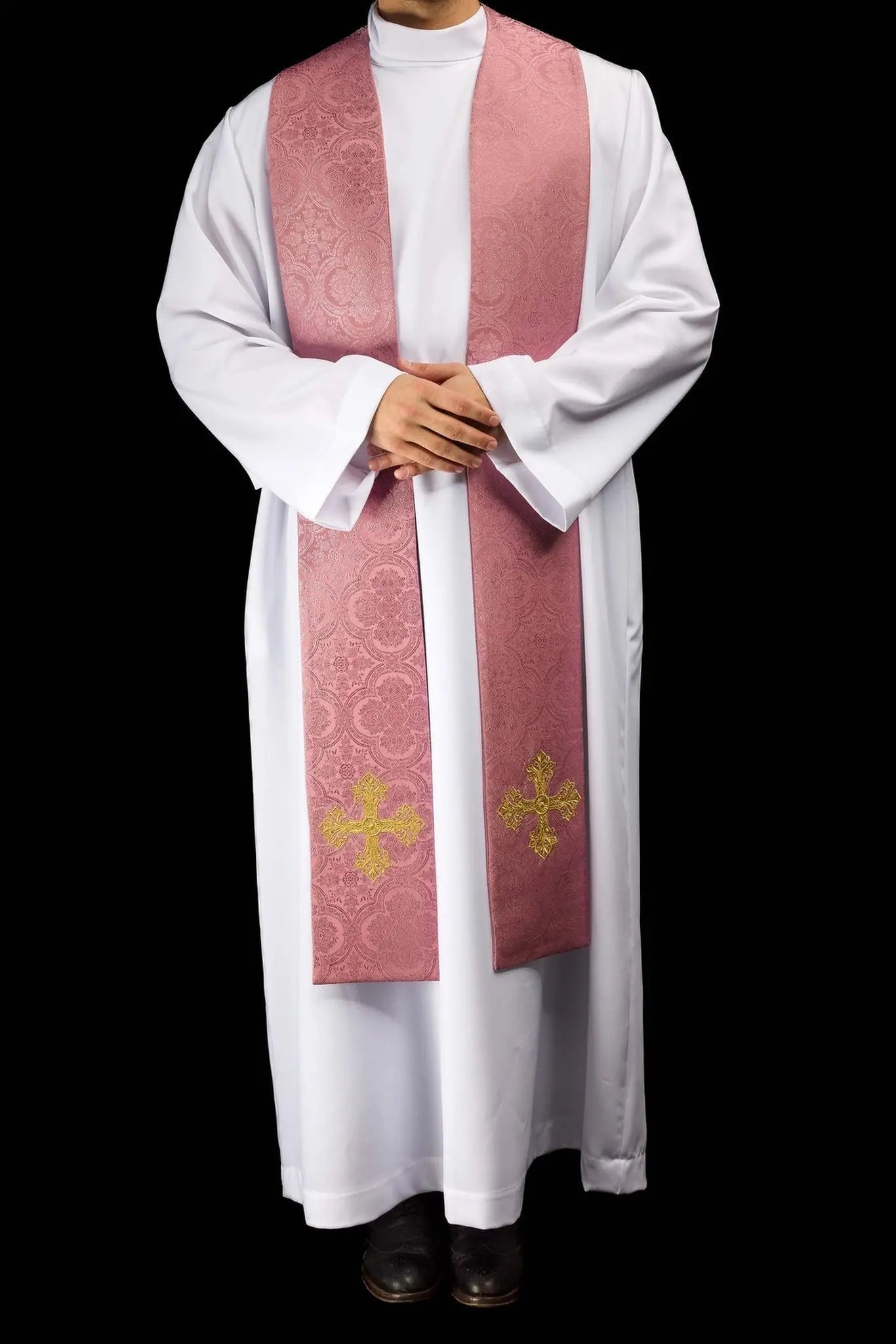
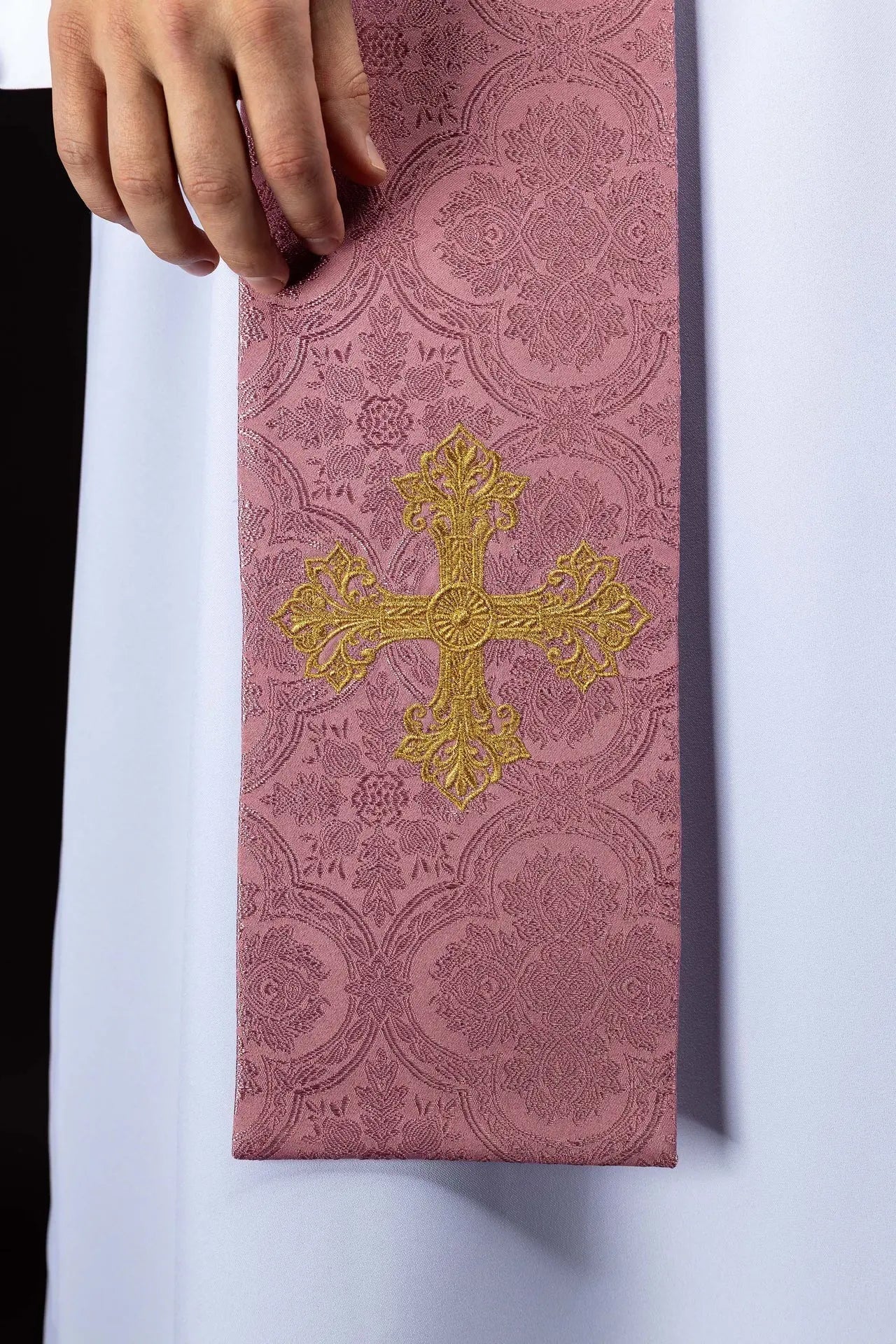
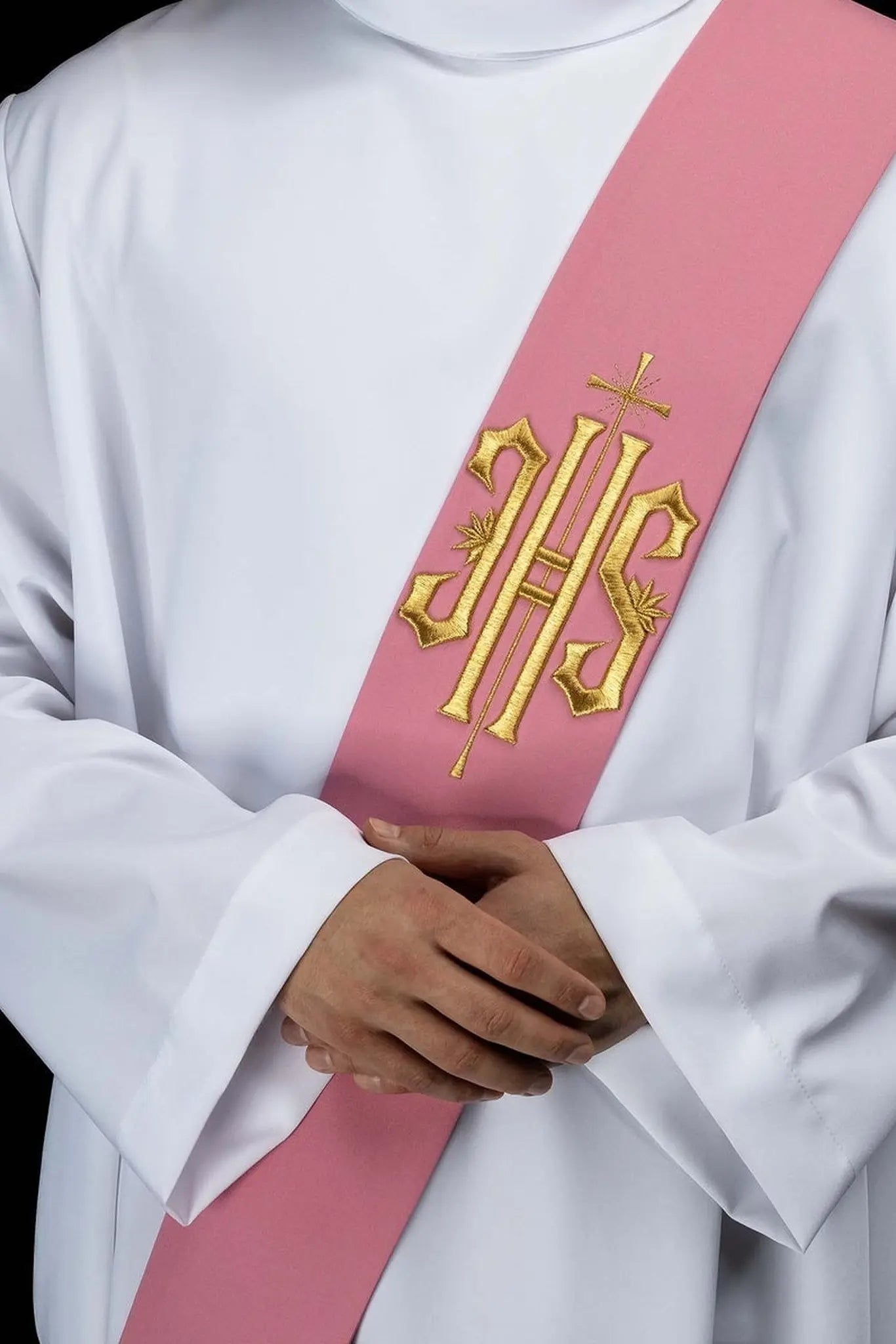
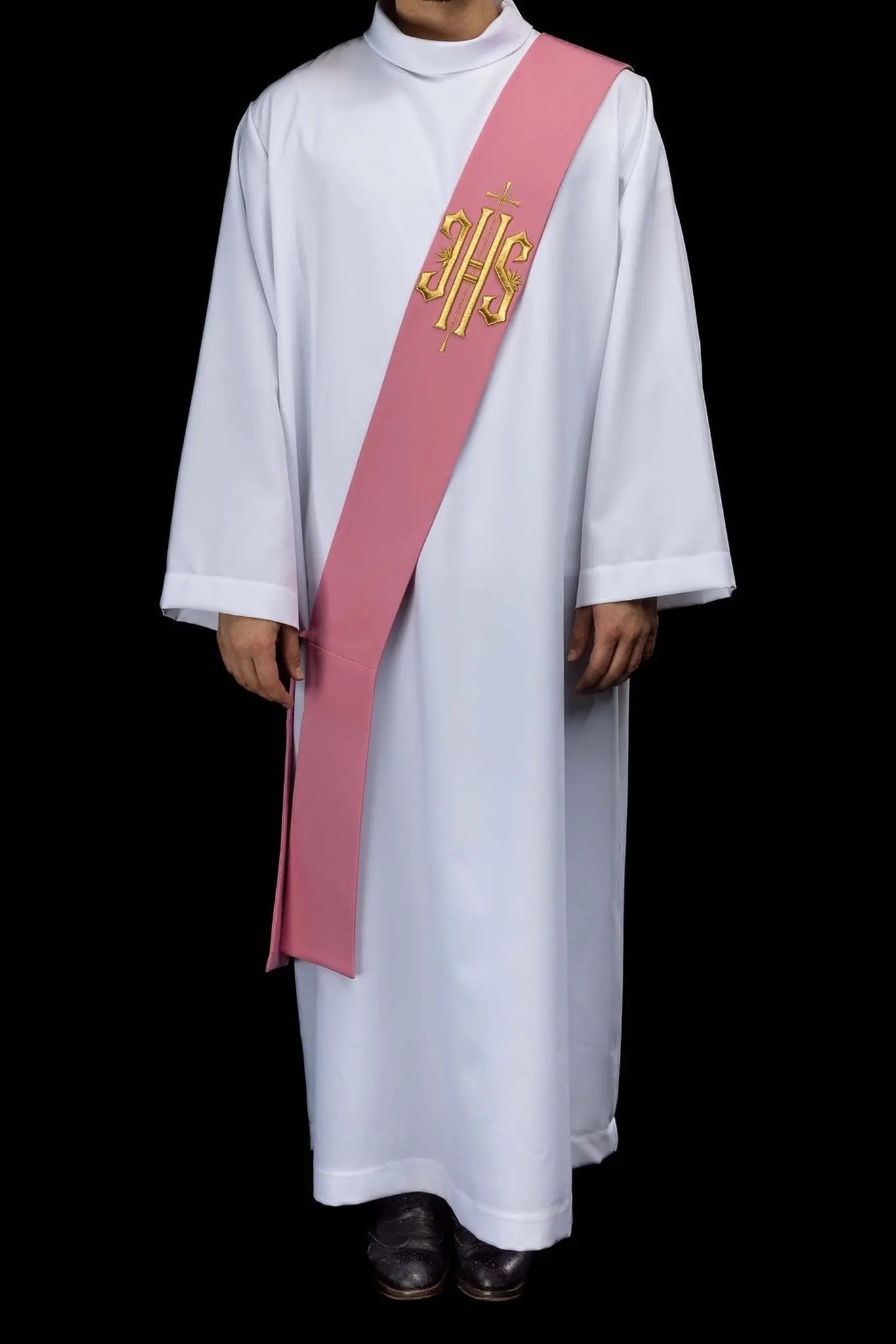
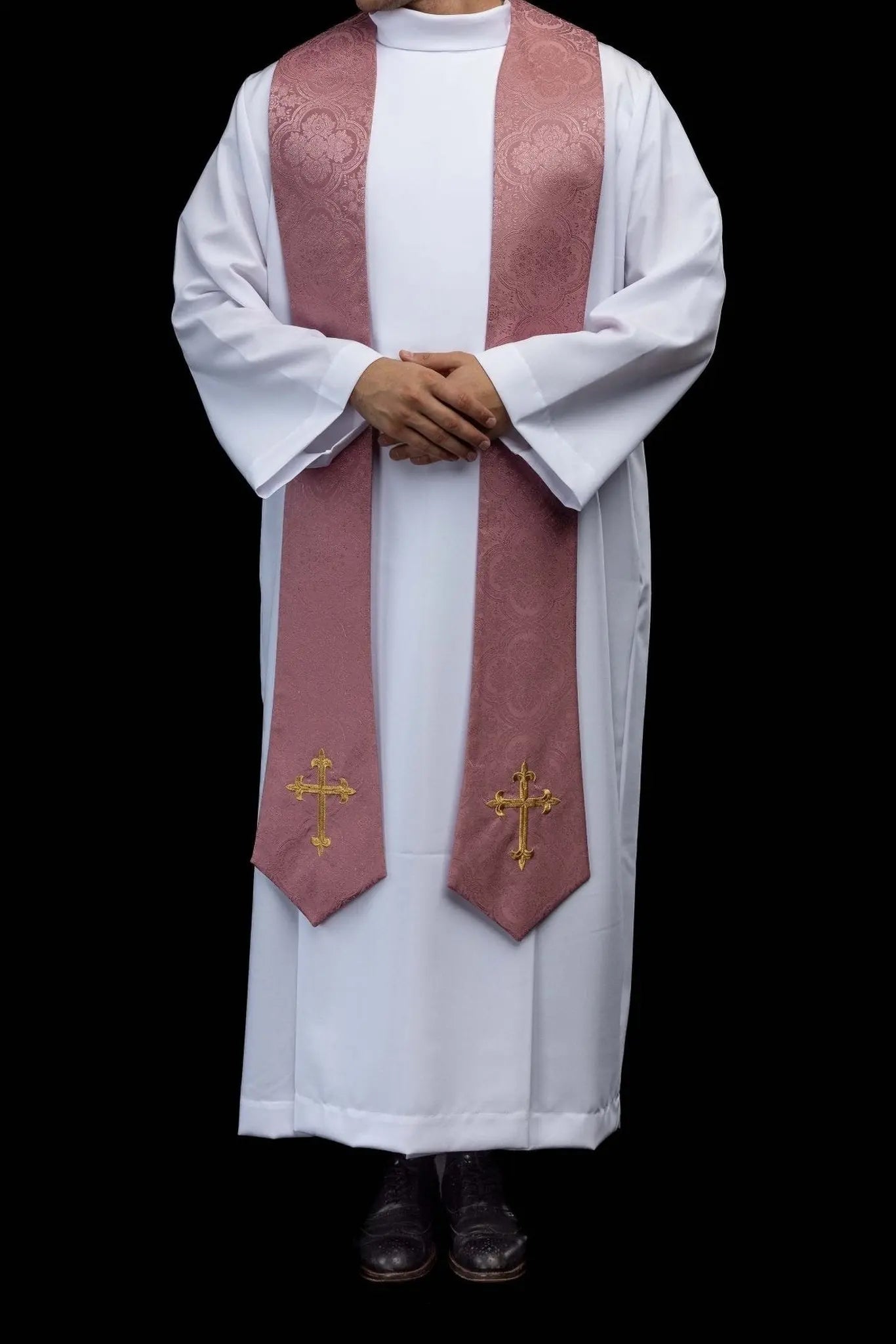
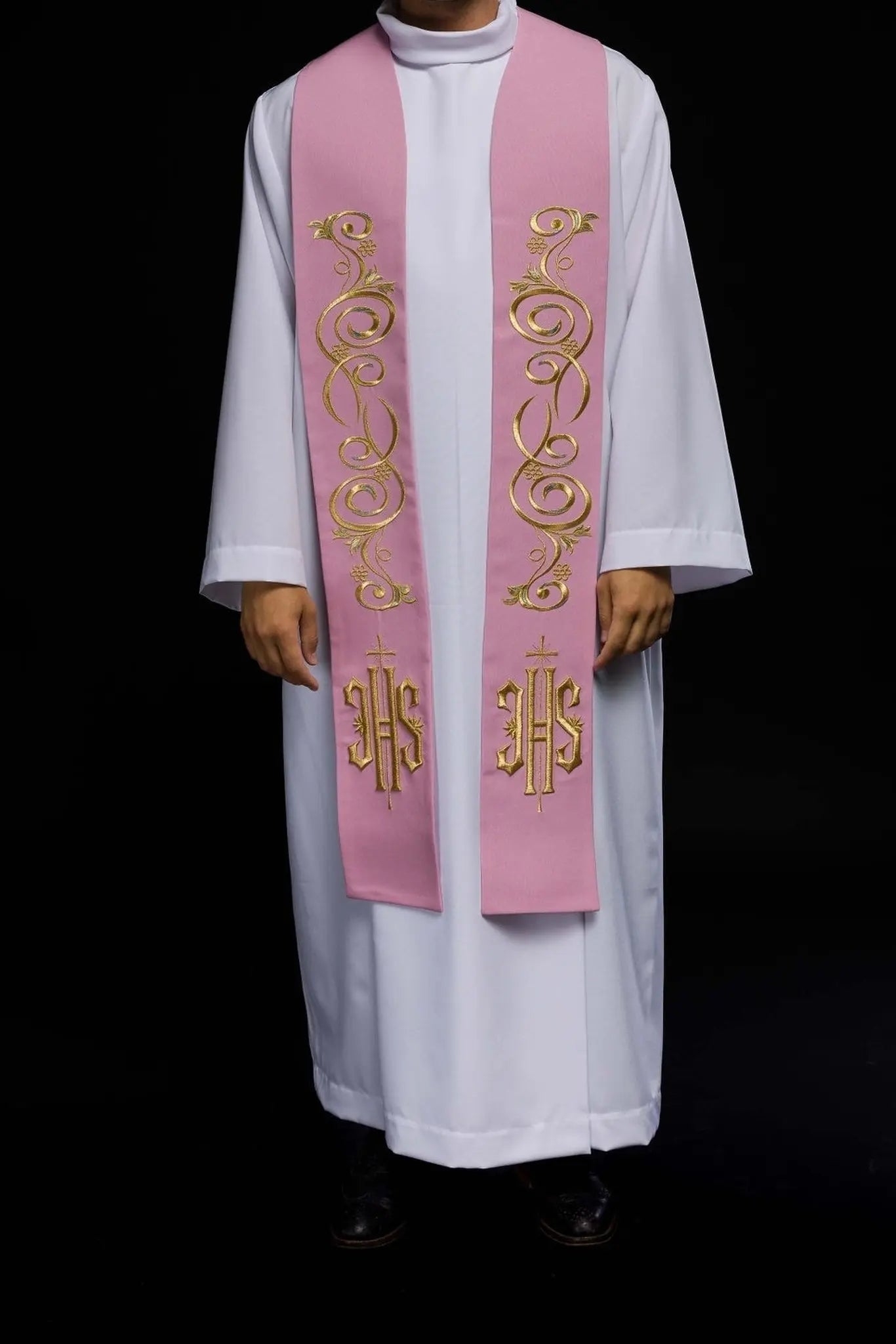
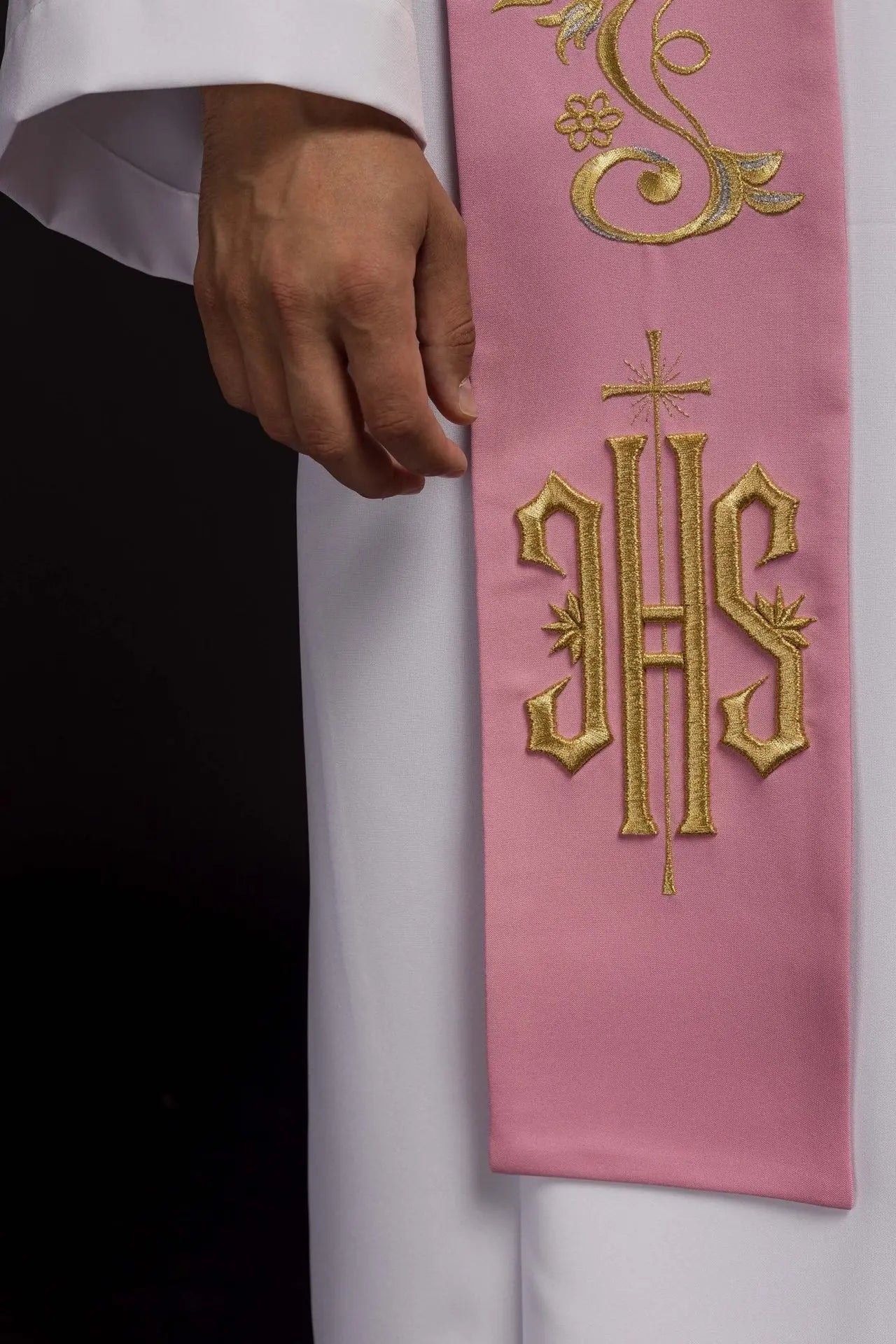
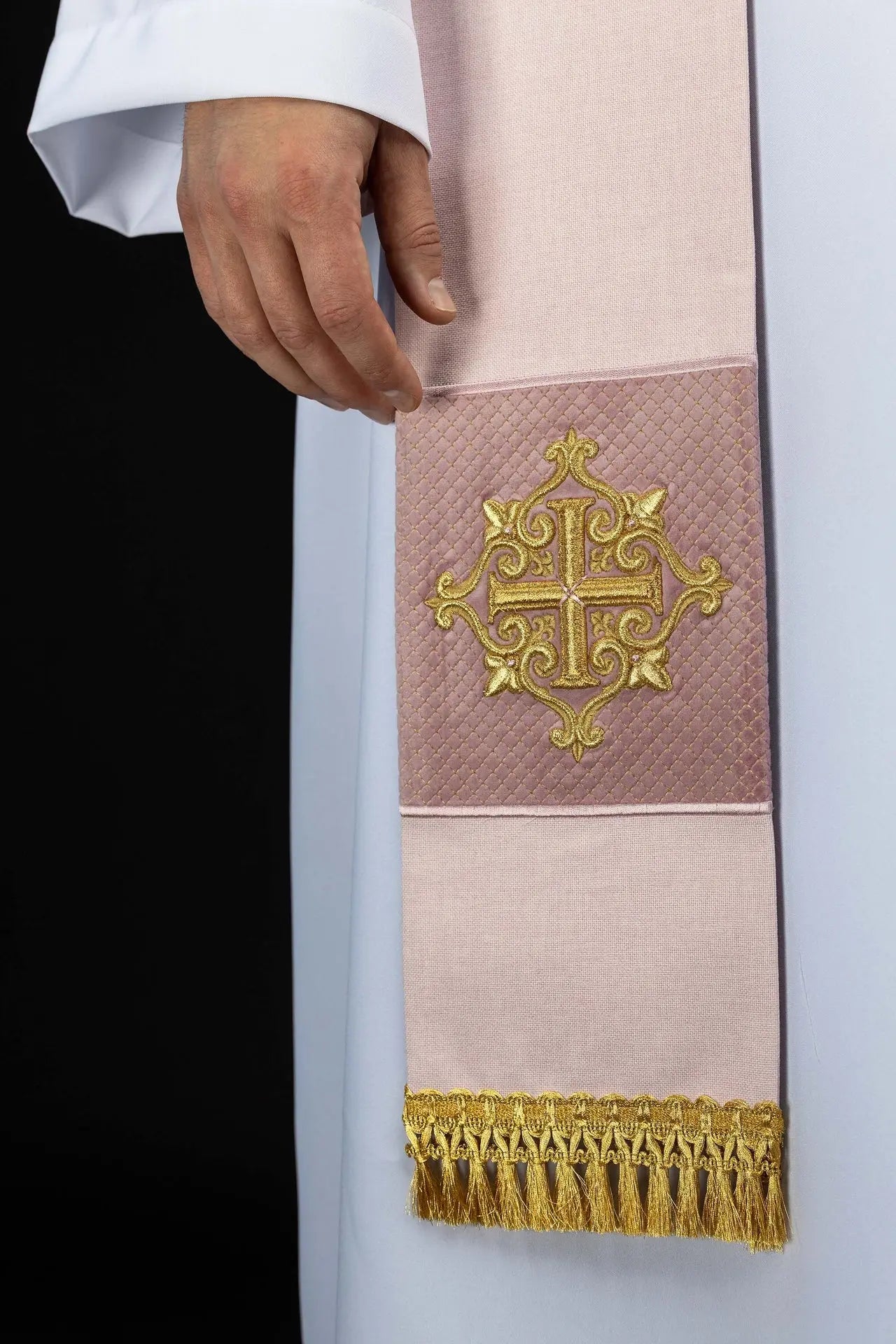
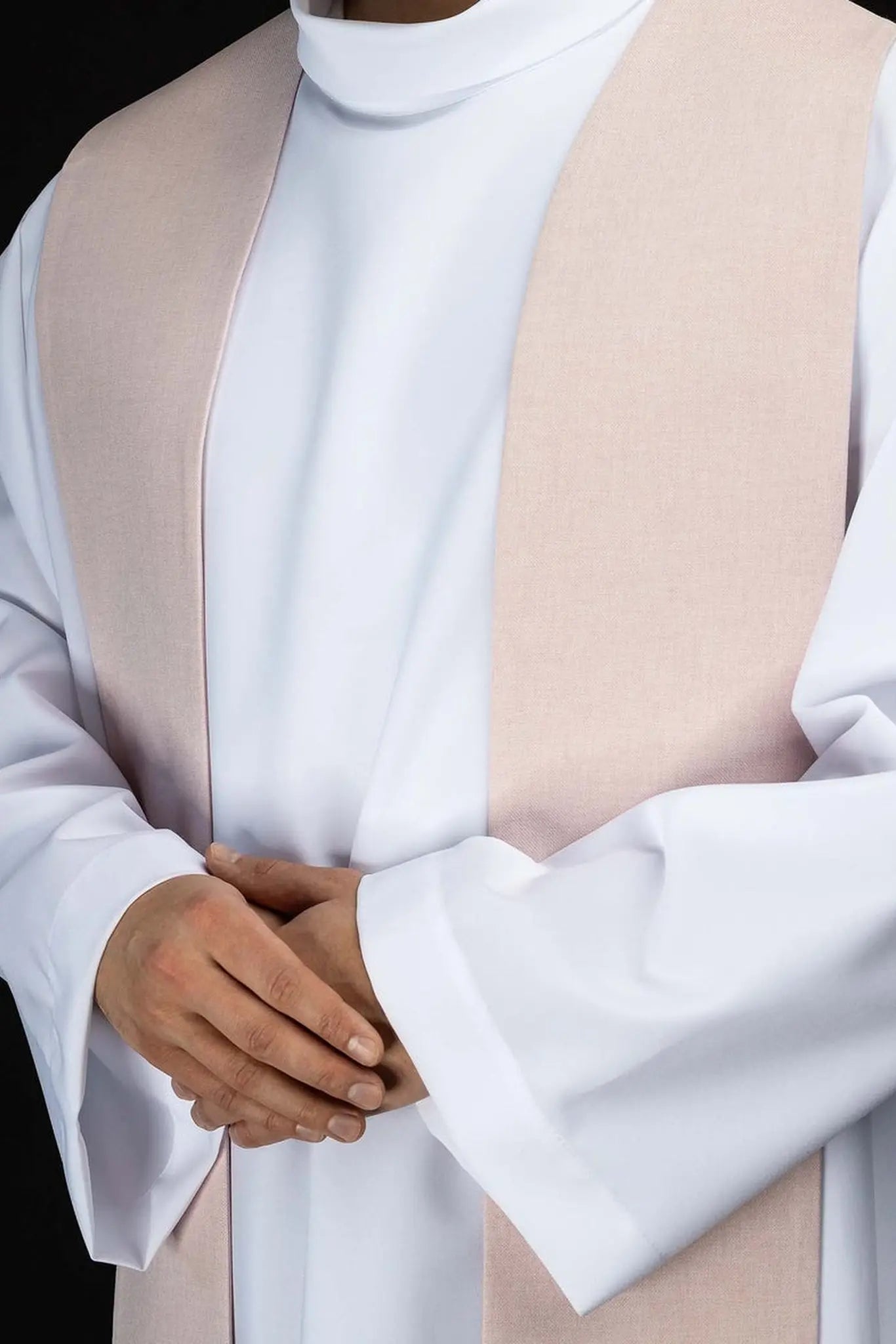
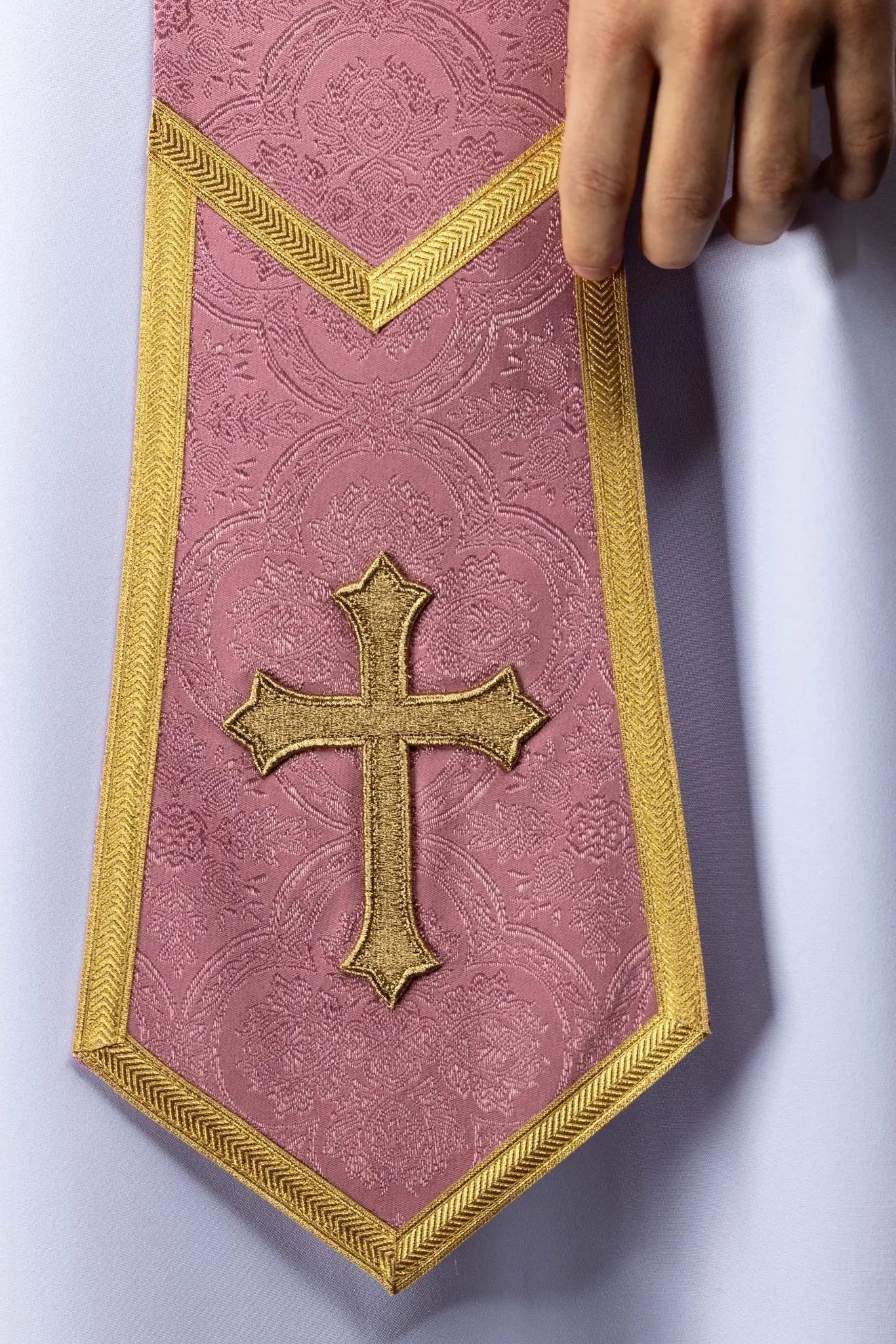
Related stoles support a consistent liturgical appearance. A priest's stole is normally worn under the chasuble at Mass and may also be used for other rites where a rose stole is appropriate. Deacon stoles belong to the deacon and are cut and worn differently from priest stoles, so they should not be treated as interchangeable. For parishes assembling a complete rose set, the Rose Chasubles collection and the Rose Stoles collection are helpful adjacent categories.
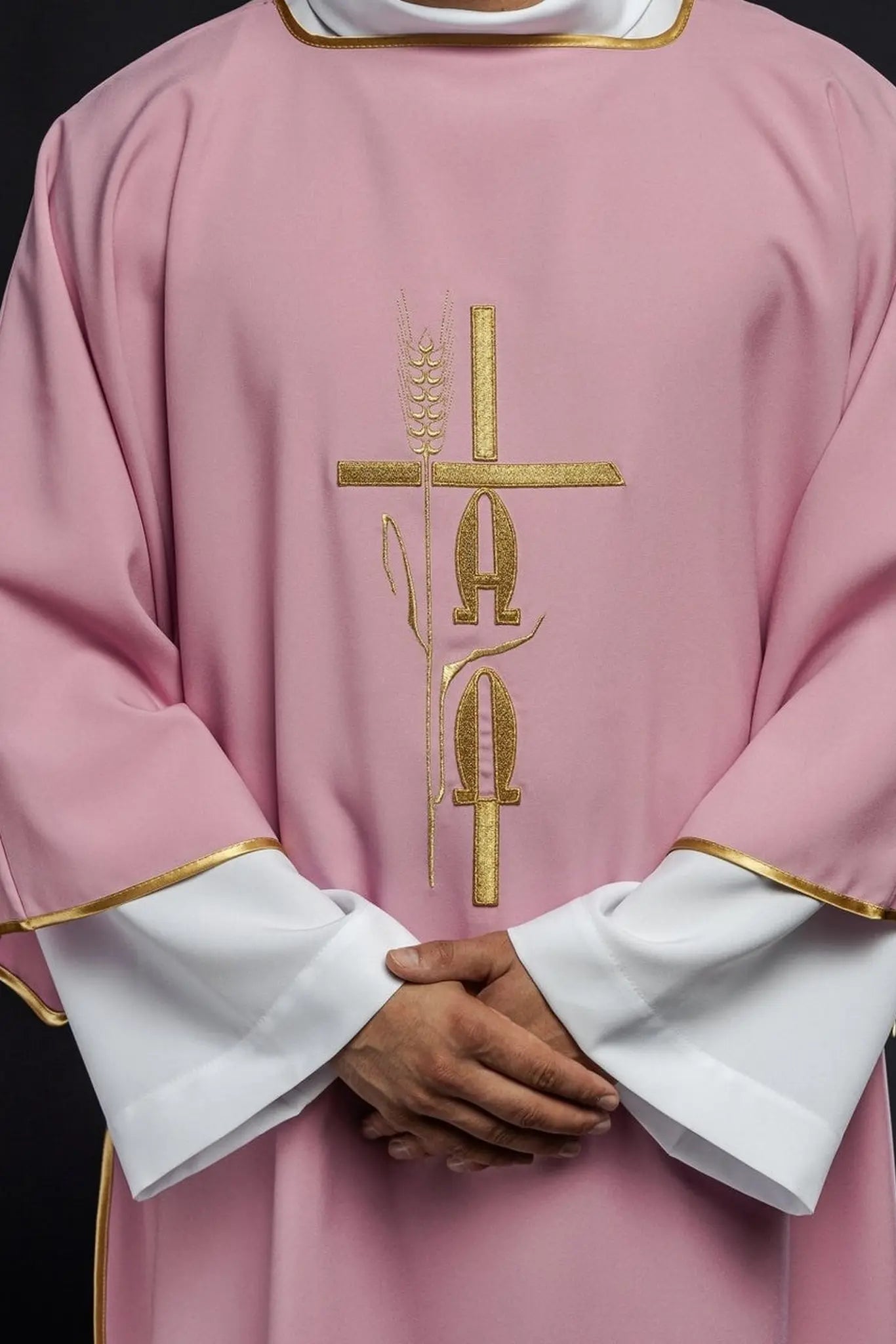
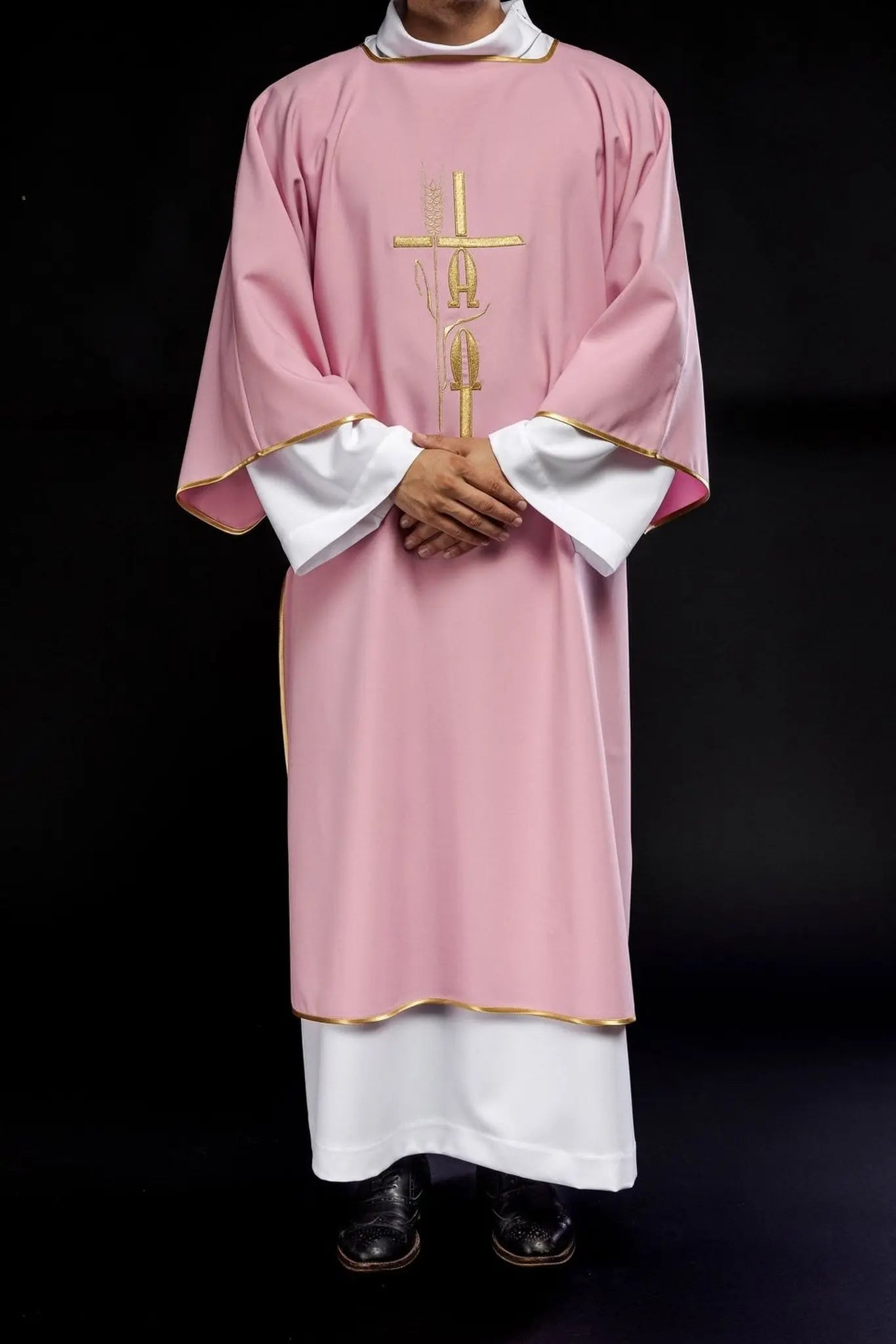
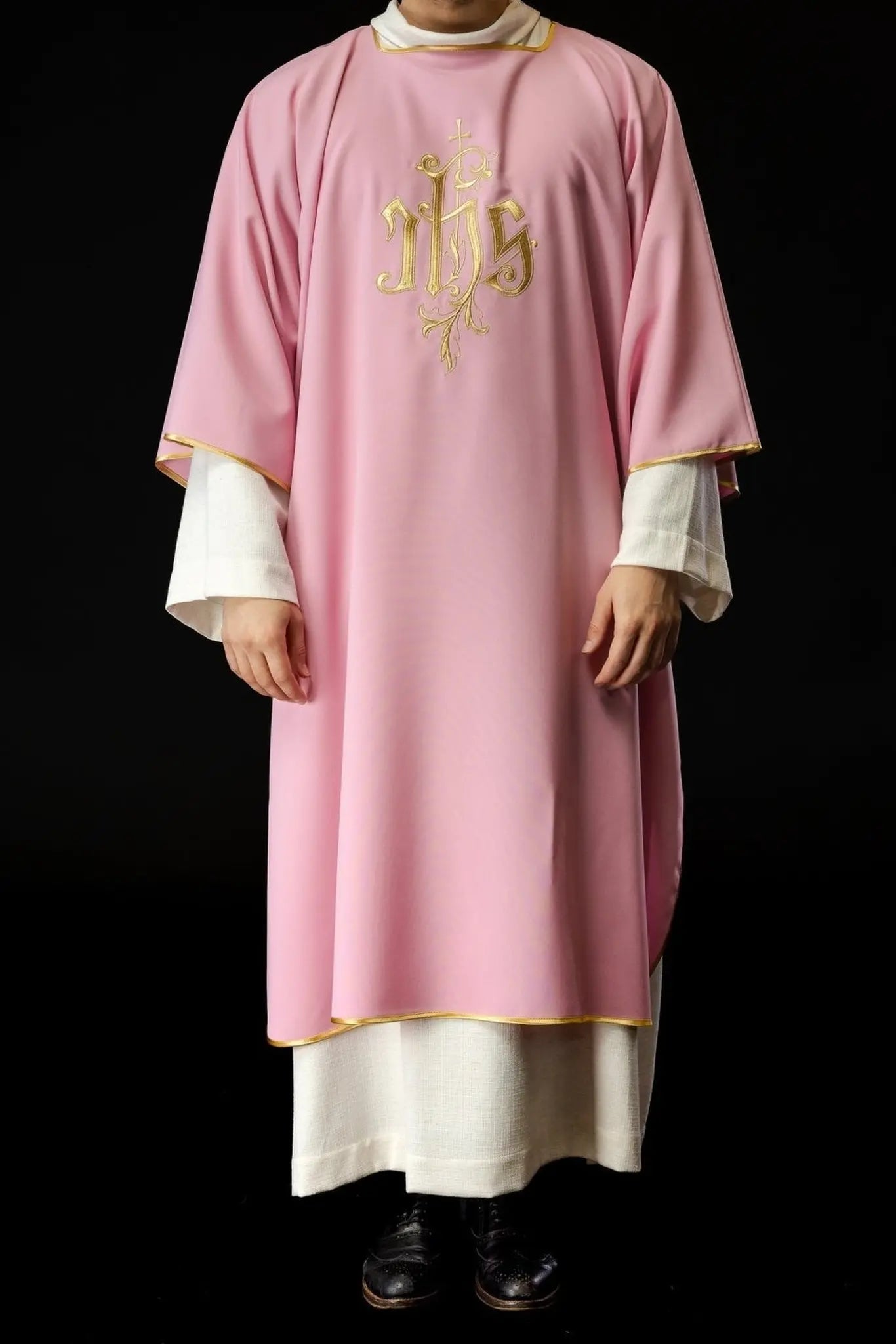
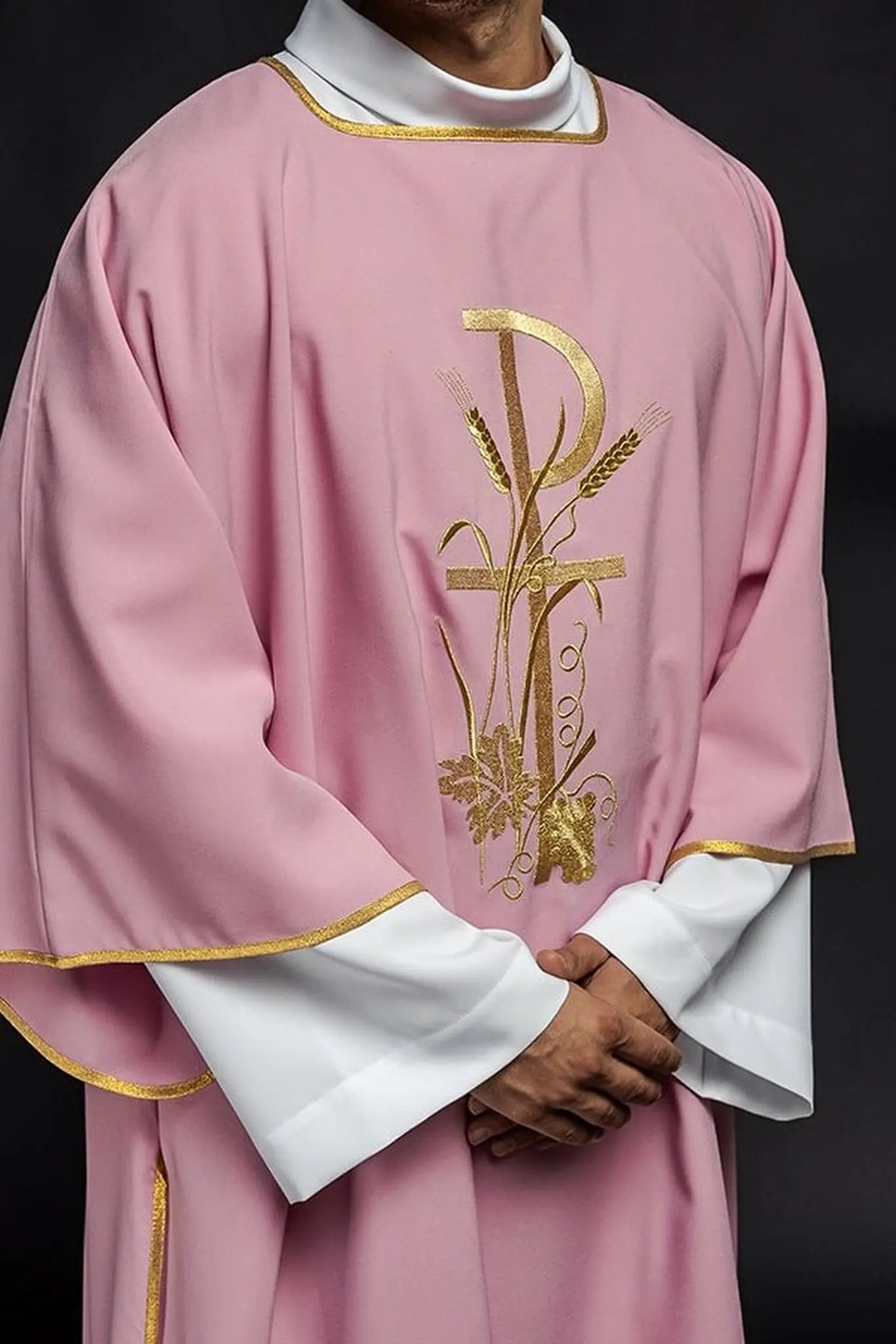
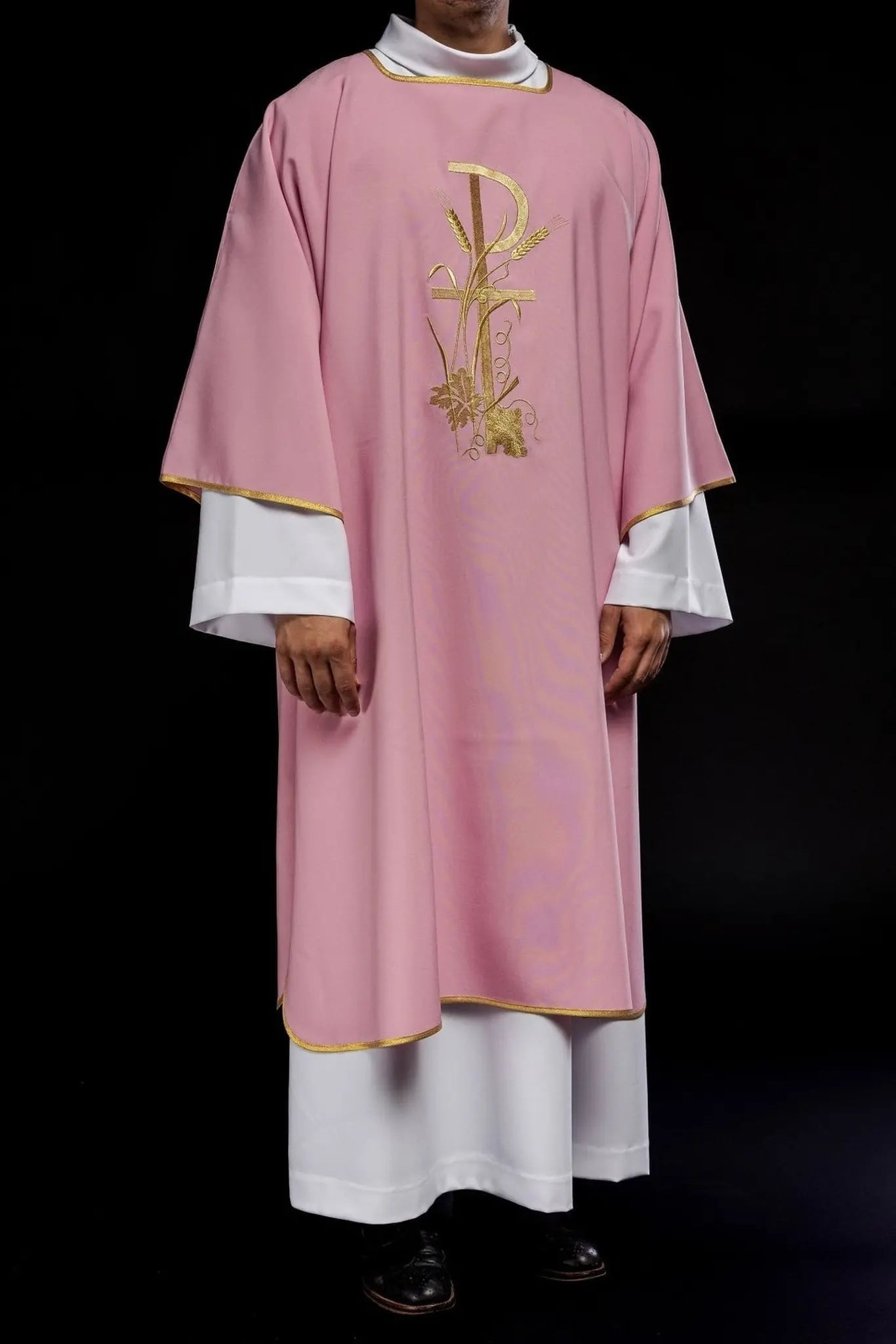
Rose dalmatics serve the deacon at Mass and complete the visual unity of the sanctuary when a deacon assists the celebrant. Because a dalmatic is not a chasuble, it should be selected according to the deacon's role and fit rather than as a substitute for the celebrant's vestment. Parishes that regularly celebrate solemn Masses with a deacon may also compare the broader Deacon dalmatic collection for additional colors and styles.
Altar textiles and chalice appointments for rose Sundays
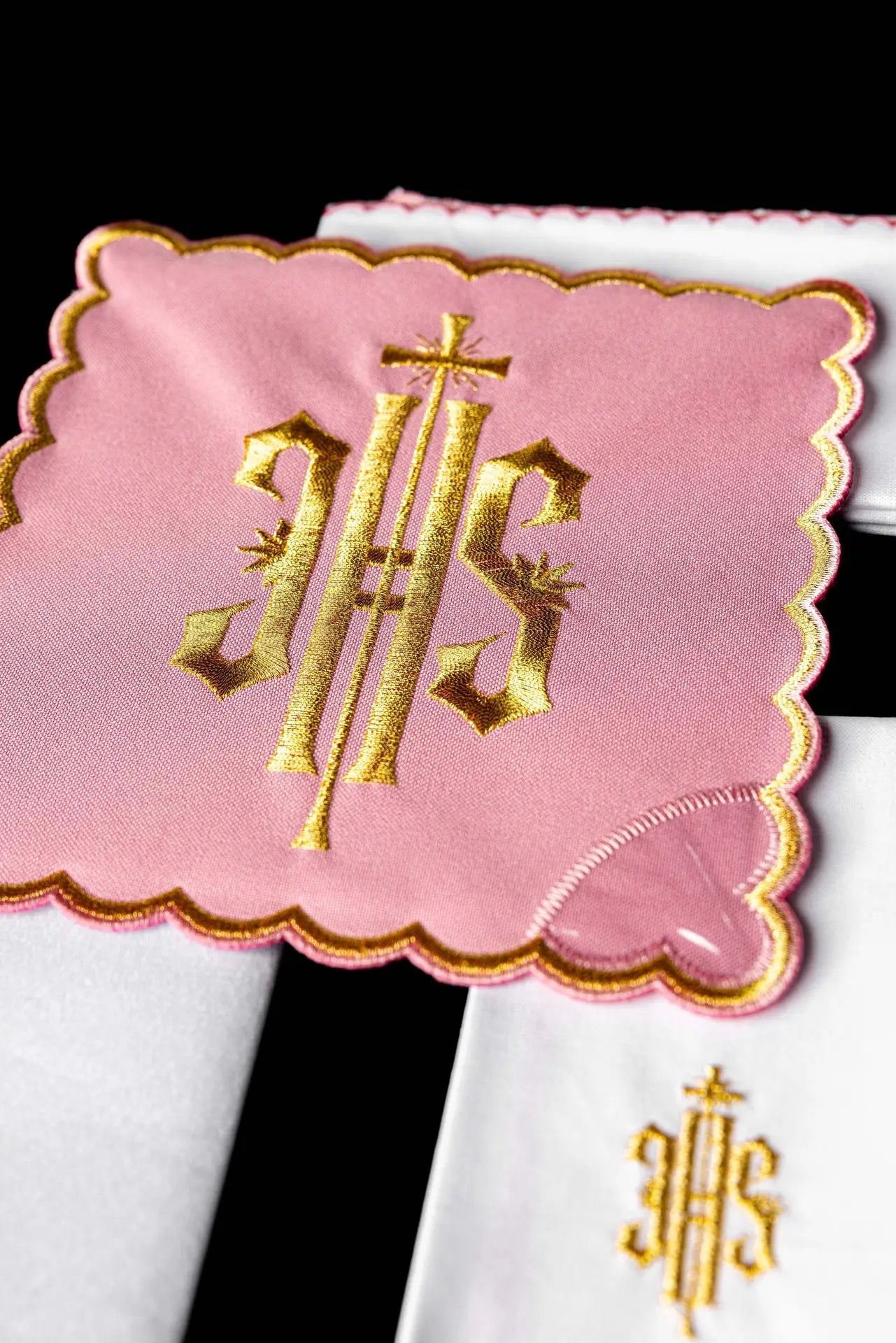
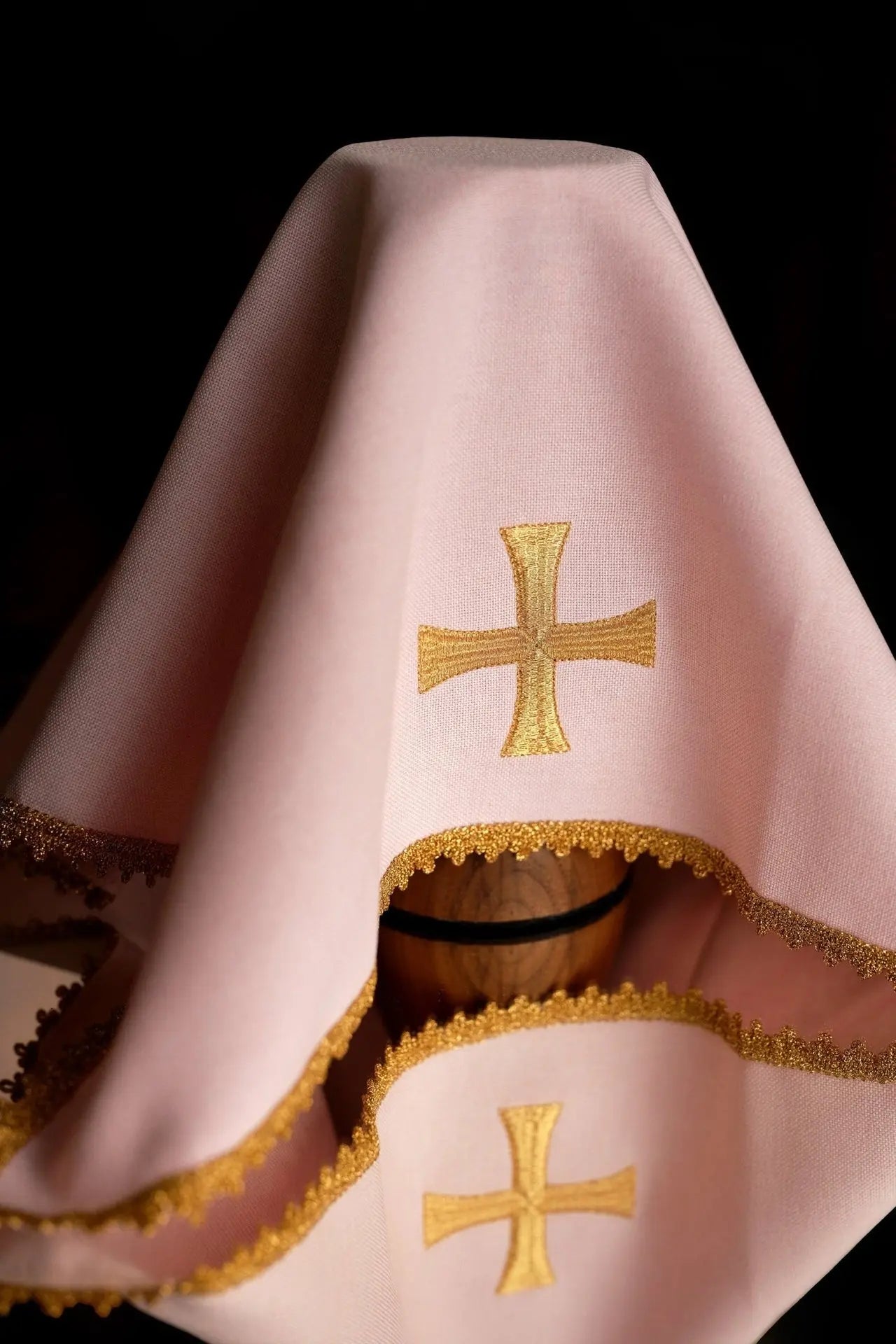
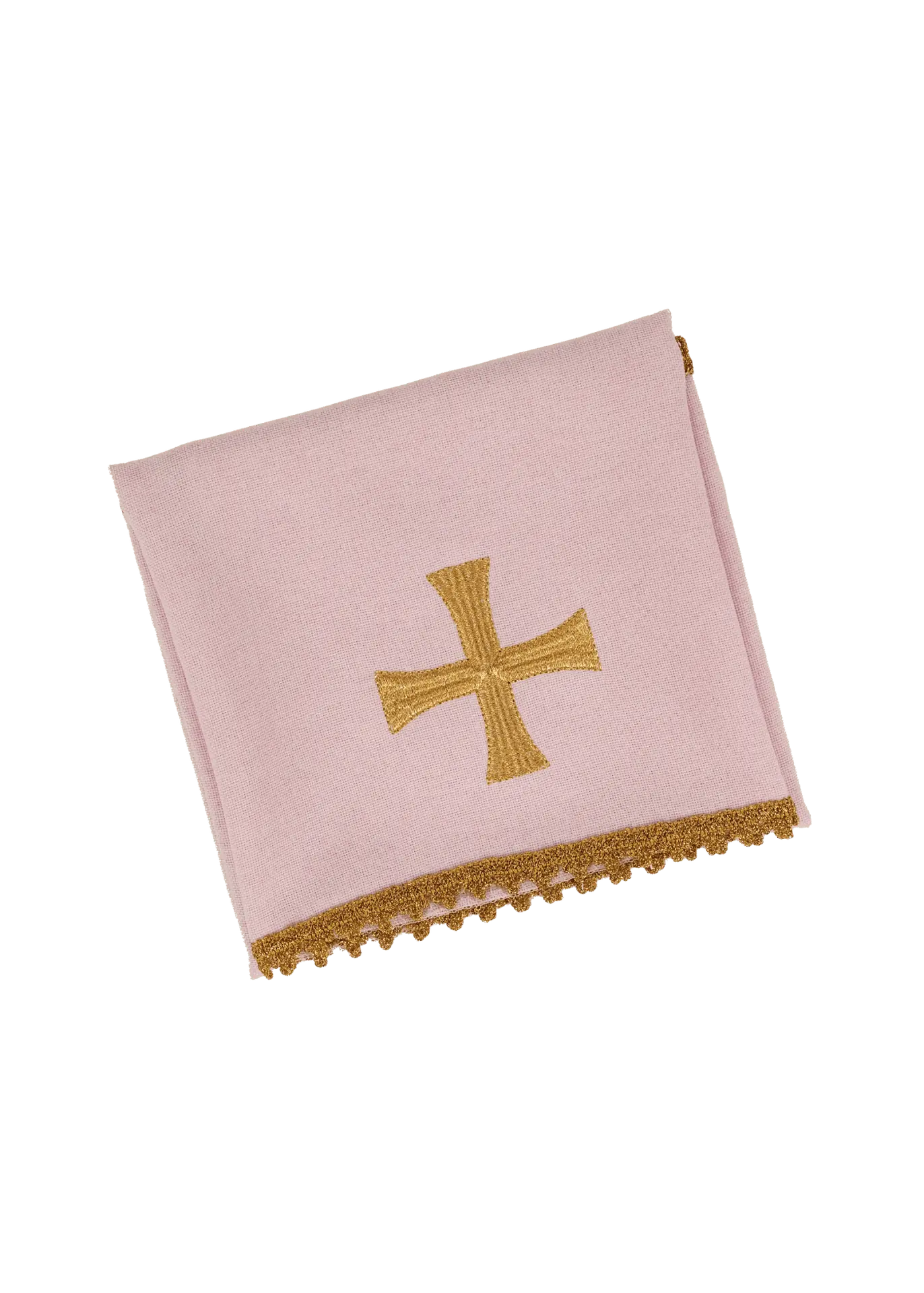
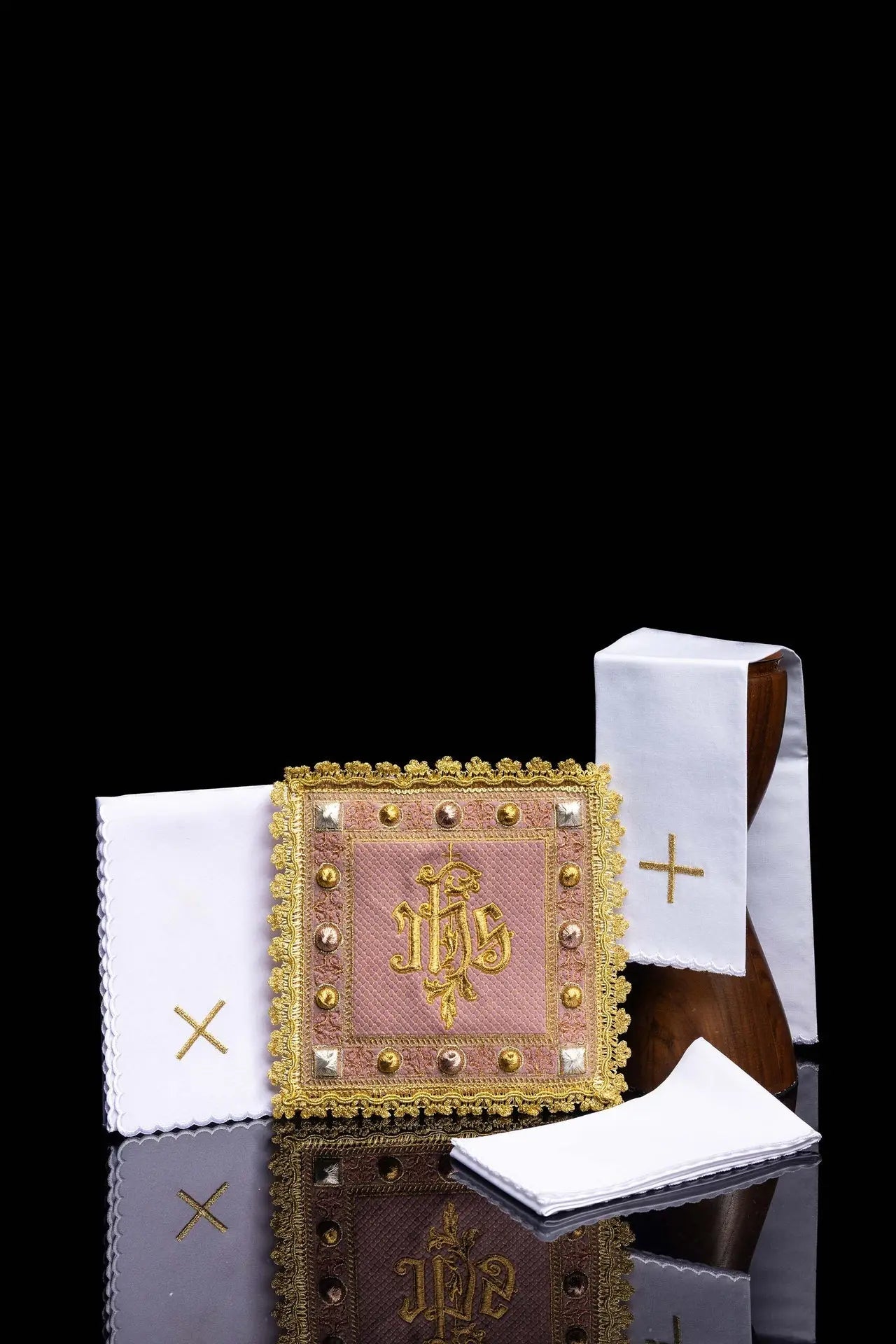
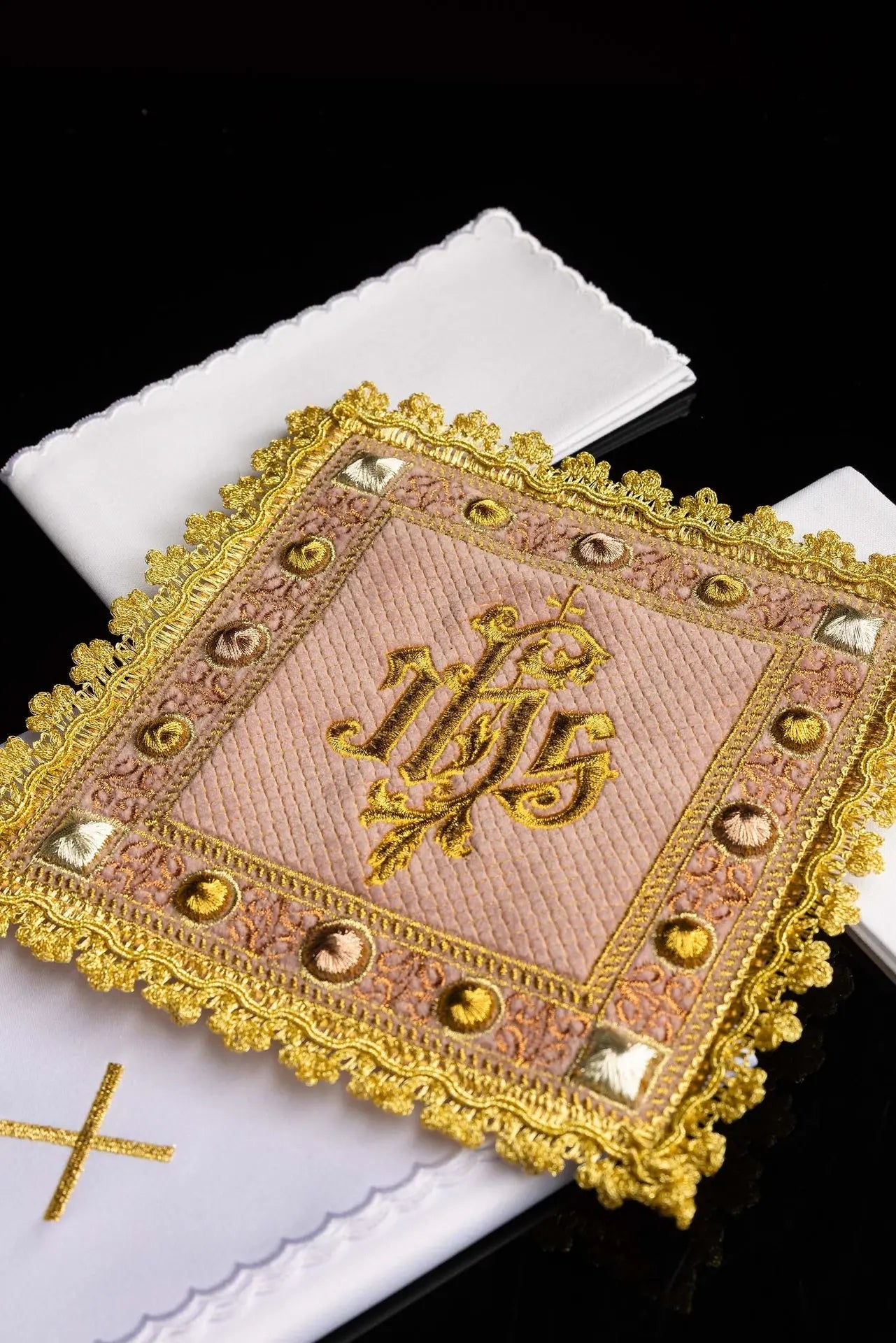
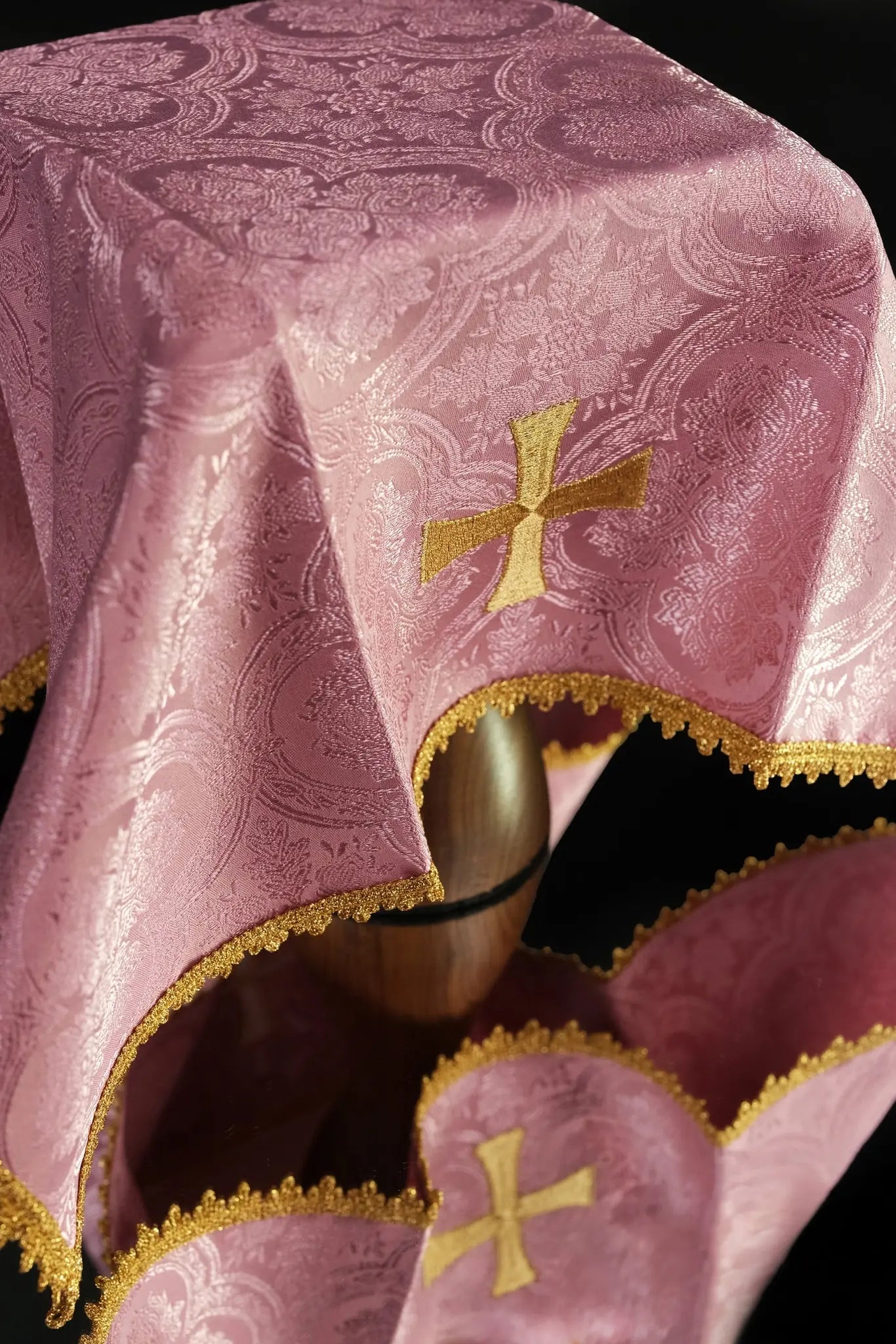
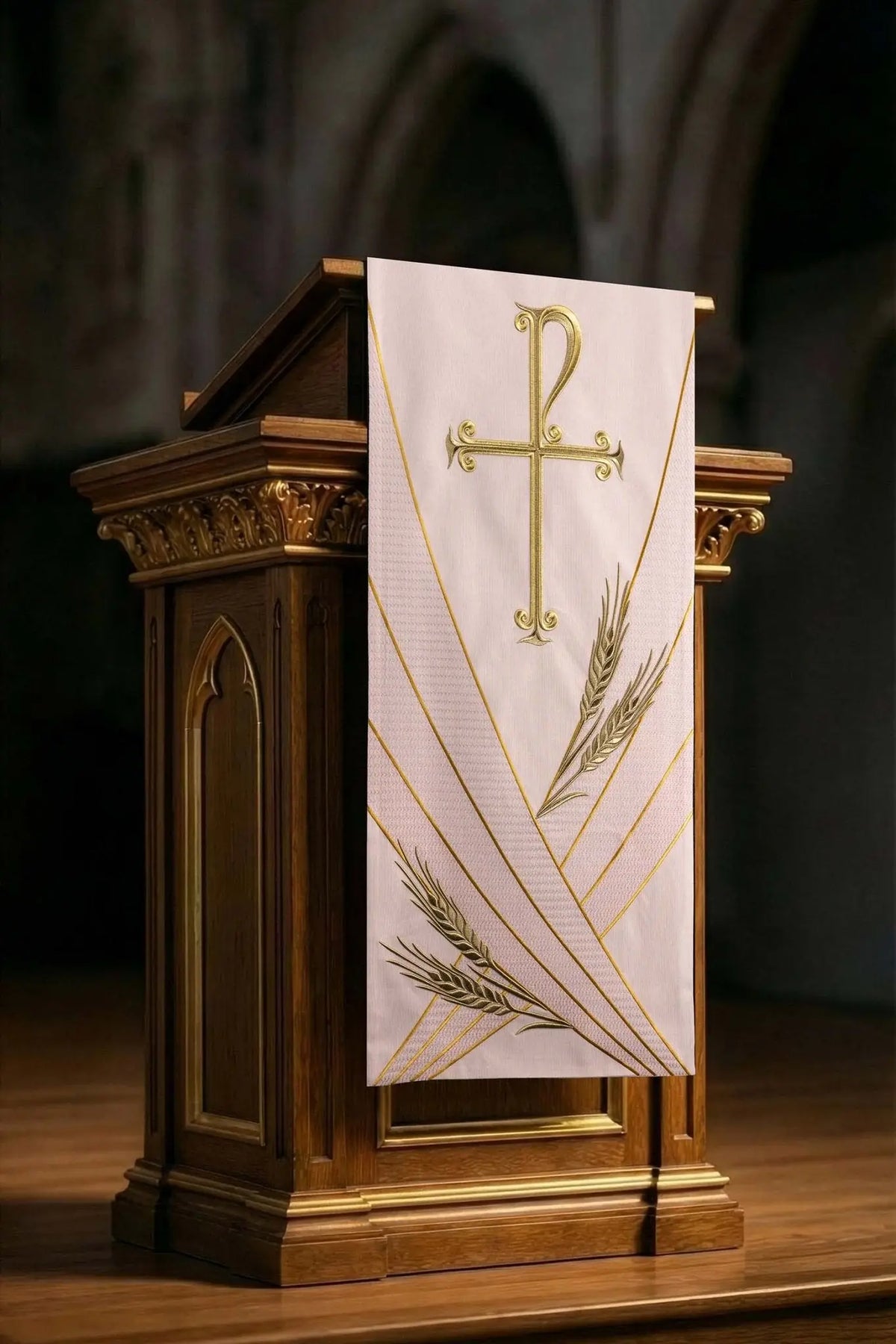
Beyond garments, the visual language of Gaudete and Laetare can be carried into the preparation of the chalice and altar. Rose chalice veils can cover the chalice before the Offertory, while chalice linen sets support the practical and ceremonial needs of the Eucharistic celebration. A matching chalice veil and linen set can make the rose color feel intentional rather than isolated, especially when the chasuble or dalmatic contains similar embroidery or fabric texture.
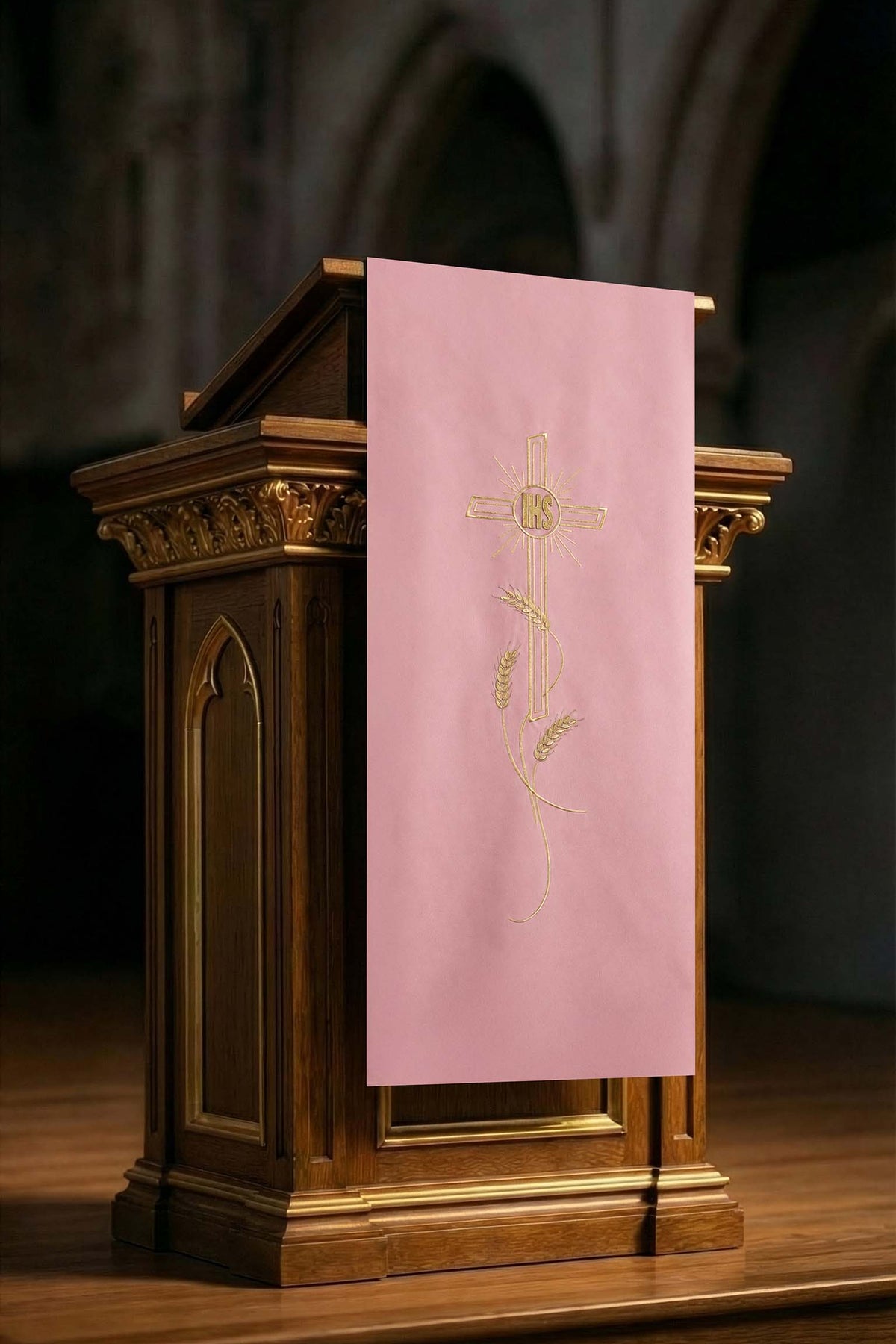
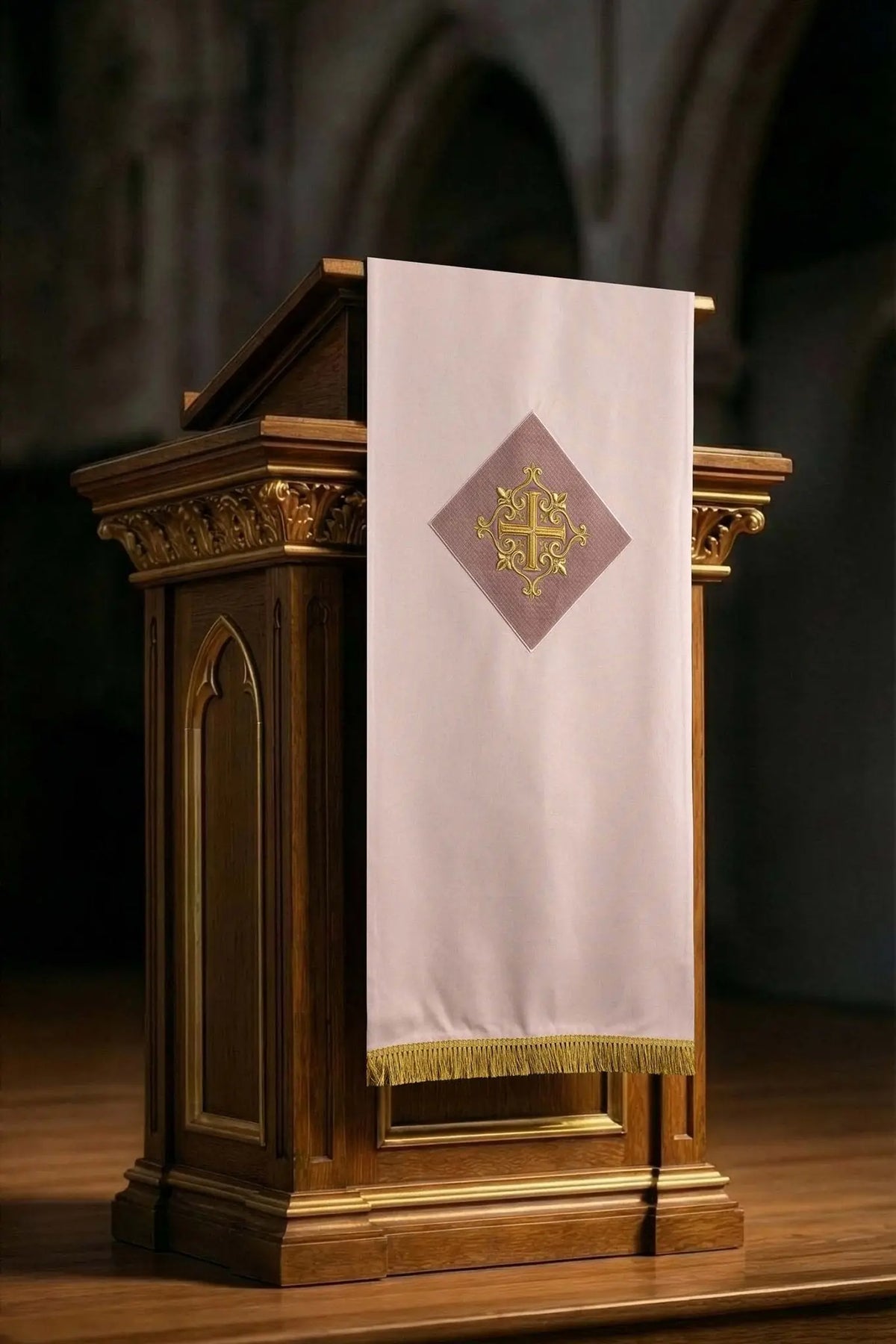
When selecting altar textiles, distinguish clearly between the pieces used at the chalice, the altar cloth itself, and other sanctuary textiles. A chalice veil is not the same as a ciborium veil, and a chalice linen set has a different purpose from an altar frontal or pulpit cover. To coordinate the sacred vessels, compare this collection with Chalice Veils and Chalice's set in Linen. These categories help parishes build a coherent arrangement without confusing separate liturgical functions.
How to choose rose vestments for your parish
The first decision is whether the parish needs one focal piece or a coordinated set. A single rose chasuble may be enough for a smaller chapel or mission church. A parish with several clergy members, a deacon, or a more solemn Sunday celebration may benefit from matching or compatible stoles, dalmatics, and chalice veils. The color should read as rose in the church's actual lighting: not too close to purple, not overly bright, and not so pale that it loses the liturgical distinction.
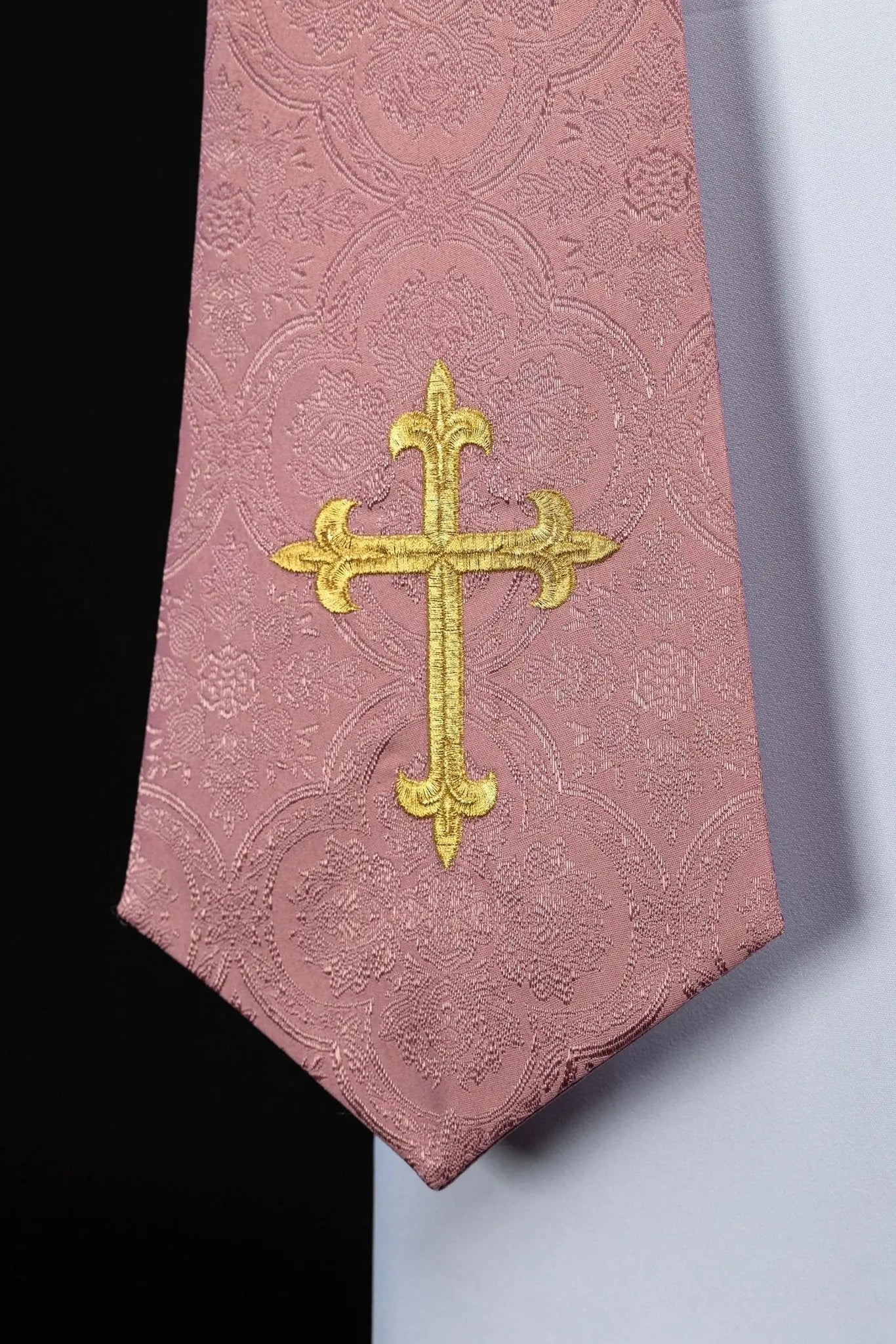
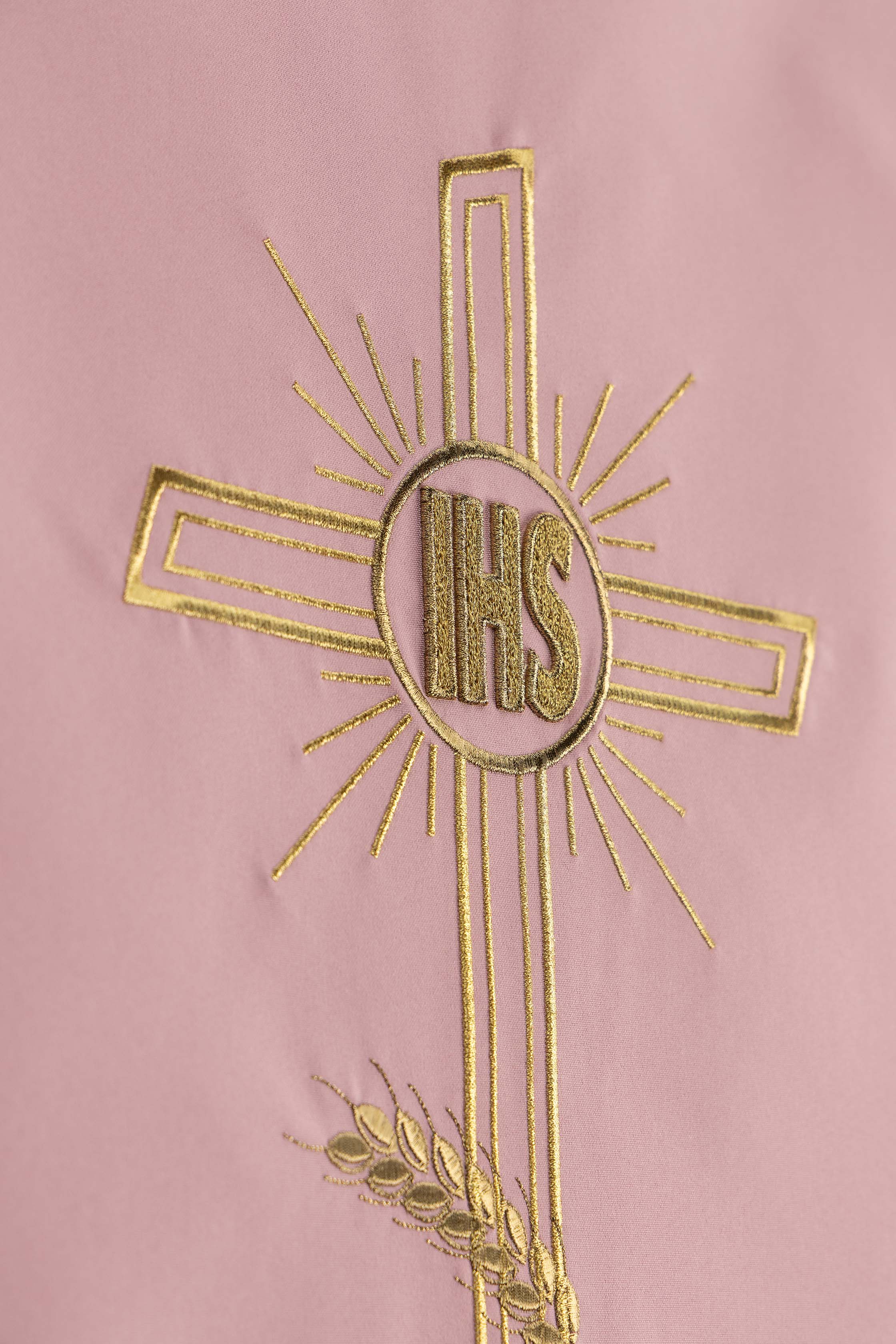
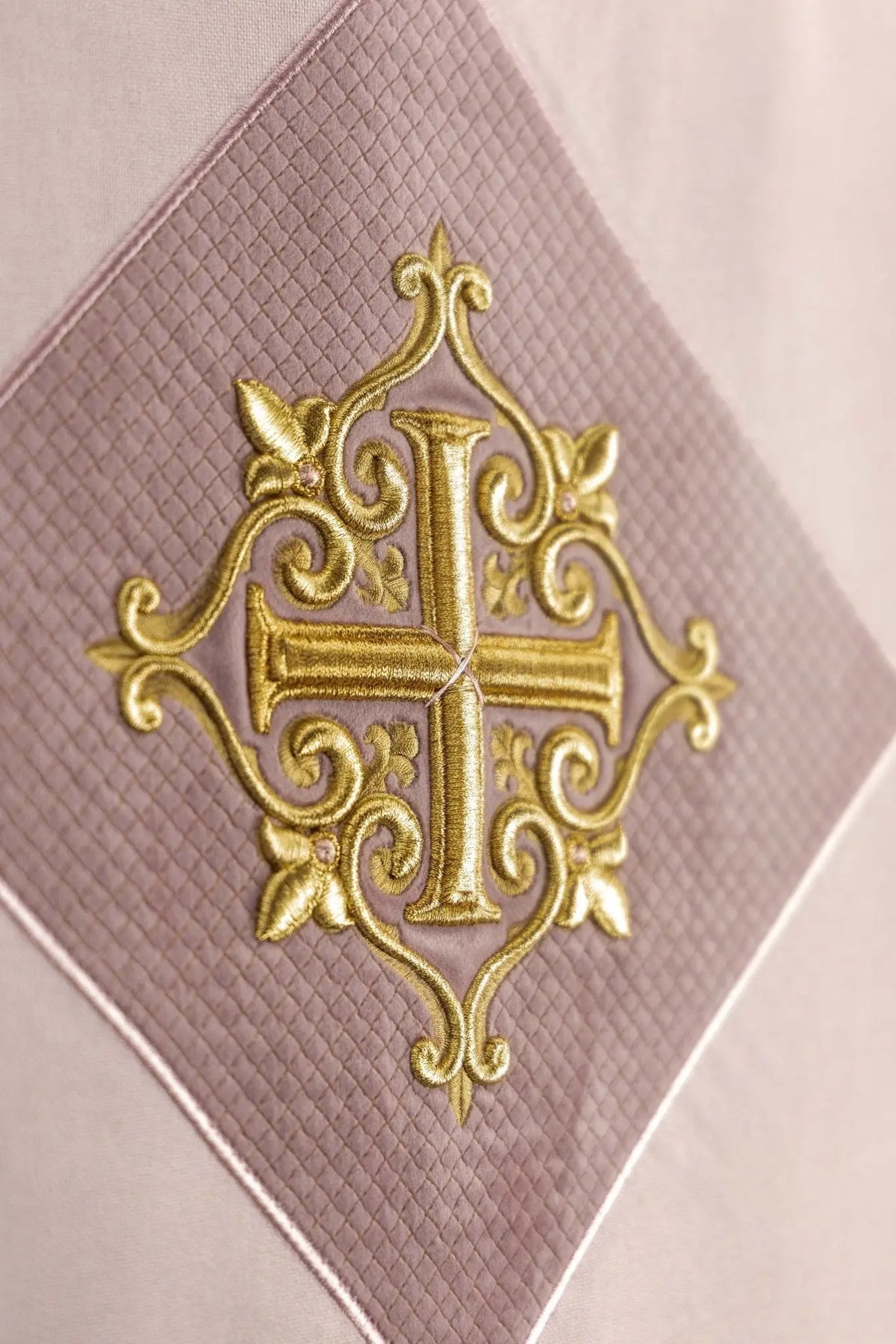
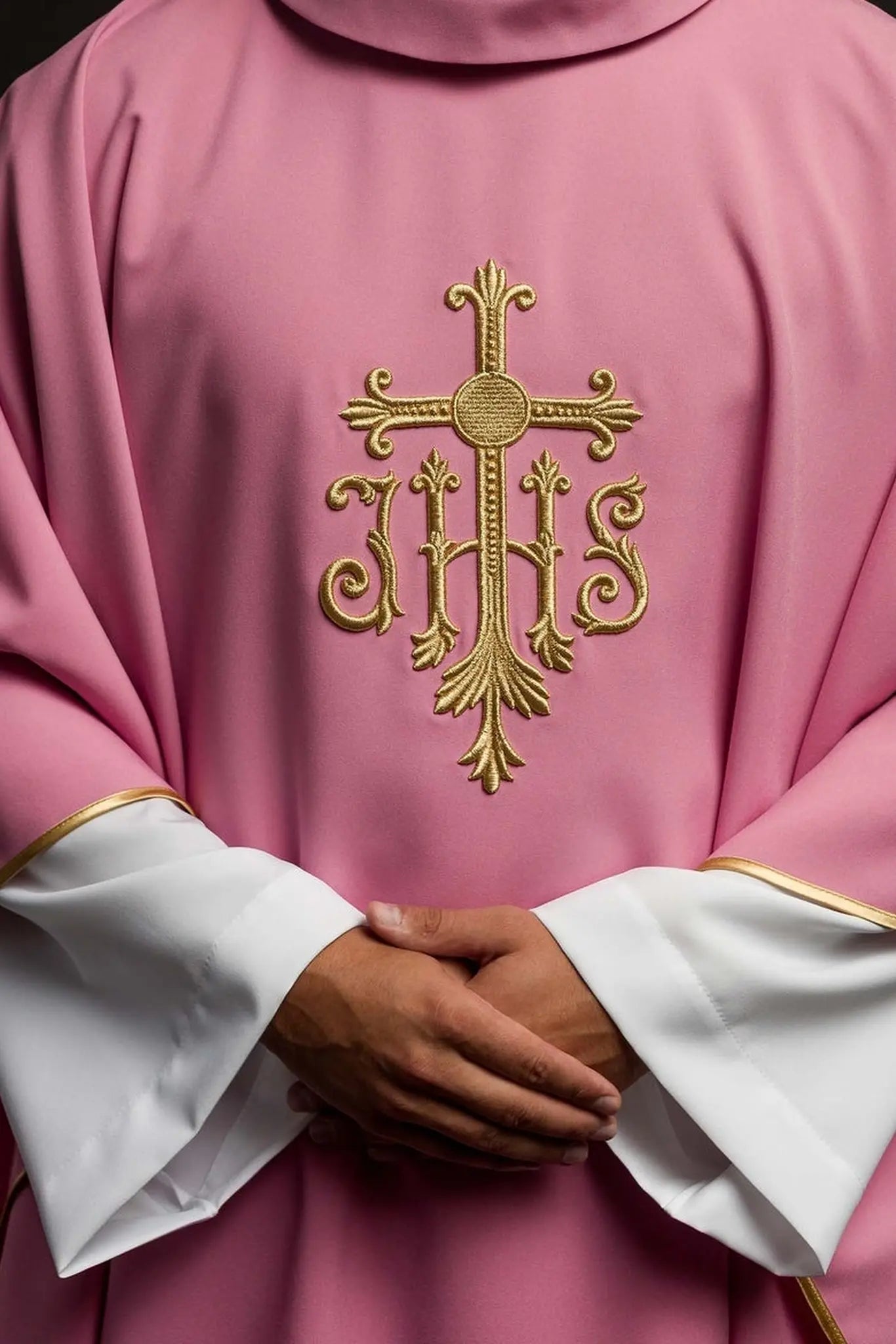
Embroidery style is another practical consideration. A simple cross motif can work well in a restrained sanctuary, while a richly embroidered band, IHS symbol, Alpha and Omega motif, or ornamental collar can be suitable where the architecture and furnishings support a more decorative vestment. Gold trim is often used because it reinforces the joyful character of the day, but the overall effect should remain balanced and dignified. The vestment should serve the liturgy rather than dominate it.
Fabric also affects how a vestment appears during Mass. Velvet and heavier woven materials can give depth to rose, while lighter fabrics may be easier to wear during long celebrations or in warmer interiors. A Gothic-style chasuble provides a flowing shape, while a Roman-style chasuble offers a more traditional structured profile. The best choice depends on the celebrant's preference, the parish's visual tradition, and how often the vestment will be used throughout the year.
Relation to other liturgical seasons
Rose vestments are closely connected to Advent and Lent, but they should not be confused with the dominant colors of those seasons. Purple remains the usual color for much of both seasons, while rose is reserved for the Sundays of rejoicing. Green vestments belong to Ordinary Time, white and gold are frequent for feasts and solemnities, and red is used for celebrations connected with the Passion, the Holy Spirit, and martyrs. Keeping each color in its proper context helps the parish's vestment wardrobe communicate the rhythm of the Church year.
For a complete seasonal plan, many parishes compare rose pieces with Ordinary Time vestments, the Christmas collection, and more solemn collections such as Corpus Christi. Rose should be chosen as a focused liturgical accent, not as a general festive substitute. Its value comes from being seen at the right moment and from being coordinated carefully with the other vestments used before and after those Sundays.
Care and storage
Because rose vestments may be used only a few times each year, proper storage matters. Embroidered chasubles, dalmatics, and stoles should be stored clean, dry, and protected from direct sunlight so the color does not fade unevenly. Avoid folding heavy embroidery sharply; if a garment must be folded, place the folds where they will not crush raised decoration. Chalice veils and linen sets should be kept flat or folded neatly according to their fabric and embroidery.
Always follow the care guidance supplied with the individual item, especially for velvet, jacquard, metallic embroidery, or delicate trim. Dry cleaning may be appropriate for some vestments, while certain linen pieces may require different care. Treating rose pieces carefully helps them remain suitable for the same liturgical Sundays year after year, even though they are used less frequently than green, white, or purple vestments.
Frequently Asked Questions (FAQ)
When are rose vestments used?
Rose vestments are traditionally used on Gaudete Sunday, the Third Sunday of Advent, and Laetare Sunday, the Fourth Sunday of Lent. They mark a joyful pause within the season without changing the season's overall character.
Is rose the same as pink in liturgical vestments?
In everyday language the color is often called pink, but the liturgical term is rose. For church use, rose is the more precise word because it refers to the appointed vestment color for Gaudete and Laetare.
Can a deacon wear a rose stole or dalmatic?
Yes, when the celebration calls for rose vestments, a deacon may wear a rose deacon stole and, where customary, a rose dalmatic. These should be chosen specifically for the diaconal role rather than adapted from priest vestments.
Do chalice veils and chalice linen sets need to match the chasuble?
They do not have to be identical, but matching or harmonized pieces create a more deliberate sanctuary arrangement. Similar rose tones, embroidery motifs, or trim can connect the altar appointments with the vestments.
Should a parish buy rose vestments if they are used only twice a year?
For many parishes, one well-chosen rose chasuble and a matching stole are enough to observe the appointed color properly. Larger churches may add dalmatics and chalice veils when they want a complete solemn set.