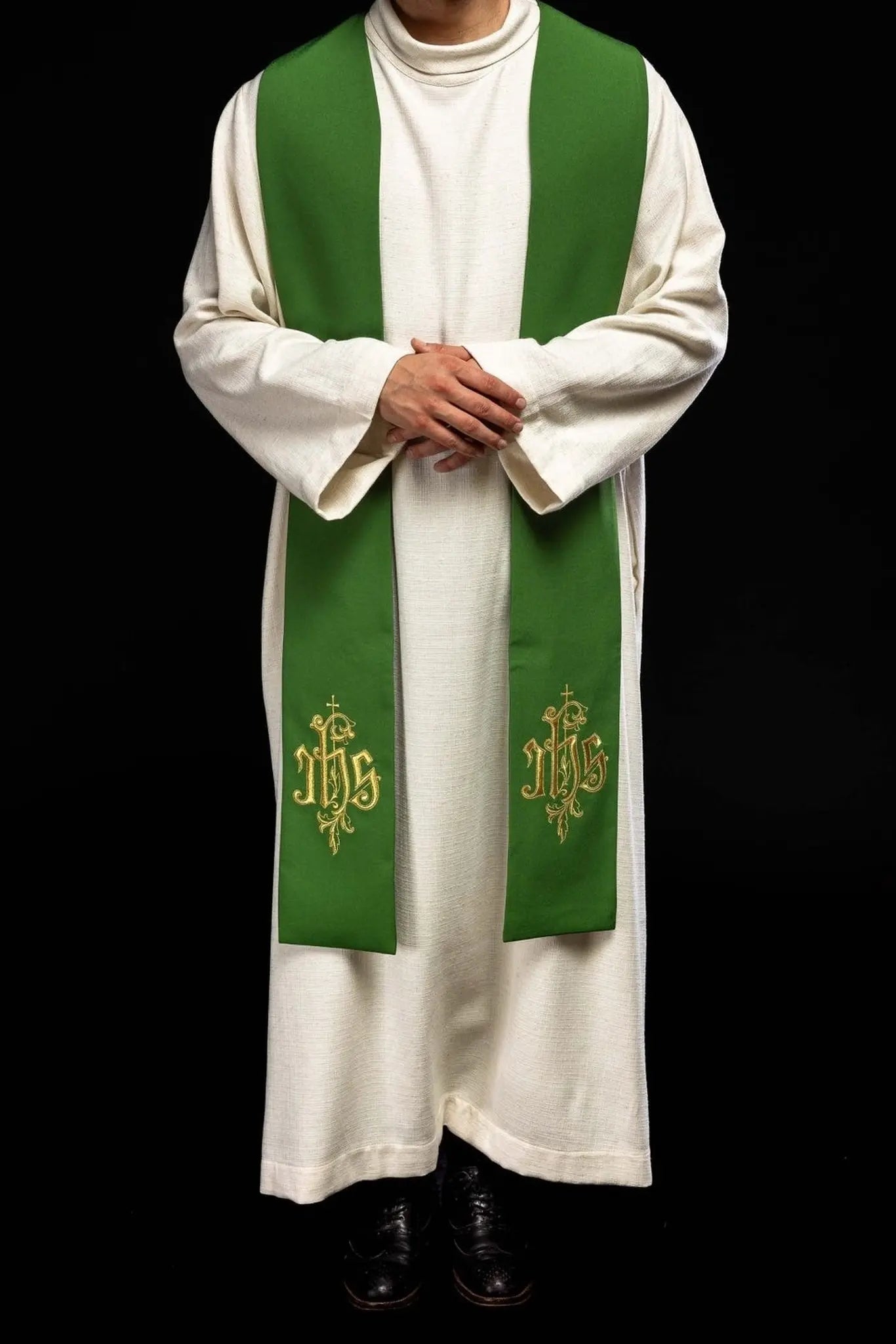
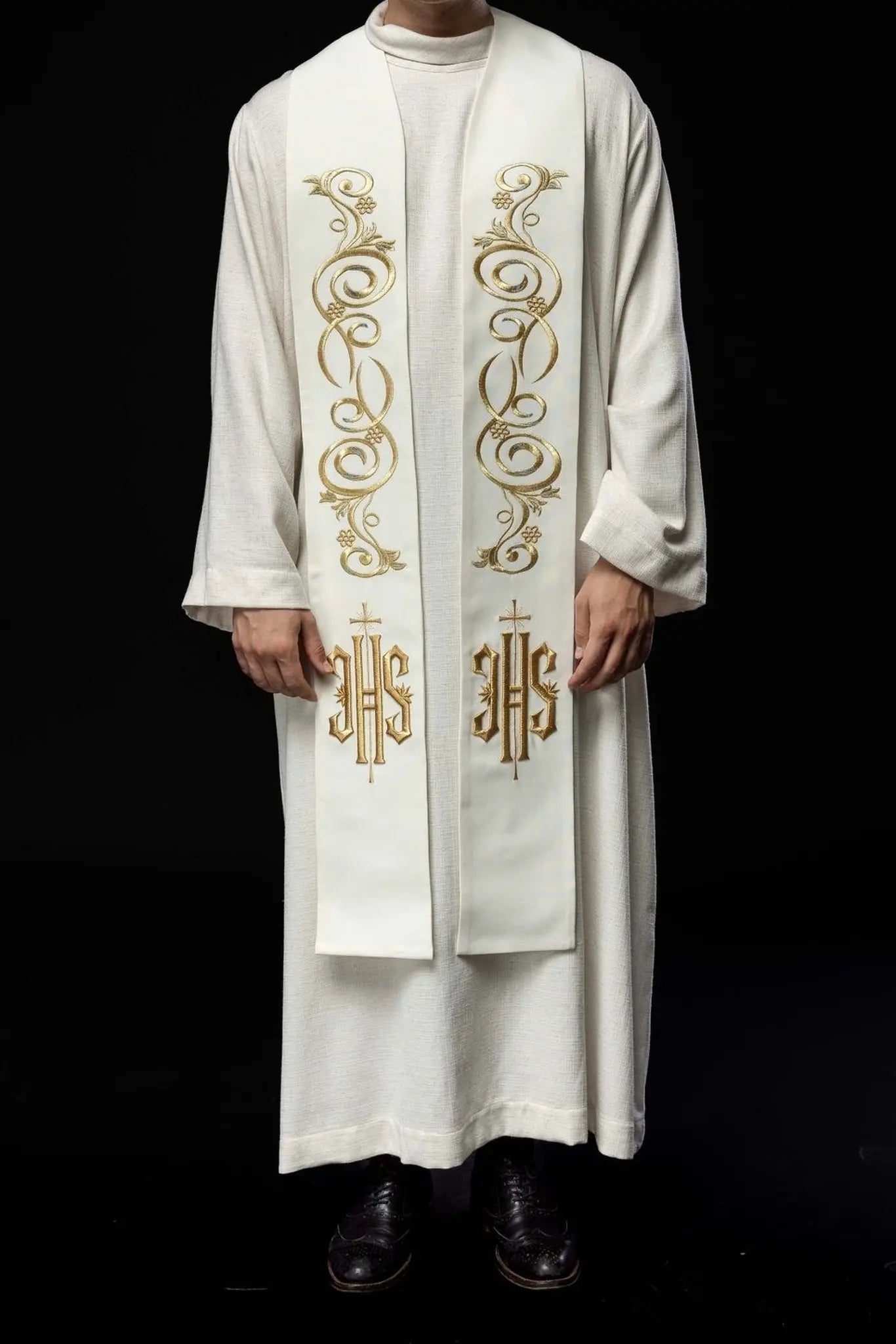
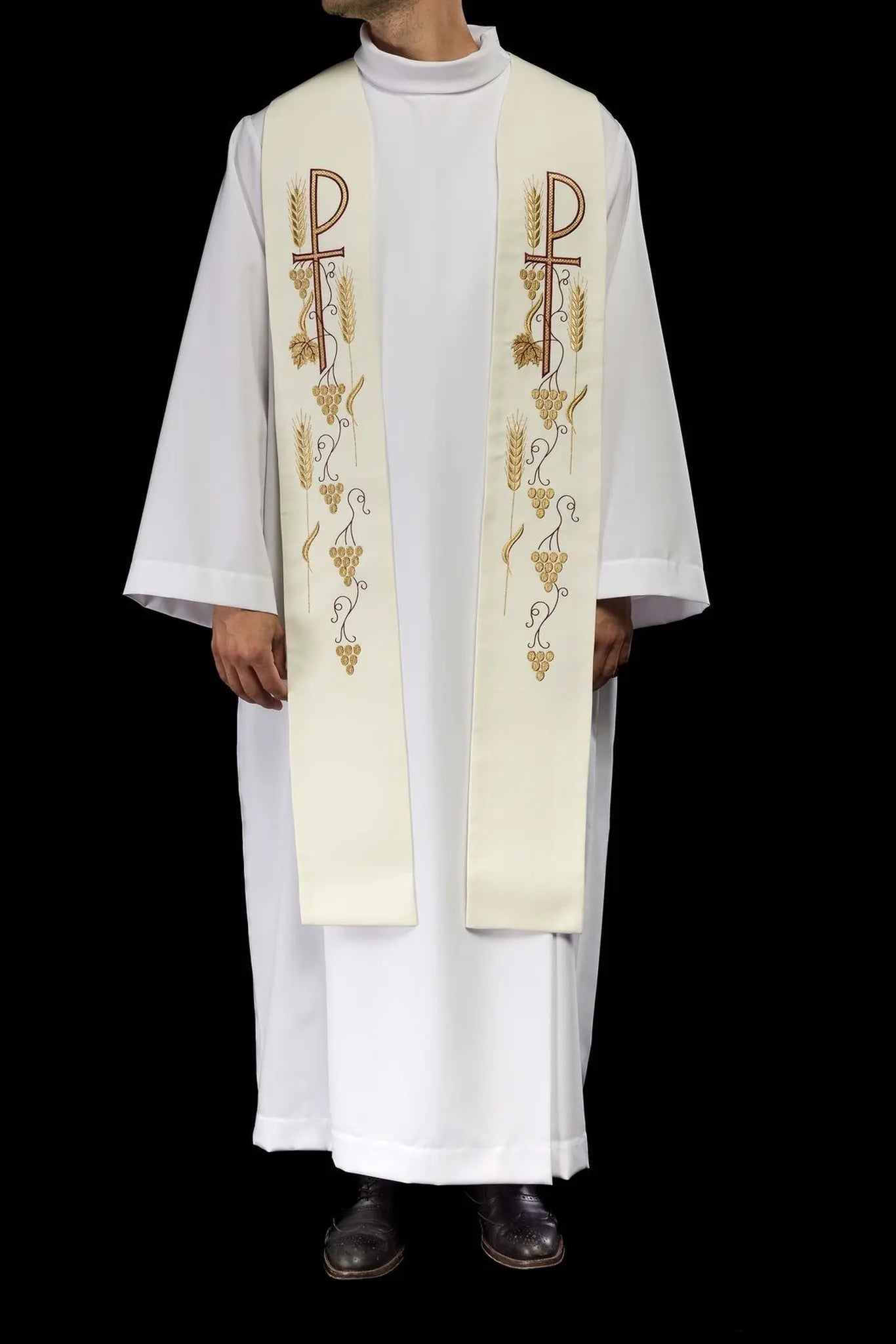
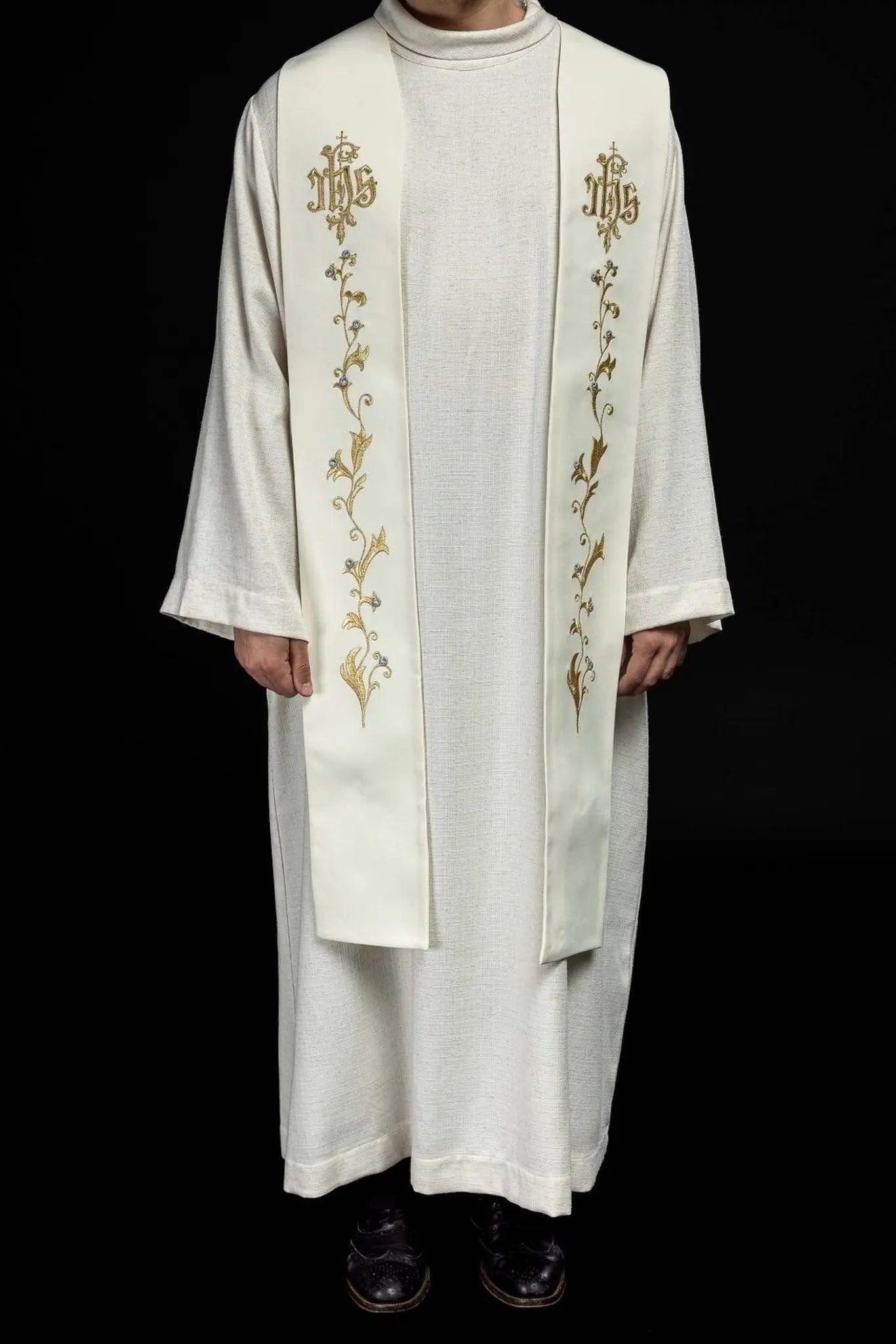
Clergy Stoles for Priests and Deacons
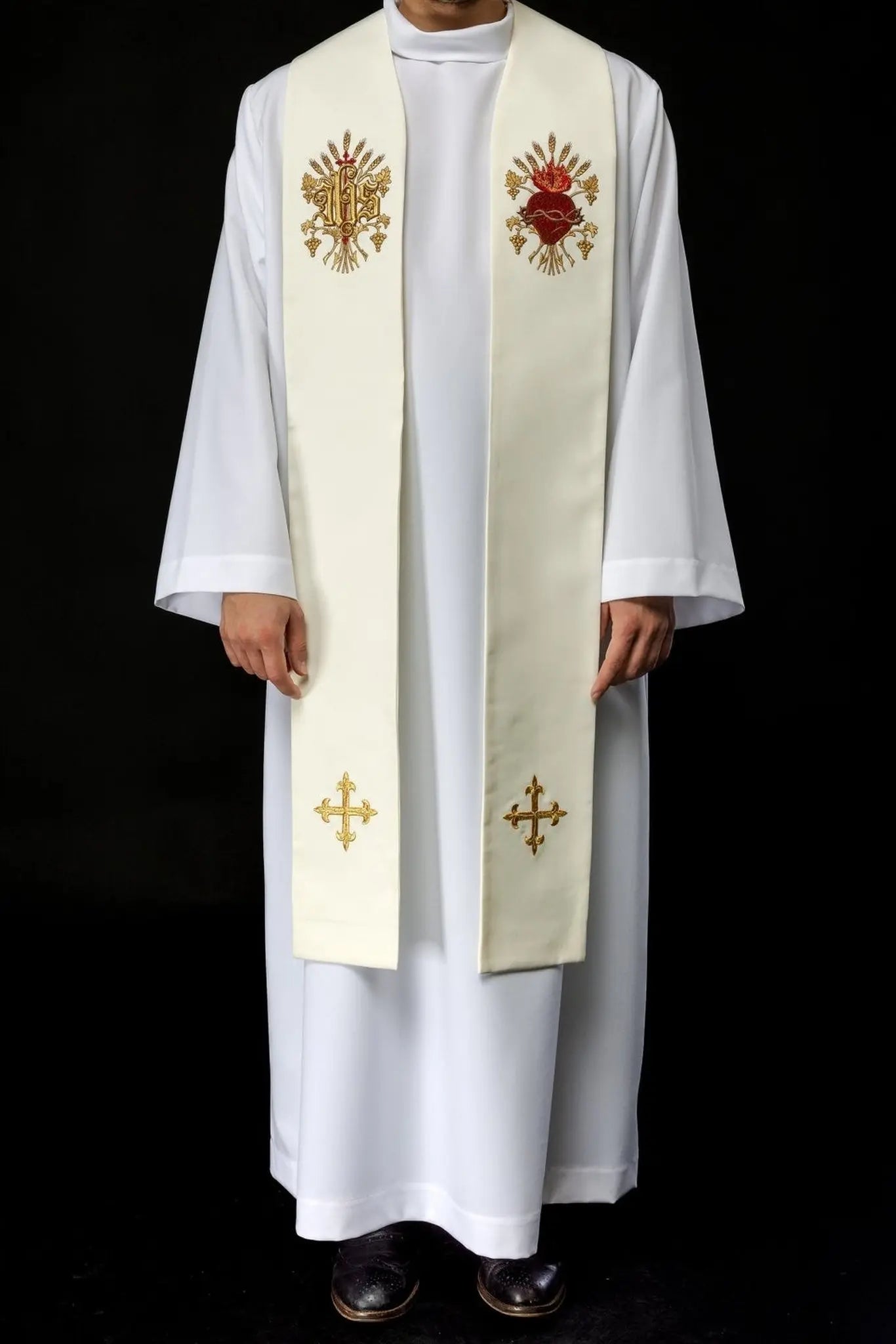
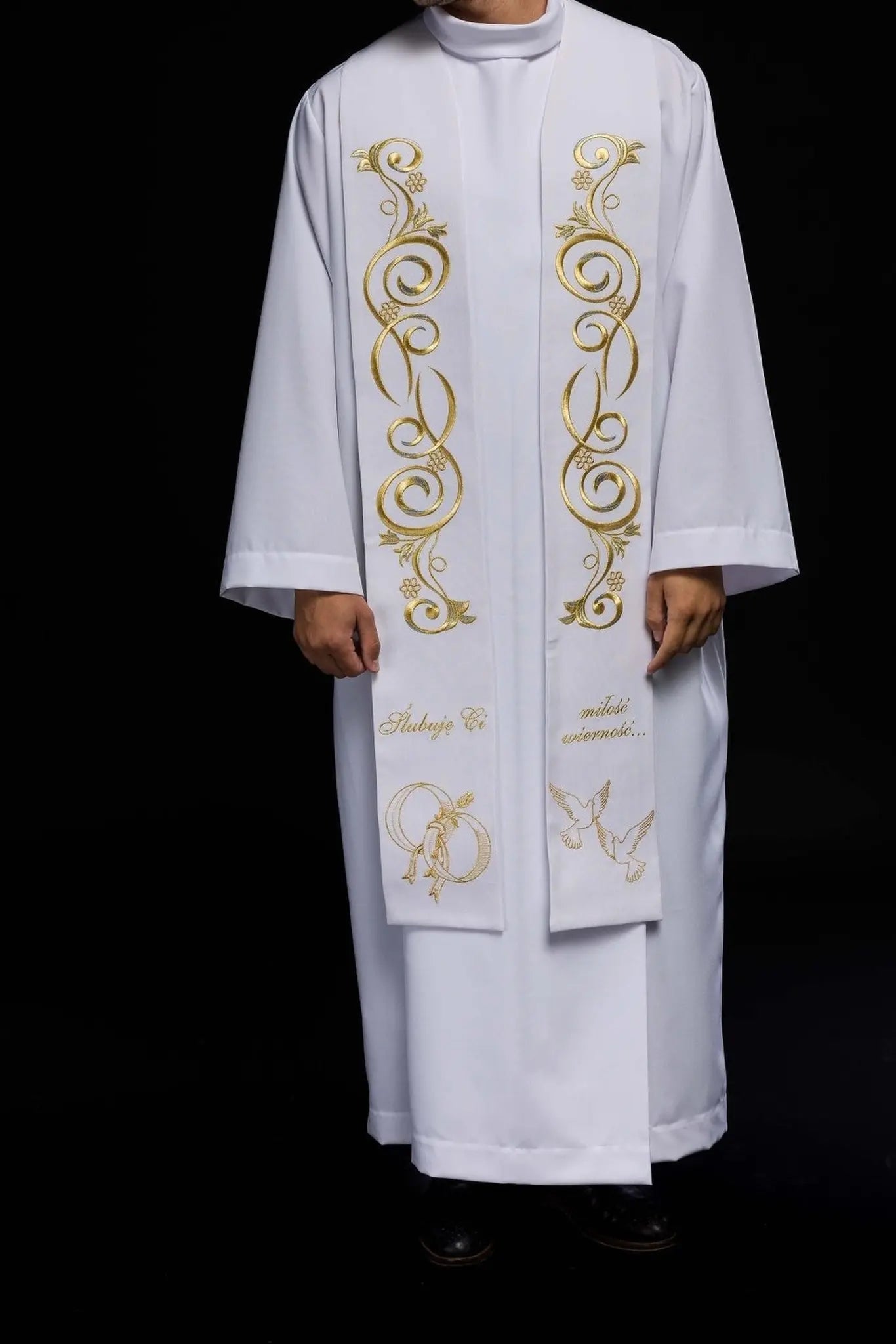
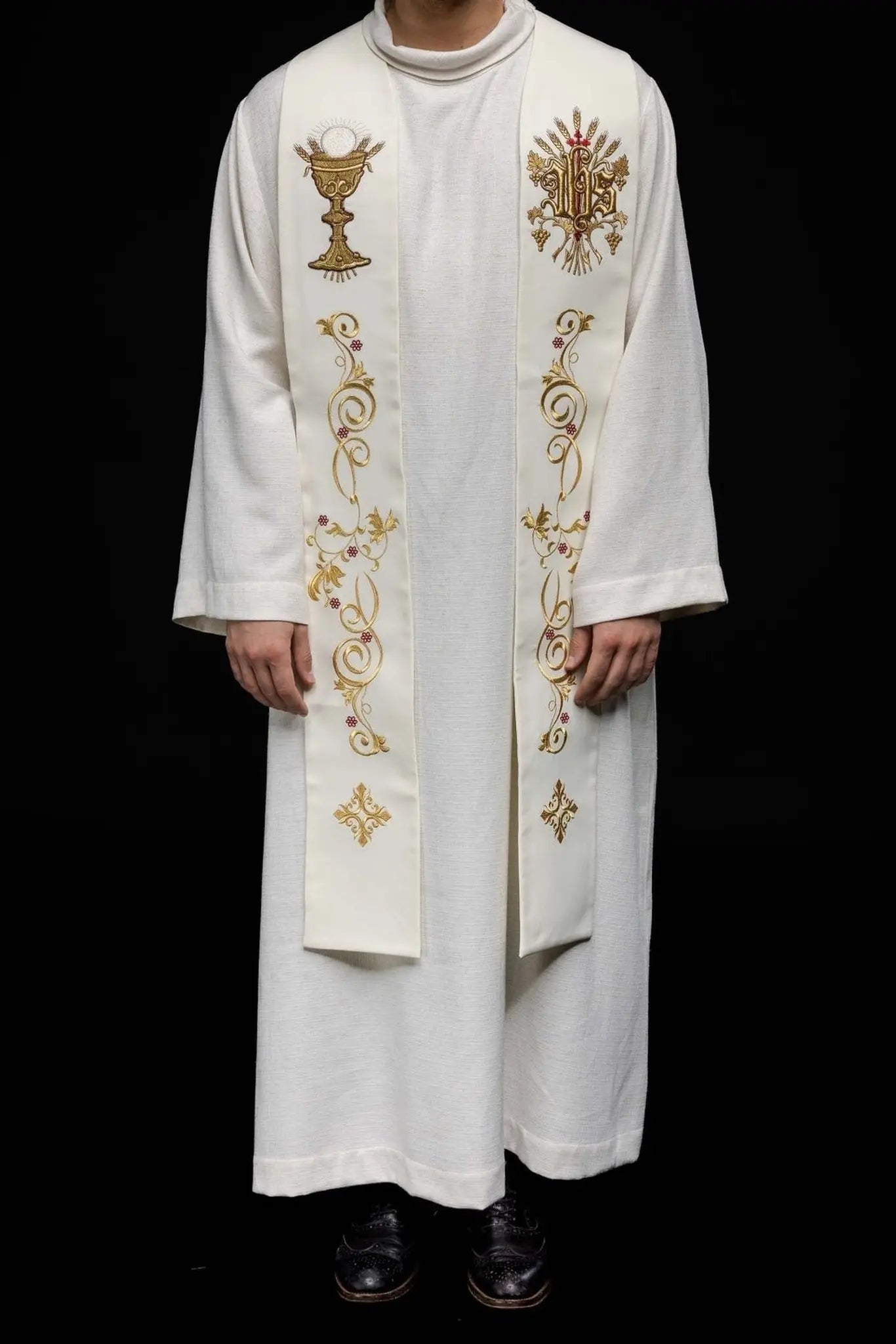
Clergy stoles are among the most recognizable signs of ordained ministry. This collection brings together liturgical stoles for priests and deacons, prepared for the celebration of the Mass, the sacraments, blessings, funerals, devotions, and other rites of the Church. A stole is not simply a decorative band of fabric. It is a vestment with a clear liturgical function, a visible sign of service, authority, and the grace entrusted to the ordained minister.
In this collection you will find stoles intended for different seasons of the liturgical year, sacramental celebrations, and devotional occasions. The range includes classic priest stoles worn around the neck and hanging straight down in front, as well as deacon stoles worn diagonally from the left shoulder. For a wider view of related vestments, you can also visit our Liturgical Vestments collection.
What belongs in this collection?
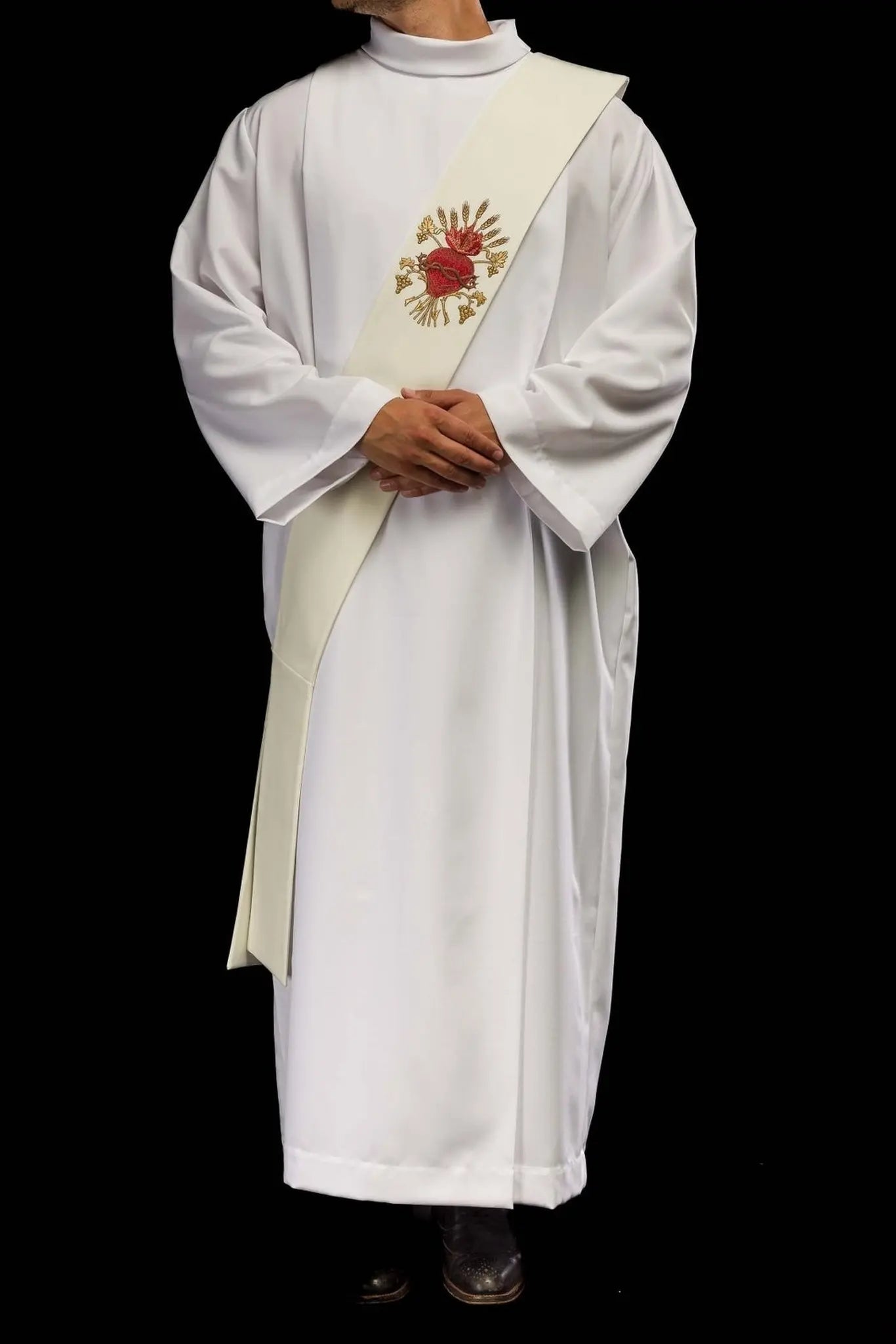
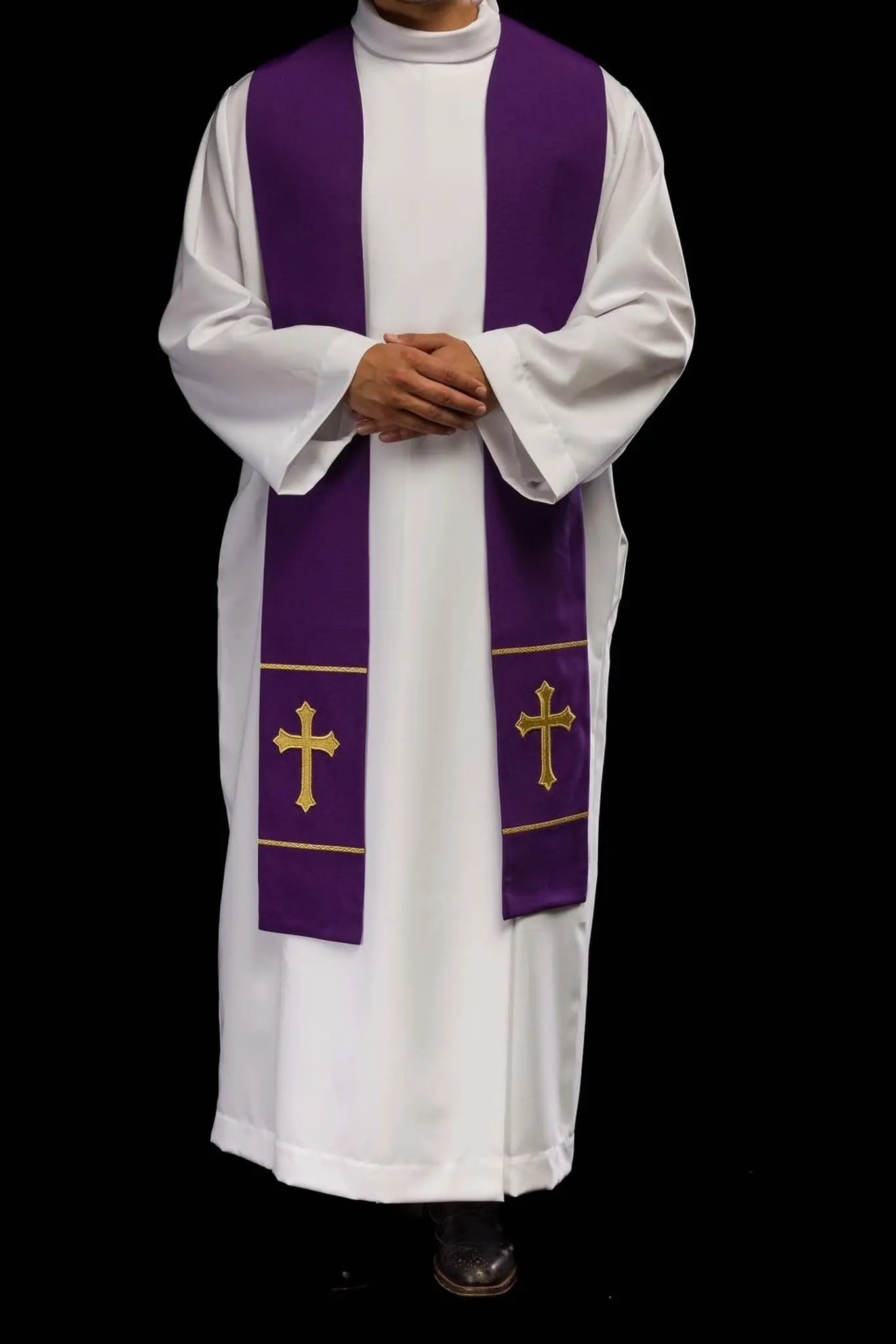
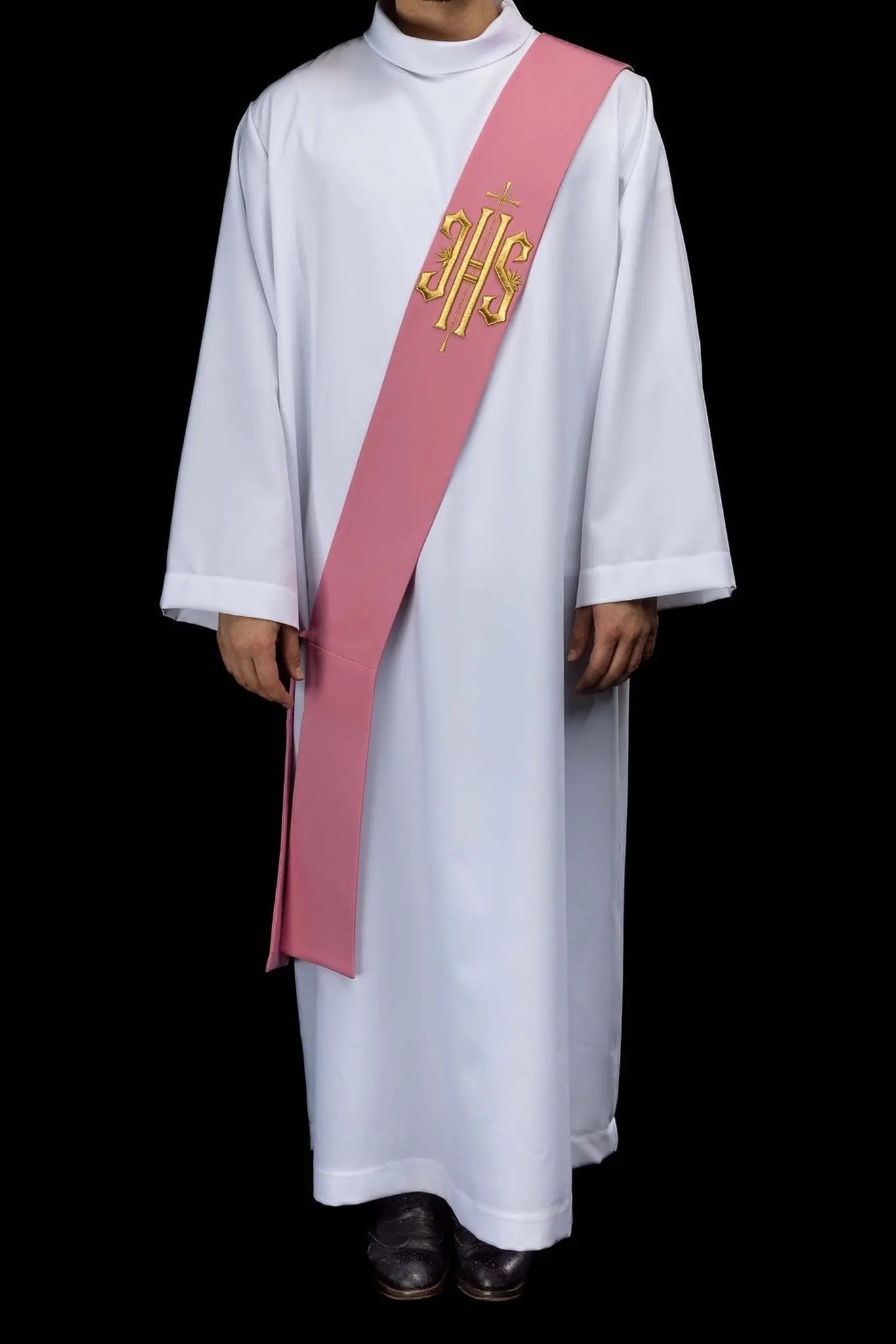
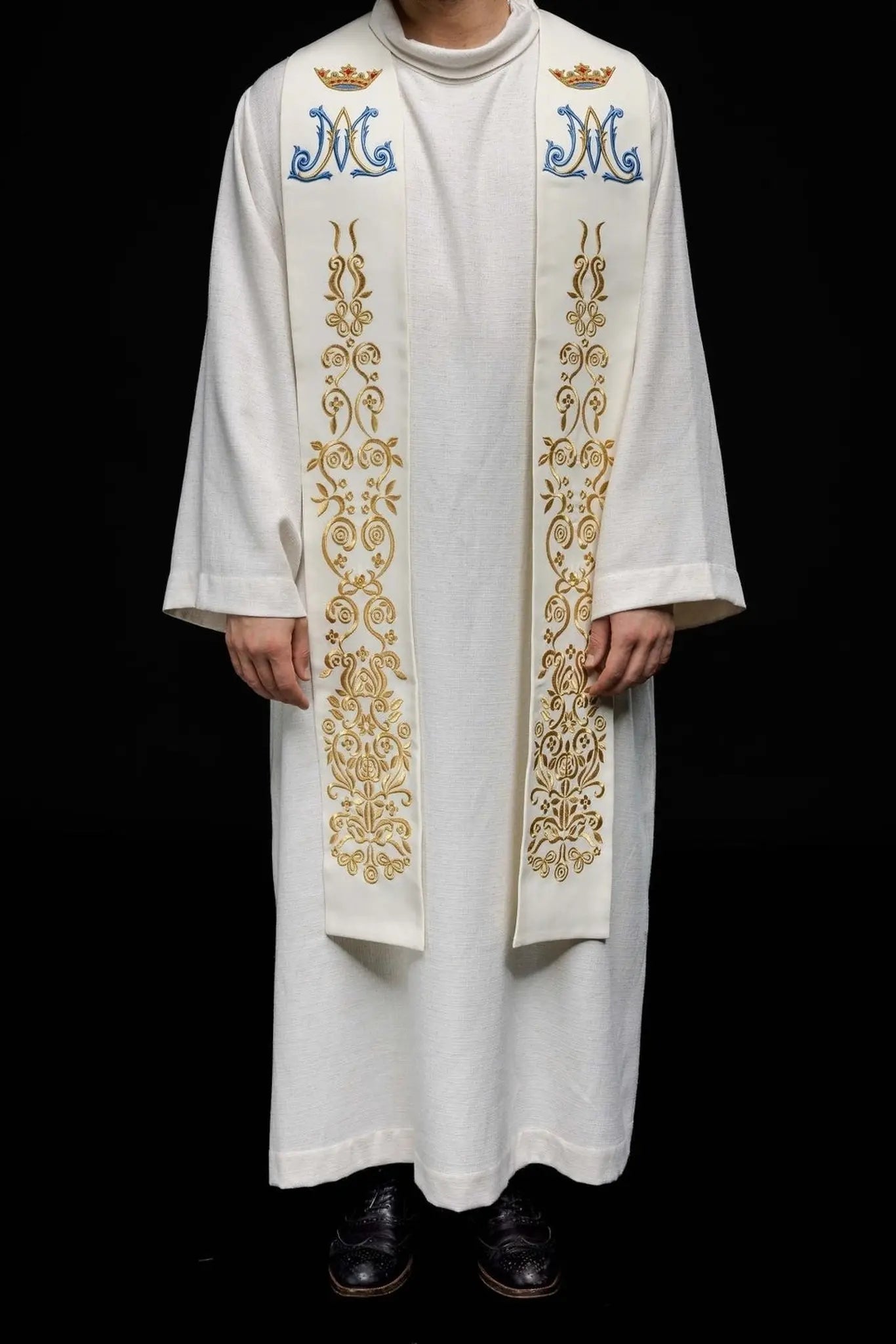
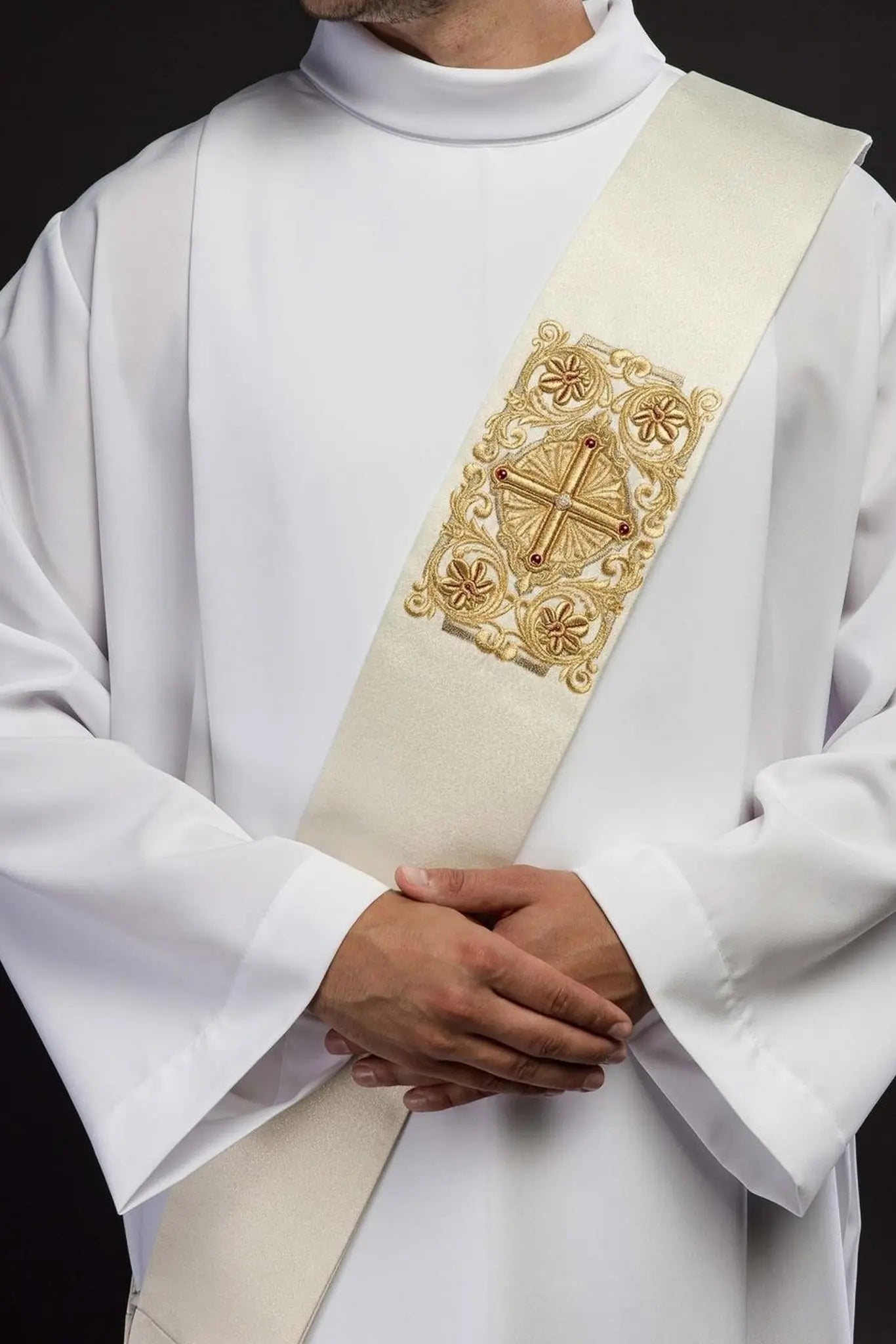
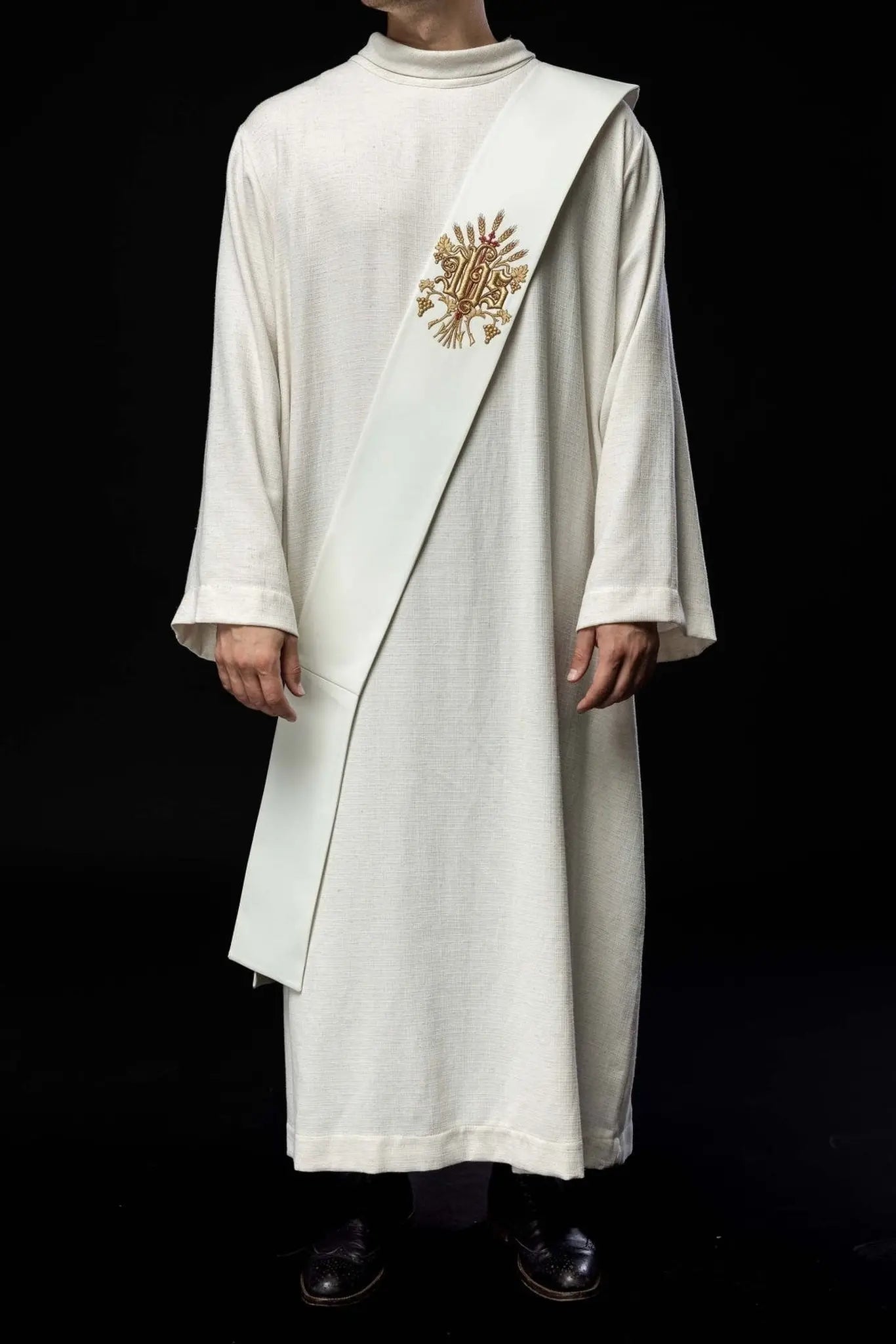
This collection is focused on clergy stoles used by priests and deacons. Priest stoles are suitable for priests and bishops when they administer the sacraments, preach, bless, or take part in liturgical celebrations that require the stole. Deacon stoles are shaped and worn differently, crossing the body diagonally as a sign of diaconal ministry and service. When choosing, it is important to distinguish clearly between these two forms, because the same liturgical color may be required, but the cut and manner of wearing are not the same.
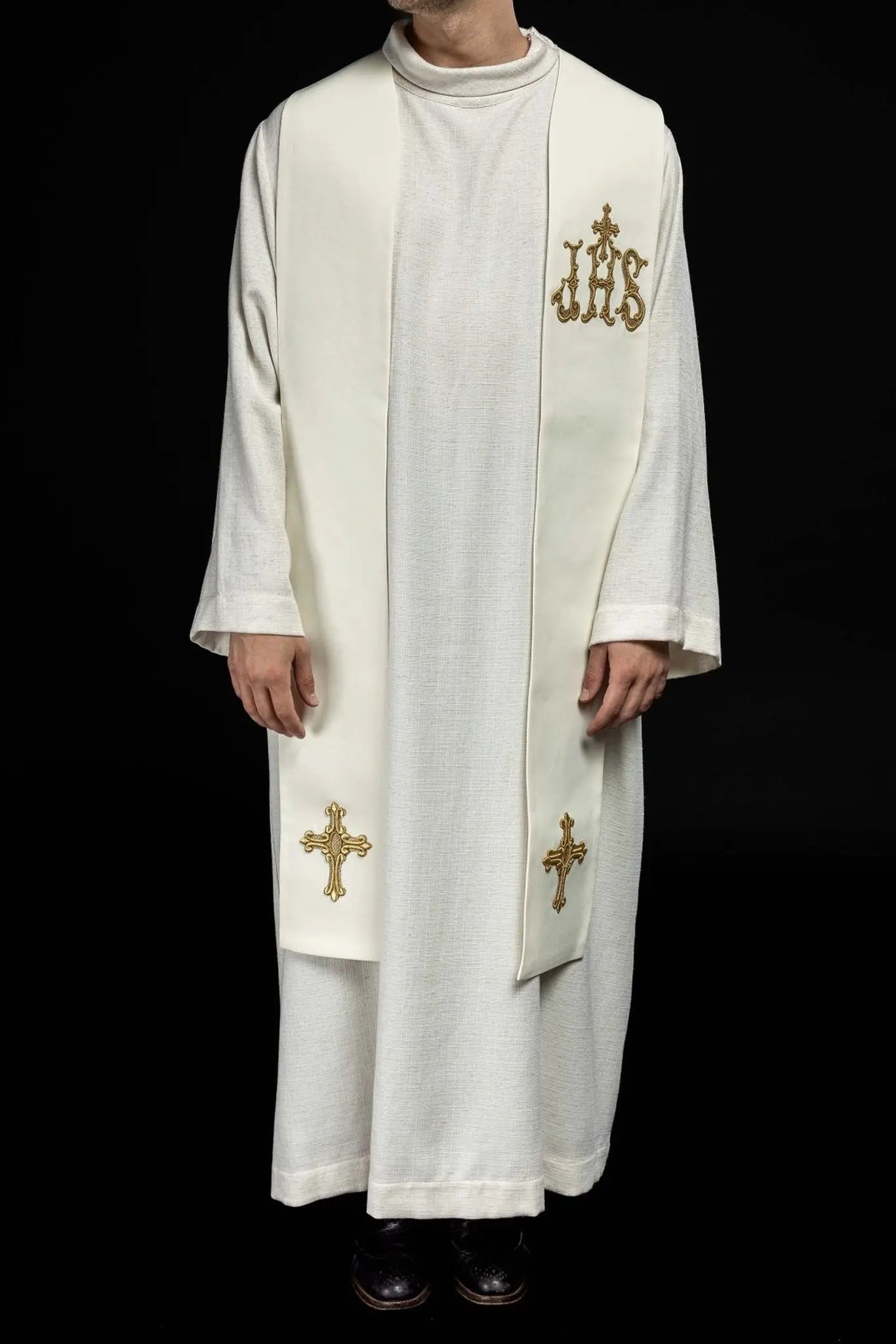
The collection includes stoles in the principal liturgical colors: green, red, purple, ecru or white tones, gold, rose, and Marian designs. These colors help clergy match the stole to the season, feast, rite, or pastoral situation. Some stoles are simple and restrained for daily parish use, while others include richer embroidery, symbolic ornament, or imagery suited to solemn celebrations.
Liturgical meaning and correct use of the stole
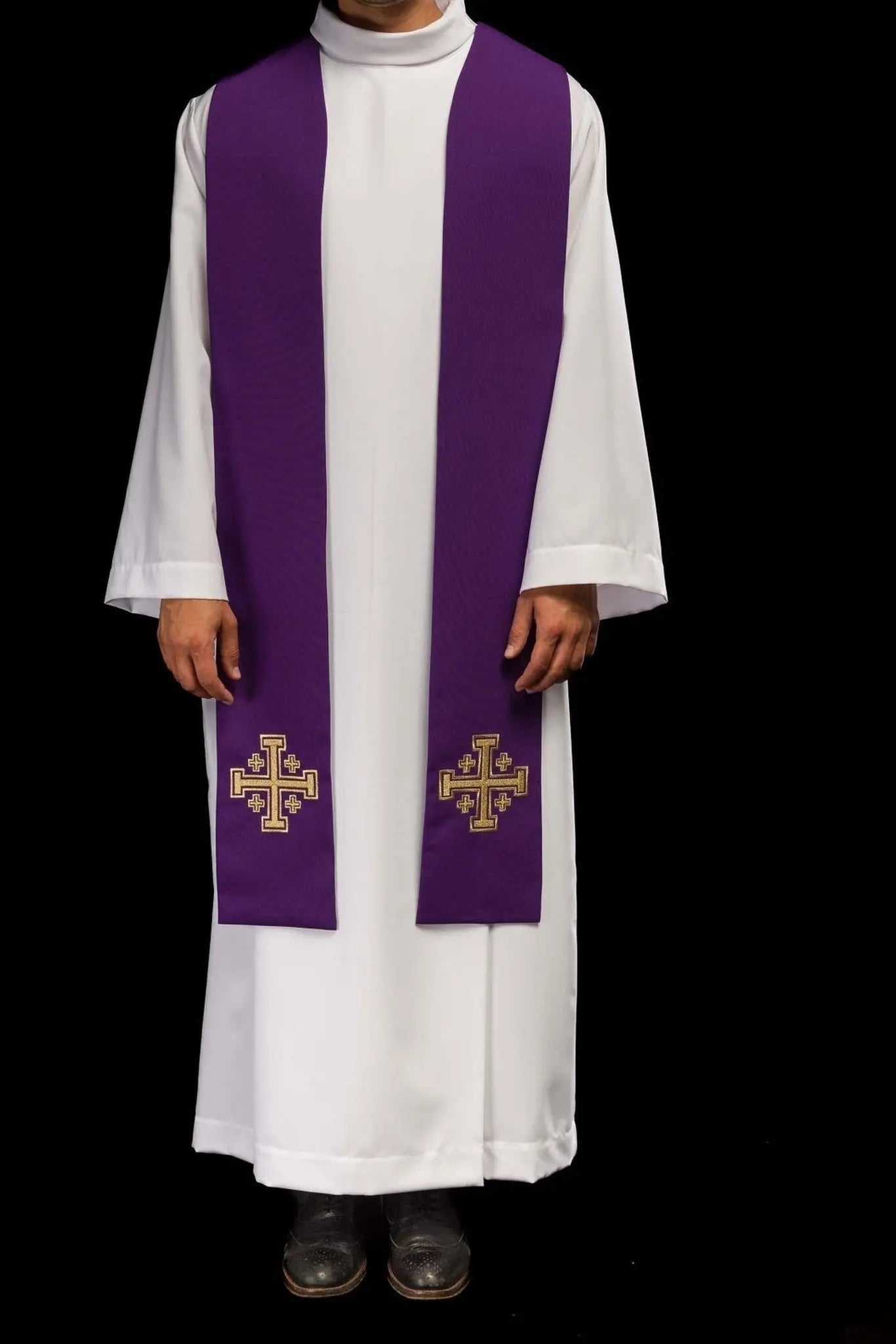
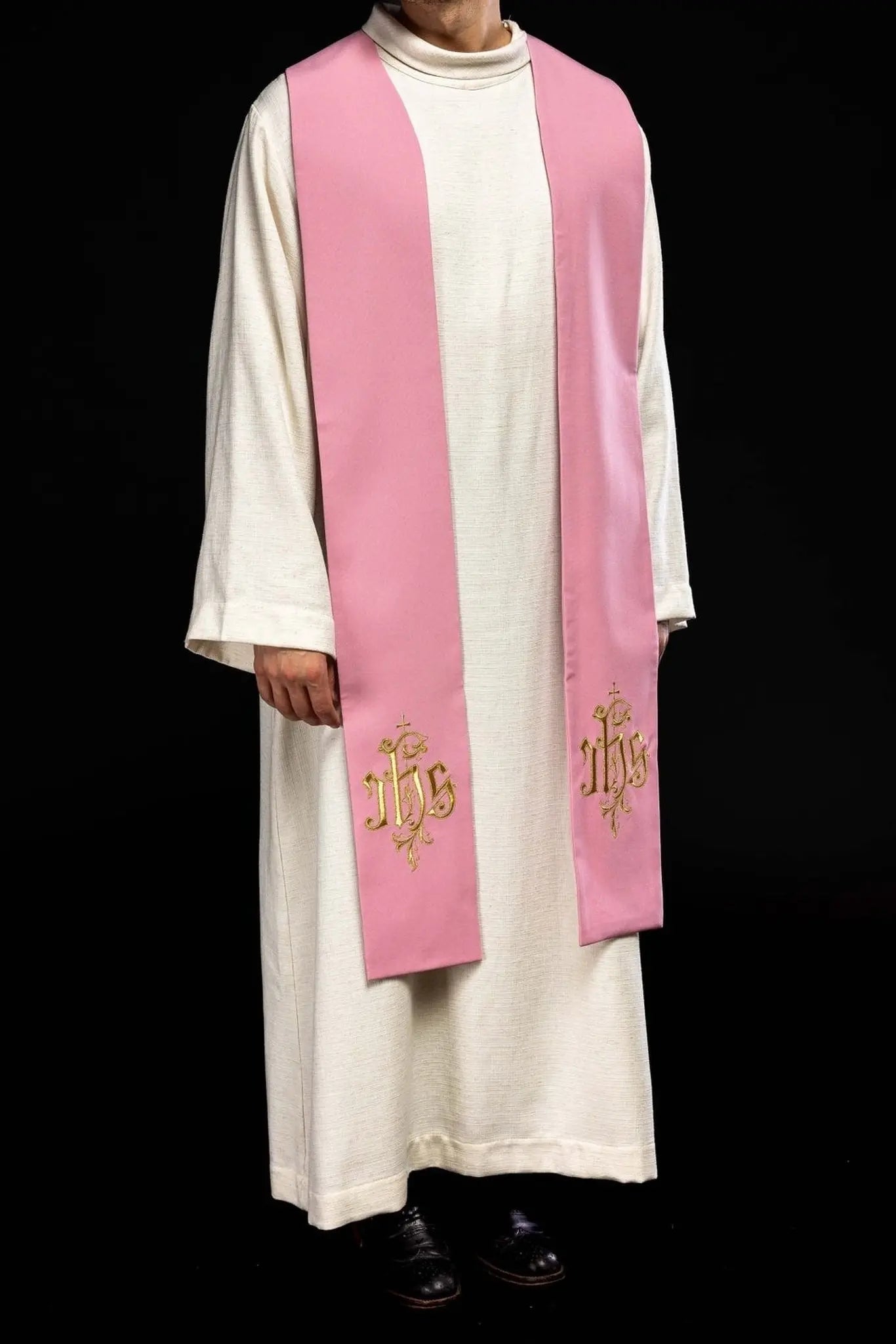
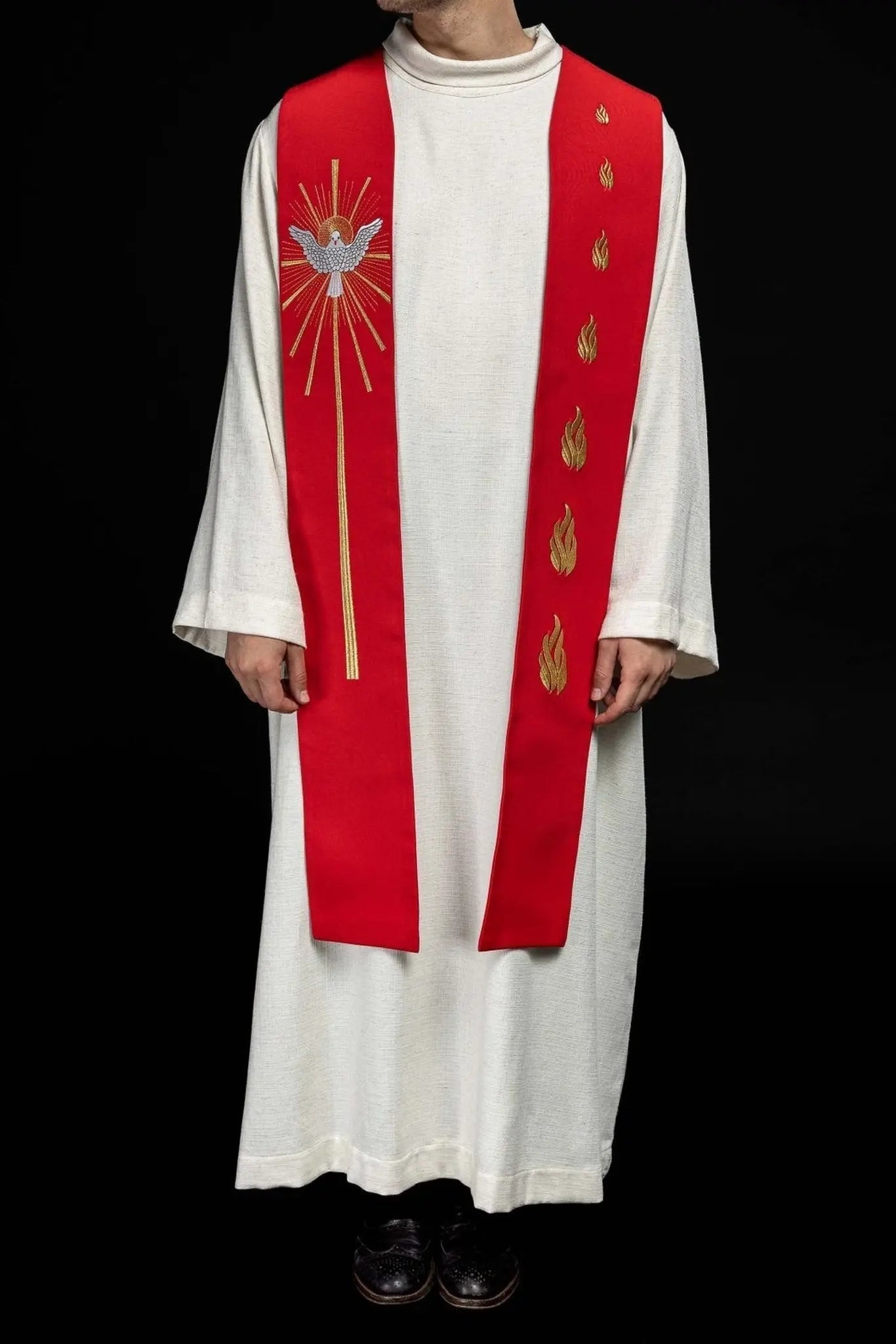
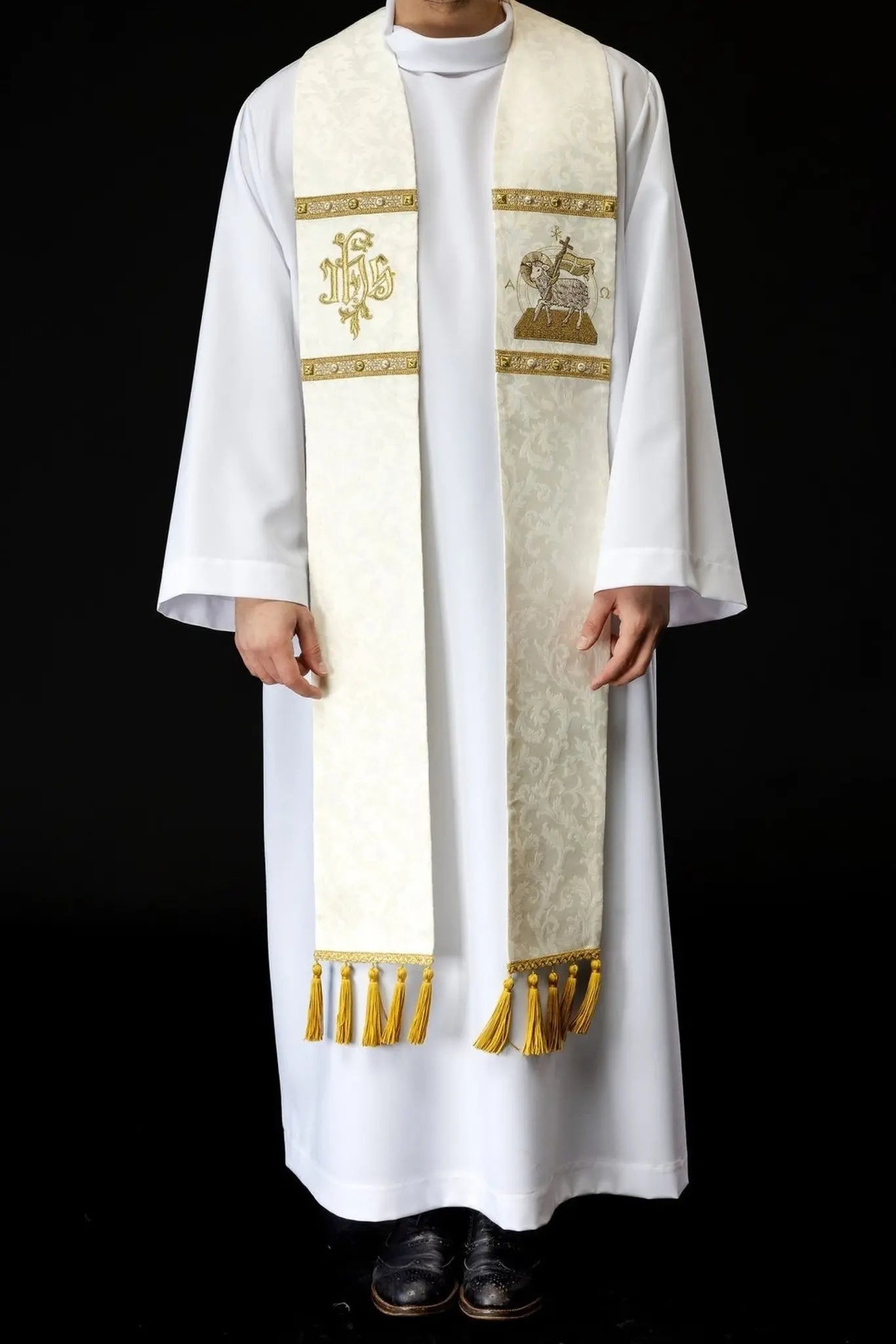
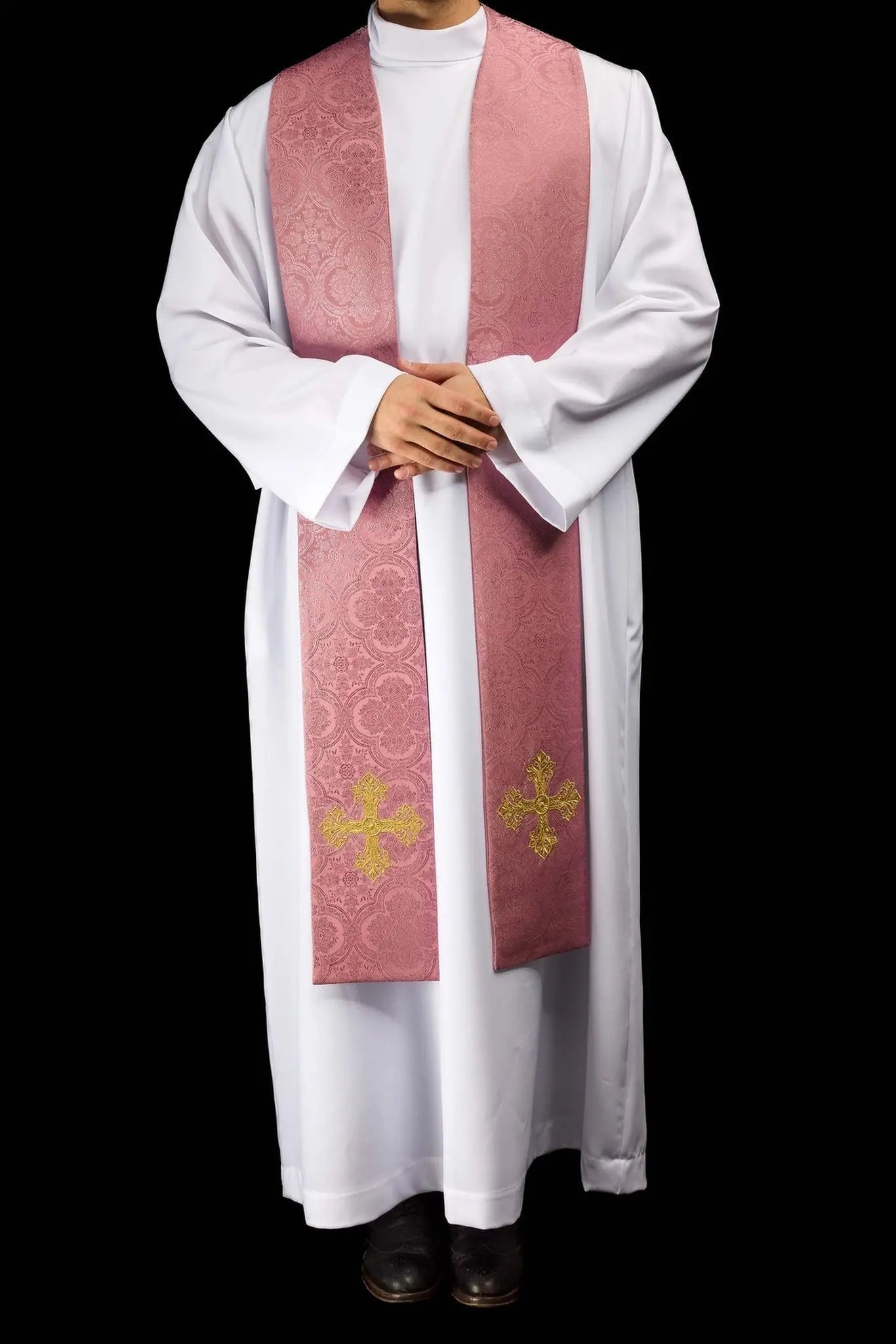
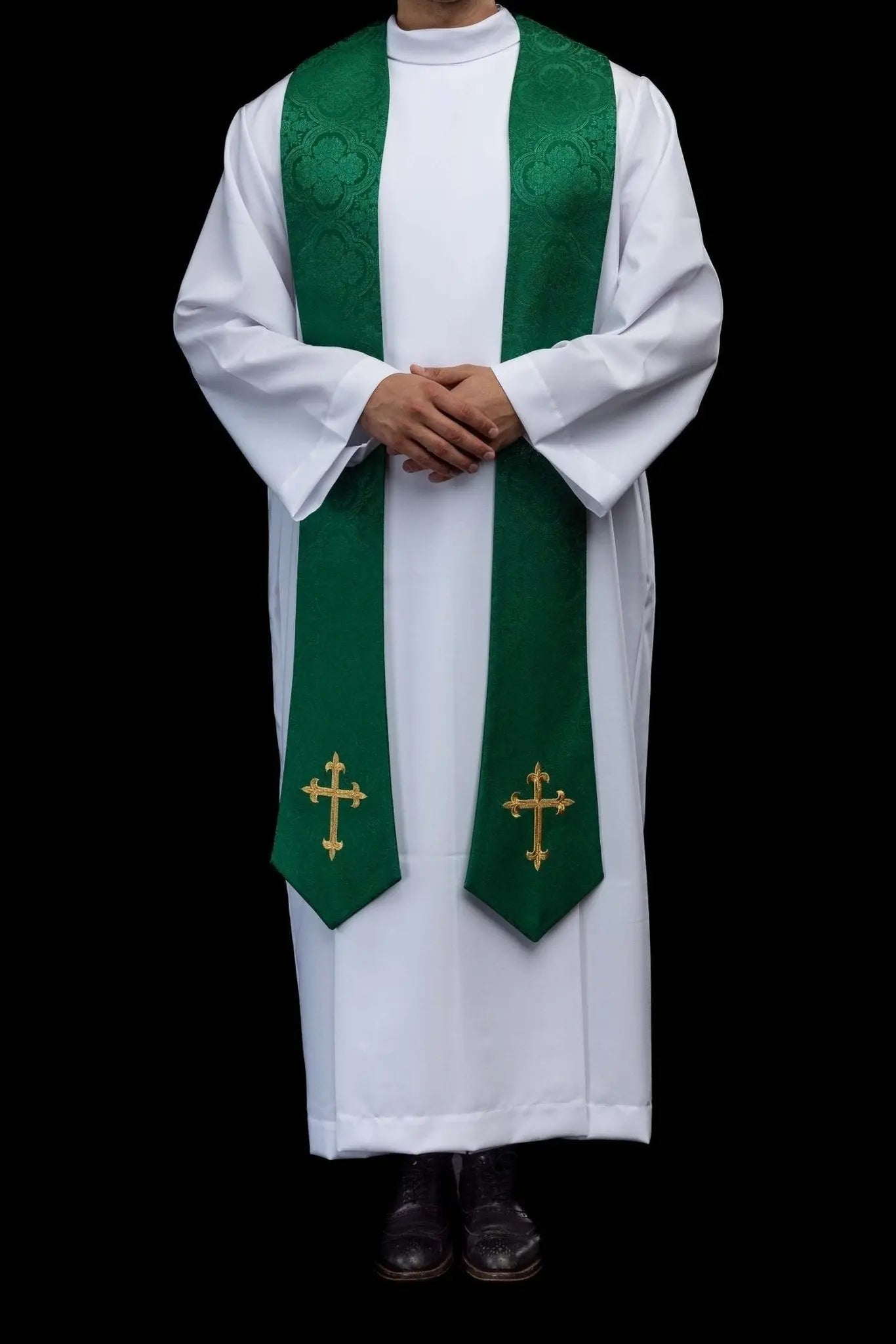
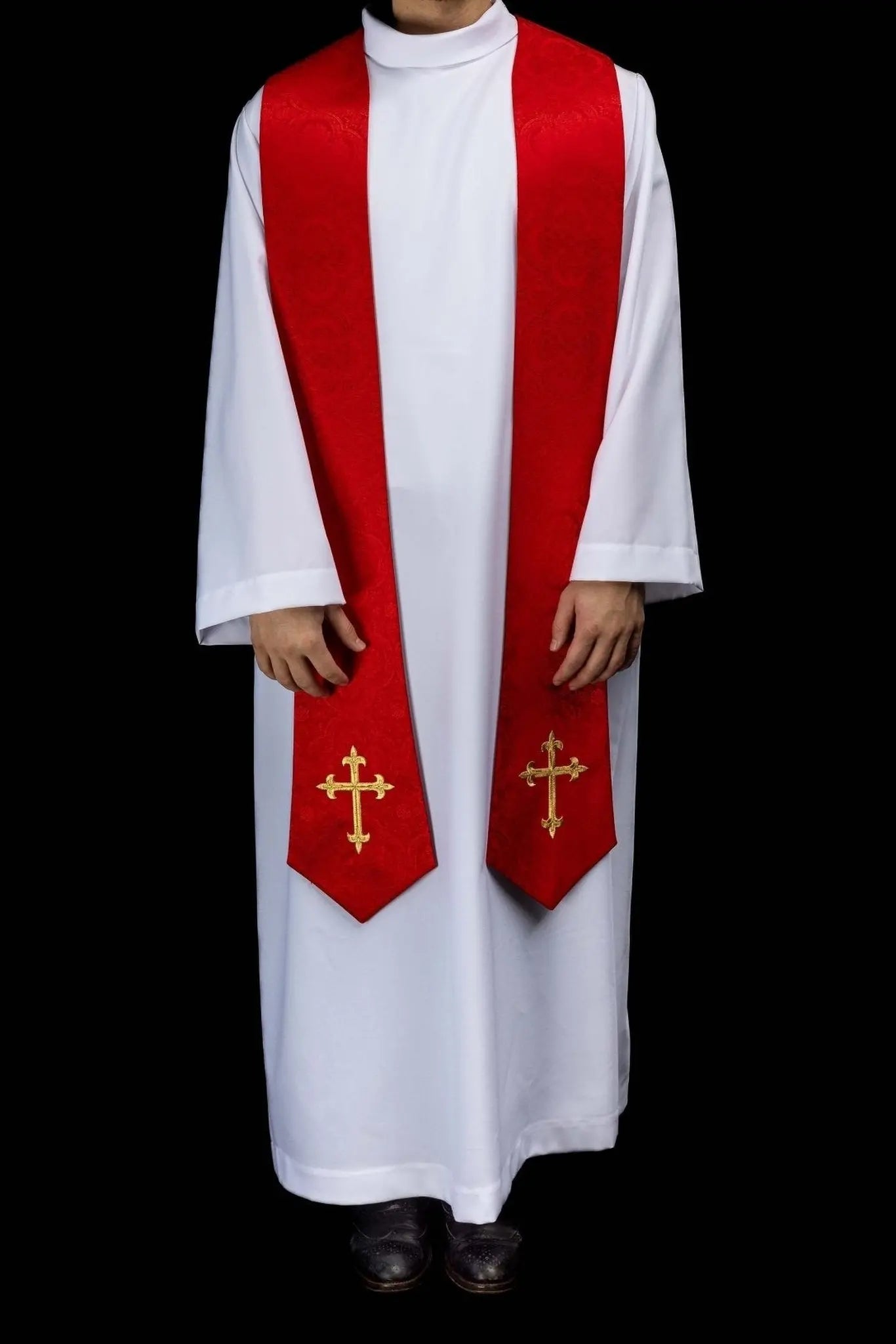
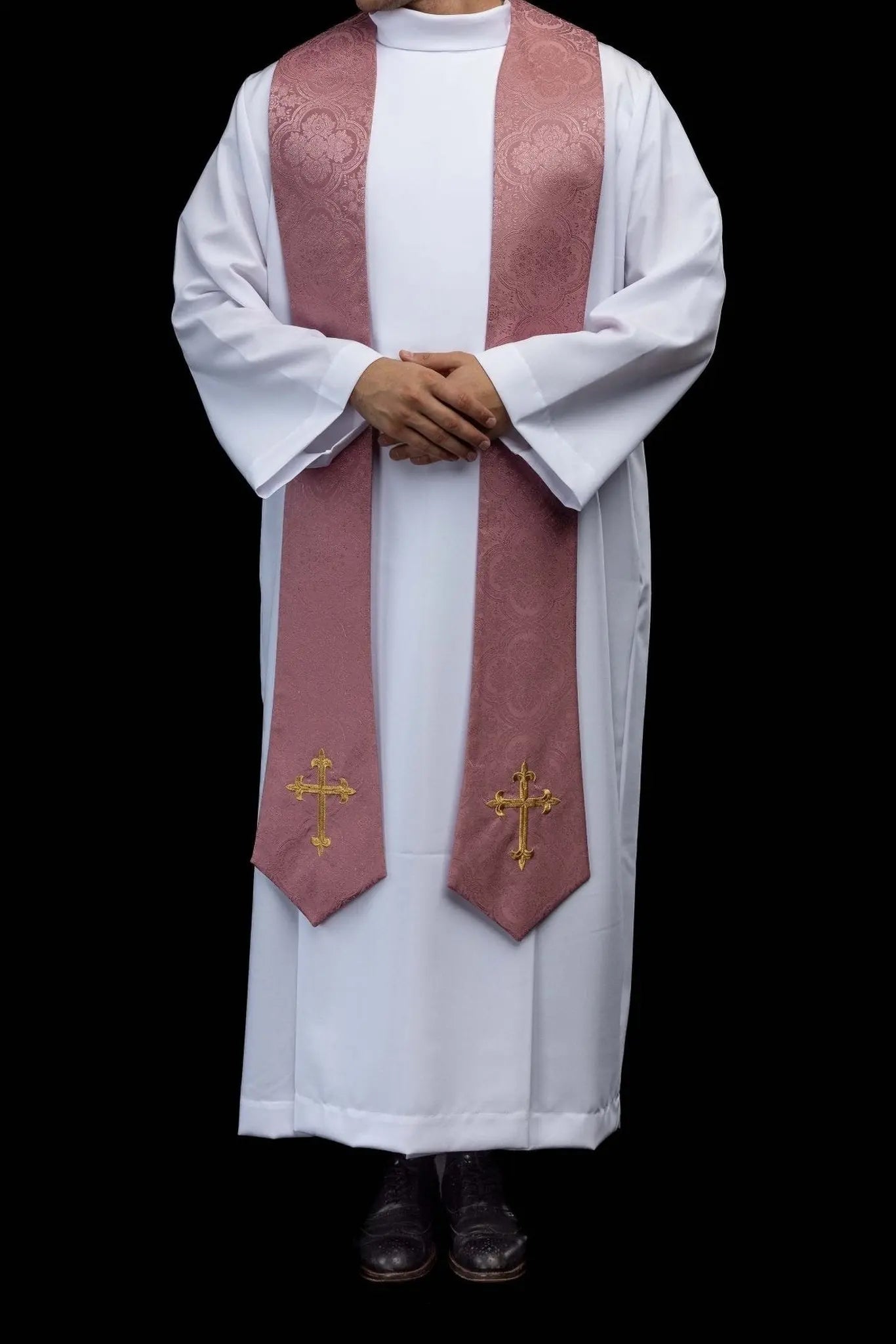
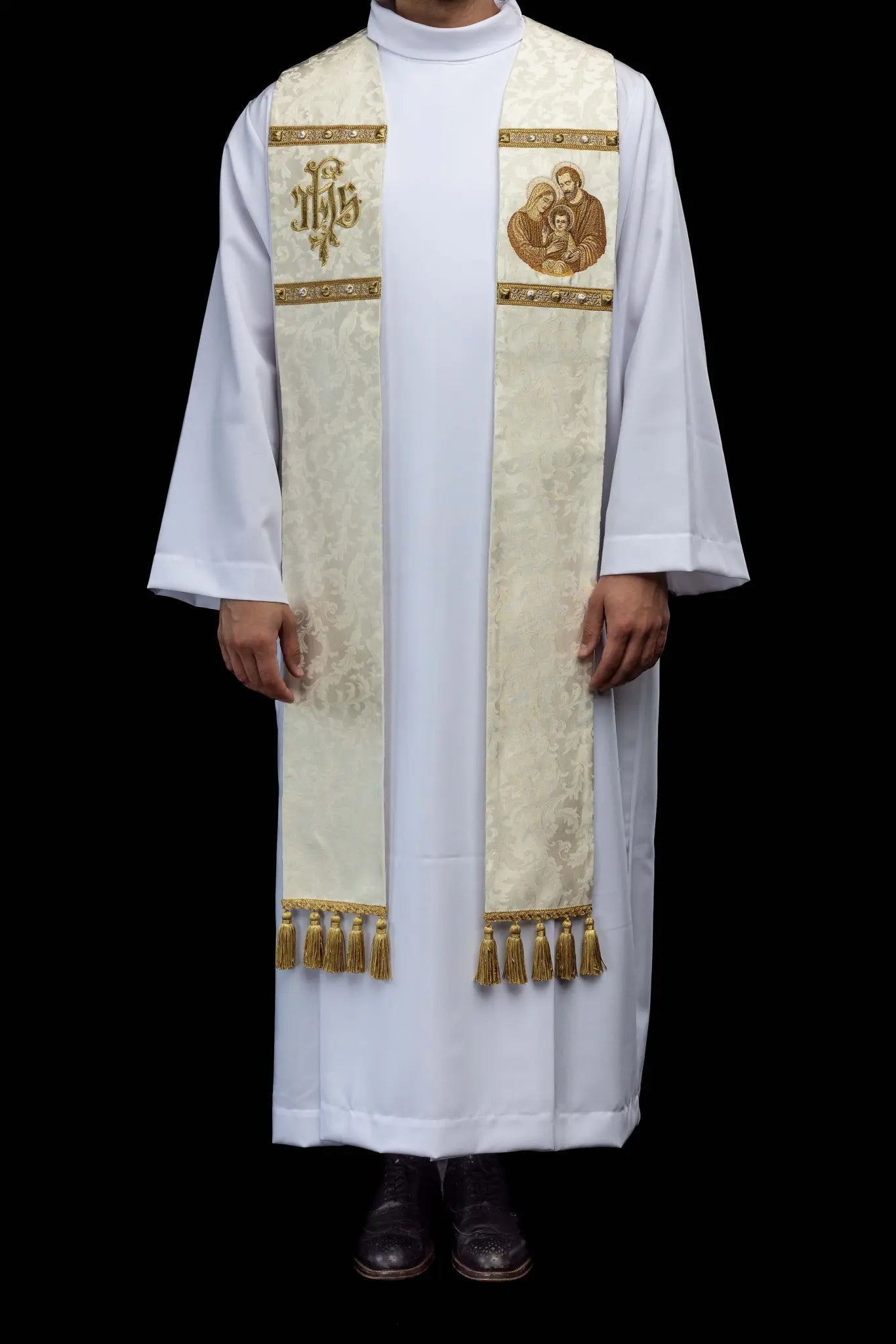
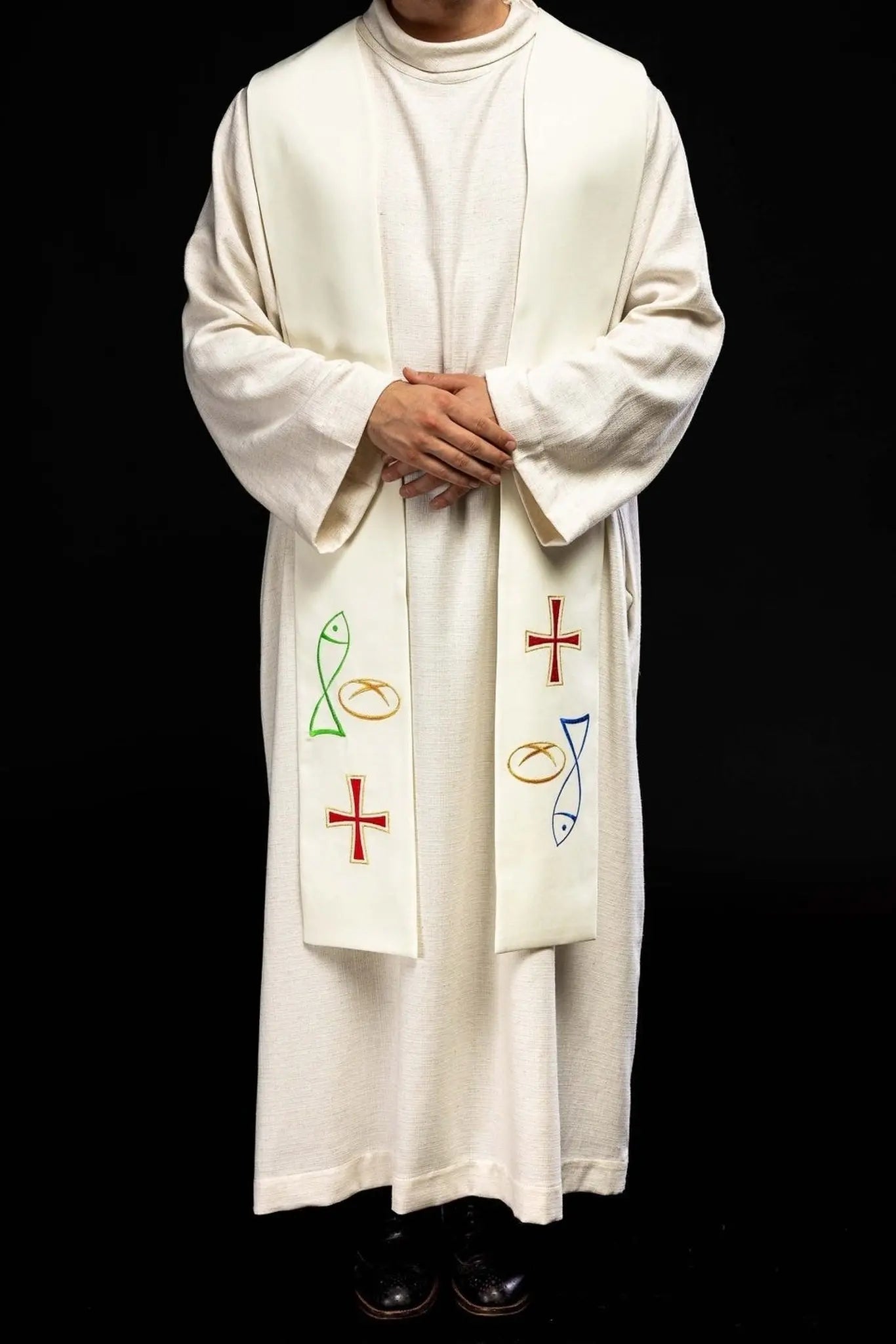
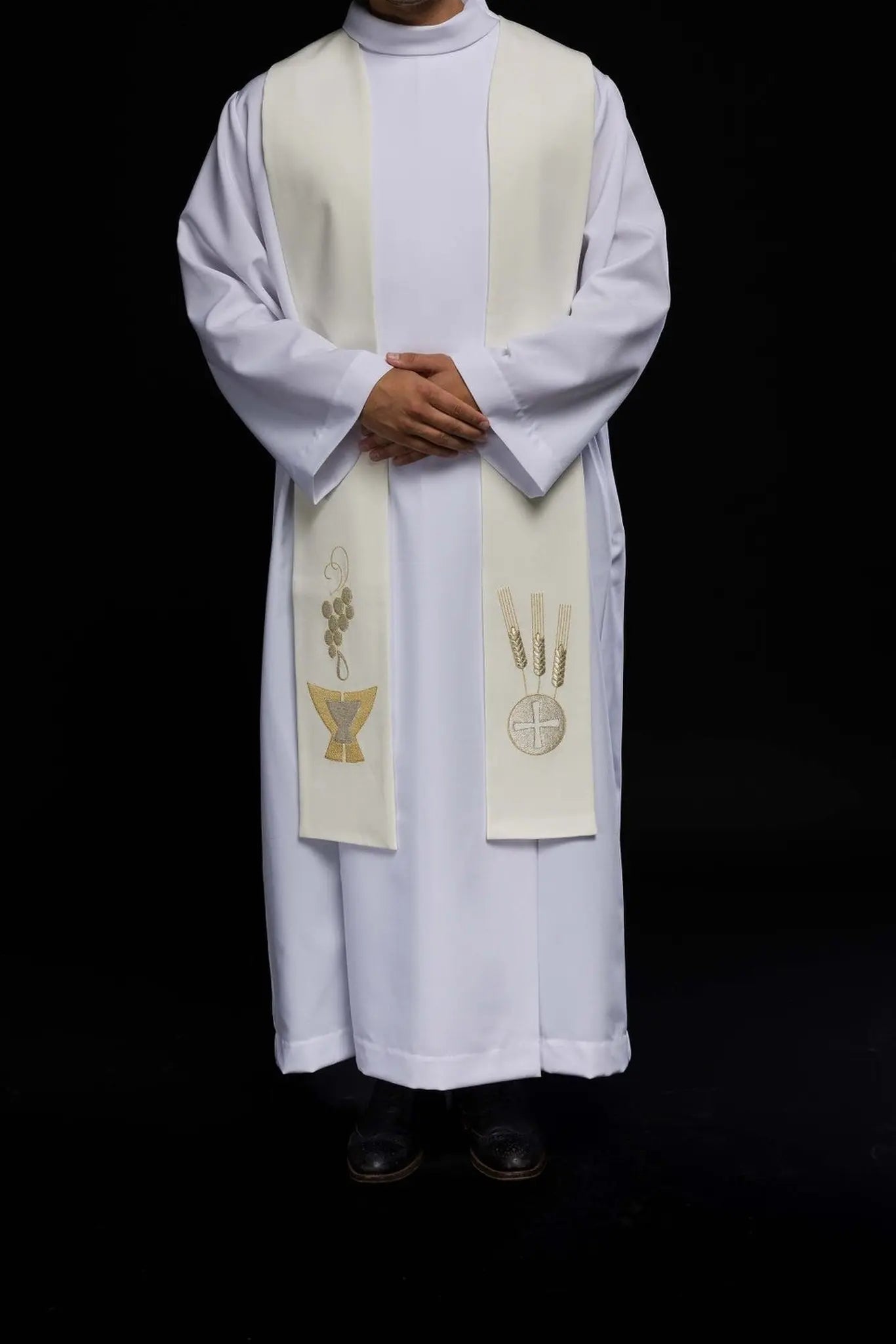
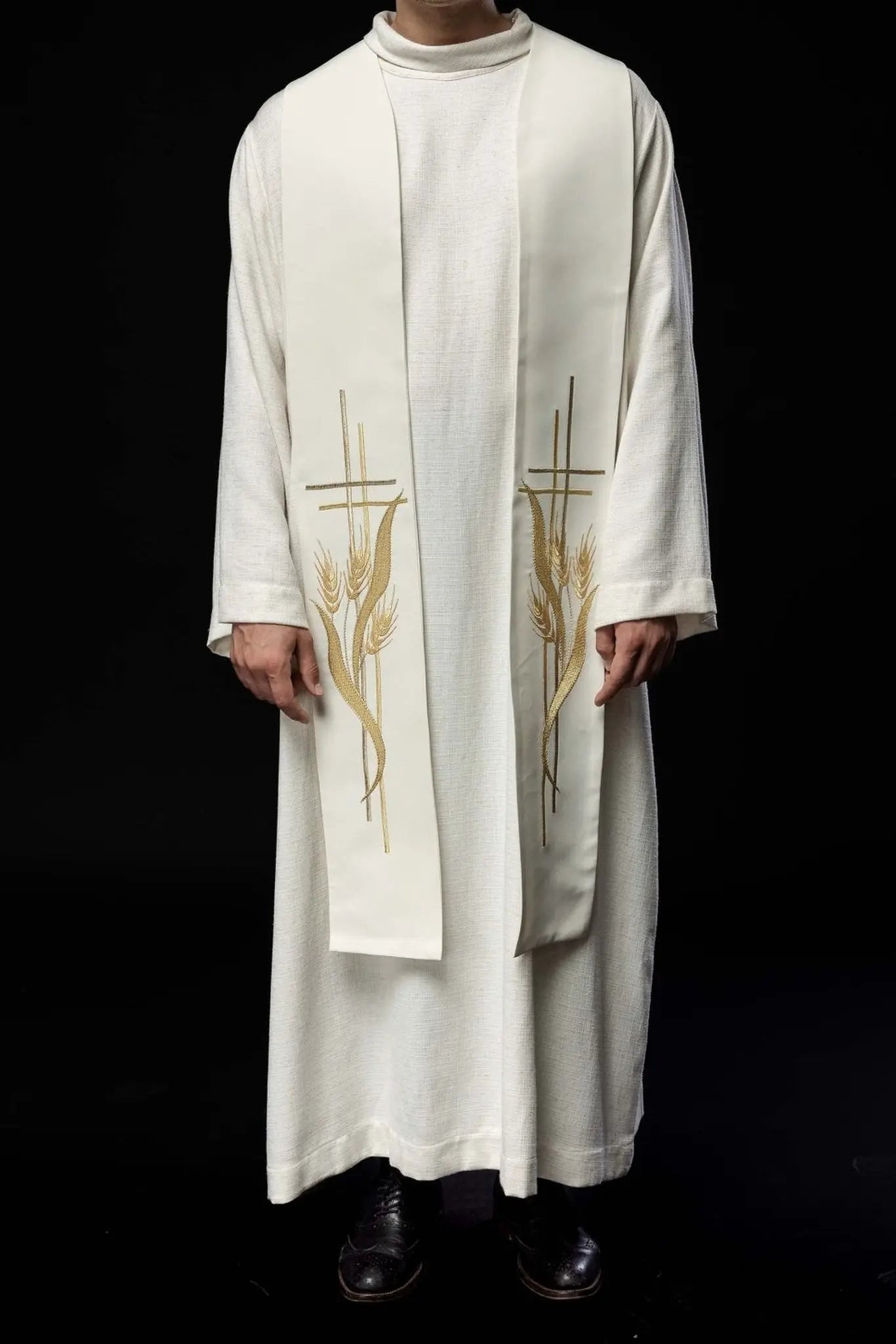
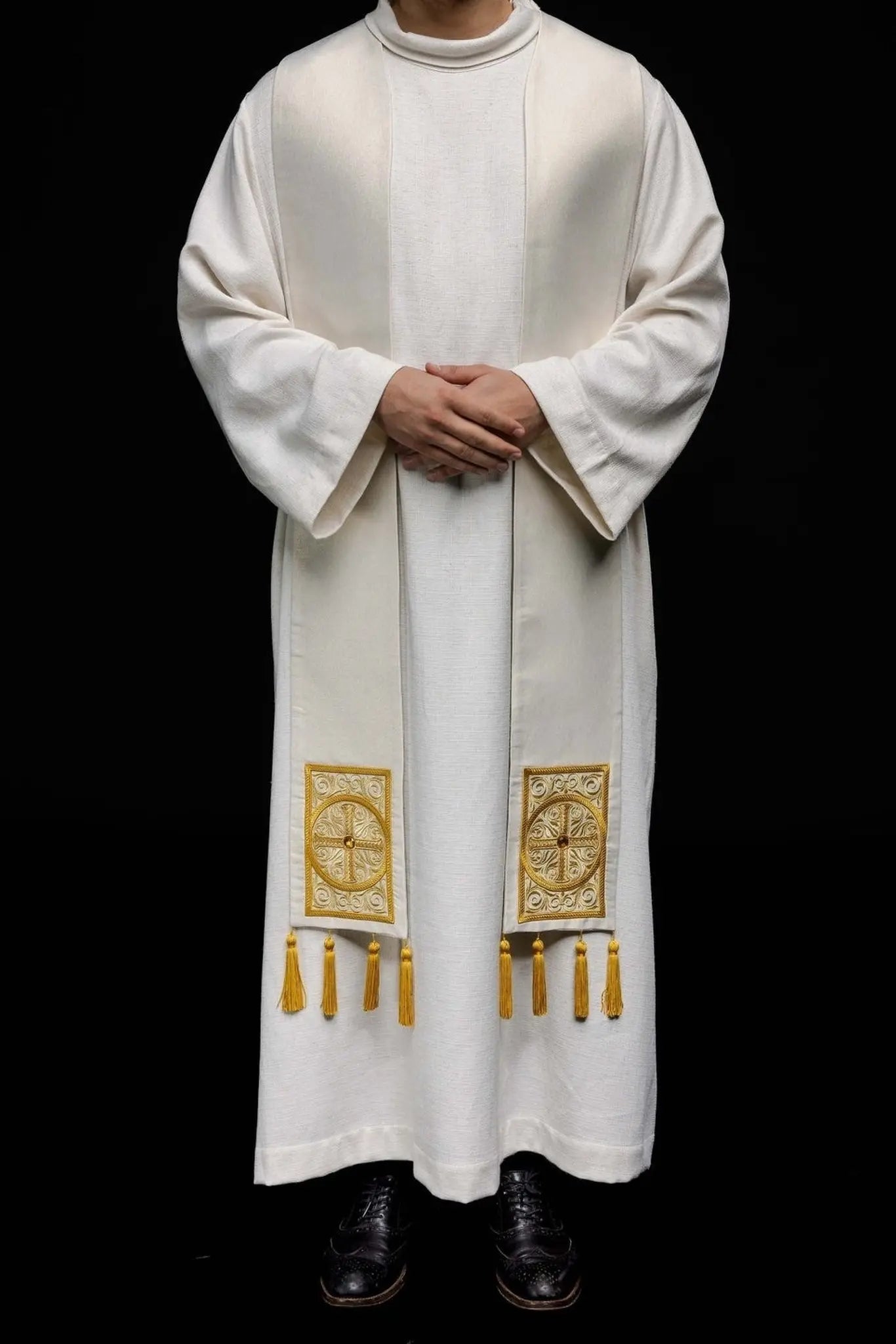
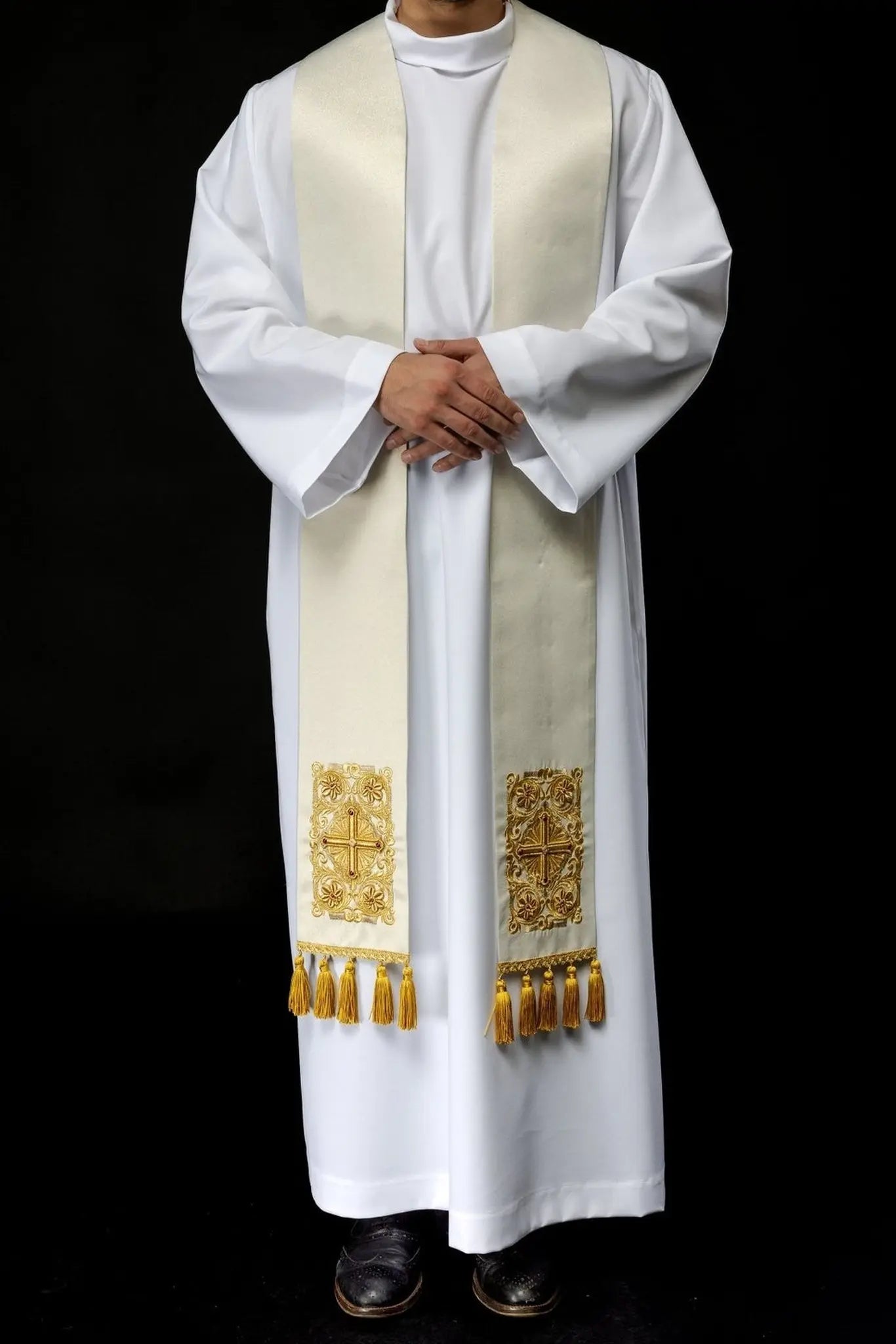
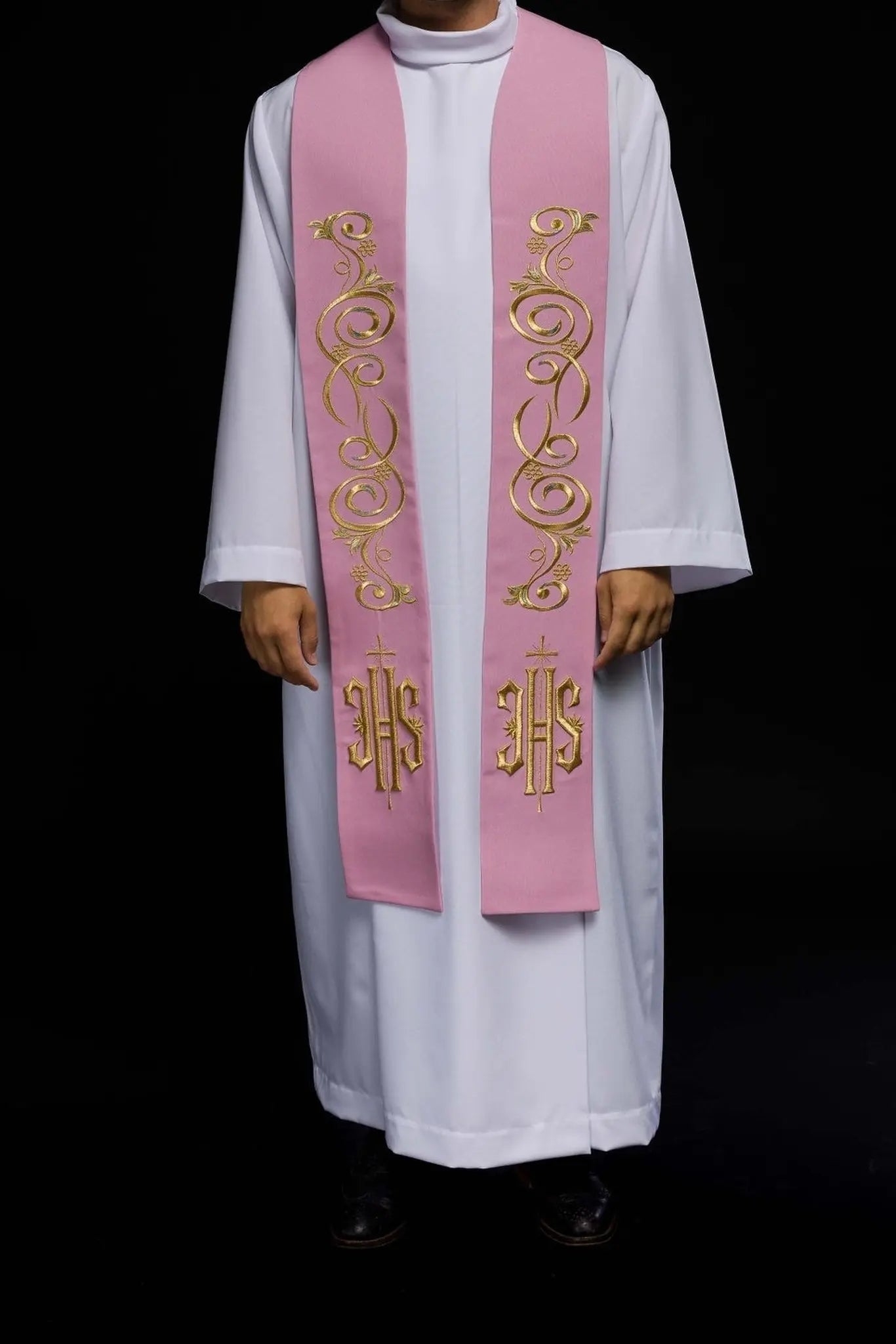
The stole is traditionally associated with ordained ministry. For a priest, it is worn around the neck and falls down the front of the alb or cassock-surplice combination. It is used during Mass under the chasuble, and also for rites such as confession, anointing of the sick, blessings, baptisms, weddings, funerals, and other sacramental or pastoral celebrations. When the full Eucharistic vestment is needed, a stole is often chosen together with a matching chasuble.
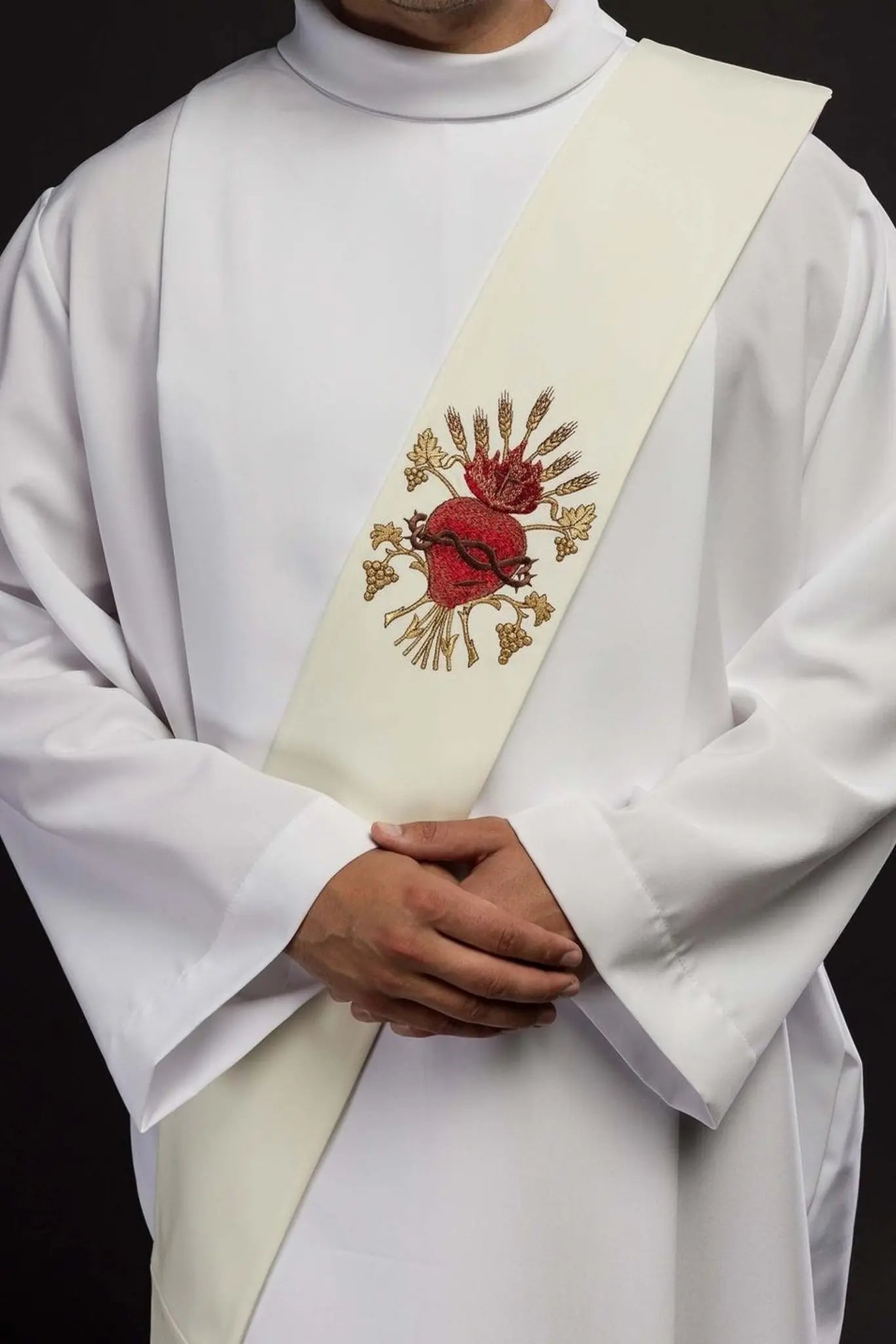
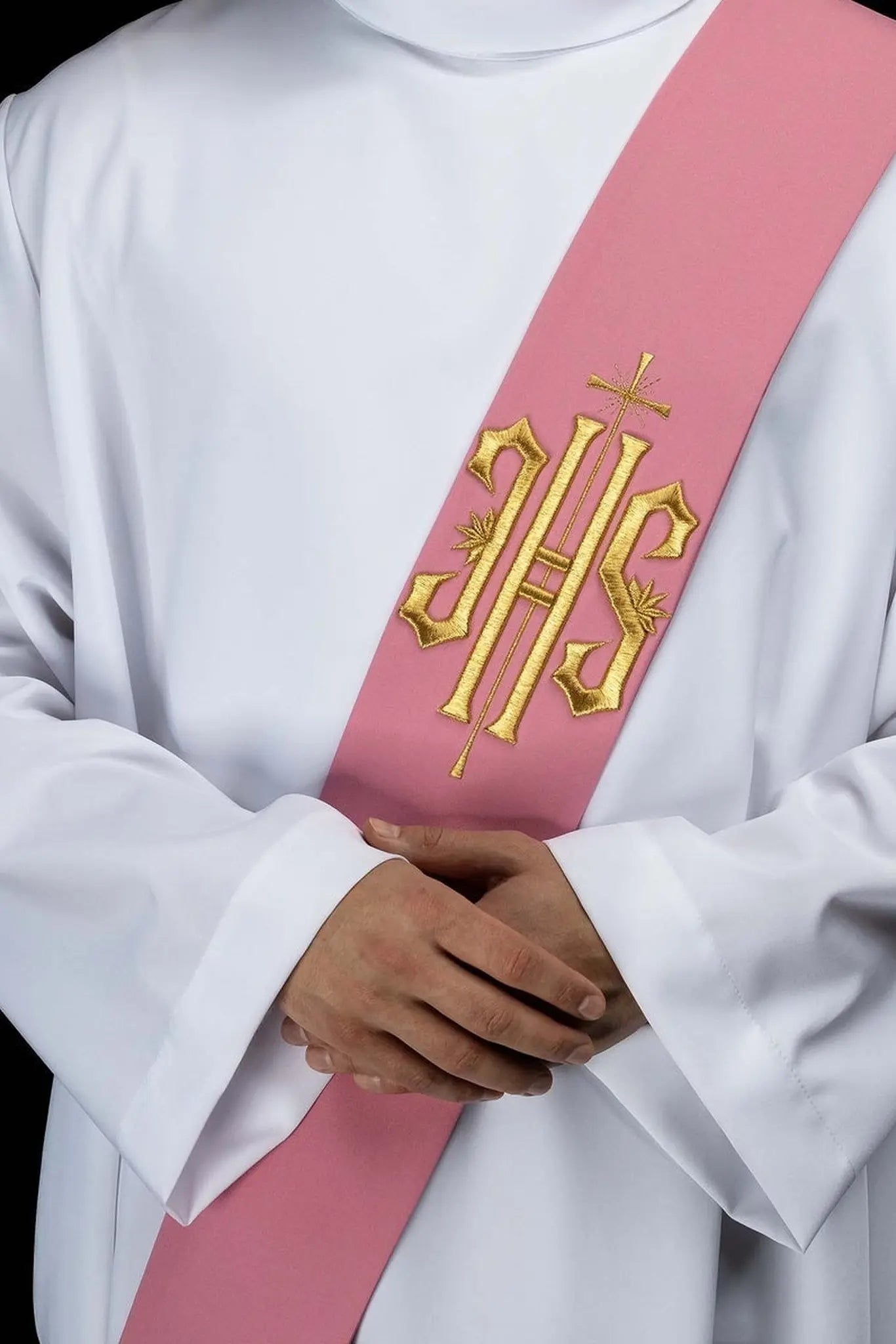
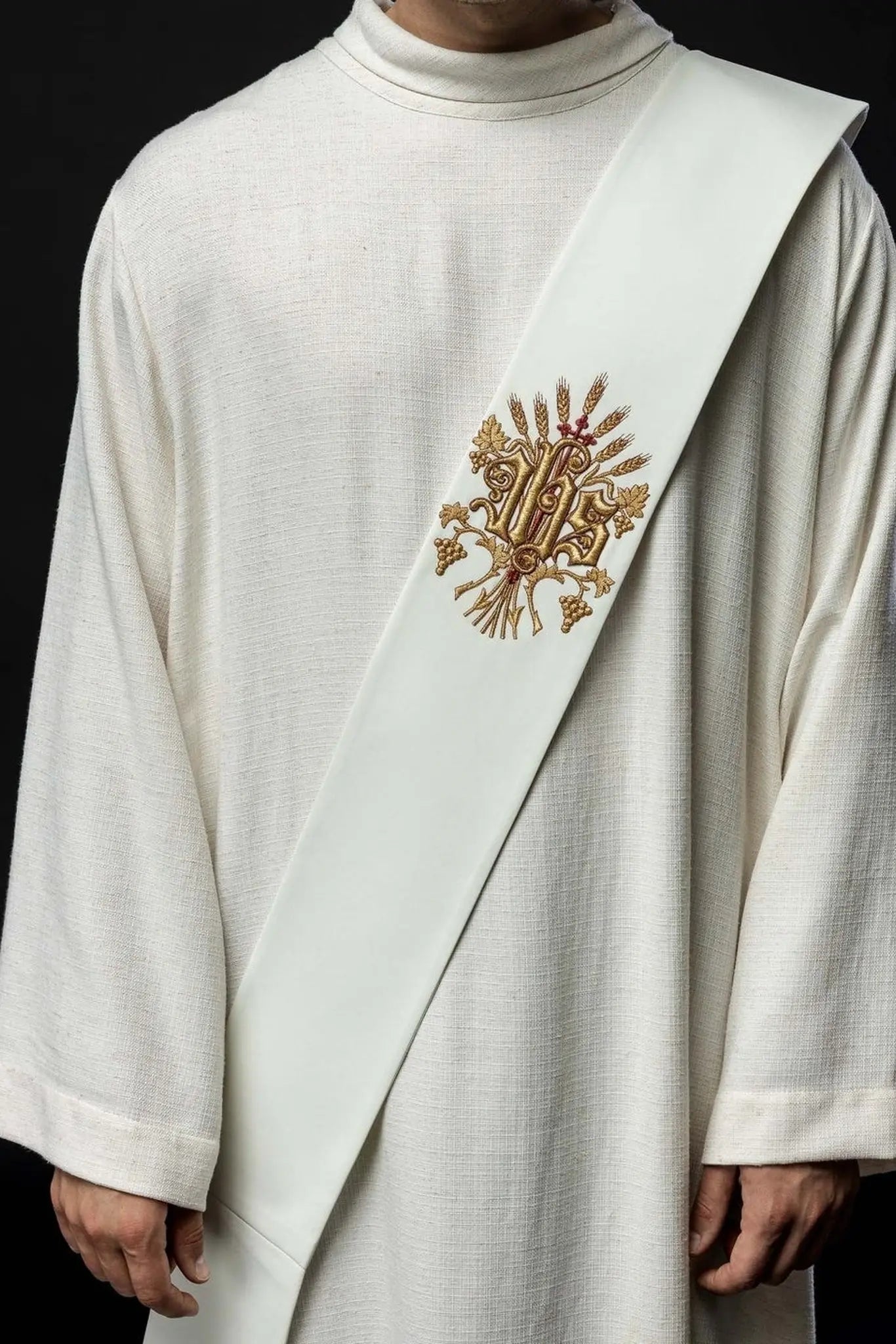
For a deacon, the stole is not worn like a priest stole. It is placed over the left shoulder and fastened or arranged across the body toward the right side. This diagonal form visibly expresses the service proper to the diaconate. For this reason, deacons should select from the dedicated Deacon Stoles collection when the cut and fit must correspond to diaconal use.
The stole is also important in rites outside Mass. A priest may wear it when hearing confessions, visiting the sick, presiding at blessings, or leading devotional prayer. In those settings, the stole often becomes the most visible liturgical vestment, so color, symbolism, fabric, and finish should be chosen with care.
Choosing the right liturgical color
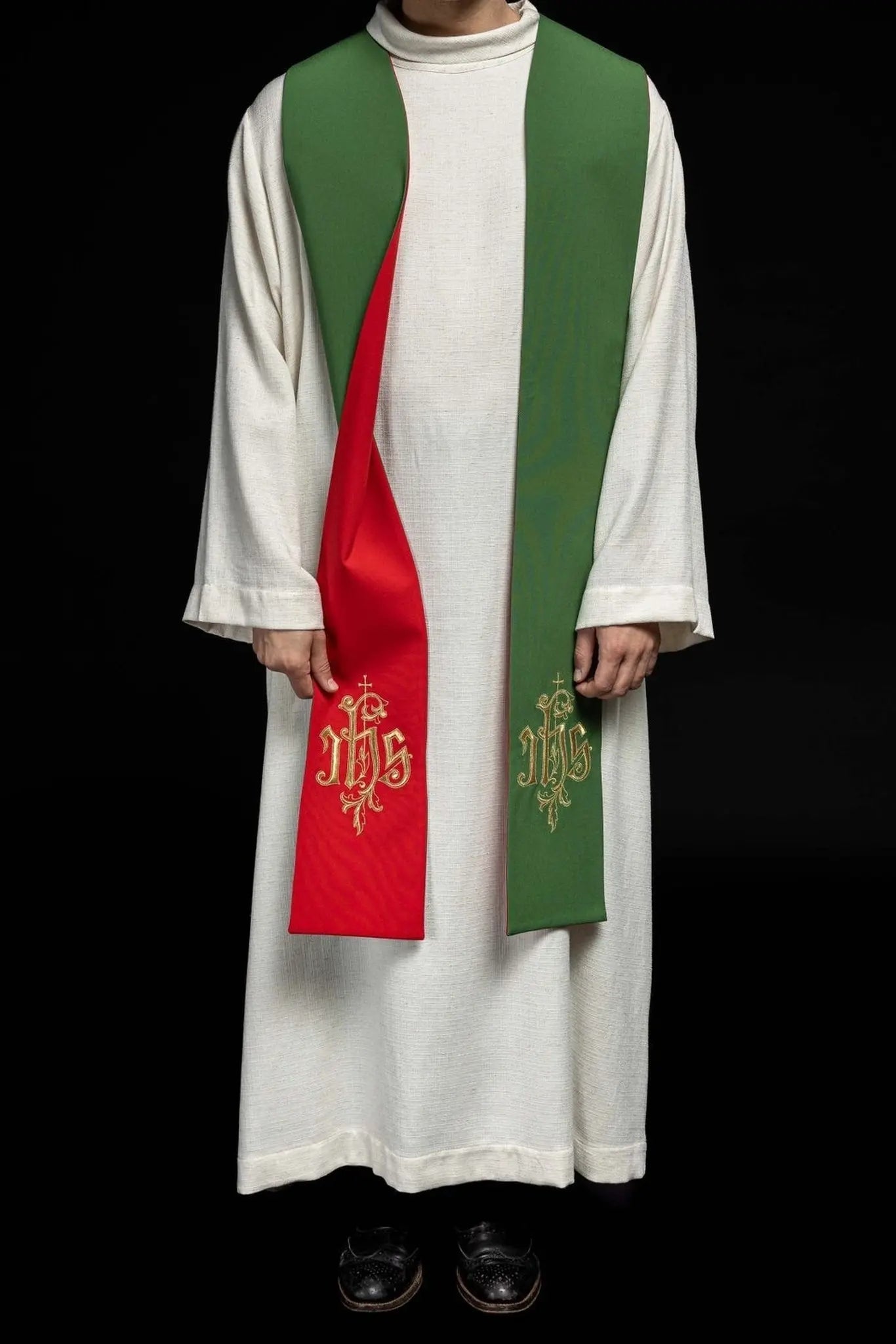
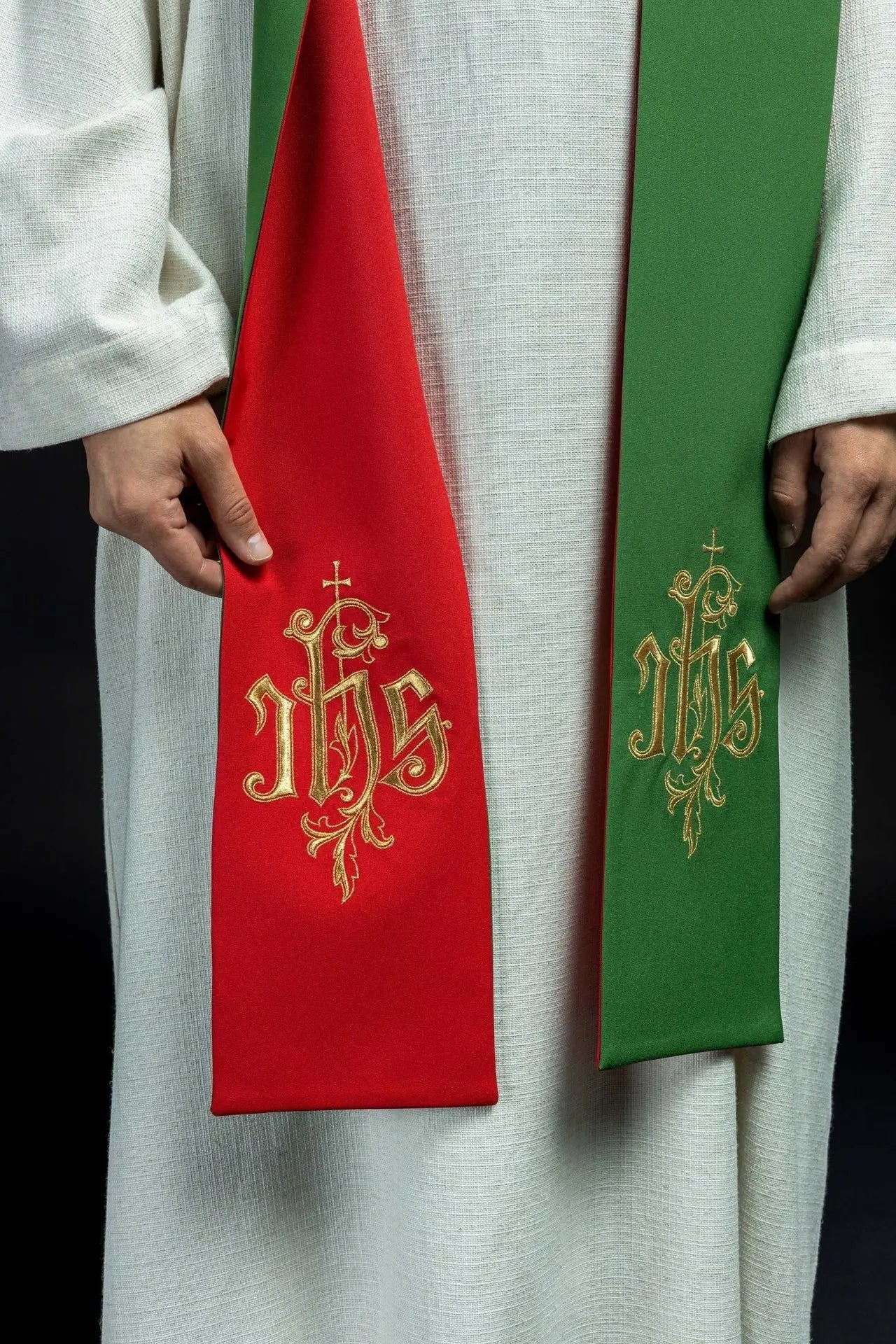
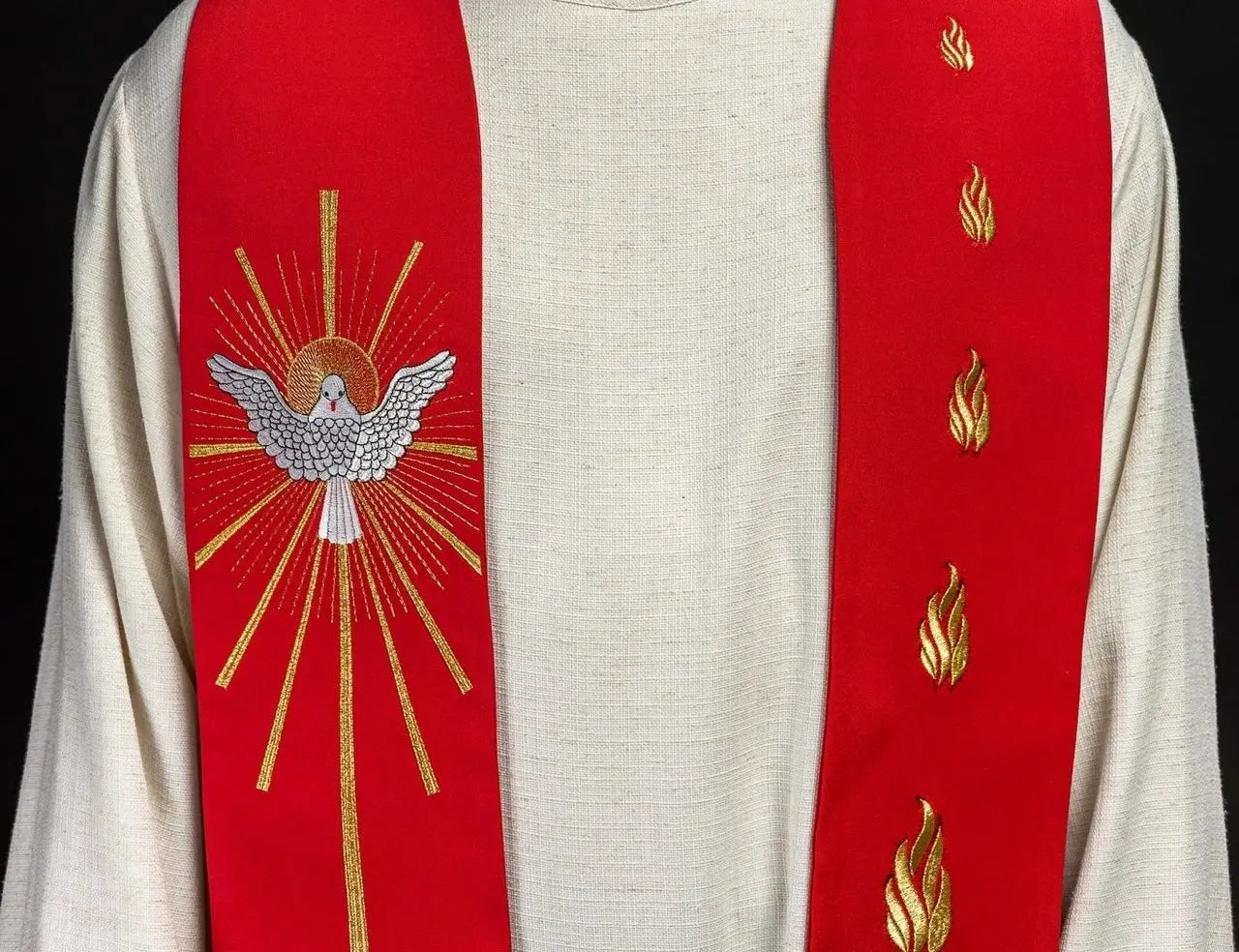
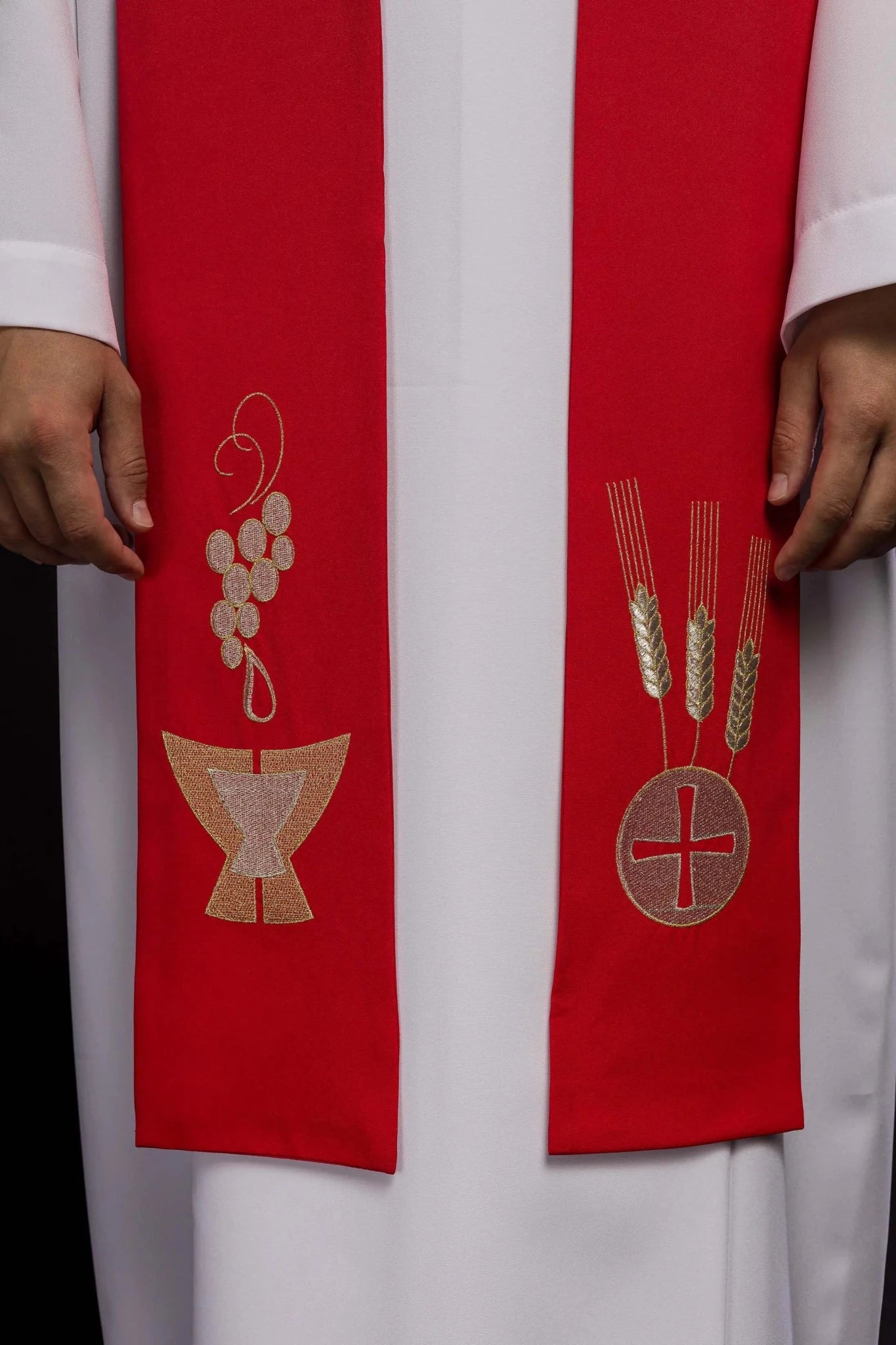
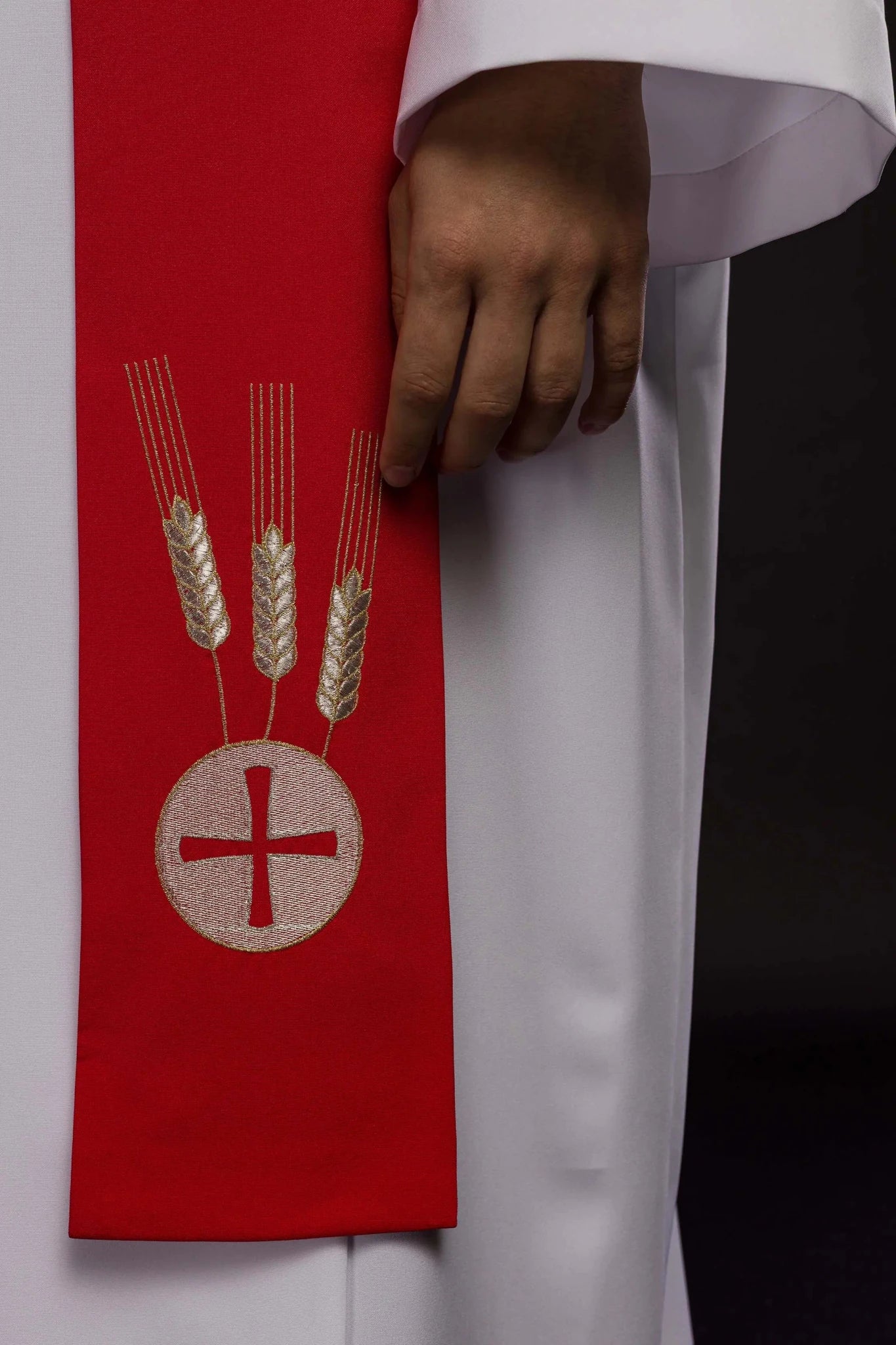
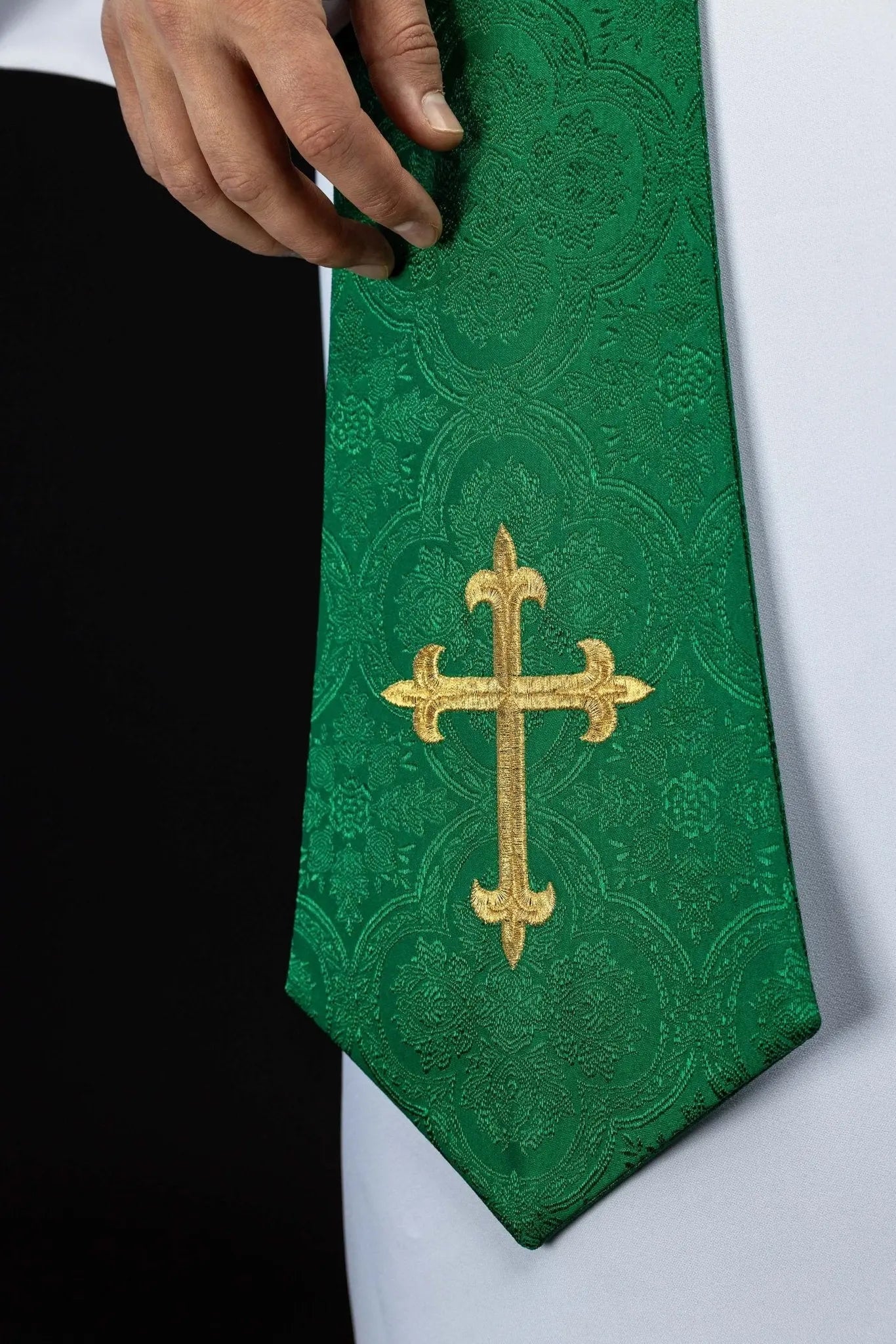
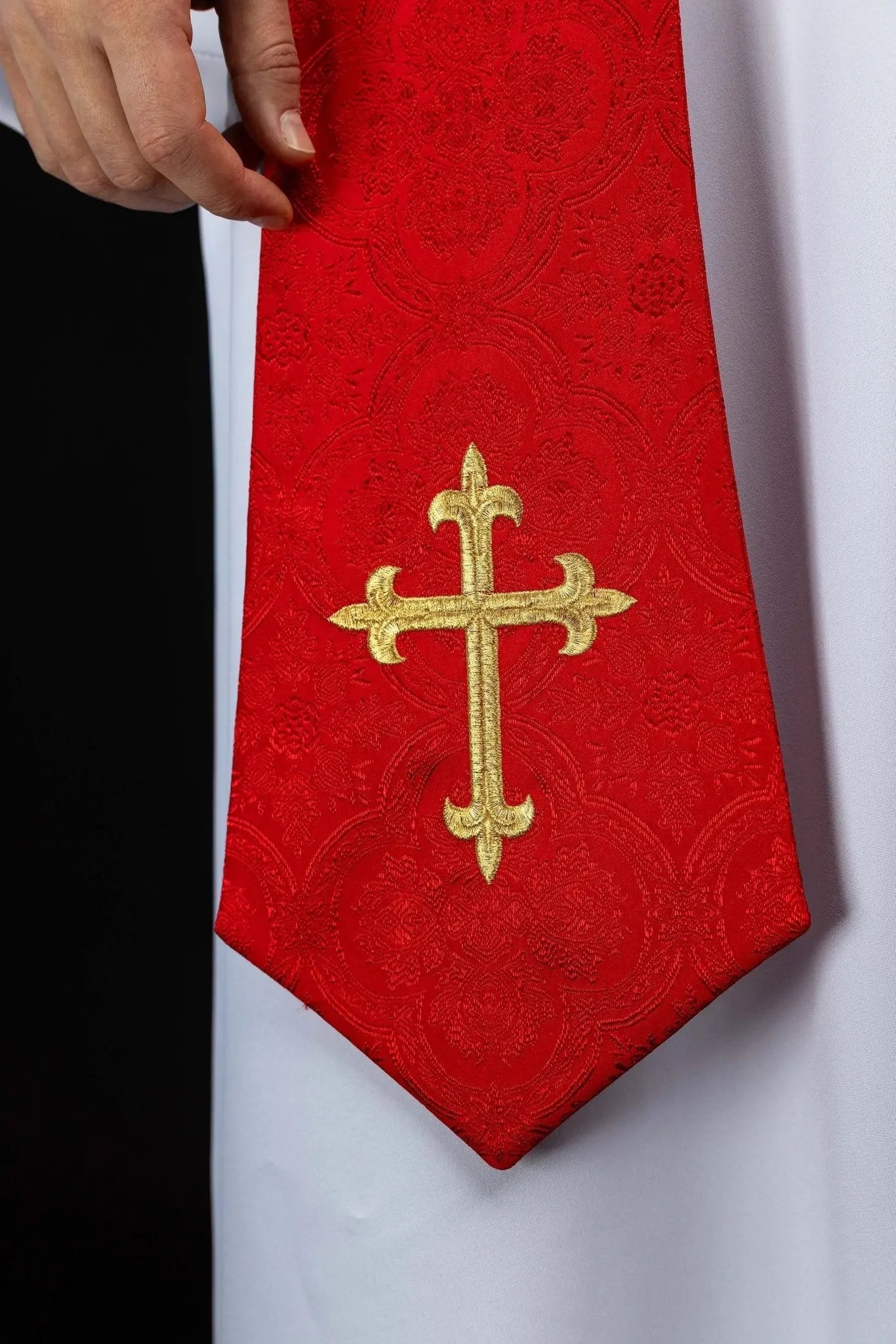
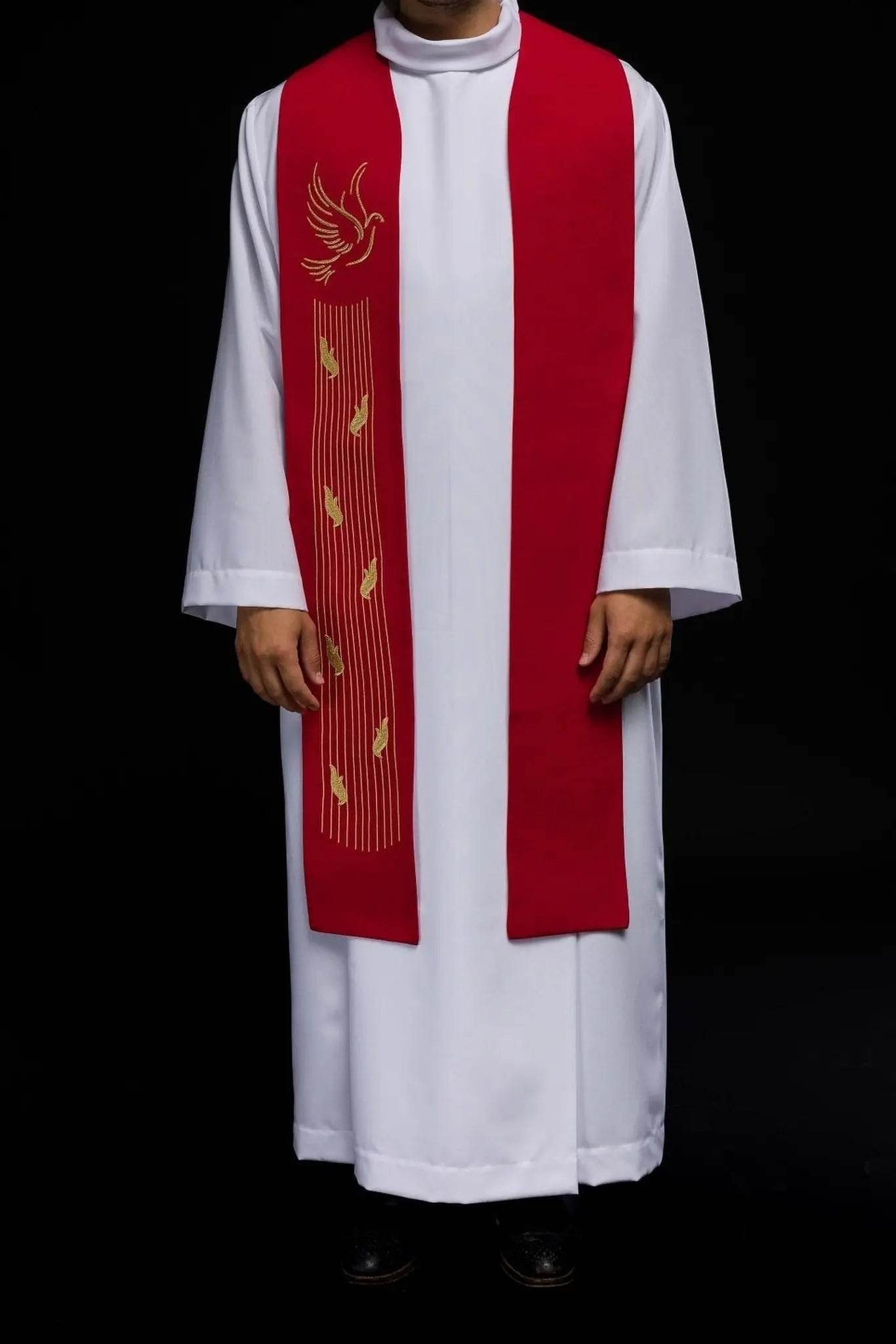
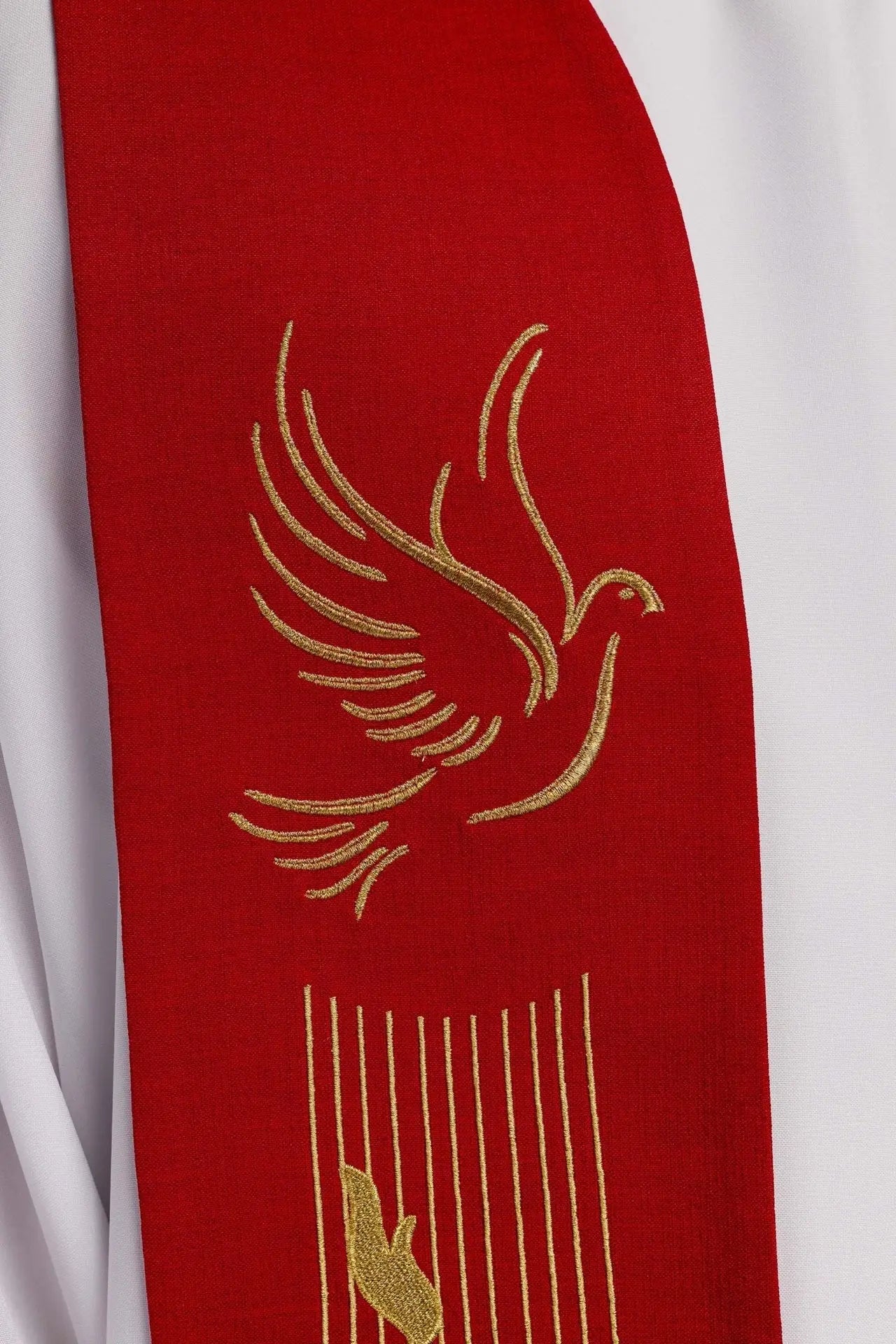
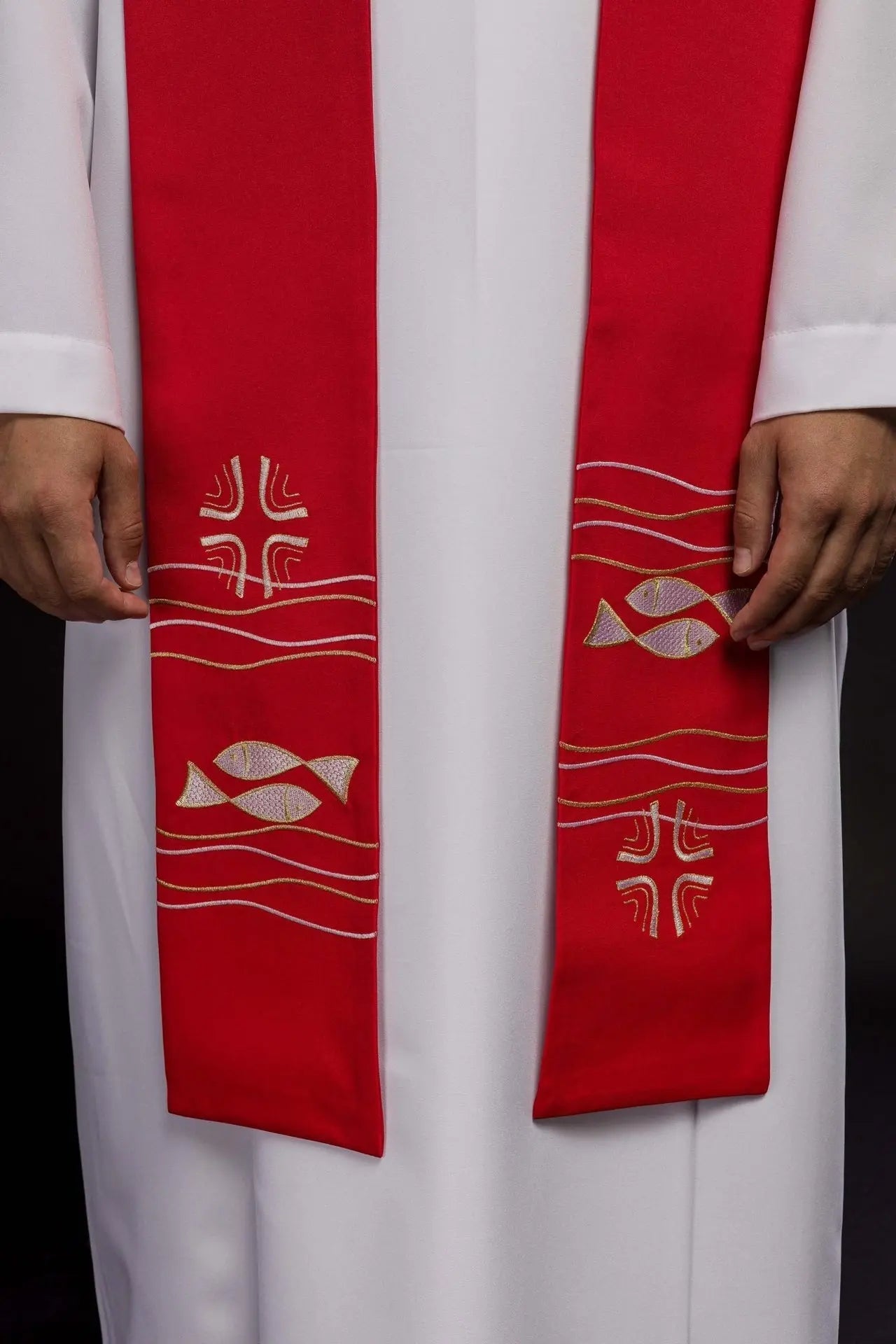
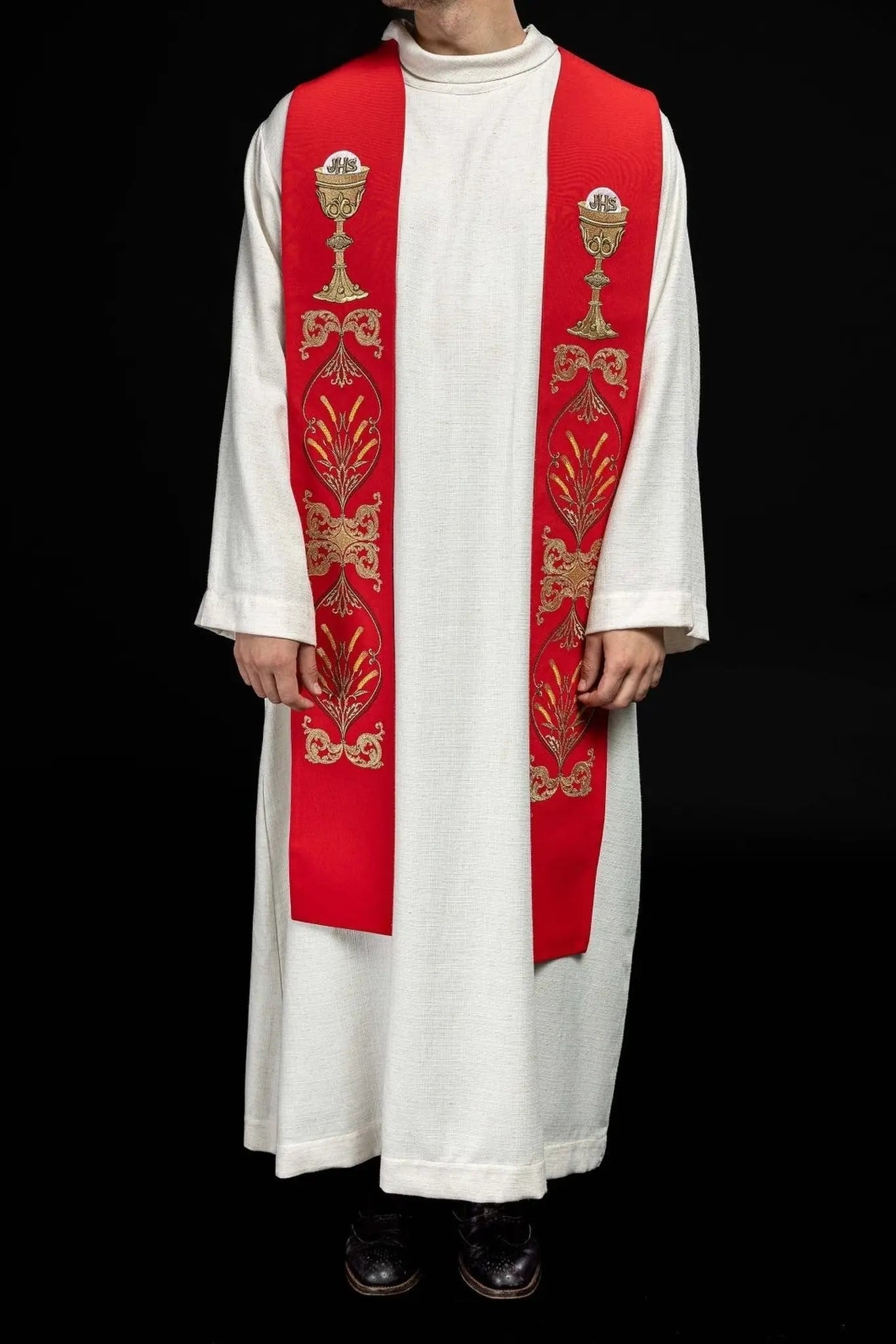
The color of a stole should follow the liturgical calendar and the rite being celebrated. Green is used during Ordinary Time and is a practical choice for regular parish ministry. For this season, see our Green Clergy Stoles. Red is connected with the Holy Spirit, the Passion of the Lord, martyrs, and celebrations such as Pentecost. For these occasions, visit Red Clergy Stoles.
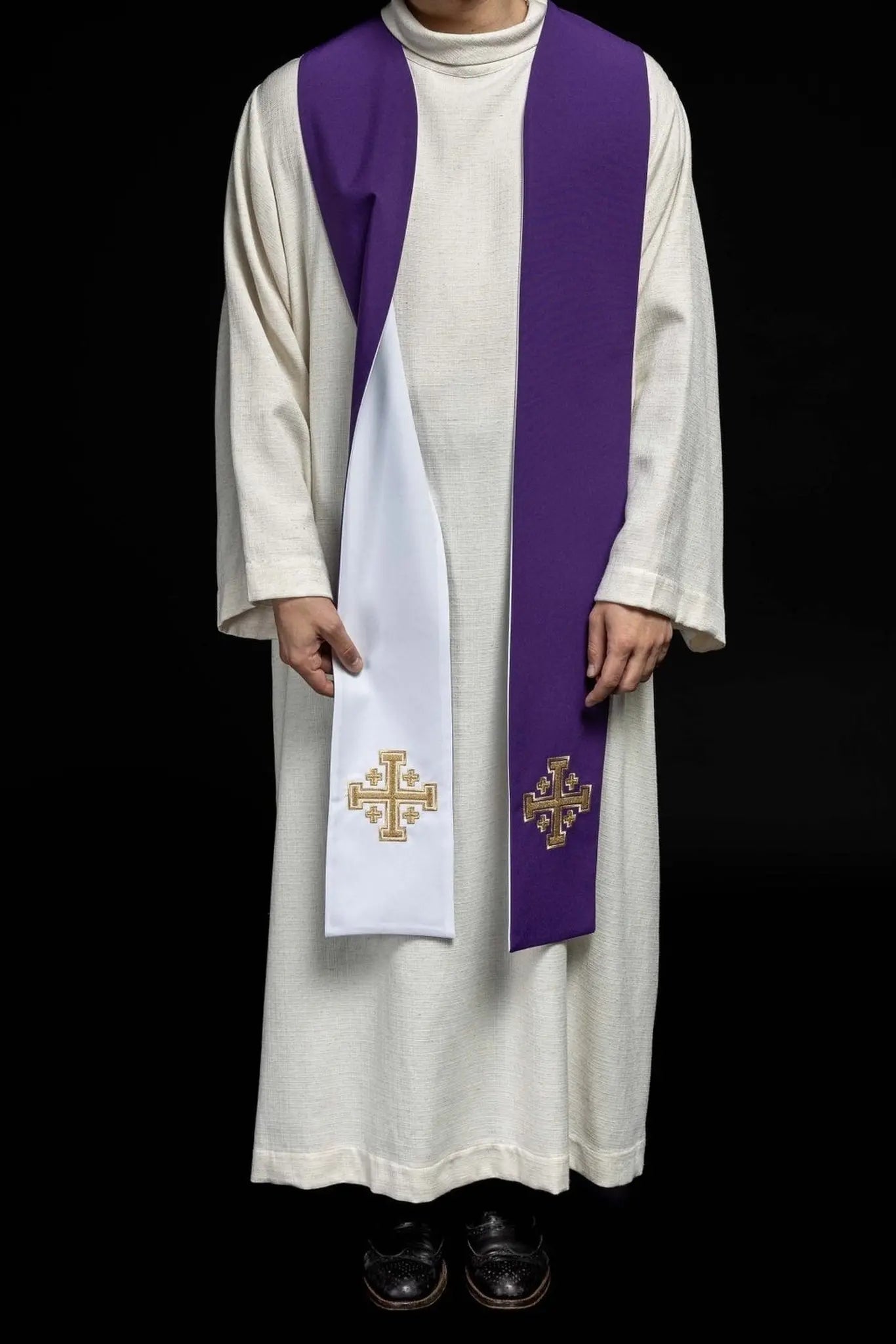
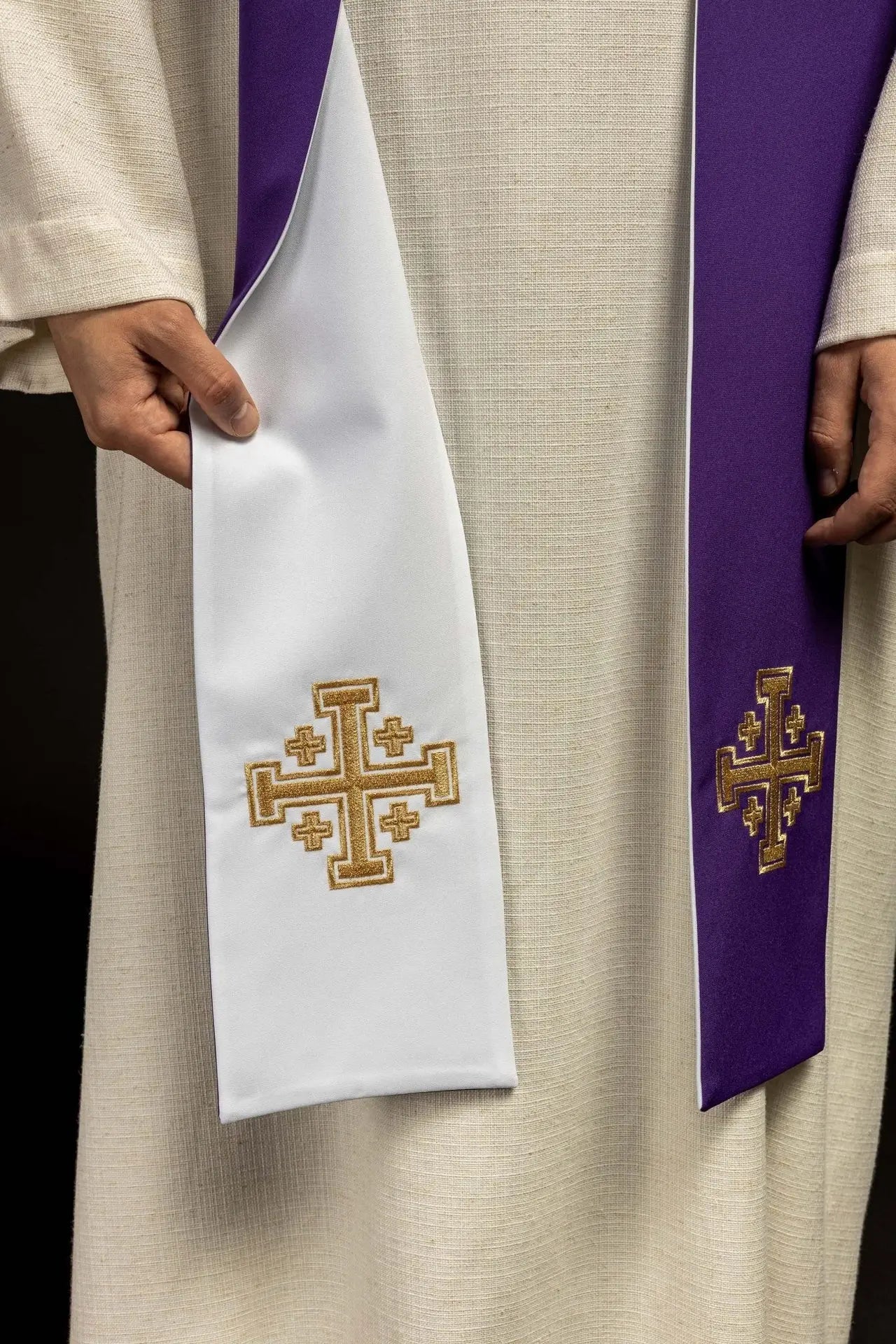
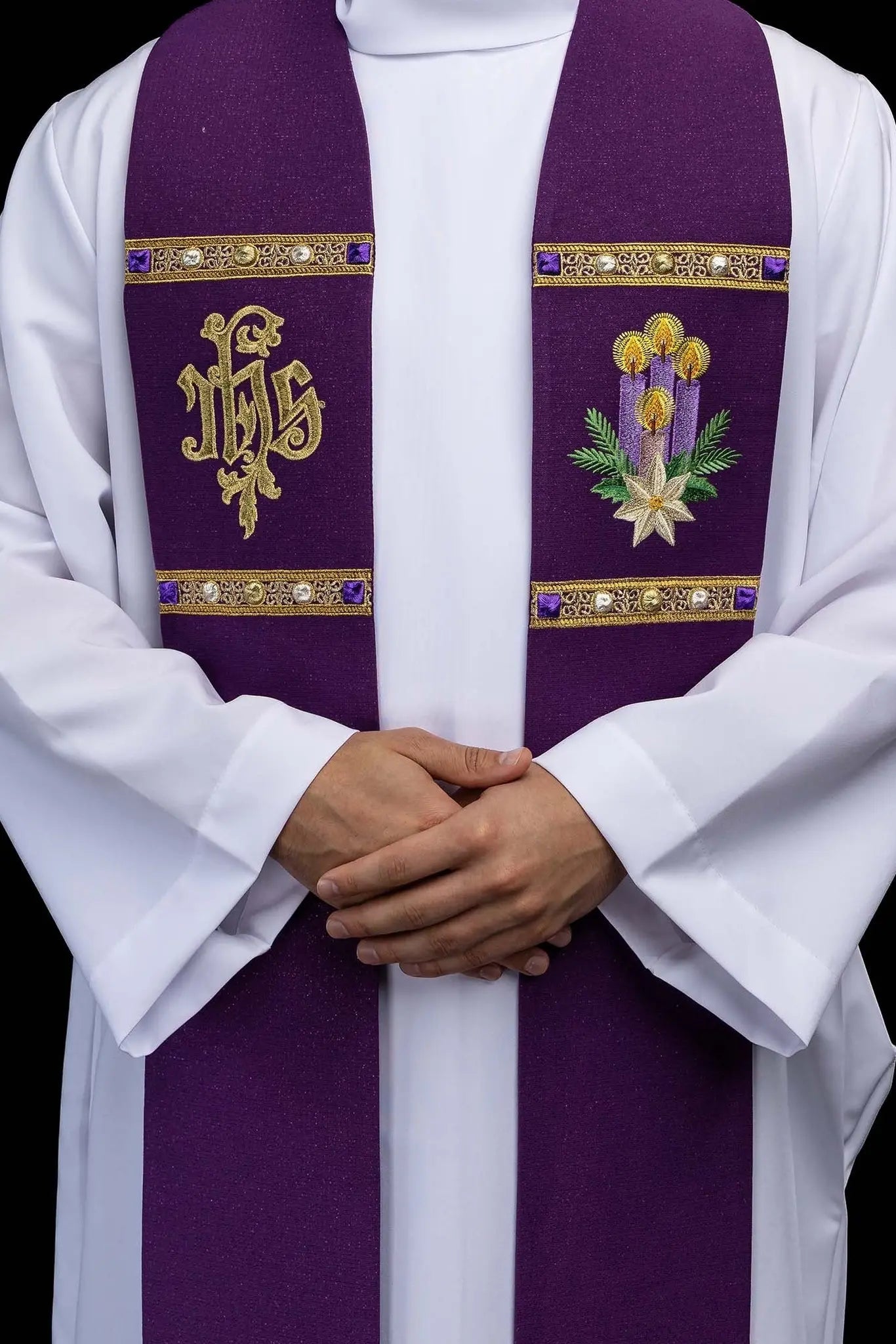
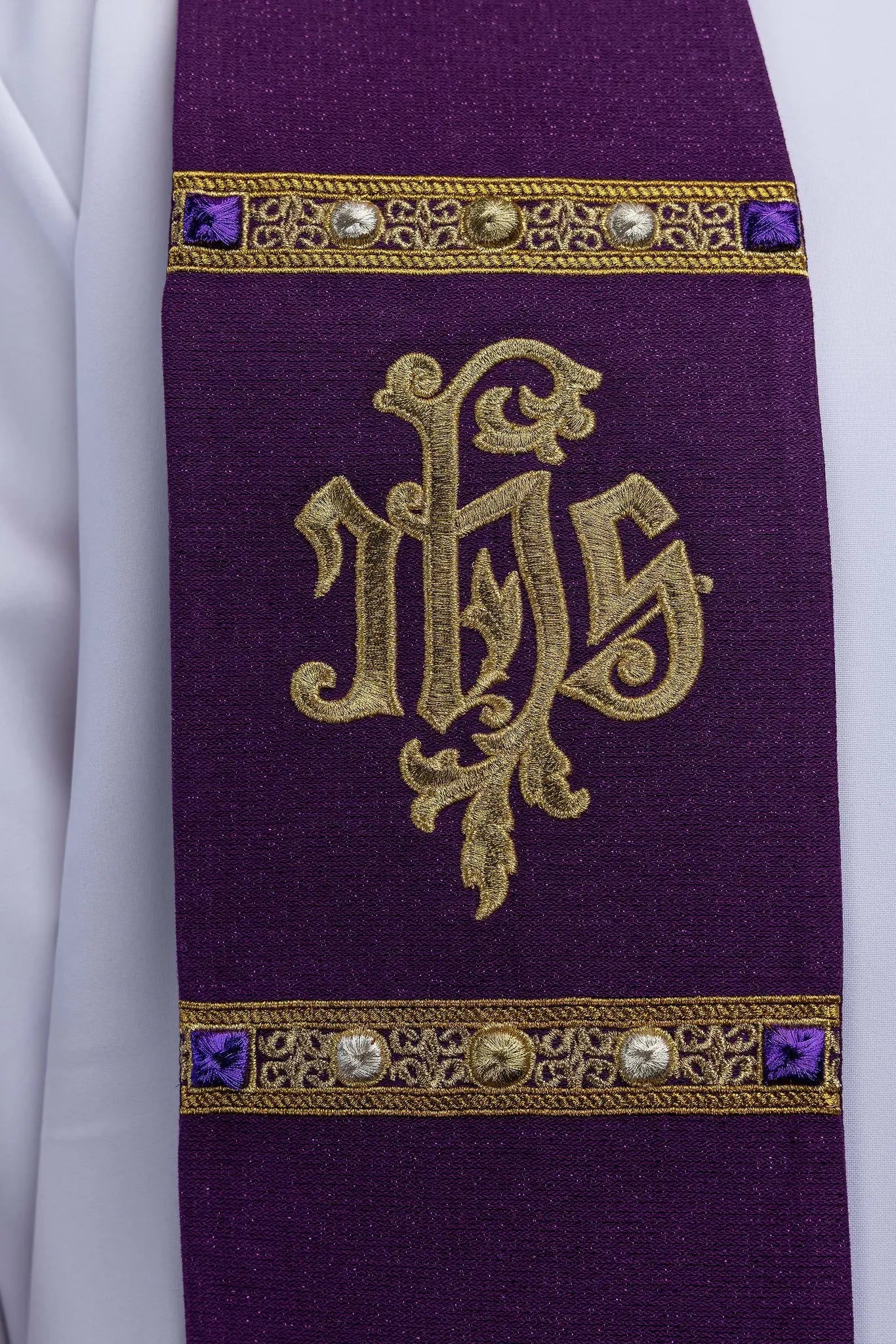
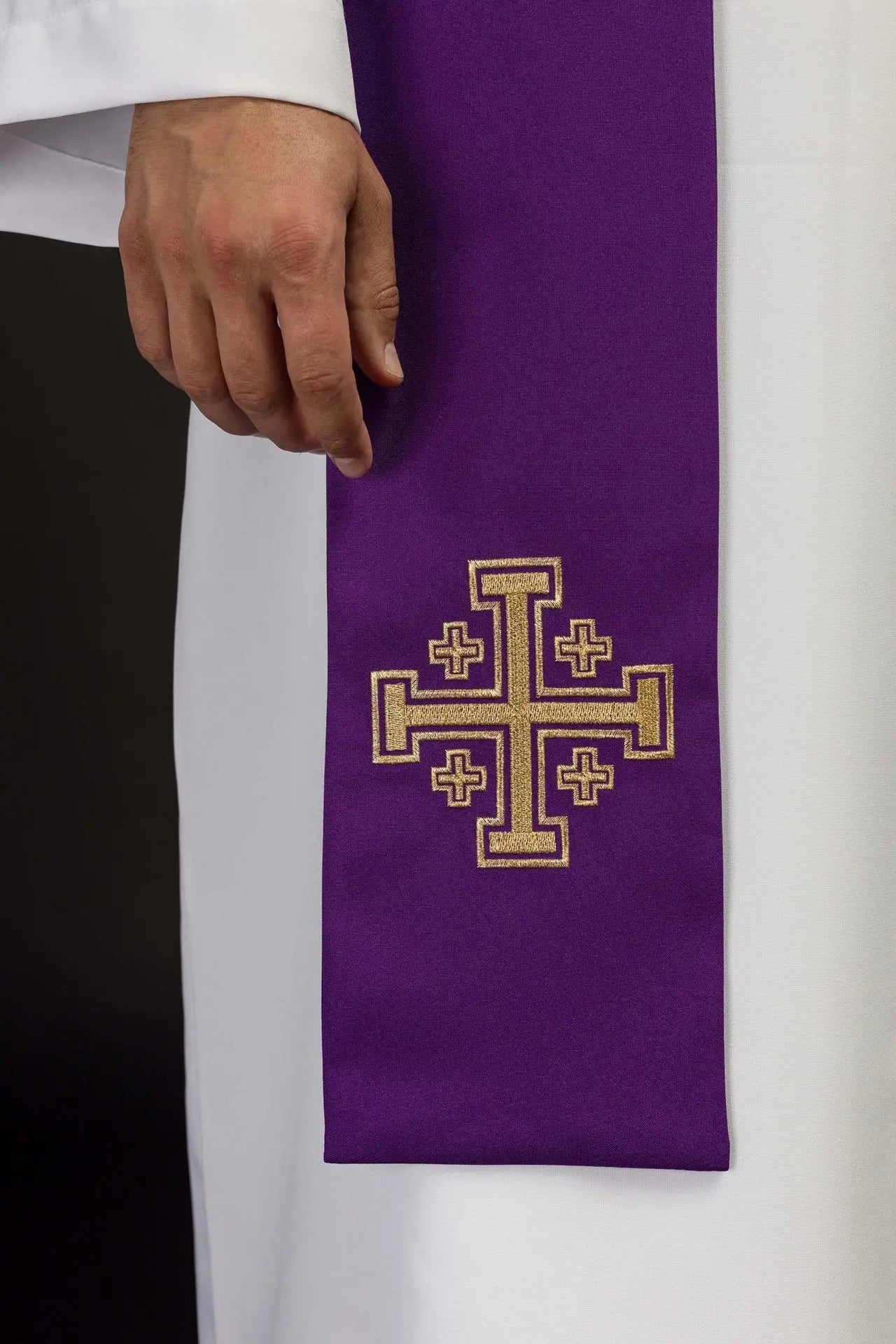
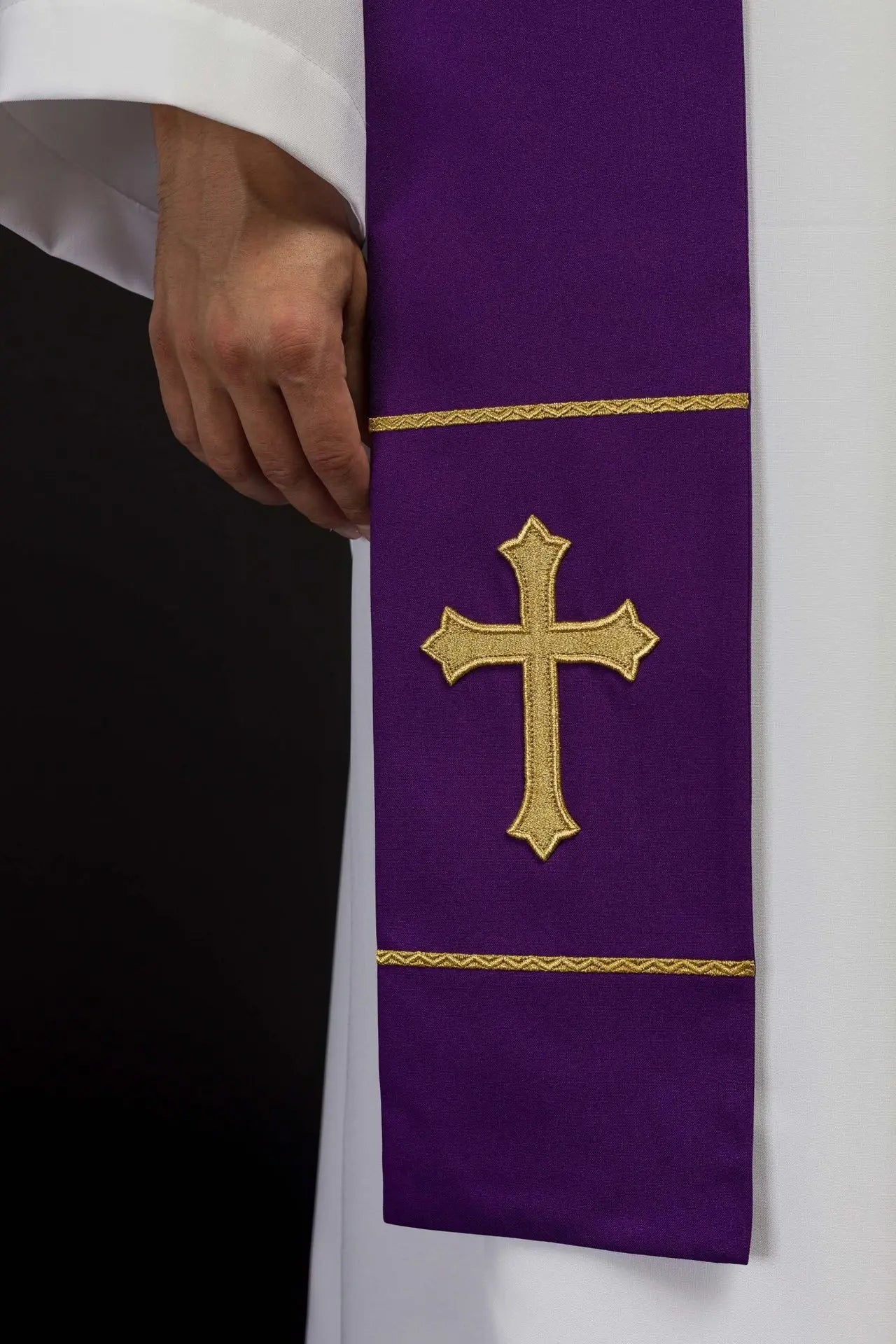
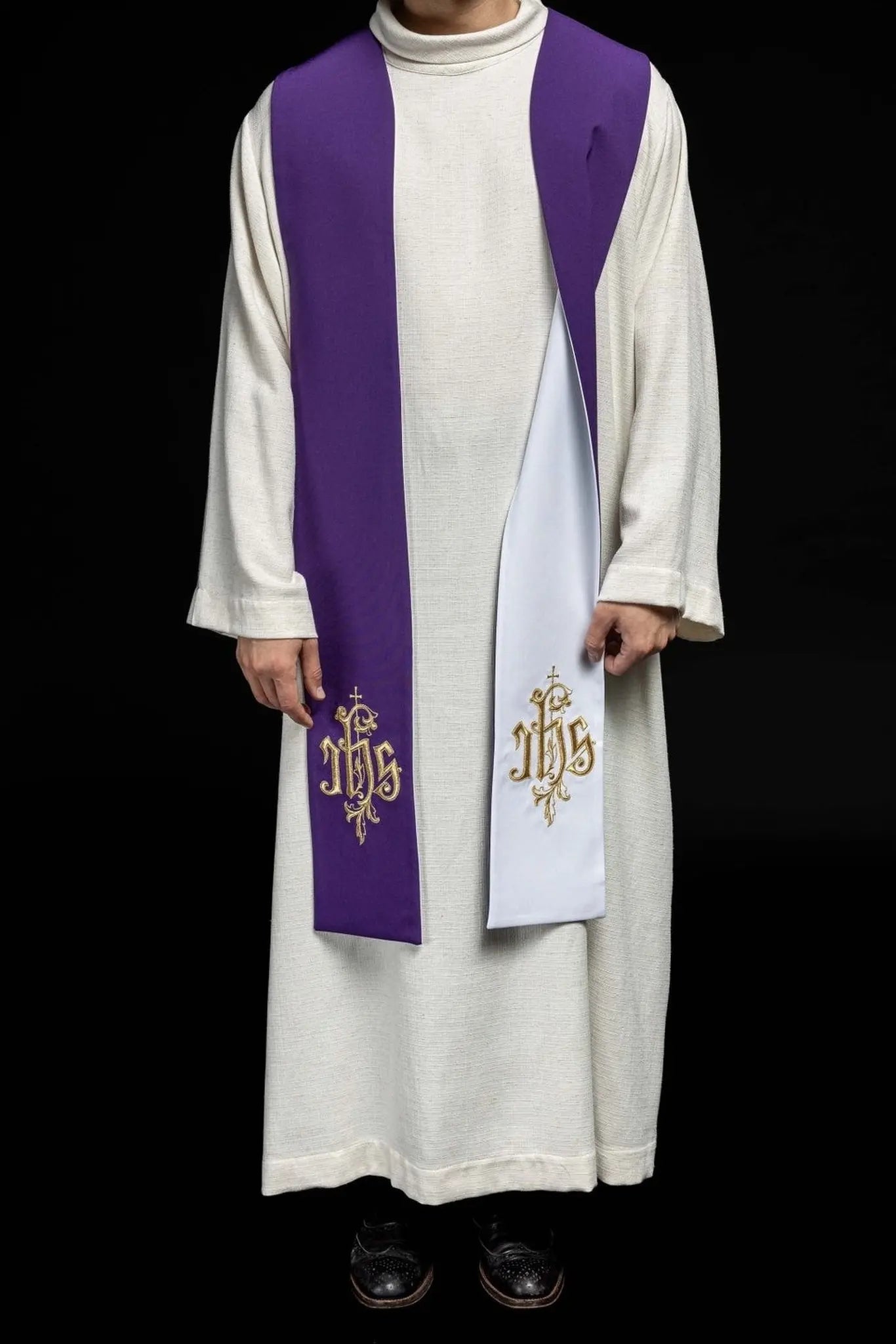
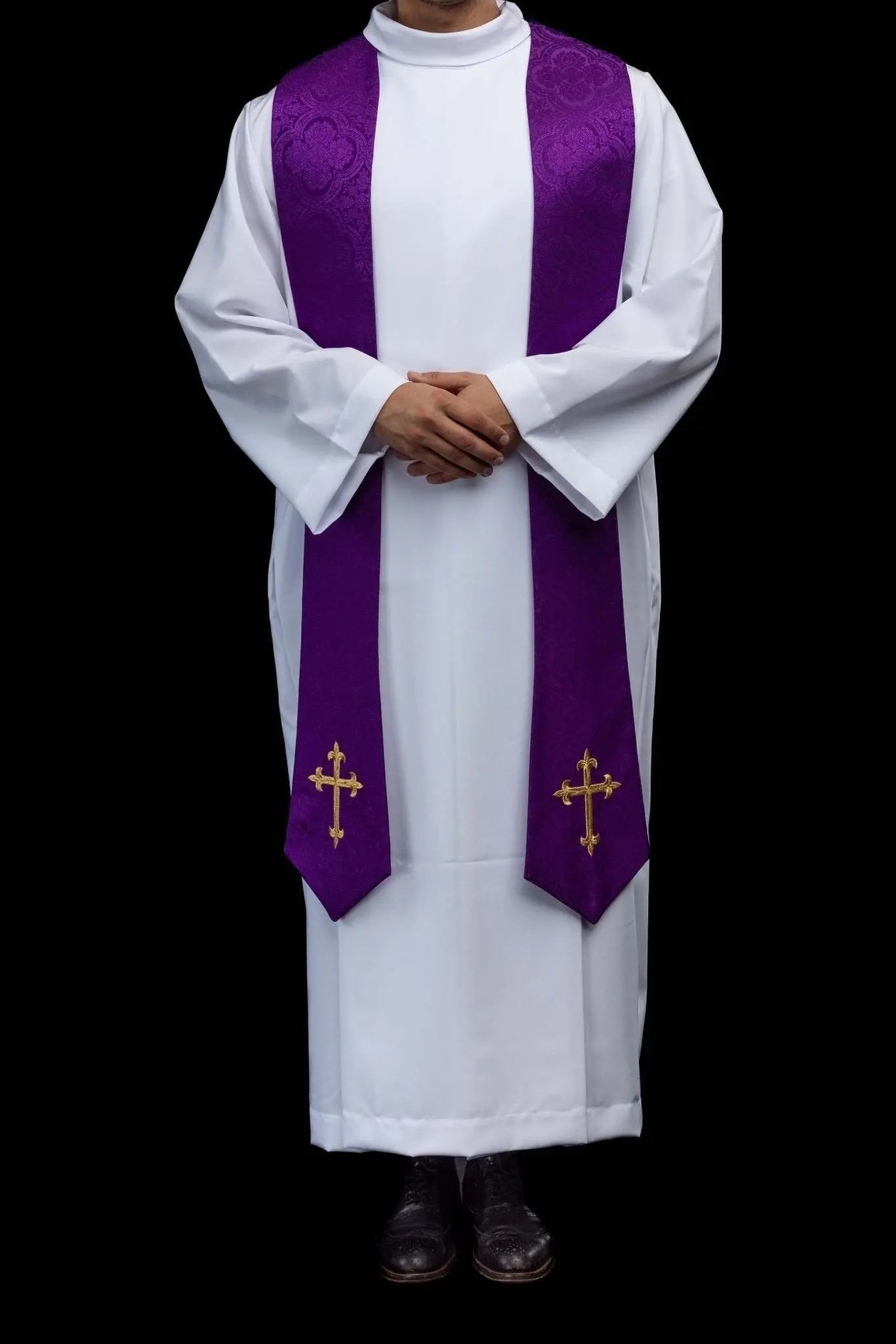
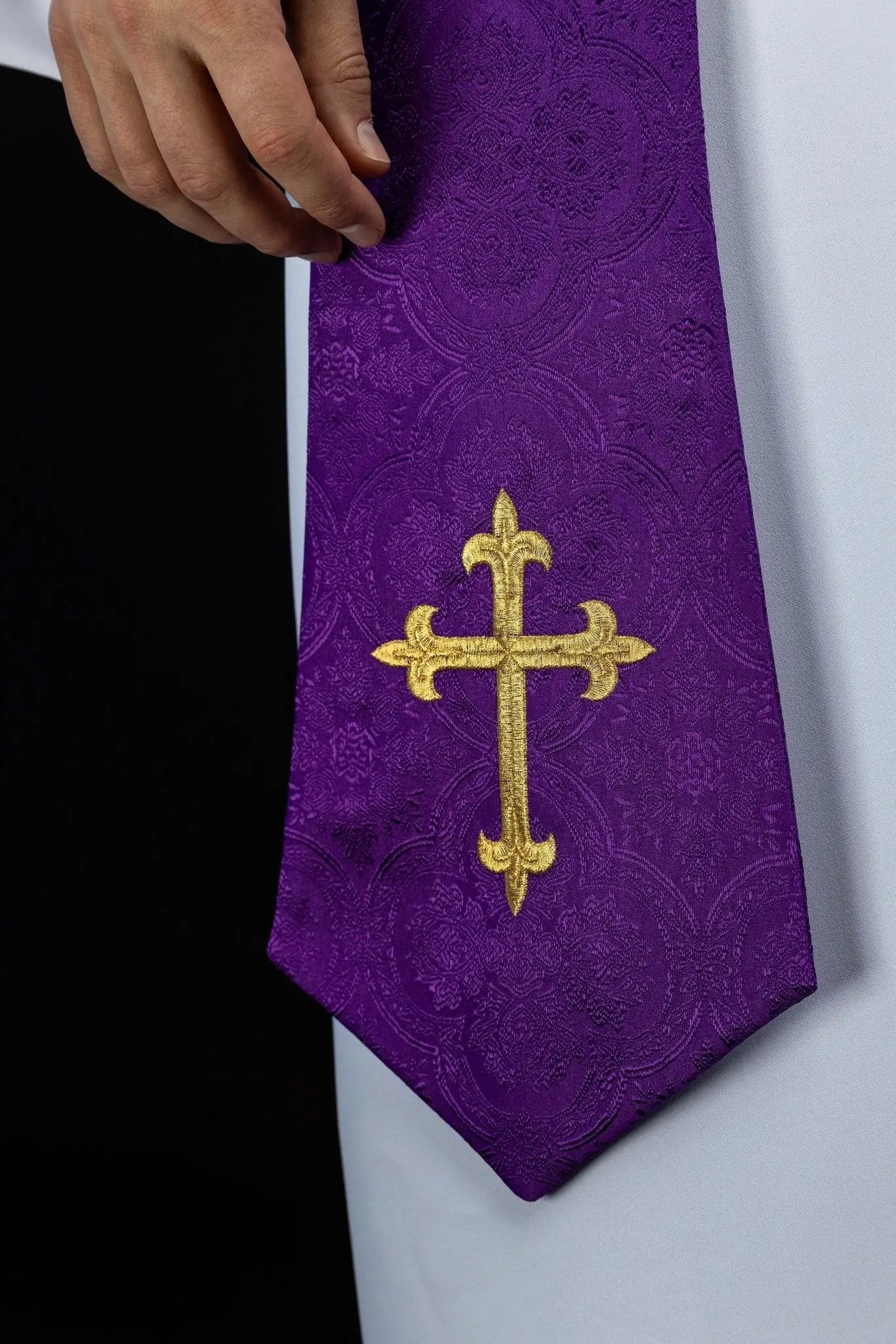
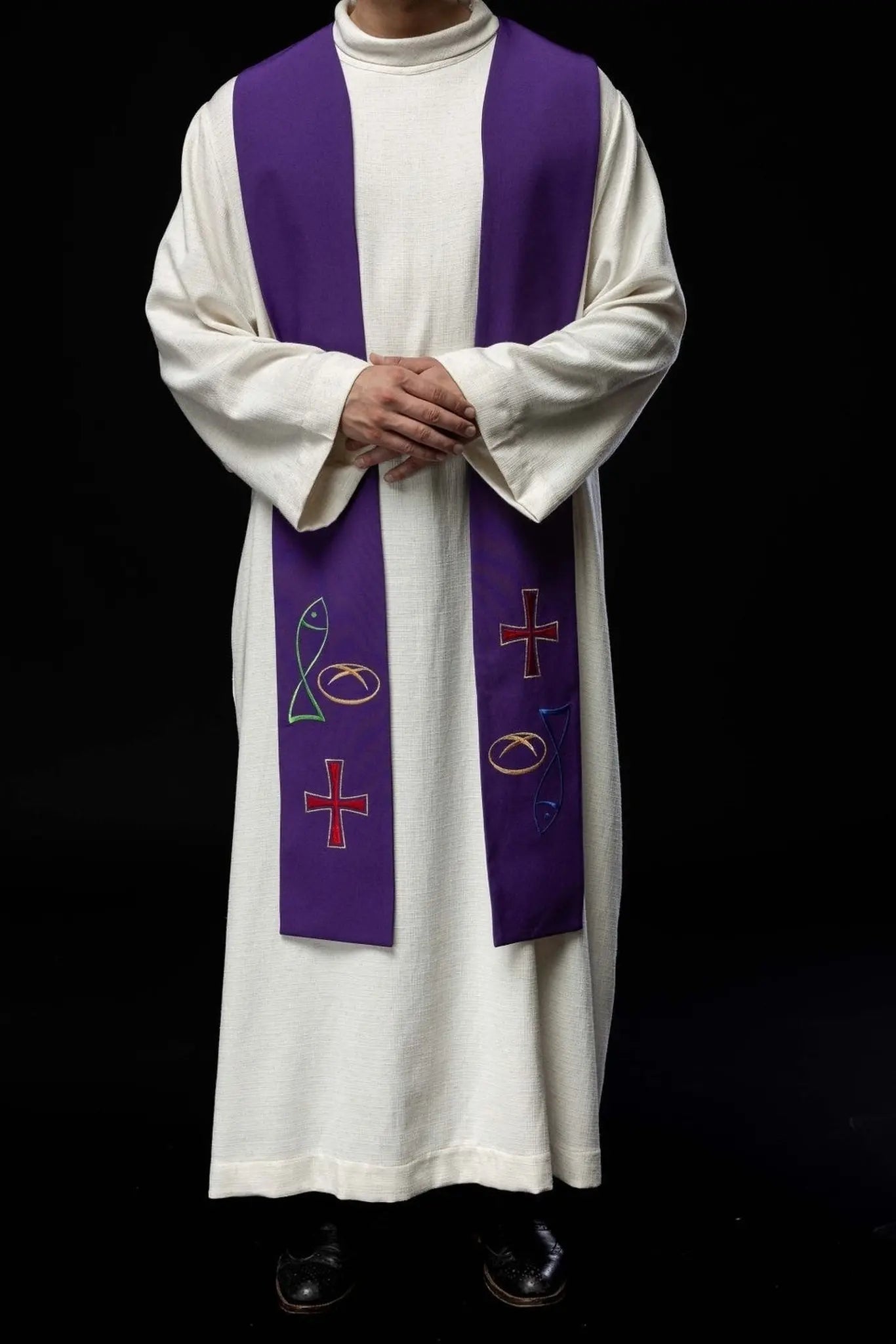
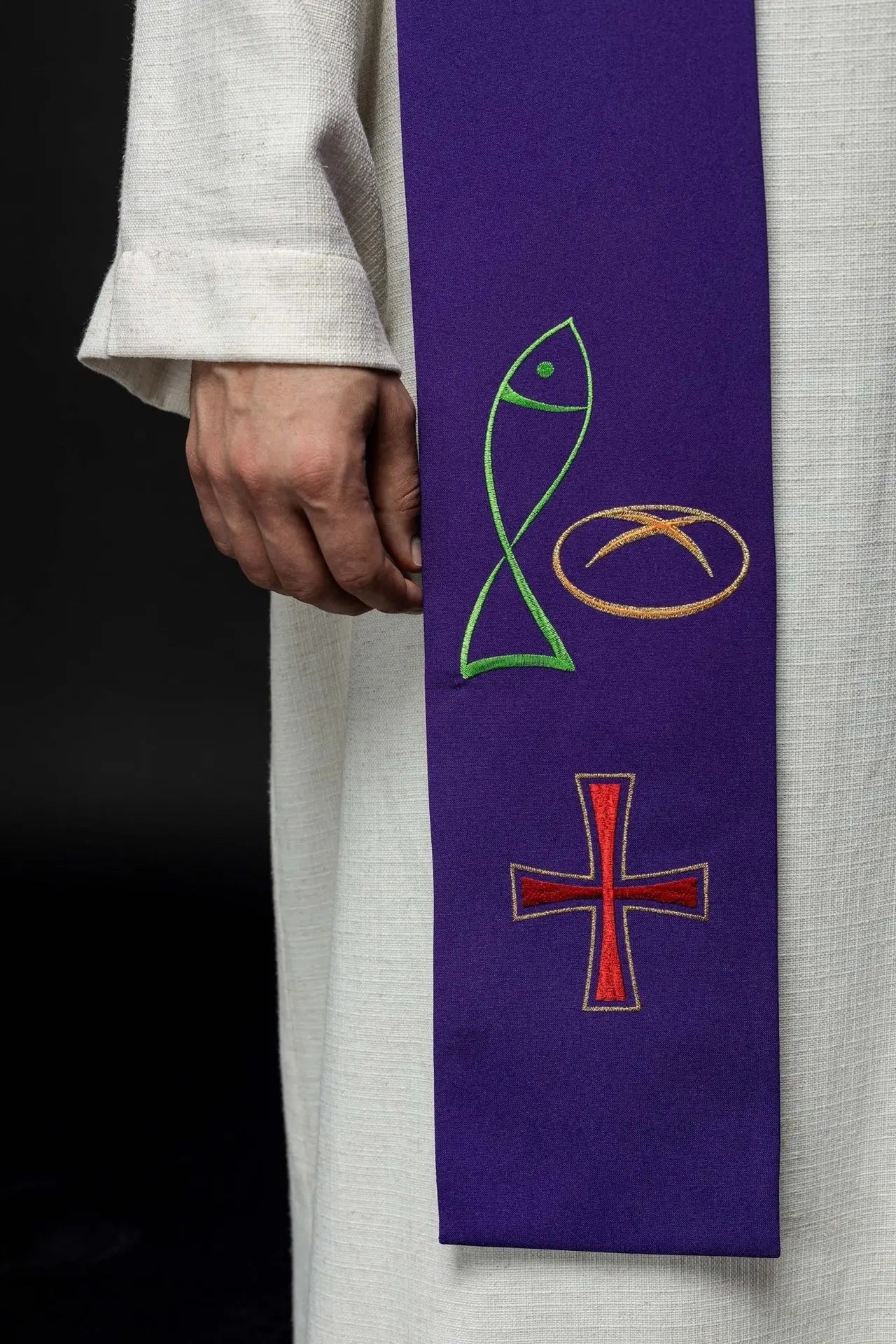
Purple stoles are used especially in Advent and Lent, as well as in penitential settings. A purple stole is also commonly used for the sacrament of reconciliation and may be chosen for certain funeral or memorial contexts according to local custom. You can browse the dedicated Purple Clergy Stoles collection for these seasons and rites.
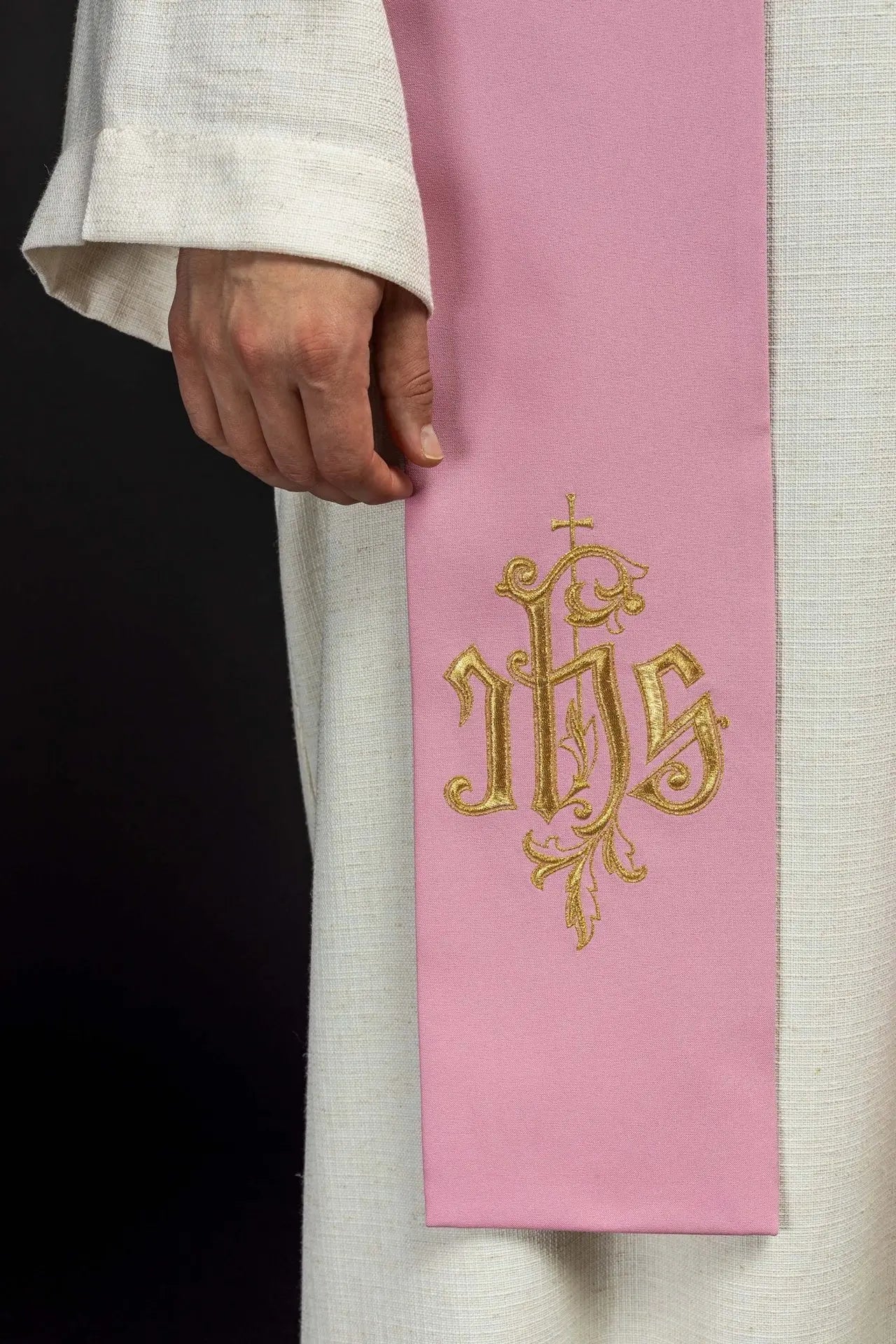
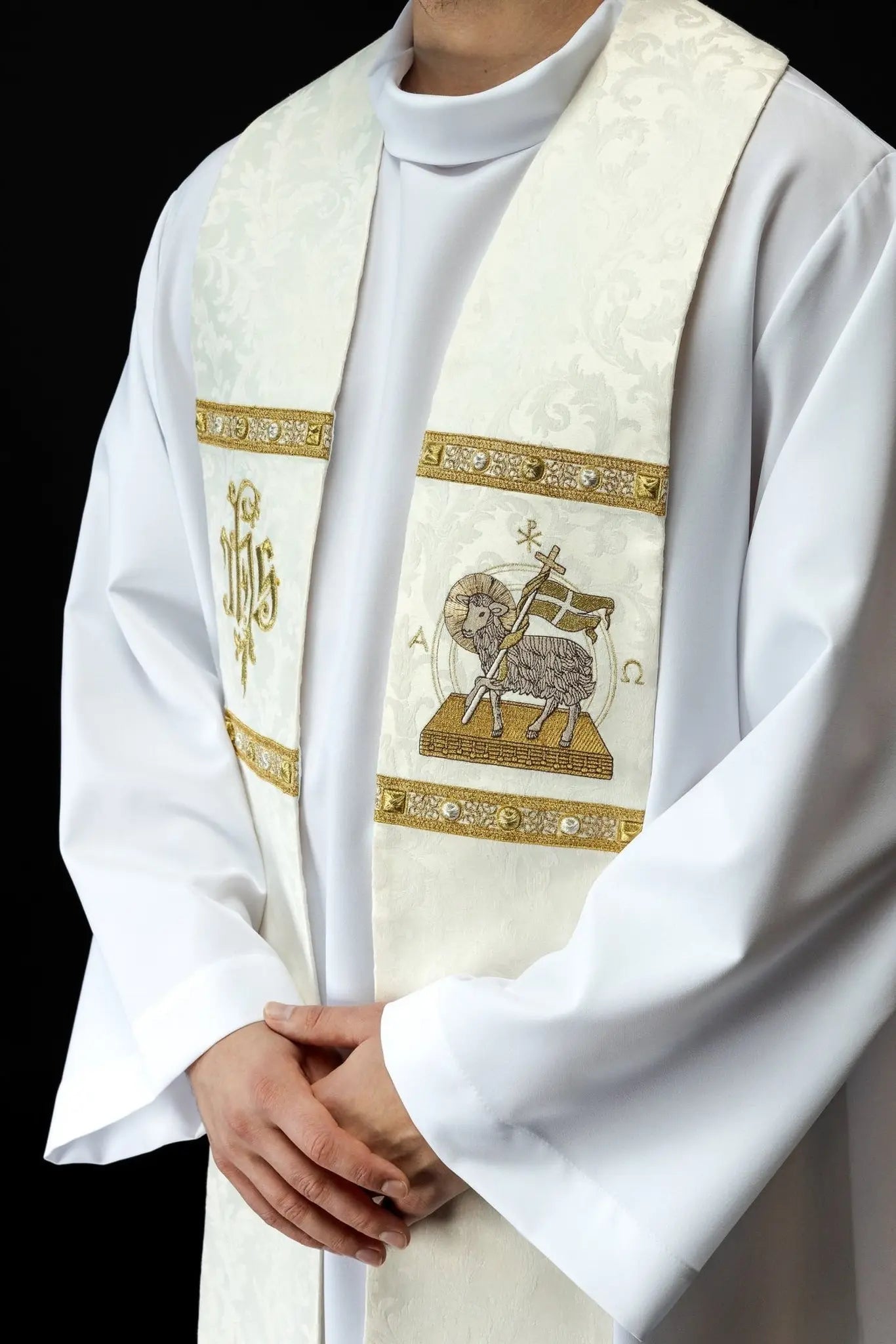
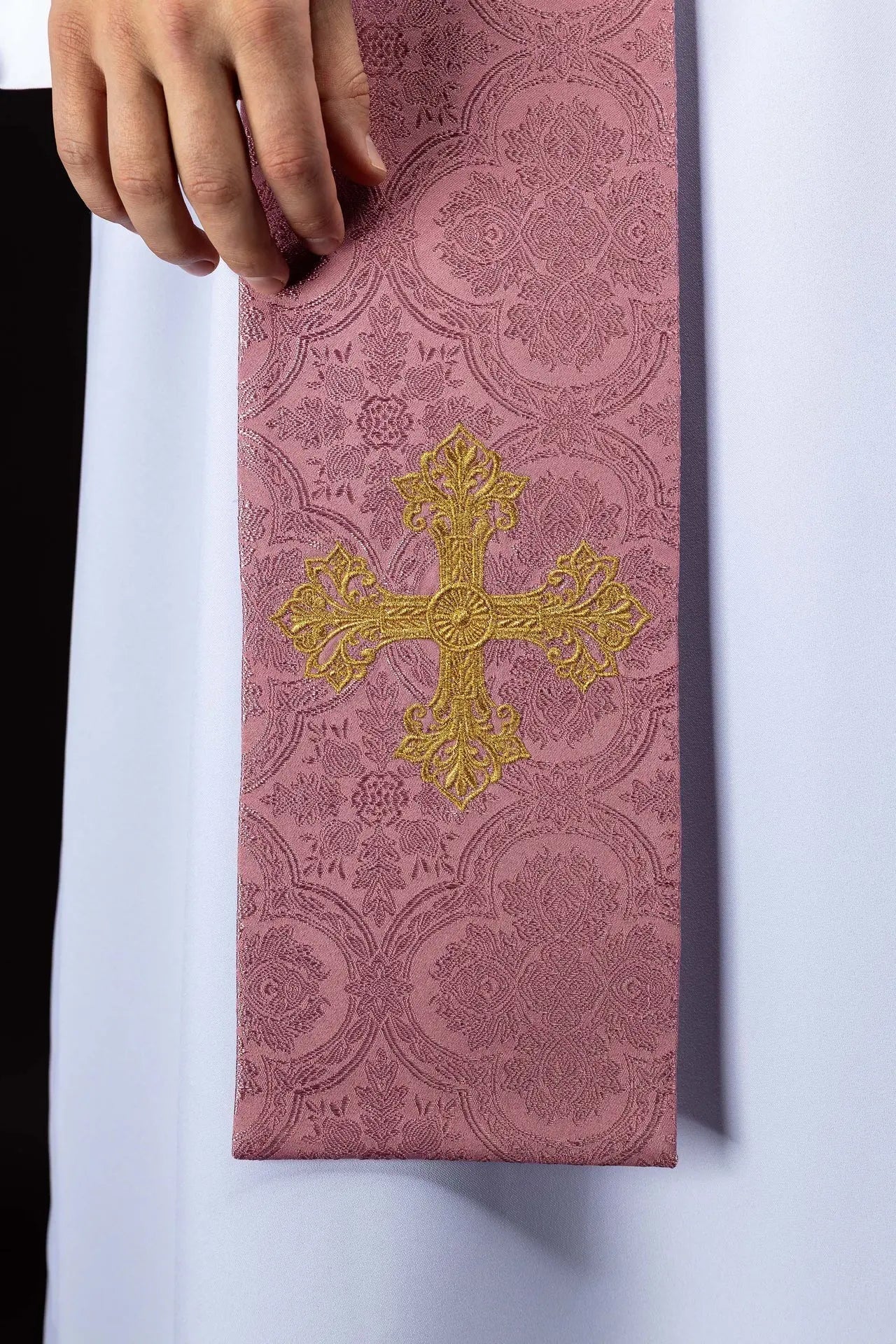
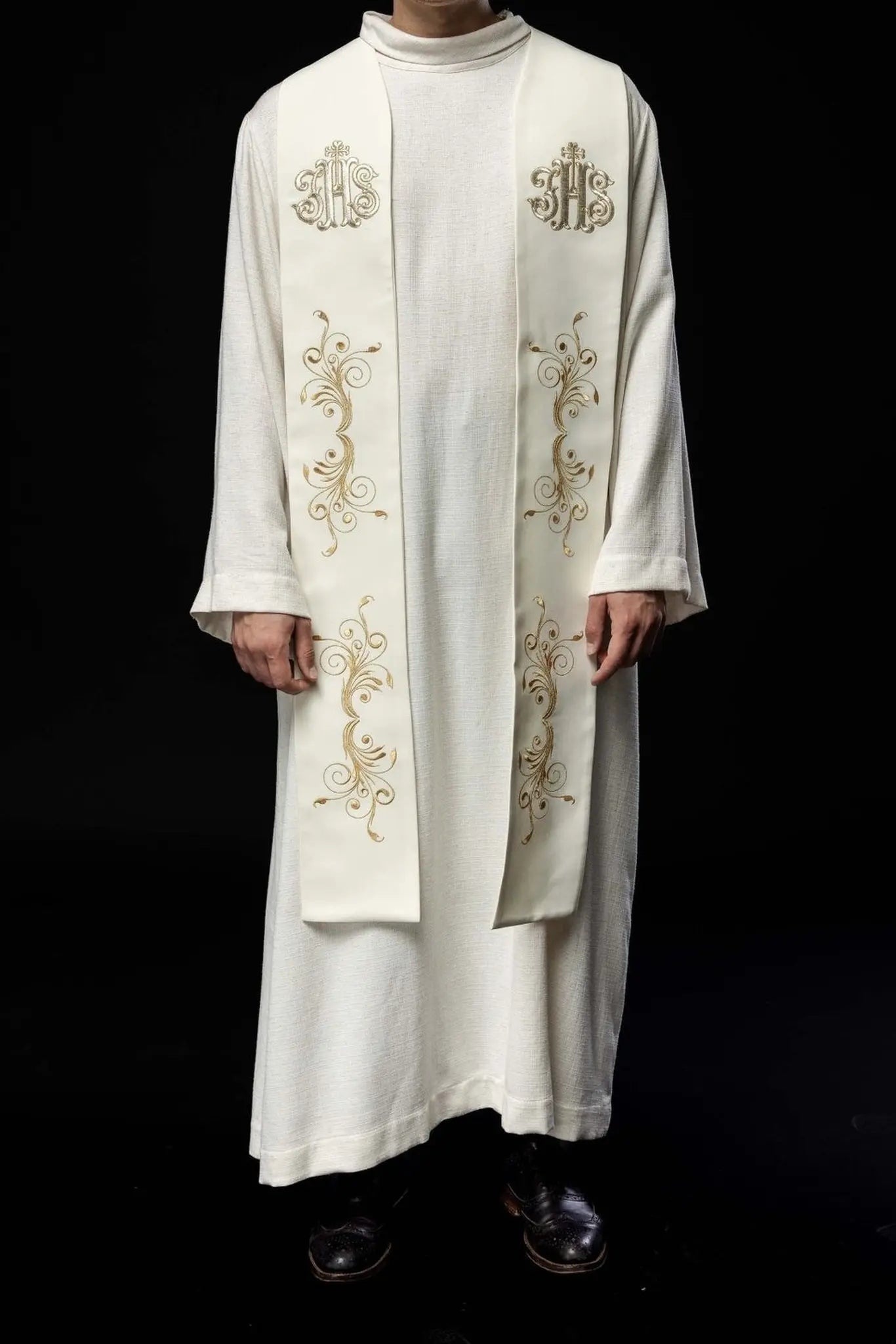
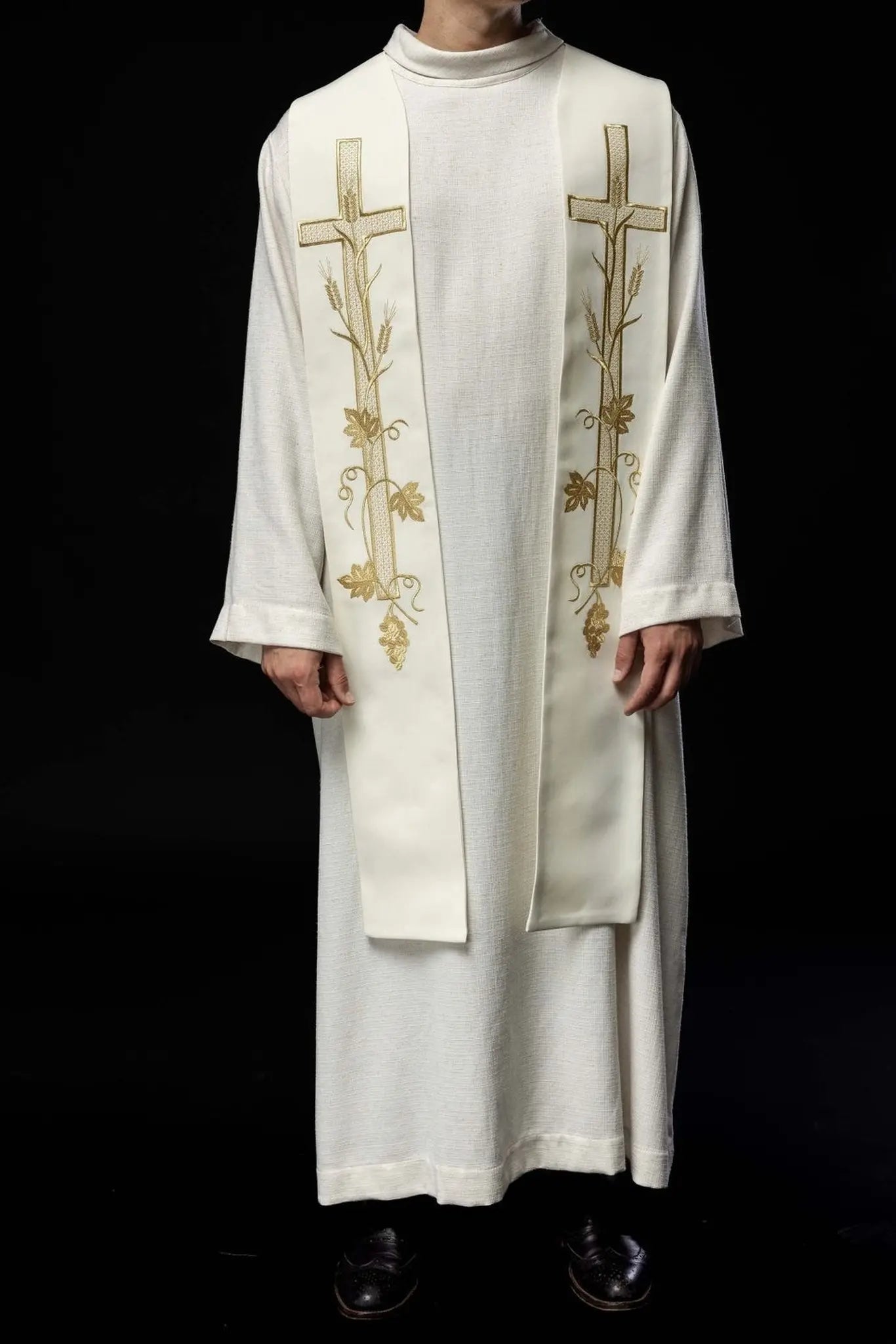
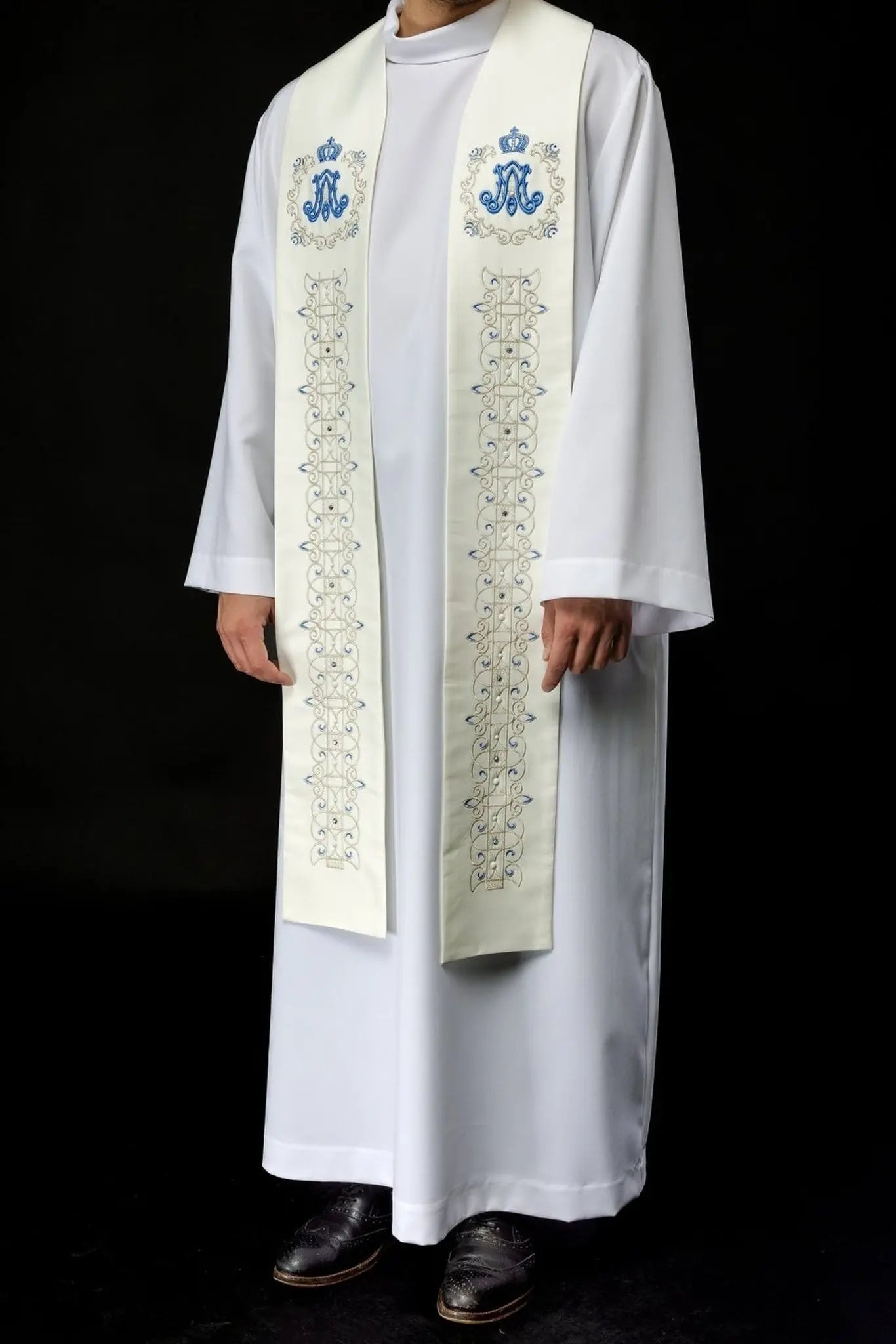
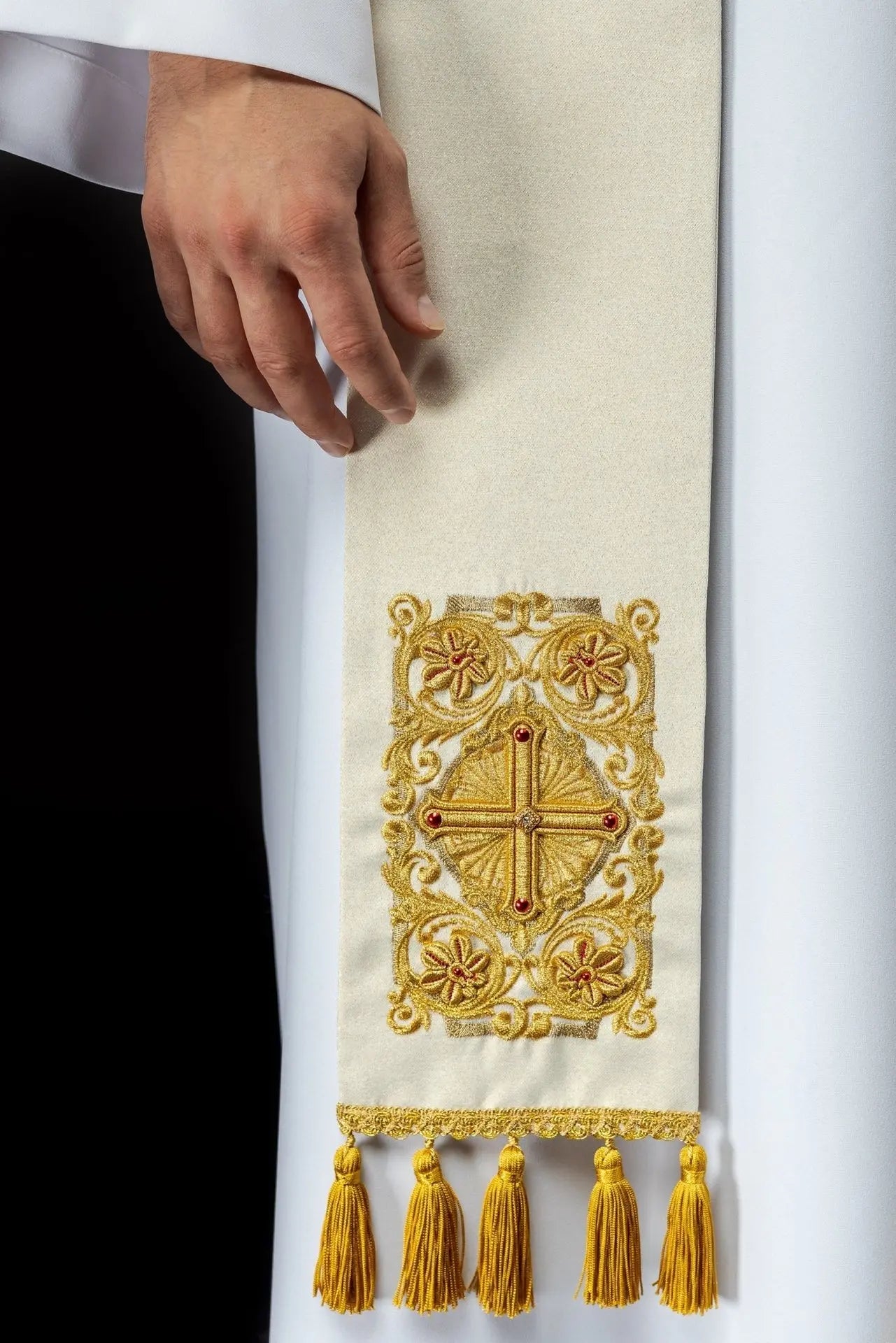
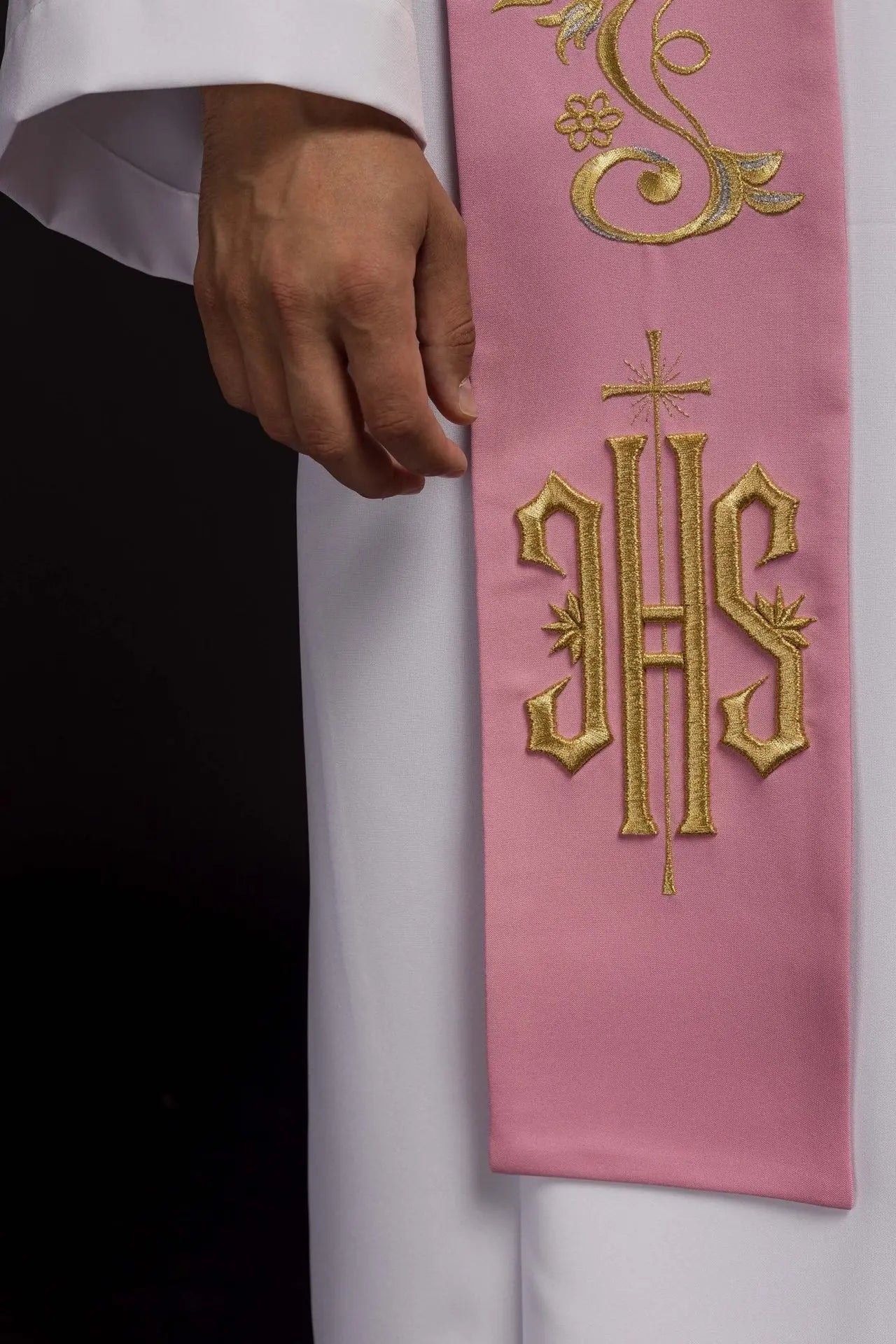
Ecru, white, and gold tones are associated with solemnity, joy, purity, and major feasts such as Christmas, Easter, feasts of the Lord, saints who were not martyrs, and many sacramental celebrations. Gold stoles may be chosen for especially festive occasions where a more solemn appearance is appropriate. Rose stoles have a more specific use: they are traditionally worn on Gaudete Sunday in Advent and Laetare Sunday in Lent, expressing a note of rejoicing within penitential seasons. For these days, see Rose Stoles.
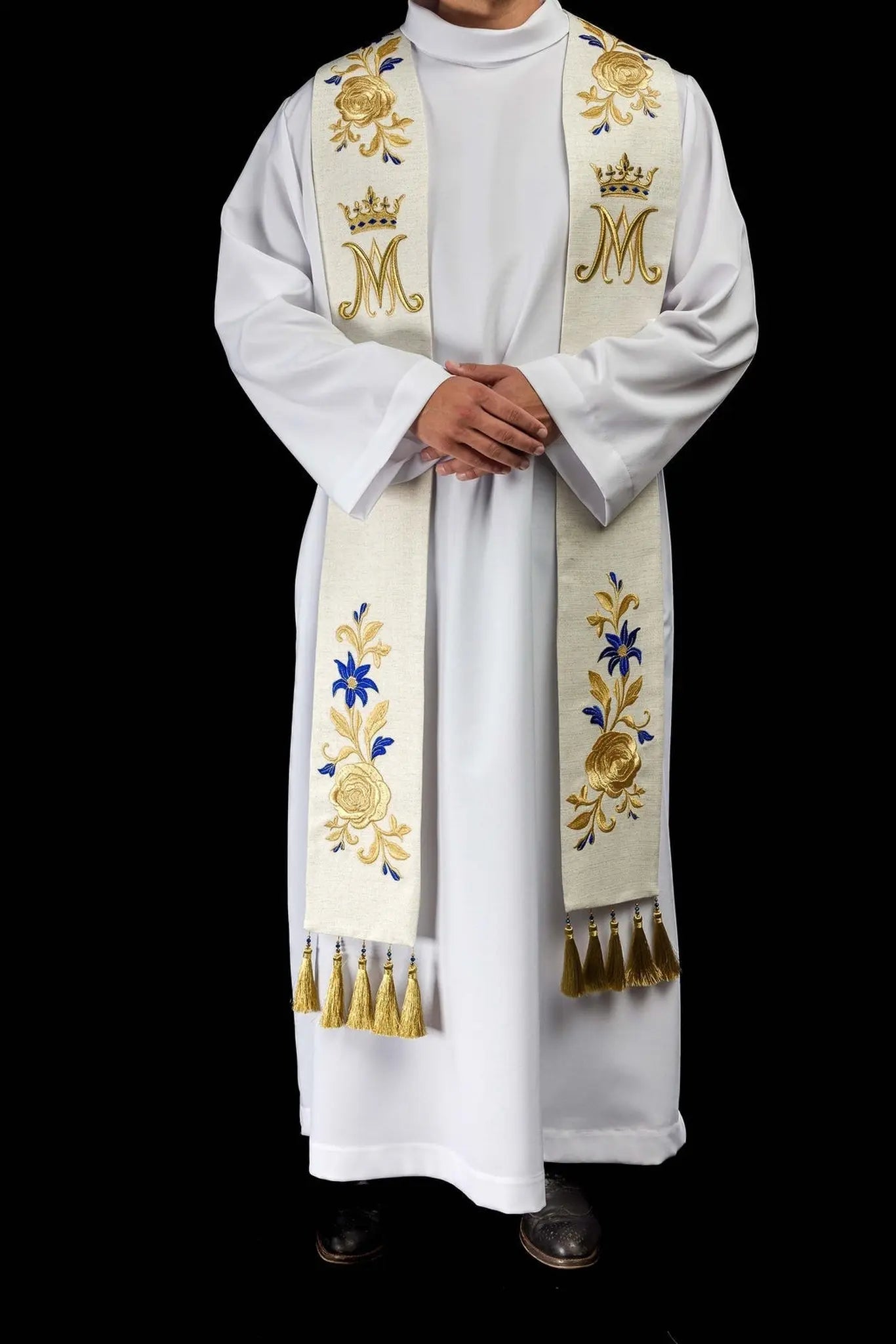
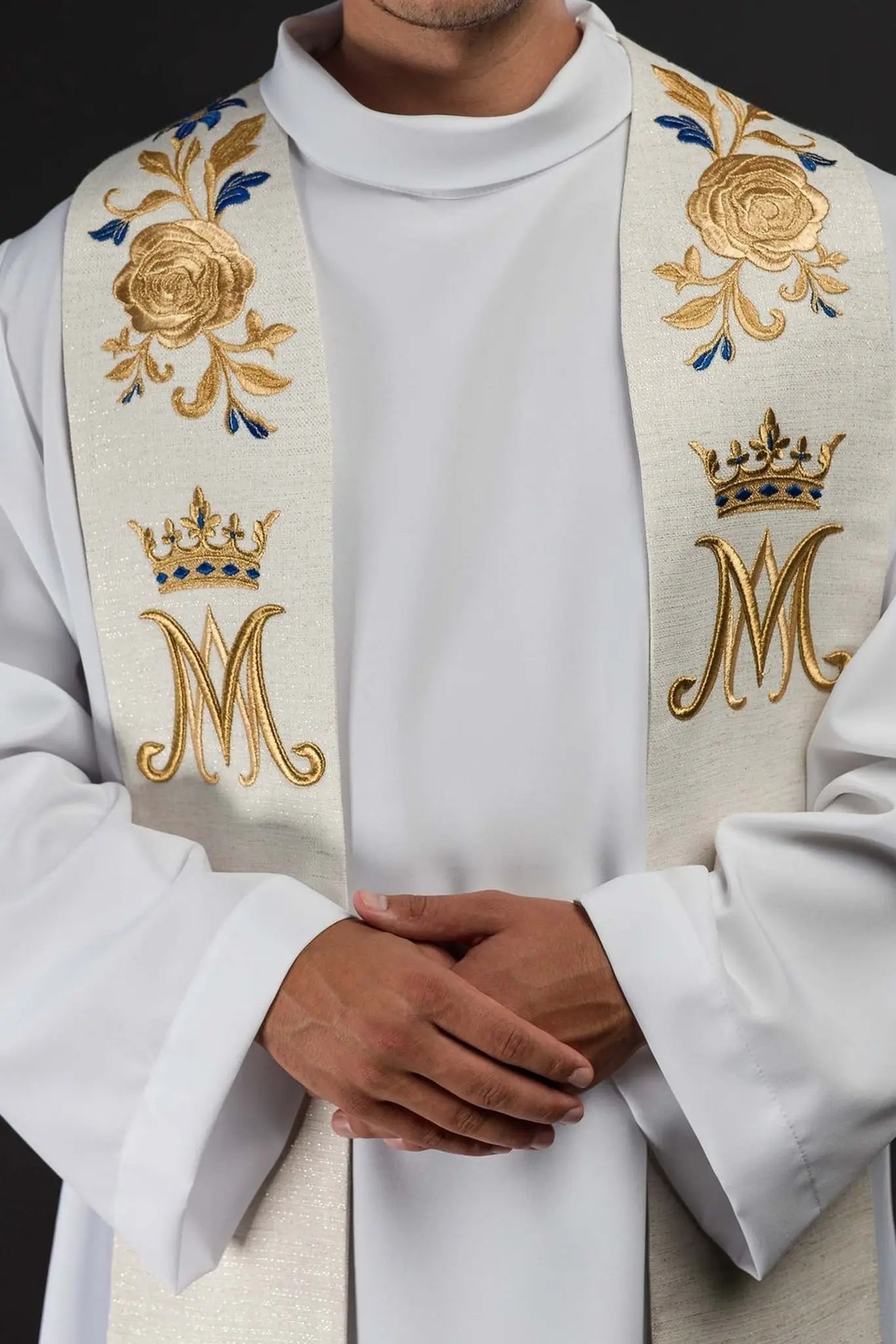
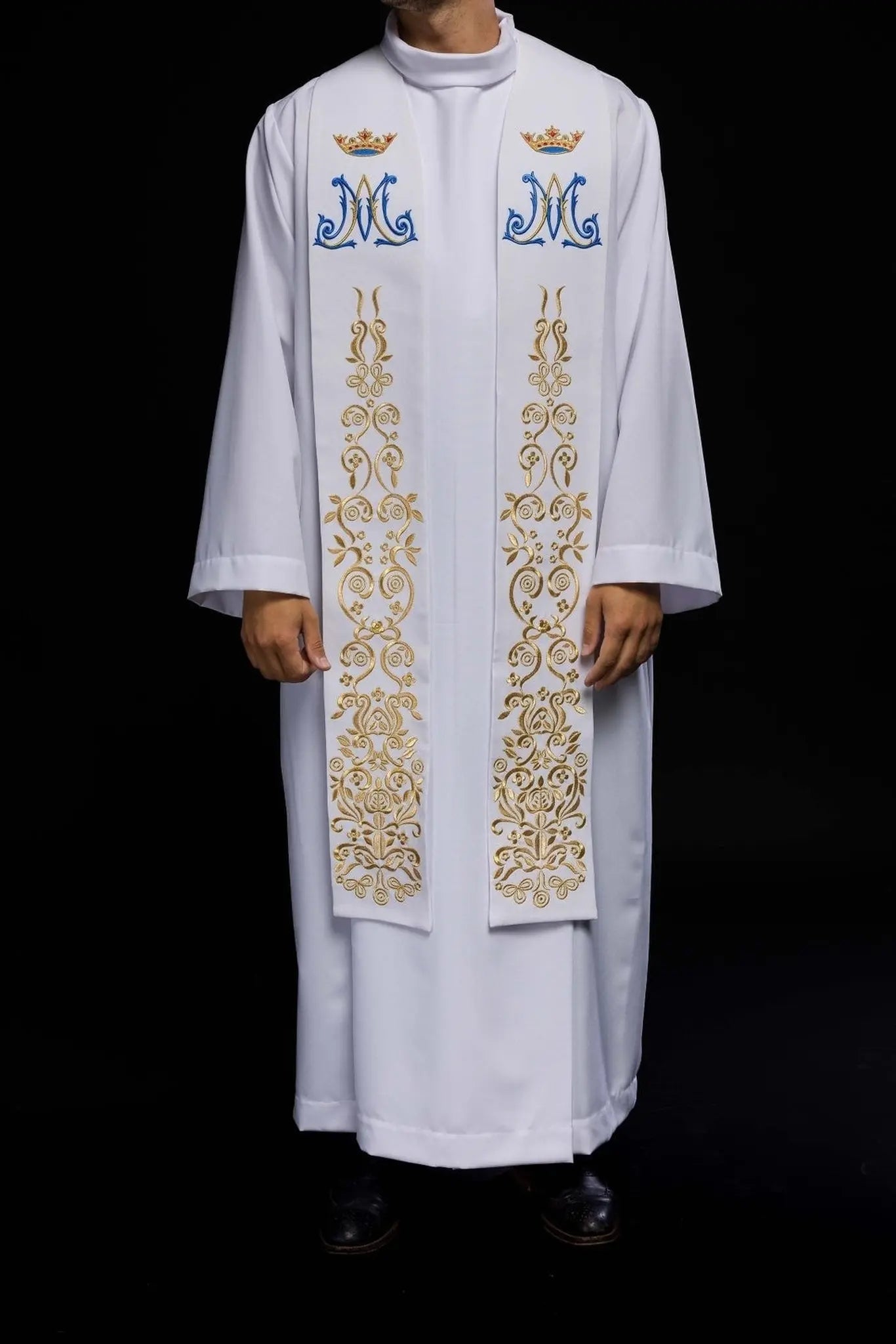
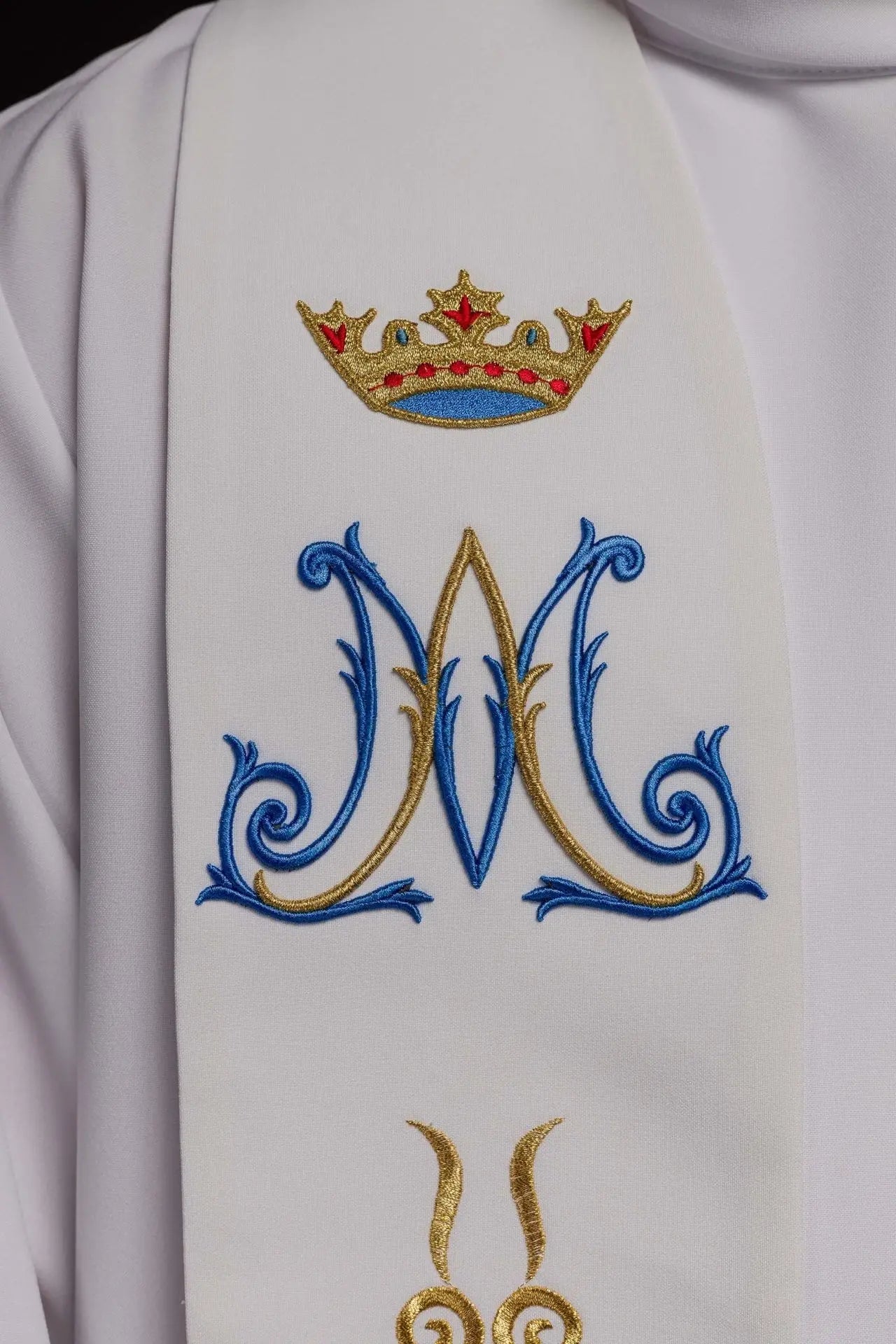
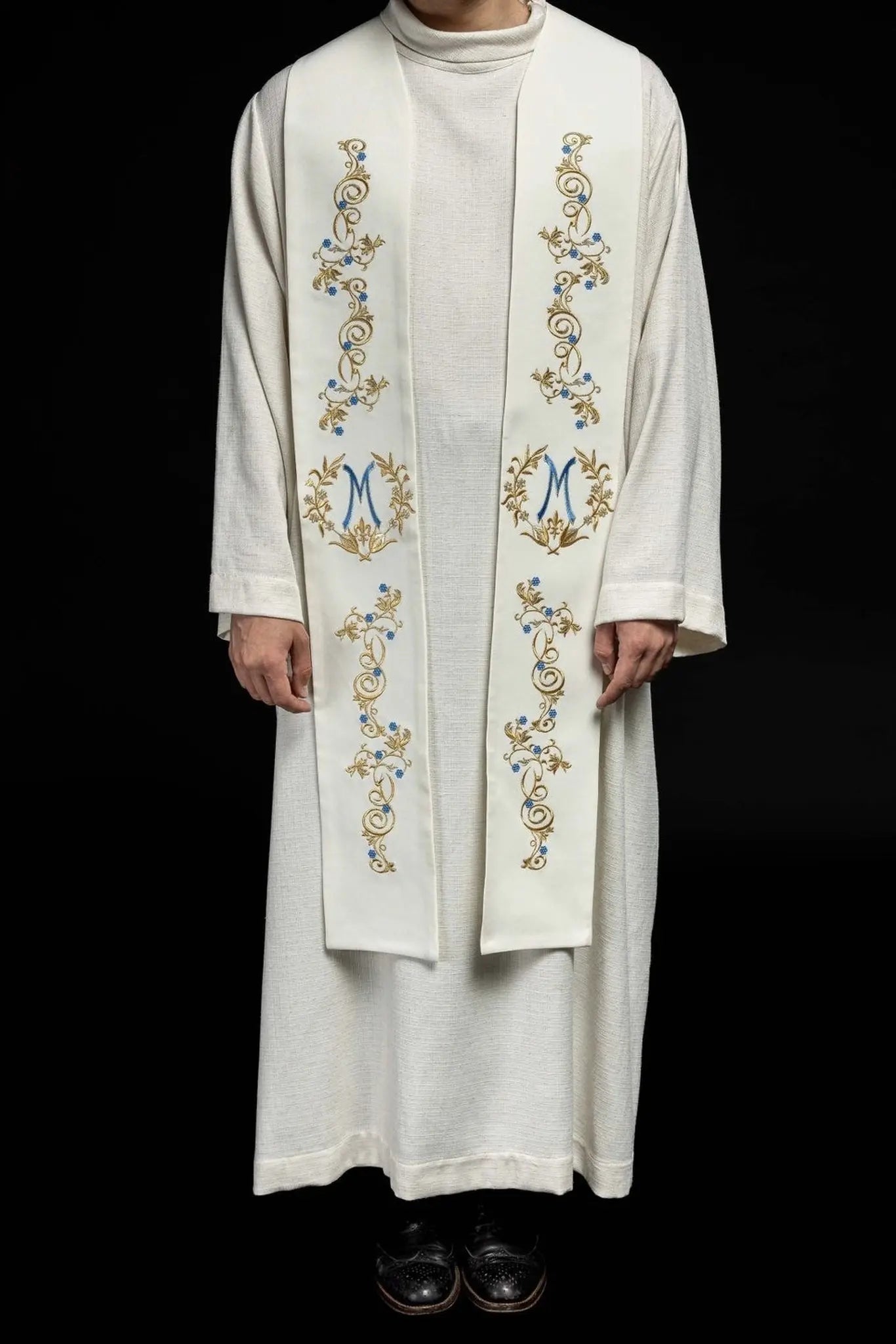
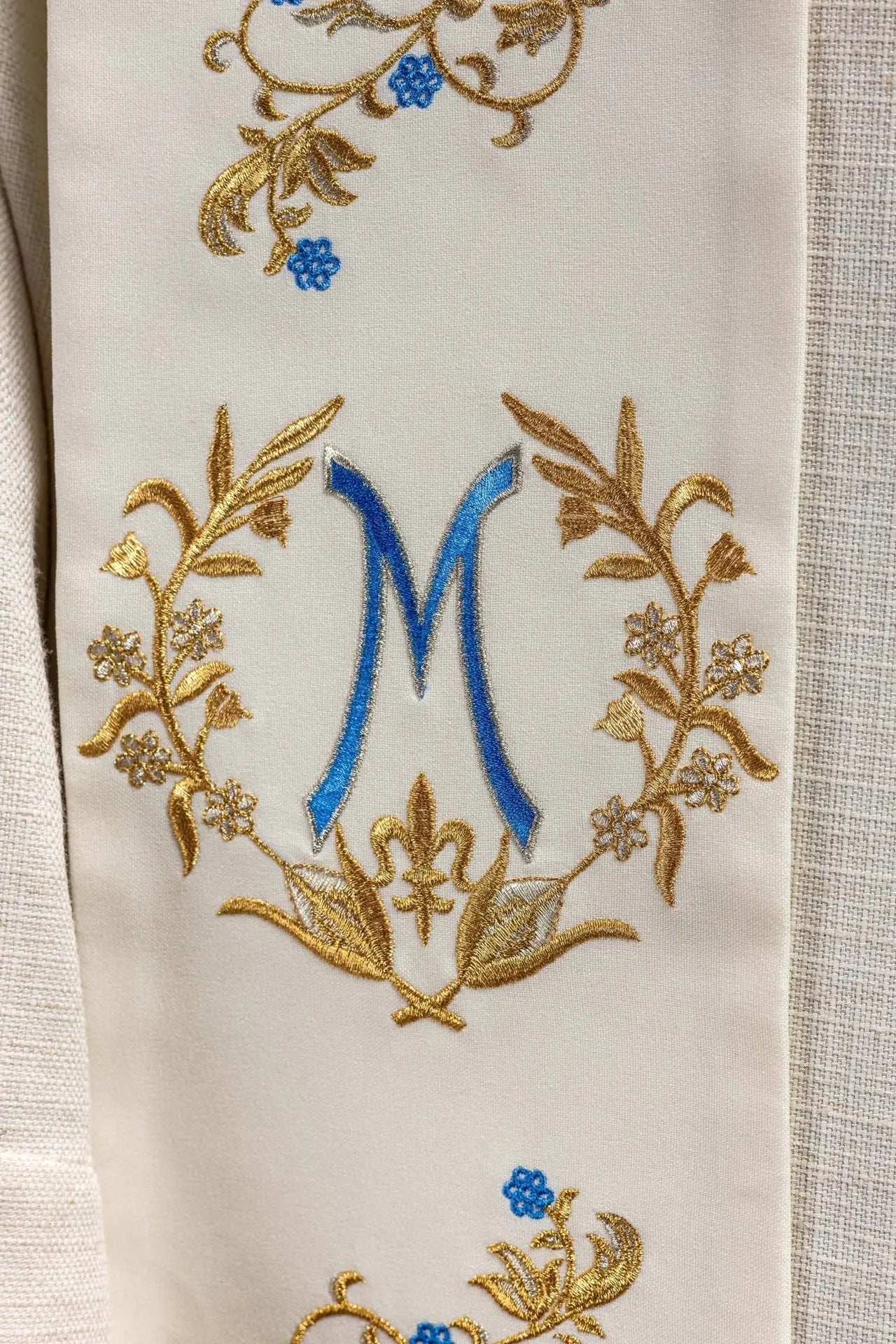
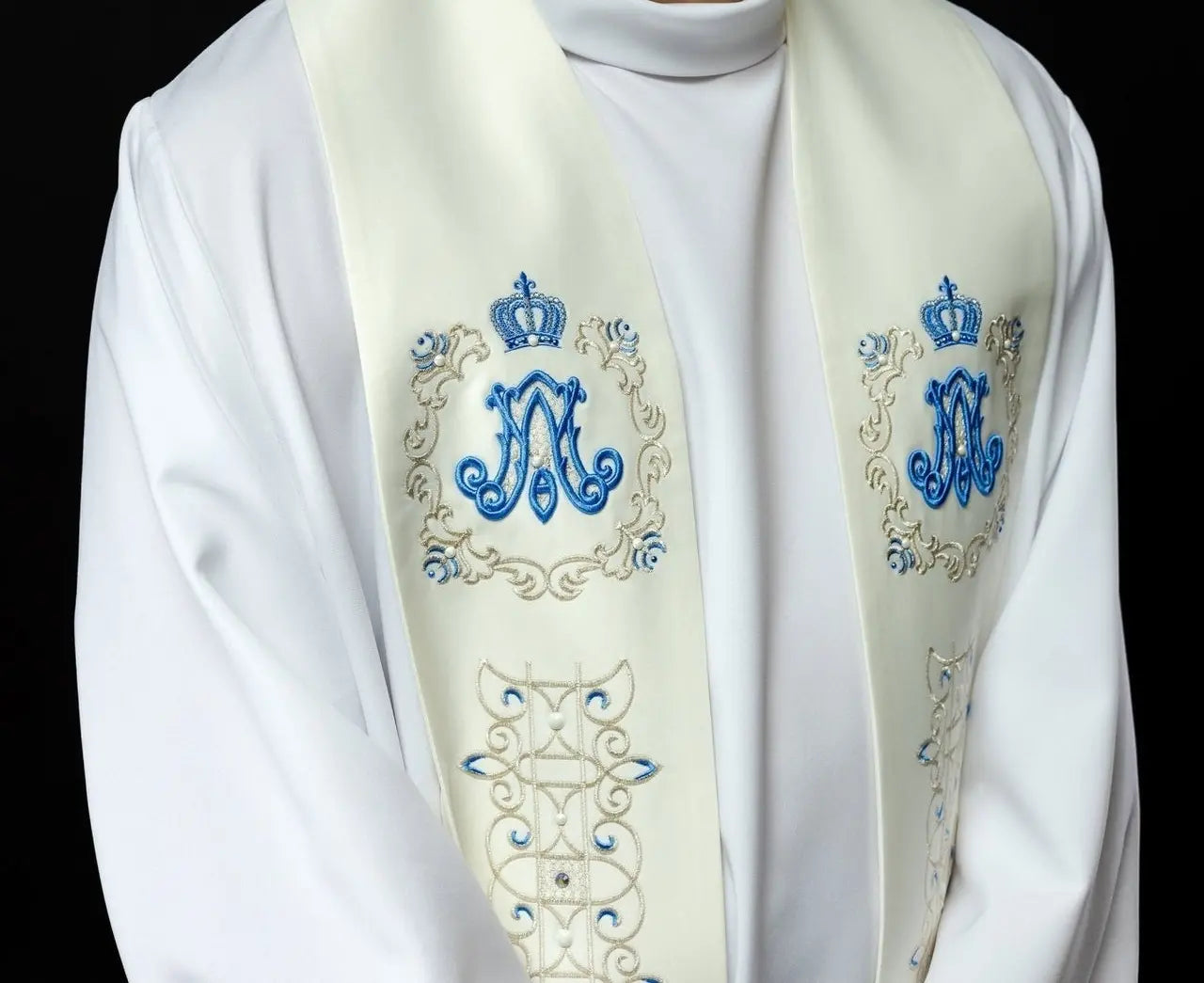
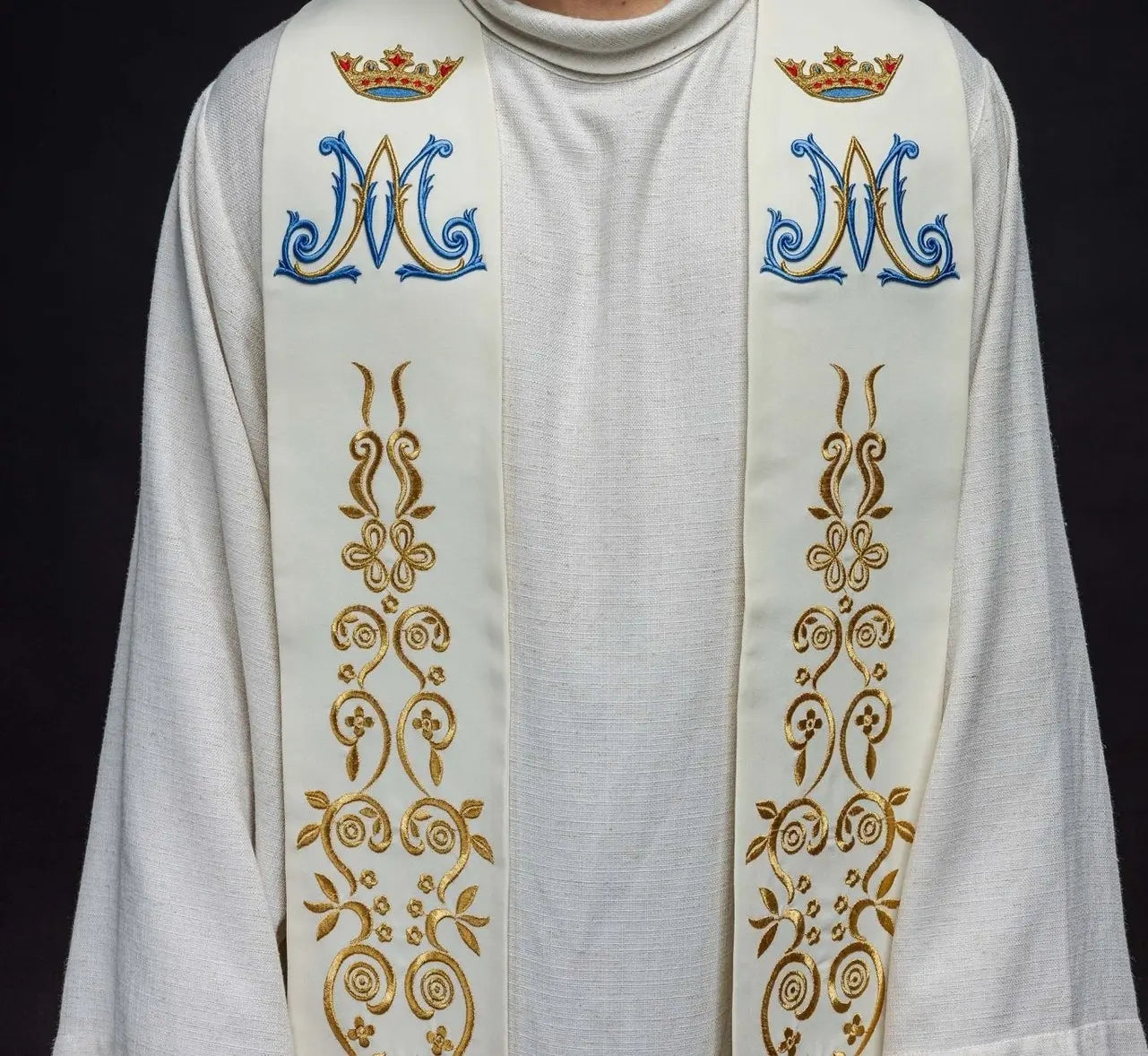
Marian stoles are designed for celebrations connected with the Blessed Virgin Mary, Marian shrines, parish feasts, processions, and devotional services. Their symbolism often includes blue, white, gold, floral motifs, Marian monograms, or images associated with the Mother of God. These designs are gathered in Marian Stoles.
Embroidery, symbols, and visual language
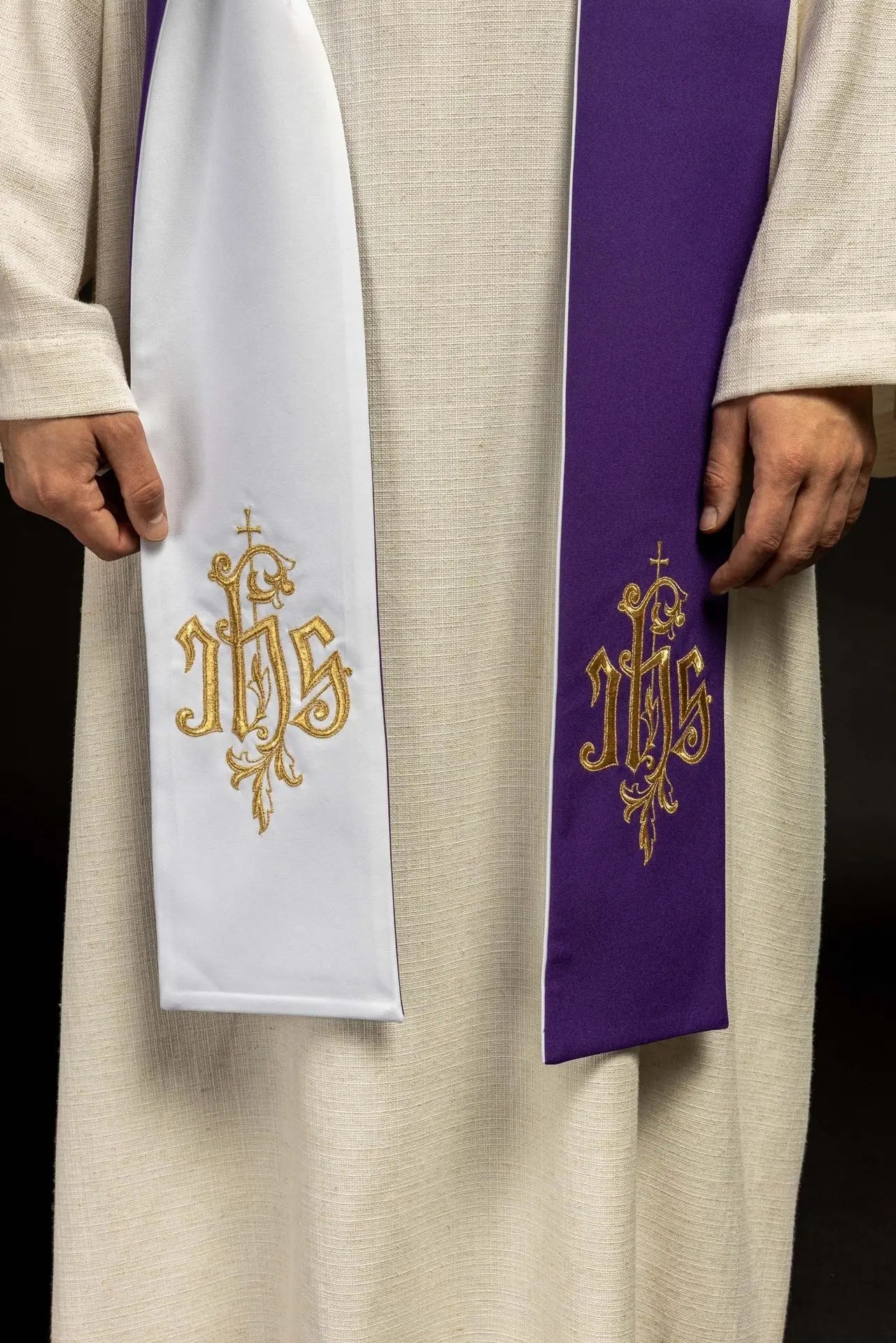
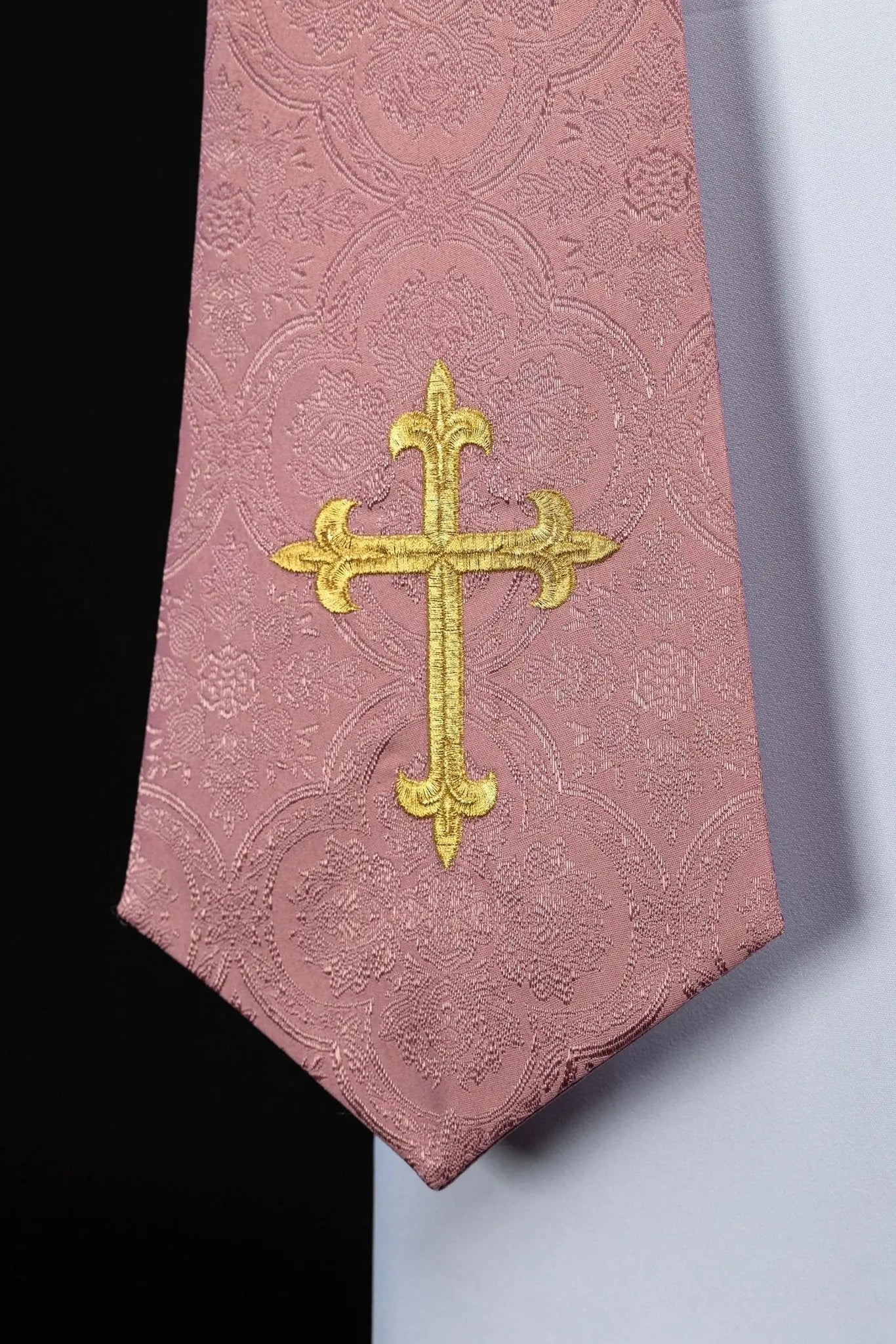
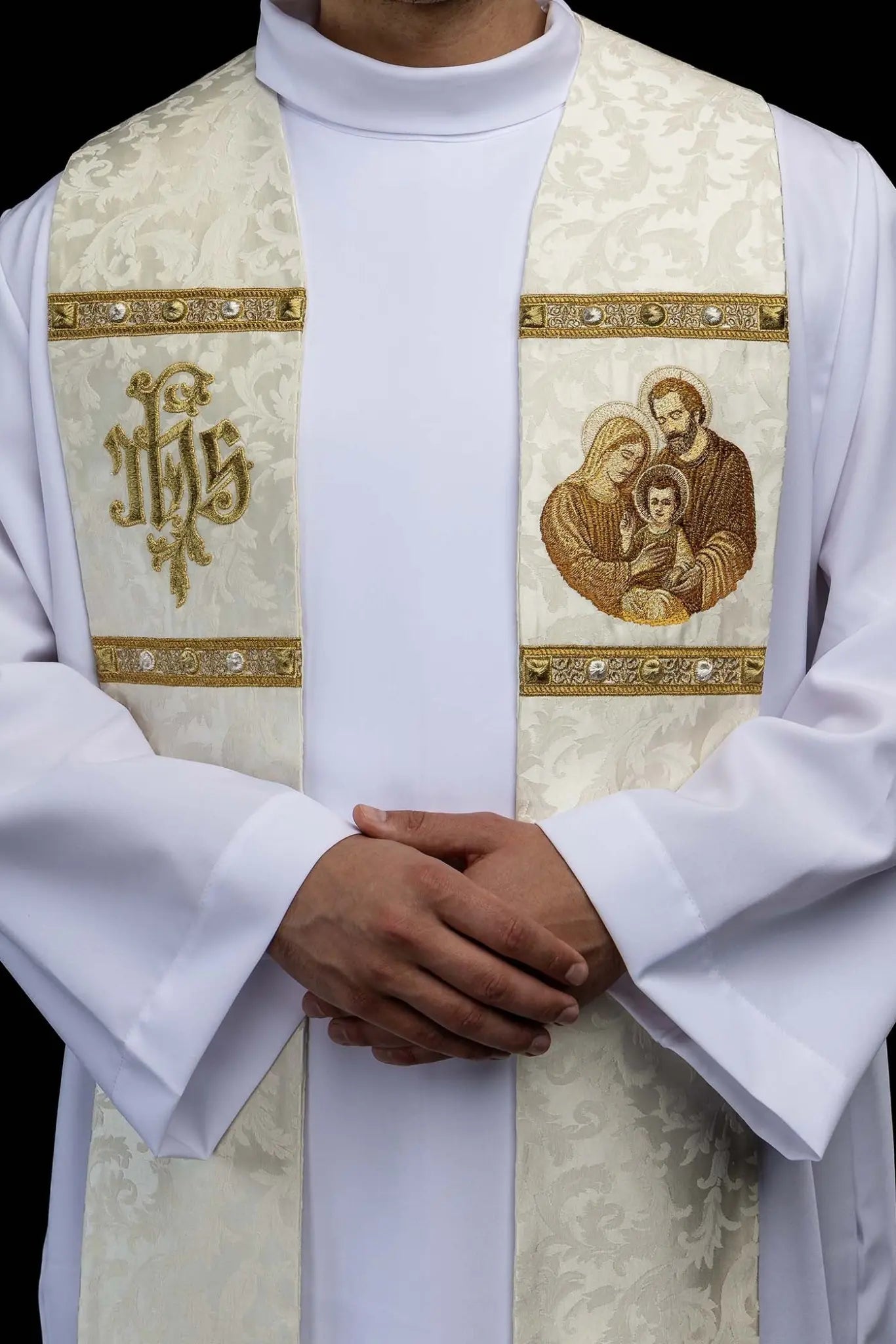
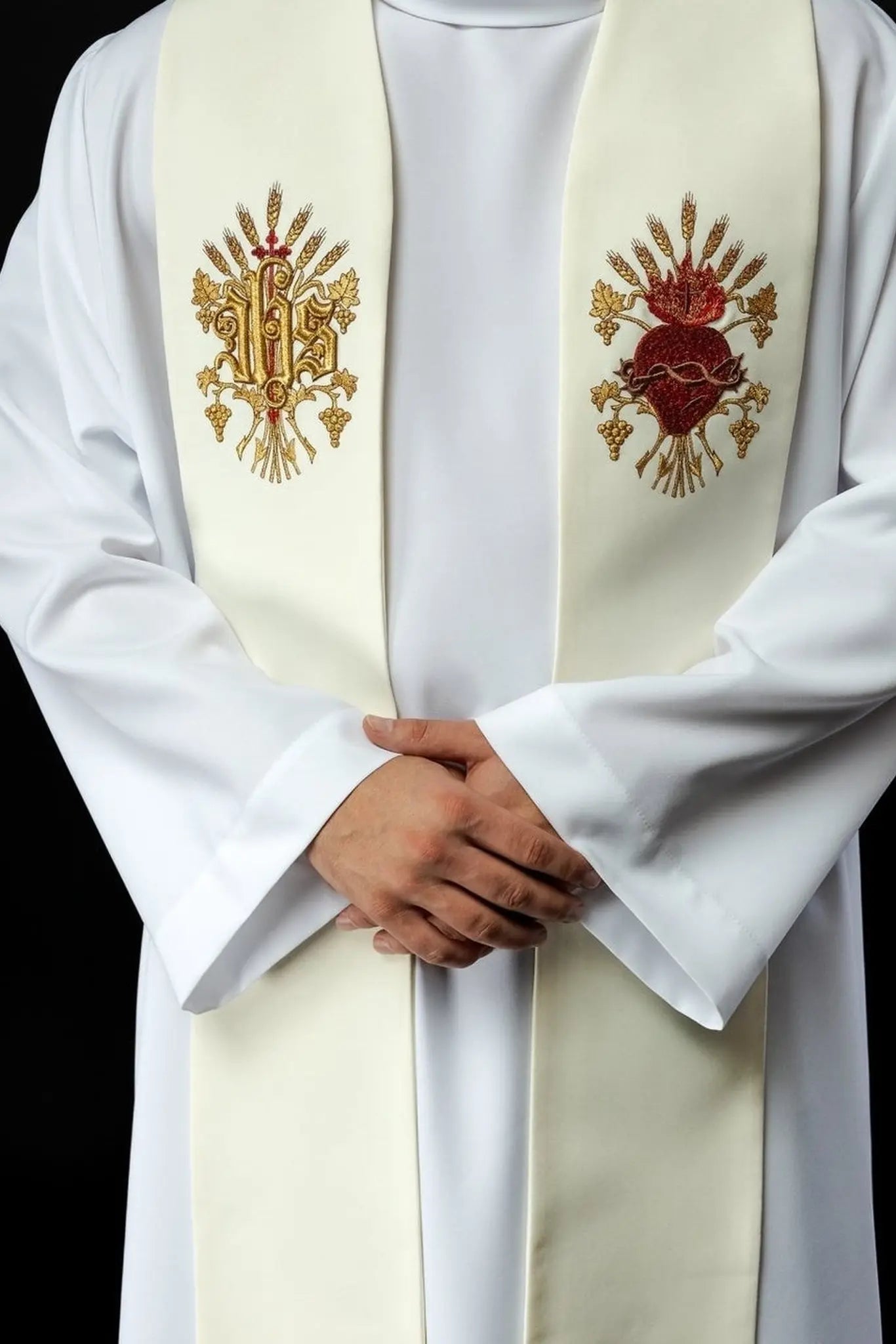
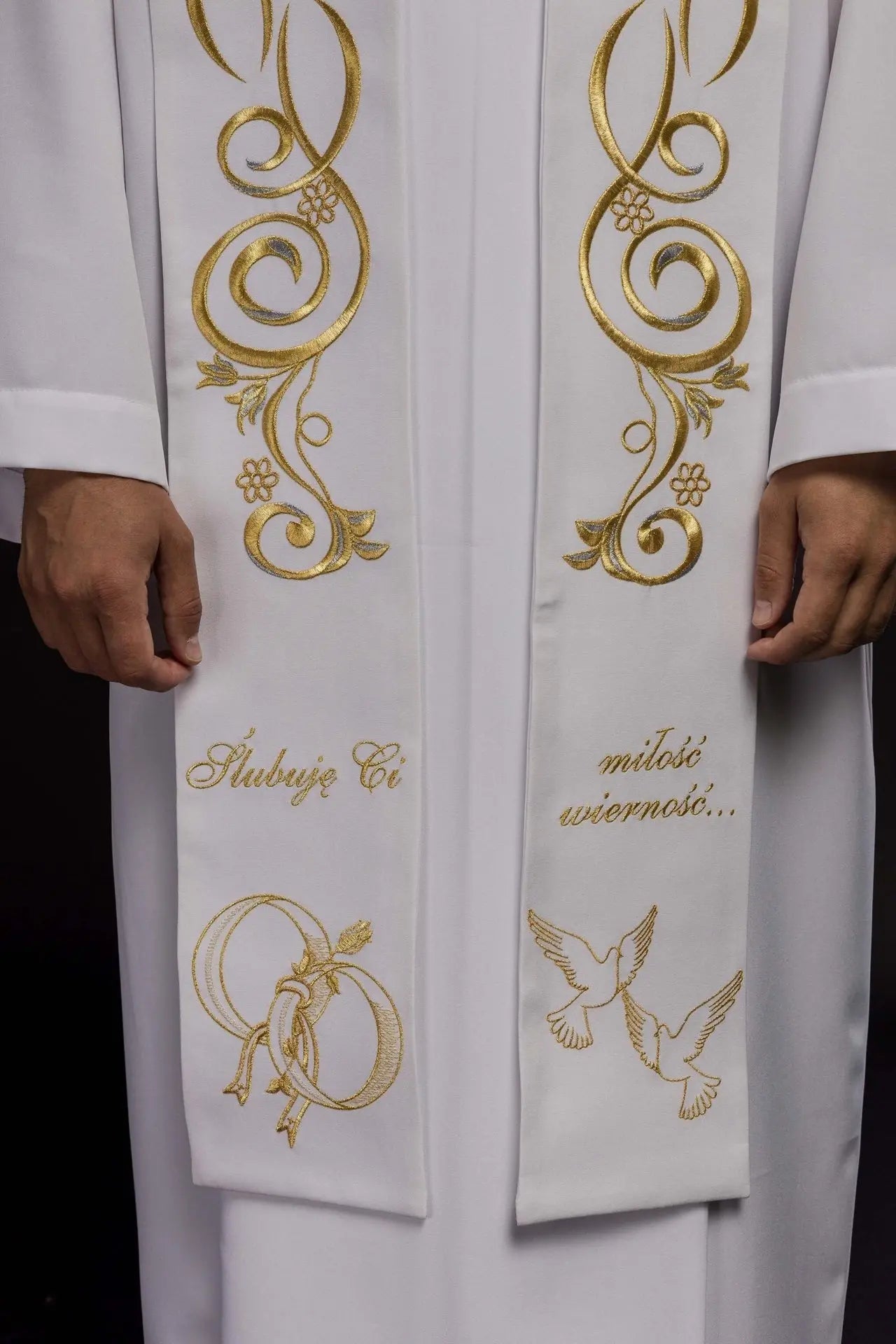
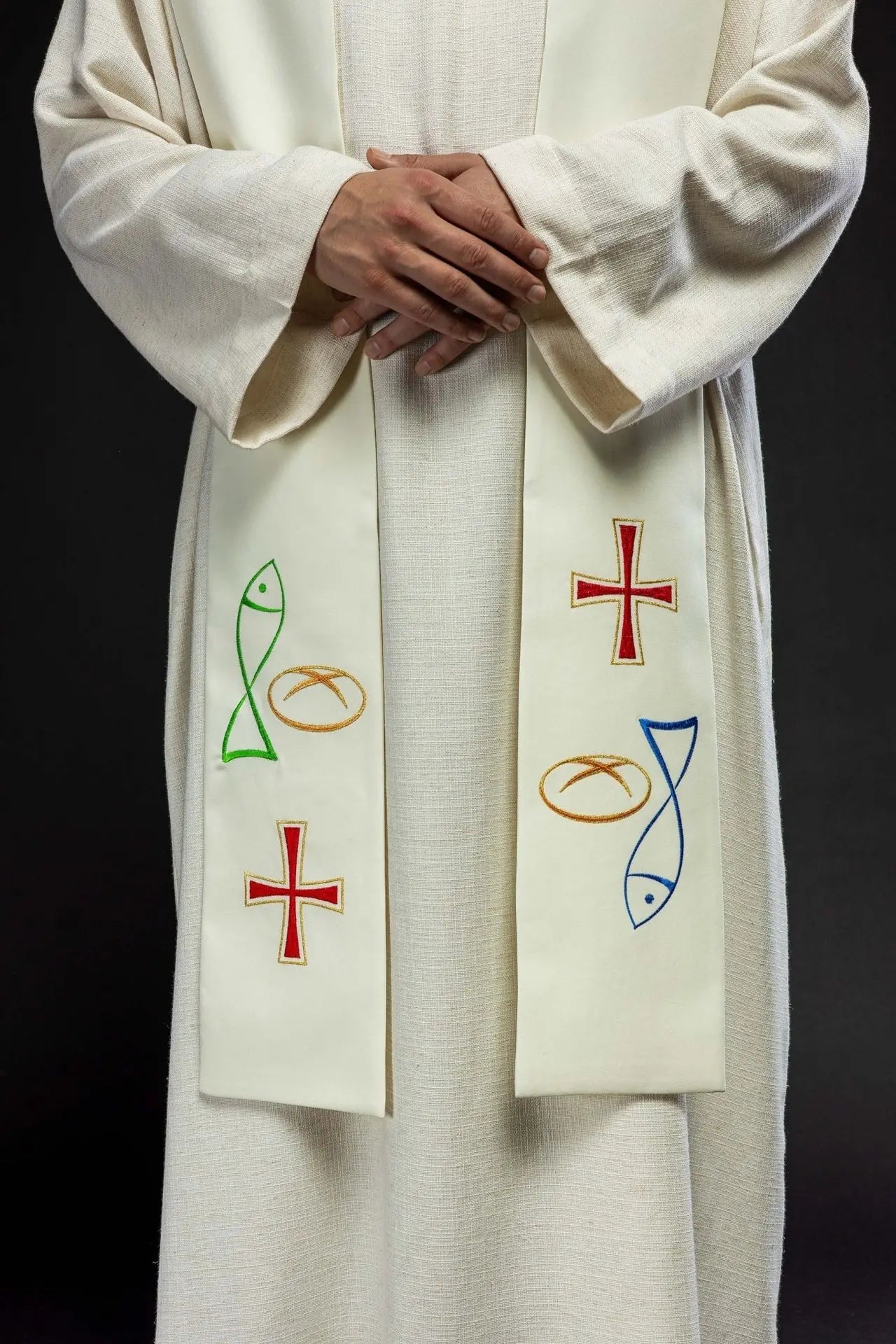
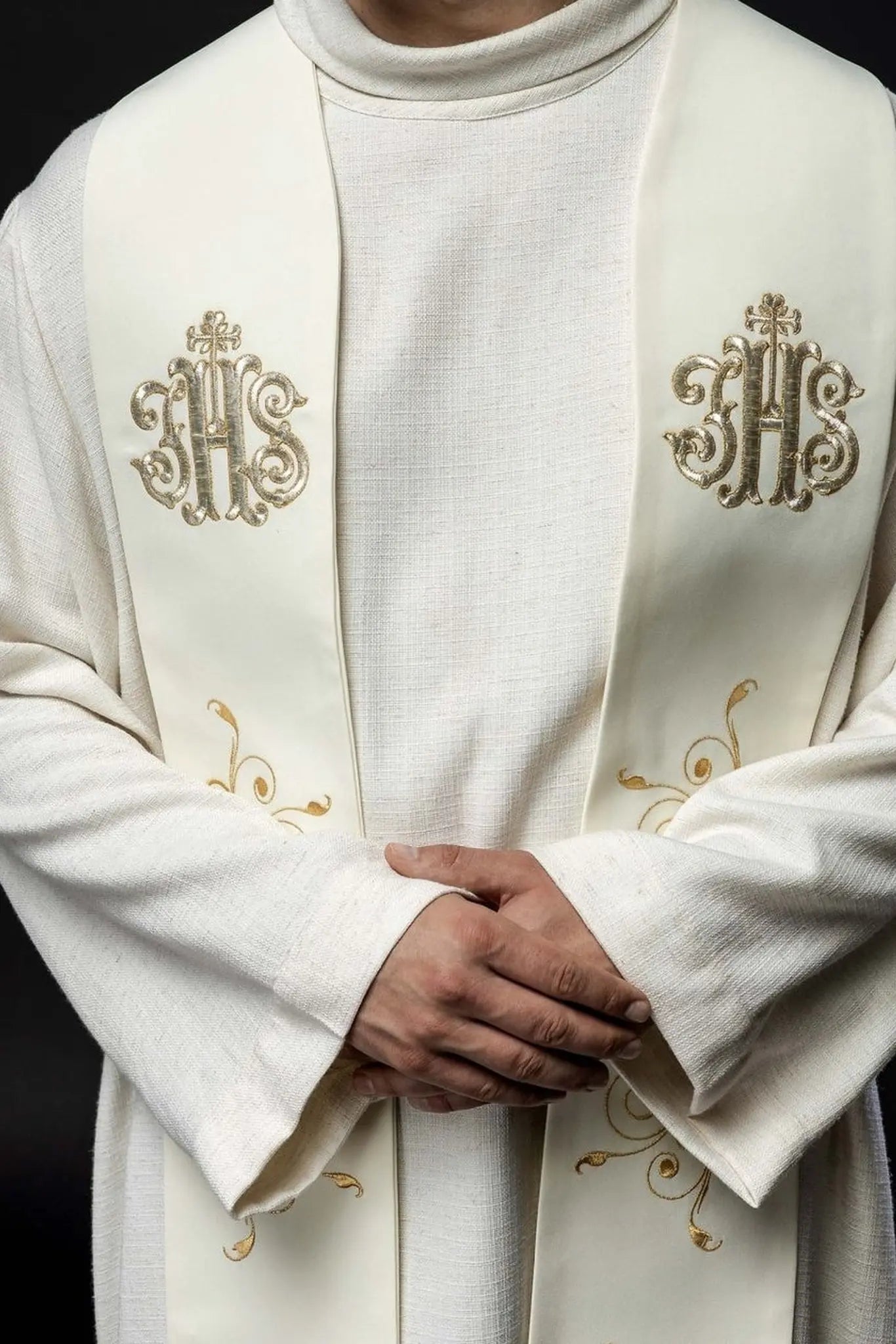
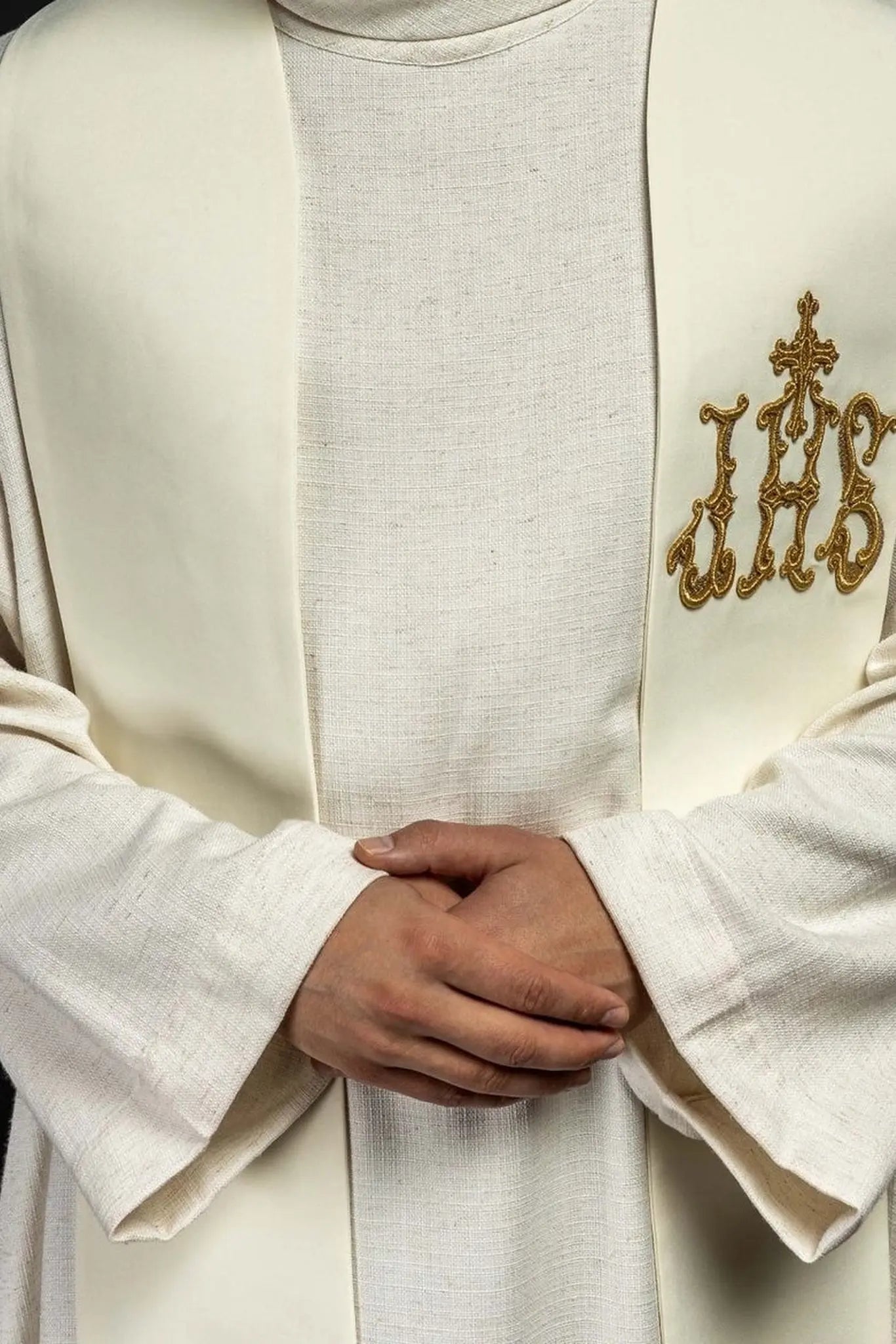
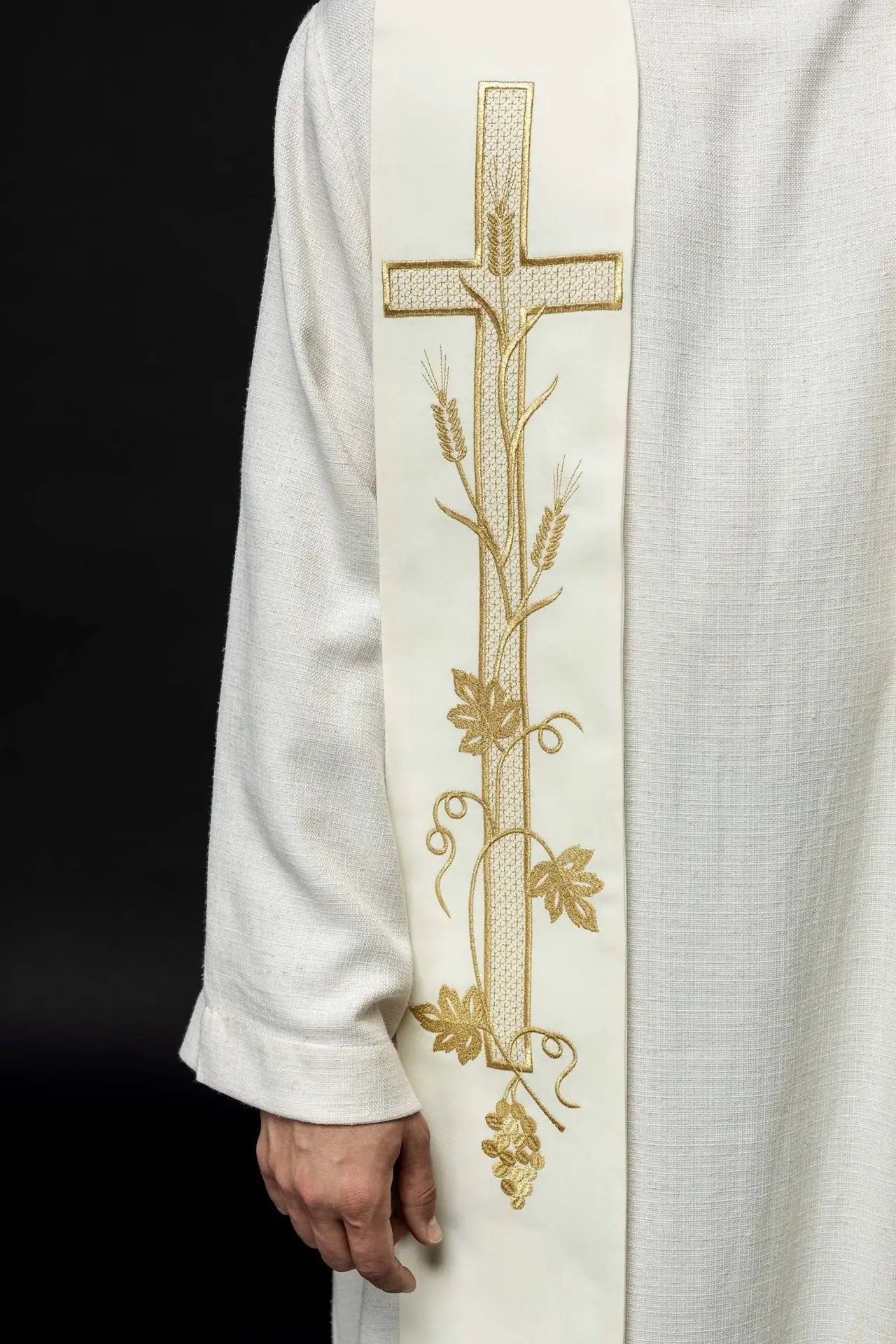
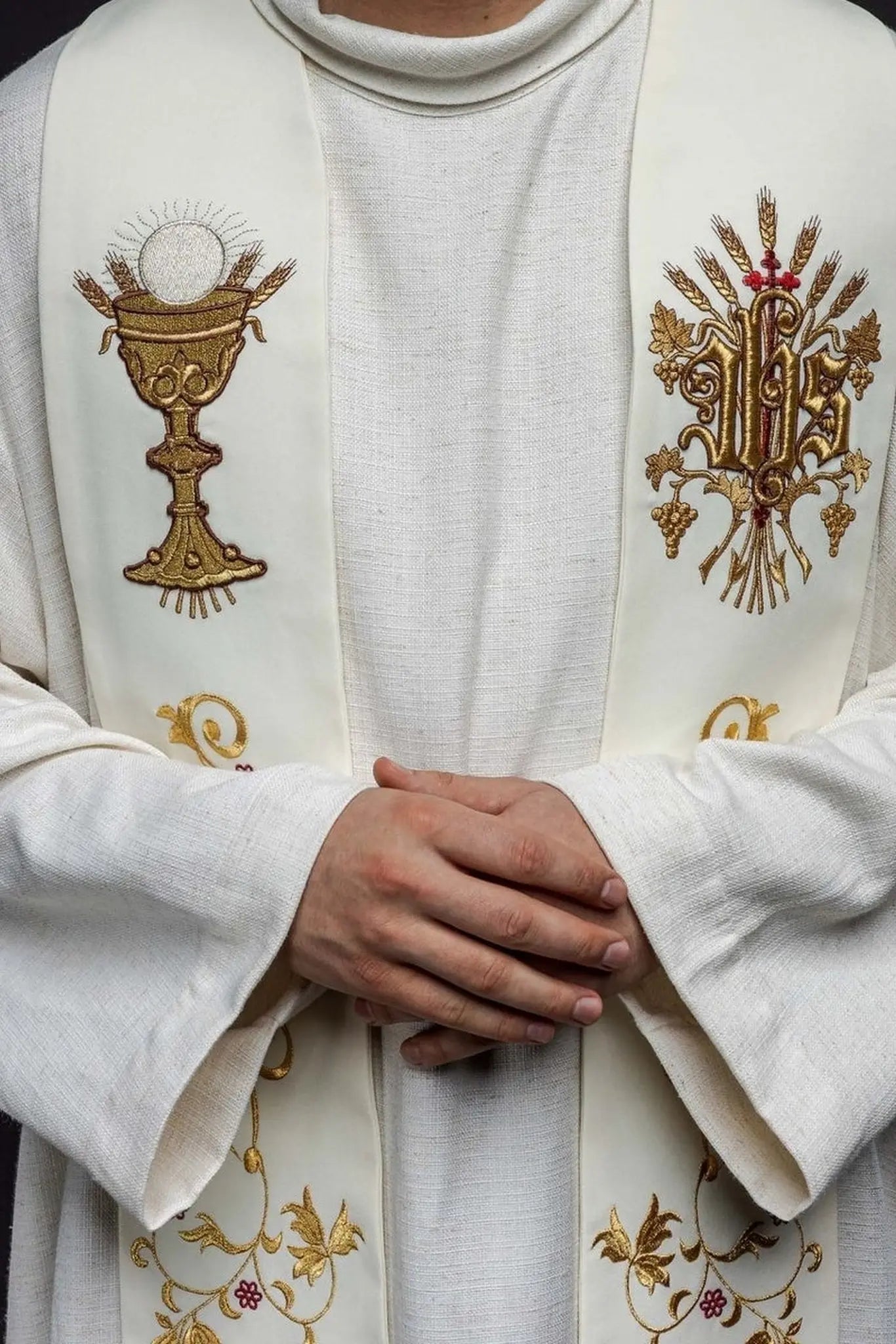
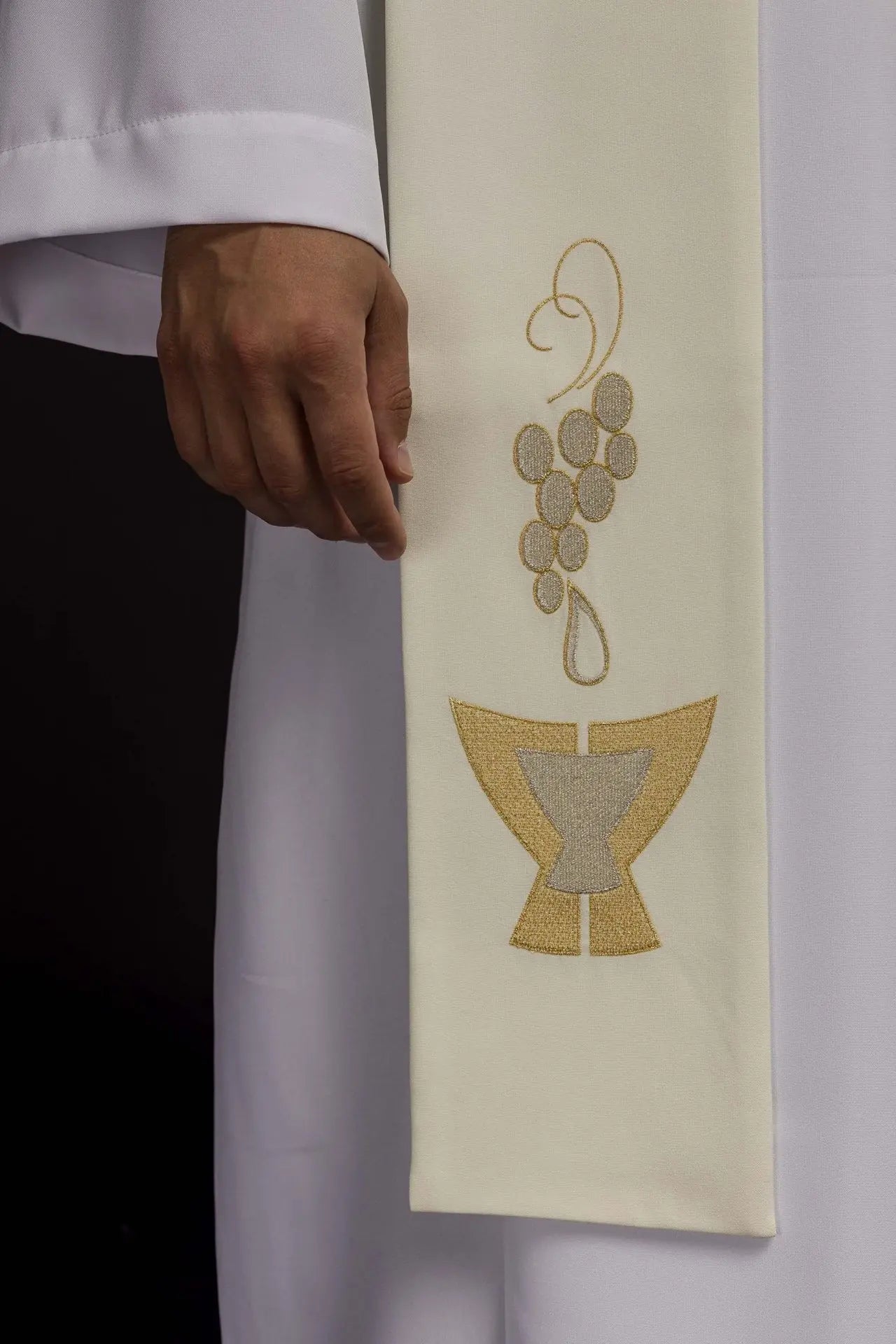
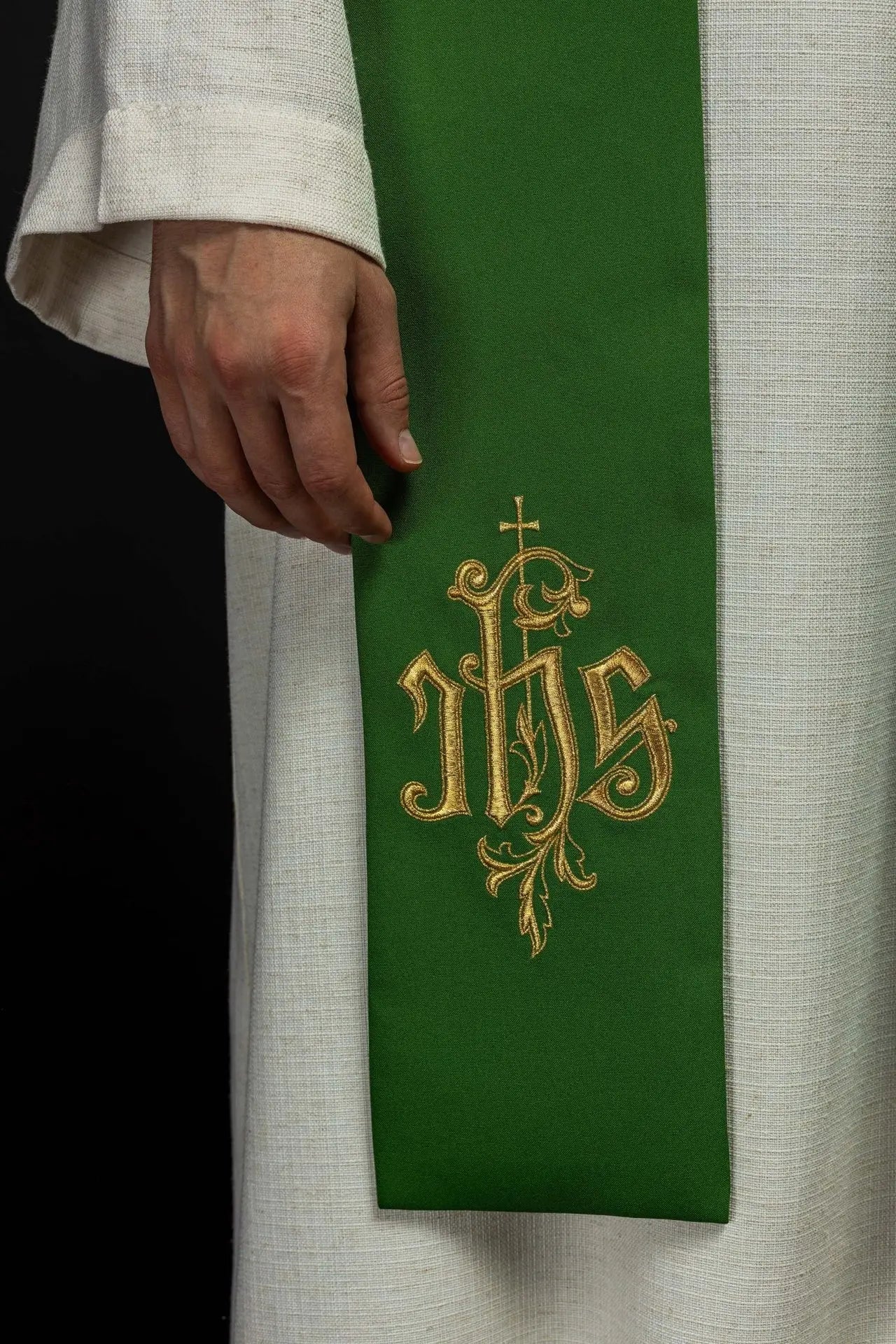
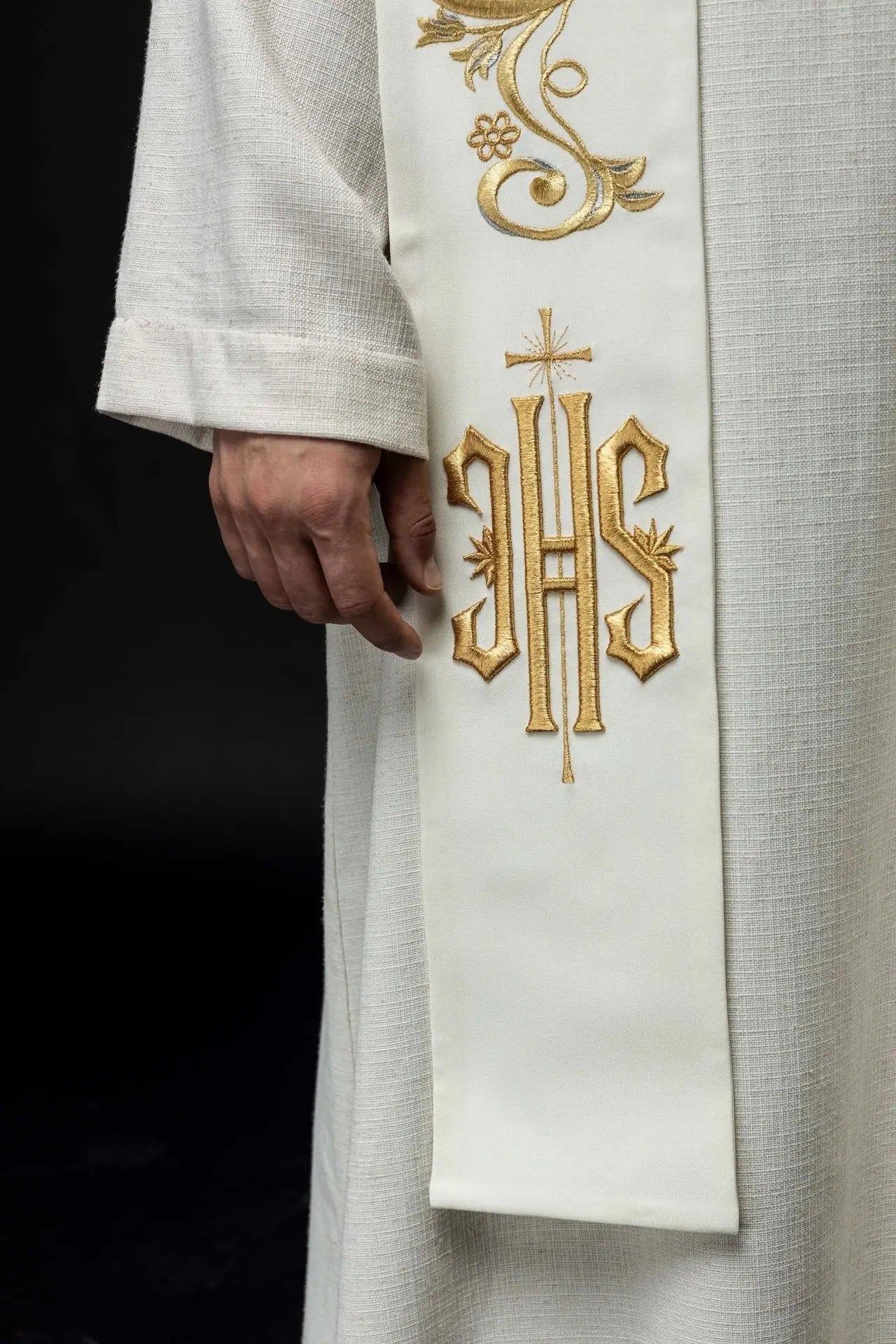
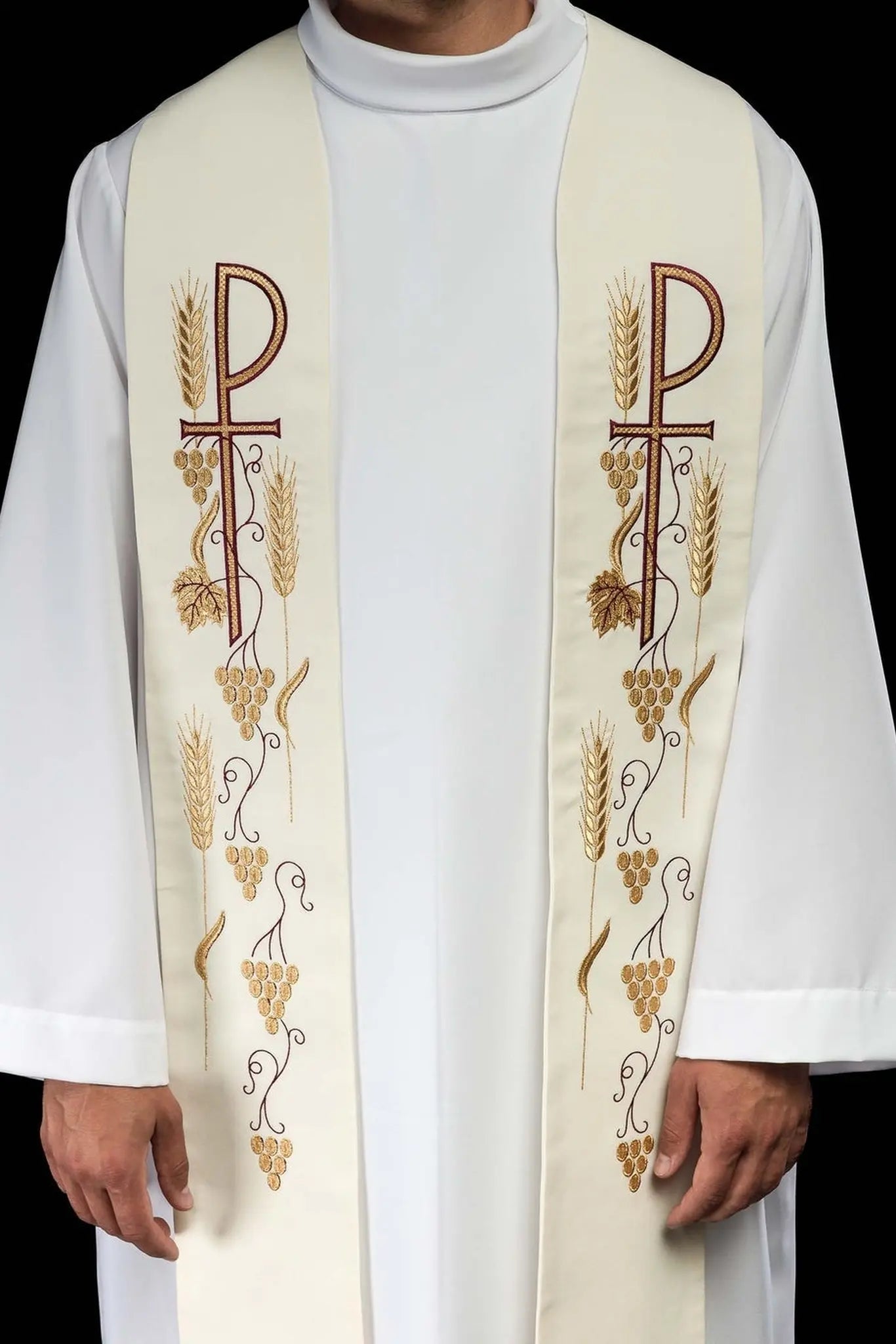
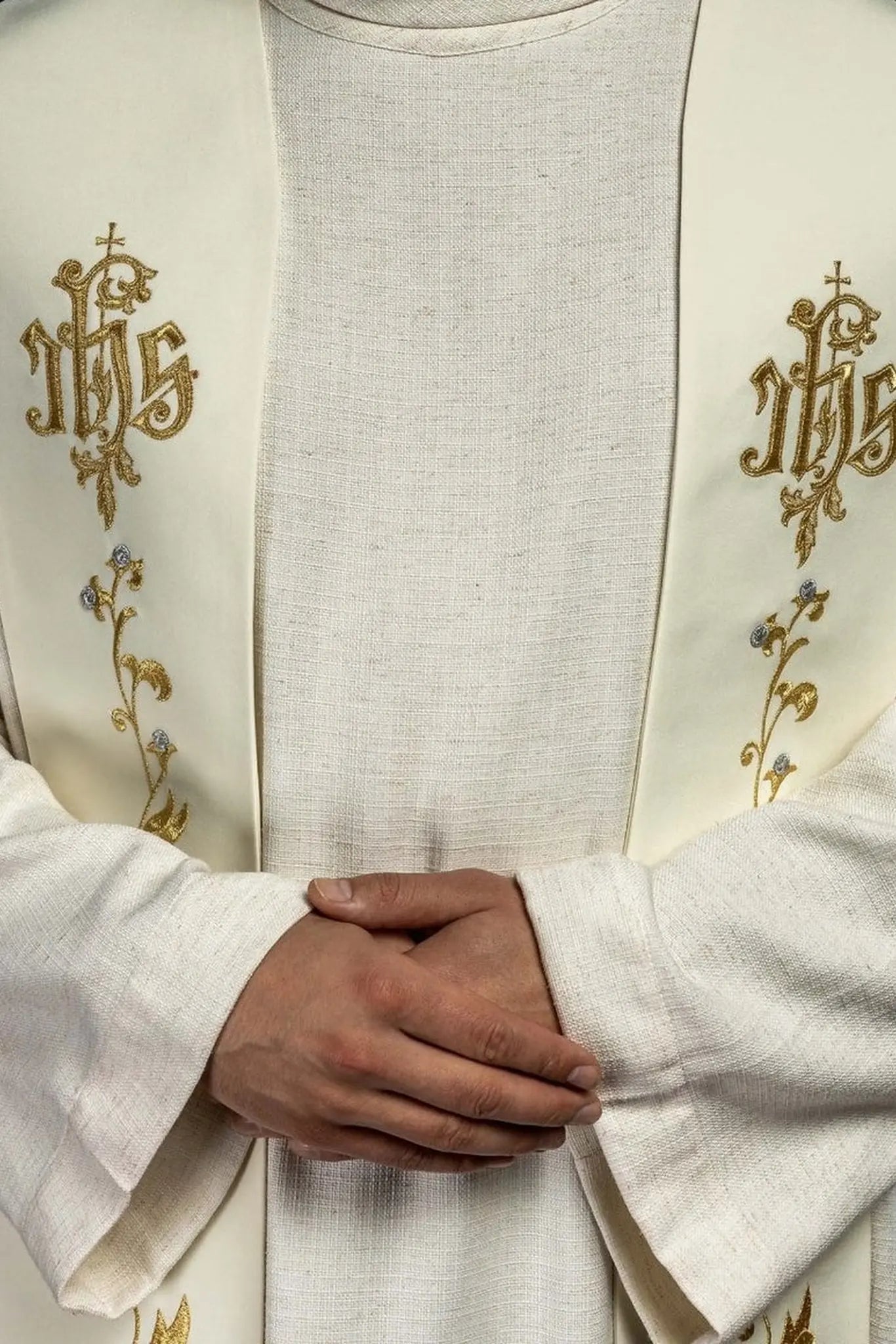
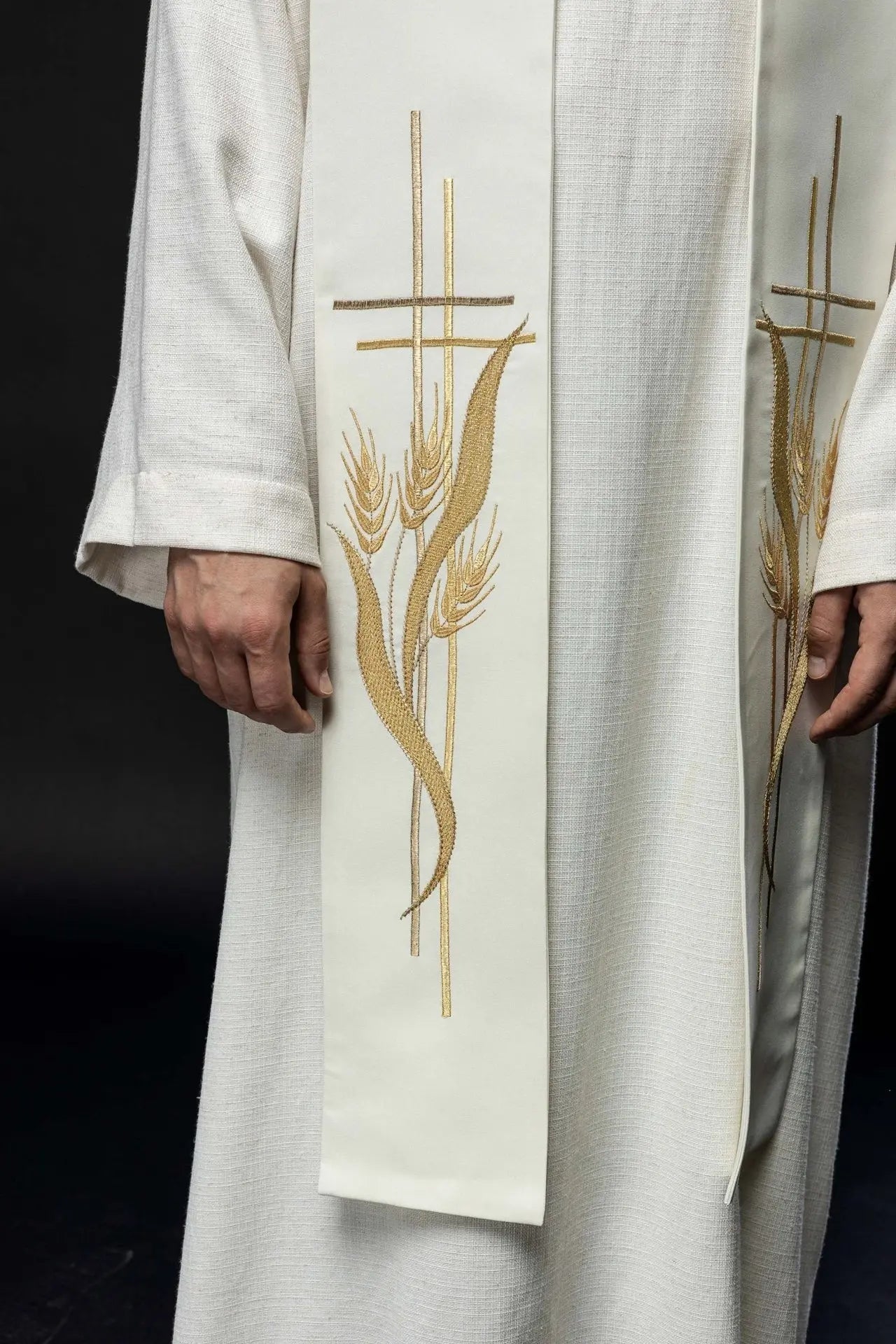
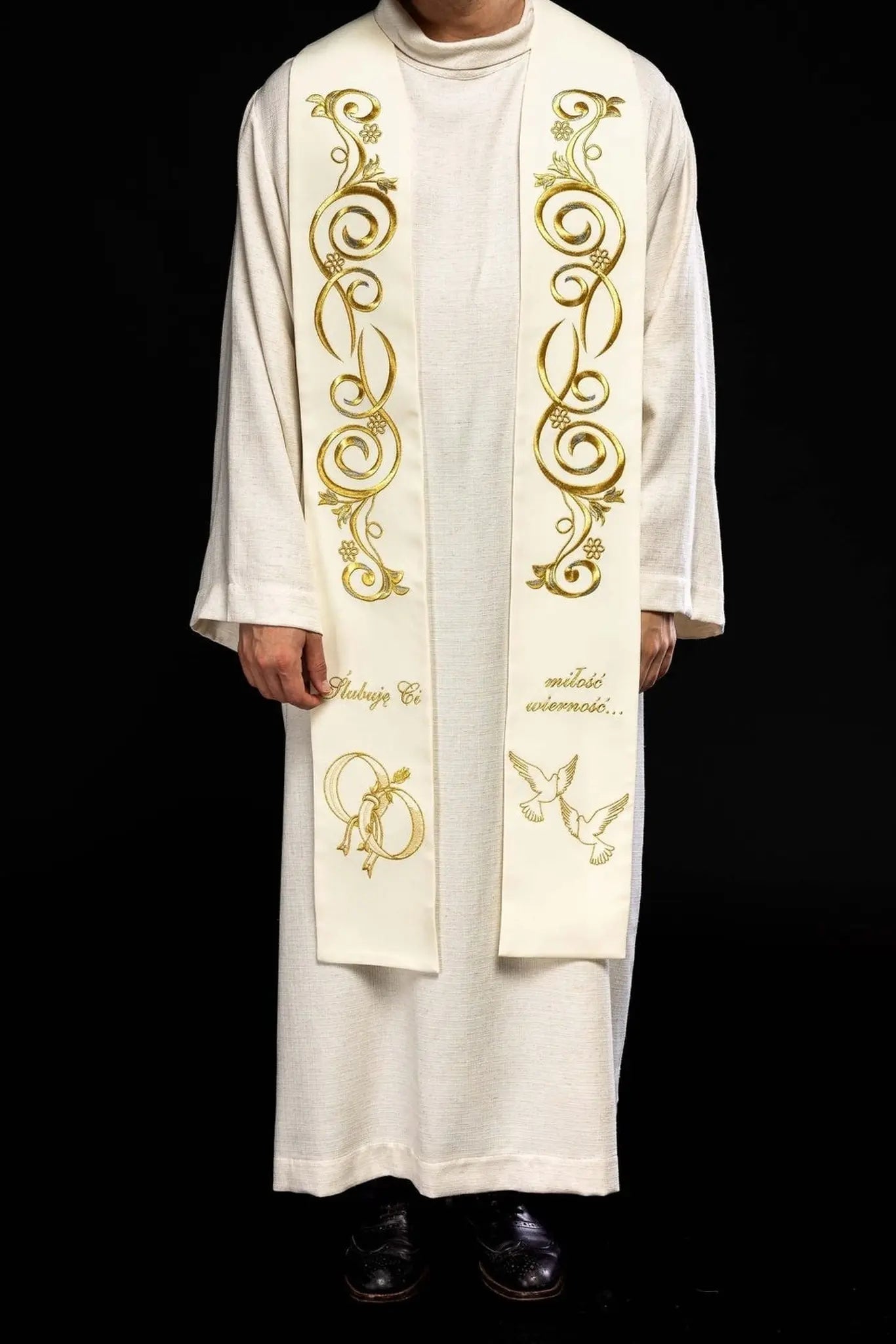
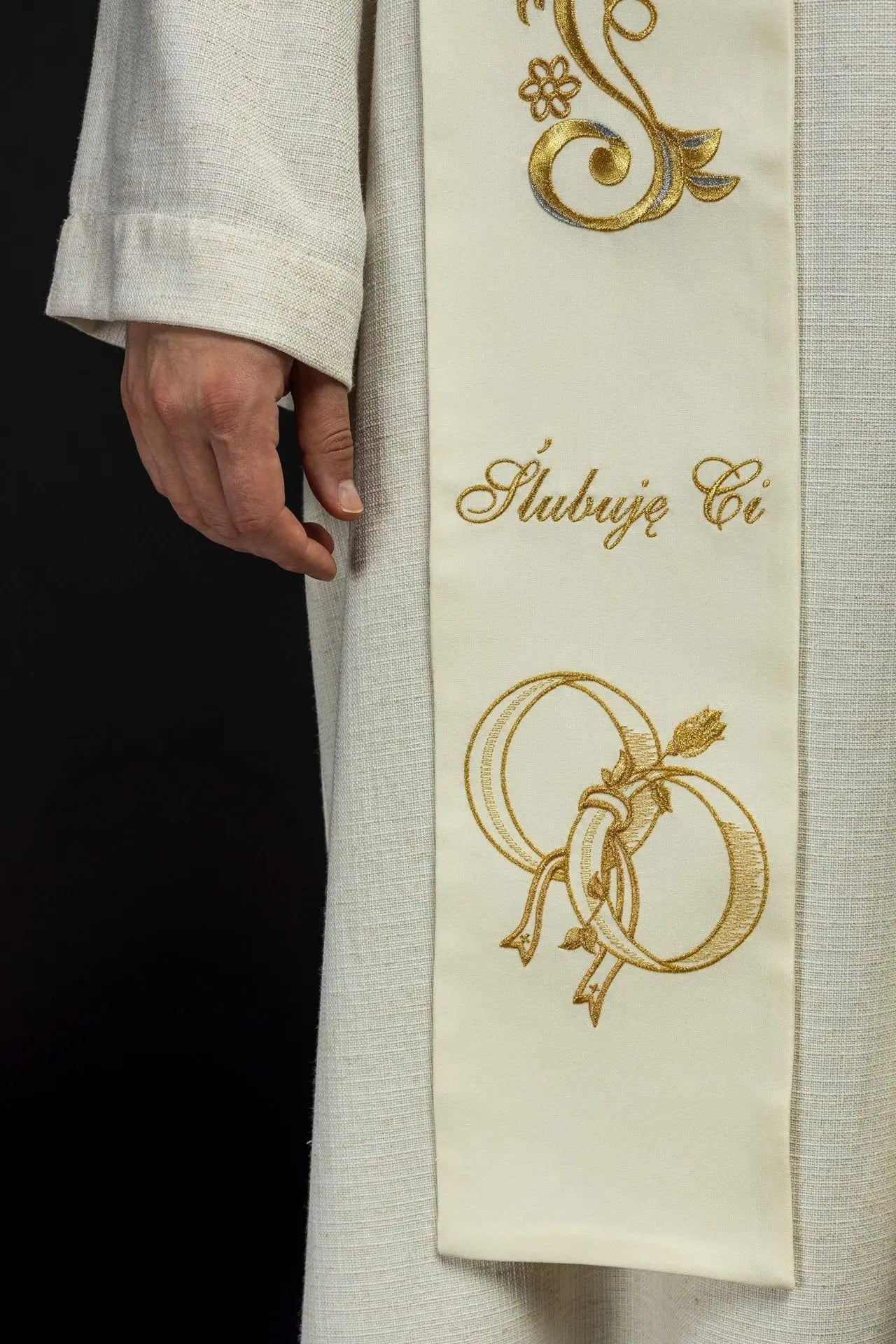
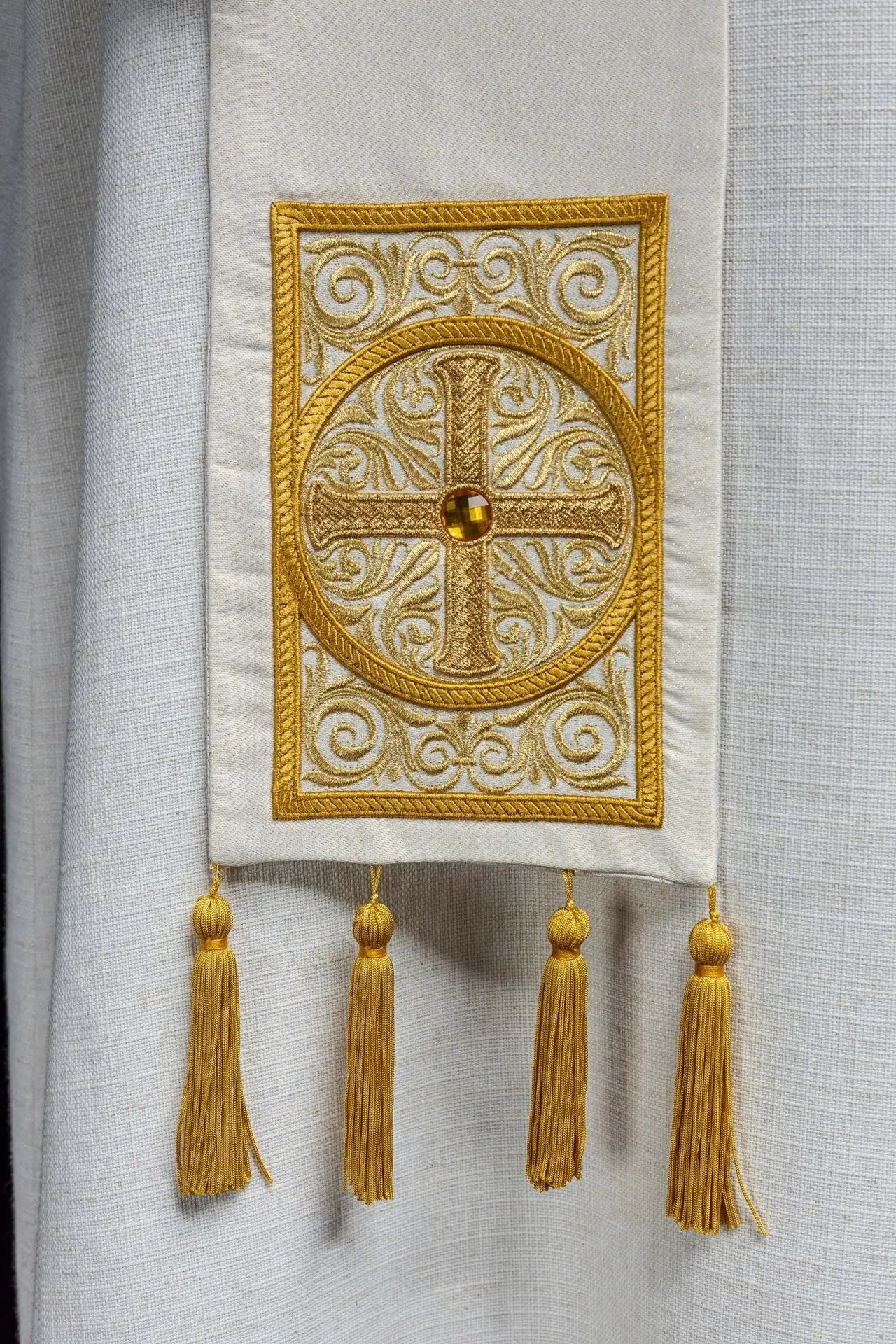
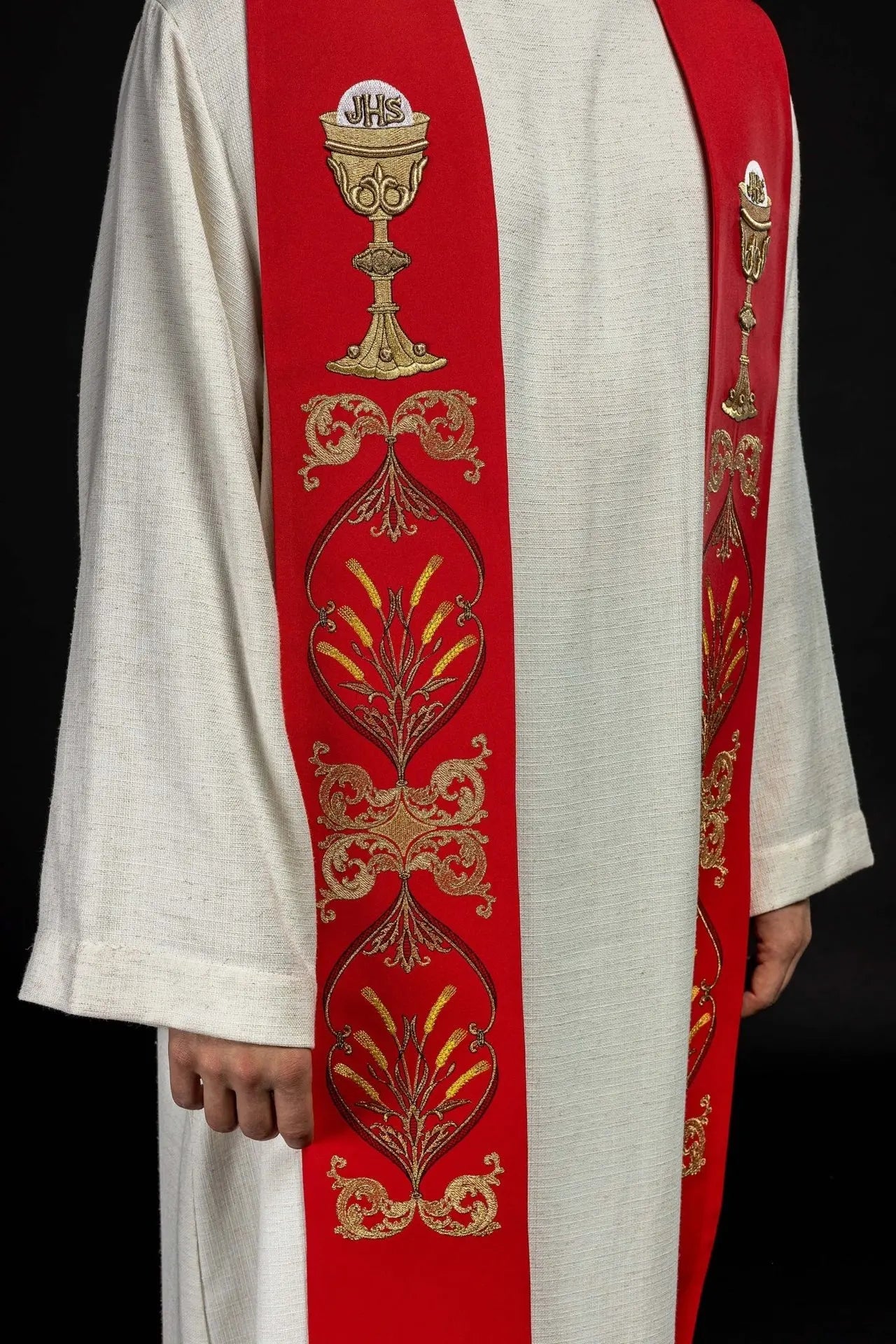
Embroidery gives a stole its visual and devotional character. Common motifs include the cross, the Chi Rho, the Holy Spirit, grapes and wheat, lilies, Marian symbols, Eucharistic elements, and images of saints. These symbols should support the liturgy rather than distract from it. A simple cross may be best for daily pastoral work, while a richly embroidered stole may be more fitting for solemn feasts, processions, patronal celebrations, or shrine ministry.
Stoles with saint imagery are especially useful for parishes, religious communities, and chapels dedicated to a particular patron. They can also be chosen for feast days, pilgrimages, and devotional services. When a specific saint or iconographic theme is needed, the collection of Stoles with Saint offers a more focused selection.
Some clergy prefer stoles that coordinate closely with a chasuble, cope, or altar textile. Others need a practical set of colors for pastoral ministry outside the sanctuary. In both cases, the best choice is one that respects liturgical color, has clear symbolism, and remains comfortable to wear during the full rite.
Fabric, comfort, and finish
A good stole should sit properly on the shoulders, lie flat, and remain comfortable through the celebration. The fabric should have enough structure to keep its form, but not so much stiffness that it becomes difficult to arrange. Embroidery should be placed with attention to visibility, balance, and the natural line of the vestment. The ends of the stole, the lining, trim, and any tassels or decorative details should be finished neatly, because these details affect both appearance and durability.
For frequent parish use, many clergy choose stoles that are easy to handle, resistant to repeated wear, and suitable for regular sacraments and blessings. For major celebrations, a more ornate stole may be selected to match the solemnity of the occasion. A balanced sacristy will often include a practical stole in each main liturgical color and several more decorative pieces for important feasts.
Priest stoles, deacon stoles, and related vestments
When building or renewing a vestment set, it is helpful to think about how the stole relates to neighboring collections. A priest celebrating Mass normally wears a stole under the chasuble, so color and ornament should harmonize with the Eucharistic vestment. A deacon may need a diagonal stole and, for solemn Mass, a matching dalmatic. Other vestments such as albs, copes, mitres, and humeral veils serve different liturgical functions and should not be confused with the stole.
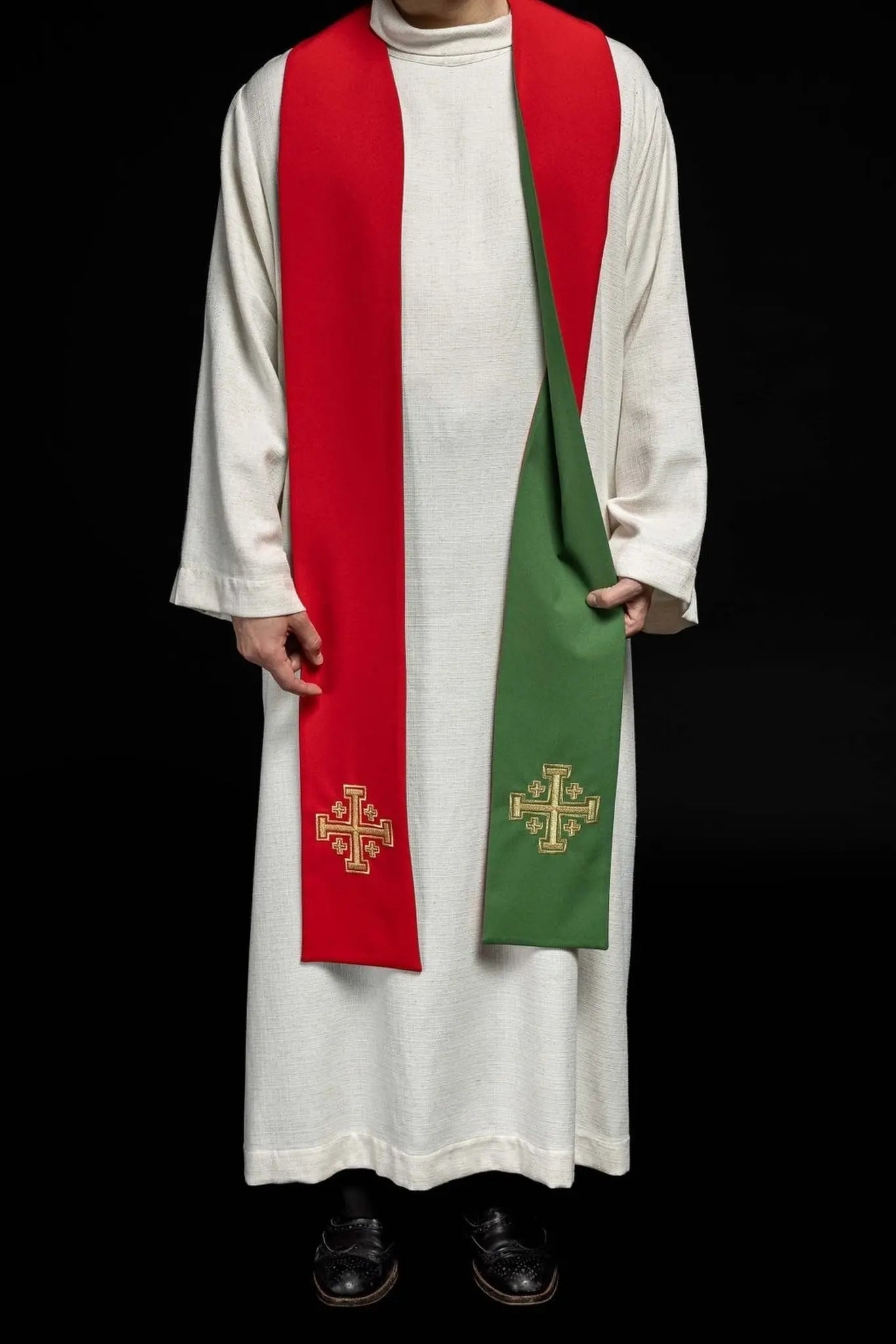
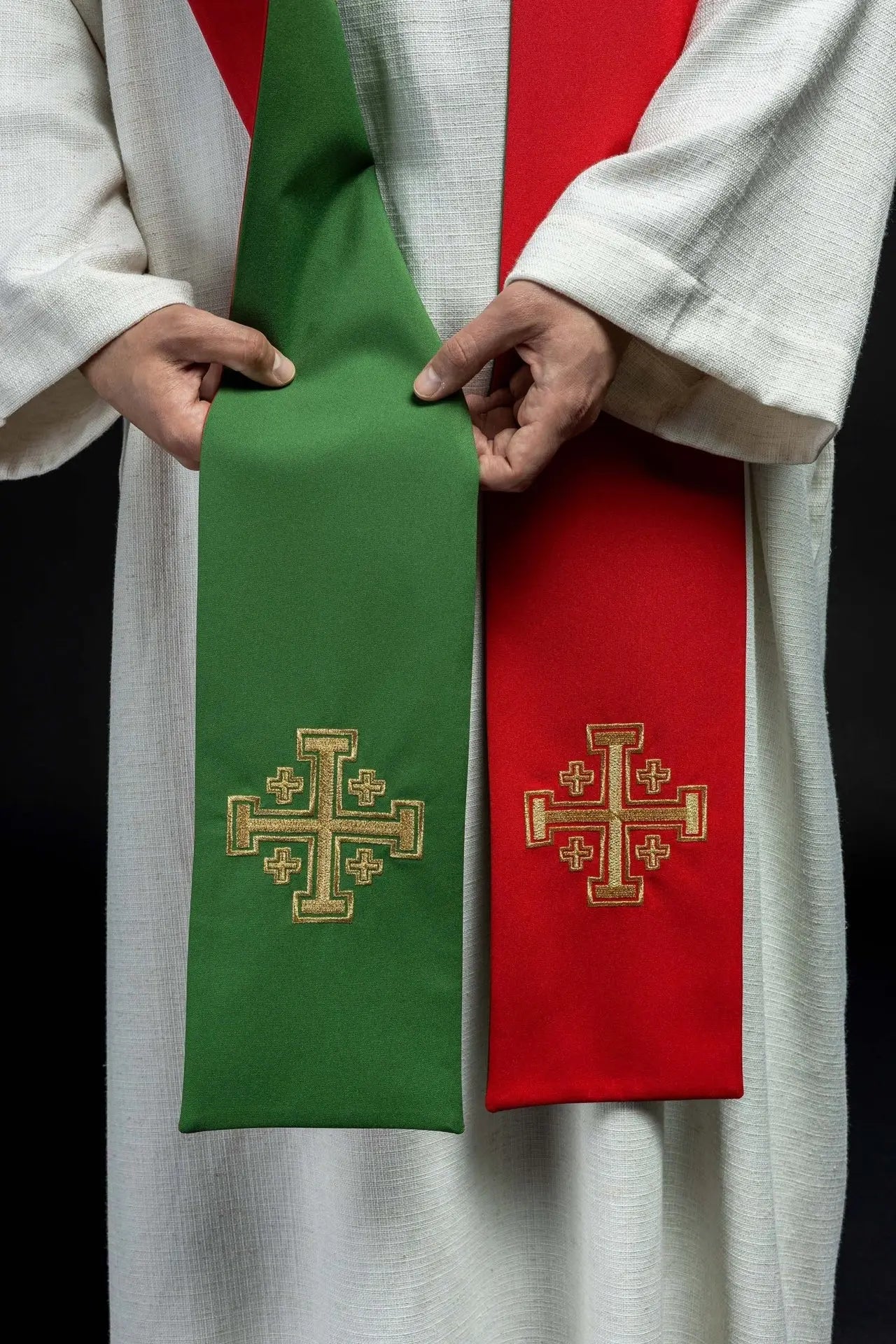
For clergy who serve in many different contexts, double-sided stoles can be especially practical. A reversible stole allows two colors or designs to be available in one vestment, which may be useful for travel, chaplaincy, hospital ministry, or small sacristies with limited storage.
How to select a stole for your ministry
-
Begin with the wearer: choose a priest stole for priests and bishops, and a diagonal deacon stole for deacons.
-
Match the liturgical color: green for Ordinary Time, red for the Holy Spirit and martyrs, purple for Advent, Lent, and penitential rites, white or ecru for feasts, and rose for Gaudete and Laetare.
-
Consider the rite: confession, anointing, weddings, funerals, blessings, and devotional services may call for different colors or levels of ornament.
-
Choose the symbolism carefully: Eucharistic, Marian, saint, floral, and cross motifs should correspond to the celebration and the pastoral setting.
-
Think about frequency of use: a daily parish stole should be durable and comfortable, while a solemn stole may have richer decoration.
-
Coordinate with other vestments: when possible, select a stole that works well with the chasuble, alb, cope, or dalmatic used in the same celebration.
Care and storage of clergy stoles
Proper care helps preserve the shape, color, and embroidery of a stole. Because fabrics and trims can vary, always follow the care guidance appropriate to the particular textile. Delicate embroidery, metallic threads, and fine fabric usually require careful handling. Stoles should be stored flat or hung in a way that prevents sharp folds, creasing, and pressure on embroidered areas.
Keep stoles away from moisture and direct sunlight when they are not in use. Before storage, make sure the vestment is clean and dry. In a sacristy, arranging stoles by color and use can also make preparation for liturgy easier, especially during busy seasons such as Advent, Lent, Holy Week, Christmas, Easter, and parish feast days.
Frequently Asked Questions (FAQ)
What is the difference between a priest stole and a deacon stole?
A priest stole is worn around the neck and hangs down the front, while a deacon stole is worn diagonally from the left shoulder across the body. The difference is not only visual; it corresponds to the distinct liturgical roles of priest and deacon.
Which stole color should be chosen first for a parish sacristy?
A practical sacristy usually needs the main liturgical colors first: green, red, purple, and white or ecru. Rose, Marian, gold, and more decorative stoles can then be added for specific feasts, devotions, and solemn celebrations.
Can one stole be used for both Mass and other sacraments?
Yes, a priest stole may be used at Mass under the chasuble and also for sacraments such as confession, baptism, anointing of the sick, and marriage. The correct color should still be selected according to the rite and the liturgical context.
When is a rose stole used?
A rose stole is used on Gaudete Sunday in Advent and Laetare Sunday in Lent where this liturgical color is observed. It is not a general pink vestment, but a specific rose color connected with rejoicing during penitential seasons.
Are embroidered stoles suitable for daily ministry?
They can be, provided the design is not too ornate for the setting and the fabric is comfortable for frequent use. A simple embroidered cross or Eucharistic symbol is often suitable for regular parish celebrations, while richer imagery may be better reserved for solemn occasions.
Should a stole match the chasuble or dalmatic?
Matching is recommended when the stole is worn as part of a full vestment set, especially for Mass or solemn celebrations. Exact matching is less essential for pastoral visits or confessions, but the liturgical color should remain appropriate.