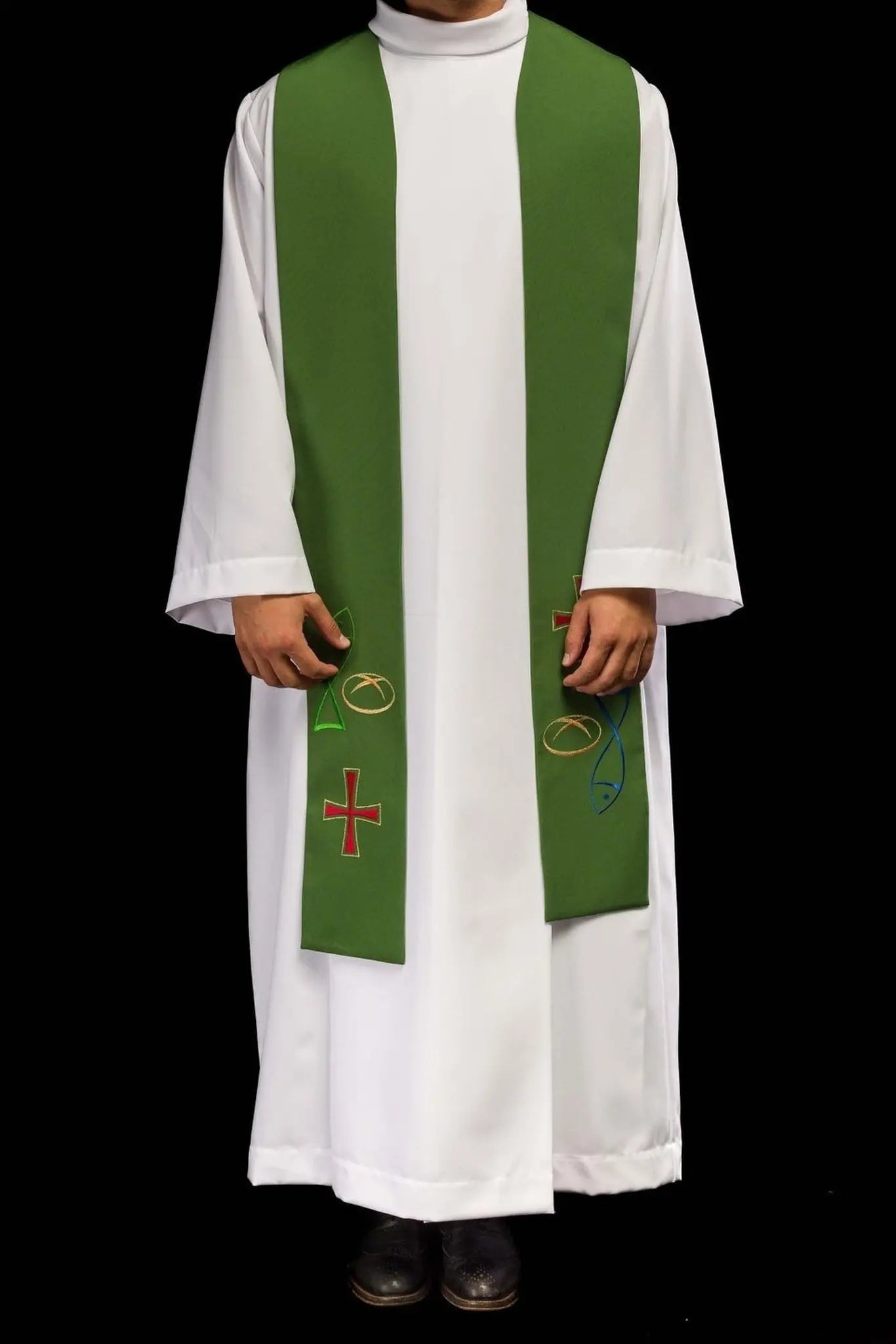
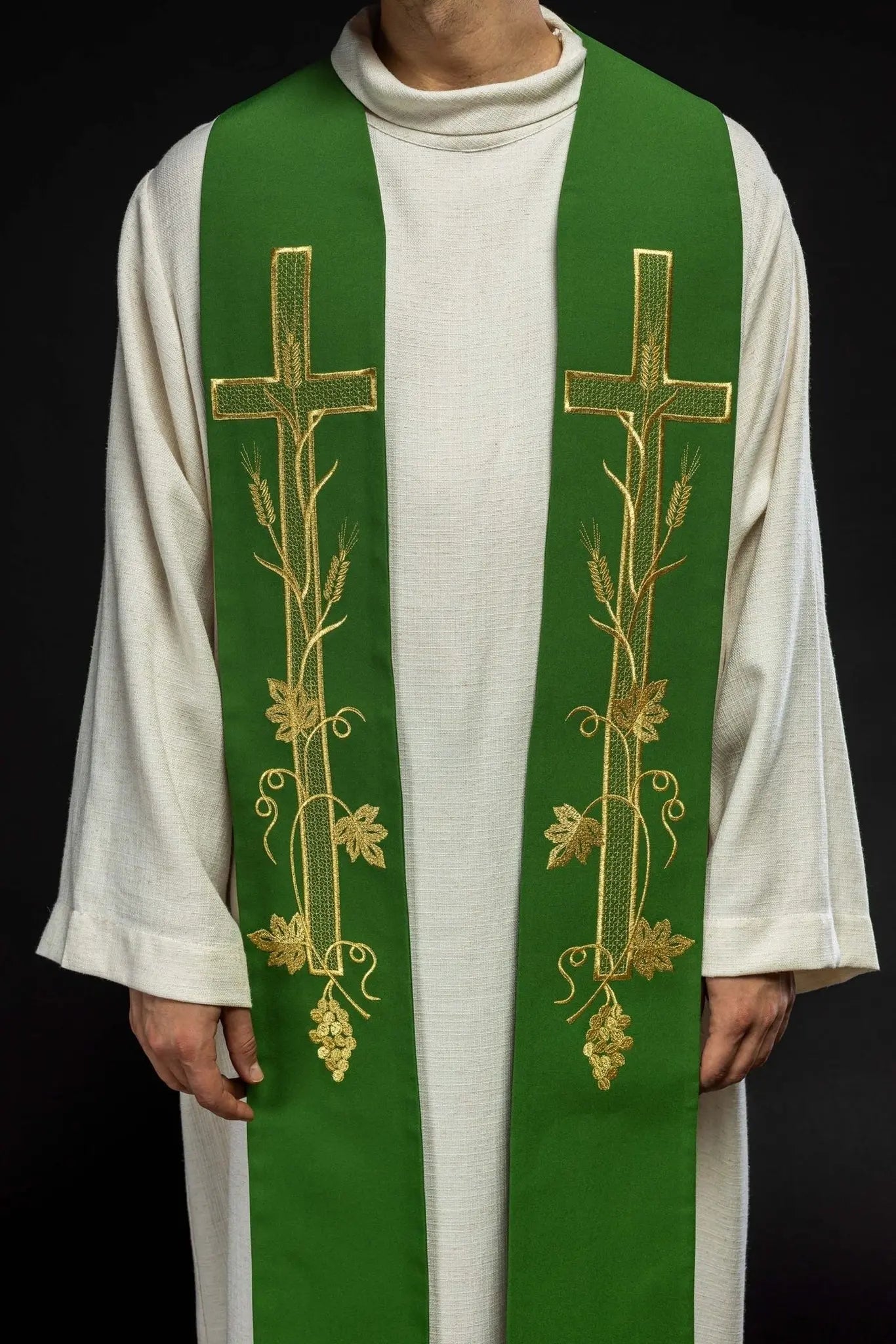
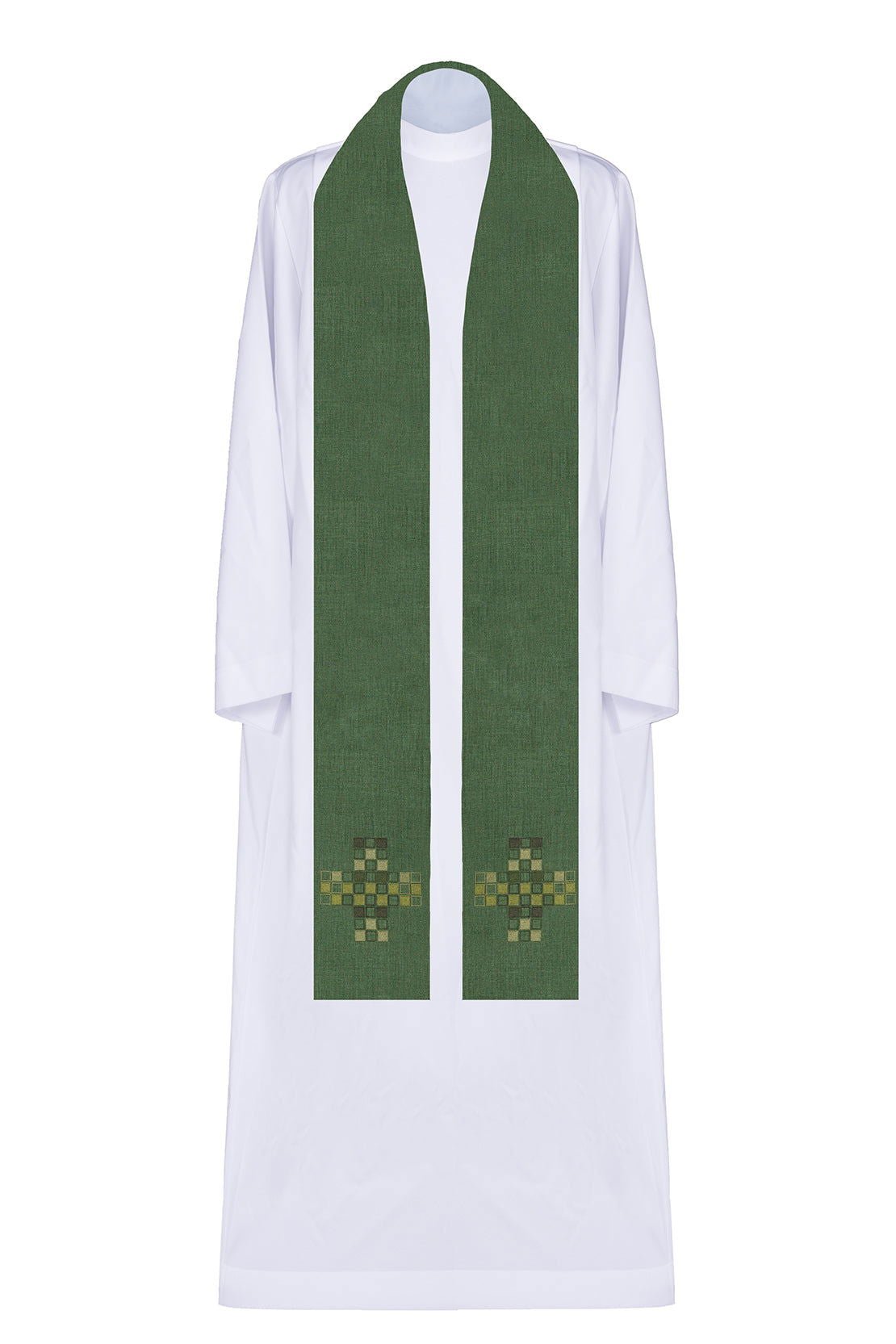
Green Clergy Stoles for Ordinary Time
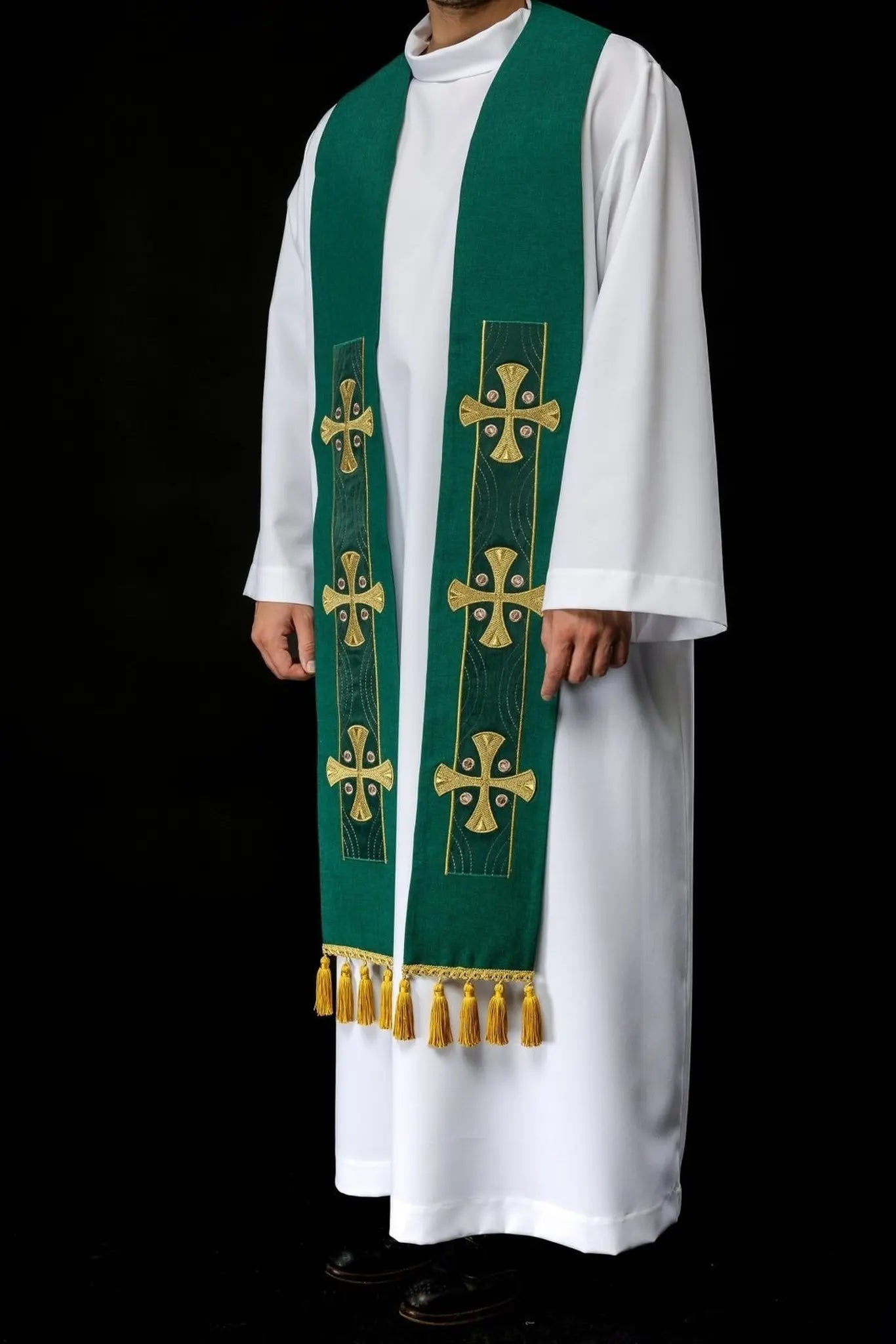
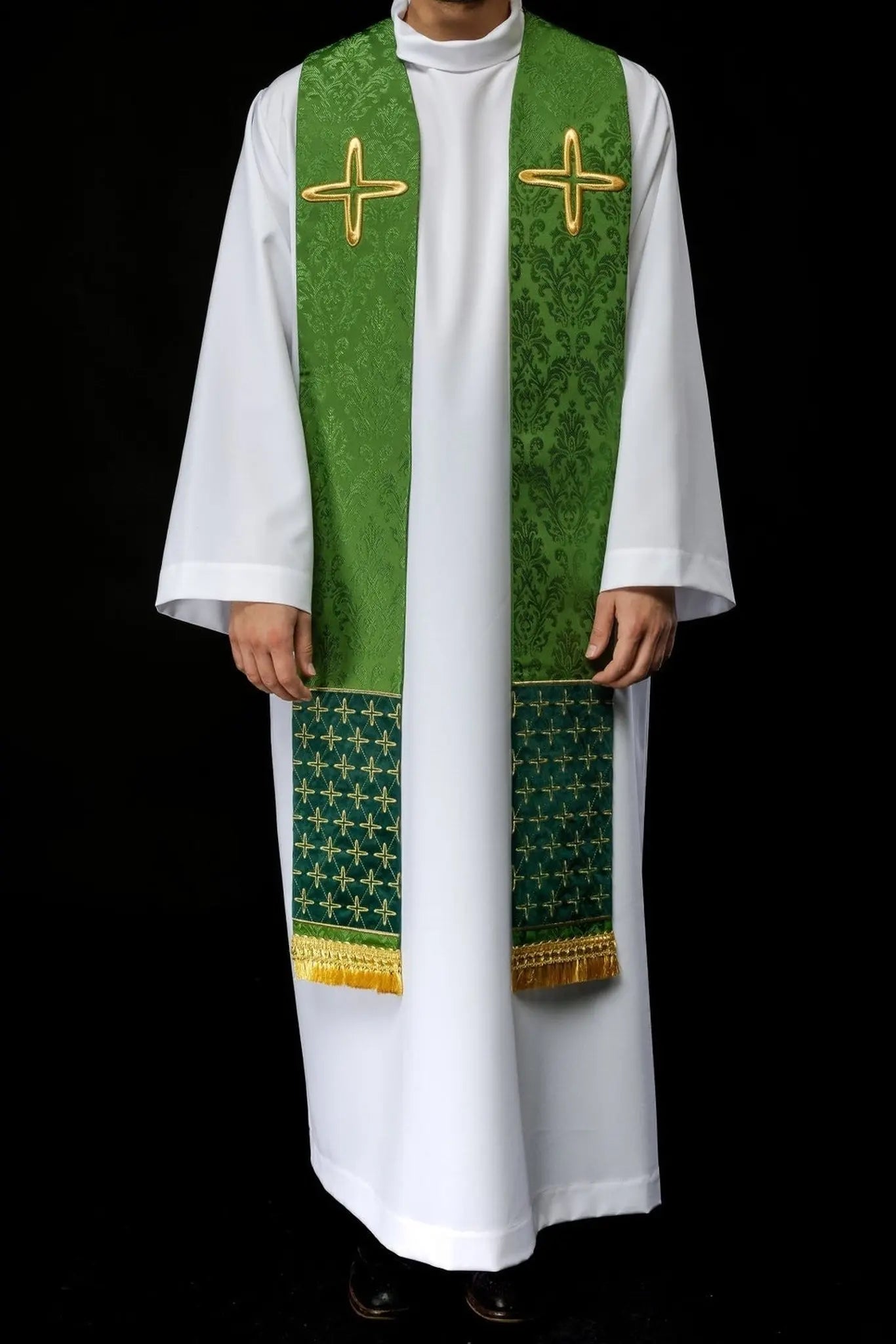
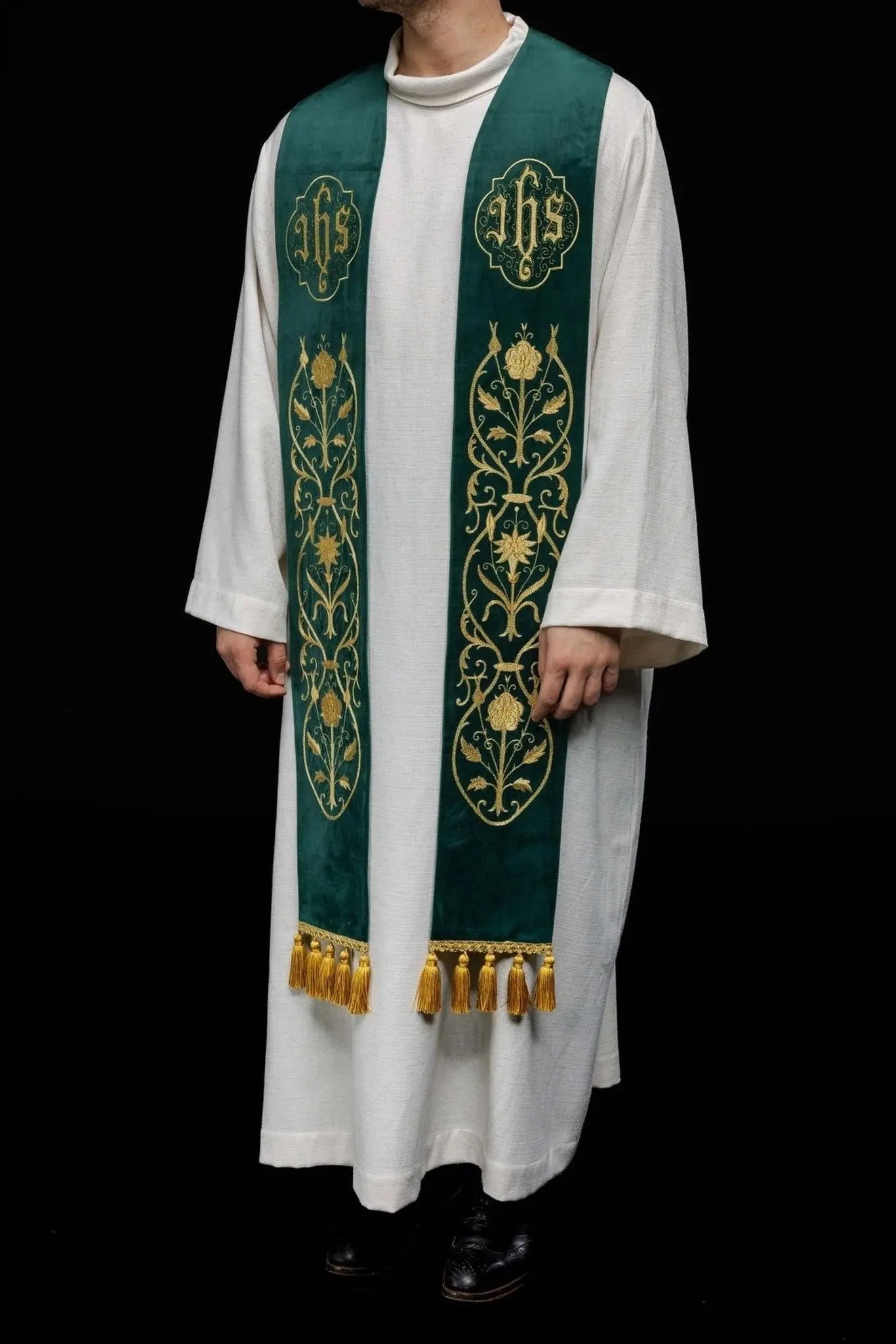
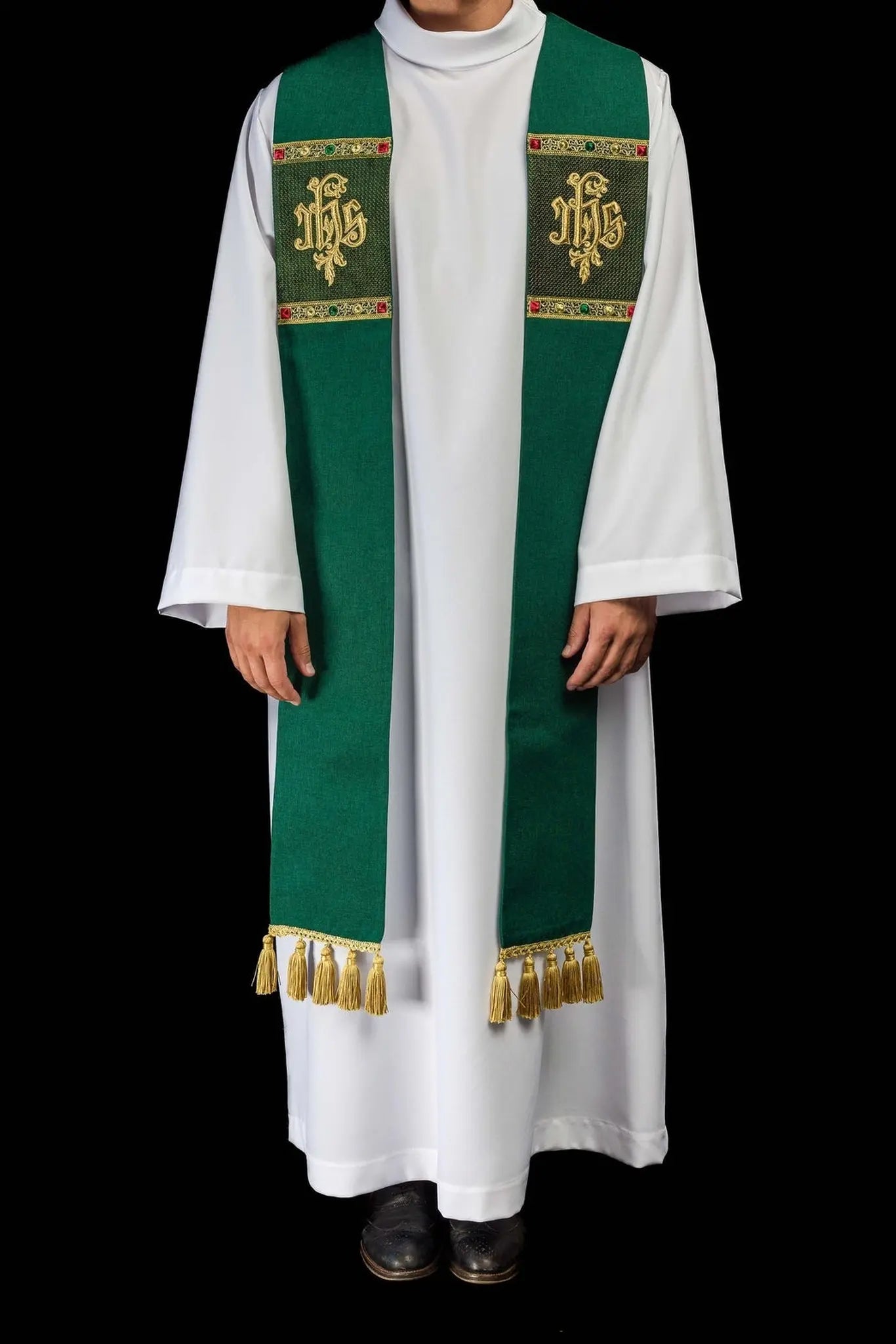
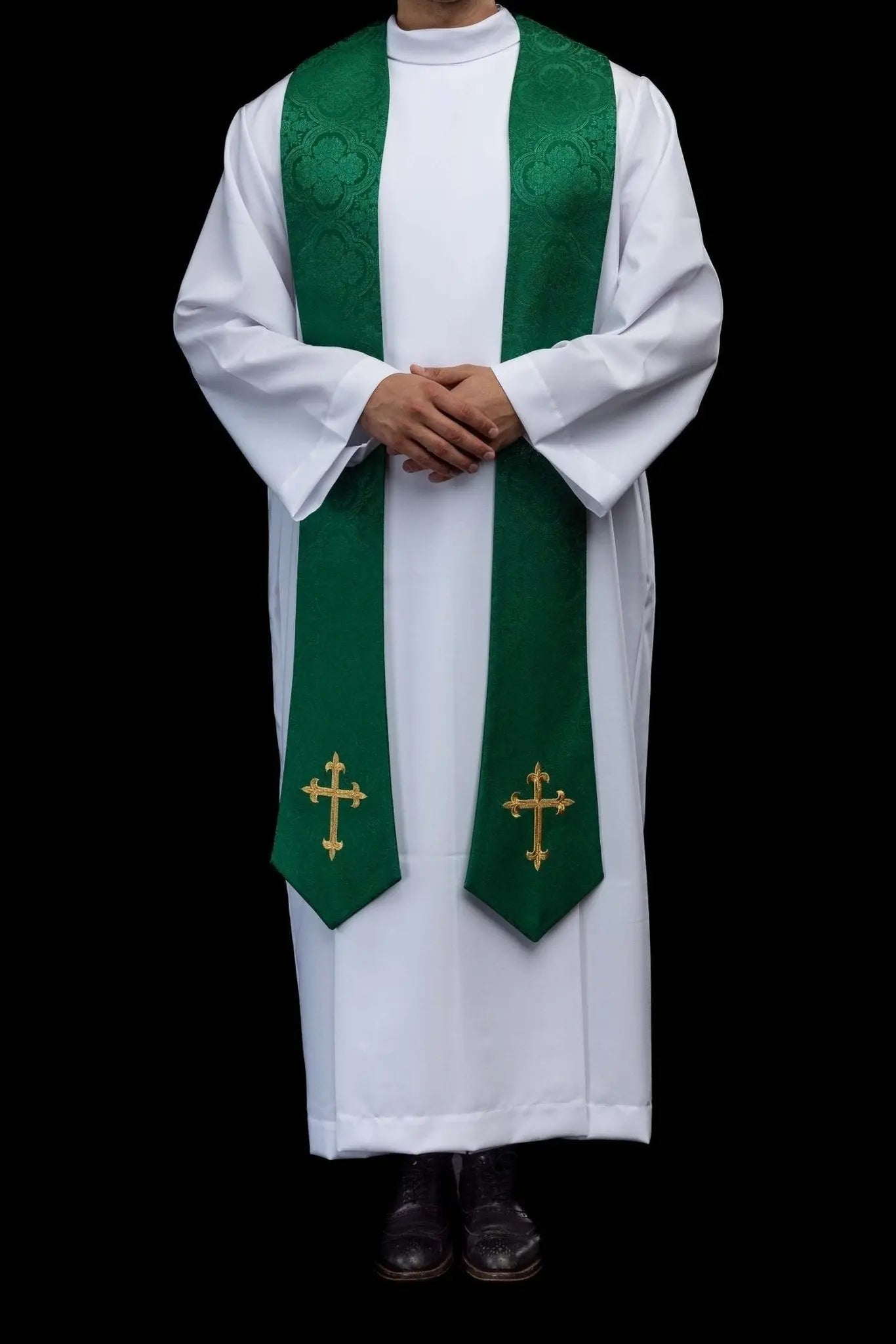
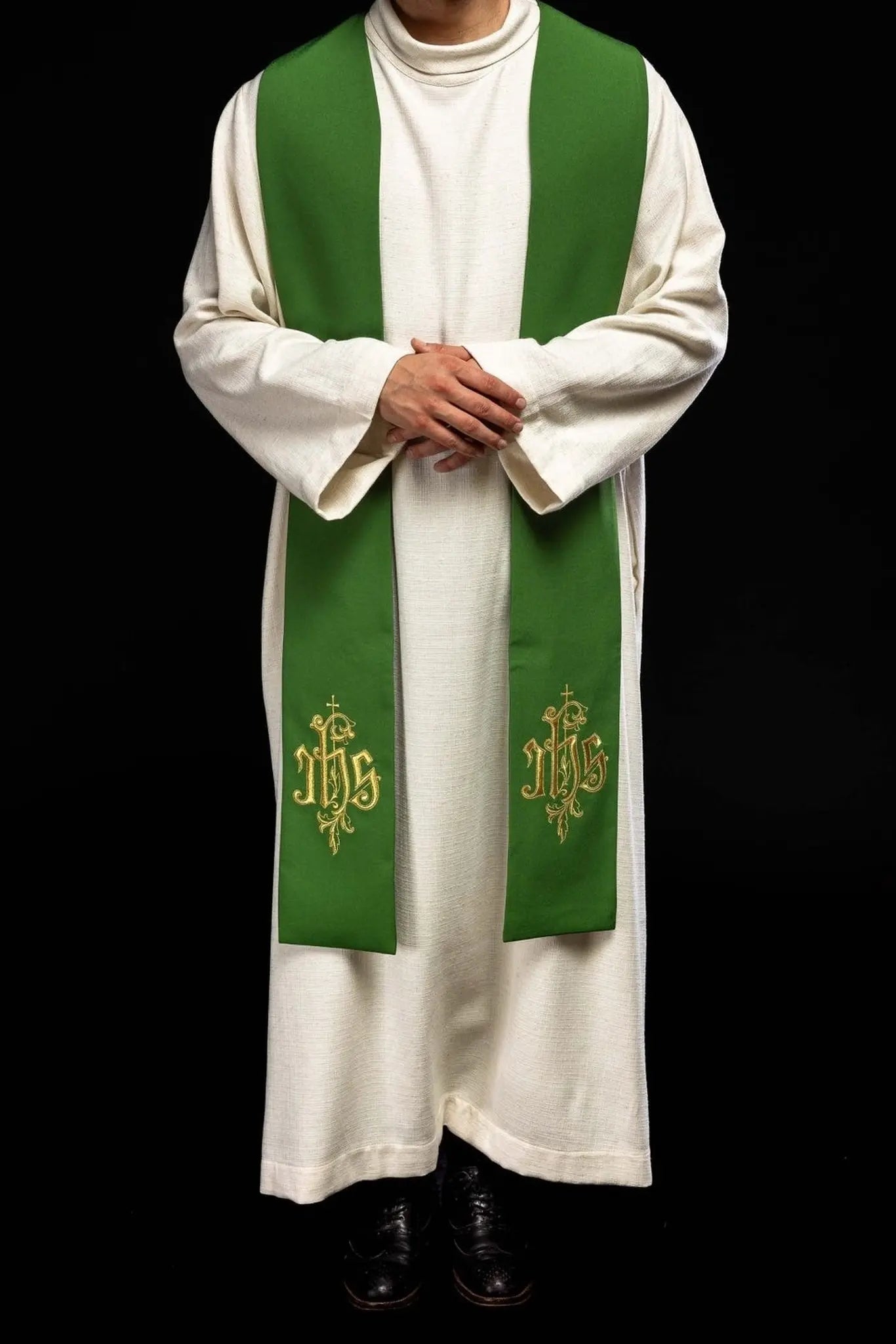
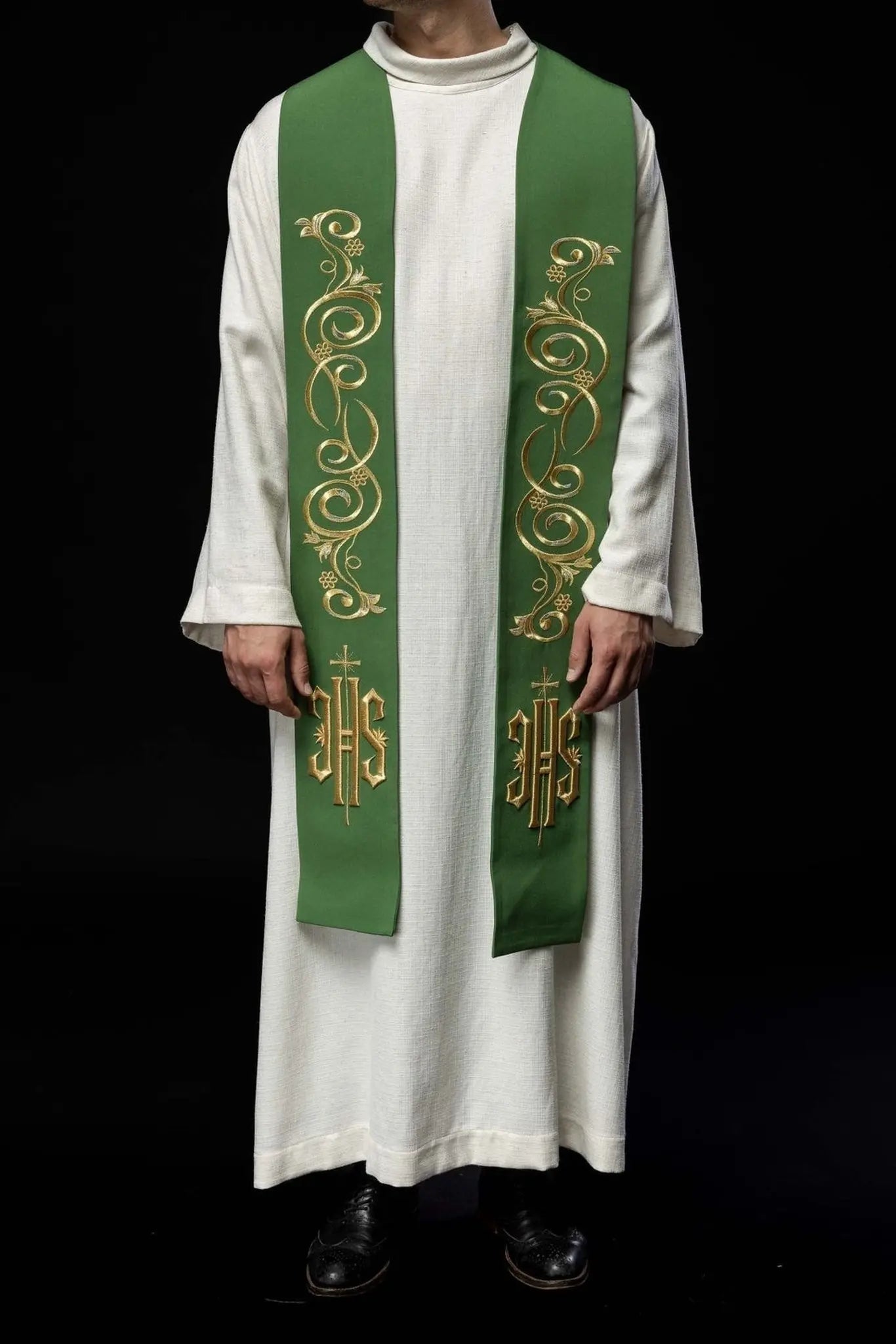
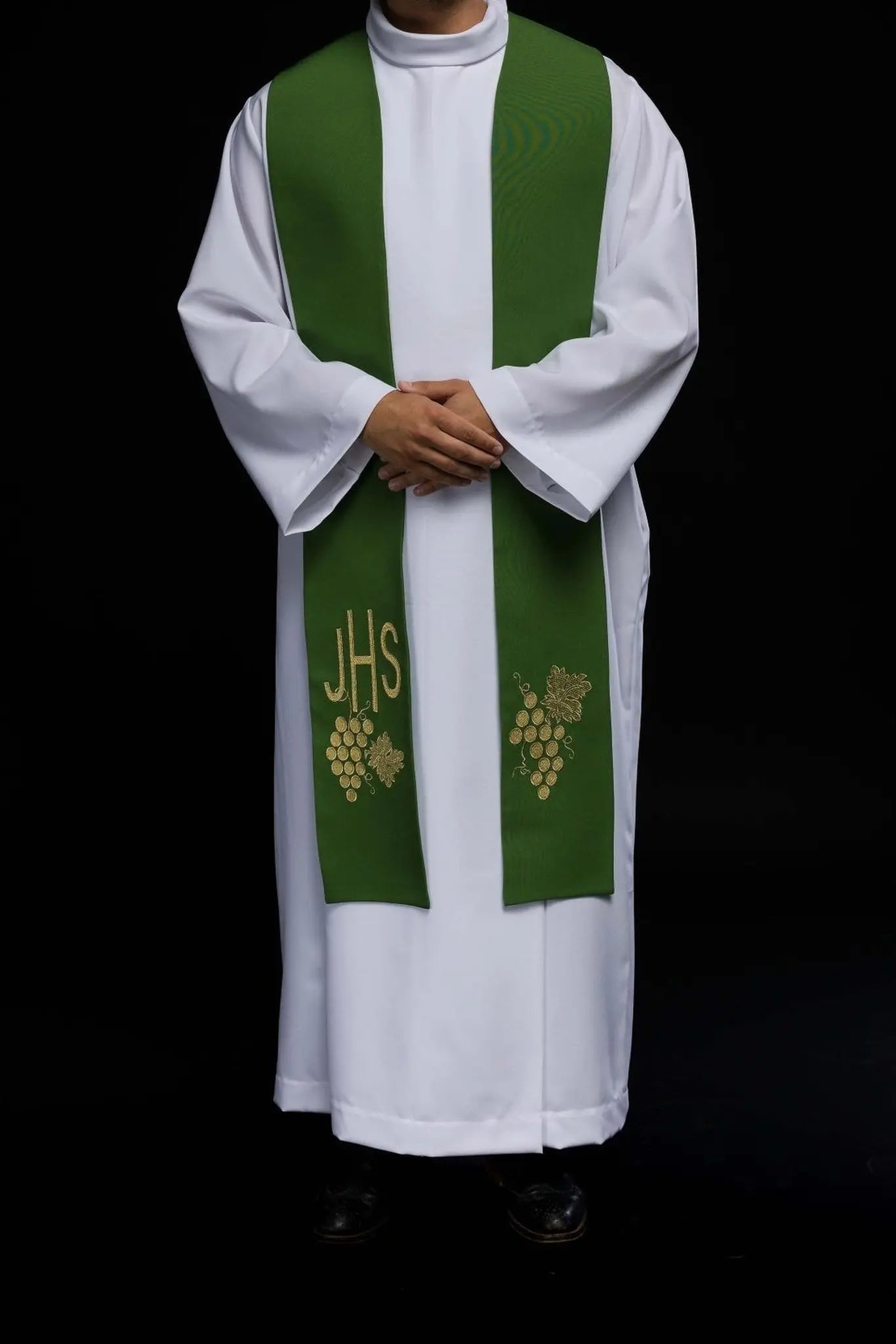
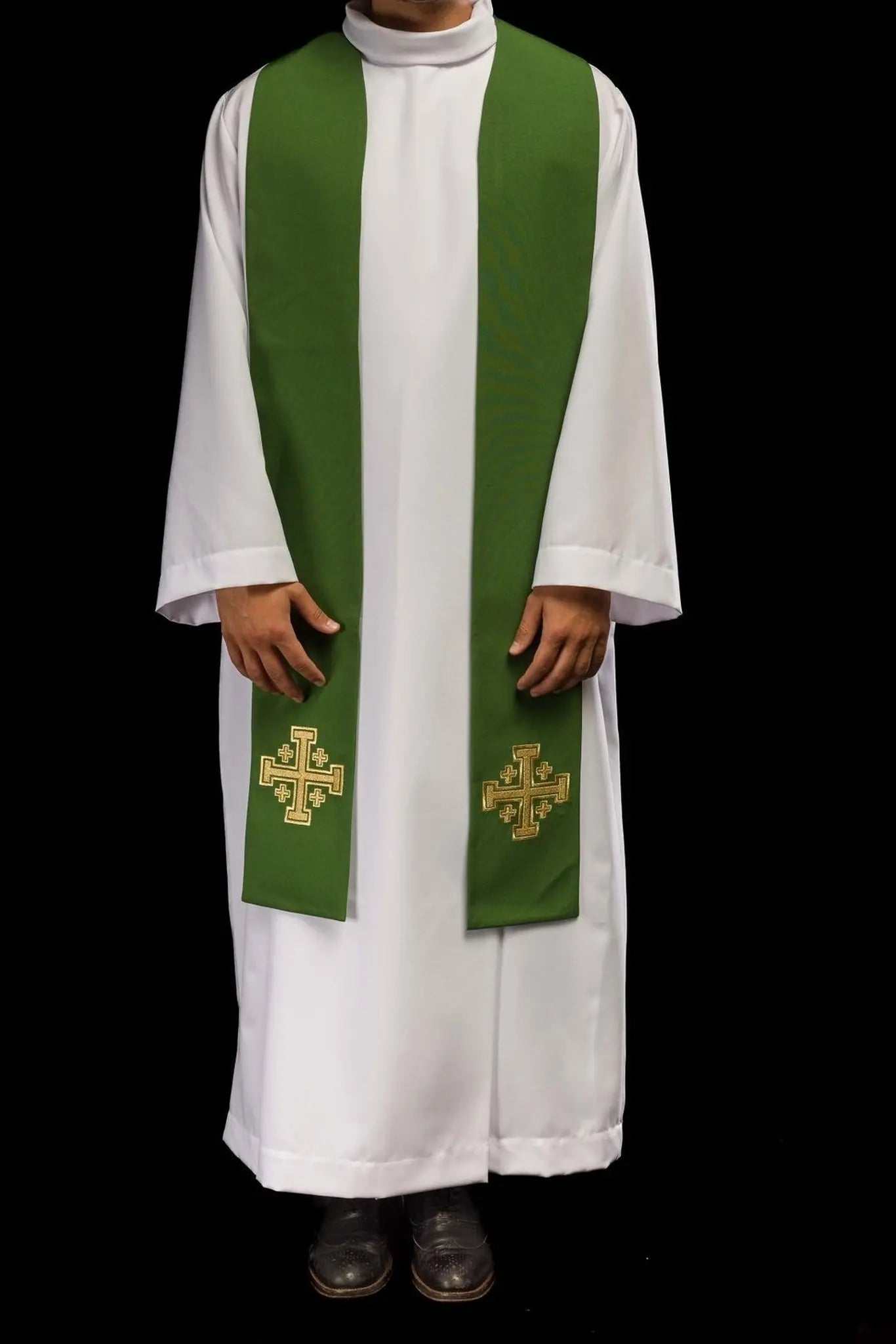
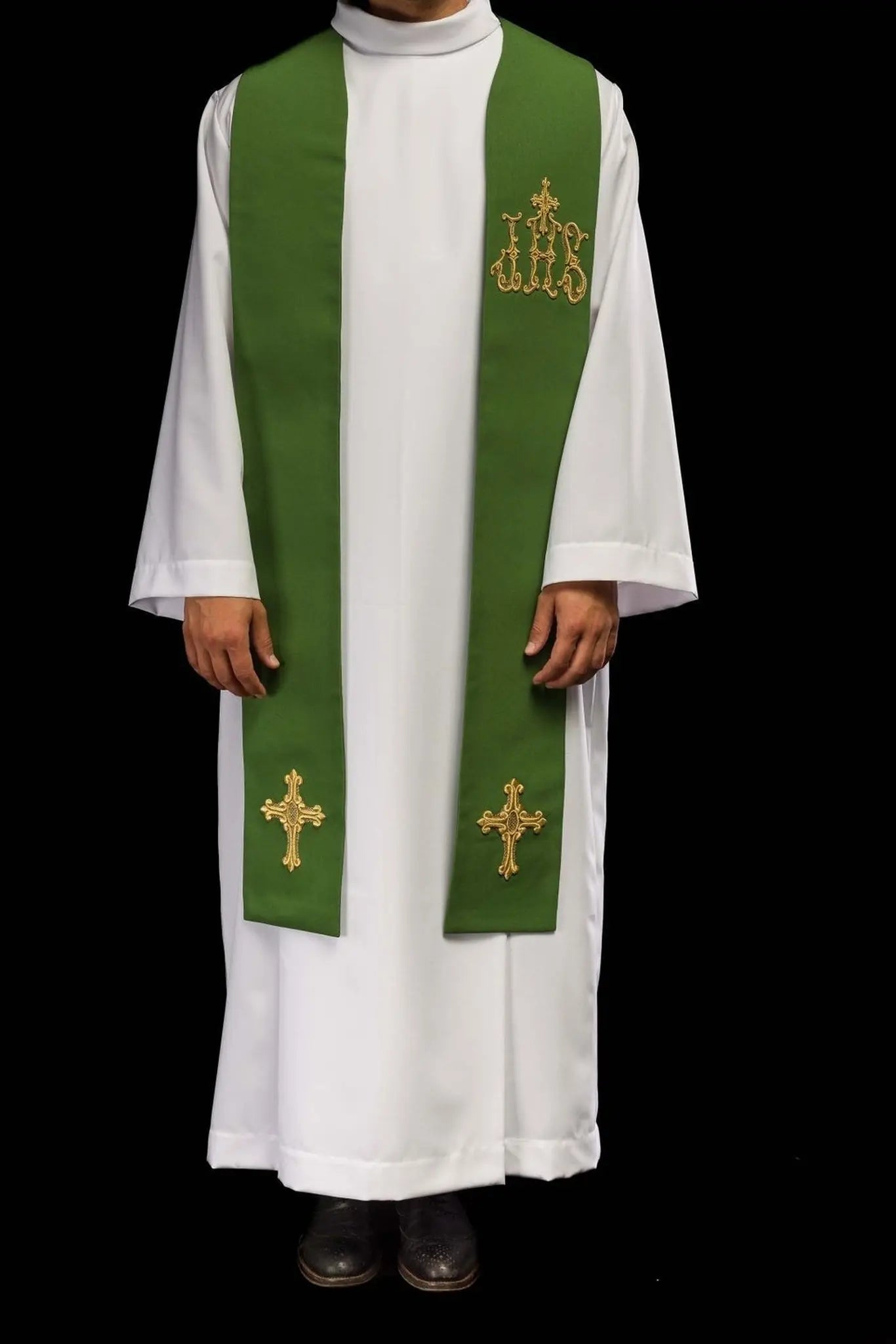
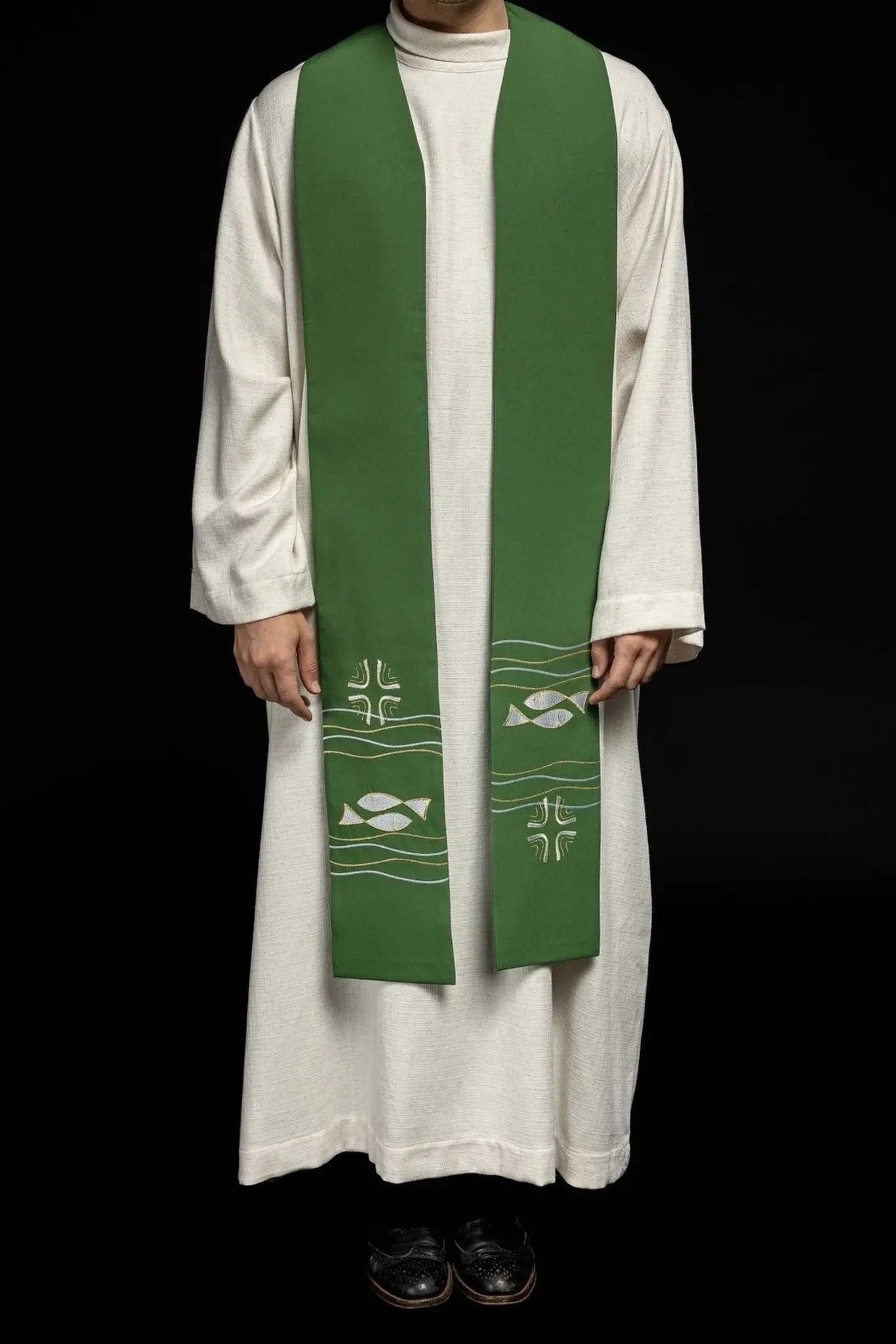
Green clergy stoles are liturgical vestments worn by ordained ministers when the Church uses green in the liturgical calendar, especially during Ordinary Time. This collection gathers green stoles for priests and deacons who need a dignified, practical, and symbolically clear vestment for the seasons of growth, hope, perseverance, and daily fidelity to the Gospel. A stole is more than a decorative textile: it is a visible sign of ordained ministry, used in the celebration of Mass, the sacraments, blessings, preaching, and pastoral service. In green, it speaks of the steady life of grace that develops not only on feast days, but also through the ordinary rhythm of parish worship.
The green stole belongs naturally beside other vestments for Ordinary Time. When a parish is preparing a complete set for this part of the year, the stole may be chosen to coordinate with green chasubles, altar arrangements, and other liturgical textiles. For a broader view of matching vestments and church textiles used across this season, you may also compare this collection with the Ordinary Time collection. The aim is not simply to match colors, but to create a coherent visual language at the altar, at the ambo, and in sacramental ministry.
The liturgical meaning of green stoles
Green is the color most closely associated with Ordinary Time in the Roman liturgical tradition. It is used outside the stronger seasonal colors of Advent, Christmas, Lent, Easter, and the principal solemnities. Because Ordinary Time includes many Sundays and weekdays, a green stole is one of the most frequently used vestments in a priestly or diaconal wardrobe. Its symbolism is pastoral and steady: hope, spiritual growth, perseverance, and the living mission of the Church.
For the celebrant, the green stole accompanies the ministry of Word and Sacrament throughout many weeks of the year. For the faithful, it quietly marks a season in which the Gospel is received and lived in daily discipleship. The color does not suggest a lesser importance of the liturgy. Rather, it reminds the parish that grace grows patiently. A well-chosen green stole therefore needs to be beautiful enough for Sunday Mass, durable enough for regular use, and balanced enough to remain appropriate for weekday liturgies and pastoral celebrations.
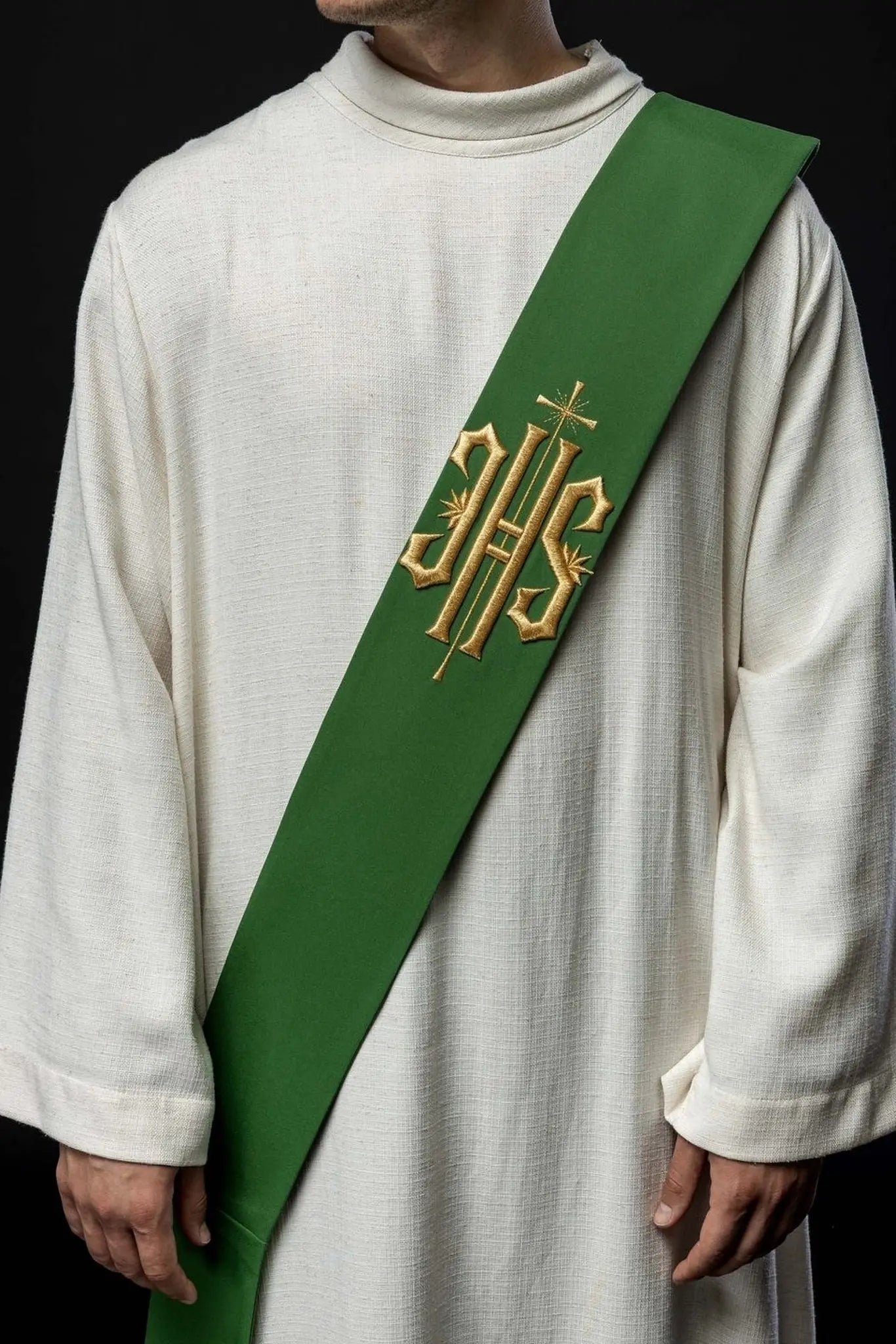
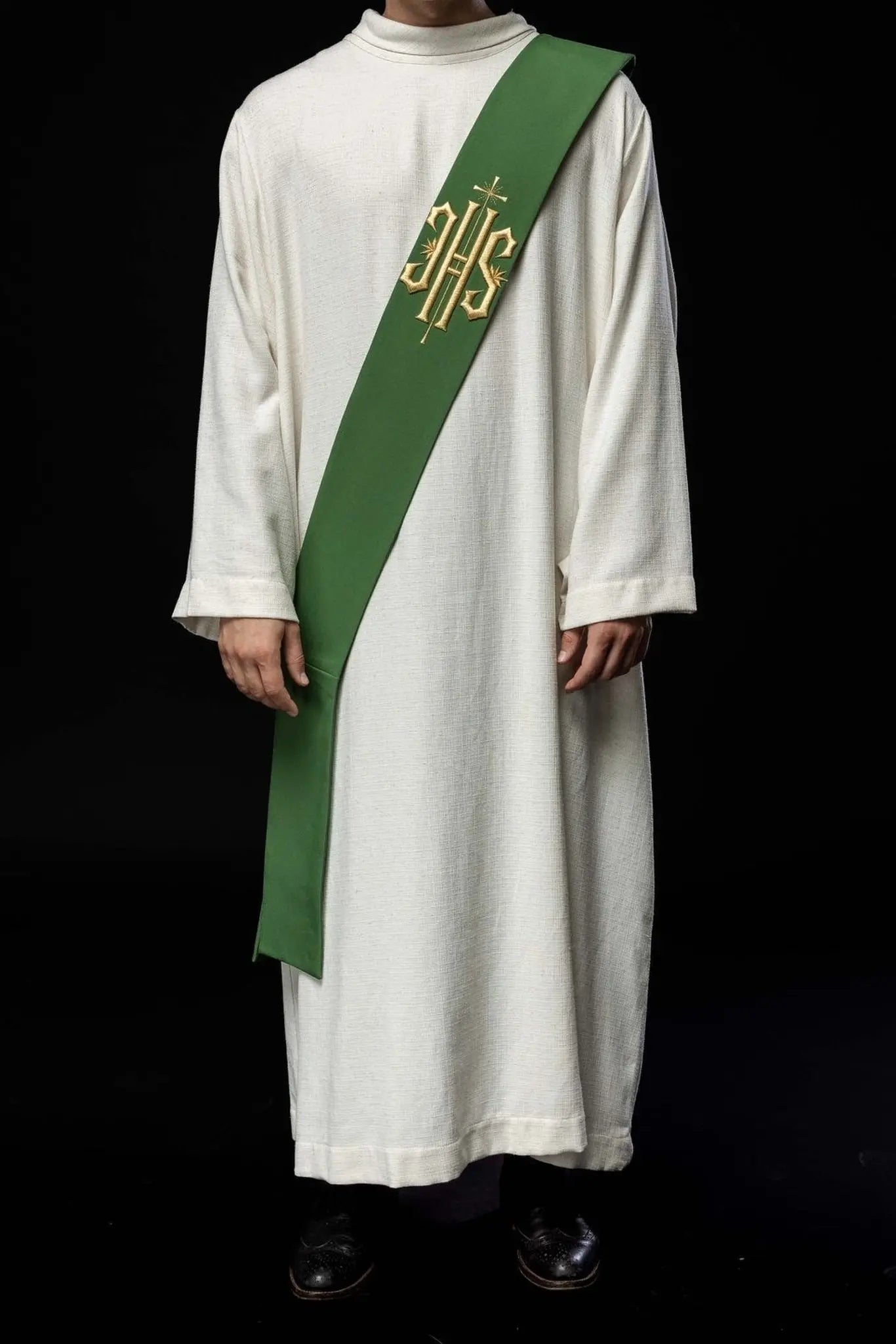
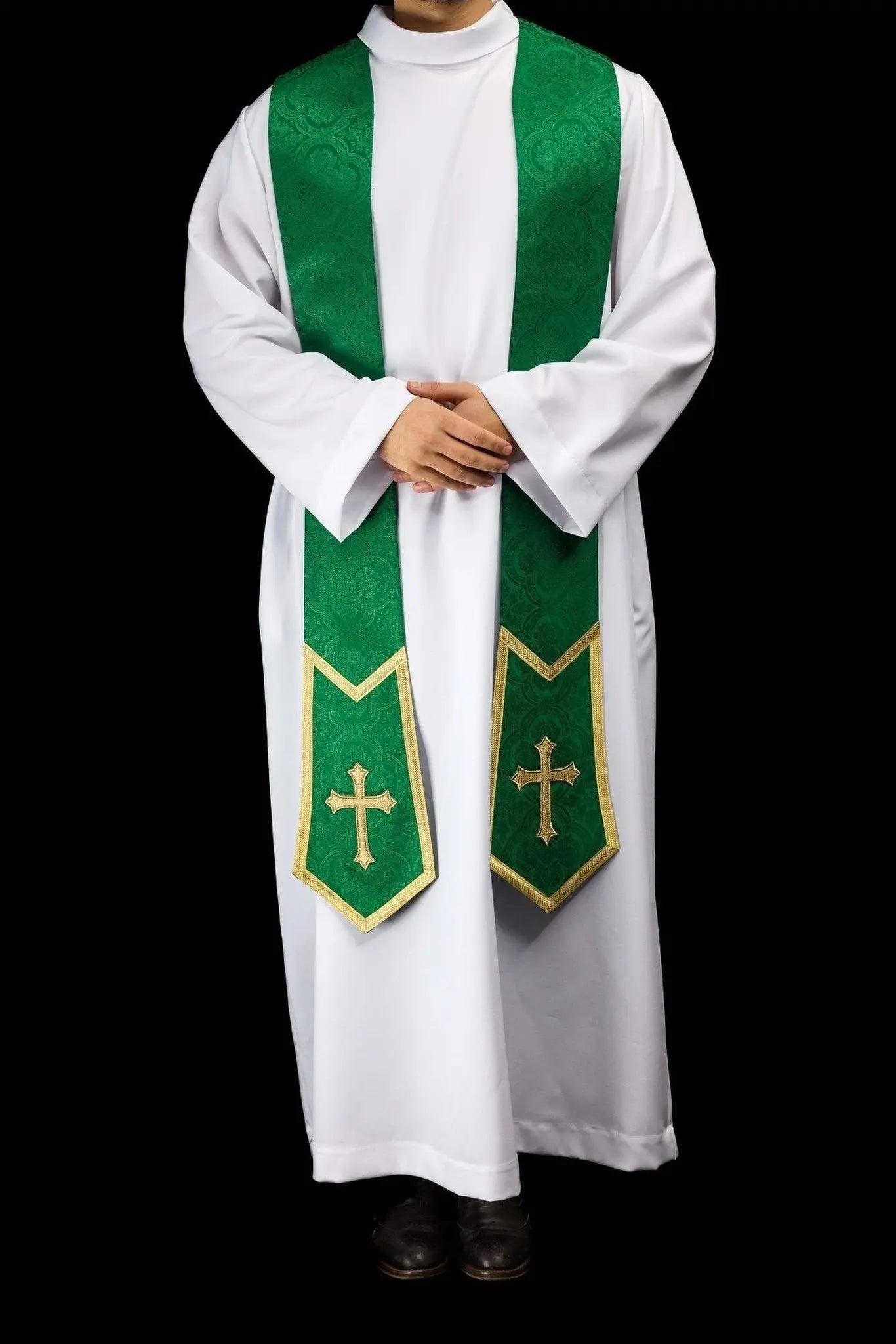
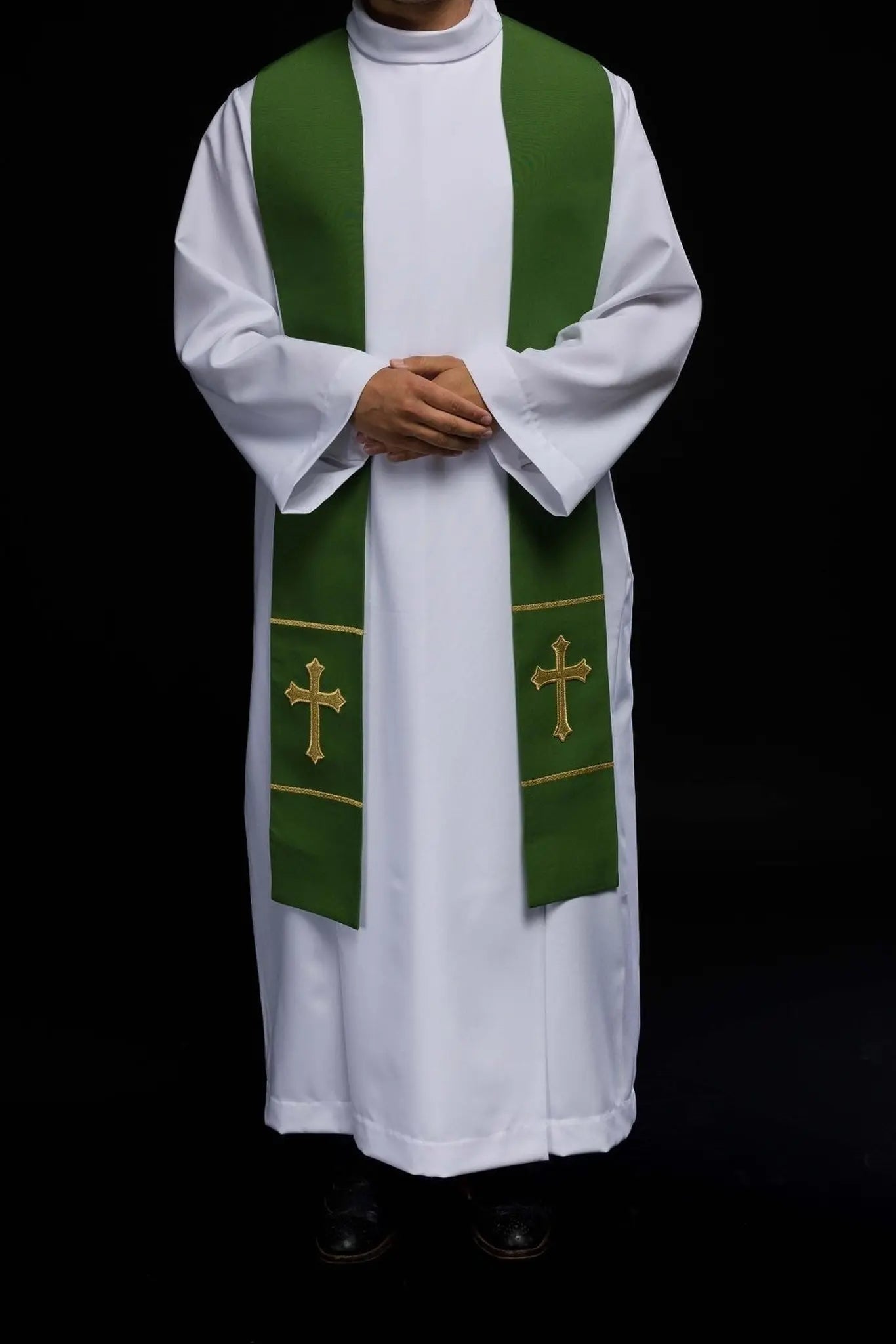
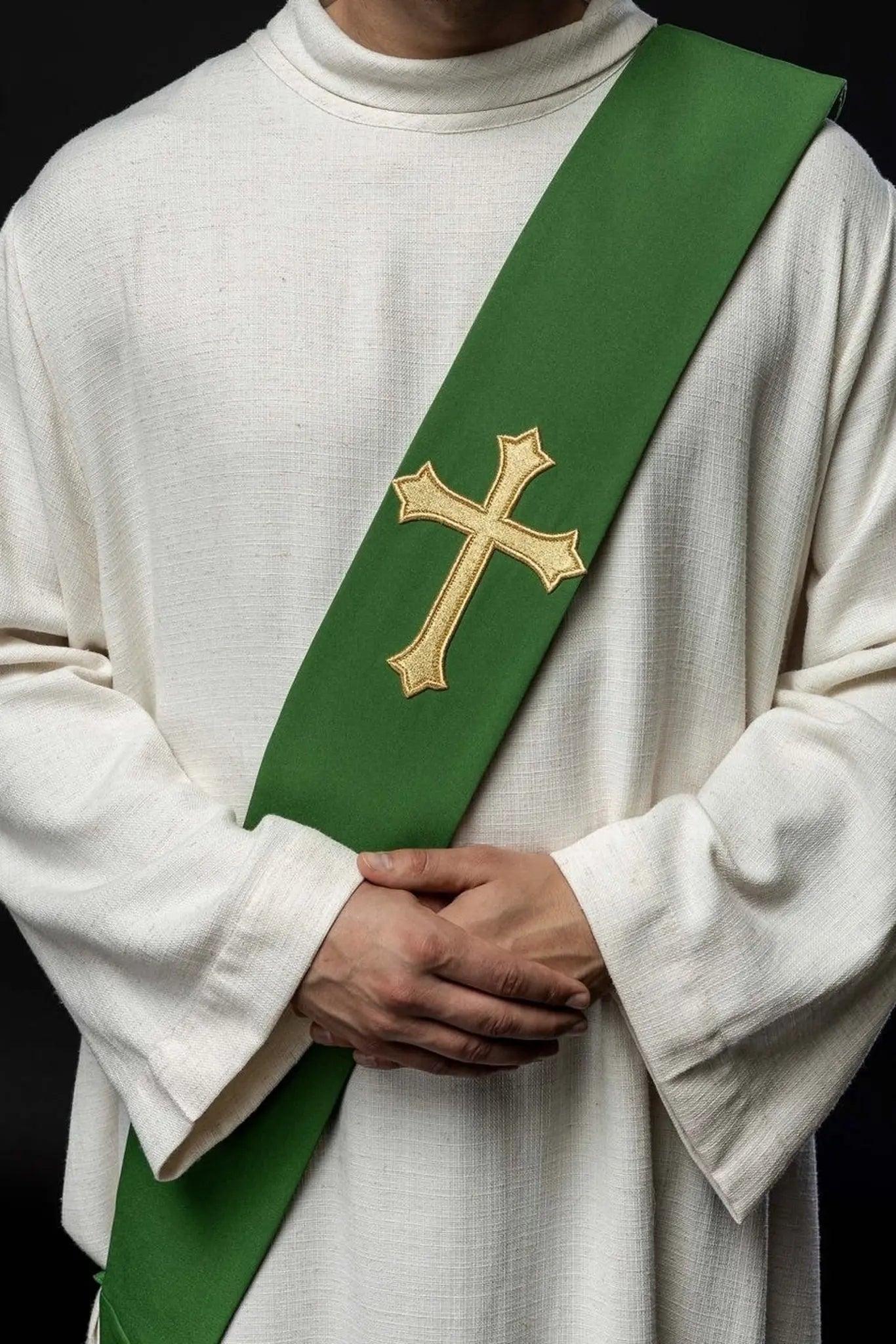
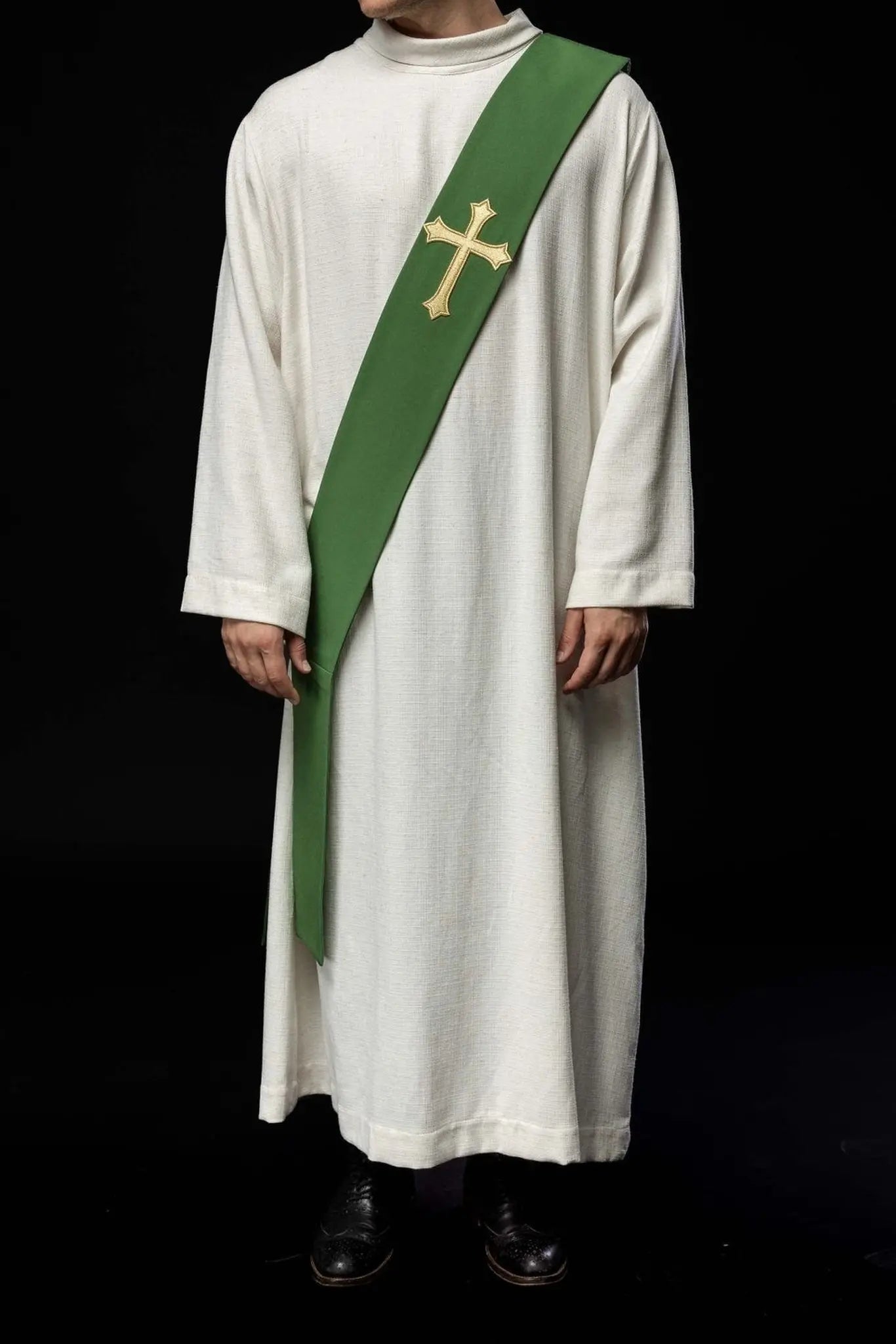
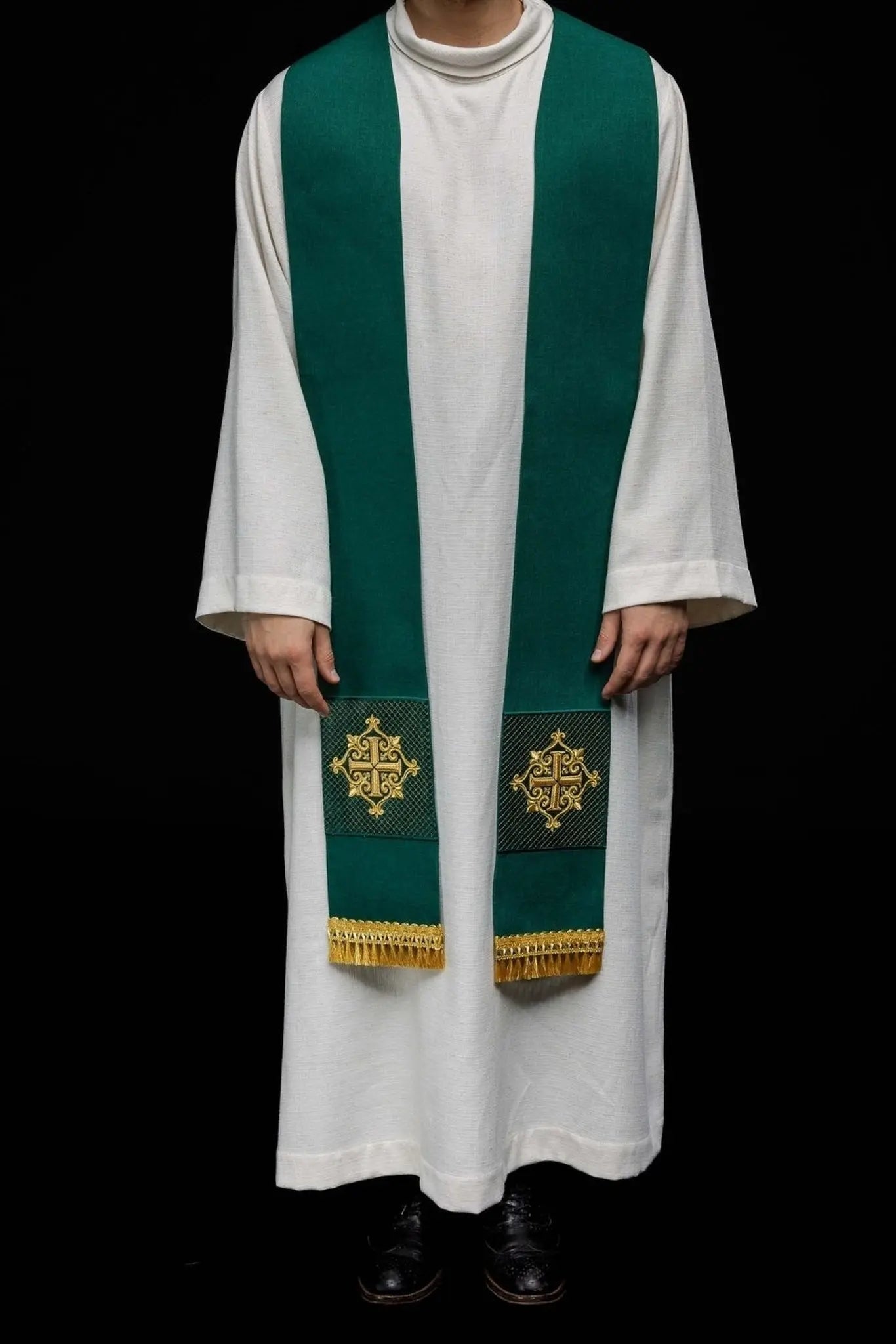
Green stoles may be worn by priests and deacons according to the form proper to their ministry. A priest normally wears the stole around the neck, with both ends hanging down in front. A deacon wears a diagonal stole from one shoulder across the body. If you are specifically looking for diagonal cuts and deacon styles, compare this collection with deacon stoles. This distinction matters because the color may be the same, but the shape and liturgical use are different.
What belongs in this collection
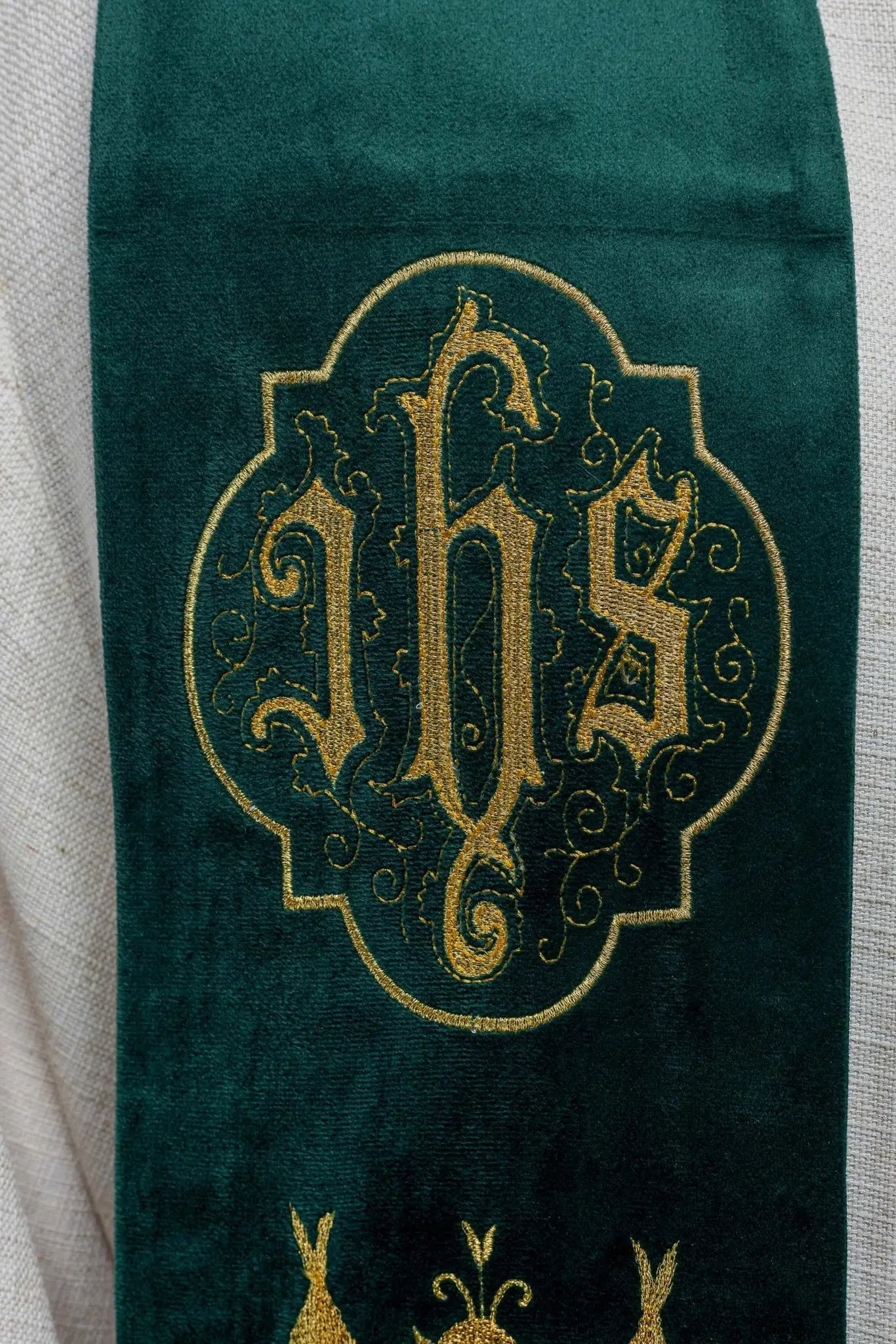
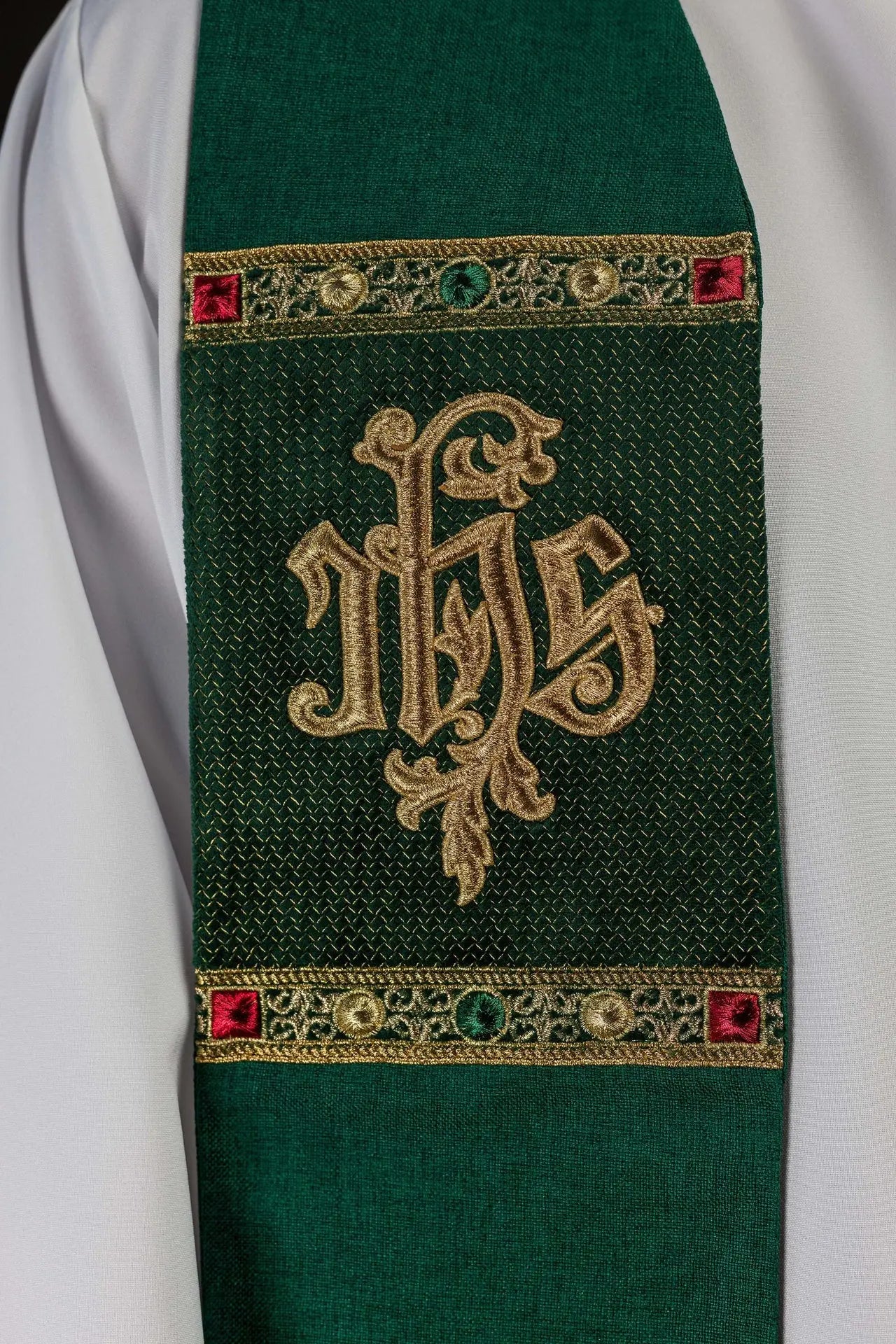
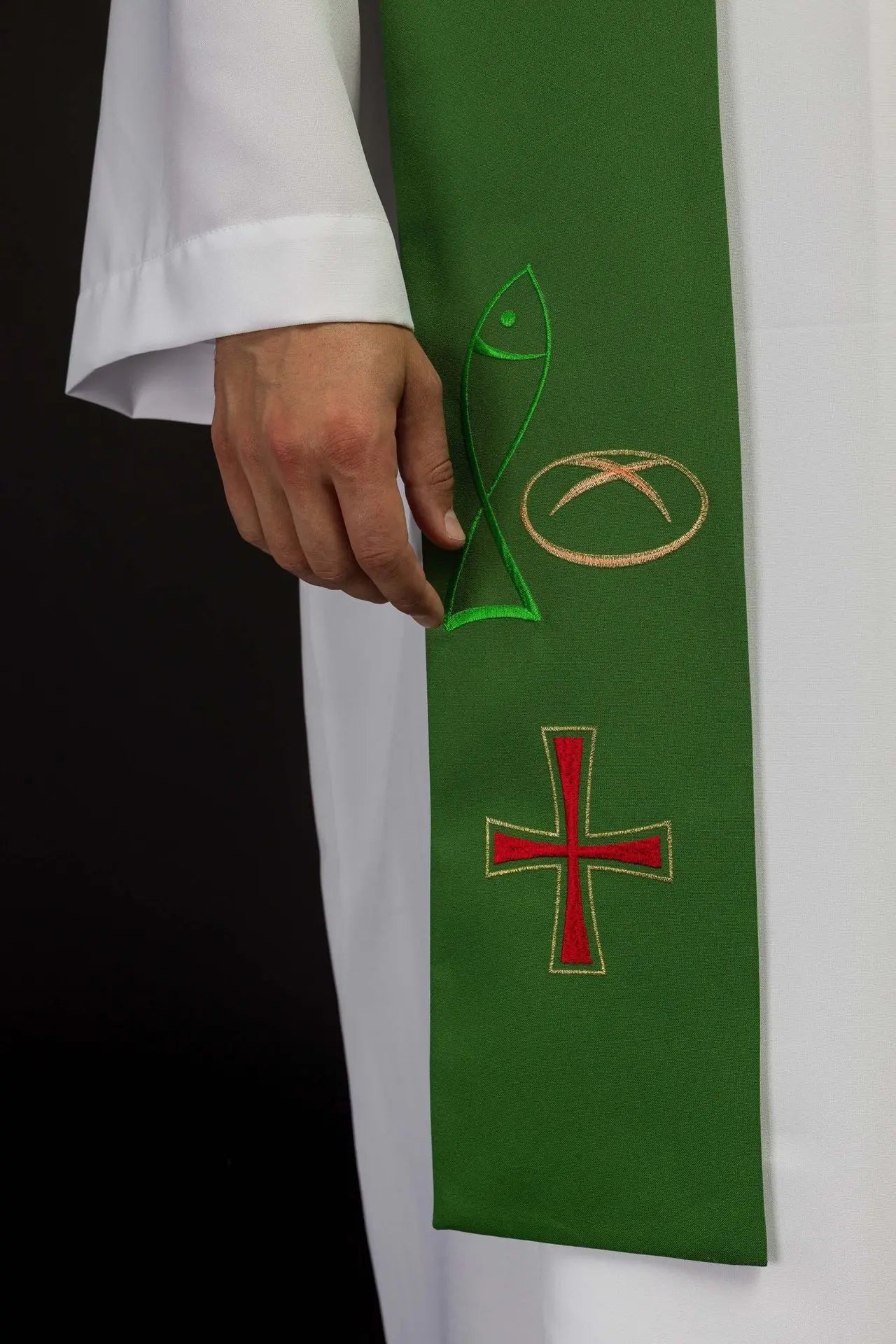
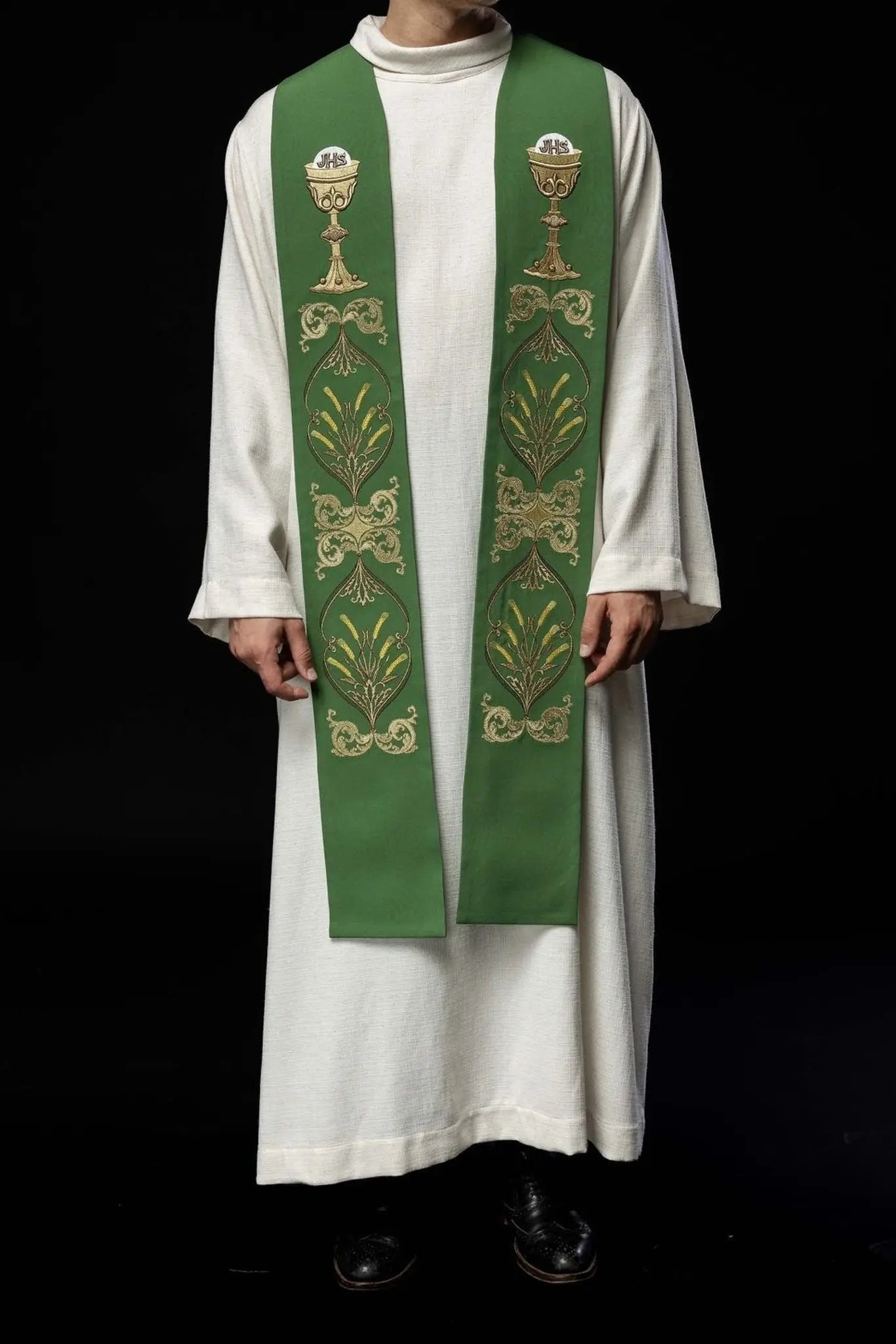
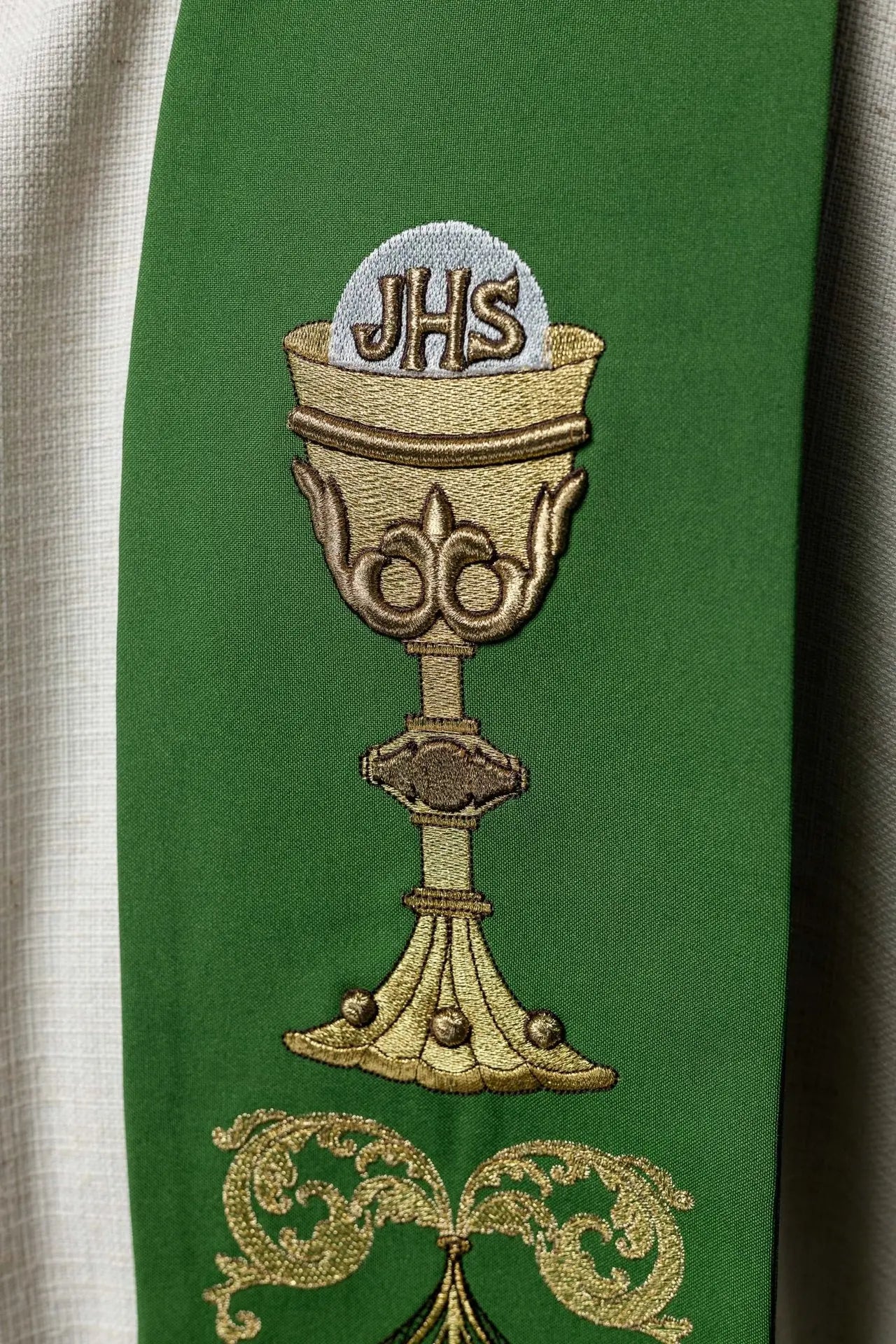
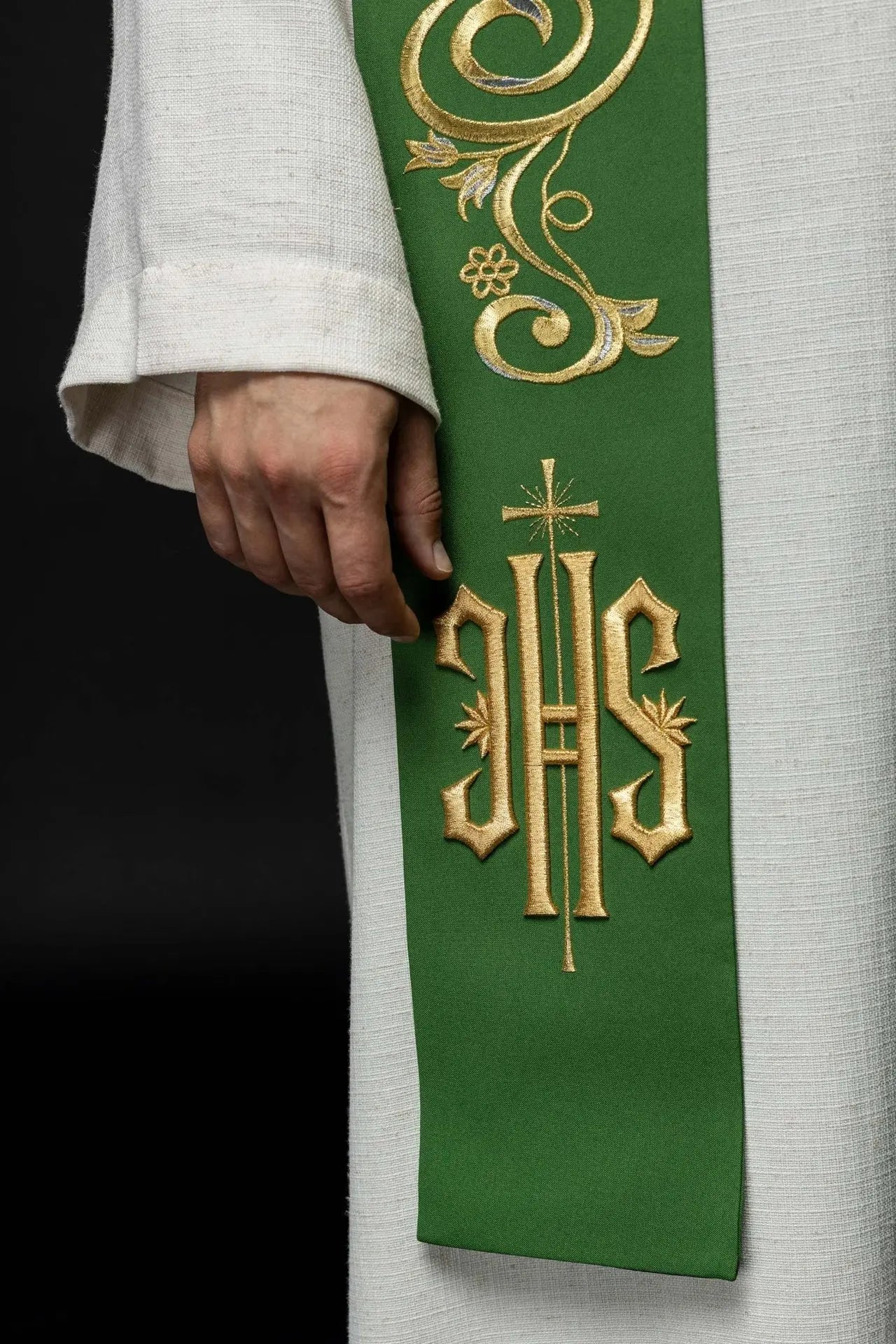
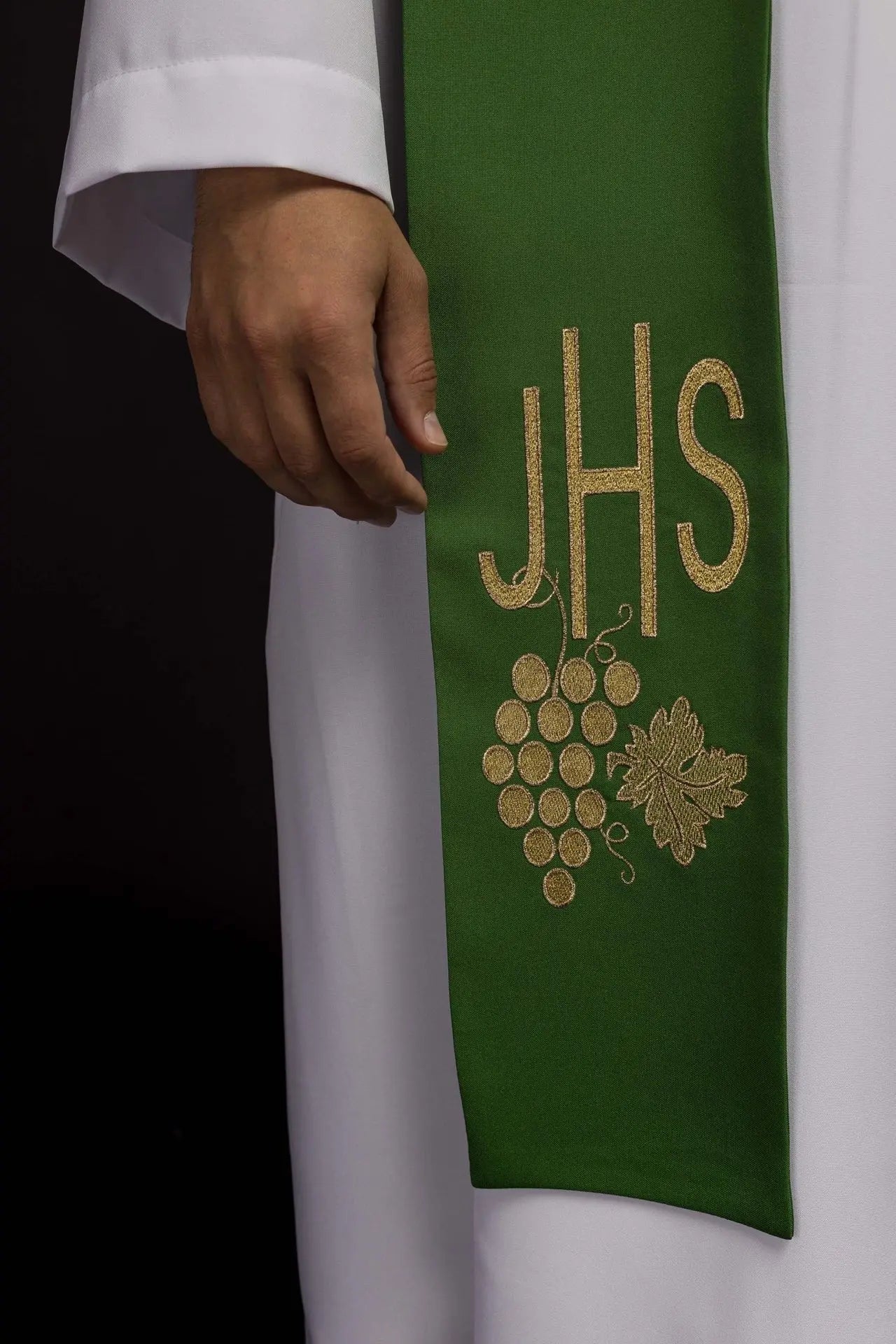
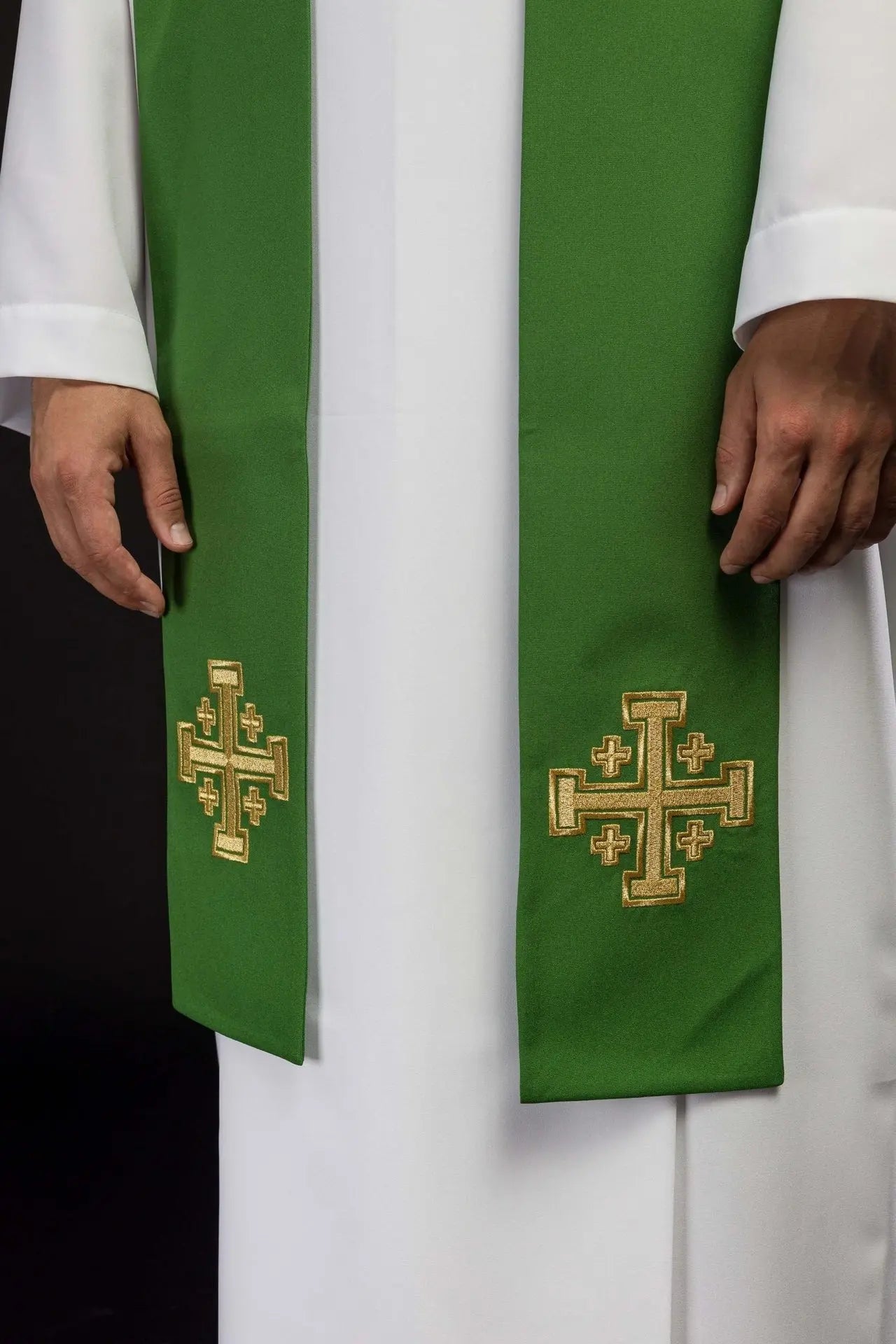
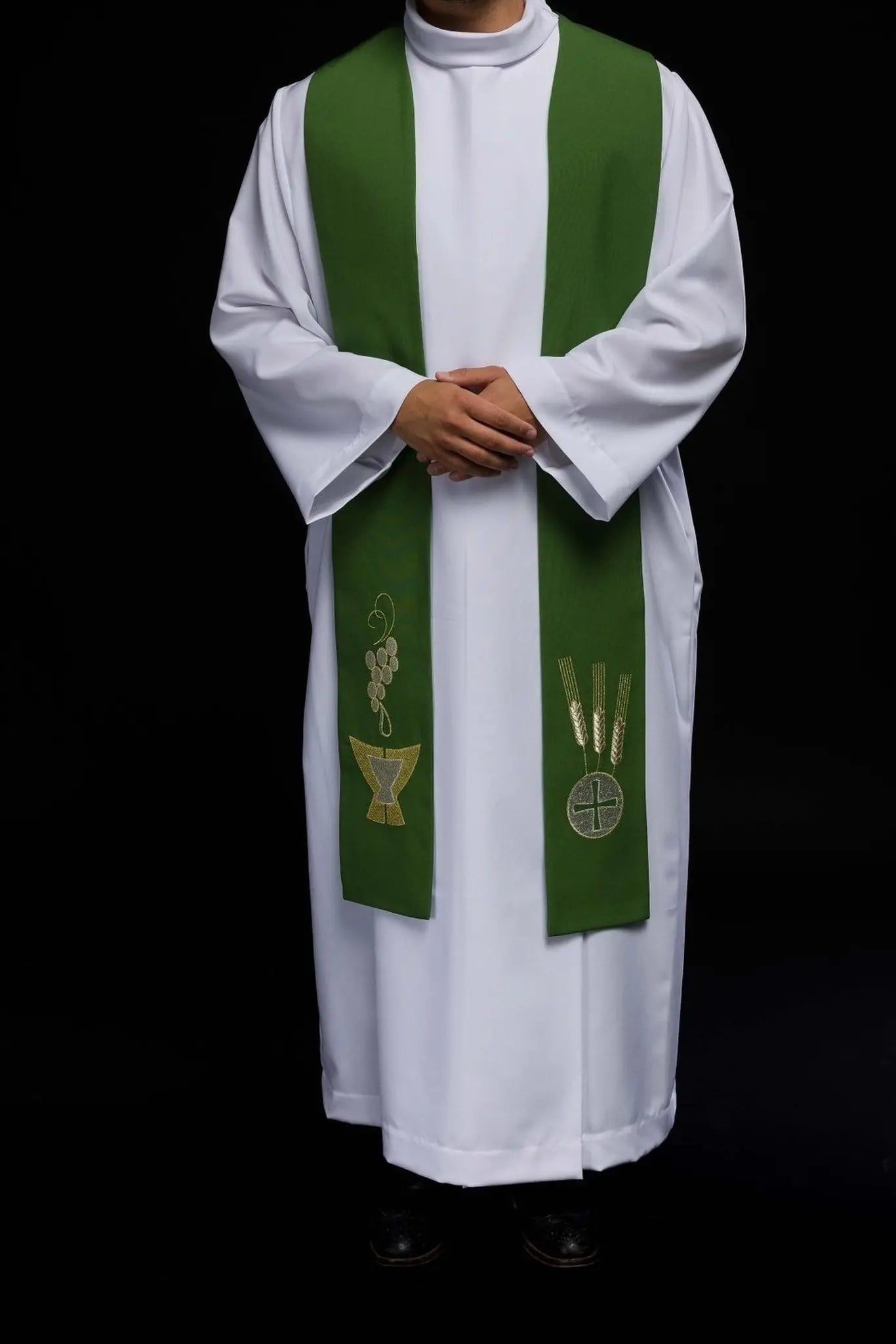
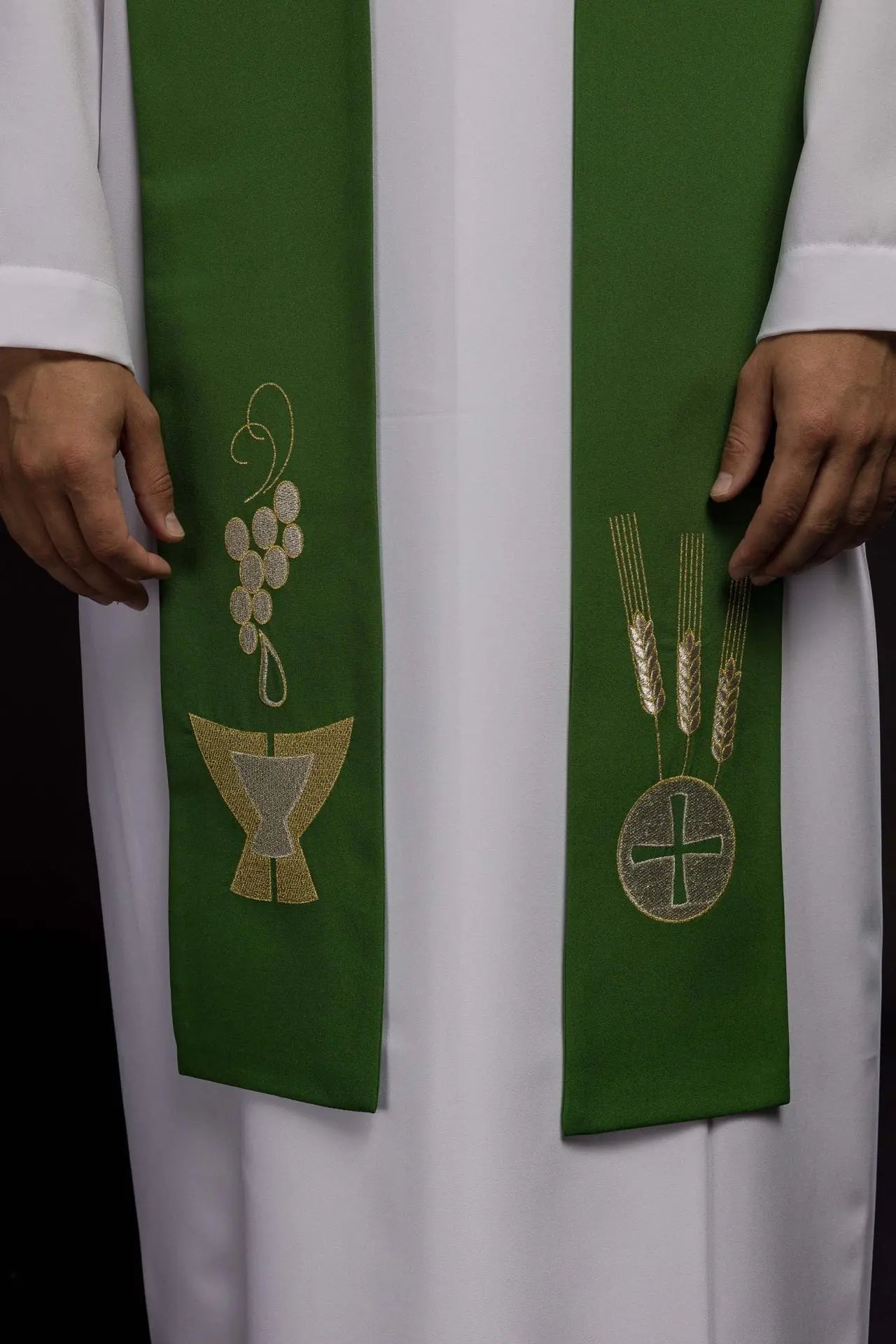
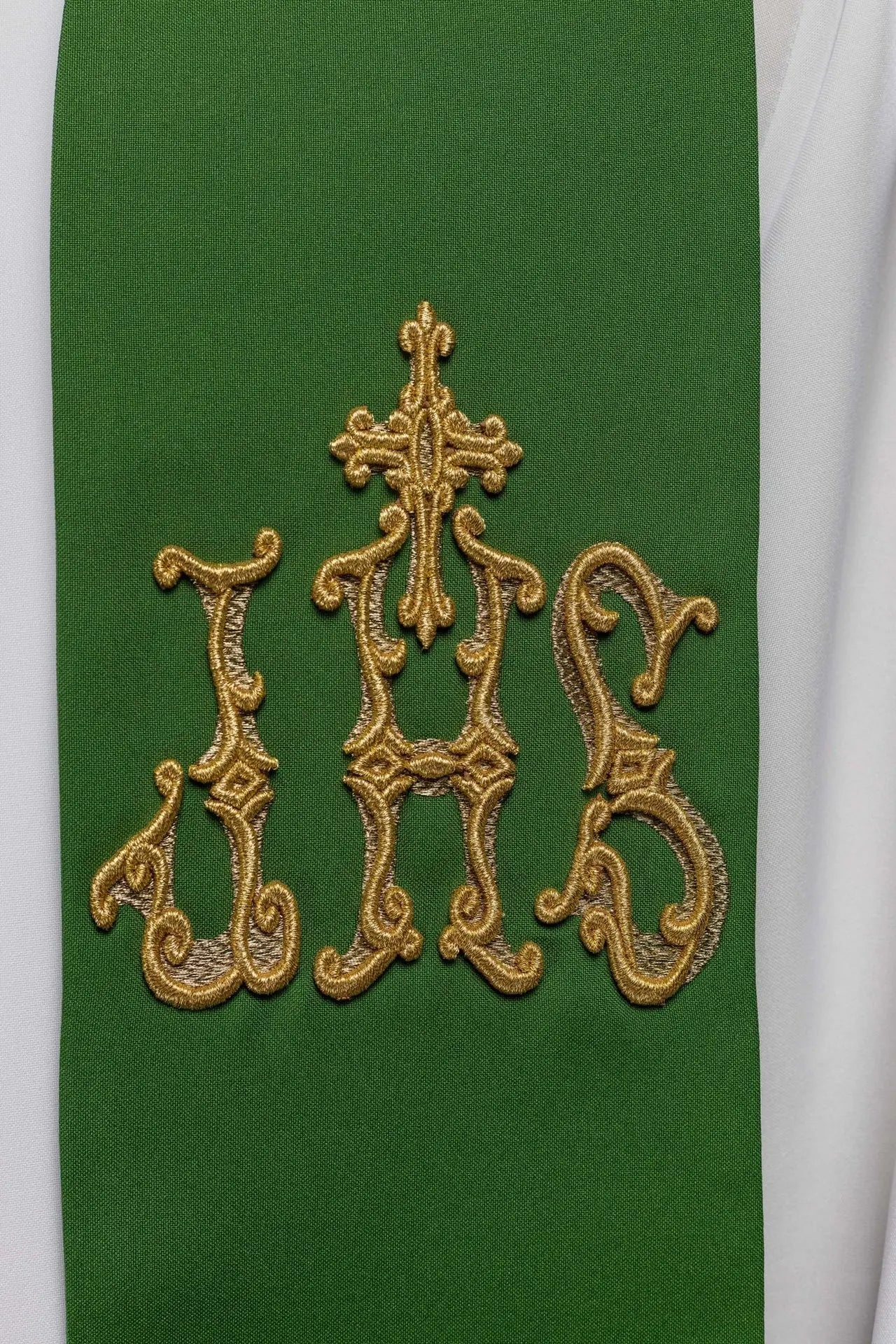
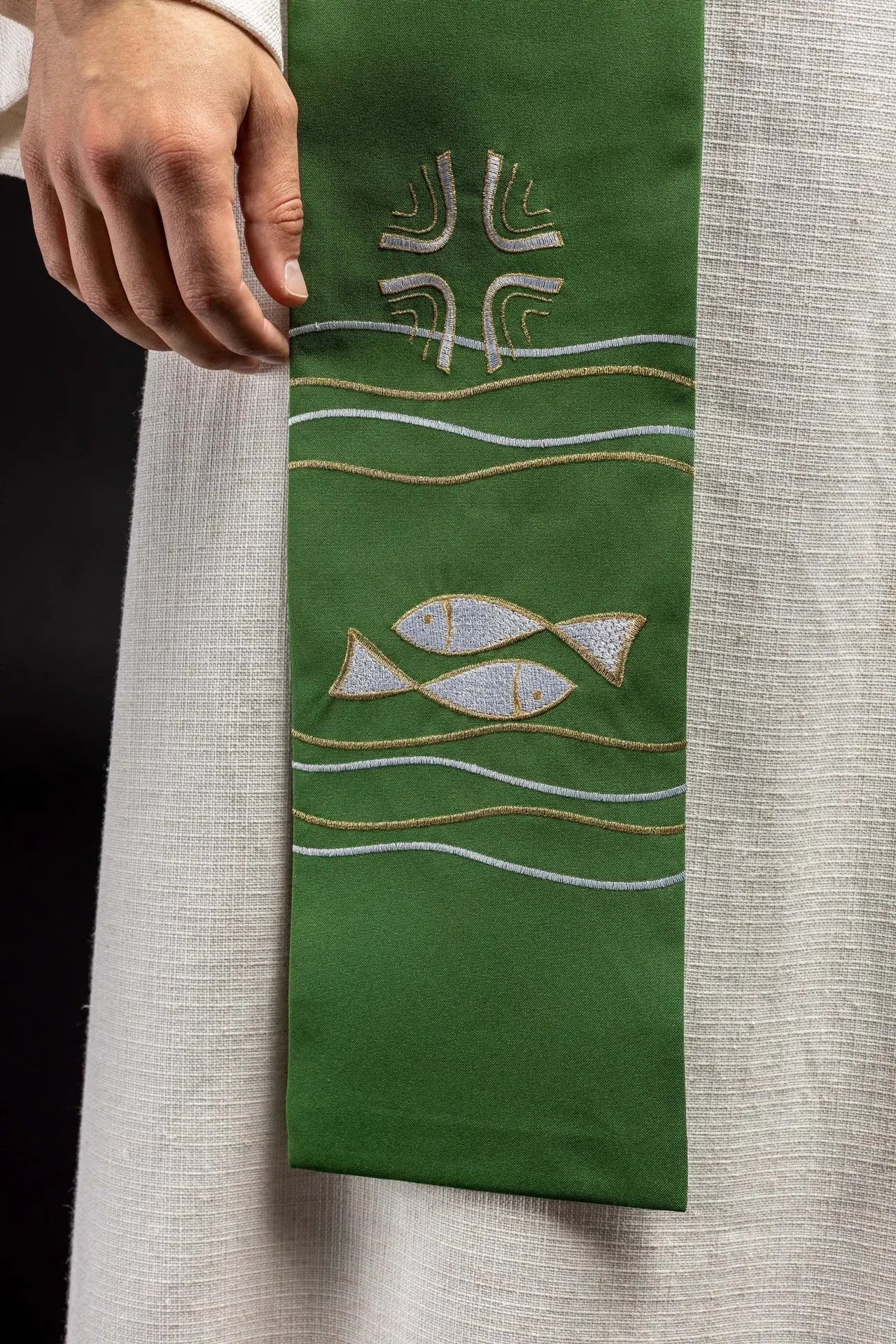
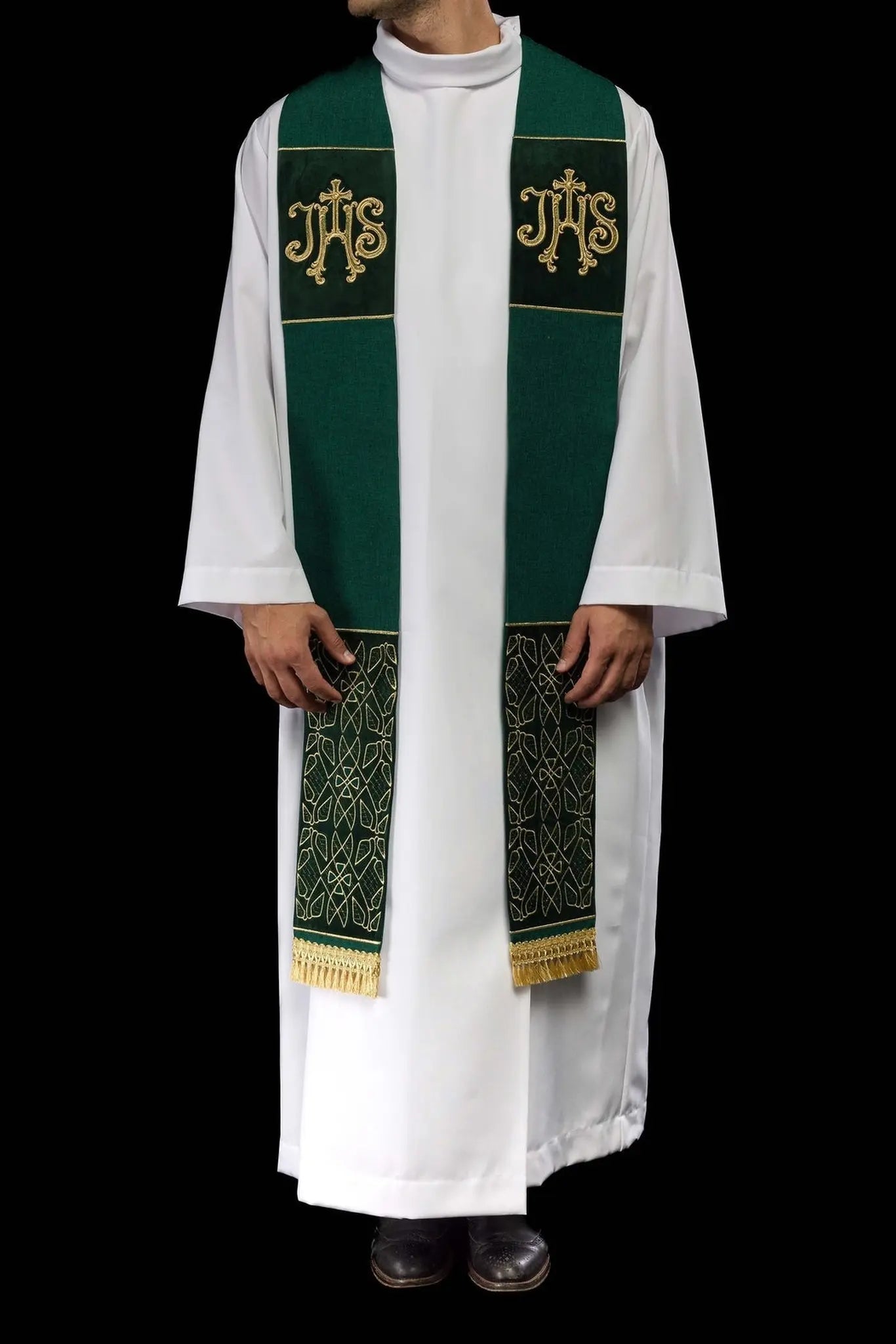
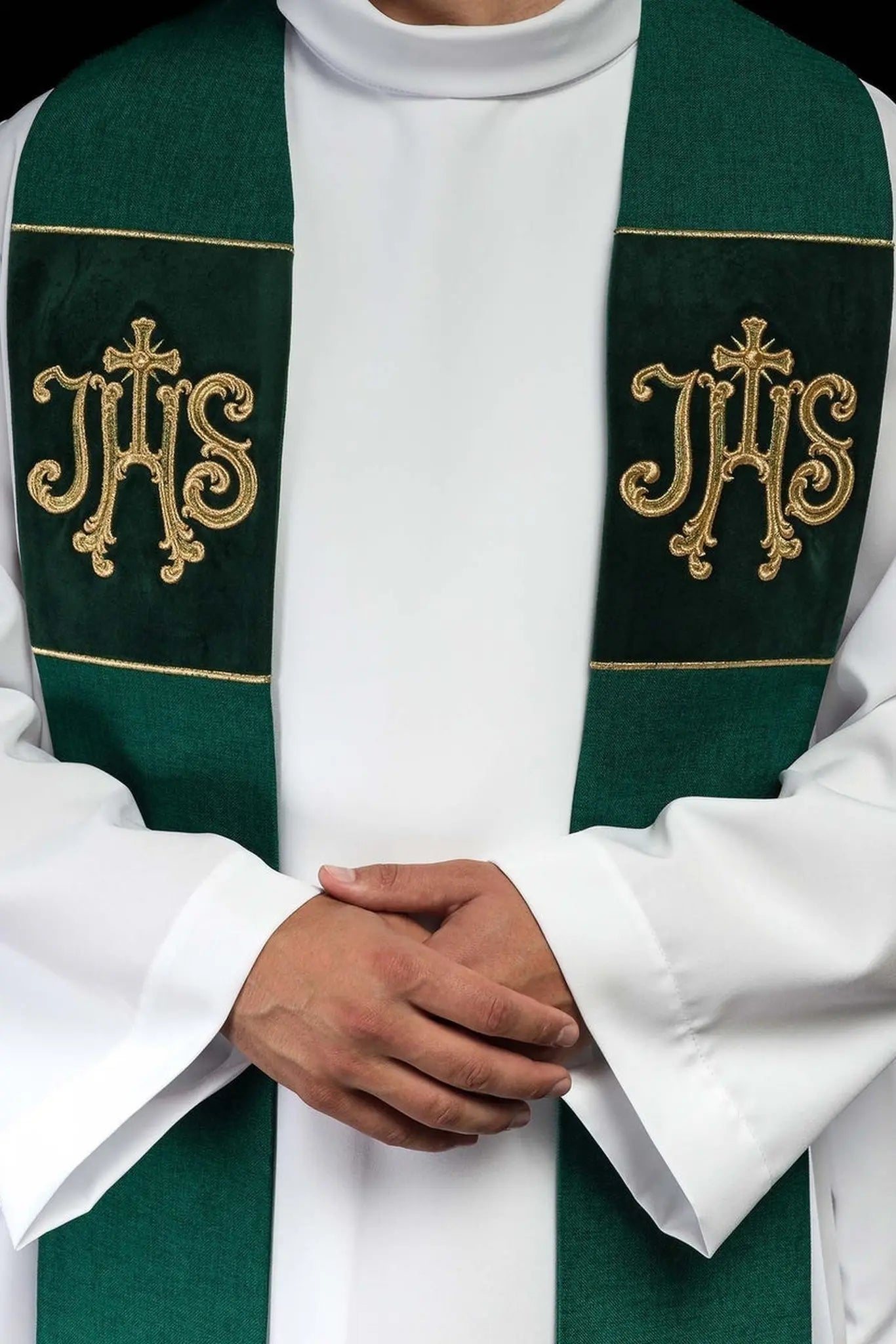
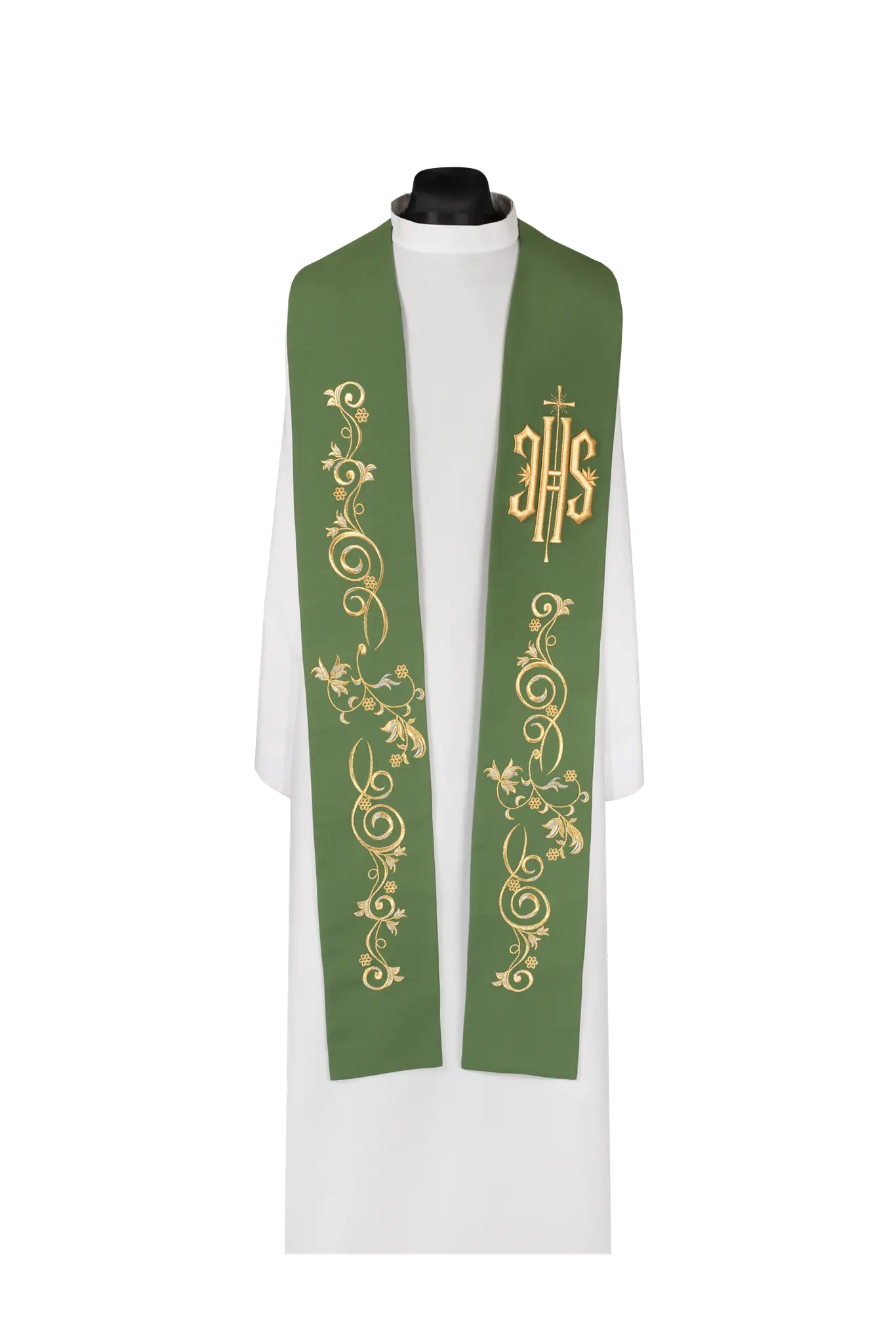
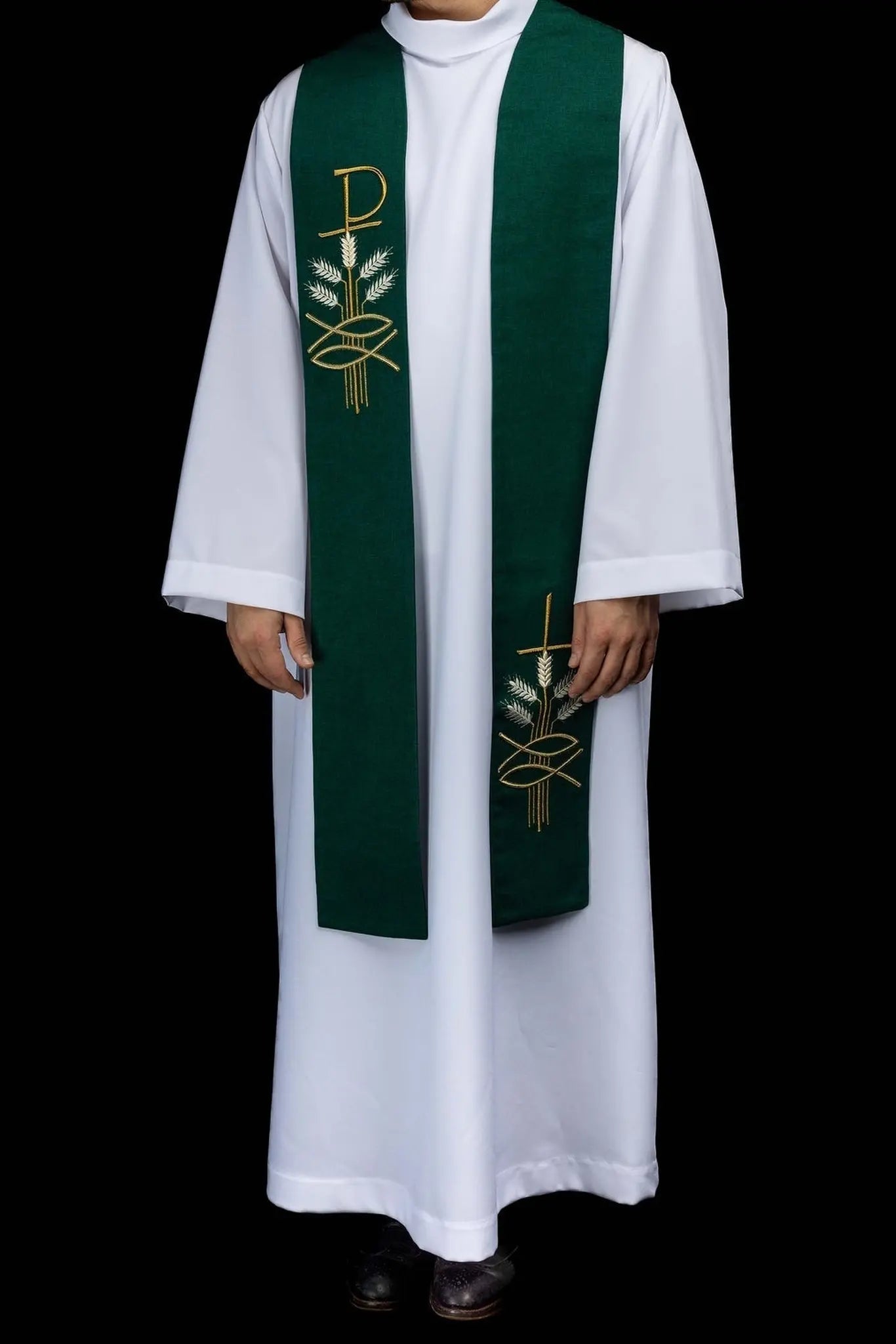
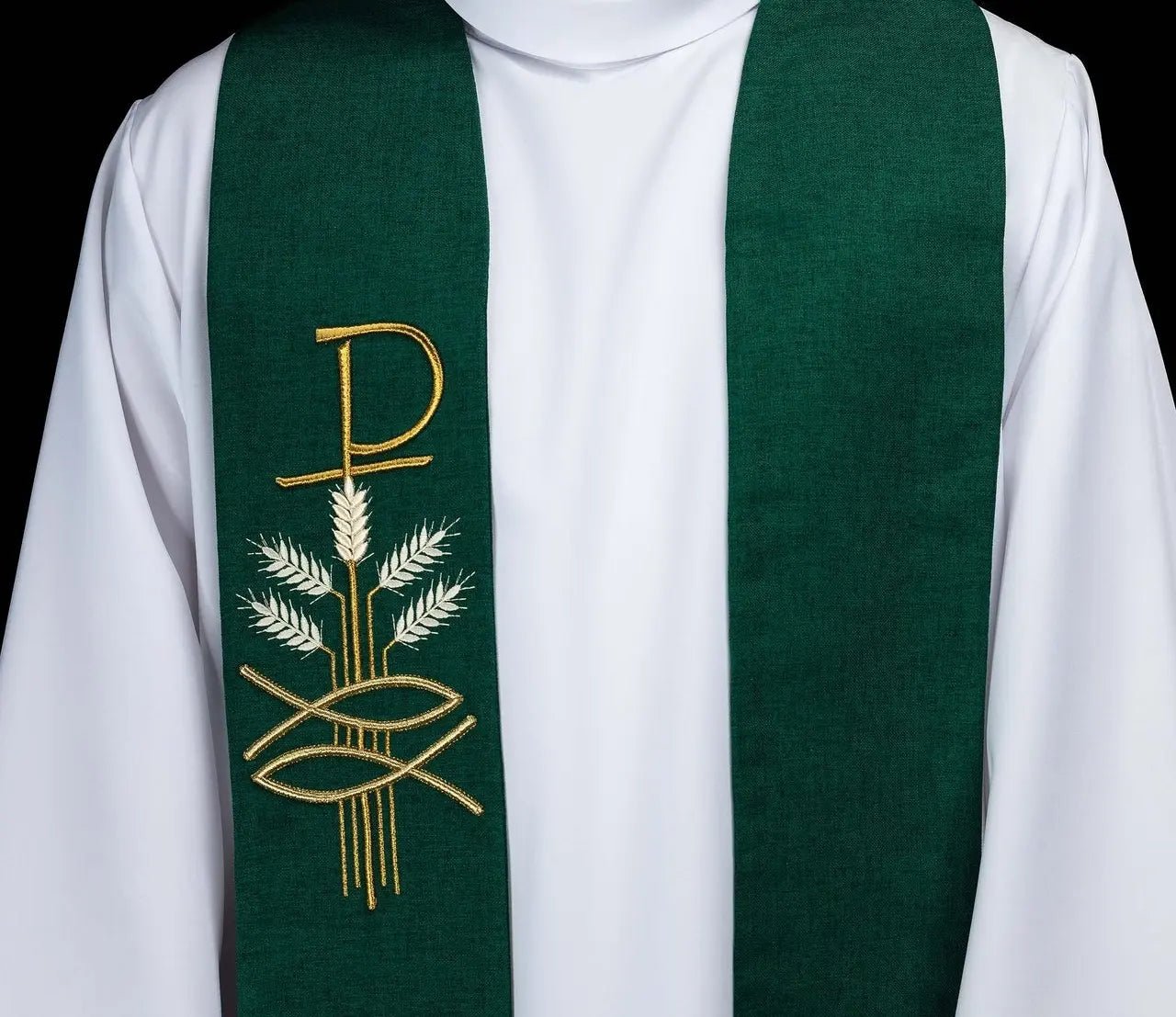
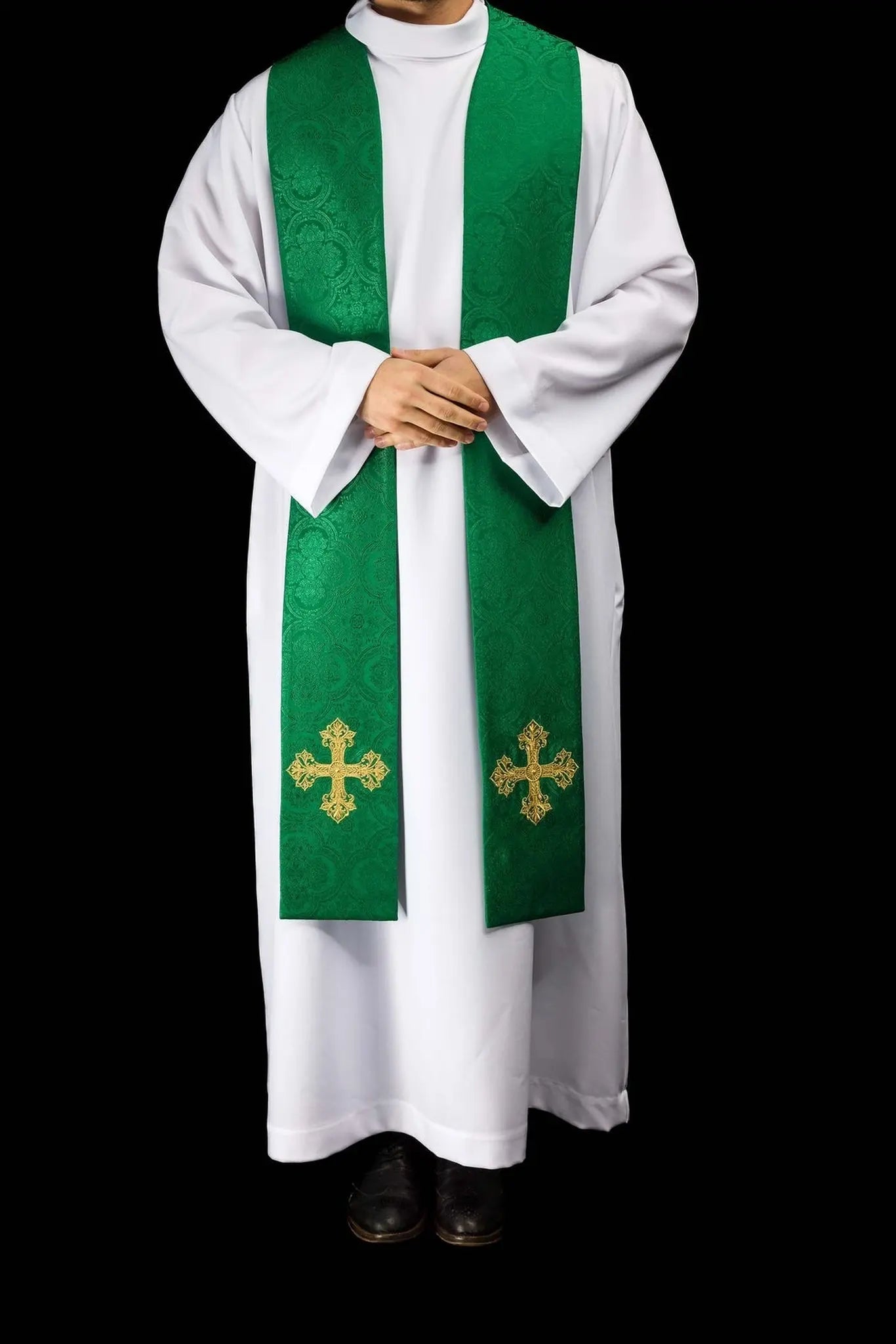
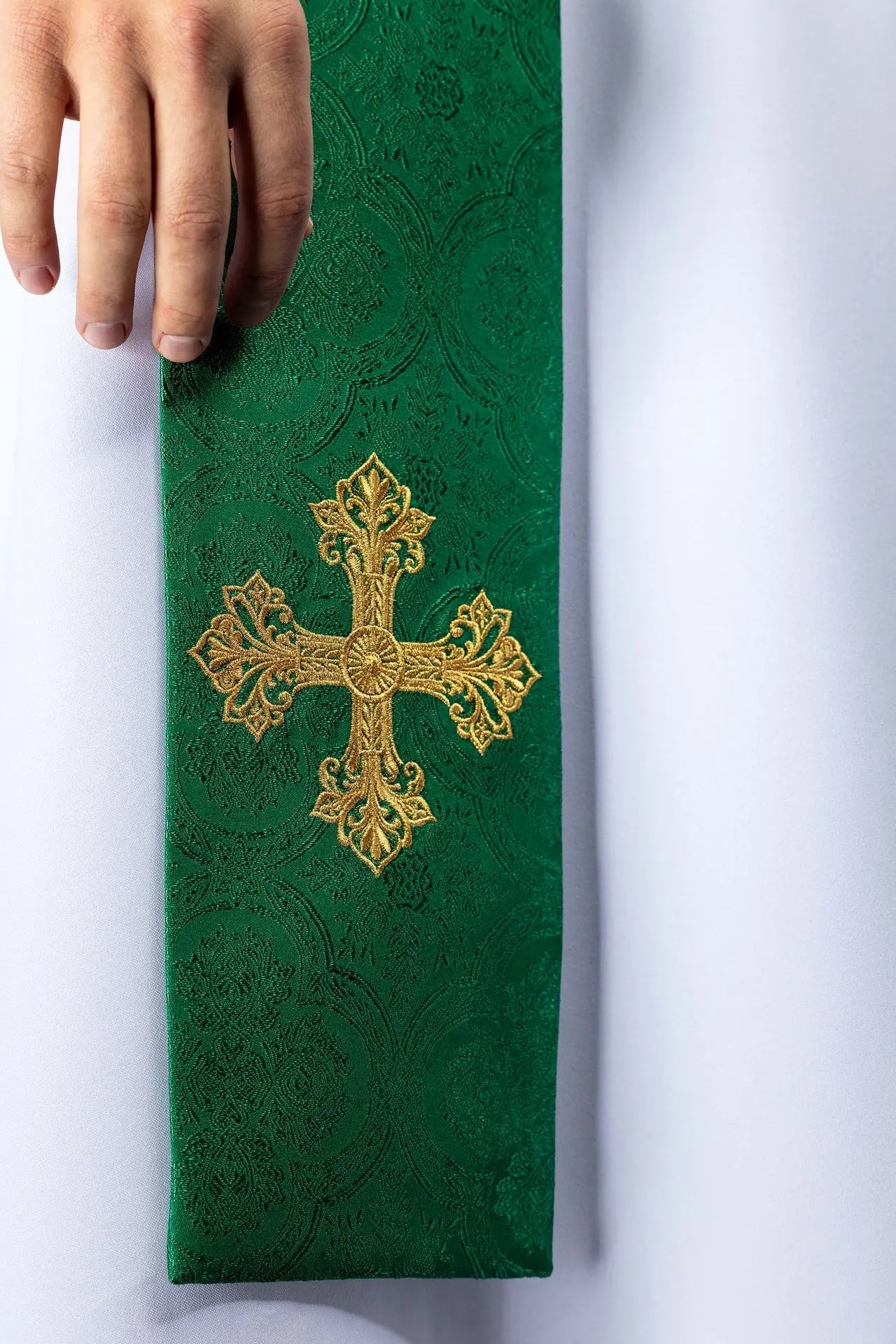
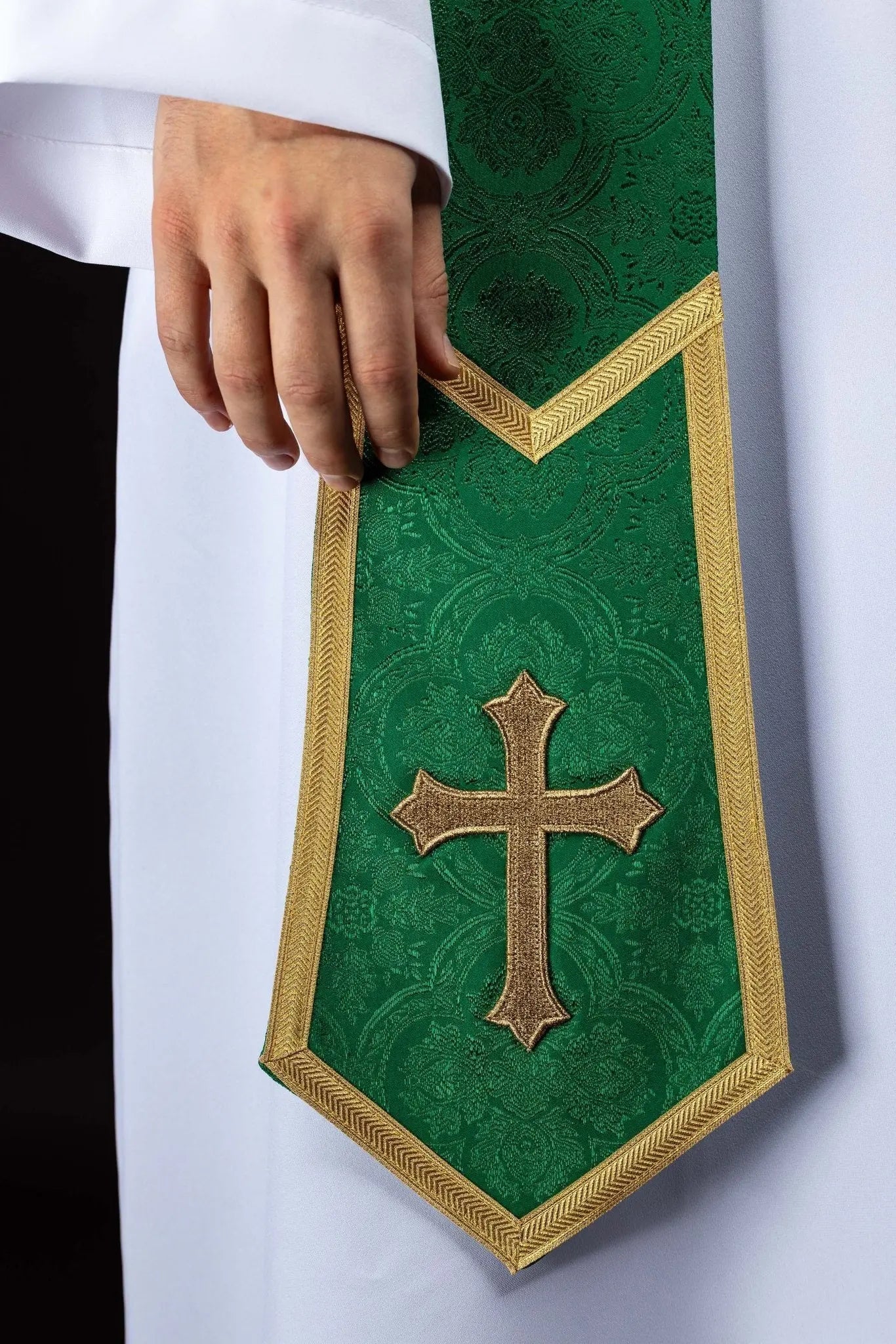
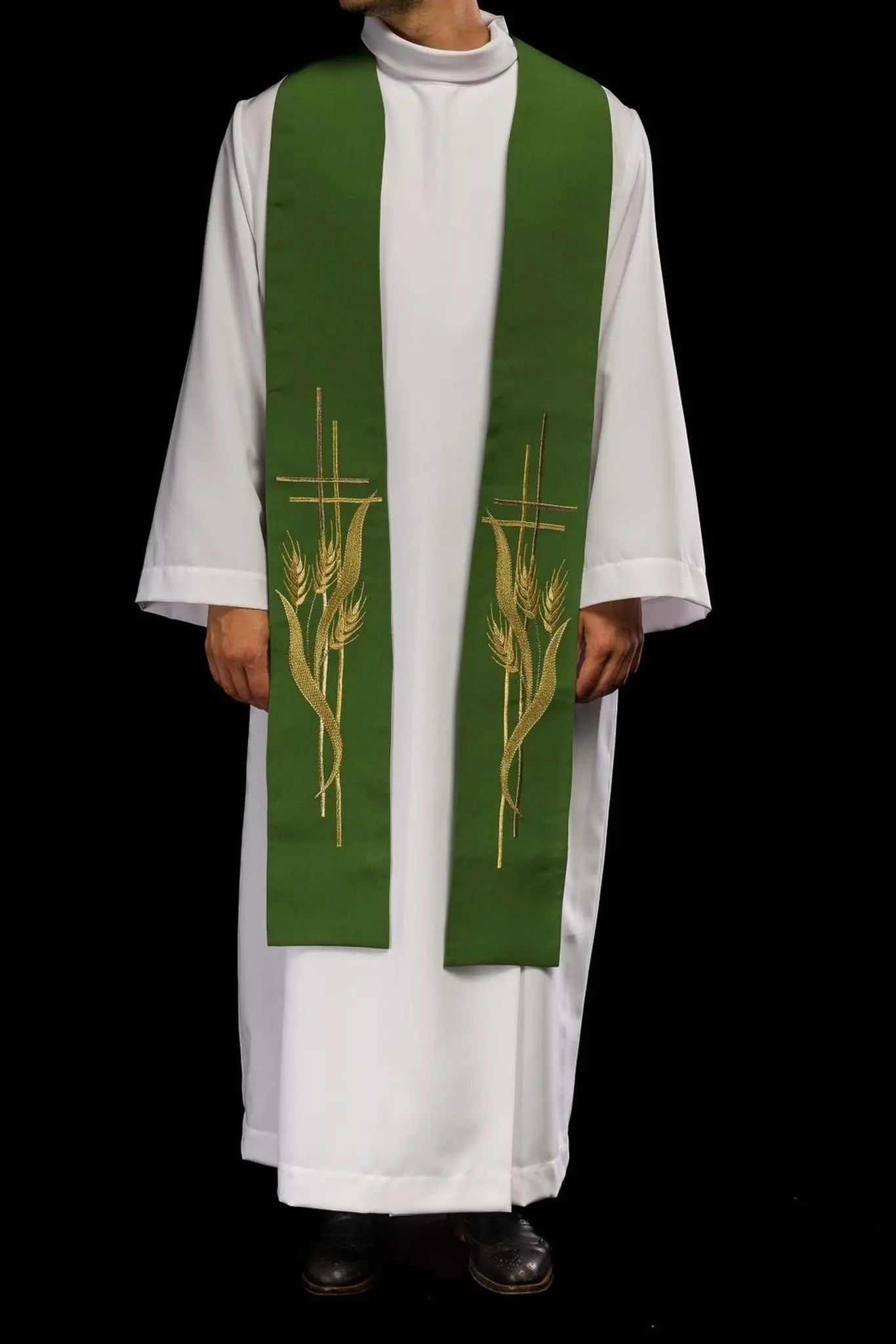
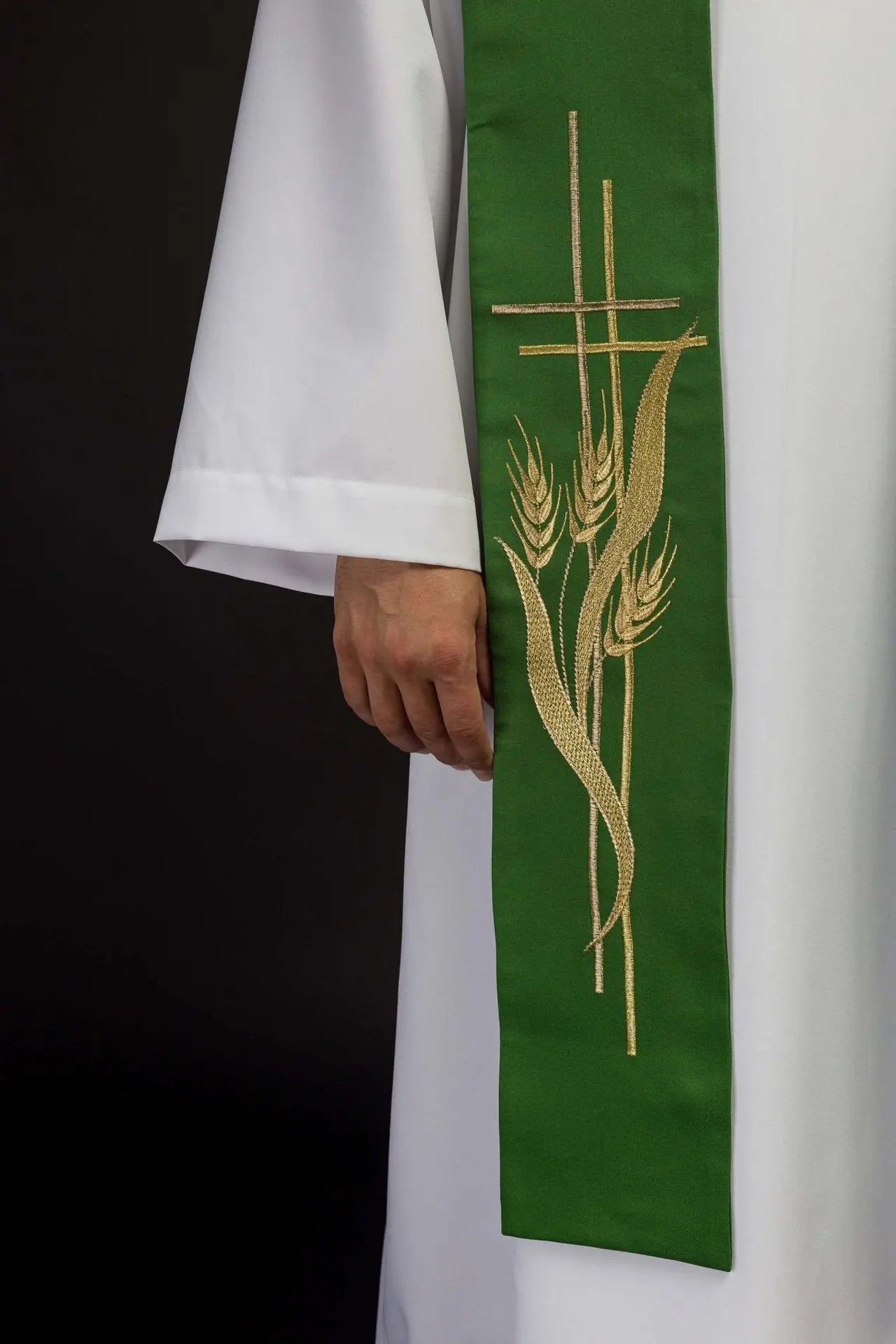
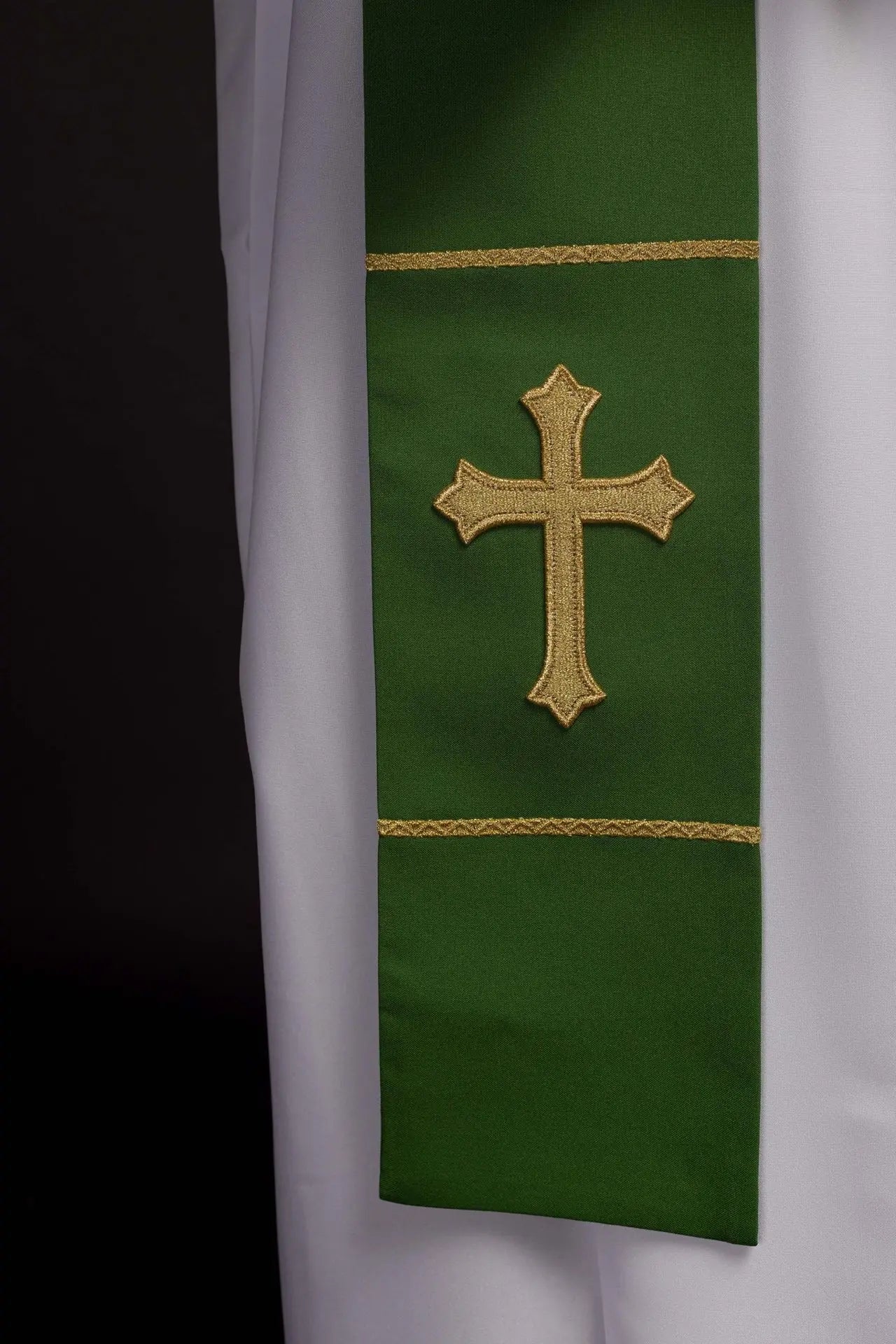
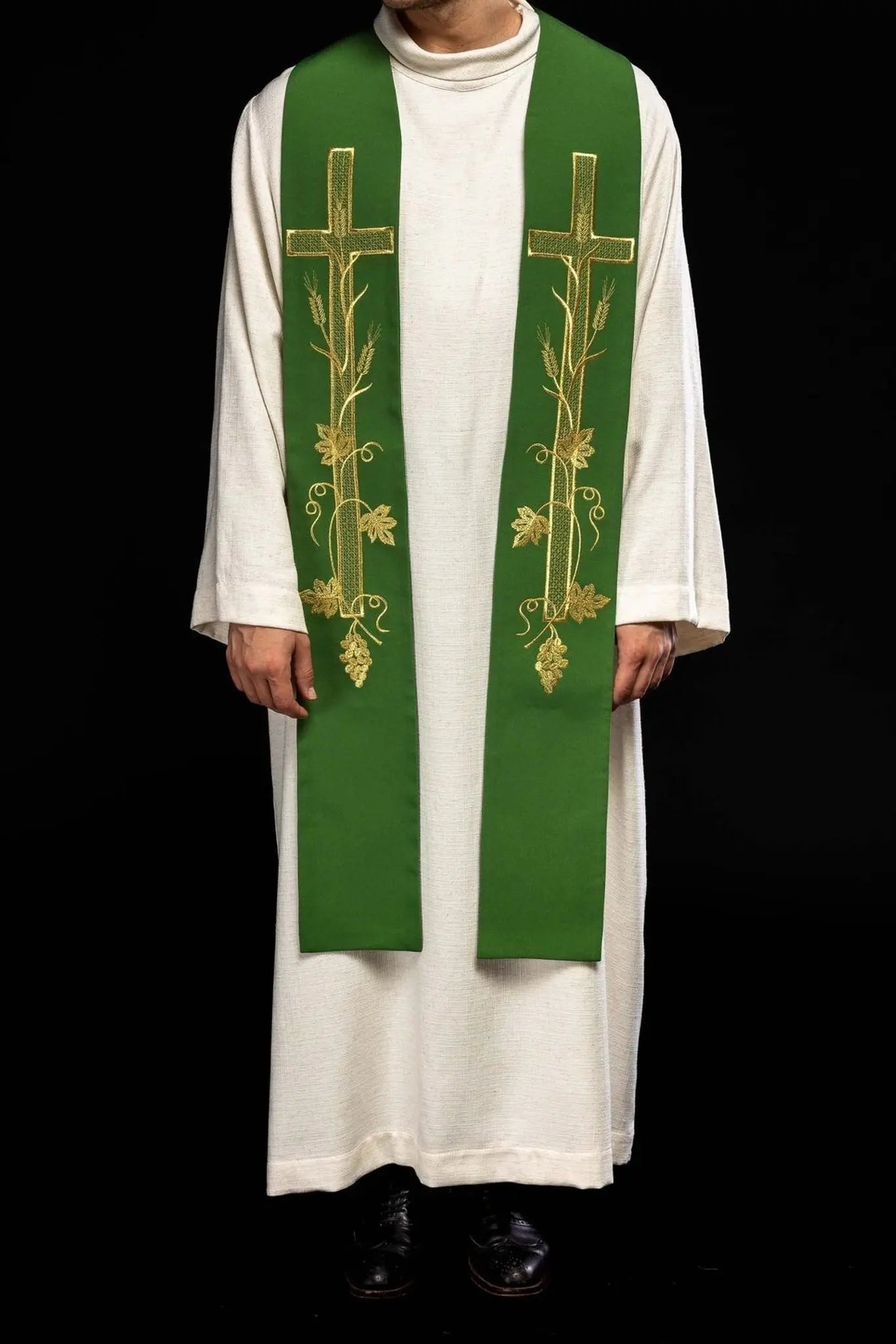
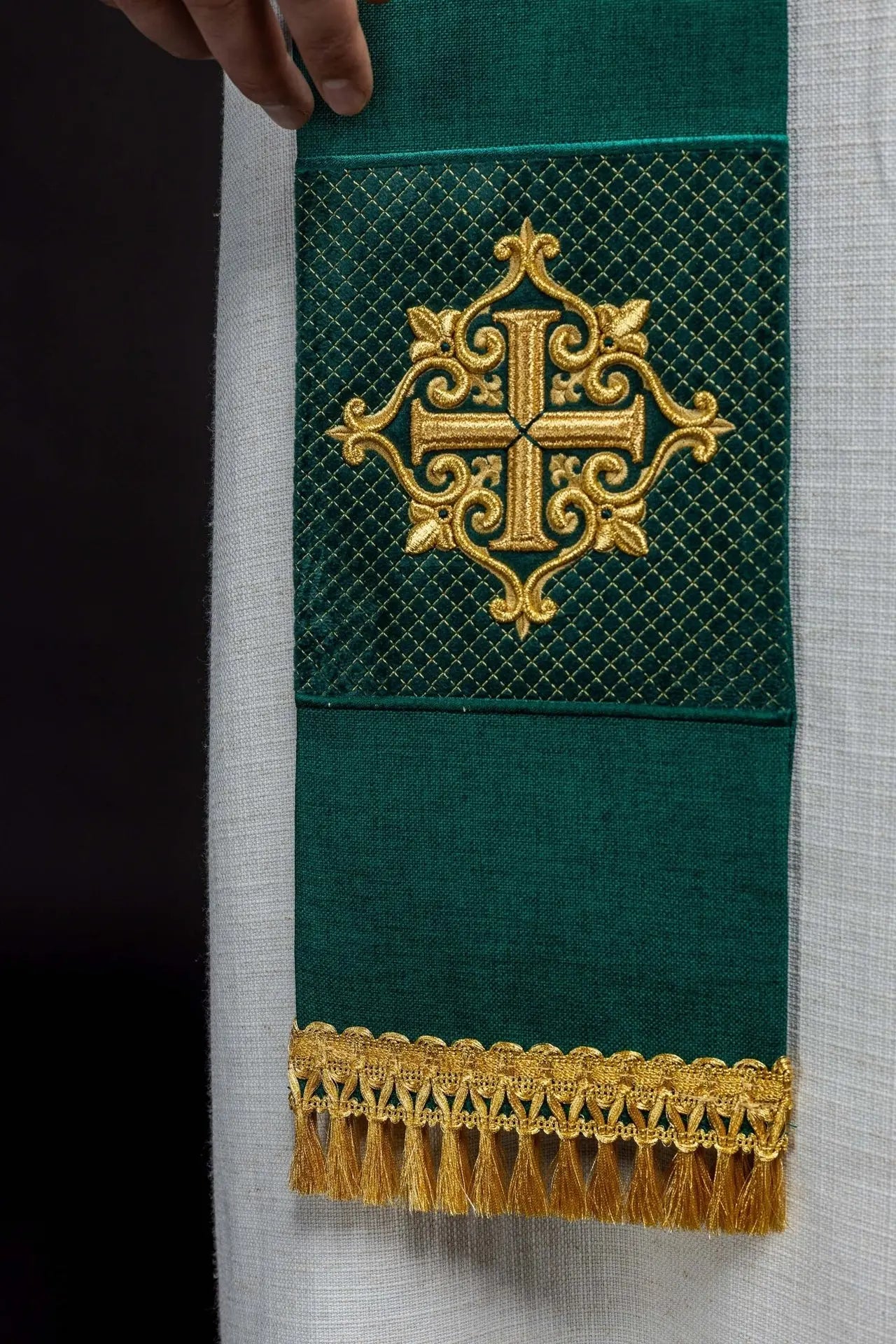
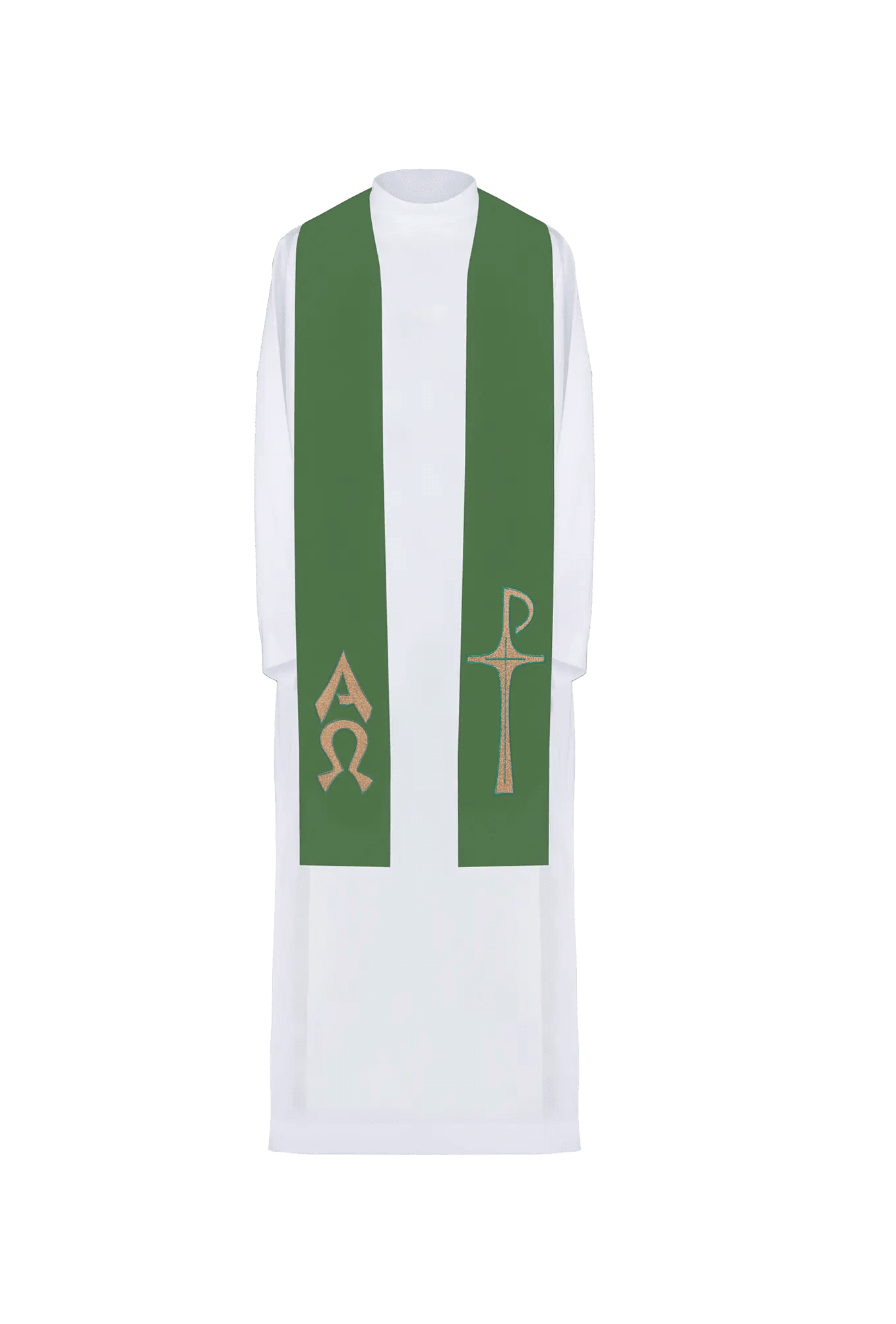
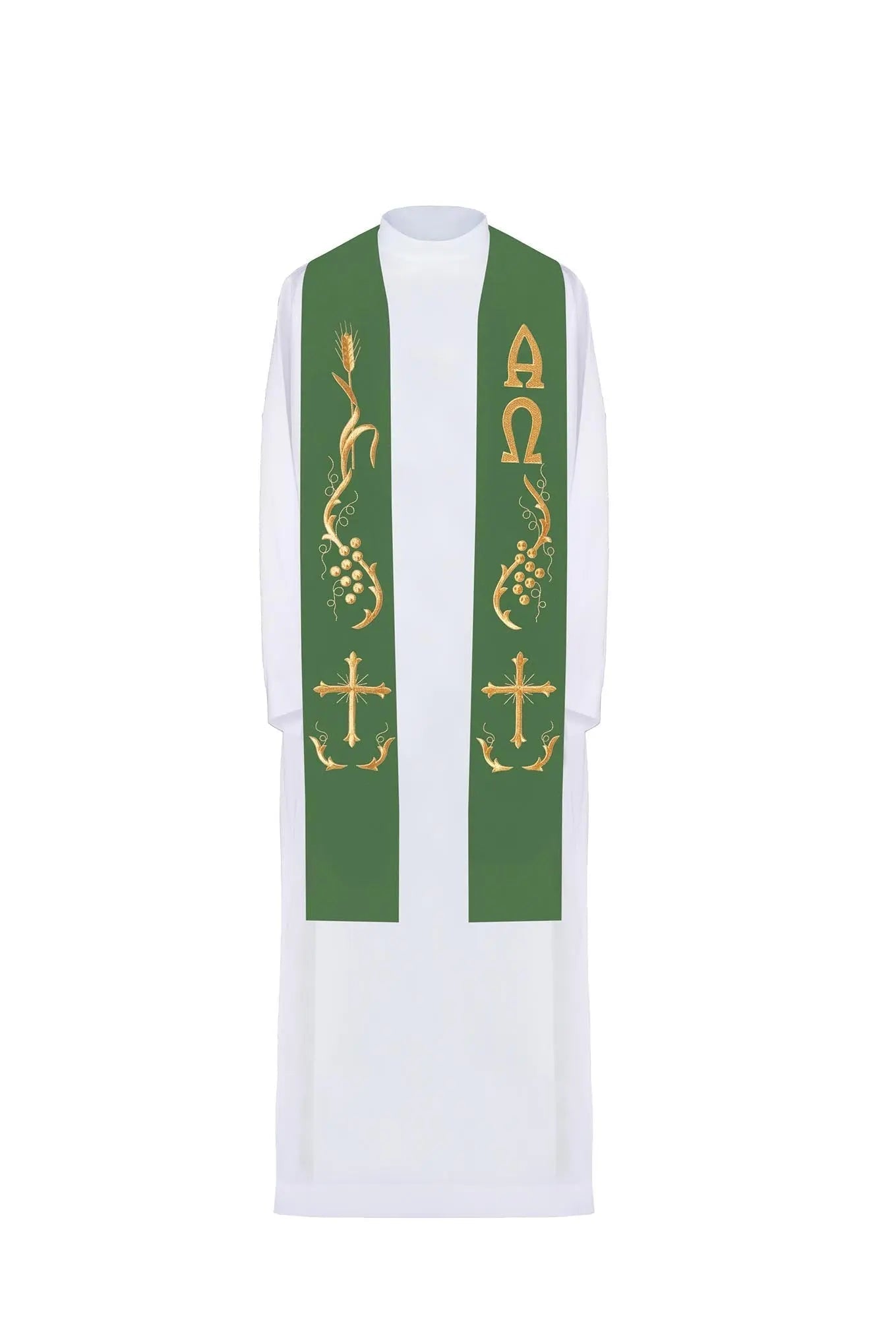
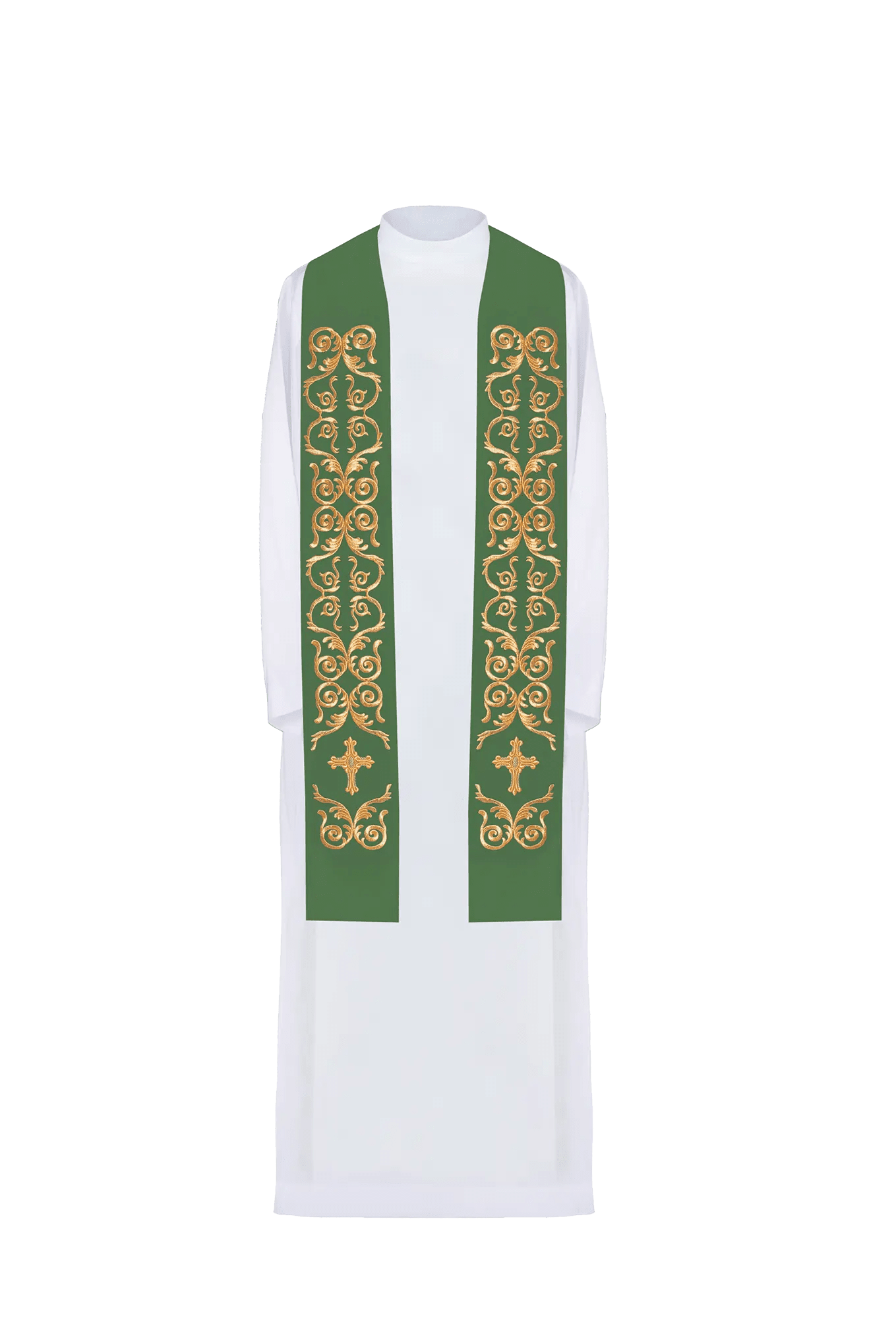
This collection is focused on green stoles for clergy. It may include simple green stoles for regular parish use, more ornate embroidered stoles for Sundays and solemn celebrations within Ordinary Time, and designs with crosses, Eucharistic symbolism, plant motifs, or other sacred decoration. Some stoles are intentionally restrained, allowing the color and cut to carry the message. Others use gold, cream, or tonal embroidery to add emphasis while remaining suitable for the green season.
The collection is not a general category for every green church textile. A stole is worn by an ordained minister, while a chasuble is the outer vestment of the priest celebrant at Mass, and a pulpit cover, chalice veil, or altar linen has a different function. Keeping these categories clear helps parishes order what they actually need. A green stole may be purchased as a single replacement, as part of a coordinated priestly set, or as a practical addition for confession, blessings, hospital ministry, catechetical celebrations, and weekday Mass.
When browsing the wider category of clergy stoles, color is one of the most important filters. Green is the everyday workhorse of the liturgical year. Red stoles serve celebrations connected with the Holy Spirit, martyrs, and Passion themes. Purple stoles are used in penitential seasons and rites. Ecru, white, or gold designs are used for feasts and celebrations of joy. Marian and saint themed stoles have more specific devotional uses. This green collection is therefore best understood as the regular seasonal foundation of a clergy stole set.
How to choose the right green stole
When selecting a green stole, begin with the intended use. For frequent parish ministry, a simpler stole with durable fabric and restrained decoration is often the most versatile. It can be used for daily Mass, Sunday liturgies during Ordinary Time, blessings, and pastoral visits without feeling overly formal. For more solemn Sundays, parish feasts that fall within Ordinary Time, or concelebrated liturgies, a richer embroidered stole may be more suitable.
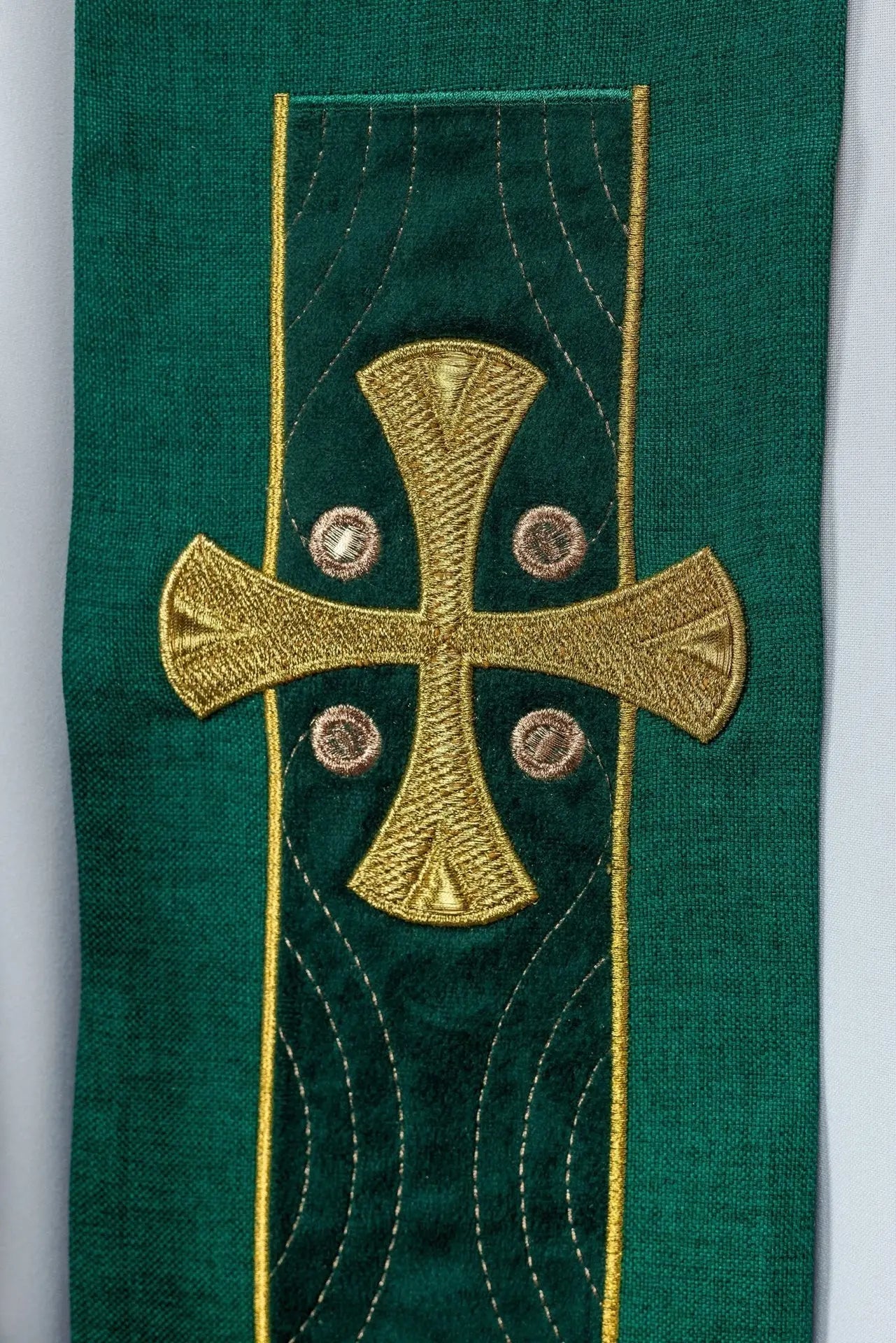
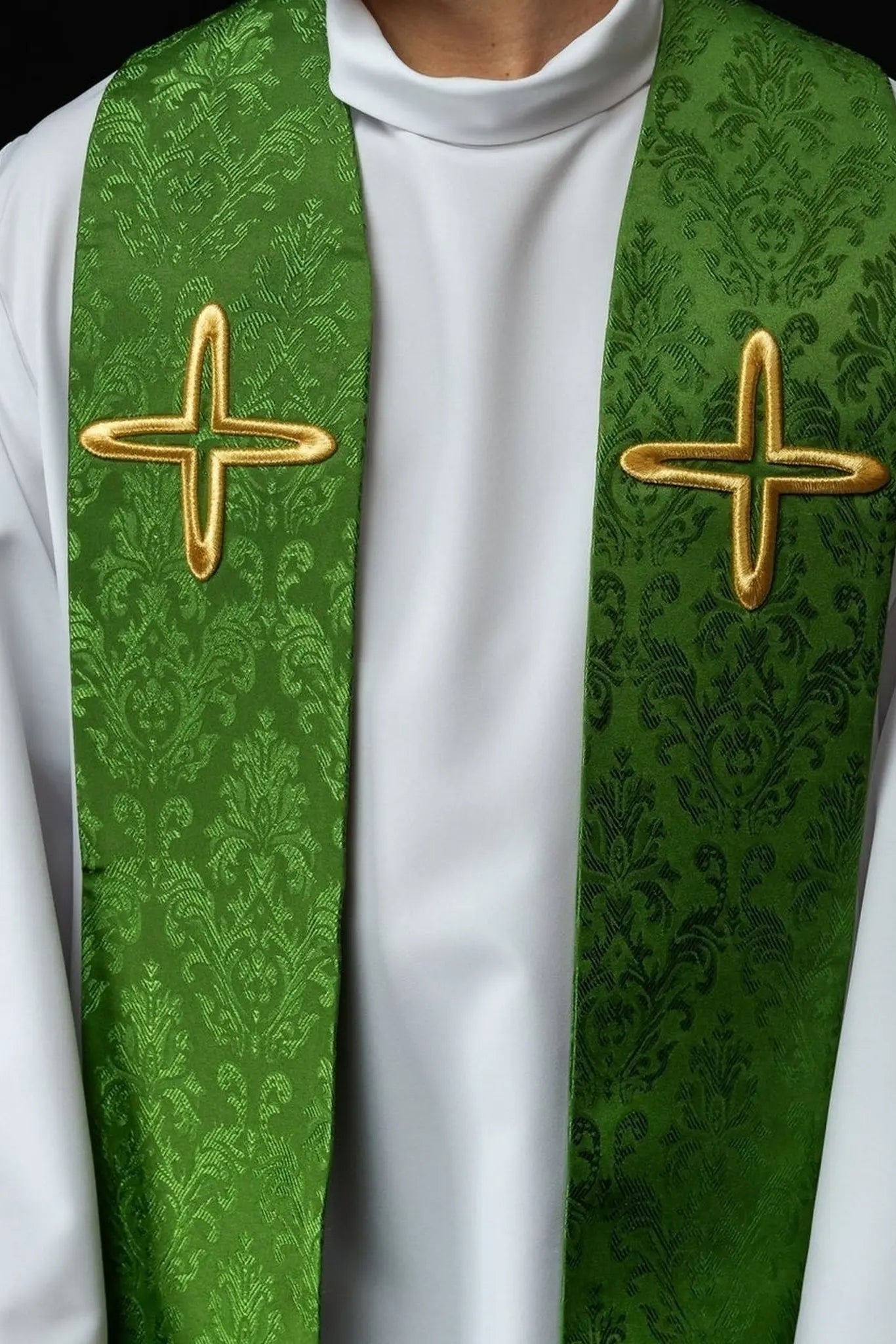
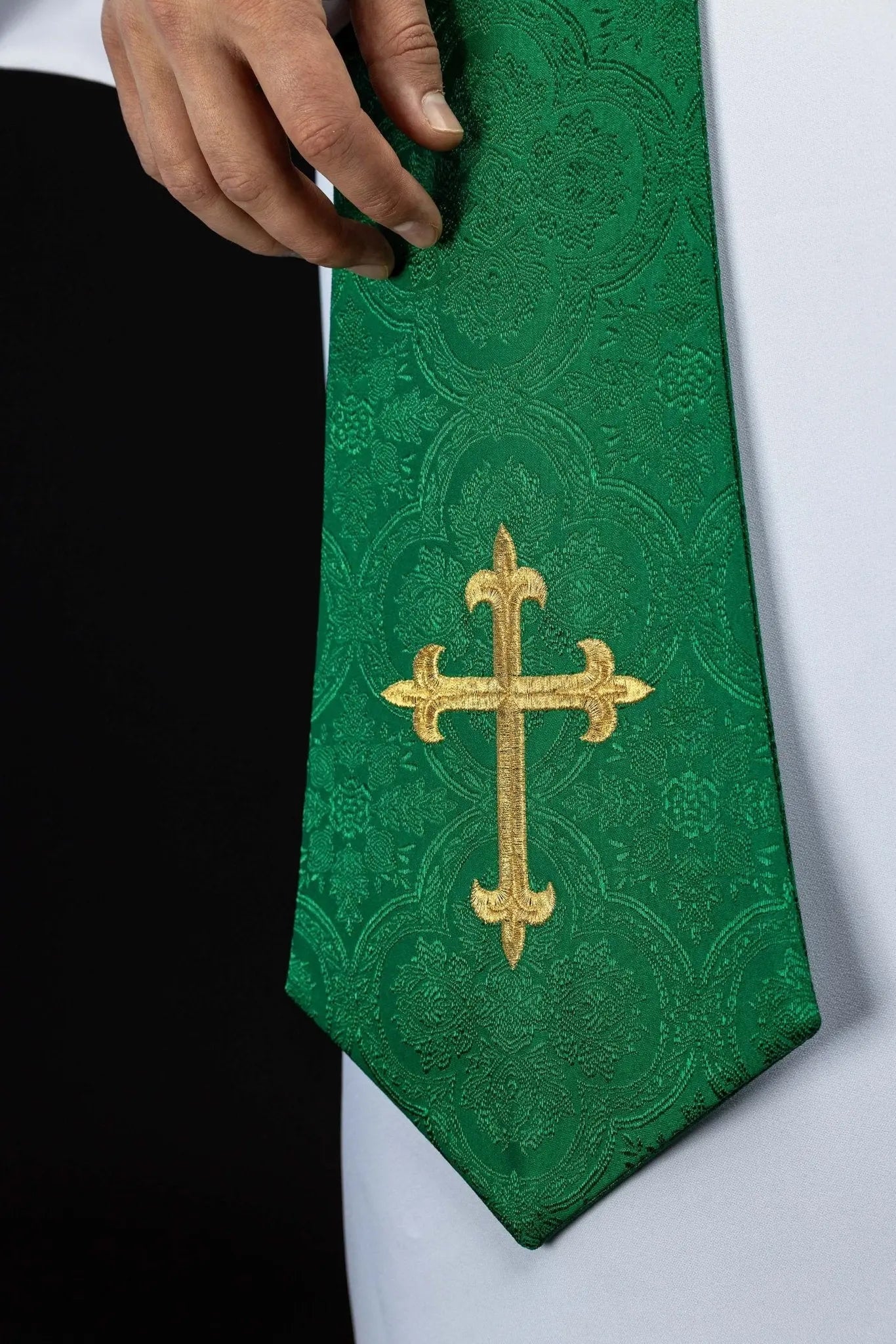
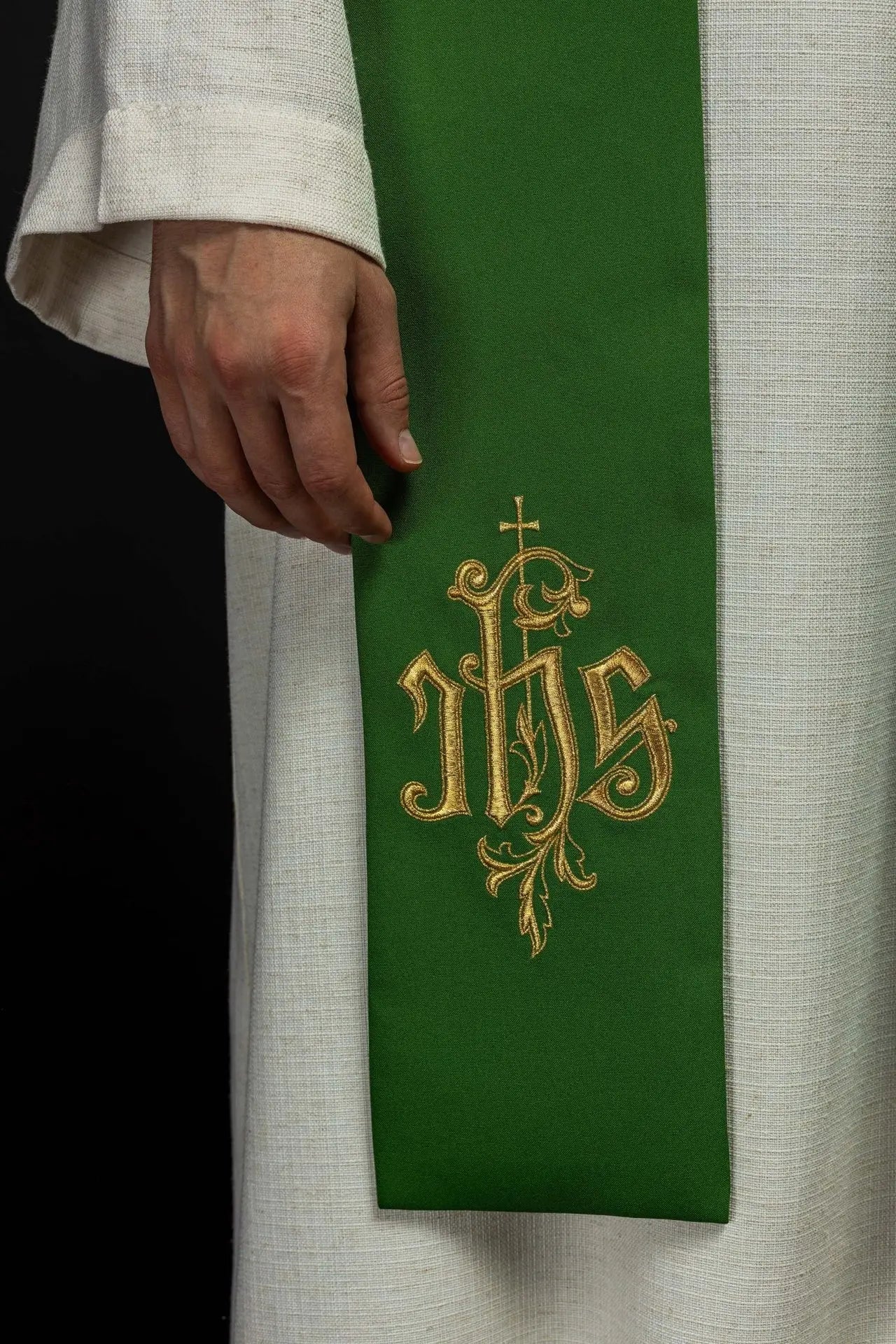
Fabric and construction also matter. A good stole should hang cleanly without twisting, sit comfortably on the shoulders, and remain stable during movement. Lighter fabrics can be helpful in warm churches or for long services. Heavier brocade or structured fabrics can give a more formal look and pair well with ornate chasubles. Embroidery should be well placed and proportionate so that the sacred motif is visible without overwhelming the vestment.
Consider the shade of green as well. Liturgical green can range from deep forest tones to brighter seasonal greens. A darker shade often feels traditional and formal, while a medium green may coordinate more easily with parish vestments already in use. If the stole will be worn with an existing chasuble, check whether the undertone is warm, cool, muted, or vivid. A small difference in shade can be acceptable, but a coherent match gives the sanctuary a more intentional appearance.
Length and width are practical details that should not be ignored. A stole should fall with dignity and allow freedom of movement. For priests, the ends should hang evenly at the front. For deacons, the diagonal line should sit correctly across the body. If the stole will be used by several clergy members, choose a balanced size and design that works across different heights and vestment styles.
Embroidery, motifs, and visual language
The decoration on a green stole should support the liturgy rather than distract from it. Crosses are the most universal motif and are appropriate for almost every celebration. Eucharistic symbols can be fitting when the stole is often used at Mass or for ministry connected with the Blessed Sacrament. Vine, leaf, wheat, and floral patterns naturally harmonize with the green color because they express growth, fruitfulness, and the life of grace. Gold details can add festal dignity, while cream or tonal embroidery creates a quieter, more contemplative effect.
Some clergy prefer a plain stole because it is flexible and never competes visually with the chasuble or alb. Others choose a more decorative stole to add beauty when the stole is the most visible vestment, for example during preaching, blessings, or certain sacramental rites. Both approaches are valid. The best choice depends on the parish setting, the minister's existing vestments, and the level of ornament appropriate for the liturgical action.
If a parish is building a complete color set, the green stole is often one of the first purchases because it is used so often. It can later be complemented by red clergy stoles for Pentecost and martyrs, purple clergy stoles for Advent, Lent, and penitential rites, and ecru clergy stoles for white and festive celebrations. This makes the clergy wardrobe easier to organize and gives each liturgical season its proper visual identity.
Green stoles for priests and deacons
The green color is shared by both priestly and diaconal ministry during Ordinary Time, but the stole form must correspond to the wearer. Priestly stoles are designed to be worn around the neck. Diaconal stoles are shaped and fastened for the diagonal form. In a parish where both priests and deacons serve regularly, it can be useful to choose designs that coordinate while respecting these different cuts. Matching or related embroidery helps the ministers appear visually united without confusing the signs of their distinct ministries.
For a priest, the green stole may be used under a chasuble at Mass or visibly for other rites. For a deacon, the green stole is worn with the alb and often under a dalmatic when the dalmatic is used. The stole should therefore be comfortable under other vestments and attractive when seen on its own. Good proportion is especially important because the stole may be visible from the sanctuary, ambo, and procession.
Care and long-term use
Because green stoles are used frequently, proper care helps preserve both appearance and structure. Embroidered stoles and delicate fabrics are usually best handled with professional cleaning, especially when metallic threads or detailed ornament are present. Simpler fabrics may require gentler care, but harsh detergents, strong heat, and machine drying should be avoided unless the specific product instructions allow them. Storage is also important: a stole should be hung or laid flat in a clean, dry place so that embroidery is not crushed and the fabric does not crease sharply.
Regular inspection is worthwhile. Check the seams, lining, fringe if present, and any embroidered areas. A well-maintained stole can serve for many years and remain dignified through the regular rhythm of Ordinary Time. Since a green stole may be one of the most used vestments in a parish, investing in good construction and caring for it properly is both practical and respectful of the sacred ministry it serves.
Related vestments and coordinated sets
A green stole can be purchased alone, but it often functions best as part of a coordinated liturgical set. Priests may choose a stole that matches or complements a green chasuble. Deacons may coordinate with a dalmatic or with the celebrant's vestments. Parishes may also use green pulpit covers, altar textiles, or other seasonal items to create unity throughout the sanctuary. Coordination should remain tasteful: the purpose is harmony, not visual clutter.
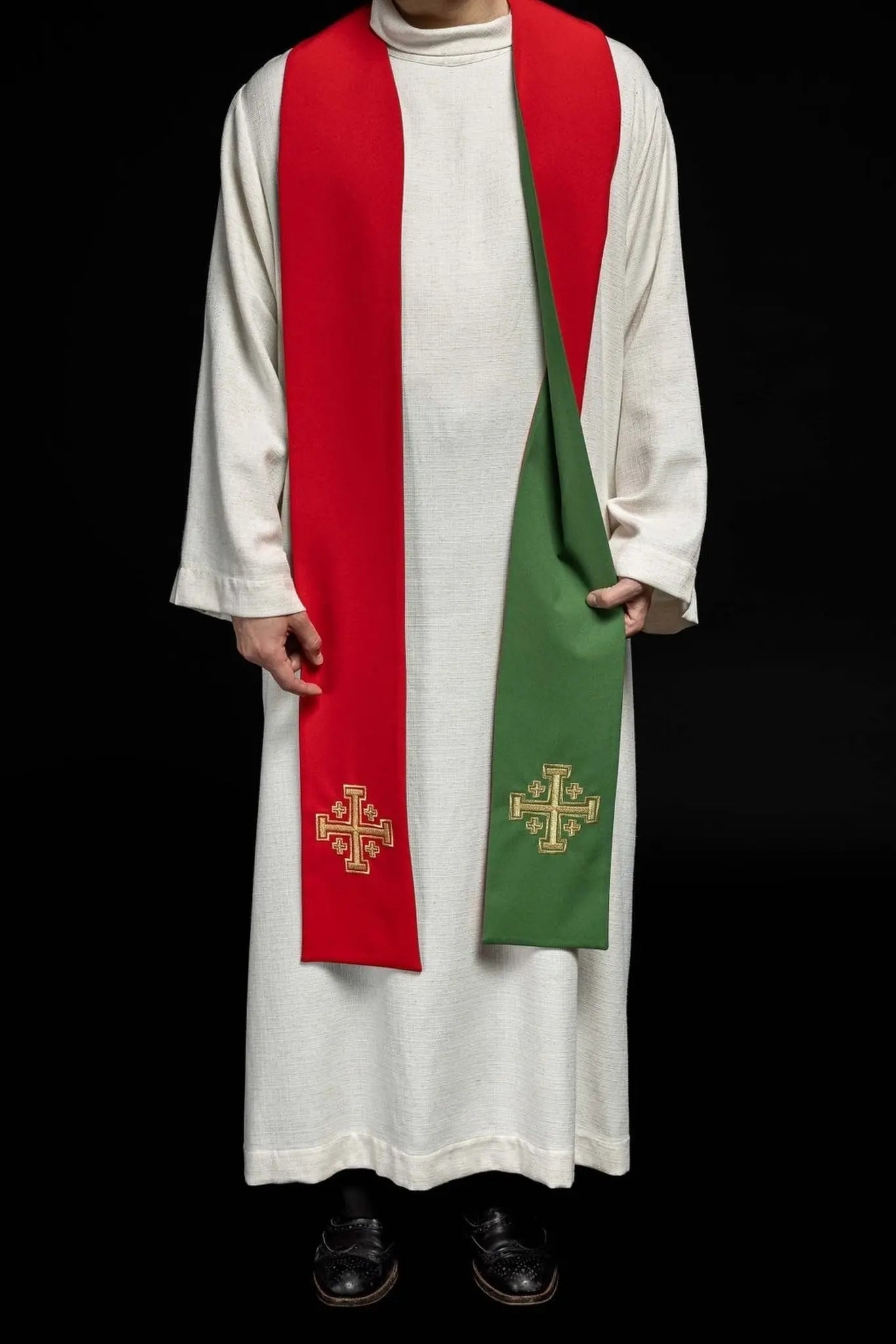
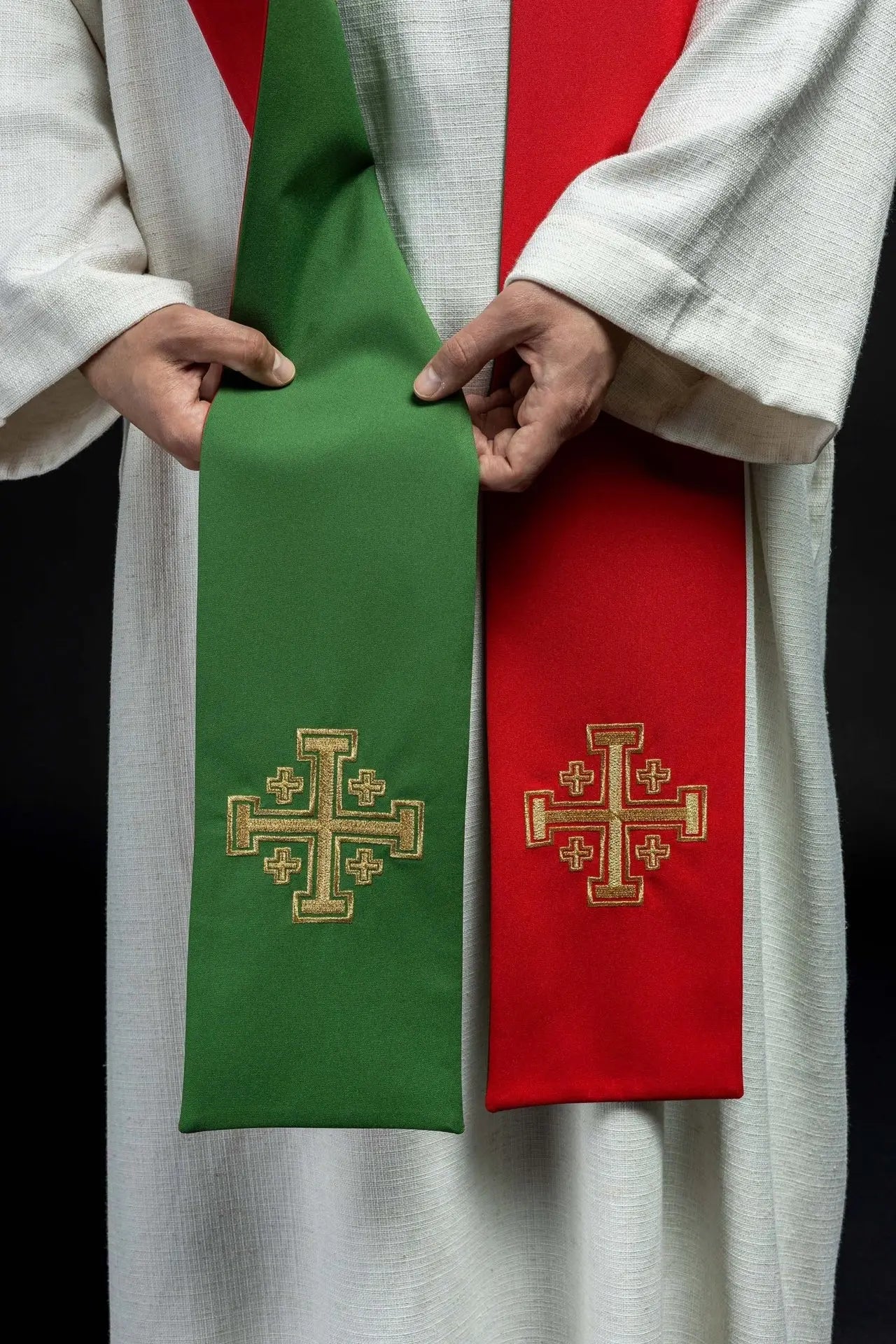
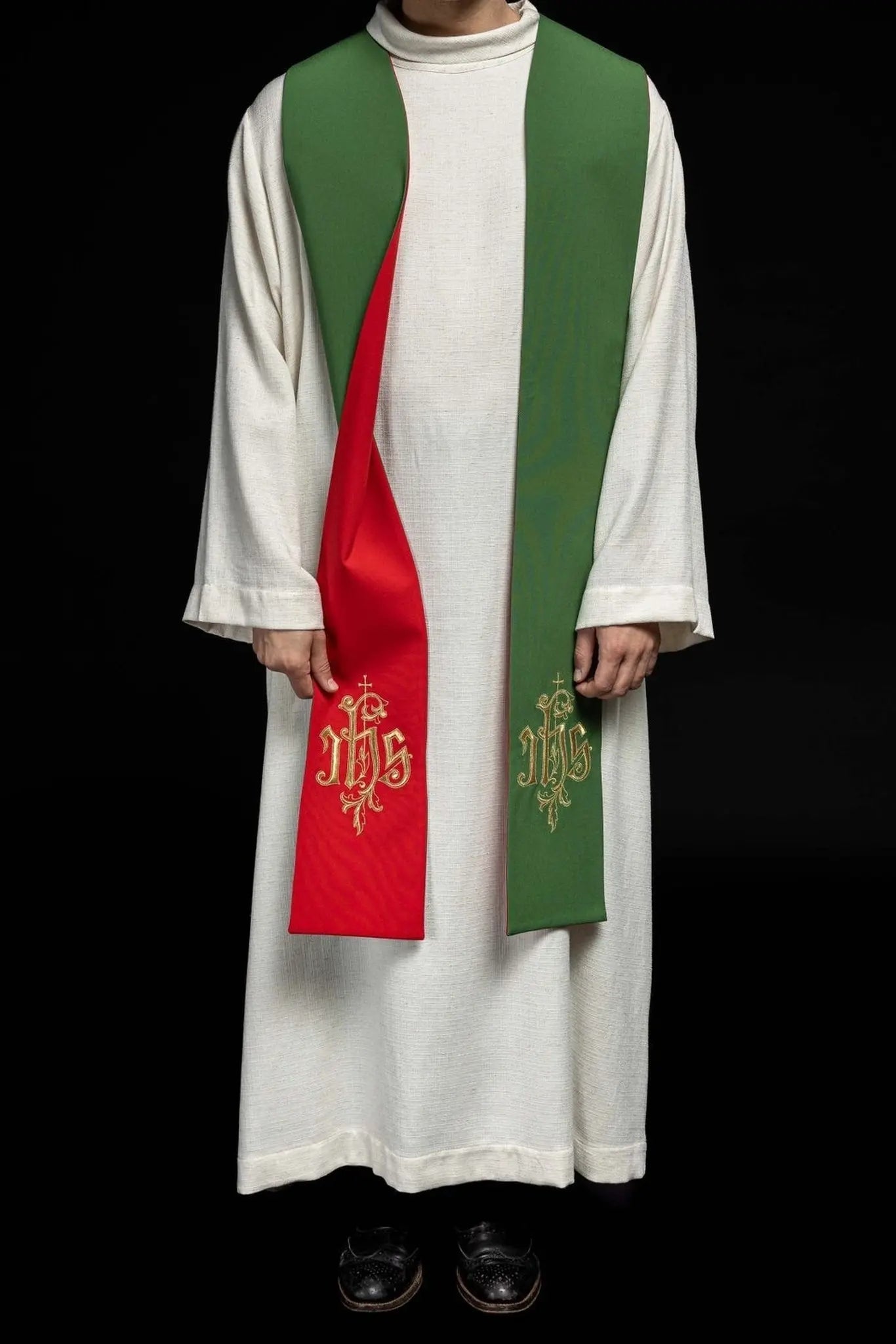
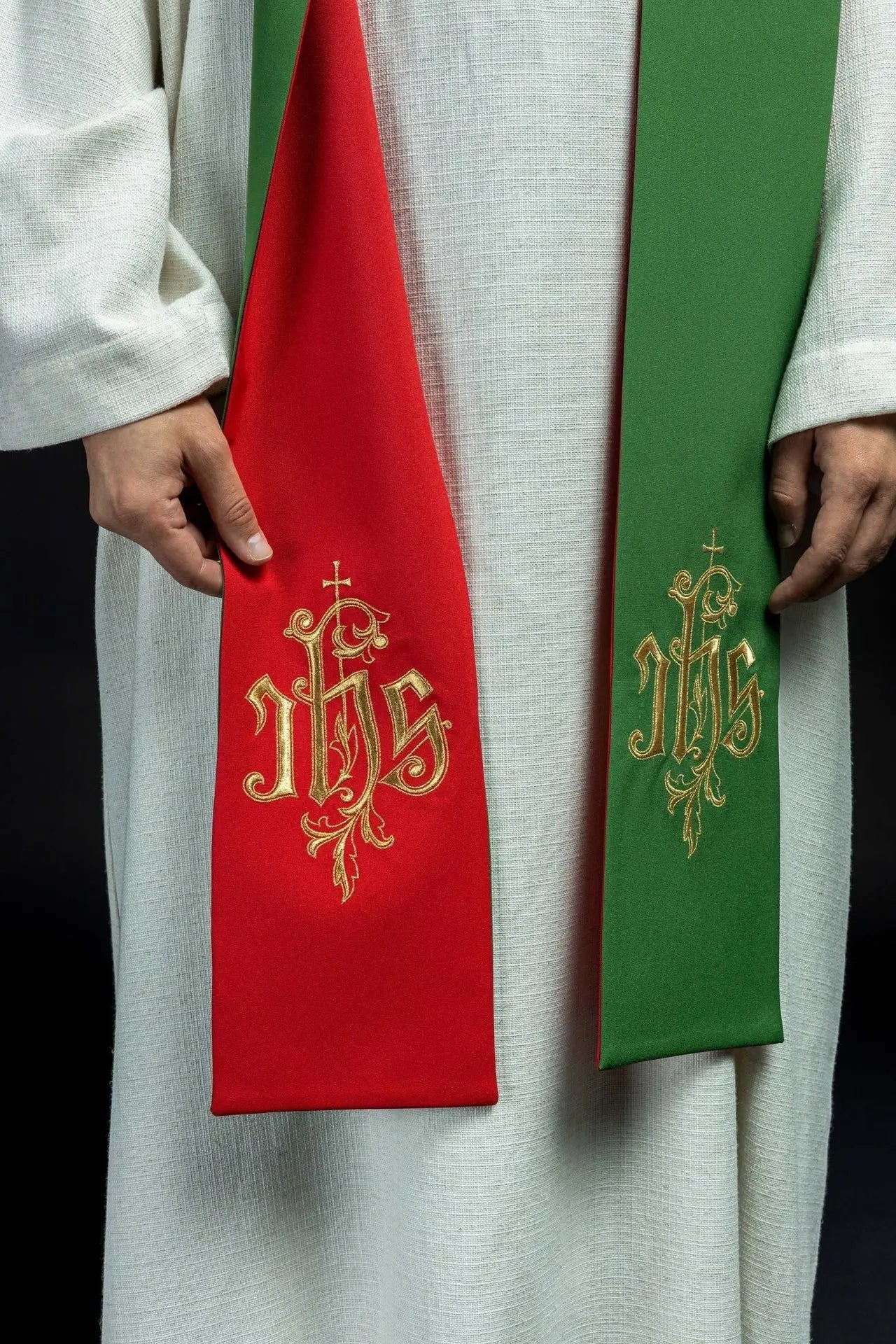
Some clergy also consider reversible or multi-season solutions when storage or budget is limited. In that case, double-sided stoles may be useful for comparing practical options, although a dedicated green stole remains the clearest choice for regular Ordinary Time use. A separate green stole also allows the fabric, shade, and embroidery to be chosen specifically for this season rather than as a compromise between two colors.
Green stoles are therefore a core part of a complete clergy vestment collection. They serve the long season of Ordinary Time, support the daily pastoral ministry of priests and deacons, and help the parish express the Church's patient growth in grace. Whether the preferred style is plain, richly embroidered, traditional, or contemporary, the right green stole should combine liturgical accuracy, comfort, durability, and reverence.
Frequently Asked Questions (FAQ)
When are green clergy stoles used?
Green clergy stoles are used mainly during Ordinary Time, both on Sundays and weekdays when the liturgical calendar assigns green. They are also suitable for many pastoral celebrations that take place in this season, provided no other liturgical color is prescribed for the rite or day.
Can both priests and deacons wear green stoles?
Yes, both priests and deacons may wear green stoles when green is the proper liturgical color. The important difference is the form: priests wear a stole around the neck, while deacons wear a diagonal stole. The color may match, but the cut should correspond to the ordained ministry.
Should a green stole match a green chasuble exactly?
An exact match is helpful when the stole and chasuble are intended as a set, but it is not always required. The shade, fabric weight, and embroidery should look harmonious together. A stole with gold or cream details can often coordinate well with several green chasubles.
Is a plain green stole appropriate for Sunday Mass?
A plain green stole can be fully appropriate for Sunday Mass, especially when it is well made and worn with a dignified alb or chasuble. More ornate designs may be chosen for greater solemnity, but simplicity is also a legitimate liturgical style when it is clean, respectful, and proportionate.
How is a green stole different from other green liturgical items?
A stole is a vestment worn by an ordained minister. It should not be confused with a chasuble, dalmatic, pulpit cover, chalice veil, ciborium veil, or altar linen. Those items may share the same color but have different liturgical purposes and should be chosen from their own categories.