
Sort by
12 products
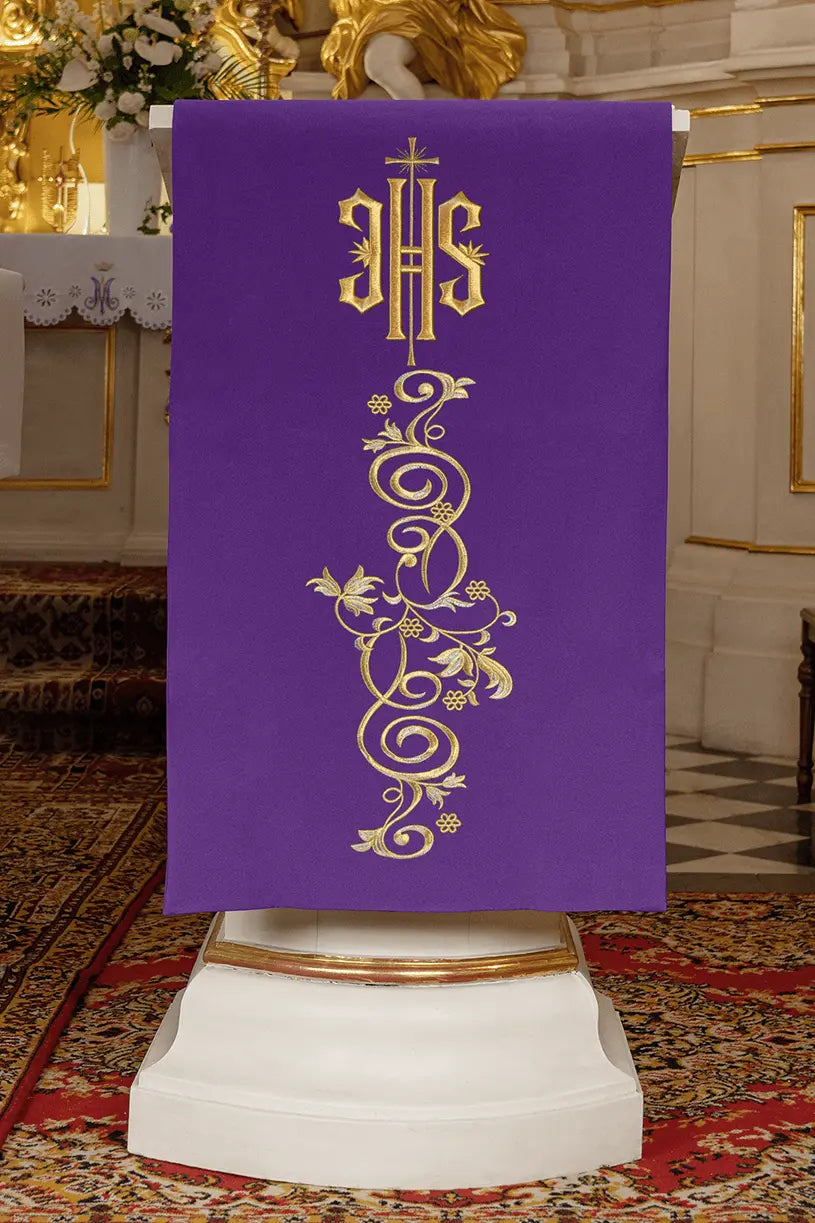
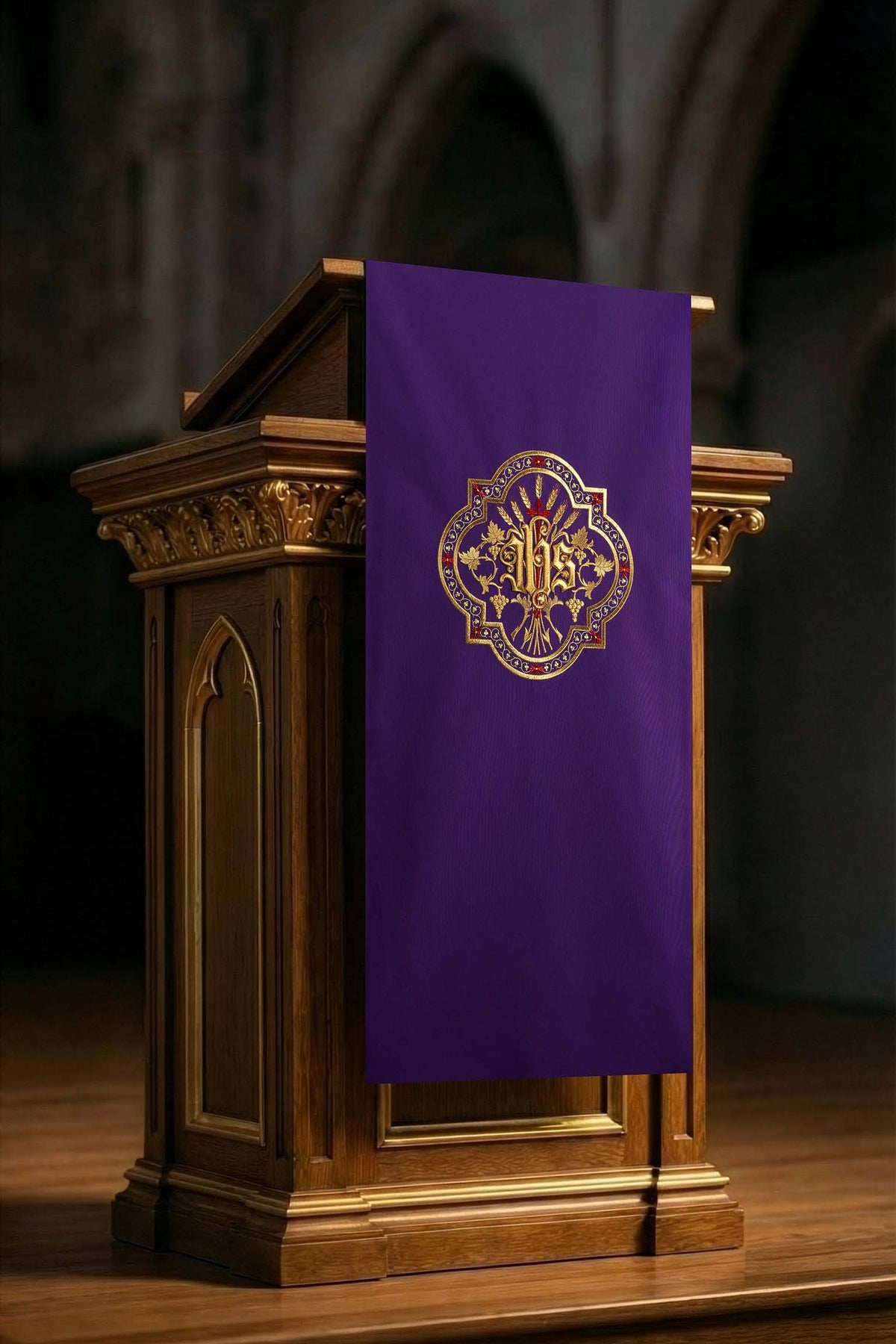
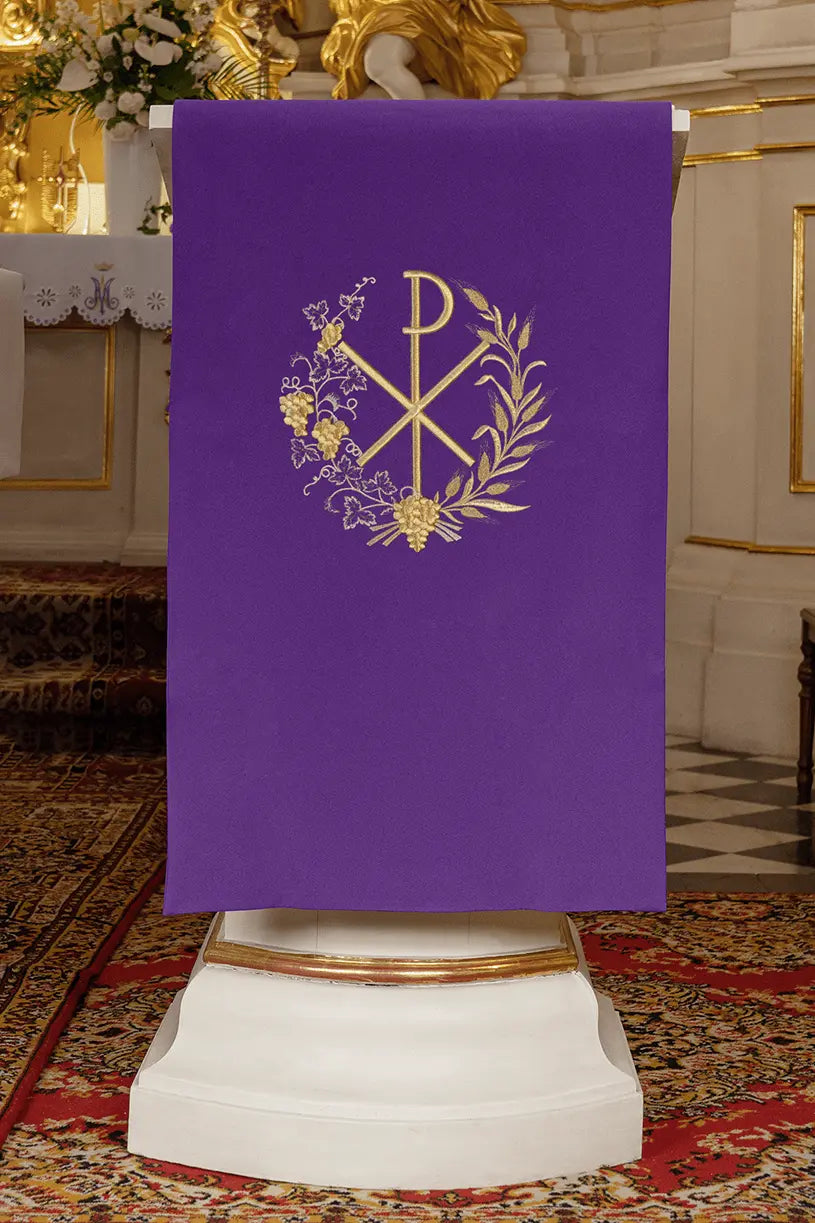
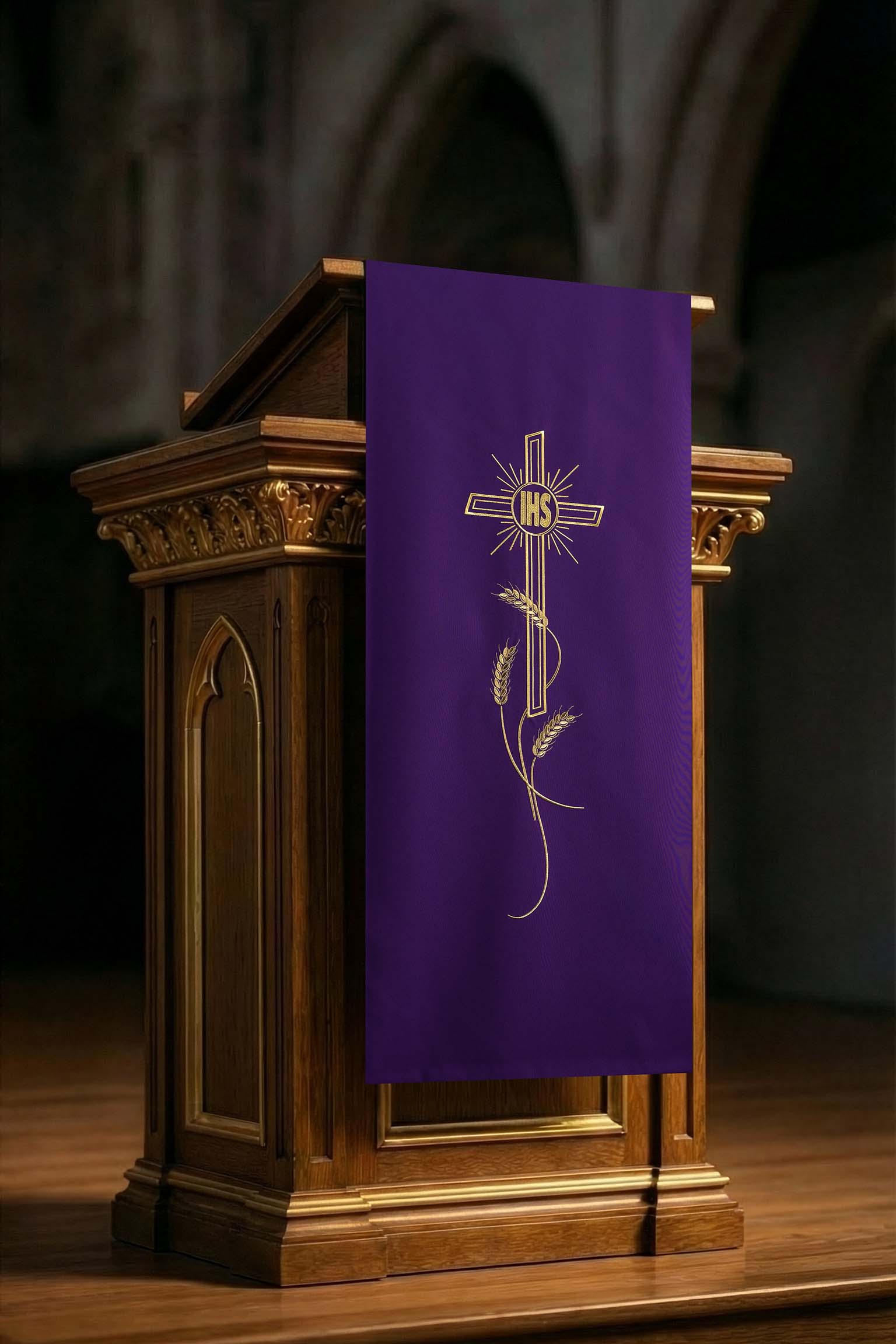




Purple Pulpit Covers for Advent, Lent and Penitential Liturgies
Purple covers for the place of proclamation
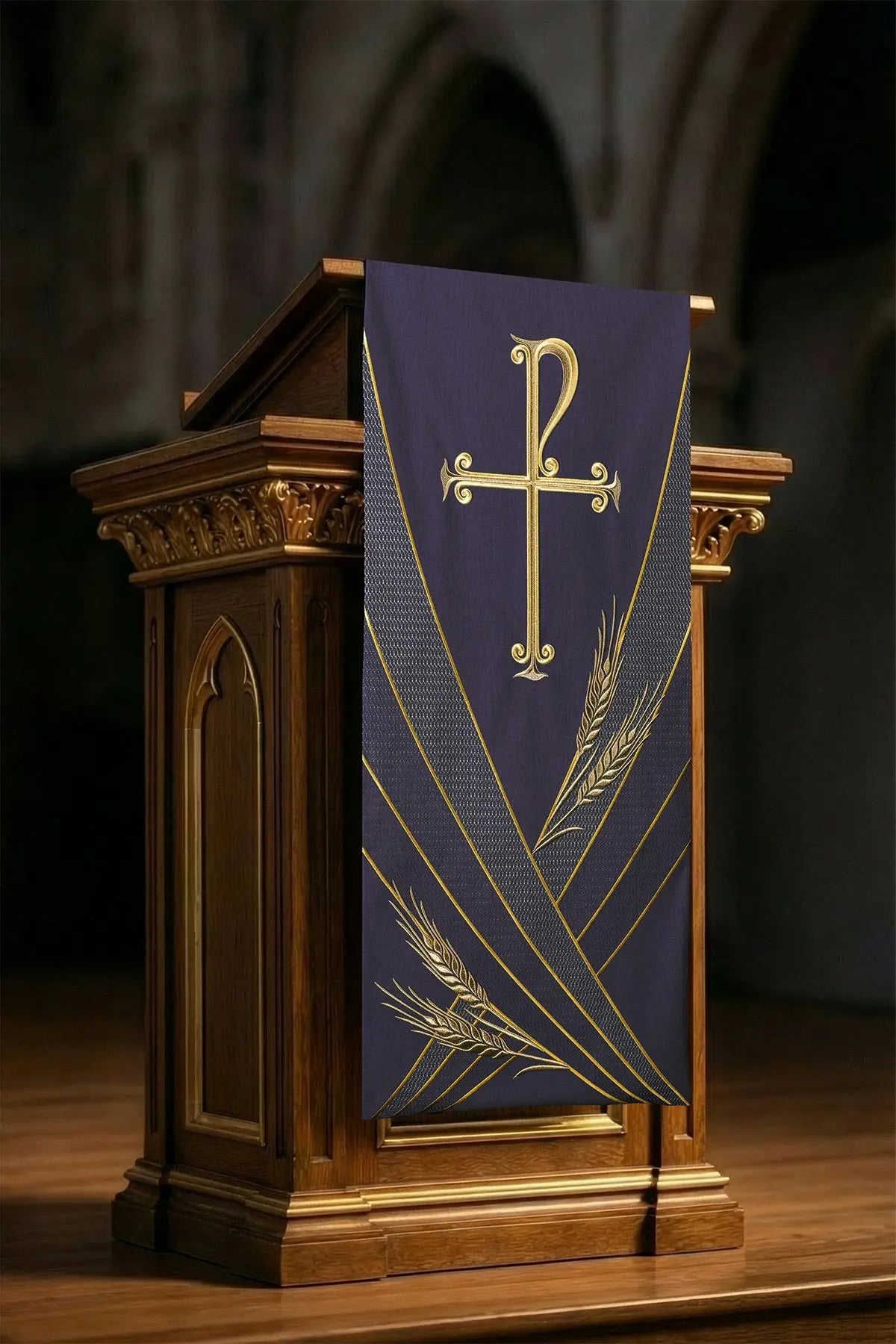
Purple pulpit covers help the church mark seasons of preparation, repentance and solemn expectation with a clear visual language. The pulpit, lectern or ambo is the place from which Scripture is proclaimed and the Word of God is heard by the congregation. A carefully chosen purple hanging draws attention to this liturgical focus without distracting from the reading itself. In this collection you will find purple pulpit covers, lectern hangings and embroidered lectionary napkins prepared for churches that want the proclamation area to harmonize with the altar and the wider seasonal arrangement of the sanctuary.
Purple is used especially during Advent and Lent. In Advent, it expresses watchful expectation and prayerful preparation for the coming of Christ. During Lent, it supports the penitential character of the season and the call to conversion. Purple may also appear at other solemn services according to local custom and the rubrics followed in a particular church. A purple pulpit cover therefore has both a decorative and catechetical role: it helps the congregation recognize the liturgical season and connects the ministry of the Word with the color used elsewhere in worship.
What belongs in this collection
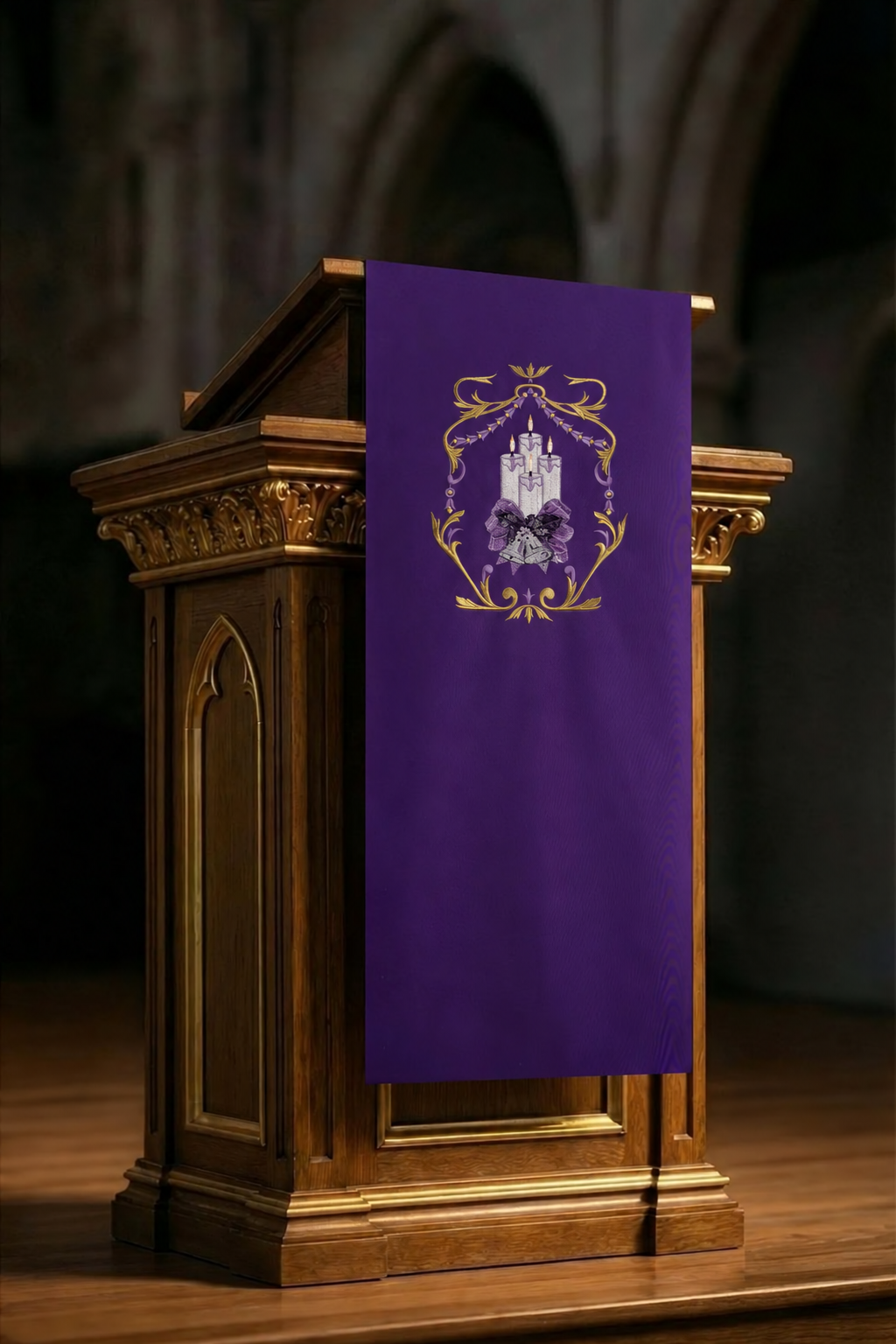
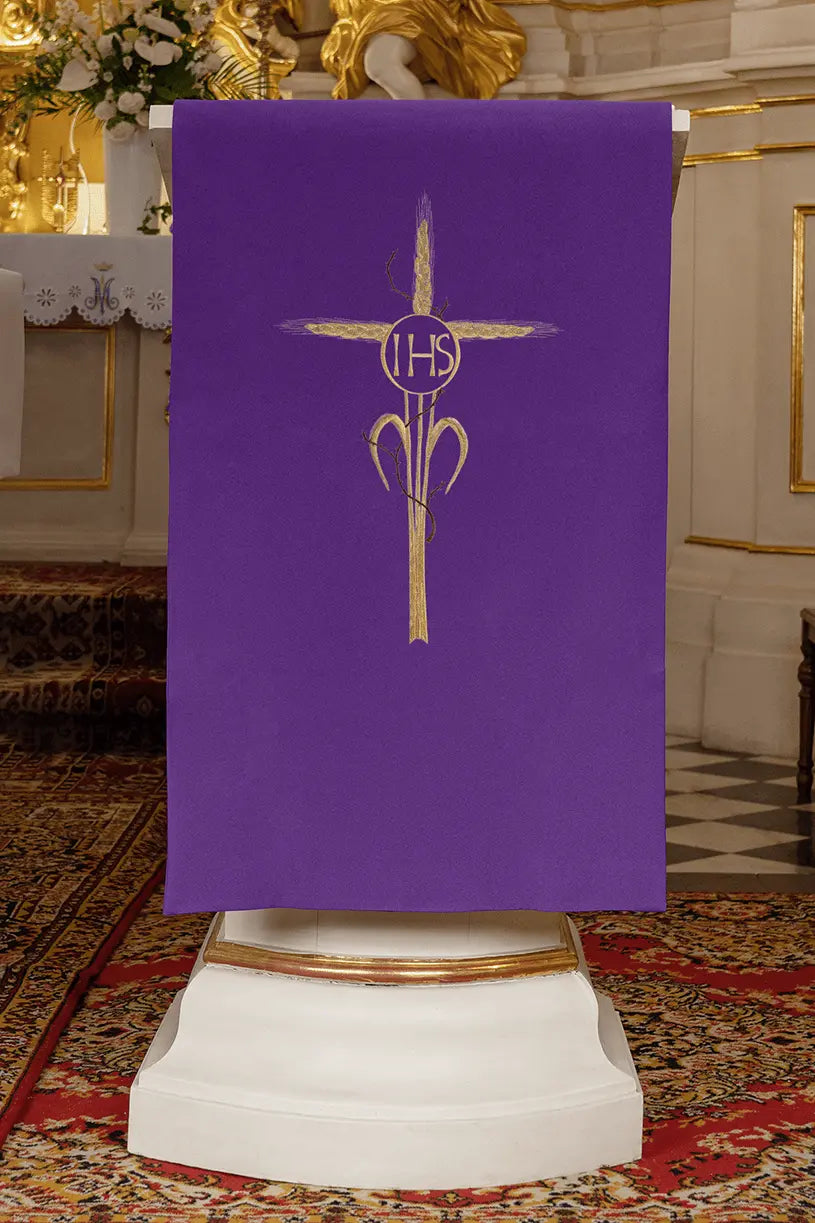
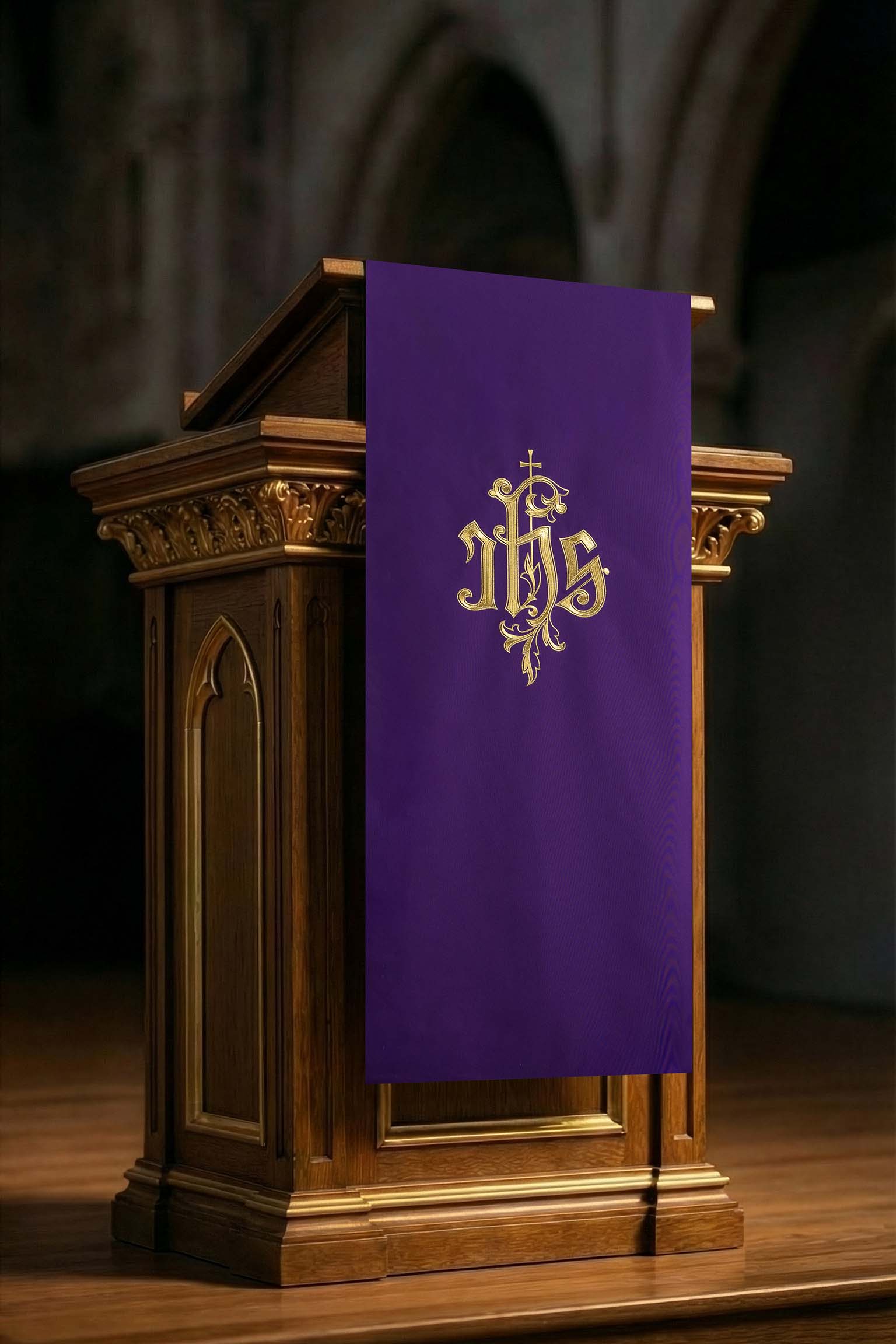
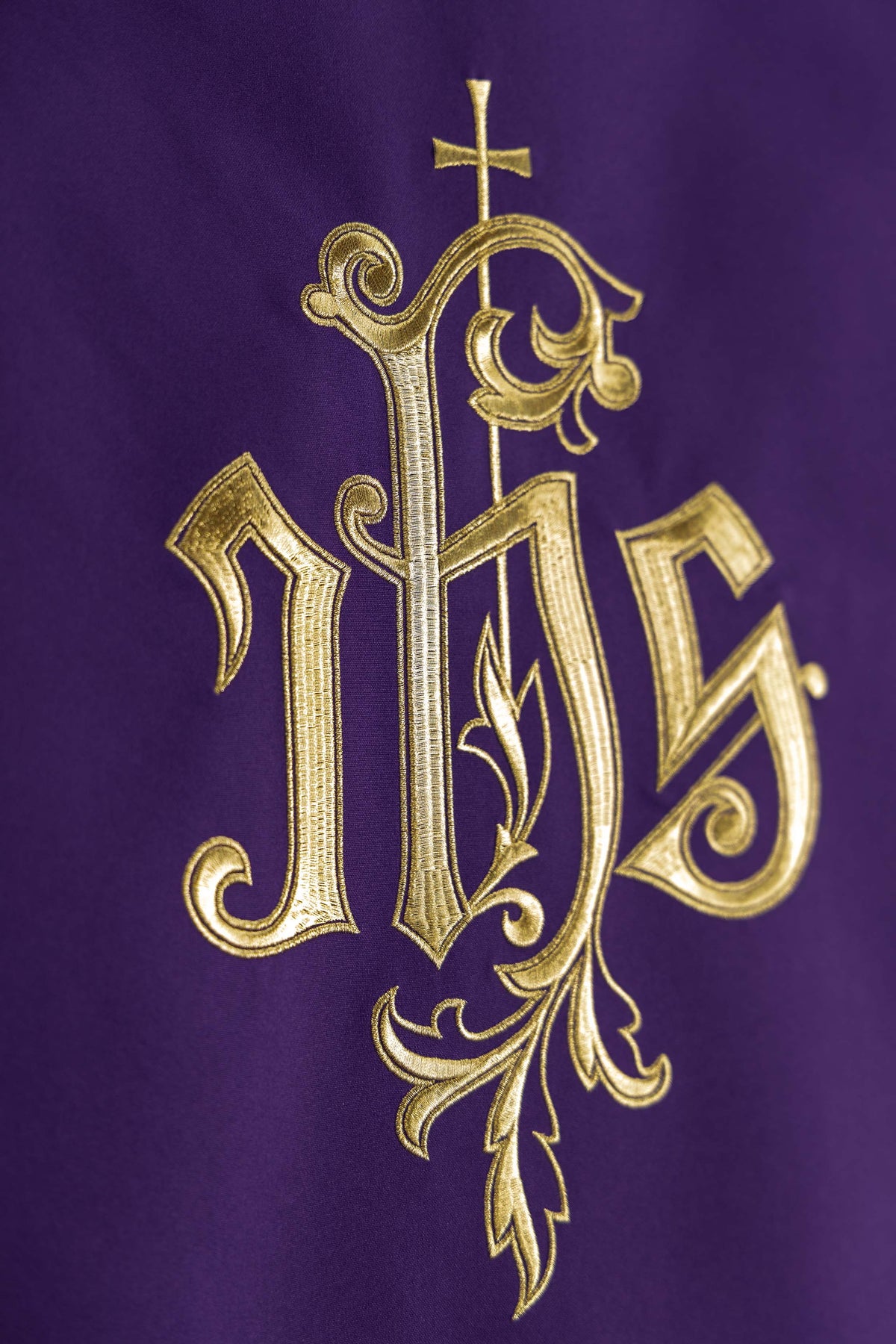
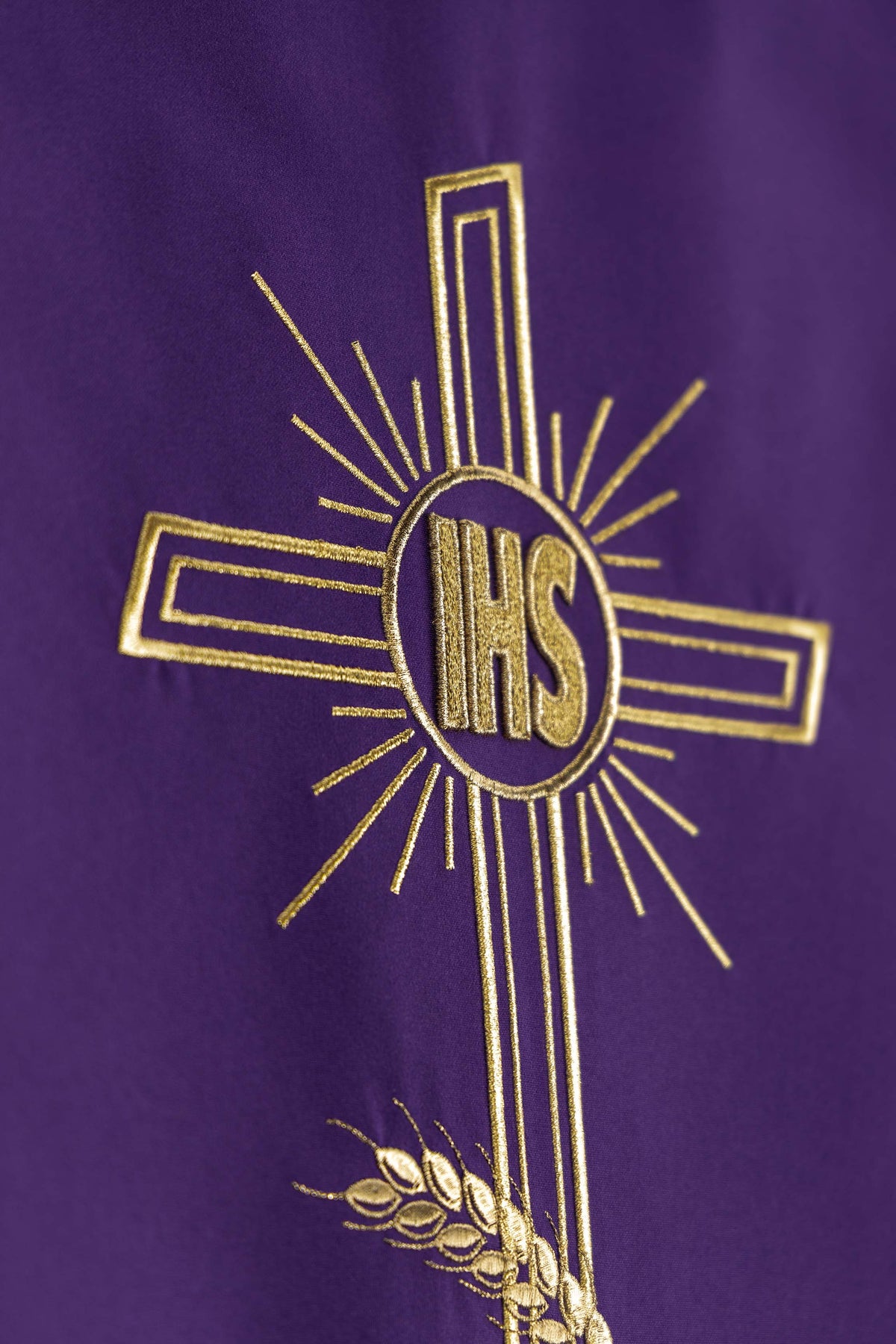
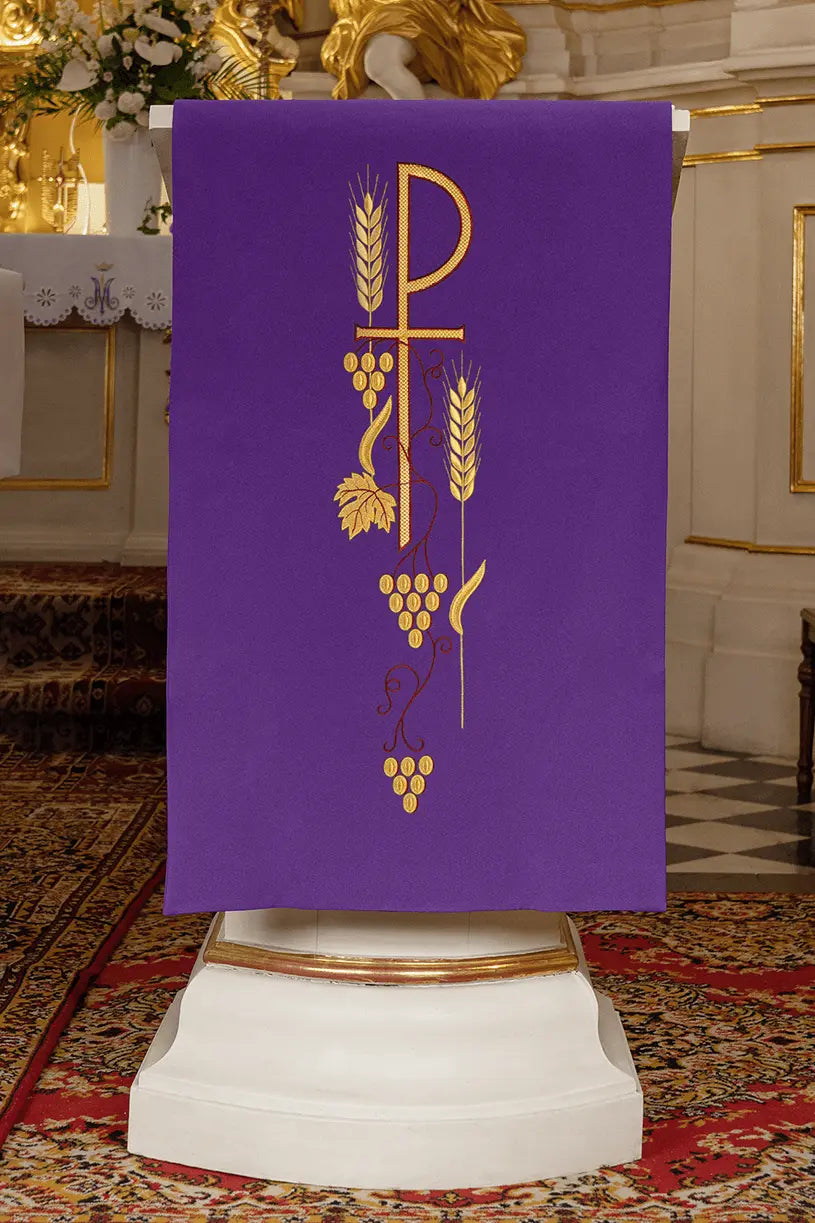
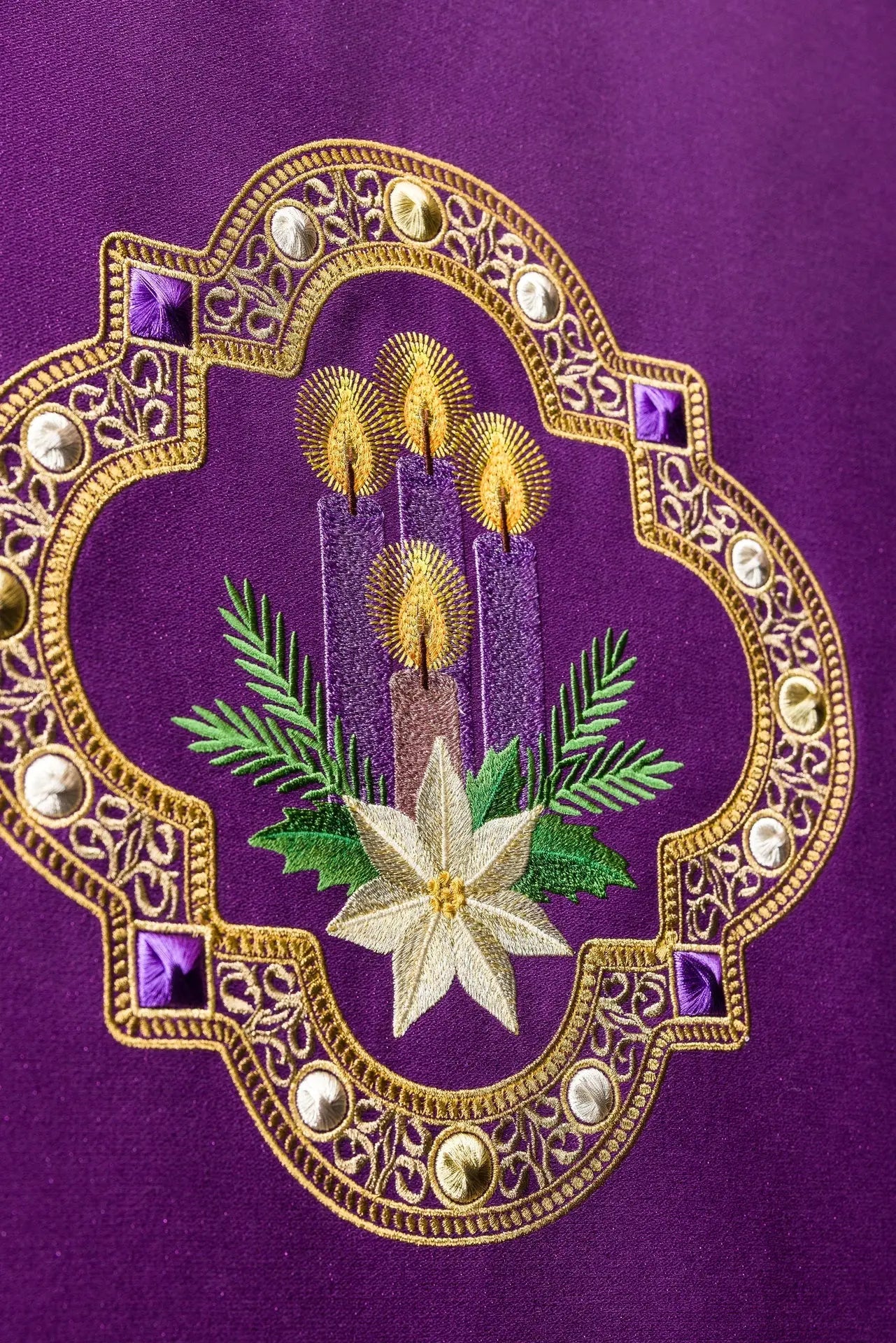
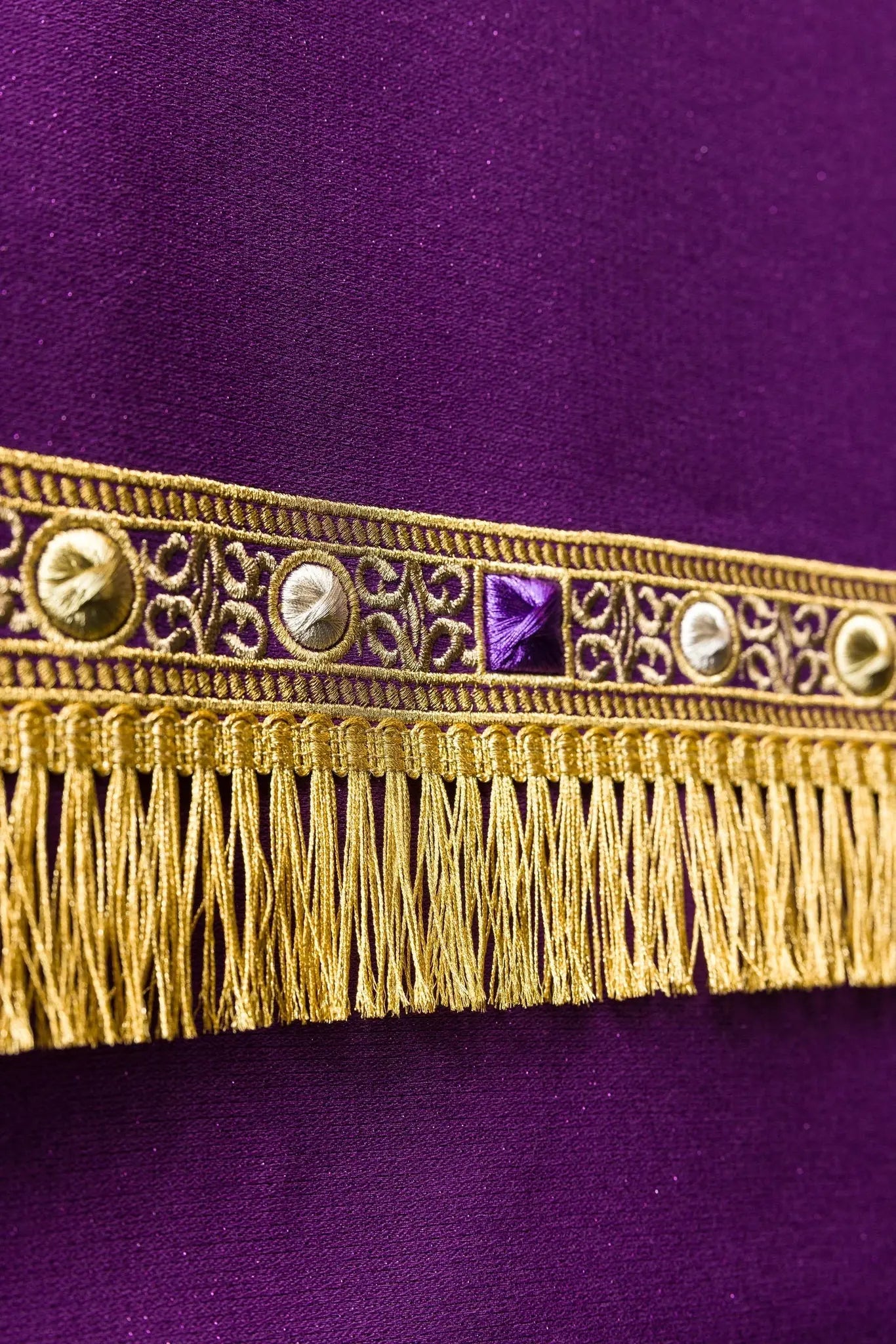
This collection focuses on purple textile pieces for the pulpit, lectern, ambo or lectorium. The visible selection includes embroidered lectern napkins, purple lectern hangings, lectionary textiles and covers decorated with symbols such as the cross, IHS or JHS monogram, PAX motif, wheat, candle imagery and the Heart of Jesus. Some designs are more restrained, allowing the violet color to speak through simplicity. Others include gold embroidery, decorative borders or fringe, creating a stronger ceremonial accent for solemn liturgies.
Although these items are often grouped within church textiles, they should not be confused with vestments worn by the clergy. Pulpit covers belong near the place of proclamation, while purple chasubles are worn by priests and bishops, and purple clergy stoles are worn in the appropriate form by ordained ministers. Choosing textiles from related purple collections can help create a coherent Advent or Lenten setting, but each item has its own proper function.
Liturgical meaning of purple
The color purple has long been associated with penitence, restraint, dignity and royal expectation. In Advent, it points toward hope and preparation. In Lent, it leads the eye toward repentance, prayer and the mystery of the Passion. A purple pulpit cover can strengthen this meaning because it surrounds the proclamation of Scripture with the same seasonal color used at the altar and in the vestments. The result is a sanctuary that communicates the rhythm of the liturgical year through color, symbol and textile design.
For many communities, the pulpit cover is changed together with the altar frontal, chalice veil, stole or chasuble. This makes the seasonal transition visible as soon as the faithful enter the church. A purple hanging may be used for the Sundays and weekdays of Lent, penitential services, Advent celebrations and other services where purple is appointed or customary. For the Third Sunday of Advent and the Fourth Sunday of Lent, many churches use rose instead of purple; for that specific color, see the related Rose Pulpit Covers collection.
Designs, symbols and embroidery
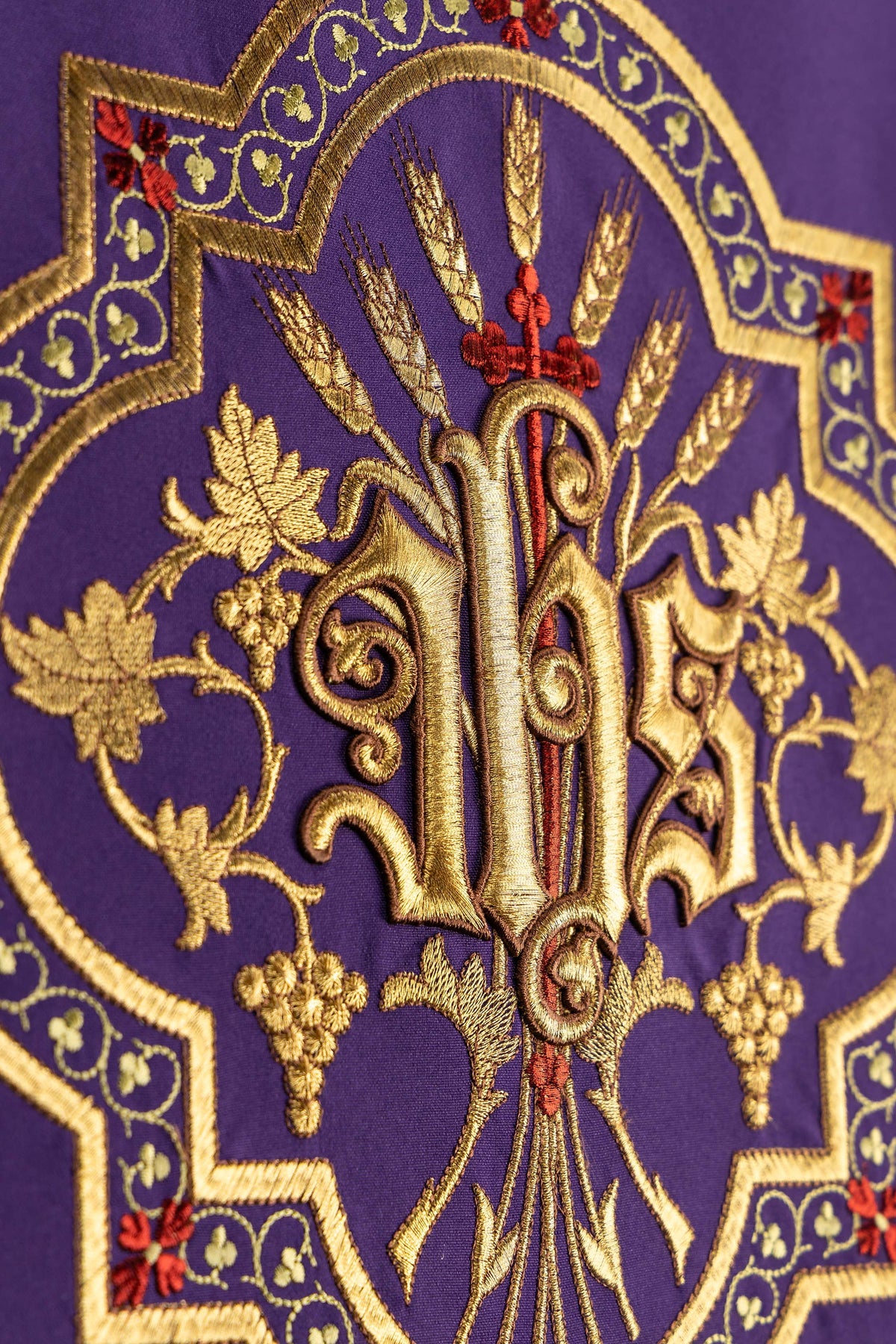
Embroidery gives a pulpit cover theological focus as well as beauty. The cross is a direct and universal sign of Christ and is especially fitting for Lent. The IHS or JHS monogram points to the Holy Name of Jesus and works well for both Advent and penitential seasons. Candle motifs can be particularly appropriate in Advent, when the Church waits in hope and light gradually breaks into darkness. Wheat may recall Eucharistic fulfillment and the unity between the table of the Word and the altar of sacrifice. The PAX motif expresses peace in Christ and can be a suitable choice for services centered on reconciliation and prayer.
Gold embroidery on purple fabric creates a dignified contrast and can coordinate well with gold chalice veils, embroidered altar linens or sanctuary decorations. More minimal designs are also useful when the church interior is already richly ornamented or when the community prefers a quiet Lenten atmosphere. When selecting a design, consider whether the cover should visually match existing altar cloths, seasonal vestments or other textiles used in the sanctuary.
How to choose the right purple pulpit cover
Begin by identifying where the textile will be used: pulpit, lectern, ambo, reader stand or lectionary area. Measure the front surface and decide how much overhang is appropriate. A cover should sit neatly, hang straight and remain stable during readings. If the lectern is narrow, a slimmer napkin-style textile may be more suitable. If the ambo is large or visually central, a longer hanging with embroidery may provide better proportion and visibility from the nave.
- For Advent: choose purple designs with candle, cross, IHS or restrained gold embroidery to express hope and expectation.
- For Lent: select cross, PAX, IHS or simple purple motifs that support prayer, repentance and solemnity.
- For a coordinated sanctuary: match the pulpit cover with purple vestments, altar textiles and other seasonal church linens.
- For smaller chapels: consider a clean, balanced design that will not visually overwhelm the lectern.
- For larger churches: embroidery with stronger contrast, gold detail or fringe may be easier to see from a distance.
Coordinating purple with other liturgical colors
Purple pulpit covers are part of a broader set of seasonal church textiles. The parent Pulpit Covers collection offers other colors for the liturgical year, including green for Ordinary Time, red for feasts connected with the Holy Spirit and martyrs, white or ecru for festive celebrations, rose for Gaudete and Laetare, and Marian designs for celebrations of the Blessed Virgin Mary. Keeping the same format across several colors can make the sanctuary look orderly throughout the year.
When purple is not appointed, neighboring collections help maintain correct liturgical color use. Green is normally connected with Ordinary Time, red with Passiontide themes, Pentecost and martyrs, and white or ecru with feasts of Christ, Christmas and Easter celebrations. For solemn Marian feasts, churches may choose designs from the Marian pulpit cover category. This collection remains dedicated to purple pieces, so it is especially useful for parishes, chapels, religious houses and retreat centers preparing for Advent and Lent.
Care, durability and reverent use
A pulpit cover is handled regularly and should be chosen with practical use in mind. Look for a textile that can be placed and removed without difficulty, keeps its shape when hanging, and is stored flat or rolled when not in use. Embroidered pieces should be treated gently so that threads, metallic details and decorative trim remain clean and secure. Always follow the care instructions supplied with the individual item, especially when the cover includes embroidery, fringe or special fabric.
Because the pulpit or lectern is used at every liturgy of the Word, the textile should support reverence rather than draw attention to itself. The best purple pulpit cover is one that fits the stand properly, coordinates with the season and helps the proclamation area look prepared, dignified and prayerful. In churches where the ambo is highly visible, a well-proportioned cover can become a quiet but meaningful sign of the current liturgical season.
Frequently Asked Questions (FAQ)
When are purple pulpit covers used?
Purple pulpit covers are most often used during Advent and Lent. They may also be used at penitential services or other solemn occasions where purple is appropriate according to the church tradition and local liturgical practice.
Is a purple pulpit cover the same as a purple chasuble?
No. A pulpit cover is a church textile placed on the pulpit, lectern or ambo. A chasuble is a vestment worn by a priest or bishop during Mass. They can coordinate in color, but they serve different liturgical functions.
How should I match a pulpit cover with other sanctuary textiles?
Choose a purple tone and embroidery style that harmonize with the altar area, vestments and existing linens. A cross or IHS motif is versatile, while candle imagery may be especially suitable for Advent and more restrained designs often work well during Lent.
What size pulpit cover should I choose?
Measure the width and visible front height of the pulpit or lectern before selecting a cover. The textile should hang evenly, remain stable during readings and have enough visual presence to be seen without interfering with the lectionary or microphone.
Should I choose purple or rose for Gaudete and Laetare?
Purple is used through most of Advent and Lent, but rose may be used on Gaudete Sunday and Laetare Sunday where that tradition is observed. For those two Sundays, a rose pulpit cover can provide a clearer seasonal distinction.