Handmade Liturgical Vestments and Sacred Linens
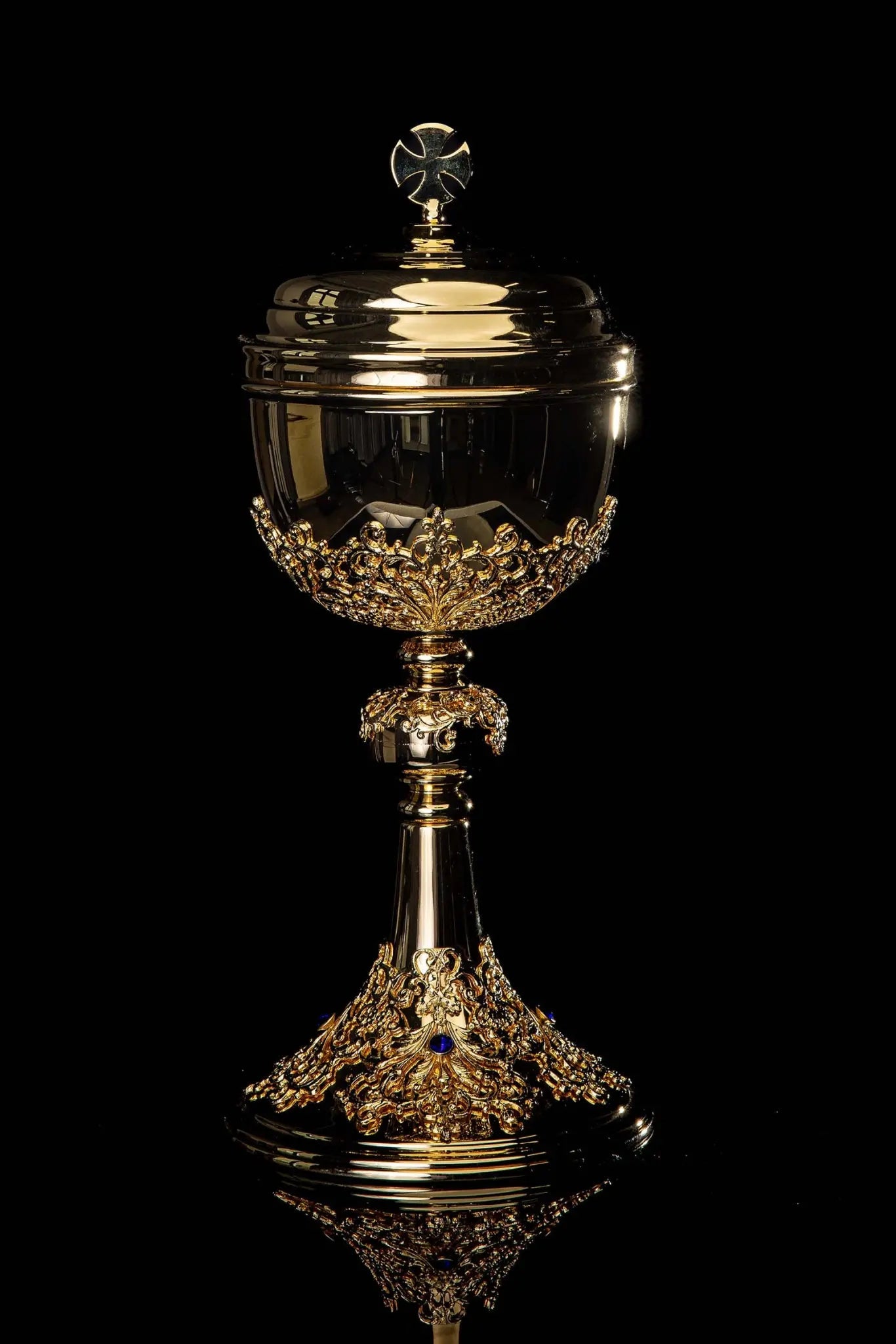
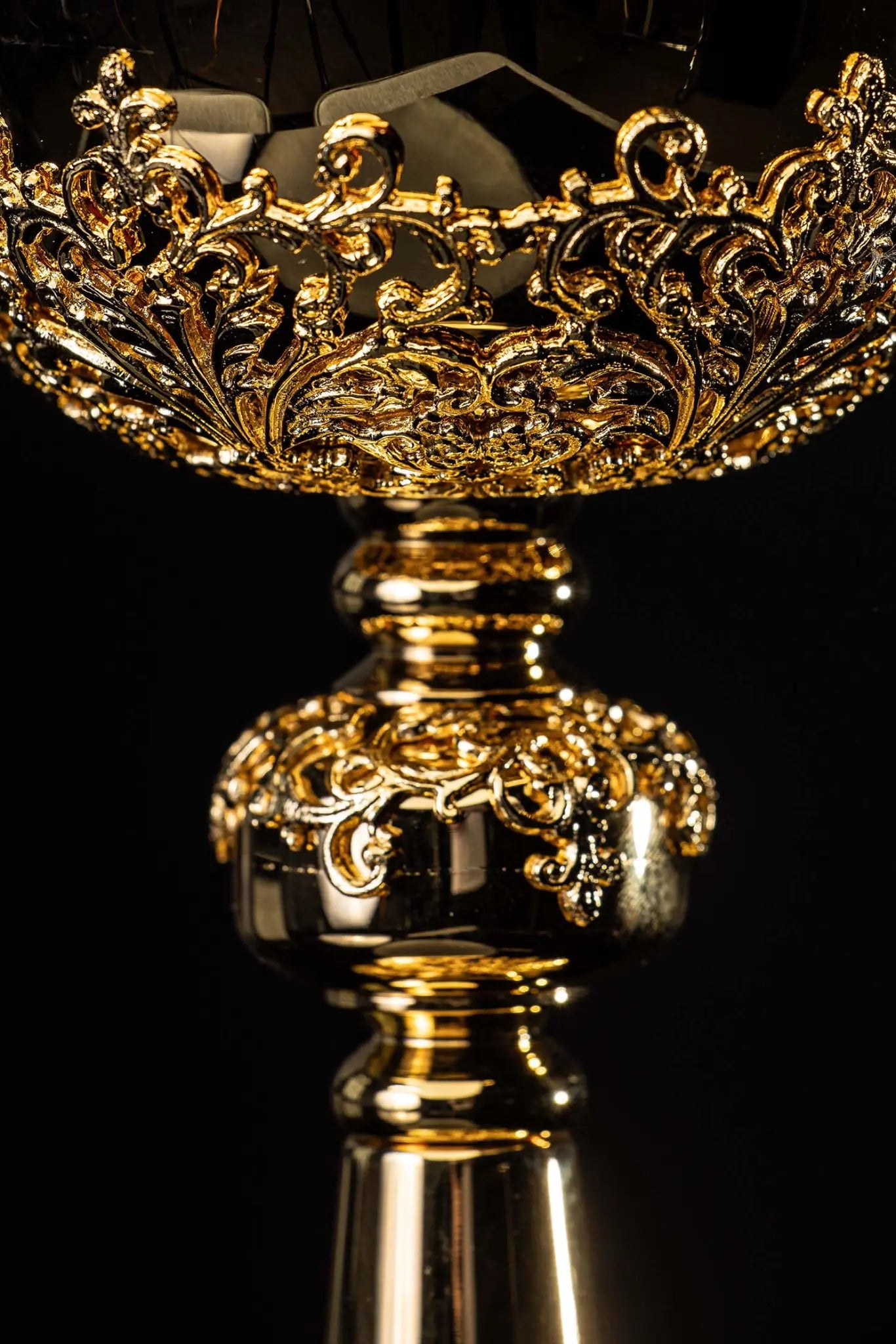
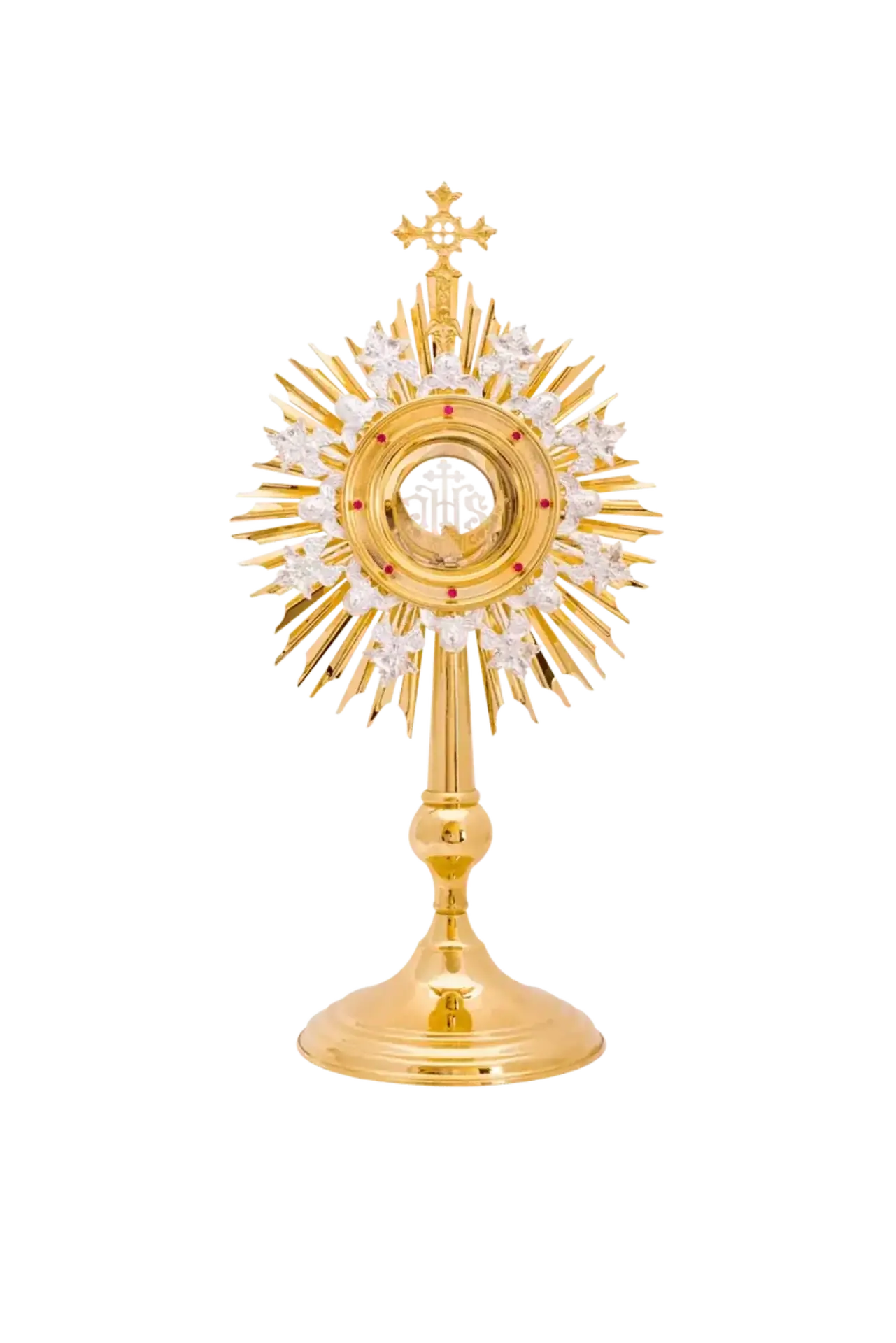
The Handmade collection brings together liturgical pieces created for worship with special attention to craft, fabric, symbolism, and reverent finishing. It focuses on vestments and church textiles in which handwork, refined embroidery, carefully chosen decorative elements, and traditional tailoring give each item a distinctive ceremonial character. Within this collection you can find handmade chasubles, dalmatics, chalice linen sets, and related sacred items designed for the celebration of the Mass and solemn parish liturgies.
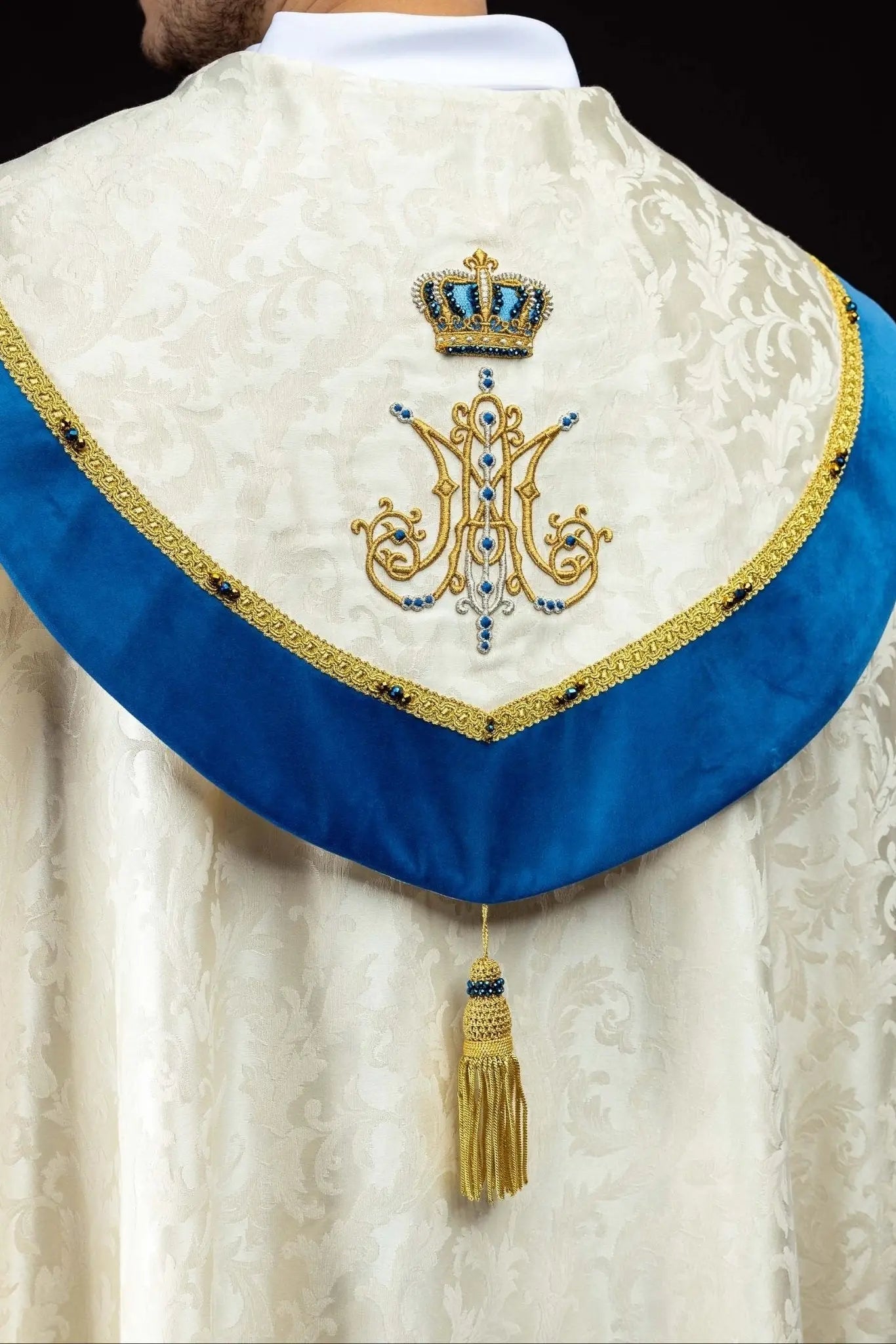
Handmade liturgical vestments are chosen when a community wants more than standard church apparel. They are intended for sacred use, but they also carry visible signs of devotion: balanced ornament, carefully placed stones or embroidered motifs, and fabrics prepared to serve the dignity of the liturgy. A handmade chasuble or dalmatic can become a vestment reserved for major feasts, Marian celebrations, parish anniversaries, ordinations, jubilee Masses, patronal solemnities, or other moments when the beauty of worship should be expressed with particular care.
What belongs in the Handmade collection?
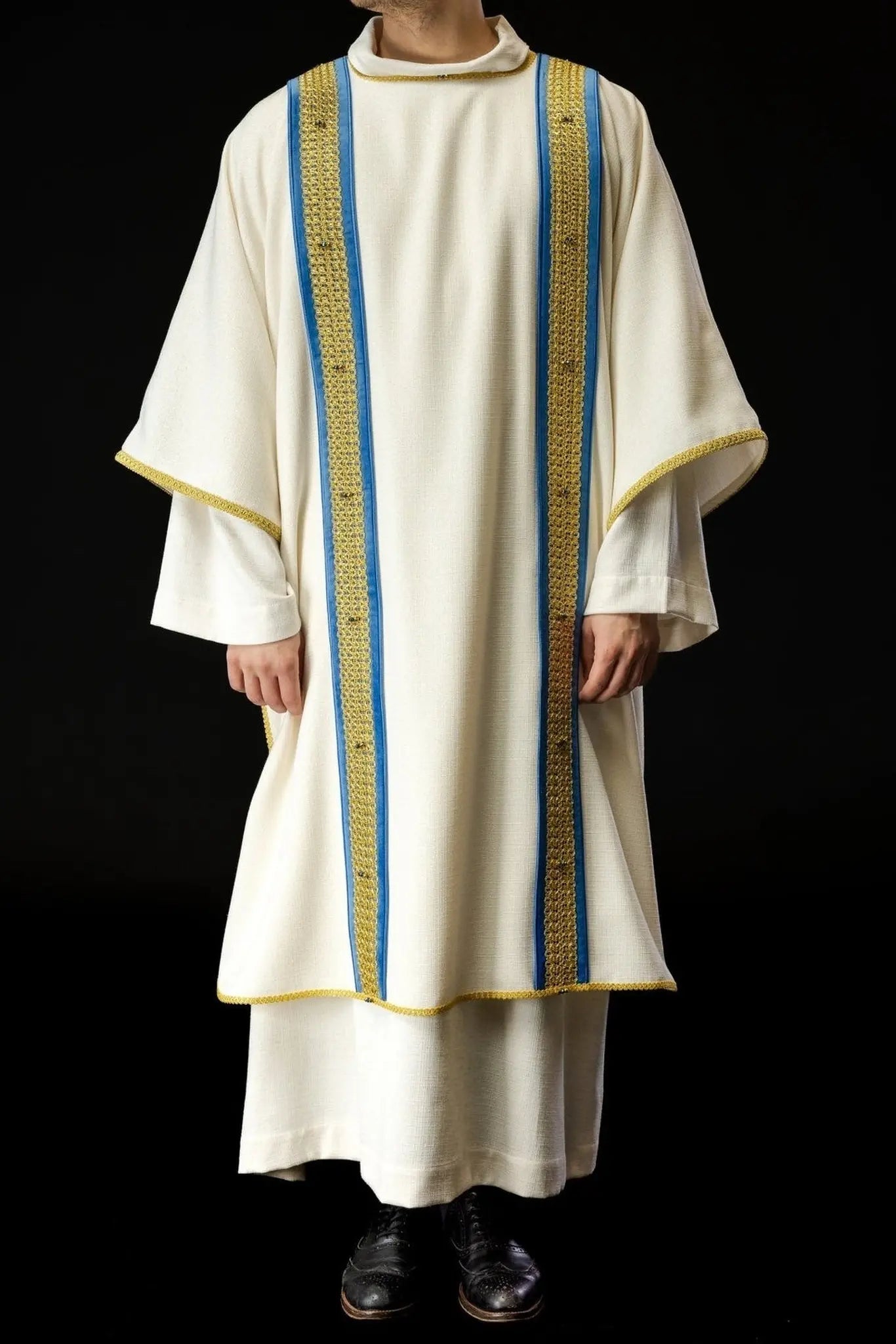
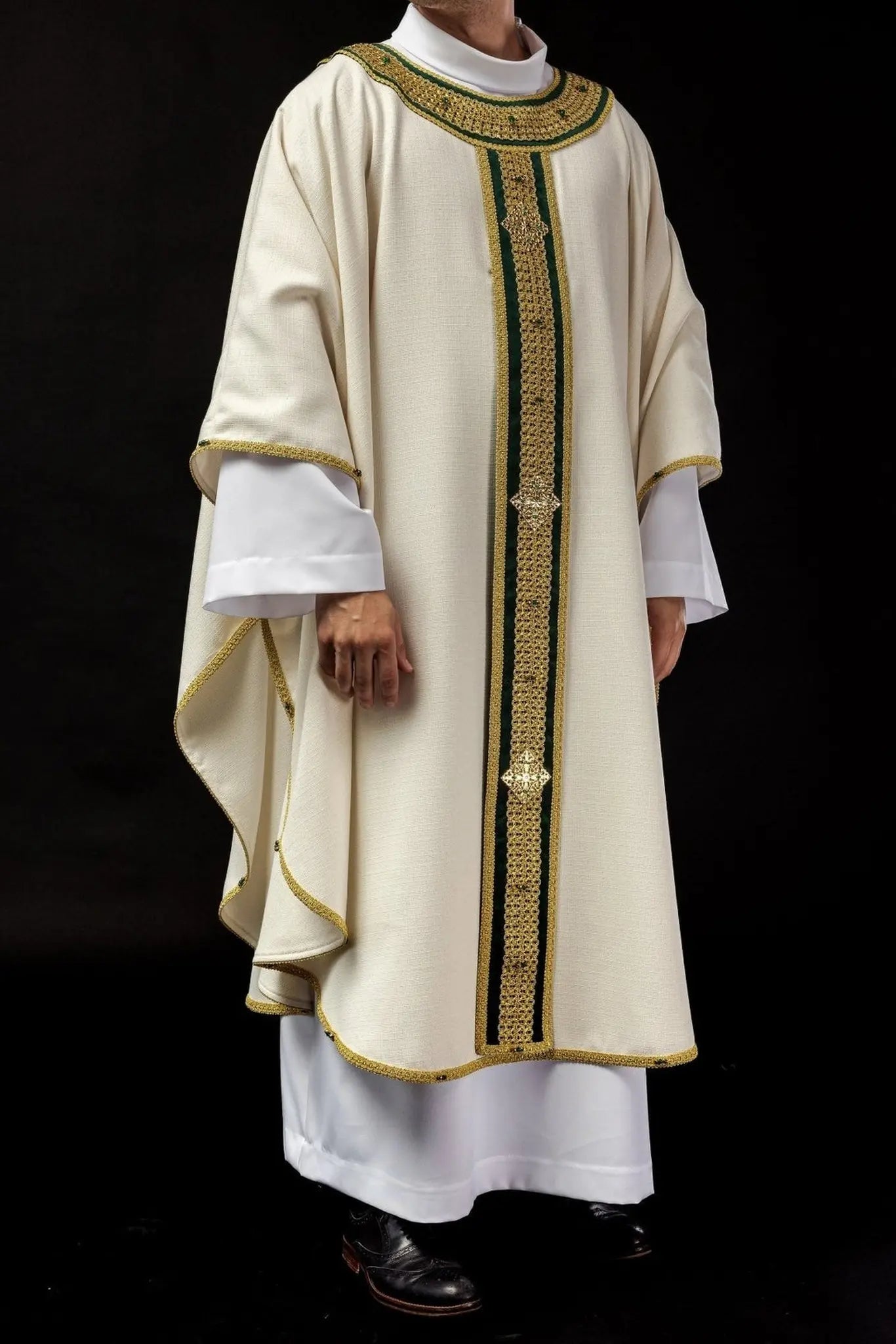
This collection gathers items with a stronger artisanal character than everyday vestments. The page includes priestly chasubles, deacon dalmatics, chalice linen sets, and selected sacred pieces whose decoration may include natural stones, refined gold-toned details, Marian themes, ecru fabrics, red liturgical designs, and solemn ornamental patterns. Customers looking for the broader vestment assortment can also compare this page with liturgical vestments, where the full range of garments for clergy is organized by type and liturgical use.
The main focus is on vestments for ordained ministry. A chasuble is worn by a priest or bishop as the outer vestment for Mass, while a dalmatic is the proper vestment for a deacon at the Eucharist and other solemn celebrations. Handmade models are especially valued when the garment should communicate beauty without losing liturgical clarity. The cut, weight, lining, ornament placement, and proportion of the decoration all matter, because the vestment must look dignified at the altar and remain practical during the celebration.
Handmade chasubles for solemn Masses
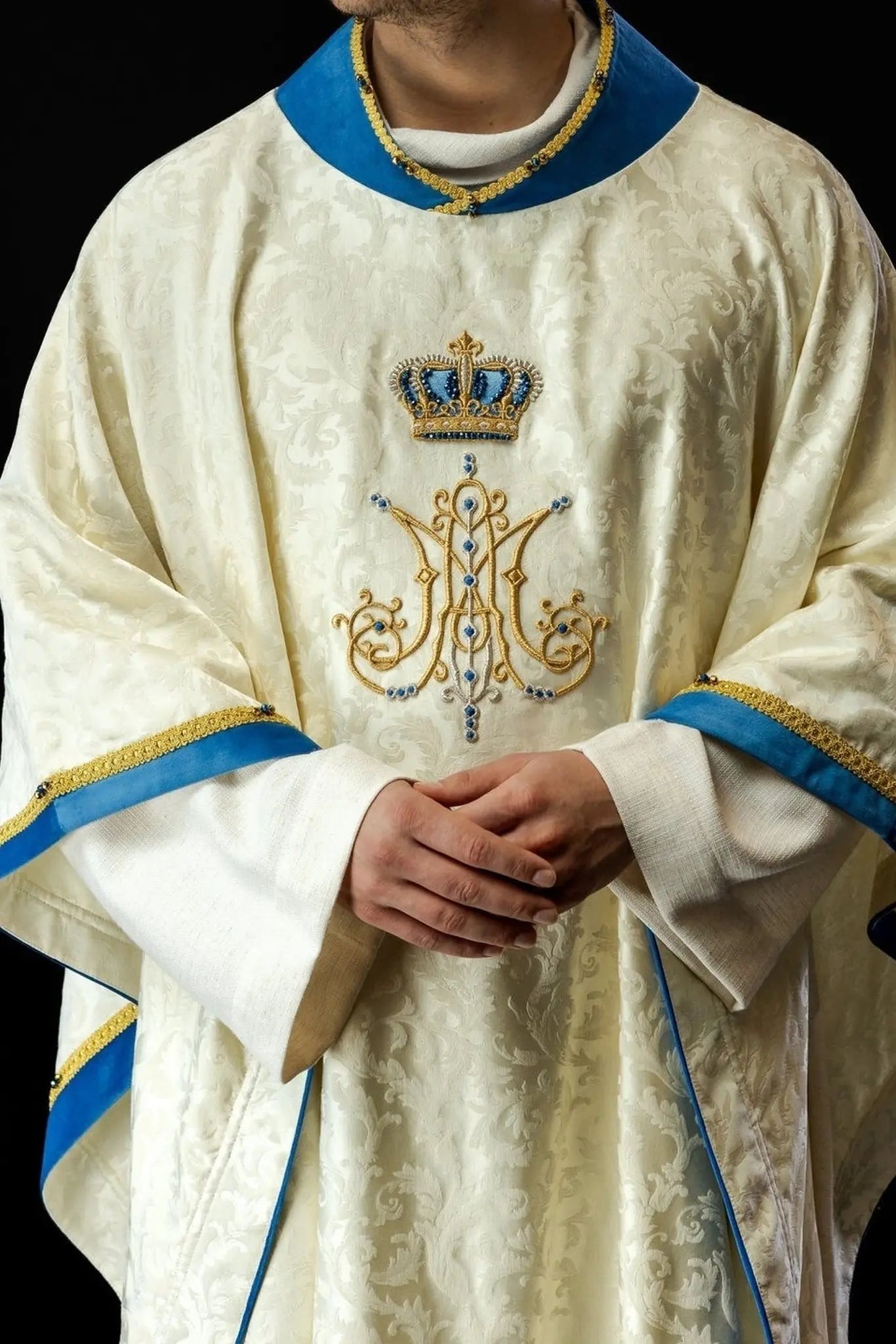
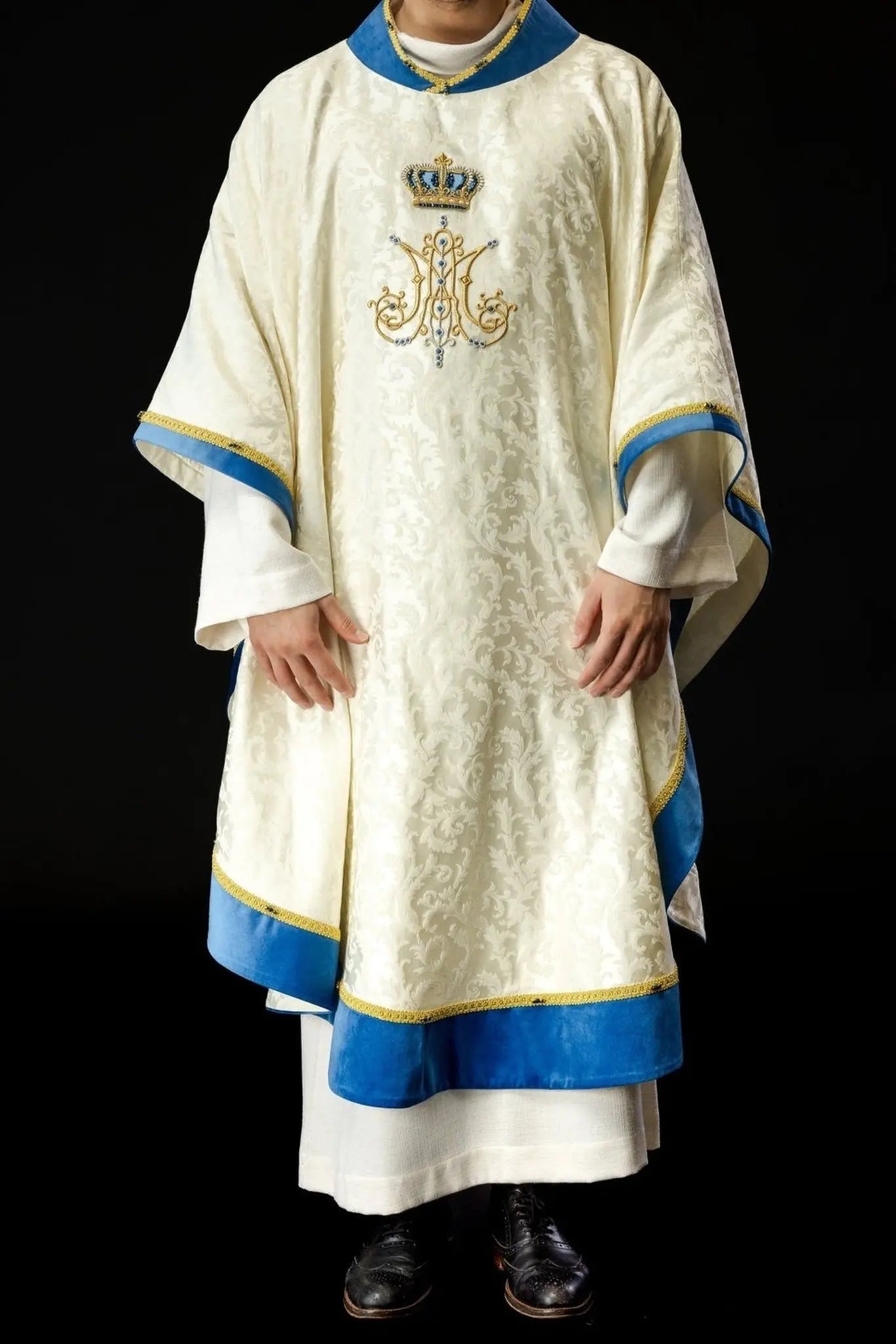
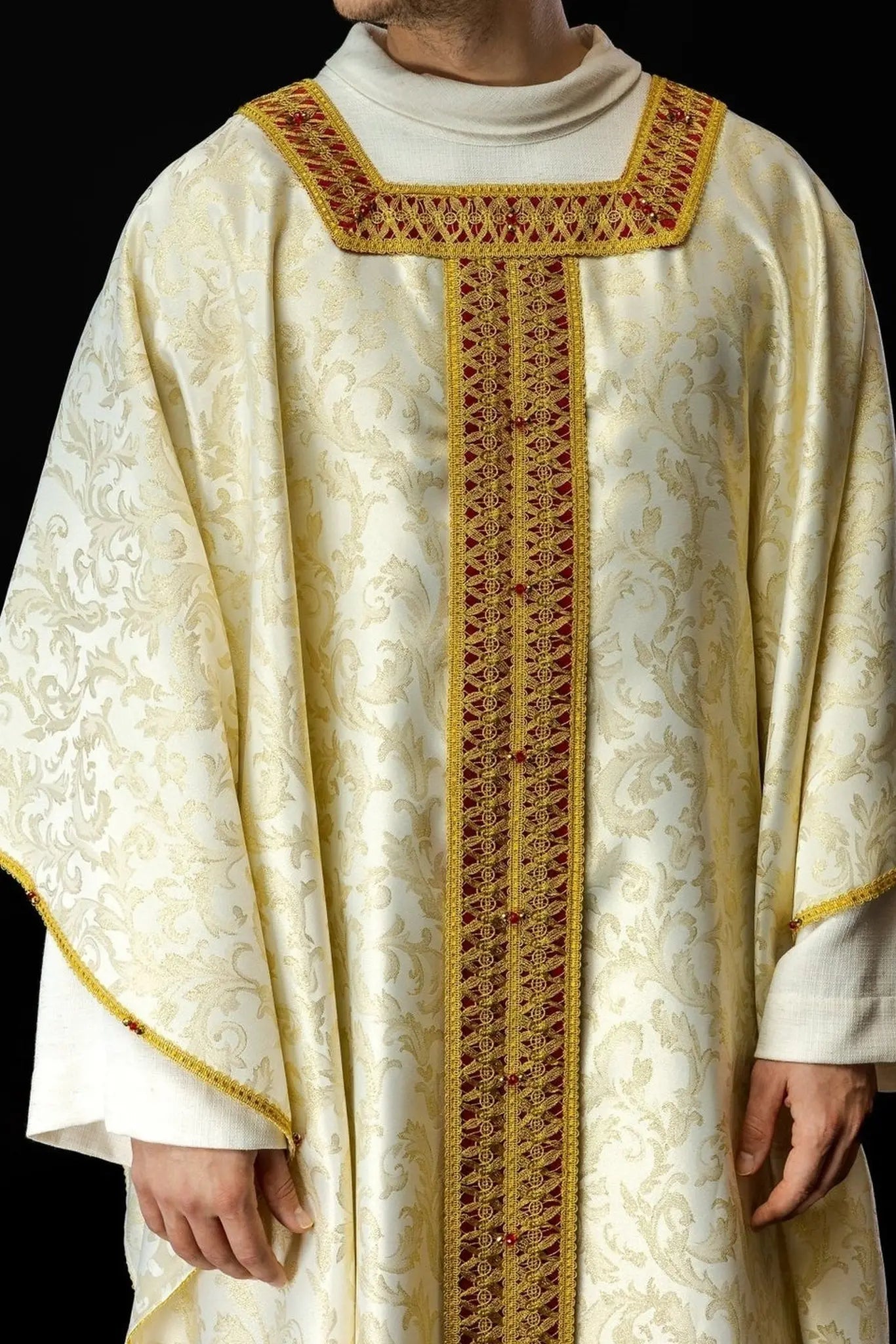
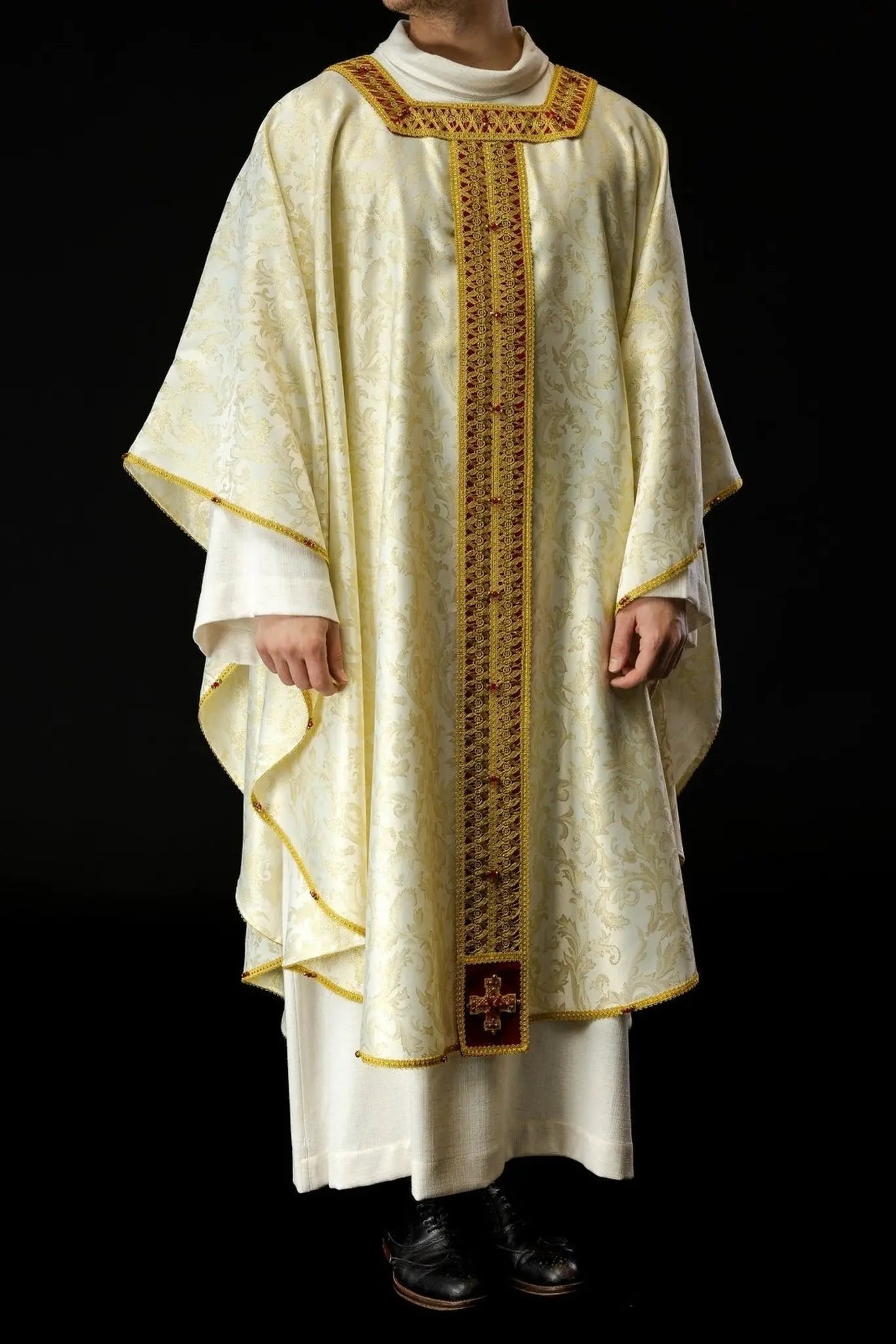
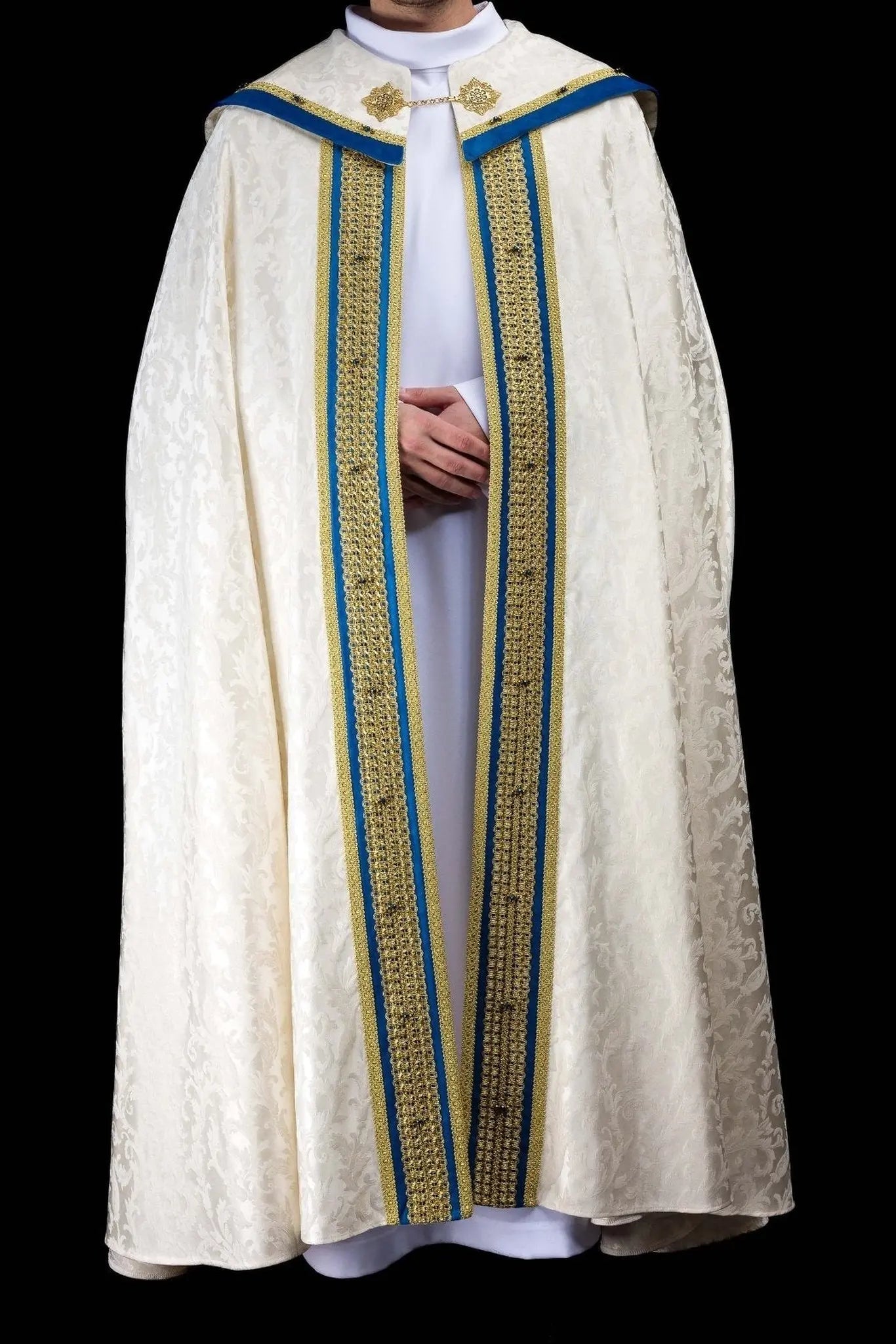
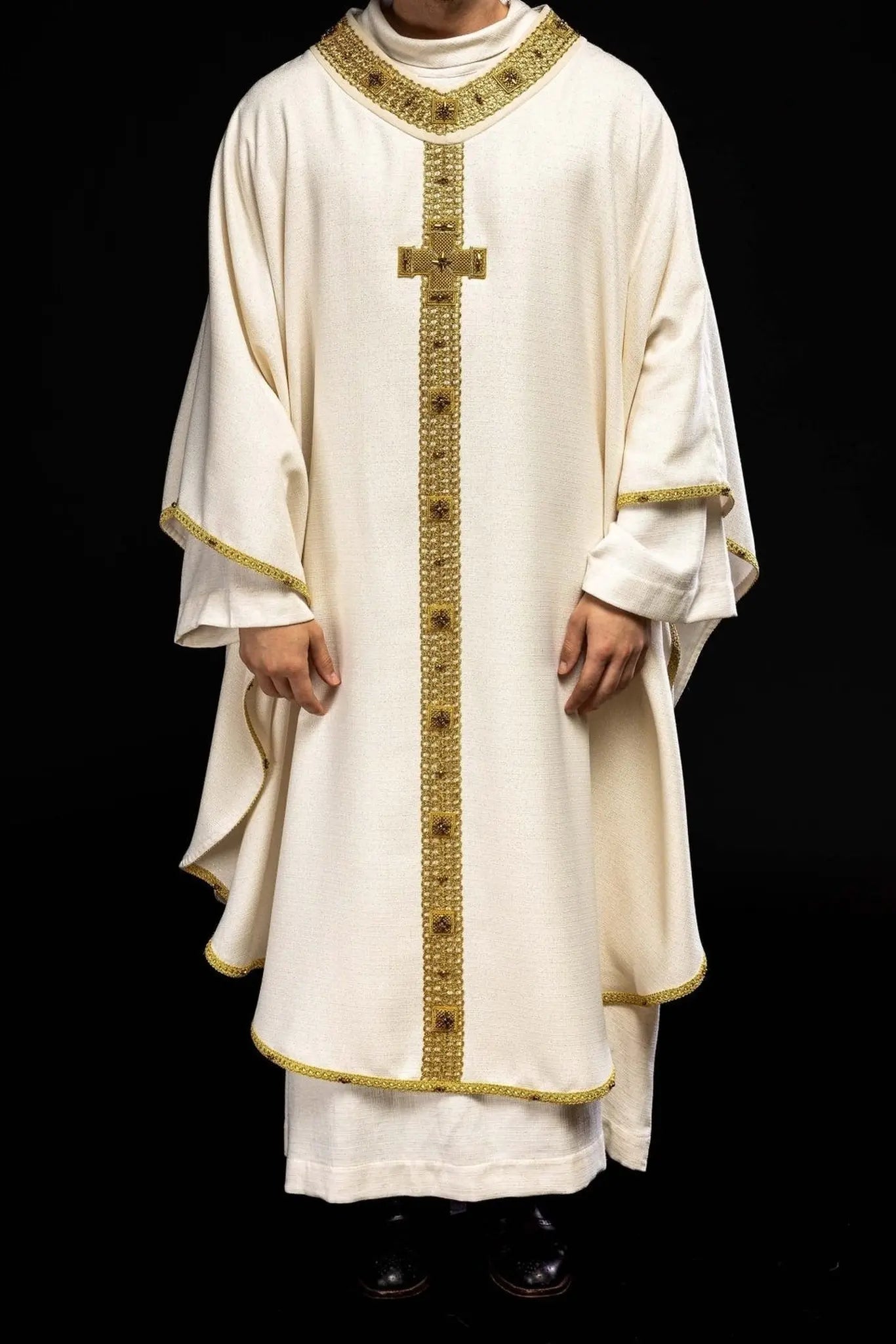
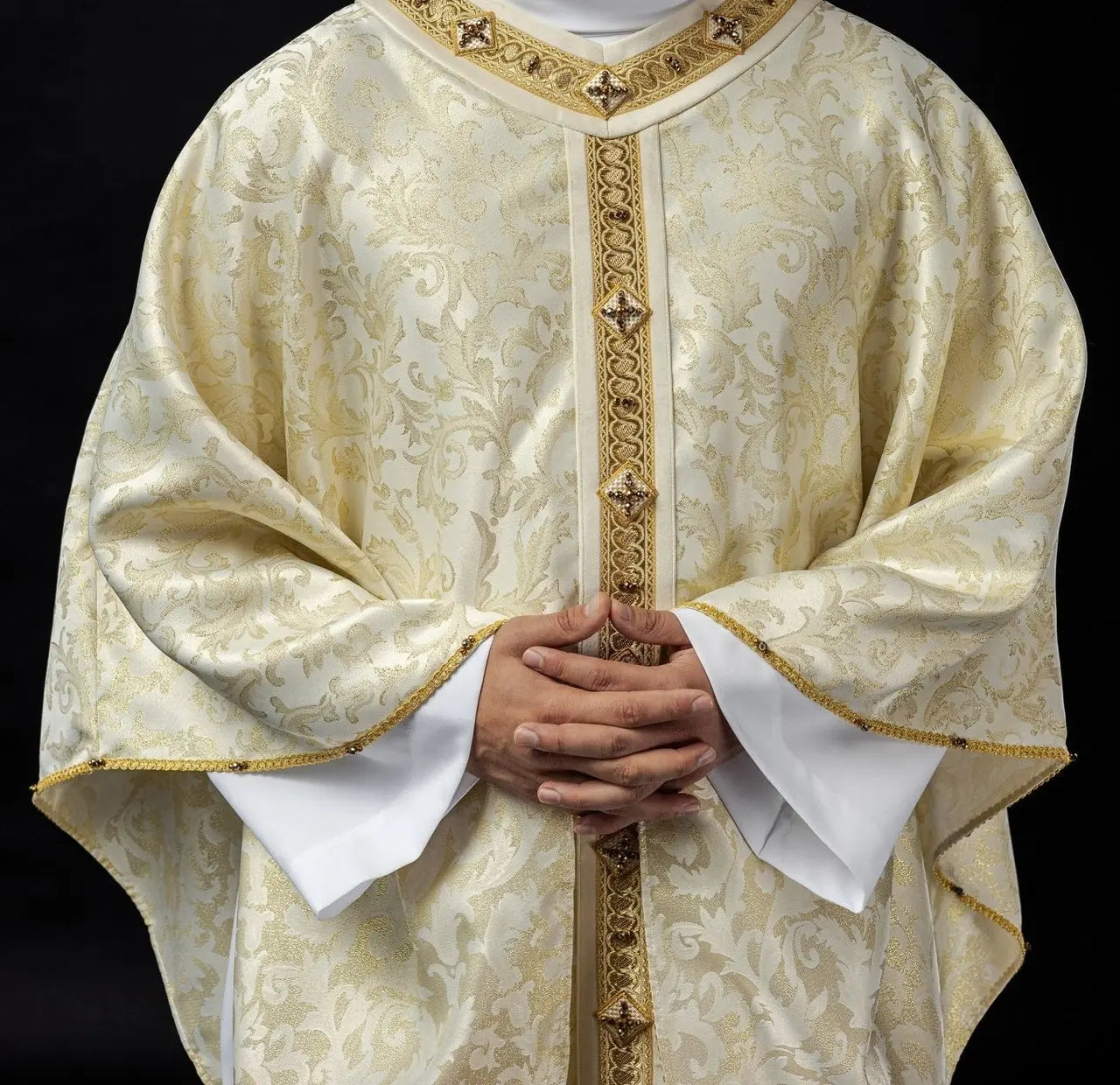
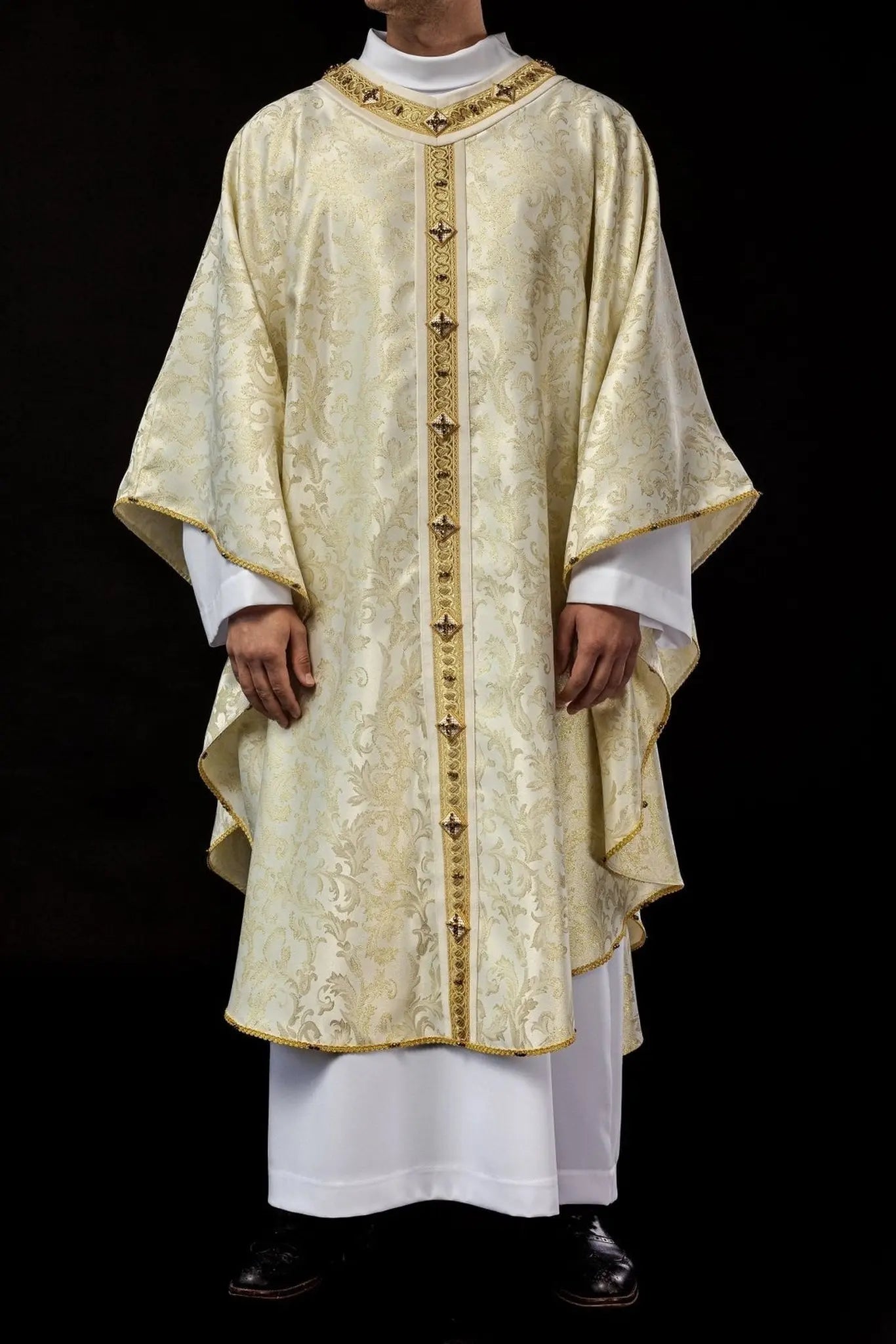
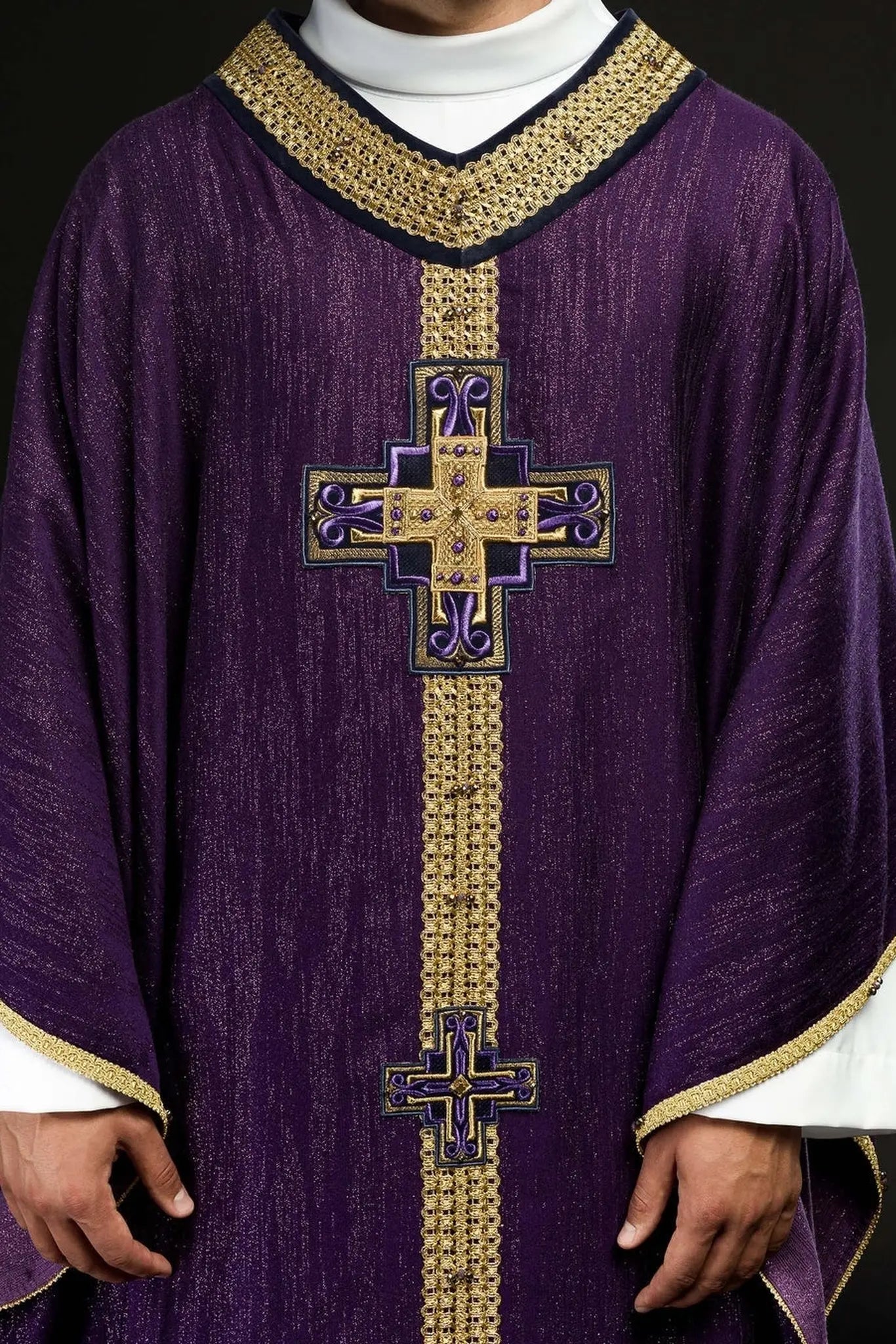
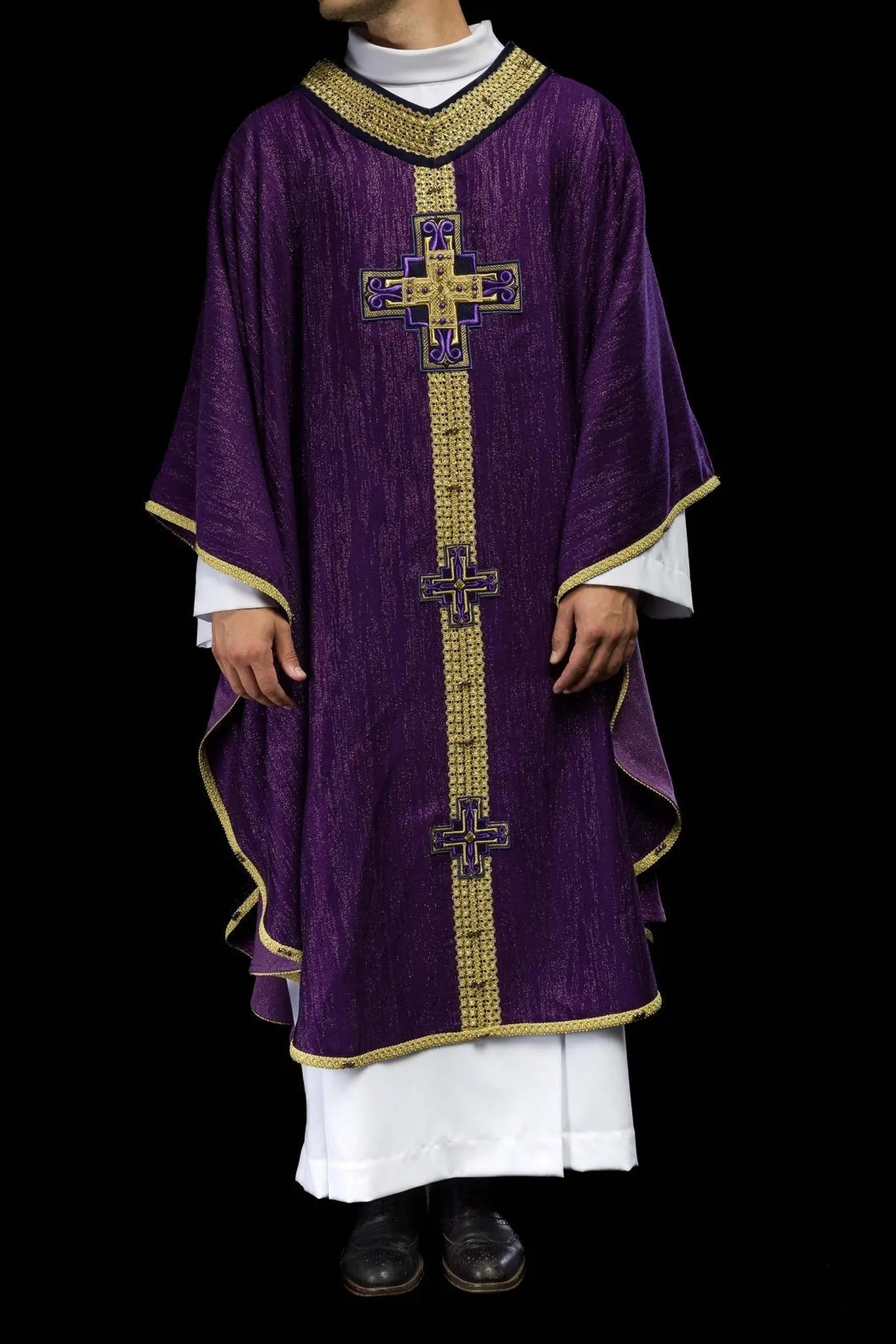
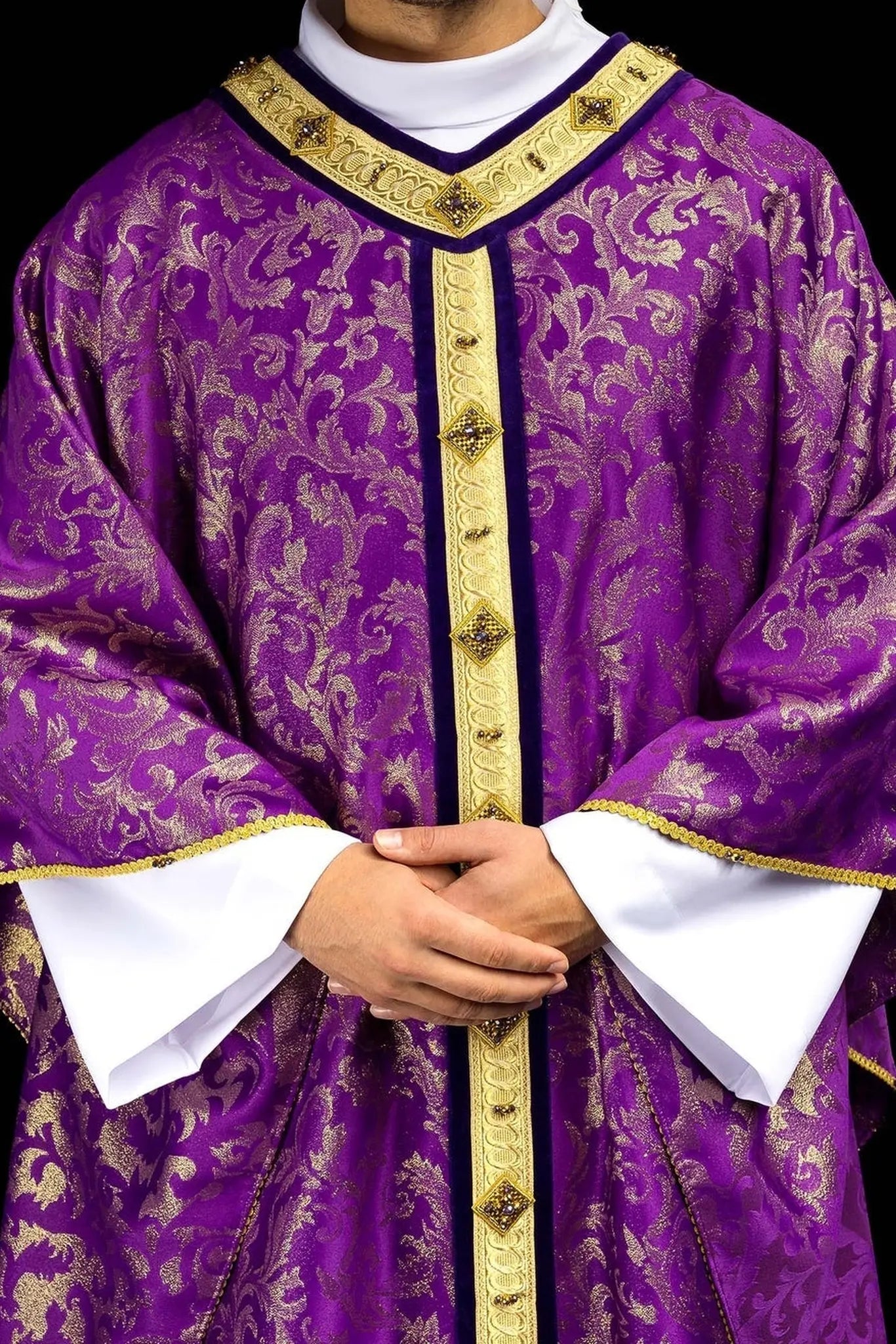
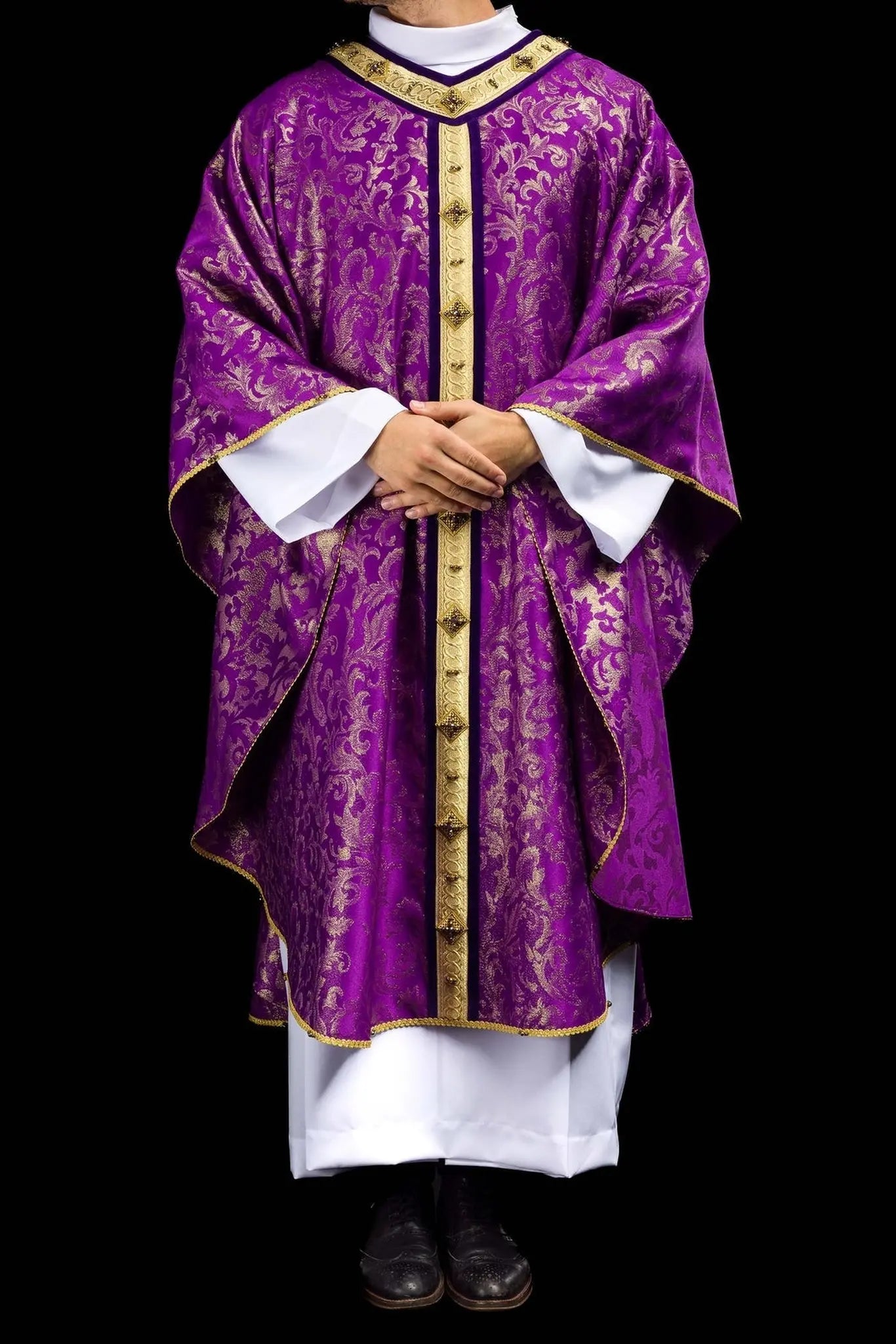
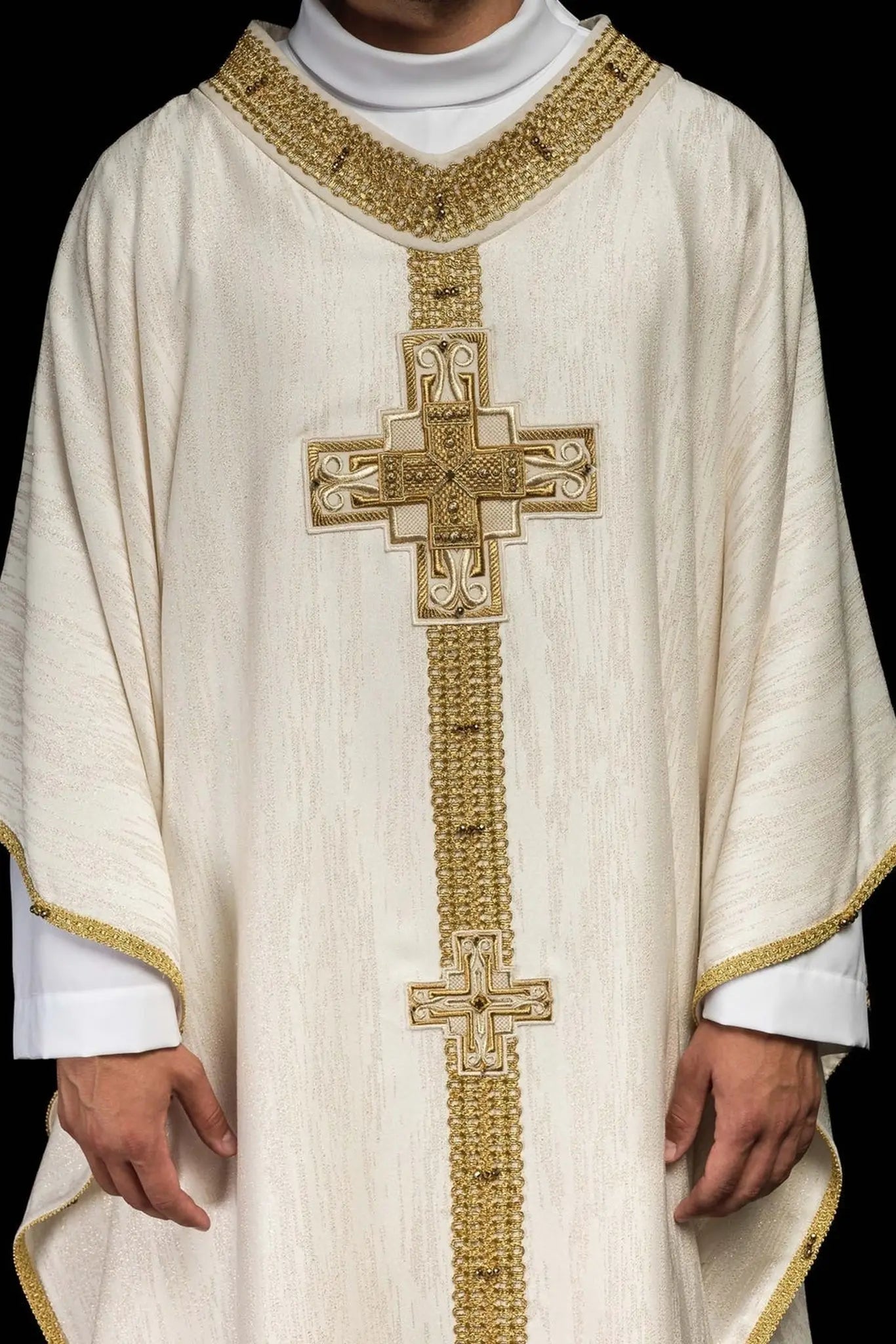
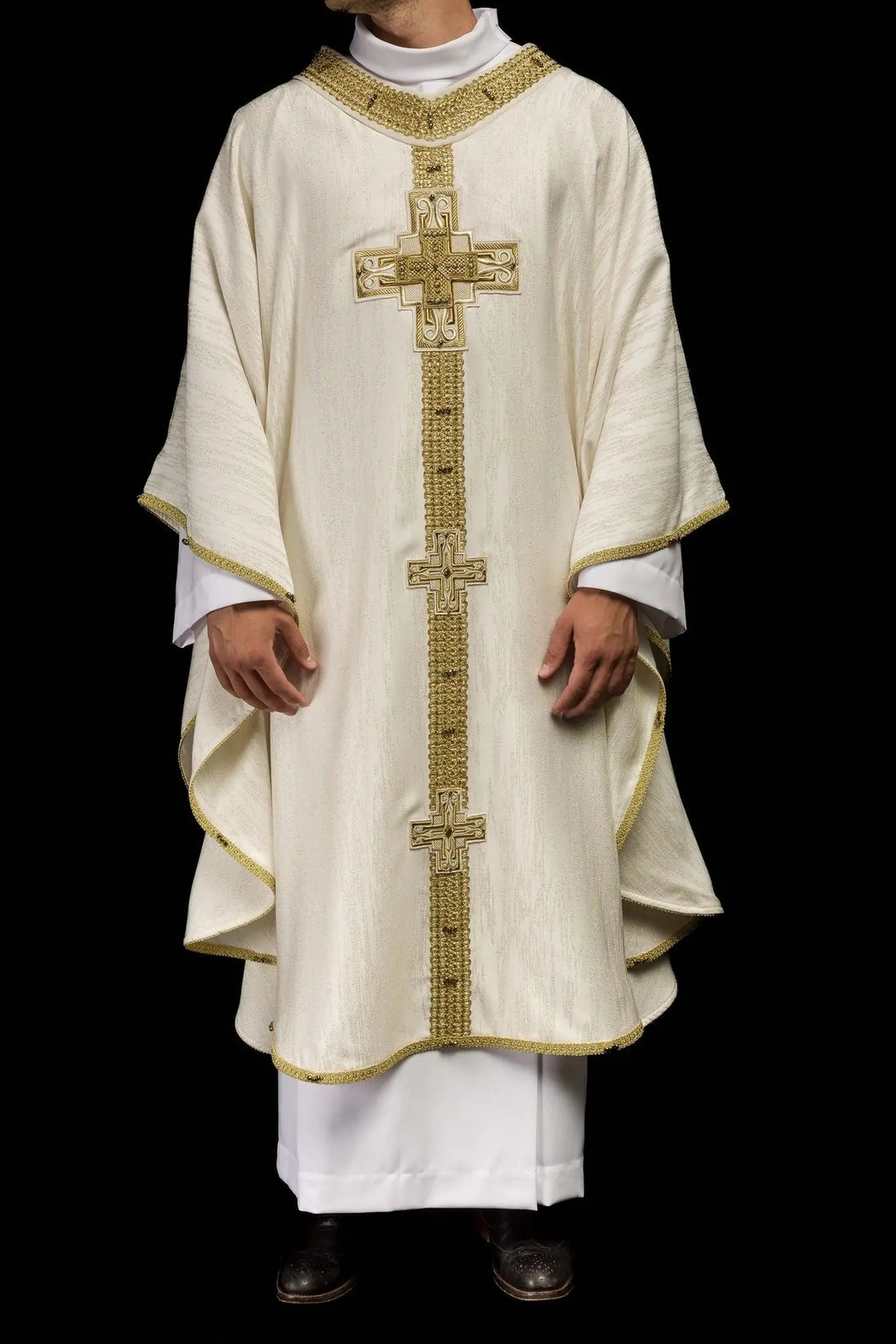
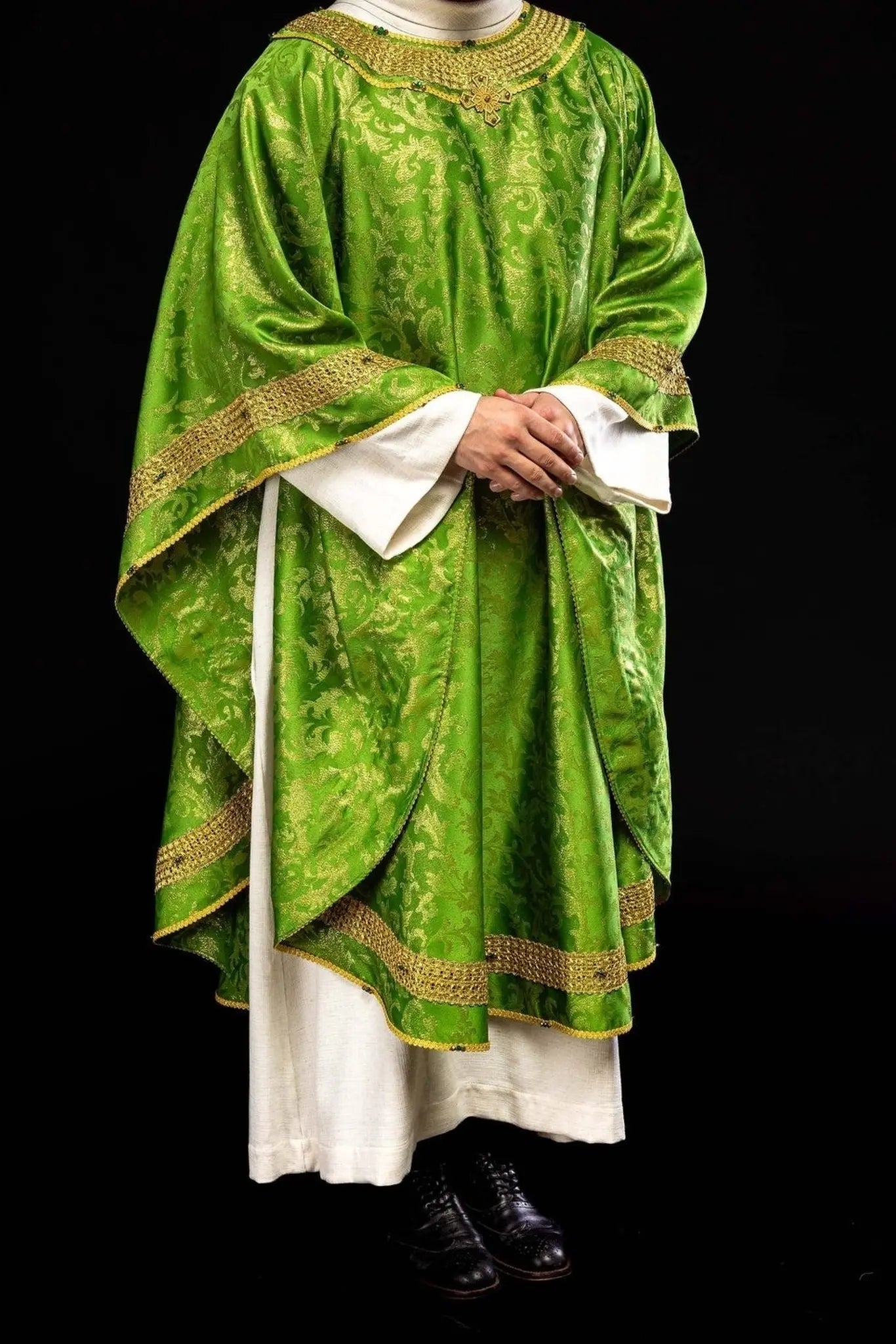
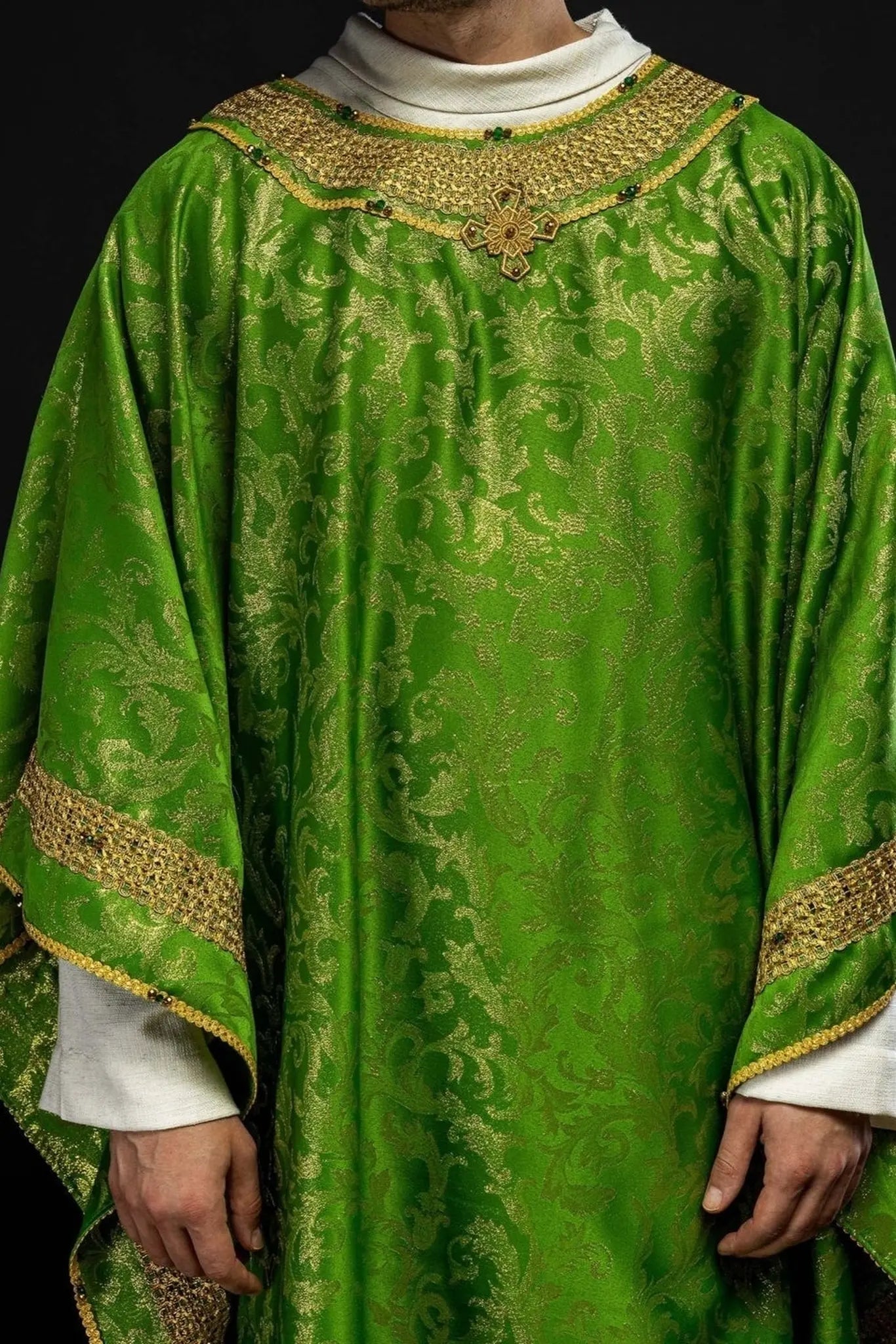
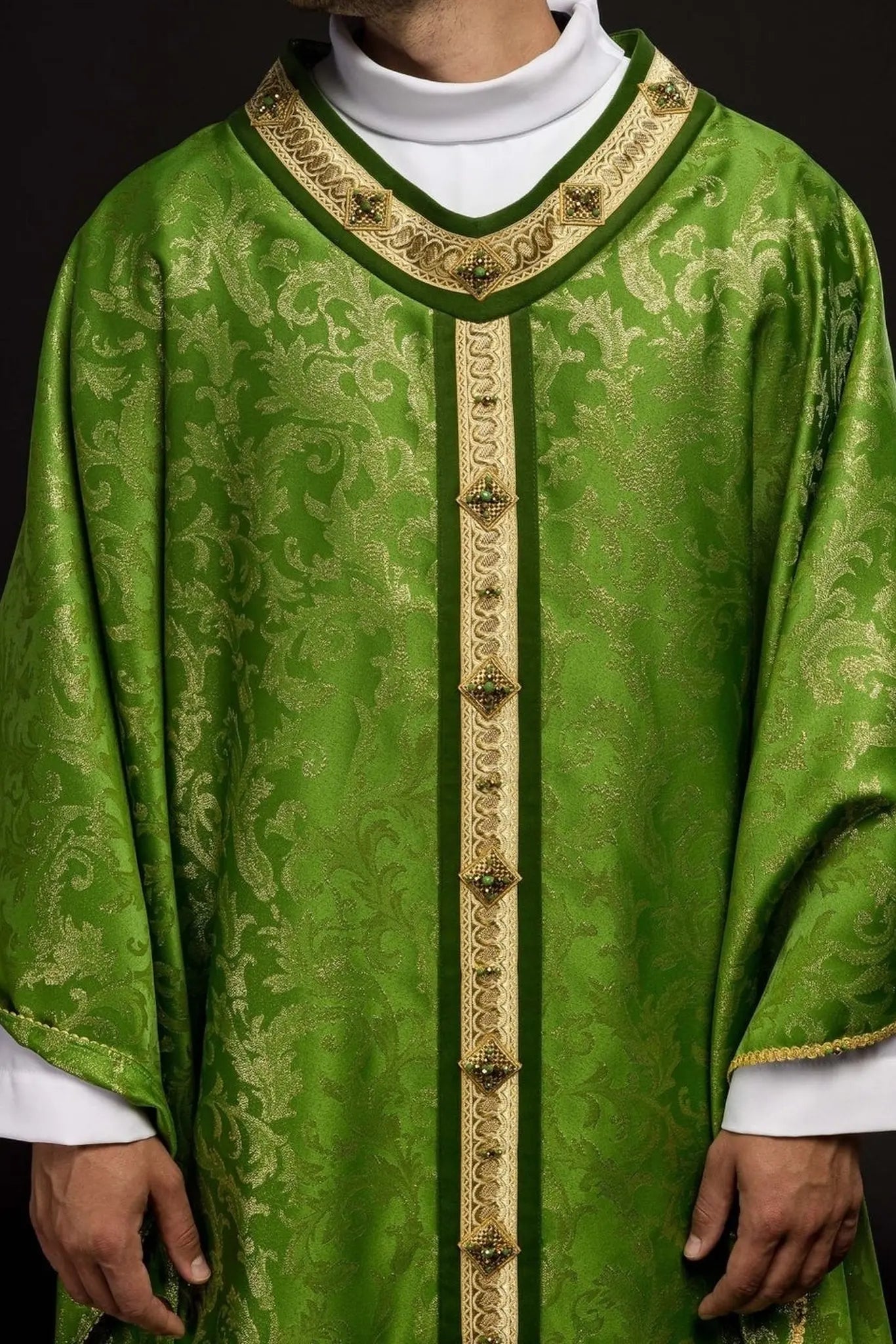
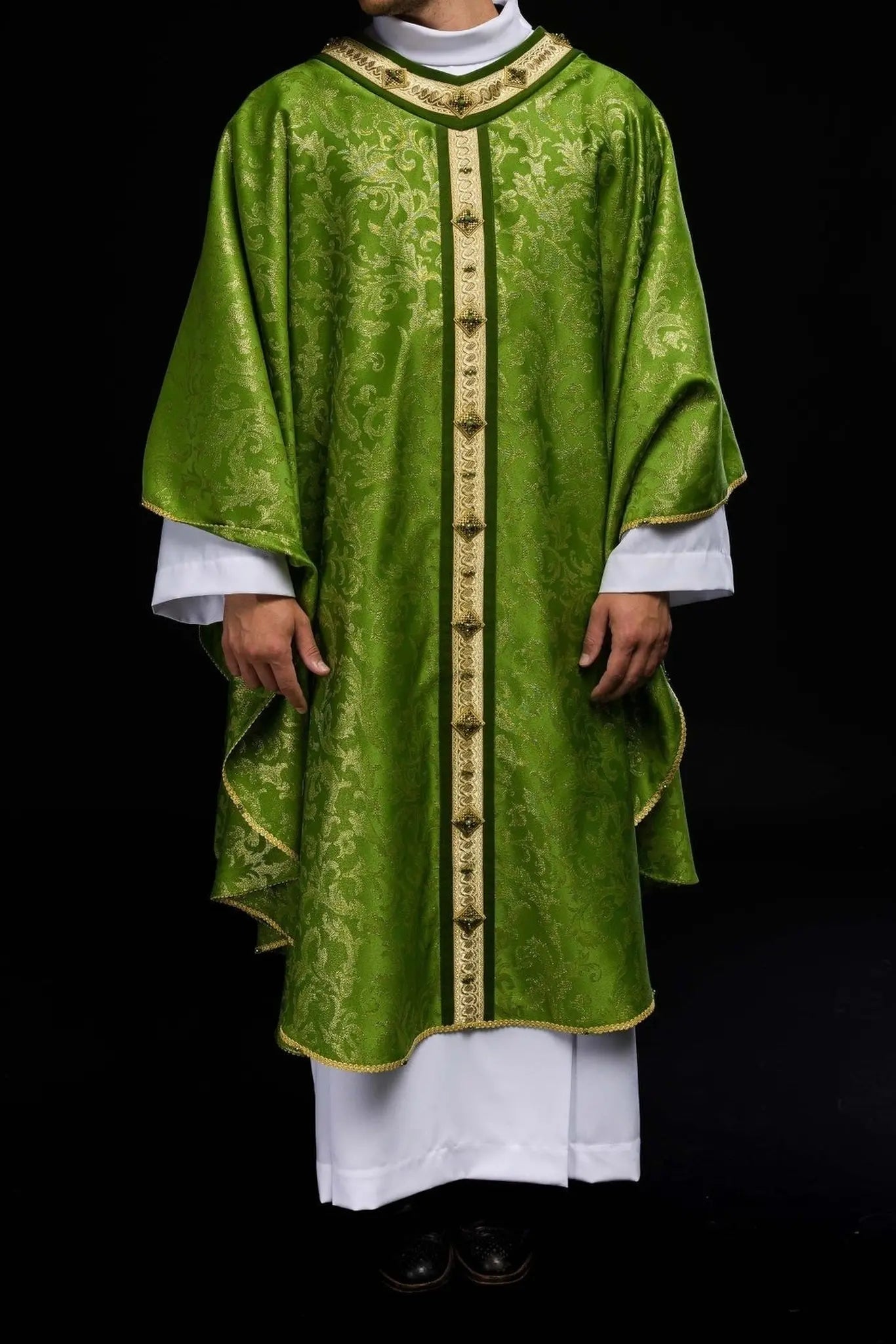
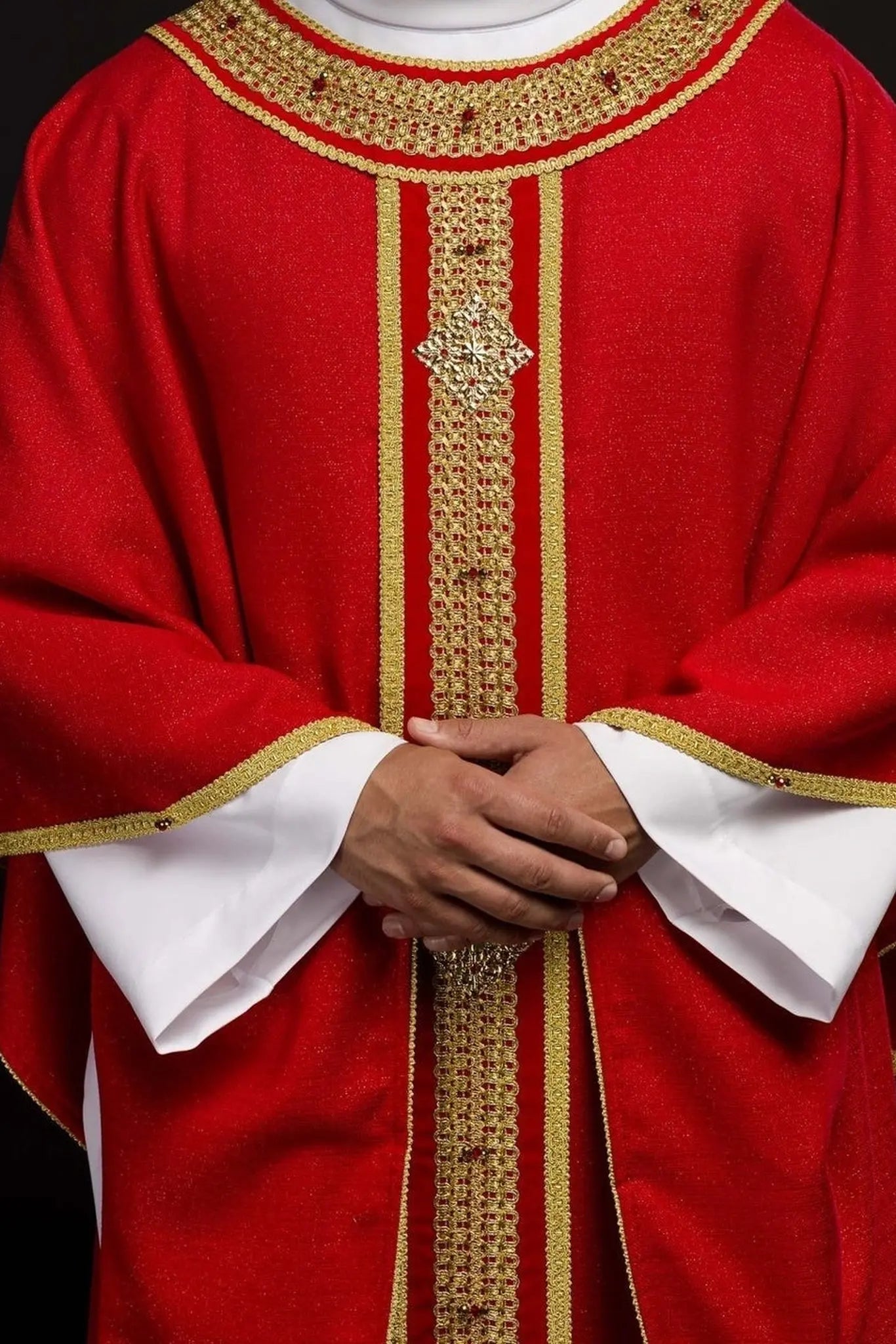
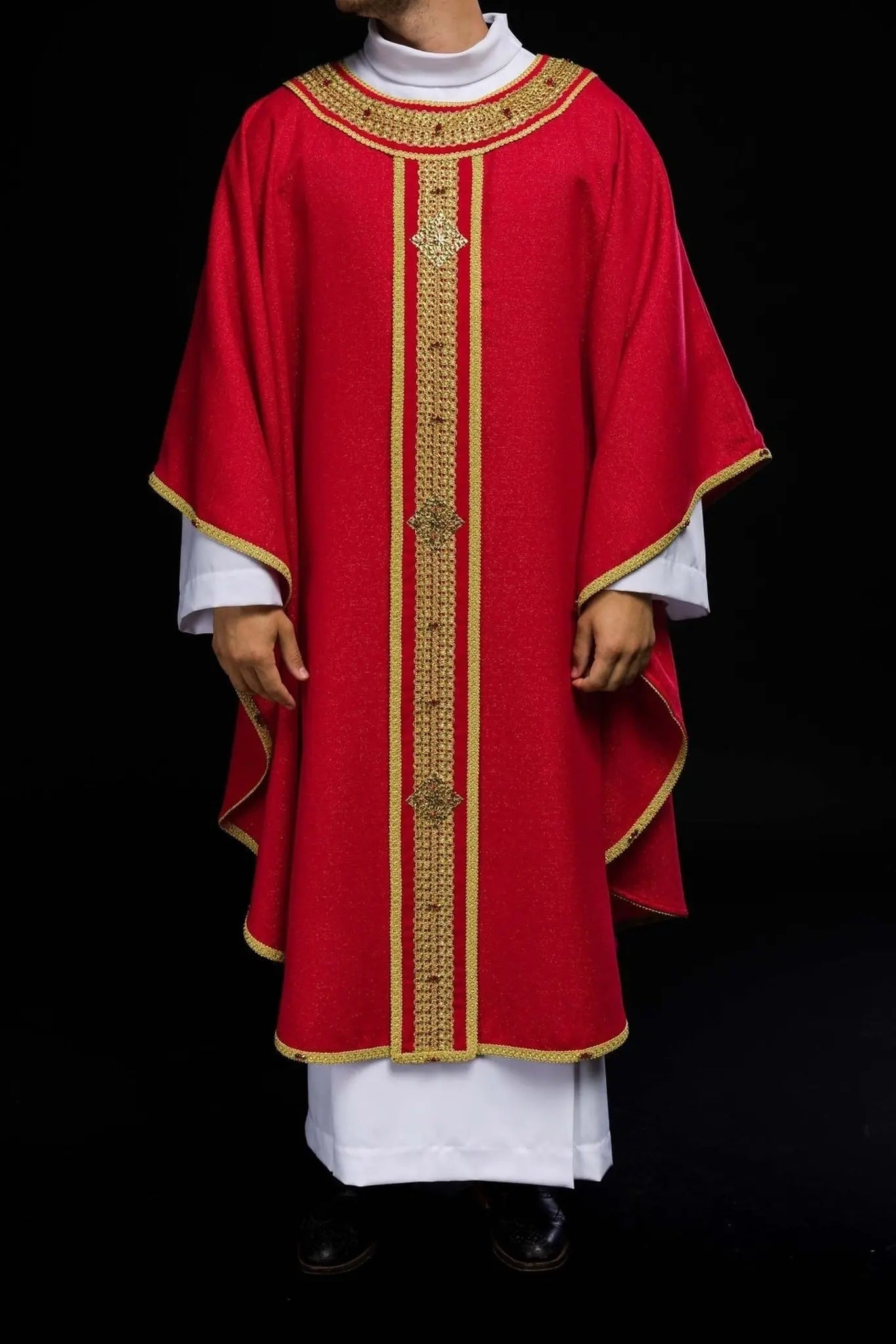
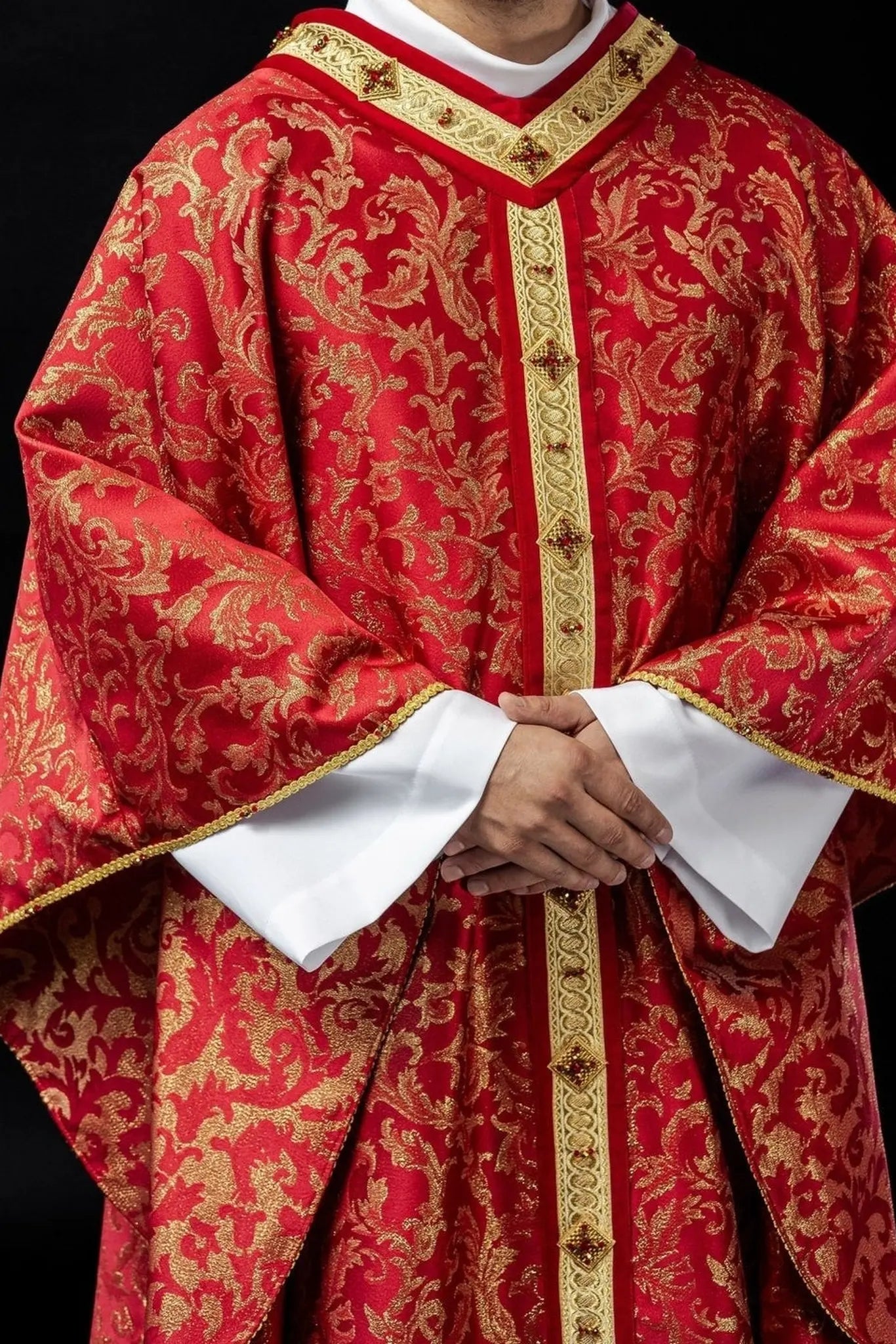
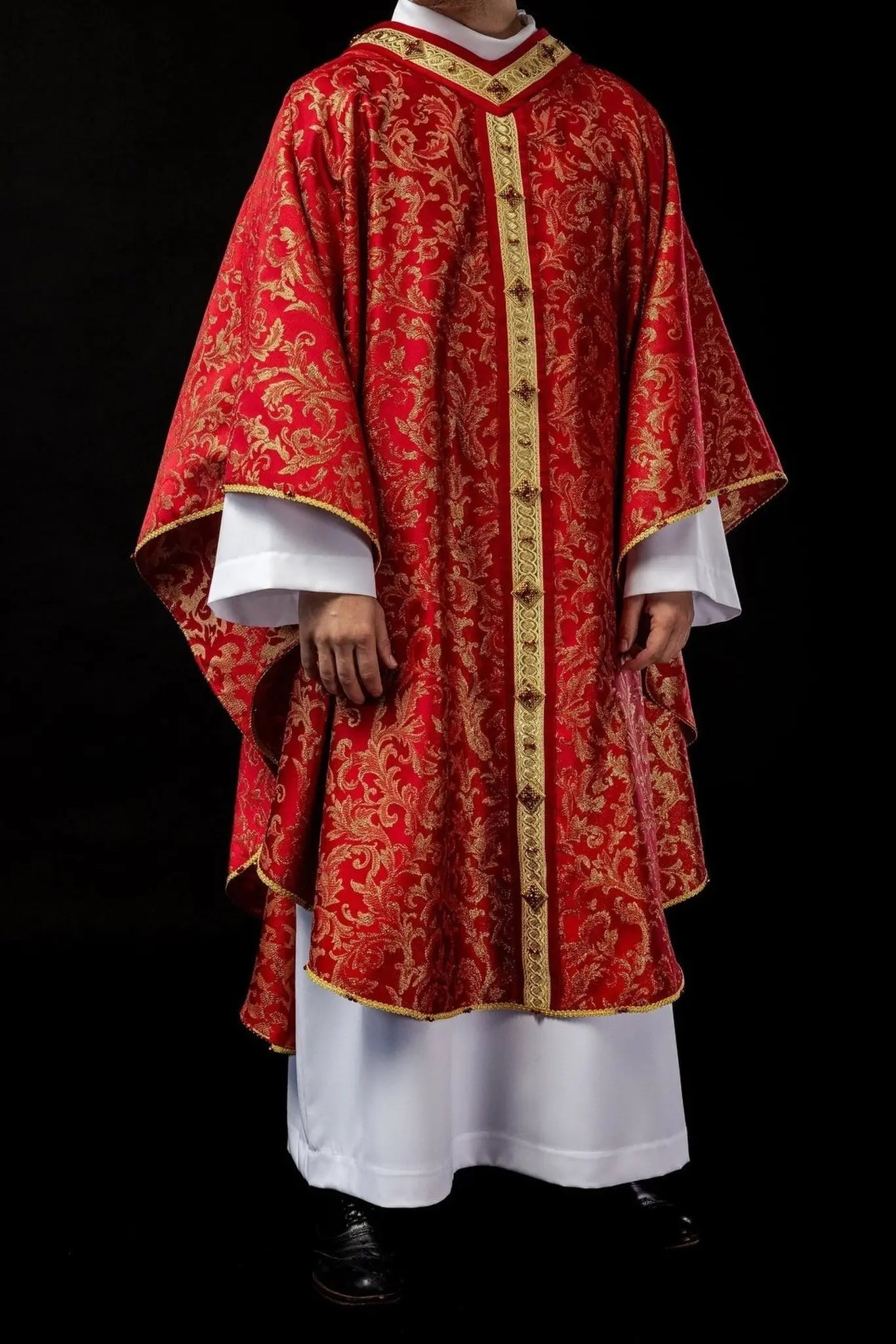
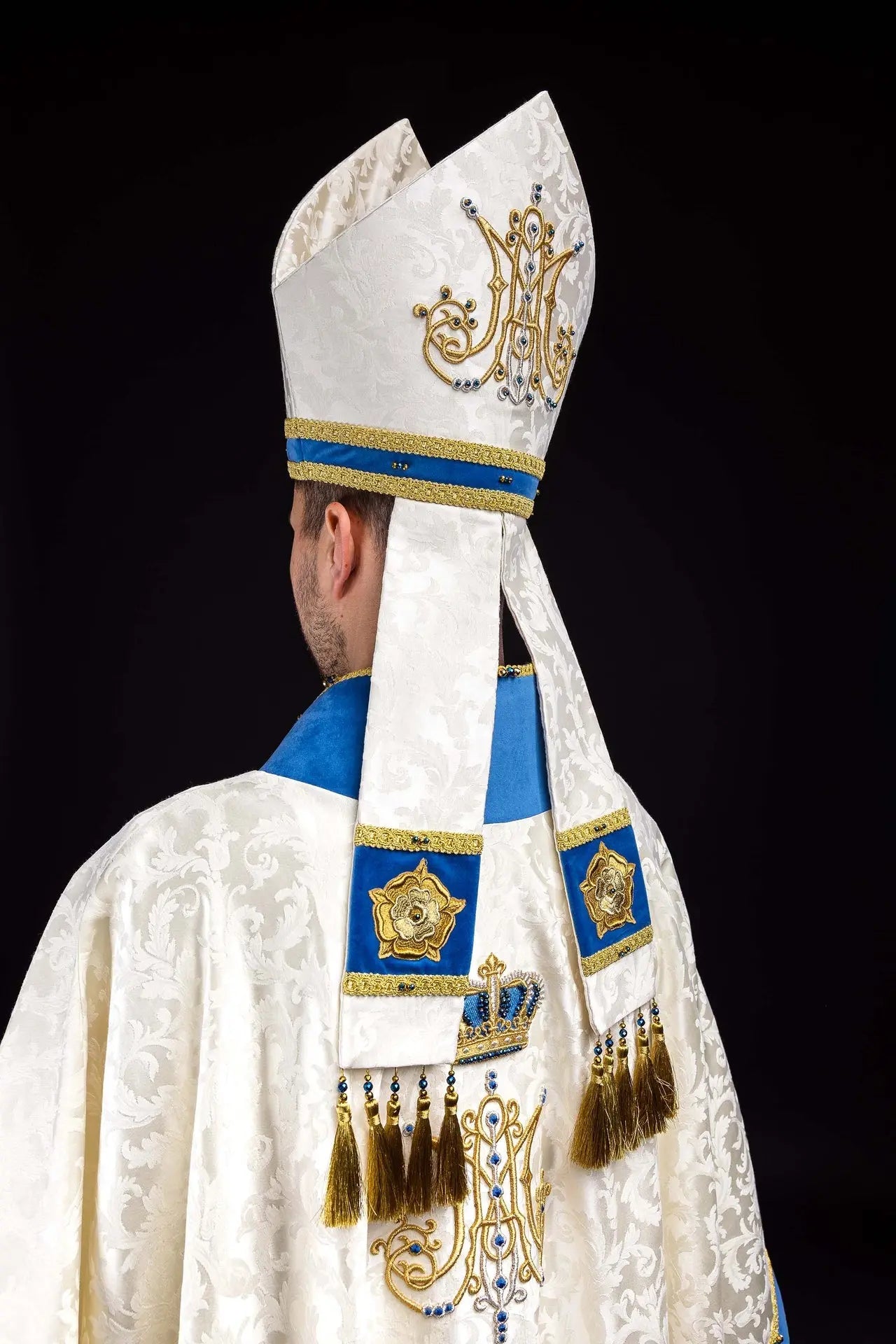
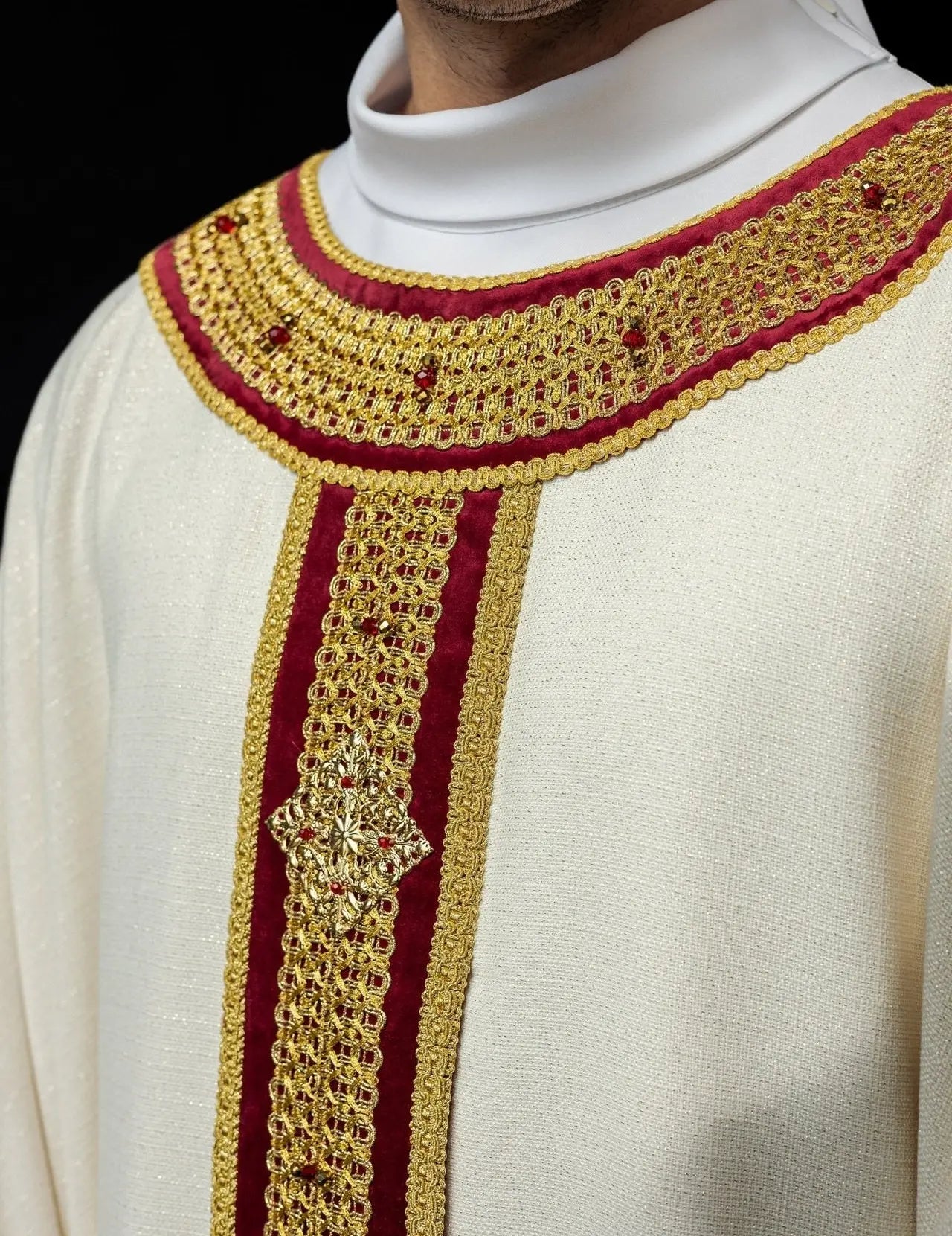
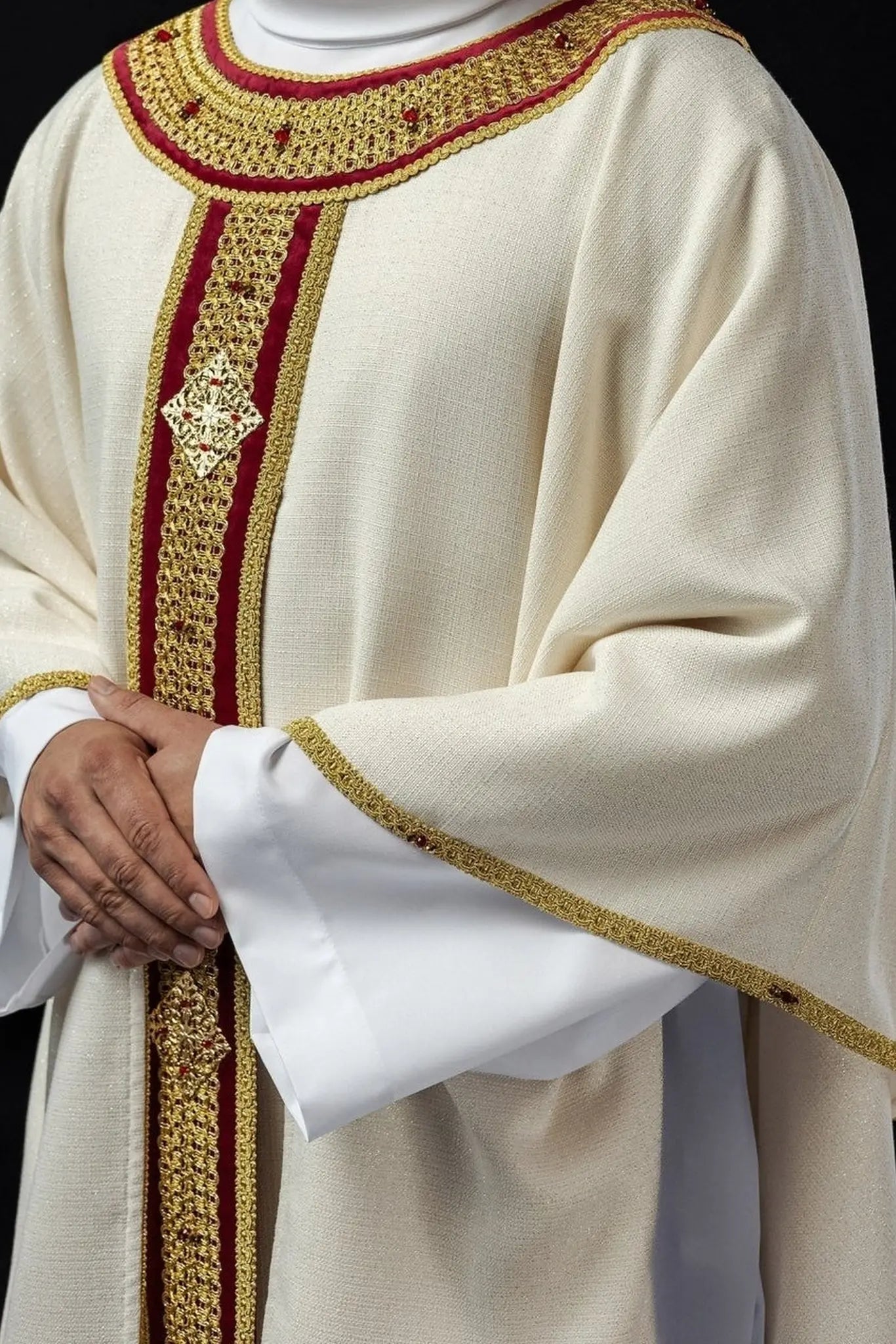
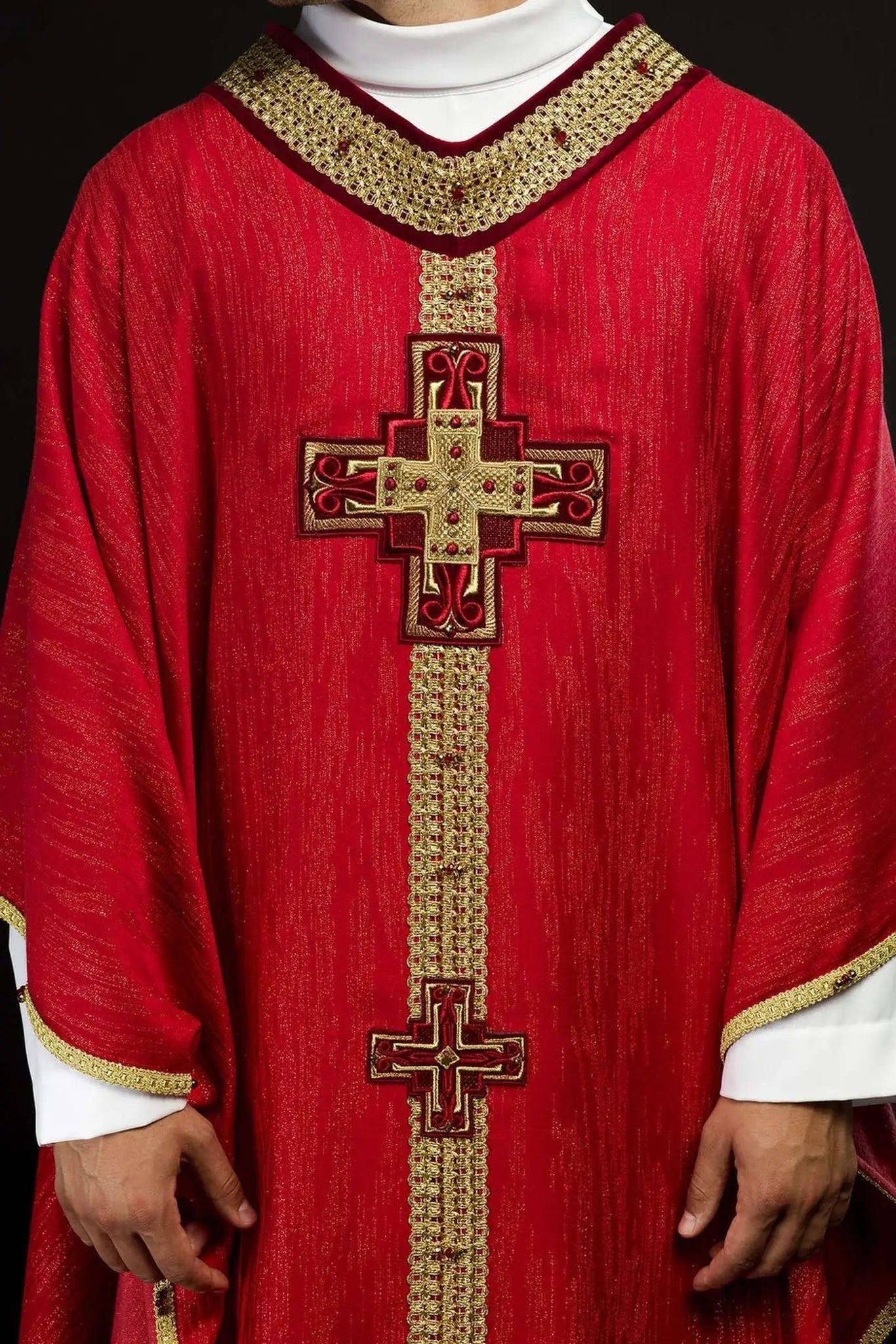
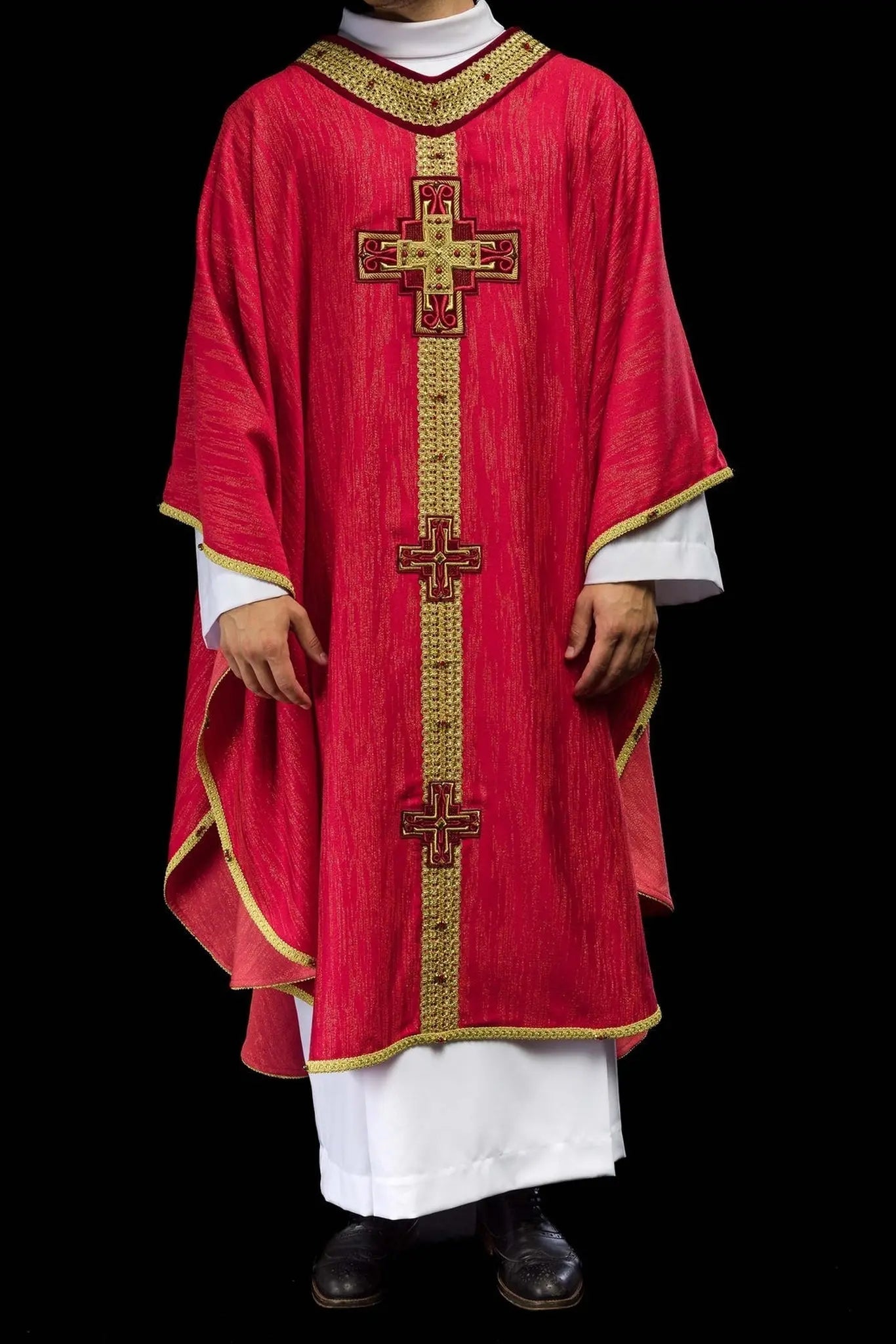
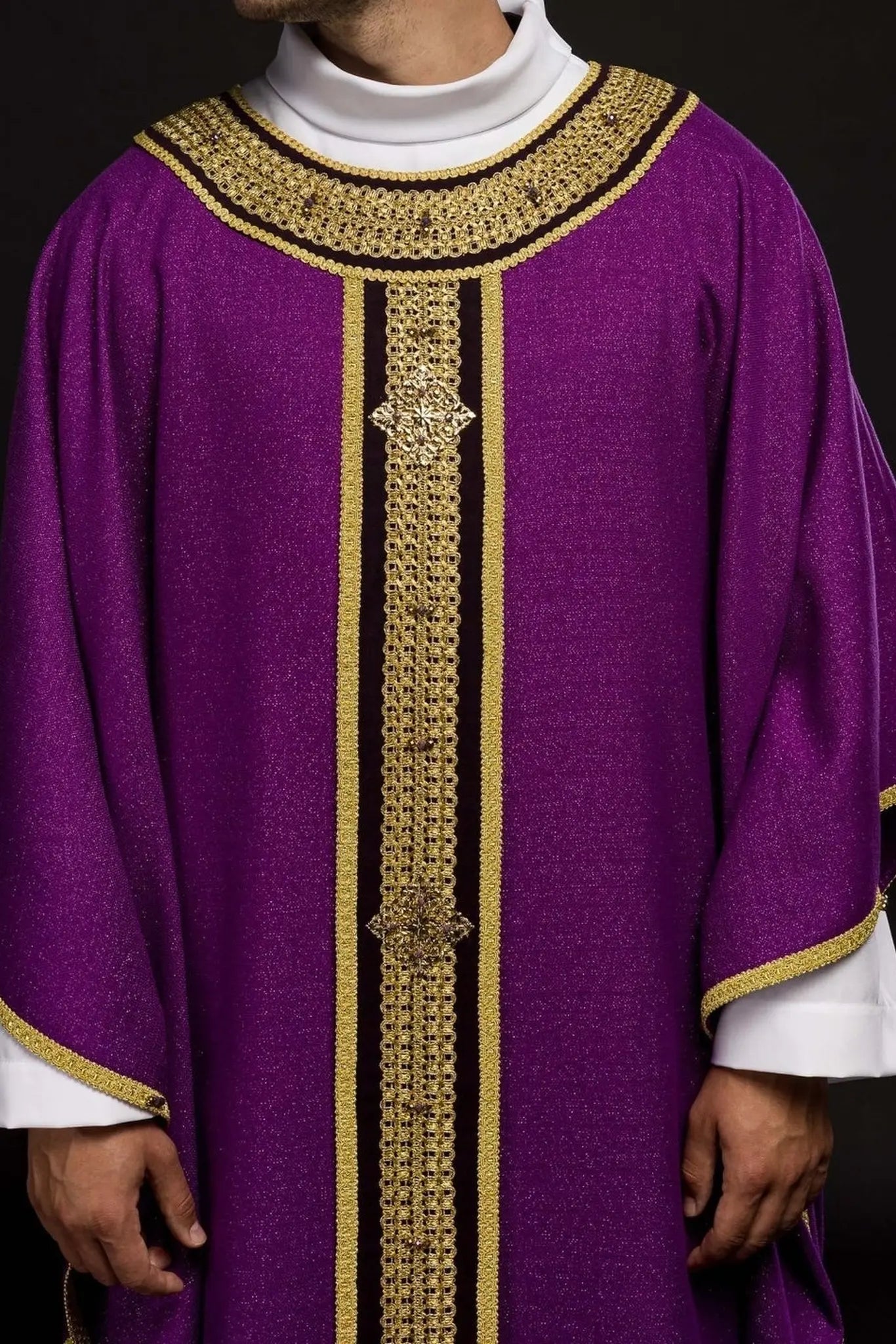
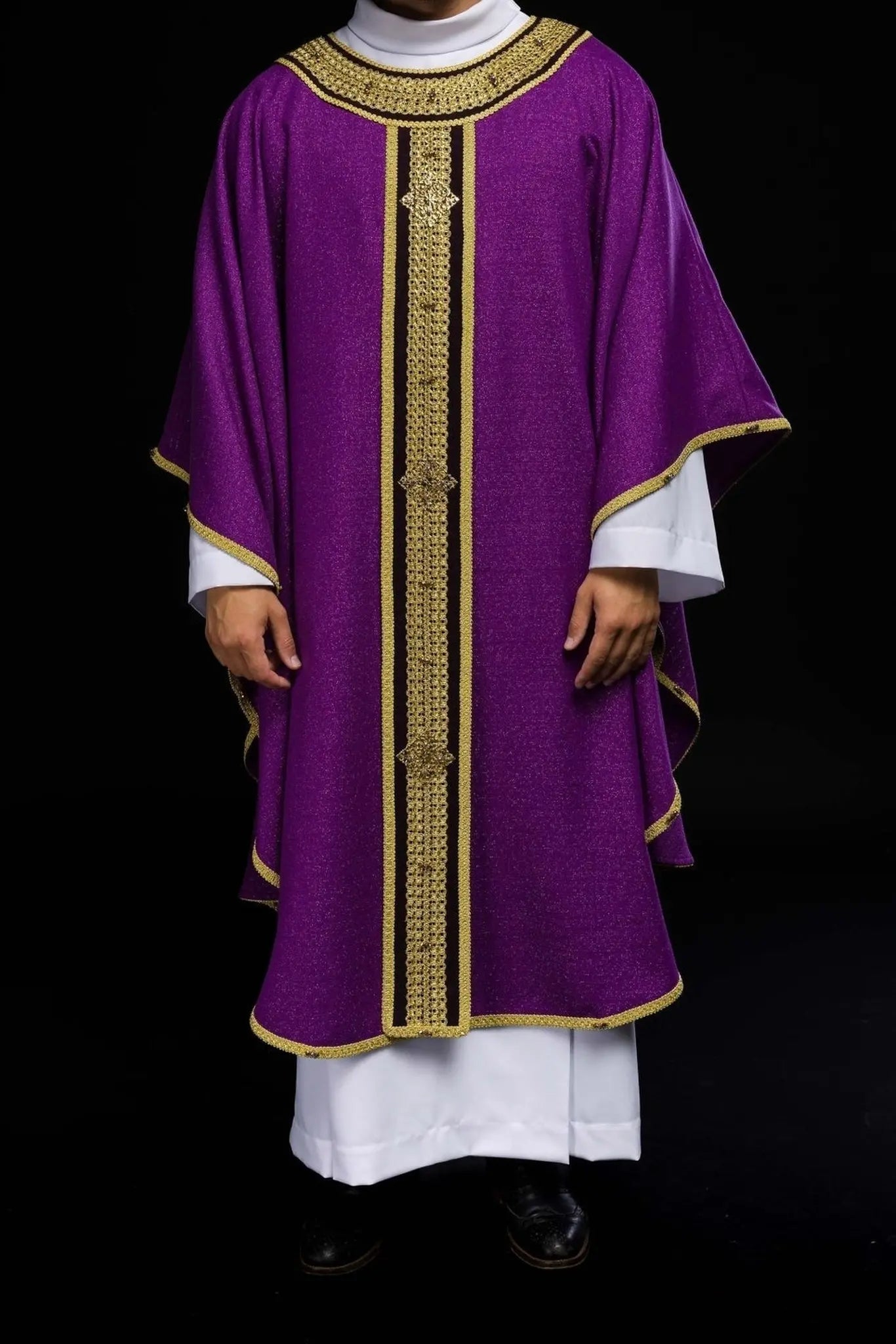
Handmade chasubles are among the most important pieces in this collection. They are designed for priests and bishops celebrating the Eucharist, and they often become the most visible vestment in the sanctuary. The handmade character can be seen in the harmony of fabric, embroidery, appliqué, decorative stones, and finishing details. These elements should support the sacred action rather than distract from it, which is why a well-designed chasuble balances richness with restraint.
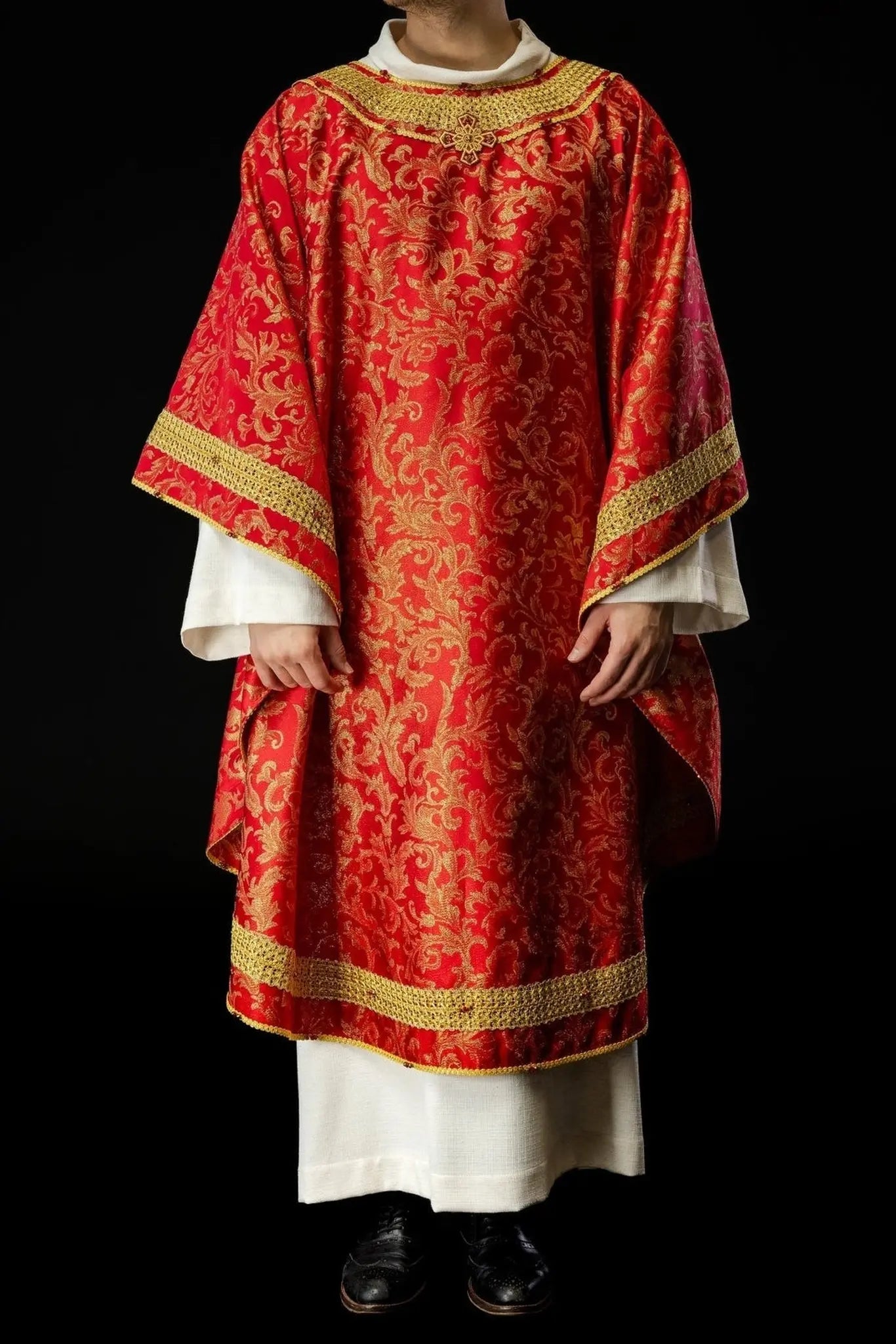
When choosing a handmade chasuble, first consider the liturgical color and occasion. Gold and ecru designs are often selected for solemnities, Christmas, Easter, jubilees, first Masses, parish feasts, and especially festive celebrations. Red is used for Palm Sunday, Good Friday, Pentecost, the feasts of martyrs, and celebrations connected with the Holy Spirit. Marian designs are appropriate for feasts of the Blessed Virgin Mary and for churches, shrines, or communities with a Marian patronage. For a wider comparison by color and theme, see the main chasubles collection.
Handmade chasubles with natural stones or ornate decoration are often chosen as a principal vestment for a parish sacristy. They can serve on the most important days of the liturgical year and remain visually consistent with embroidered altar cloths, chalice veils, or processional accessories. If the parish already owns simpler vestments for daily Mass, a handmade chasuble can provide a richer option for celebrations that require a more solemn appearance.
Handmade dalmatics for deacons
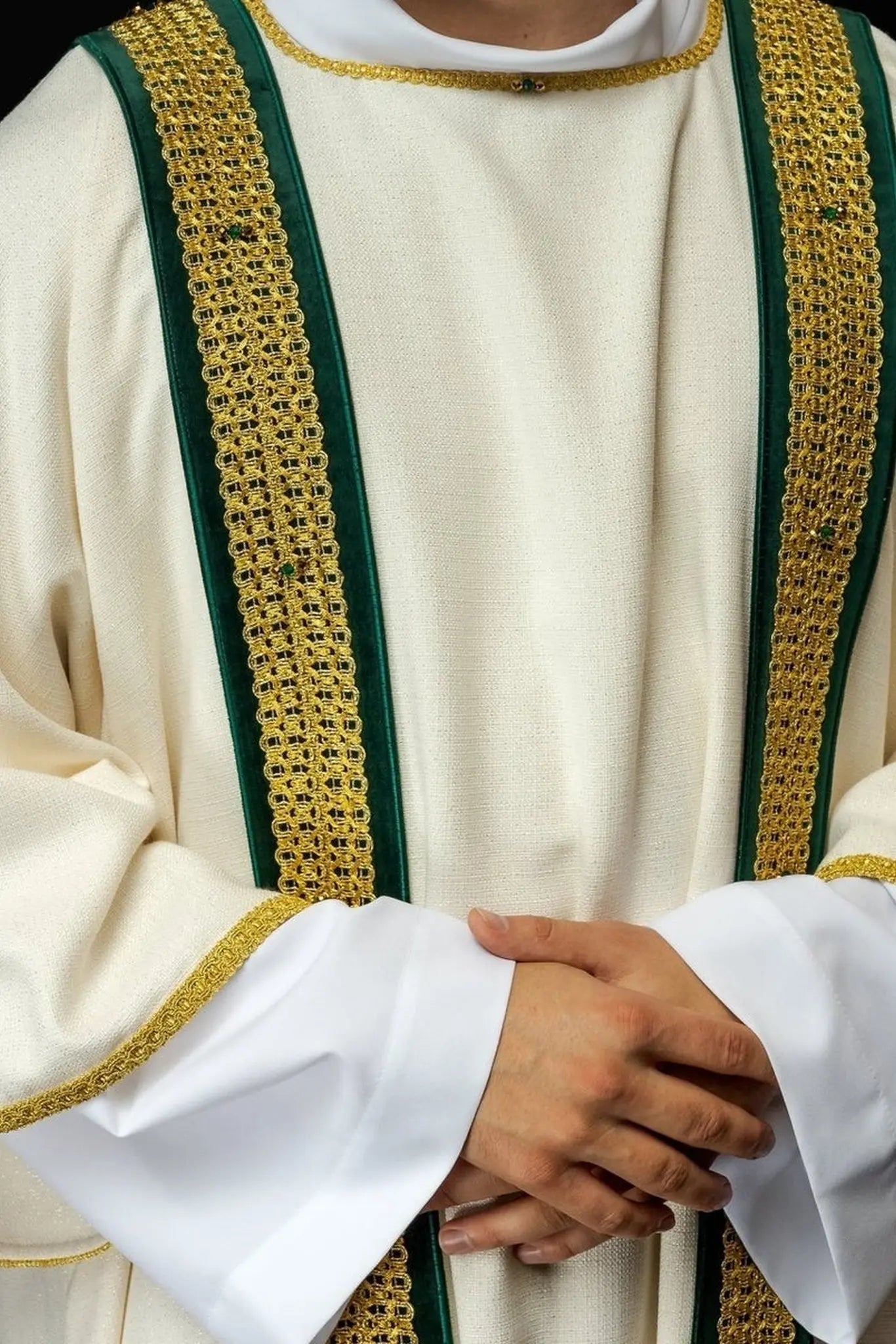
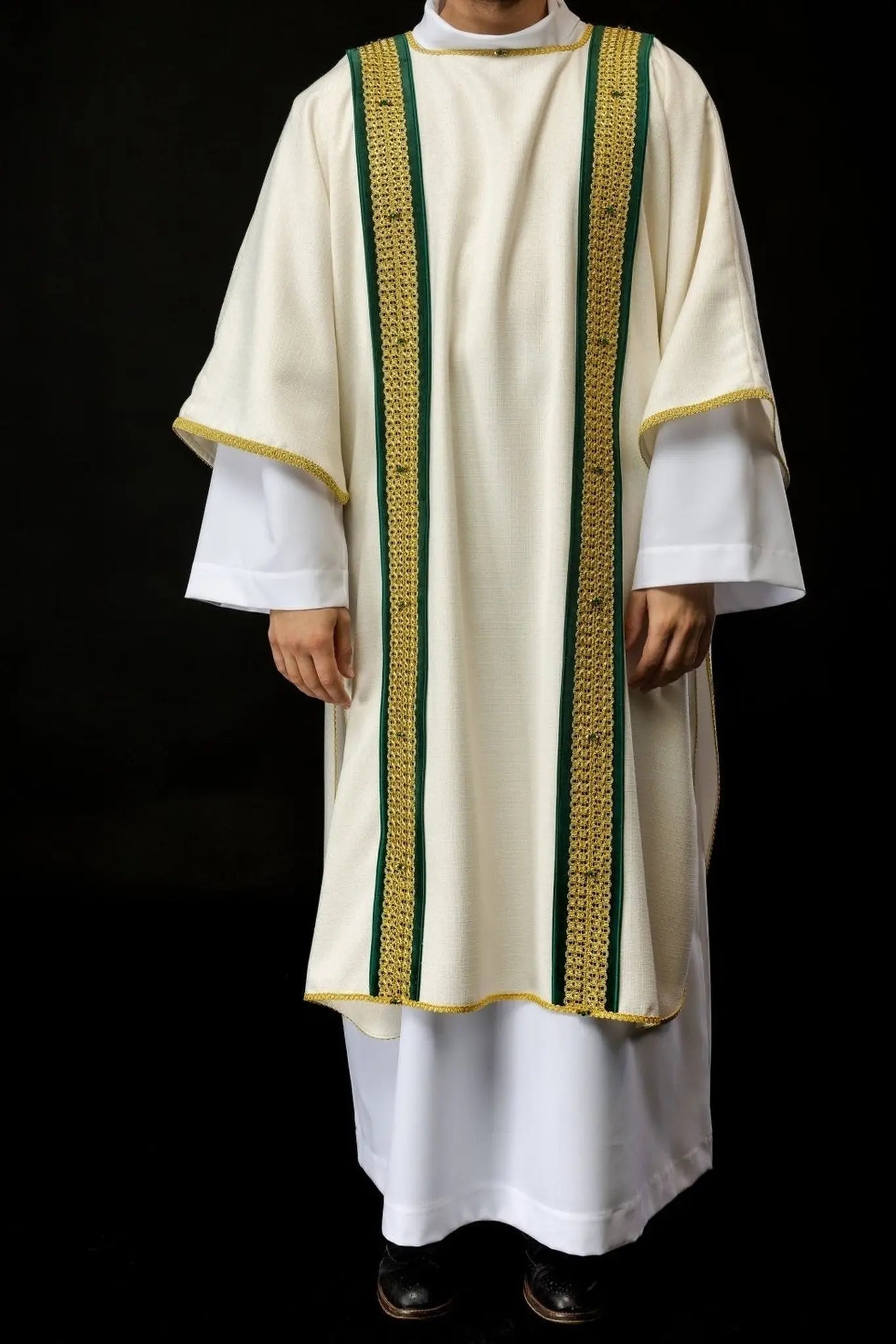
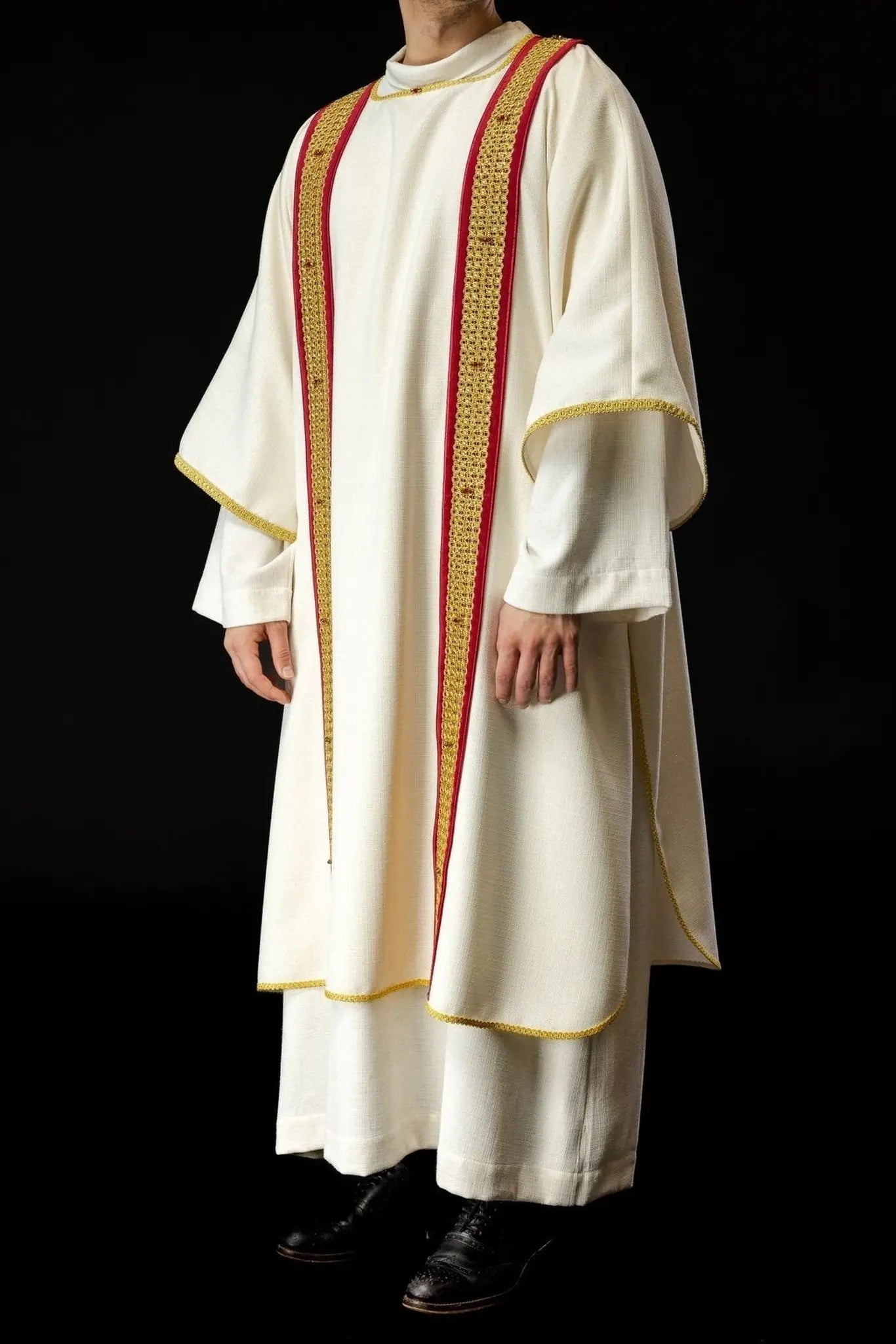
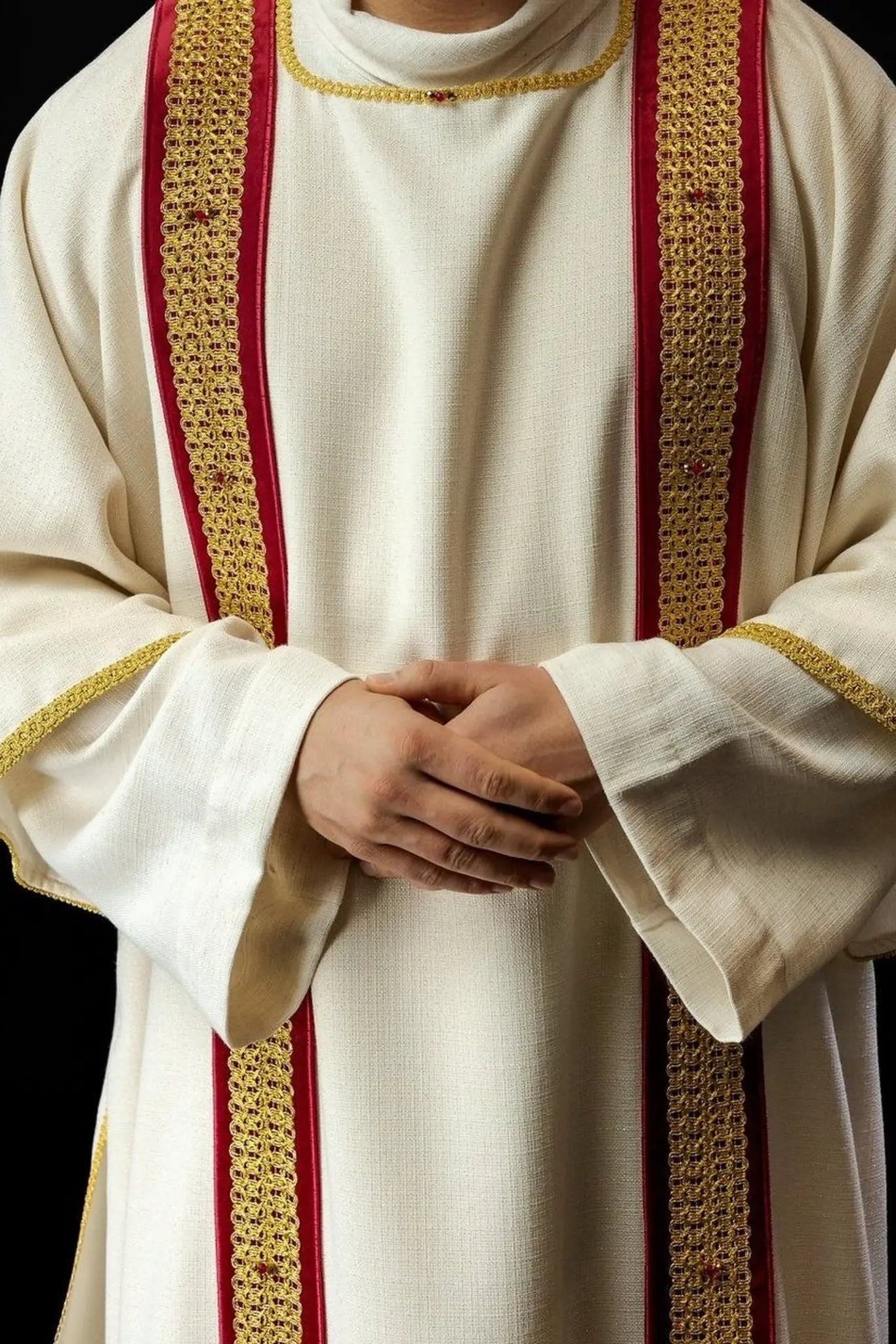
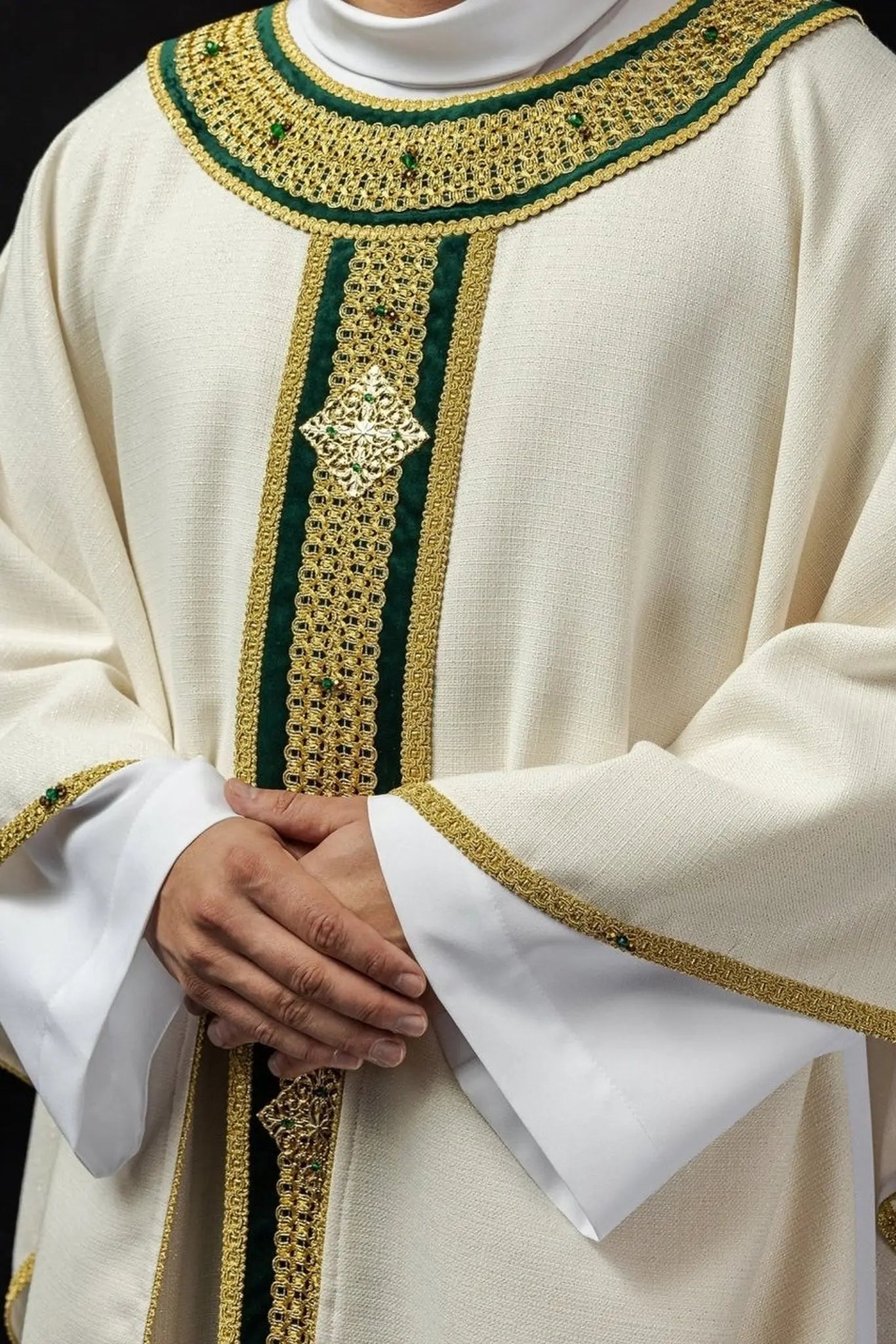
The collection also includes handmade dalmatics, which are made for deacons. A dalmatic has its own liturgical identity and should not be treated as a chasuble substitute. It is worn by the deacon during Mass and other solemn rites, especially when assisting the bishop or priest, proclaiming the Gospel, preparing the altar, and serving at the Eucharist. A handmade dalmatic is often selected to match or harmonize with a priestly chasuble, helping the ministers form a coherent visual setting during solemn worship.
When selecting a dalmatic, the most important points are color, cut, sleeve structure, and compatibility with existing vestments. Marian dalmatics can be used for celebrations of the Blessed Virgin Mary, while red or ecru versions can correspond to specific seasons or solemnities. For a focused comparison of deacon vestments, visit deacon dalmatics. Matching a dalmatic with a chasuble is especially useful for cathedral liturgies, parish feasts, confirmations, Corpus Christi celebrations, and Masses with a fuller ceremonial setting.
Chalice linen sets and handmade altar textiles
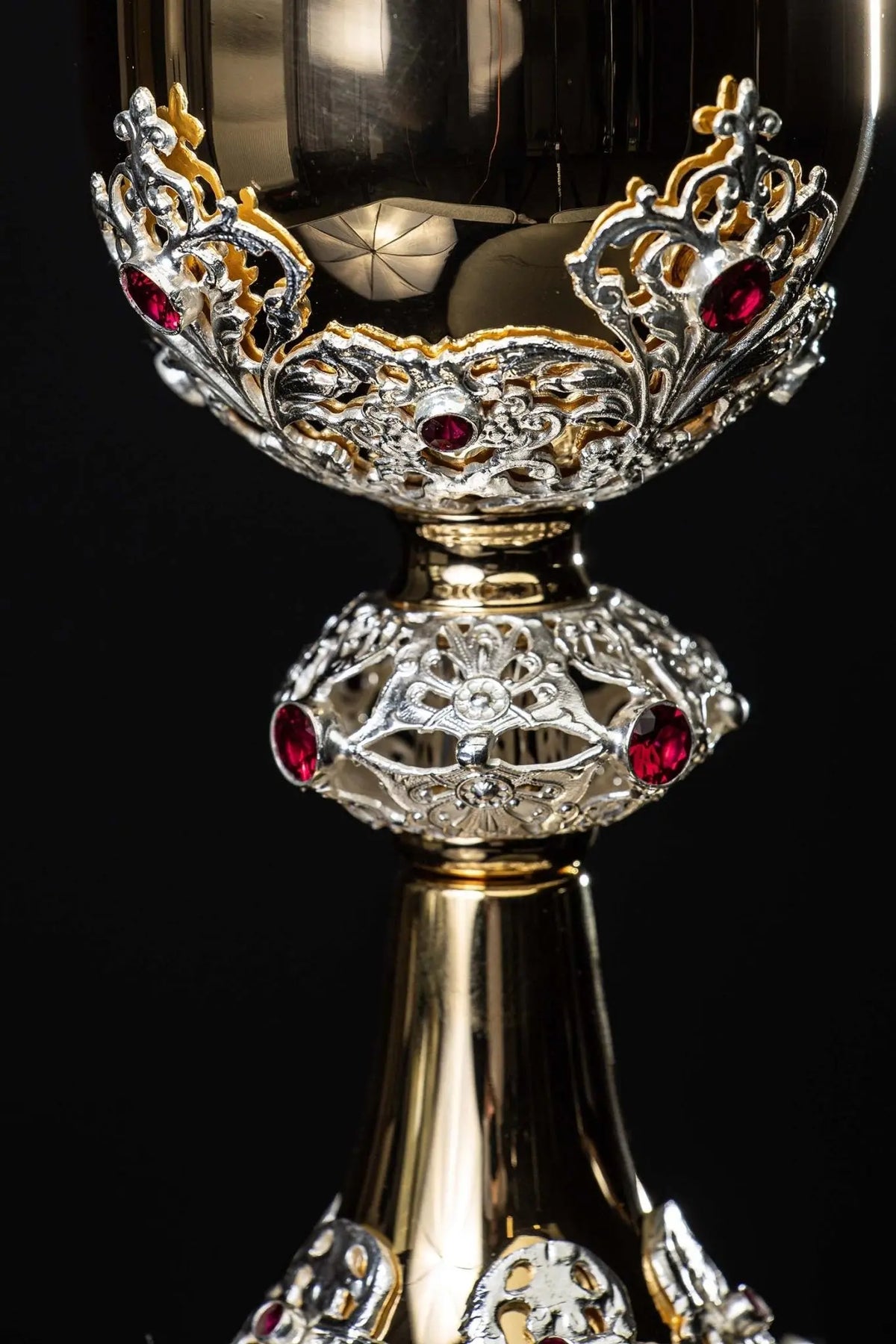
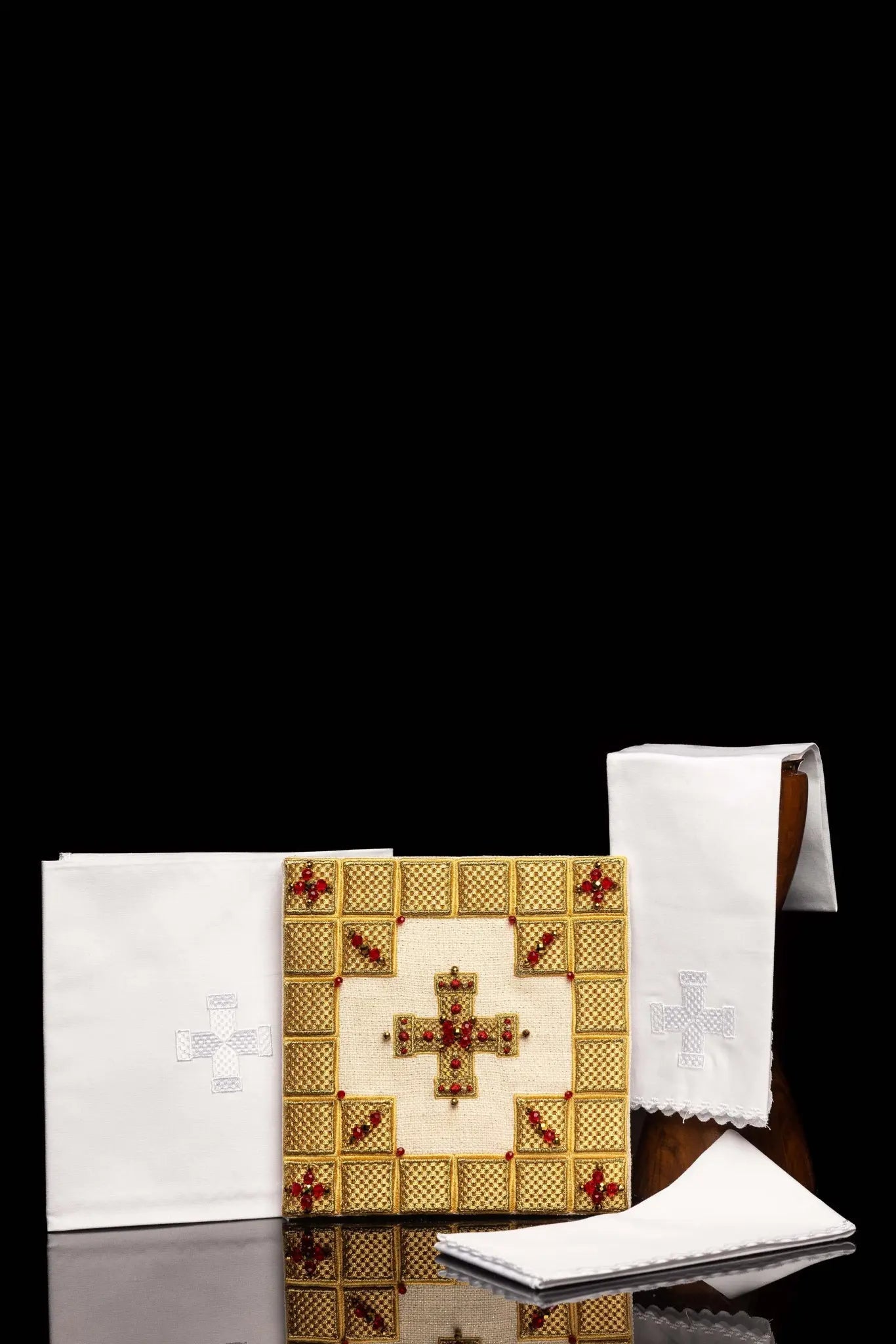
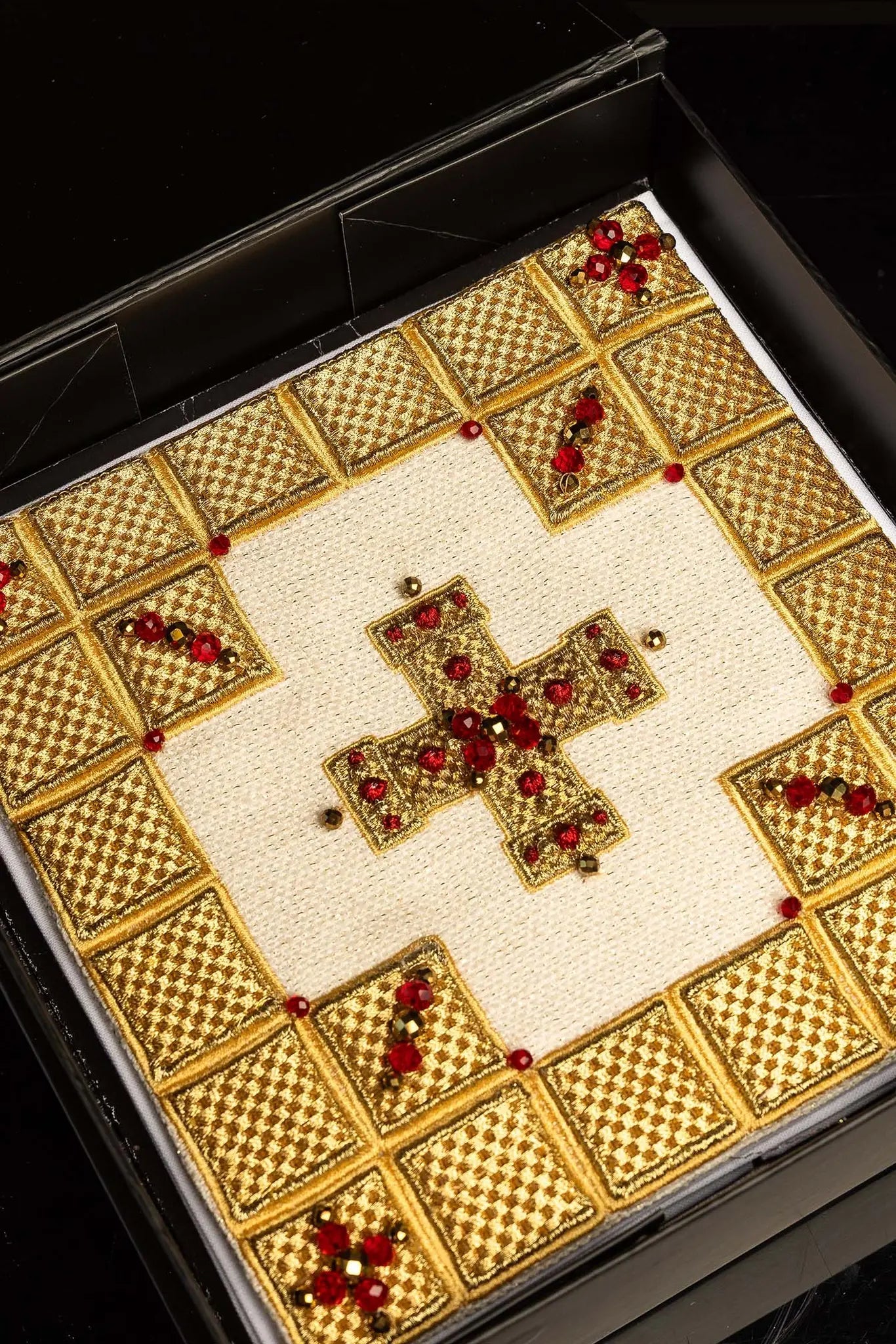
Handmade worship does not end with the vestment worn by the celebrant. Chalice linen sets also carry a sacred function, because they are used directly in the preparation and celebration of the Eucharist. A chalice set may include pieces such as a corporal, purificator, pall, and lavabo towel, depending on the design. In handmade sets, the quality of the fabric, the finishing of the edges, and the placement of embroidered or decorative elements are especially important.
Ecru handmade chalice linen sets with natural stones or refined embroidery can be chosen to coordinate with festive chasubles and dalmatics. They are especially suitable when a parish wants the altar, chalice, and vestments to form one coherent arrangement. For more options in this category, compare the Handmade collection with chalice linen sets and the broader altar linens selection. These related collections help complete the sacristy with textiles for the altar and Eucharistic vessels.
Stoles, embroidery, and the role of ornament
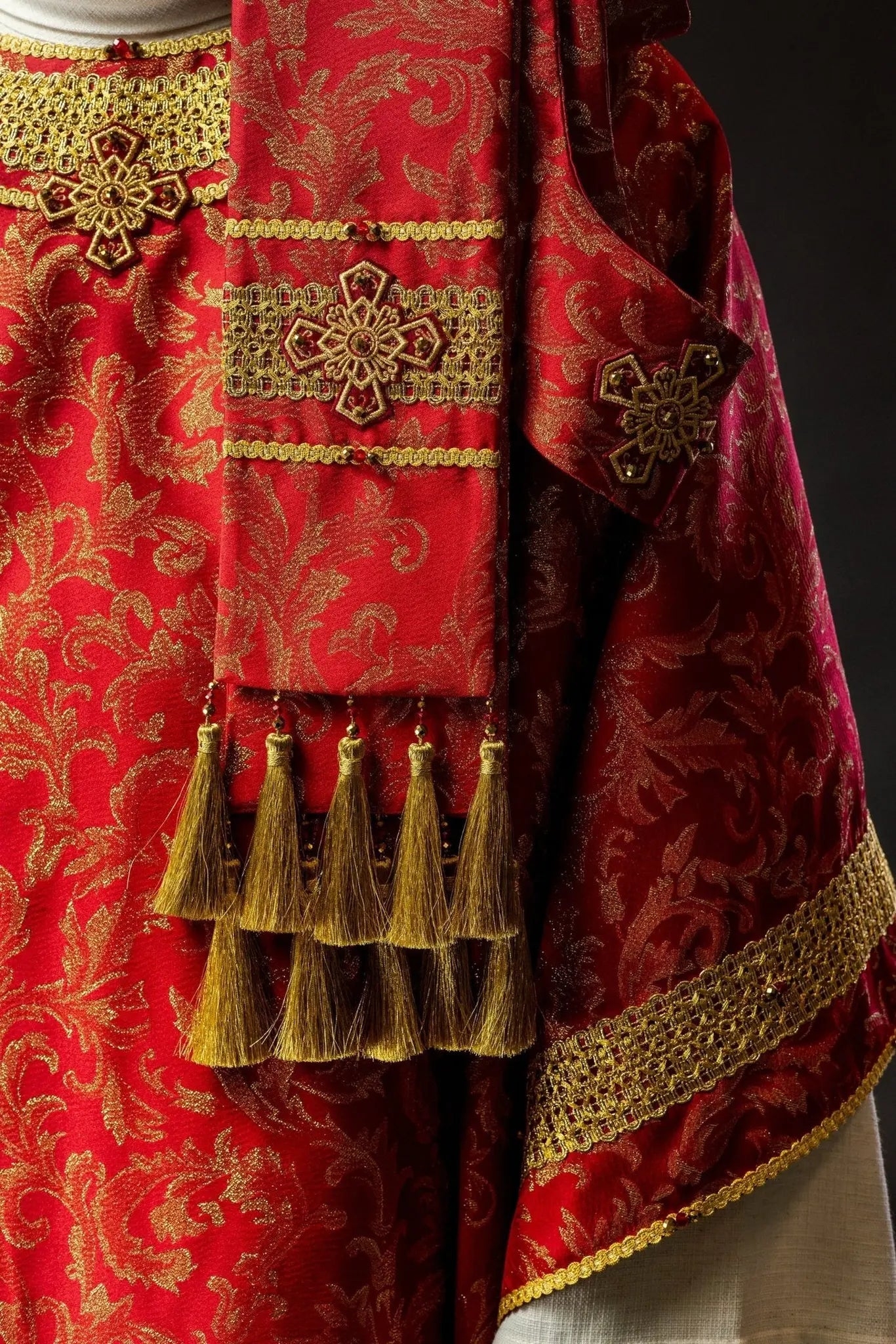
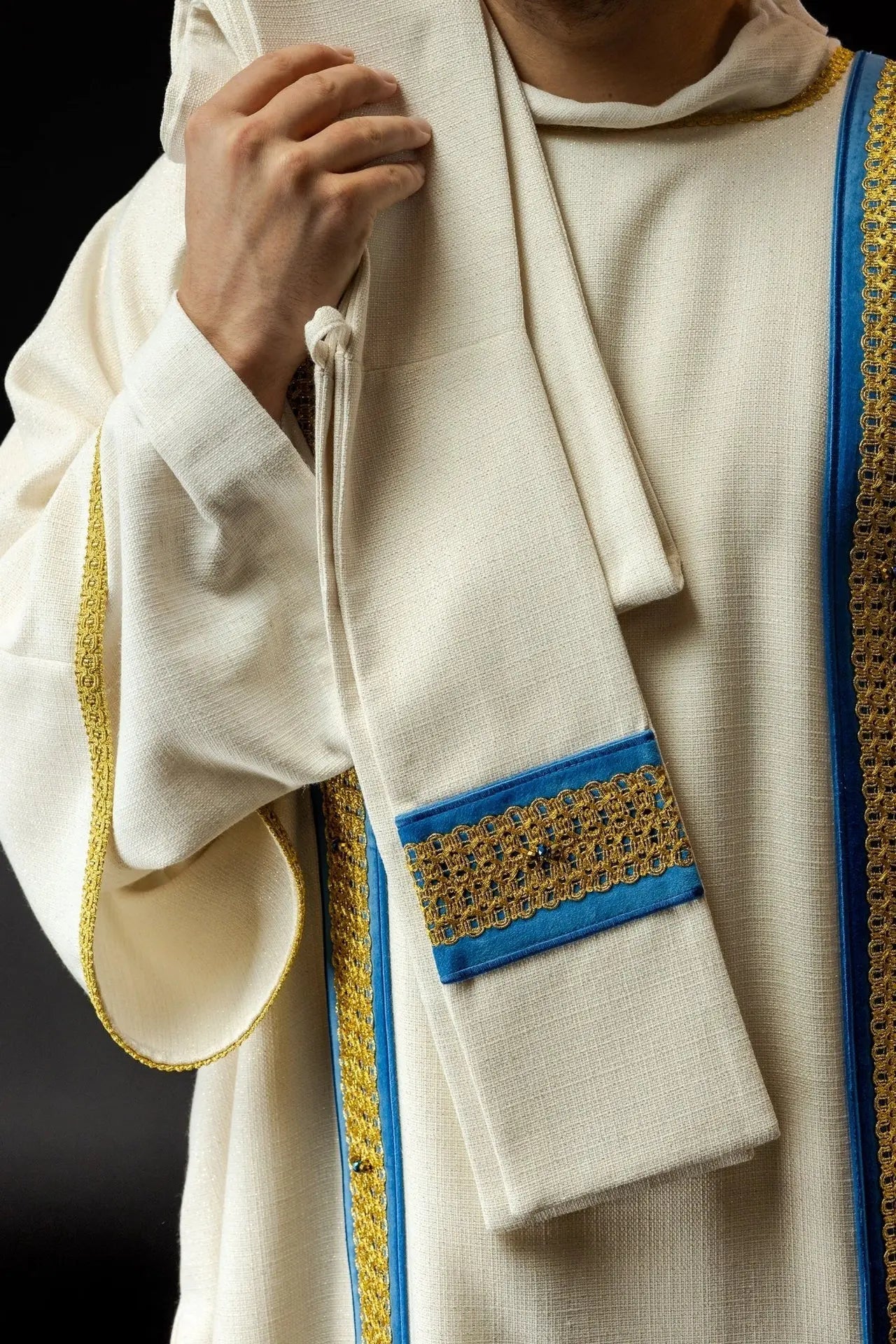
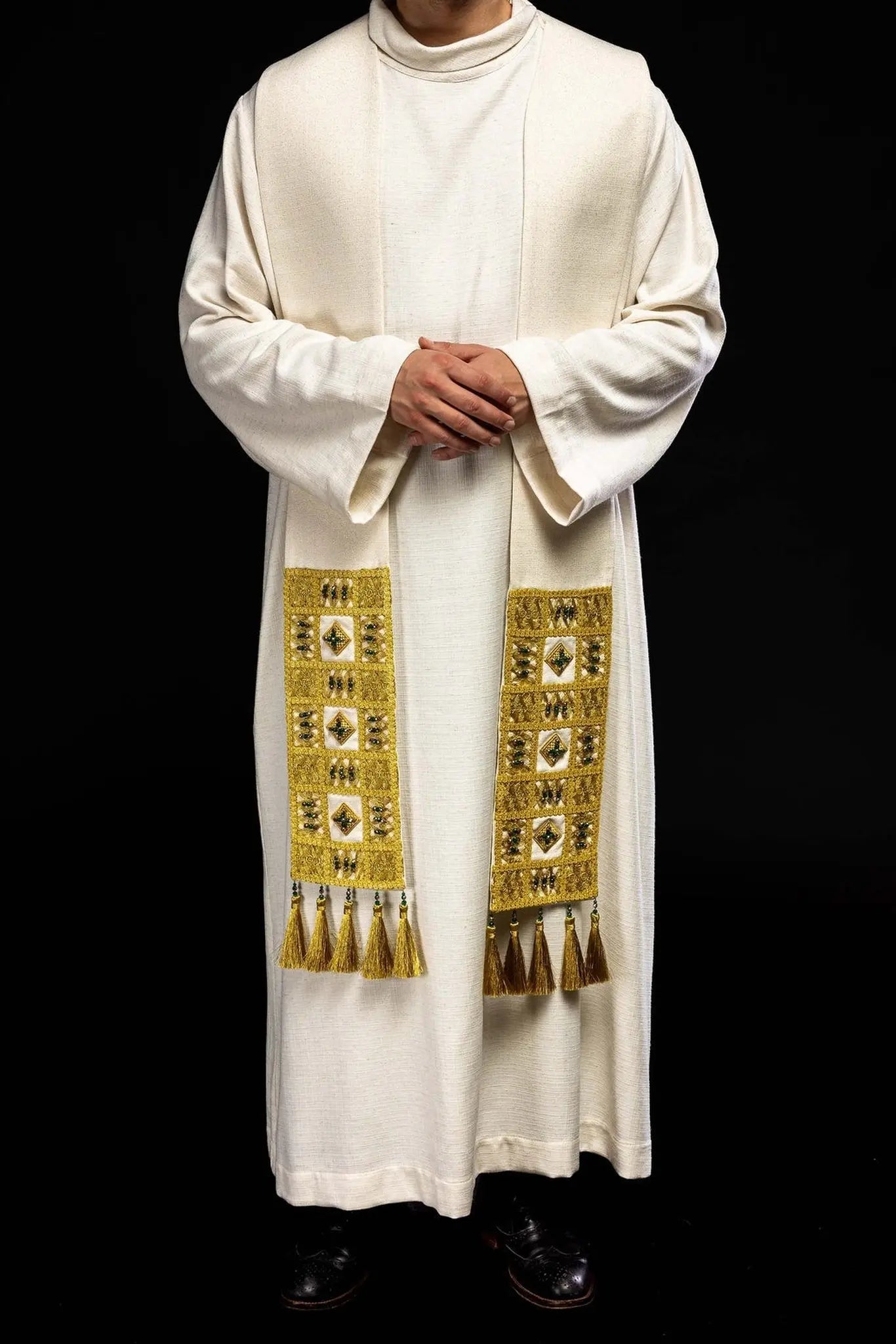
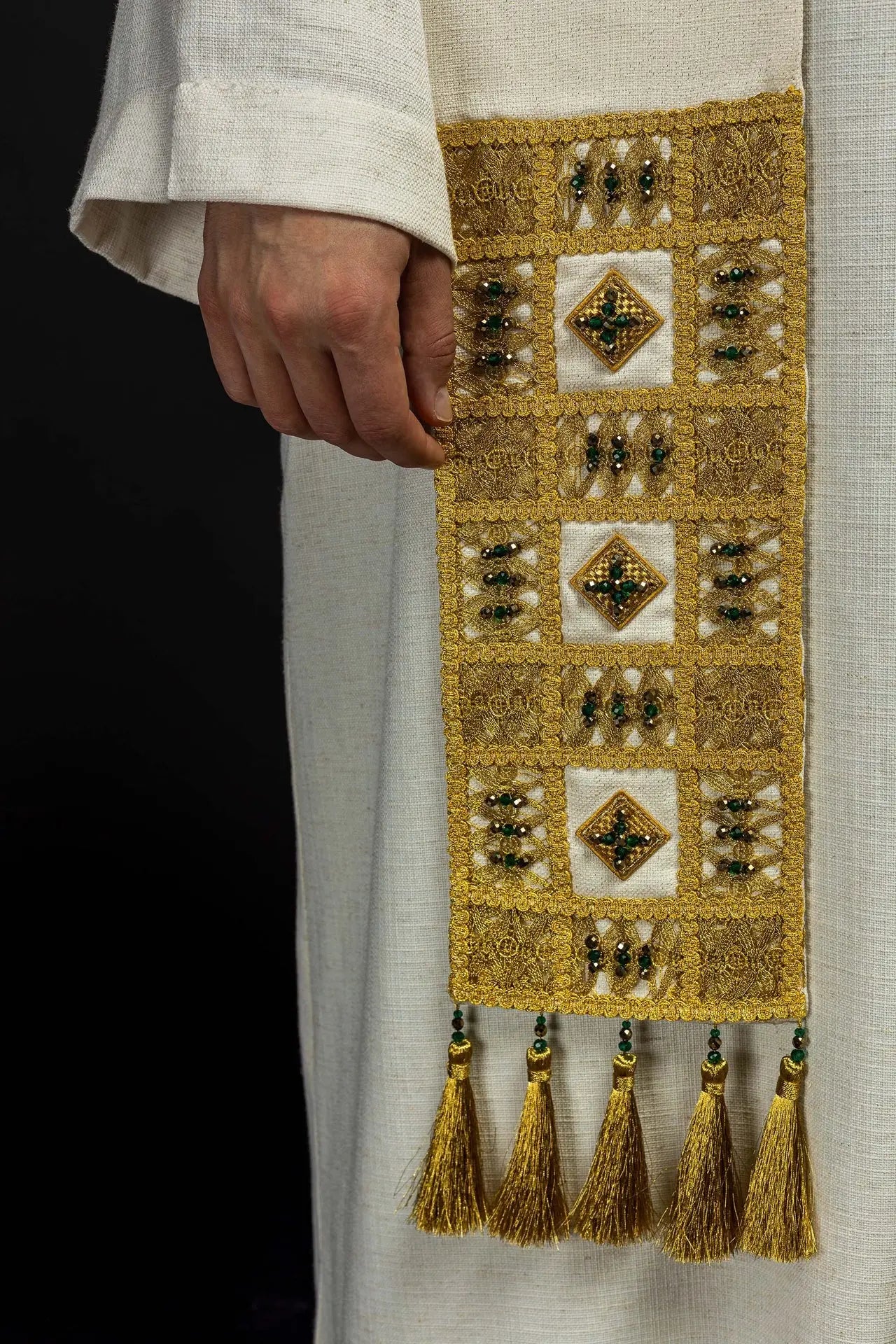
The source tradition behind handmade liturgical work also includes stoles and other embroidered textiles. A stole is a sign of ordained ministry: priests wear it around the neck, while deacons wear the deacon stole diagonally from shoulder to side. Even when a specific handmade set is centered on a chasuble or dalmatic, the same principles apply to a stole: the fabric should drape correctly, the embroidery should remain clear, and the symbolism should fit the liturgical season or celebration.
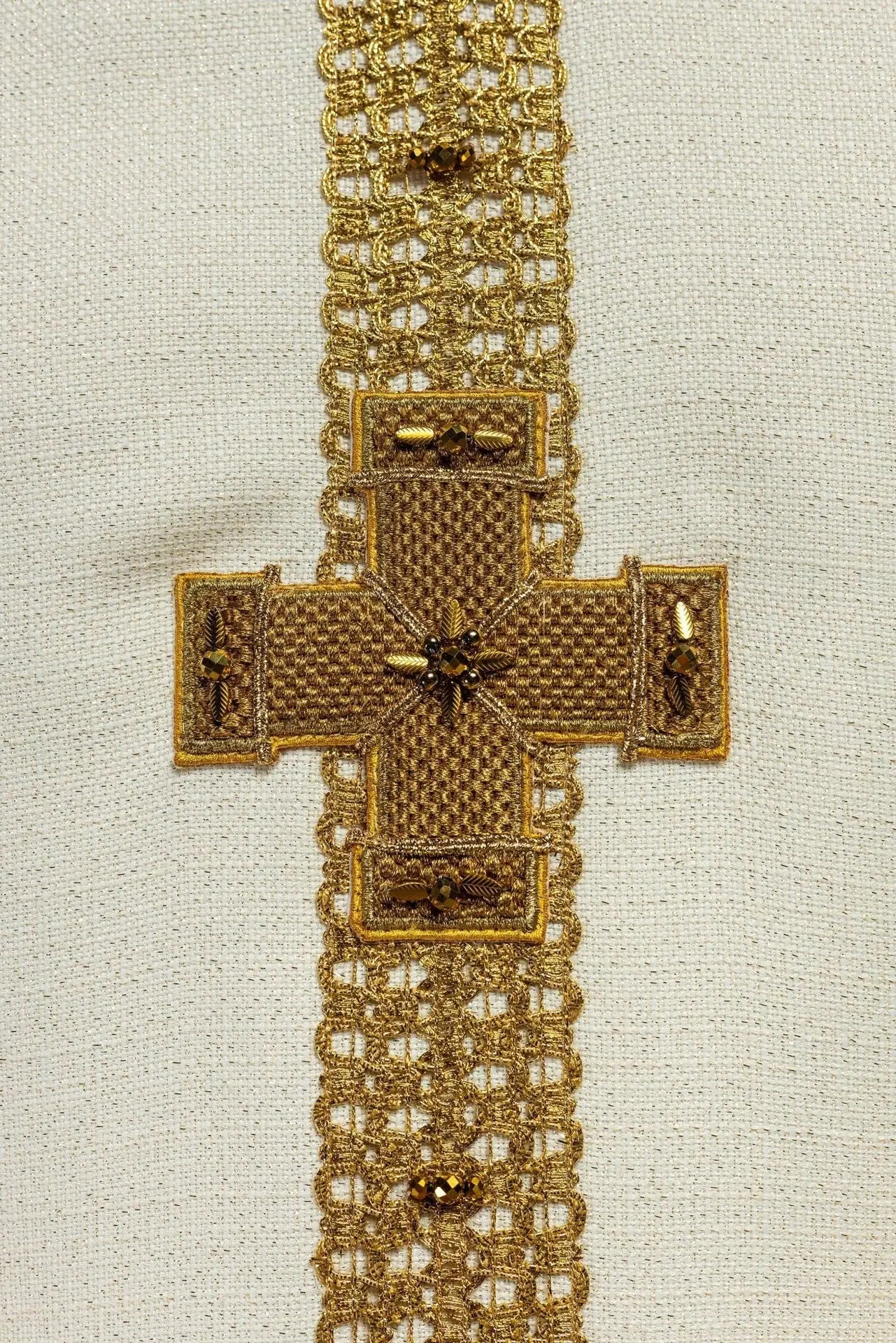
Embroidery is one of the most expressive features of handmade church textiles. Floral motifs, Marian symbols, crosses, Eucharistic ornament, gold accents, and carefully arranged stones can all contribute to a vestment’s meaning. The best liturgical decoration does not merely add luxury; it helps express the mystery being celebrated. Customers looking specifically for priestly and deacon stoles can browse clergy stoles to match the color and symbolism of handmade vestments.
How to choose handmade liturgical pieces
Begin with the role of the minister and the celebration. Priests and bishops need chasubles for Mass; deacons need dalmatics or deacon stoles according to the rite; altar linen sets serve the Eucharistic table and sacred vessels. Next, choose the liturgical color. White, ecru, or gold is widely used for solemnities, feasts of the Lord outside the Passion, Christmas, Easter, weddings, anniversaries, and many festive parish occasions. Red is used for feasts of martyrs, Palm Sunday, Good Friday, Pentecost, and liturgies of the Holy Spirit. Marian designs are particularly fitting for churches and celebrations dedicated to the Mother of God.
Then consider the level of ornament. A handmade vestment with natural stones and rich decoration is best for solemn celebrations, while a less ornate design may be more suitable for frequent parish use. Check whether the garment should stand alone or match other pieces in the sacristy, such as dalmatics, stoles, chalice veils, altar cloths, or chalice linen sets. A coordinated group of vestments and linens creates visual unity without requiring every item to be identical.
Finally, think about long-term use. Handmade vestments deserve careful storage and handling. They should be hung or laid flat according to their construction, protected from moisture and direct sunlight, and cleaned according to the fabric and ornament type. Pieces with stones, metallic threads, or dense embroidery should be treated more carefully than plain textiles. This helps preserve the shape, color, and decorative details for future celebrations.
How this collection relates to nearby collections
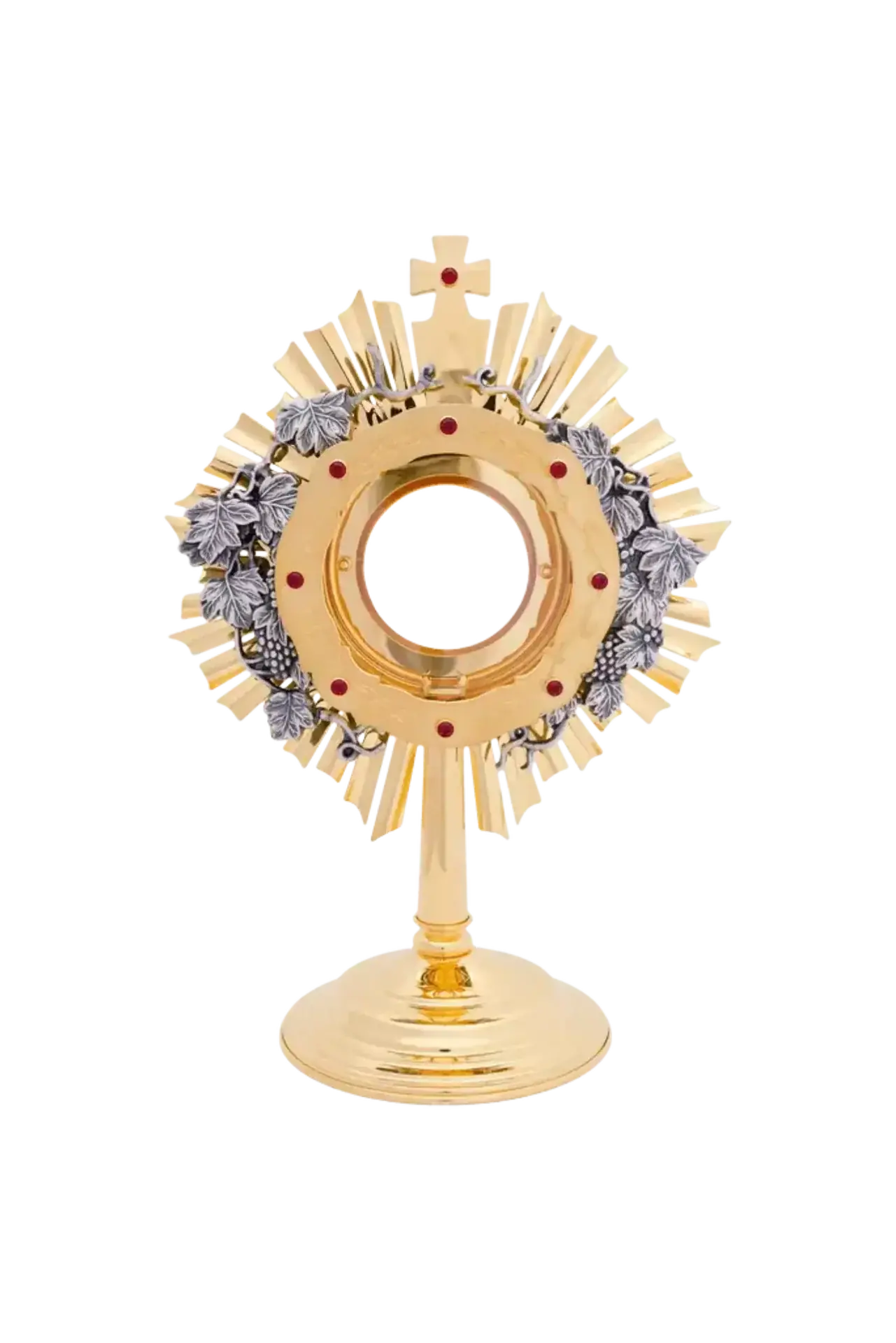
The Handmade collection is useful when you want a more ceremonial, artisanal, or richly decorated option. The broader vestment categories remain helpful for everyday comparison, especially when the parish needs multiple colors or simpler models for regular use. For a complete sacristy, combine handmade chasubles with suitable dalmatics, clergy stoles, chalice linen sets, and altar linens. When the celebration requires a highly festive setting, handmade pieces can also be coordinated with special seasonal collections and solemn accessories.
This page is therefore best understood as a focused selection for moments when craftsmanship is part of the liturgical expression. It supports priests, deacons, sacristans, and parish buyers who want garments and textiles that are dignified, symbolic, and suitable for sacred rites. Whether chosen for a parish feast, Marian celebration, jubilee, ordination, solemn Mass, or a gift for a priest or deacon, handmade liturgical items bring a carefully finished character to the worship space.
Frequently Asked Questions (FAQ)
What is the main purpose of the Handmade collection?
The Handmade collection is intended for customers seeking liturgical vestments and sacred linens with a more artisanal finish. It is especially relevant for solemn Masses, parish feasts, Marian celebrations, jubilees, ordinations, and other occasions where a richer vestment or coordinated altar textile is appropriate.
Are handmade chasubles worn by deacons?
No. A chasuble is the proper Eucharistic vestment for a priest or bishop. Deacons wear dalmatics for solemn Masses and deacon stoles according to the rite. When a celebration includes both priest and deacon, a handmade chasuble and matching or harmonized dalmatic can create a unified liturgical set.
How should I choose between a handmade chasuble and a dalmatic?
Choose according to the minister who will wear it. For a priest or bishop celebrating Mass, select a chasuble. For a deacon serving at Mass or another solemn liturgy, select a dalmatic. If both ministers will serve together, consider matching color, motif, and decorative level.
Do handmade chalice linen sets need to match the vestments?
They do not have to match exactly, but coordination is often desirable for solemn celebrations. A chalice linen set in ecru, gold, Marian, or festive embroidery can visually support a handmade chasuble or dalmatic without repeating every decorative element.
When are richly decorated handmade vestments most suitable?
Richly decorated handmade vestments are most suitable for solemnities, major feasts, patronal celebrations, parish anniversaries, ordinations, jubilees, Marian feasts, and other liturgies with a formal ceremonial character. Simpler vestments may be more practical for daily use.
How should handmade liturgical vestments be cared for?
Handle them gently, store them away from moisture and direct sunlight, and follow the care guidance appropriate to the fabric, embroidery, stones, or metallic details. Dense ornament and delicate decoration usually require more careful cleaning than plain liturgical textiles.