
Sort by
1 product
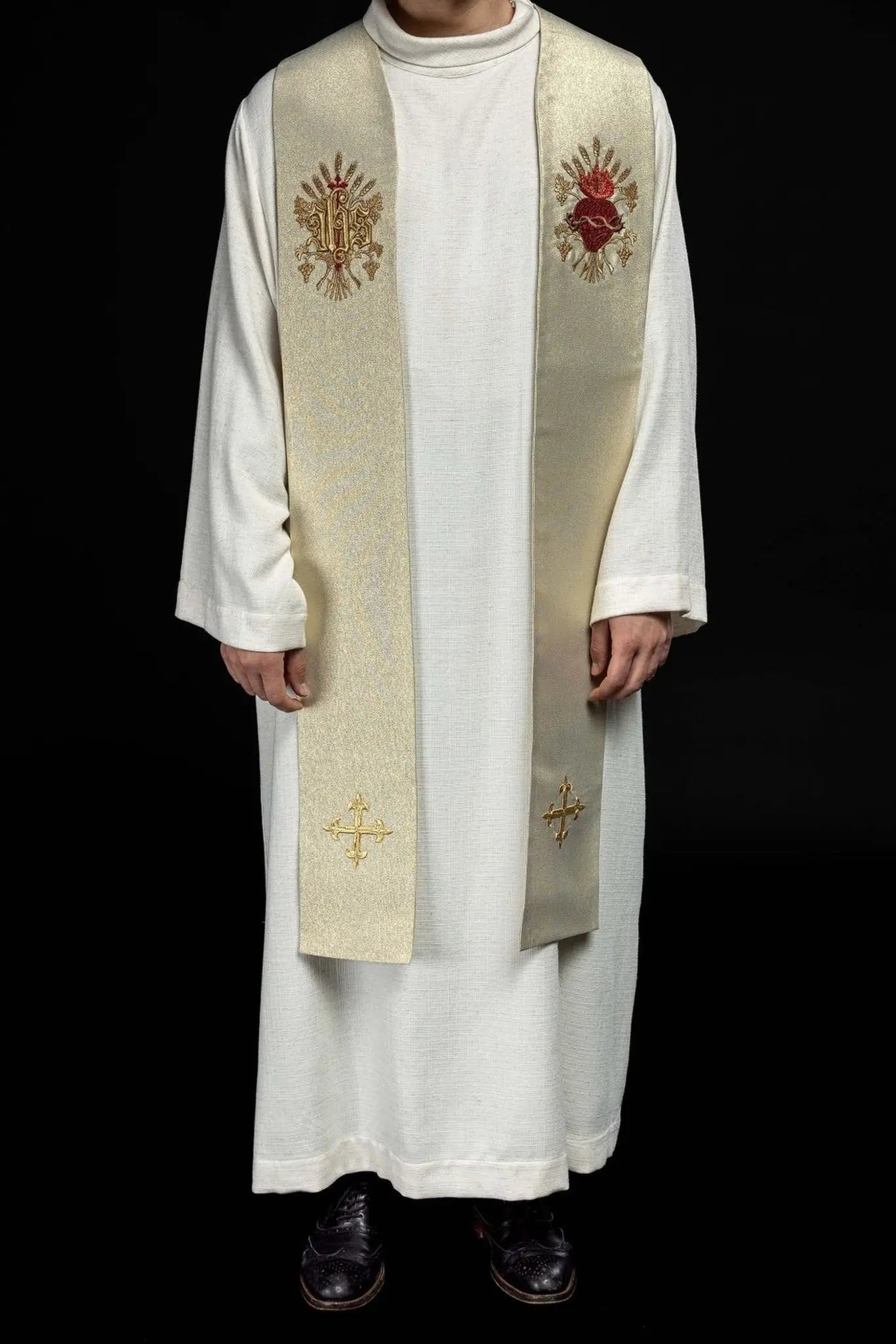

Gold Clergy Stoles
Gold stoles for solemn liturgy and festive celebrations
Gold clergy stoles are liturgical vestments chosen for celebrations marked by joy, solemnity and the glory of God. In the Roman Catholic tradition, gold may be used as a festive substitute for white on major feasts and solemn occasions, especially when the character of the celebration calls for a more radiant vestment. This collection focuses on gold stoles for ordained ministry, with embroidered designs suited to the celebration of Mass, Eucharistic devotion, blessings, processions and other sacred services where a stole is worn according to liturgical norms.
A stole is not simply a decorative textile. It is a sign of ordained service and sacramental ministry, worn by priests and bishops over the alb or under the chasuble, and by deacons in the diagonal form proper to their ministry. This gold stole collection is best understood within the wider range of clergy stoles, where colors, motifs and cuts are selected according to the role of the minister and the season or feast being celebrated. When a parish or chapel needs a coordinated vestment set, gold stoles can also be paired with related gold chasubles for a harmonious appearance at the altar.
When gold stoles are used
Gold is associated with solemn worship, divine glory, festal joy and thanksgiving. It is often chosen for the most important celebrations of the liturgical year, including Christmas, Easter, patronal feasts, anniversaries, jubilees, ordinations and Eucharistic celebrations with a particularly solemn character. A gold stole may also be appropriate for blessings, processions and ceremonial occasions when the minister wears a stole rather than a full chasuble.
For celebrations connected with the Nativity of the Lord, this collection relates naturally to the Christmas selection. Gold can also serve parish needs during Eucharistic feasts and processions, especially when coordinated with vestments and altar textiles used for Corpus Christi. Where local custom permits gold as a festive option, it can be a practical choice because one well-made stole may support many important occasions throughout the year.
Embroidery, symbols and visual character
Gold stoles commonly feature Eucharistic, Christological or ornamental embroidery. Motifs such as the cross, IHS monogram, wheat, grapes, chalice imagery, rays, vine patterns and floral decoration all communicate a sacred purpose when used with restraint and clarity. In a gold stole, embroidery should remain legible from a distance while preserving the dignity of the liturgical action. A well-balanced design supports prayer rather than distracting from it.
The effect of a gold stole depends on more than the color alone. The shade of the fabric, the density of the embroidery, the placement of the central motif and the finish of the edges all influence how the vestment appears in the sanctuary. Lighter gold tones can look bright and celebratory, while deeper gold tones create a richer and more traditional impression. Embroidered details may be subtle for regular parish use or more ornate for solemn feasts, anniversaries and ceremonial ministries.
How to choose a gold stole
When choosing a gold stole, begin with the liturgical role and the intended use. A priestly stole should drape evenly from the shoulders and work well either over an alb or beneath a chasuble. If the stole will be worn frequently, fabric weight and comfort are important. If it will be reserved for major feasts, a more decorative embroidered design may be appropriate. The width and length should suit the minister, the alb and the style of celebration.
- For Mass: choose a stole that sits comfortably under the chasuble and does not add unnecessary bulk around the neck or shoulders.
- For blessings and sacramental ministry: select embroidery that is dignified and clearly liturgical, especially when the stole is worn visibly over the alb or surplice.
- For solemn feasts: consider richer gold fabric or stronger symbolic embroidery that complements the festive character of the day.
- For parish sets: coordinate the stole with chasubles, altar linens and other sanctuary textiles so the overall arrangement remains coherent.
- For gifts to clergy: choose a versatile gold design that can be used on more than one feast or ceremonial occasion.
Gold stoles and adjacent liturgical colors
Gold is often selected for festive occasions, but it does not replace the full liturgical color cycle. Green remains connected with Ordinary Time, red with the Passion, martyrs and the Holy Spirit, purple with Advent, Lent and penitential celebrations, rose with Gaudete and Laetare Sundays, and Marian designs with celebrations of the Blessed Virgin Mary. When building a complete sacristy wardrobe, this collection is one part of a wider system of color, season and devotion.
For year-round planning, browse adjacent stole colors such as green clergy stoles, red clergy stoles and purple clergy stoles. For the two Sundays traditionally associated with rose vestments, choose the separate rose stoles collection rather than treating rose as a form of gold. For Marian feasts and devotions, the Marian stoles collection may be more appropriate when the iconography or blue-accented symbolism is central to the celebration.
Coordinating stoles with the sanctuary
A gold stole can be used as a single vestment, but it often works best when it belongs to a coordinated liturgical setting. In solemn celebrations, the stole may correspond with the chasuble, chalice veil, altar cloth, pulpit cover, cope or humeral veil. Coordination does not mean every textile must be identical. It means that color, embroidery style and sacred symbols should support the same liturgical tone.
For example, a gold stole with Eucharistic embroidery can be paired with altar textiles used for adoration or a feast of the Blessed Sacrament. A stole with a cross motif may work well for many celebrations because it remains the central Christian sign without limiting the stole to one devotion. In a chapel or parish with a small vestment inventory, a versatile gold stole is especially useful because it can serve multiple solemn occasions while still looking distinct from daily-season vestments.
Materials, comfort and care
The practical value of a gold stole depends on how it wears during ministry. A good stole should lie neatly, keep its shape and allow the minister to move naturally. The backing, lining and finishing influence whether the stole remains comfortable during longer celebrations. Embroidery should be secured carefully so that regular use does not quickly affect its appearance.
Gold fabric and metallic embroidery require thoughtful care. Store the stole flat or on a suitable hanger so it is not sharply creased. Keep it away from excessive moisture and strong direct sunlight. Dry cleaning is often the safest care method for embroidered vestments, especially where metallic or decorative threads are used. Ironing, if permitted by the specific textile, should be gentle and done with protection between the iron and the fabric. Careful storage helps the stole remain ready for solemn liturgy across many seasons.
Frequently Asked Questions (FAQ)
When is a gold clergy stole most appropriate?
A gold clergy stole is most appropriate for solemn and festive celebrations, especially when gold is permitted as a more celebratory form of white. It is commonly chosen for Christmas, Easter, jubilees, ordinations, parish feasts, Eucharistic services and important blessings where the visual language of joy and glory is fitting.
Can a gold stole be used instead of a white stole?
In many places gold may be used as a festive substitute for white, but local liturgical regulations and diocesan custom should be respected. When in doubt, a priest, sacristan or parish vestment coordinator should follow the norms used in the diocese or religious community.
How should I match a gold stole with a chasuble?
The stole should harmonize with the chasuble in tone, embroidery and overall formality. It does not have to be identical, but a similar gold shade or related motif creates a coherent vestment set. For a planned set, compare the stole with gold chasubles before purchasing.
Is gold suitable for daily use?
Gold is usually reserved for celebrations with a festive or solemn character rather than ordinary daily use. For regular weekday Masses, the liturgical color of the day or season is normally preferred. A gold stole is best kept for occasions where its symbolism supports the rank and joy of the celebration.
What motifs work best on a gold stole?
Crosses, IHS monograms, Eucharistic symbols, vines, wheat, grapes and refined ornamental patterns all work well on gold stoles. The best choice depends on whether the stole will be used broadly, for Eucharistic devotion, for solemn Masses or as part of a coordinated parish vestment set.