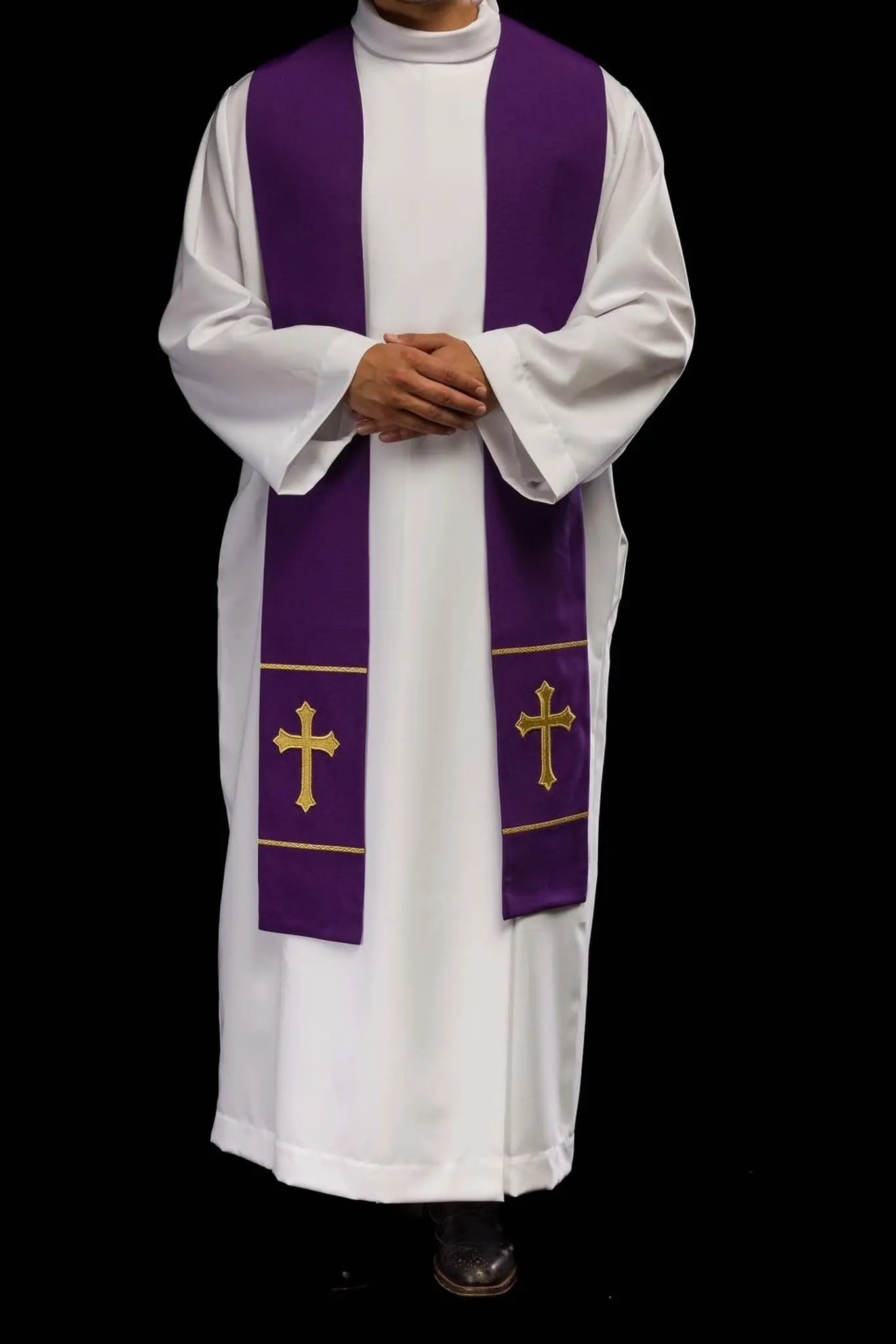
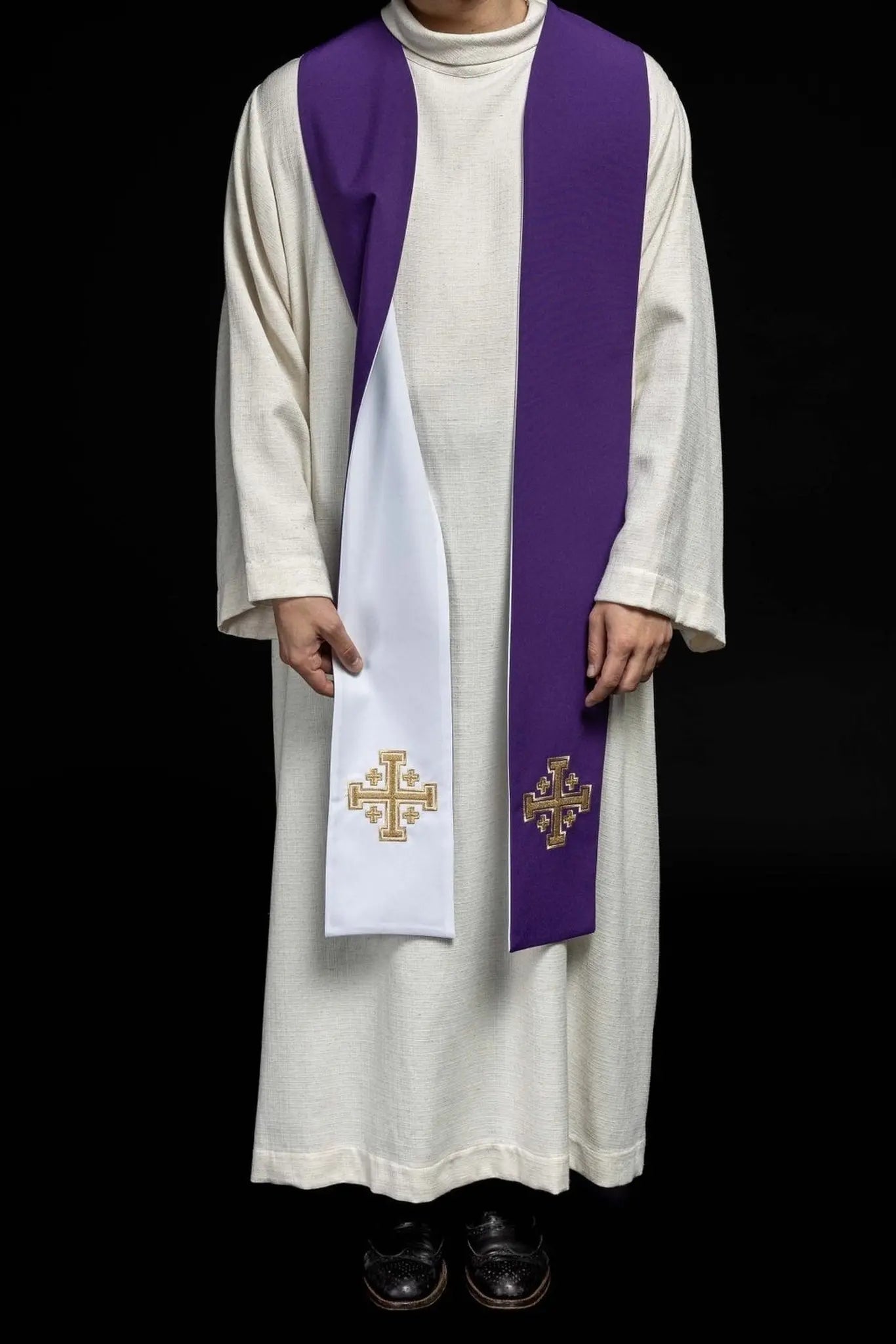
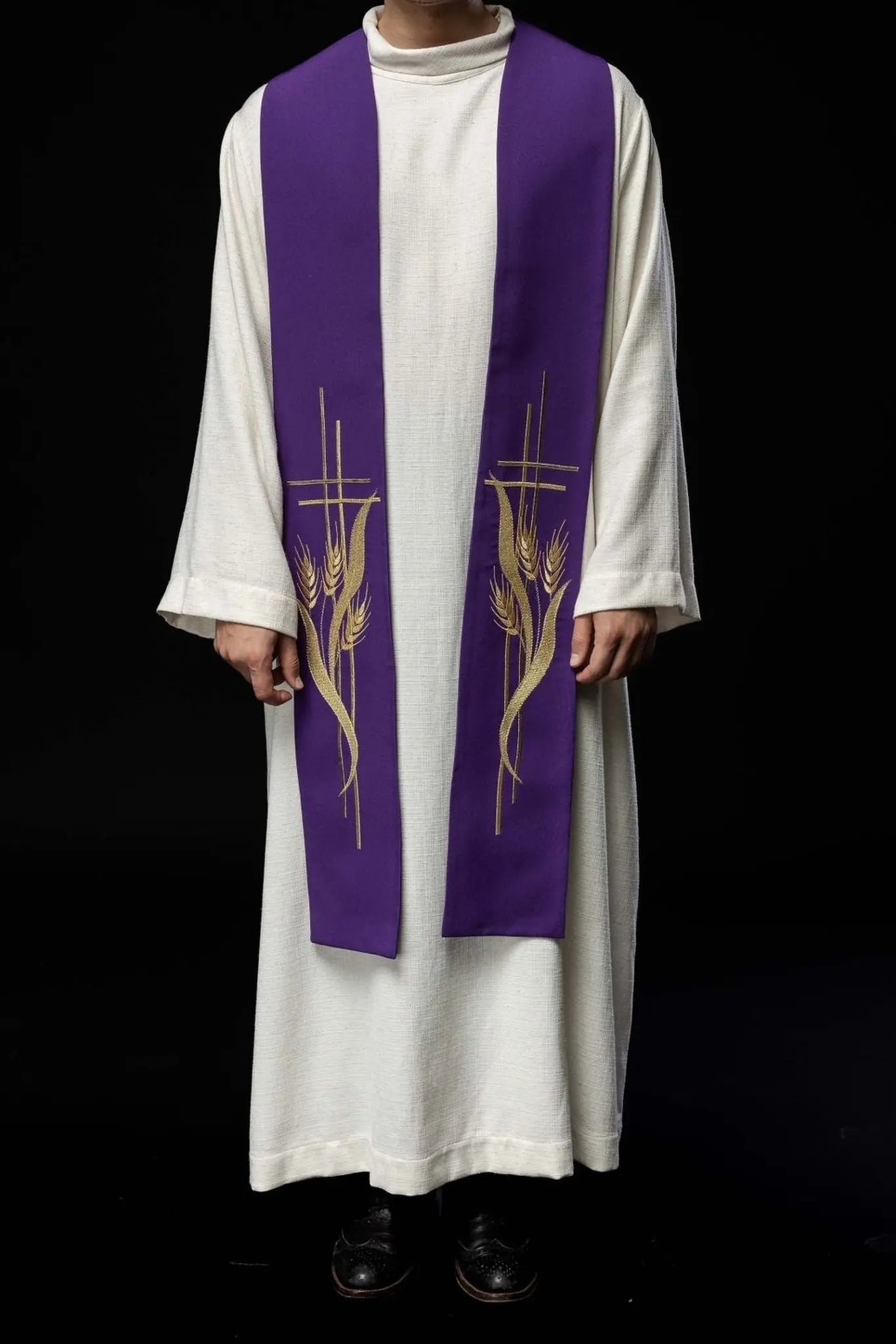
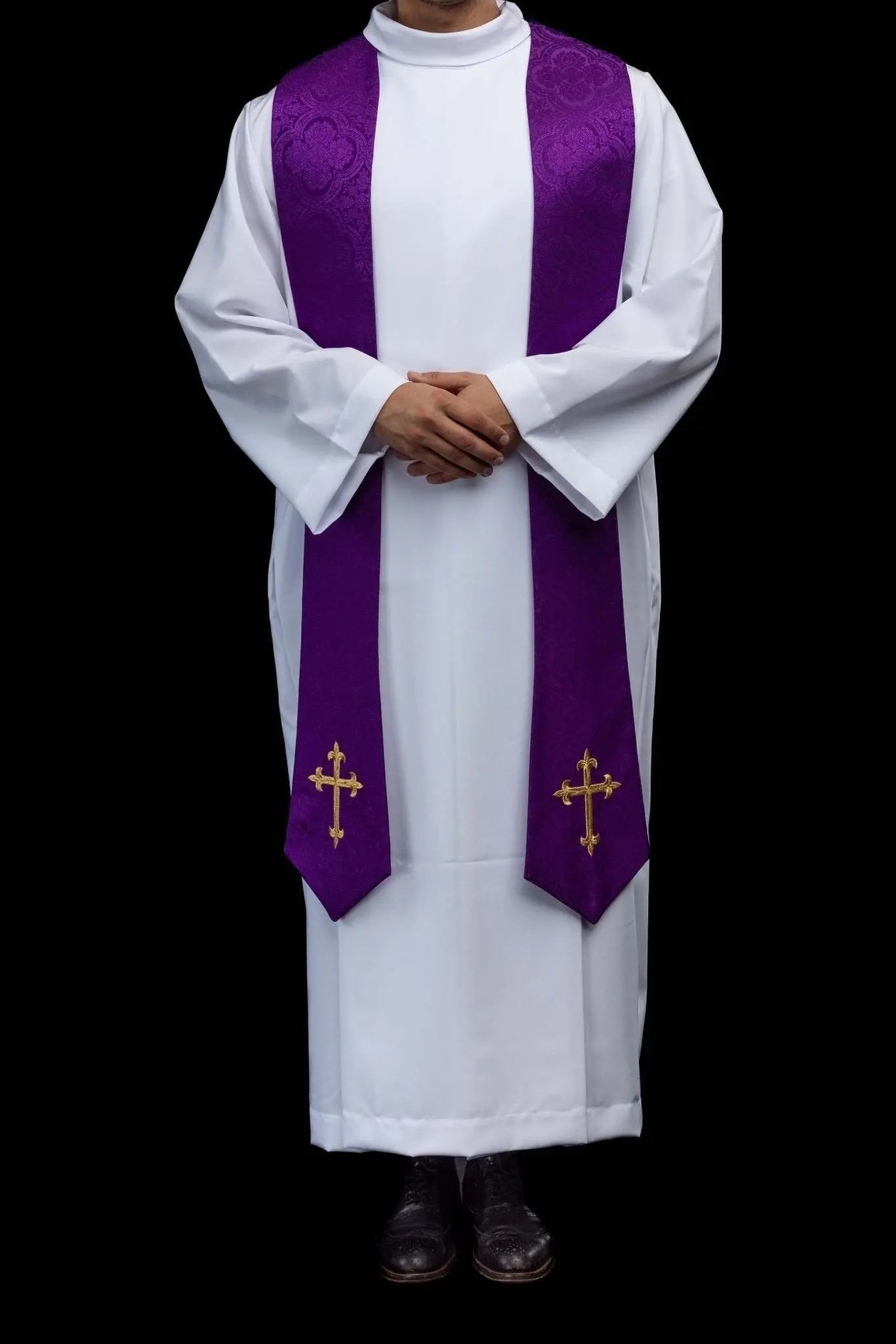
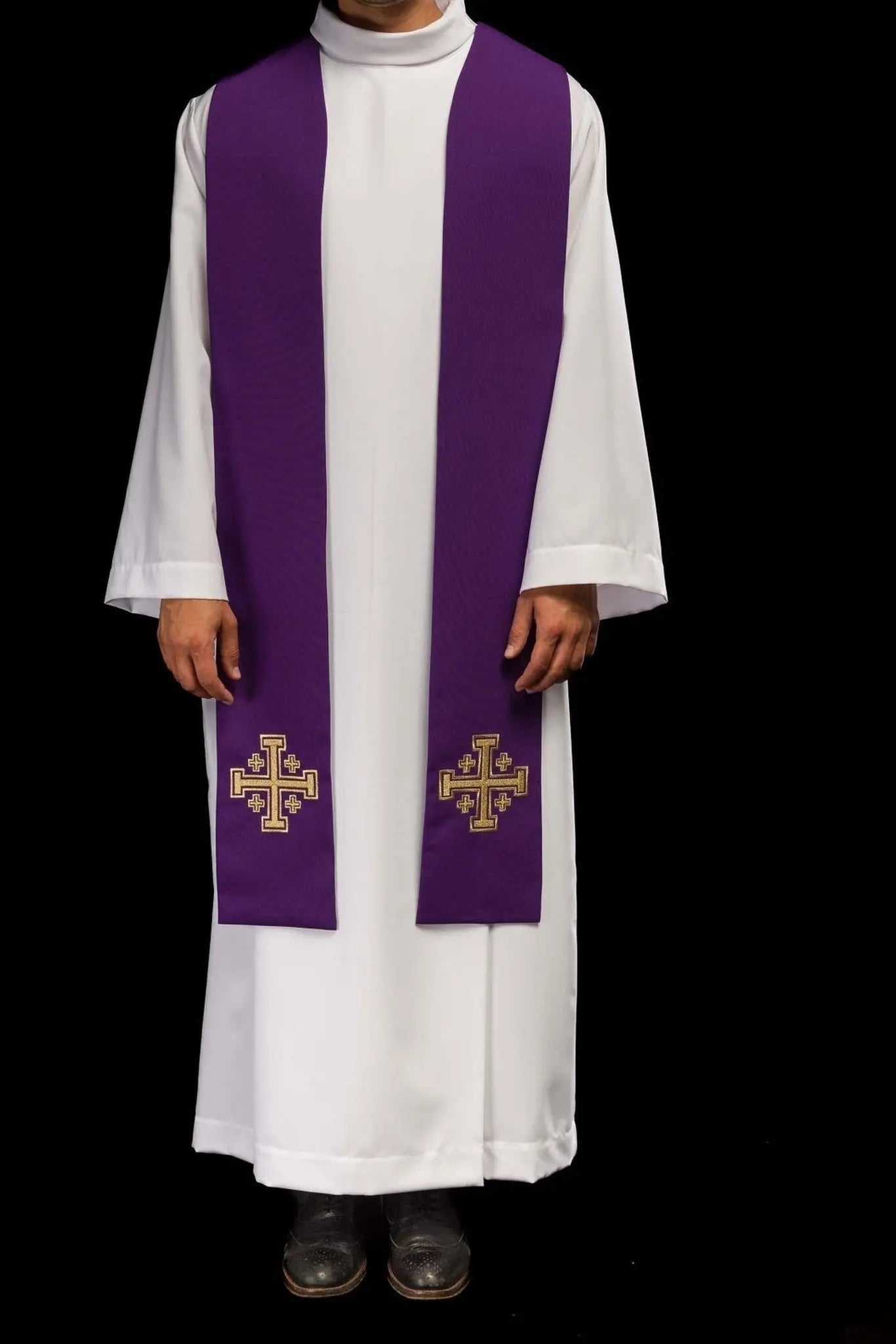
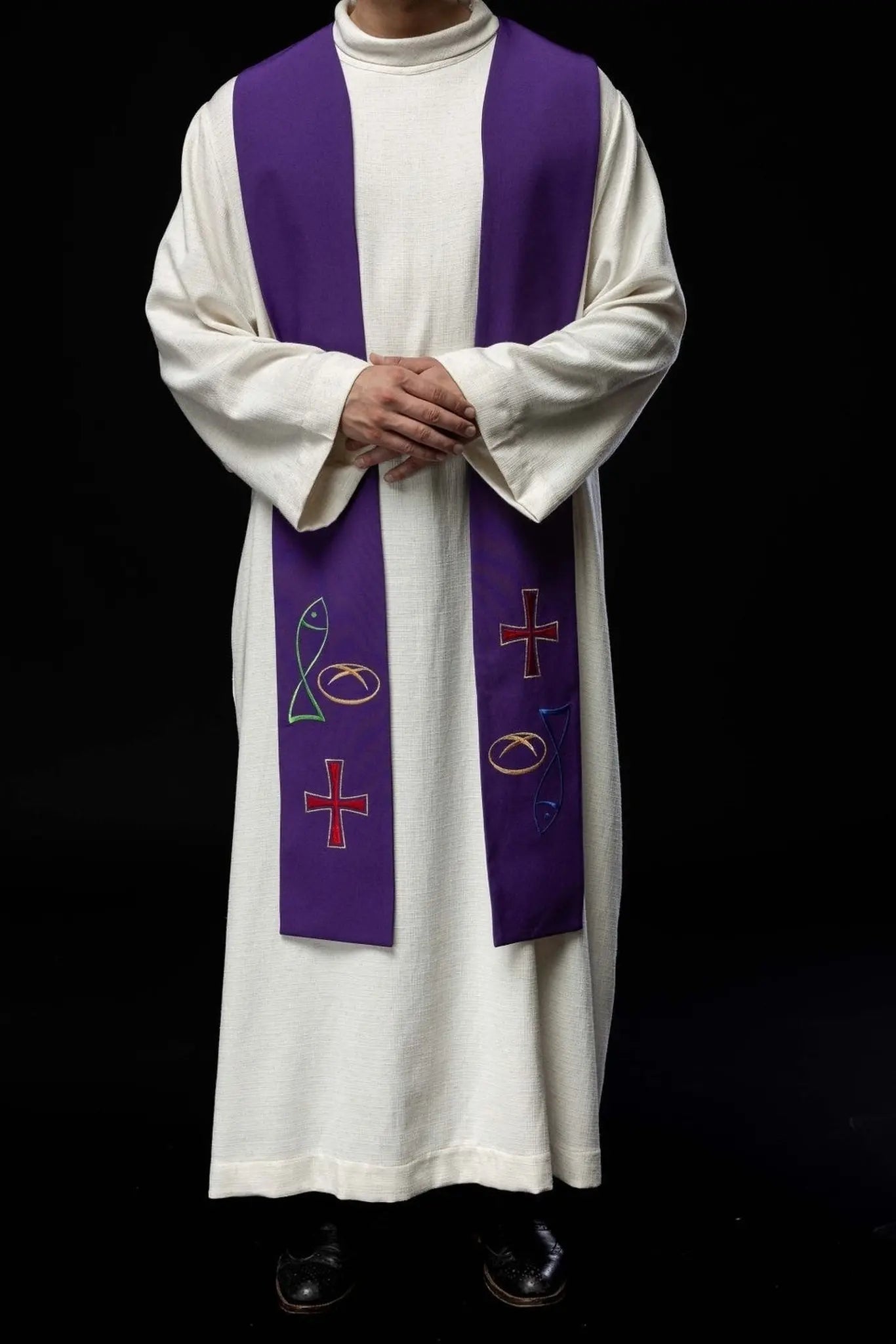
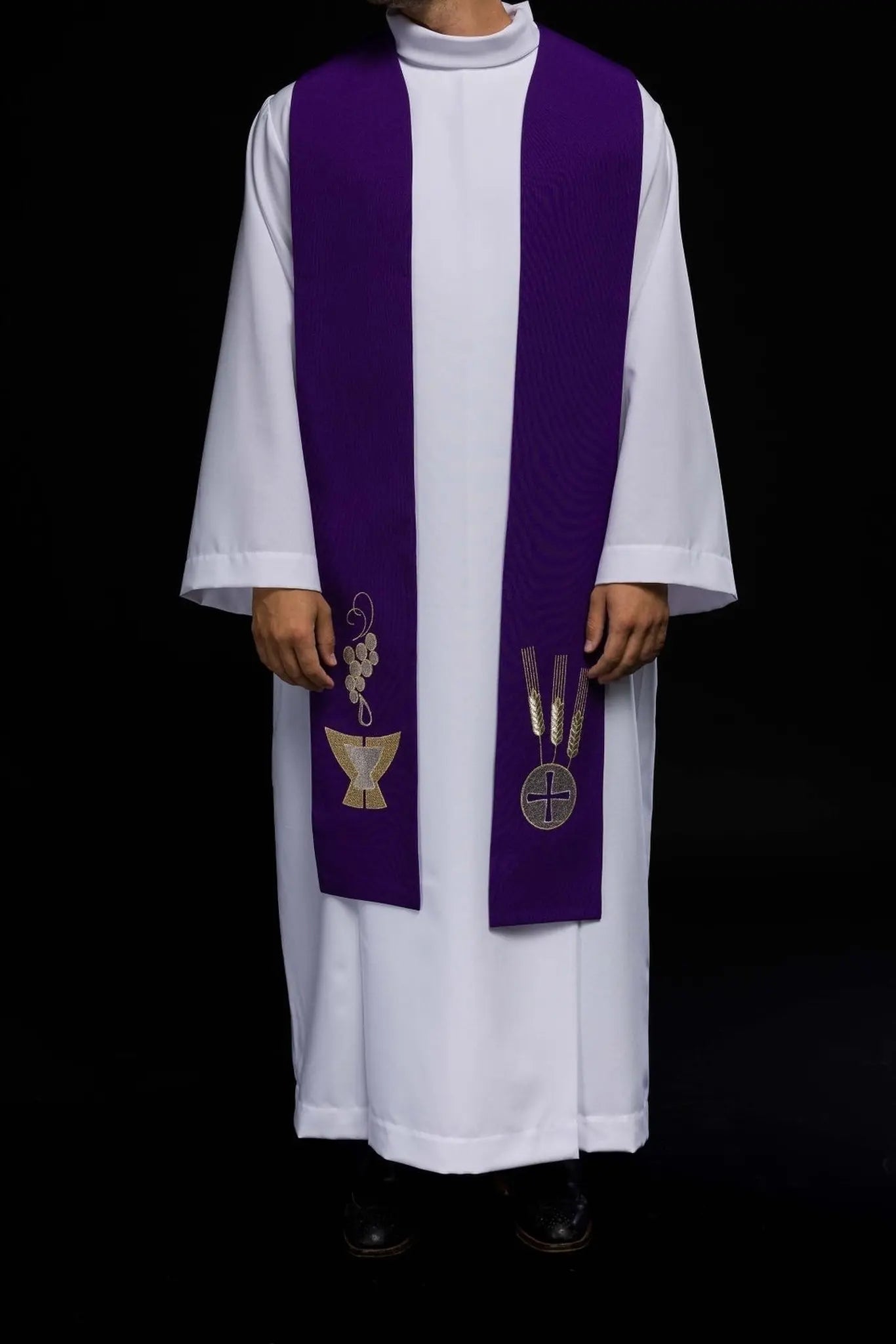
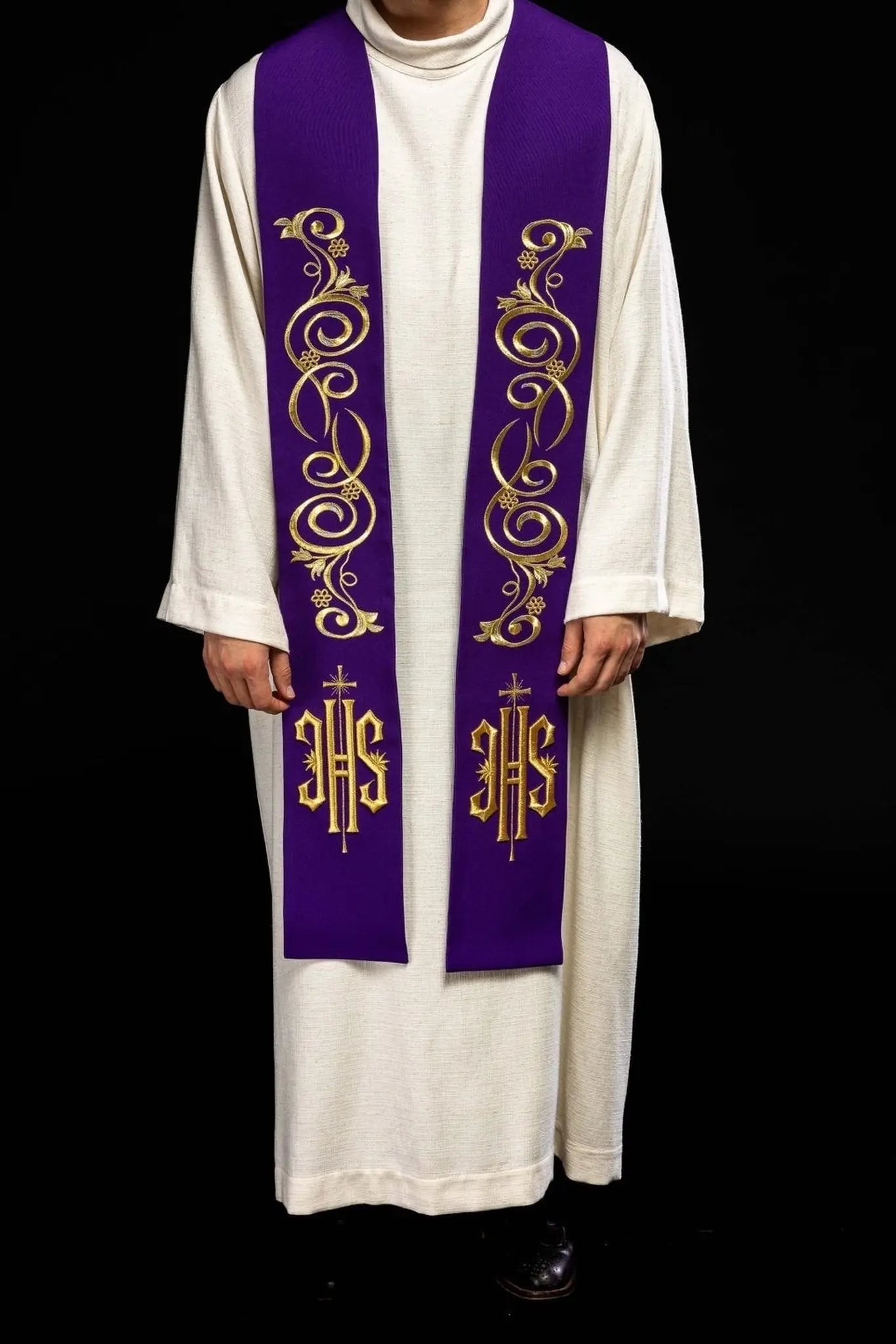
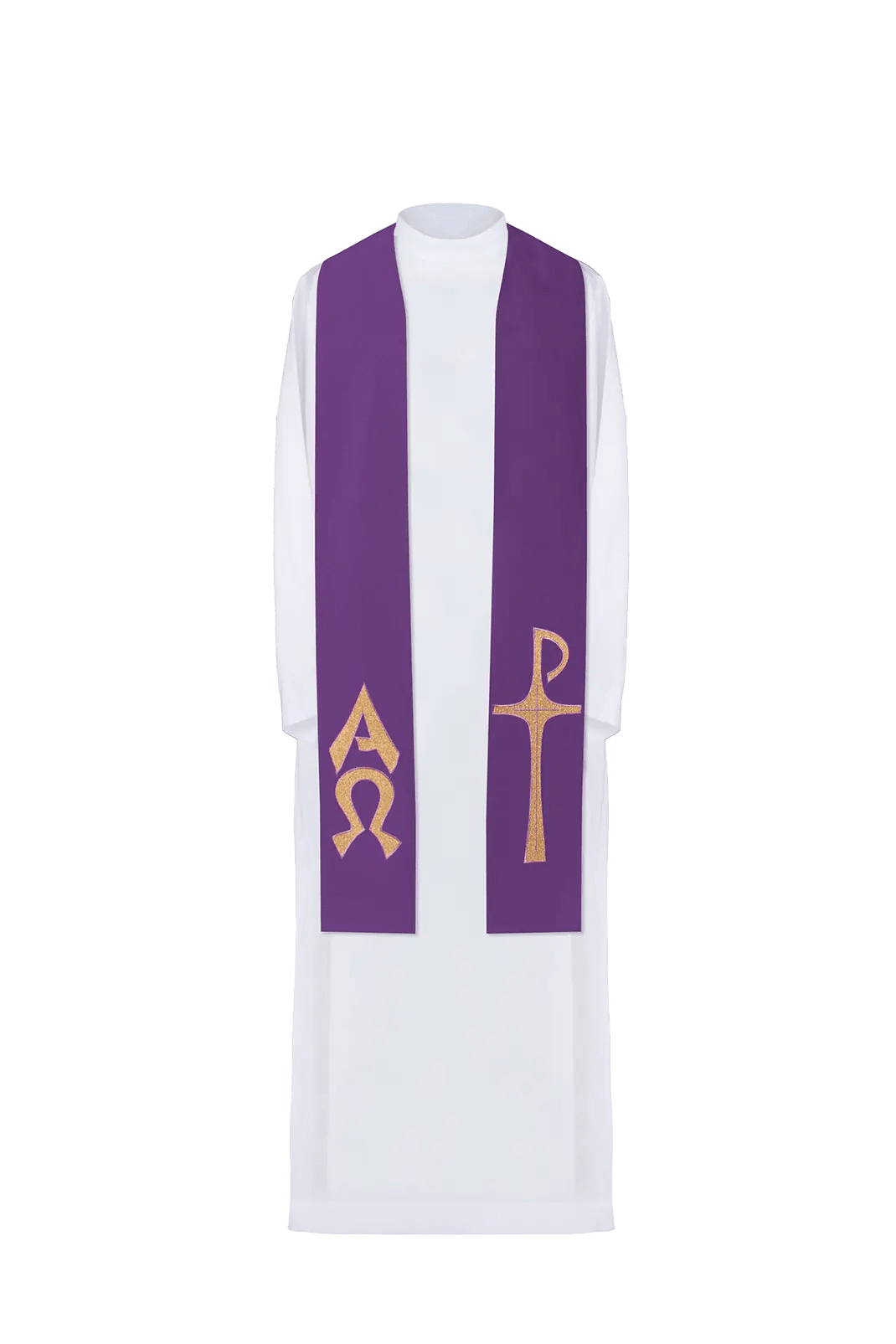
Purple Clergy Stoles for Advent, Lent and Reconciliation
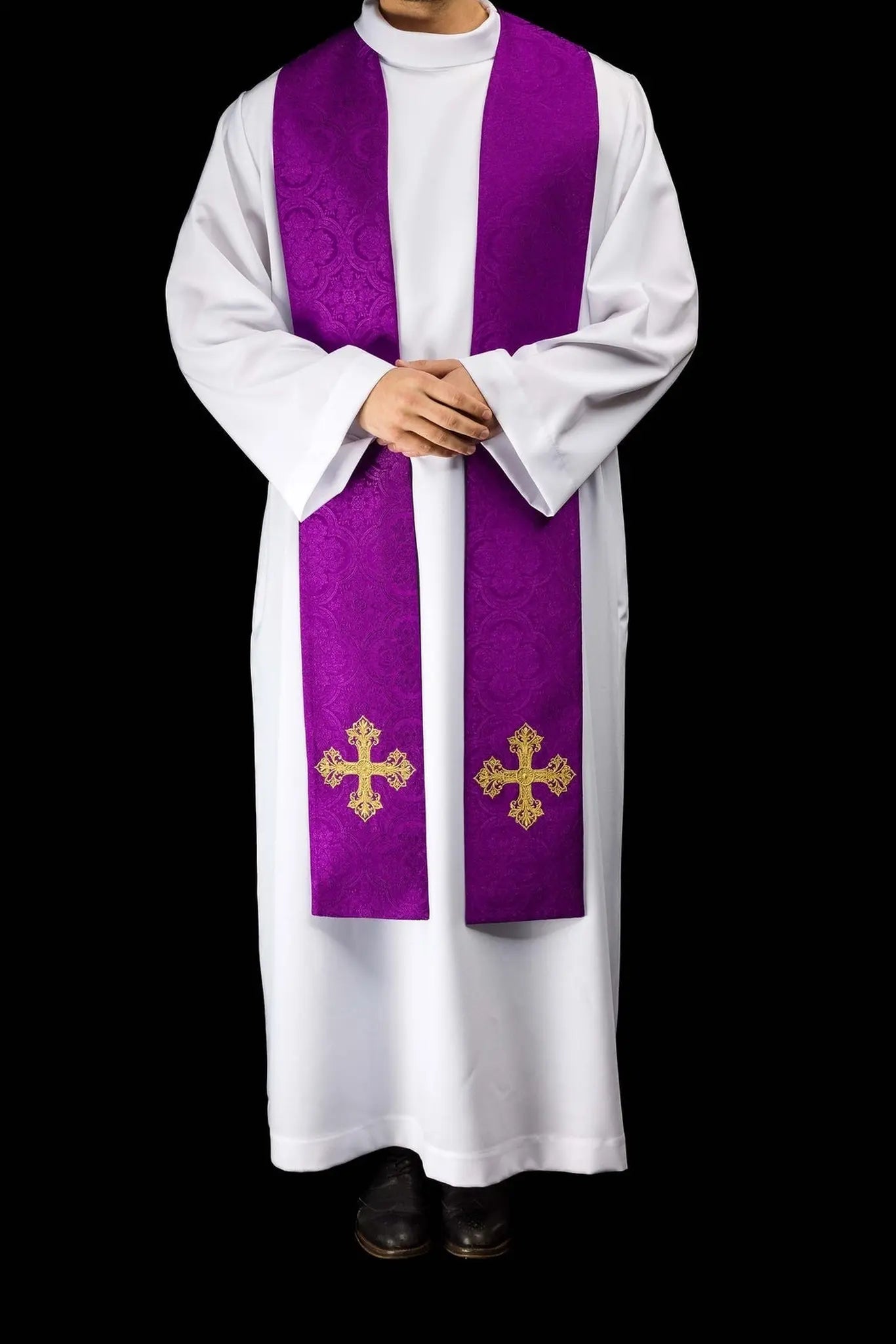
Purple clergy stoles are liturgical vestments used when the Church enters seasons and rites marked by penance, conversion, preparation, mercy and hope. In this collection you will find purple stoles intended for priests and other clergy who need a reverent vestment for Advent, Lent, the Sacrament of Reconciliation, penitential services, retreats, missions and other celebrations where violet or purple is appointed by the liturgical calendar. The stole is not simply a decorative textile. It is a sign of ordained ministry, worn when the priest or bishop presides, preaches, blesses, hears confessions or administers sacraments according to the rite being celebrated.
The purpose of this collection is to help parishes, chapels, religious communities and individual clergy choose a purple stole that is both beautiful and liturgically clear. Purple has a different character from green, red, white, gold, Marian blue or rose. It carries a sober tone, yet it is not a color of despair. In Advent it points toward expectation and the coming of Christ. In Lent it supports prayer, fasting, almsgiving and conversion. In the confessional it expresses repentance and the mercy of God. A well-chosen purple stole helps the congregation immediately recognize the spiritual atmosphere of the celebration.
When purple stoles are used
Purple, often described liturgically as violet, is most strongly associated with Advent and Lent. During Advent the color speaks of watchfulness, hope and preparation for the Nativity of the Lord. During Lent it emphasizes penitence, simplicity and a return to the Gospel before the celebration of Easter. A purple stole is also commonly used for the Sacrament of Penance and Reconciliation, communal penitential services, retreats, missions, spiritual direction in a liturgical setting and other rites where the minister’s vesture should express repentance and mercy.
In many parish sacristies, a purple stole is one of the most frequently needed vestments outside Ordinary Time. Priests may use it during individual confessions, during Lenten devotions, during Advent reconciliation evenings and during services connected with examination of conscience and conversion. For this reason, the stole should be comfortable, durable and easy to keep ready for use. It may be simple and restrained for daily sacramental ministry, or more richly embroidered for solemn seasonal celebrations.
Purple is sometimes confused with rose, especially around the Third Sunday of Advent and the Fourth Sunday of Lent. These days are traditionally connected with Gaudete and Laetare. Rose vestments are not the same as purple vestments; they have their own liturgical meaning of moderated joy within a penitential season. When the celebration specifically calls for rose rather than violet, you may want to compare this collection with Rose Stoles. Keeping purple and rose vestments distinct helps preserve the visual language of the liturgical year.
What belongs in this collection
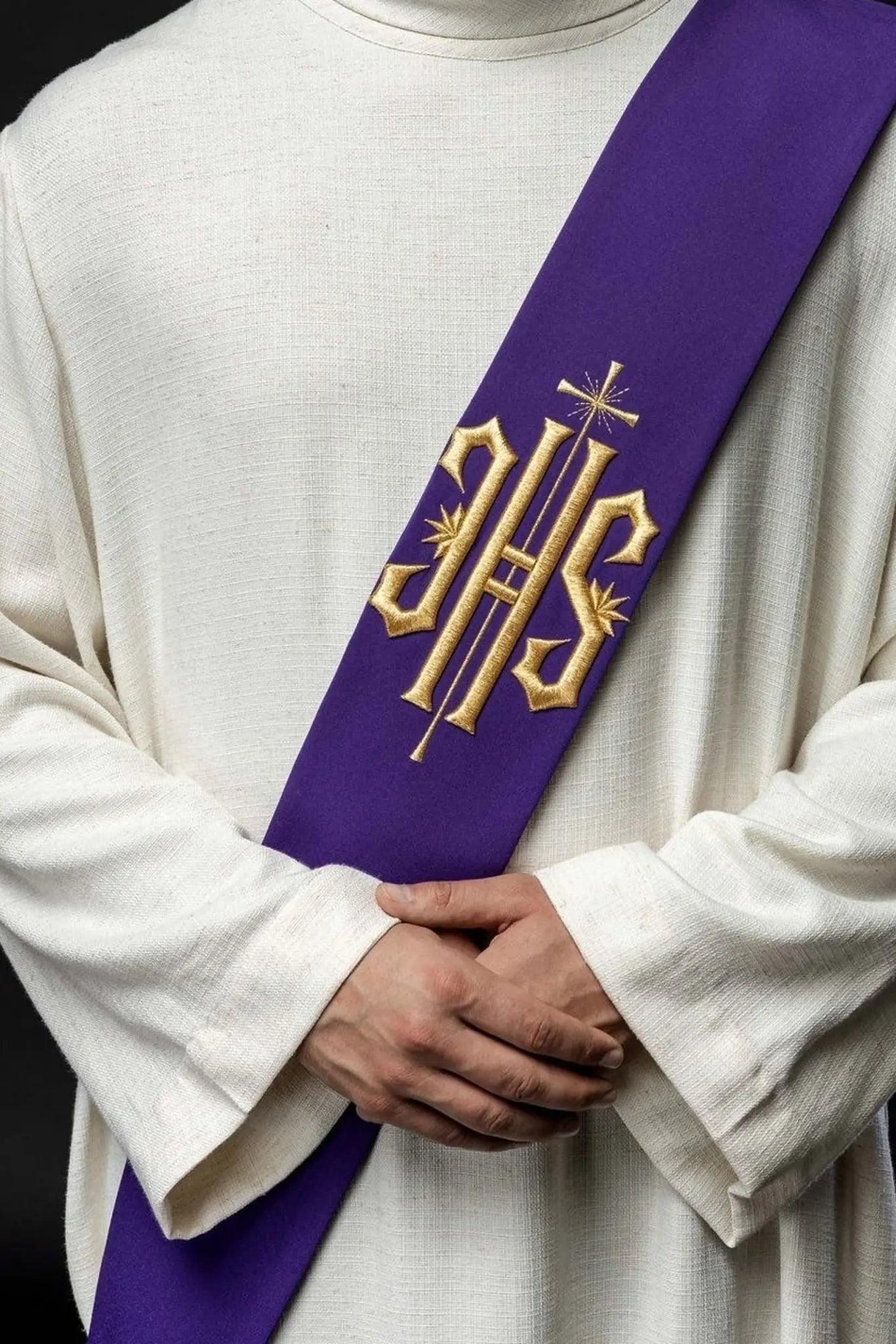
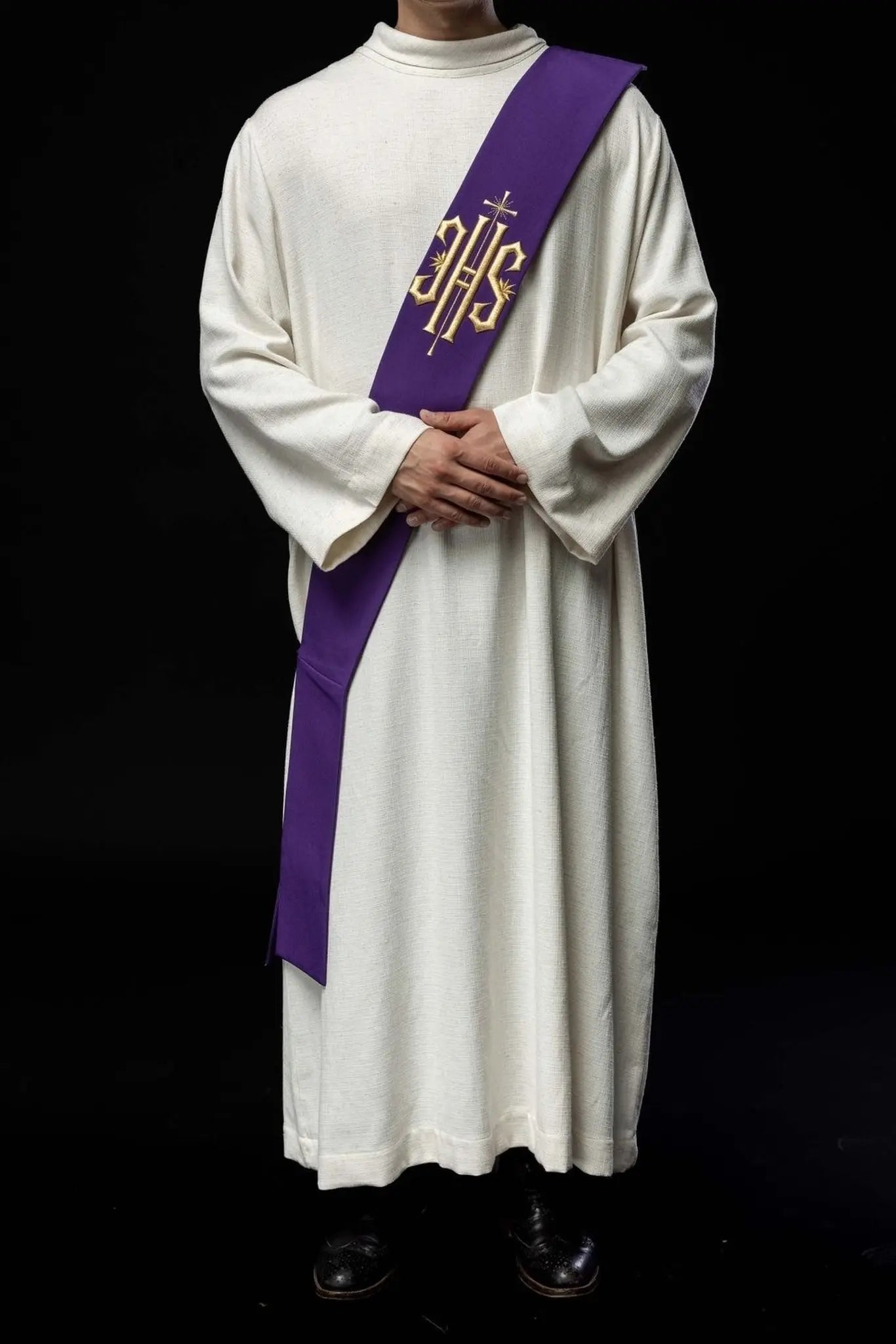
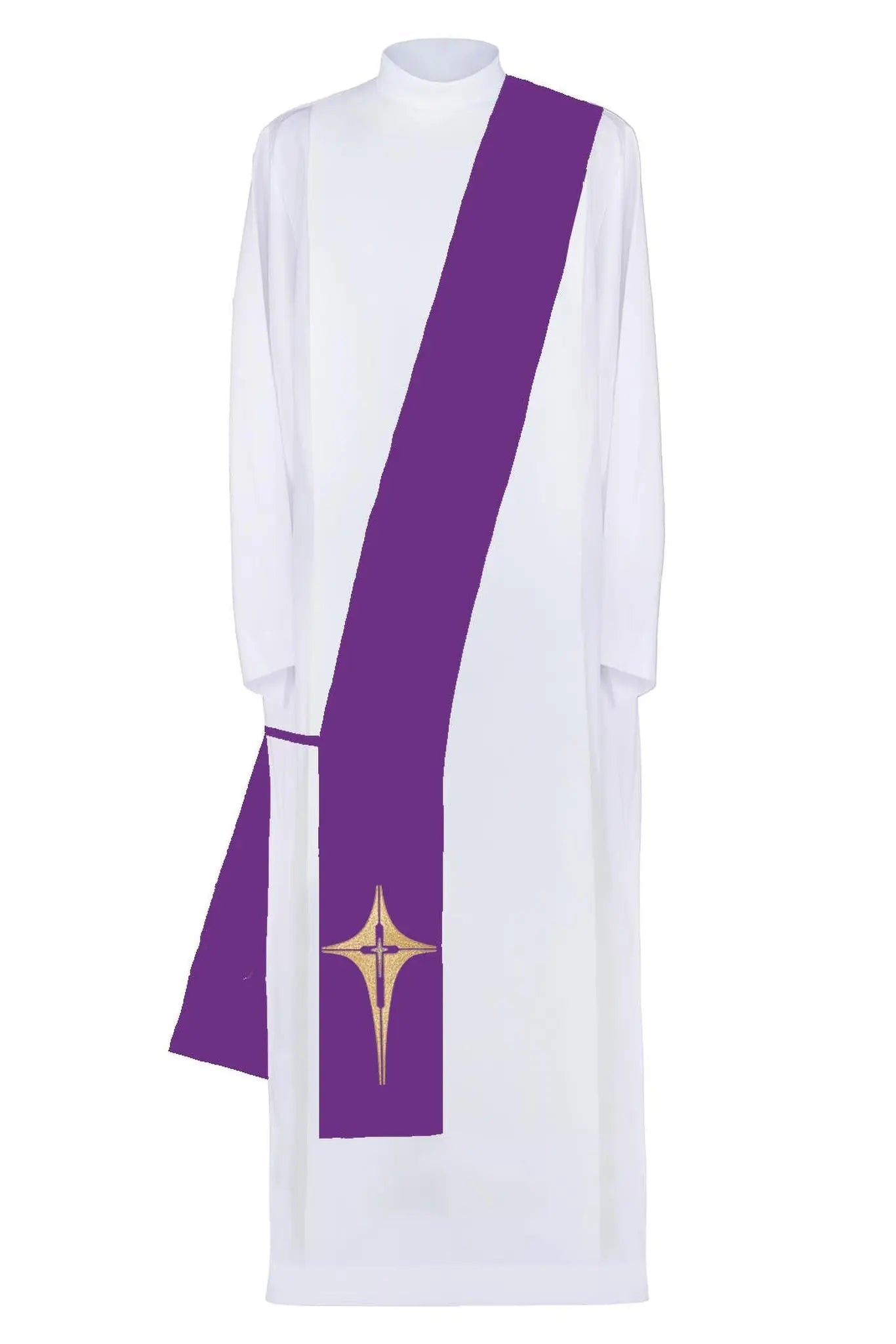
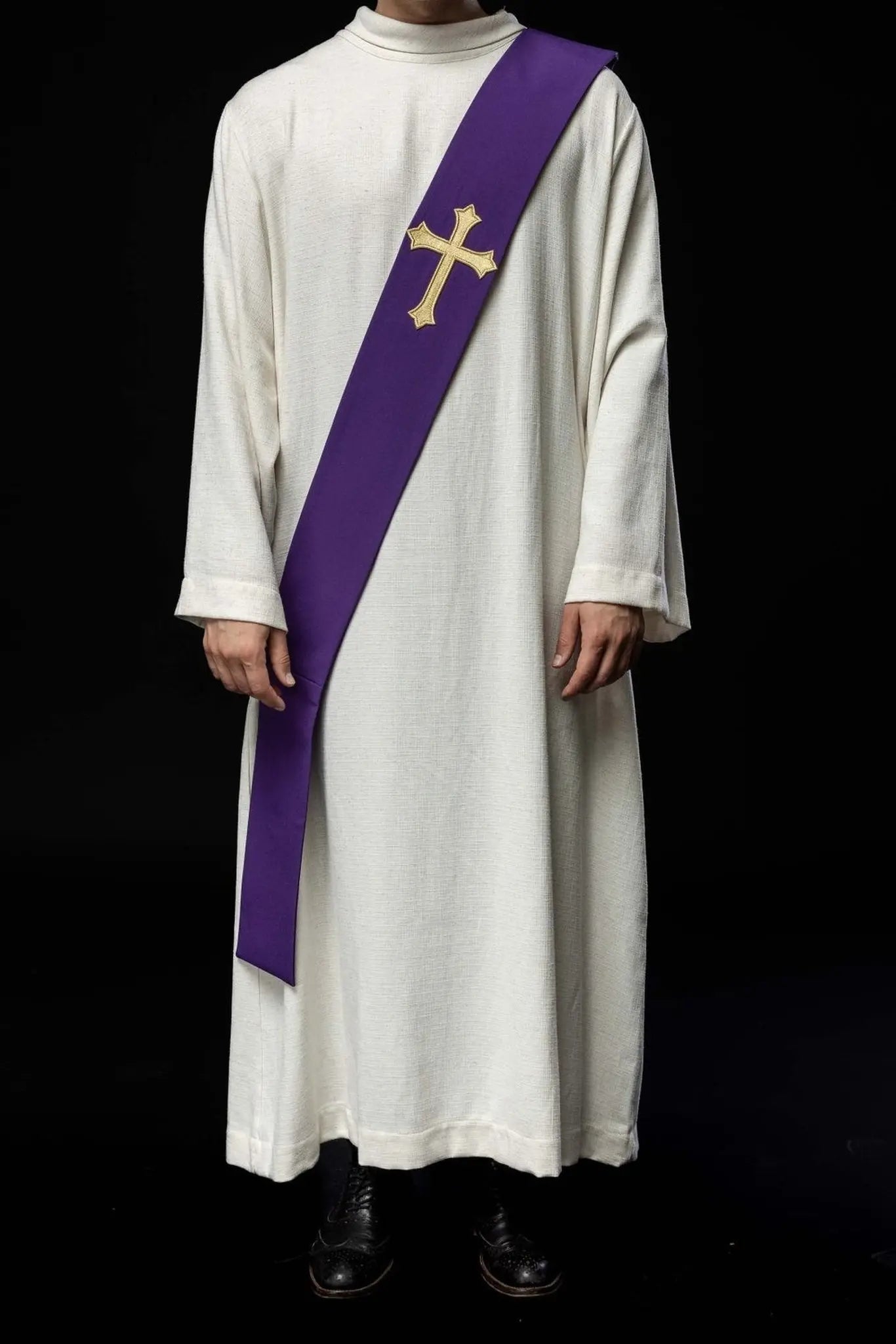
This collection is dedicated to purple clergy stoles. The items here are intended to be worn as stoles, not as chasubles, dalmatics, altar cloths or pulpit covers. A stole is a long, narrow vestment placed around the neck of a priest or bishop, while a deacon wears a stole diagonally from shoulder to side. If you are choosing vestments for a deacon, the shape and cut should be selected from Deacon Stoles rather than from a standard priest stole category. If you are building a complete Mass set in the same color, purple stoles can be coordinated with Purple Chasubles and other violet paraments.
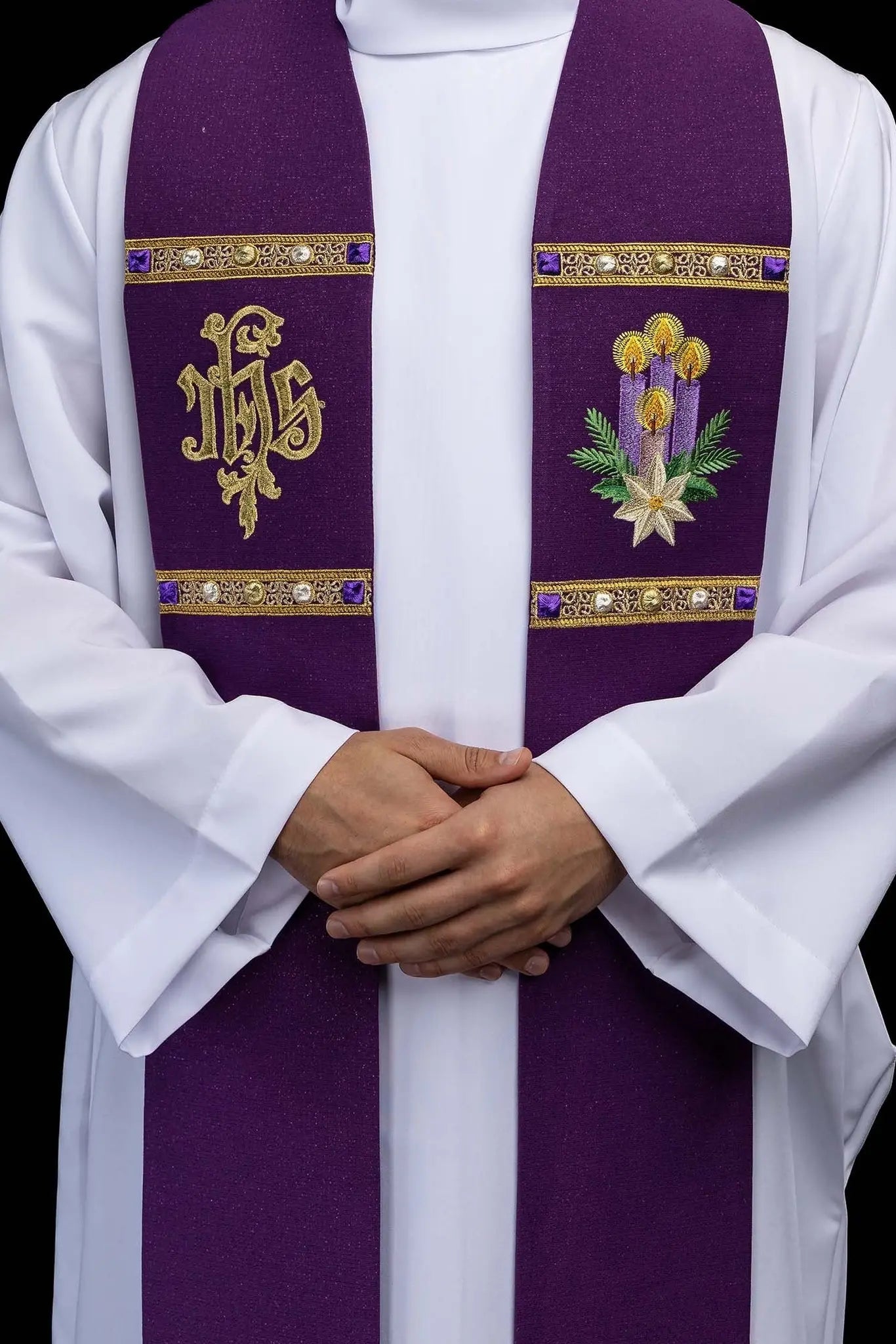
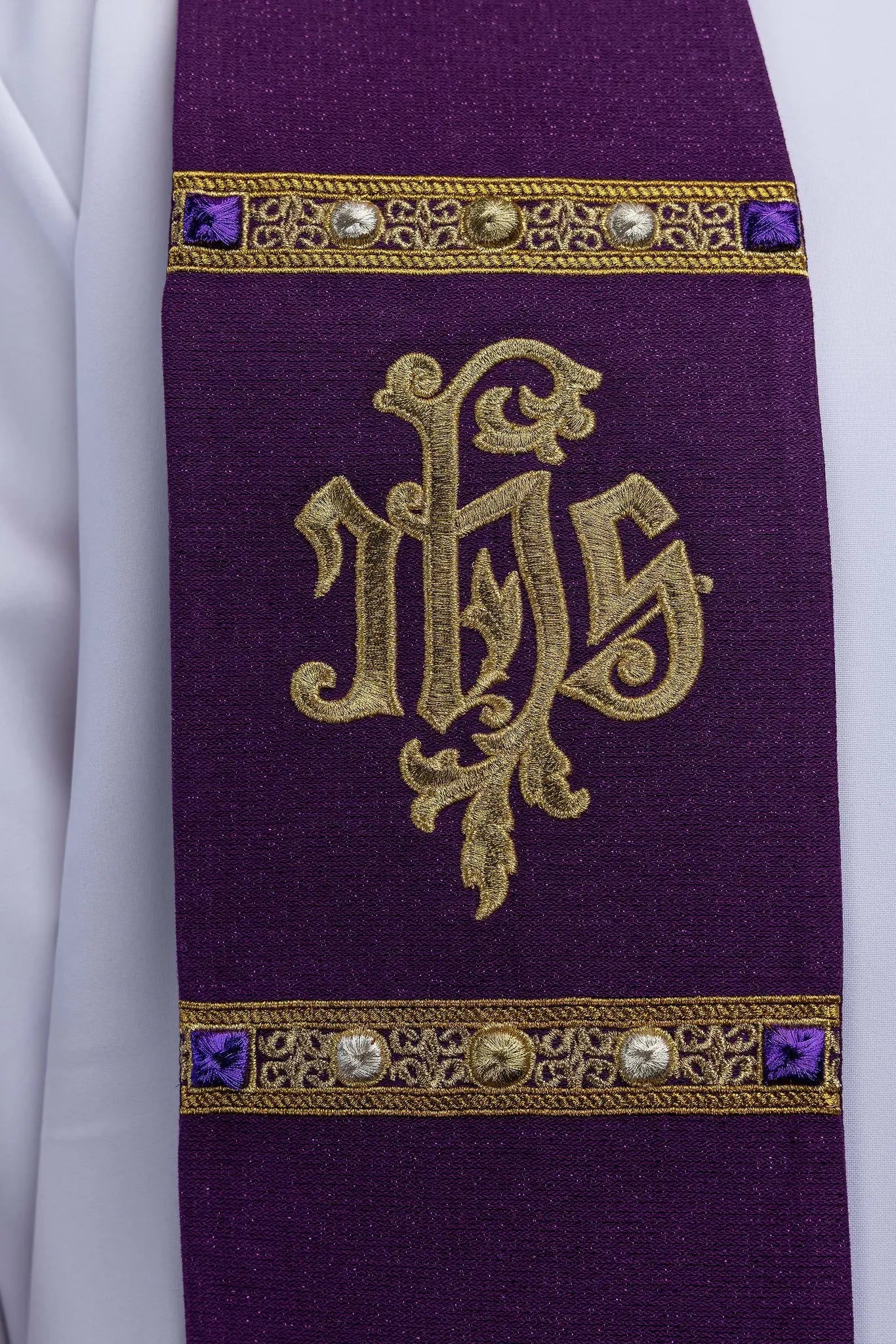
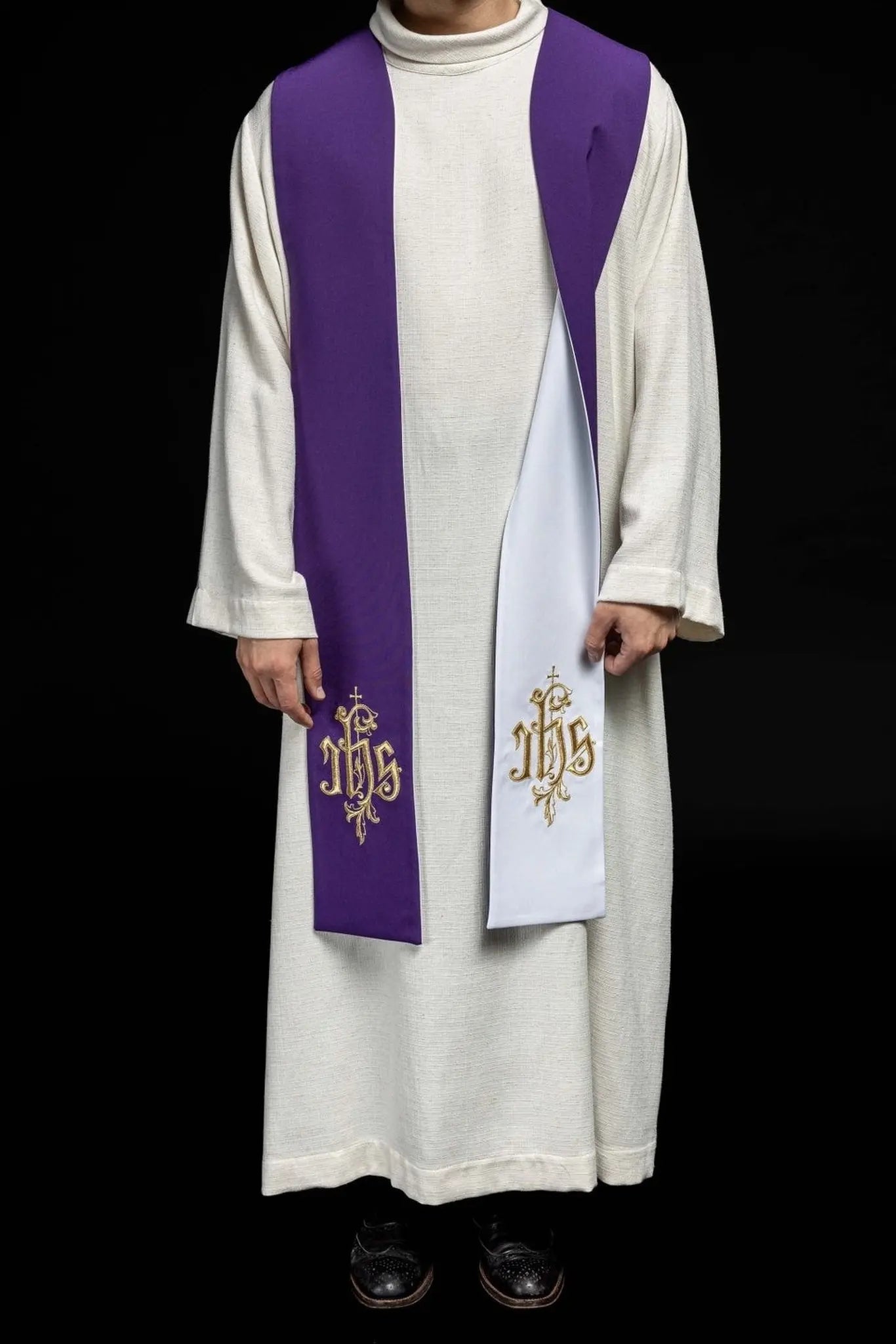
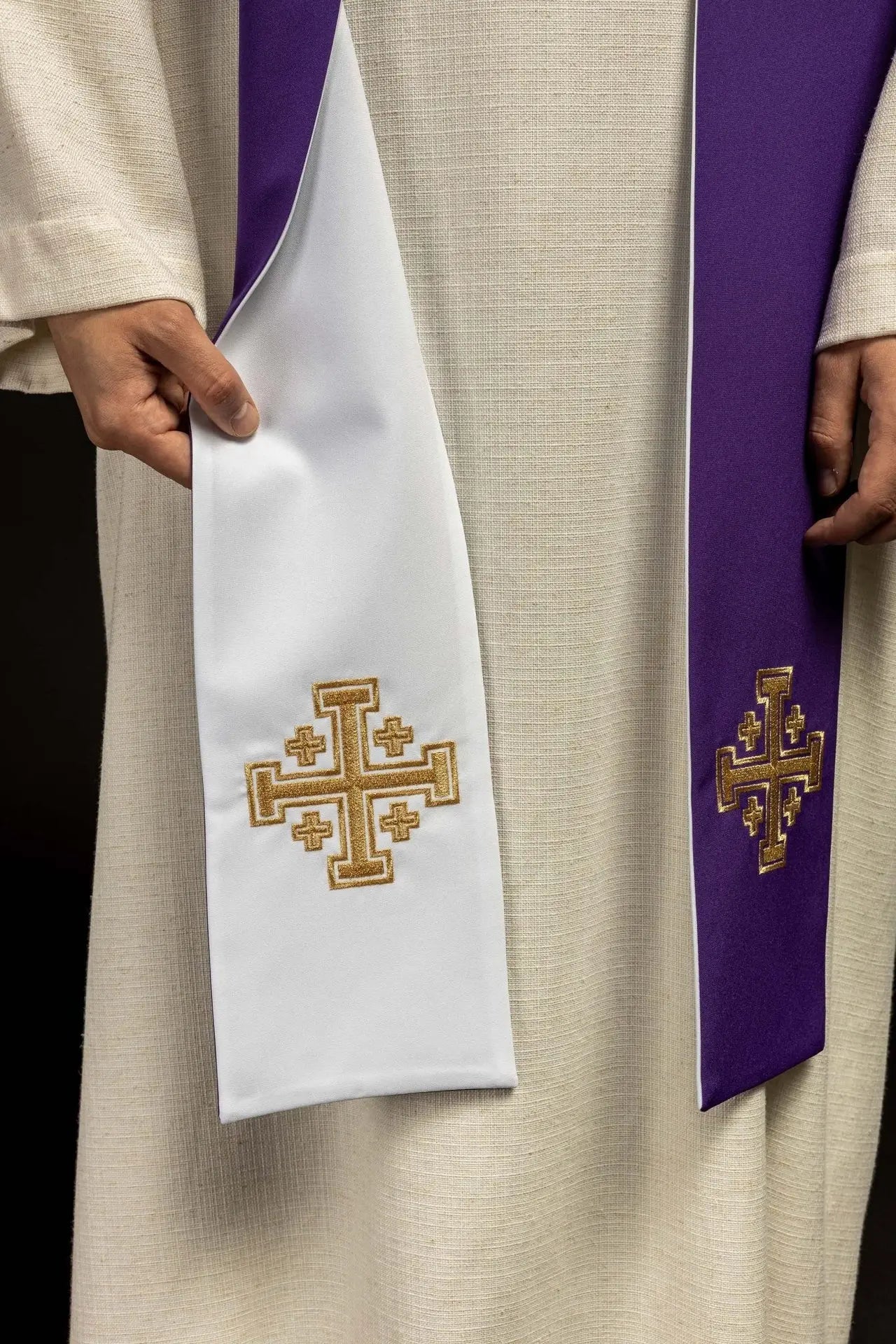
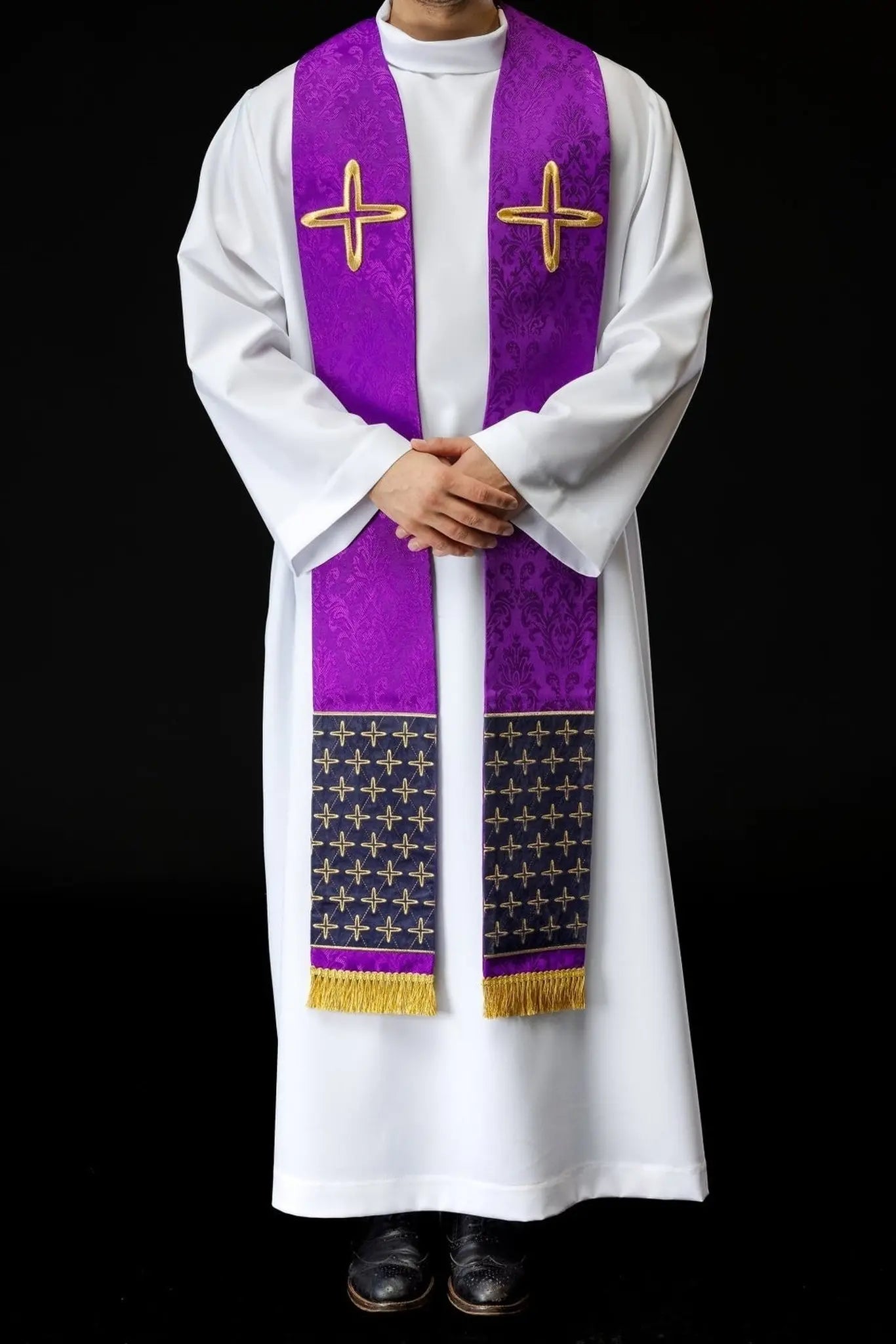
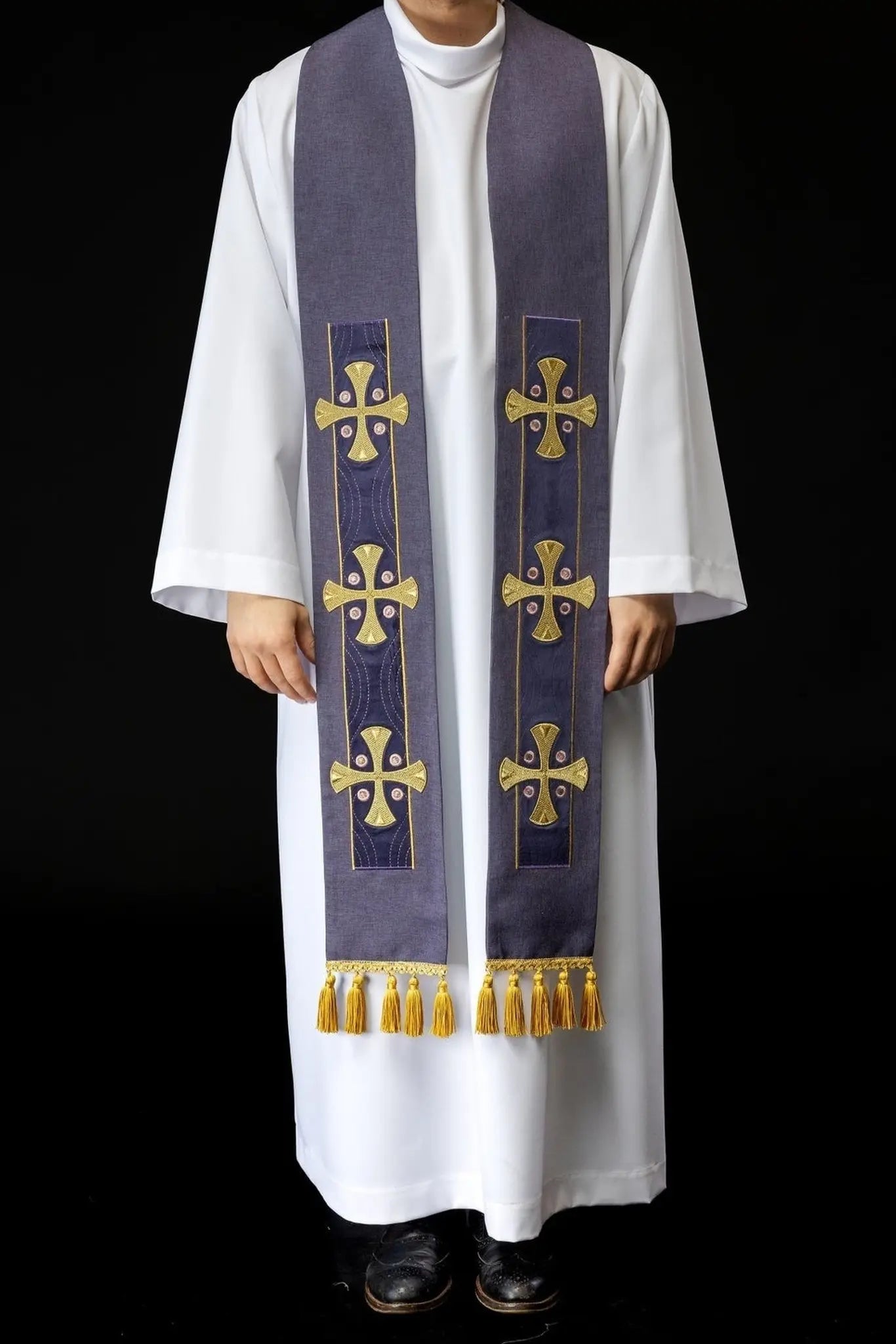
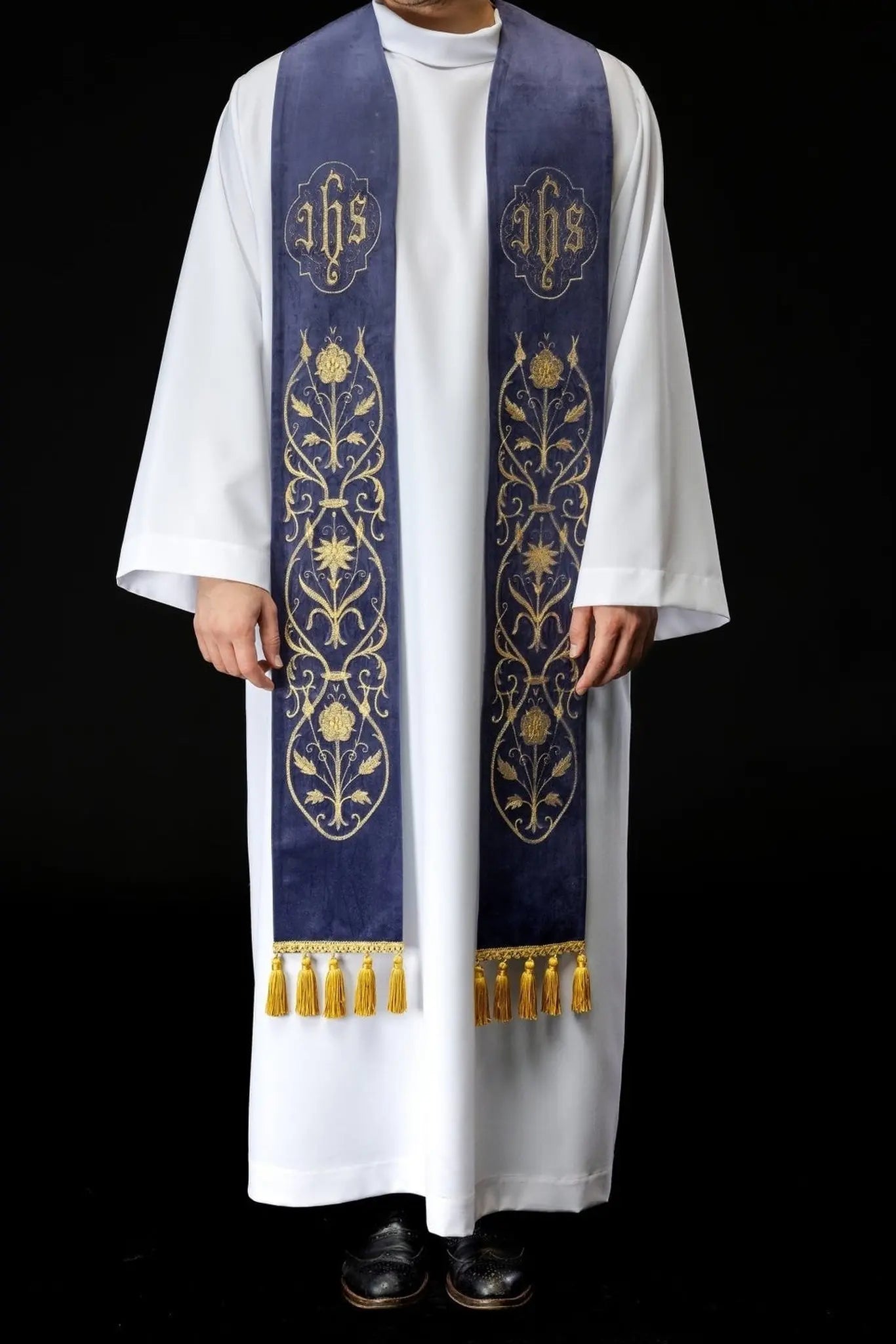
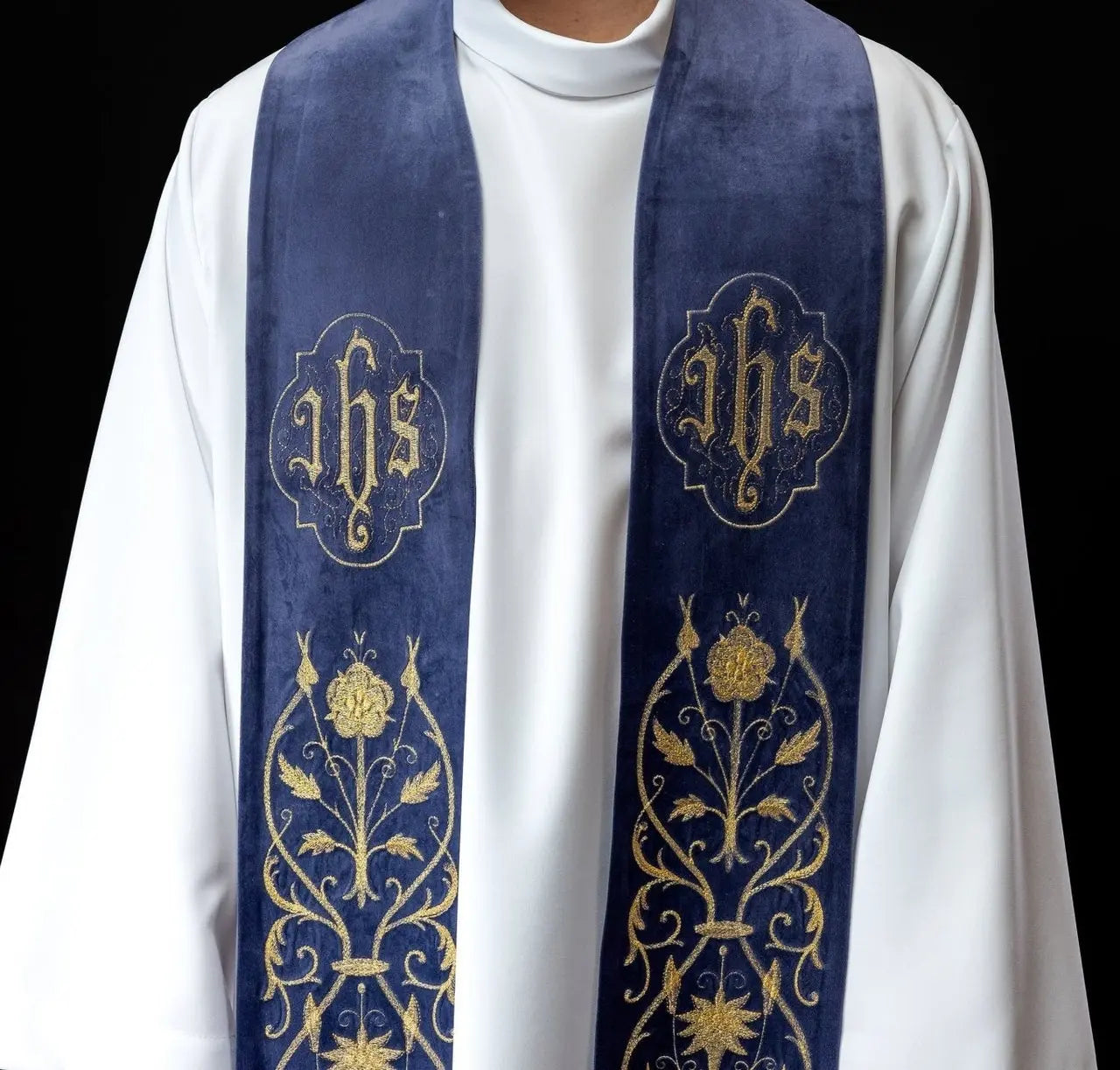
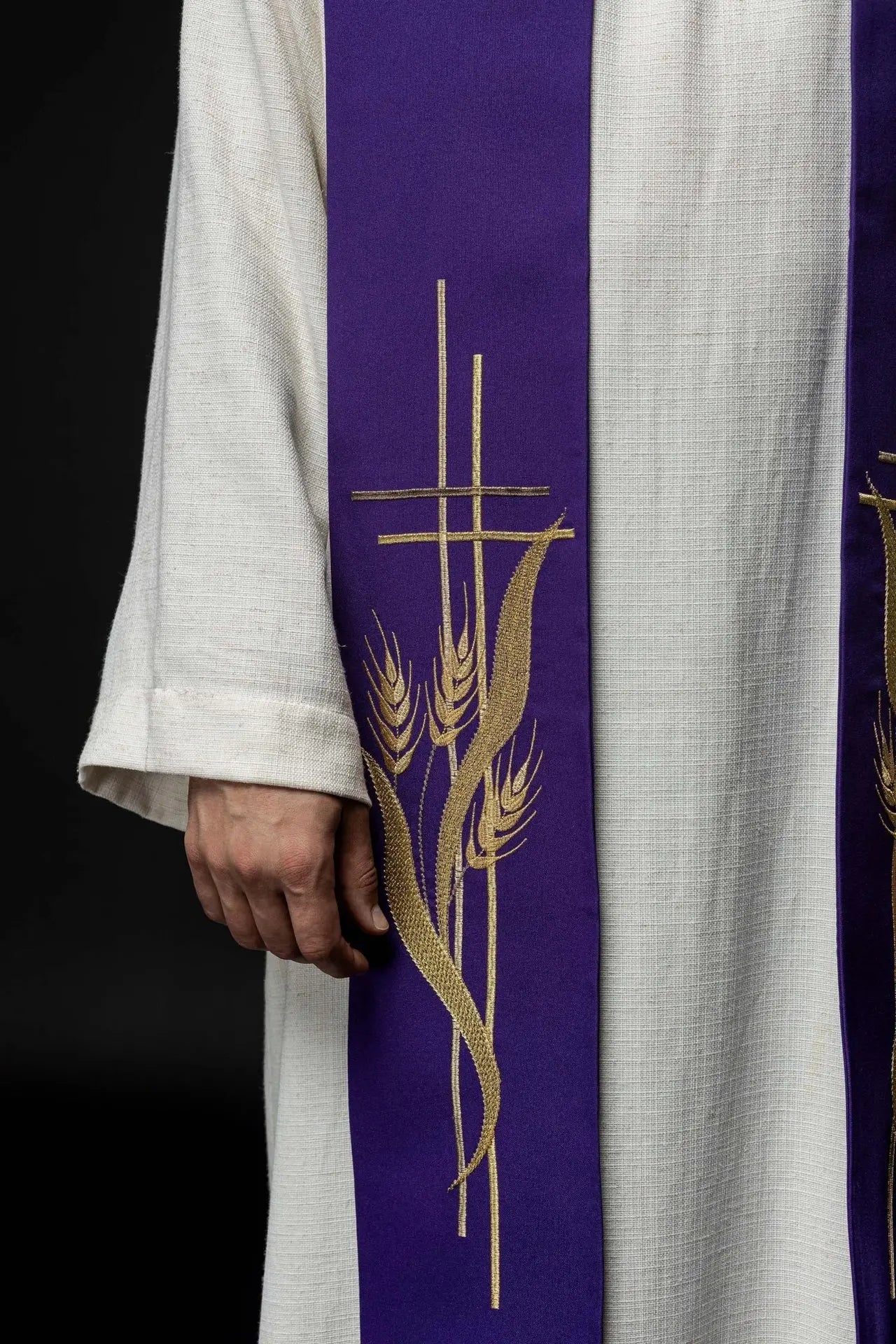
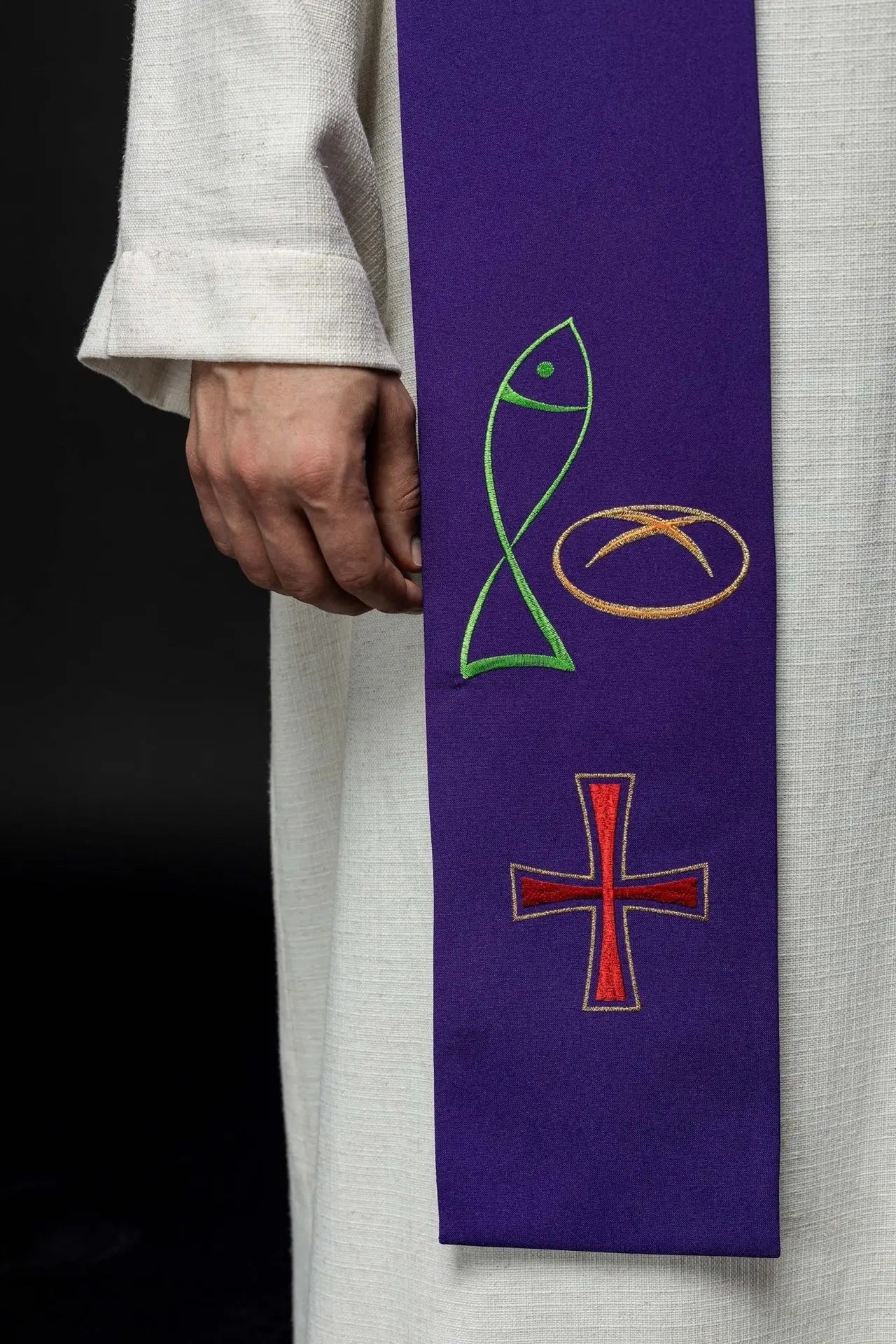
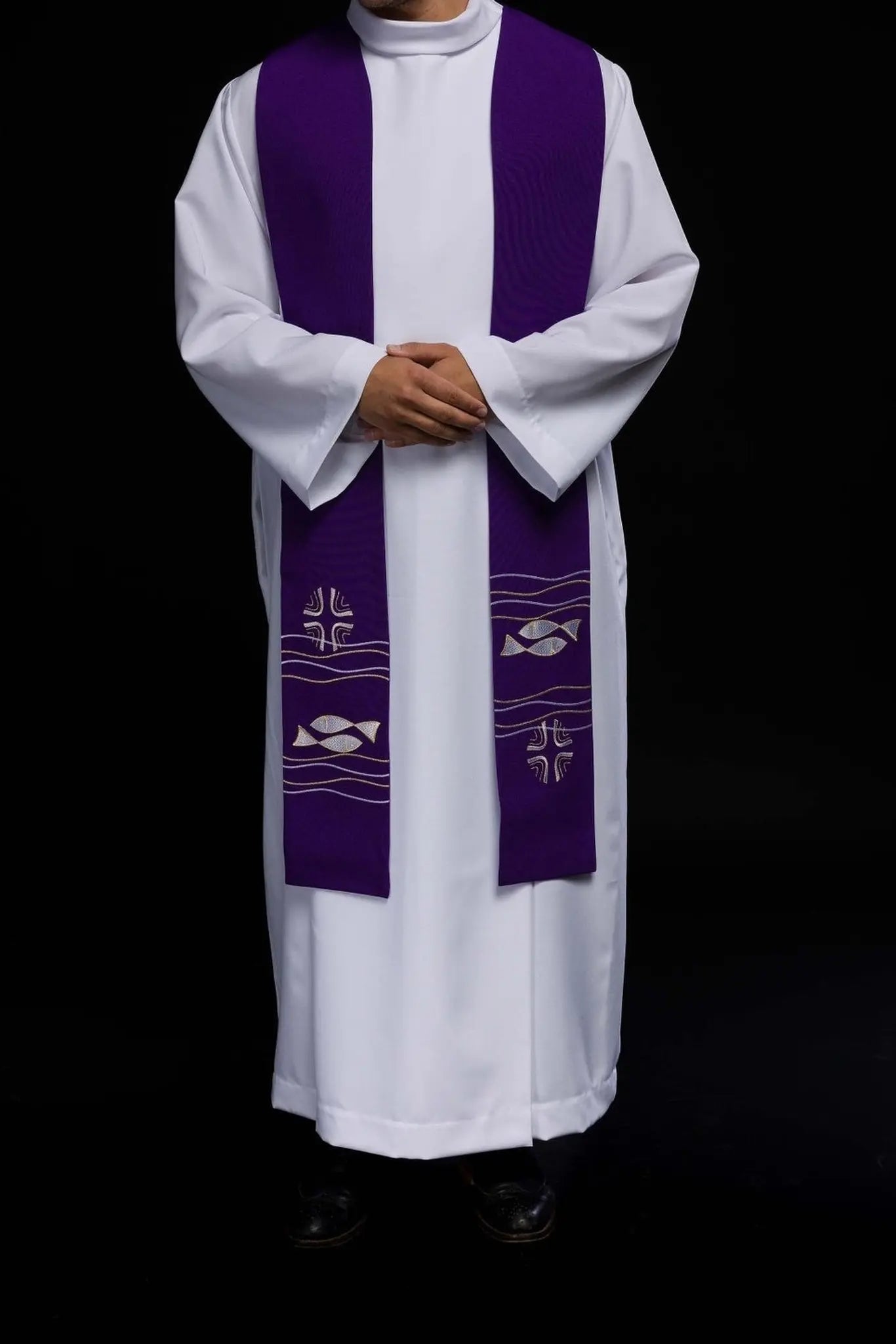
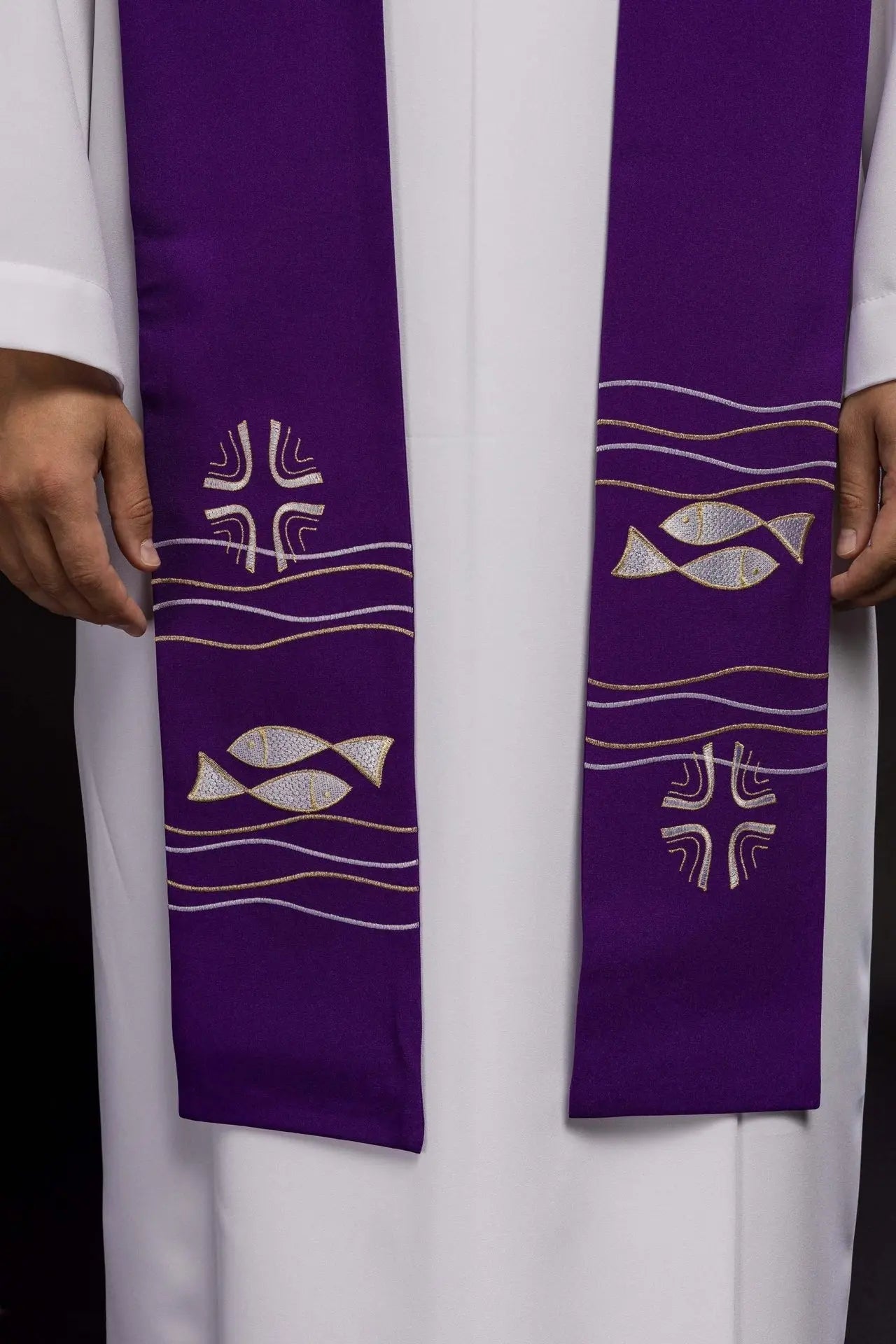
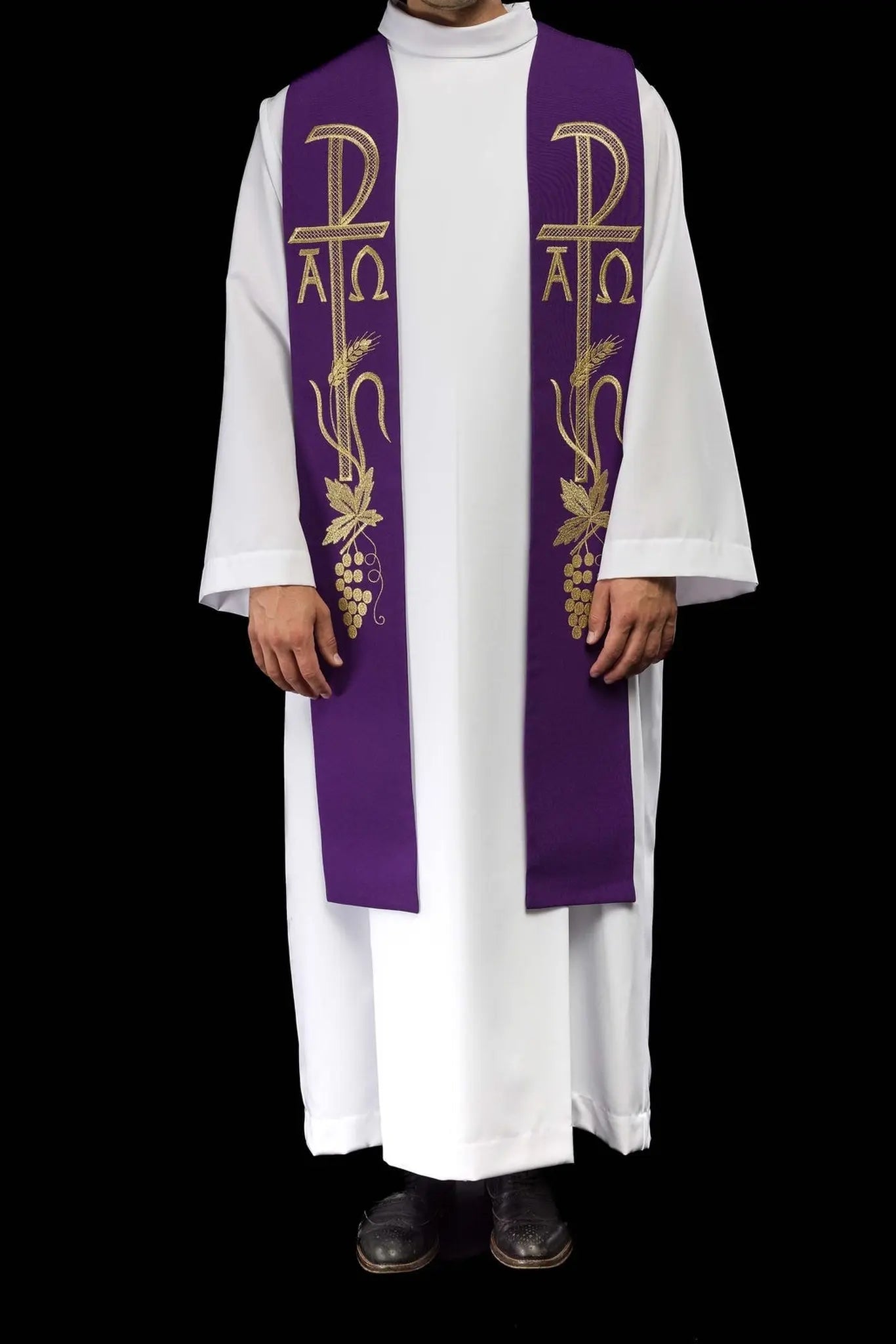
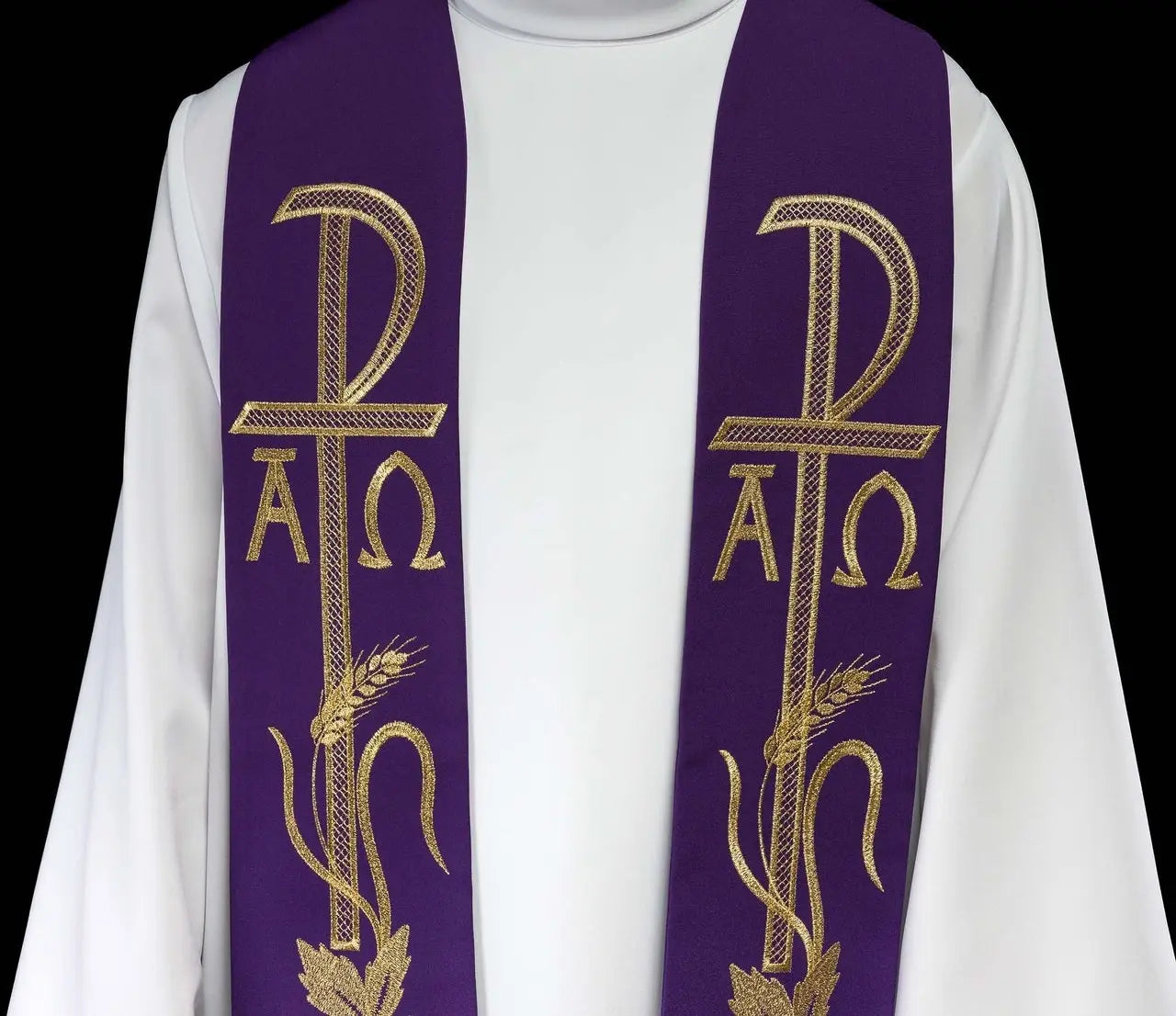
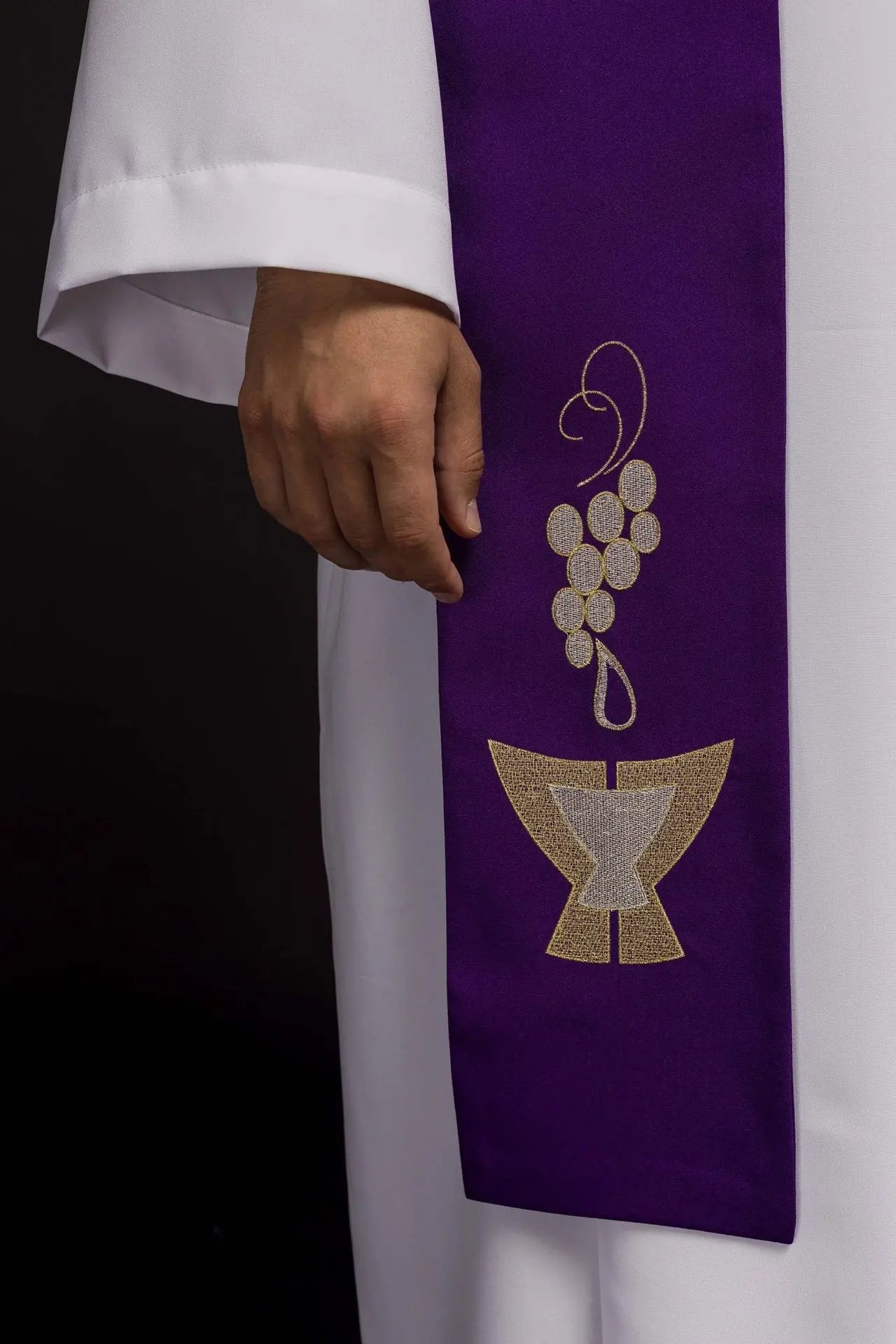
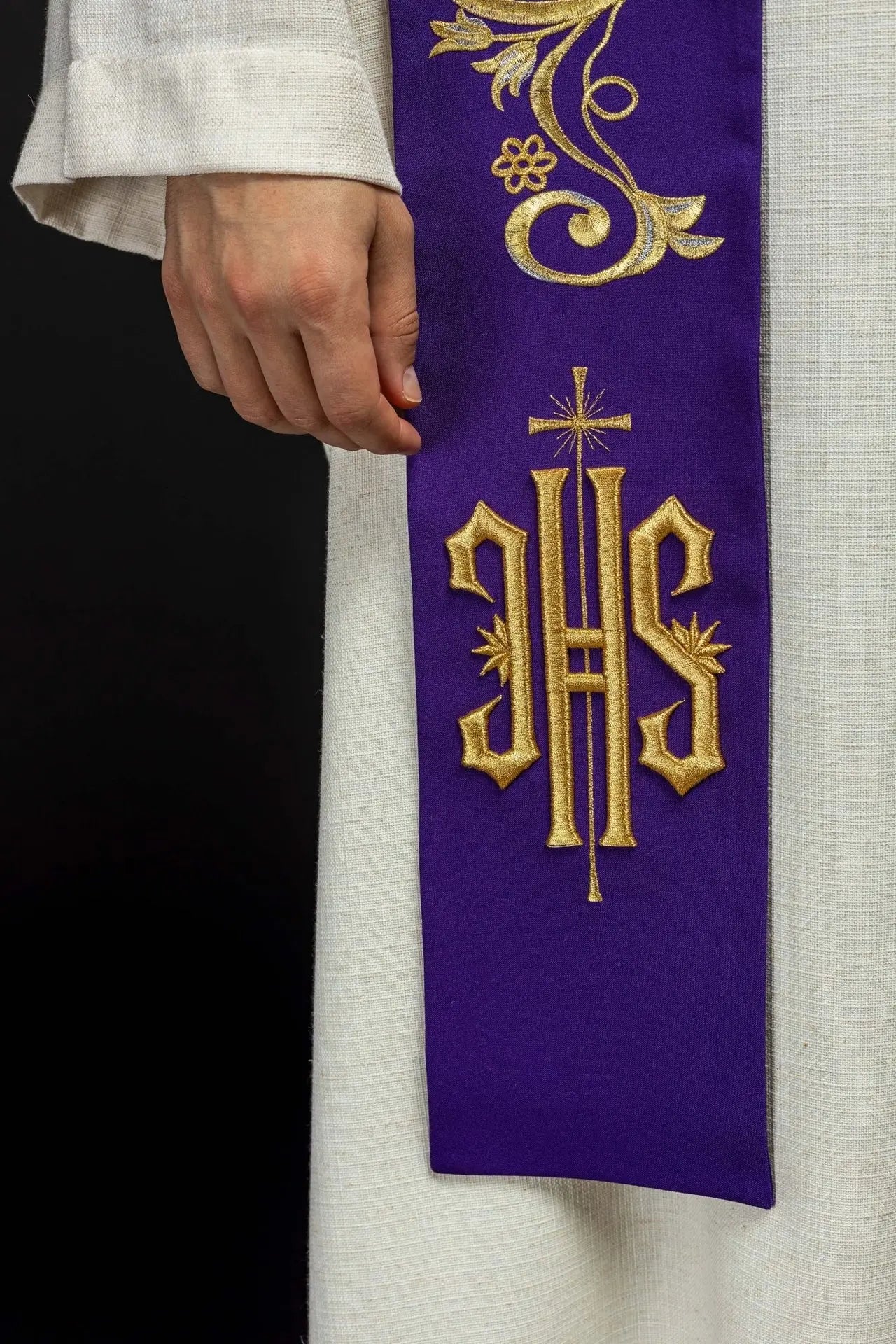
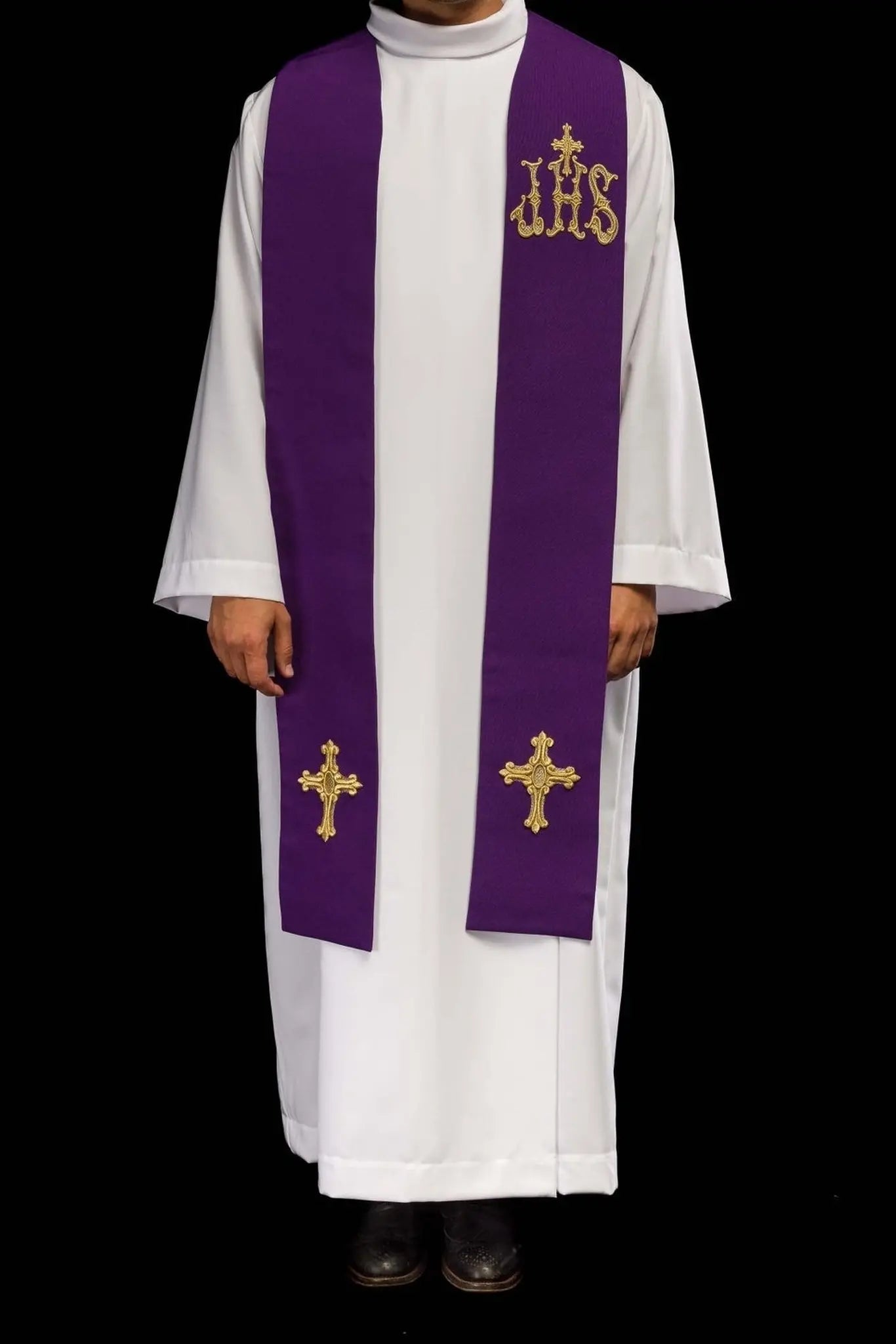
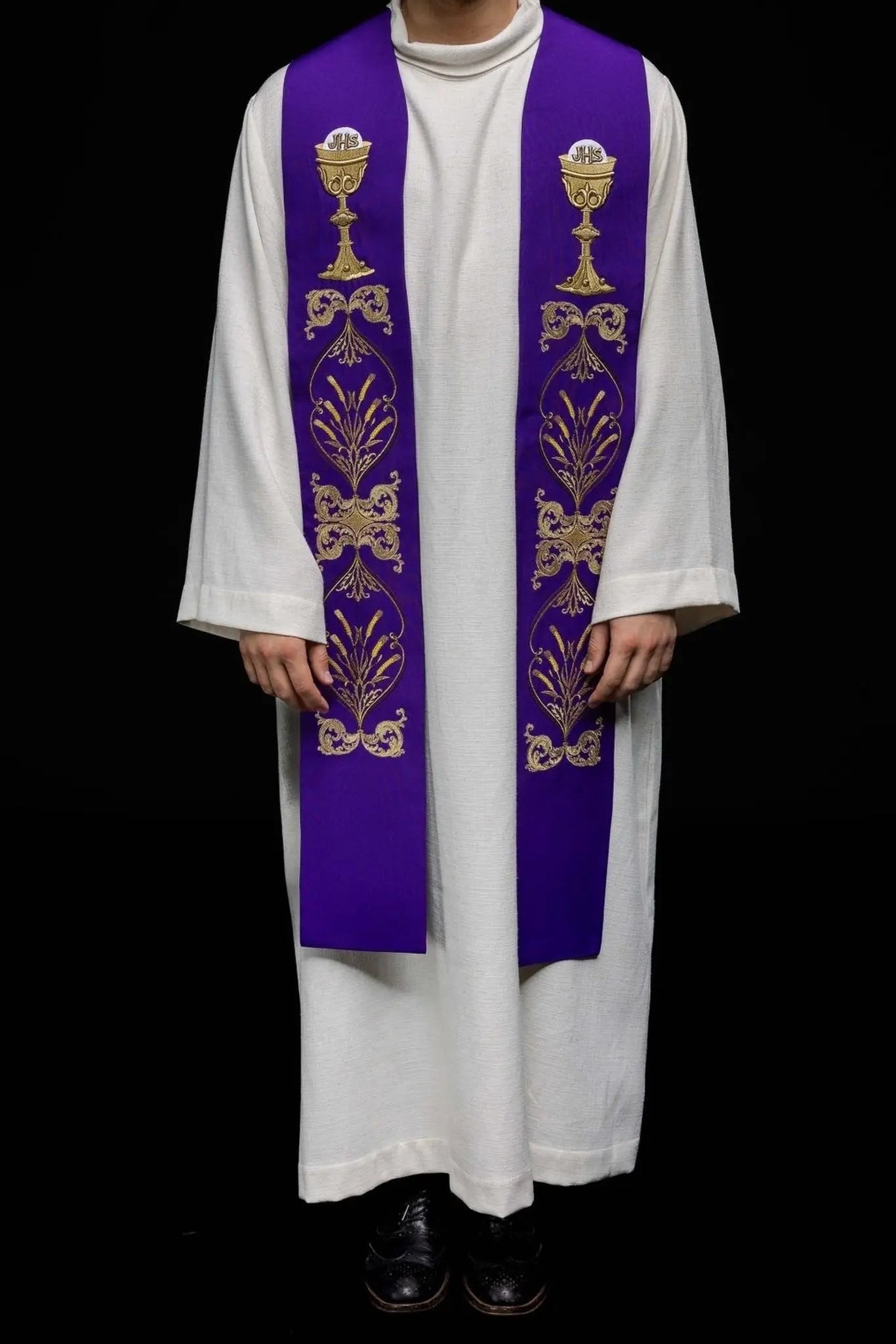
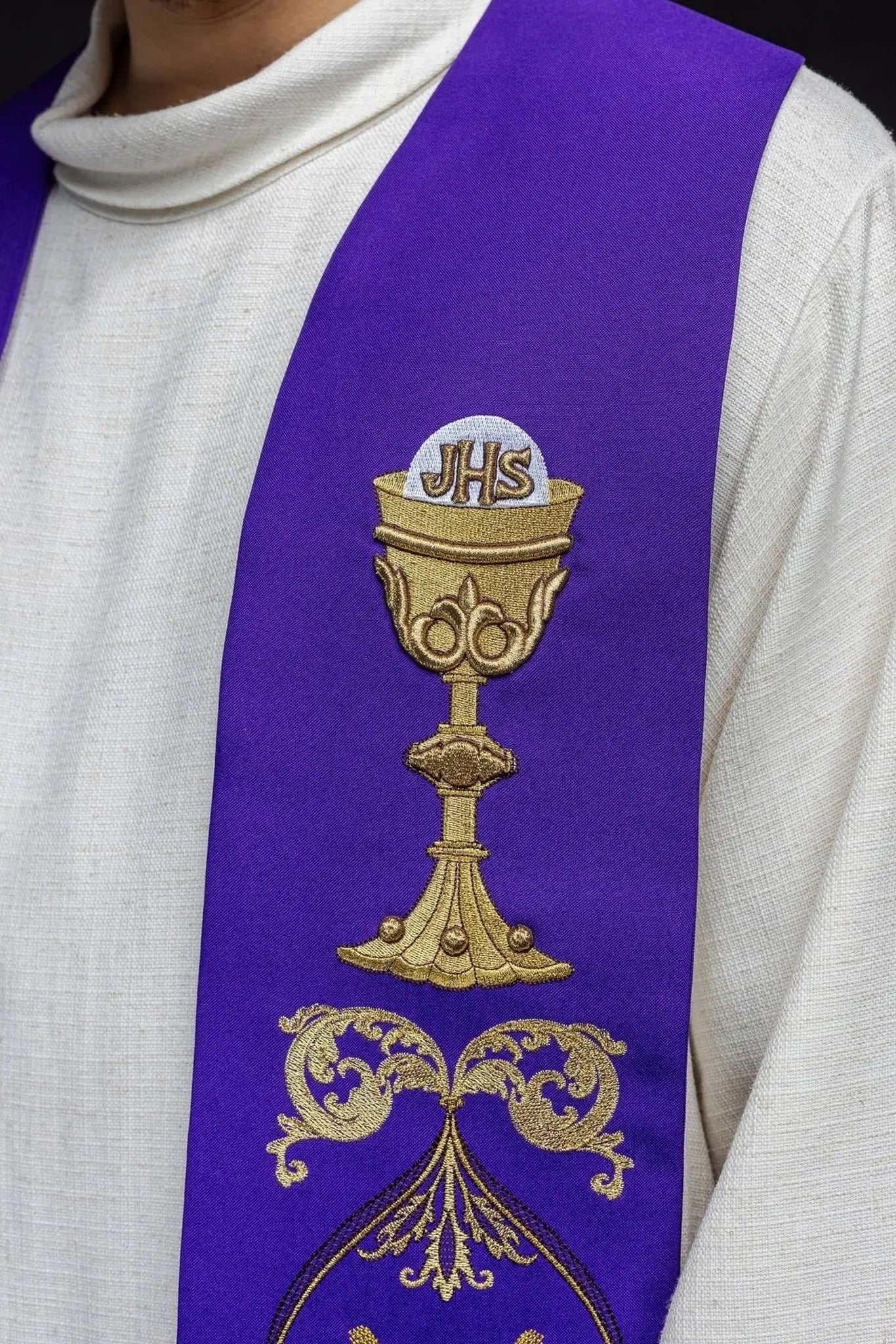
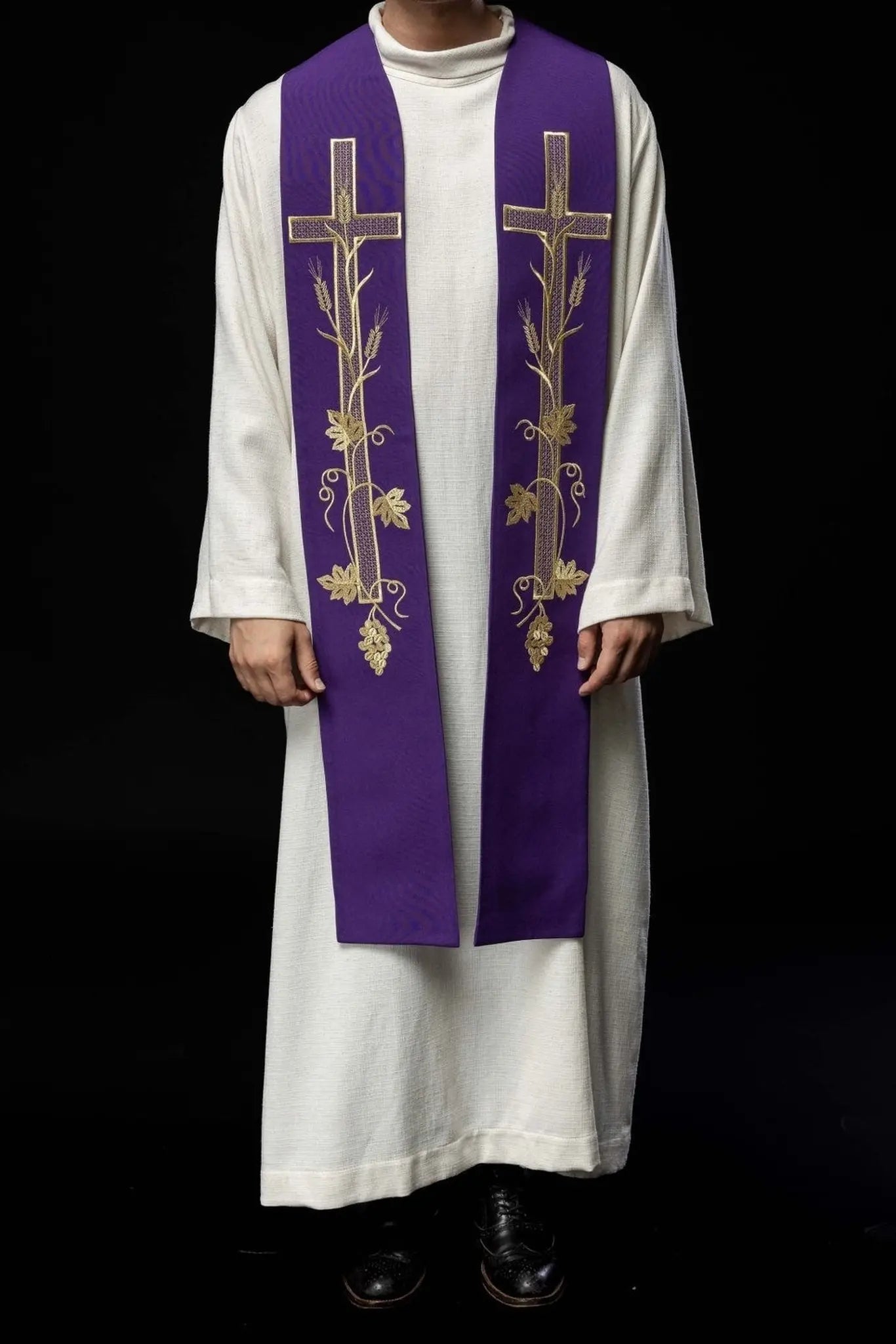
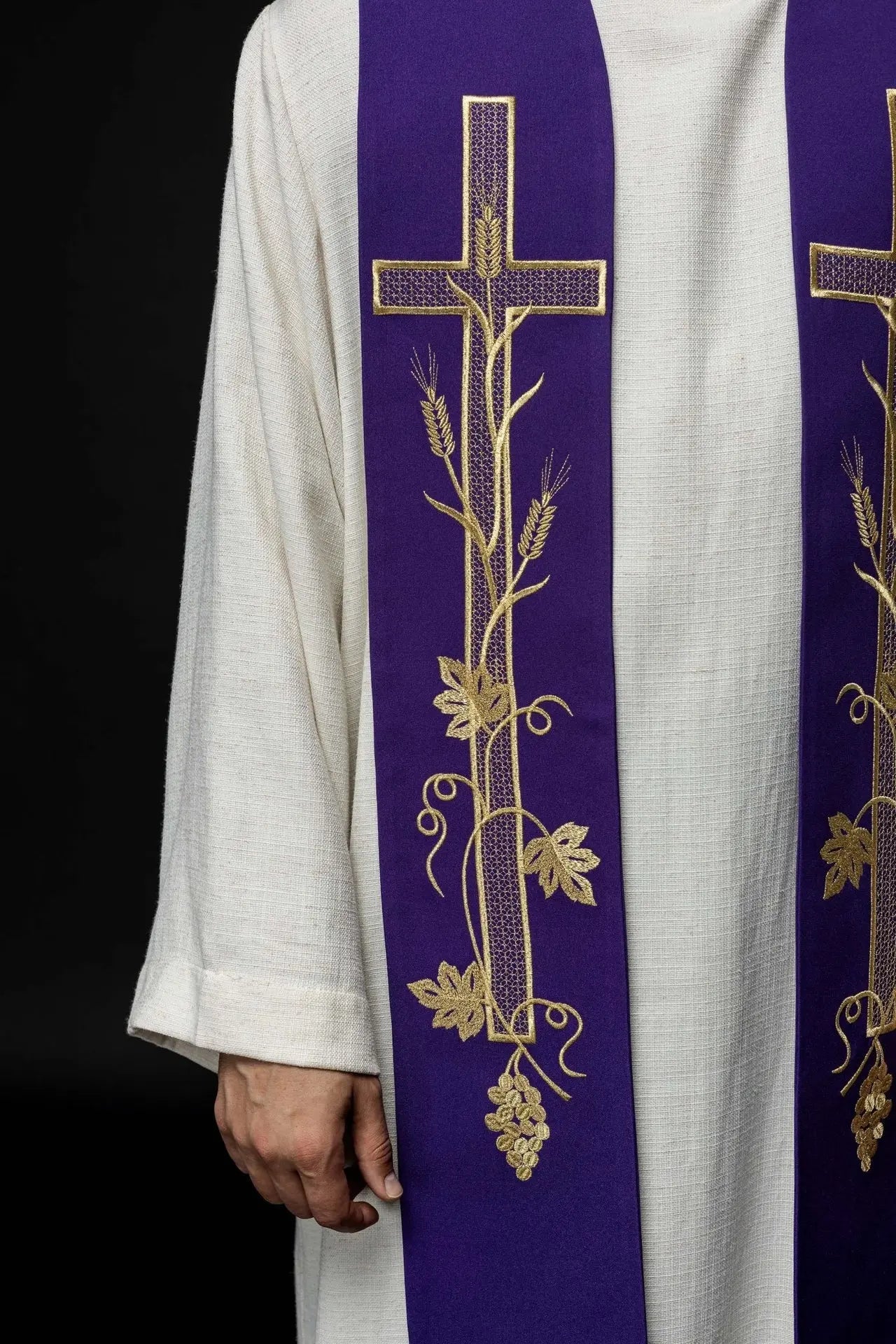
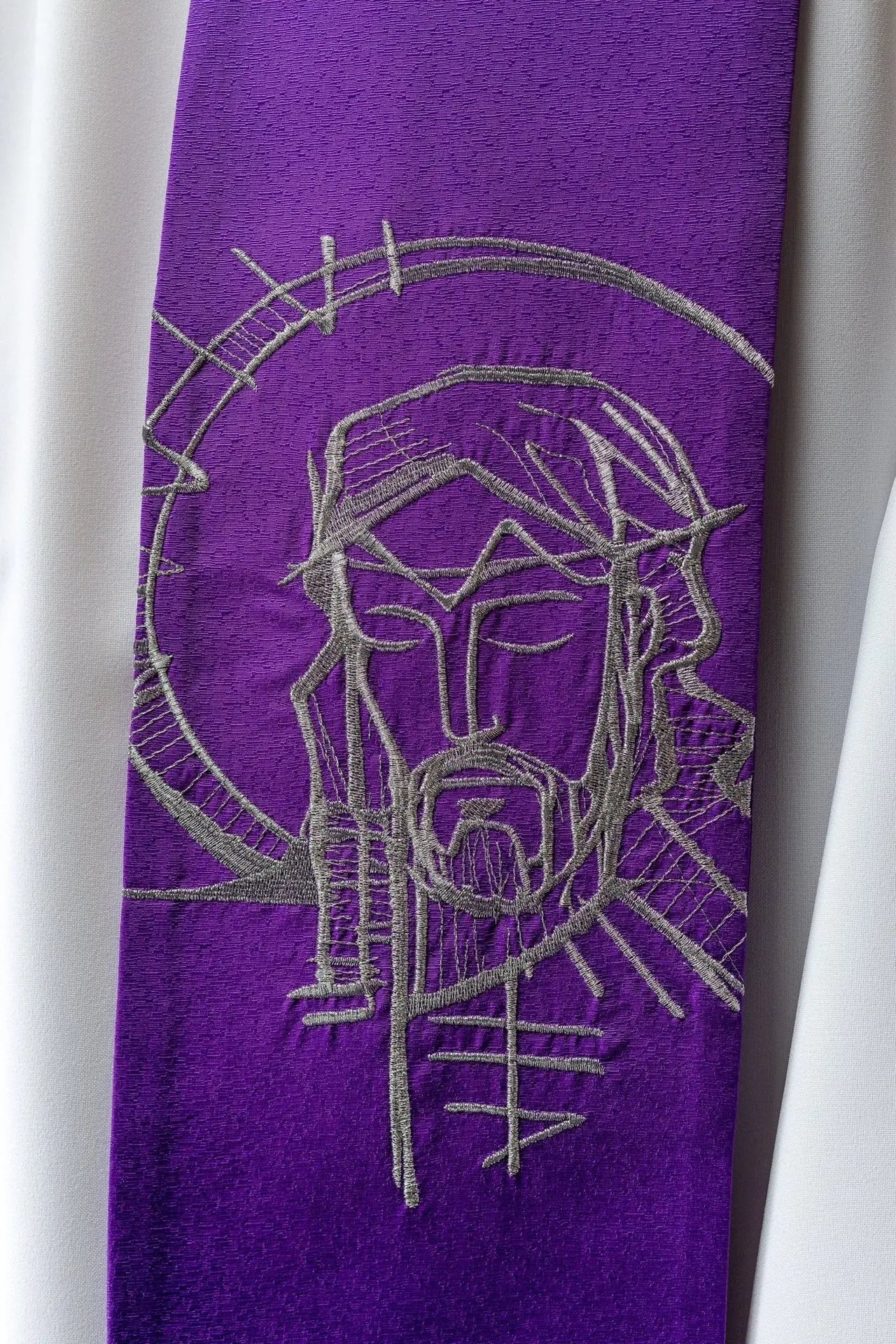
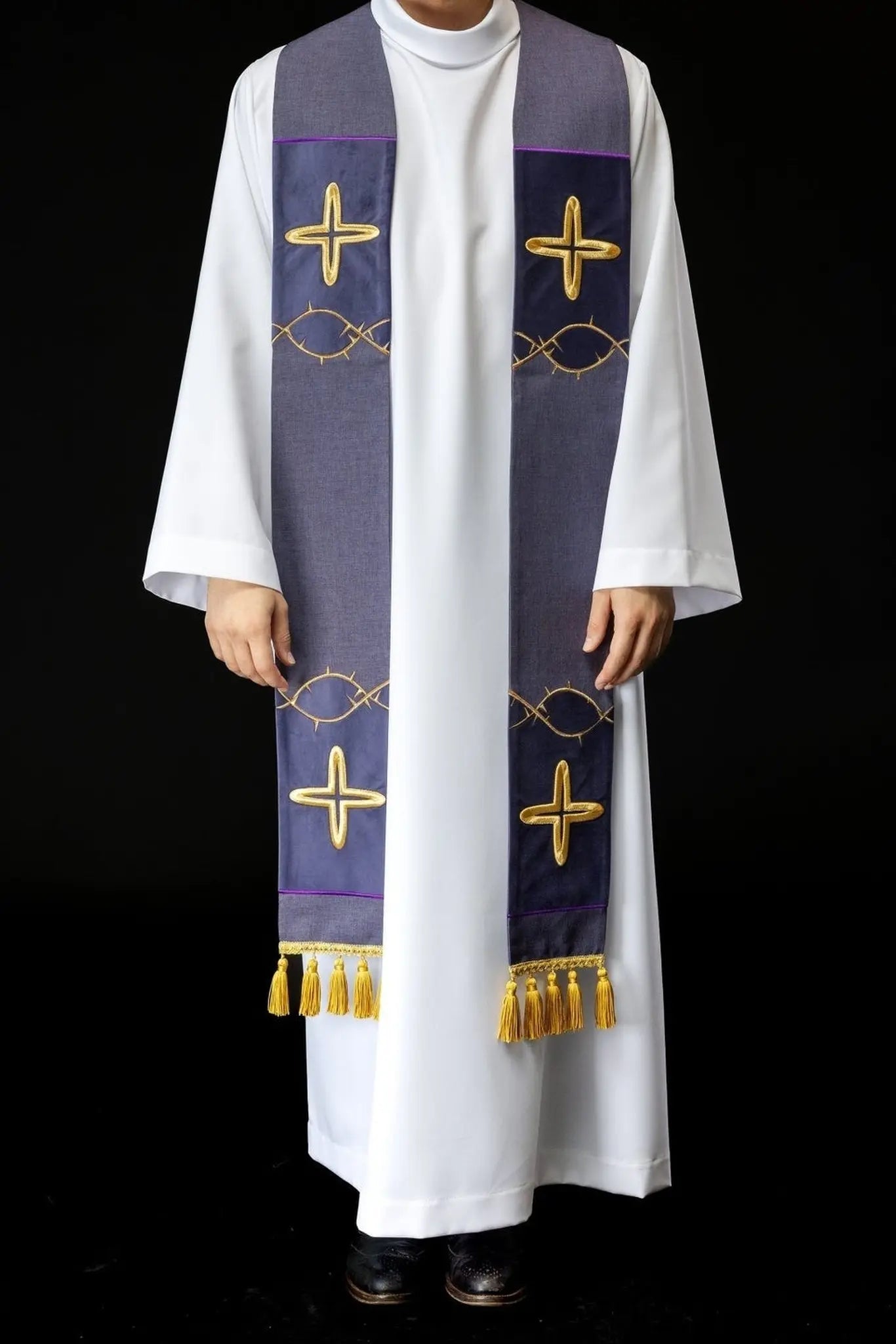
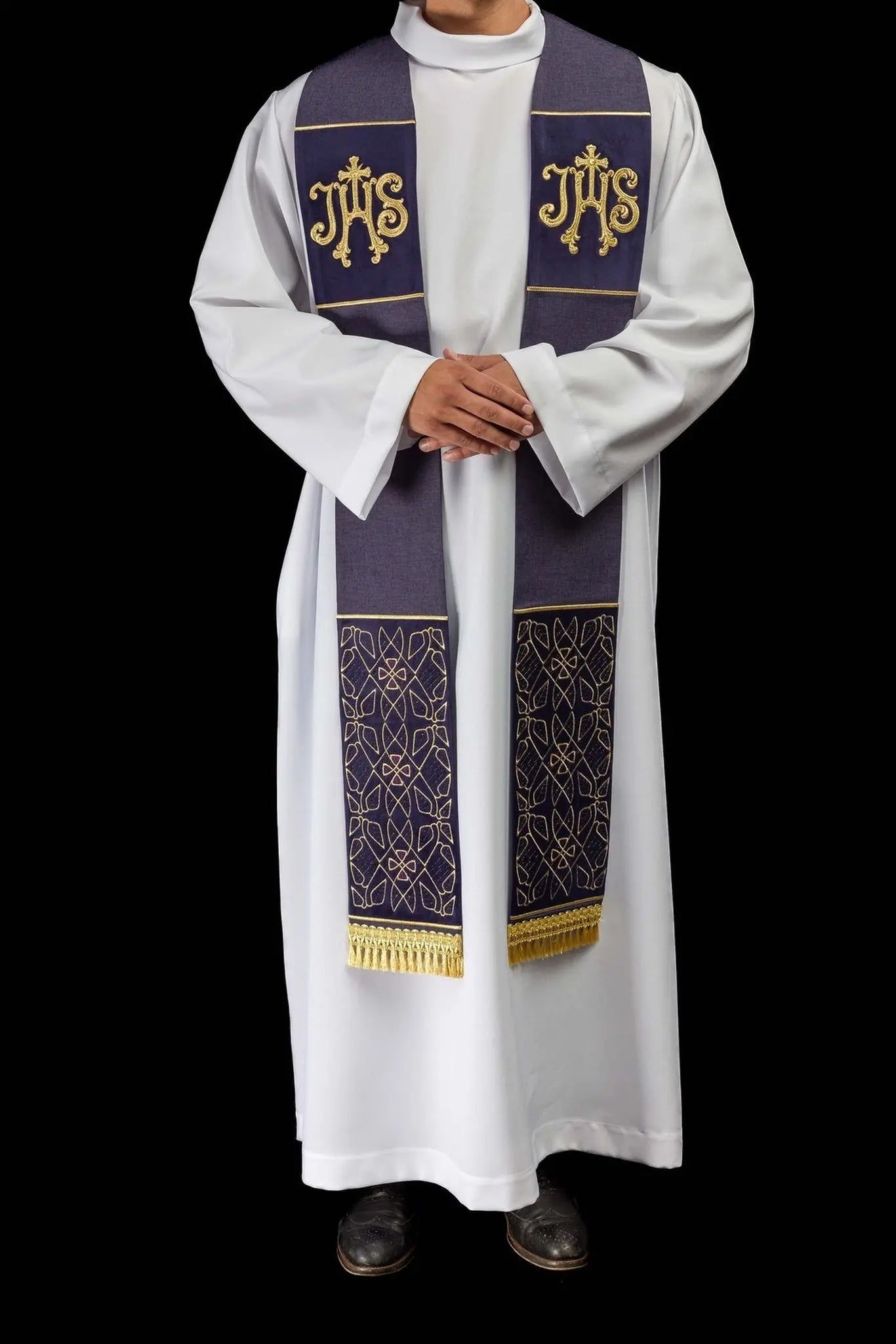
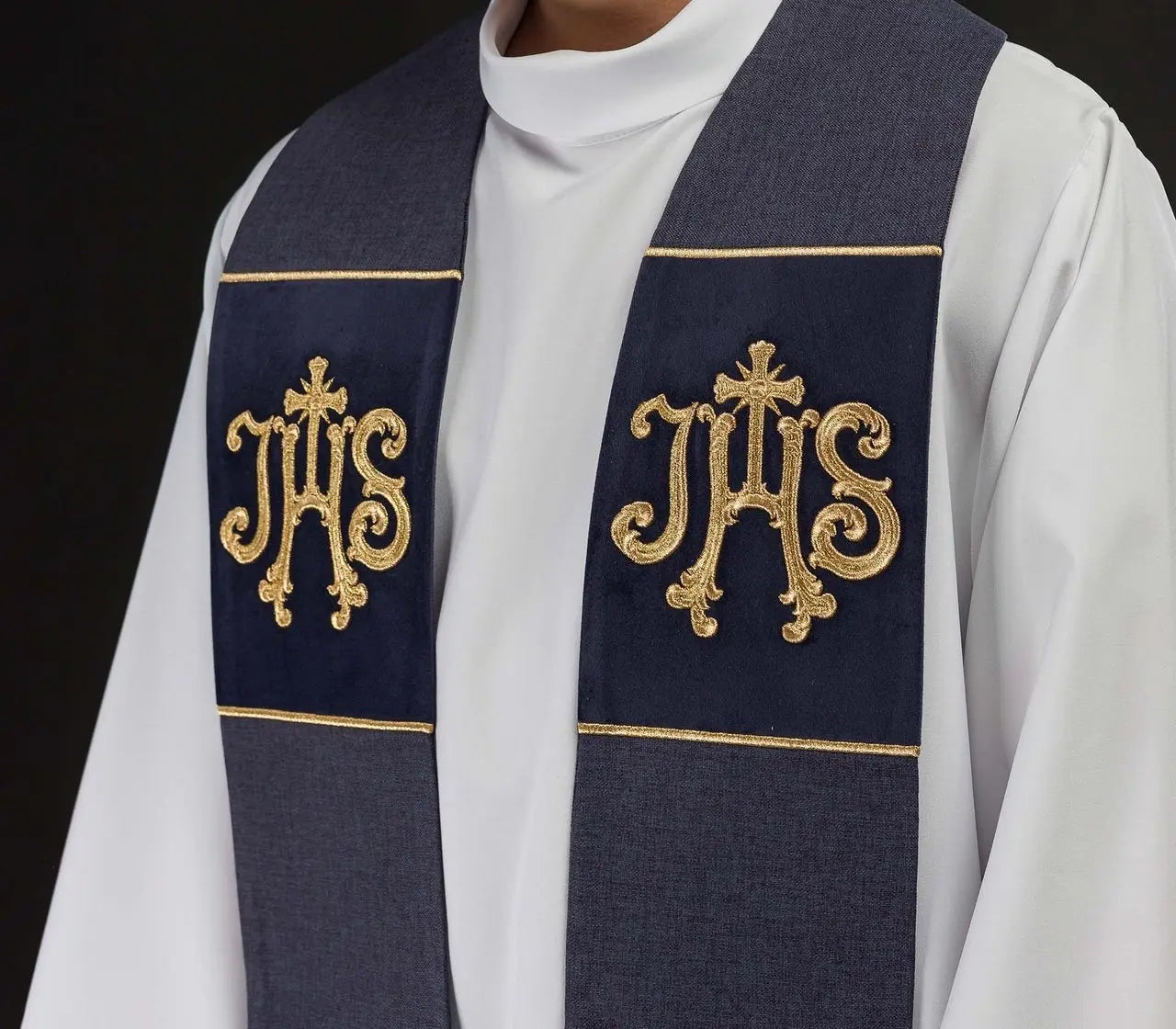
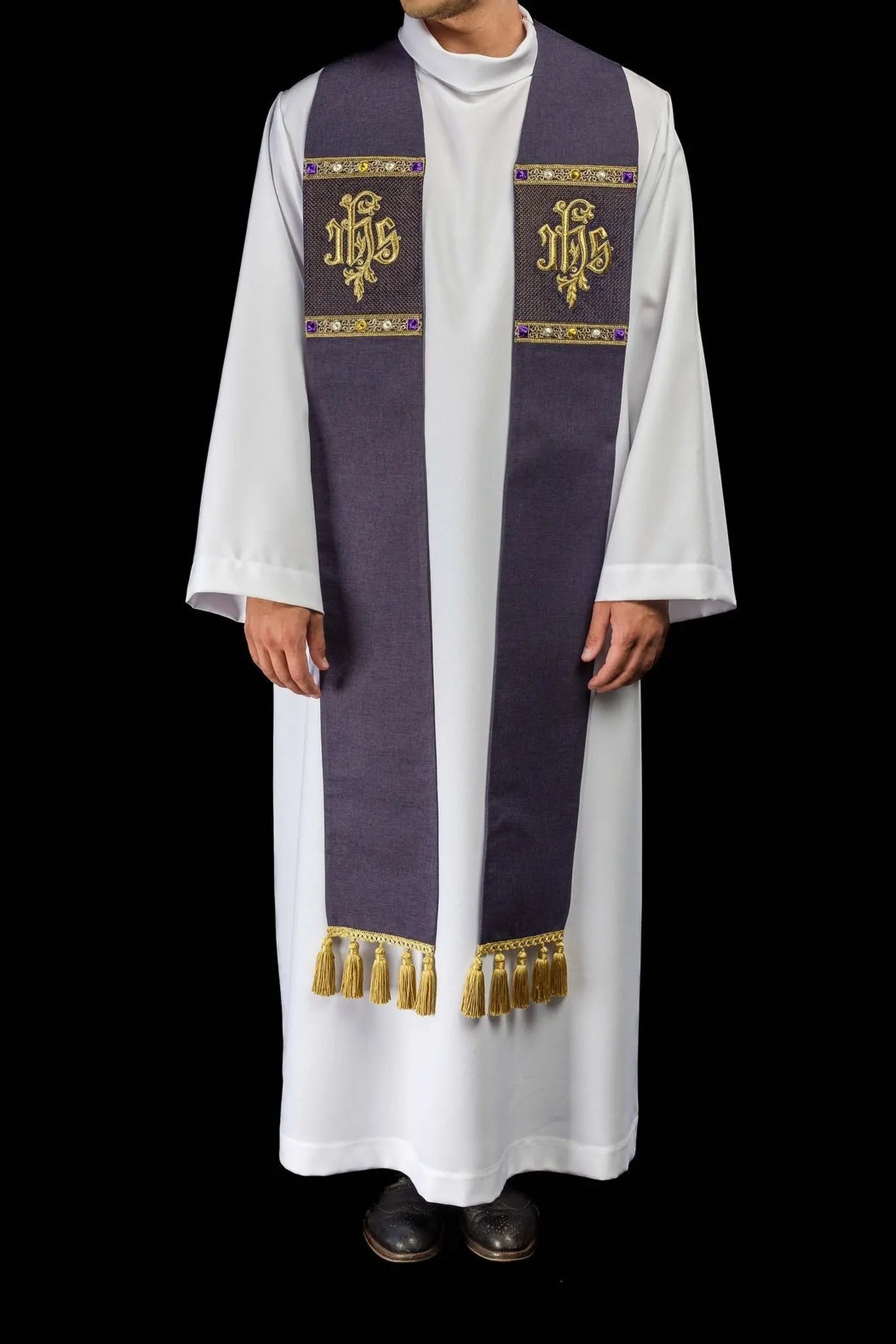
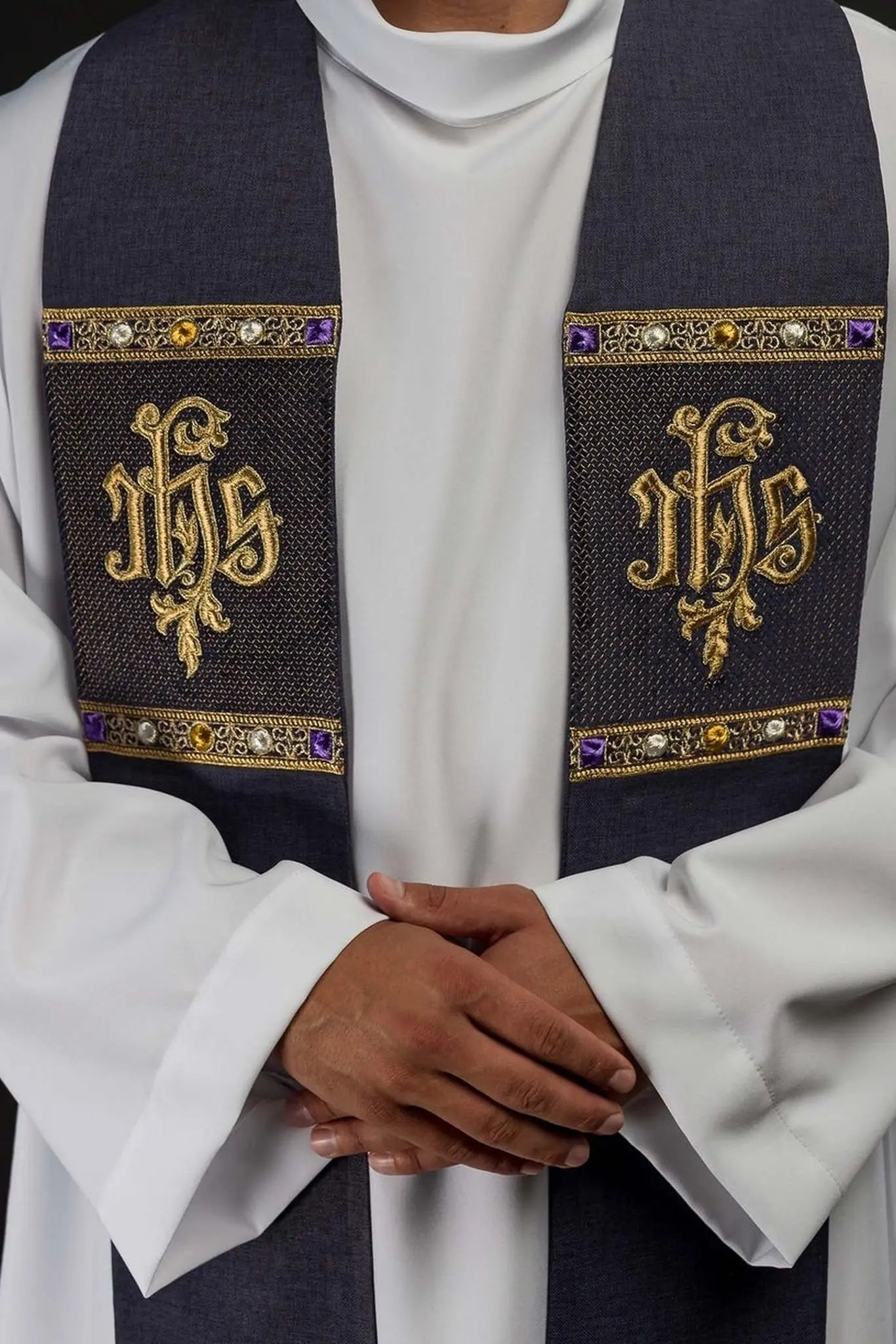
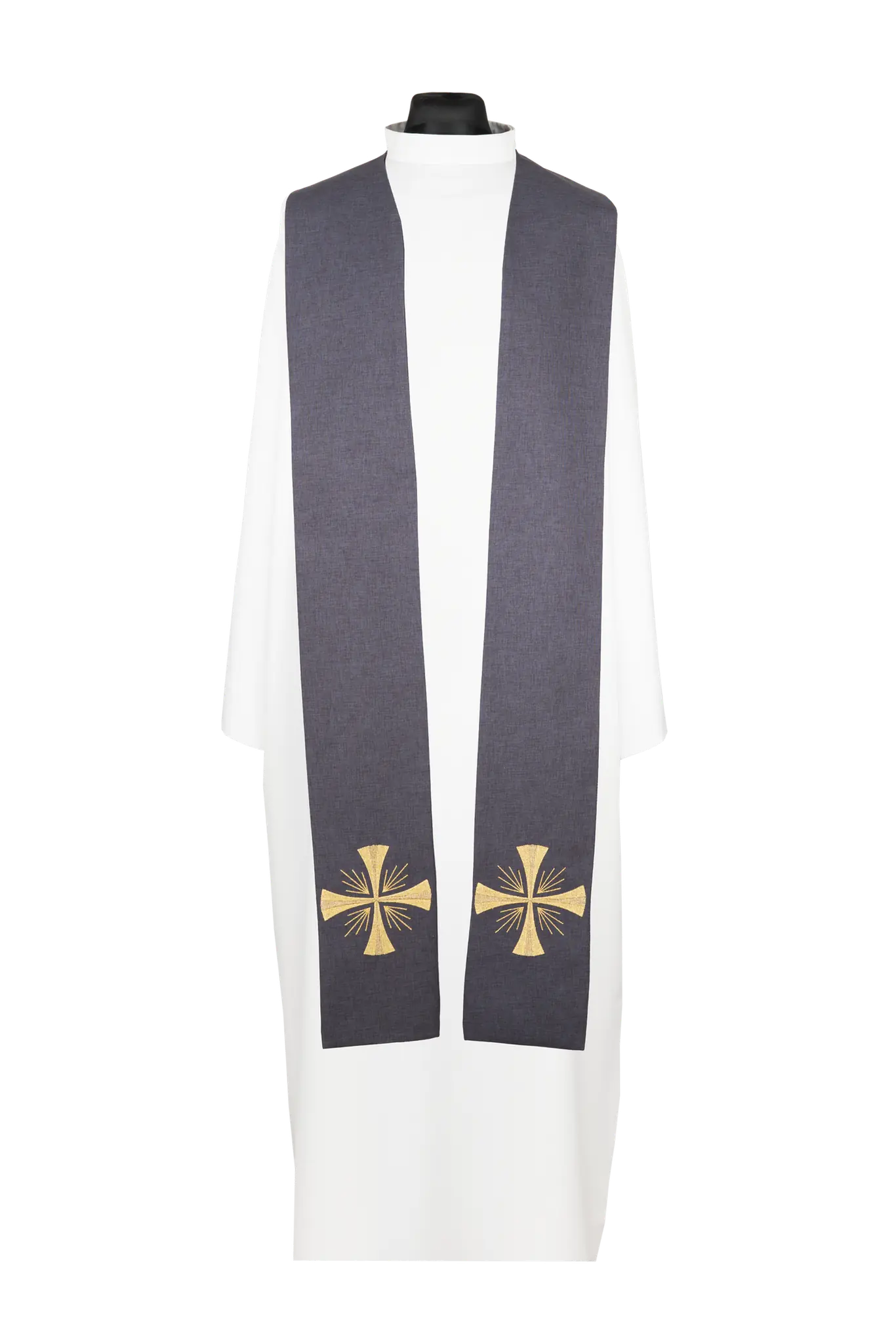
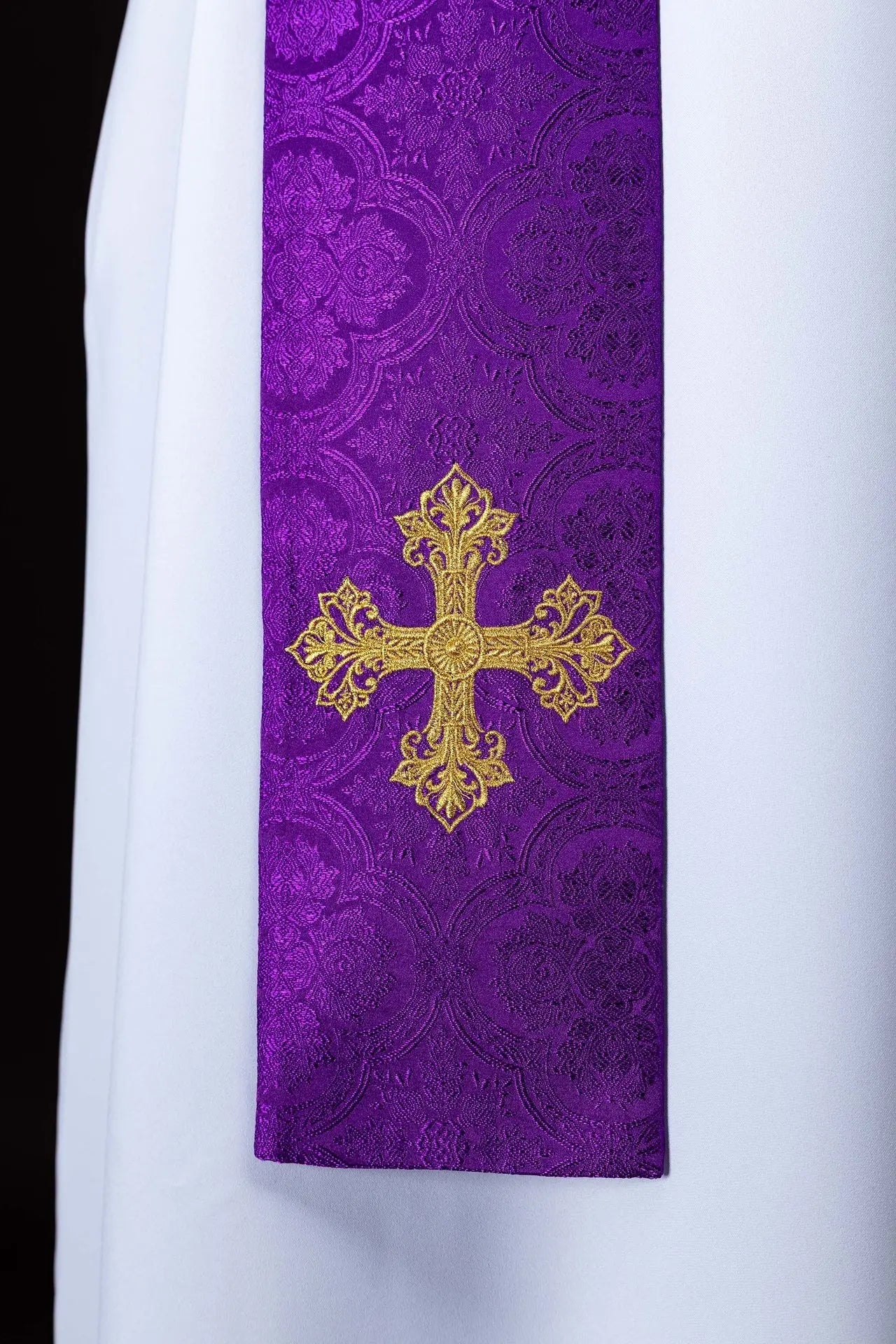
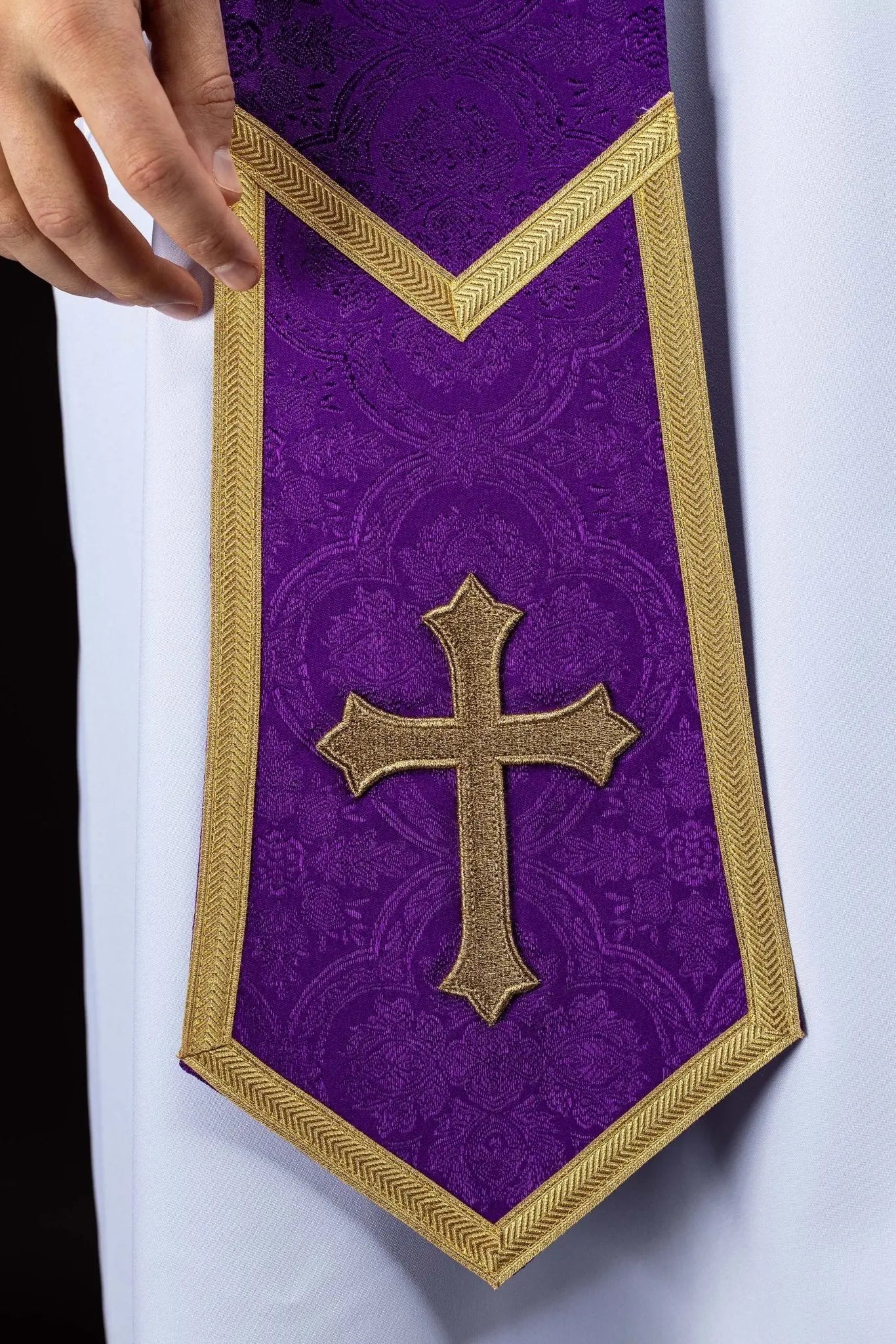
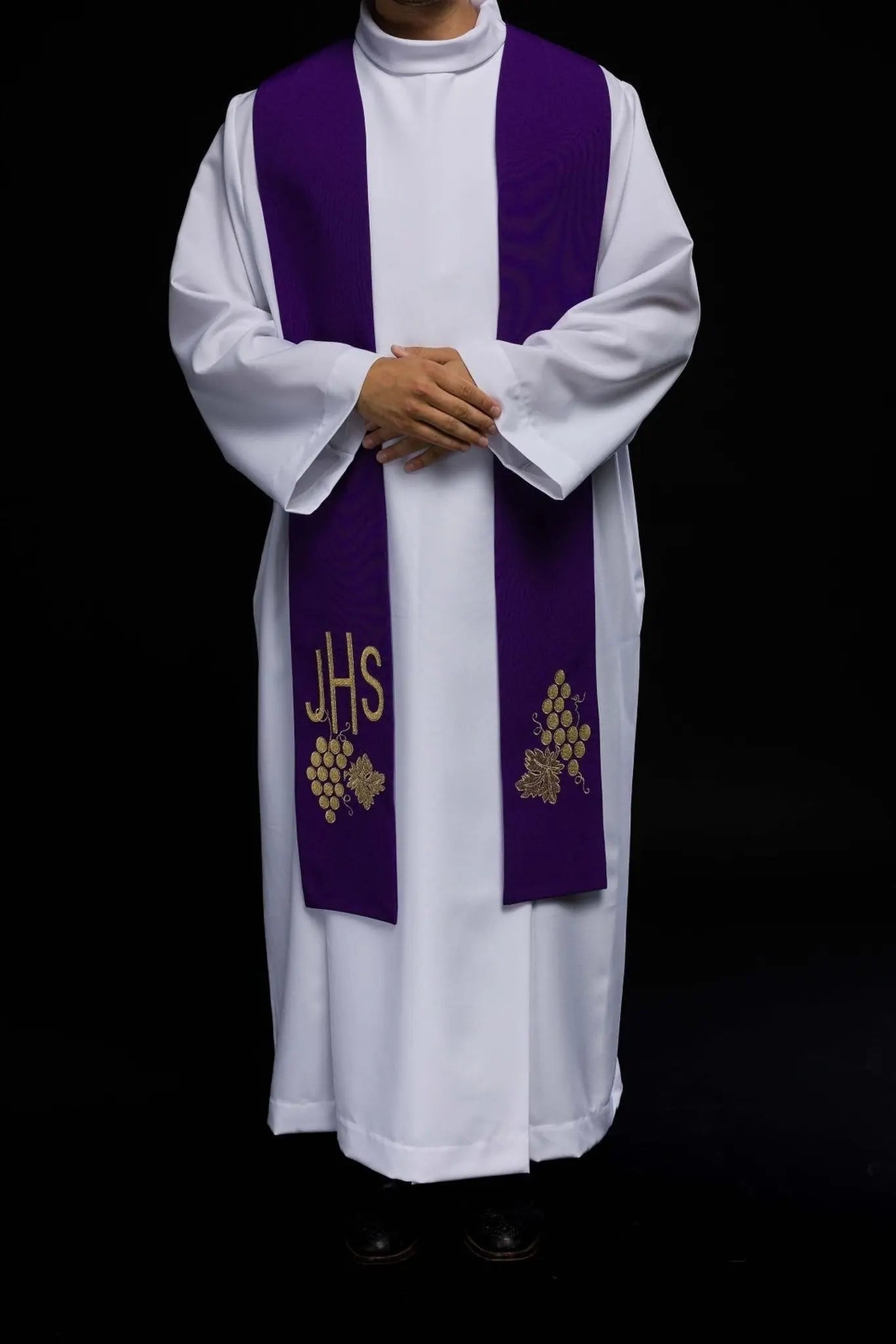
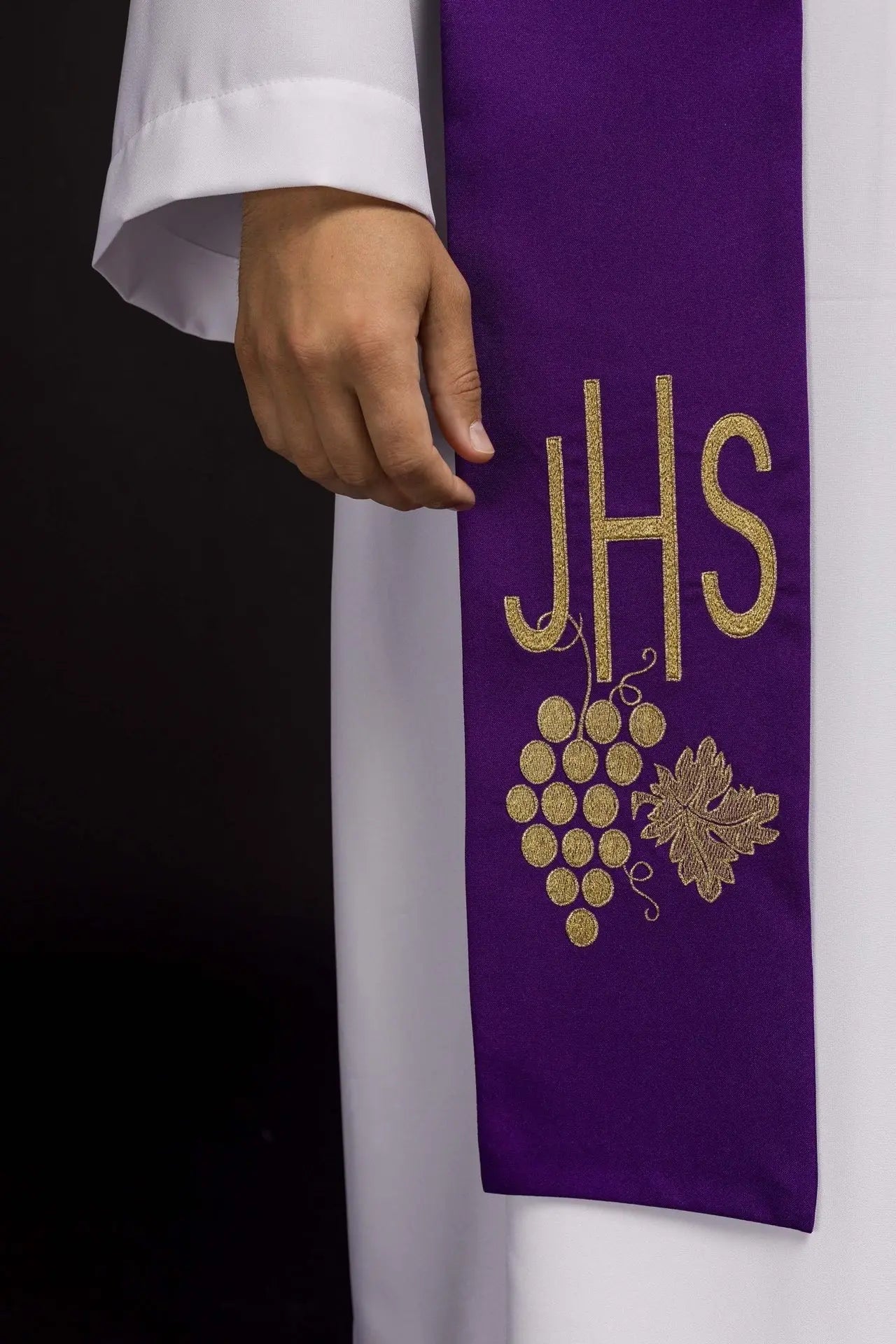
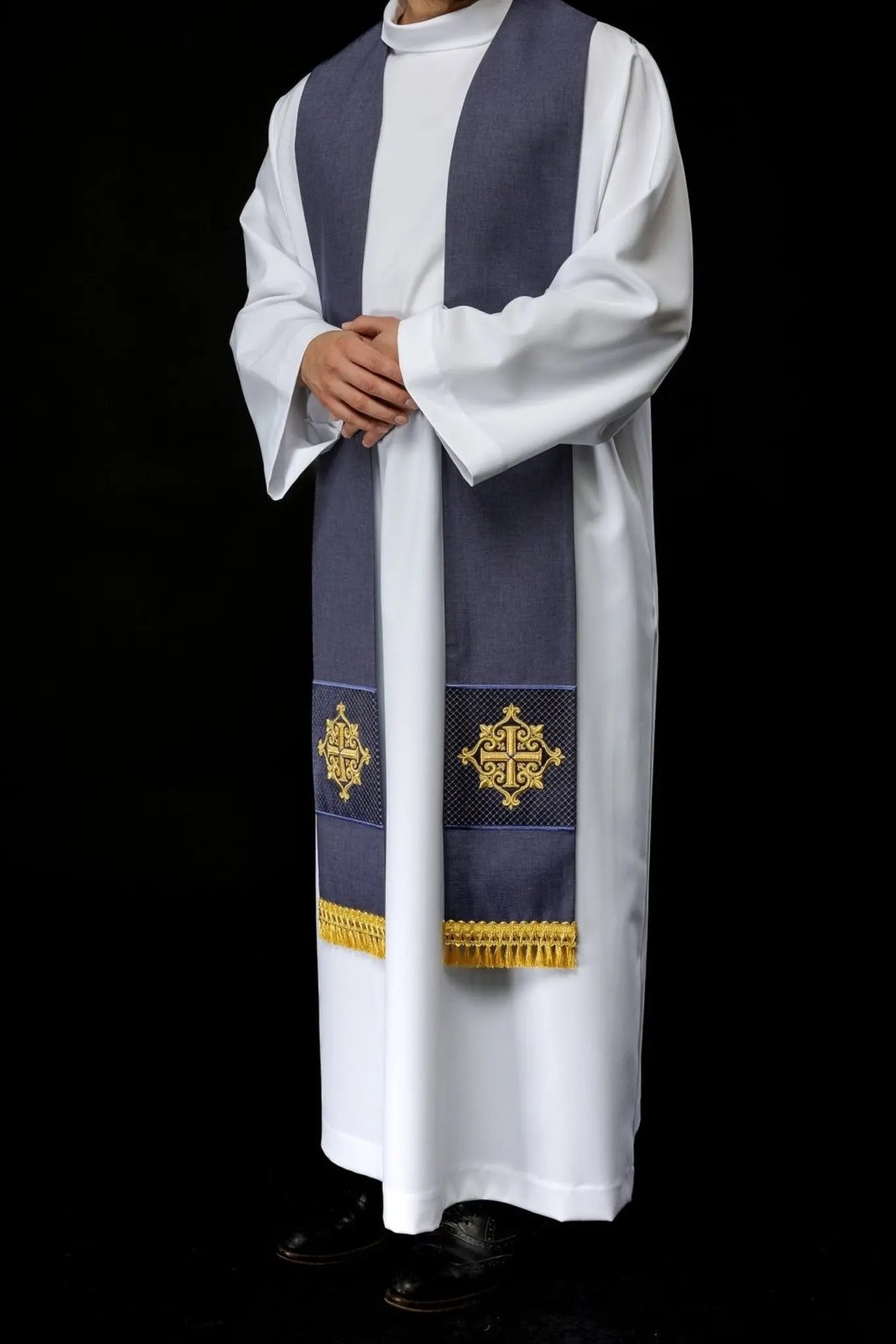
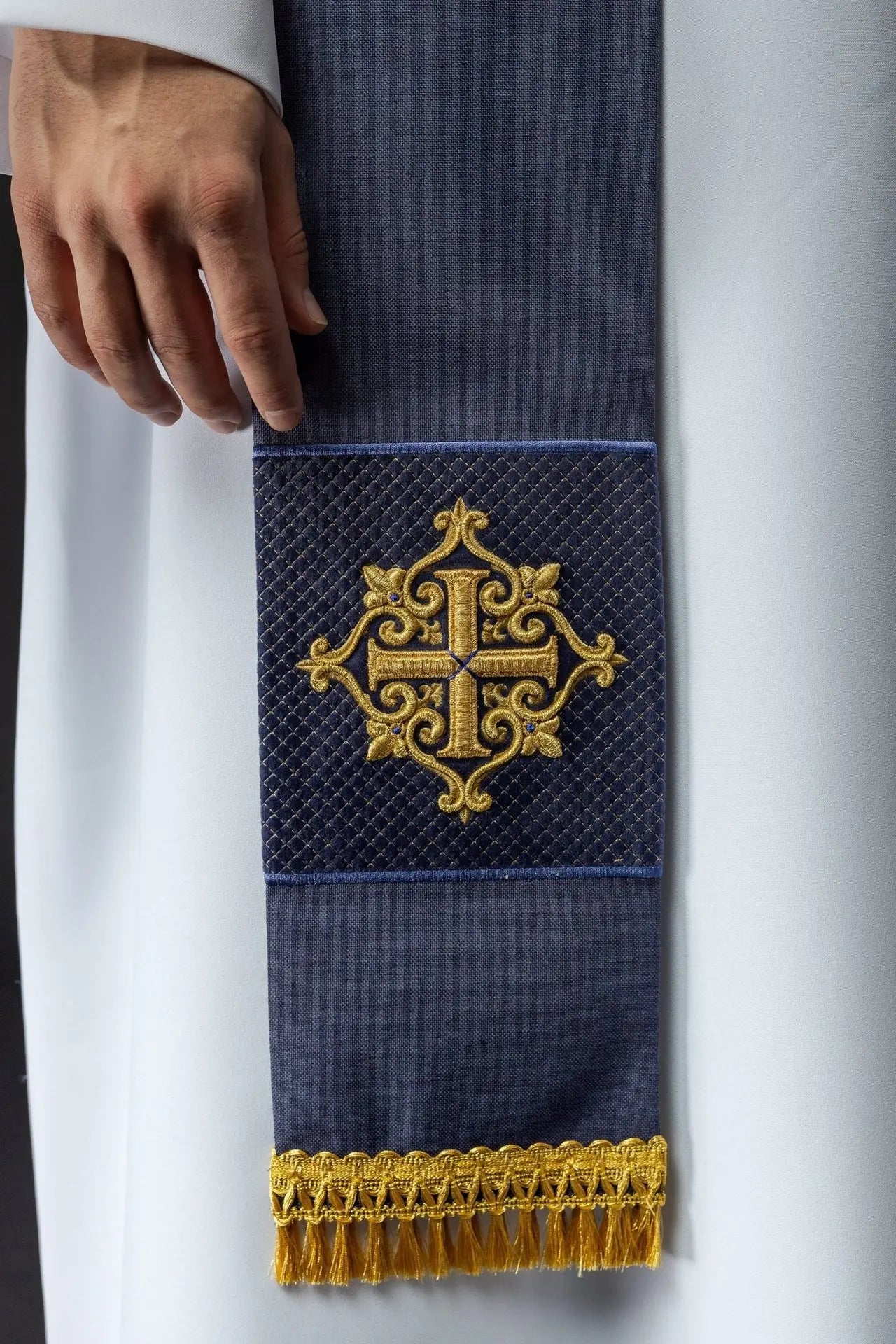
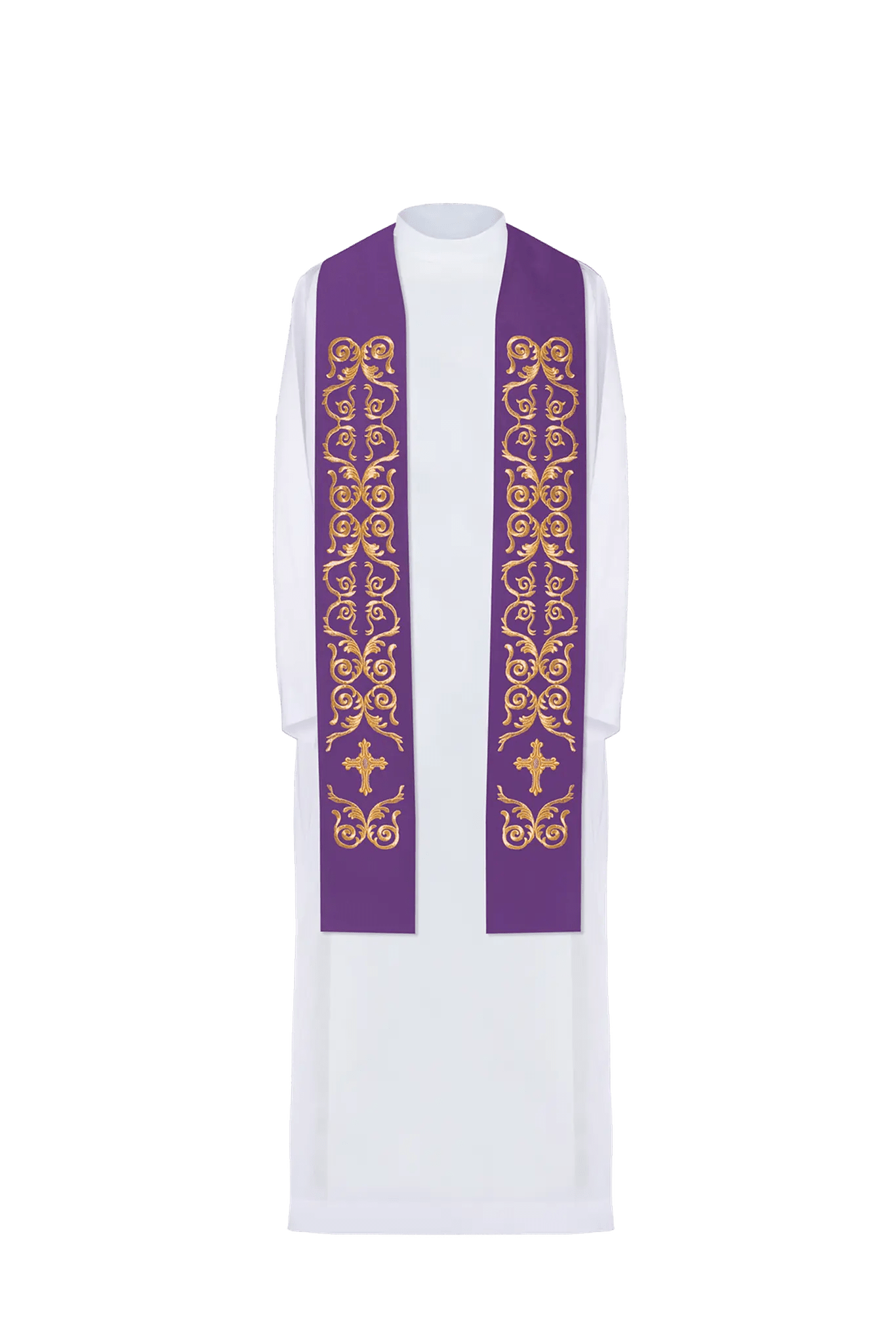
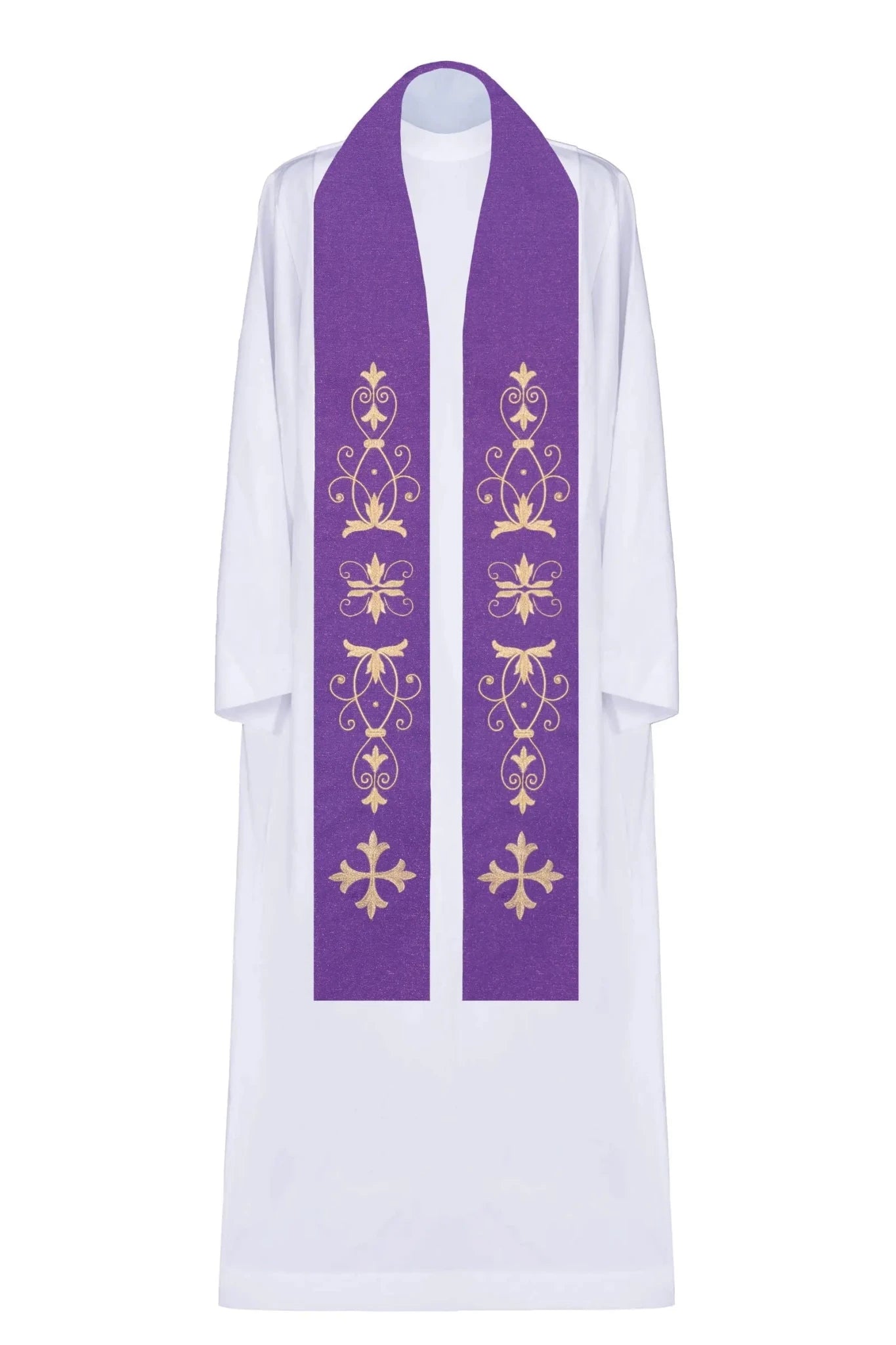
Within purple stoles, designs can range from very minimal to richly embroidered. A simple cross may be the most appropriate choice for confession, Lent or daily ministry. More detailed embroidery, such as sacred monograms, Eucharistic symbols, vine motifs, floral ornament, rays, geometric bands or gold and silver threadwork, may be suitable for Advent Sundays, solemn penitential services, parish missions and celebrations in larger churches. The key is to choose a design that supports the rite rather than distracting from it.
Some clergy prefer a deep violet tone because it is visually sober and strongly associated with penitence. Others choose a warmer purple shade that harmonizes with the chasuble, altar frontal, pulpit cover or other sanctuary textiles already used in the parish. The exact shade does not need to be identical in every textile, but it should look intentional and dignified when seen from the nave. When a stole is used with a chasuble, the visible portions should complement the garment without competing with its embroidery.
How to choose a purple clergy stole
Begin with the main use. A stole for the confessional should be practical, comfortable and easy to put on quickly. A stole for Advent and Lent Masses should coordinate with the vestment set used at the altar. A stole for penitential services, missions or retreats may need stronger visual presence, especially in a large church where embroidery must be readable from a distance. If the same stole will serve several purposes, a balanced design with a clear cross and moderate ornamentation is often the safest choice.
Material matters. Smooth woven fabrics create a refined appearance and may work well for solemn liturgies. Lighter fabrics can be more comfortable for long hours of hearing confessions or for warmer climates. Brocade and ornamented textiles add richness, but they should still drape properly and remain comfortable on the shoulders. Embroidery should be securely finished, especially if the stole will be used frequently. Metallic threads can be beautiful on purple fabric, but they should be selected and cared for with attention so the stole remains dignified over time.
Length and proportion are also important. A stole should hang evenly and should not be so short that it appears informal or so long that it interferes with movement. The width should suit the wearer and the vestment style. Narrower designs can be discreet and practical; broader designs allow more space for embroidered symbols. If the stole is to be worn over an alb, cassock and surplice, or under a chasuble, the final look should remain orderly and comfortable.
Symbols and embroidery on purple stoles
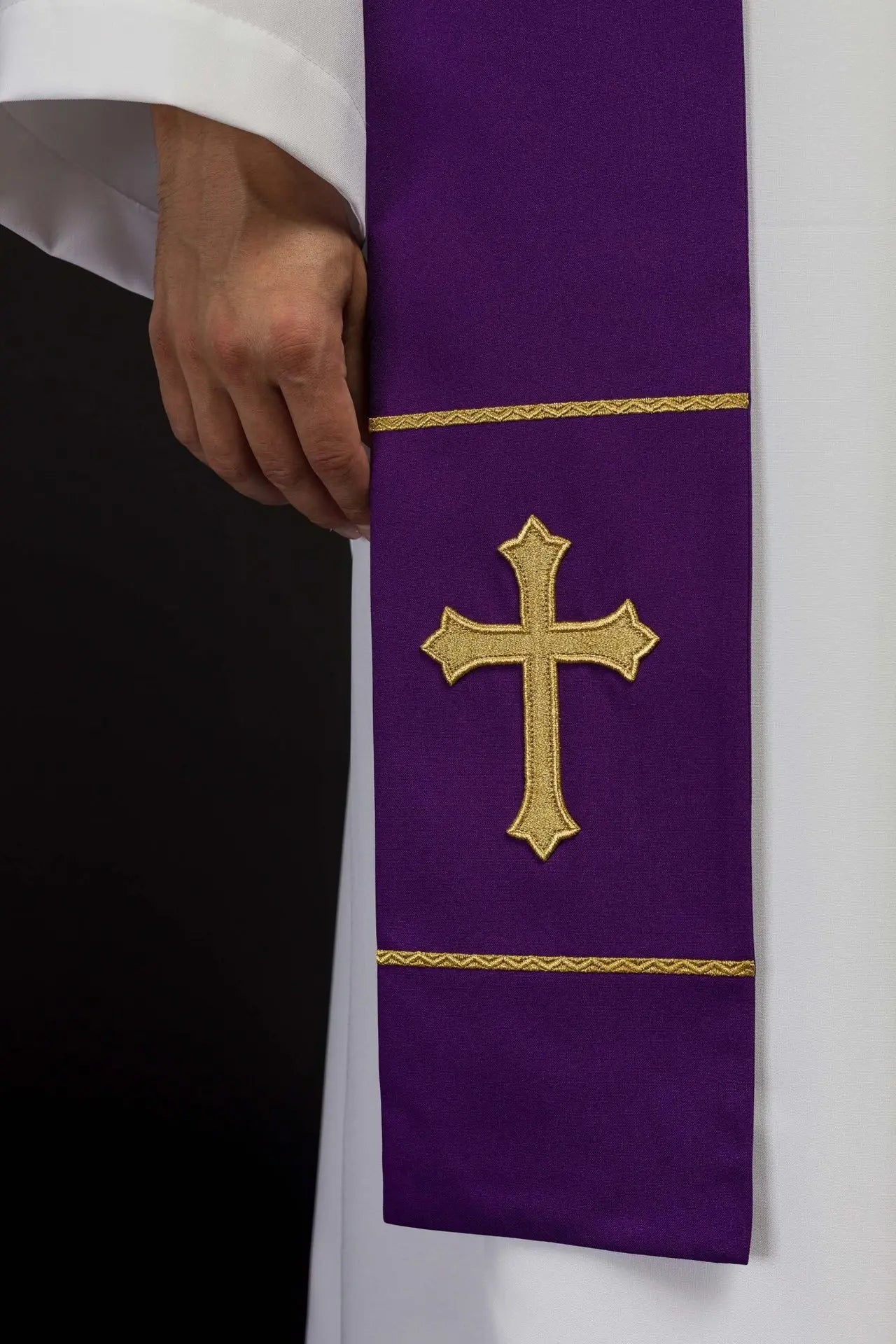
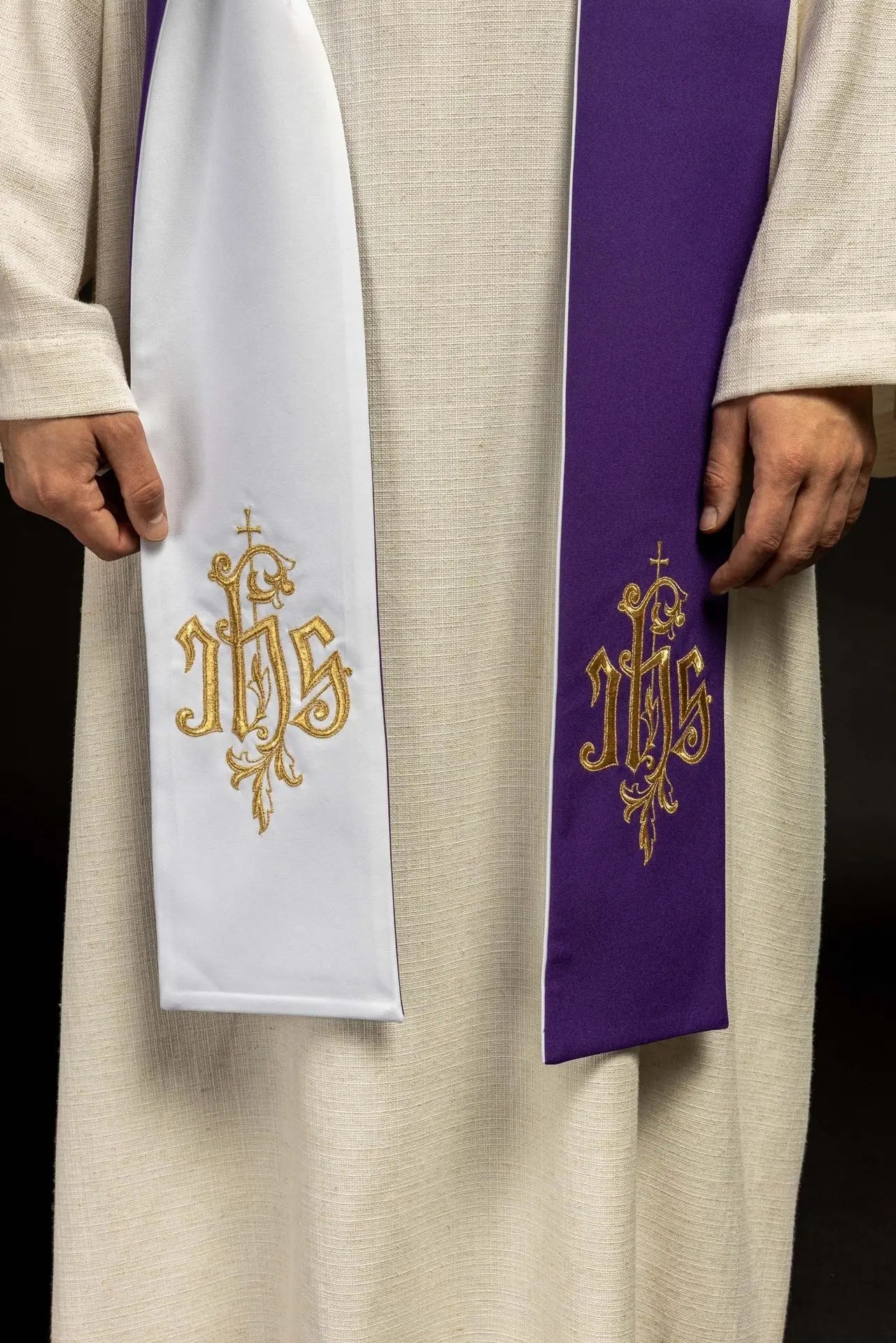
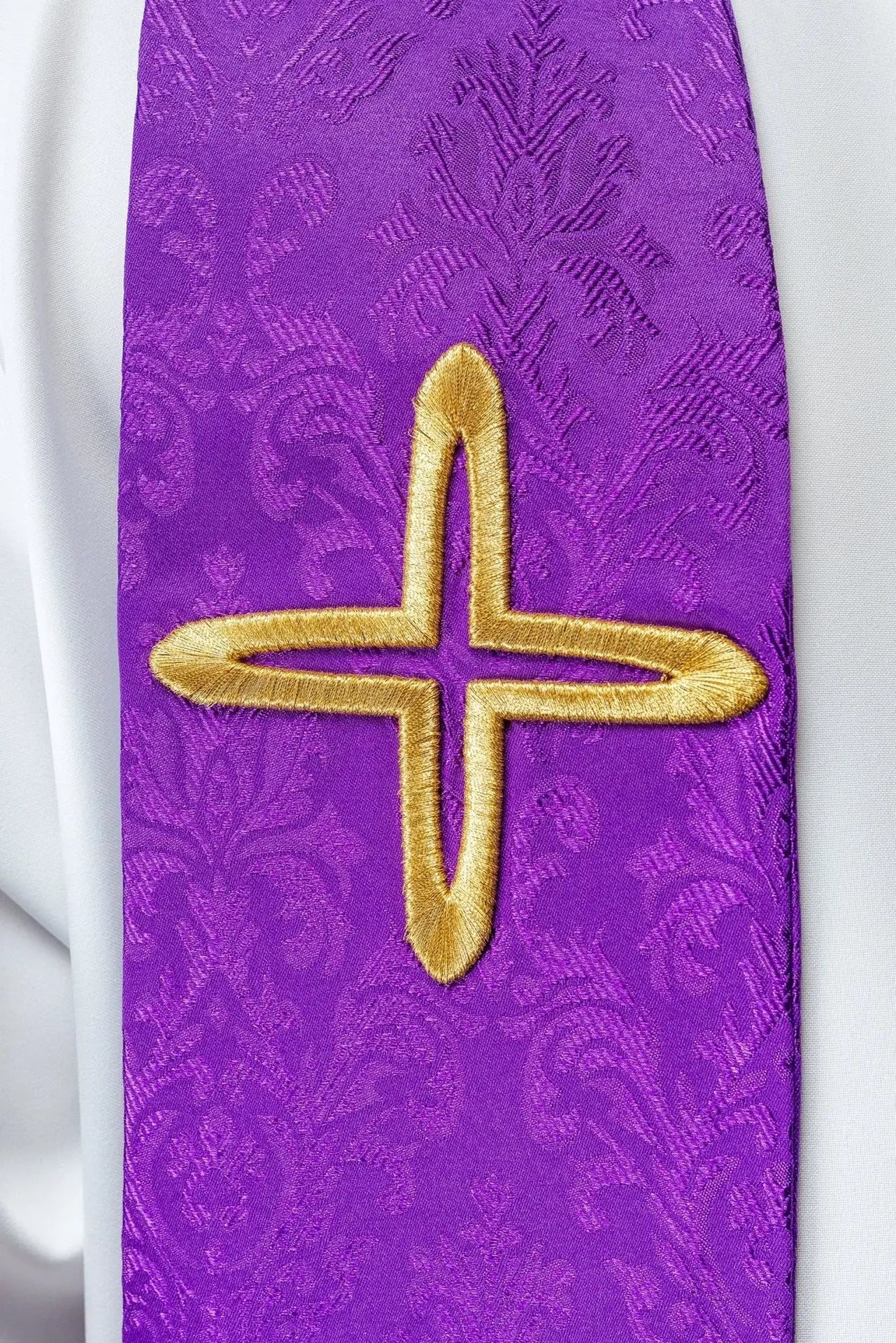
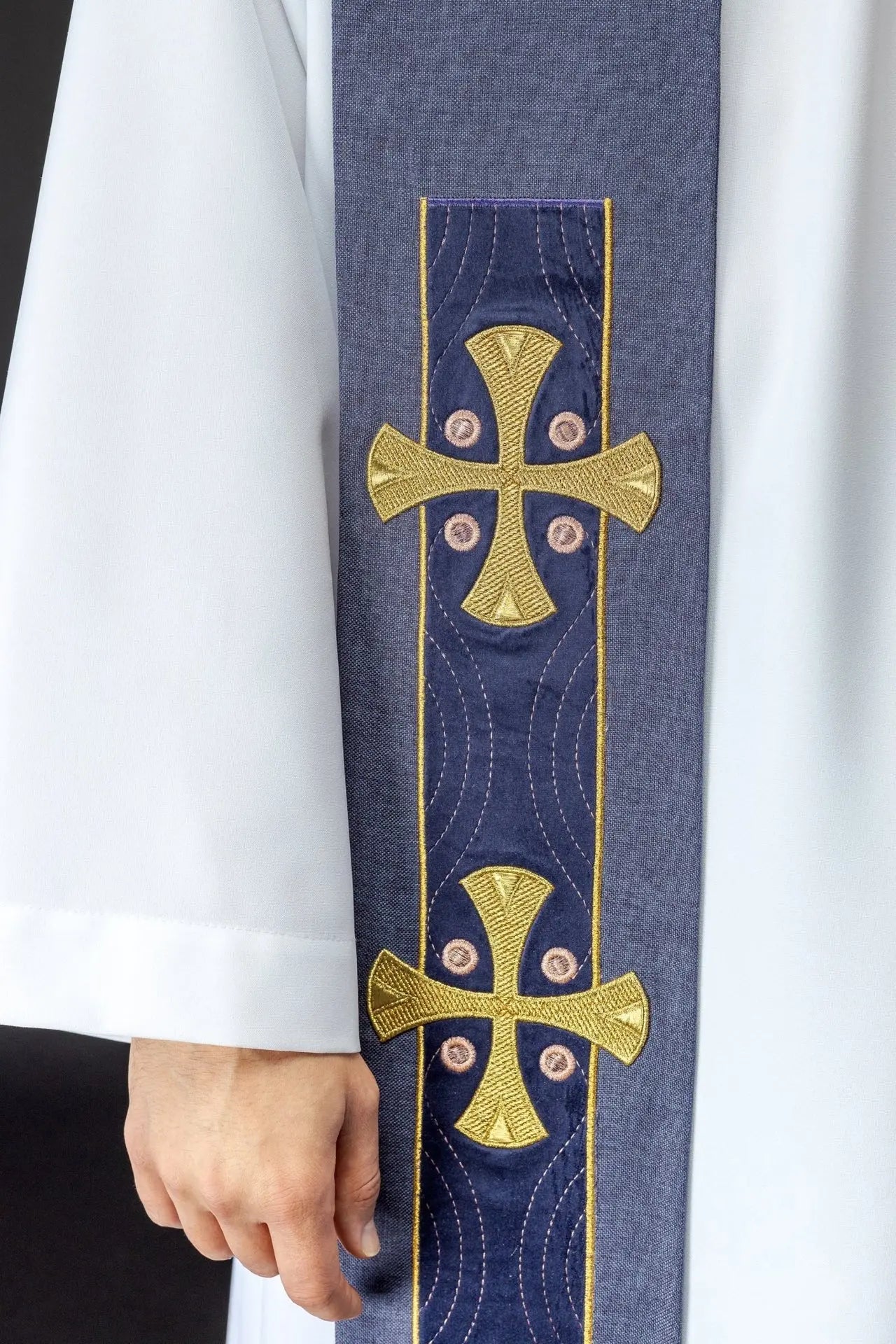
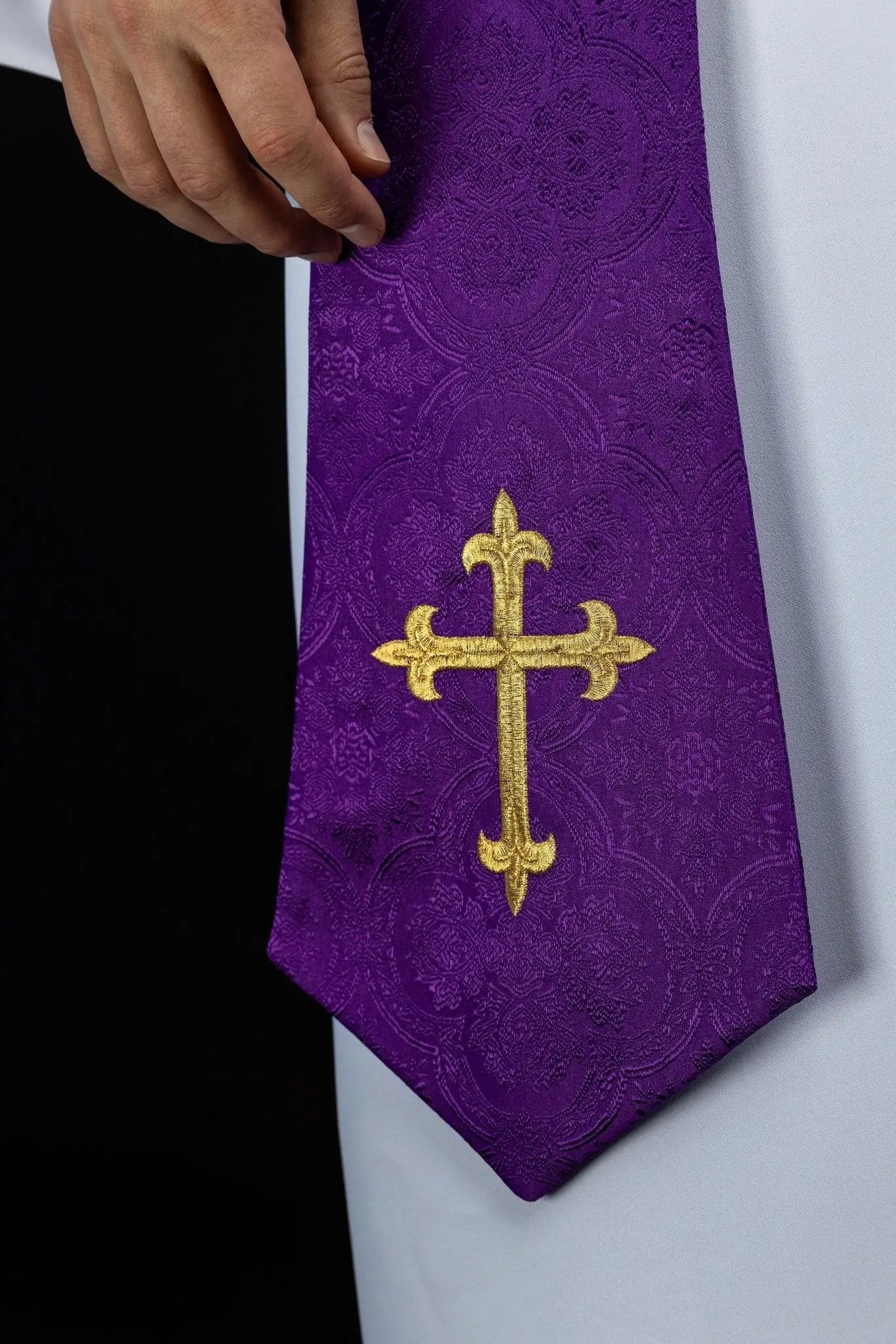
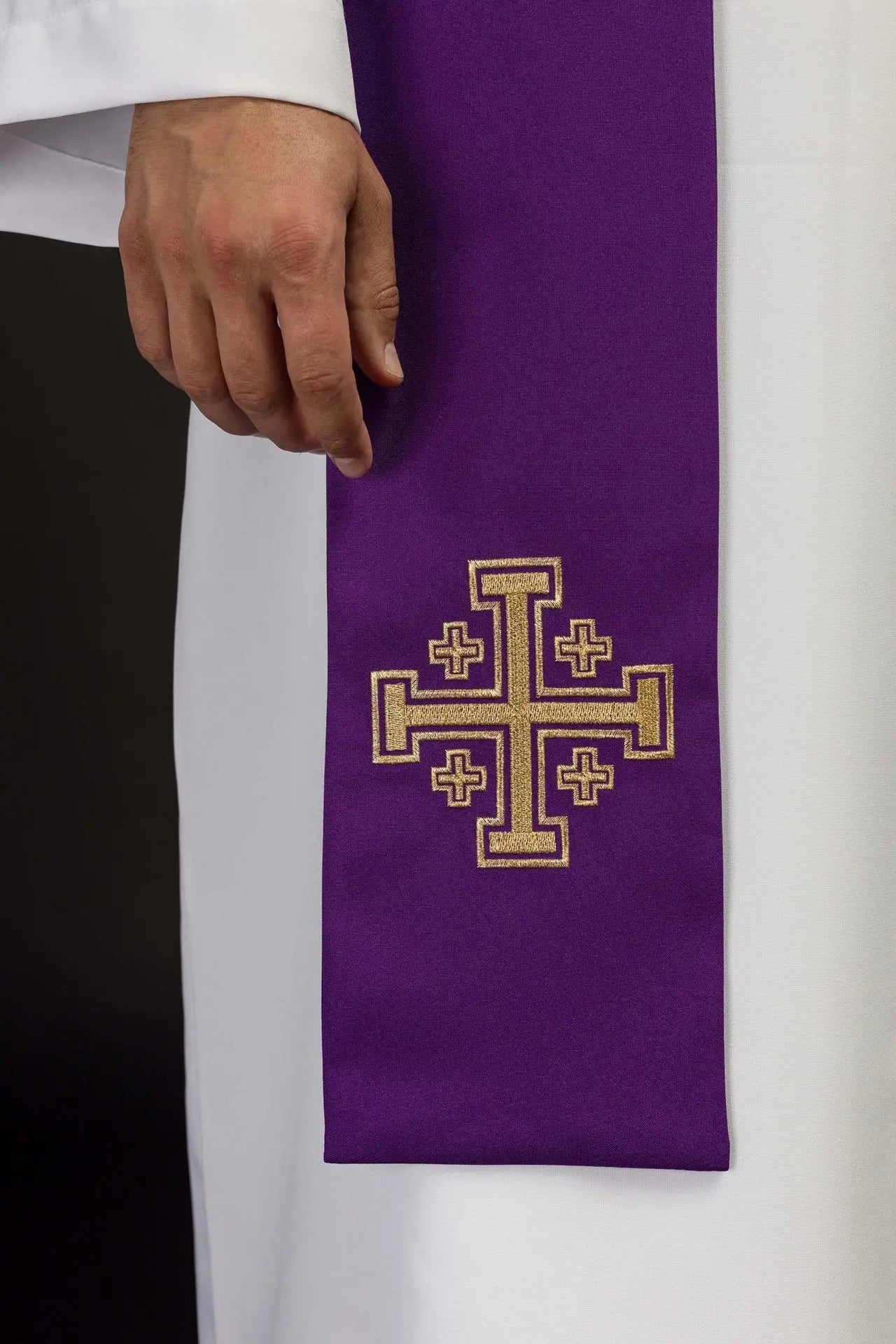
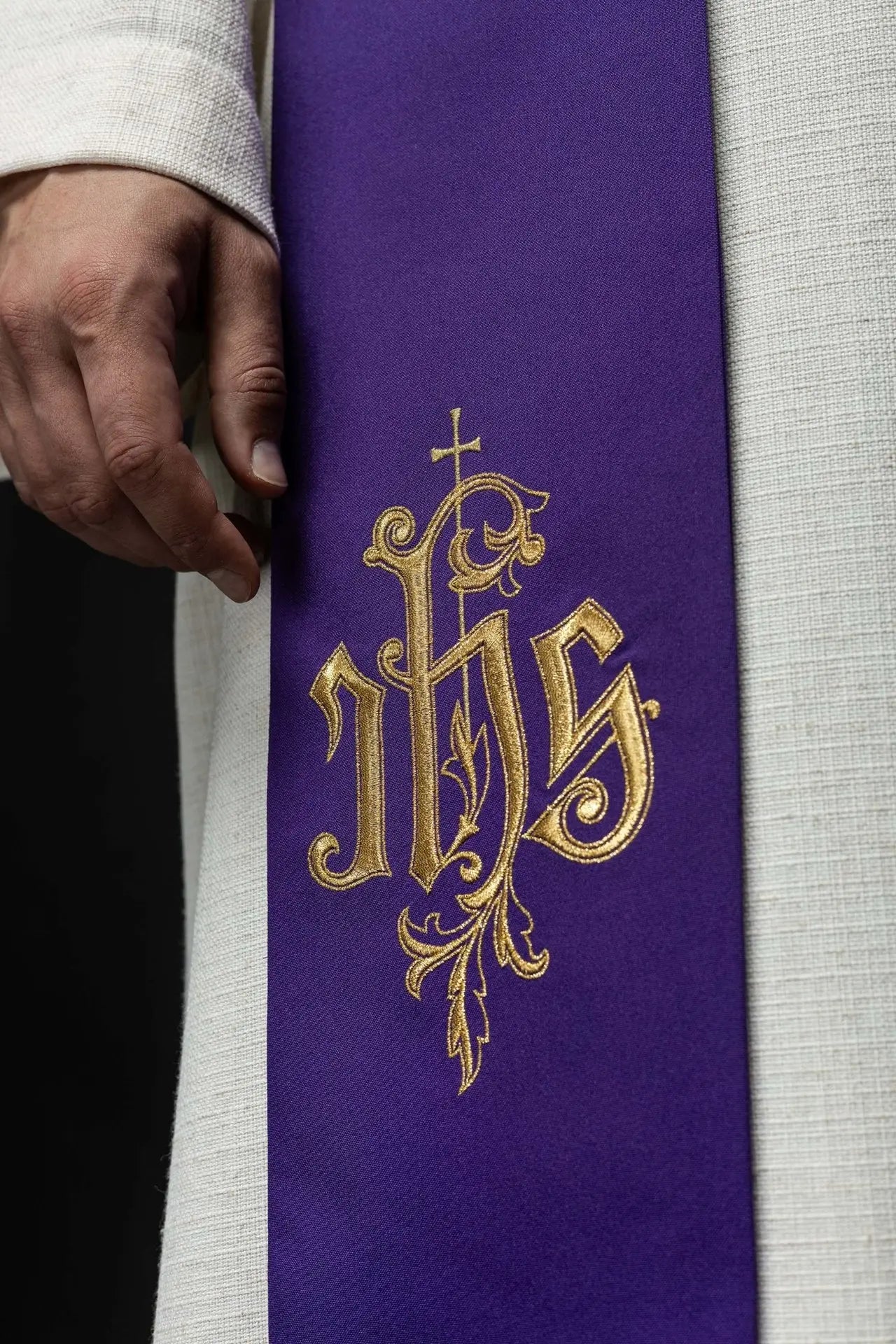
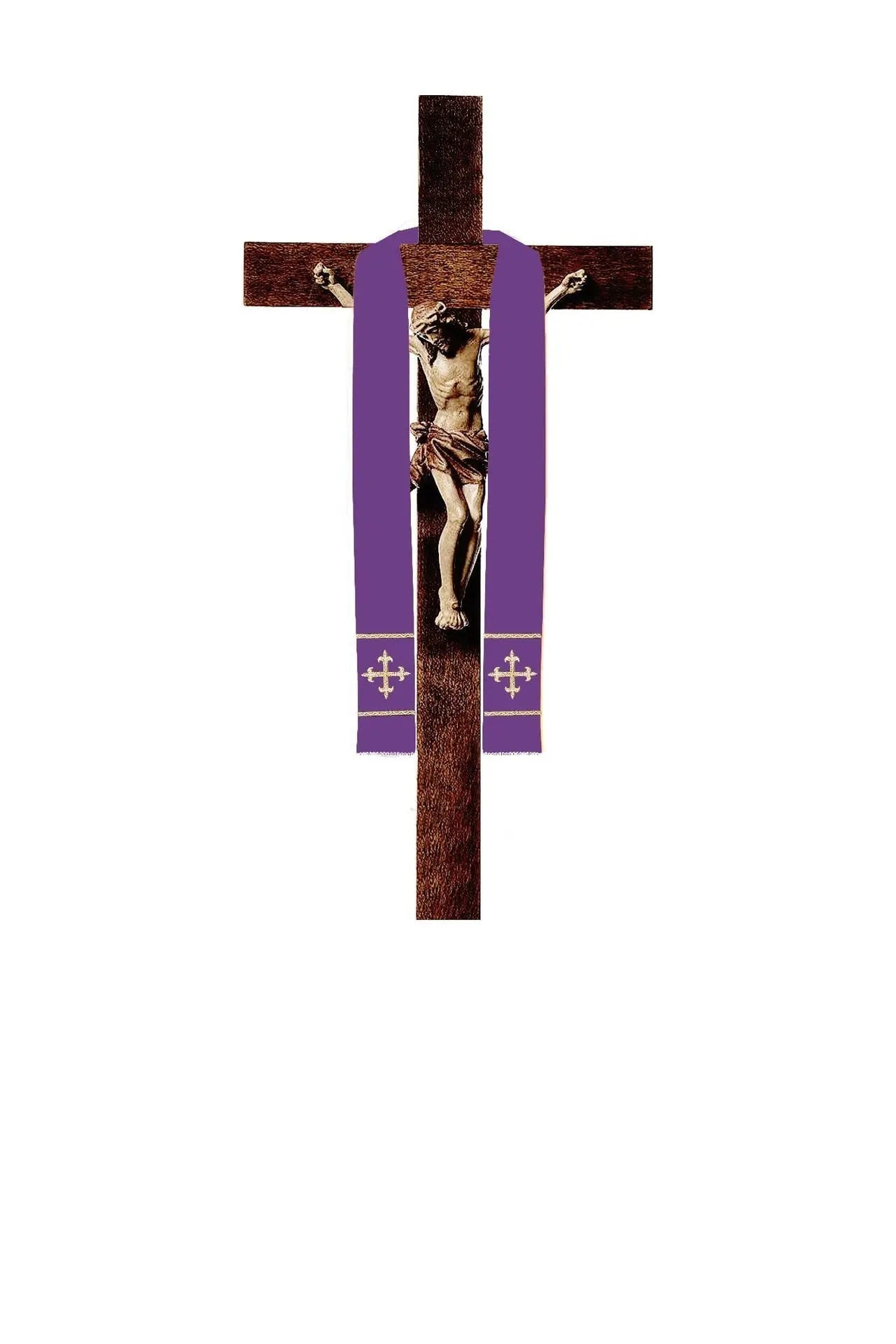
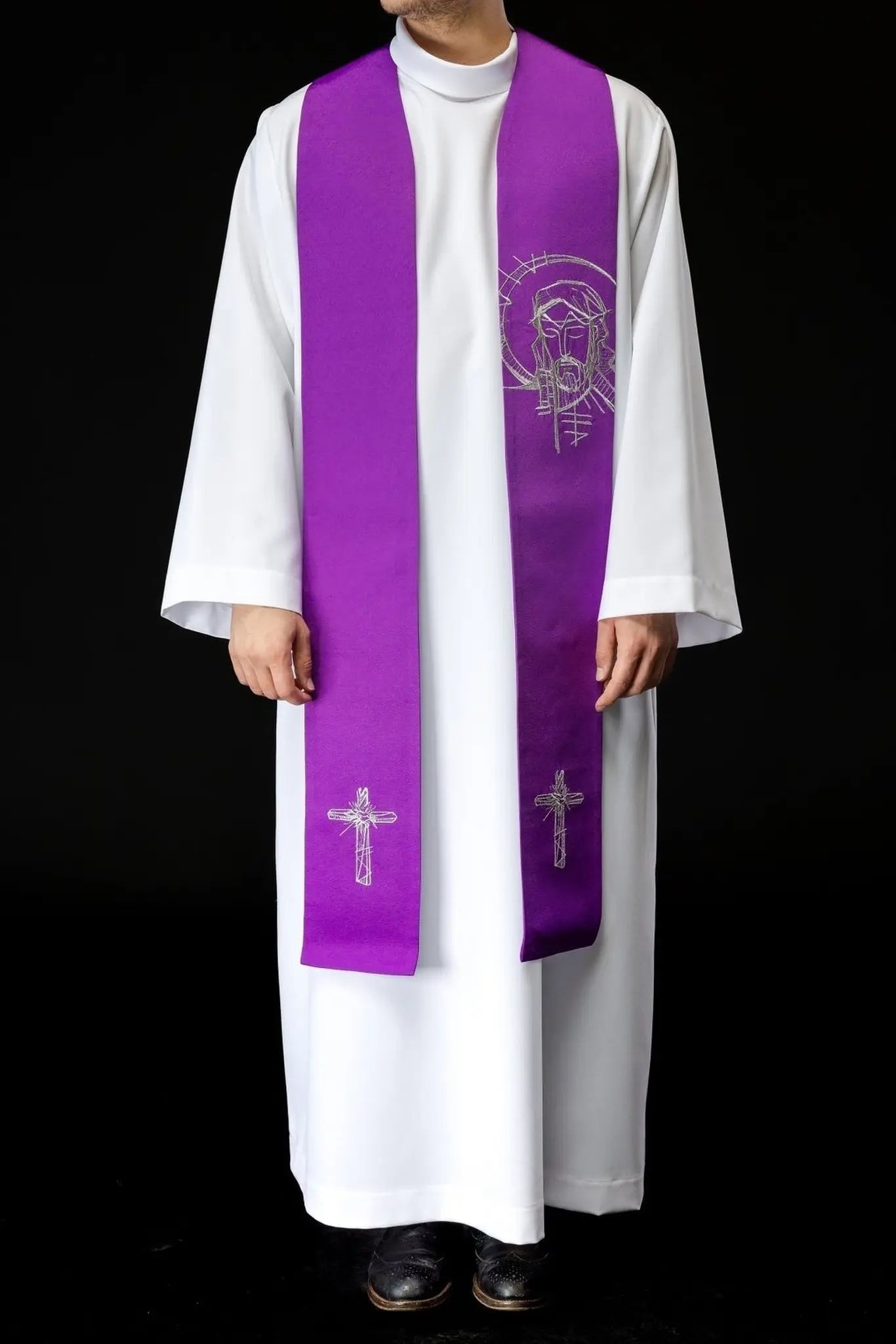
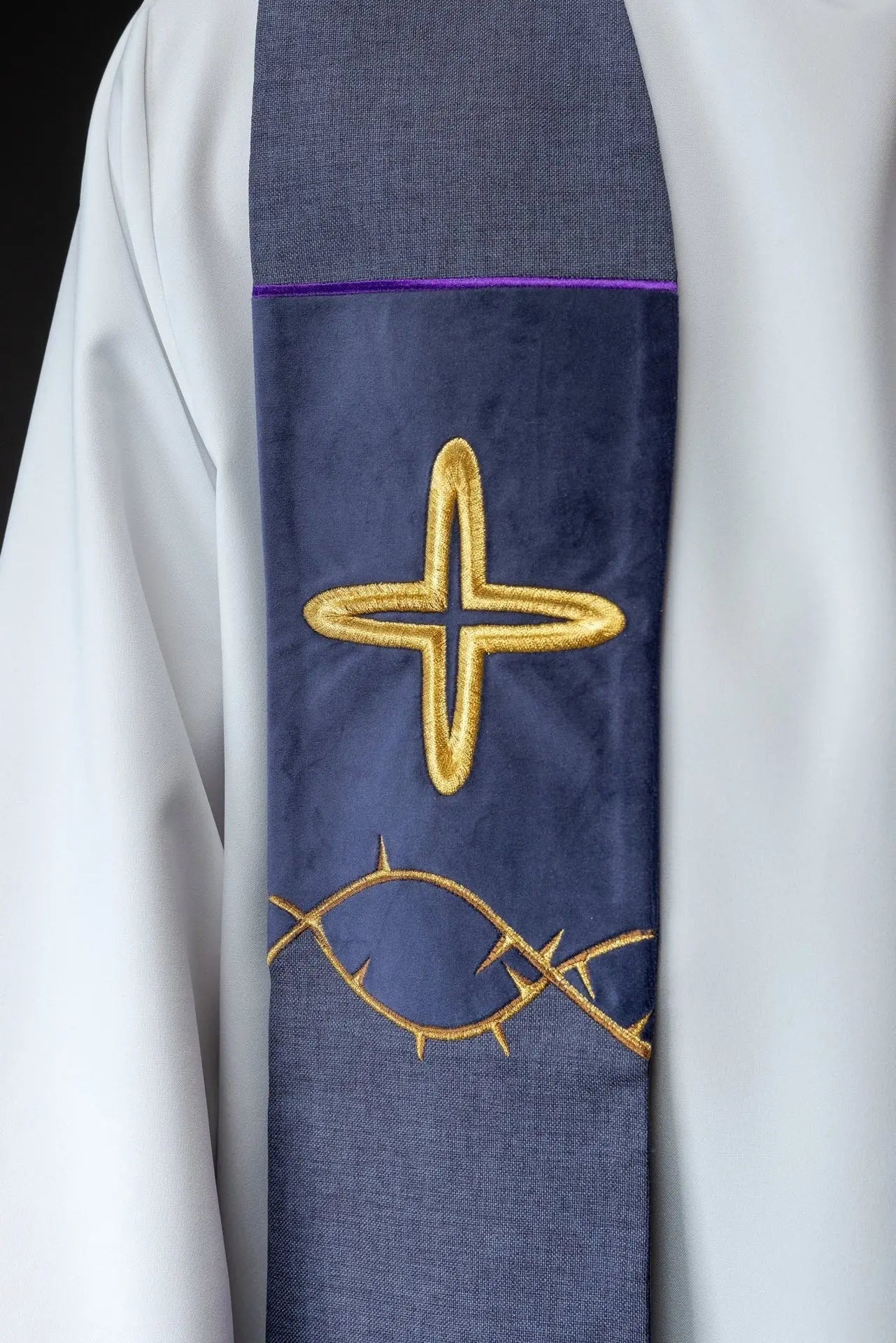
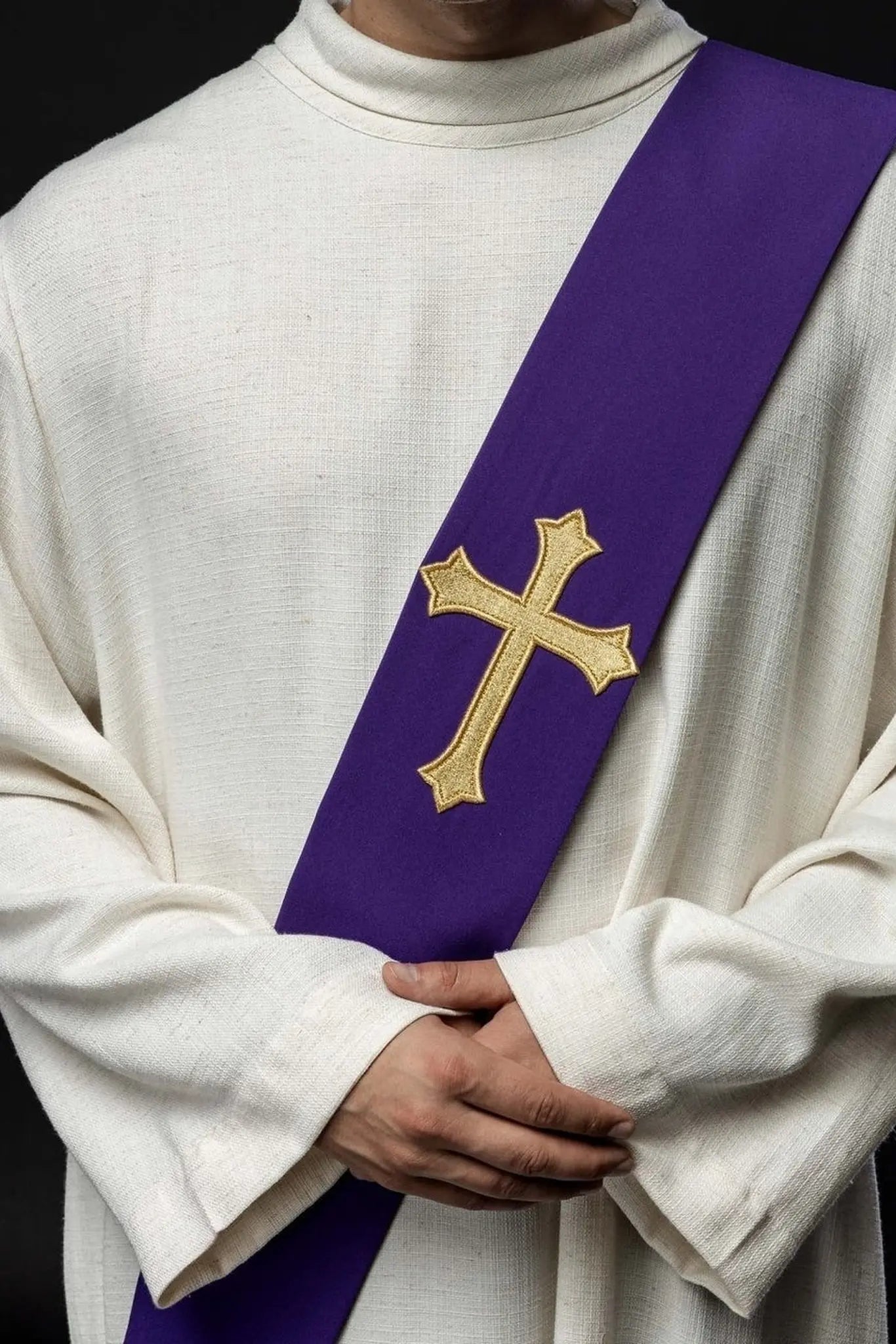
The most common symbol on a purple stole is the cross. It is direct, theologically clear and appropriate for Advent, Lent and reconciliation. A gold or silver cross on purple can evoke the kingship of Christ and the hope that stands within penitence. A more restrained tonal cross may be suitable when the visual emphasis should be quiet, especially during Lent or in the confessional. Other symbols may include IHS, vines, wheat, grapes, the crown of thorns, rays of light, alpha and omega, or ornamental patterns inspired by traditional church art.
Embroidery should be chosen with the liturgical context in mind. A richly decorated Advent stole may express the royal dignity of the coming Lord, while a Lenten stole may benefit from simpler lines and a more contemplative tone. For the Sacrament of Reconciliation, clarity and restraint are often more important than lavish ornament. The stole should help the faithful recognize the ministry of forgiveness without turning attention away from prayer, confession and absolution.
Gold and silver threads are common accents on purple stoles because they provide contrast and solemnity. Gold can emphasize hope, kingship and festal dignity within Advent. Silver often gives a cooler, more restrained effect. Embroidery in purple-on-purple or darker thread can be subtle and refined. The right choice depends on whether the stole will be used mainly for parish liturgies, private sacramental ministry, solemn processions or seasonal services.
Coordinating purple stoles with other vestments
A purple stole can be selected alone, but it is often part of a wider liturgical set. In a parish sacristy, it may be paired with a purple chasuble, an alb, a cincture and seasonal altar textiles. For Mass, the priest normally wears the stole with the chasuble, while for some services outside Mass the stole may be more visible over an alb or surplice. When planning a complete violet setting for Advent or Lent, it is helpful to review the wider Clergy Stoles category and related vestment collections so the sacristy remains consistent.
For the sanctuary, purple textiles may also appear on the ambo or pulpit. If your parish changes the pulpit or lectern cover according to the season, Purple Pulpit Covers can help create visual continuity between the vesture of the celebrant and the place where the Word of God is proclaimed. The stole and pulpit cover do not need to be identical, but they should not clash in tone or symbolism.
Color coordination should respect the difference between adjacent liturgical colors. Green stoles belong primarily to Ordinary Time, red stoles to feasts of martyrs, Palm Sunday, Good Friday and the Holy Spirit, ecru or white stoles to festive and solemn occasions, Marian stoles to Marian celebrations, and gold stoles to solemn feasts where gold is appropriate. Purple remains the color of preparation and penitence. Keeping these distinctions clear strengthens the catechetical role of vestments in the liturgy.
Purple stoles for Advent
Advent purple is not merely a dark seasonal color. It is a sign of waiting, vigilance and joyful hope expressed with restraint. A purple stole used during Advent may include a cross, gold accents, delicate ornament or symbols that point toward Christ’s coming. Many churches prefer a dignified purple that is not too severe, because Advent contains both penitential preparation and expectation. The stole should help the priest’s ministry reflect the season’s message: prepare the way of the Lord.
For Advent reconciliation services, the same purple stole may be used in a more penitential context. In that case, a balanced design is especially useful. It can look appropriate during Sunday liturgy and still remain suitable for confession. A parish that schedules many Advent confessions should consider having more than one purple stole available, especially when several priests are invited to assist.
Purple stoles for Lent and Reconciliation
Lent gives purple its most penitential character. During this season, the Church calls the faithful to conversion, discipline and renewal. A Lenten stole should therefore avoid visual excess unless the local style of vesture calls for more ornament. Crosses, simple bands, subdued embroidery and deeper violet shades are often fitting choices. The stole should support the seriousness of the season while still pointing toward Easter hope.
For confession, the stole has a particularly important sacramental meaning. It is worn as a sign of priestly ministry when the sacrament is celebrated. The faithful may not notice every detail of embroidery, but they do recognize the color and the form of the vestment. A clean, dignified purple stole communicates reverence for the sacrament and care for the person seeking reconciliation. Because confession stoles are used often, durability and ease of maintenance should be considered alongside design.
Care and storage
Purple stoles should be handled with the same care given to all liturgical vestments. Follow the care instructions appropriate to the fabric, lining and embroidery. Delicate embroidery, metallic thread and brocade may require professional cleaning rather than ordinary washing. Heat should be used cautiously, especially near embroidered motifs, because excessive temperature can damage threads or alter the fabric surface. When ironing is allowed, it is usually safer to work from the reverse side with a protective cloth.
Storage also affects the life of the stole. Keep it in a dry, clean place, away from direct sunlight that can fade purple dyes. Hanging the stole on a proper hanger helps preserve its shape; careful folding may be suitable if the sacristy uses drawers or vestment boxes. After use, the stole should be checked for loose threads, stains or creases. Regular attention prevents small damage from becoming permanent and keeps the vestment ready for sacred use.
Why a focused purple stole collection matters
A focused collection makes it easier to choose the correct vestment without confusing stoles with chasubles, dalmatics or altar textiles. Purple stoles serve a specific liturgical role, and their design should be evaluated according to that role. The best choice is not always the most ornate item. It is the stole that fits the rite, the wearer, the parish setting and the spiritual tone of the season.
For a small chapel, a simple embroidered purple stole may be enough for Advent, Lent and confession. For a large parish, several stoles may be needed so multiple priests can serve at reconciliation services. For a community that values coordinated vestments, a purple stole may be chosen together with chasubles, pulpit covers and other seasonal textiles. In each case, the stole should remain recognizable, dignified and faithful to the liturgical meaning of violet.
When comparing options, consider the main celebration, the fabric weight, the embroidery, the shade of purple, the proportion, the comfort of the wearer and how the stole will be stored. A well-made purple stole can serve for many years, accompanying the Church through seasons of waiting, repentance and mercy. This collection brings together stoles created for those moments, with designs suitable for parish use, personal priestly ministry and solemn seasonal worship.
Frequently Asked Questions (FAQ)
What is a purple clergy stole used for?
A purple clergy stole is used for liturgical seasons and rites connected with penance, preparation and reconciliation. It is especially associated with Advent, Lent and the Sacrament of Penance. Priests may also use it during penitential services, retreats, missions and other celebrations where violet vesture is appropriate.
Is a purple stole the same as a rose stole?
No. Purple or violet is used broadly during Advent and Lent, while rose is reserved for particular moments such as Gaudete Sunday and Laetare Sunday where local practice includes rose vestments. The two colors should not be treated as interchangeable, because each communicates a different liturgical emphasis.
Can a deacon wear a purple stole from this collection?
A deacon uses a stole cut and worn diagonally, not the standard priest style worn around the neck. If the minister is a deacon, choose a proper deacon stole so the vestment follows the correct form for diaconal ministry.
Should a purple stole match the purple chasuble exactly?
An exact match is helpful but not always necessary. The stole should harmonize with the chasuble in shade, fabric character and embroidery style. When the stole is visible under or over other vestments, the overall appearance should be orderly and liturgically coherent.
What kind of purple stole is best for confession?
For confession, many clergy prefer a comfortable, durable stole with restrained embroidery and a clear cross. Since it may be used frequently and sometimes for long periods, practical fabric, secure stitching and easy storage are especially important.