
Sort by
4 products
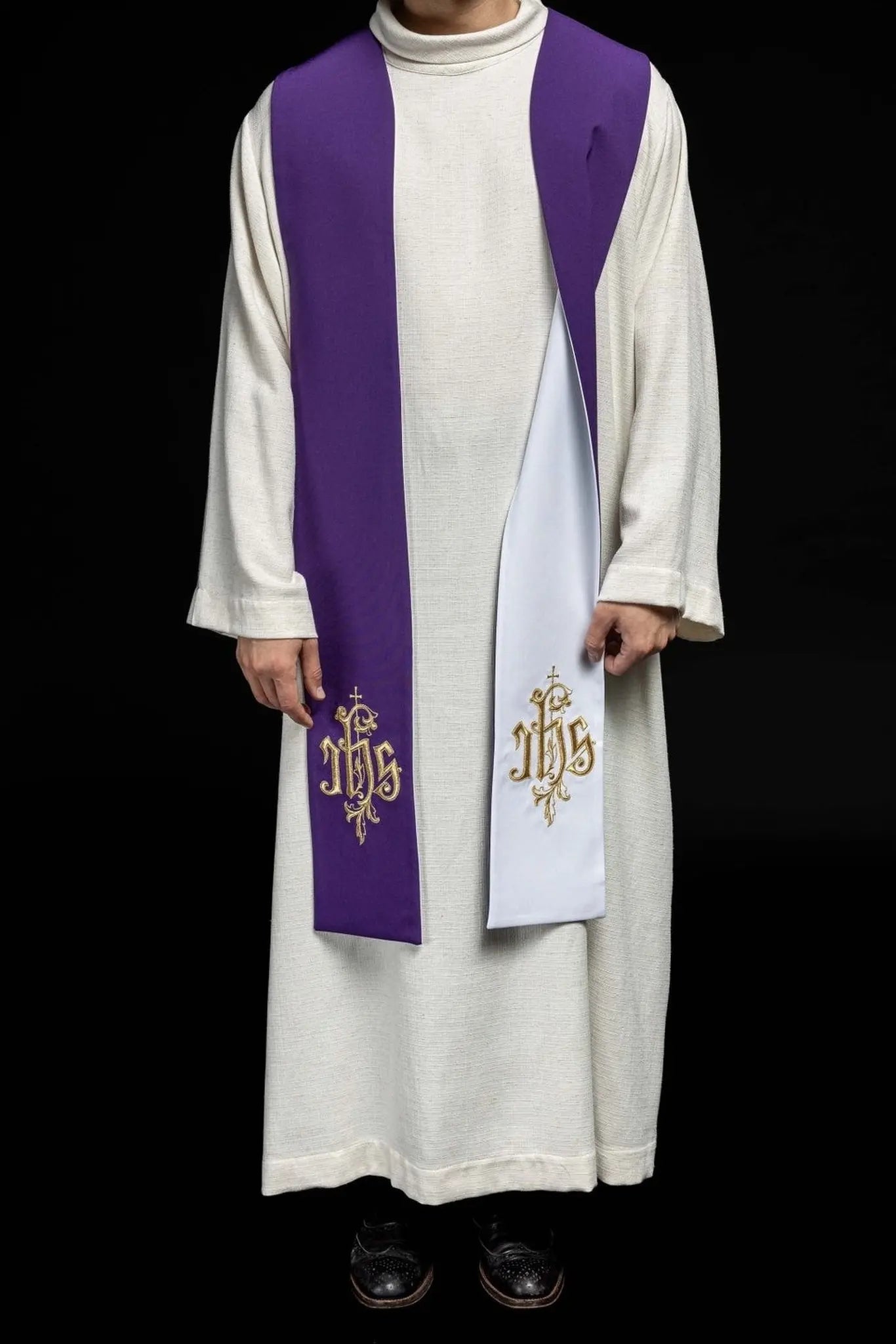
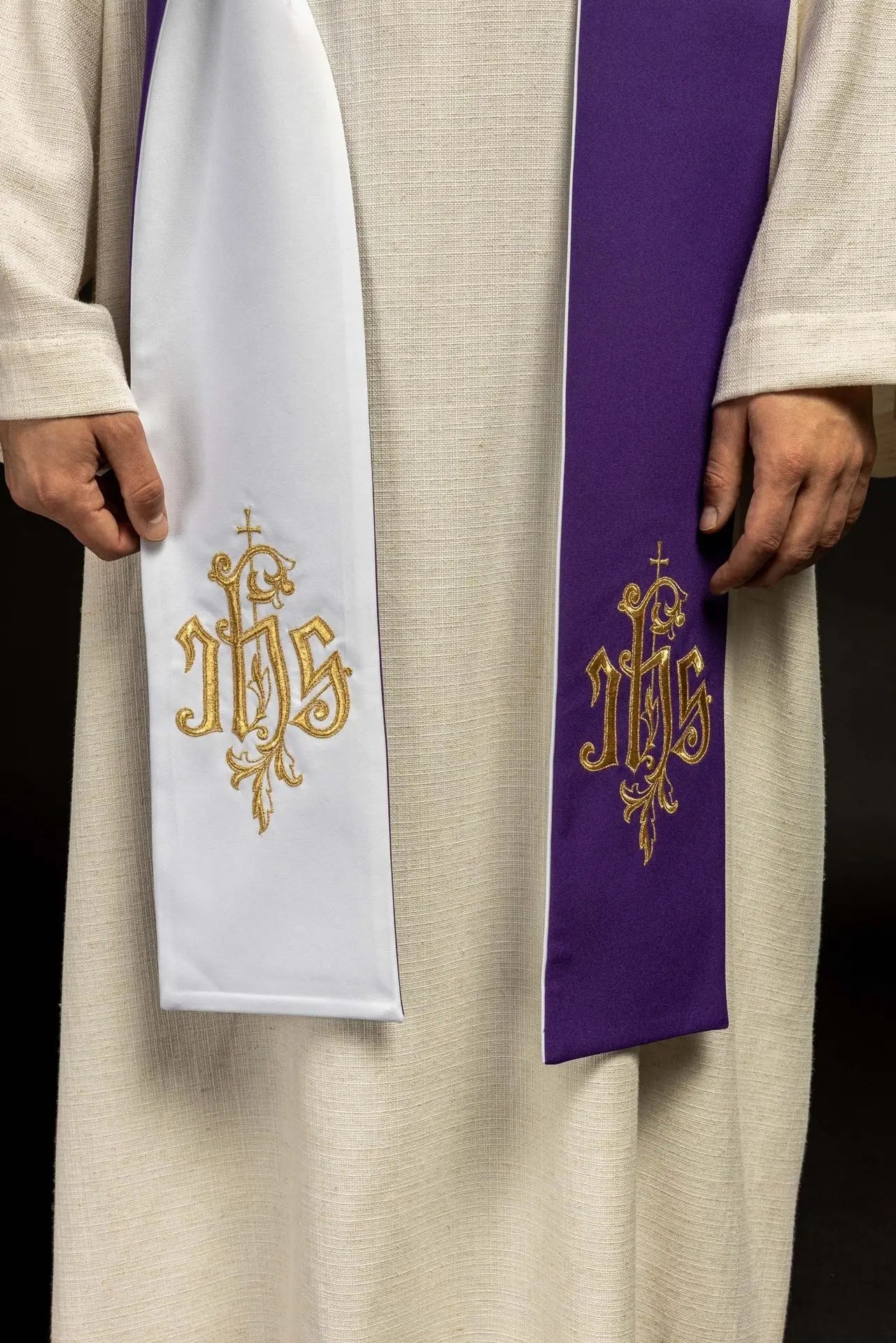
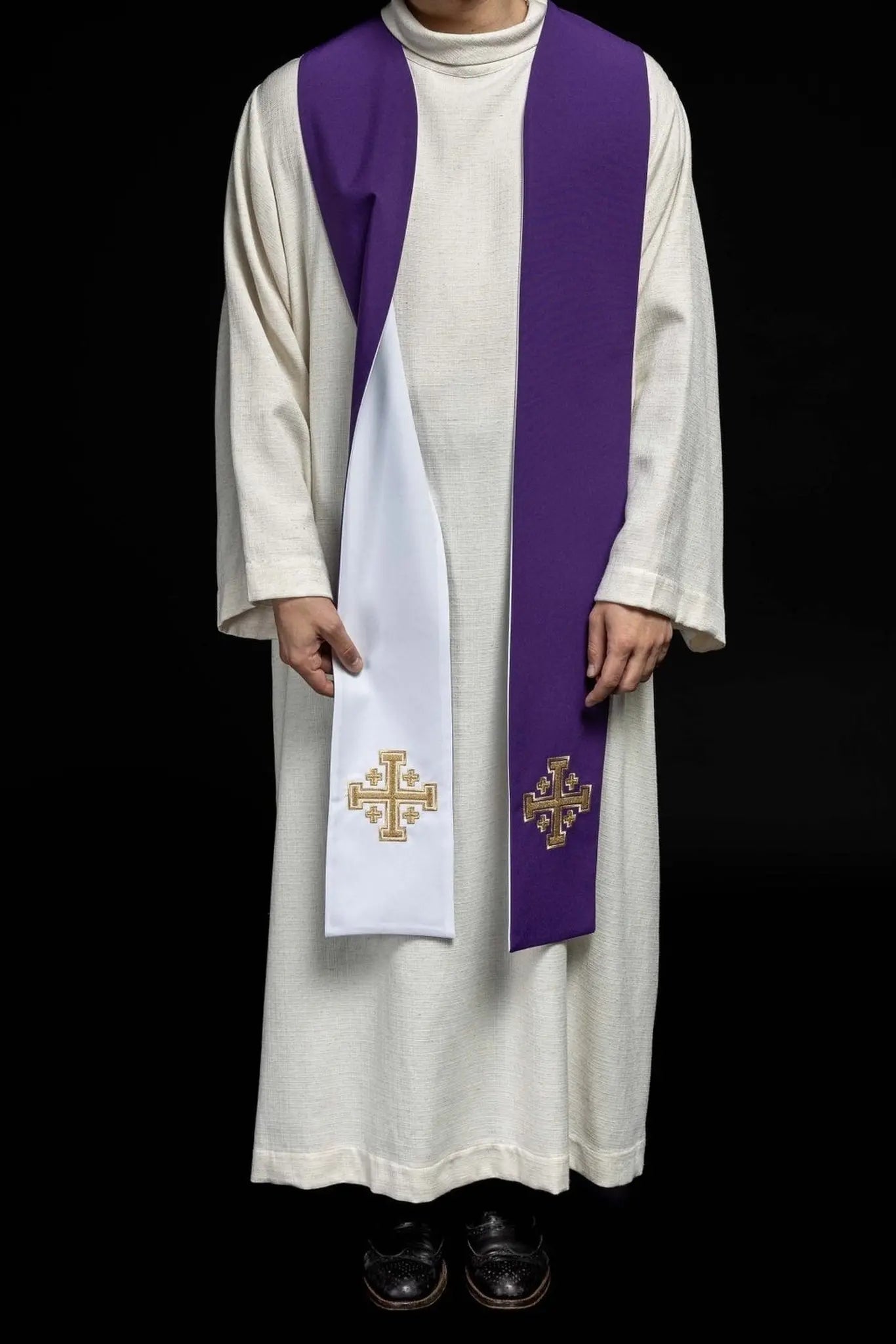
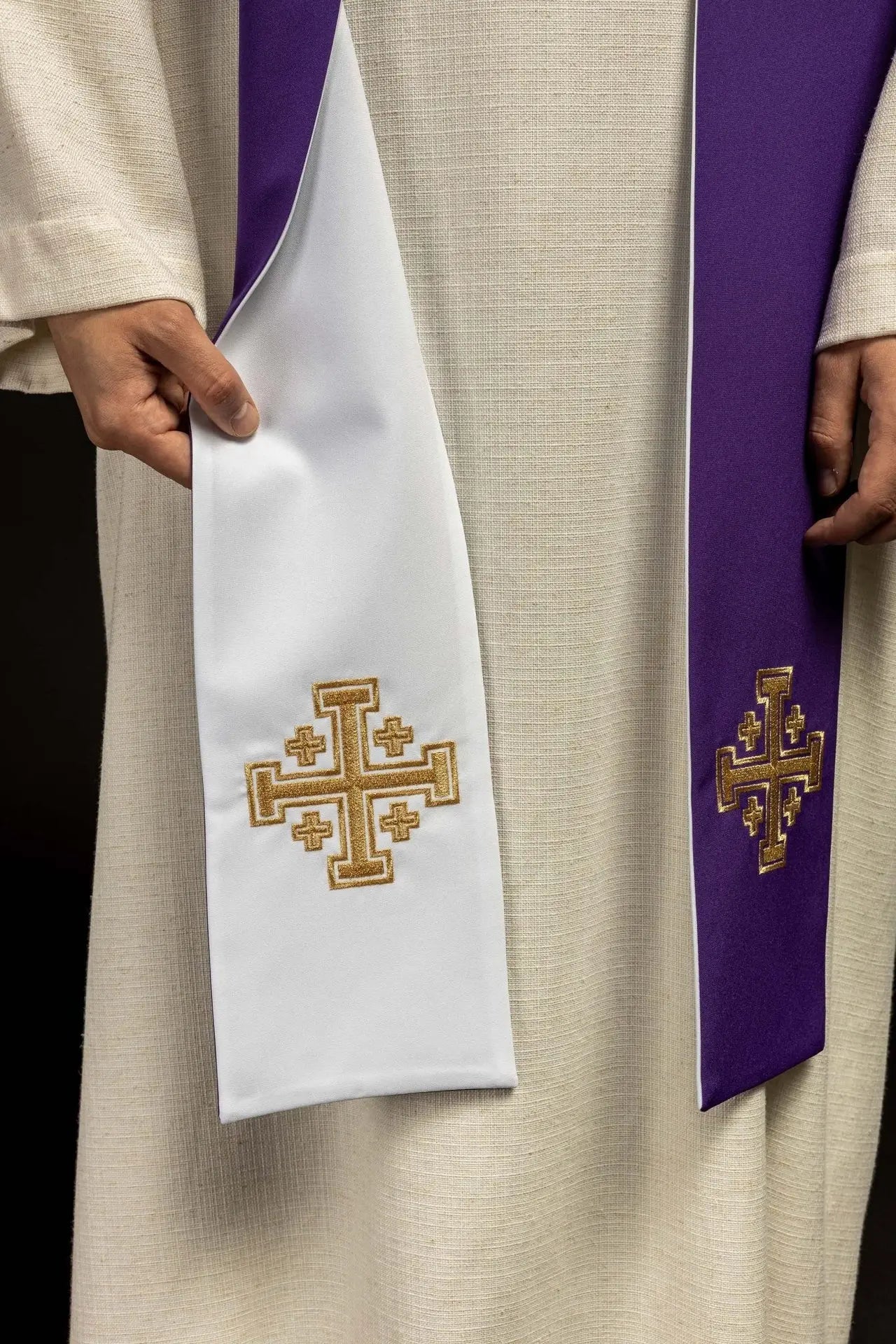
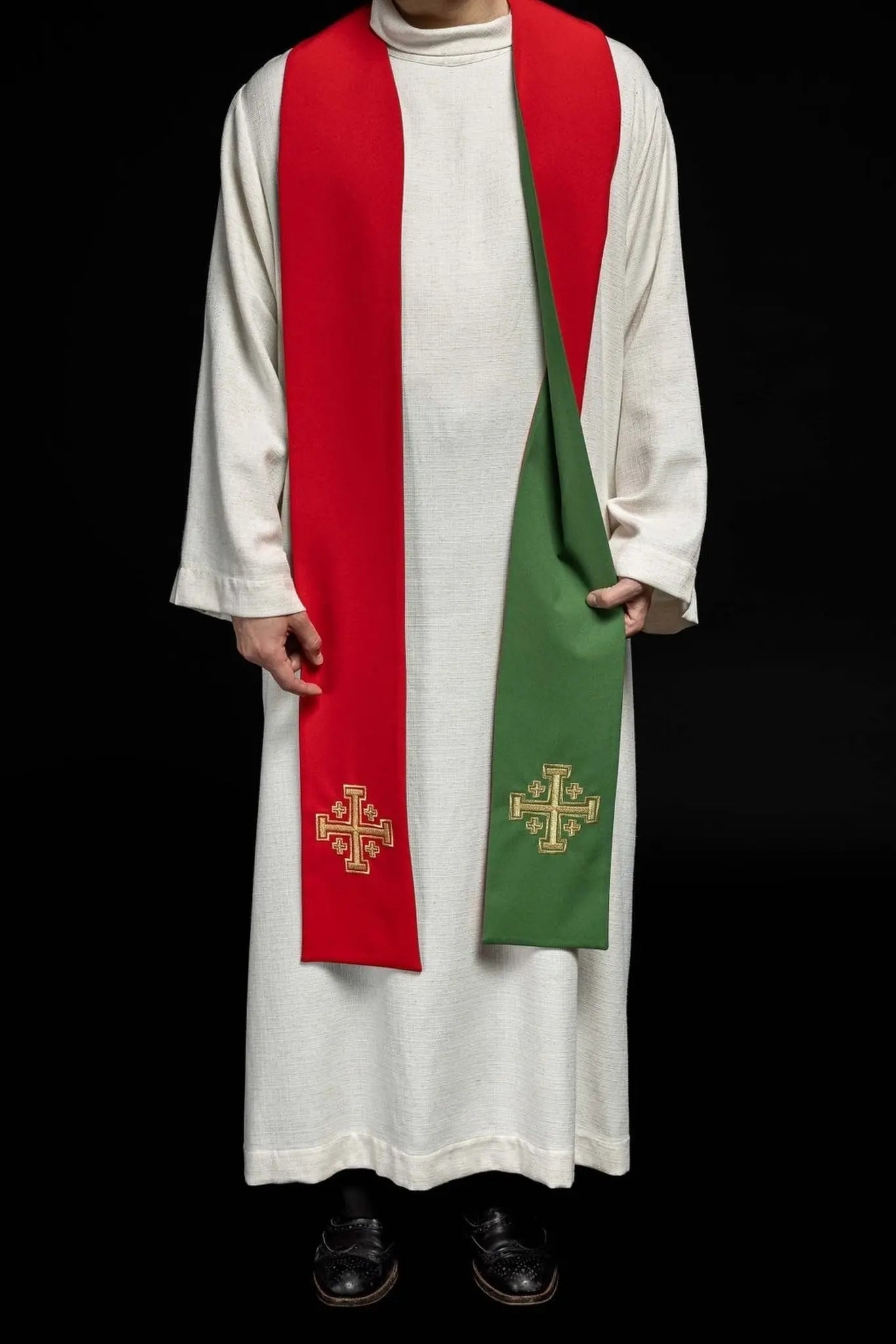
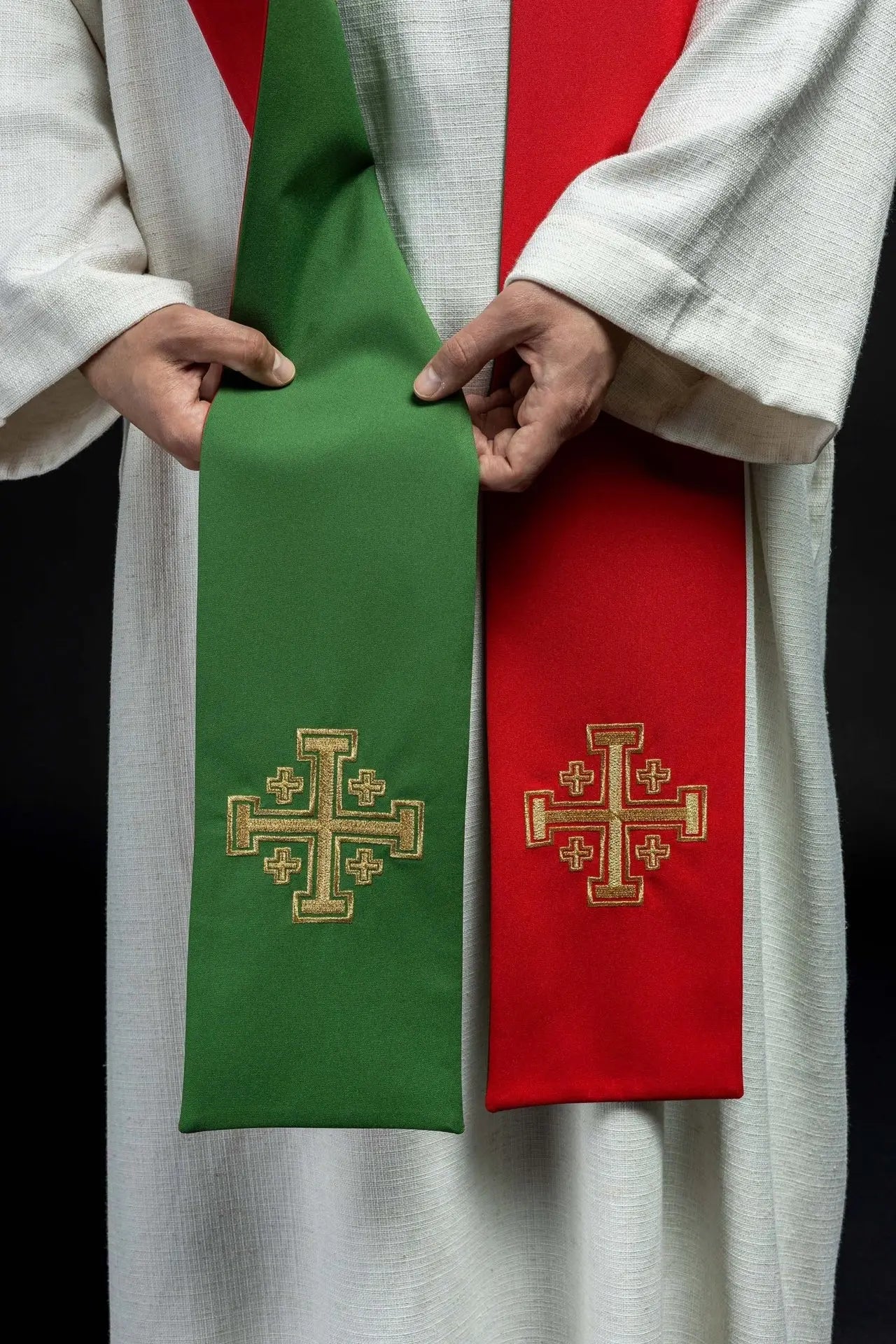
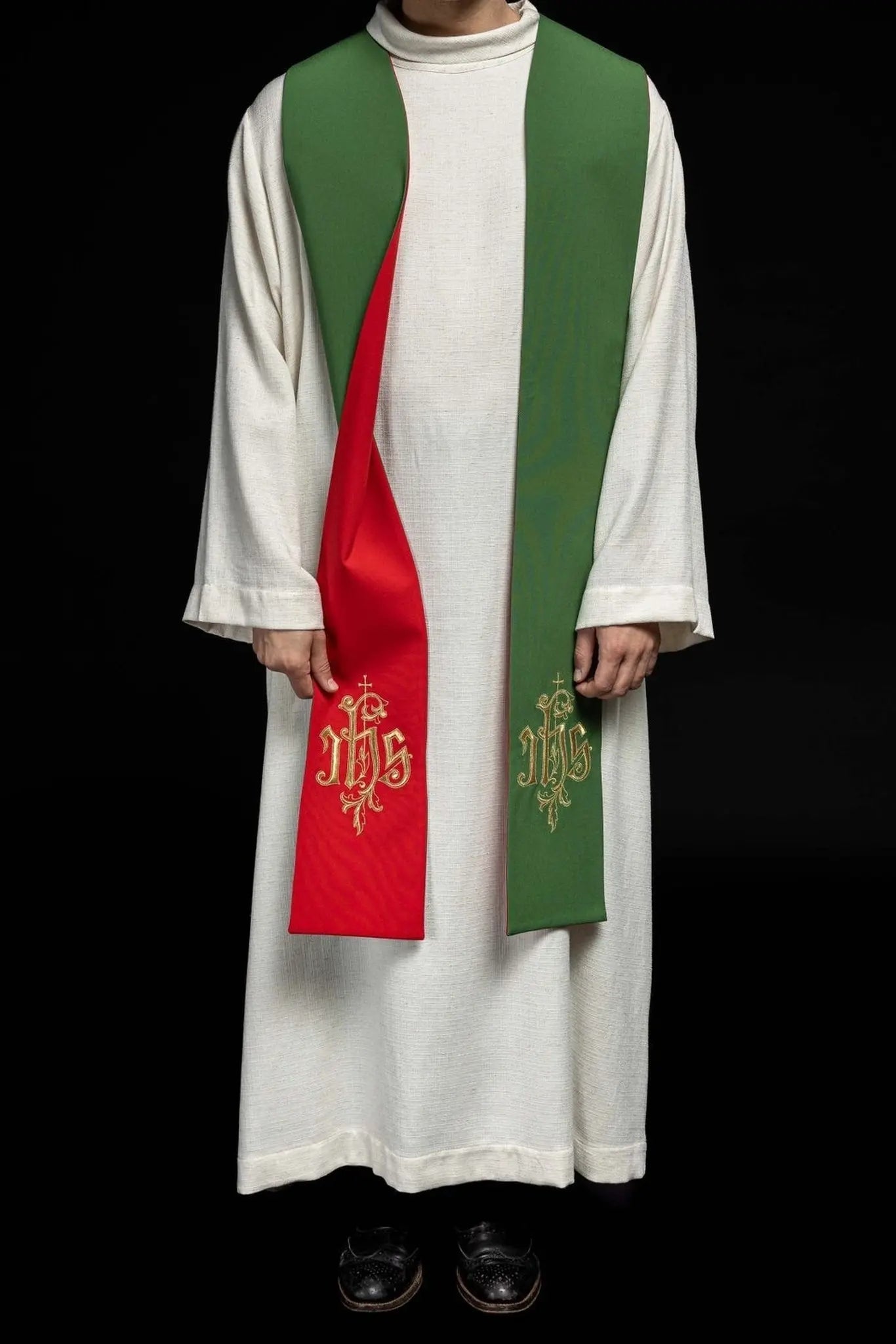
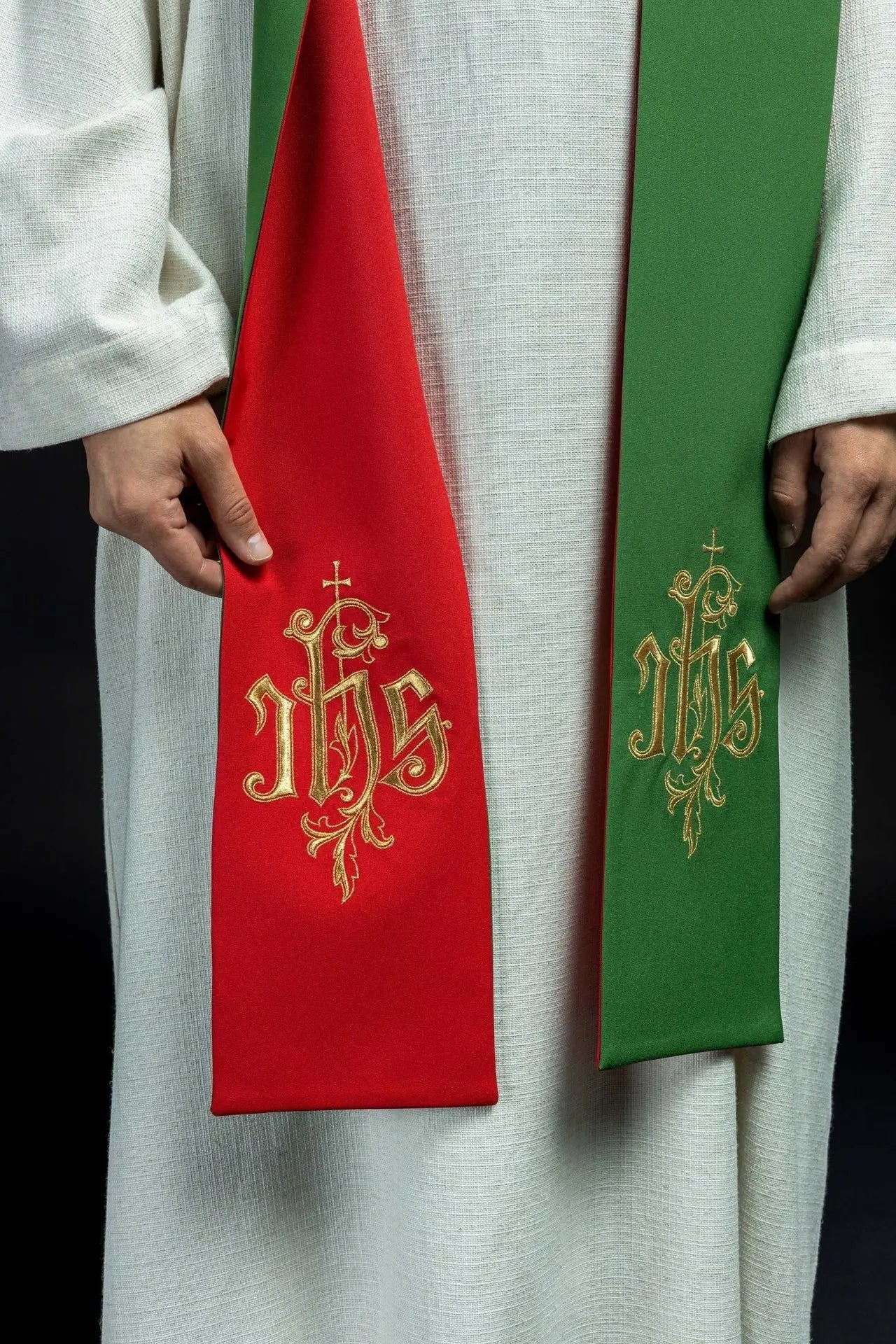
Double-Sided Stoles for Priests and Liturgical Ministry
Double-sided stoles are practical liturgical vestments created for clergy who need one reverent stole to serve more than one season, celebration, or pastoral setting. This collection gathers embroidered two-sided stoles in carefully paired liturgical colours, including combinations visible in this collection such as green with red and purple with white. Each side is intended to be used as the outward-facing side when its colour and symbolism correspond to the celebration, allowing one vestment to support different moments of the liturgical year without losing dignity, clarity, or visual harmony.
A stole is one of the most recognizable signs of ordained ministry. Worn over the alb or under a chasuble, it expresses the service entrusted to the priest and belongs to the visible language of the liturgy. A double-sided stole keeps that meaning while adding a helpful level of versatility. It is especially useful for priests who celebrate in more than one chapel, serve in pastoral care outside the parish church, travel between communities, or want a compact vestment option for sacristies with limited storage. The purpose is not to make the stole casual, but to make a properly made liturgical vestment more adaptable while preserving its sacred character.
What makes a double-sided stole useful
The essential feature of a double-sided stole is that both faces are finished for liturgical use. Unlike a simple lining, the reverse side is not hidden construction material; it is a usable side with its own colour, embroidery, and devotional expression. This gives the priest two coordinated options in one vestment. For example, a green and red stole may support both Ordinary Time and celebrations connected with the Holy Spirit, martyrs, the Passion, or other red vestment days. A purple and white stole may be helpful when moving between penitential seasons and solemn, festive, or sacramental occasions where white is appropriate.
This versatility is particularly valuable in ministry that requires quick transitions. A priest may need one colour for a morning Mass, another for a funeral-related rite, a sacramental celebration, a parish devotion, or a pastoral visit. A two-sided stole allows the same vestment to be reversed with ease, provided the colour is suitable for the specific celebration. When chosen thoughtfully, it becomes a reliable part of a liturgical wardrobe rather than an occasional accessory.
Liturgical colours and their meaning
When choosing from this collection, the first question is the liturgical colour combination. Green is associated with Ordinary Time and expresses growth, hope, and the steady rhythm of the Church year. Red is used for celebrations connected with the Passion of the Lord, the Holy Spirit, apostles, evangelists, and martyrs. Purple is used during Advent and Lent and also in penitential or funeral contexts according to local custom. White, often visually close to ecru or enhanced with gold embroidery, is used for feasts of the Lord other than those of the Passion, celebrations of the Blessed Virgin Mary, saints who were not martyrs, solemnities, many sacramental celebrations, and the Easter and Christmas seasons.
Because each double-sided stole joins two colours in a single vestment, it should be selected with the rhythm of actual ministry in mind. Priests who frequently celebrate weekday Masses may appreciate a green and red option because it covers Ordinary Time and many feast days. Those who often move between penitential seasons and festive celebrations may prefer purple with white. For more focused colour browsing, see our green clergy stoles, red clergy stoles, and purple clergy stoles collections.
Embroidery, symbols, and sacred clarity
The double-sided stoles in this collection include embroidered Christian motifs such as the IHS monogram and the Jerusalem Cross. These symbols are not merely decorative details. They help the vestment speak in a clear liturgical language. The IHS monogram points to the Holy Name of Jesus and is especially fitting where the stole is used in the celebration of the Eucharist, preaching, blessings, and sacramental ministry. The Jerusalem Cross has a strong ecclesial and pilgrimage resonance, evoking the proclamation of the Gospel and the mystery of salvation carried into the world.
Embroidery on a stole should be visible without overwhelming the vestment. On a double-sided piece, this balance matters even more because each side needs to stand on its own. A well-designed two-sided stole should not feel like a compromise between two unrelated vestments. The colours, motifs, and proportions should appear intentional whether the green, red, purple, or white side is worn outward. This is why a restrained but meaningful design can be especially effective for regular parish use: it remains dignified for solemn rites and still suitable for ordinary celebrations.
How to choose the right double-sided stole
Begin with the celebrations you most often serve. A priest who needs one dependable stole for parish duty, weekday Masses, blessings, and pastoral visits may choose a colour pairing that covers the broadest range of occasions. Green with red is practical where Ordinary Time forms the regular rhythm of ministry but red feasts, confirmations, or celebrations of martyrs also occur often. Purple with white can be a helpful choice for Advent, Lent, penitential services, sacramental celebrations, Marian days, and feasts where a white vestment is appropriate.
Next, consider whether the stole will usually be worn under a chasuble, over an alb for non-Mass rites, or during pastoral ministry outside the sanctuary. When the stole will be highly visible, the embroidery and colour contrast become more important. When it is primarily worn under a chasuble, the quality of the fabric, the comfort around the neck, and the way the stole lies flat are especially important. In either case, a double-sided stole should be balanced enough that the two layers do not twist, pull, or feel bulky during movement.
Finally, coordinate the stole with the rest of the vestment set. A double-sided stole may be used on its own in certain liturgical and pastoral settings, but it often belongs visually with a chasuble, alb, cincture, altar linens, and other church textiles. For broader coordination, you may compare this collection with all clergy stoles or with matching vestment categories such as chasubles. Choosing related colours and symbols helps the sanctuary appear ordered and reverent without becoming visually crowded.
Use during the liturgical year
Double-sided stoles are especially helpful because the Church year is marked by changing colours. The same priest may need green for the Sundays and weekdays of Ordinary Time, purple for Advent or Lent, red for a martyr or the Holy Spirit, and white for solemnities and feasts. A two-sided stole cannot replace every possible vestment, but it can cover common combinations with simplicity and good order.
For Ordinary Time, green expresses the stable growth of Christian life and is one of the most frequently needed colours in parish ministry. A green side is therefore highly practical for weekly use. For the penitential seasons, purple is essential and should be chosen with attention to solemnity and restraint. During Advent, purple directs the faithful toward watchful preparation; during Lent, it expresses penance, conversion, and the journey toward Easter. Red brings a different emphasis, used for fire, witness, sacrifice, and the Holy Spirit. White, or an ecru tone with festive embroidery, serves celebrations of joy, light, resurrection, and holiness.
To plan vestments by season, explore related liturgical-year collections such as Ordinary Time, Advent, and Lent. For Gaudete Sunday in Advent and Laetare Sunday in Lent, the proper vestment colour is rose where it is used, not ordinary pink; related options are gathered under rose stoles.
For priests, chapels, parishes, and pastoral settings
A double-sided stole is a strong choice for priests who want a compact but dignified vestment for everyday ministry. It is useful in parish sacristies, retreat houses, chapels, hospitals, schools, religious houses, and mission settings where vestment storage may be limited but liturgical colours still need to be respected. It can also be a thoughtful gift for an ordained priest, especially when the colour pairing matches the kind of ministry he carries out most often.
For a parish, two-sided stoles can help maintain readiness. They make it easier to prepare for celebrations that occur close together, especially when sacristy teams need practical vestments that remain clear in their liturgical purpose. For a priest who travels, one reversible stole can reduce the number of vestments needed in a garment bag while still allowing him to follow the proper colour for the celebration.
This collection should be understood as part of the wider range of priestly and clerical vestments, not as a replacement for every specialised stole. A Marian celebration may call for a more specifically Marian design, a funeral may require a particular local colour custom, and a solemn feast may need a stole coordinated with a complete chasuble set. The value of the double-sided stole is that it offers dependable versatility where two commonly needed colours can be joined in one reverent vestment.
Materials, comfort, and care
Because a stole rests on the shoulders and may be worn for long periods, comfort matters. The fabric should have enough structure to hang properly, but not so much stiffness that it becomes distracting during prayer, preaching, blessing, or procession. In a double-sided stole, the construction must also support both embroidered sides. The two faces should remain aligned, the ends should fall evenly, and the embroidery should keep its shape during normal use.
Care should always follow the specific instructions given for the individual stole. In general, embroidered liturgical vestments should be handled with clean hands, stored flat or on a suitable hanger, protected from moisture, and kept away from direct sunlight when not in use. Metallic or decorative embroidery should not be rubbed, folded sharply, or pressed directly with a hot iron. If cleaning is needed, professional care is usually the safest option, especially where embroidery, structured fabric, or contrasting colours are present on both sides.
Good storage also protects the liturgical meaning of the vestment. A stole should not be crushed among unrelated items or left where the embroidery can snag. When possible, store it in a garment cover or sacristy drawer arranged by colour. This makes it easier to select the correct side for the celebration and helps the vestment remain dignified over time.
How this collection relates to nearby stole categories
Double-sided stoles are best for clergy who want two usable colour options in one vestment. Single-colour stole collections remain useful when one colour, feast, or devotion is the priority. For example, a green stole may be preferred for a complete Ordinary Time vestment set, while a red stole may coordinate better with a red chasuble for Pentecost, Palm Sunday, Good Friday, or celebrations of martyrs. Purple stoles are important for Advent and Lent, while rose stoles are reserved for the particular joy of Gaudete and Laetare where the rose colour is used.
The wider stole category also includes more specialised options. Some stoles focus on Marian themes, saints, or particular devotional imagery. Others are designed for deacons and have the diagonal form proper to the diaconal manner of wearing the stole. This collection focuses on double-sided clergy stoles and should be chosen when reversible colour use is the main need. For diagonal diaconal vestments, use the separate deacon stoles collection.
Frequently Asked Questions (FAQ)
When should a double-sided stole be used?
A double-sided stole is used when one of its two colours corresponds to the liturgical celebration or pastoral rite. It is practical for priests who need to move between seasons, feast days, blessings, and sacramental settings while carrying fewer vestments.
Is a double-sided stole different from a lined stole?
Yes. A lined stole usually has an inner side that is not meant to be seen during use. A double-sided stole has two finished faces, so either side can be worn outward when its colour and symbolism are appropriate.
Which colour combination should I choose first?
Choose according to the celebrations you serve most often. Green and red is useful for Ordinary Time and many red feast days. Purple and white is practical for penitential seasons and festive or sacramental celebrations where white is used.
Can a double-sided stole be worn with a chasuble?
Yes. A priest may wear the stole with a chasuble when celebrating Mass, provided the colour is appropriate. It can also be worn over an alb for other rites where the stole is the principal visible vestment.
Are double-sided stoles suitable for deacons?
This collection is intended for clergy stoles worn in the regular priestly manner. Deacons wear the stole diagonally, so a deacon should choose a stole specifically made for diaconal use.
How should embroidered double-sided stoles be stored?
Store them clean and dry, preferably flat or on a suitable hanger, with the embroidery protected from friction. Avoid sharp folds, damp sacristy conditions, and direct heat on embroidered areas.