
Sort by
14 products
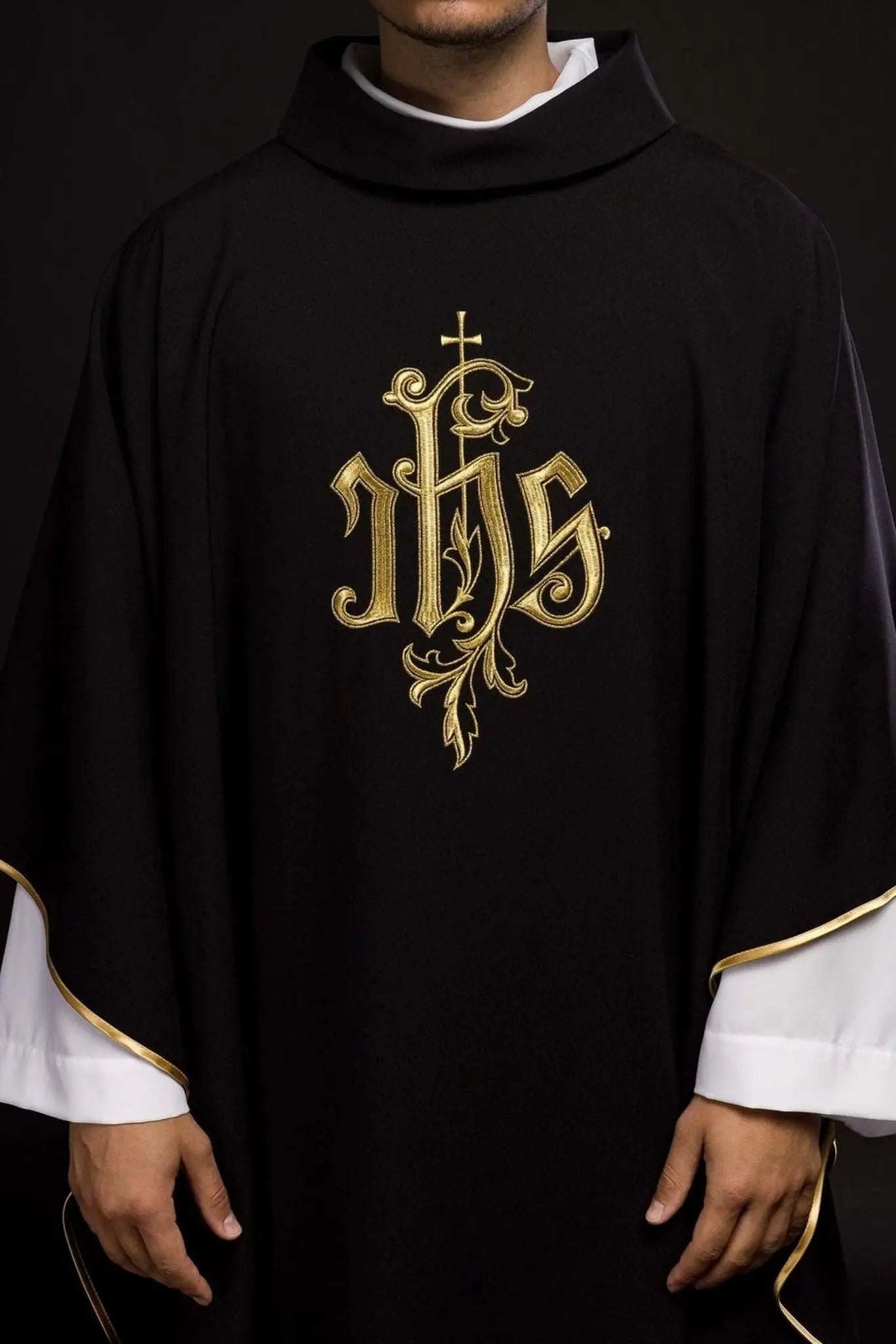
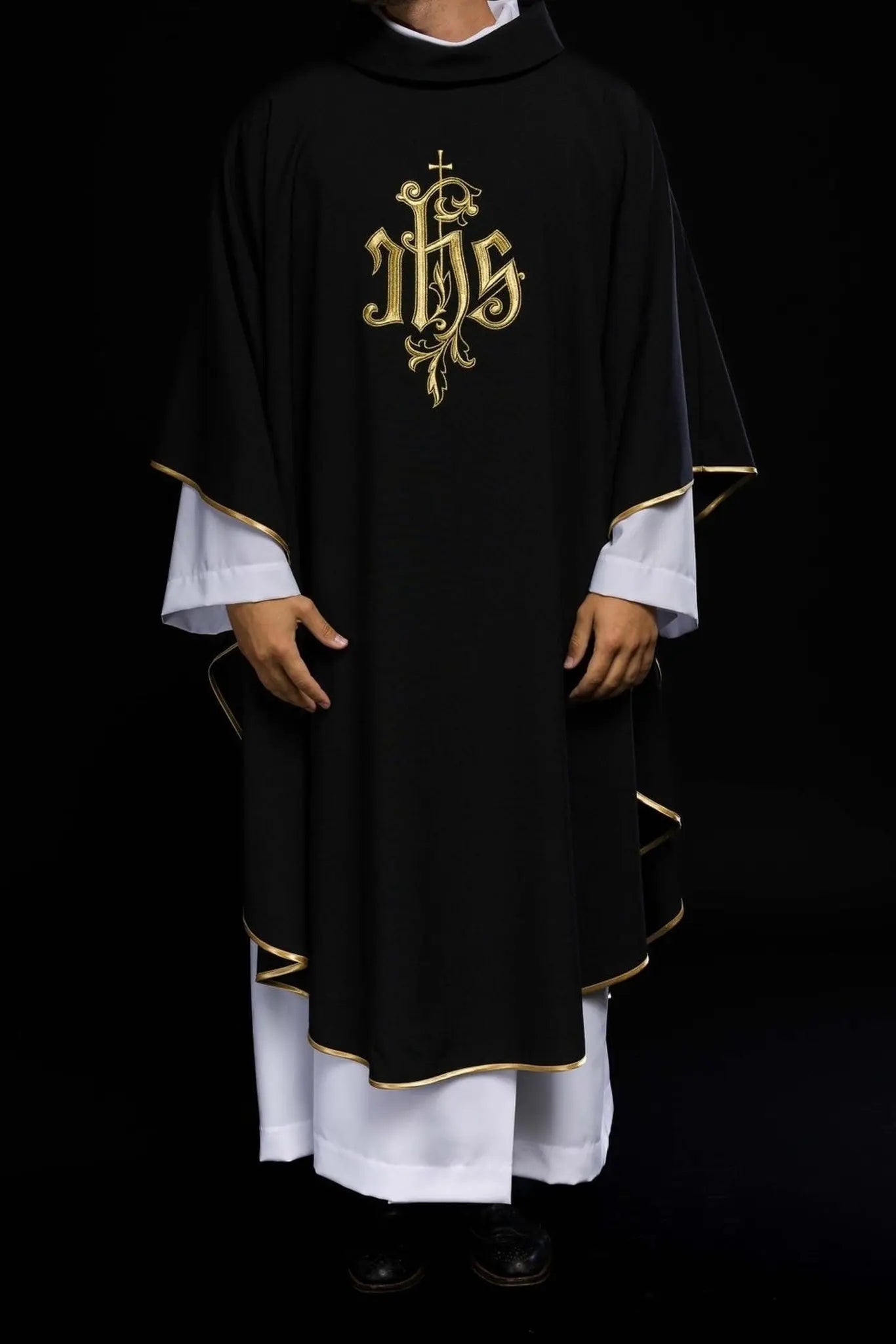
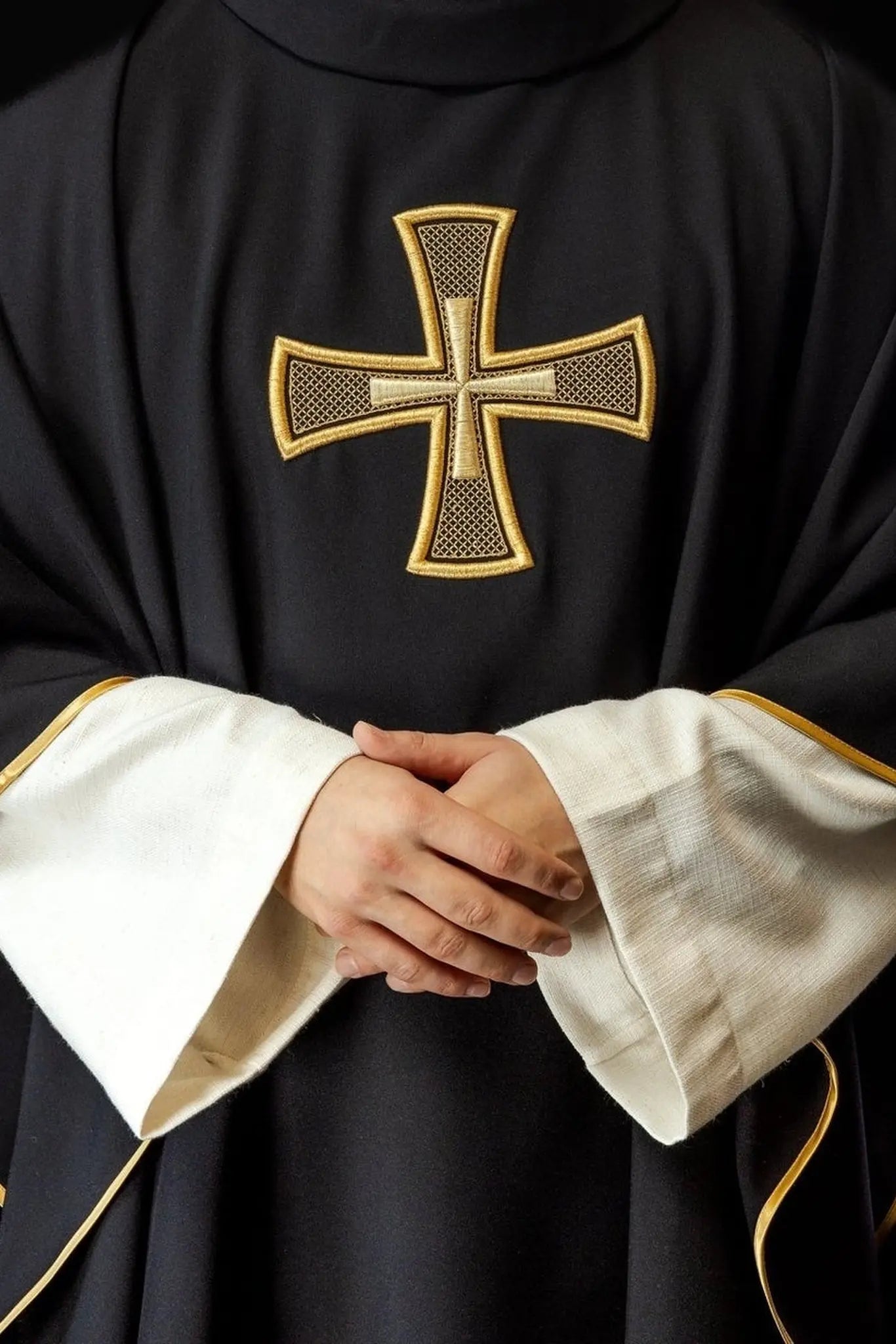
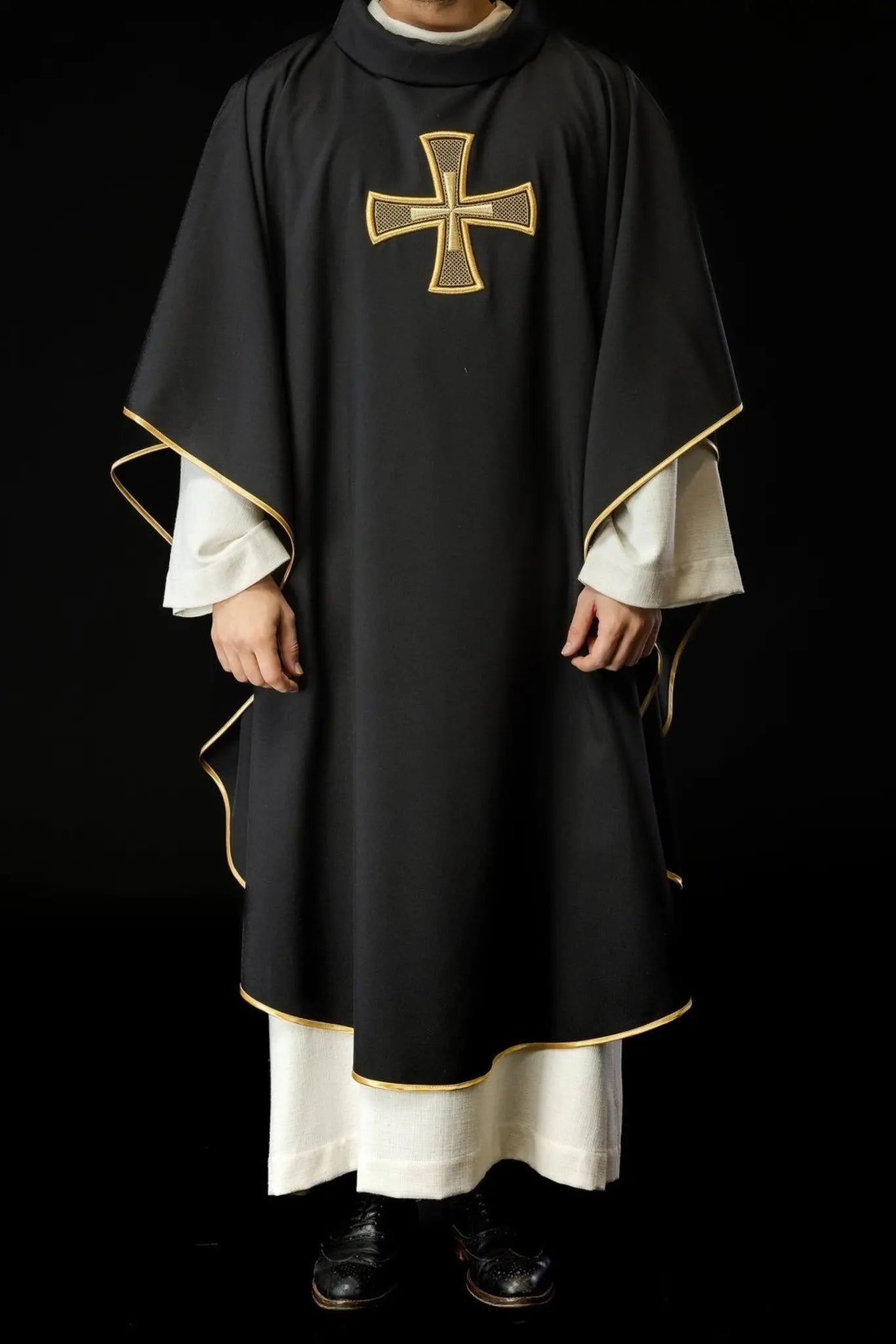
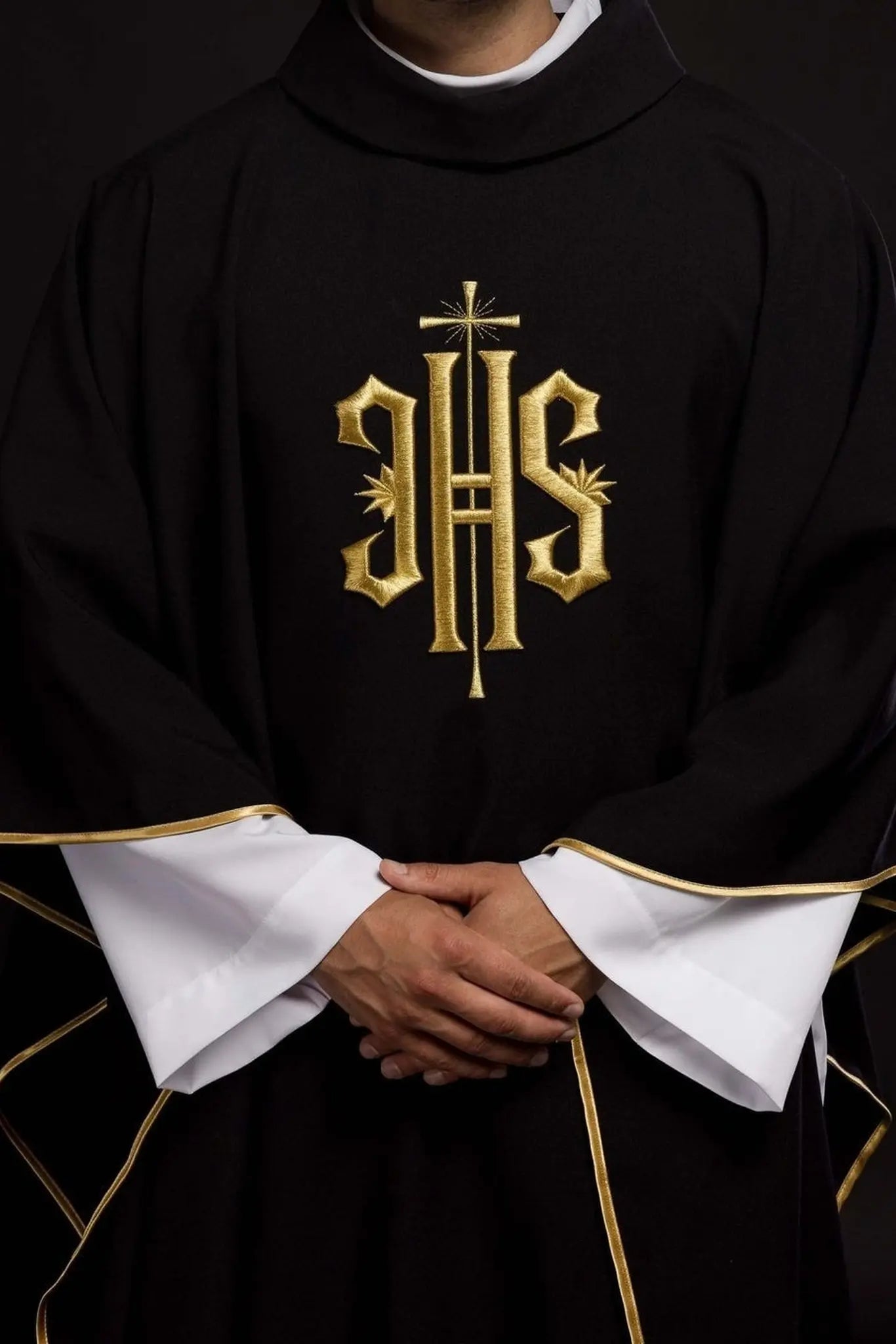
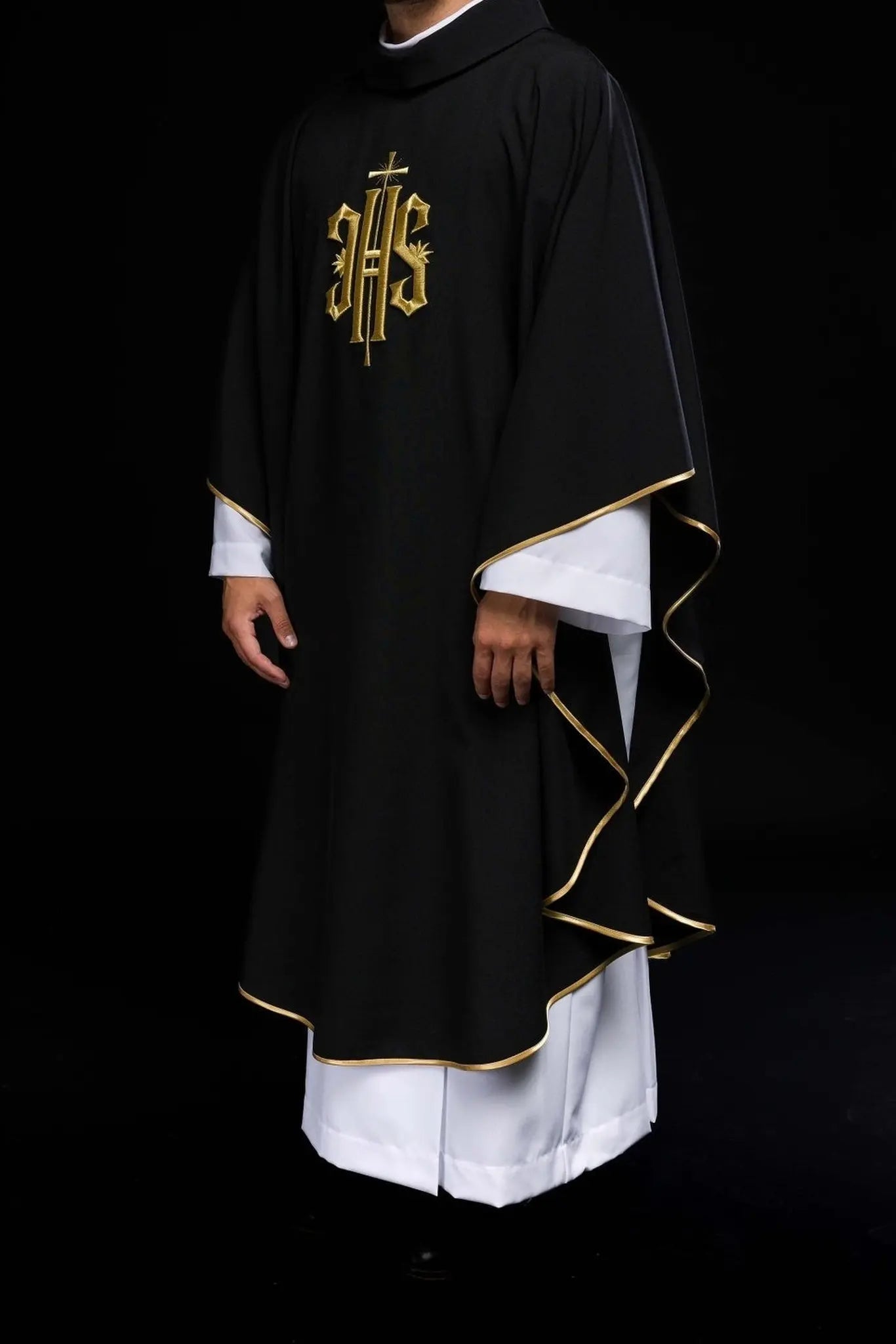
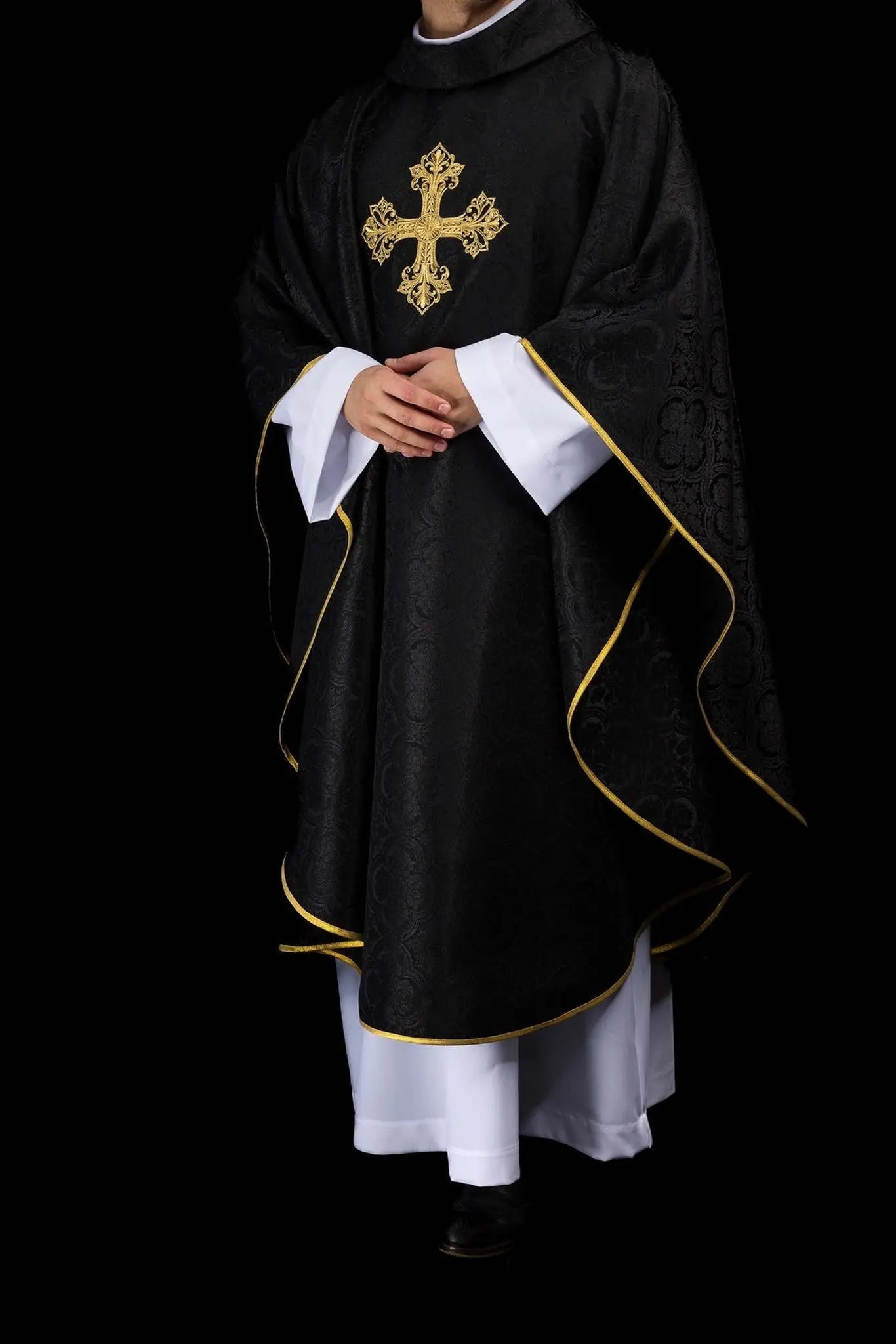
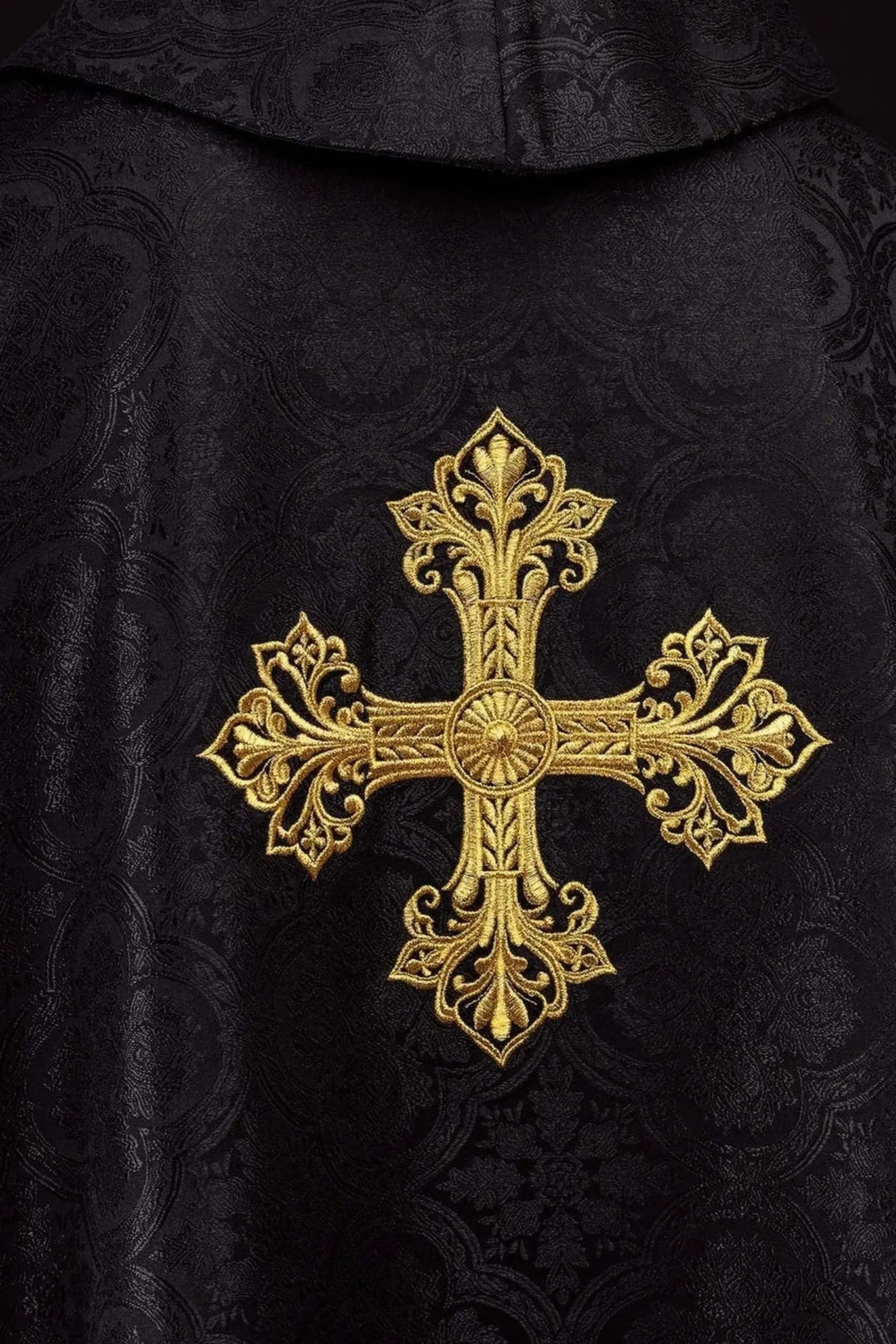
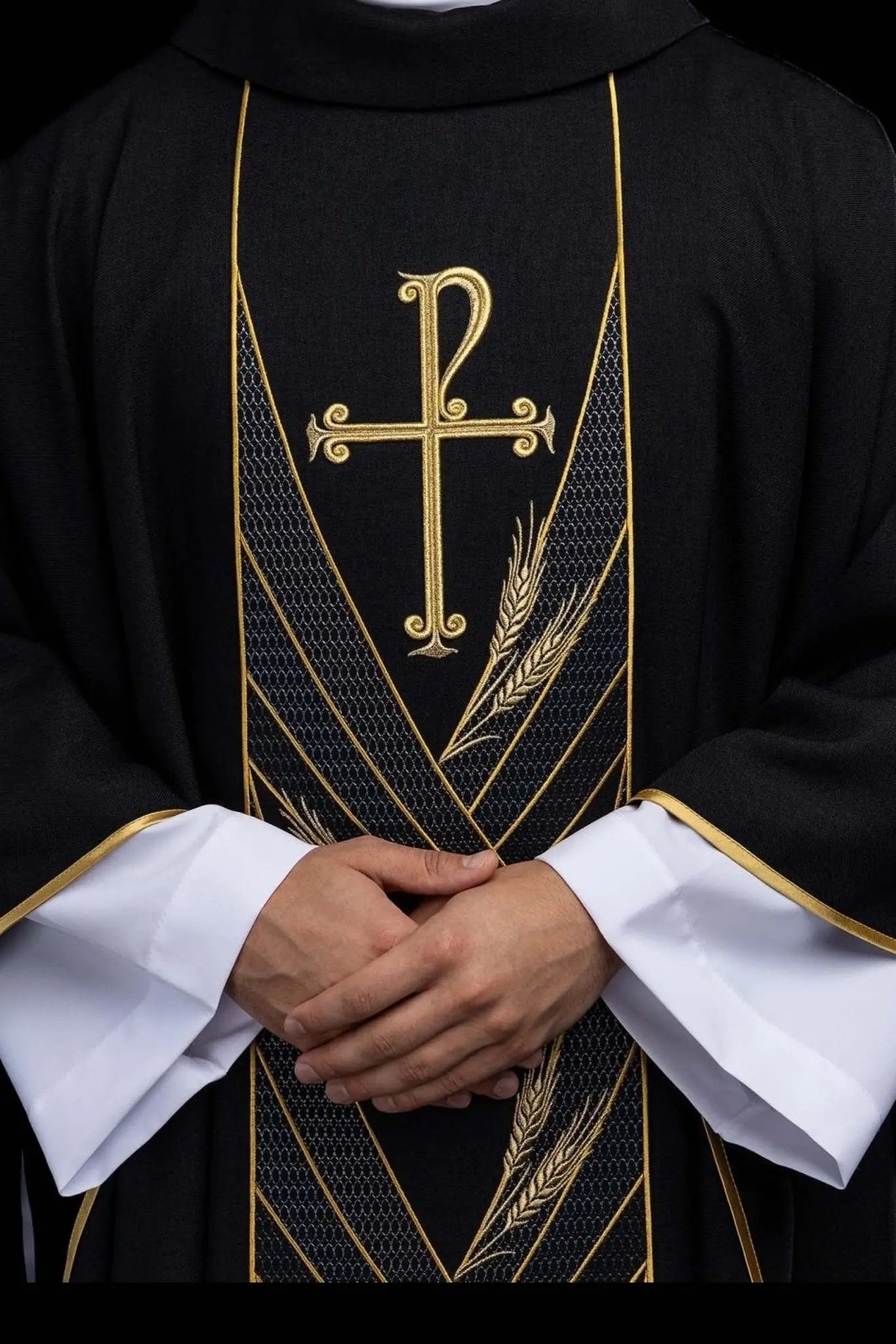
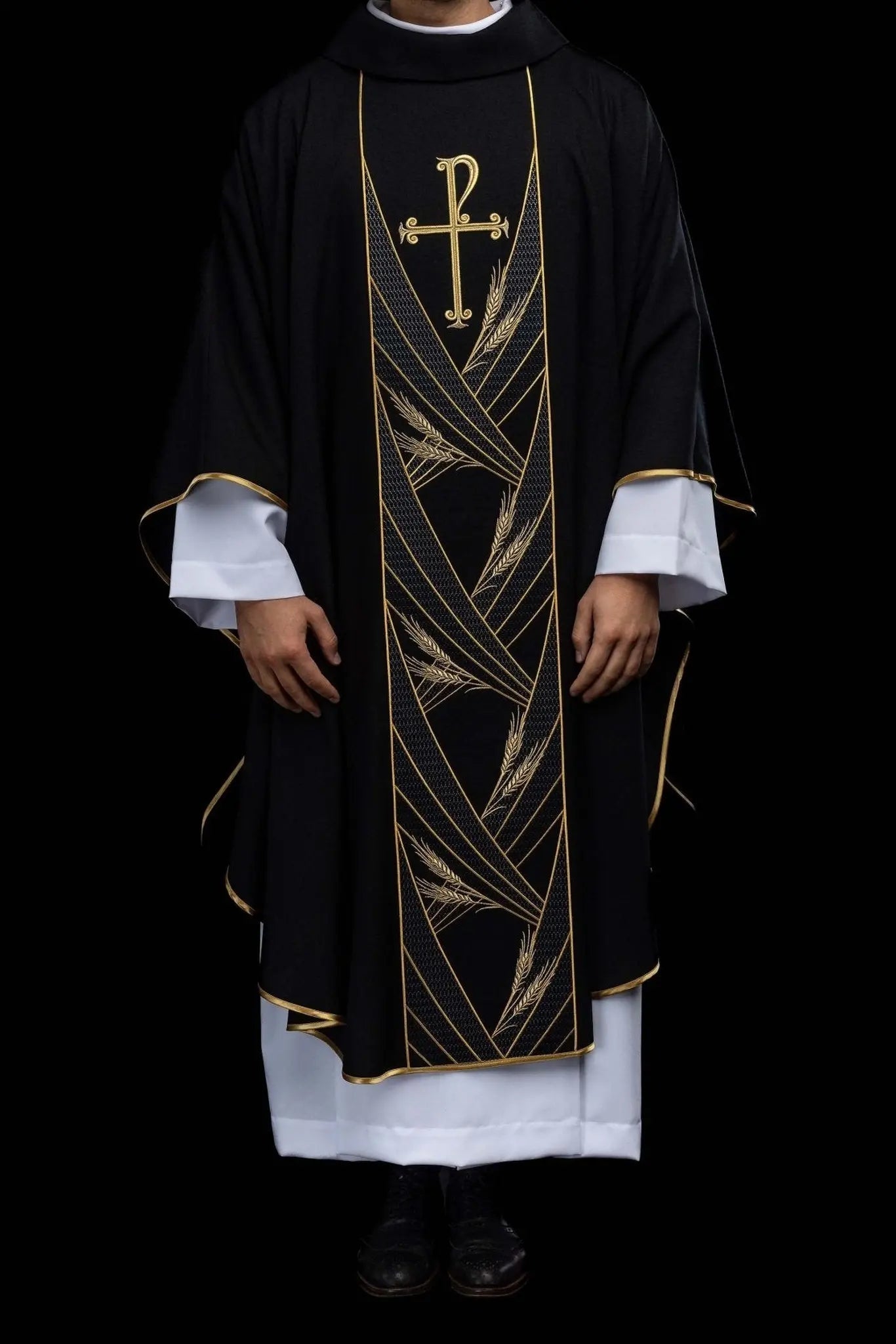
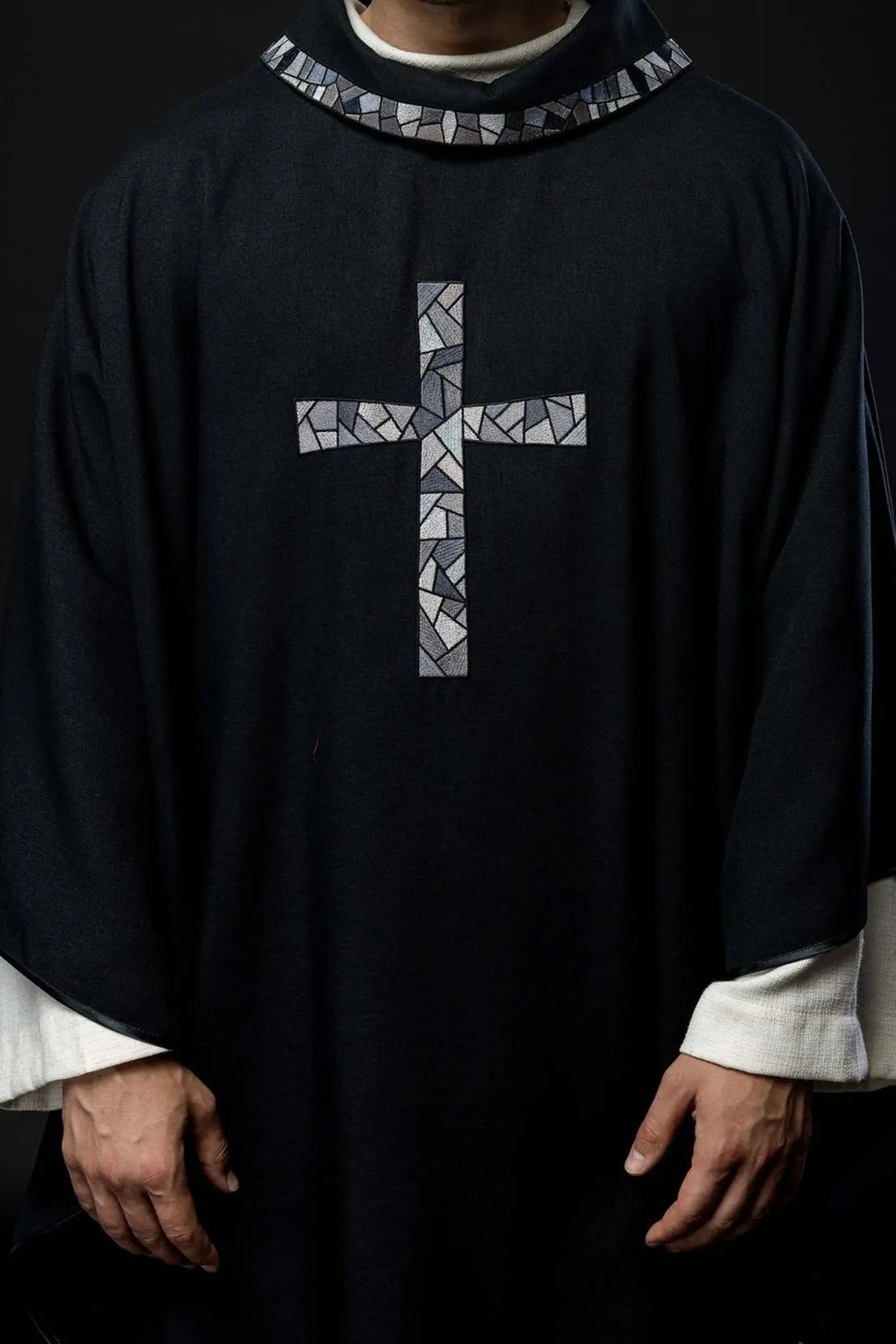
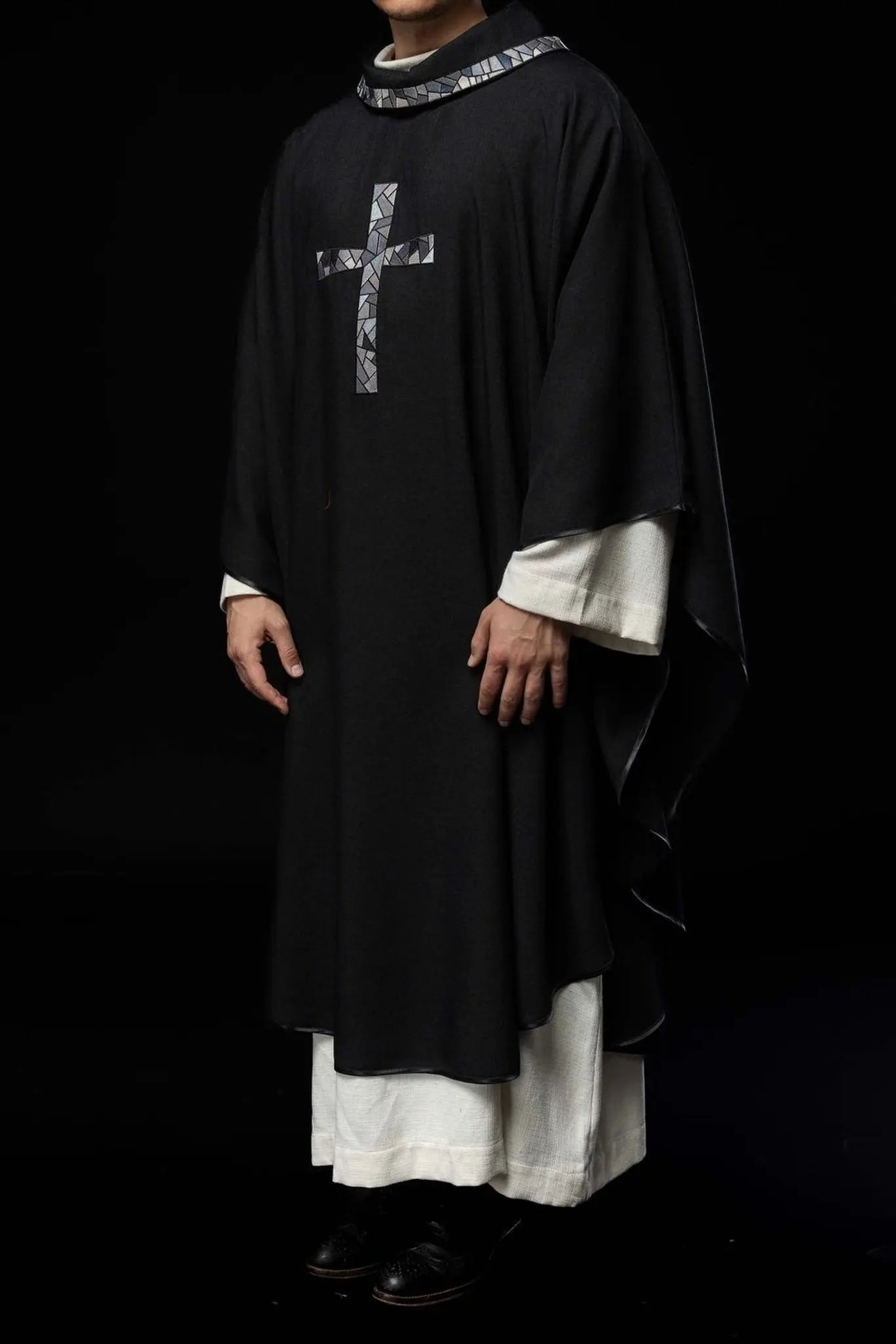
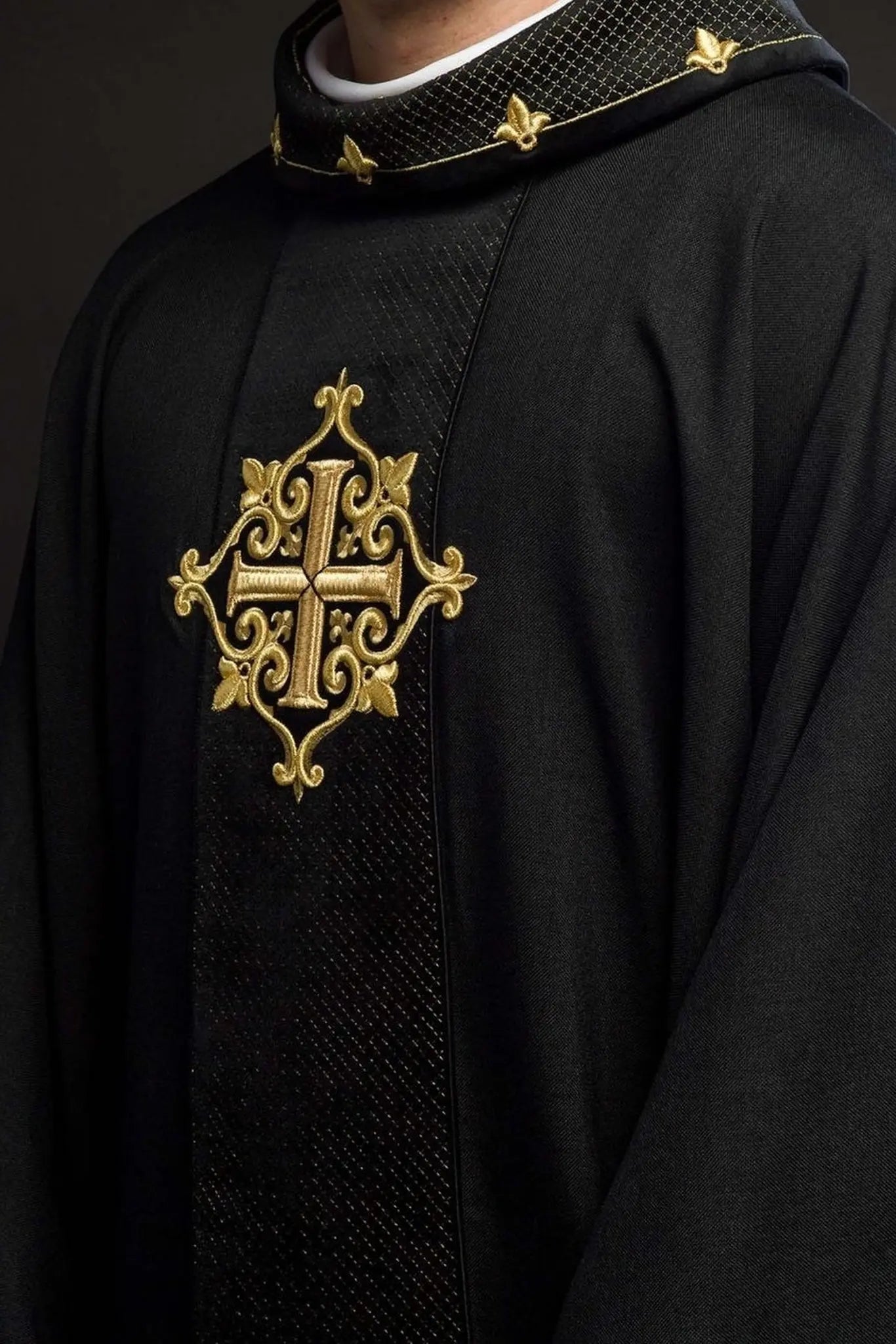
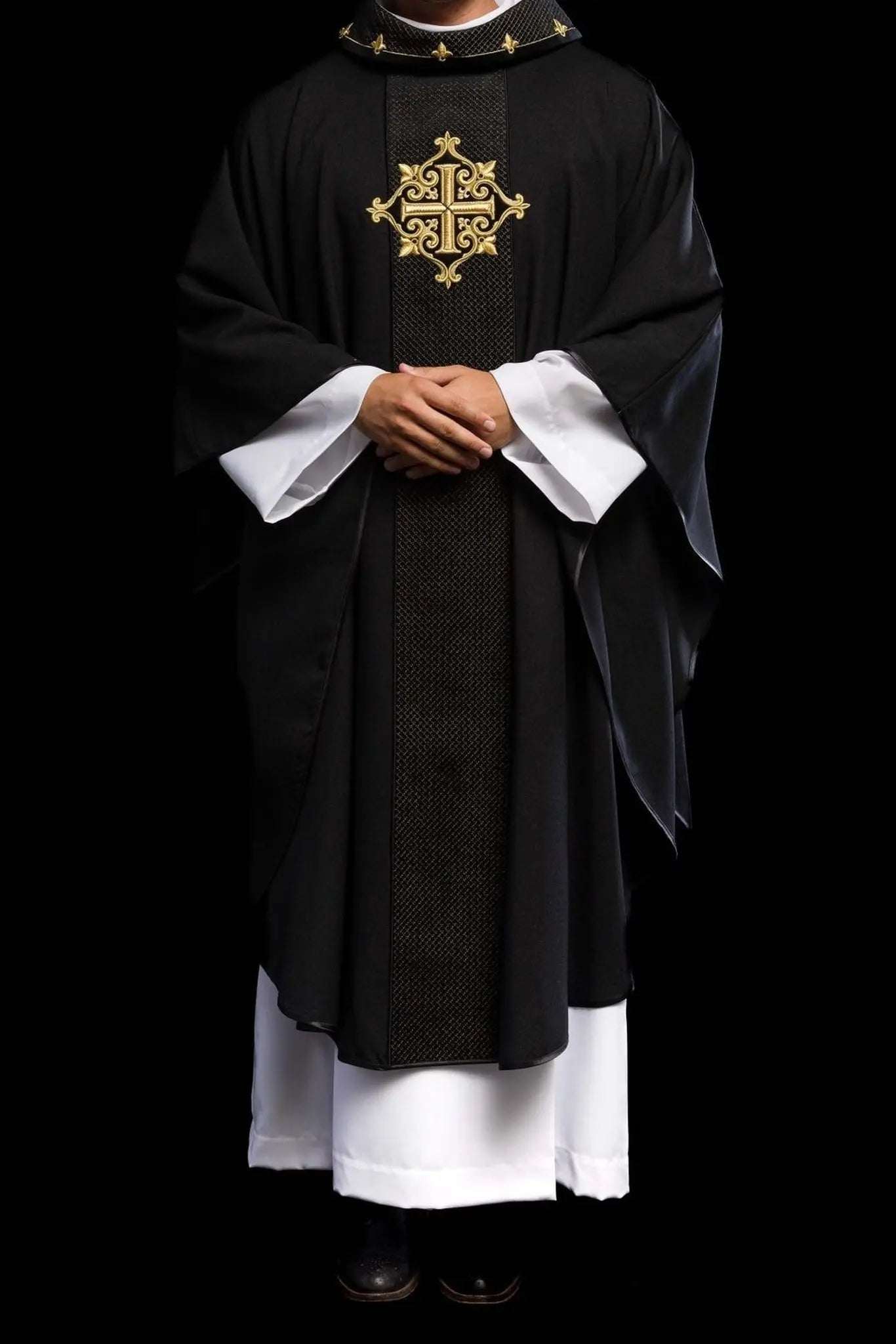
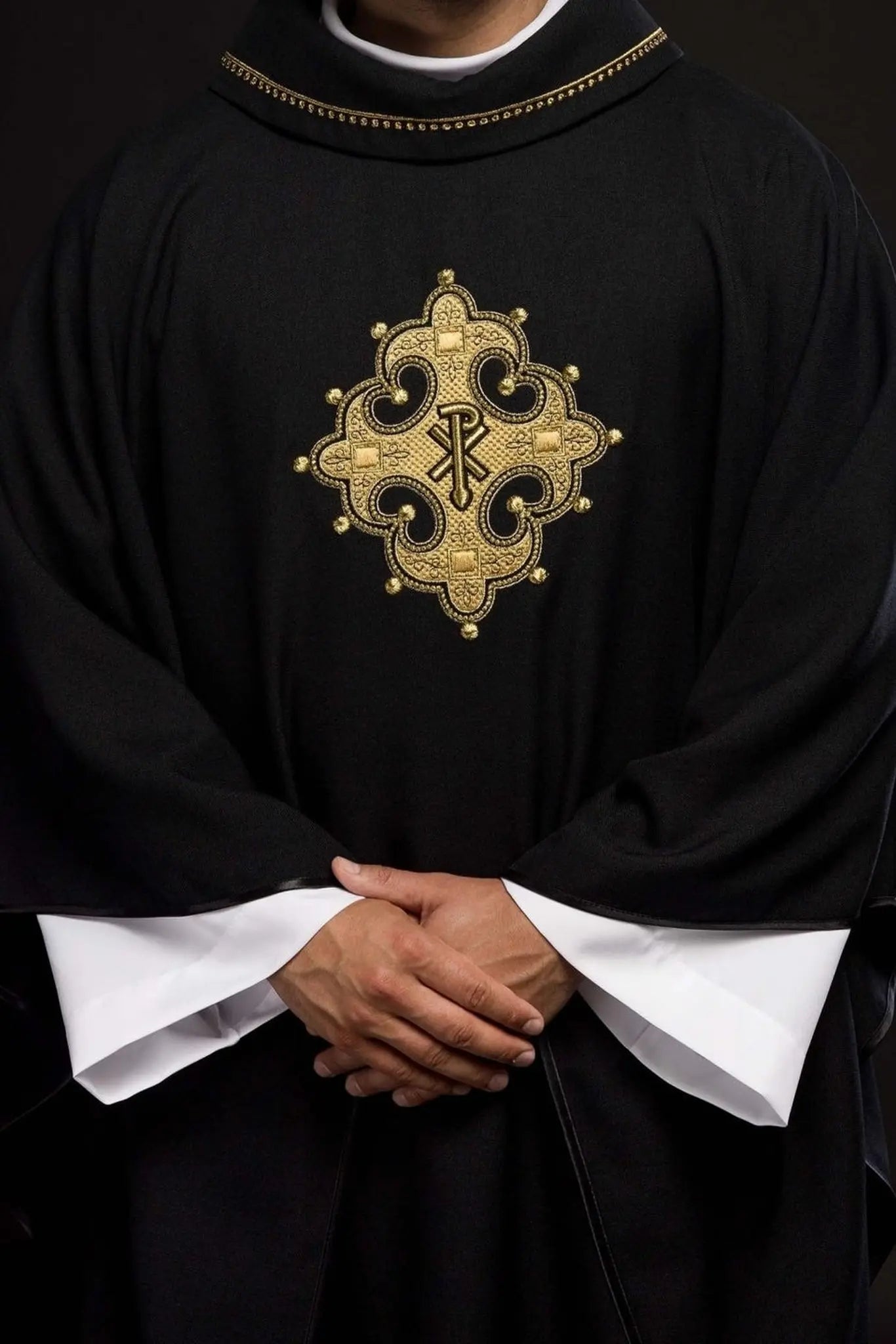
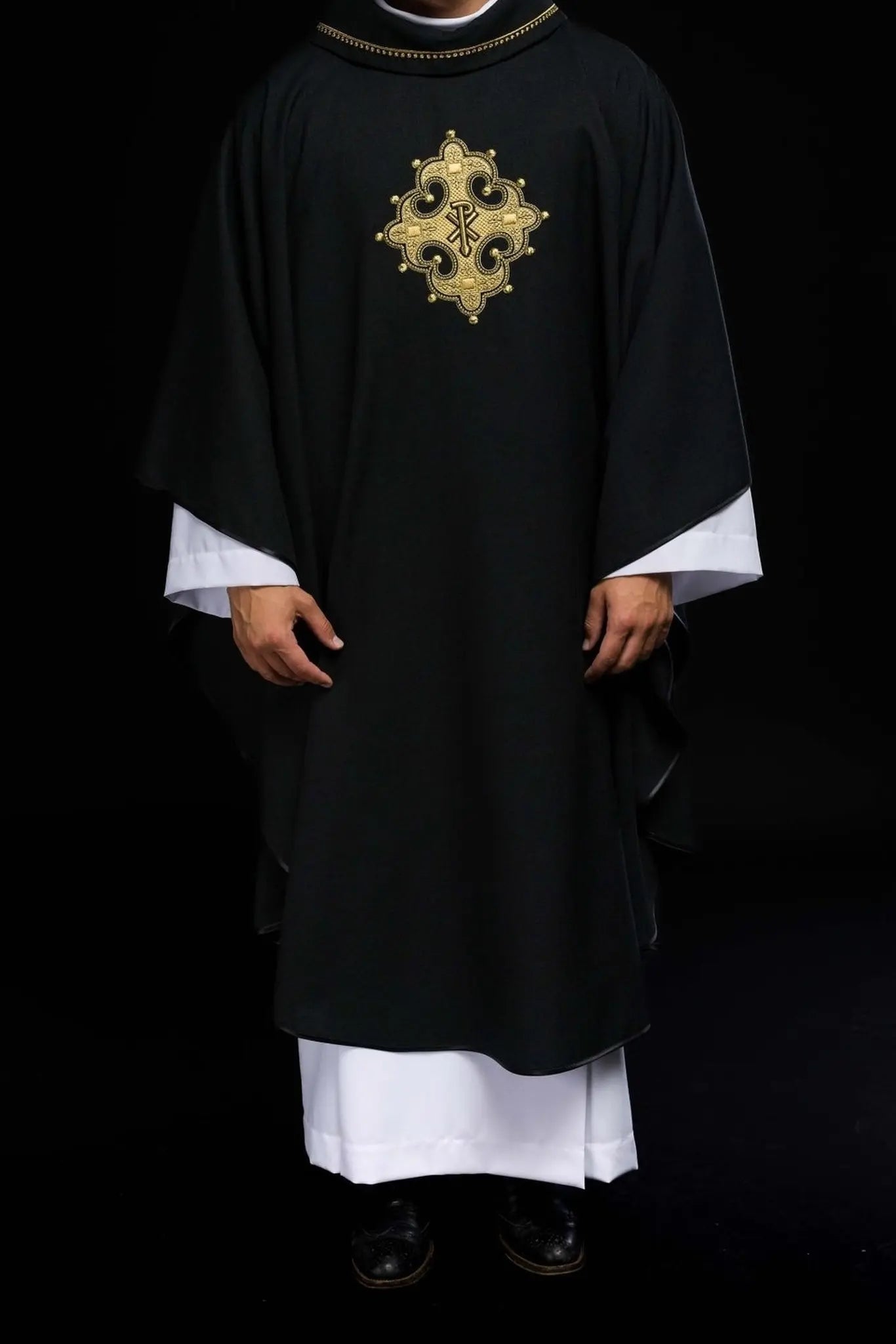
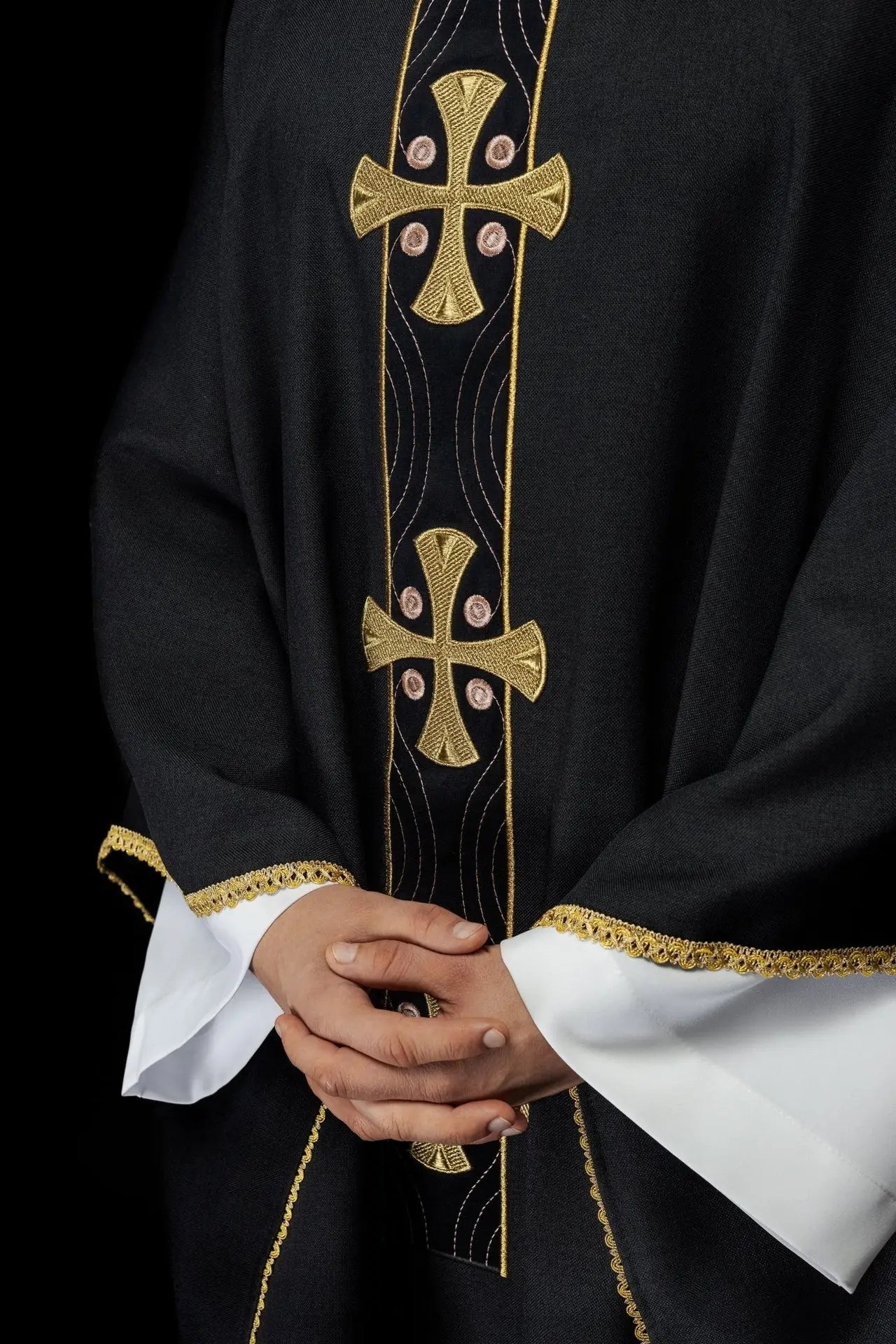
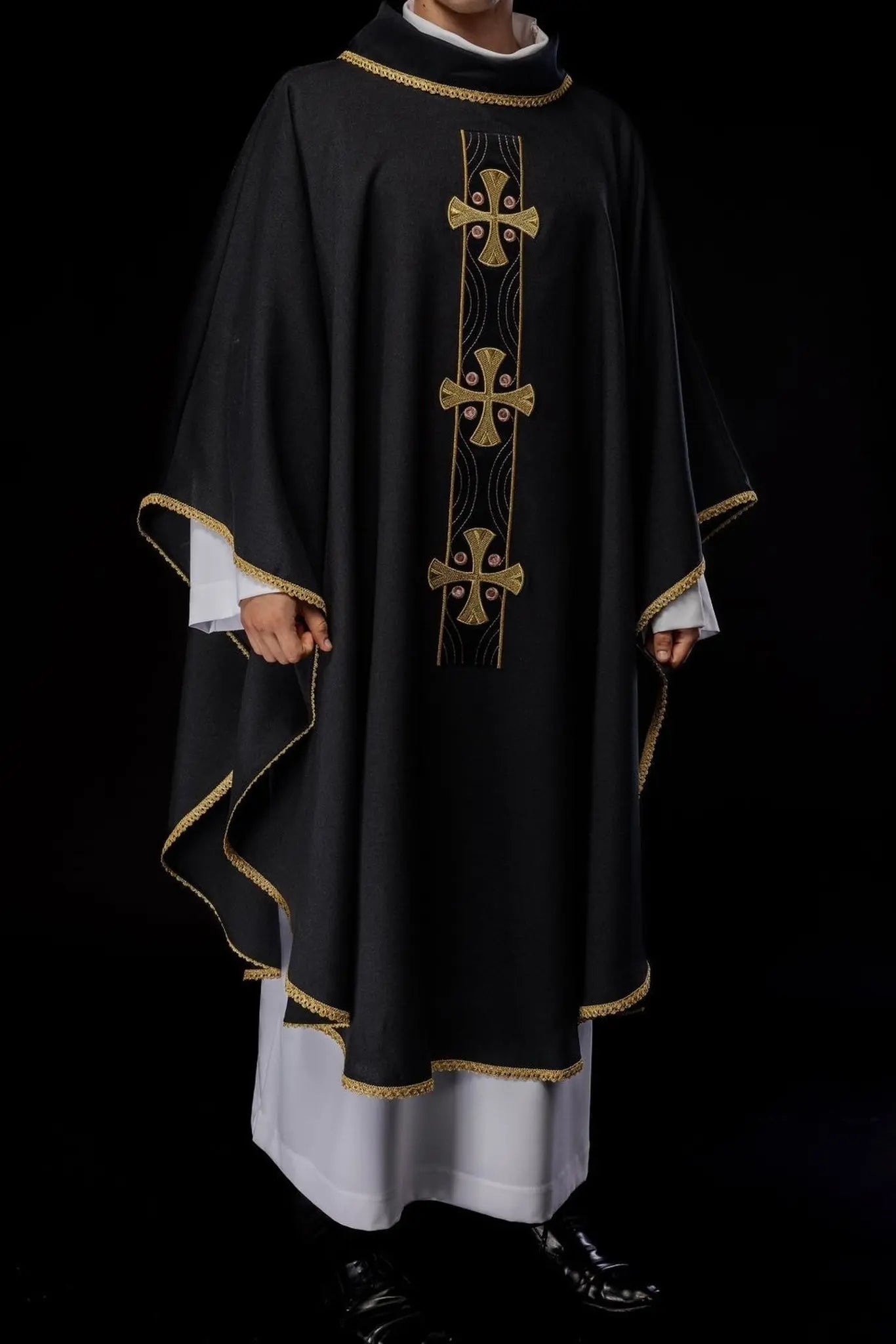
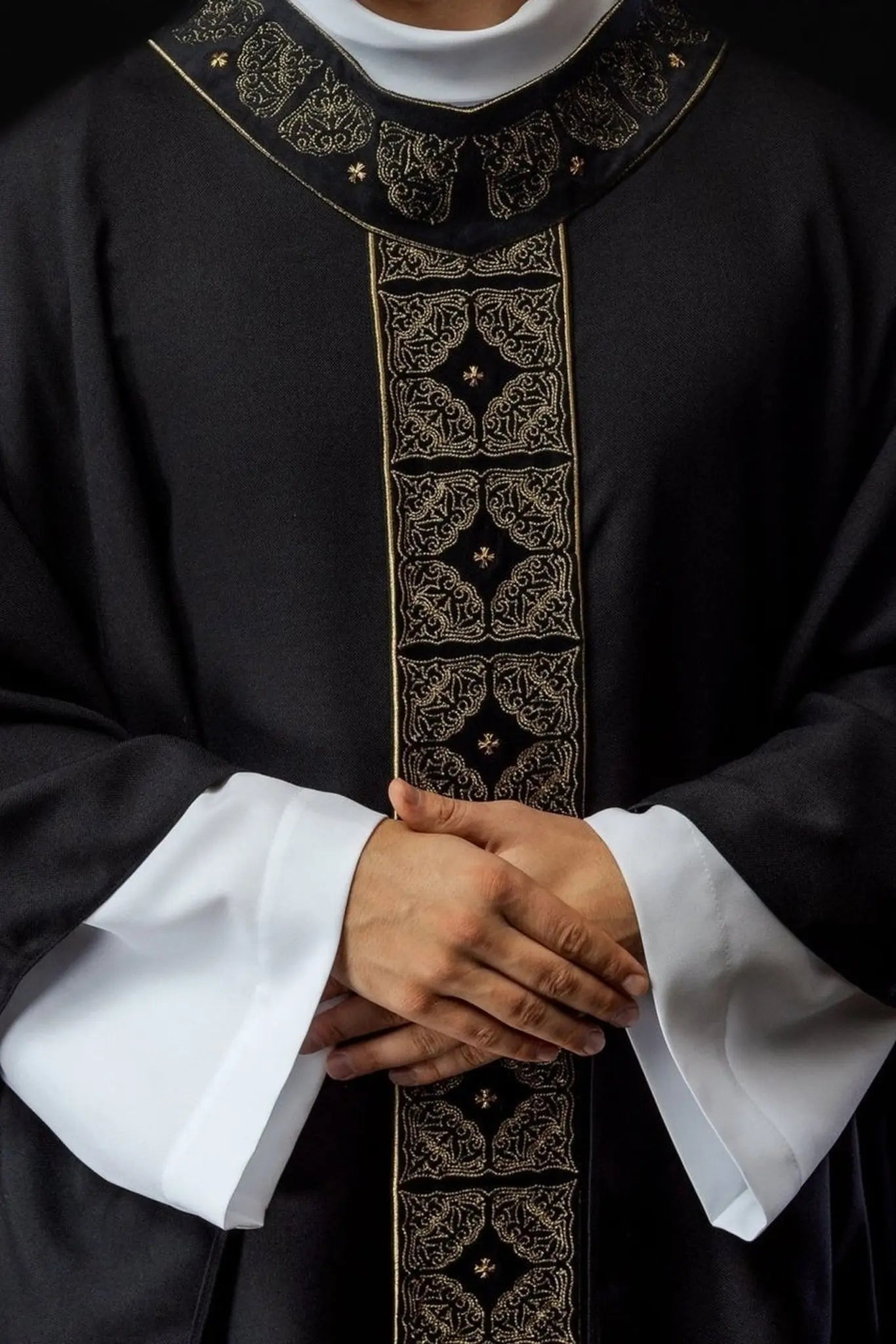
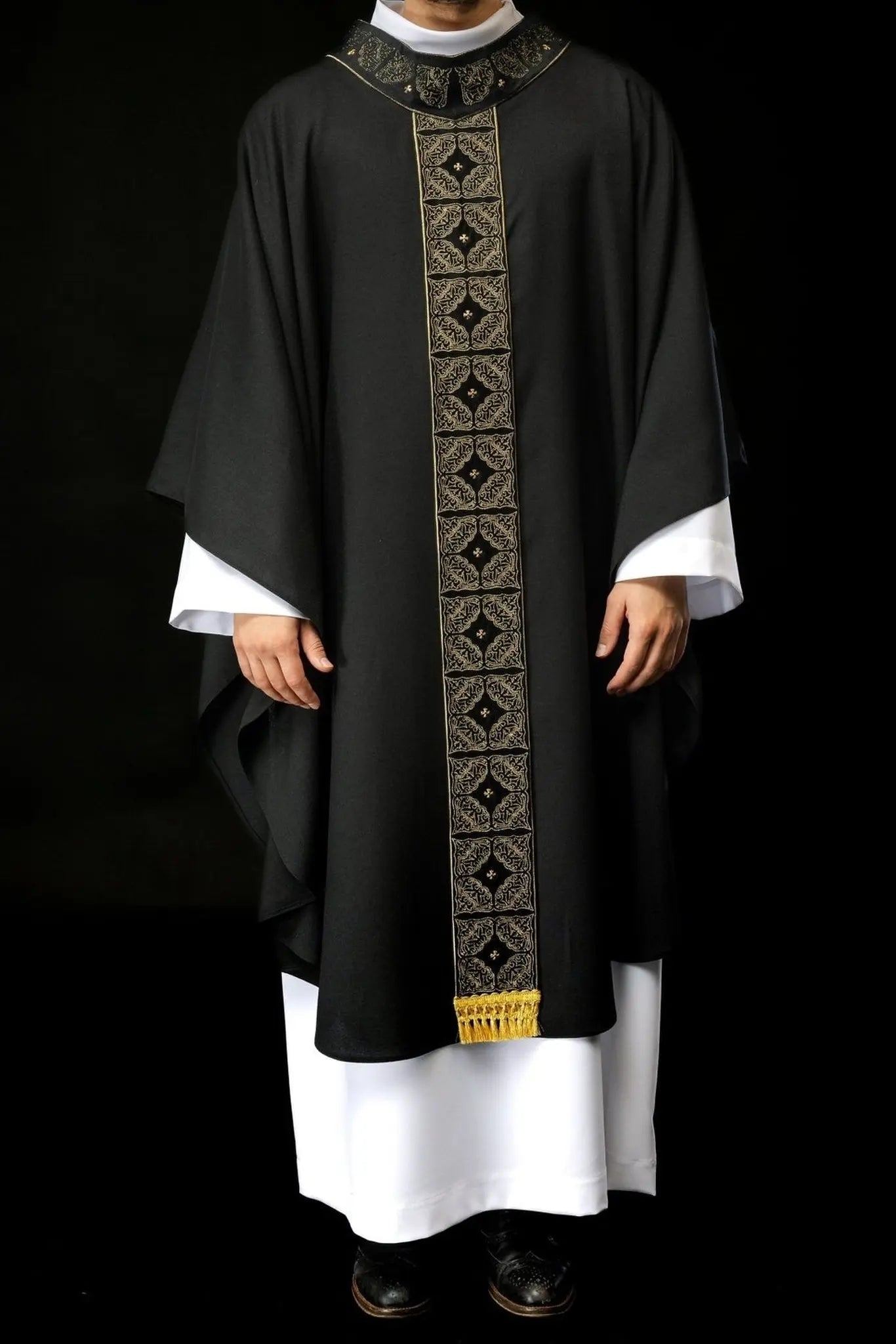

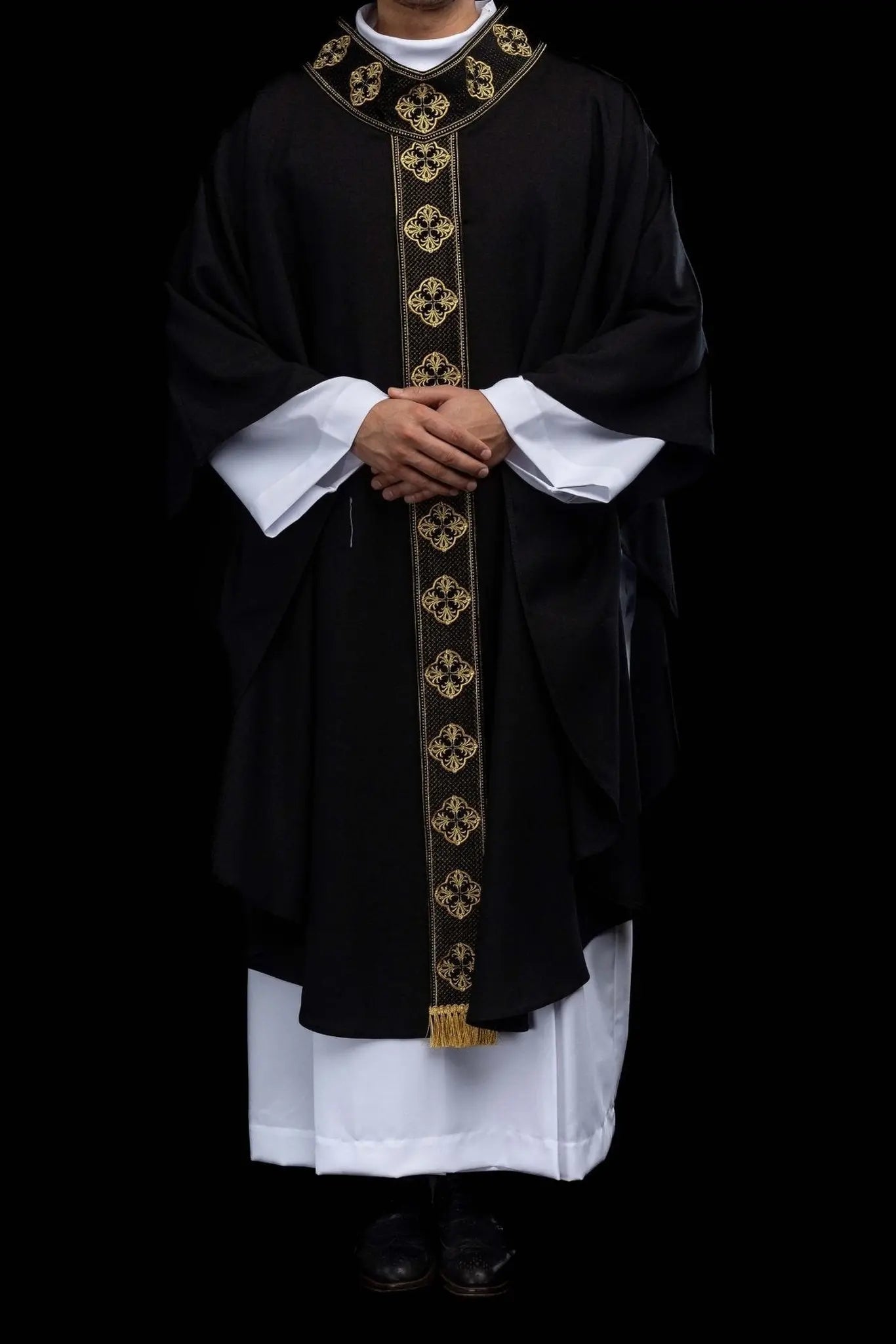
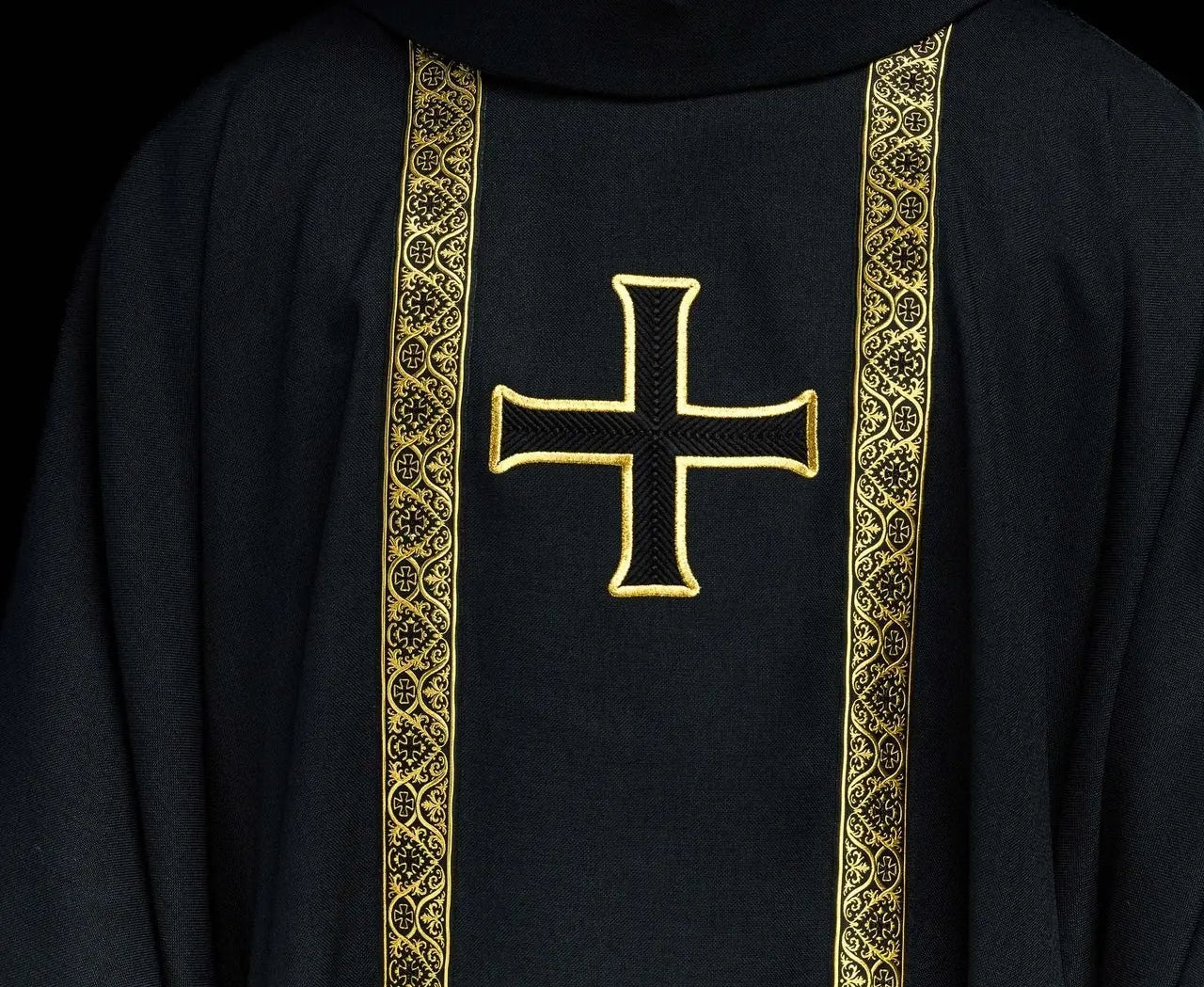
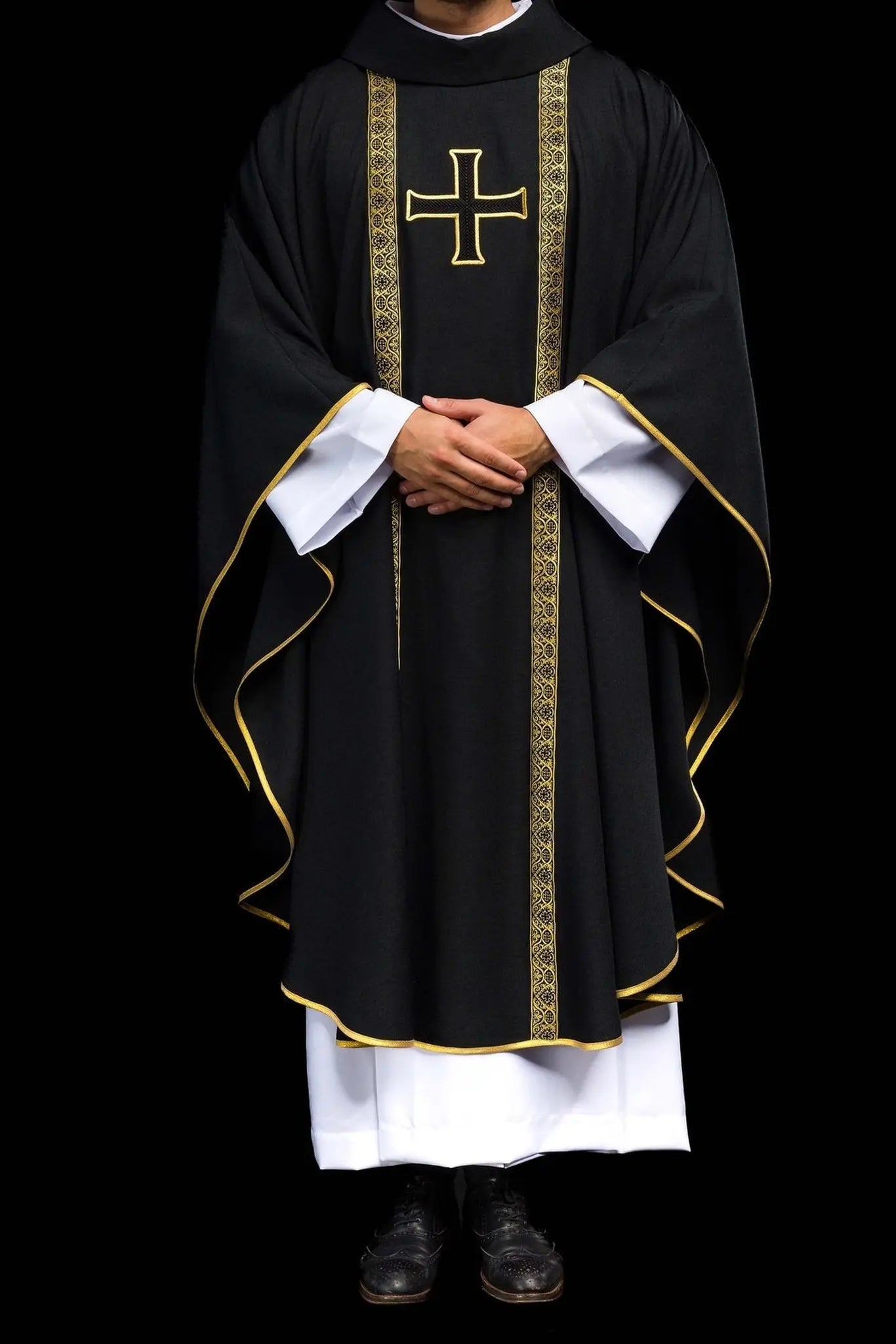
Black Funeral Chasubles for Requiem Masses and Solemn Liturgies
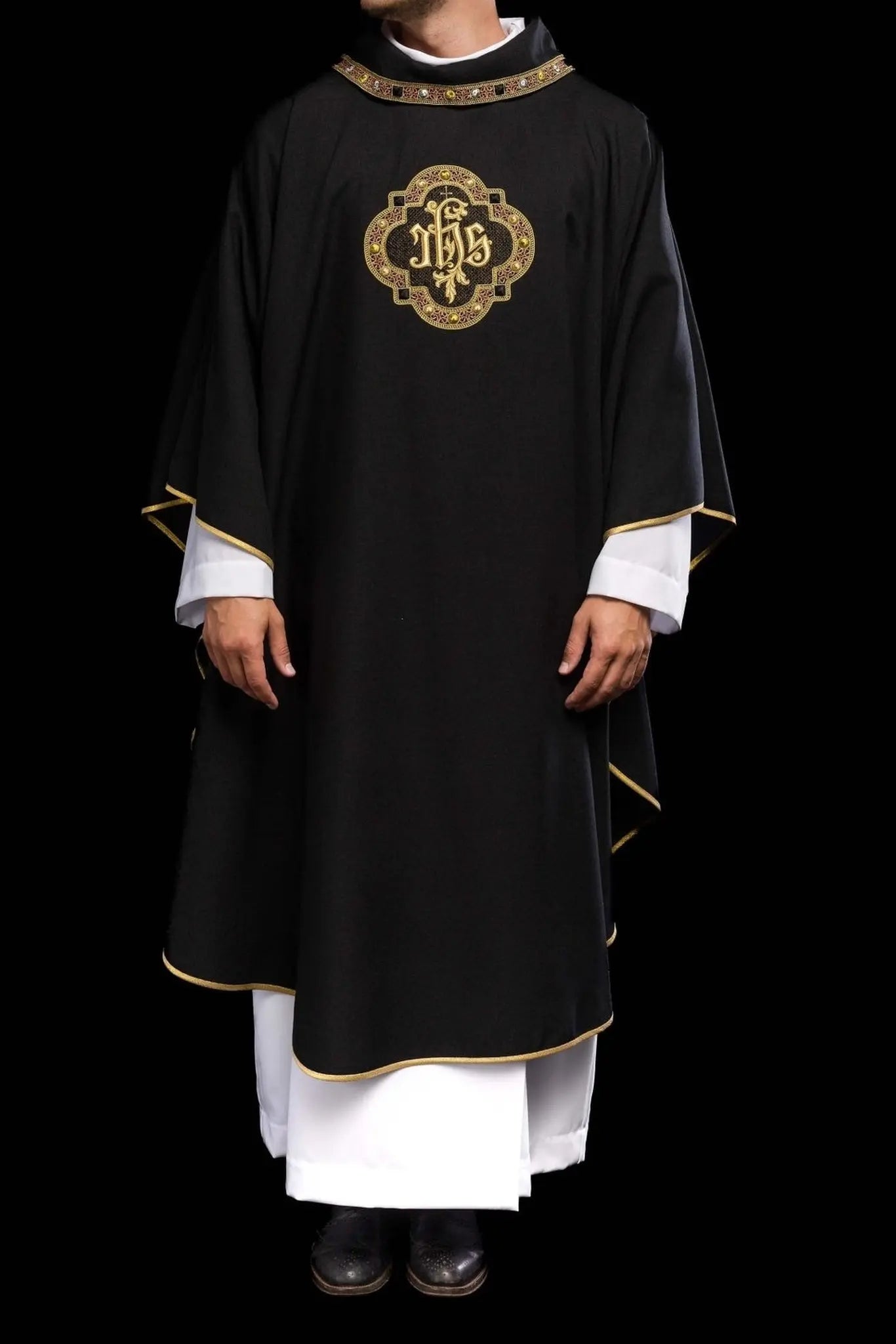
Black chasubles are liturgical vestments used when the Church gives visual expression to mourning, intercession, judgment, mercy, and Christian hope in the face of death. This collection gathers black chasubles for funeral Masses, Requiem Masses, All Souls' Day observances, memorial Masses, and other celebrations where black is permitted or customary according to the liturgical books and local practice. The chasuble is the outer Eucharistic vestment worn by the priest or bishop who celebrates Mass, so its color, cut, decoration, and fabric should support the character of the liturgy without drawing attention away from prayer.
A black chasuble is not simply a dark ceremonial garment. In the Catholic liturgical tradition, black has a specific theological language. It acknowledges the reality of death and grief while placing that grief within the paschal mystery of Christ. For funeral liturgies, this color can help the congregation enter a sober and reverent atmosphere, especially when the parish, religious community, or celebrant wishes to emphasize prayer for the deceased and the seriousness of eternal life. When chosen carefully, a black chasuble communicates restraint, dignity, and hope rather than despair.
This collection belongs within our wider range of chasubles, where you can compare liturgical colors, cuts, and devotional designs for the whole church year. Black chasubles are especially close in use to purple vestments, because both colors can express penitence and supplication, yet they are not interchangeable in every context. For seasons and celebrations where violet is prescribed or customary, see our purple chasubles. For a complete view of garments used at the altar, including chasubles, stoles, albs, copes, and related vestments, visit liturgical vestments.
What belongs in the black chasubles collection
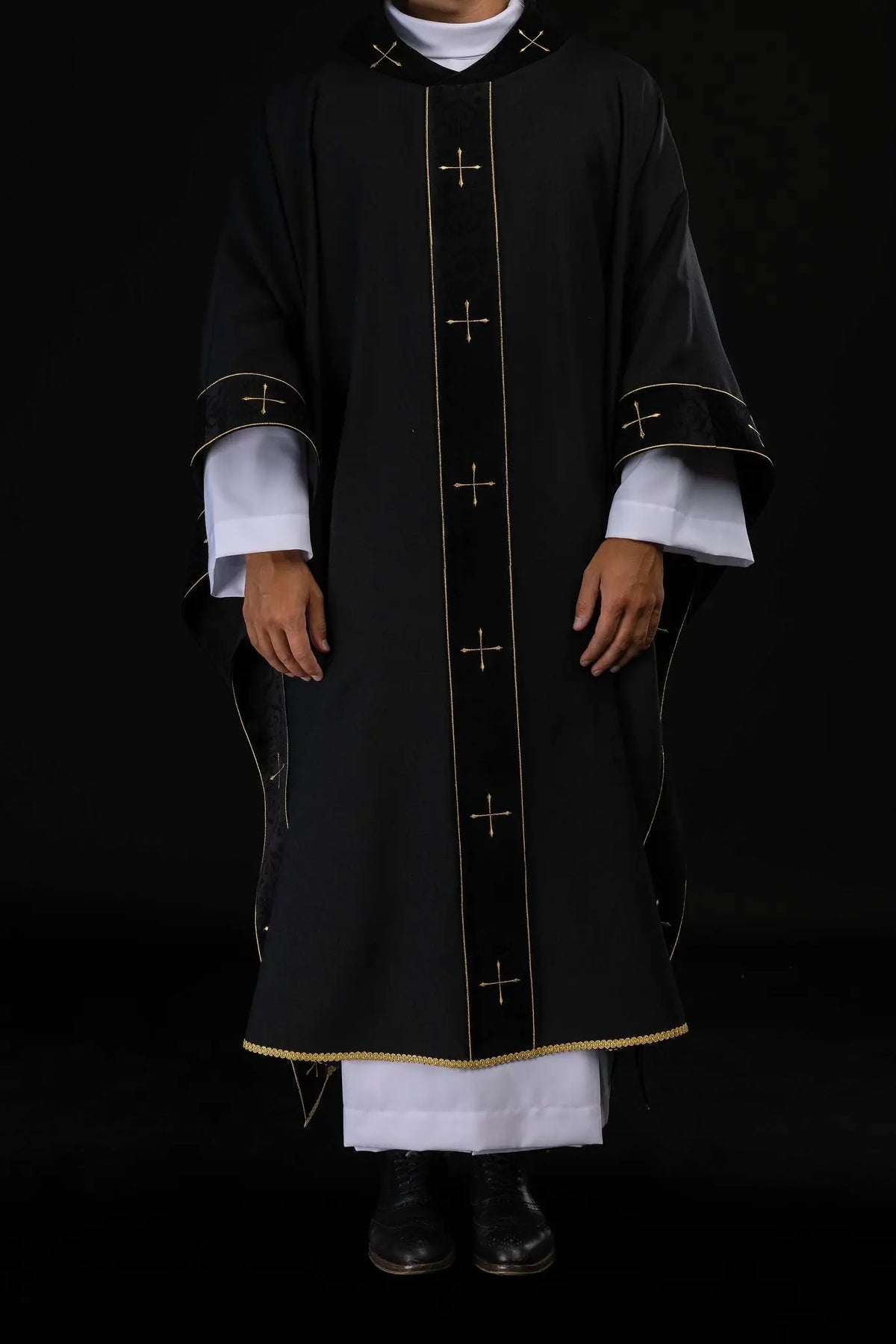
The collection is focused on black Eucharistic vestments for priests and bishops. Depending on the design, a black chasuble may be very simple, with only a discreet cross or orphrey, or more ornamented with embroidery in silver, gold, white, or contrasting dark tones. The most suitable choice depends on the liturgical setting. A parish funeral Mass may call for a dignified but not overly elaborate chasuble, while a solemn Requiem, All Souls' Day Mass, or traditional liturgical celebration may use richer ornamentation and a more formal cut.
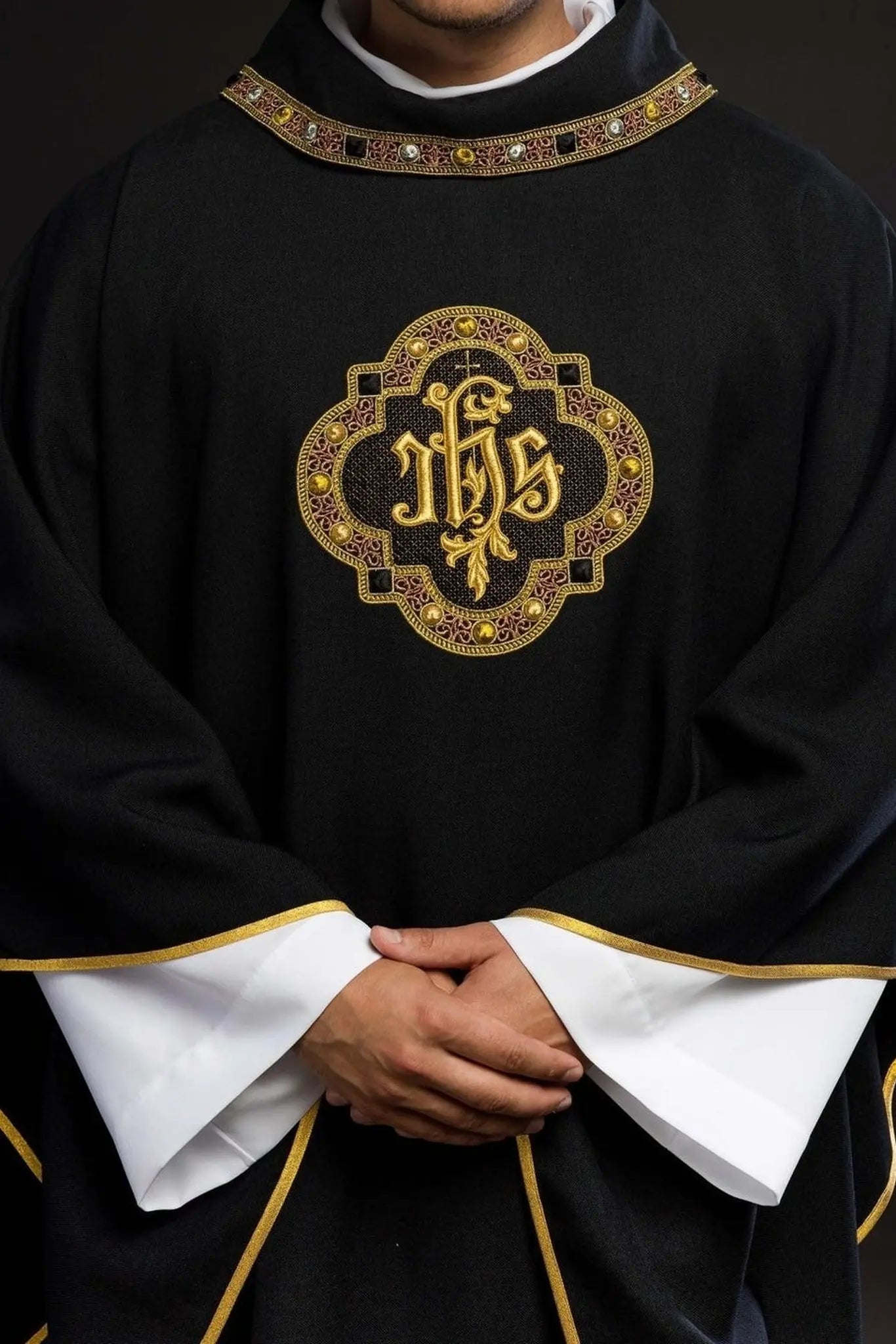
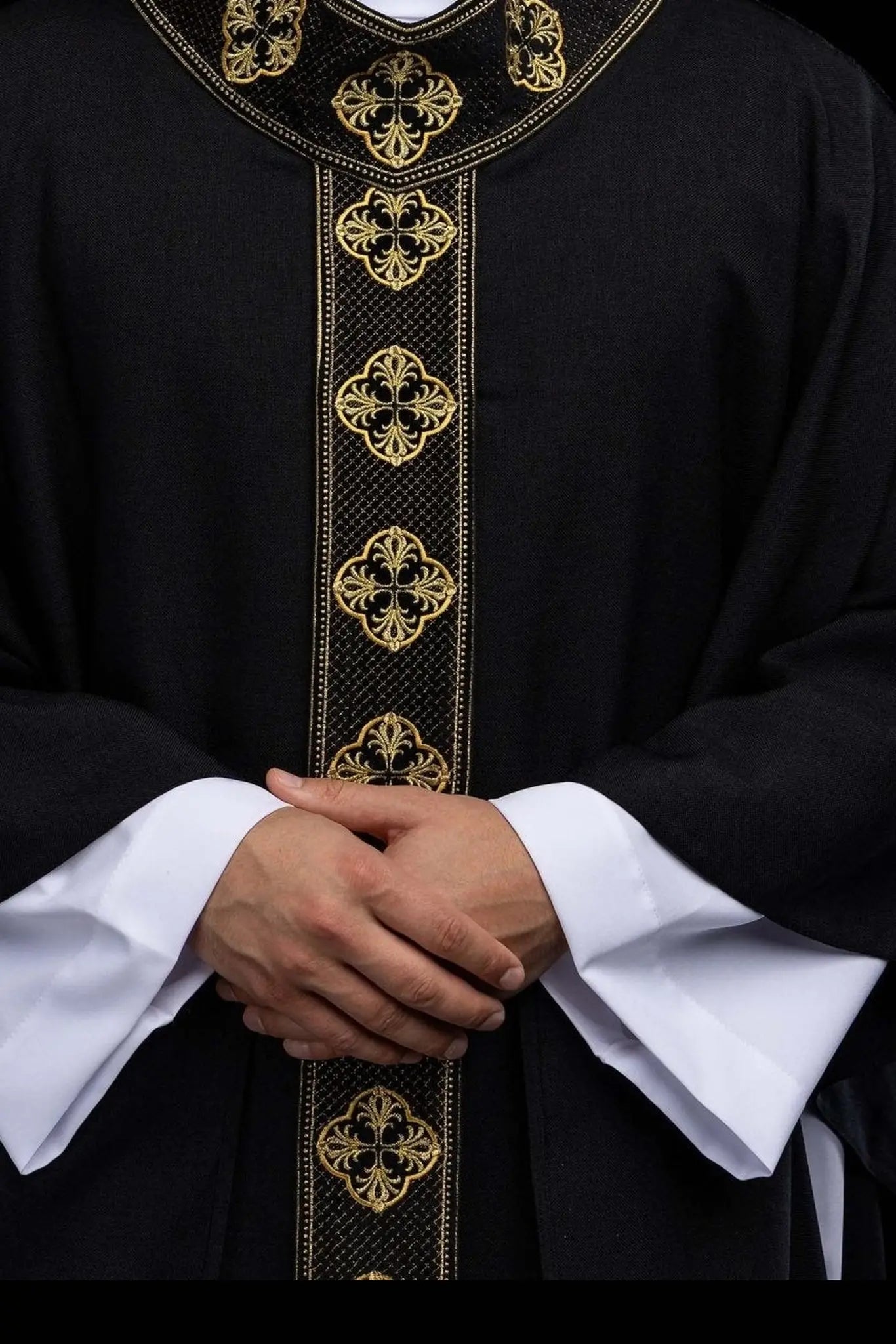
Black chasubles may include motifs such as the cross, IHS monogram, Chi Rho, wheat and grapes, the Lamb of God, Marian details, or ornamental bands that frame the vestment without making it visually heavy. Embroidery on black fabric has a distinctive role: it can make symbols clear from a distance while preserving the subdued tone of the celebration. Metallic thread can add solemnity, but for funeral use many churches prefer a restrained design that remains prayerful and balanced.
When building a complete set for funeral and memorial liturgies, the chasuble is usually paired with a stole in the same liturgical color. The stole is a separate vestment and should match the celebrant's role. Priests wear a priest stole under the chasuble, while deacons do not wear chasubles and instead use a diagonal deacon stole, often with a dalmatic when the liturgy calls for it. Related options can be found in clergy stoles and, for deacons, in deacon dalmatics.
Liturgical use of black chasubles
Black is most closely associated with Masses for the dead. It may be used for funeral Masses, Requiem Masses, All Souls' Day, anniversaries of death, and other memorial Masses where the rubrics and local custom allow it. The purpose of the color is not only to mark sorrow. It also directs the community toward prayer for the deceased, remembrance of human mortality, and trust in the resurrection promised by Christ. This is why a black chasuble can be especially fitting when the celebration is intentionally solemn and intercessory.
In many parishes, white or violet may also be used for funerals, depending on pastoral custom and the form of the Roman Rite being celebrated. White emphasizes baptismal hope and resurrection, violet expresses penitence and prayer, and black gives a more direct sign of mourning and supplication. Because these colors communicate different accents, the choice should follow the liturgical norms of the place, the celebrant's judgment, and the expectations of the community. A black funeral chasuble is particularly appropriate where the parish already uses black vestments for Requiem celebrations or where a more traditional visual language is desired.
Black should not be treated as a general substitute for the colors of Advent or Lent. Violet is the ordinary color for those seasons in the Roman Rite, while black is reserved for specific occasions connected with death and mourning where its use is permitted. A parish that needs vestments for Lent, Advent, penance services, or reconciliation liturgies should compare this collection with purple chasubles. The distinction helps preserve the meaning of each liturgical color and avoids confusion at the altar.
Roman and Gothic black chasubles
Cut is one of the most important decisions when choosing a black chasuble. A Gothic chasuble generally has a fuller, flowing form that drapes over the shoulders and arms. This style is common in many parish settings because it is comfortable, visible from the nave, and suitable for a broad range of liturgical interiors. A Gothic black chasuble can be plain and austere or decorated with vertical orphreys that give the vestment structure while keeping the overall appearance dignified.
A Roman chasuble has a more structured historical shape, often associated with traditional vestment design and solemn celebrations. It may be preferred for Requiem Masses in communities that use a more classical or formal liturgical style. Roman black chasubles often place stronger emphasis on the central orphrey, the cross form, and embroidered details. To compare this cut with other colors and designs, see our Roman chasubles.
Both cuts can be appropriate for funeral and memorial Masses. The best choice depends on the celebrant's preference, the rite being celebrated, the climate of the church, and how the vestment will be stored and maintained. A fuller Gothic cut may be easier for regular parish use, while a Roman style may suit special solemn Requiem liturgies or communities with established traditional vestment sets. In either case, the chasuble should allow the celebrant to move comfortably at the altar and should not restrict the gestures of the Eucharistic liturgy.
Embroidery, symbols, and color accents
Black chasubles often rely on contrast. Silver embroidery creates a cool, restrained, and commemorative effect. Gold can express solemnity and the victory of Christ without removing the mourning character of the vestment. White or ecru motifs can make crosses, monograms, or ornamental lines more visible while remaining discreet. Some designs use deep tone-on-tone decoration for churches that prefer a very quiet aesthetic. Each approach can be suitable, but it should match the intended use of the vestment.
For funeral liturgies, the most common and pastorally clear symbols are the cross, IHS, the chalice and host, wheat and grapes, or simple ornamental bands. These motifs connect the vestment to the Eucharist and to the hope of salvation. More elaborate imagery may be appropriate for solemn commemorations, religious houses, or special Requiem Masses, but a parish that expects frequent use may prefer a design that is easily understood and not too occasion-specific.
If the church already uses coordinated altar linen or other sanctuary textiles for funerals and memorials, the chasuble can be chosen to harmonize with them. Matching does not require every item to have the same embroidery. Often it is enough to repeat one visual language: a simple cross, a similar metallic thread, or a restrained border. For altar items that complete the setting, compare this collection with altar linens and chalice veils.
How to choose a black chasuble for your church
Begin with the liturgical purpose. If the vestment will be used mainly for parish funerals, choose a design that is dignified, durable, and easy to wear regularly. If it will be reserved for All Souls' Day, annual memorial Masses, or solemn Requiem celebrations, a richer fabric or more formal embroidery may be appropriate. For a vestment that must serve many contexts, a balanced black chasuble with a clear cross and moderate ornamentation is often the safest choice.
Next consider the celebrant and the style of the sanctuary. A very ornate vestment may look fitting in a large church or solemn traditional celebration, while a simpler design may serve better in a chapel, hospital, cemetery chapel, or parish where funerals are frequent and pastoral simplicity is valued. The scale of the embroidery should also be considered. Large motifs can be visible in a wide nave, while smaller details may suit intimate liturgies and close viewing.
Fabric and lining matter as much as appearance. A black chasuble should drape cleanly and remain comfortable during the full celebration of Mass. Lightweight fabrics are practical for regular use and warmer climates. Heavier fabrics can give a more formal appearance, but they should still allow natural movement. Strong seams, careful finishing, and stable embroidery help the vestment maintain its shape and dignity after repeated use.
Size and cut should be selected with the celebrant's height and movement in mind. A chasuble that is too short may look incomplete, while one that is too long can interfere with walking or genuflecting. If the church has multiple celebrants, a broadly wearable cut is often best. For a matched sacristy set, it is also useful to choose a black chasuble whose design can be coordinated with a stole, chalice veil, burse, or other items used in solemn liturgy.
How black chasubles relate to other liturgical colors
Black has a distinct place among liturgical colors. It is not used to replace green for Ordinary Time, red for the Passion of the Lord, martyrs, or the Holy Spirit, rose for Gaudete and Laetare, or white and gold for feasts of the Lord and saints. Its strength lies in its clarity for mourning and intercession. When a parish keeps a black chasuble in the sacristy, it is usually because the community wants a vestment specifically suited to funerals and Masses for the dead.
Because many churches also use violet for funerals, black and purple vestments are sometimes considered together. Purple has a broader penitential use in Advent and Lent, while black speaks more directly of death and mourning. Maintaining both colors can give a sacristy better liturgical flexibility. A purple chasuble can serve seasons and penitential rites, while a black funeral chasuble remains available for Requiem and memorial liturgies where that tradition is pastorally appropriate.
White and gold can also appear at funeral Masses in some places because they emphasize resurrection and baptismal hope. That does not diminish the value of black; rather, it shows that funeral liturgy contains several theological accents. Black is strongest when the community wishes to pray with sobriety, commend the deceased to God's mercy, and remember that Christian hope does not erase grief but transforms it in Christ.
Care and storage for black liturgical vestments
Black fabric can show dust, lint, and creases more visibly than some other colors, so careful storage is important. A chasuble should be hung on a broad vestment hanger or stored flat in a way that protects the embroidery and prevents sharp folds. If the vestment includes metallic thread, raised embroidery, or delicate appliqué, avoid pressing directly on the decorated areas. A breathable garment cover can help protect the chasuble while allowing the fabric to remain fresh.
Cleaning should follow the care guidance for the specific fabric and embroidery. Many embroidered vestments should be professionally cleaned rather than machine washed. Spot cleaning should be done cautiously, especially on black fabric, because improper treatment can leave visible marks or affect the finish of the material. After use at a funeral or cemetery chapel, the vestment should be checked for wax, incense residue, dust, and moisture before being returned to the sacristy wardrobe.
Good care is not only a matter of appearance. Liturgical vestments are set apart for sacred use, and their condition affects how they serve the dignity of worship. A black chasuble that is clean, well stored, and properly matched with the rest of the vesture helps the celebrant and congregation enter the solemnity of the Mass without distraction.
Building a coherent funeral vestment set
A black chasuble may be purchased on its own, but many churches prefer to plan a coherent funeral set. At minimum, the priest usually needs a matching or coordinating stole. In more formal settings, the sacristy may also include a chalice veil, burse, pall, altar linens, or a cope for processions and rites outside Mass, depending on local practice. The goal is not to make every item decorative, but to ensure that the sanctuary has a calm and unified appearance.
When choosing related pieces, repeat the same level of solemnity. A very simple chasuble pairs best with understated accessories, while a richly embroidered Roman set may call for more formal coordinating textiles. The color of the embroidery can guide the rest of the selection. Silver details can be matched with silver accents on other items; gold details can harmonize with gilded vessels and traditional sanctuary furnishings.
Parishes that are renewing their sacristy may also compare black chasubles with adjacent chasuble collections for the main liturgical year. Funeral vestments are important, but they should fit into a complete wardrobe that includes green, red, purple, white or ecru, gold, Marian, and rose options. A well-planned sacristy makes it easier to observe the liturgical calendar with clarity and reverence.
Frequently Asked Questions about Black Funeral Chasubles (FAQ)
When is a black chasuble used?
A black chasuble is most commonly used for Masses for the dead, including funeral Masses, Requiem Masses, All Souls' Day, and memorial Masses, where the rubrics and local custom allow black. It visually supports prayer for the deceased and gives the liturgy a sober, intercessory character.
Can a black chasuble be used instead of purple for Lent or Advent?
No. Purple is the normal color for Lent and Advent in the Roman Rite. Black has a more specific association with death, mourning, and certain Masses for the dead. If the church needs vestments for penitential seasons, a purple chasuble should be chosen separately.
Who wears a black chasuble?
The chasuble is worn by a priest or bishop when celebrating Mass. A deacon does not wear a chasuble; he wears a deacon stole and, when appropriate, a dalmatic. For a complete funeral liturgy, the priest's black chasuble may be coordinated with suitable stoles or deacon vestments.
Should a funeral chasuble be plain or embroidered?
Both options can be appropriate. A plain or lightly embroidered black chasuble is often practical for regular parish funerals, while richer embroidery may suit solemn Requiem Masses or All Souls' Day. The best design is one that remains dignified and does not overpower the prayer of the liturgy.
What is the difference between a Roman and Gothic black chasuble?
A Gothic chasuble has a fuller, flowing shape and is widely used in parish liturgies. A Roman chasuble has a more structured traditional form and is often chosen for more formal or traditional celebrations. The liturgical color is the same, but the cut changes the visual style and the way the vestment drapes.
How should a black chasuble be stored?
Store it on a suitable vestment hanger or flat in a sacristy drawer, protecting embroidery from pressure and sharp folds. Because black fabric can show dust and lint easily, it should be covered and inspected after use, especially after funerals, incense-heavy liturgies, or cemetery chapel celebrations.