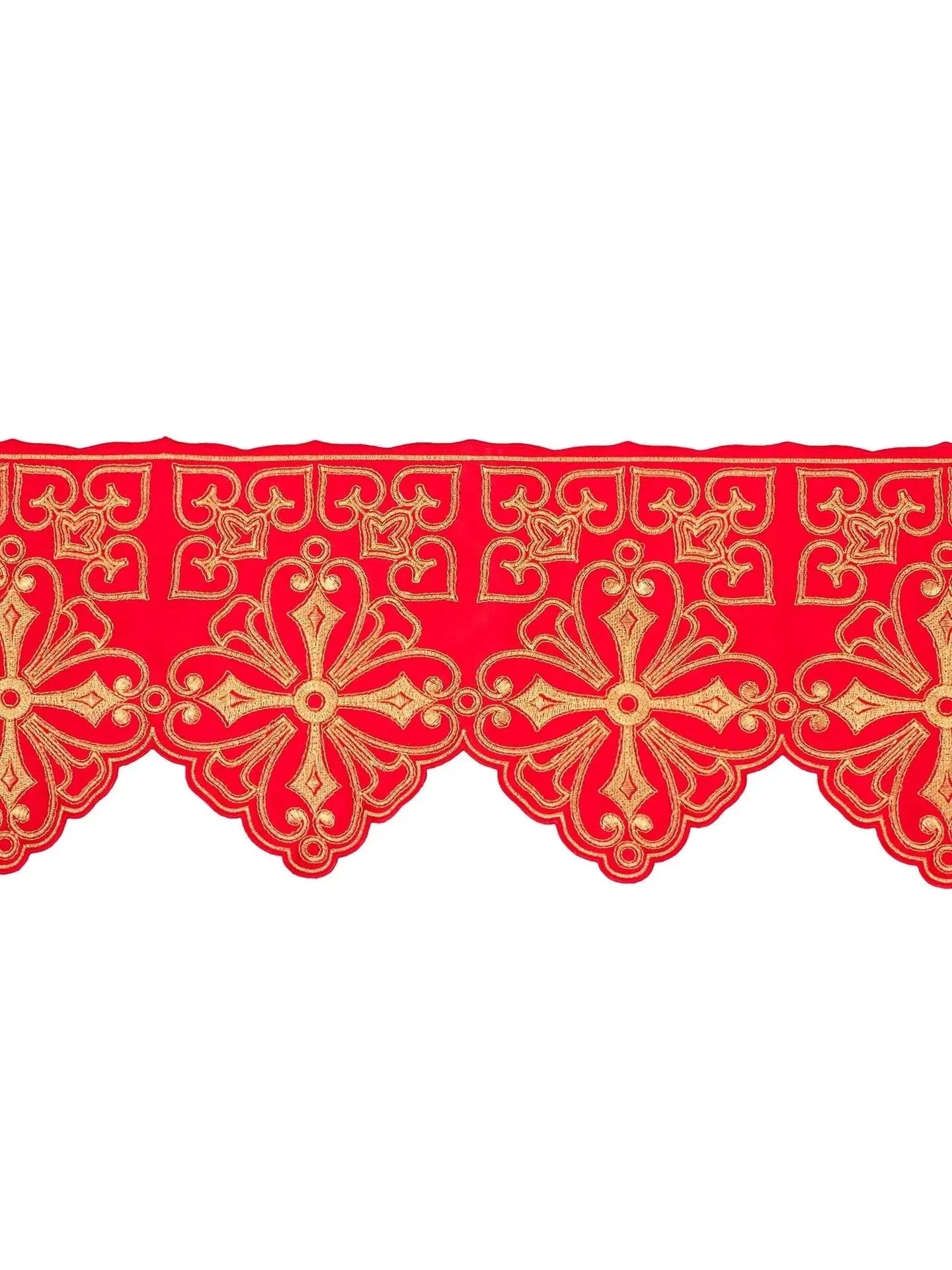
Altar Superfrontals for Church Altars
Embroidered superfrontals for a dignified altar setting
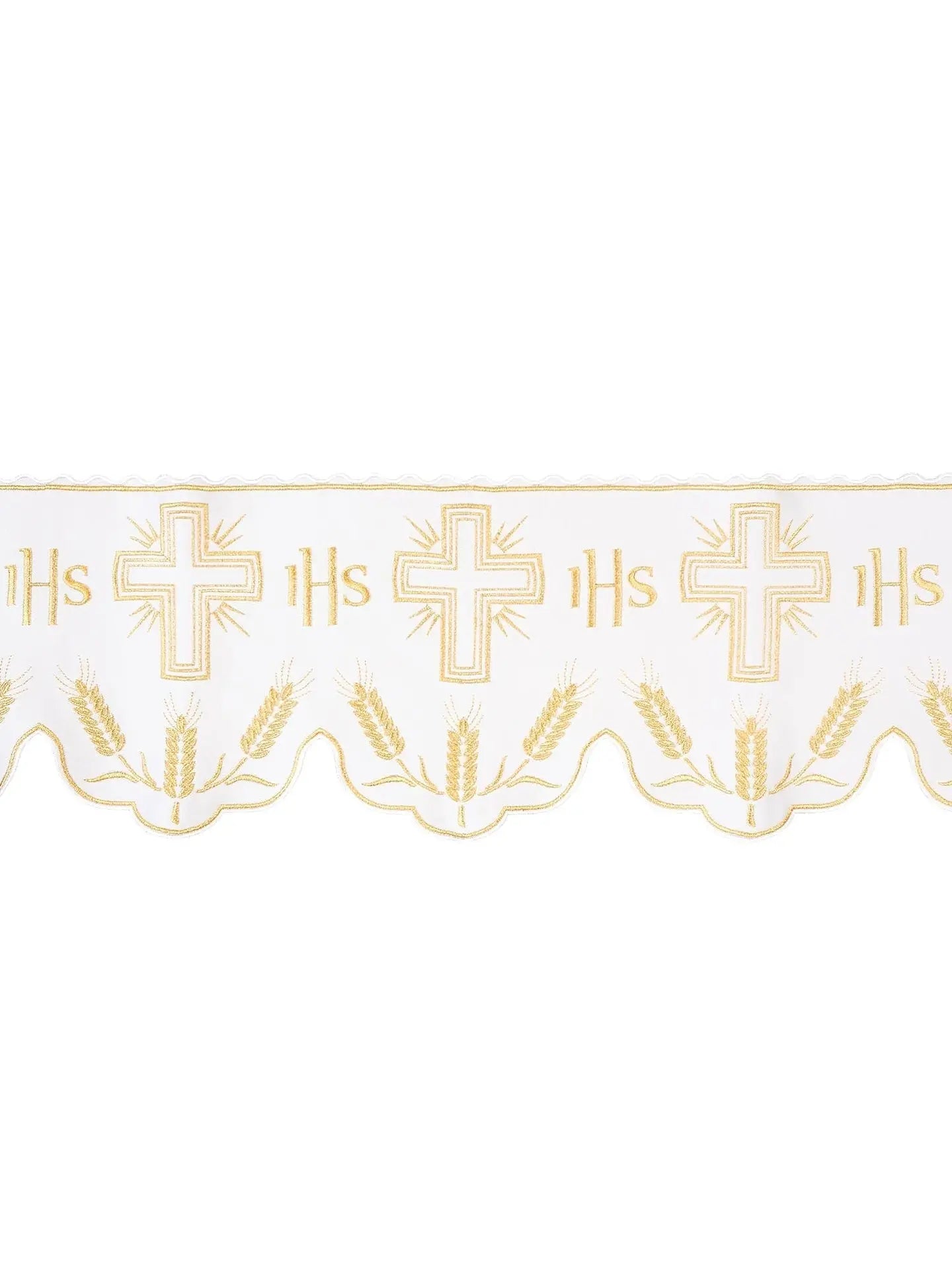
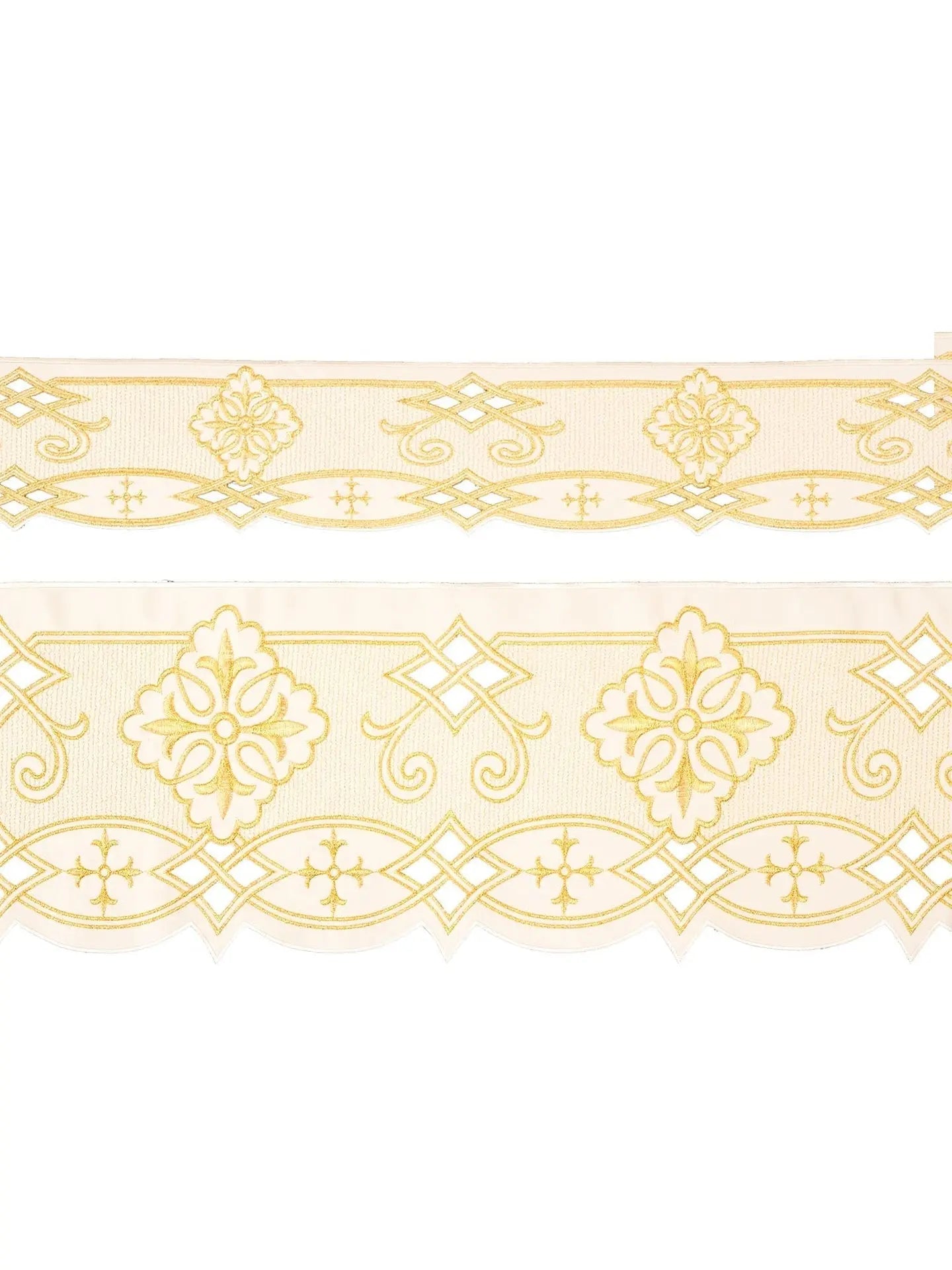
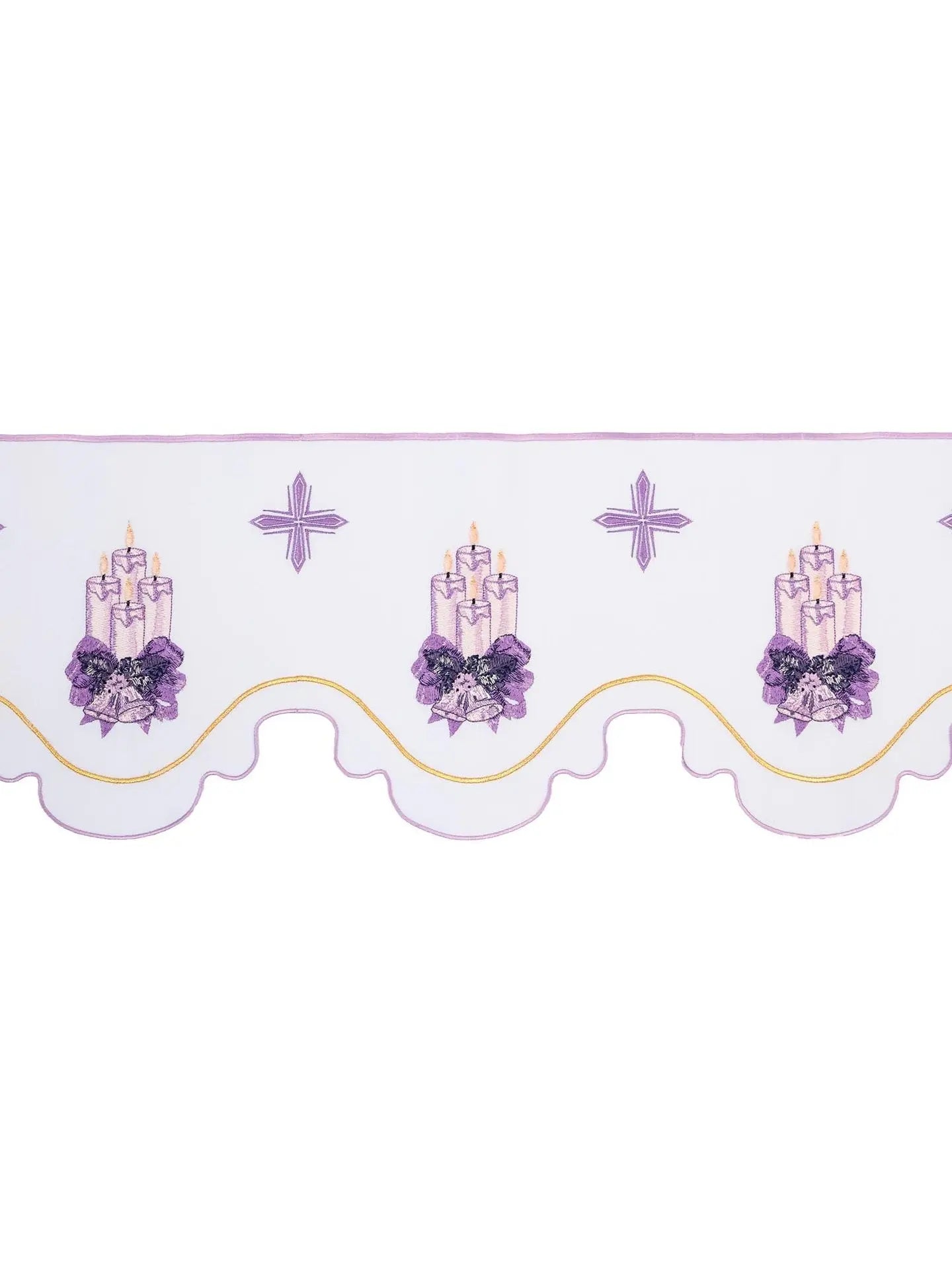
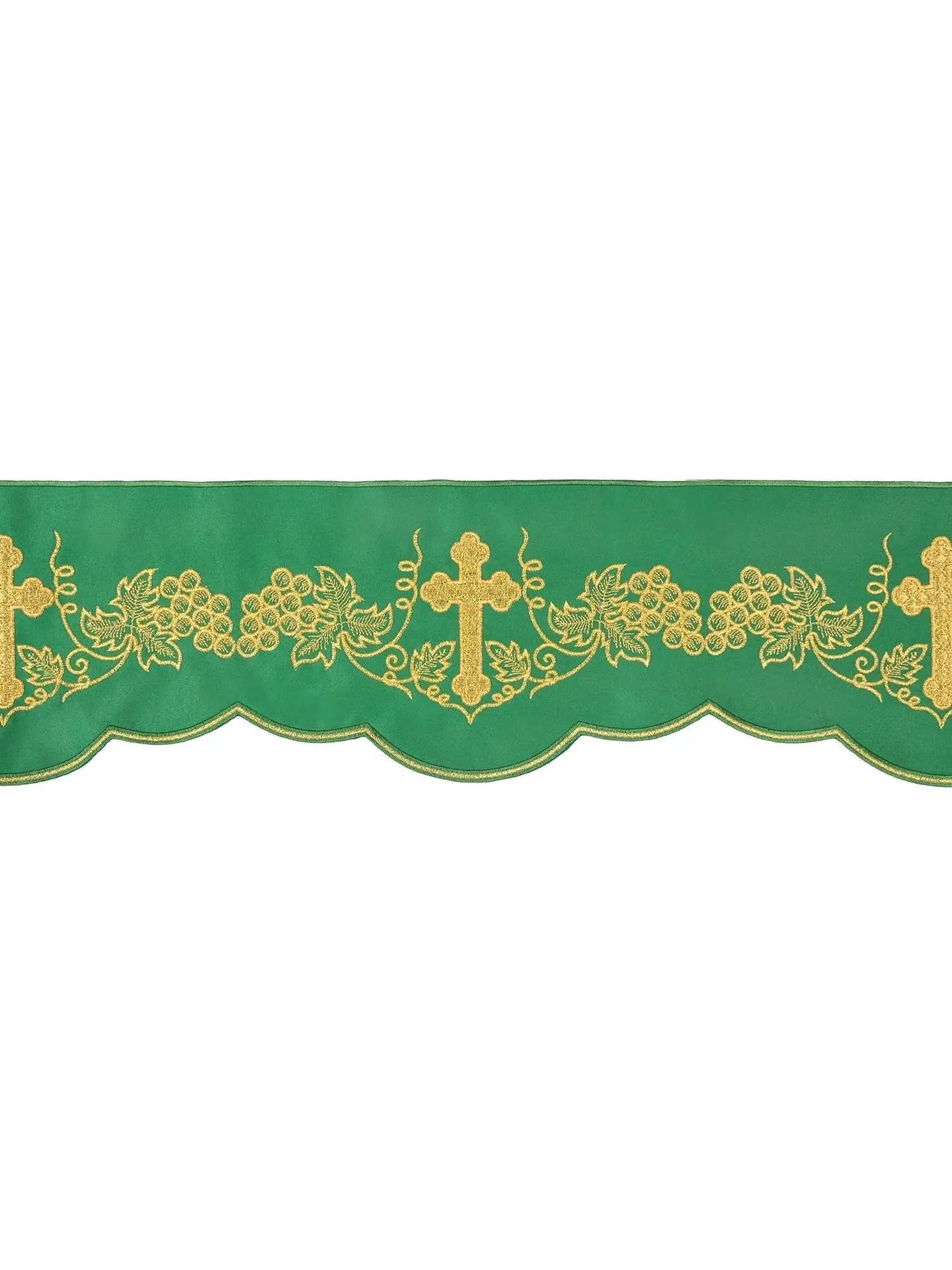
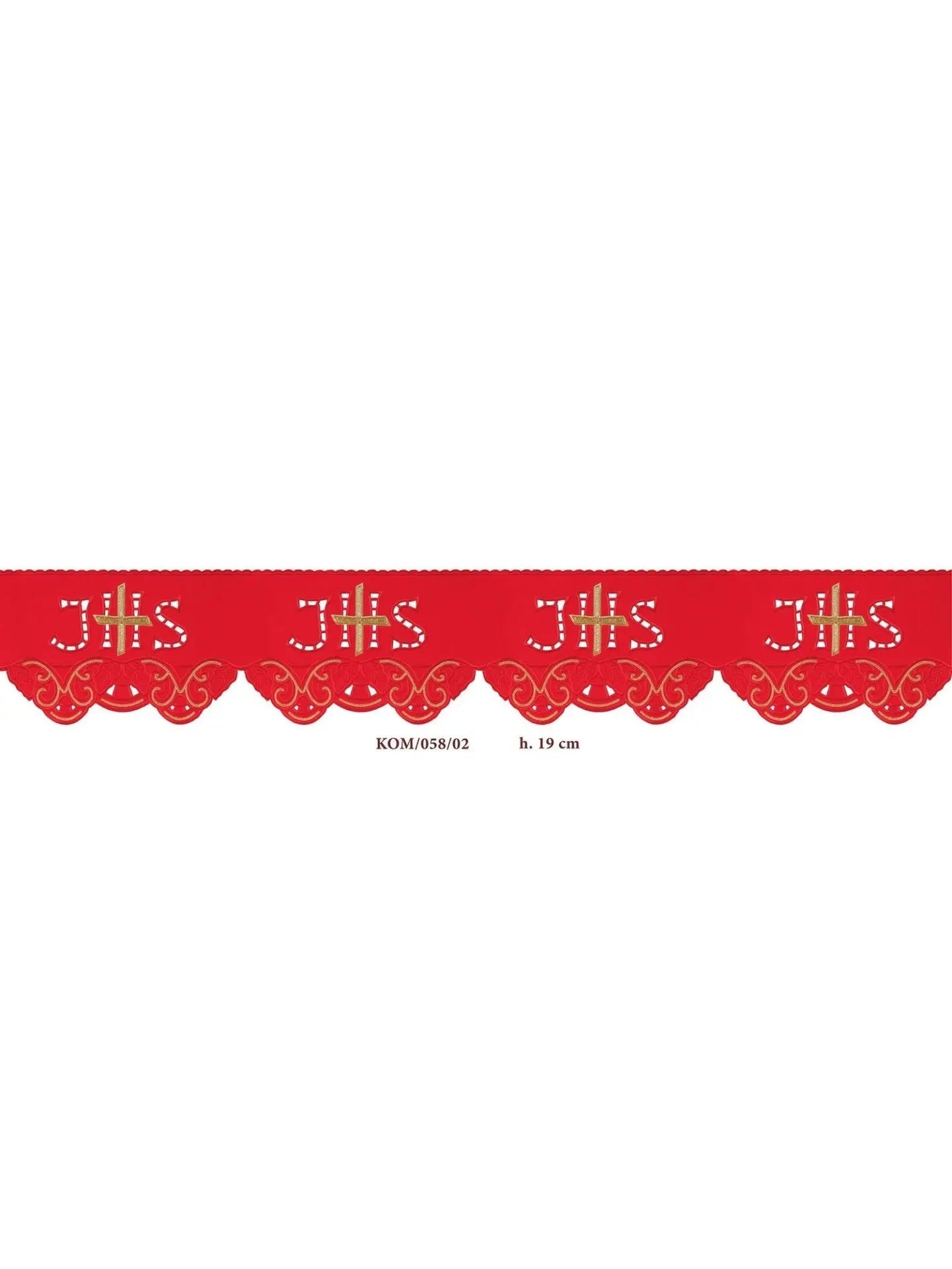
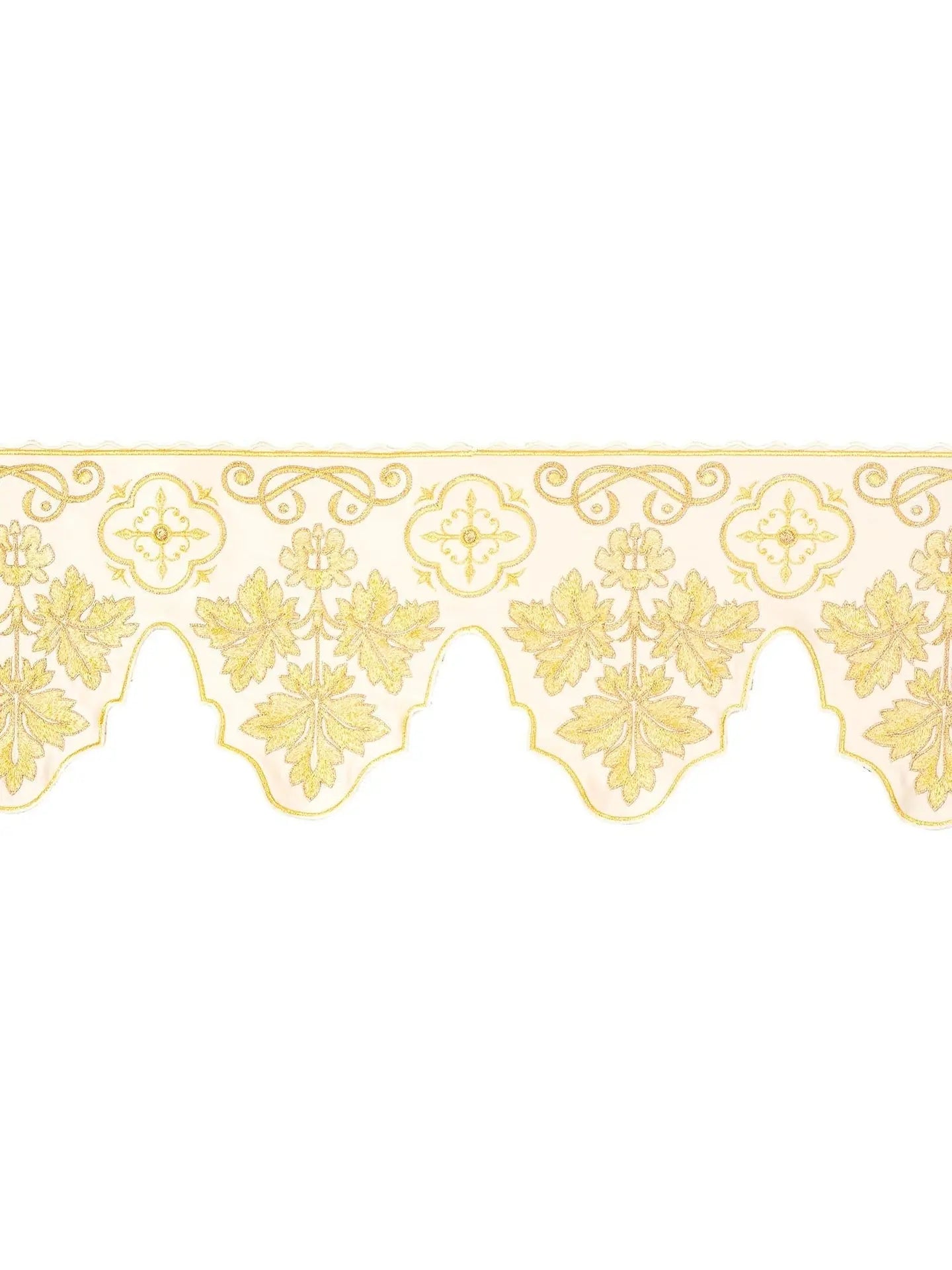
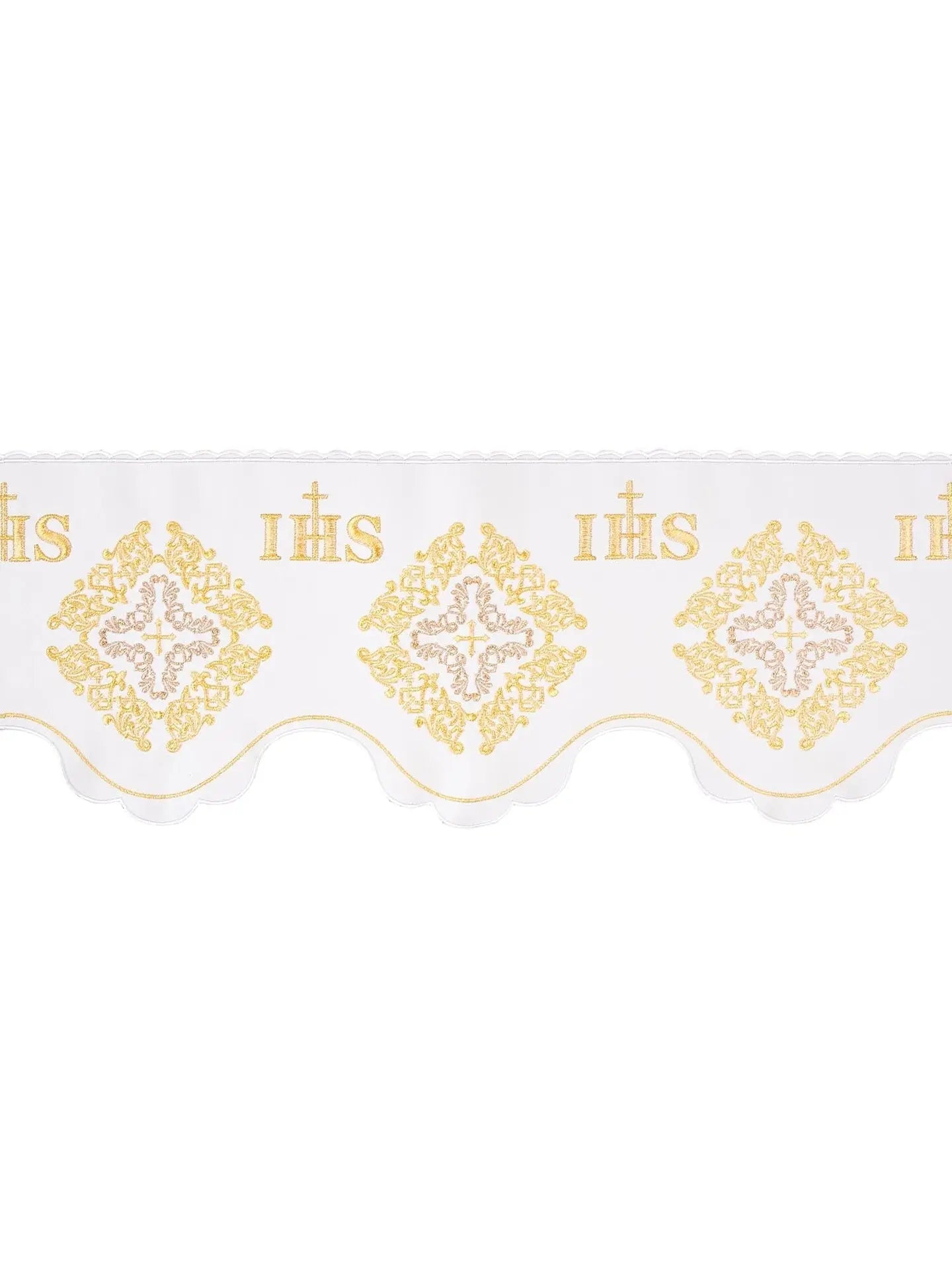
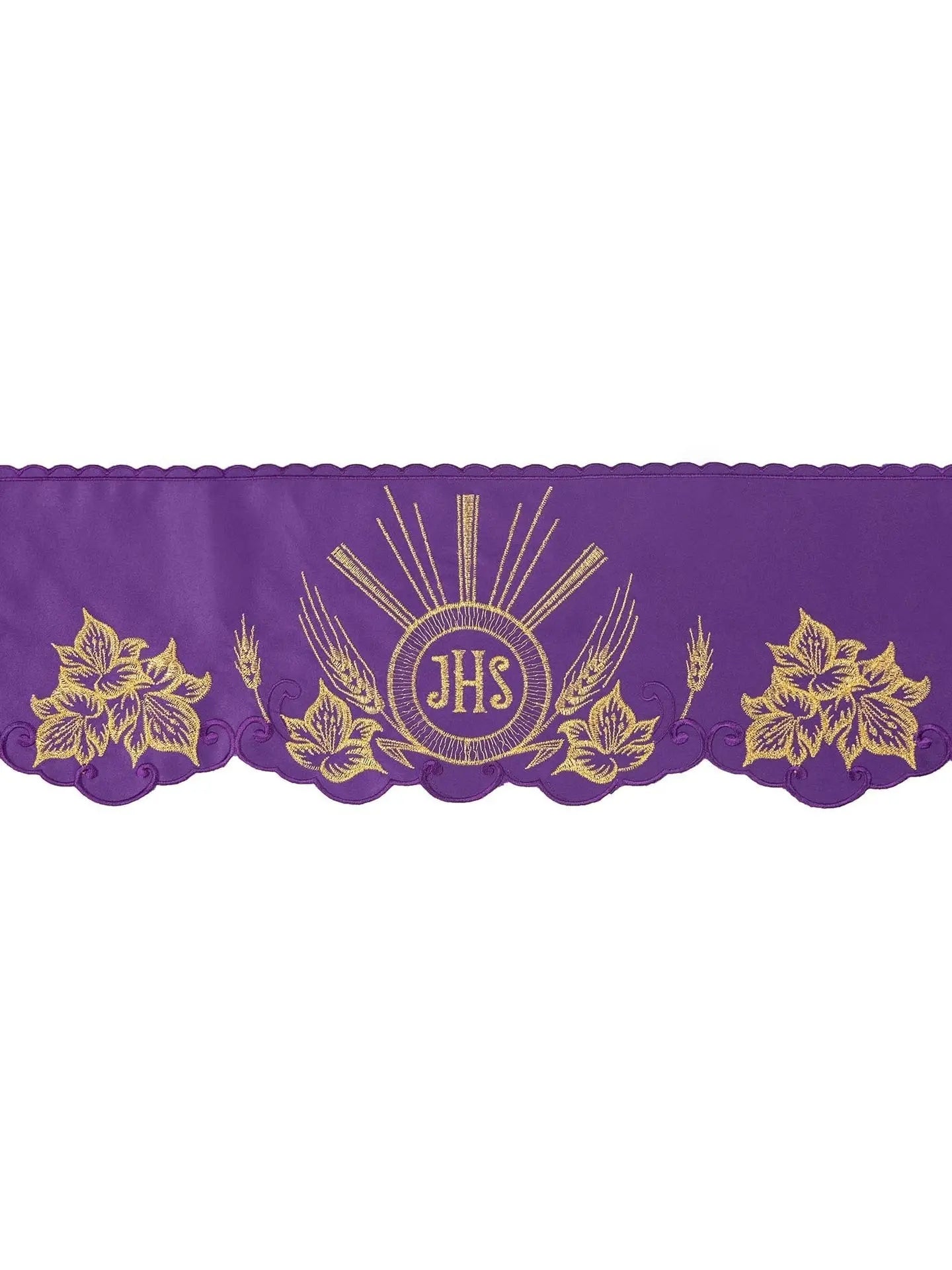
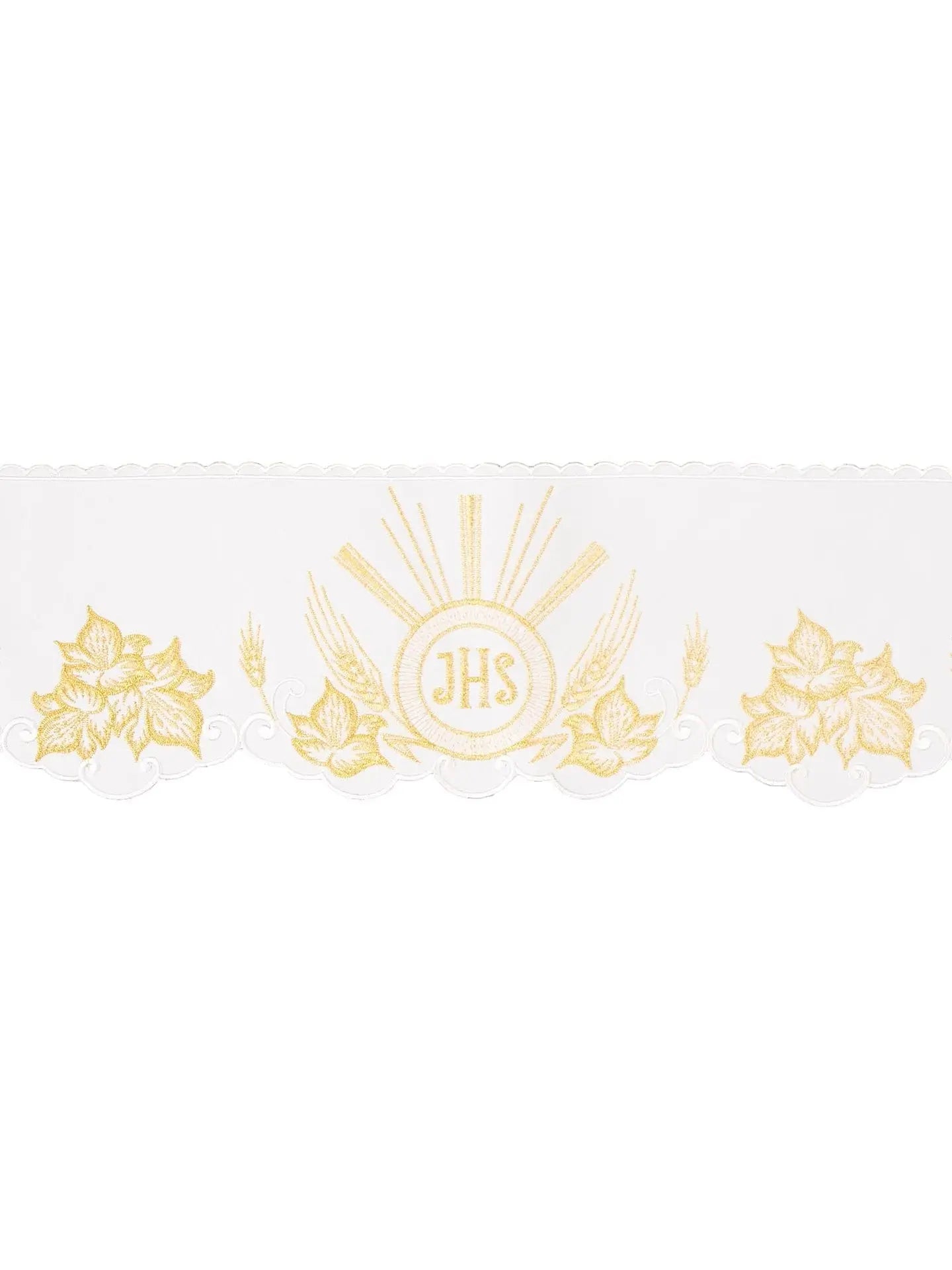
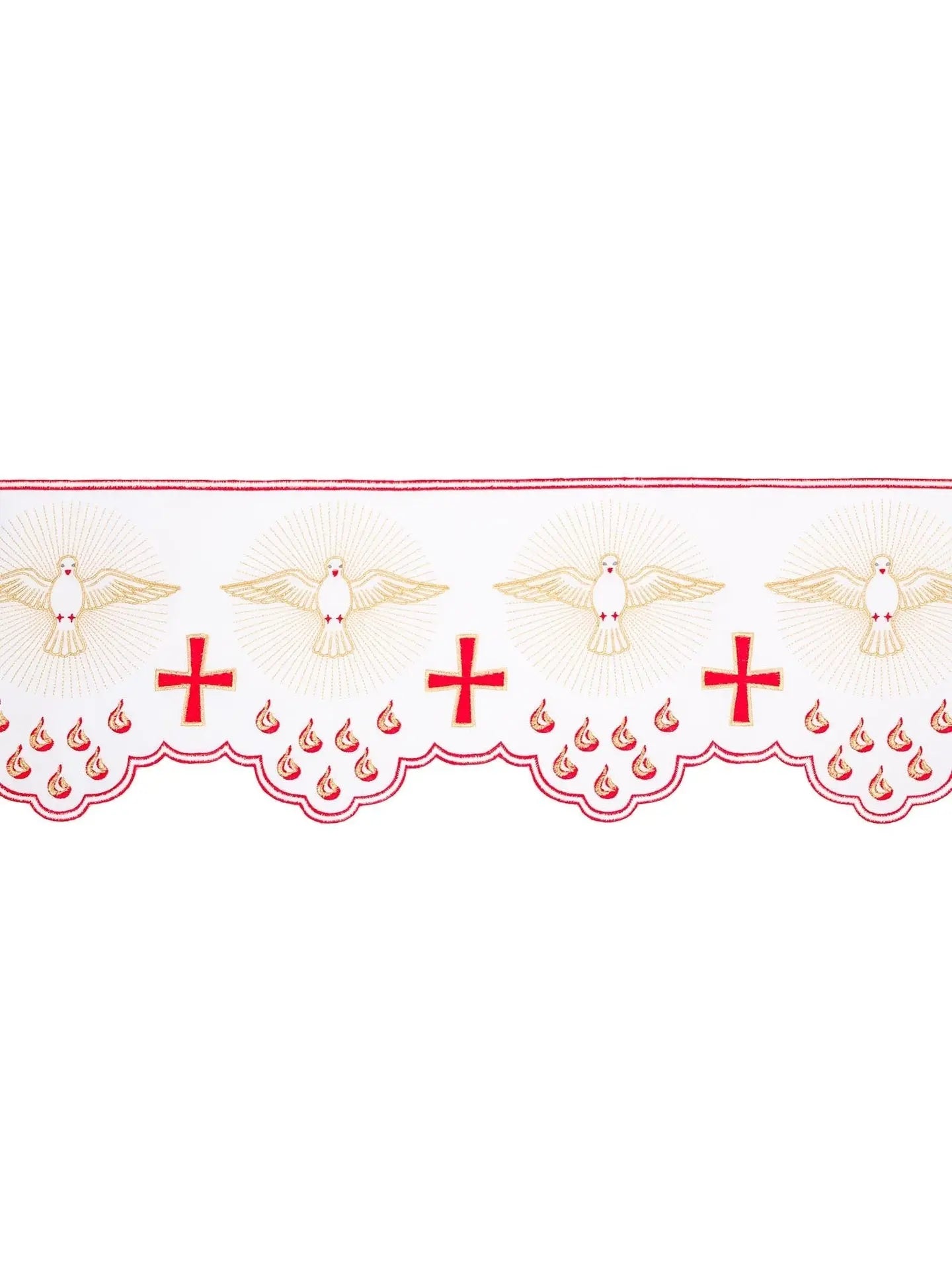
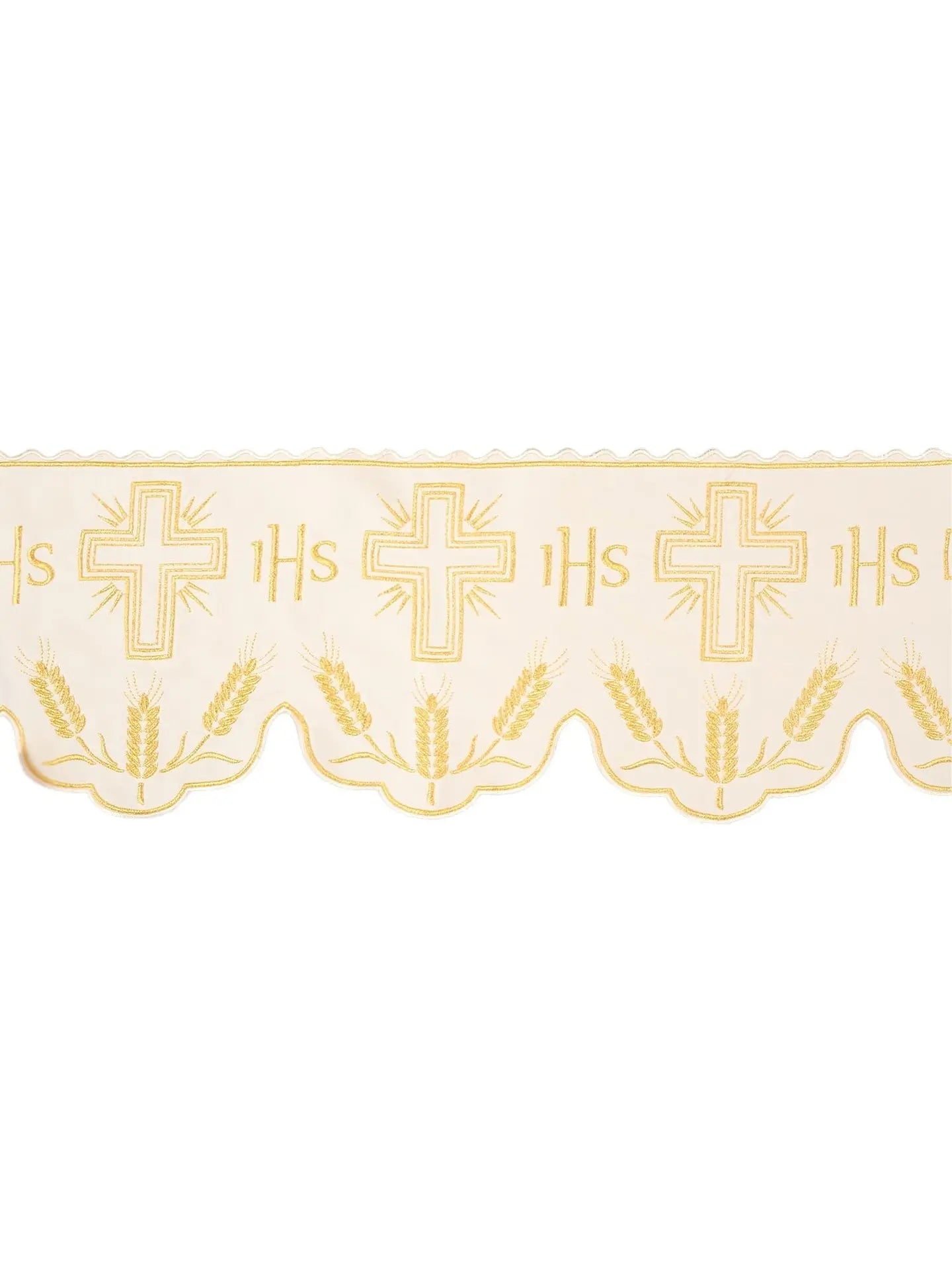
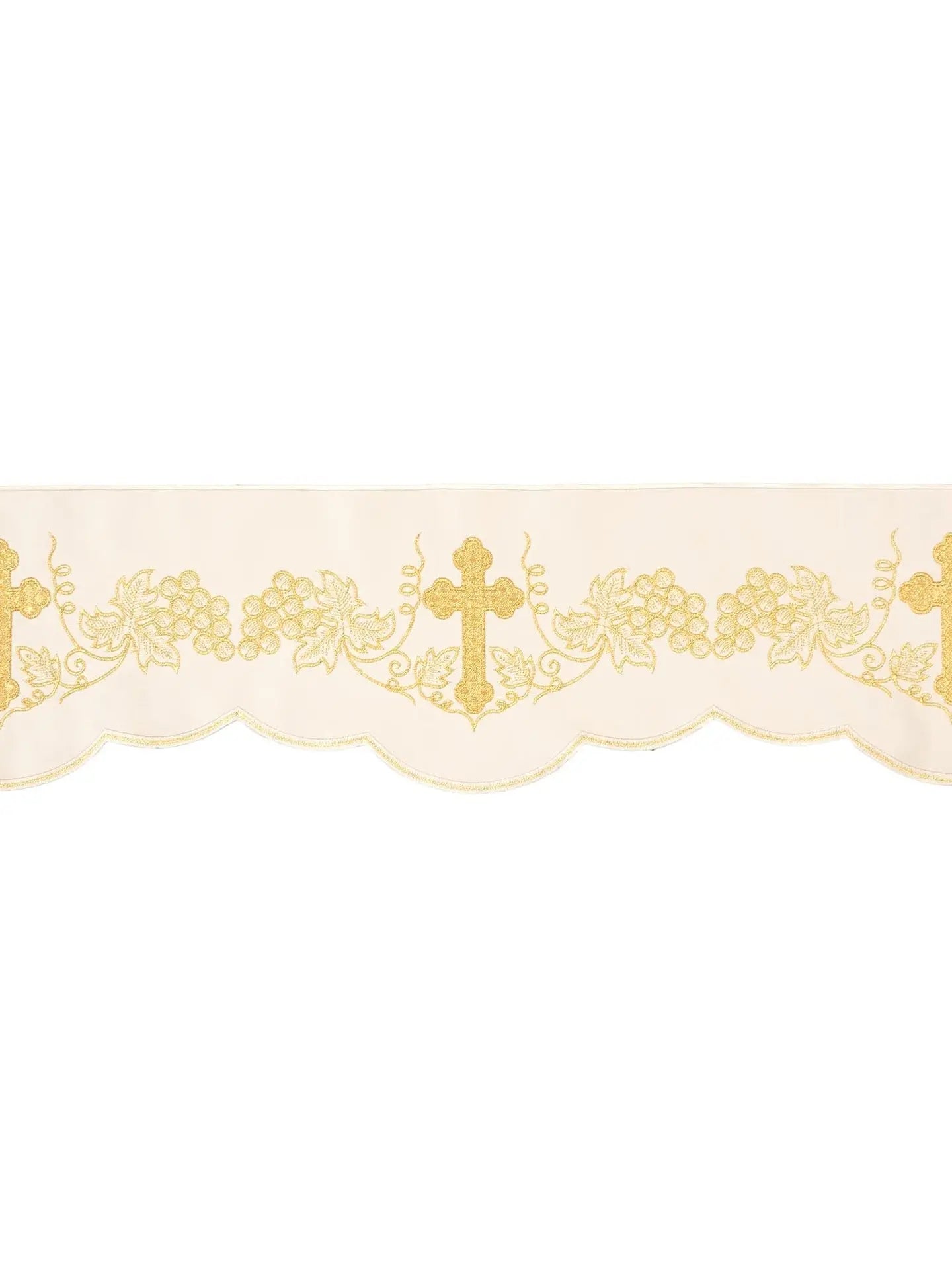
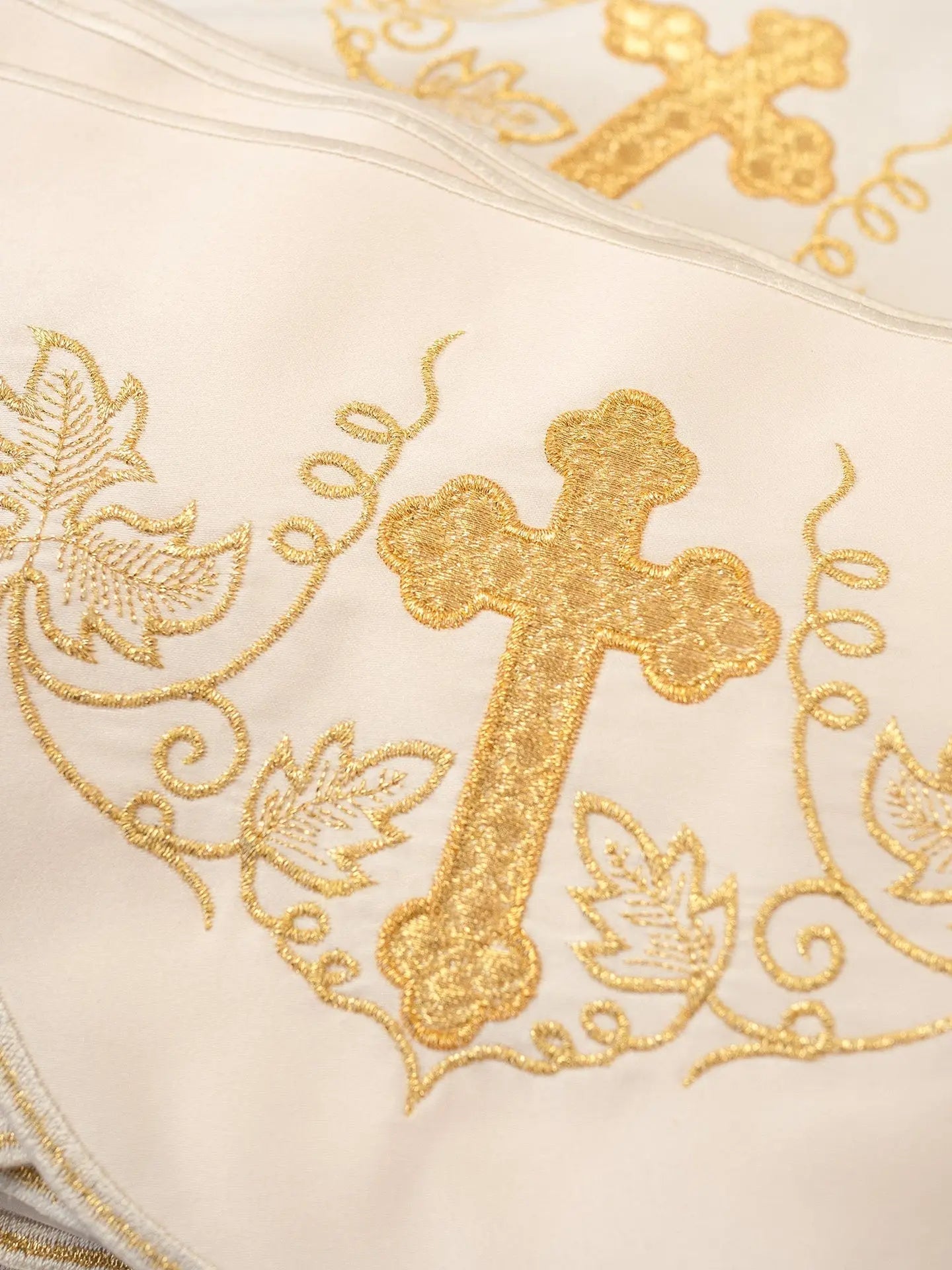
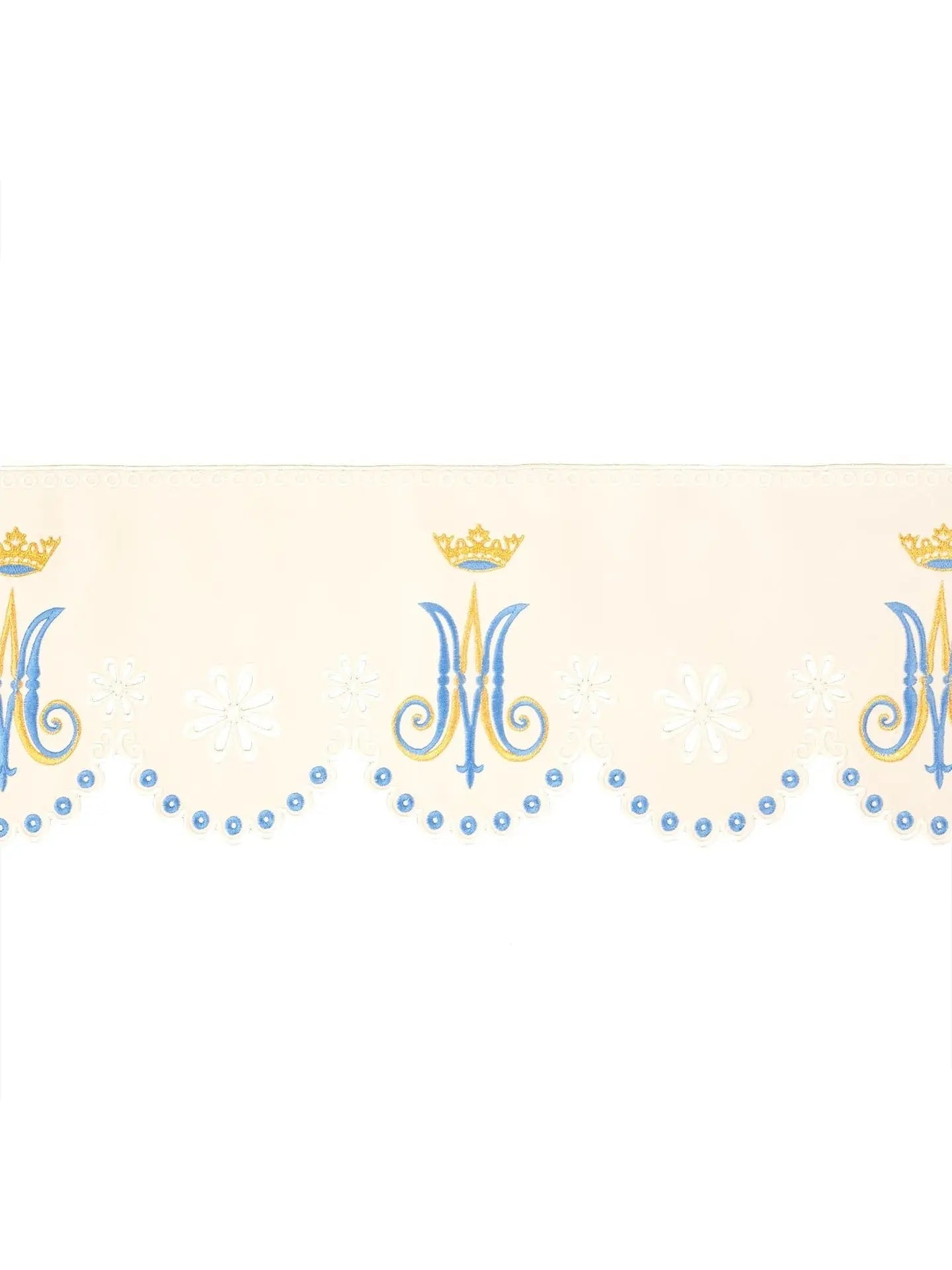
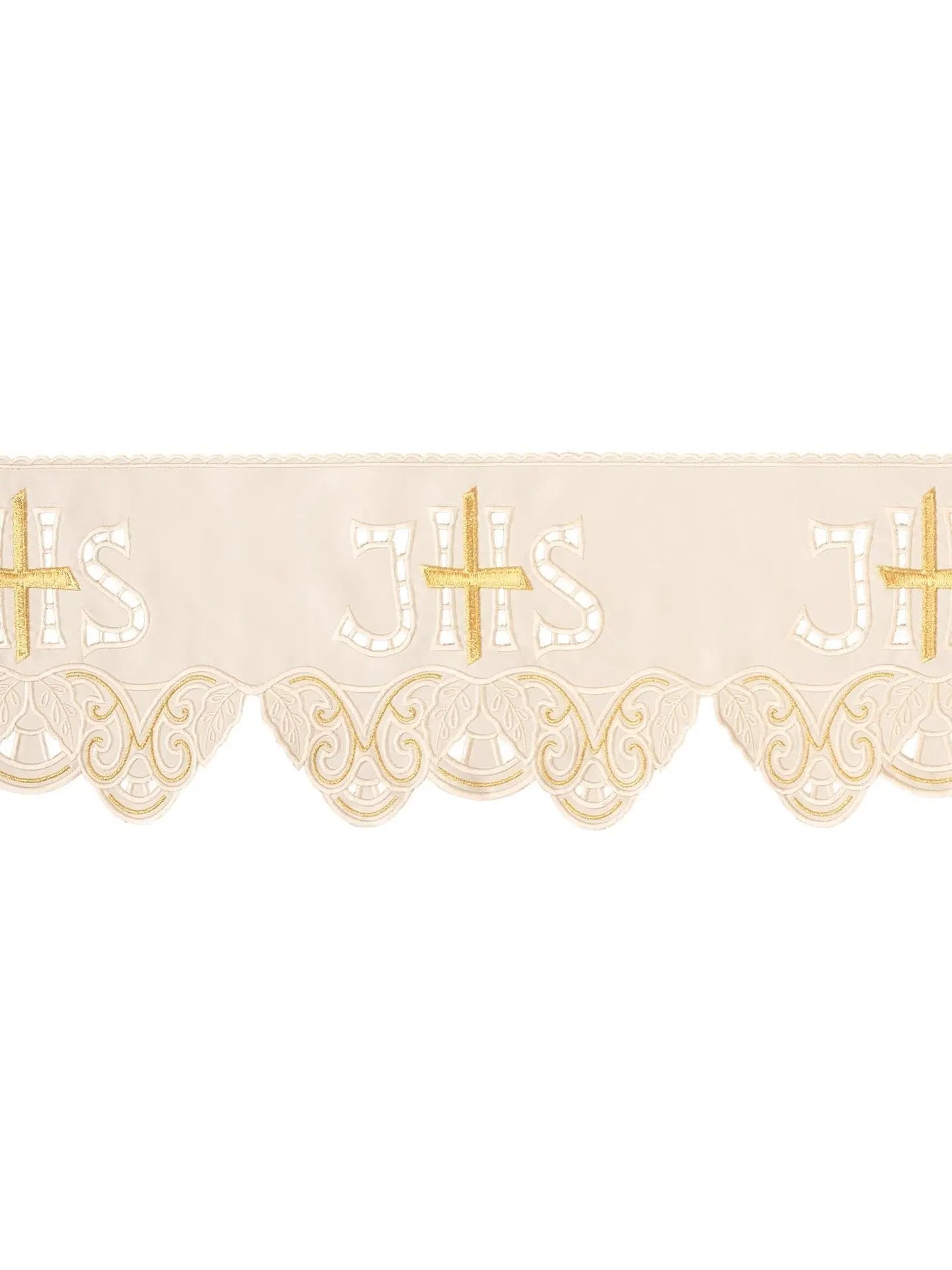
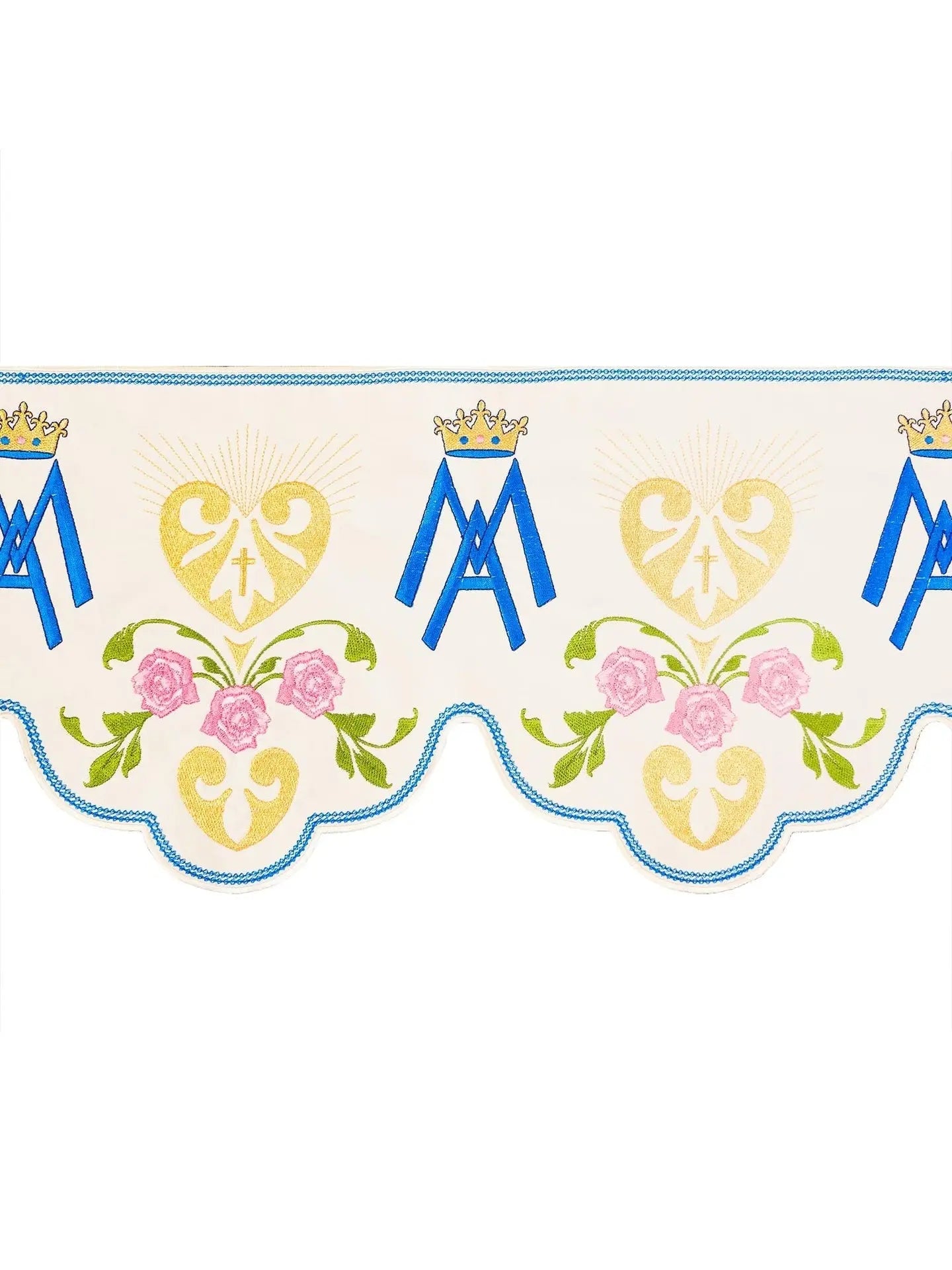
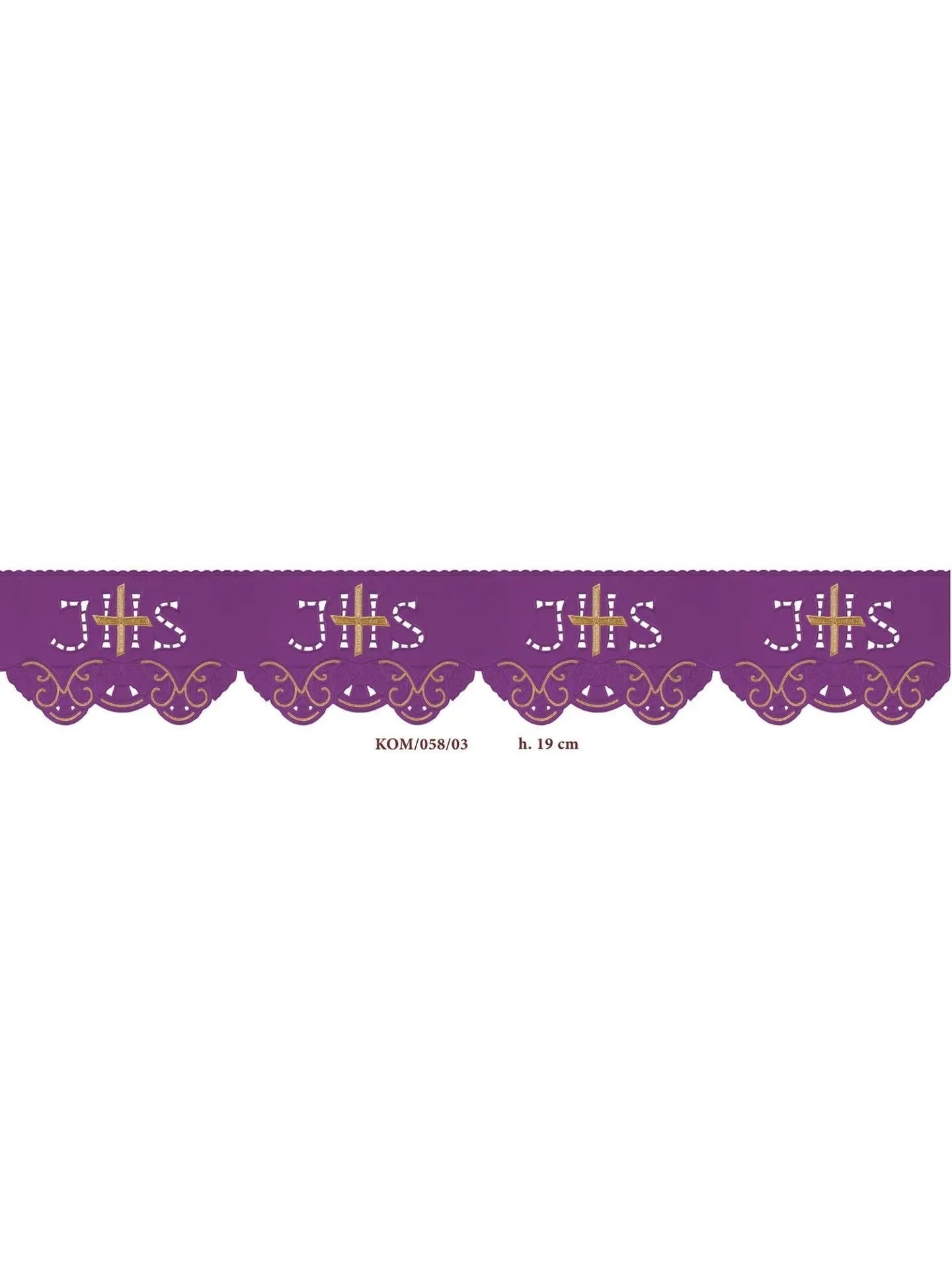
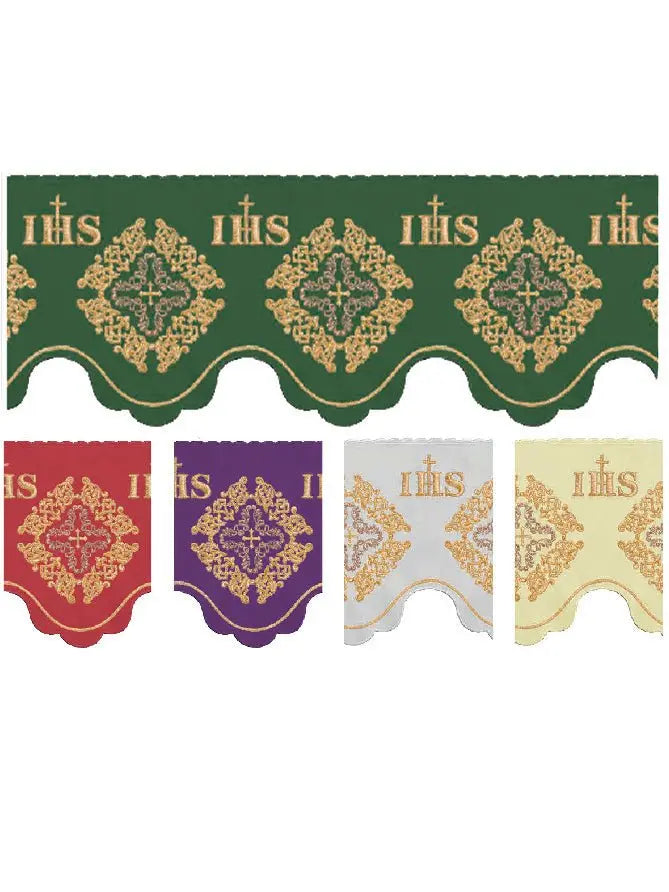
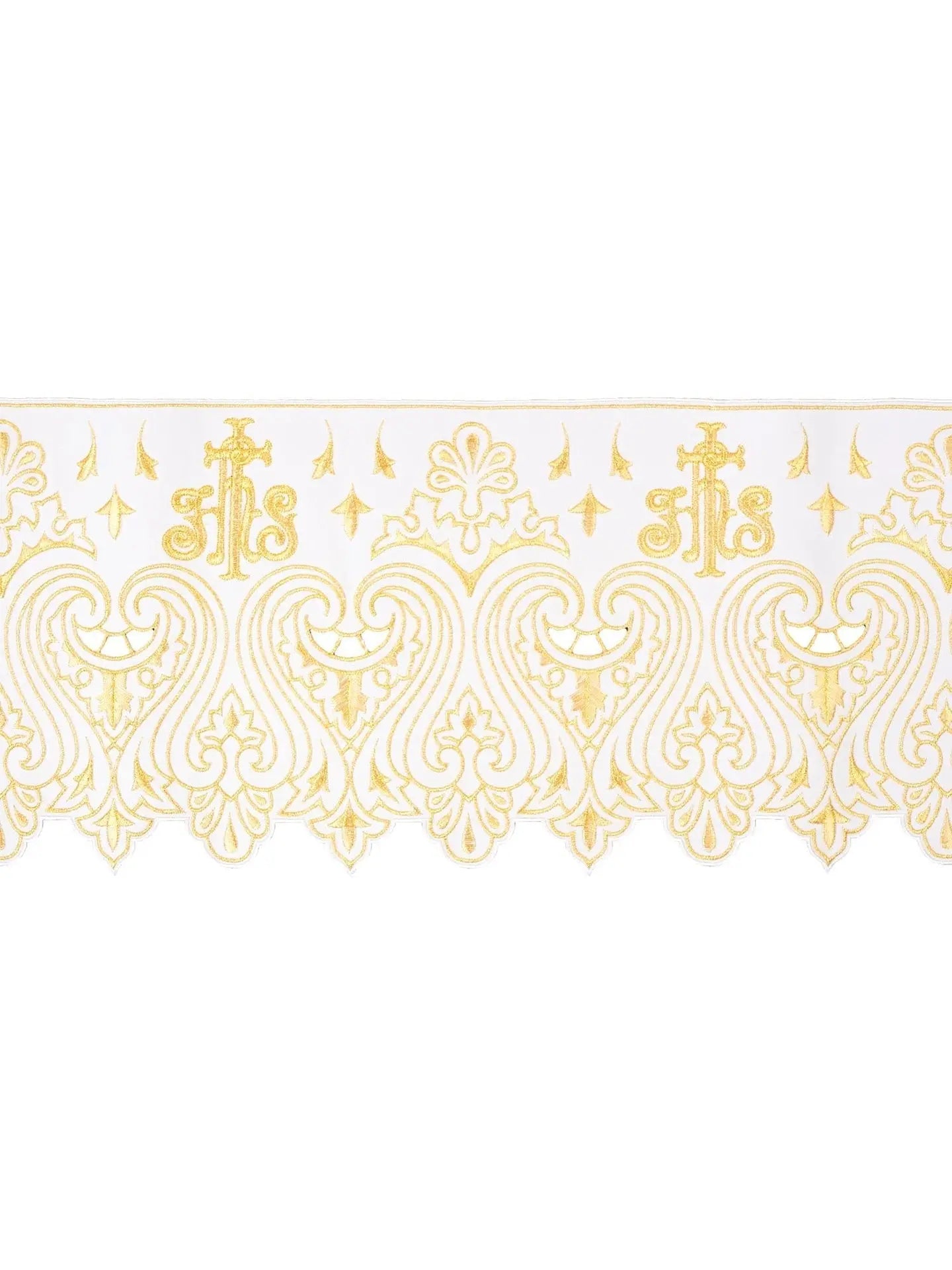
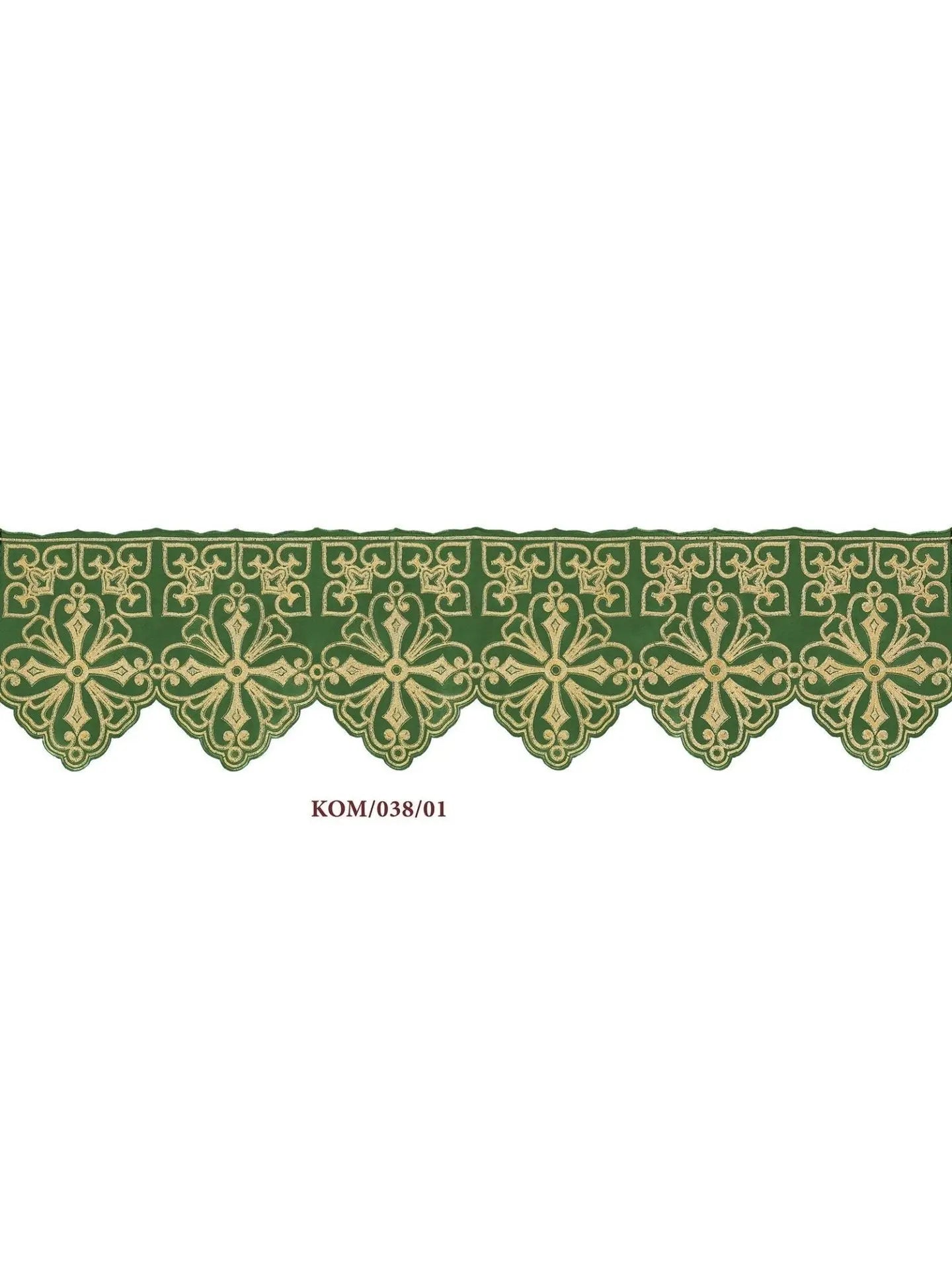
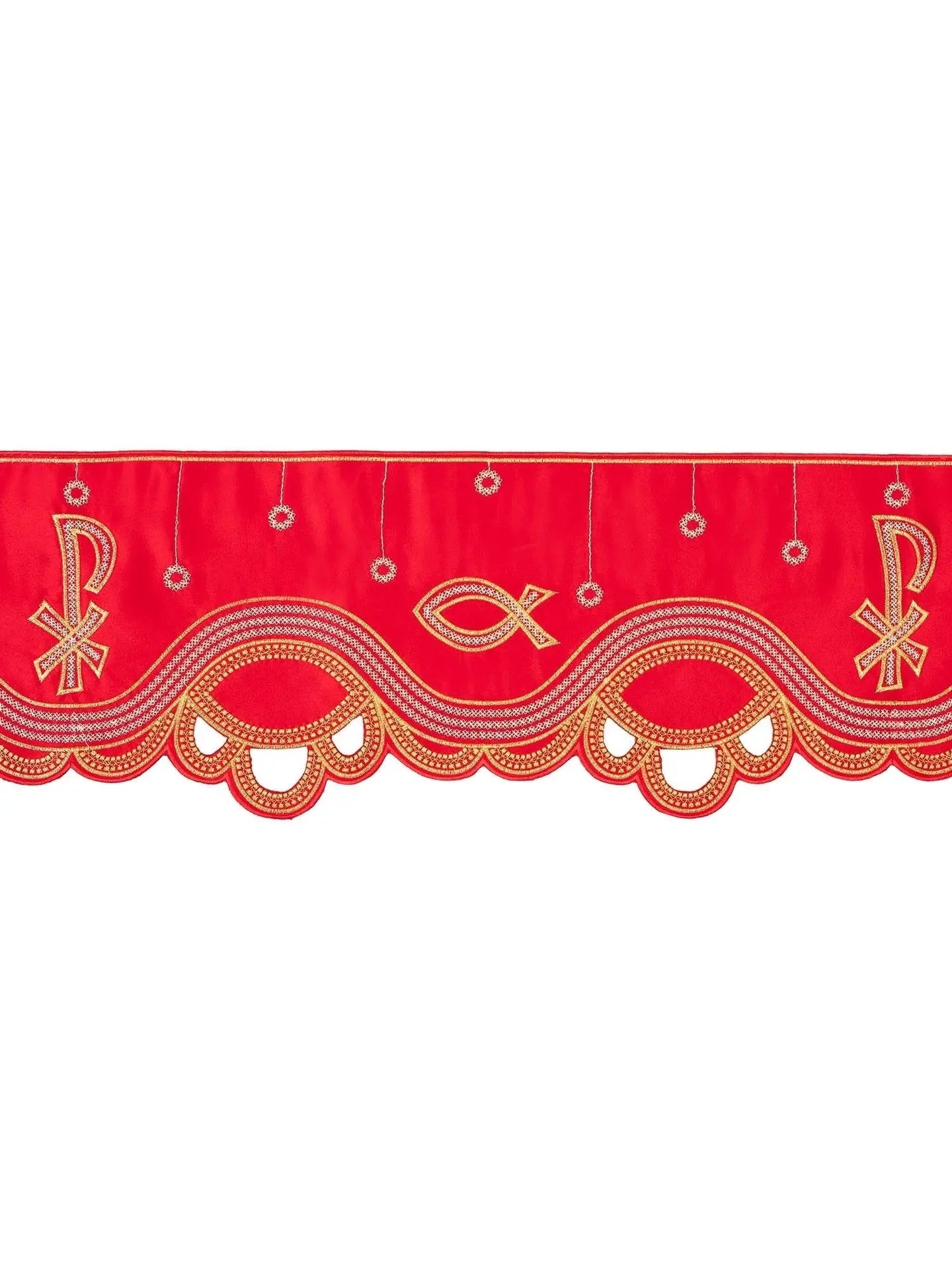
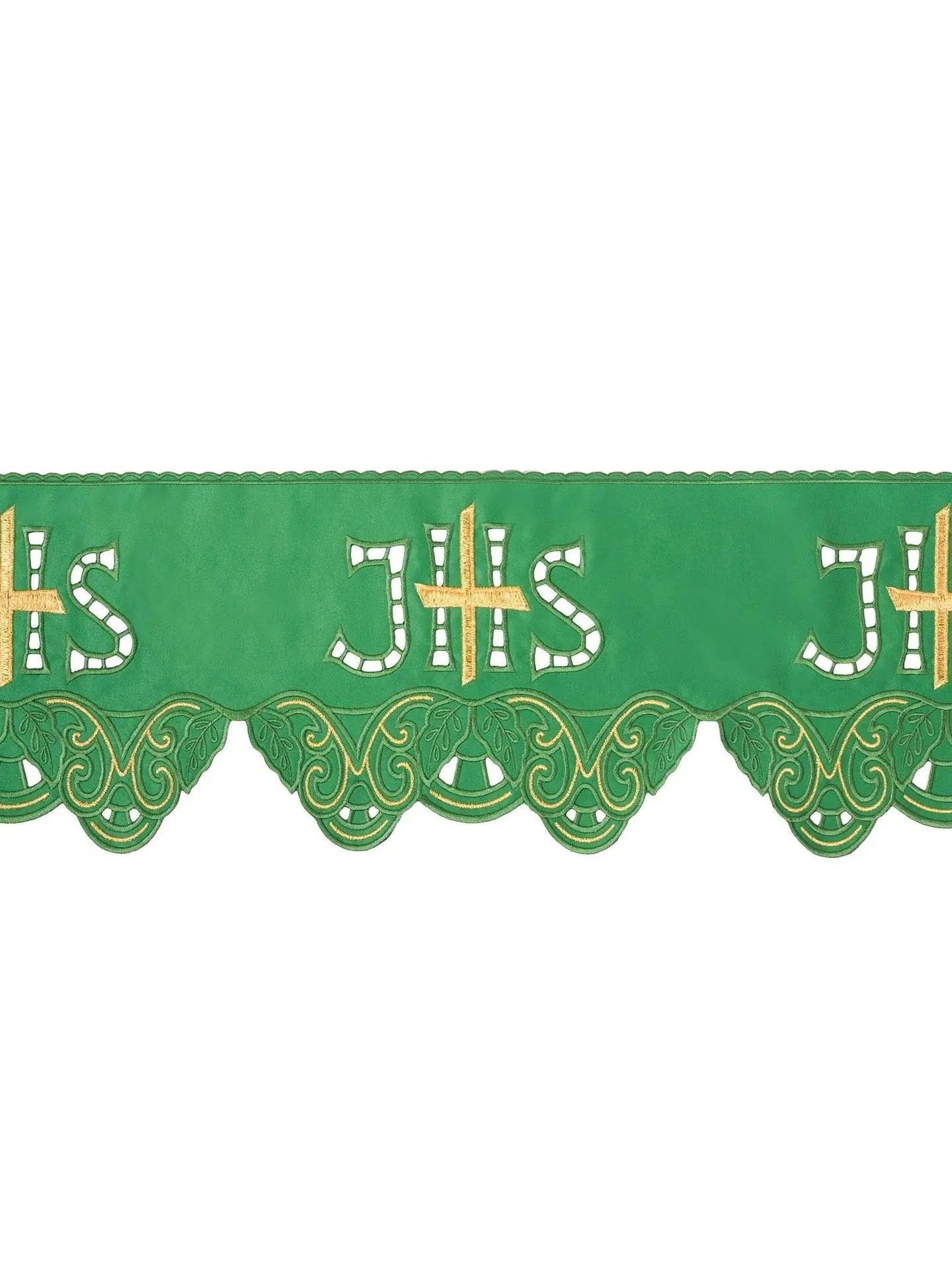
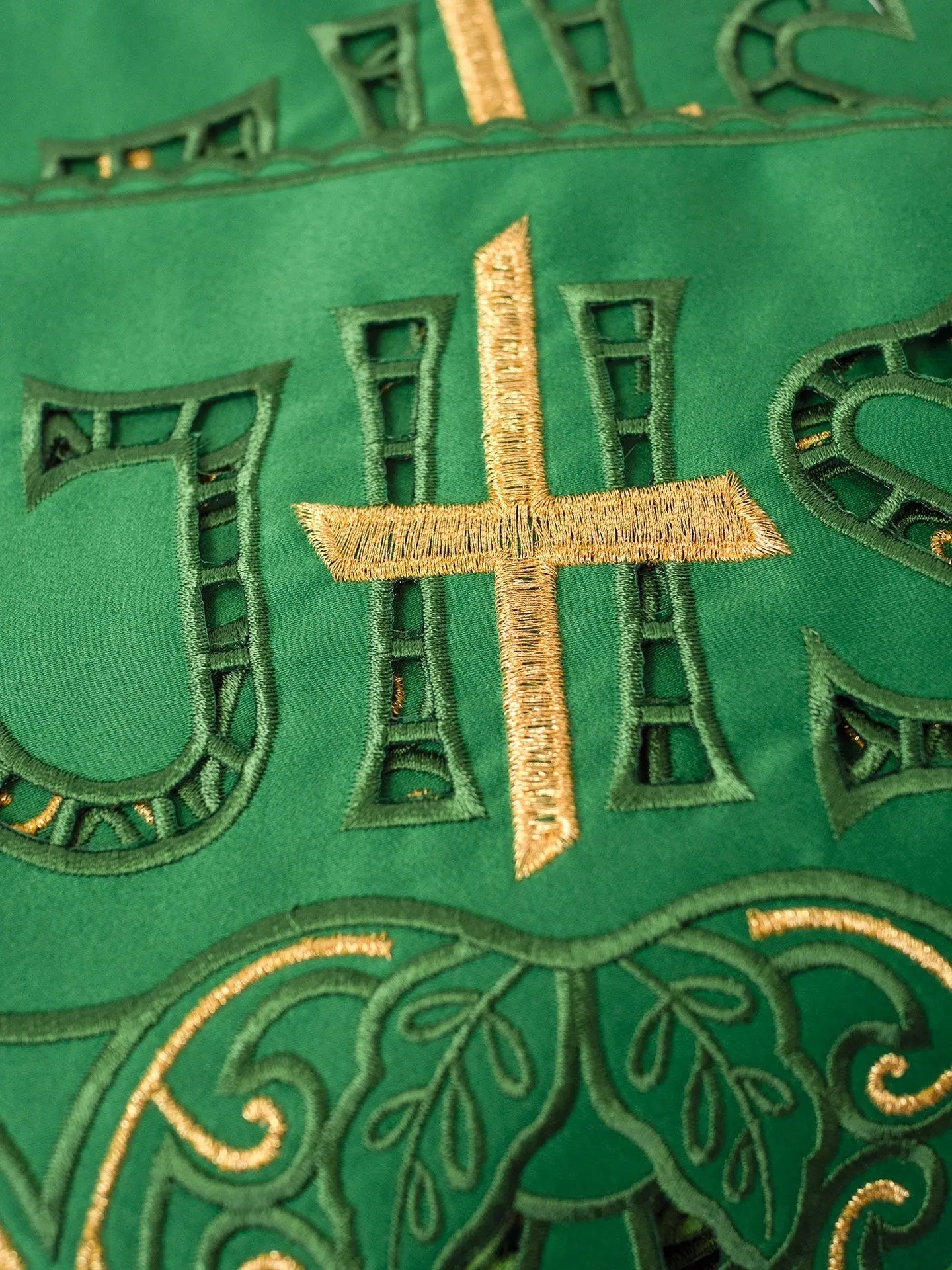
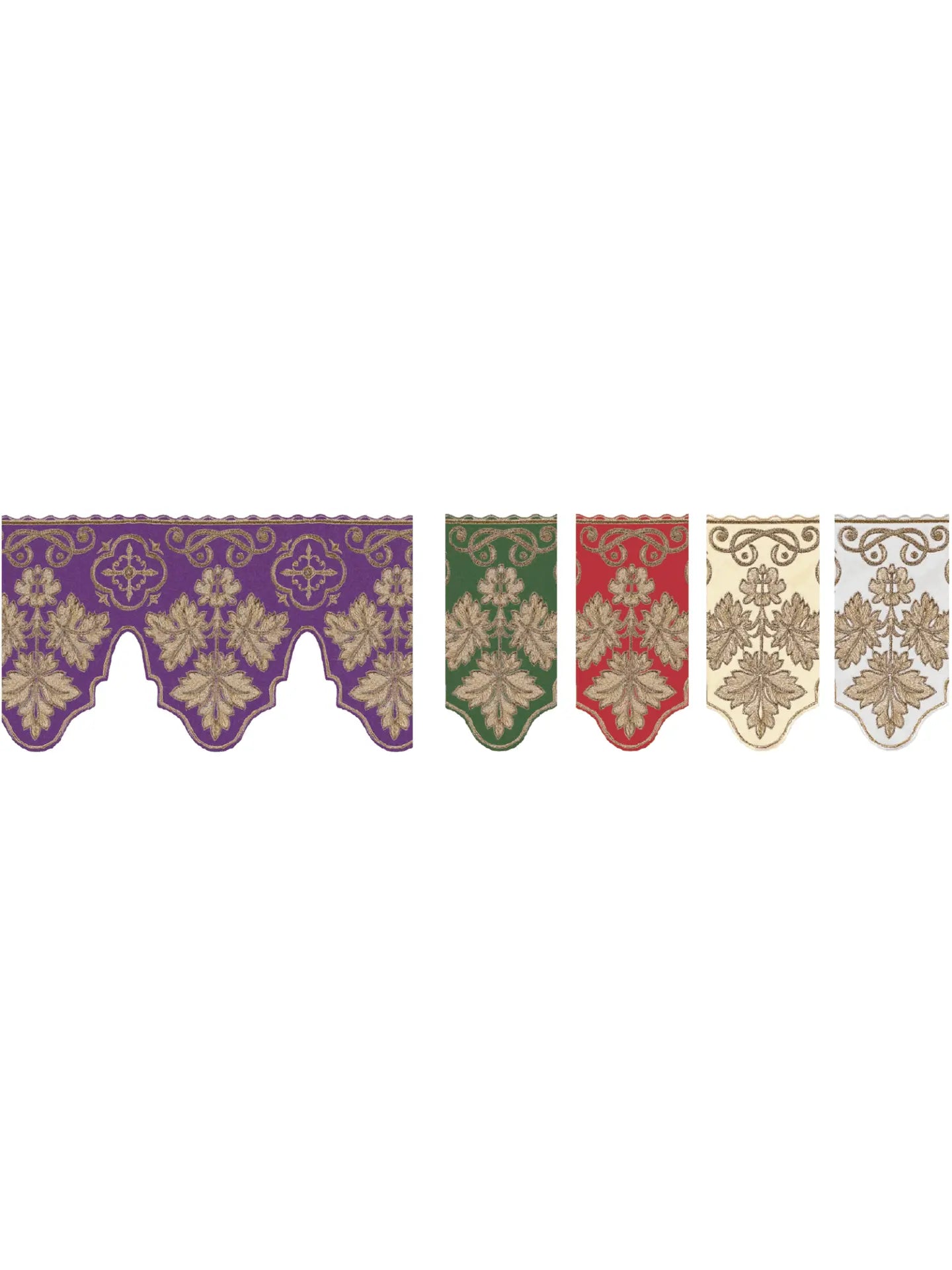
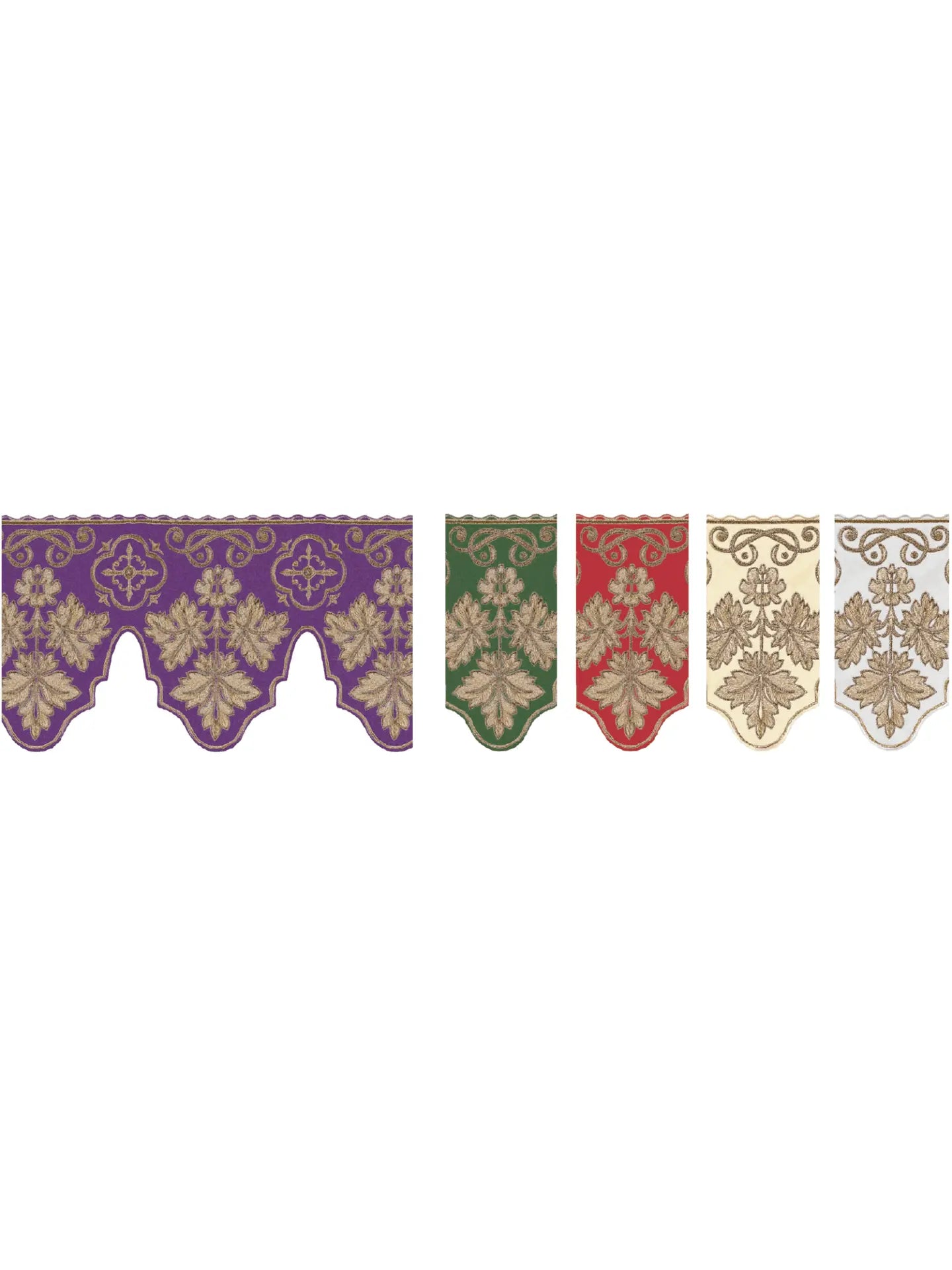
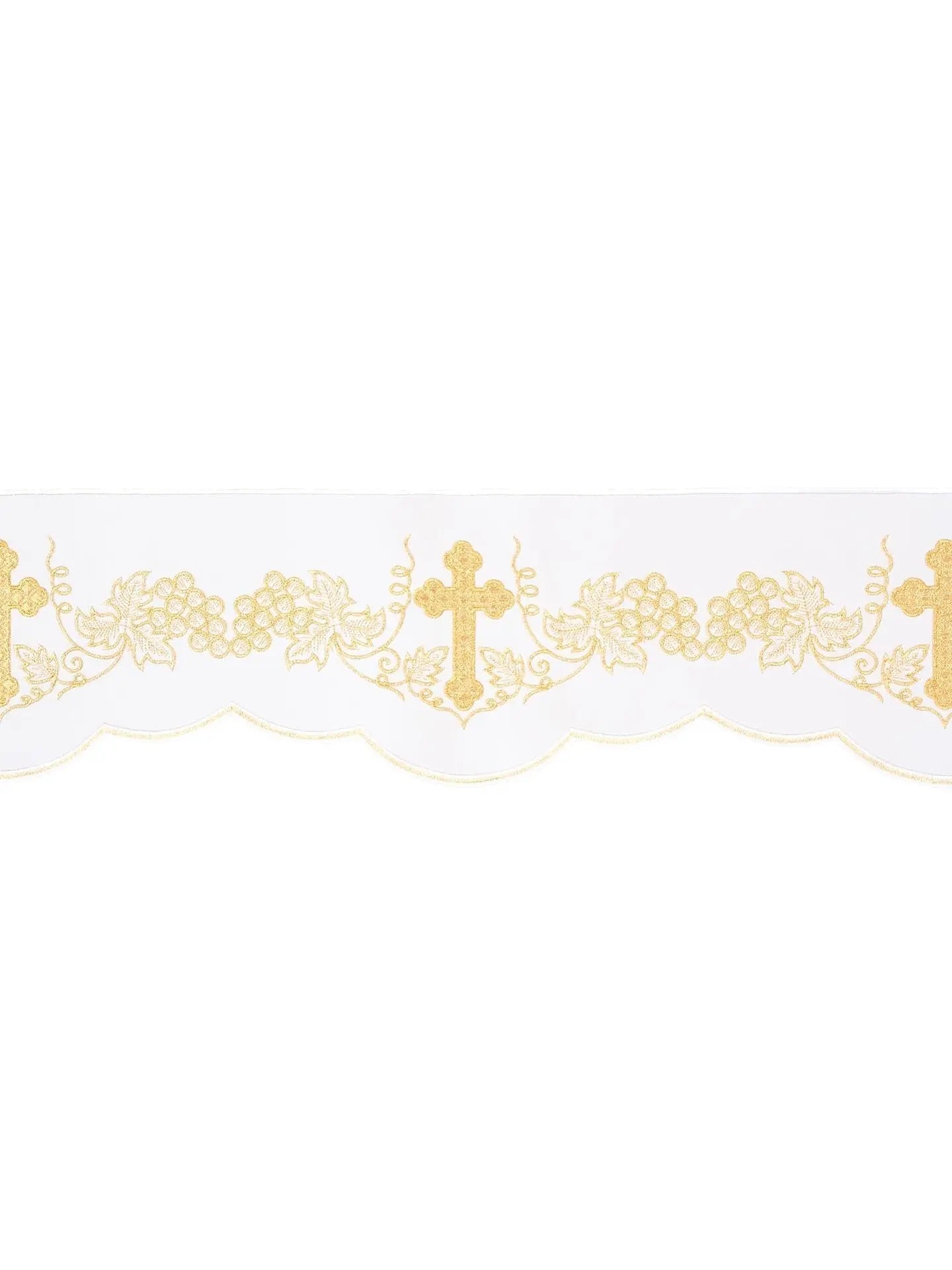
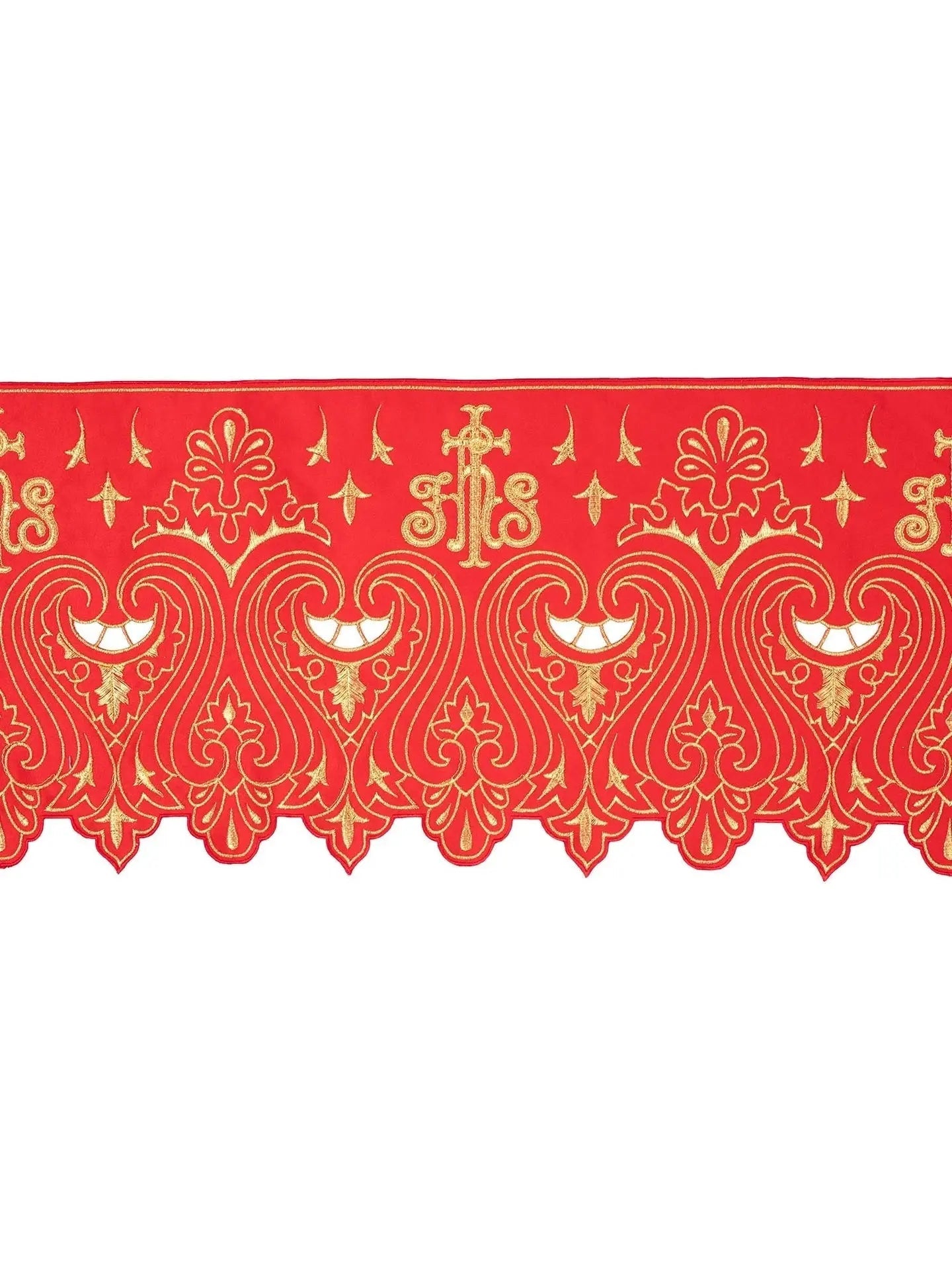
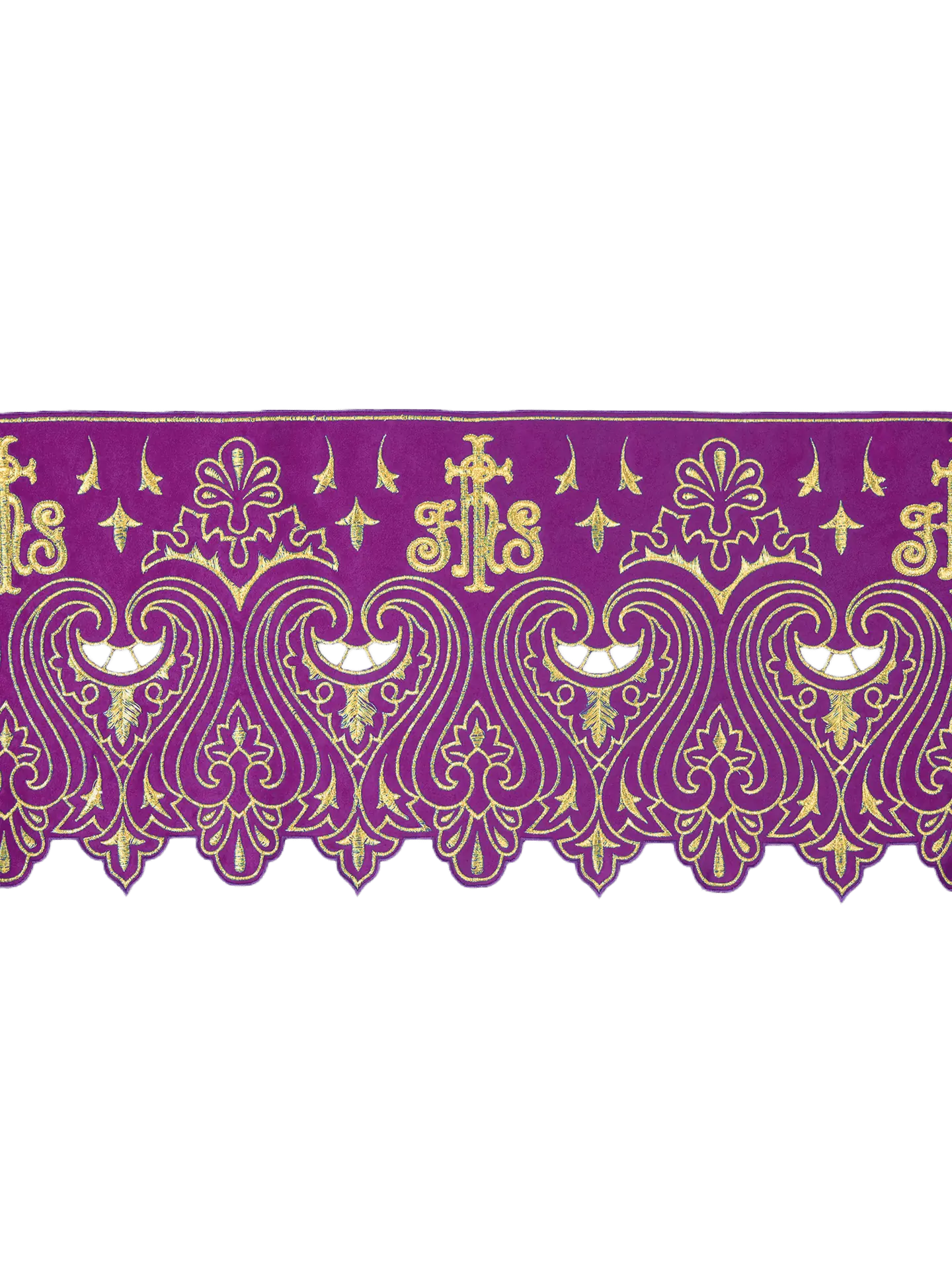
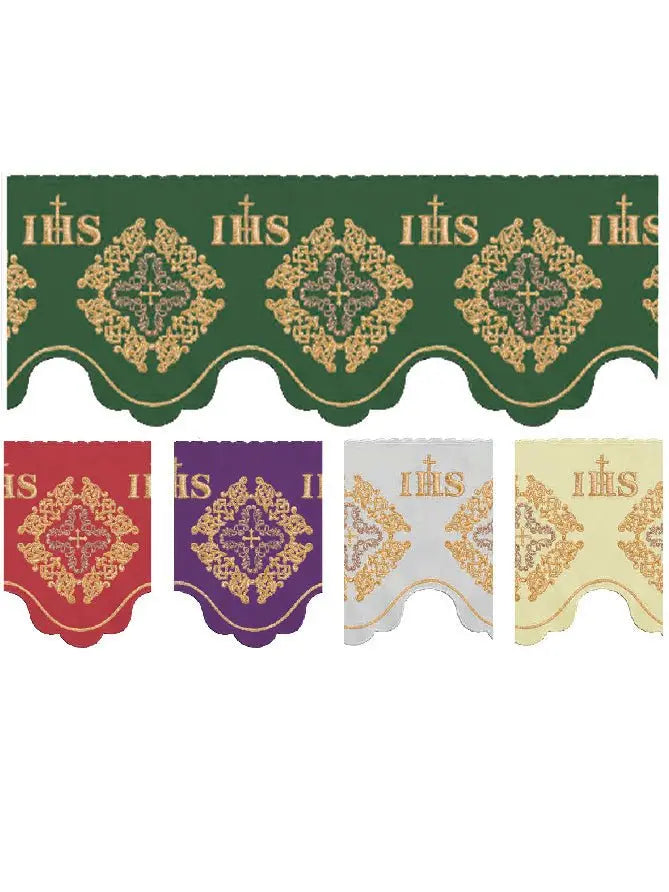
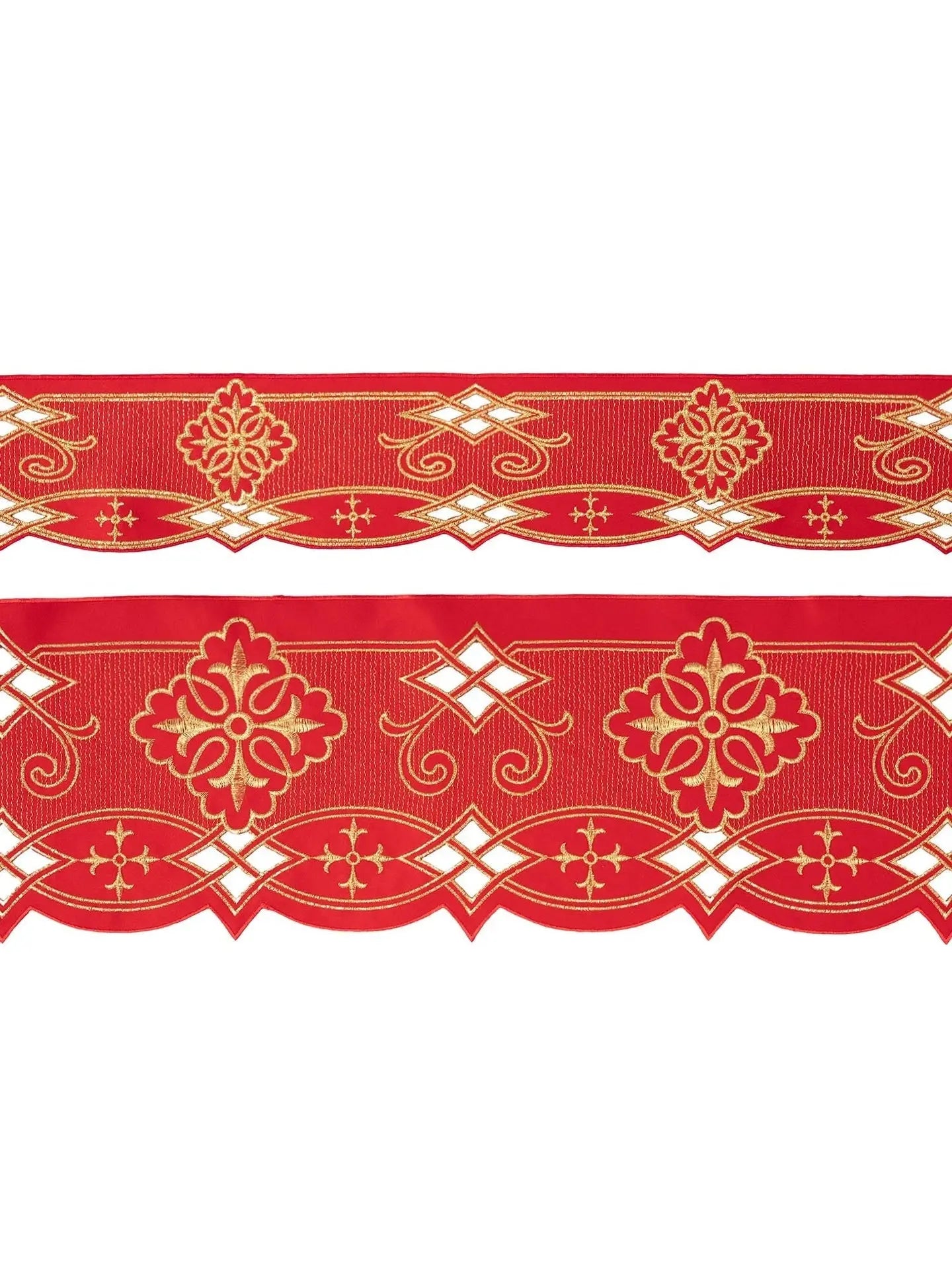
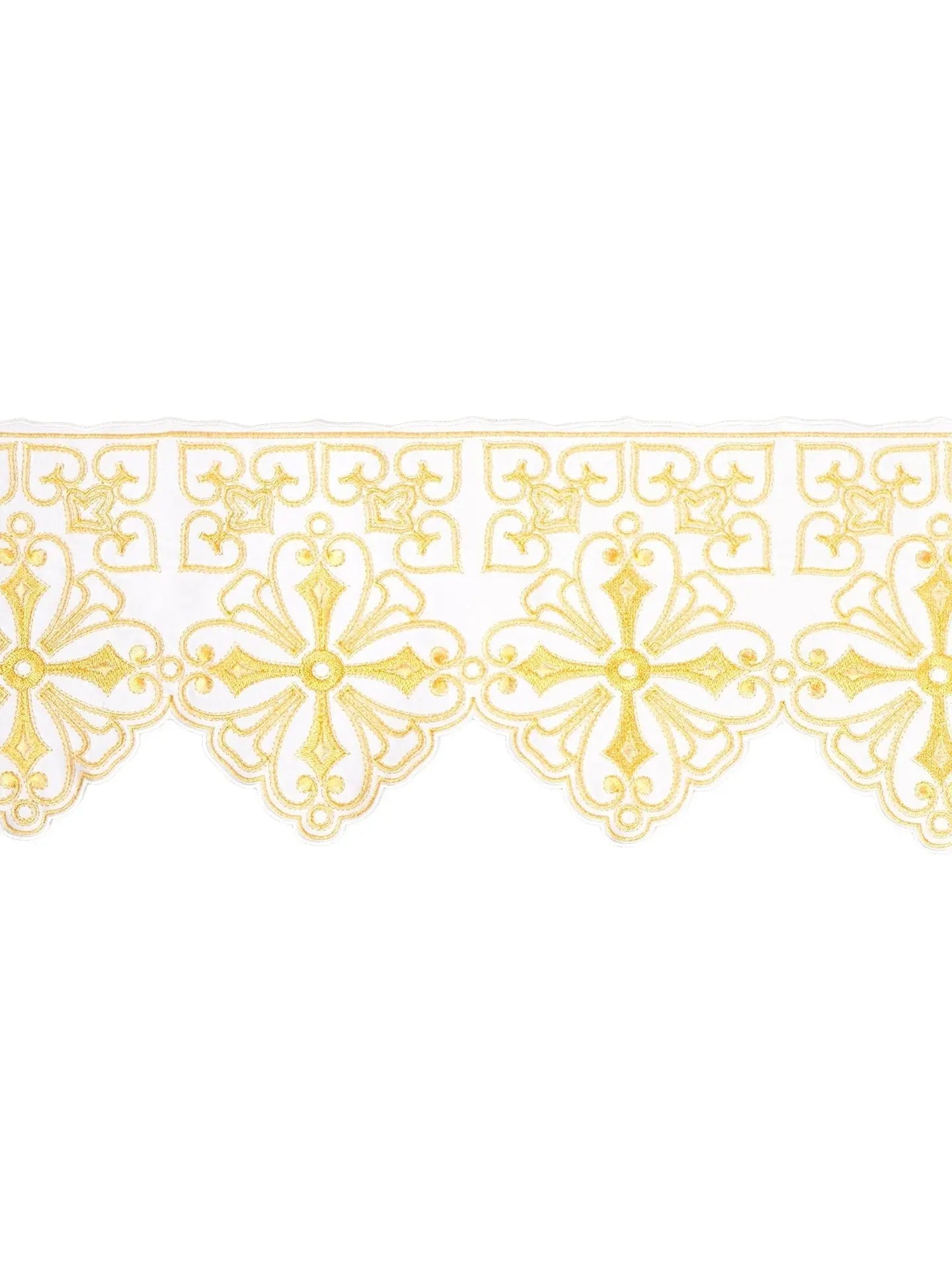
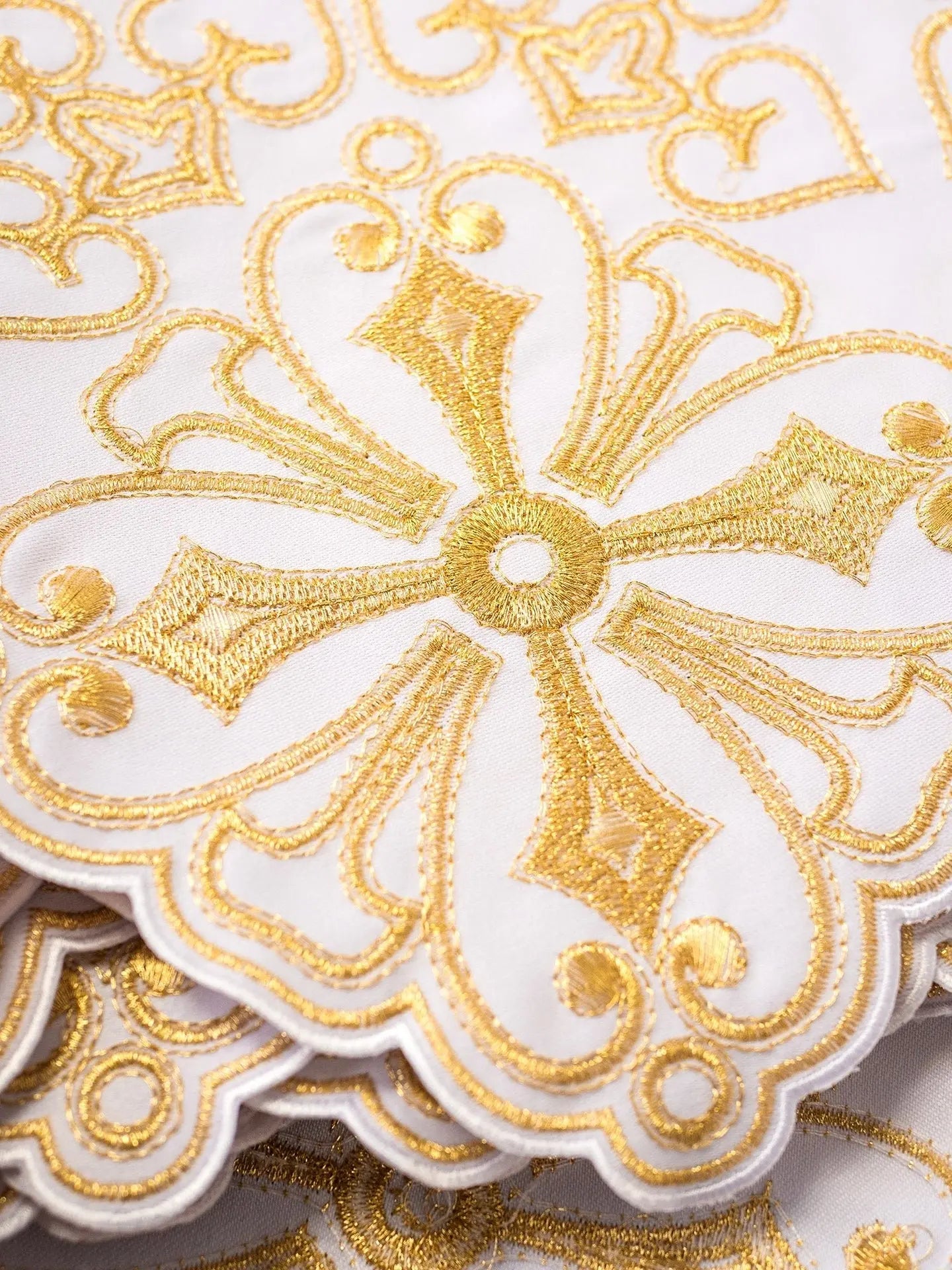
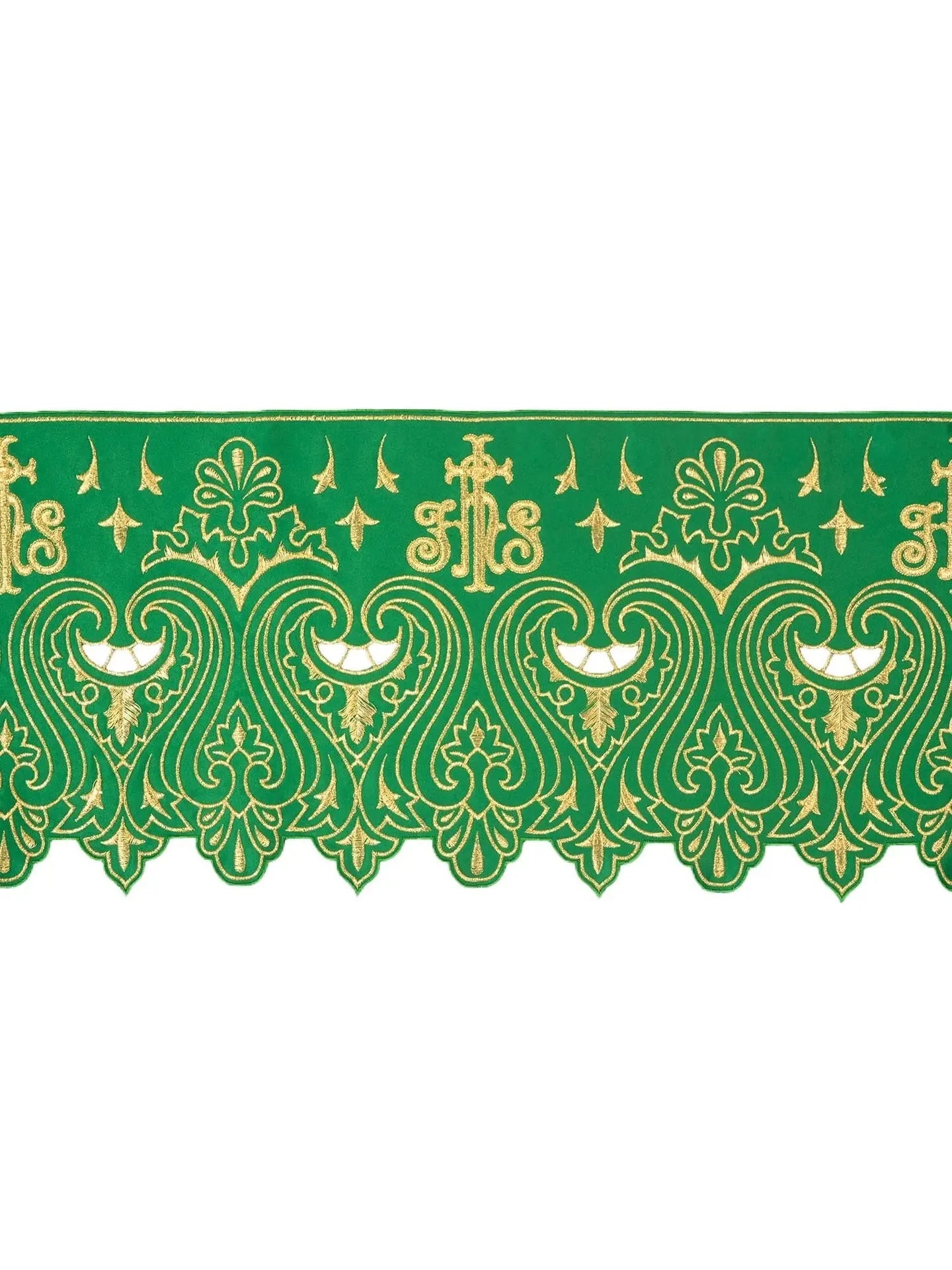
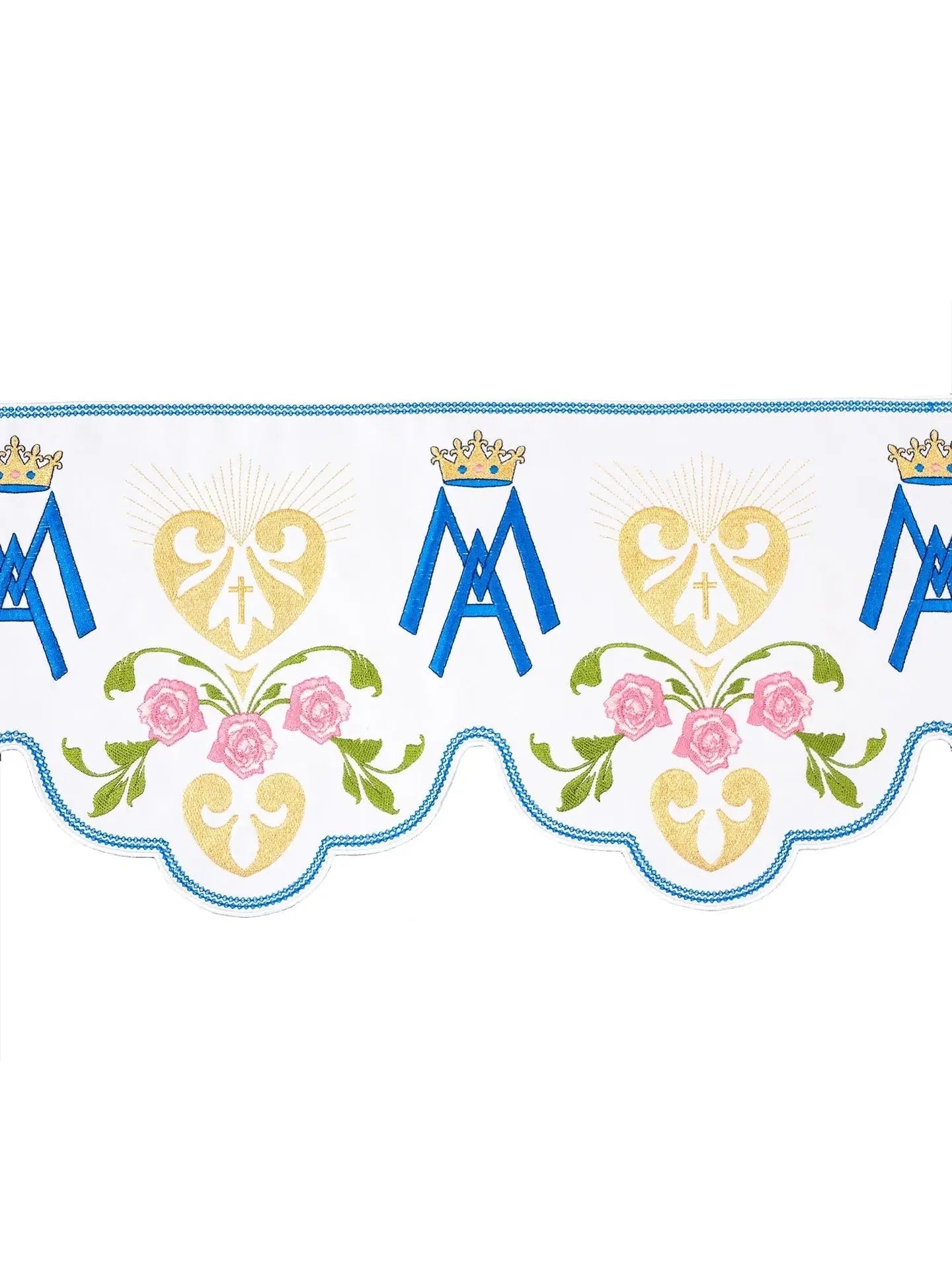
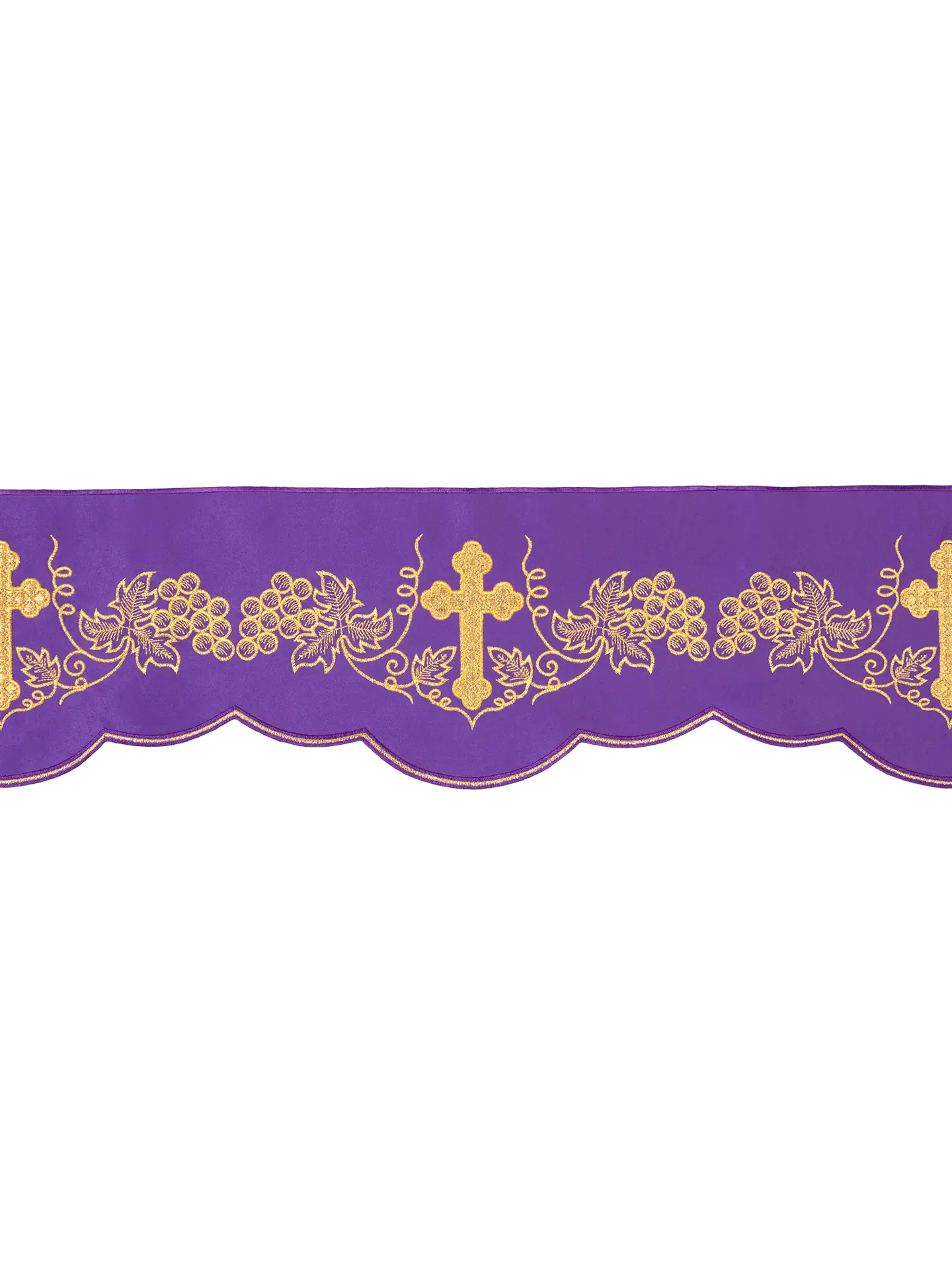
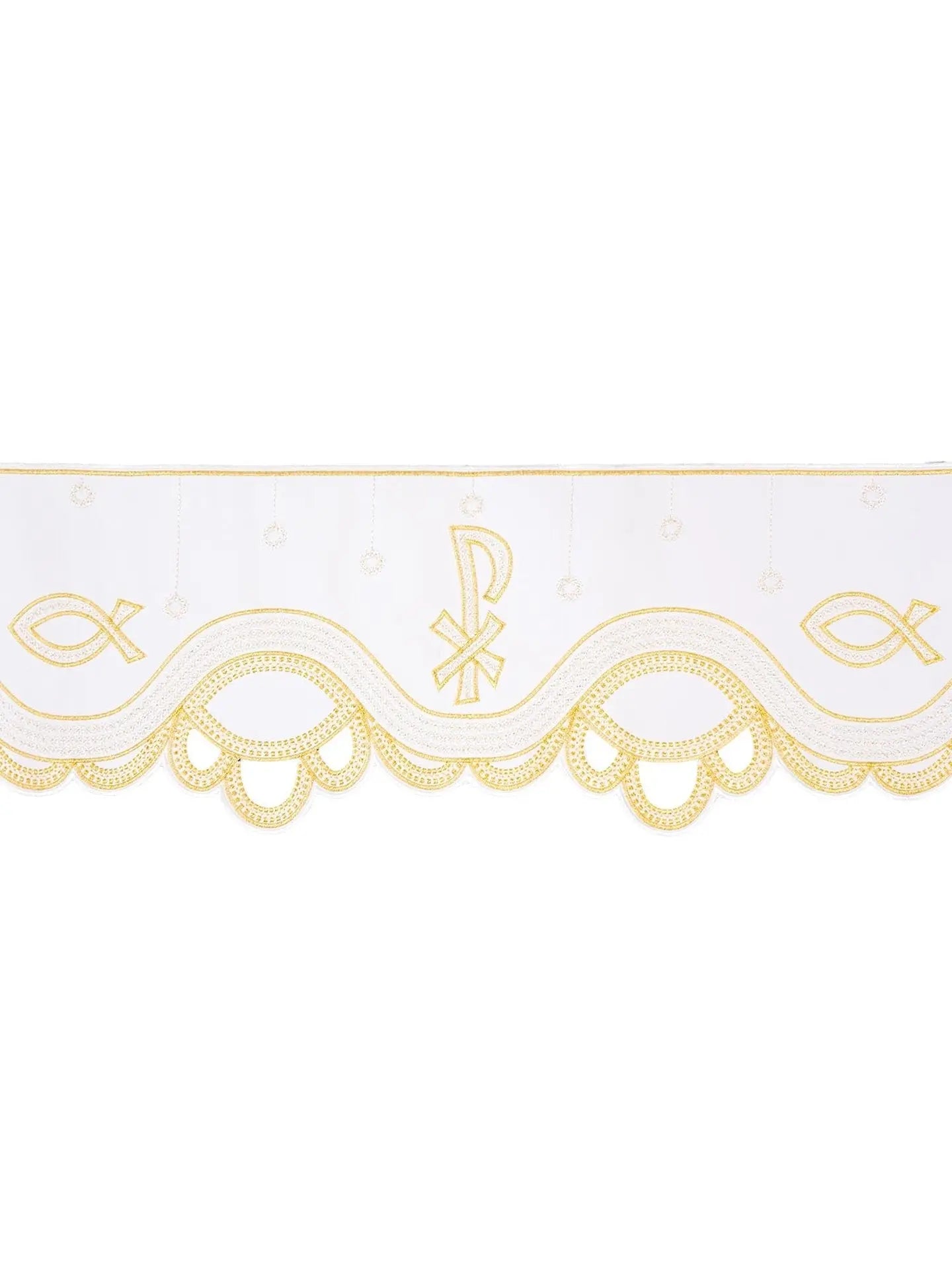
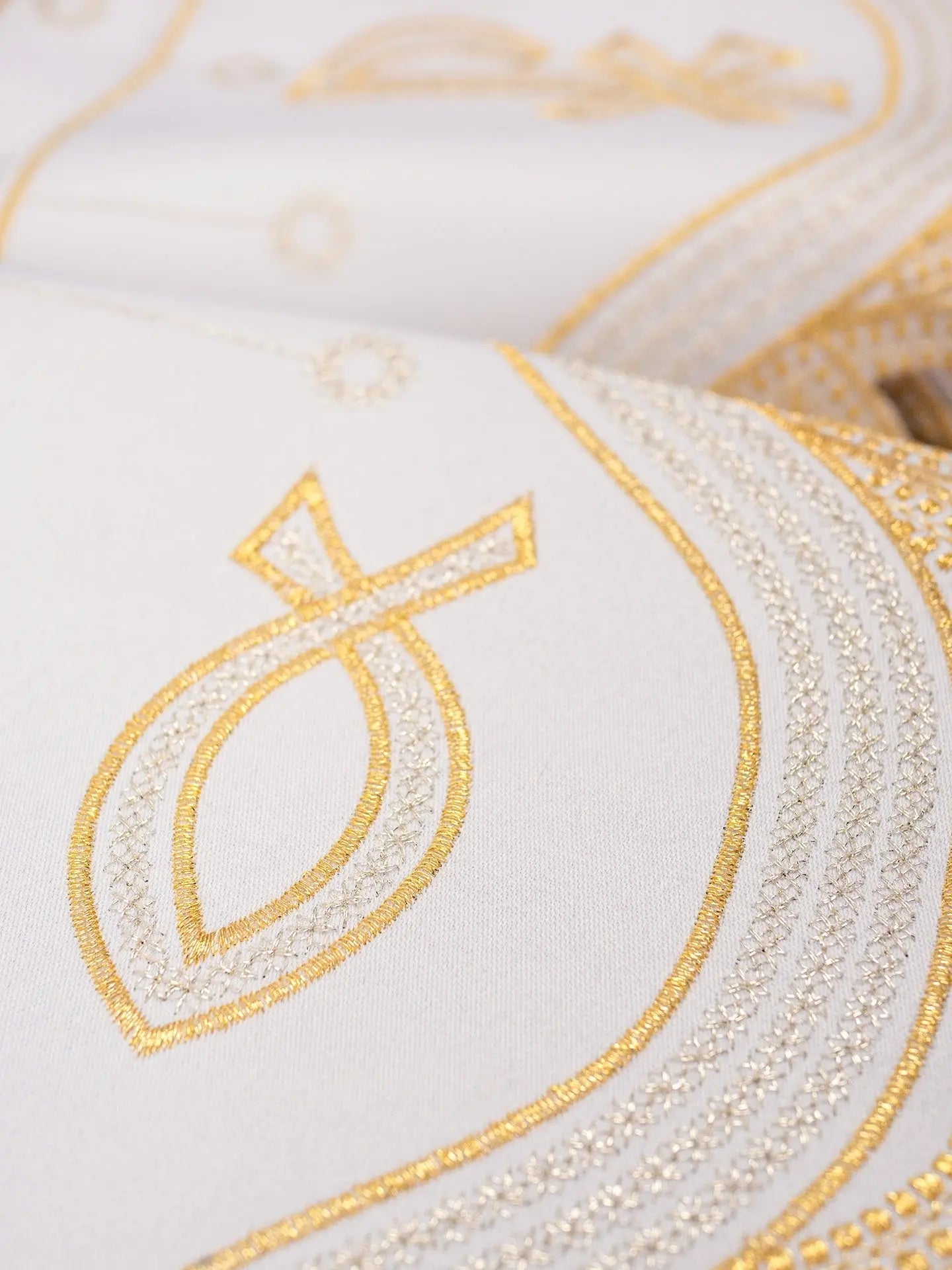
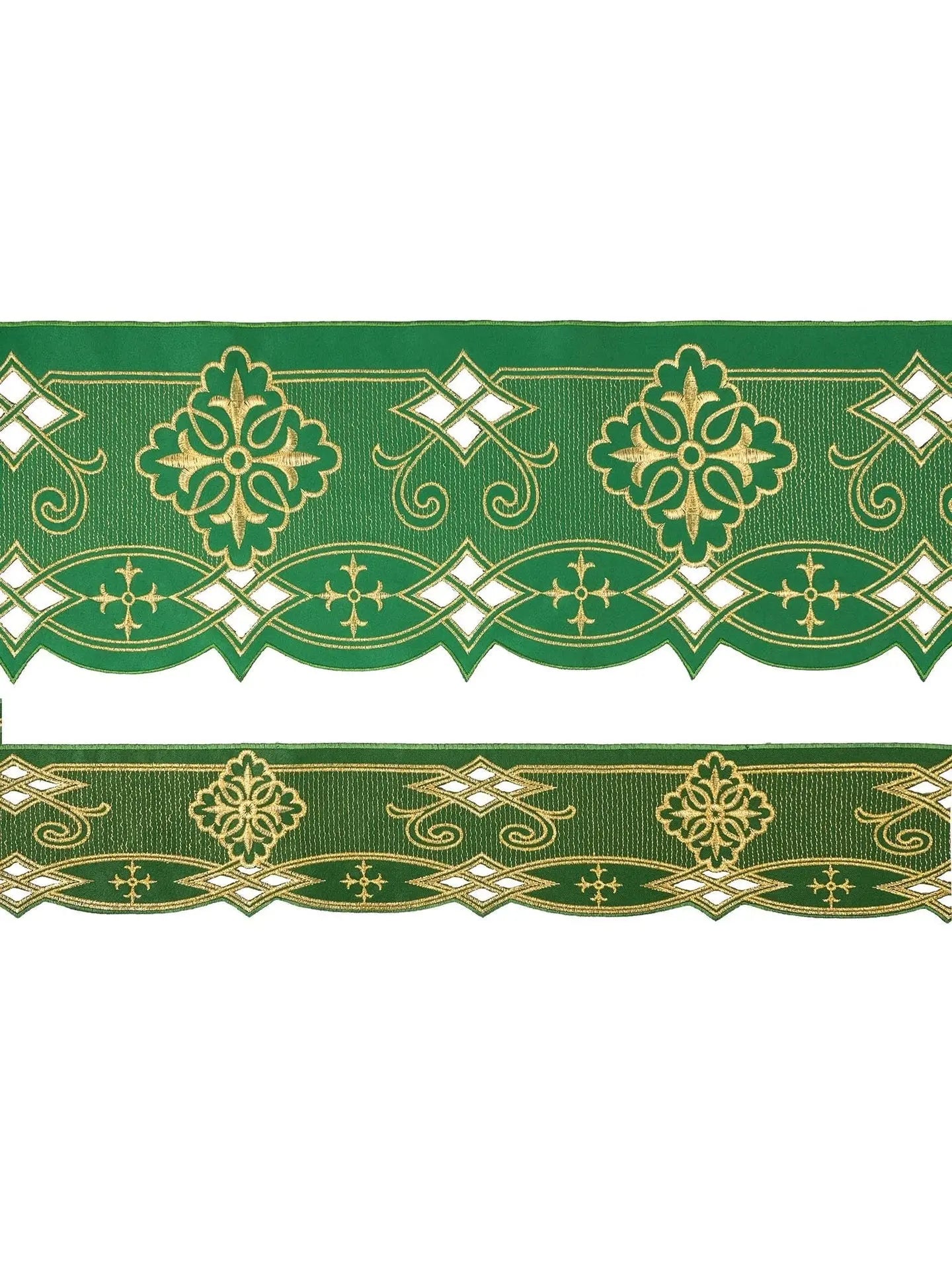
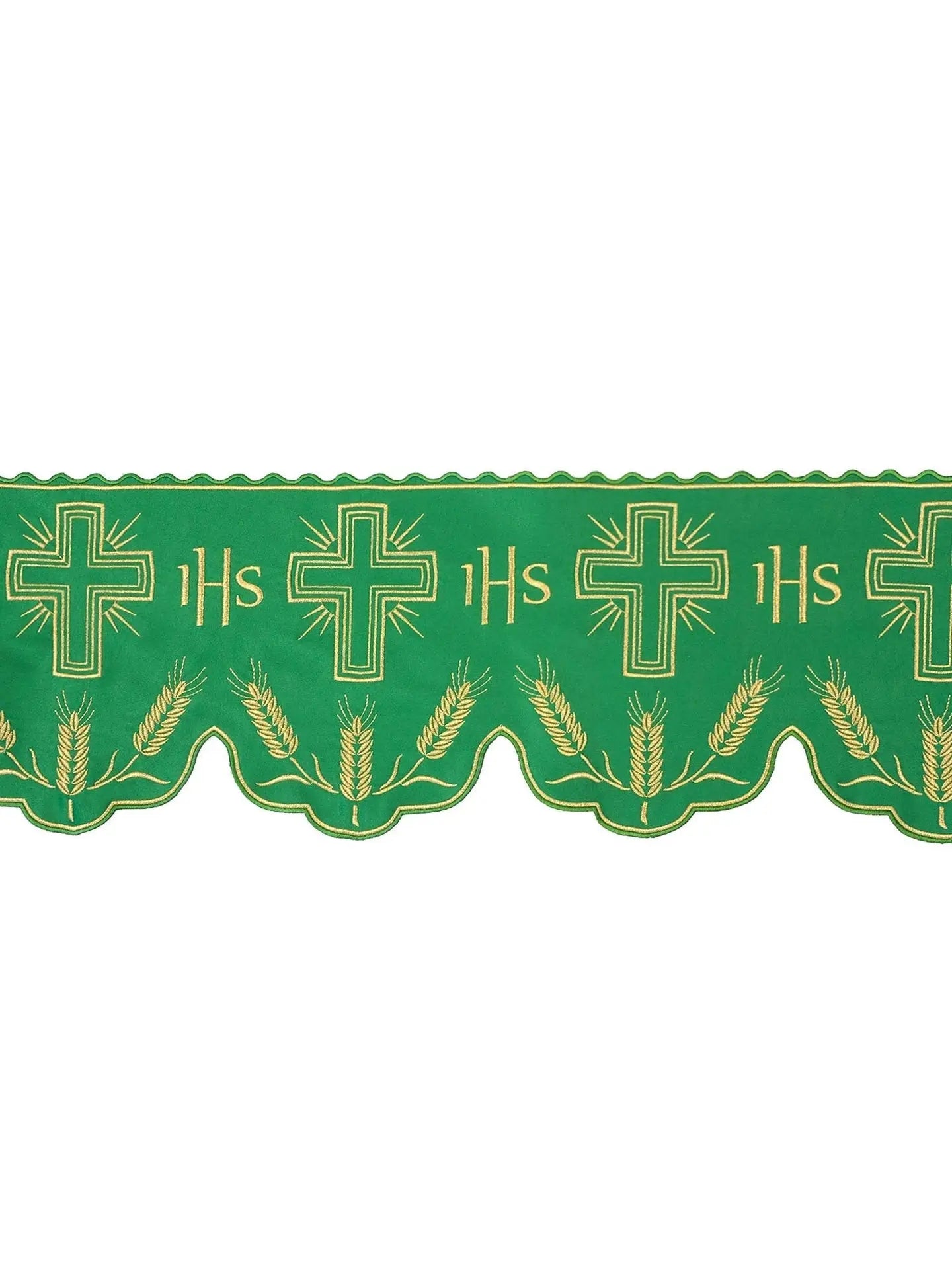
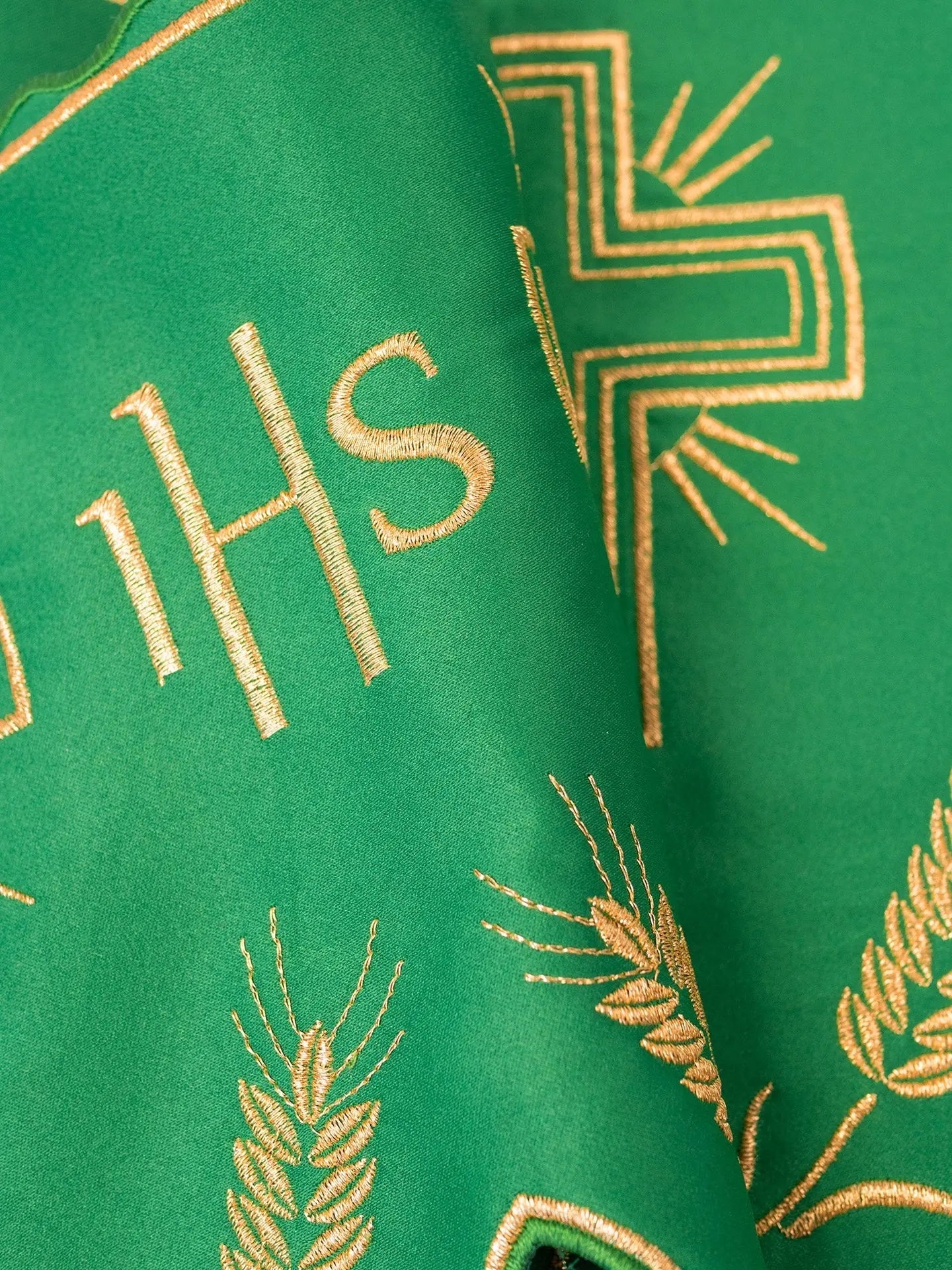
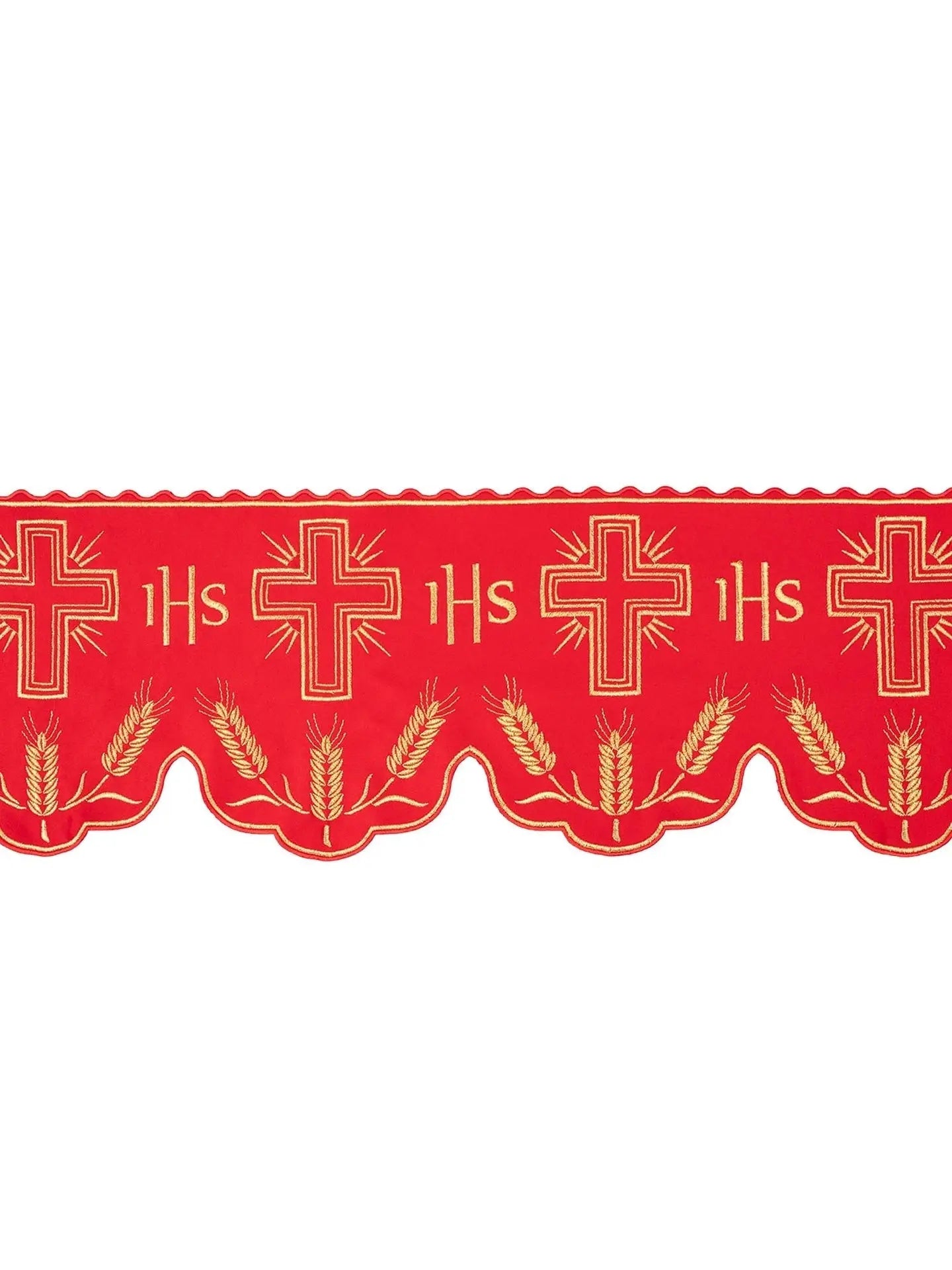
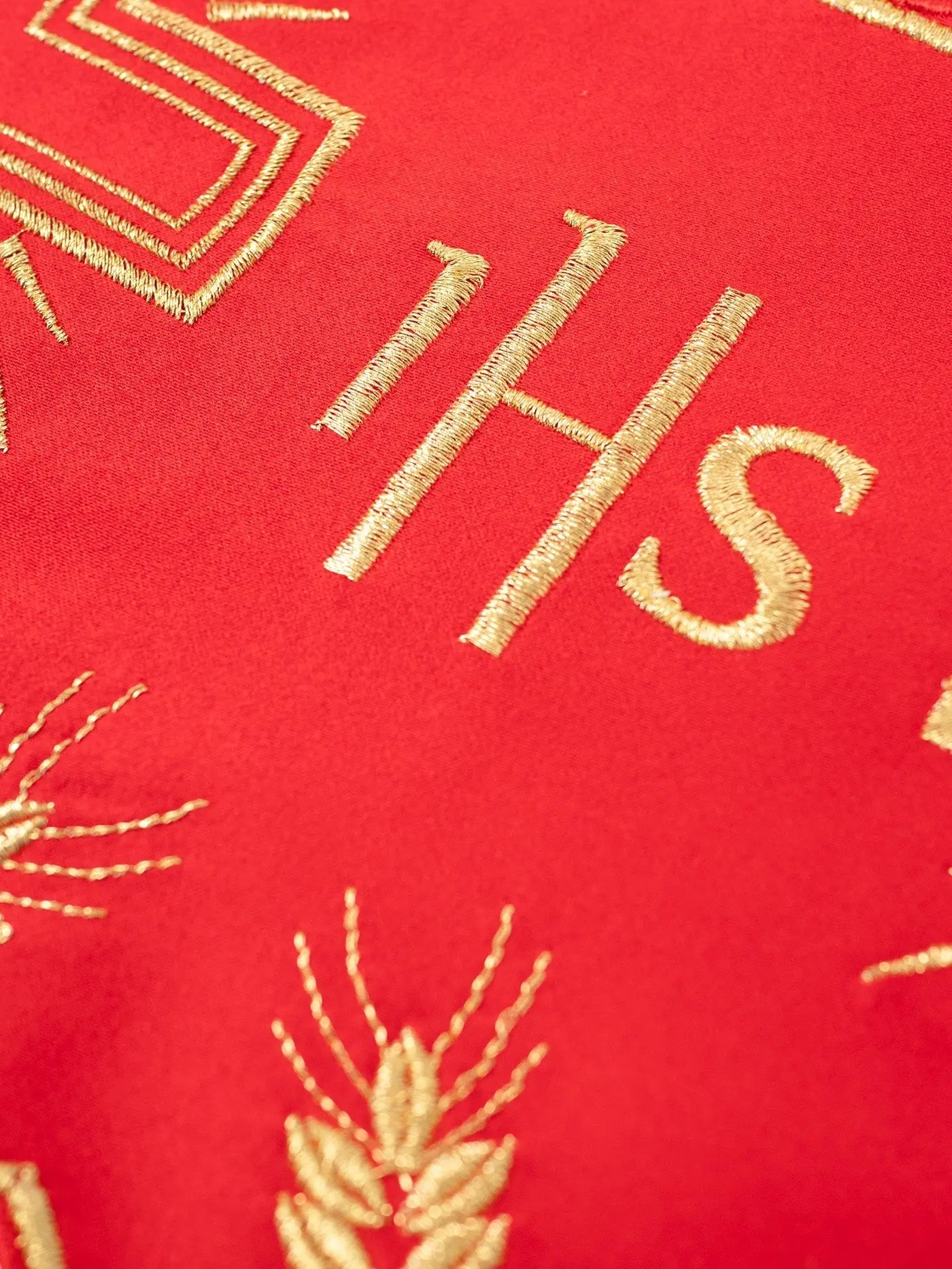
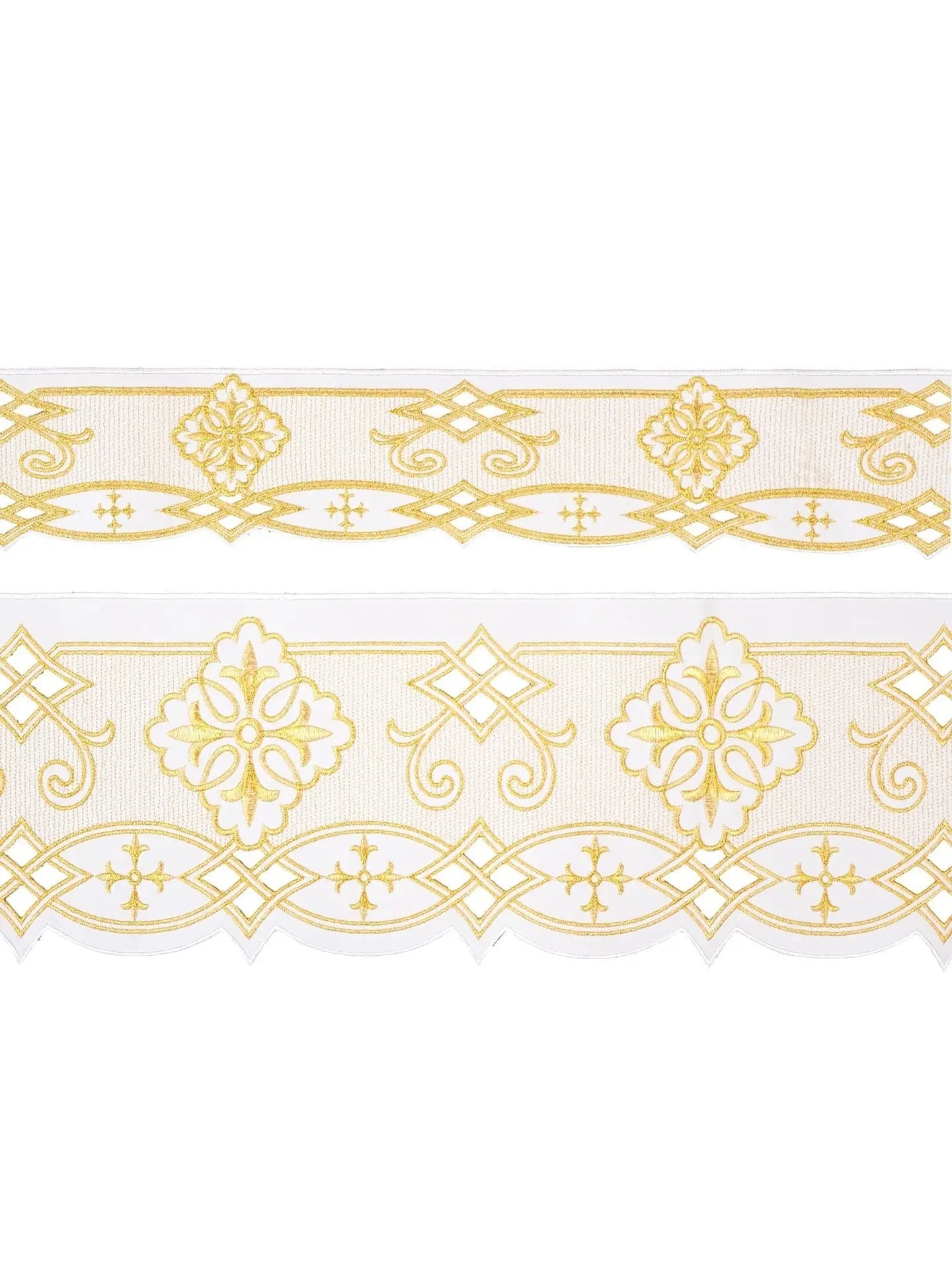
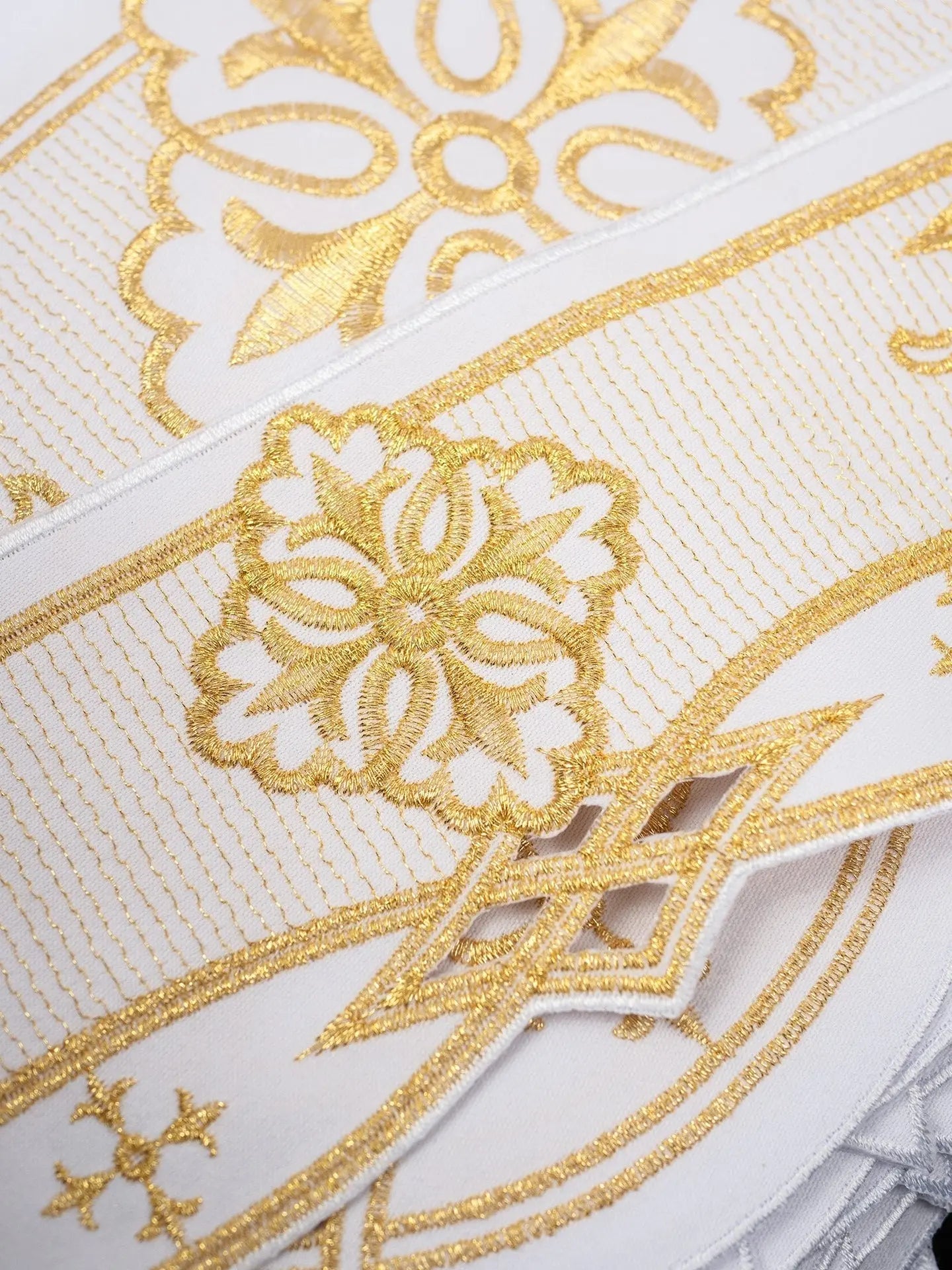
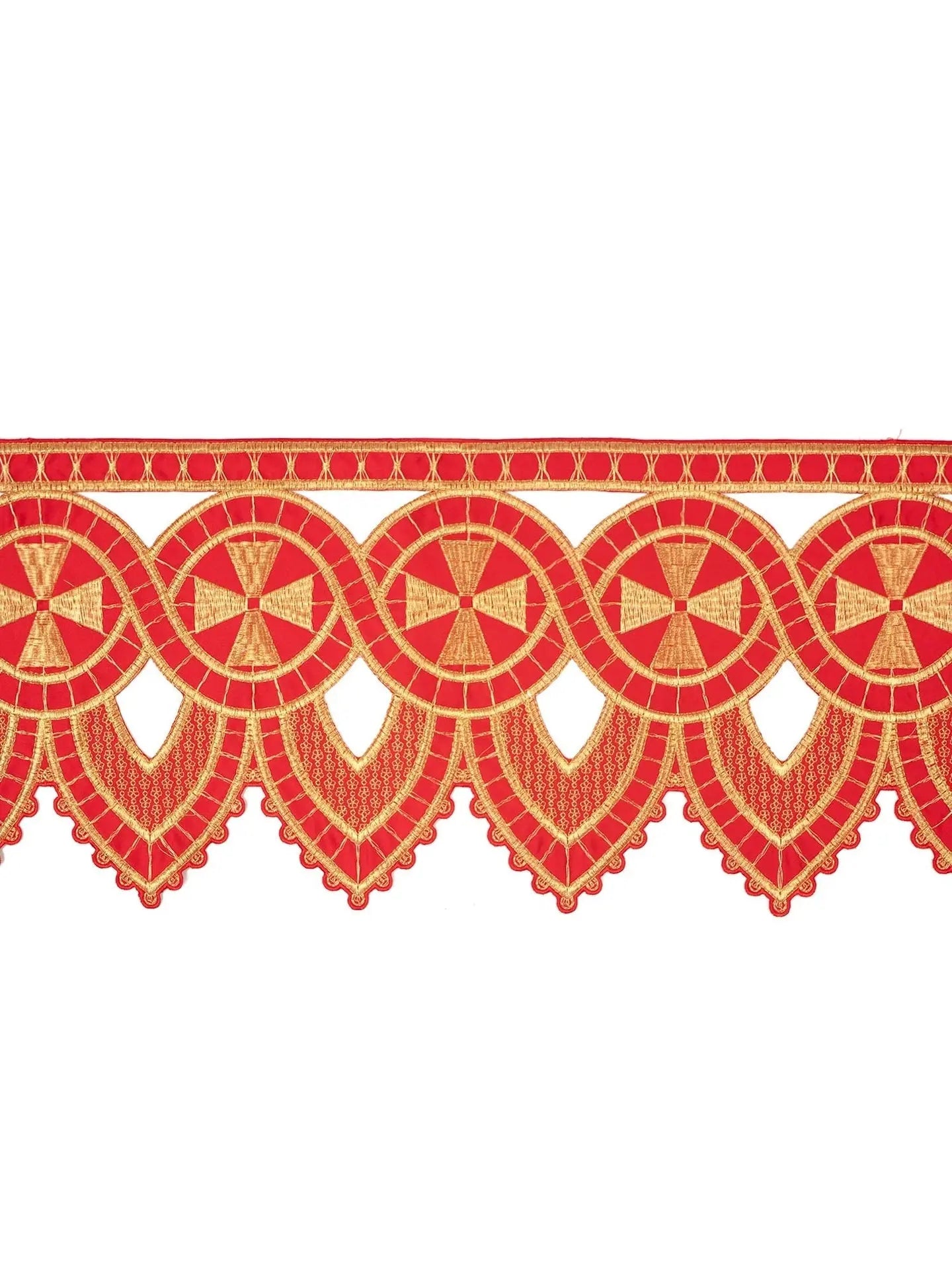
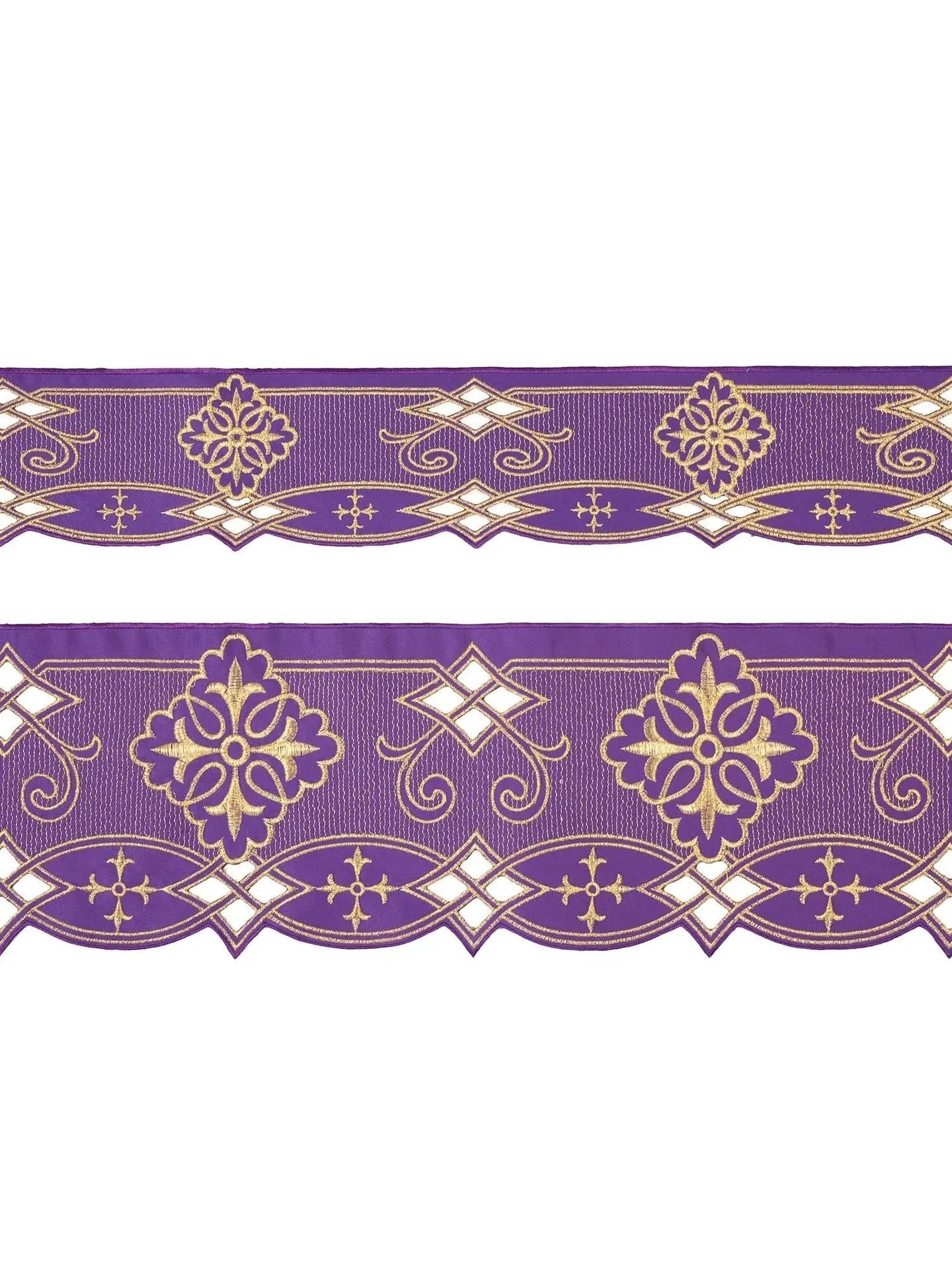
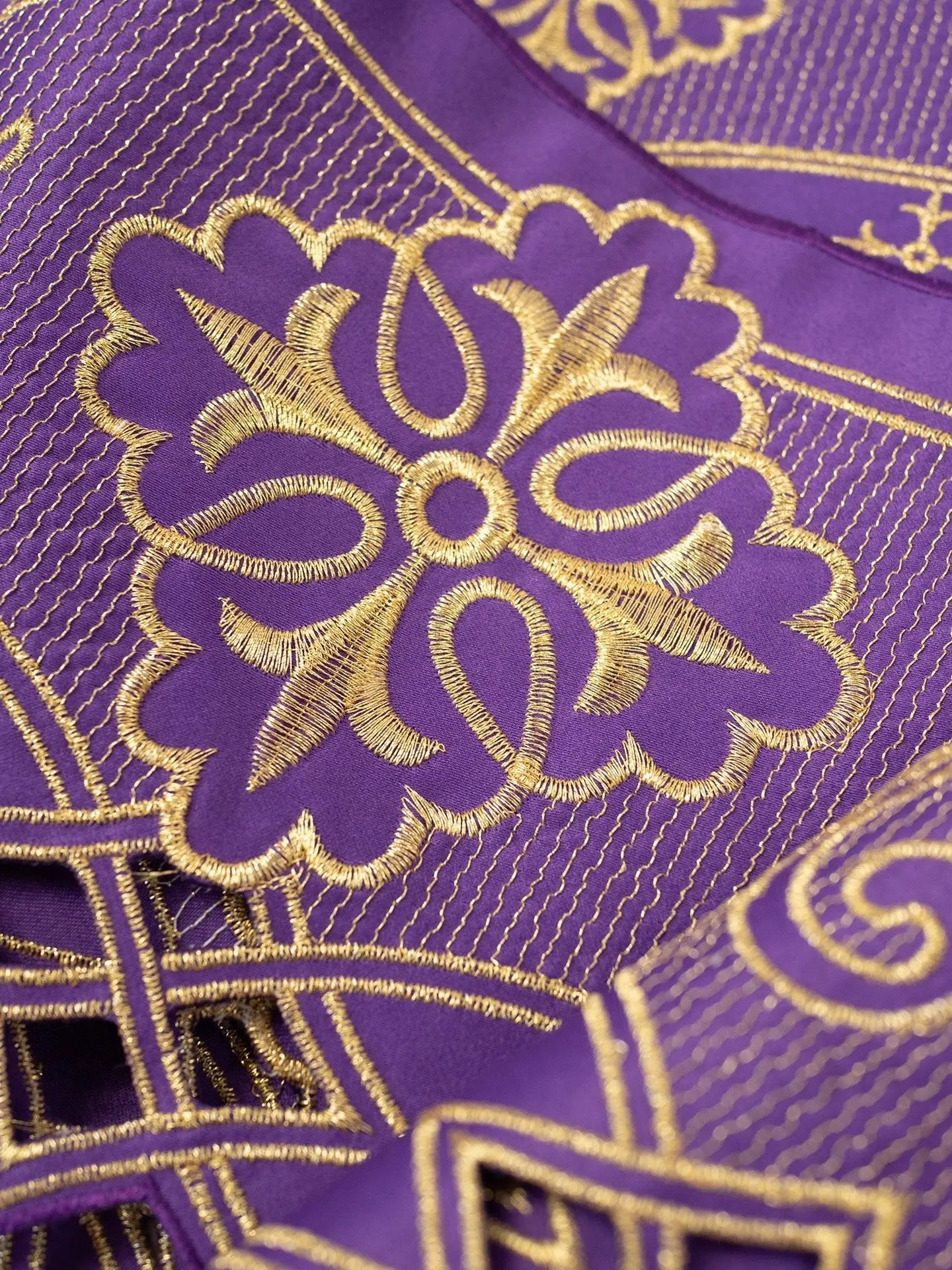
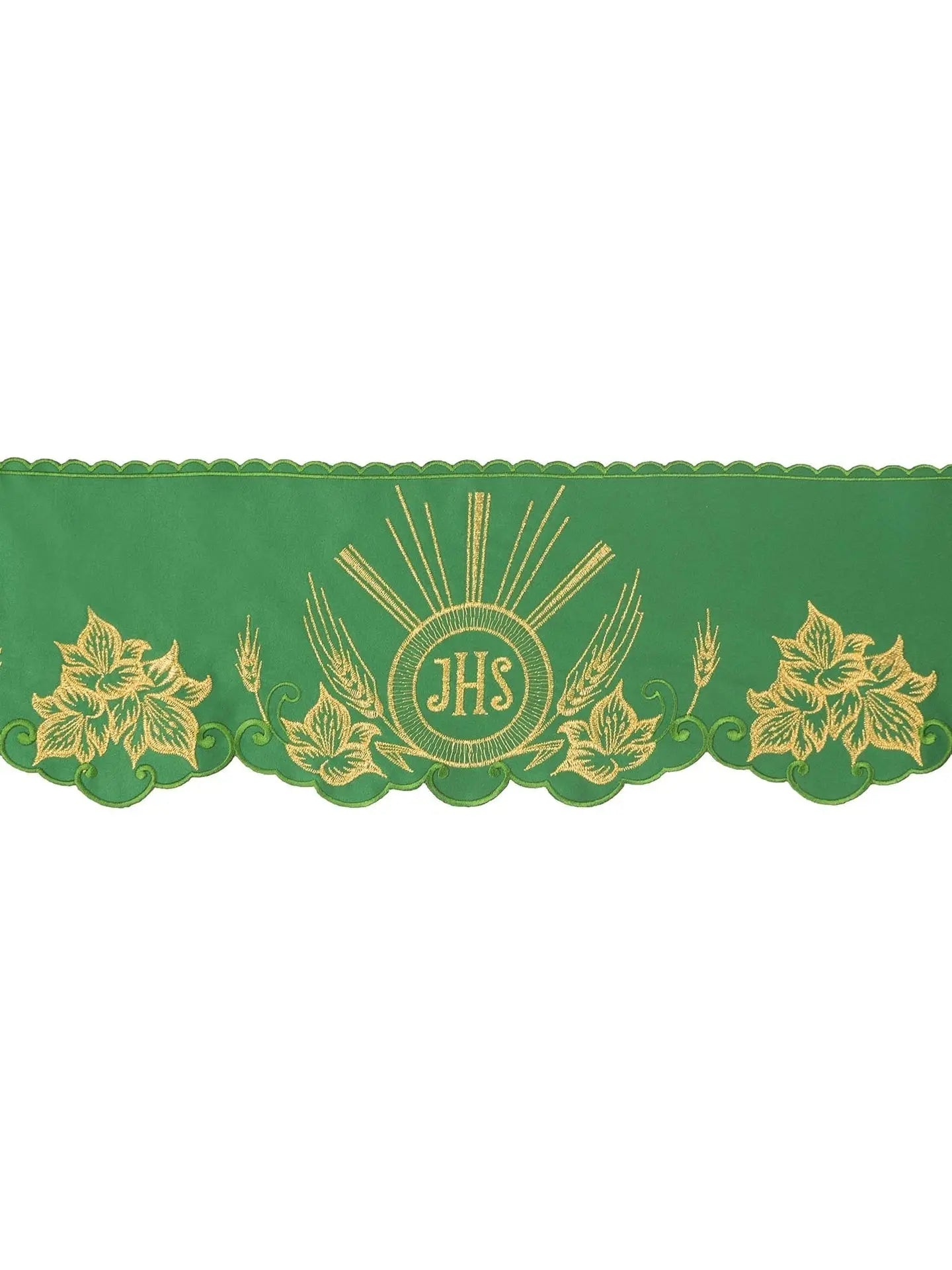
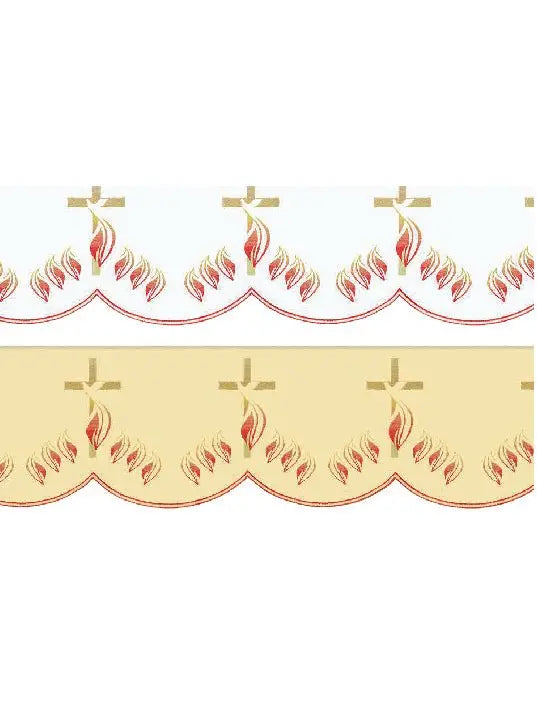
Altar superfrontals are decorative textile bands used at the front of the altar to give the sanctuary a clear liturgical focus without covering the whole mensa. In this collection you will find embroidered superfrontals sold by the metre, prepared for churches, chapels, religious houses and parish sacristies that need a refined frontal element for the altar. The designs include classic Christian symbols such as the cross, IHS monogram, Marian motifs, grapes, rosettes and dove embroidery, together with options in liturgical colors including white, ecru, green, red and purple. Each piece is intended to complement the altar area, support the rhythm of the Church year and create a coherent setting for the Eucharistic celebration.
A superfrontal is especially useful when the parish wants the altar to remain visually light, while still showing the color or symbol of the day. Unlike a full altar frontal, it forms an upper decorative band or frontal trimming, so the structure of the altar remains visible. This makes it suitable for modern sanctuaries, side altars, chapel altars and churches where a full antependium would be too visually heavy. It can also help connect the altar with other textiles used in the sanctuary, especially when the embroidery motif is repeated on a pulpit cover, chalice veil or chalice linen set.
What belongs in this collection
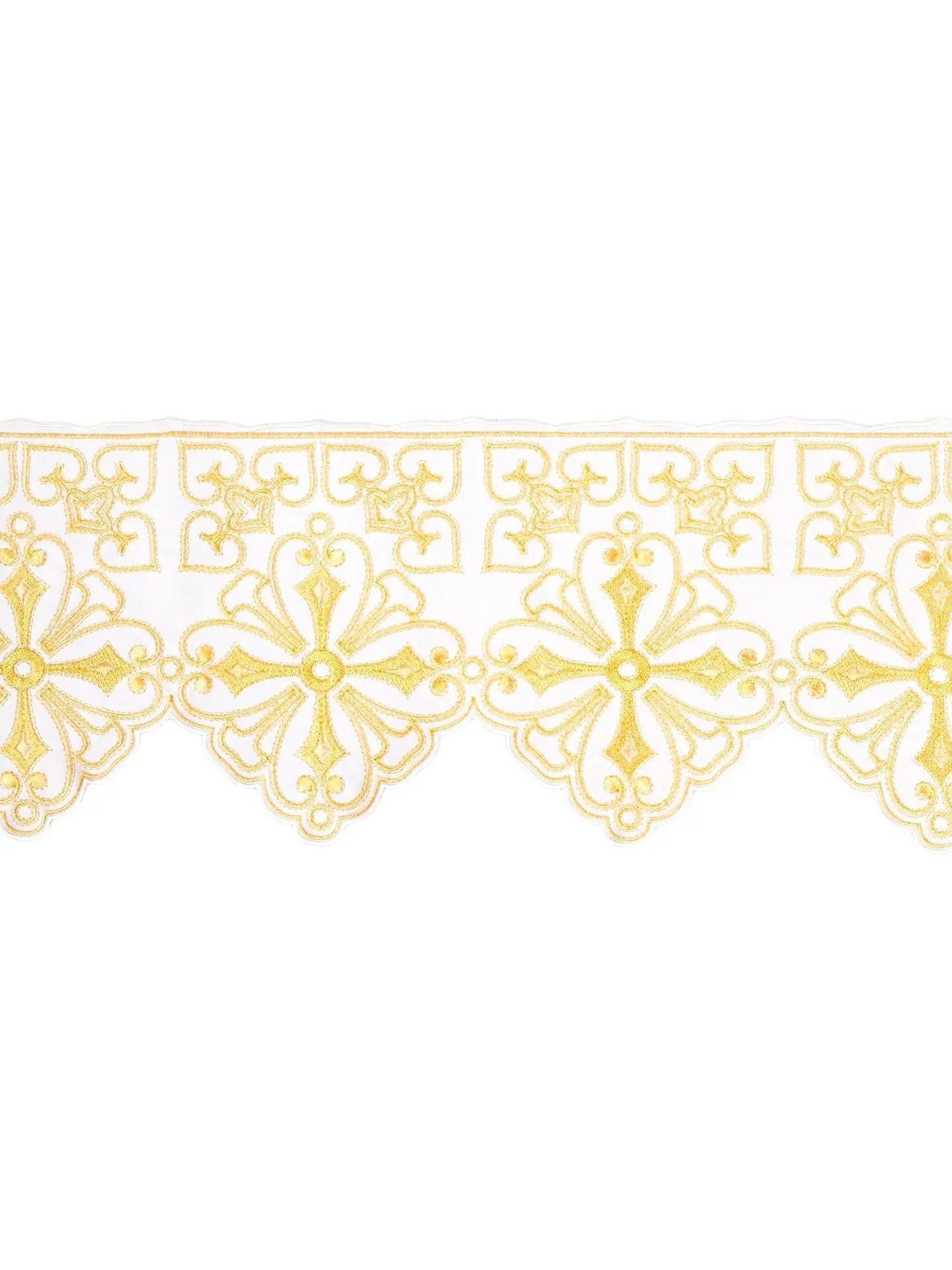
This collection is focused on altar superfrontals with frontal embroidery, many of them offered by the metre so they can be adapted to the dimensions of a particular altar. The range includes designs with Marian symbolism, IHS monograms, cross motifs, rosette patterns, Eucharistic grapes, Advent motifs, white dove embroidery and simple ecru cross designs. These patterns allow the sacristan or parish team to select a textile that is both decorative and liturgically meaningful. For broader sanctuary textile planning, the parent category of altar cloths includes related altar textiles, while this page concentrates specifically on the embroidered superfrontal band.
The product titles in this collection indicate the main motif and color, which helps when building a complete set for the sanctuary. A white or ecru superfrontal with a cross, IHS monogram or Marian motif is often suitable for solemnities and Marian celebrations. Green designs support the Sundays and weekdays of Ordinary Time. Purple designs are appropriate for Advent and Lent, while red can be used for Pentecost, Palm Sunday, Good Friday, martyrs and celebrations connected with the Holy Spirit. Choosing several superfrontals in different colors allows the altar to follow the liturgical calendar while keeping the same visual proportions and textile style throughout the year.
Liturgical use and symbolism
The altar is the central place of the Eucharistic liturgy, so the textiles placed near it should be chosen with care. A superfrontal does not replace the altar cloth required for the celebration, but it can enrich the altar front and make the liturgical color more visible to the faithful. Its role is both practical and symbolic: it frames the altar, adds solemnity, and helps the church interior express the season, feast or devotional theme being celebrated. Embroidery is particularly effective in this setting because it introduces sacred symbols without adding unnecessary visual noise.
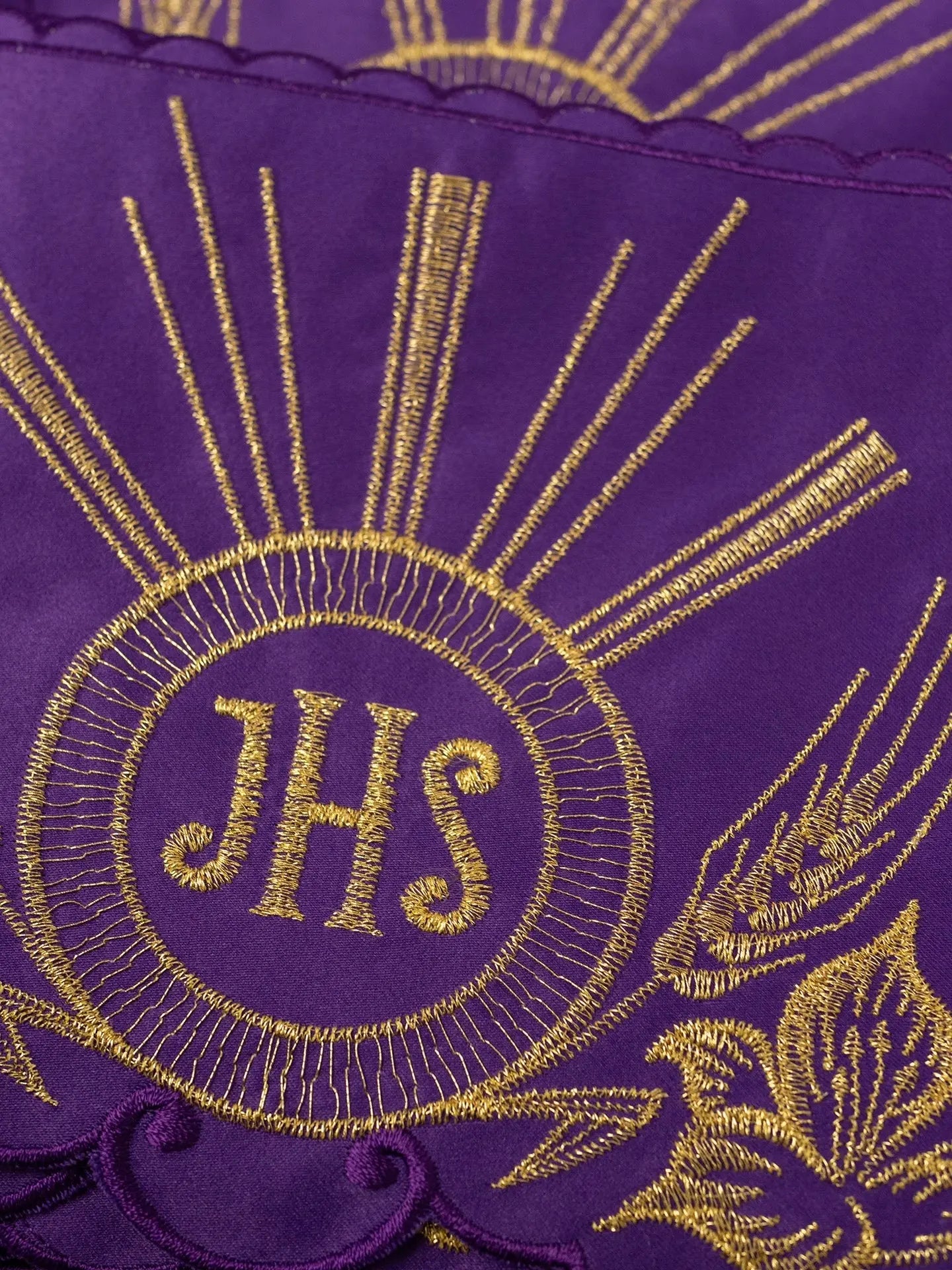
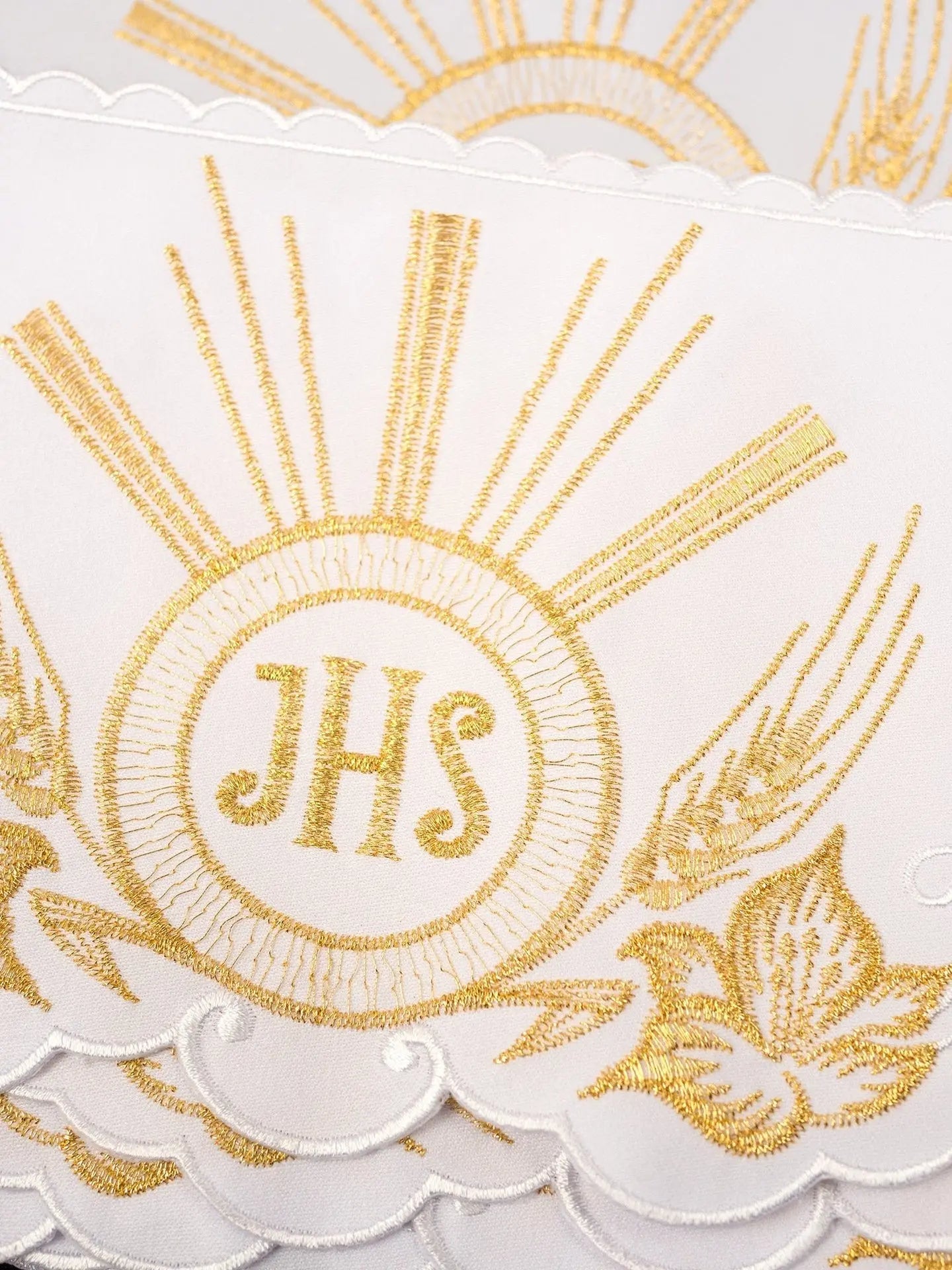
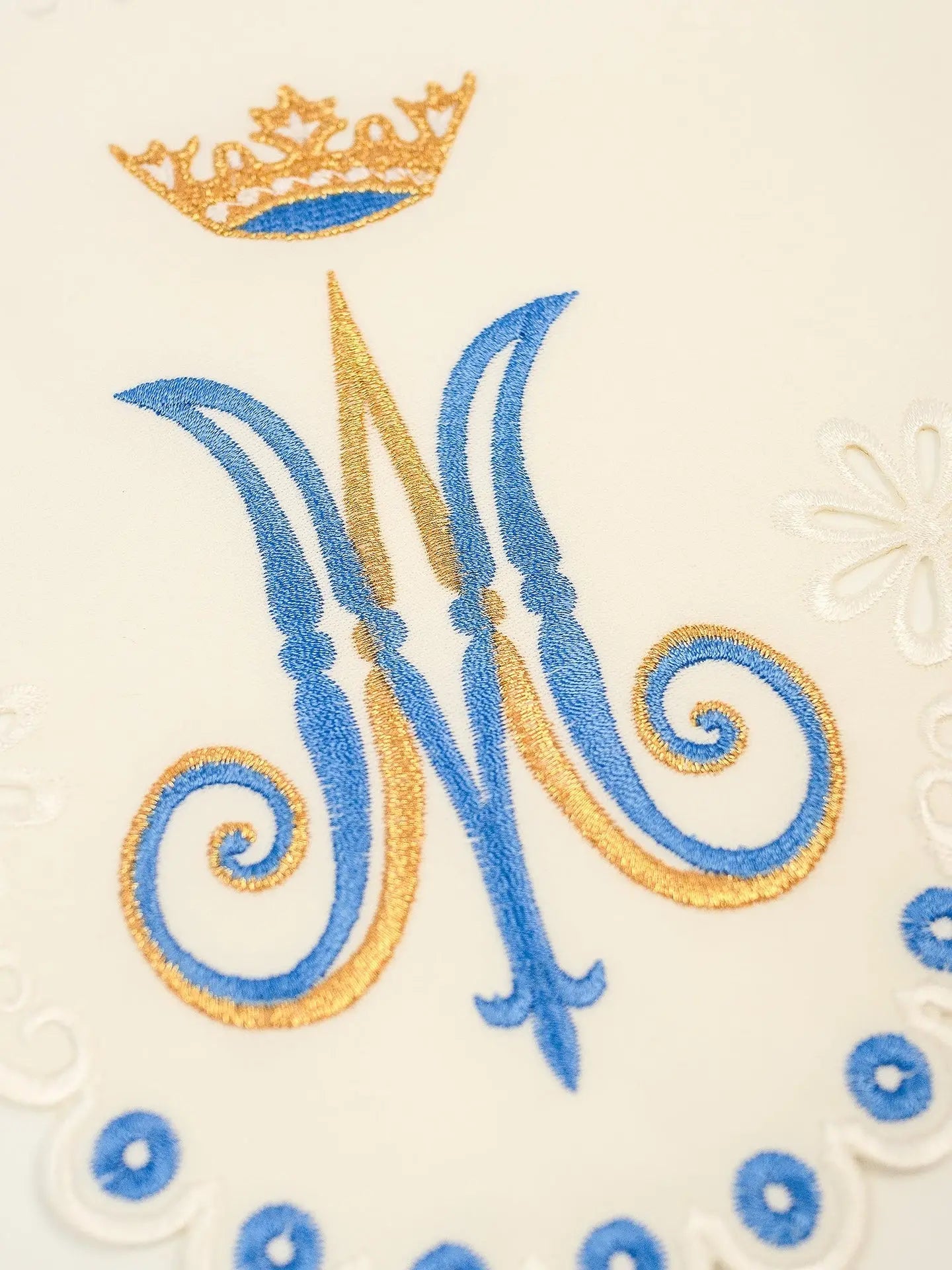
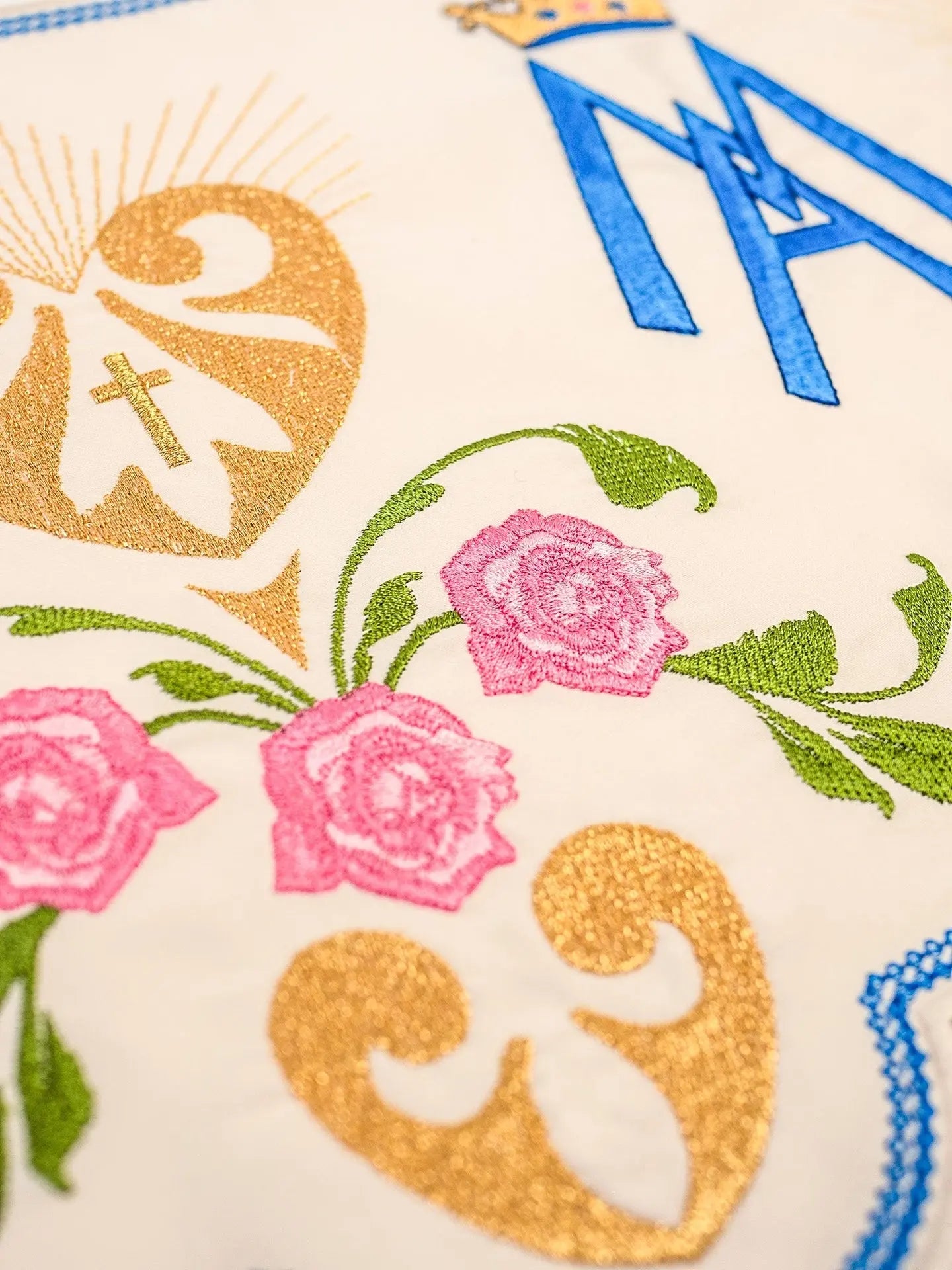
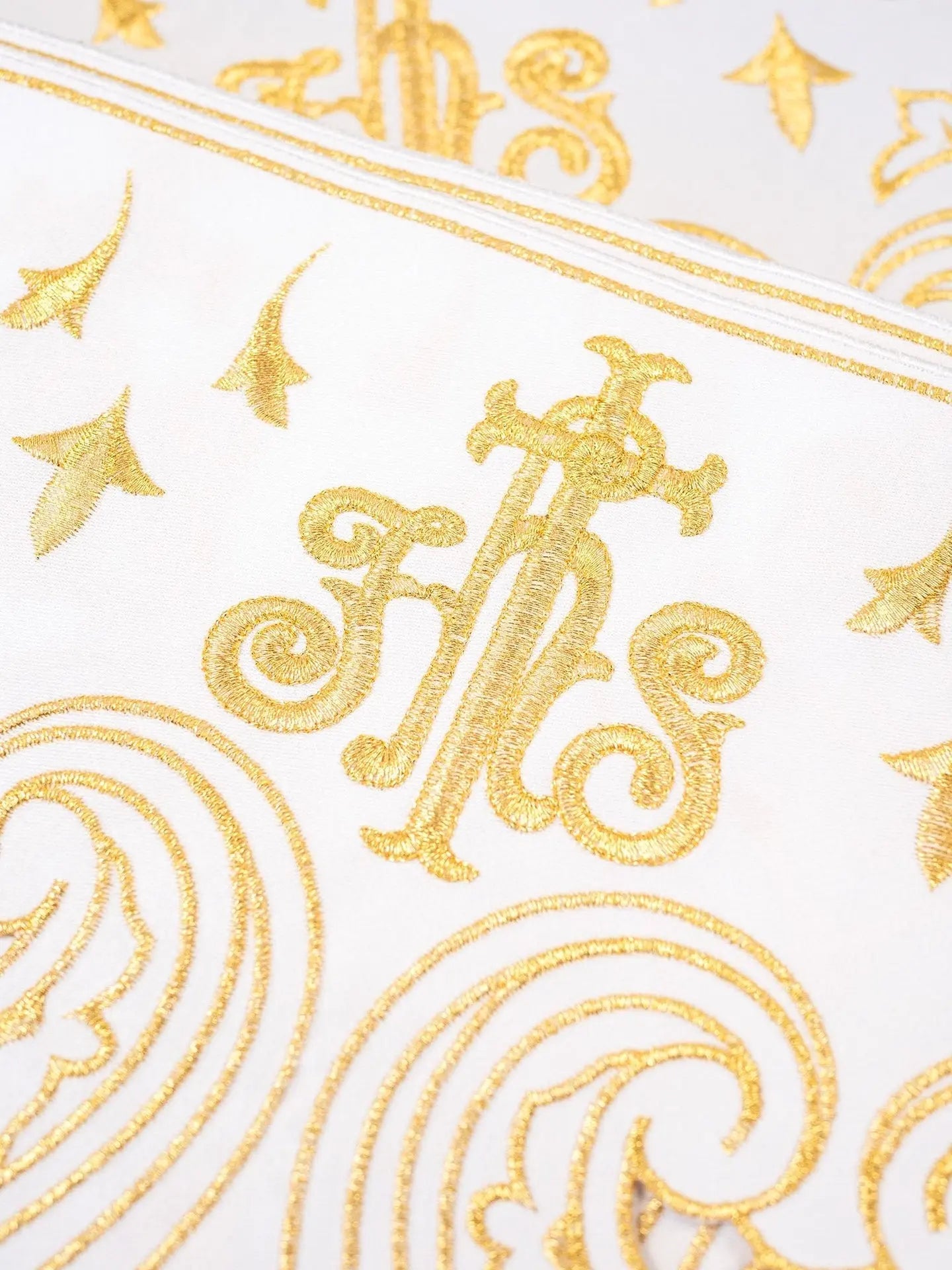
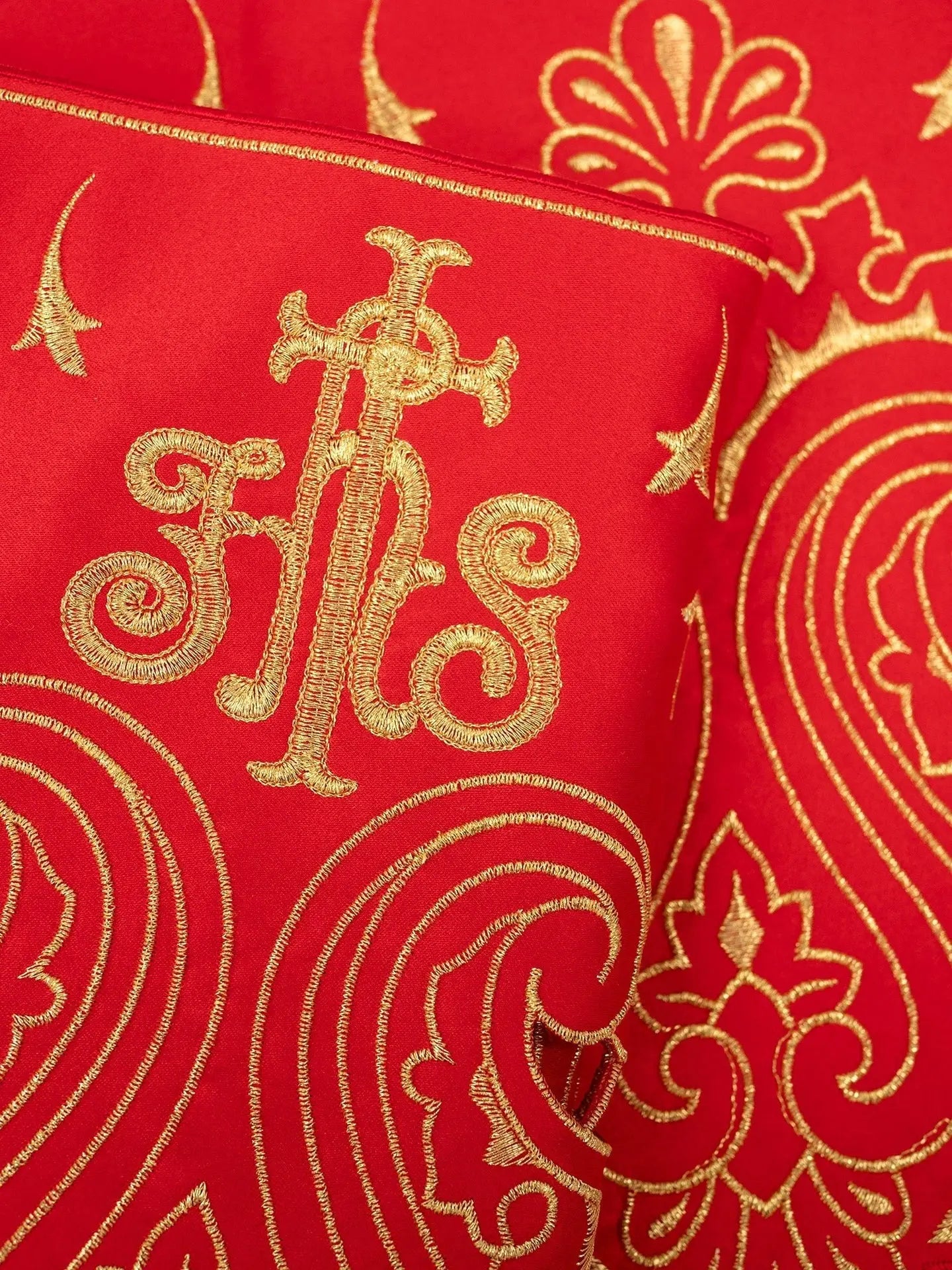
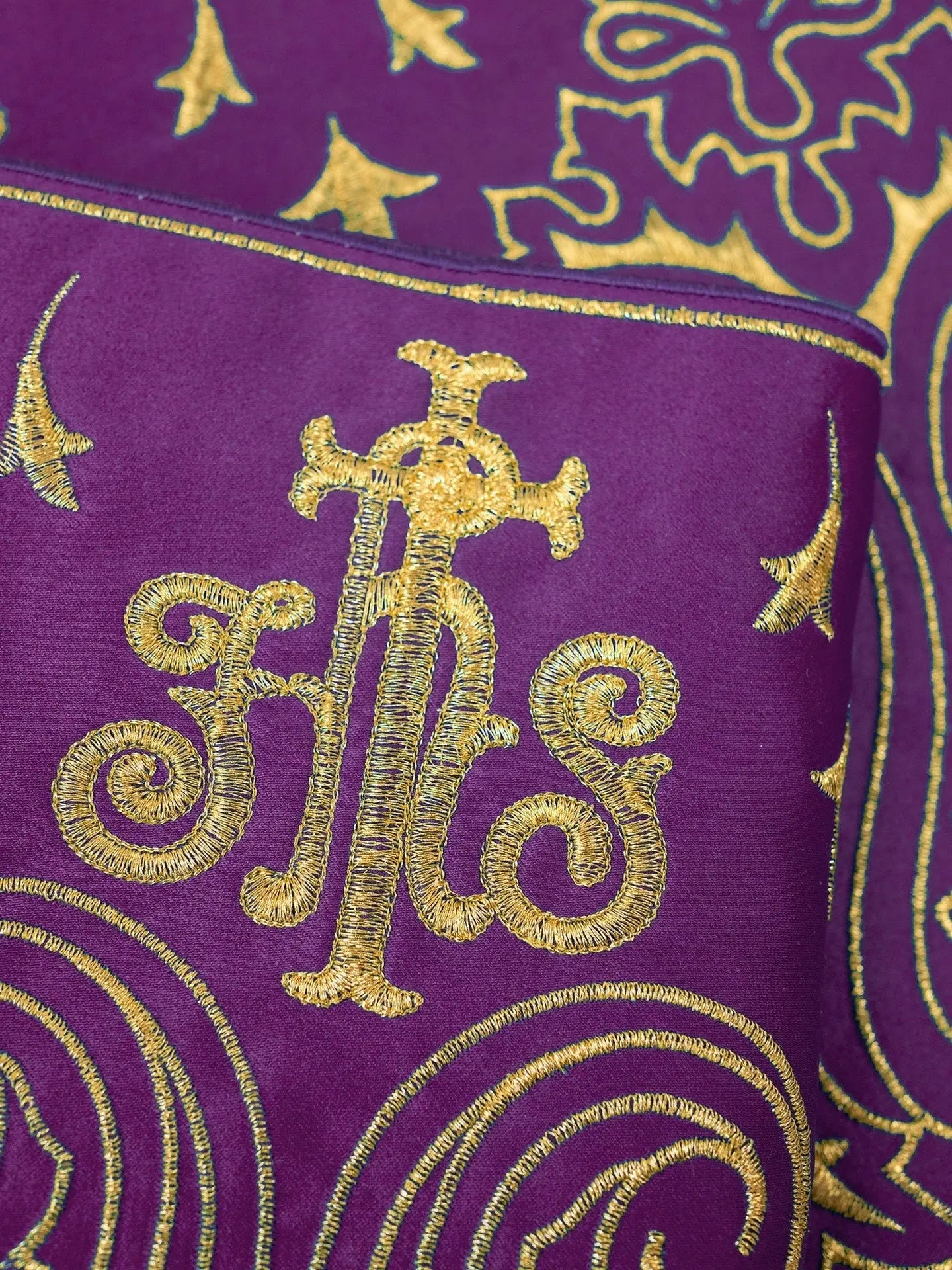
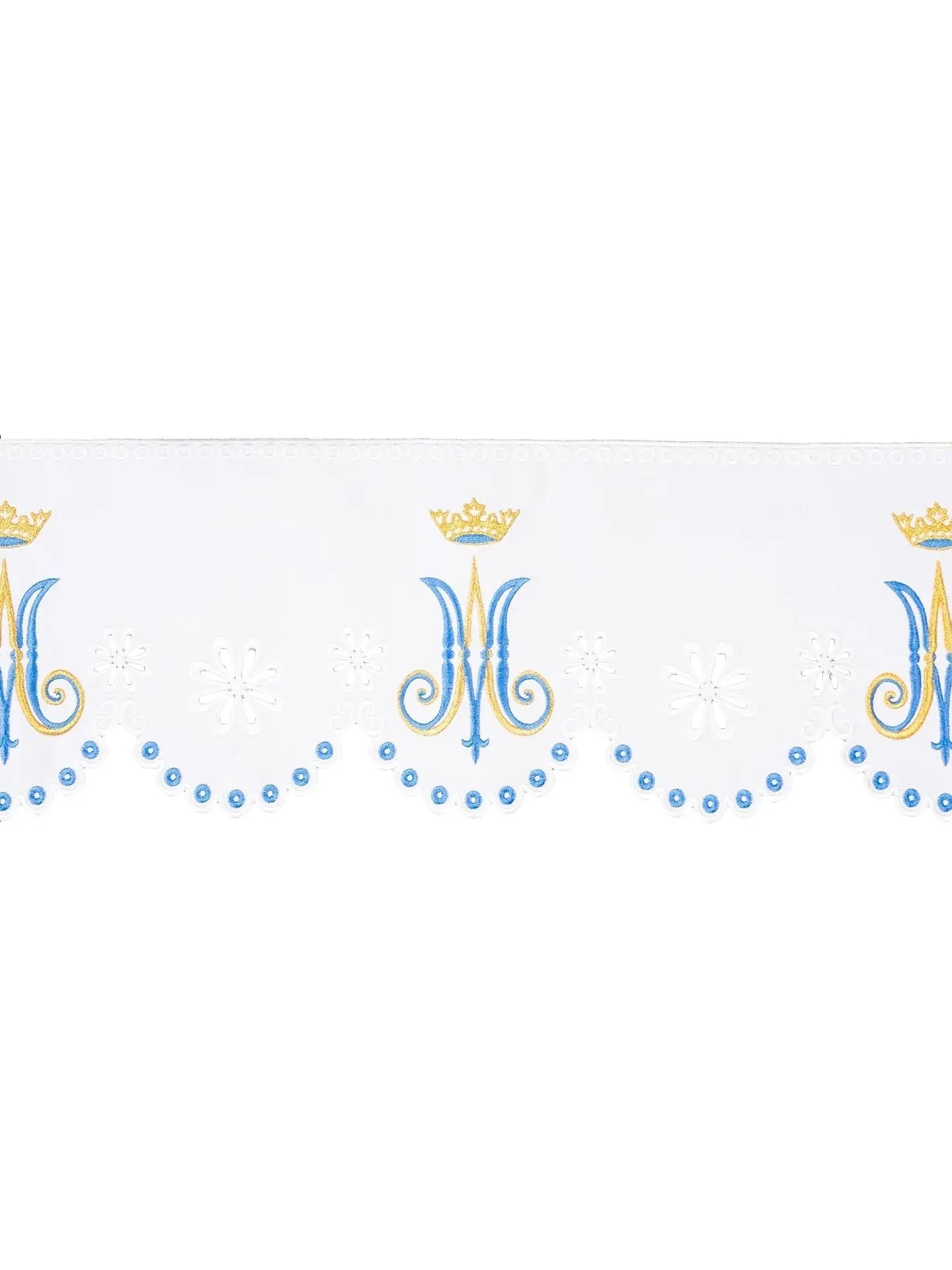
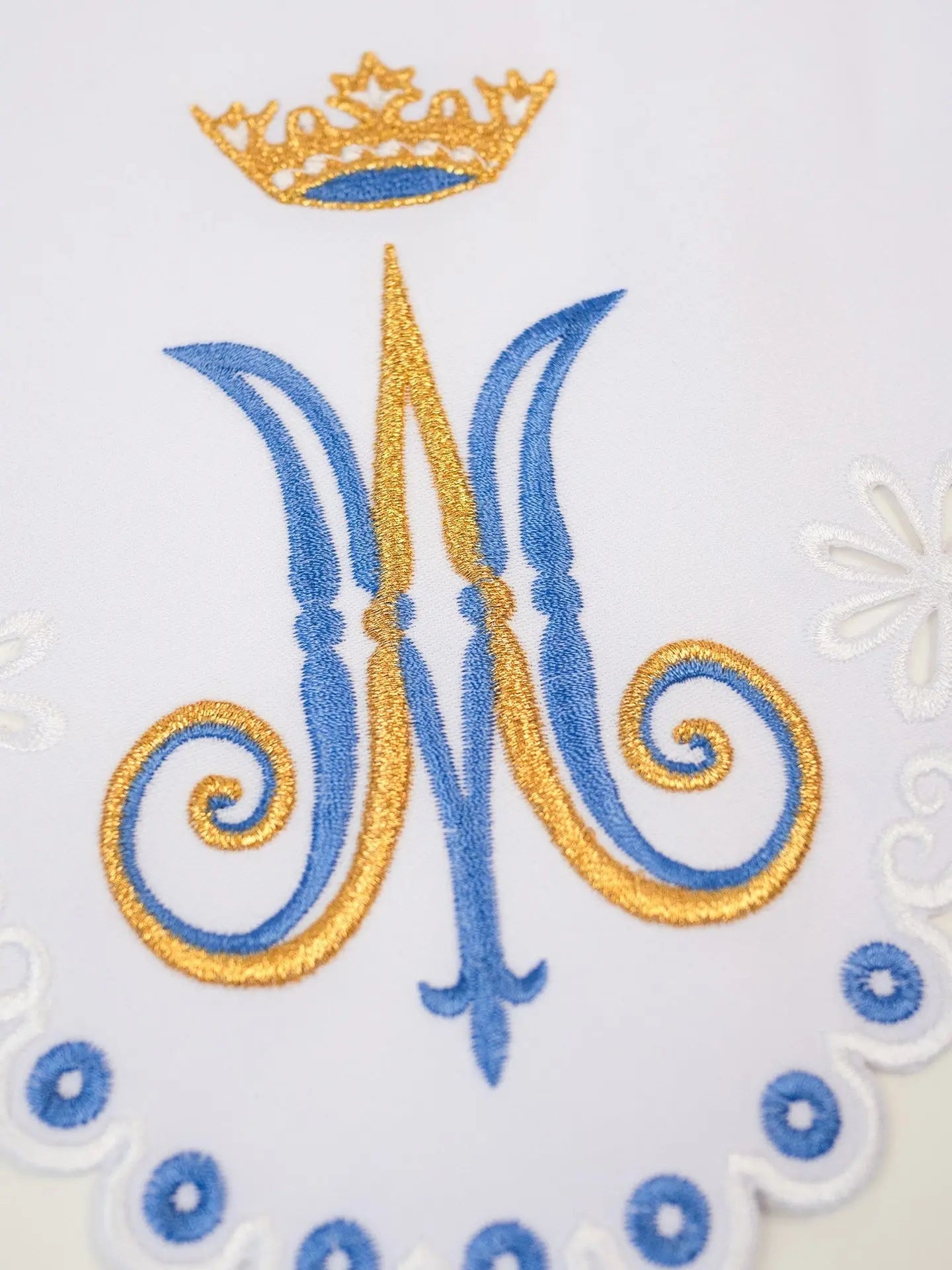
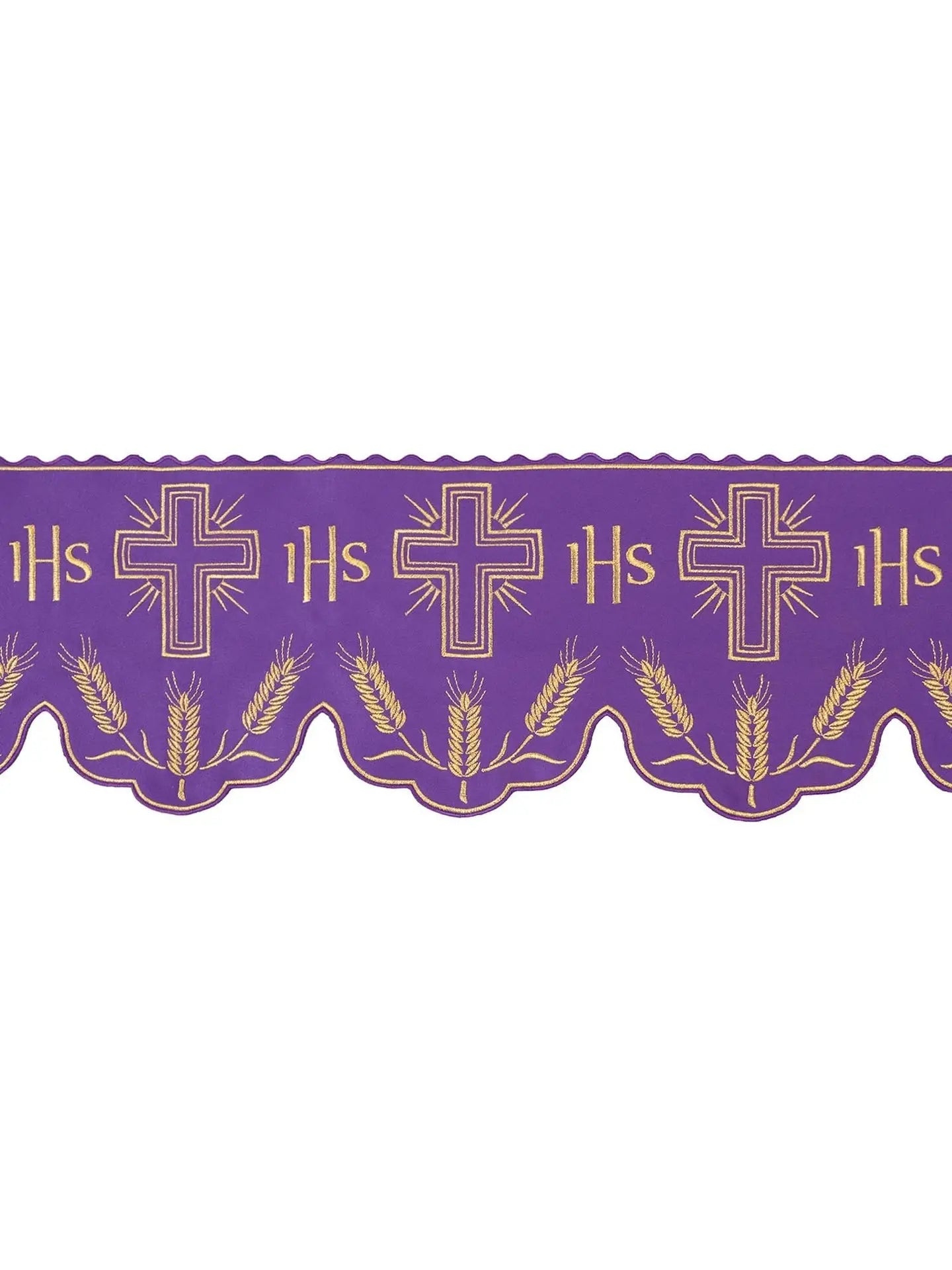
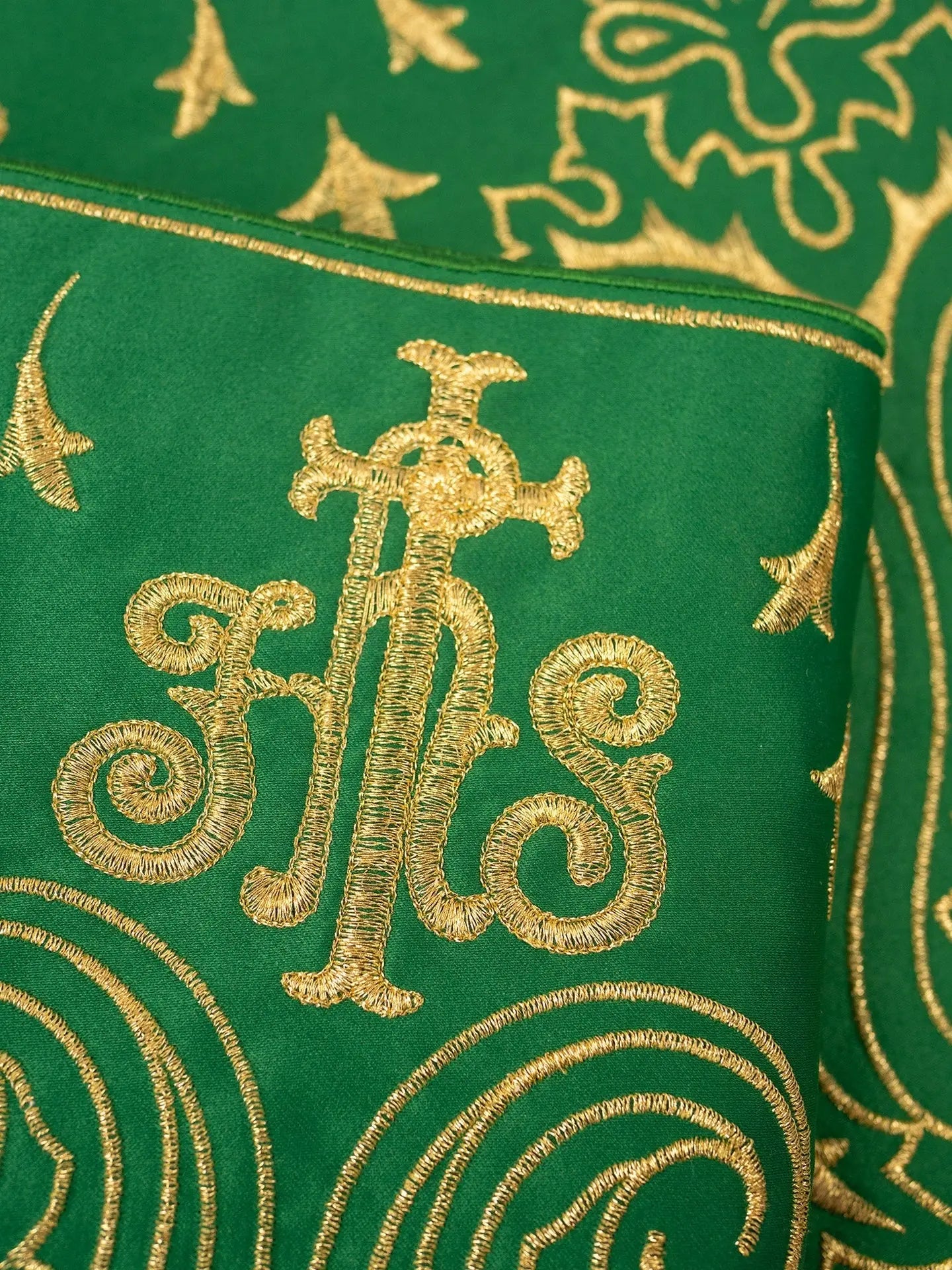
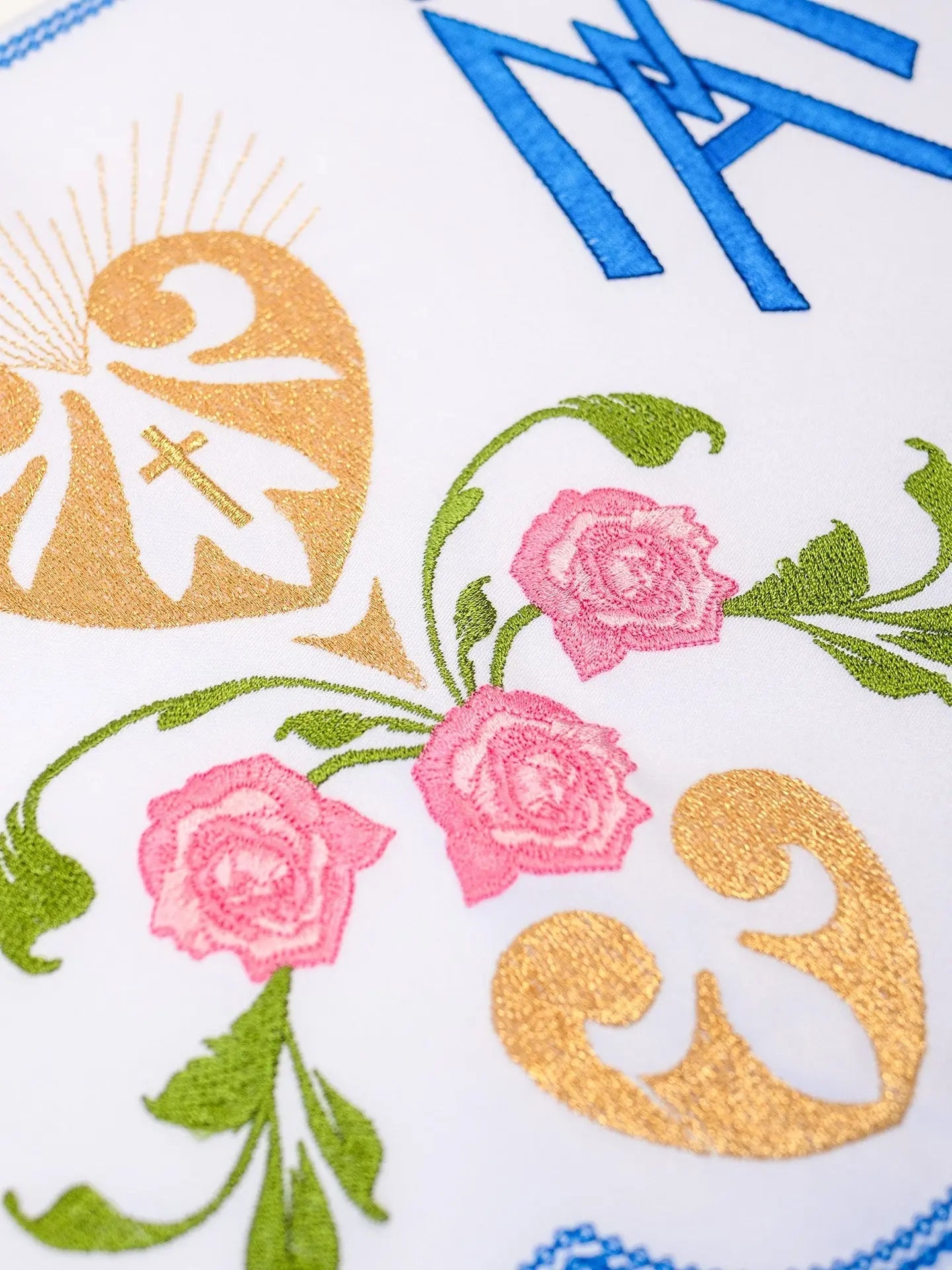
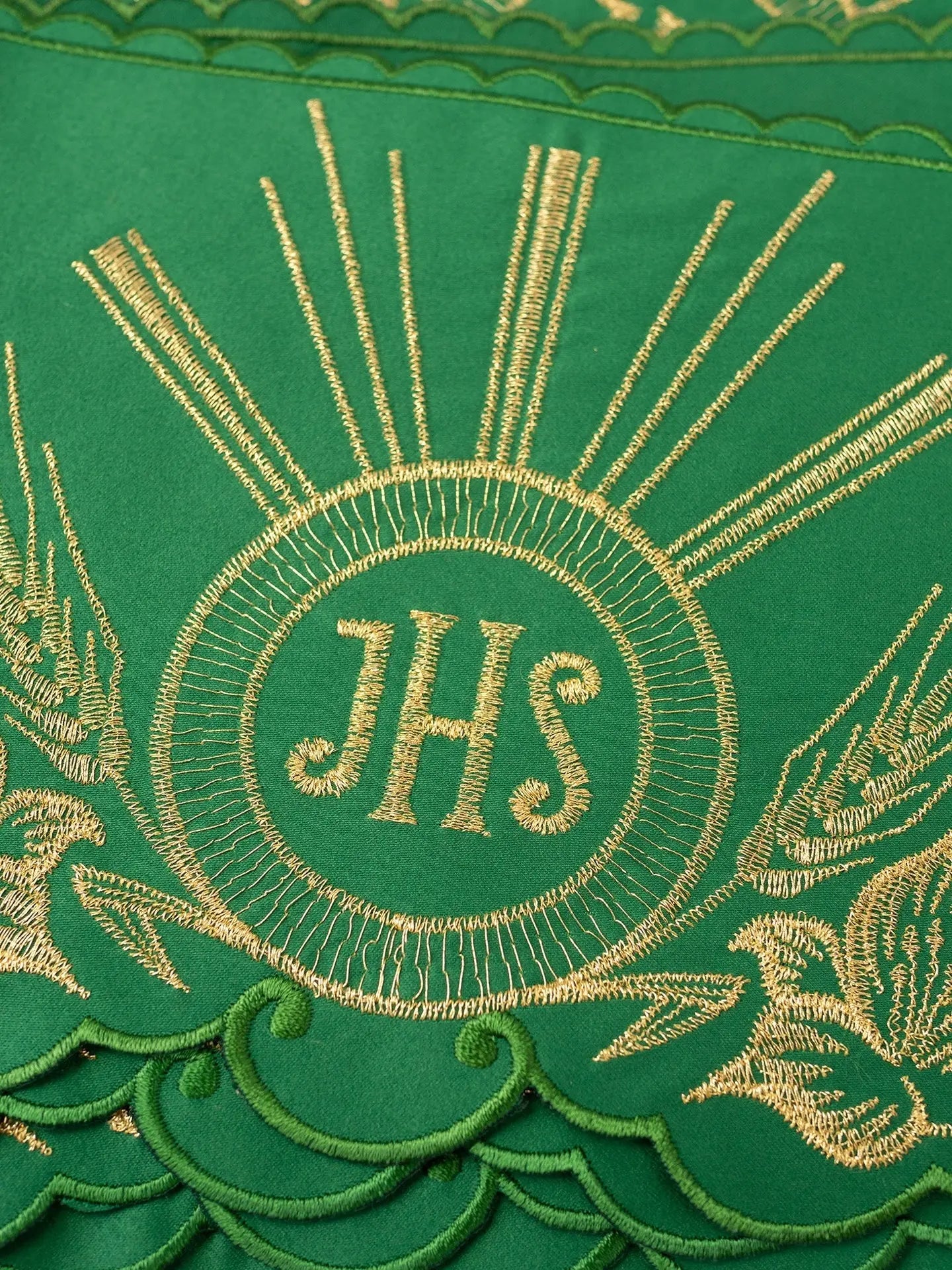
The IHS monogram points directly to the Holy Name of Jesus and is a strong choice for parish altars used throughout the year. Cross motifs are universal and appropriate for many seasons, especially when the parish wants a restrained and timeless design. Grapes refer to the Eucharistic mystery and can work well in churches where the altar decoration is intended to emphasize the sacramental character of the Mass. Marian motifs are suitable for celebrations of the Blessed Virgin Mary, parish patronal feasts and chapels with a Marian dedication. Dove embroidery can be chosen for Pentecost, Confirmation liturgies and occasions focused on the Holy Spirit.
Choosing the right altar superfrontal
When selecting an altar superfrontal, first consider the altar width and the visual height of the embroidered band. A proportionate superfrontal should be visible from the nave but should not dominate the altar or distract from the liturgical action. Because many designs are sold by the metre, the product can be chosen with the altar dimensions in mind. The motif should also fit the architecture of the church: a simple cross or IHS design may suit a minimalist sanctuary, while a rosette, Marian motif or more decorative pattern may better serve a traditional interior.
Color is the second important factor. White and ecru are versatile and can be used for Christmas, Easter, solemnities of the Lord, feasts of saints who were not martyrs and many Marian occasions. Green is the standard color for Ordinary Time and is a useful choice for churches that want one textile to serve many Sundays. Purple supports Advent and Lent, helping the sanctuary express preparation, penance and conversion. Red is used for Pentecost, Palm Sunday, Good Friday and martyrs. When the church already owns chasubles, stoles or altar linens in a particular shade, it is worth choosing a superfrontal that harmonizes with those textiles rather than competing with them.
Coordinating superfrontals with other sanctuary textiles
A well-planned sanctuary uses textiles that speak the same visual language. The altar superfrontal should coordinate with the altar cloth, chalice linen, pulpit textile and veils used for the same celebration. For the altar surface and mensa, related options can be found among altar linens and altar tablecloths with frontal embroidery. These categories help complete the altar setting when a parish needs not only the front decorative band but also the cloths used directly on or near the altar.
For the vessels and chalice preparation, chalice pall sets can be chosen to echo the same Eucharistic or seasonal symbolism. A matching or complementary chalice veil can create a more unified appearance at the credence table and altar. Where the ciborium is veiled according to local practice, ciborium veils may be selected with similar color logic. The aim is not to make every item identical, but to keep color, motif and level of ornamentation consistent enough that the whole sanctuary looks intentional.
The ambo or pulpit is another important visual point during the liturgy of the Word. If the altar uses an embroidered superfrontal, a related pulpit cover can help connect the Liturgy of the Word with the Liturgy of the Eucharist in the visual arrangement of the sanctuary. This is especially effective for major seasons such as Advent, Lent, Christmas and Easter, or for parish feasts when the church wants a more complete ceremonial setting.
Seasonal planning for the Church year
Many parishes begin with one neutral superfrontal in white or ecru because it can serve a wide range of celebrations. From there, the most practical additions are often green for Ordinary Time and purple for the penitential seasons. A complete sacristy set may also include red for feasts of martyrs and the Holy Spirit, plus a Marian design for feasts and devotions connected with Our Lady. This staged approach allows the parish to improve the altar step by step while keeping the collection coherent.
-
White and ecru: suitable for Christmas, Easter, solemnities, many Marian celebrations and festive liturgies where a bright altar setting is desired.
-
Green: used during Ordinary Time, when the Church reflects on growth in faith and the life of discipleship.
-
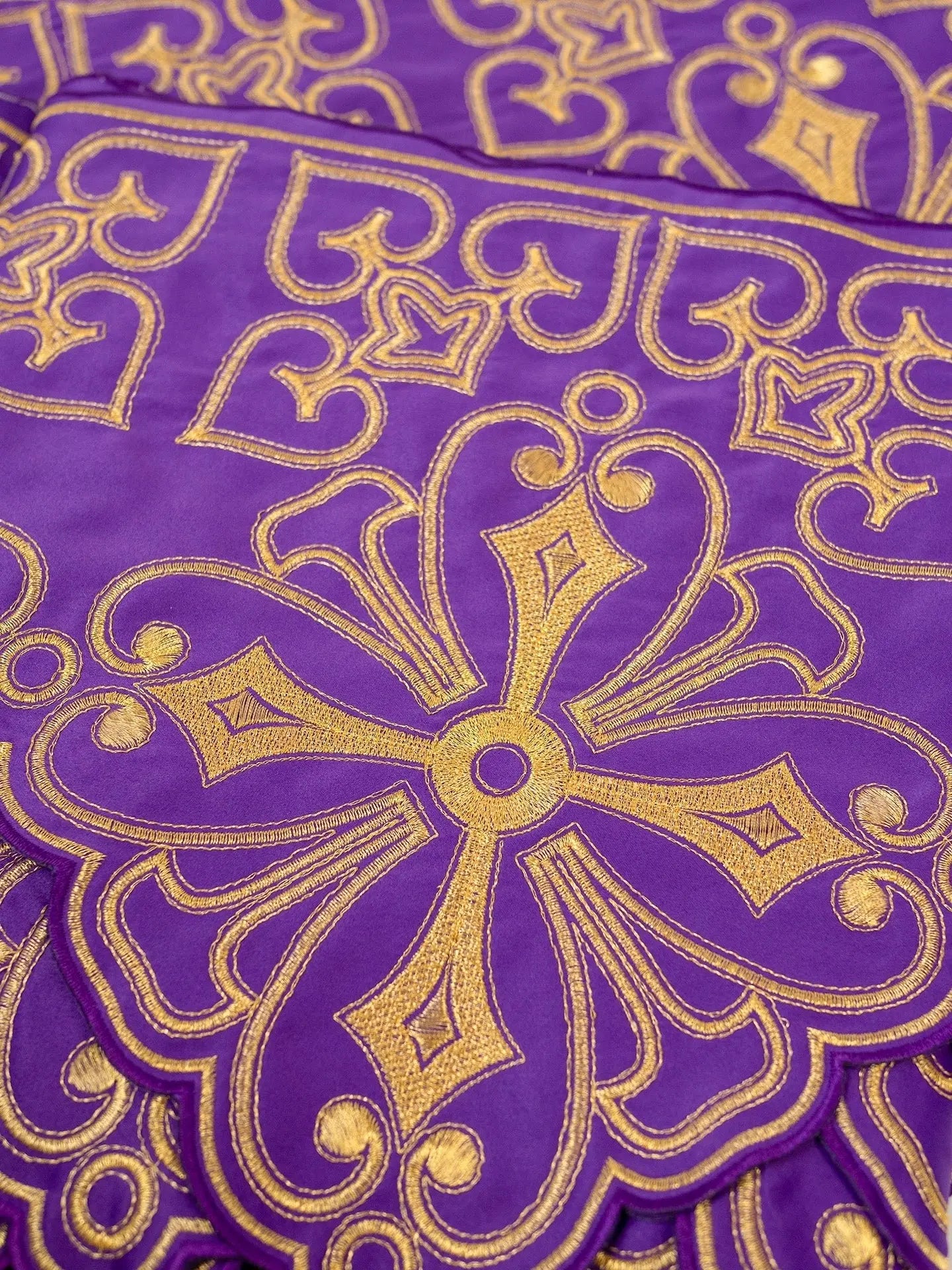
Purple: used during Advent and Lent, helping the sanctuary express preparation, penance and prayerful expectation.
-
Red: appropriate for Pentecost, Palm Sunday, Good Friday, the Passion of the Lord and feasts of martyrs.
-
Marian motifs: fitting for celebrations of the Blessed Virgin Mary, Marian chapels, parish dedications and devotional services.
For a broader seasonal selection, you may also coordinate altar superfrontals with collections prepared for Advent, Lent, Ordinary Time, Christmas and Marian celebrations. When vestments and altar textiles share the same color family, the sanctuary gains a sense of order and reverence. The altar should remain the focus, while the embroidery supports the meaning of the celebration rather than overwhelming it.
Materials, embroidery and practical details
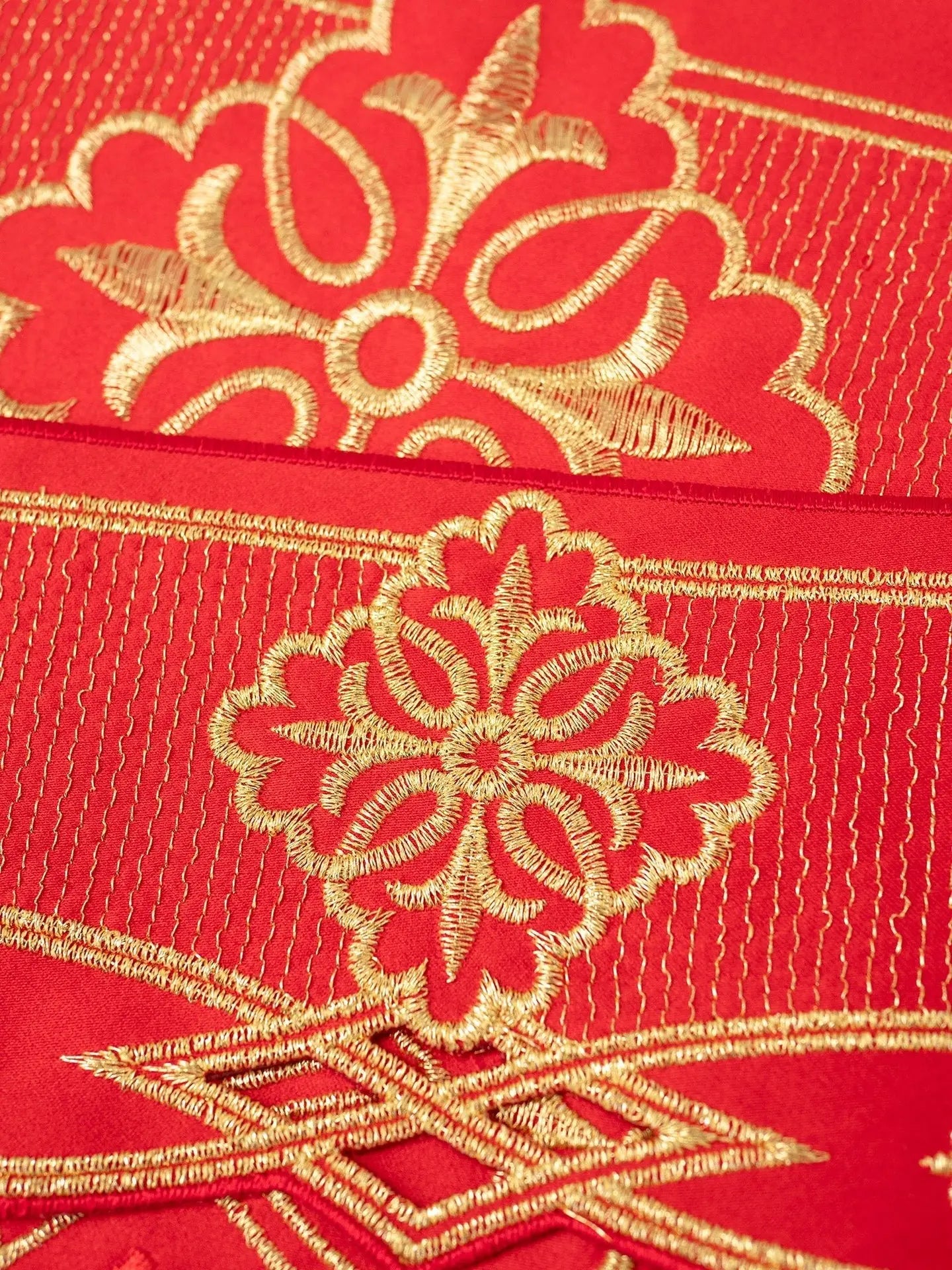
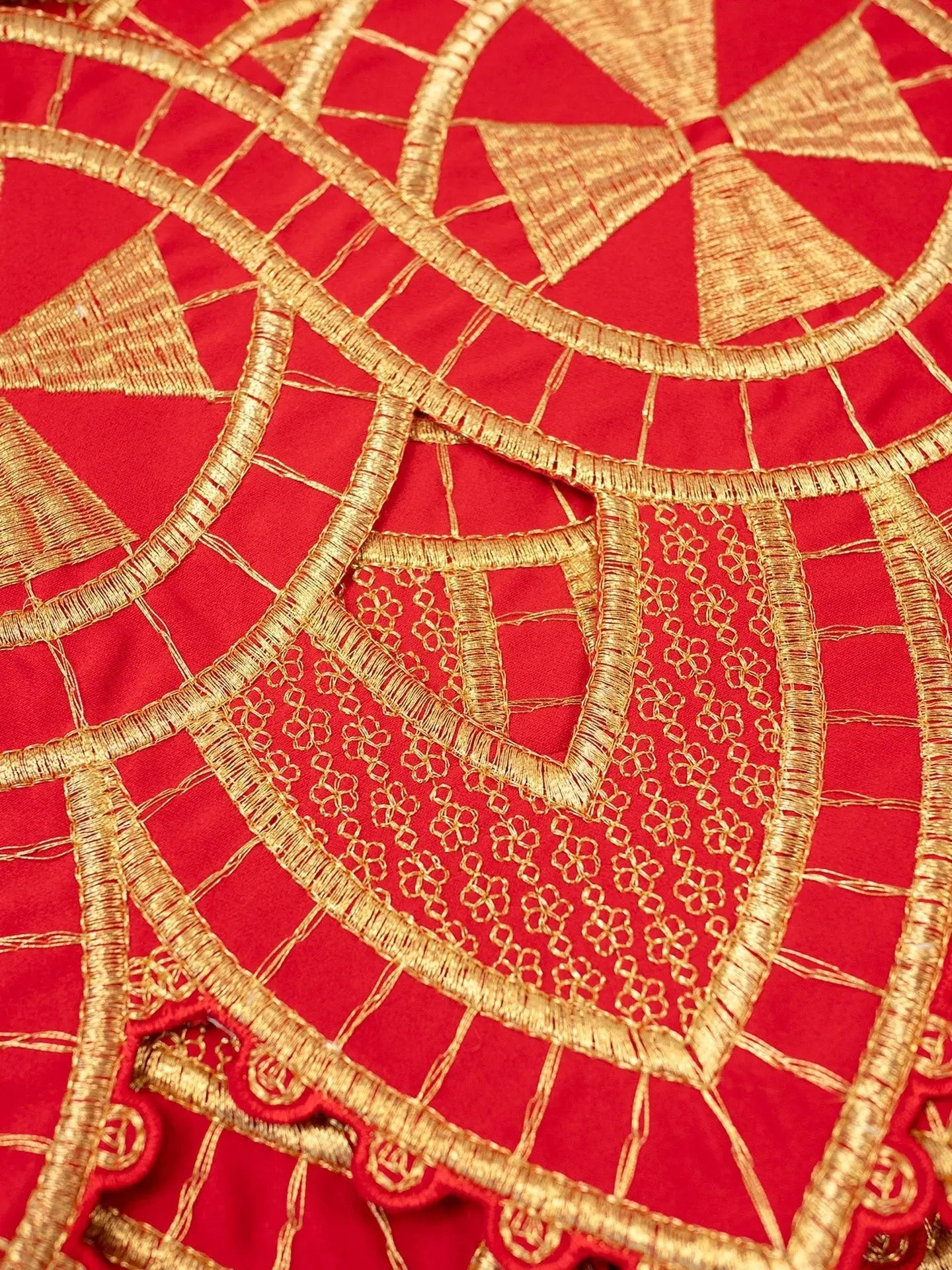
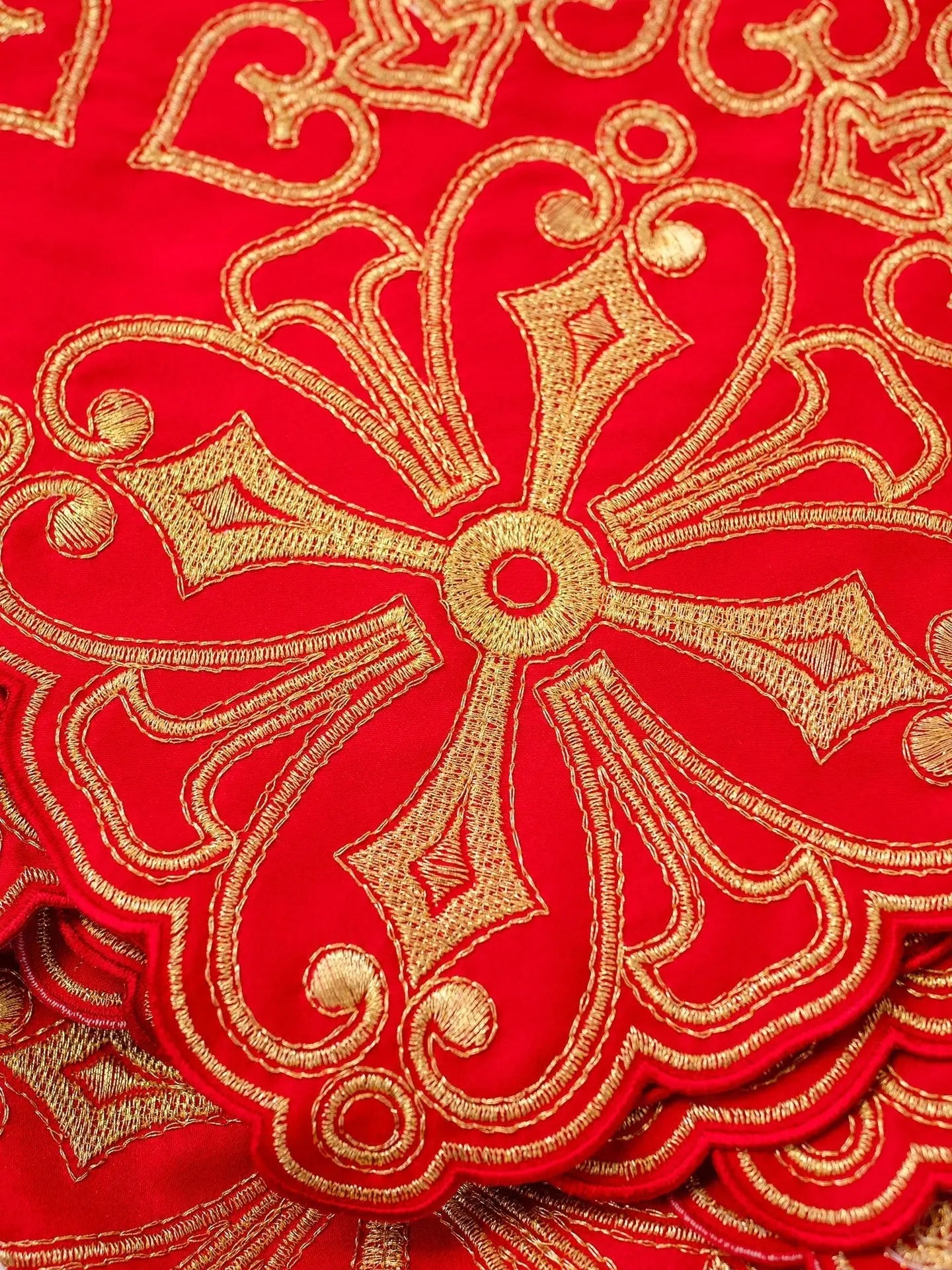
The best altar superfrontal is not only beautiful on the day it arrives. It should keep its shape, hang correctly and maintain the clarity of the embroidery through regular liturgical use. When reviewing a product, pay attention to the textile weight, the embroidered motif, the color and the way the superfrontal will be attached or arranged on the altar. A design sold by the metre gives the sacristy flexibility, especially when the altar has unusual dimensions or when the parish wants a continuous embroidered band across the full front.
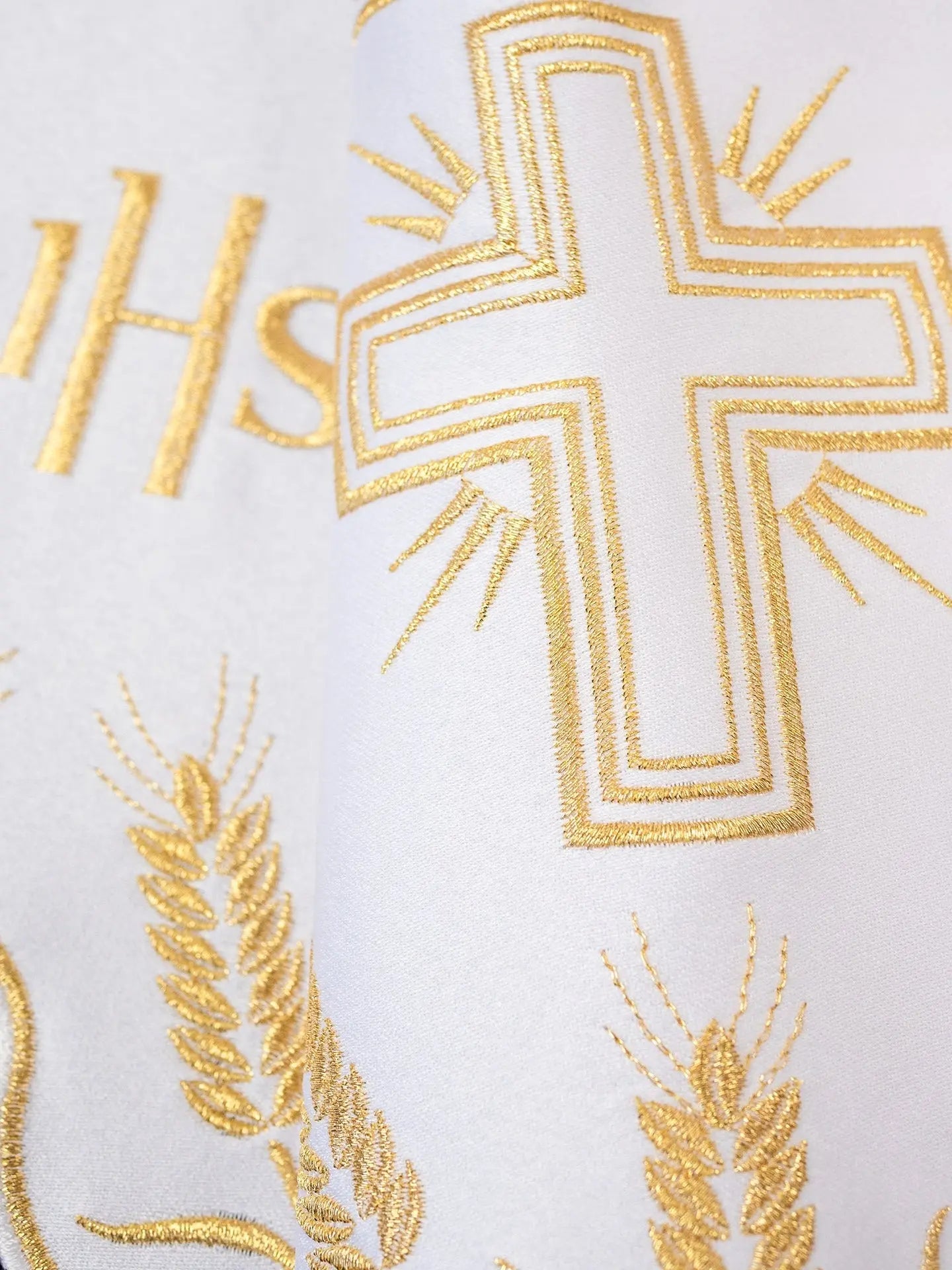
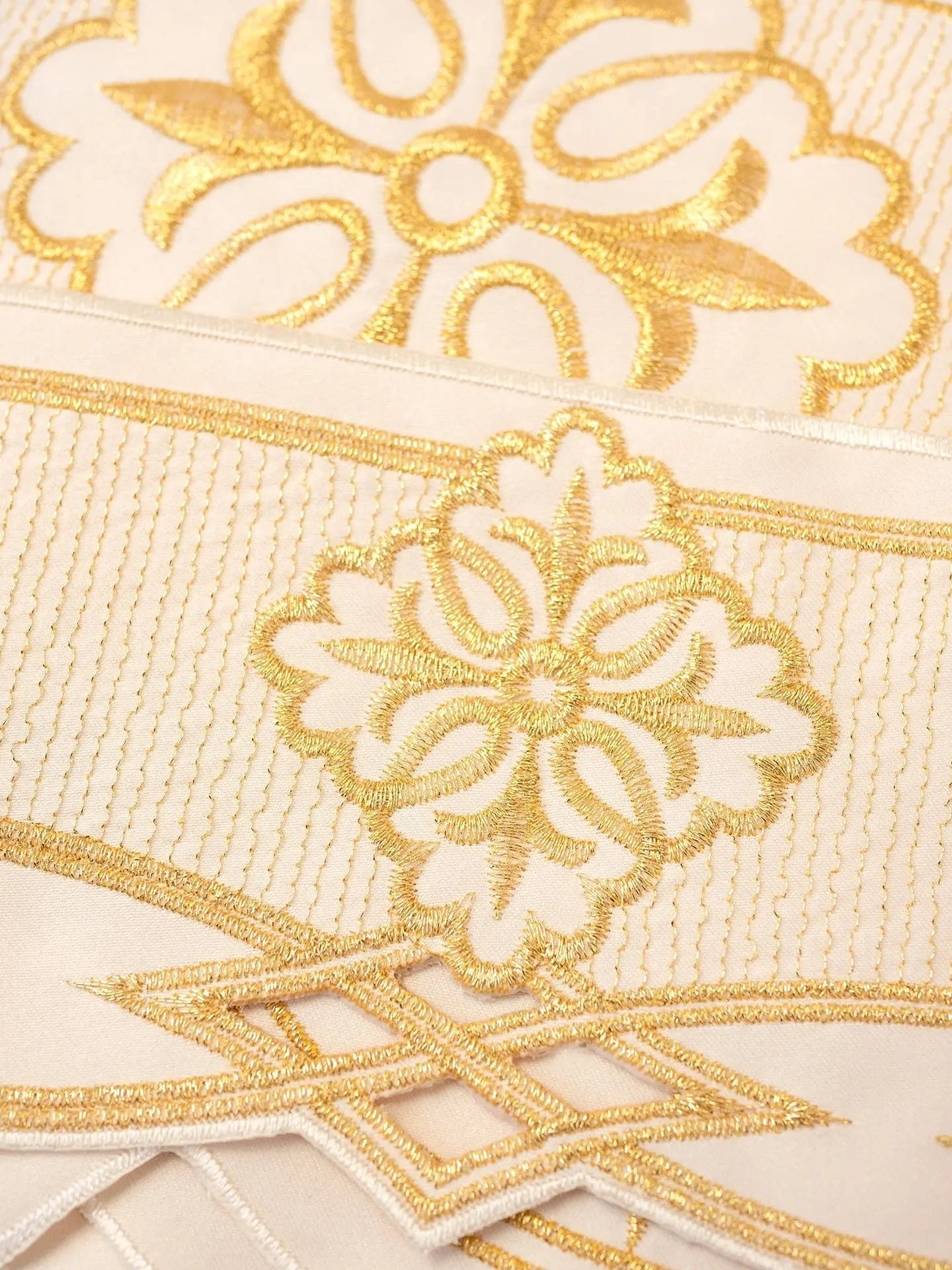
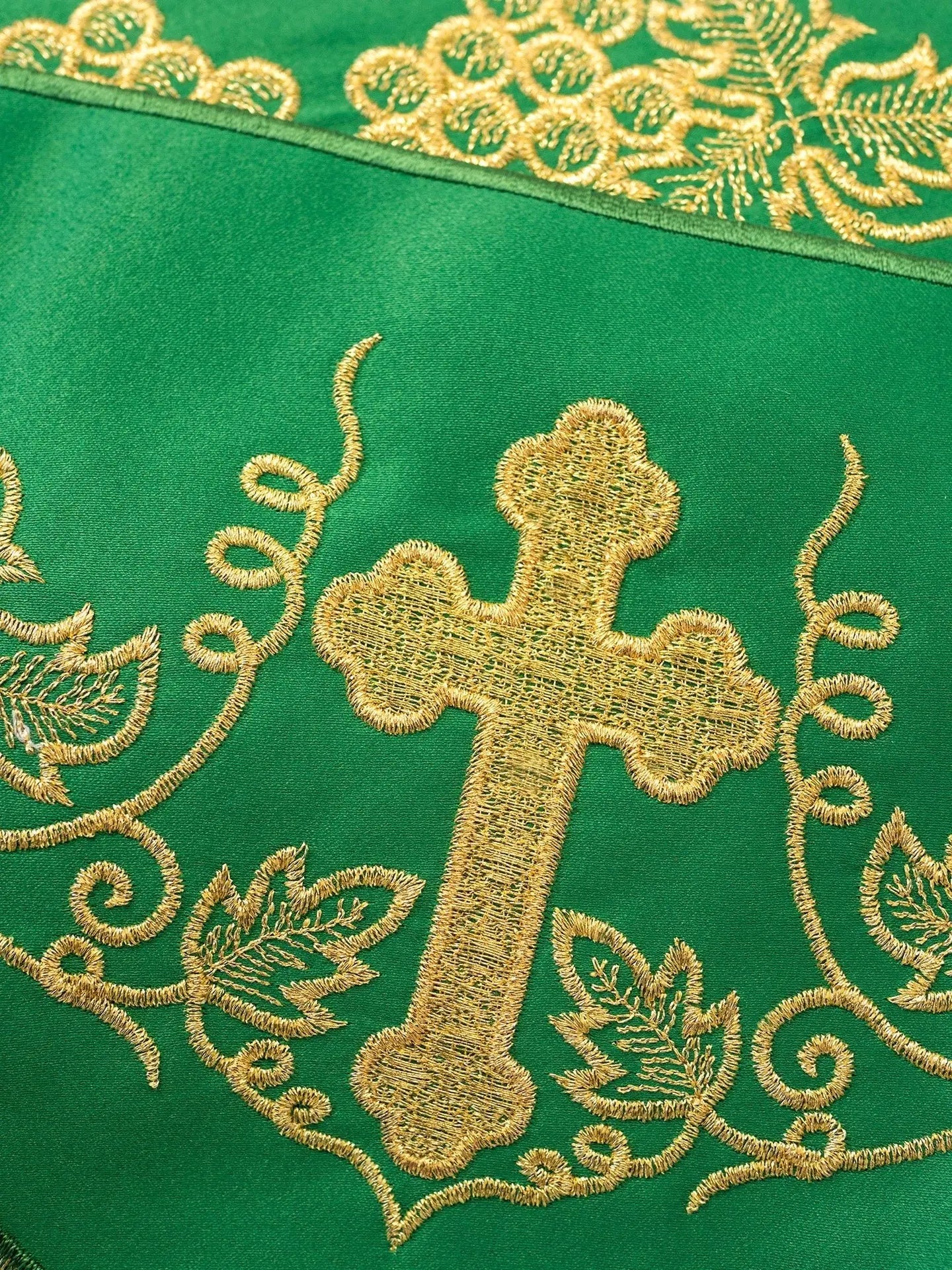
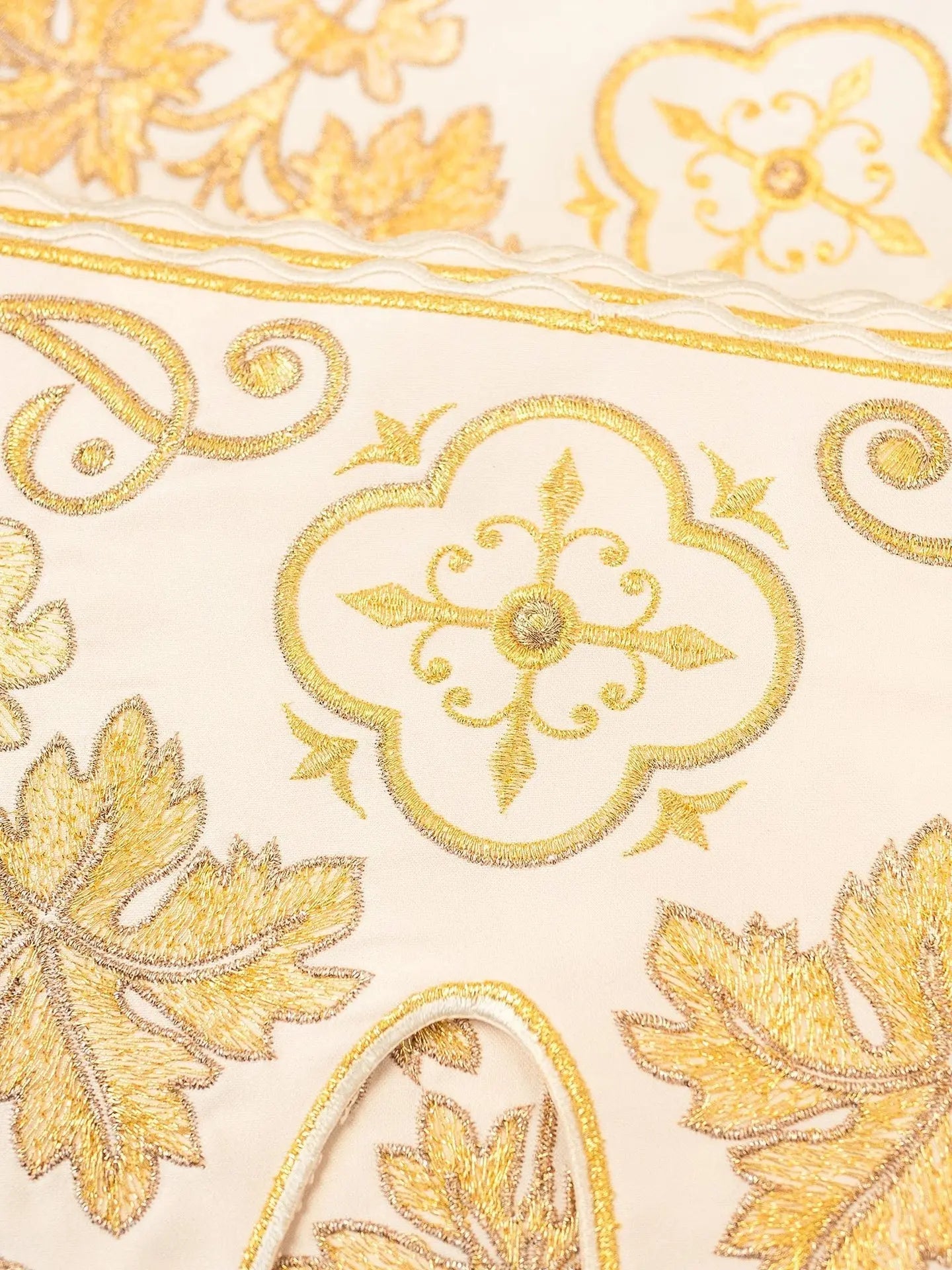
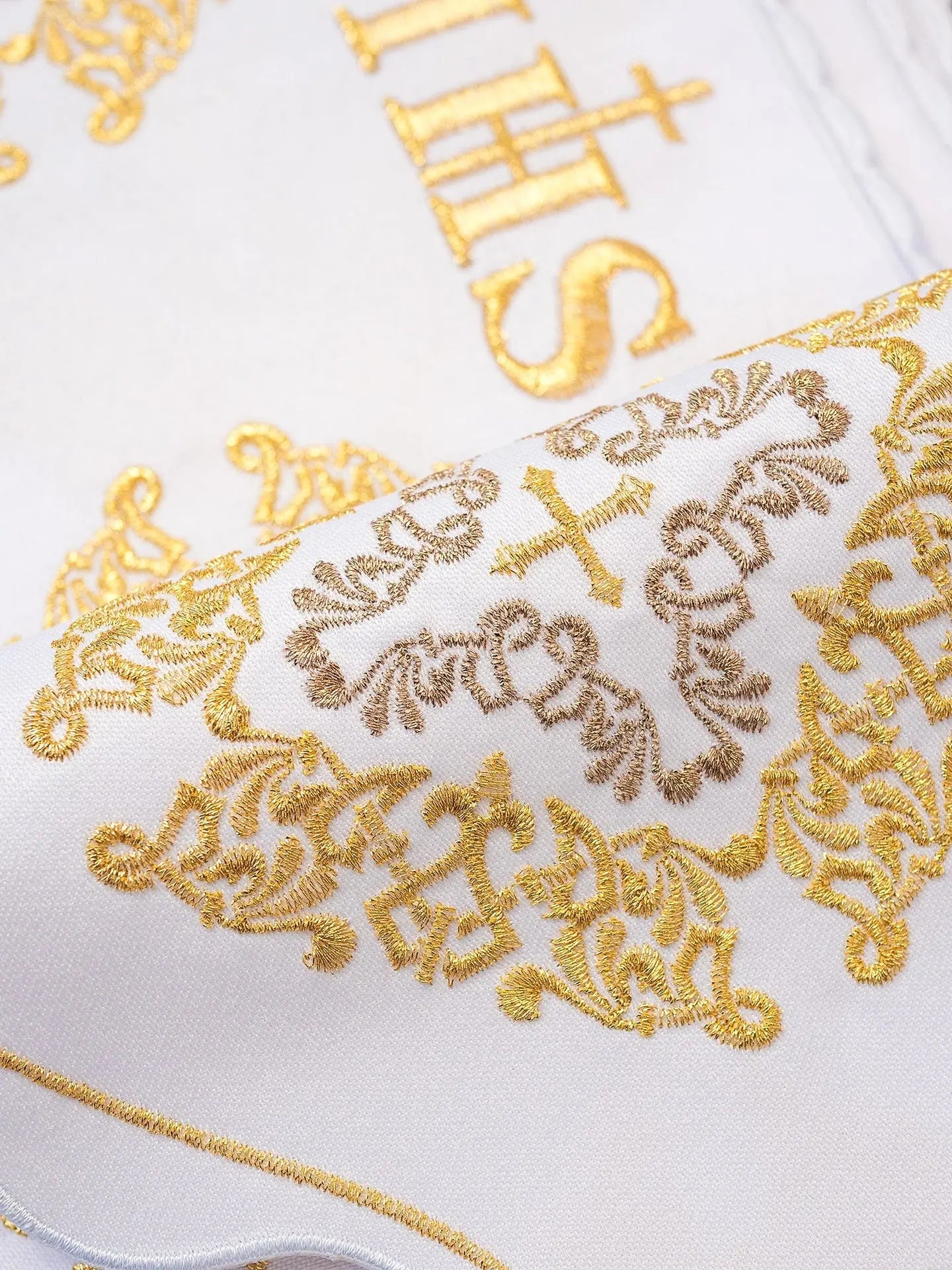
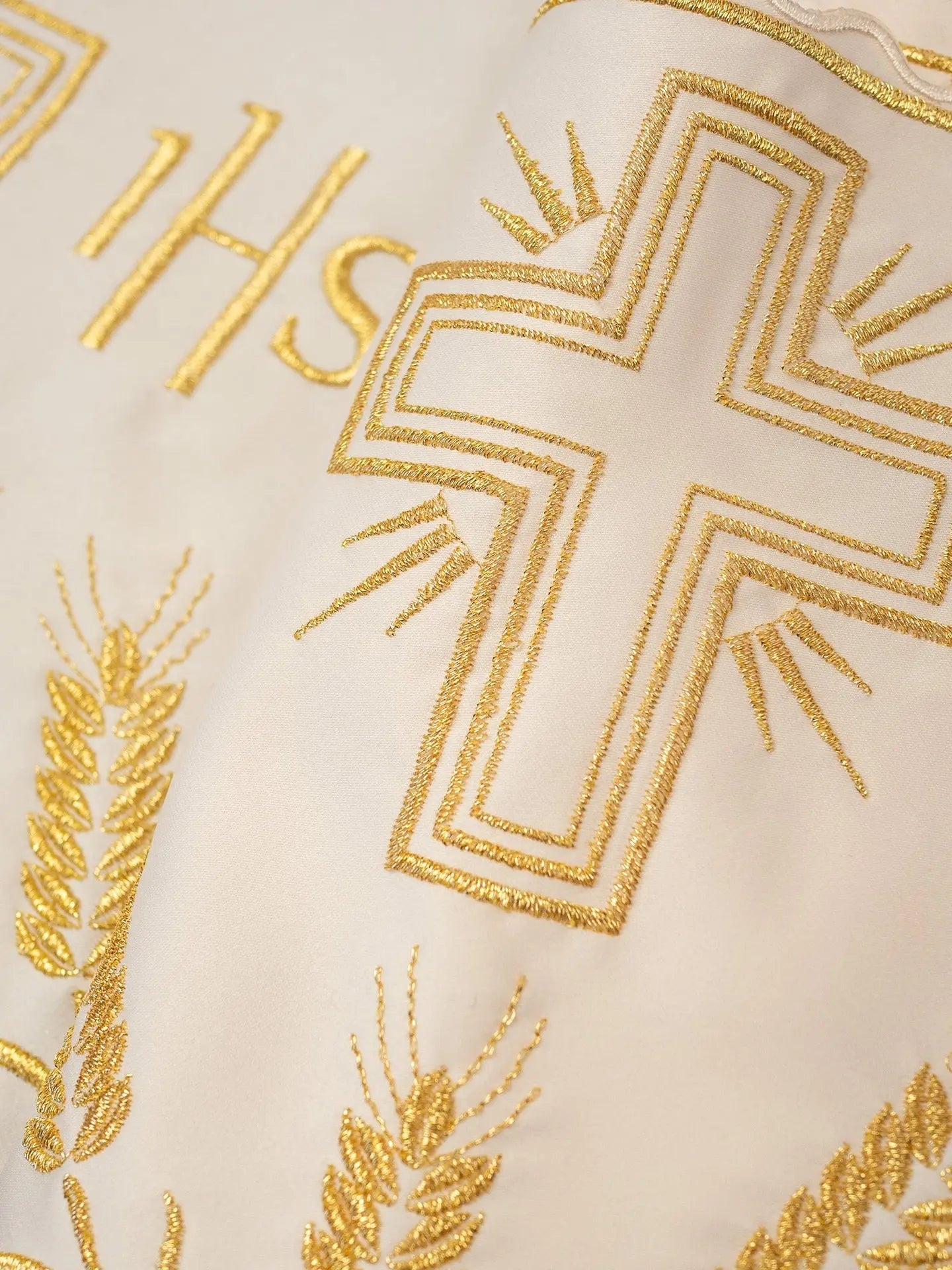
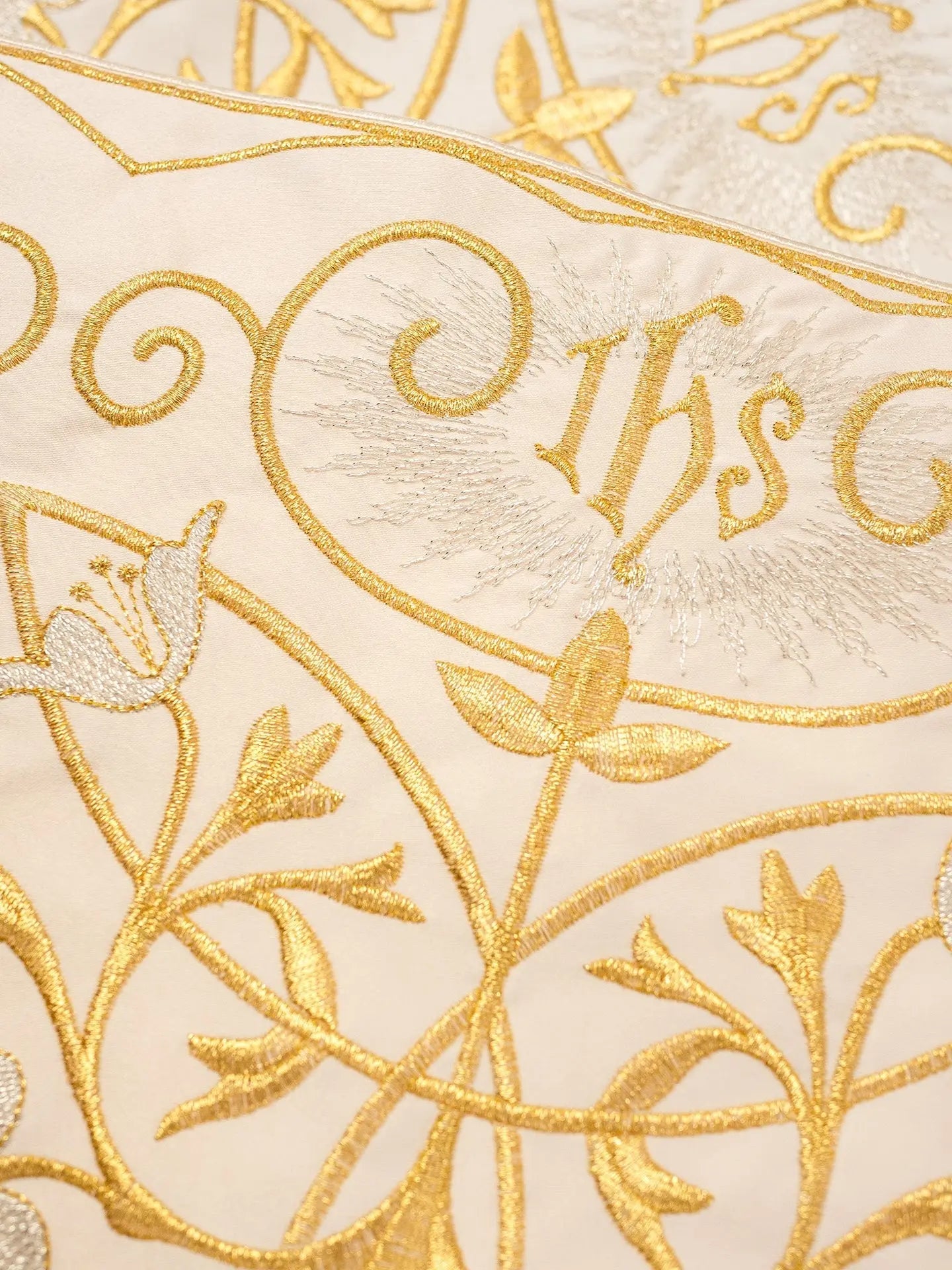
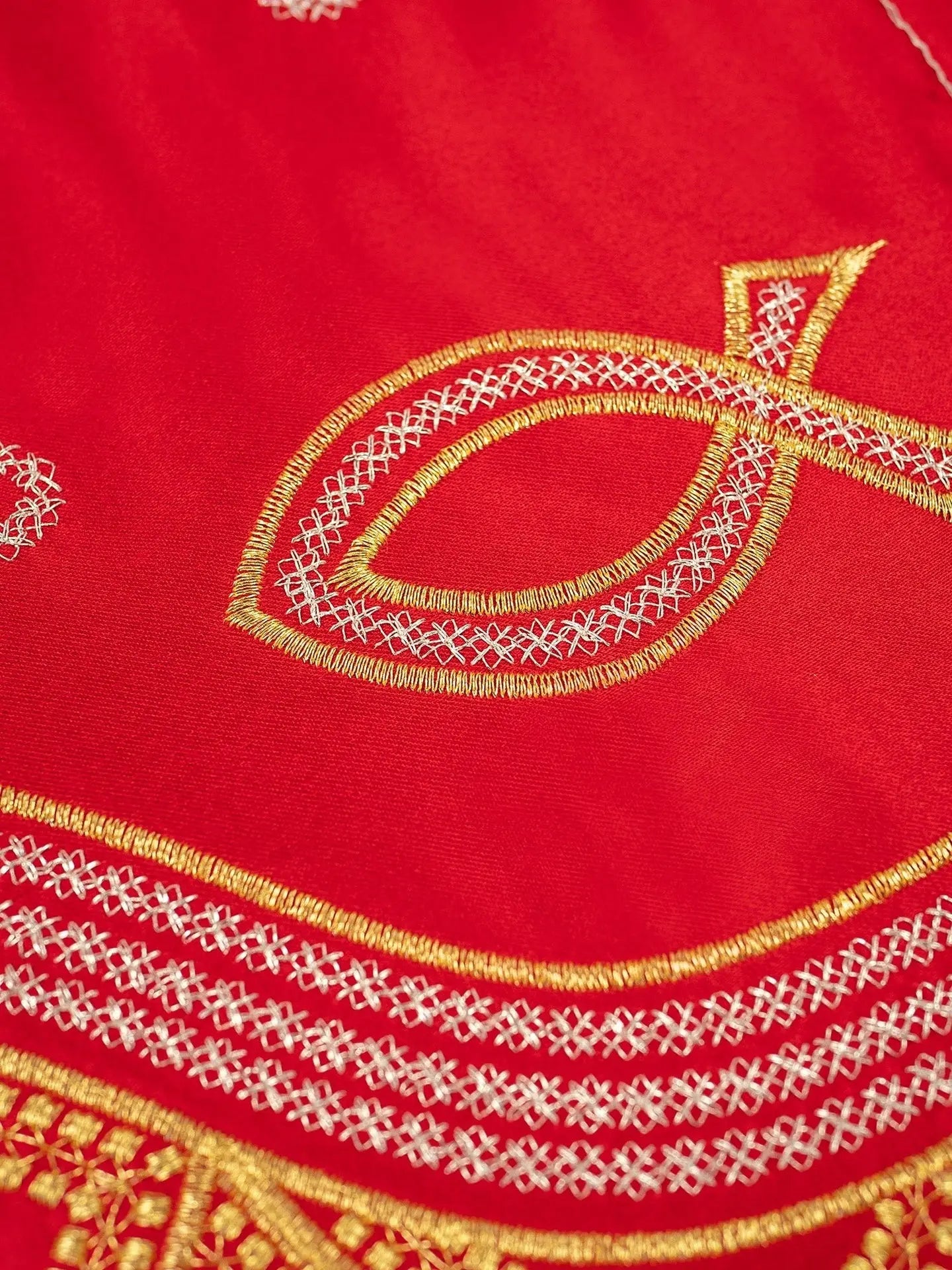
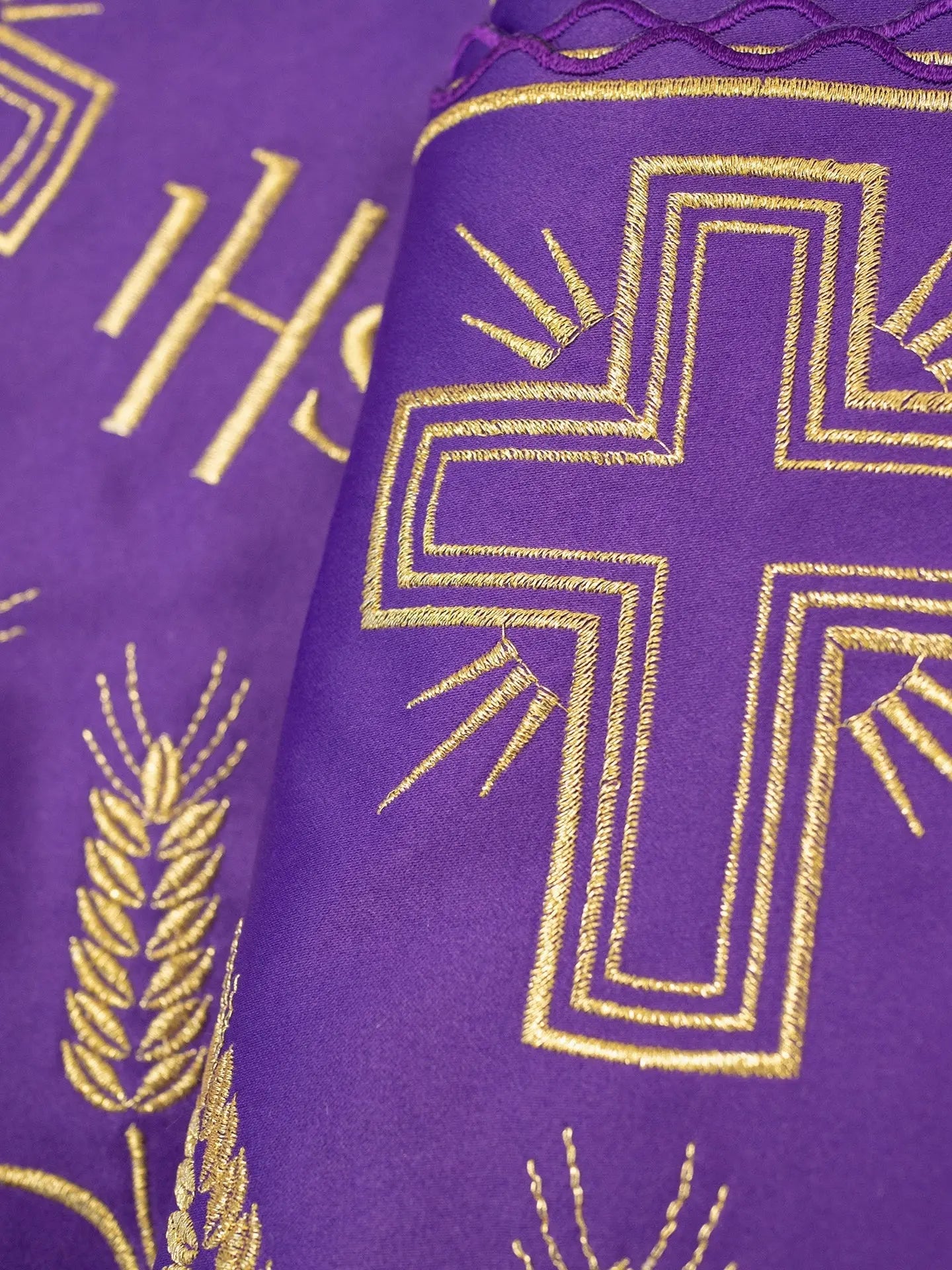
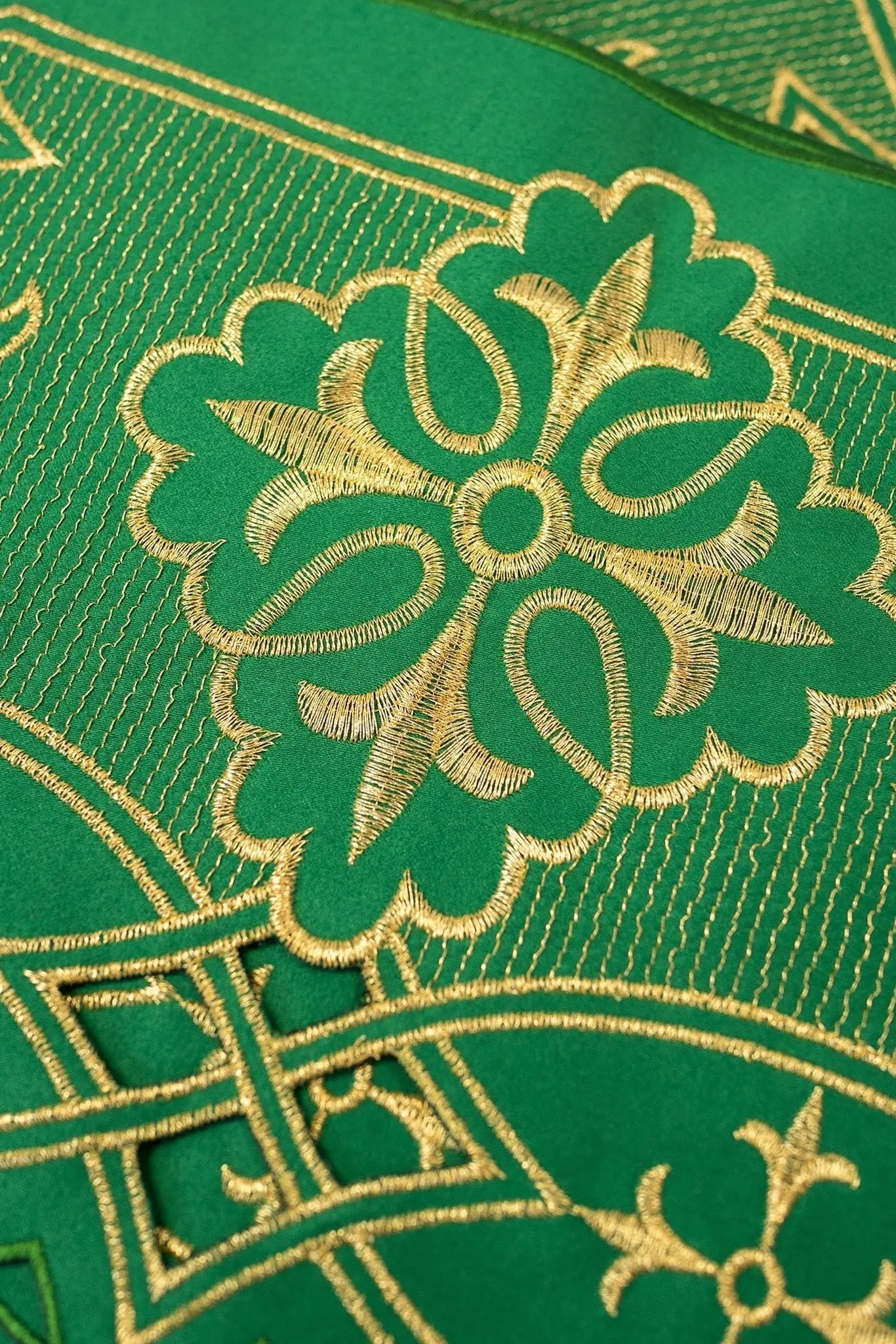
Embroidery should be readable from a normal viewing distance in the church. Fine details are valuable, but the main symbol must remain clear during the liturgy. IHS monograms, crosses and Marian emblems work particularly well because they are immediately understood by the faithful. More decorative rosette patterns can soften the visual impression and suit interiors with carved wood, stone, gilding or traditional furnishings. The right balance depends on the sanctuary style, lighting and the other textiles already used in the church.
Care and storage
Proper care helps altar superfrontals retain their dignity over many seasons. They should be stored clean, dry and protected from crushing, moisture and direct sunlight. Folding should be done carefully so that the embroidered areas are not sharply creased. If the textile includes delicate embroidery, appliqué or metallic threads, professional cleaning or very gentle spot care may be preferable to ordinary washing. The specific care method should always follow the fabric and finish of the selected item.
Sacristies that rotate several colors through the year may find it useful to store superfrontals by season and mark them clearly. This prevents unnecessary handling and helps servers, sacristans and volunteers choose the correct textile quickly. A simple system with separate storage for white or ecru, green, purple, red and Marian designs can preserve the textiles and reduce preparation errors before important liturgies.
How this collection differs from related categories
Altar superfrontals are part of the wider family of altar and sanctuary textiles, but they should not be confused with every type of altar cloth. The altar cloth covers the mensa and is connected directly with the preparation of the altar for Mass. A superfrontal is a decorative frontal element placed at the front of the altar. An altar tablecloth with frontal embroidery may combine practical altar covering with a more extended front panel. Chalice veils, ciborium veils and pall sets serve the sacred vessels, not the altar front. Pulpit covers belong to the ambo or pulpit area. Knowing these distinctions makes it easier to order the correct item for the intended liturgical use.
This collection is therefore best for churches that need an embroidered front band for the altar itself. It is a strong choice when the altar already has a suitable cloth but needs seasonal color, a clearer symbol or a more solemn appearance for feasts. For a complete sanctuary arrangement, combine it with the related textile categories listed above, always keeping the altar as the central point and choosing motifs that serve the liturgy.
Frequently Asked Questions (FAQ)
What is an altar superfrontal?
An altar superfrontal is an embroidered decorative textile placed at the front of the altar, usually as a band rather than a full covering. It adds liturgical color and sacred symbolism while allowing the form of the altar to remain visible.
Is a superfrontal the same as an altar cloth?
No. An altar cloth covers the mensa, the top surface of the altar used for the Eucharistic celebration. A superfrontal decorates the altar front. The two textiles can be used together, but they have different liturgical and practical roles.
Which color should I choose first for a parish altar?
White or ecru is often the most versatile first choice because it can serve many solemnities, Christmas, Easter and Marian celebrations. Green is also very practical for Ordinary Time, while purple and red complete the seasonal range.
Can embroidered superfrontals be coordinated with other church textiles?
Yes. A superfrontal can be coordinated with altar linens, chalice veils, pall sets and pulpit covers. Matching does not have to mean identical embroidery; it is usually enough to keep the color, motif and level of ornamentation harmonious.
When is a Marian altar superfrontal appropriate?
A Marian superfrontal is suitable for feasts of the Blessed Virgin Mary, Marian months and devotional services, as well as churches, chapels or side altars dedicated to Our Lady. It can also be used when a parish wants the altar decoration to reflect a Marian patronage or shrine identity.
How should altar superfrontals be stored between seasons?
Store them clean and dry, away from direct sunlight and moisture. Avoid sharp folds through embroidered areas, and keep seasonal colors separated so the correct textile can be prepared quickly and handled as little as possible.