
Sort by
7 products
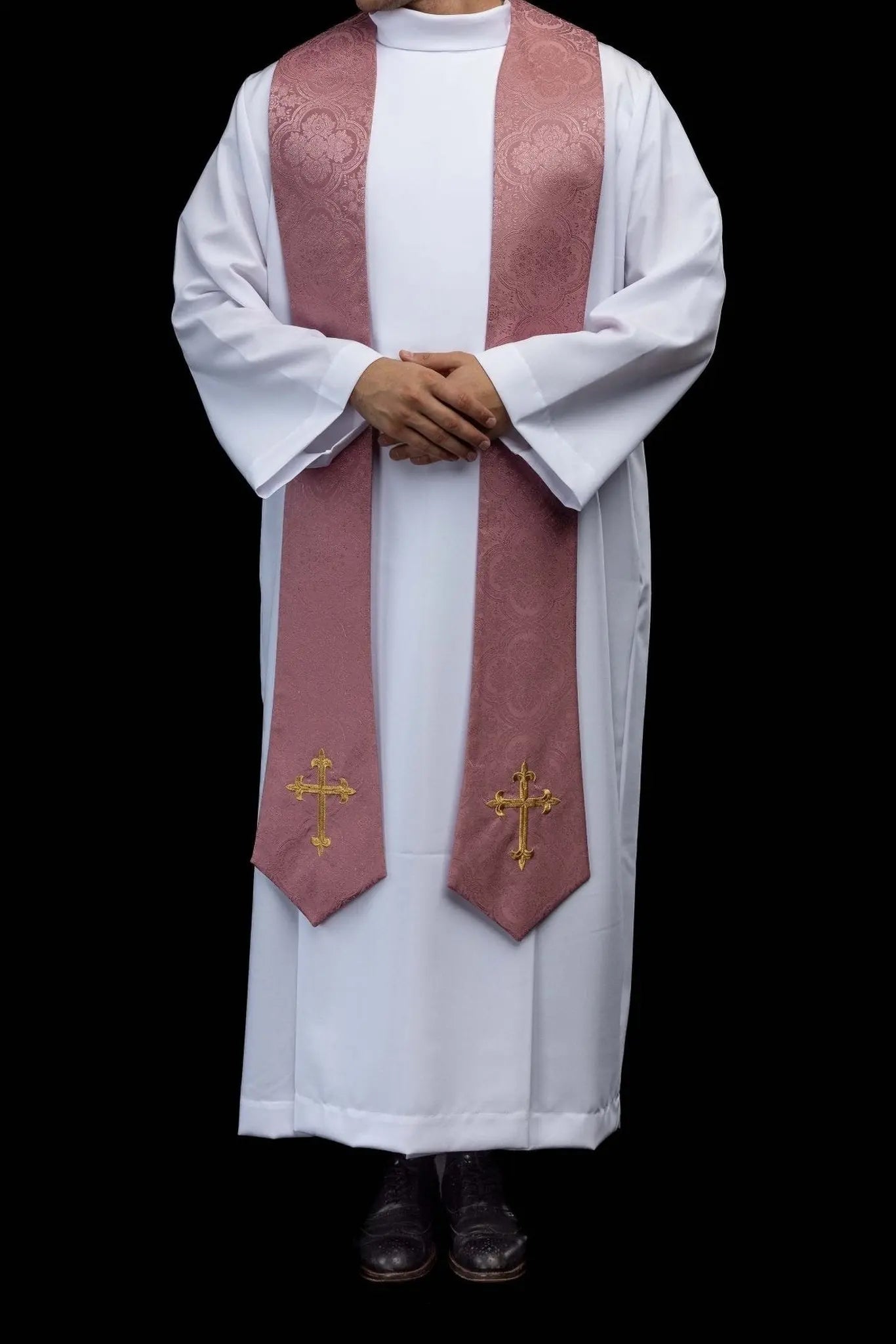
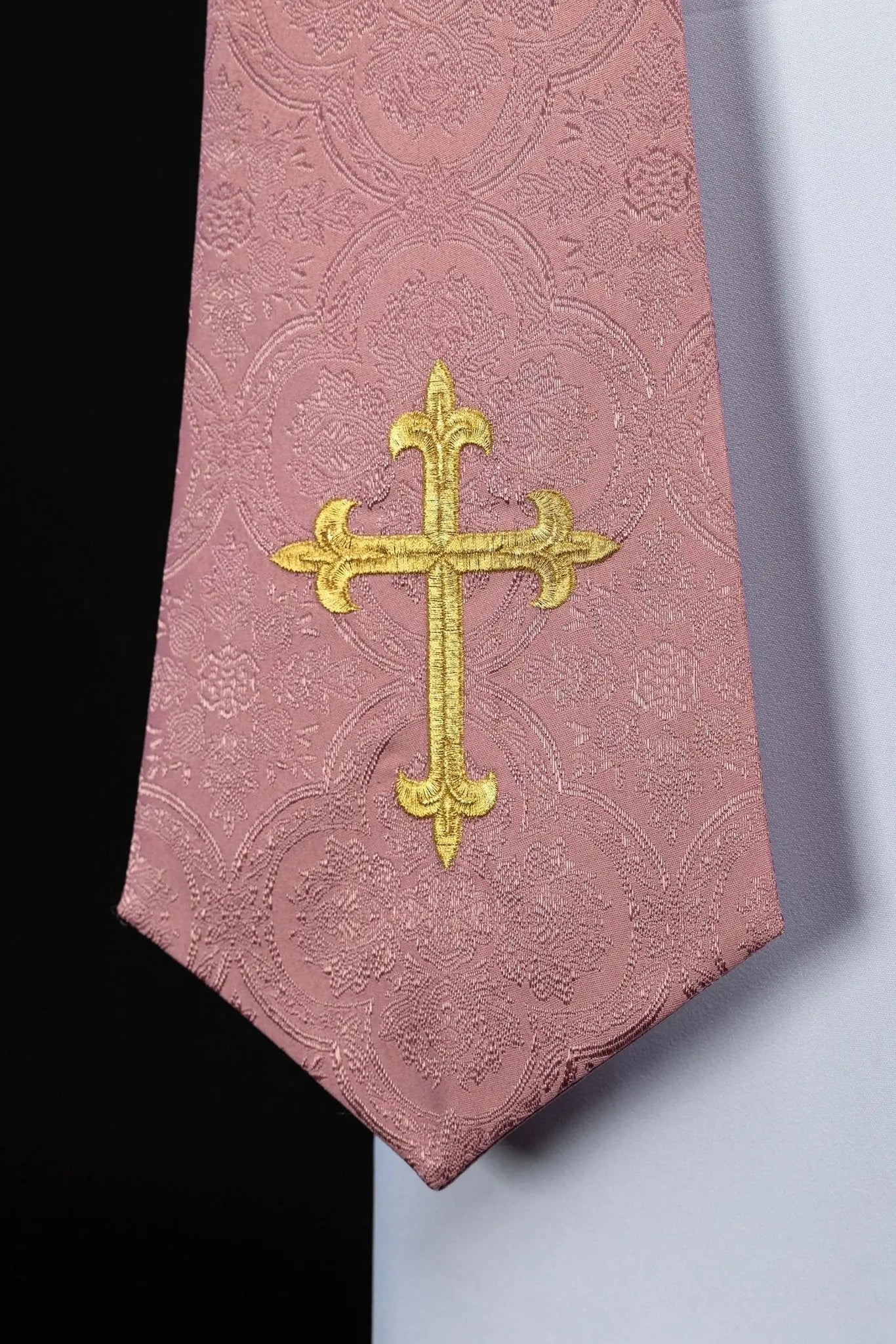
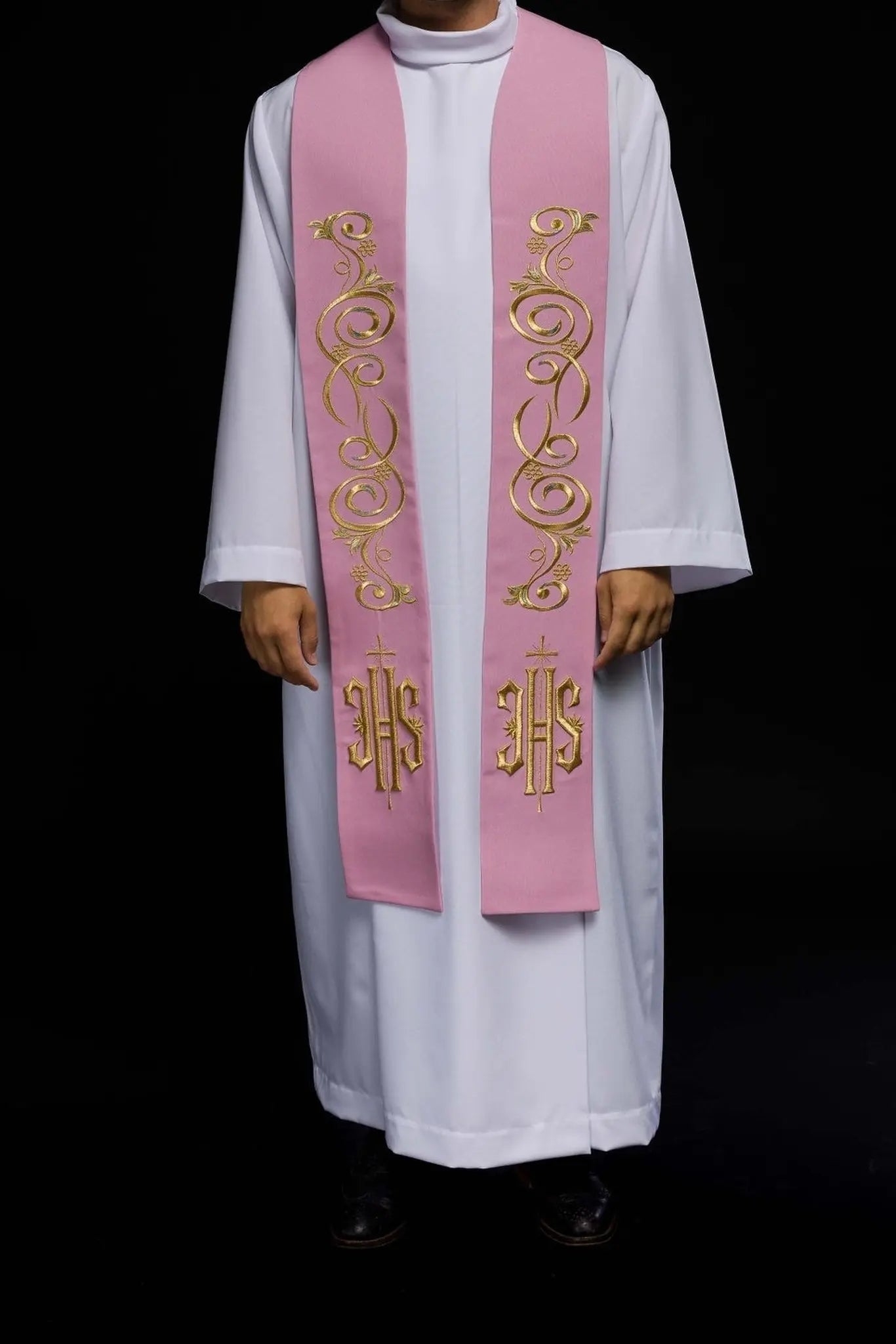
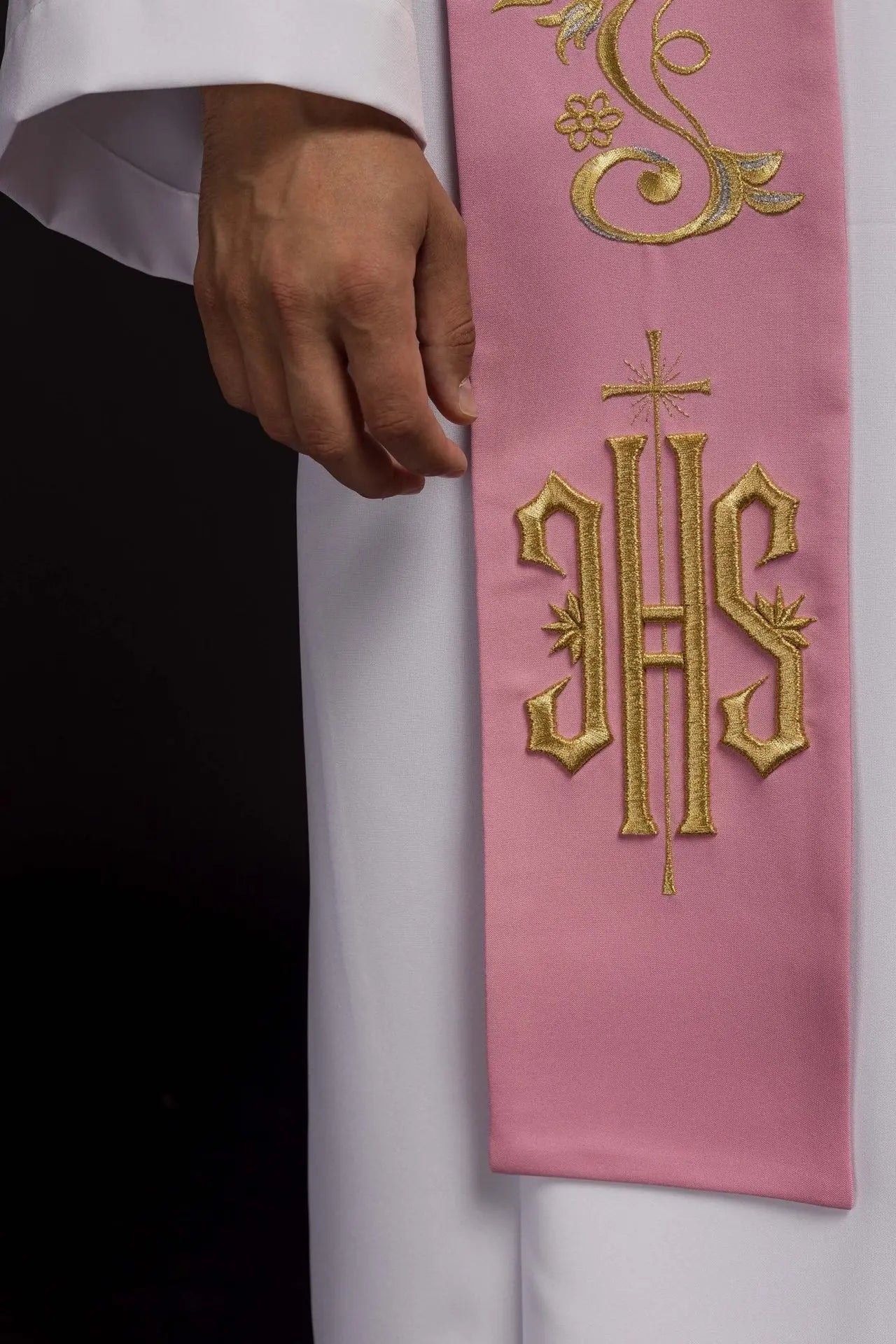
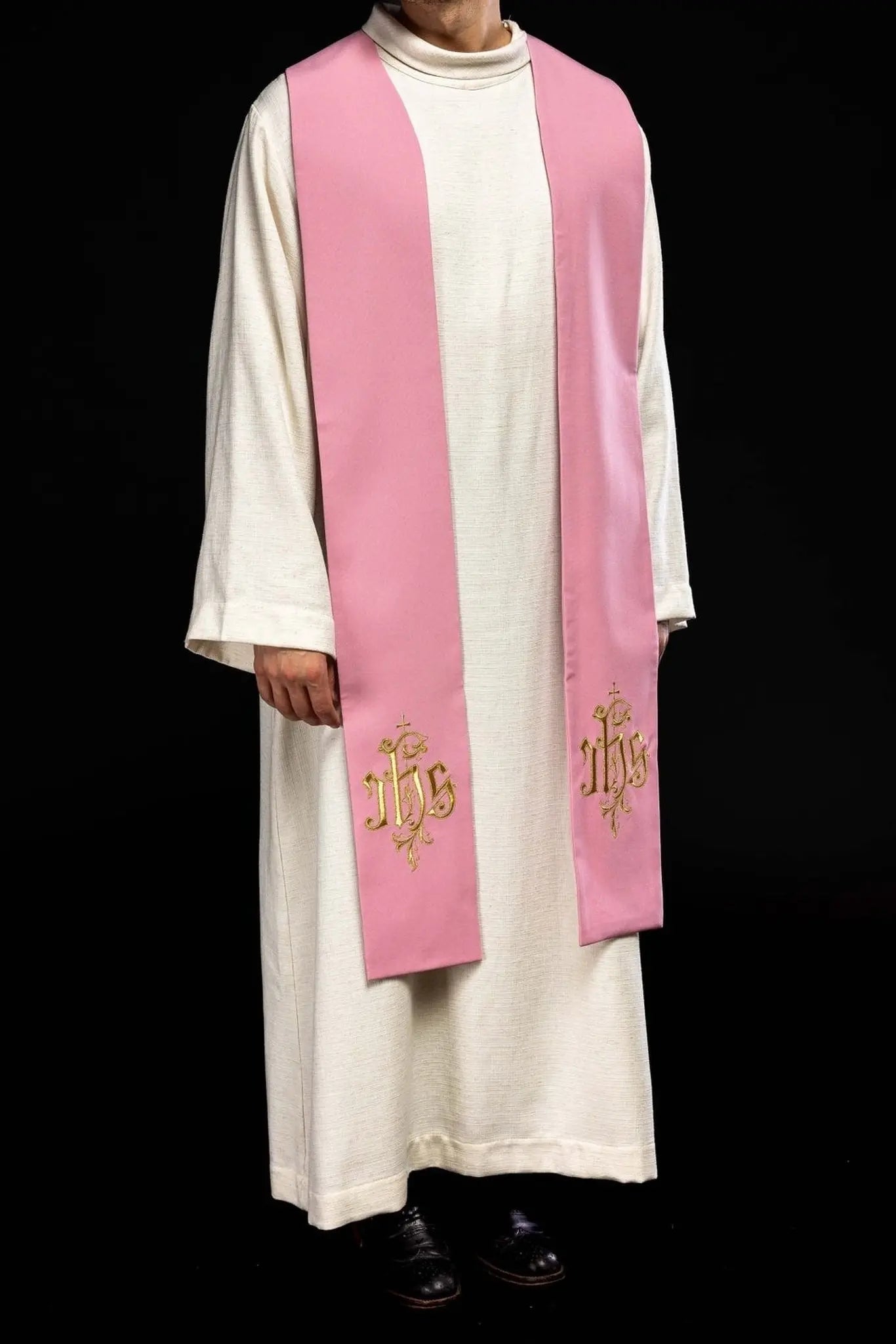
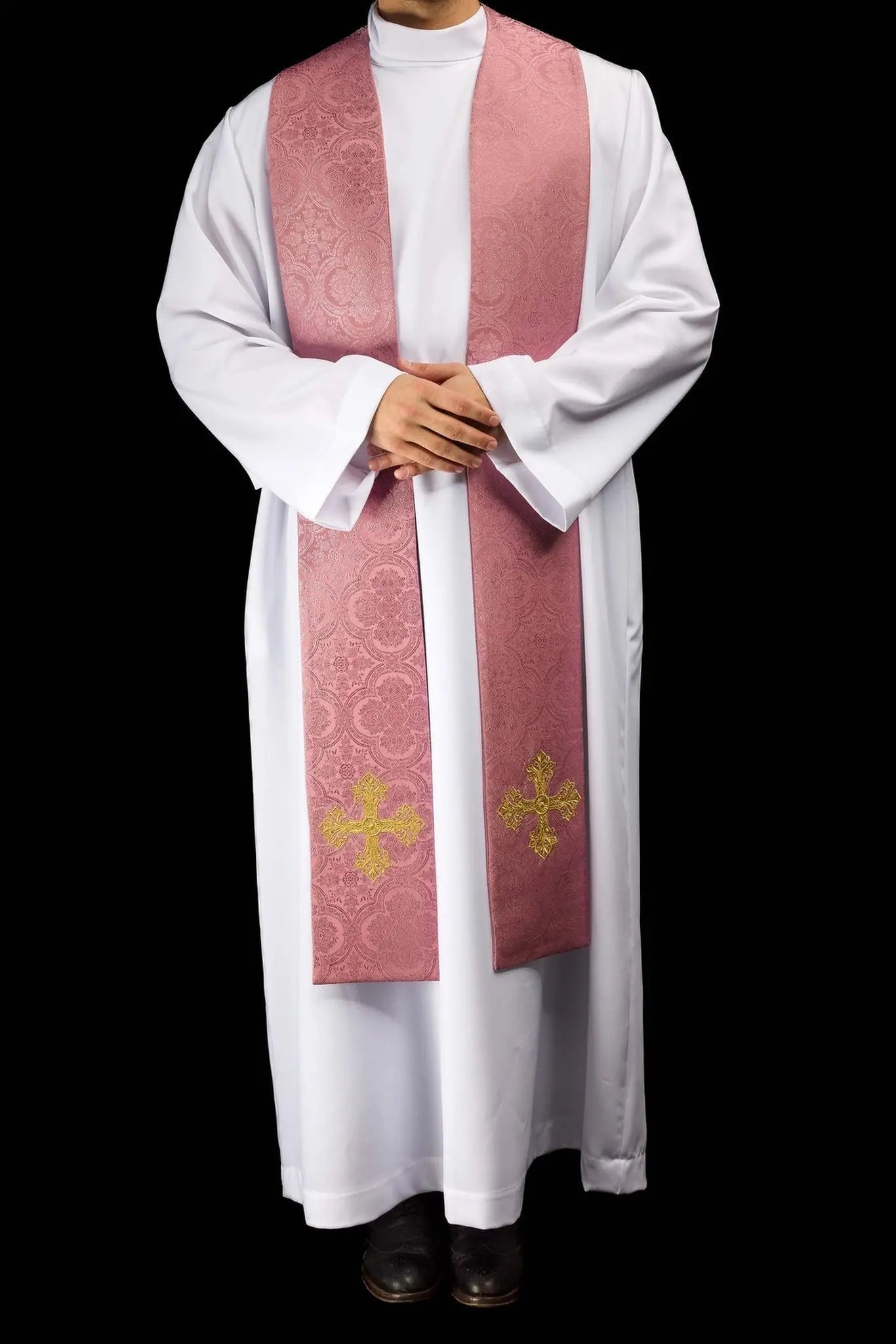
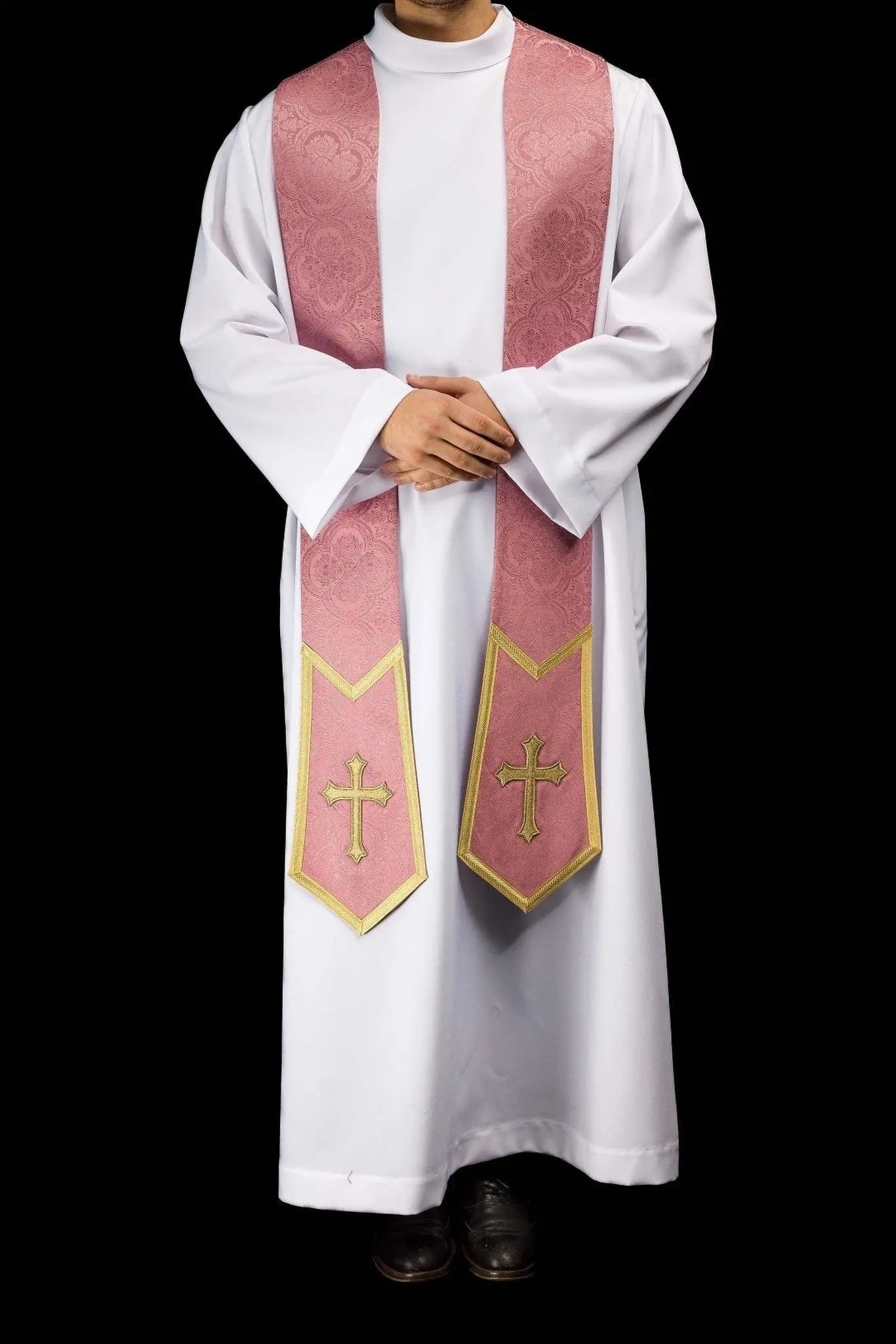


Rose Stoles for Gaudete and Laetare Sundays
Rose stoles are liturgical vestments used when the Church marks moments of restrained joy within seasons of preparation. This collection gathers rose clergy stoles suitable for Gaudete Sunday, the Third Sunday of Advent, and Laetare Sunday, the Fourth Sunday of Lent. The color rose is distinct from ordinary pink in liturgical use: it expresses a brightening of the penitential season, a sign of hope, nearness, and spiritual encouragement before Christmas or Easter. For clergy preparing Mass, the Liturgy of the Hours, blessings, or other rites where the stole is appropriate, a well-chosen rose stole helps the vesture correspond clearly to the day and its meaning.
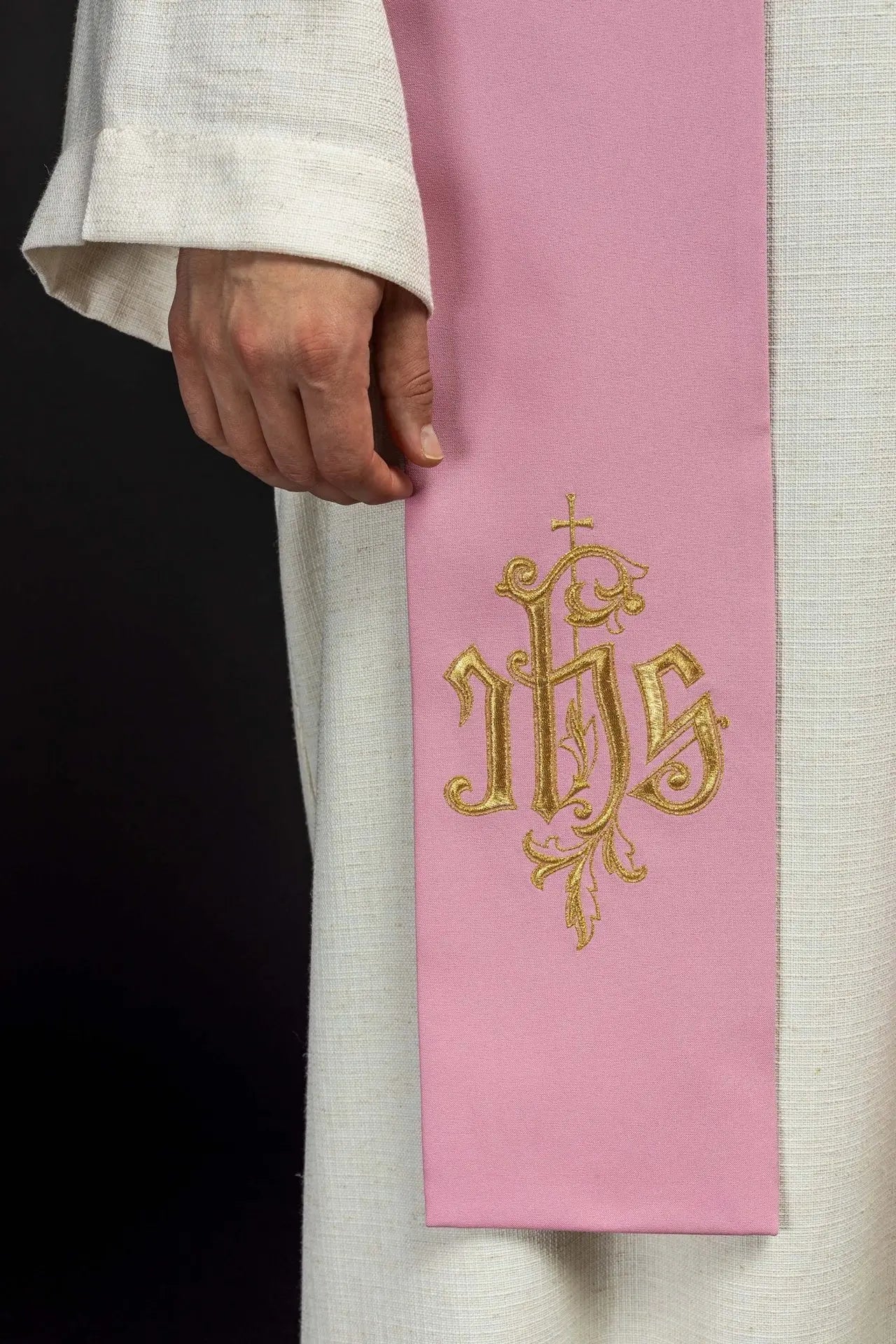
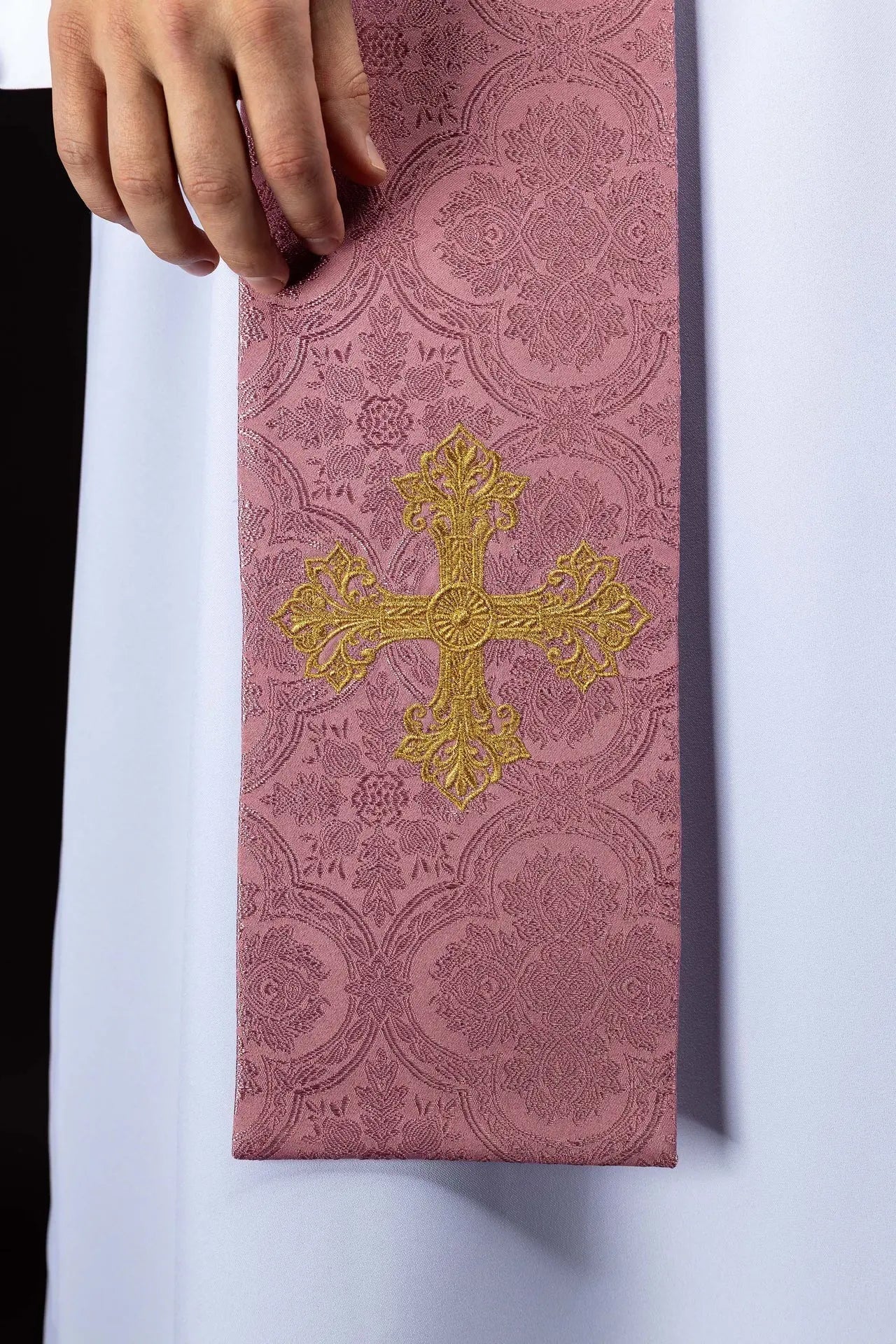
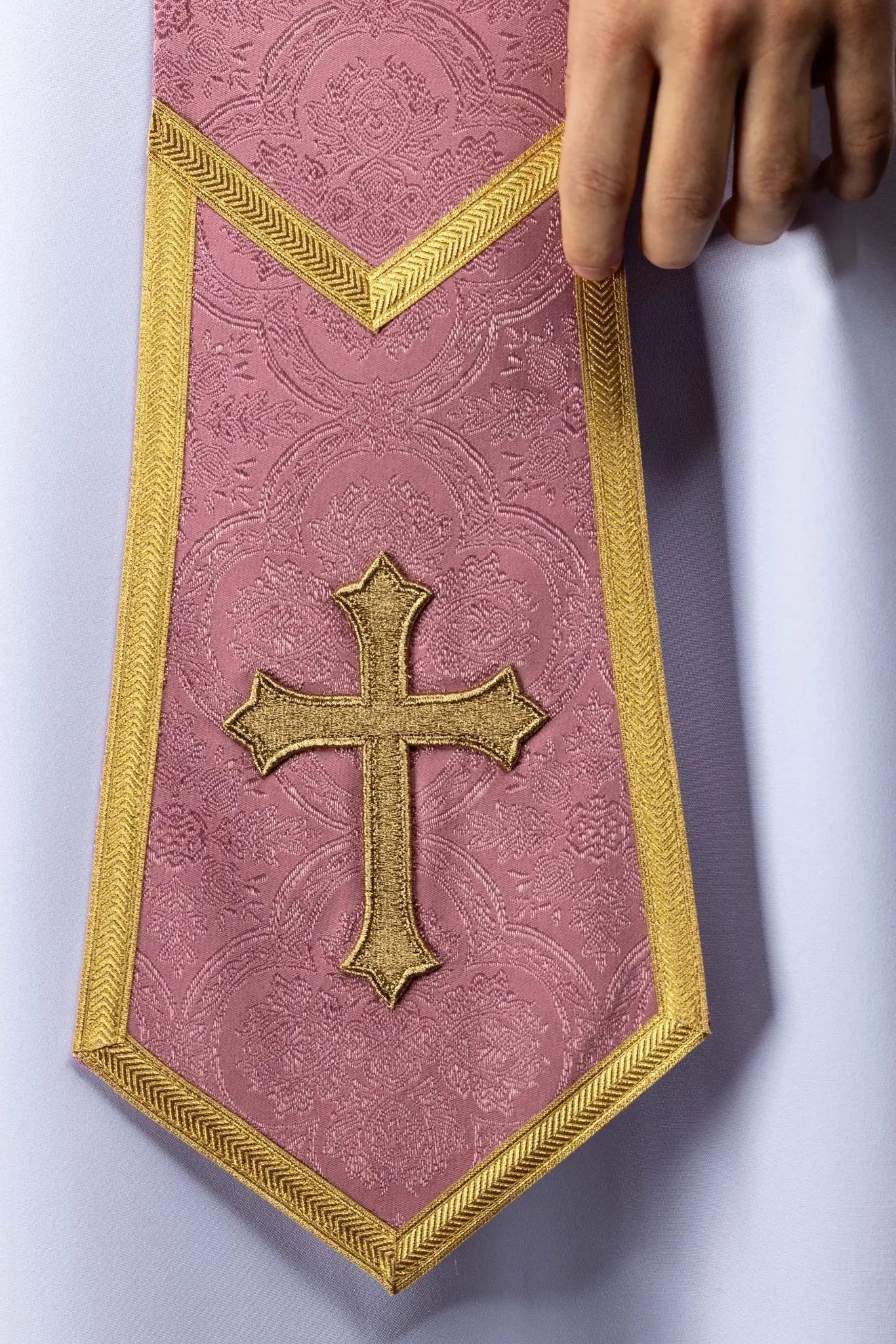
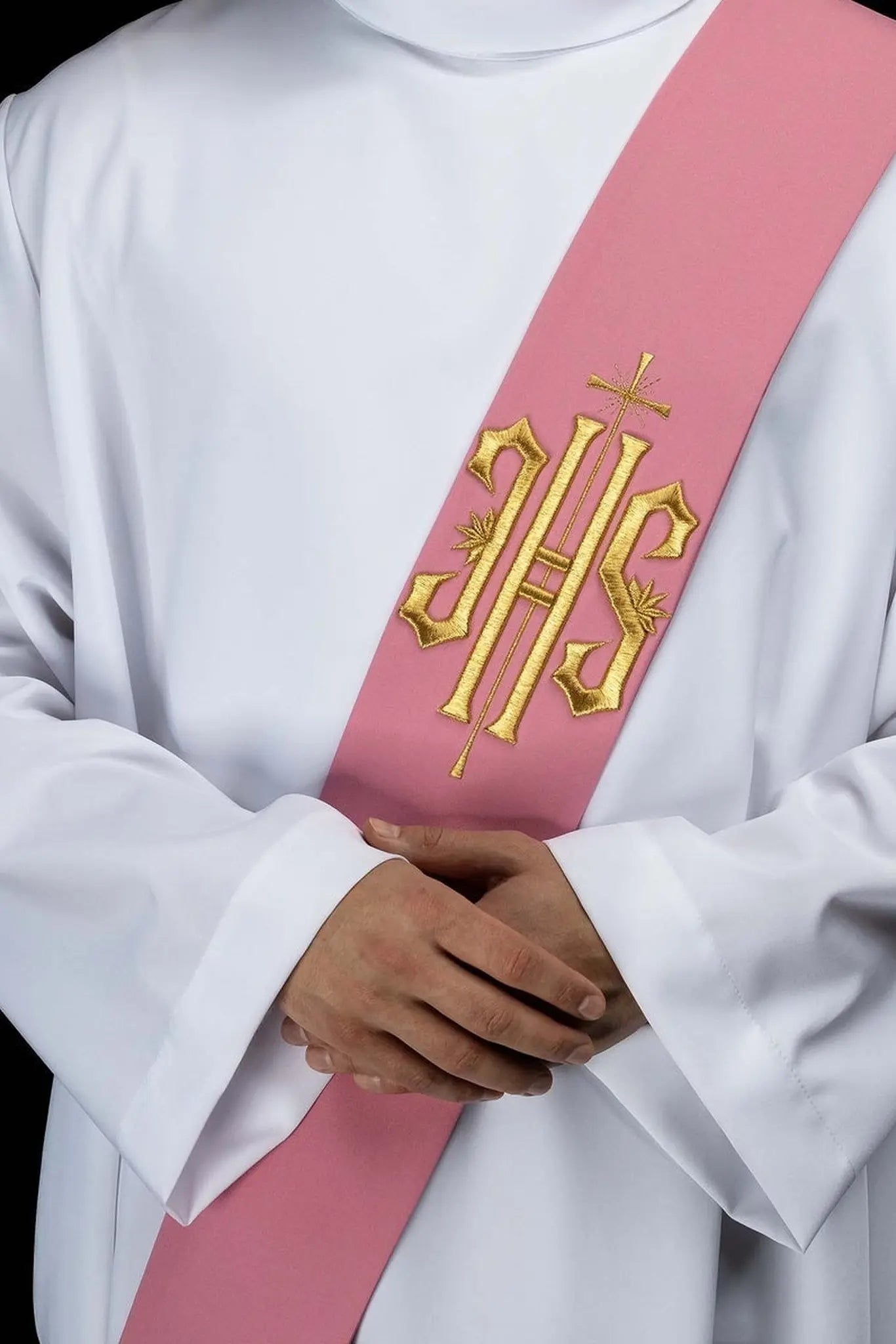
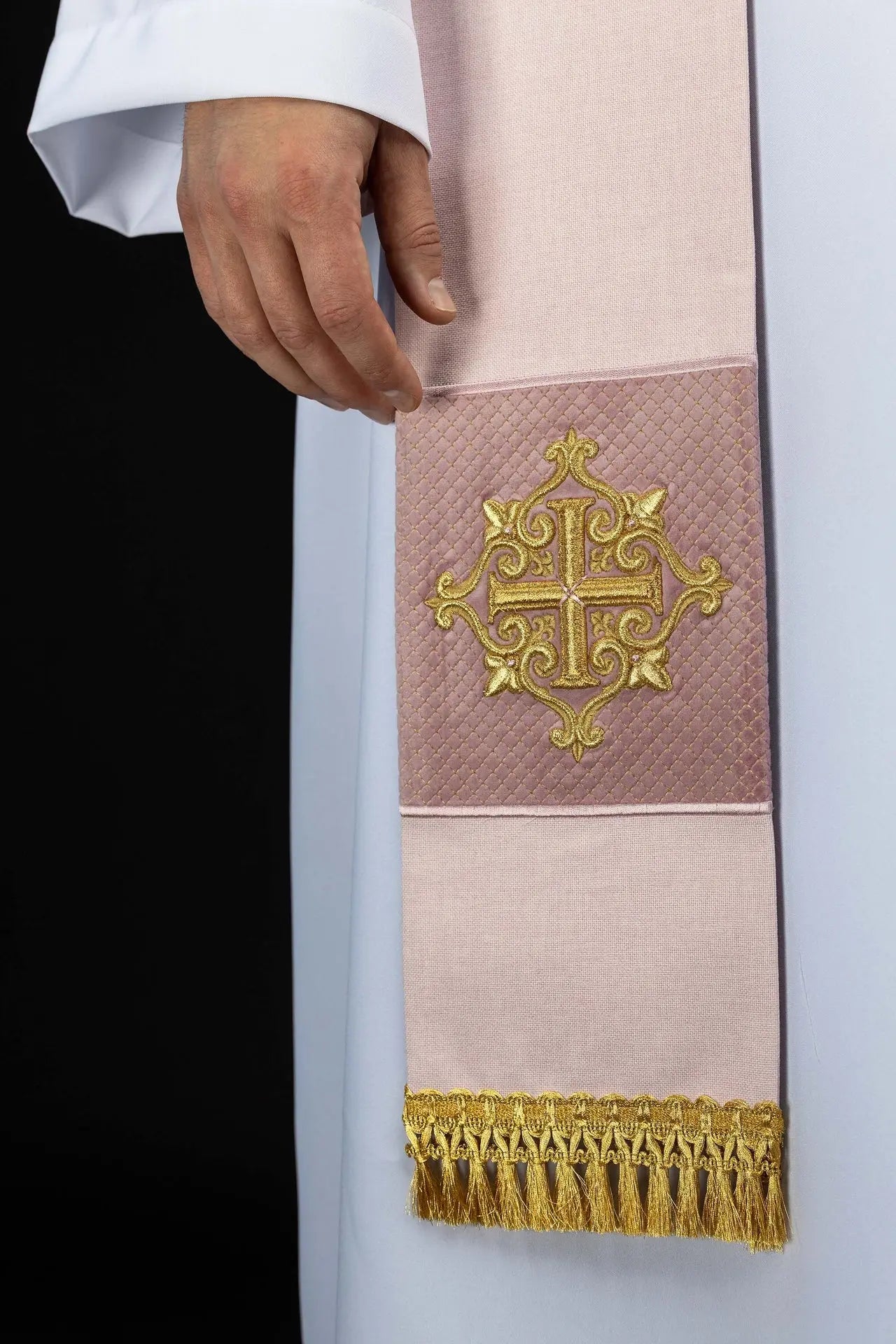
Within the wider range of clergy stoles, this collection focuses on rose designs with embroidered crosses, IHS motifs, jacquard fabrics, velvet options, and refined ornamental details. The visible selection includes priest stoles as well as a deacon stole, allowing the vestment to be chosen according to the wearer and the form of ministry. A stole should not only match the liturgical color; it should sit properly, remain comfortable during movement, and harmonize with the other vestments used at the altar.
The liturgical meaning of rose stoles
Rose vestments appear only on limited occasions, which is why a rose stole has a particular importance in a sacristy. On Gaudete Sunday in Advent, the rose color reflects the joy of the Lord's coming drawing near. On Laetare Sunday in Lent, it signals encouragement in the middle of penitential preparation for Easter. The stole is the vestment most closely associated with ordained ministry in sacramental and liturgical service, so its color should clearly support the rite and the season.
Rose stoles can be used with matching rose vestments or as a distinct element when the celebration calls for this color. Priests commonly choose a stole to coordinate with rose chasubles, while deacons may select a form designed for diagonal wear. When a parish uses rose vestments only once or twice each year, the quality and clarity of the design become especially important: the color should read as liturgical rose, the embroidery should be dignified, and the overall style should remain appropriate for solemn worship.
Designs, fabrics, and embroidery
The rose stoles in this collection include styles that can suit both traditional and more contemporary church interiors. Some designs emphasize a gold cross or embroidered IHS monogram, while others use patterned jacquard or velvet to create depth without excessive decoration. These details help the stole coordinate with chalice veils, altar frontals, pulpit covers, and chasubles used for the same celebration. When selecting a stole, consider whether the surrounding vestments are simple, richly embroidered, or based on a recurring motif such as the cross, IHS, or a subtle floral ornament.
Fabric also affects the final impression. Jacquard can provide a structured, decorative surface with woven patterning, while velvet gives a softer and more ceremonial appearance. Embroidery in gold or lighter tones may make the rose color appear warmer and more festive. A simpler stole can be practical for frequent parish use, while a more ornamented stole may be chosen for solemn celebrations on Gaudete or Laetare Sunday. The best choice is the one that supports the liturgy without distracting from it.
Choosing the right rose stole
When choosing a rose stole, begin with the role of the wearer. A priest's stole is normally worn around the neck, while a deacon's stole is made to be worn diagonally. The visible products in this collection include both types, so the product title and shape should be checked carefully before purchase. Next, consider the occasion: for Mass on Gaudete or Laetare Sunday, many parishes prefer a stole that matches the chasuble or complements it closely. For blessings, confession, or other rites where a stole is used without a chasuble, the stole itself carries more visual weight and may benefit from a clearer central motif.
It is also useful to compare this collection with related liturgical colors. For the penitential character of Advent and Lent, see purple clergy stoles. For the seasons that surround these rose Sundays, the Advent and Lent collections help complete the wider vestment plan. For coordinated church textiles in the same color family, Gaudete and Laetare vestments bring together rose items used for these two Sundays.
Coordinating rose stoles with other church textiles
A rose stole can be chosen as a single liturgical accessory, but it is often most effective when it forms part of a coordinated set. A priest may wear it with a rose chasuble, while the altar or ambo may include textiles that echo the same color and decoration. Matching does not always require identical embroidery; it is often enough for the tone, fabric character, and main symbol to work together. For a complete visual arrangement, rose stoles may be paired with chasubles, chalice veils, pulpit covers, or other textiles selected for Gaudete or Laetare Sunday.
Parishes that already own rose chasubles may look for a stole with similar gold embroidery or a compatible cross motif. Communities beginning a new rose vestment set may prefer to start with the stole and chasuble, then add altar textiles later. For ambo decoration in the same liturgical color, rose pulpit covers are a closely related option. For broader seasonal planning and other vestment categories, the main liturgical vestments collection offers a wider overview.
Care and storage for rose stoles
Because rose vestments are used only on selected days, proper storage is especially important. After use, the stole should be allowed to air before being placed flat or hung in a clean, dry vestment cabinet. Avoid folding embroidered sections sharply, as repeated pressure can affect the thread and fabric over time. Direct sunlight, moisture, and overcrowded storage can weaken the color and finish. For delicate fabrics such as velvet or embroidered jacquard, follow the care information provided with the individual item and choose professional cleaning when needed.
A well-maintained rose stole can serve for many liturgical years, especially when it is stored separately from frequently used green, white, or purple vestments. Keeping rose vestments together also makes preparation easier for sacristans before Gaudete and Laetare Sunday. If a parish uses several clergy vestments for the same Mass, labeling or organizing stoles by wearer and function can help distinguish priest stoles from deacon stoles before the celebration begins.
Frequently Asked Questions (FAQ)
When is a rose stole used?
A rose stole is used principally on Gaudete Sunday, the Third Sunday of Advent, and Laetare Sunday, the Fourth Sunday of Lent, when rose vestments may be worn as a sign of joy within a penitential season. It may also be used in rites connected with the same liturgical celebration when the stole is appropriate.
Is rose the same as pink in liturgical vestments?
In everyday language the colors may be close, but in church vesture the term rose is more precise. Rose refers to the liturgical color traditionally associated with Gaudete and Laetare Sunday, while pink can sound more casual or fashion-oriented.
How do I choose between a priest stole and a deacon stole?
Choose according to the ordained minister who will wear it. A priest's stole is worn around the neck, while a deacon's stole is cut and arranged for diagonal wear. The product title and images should be checked so the vestment matches the intended ministry.
Should a rose stole match a rose chasuble exactly?
An exact match is not always necessary. The stole should coordinate in color, fabric character, and ornament. A shared cross, IHS embroidery, gold detailing, or similar jacquard texture can create a harmonious set even when the pieces are not identical.
What should a parish consider before buying a rose stole?
Consider how often rose vestments are used, whether the stole is needed for a priest or deacon, and whether it will be worn with existing vestments. A clear liturgical rose color and dignified embroidery are especially important because these stoles are used on highly recognizable Sundays.