
Sort by
7 products
Reliquaries
Reliquaries for the Reverent Display of Holy Relics
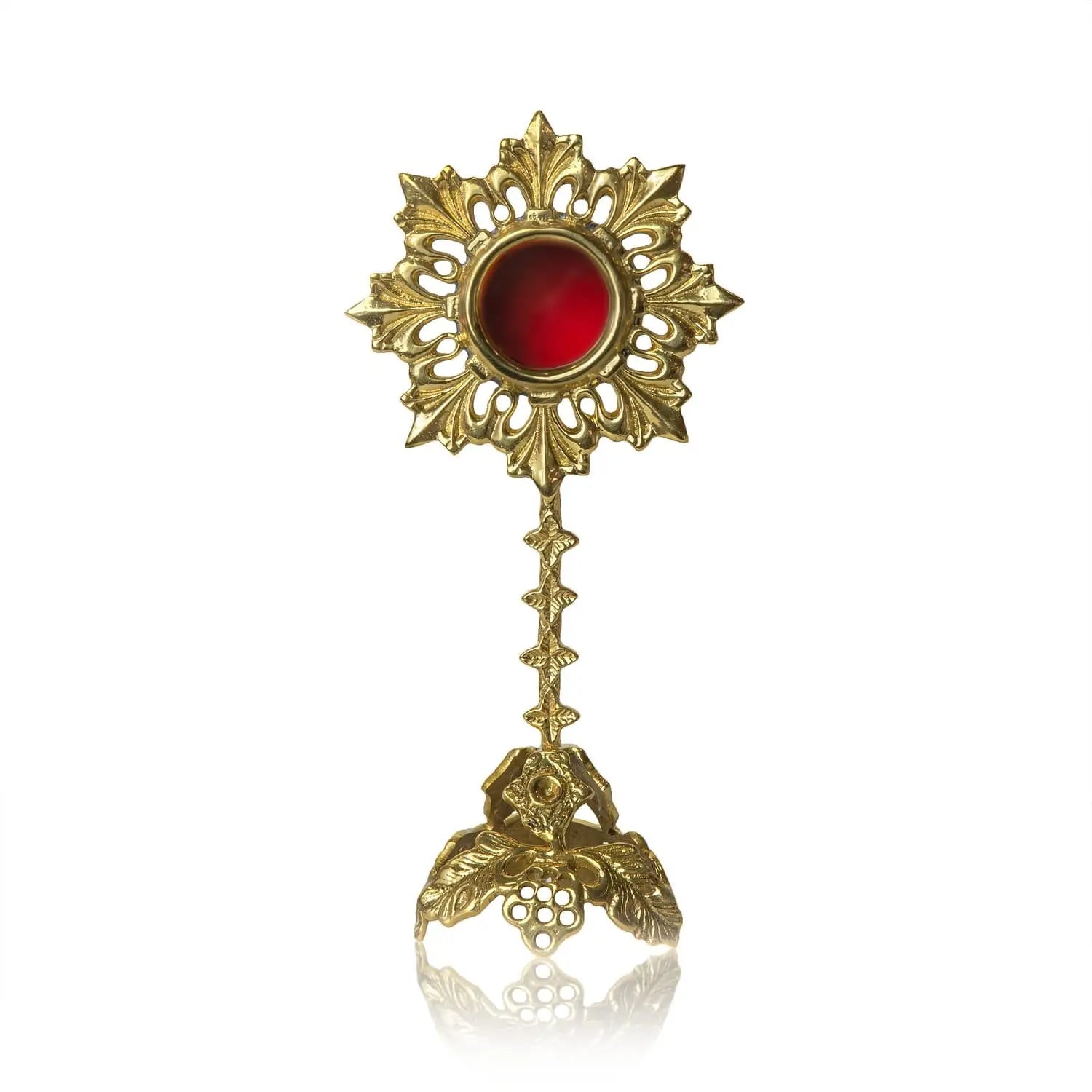
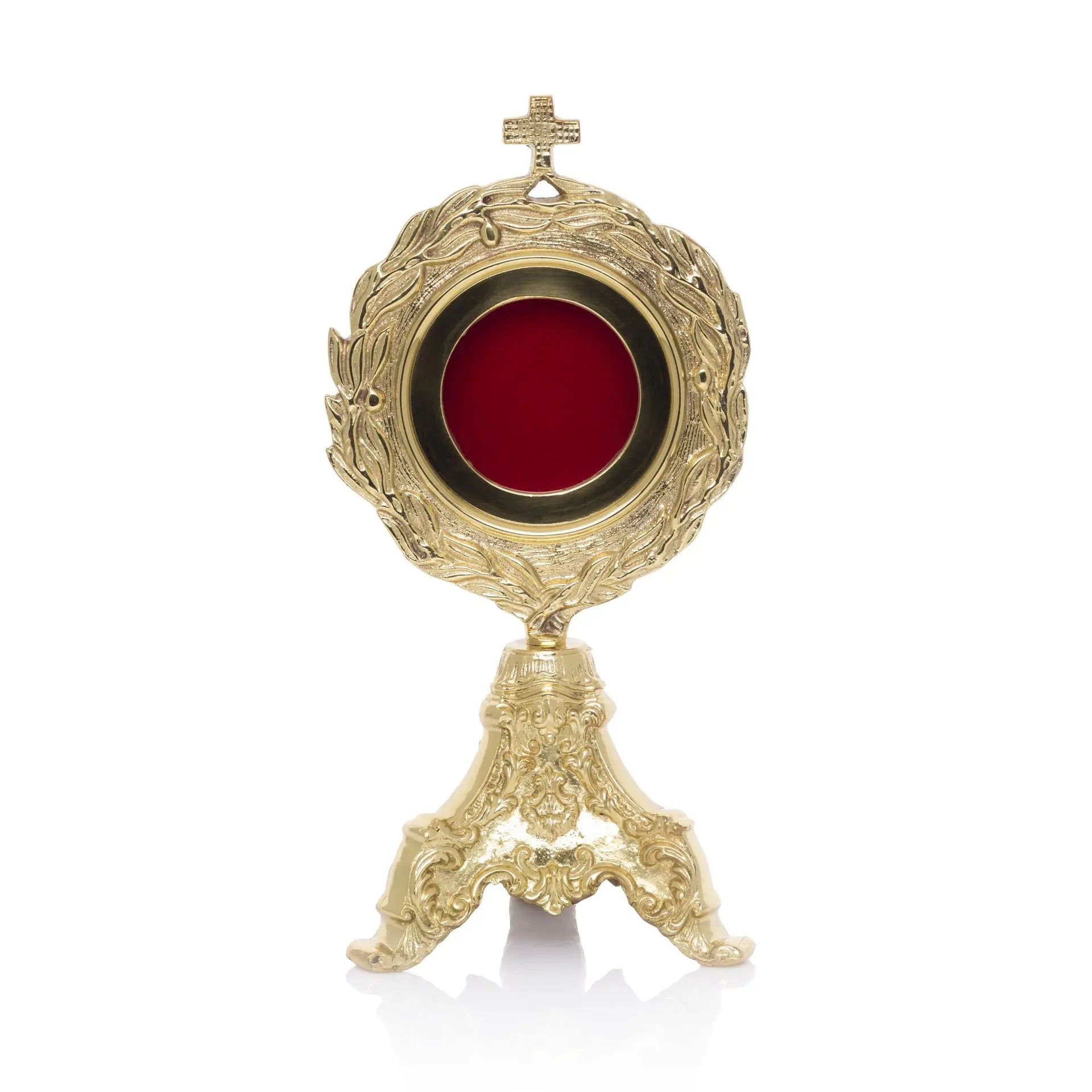
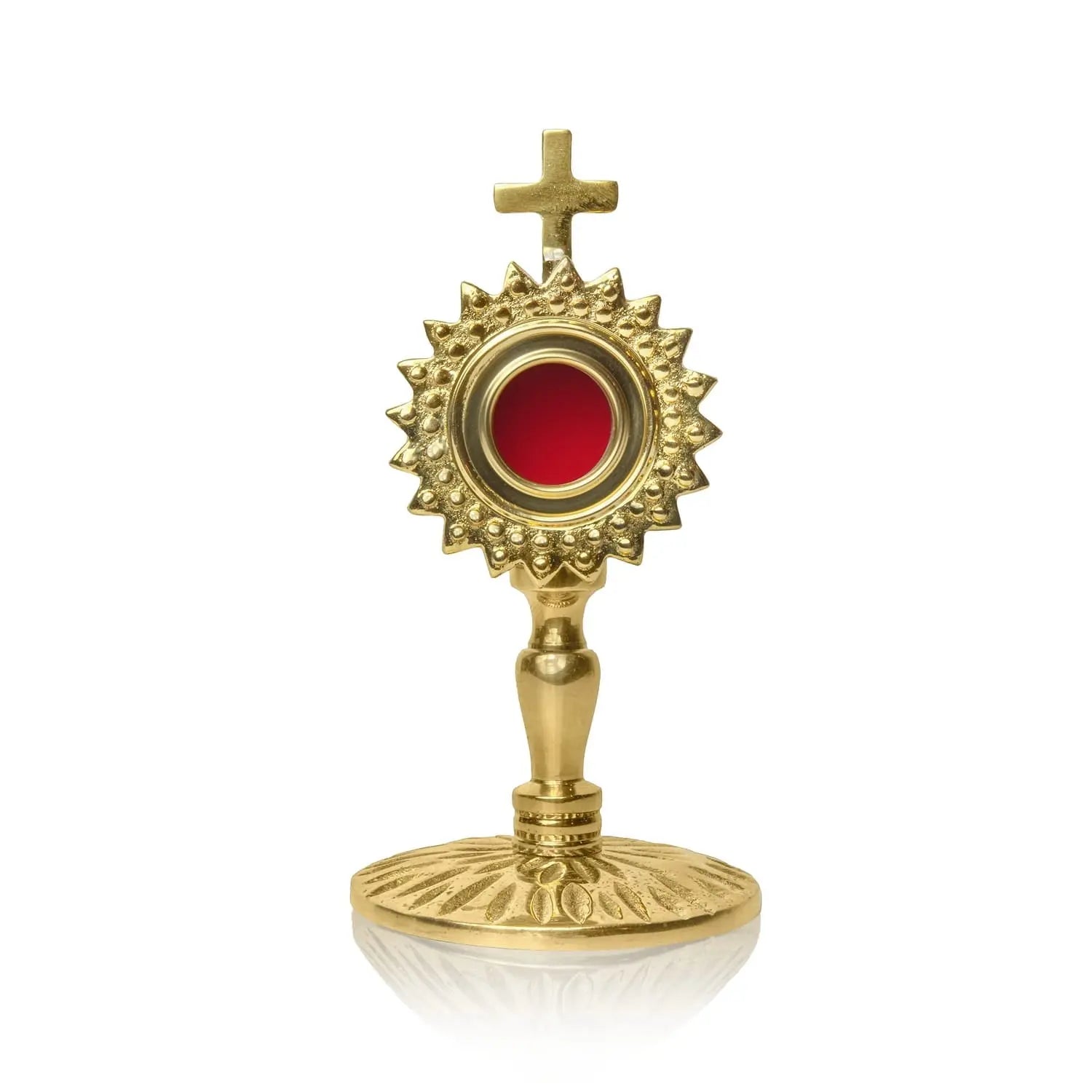
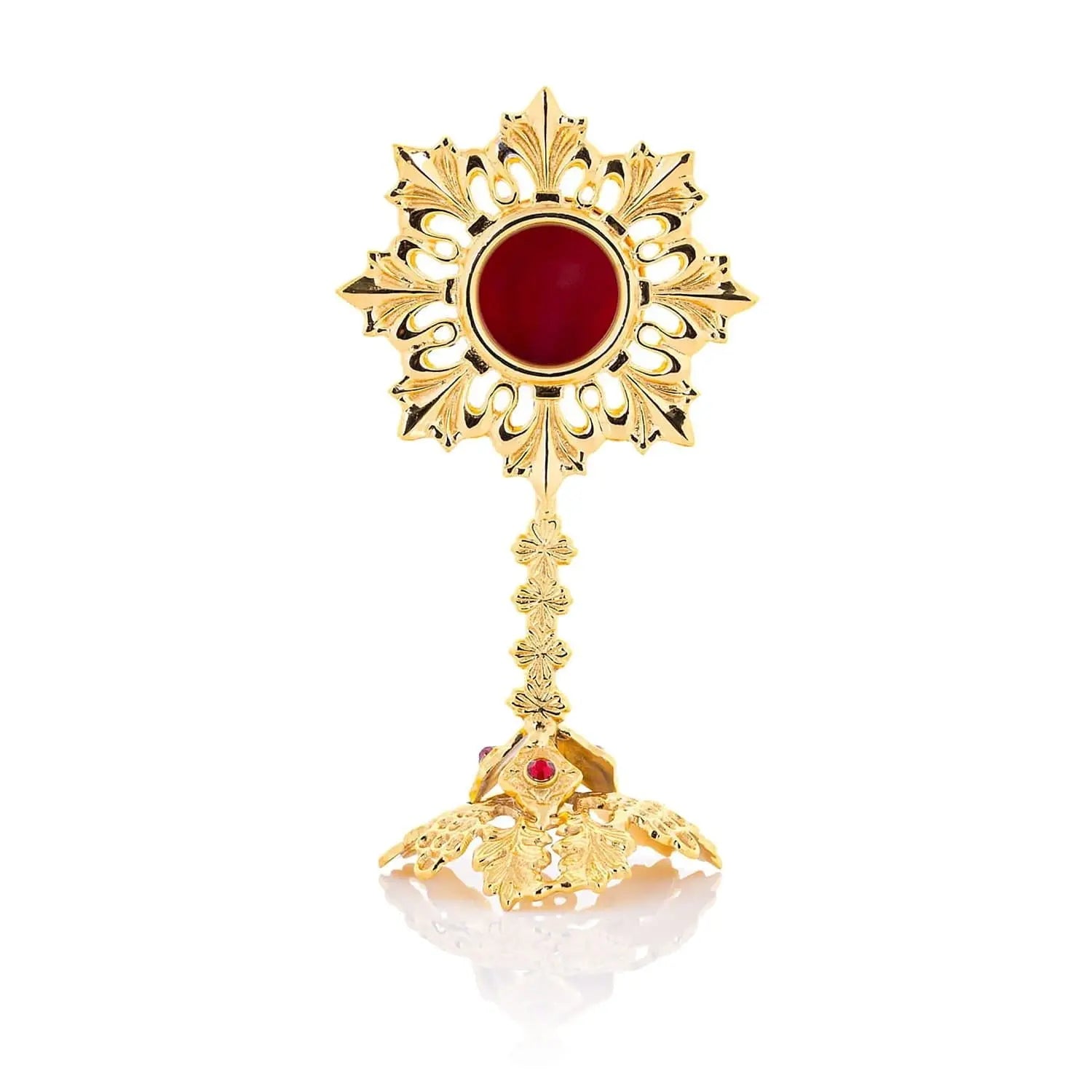
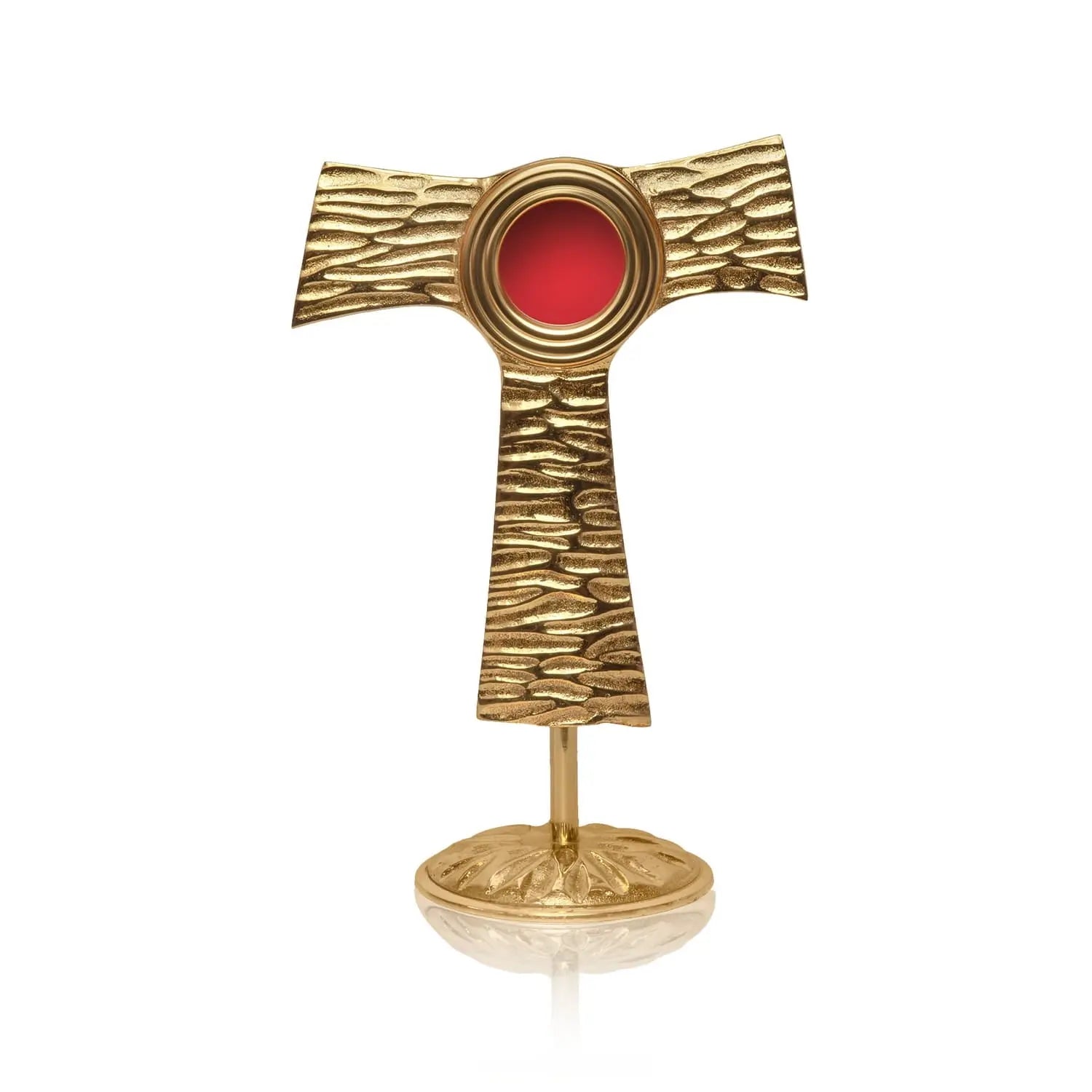
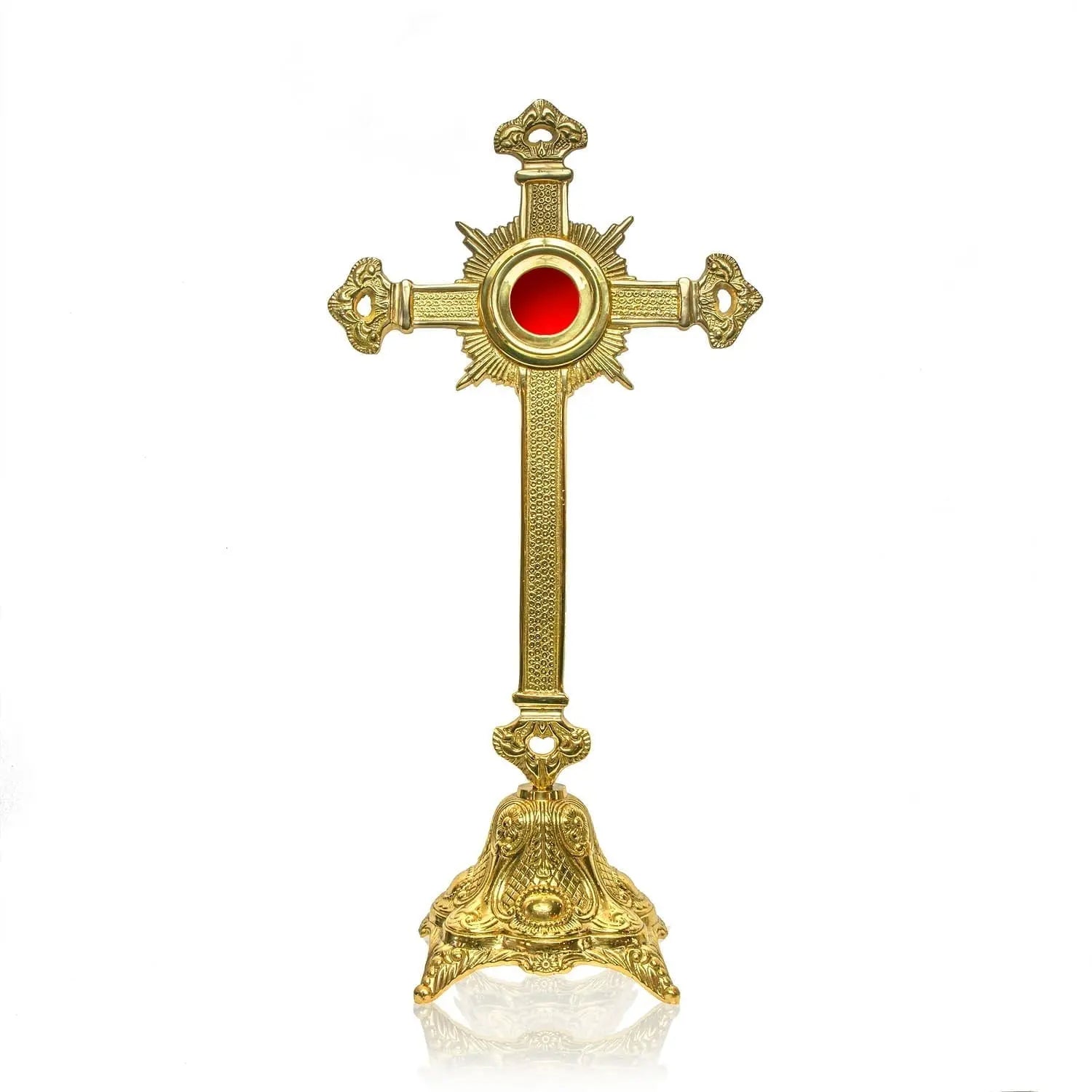
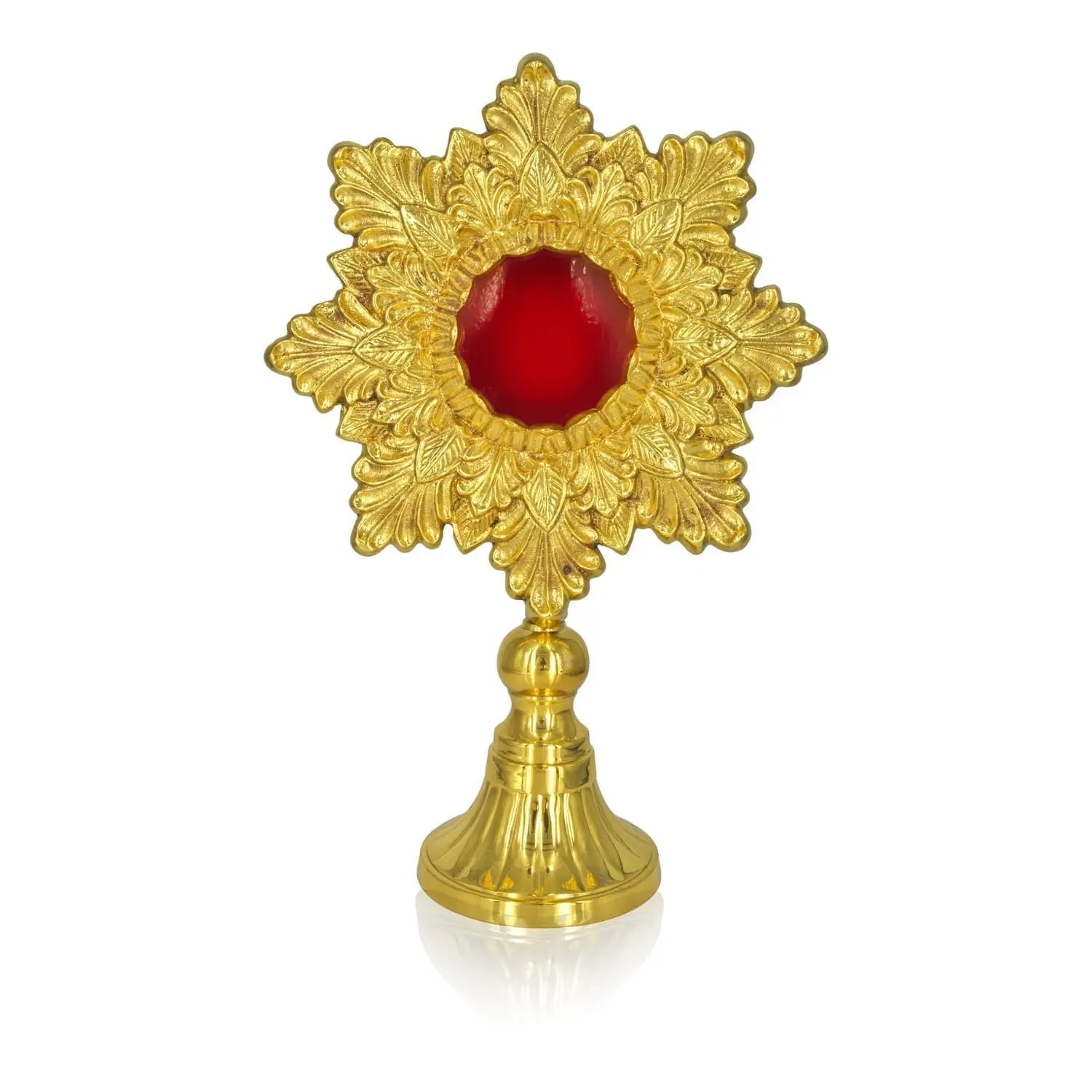
Reliquaries are sacred vessels made to hold, protect and present holy relics for Christian veneration. This collection brings together church reliquaries intended for chapels, parish churches, religious houses, sacristies and devotional spaces where relics are honored with dignity. The live selection includes ornate brass reliquaries in traditional forms, including cross-shaped designs, radiant motifs, floral repositories, wreath-inspired ornament and compact pieces suitable for placement near the altar or in a dedicated devotional area. Each reliquary is chosen not simply as a decorative object, but as a vessel connected with prayer, memory and the communion of saints.
A reliquary gives a visible and protected place to a relic while directing attention beyond the vessel itself. Its purpose is to serve the reverent display of a sacred object associated with a saint, martyr or blessed person. In Catholic and wider Christian tradition, the veneration of relics is not worship of the material object. It is an act of honor toward the holy person whom God has sanctified, and a reminder that holiness is lived in real bodies, real histories and real acts of faith. For this reason, a reliquary should be dignified, stable, proportionate and suited to the space where it will be used.
What belongs in this collection
This Reliquaries collection focuses on metal reliquaries for ecclesiastical and devotional use. The current assortment is centered on brass pieces with visible repositories for relic placement, often framed by sacred ornament. Some designs use a sunburst or radiant form to emphasize the importance of the relic, while others use a cross, tau cross, floral frame or wreath motif. Heights such as 18 cm or 20 cm may be suitable for smaller altars, side chapels, shrines, sacristy displays or devotional furnishings where the reliquary should be clearly visible without overwhelming the setting.
Because reliquaries are closely related to other sacred vessels and church accessories, they are naturally part of the wider liturgical accessories category. A church preparing a chapel, relic shrine or devotional corner may also consider items used around the same space, such as candlesticks for a dignified light arrangement, bells for liturgical service, and holy water fonts and sprinklers for blessings connected with devotional practice.
Liturgical and devotional use of reliquaries
Reliquaries are used wherever relics are exposed for public or private veneration according to the discipline of the Church. They may be placed in a chapel dedicated to a saint, near an altar during an approved celebration, in a reliquary cabinet, on a side table arranged for prayer, or in a church space where the faithful can approach with reverence. The reliquary helps preserve the relic, gives it a clearly identifiable setting and supports the devotional focus of the faithful.
The exact use depends on the type of relic, local norms and the instructions of the competent ecclesiastical authority. A reliquary for public veneration should be treated with the same seriousness as other sacred vessels and furnishings. It should be placed in a stable location, protected from accidental handling, and presented in a way that avoids confusion with other liturgical objects. When relics are displayed near the altar, the arrangement should remain orderly and should not compete with the central action of the liturgy.
Reliquaries are distinct from monstrances. A monstrance is used for Eucharistic exposition of the Blessed Sacrament, while a reliquary is used for relics. Both may share certain visual forms, such as rays or a central display window, but their liturgical purpose is not the same. This distinction matters when choosing a vessel, planning a chapel arrangement or writing descriptions for sacristy inventories.
How to choose a reliquary
Choosing a reliquary begins with the relic itself. The size, shape and documentation of the relic should guide the selection. A small relic may require a compact repository with secure placement, while a larger authenticated relic may call for a more prominent vessel. The repository should allow the relic to be seen with dignity, without appearing crowded or exposed to unnecessary risk. The design should frame the relic rather than distract from it.
The second consideration is the place of use. A small brass reliquary can suit a side chapel, sacristy or devotional table. A radiant reliquary may work well when the relic is intended to be visually prominent during veneration. A cross-shaped reliquary can be especially fitting for relics connected with the Passion, martyrs or a devotional setting centered on the mystery of the Cross. Floral and wreath motifs may be appropriate for saints whose remembrance is associated with spiritual victory, purity, intercession or a particular feast.
Proportion is important. A reliquary that is too small for a large sanctuary may be visually lost; a piece that is too large for a narrow altar or side table may seem unstable or crowded. Before selecting, consider the height of the altar or table, the distance from which the faithful will view the relic, the lighting in the chapel and whether candles, flowers, altar linens or other objects will be placed nearby.
Materials, ornament and visual style
The reliquaries in this collection are described through a product range centered on brass and traditional sacred ornament. Brass has long been used for church furnishings because it offers visual warmth, durability and a dignified appearance. Ornament such as rays, crosses, floral forms and wreaths helps mark the vessel as sacred without requiring excessive decoration. A good reliquary should feel solemn, not theatrical; expressive, not distracting; beautiful, yet clearly ordered toward prayer.
Many church interiors already contain metalwork in chalices, candlesticks, thuribles, lamps or other accessories. For this reason, brass reliquaries can coordinate well with related items such as chalices, thuribles and boats, and sanctuary candlesticks. When a church maintains a consistent metal tone across sacred vessels and furnishings, the chapel or sanctuary gains a calmer and more coherent visual language.
Reliquaries in chapels, shrines and parish settings
In a parish church, a reliquary may be used on a saint’s feast day, during a novena, in a side chapel or in a devotional area dedicated to intercessory prayer. In a religious house, reliquaries may support the daily prayer of the community and preserve a visible link with patron saints, founders, martyrs or blessed members of a spiritual tradition. In a chapel, a well-chosen reliquary can become the visual center of a quiet place of prayer without overpowering the altar or tabernacle area.
When arranging a reliquary for veneration, the surrounding elements should remain modest and intentional. Candles, altar cloths, flowers and a suitable stand can create a devotional setting, but the relic should remain the focus. The reliquary should not be hidden among too many decorative objects, and it should not be placed where it could be touched casually, knocked over or treated as a general ornament.
Care and handling
A reliquary requires careful handling both because of its sacred purpose and because of the relic it may contain. It should be lifted with clean hands or suitable cloths, kept stable during movement and stored in a secure place when not in use. Brass surfaces should be cleaned gently according to the finish and product instructions. Harsh chemicals, abrasive cloths and excessive moisture should be avoided, especially near any sealed repository or decorative detail.
The relic itself should be handled only by those authorized to do so, and always according to ecclesiastical discipline. Documentation should be preserved carefully with the reliquary records. If a relic is transferred, sealed or prepared for public veneration, the process should follow the relevant Church requirements. The reliquary provides the vessel, but the authenticity, custody and proper liturgical treatment of relics must be respected separately.
Related church accessories
Reliquaries often form part of a larger devotional or liturgical arrangement. For processions and solemn celebrations, a church may also need processional banners or processional canopies, depending on the rite and local custom. For a chapel or shrine, accessories such as candlesticks, chalices, thuribles and holy water vessels help create a complete sacred environment. Choosing related pieces with similar proportions and materials helps the church maintain visual harmony across the sanctuary, sacristy and devotional areas.
This collection is best understood as a focused selection of reliquaries rather than a general category of all sacred vessels. Customers looking for Eucharistic exposition should review monstrances, while those preparing the altar for Mass may need chalices, altar linens or chalice veils. Reliquaries serve their own distinct role: the dignified housing and presentation of holy relics for veneration.
Frequently Asked Questions (FAQ)
What is a reliquary used for?
A reliquary is used to house and display a holy relic in a protected and reverent way. It may be placed in a chapel, shrine, parish church or devotional area, depending on the relic and the approval or discipline required for its veneration.
How is a reliquary different from a monstrance?
A reliquary is intended for relics of saints, martyrs or blessed persons. A monstrance is used for the exposition of the Blessed Sacrament. Even when both objects have a radiant design, their sacred purpose is different and they should not be treated as interchangeable vessels.
What size reliquary should a church choose?
The right size depends on the relic, the display location and the viewing distance. Smaller brass reliquaries can suit side chapels, sacristies and devotional tables, while more prominent designs may be better for a shrine or a visible place prepared for public veneration.
Can a reliquary be placed on an altar?
A reliquary may be placed near or on an altar only when appropriate to the celebration, local custom and ecclesiastical norms. The arrangement should remain stable, reverent and clearly ordered so that the liturgy is not obscured or visually crowded.
How should a brass reliquary be cared for?
Handle the reliquary carefully, keep it dry, avoid abrasive cleaning and follow the product care recommendations for the metal finish. The relic and its documents should be protected separately and handled only by authorized persons according to Church discipline.