
Sort by
11 products
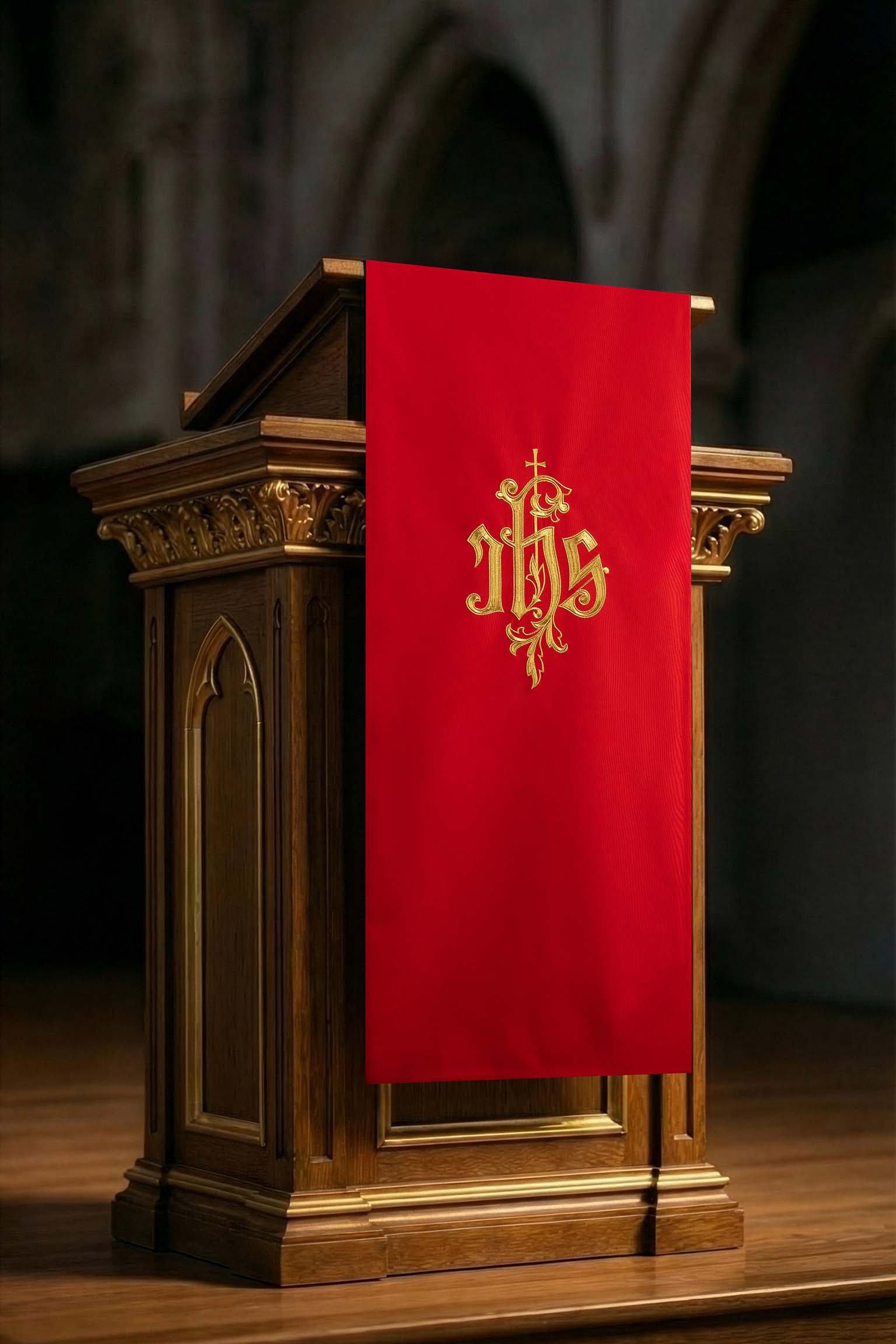



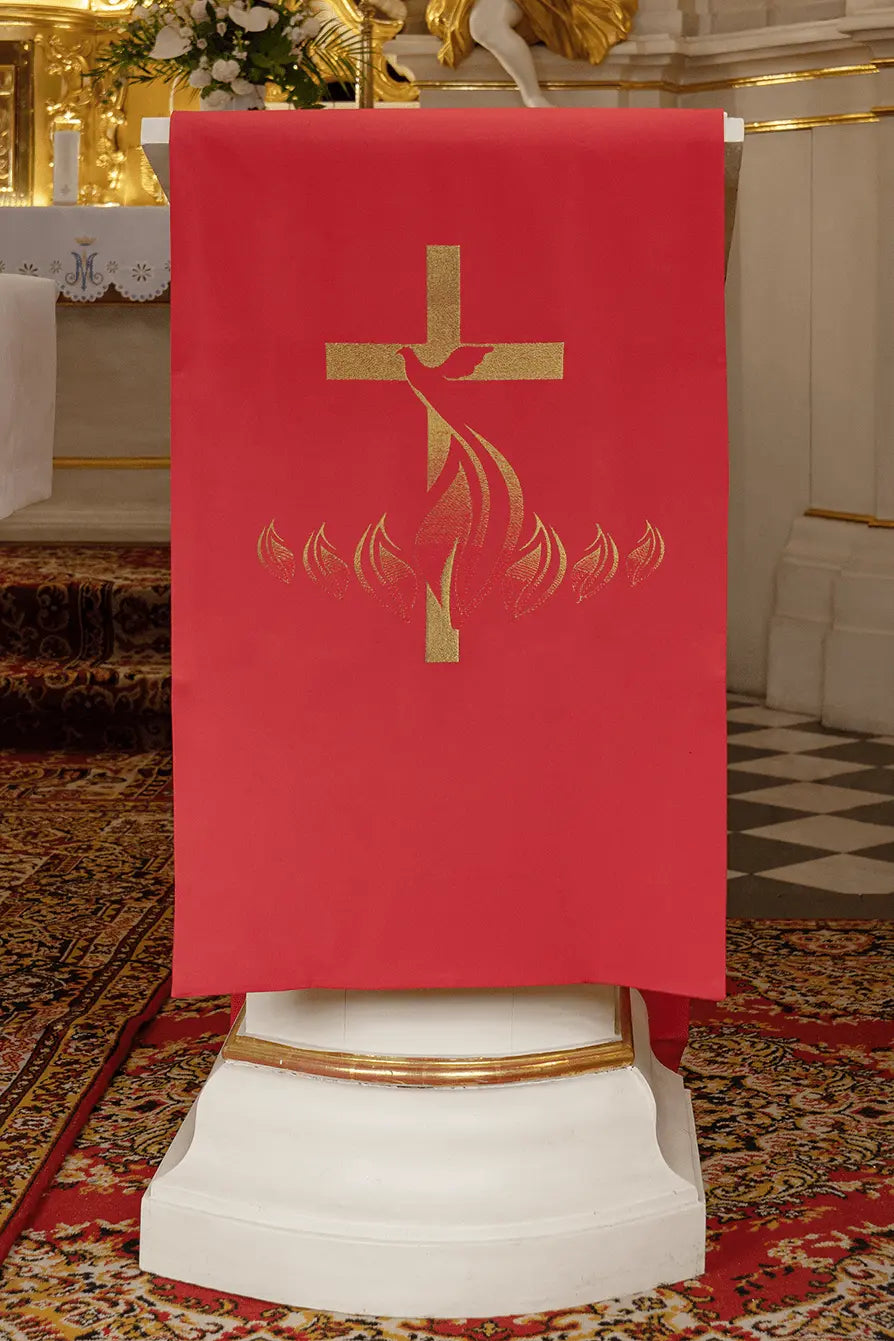
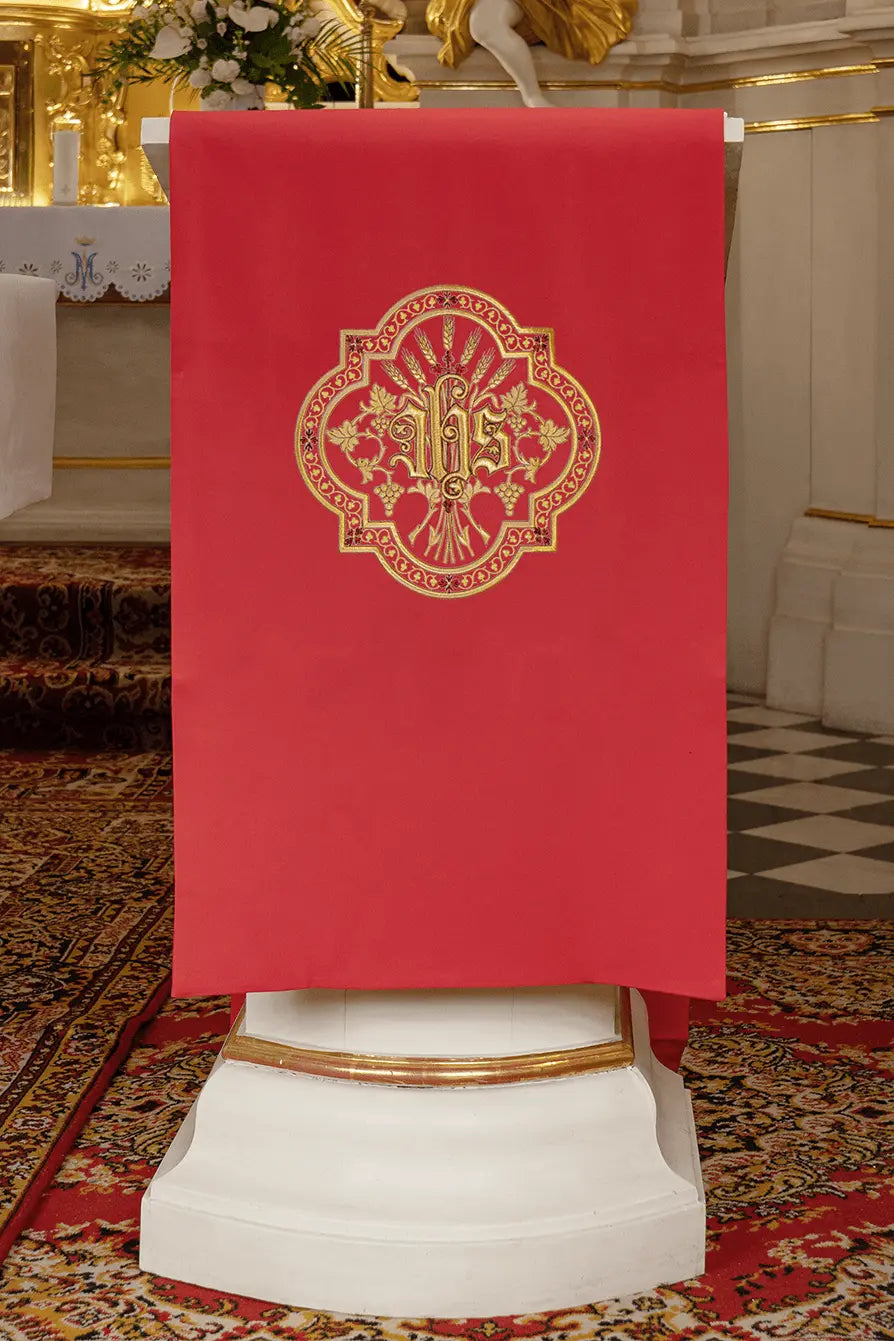
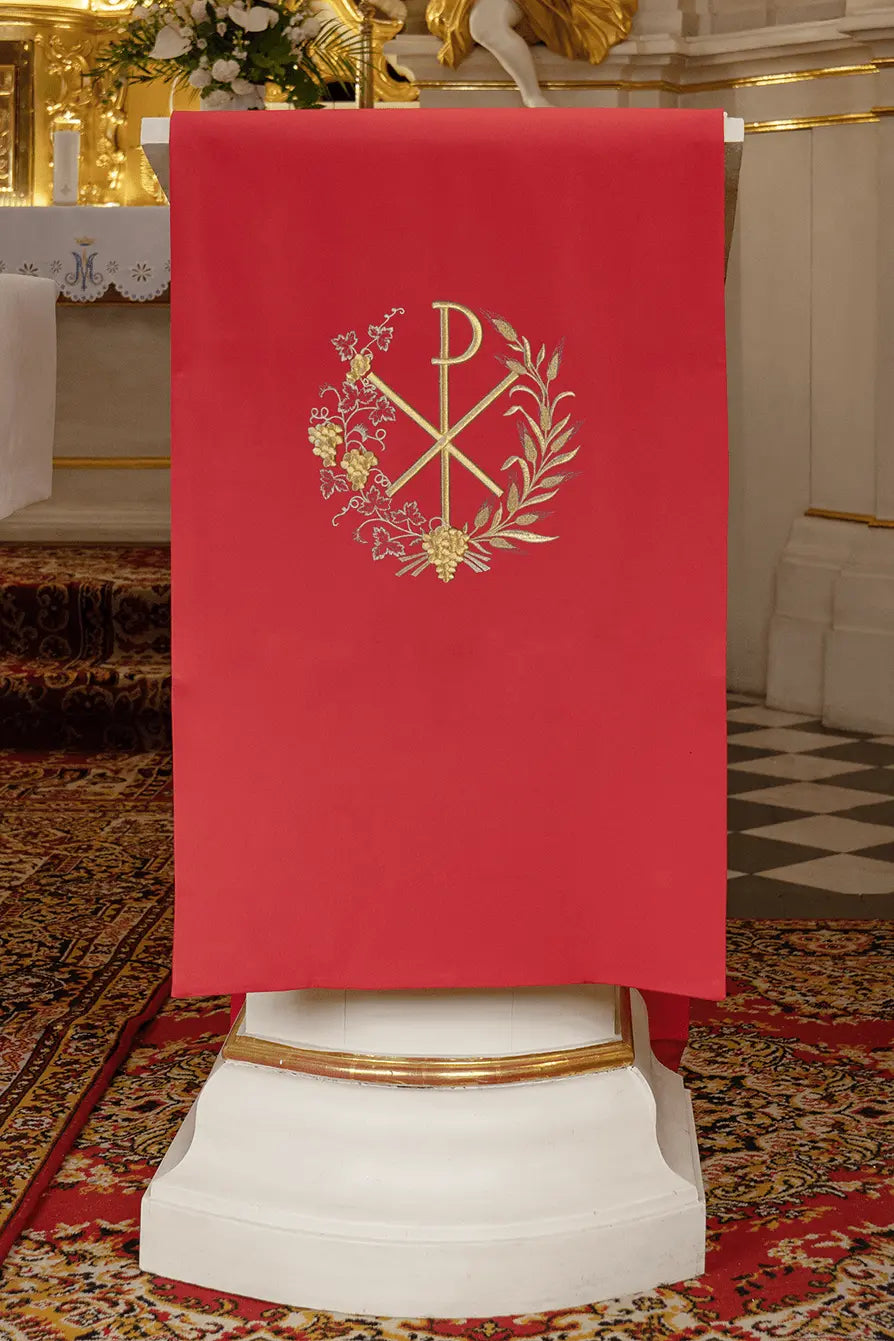
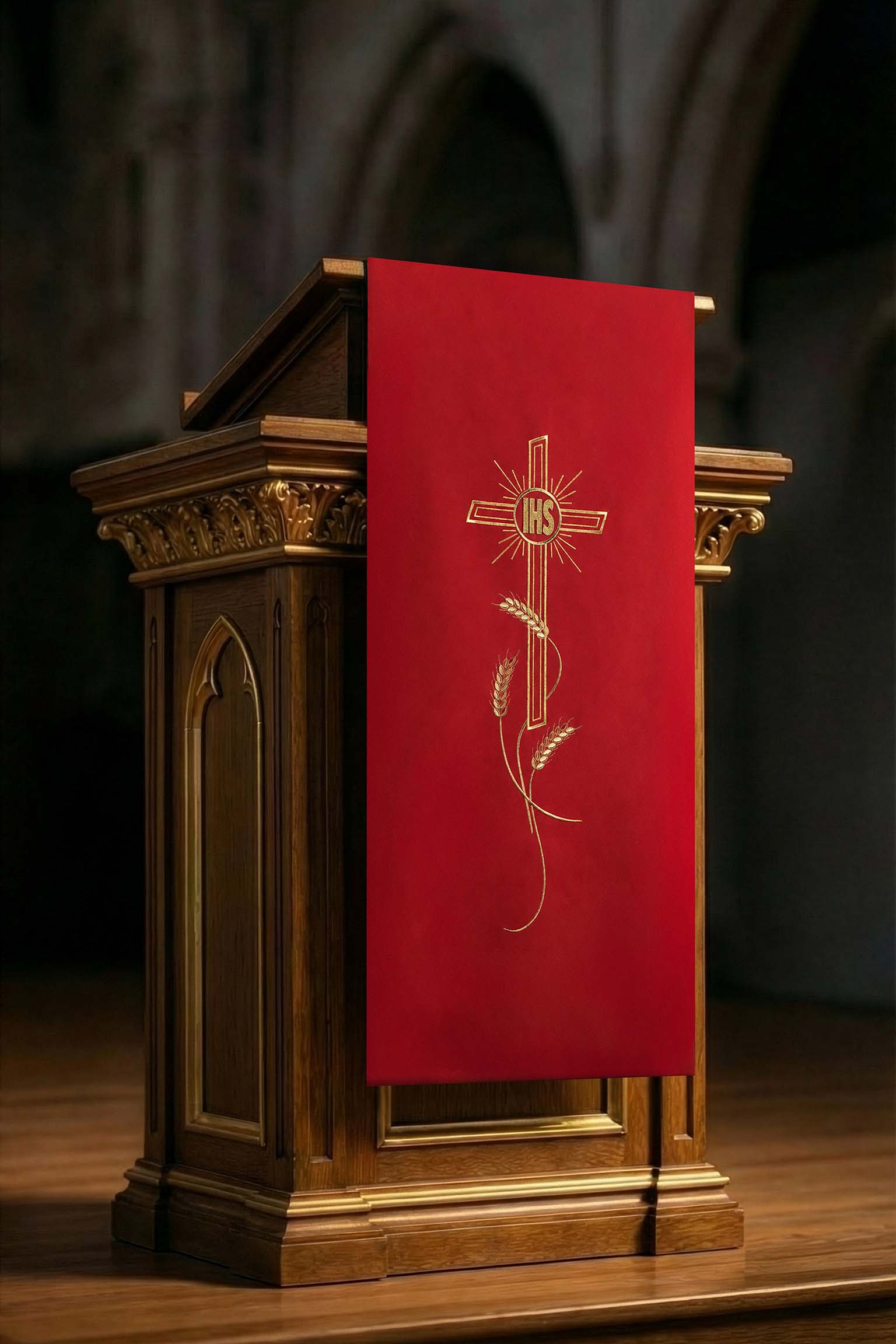

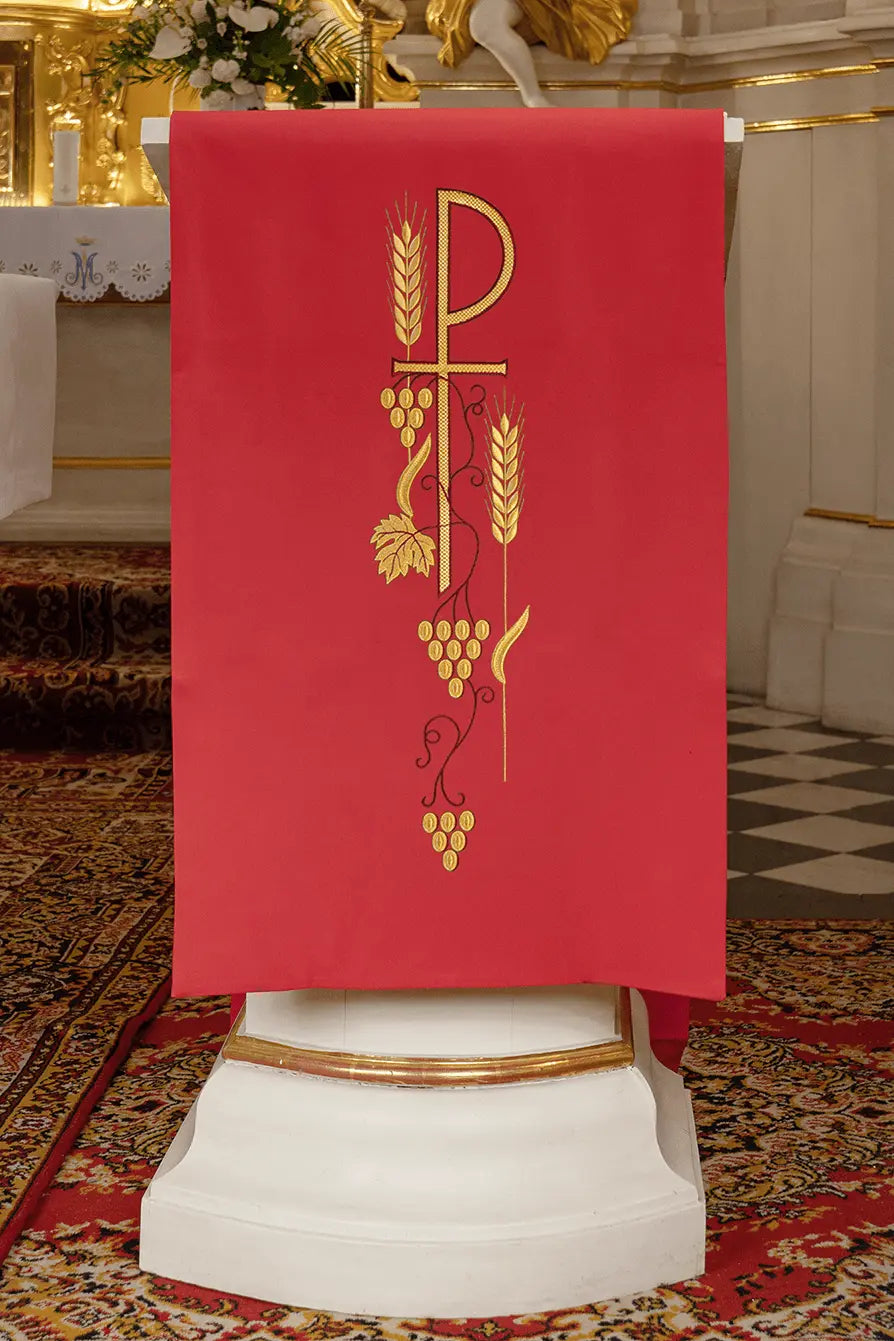


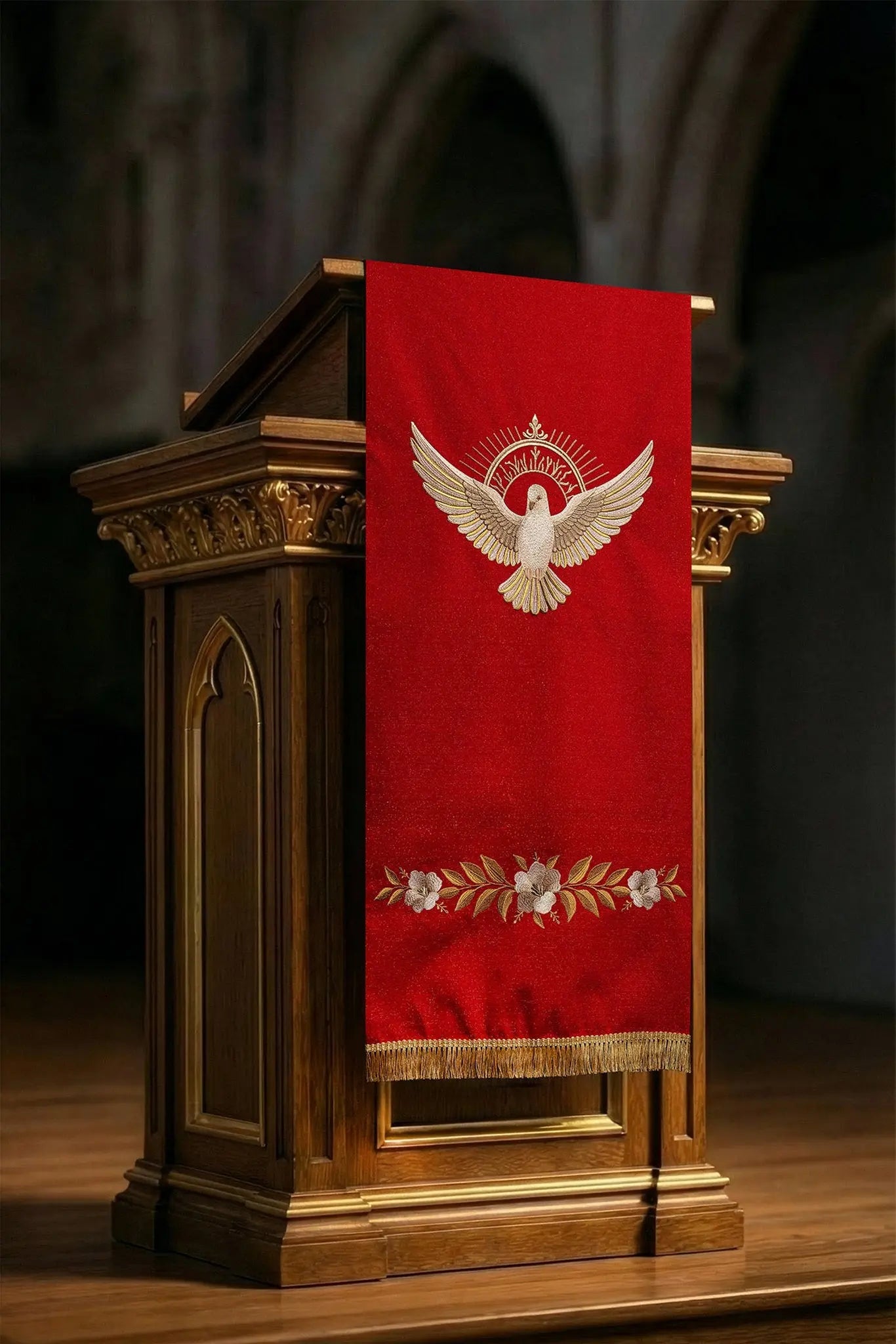

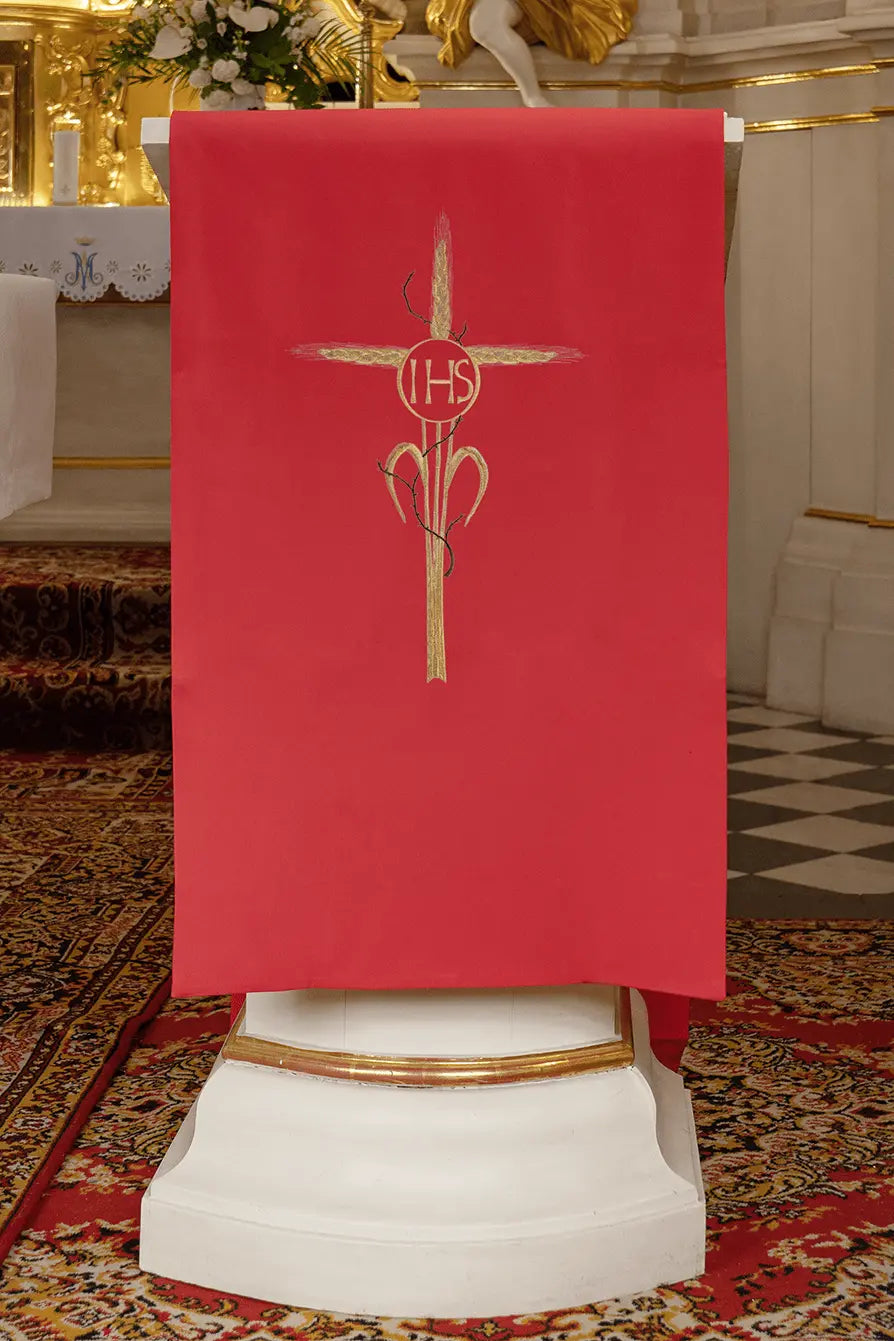
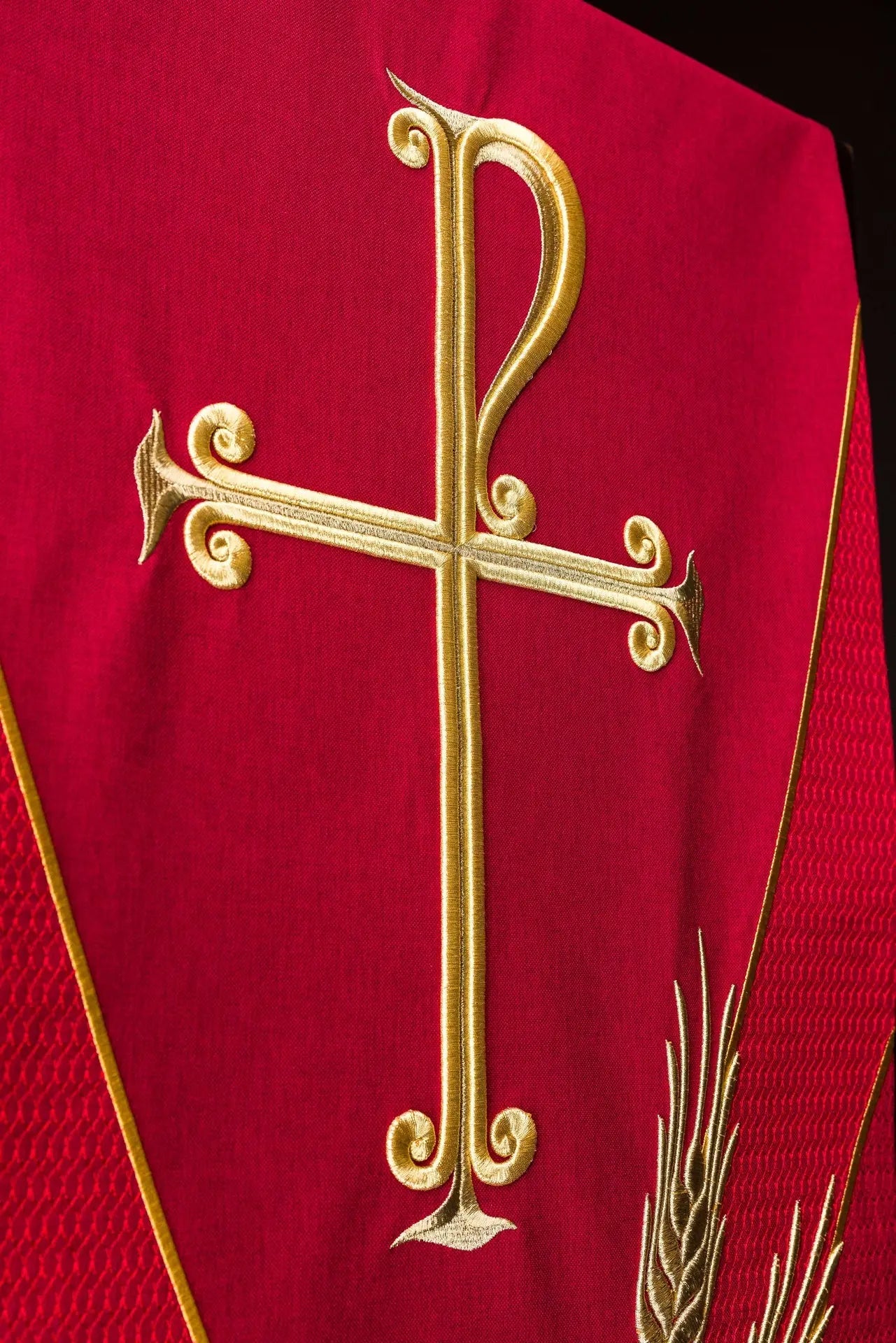

Red Pulpit Covers for the Ambo and Lectern
Red pulpit covers bring the liturgical color of sacrifice, witness, and the Holy Spirit to the place where the Word of God is proclaimed. This collection is dedicated to church textiles for the pulpit, lectern, ambo, or lectionary stand: red lectern hangings, embroidered pulpit cloths, and lectionary napkins designed to frame Scripture readings with a clear and reverent visual sign. A red cover does not replace the dignity of the book, the ambo, or the proclamation itself; it supports them by giving the sanctuary a coherent color language on days when the Roman liturgy calls attention to the Passion of Christ, the fire of Pentecost, or the blood of the martyrs.
The pieces gathered here are intended for churches, chapels, religious houses, and parish sacristies that need a reliable red textile for the ambo area. Within the collection you may find designs with the IHS or JHS monogram, a cross, PAX, the dove of the Holy Spirit, wheat, flame motifs, and devotional references such as the Sacred Heart of Jesus. Some models are more restrained, allowing the red fabric and simple gold embroidery to carry the message; others use richer ornament to make the pulpit cover a visible part of a solemn celebration. This makes the collection useful both for parishes building a complete set of liturgical colors and for communities replacing an older cover with a more durable and better matched piece.
What belongs in this collection
This is a focused collection of red pulpit covers, not a general altar cloth category. The textiles are made for the ambo, lectern, pulpit, or lectionary stand, where they hang in front of the place of proclamation or rest beneath the lectionary depending on the model. The visible product mix includes red pulpit cover designs and related lectionary napkins, including embroidered motifs such as IHS, JHS, PAX, a cross, the Holy Spirit dove, flame, wheat, and the Heart of Jesus. Because churches use different terms for the same area, many customers search for these items as pulpit cloths, lectern covers, ambo hangings, lectionary cloths, or lectionary napkins. In practical use, they all serve the same broad purpose: they give the liturgical color to the place from which the readings, psalm, and Gospel are proclaimed.
For a wider view of similar pieces in other colors, the parent category of pulpit covers is the best place to compare the full pulpit textile range. A parish that already owns red vestments may use this collection to complete the sanctuary setting around the ambo. A church that is purchasing a full red set may also coordinate the pulpit cover with red chasubles for priests and bishops and with red clergy stoles for concelebrants or other clergy. The goal is not to make every textile identical, but to keep the sanctuary visually ordered: the vestment, pulpit cover, altar linen, and chalice textile should belong to the same liturgical day without competing for attention.
When red pulpit covers are used in the liturgical year
Red is one of the most expressive liturgical colors. In the Roman Rite and in many Western Christian traditions, it is associated with the Holy Spirit, the Passion of the Lord, the blood of Christ, and the witness of the martyrs. A red pulpit cover is therefore especially fitting for Pentecost, Palm Sunday of the Passion of the Lord, Good Friday, celebrations of the Lord's Passion, feasts of Apostles and Evangelists, and memorials or feasts of martyrs. The color draws the eye toward the Word proclaimed on days when the readings often speak of fire, witness, sacrifice, courage, and divine love poured out for the Church.
During Pentecost, red helps the ambo visually echo the fire of the Holy Spirit. A lectern hanging with a dove or flame motif can be especially appropriate, since it speaks directly to the descent of the Spirit and the mission of the Church. On Palm Sunday and Good Friday, red is used with a more solemn tone: the pulpit cover supports readings of the Passion and helps the congregation recognize that the liturgy has moved into the mystery of Christ's suffering and saving blood. On feasts of martyrs and Apostles, red recalls witness, mission, and fidelity unto death. In each case, the cover is a practical textile with a theological function: it helps the worship space show what the liturgy is celebrating.
Red should not be used simply because it is visually strong. It has a specific liturgical meaning and should be selected when the day, feast, local custom, or rite calls for it. For Sundays and weekdays in Ordinary Time, churches normally turn to green pulpit covers. For Lent, Advent, penitential services, or Requiem-related settings depending on local practice, purple pulpit covers may be more suitable. For Christmas, Easter, weddings, Marian solemnities in some places, and other festive celebrations, white pulpit covers can provide a clearer match. Keeping these color distinctions helps the ambo, altar, and vestments speak the same liturgical language throughout the year.
Red at the ambo: proclamation, not decoration alone
The ambo is not simply a stand for books. It is a liturgical place connected with the proclamation of Scripture, the responsorial psalm, the Gospel, and often the homily or intercessions according to local arrangement. A red pulpit cover should therefore be chosen with the dignity of this place in mind. It needs to be visible enough to mark the season or feast, but not so visually heavy that it distracts readers, clergy, or the congregation from the Word of God. A good cover frames the ambo and helps the eye settle on the place of proclamation.
For smaller chapels, a simpler red cloth with one central symbol may be the best choice. A compact IHS, cross, or PAX motif gives a clear Christian sign without overwhelming the architecture. For larger churches, a longer hanging, richer embroidery, or stronger gold thread may be needed so that the pulpit cover remains visible from the nave. If the ambo is made of dark wood, a vivid red textile can provide contrast; if it is stone or light-colored marble, a more restrained shade and balanced embroidery may look more harmonious. The right choice depends on the ambo's height, width, material, lighting, and relationship to the altar.
Symbols and embroidery used on red pulpit covers
Many red pulpit covers in this collection include sacred symbols that connect the textile to the feast or the message of the readings. The IHS and JHS monograms point to the Holy Name of Jesus and work well for a wide range of celebrations. A cross is the most universal symbol for Passiontide, martyrs, and the saving work of Christ. PAX can be a strong choice where the parish wants a message of peace rooted in the Gospel rather than a purely decorative ornament. Wheat may connect the proclamation of the Word with the Eucharistic life of the Church, especially when the pulpit cover is coordinated with altar and chalice textiles.
The dove and flame are especially meaningful for Pentecost. A red lectern hanging with the Holy Spirit dove can visually reinforce the readings about the Spirit's descent, while flame embroidery makes the color red more than a background: it becomes part of the symbol. The Sacred Heart of Jesus motif can suit devotional celebrations connected with Christ's love and sacrifice, especially where the parish maintains Sacred Heart devotion. When choosing a symbol, consider the primary use of the cover. A general parish cover may benefit from a cross or Christogram, while a Pentecost-focused piece may carry the dove or flame more effectively.
Embroidery also needs to be judged by scale. Fine details that look beautiful in a close-up may not read clearly from the pews. For a large nave, choose stronger shapes and clean contrast between thread and fabric. For a chapel or side altar space where people stand closer to the ambo, smaller embroidered details can be appreciated. Gold thread on red fabric has a traditional solemn appearance, while multicolor printing or combined motifs may suit churches that prefer a more expressive visual style. The collection includes both more traditional and more contemporary approaches, so the choice can be matched to the architecture and devotional tone of the community.
How to choose the right size and shape
Before ordering a red pulpit cover, measure the ambo or lectern carefully. The most important dimensions are the width of the front panel, the height of the visible hanging area, and the depth or top surface if the textile is meant to rest over the edge or beneath the lectionary. A cover that is too narrow can look accidental, while one that is too wide may fold awkwardly or hide important architectural details. A cover that is too long can interfere with movement, microphones, or steps; one that is too short may look unfinished from the congregation's point of view.
The shape should follow the furniture. A straight pulpit panel suits many modern ambos and gives a clean vertical line. A lectionary napkin may be more appropriate where the church does not use a hanging frontal or where the book stand has little front surface. Some lecterns require a textile that lies flat under the book and drops only slightly at the front. Others can carry a longer hanging panel with embroidery placed in the center. The safest approach is to compare the product dimensions with the actual ambo, not only with an older textile, because older covers may have stretched, shrunk, or been made for a previous stand.
It is also useful to think about how the cover will behave during the liturgy. Readers need space for the lectionary, notes, a microphone, and sometimes a binder. The textile should not slide when the book is moved, cover controls, or block the reader's hands. If the ambo has a sloped top, weight and backing become important. If the cover hangs from a rail or edge, check whether the top construction of the chosen piece matches that use. A beautiful textile is most successful when it works quietly in practice.
Fabric, drape, and durability
The source of a dignified pulpit cover is not only its embroidery. Fabric, weight, lining, edge finishing, and drape all shape the final effect. Red fabric must hold its color well, especially because it is often stored for part of the year and then used on important days. A good pulpit cover should hang smoothly, resist unnecessary wrinkling, and keep its shape when placed on the lectern. It should also be easy for sacristans to handle, fold, and store safely between seasons.
For regular parish use, durability matters. A pulpit cover may be installed and removed many times across the liturgical year, handled by different sacristans, and placed near books, microphones, flowers, candles, or processional movement. Reinforced stitching, clean edges, and stable embroidery help the piece remain suitable for repeated use. Richer textiles can be reserved for solemnities or patronal feasts, while simpler models may be used for weekday liturgies, school Masses, or chapels. The choice depends on the frequency of use and the formality of the worship space.
The shade of red should also be considered. A deeper red can feel solemn and suitable for the Passion and martyrs. A brighter red can be effective for Pentecost and for churches with darker interiors where the textile needs to remain visible. Gold embroidery creates warmth and solemnity, while lighter thread can make the symbol more prominent. When possible, compare the pulpit cover with existing red vestments and altar textiles in the sacristy so the sanctuary does not look fragmented.
Coordinating the pulpit cover with the altar and vessels
A red pulpit cover is most effective when it belongs to a coherent liturgical arrangement. It should coordinate with the altar, the priest's vestment, and the textiles used around the chalice, but it does not need to copy every detail. Matching every embroidery pattern can sometimes make the sanctuary look too busy. A more balanced approach is to repeat one or two visual elements: the same color family, gold thread, a cross motif, or a Christogram. This creates unity while allowing each item to keep its own function.
For altar textiles beyond the ambo, the broader altar cloths collection is helpful when building a complete church textile set. For the chalice area, chalice veils can be coordinated by color and motif, especially for solemn Masses. Some sacristies also keep colored chalice linen sets, palls, or veils for days when a complete visual scheme is desired. In practice, the pulpit cover should never compete with the altar; it should support the same liturgical color from a secondary but important place of proclamation.
When a parish purchases red items over time, it is wise to begin with the pieces used most visibly: the chasuble, the pulpit cover, and the main altar textile. Additional items can then be added gradually. If the existing red chasuble has a strong central cross, a pulpit cover with a simpler cross or IHS may harmonize well. If the chasuble already has elaborate imagery, a restrained pulpit cover may prevent the sanctuary from becoming visually crowded. If the church has a very plain red vestment set, a richly embroidered lectern hanging can add solemnity without requiring replacement of every textile.
Choosing red for specific celebrations
For Pentecost, look for designs that speak of the Holy Spirit: a dove, flame, or radiant embroidery can make the connection immediately clear. A brighter red with gold or light thread often works well because Pentecost is a festive solemnity rather than a penitential day. If the church uses flowers or banners for Pentecost, choose a pulpit cover that supports the overall setting instead of adding too many separate images.
For Palm Sunday and Good Friday, the tone is different. Red is connected with the Passion, so a cross, IHS, JHS, or restrained motif may be more suitable than a very decorative composition. The pulpit cover should support solemn proclamation, especially during the Passion narrative. A deep red textile with a clear central symbol can help the congregation recognize the seriousness of the celebration without turning the ambo into a display surface.
For feasts of martyrs, Apostles, and Evangelists, the best pulpit cover is often one that can serve multiple occasions. A cross, PAX, or Christogram is flexible and can be used throughout the calendar whenever red is appointed. Churches that celebrate a local patron martyr may prefer a richer cover for the patronal feast, while keeping a simpler red pulpit cloth for ordinary red days. This kind of sacristy planning helps the parish avoid last-minute compromises and keeps the liturgical year visually consistent.
How red pulpit covers relate to other pulpit cover colors
Every liturgical color has its own purpose, and a complete sacristy normally needs more than one pulpit cover. Red is not a substitute for green, purple, white, ecru, rose, or Marian designs. It serves days of the Holy Spirit, Passion, martyrdom, and apostolic witness. Green belongs to Ordinary Time, purple to penitential seasons and services, white or ecru to festive celebrations, rose to Gaudete and Laetare where that color is used, and Marian covers to celebrations connected with the Blessed Virgin Mary. Keeping a clear distinction between these colors makes the ambo a reliable part of the church's liturgical rhythm.
When budget requires gradual purchasing, consider the local calendar. A parish with many school confirmations or Pentecost celebrations may prioritize red early. A parish with frequent funeral or penitential services may need purple sooner. A church that celebrates many Marian feasts may add a Marian cover. The parent pulpit cover category allows the sacristan to compare colors and plan a coherent set over time. Red remains essential because it appears in some of the most important and emotionally charged liturgies of the year.
Care and storage for red pulpit textiles
Proper care helps a red pulpit cover remain dignified for many years. Always follow the care instructions for the specific product and fabric. In general, embroidered liturgical textiles should be handled with clean hands, protected from candle wax, incense residue, moisture, and direct sunlight, and stored flat or gently rolled when possible. Sharp folds across embroidery can weaken threads or leave marks in the fabric. If folding is necessary, place soft tissue between embroidered sections and avoid pressing heavy objects on top of the cover.
After use, check the textile before returning it to storage. Dust, loose threads, moisture, and wax marks are easier to address early. Do not use harsh detergents or aggressive stain removal on embroidery. Professional cleaning may be appropriate for delicate fabrics or complex ornament. Because red fabric can fade if exposed to strong light for long periods, avoid storing it near windows or leaving it on the ambo outside the appropriate liturgical period. A breathable textile bag or dedicated drawer in the sacristy can protect the cover from dust while preventing trapped moisture.
Good storage also supports liturgical discipline. Labeling drawers or bags by color makes it easier for sacristans and volunteers to prepare the church correctly. Red pulpit covers can be stored with related red textiles but should be separated from items with hooks, metal trims, or rough edges that might snag embroidery. When the cover is removed after a feast, let it air briefly if needed before storage, especially in humid climates or churches where incense is frequently used.
For parishes, chapels, and religious communities
Different worship spaces require different levels of visual presence. A cathedral or large parish church may need a bold red pulpit hanging that can be seen clearly from a distance. A convent chapel, seminary chapel, or small oratory may benefit from a quieter lectionary napkin with refined embroidery. A school chapel may need a durable model that is easy to use and store. The same liturgical color can therefore be expressed in different ways, and this collection allows the selection to be adapted to the real setting.
The ambo often appears in photographs from solemn celebrations, livestreams, confirmations, and parish feast days. A well chosen red pulpit cover helps the space look prepared and coherent both in person and on camera. For livestreamed liturgies, the scale and contrast of embroidery matter more than very small details. A central symbol placed at the correct height will read better on screen than a complex border that disappears at a distance. This is especially relevant for Pentecost, Holy Week, and parish celebrations with larger attendance.
Practical buying checklist
Before choosing a red pulpit cover, it can help to review the main requirements with the sacristan, pastor, or liturgy coordinator. The cover should fit the furniture, match the liturgical use, coordinate with existing red textiles, and be practical for the people who prepare the church. A simple checklist prevents mistakes and helps the selected piece serve the parish for more than one occasion.
- Measure the ambo or lectern. Check width, visible height, top depth, and any rail, microphone, or book-rest details that could affect how the textile hangs.
- Decide the main liturgical use. Pentecost, Passiontide, martyrs, and Apostles may call for different symbols or different levels of solemnity.
- Compare with existing red vestments. The pulpit cover should harmonize with chasubles, stoles, altar cloths, and chalice textiles already in the sacristy.
- Choose a readable symbol. IHS, JHS, a cross, PAX, the Holy Spirit dove, flame, wheat, or Sacred Heart motifs each communicate a different emphasis.
- Consider care and storage. Select a fabric and embroidery level that the parish can maintain properly.
- Plan the full color set. Red is essential, but it works best when the church also has appropriate green, purple, white, rose, and Marian options for the rest of the year.
Why a dedicated red pulpit cover matters
A dedicated red pulpit cover prevents the ambo from becoming visually disconnected from the rest of the sanctuary. Without it, the priest's vestment may show the appointed color while the place of proclamation remains neutral or mismatched. With it, the Word, altar, and vestments participate in the same liturgical sign. This is especially important on days with strong theological themes: Pentecost with the Holy Spirit, Good Friday with the Passion, and martyr feasts with witness and sacrifice.
Red is also a color that can easily dominate a space if chosen without restraint. A well designed pulpit cover balances strength with dignity. It gives the ambo a liturgical voice while respecting the architecture, the reader, and the congregation's focus. The best choice is not always the most ornate one. It is the one that fits the ambo, suits the celebration, and can be used with confidence by the sacristy team year after year.
Frequently Asked Questions (FAQ)
When should a red pulpit cover be used?
A red pulpit cover is used when red is the appointed liturgical color, especially for Pentecost, Palm Sunday, Good Friday, celebrations of the Lord's Passion, feasts of Apostles and Evangelists, and memorials or feasts of martyrs. Local calendars and parish custom may affect the exact days, so the sacristan should always follow the current liturgical or denominational calendar used by the community.
Is a pulpit cover the same as an altar cloth?
No. A pulpit cover is made for the ambo, lectern, pulpit, or lectionary stand, while an altar cloth is used on the altar. They may be coordinated by color or embroidery, but they have different functions and should be selected according to the furniture where they will be placed.
Which red pulpit cover is best for Pentecost?
For Pentecost, many churches prefer a red cover with the Holy Spirit dove, flame, or radiant embroidery because those motifs connect directly with the feast. A cross or IHS design can also be used if the parish wants one red cover that works for Pentecost as well as Passiontide and martyr celebrations.
How do I choose the correct size for the lectern?
Measure the width of the lectern front, the desired hanging length, and the depth of the top surface if the cover rests under the lectionary. Also check microphones, book supports, rails, and any carved details. The cover should hang straight, remain stable during readings, and avoid blocking practical parts of the lectern.
Can one red pulpit cover serve all red liturgical days?
Yes, one well chosen red pulpit cover can serve many red days if it uses a flexible symbol such as a cross, IHS, JHS, or PAX. If a parish celebrates Pentecost or a patron martyr with special solemnity, it may later add a second design with a more specific dove, flame, or saint-related emphasis.
How should embroidered red pulpit covers be stored?
Store them clean, dry, and protected from direct sunlight. Flat storage or gentle rolling is preferable, especially for embroidered pieces. Avoid sharp folds across the motif, keep the cover away from rough metal trims, and follow the product care instructions before cleaning or pressing.