
Sort by
20 products
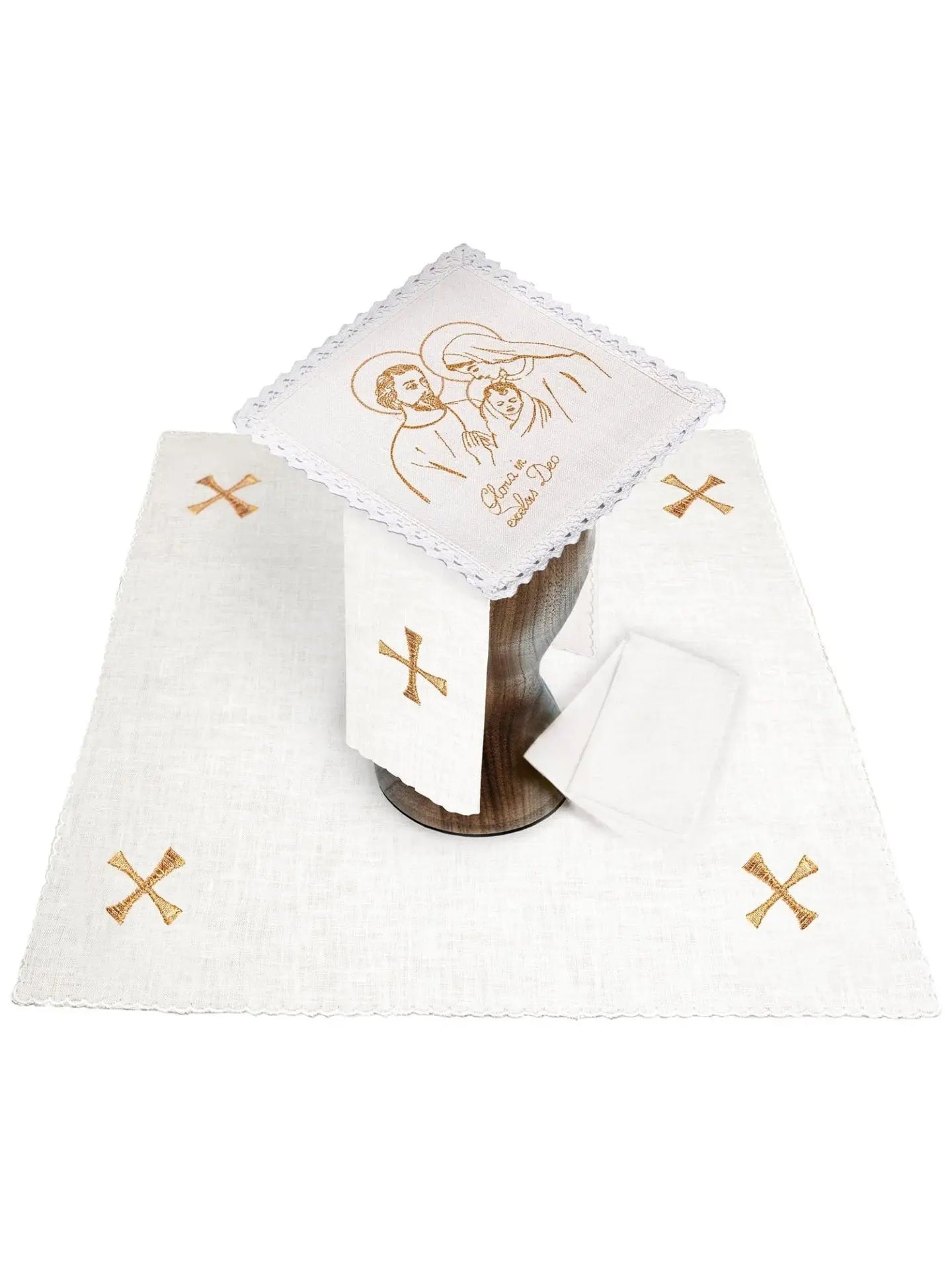
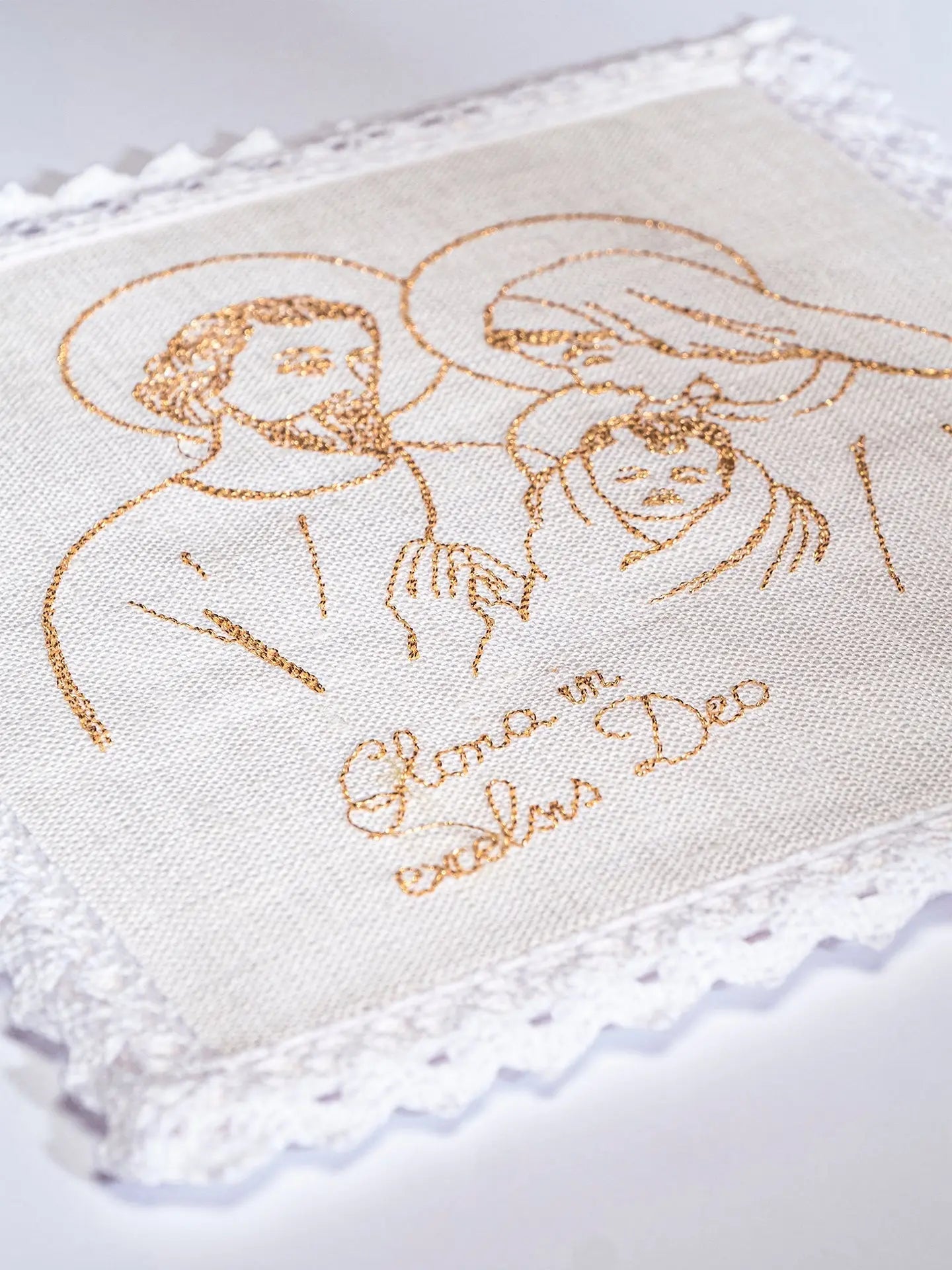
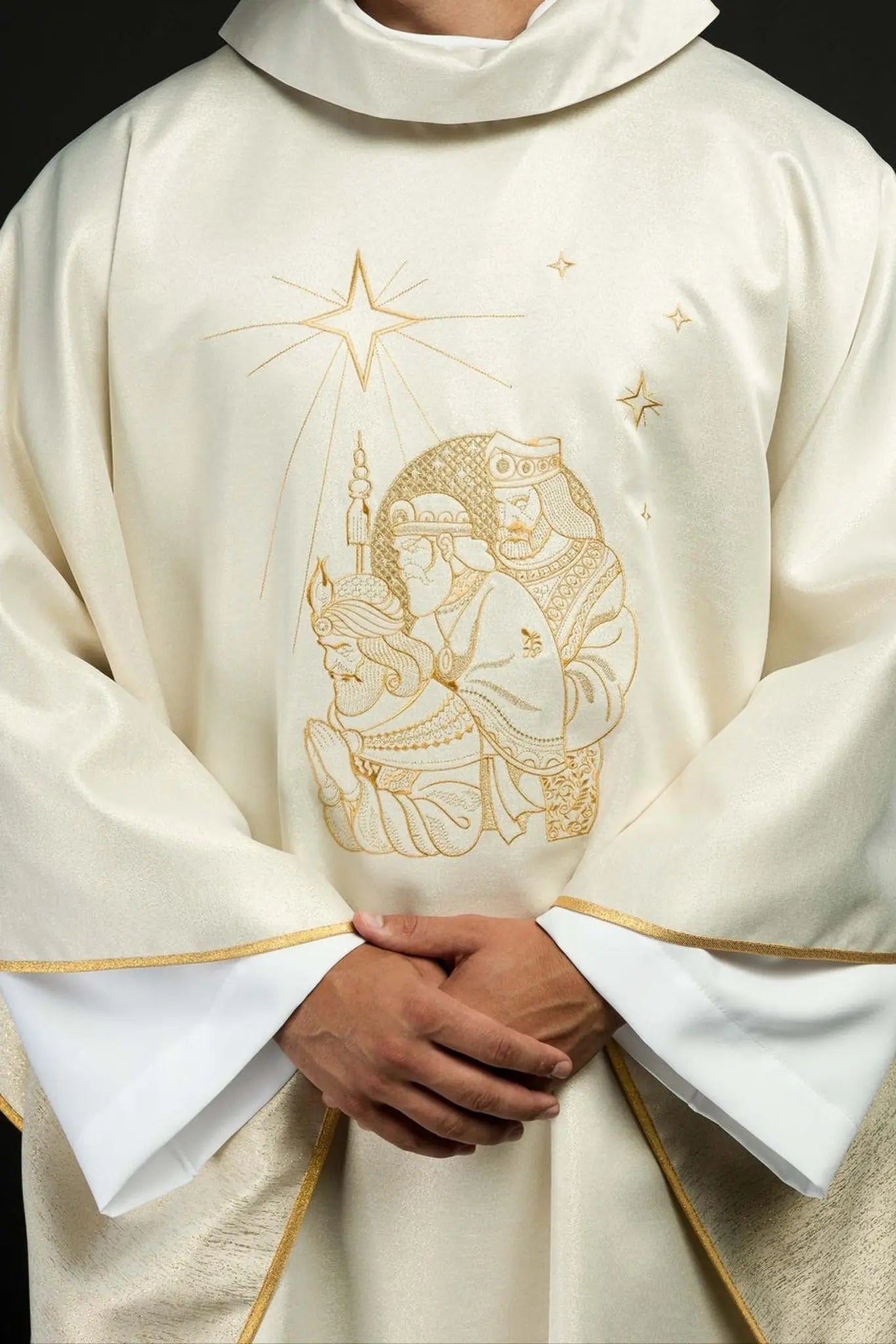
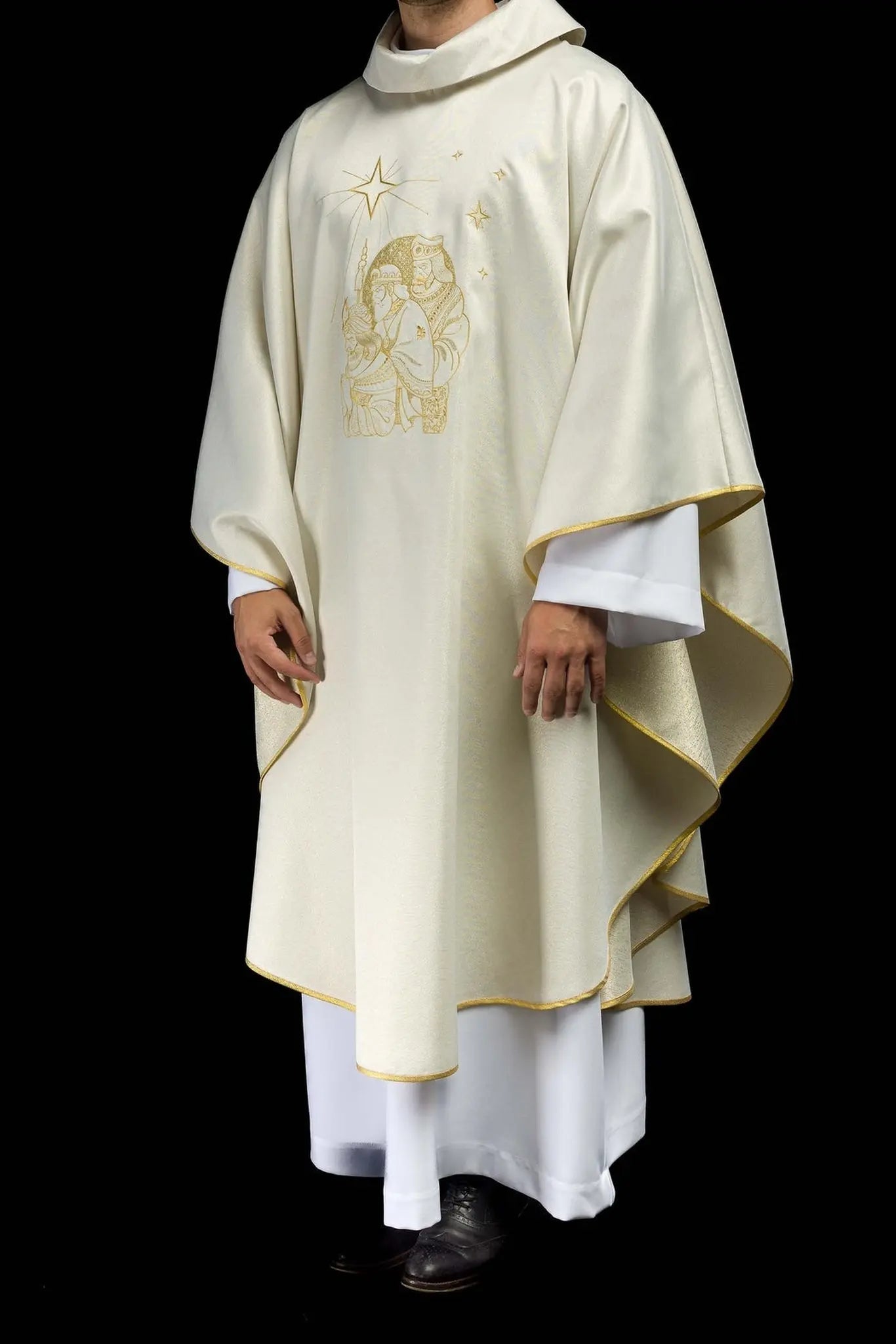
Christmas Liturgical Vestments and Altar Linens
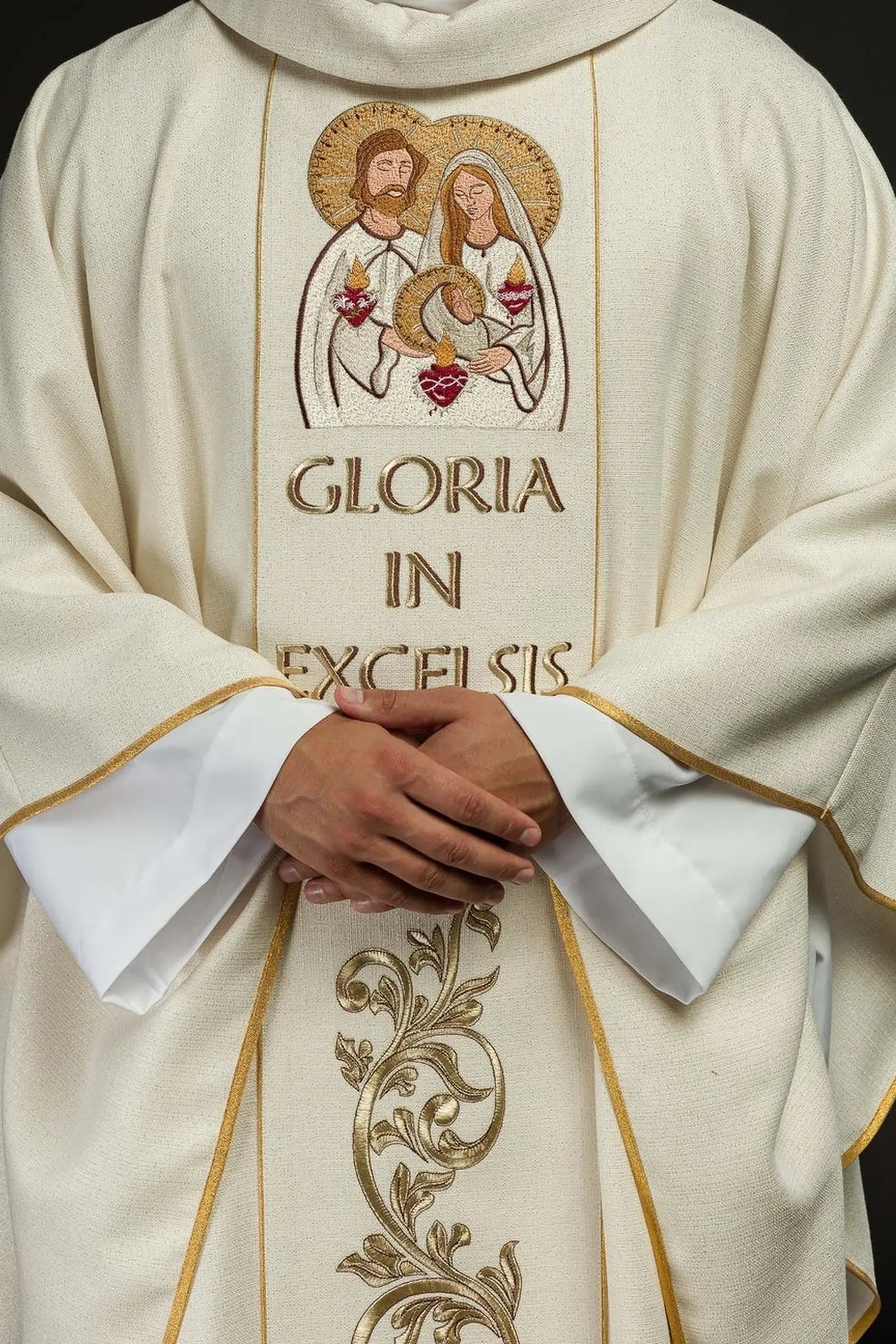
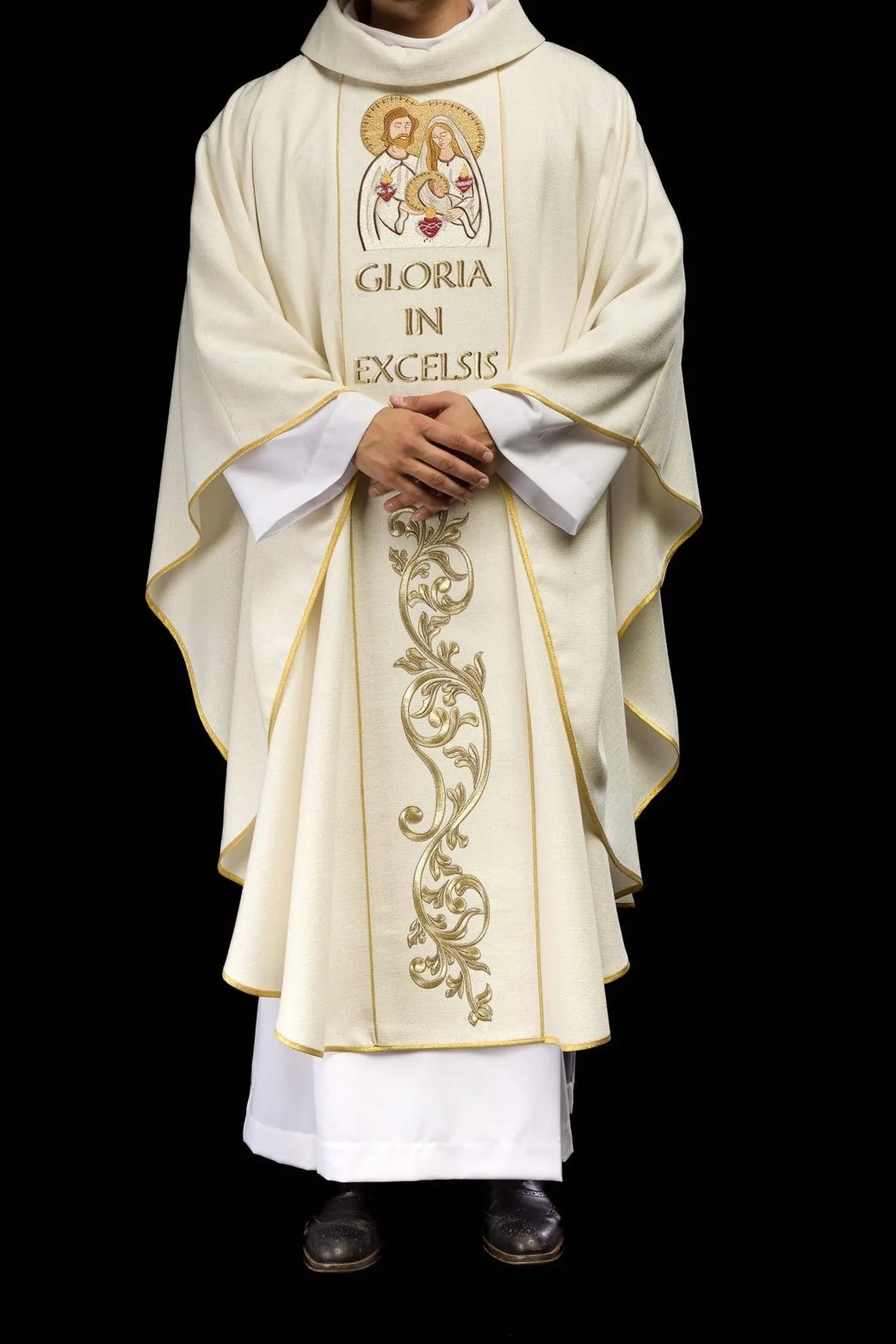
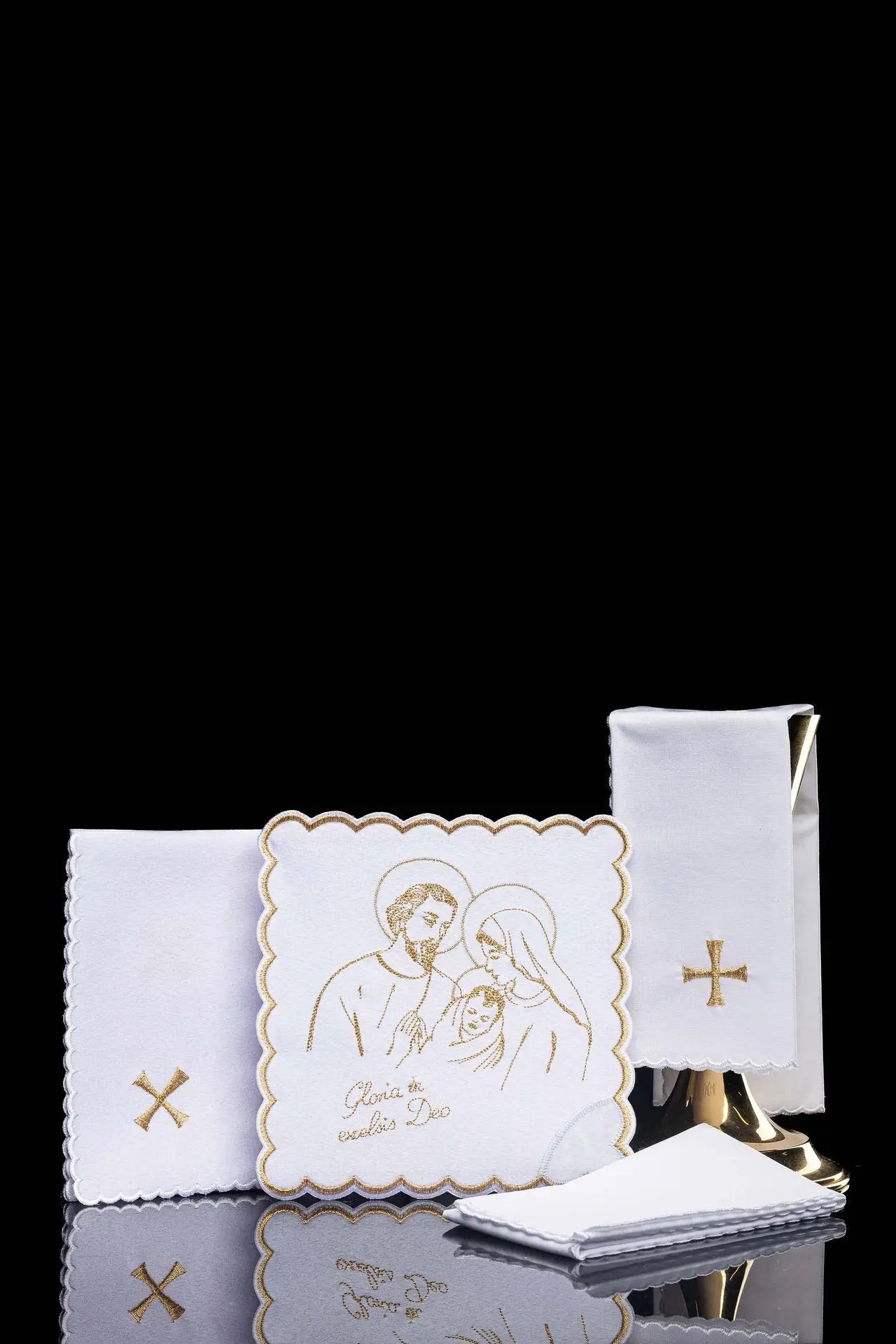
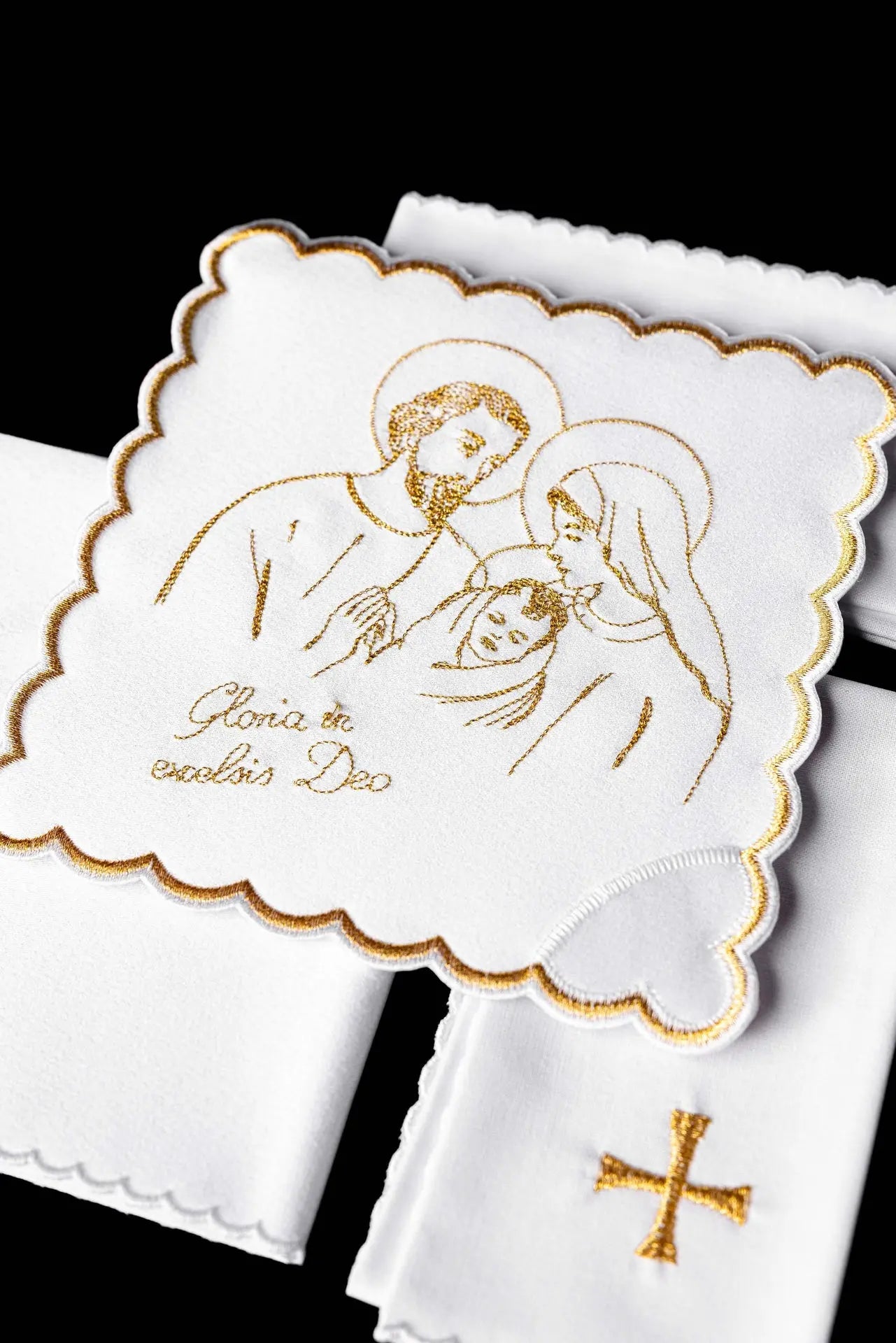
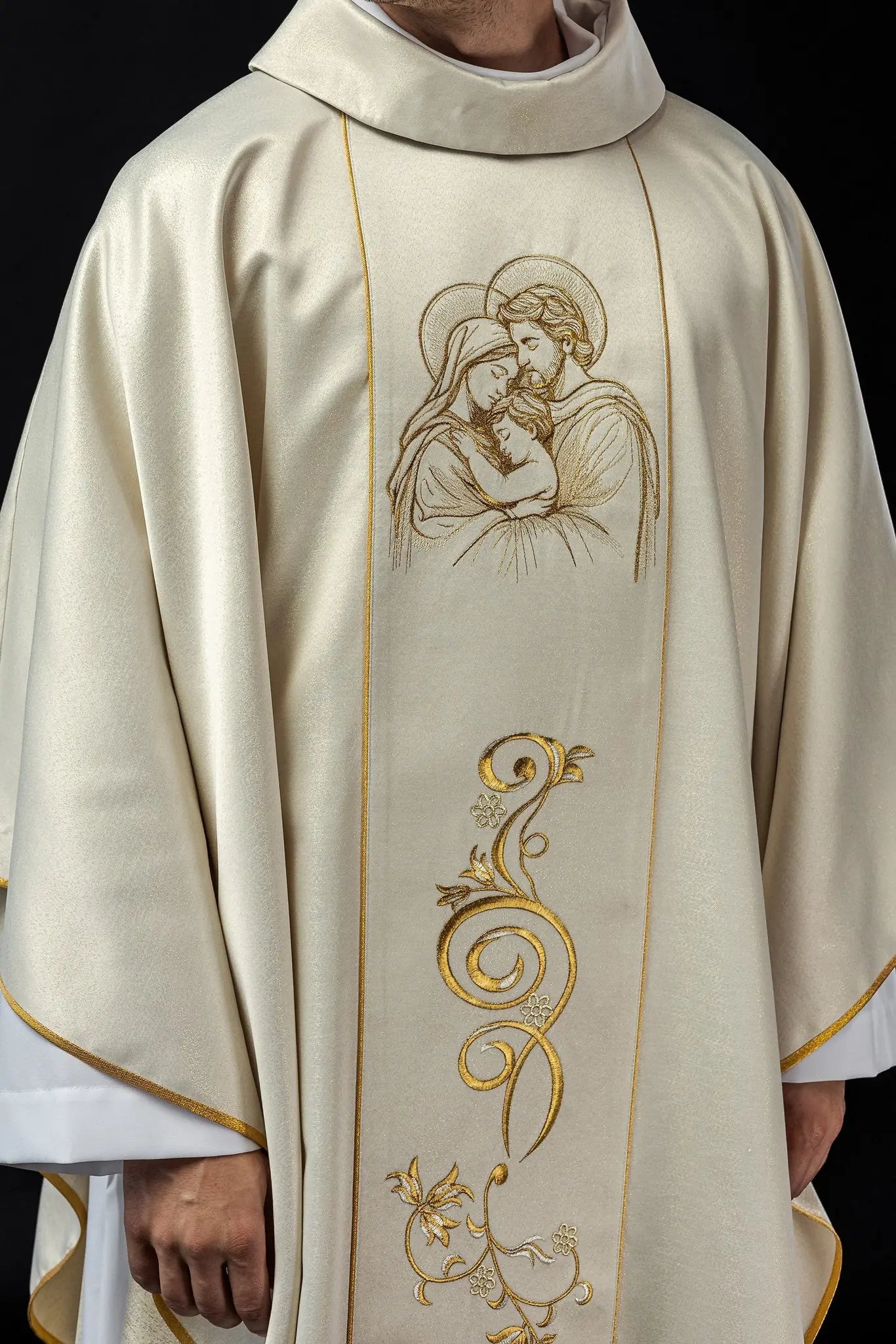
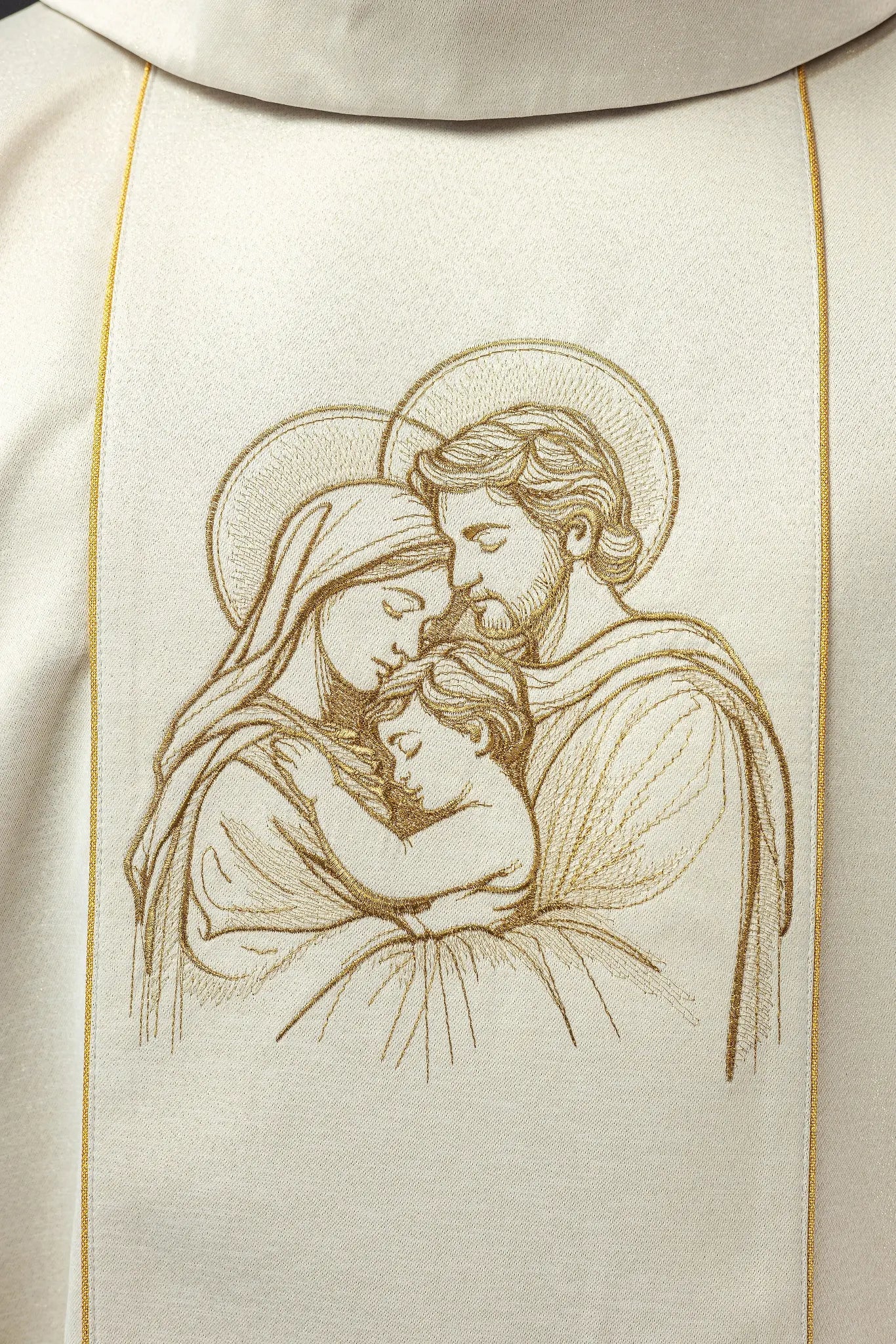
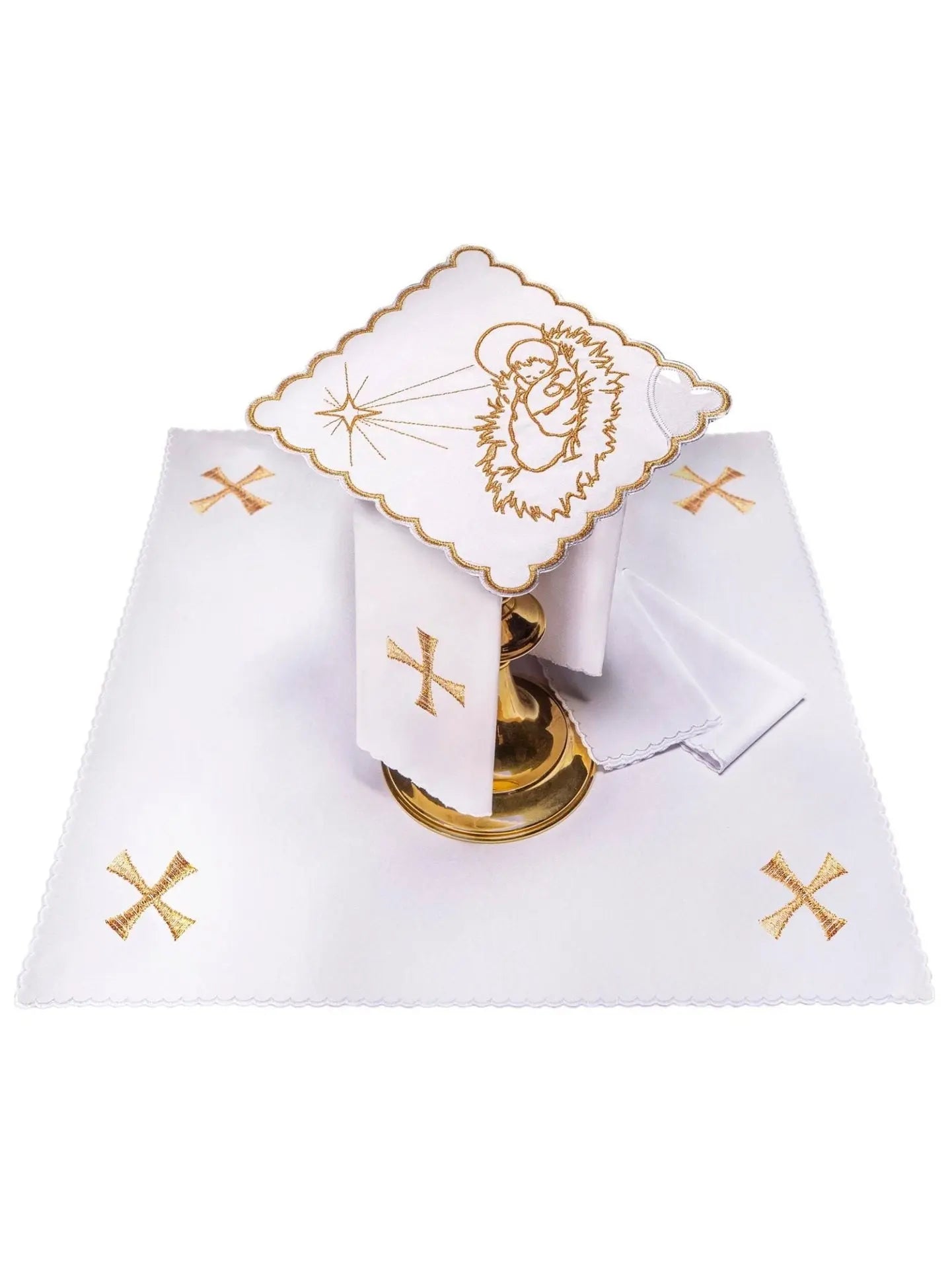
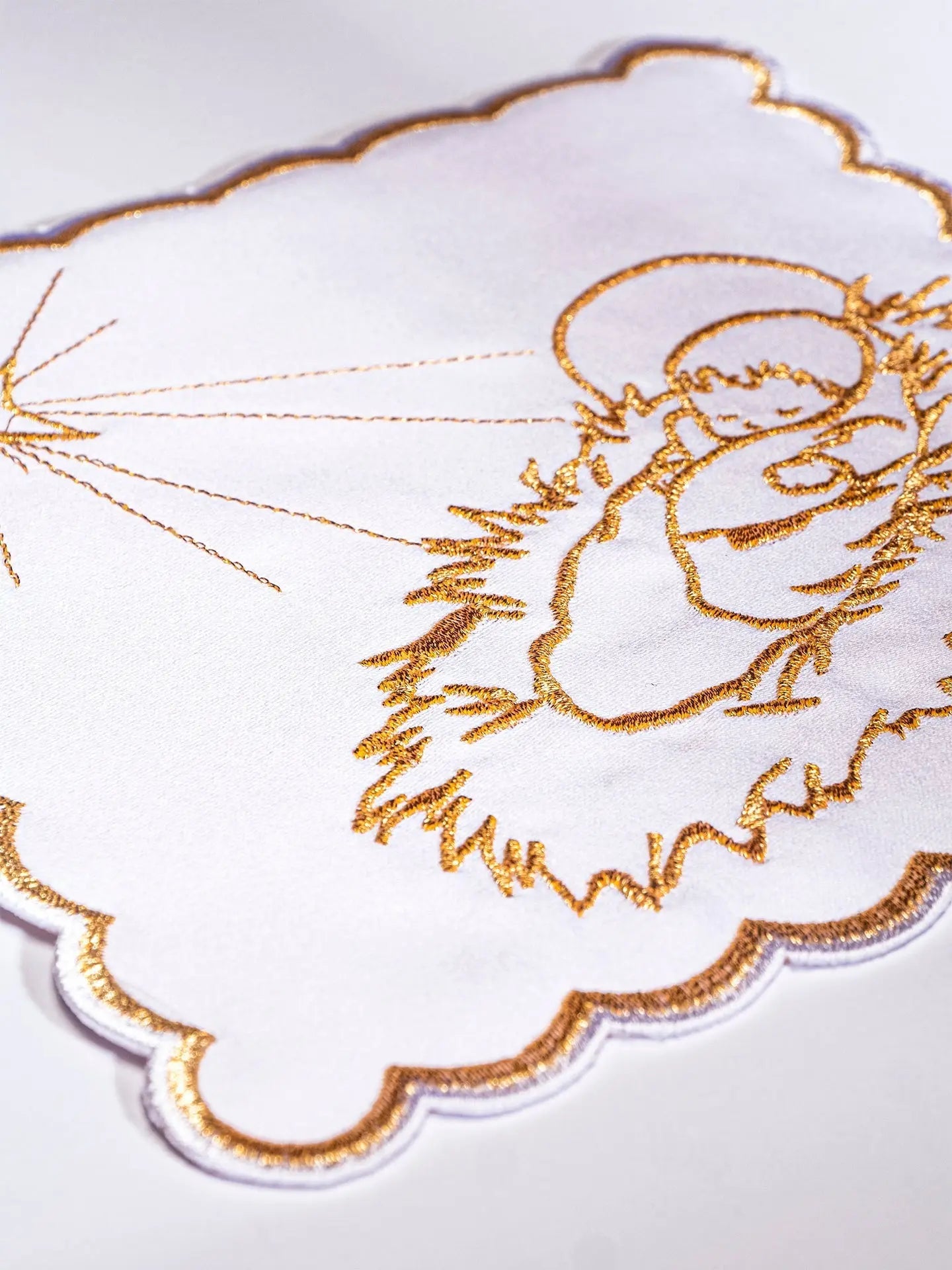
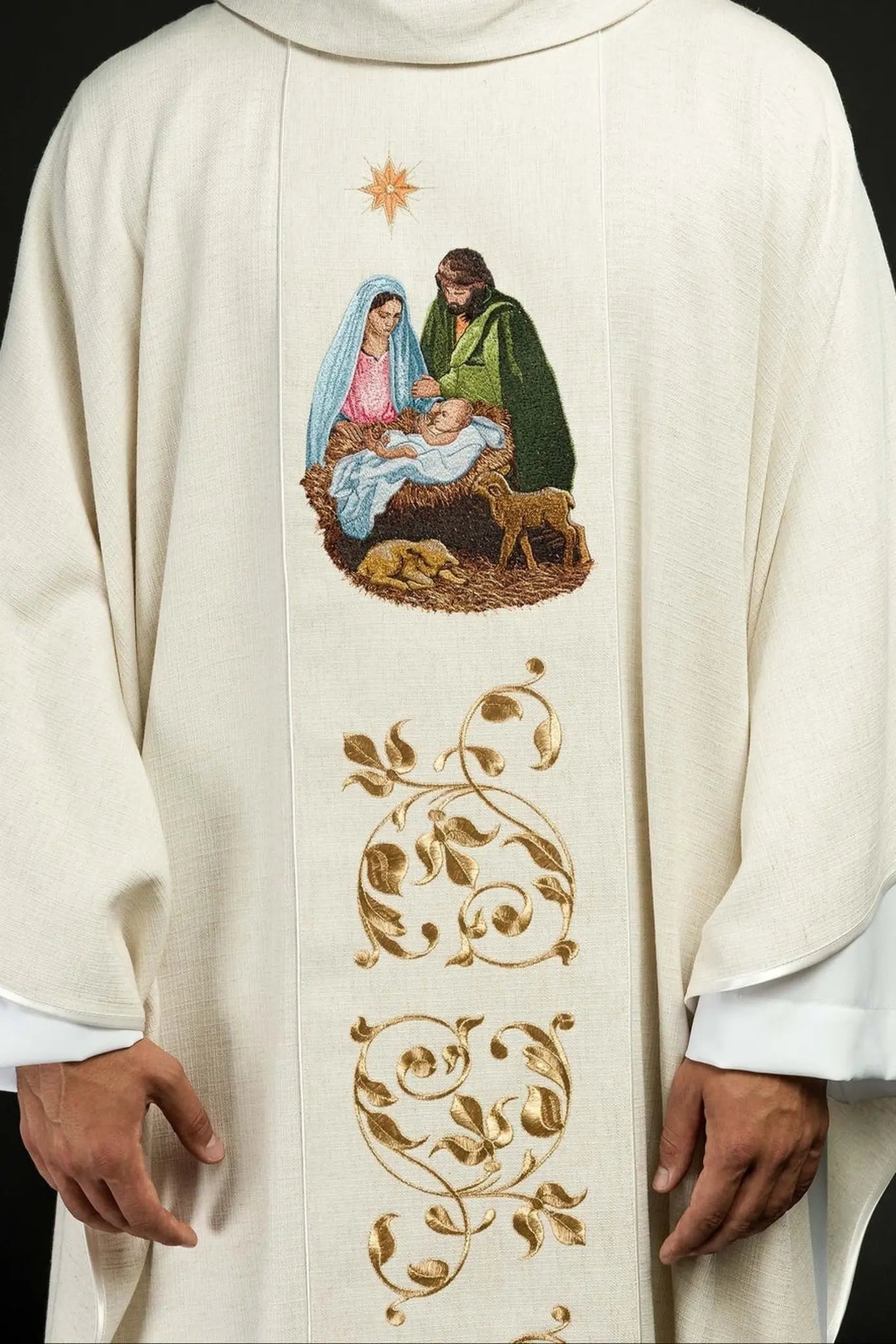
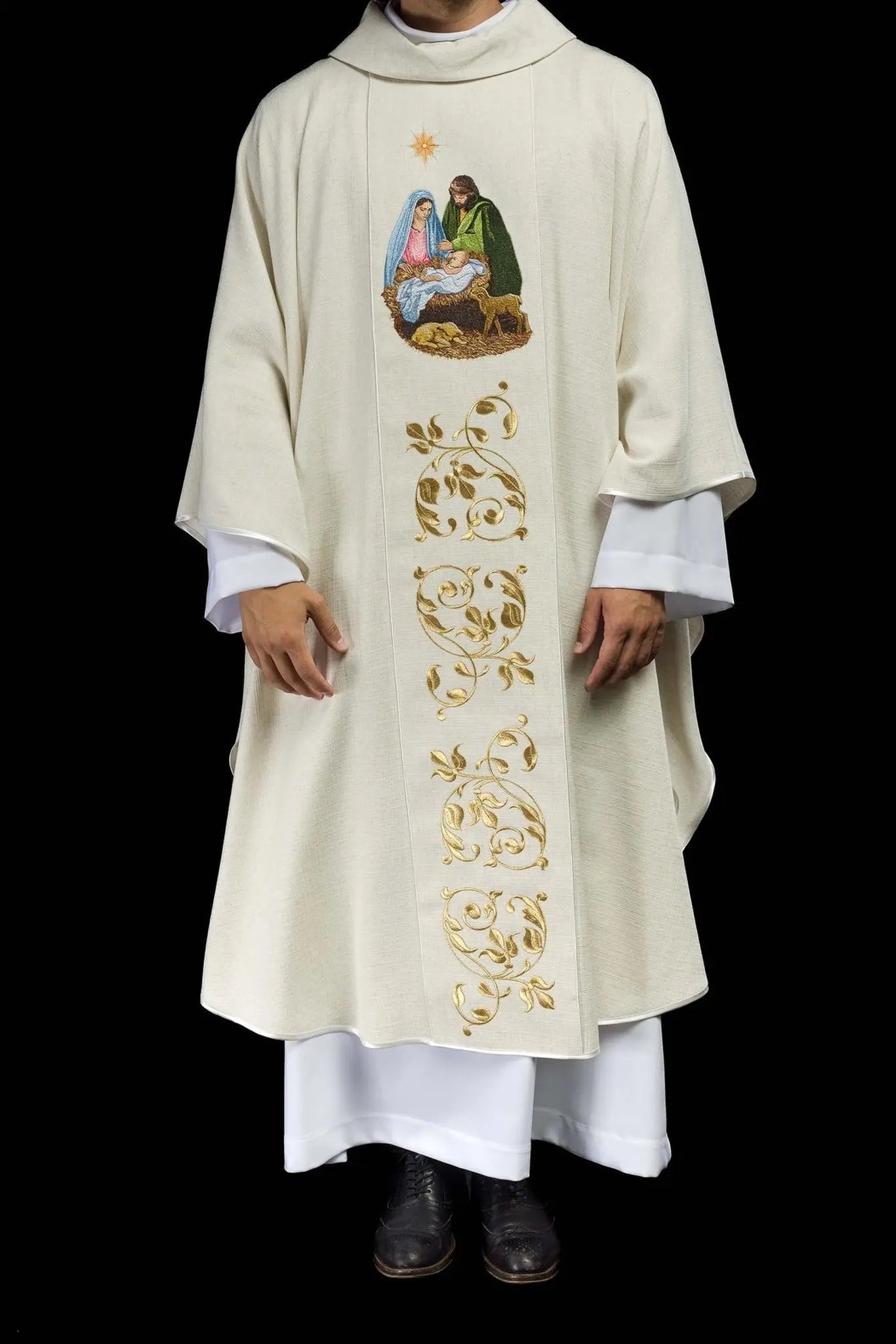
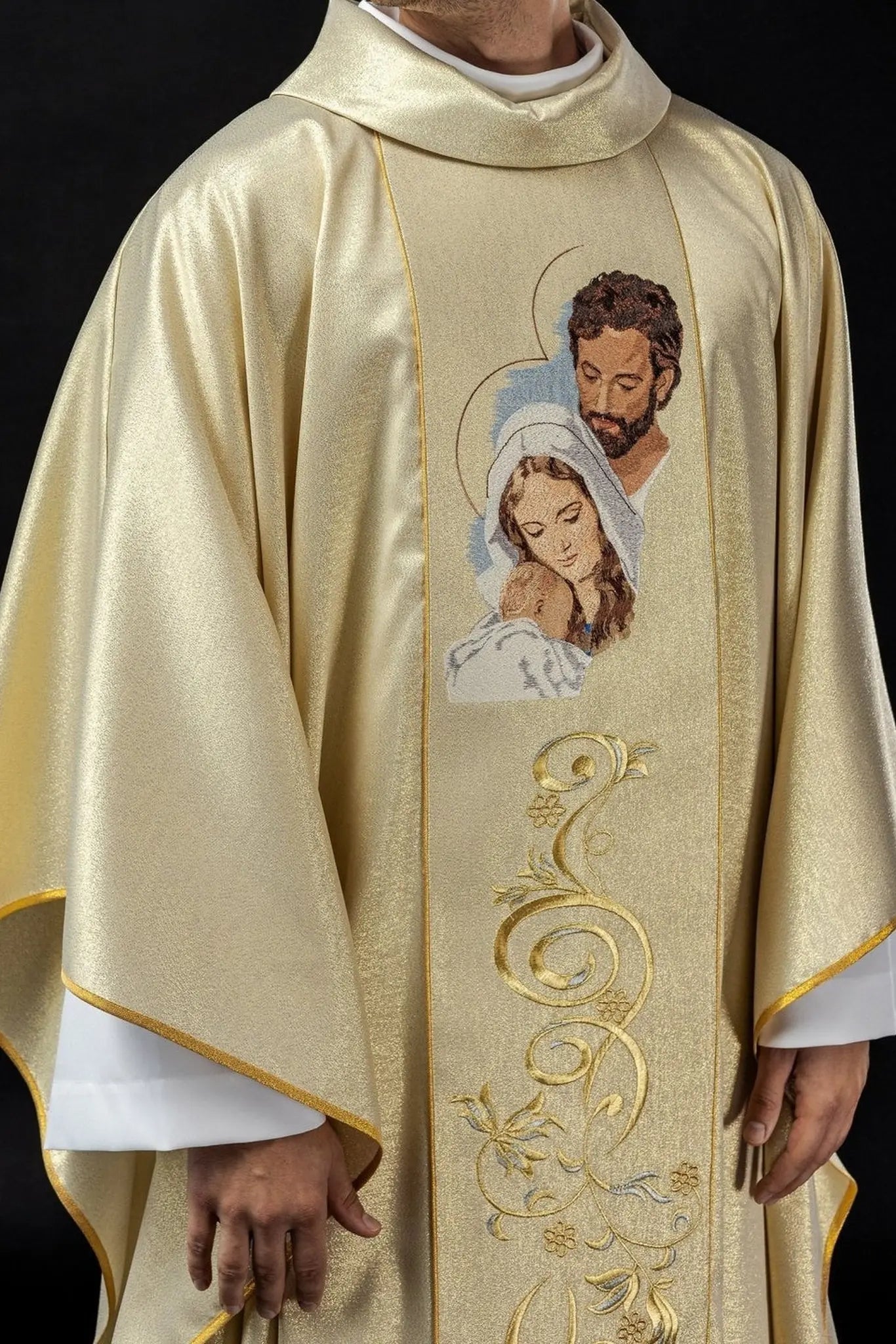
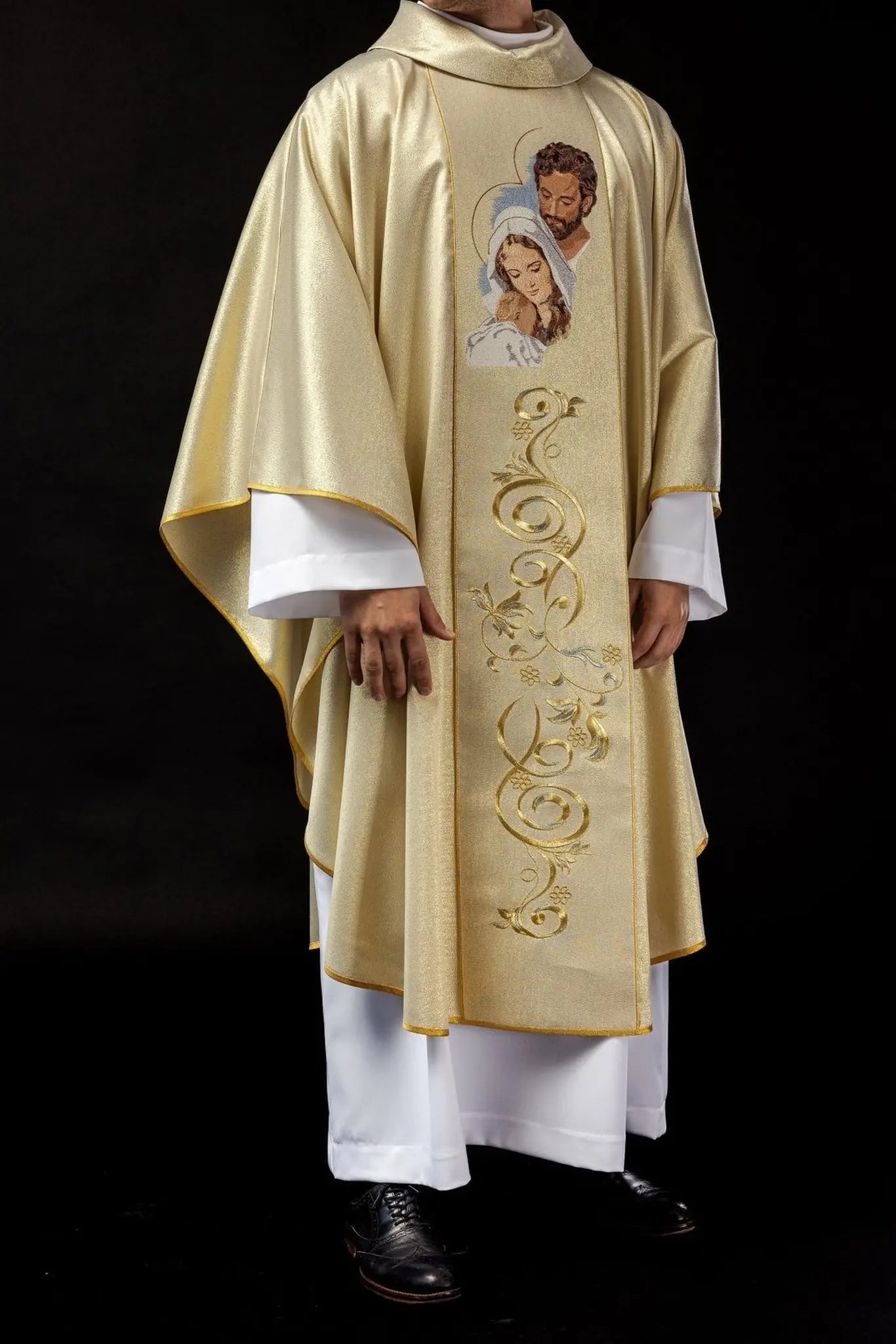
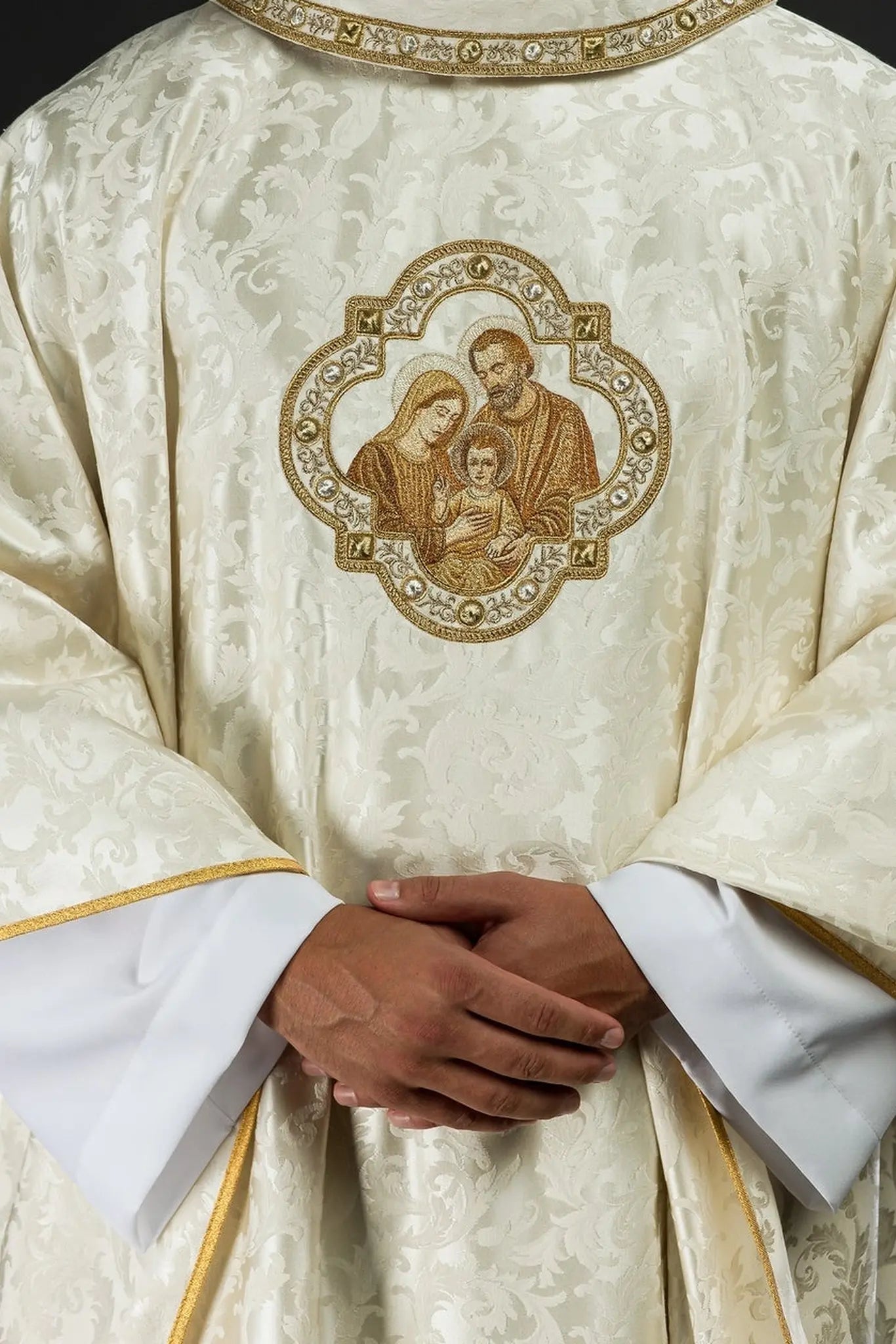
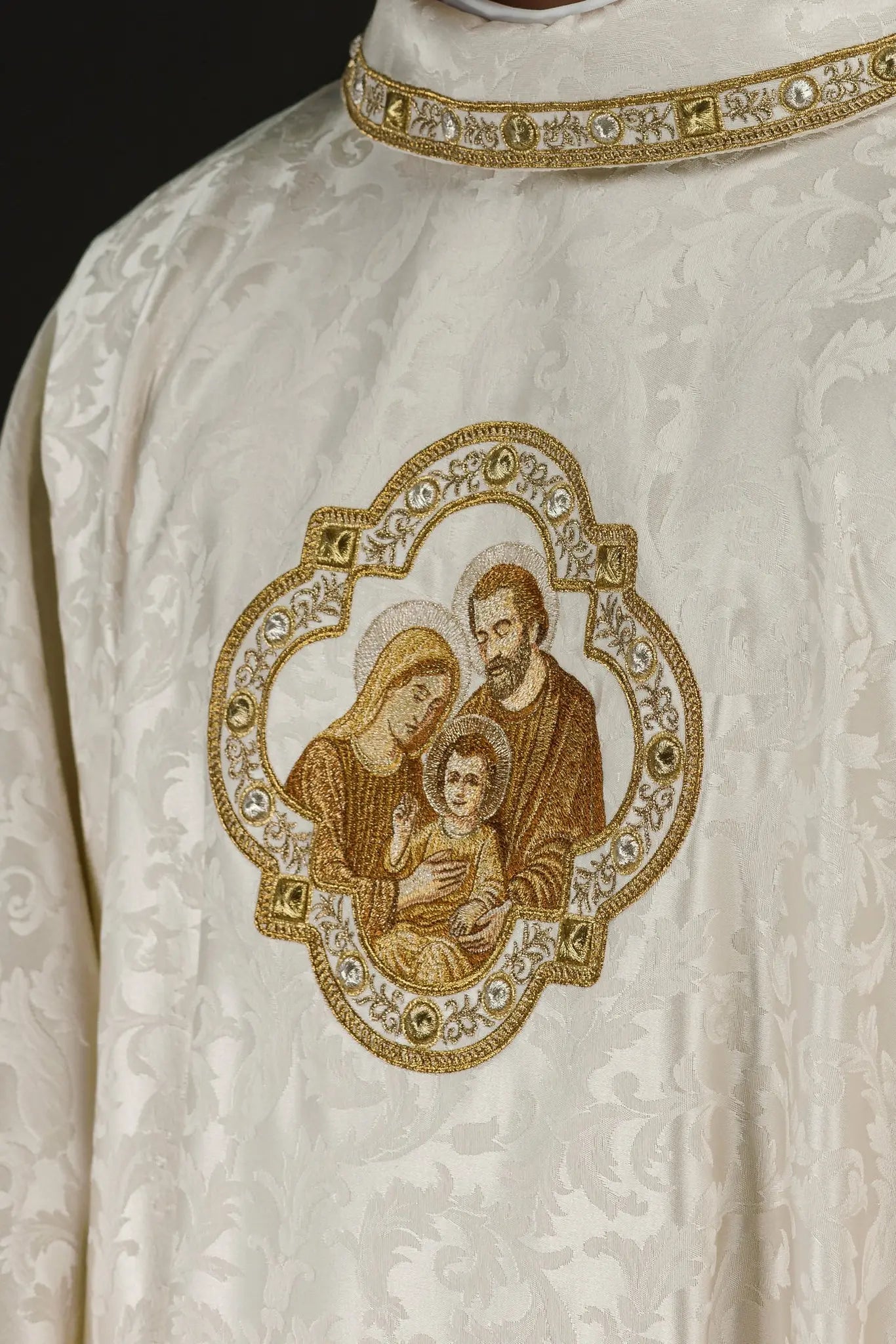
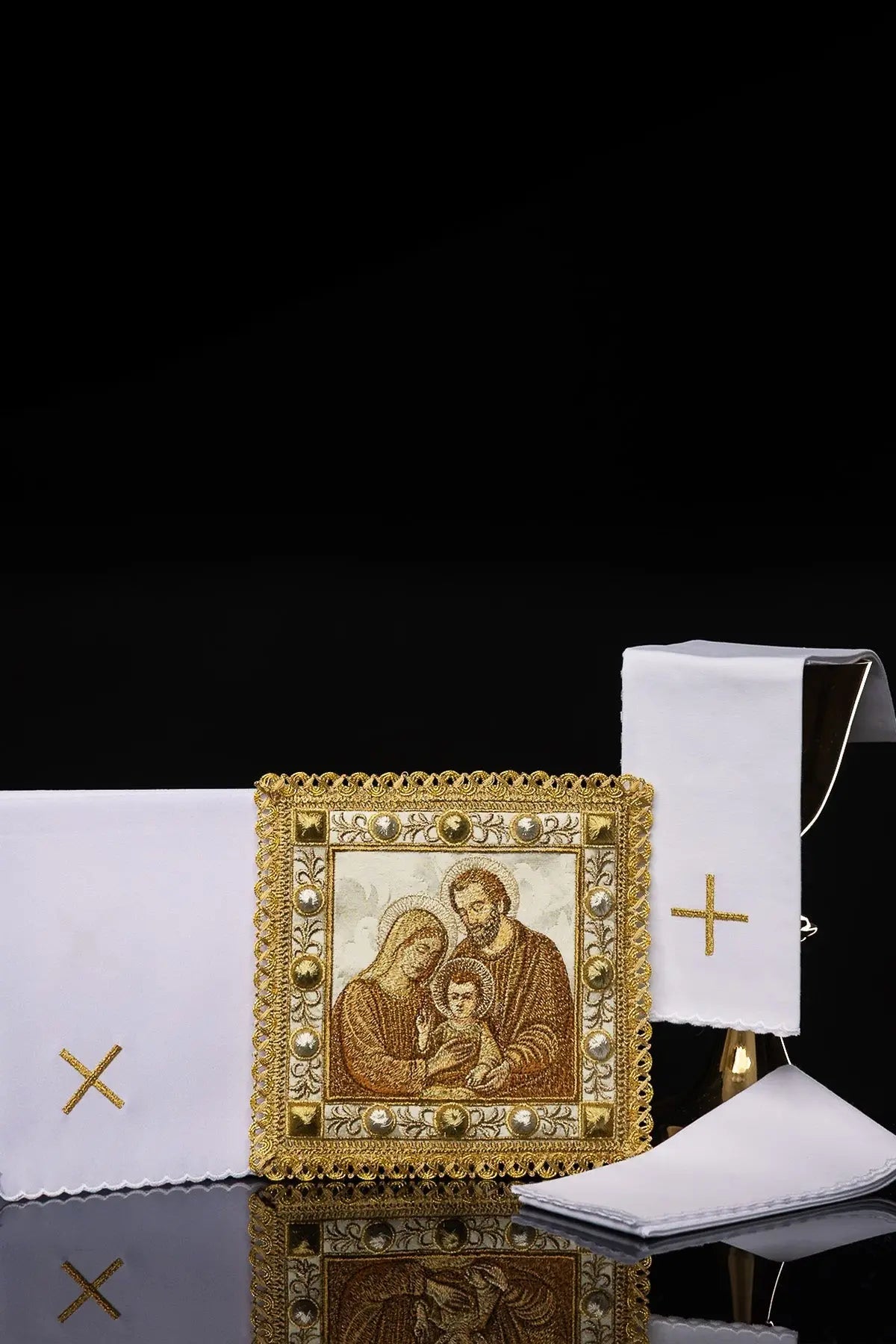
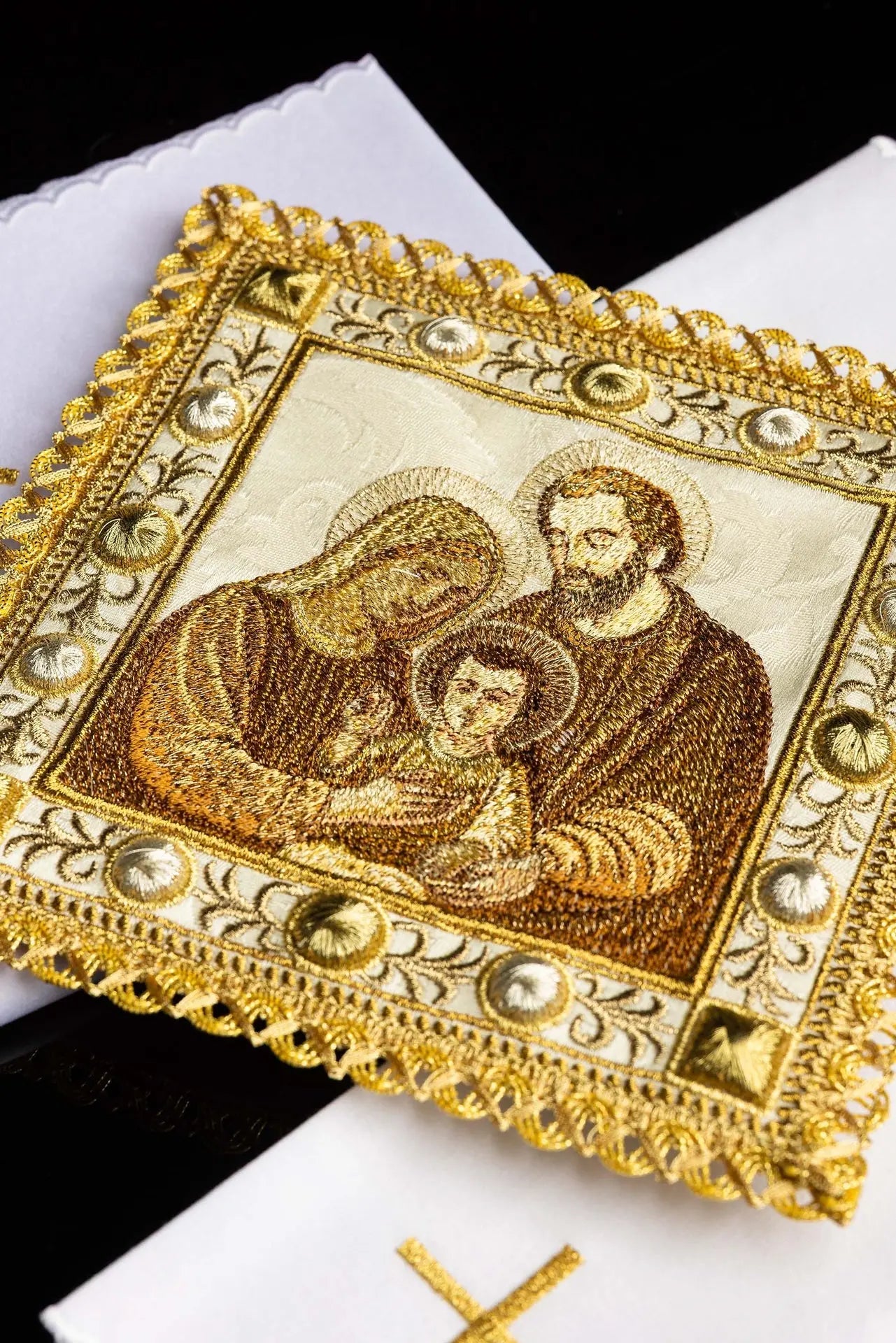
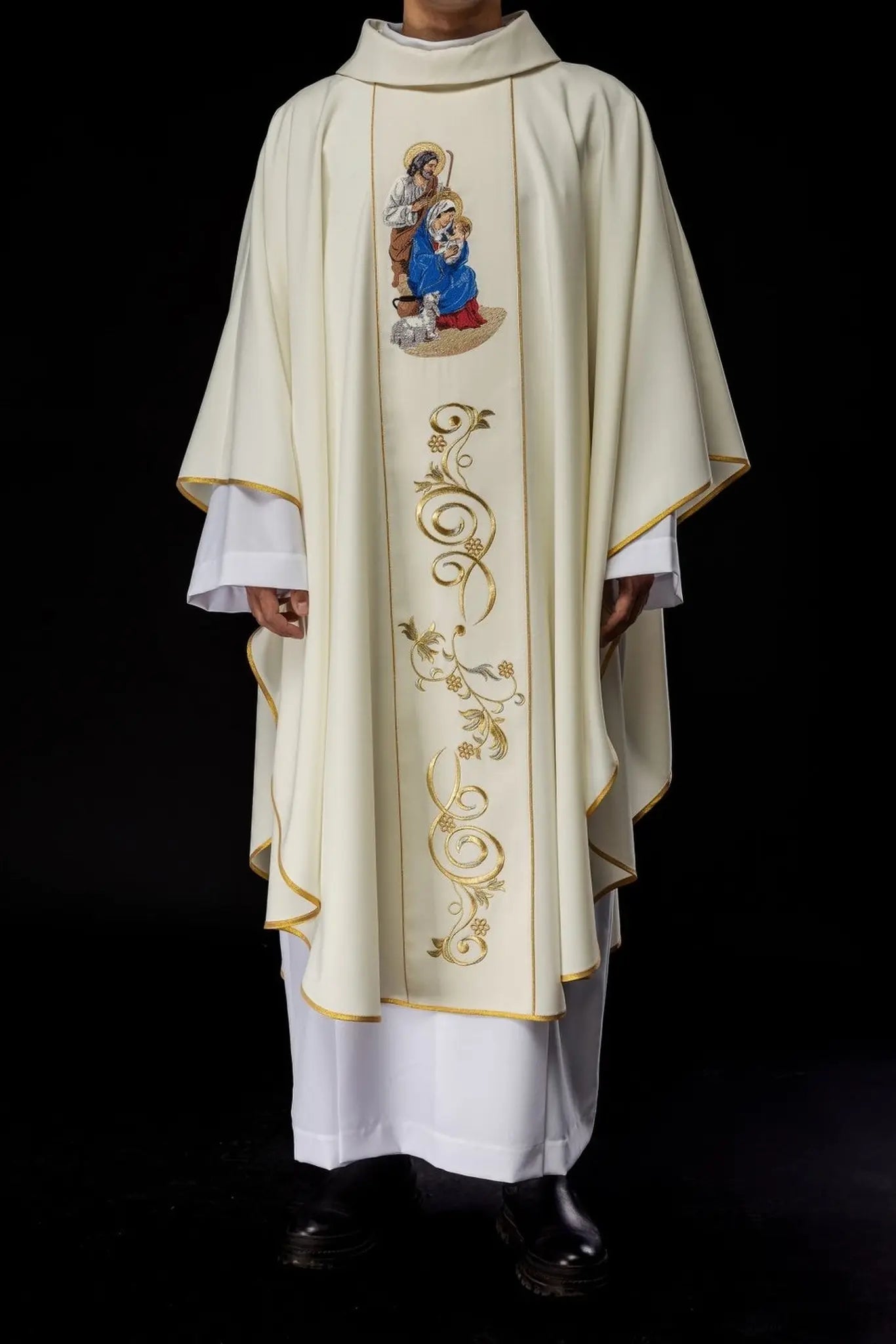
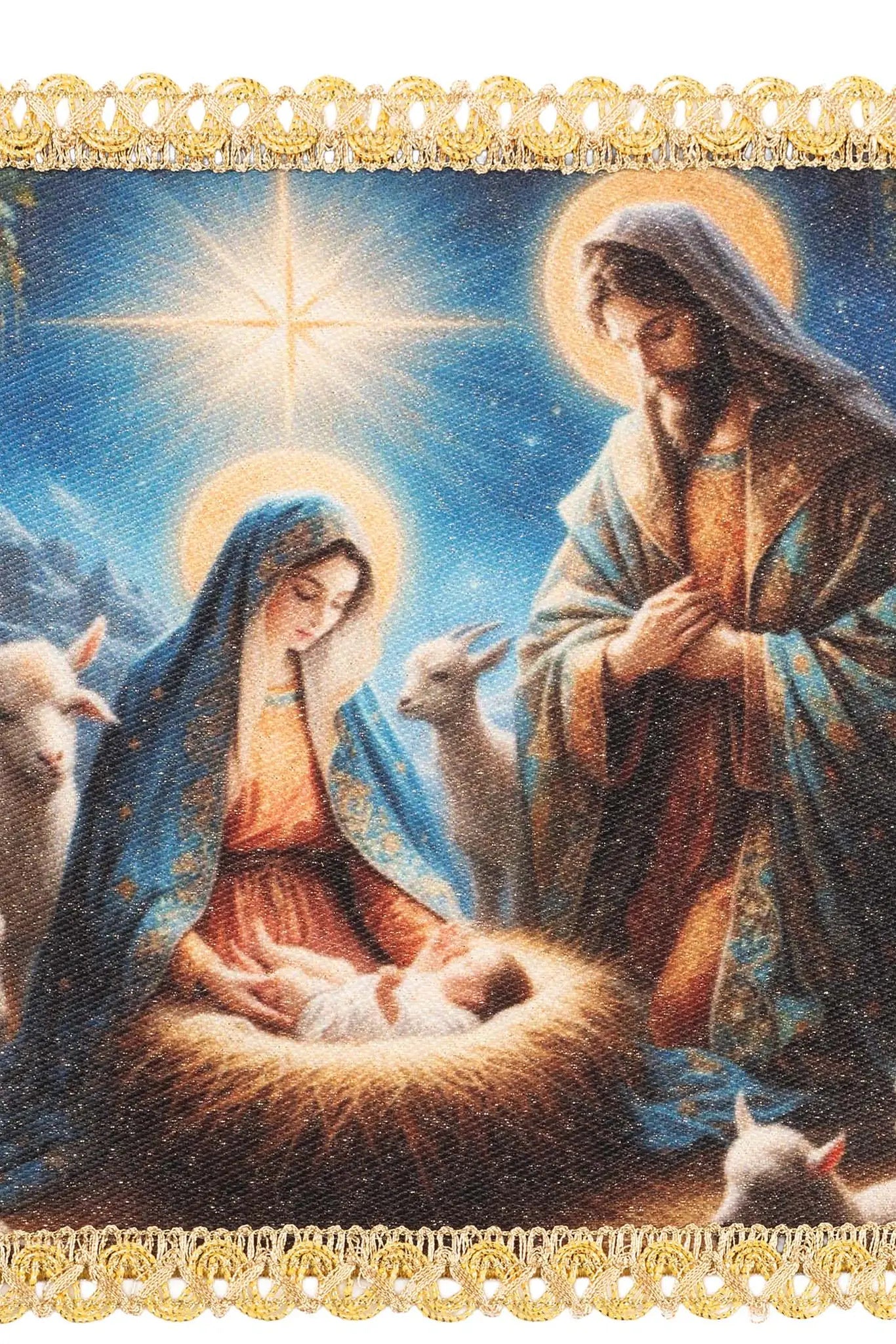
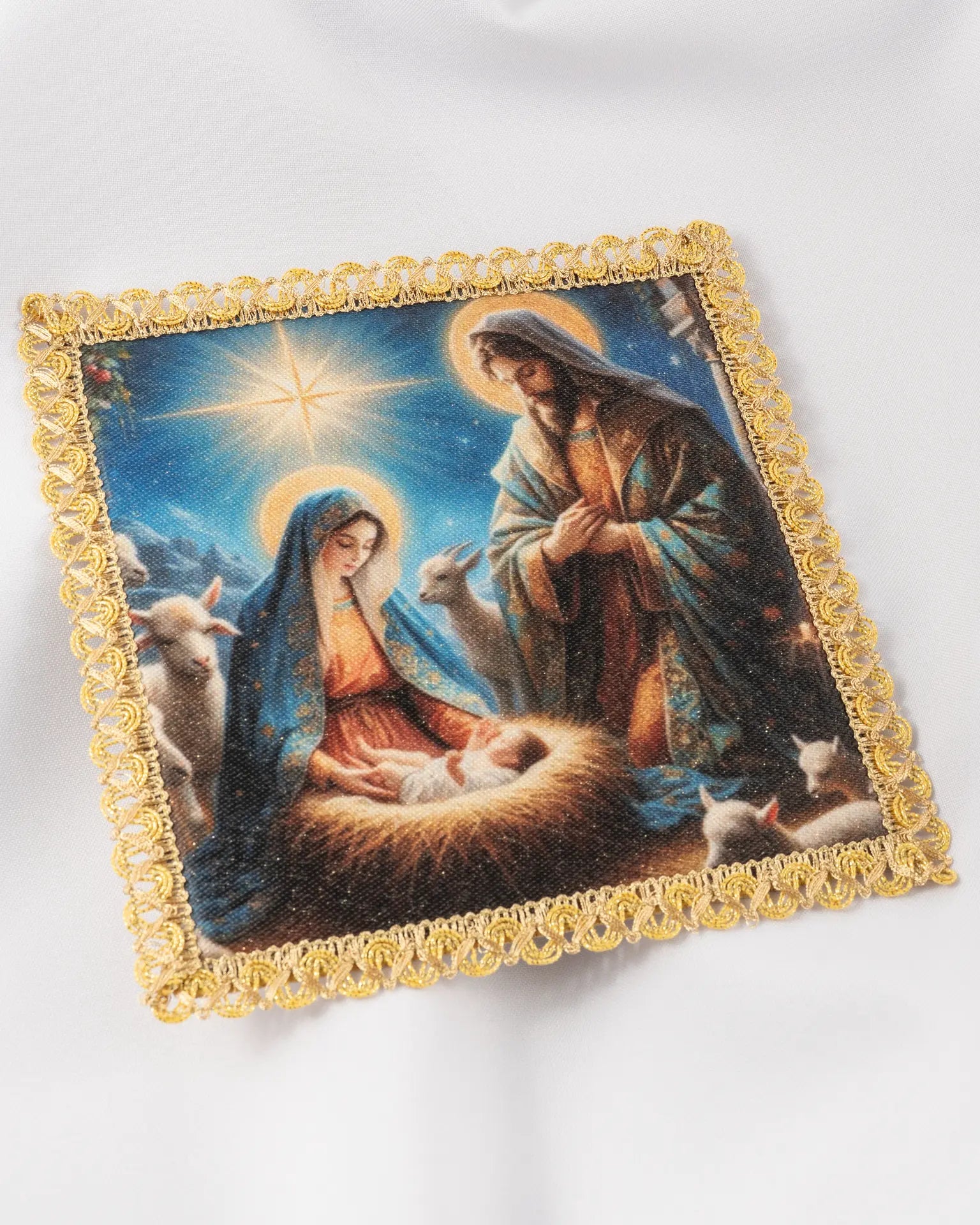
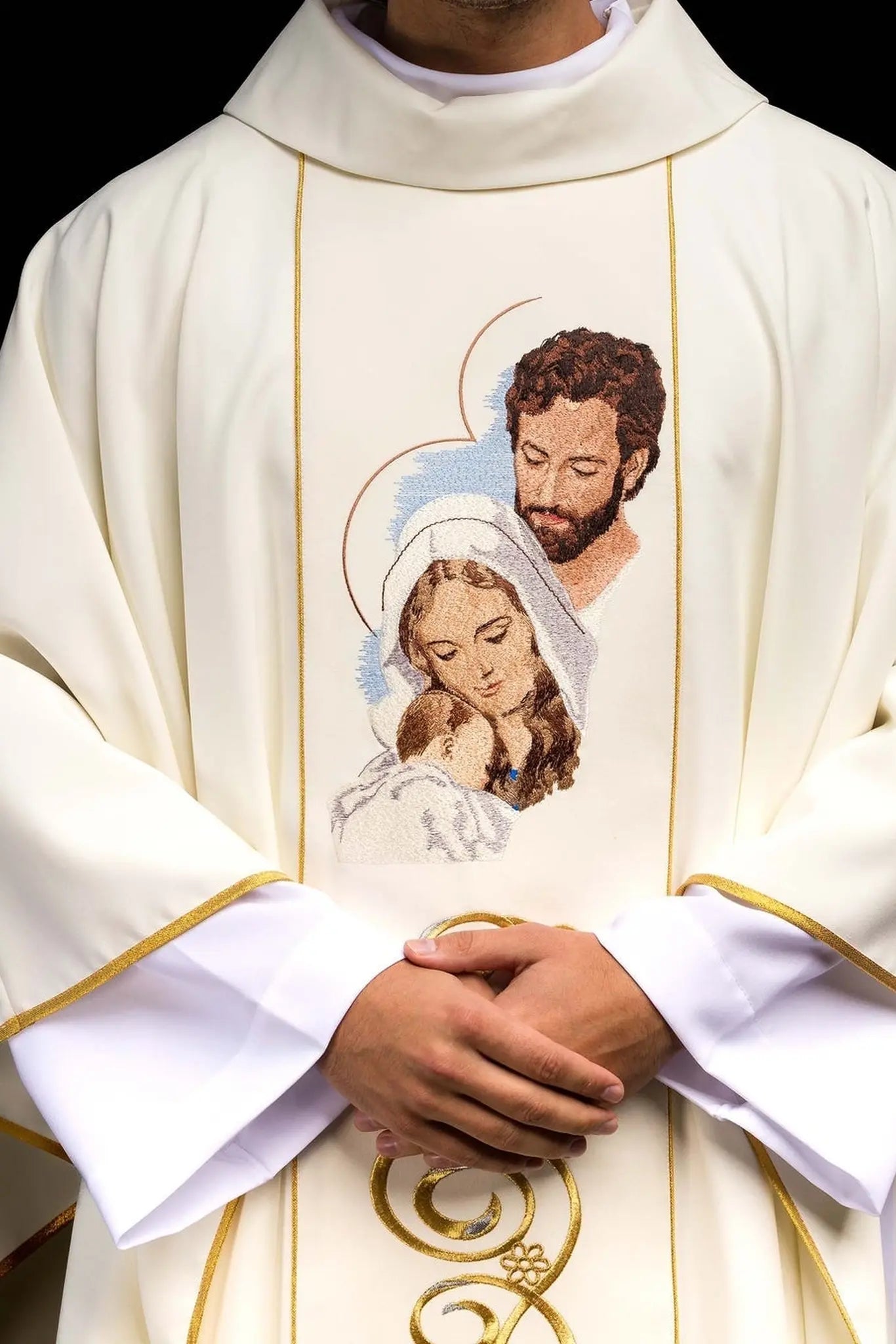
The Christmas collection gathers sacred vestments and church textiles prepared for the liturgies of the Nativity of the Lord and the festive days that follow. It is intended for parishes, chapels, monasteries, retreat houses, and priests who need a coherent Christmas wardrobe for Mass, solemn processions within the church, and the decoration of the altar. The live collection includes Christmas chasubles, clergy stoles, chalice linen sets, and altar cloths with seasonal embroidery such as the Holy Family, the Star of Bethlehem, gold ornament, and other Nativity motifs. These pieces help the sanctuary express the joy of the Incarnation while remaining dignified, practical, and clearly rooted in the Roman liturgical tradition.
Christmas liturgy is normally associated with white, ecru, and gold tones, which reflect joy, light, solemnity, and the feast of Christ made visible among us. For communities preparing the whole season, this collection can be read together with the preceding Advent collection and the rose vestments used on Gaudete Sunday in the Gaudete and Laetare collection. Christmas itself, however, calls for a distinct visual language: brighter fabrics, festive embroidery, and textile details that support the proclamation of the Nativity rather than the penitential preparation that comes before it.
What belongs in the Christmas collection
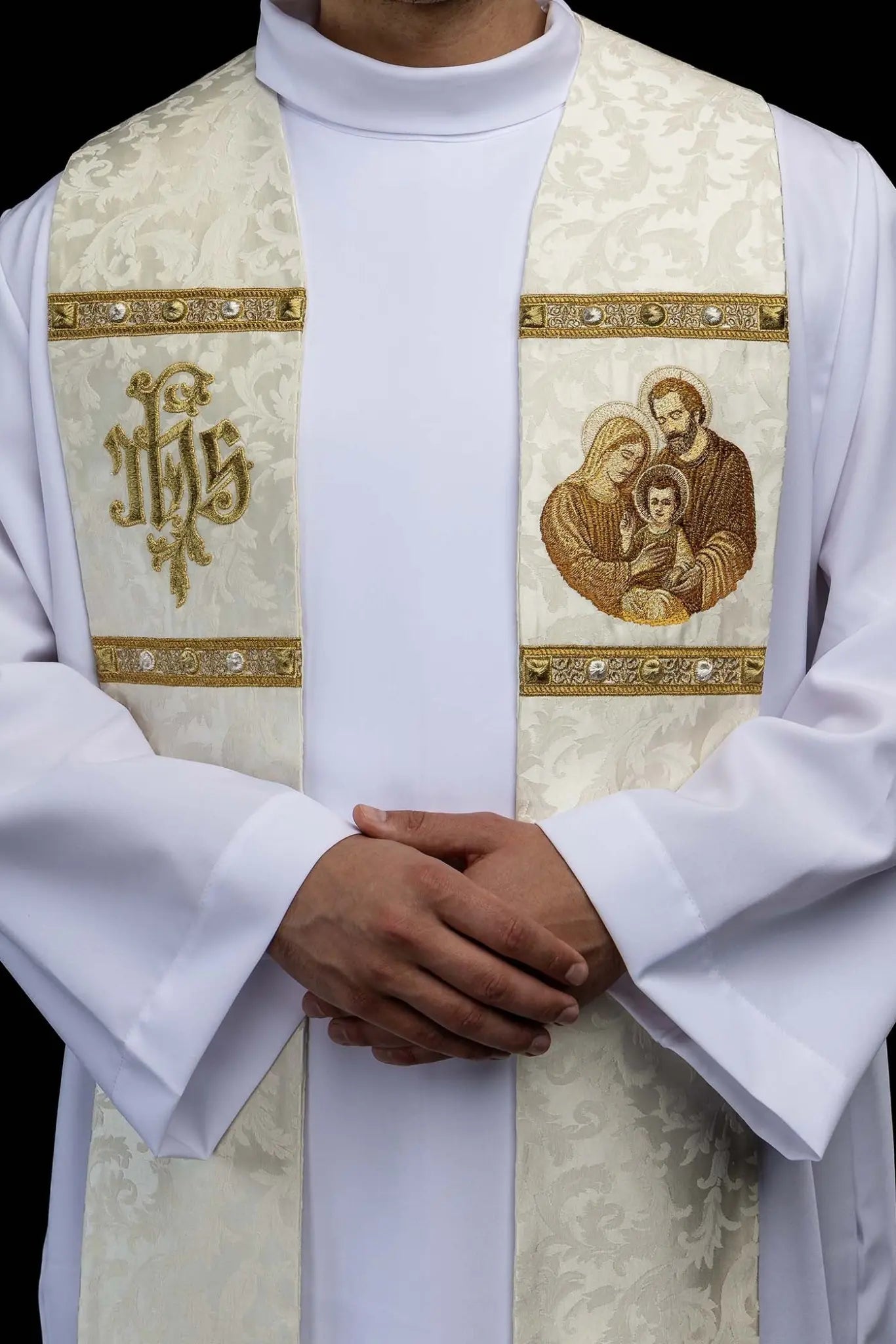
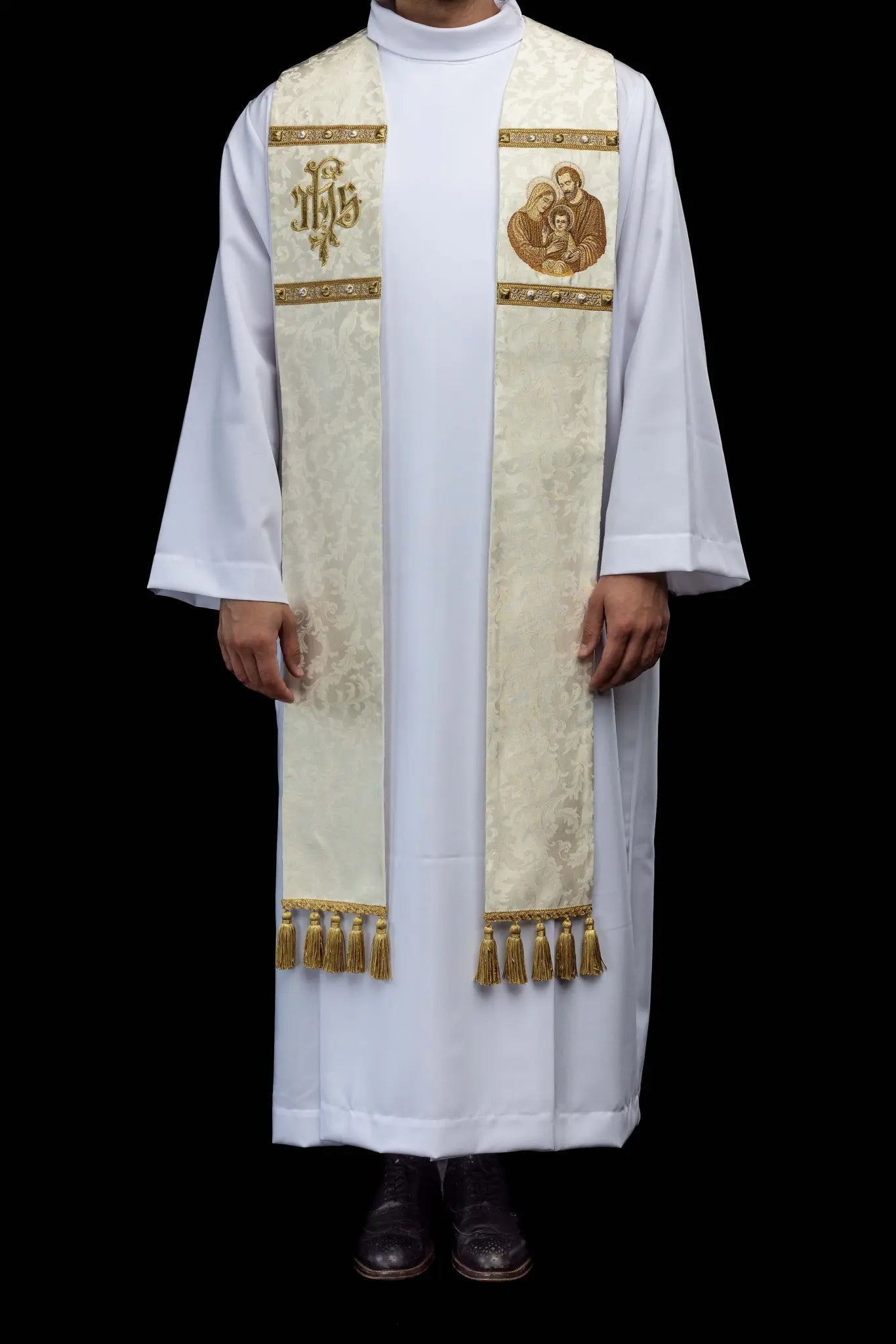
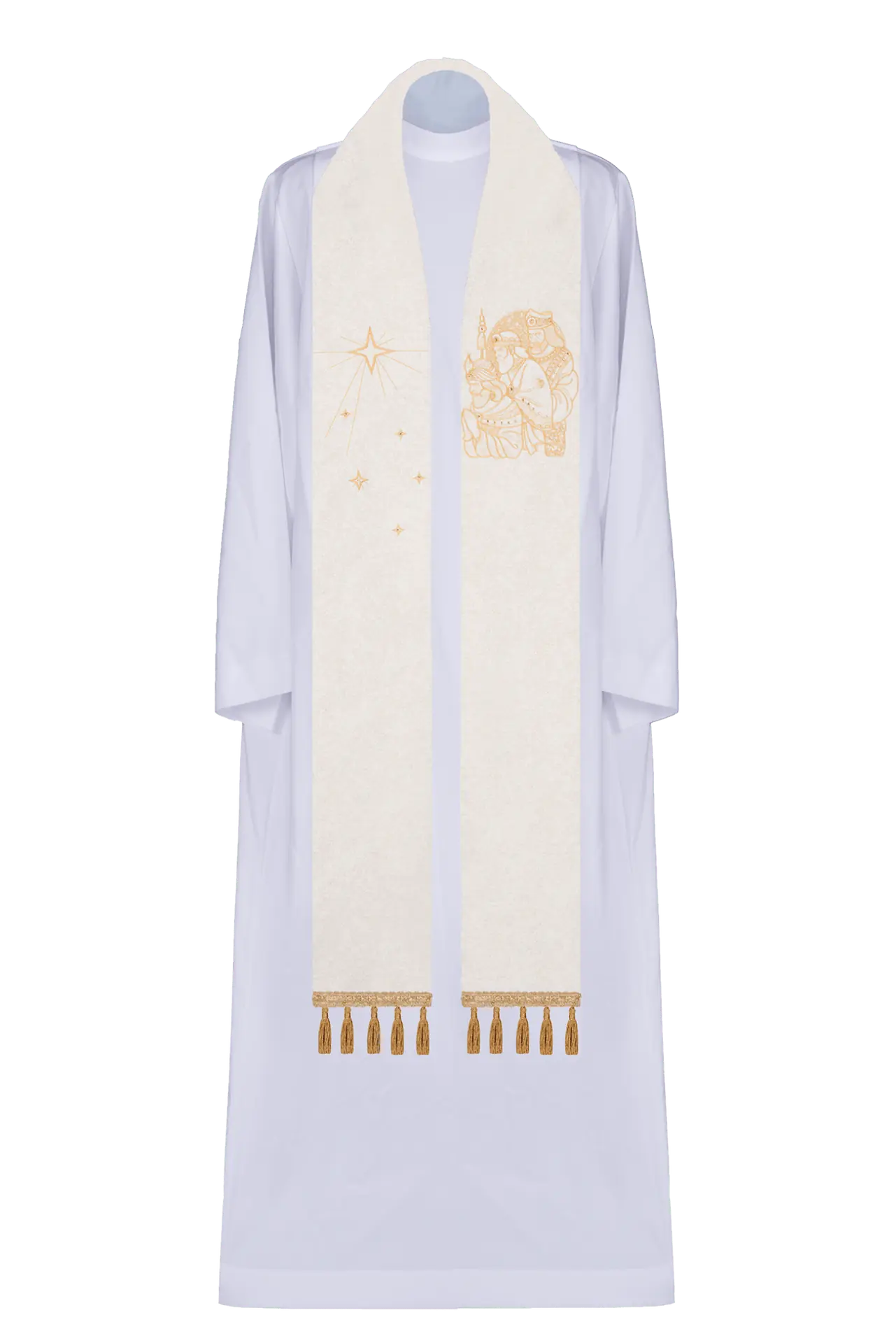
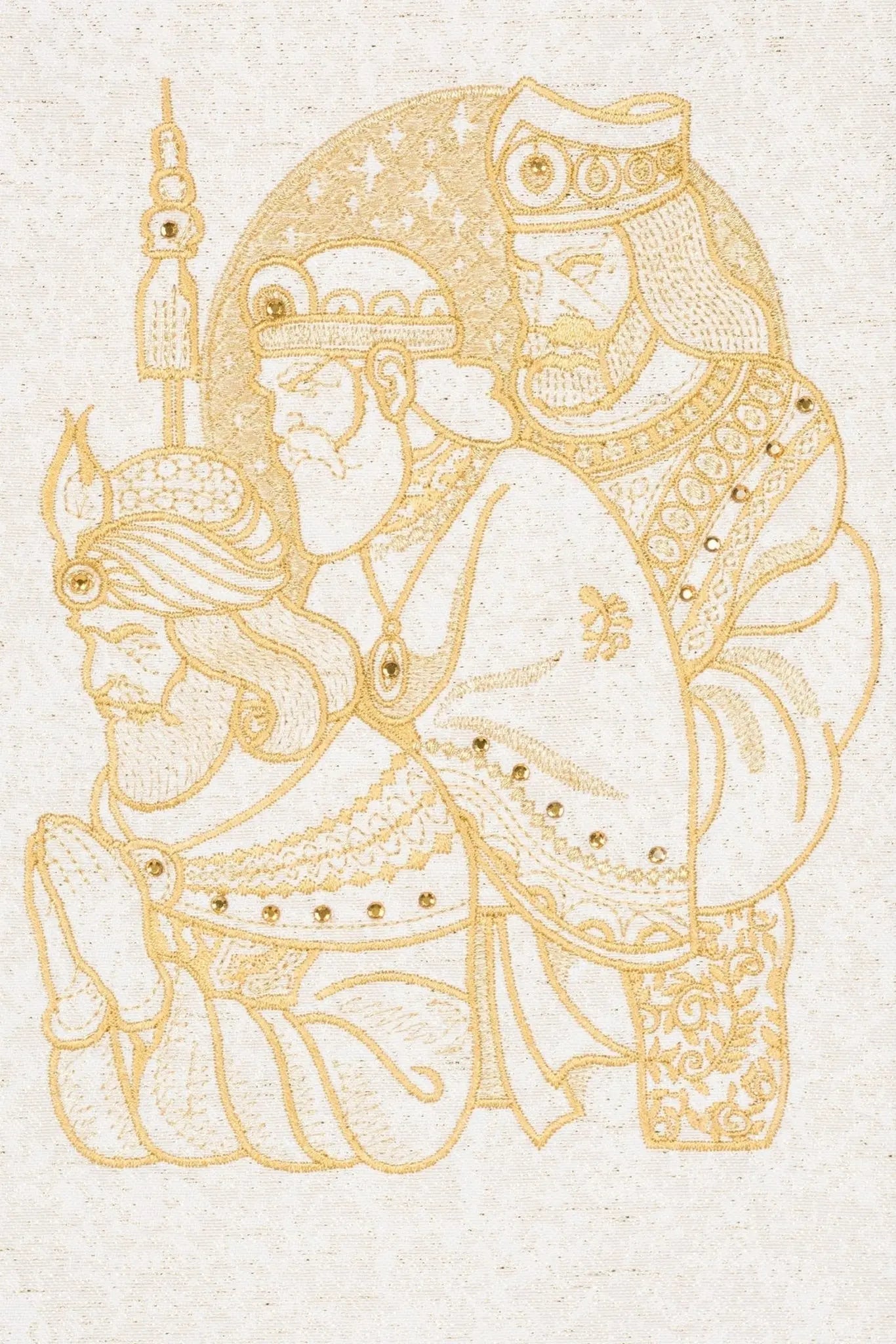
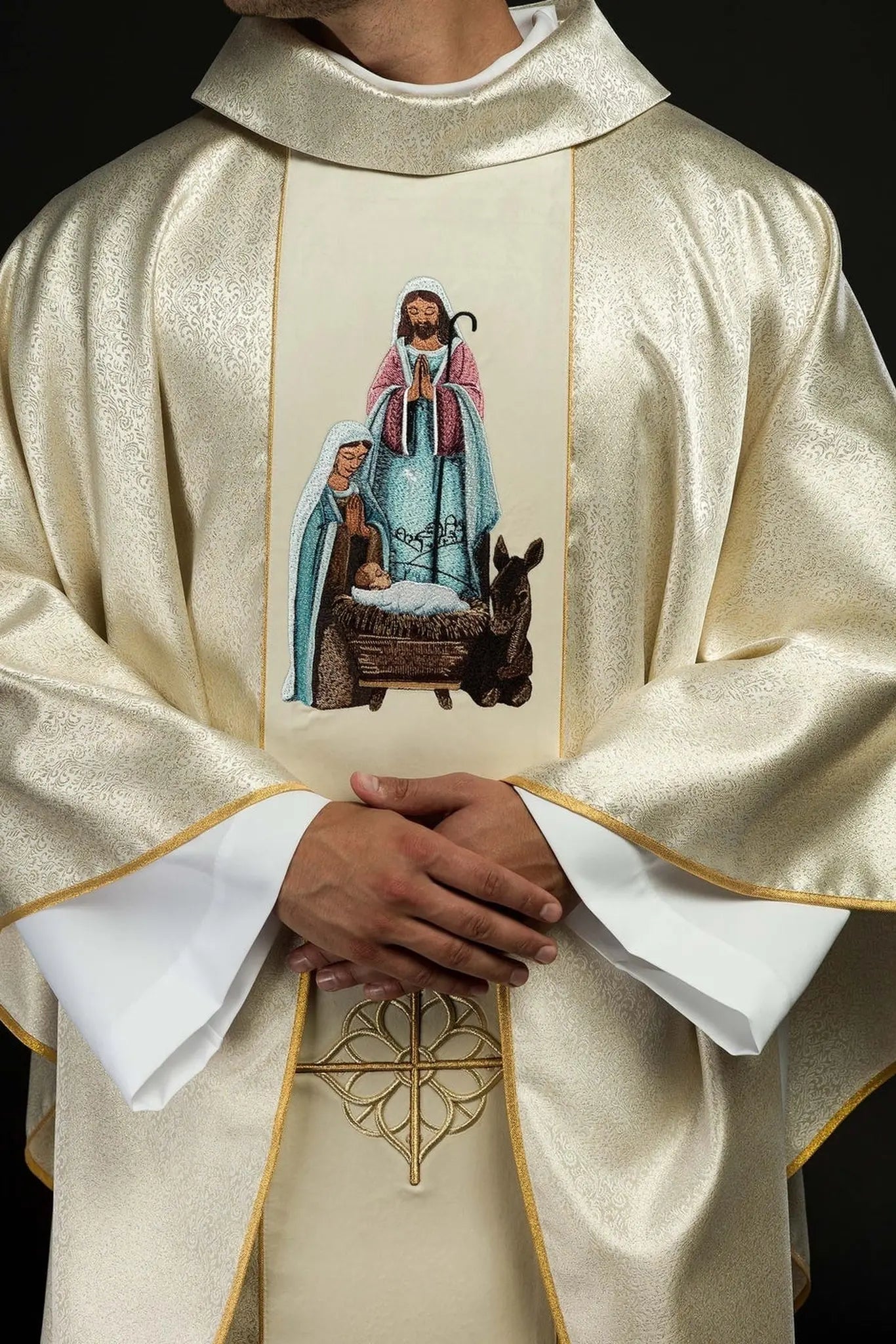
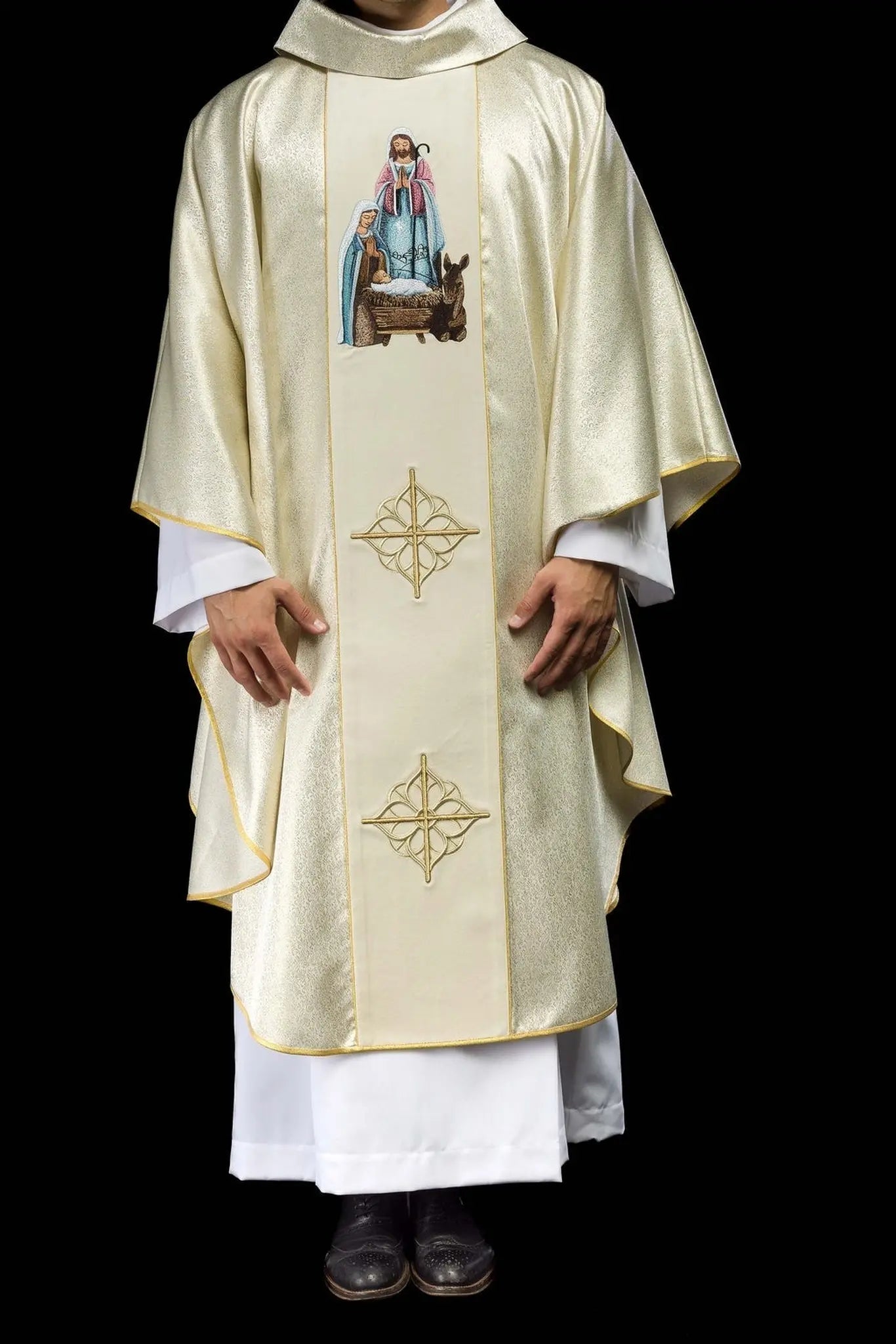
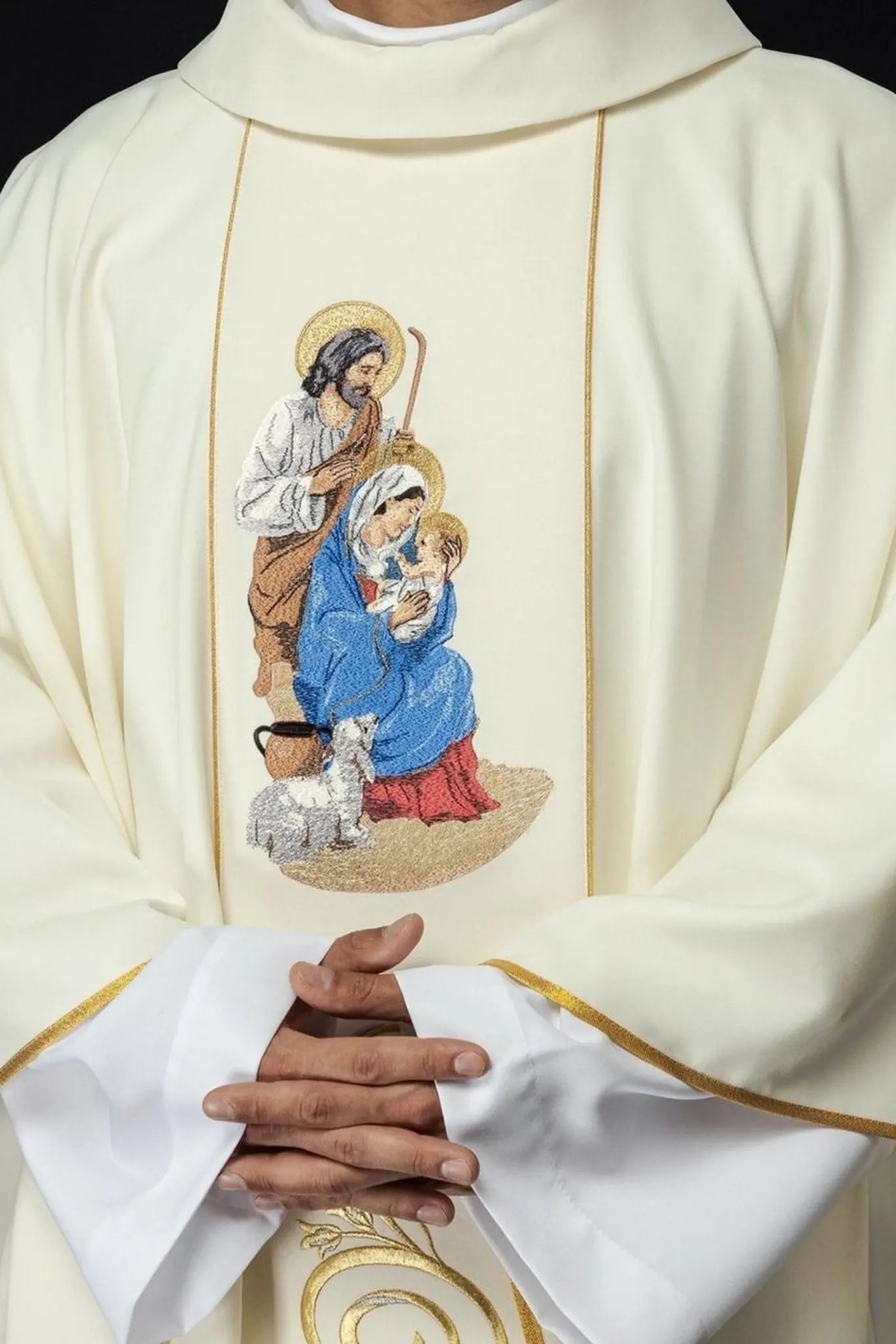
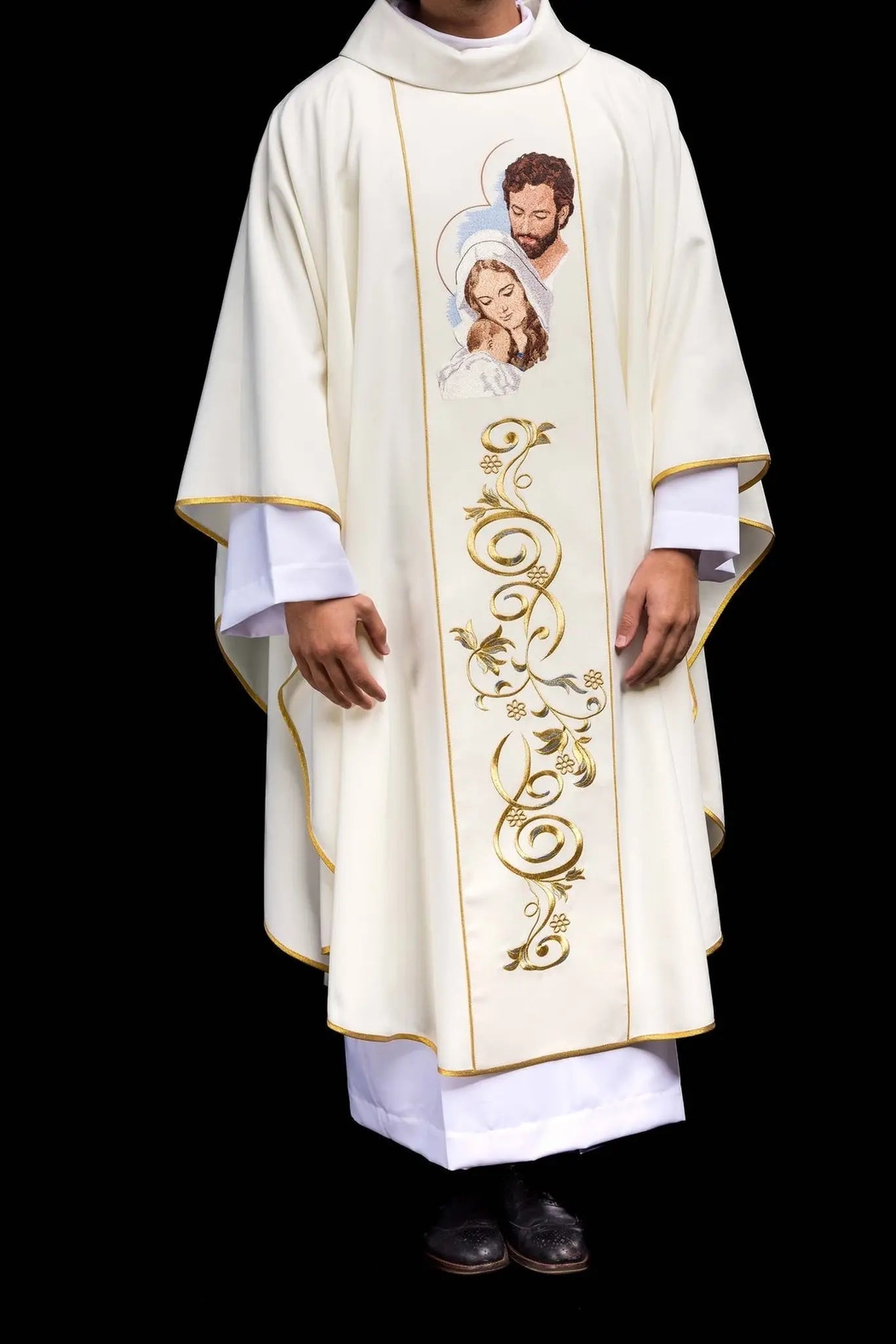
The center of the collection is the Christmas chasuble, the principal outer vestment worn by a priest or bishop for Mass. Christmas chasubles may feature embroidered images of the Holy Family, the Child Jesus, the Star of Bethlehem, the Three Kings, or gold thread ornament that harmonizes with the solemn character of the feast. The collection also includes stoles, which can be worn with the chasuble during Mass or used separately for sacramental and devotional celebrations connected with the season. For a wider view of priestly vestments beyond this feast, see the main chasubles collection, where designs are organized by color, style, and motif.
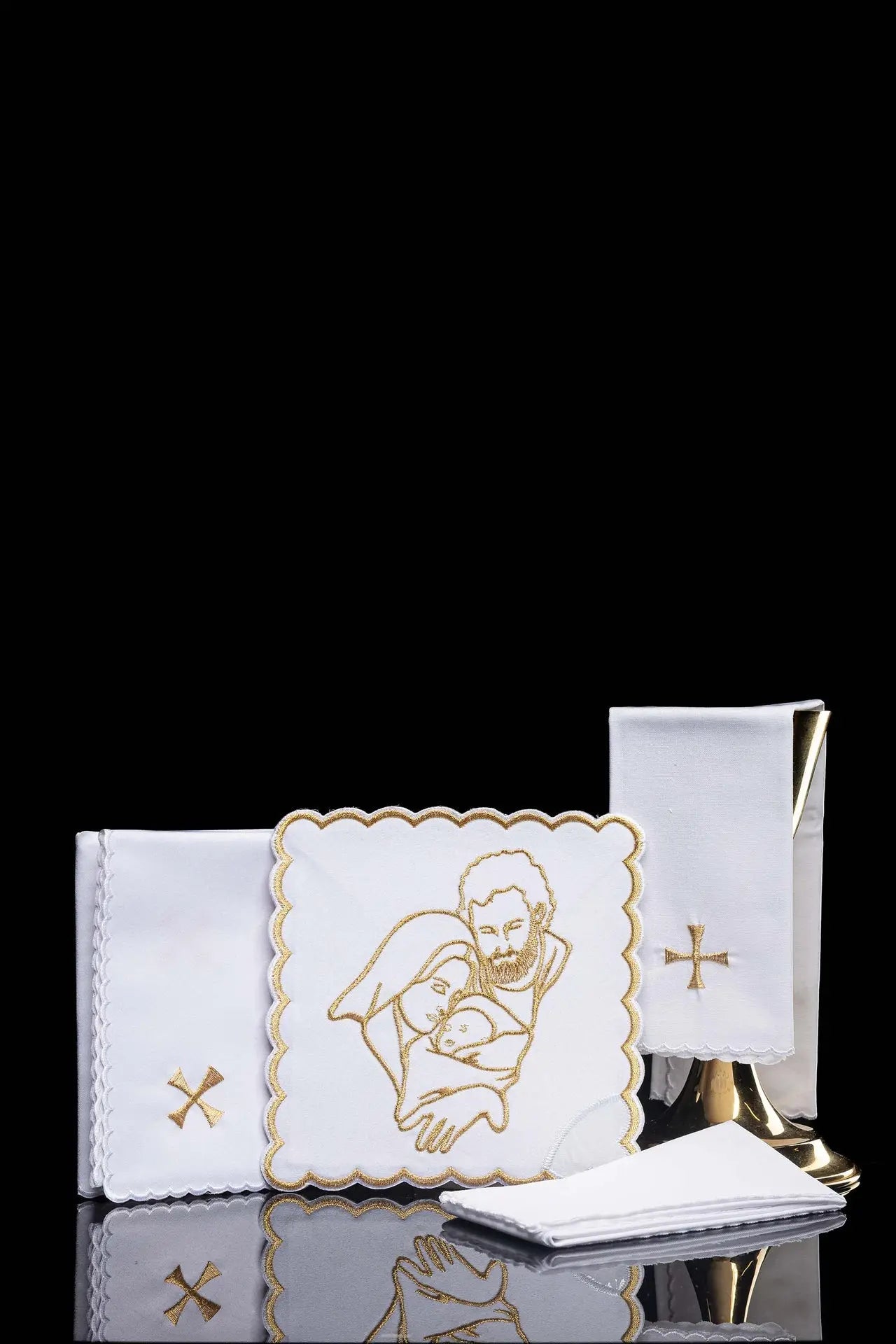
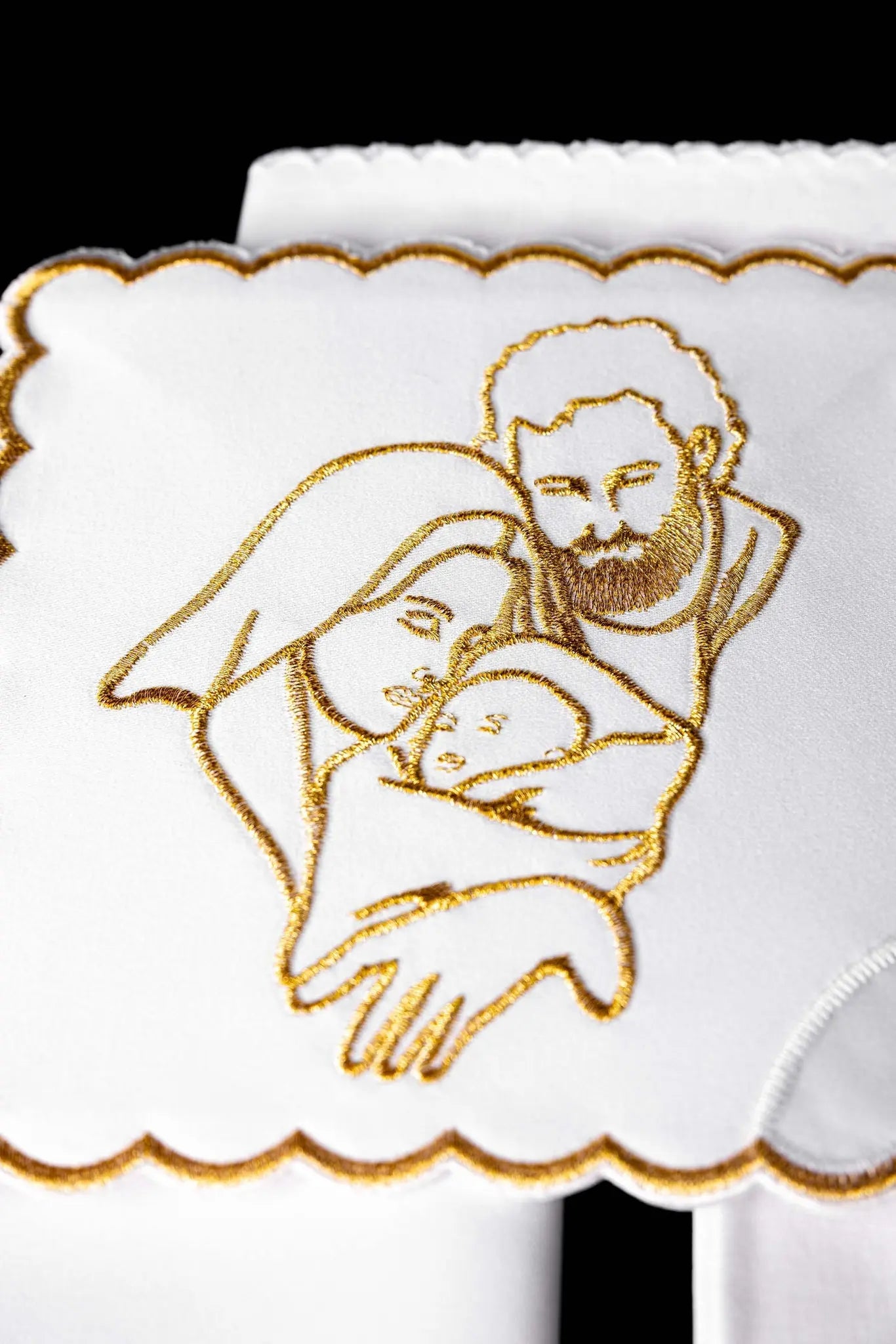
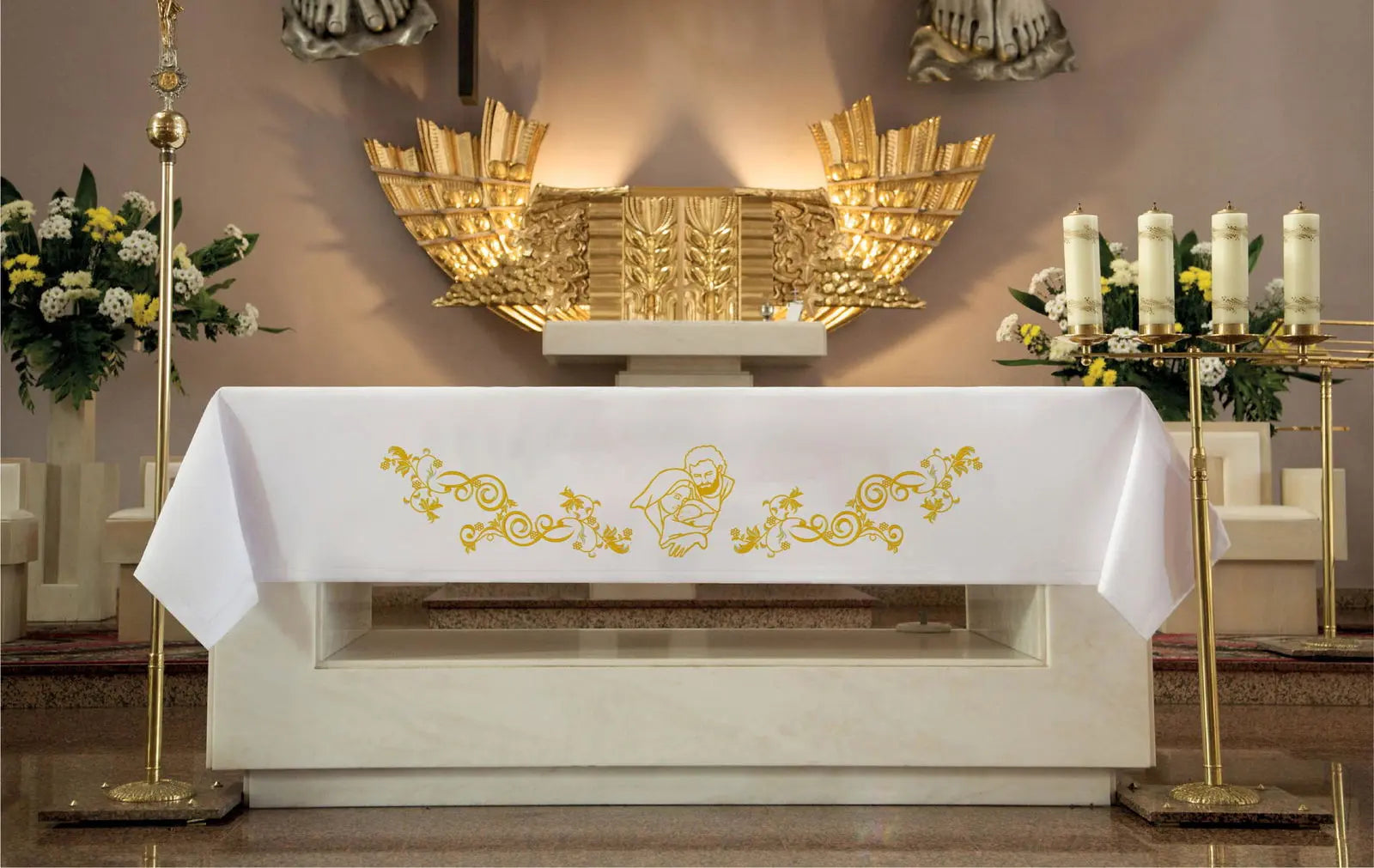
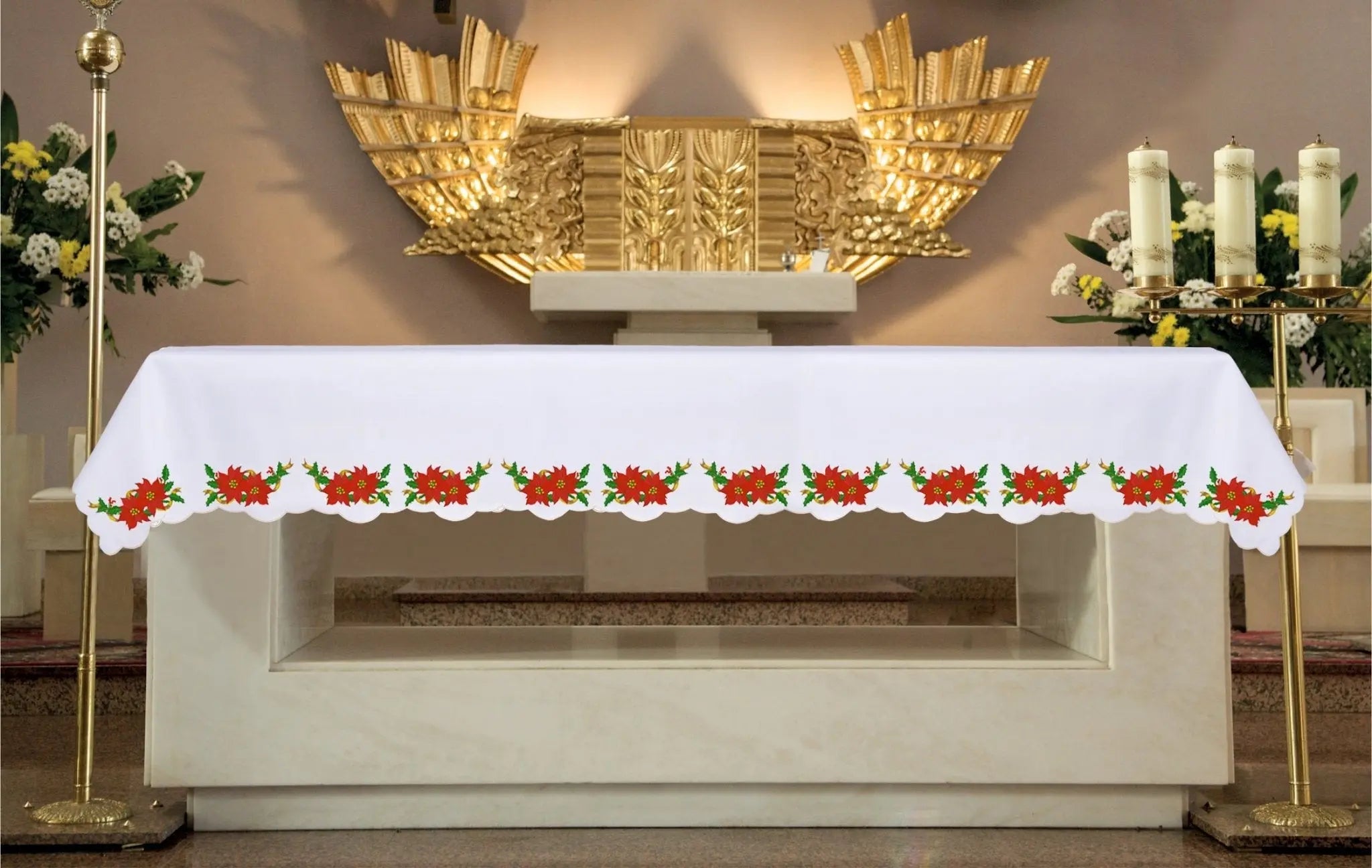
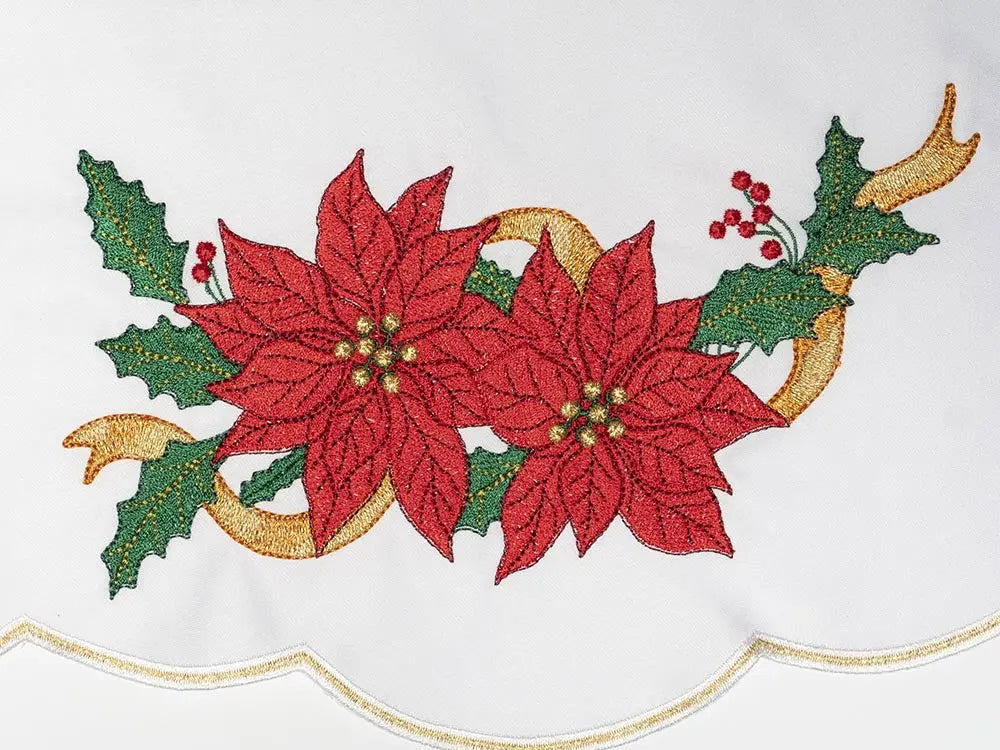
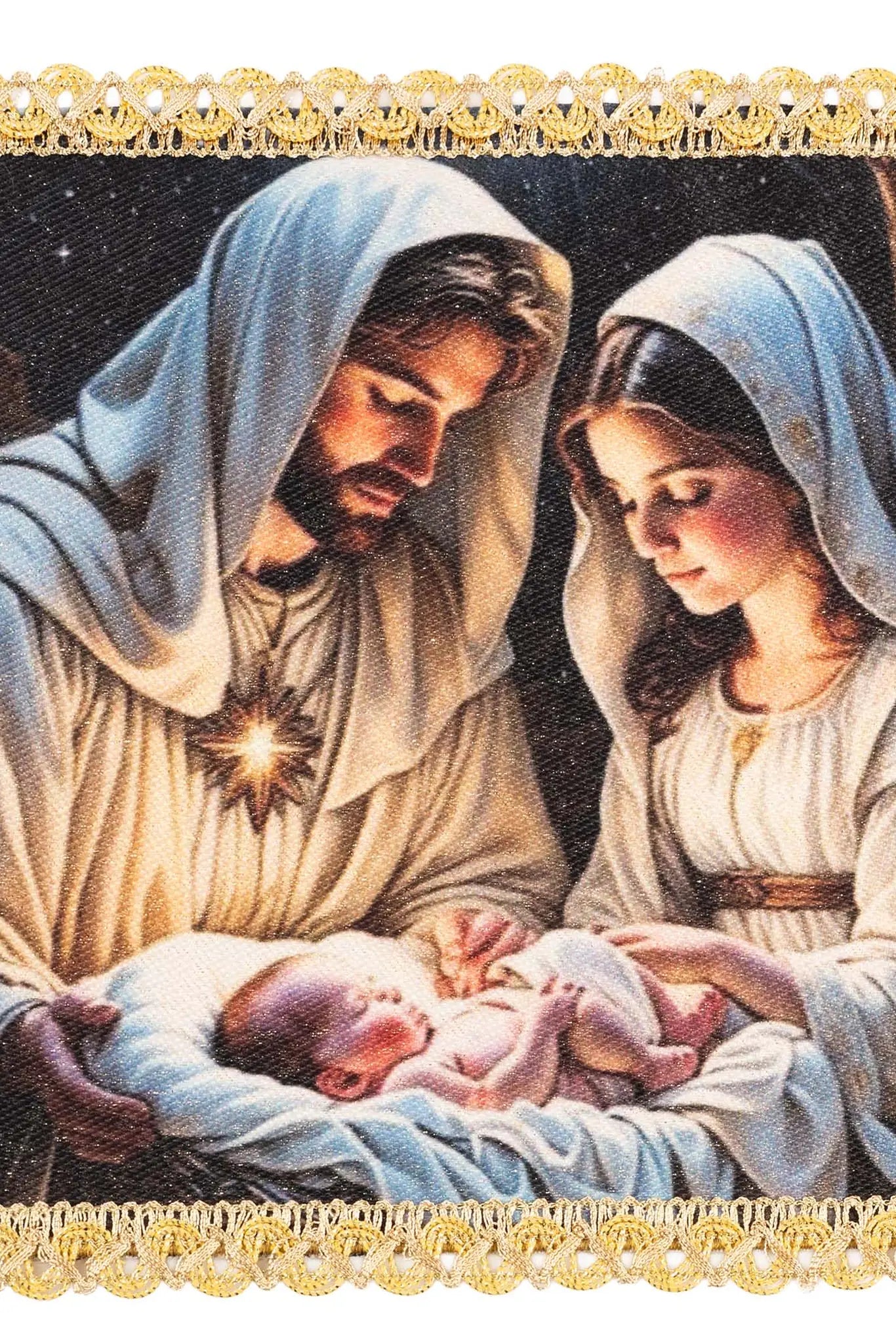
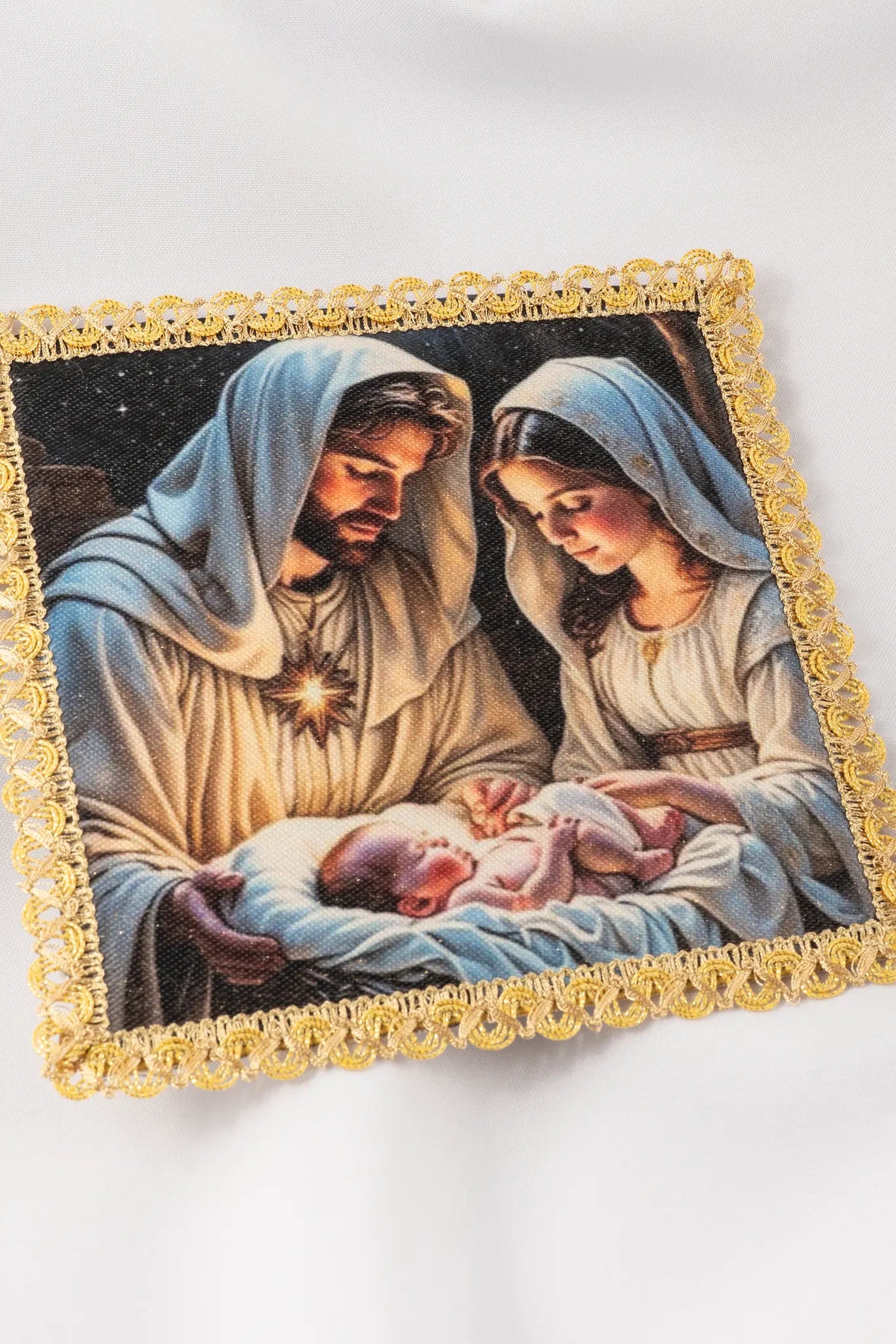
Church textiles are an important part of the same visual preparation. A Christmas altar cloth frames the altar without turning attention away from the Eucharistic celebration. Embroidered frontals, altar tablecloths, and linens with Bethlehem or Holy Family motifs can make the sanctuary feel complete, especially when they are chosen to match the vestments. Chalice linen sets, including pieces prepared for the sacred vessels, add a more subtle form of seasonal continuity. These details are especially useful for Midnight Mass, Christmas Day, the Sunday within the Octave, and parish celebrations of the Christmas season.
Liturgical meaning and appropriate use
The purpose of Christmas vestments is not decoration alone. Sacred vesture marks the celebration as public worship and helps the minister serve the liturgy with the dignity proper to the mystery being celebrated. White and gold are the clearest choices for Christmas Masses because they express the brightness of the feast and the glory of Christ. Ecru can also work well when the church interior, altar furnishings, or existing vestments call for a warmer tone. Gold embroidery may be used as a festive accent, especially on chasubles, stoles, chalice veils, and altar cloths.
Some parishes begin their preparation with Advent vestments and then move to brighter Christmas textiles after the first Masses of the Nativity. This transition is important. Purple belongs to Advent and Lent, while rose is reserved for Gaudete Sunday in Advent and Laetare Sunday in Lent. Green belongs to Ordinary Time and should not be treated as an Advent color. By keeping these distinctions clear, a parish can build a vestment plan that follows the liturgical year faithfully and gives each season its proper visual identity. When the celebration returns to the weeks after the Christmas season, related vestments can be found in the Ordinary Time collection.
Choosing a Christmas chasuble
When choosing a chasuble for Christmas, start with the celebration in which it will be used most often. A parish that needs a vestment for Midnight Mass may prefer richer embroidery, a stronger central image, or gold decorative elements that remain visible in a large church. A chapel or smaller community may choose a simpler design with a clear Nativity symbol. The most important point is balance: the chasuble should be festive, but it should also serve the rite and allow the celebrant to move comfortably at the altar.
Fabric and cut matter as much as the image. Gothic-style chasubles usually provide a flowing line and comfortable movement for regular parish use. Roman-style chasubles have a more traditional silhouette and may suit churches that use older vestment forms or solemn settings. A design with a Holy Family image can be especially meaningful for Christmas, while a Star of Bethlehem motif is often easier to coordinate with altar cloths and chalice linen because it is symbolic rather than pictorial. For parishes that prefer the strong visual warmth of the feast, related options are also available among gold chasubles and other festive designs.
Stoles, altar cloths, and chalice linen
A complete Christmas arrangement does not require every textile to repeat the same image. In many churches, the best result comes from combining one main embroidered vestment with more restrained linens. A priestly stole may echo the embroidery on the chasuble, while the altar cloth may use a simpler border or a single Bethlehem motif. This keeps the sanctuary unified without making the arrangement too visually heavy. Matching stoles are also useful for confession, blessings, pastoral visits, carol services, and other rites around the Christmas season. The wider range of seasonal and color options can be compared in the clergy stoles collection.
Altar textiles should be selected with the shape of the altar and the visibility of the frontal area in mind. An embroidered altar tablecloth can be a strong choice when the front of the altar is visible to the congregation, while a simpler altar cloth may be better when the church already has decorated frontals, flowers, or a Nativity scene nearby. Related church textiles can be viewed in the altar cloths collection. For the sacred vessels, Christmas chalice linen sets provide a more focused detail and can coordinate with both festive chasubles and embroidered altar textiles. See the related chalice linen sets for linen options suited to Eucharistic use.
Creating a coherent Christmas sanctuary
A coherent Christmas arrangement begins with the altar and the celebrant. If the chasuble has a central image of the Holy Family, the altar cloth can carry a quieter gold border or a star motif. If the chasuble is mostly gold or ecru with ornamental embroidery, the altar textile can carry a stronger Nativity image. This approach prevents the sanctuary from looking crowded and helps the congregation focus on the liturgical action rather than on competing decorative elements.
It is also helpful to consider how the textiles will look with the church building. A bright white chasuble can stand out beautifully in a darker sanctuary, while an ecru or gold design may be warmer in a church with stone, wood, or cream-colored furnishings. Altar tablecloths with frontal embroidery are useful when the altar itself is visually central. For churches seeking a more pronounced embroidered front, the related altar tablecloth with frontal embroidery collection can help complete the seasonal setting.
Planning for the Christmas season, not only one Mass
Although many people first think of Midnight Mass, Christmas vestments are used across more than one celebration. The Nativity of the Lord, Christmas Day, the Octave, the Holy Family, Mary Mother of God, Epiphany in many local calendars, and parish Christmas services may all call for festive vesture. A well-chosen chasuble or stole should therefore be versatile enough for repeated use, not only dramatic enough for one evening. Durable fabric, secure embroidery, and a design that does not feel too narrow in theme will make the set useful for many years.
Parishes with several priests may choose one principal chasuble and one or more coordinating stoles or lighter vestments. Smaller communities may focus first on a strong chasuble and then add chalice linen or an altar cloth later. When budget is a factor, the most effective sequence is usually chasuble first, then stole, then altar textile, then additional coordinated linens. This keeps the most visible liturgical garment in place while allowing the church to build a fuller Christmas set gradually.
How to choose within this collection
- For the main Christmas Mass: choose a white, ecru, or gold chasuble with clear festive embroidery and comfortable movement for the celebrant.
- For a coordinated parish set: pair the chasuble with a stole, chalice linen set, and altar cloth that repeat one motif or color accent rather than every detail.
- For a smaller chapel: choose symbolic embroidery such as a star, gold ornament, or simple Holy Family motif that remains readable in a compact space.
- For repeated seasonal use: prefer designs that can serve Christmas Day, the Octave, Epiphany celebrations, and parish Christmas services.
- For visual balance: combine one richly embroidered focal piece with more restrained supporting textiles.
The Christmas collection is therefore both a seasonal collection and a practical planning tool. It helps connect the vestment worn by the celebrant with the altar, the chalice, and the wider sanctuary. When each element is chosen with the liturgical season in mind, the result is not simply a decorated church, but a clearer and more reverent expression of the joy of the Nativity.
Frequently Asked Questions (FAQ)
What liturgical colors are most suitable for Christmas?
White, ecru, and gold are the most suitable choices for Christmas Masses and festive celebrations of the Nativity. They express joy, light, and solemnity. Purple is used for Advent and Lent, rose for Gaudete and Laetare Sundays, and green for Ordinary Time, so those colors should not replace the Christmas palette for the principal celebrations of the season.
Can one Christmas chasuble be used for several celebrations?
Yes. A well-chosen Christmas chasuble can serve Midnight Mass, Christmas Day, the days within the Octave, Holy Family celebrations, and other parish services connected with the season. A design based on the Holy Family, the Star of Bethlehem, or gold festive ornament will usually remain appropriate across the whole Christmas period.
Should the altar cloth match the chasuble exactly?
An exact match is not necessary. In many sanctuaries, a better result comes from using a shared color, gold accent, or repeated motif while keeping the altar cloth slightly simpler than the chasuble. This creates harmony without distracting from the altar and the Eucharistic celebration.
What is the difference between chalice linen and an altar cloth in this collection?
Chalice linen is used with the sacred vessels and serves a more focused Eucharistic function. An altar cloth covers or adorns the altar and shapes the visible setting of the sanctuary. Both can carry Christmas embroidery, but they have different liturgical roles and should be selected for their proper use.
How can a parish build a Christmas set gradually?
Begin with the vestment that will be seen most often, usually the chasuble for the principal celebrant. Then add a coordinating stole, chalice linen set, and altar cloth as budget and parish needs allow. Choosing one repeated motif, such as the Star of Bethlehem or a gold ornamental line, makes later additions easier to coordinate.