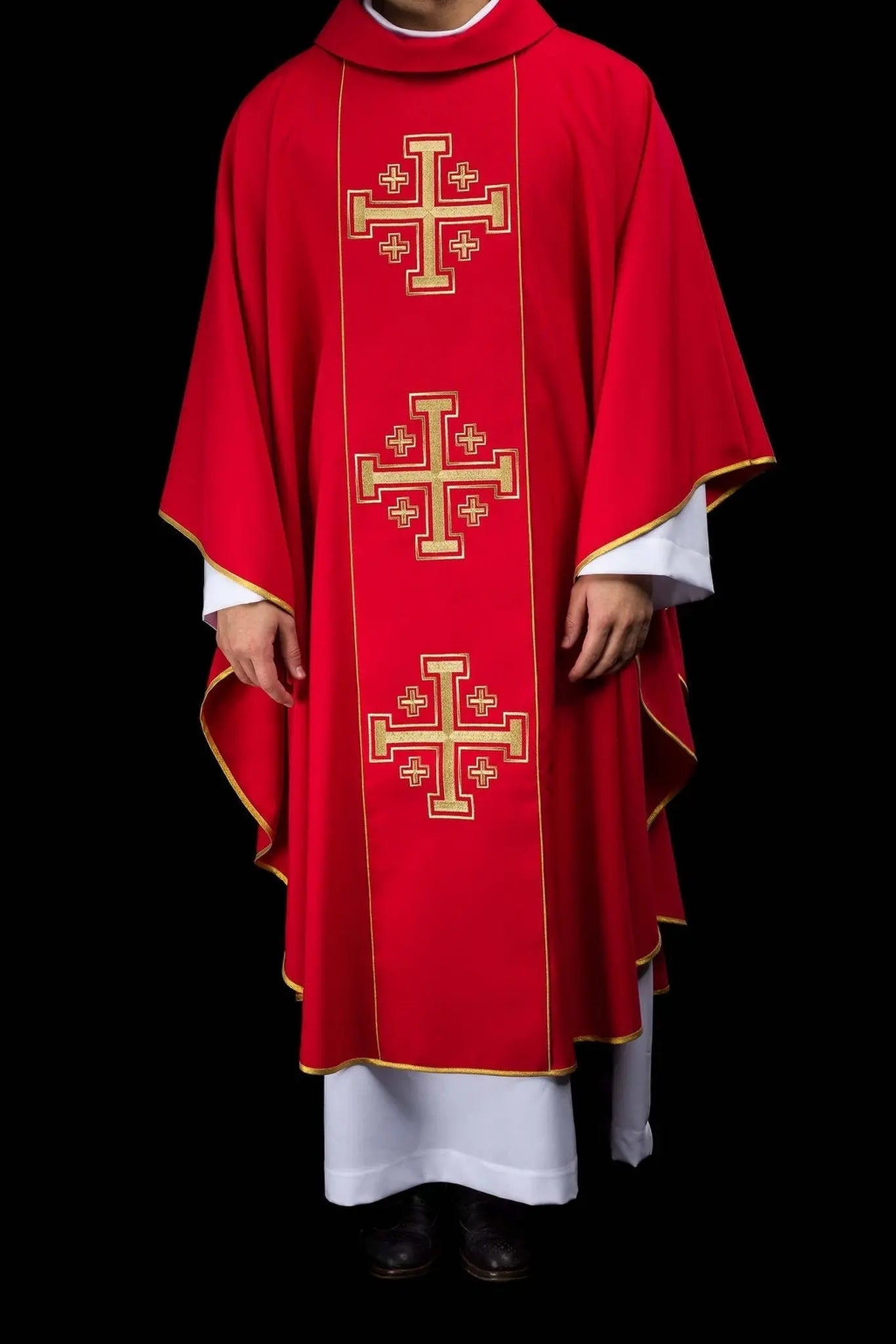
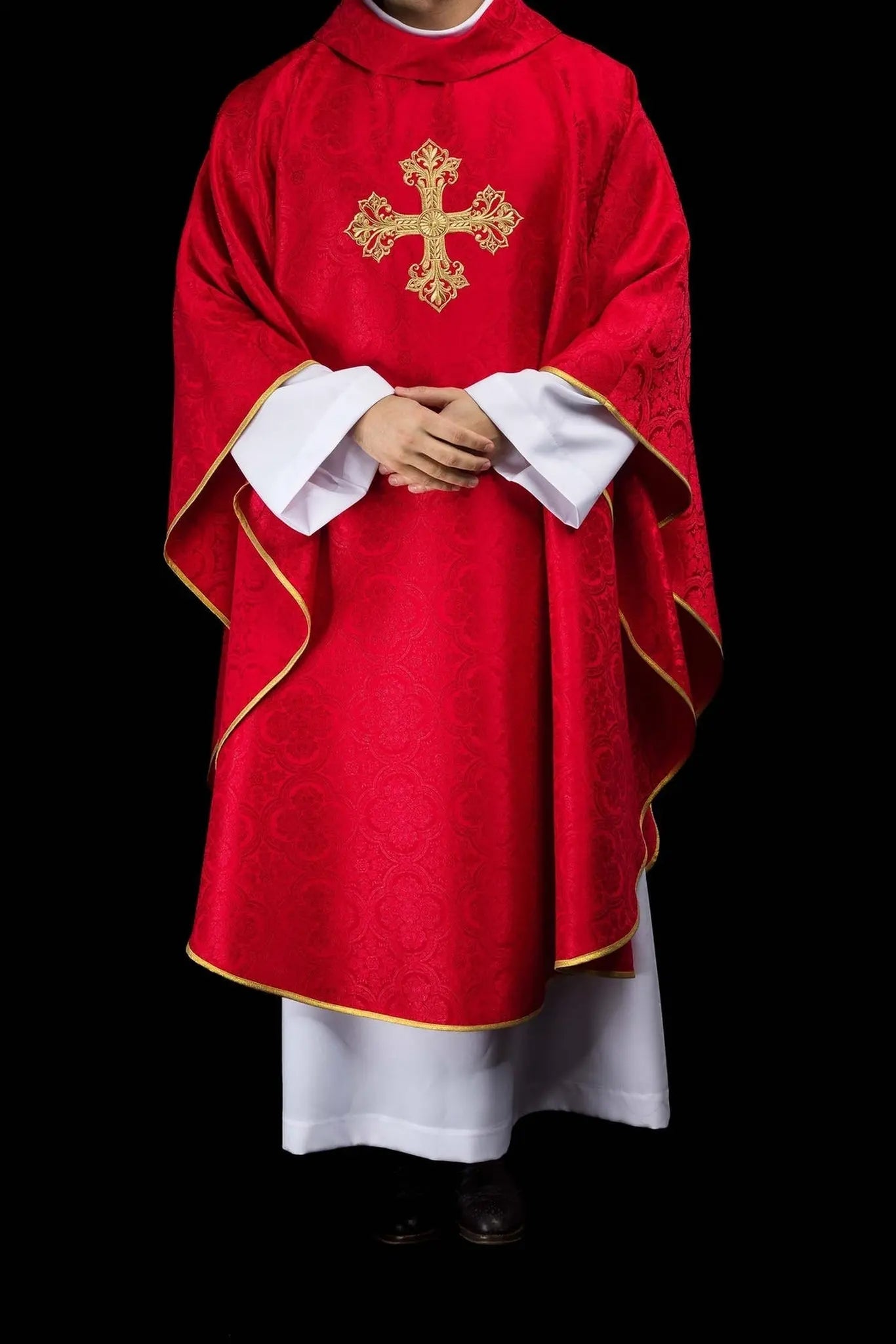
Red Chasubles for the Mass and Liturgical Year
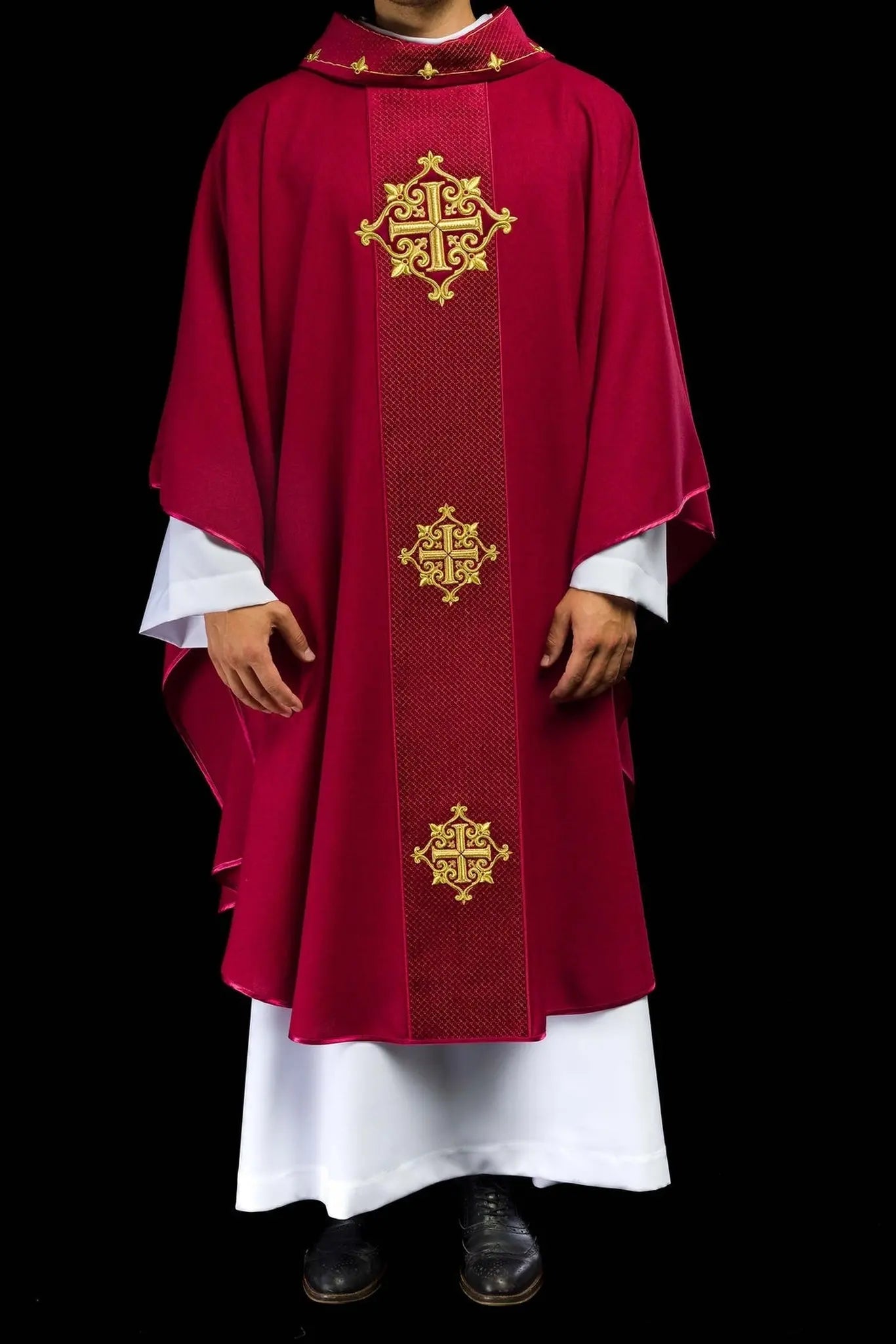
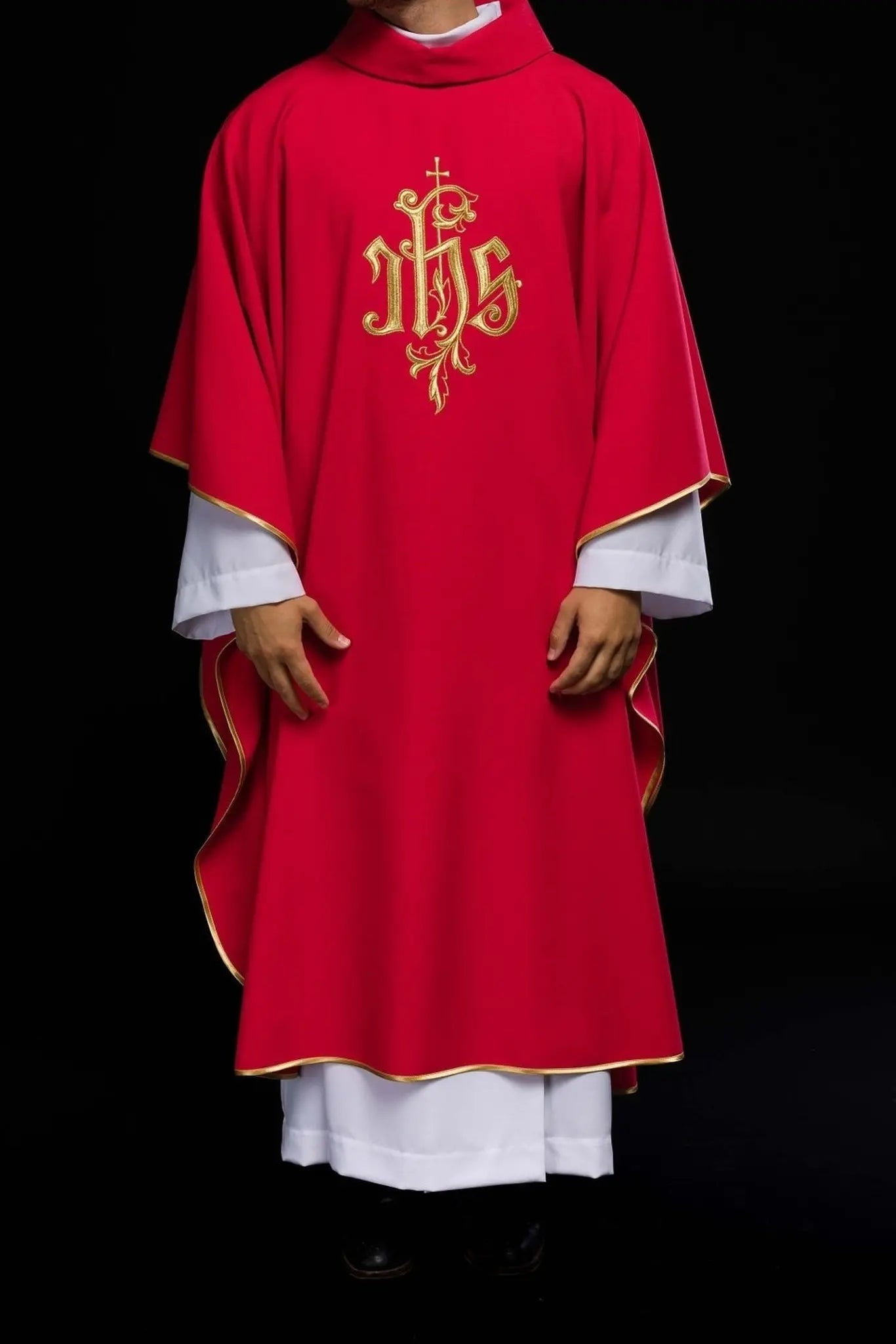
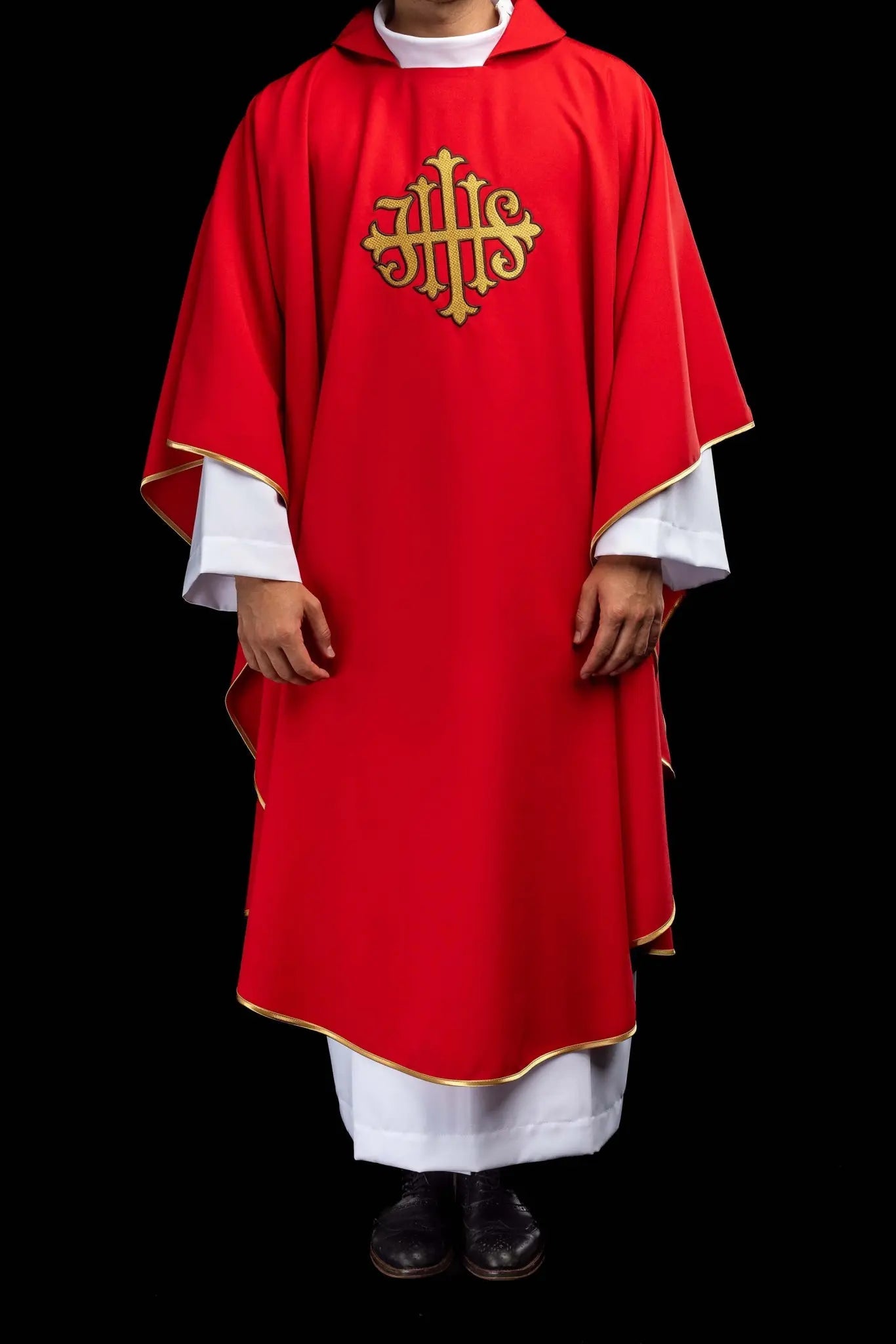
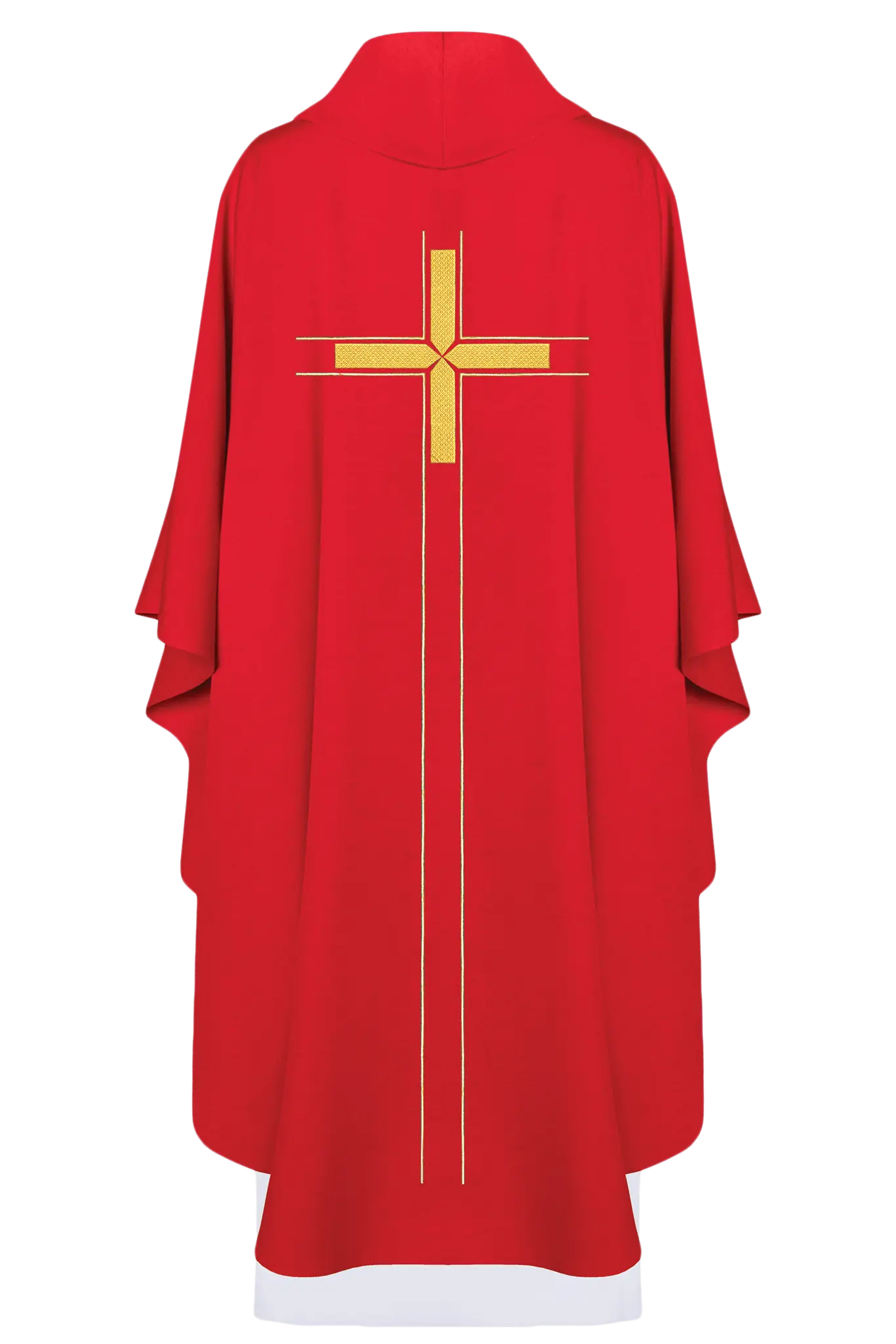
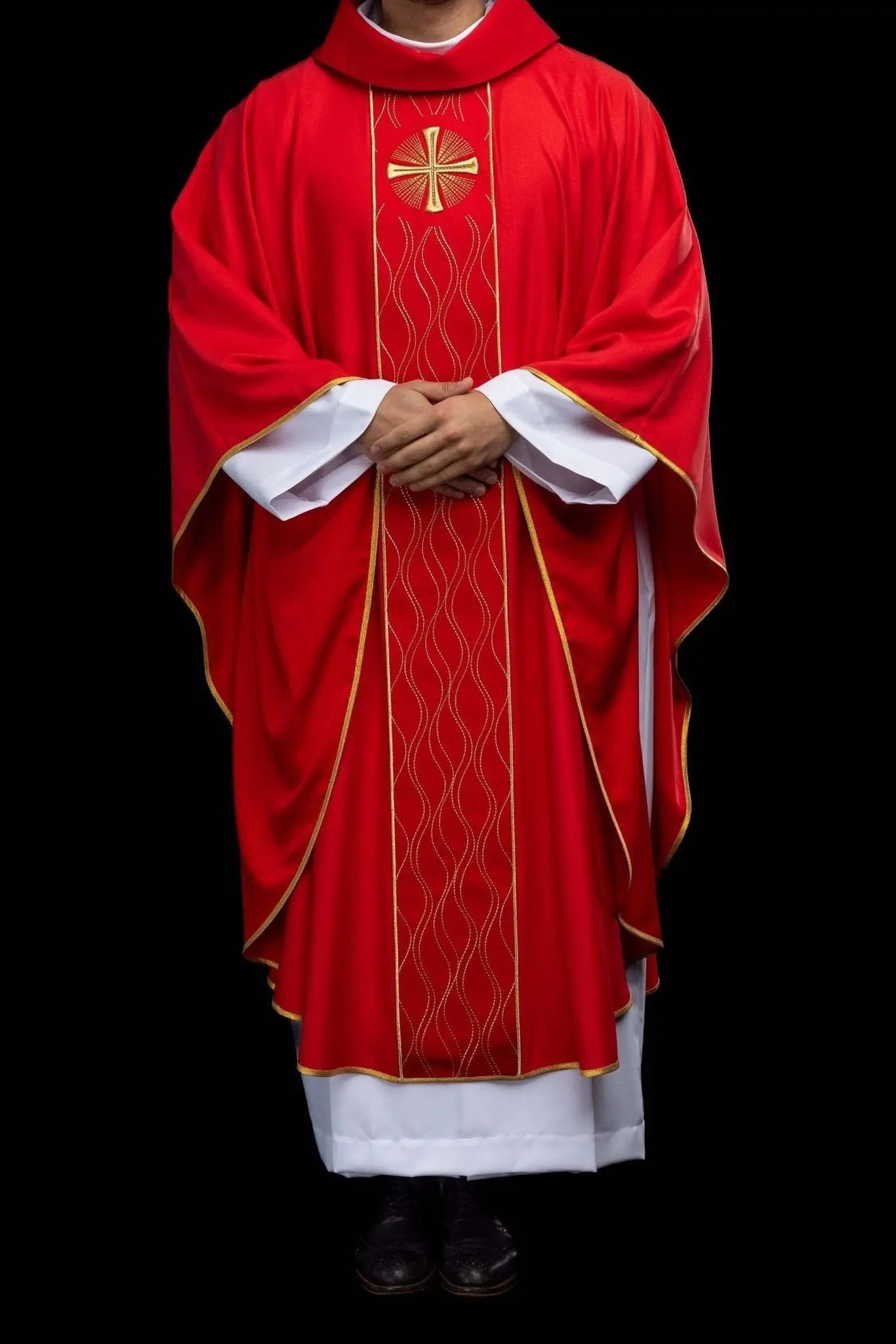
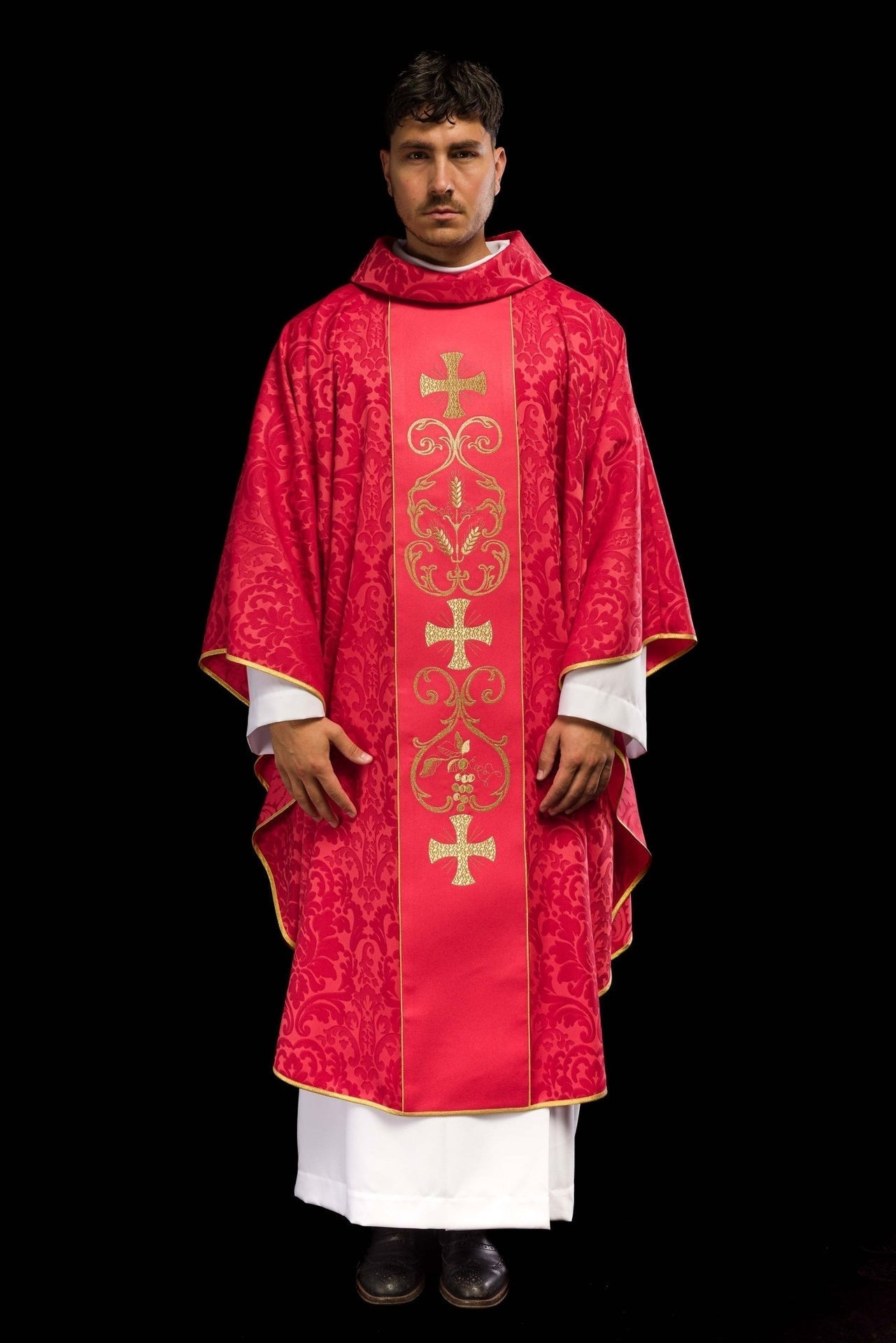
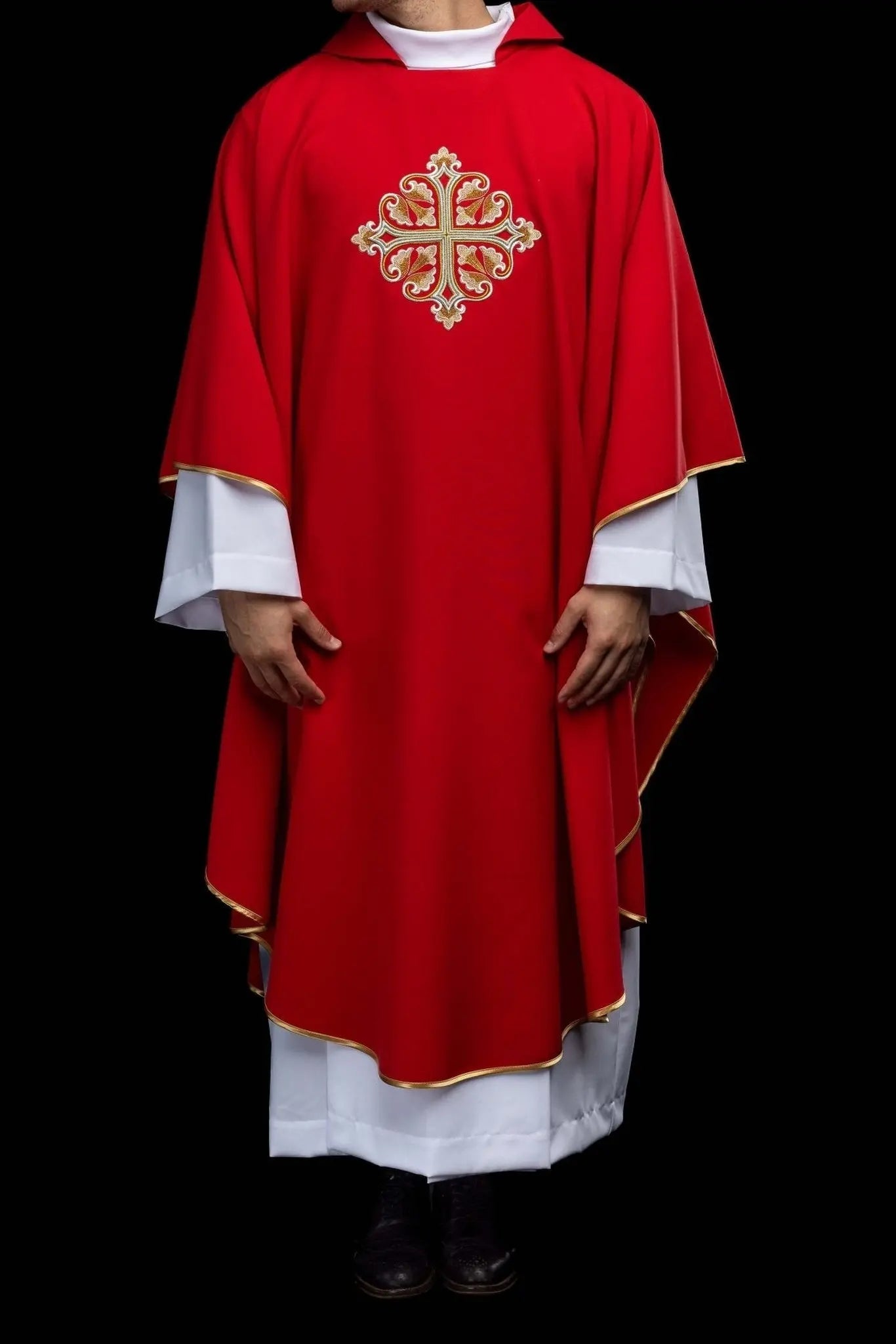
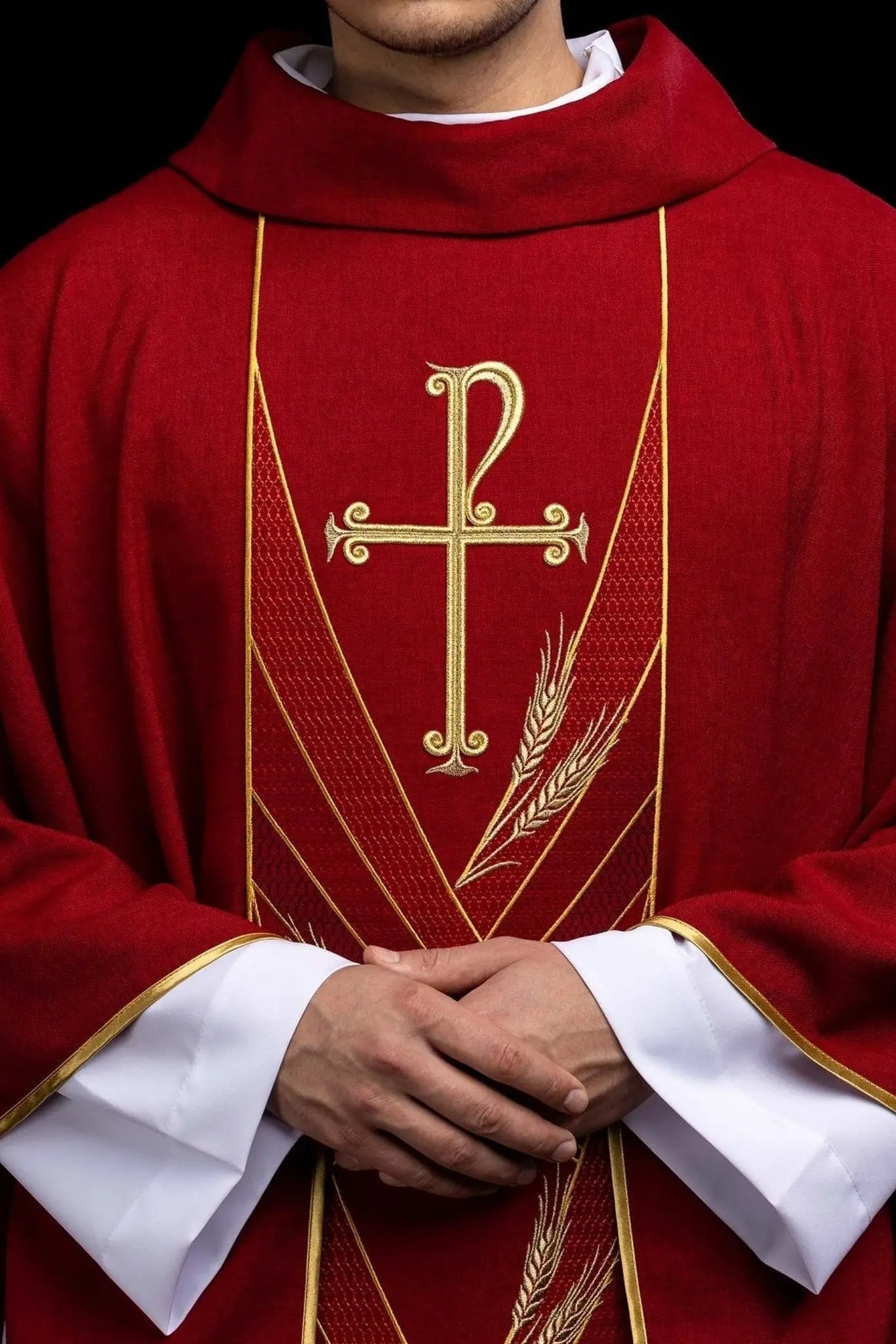
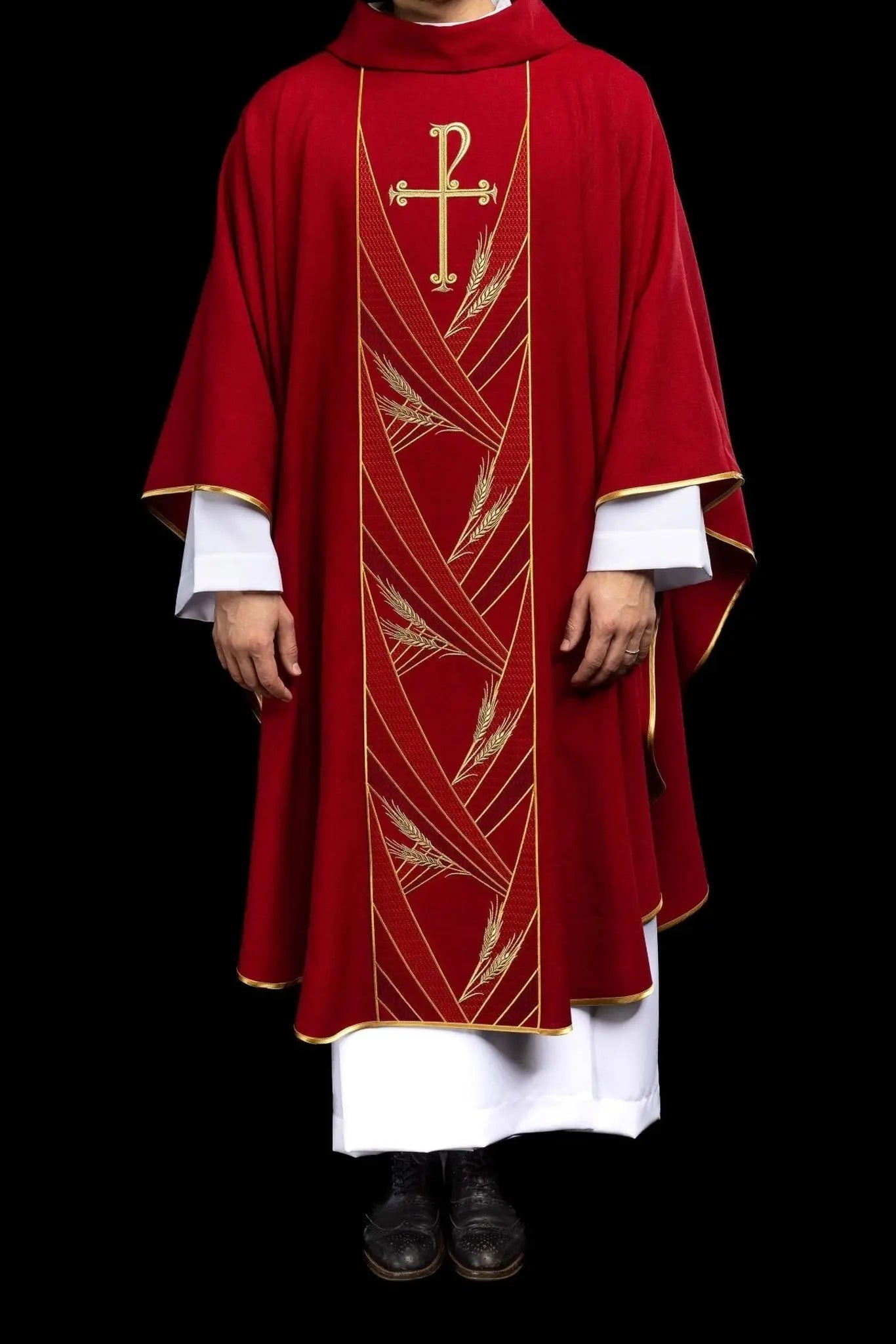
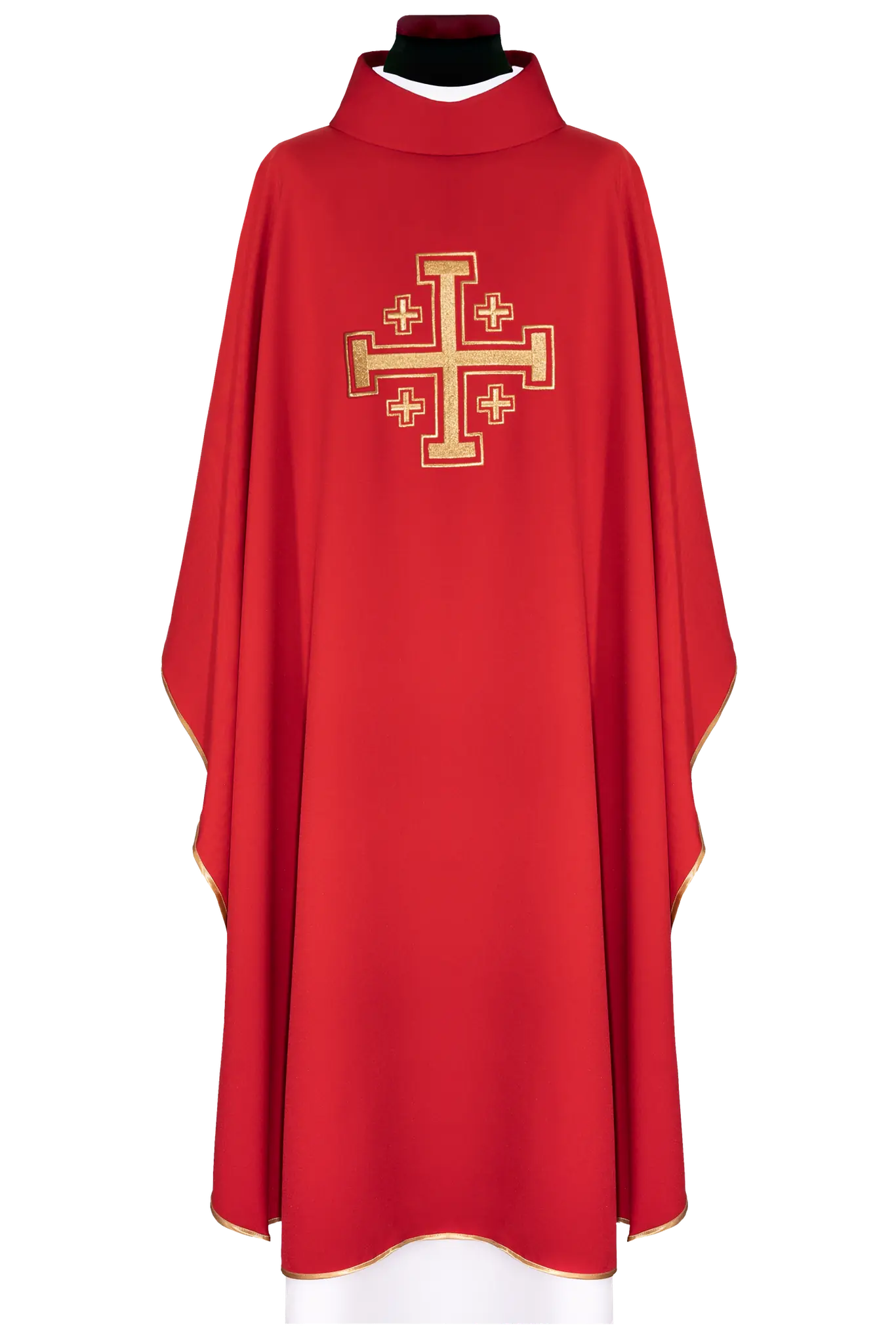
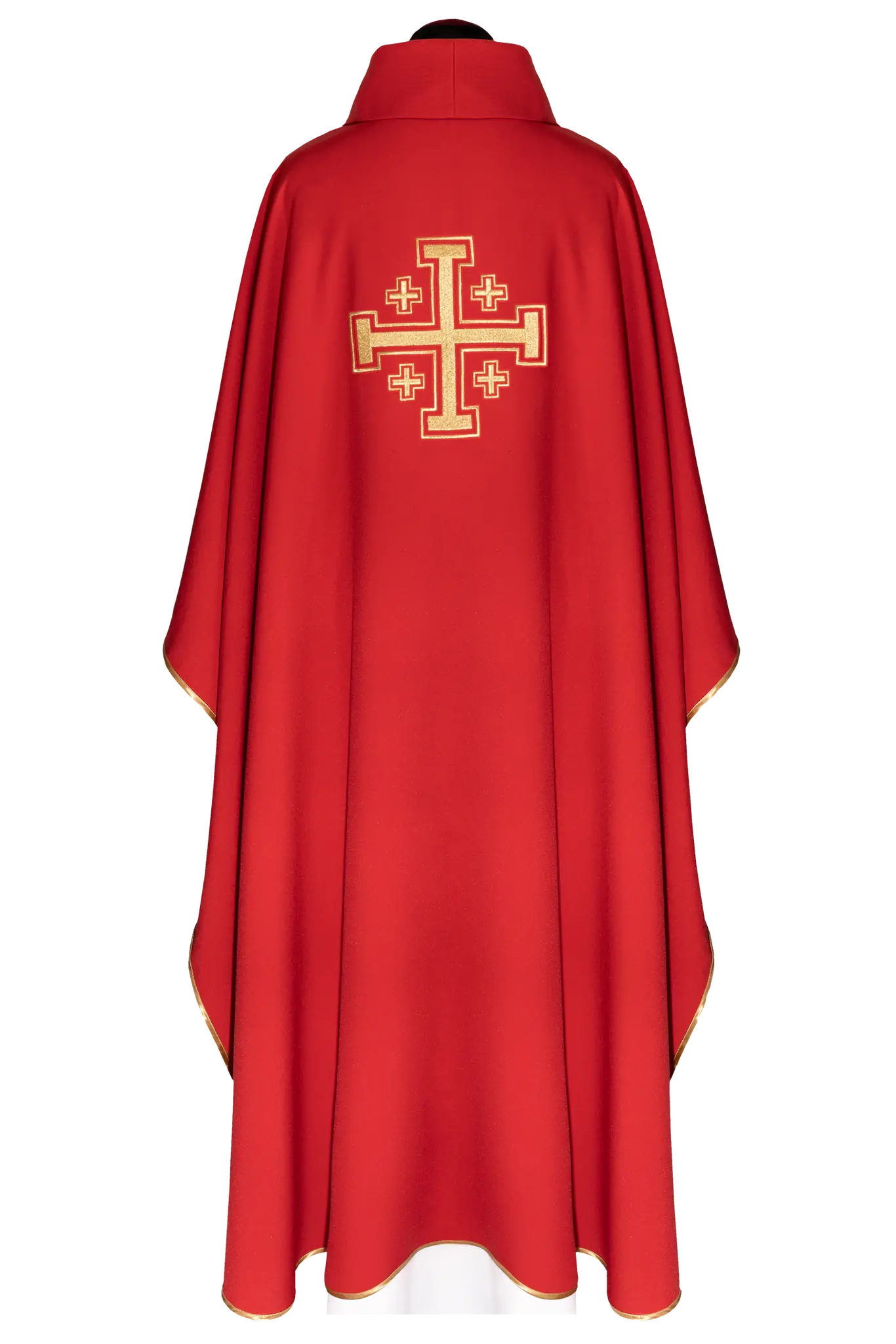
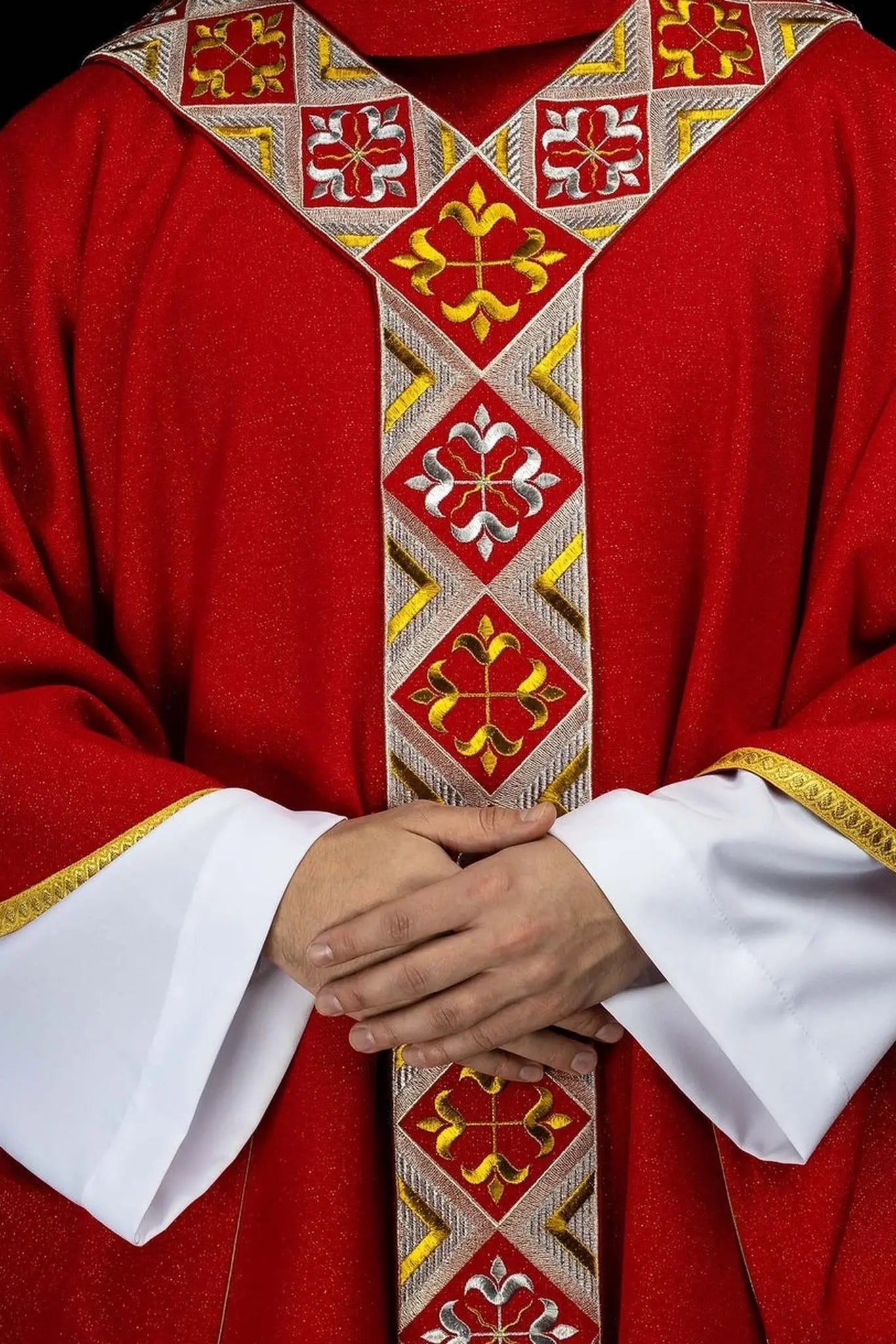
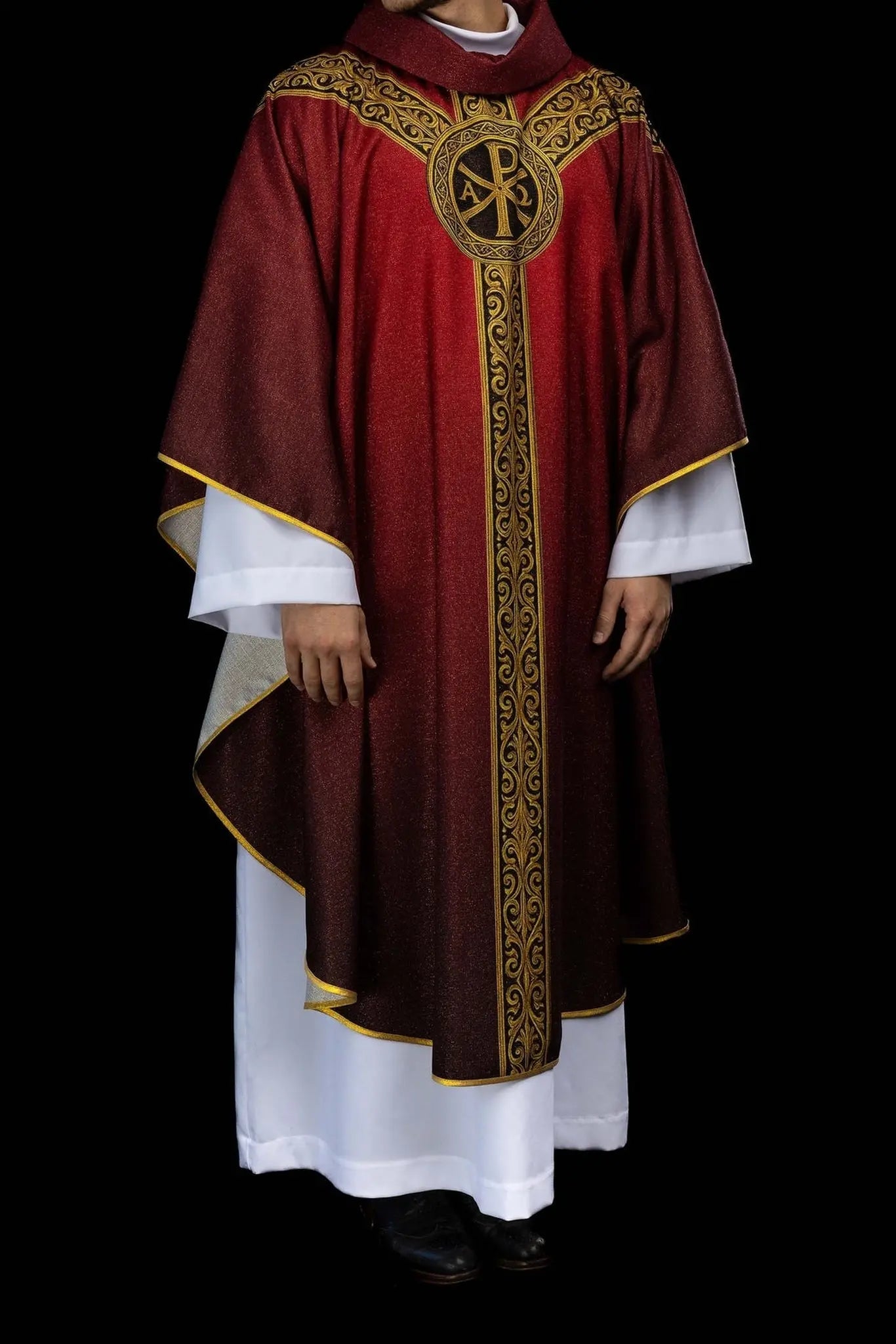
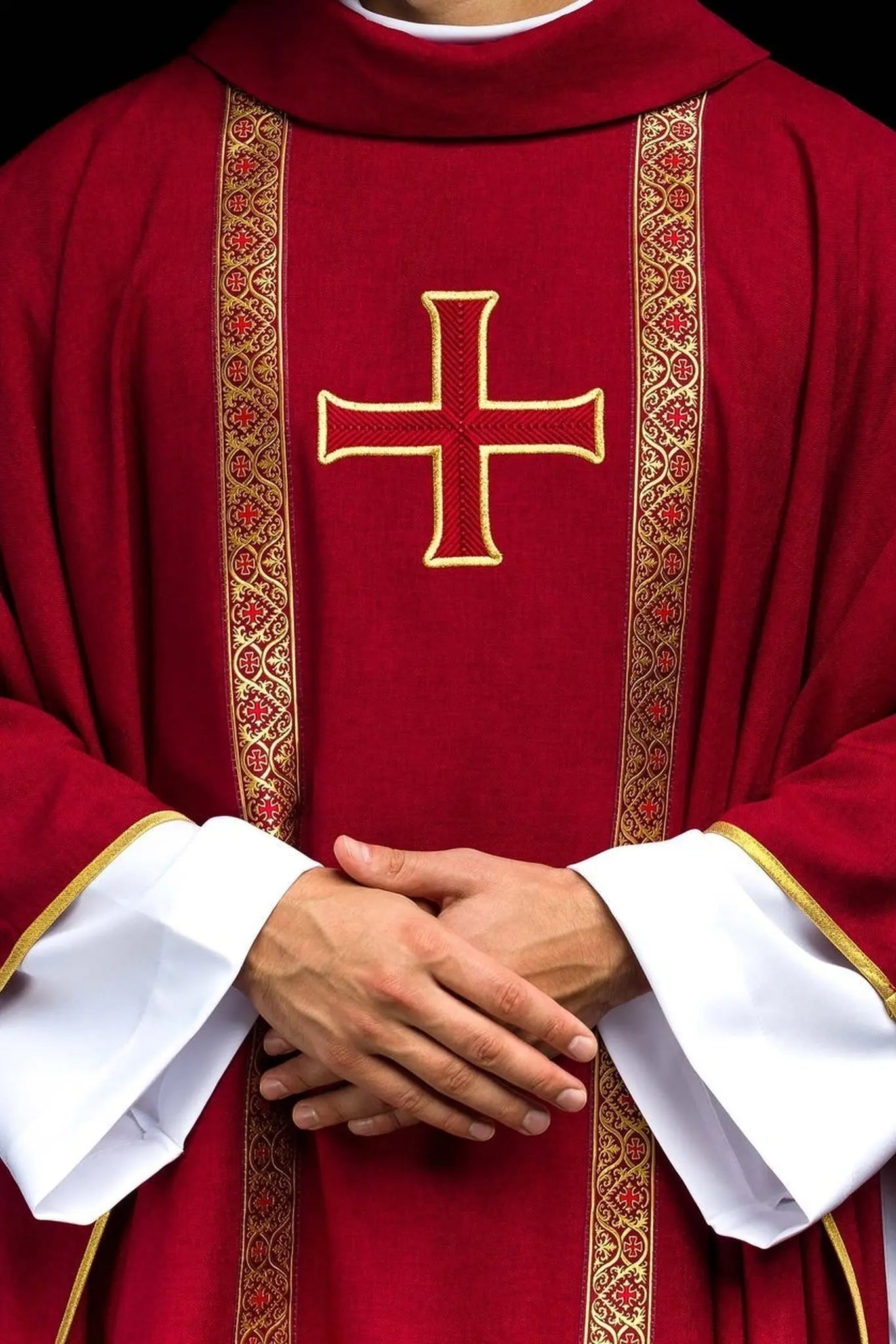
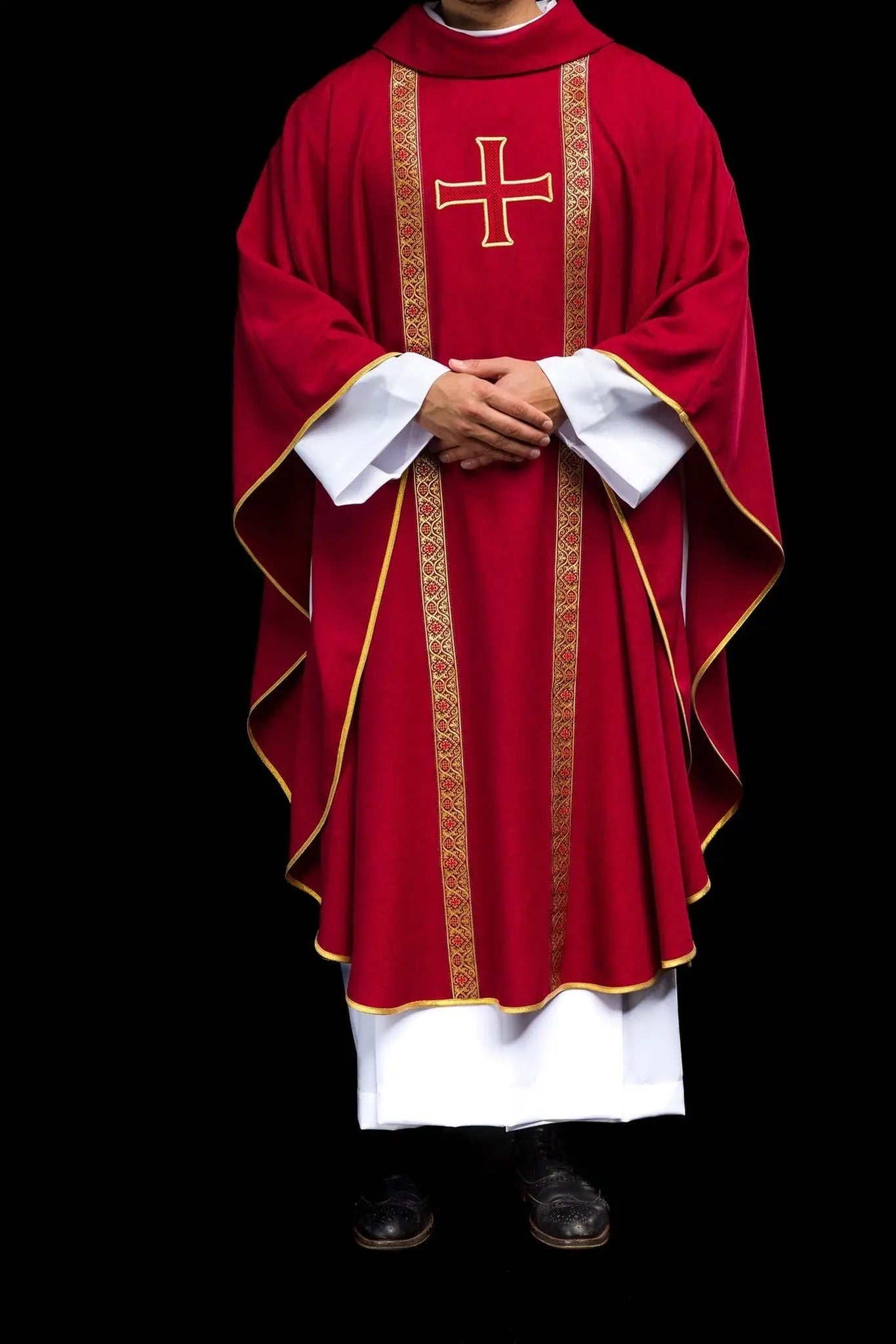
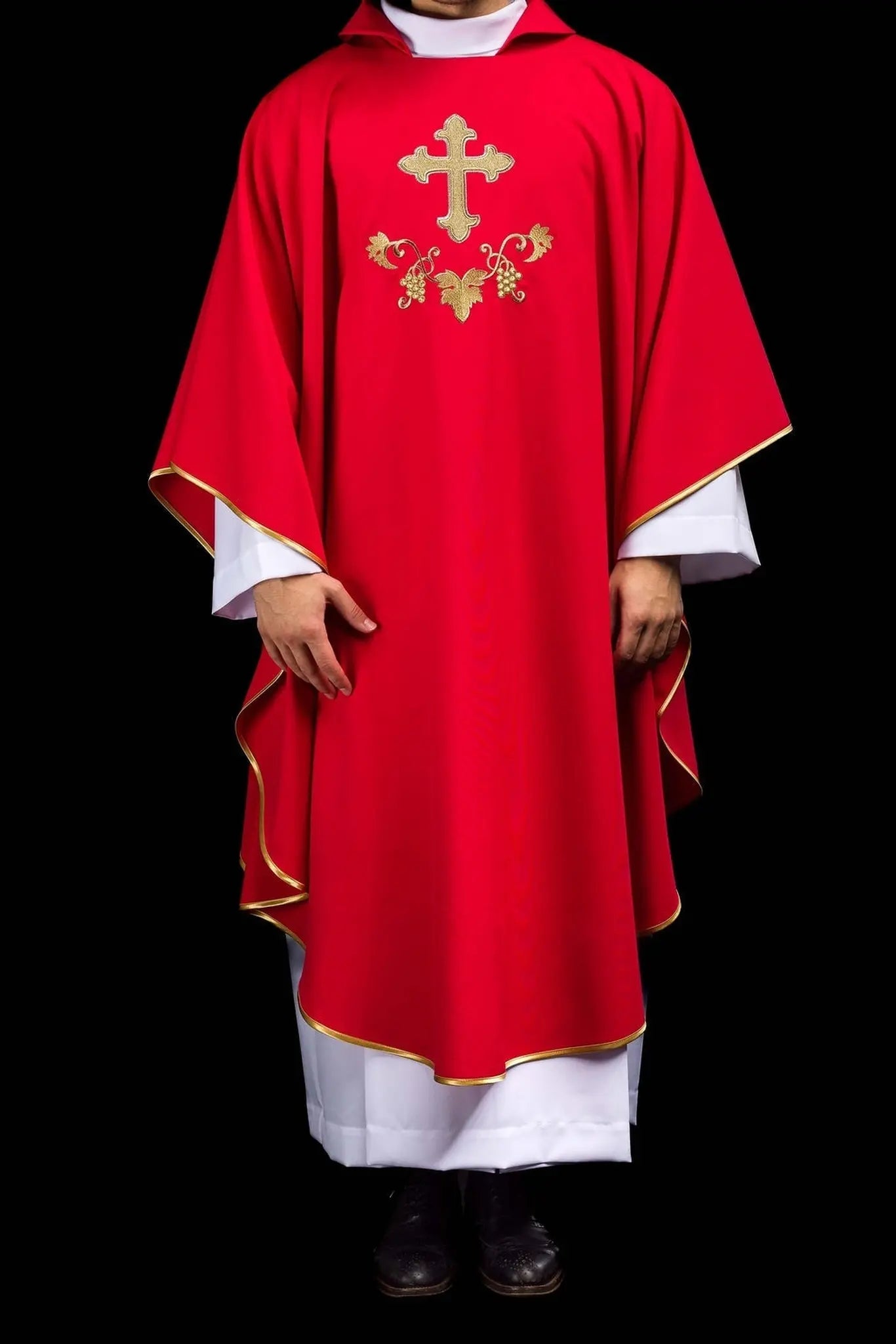
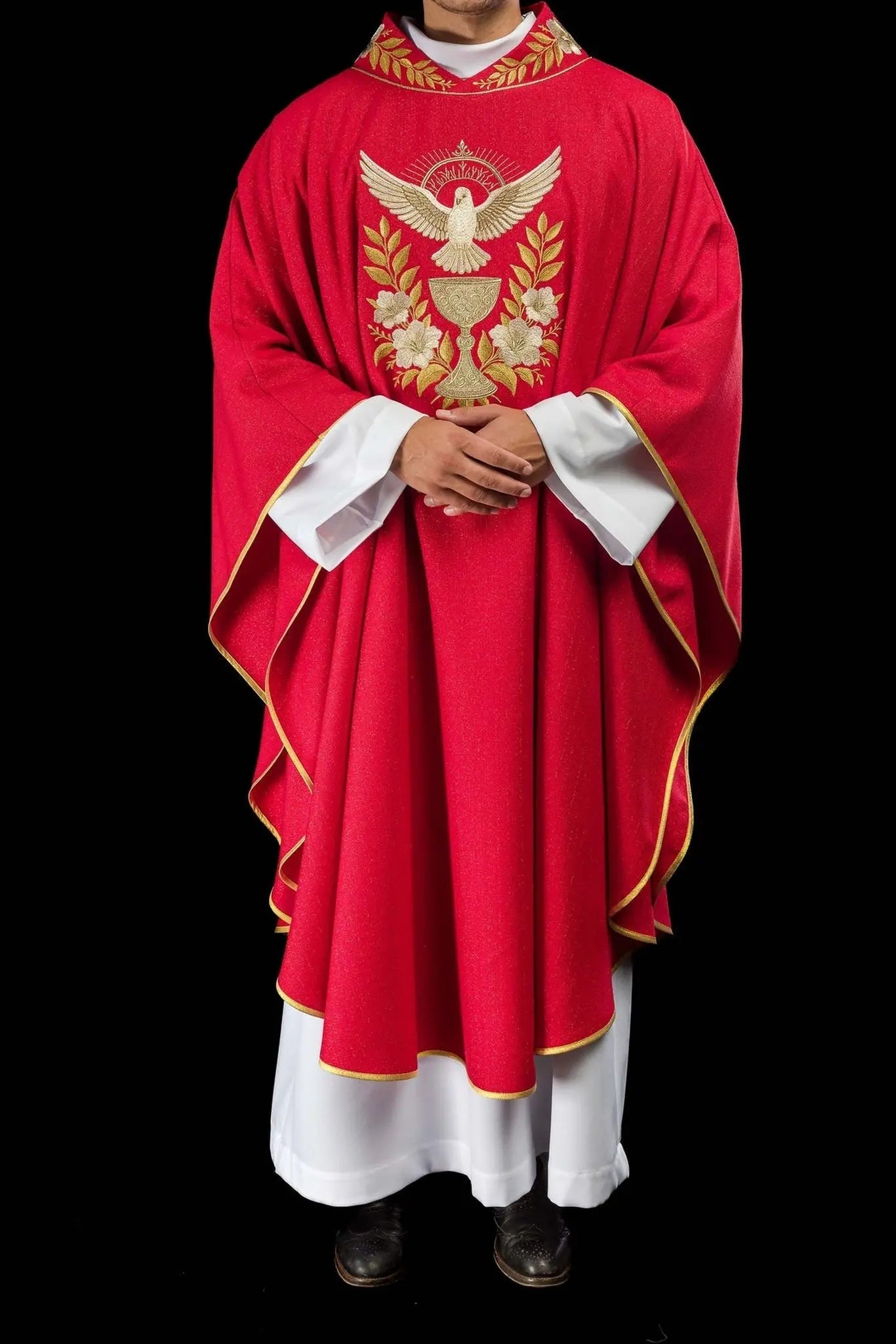
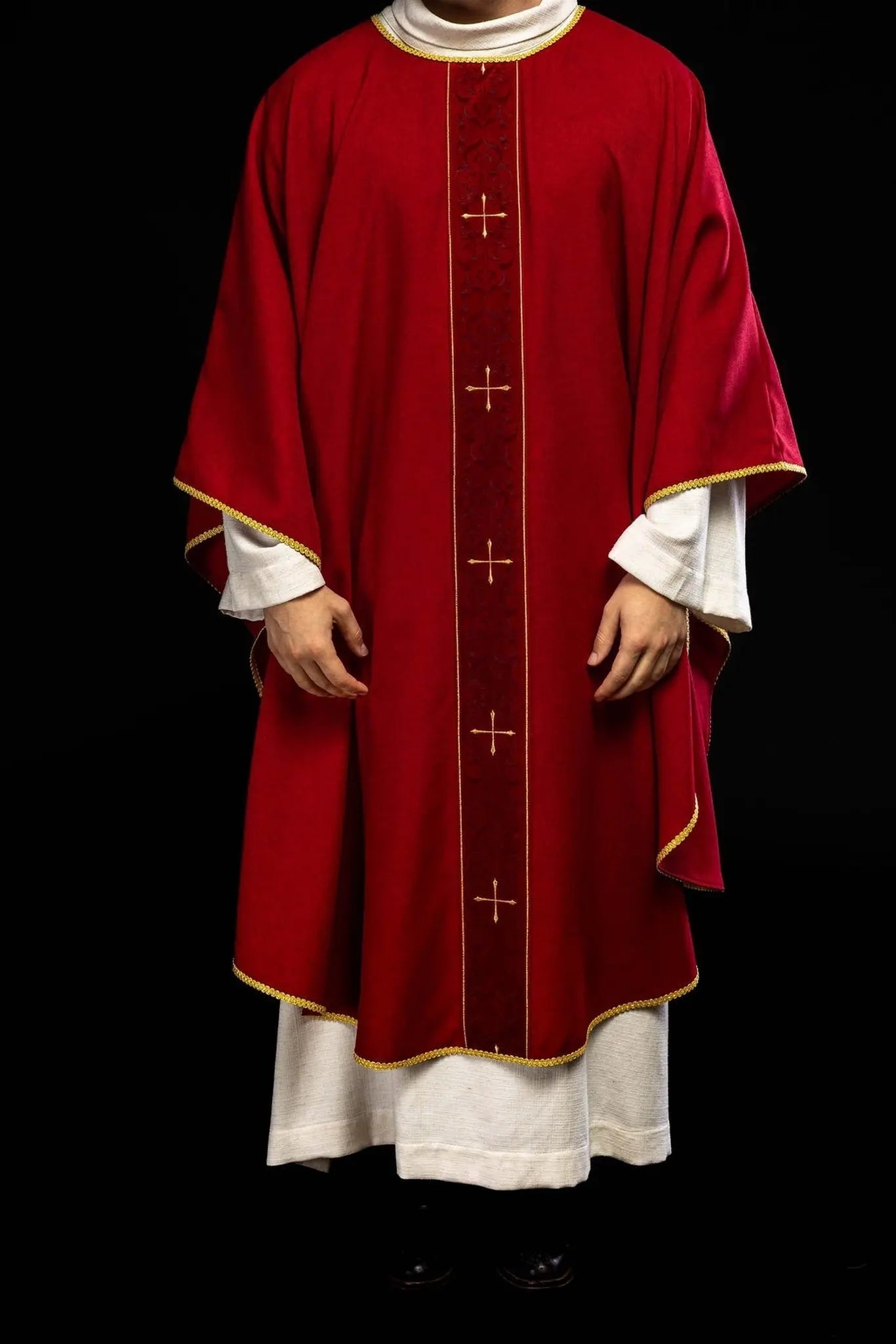
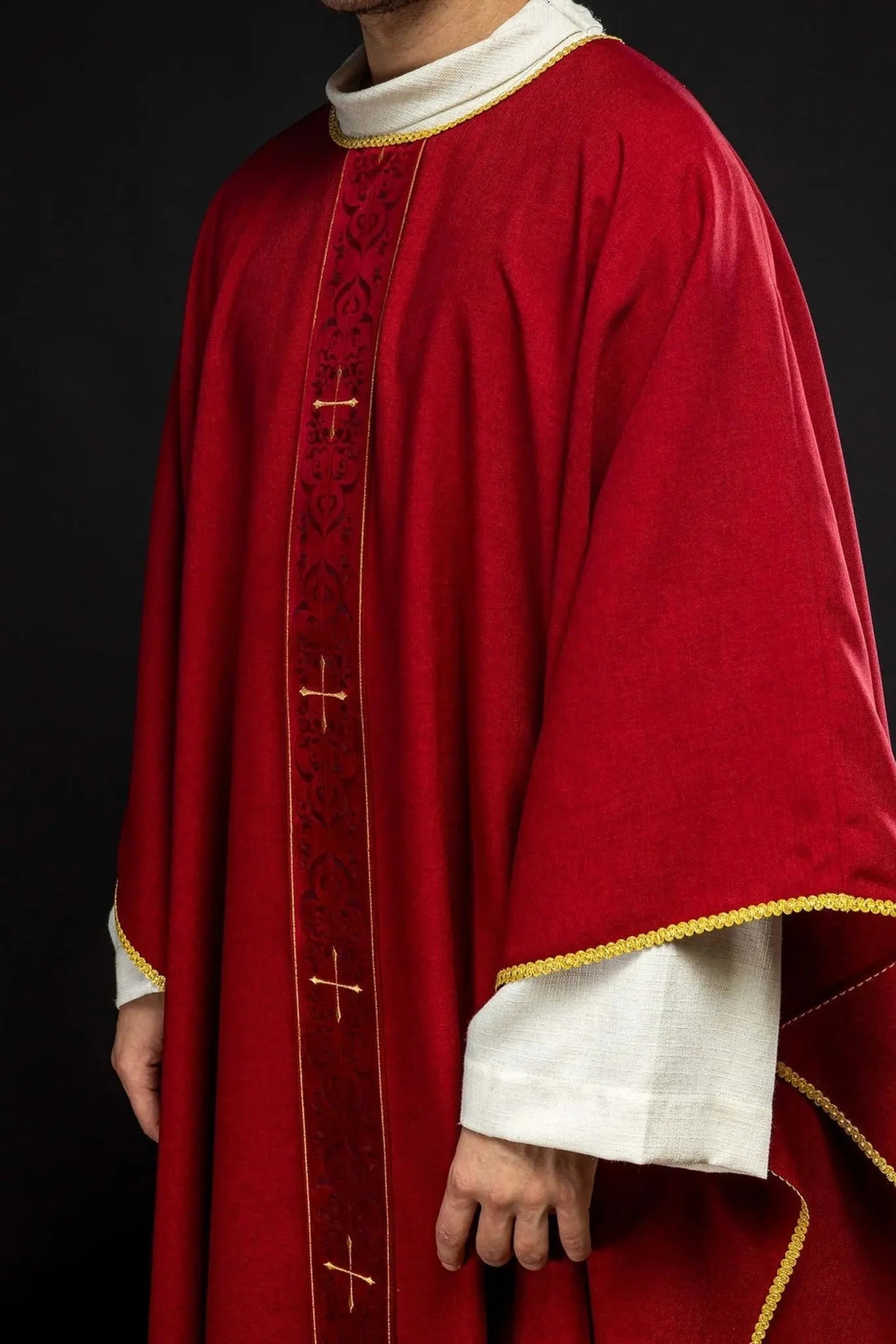
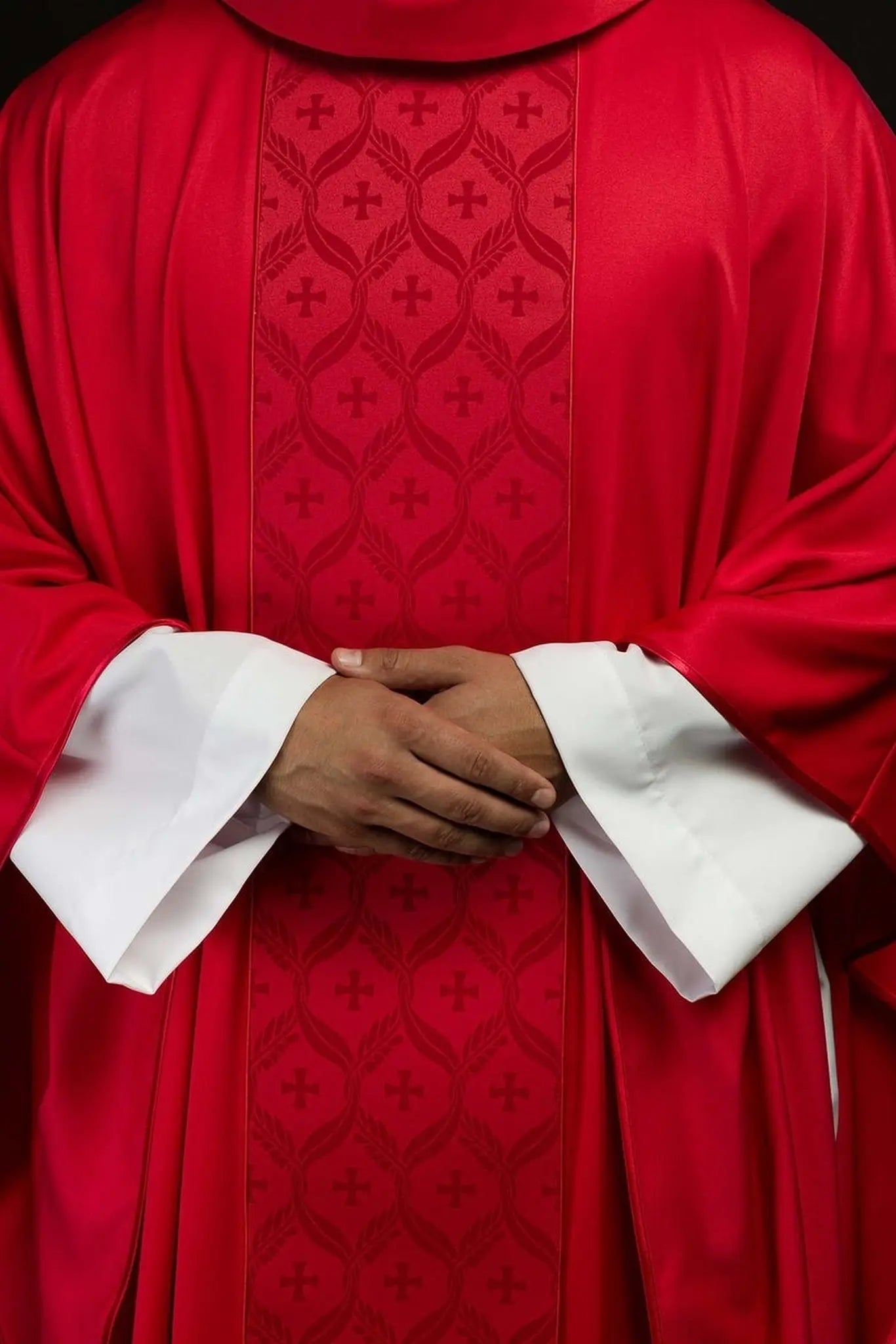
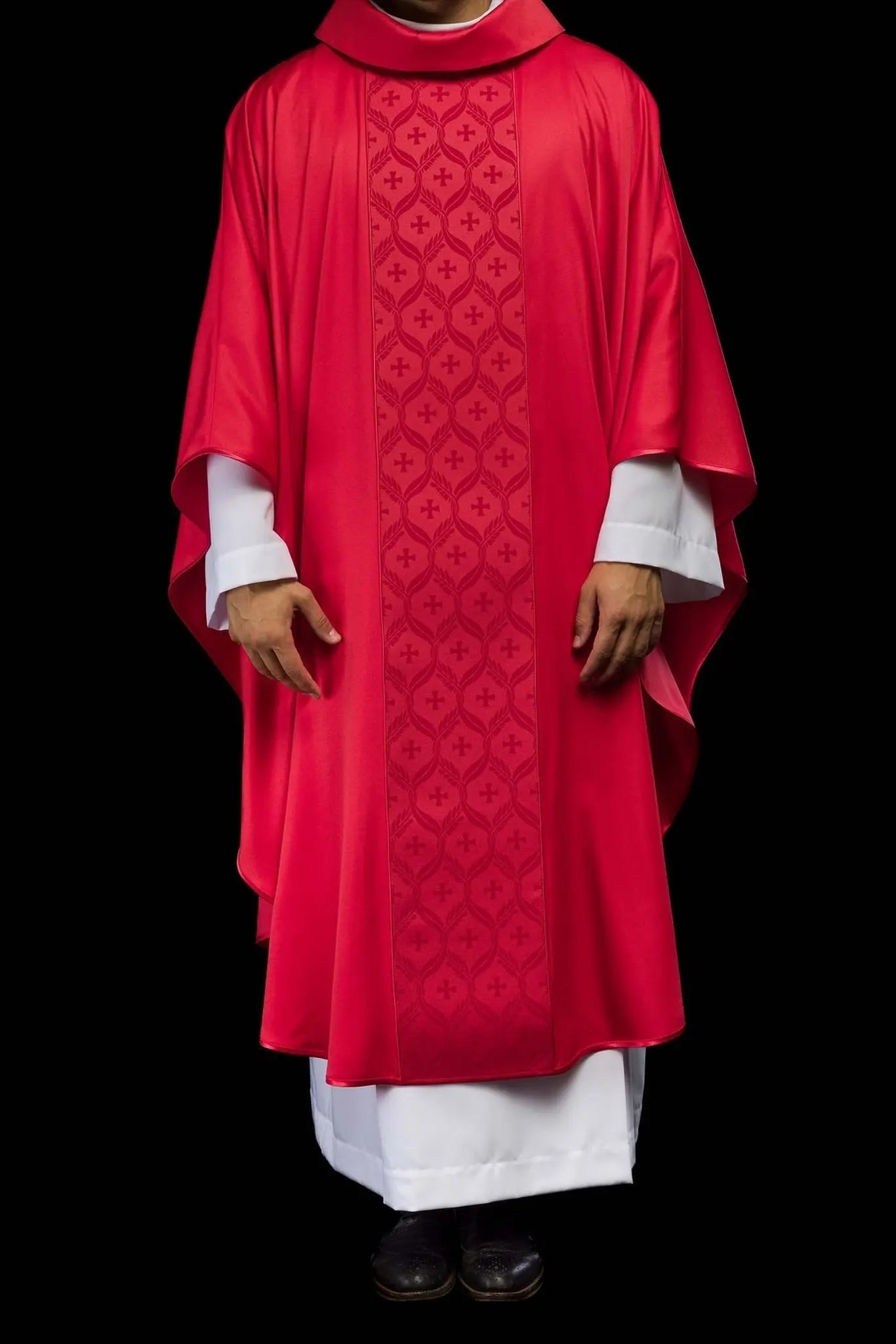
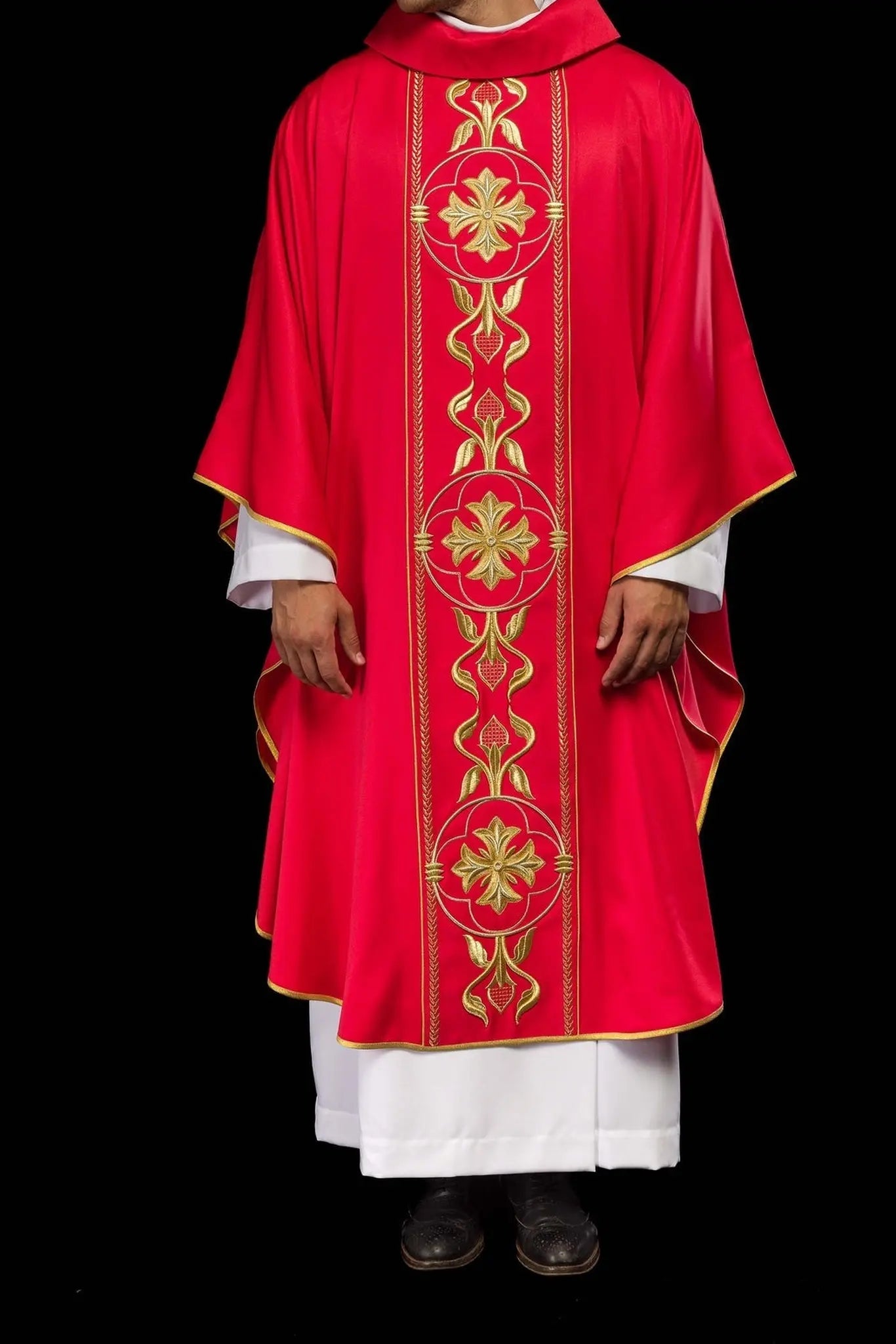
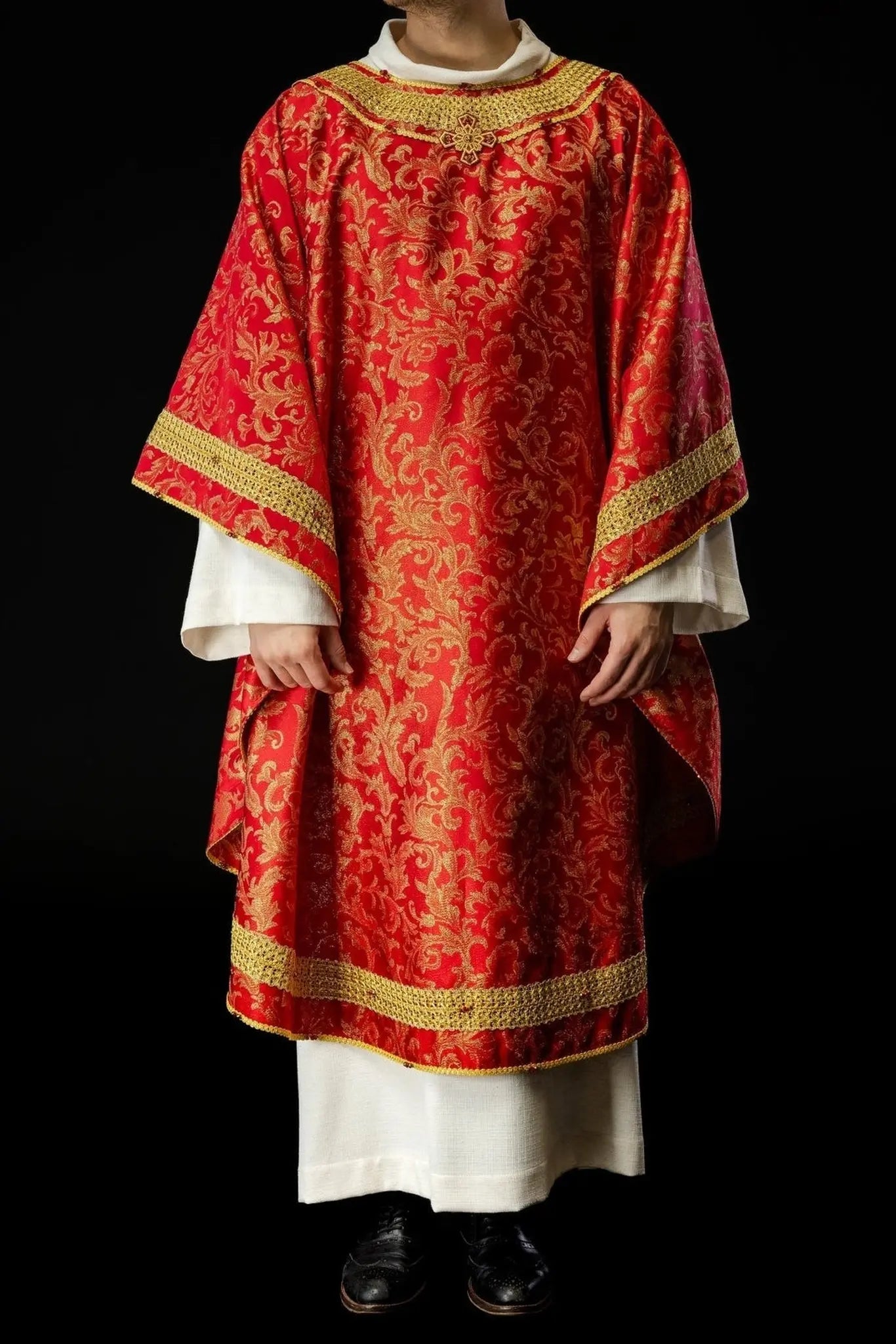
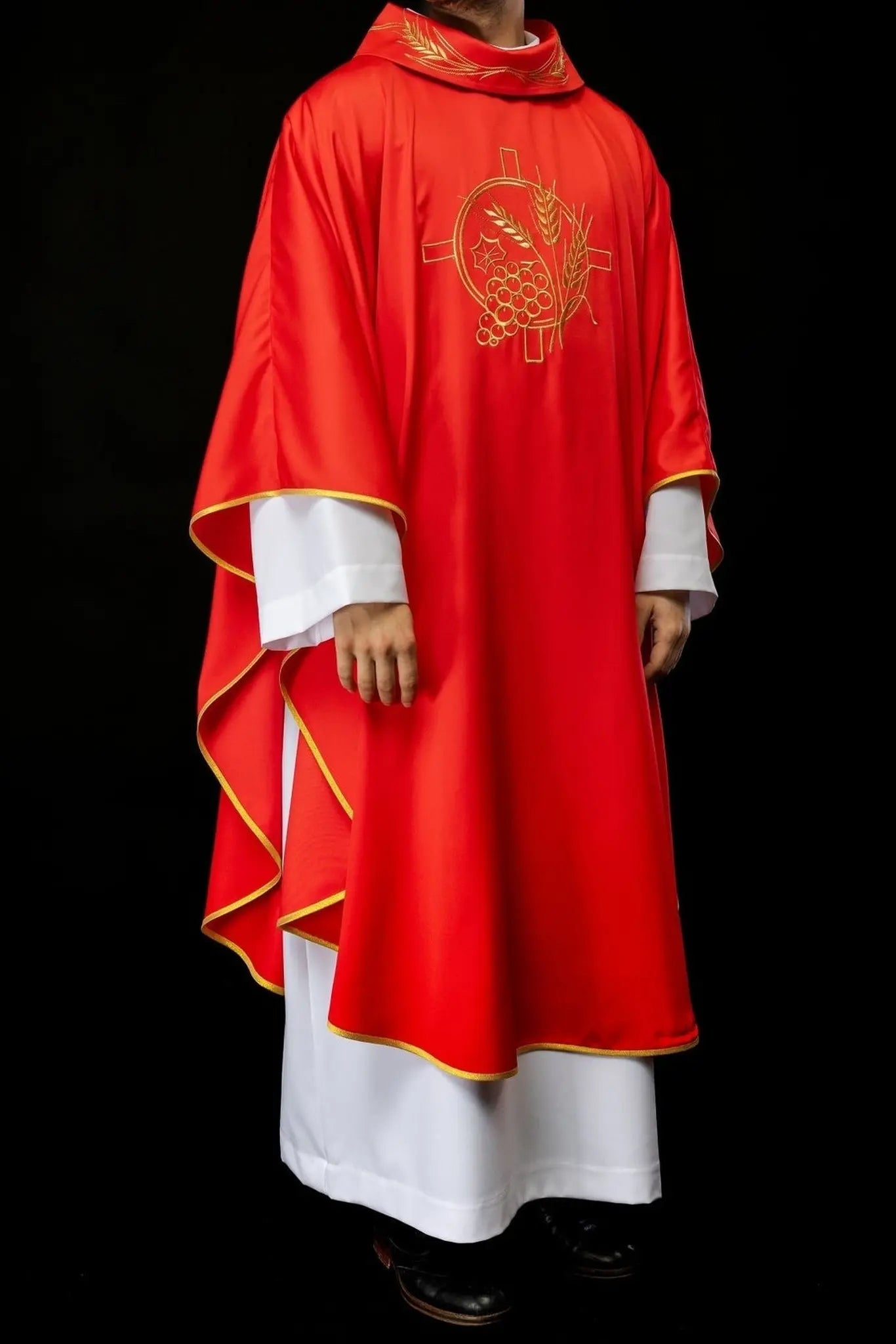
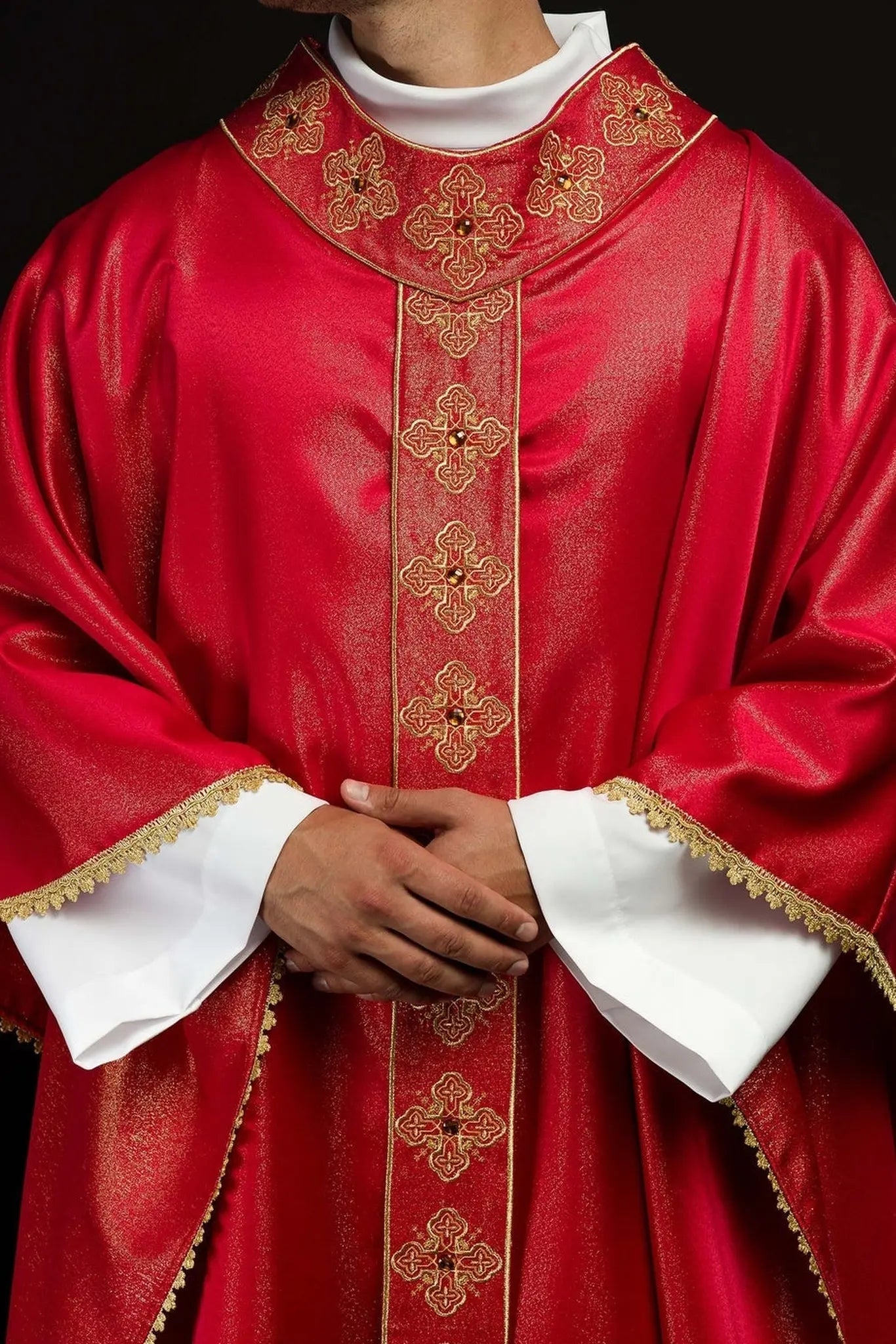
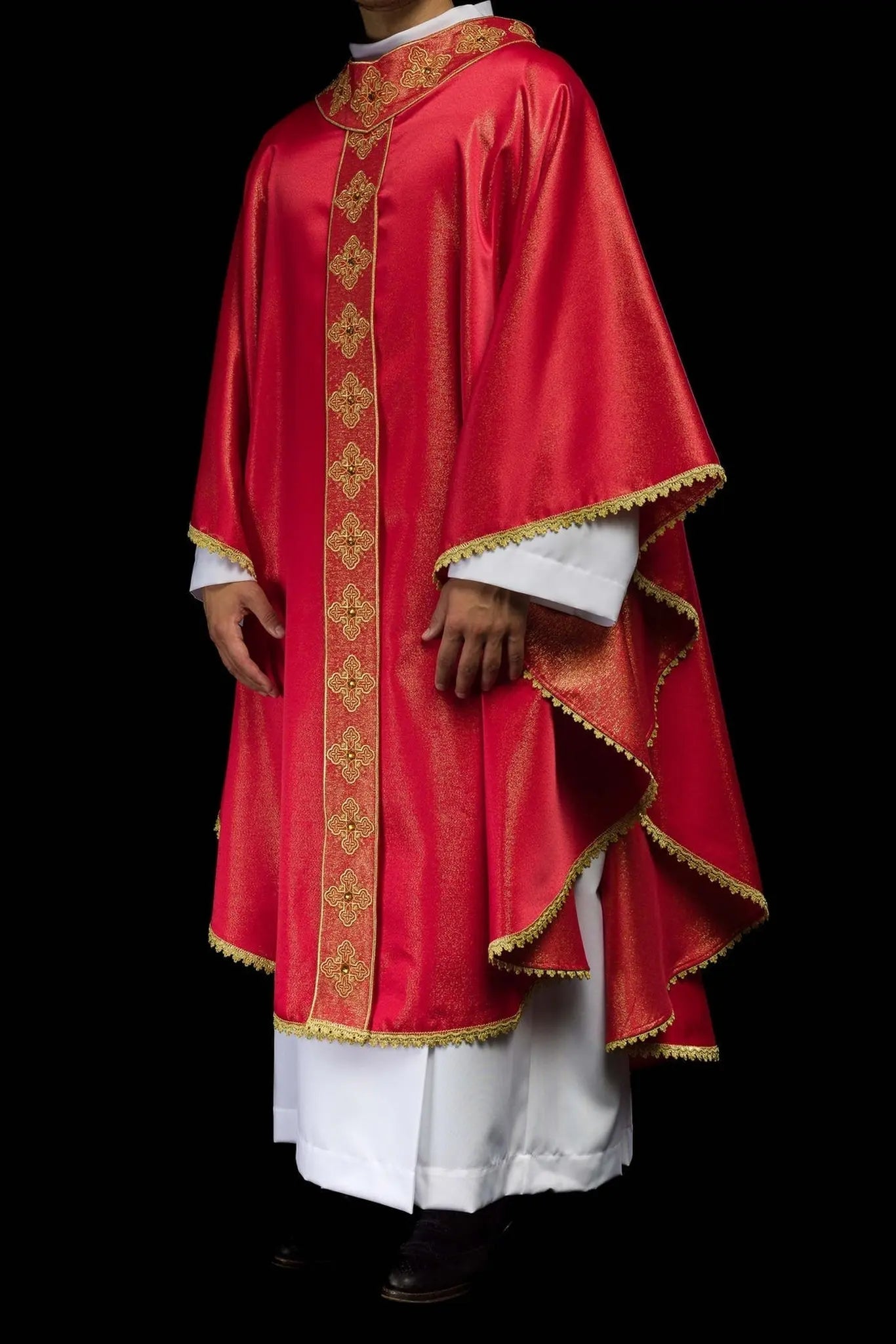
Red chasubles are liturgical vestments worn by priests and bishops when the Church celebrates the mystery of Christ's Passion, the witness of the martyrs, and the fire of the Holy Spirit. This collection gathers red chasubles for solemn Masses, feast days, parish celebrations, chapel use, and clergy vestment sets where a clear, dignified red color is required. The chasuble is the principal Eucharistic vestment of the celebrant, so its color, cut, fabric, and ornament should support the character of the liturgy without distracting from it.
In the Roman Catholic liturgical calendar, red is used above all on Palm Sunday, Good Friday, Pentecost, celebrations of the Lord's Passion, feasts of the Apostles and Evangelists, and memorials or feasts of martyrs. It can also appear in votive Masses connected with the Holy Spirit, the Precious Blood, or themes of sacrifice and witness. For parishes preparing a complete sacristy wardrobe, red belongs alongside the other essential chasuble colors available in the wider chasubles collection.
The liturgical meaning of red chasubles
Red carries several connected meanings in Christian worship. It recalls the blood of Christ poured out in the Passion, the blood of martyrs who gave witness to the faith, and the living flame of the Holy Spirit given to the Church at Pentecost. Because of this rich symbolism, a red chasuble should feel strong, reverent, and clearly liturgical. It is not simply a decorative garment; it helps the congregation recognize the day, the mystery being celebrated, and the theological tone of the Mass.
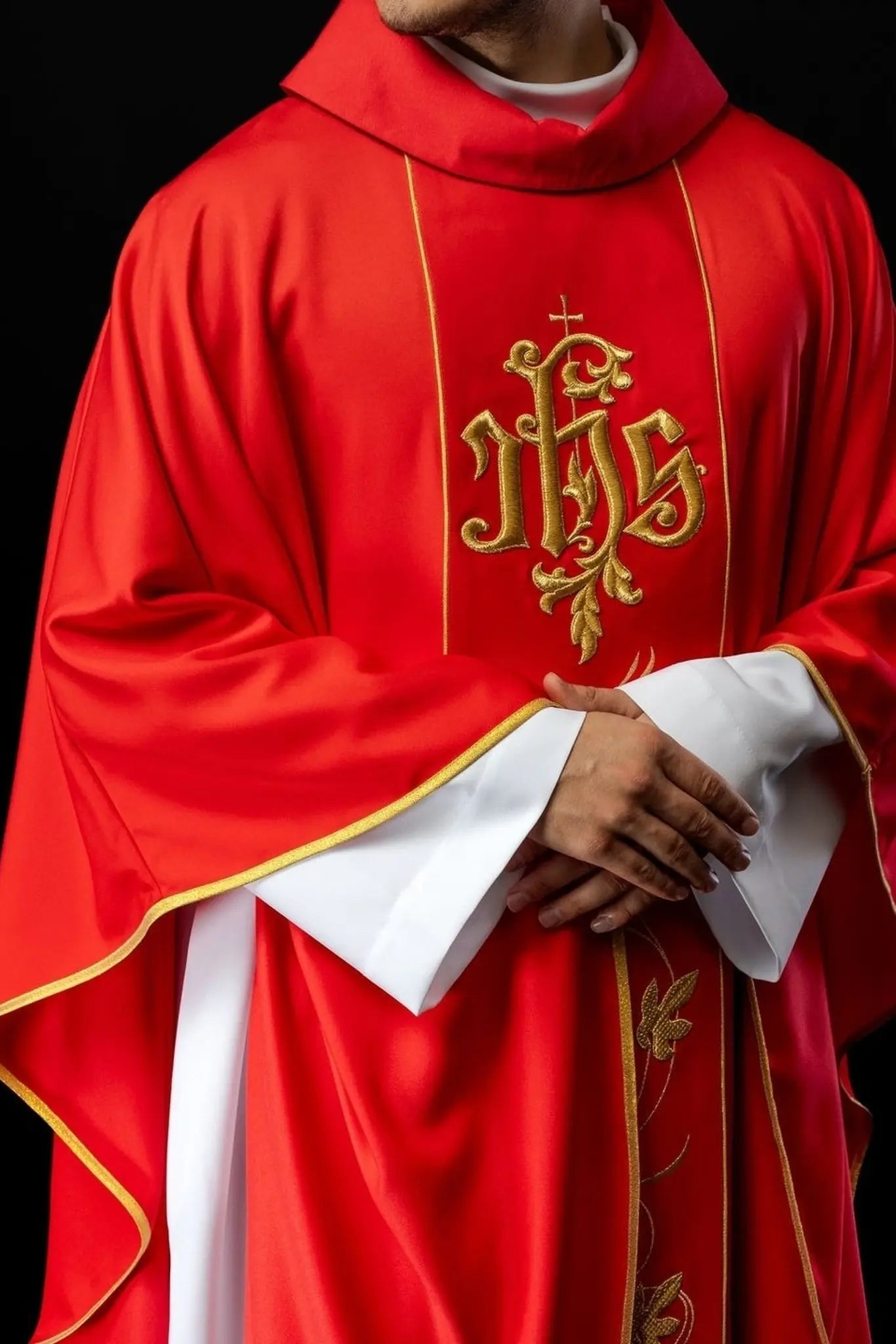
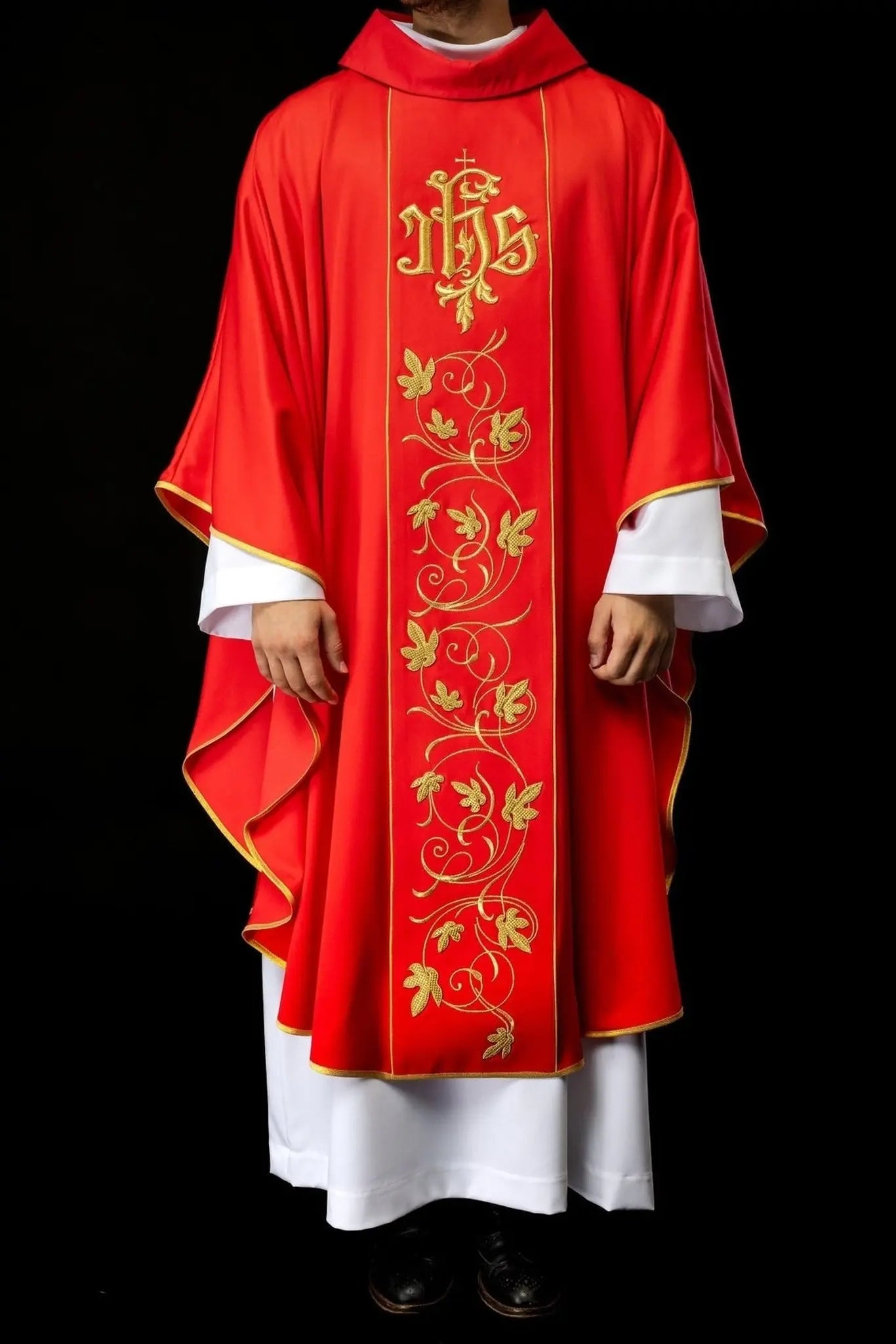
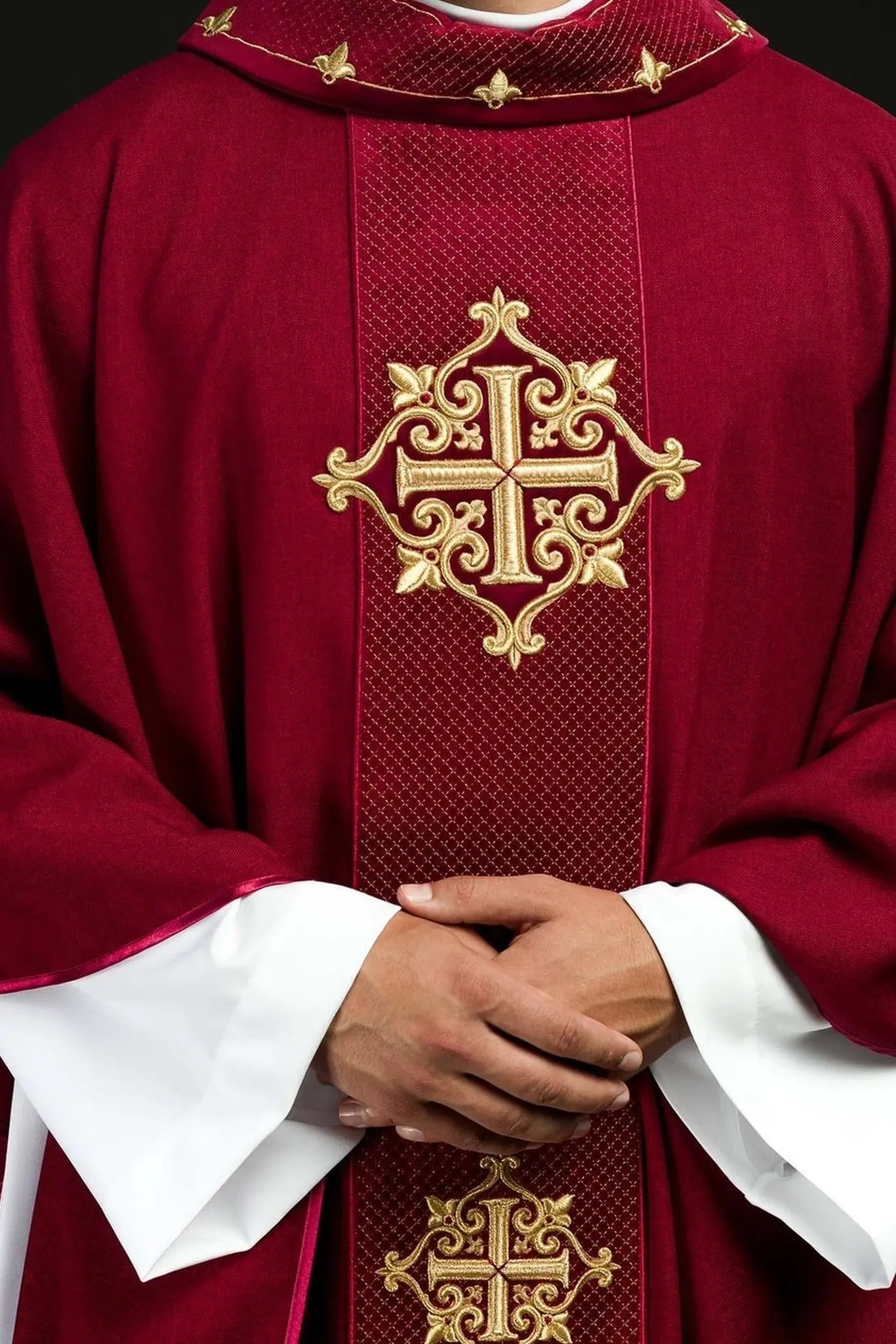
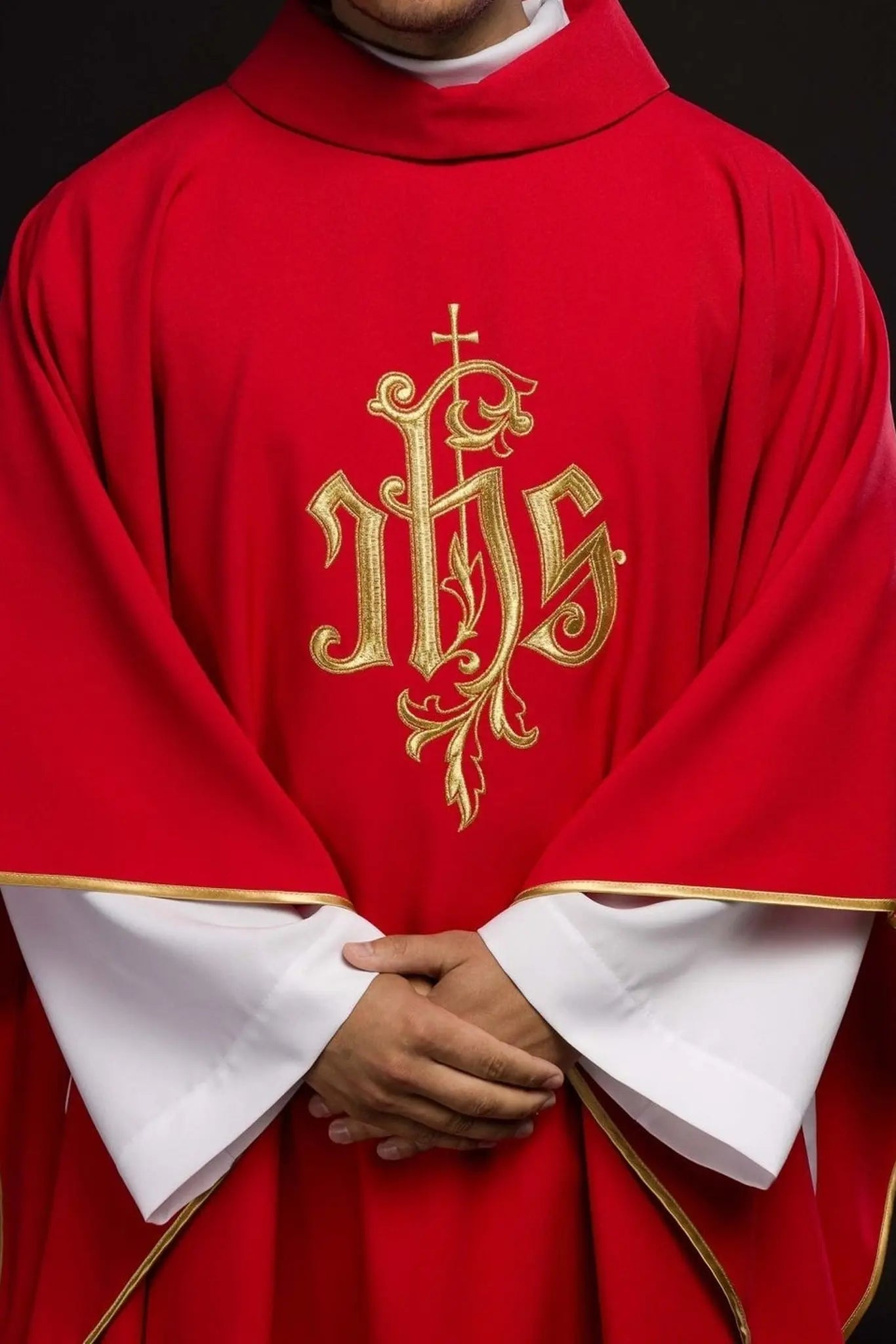
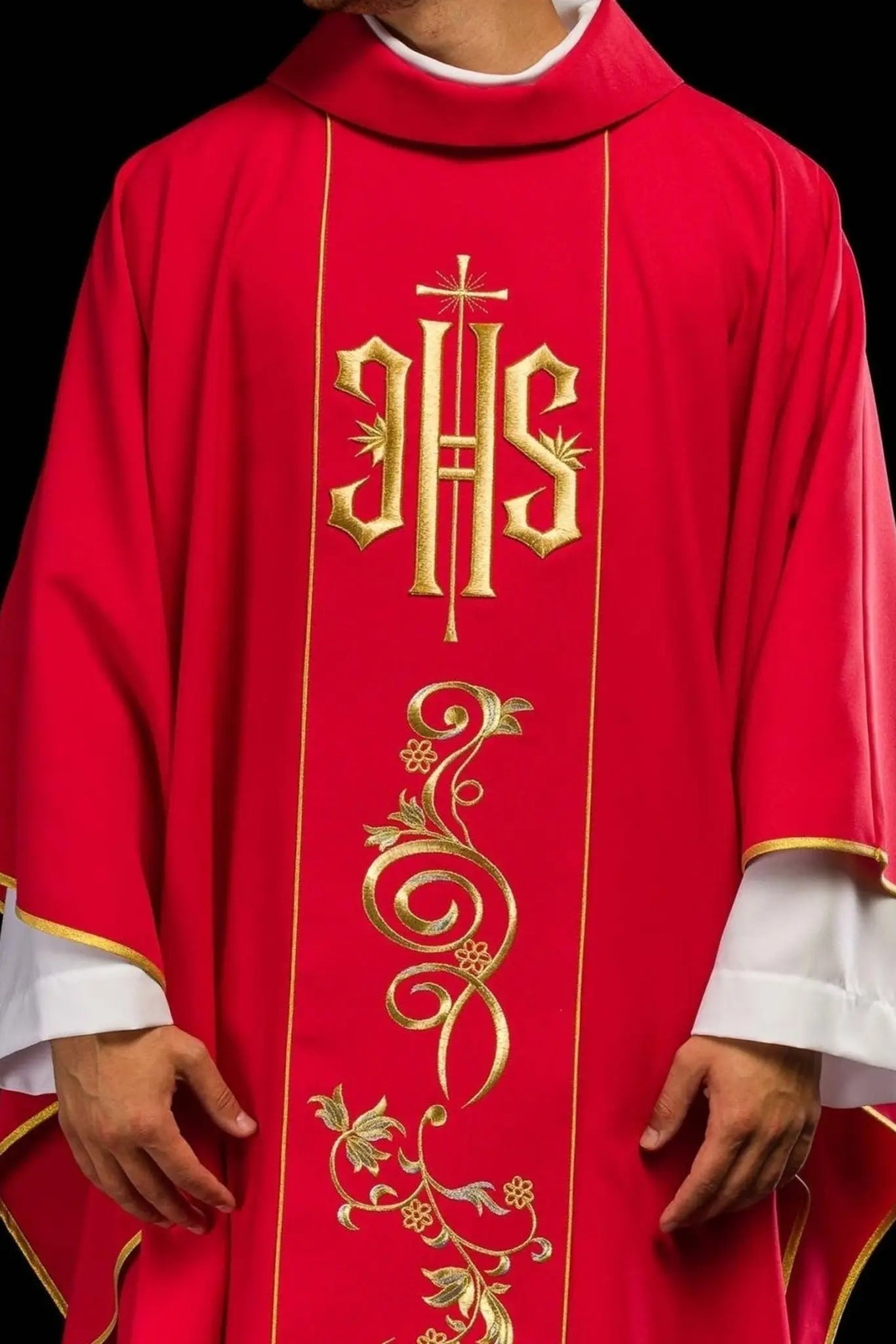
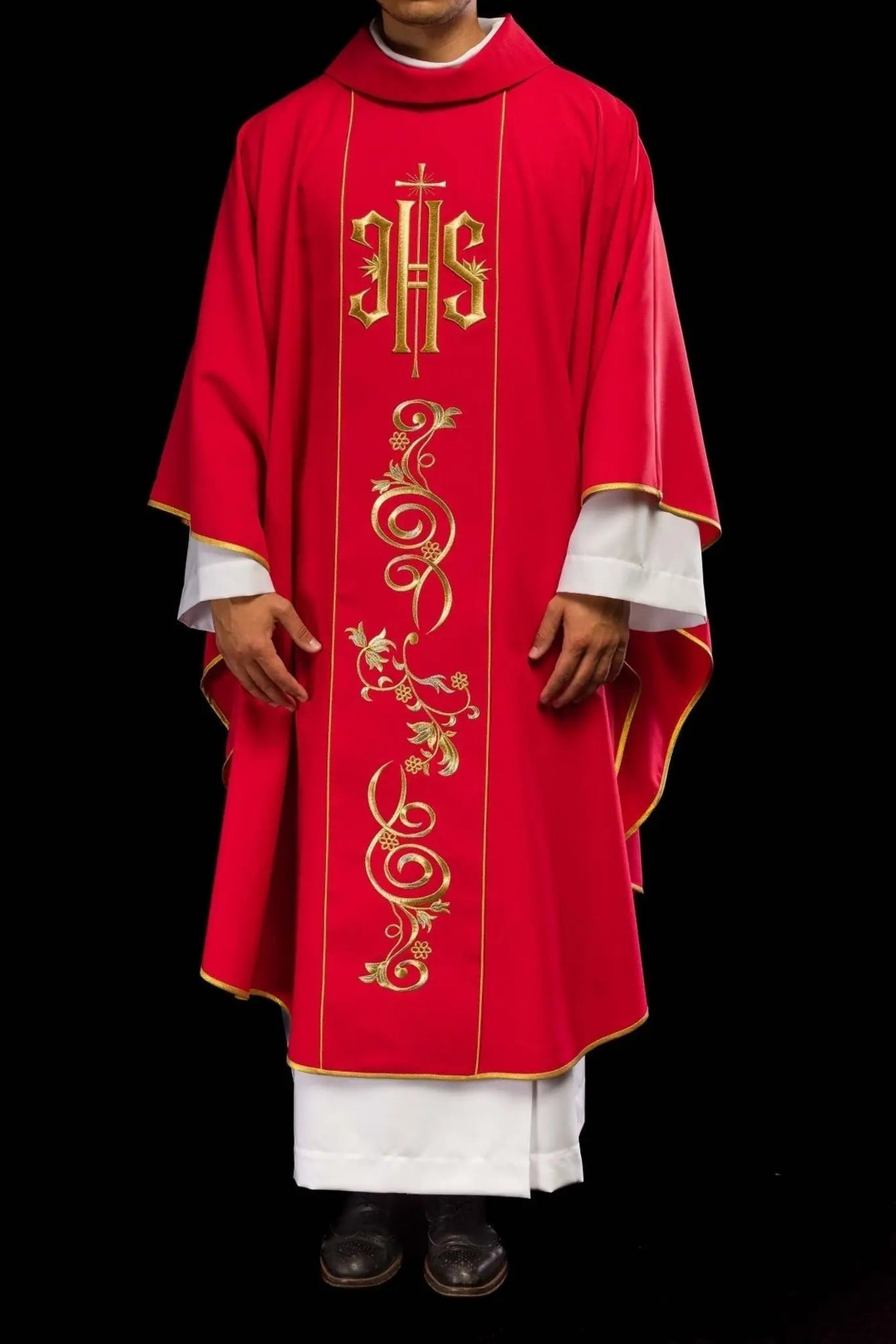
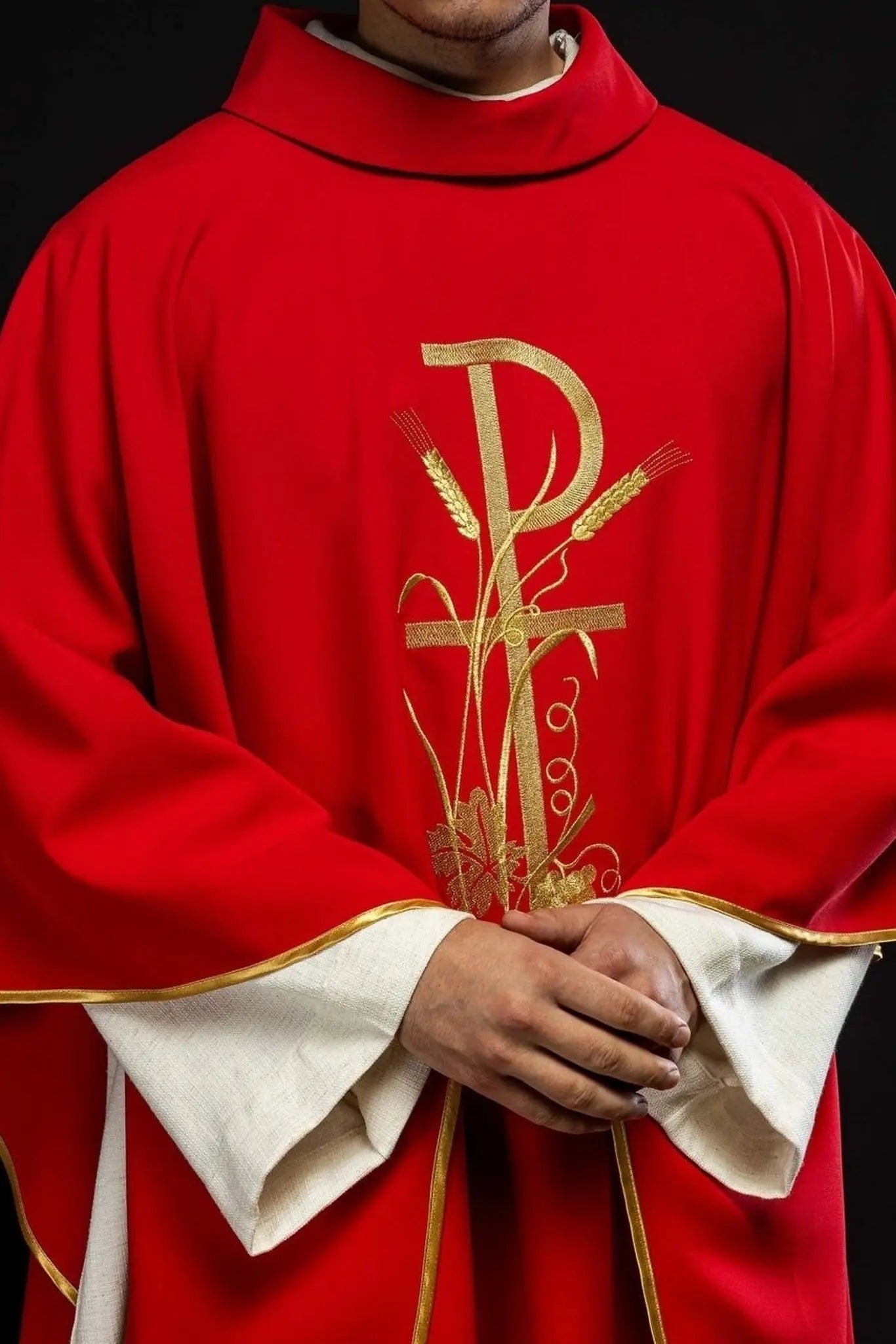
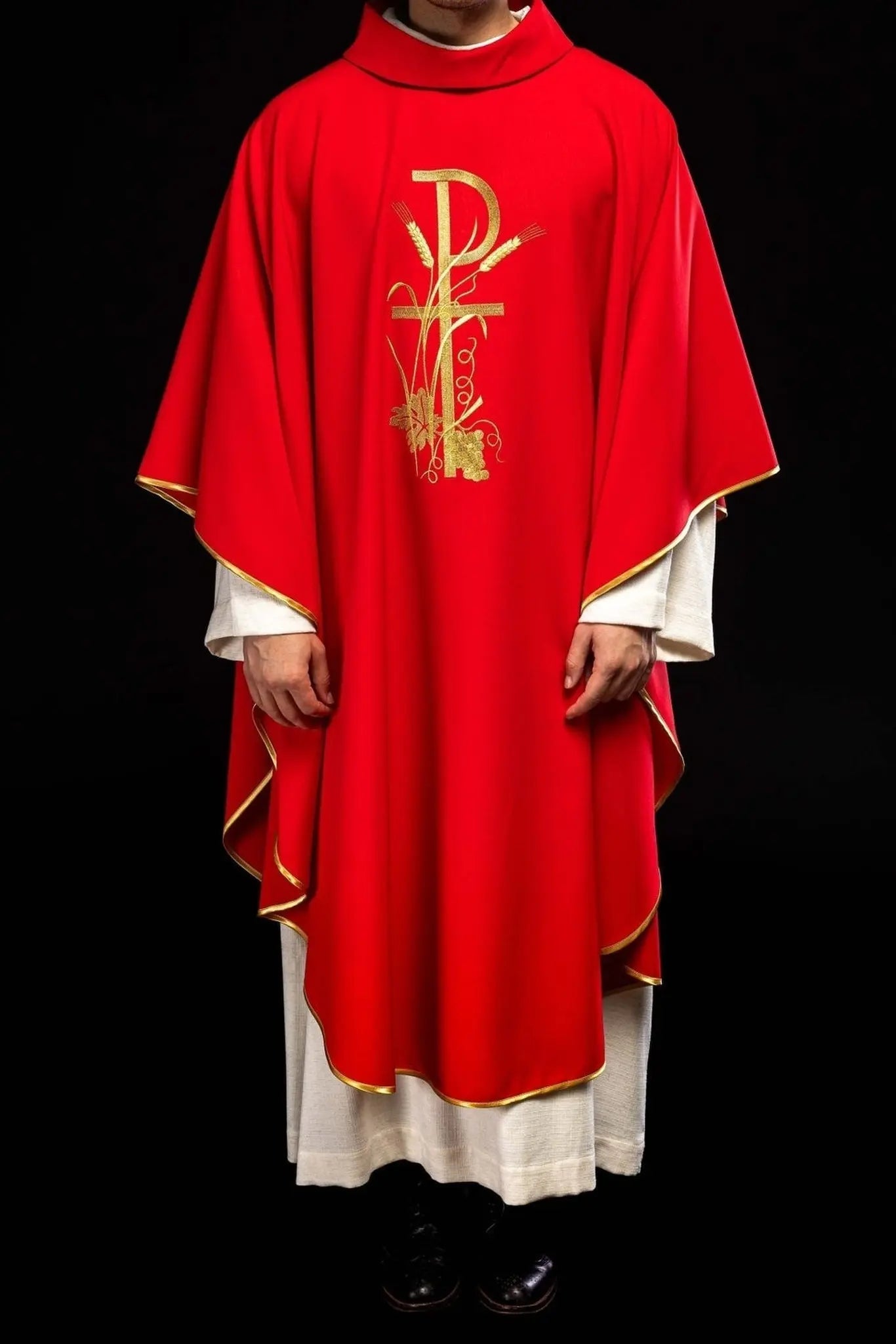
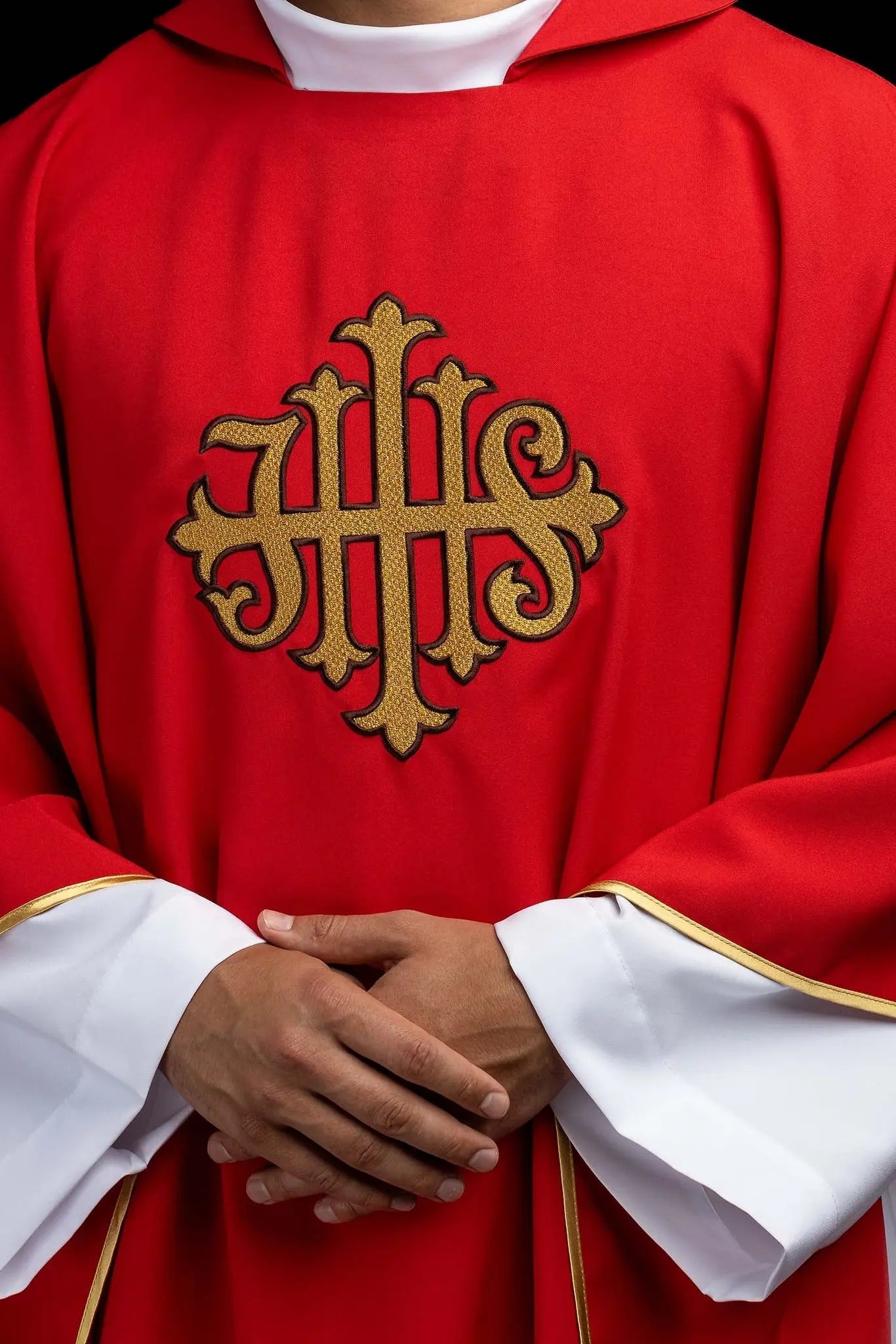
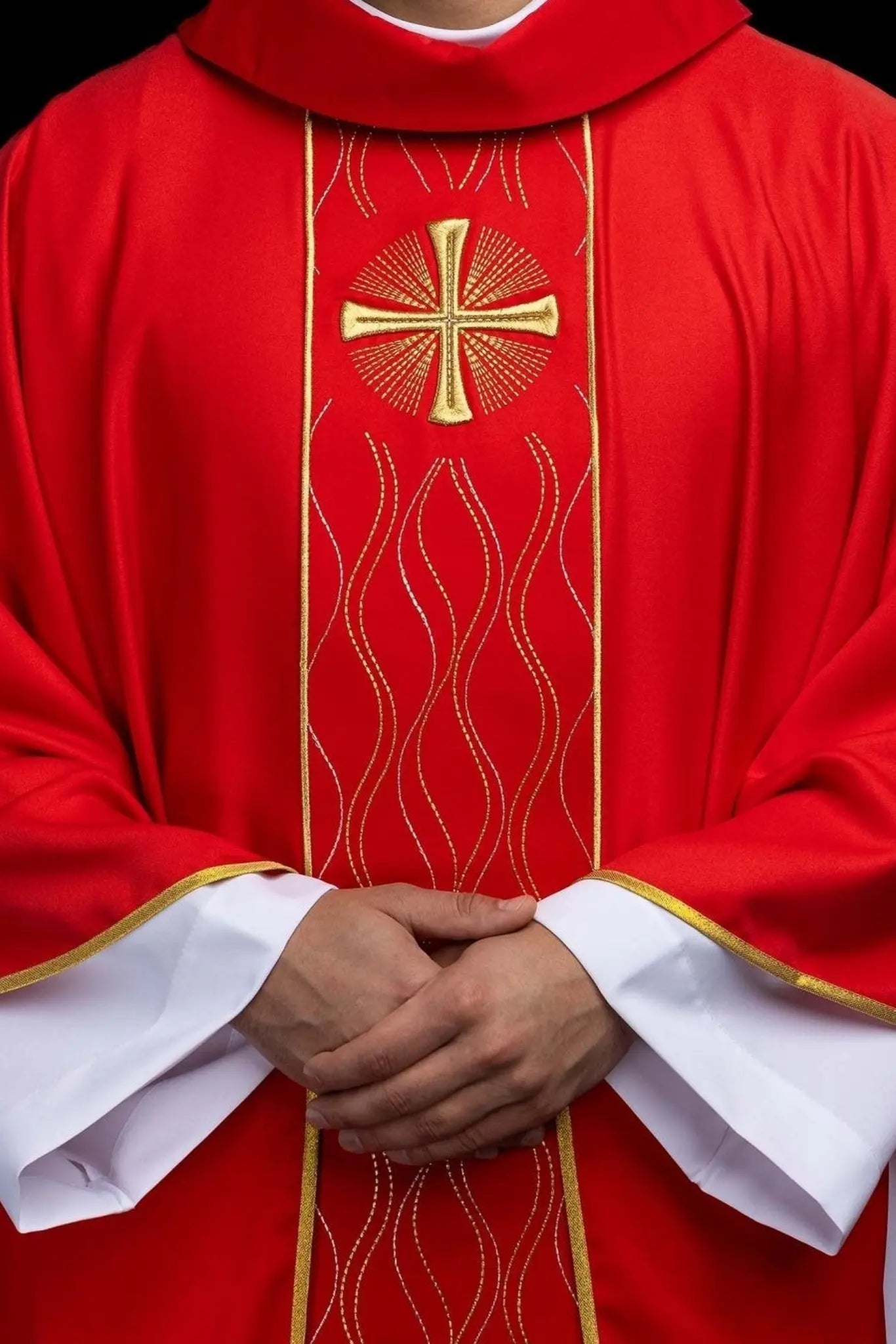
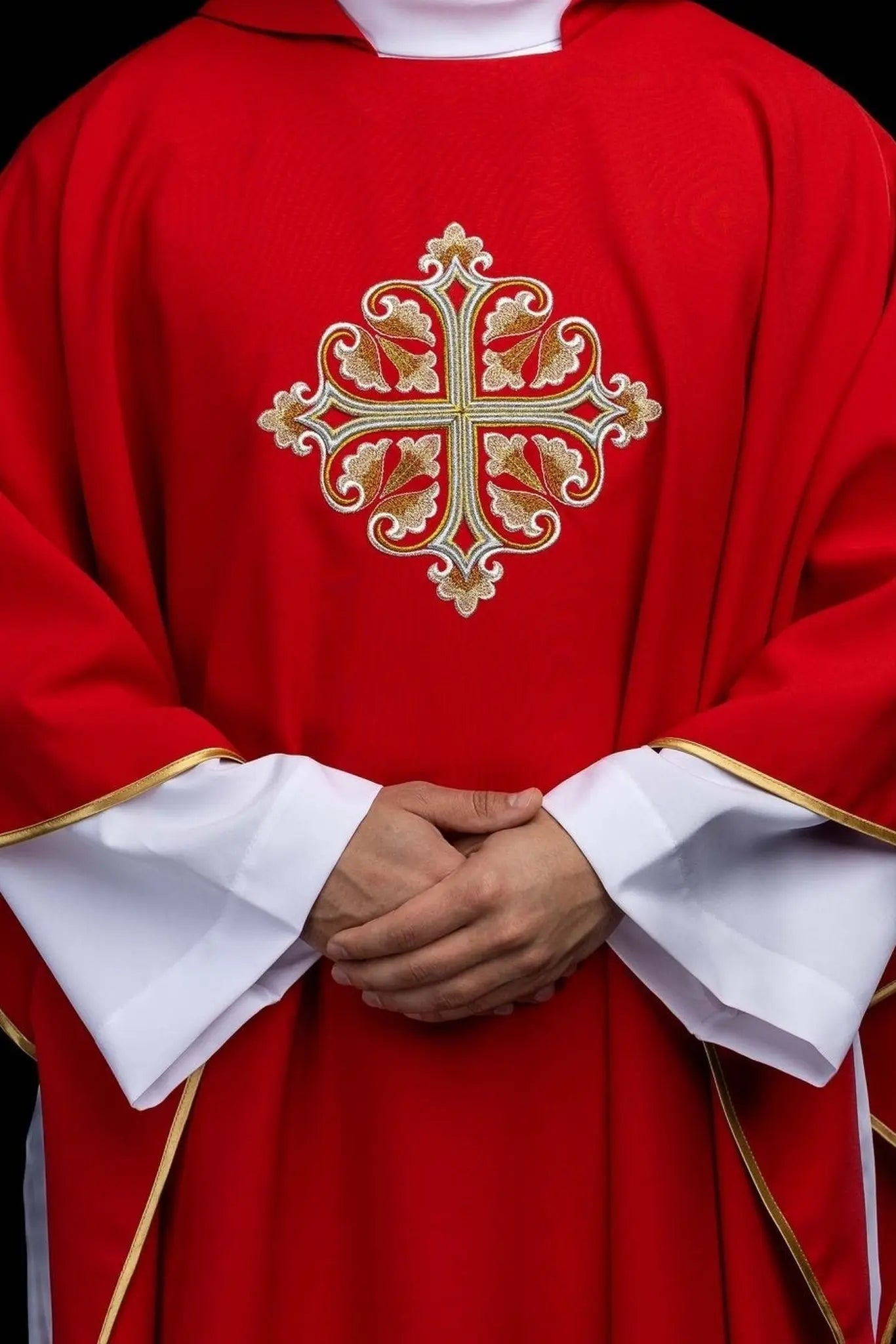
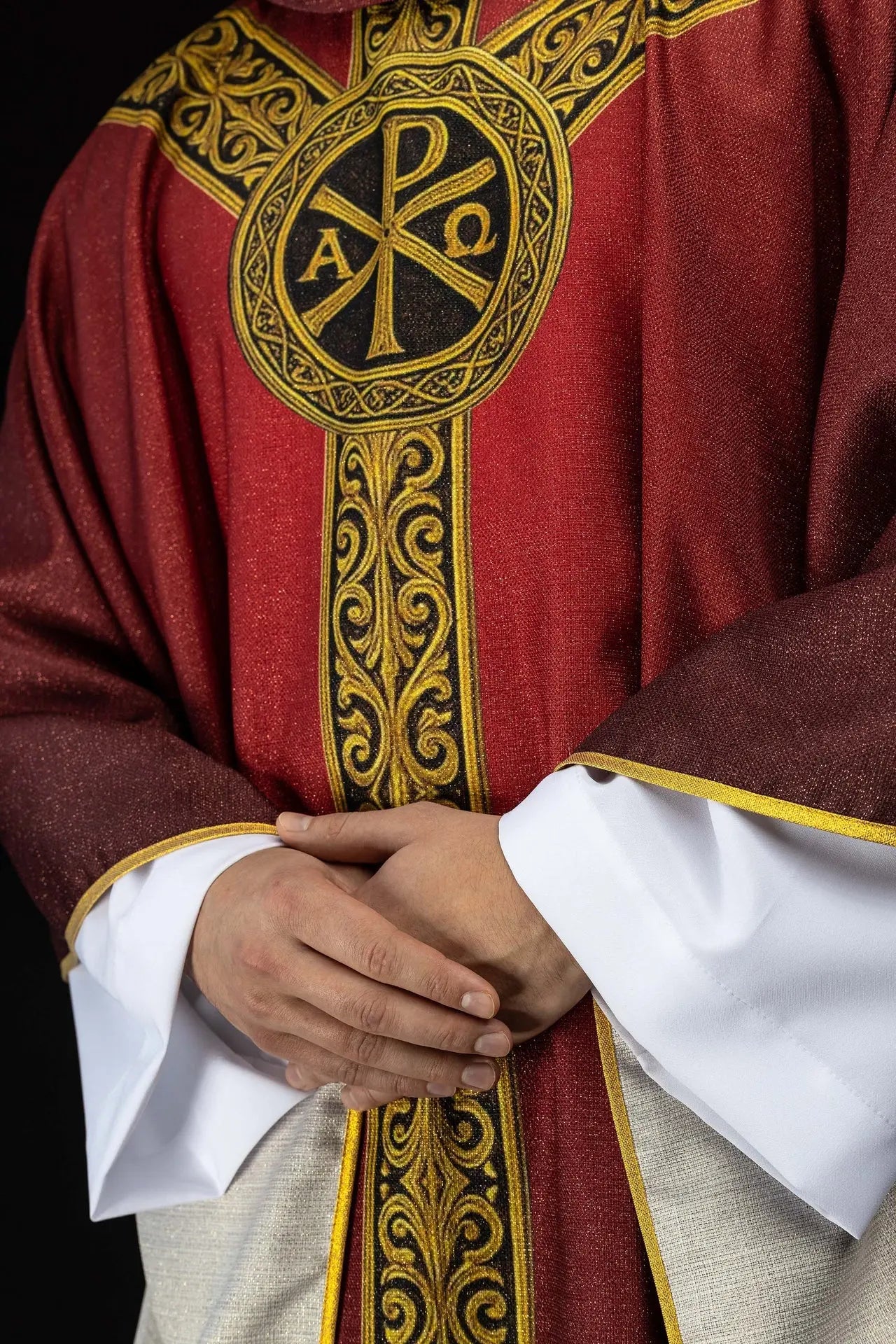
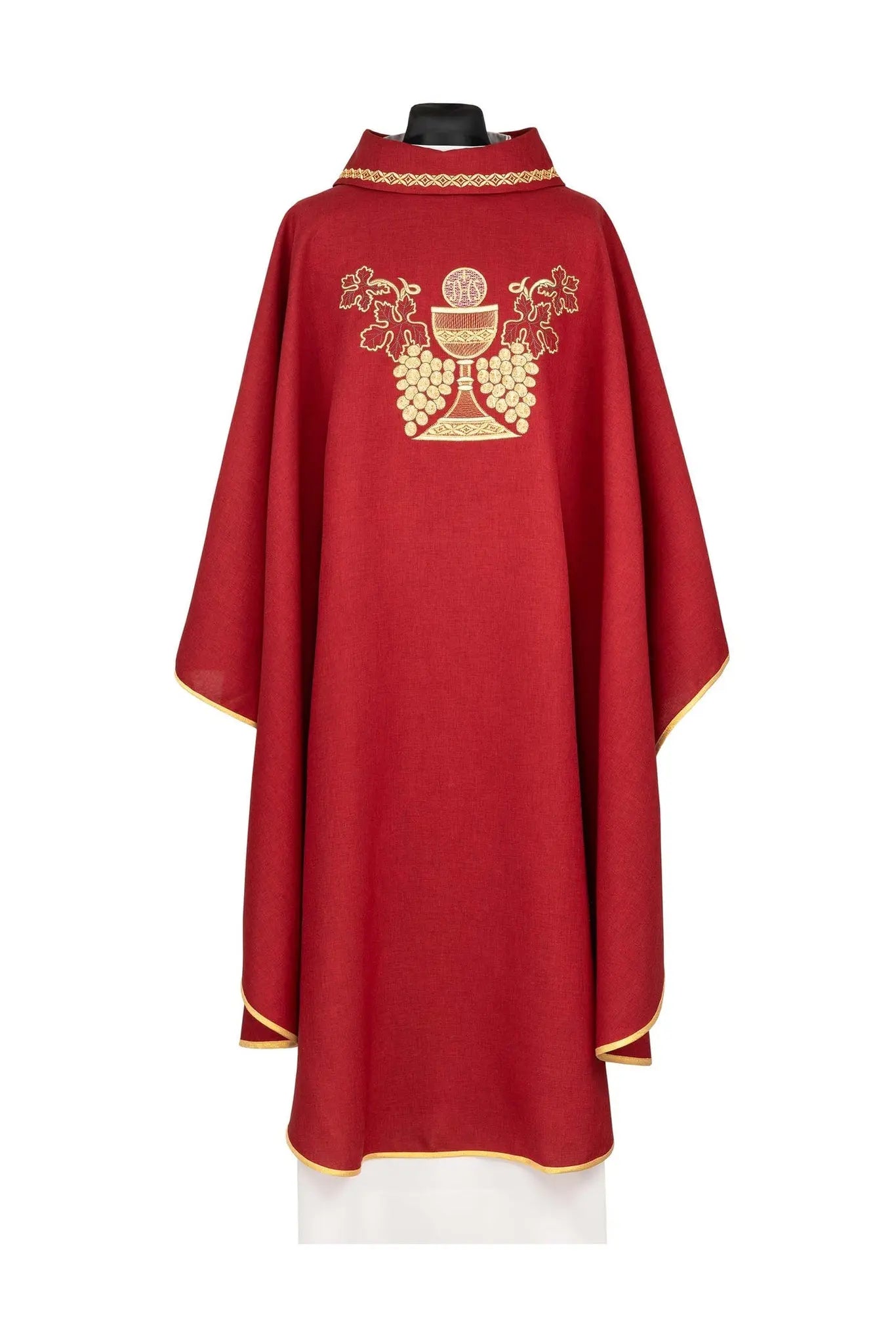
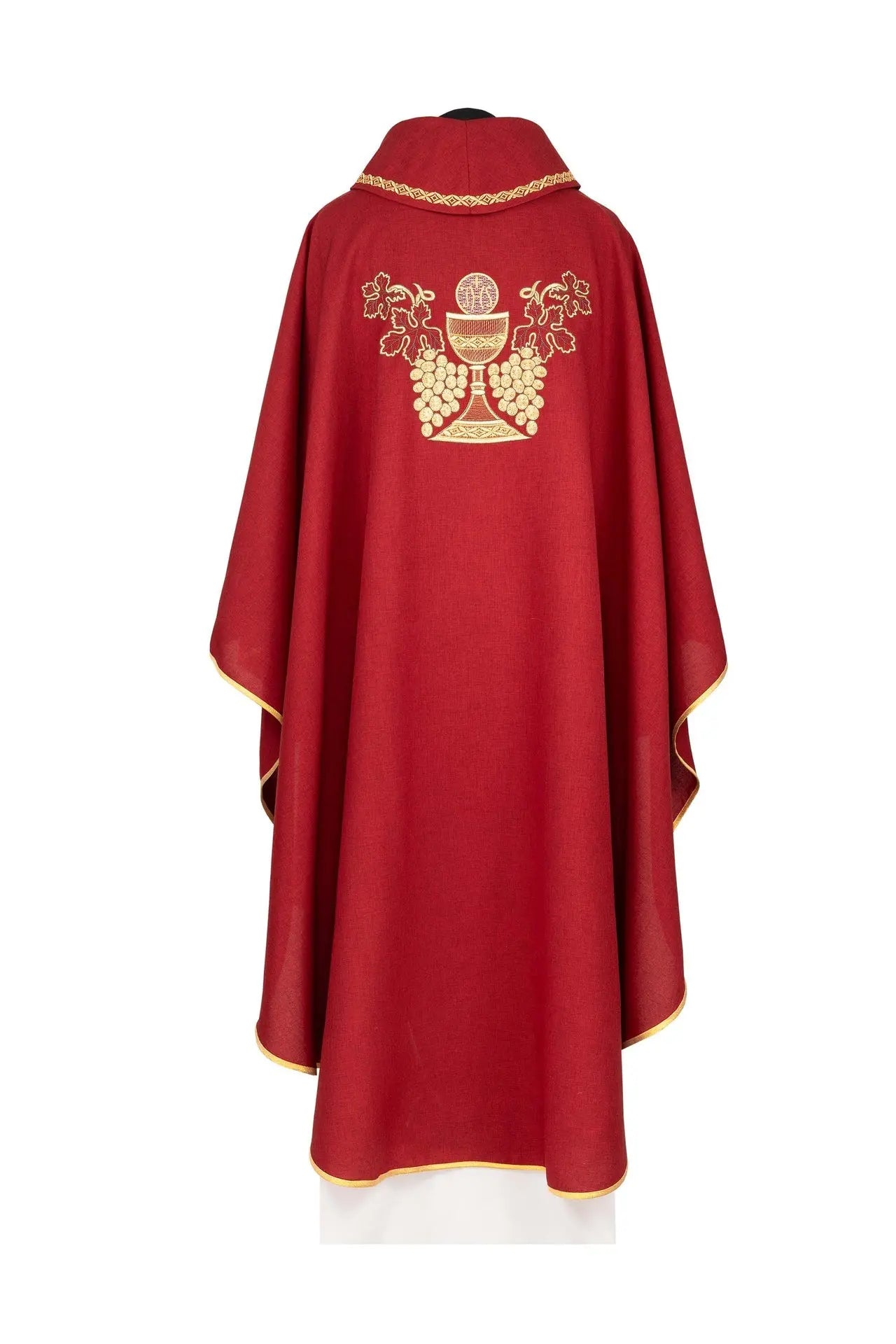
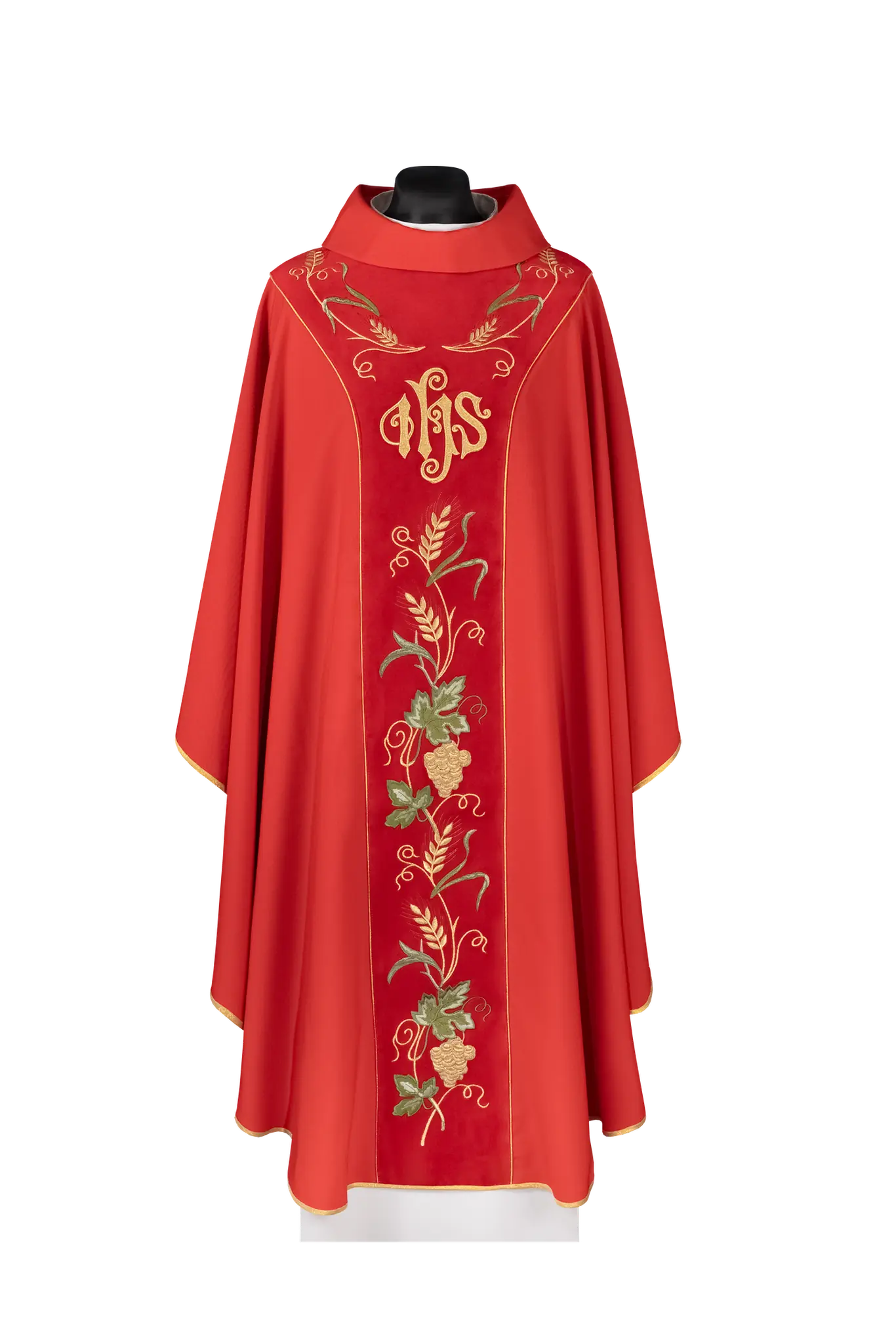
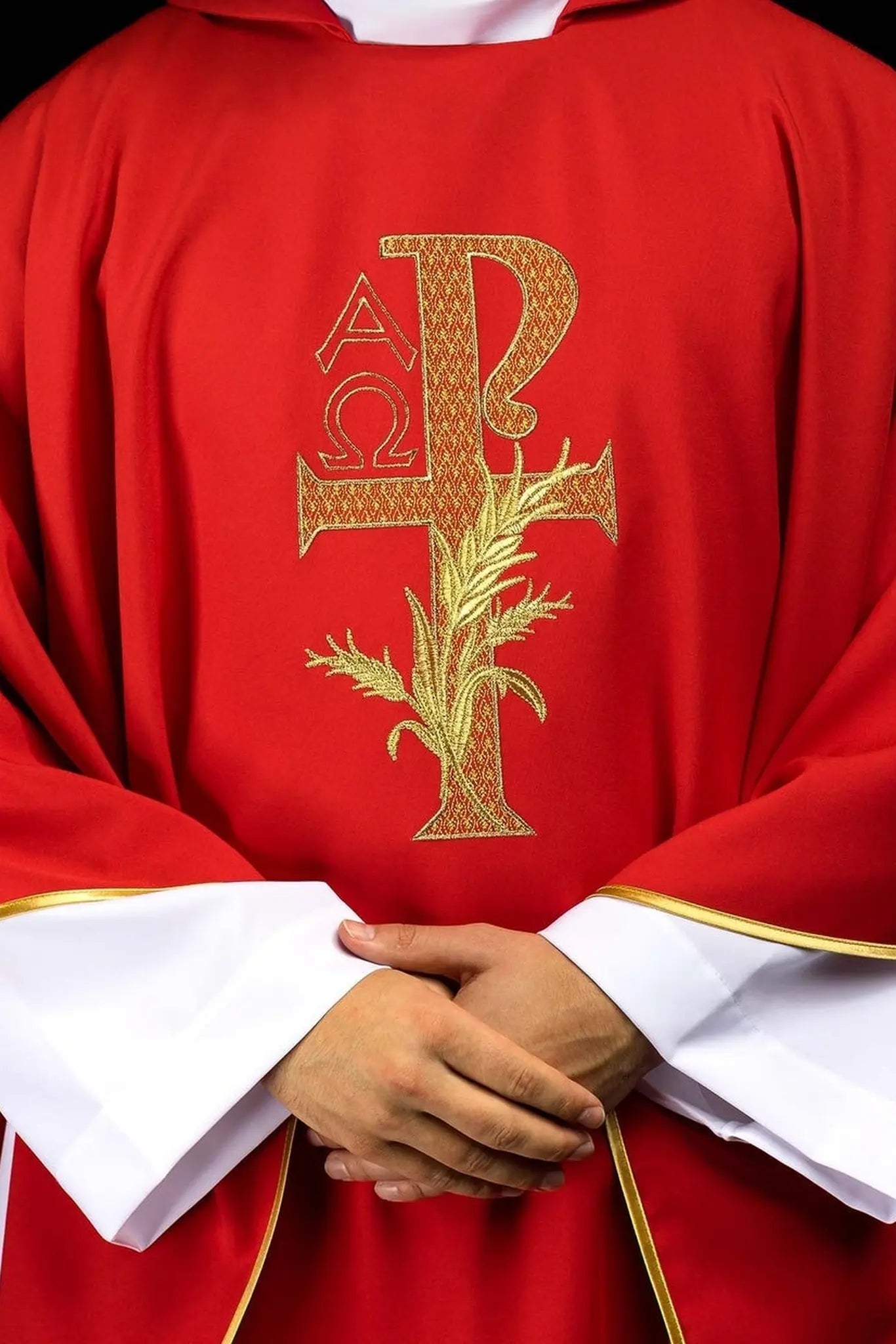
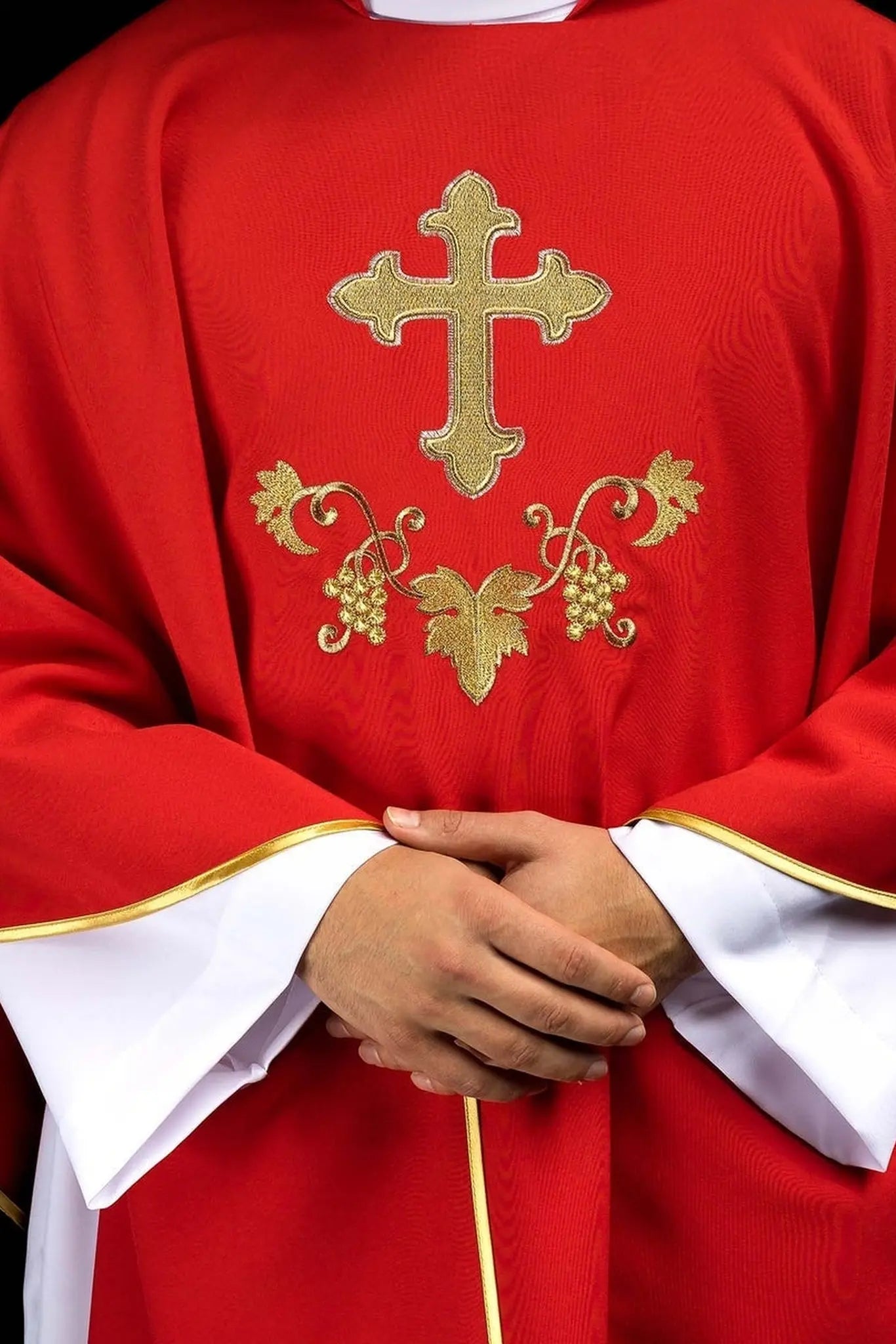
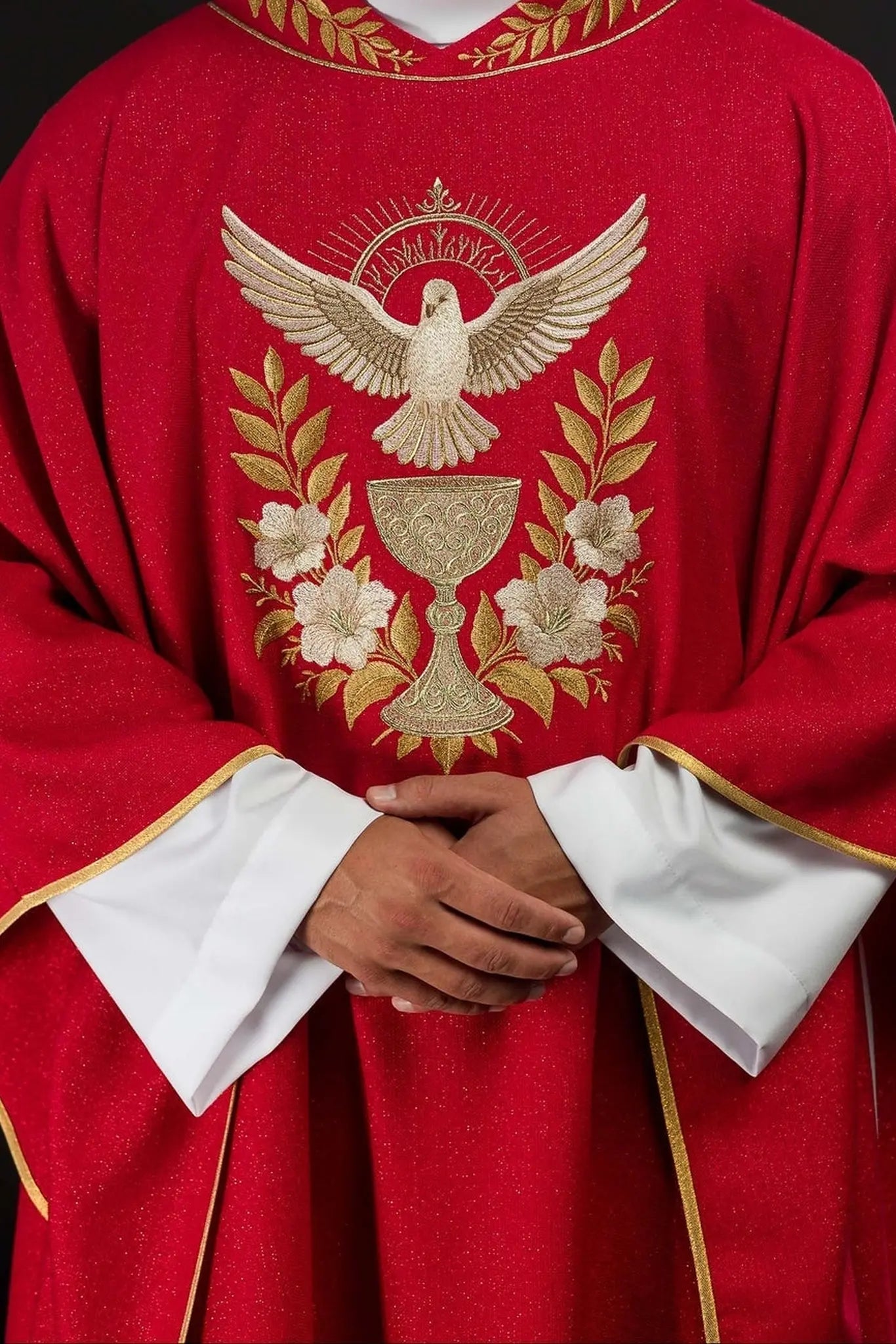
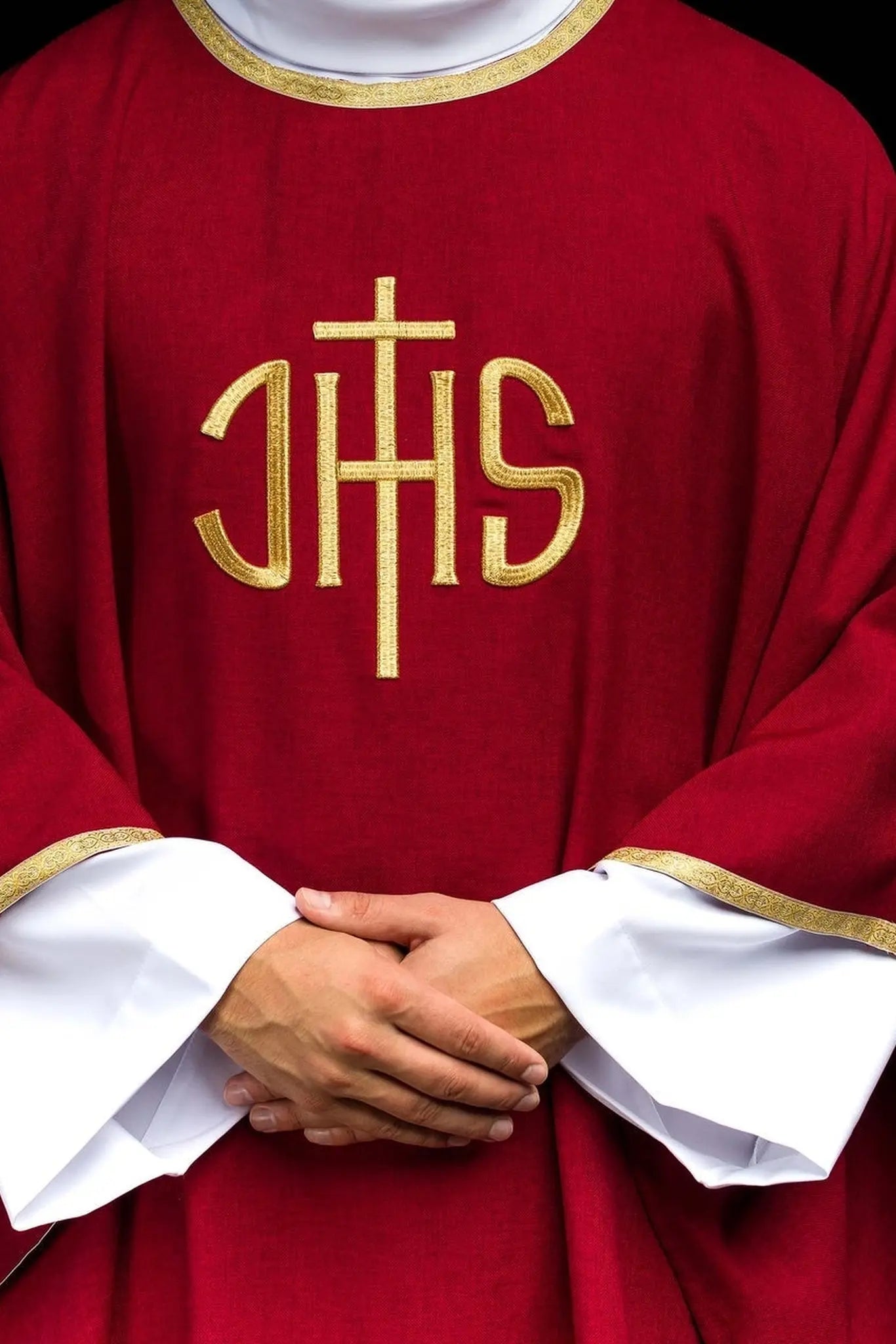
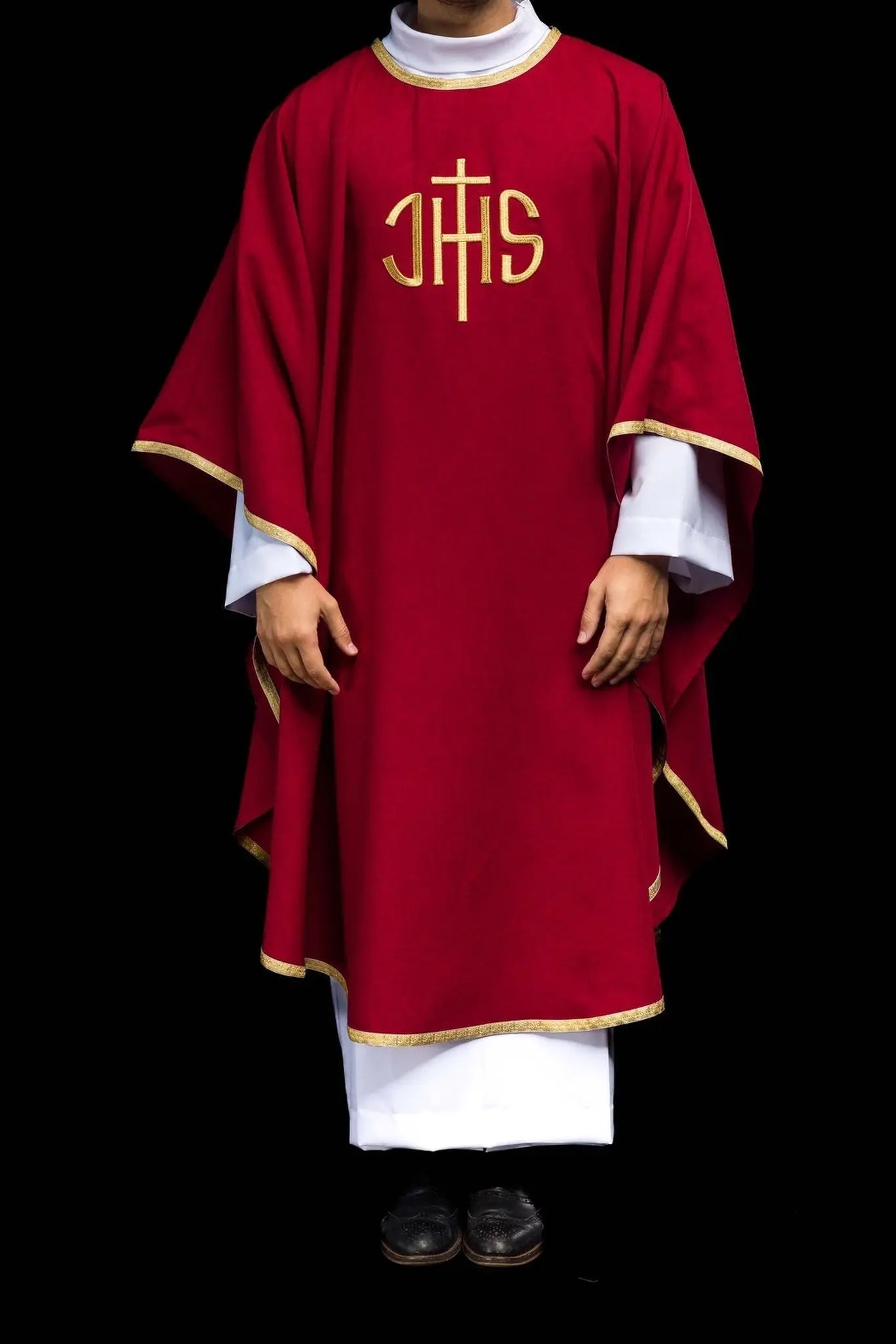
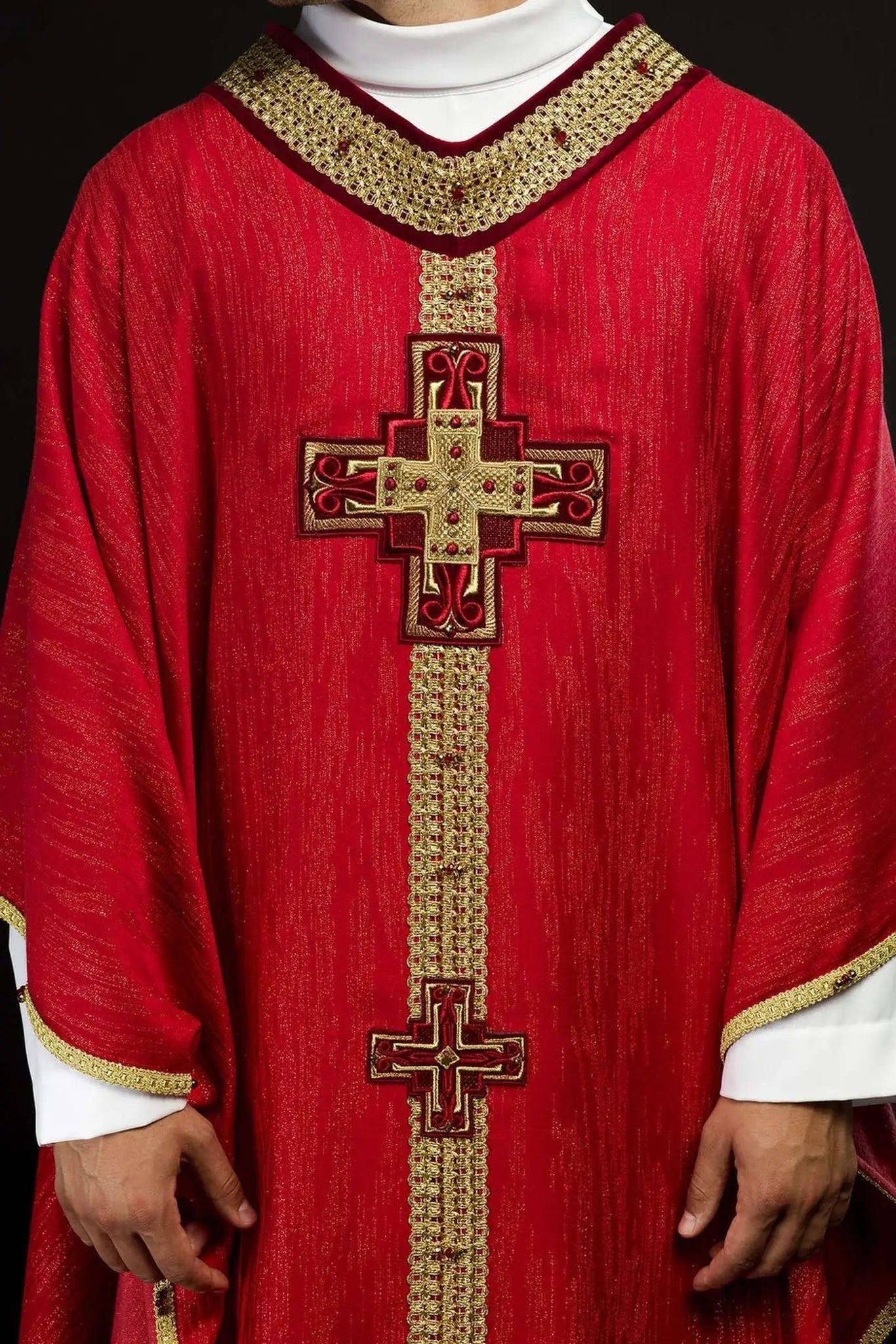
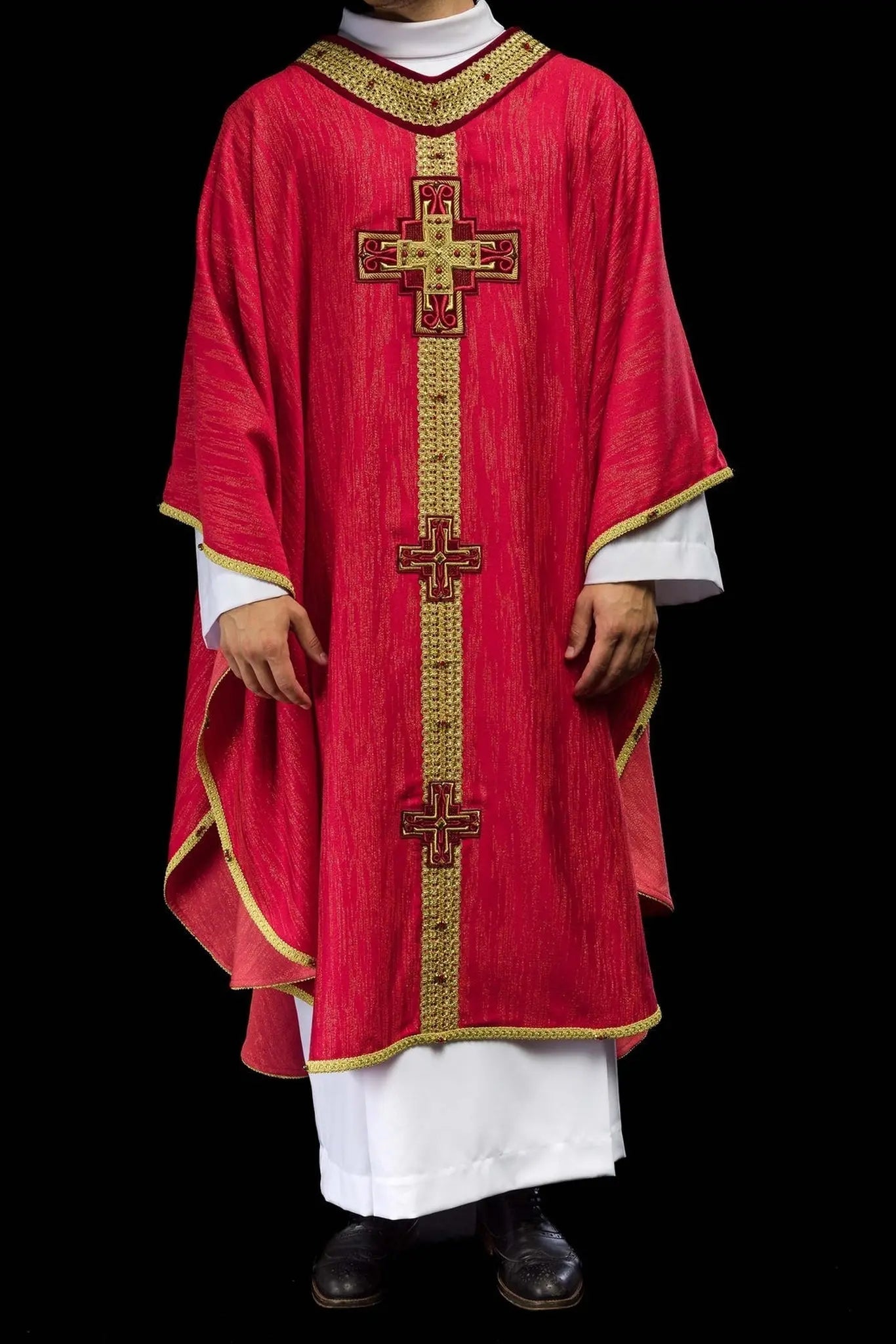
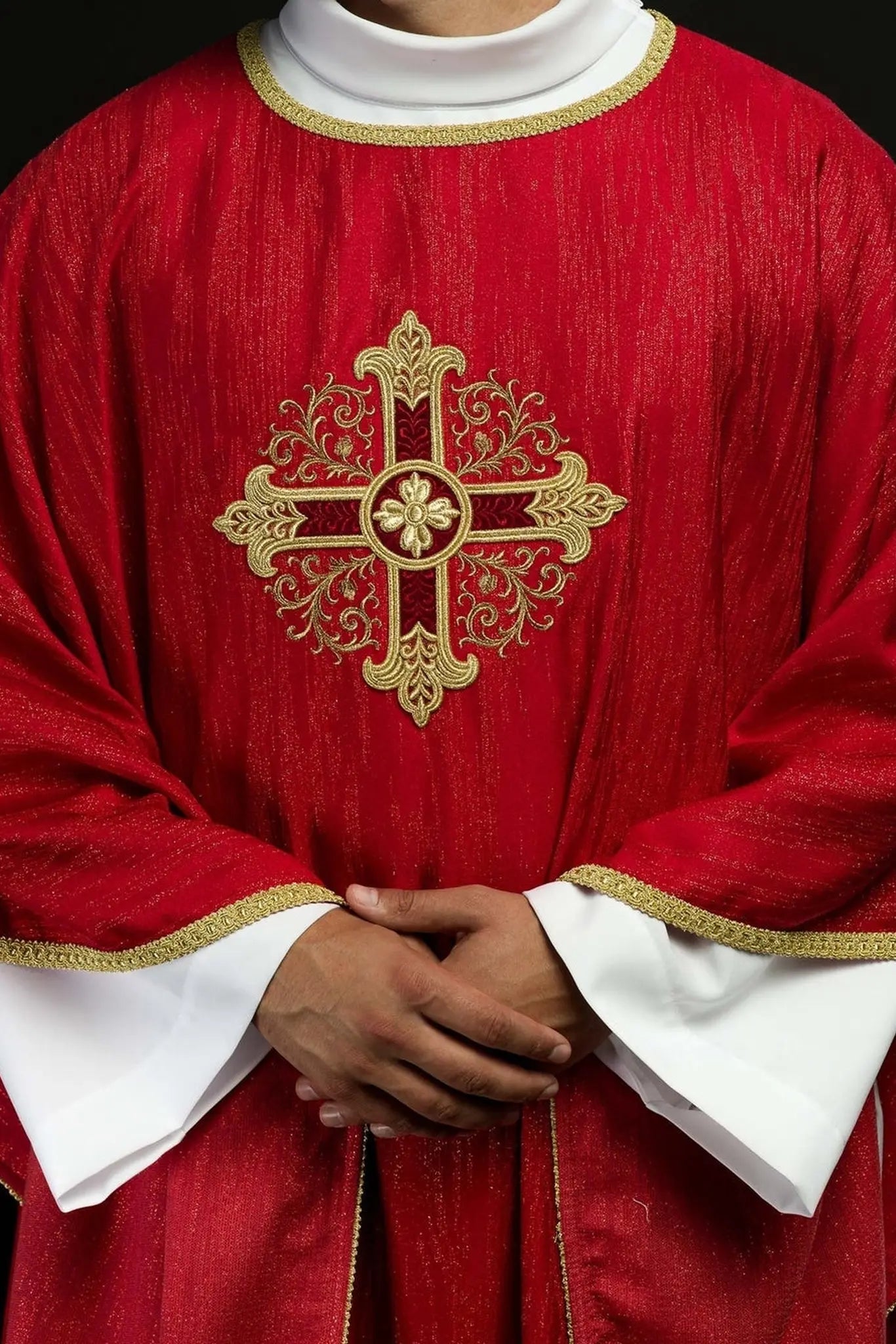
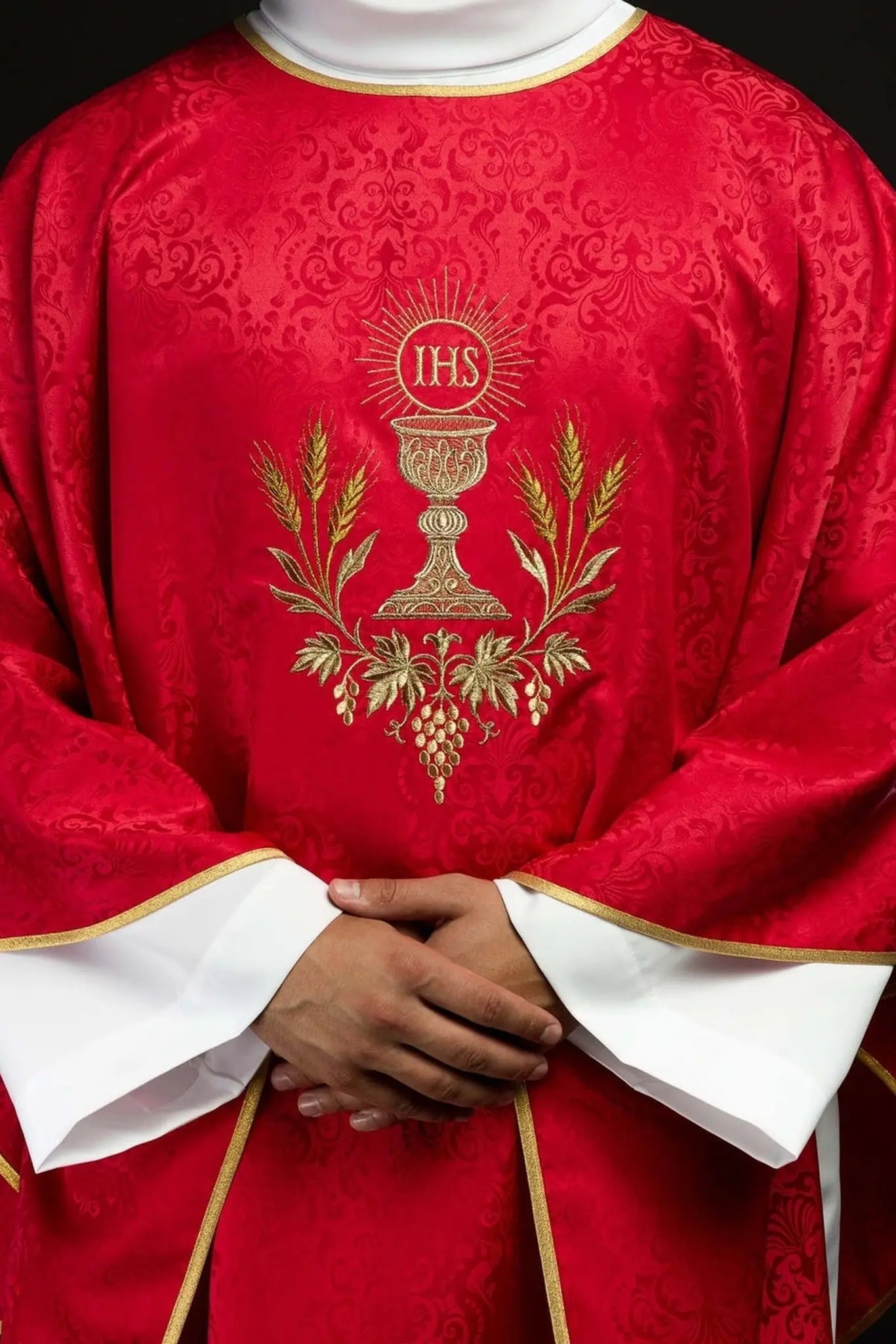
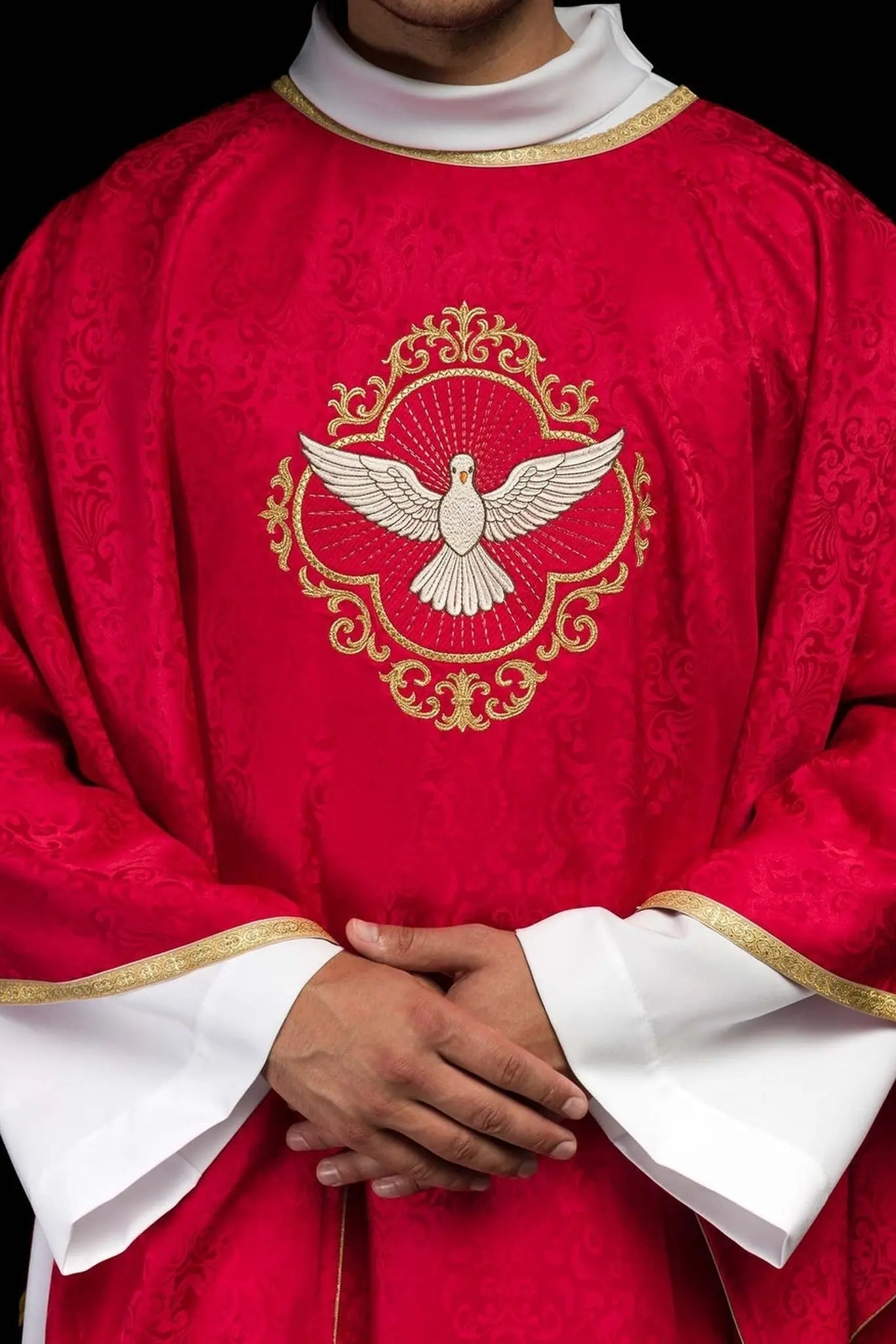
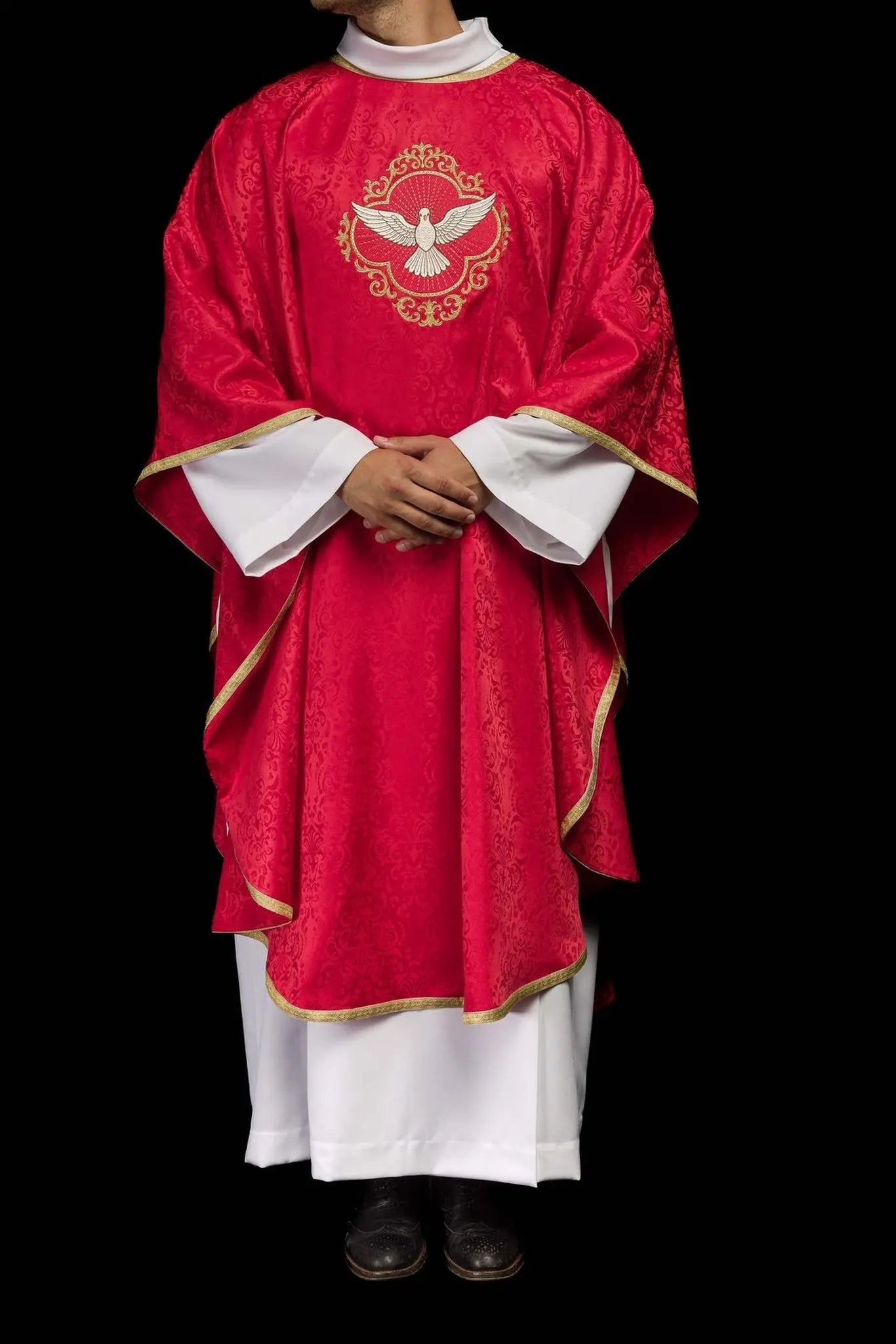
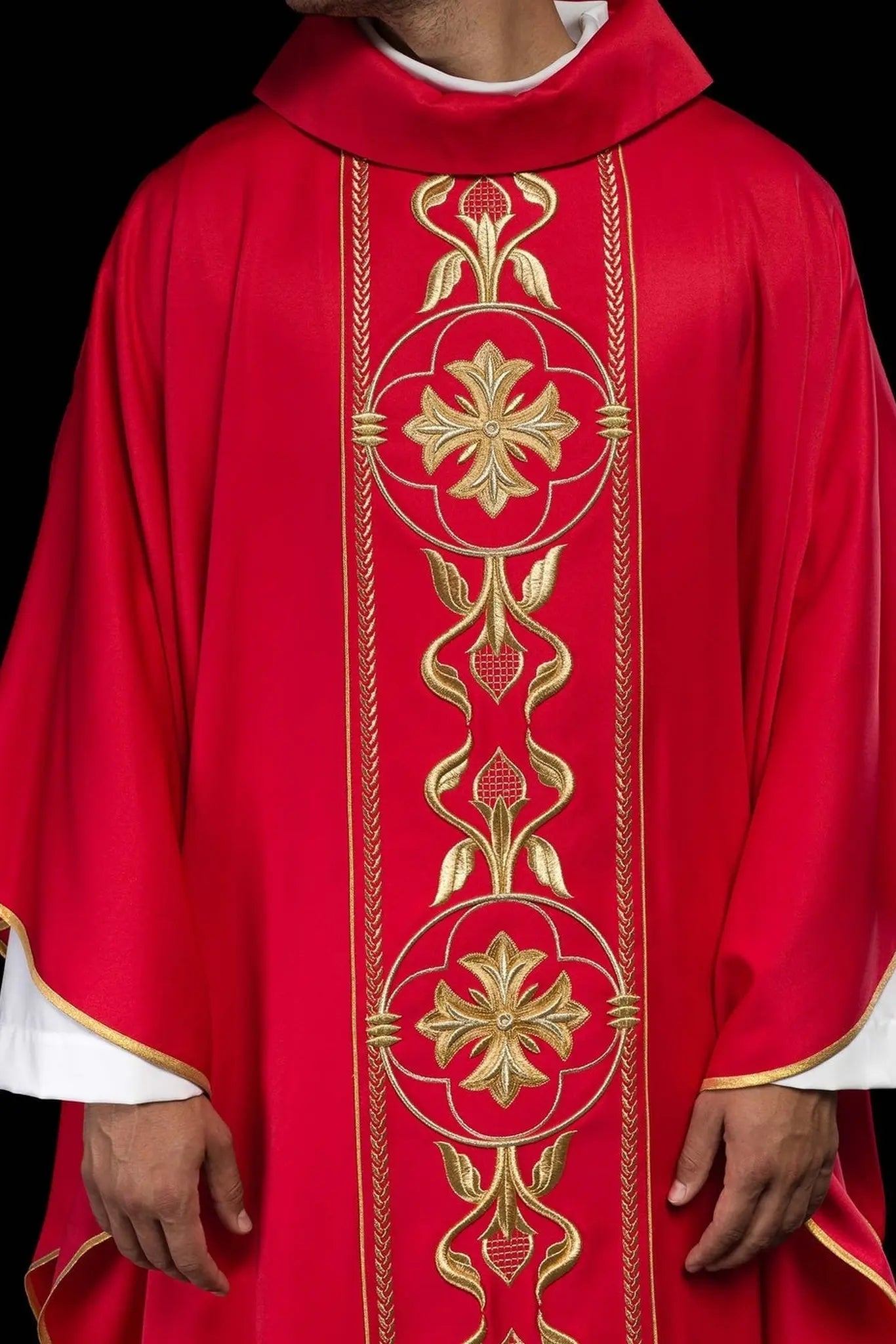
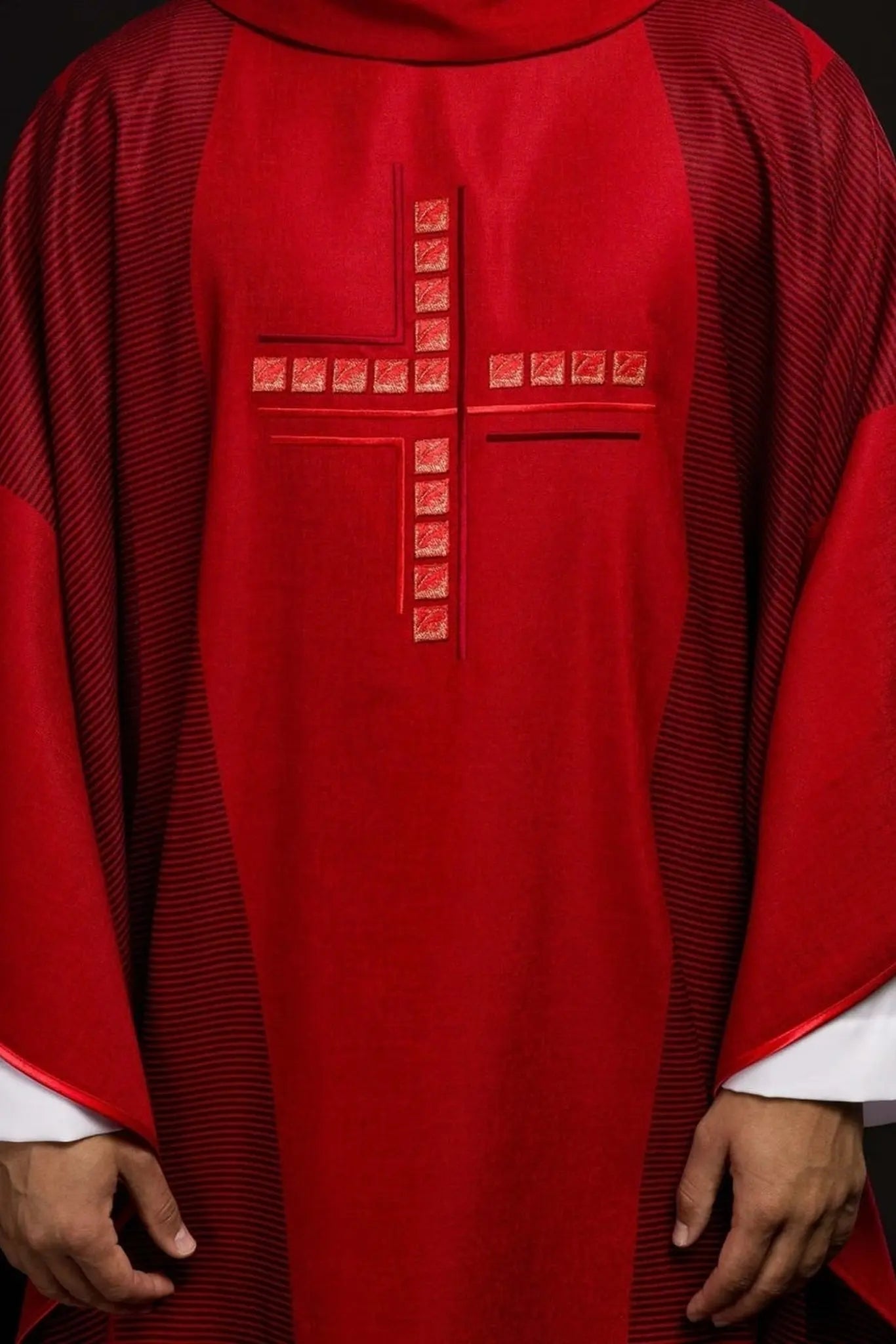
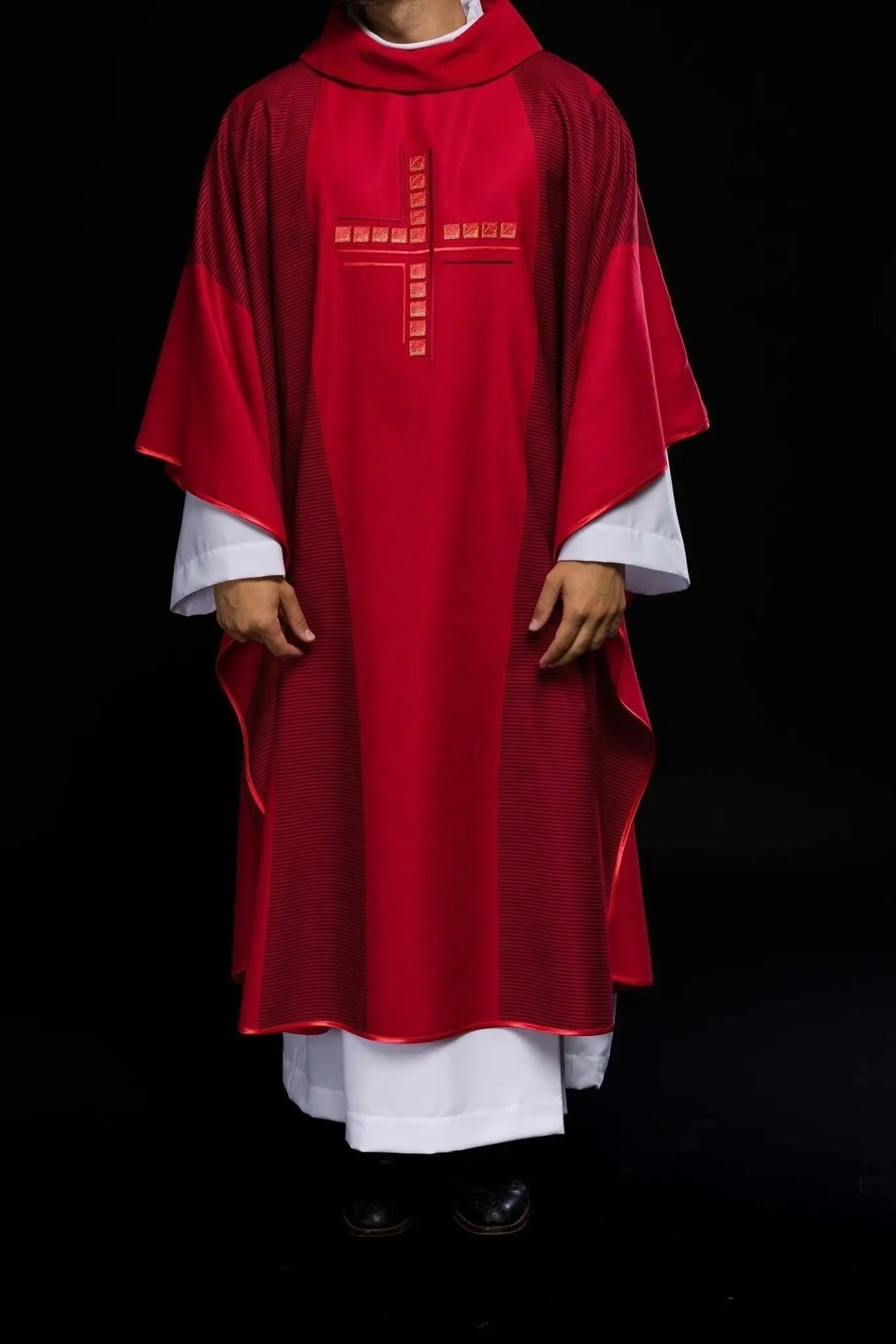
The same red chasuble may be suitable for different moments of the liturgical year, but the embroidery and ornament can make it better suited to a particular use. Cross motifs, IHS monograms, Eucharistic symbols, rays, flames, and gold orphreys are appropriate for many red celebrations. Designs connected with the Holy Spirit are especially fitting for Pentecost and Confirmations, while more restrained red vestments can be used for Good Friday and Passiontide liturgies where solemnity is central.
What belongs in this collection
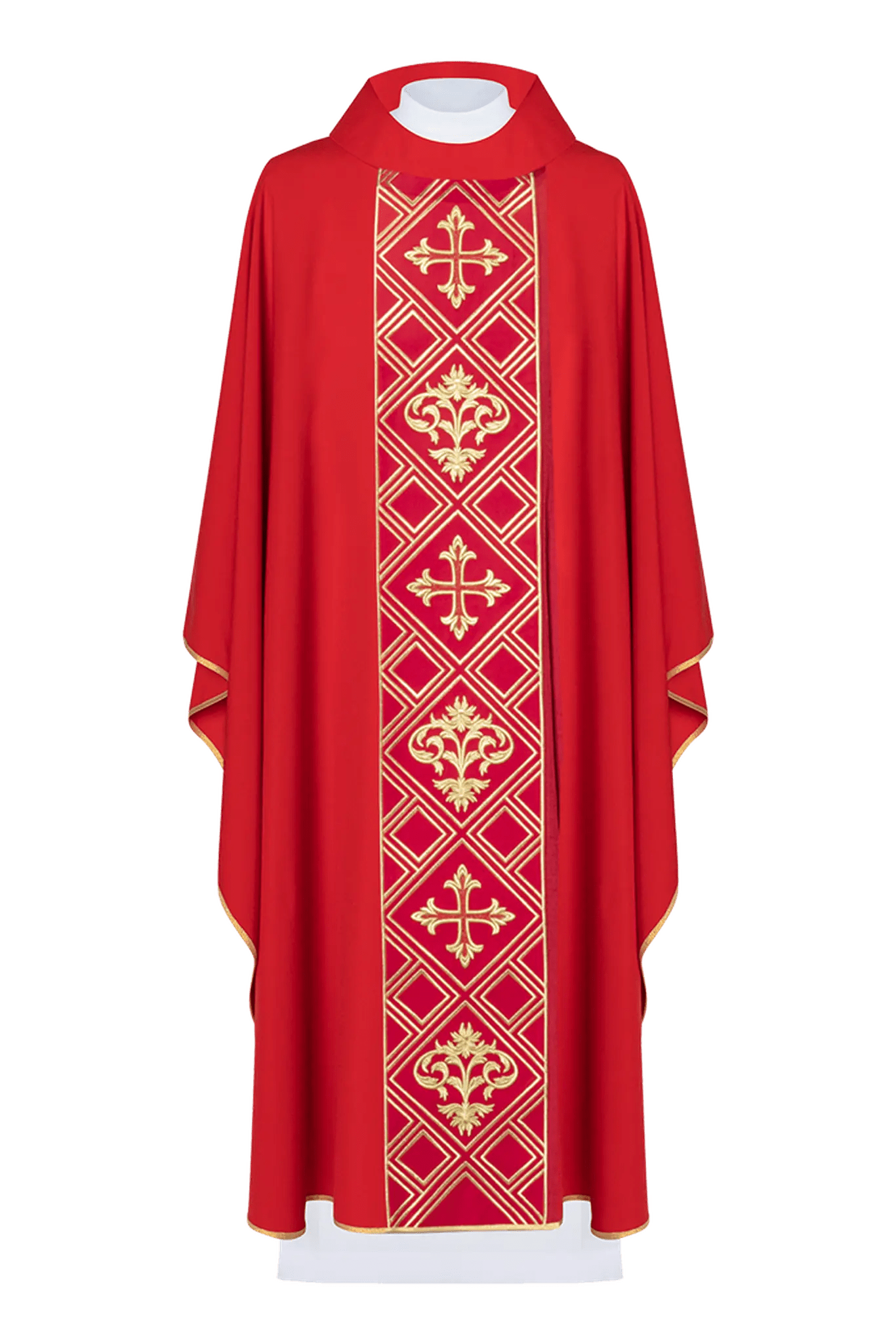
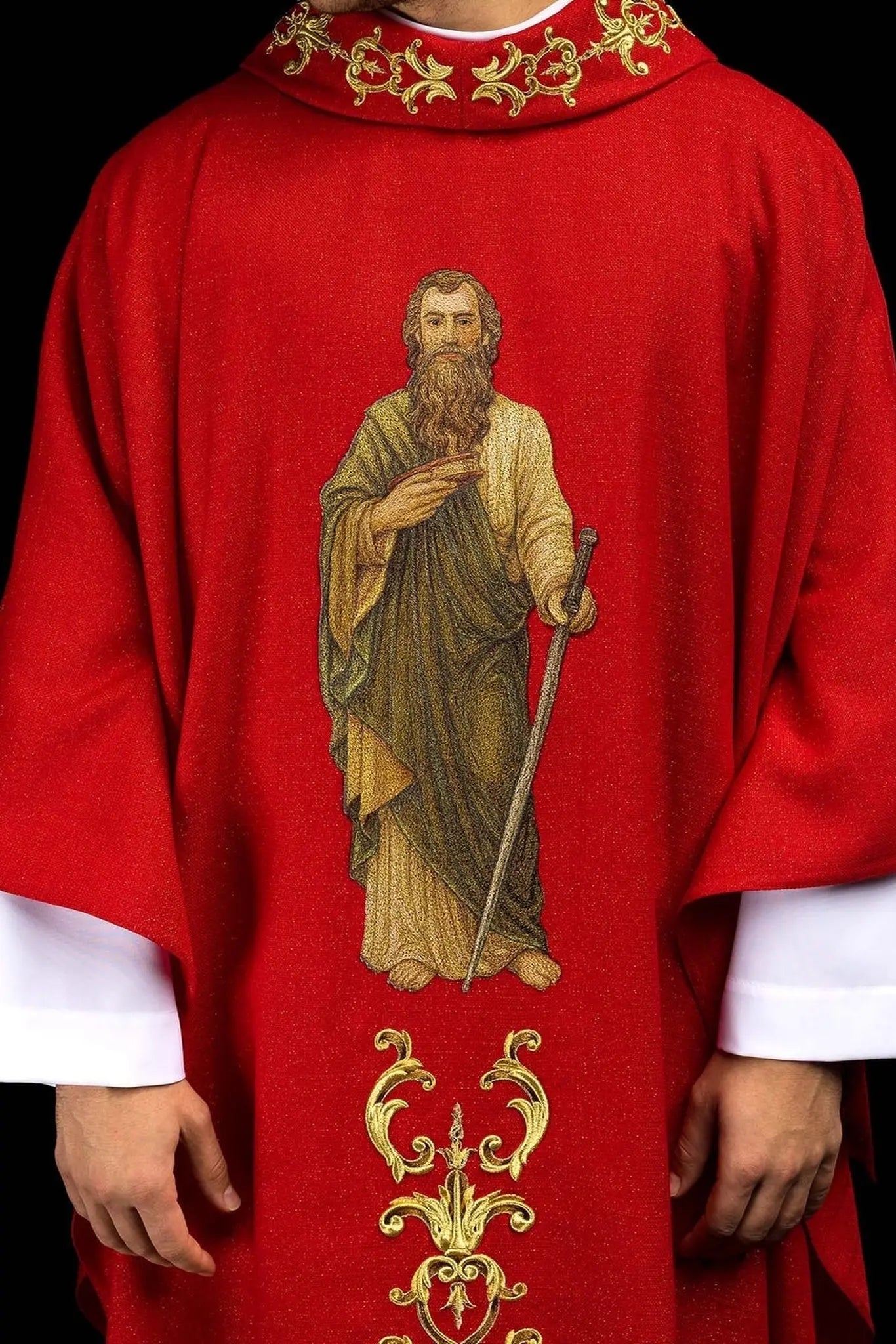
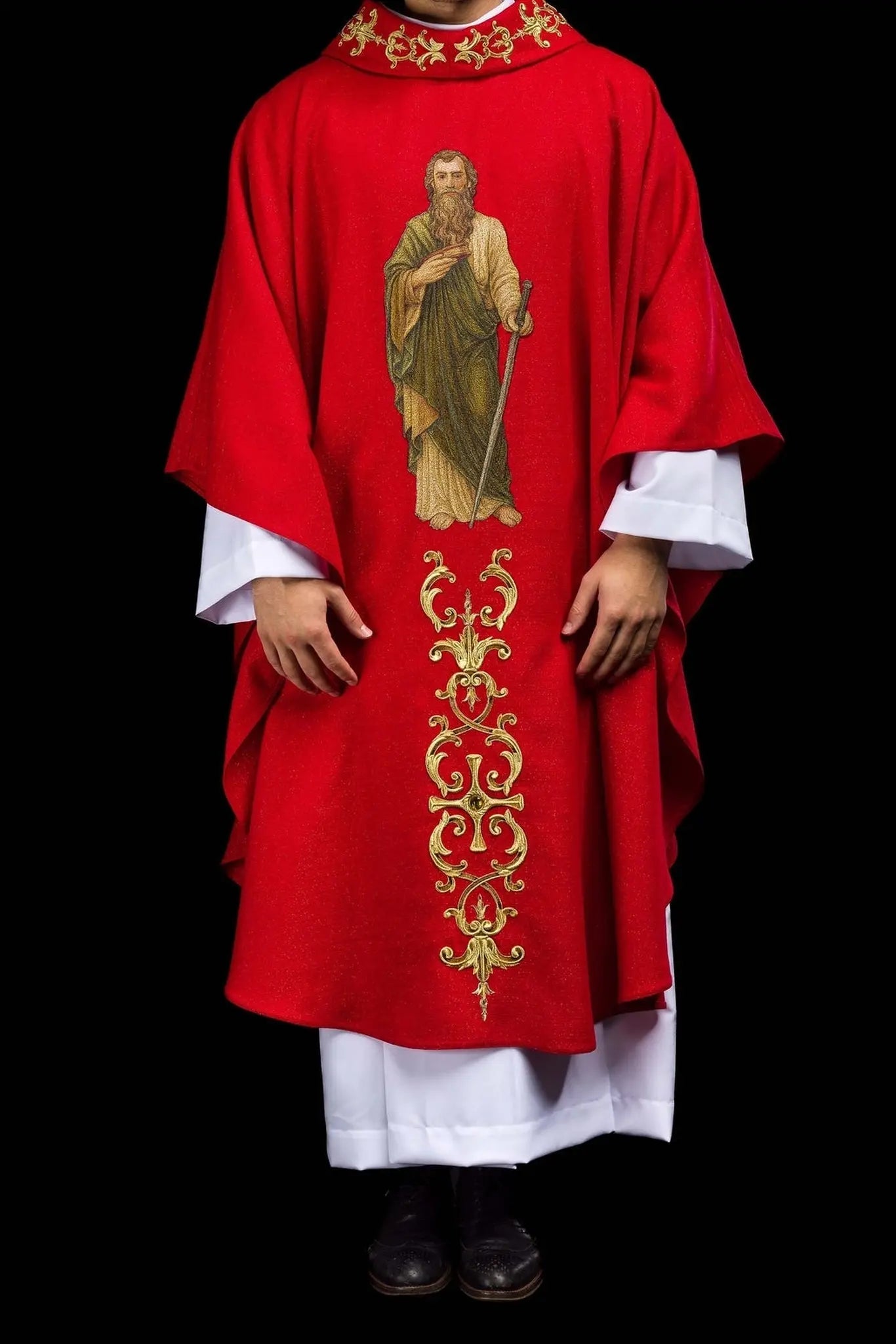
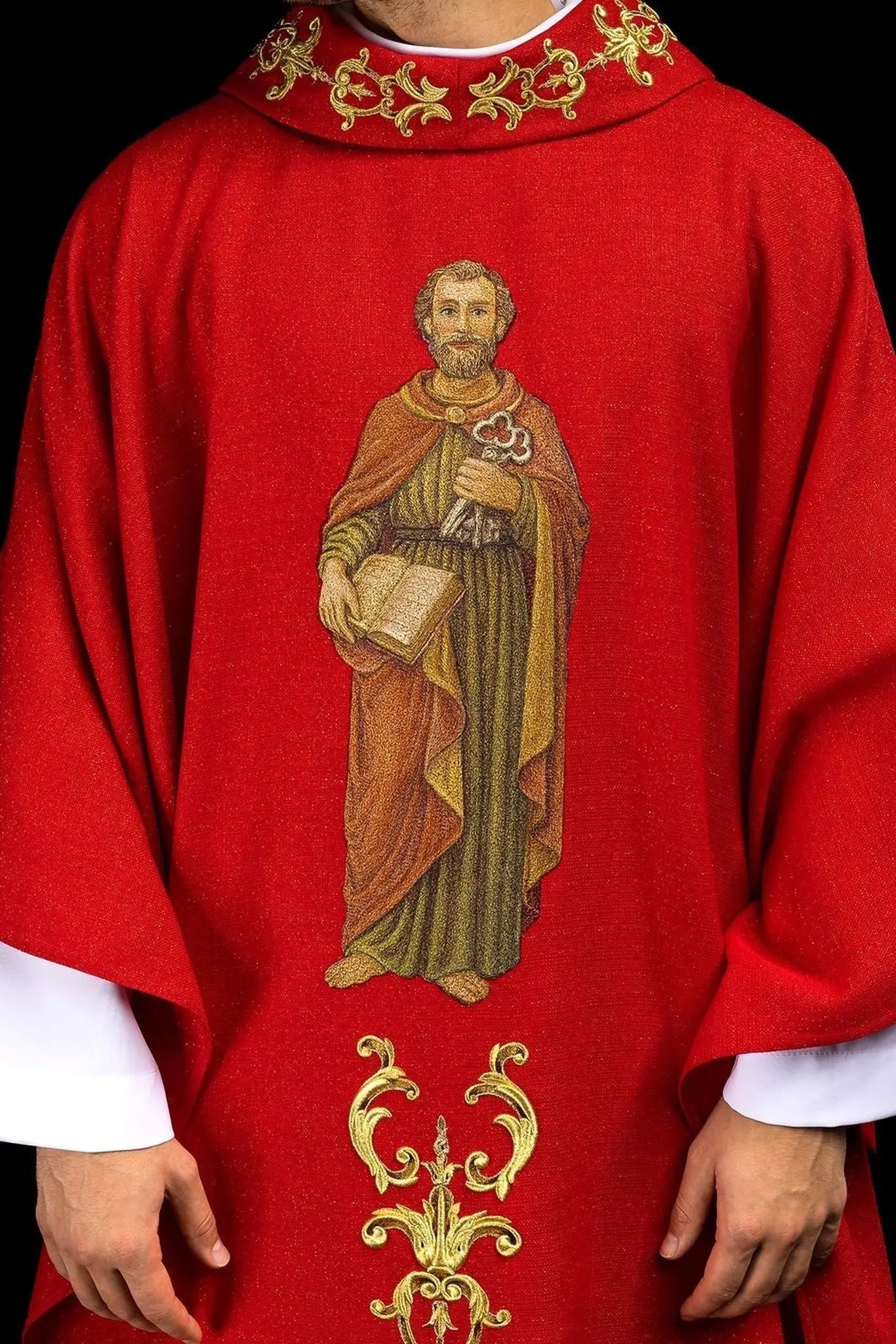
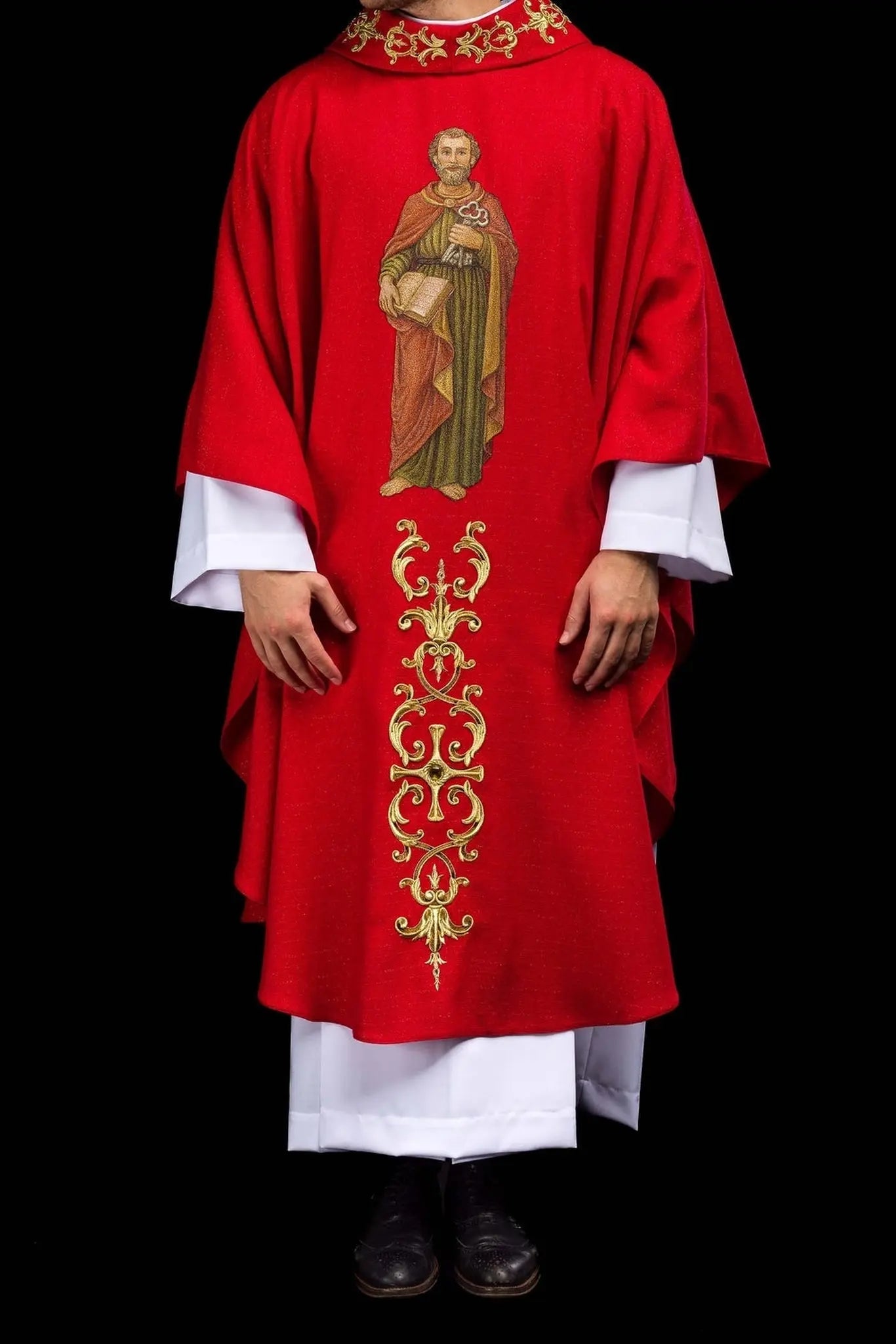
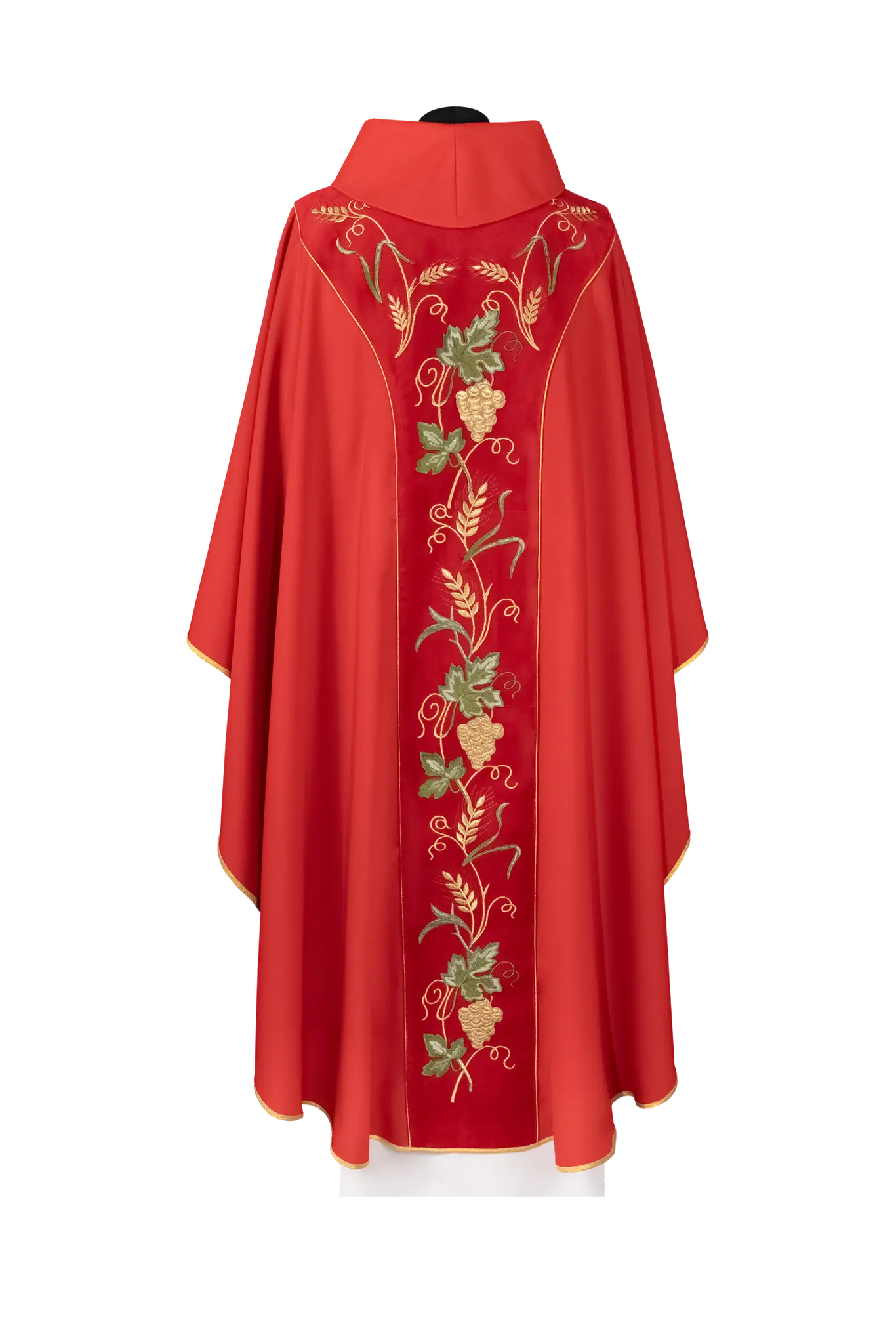
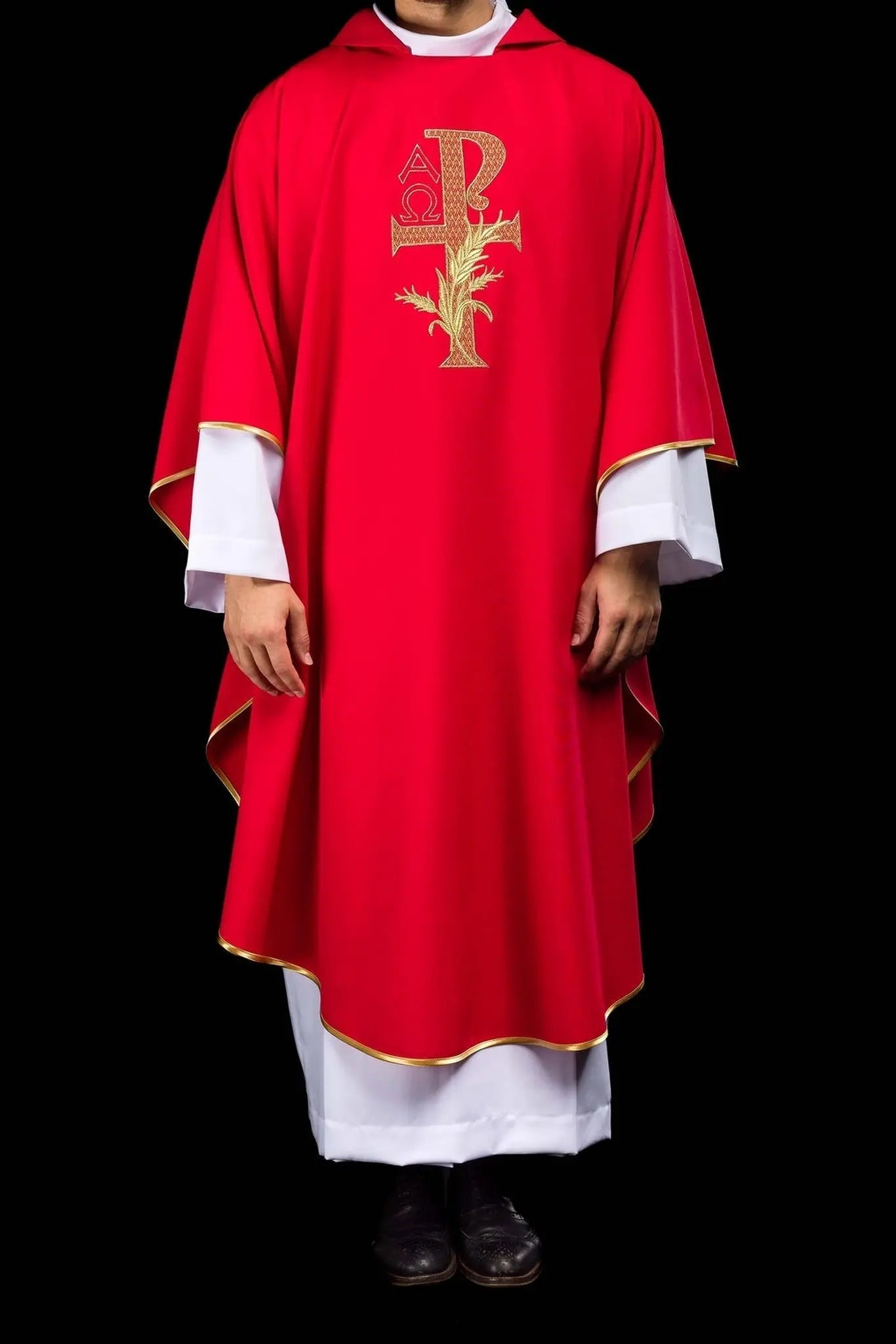
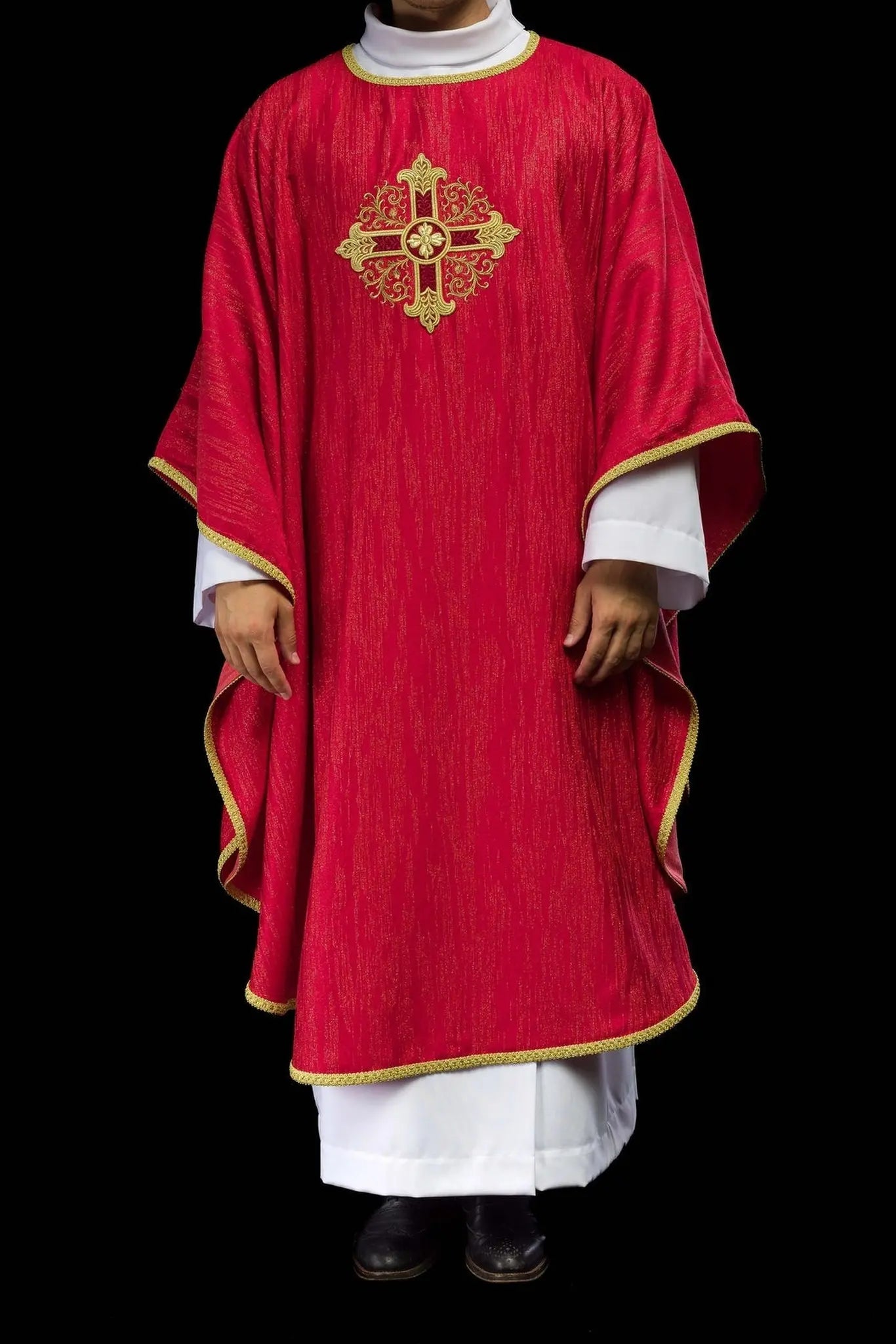
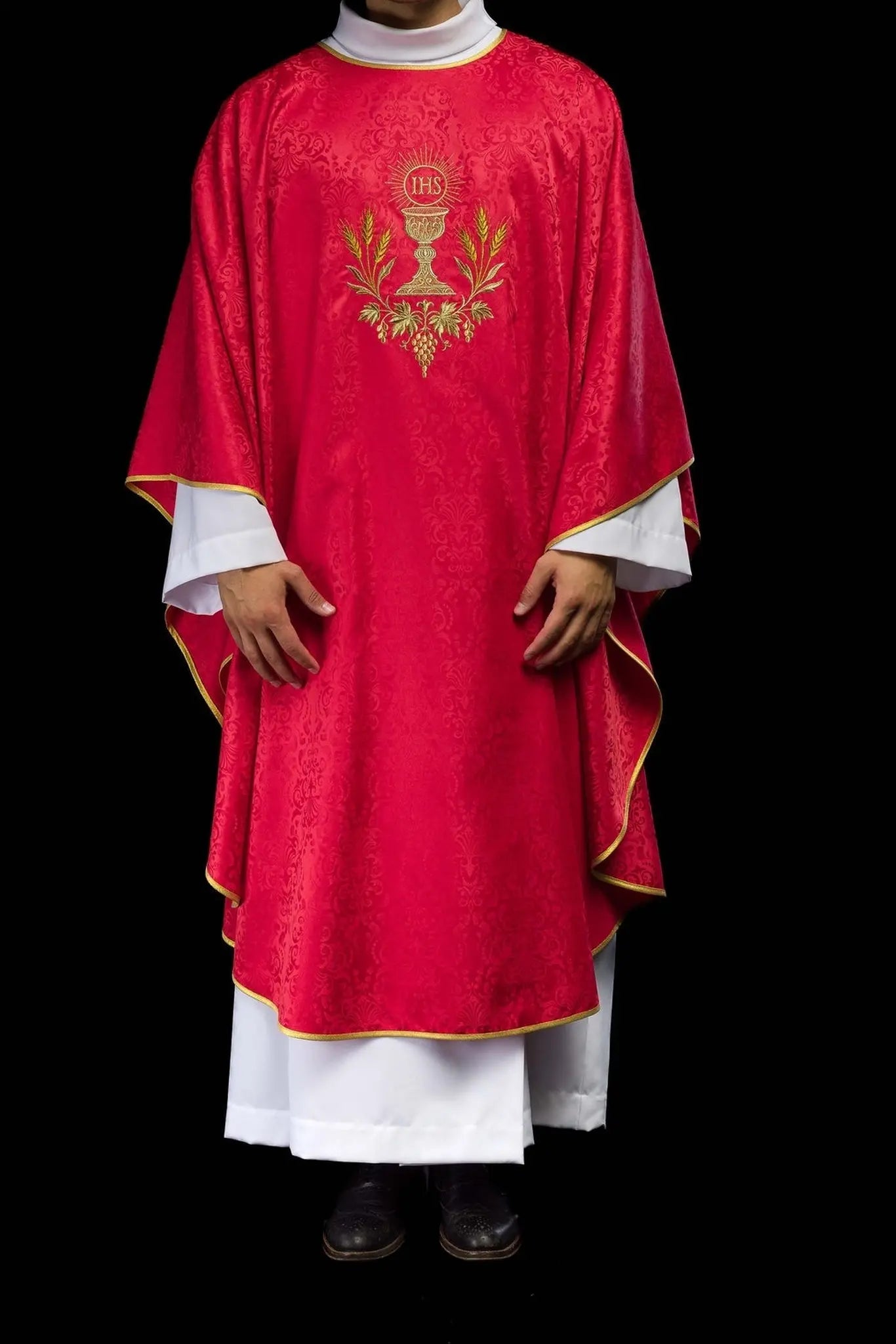
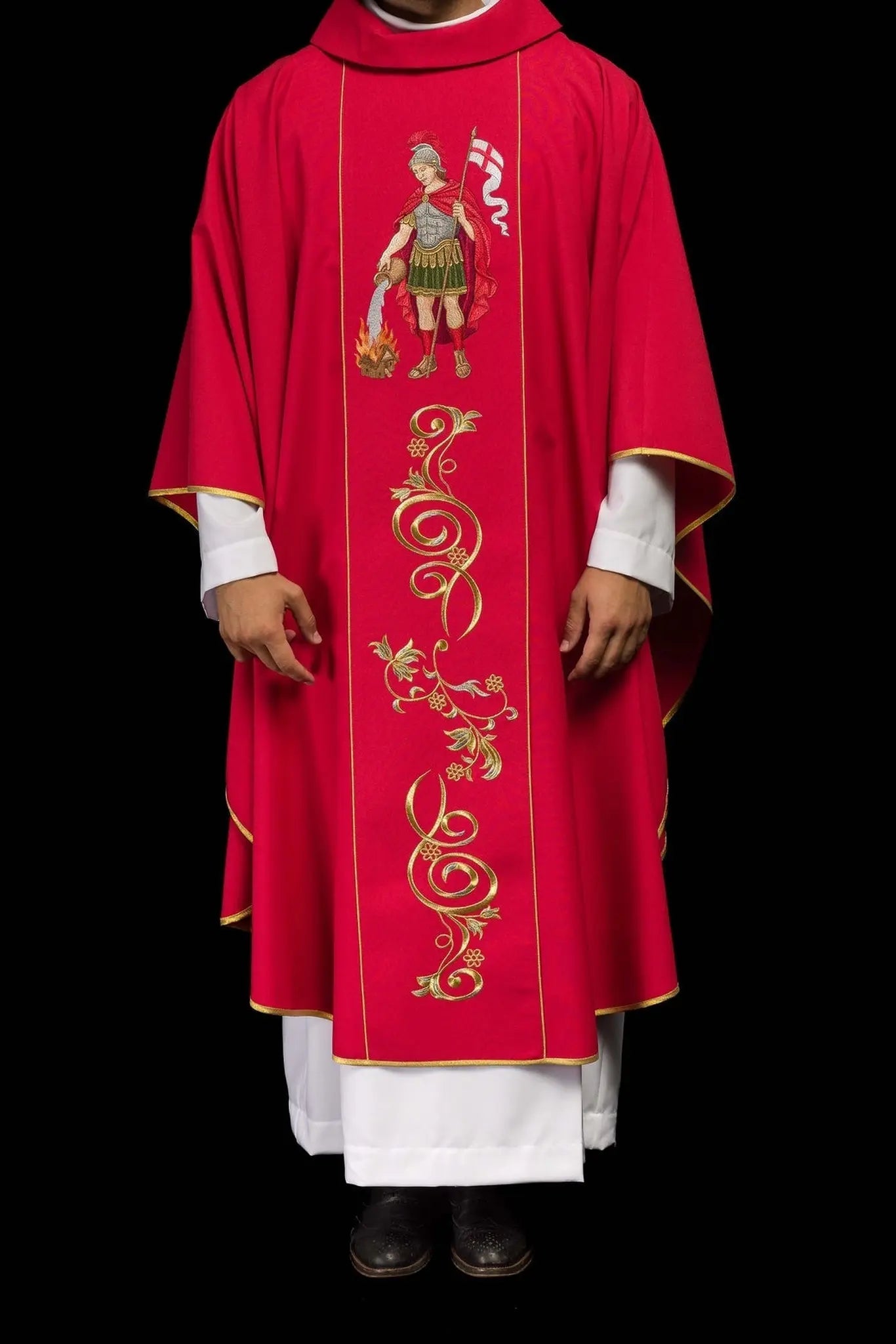
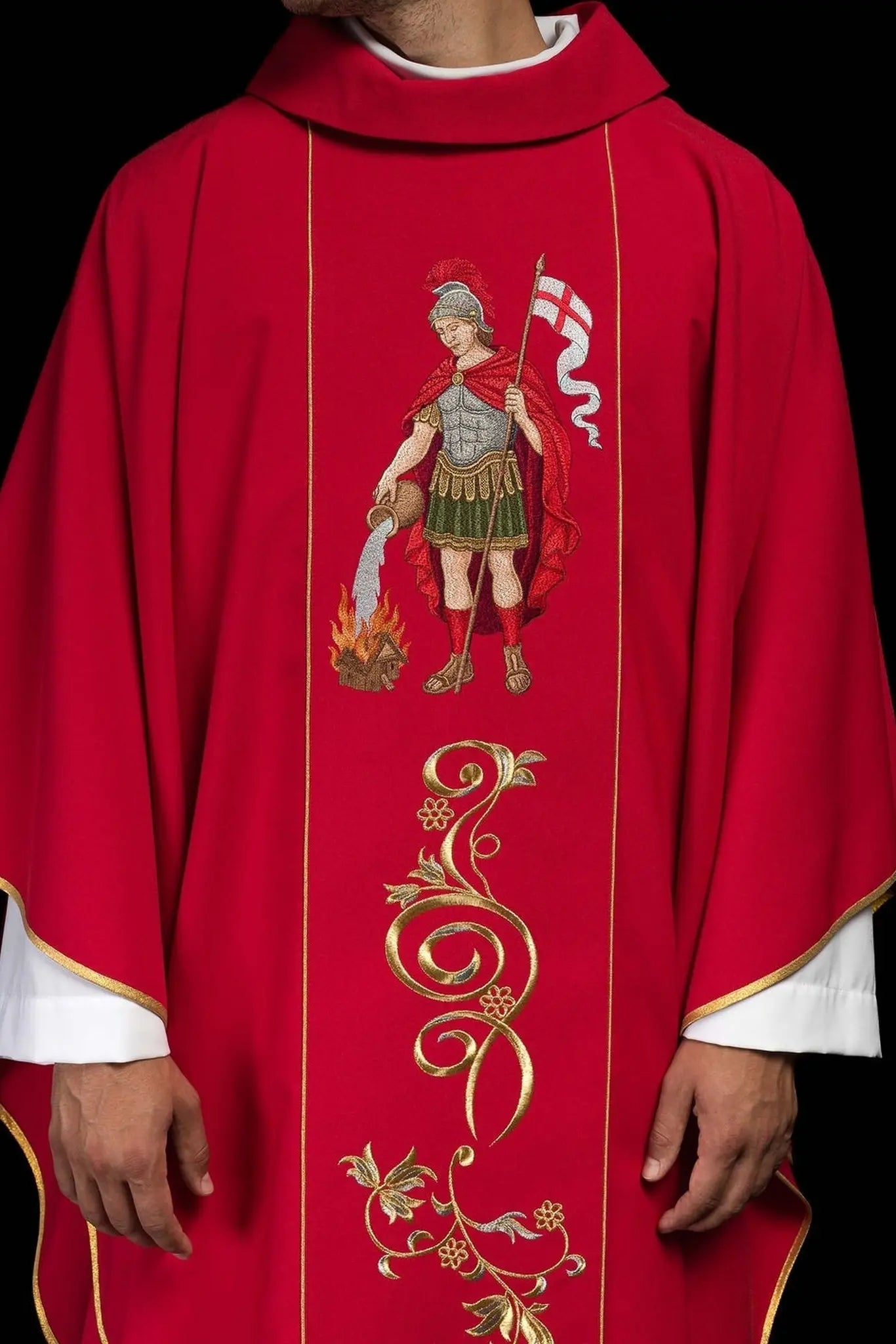
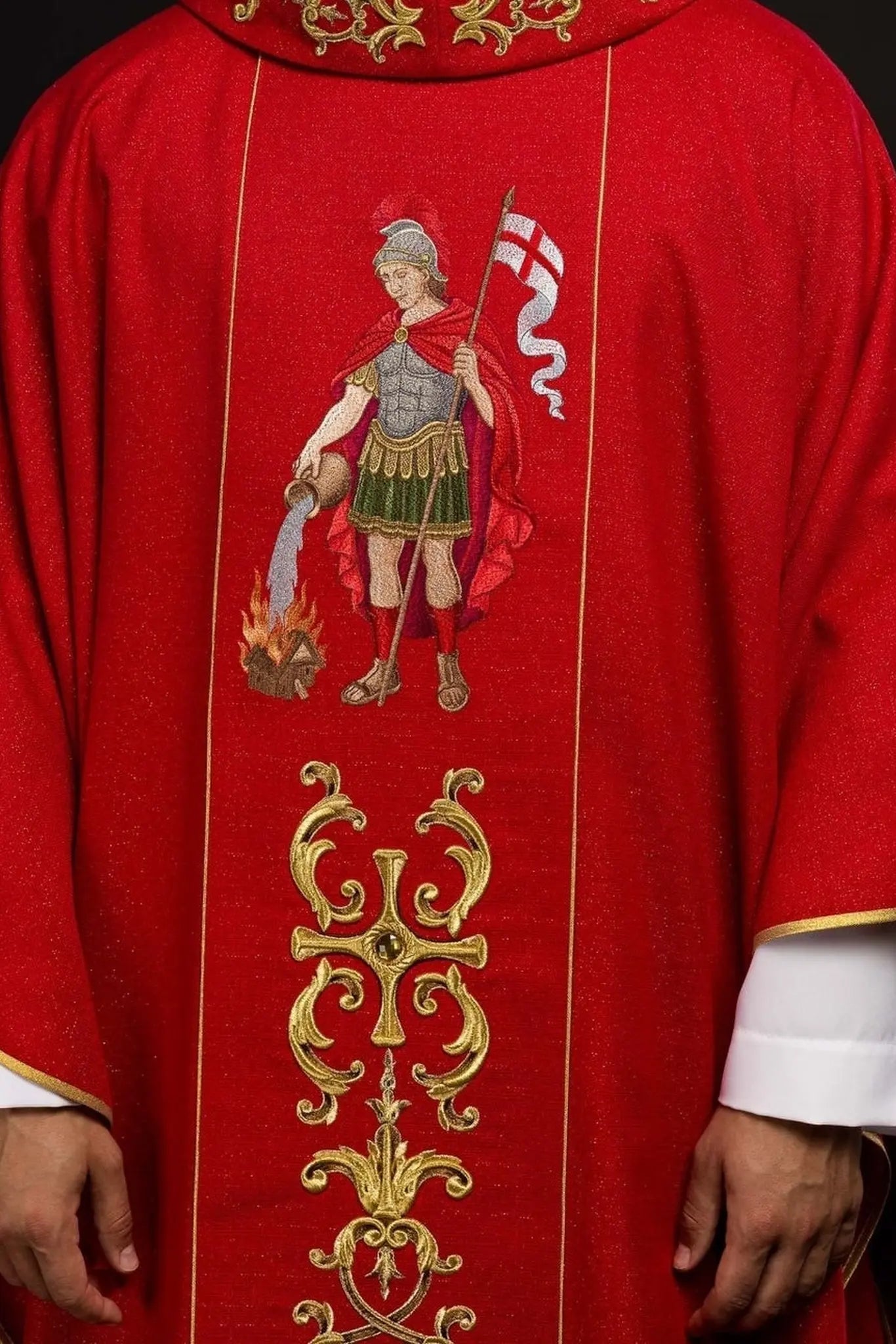
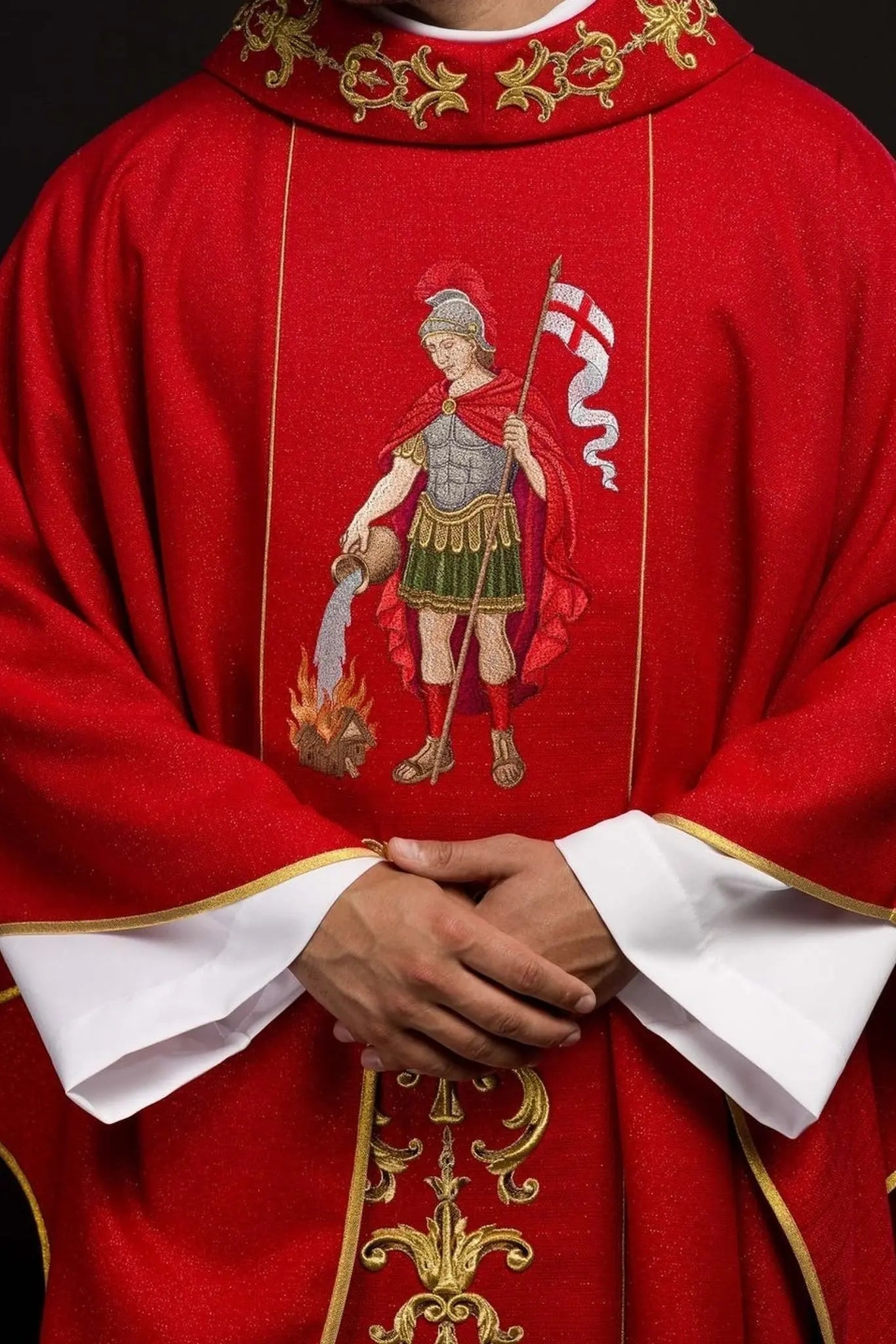
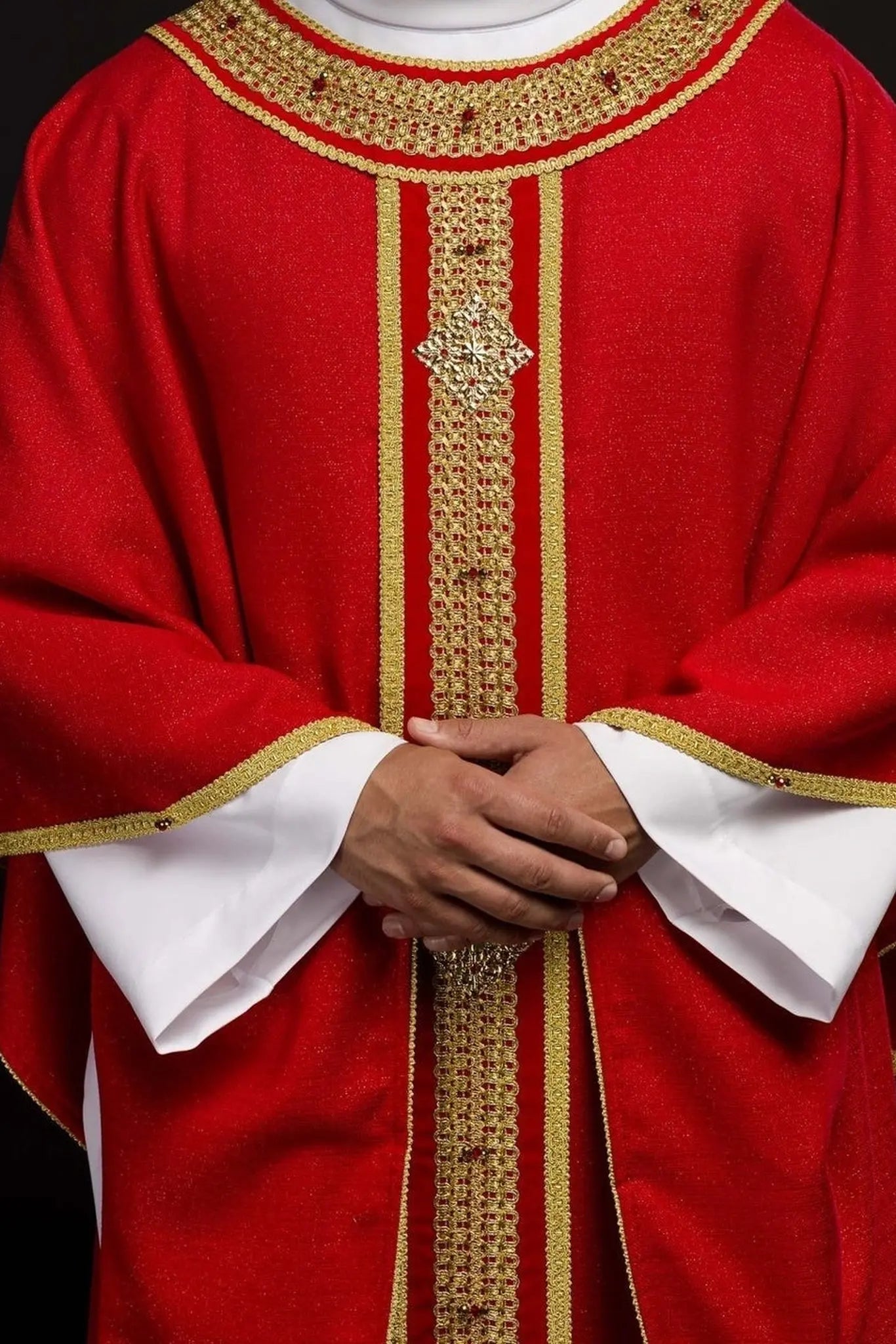
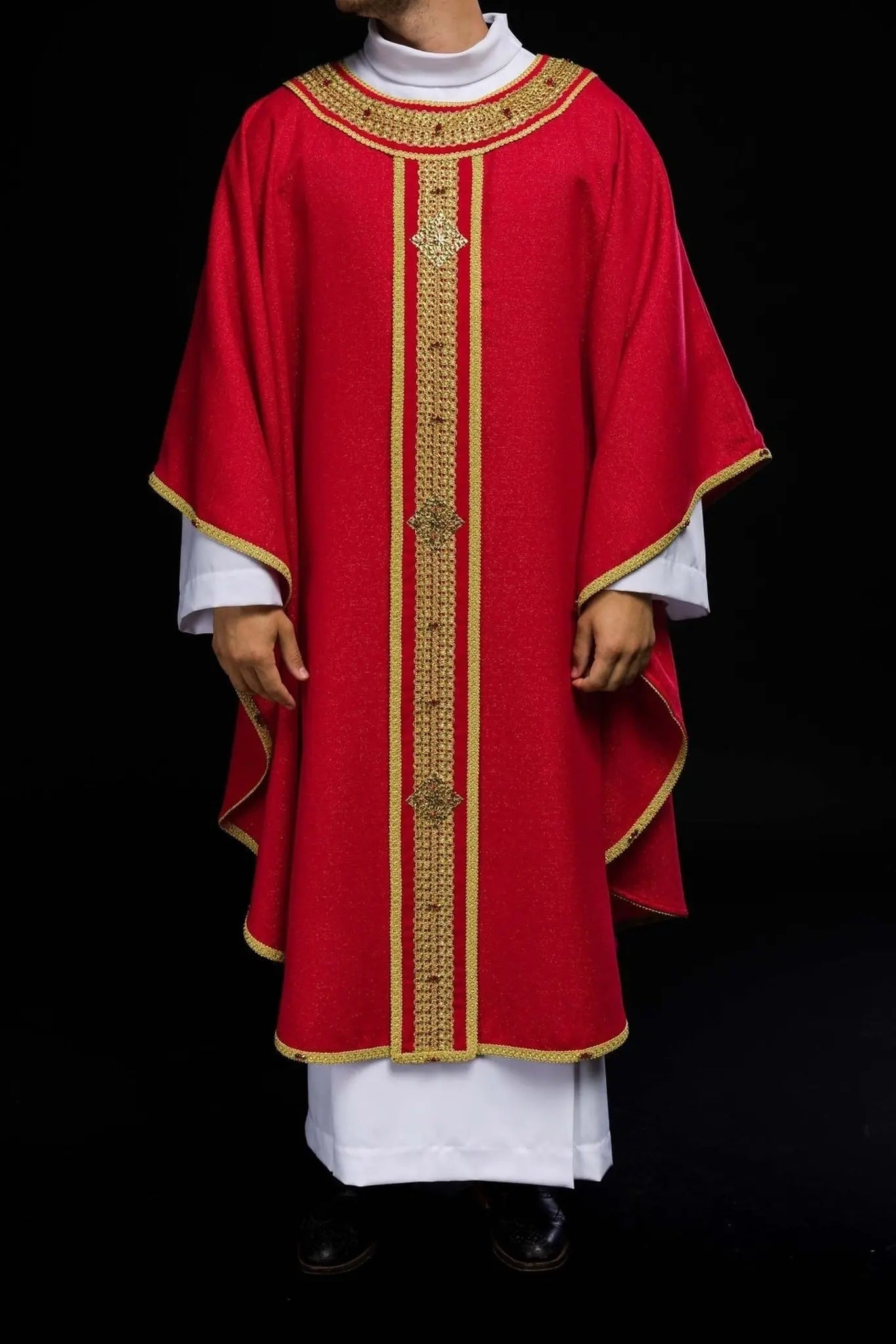
This collection focuses on red chasubles for priests and bishops. You may find traditional and contemporary designs, including flowing Gothic-style chasubles, more structured Roman-inspired forms, and embroidered models for solemn parish use. The selection may include simple red vestments with modest decoration, richly ornamented chasubles for major feasts, and designs with crosses, Christological symbols, Eucharistic motifs, or saint imagery.
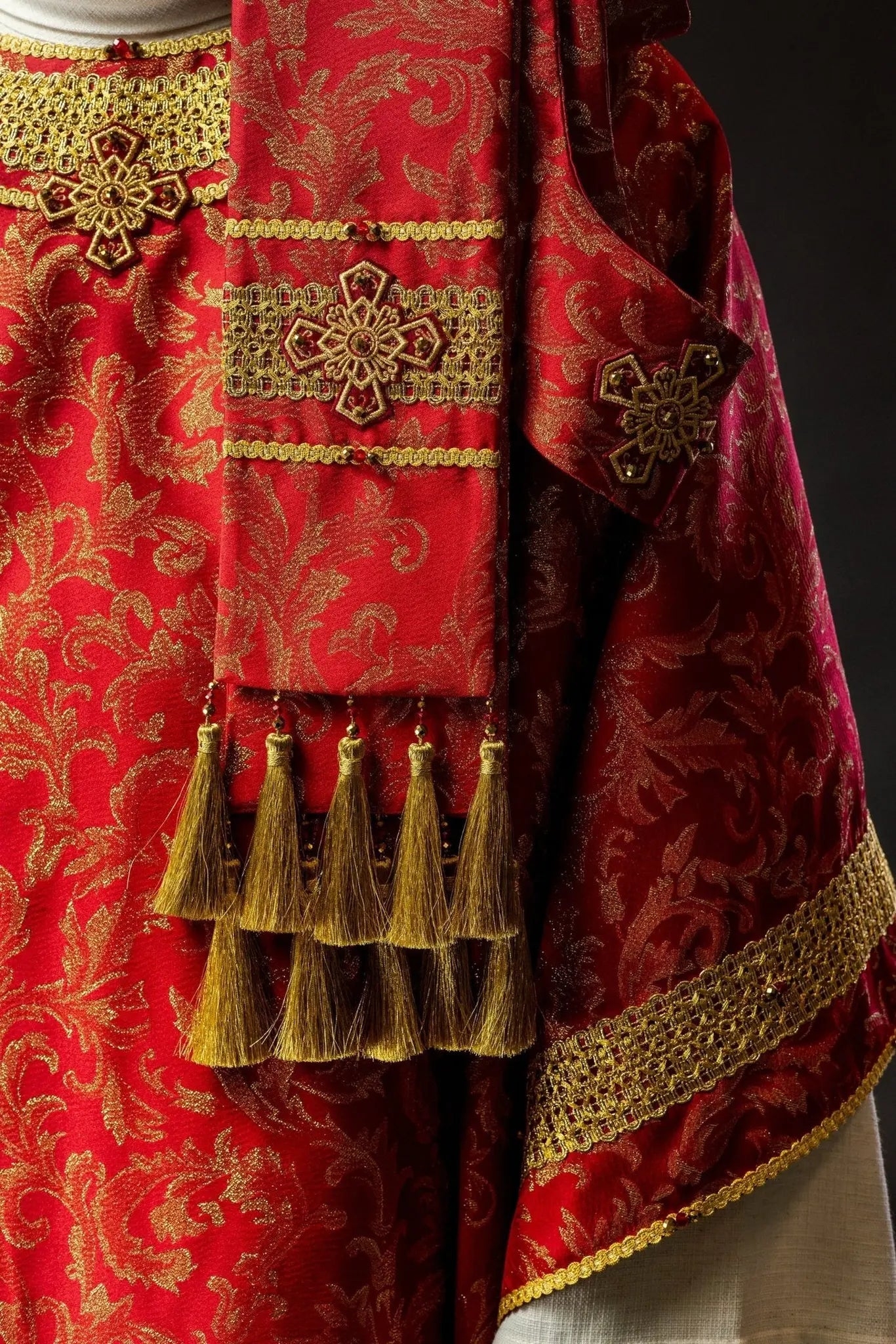
When a parish needs a coordinated set, red chasubles can be paired with related red vestments and altar textiles. A matching red clergy stole is often required when the celebrant uses a stole beneath the chasuble or when a priest needs a separate stole for sacraments and blessings outside Mass. For the ambo or lectern, red pulpit covers can help the sanctuary reflect the same liturgical color on Pentecost, Palm Sunday, and feasts of martyrs.
Styles, cuts, and fabrics
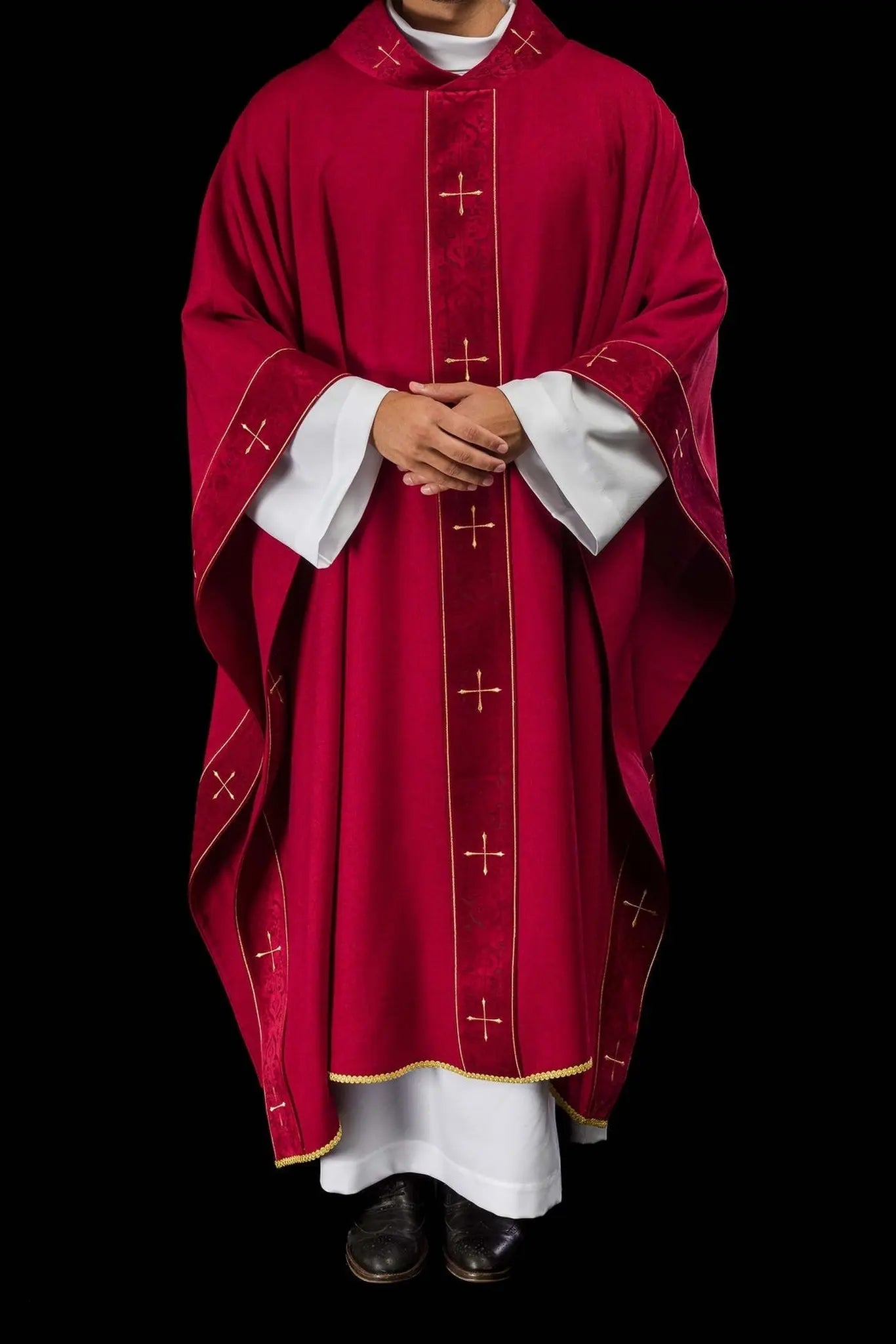
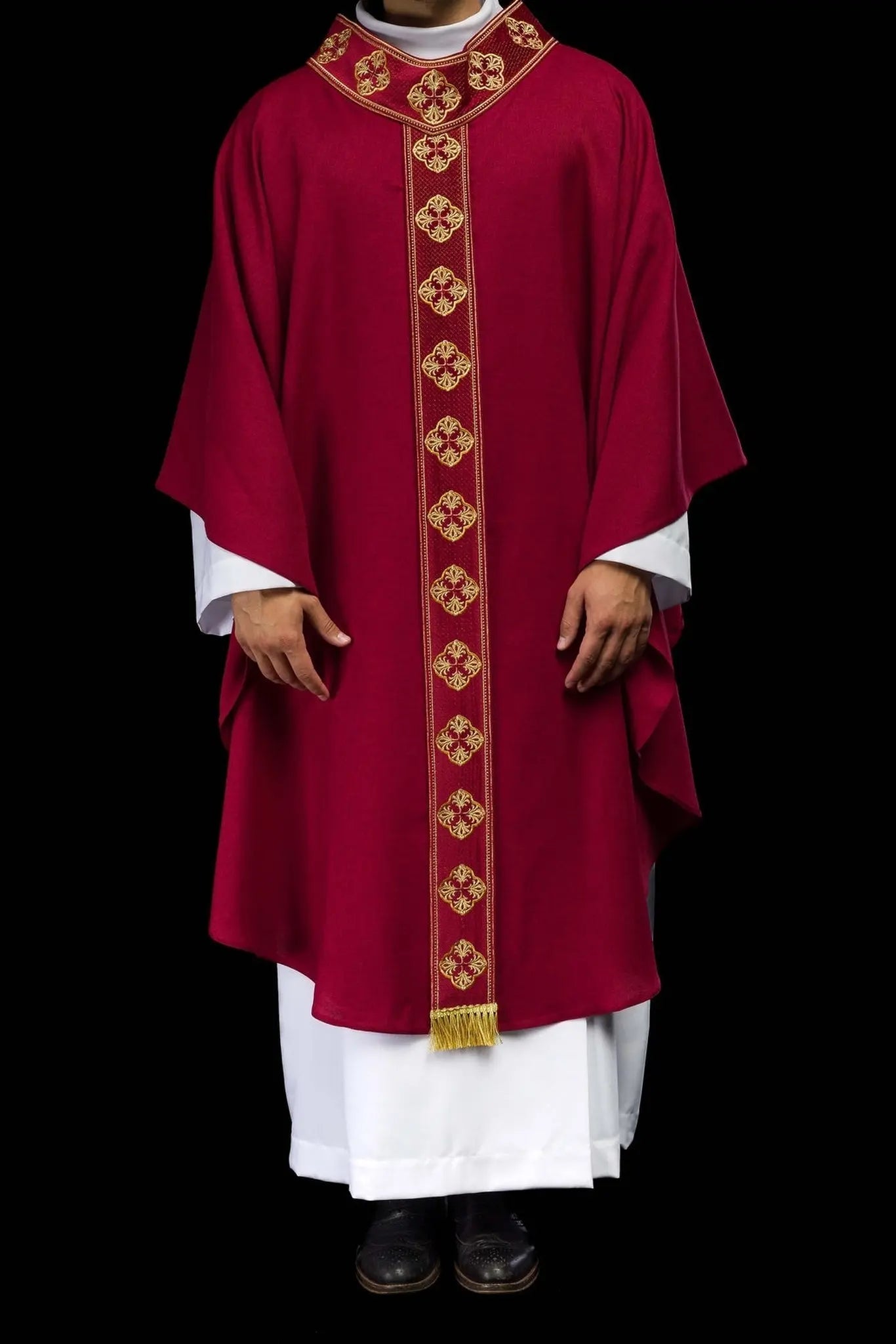
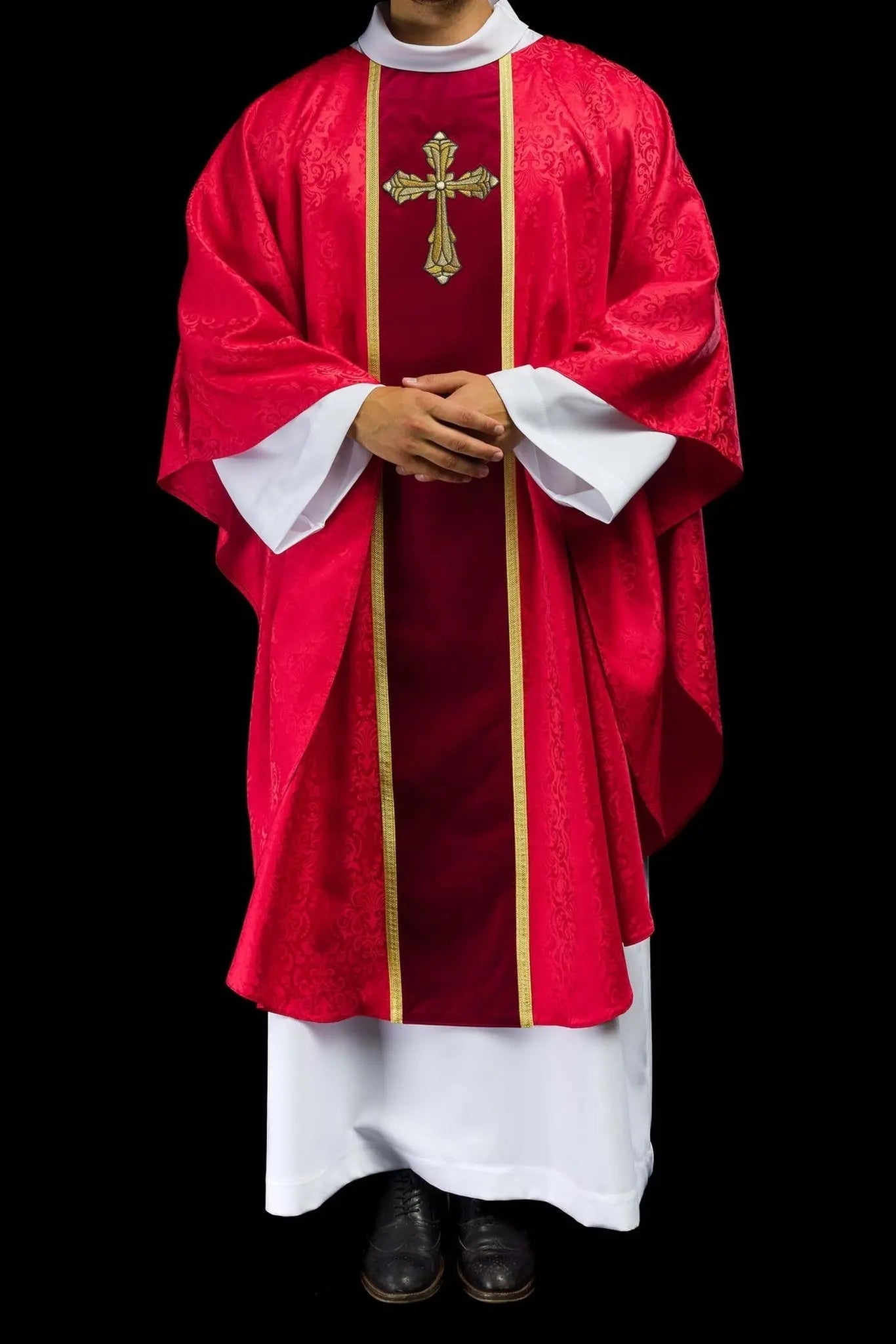
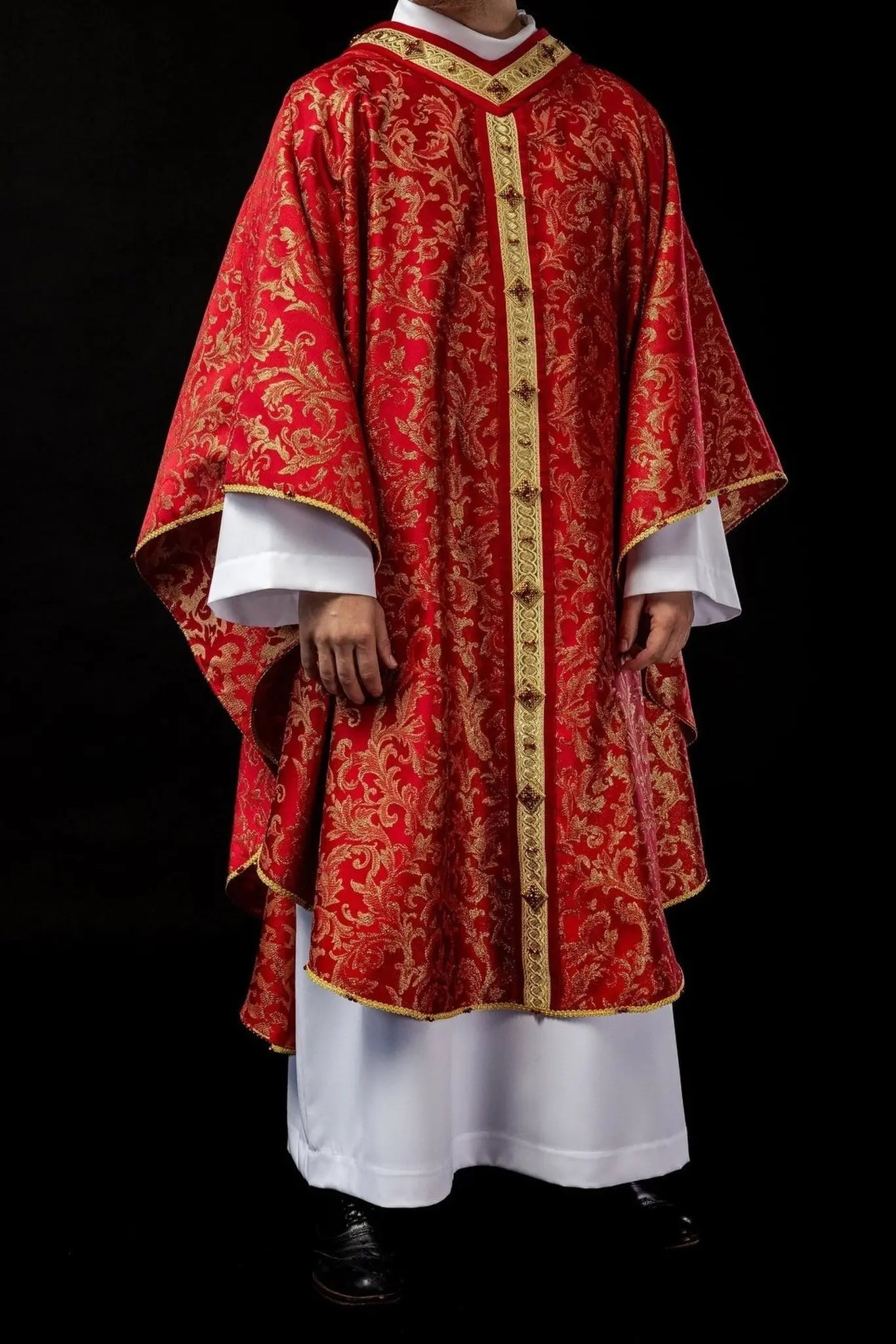
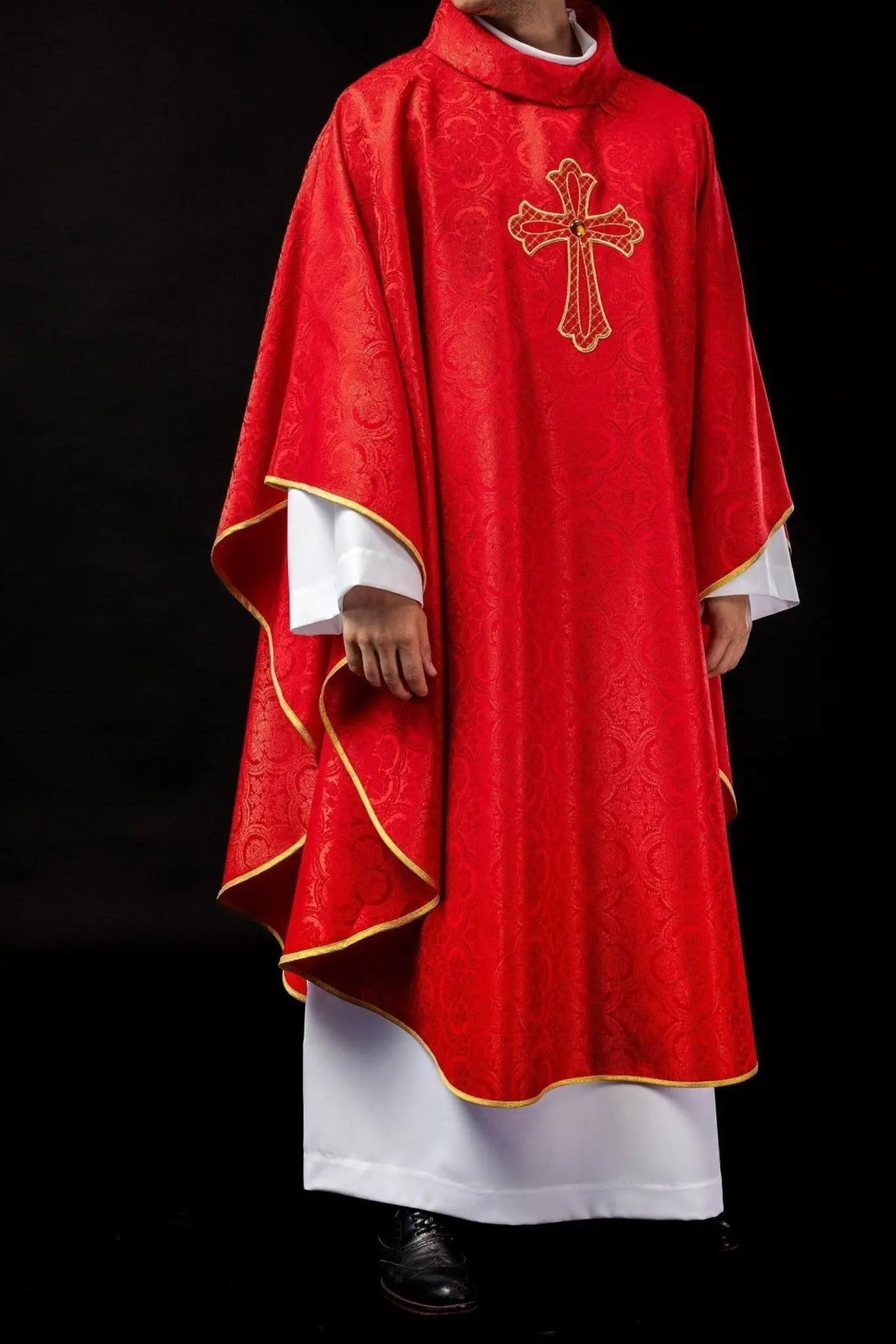
Red chasubles are chosen not only by color but also by cut. Gothic chasubles usually have a wider, flowing shape that drapes over the shoulders and allows freedom of movement at the altar. Roman-style chasubles generally have a more defined silhouette and a historic visual character. Clergy and sacristans who prefer a more traditional profile can also review the separate Roman chasubles collection for vestments with a stronger classic form.
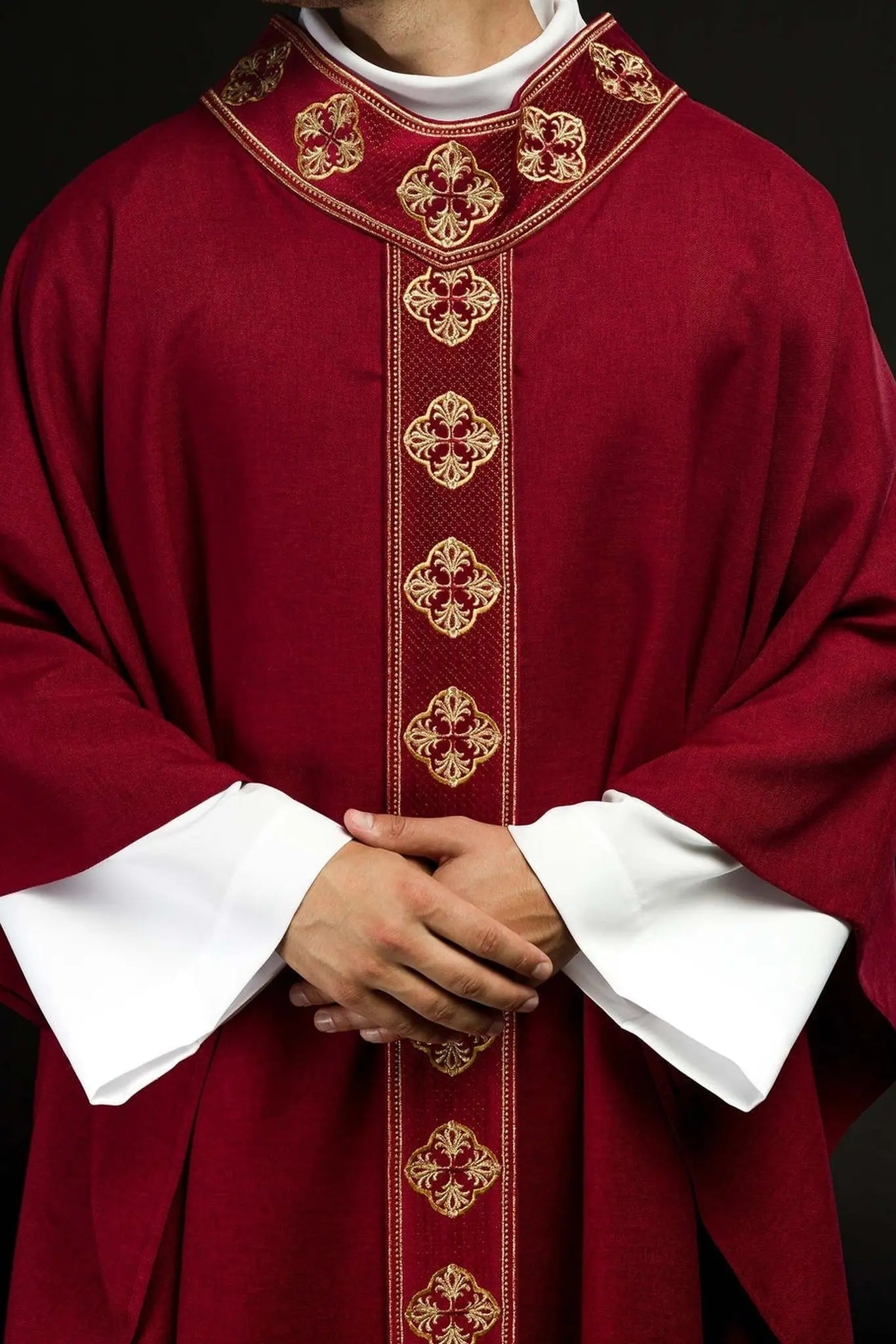
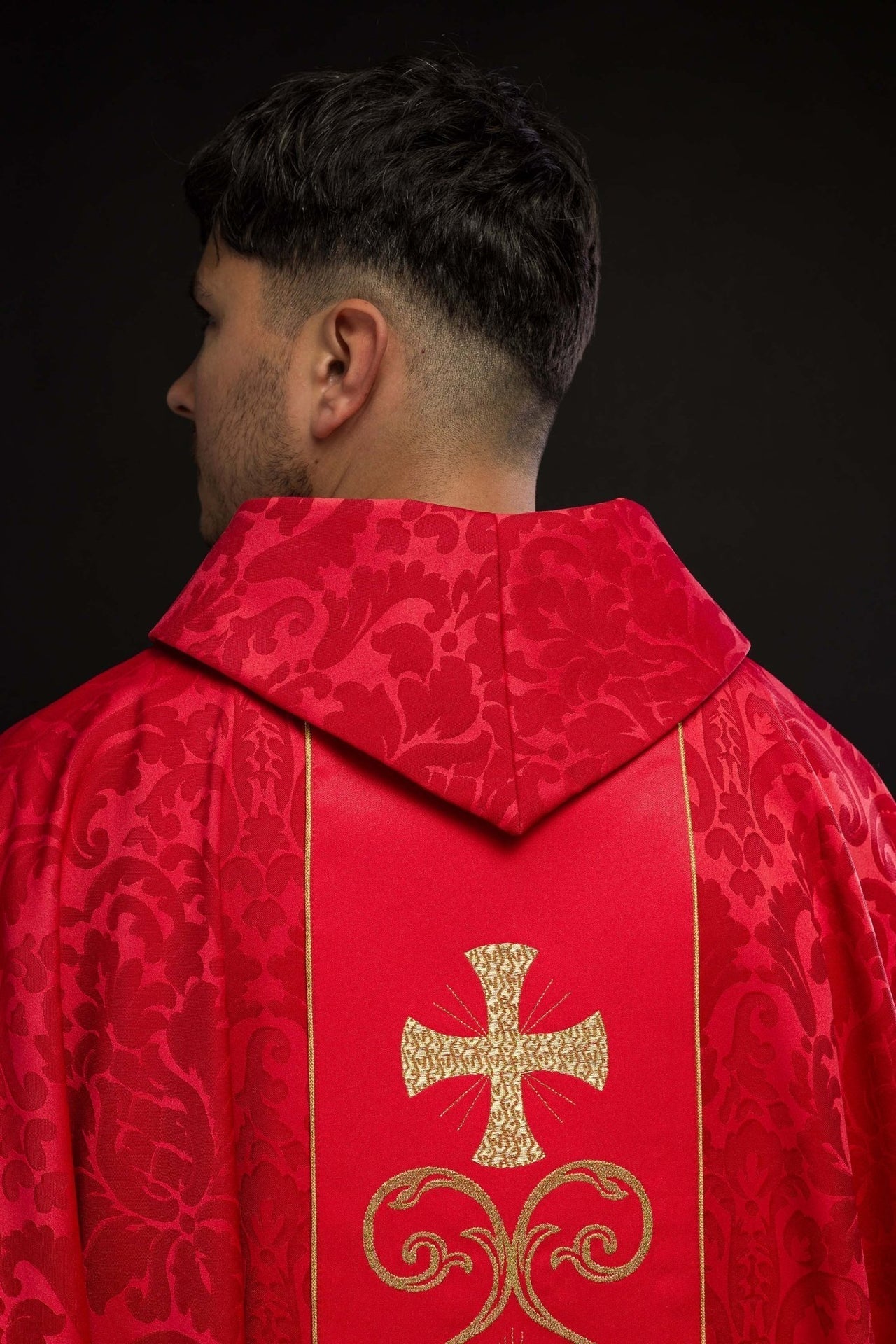
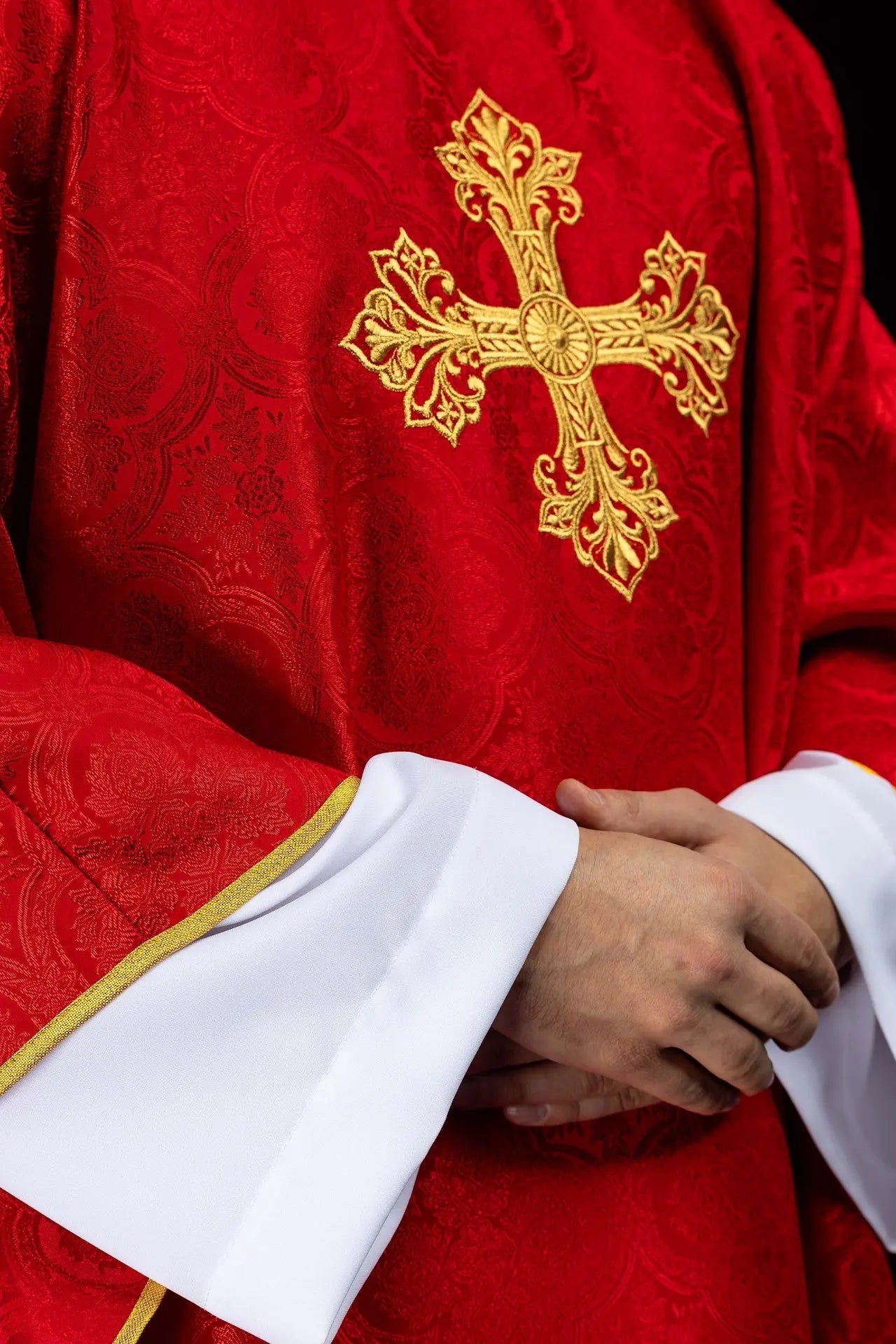
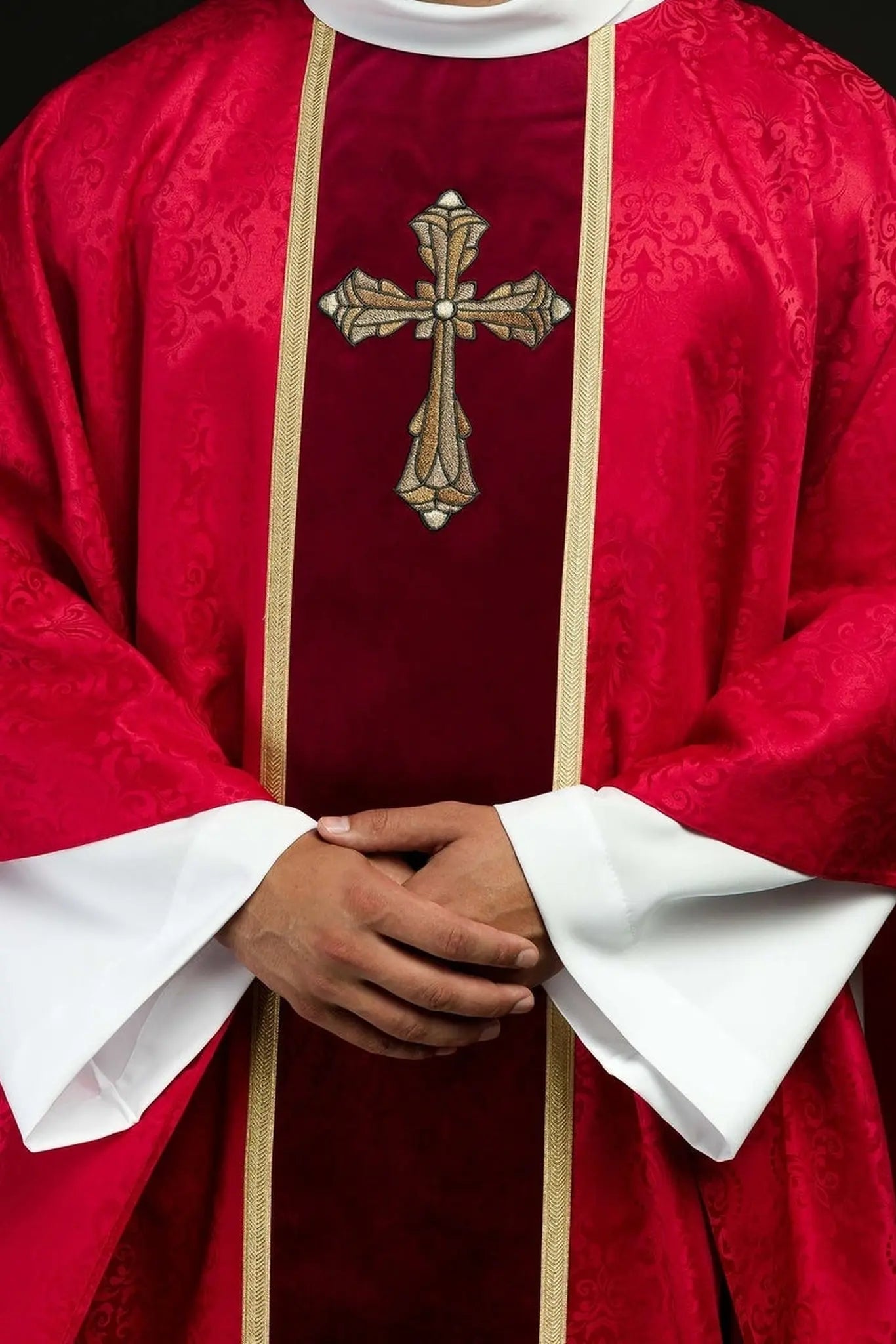
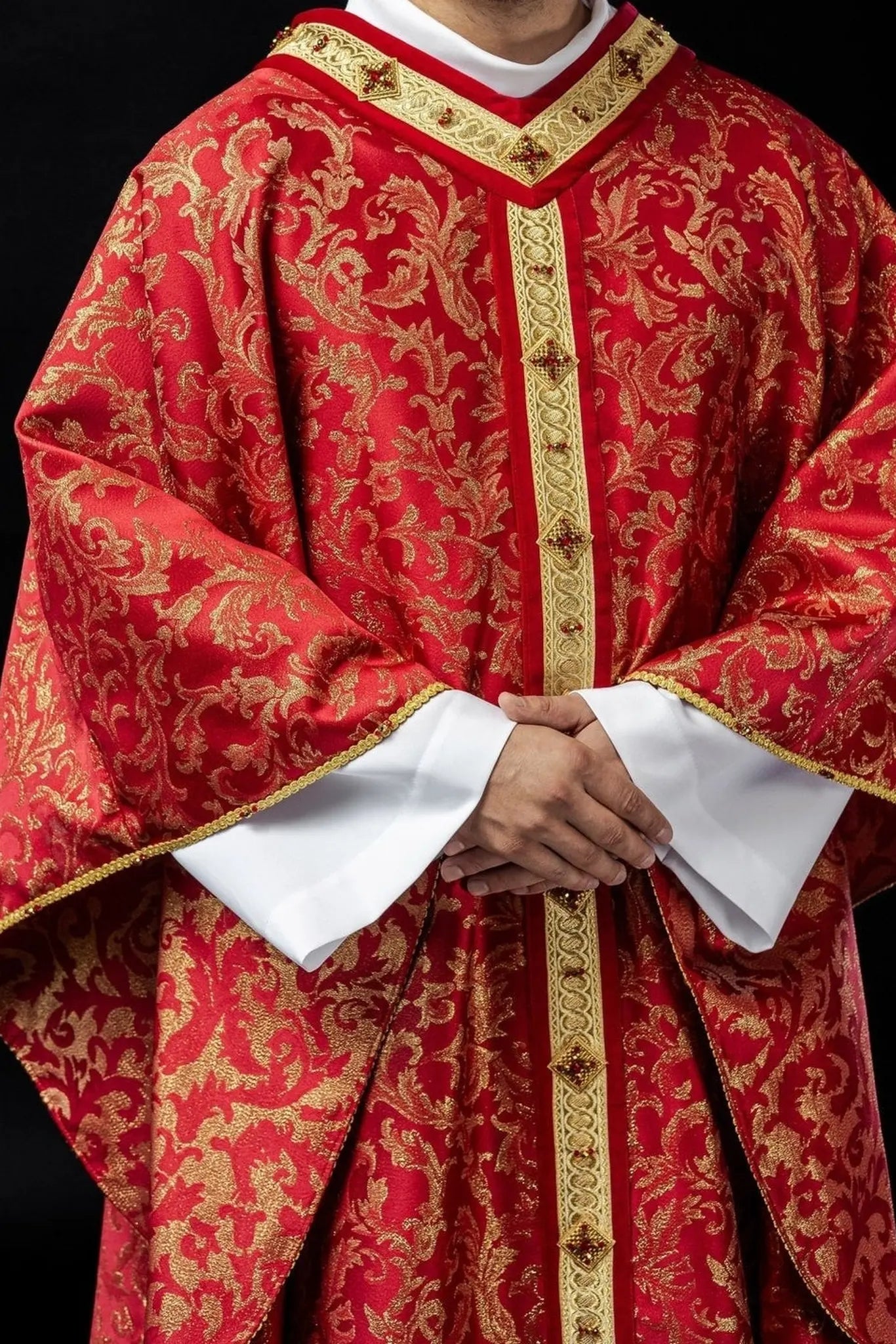
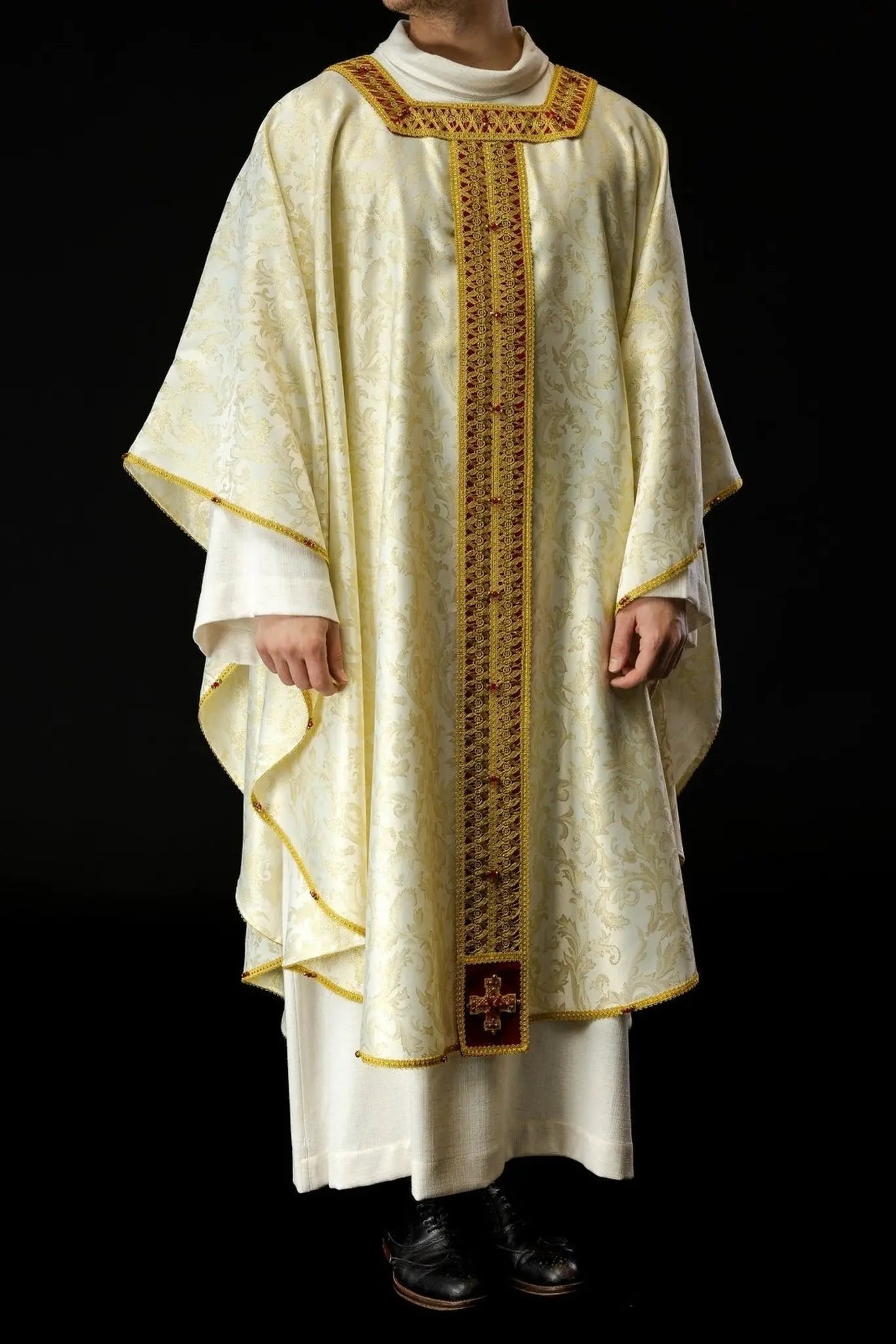
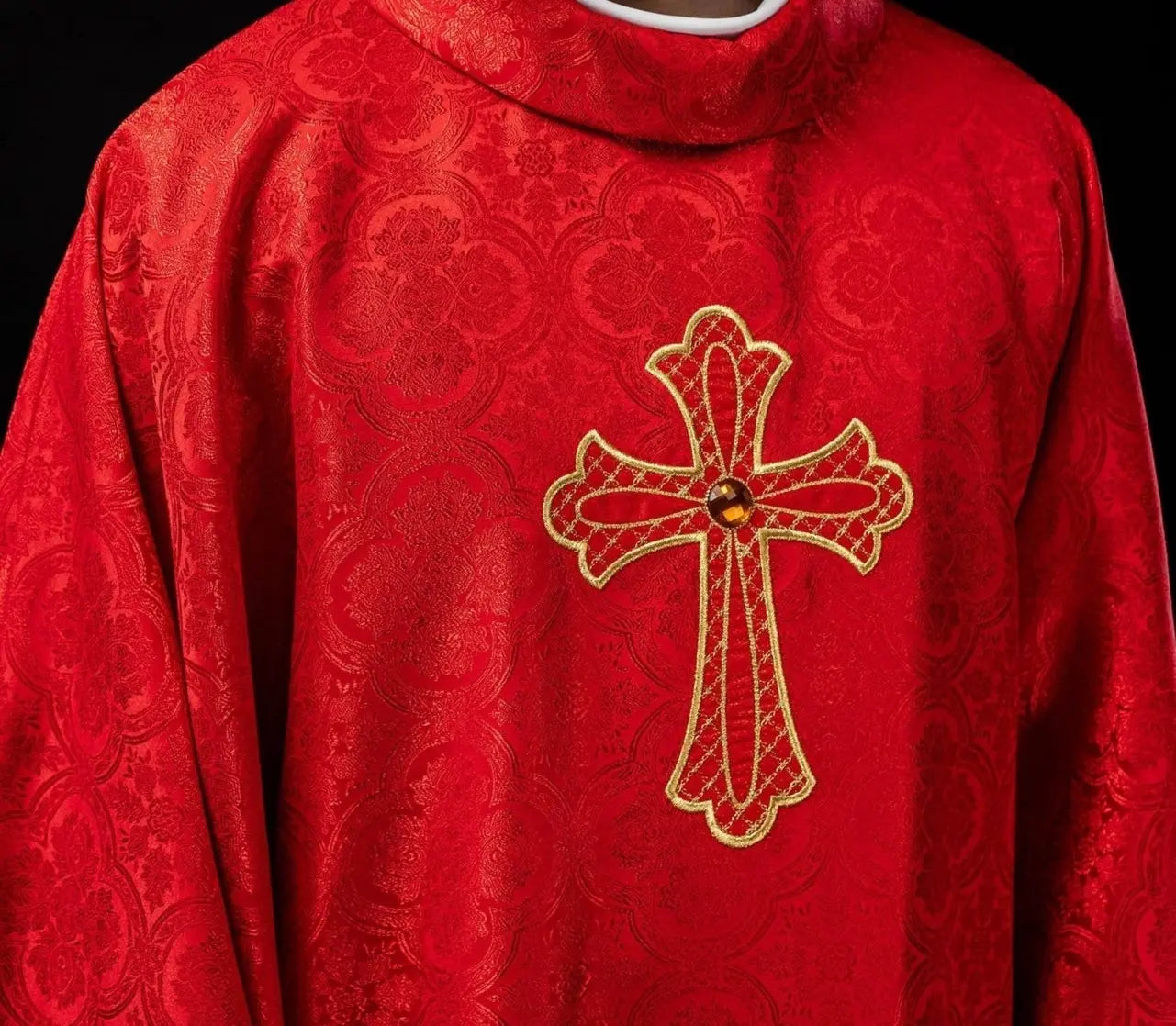
Fabric affects both the appearance and practical use of a red chasuble. Smooth fabrics create a clean and formal look, brocade-style textiles add depth and ceremonial richness, and lighter blends may be helpful for frequent parish use or warmer church interiors. The best choice depends on how often the vestment will be worn, whether it is intended for a cathedral, parish, chapel, or religious house, and whether the emphasis is on solemn ornament or comfortable daily use.
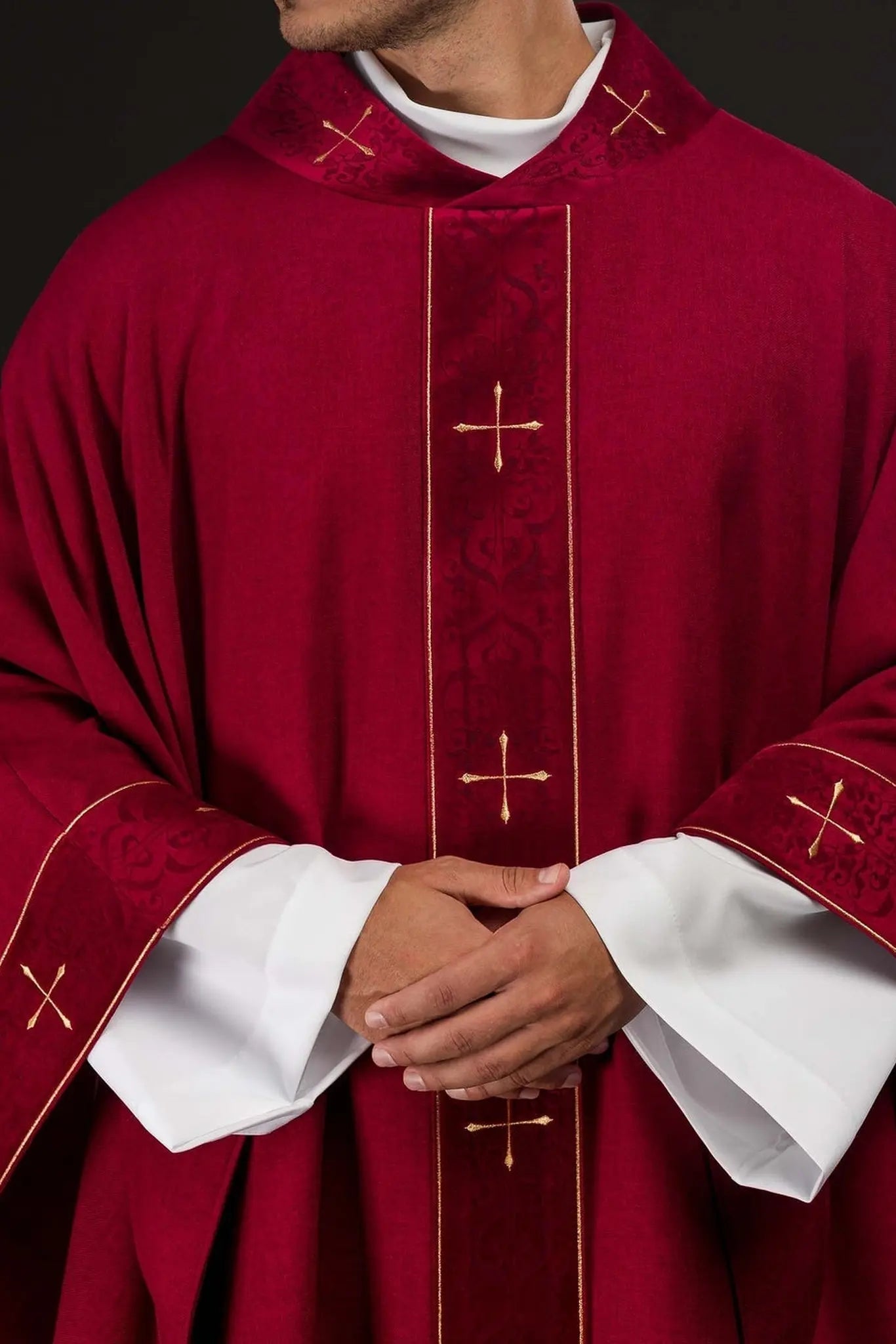
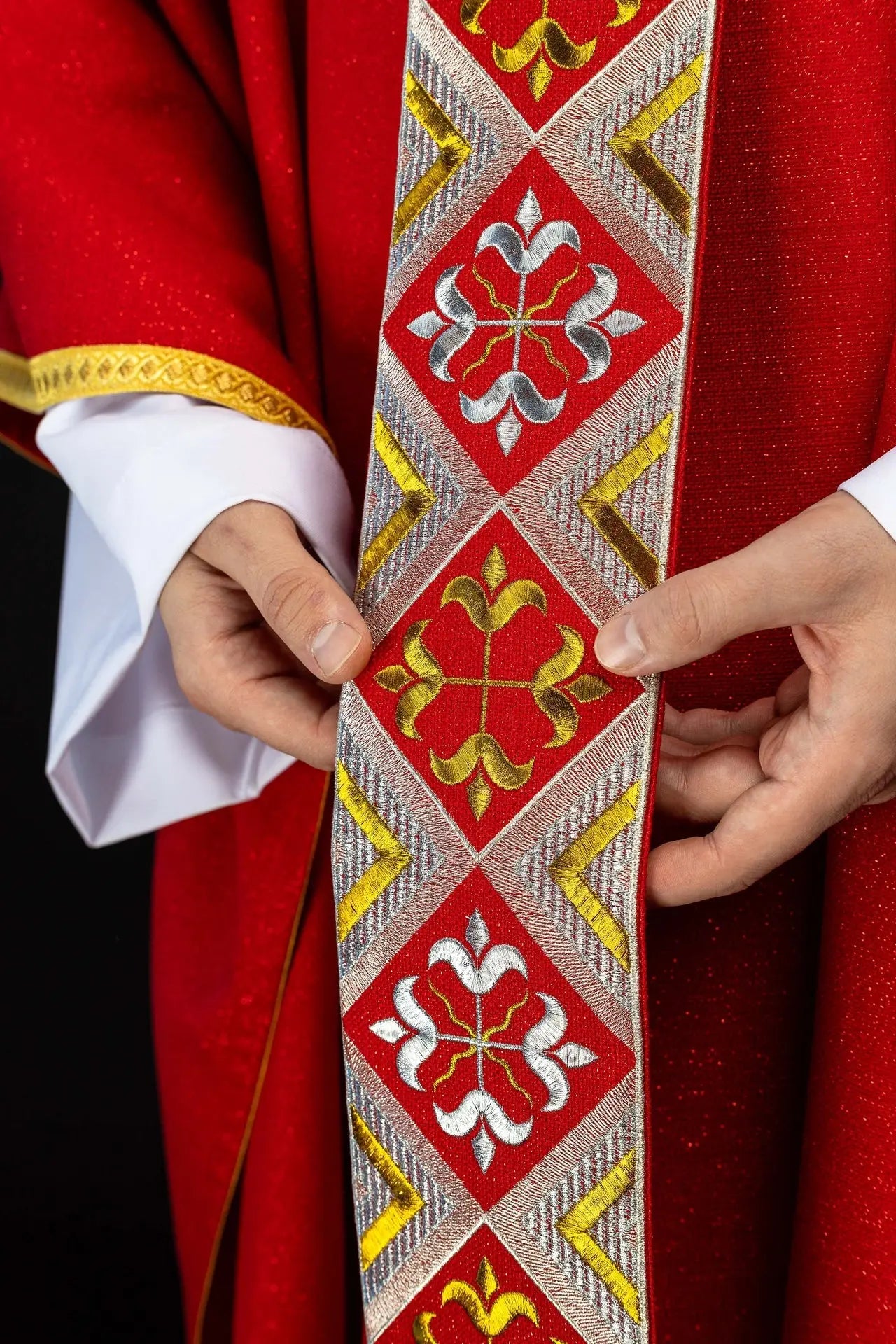
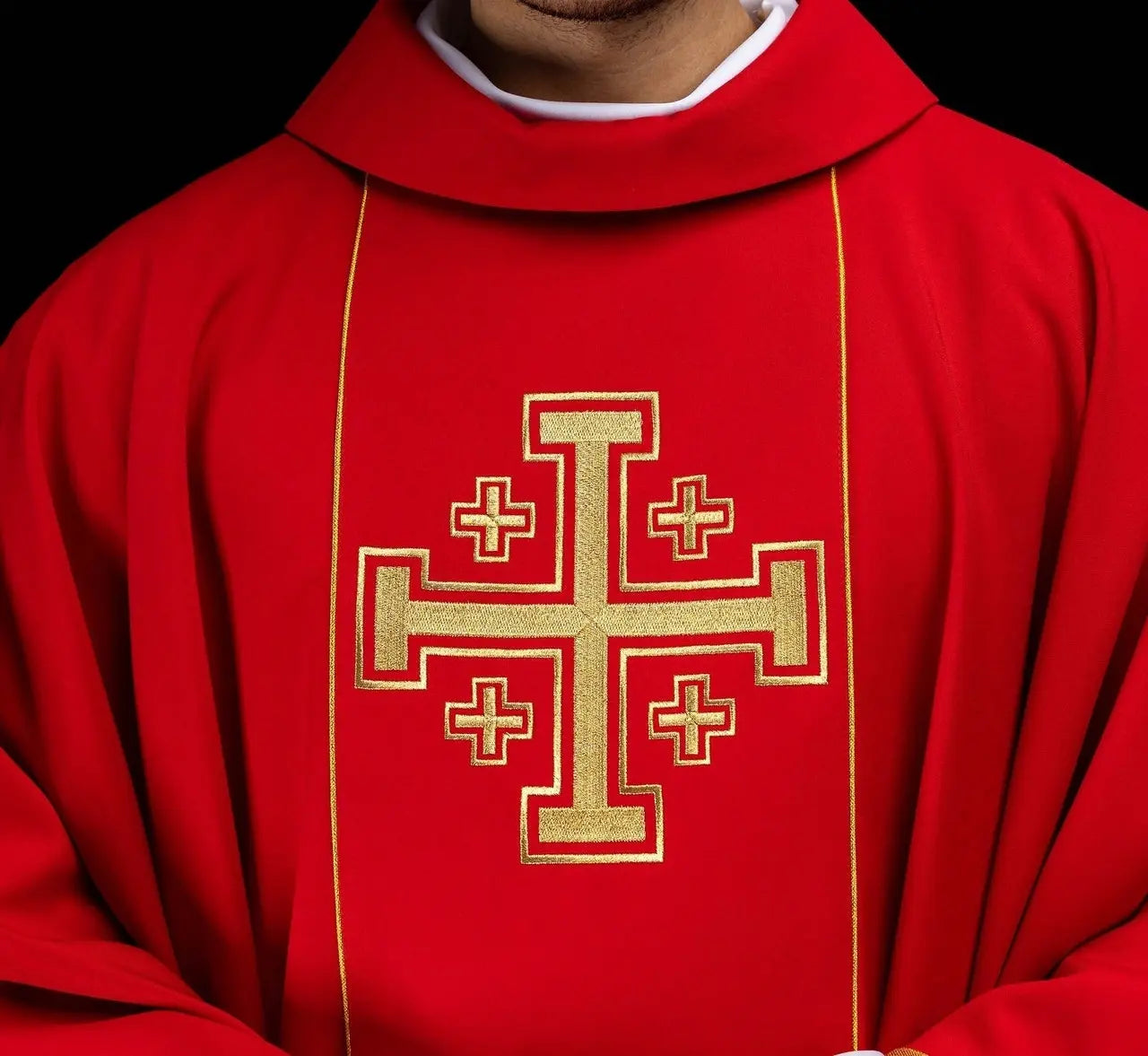
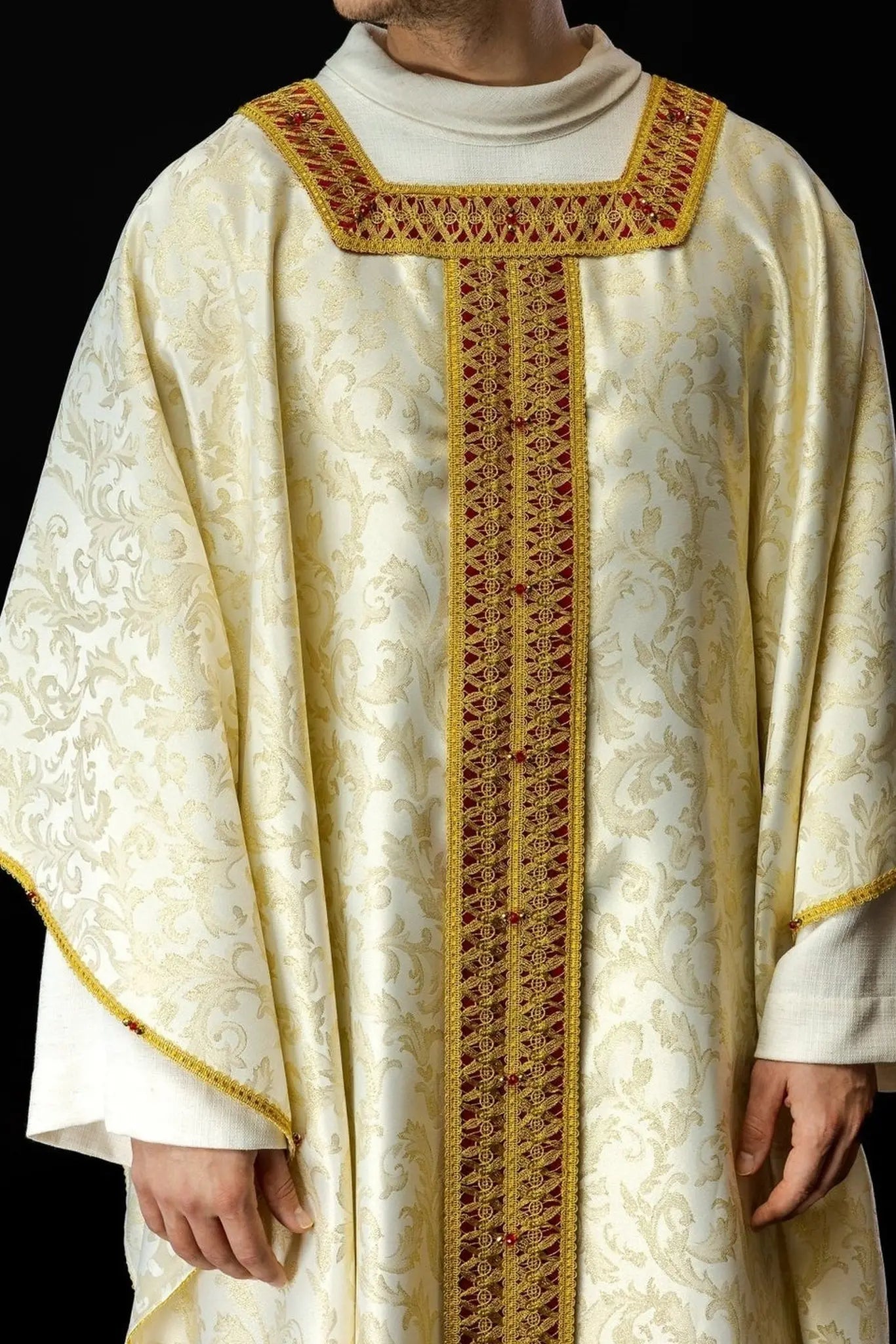
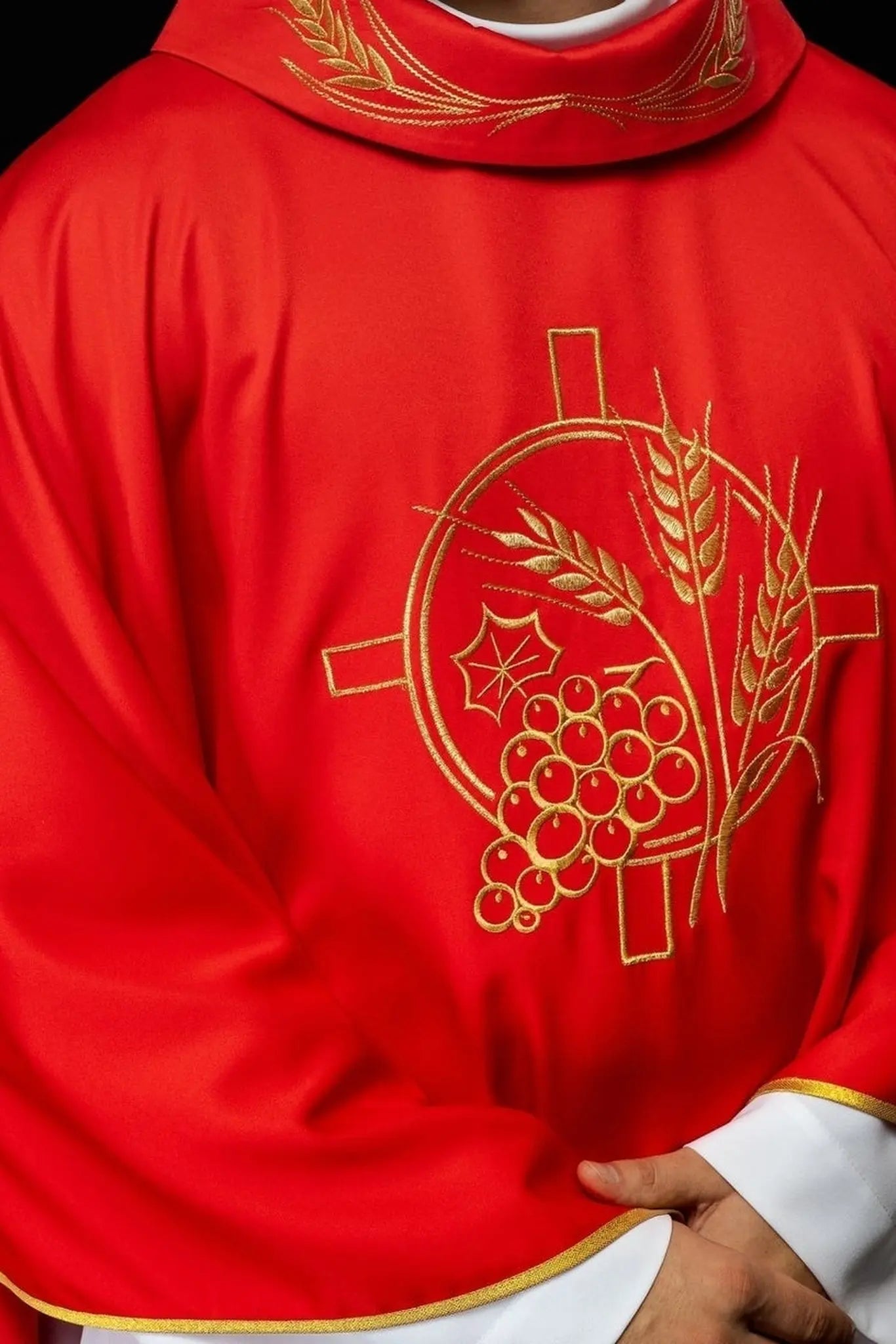
Embroidery should be chosen with the liturgical purpose in mind. Gold embroidery contrasts strongly with red and is often used for solemn celebrations. Subtle red-on-red or tone-on-tone ornament can be suitable where a quieter effect is desired. Crosses, IHS, the Holy Spirit, Eucharistic symbols, and saintly imagery all work within this color, but each gives the vestment a different focus. For designs centered on holy figures, see also chasubles with saints and sacred images.
How to choose a red chasuble
Begin with the intended use. A parish may need one durable red chasuble for all red days of the year, while a larger sacristy may keep several: one solemn model for Pentecost, another for Palm Sunday and Good Friday, and another for saints, martyrs, or Confirmation liturgies. If one vestment must serve many occasions, a balanced design with a cross, IHS, or Eucharistic embroidery is usually the most versatile.
Next, consider the church interior and existing vestments. A deep crimson or wine red can look dignified in a traditional sanctuary, while a brighter red may be highly visible in a large modern church. Gold details add festive clarity, especially in candlelight, but a restrained border can be more appropriate for Passion-related services. The chasuble should harmonize with the alb, stole, altar appointments, and sanctuary textiles without appearing overly busy.
Fit and comfort also matter. The celebrant needs enough room to move freely during the Eucharistic Prayer, at the altar, and while distributing Holy Communion. A lighter chasuble can be practical for long services or warm seasons, while a heavier fabric may be reserved for solemn feast days. The neck opening, shoulder line, and overall length should feel comfortable and allow the vestment to fall neatly over the alb.
Related liturgical colors and neighboring collections
Red is distinct from other liturgical colors, so it should not be substituted for them simply because the design is similar. For Ordinary Time, the usual color is green, and related vestments can be found in green chasubles. For Advent, Lent, and penitential celebrations, purple is the proper direction, with options available in purple chasubles. Rose, not red or pink in a casual sense, is used only on Gaudete Sunday and Laetare Sunday, so those vestments should be chosen from rose chasubles.
Red may overlap thematically with certain devotional feasts. For celebrations connected with the love of Christ and His saving sacrifice, the Sacred Heart of Jesus collection can be a useful adjacent category. However, a general red chasuble remains the more flexible choice for Pentecost, apostles, evangelists, martyrs, and Passion celebrations when a specific Sacred Heart motif is not required.
Care and long-term use
Liturgical vestments should be cared for according to the fabric and embroidery used in the individual garment. Red textiles deserve particular attention because strong color, metallic threads, and detailed embroidery can be affected by unsuitable washing, high heat, or rough storage. Always follow the care instructions supplied with the vestment, especially for embroidered panels, brocade fabrics, lined chasubles, and pieces with decorative trims.
For long-term preservation, hang the chasuble properly or store it flat in a clean, dry vestment cabinet. Avoid crushing the orphrey or folding directly across embroidery. After major liturgies, allow the vestment to air before storage, particularly if the church is warm or the service was long. With careful handling, a well-chosen red chasuble can serve a parish for many Pentecosts, Passiontide celebrations, feast days, and memorials of martyrs.
Frequently Asked Questions (FAQ)
When is a red chasuble used?
A red chasuble is used for Pentecost, Palm Sunday, Good Friday, celebrations of the Lord's Passion, feasts of Apostles and Evangelists, and martyrs. It is also appropriate for certain votive Masses related to the Holy Spirit or the Precious Blood, depending on the liturgical norms followed by the parish.
Can one red chasuble serve all red liturgical days?
Yes. A versatile red chasuble with a cross, IHS, Eucharistic symbol, or balanced gold ornament can be used across the year. Parishes with a larger vestment wardrobe may choose separate designs for Pentecost, Passiontide, and feasts of martyrs, but one dignified red chasuble is often enough for regular parish needs.
Should I choose a Gothic or Roman red chasuble?
A Gothic-style chasuble is usually chosen for its flowing drape and comfort during the Mass. A Roman-style chasuble gives a more traditional and formal appearance. The best choice depends on the celebrant's preference, the parish's visual tradition, and whether the vestment is intended for frequent use or special solemnities.
What embroidery is most suitable for red chasubles?
Crosses, IHS, Eucharistic motifs, flames, rays, and symbols of the Holy Spirit are all fitting. For martyr feasts, a saint image or a more solemn cross design can be appropriate. If the vestment must be used for many occasions, choose a symbol that is broad enough to work for Pentecost, Passion celebrations, and saints.
Is red the same as rose for Gaudete and Laetare?
No. Rose is a separate liturgical color used on Gaudete Sunday in Advent and Laetare Sunday in Lent. Red should be reserved for the celebrations assigned to red, such as Pentecost, Passion days, and martyrs. For Gaudete and Laetare, a rose chasuble is the correct category.