
Sort by
6 products
Monstrances
Monstrances for Eucharistic Adoration
Monstrances are sacred vessels used to display the consecrated Host for Eucharistic adoration, Benediction of the Blessed Sacrament, processions, and solemn devotional services. This collection gathers gold-plated brass monstrances and handcrafted designs created for churches, chapels, religious houses, and communities that want the Blessed Sacrament to be presented with reverence, stability, and visible beauty. A monstrance is not simply a decorative object placed near the altar. It has a clear liturgical purpose: it holds the lunette with the Sacred Host and makes the Real Presence visible to the faithful during prayer.
The word monstrance is connected with the idea of showing or making visible. In Catholic worship, that function is deeply theological. The vessel frames the Host, draws the eye toward Christ present in the Eucharist, and helps the congregation enter adoration with attention and humility. For this reason, the form, height, base, ornamentation, finish, and clarity of the central glass or crystal area all matter. A well-chosen monstrance supports prayer without distracting from the sacrament it displays.
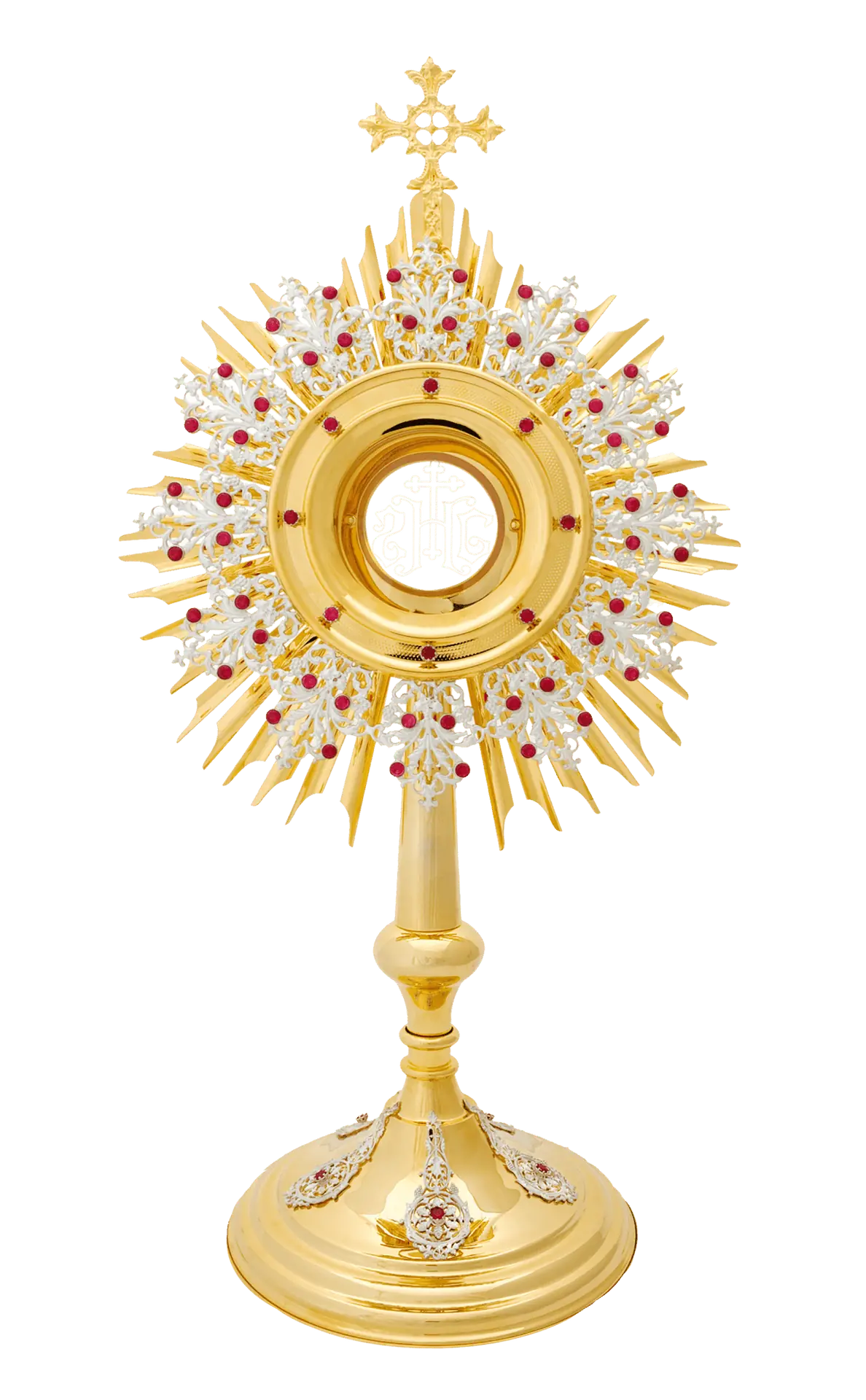
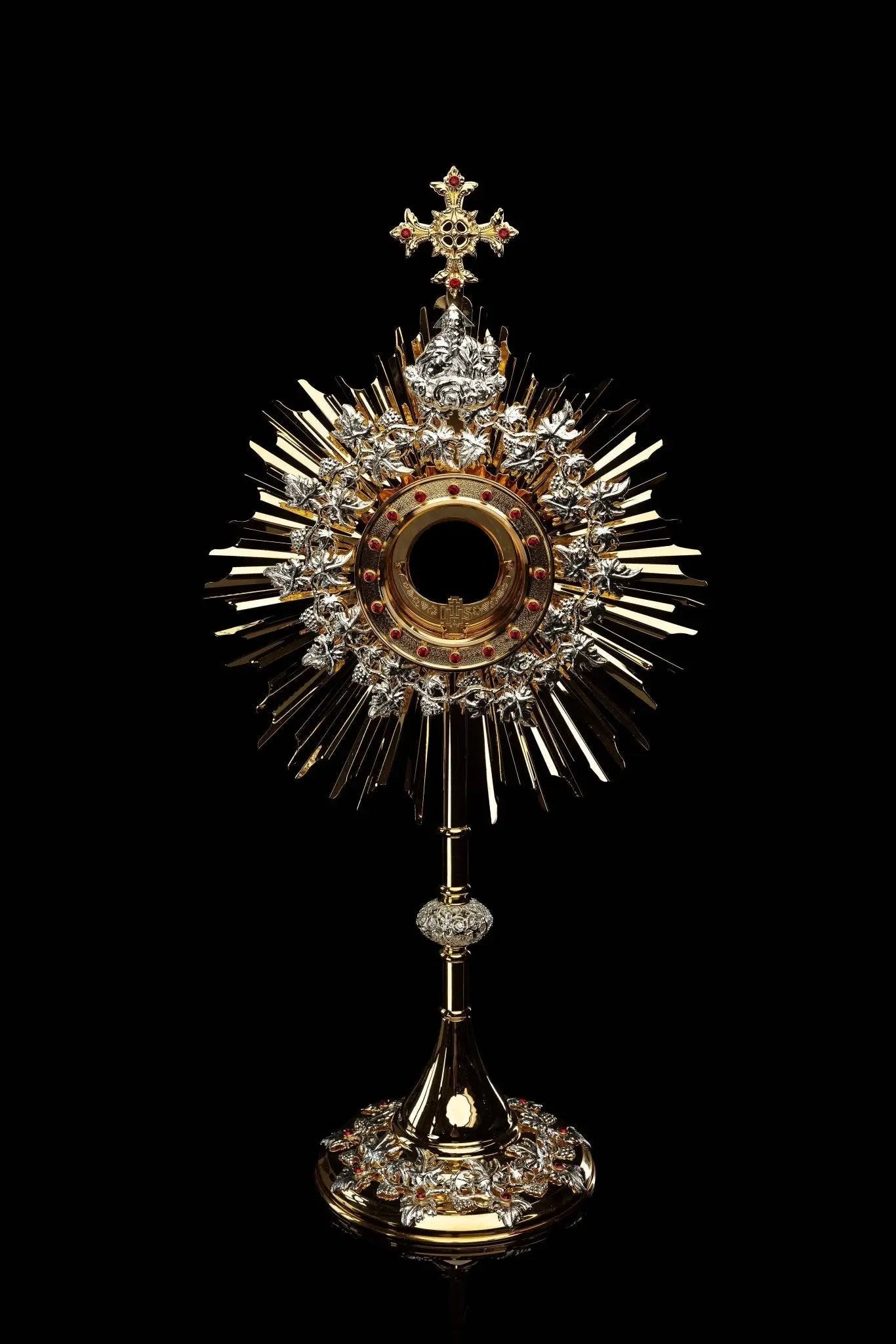
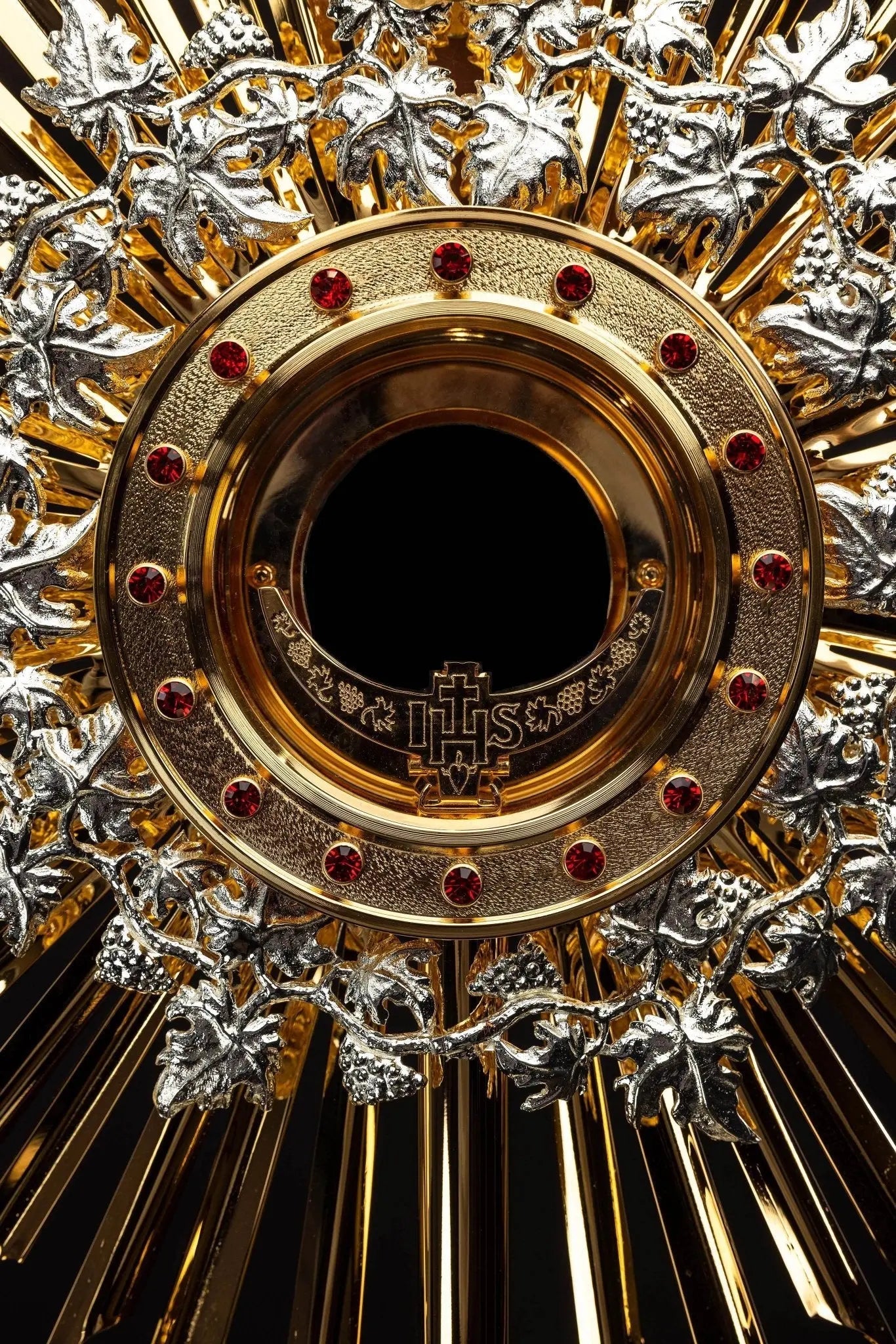
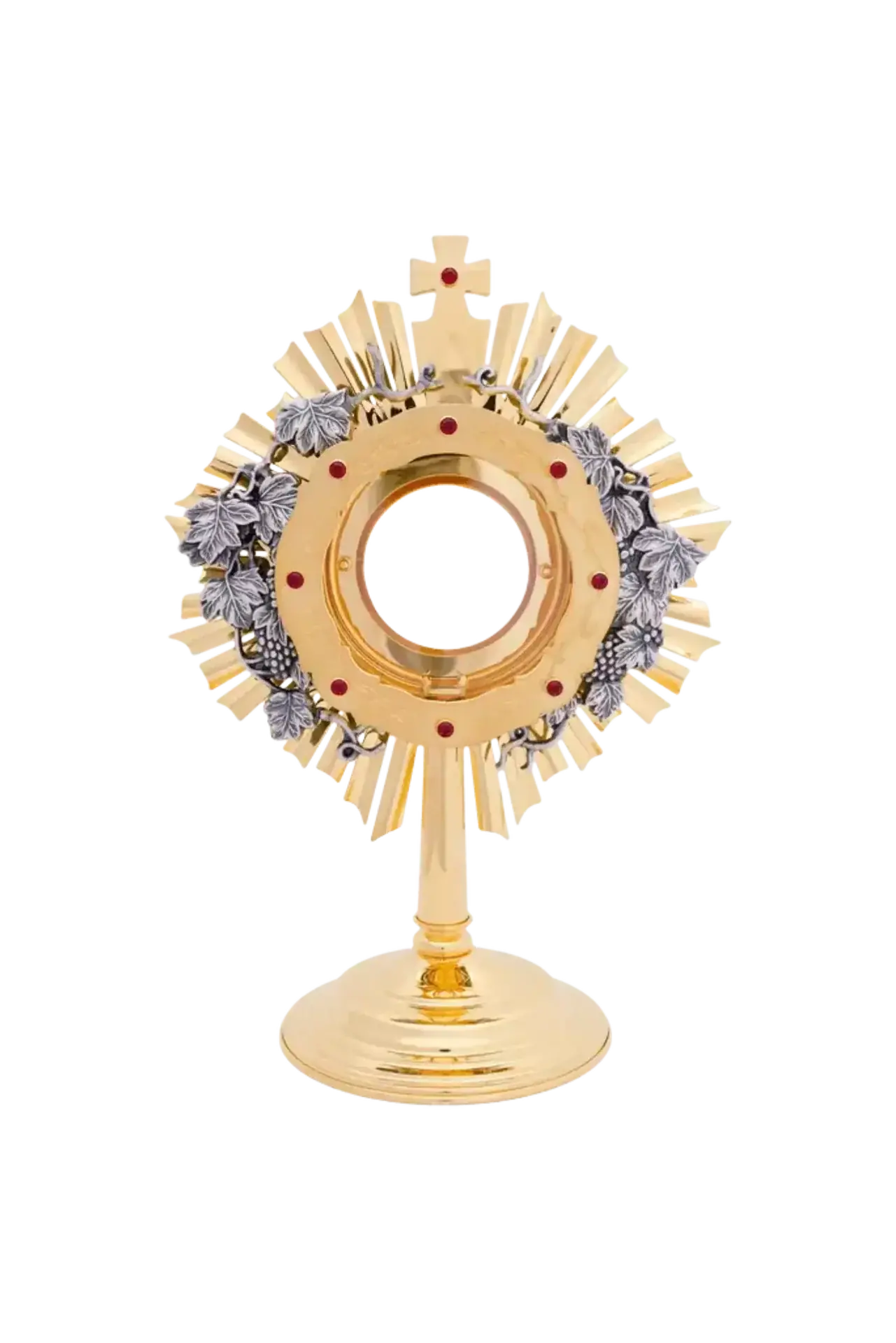
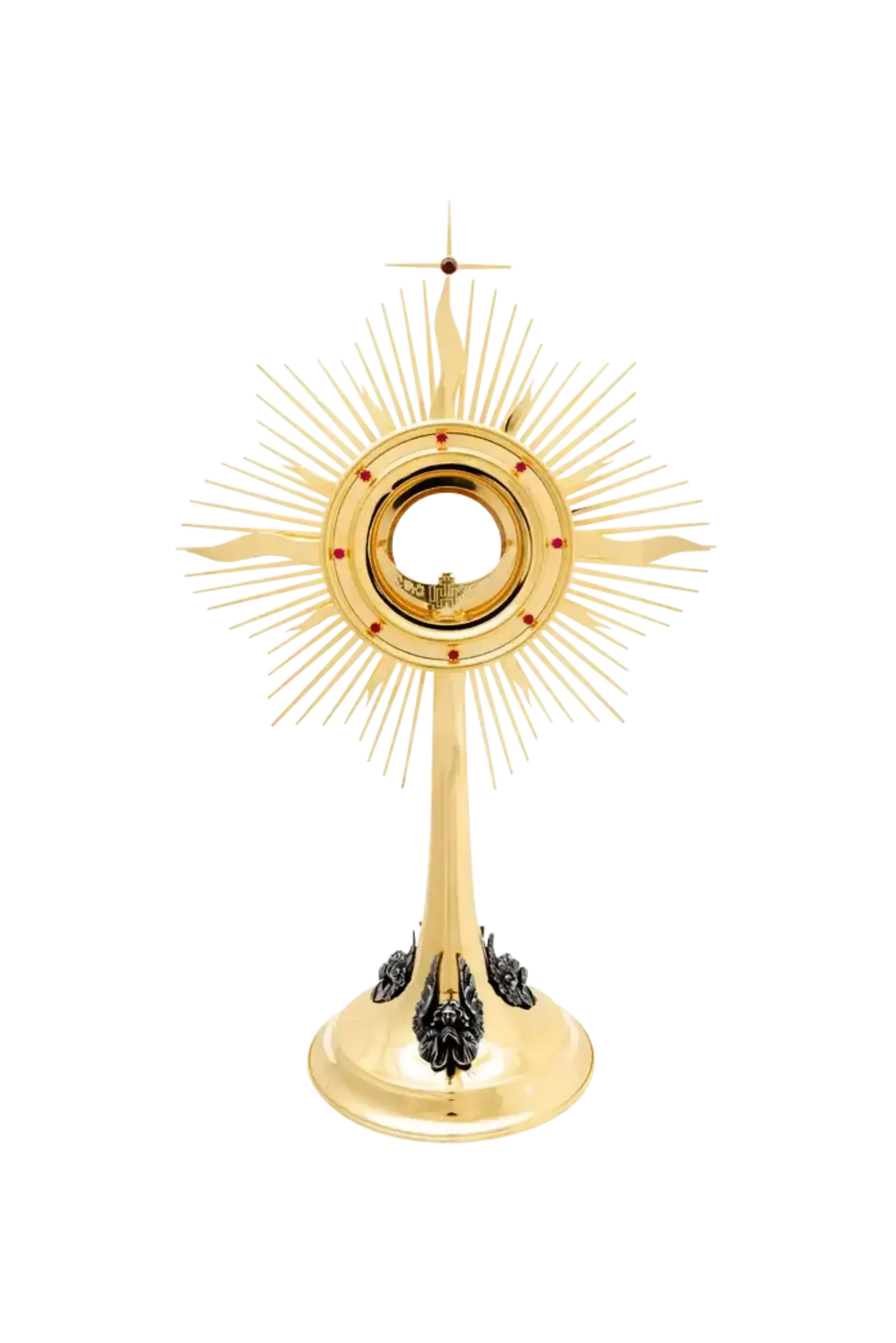
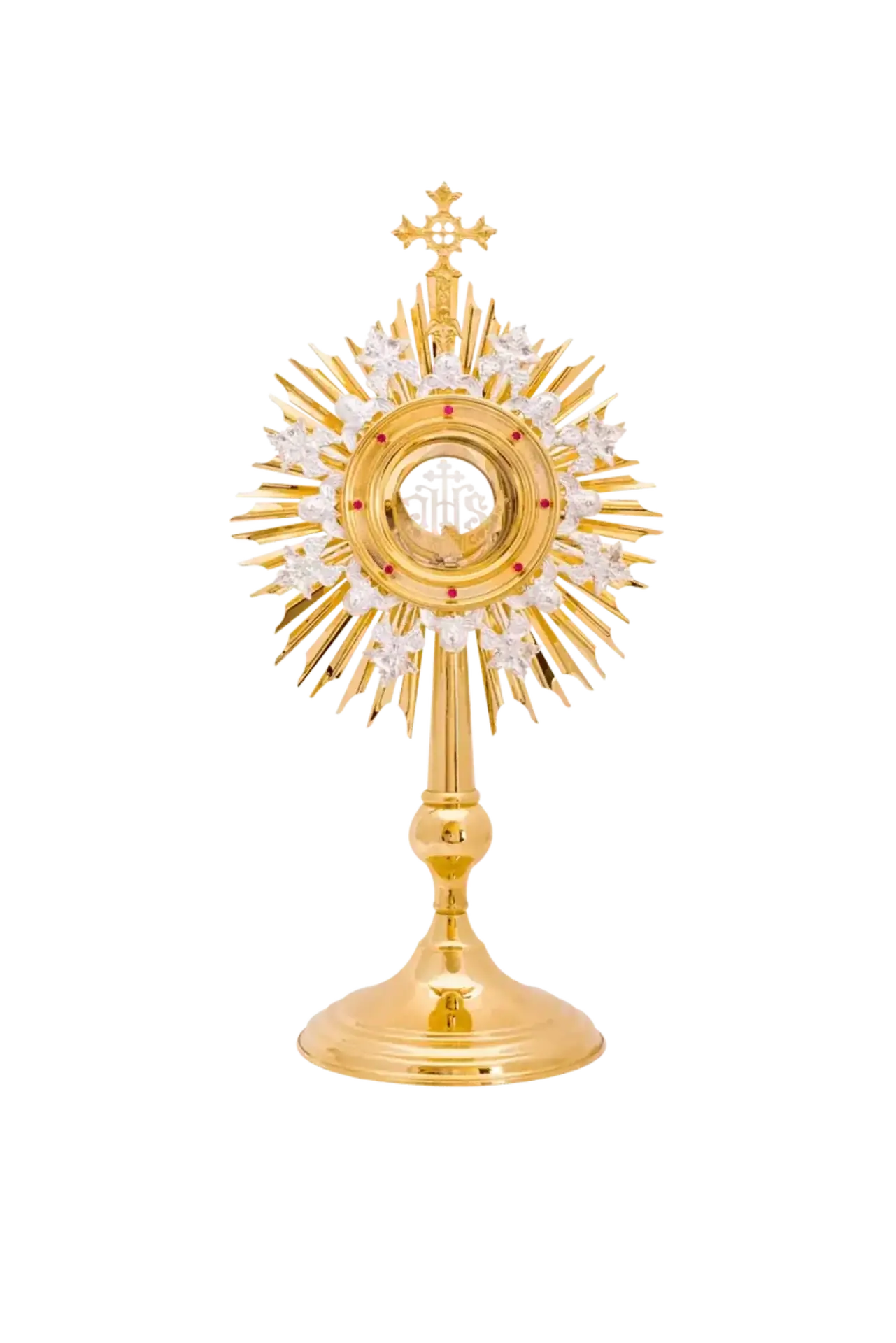
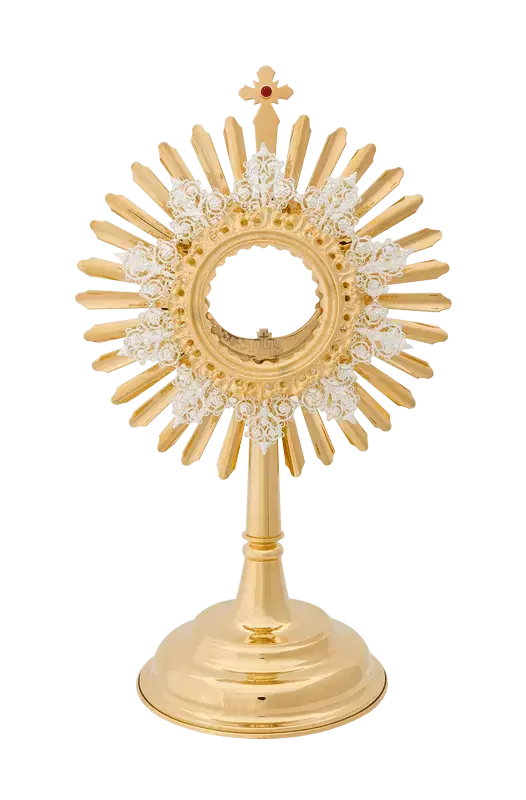
The visible range of this collection includes gilded brass monstrances, designs with rubies or ruby-like stones, vine motifs, silvered angel figures, radiant forms, and hand-finished details. These elements are traditional in Eucharistic art because they point beyond themselves. Rays suggest Christ as the light of the world, the vine recalls the Eucharistic mystery and the life of grace, and angels express adoration before the presence of God. Gold-toned finishes are often chosen for solemnity and for visual harmony with other sanctuary furnishings.
What belongs in this collection
This collection is focused on monstrances: sacred vessels used for the exposition of the Blessed Sacrament. Many designs are made from brass with a gold-plated finish, often enriched with ornamental stones, engraved or cast details, and a stable base suitable for placement on the altar or throne of exposition. Some forms are more restrained, while others are highly decorative, with angels, vine patterns, or a radiant sunburst surrounding the central display area.
When comparing monstrances, look first at the intended setting. A parish church with a large nave may need a taller and more visually prominent piece, especially for solemn adoration or Corpus Christi celebrations. A chapel, convent, seminary, or smaller worship space may require a design that is still dignified but proportionate to the altar and tabernacle area. The goal is always reverence, clarity, and proper liturgical use rather than visual size alone.
Monstrances also relate naturally to other sacred vessels and sanctuary accessories. For a broader view of liturgical metalware and church furnishings, browse liturgical accessories. If the parish is preparing a complete altar set, the monstrance may be selected together with chalices, candlesticks, and items used for incense such as thuribles and boats. For churches that also expose relics or arrange devotional chapels, reliquaries are a closely related collection, though they serve a different liturgical and devotional purpose.
Liturgical use of a monstrance
The primary use of a monstrance is Eucharistic exposition. During adoration, the consecrated Host is placed in a lunette and then set within the central opening of the monstrance so that the faithful may adore Christ present in the Blessed Sacrament. The vessel is normally placed on the altar, on a throne of exposition, or in another suitable place prepared according to local liturgical norms. Its design should help the Host remain clearly visible and securely held.
Monstrances are also used for Benediction of the Blessed Sacrament, when the priest or deacon blesses the faithful with the Eucharist. In that context, the monstrance is handled with the greatest care and is commonly used together with a humeral veil. The humeral veil covers the shoulders and hands of the minister during the blessing, emphasizing that the blessing comes from Christ present in the Eucharist, not from the personal authority of the minister.
During Eucharistic processions, especially on the Solemnity of Corpus Christi, the monstrance may be carried outside or through the church so that the faithful can accompany the Blessed Sacrament in public worship. For such celebrations, processional accessories can help create a coherent and reverent setting. Churches preparing for this solemnity may also consider processional canopies, processional umbrellas, and the broader Corpus Christi collection.
How to choose a monstrance for a church or chapel
Choosing a monstrance should begin with liturgical need. Consider how often Eucharistic exposition takes place, whether the vessel will be used only inside the church or also in processions, and how visible the Host needs to be from the nave. A taller monstrance with a wide radiant frame may be appropriate for a large parish church, while a medium-sized design can be better for a side chapel or religious community. The product height, base width, and central opening should all be reviewed before purchase.
The base is important because a monstrance must stand securely during adoration. A wide and balanced base helps prevent instability on the altar. The stem should allow safe handling, particularly if the monstrance will be lifted during Benediction or carried in procession. Ornamentation should never compromise practical use. A beautiful monstrance should also be easy to place, lift, clean, and store responsibly.
The central display area should be clear, dignified, and proportionate to the overall design. The lunette and glass or crystal should allow the Host to be seen without obstruction. If a parish already owns a lunette or has specific size requirements, those details should be compared with the product specifications. Visual grandeur is meaningful only when the essential function of reverently displaying the Blessed Sacrament is fulfilled.
Materials, finish, and symbolic details
Gold-plated brass is a traditional and practical material for many monstrances. Brass gives strength and structure, while gilding creates a luminous appearance suited to the worship of the Eucharist. Some designs include silvered elements, colored stones, or detailed decorative work. These features can make the monstrance harmonize with chalices, candlesticks, tabernacle ornamentation, altar crosses, and other sanctuary furnishings.
Decorative motifs often carry Eucharistic meaning. A vine motif can recall Christ the true vine and the sacramental life of the Church. Rays around the central opening point to divine glory and to Christ as the light that shines for the faithful. Angel figures express reverence and adoration. Stones in red tones can add solemn contrast to the gilded surface and may visually echo themes of sacrifice, love, and the Precious Blood, depending on the overall design.
When selecting a finish, consider the existing visual language of the sanctuary. A highly ornate monstrance may suit a richly decorated altar, while a simpler gold-plated form can work well in a modern chapel. The best choice is the one that supports prayer, fits the architecture, and can be used safely and respectfully for the rites in which the Blessed Sacrament is exposed.
Monstrances for adoration, Benediction, and processions
Different parish practices call for different practical features. For regular weekly or daily adoration, durability and ease of handling are especially important. The monstrance may be moved frequently from sacristy to altar, so the stem, base, and central holder should be secure and comfortable to manage. For solemn Benediction, the design should be dignified enough for public worship and compatible with the use of a humeral veil.
For Corpus Christi and other Eucharistic processions, visibility and stability become even more important. A processional monstrance should be manageable for the minister, visually clear to the faithful, and proportionate to any canopy or processional arrangement used by the parish. The surrounding accessories should not compete with the monstrance but should frame the procession with dignity.
In chapels and smaller churches, a monstrance with balanced ornamentation may be preferable to an exceptionally large design. The faithful are often closer to the altar, so fine details, clarity of the central window, and harmony with the altar furnishings become more noticeable. In larger churches, height and radiance can help maintain visibility from a distance.
Relationship with other liturgical items
A monstrance belongs within the wider setting of Eucharistic worship. It may be used alongside candlesticks, incense, altar linens, vestments, and processional furnishings. During Benediction, the minister often wears vestments appropriate to the rite, and the altar may be arranged with candles and incense. During solemn processions, a canopy or umbrella may mark the honor given to the Blessed Sacrament. These items work together to express the Church's reverence for the Eucharist.
It is also important to distinguish monstrances from related sacred items. A chalice is used at Mass to hold the Precious Blood. A reliquary is used for relics of saints and is not a vessel for Eucharistic exposition. A ciborium is used to hold consecrated hosts, but it does not serve the same visual function as a monstrance. Candlesticks, bells, incense vessels, and holy water items belong to the broader liturgical environment, while the monstrance has the specific role of displaying the consecrated Host for adoration.
Care and preservation
A monstrance should be handled with clean, dry hands or according to the sacristy practice of the parish. Dust can usually be removed with a soft, dry cloth. For metal finishes, avoid abrasive materials, harsh chemicals, and rough polishing, especially near delicate gilded details, stones, glass, or silvered ornamentation. If deeper cleaning is needed, use only products suitable for the specific finish and apply them with great care.
After use, the monstrance should be stored in a safe sacristy cabinet, case, or other protected place where it will not be exposed to impact, excessive humidity, or unnecessary handling. The lunette and central display area should be kept clean and free from residue. Regular inspection helps ensure that the base remains stable, decorative elements remain secure, and the vessel is ready for the next period of adoration or Benediction.
Buying guidance for parishes and communities
Before ordering, review the product dimensions, material description, finish, and decorative details. Compare the height of the monstrance with the altar arrangement and the distance from which the faithful will view it. If the monstrance will be used in procession, consider whether it can be carried comfortably and whether its size works with any canopy or umbrella already owned by the parish.
A parish purchasing a monstrance may also want to plan the surrounding liturgical setting. Candles, incense, altar linens, humeral veils, and processional accessories contribute to the dignity of Eucharistic devotion. Selecting these items together can help the sanctuary look coherent while still respecting the unique purpose of each object.
The most suitable monstrance is one that combines reverent appearance with dependable liturgical function. It should be beautiful, but its beauty should serve the Eucharistic mystery. It should be ornate enough for solemn worship, but practical enough for careful handling. It should harmonize with the church, but direct attention beyond itself to Christ truly present in the Blessed Sacrament.
Frequently Asked Questions (FAQ)
What is a monstrance used for?
A monstrance is used to display the consecrated Host during Eucharistic adoration, Benediction of the Blessed Sacrament, and certain Eucharistic processions. Its purpose is to make the Host visible so the faithful can adore Christ present in the Eucharist.
How should a parish choose the right size of monstrance?
The size should match the worship space and the way the monstrance will be used. Larger churches often benefit from a taller, more radiant design, while chapels may need a smaller and more proportionate vessel. Stability, visibility, and safe handling should guide the decision.
Can a monstrance be used for Corpus Christi processions?
Yes, a suitable monstrance may be used in Eucharistic processions when the rite is celebrated according to the Church's liturgical norms. For outdoor or solemn processions, parishes often coordinate it with a canopy, processional umbrella, candles, incense, and appropriate vestments.
What is the difference between a monstrance and a reliquary?
A monstrance is for the exposition of the Blessed Sacrament. A reliquary is for the reverent display or preservation of relics of saints. They may look similar in some forms, but they have different purposes and should not be treated as interchangeable.
Why are many monstrances gold-plated?
Gold-plated finishes are traditional because they give the vessel a luminous, solemn appearance and visually express honor toward the Eucharist. Brass provides a strong structure, while gilding helps the monstrance harmonize with chalices, candlesticks, and other sanctuary furnishings.
What other items are commonly prepared for Benediction?
For Benediction, a parish commonly prepares the monstrance, lunette, altar candles, incense, and a humeral veil for the minister. The exact arrangement depends on the rite being celebrated and the local practice of the church or chapel.