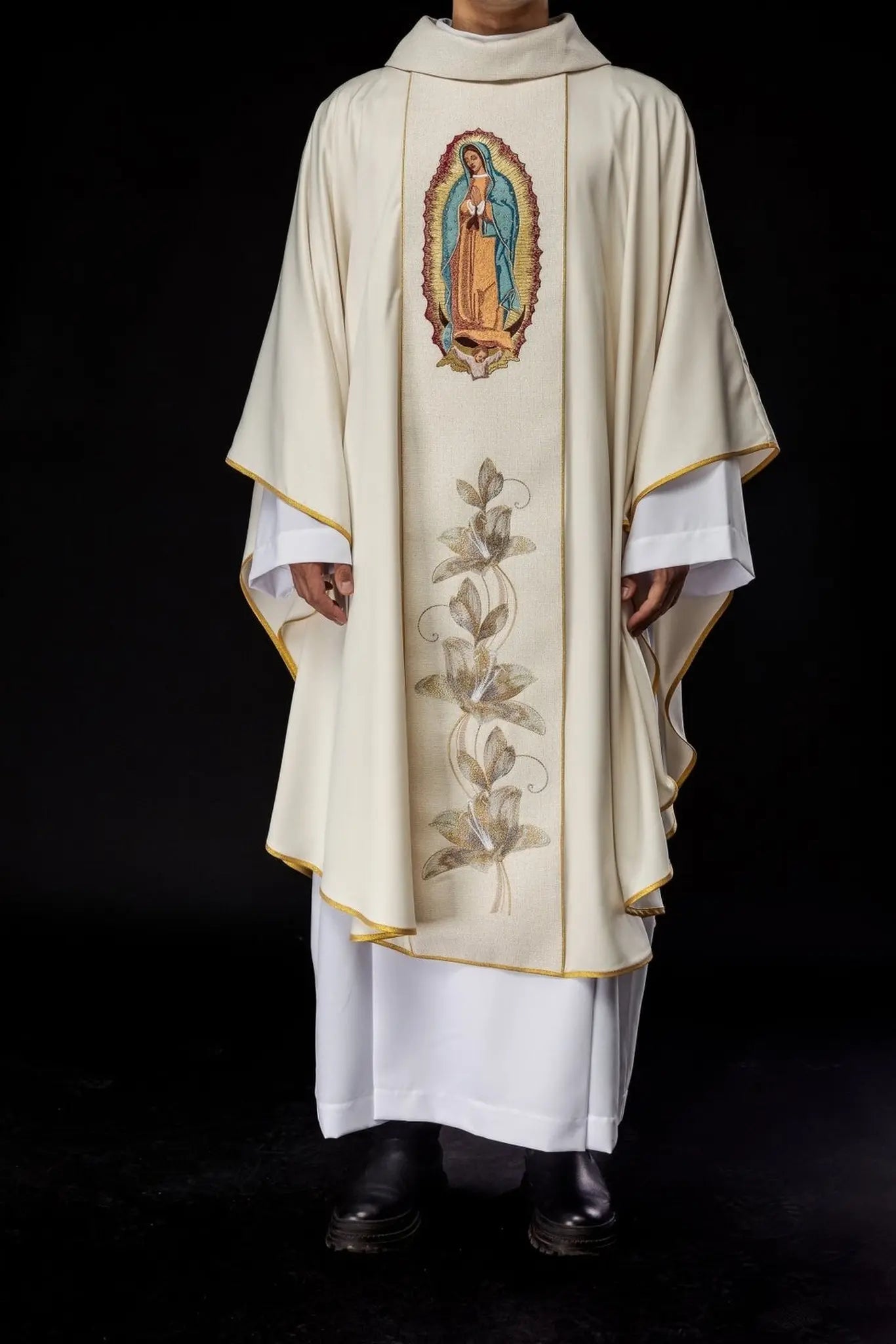
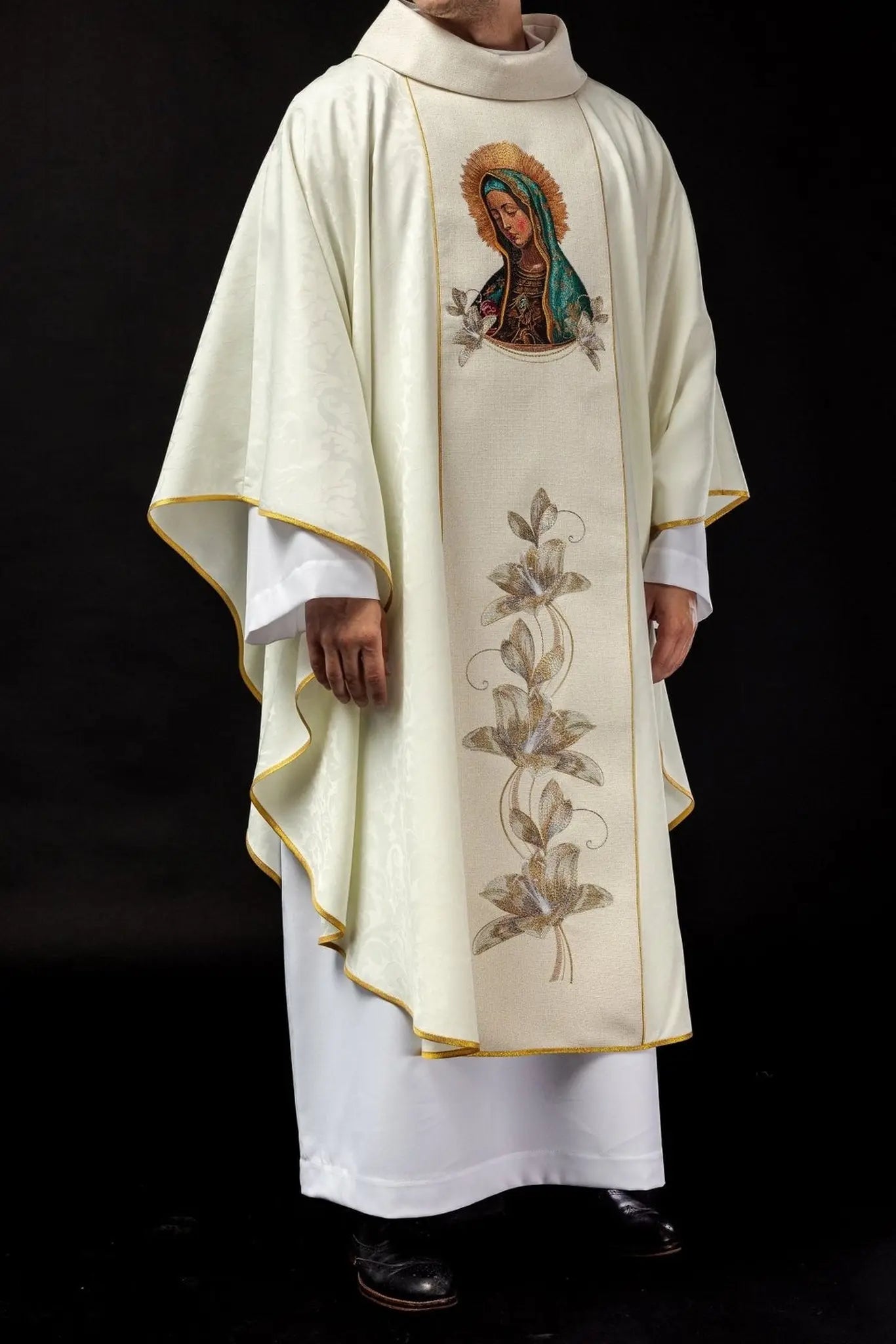
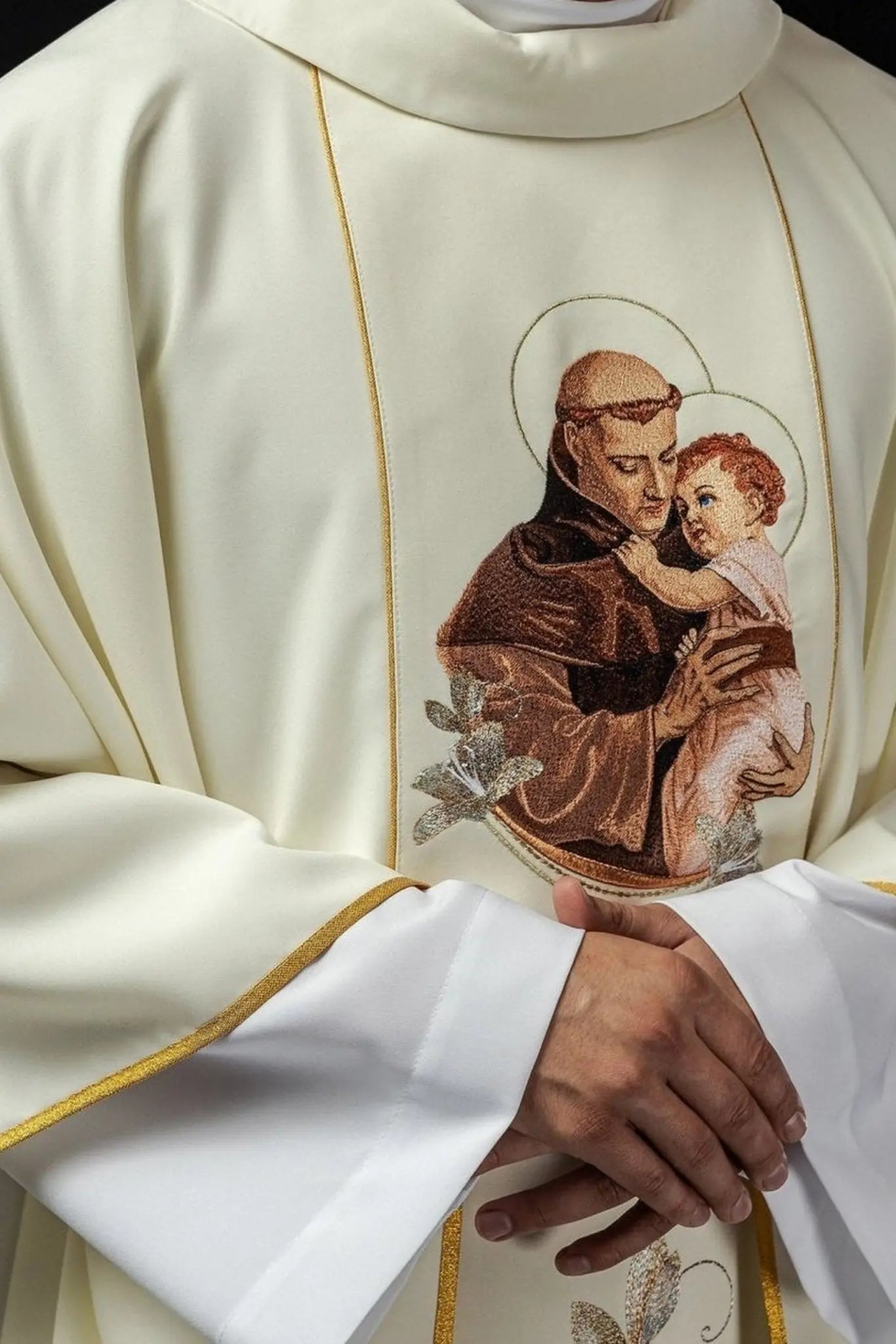
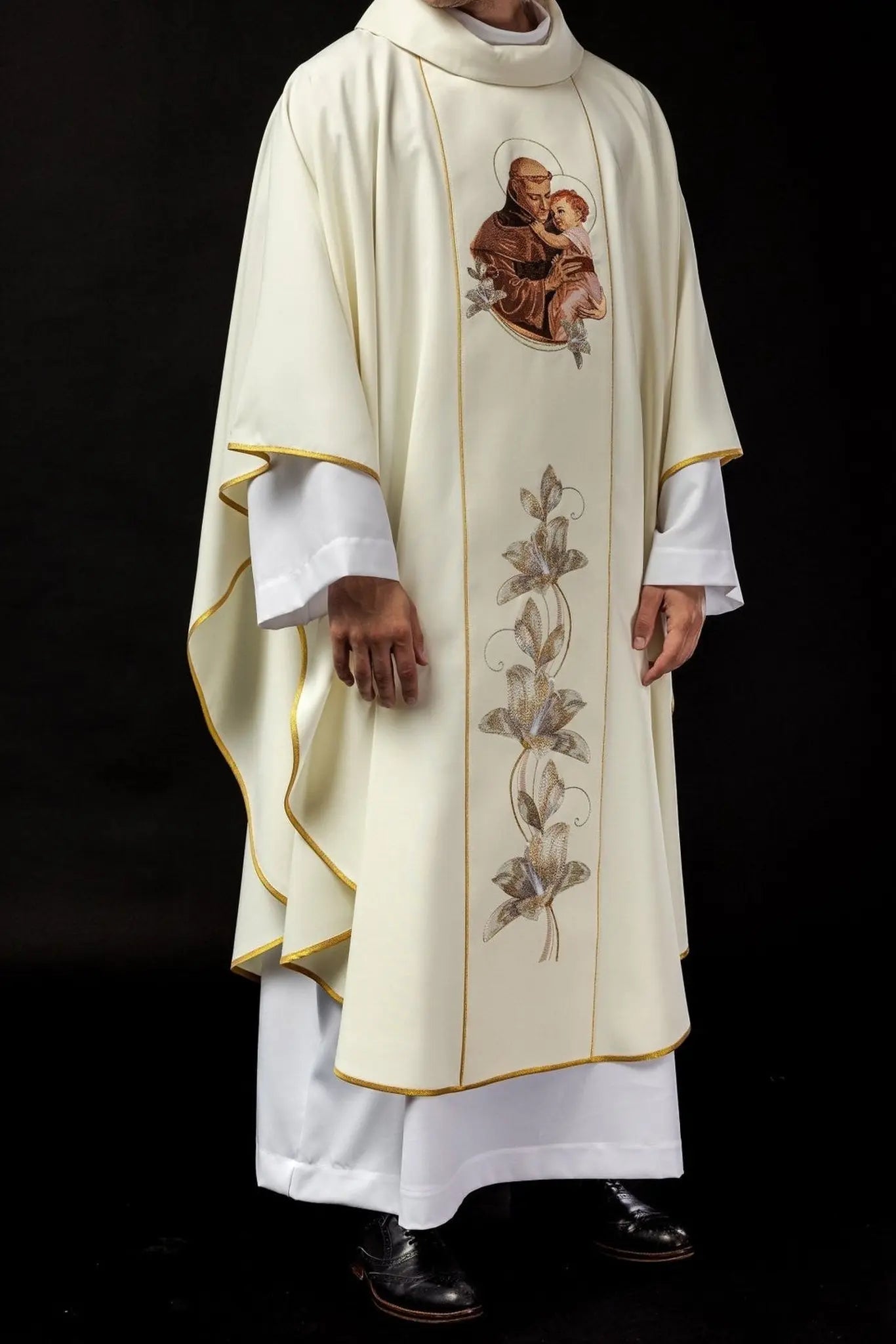
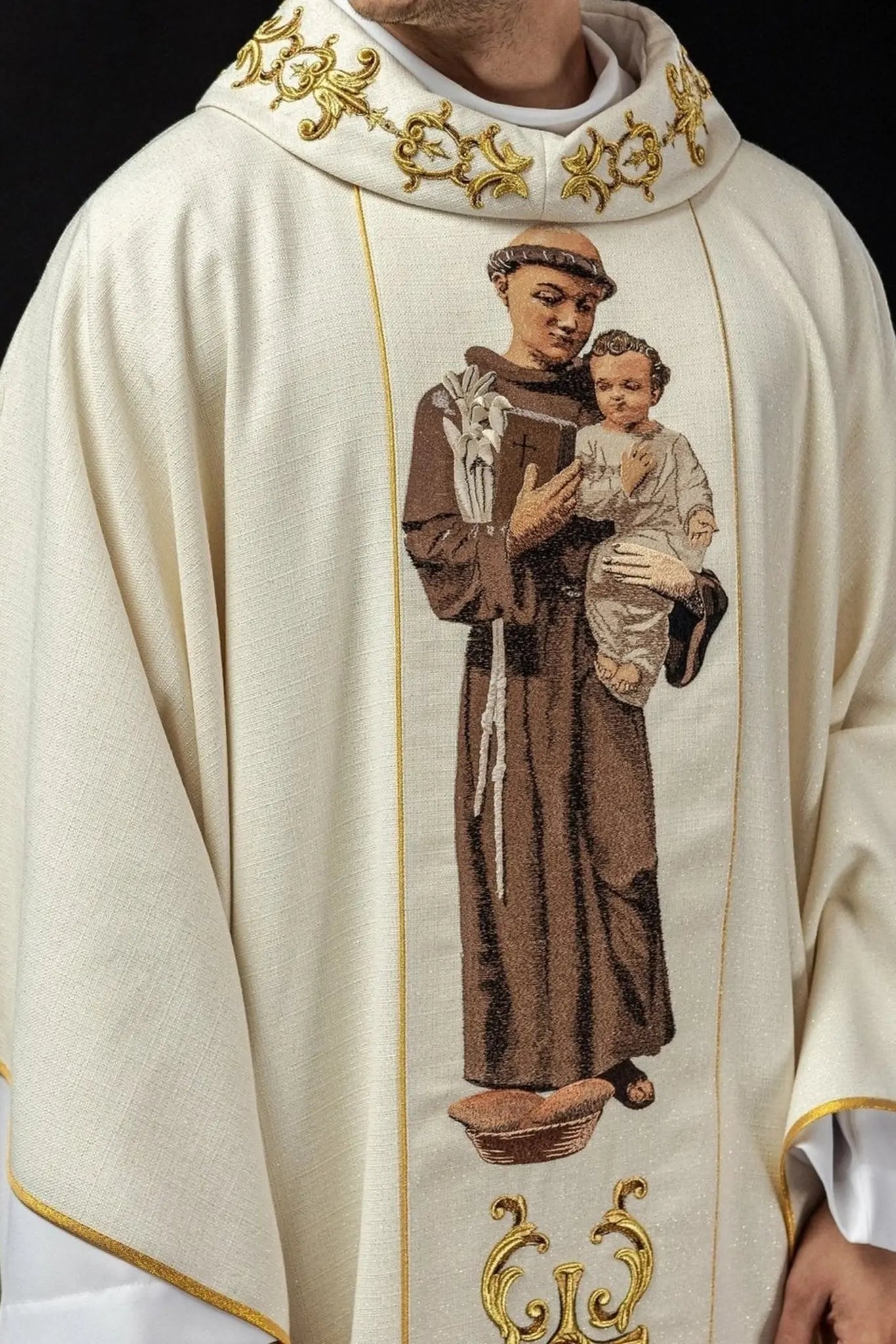
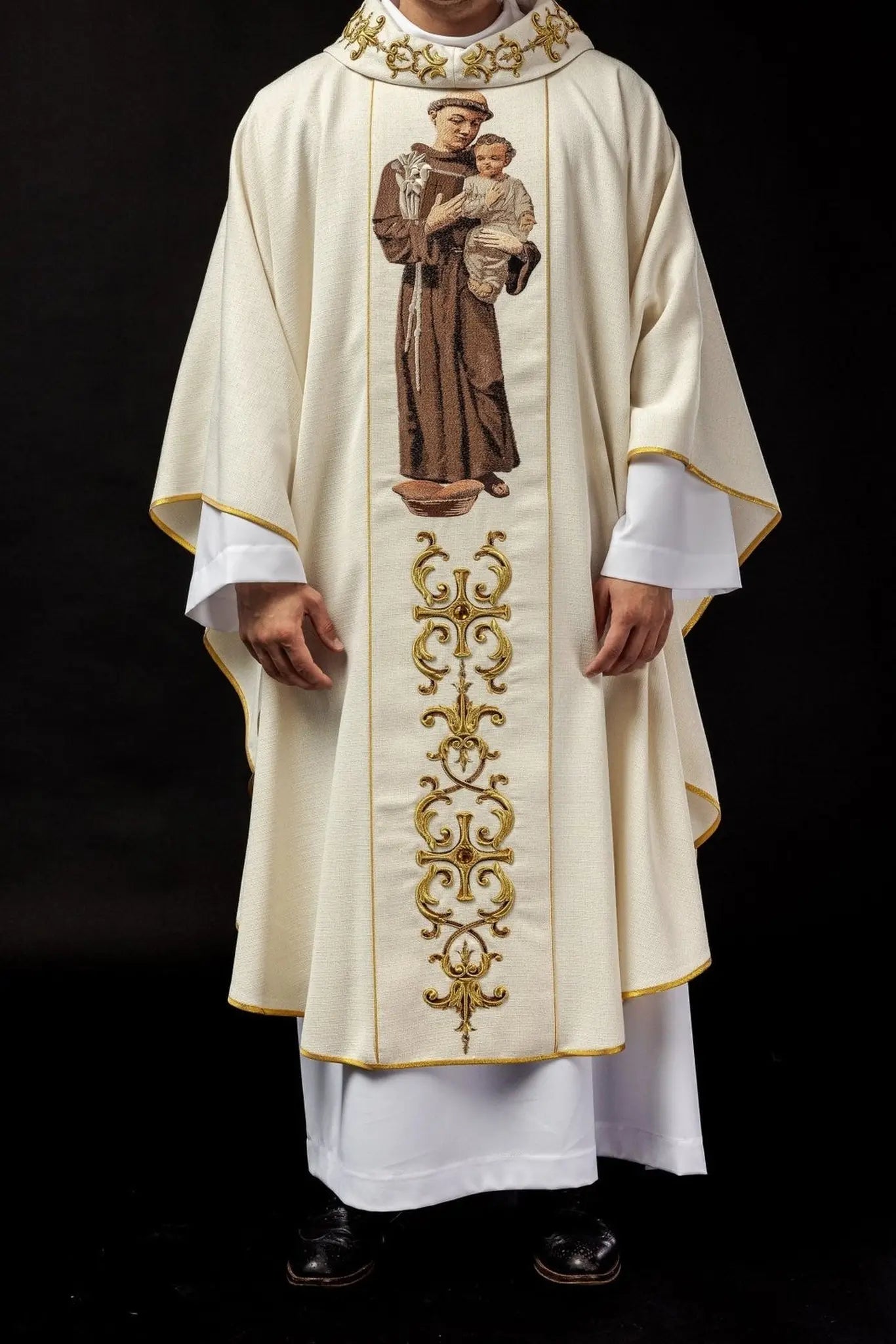
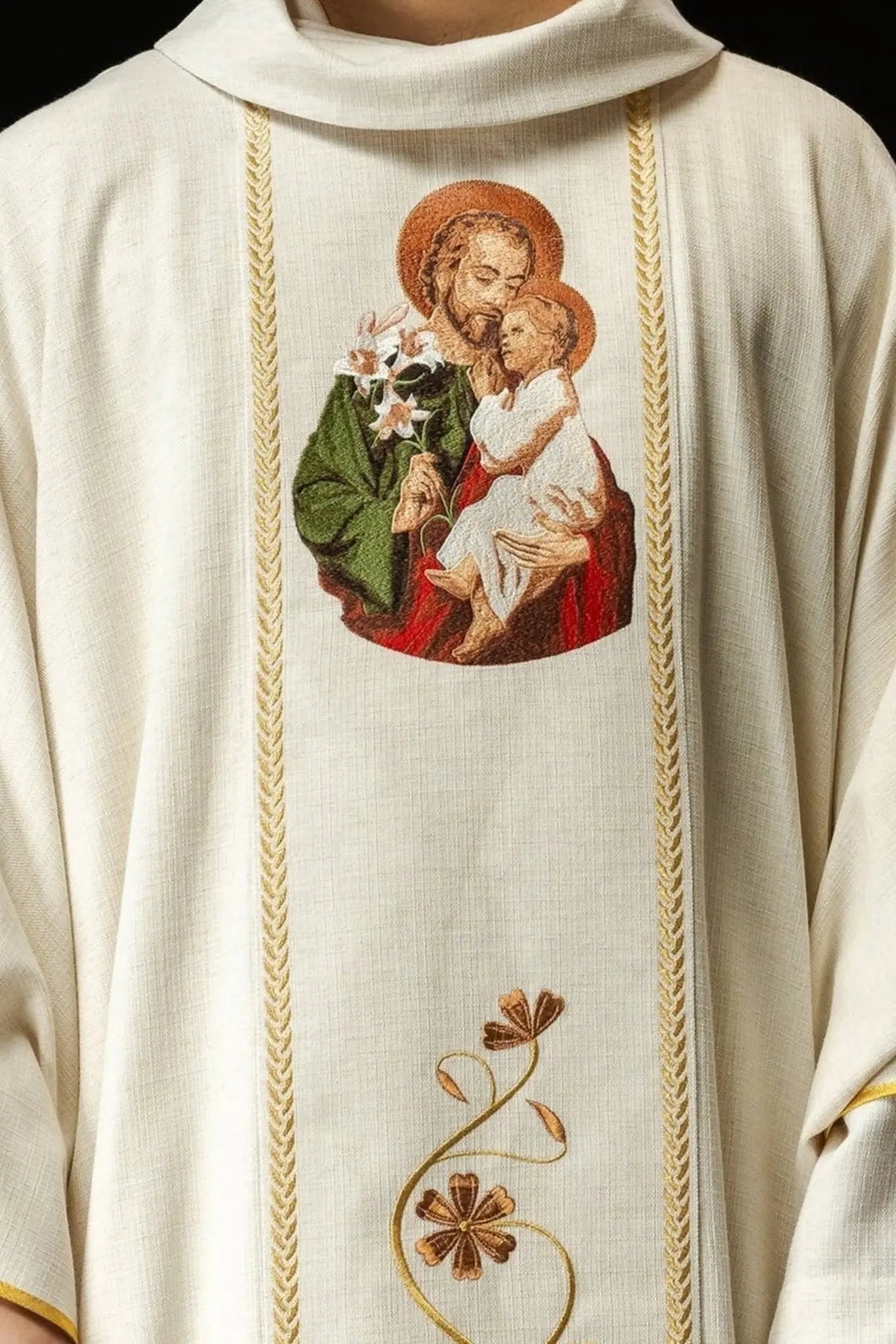
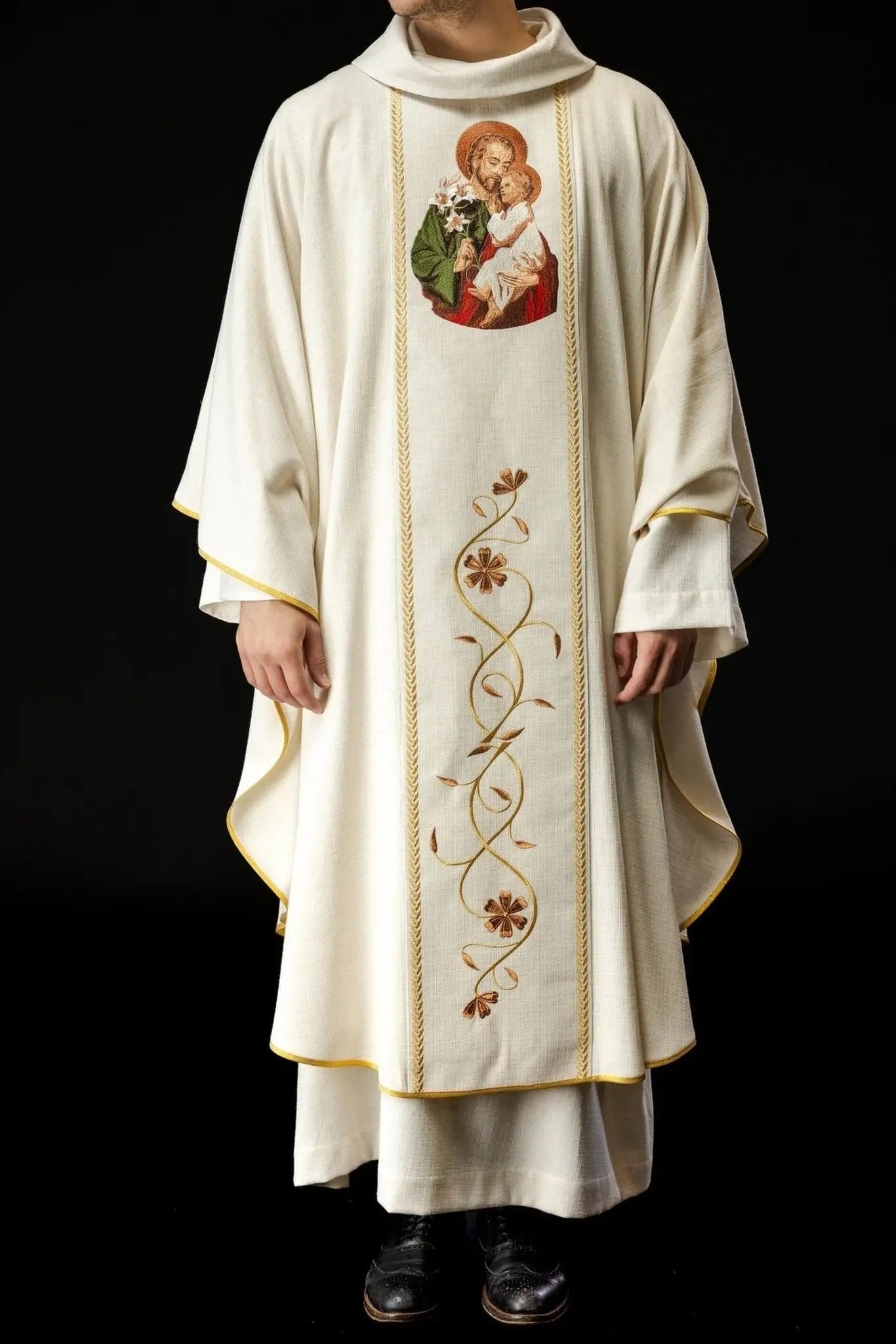
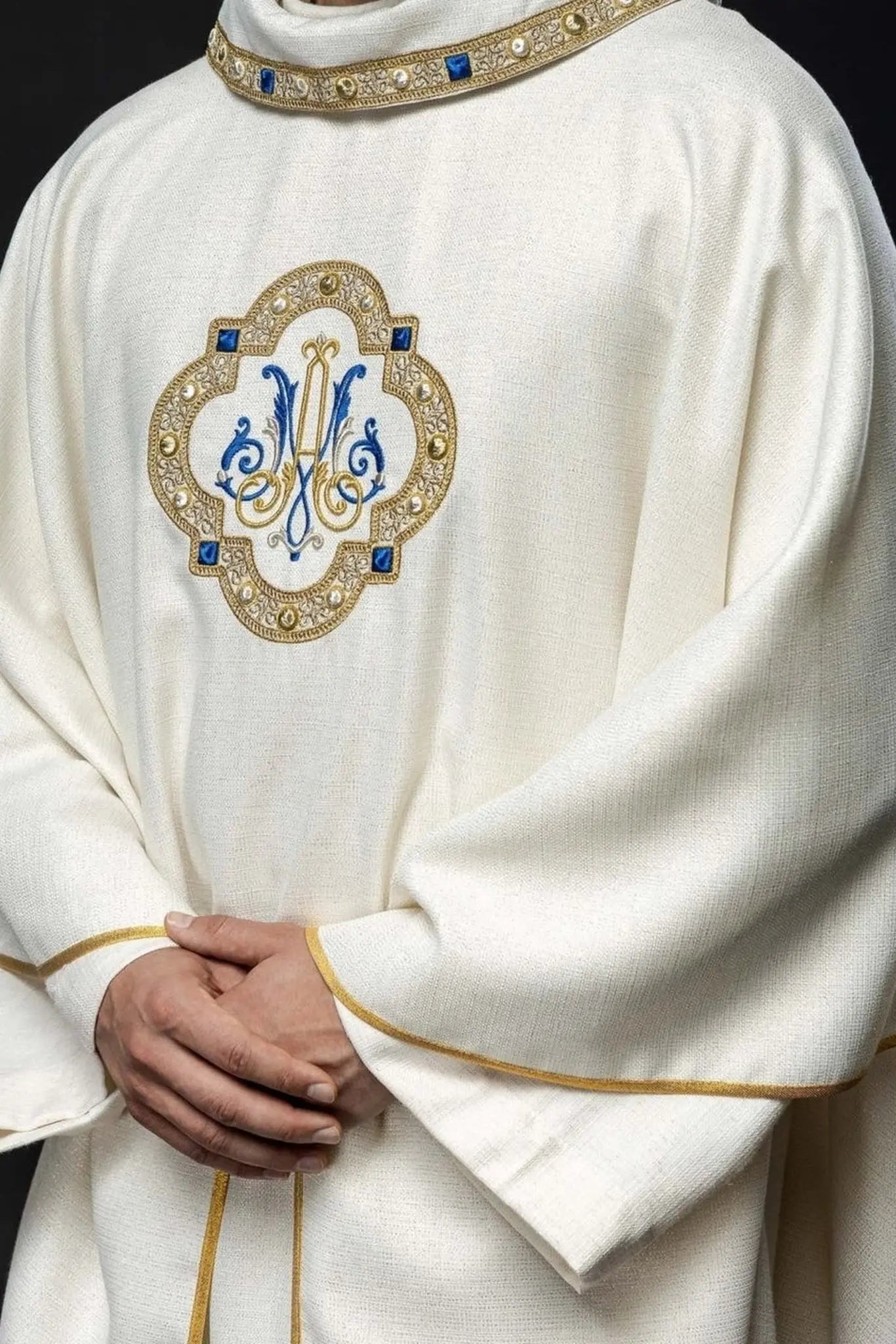
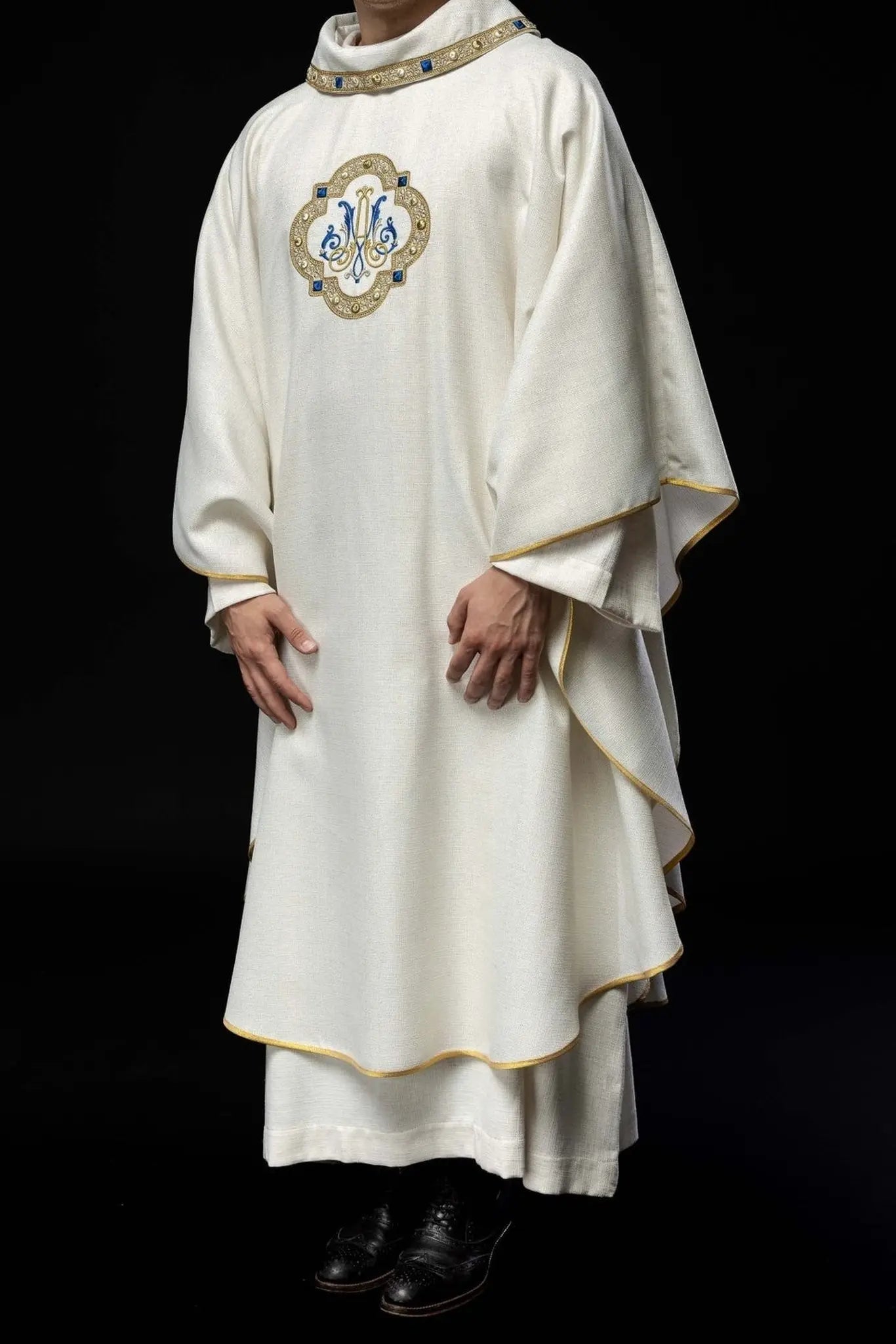
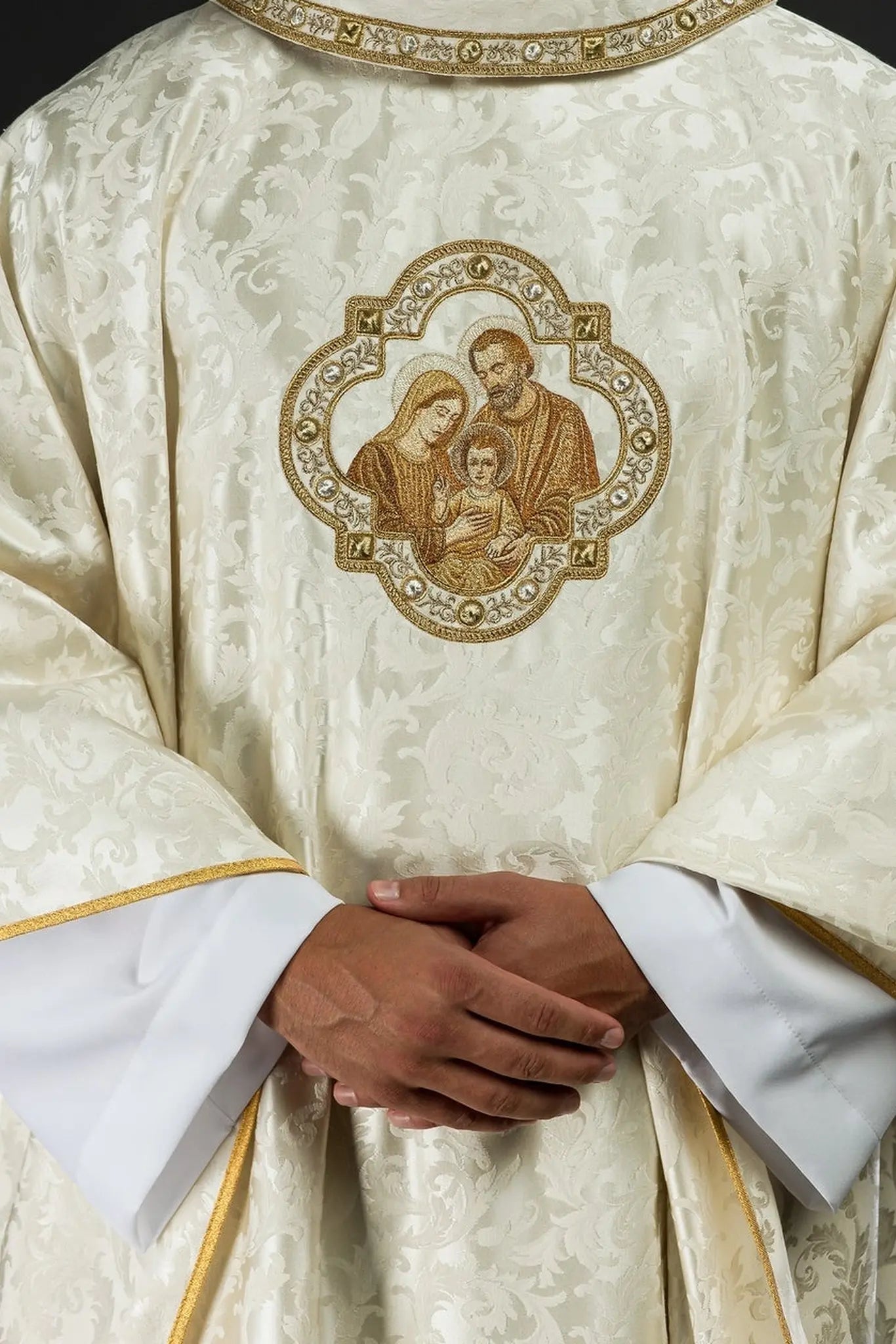
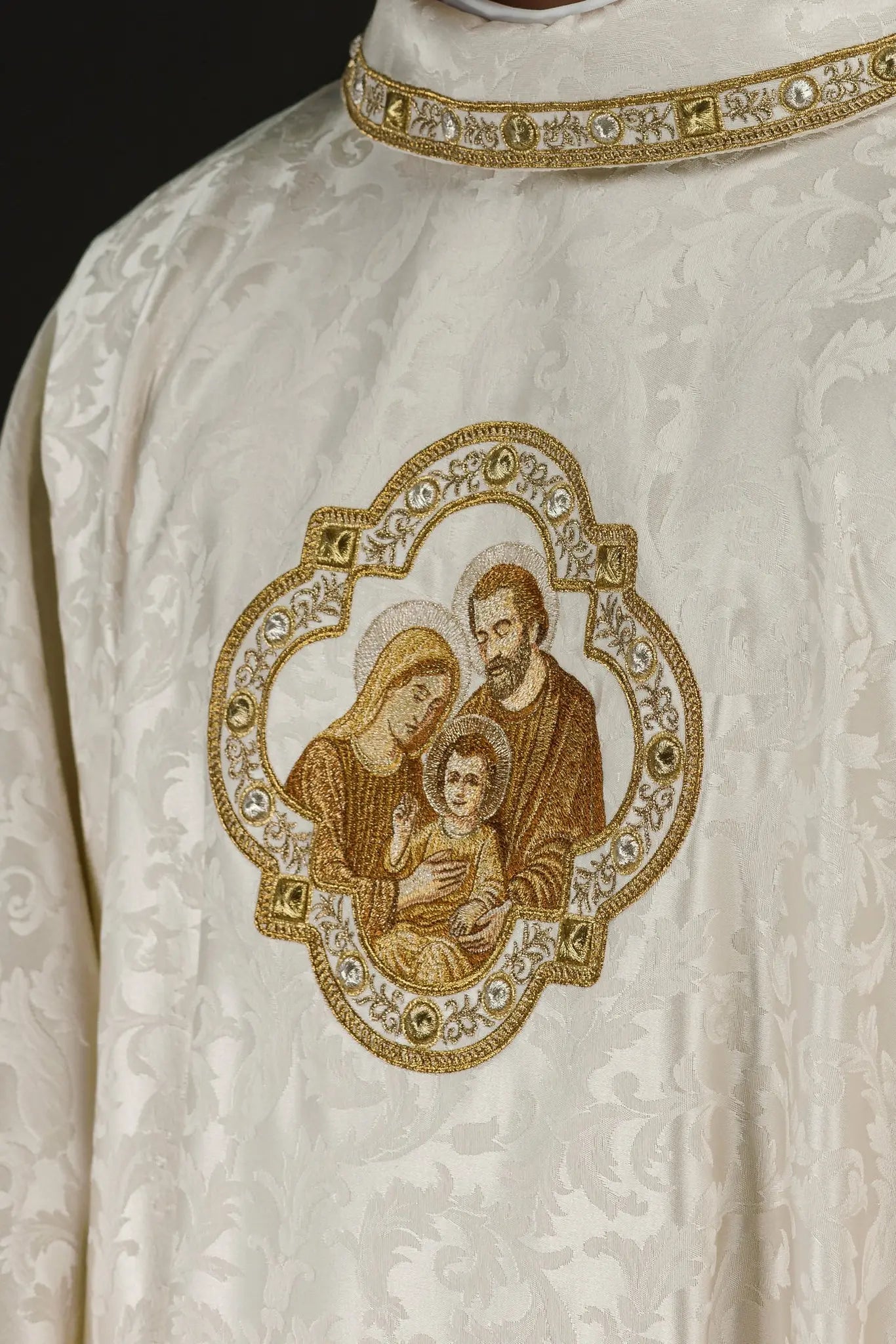
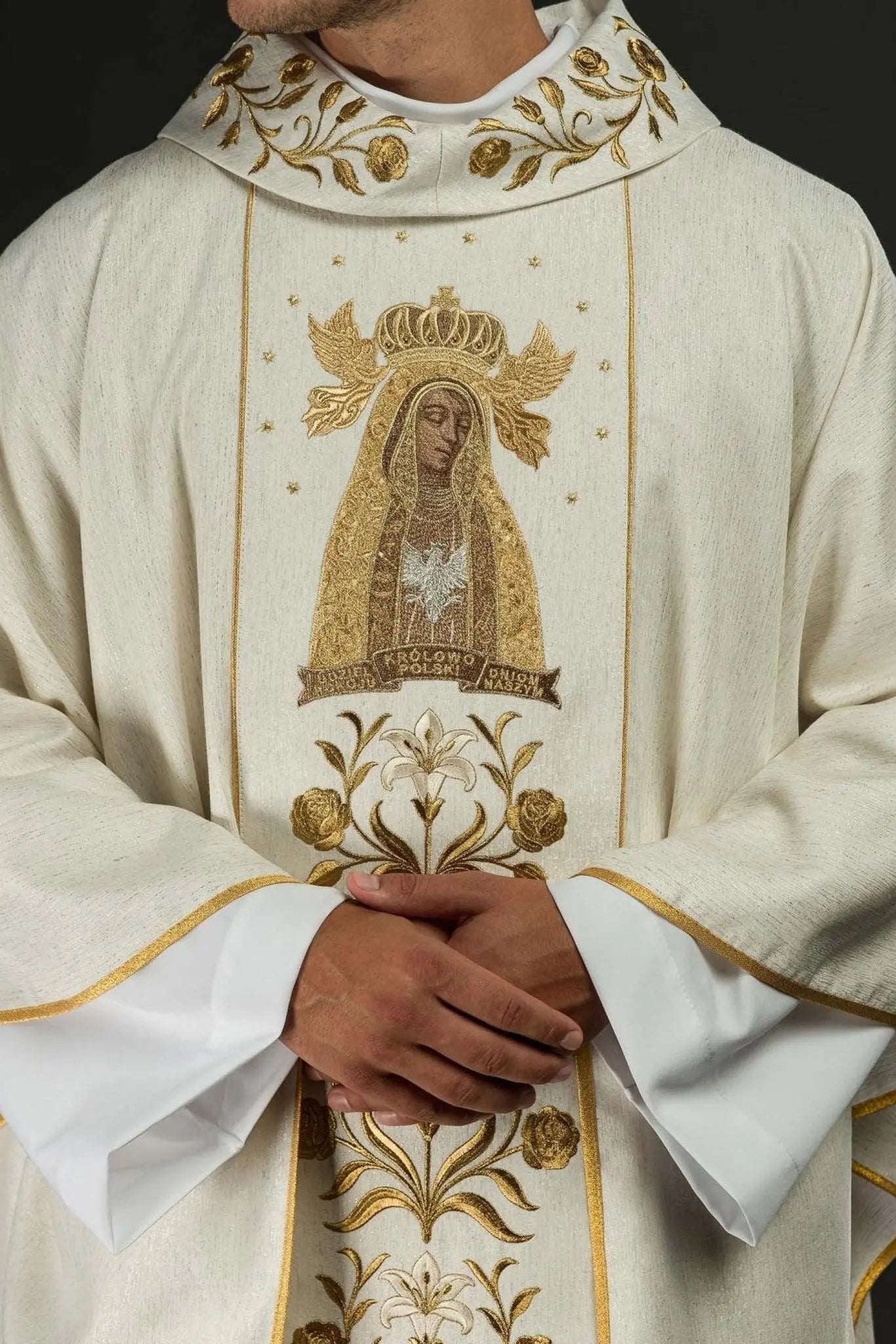
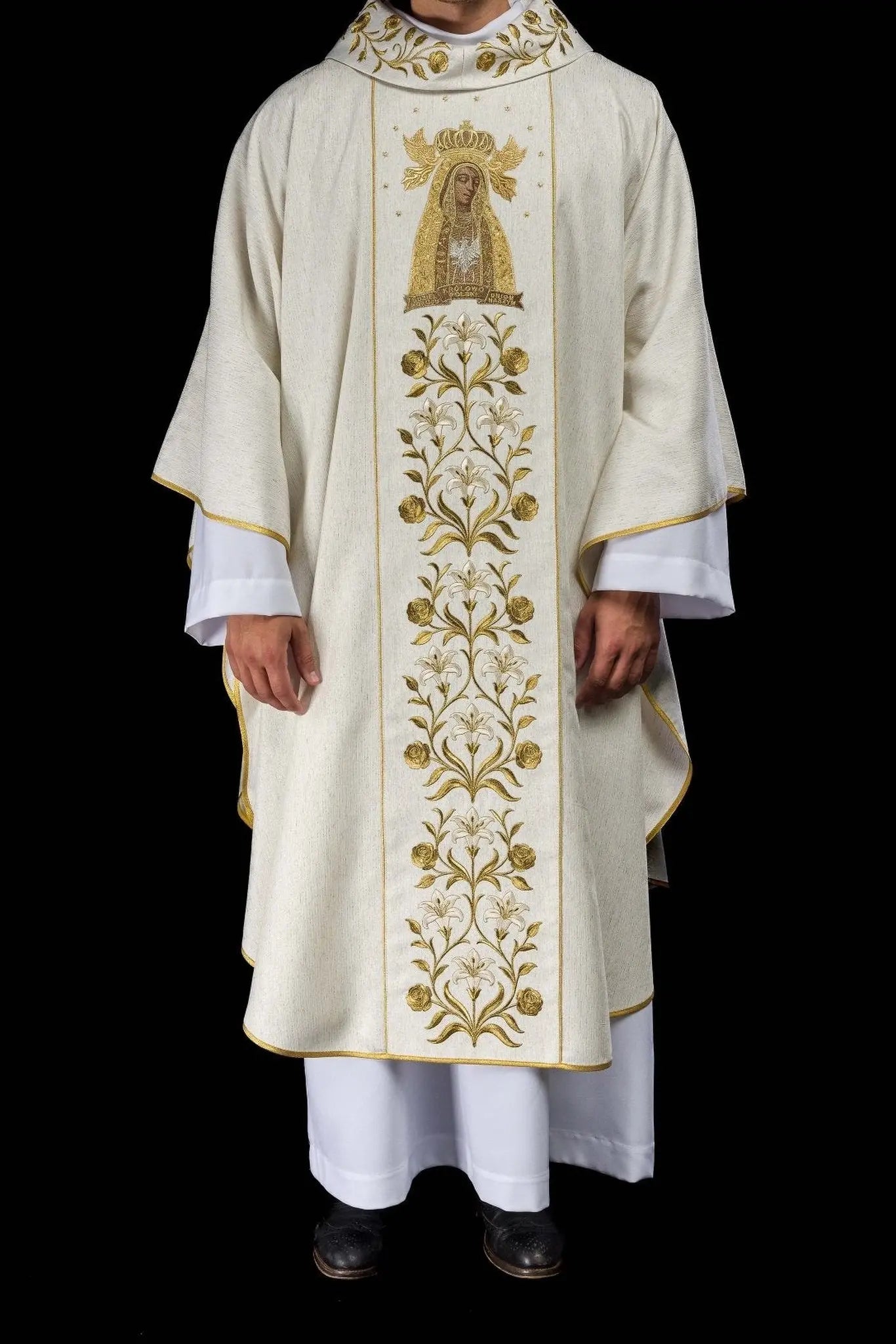
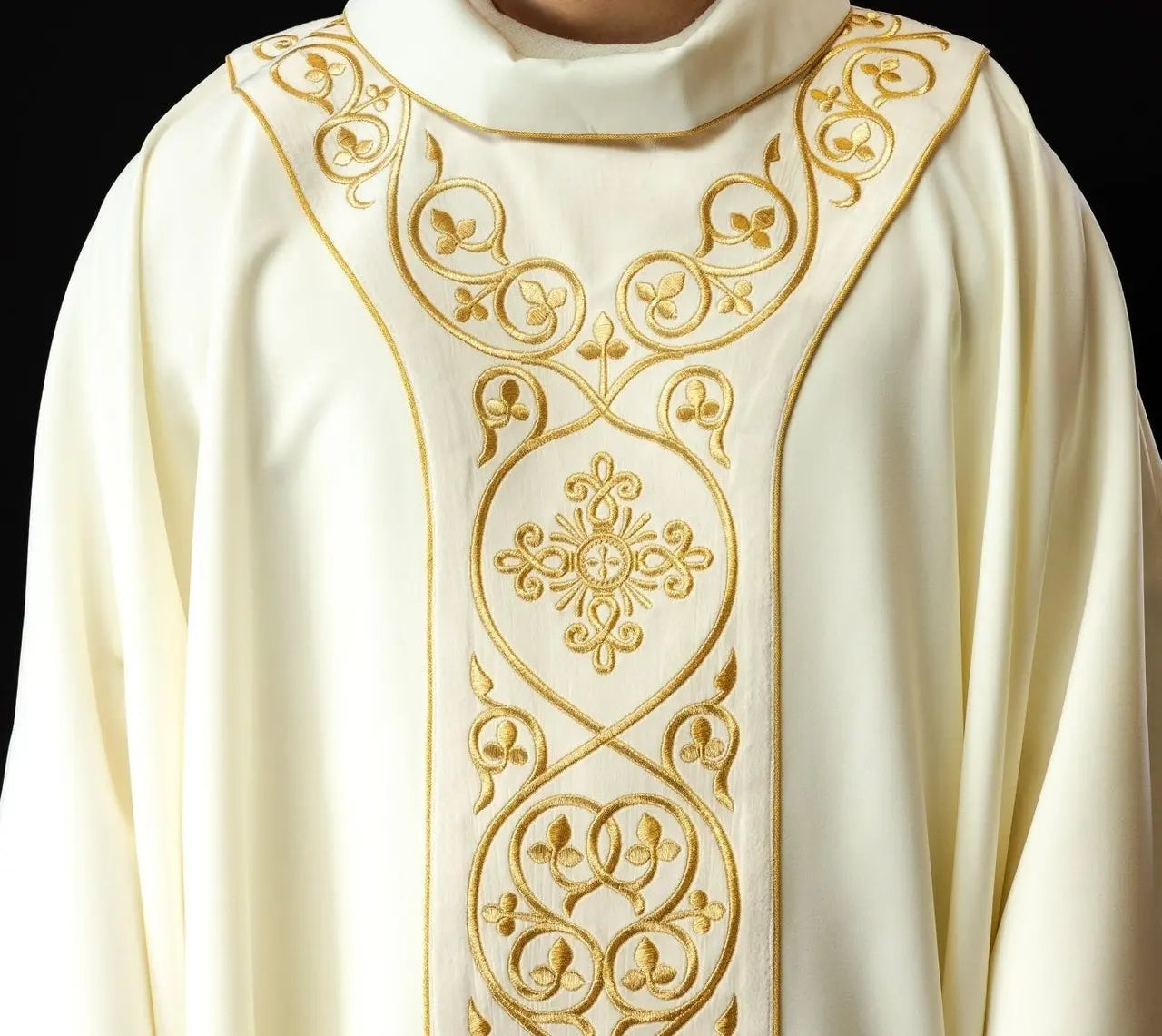
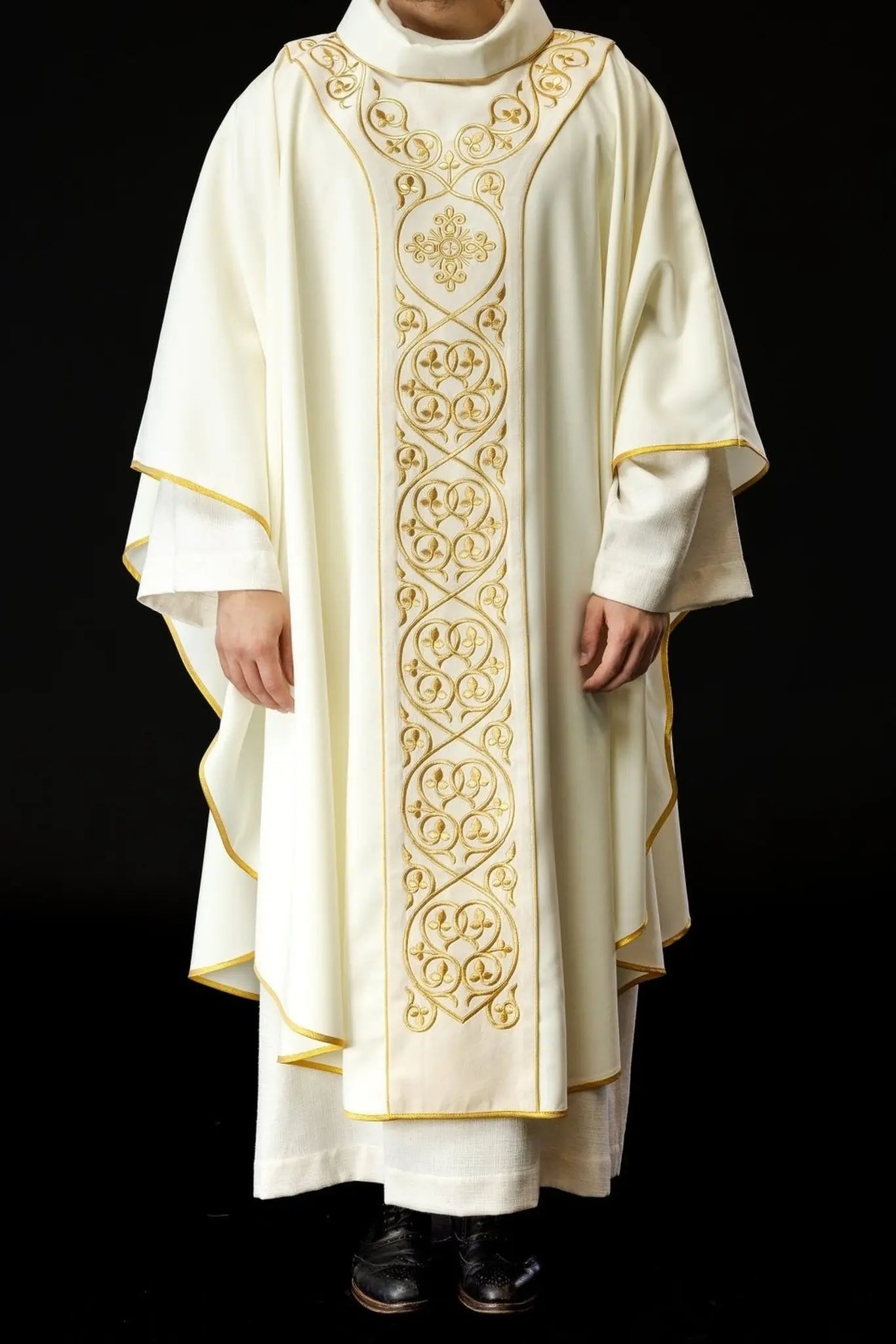
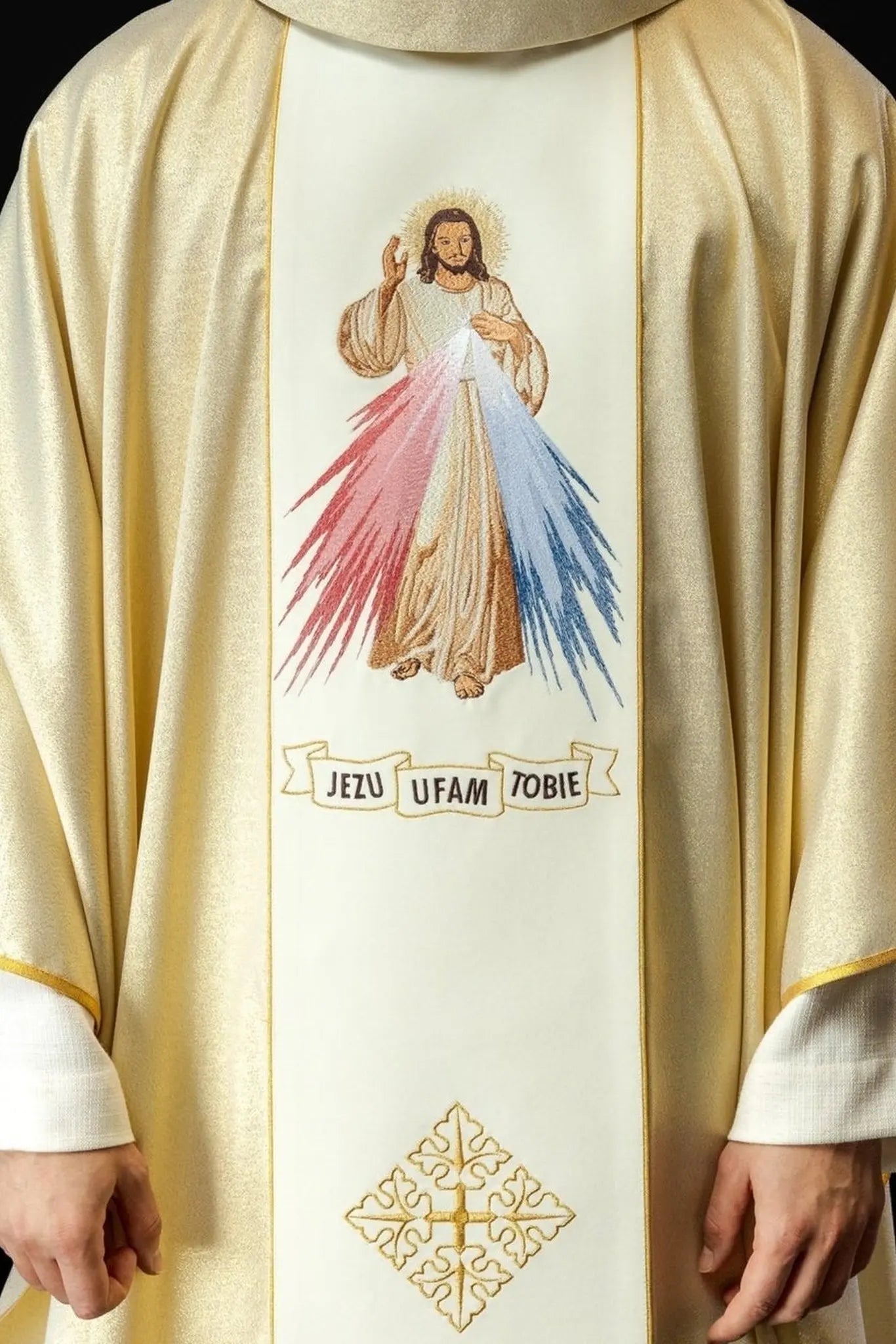
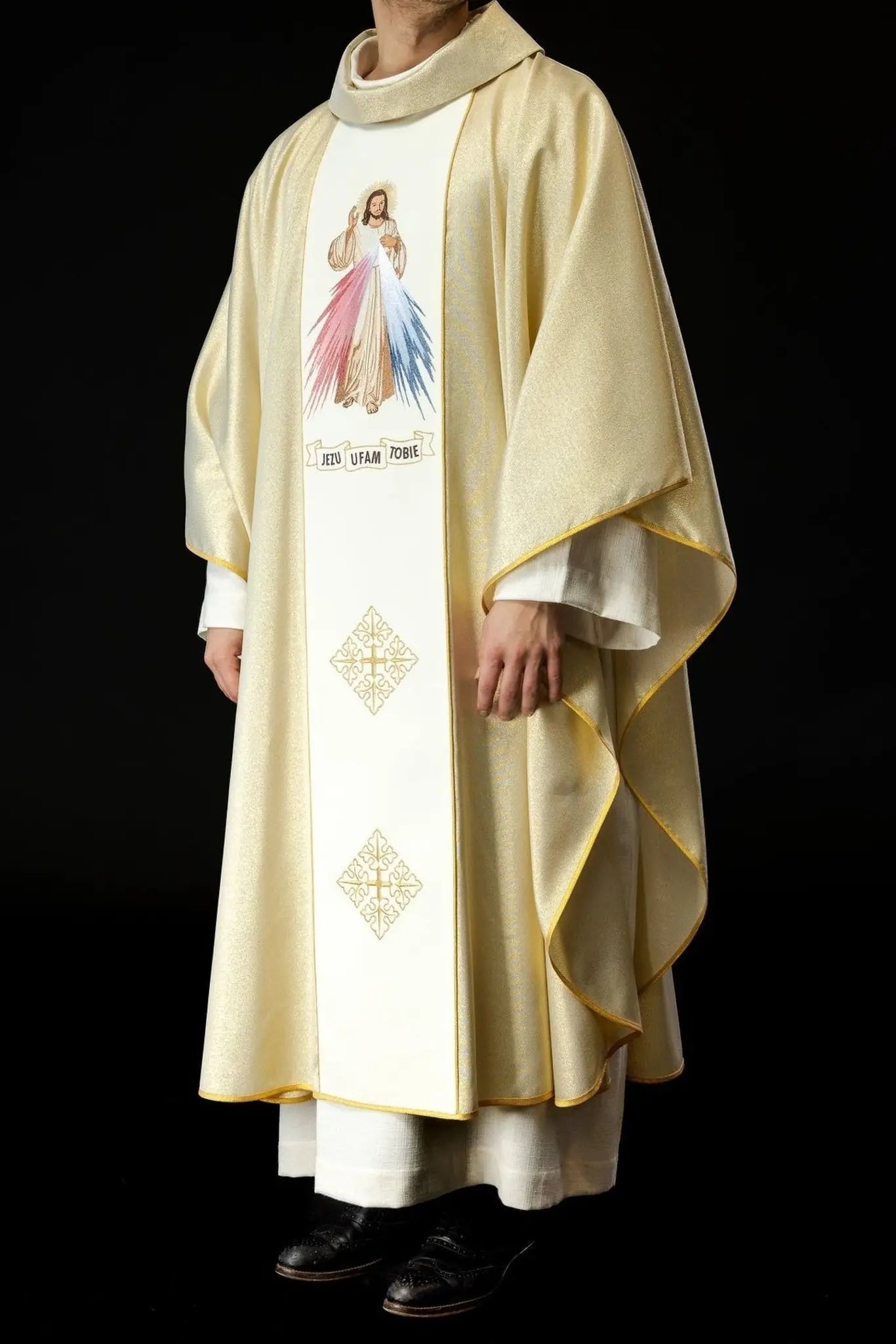
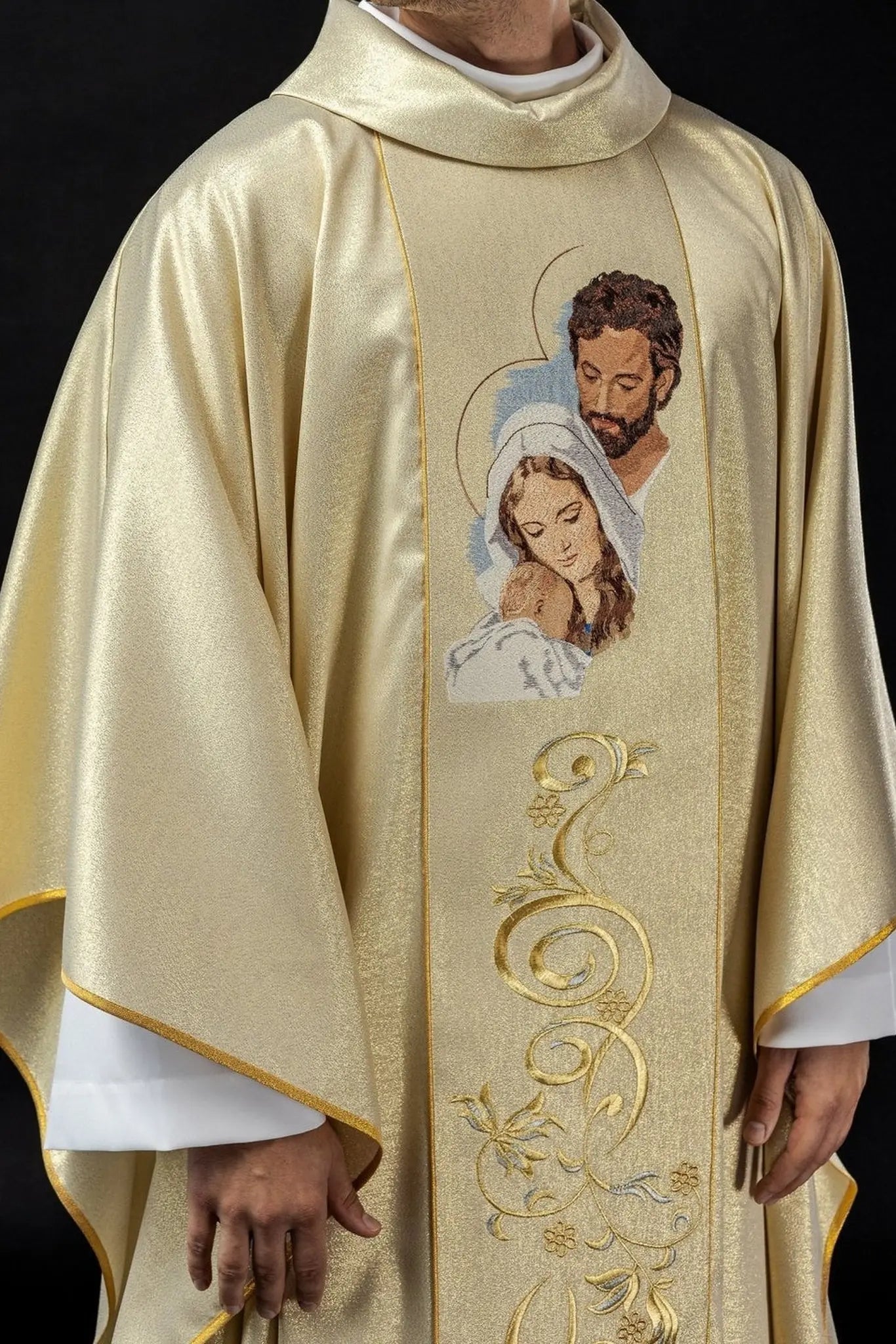
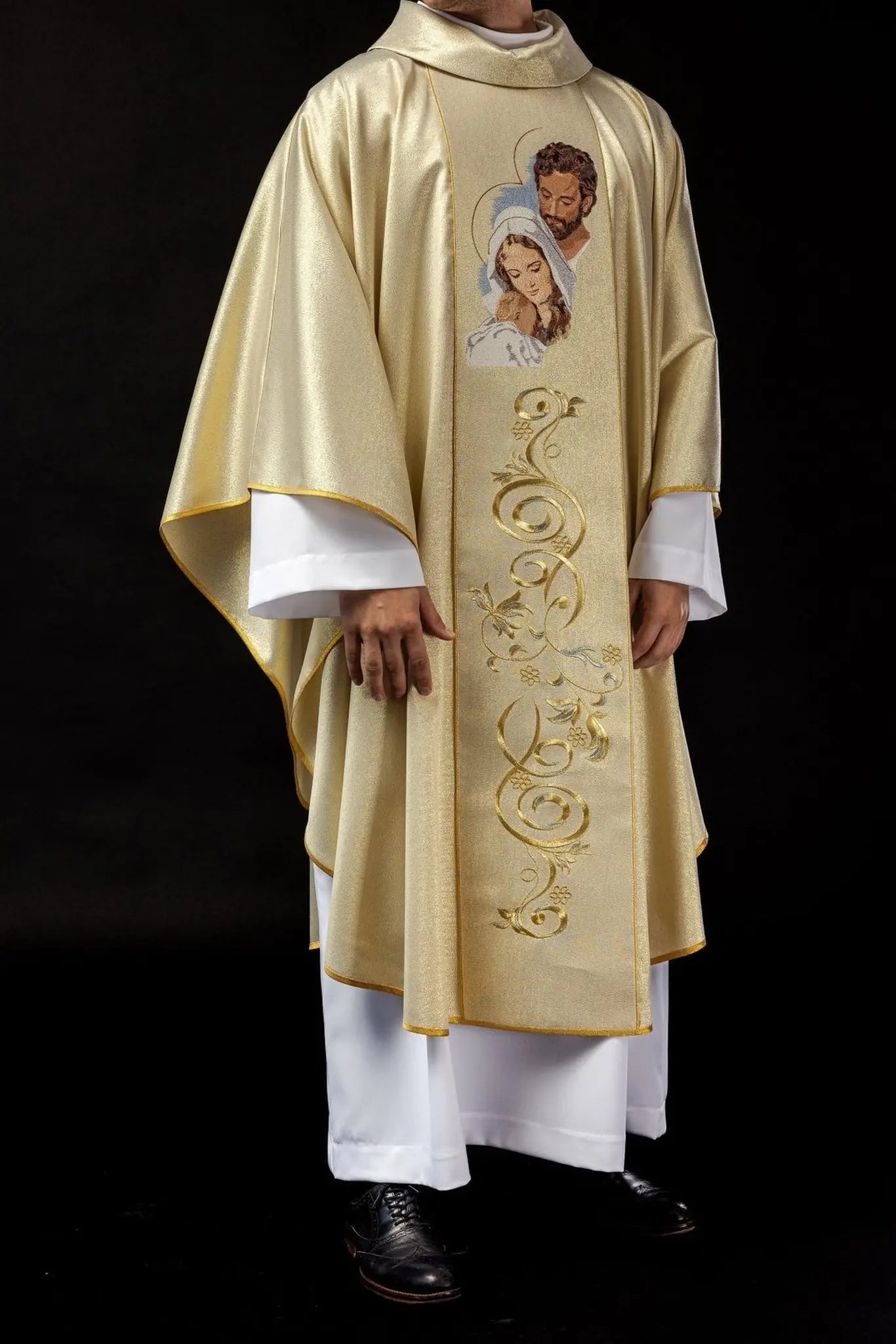
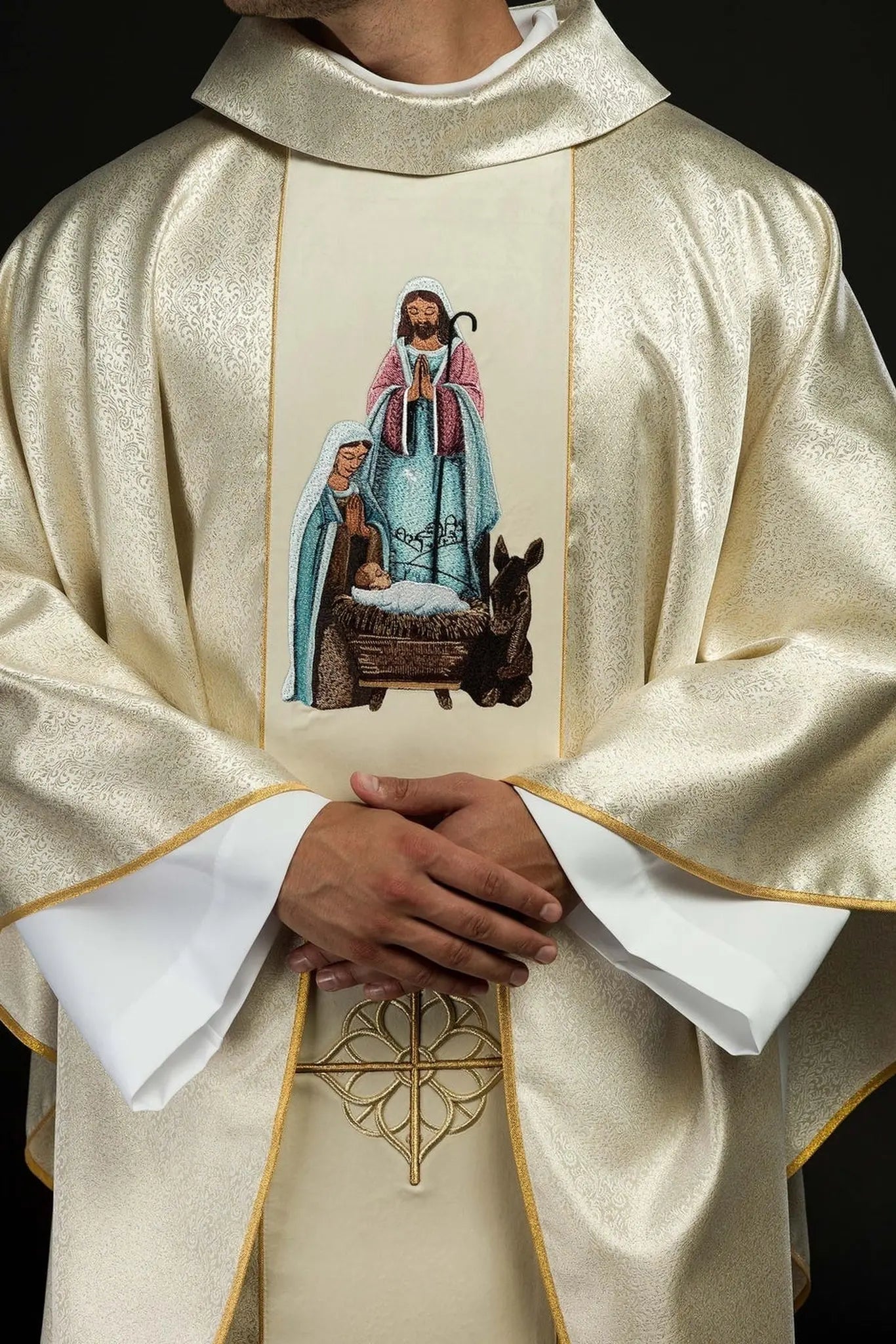
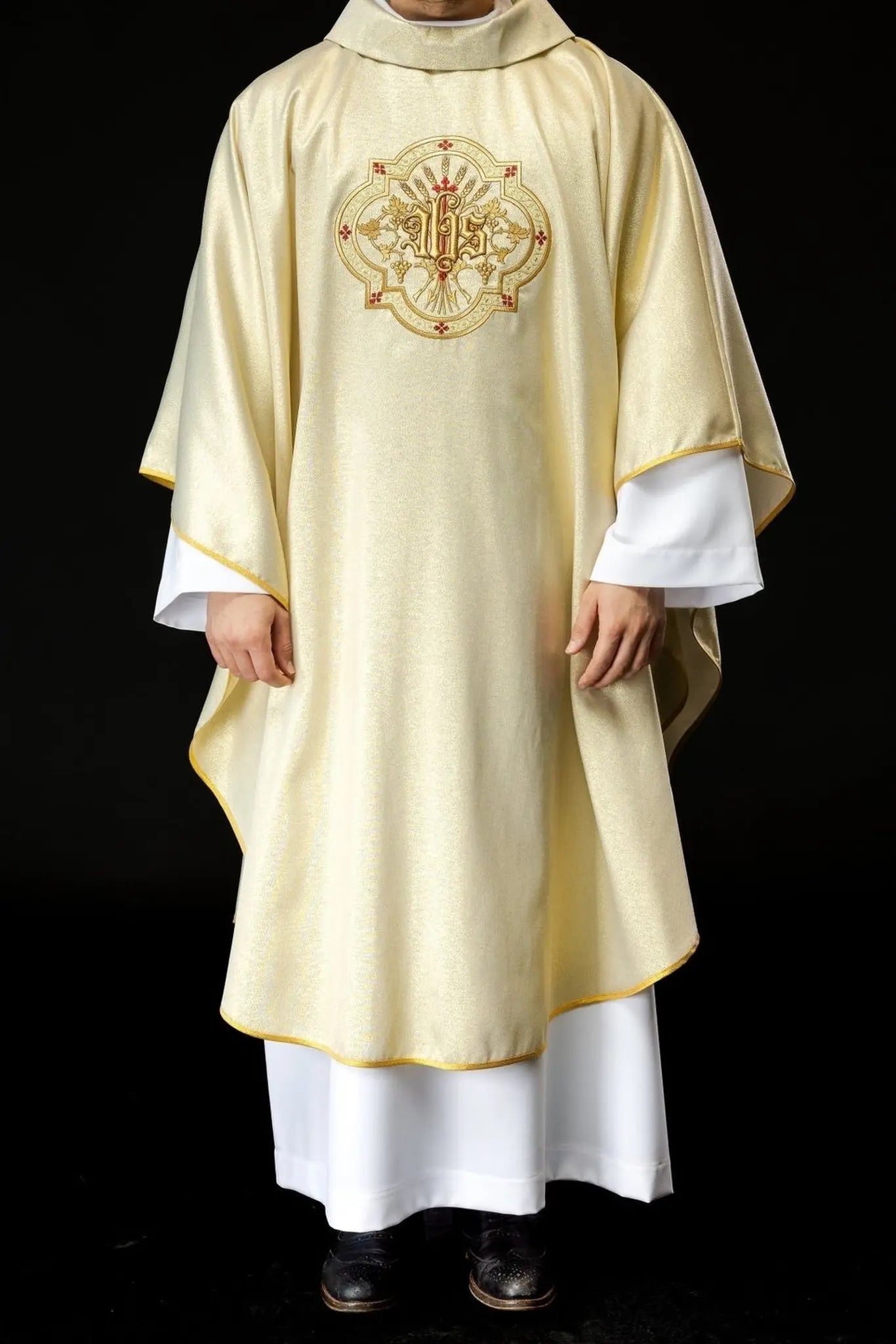
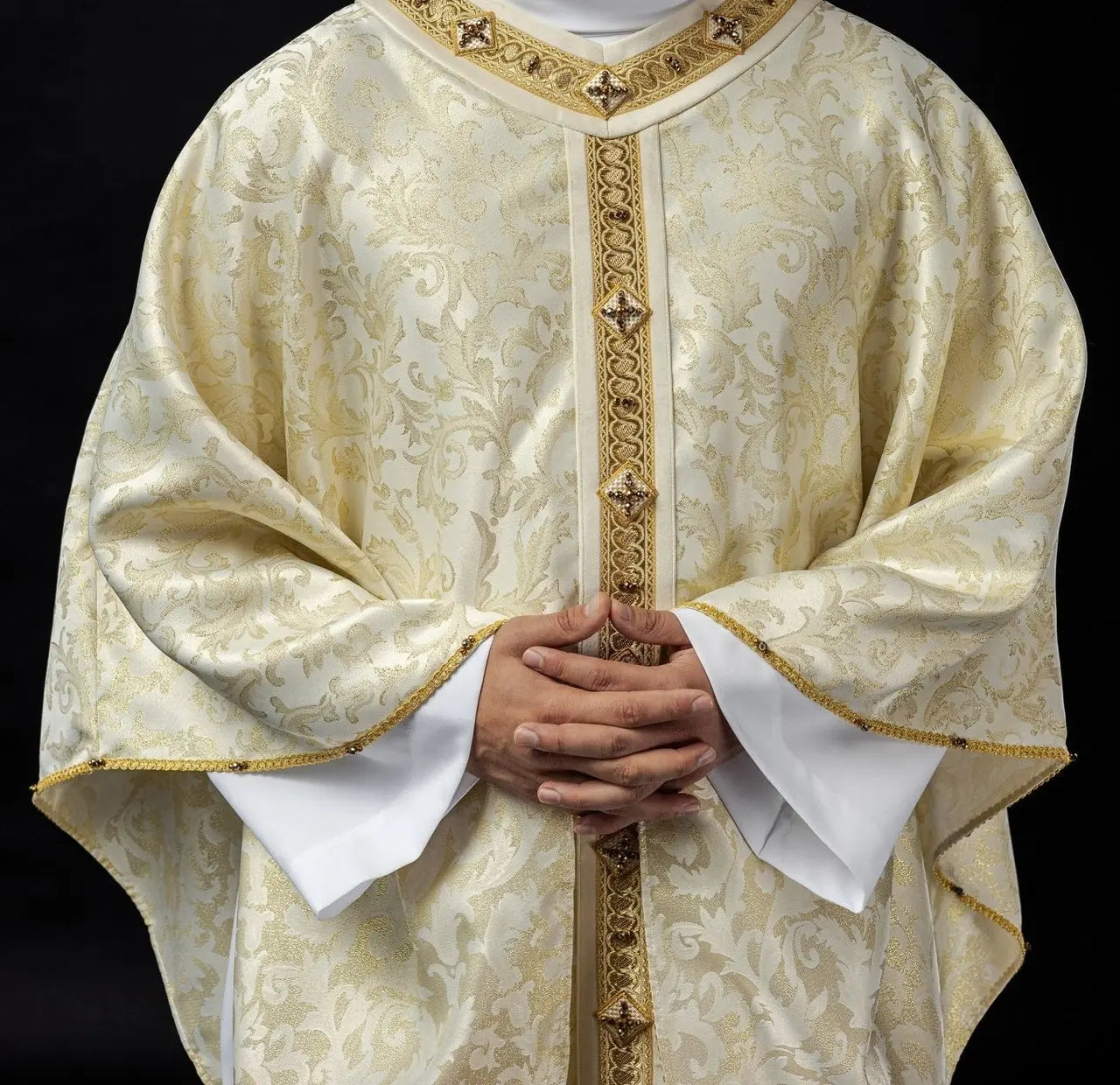
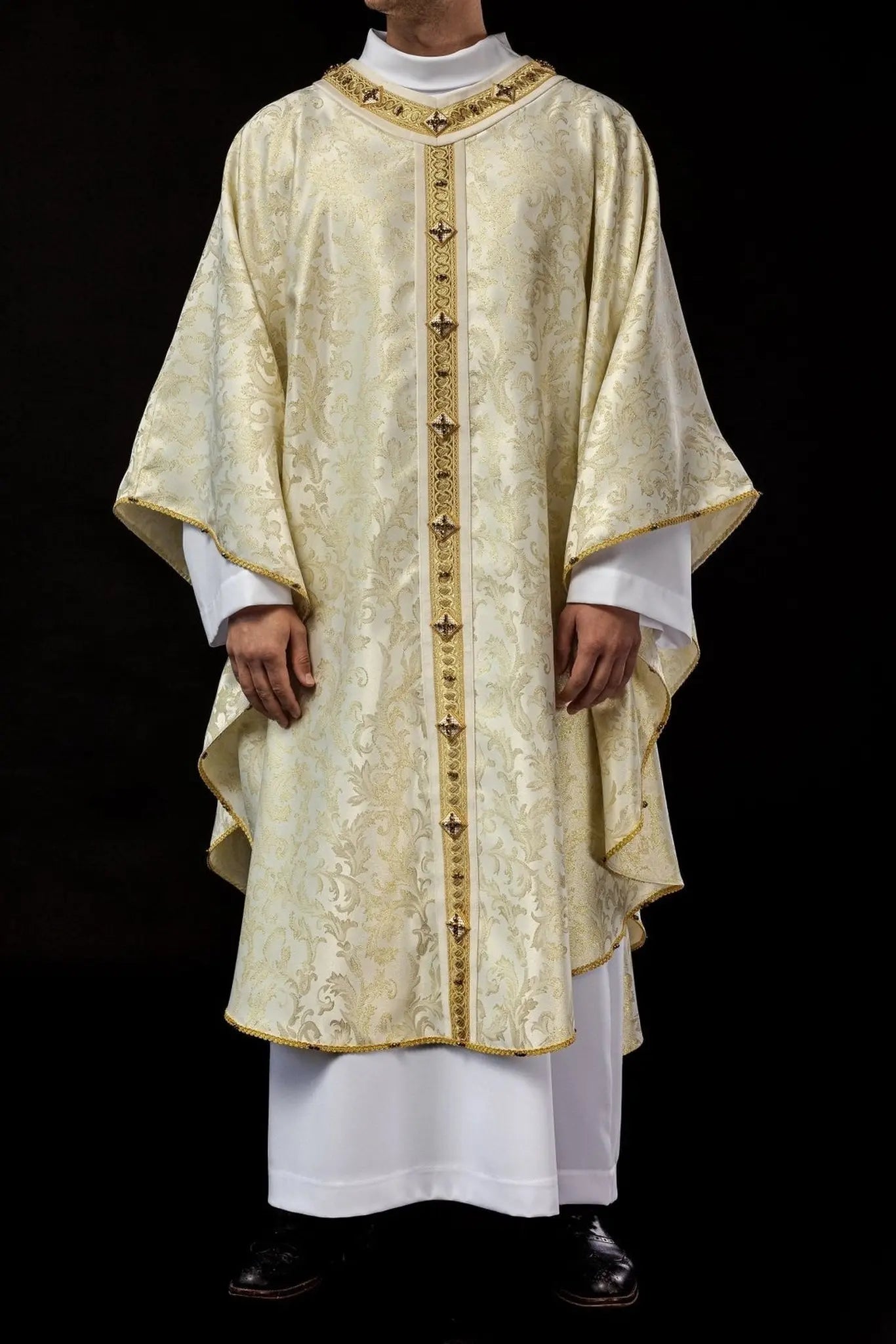
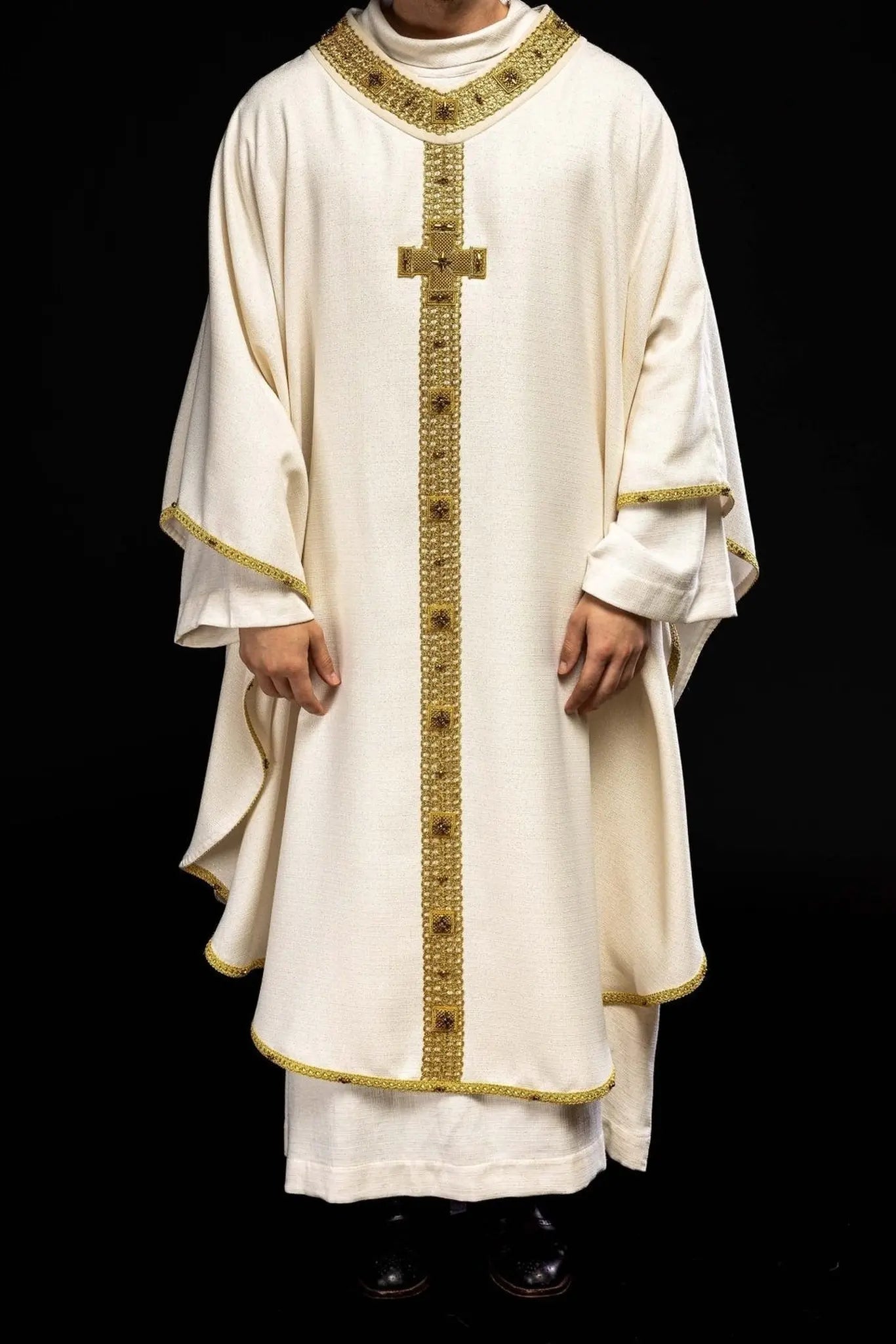
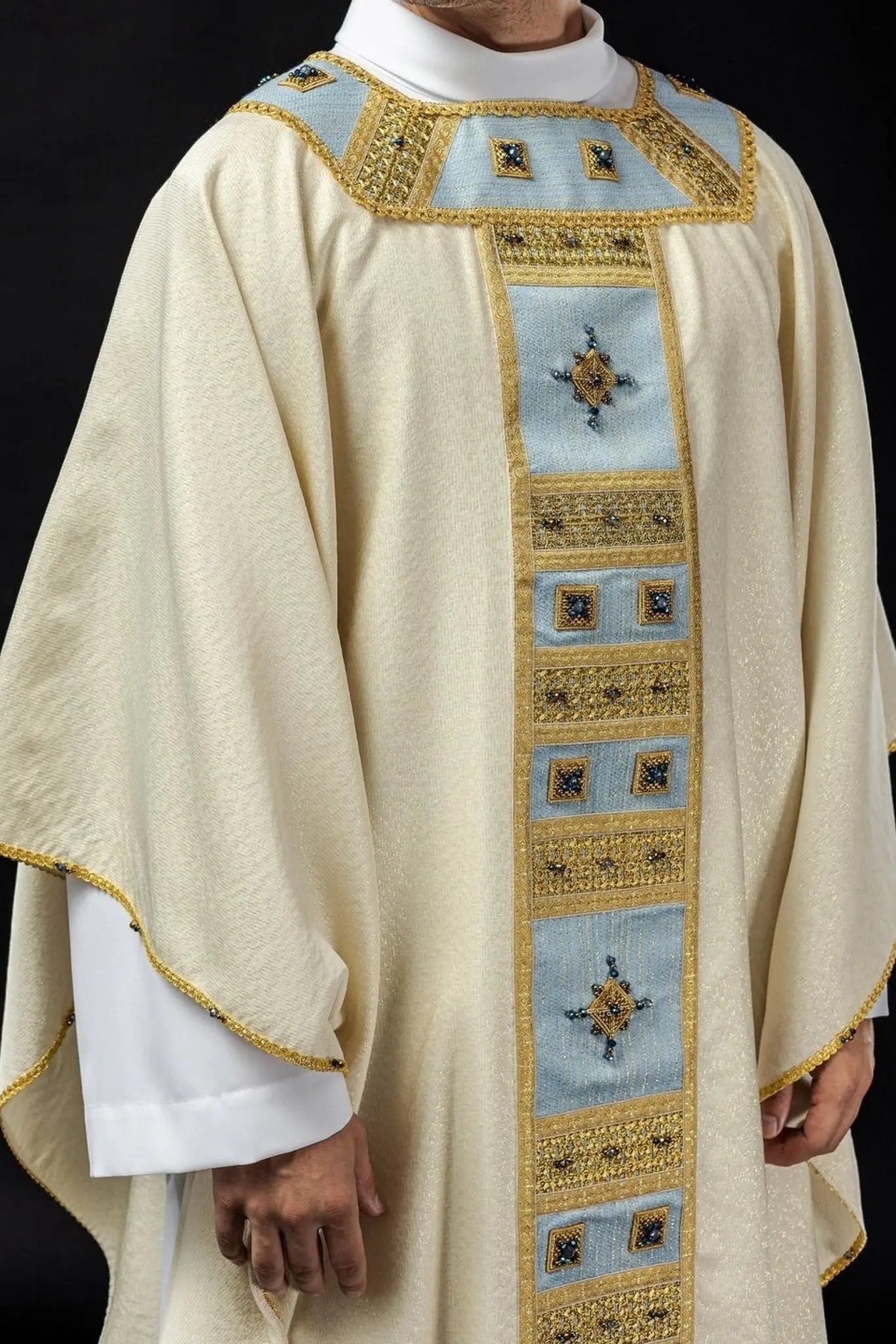
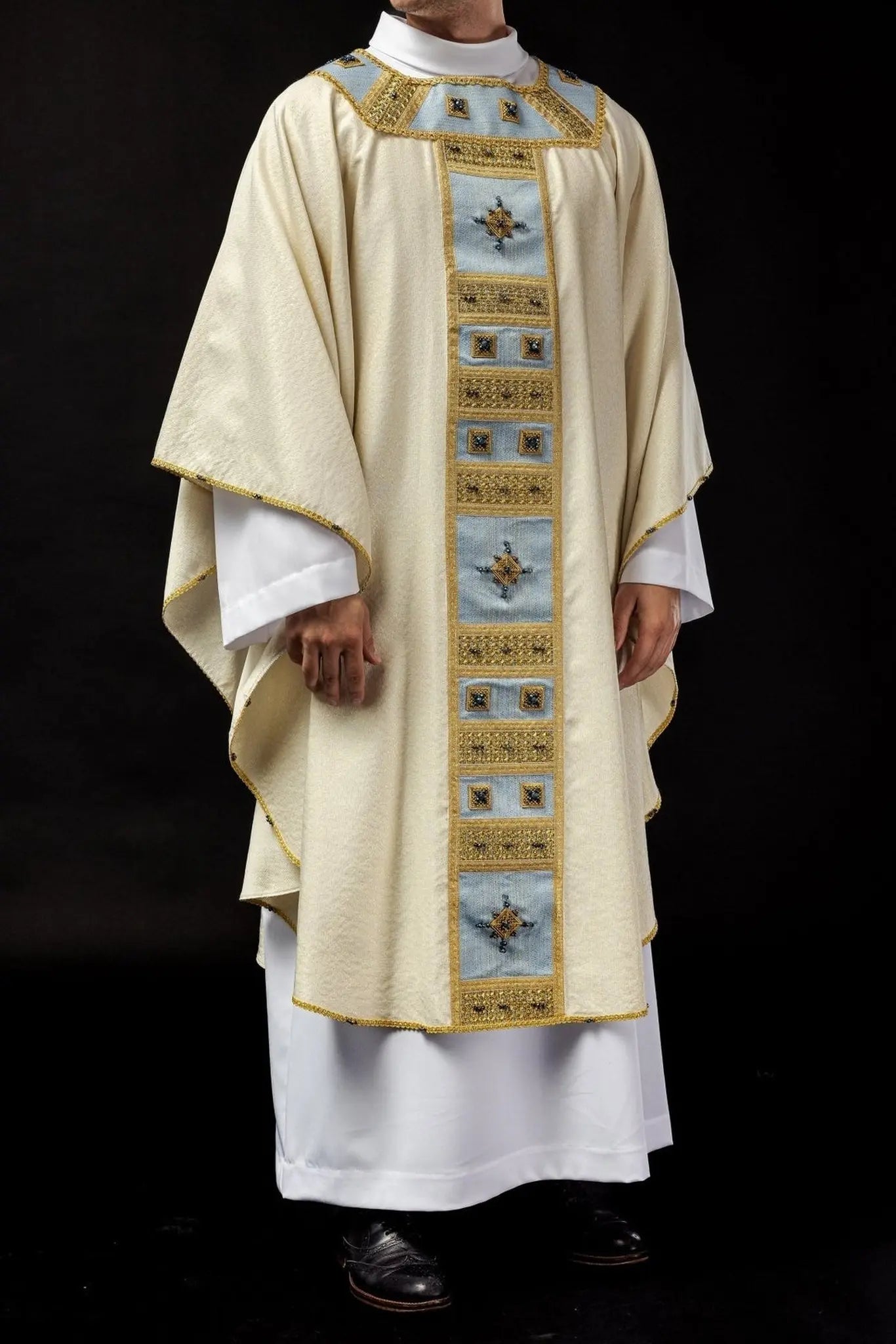
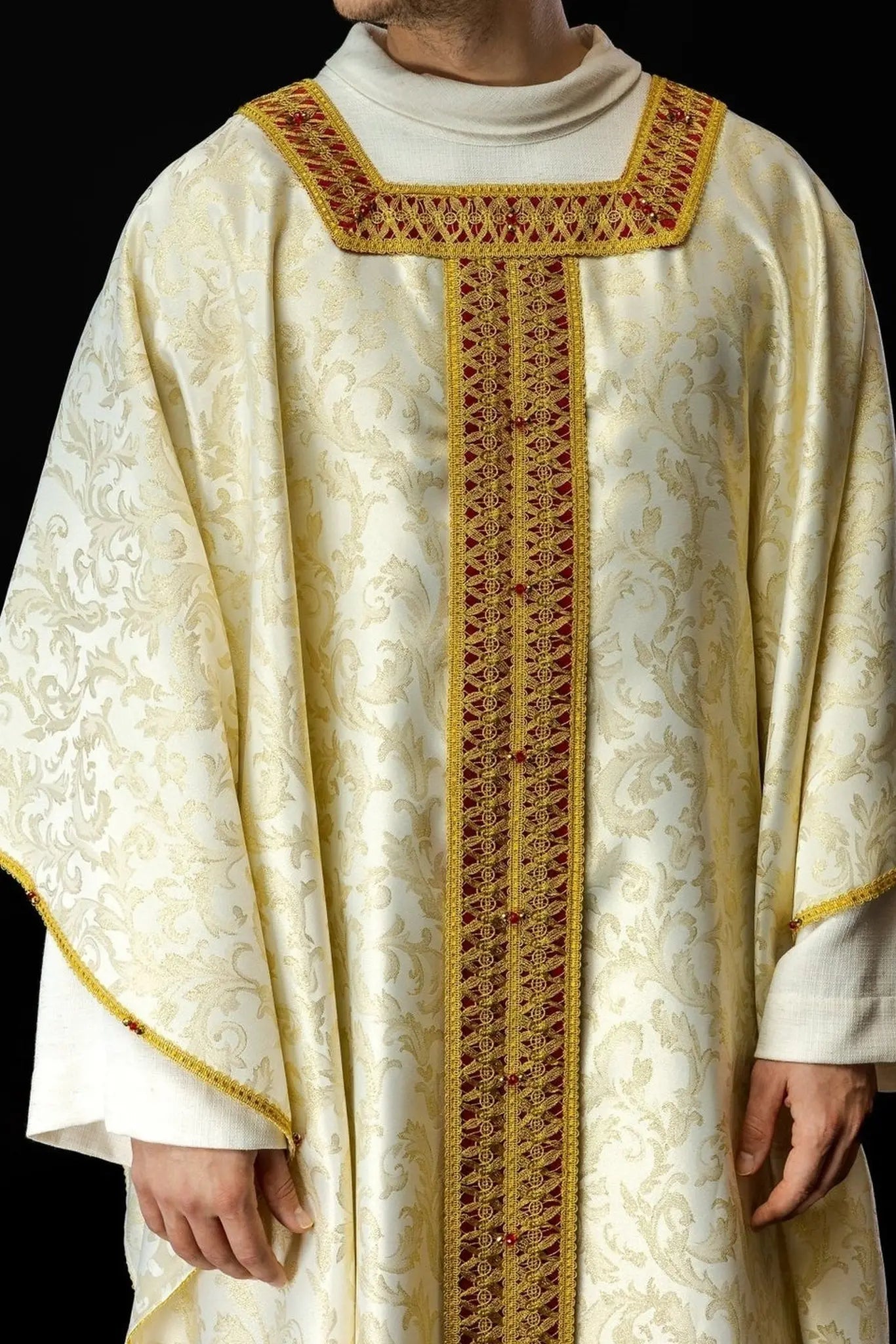
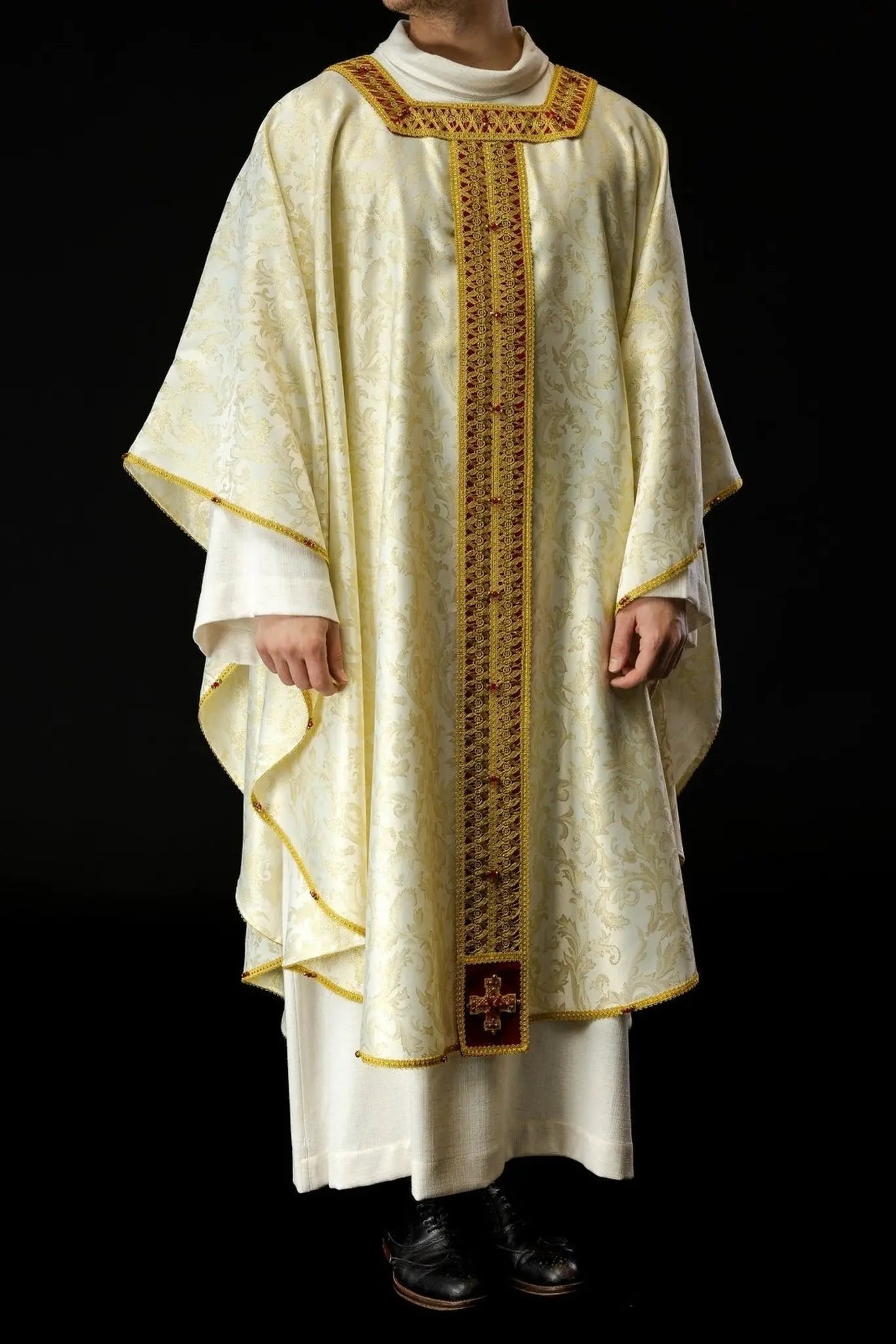
Gold Chasubles for Solemn Masses and Feast Days
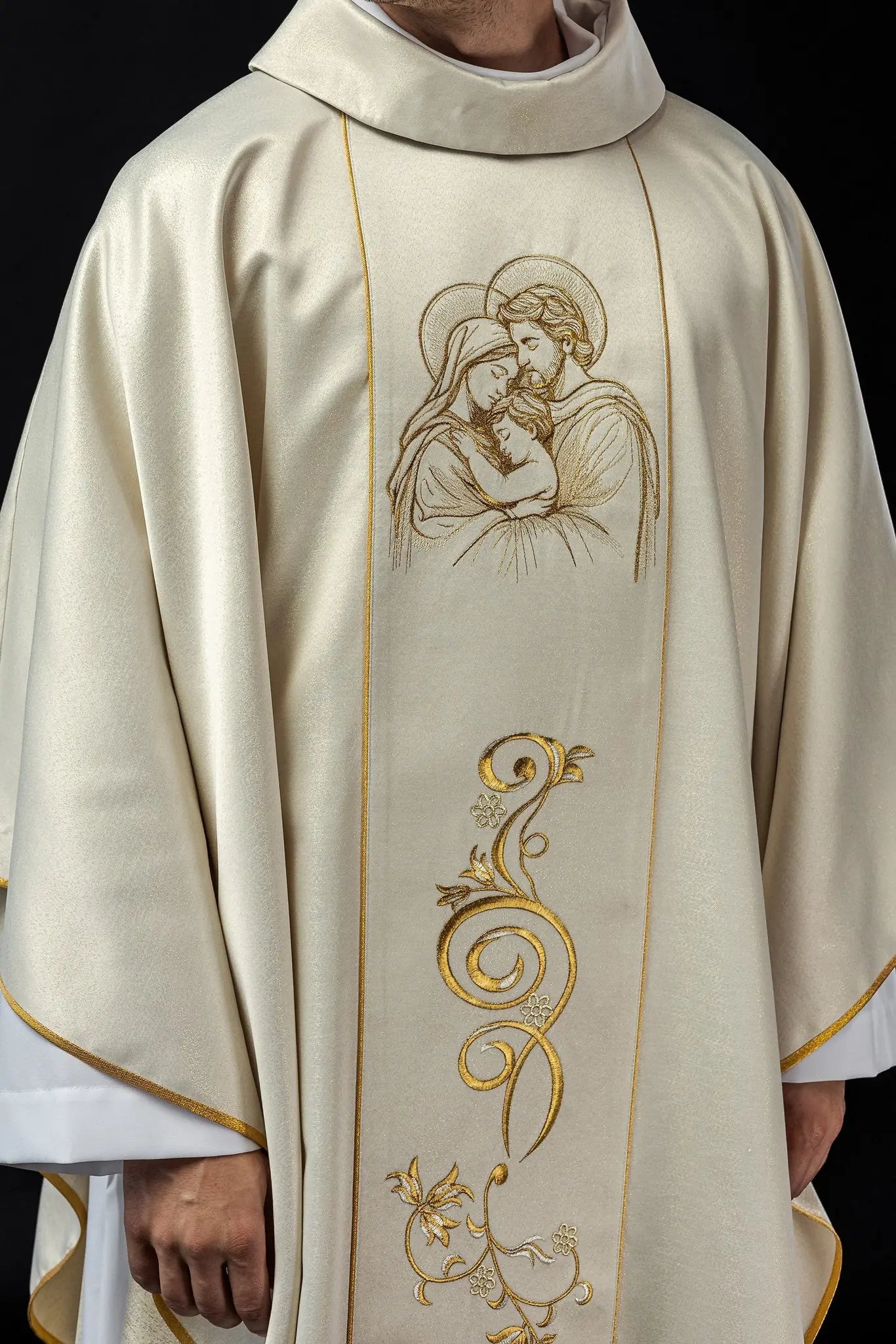
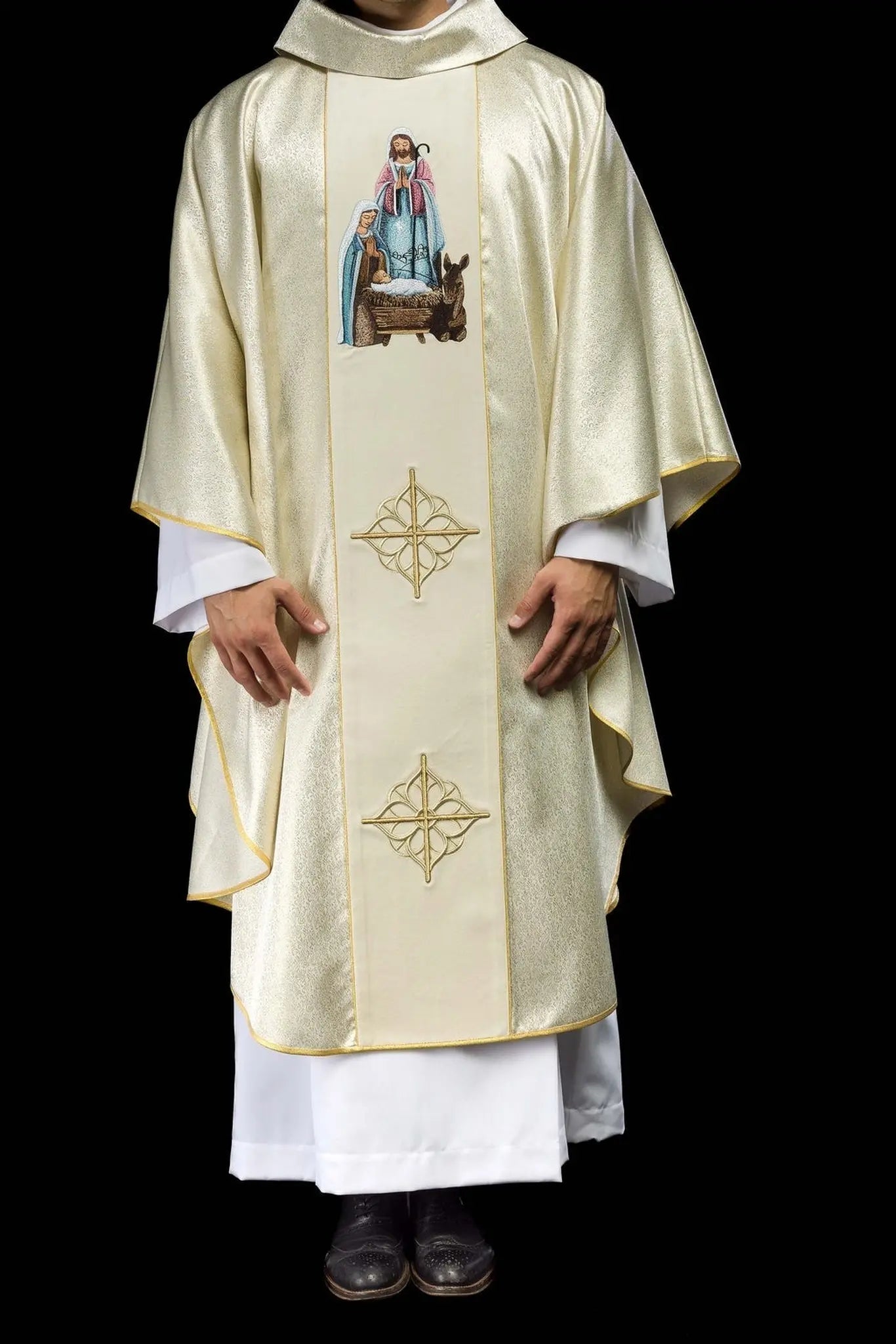
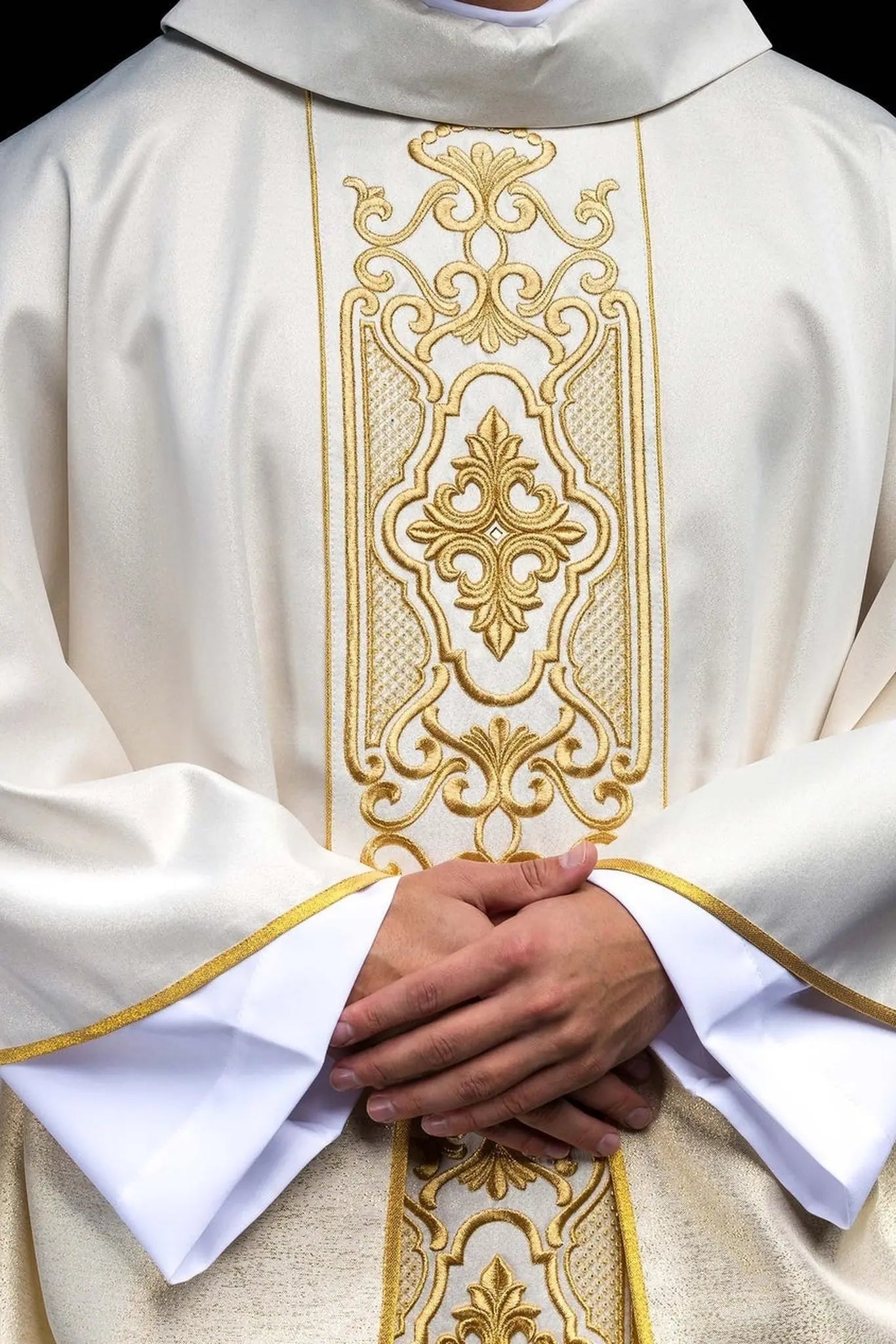
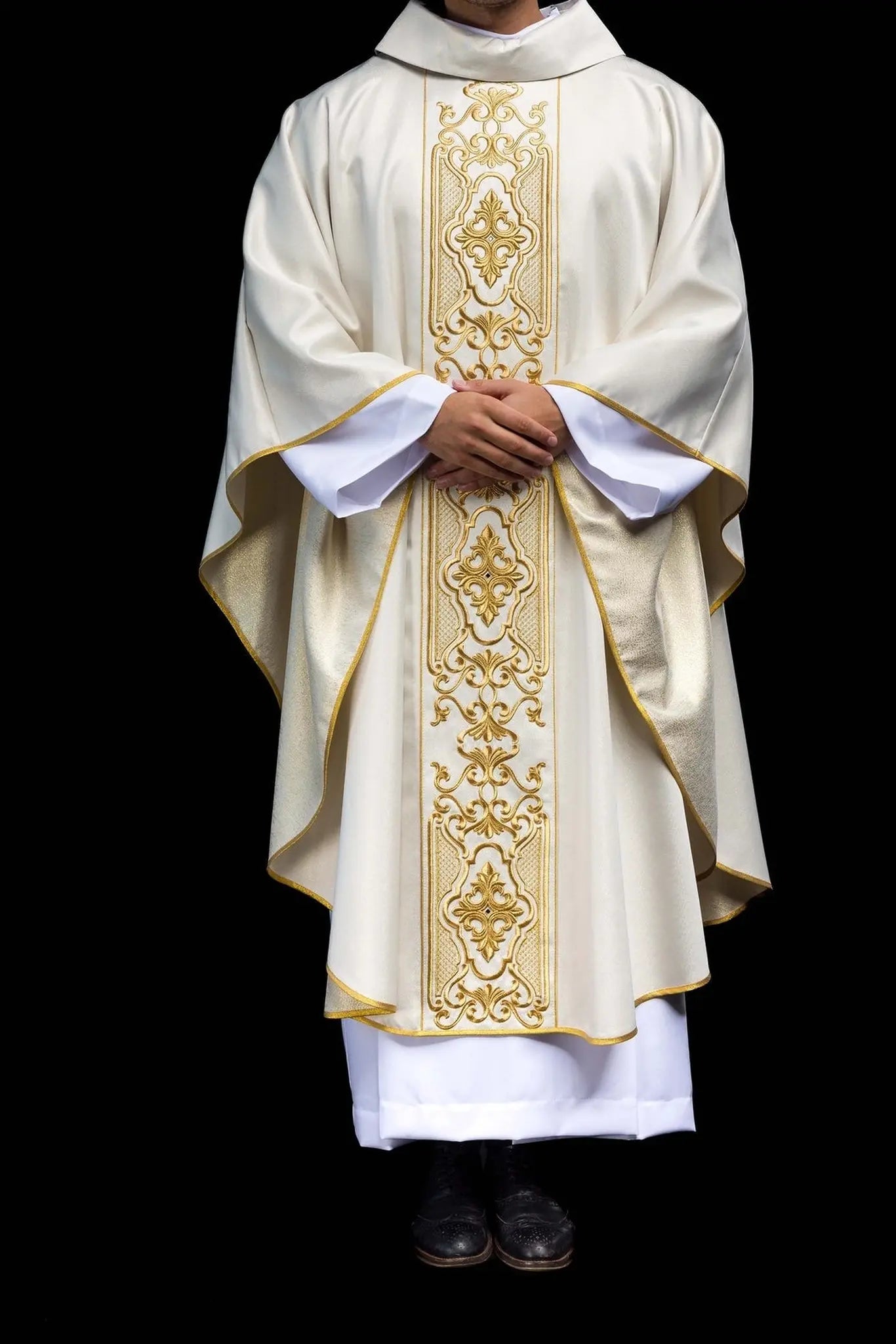
Gold chasubles are among the most festive priestly vestments used in the celebration of the Mass. Their warm, luminous color expresses joy, solemnity, glory, and thanksgiving, making them especially suitable for the most important celebrations of the liturgical year. This collection gathers gold chasubles for priests and bishops who need a dignified vestment for major feasts, parish solemnities, Eucharistic celebrations, jubilees, anniversaries, ordinations, patronal feasts, and other occasions when the visual language of the liturgy calls for special brightness.
A chasuble is the principal outer vestment worn by the priest celebrant at Mass. In gold, it carries a particularly rich symbolic meaning: it recalls divine light, the kingship of Christ, the splendor of the heavenly liturgy, and the joy of the Church gathered around the altar. Gold may be chosen for many solemn celebrations, often in place of white, red, or green when local liturgical custom and rubrics allow a more festive vestment. For a broader overview of styles and colors, you can also browse the main chasubles collection.
When gold chasubles are used
Gold chasubles are most often associated with high-ranking feasts and especially solemn parish celebrations. They are frequently chosen for Christmas, Easter, Corpus Christi, Christ the King, dedications, jubilees, thanksgiving Masses, and important diocesan or community events. In many sacristies, a gold chasuble is kept as the most ceremonial vestment, reserved for moments when the liturgy should visibly communicate triumph, gratitude, and sacred celebration.
Because gold has a festive character, it should be selected with attention to the actual liturgical day. For example, a gold chasuble may harmonize beautifully with Eucharistic devotion and processional celebrations connected with Corpus Christi. For celebrations that specifically call for red, such as Pentecost, martyrs, or the Holy Spirit, the related red chasubles collection may be more appropriate unless a solemn gold substitute is permitted locally. For Marian feasts, white, ecru, blue-accented, or Marian-themed vestments may sometimes fit the celebration more directly, depending on custom and design.
How to choose a gold chasuble
When selecting a gold chasuble, consider the rank of the celebration, the architecture of the church, the existing sacristy set, and the comfort of the celebrant. A richly embroidered gold chasuble can be highly suitable for a cathedral, basilica, shrine, or large parish solemnity, while a simpler gold design may be better for regular festive use in a smaller chapel or community. The goal is not only visual beauty, but also liturgical clarity: the vestment should support the prayer of the Mass without distracting from the altar, the Word, and the Eucharist.
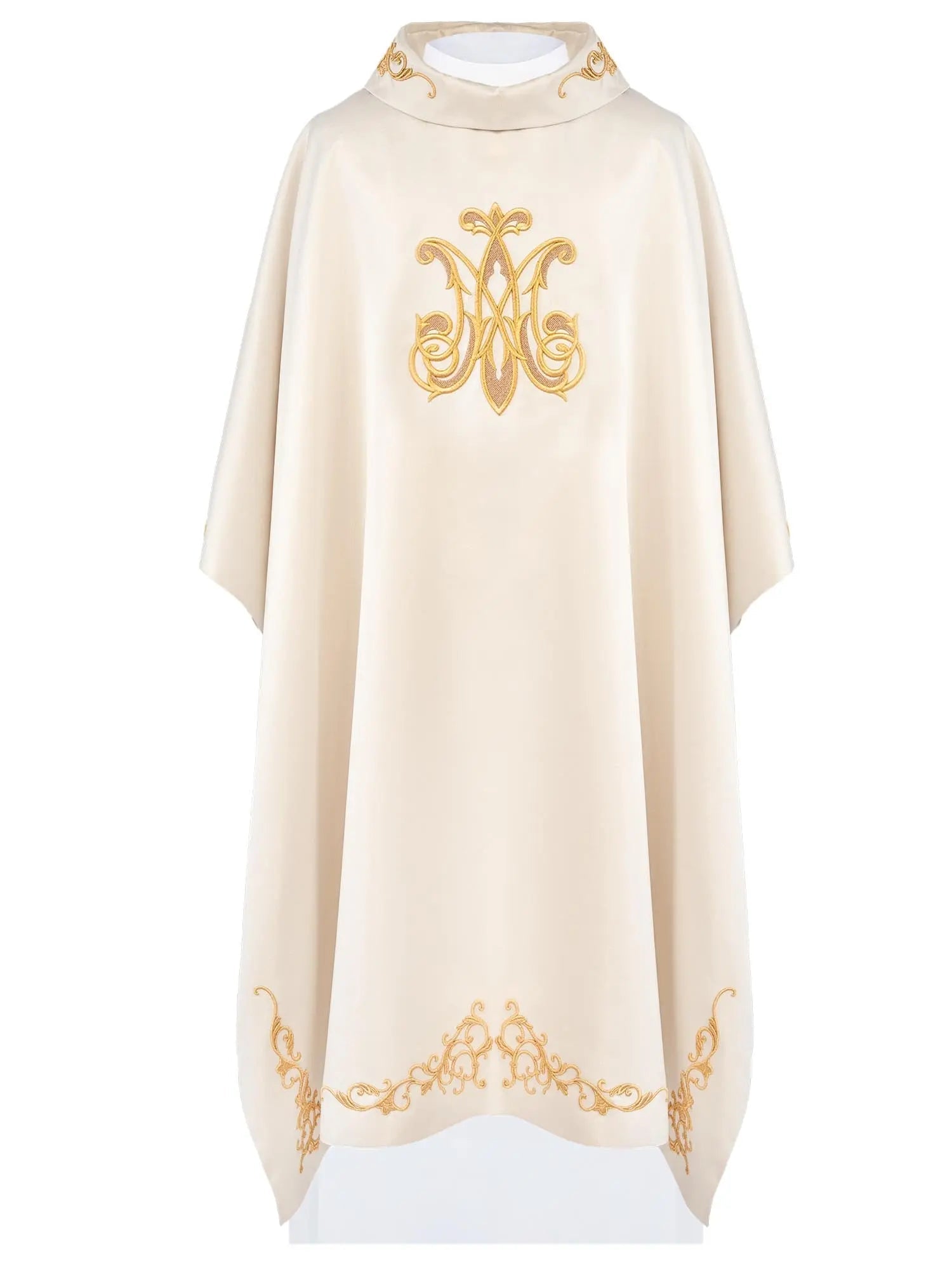
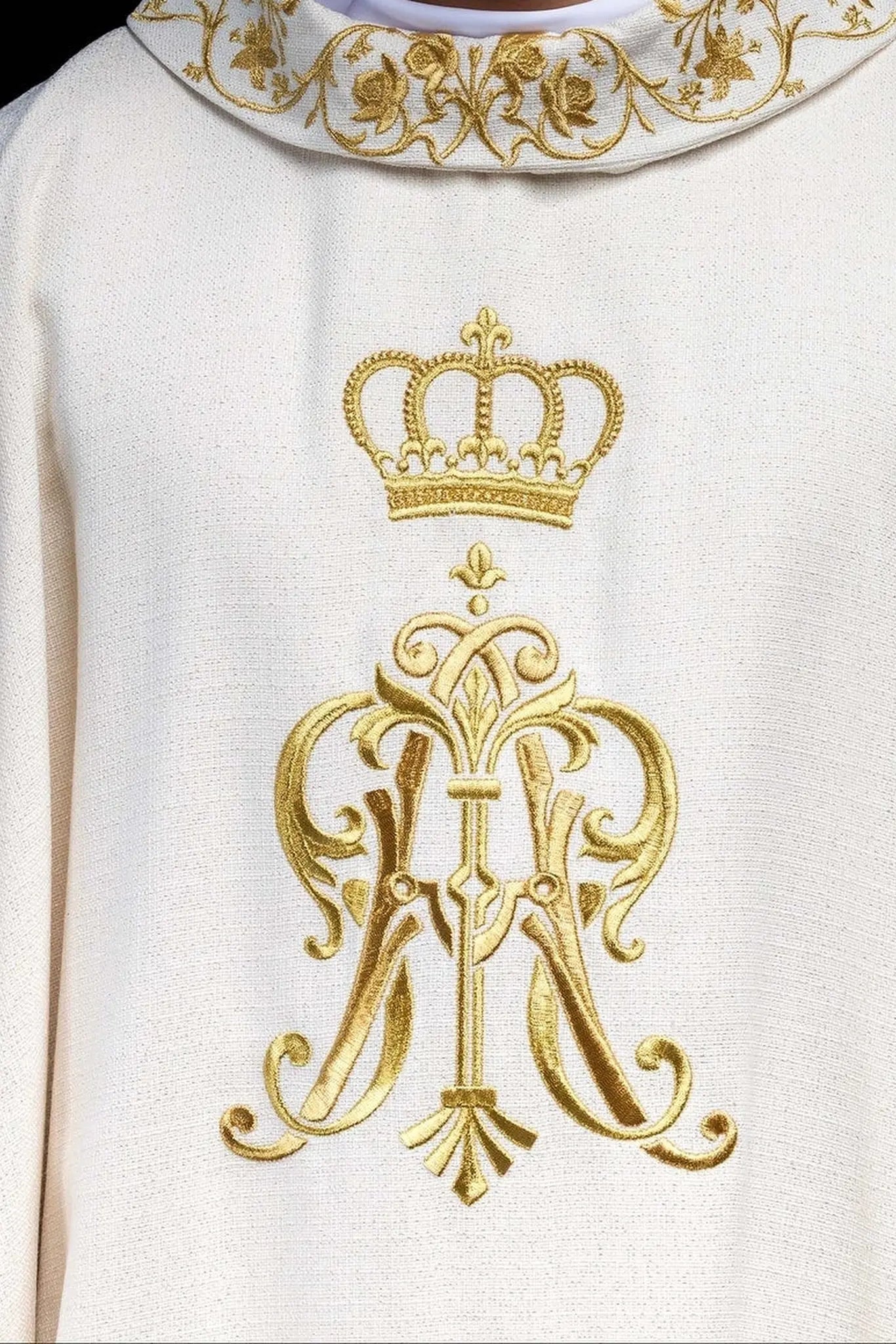
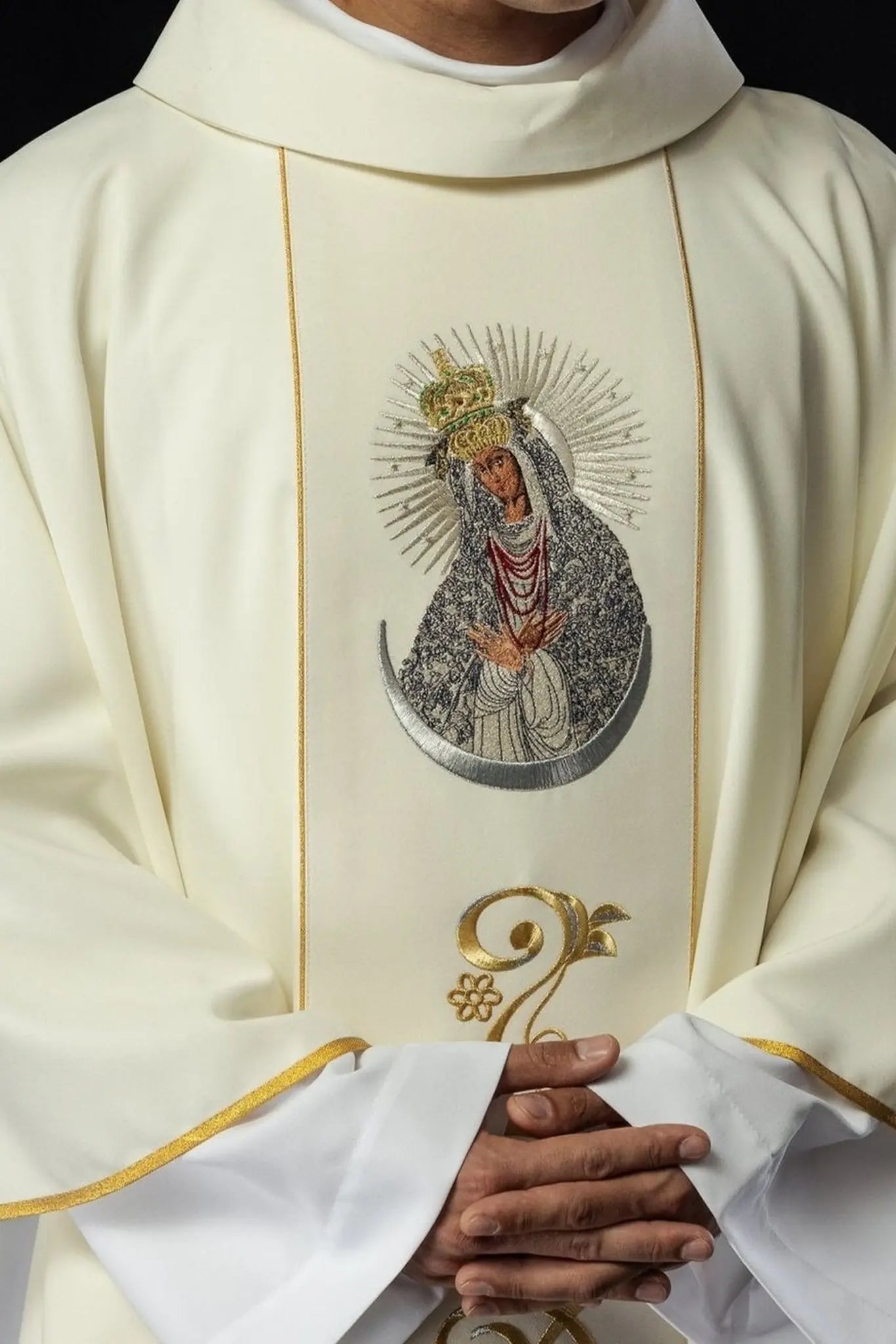
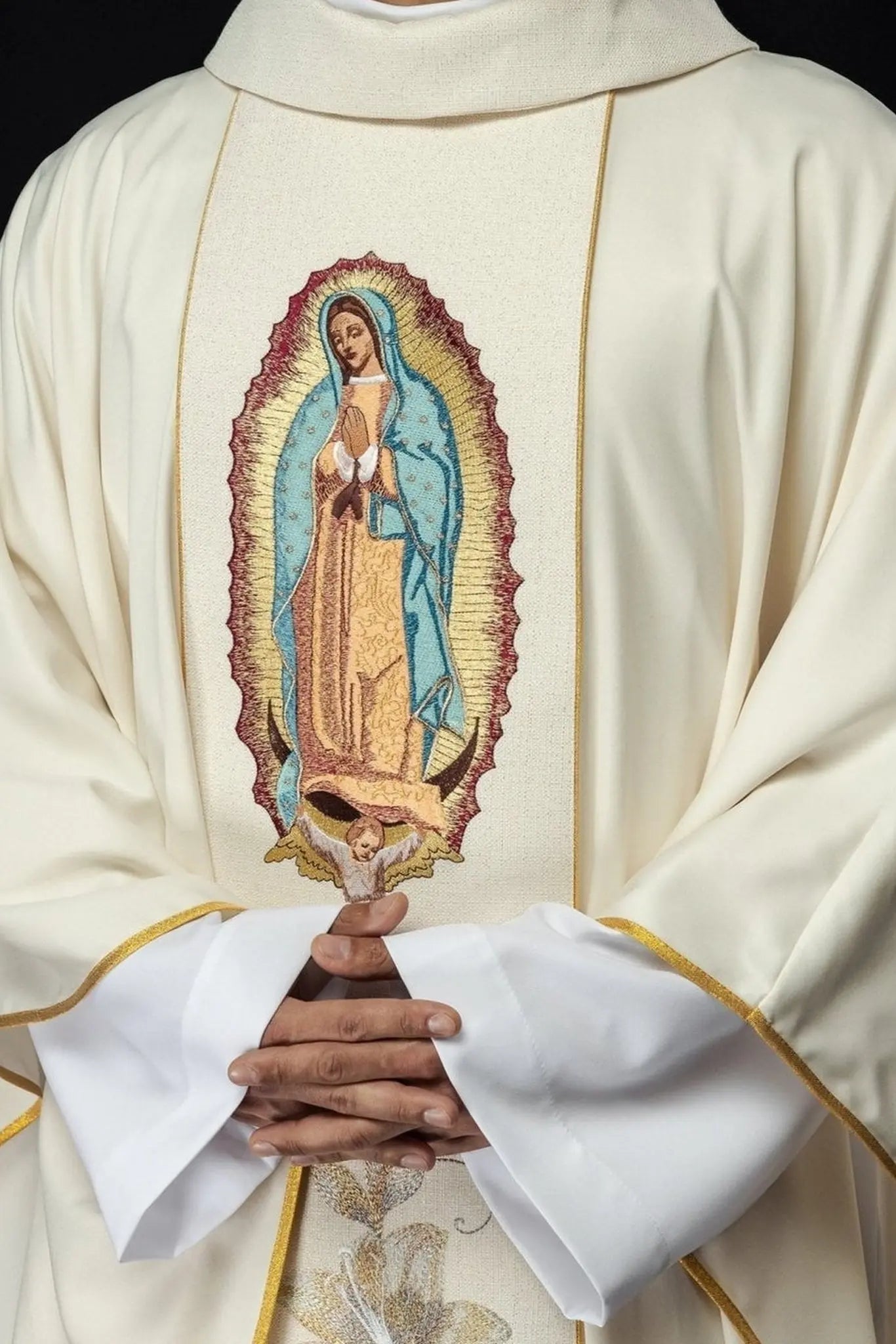
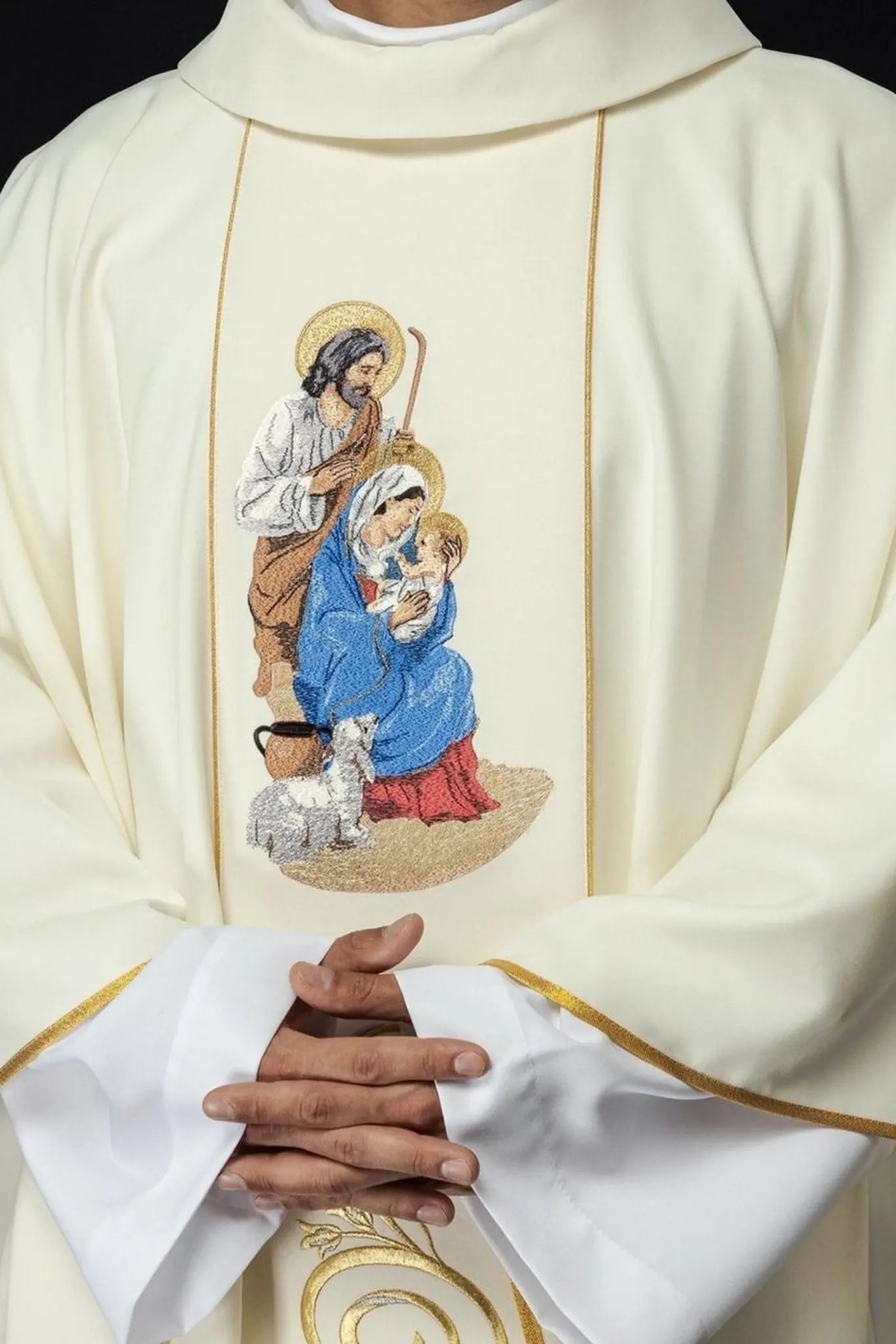
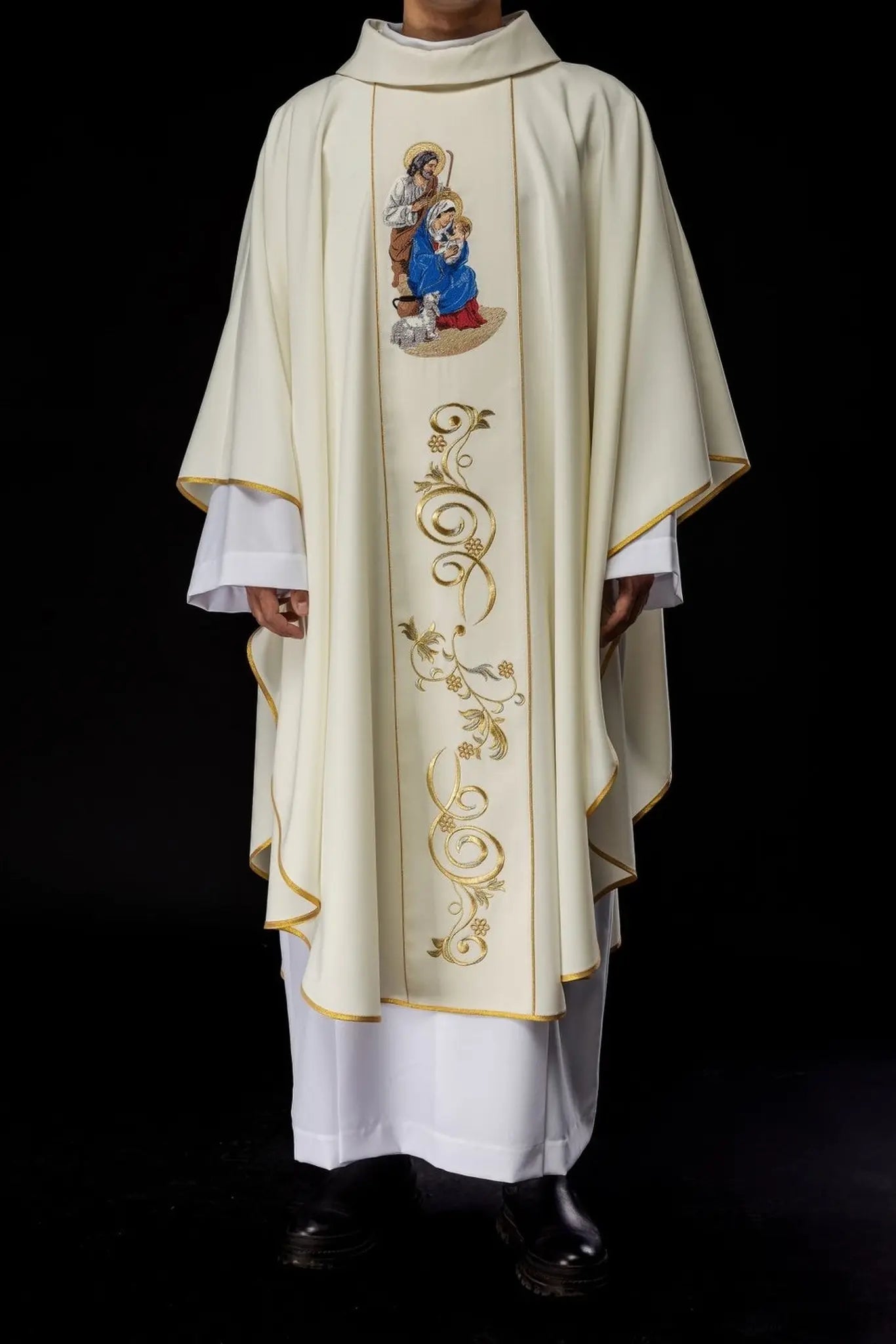
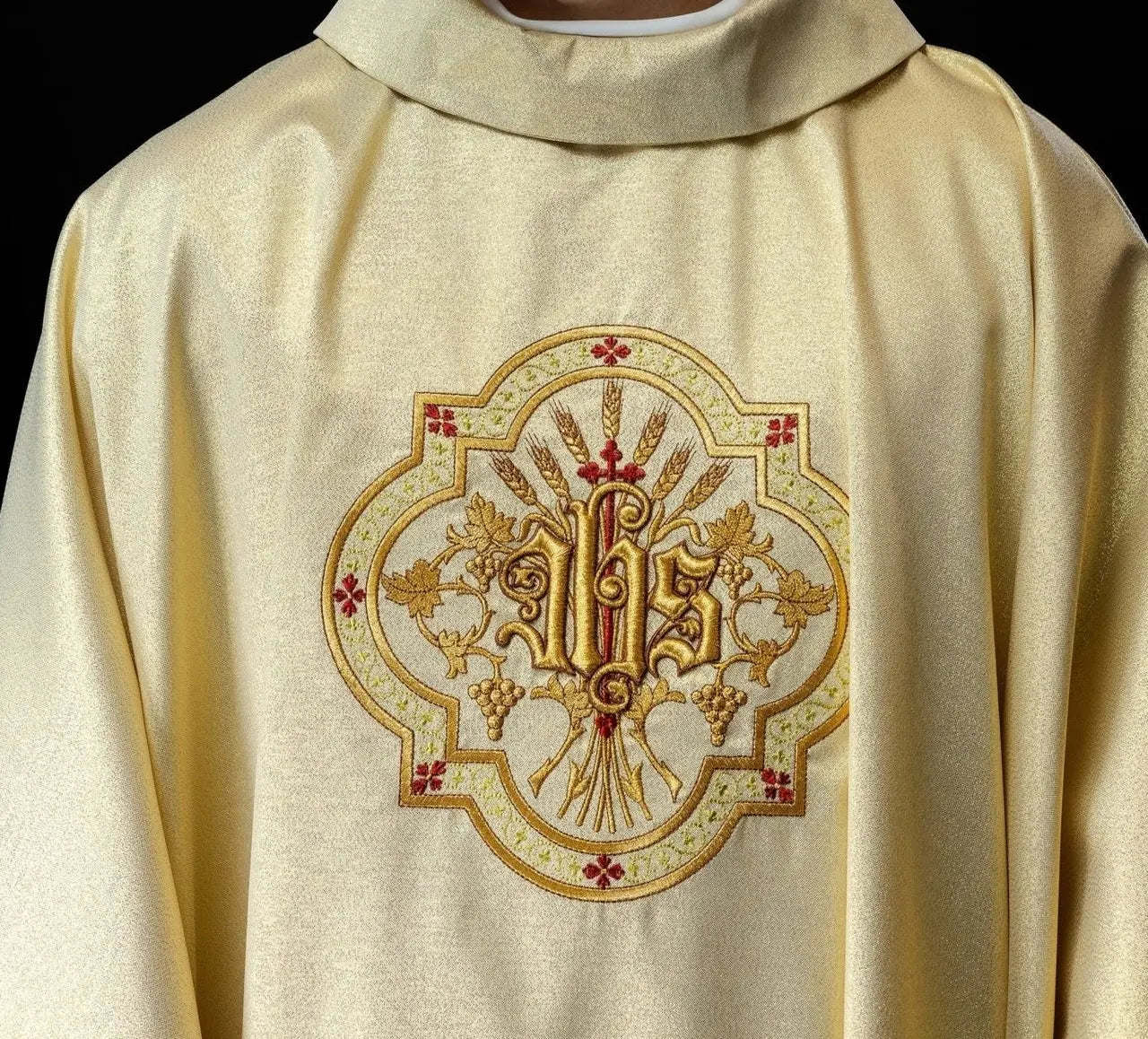
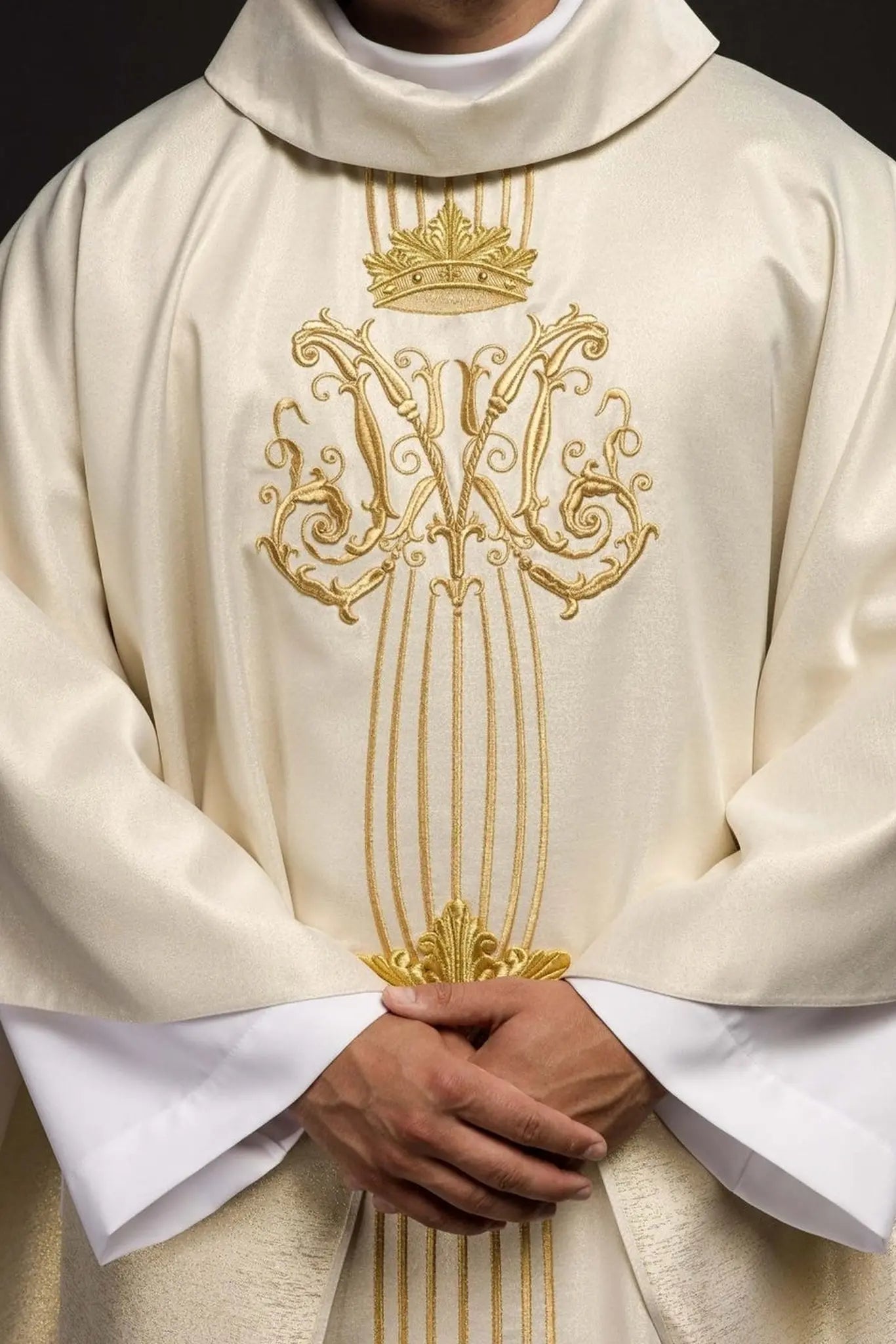
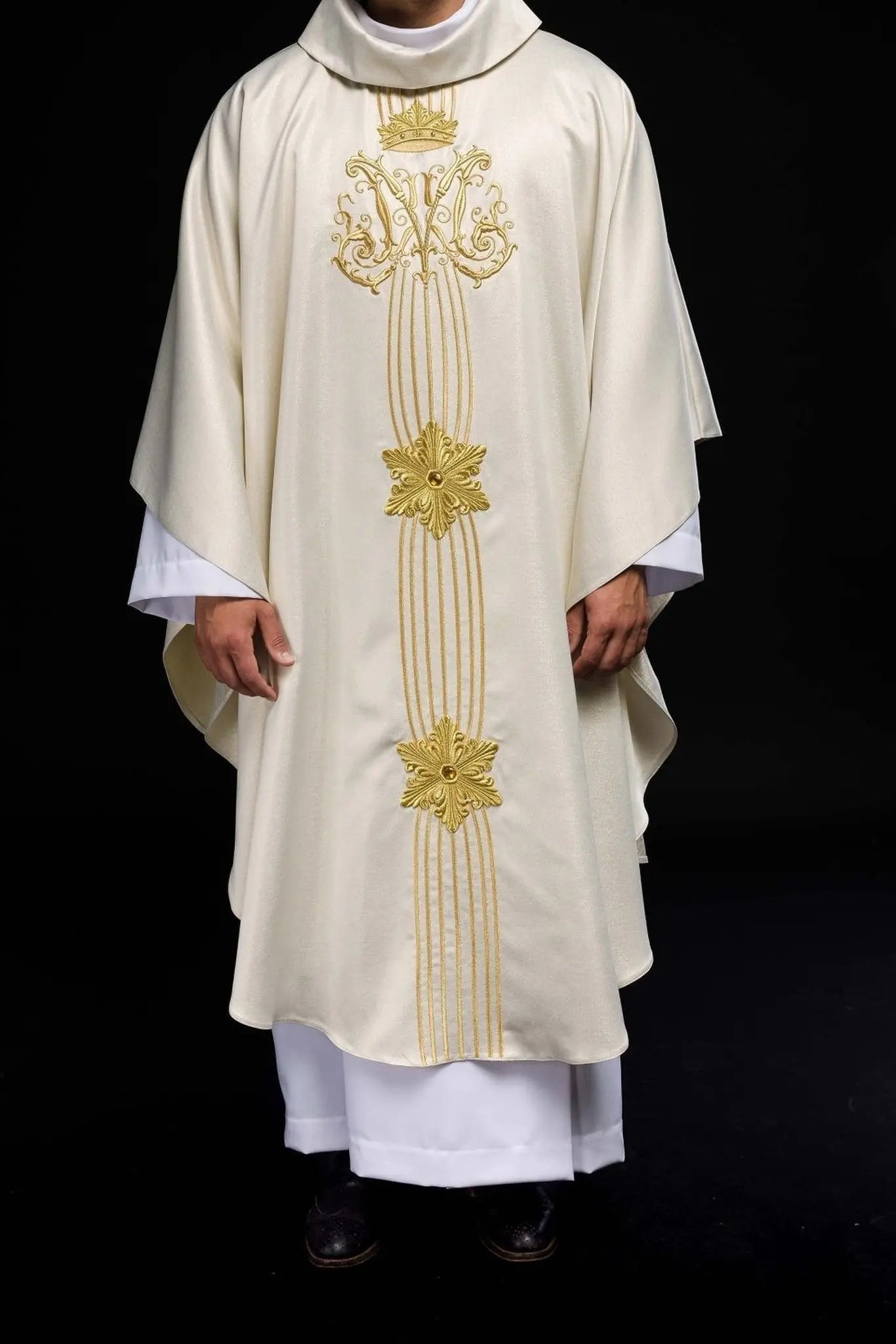
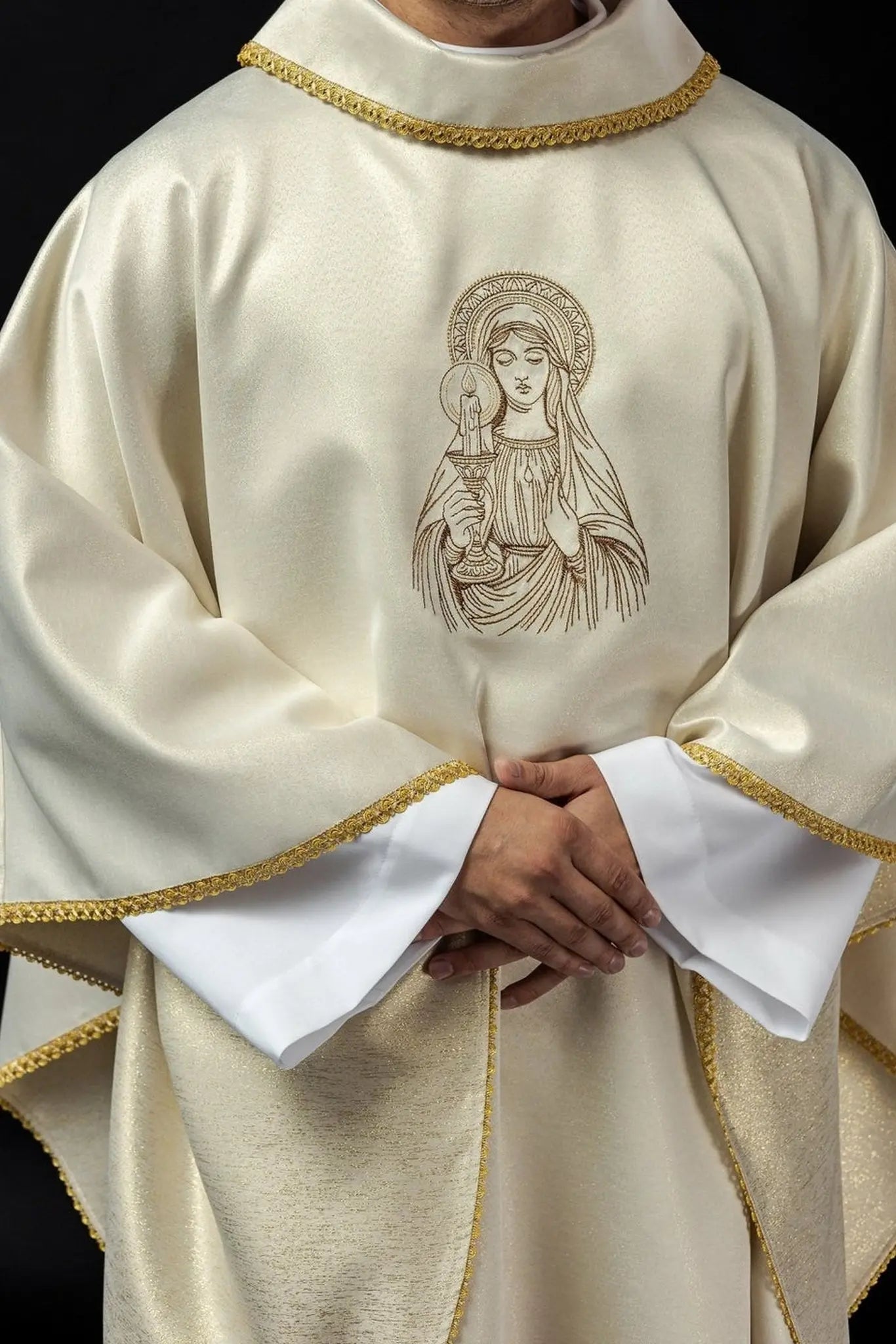
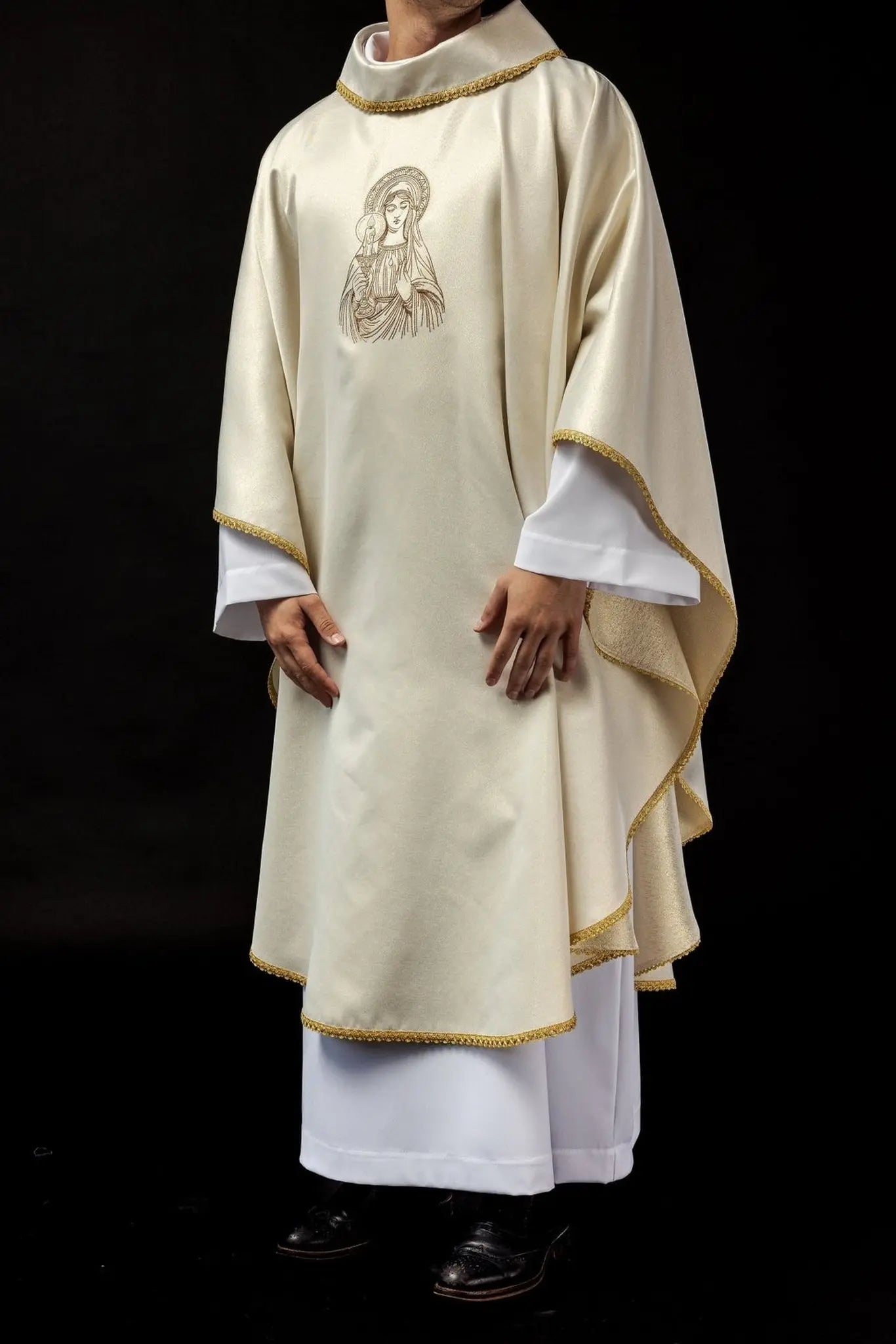
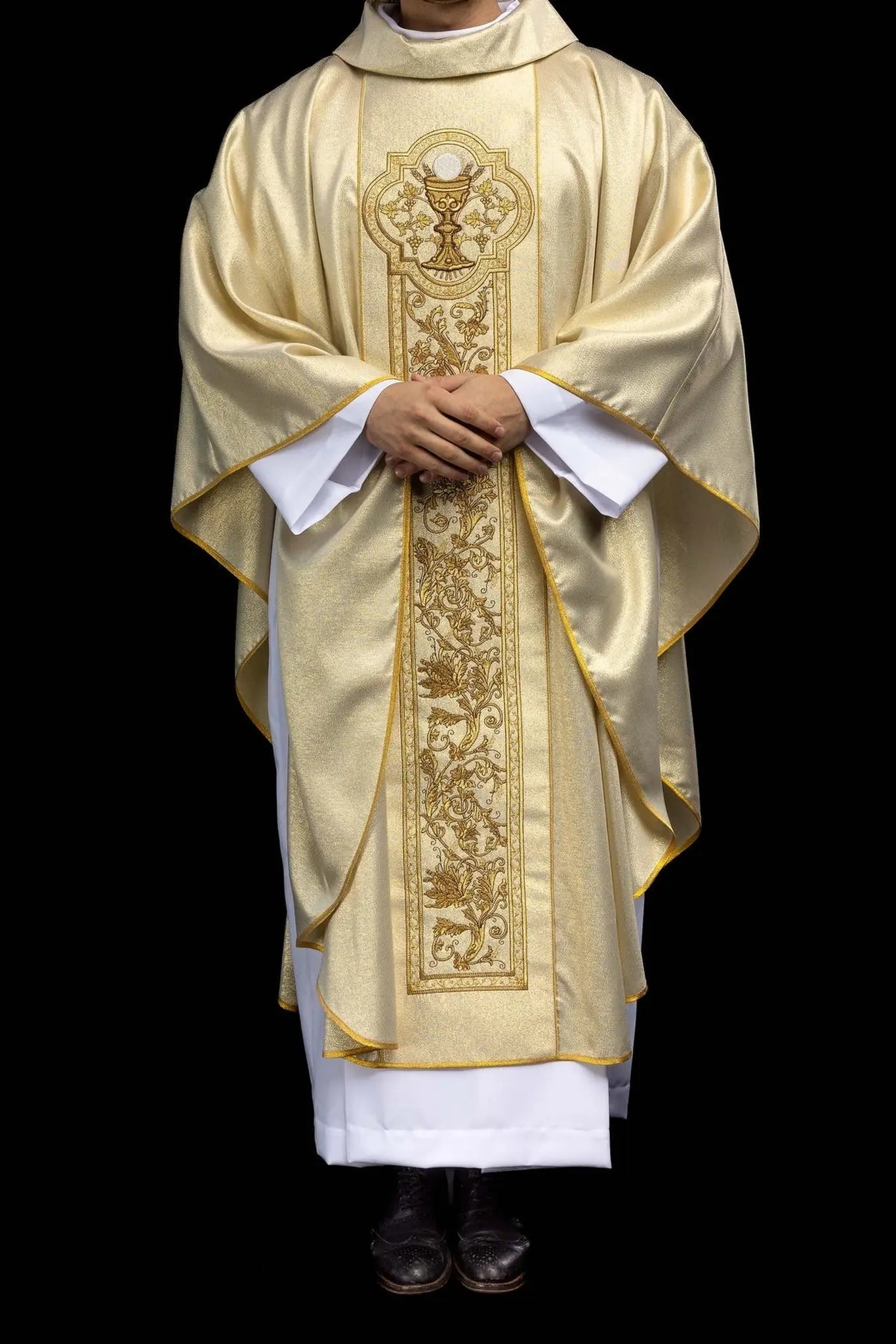
Fabric is an important part of that choice. Smooth fabrics create a clean and modern appearance, brocades add depth through woven ornament, and lighter blends can improve comfort during longer celebrations or warmer seasons. Embroidery may include Eucharistic symbols, crosses, Marian elements, floral motifs, Christograms, or traditional ornamental bands. Metallic threads can strengthen the festive effect, but the chasuble should still drape well and remain practical for the gestures of the liturgy.
Styles, cuts, and embroidery details
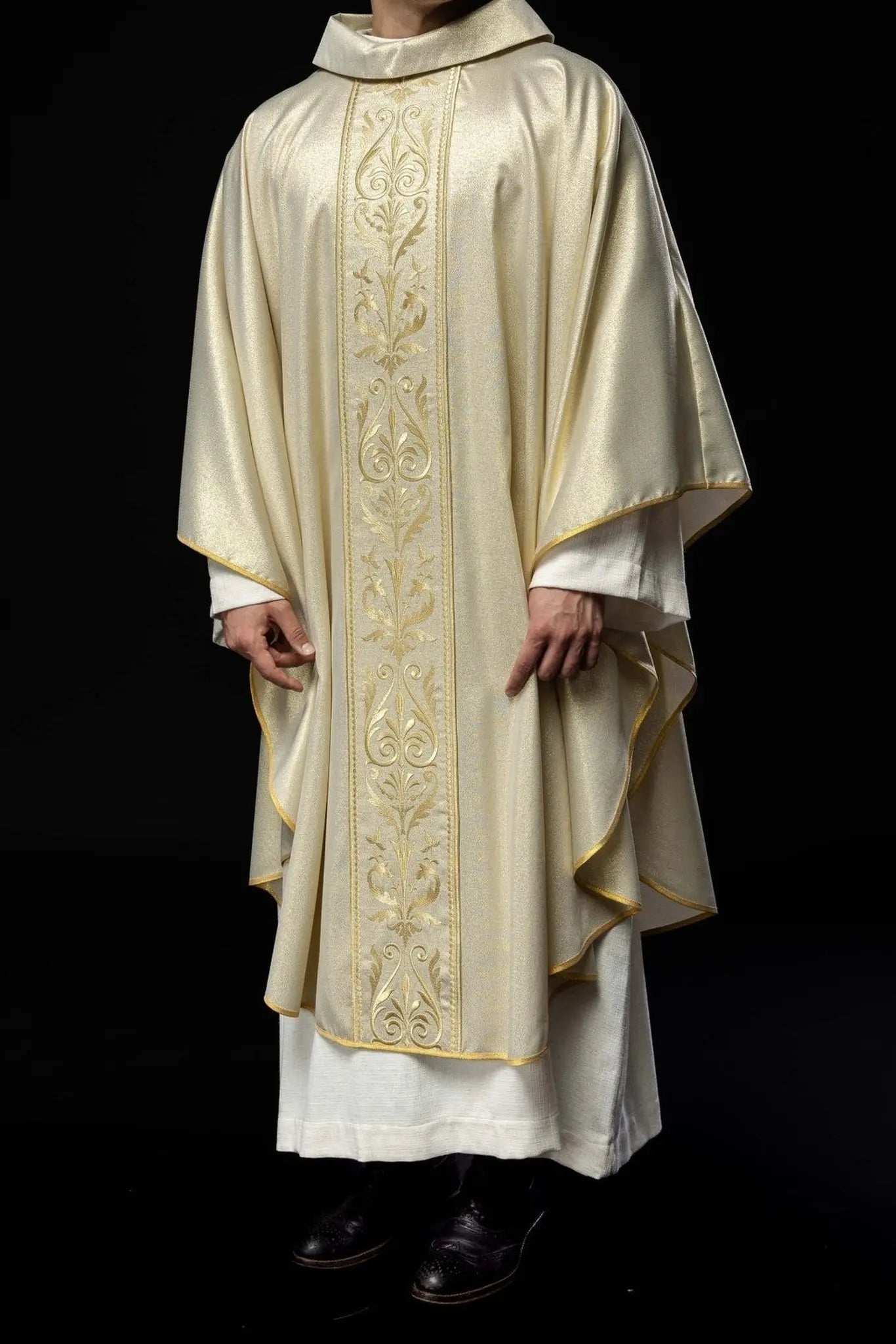
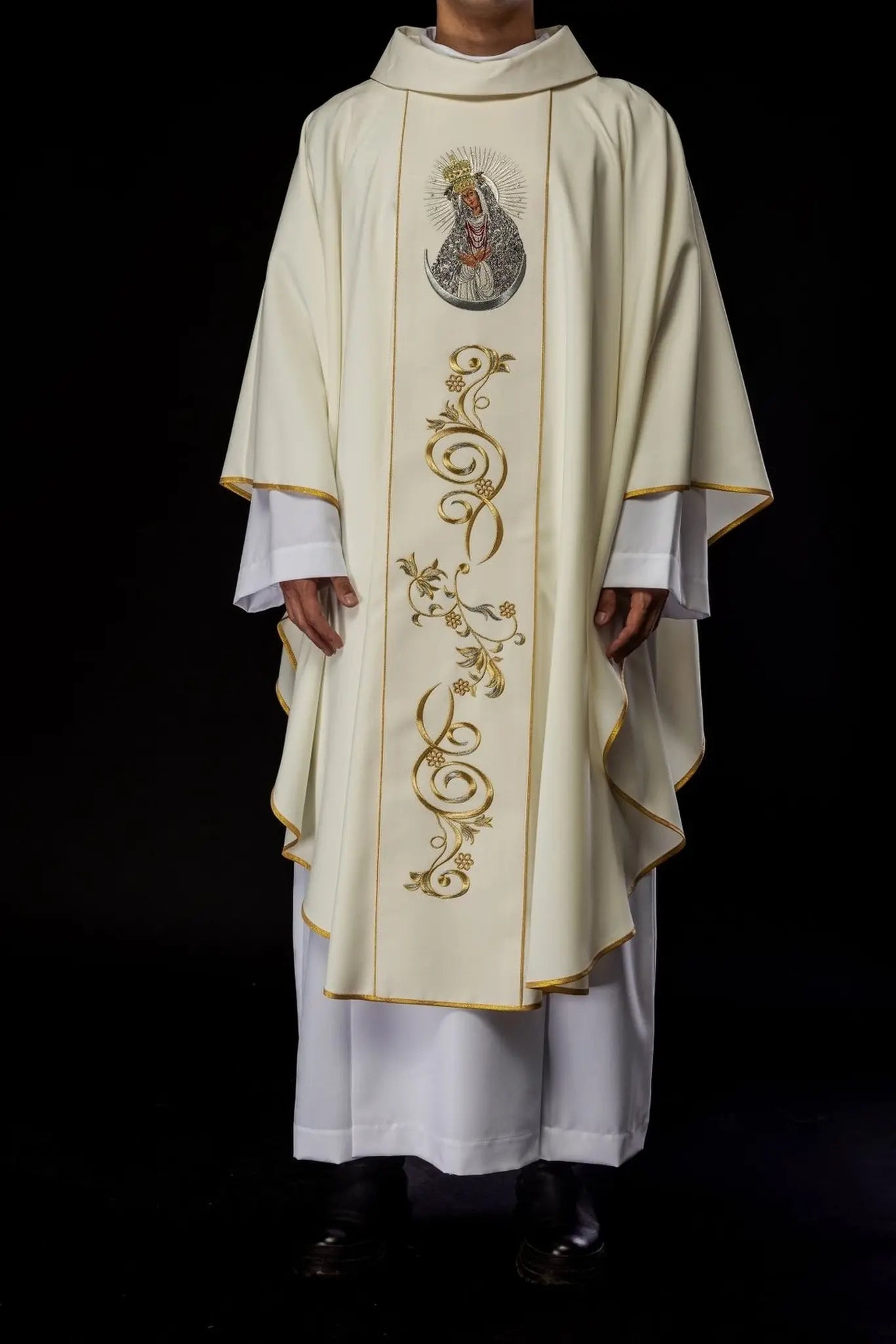
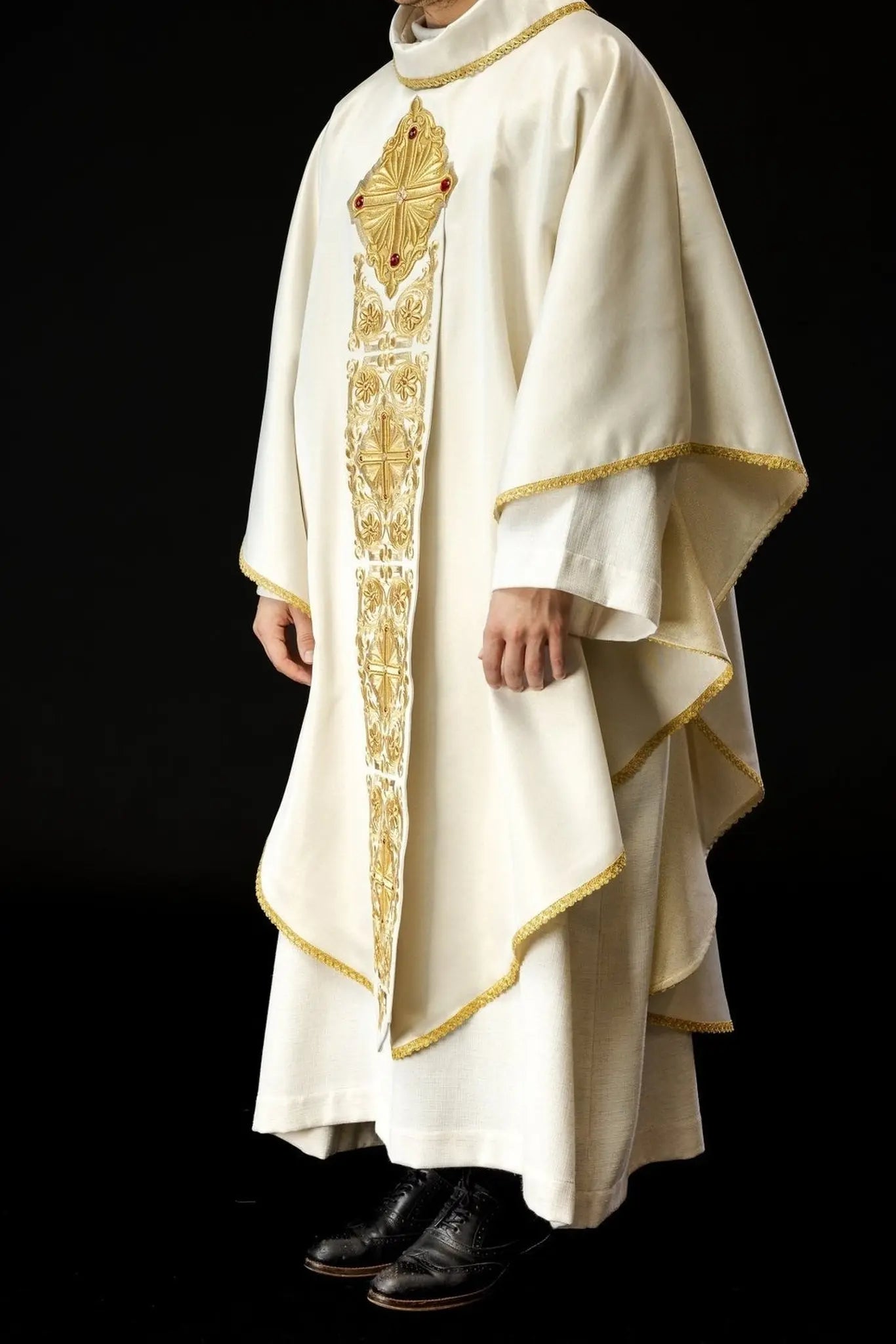
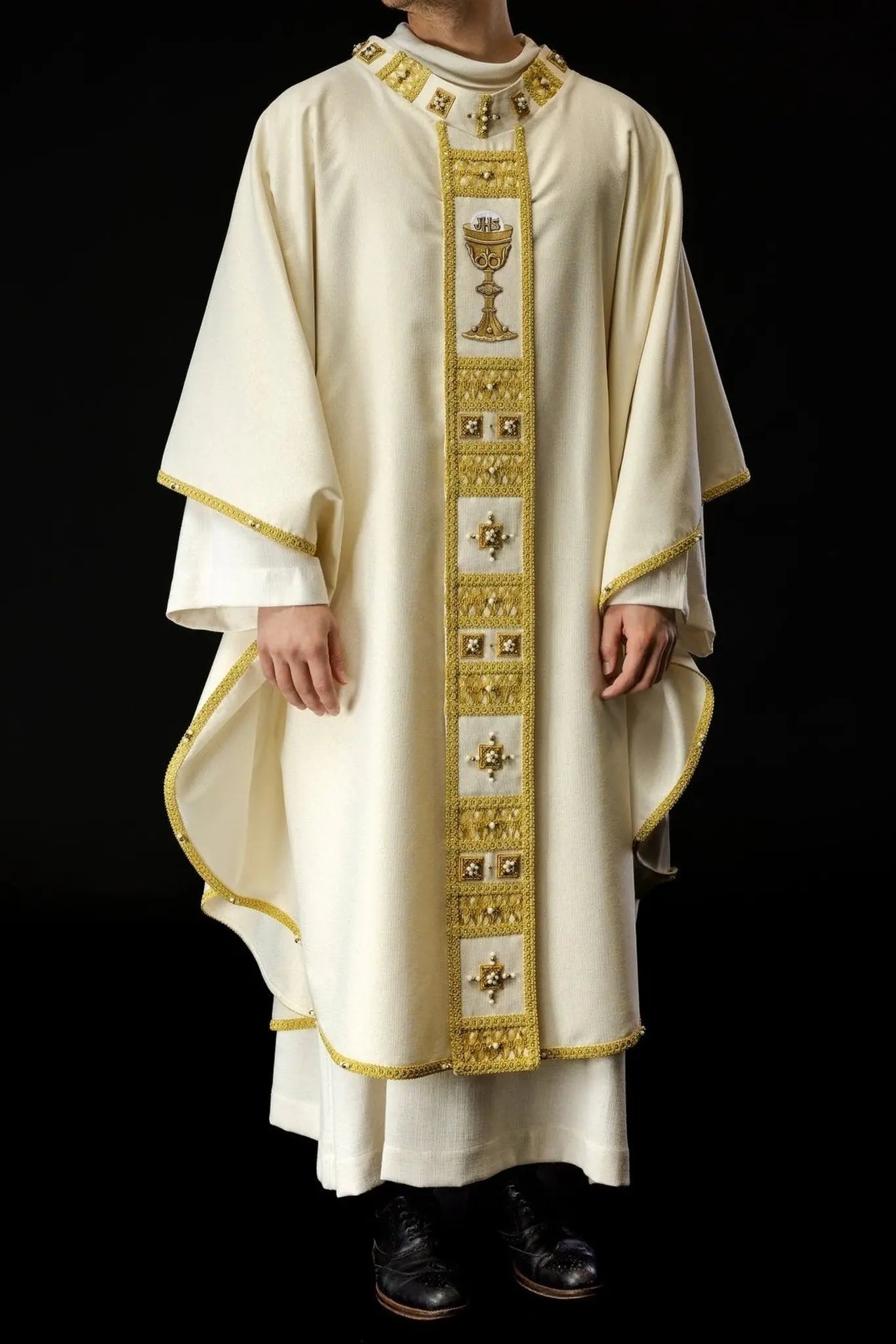
This collection may include different approaches to gold vestments, from Gothic-inspired flowing forms to more structured Roman styles. A Gothic chasuble generally offers a fuller drape over the shoulders and arms, making it comfortable for many celebrants and suitable for contemporary parish use. If you are specifically looking for a traditional narrower silhouette, the Roman chasubles collection is a useful adjacent category to compare.
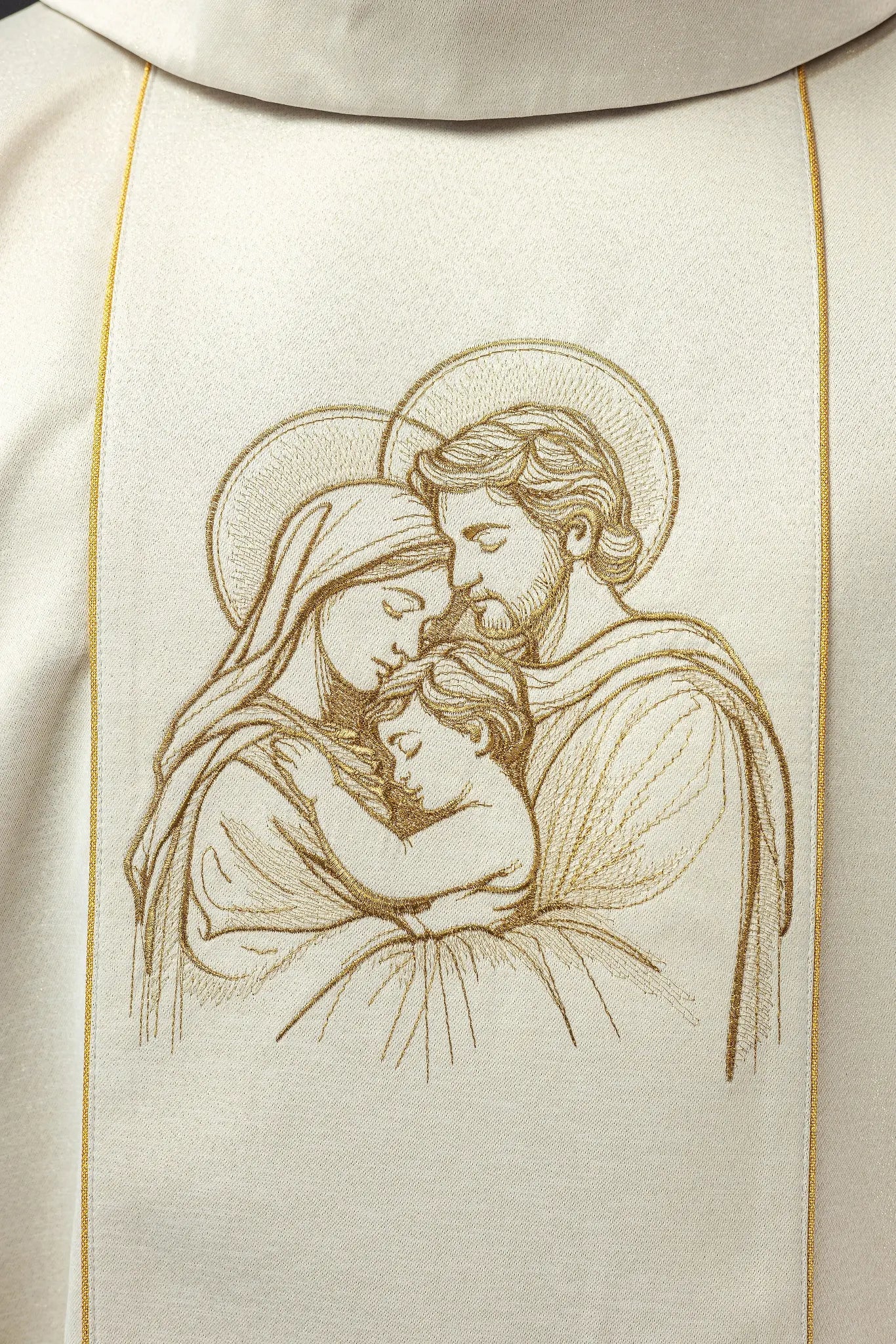
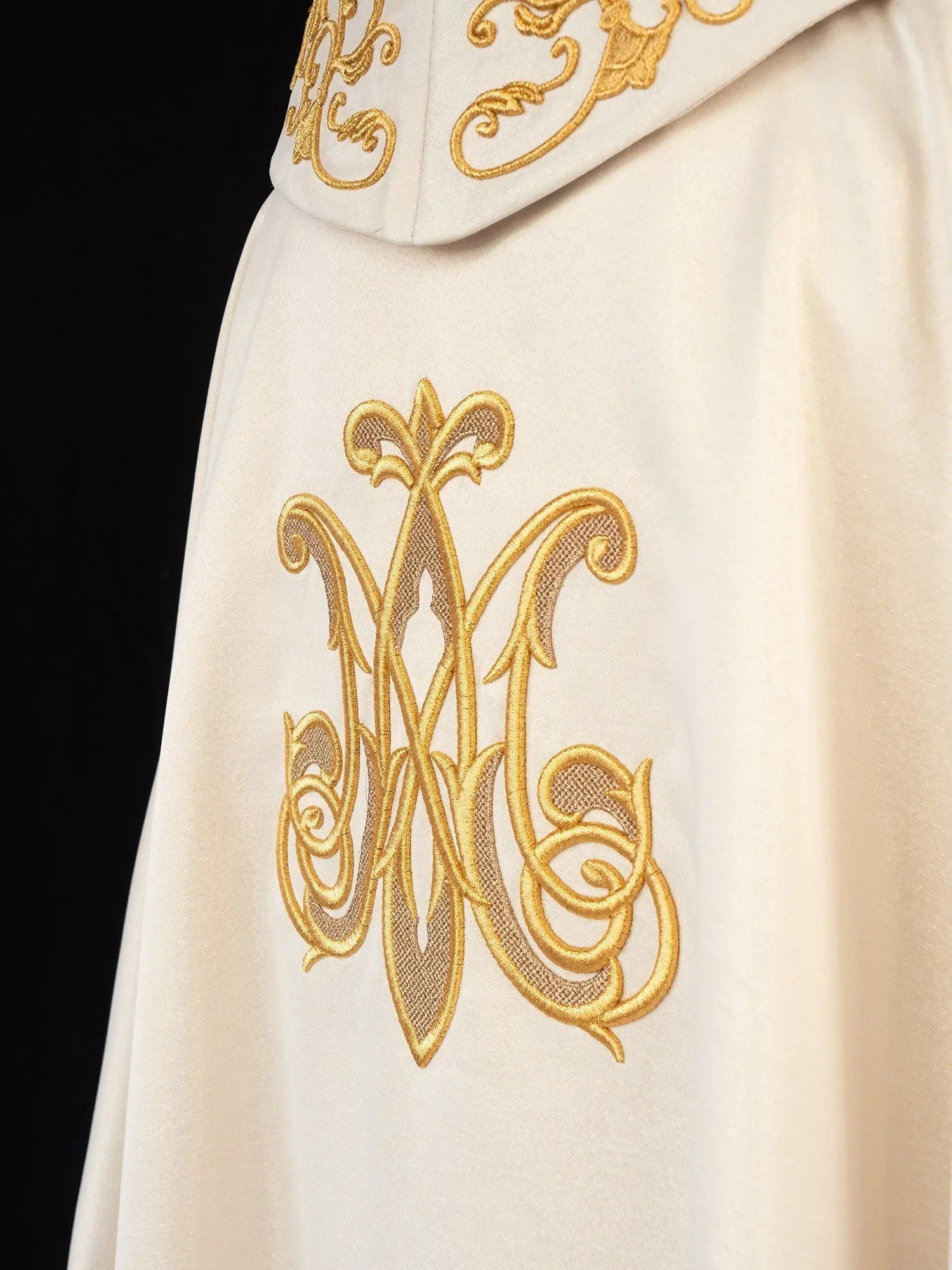
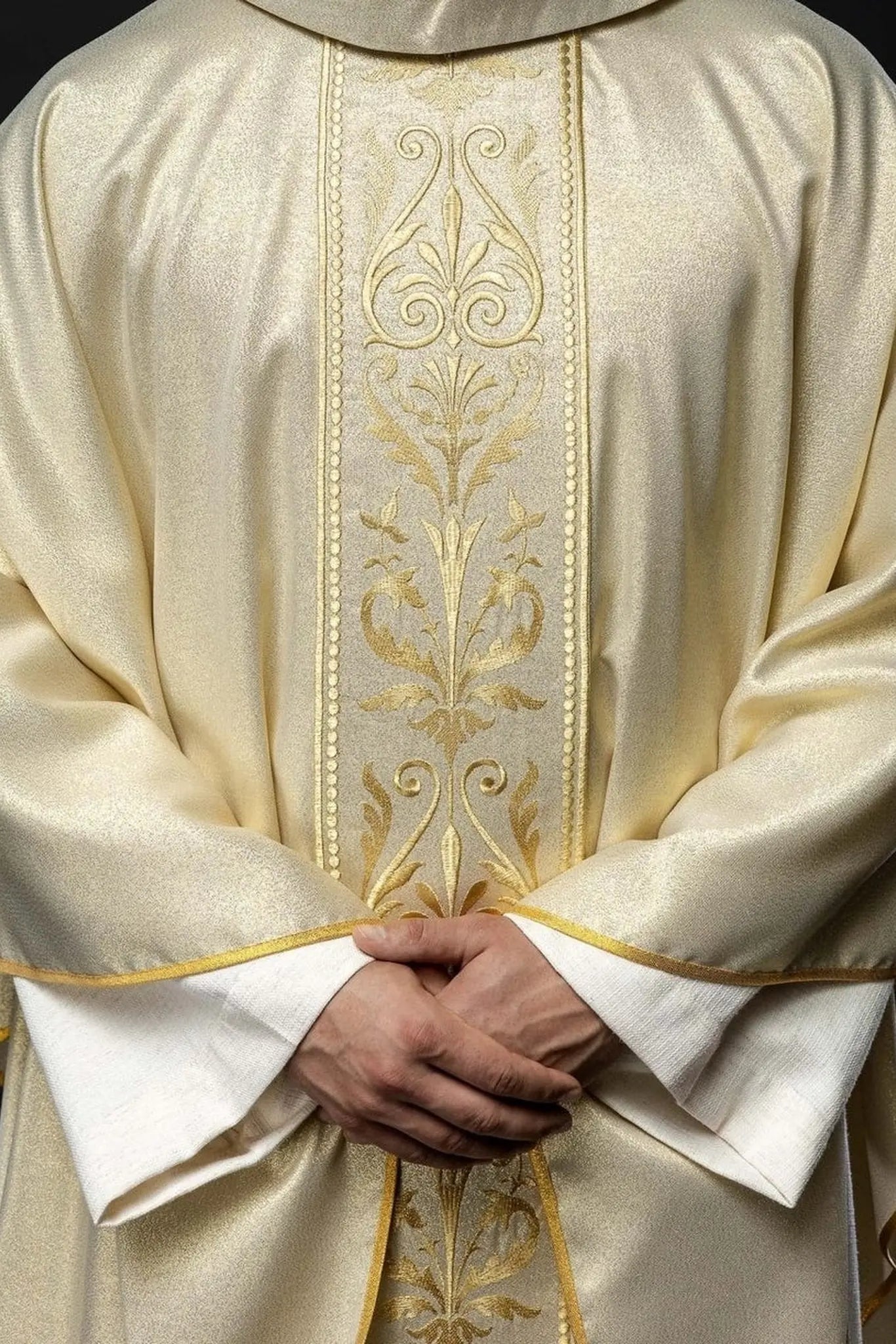
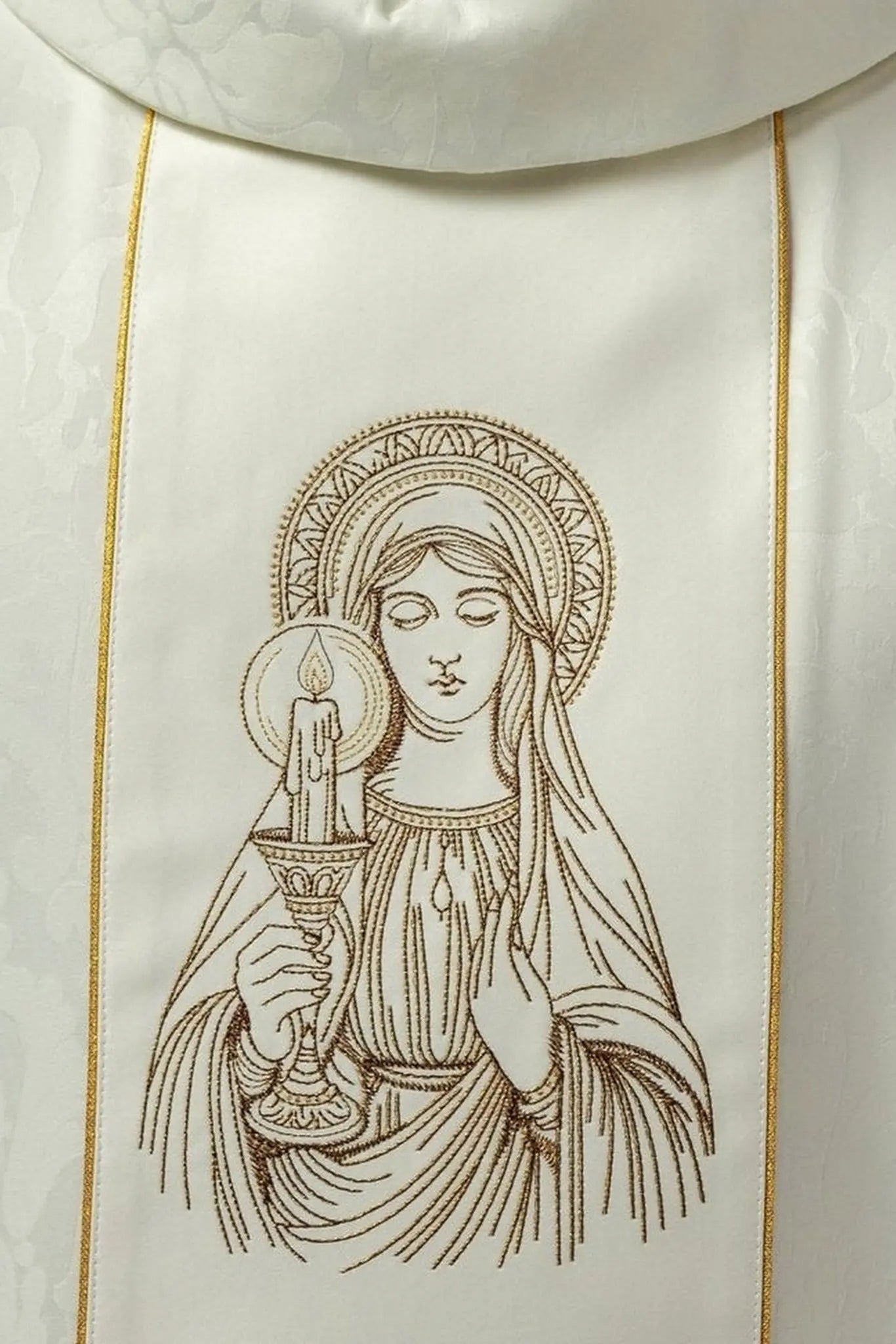
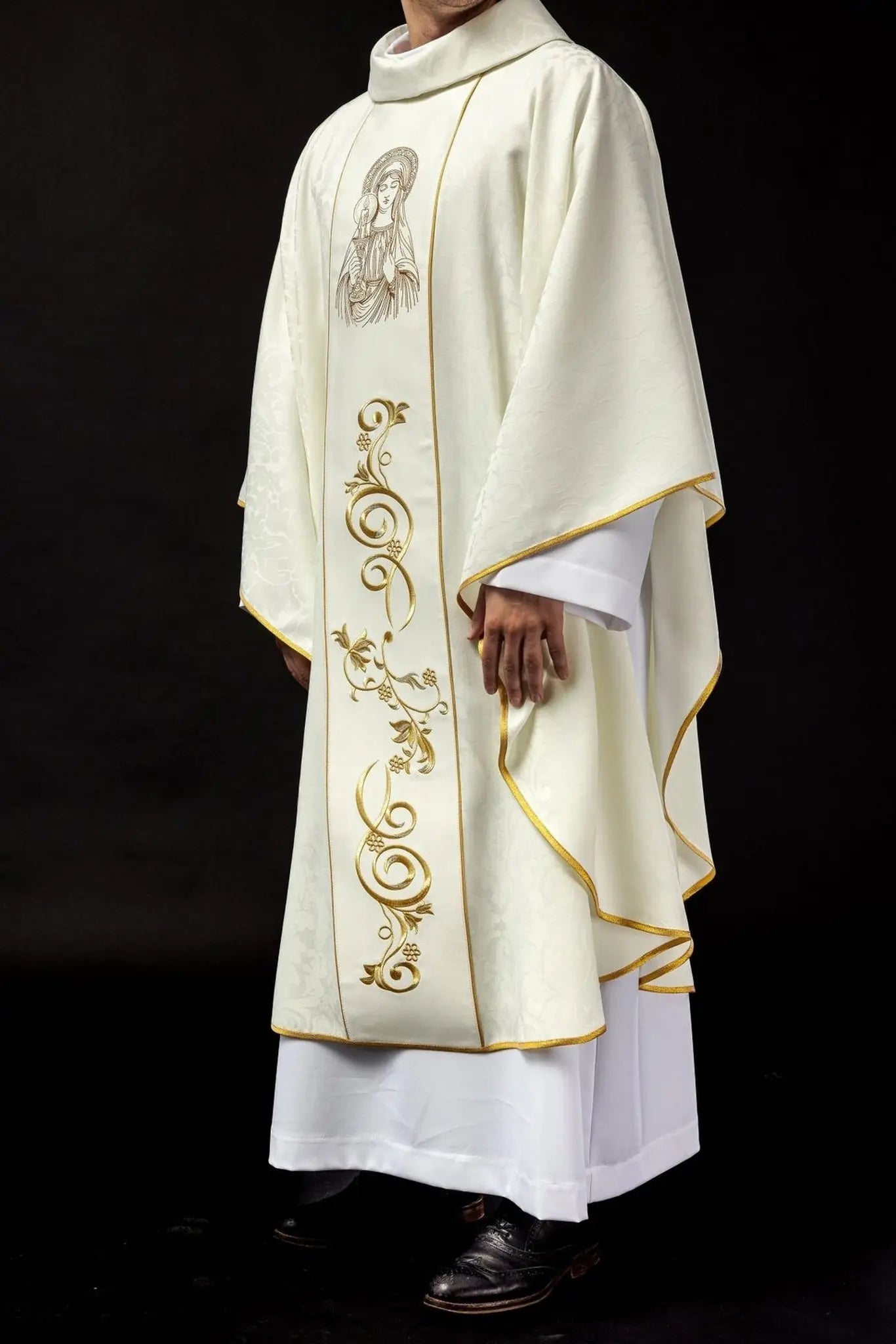
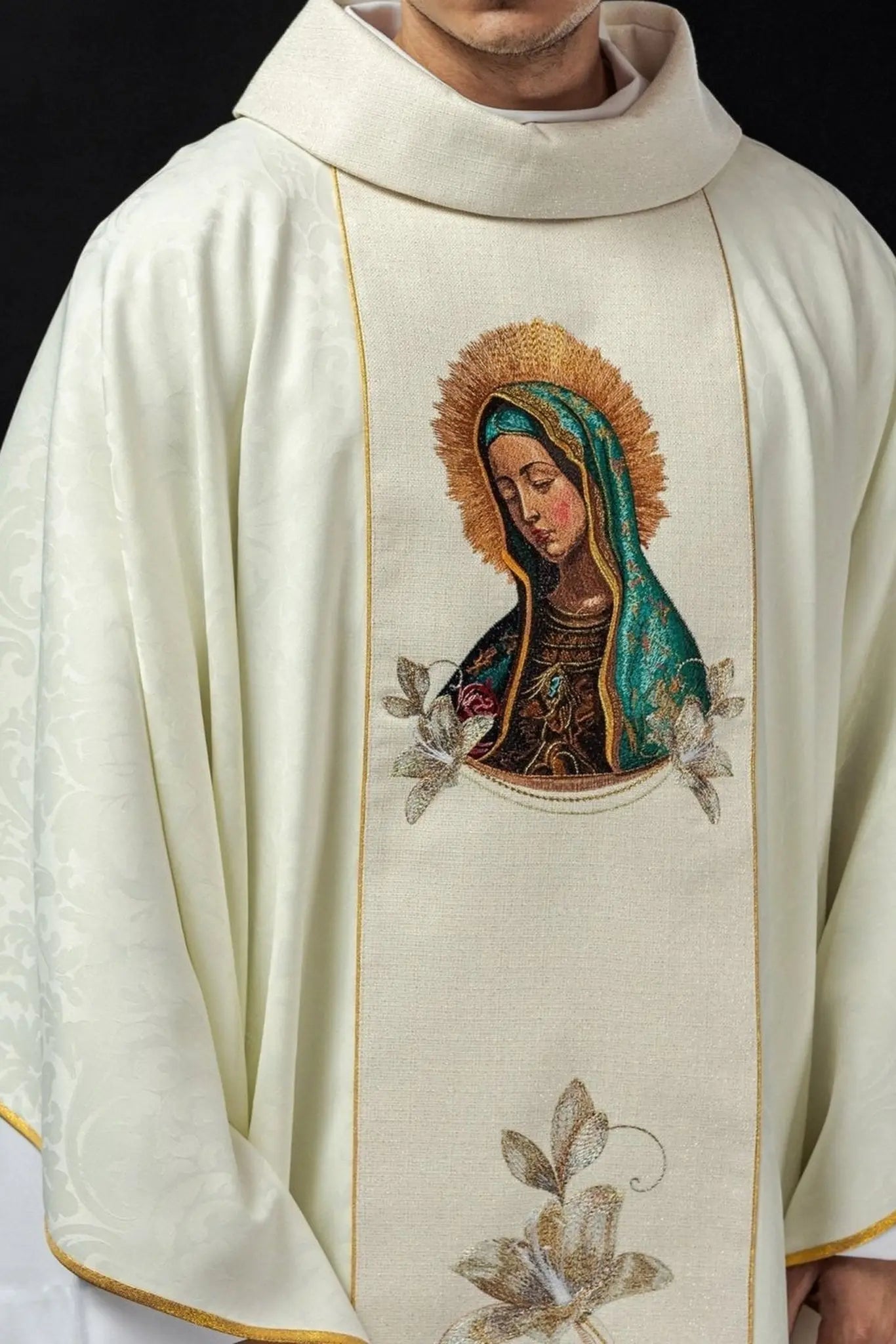
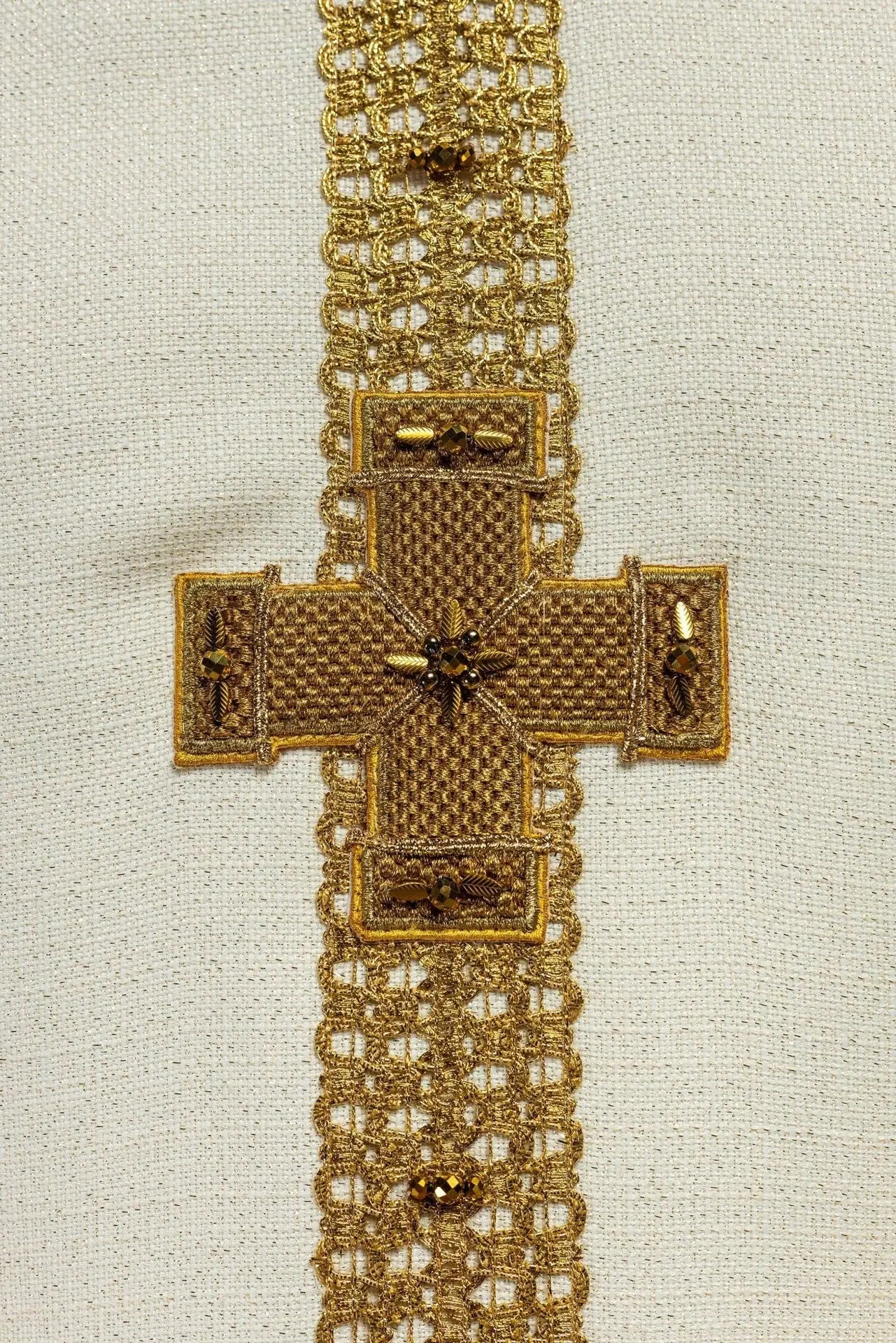
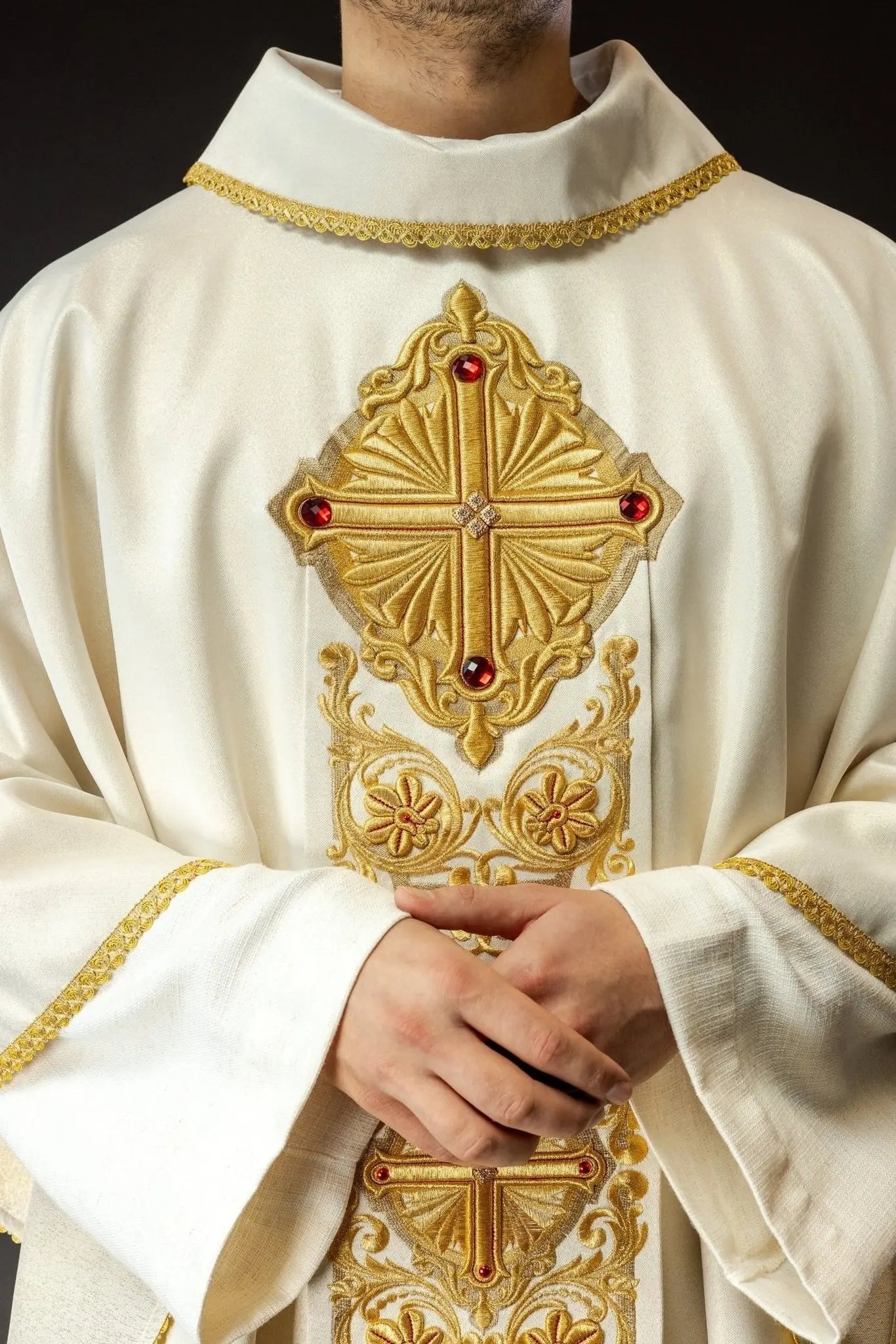
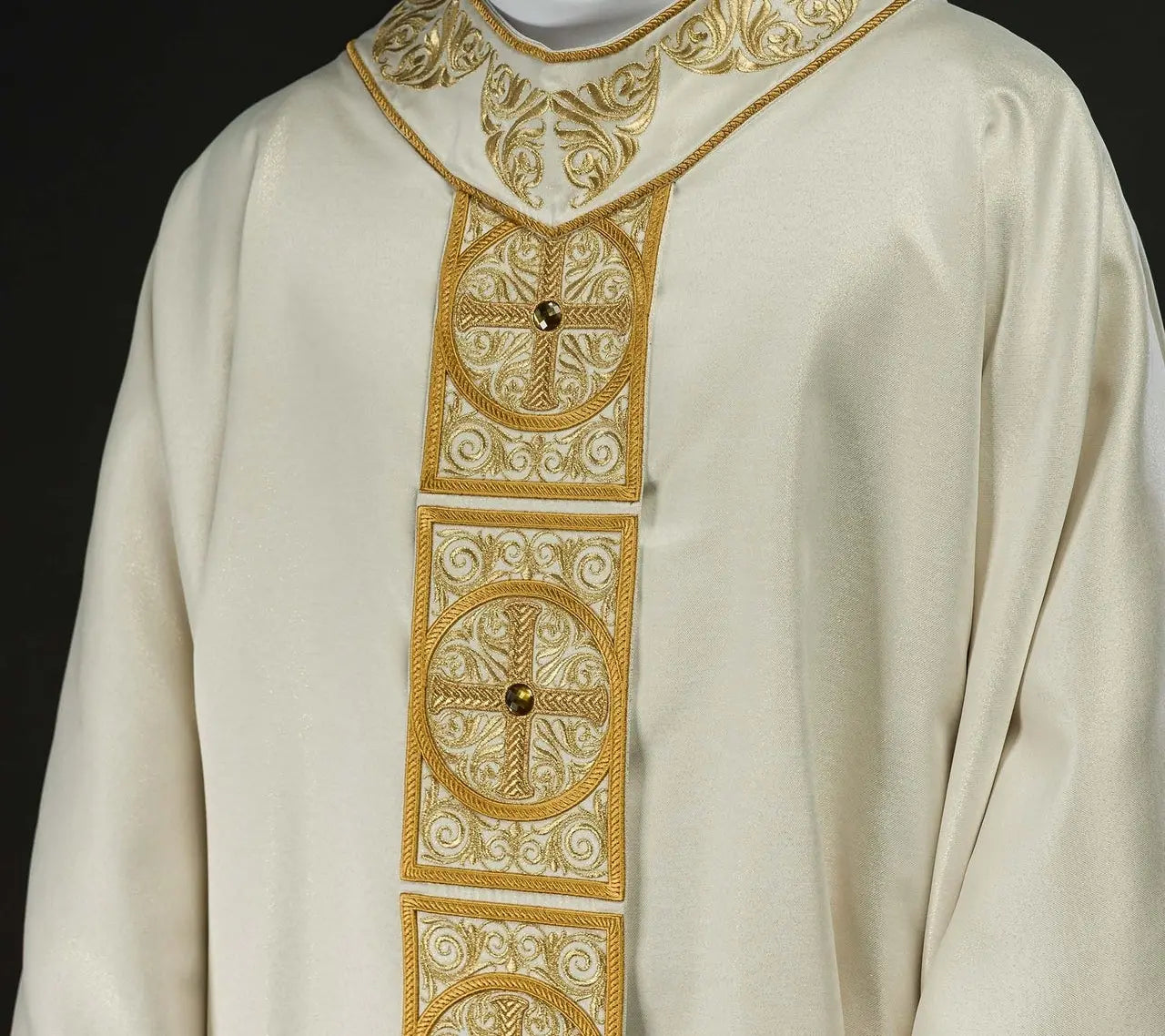
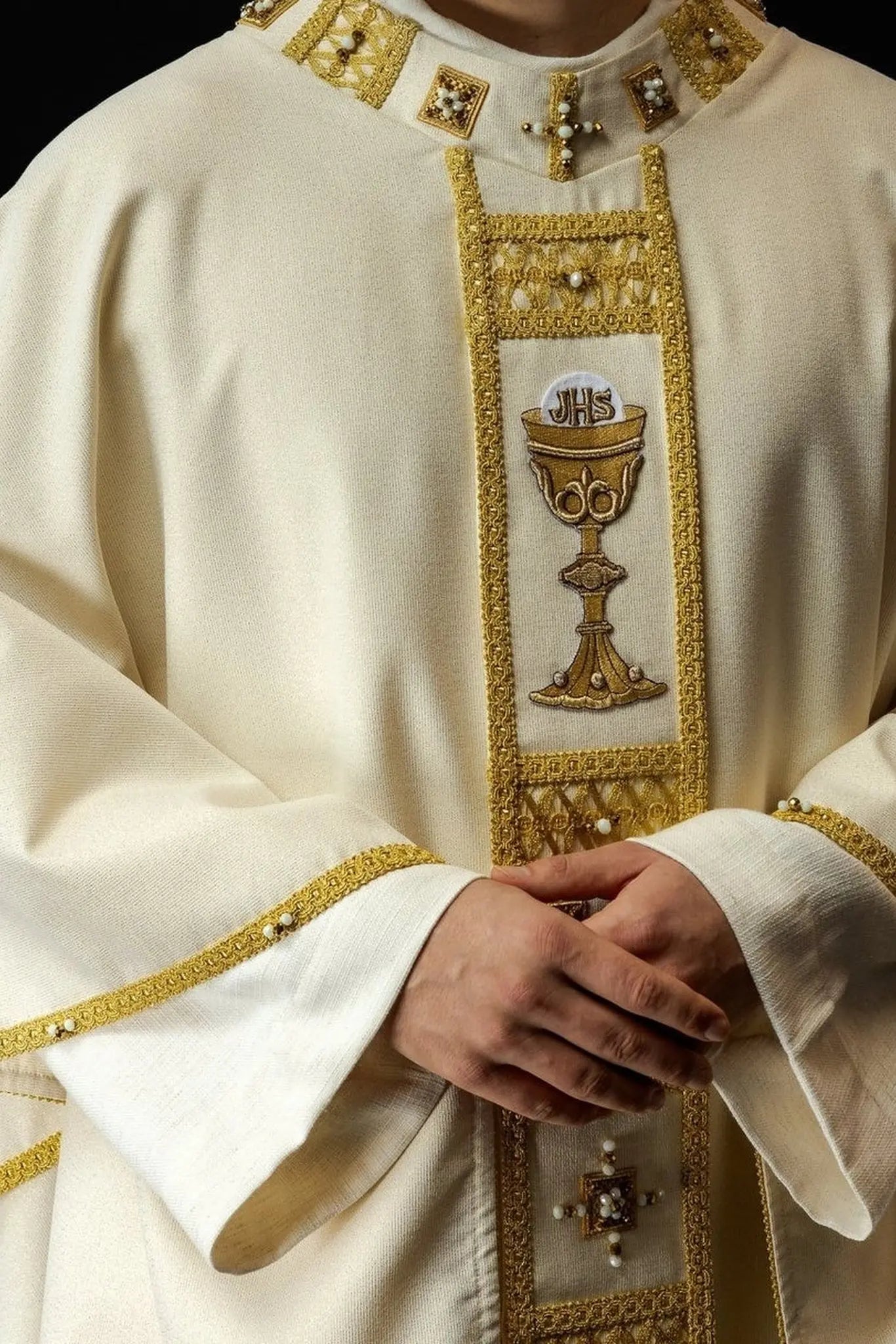
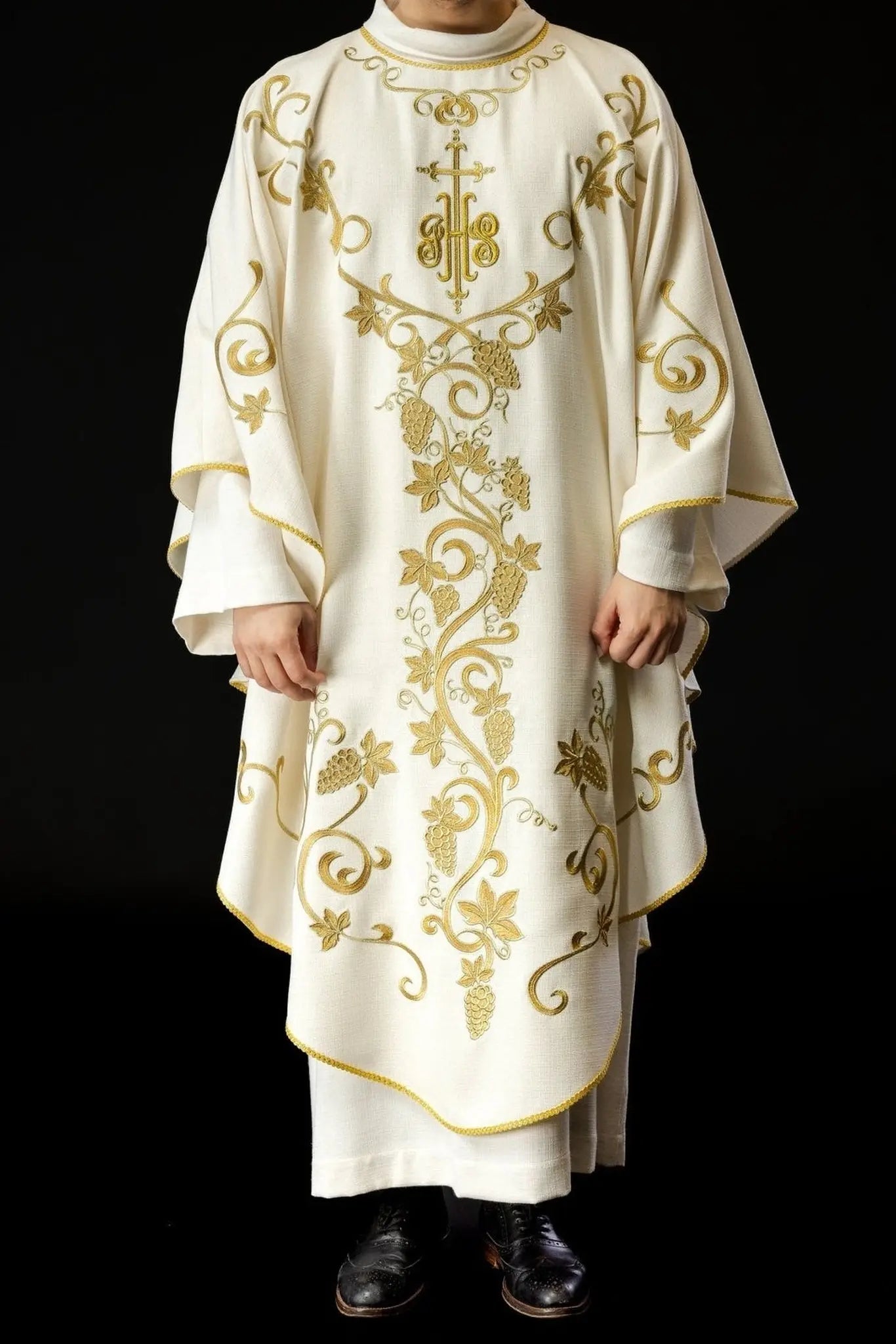
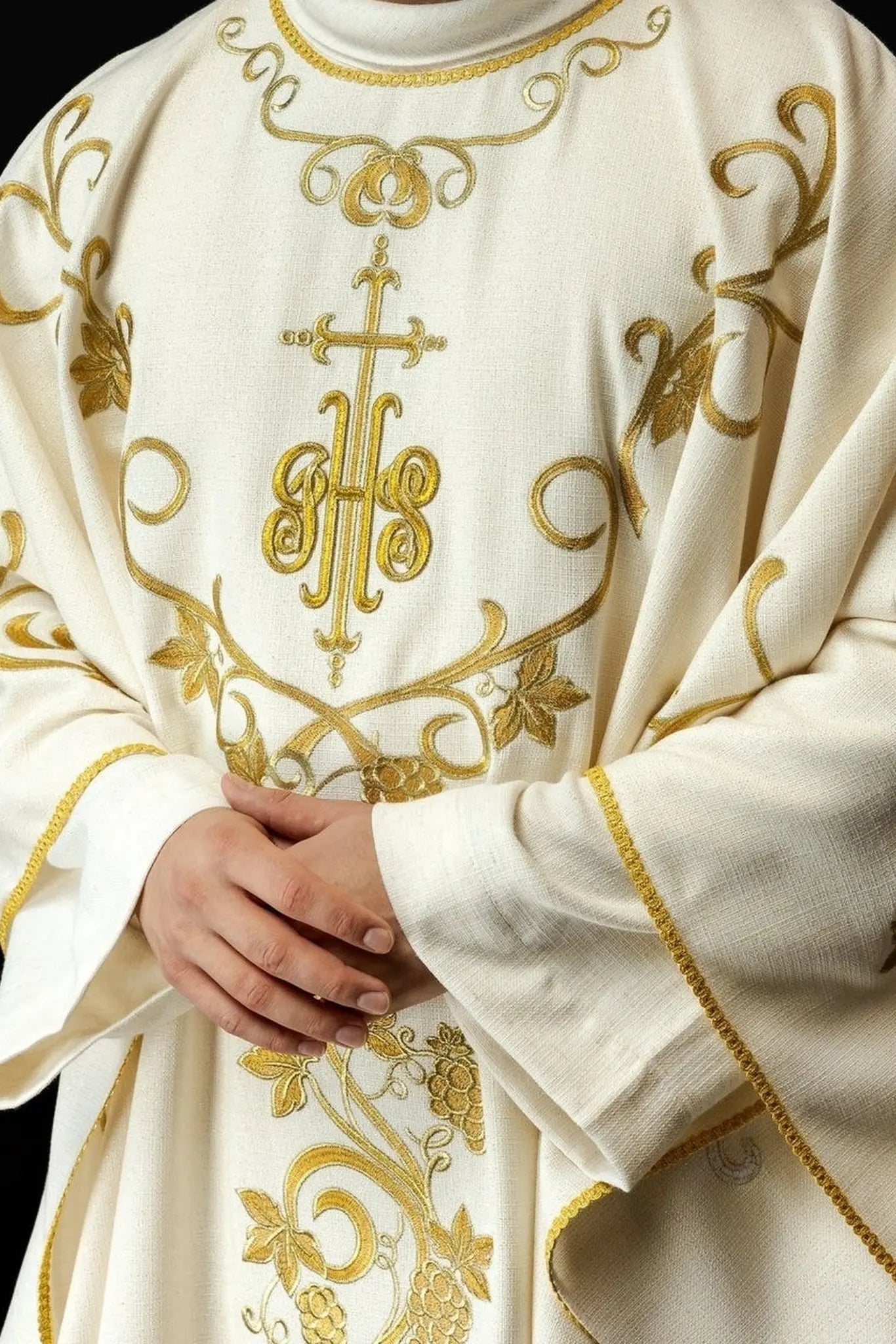
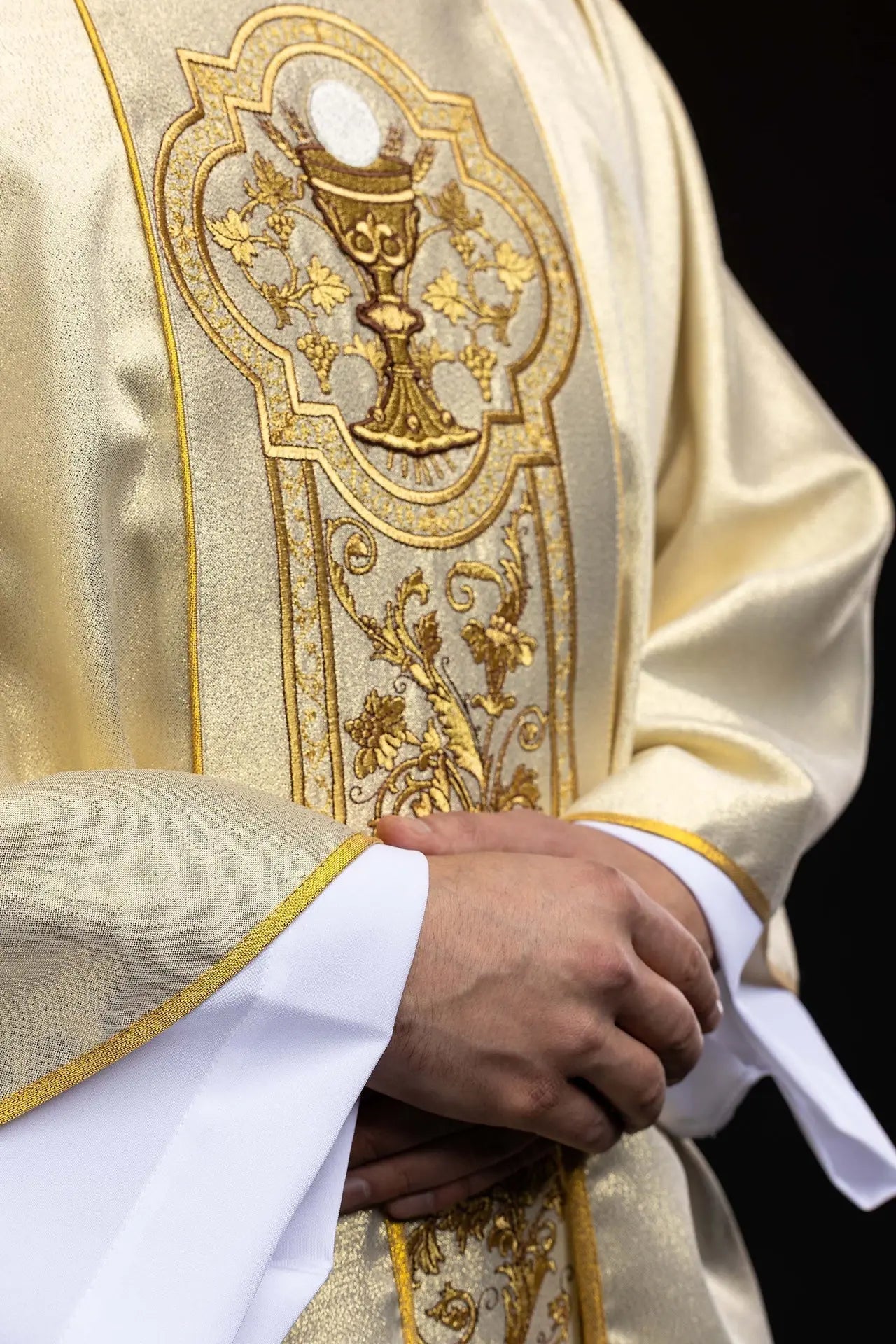
Gold embroidery can be subtle or highly decorative. Some designs rely on the nobility of the fabric itself, while others use a central orphrey, cross motif, Eucharistic imagery, or detailed symbolic ornament. A vestment intended for the most solemn annual celebrations may justify richer embroidery, while a parish that wants frequent use may prefer a balanced design that coordinates easily with existing altar linens, chalice veils, stoles, and other liturgical textiles.
Gold, ecru, white, and related liturgical colors
Gold is closely related to white and ecru in festive liturgical use, but each color communicates a slightly different visual tone. White and ecru often express purity, resurrection, solemnity, and baptismal joy in a calmer way, while gold adds a stronger sense of celebration, royal dignity, and glory. When a celebration needs a lighter and more restrained festive appearance, ecru chasubles can be a refined alternative.
Gold is not a replacement for every color in every circumstance. Green remains the usual color for Ordinary Time, purple for Advent and Lent, red for martyrs and the Holy Spirit, rose for Gaudete and Laetare, and black or violet for funeral contexts where permitted or customary. A well-equipped sacristy often includes gold as a special festive option alongside the standard seasonal colors, rather than as a universal substitute.
Coordinating the chasuble with other vestments
A gold chasuble is often chosen together with matching or harmonizing accessories. A priest celebrant normally wears the stole under the chasuble, so color and ornament should be considered together. When a matching set is needed, the gold clergy stoles collection is a natural place to look for coordinated options or complementary designs.
For solemn Eucharistic celebrations, the chasuble may also need to harmonize with altar textiles, chalice veils, ciborium veils, humeral veils, copes, processional canopies, or banners. The key is consistency: gold does not need to match every thread exactly, but the overall tone should feel intentional. A warm antique gold, a brighter yellow gold, and a pale champagne gold can each create a different atmosphere in the sanctuary.
Care and storage
Gold chasubles should be treated as liturgical textiles intended for long service. Embroidered and metallic-thread vestments are best stored flat or on a wide hanger, protected from moisture, dust, and direct sunlight. A breathable garment bag helps preserve the fabric while allowing air circulation. Avoid compressing heavy embroidery for long periods, because pressure can affect the shape of raised details and decorative threads.
Cleaning should follow the care instructions for the individual vestment. Many embroidered chasubles and delicate fabrics require professional cleaning rather than home washing. Minor marks should be handled cautiously, without aggressive rubbing or strong detergents. Proper care protects not only the appearance of the garment, but also its liturgical dignity, ensuring that the chasuble remains suitable for major celebrations year after year.
Who this collection is for
This collection is intended for parishes, chapels, religious communities, shrines, diocesan offices, seminaries, and clergy seeking gold chasubles for solemn Masses. It is especially useful when a sacristy needs a festive vestment that can serve several important days throughout the year. A single well-chosen gold chasuble can become one of the most frequently selected vestments for high feasts, patronal celebrations, Eucharistic adoration Masses, and parish anniversaries.
Customers comparing options should think about frequency of use, desired ornament level, celebrant comfort, and how the vestment will coordinate with the rest of the sacristy. A highly ornate gold chasuble may be best for annual solemnities, while a simpler gold design may be easier to use for a wider range of celebrations. For a wider view of priestly and clergy garments beyond this color category, visit liturgical vestments.
Frequently Asked Questions (FAQ)
Is a gold chasuble the same as a white chasuble?
No. Gold and white are closely related in festive use, but they are not visually identical. White is the standard color for many feasts of the Lord, the Blessed Virgin Mary, angels, and saints who were not martyrs. Gold is commonly used for especially solemn celebrations or as a festive substitute where permitted by liturgical norms or local custom.
Can gold chasubles be used for Corpus Christi?
Yes, gold chasubles are often suitable for Corpus Christi because the feast has a strong Eucharistic and solemn character. A gold vestment can coordinate well with processions, Benediction-related textiles, and richly decorated altars, provided it follows the parish or diocesan practice for that celebration.
What symbols are common on gold chasubles?
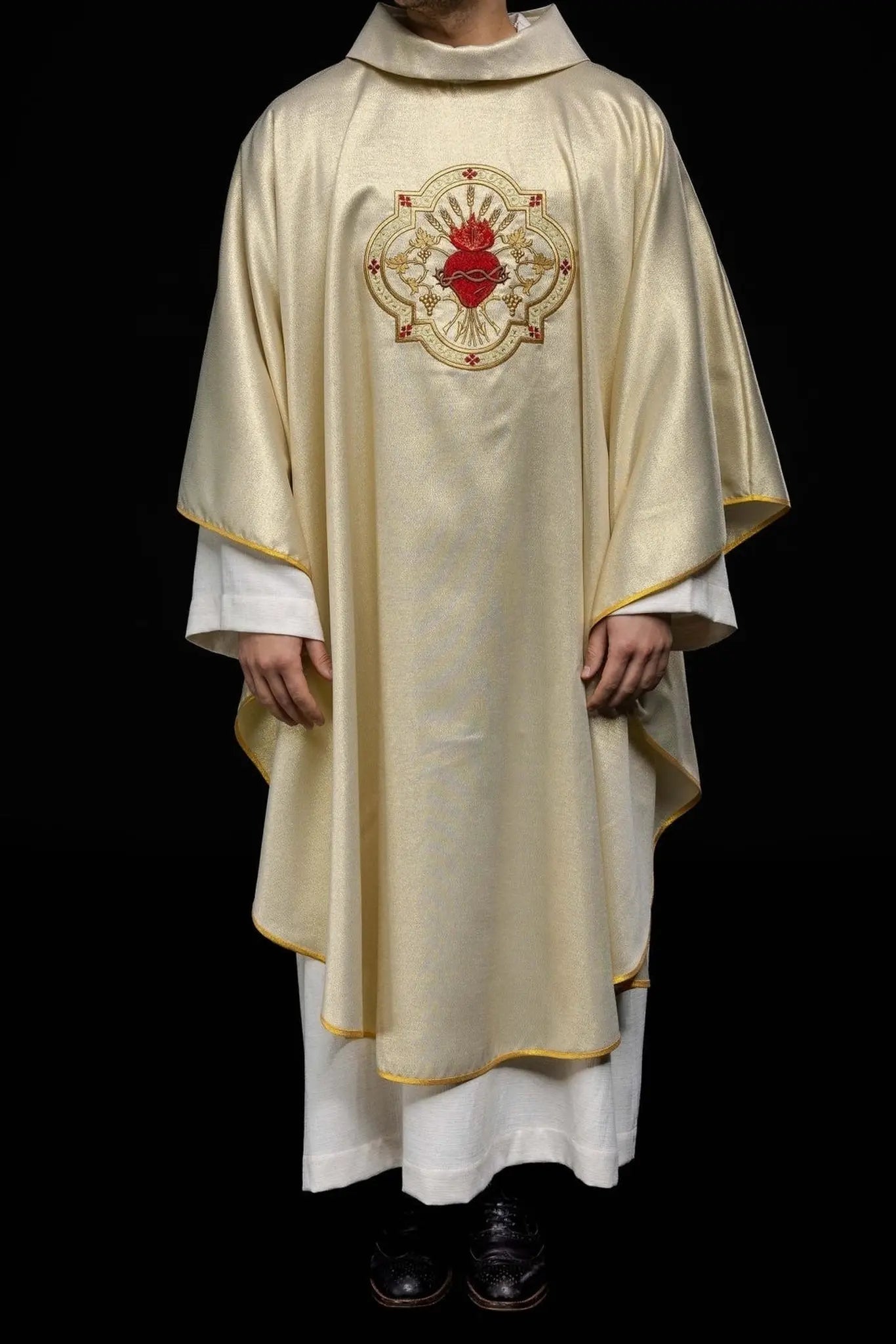
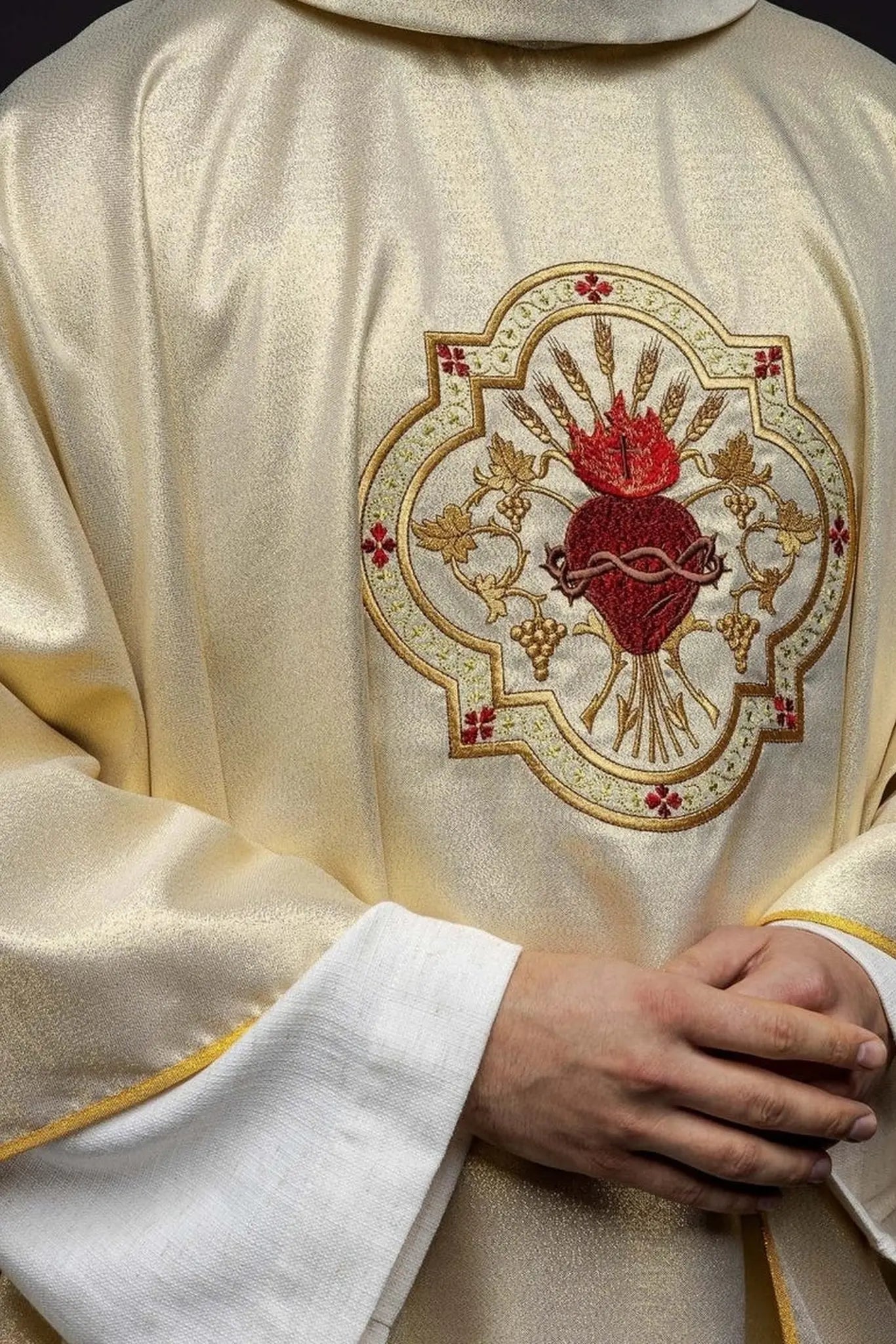
Common motifs include the cross, IHS Christogram, Eucharistic wheat and grapes, chalice imagery, rays of light, floral ornament, and traditional orphrey patterns. The best choice depends on whether the chasuble will be used mainly for Eucharistic solemnities, general feast days, jubilees, or parish patron celebrations.
Should I choose a simple or richly embroidered gold chasuble?
Choose a richer design for major annual feasts, large churches, pilgrim shrines, and solemn parish events. Choose a simpler gold chasuble when it will be used frequently, when the sanctuary has a restrained style, or when comfort and versatility are the main priorities.
Does a gold chasuble need a matching stole?
The priest wears a stole under the chasuble, so a coordinated stole is recommended, especially for solemn Masses. It does not always need to be identical, but the color tone, embroidery style, and symbolism should look harmonious when used together.