
Sort by
14 products
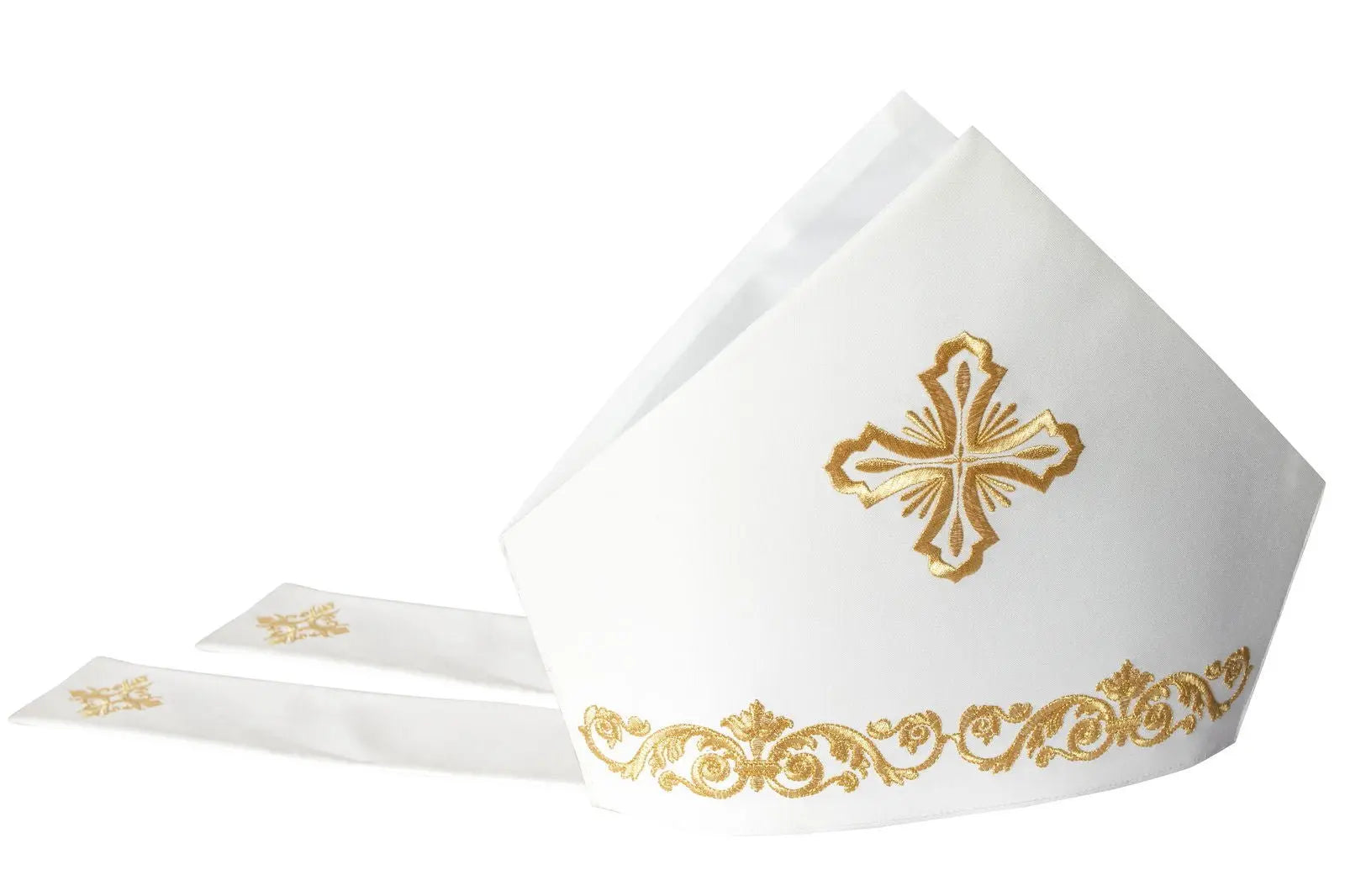
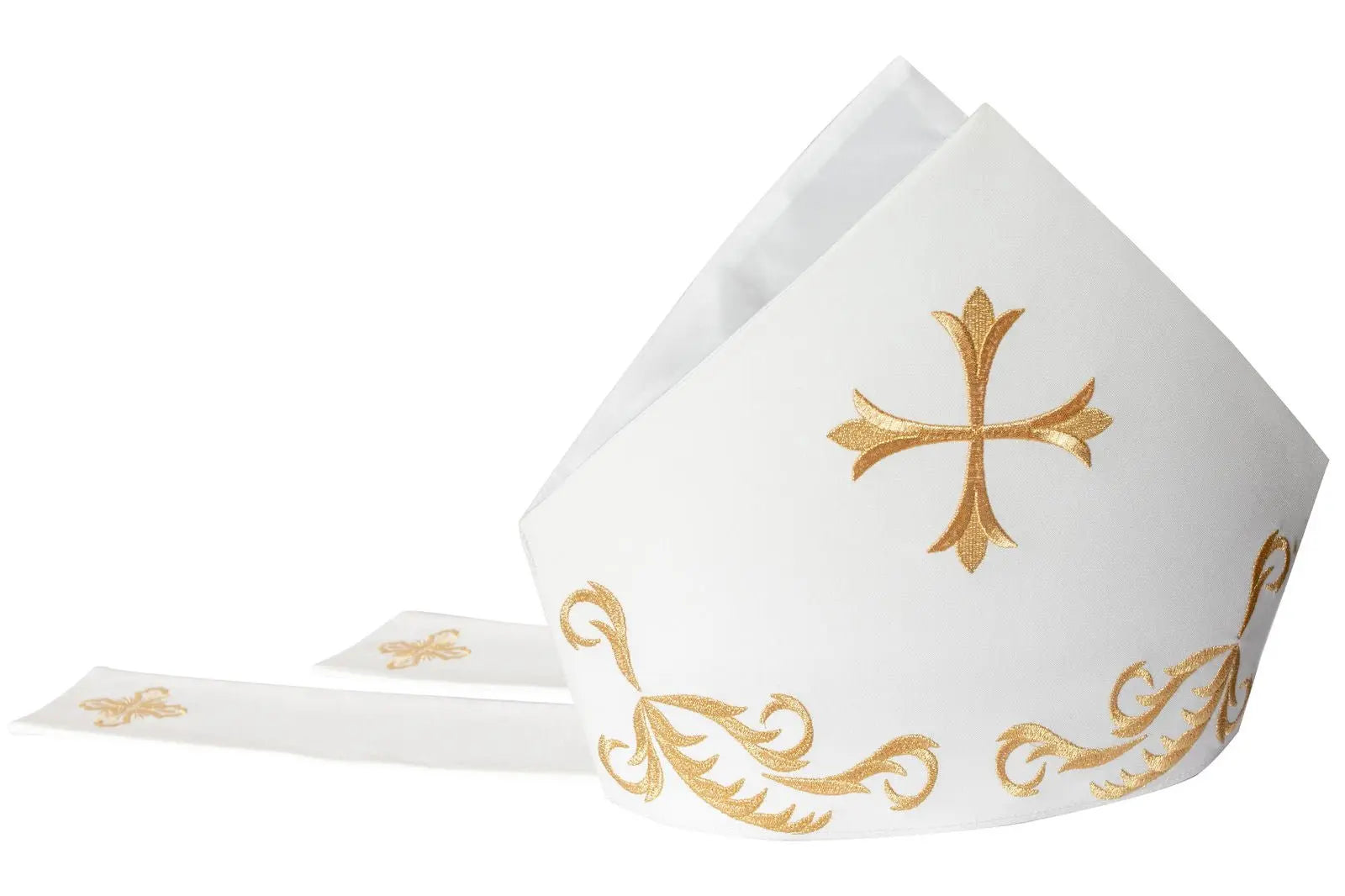

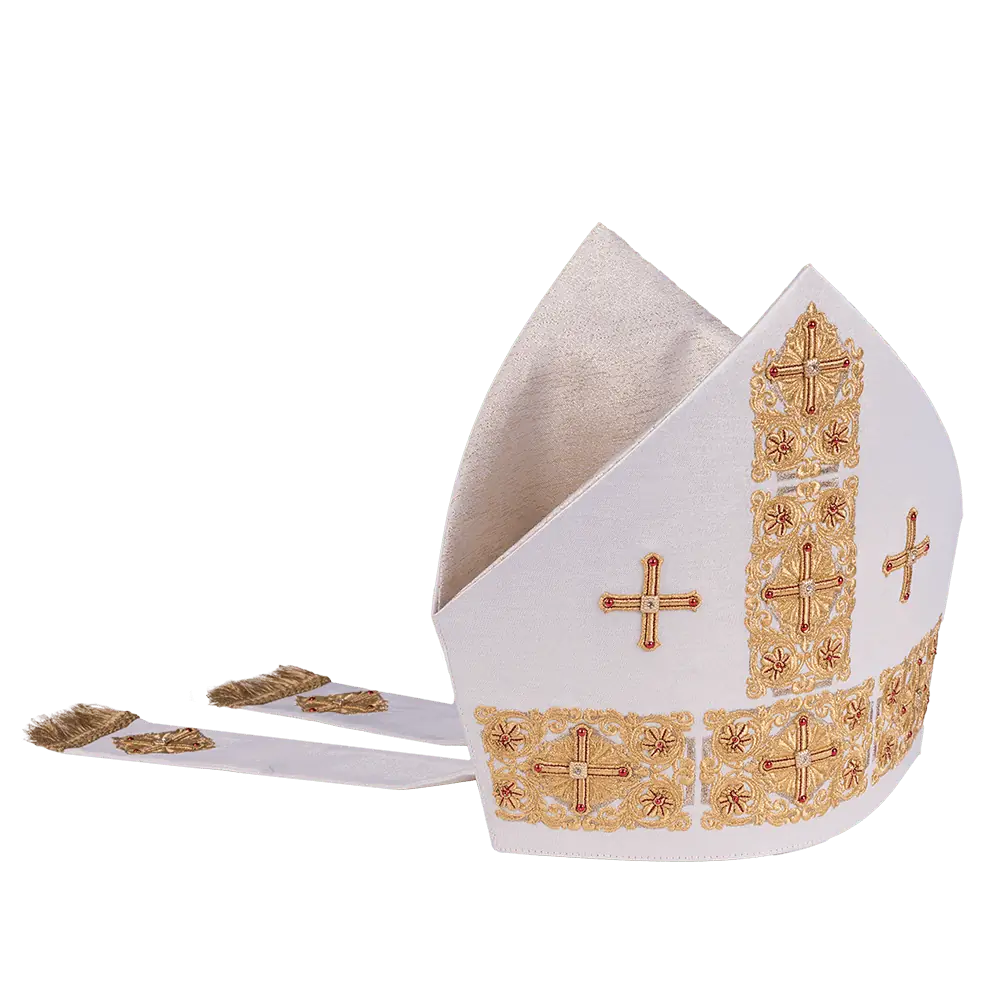

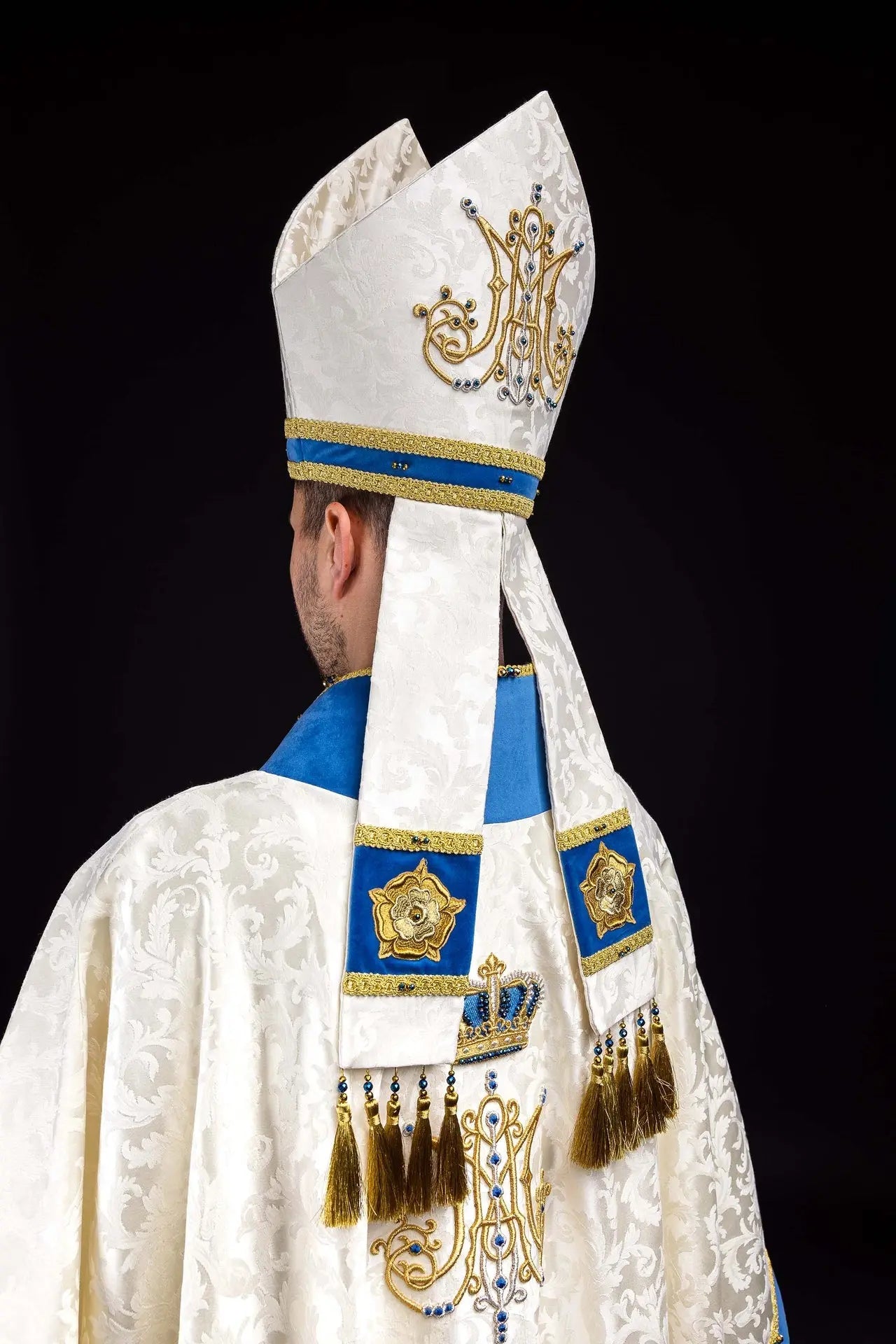
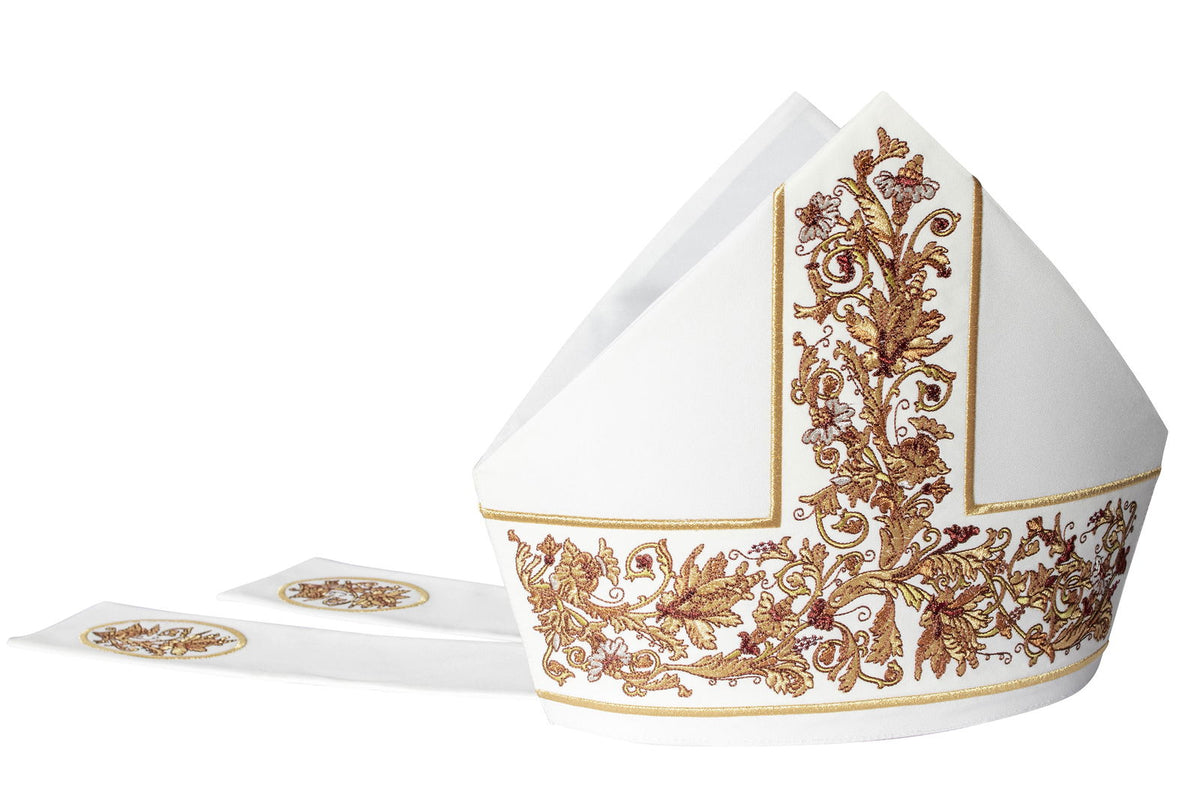
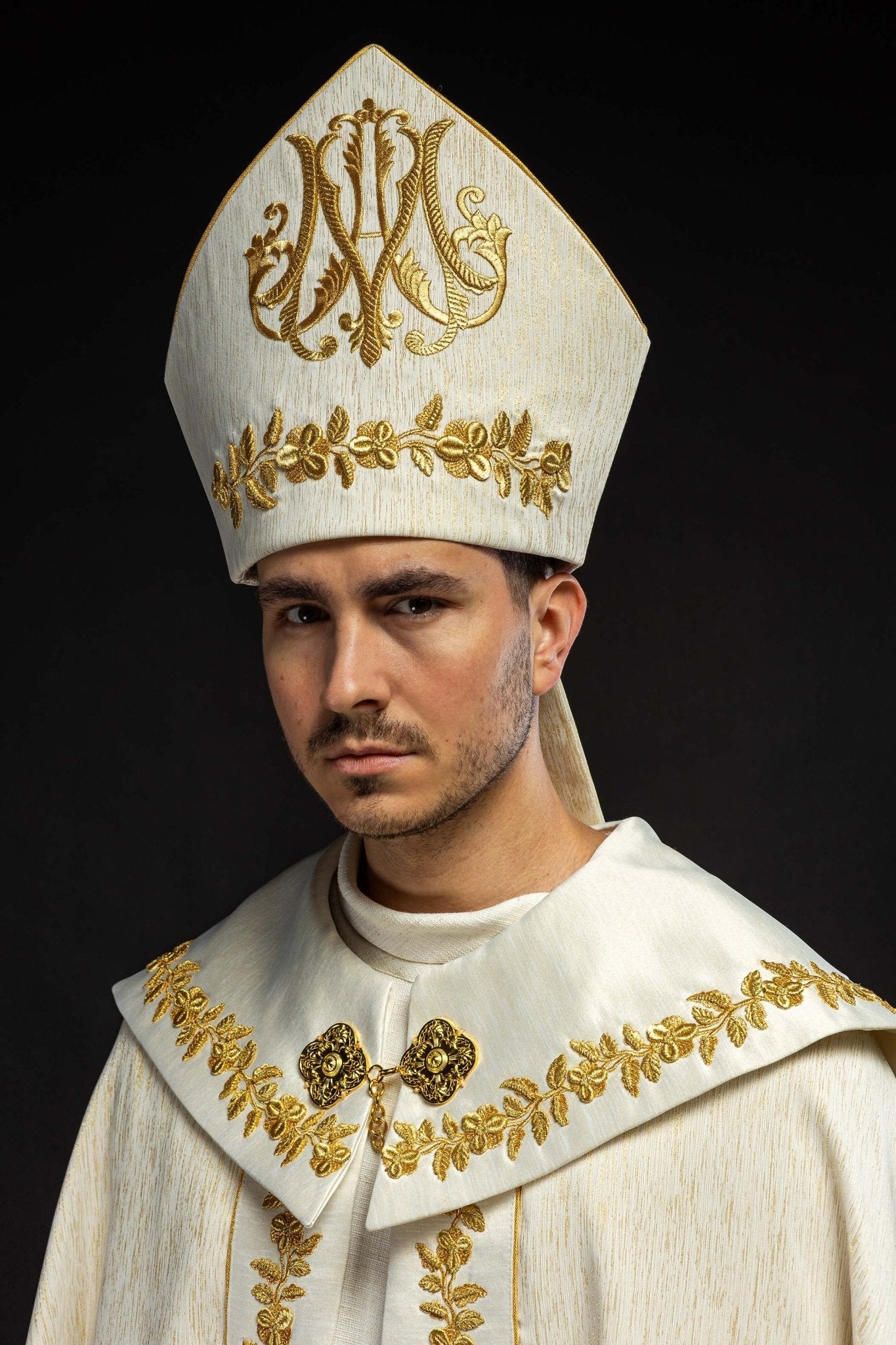
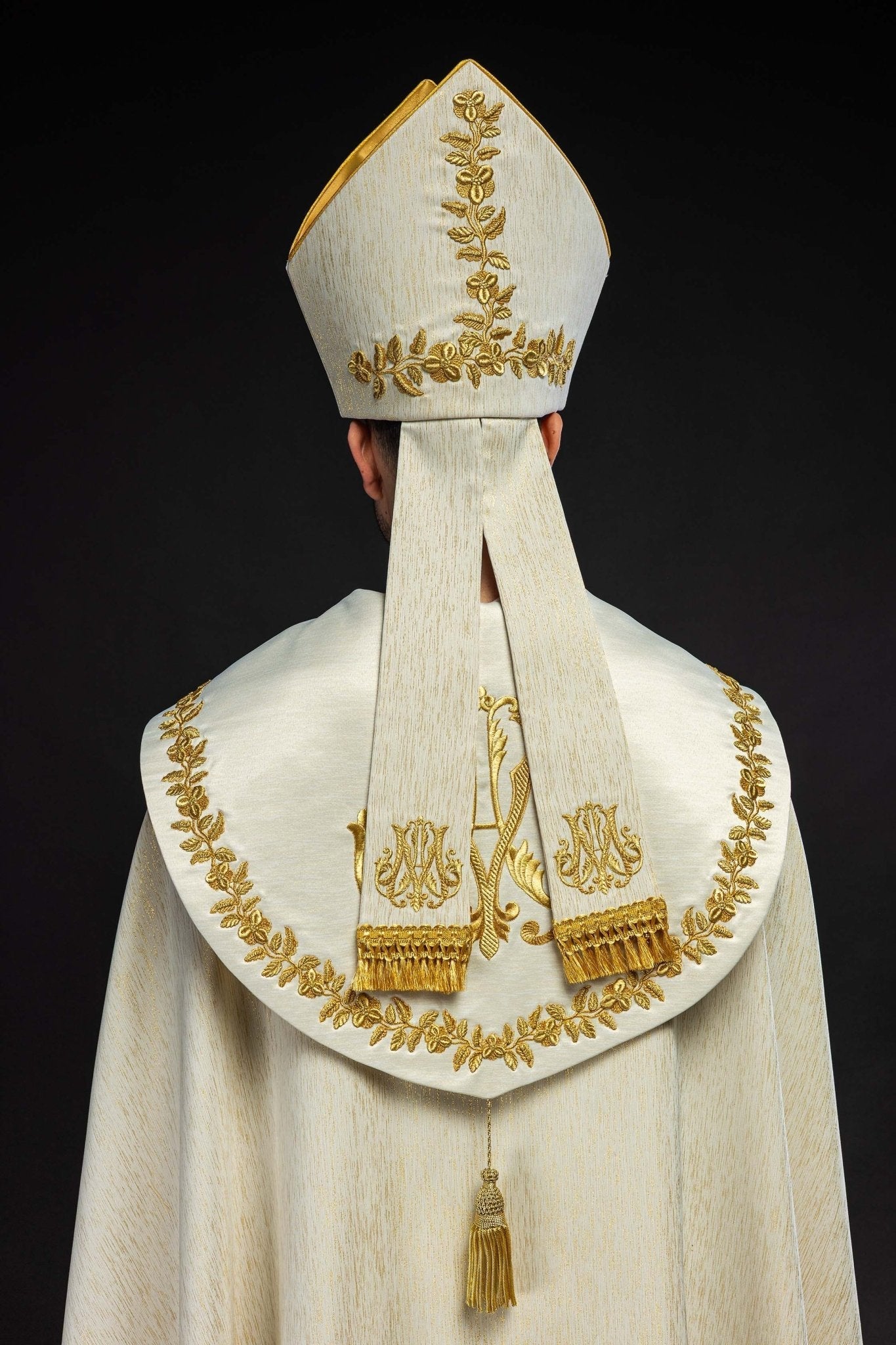
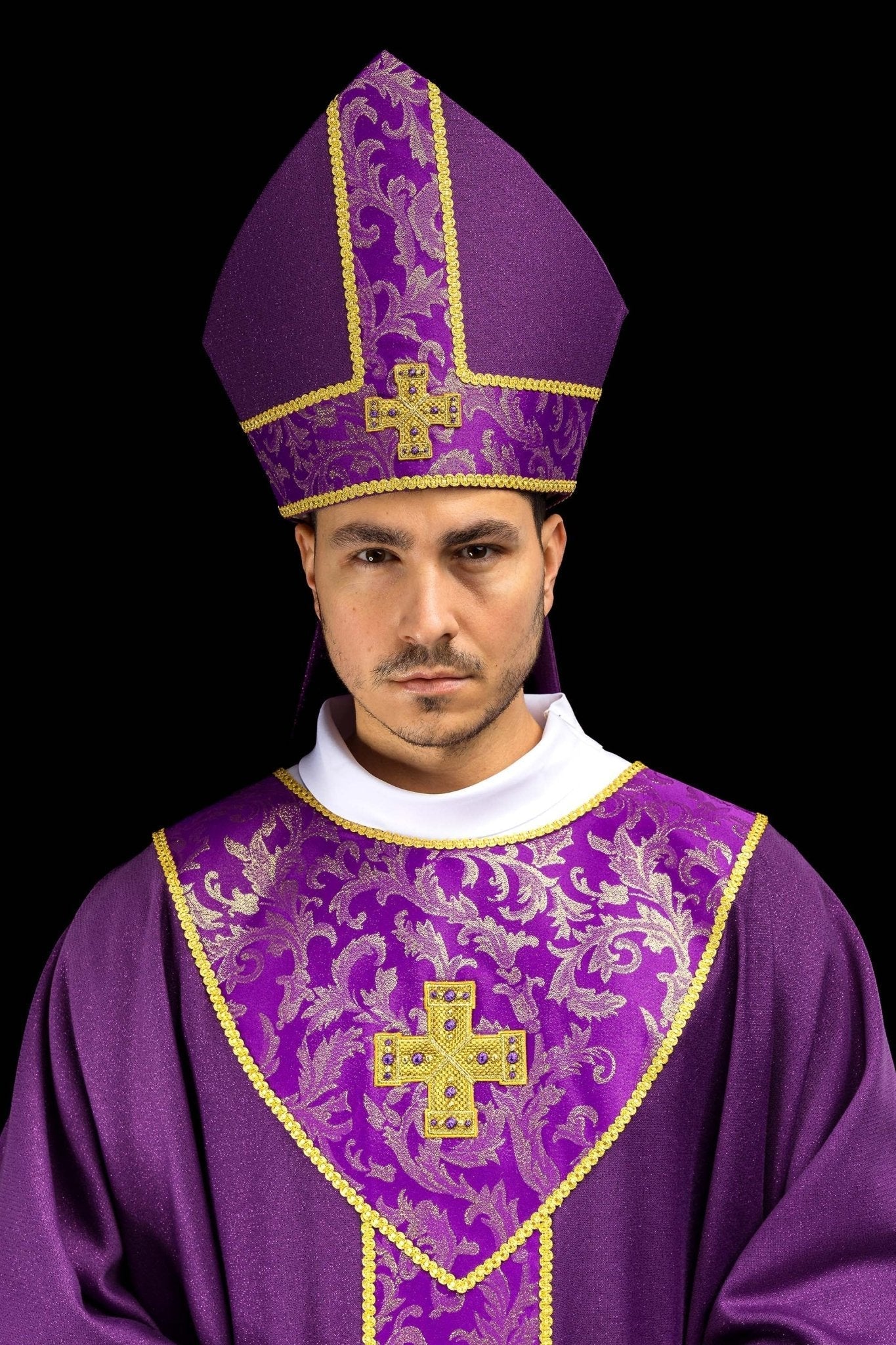
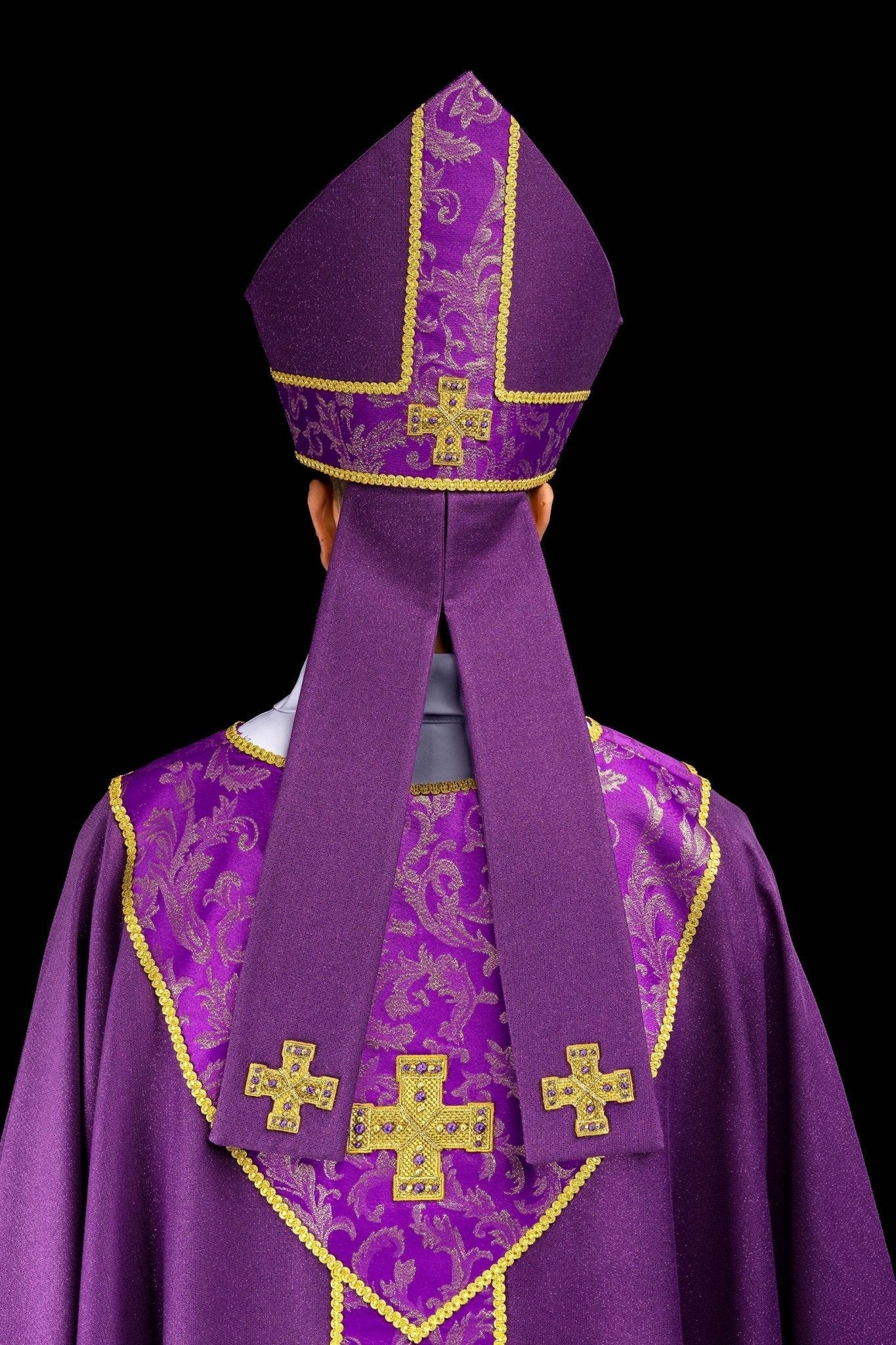
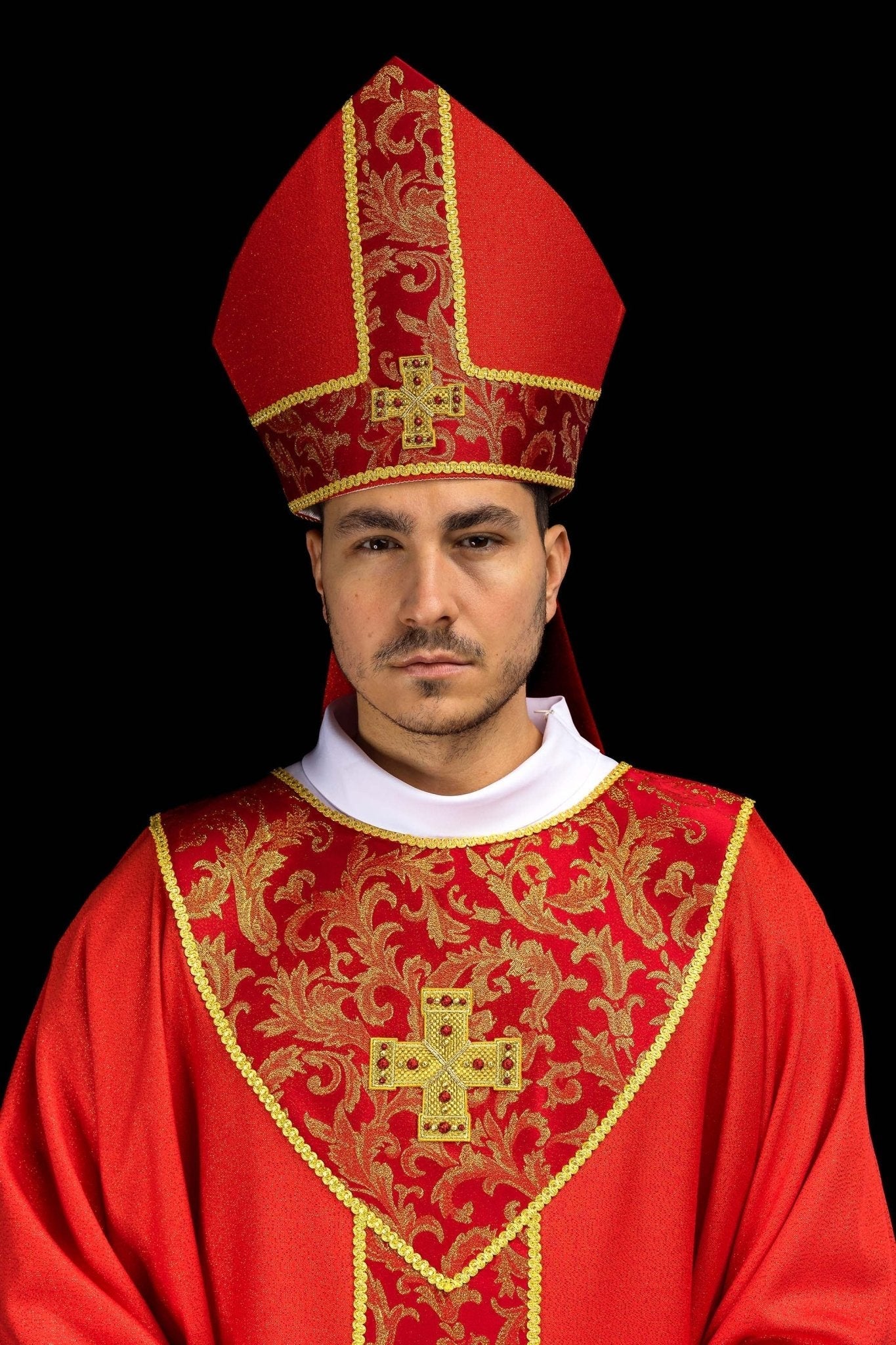
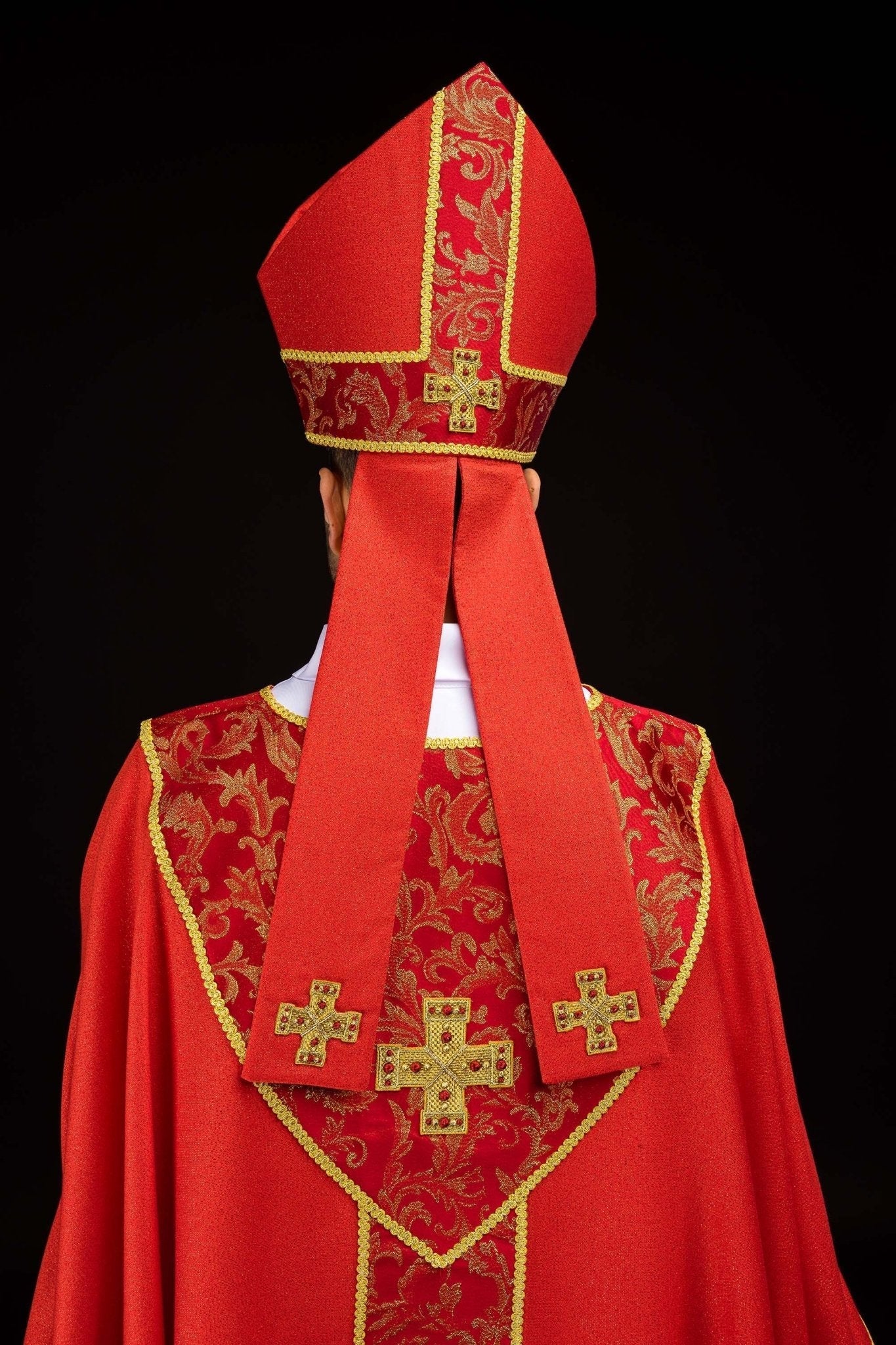

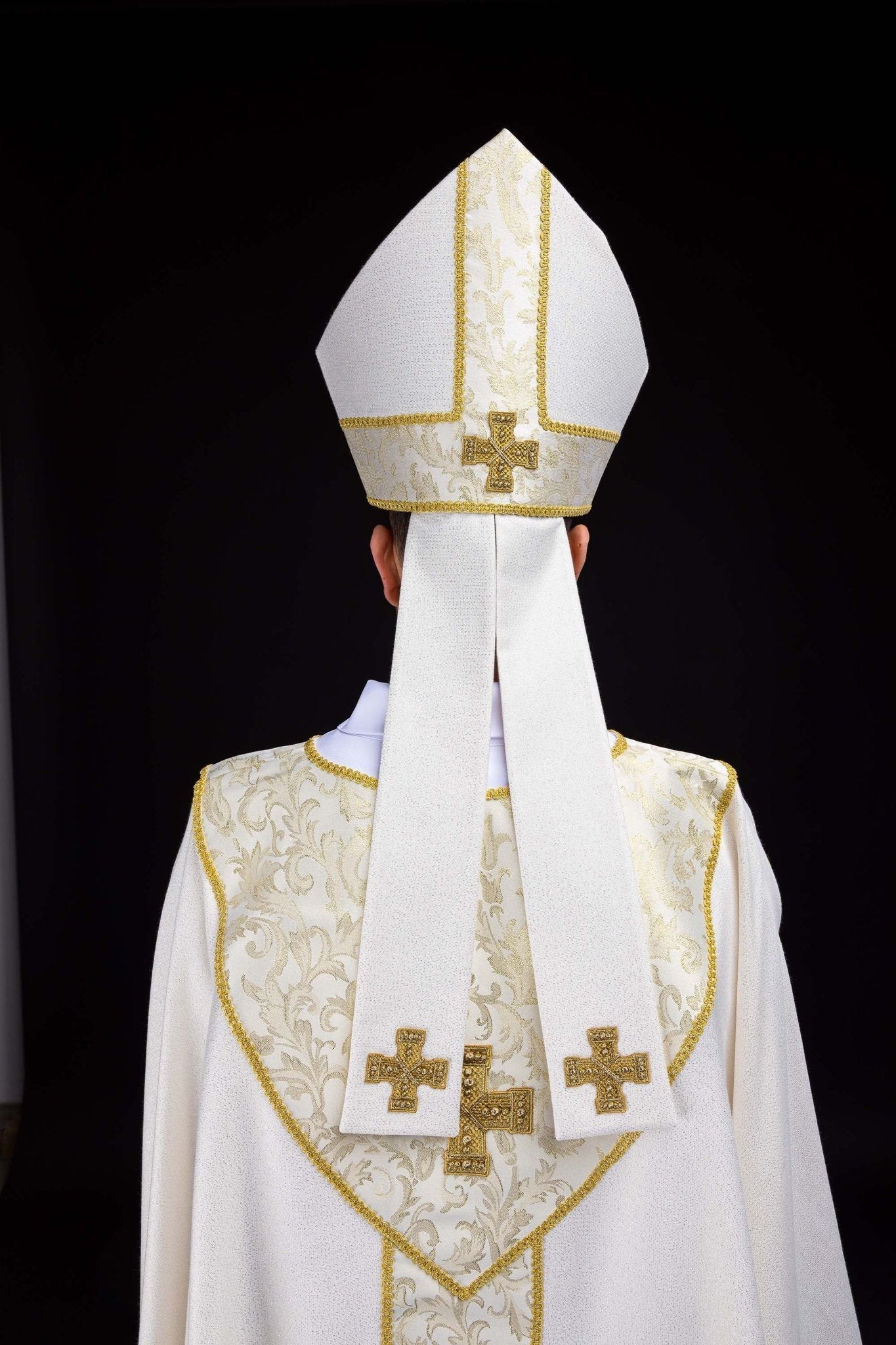

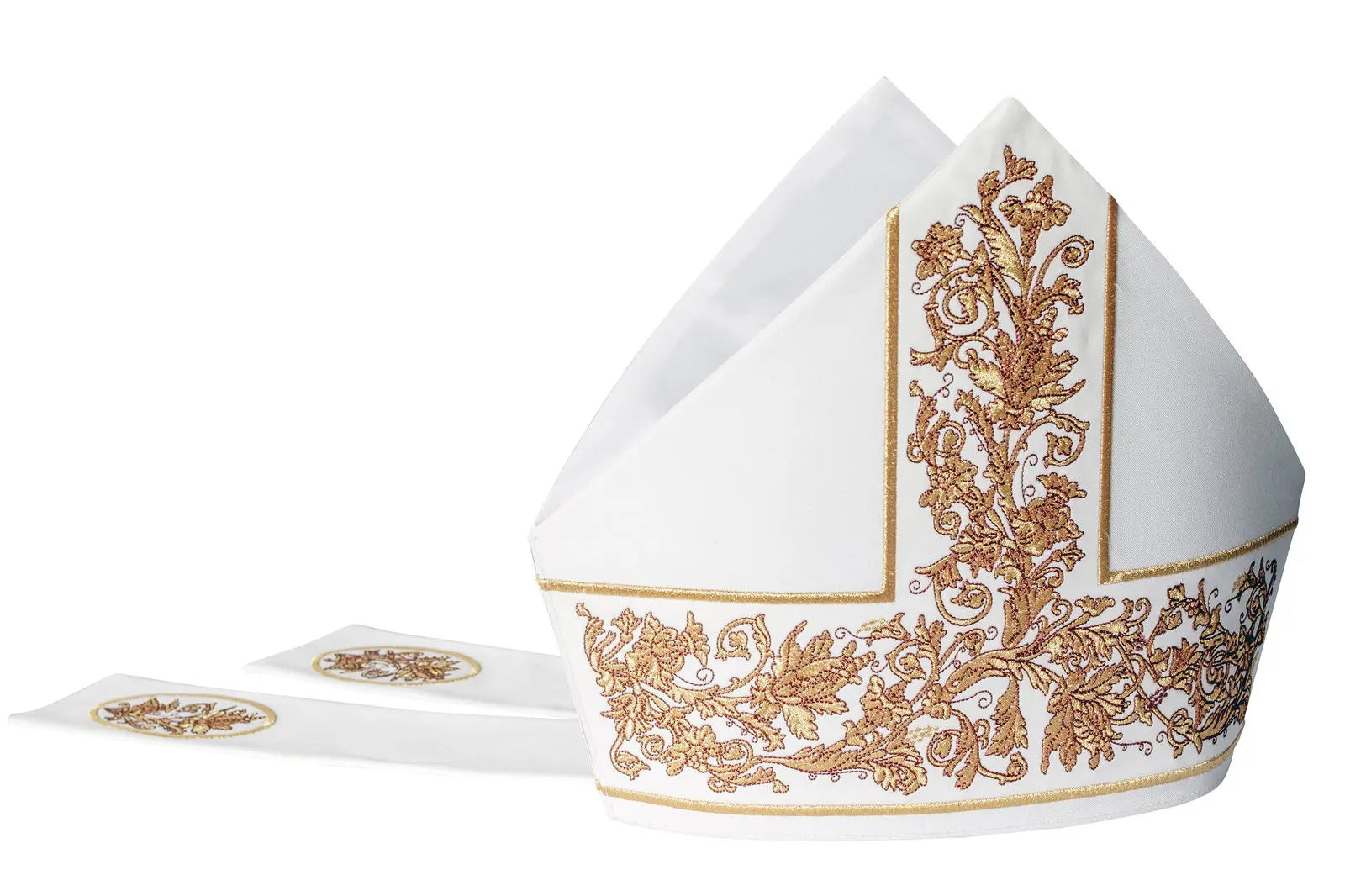

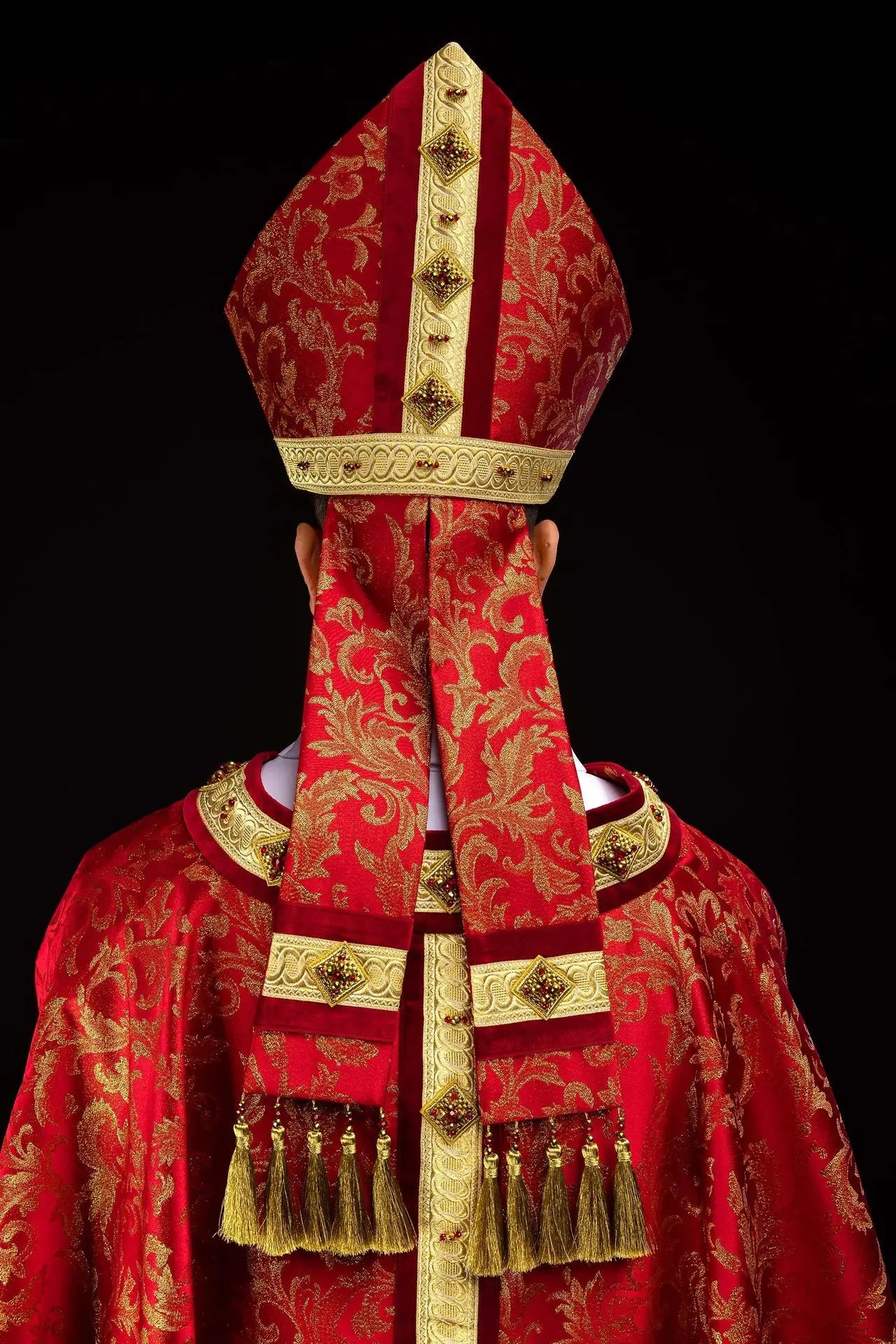
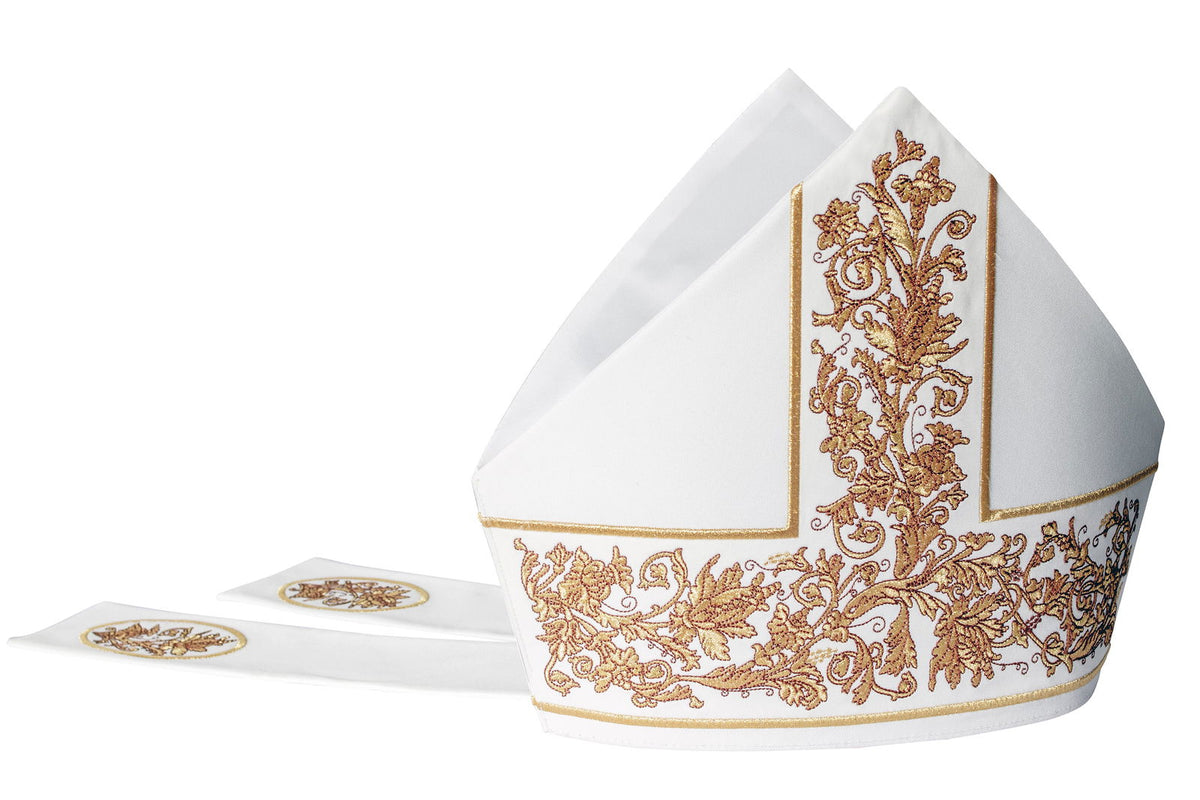
Mitres for Bishops and Abbots
A mitre is one of the most recognizable pontifical insignia in the Latin Church. It is worn above all by bishops, and in particular circumstances by abbots and other prelates who have the right to use it. This collection brings together embroidered mitres created for solemn liturgies, episcopal celebrations, abbey feasts, ordinations, confirmations, major parish anniversaries and other occasions in which the dignity of the office should be expressed with clarity and restraint. The mitre is not a general clergy accessory, but a liturgical vestment connected with ecclesiastical office, pastoral authority and service to the Church.
At Haftina Atelier, the mitres in this collection are designed to harmonize with complete sets of liturgical vestments. Their form, embroidery, fabric and colour should correspond to the character of the celebration and to the vestments worn at the altar. A mitre may accompany a chasuble during Mass, a cope during processions or solemn blessings, or other pontifical vesture according to the rite and local custom. For this reason, choosing a mitre is not only a matter of visual preference. It is also a practical liturgical decision that should consider the rank of the celebration, the season of the Church year, the colour of the vestments and the symbolism appropriate to the occasion.
What belongs in this collection
This collection is focused on mitres: structured liturgical headwear with two peaks and lappets at the back, intended for use by bishops, abbots and authorized prelates. The designs may include embroidered crosses, Marian motifs, Eucharistic symbols, the Holy Spirit, sacred monograms, ornamental vines, geometric patterns or other motifs rooted in Christian iconography. Some mitres are more restrained and are suitable for regular pontifical services, while richer designs are better suited to solemnities, consecrations, jubilees and other major celebrations.
A mitre should be selected as part of a wider liturgical ensemble. When it is worn at Mass, it is normally seen together with chasubles, stoles, albs and other vestments. When the celebration includes processions, exposition, benediction or other solemn rites, it may also be paired visually with copes and, where the rite requires them, other pontifical vestments. The aim is not to make every piece identical, but to create a coherent liturgical appearance: colour, embroidery style, metallic thread and sacred motif should work together without distracting from the rite itself.
Liturgical use and symbolism of the mitre
The mitre is closely associated with episcopal ministry. Its two-pointed shape and the hanging lappets have become a distinctive sign of the bishop in the liturgy. In use, the mitre is connected with moments in which the bishop presides, teaches, blesses or performs actions proper to his office. It is therefore a visible sign of pastoral responsibility, not merely an ornament. A well-chosen mitre should express reverence, order and continuity with the Church's liturgical tradition.
The embroidery on a mitre can carry strong theological meaning. A cross may emphasize the bishop's ministry as a servant of Christ. A dove can refer to the Holy Spirit, especially in confirmations or celebrations connected with the gifts of the Spirit. Marian designs are appropriate for feasts of the Blessed Virgin Mary, Marian shrines, religious communities with Marian patronage, and celebrations where blue, white, ecru, gold or Marian embroidery appears in the wider vestment set. Eucharistic symbols such as wheat, grapes, chalice imagery or rays may be chosen for Corpus Christi, ordinations, jubilees and other celebrations centered on the mystery of the Eucharist.
How to choose a mitre for a celebration
The first question is the rank and character of the liturgy. A very ornate mitre can be appropriate for a cathedral solemnity, a diocesan jubilee, an episcopal ordination, a major patronal feast or a large abbey celebration. A simpler mitre may be more fitting for regular pontifical Masses, confirmations, parish visits or celebrations where the vestments themselves are already richly decorated. Good liturgical design respects balance: when the chasuble, cope or dalmatic set is highly ornamented, a mitre with coordinated but slightly calmer embroidery often looks more dignified than a competing design.
The second question is colour. White and ecru mitres are versatile for Easter, Christmas, Marian celebrations, saints who are not martyrs, ordinations and many solemn feasts. Gold may be used for especially festive occasions and can coordinate well with gold or ecru vestments. Green designs are used in Ordinary Time when a coherent pontifical set is desired. Purple is connected with Advent, Lent, penitential celebrations and some services for the dead according to local custom. Red belongs to Pentecost, martyrs, the Holy Spirit and Passion-related celebrations. Rose is a specific liturgical colour for Gaudete Sunday in Advent and Laetare Sunday in Lent, and should not be described simply as pink in formal liturgical language.
The third question is the relation between the mitre and the vestments worn by the principal celebrant and ministers. If the bishop wears a chasuble, the mitre should coordinate with the main colour and style of that chasuble. If deacons are present, their vestments should remain properly distinguished: deacons wear dalmatics, not chasubles, and may be coordinated through colour and ornament with the pontifical set. For a complete sanctuary arrangement, this collection can be considered together with deacon dalmatics, stoles and albs so that the bishop, priests, deacons and servers appear in a unified but liturgically correct way.
Embroidery, materials and visual style
Mitres in this collection may feature decorative embroidery using liturgical motifs, metallic threads and carefully arranged ornament. The best choice depends on the context. A cathedral or abbey may prefer a more formal mitre with strong vertical ornament, a central cross, gold detailing and a clearly visible sacred symbol. A parish may need a dignified but more restrained design suitable for confirmations and visits from the bishop. A Marian shrine may benefit from embroidery that coordinates with Marian chasubles or other Marian vestments already used in the sacristy.
The fabric and construction also matter. A mitre must hold its shape, sit securely and look proportionate when worn with the rest of the vesture. Heavy embroidery can be impressive, but it should not make the piece impractical. Lighter ornament may be better for frequent use, travel or long celebrations. When reviewing a mitre, pay attention to height, outline, front motif, back finish, the design of the lappets and the way the colours will appear under church lighting. Subtle differences in ivory, ecru, white, gold and silver can affect how well the mitre coordinates with existing vestments.
Coordinating mitres with adjacent vestment collections
A mitre rarely stands alone in the liturgy. For Mass, it is usually seen alongside a chasuble worn by the bishop and stoles used by concelebrants or assisting clergy. The clergy stoles collection is useful when building a coordinated set for priests, while deacon stoles should be chosen separately for deacons. If the celebration includes altar service, processions or a fuller pontifical setting, albs are also part of the visible arrangement. The albs collection can help complete the vesture for clergy and servers in a clean, unified way.
For solemn Eucharistic processions, benediction or celebrations connected with the Blessed Sacrament, a mitre may be visually related to copes and humeral veils. The humeral veils collection is especially relevant where the rite calls for covering the hands while carrying the monstrance or ciborium. These pieces are not interchangeable with mitres, chalice veils or ciborium veils. Each has its own function, and correct naming helps maintain both liturgical accuracy and practical clarity when ordering.
Mitres for bishops, abbots and authorized prelates
The proper wearer of a mitre should always be considered. In ordinary usage, it is associated with bishops. Abbots and certain prelates may use a mitre when they have the liturgical right to do so. It is not a general head covering for priests, deacons or servers. For priests who need vestments for Mass, the appropriate collections are chasubles and clergy stoles. For deacons, dalmatics and deacon stoles are the correct vestments. Keeping these distinctions clear helps avoid confusion when preparing vestment sets for a cathedral, monastery, parish, seminary, shrine or diocesan event.
For an episcopal visit, a parish may choose a mitre that matches a chasuble already owned by the bishop or provided by the church. For confirmations, a design with the Holy Spirit can be particularly suitable. For ordinations, white, ecru or gold mitres with Christological or Eucharistic motifs often fit the solemn character of the rite. For Marian feasts, Marian embroidery can connect the mitre with the theme of the celebration. For penitential seasons, a purple mitre should be dignified and restrained, supporting the tone of Advent or Lent without excessive ornament.
Care and storage
Because a mitre has a structured form and often includes embroidery, it should be stored carefully. Keep it in a dry, clean place, away from direct sunlight and humidity. A protective box is preferable because it helps preserve the shape and shields the embroidery from dust. The lappets should not be crushed or sharply folded. If the mitre is heavily embroidered, decorated with metallic thread or made from delicate fabric, professional cleaning is usually safer than home washing. Spot cleaning should be approached cautiously and only when the fabric and embroidery allow it.
Before and after a major celebration, inspect the mitre for dust, loose threads, pressure marks or signs of moisture. Allow it to air in a safe place if it has been worn during a long liturgy, but do not expose it to heat. When transporting a mitre to a cathedral, parish, monastery or outdoor celebration, use a rigid container rather than a soft garment bag. Proper care helps keep the mitre dignified for repeated use and protects the investment made in a liturgical item that may serve a community for many years.
Building a complete pontifical set
When planning a complete pontifical set, begin with the main liturgical colour and the principal celebration. Then decide whether the mitre should match an existing chasuble, coordinate with a cope, or stand as a more universal piece for many occasions. A sacristy may need one versatile white or ecru mitre before adding more seasonal designs. Cathedrals, abbeys and shrines may prefer several mitres, each suited to a different season, solemnity or devotional theme. In every case, the best result comes from a coherent set rather than from unrelated pieces chosen separately.
This collection supports that process by presenting mitres as part of the wider world of liturgical vesture. The right mitre should be beautiful, but it should also be accurate in use, proportional in form, compatible with the rest of the vestments and meaningful in its symbolism. Whether chosen for a bishop, an abbot or an authorized prelate, it should serve the liturgy with dignity and help express the sacred character of the celebration.
Frequently Asked Questions (FAQ)
Who may wear a mitre?
A mitre is primarily associated with bishops. Abbots and certain prelates may wear one when they have the right to do so according to liturgical law and custom. It should not be treated as a general clergy accessory for priests or deacons.
How should I match a mitre with other vestments?
Start with the liturgical colour and the principal vestment, usually the chasuble or cope. The mitre does not need to repeat every detail, but its colour, embroidery style and metallic accents should look intentional beside the rest of the set.
Which mitre is best for confirmations?
For confirmations, many communities choose a mitre with a Holy Spirit motif, often in white, ecru, red or gold depending on the vestments used for the celebration. The design should be visible but not so ornate that it distracts from the rite.
Is a rose mitre the same as a pink mitre?
In liturgical terminology, rose is the correct term for the colour used on Gaudete Sunday and Laetare Sunday. A rose mitre should be chosen when the rest of the vestments for those days are also prepared in the proper rose tone.
Can one mitre serve many occasions?
Yes. A well-designed white, ecru or gold mitre can be very versatile for solemnities, ordinations, Marian celebrations, Easter, Christmas and episcopal visits. More specialized colours or motifs can be added later for particular seasons or feasts.