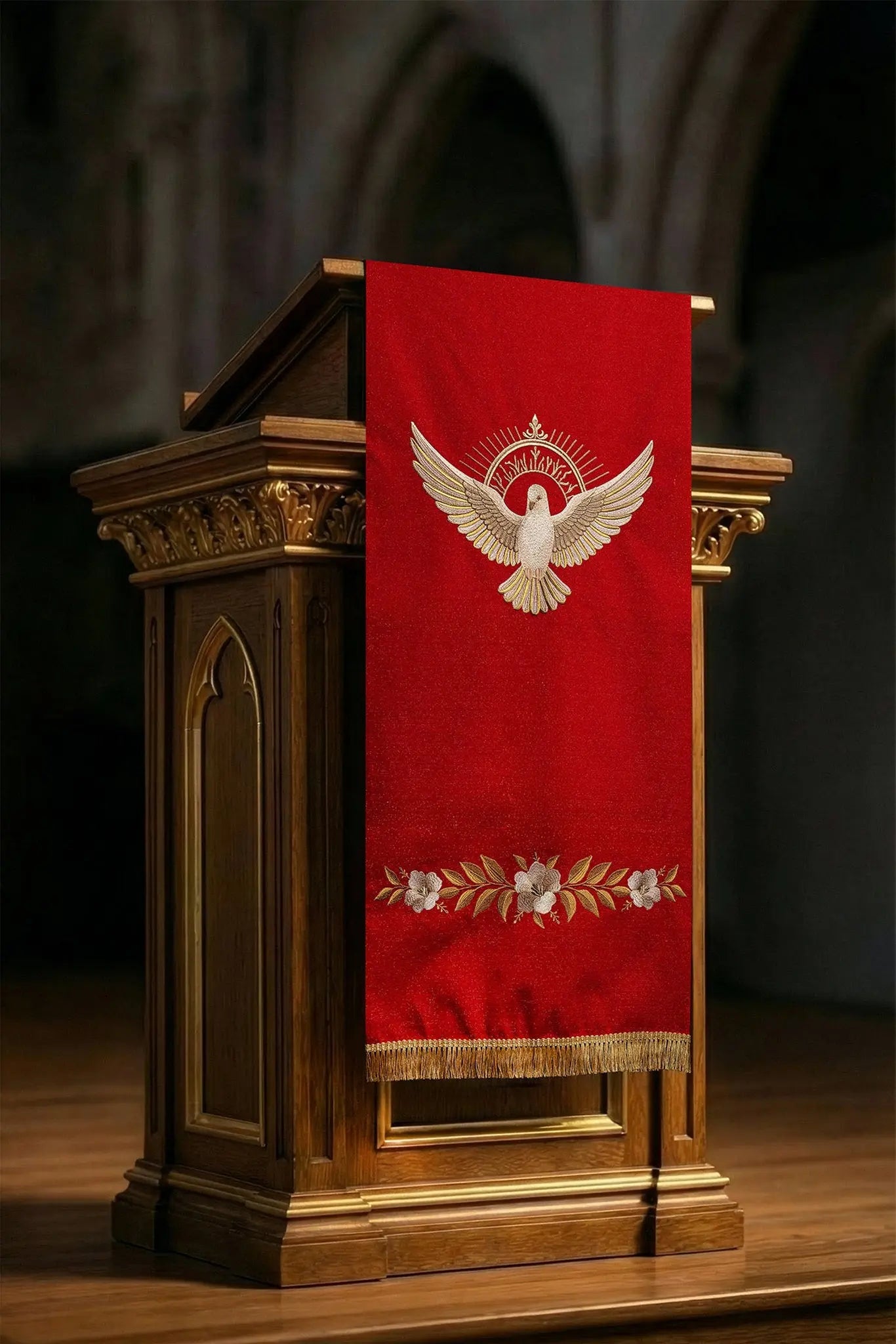
Pulpit Covers for Church Lecterns and Ambos
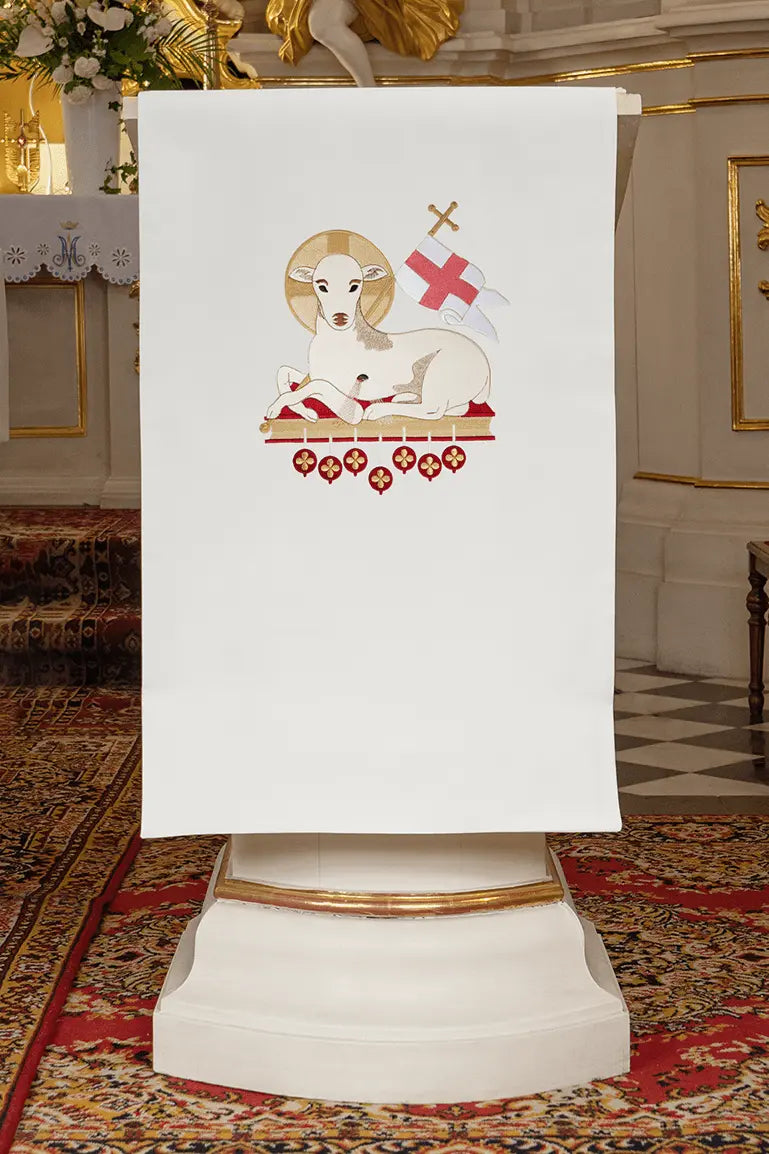
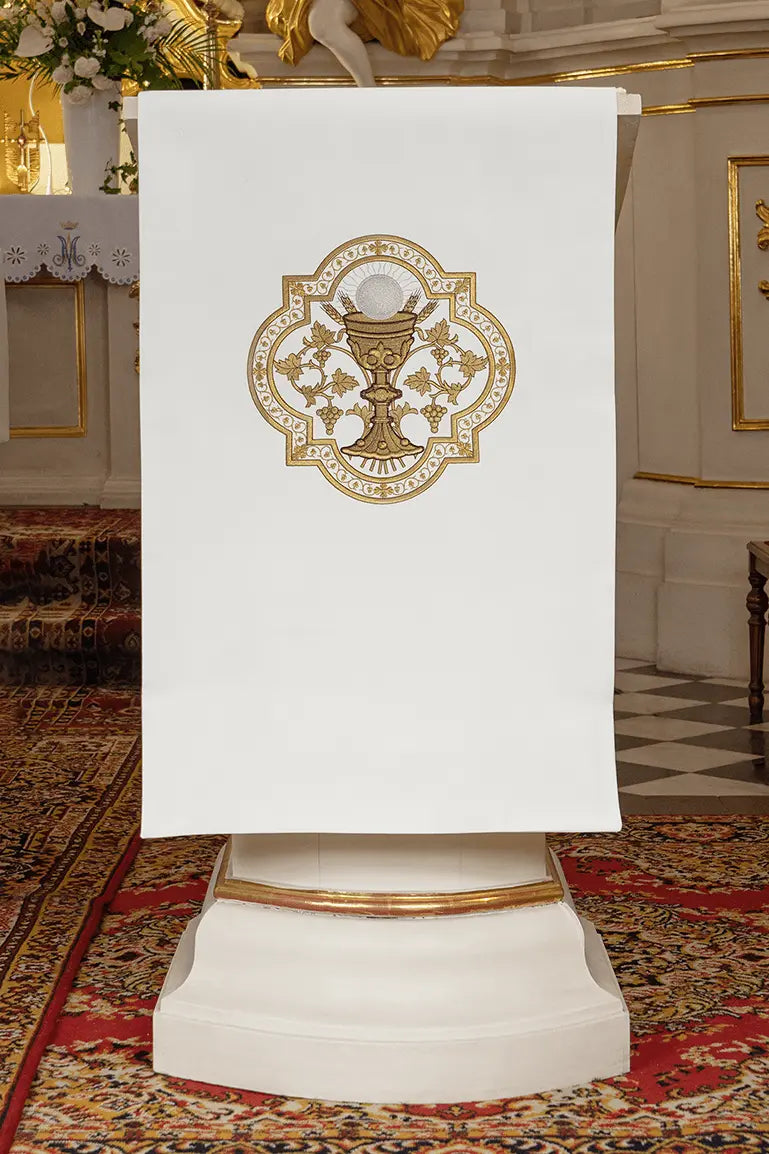
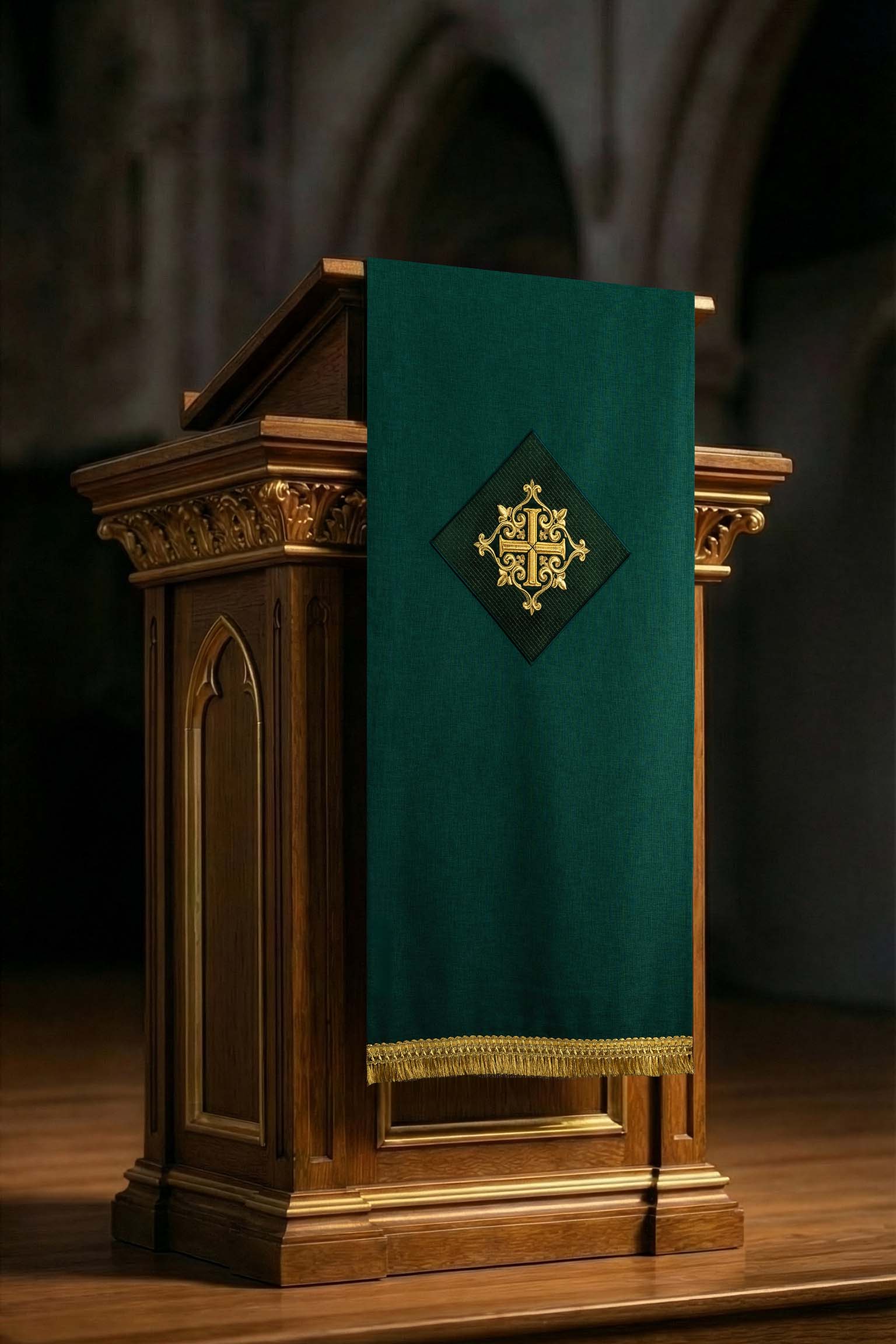
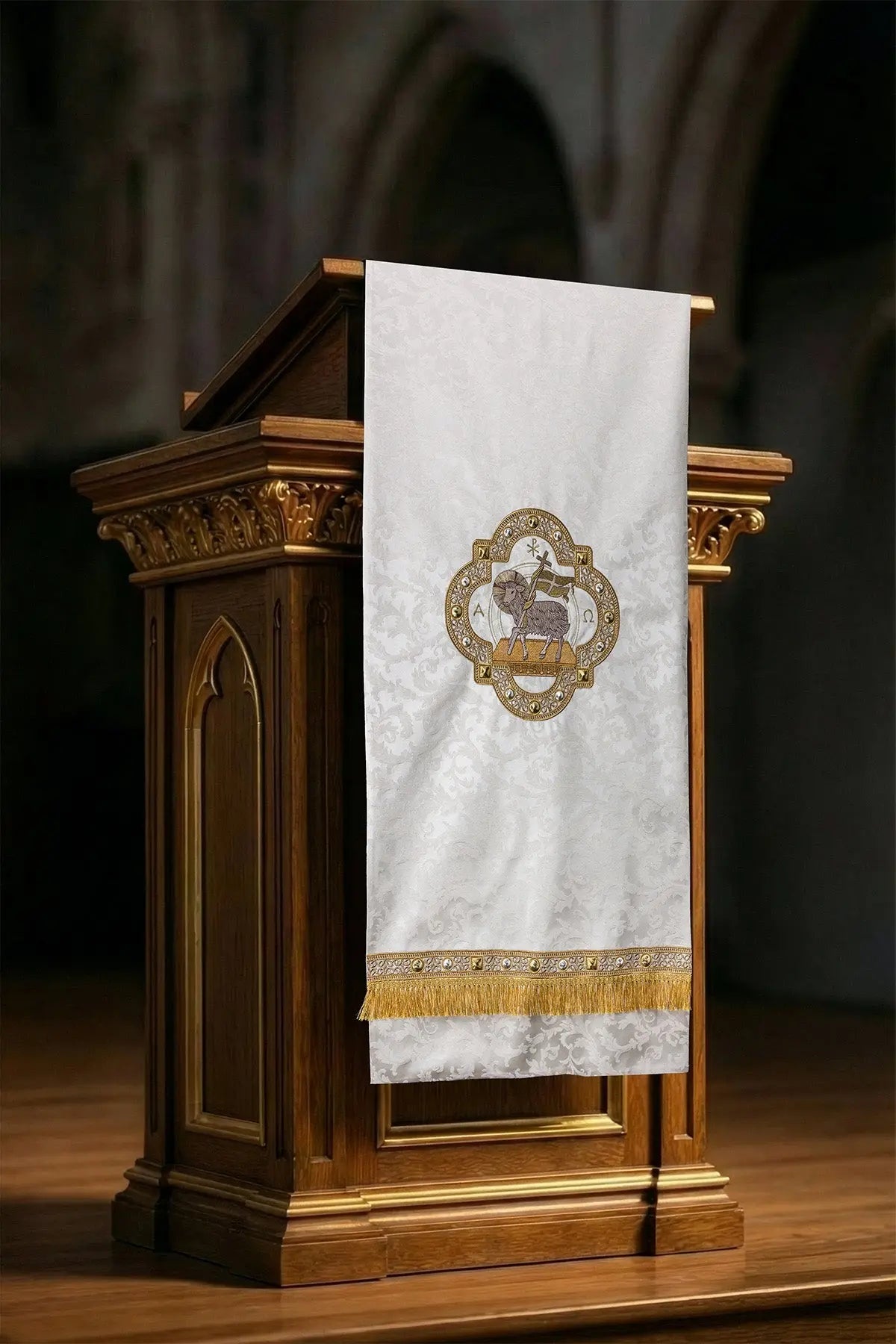
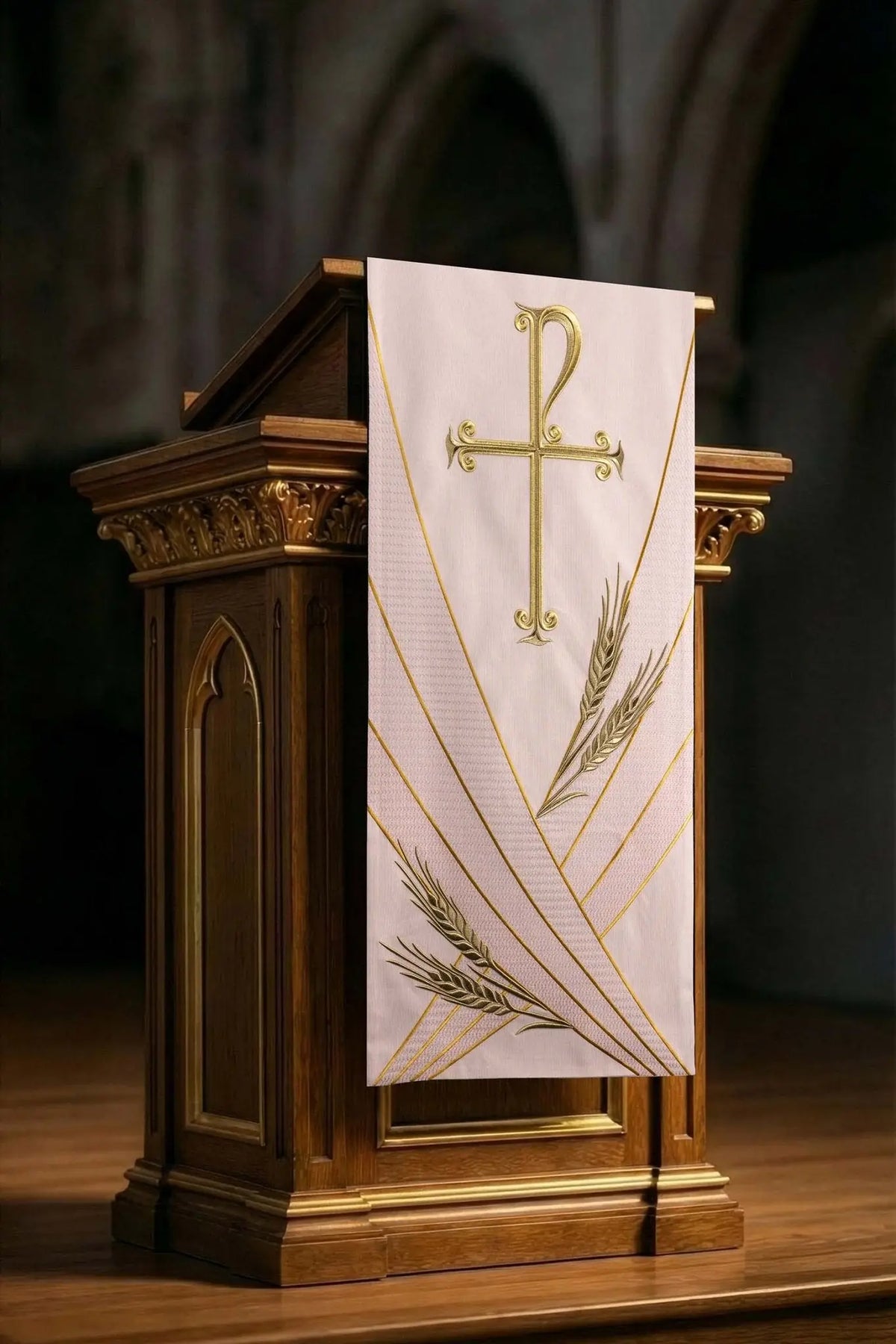
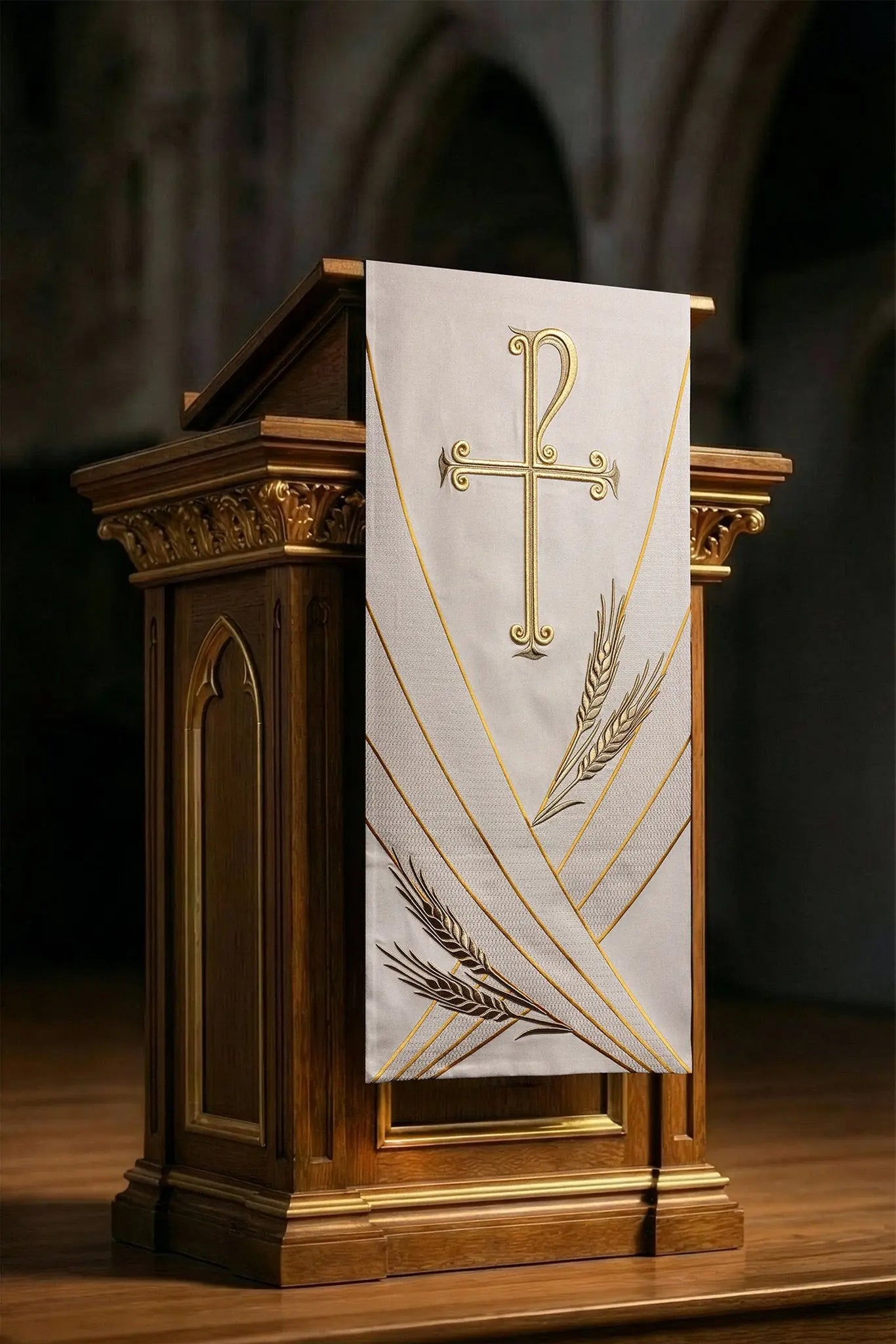
Pulpit covers are decorative and devotional church textiles designed for the lectern, ambo or pulpit from which the Word of God is proclaimed. They help the place of proclamation appear prepared, dignified and visually connected with the altar, sanctuary and liturgical season. This collection gathers embroidered pulpit covers in the colors and motifs most often used in Catholic and Christian worship, including IHS, cross, Marian, Paschal Lamb, Eucharistic wheat, PAX and other sacred designs.
A pulpit cover is not the same as an altar frontal, altar tablecloth or chalice veil. Its purpose is more specific: it dresses the front of the lectern or ambo so that the area of the readings, responsorial psalm, homily and intercessions harmonizes with the rest of the sanctuary. For coordinated textiles for the altar itself, browse altar cloths; for purificators, corporals and related Mass linens, see altar linens. When the lectern and altar textiles are chosen together, the church interior looks ordered without becoming visually heavy.
What Belongs in This Pulpit Covers Collection
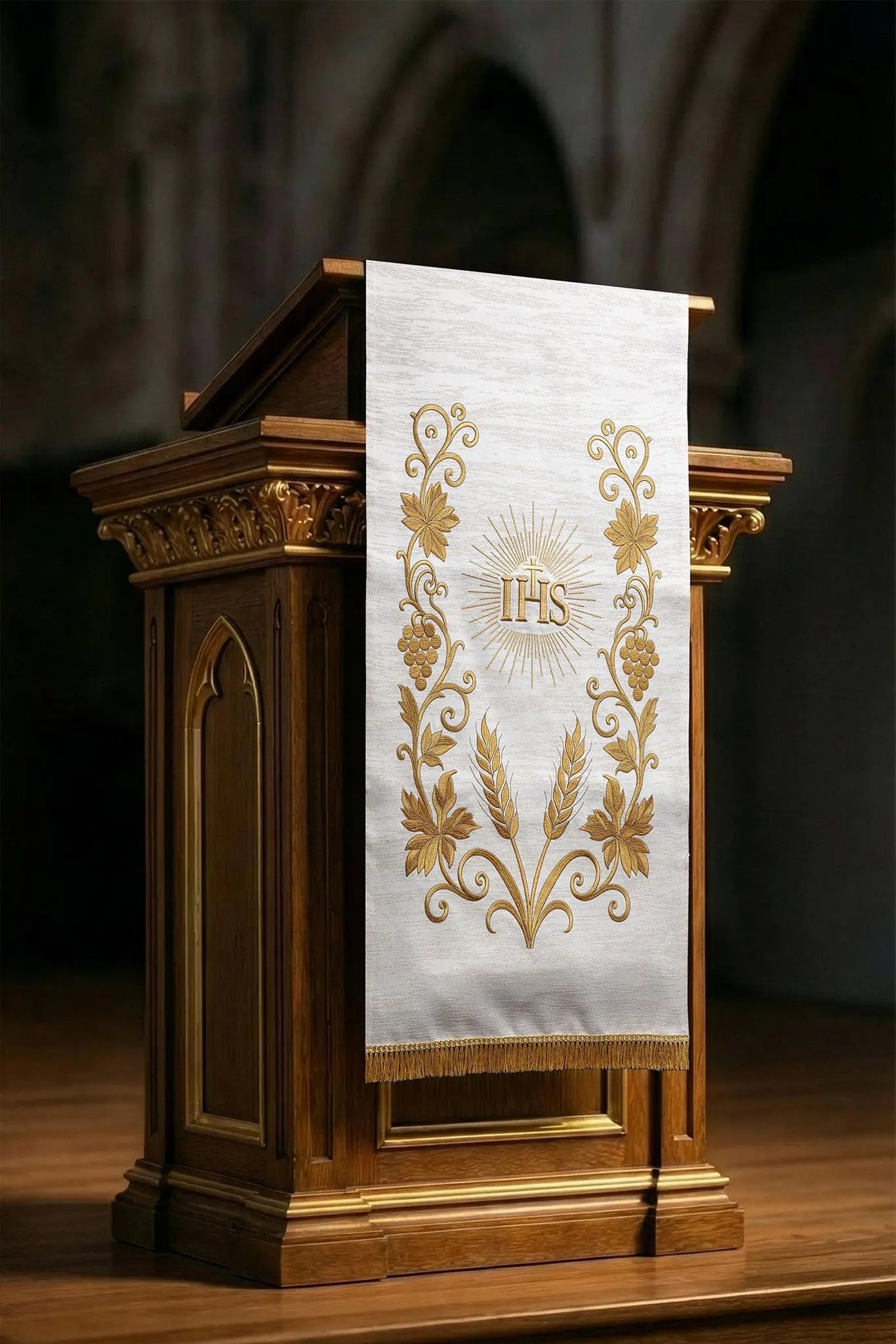
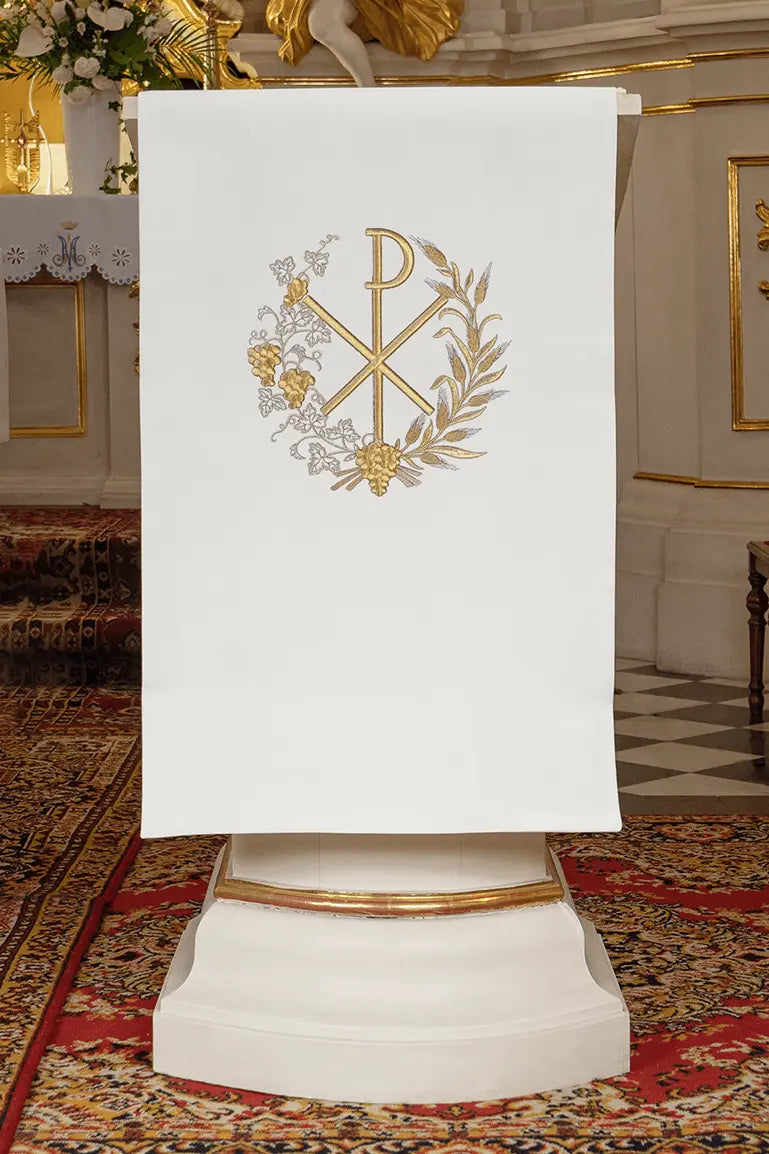
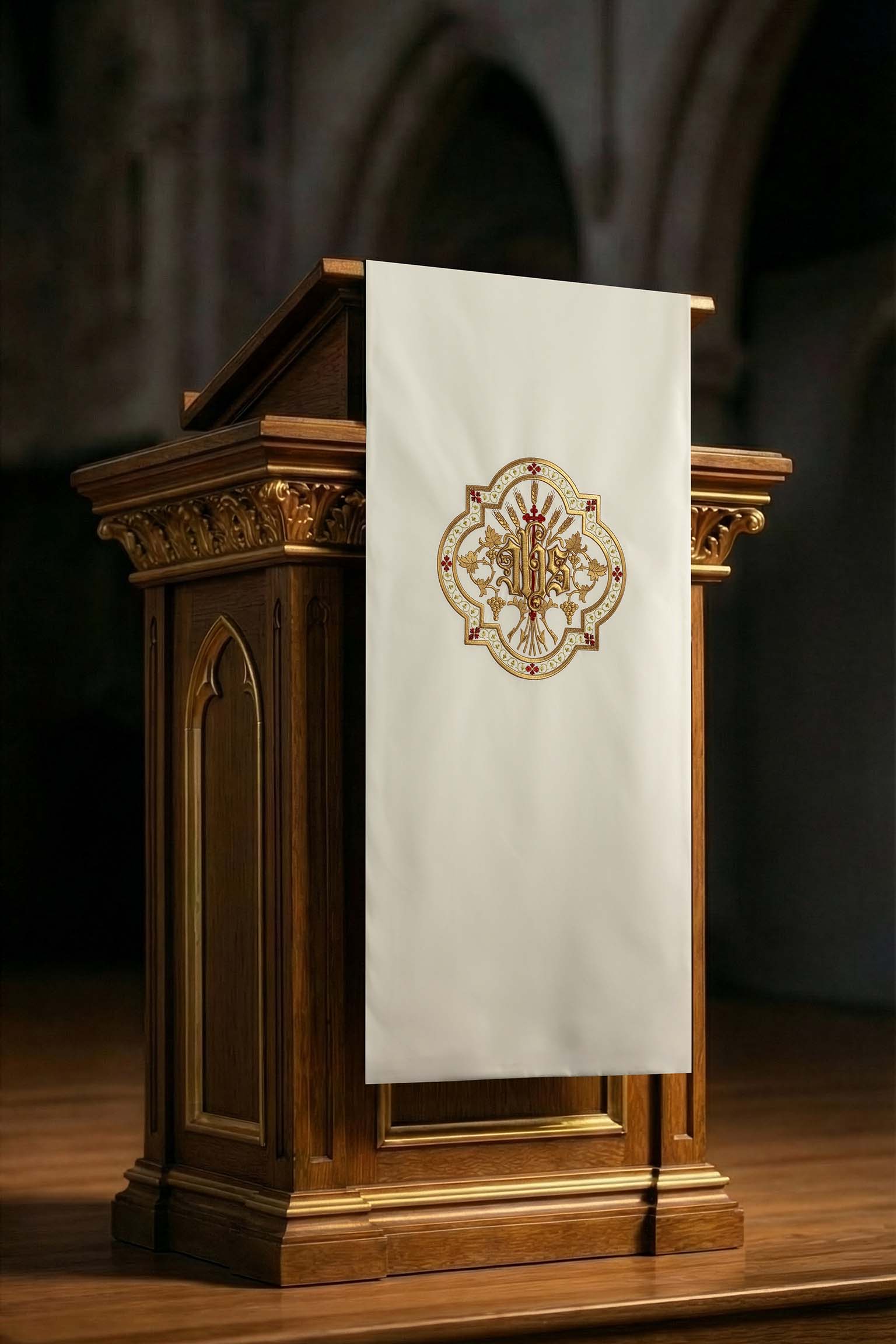
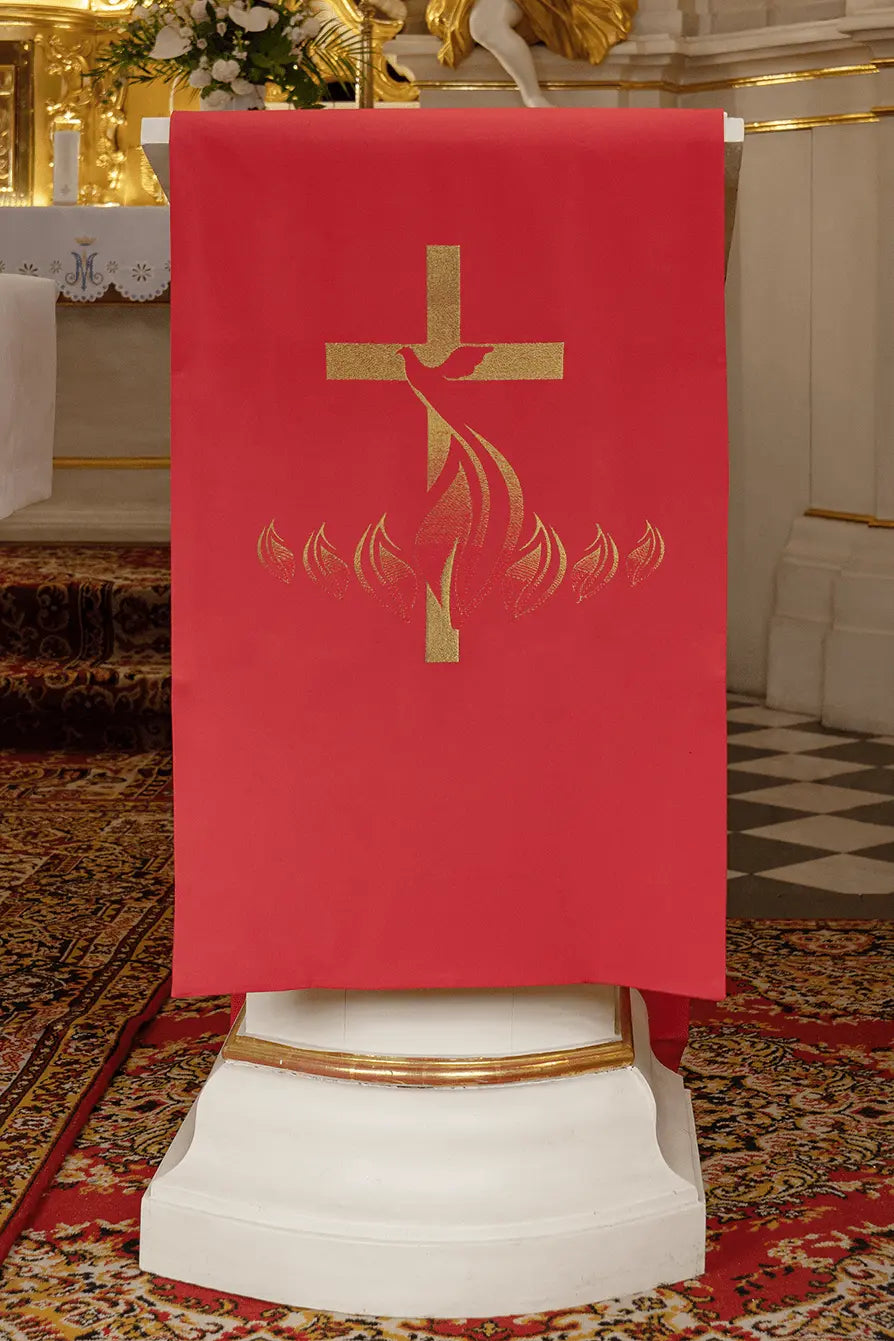
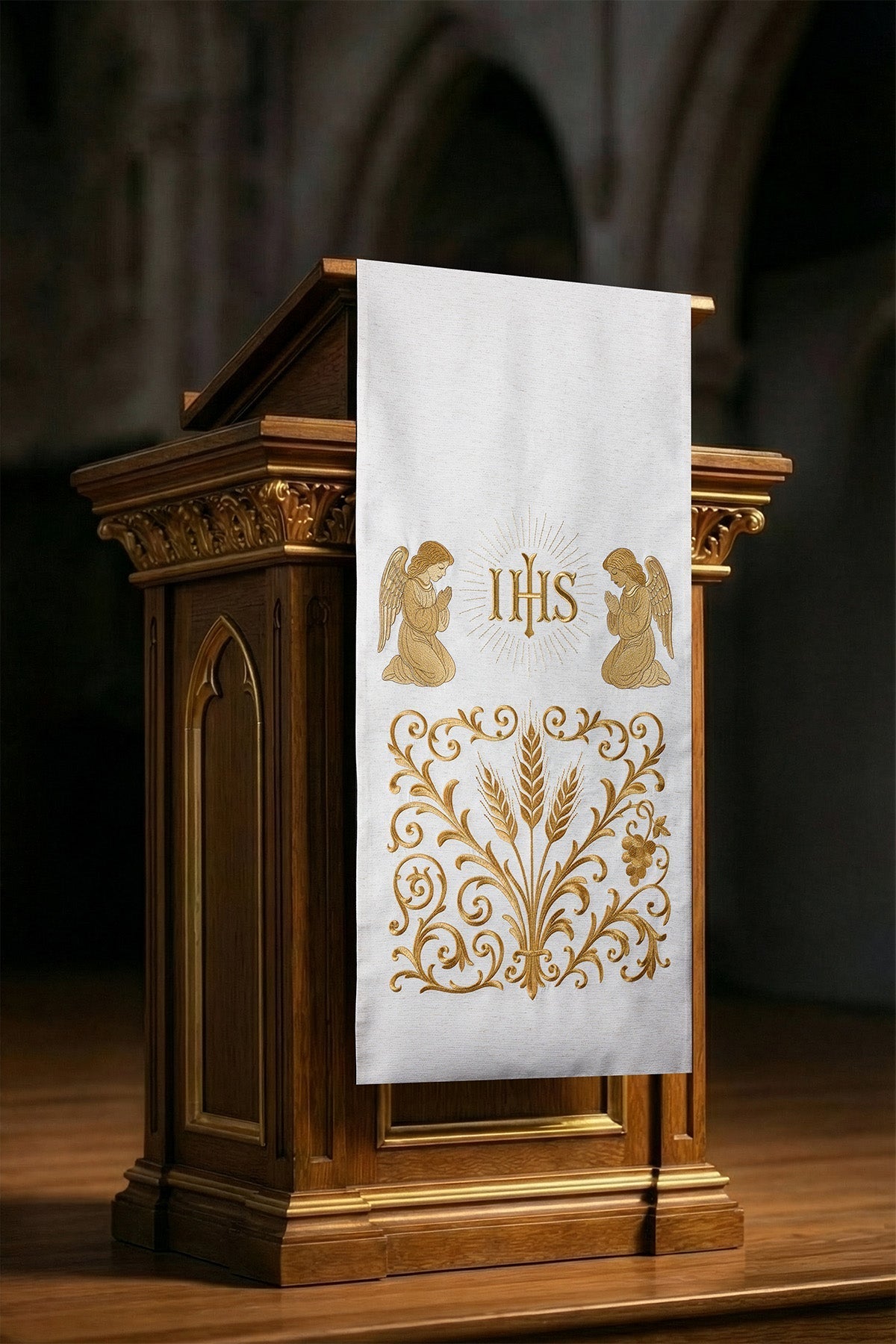
This collection includes pulpit and lectern hangings intended to be placed on the front of a reading stand, ambo or church pulpit. The designs visible in the range include ecru and white covers with IHS embroidery, Marian motifs, crosses, doves, Eucharistic symbols, Paschal Lamb imagery and other liturgical ornamentation. Some pieces have a more solemn character for feasts and major celebrations, while others are suited to the rhythm of Ordinary Time, Advent, Lent or weekday Masses.
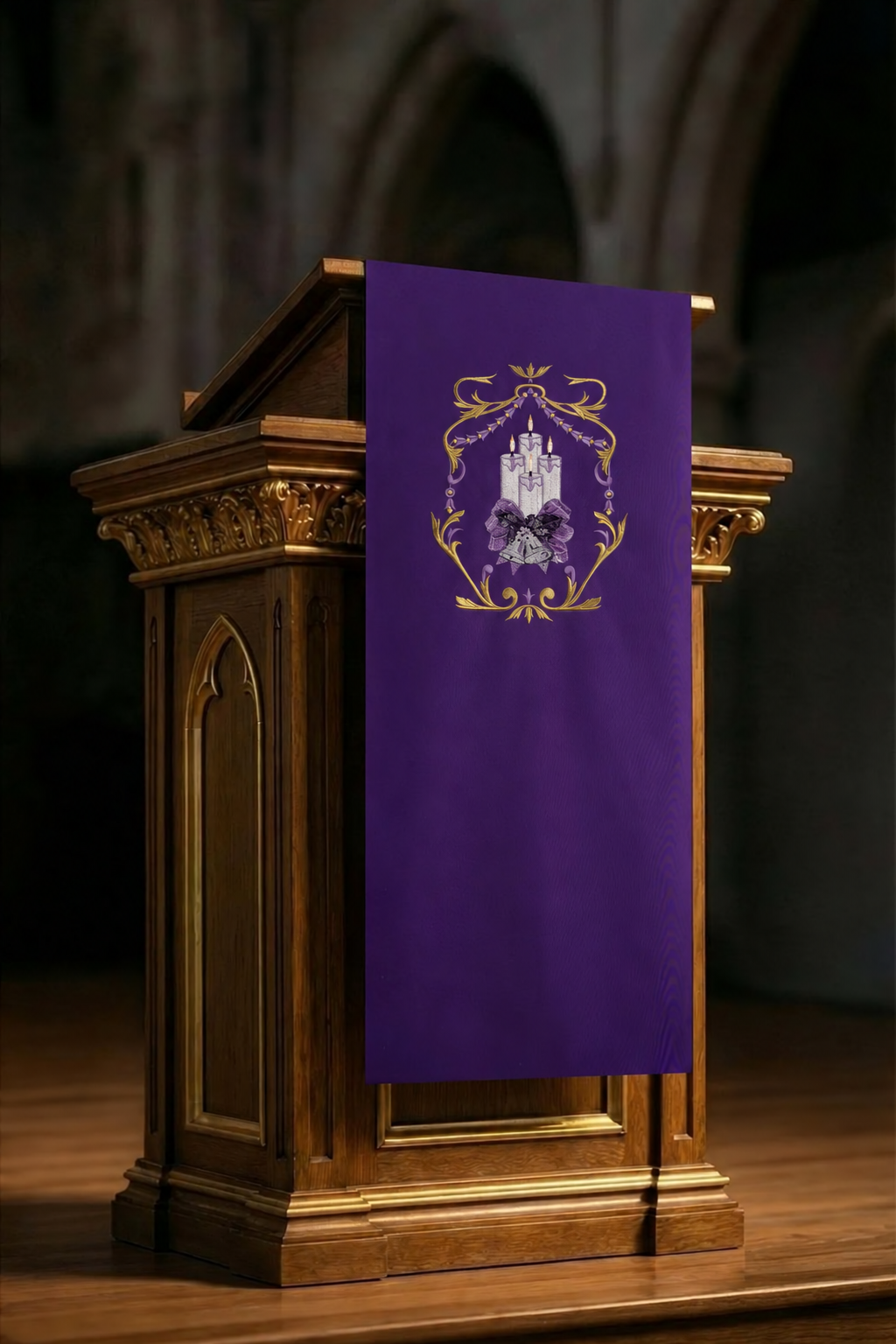
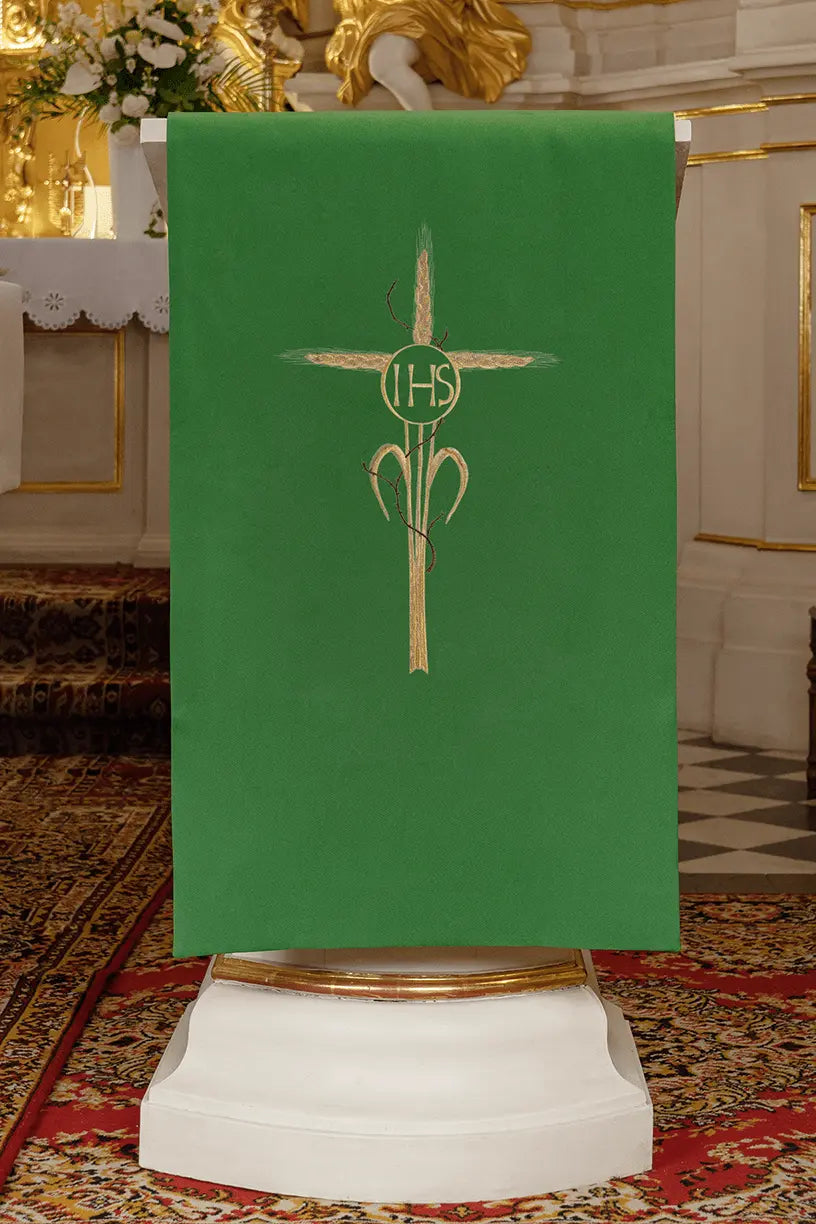
The role of a pulpit cover is both practical and symbolic. Practically, it gives the lectern a finished appearance and can help cover the front panel of a simple stand. Symbolically, it marks the place where Scripture is proclaimed and helps the congregation read the character of the celebration through color and sacred imagery. A green cover suggests the steady growth of Ordinary Time; a purple cover supports the penitential atmosphere of Advent or Lent; a white or ecru cover communicates joy, light and solemnity; a rose cover is reserved for Gaudete Sunday and Laetare Sunday; a Marian cover is especially appropriate for feasts and devotions connected with the Blessed Virgin Mary.
How to Choose the Right Pulpit Cover
When selecting a pulpit cover, begin with the liturgical color your parish or chapel needs most often. A useful basic set usually includes green for Ordinary Time, purple for Advent and Lent, white or ecru for Christmas, Easter and many solemnities, and red for celebrations connected with the Holy Spirit, the Passion of the Lord and martyrs. Churches that prepare a more complete seasonal textile set may also add rose for the two rose Sundays and Marian designs for Marian feasts, months of devotion, parish patronal celebrations or shrines dedicated to Our Lady.
-
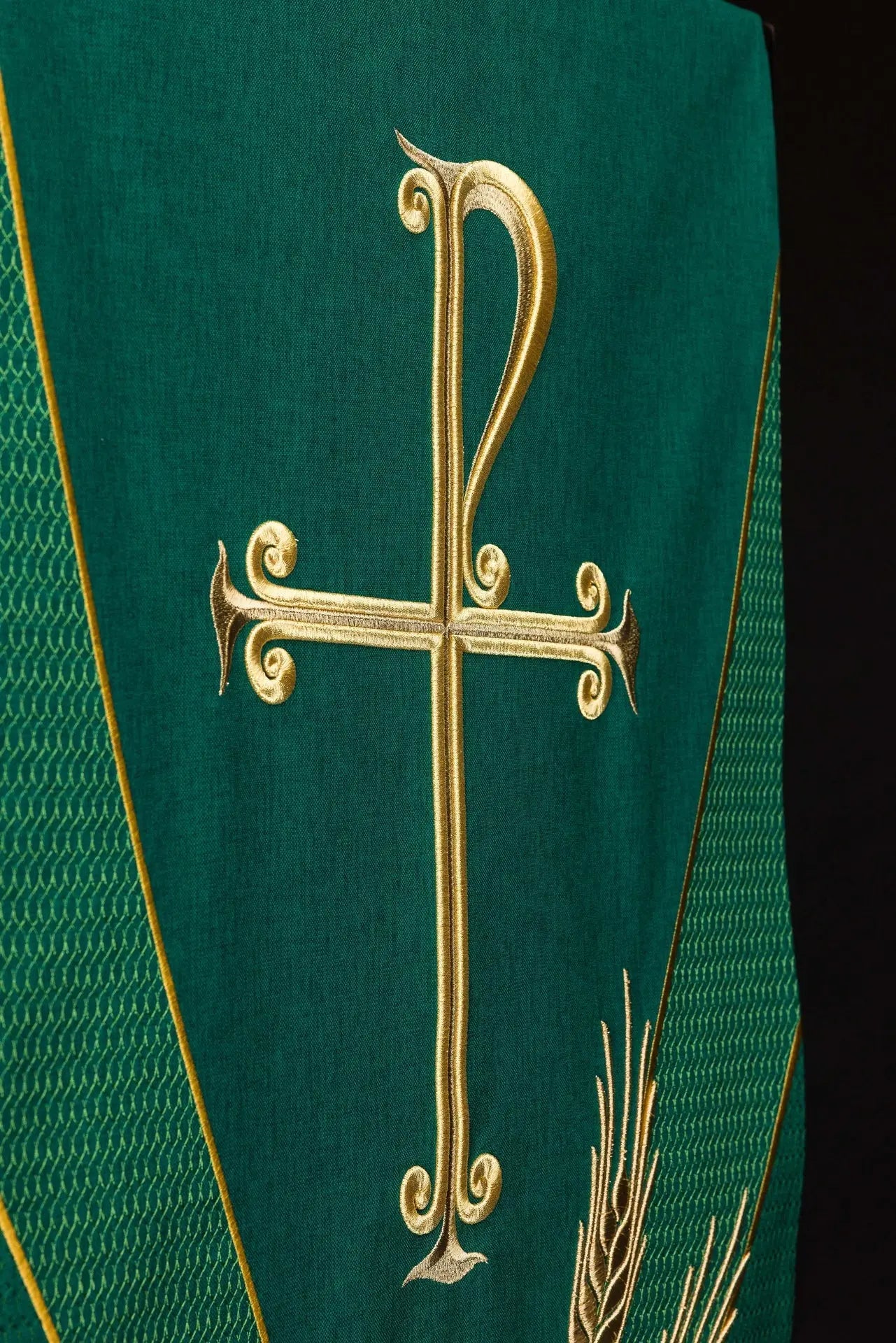
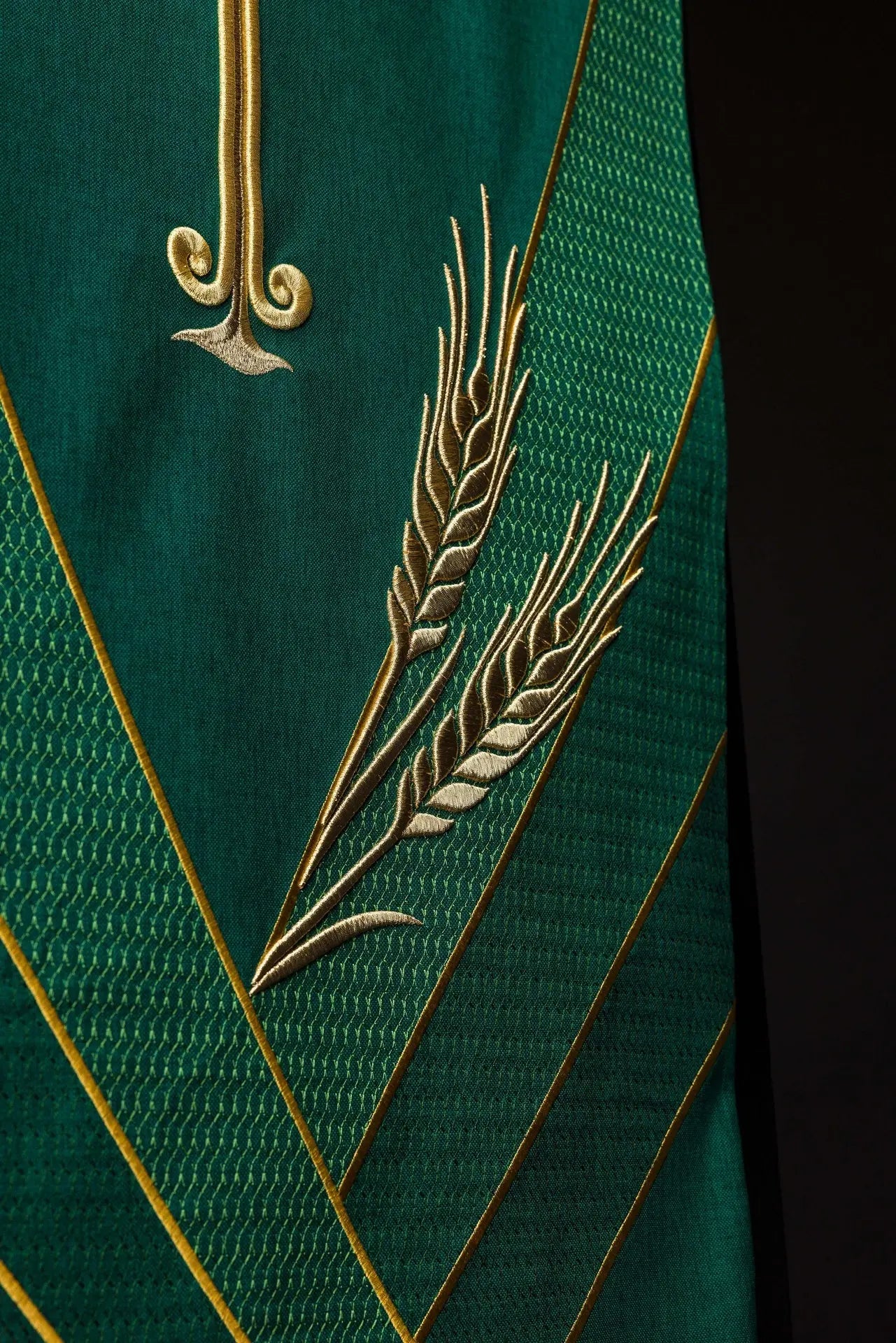
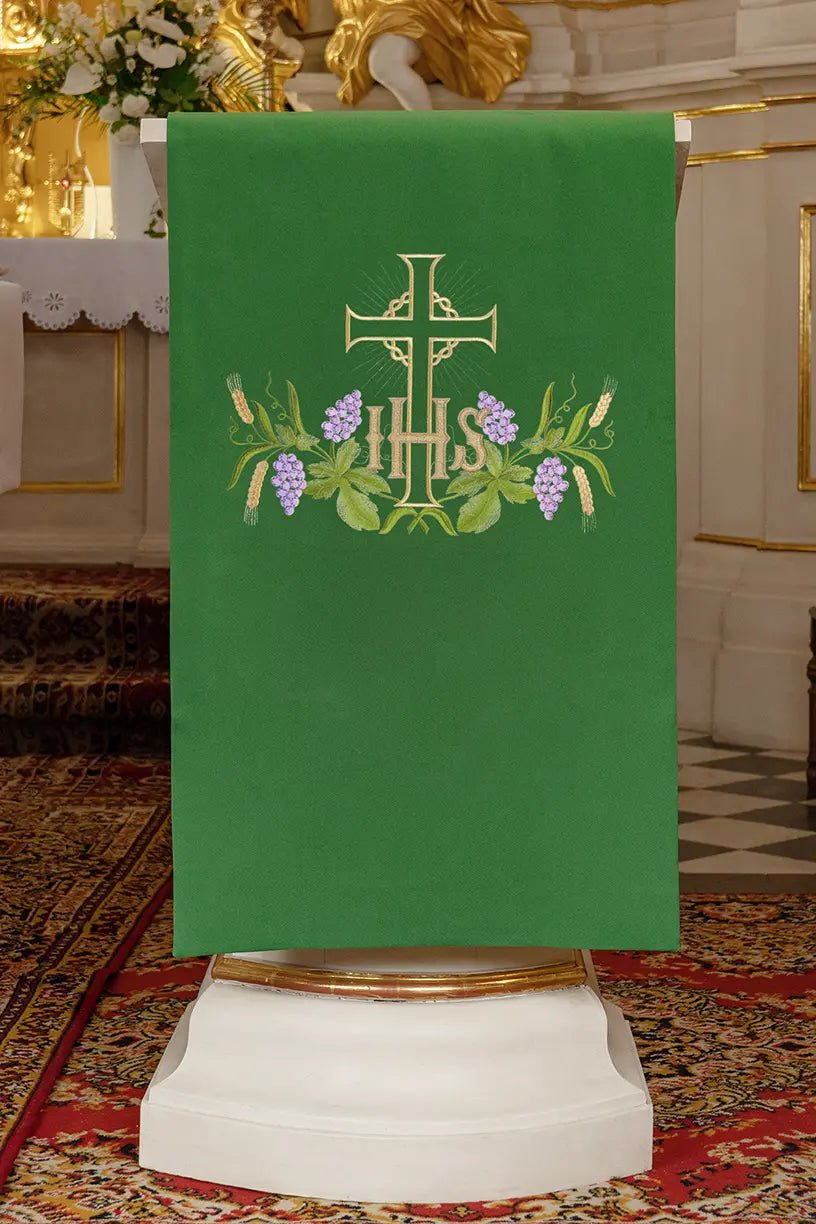
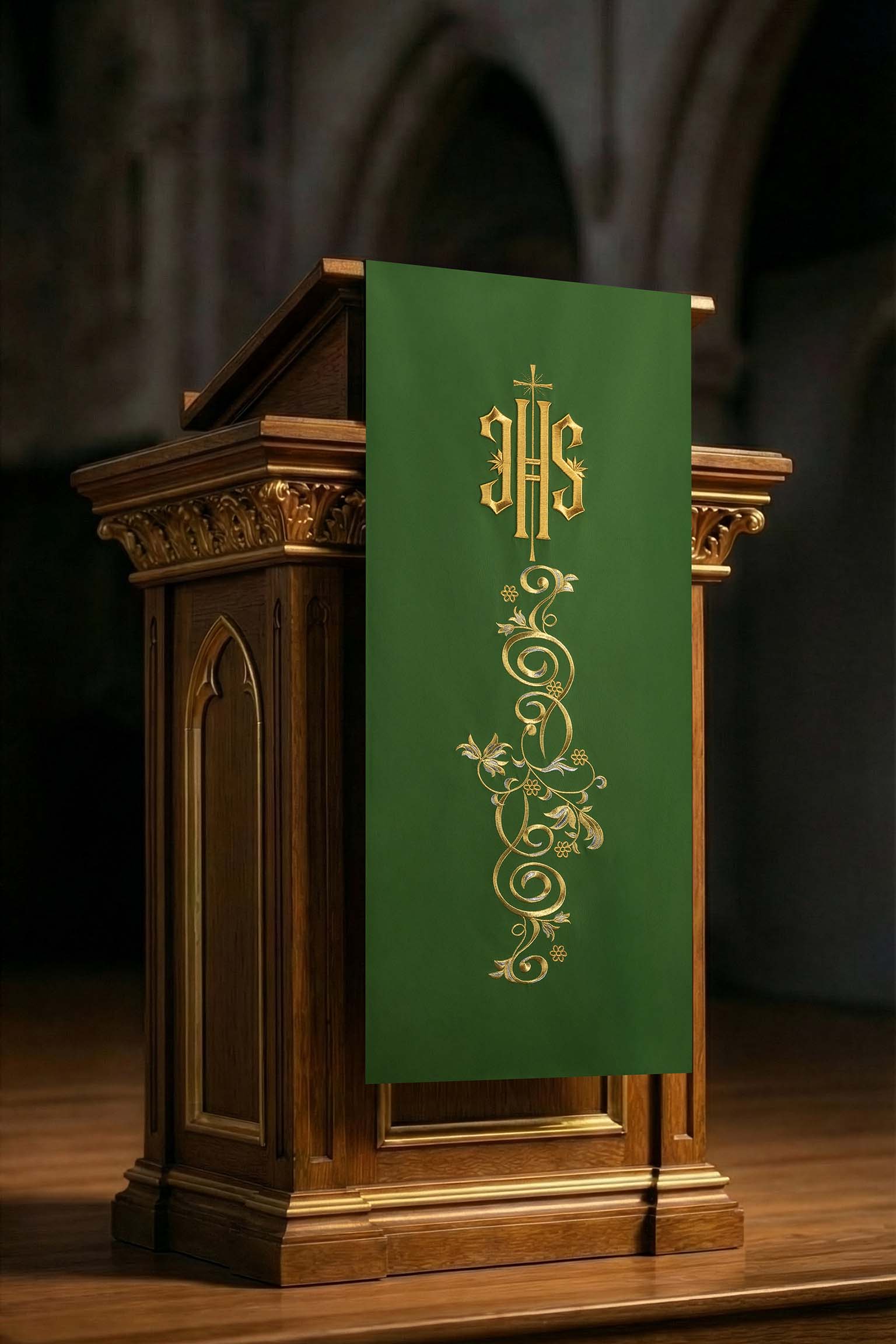
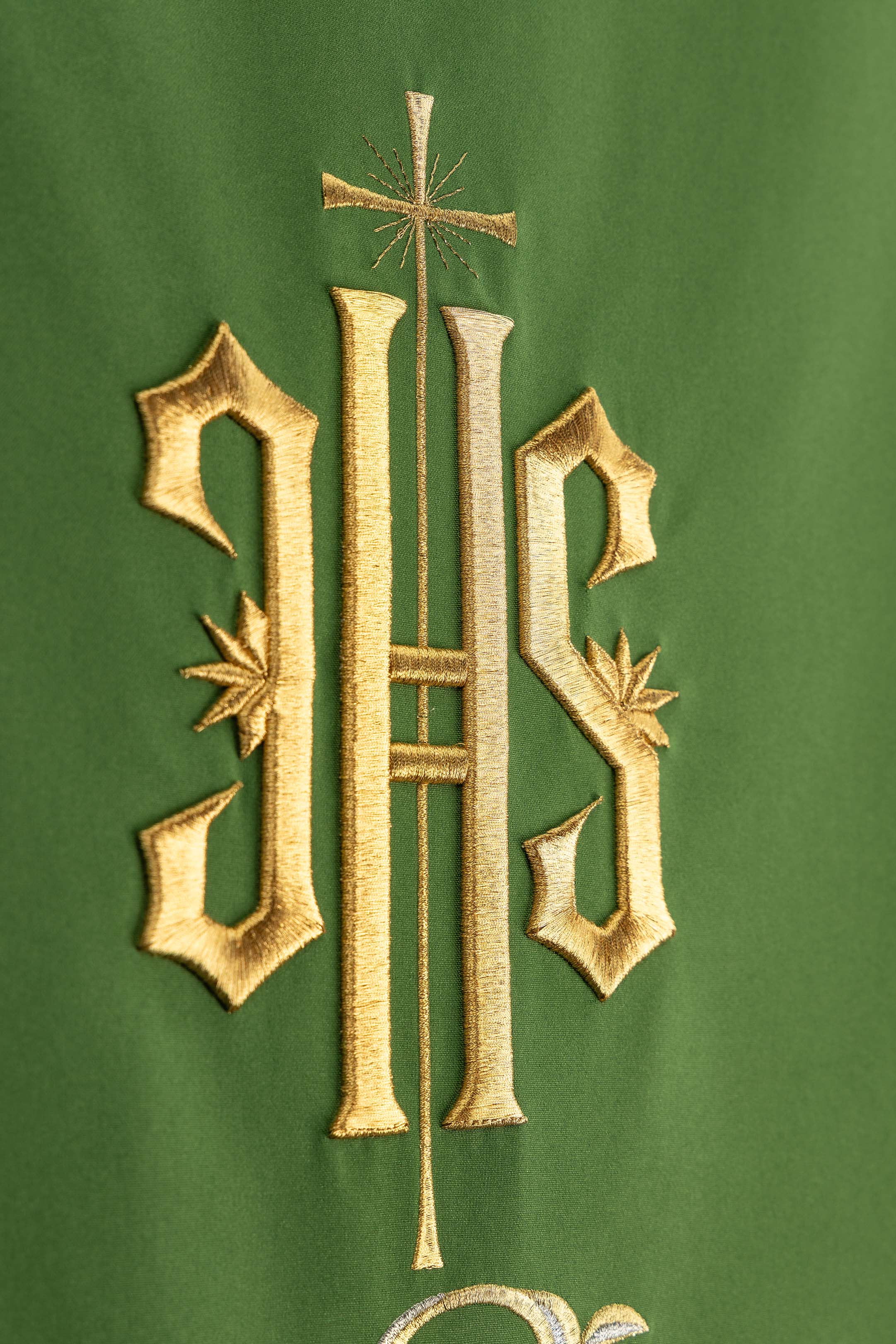
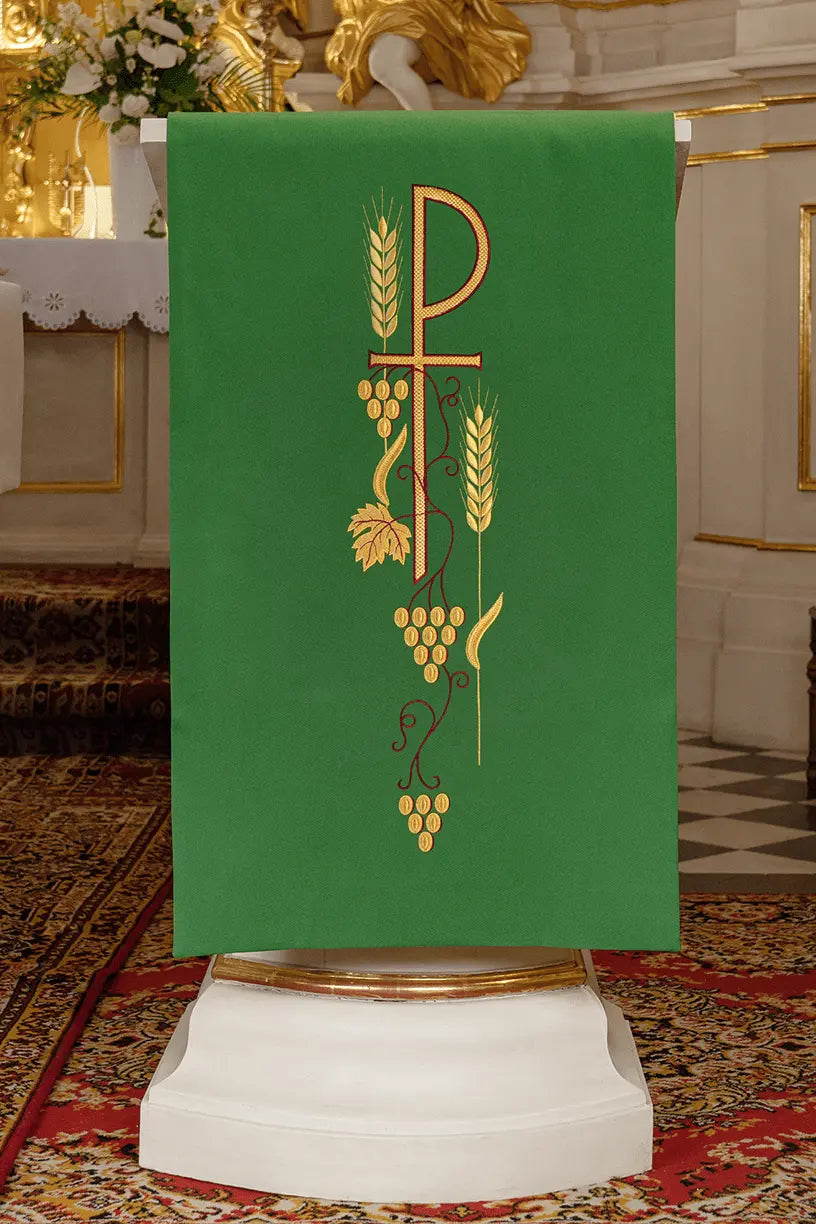
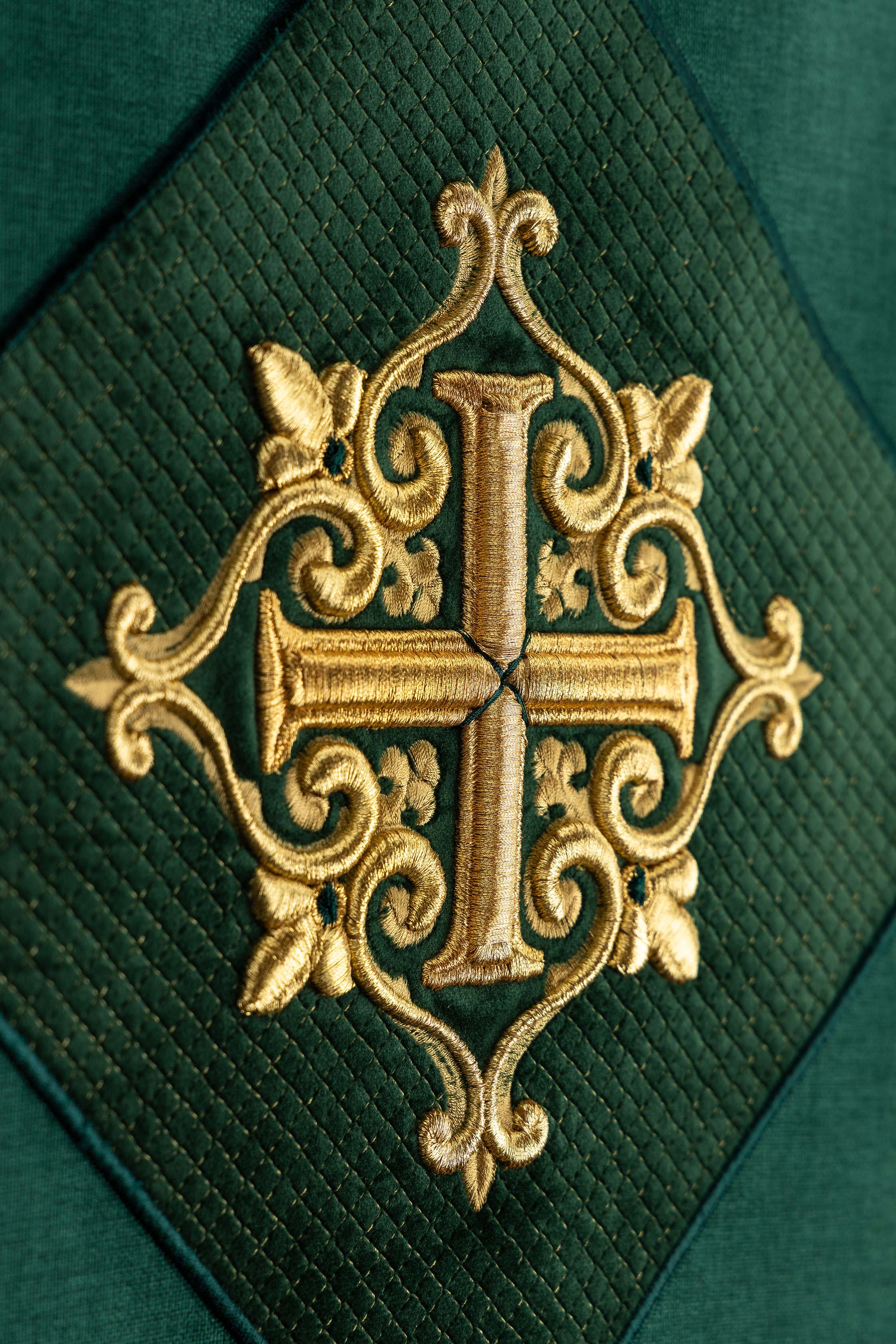
Green: suitable for Ordinary Time and for the long periods of the year when the Church reflects on growth, discipleship and the public ministry of Christ. See also green pulpit covers.
-
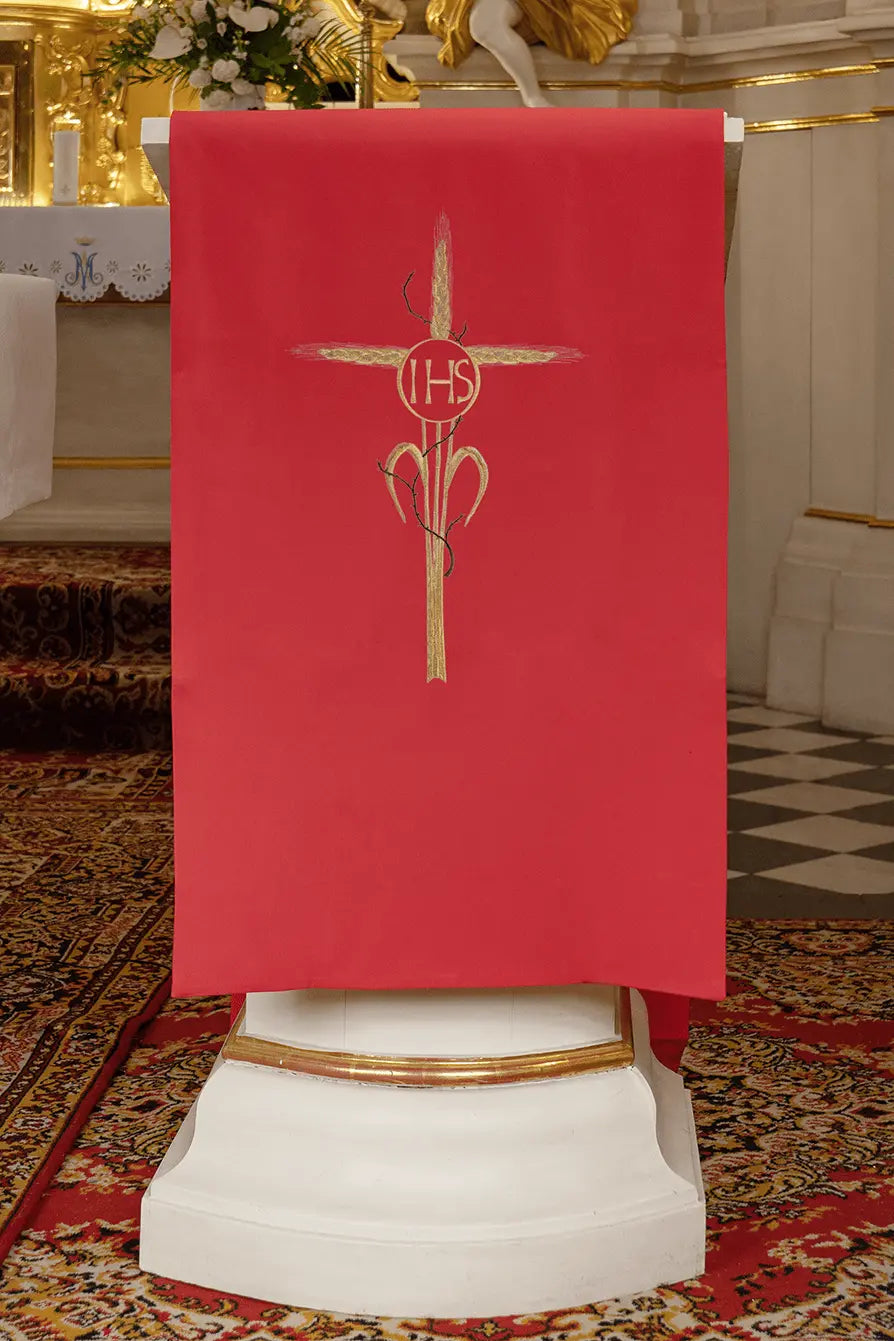
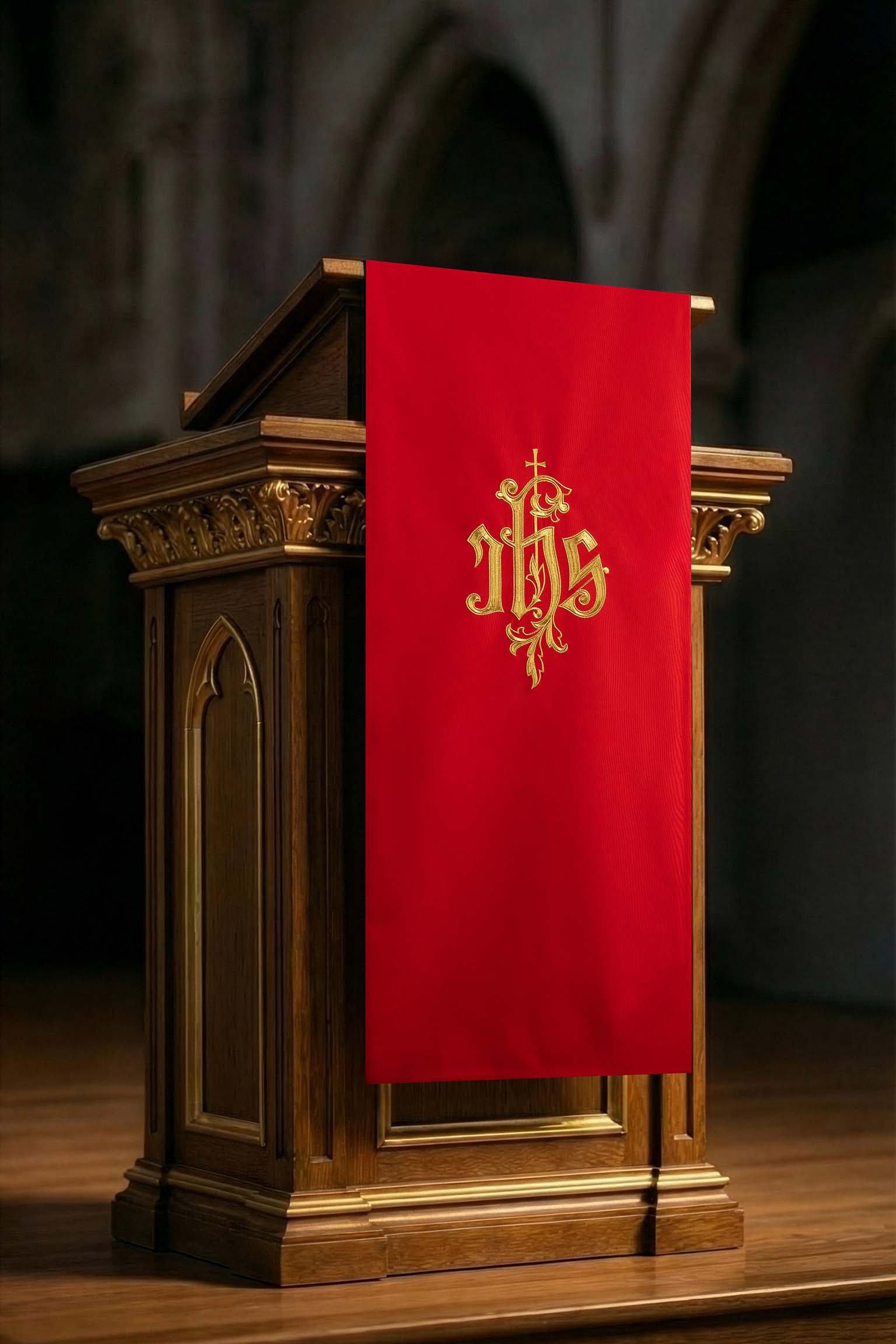
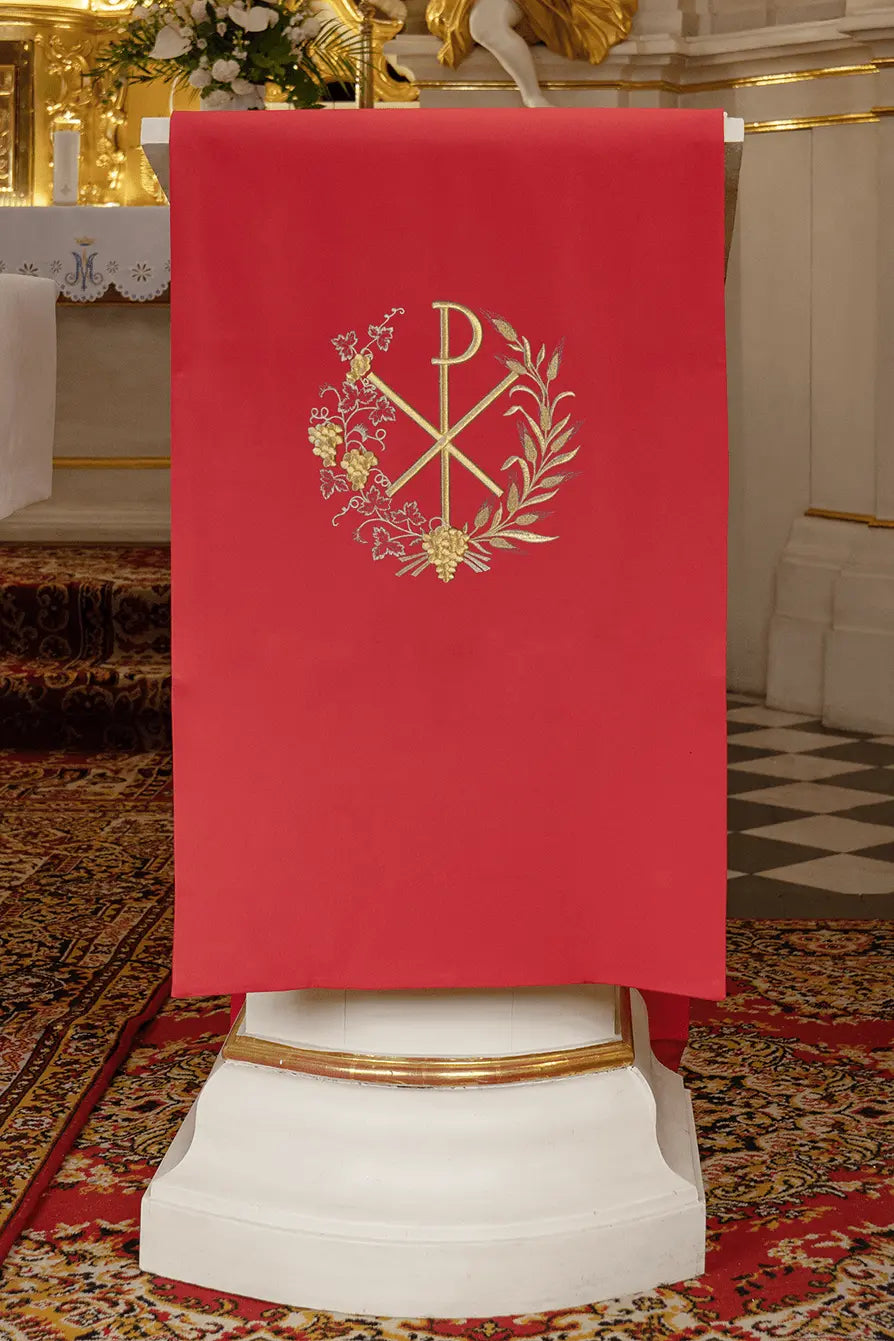
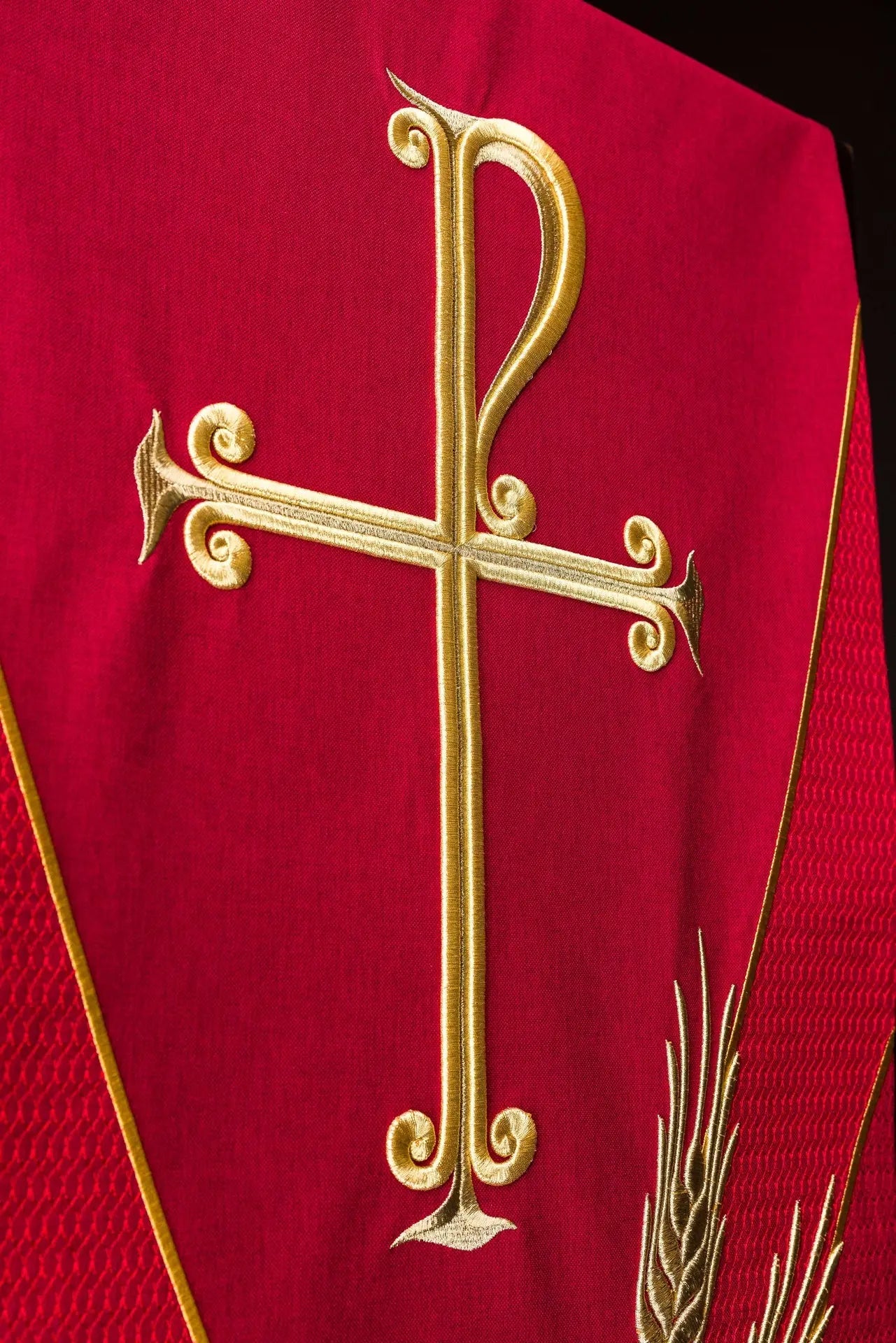
Red: used for Pentecost, Palm Sunday, Good Friday and feasts of martyrs, apostles and evangelists, where the color points to the Holy Spirit, sacrifice and witness.
-
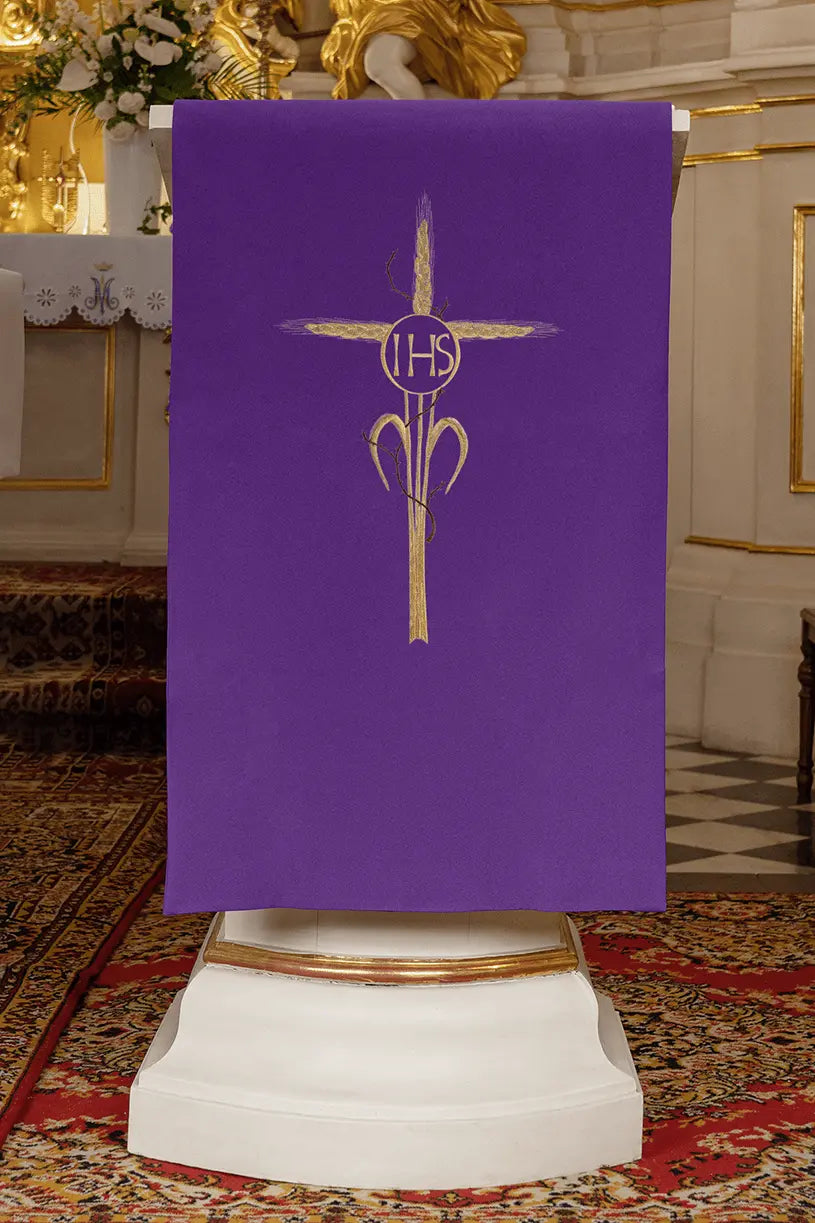
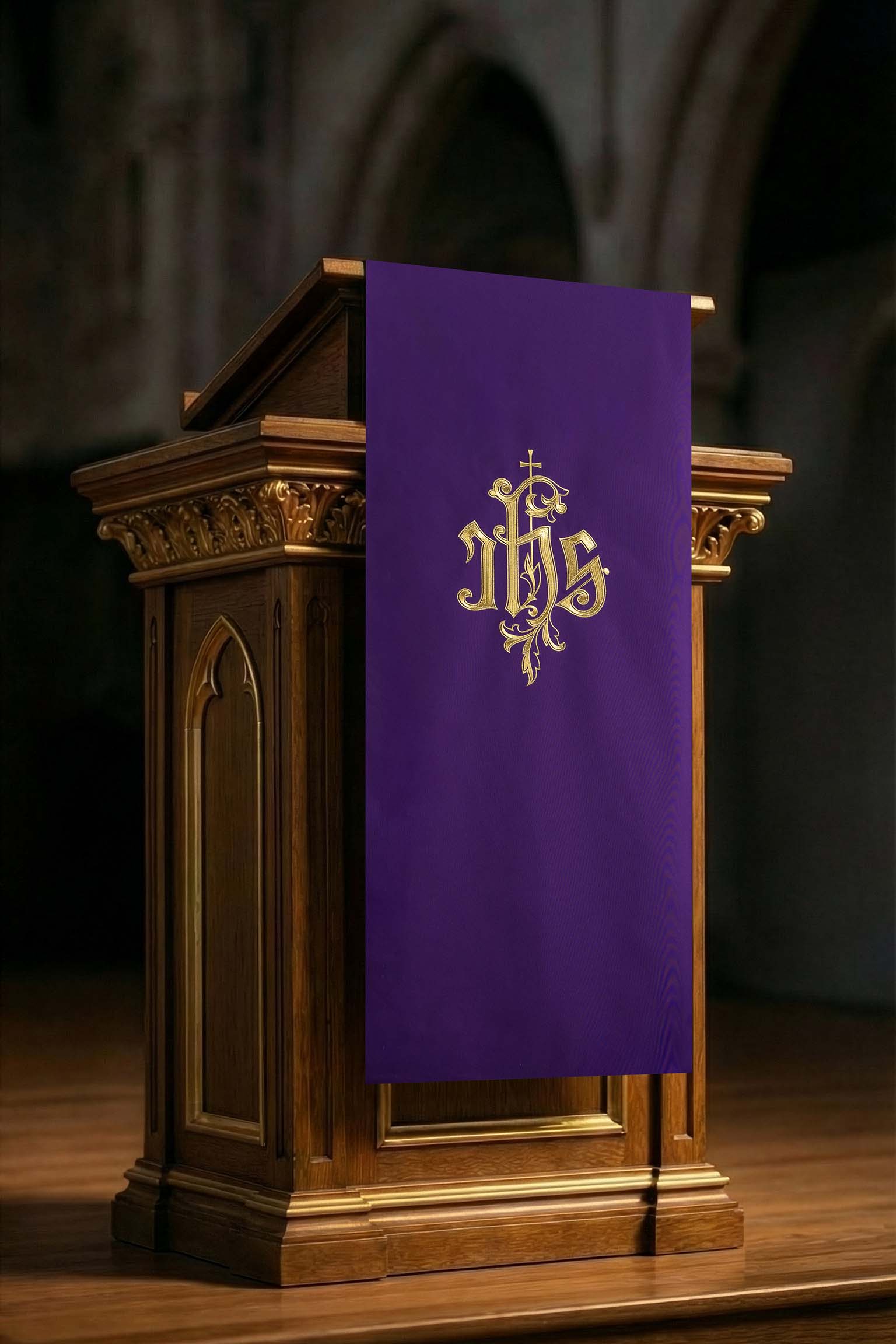
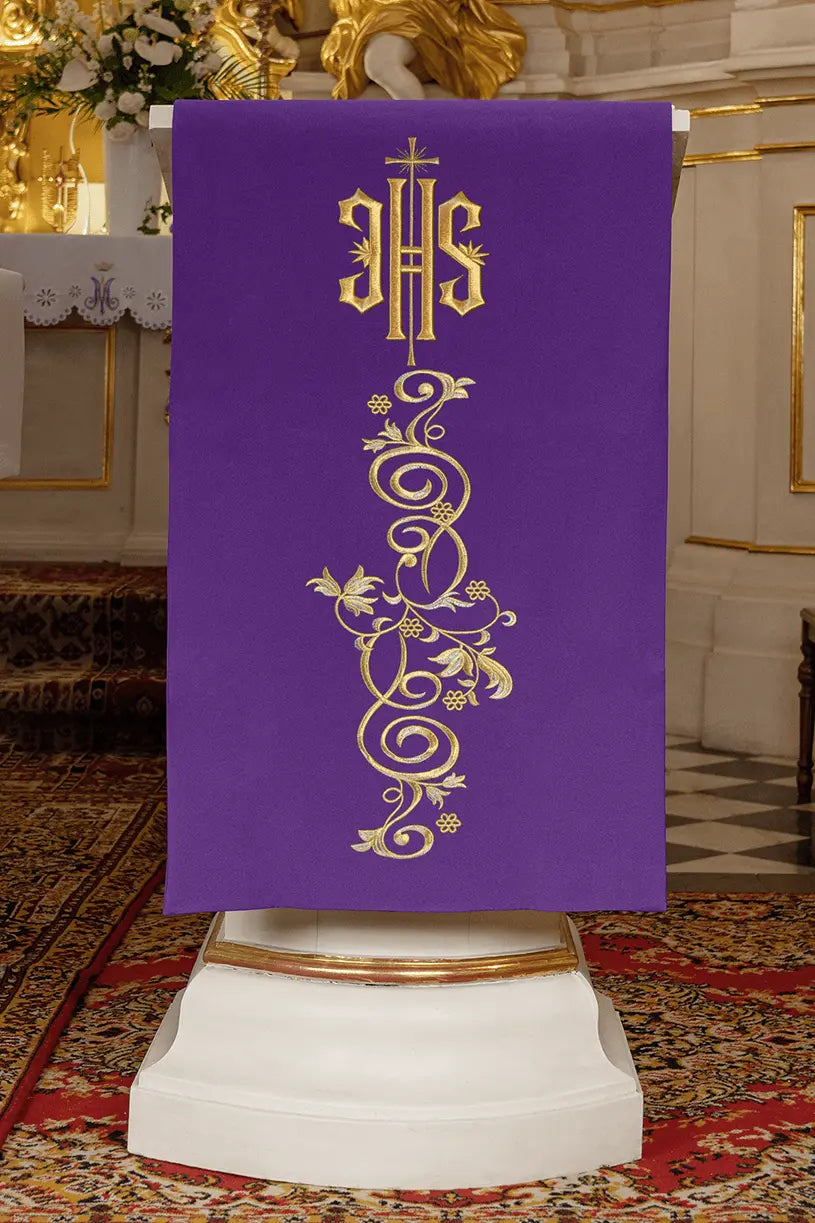
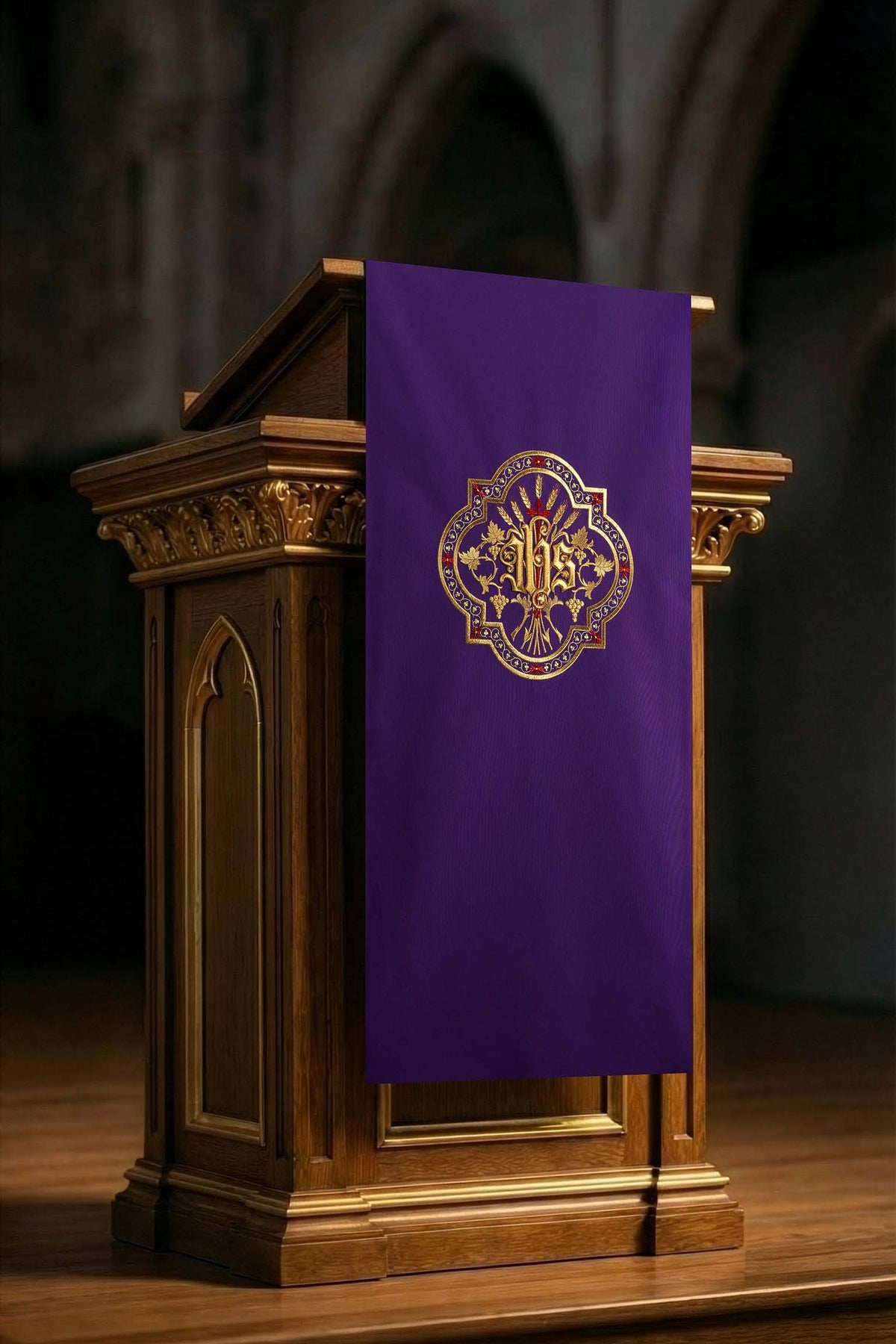
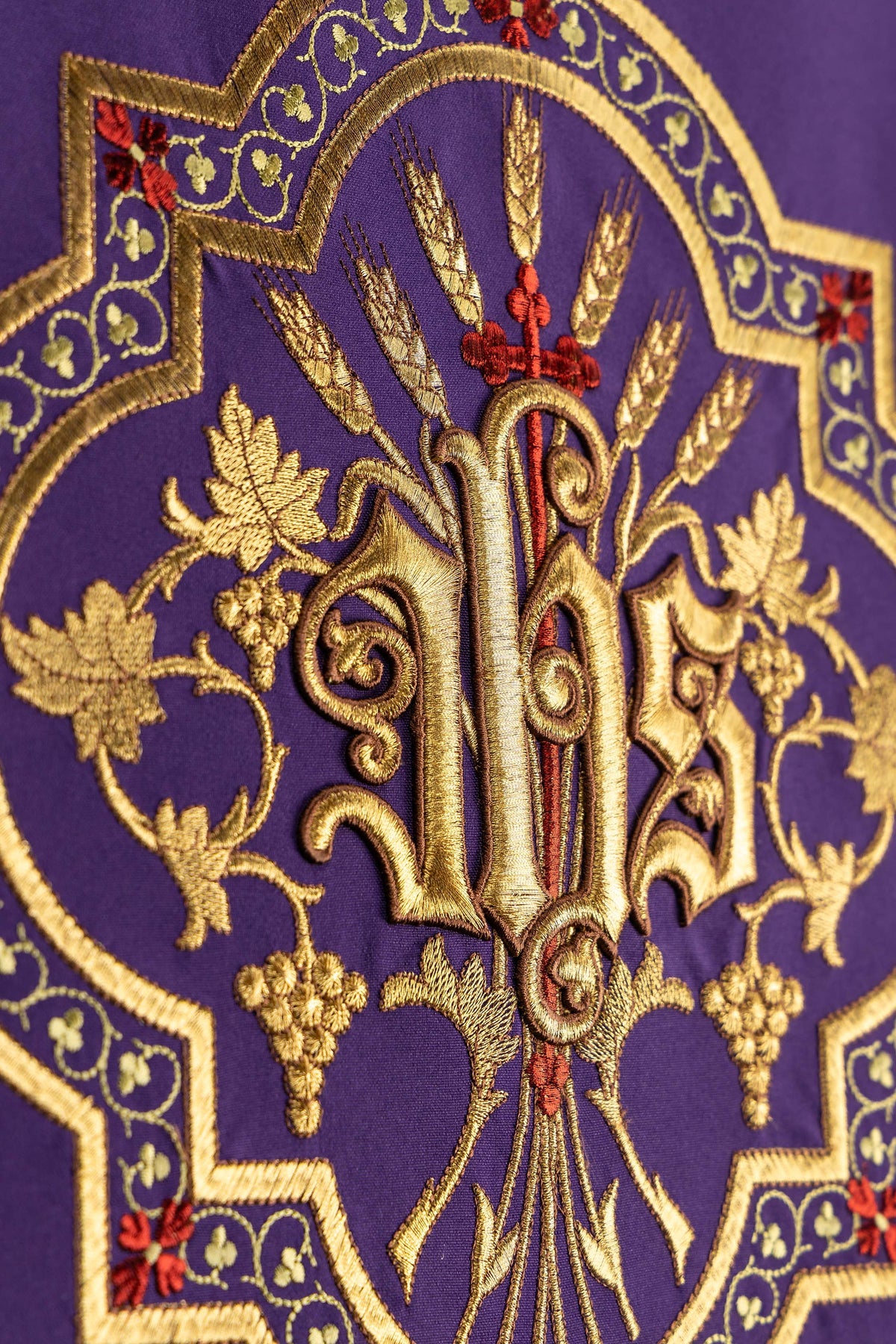
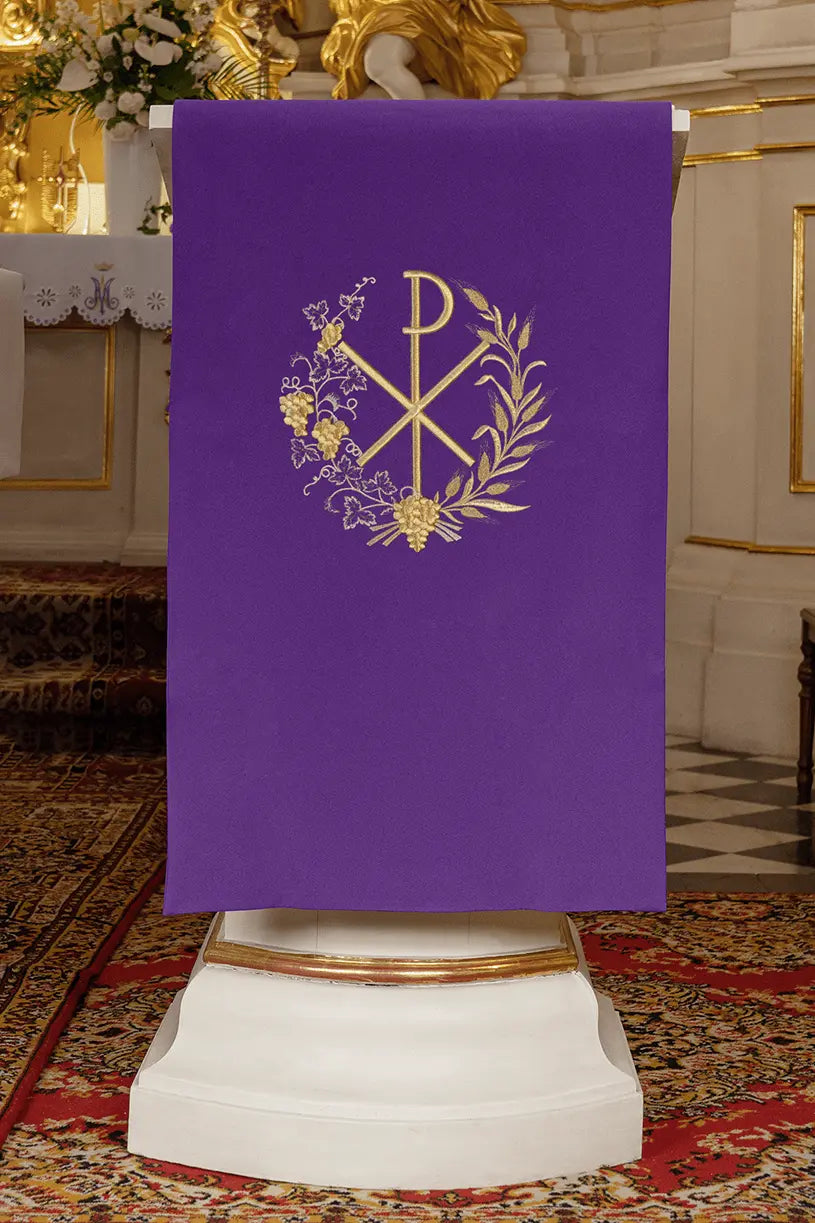
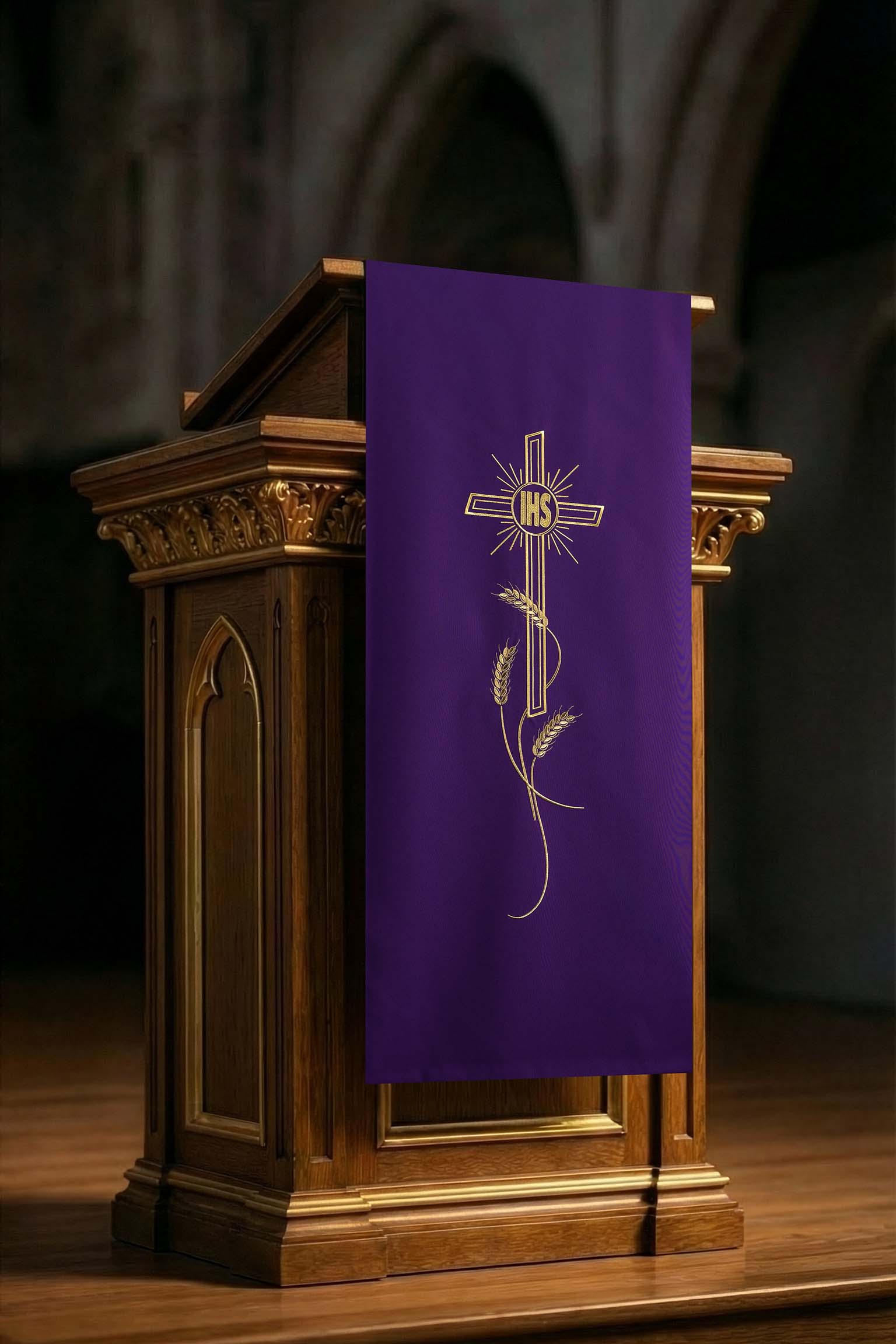
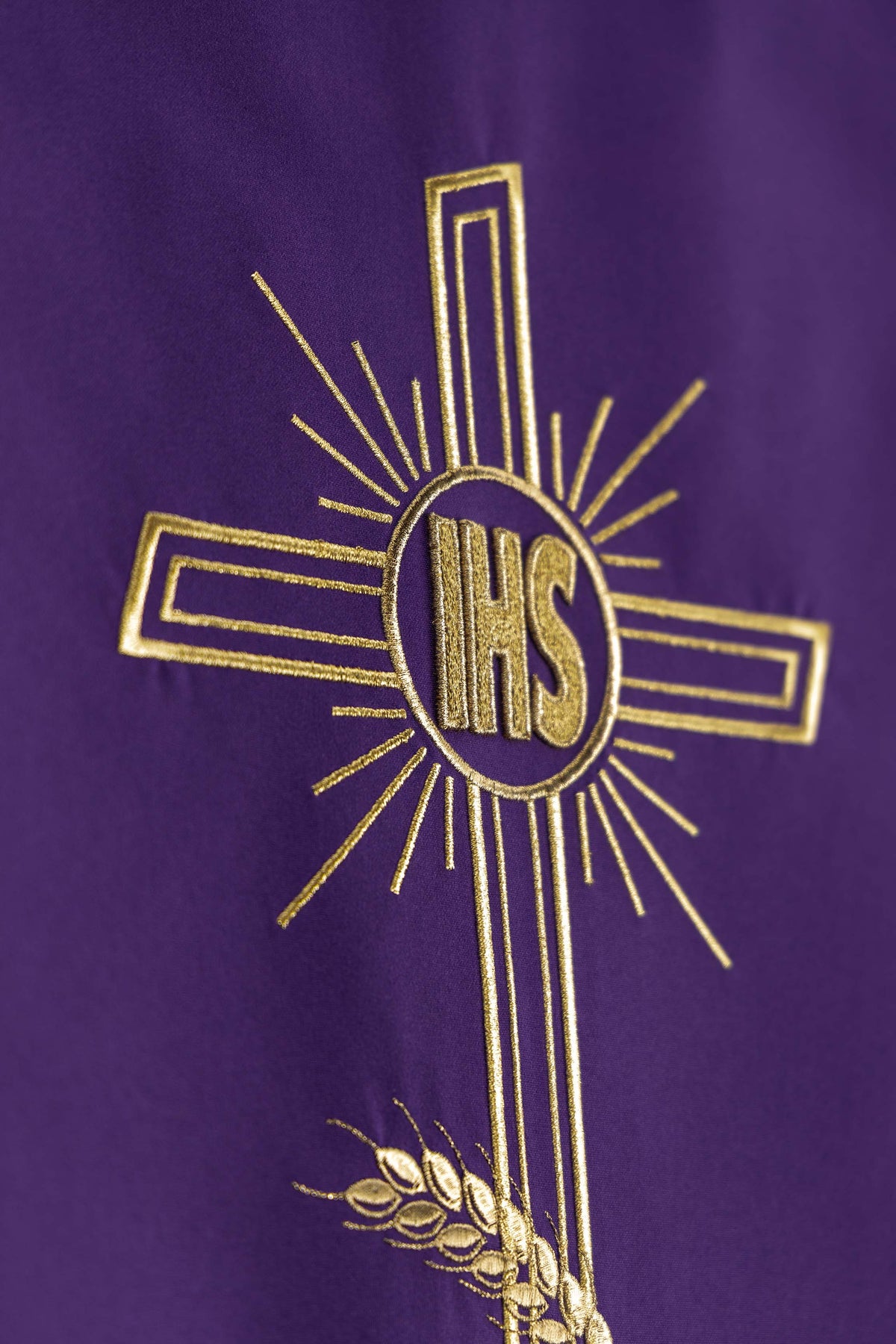
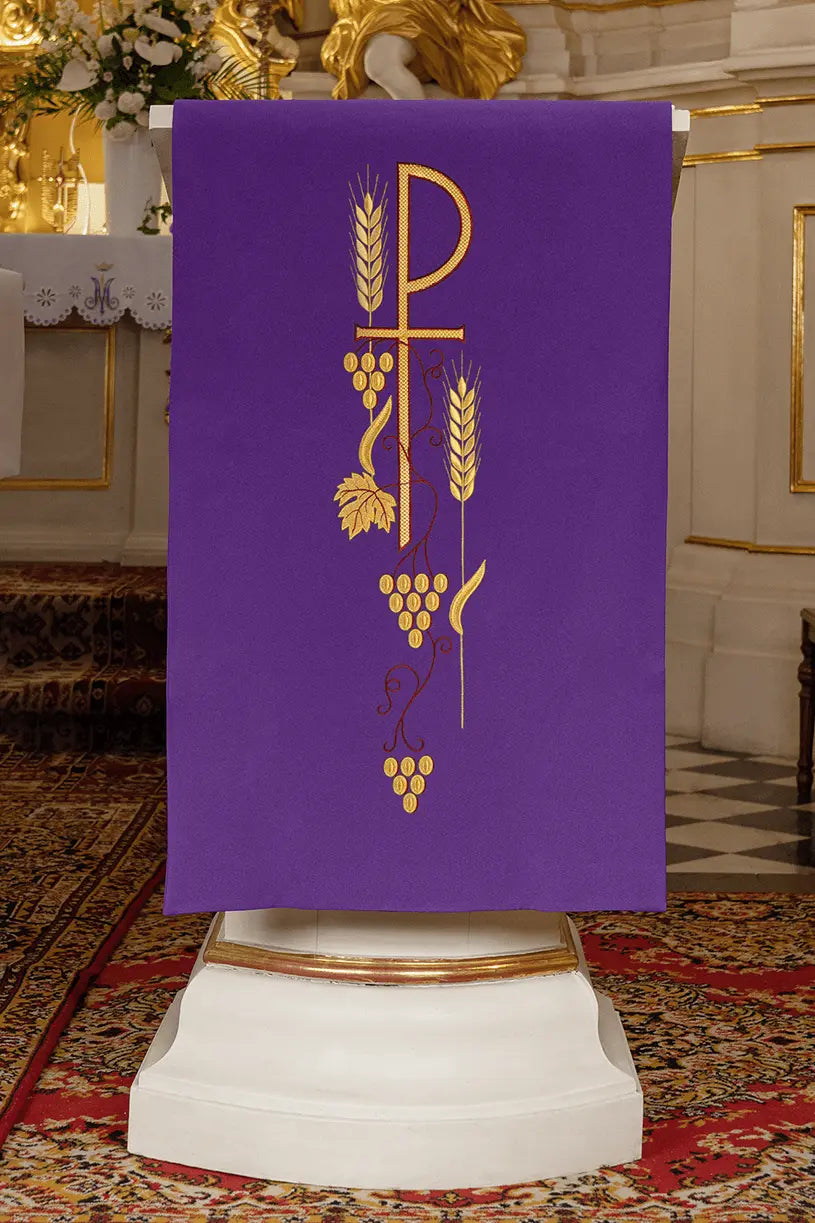
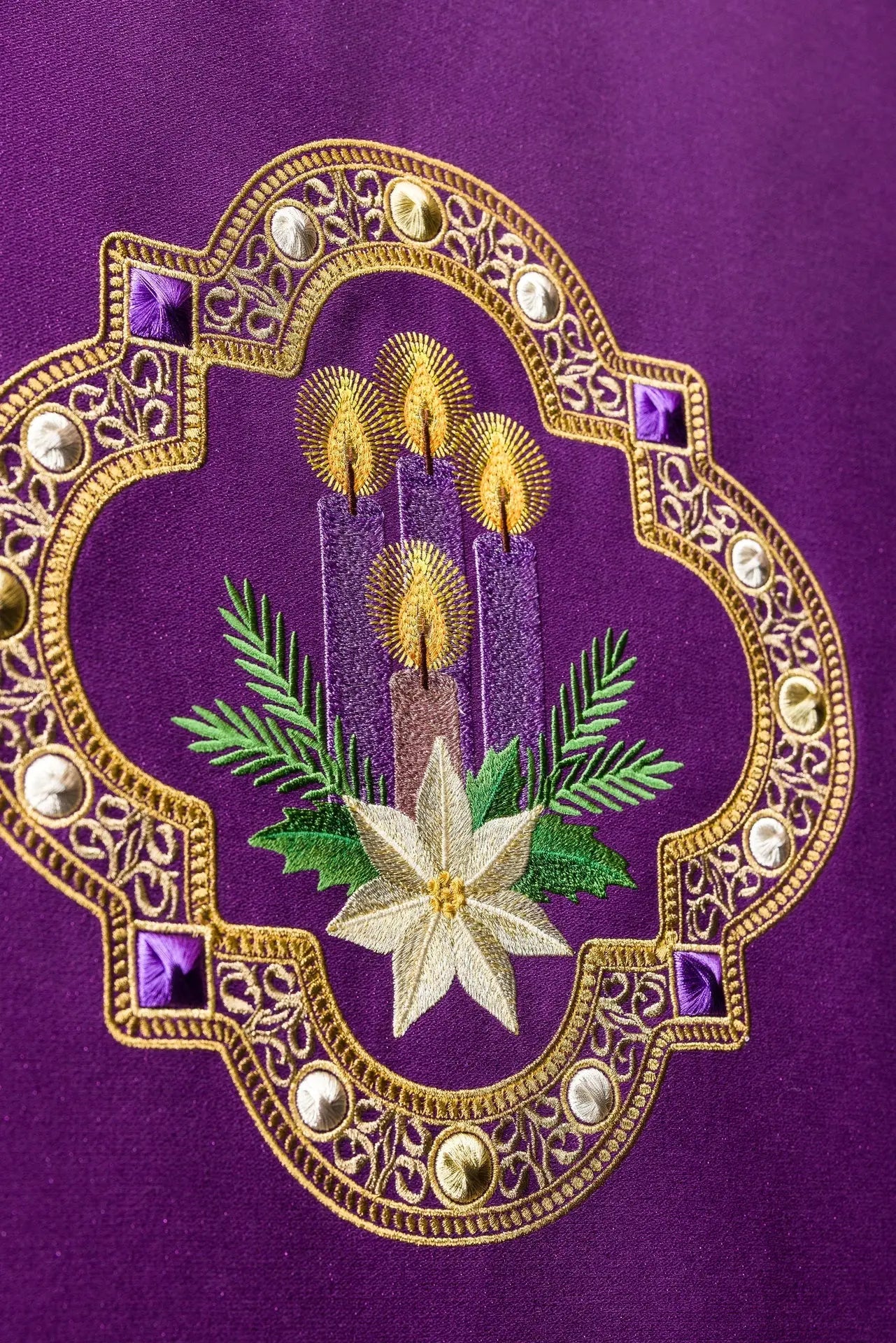
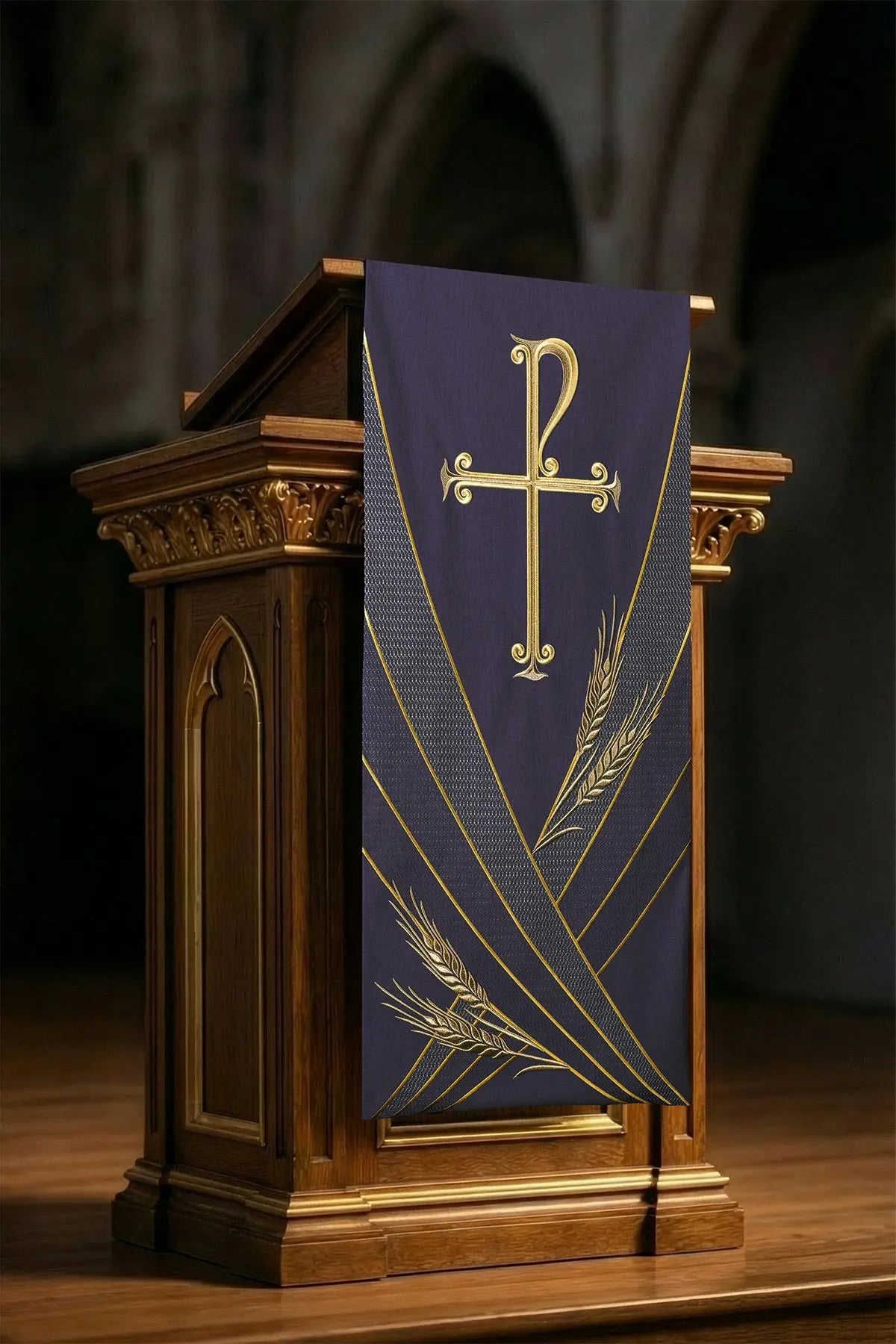
Purple: used during Advent and Lent, supporting a visual language of preparation, penance and conversion. For seasonal options, browse purple pulpit covers.
-
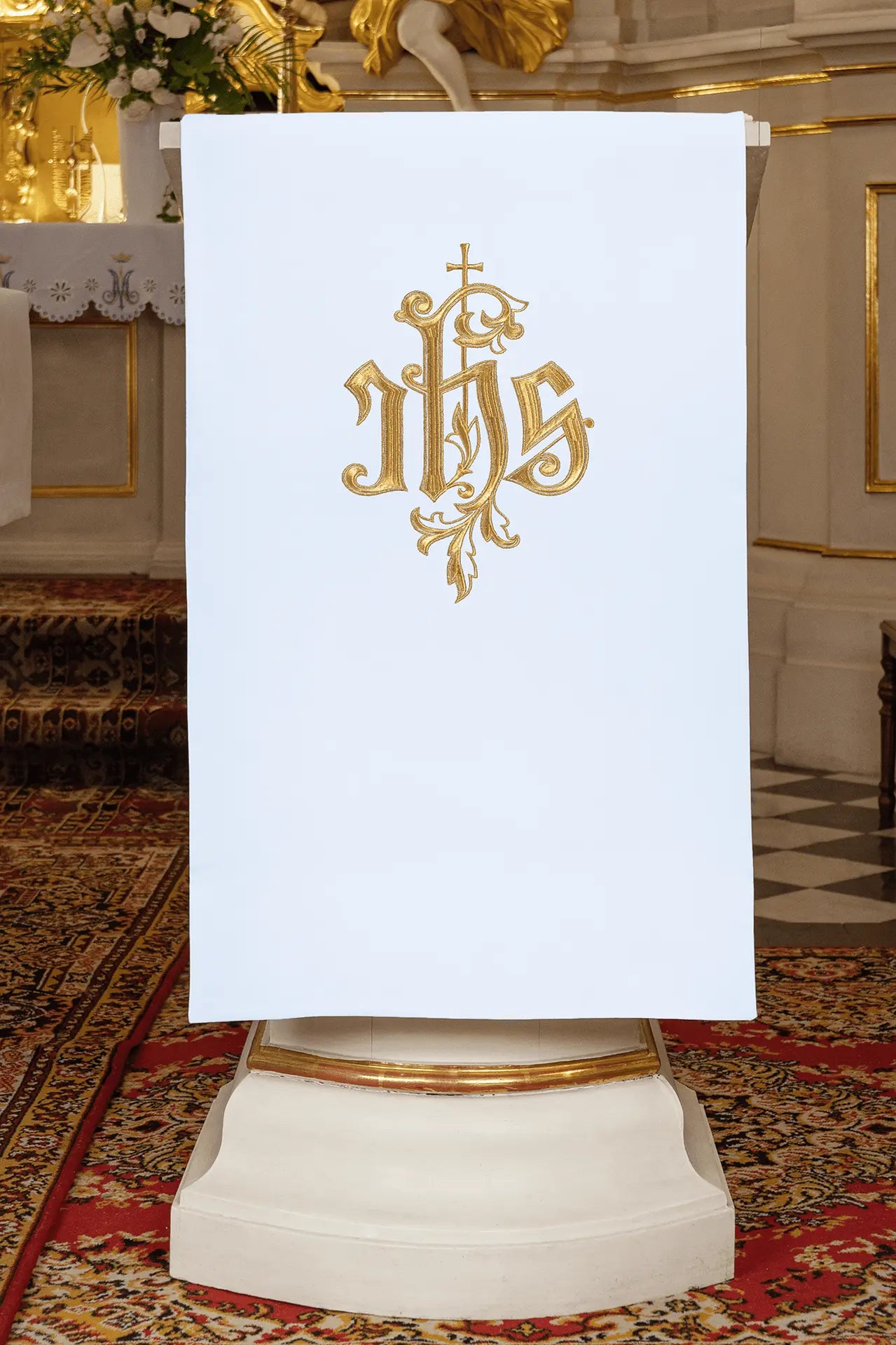
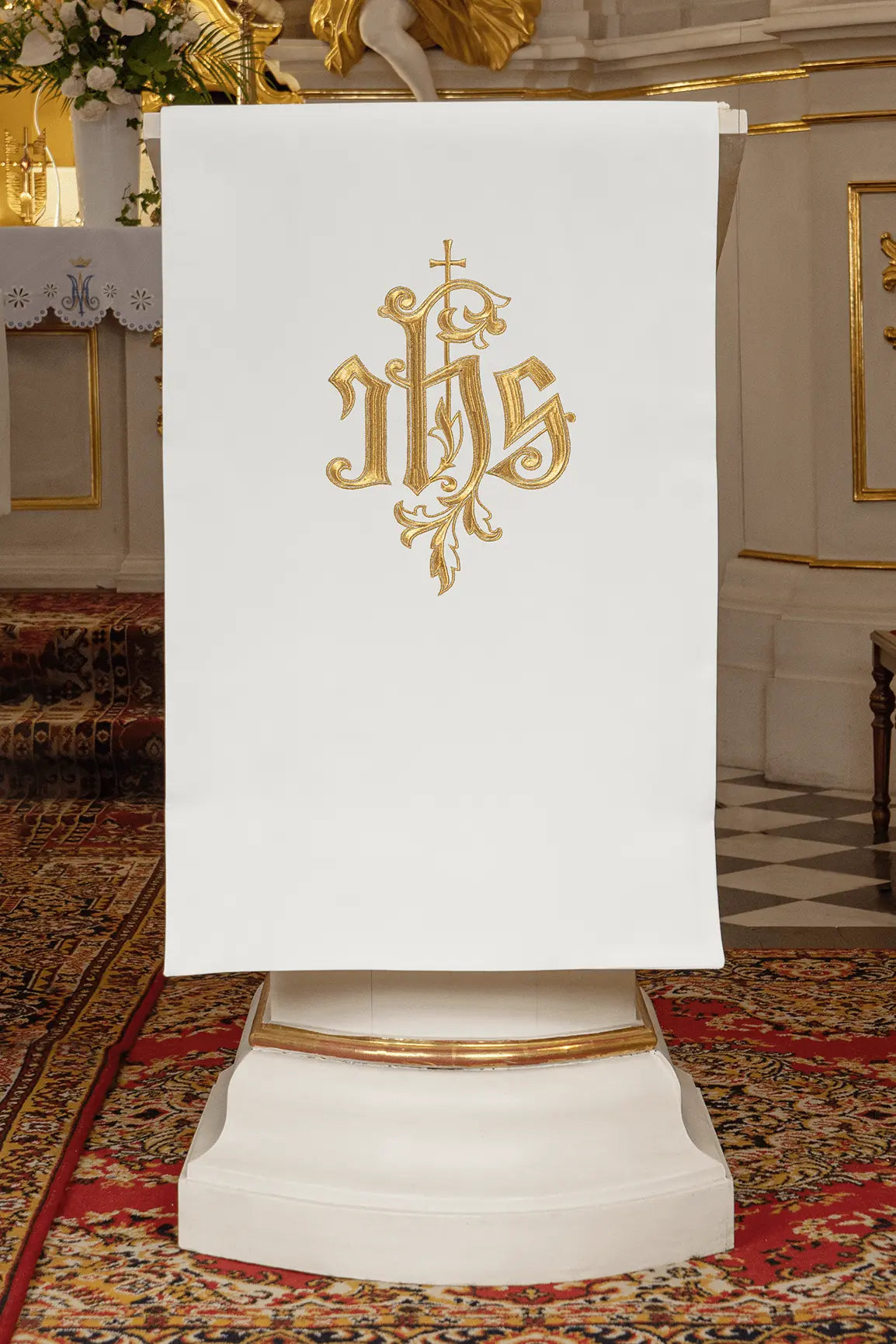
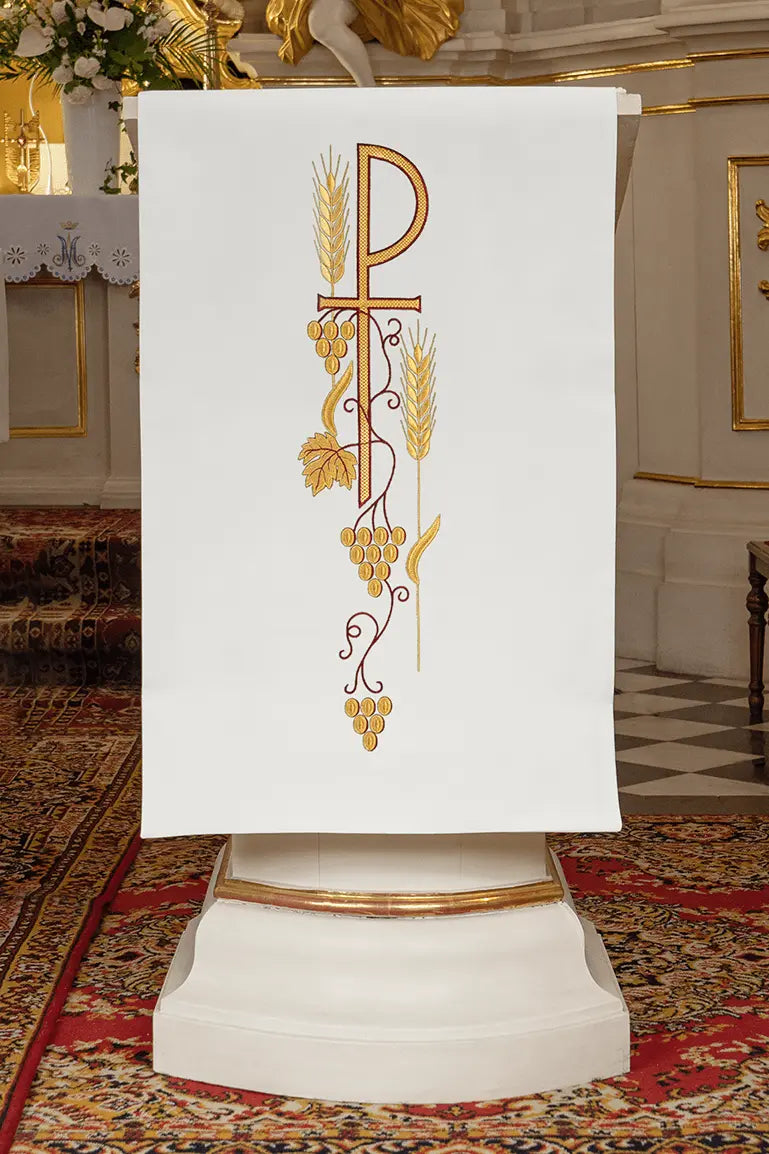
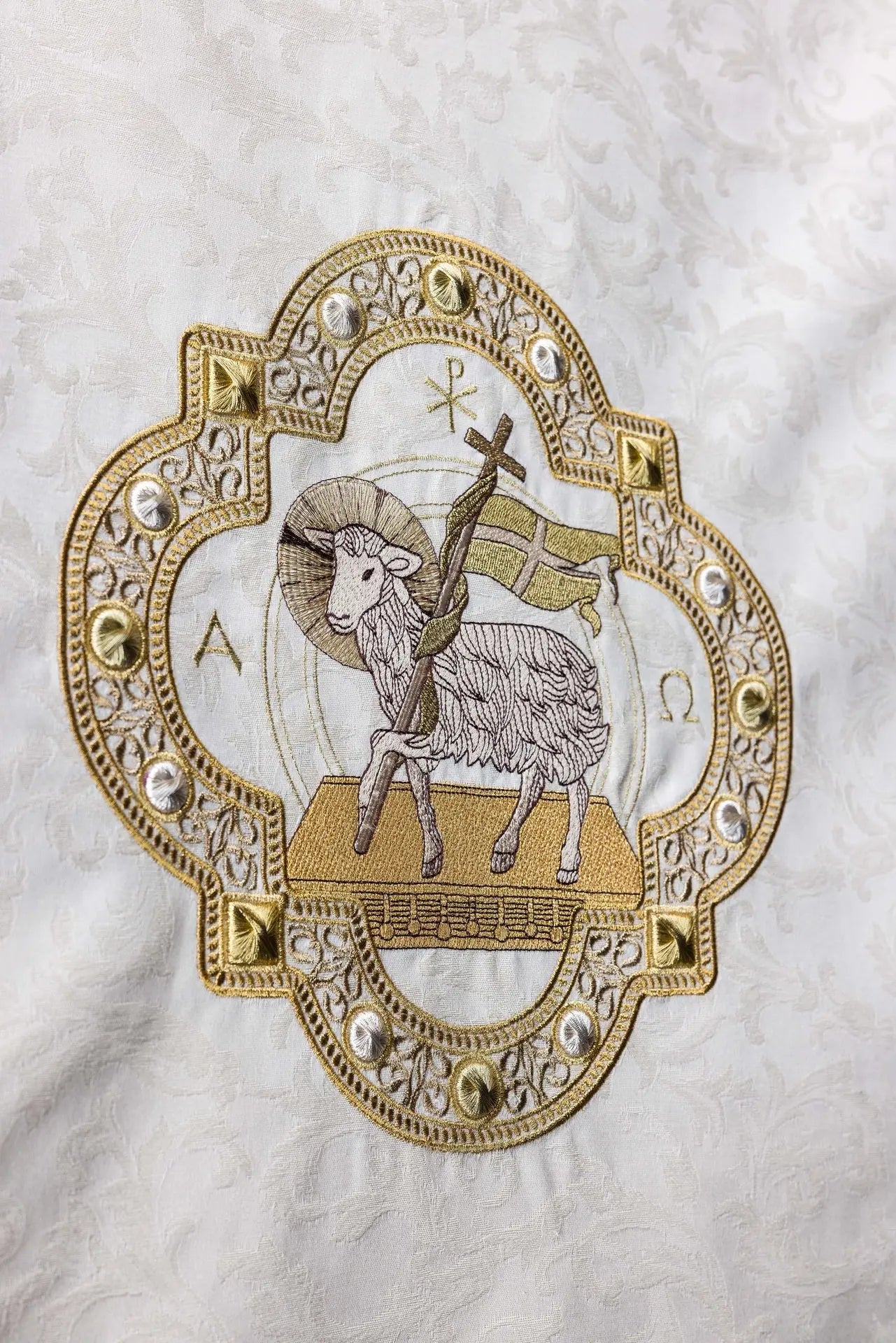
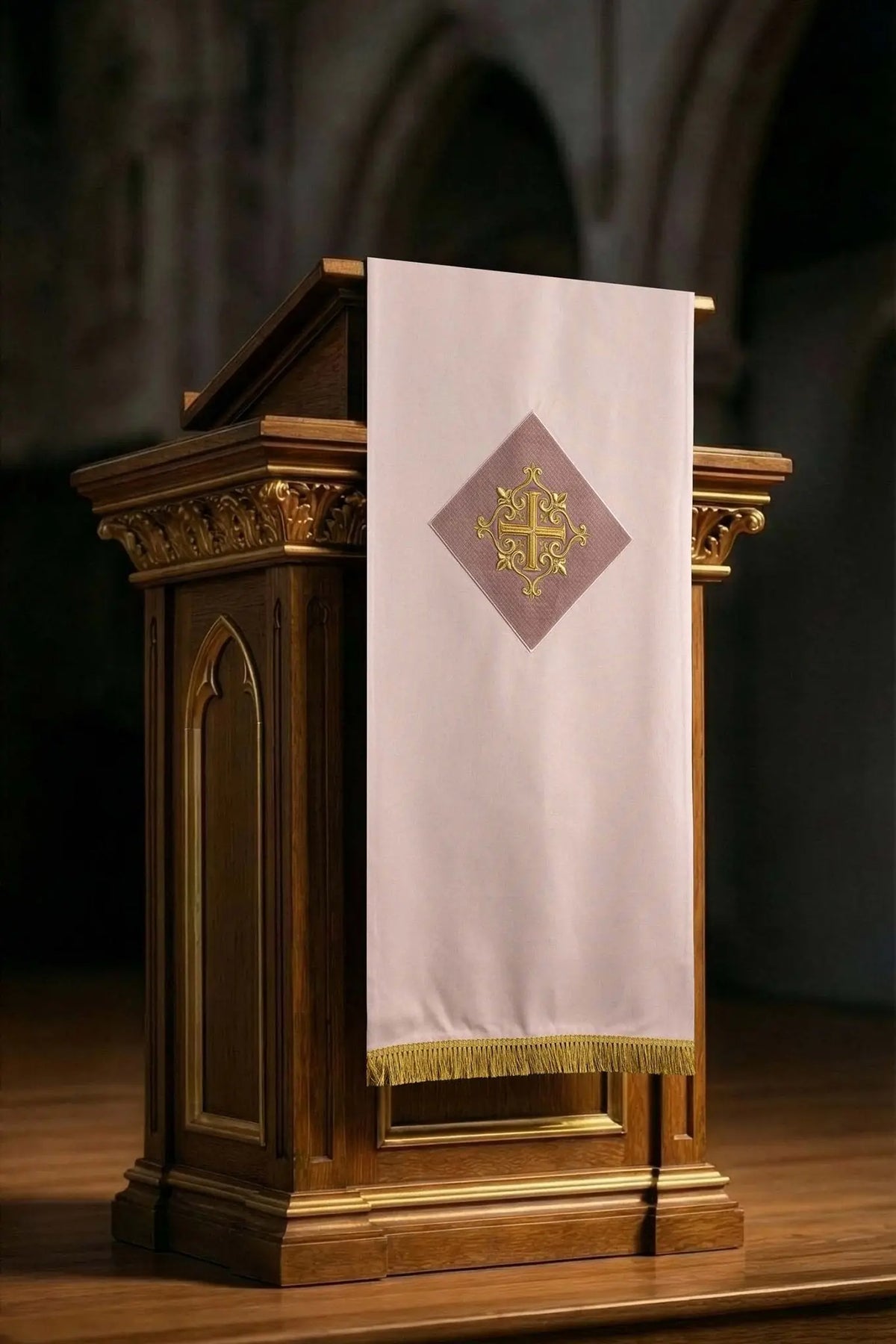
White and ecru: used for Christmas, Easter, many solemnities, feasts of the Lord and joyful celebrations. White pieces can be explored in white pulpit covers.
-
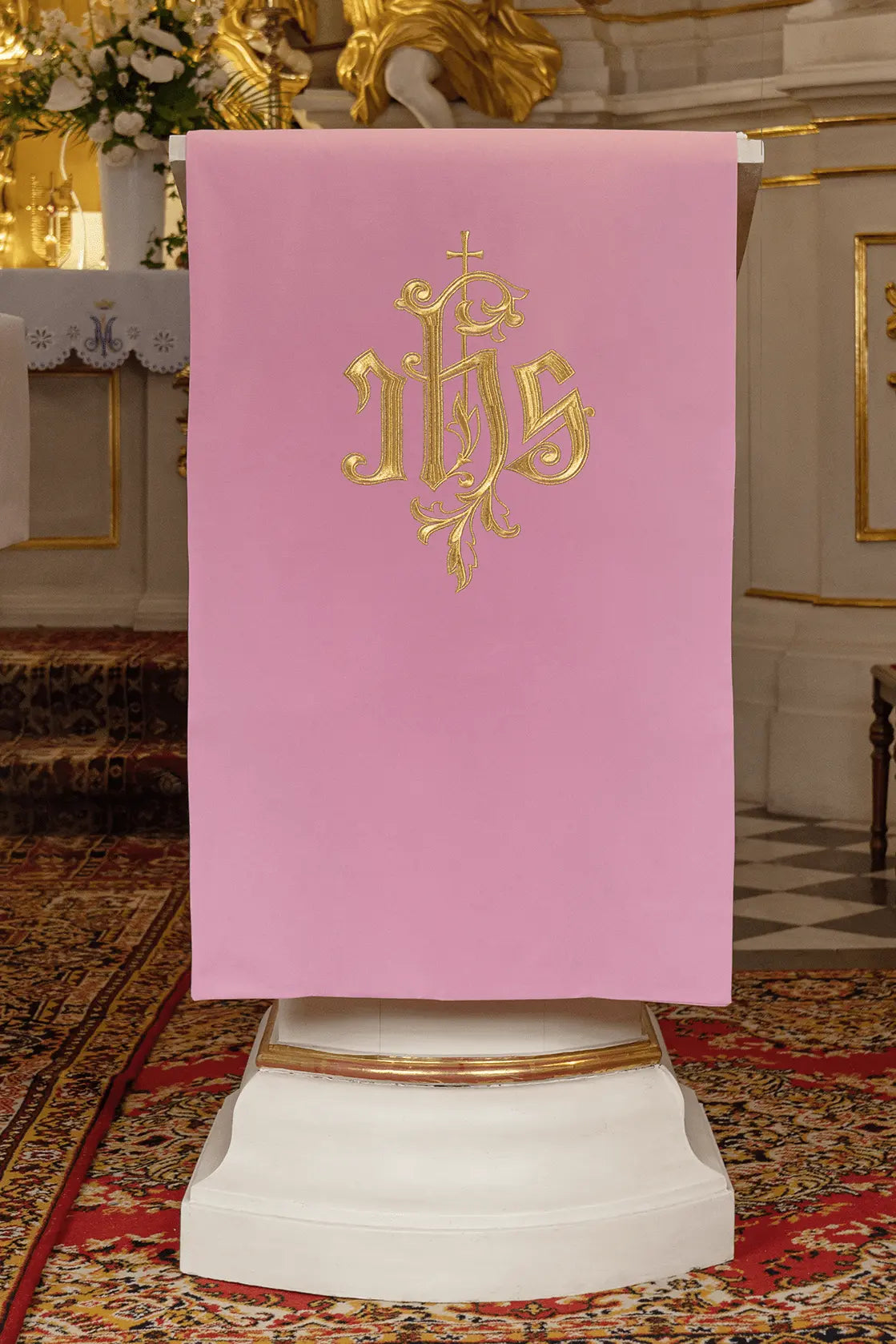
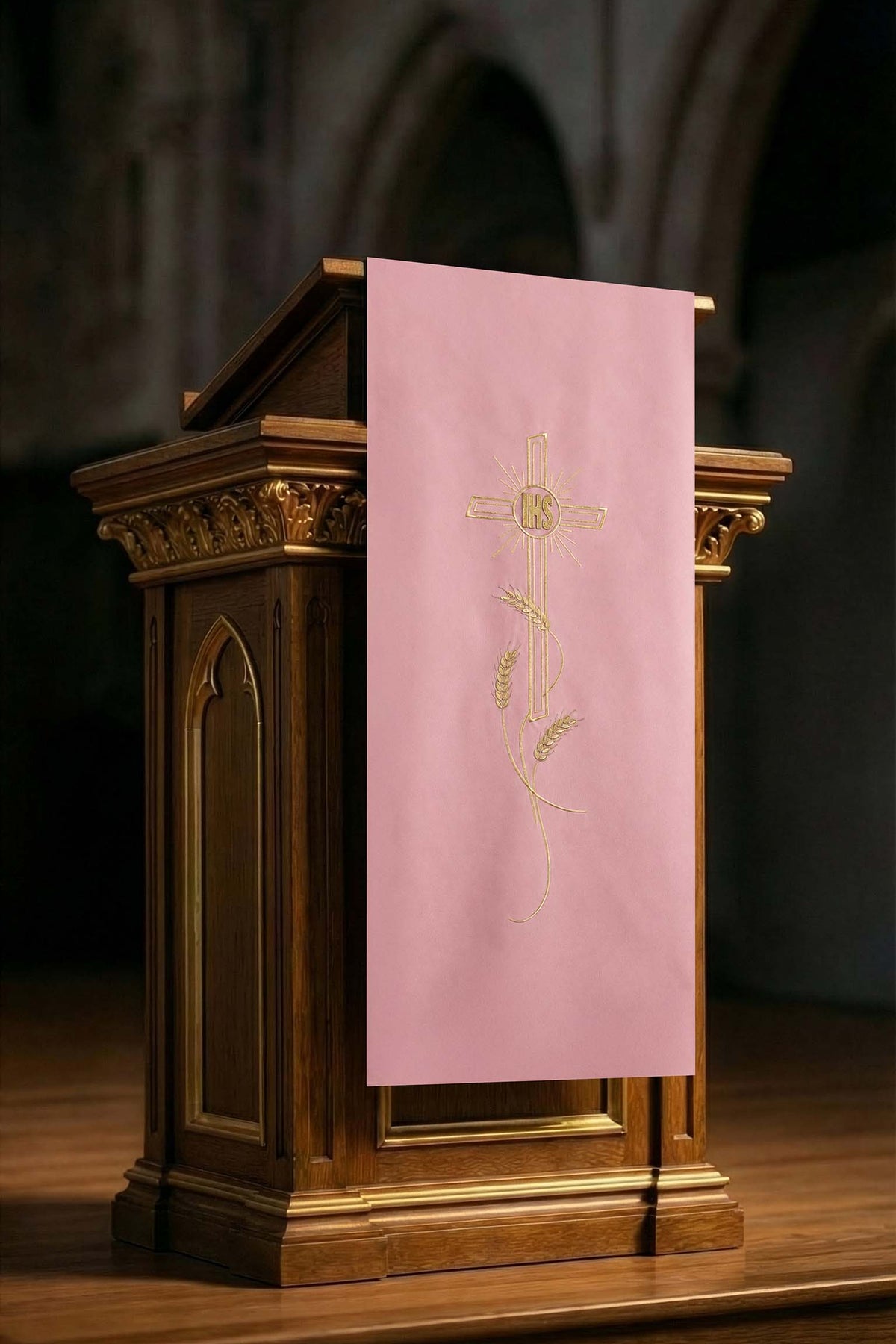
Rose: used for Gaudete Sunday in Advent and Laetare Sunday in Lent, expressing restrained joy within a penitential season. See rose pulpit covers.
-
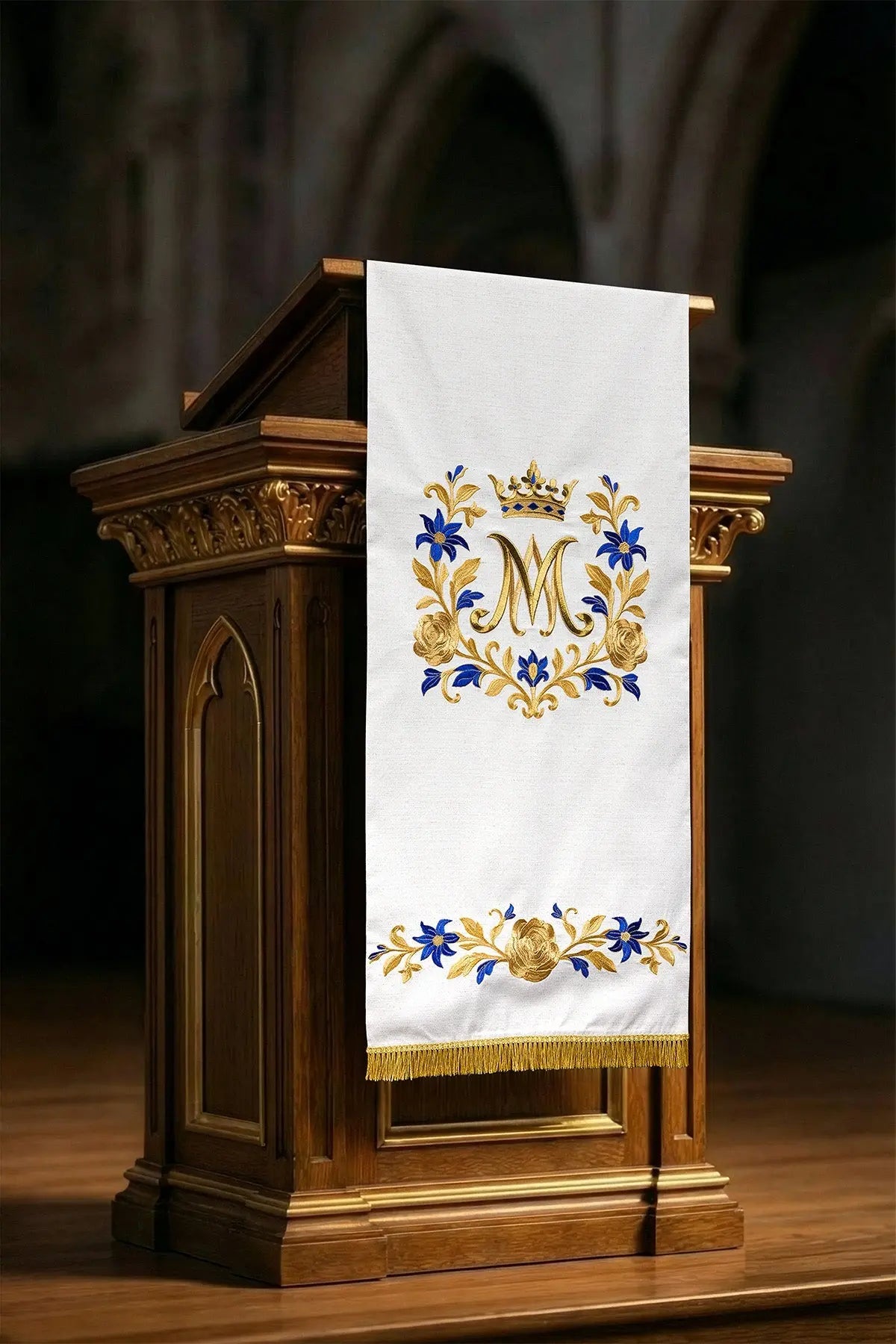
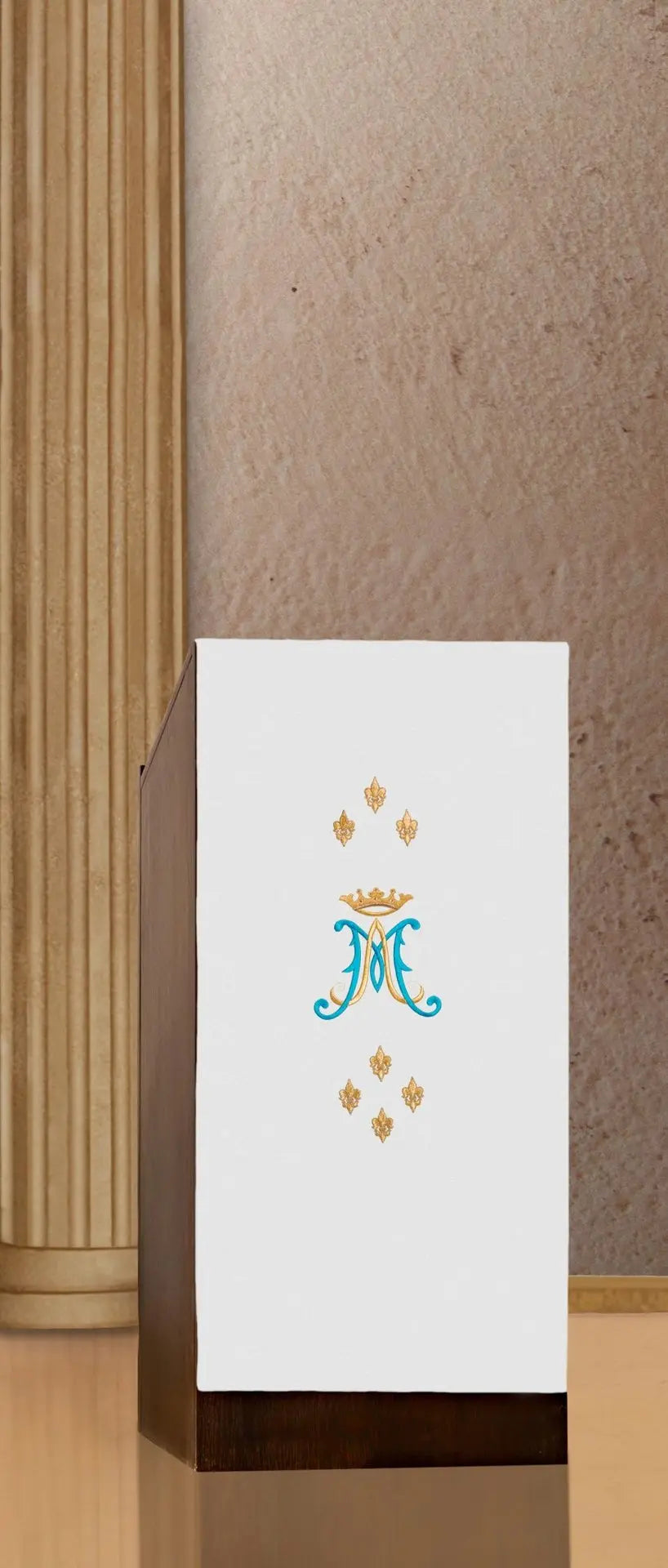
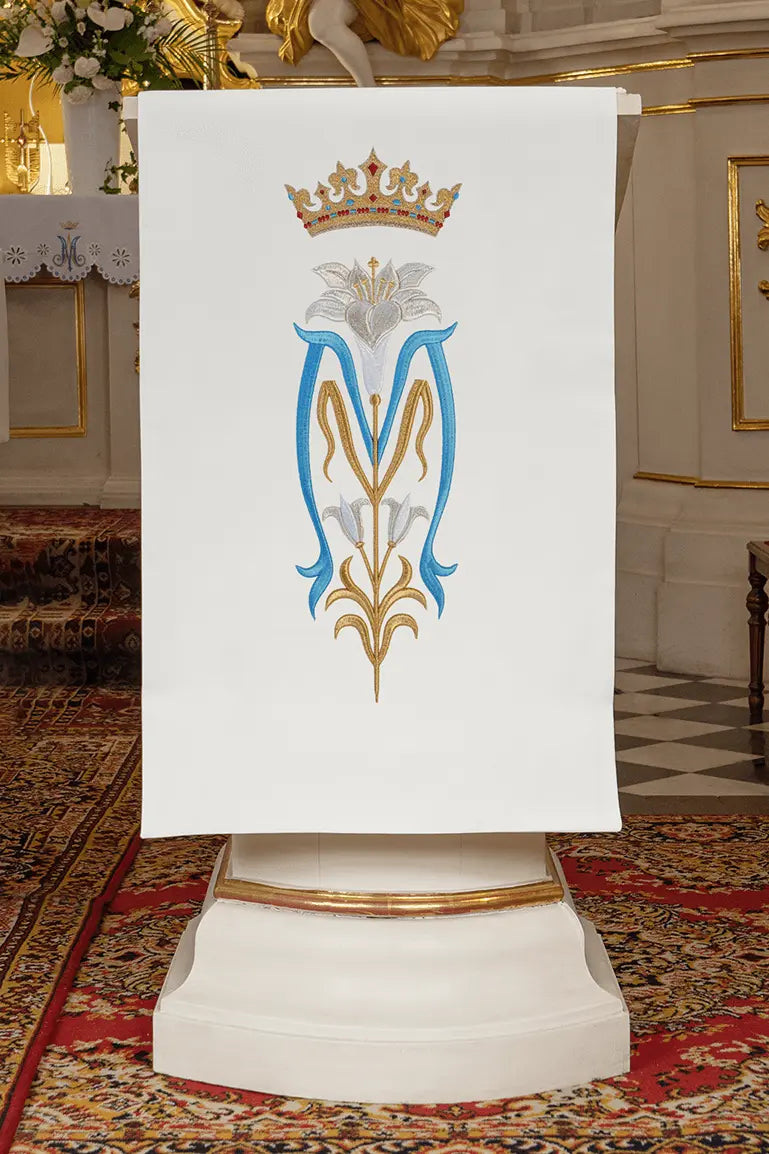
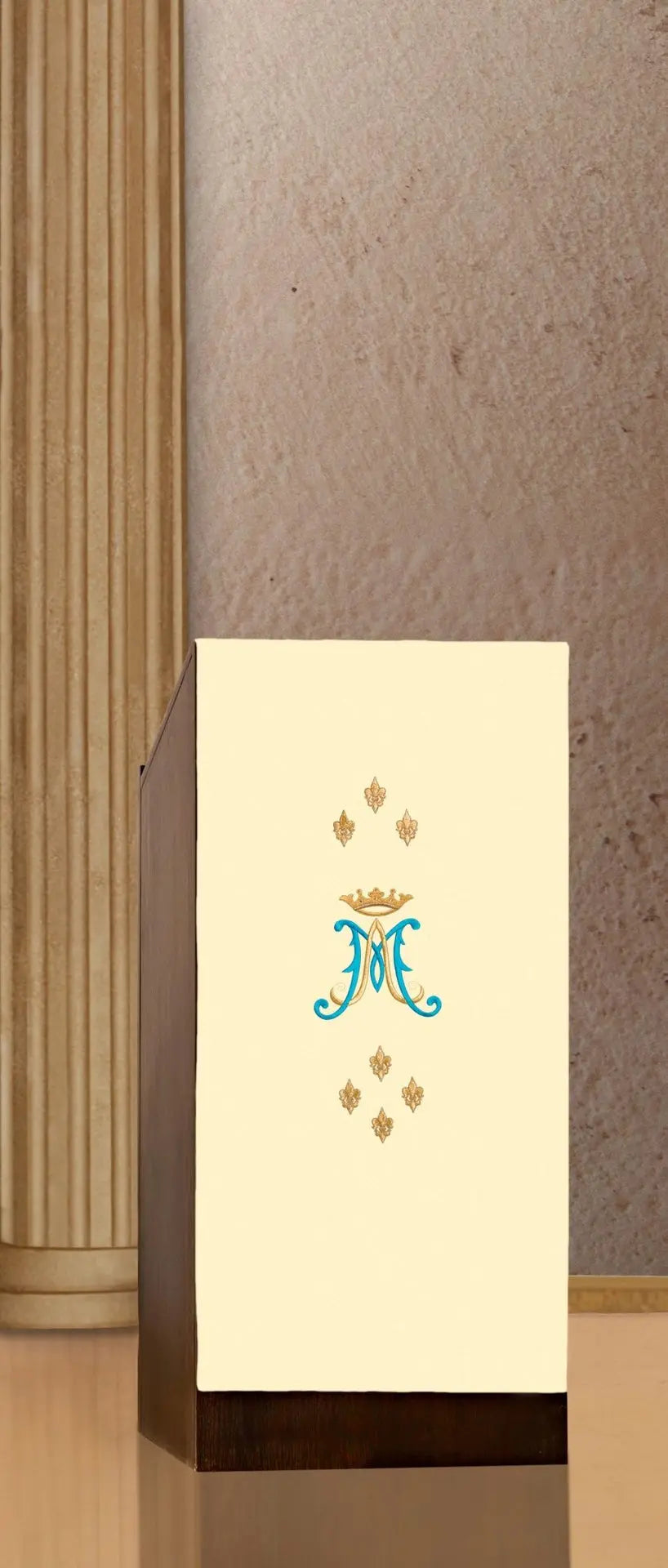
Marian: chosen for Marian solemnities, feasts, votive Masses and devotional services. For related designs, visit Marian pulpit covers.
Embroidery, Motifs and Liturgical Meaning
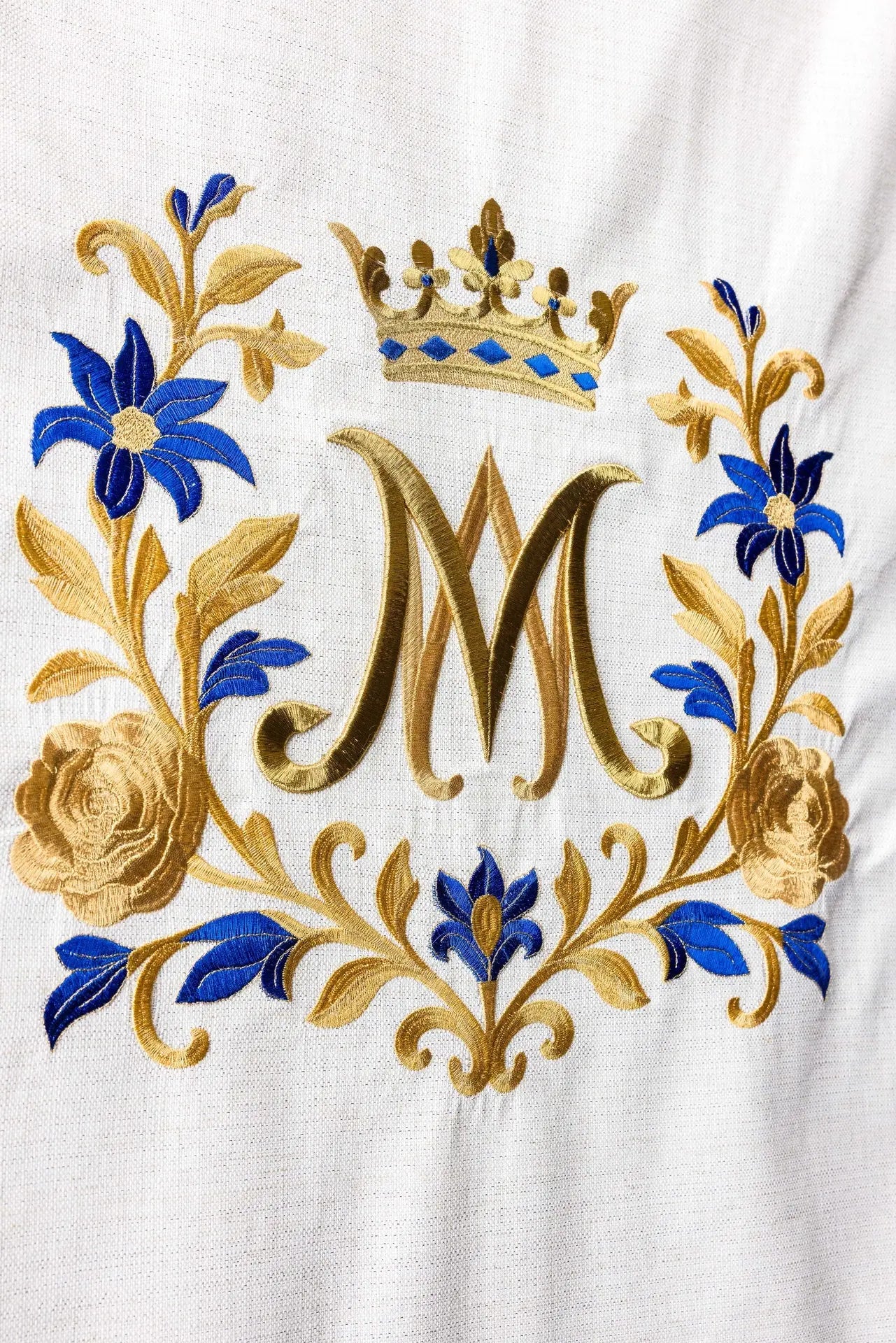
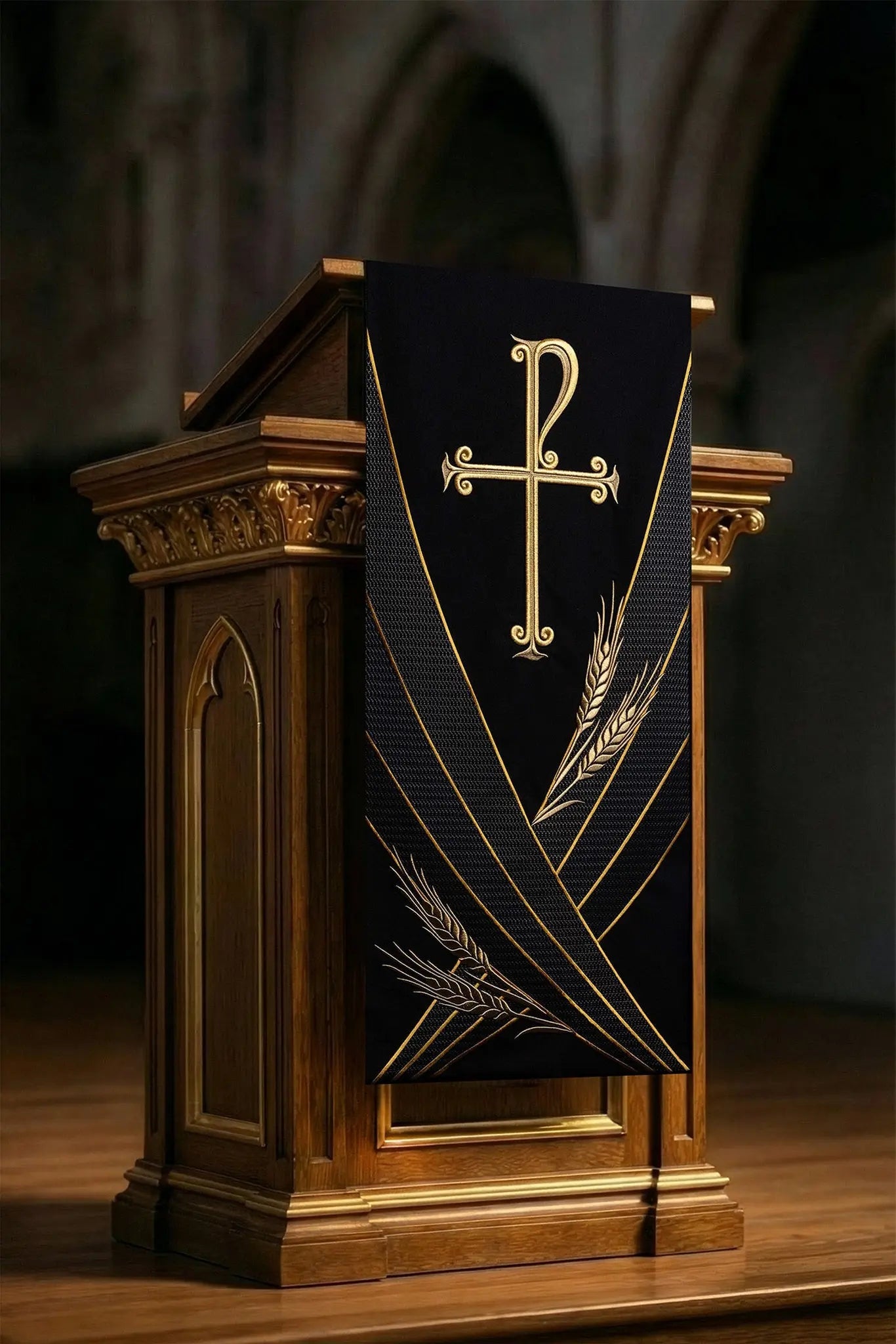
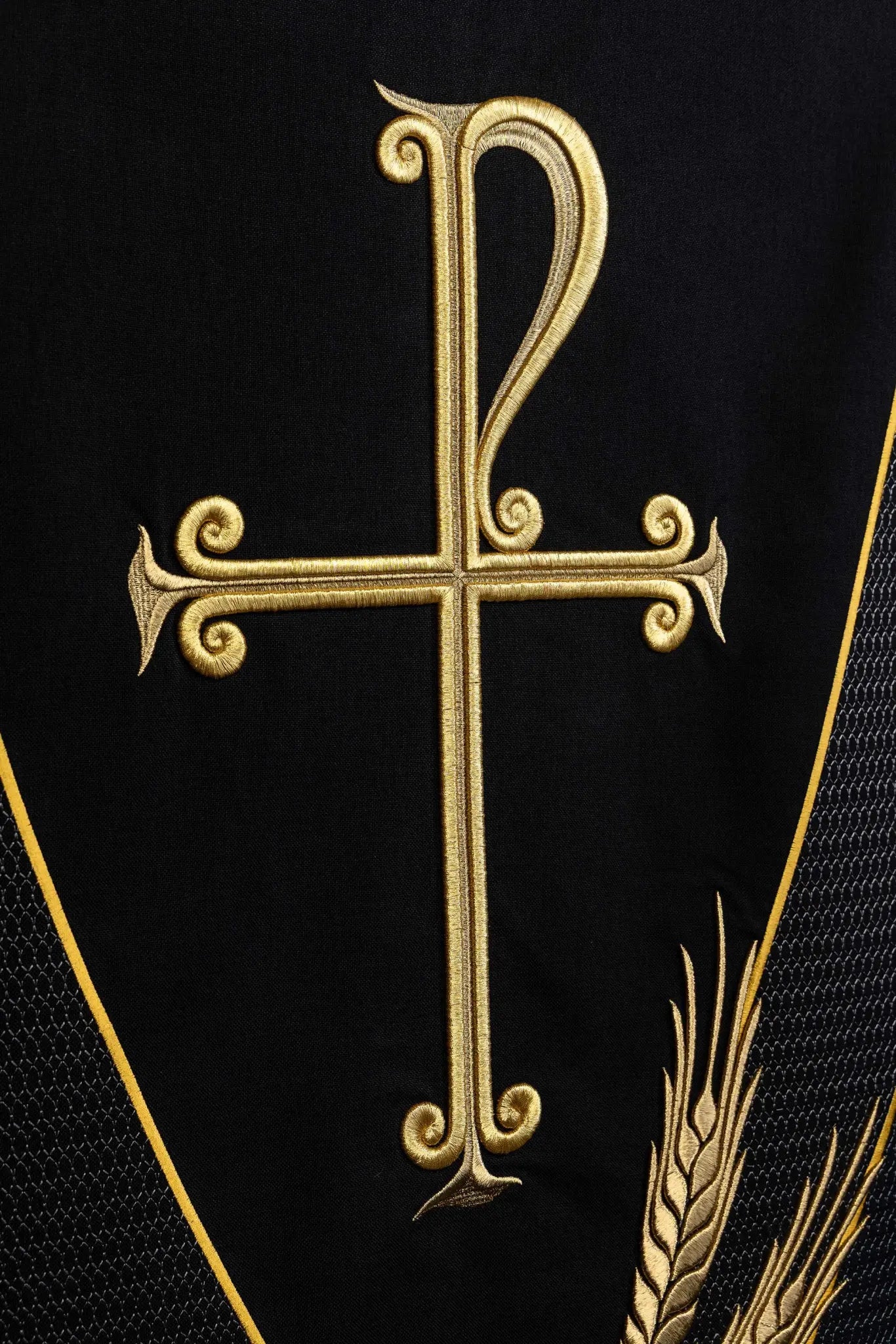
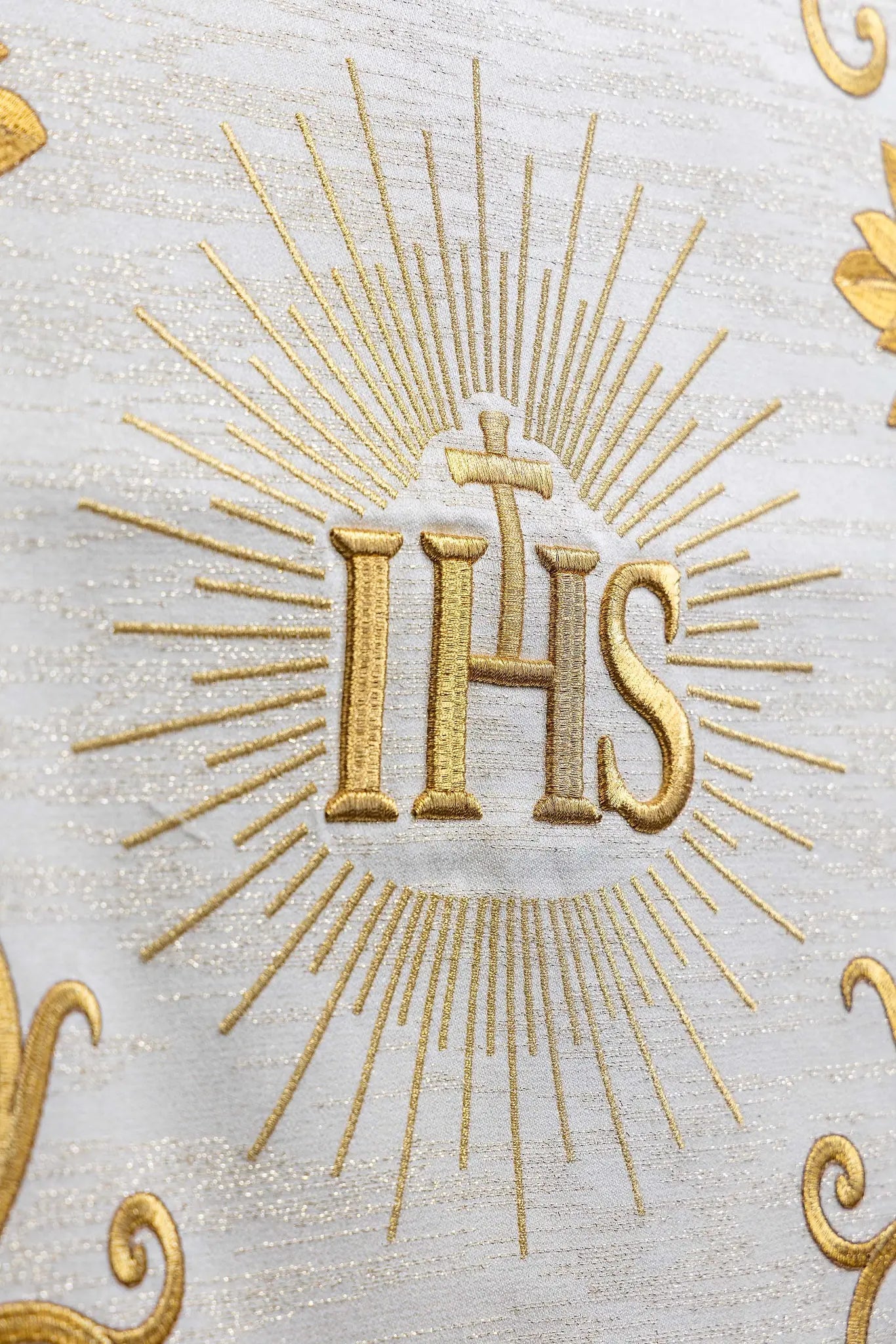
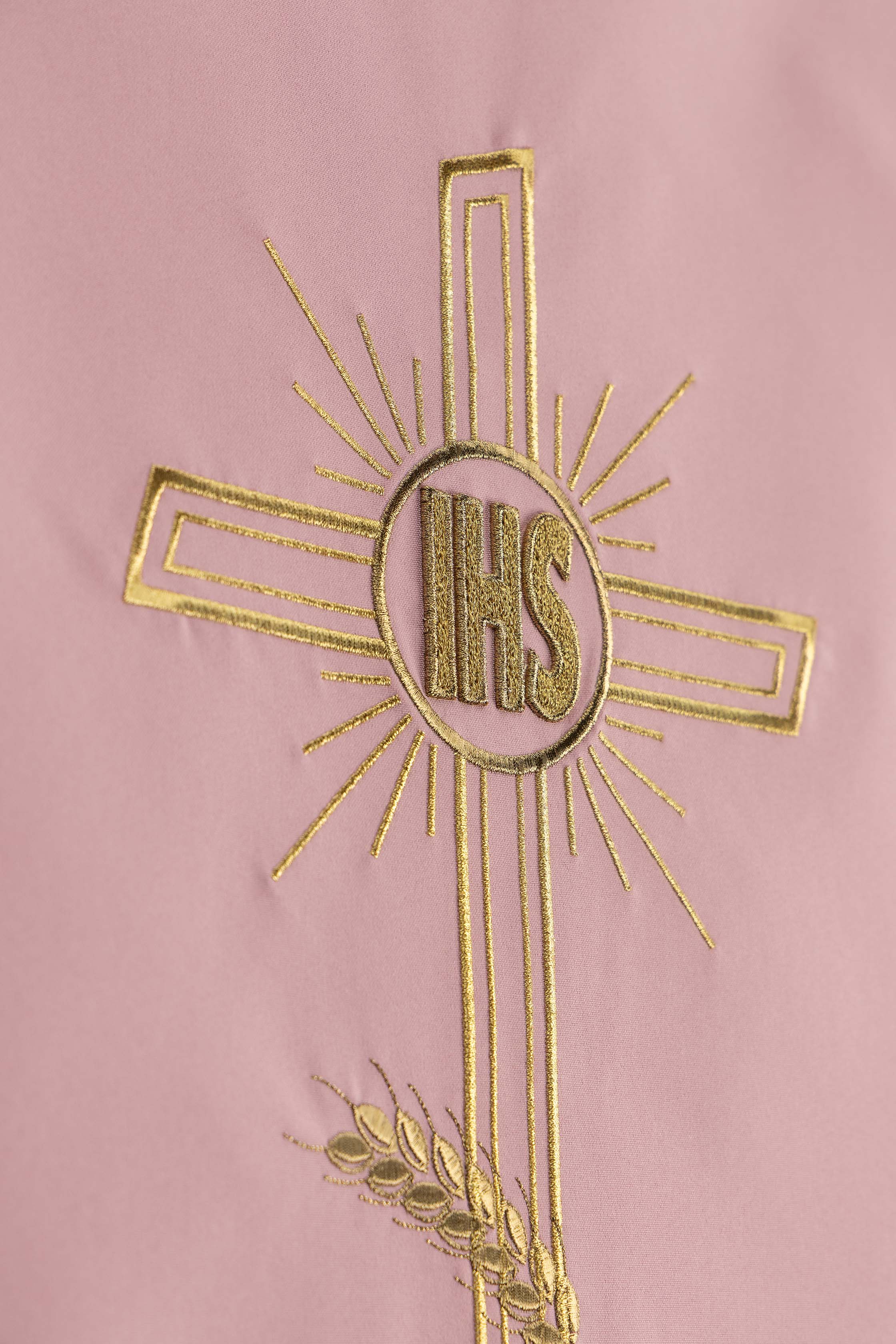
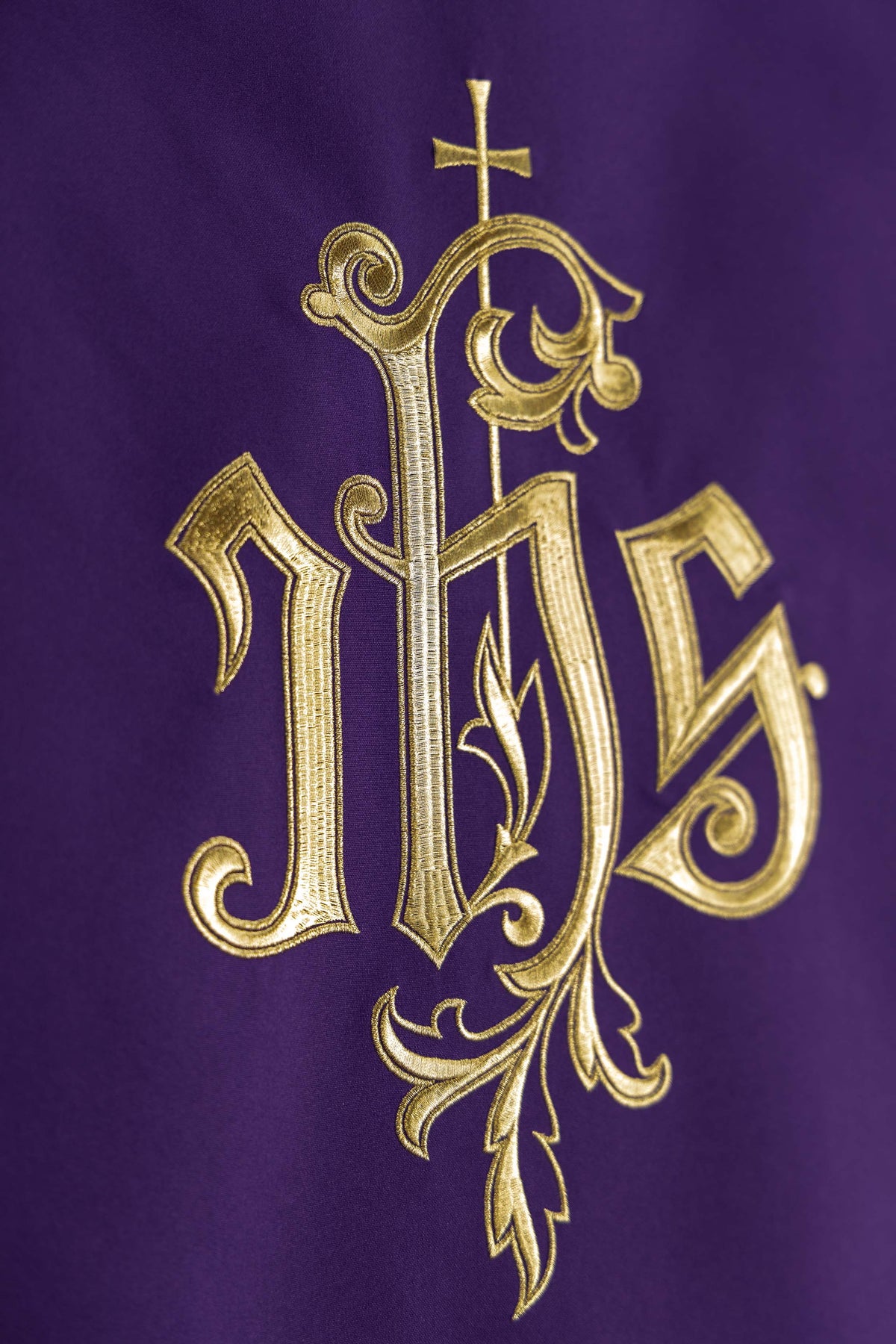
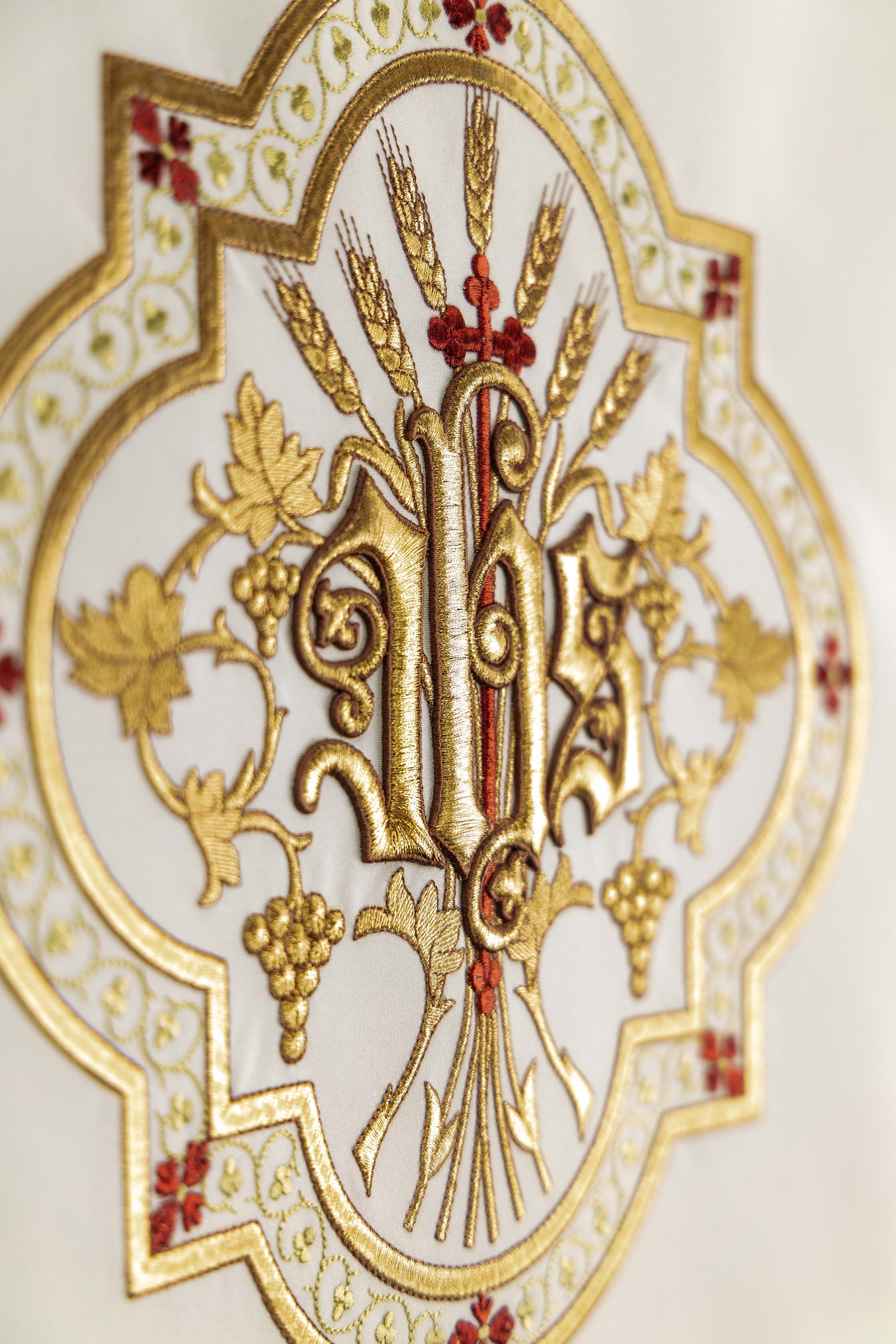
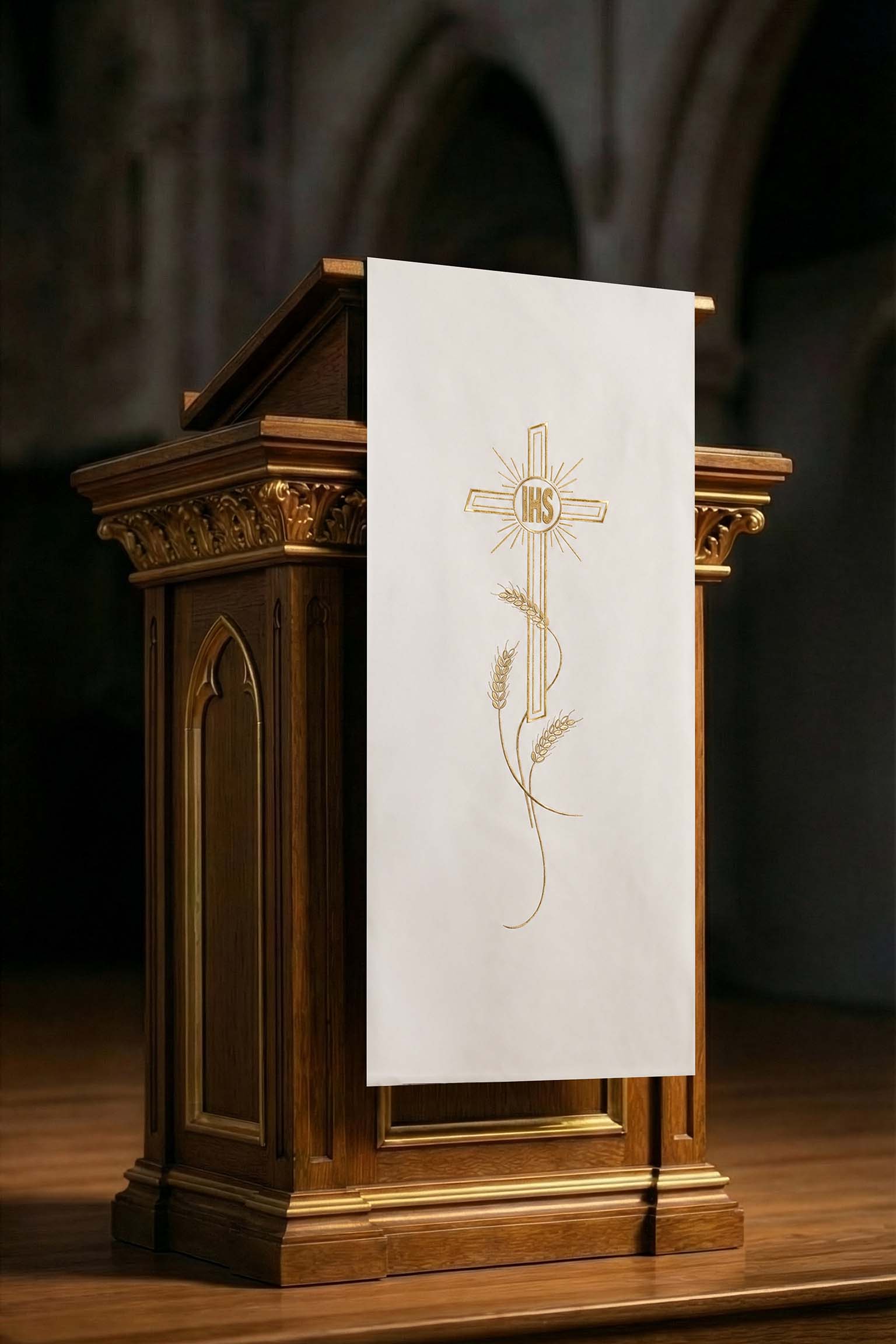
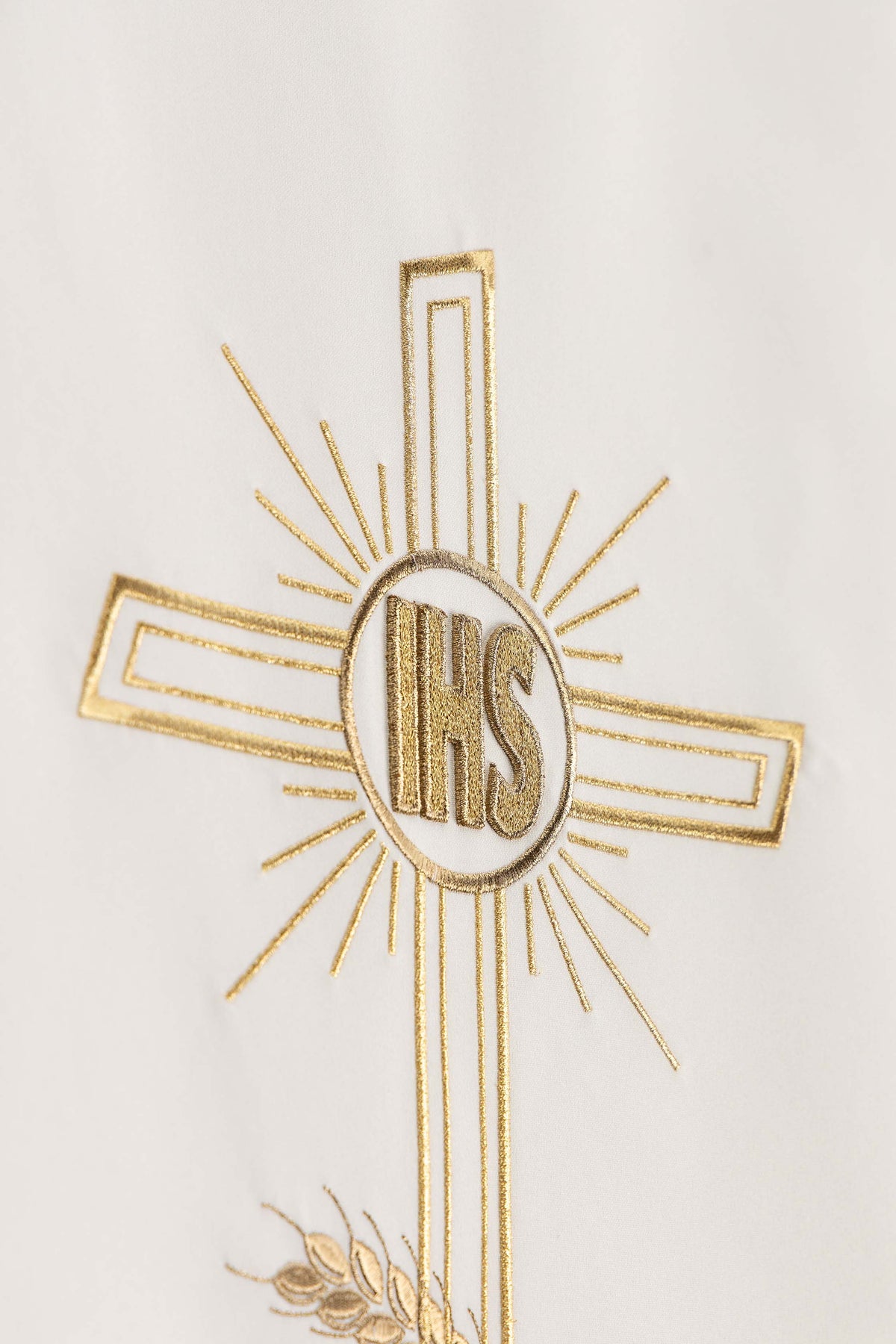
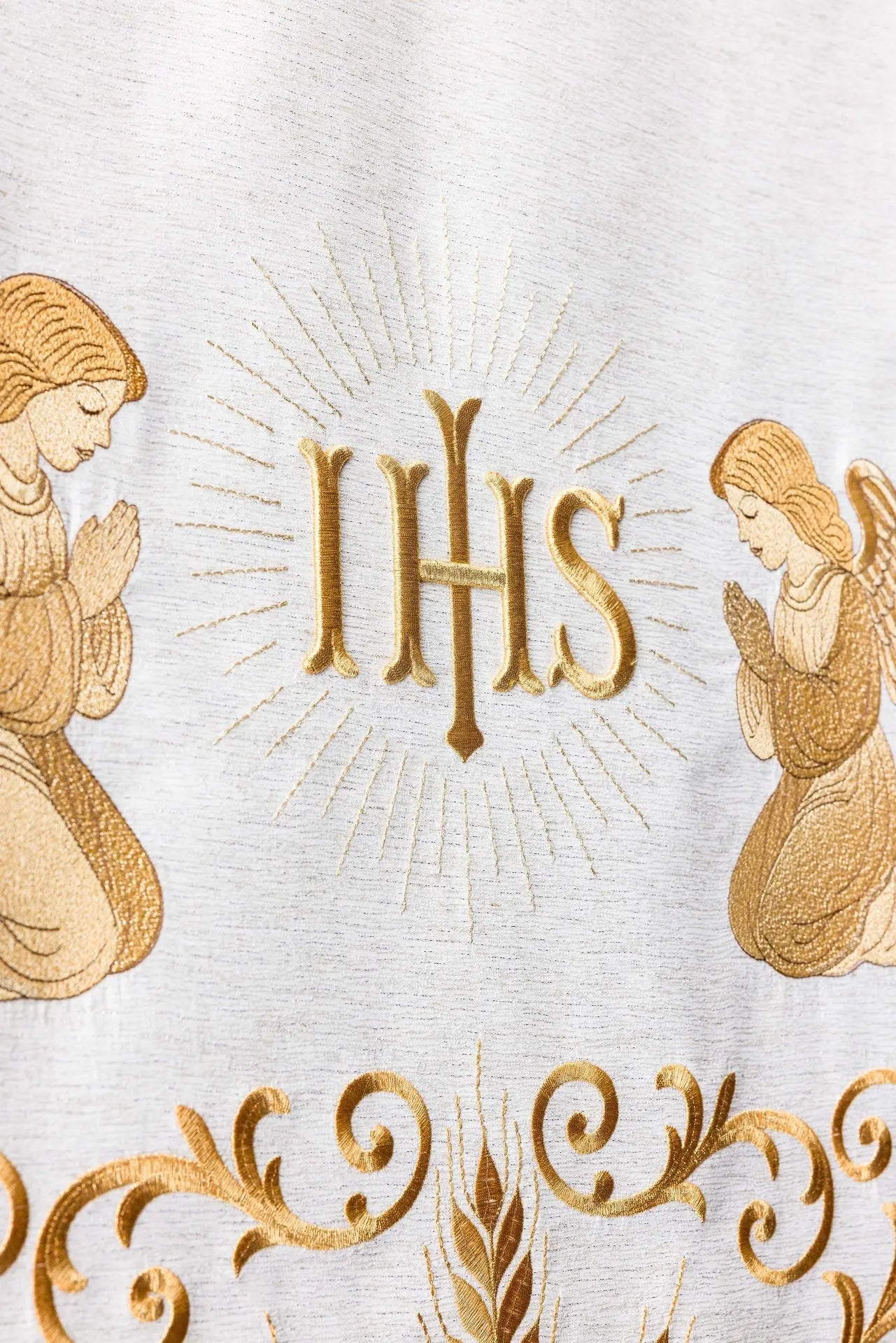
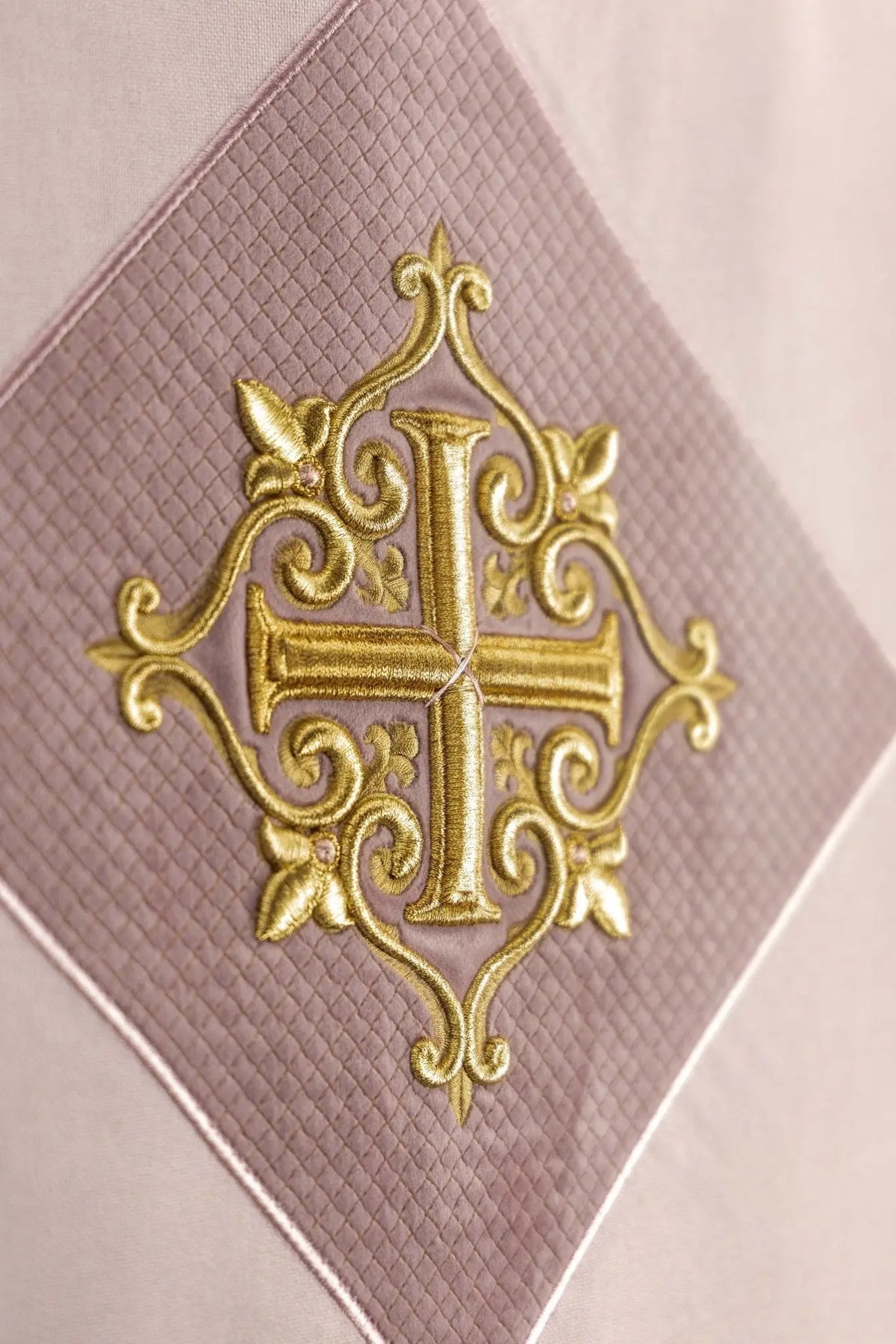
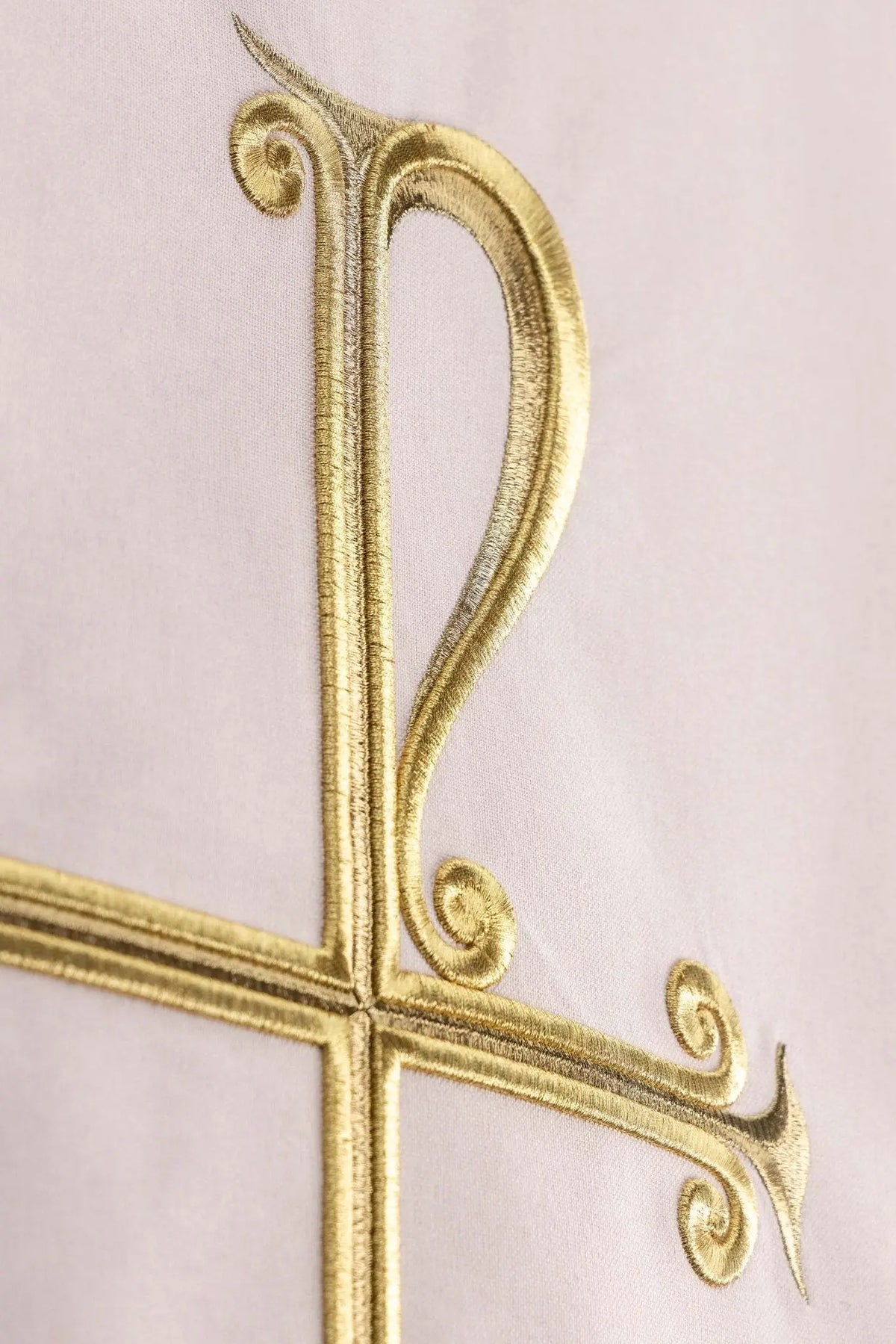
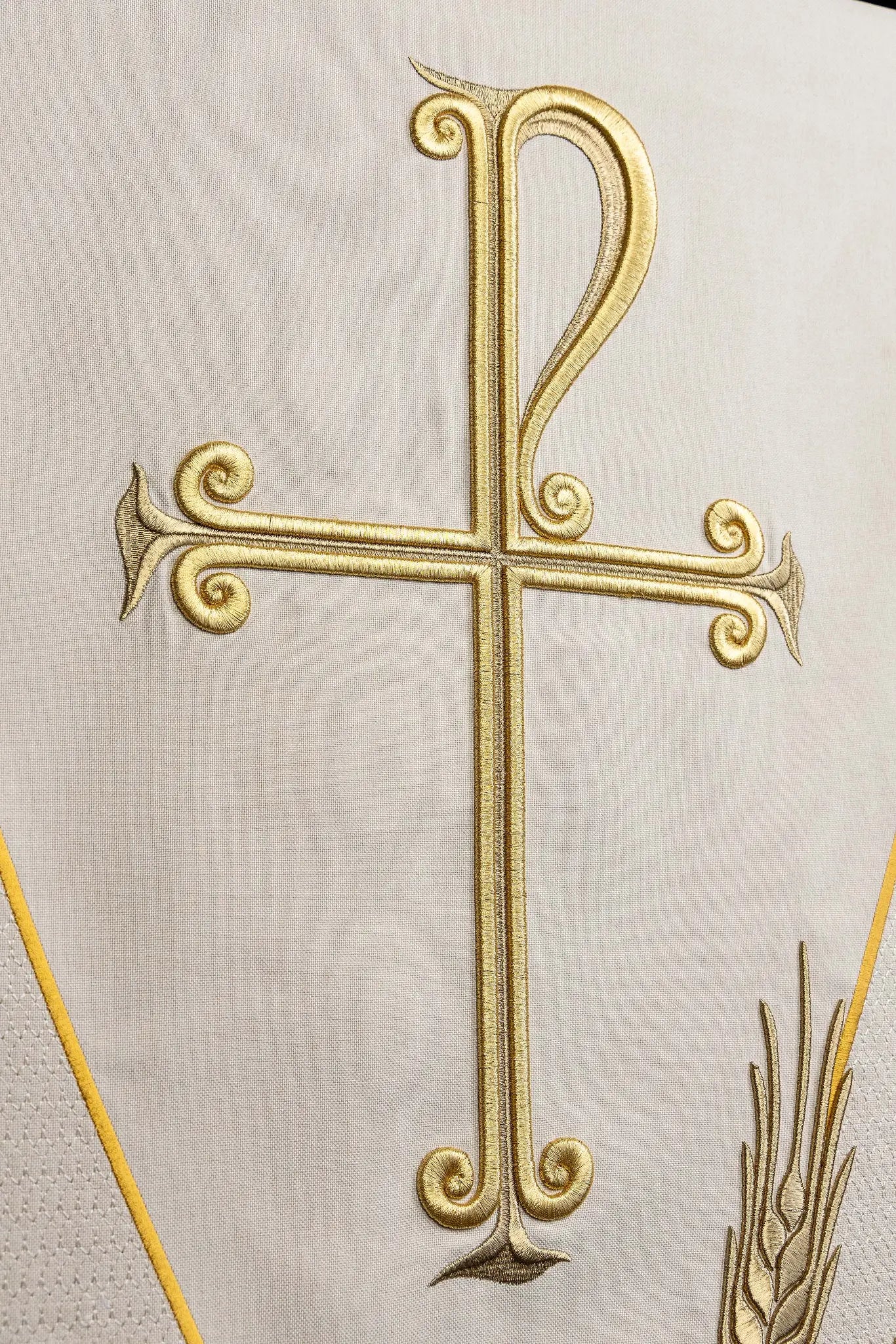
Embroidery gives a pulpit cover its liturgical focus. An IHS motif points directly to the Holy Name of Jesus and is one of the most versatile choices for parish use. A cross is suitable for many seasons and can be chosen in a simple or more ornate form. Eucharistic symbols such as wheat, grapes, chalice-related imagery or the Lamb of God connect the proclamation of the Word with the sacrifice of the Mass. Marian monograms, crowns and floral ornaments are especially useful in churches where devotion to the Blessed Virgin Mary is important.
The motif should match the intended use of the cover. A parish that needs one cover for frequent use may prefer a classic IHS or cross design because it works across many celebrations. A chapel preparing for a Marian month, a shrine or a parish under a Marian title may choose a cover with a Marian monogram or crown. For Christmas, Easter and solemn parish feasts, white or ecru covers with gold embroidery create a bright and festive appearance. For Lent and Advent, a more restrained purple design keeps the focus on preparation and prayer.
Coordinating the Lectern with the Altar and Sanctuary
A well-chosen pulpit cover should not compete with the altar. It should echo the sanctuary textiles while preserving the special role of the ambo. If the altar already uses richly embroidered frontals or large decorative textiles, a simpler lectern cover may be better. If the sanctuary is visually plain, a more ornamented pulpit cover can help define the area of proclamation and bring balance to the space.
For churches building a coordinated textile set, pulpit covers can be matched with altar tablecloths with embroidered frontals or with seasonal altar cloths. The design does not need to be identical in every detail; it is often enough for the color, embroidery tone and main symbol to be harmonious. A white IHS pulpit cover, for example, may pair well with a white altar cloth carrying Eucharistic ornament. A Marian pulpit cover can be used with Marian altar linens, blue accents where permitted by local custom, or white and gold sanctuary textiles.
Material, Finish and Practical Use
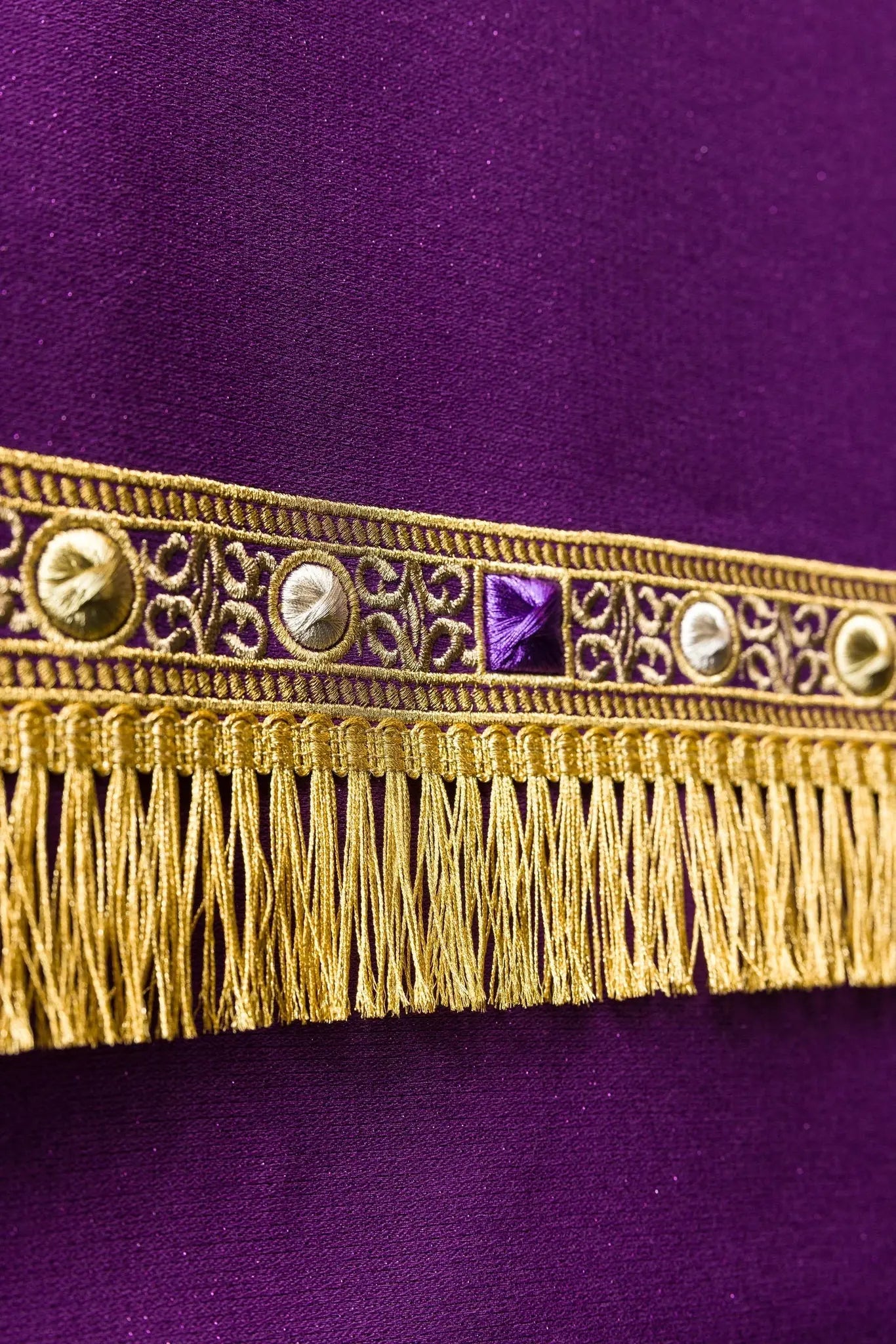
A pulpit cover should hang neatly, keep its shape and remain presentable through regular use. The fabric needs enough structure to sit well on the lectern without looking stiff or bulky. Embroidery should be clear from the nave, not only from close range, because the cover is viewed by the congregation during readings and preaching. Edges, trim and proportions matter: a cover that is too long may distract from the lectern, while one that is too small may look incidental rather than liturgical.
Before ordering, check the width and height of the lectern front, the way the cover will be attached or placed, and whether the pulpit has a flat, slanted or curved surface. In some churches, the same cover may be used on a lectern for weekday Masses and on a larger ambo for Sundays, so measurements are especially important. Also consider lighting: gold embroidery can appear warm and bright in a traditional sanctuary, while more subtle embroidery may suit a modern chapel with strong architectural lines.
Seasonal and Pastoral Use
Pulpit covers are especially useful when a church wants the liturgical year to be visible without changing every element of the sanctuary. Changing the lectern cover according to the season can immediately signal a shift in tone: green for steady growth, purple for preparation, white or ecru for joy, red for the fire of the Spirit and the witness of martyrs, rose for the brief moments of rejoicing in Advent and Lent, and Marian designs for feasts of Our Lady. This makes the ambo part of the church visual catechesis.
For parishes, chapels, religious houses and retreat centers, the most practical approach is to build the set gradually. Start with the color used most often, then add the strongest seasonal needs, and finally choose special feast-day pieces. A church with many Marian devotions may prioritize a Marian cover early. A parish with many solemn celebrations may prefer white, ecru or gold embroidery first. A community that celebrates weekday Mass frequently may find a durable green cover especially useful.
Frequently Asked Questions (FAQ)
What is a pulpit cover used for?
A pulpit cover is used to dress the front of a lectern, ambo or pulpit where Scripture is proclaimed. It gives the place of the Word a dignified appearance and helps the congregation see the connection between the readings, the liturgical season and the sanctuary setting.
Is a pulpit cover the same as an altar frontal?
No. A pulpit cover is made for the lectern or ambo, while an altar frontal is made for the altar. They may coordinate in color or embroidery, but they serve different places in the church. For altar textiles, use the altar cloth and altar tablecloth collections rather than replacing them with a pulpit cover.
Which color should a parish choose first?
Green is often the most practical first choice because it is used throughout Ordinary Time. Many churches then add purple for Advent and Lent, white or ecru for festive seasons, and red for Pentecost, Holy Week and martyrs. Rose and Marian designs are useful additions for more complete seasonal sets.
When are rose pulpit covers used?
Rose pulpit covers are used on Gaudete Sunday, the Third Sunday of Advent, and Laetare Sunday, the Fourth Sunday of Lent. The color expresses a moderated joy within a penitential season and should not be treated as a general substitute for purple.
Can the pulpit cover match the chasuble and altar linens?
Yes. Matching does not require every textile to have the same embroidery, but the color, scale and main symbol should work together. A coordinated pulpit cover, altar cloth and vestment set helps the sanctuary look intentional and supports the visual unity of the celebration.
Are Marian pulpit covers only for Marian feasts?
They are especially appropriate for Marian feasts, votive Masses of the Blessed Virgin Mary, May devotions, October rosary services and churches dedicated to Our Lady. They may also be used for parish celebrations where Marian devotion is central to the liturgical or devotional context.