
Sort by
6 products
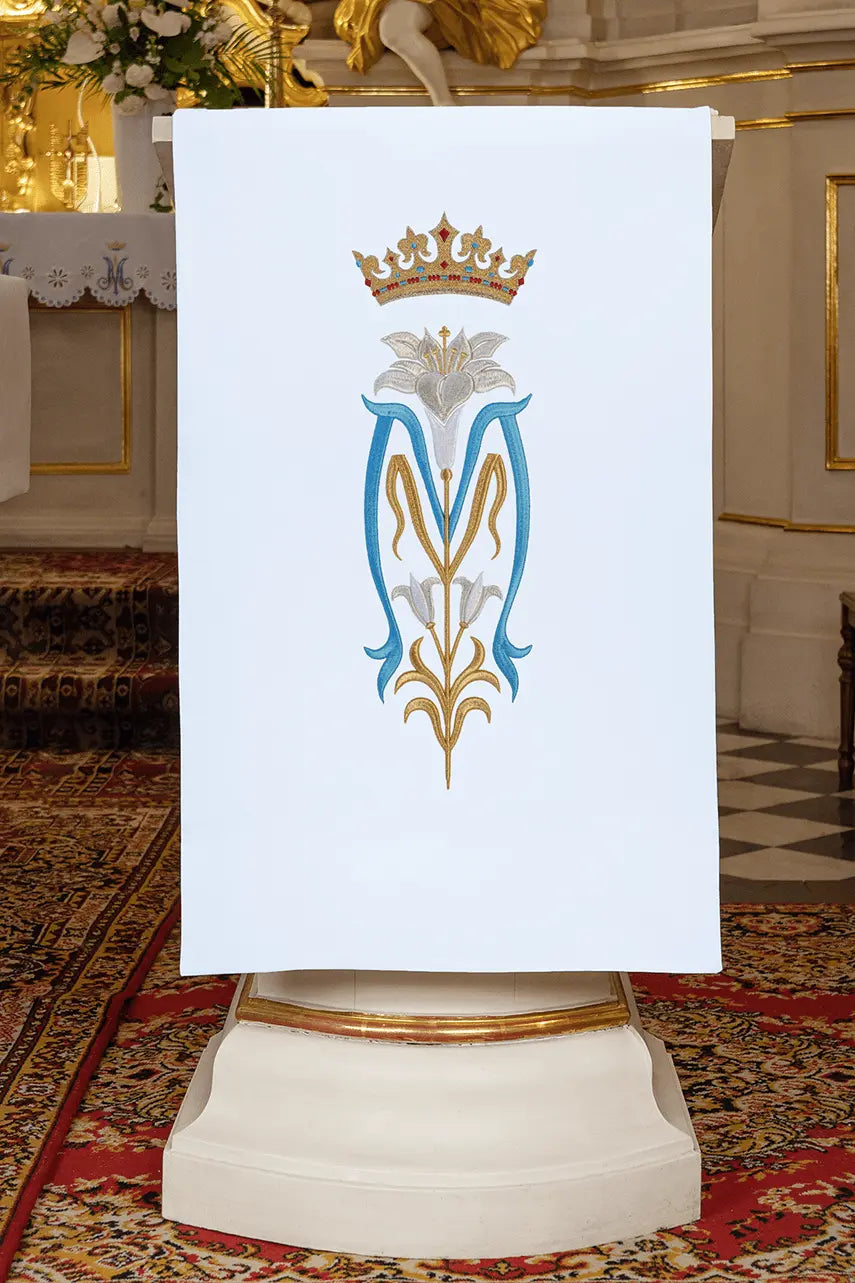
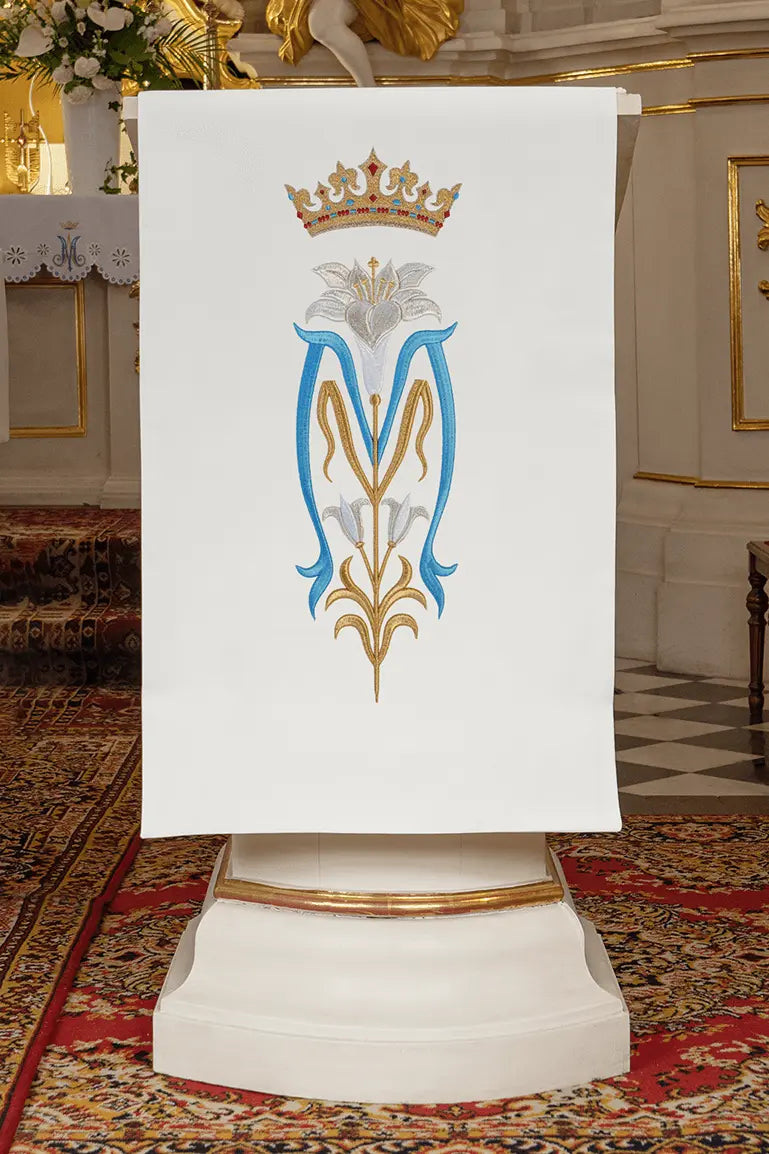
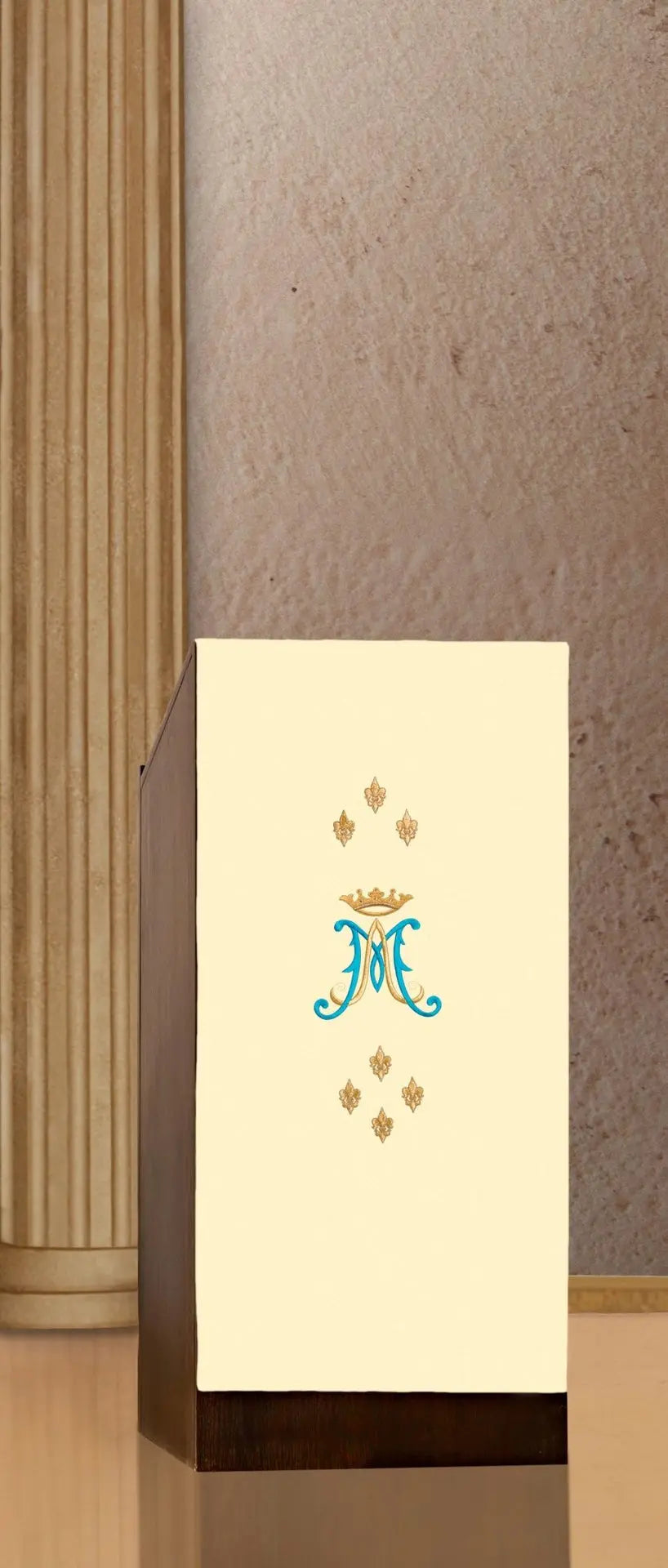
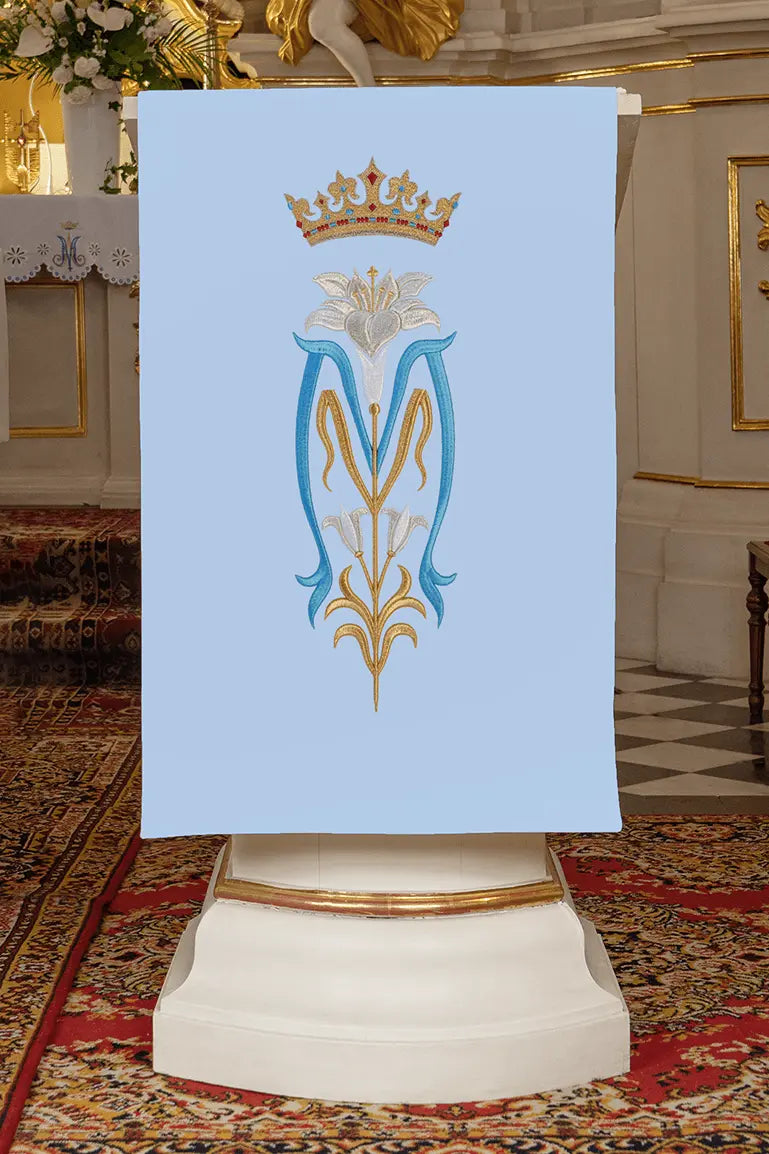
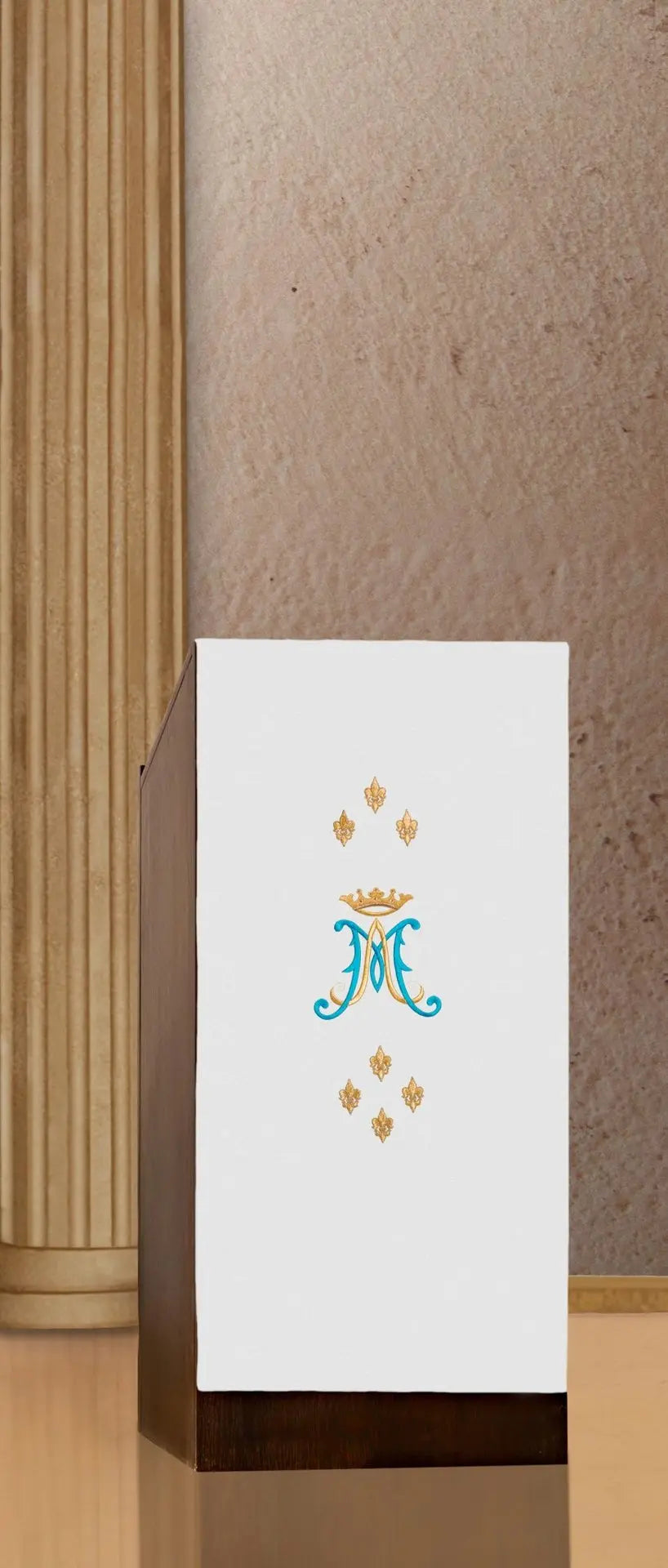
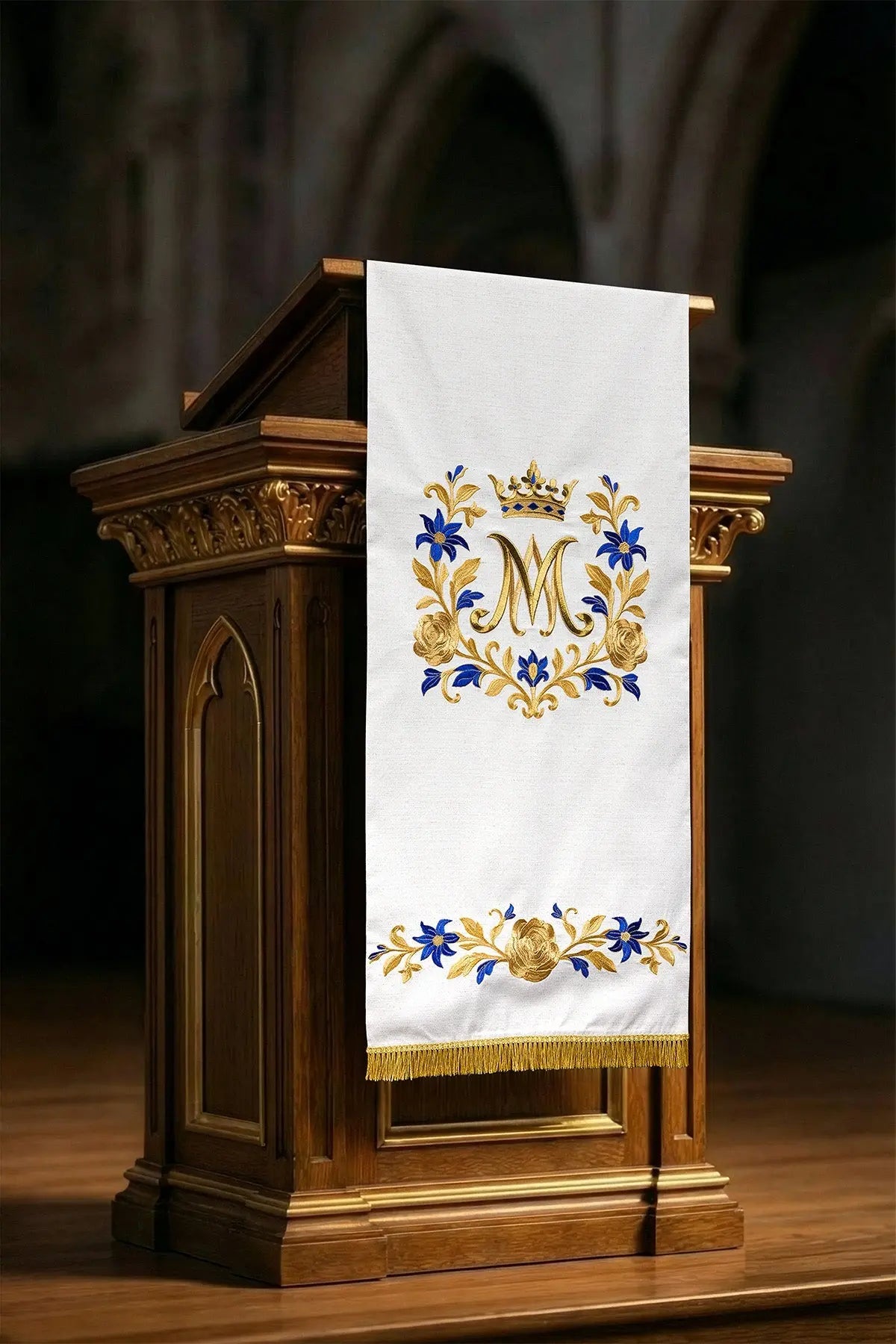
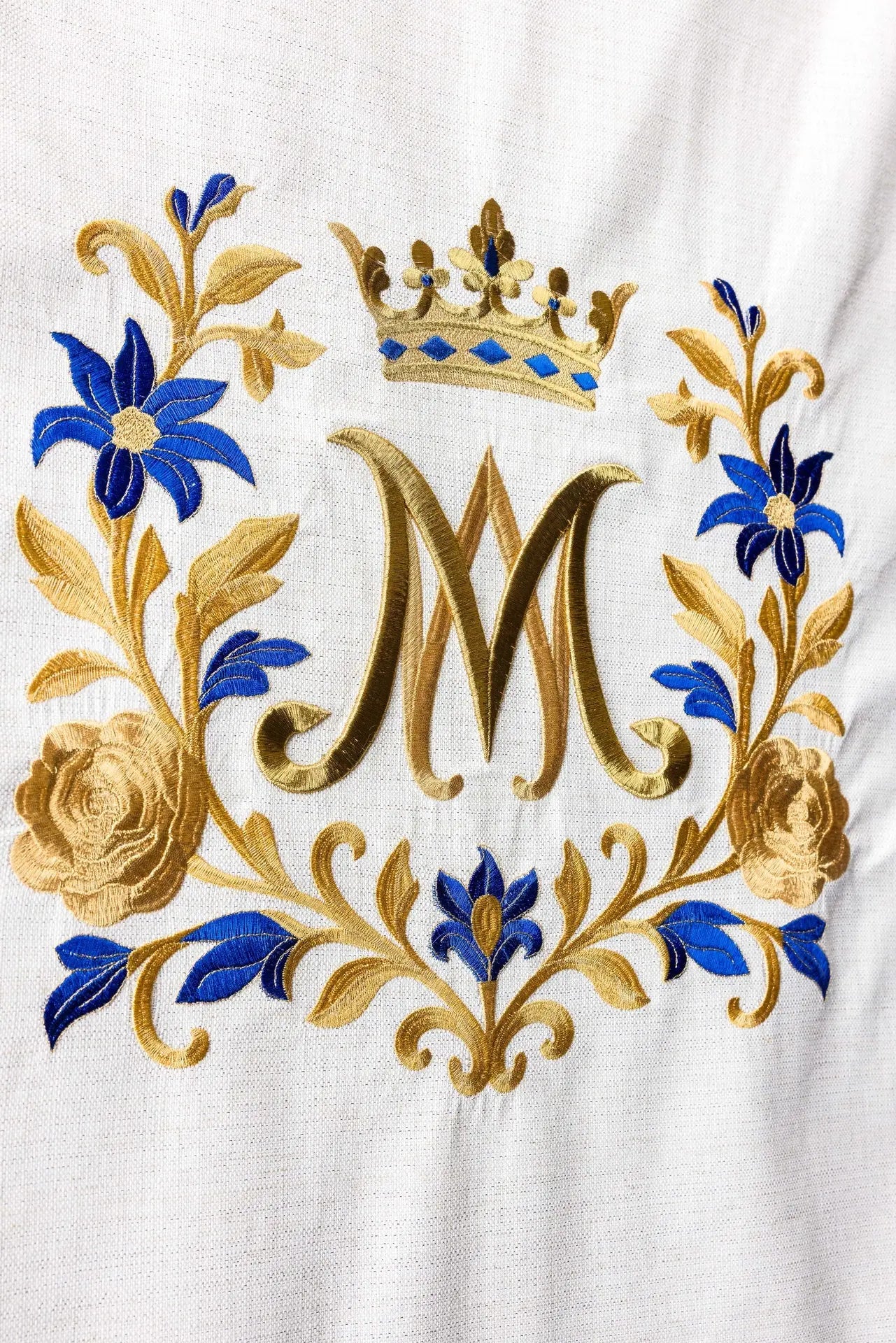
Marian Pulpit Covers for Lecterns and Ambos
Marian pulpit covers are liturgical textiles made for the place where the Word of God is proclaimed. They dress the lectern, ambo, or lectorium with a Marian devotional motif while keeping the focus on the Scripture readings and the dignity of the liturgy. This collection brings together pulpit covers and lectern napkins with embroidery inspired by the Blessed Virgin Mary, including Marian monograms, crowned symbols, and motifs associated with purity, motherhood, intercession, and heavenly protection.
Unlike altar cloths, these pieces are intended for the pulpit or lectern rather than the altar table. Their role is to frame the proclamation of the readings, psalm, and Gospel acclamation in a way that harmonizes with the season, the feast, and the sanctuary furnishings. A Marian pulpit cover can be used whenever a parish wishes to express devotion to Our Lady at the ambo, especially during Marian celebrations, parish feasts, May devotions, rosary services, votive Masses, and solemnities connected with the Blessed Virgin Mary.
The collection is part of the wider range of pulpit covers, but it has its own devotional character. While green, red, purple, rose, white, and ecru pulpit covers follow the ordinary structure of liturgical color and season, Marian pulpit covers emphasize iconography connected with Mary. They are especially useful in churches, chapels, shrines, religious houses, and parish communities where Marian devotion has a visible place in prayer and worship.
What belongs in this collection
This collection focuses on Marian pulpit covers, lectern napkins, and related ambo textiles. These are decorative and functional church textiles placed on the front or top area of a lectern or pulpit according to the design of the furniture. The visible product range includes pieces described as embroidered lectern napkins, vestments for lectorium, lectionary covers with Marian motif, and Marian lectern covers with crowned monogram embroidery.
The purpose of these textiles is not to replace the altar linen or the vestments worn by clergy. A pulpit cover belongs to the ambo or lectern area, where it supports the visual order of the sanctuary and creates a devotional connection between the proclaimed Word and the Marian theme chosen for the celebration. When paired carefully with the rest of the church textiles, it can help the sanctuary look coherent without overwhelming the liturgical action.
Typical Marian designs may include a Marian monogram, a crowned letter M, lilies, stars, roses, blue or white accents, and ornamental embroidery. These motifs are commonly associated with Mary as Mother of God, Queen of Heaven, Star of the Sea, and model of faith. The embroidery should be read as devotional ornament: it is meant to support prayer, not distract from the readings or the liturgy.
Liturgical use of Marian pulpit covers
Marian pulpit covers are especially appropriate for feasts and memorials of the Blessed Virgin Mary. They may be chosen for the Solemnity of Mary, Mother of God, the Annunciation, the Visitation, Our Lady of Mount Carmel, the Assumption, the Nativity of Mary, Our Lady of Sorrows, Our Lady of the Rosary, the Presentation of Mary, the Immaculate Conception, and local Marian patronal celebrations. They are also suitable for parish Marian days, shrine celebrations, processions that begin or end with readings, and devotions centered on the rosary or Marian hymns.
In many churches, the pulpit cover is selected to coordinate with the main liturgical color of the day. For Marian celebrations, white or festive tones are often chosen, while blue is commonly used in devotional art and Marian symbolism. The exact use should respect the rubrics and local custom. Where the sanctuary already includes Marian vestments, banners, or chalice linens, a matching pulpit cover can complete the visual arrangement without confusing the roles of each textile.
For a broader Marian setting, this collection pairs naturally with Blessed Virgin Mary items, Marian chasubles, Marian stoles, and Marian chalice linen sets. Together, these pieces can create a unified devotional theme for Mass, exposition, parish celebrations, or special services dedicated to Our Lady.
How to choose a Marian pulpit cover
When choosing a Marian pulpit cover, begin with the lectern itself. Pulpits and ambos differ in width, height, front shape, top surface, and fixing method. A well-chosen cover should hang cleanly, remain stable during the liturgy, and not interfere with the lectionary, microphone, bookstand, or the reader. The textile should be visible to the congregation but should not cover important carvings, plaques, or structural details of the ambo.
Next, consider the visual weight of the embroidery. A small chapel or simple wooden lectern may look best with a restrained Marian motif. A larger sanctuary, shrine, or solemn parish celebration may support richer embroidery, a crowned monogram, or more decorative ornament. The most successful choice is one that matches the scale of the space and the dignity of the celebration.
Color is also important. White and ecru backgrounds are versatile and can work well for many Marian feasts. Blue details can emphasize Marian devotion, while gold embroidery adds solemnity. If the church already owns white pulpit covers or ecru pulpit covers, a dedicated Marian piece may be reserved for feasts of Our Lady and other special occasions rather than daily use.
Marian symbolism at the ambo
The ambo has a central role in the Liturgy of the Word. It is the place from which the readings, responsorial psalm, and other proclamations are made. Because of this, any textile placed there should respect the dignity of Scripture. Marian symbolism can be very meaningful at the ambo when it points toward Mary as the one who listened to the Word of God, received it with faith, and carried Christ into the world.
A Marian monogram can serve as a clear devotional sign without requiring a large image. A crown may refer to Mary as Queen of Heaven. Lilies often symbolize purity, while roses can evoke love, beauty, and Marian prayer. Stars are connected with guidance and the title Star of the Sea. These symbols help the congregation recognize the Marian character of the celebration while preserving the clarity of the liturgical space.
Because the pulpit cover is near the spoken Word, balance matters. A piece with strong embroidery should be positioned neatly and kept free from clutter. The book, microphone, and reader should remain comfortable and unobstructed. A Marian pulpit cover should make the ambo more reverent, not more complicated.
Coordinating pulpit covers with other church textiles
Marian pulpit covers work best when they are chosen as part of a larger sanctuary arrangement. For a Marian solemnity, a parish may coordinate the pulpit cover with a Marian chasuble for the celebrant, a matching stole, a chalice linen set, and white or ecru altar textiles. This creates a unified devotional expression while preserving the difference between vestments, altar linens, and ambo textiles.
If the celebration follows a seasonal color, the Marian pulpit cover can either harmonize with that color or be reserved for moments when Marian symbolism is the main visual emphasis. For example, a parish might use a green pulpit cover during Ordinary Time and bring out the Marian pulpit cover for a Marian votive Mass. During Lent or Advent, more restrained colors may be preferred unless a Marian feast calls for a different approach.
Adjacent pulpit cover collections make it easier to build a complete set for the liturgical year. Green pulpit covers are suited to Ordinary Time, red to celebrations of martyrs, the Holy Spirit, and the Passion, purple to penitential seasons, rose to Gaudete and Laetare, and white or ecru to feasts and solemnities. The Marian collection adds a devotional option for occasions centered on Our Lady.
Materials, embroidery, and visual quality
A pulpit cover must be both beautiful and practical. It is handled, placed, adjusted, stored, and used near books, hands, candles, and floral arrangements. For that reason, fabric stability and embroidery quality matter. A good Marian pulpit cover should hold its shape, hang evenly, and allow the embroidered motif to remain clear from a normal viewing distance within the church.
Embroidery gives Marian textiles their devotional character. The thread work can outline the monogram, highlight a crown, frame a symbol, or add ornamental borders. The most effective embroidery is precise and proportionate: it should be detailed enough for solemn use but not so heavy that the textile becomes visually crowded. Clean finishing, careful edging, and a balanced layout help the cover look dignified on the lectern.
When ordering or comparing pieces, check whether the design is intended as a front hanging, a napkin-style cover, or a fitted lectern textile. Also check the approximate size and the way the cover will rest on the furniture. A cover that looks beautiful in a photograph still needs to function well during the readings and other parts of the service.
Care and storage
Proper care keeps Marian pulpit covers ready for solemn celebrations. Before cleaning, always follow the care information provided for the specific fabric and embroidery. Many church textiles benefit from gentle handling, mild cleaning methods, and careful drying. Heavily embroidered pieces should be treated with particular attention so that threads, edges, and decorative details remain intact.
When not in use, store the cover flat or gently folded, depending on the material and embroidery. Avoid sharp creases across the central motif. Keep the textile away from dampness, dust, direct sunlight, and pressure from heavy objects. If the cover is used only for Marian feasts, inspect it before each major celebration so there is time to remove wrinkles, check the hanging, and prepare the sanctuary arrangement.
A clean and well-kept pulpit cover helps the ambo look orderly and reverent. It also protects the parish investment in liturgical textiles, allowing the same Marian piece to serve year after year for feasts, devotions, and special parish occasions.
Why choose a dedicated Marian pulpit cover
A dedicated Marian pulpit cover gives a parish a clear and respectful way to mark celebrations connected with Our Lady. It is more specific than a general white cover and more appropriate for the lectern than altar cloths or vestments. By choosing a textile made for the ambo, the parish preserves the correct function of each liturgical item while still creating a beautiful Marian focus in the sanctuary.
This collection is especially useful for parishes named after Mary, Marian shrines, chapels with a strong rosary devotion, schools and religious communities, and churches that celebrate Marian solemnities with particular care. It can also be helpful for communities building a coordinated textile set over time: start with general pulpit covers for the seasons, then add a Marian design for devotional and solemn use.
For a complete church textile arrangement, explore related altar cloths and liturgical pieces that coordinate with the ambo without confusing their purpose. The Marian pulpit cover belongs to the place of proclamation; altar cloths belong to the altar; vestments belong to the clergy; chalice linens serve the sacred vessels. When each item has its proper place, the whole sanctuary becomes more coherent and more reverent.
Frequently Asked Questions (FAQ)
Are Marian pulpit covers the same as altar covers?
No. Marian pulpit covers are made for the lectern, pulpit, ambo, or lectorium. Altar covers and altar cloths are used on the altar table. The original purpose is different, even when the embroidery or devotional theme is similar.
When should a parish use a Marian pulpit cover?
A Marian pulpit cover is suitable for feasts and memorials of the Blessed Virgin Mary, Marian votive Masses, rosary devotions, May devotions, parish patronal celebrations, and shrine liturgies. It may also be used when the church wants a visible Marian theme at the ambo.
Can a Marian pulpit cover be matched with vestments?
Yes. It can be coordinated with Marian chasubles, stoles, chalice linen sets, and white or ecru altar textiles. The aim is harmony across the sanctuary while keeping each item in its proper liturgical role.
What motif should I choose for a Marian lectern cover?
A Marian monogram is a clear and versatile choice. A crowned monogram adds solemnity, while lilies, roses, stars, and blue or gold details can emphasize traditional Marian symbolism. The best motif depends on the size of the lectern and the character of the church.
Is a Marian pulpit cover suitable for everyday use?
It can be used regularly in a Marian shrine or chapel, but many parishes reserve it for Marian feasts and devotions. For ordinary seasonal use, a set of color-specific pulpit covers may be more practical.
How should the cover be prepared before a celebration?
Place it on the lectern early enough to check the fall of the fabric, the visibility of the embroidery, and the position of the lectionary or microphone. The cover should look neat and should not obstruct the reader or the liturgical books.