
Sort by
12 products


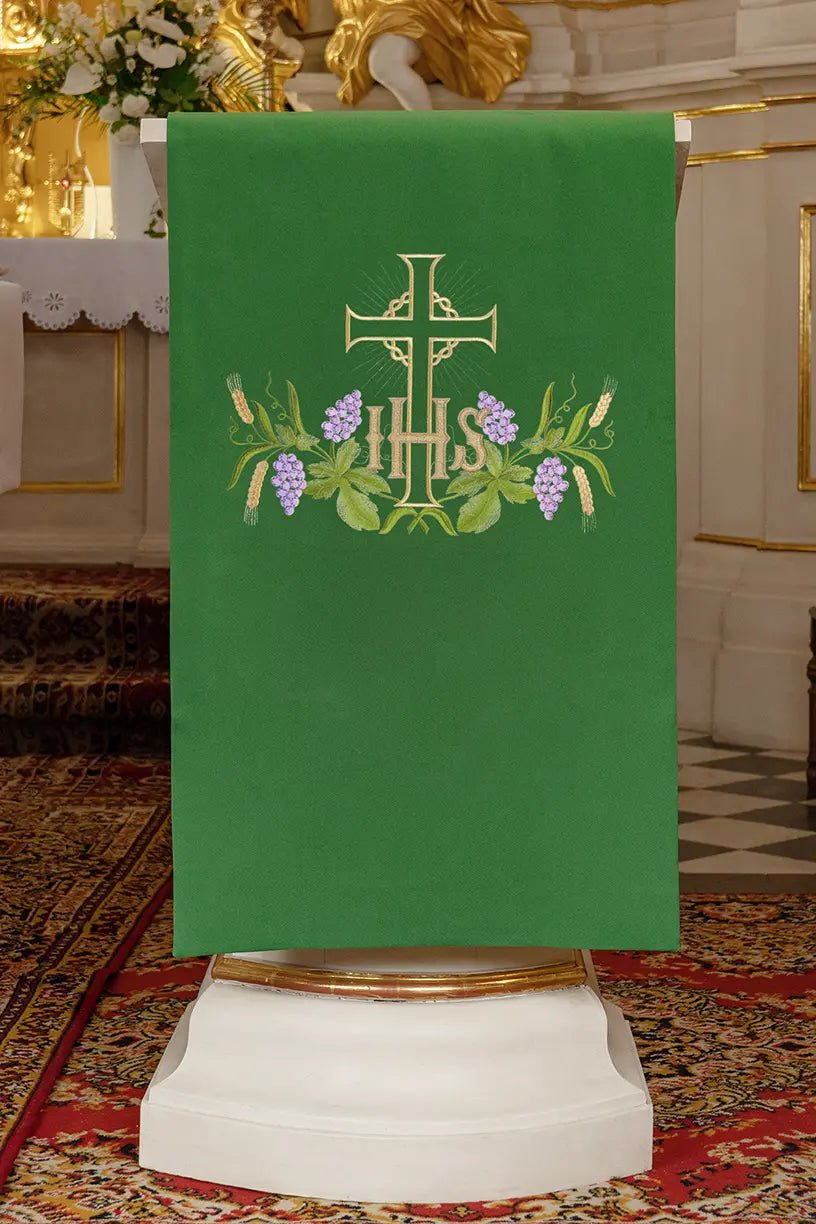
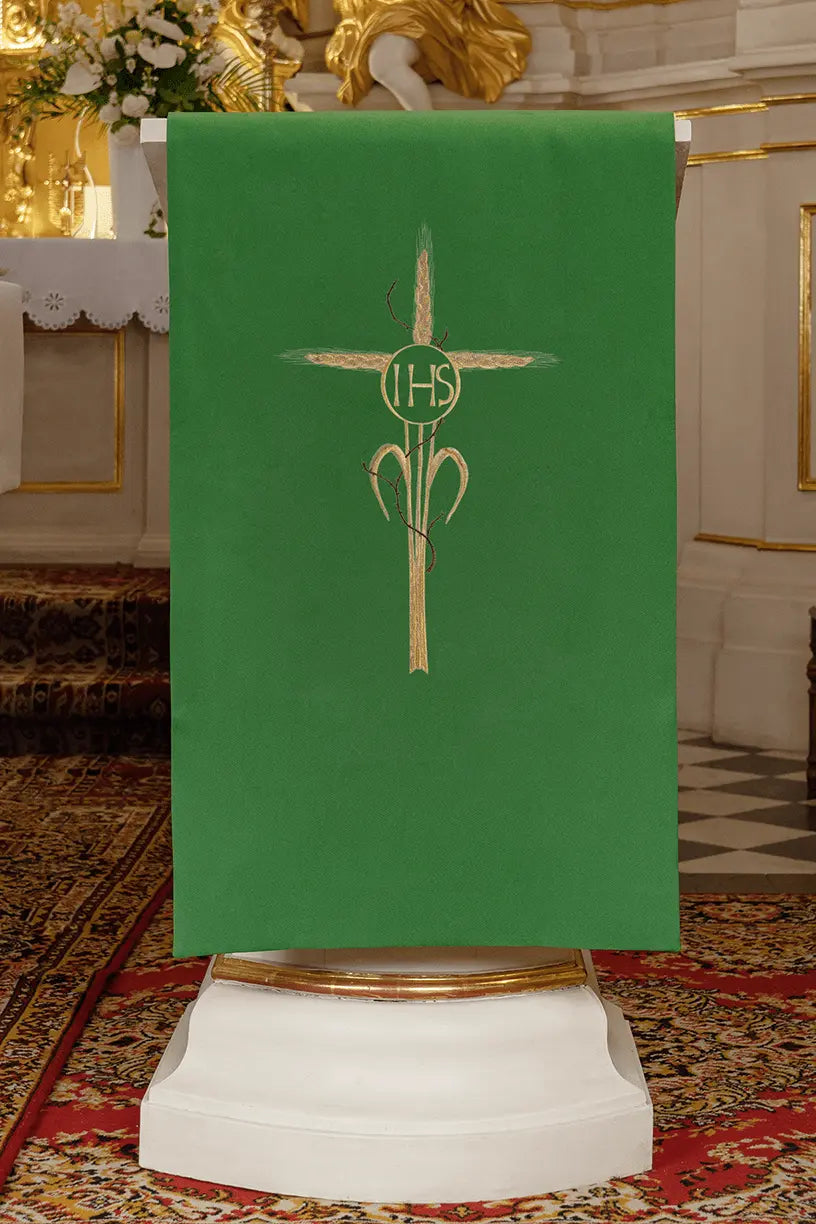
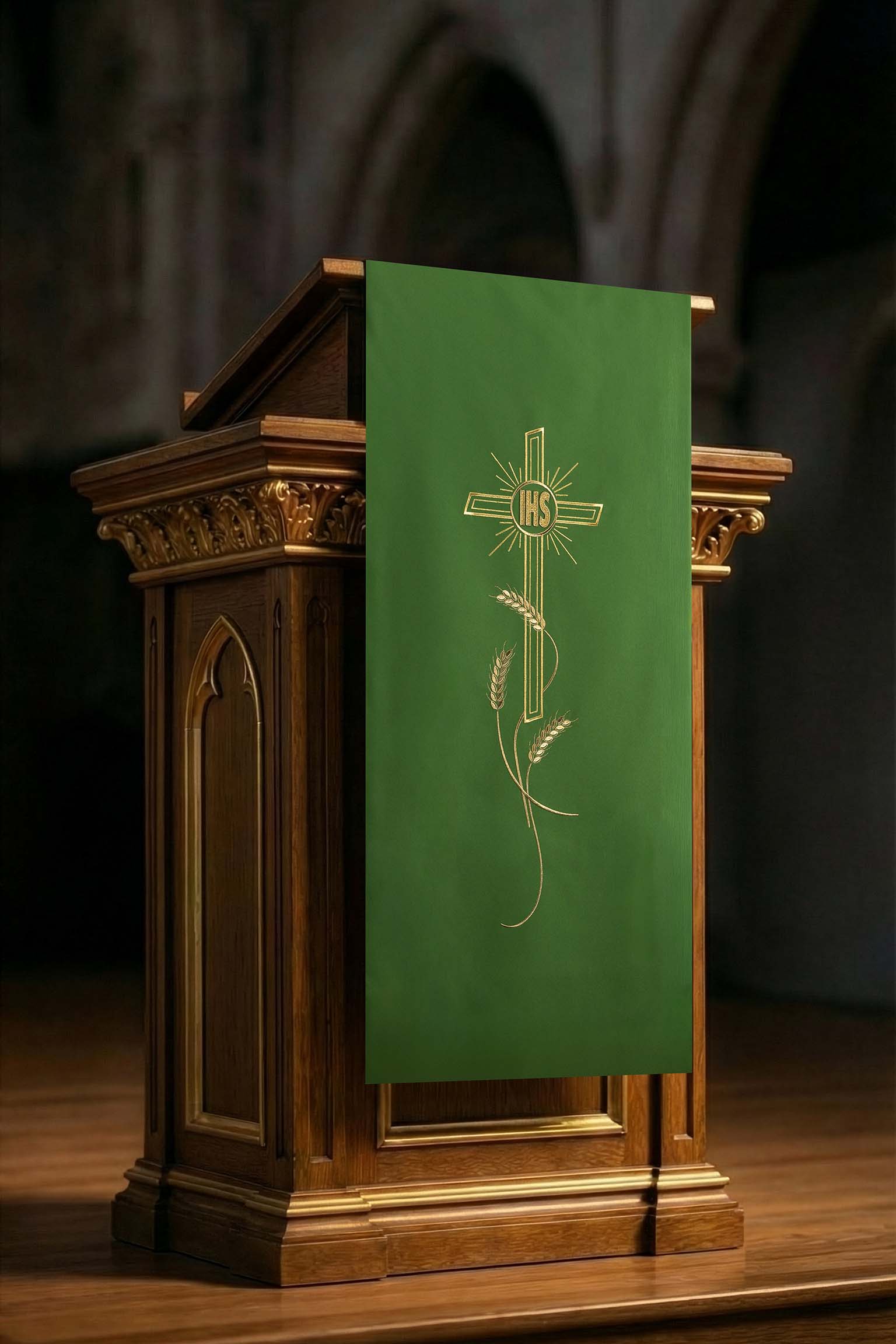
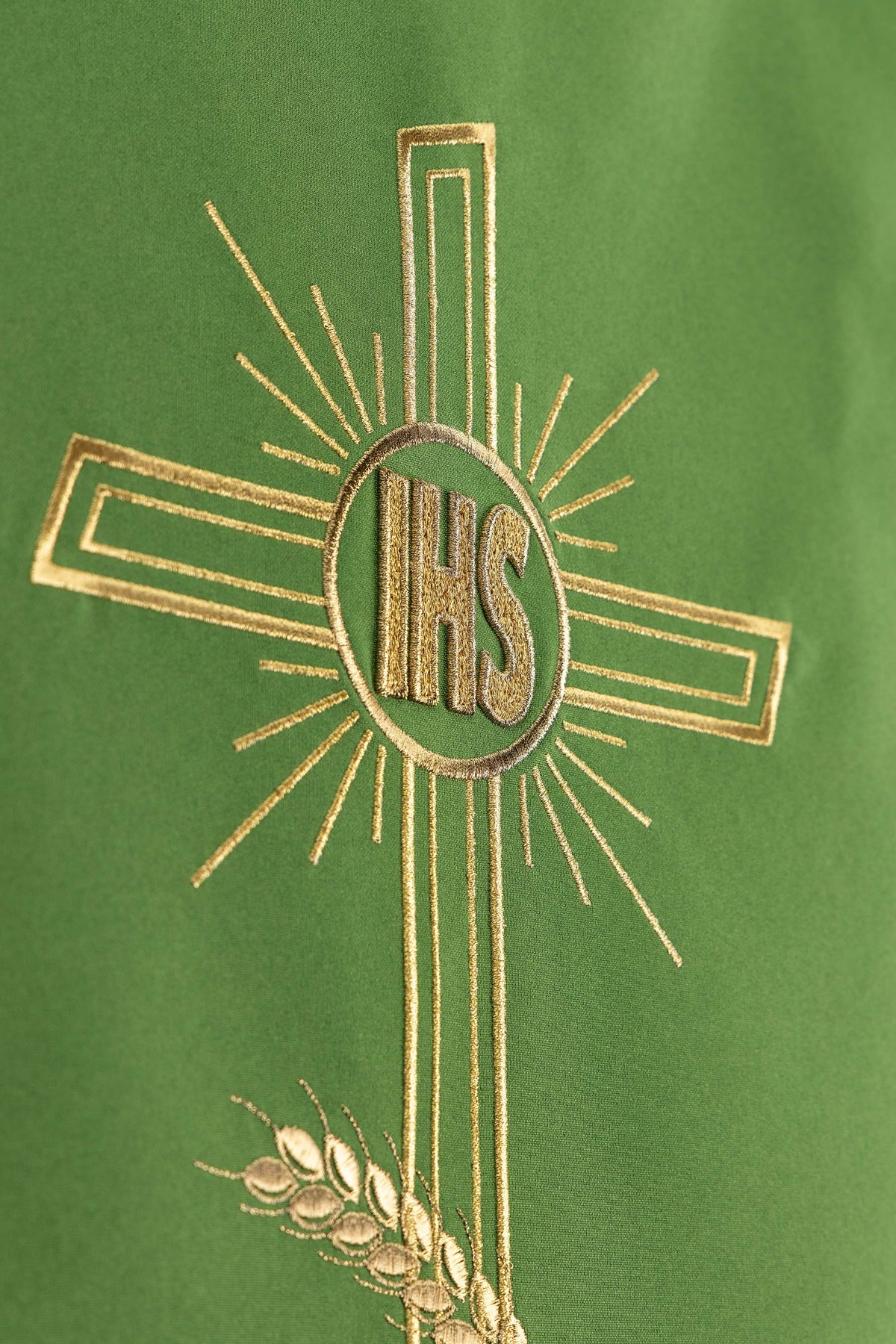
Green Pulpit Covers for the Ambo, Lectern and Pulpit
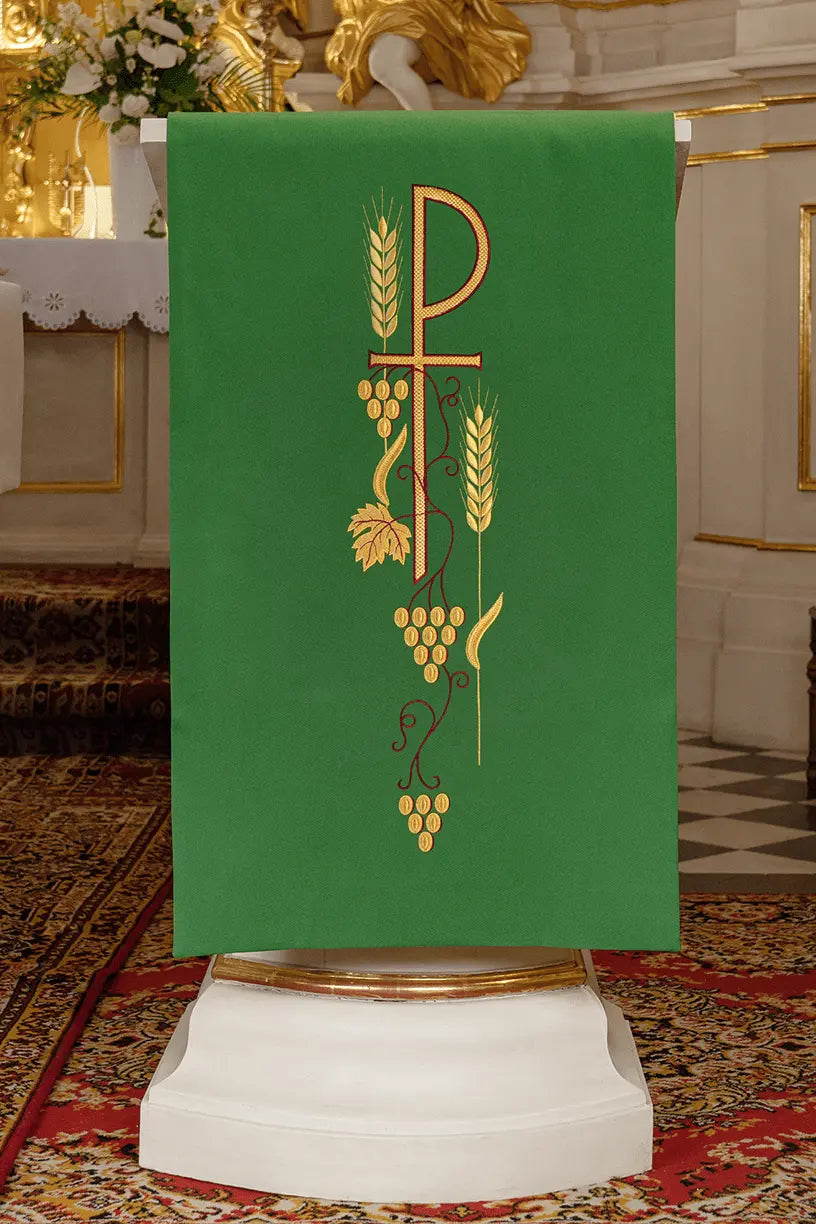
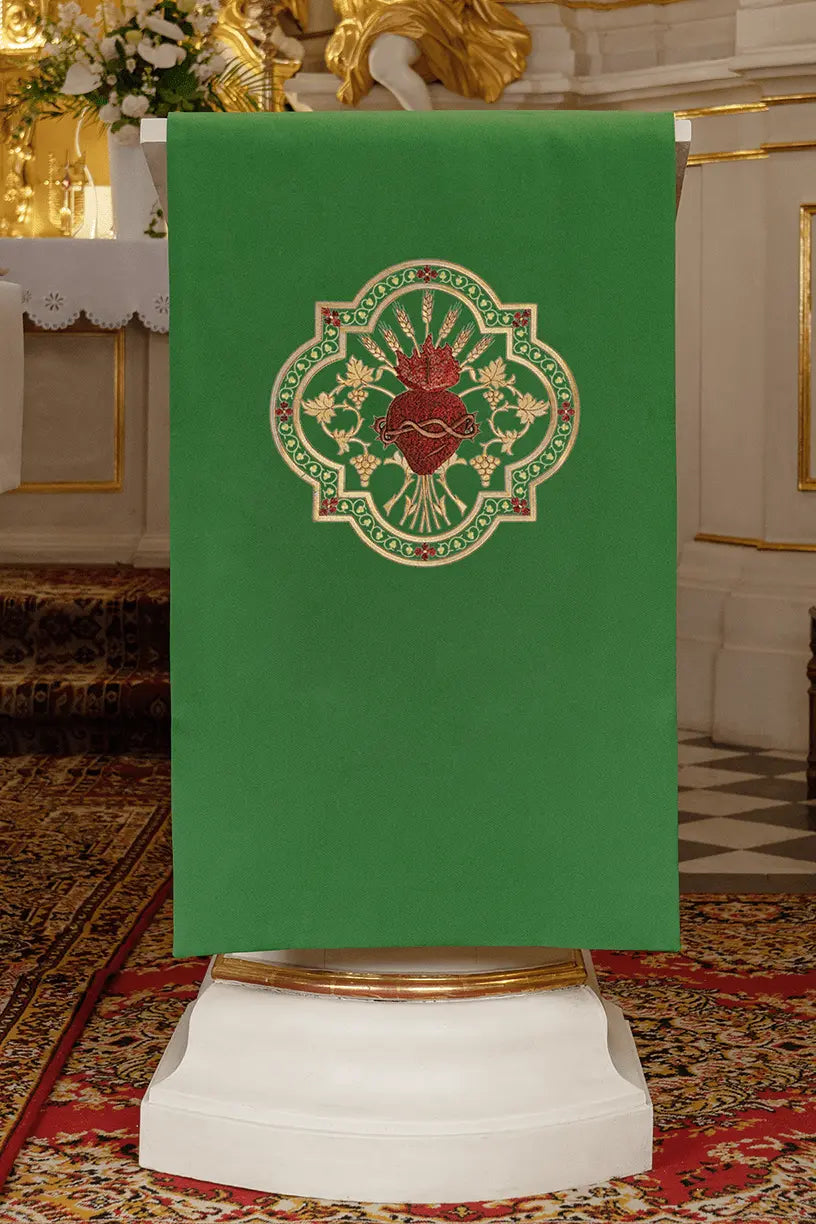
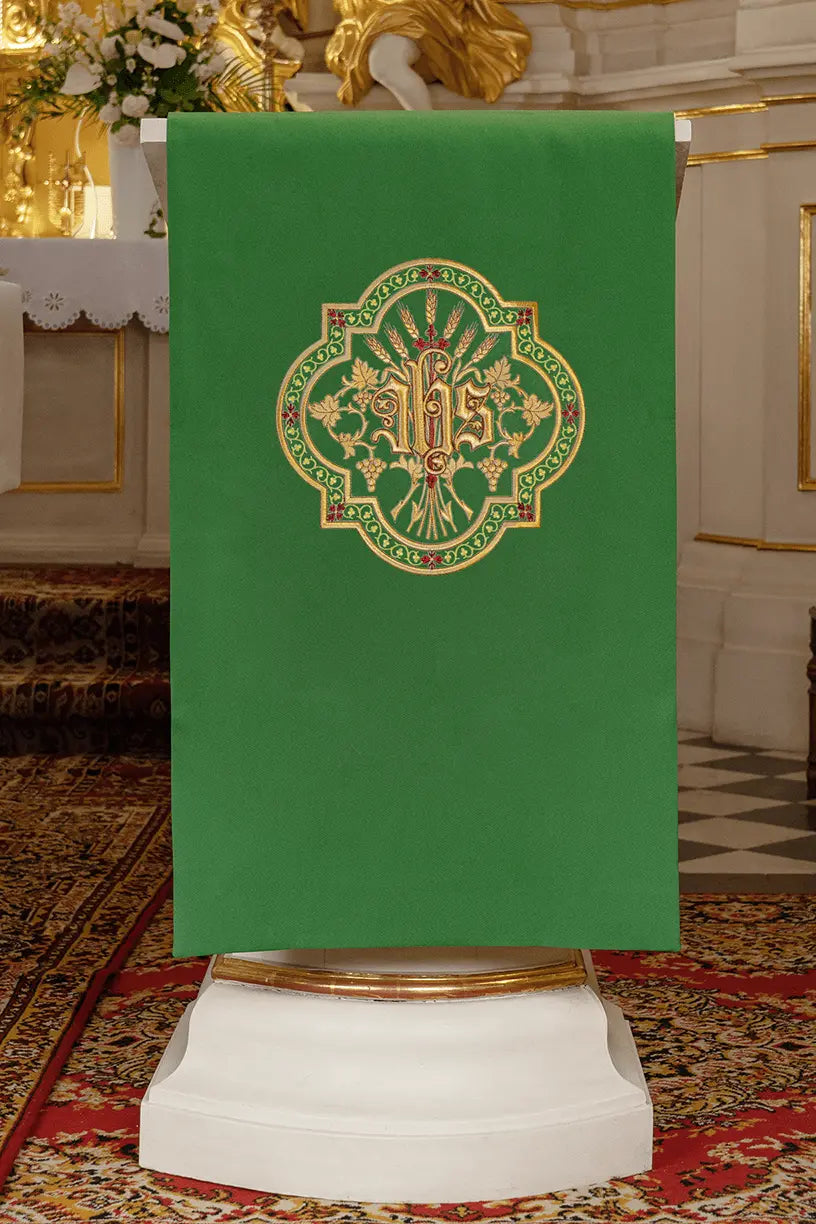
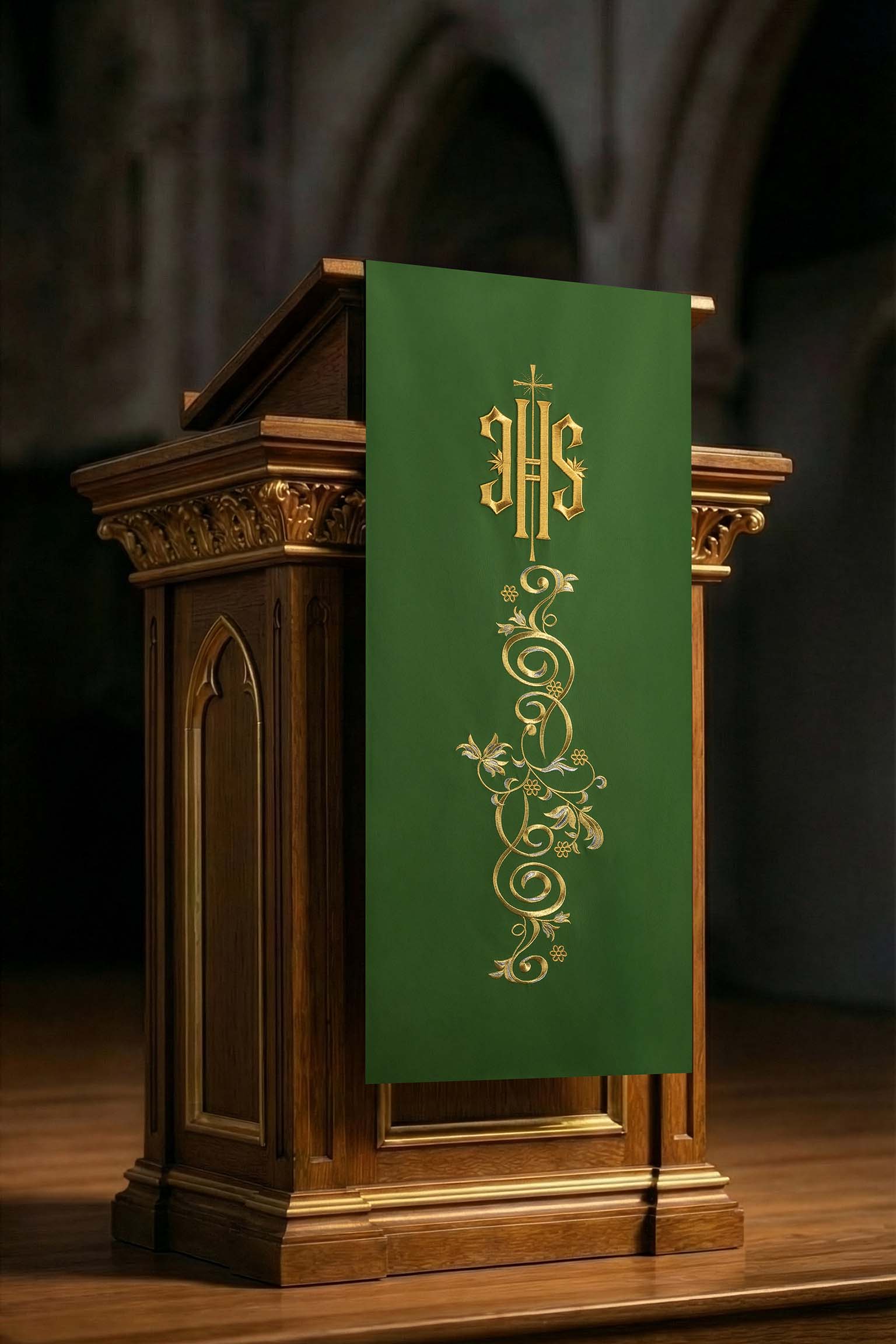
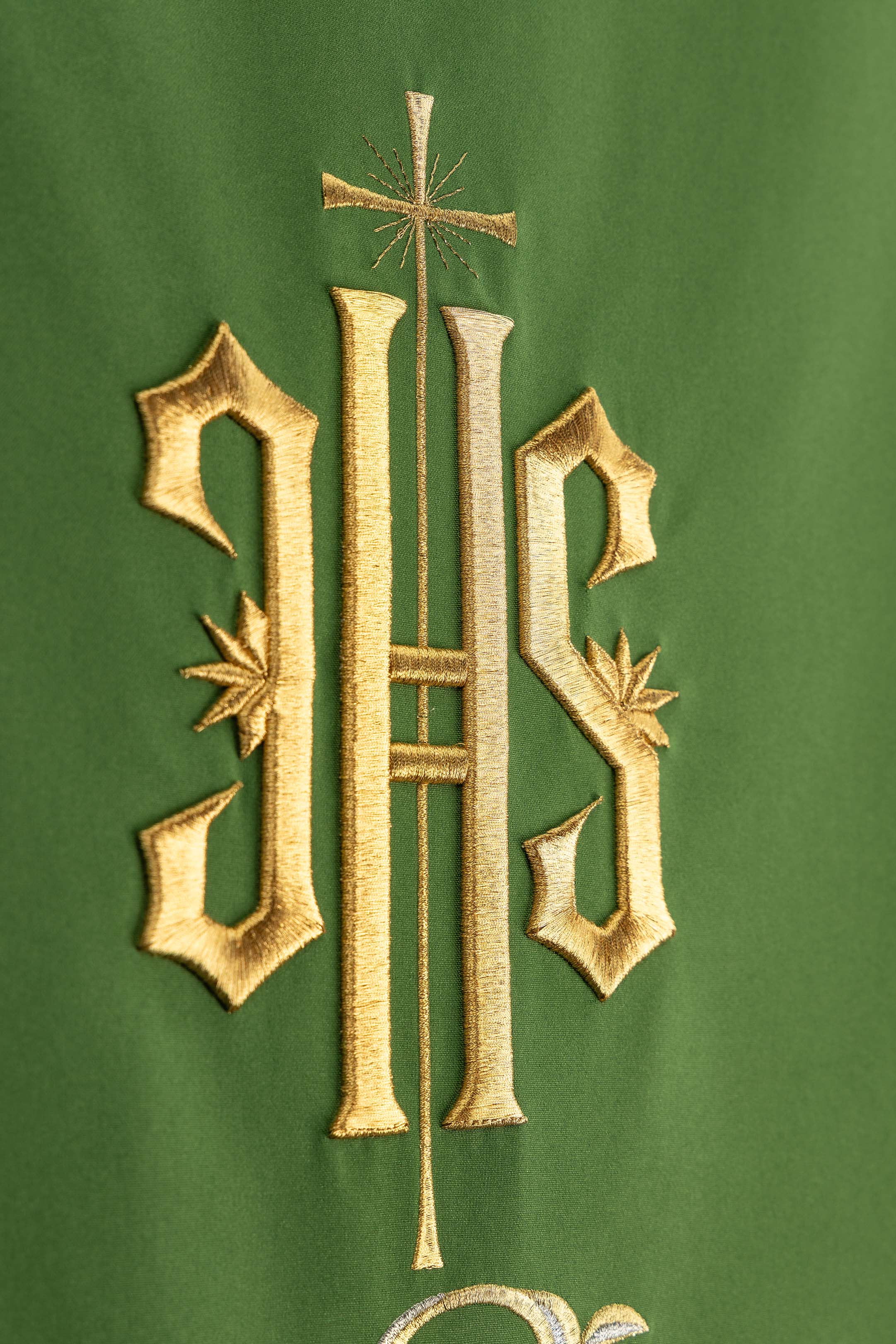
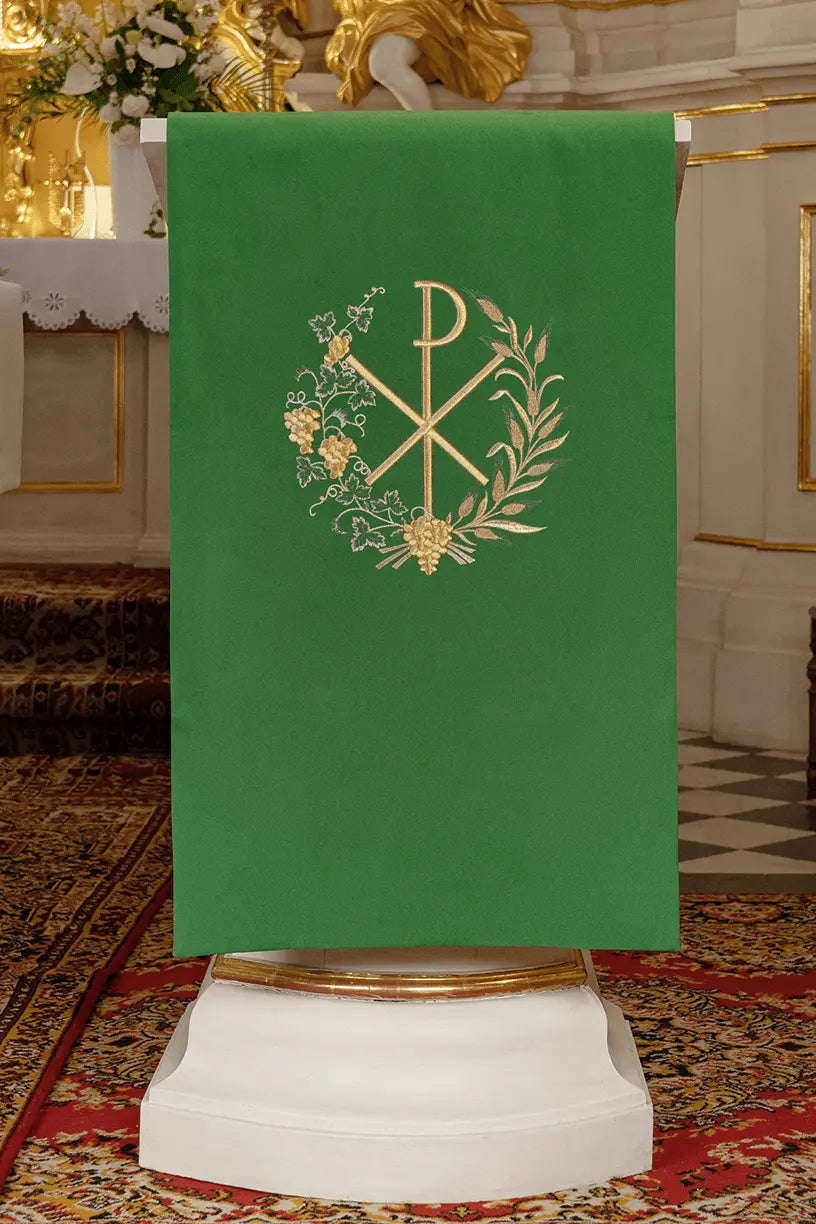
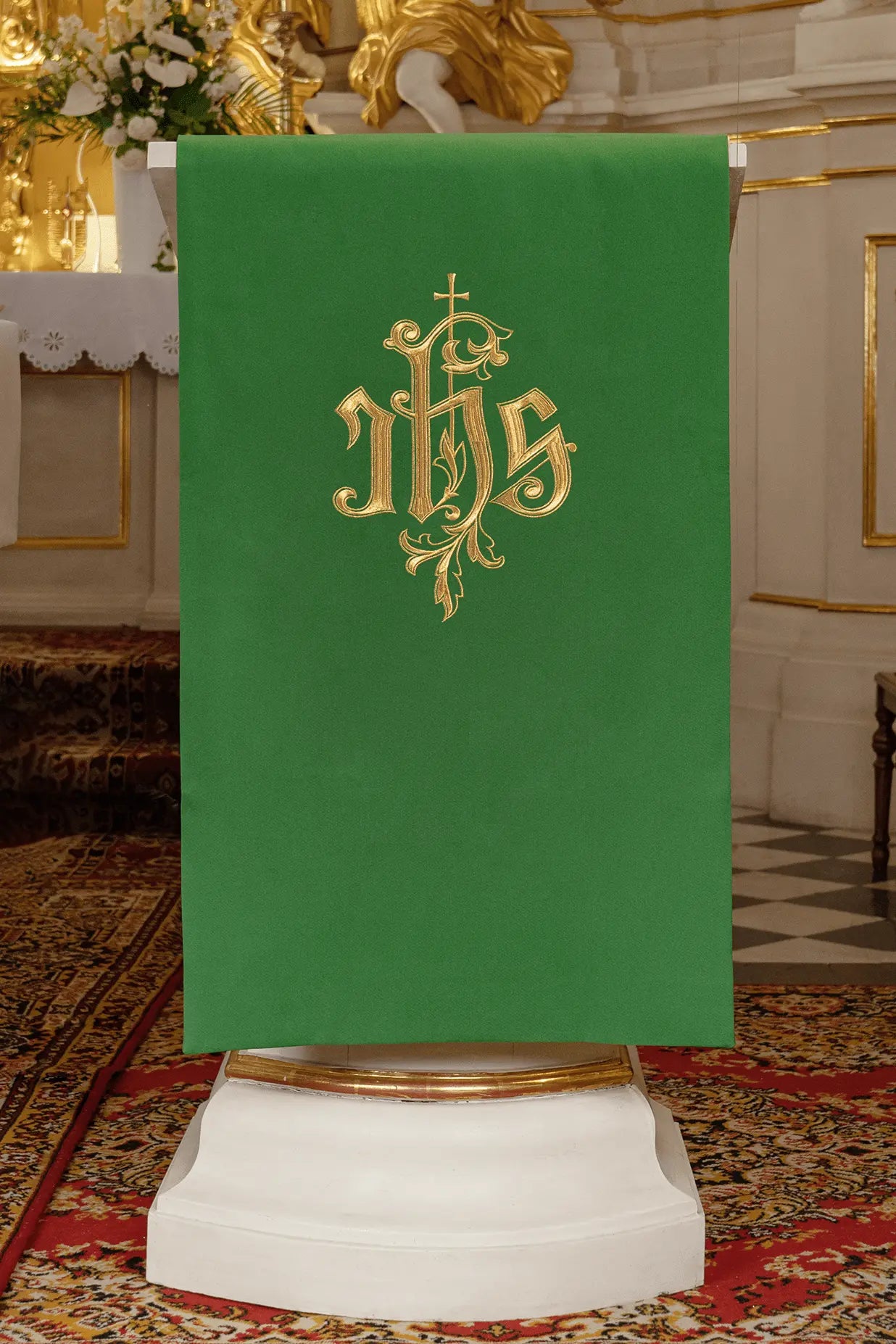
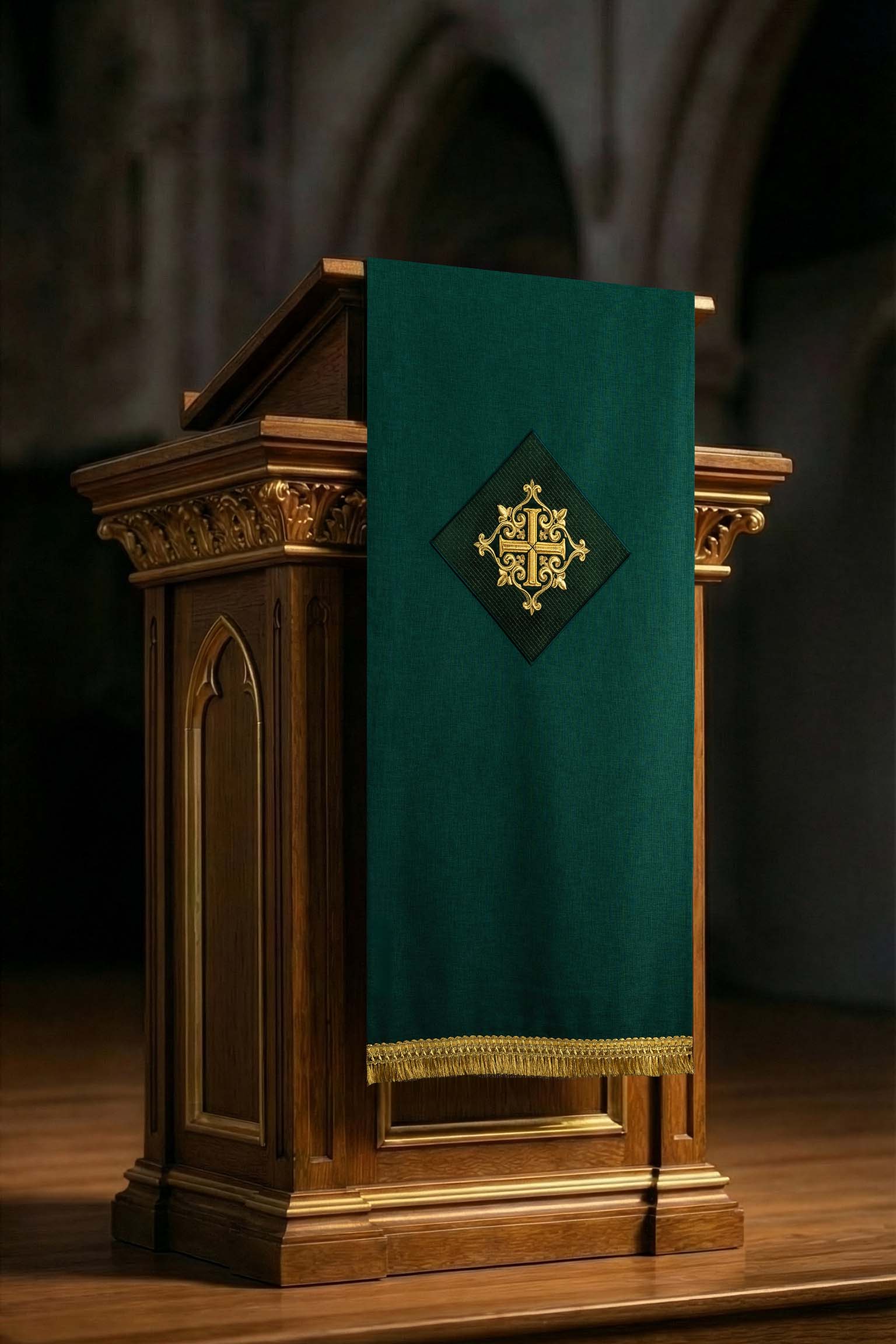
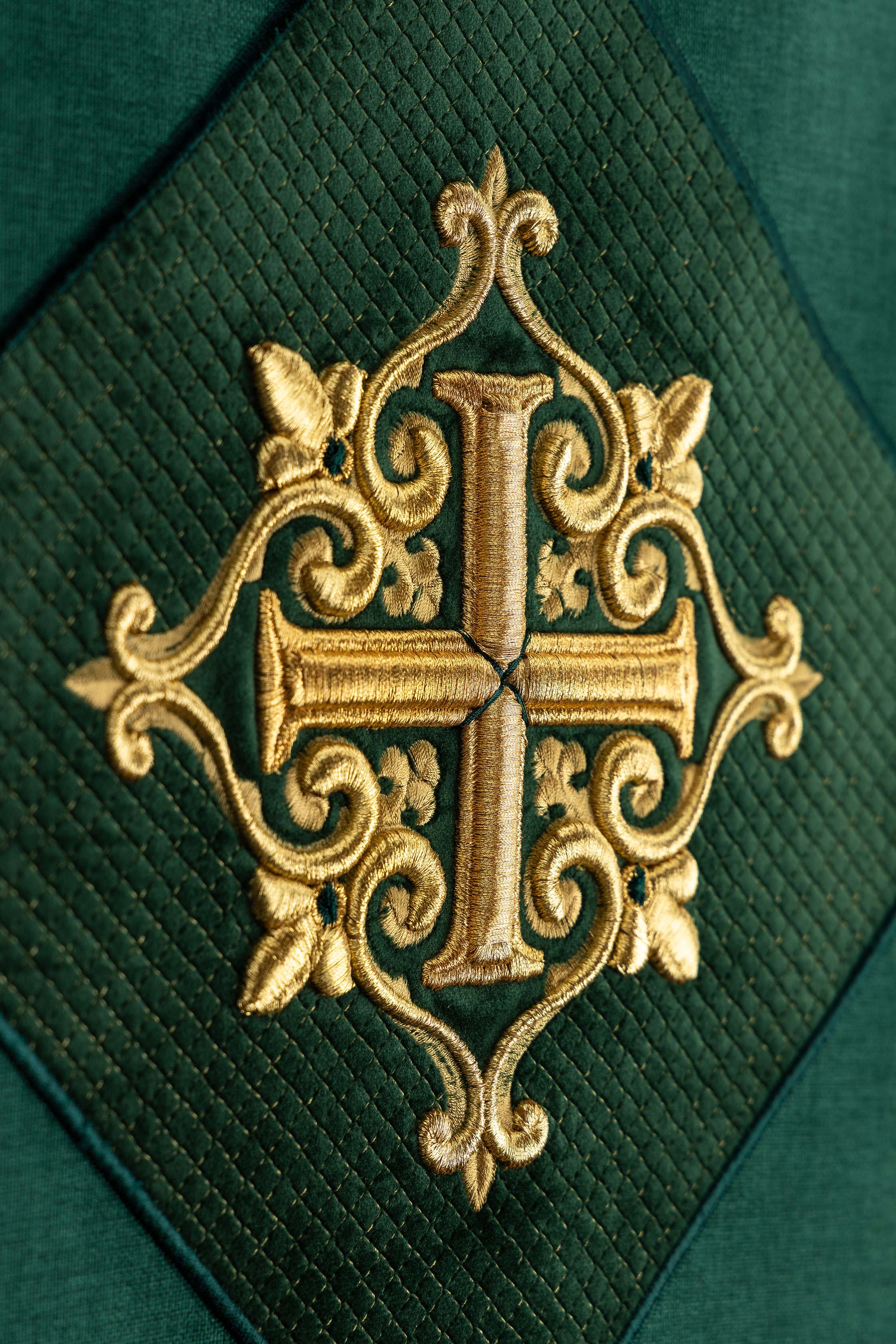
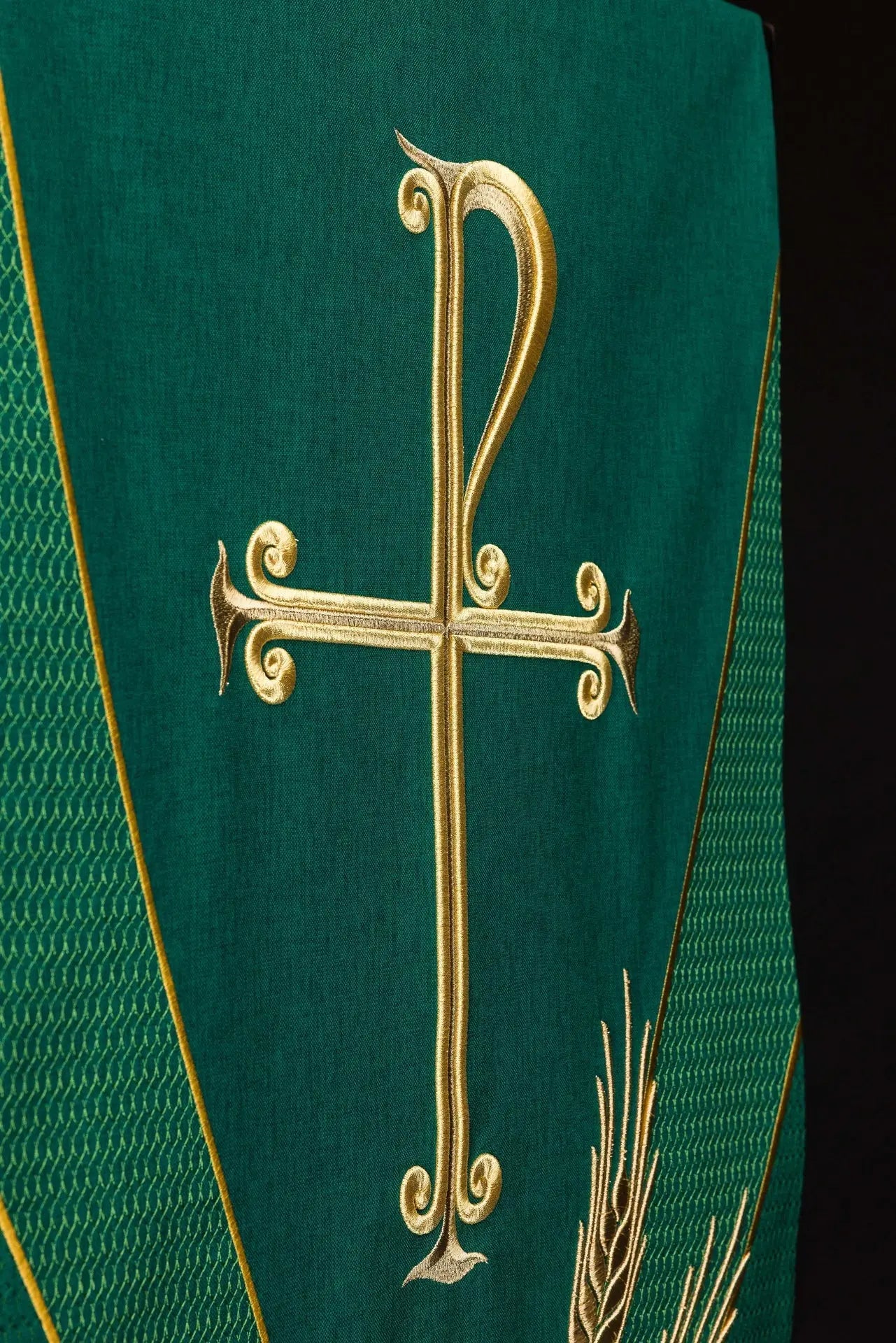
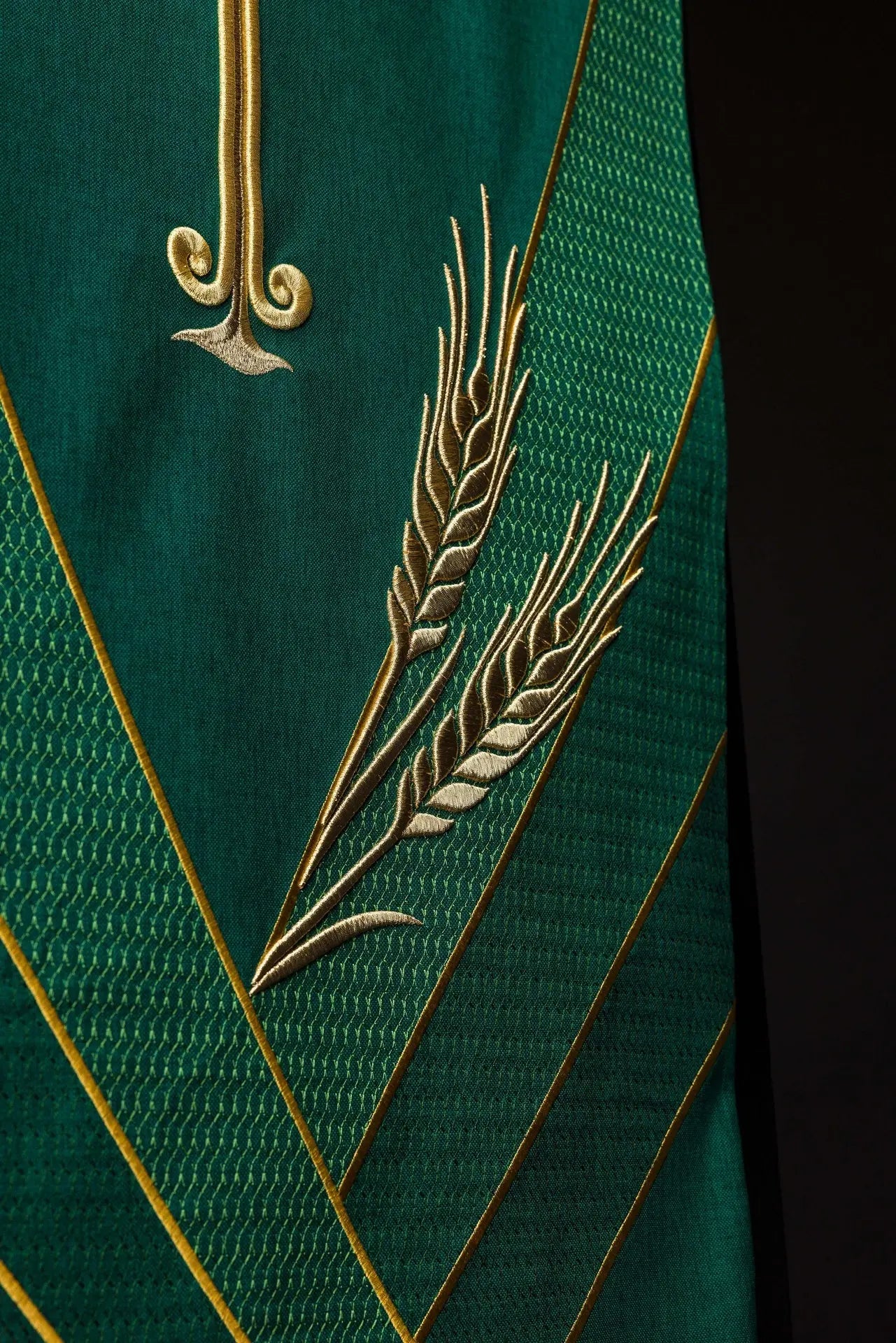
Green pulpit covers are liturgical textiles prepared for the ambo, lectern or pulpit during the seasons when green is the appointed liturgical color. In this collection you will find green lectern hangings and pulpit covers with embroidery suited to parish churches, chapels, religious houses and other places where the Word of God is proclaimed with visible care for the beauty of worship. The collection includes designs with traditional Christian symbols such as the cross, IHS or JHS monogram, PAX motif, wheat embroidery and devotional motifs connected with Christ. These covers help the area of proclamation harmonize with the altar, celebrant vestments and the wider color scheme of the sanctuary.
A pulpit cover is not a vestment worn by the clergy. It is a church textile used to dress and mark the place from which readings, the psalm, the Gospel or preaching may be proclaimed, depending on the practice of the parish and the layout of the sanctuary. A well chosen green cover gives visual continuity to Ordinary Time and supports a reverent, ordered appearance without distracting from the liturgy itself. For the wider category, see all pulpit covers.
Liturgical meaning of green
Green is most closely associated with Ordinary Time, the long season in which the Church contemplates the public ministry of Christ, the growth of faith and the steady life of grace. Unlike white, red, purple or rose, green is used for many Sundays and weekdays across the year, so green liturgical textiles often become some of the most frequently used items in a sacristy. A durable, dignified green pulpit cover is therefore a practical investment for regular parish worship.
The color can be understood as a sign of growth, hope, renewal and perseverance. It suits the rhythm of Ordinary Time because this season is not ordinary in the sense of unimportant, but ordered, continuous and formative. A green lectern hanging may accompany green chasubles, stoles, altar frontals and other sanctuary textiles, helping the congregation recognize the liturgical season through a unified visual language. For seasonal coordination, the most relevant liturgical category is Ordinary Time.
What belongs in this collection
This collection is focused on green pulpit covers, lectern hangings and lectionary napkins intended for the ambo, lectern or pulpit area. The visible product range includes embroidered lectern napkins and green hangings with motifs such as the cross, IHS, JHS, PAX, wheat and the Heart of Jesus. Some designs are simple and restrained, while others use richer embroidery or decorative fabric to create a more ceremonial effect. The purpose of each item is the same: to give the place of proclamation a dignified liturgical appearance in the appropriate color.
Because parishes use different terms, shoppers may search for a green pulpit cover, green lectern cover, green ambo hanging or green lectionary napkin. These names can describe closely related church textiles, but the correct choice depends on where the piece will be placed and how it is meant to hang. Before ordering, compare the product photos, dimensions and finish with the actual furniture in your sanctuary. A narrow lectern may need a different proportion from a broad pulpit, and a cover for a lectionary or book stand should not be chosen only by color.
How to choose a green pulpit cover
Begin with the place of use. Measure the width of the ambo, lectern or pulpit front and decide how much of the textile should be visible. The cover should look intentional, neither cramped nor oversized. If the furniture has carved details, panels or a raised edge, check whether the hanging will sit flat and whether the lower edge will fall at a visually balanced height. A cover that is too long may interfere with movement or appear untidy, while a cover that is too short may not provide enough presence in a larger sanctuary.
Next, consider the design language of the church interior. A historic sanctuary with gilded elements, carved wood or traditional statuary may pair well with embroidery using gold thread, wheat, monograms or a central cross. A modern chapel may look better with a cleaner composition and fewer decorative elements. Strong symbols such as IHS, JHS and PAX are especially useful when the pulpit cover needs to be clearly liturgical without becoming visually heavy.
Fabric is also important. Velvet can give a richer and more formal appearance, while smoother fabrics may be easier to handle, store and coordinate with other sacristy textiles. Embroidery should be chosen not only for beauty but also for readability from the nave. Fine details may be appreciated close up, but a clear cross or monogram often has more impact during the liturgy because it remains visible from a distance.
Coordinating the sanctuary for Ordinary Time
A green pulpit cover often looks best when it is selected as part of a broader liturgical set. It can be coordinated with green chasubles used by priests and bishops and with green clergy stoles for the appropriate ministers. Matching every element exactly is not always necessary, but color harmony and compatible symbolism help the sanctuary feel deliberate and well prepared.
It is also worth considering the relationship between the ambo, altar and credence area. The pulpit cover should not compete with the altar, but it should not look forgotten either. When the altar is dressed with fine linen or a frontal, the ambo may need a textile of similar quality so that both principal liturgical places are respected. Browse related altar cloths, altar tablecloths with embroidered frontals and altar superfrontals when planning a coordinated sanctuary arrangement.
Other altar textiles may be selected in complementary colors or neutral tones. Green does not need to appear on every item, but the overall arrangement should remain coherent. For Eucharistic preparation and the altar, related linens such as chalice veils can help complete the sacristy set when the parish wants a more unified look across different liturgical functions.
Choosing symbols and embroidery
The cross remains the most universal motif for a green pulpit cover because it directly points to Christ and suits the proclamation of Scripture in any season. IHS and JHS monograms are also traditional Christological symbols, often used on vestments, altar linens and church furnishings. The PAX motif emphasizes peace and may be especially appropriate for communities that prefer concise, readable symbolism. Wheat can suggest Eucharistic life and the fruitfulness of grace, making it a suitable decorative element when the ambo and altar are visually connected.
When choosing embroidery, consider the size of the church and the lighting near the ambo. Gold embroidery can stand out beautifully against green fabric, especially in a larger or darker church. More subtle stitching may suit smaller chapels, weekday Mass spaces or sanctuaries with minimalist furnishings. A multicolor printed design may be useful when the parish wants a more expressive motif, while a single-color embroidered cover often gives a more formal and traditional effect.
Practical sacristy considerations
Green pulpit covers are used often, so they should be easy for sacristans to place, remove and store. Check the product information for dimensions, fabric, embroidery and care guidance. A cover used every week during Ordinary Time should have a stable shape, secure stitching and a fabric weight that hangs neatly. If the ambo is frequently moved or shared by multiple ministers, choose a design that remains tidy during regular use.
Storage matters as much as selection. Keep embroidered textiles clean, dry and protected from dust. Folding directly across heavy embroidery can create creases, so it is better to store the cover flat or gently folded with the decorated area protected. Avoid placing heavy objects on top of embroidered covers. If the fabric requires pressing, use a low setting and protect the embroidery, following the care instructions for the specific item.
Sunlight can affect many textiles over time. If the lectern stands near a bright window, rotate or store the cover carefully when it is not needed. Avoid harsh detergents and bleach, especially on embroidered pieces. When in doubt, gentle cleaning and careful air drying are safer than aggressive washing. A well maintained pulpit cover can serve through many cycles of Ordinary Time while retaining its dignified appearance.
How green pulpit covers differ from other colors
Green is the regular color for Ordinary Time, while purple is associated especially with Advent and Lent, white and ecru with feasts and solemnities, red with the Holy Spirit, martyrs and Passion-related celebrations, rose with Gaudete and Laetare, and Marian designs with celebrations of the Blessed Virgin Mary. Choosing the correct color helps the ambo reflect the season in the same way as the celebrant vestments and altar appointments.
For this reason, a green pulpit cover should not be treated as a generic decorative cloth. It belongs to a liturgical color system. A parish that celebrates the full liturgical year may eventually need several colors so the ambo can change with the season. Green, however, is usually one of the most useful colors to purchase early because of its frequent use.
Buying checklist for a green pulpit cover
- Measure the ambo or lectern: compare width, drop length and the way the textile will hang.
- Match the liturgical season: choose green primarily for Ordinary Time and related parish use.
- Check the symbol: cross, IHS, JHS, PAX, wheat and Christ-centered motifs each create a different visual emphasis.
- Coordinate with vestments: compare the shade and embroidery style with green chasubles and stoles already used in the sacristy.
- Think about visibility: the motif should be readable from the nave, not only attractive in close-up photos.
- Review care instructions: embroidered church textiles should be cleaned and stored with attention to fabric and thread.
Frequently Asked Questions (FAQ)
When should a green pulpit cover be used?
A green pulpit cover is normally used during Ordinary Time, when green is the liturgical color. It may be placed on the ambo, lectern or pulpit so that the place of proclamation corresponds with the seasonal color used for the altar and vestments.
Is a pulpit cover the same as an altar cloth?
No. A pulpit cover is intended for the ambo, lectern or pulpit, while an altar cloth is used on the altar. They may be coordinated in color and embroidery, but they serve different liturgical and practical functions within the sanctuary.
Which symbols are suitable for green pulpit covers?
Common suitable symbols include the cross, IHS or JHS monogram, PAX motif, wheat and other Christ-centered embroidery. The best choice depends on the sanctuary style, distance from the congregation and whether the parish prefers a simple or more ornate design.
How do I choose the right size for a green lectern hanging?
Measure the front of the lectern or ambo before selecting a cover. Pay attention to both width and drop length, and make sure the textile will hang cleanly without covering important furniture details or interfering with movement around the sanctuary.
Can a green pulpit cover be coordinated with vestments?
Yes. Many parishes coordinate the ambo textile with green chasubles and clergy stoles. Exact matching is not always required, but a compatible shade of green, similar embroidery style and shared symbols create a more unified liturgical setting.
How should embroidered pulpit covers be stored?
Store embroidered covers in a clean, dry place, protected from dust and strong sunlight. Avoid sharp folds across embroidery and do not place heavy items on top of the textile. Careful storage helps preserve the fabric, stitching and overall shape.