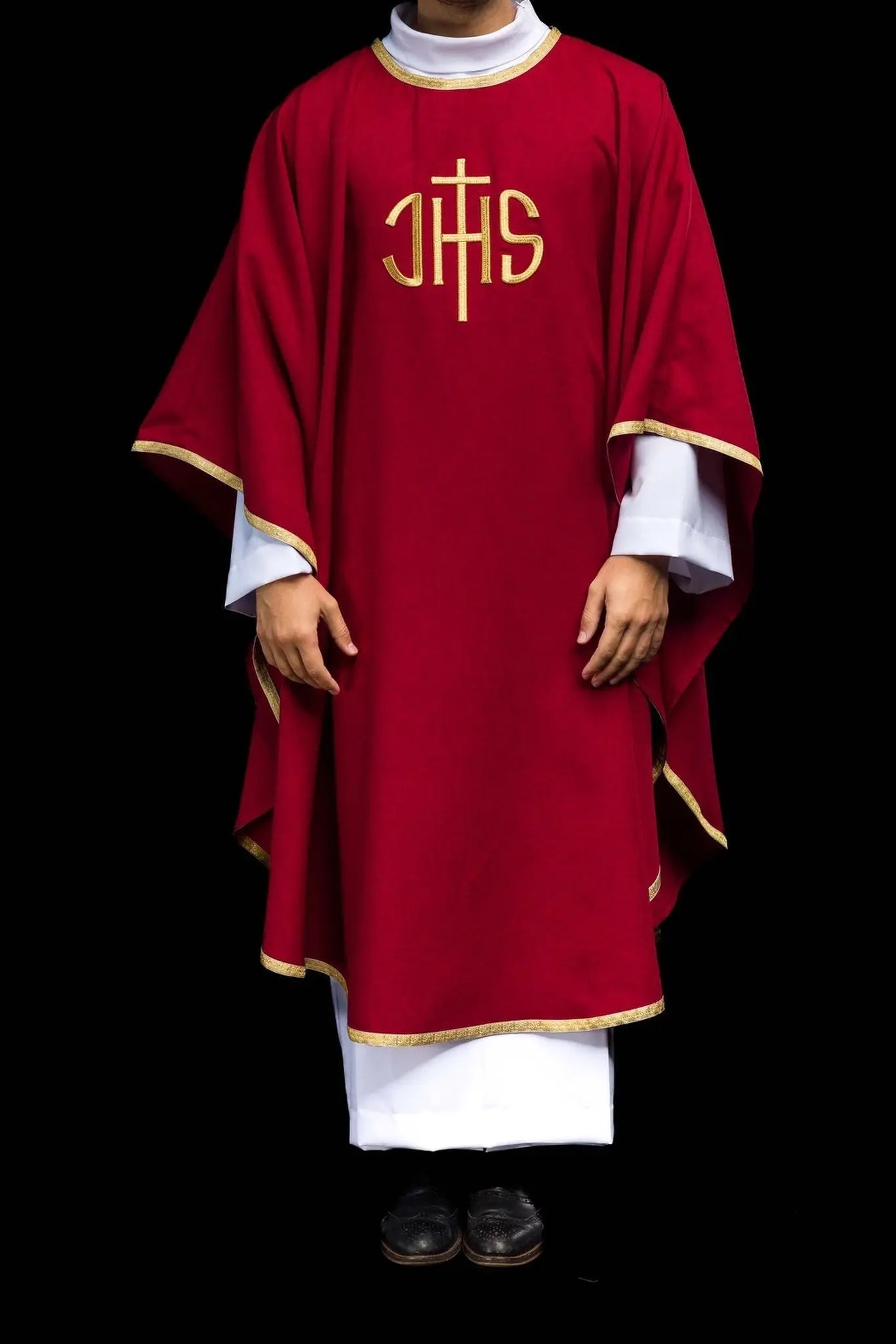
Ordinary Time Vestments
Green vestments for the longest season of the liturgical year
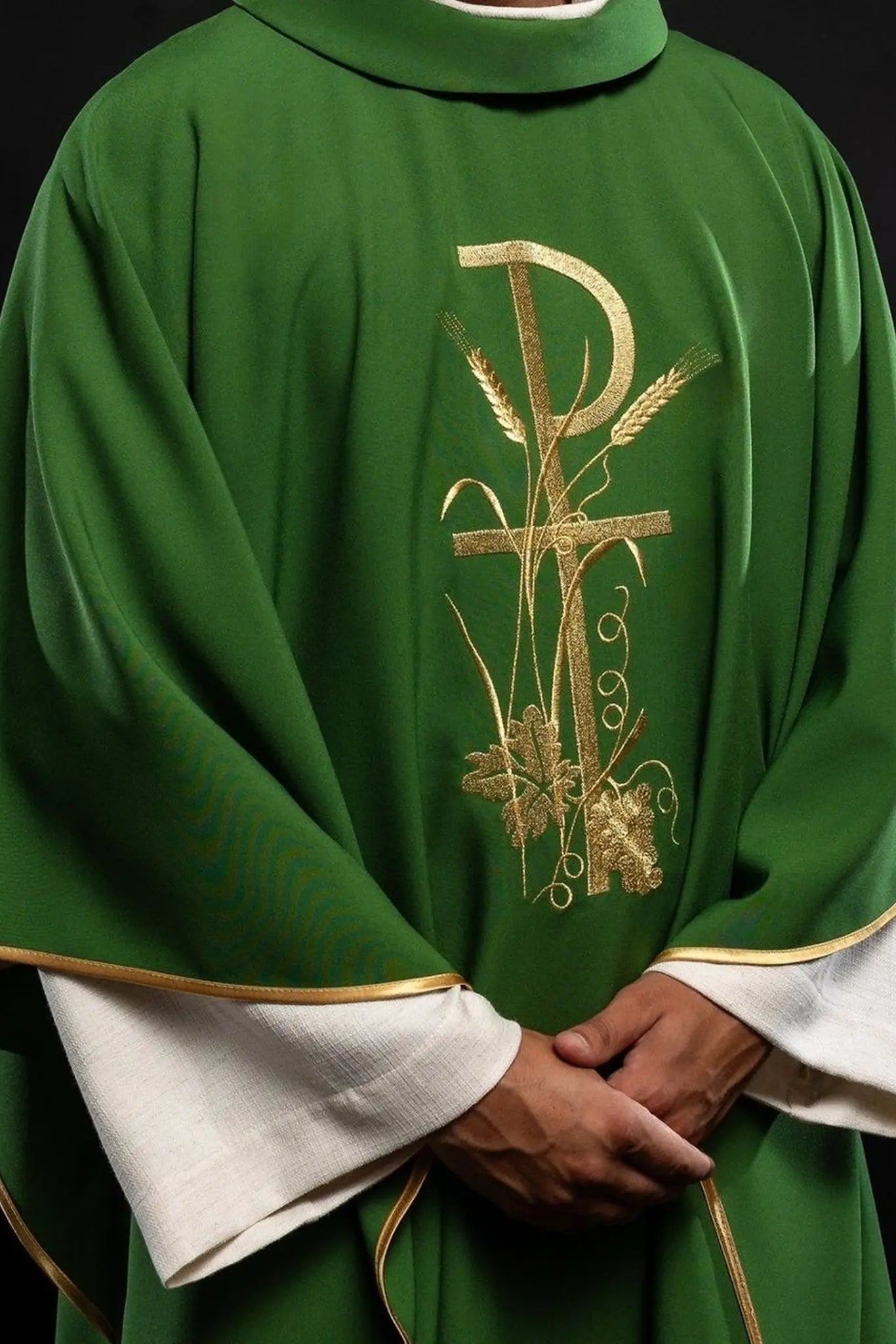
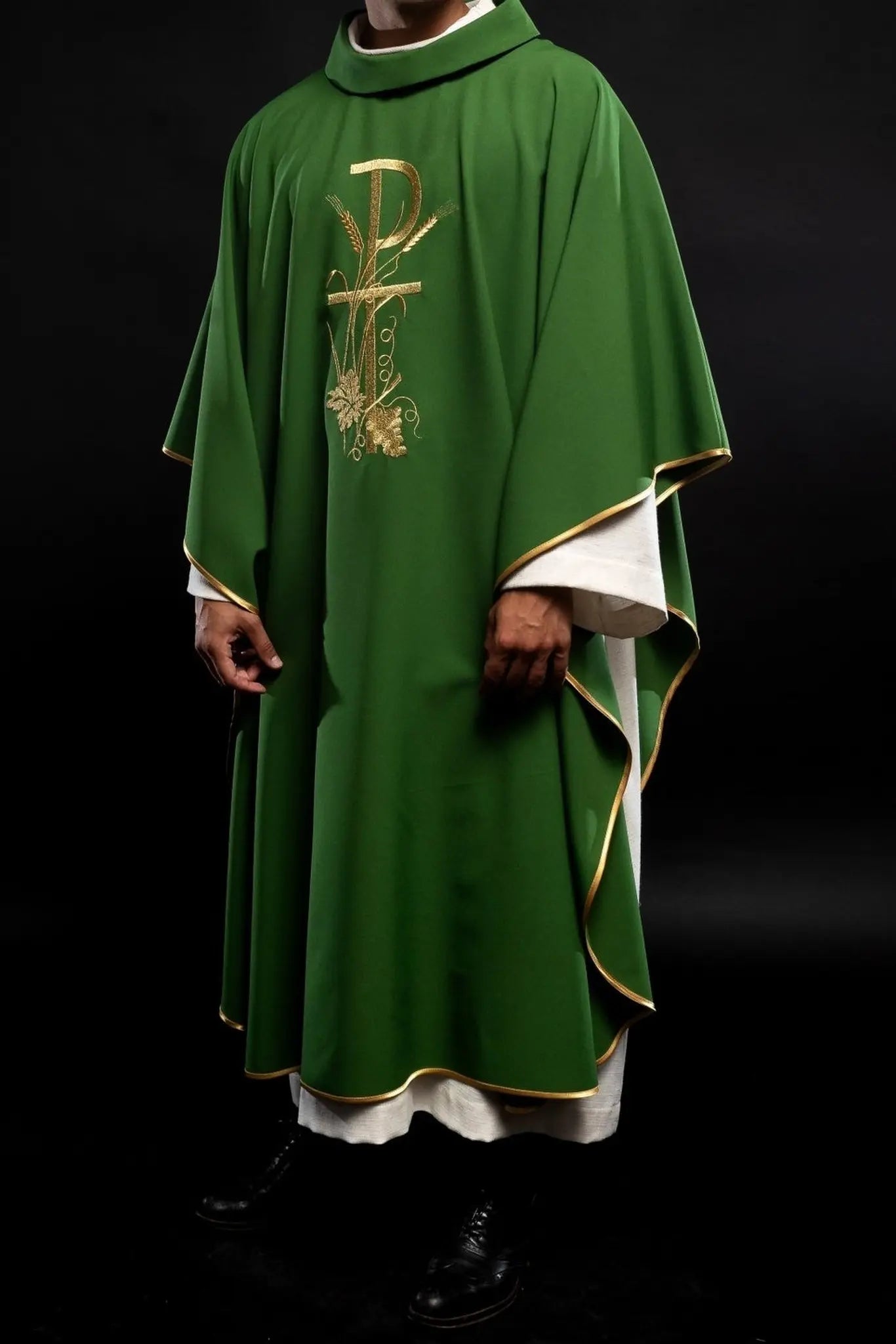
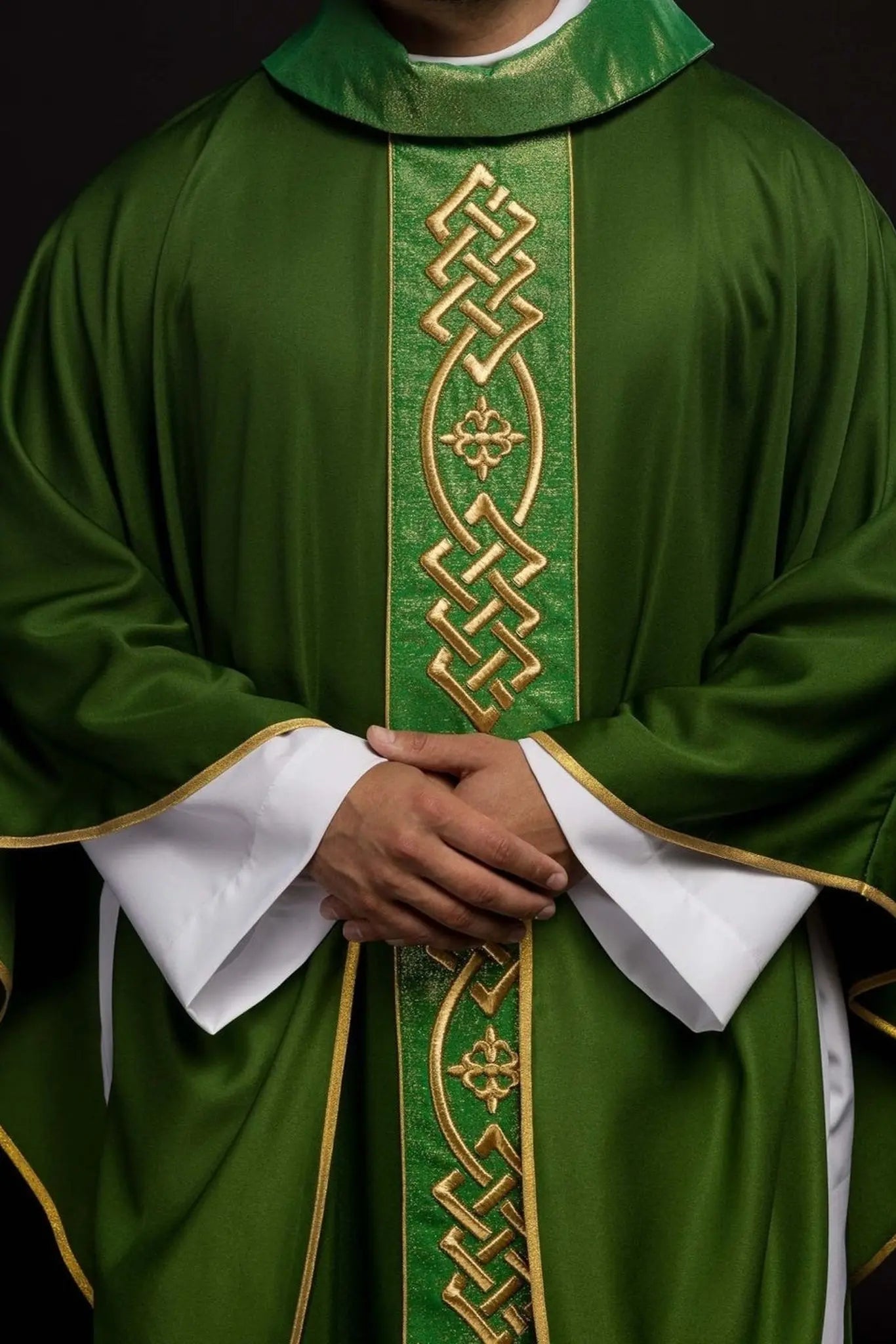
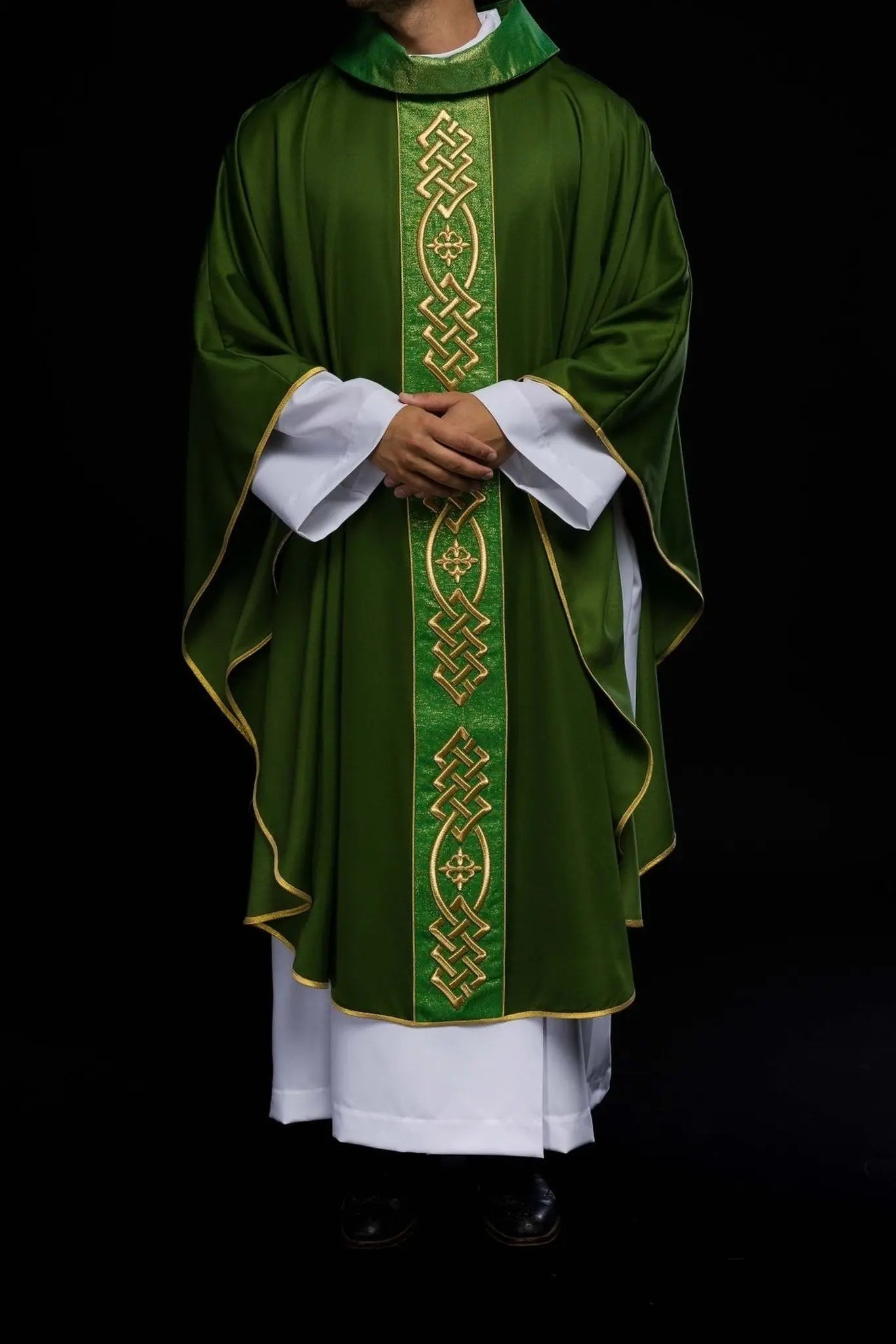
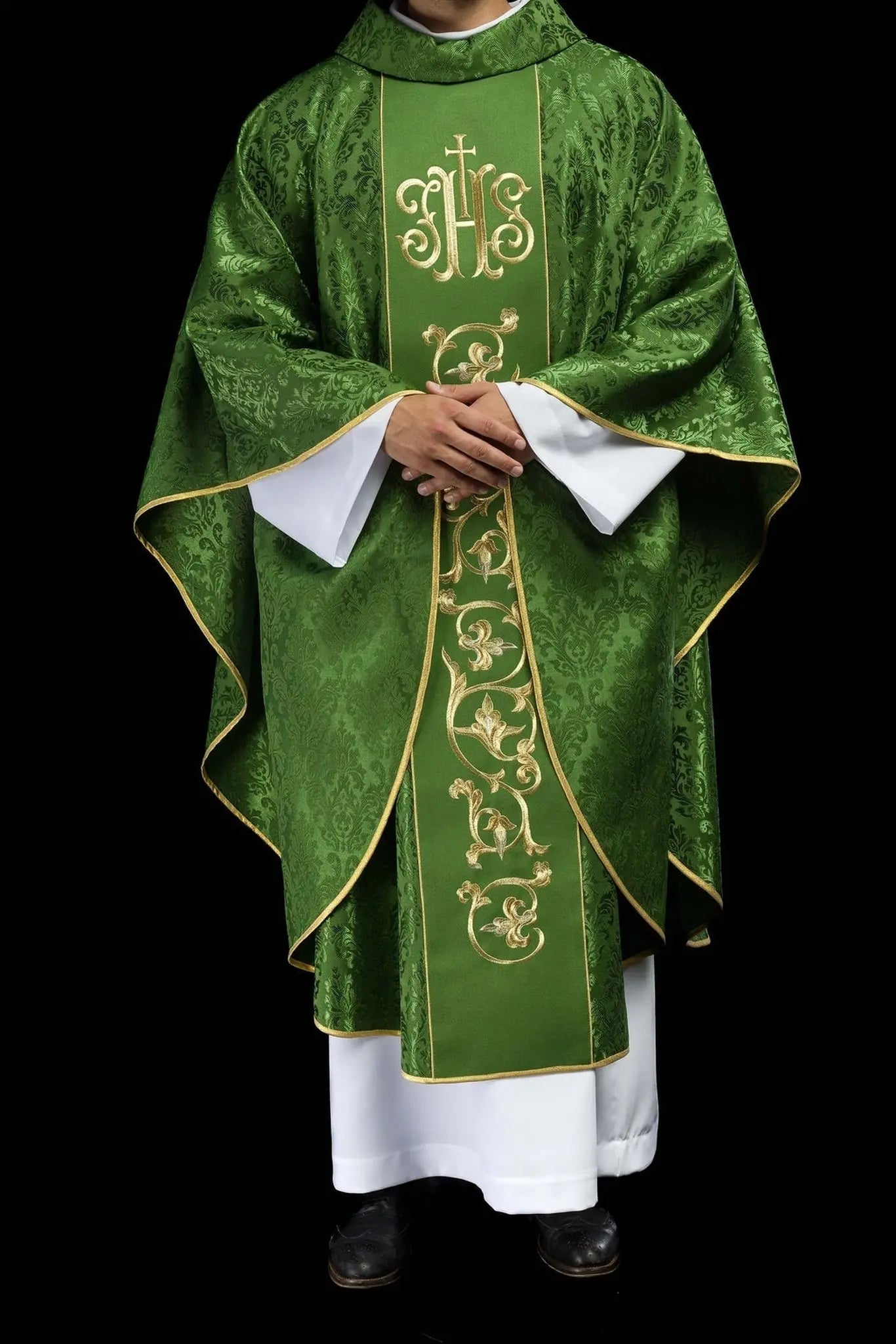
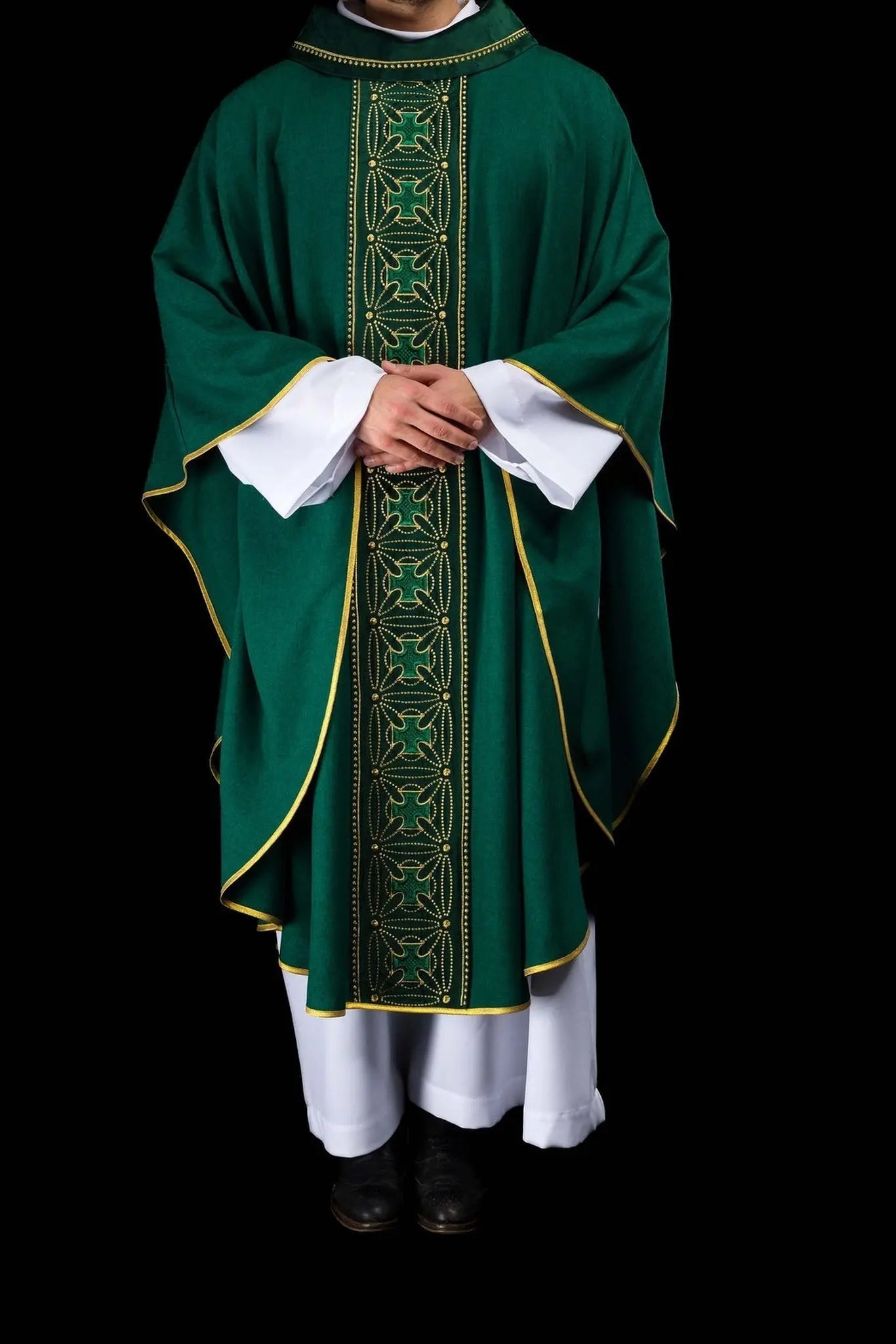
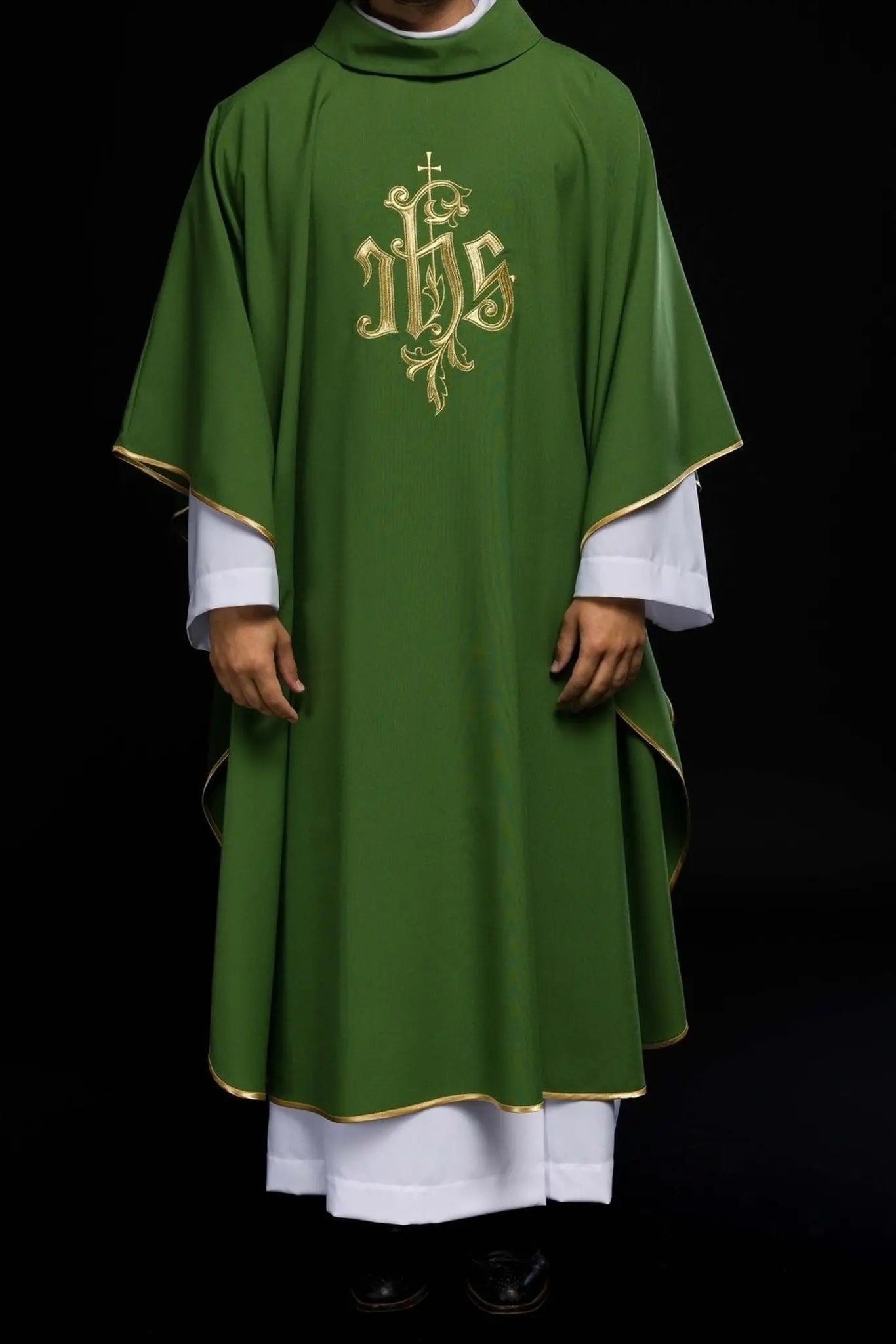
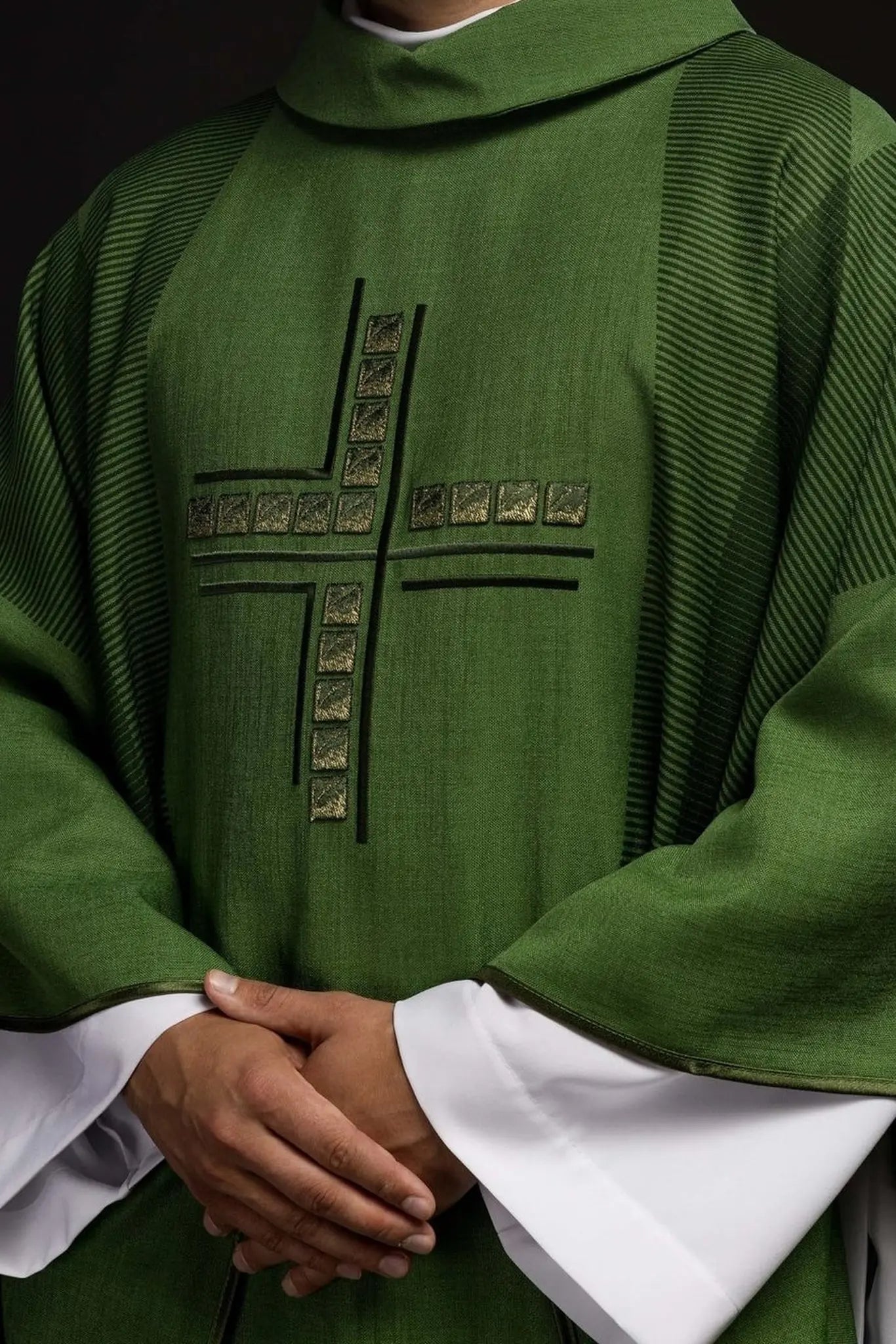
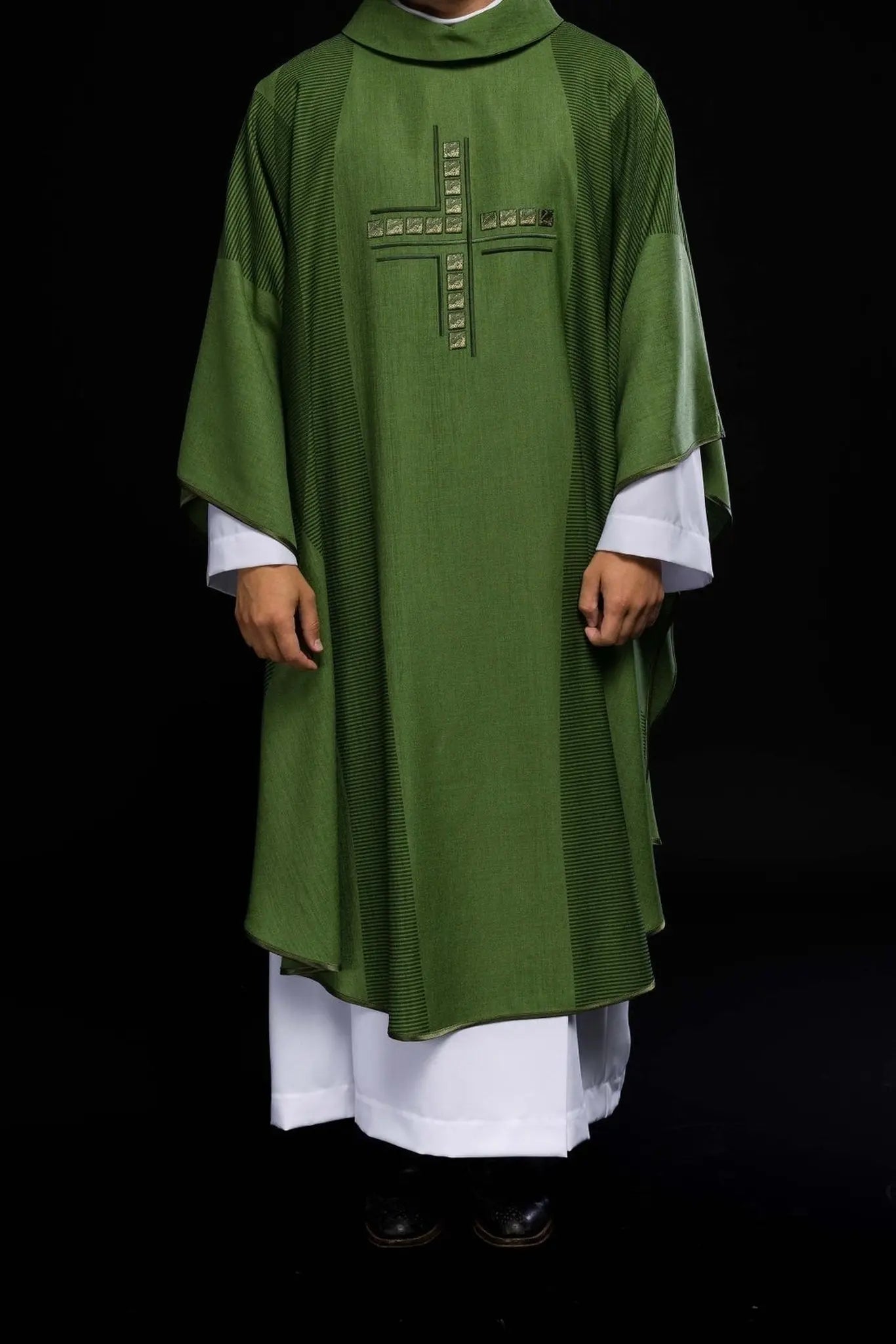
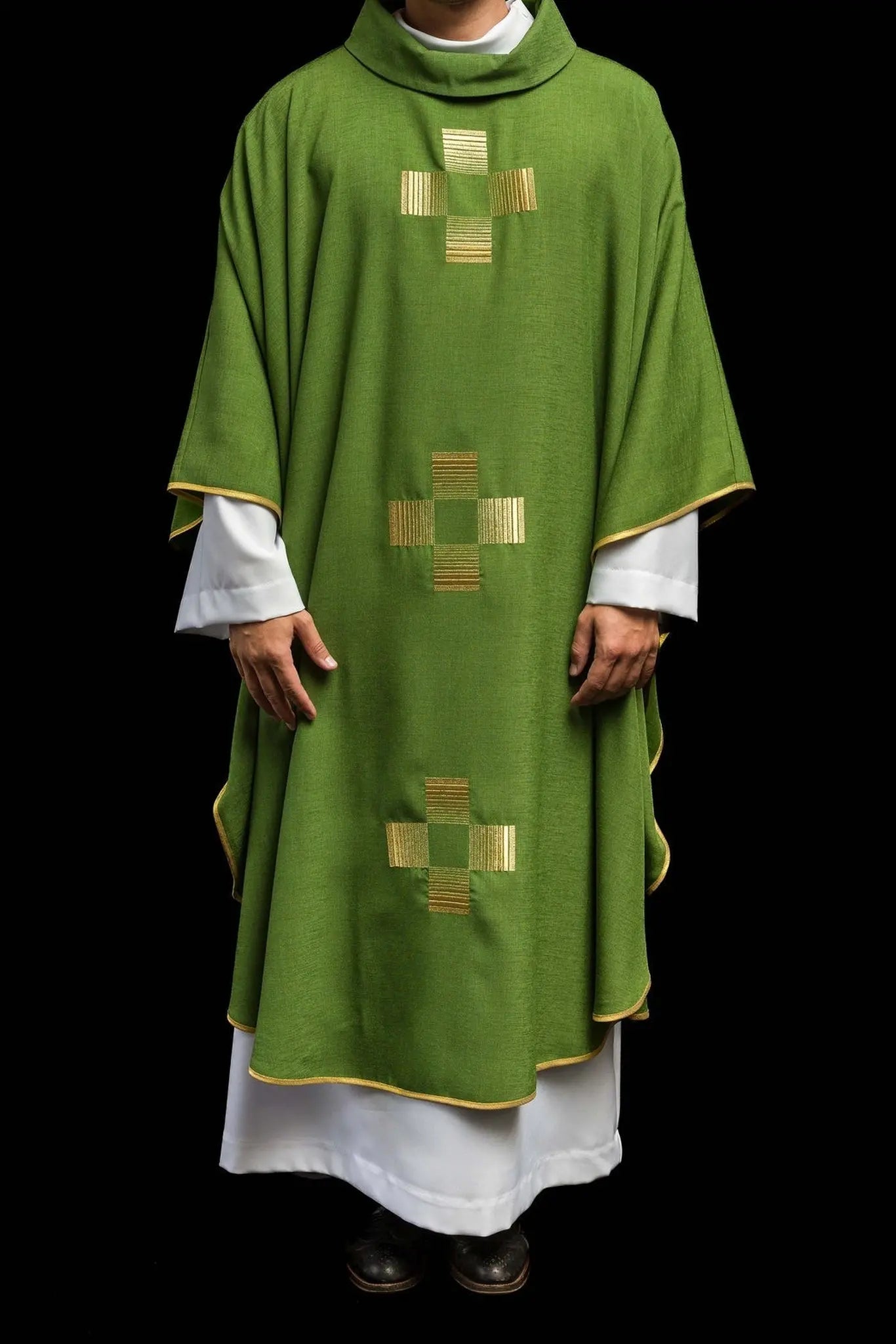
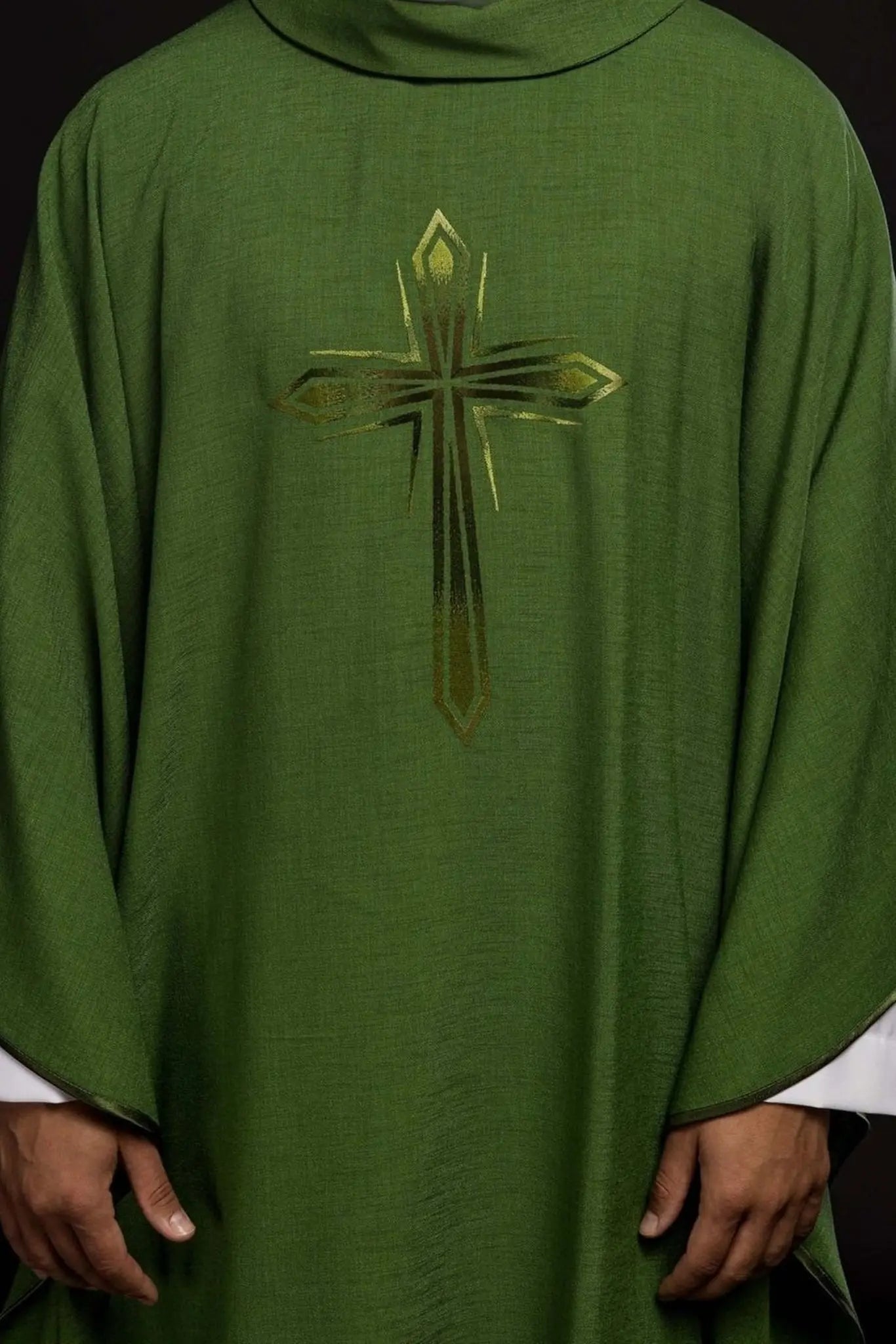
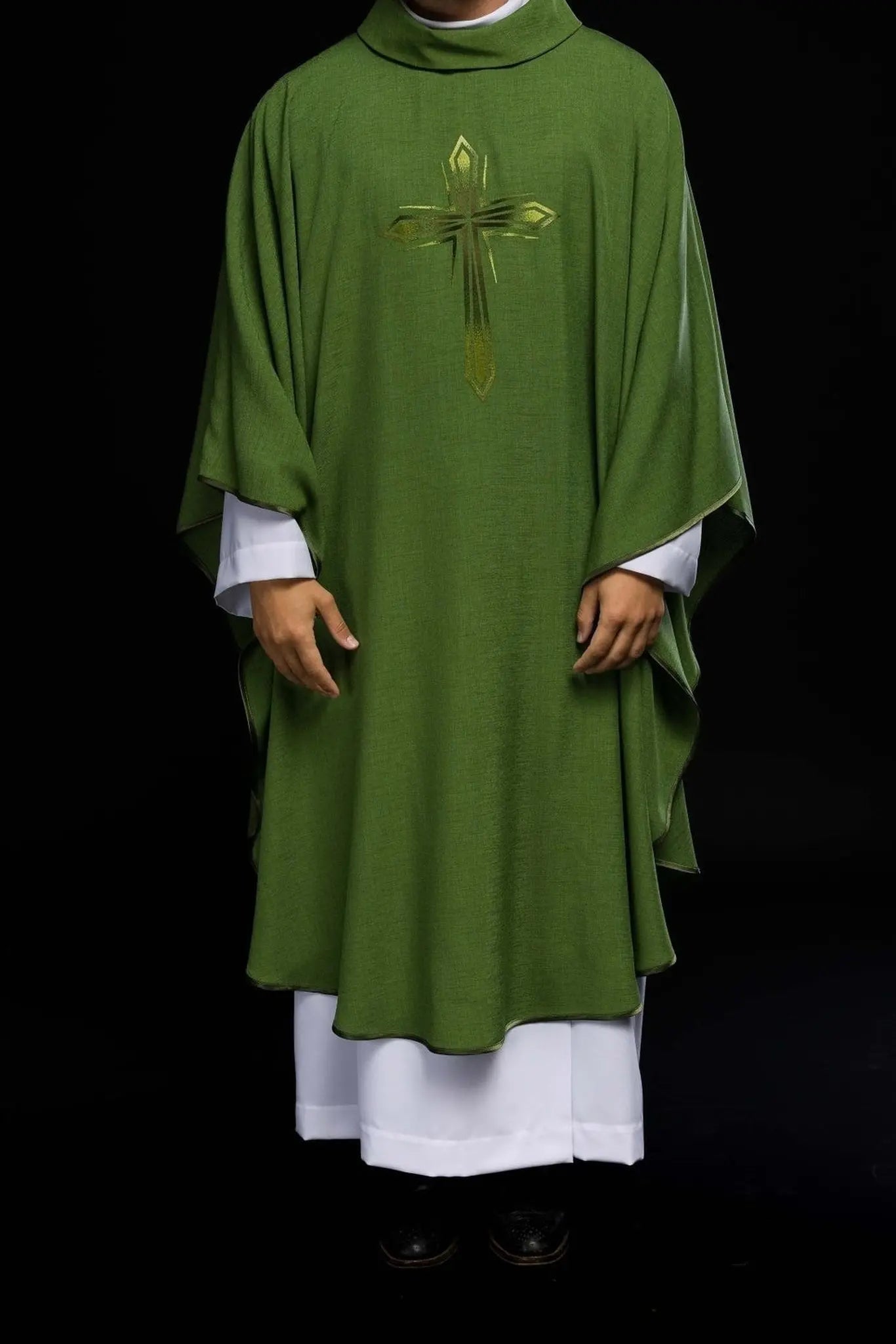
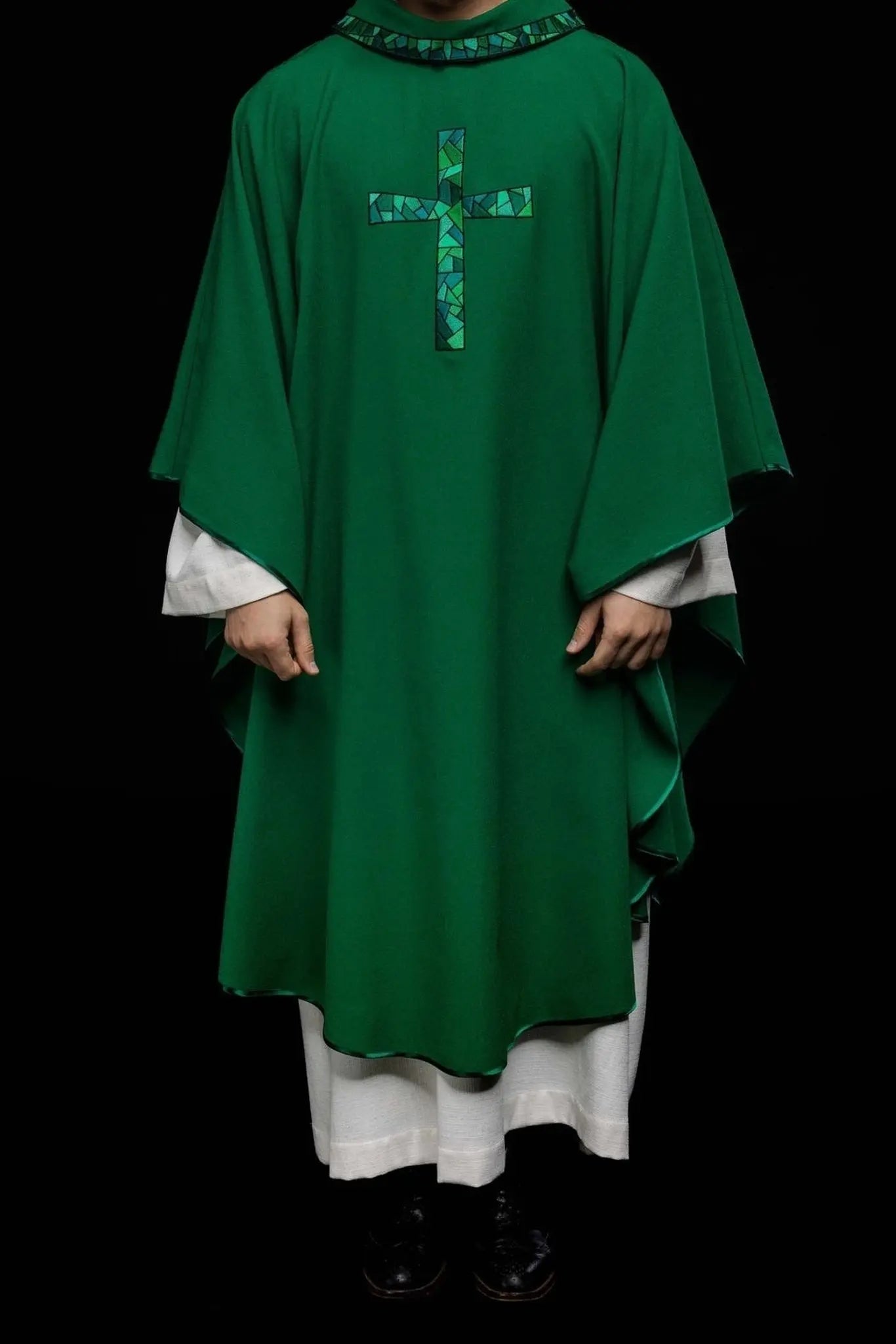
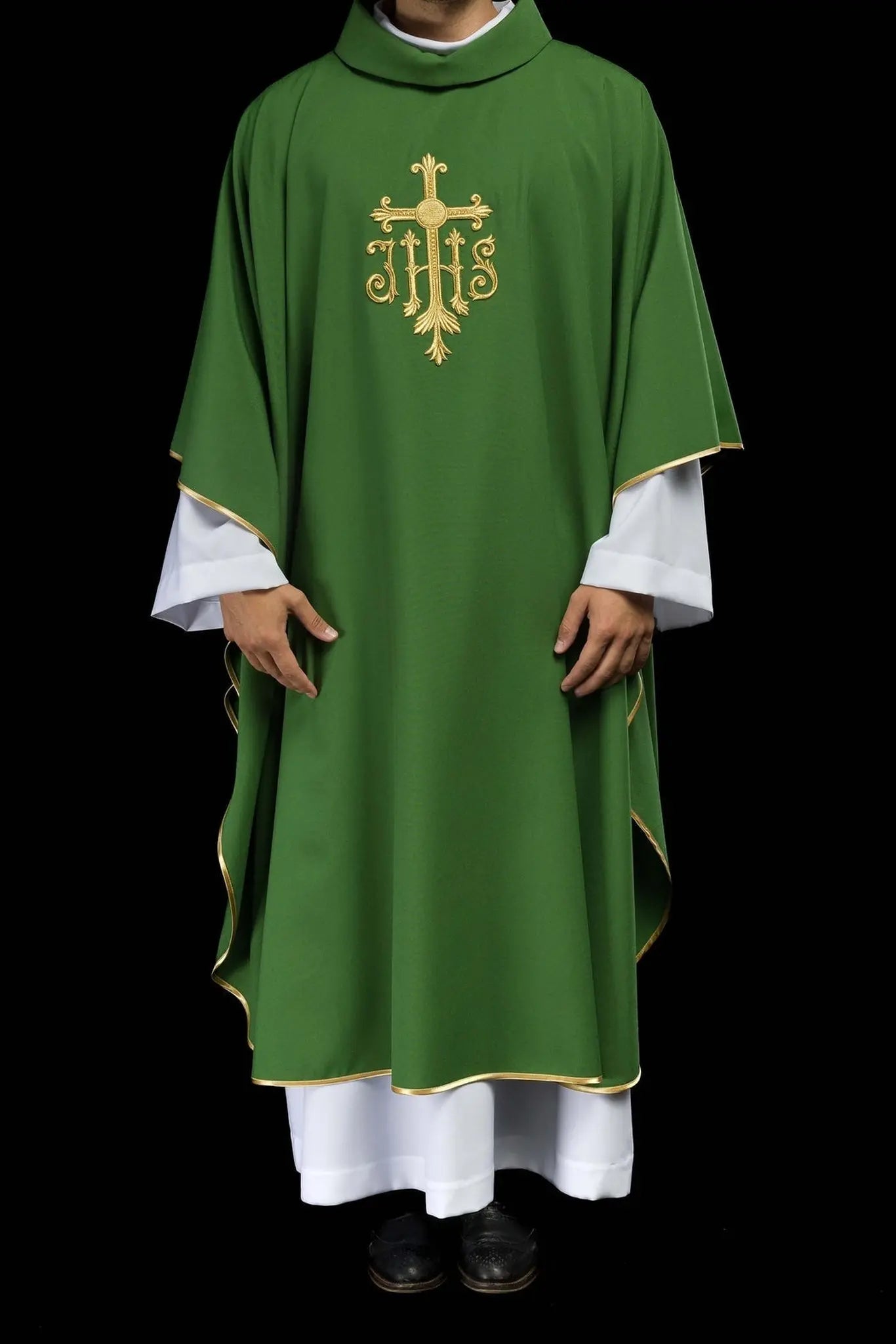
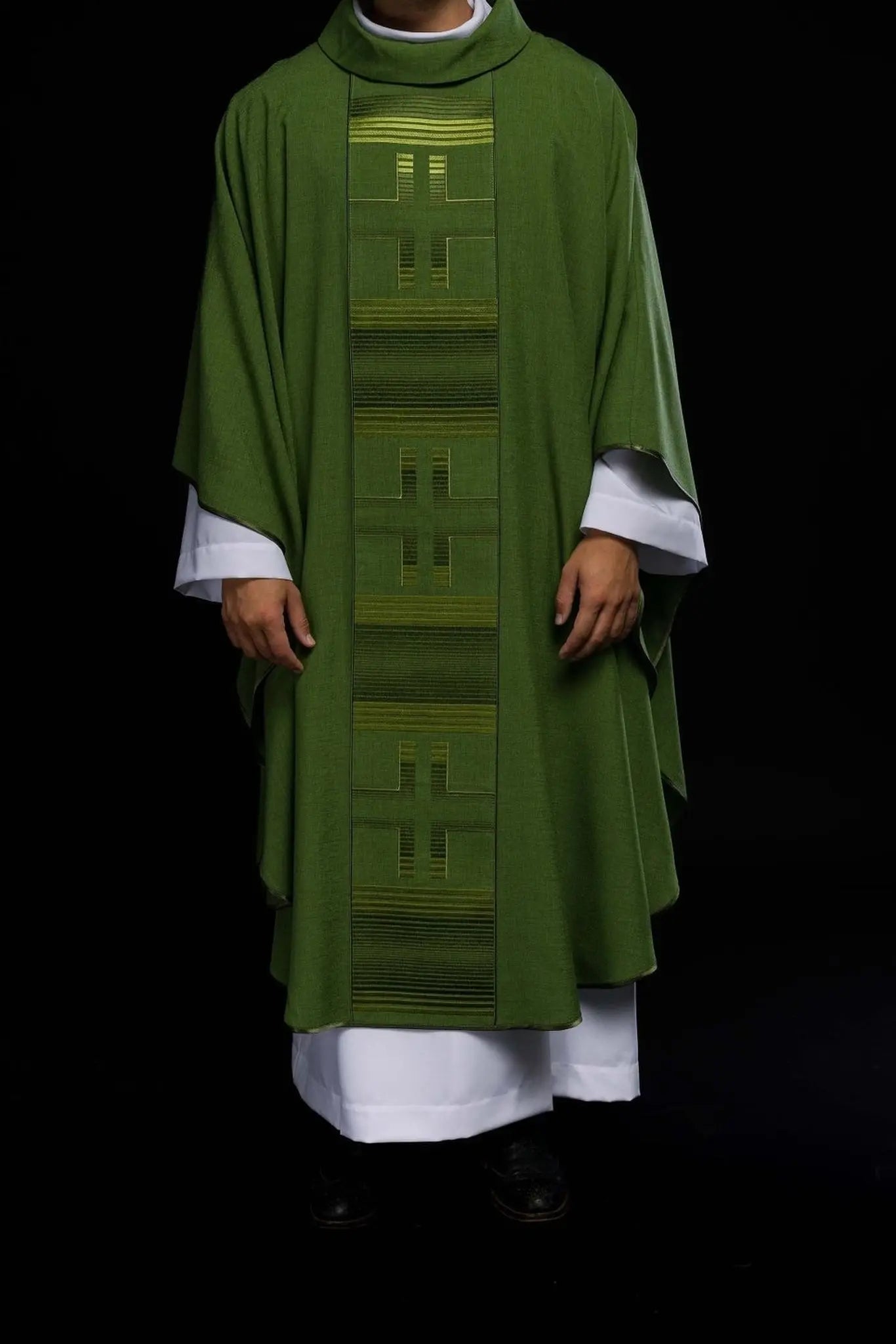
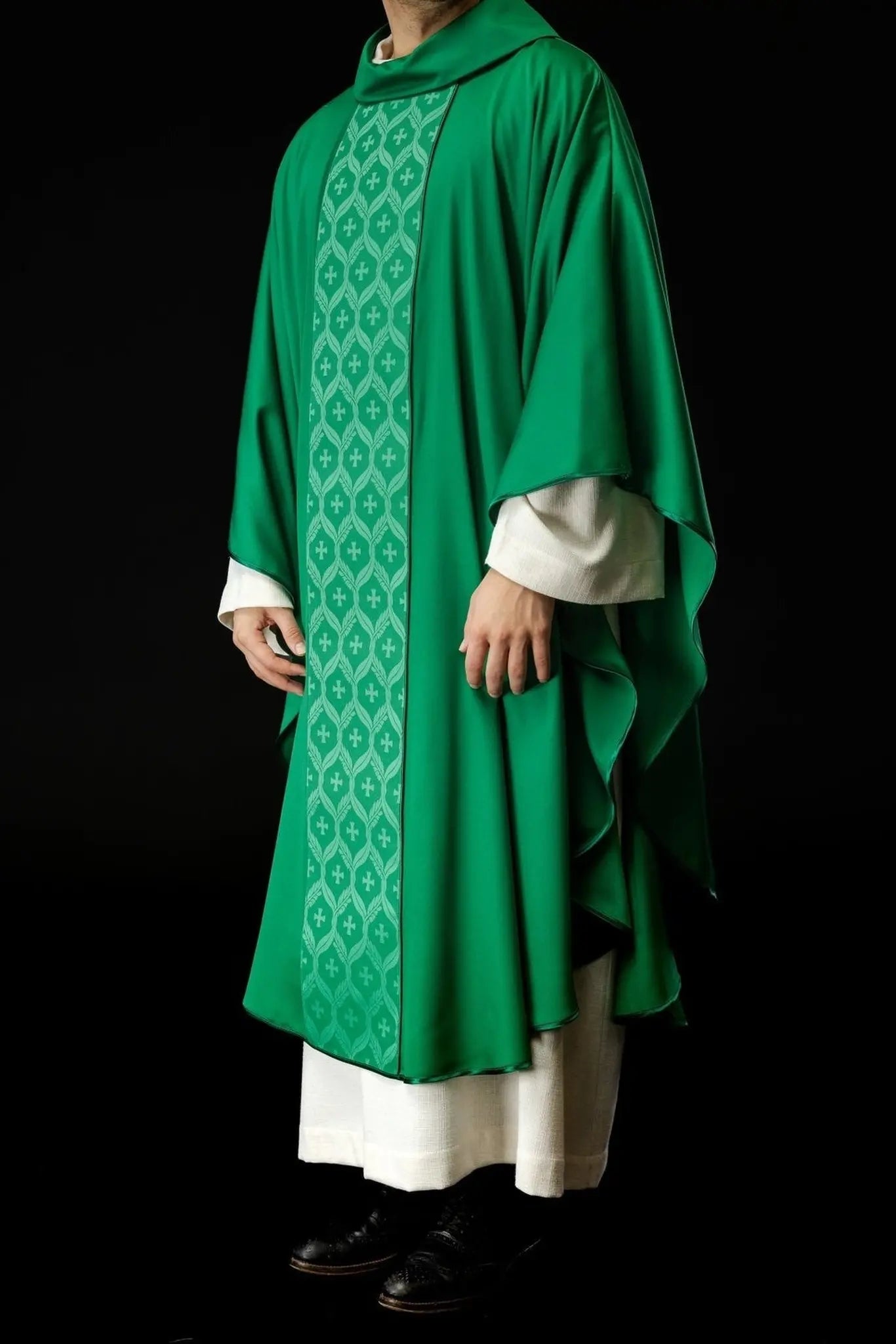
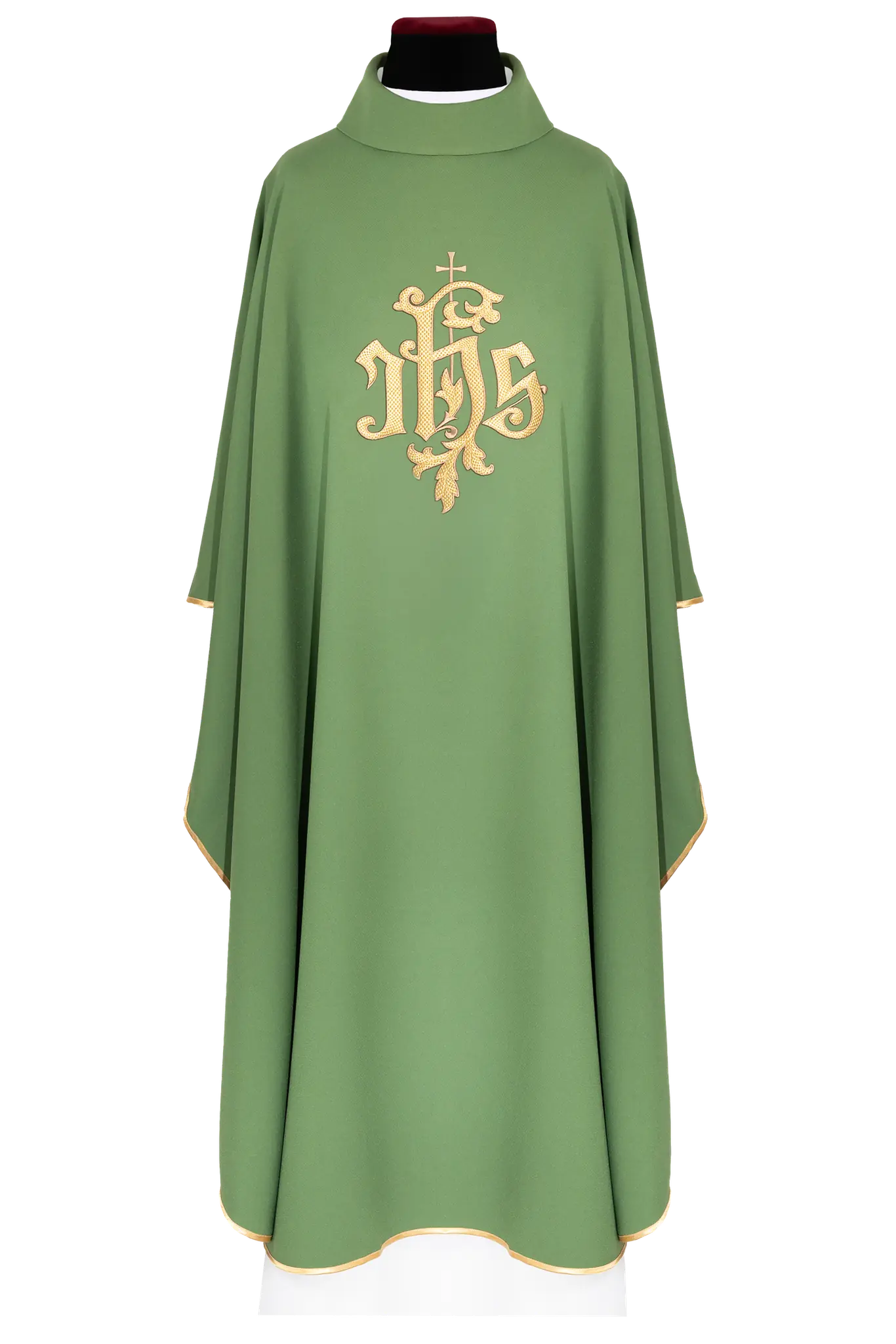
Ordinary Time is the broad, recurring season in the Roman Catholic liturgical year in which the Church contemplates the public ministry of Christ, His teaching, the call to discipleship, and the steady growth of Christian life. Because it occupies many weeks outside Advent, Christmas, Lent, Easter, and particular solemnities, the vestments used during this season must be both dignified and practical for frequent celebration. This collection gathers liturgical vestments suited to Ordinary Time, with a strong focus on green chasubles for priests and bishops and dalmatics for deacons. Green is traditionally associated with hope, life, spiritual growth, and the ongoing mission of the Church, making it the natural color for most Sundays and weekdays of Ordinary Time.
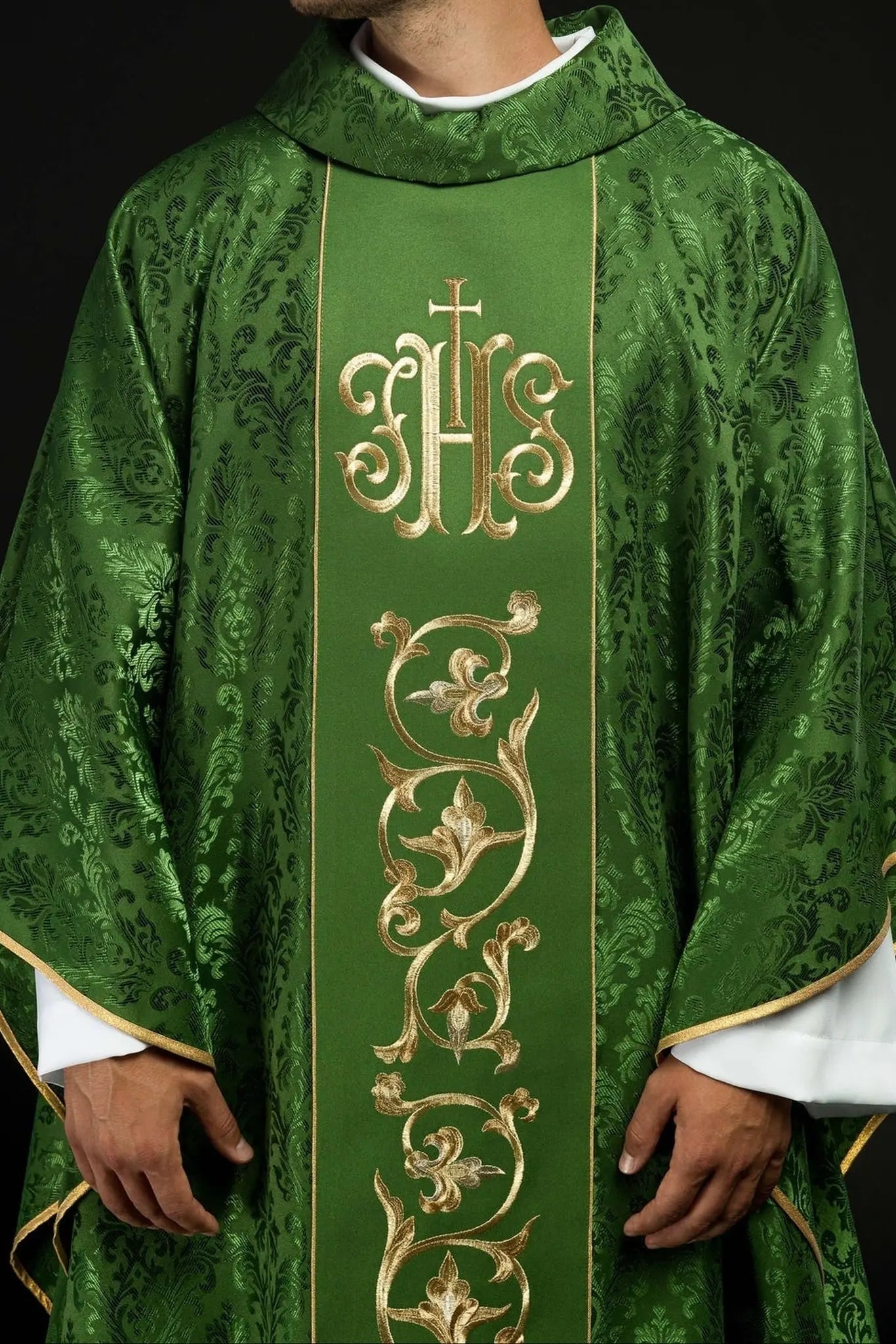
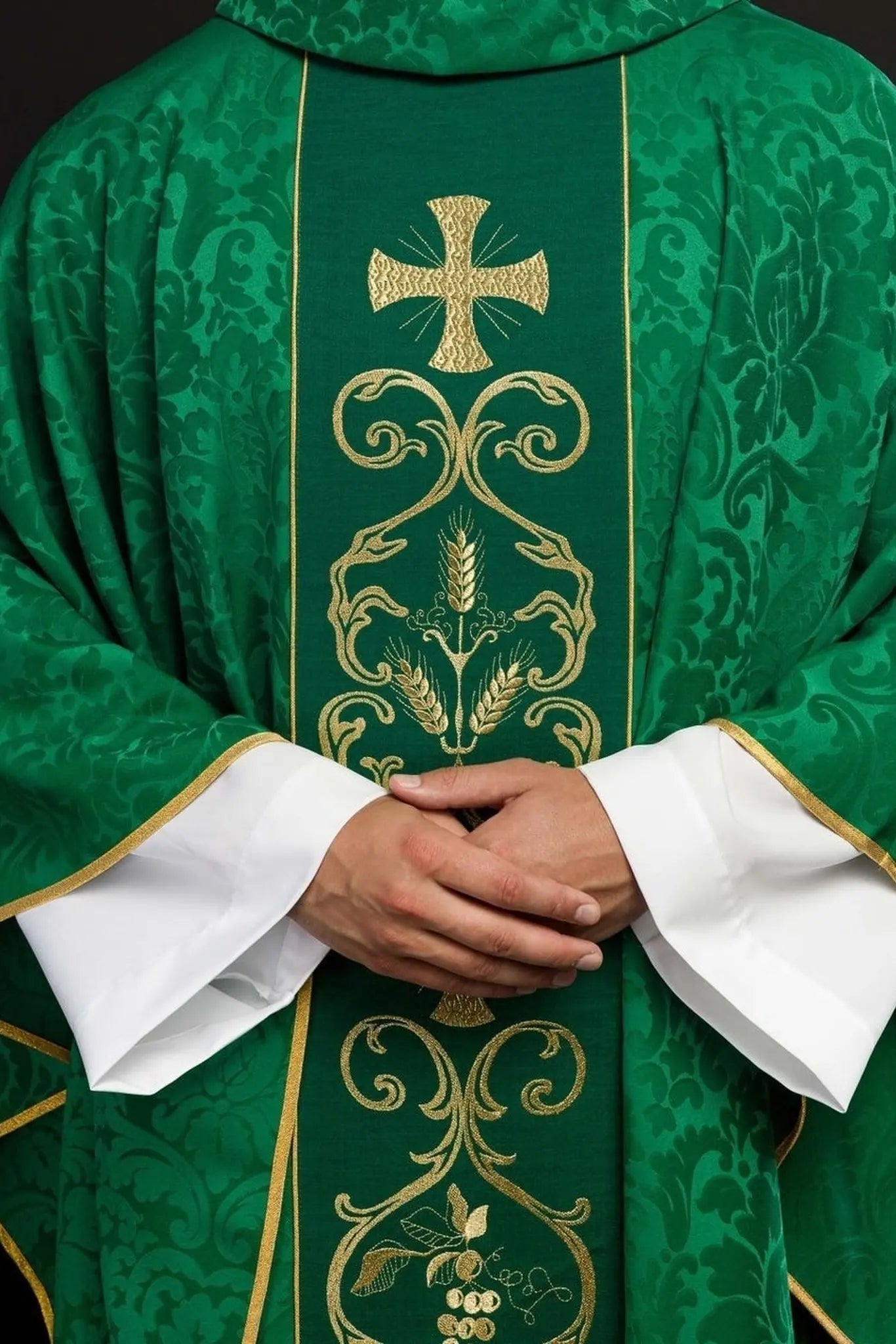
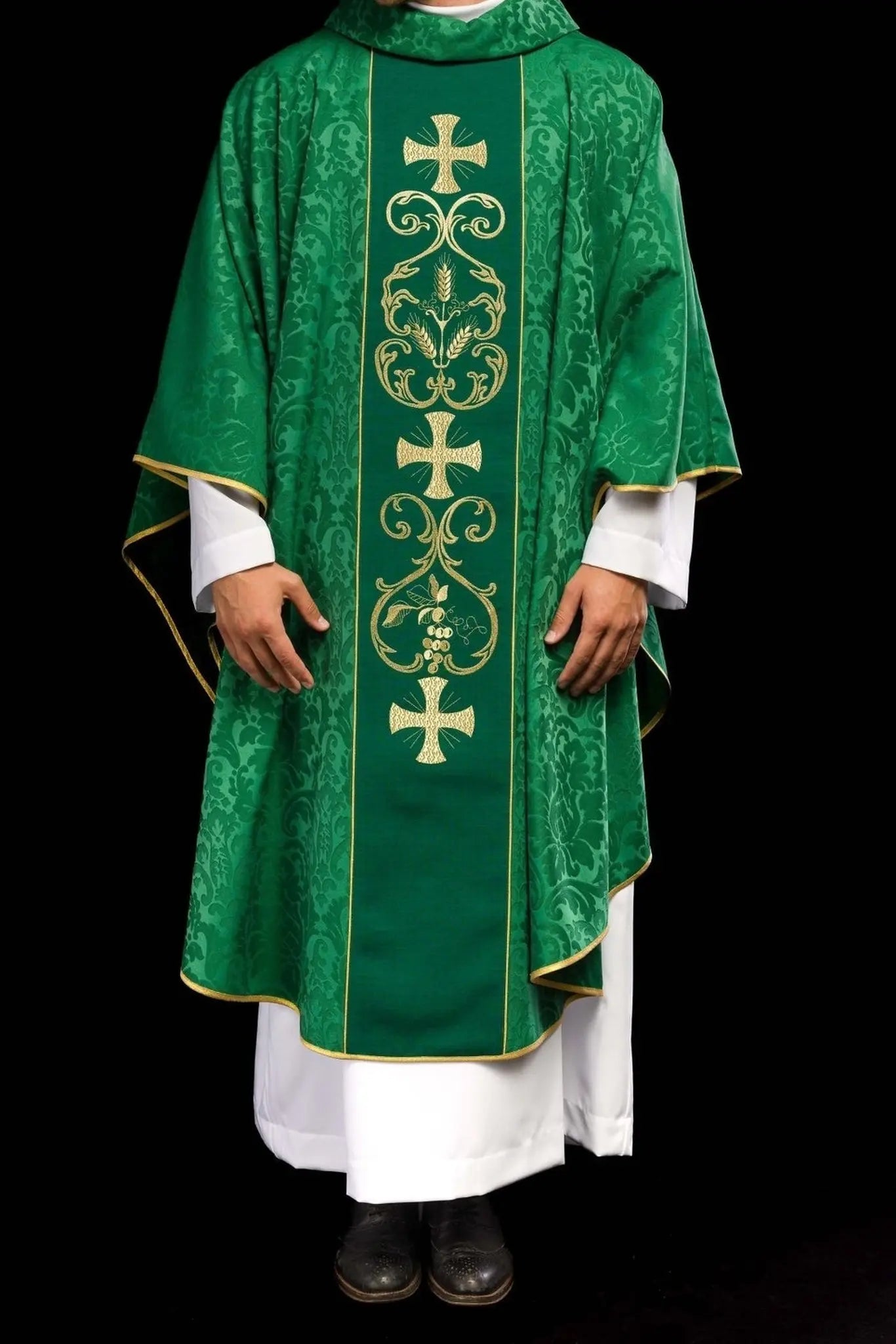
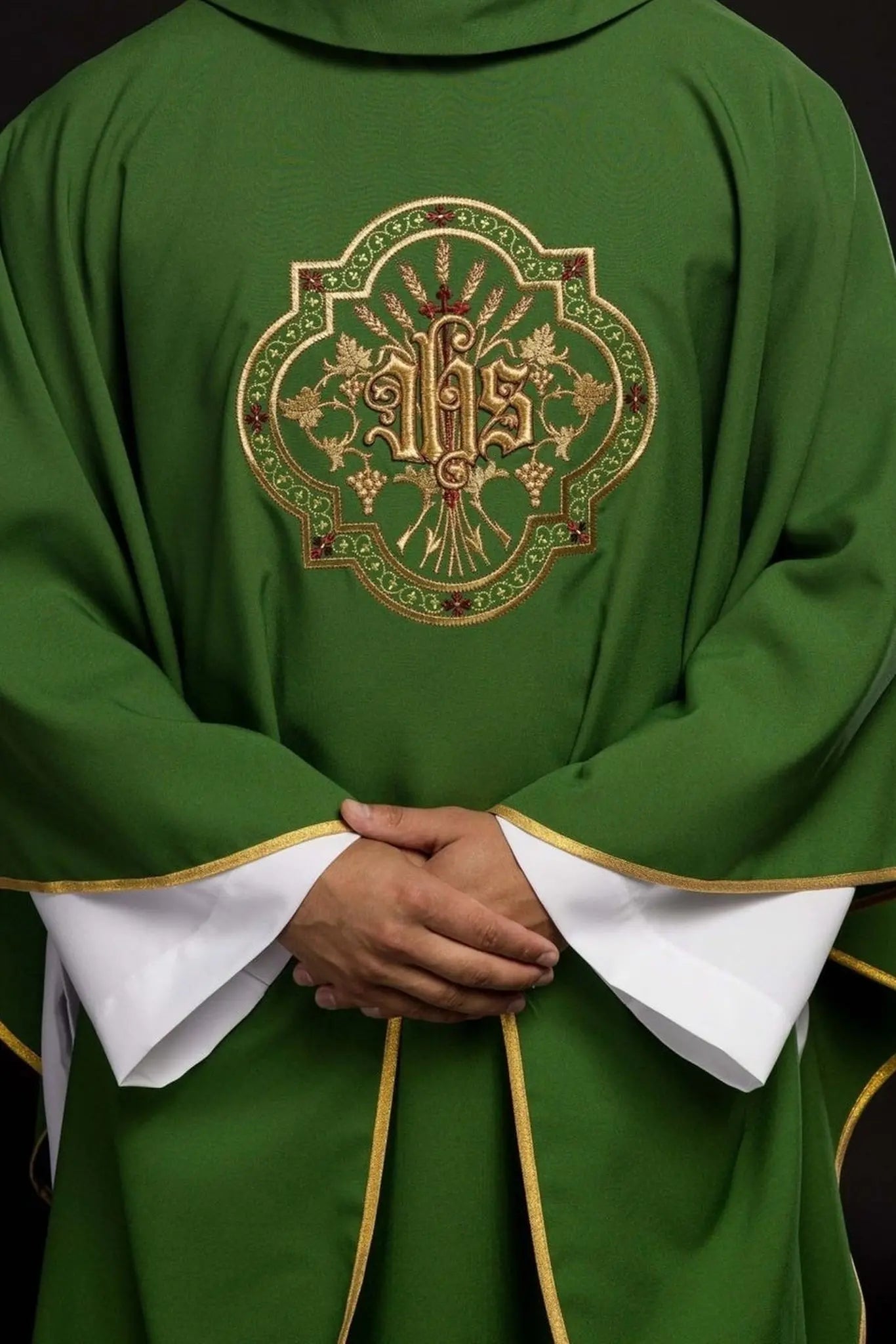
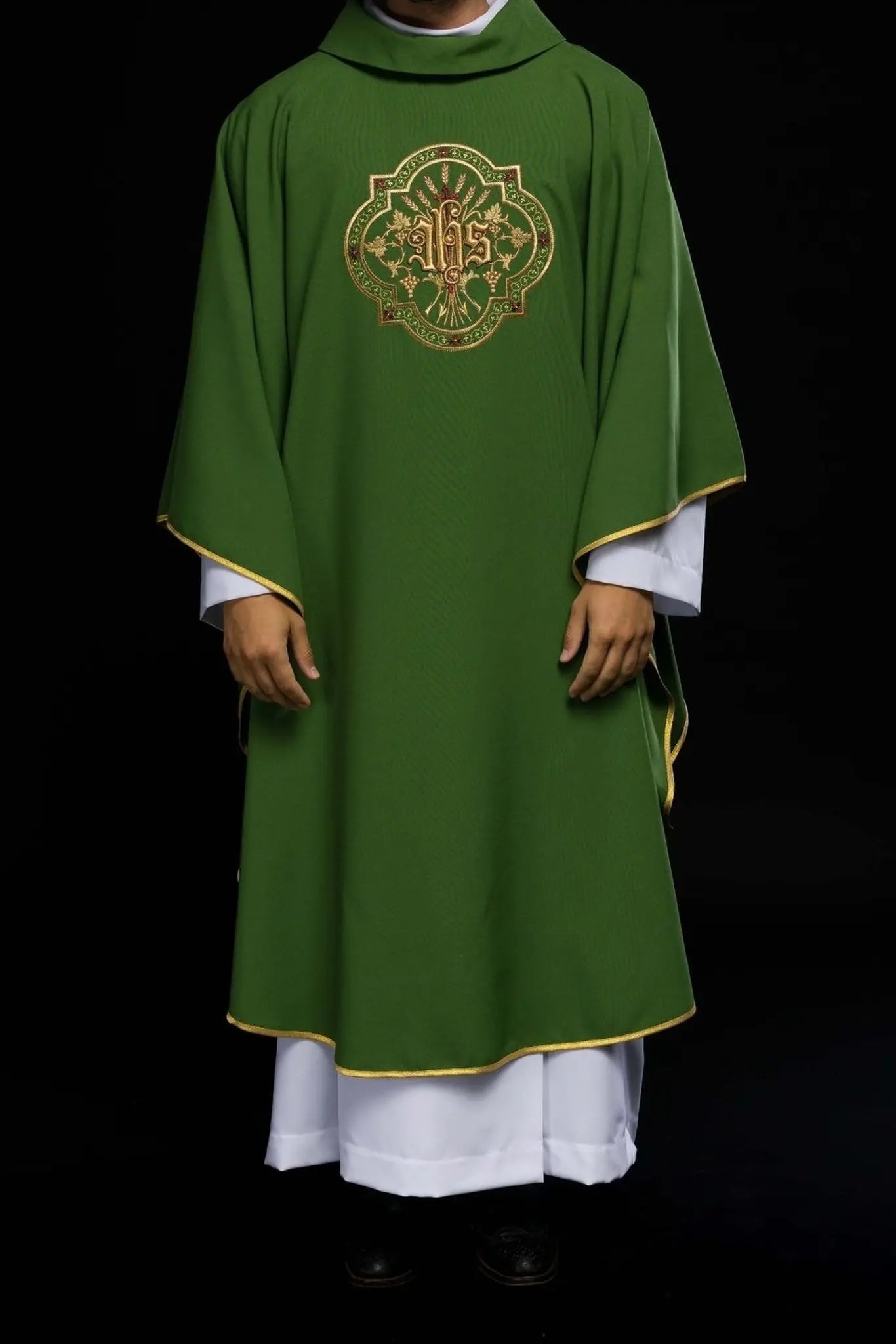
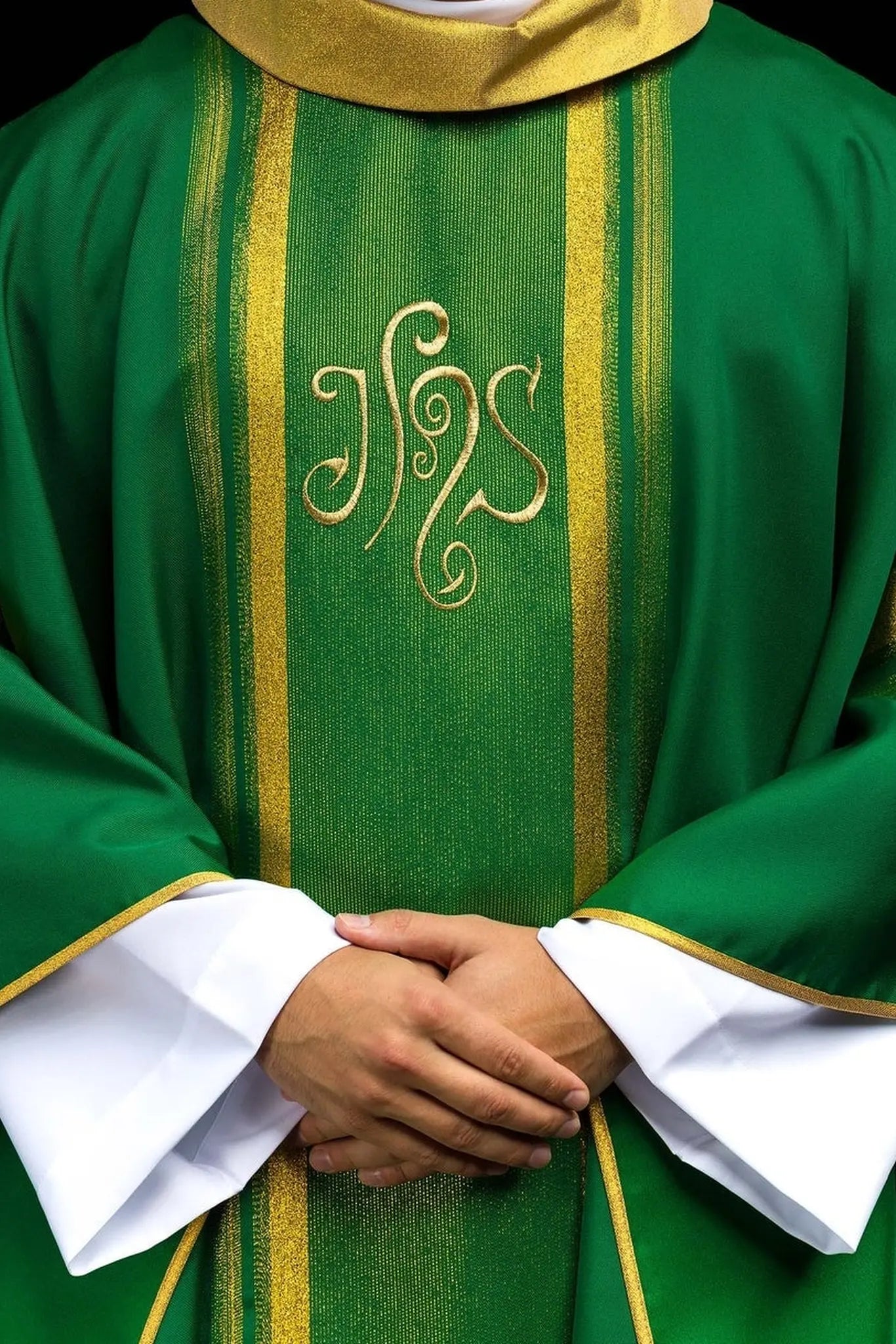
The pieces in this collection are intended for parish churches, chapels, religious communities, retreat houses, and clergy who need reliable vestments for repeated use throughout the year. Many designs include embroidered crosses, IHS motifs, decorative bands, gold accents, and classic Christian symbolism that can be read clearly from the sanctuary without overwhelming the liturgy. For a broader view of vestment types beyond this season, you may also browse liturgical vestments, while those seeking a focused color category can compare this page with green chasubles.
What belongs in the Ordinary Time collection
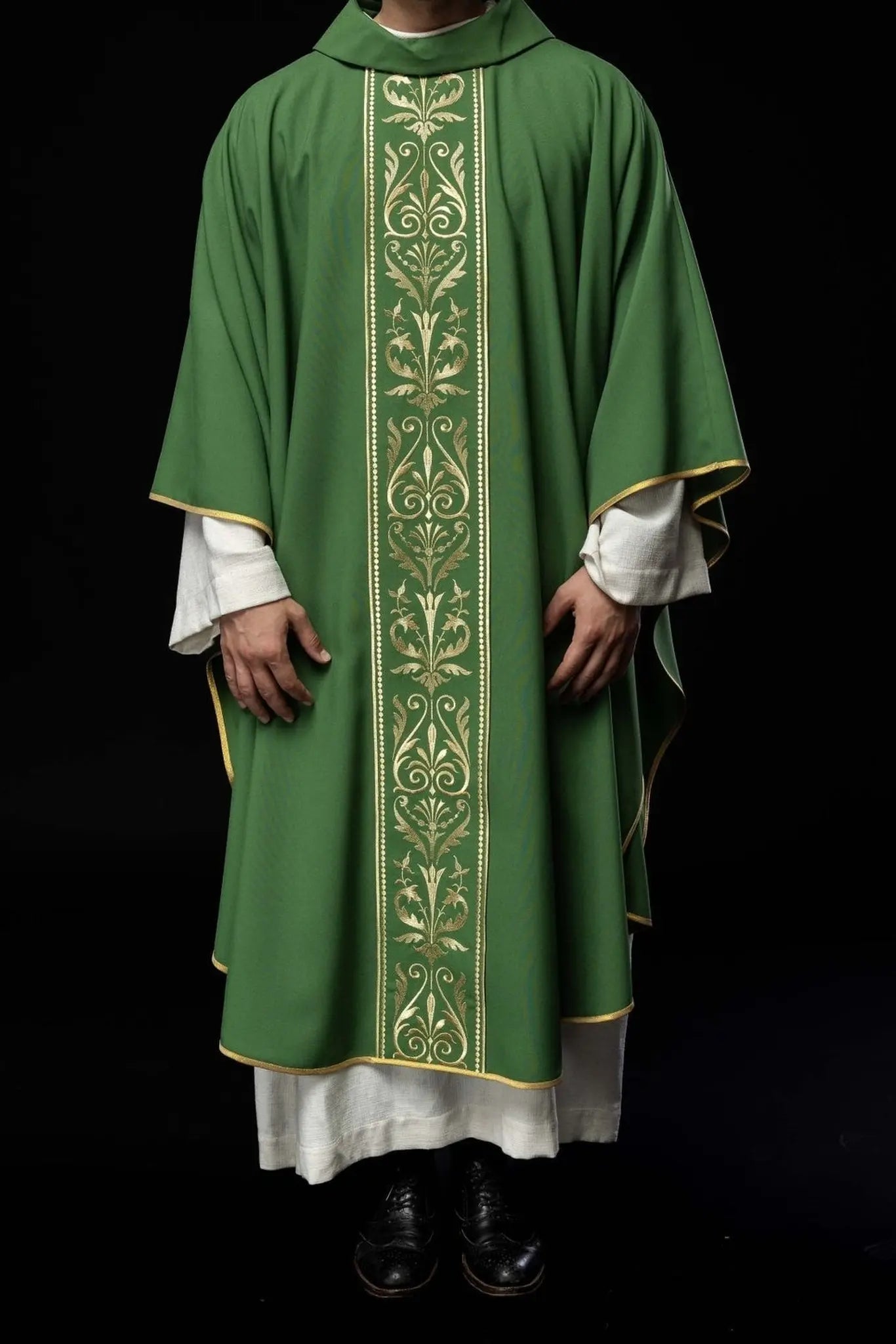
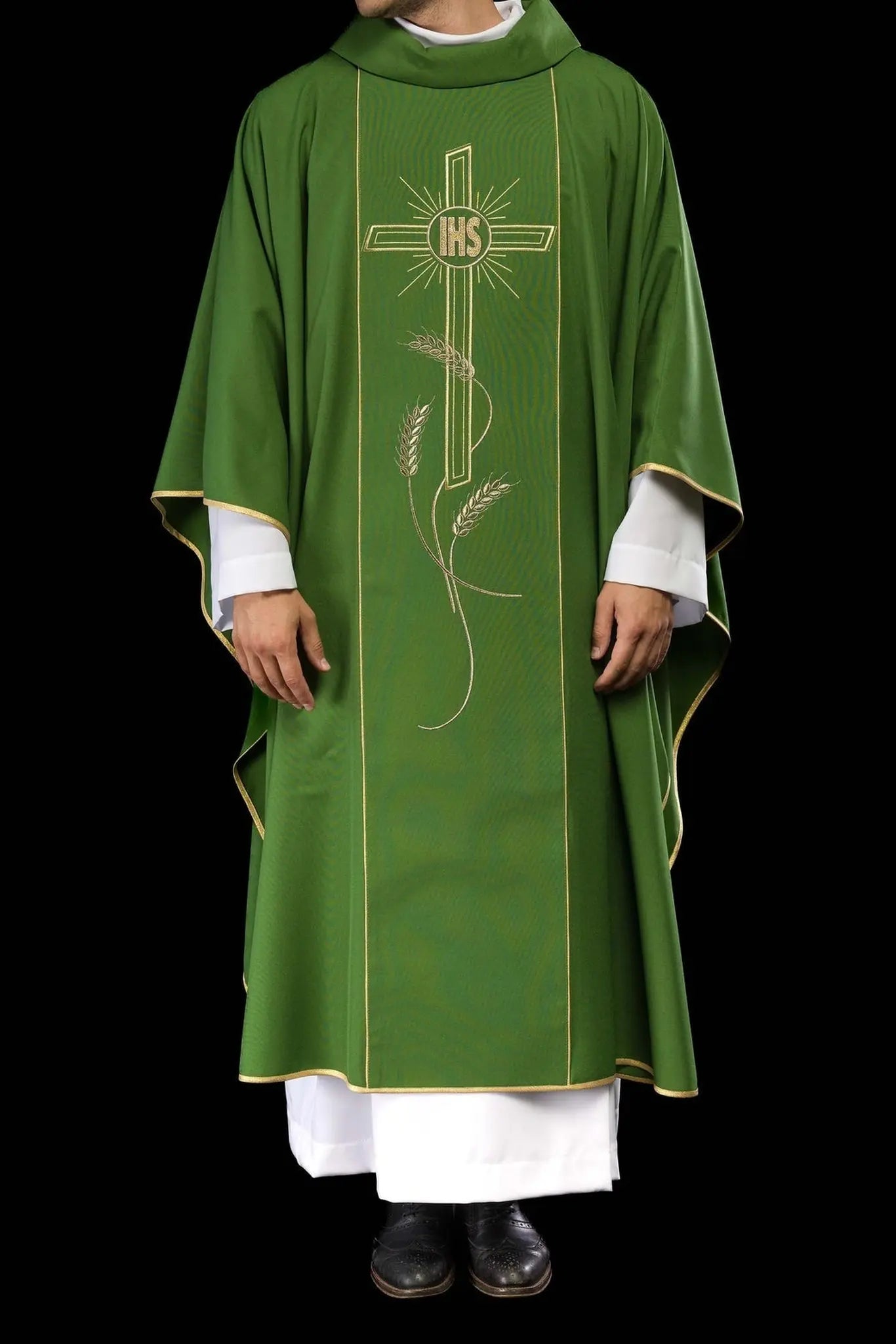
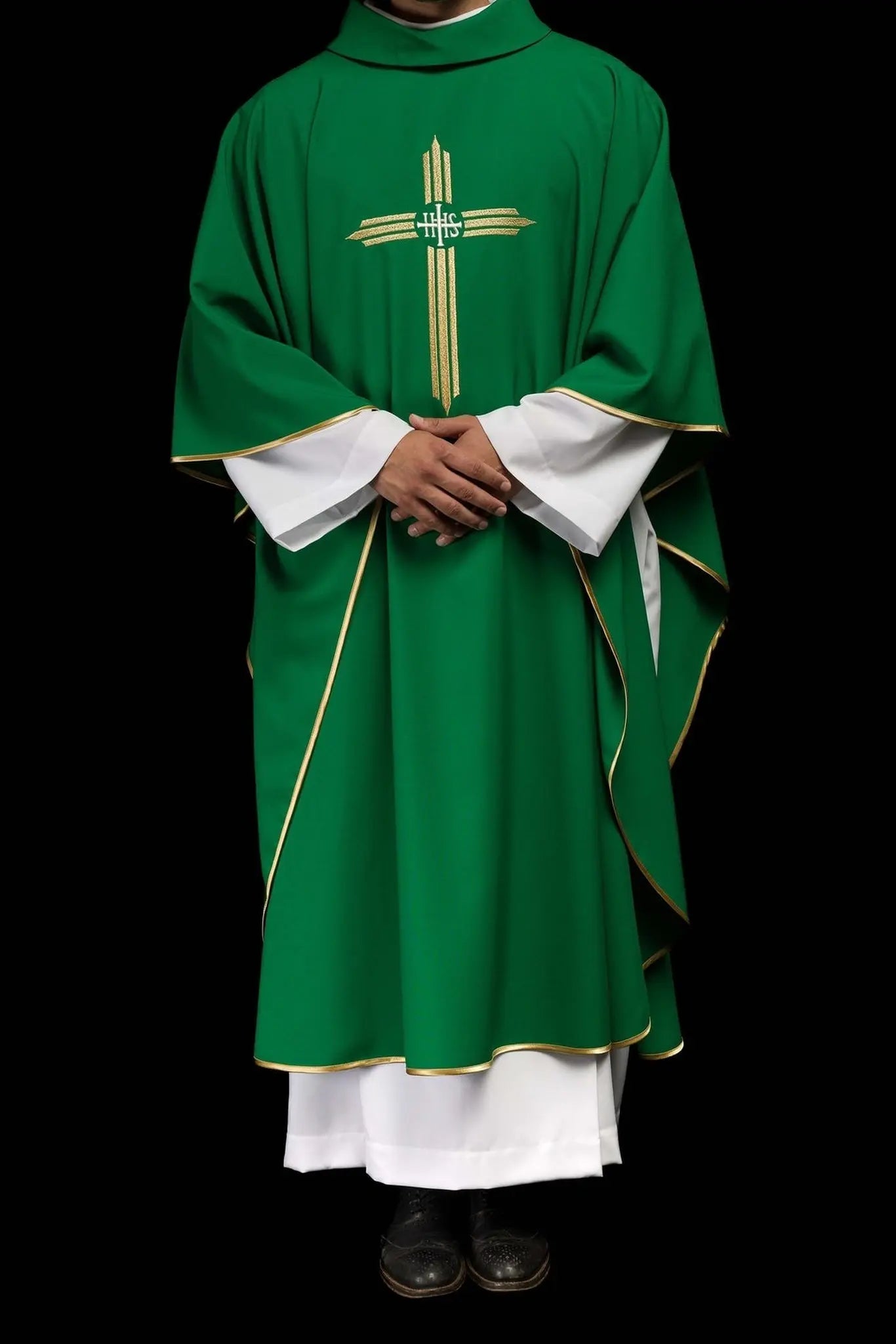
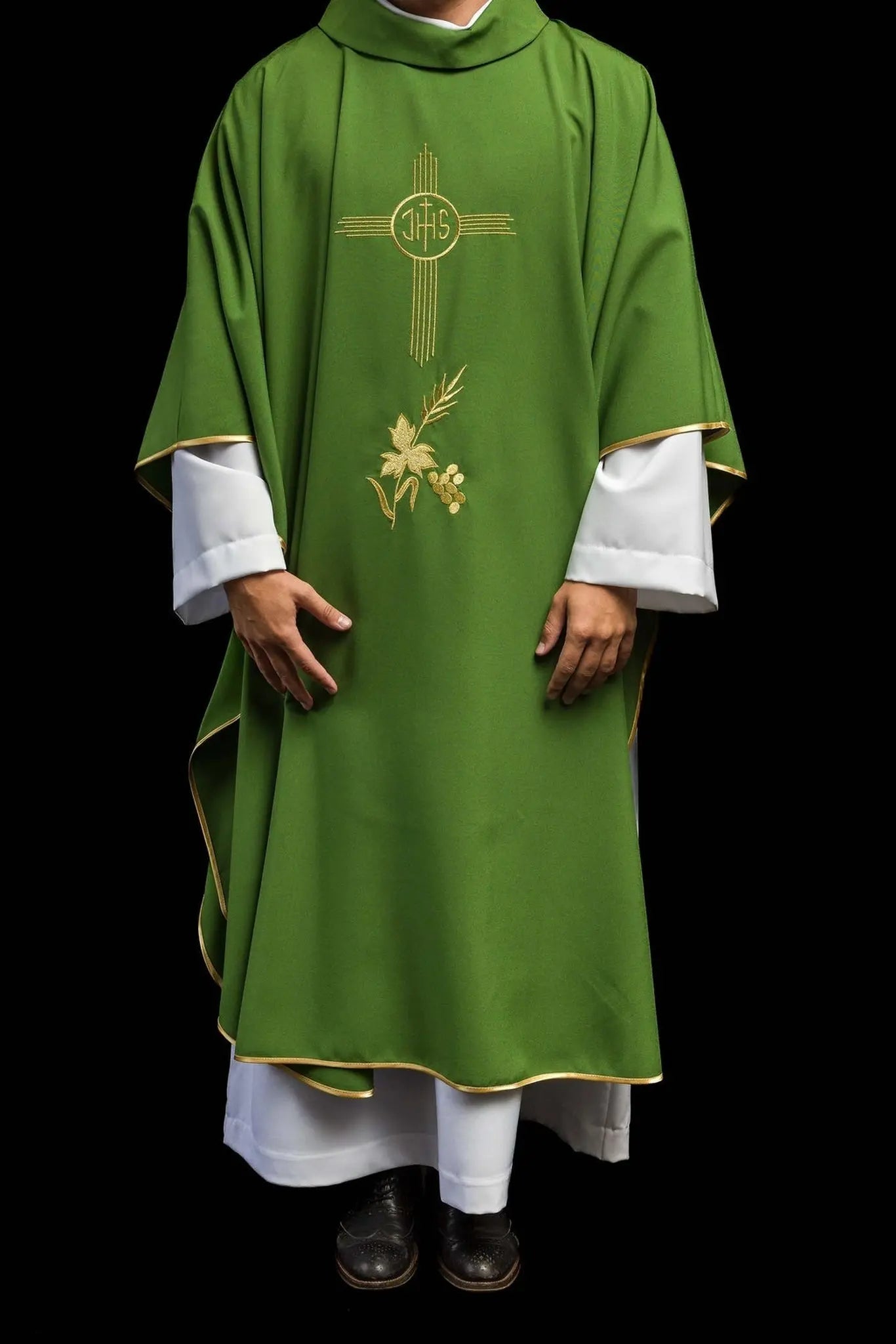
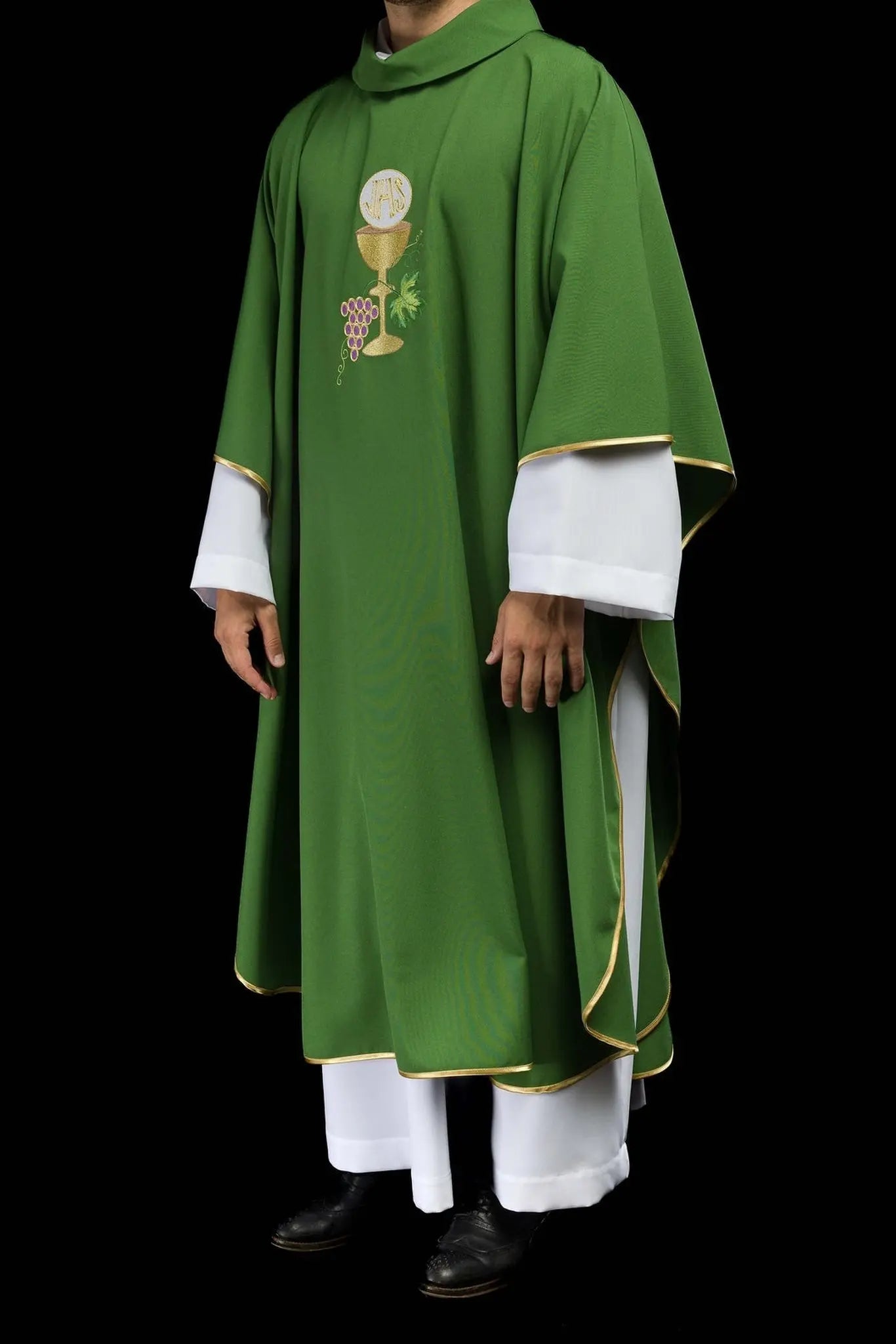
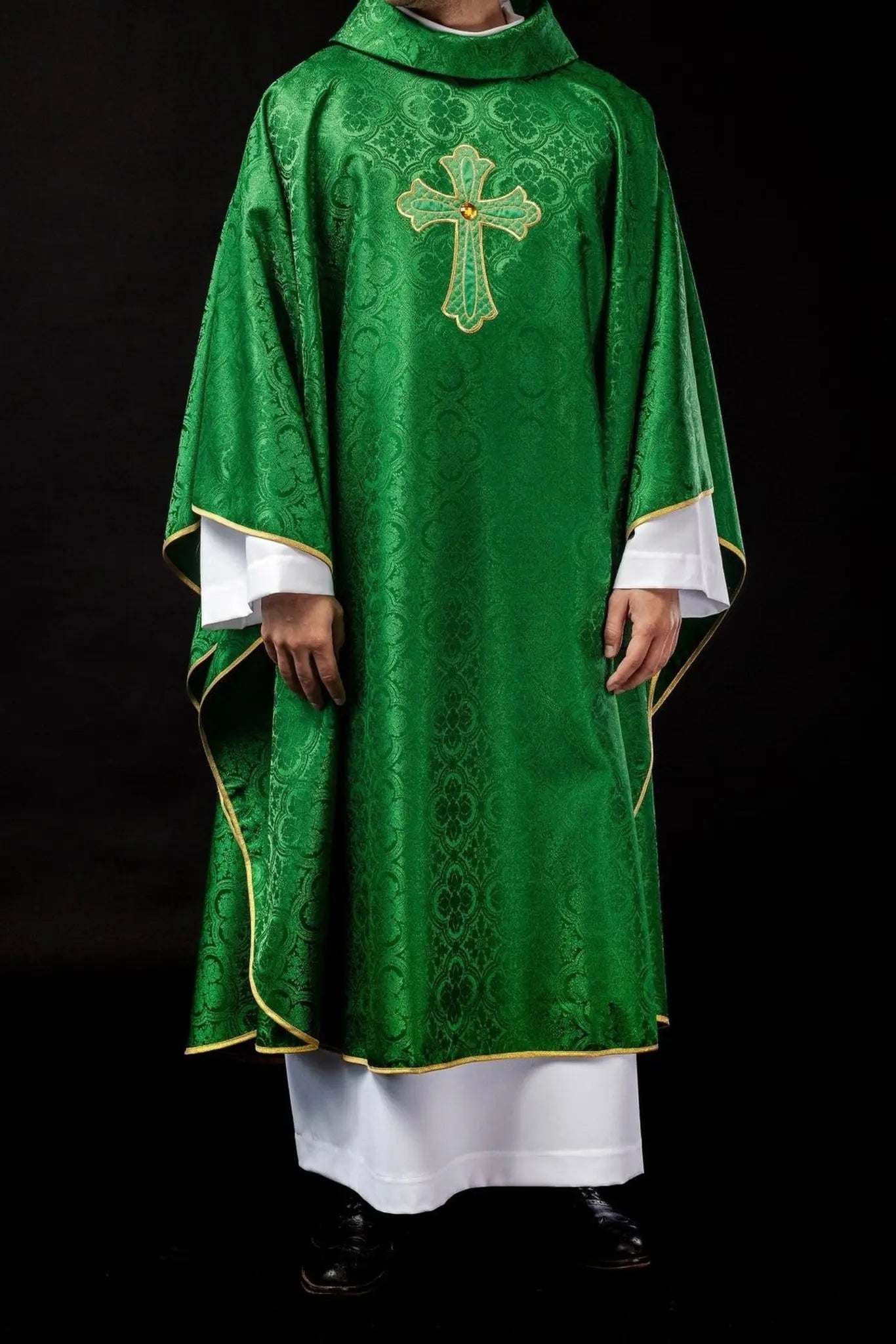
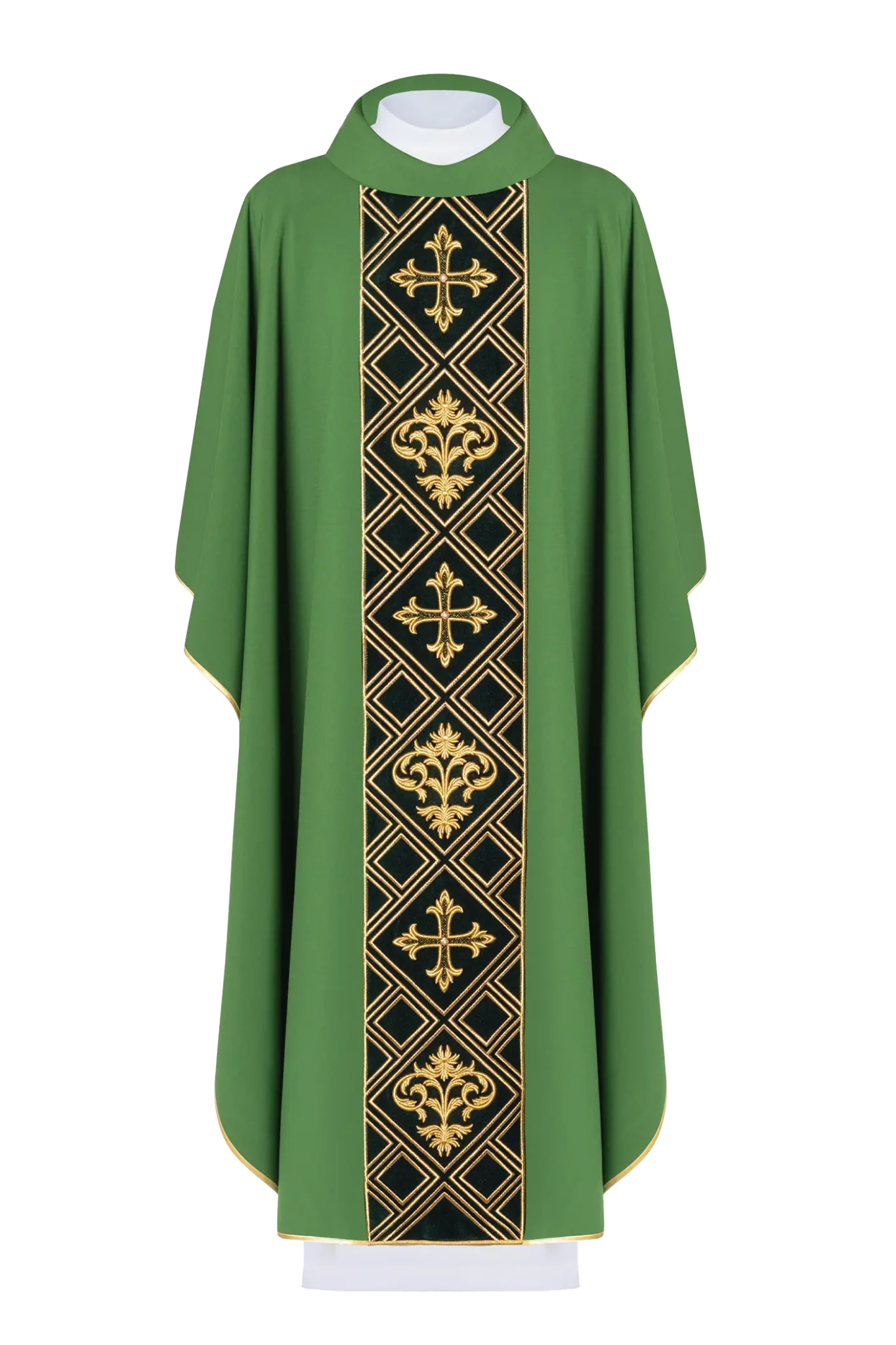
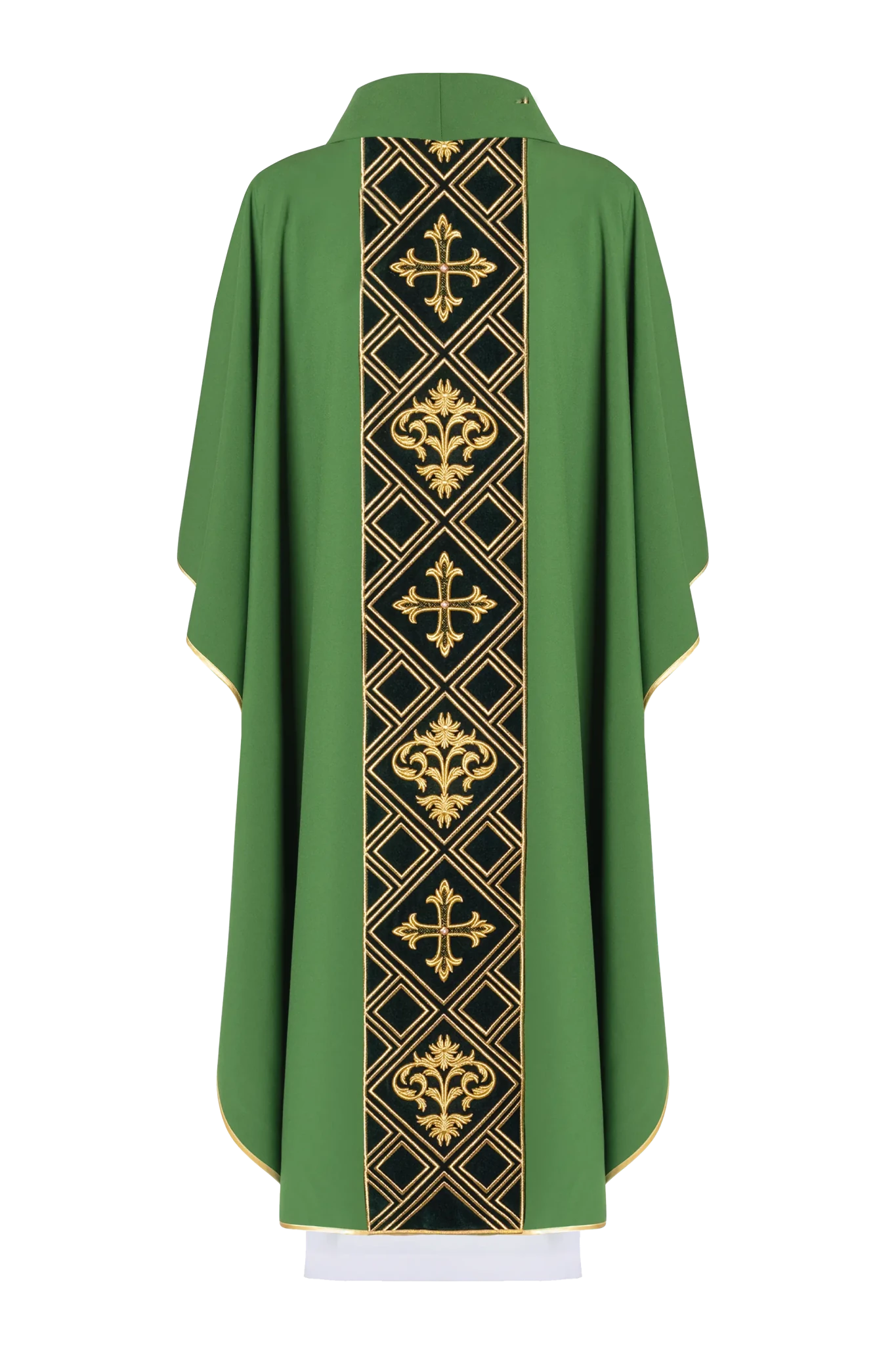
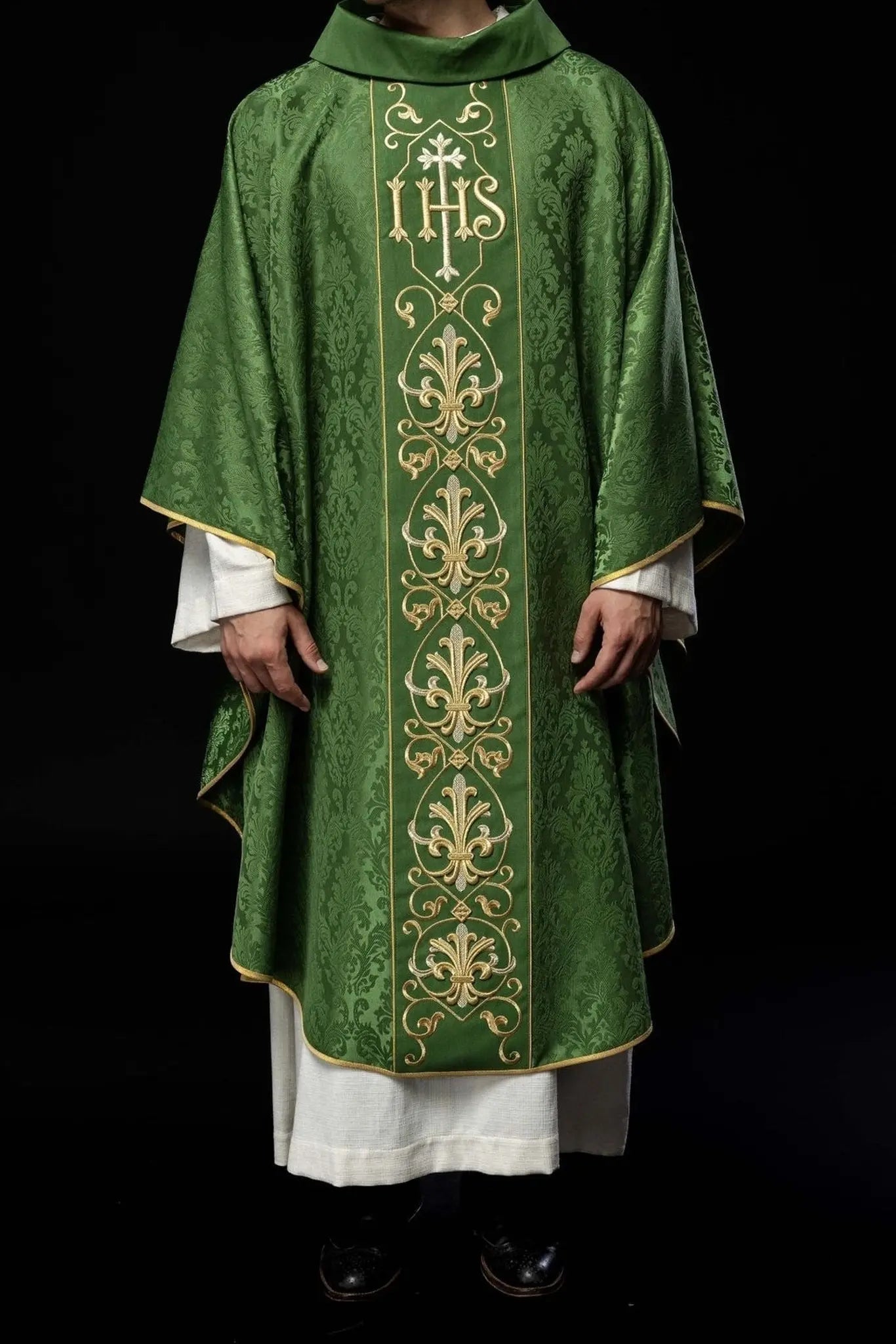
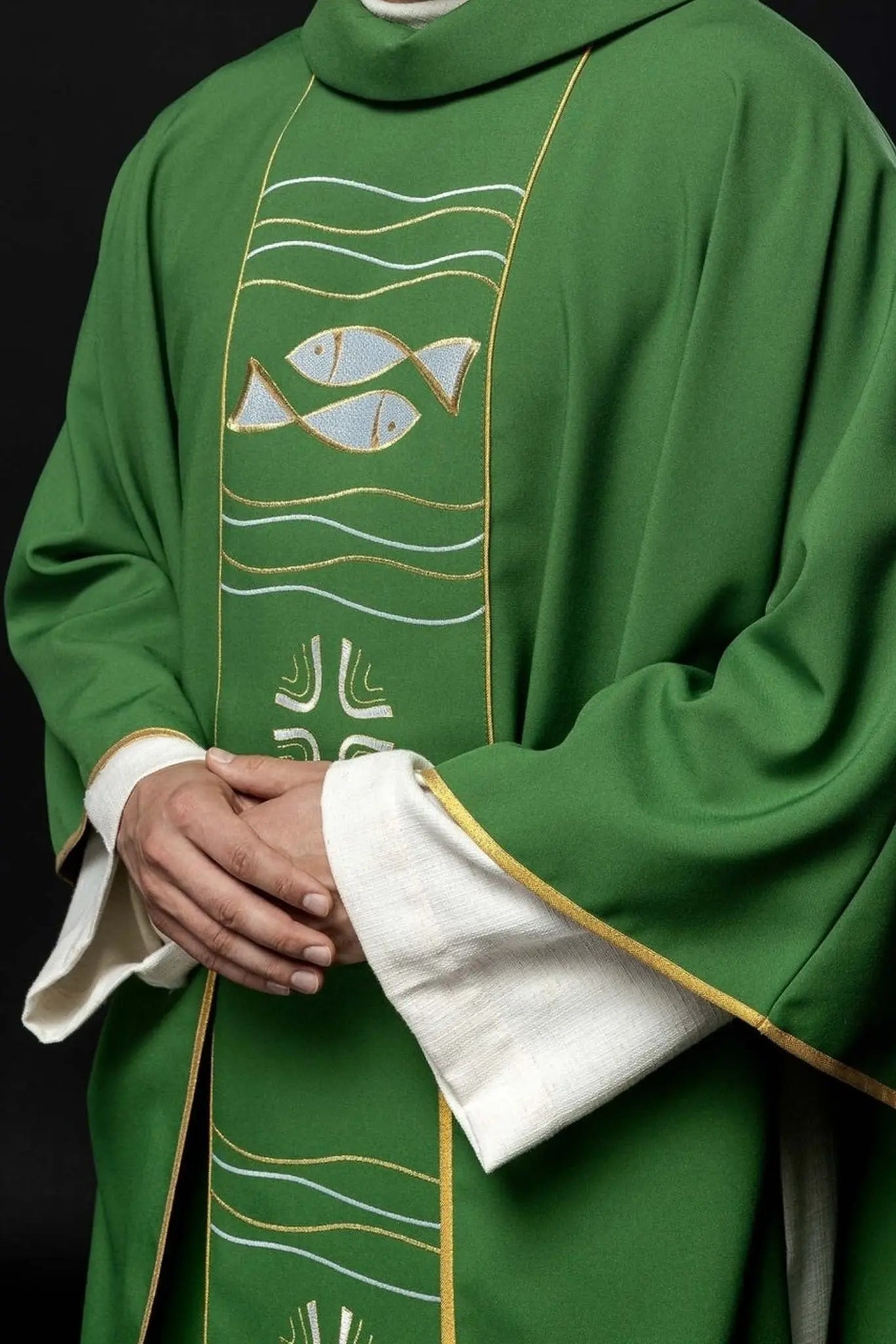
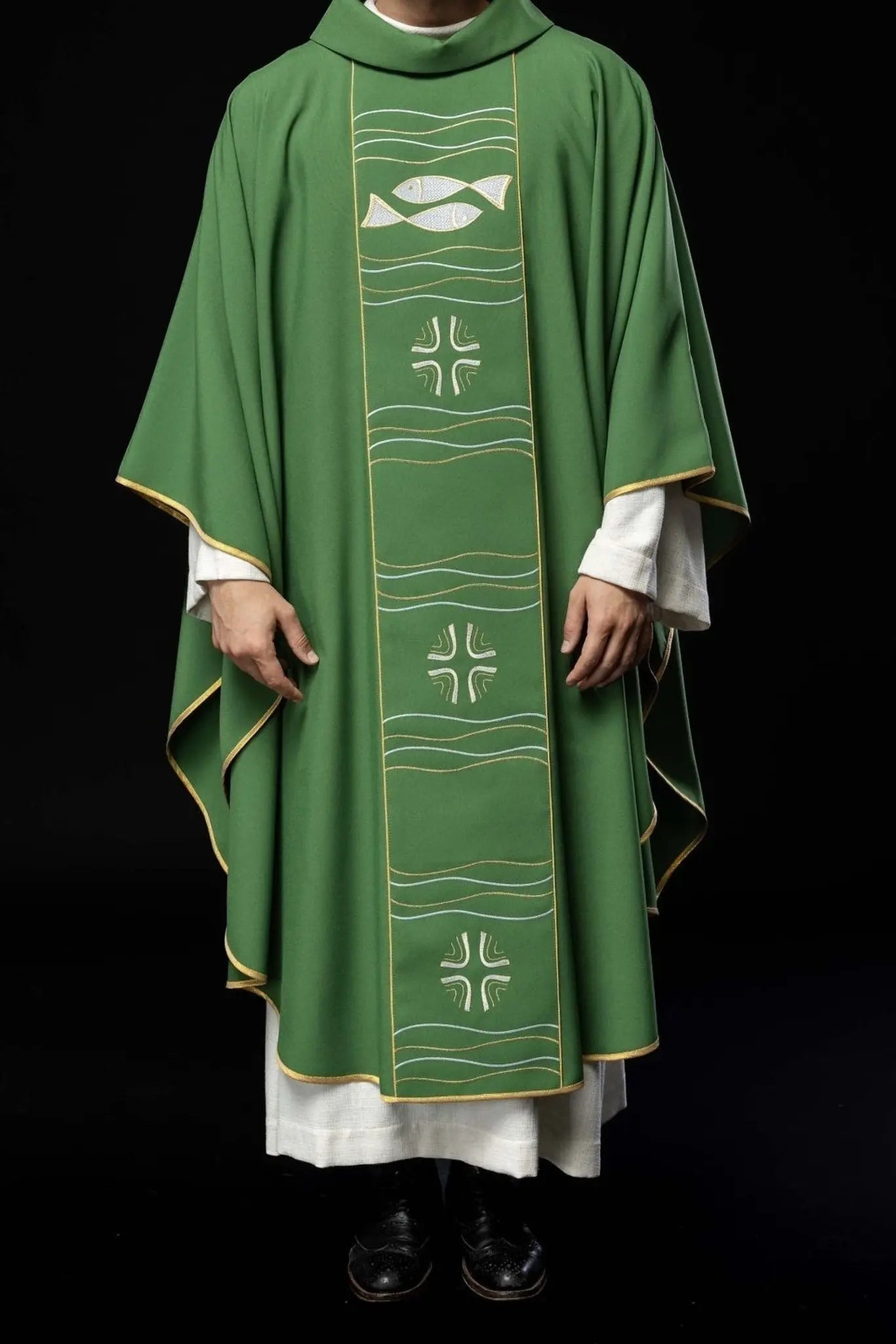
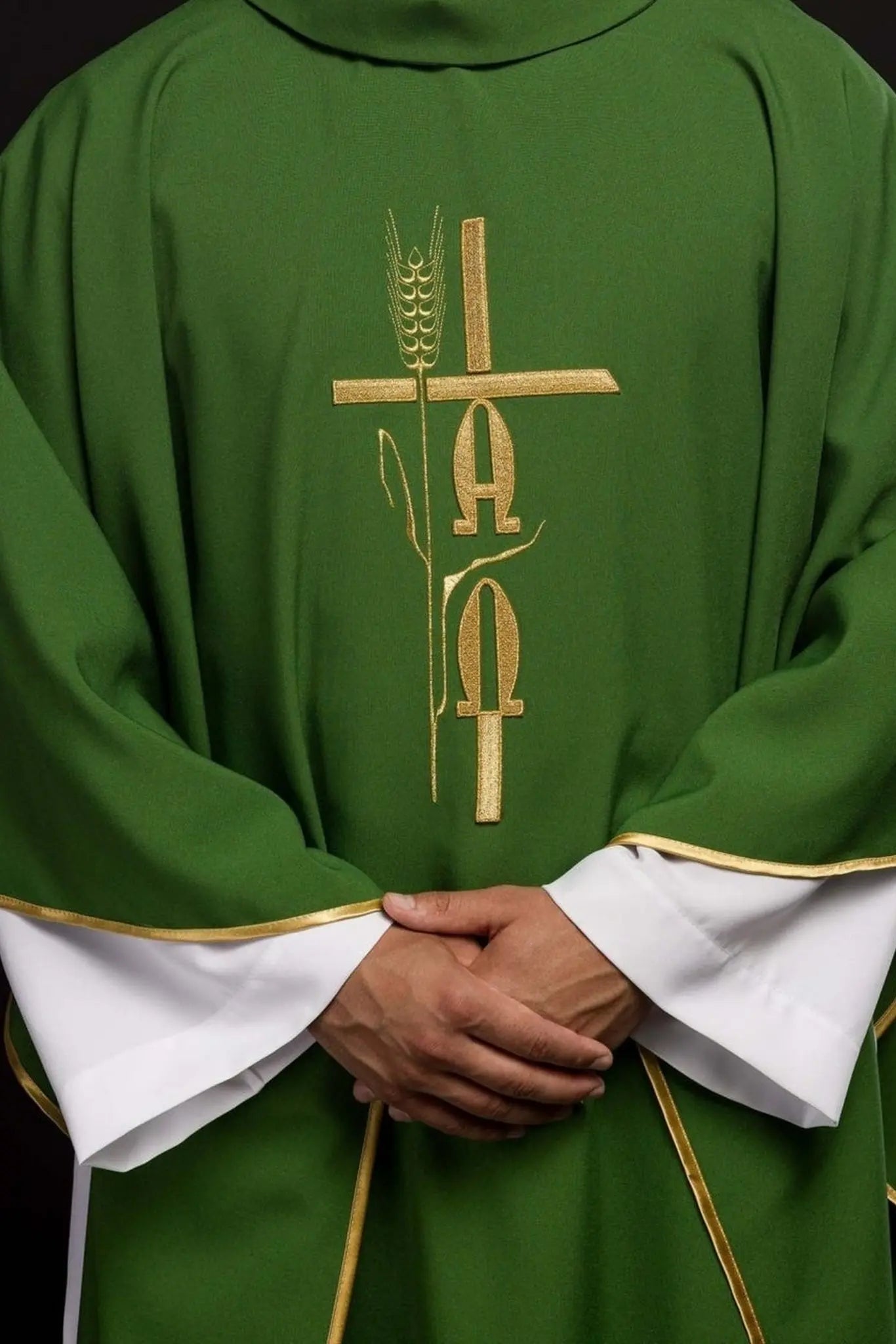
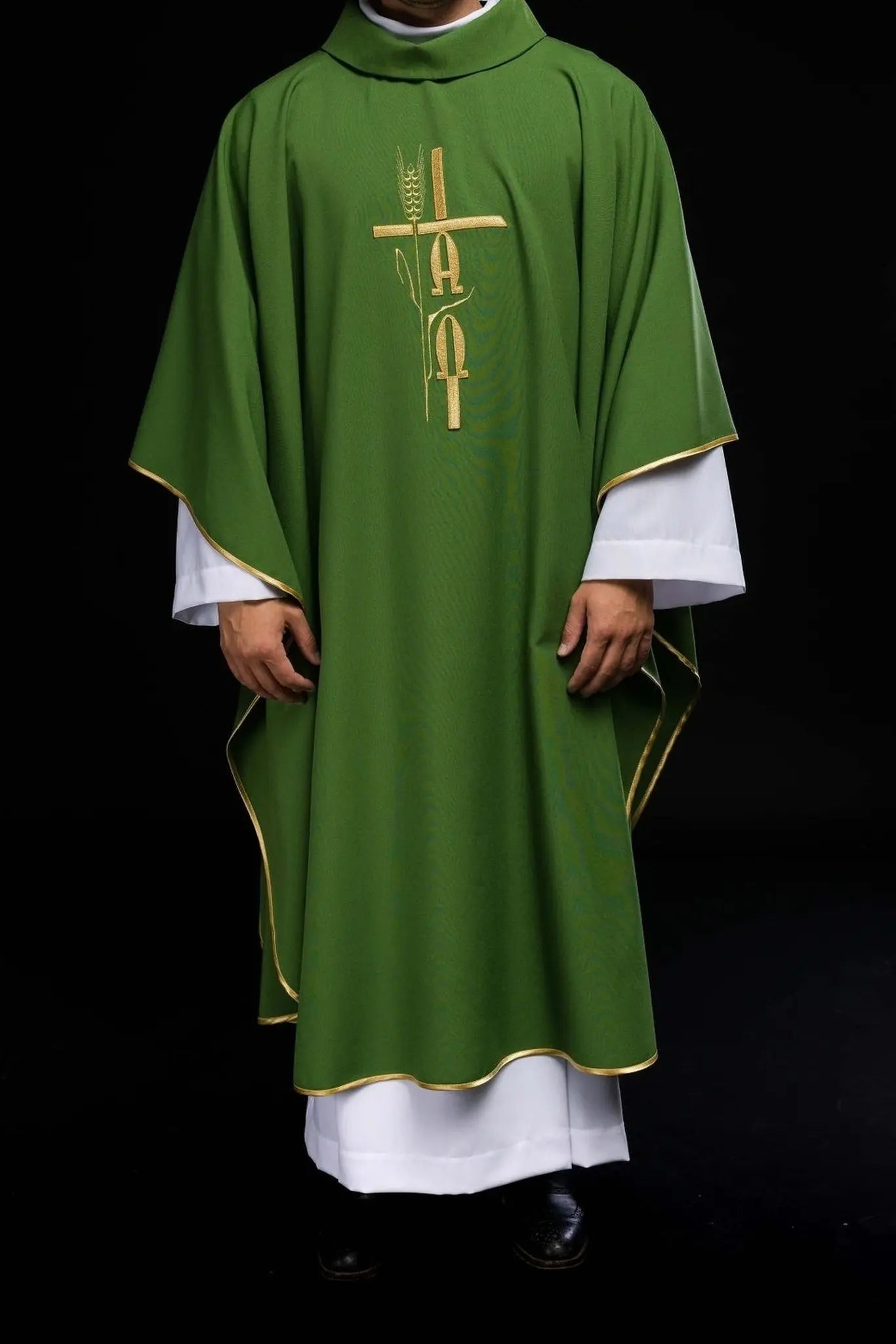
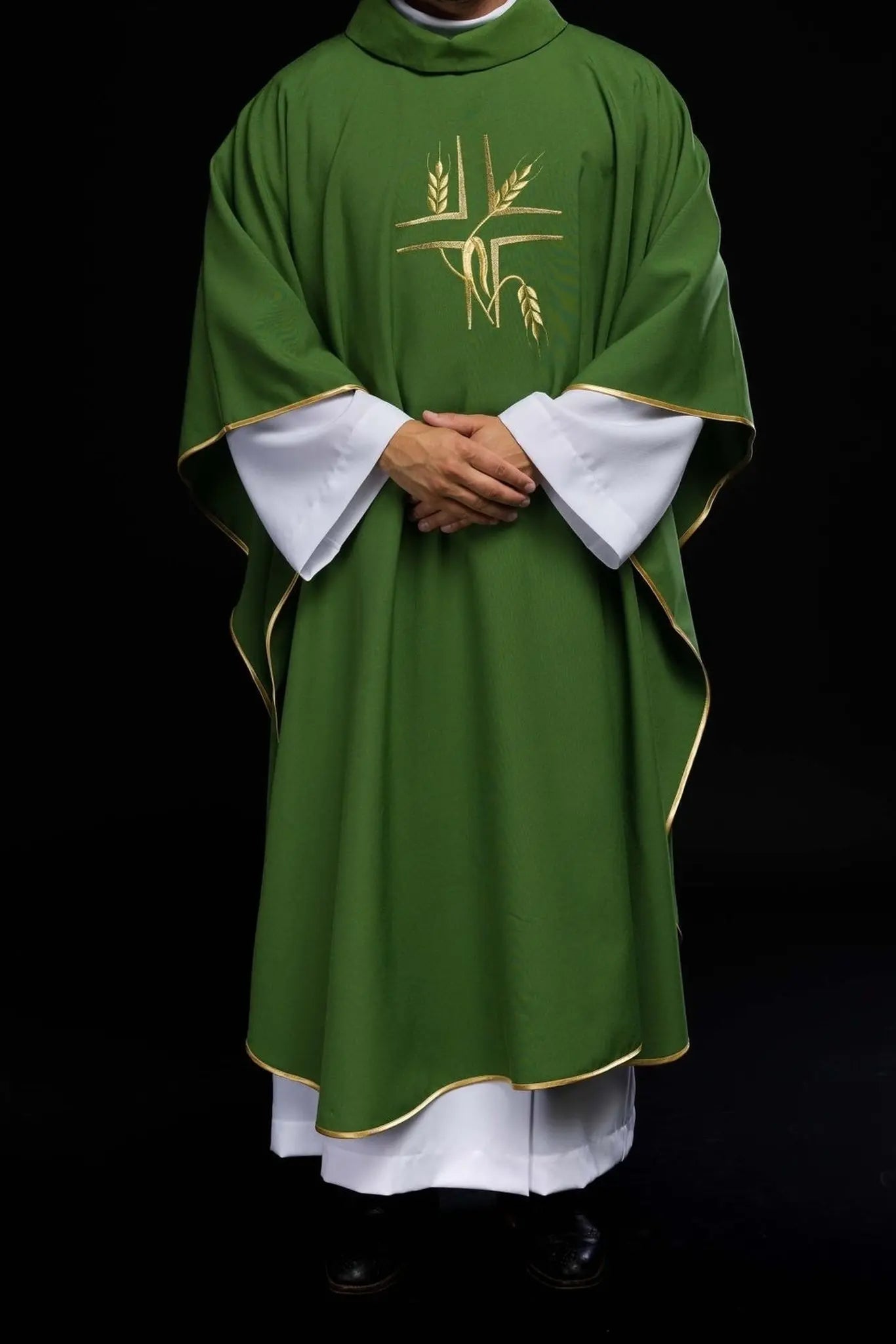
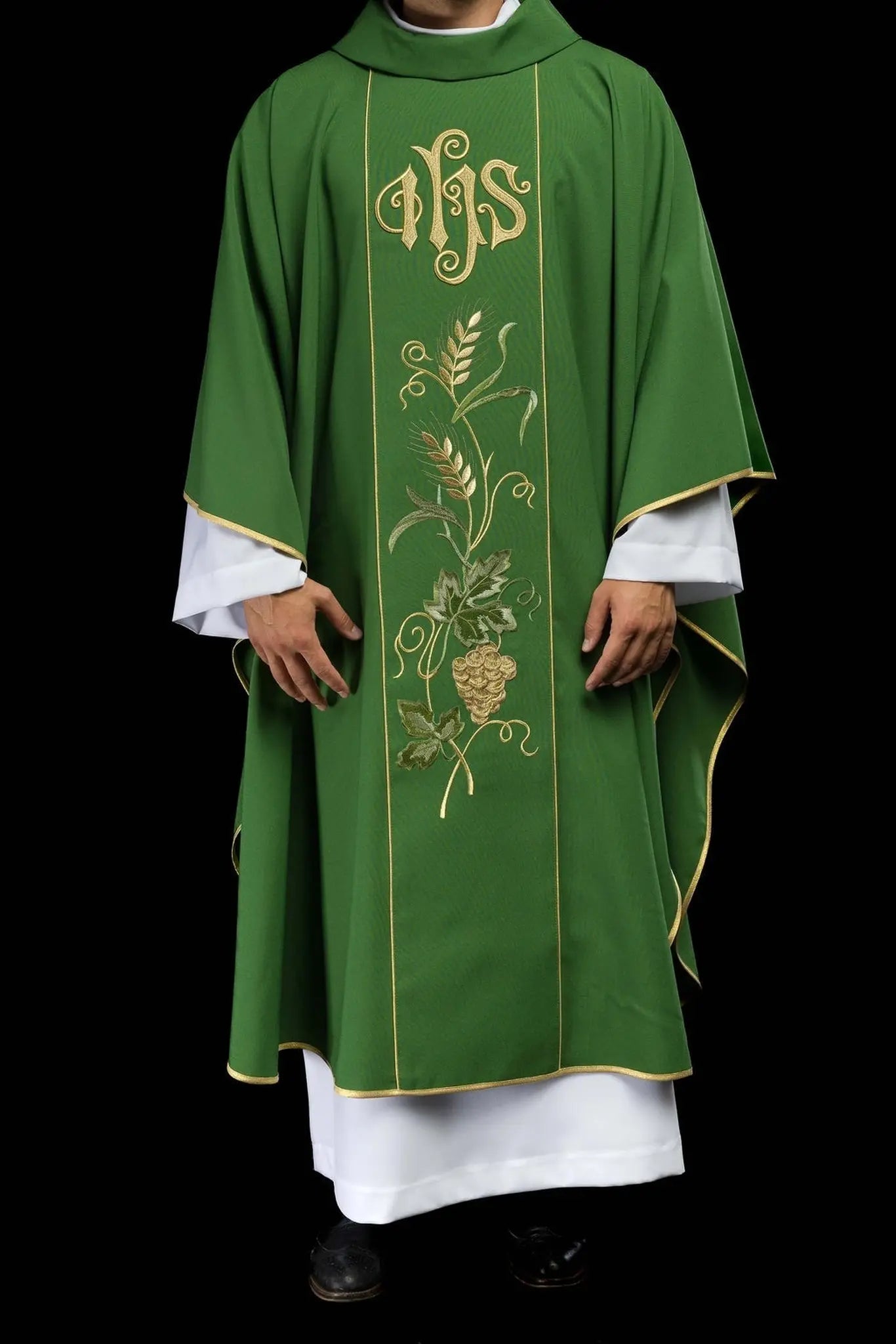
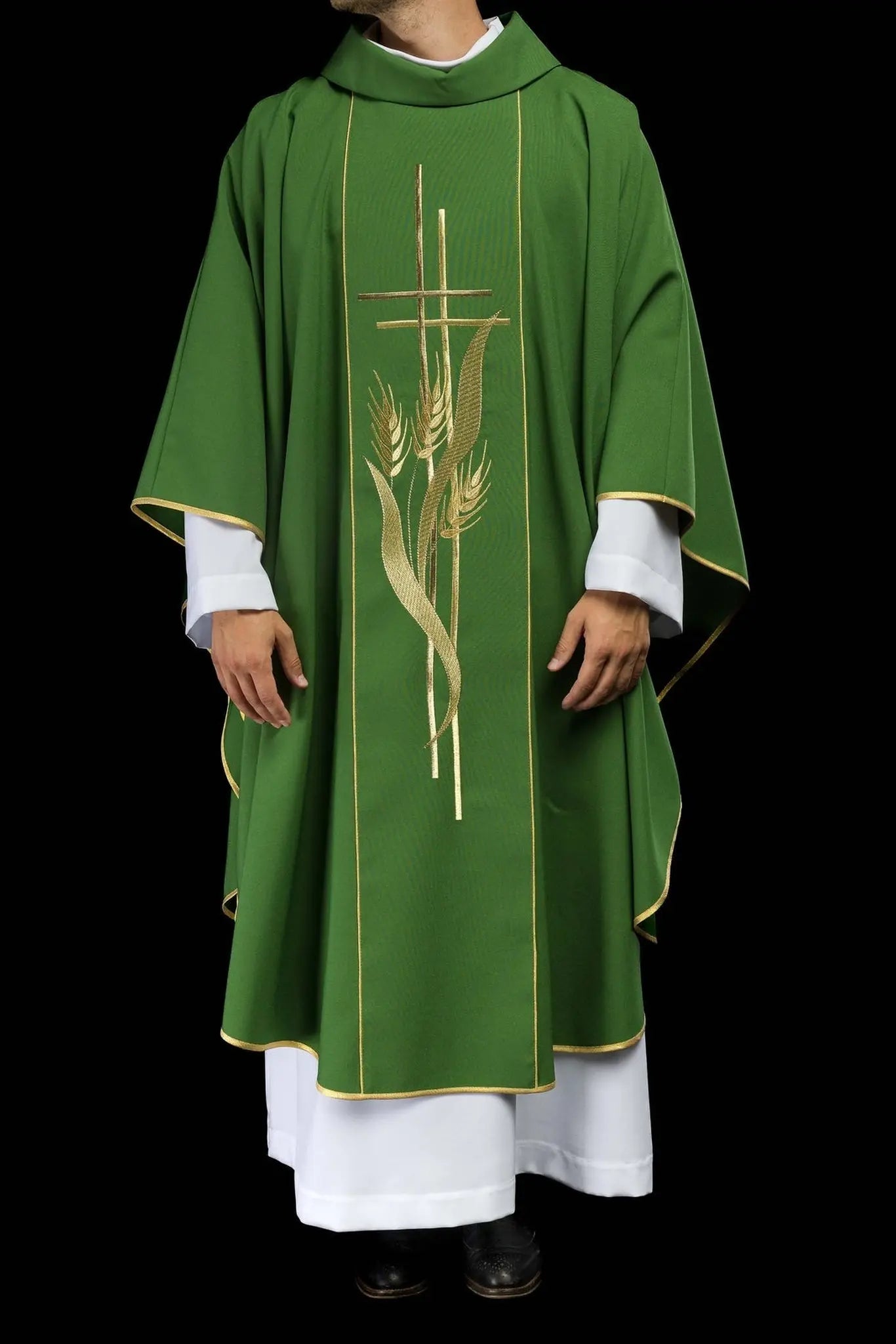
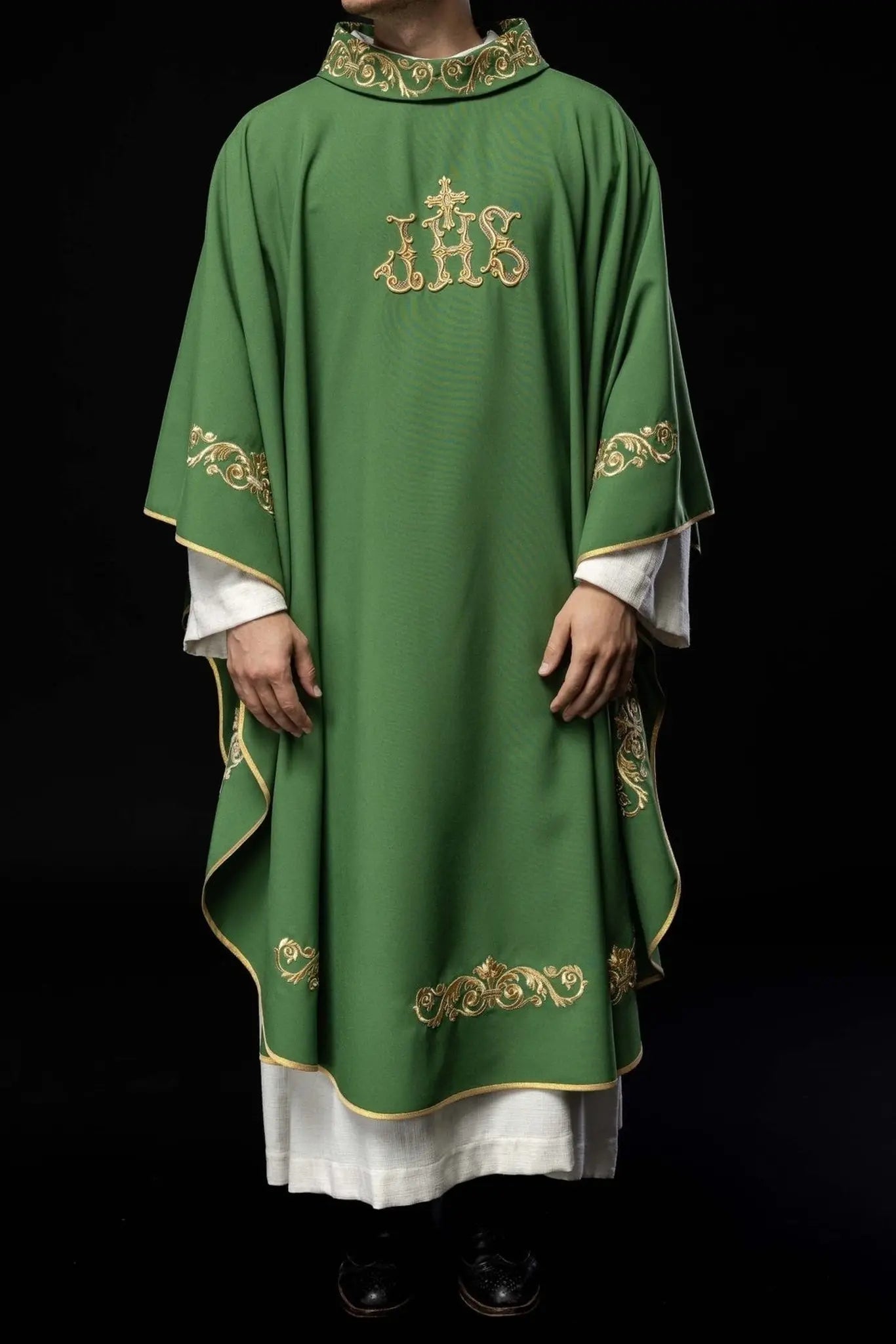
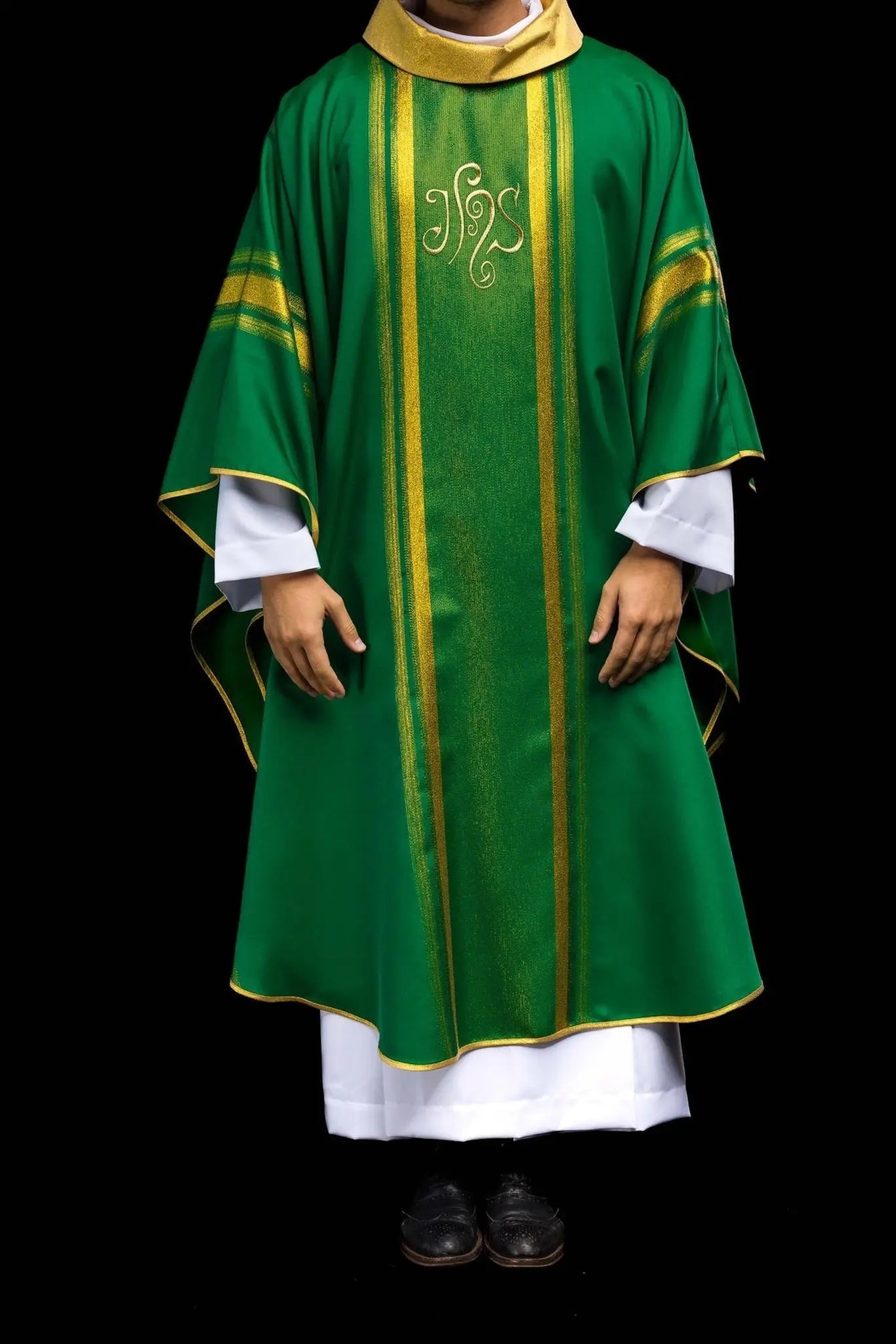
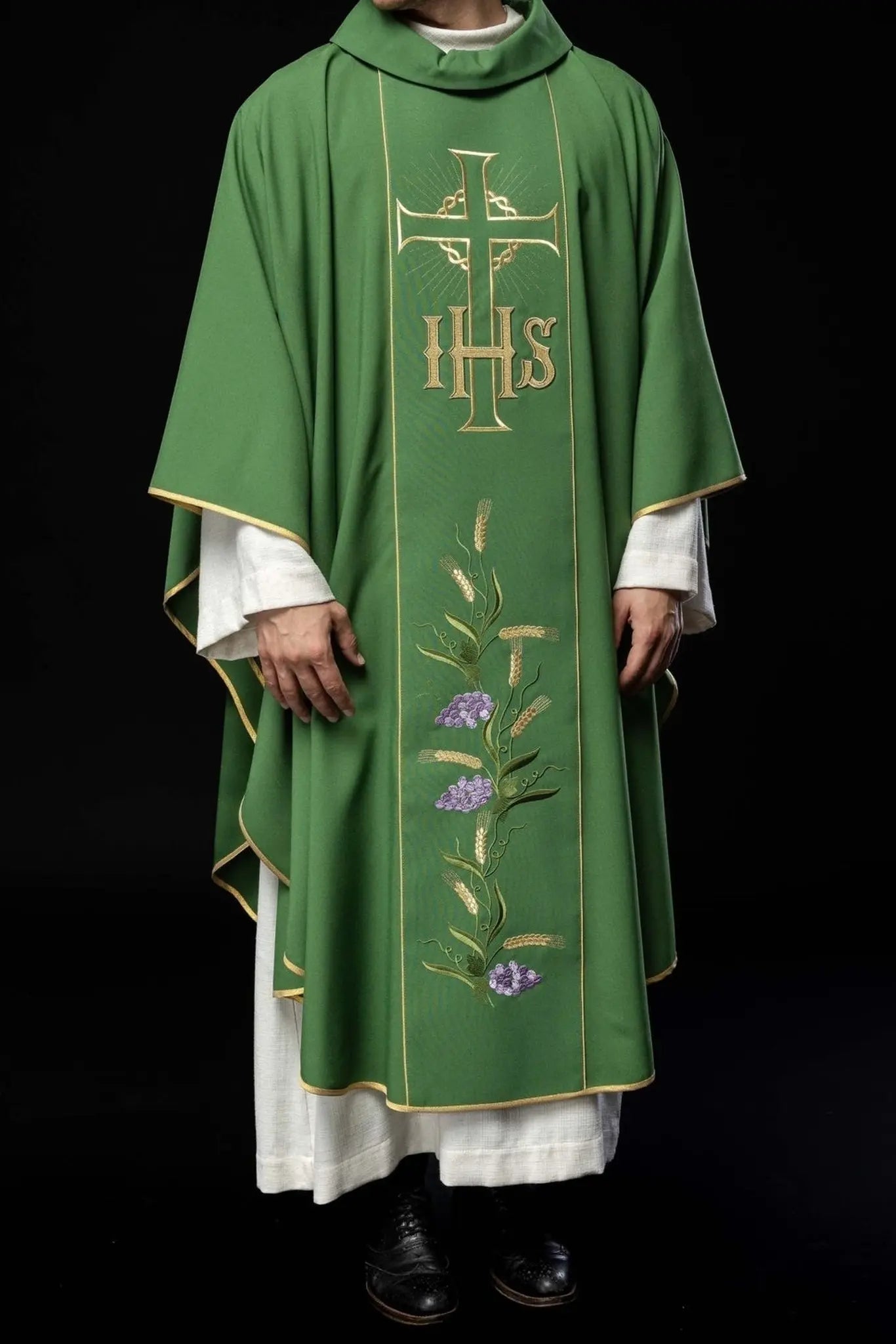
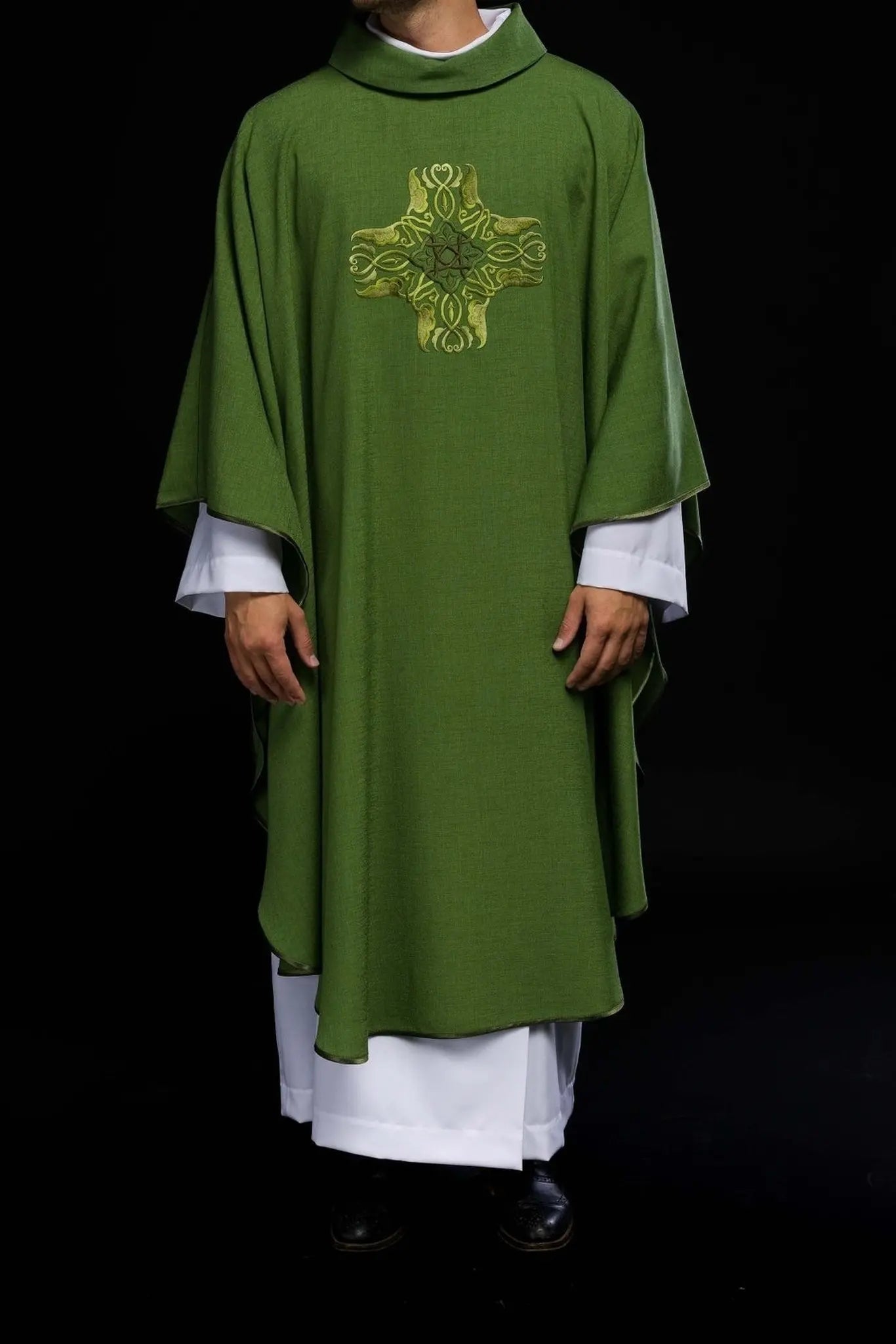
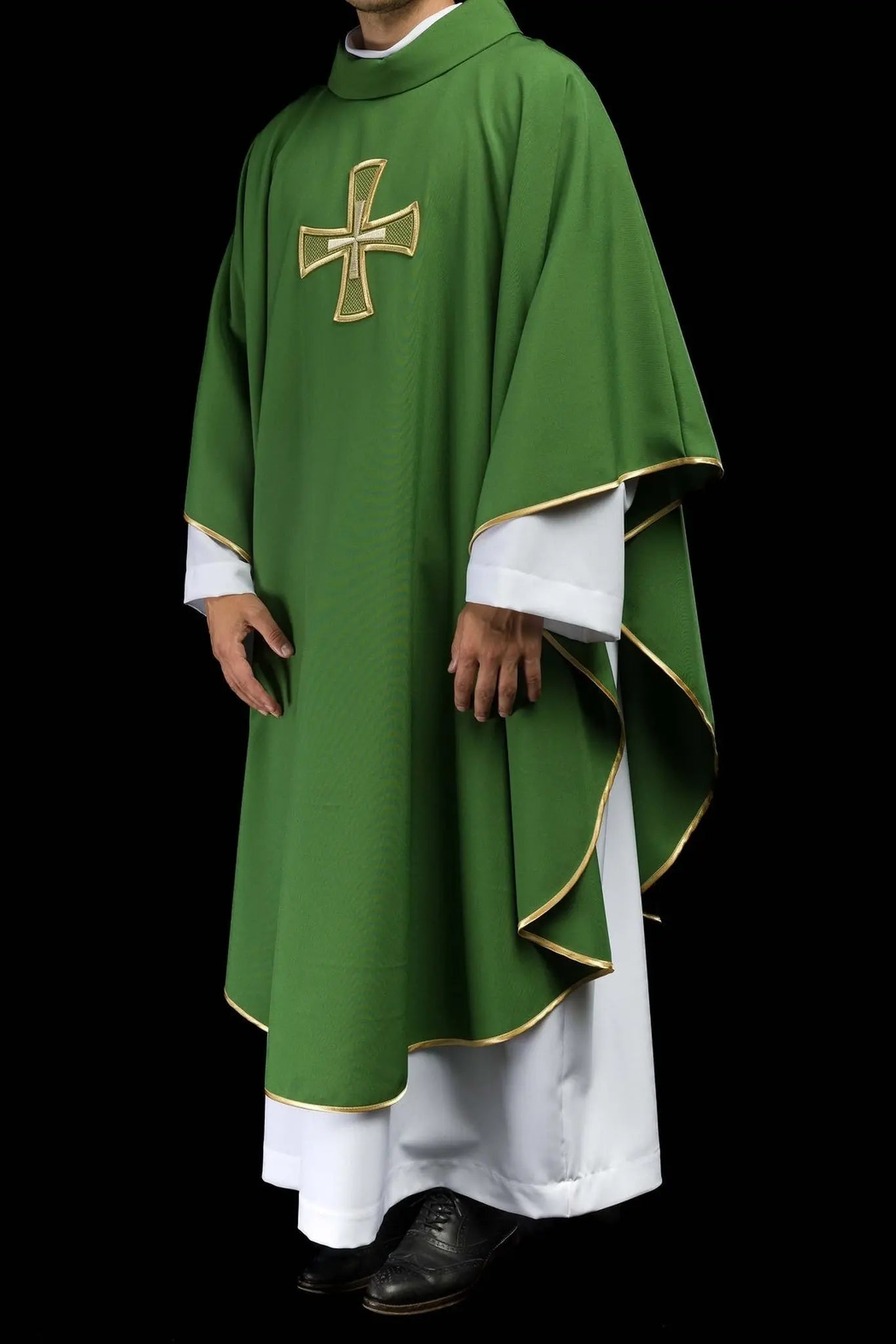
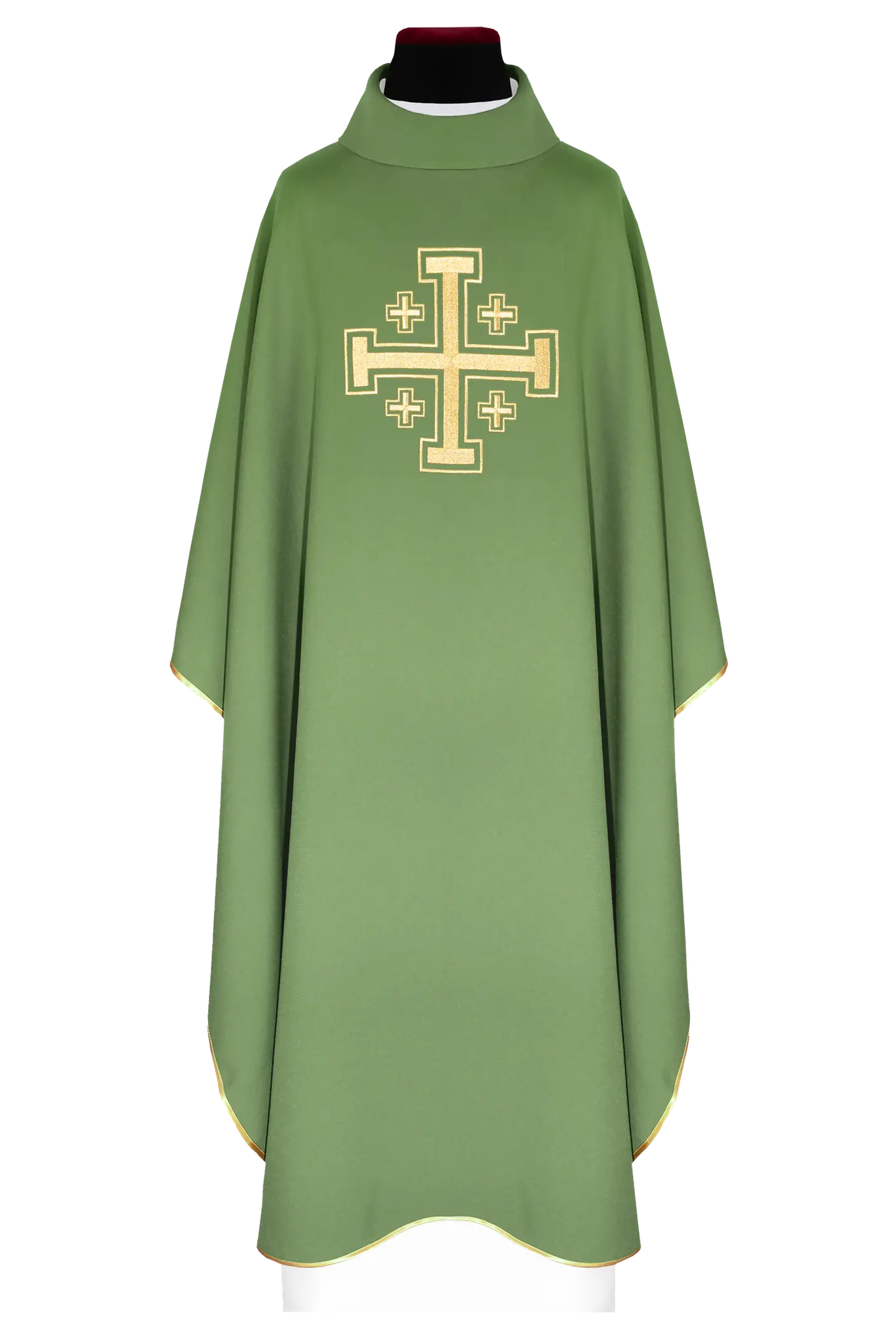
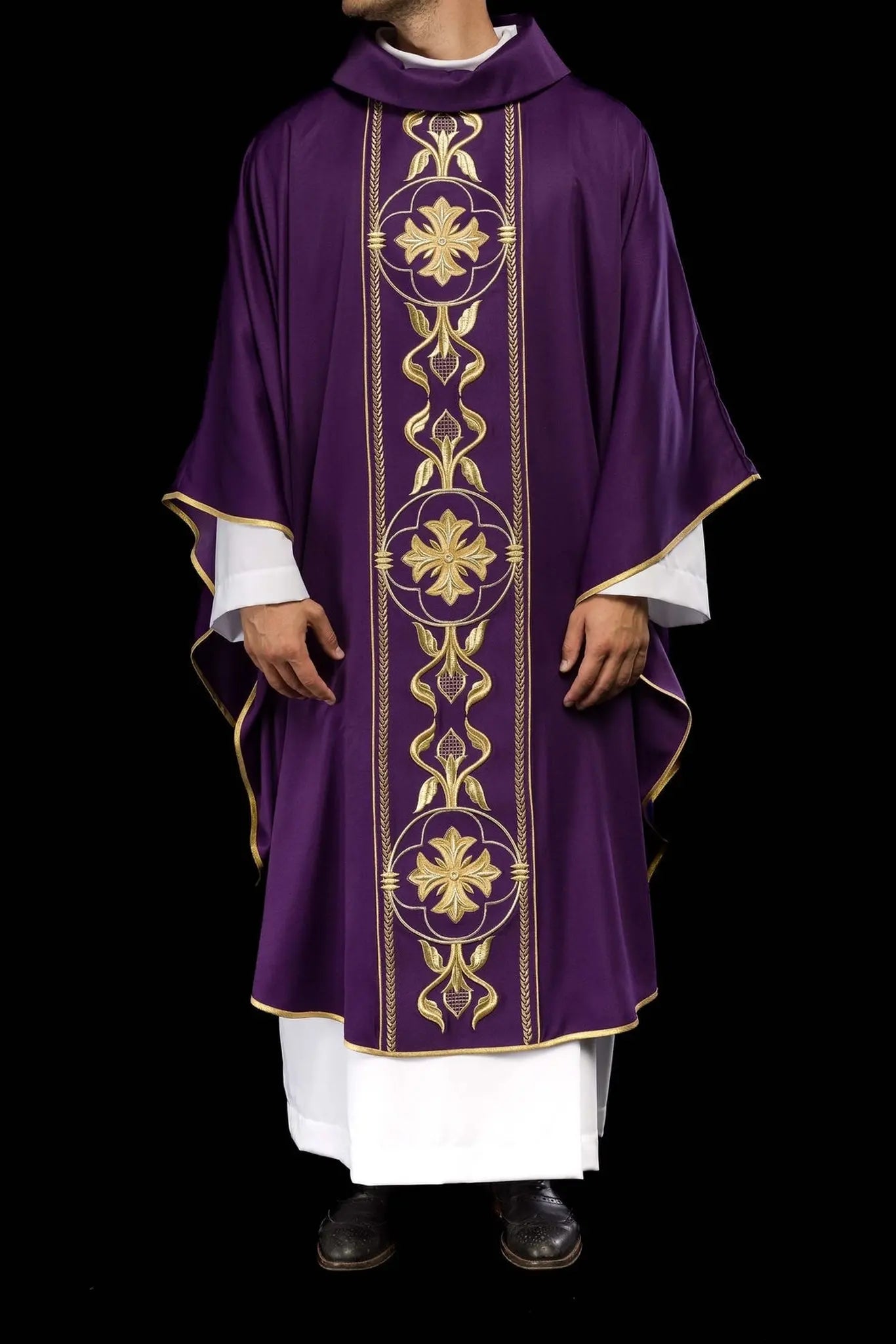
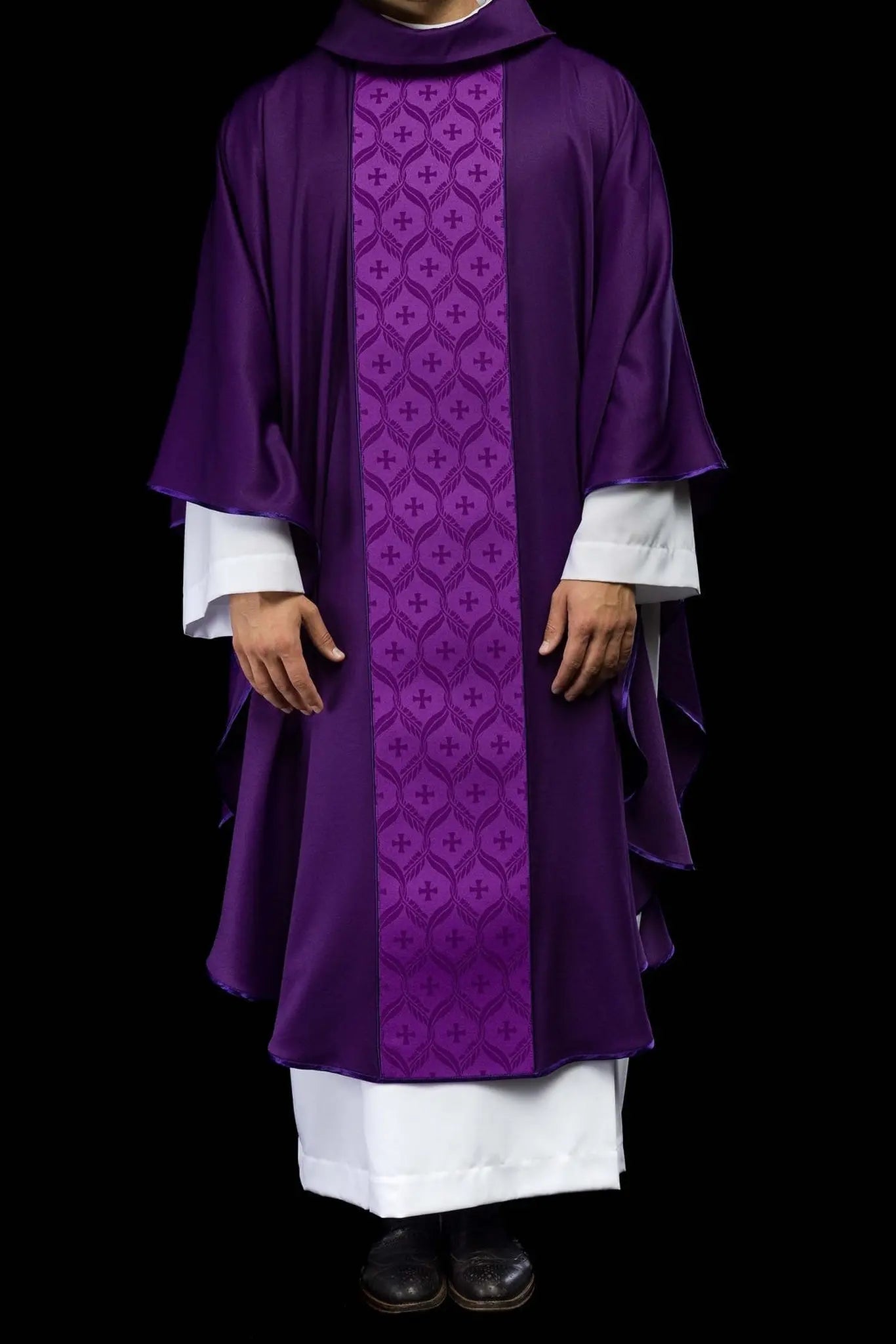
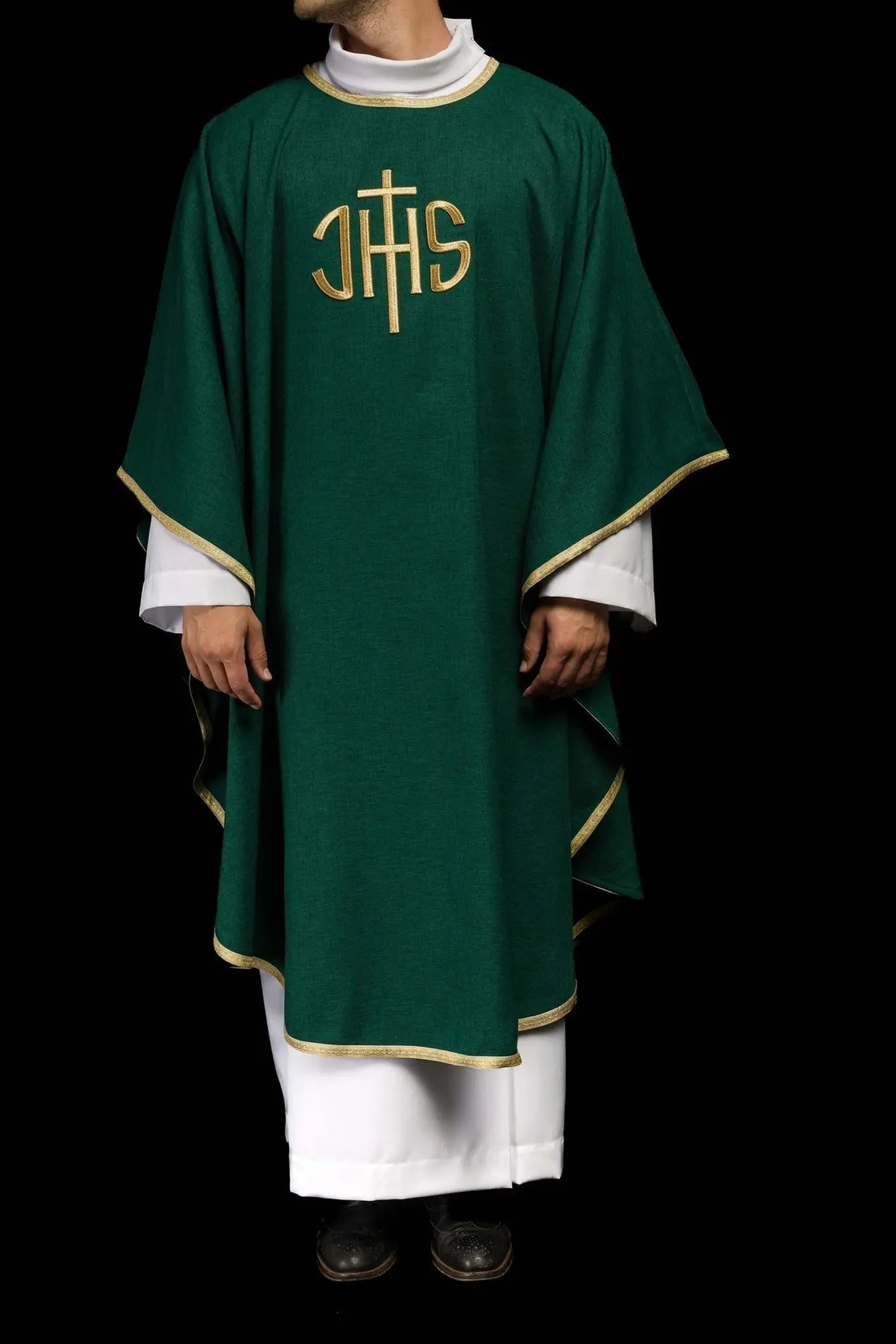
This collection is built around vestments that serve the everyday rhythm of Catholic worship. The chasuble is the principal Eucharistic vestment worn by a priest or bishop when celebrating Mass. In Ordinary Time, a green chasuble can be used for many Sundays and weekdays when no higher-ranking feast, memorial, or solemnity calls for another liturgical color. A well-chosen chasuble should drape comfortably, allow free movement at the altar, and express the sacred character of the Mass through proportion, fabric, and ornament.
Dalmatics also appear in this collection because the deacon has a proper liturgical vestment for solemn celebrations. A green dalmatic coordinates with the celebrant’s chasuble while preserving the distinct role of the deacon in the liturgy. When a parish celebrates Mass with a deacon, matching or harmonized green vestments help create visual unity in the sanctuary. Customers who need additional deacon vestments can also review the dedicated deacon dalmatic collection.
Although Ordinary Time is often described simply as the green season, it should not be treated as visually plain or secondary. The season forms the ordinary pattern of parish life: Sunday Eucharist, weekday Masses, parish feasts not assigned another color, catechetical celebrations, and many moments of prayer with the faithful. A durable and well-made green vestment can therefore become one of the most used items in a sacristy. For priests looking at all available cuts and ornament styles, the wider chasubles collection provides helpful comparison.
Liturgical meaning of green in Ordinary Time
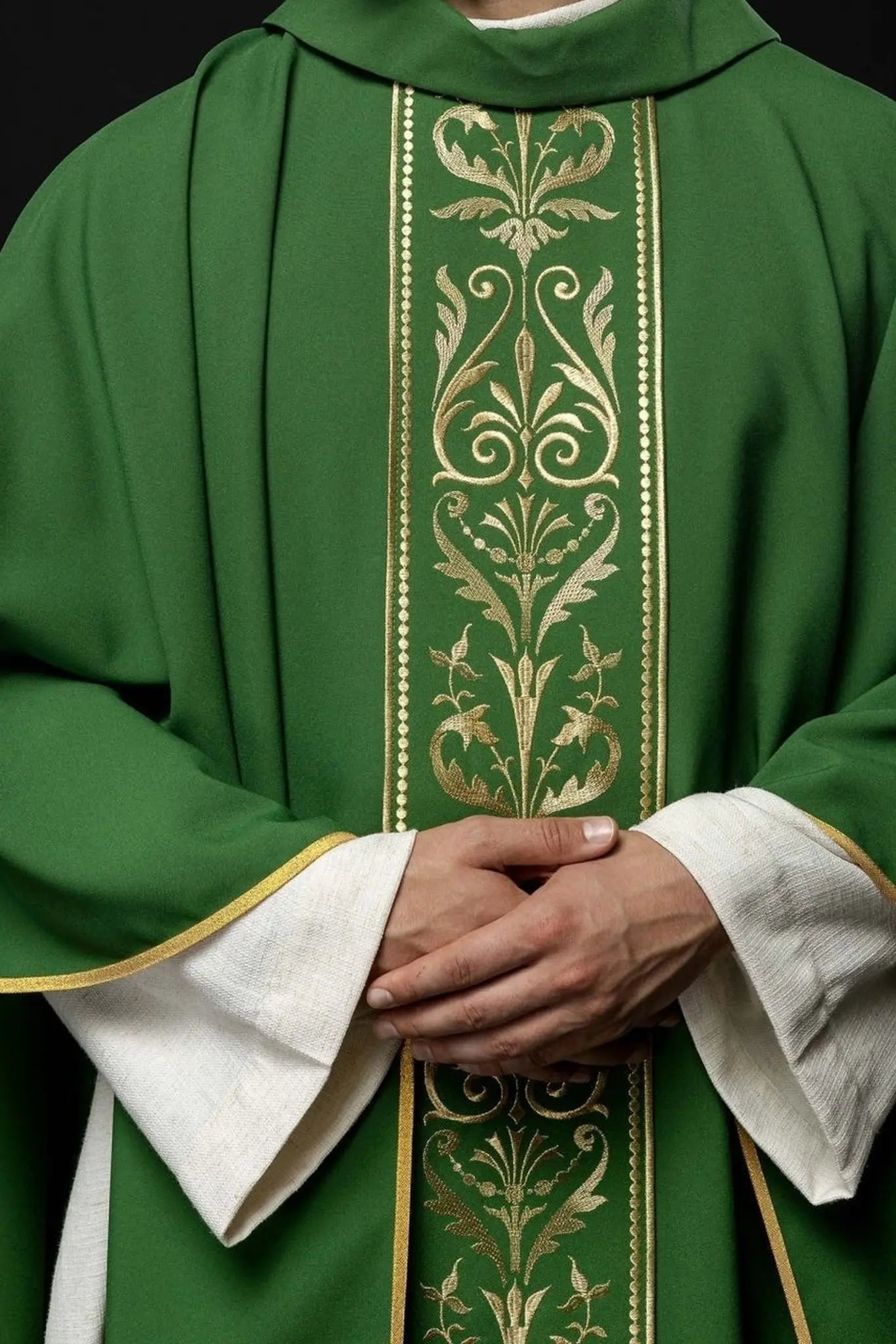
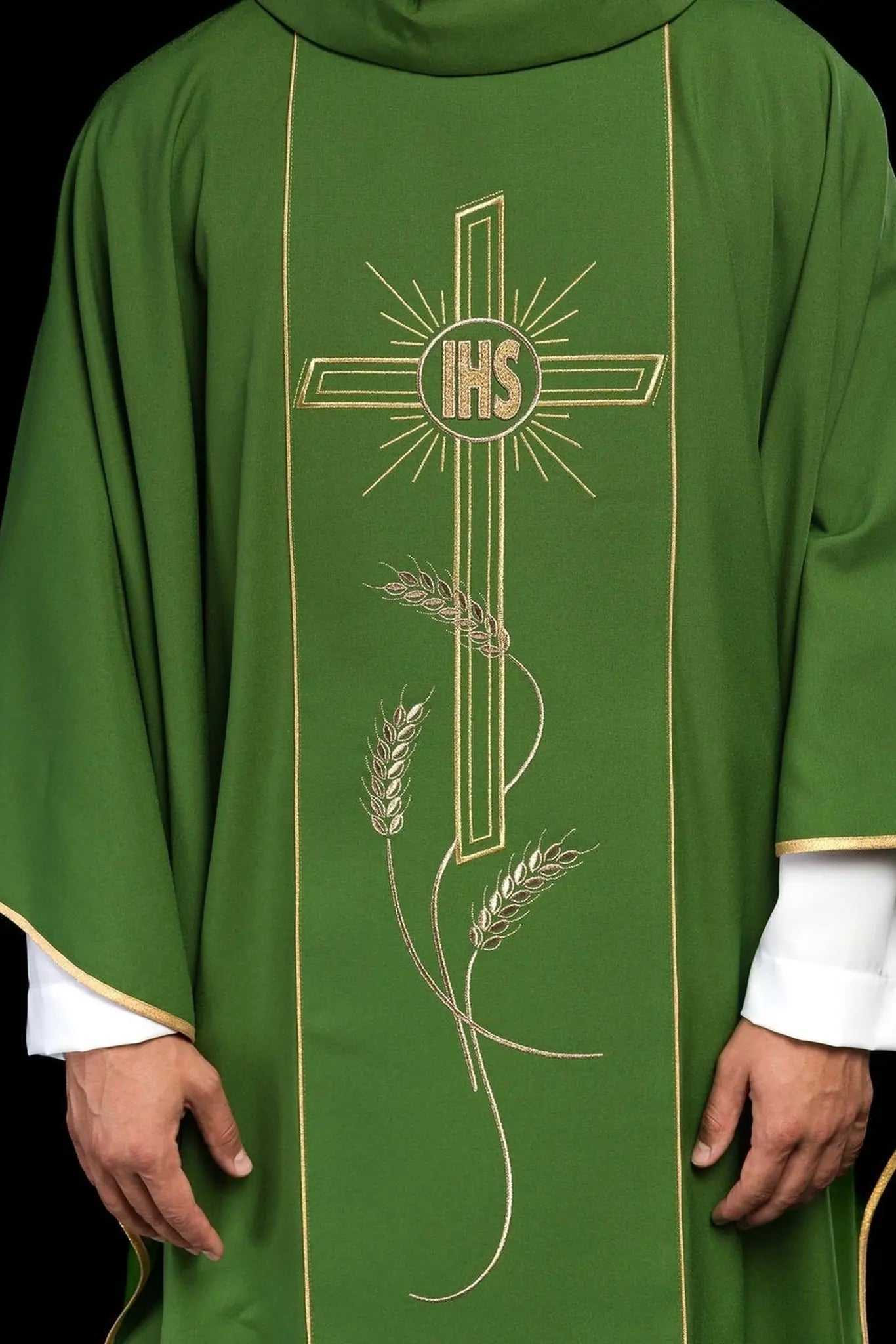
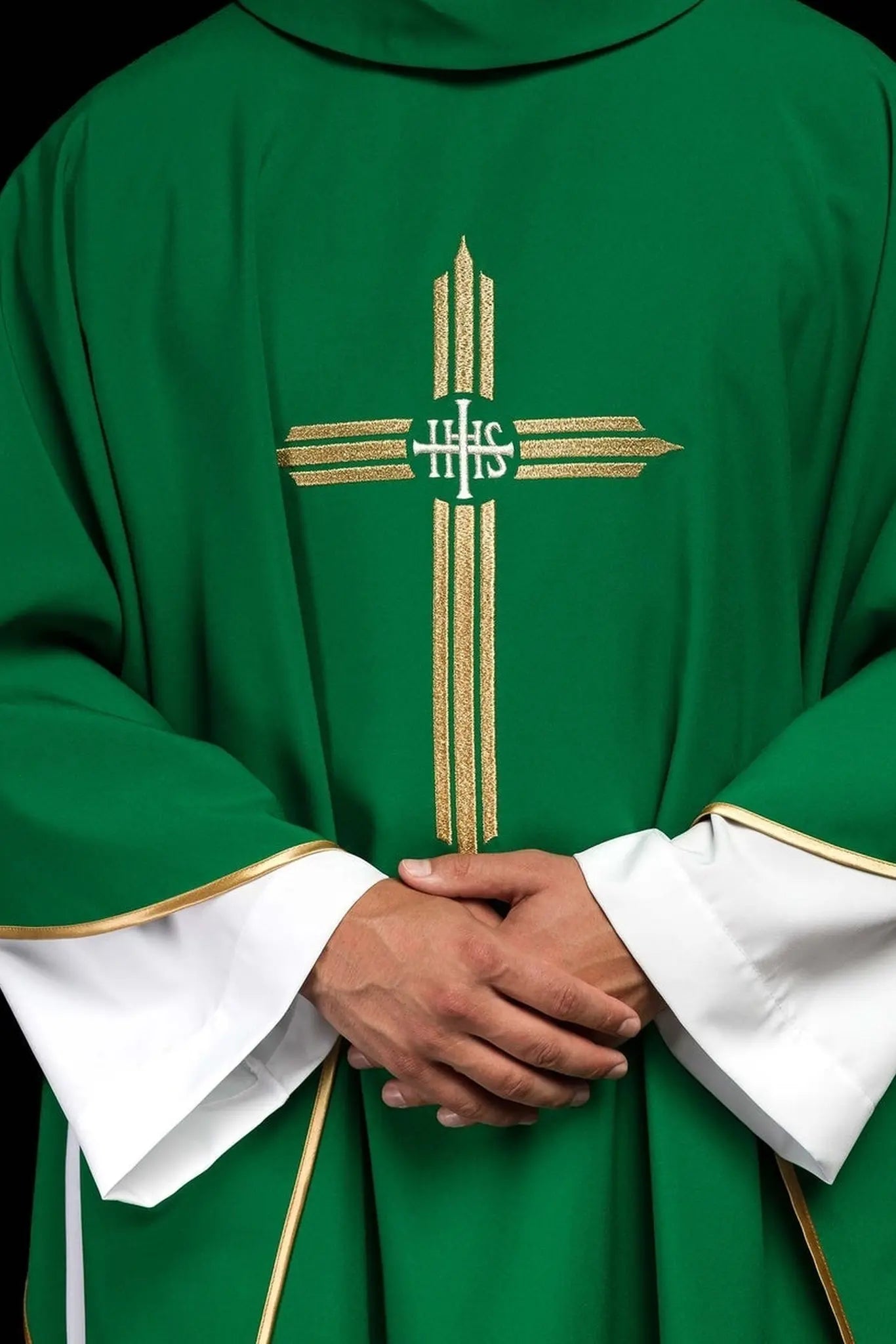
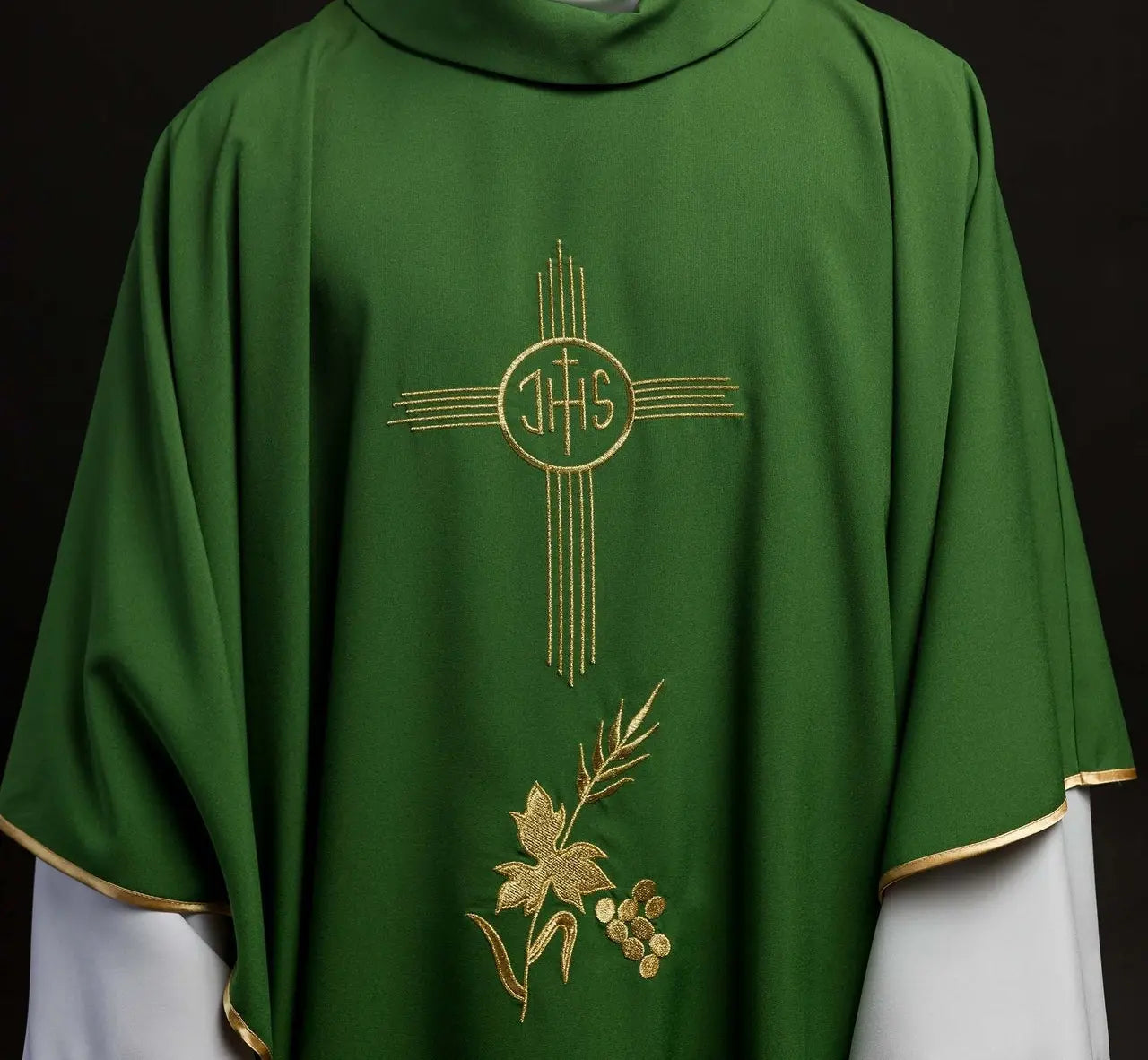
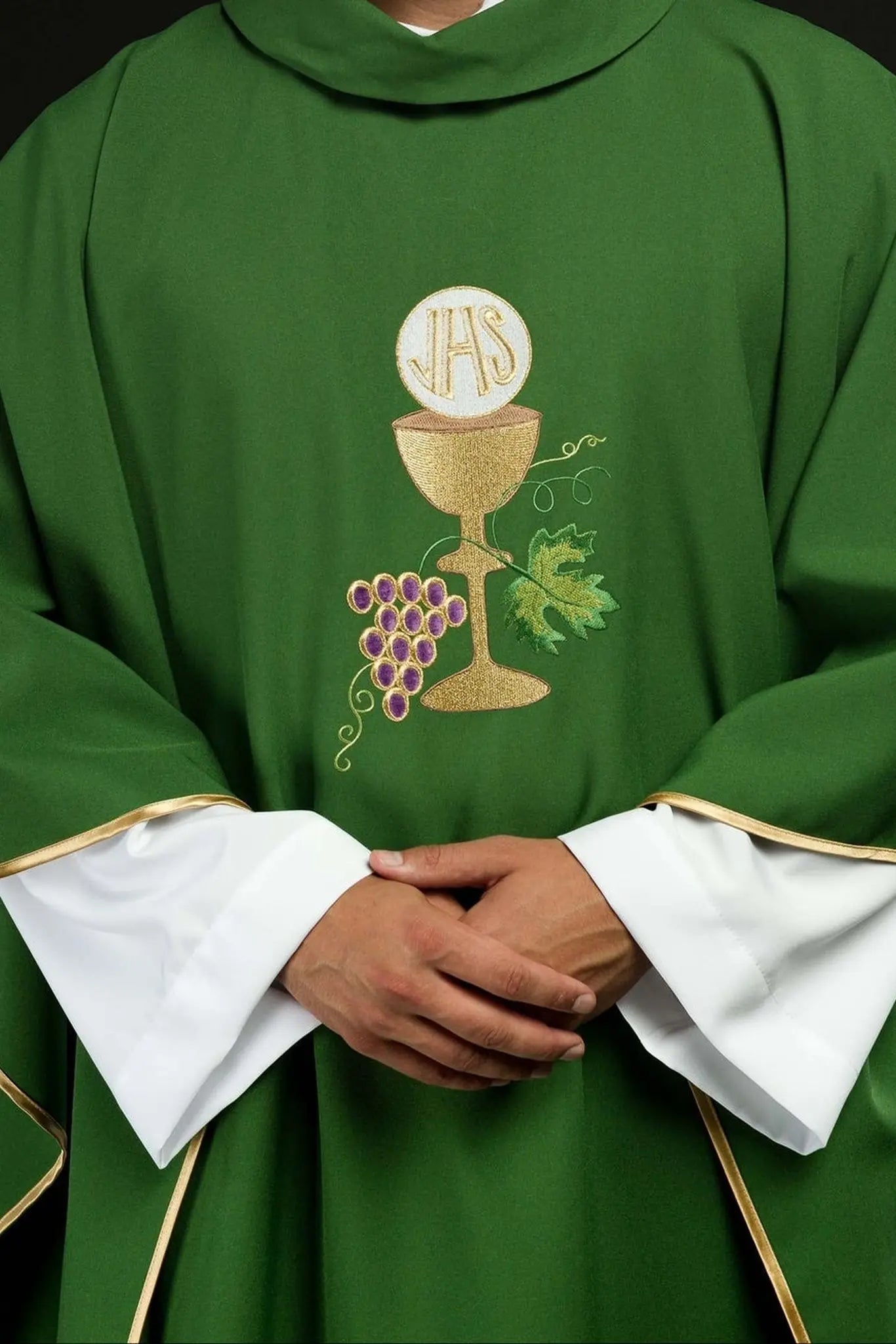
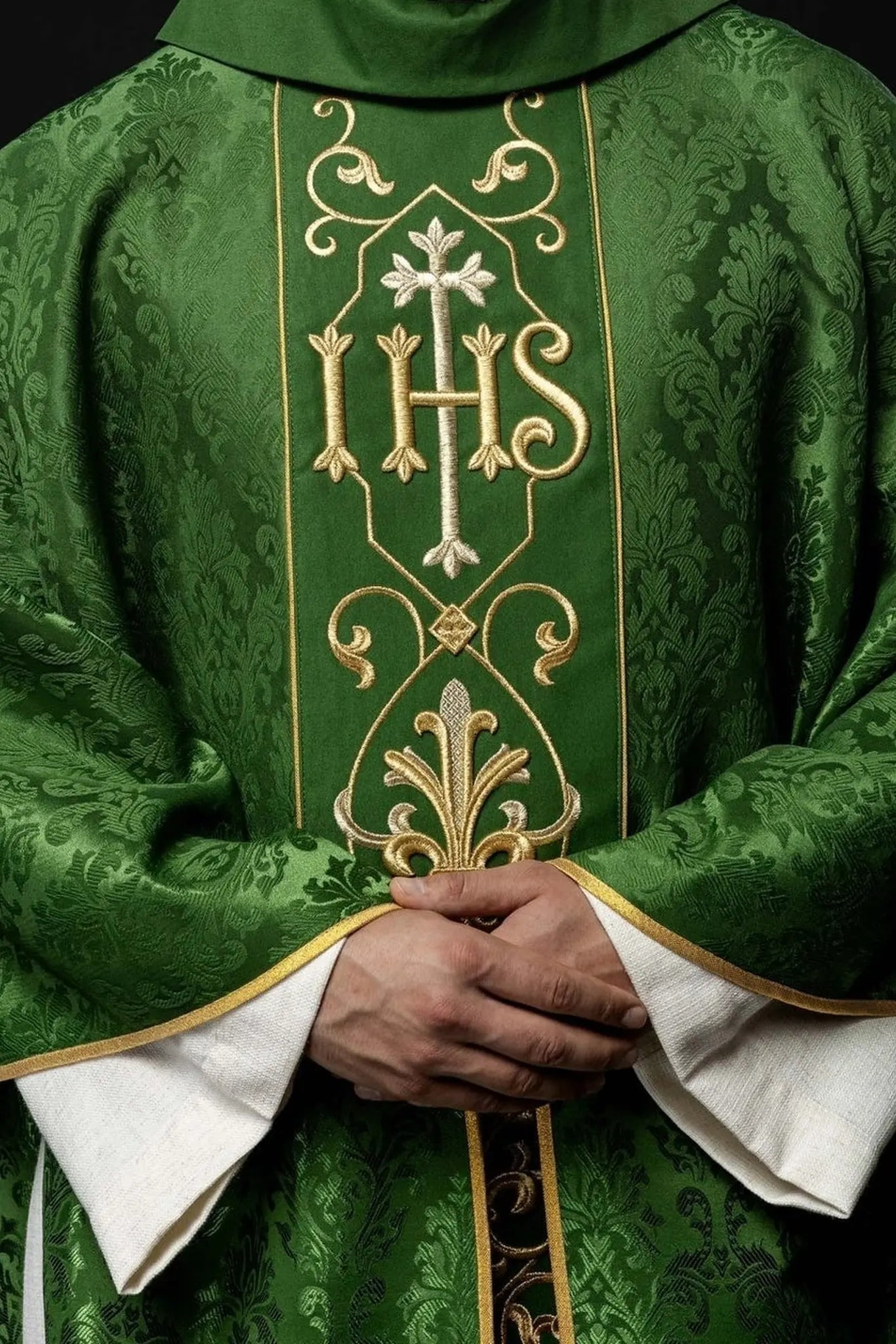
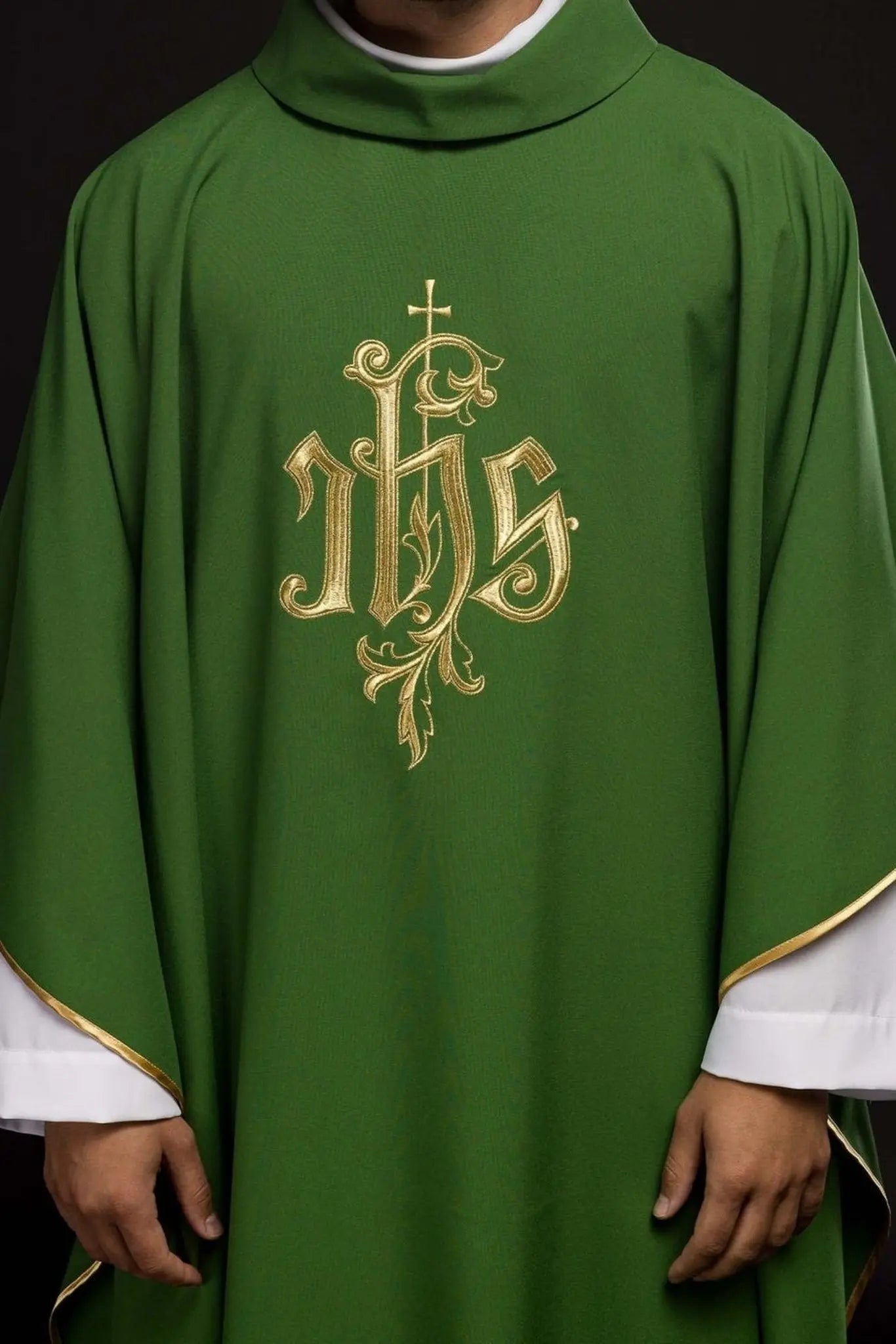
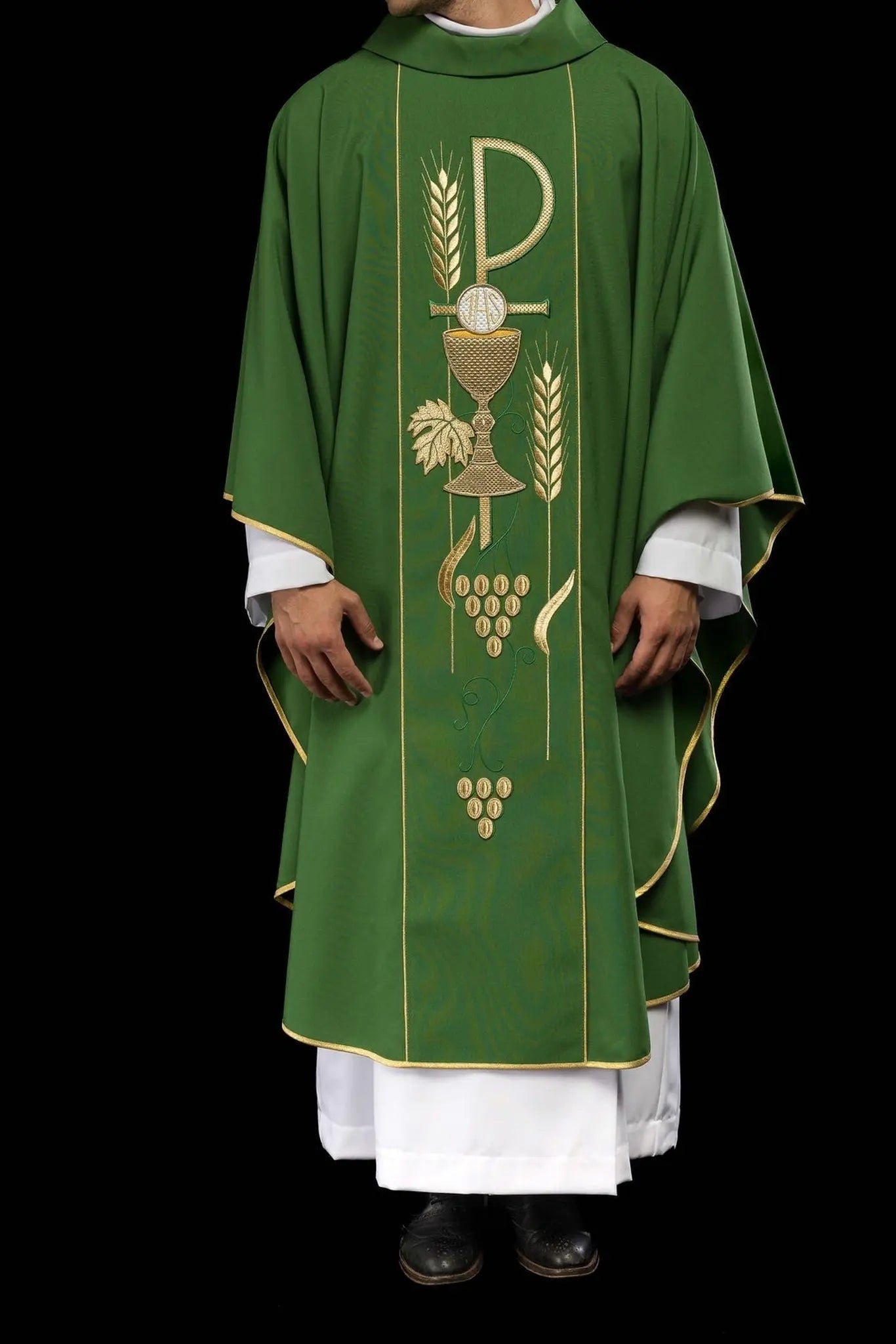
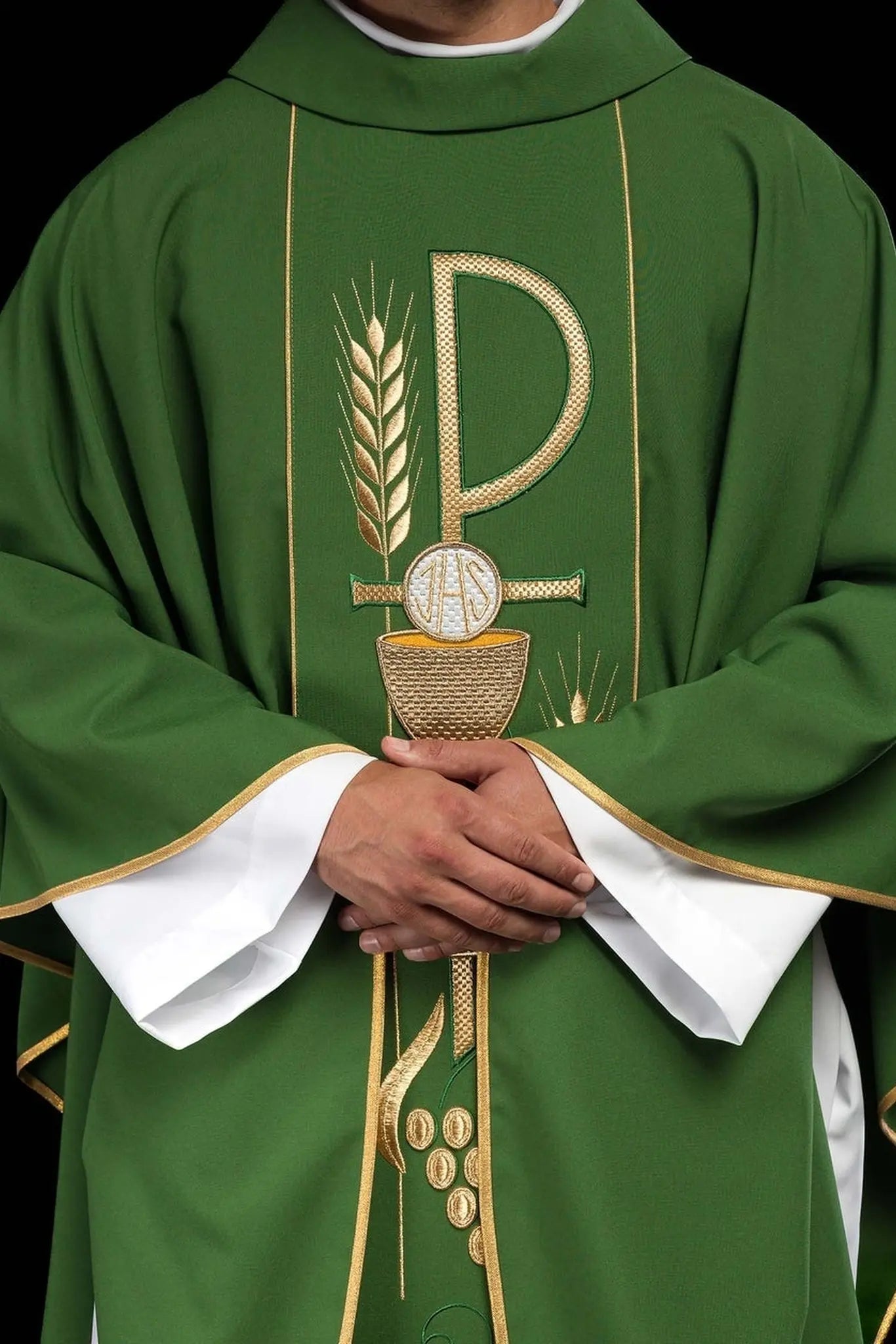
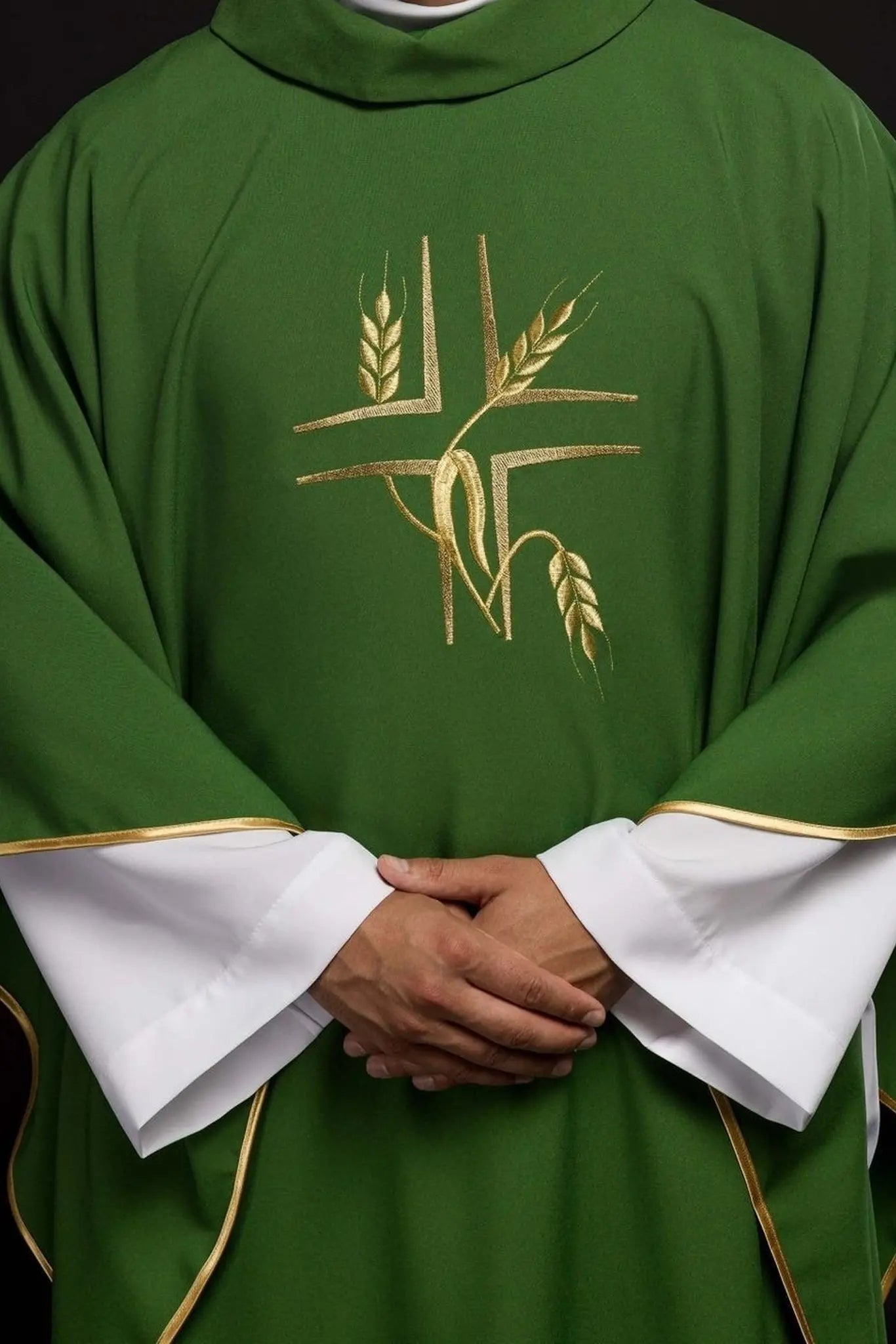
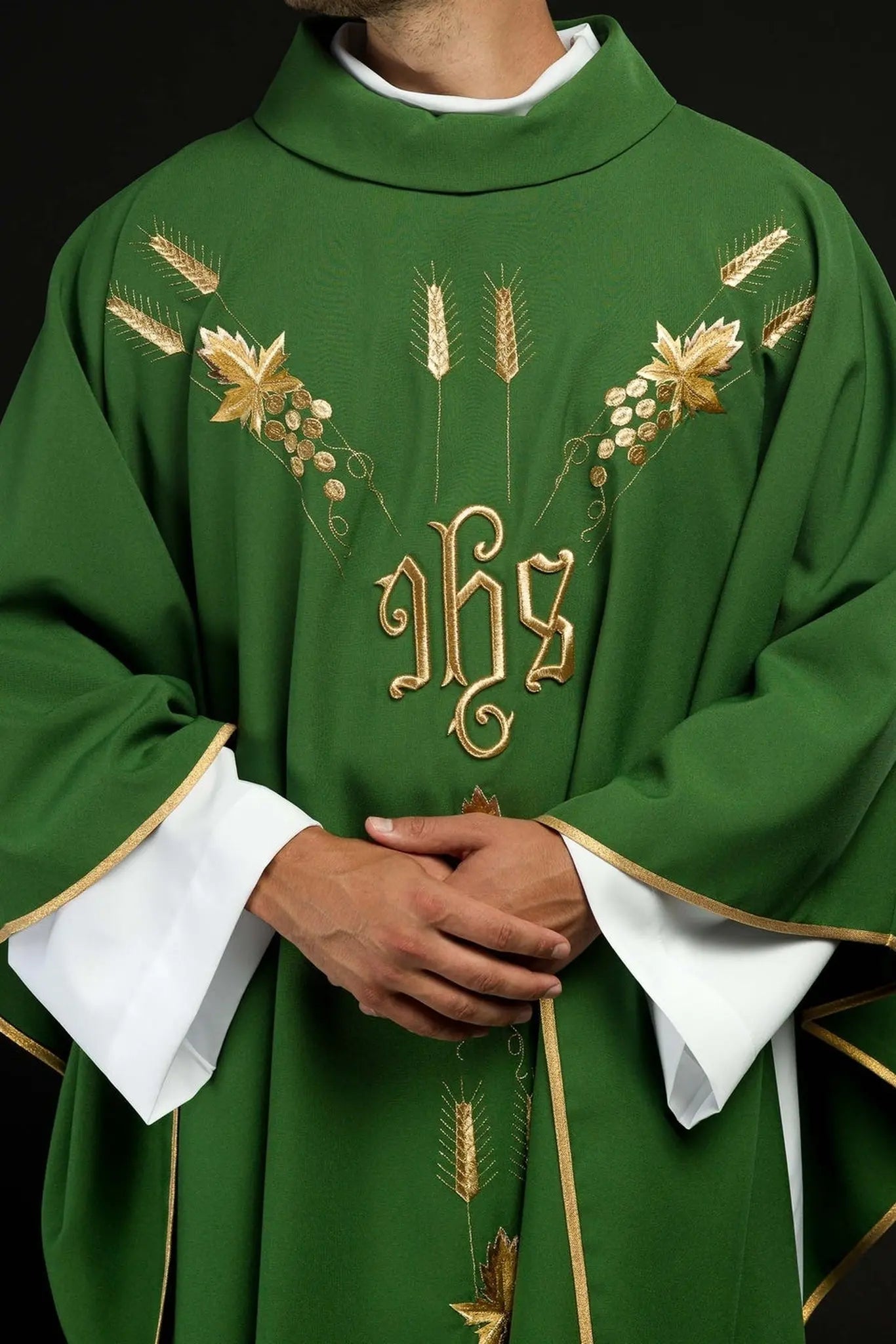
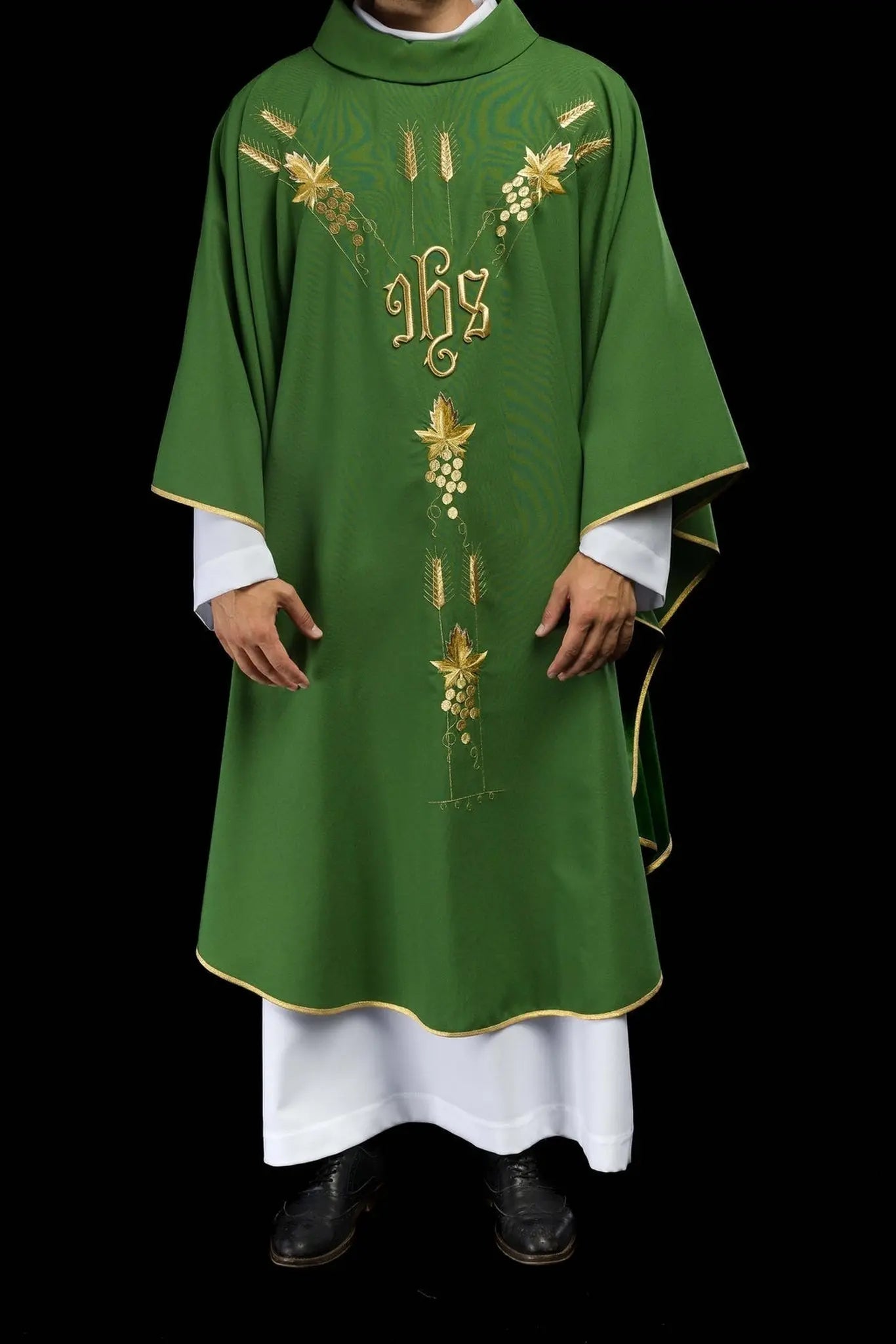
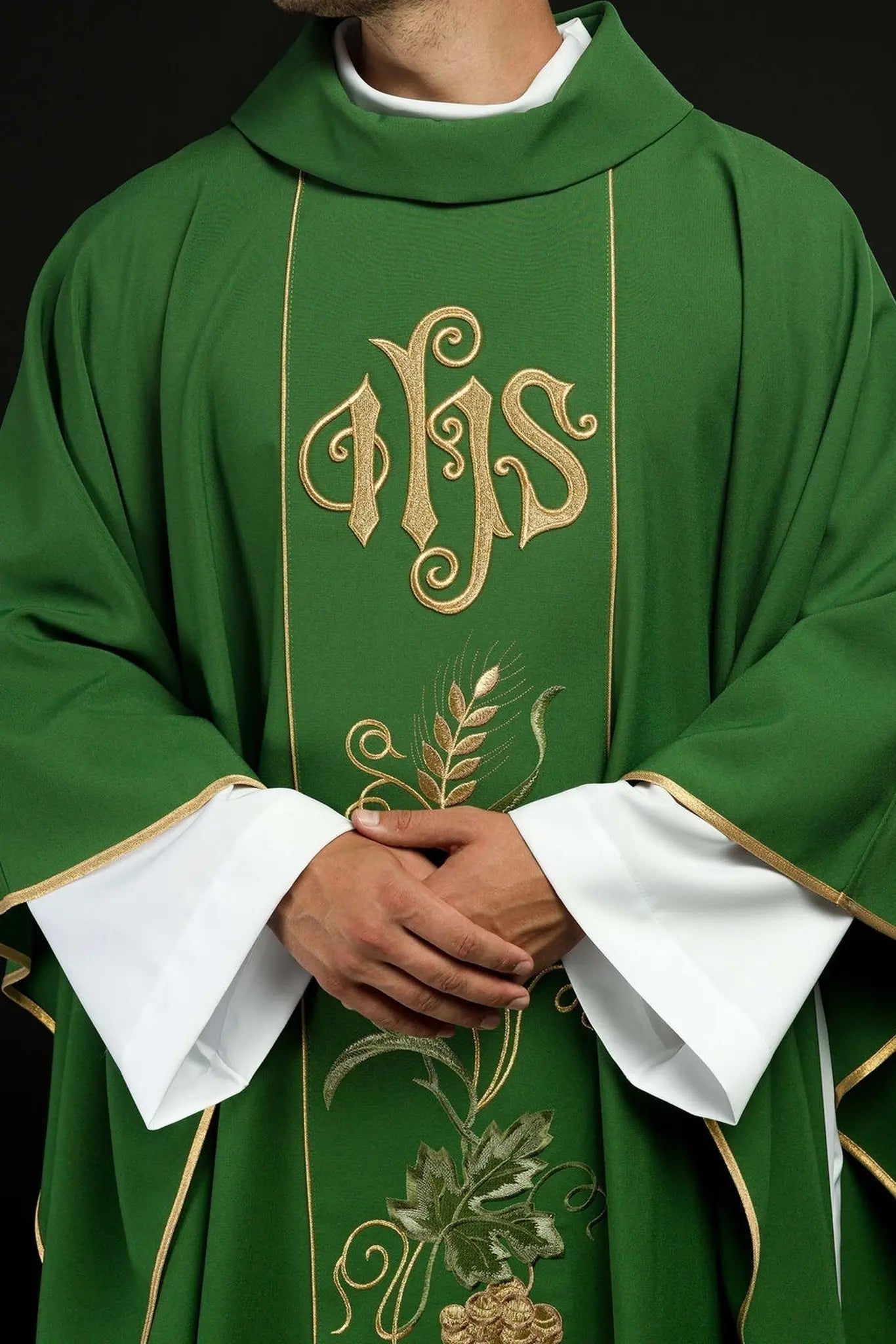
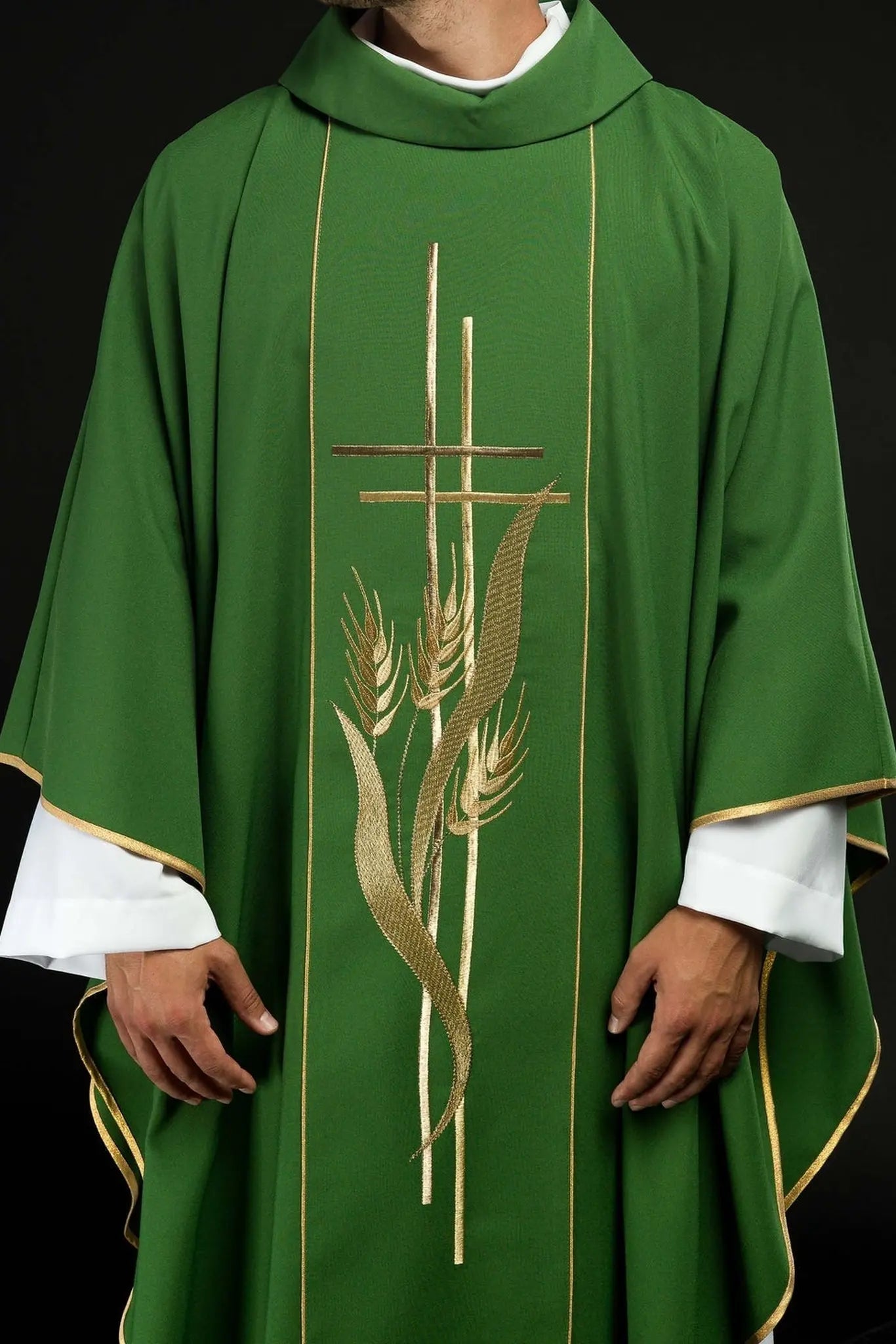
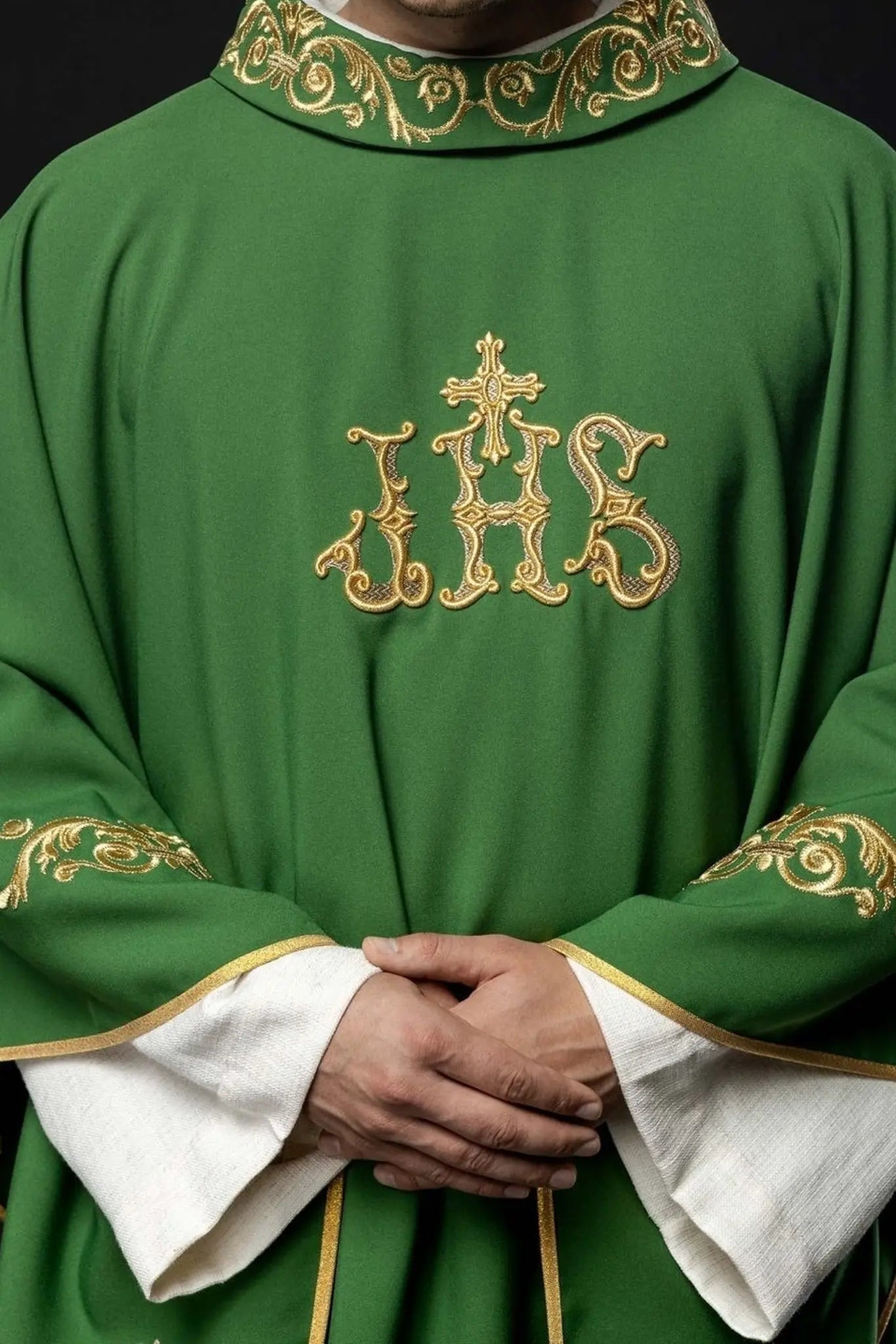
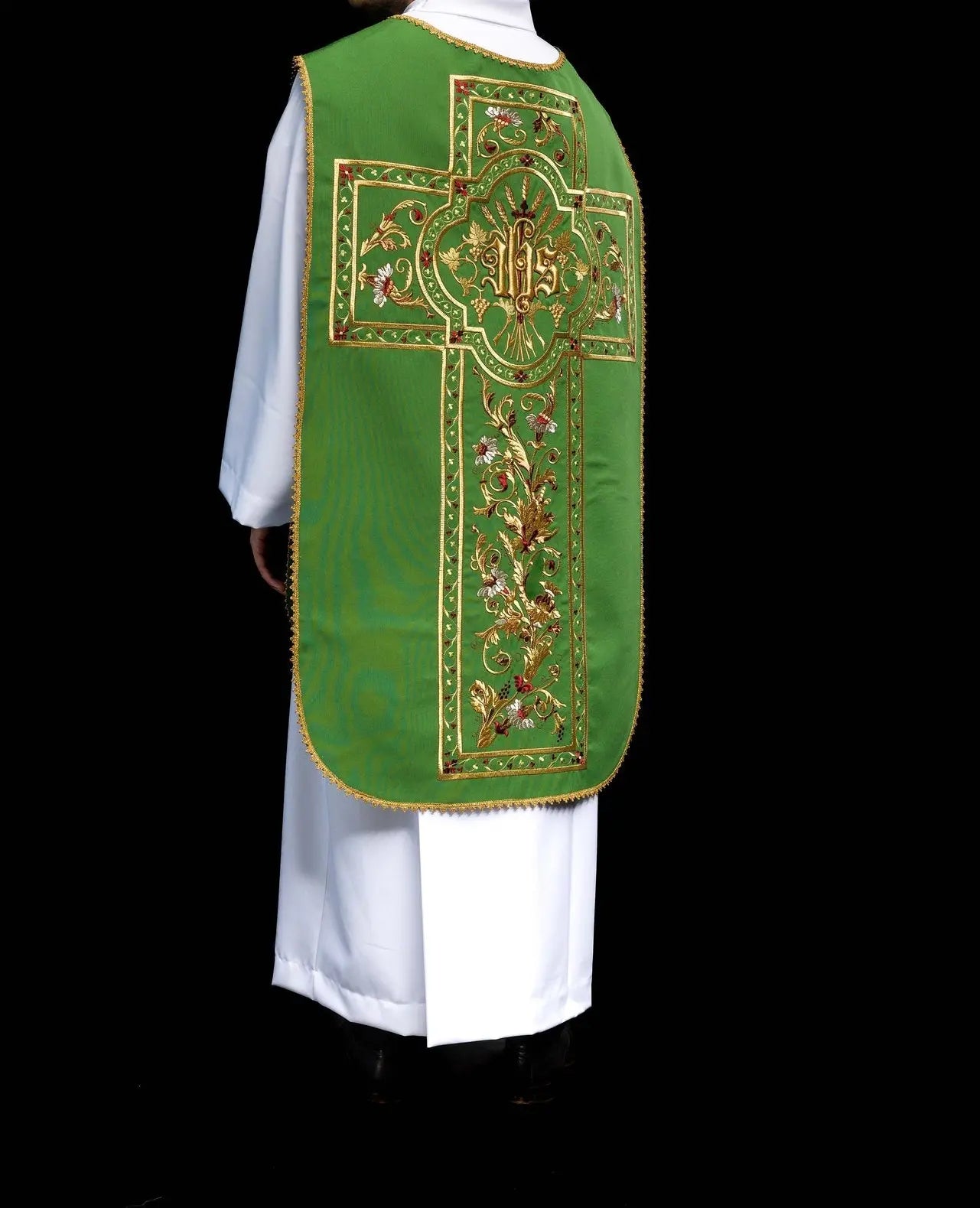
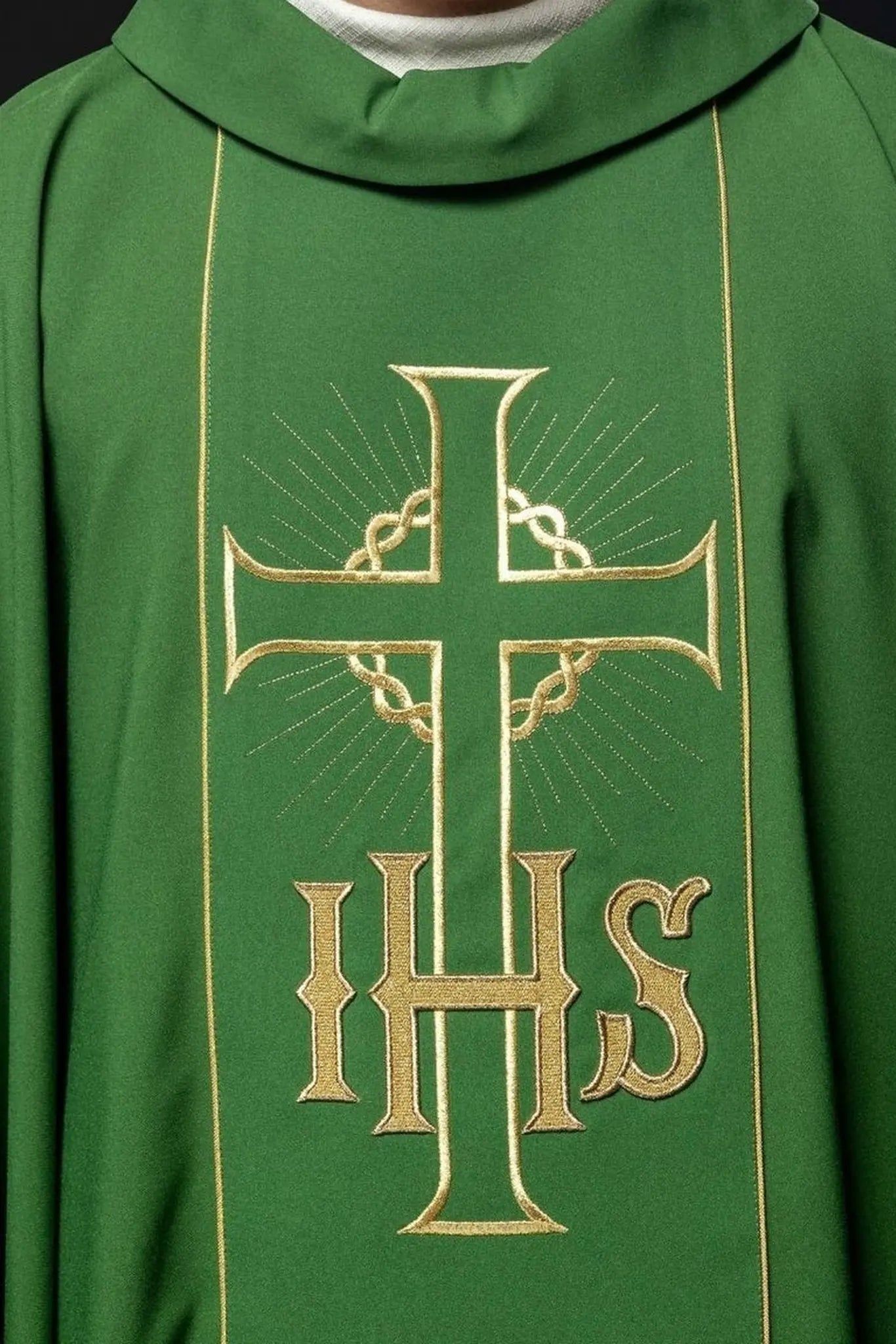
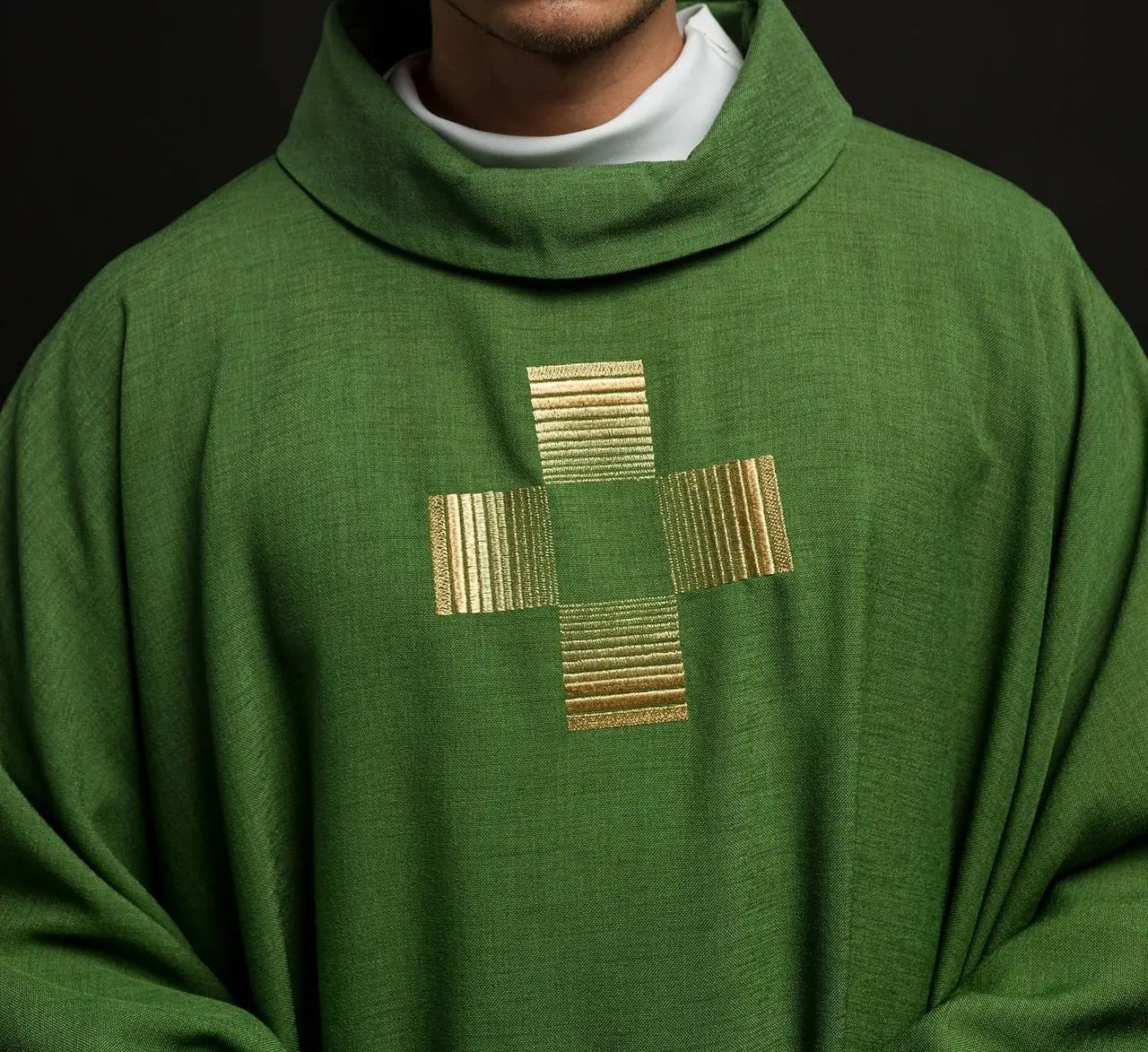
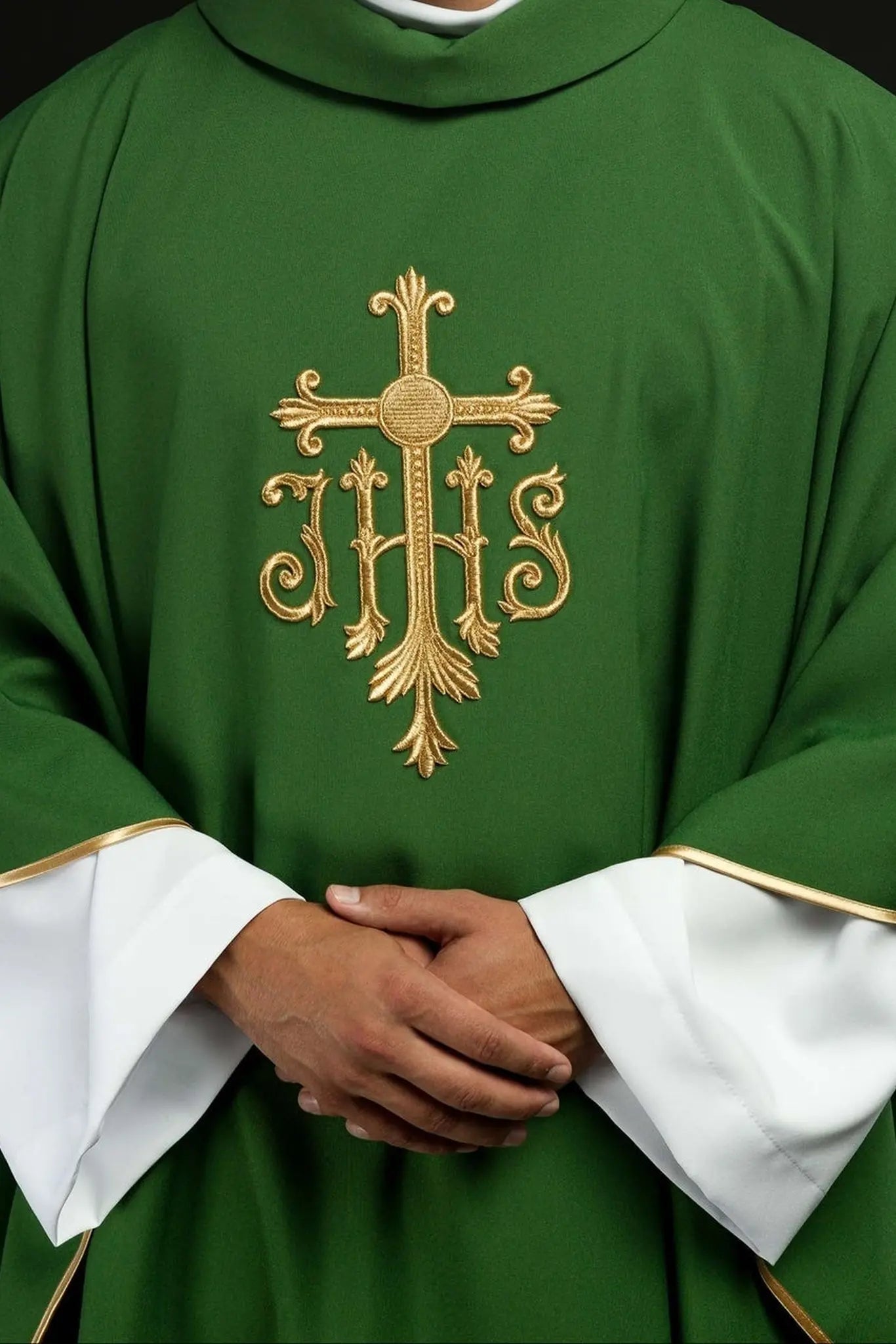
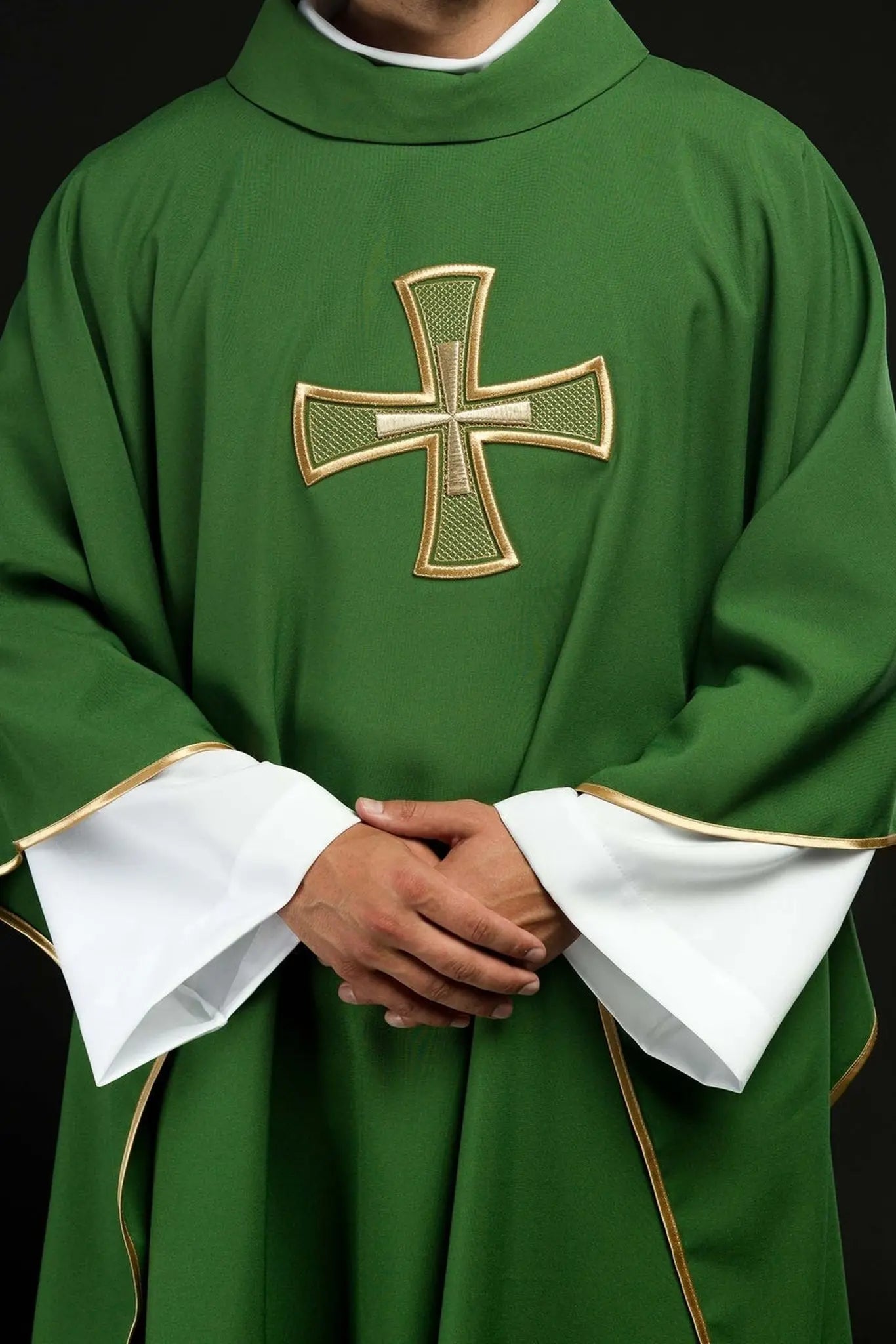
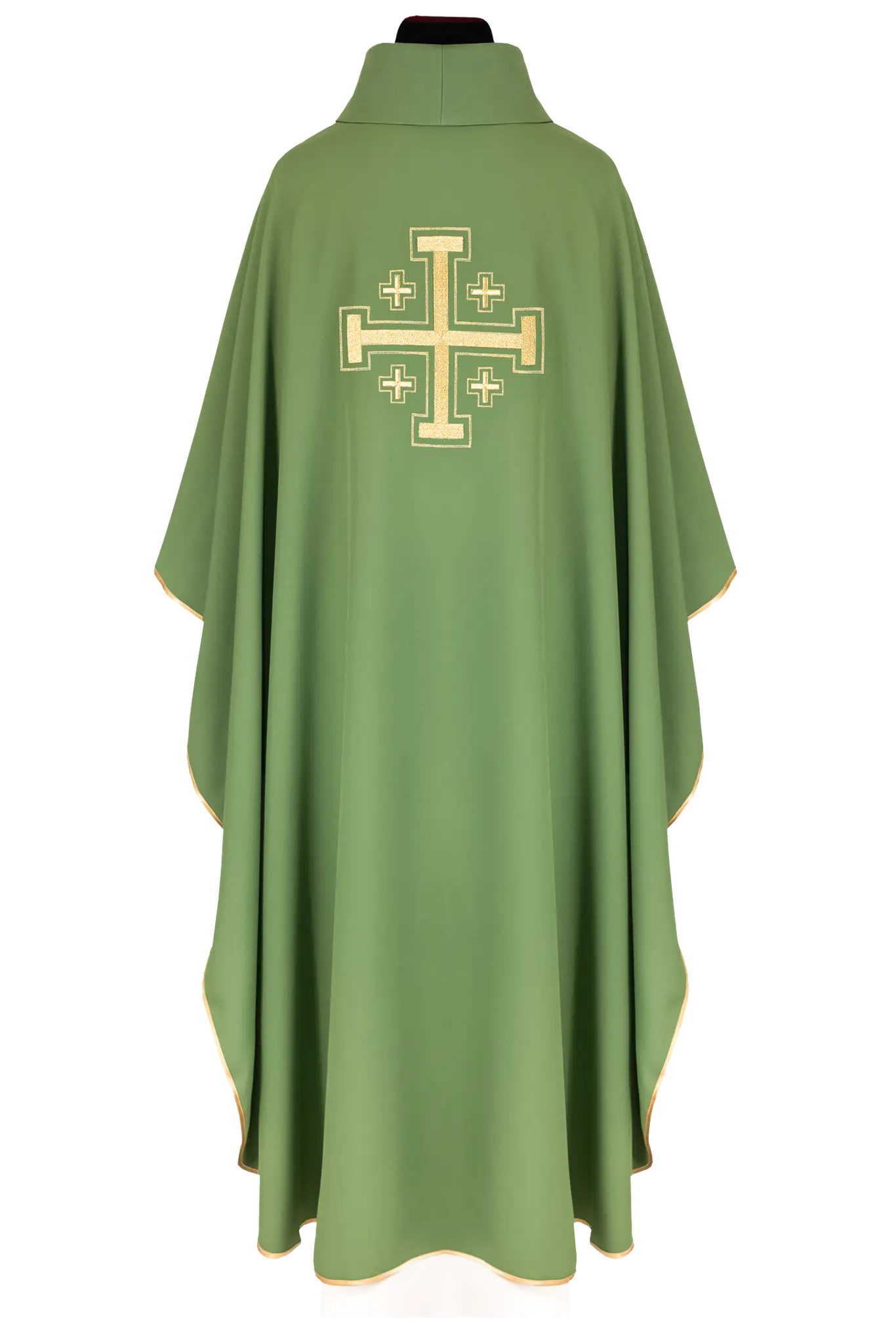
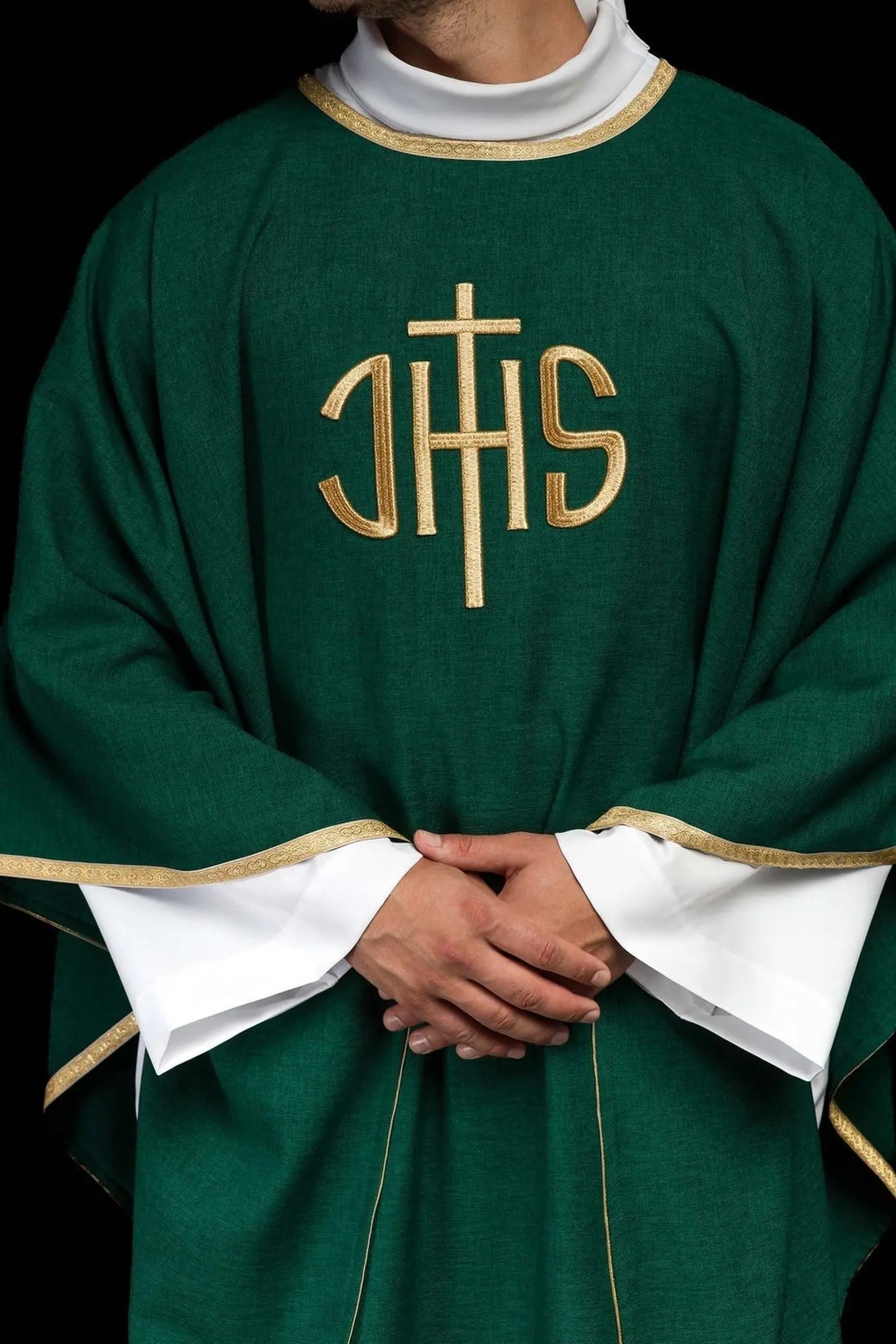
Green is not merely a decorative choice. In the liturgy, it visually expresses growth in faith, perseverance, and hope. Ordinary Time invites the faithful to listen to the Gospel, follow Christ in daily life, and mature in charity. For this reason, green vestments often use motifs of the cross, vines, grapes, wheat, rays, or the IHS Christogram. These symbols connect the color of the season with the Eucharist and the mystery of salvation. Gold embroidery on green fabric can add solemnity, especially for Sunday Mass, while simpler designs may be well suited to weekday celebrations.
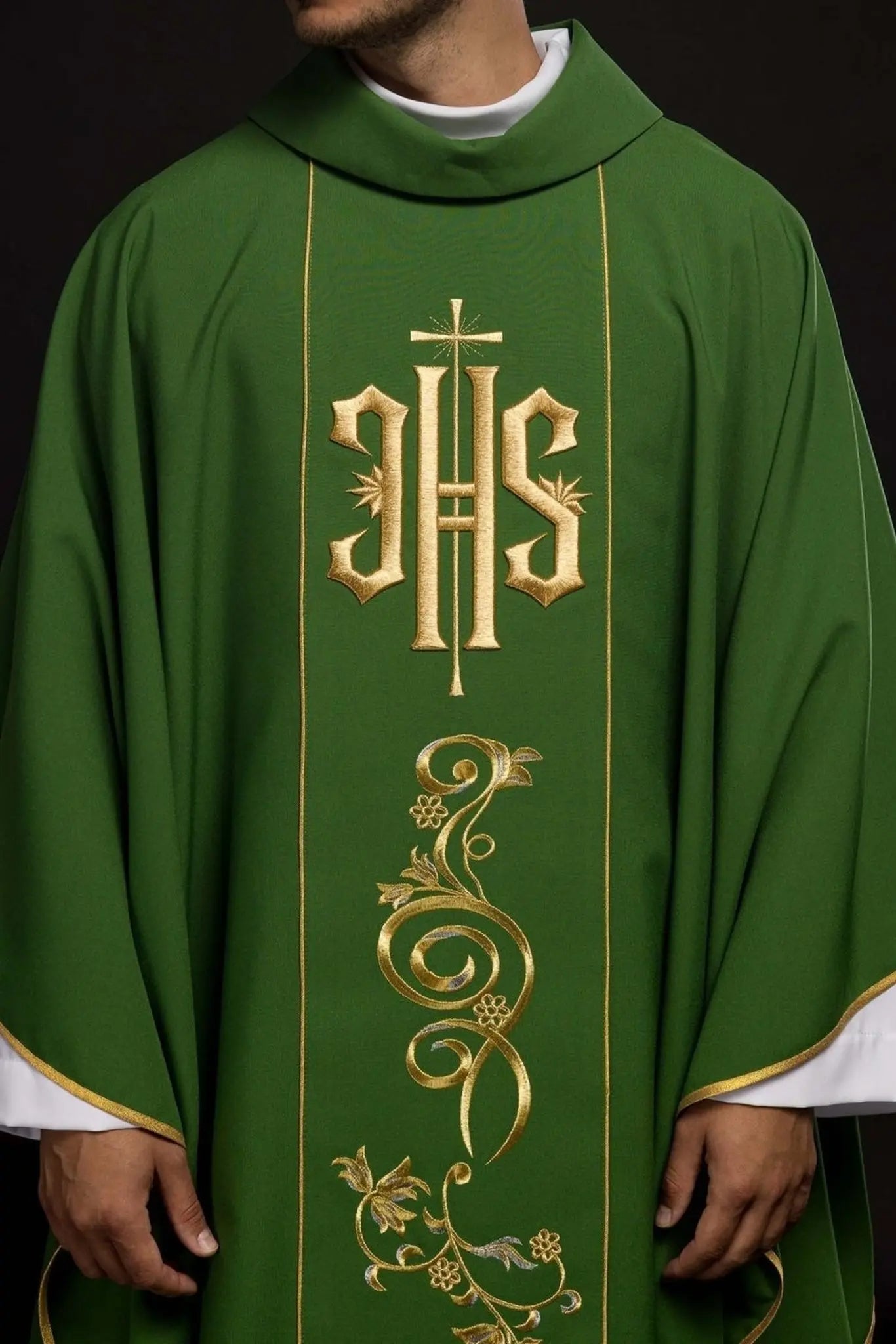
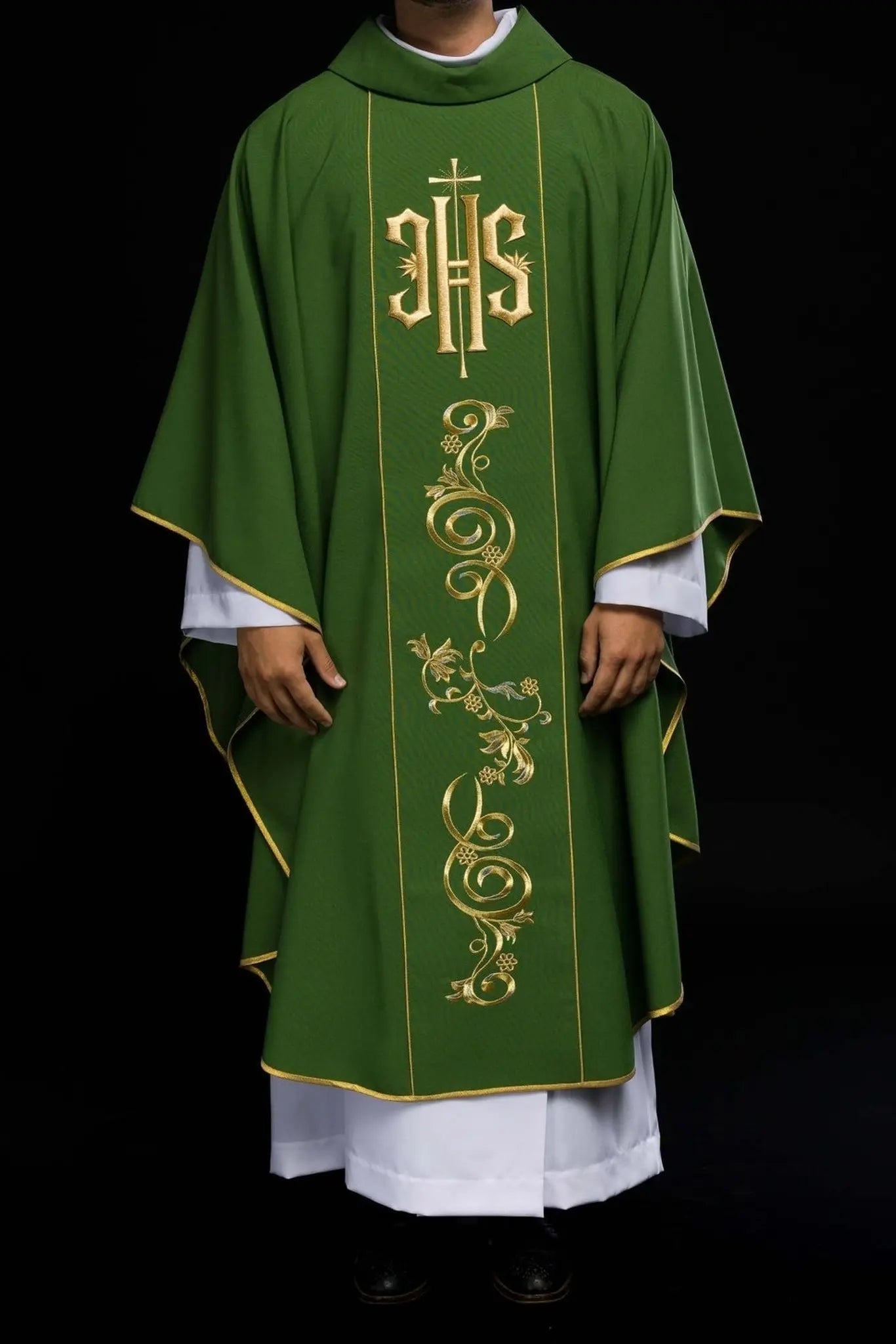
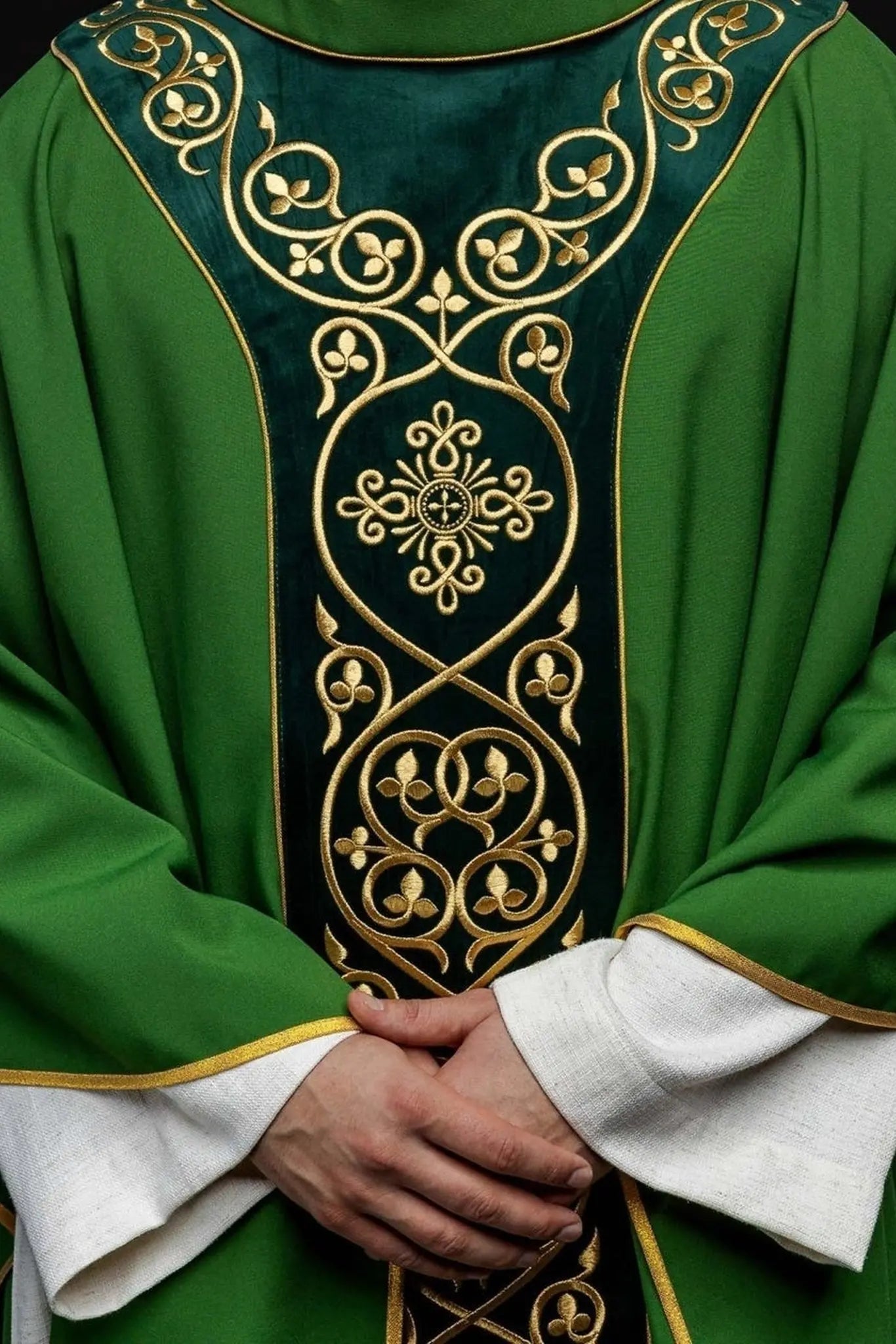
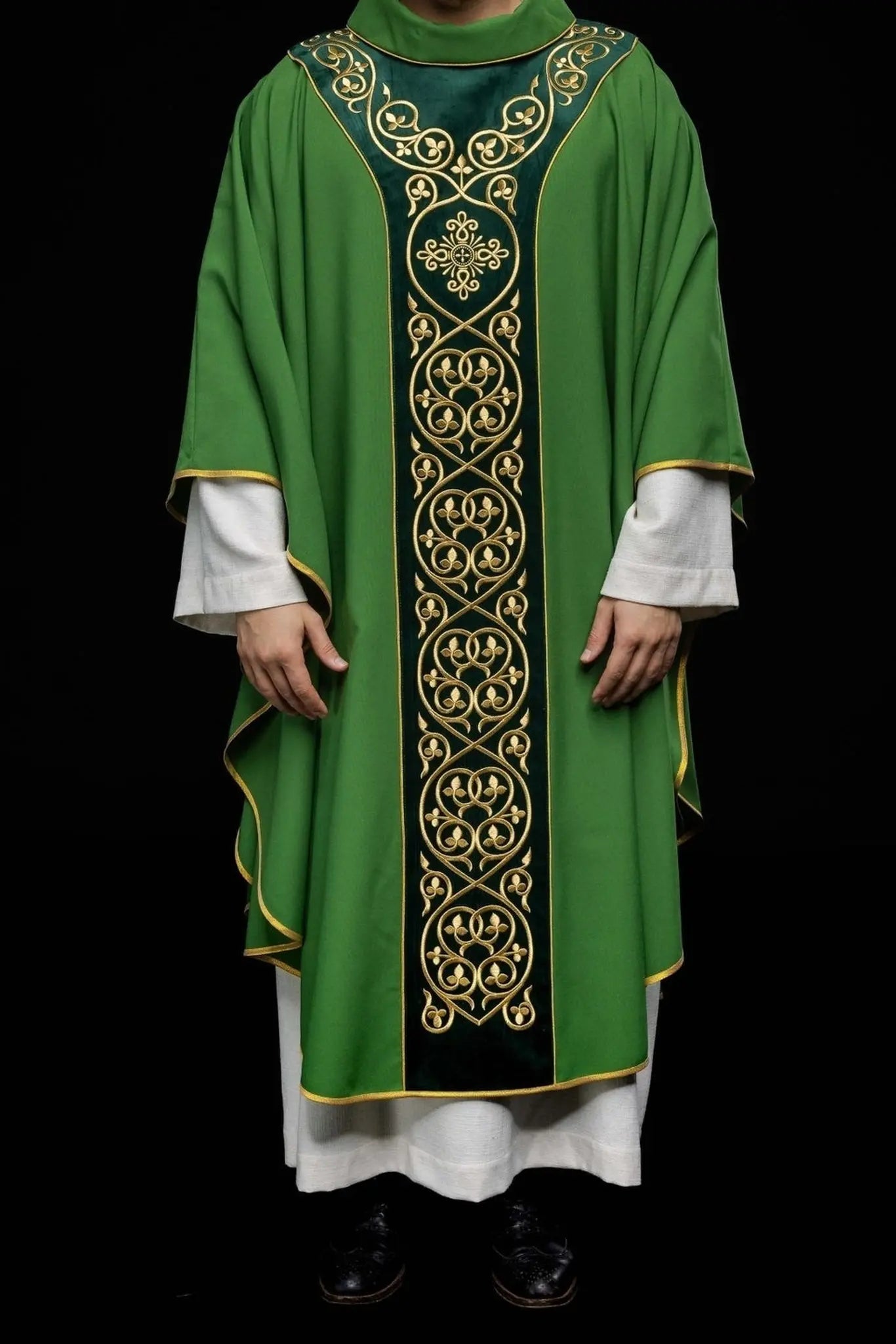
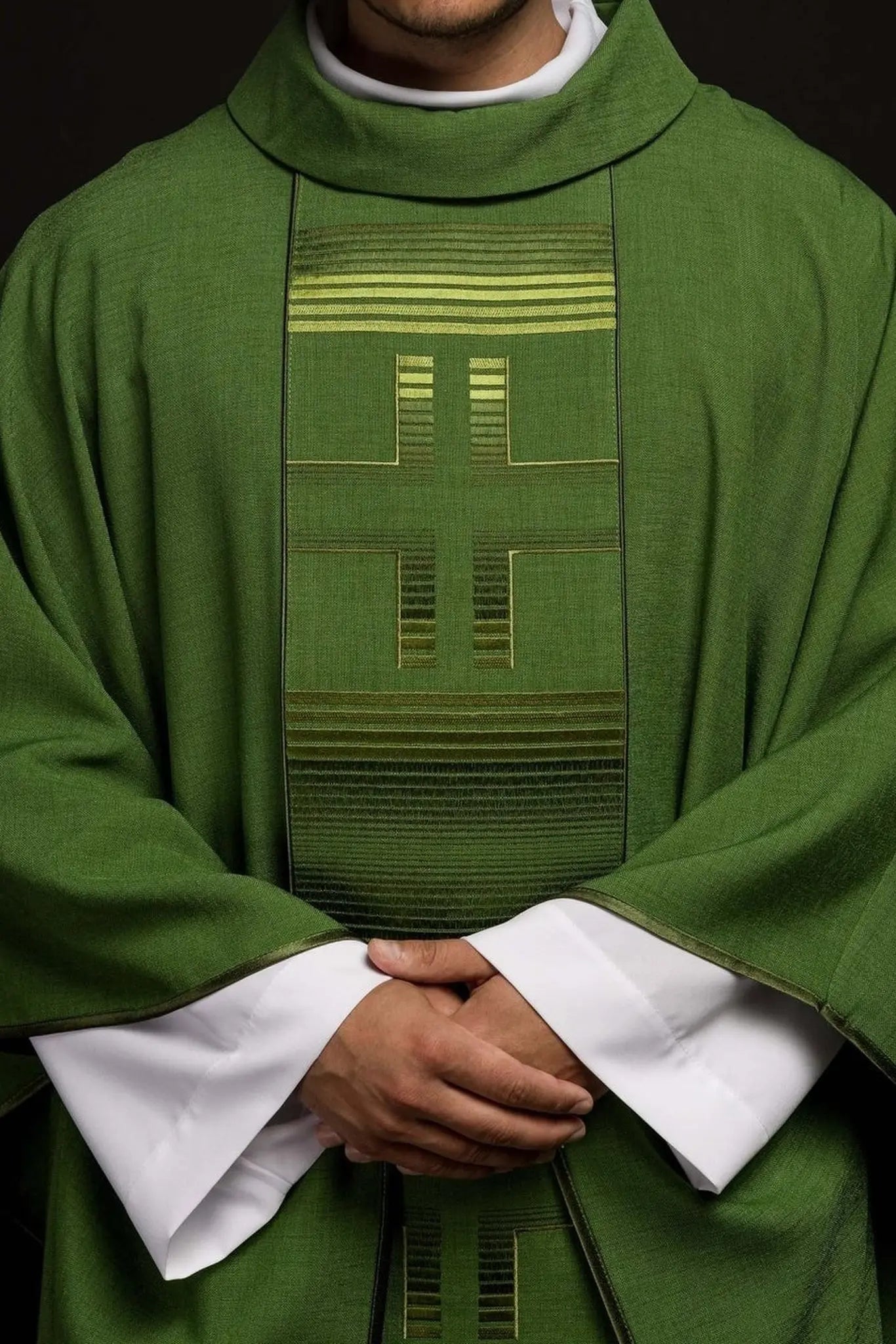
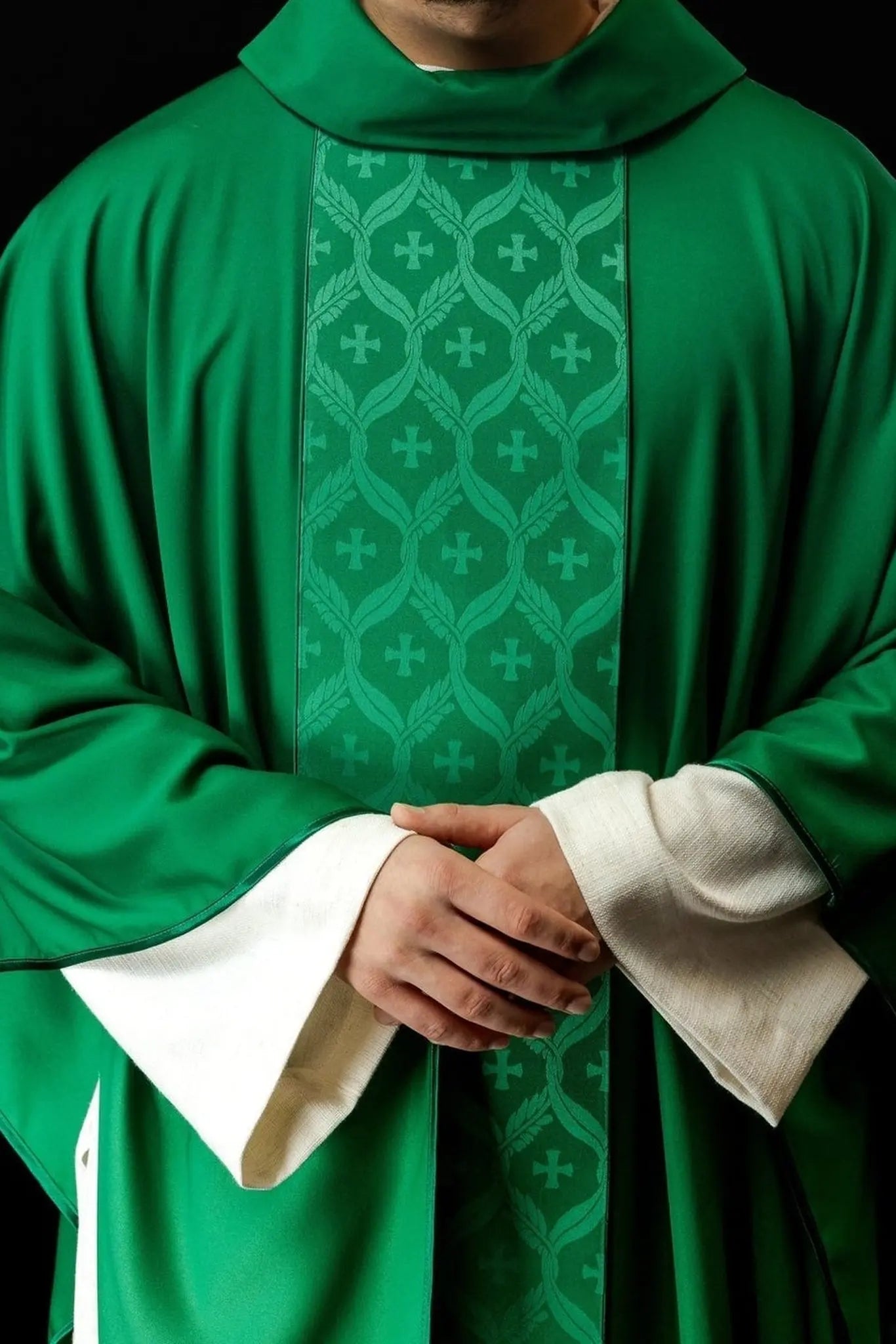
The choice of embroidery should match the pastoral setting. A parish that celebrates several Sunday Masses may prefer a chasuble with a clear central orphrey, a wide embroidered stripe, or a visible cross motif. A chapel or religious house may choose a simpler design with restrained ornamentation. For larger sanctuaries, stronger contrast and larger symbols can help the vestment remain visible from a distance. For smaller chapels, delicate embroidery and lighter fabrics may provide a more balanced appearance.
How to choose an Ordinary Time chasuble
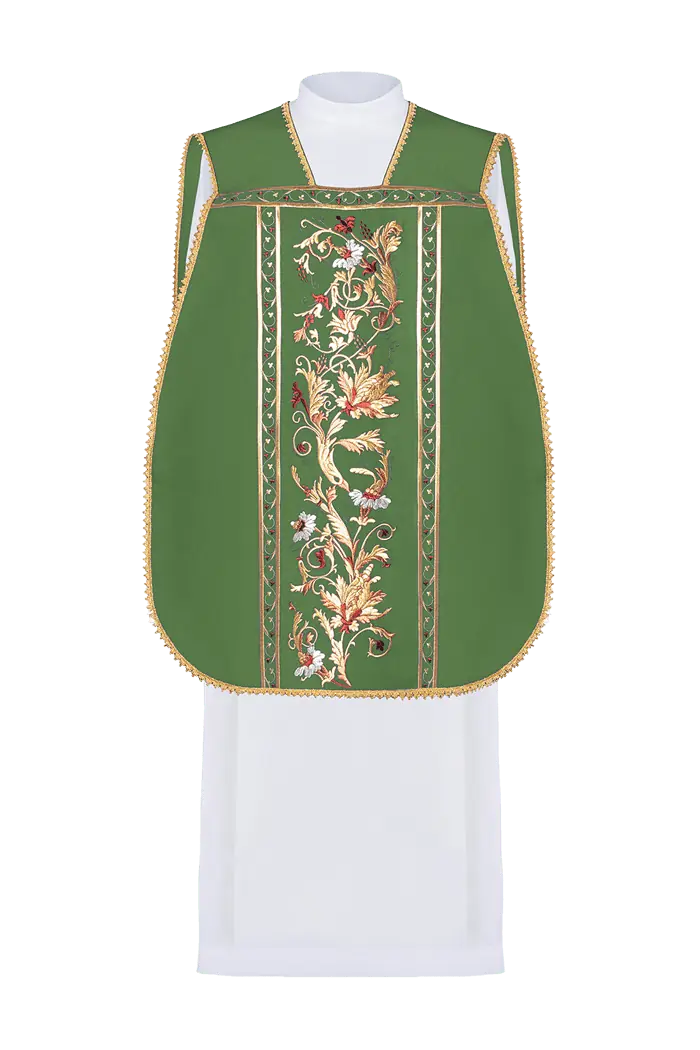
When selecting a chasuble for Ordinary Time, begin with liturgical use. A Sunday chasuble may be richer in embroidery, with gold thread, velvet details, or a more prominent central design. A weekday chasuble should still be dignified, but it may benefit from lighter fabric, simpler decoration, and easy handling. The shape also matters. Gothic-style chasubles provide a flowing silhouette and broad coverage, while Roman-inspired designs offer a more structured look. The best choice depends on the celebrant’s preference, the sanctuary style, and the parish’s existing vestment set.
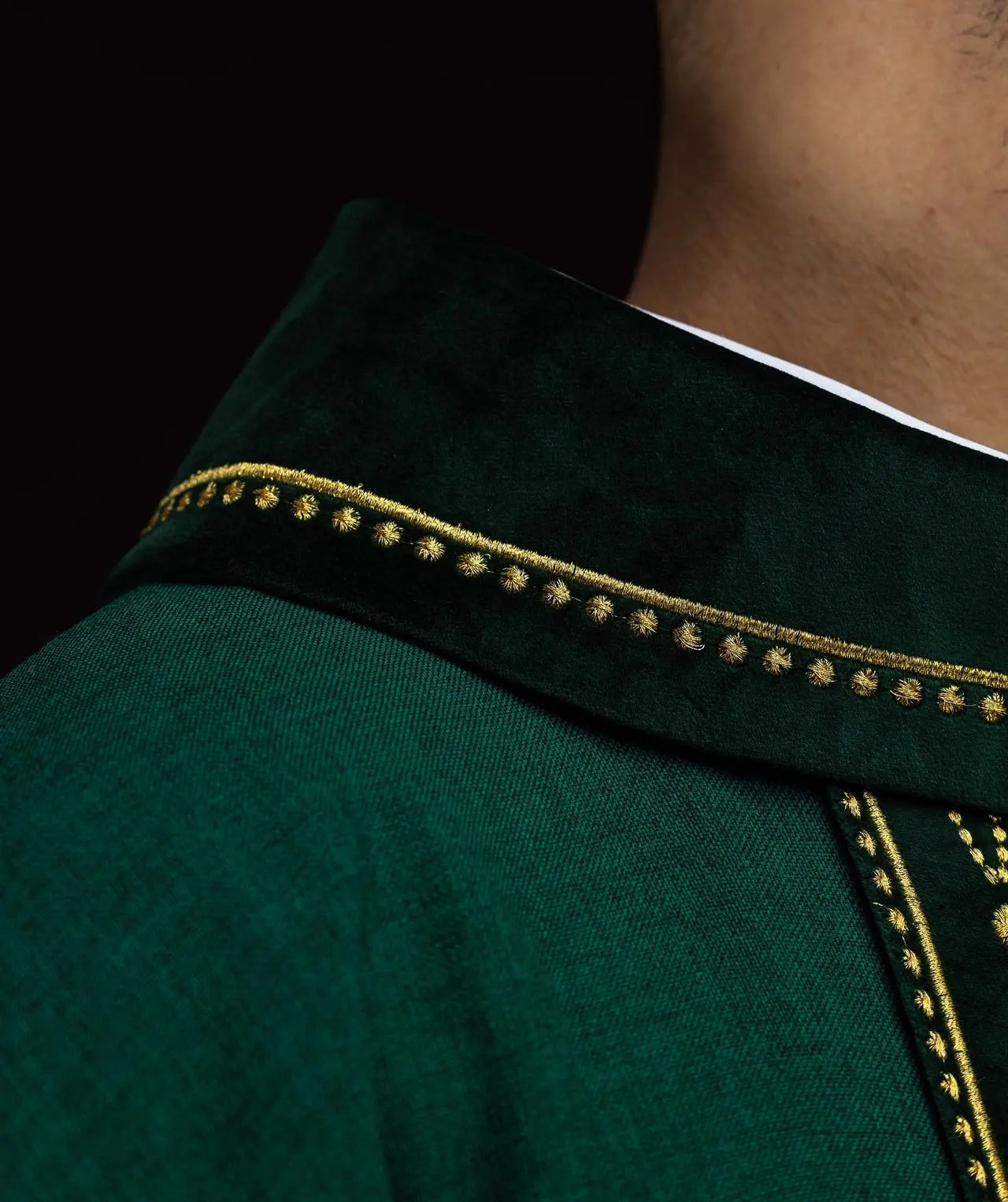
Fabric weight should be considered carefully because Ordinary Time includes both warmer and cooler months in many regions. A breathable or lighter vestment can be useful during summer Sundays, while richer fabrics may be appropriate for more solemn celebrations. The lining, neck finish, and shoulder construction affect comfort during longer liturgies. A good chasuble should sit naturally, not pull at the neck, and not restrict the movement needed for liturgical gestures.
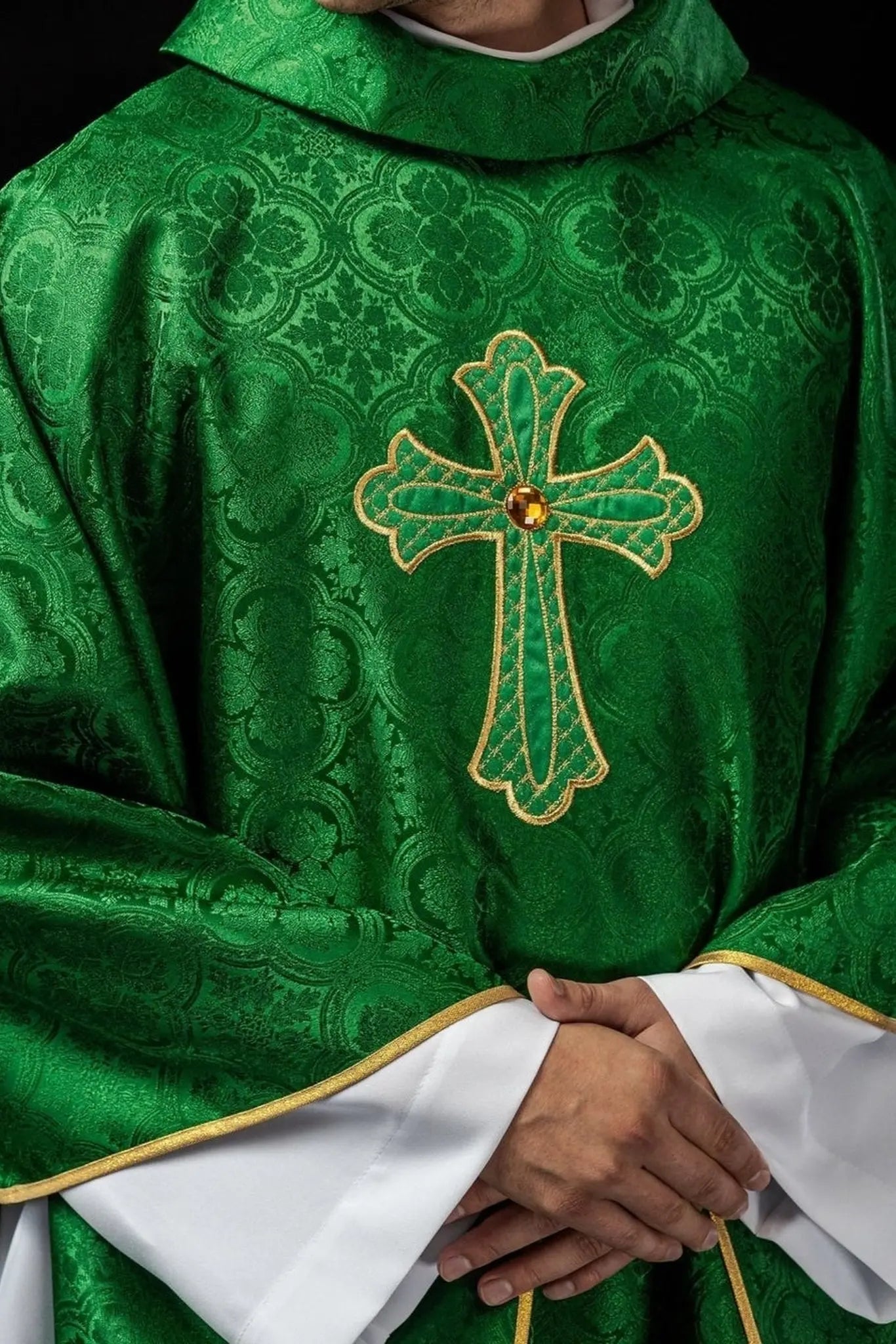
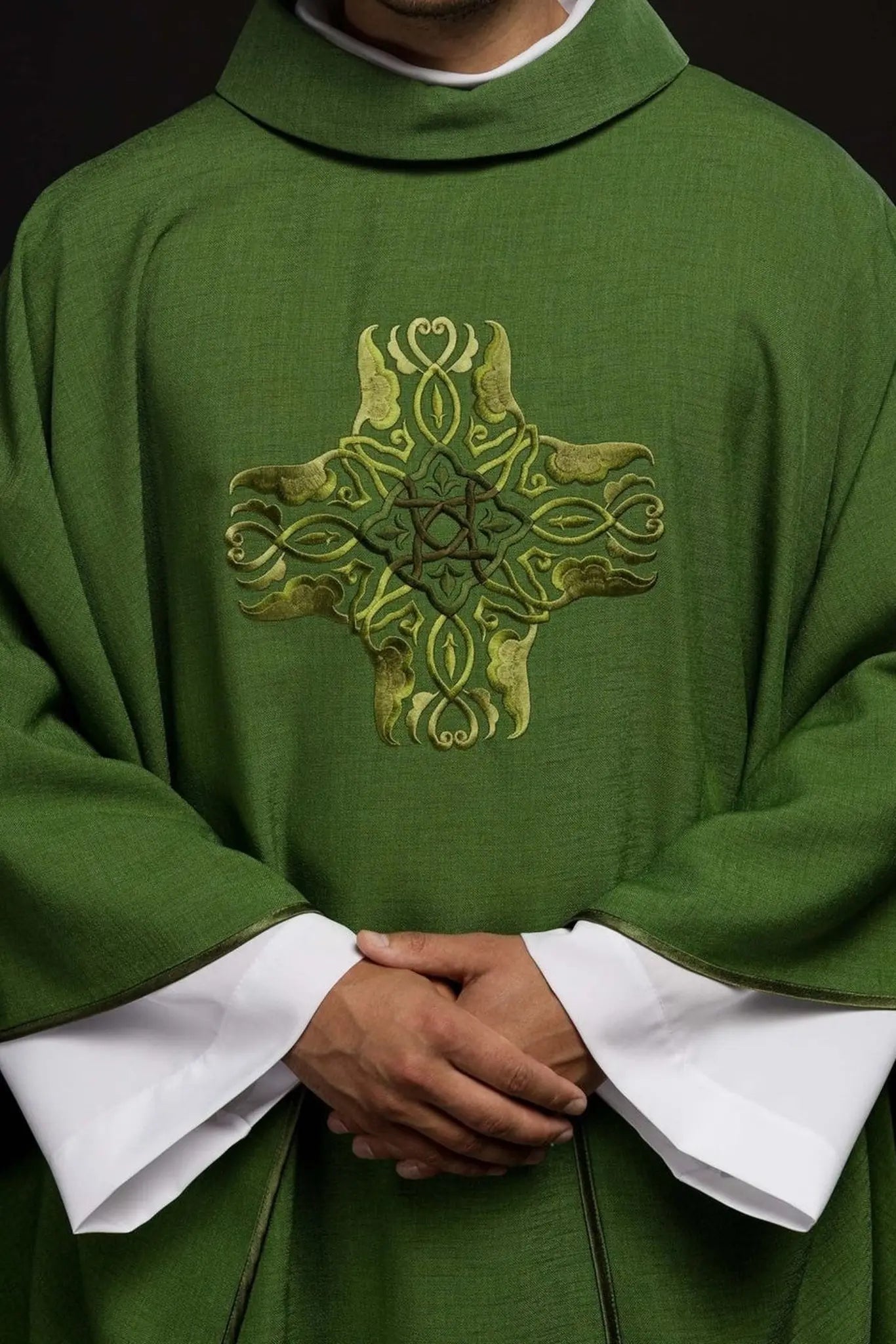
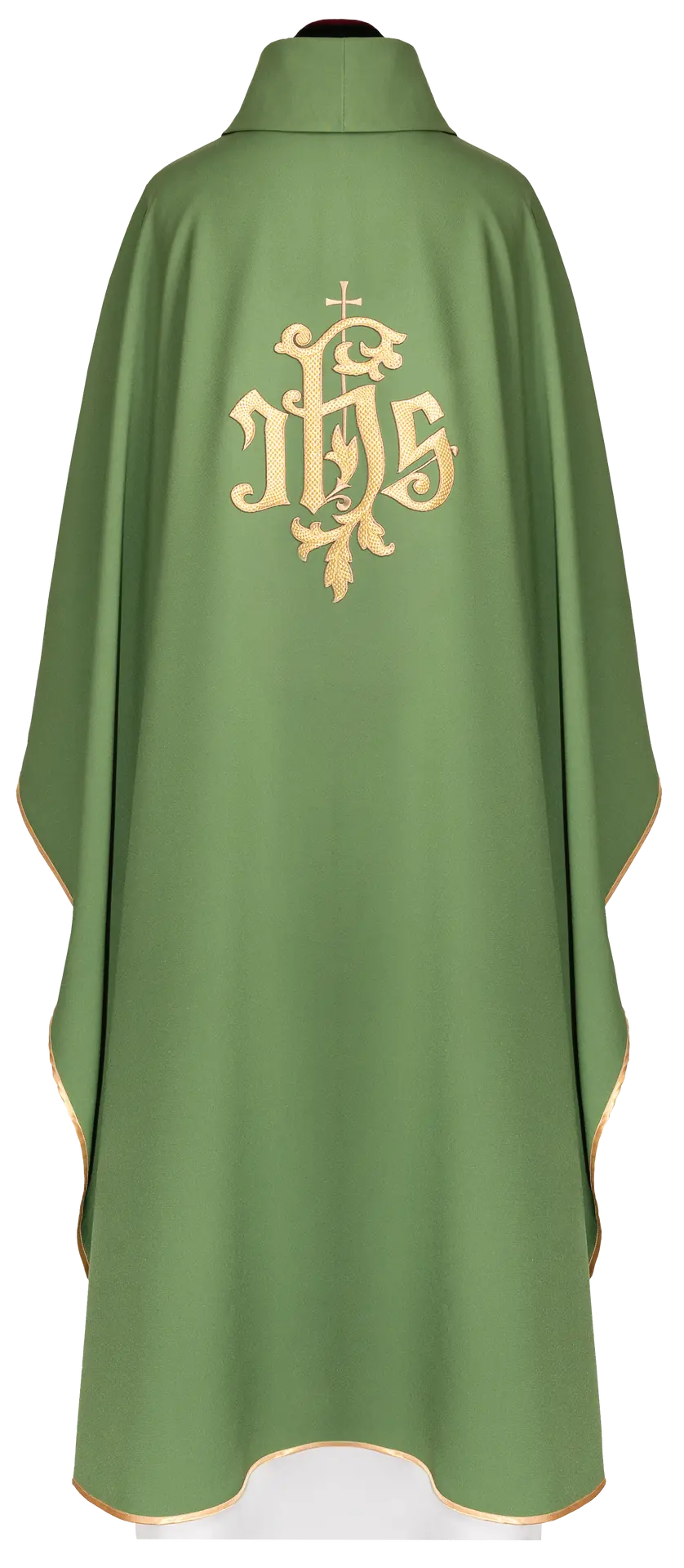
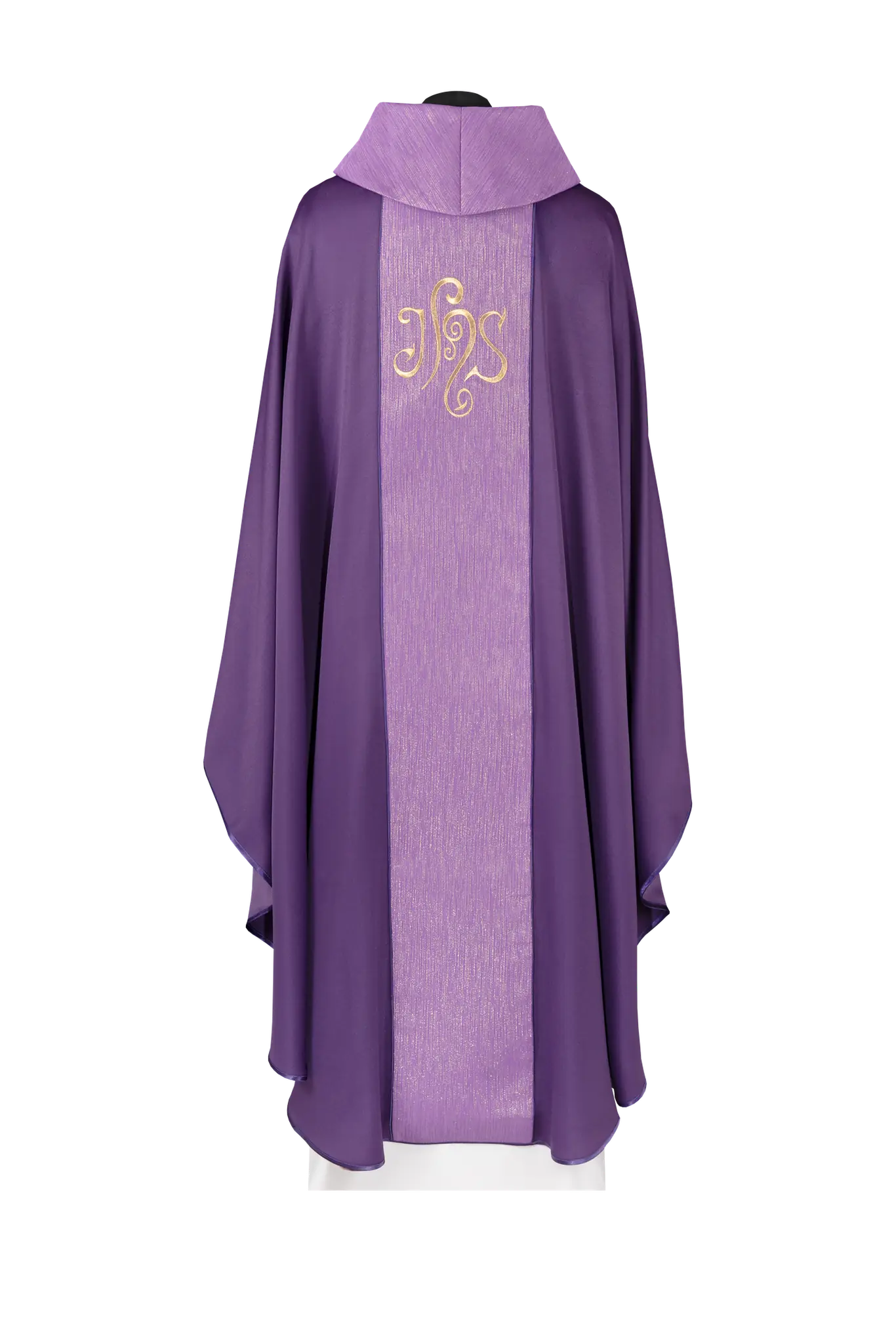
Embroidery placement is also important. A central cross, IHS monogram, or vertical embroidered band can draw the eye toward the altar and the Eucharistic action. Designs with grapes and wheat emphasize Eucharistic symbolism, while cross patterns underline the Paschal mystery present in every Mass. The goal is not display for its own sake, but a visual language that supports prayer and reverence.
Dalmatics and coordinated vestment sets
For parishes with a deacon, the dalmatic should be selected with the same care as the chasuble. The dalmatic is not interchangeable with a chasuble; it belongs to the deacon and has its own form. In a solemn Mass, a green dalmatic with complementary bands, crosses, or gold details can create a coherent liturgical appearance while respecting the distinct ministry of the deacon. When possible, the color tone of the dalmatic should harmonize with the celebrant’s chasuble, especially for major parish Sundays.
Coordination does not always require identical decoration. A chasuble may have a more developed central motif, while the dalmatic may use simpler bands or matching embroidery elements. This can be especially useful when a parish builds its sacristy gradually. A first purchase might be a versatile green chasuble; a later purchase might add a dalmatic for celebrations with a deacon. Green stoles can also be useful for rites and pastoral ministry connected with this season, and they may be reviewed in the green clergy stoles section.
Ordinary Time and adjacent liturgical seasons
Ordinary Time has its own identity, but it also sits beside other seasons in the liturgical calendar. Before it begins in the earlier part of the year, the Church has celebrated Christmas Time; later, the calendar moves toward Lent, Easter, and the return of Ordinary Time after Pentecost. Because each season has its own color and spiritual focus, it is helpful for a parish to maintain a balanced set of vestments. Green should not be substituted for violet, white, rose, red, or gold when the calendar calls for those colors.
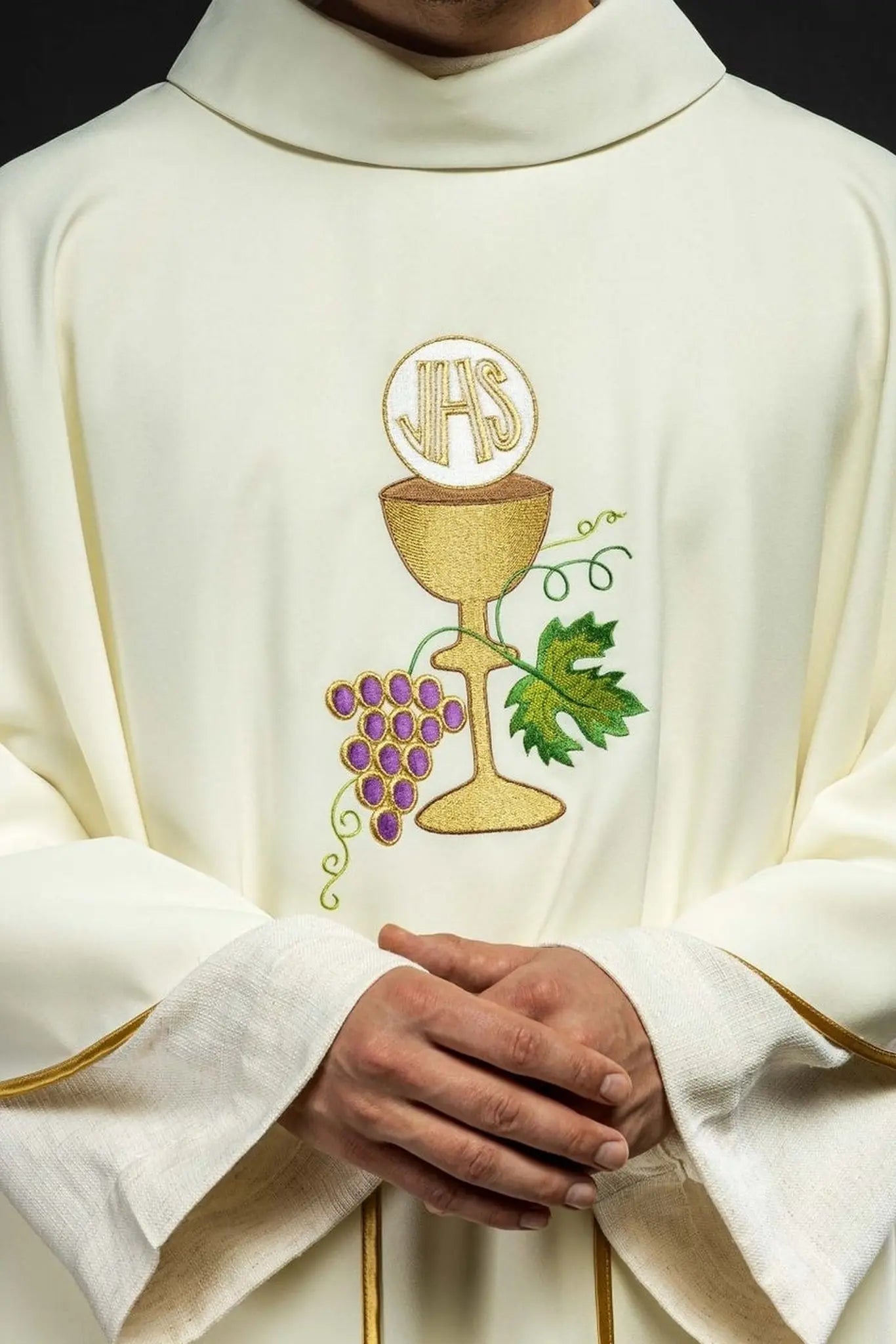
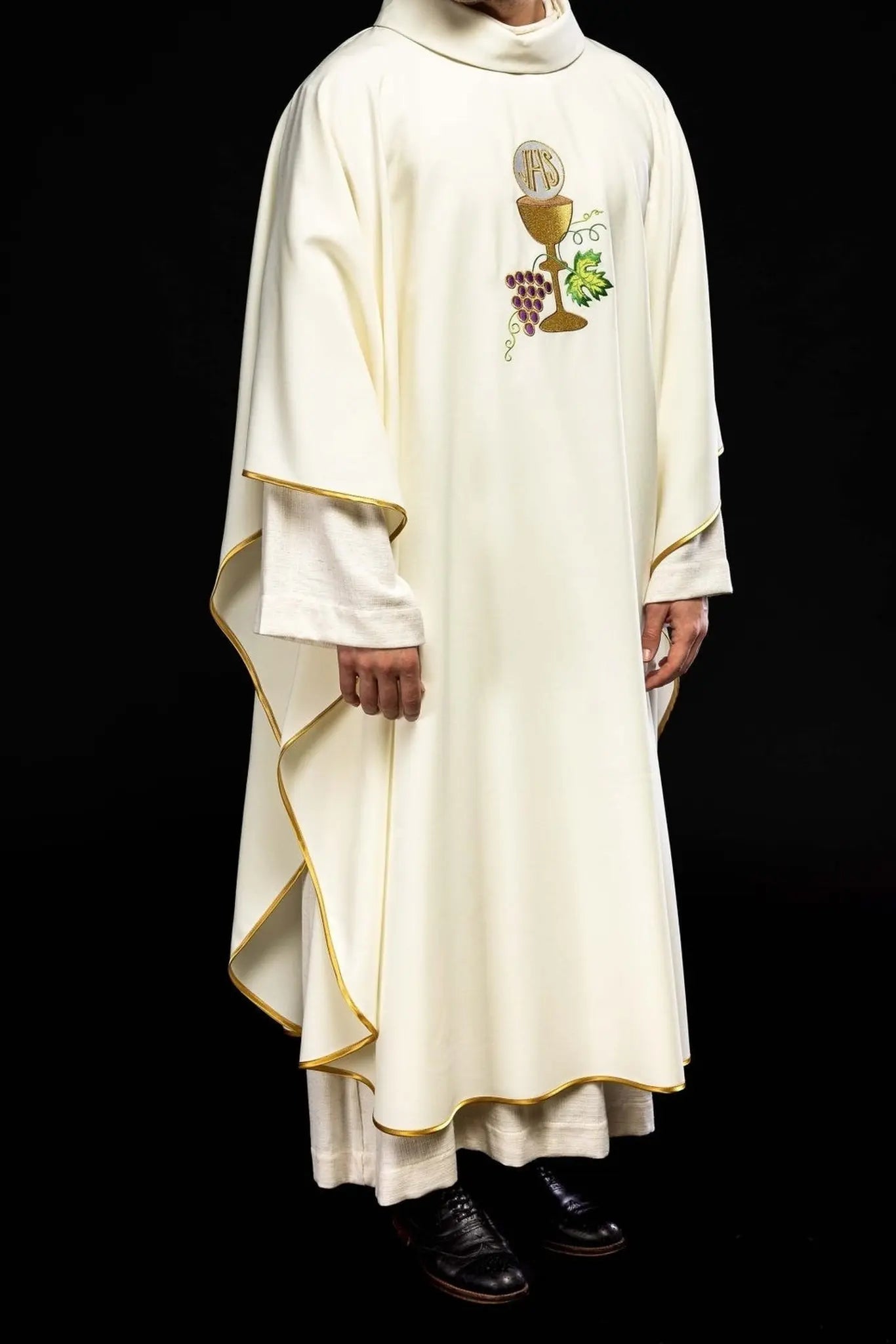
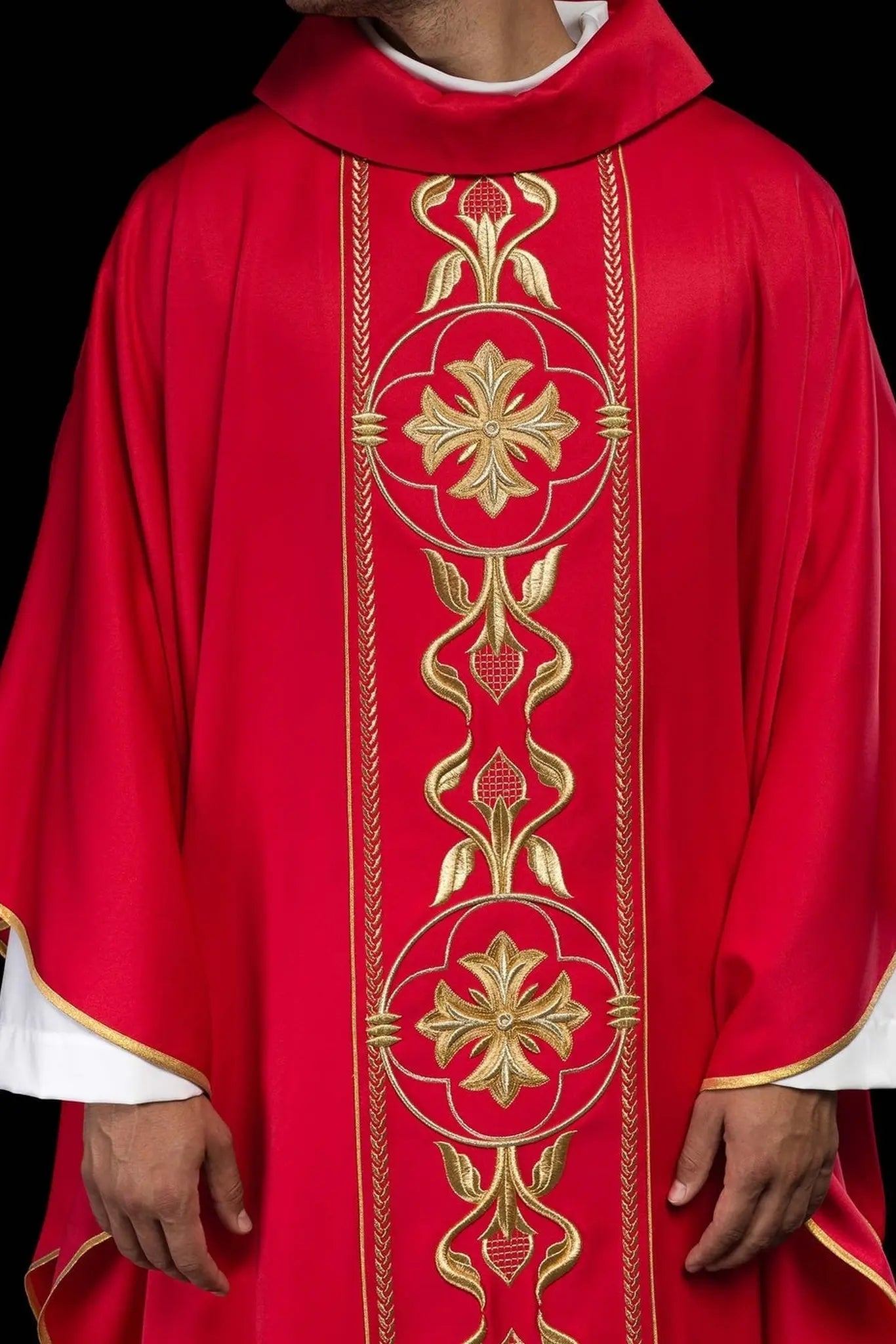
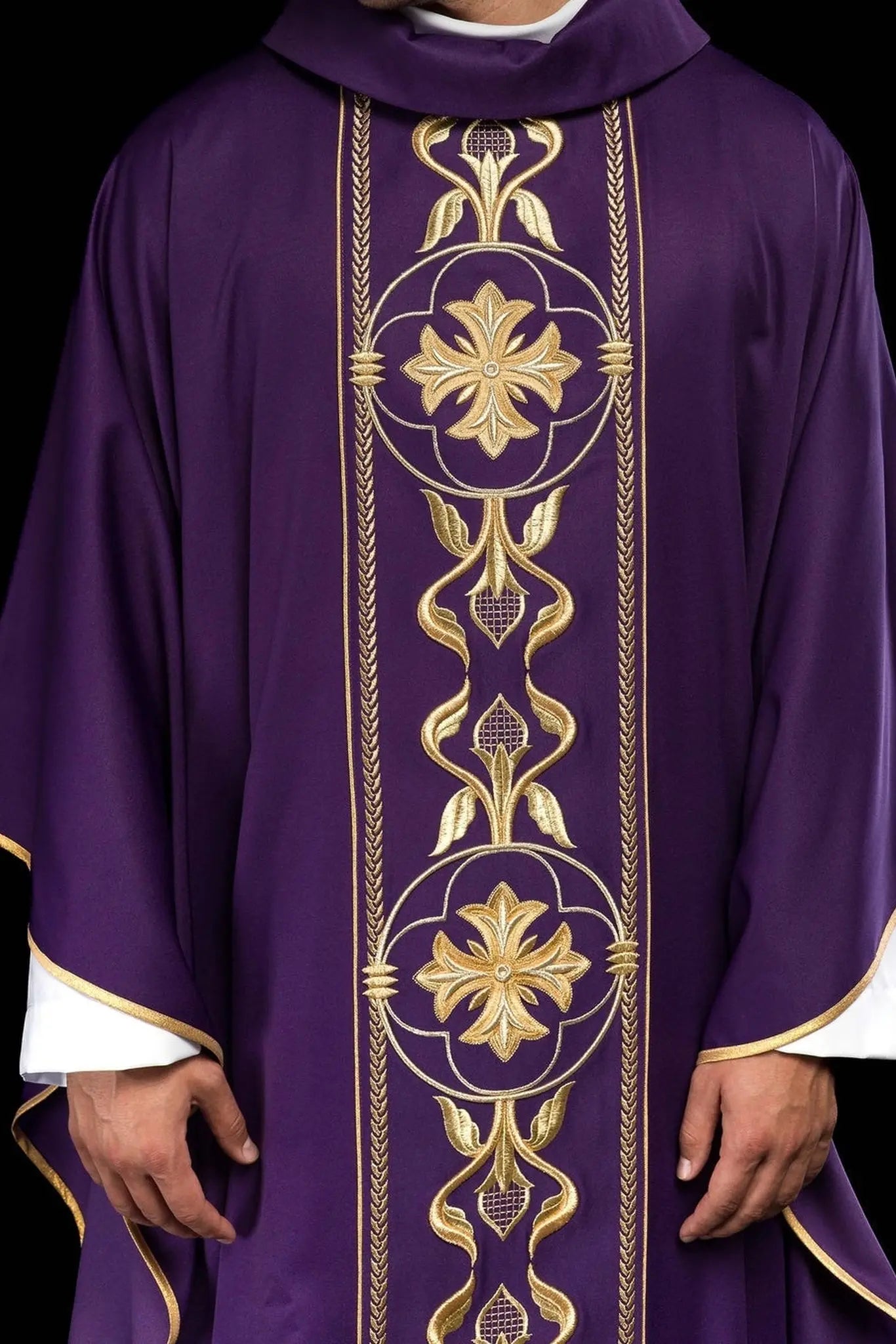
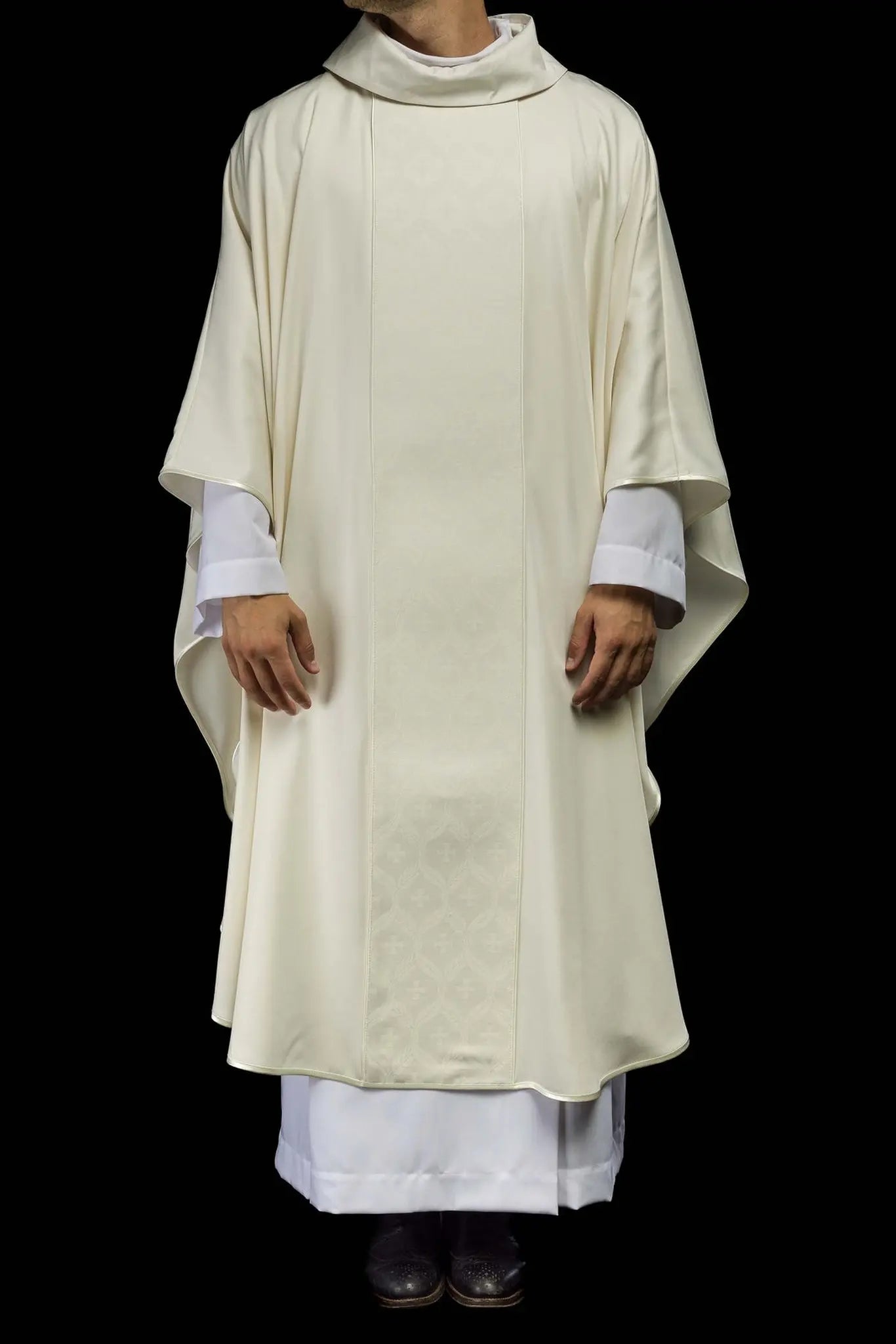
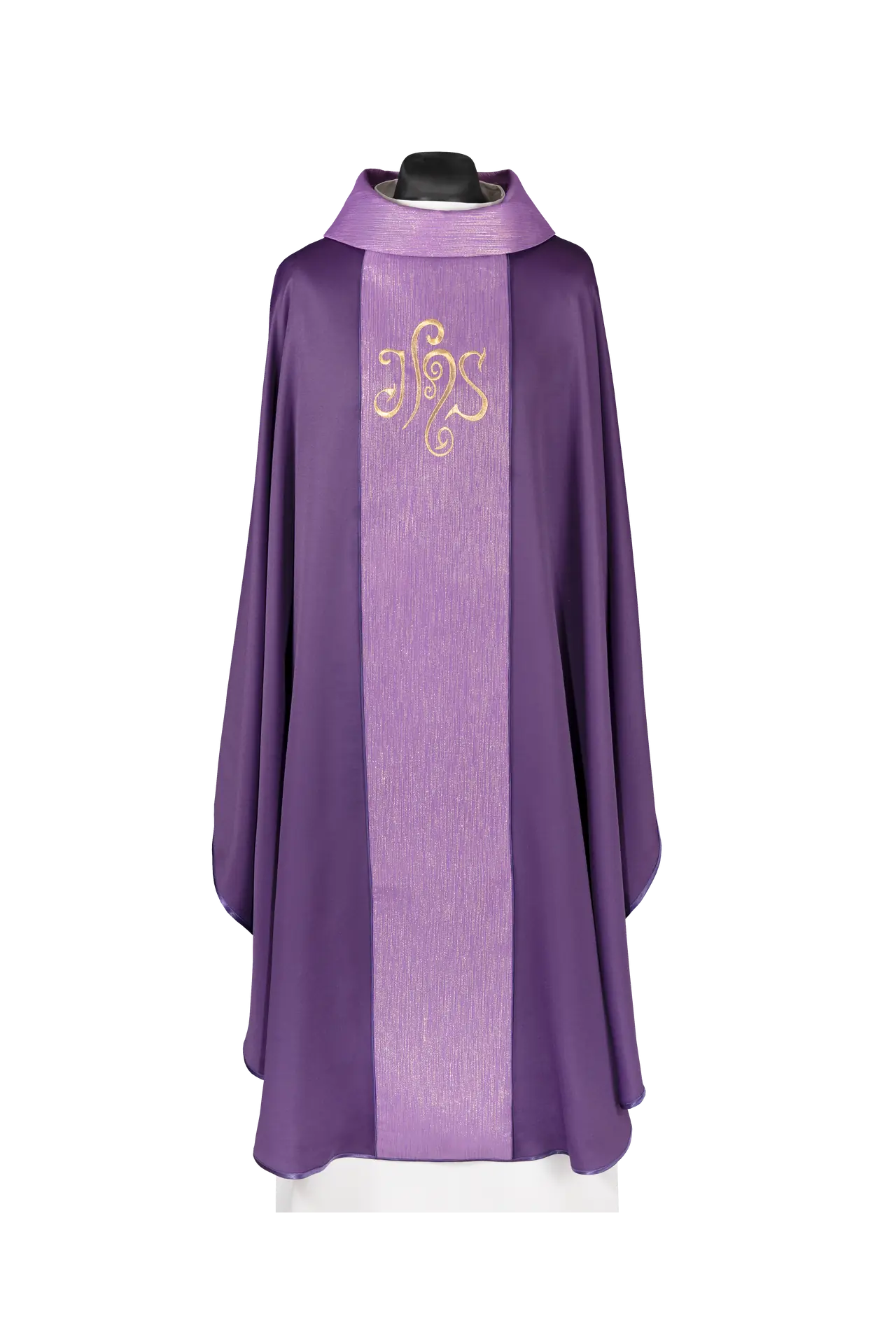
For this reason, the Ordinary Time collection works best as part of a complete liturgical-year wardrobe. Violet vestments are more appropriate for Advent and Lent, which can be viewed in the Advent and Lent collections. Rose vestments are reserved for the particular Sundays traditionally known as Gaudete and Laetare, and those options are gathered under Gaudete / Laetare. White, ecru, or gold vestments may be chosen for Christmas, Easter, feasts of the Lord, Marian celebrations, and many solemnities; related seasonal options include Christmas.
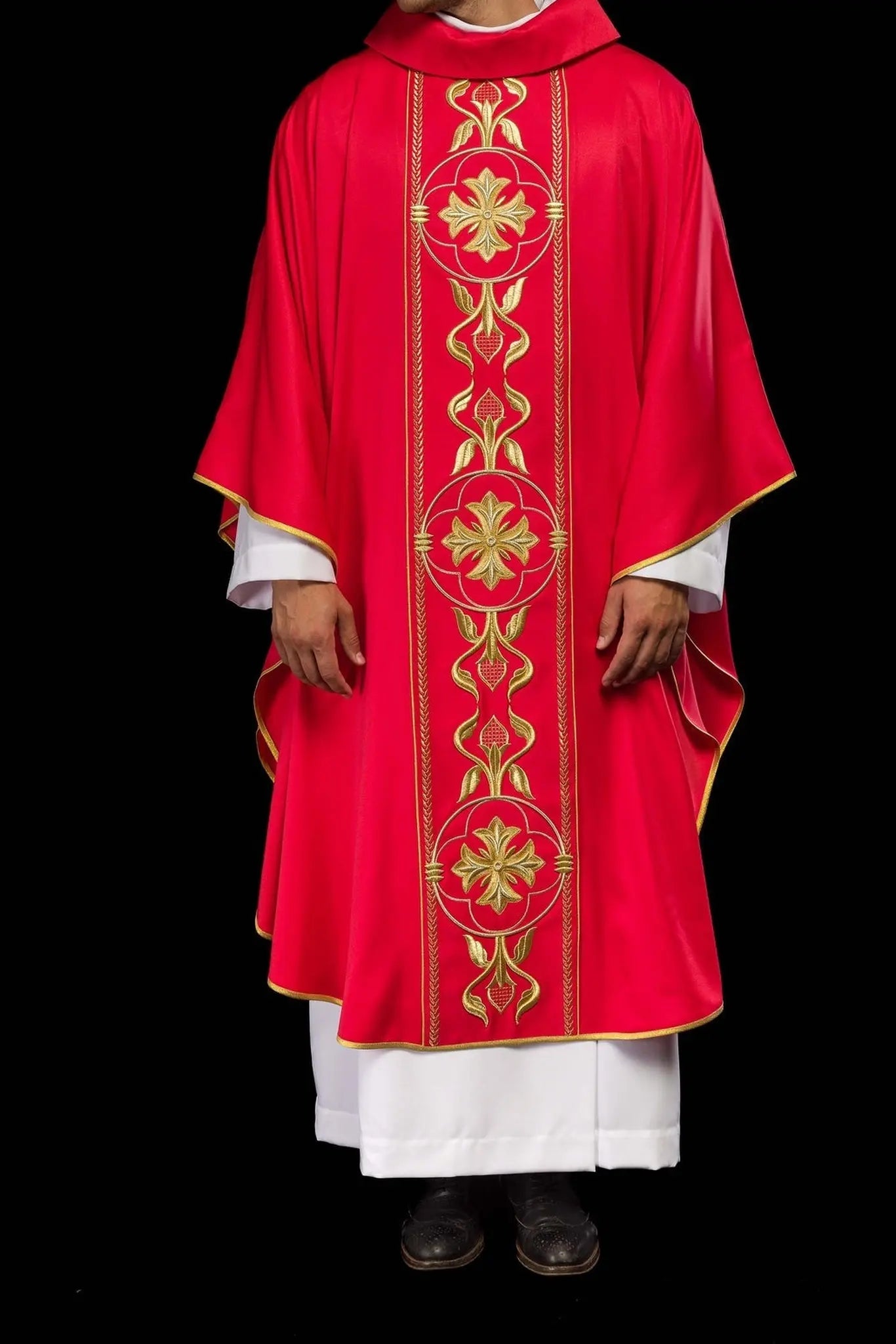
Some celebrations during the weeks of Ordinary Time call for another color because of the saint, feast, or votive Mass being celebrated. Red may be used for martyrs and the Holy Spirit; white or gold may be used for feasts of the Lord, the Blessed Virgin Mary, angels, and saints who were not martyrs; violet may be used for penitential contexts. The Ordinary Time collection is therefore not a replacement for the full calendar, but the foundation for the weeks when green is prescribed.
Craftsmanship, embroidery, and durability
Vestments for Ordinary Time often receive more use than special feast-day garments. Durability is therefore a practical liturgical concern. Strong seams, stable fabric, careful finishing, and embroidery that holds its shape are all important. A chasuble or dalmatic may be worn many times across a single year, so it should be designed for repeated movement, careful storage, and regular use in the sacristy. Ornament should be secure, balanced, and proportionate to the vestment rather than heavy or distracting.
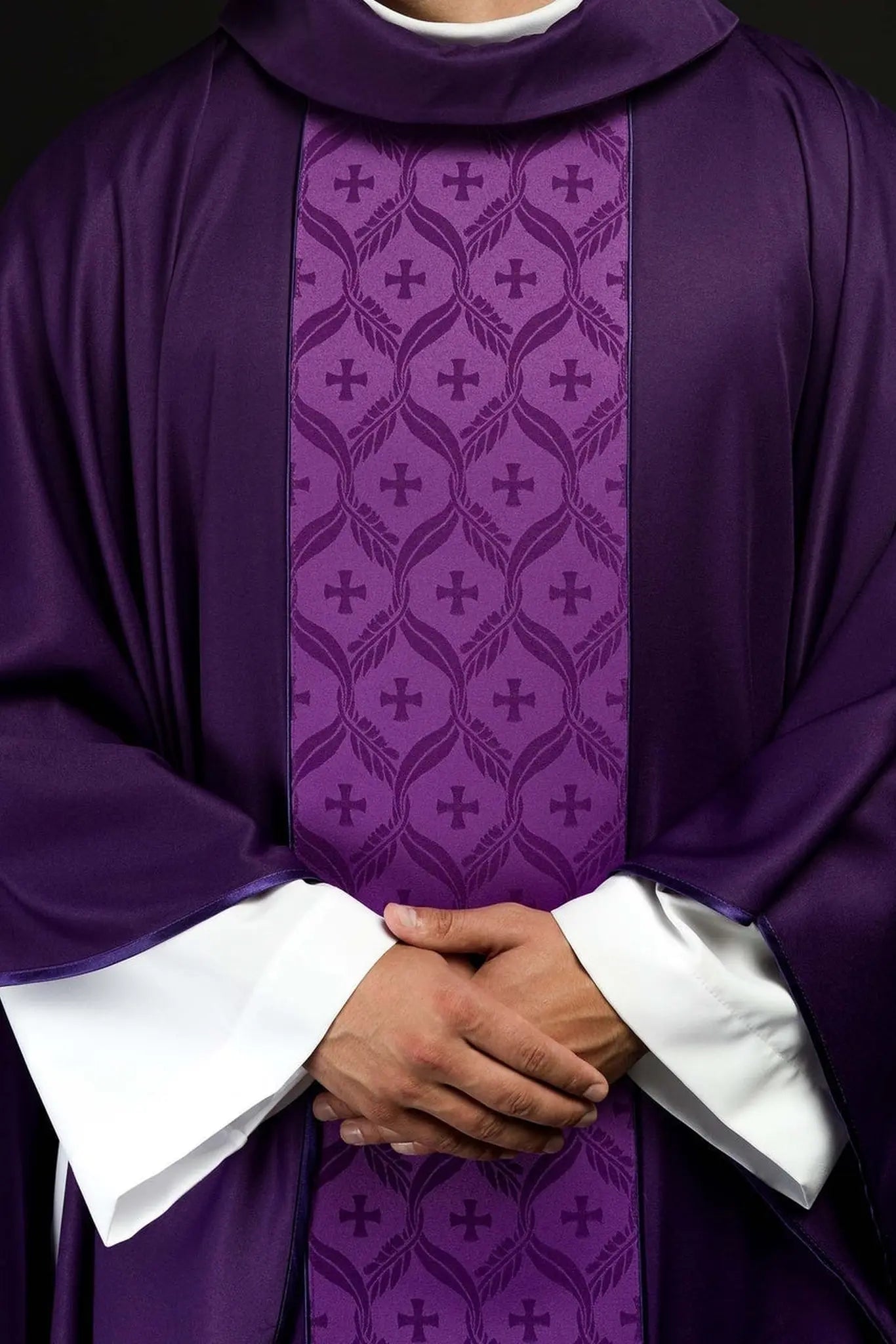
Embroidery can give Ordinary Time vestments a clear theological and visual identity. Crosses, IHS symbols, grapes, wheat, vines, and gold decorative bands are especially fitting because they connect the season of growth with the Eucharistic celebration. Modern embroidery techniques allow clean detail and consistent motifs, while traditional tailoring gives the garment its form and dignity. The strongest designs combine both: precise ornamentation and a shape that serves the liturgy rather than competing with it.
When comparing items, consider how the vestment will look with the altar, ambo, sanctuary furnishings, and other textiles. A green chasuble with gold ornament may pair well with a simple altar setting. A more subtle design may suit a chapel where the architecture is modest or where weekday Mass is the main use. If a parish also uses green pulpit covers or other sanctuary textiles, the tone and ornament can be coordinated without requiring every item to be identical.
Practical buying guidance for parishes and clergy
A good Ordinary Time vestment should answer several practical questions. Is it comfortable enough for frequent use? Is the fabric suitable for the local climate? Does the length and width fit the celebrant? Is the embroidery visible but not excessive? Can the vestment be stored safely between seasons? Will it coordinate with existing stoles, dalmatics, altar linens, or sanctuary textiles? These questions help turn a visual preference into a sound sacristy decision.
For a parish beginning to renew its vestment collection, a versatile green chasuble is often one of the most useful first purchases. A second green chasuble in a different weight or style can help rotate use between Sunday and weekday Masses. A dalmatic can be added when a deacon regularly serves. Stoles, chalice veils, and other textiles may then be selected to create a more complete and harmonious set for the sanctuary.
Care should follow the instructions for the individual vestment. In general, embroidered vestments should be stored on proper hangers in a dry place, protected from dust, direct sunlight, and crushing. Heavy folding can damage embroidery over time. After use, the garment should be allowed to air before being placed in storage. Gentle handling preserves both appearance and reverence, ensuring that the vestment remains suitable for sacred use throughout many seasons of Ordinary Time.
Frequently Asked Questions (FAQ)
When are green vestments used in Ordinary Time?
Green vestments are used on most Sundays and weekdays of Ordinary Time when the liturgical calendar does not prescribe another color for a feast, memorial, votive Mass, or special celebration. They visually express hope, growth, and faithful perseverance.
Is this collection mainly for priests or also for deacons?
The collection includes chasubles, which are worn by priests and bishops at Mass, and dalmatics, which are proper to deacons. A parish with both a celebrant and a deacon may choose coordinated green vestments for a unified sanctuary appearance.
How many green chasubles does a parish need?
A small chapel may manage with one versatile green chasuble, while a parish with frequent Sunday and weekday Masses often benefits from more than one. Having different weights or embroidery levels helps separate ordinary weekday use from more solemn Sunday celebrations.
Can gold embroidery be used on green Ordinary Time vestments?
Yes. Gold embroidery is commonly used as an accent on green vestments, especially for crosses, IHS motifs, or decorative bands. It adds solemnity while keeping the primary liturgical color green.
Can green vestments be used for Advent, Lent, or Gaudete and Laetare Sundays?
No. Advent and Lent normally use violet, while Gaudete and Laetare Sundays traditionally use rose. Green belongs to Ordinary Time and should not replace the color assigned to another season or celebration.