
Sort by
22 products
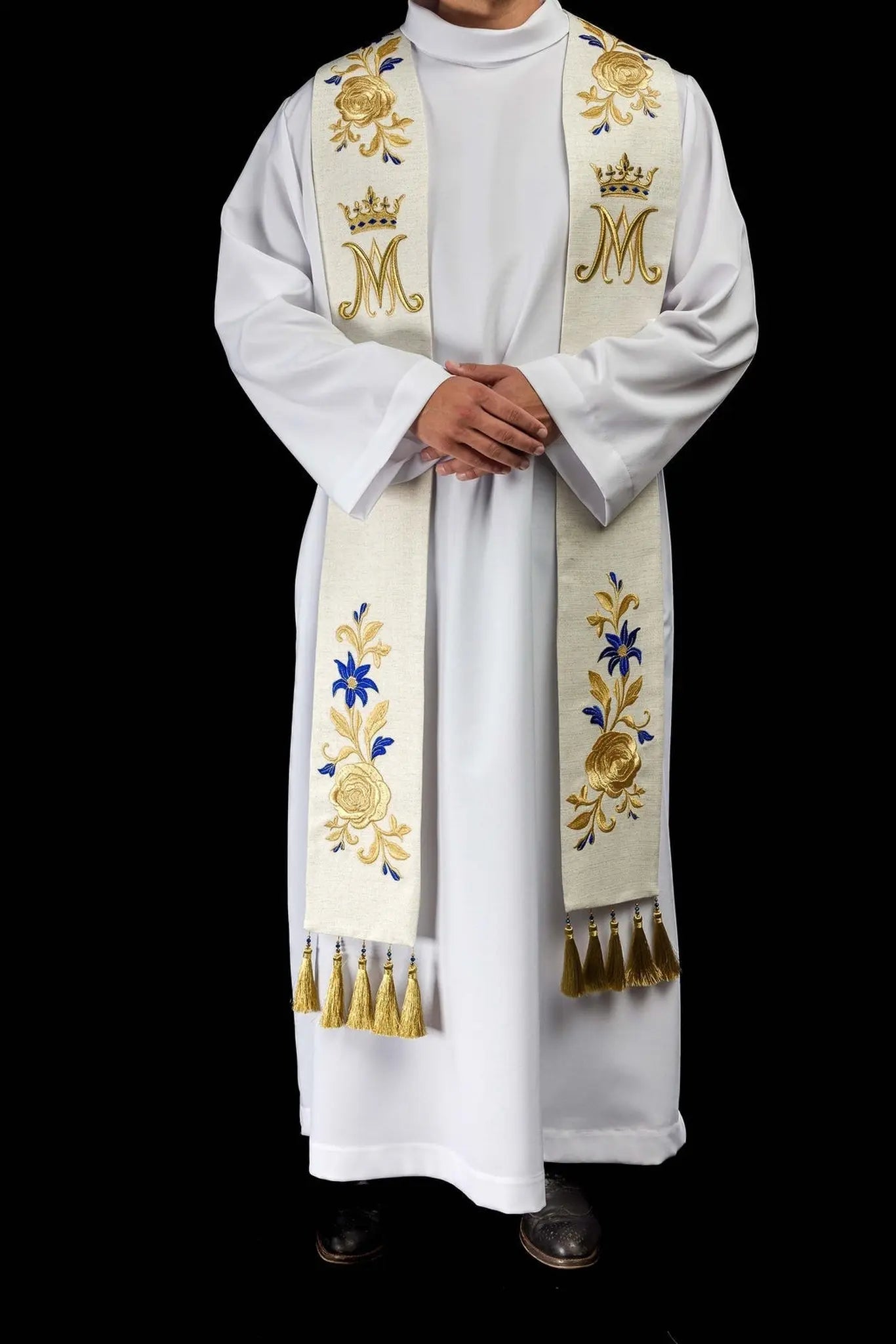
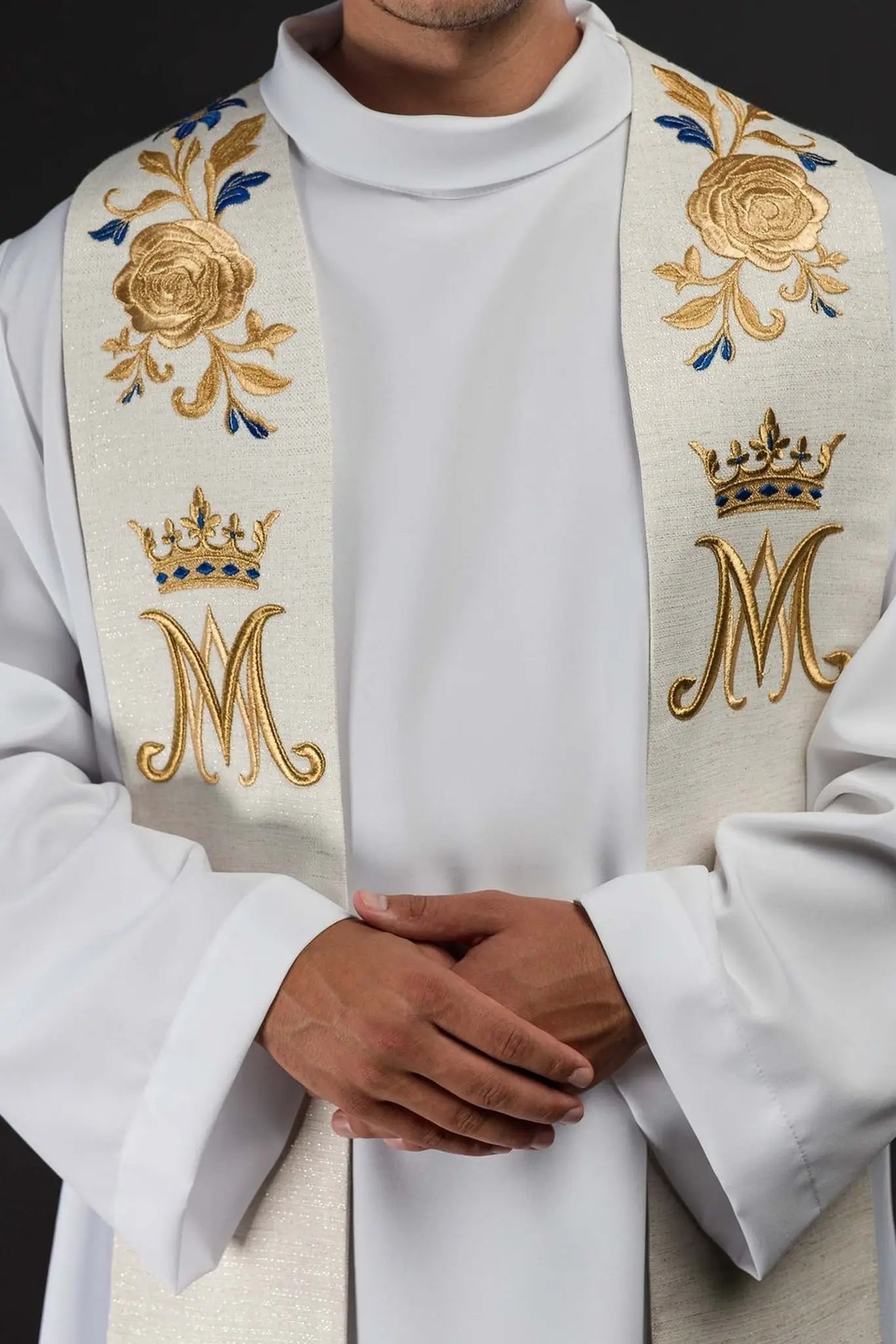

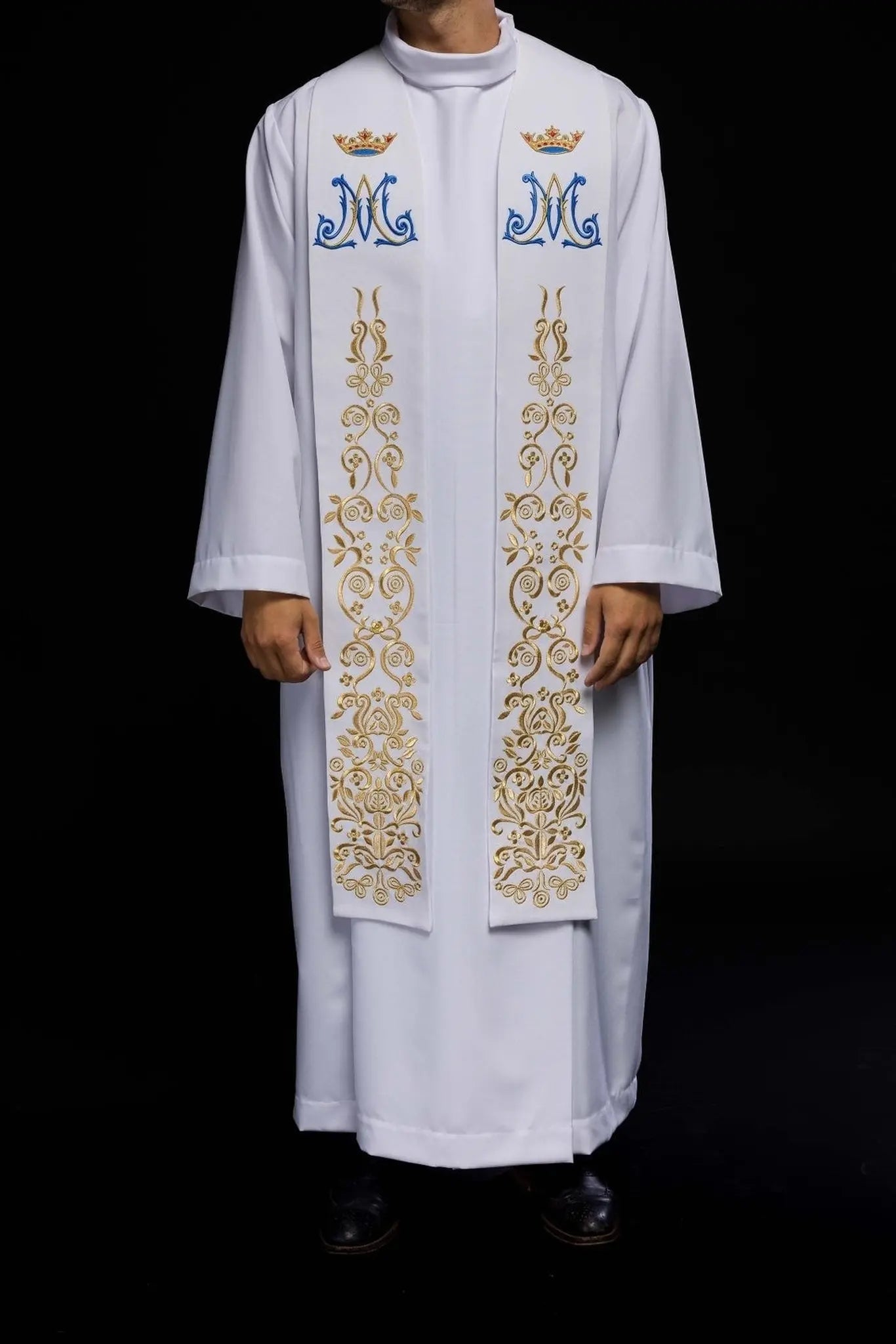
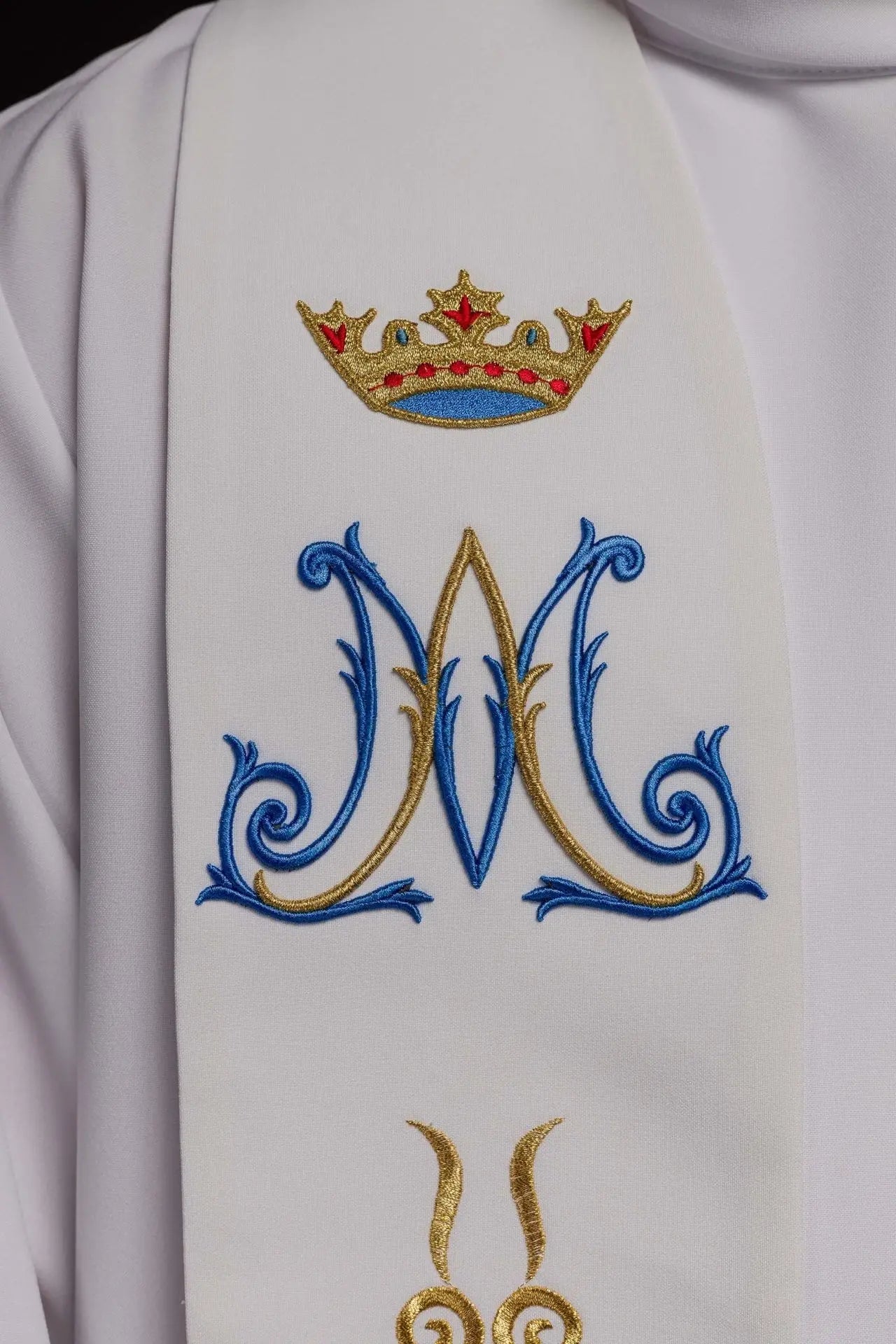
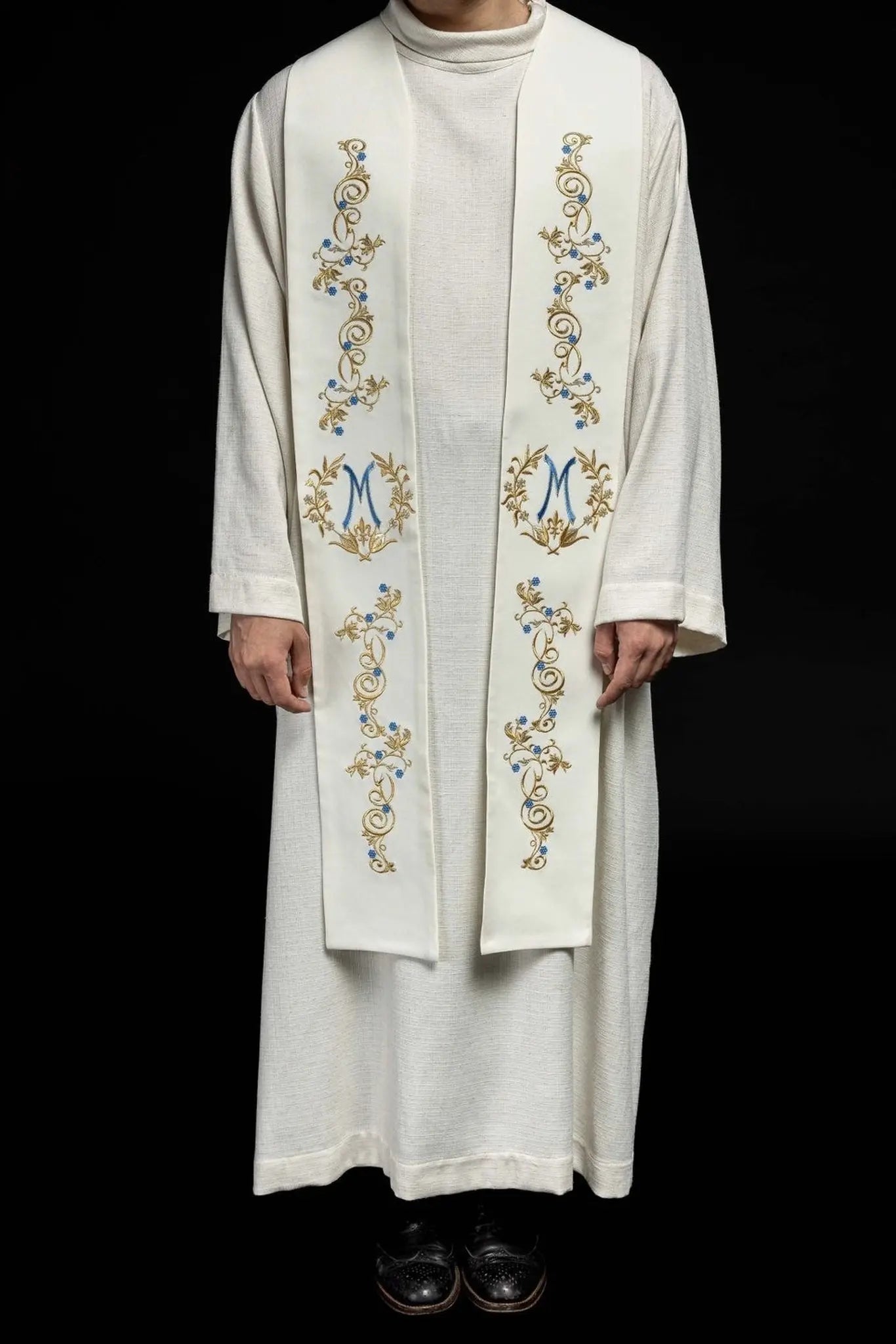
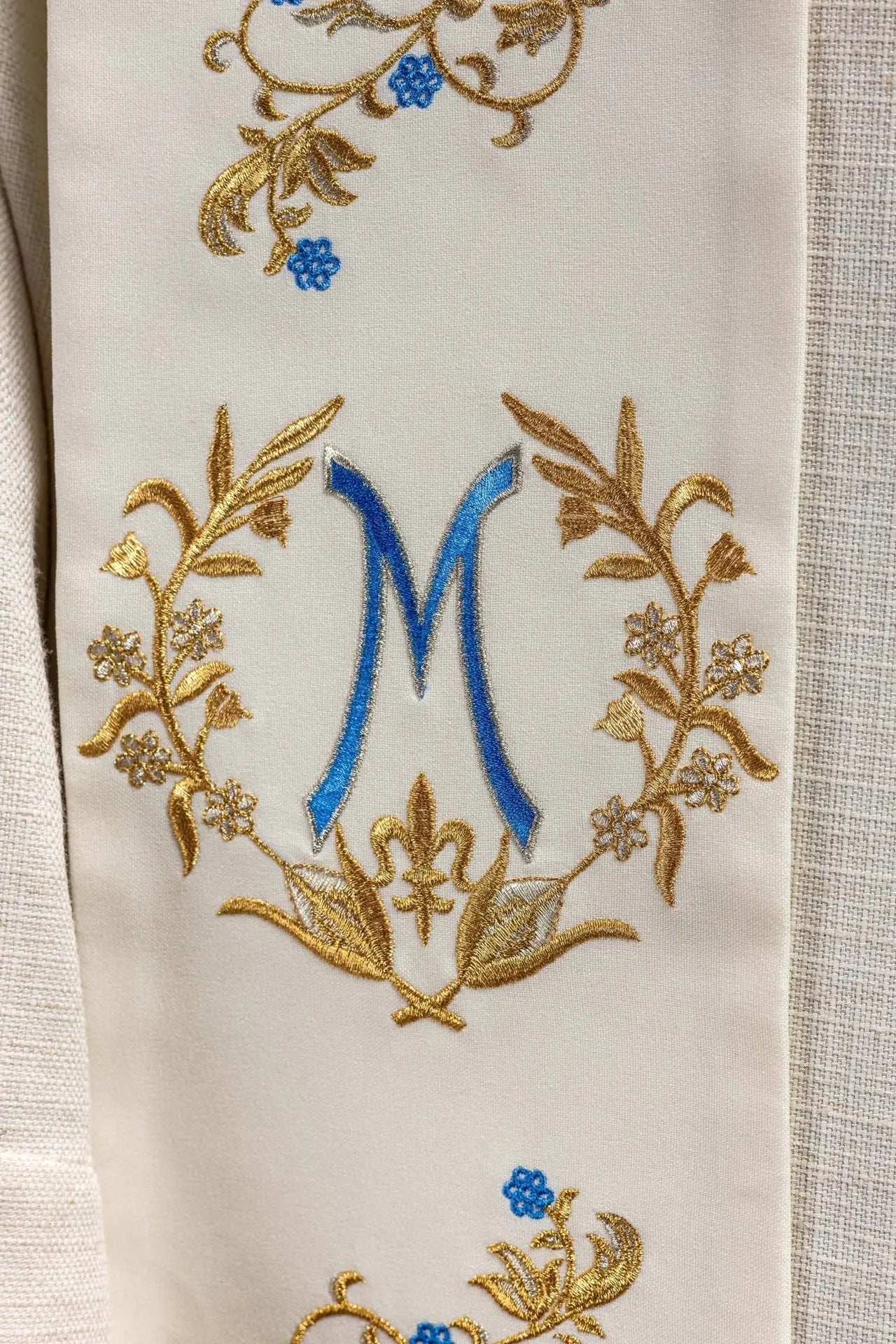
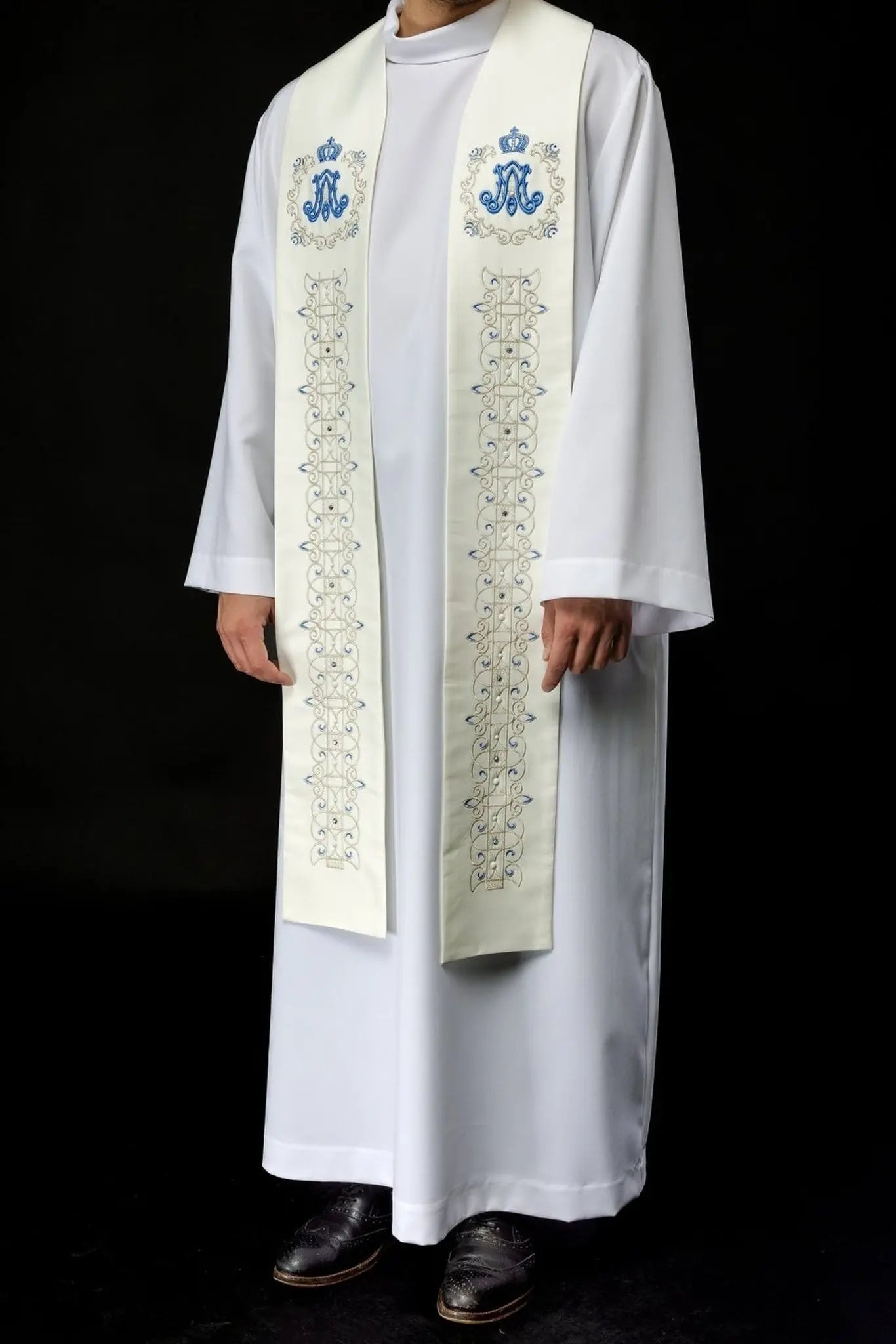
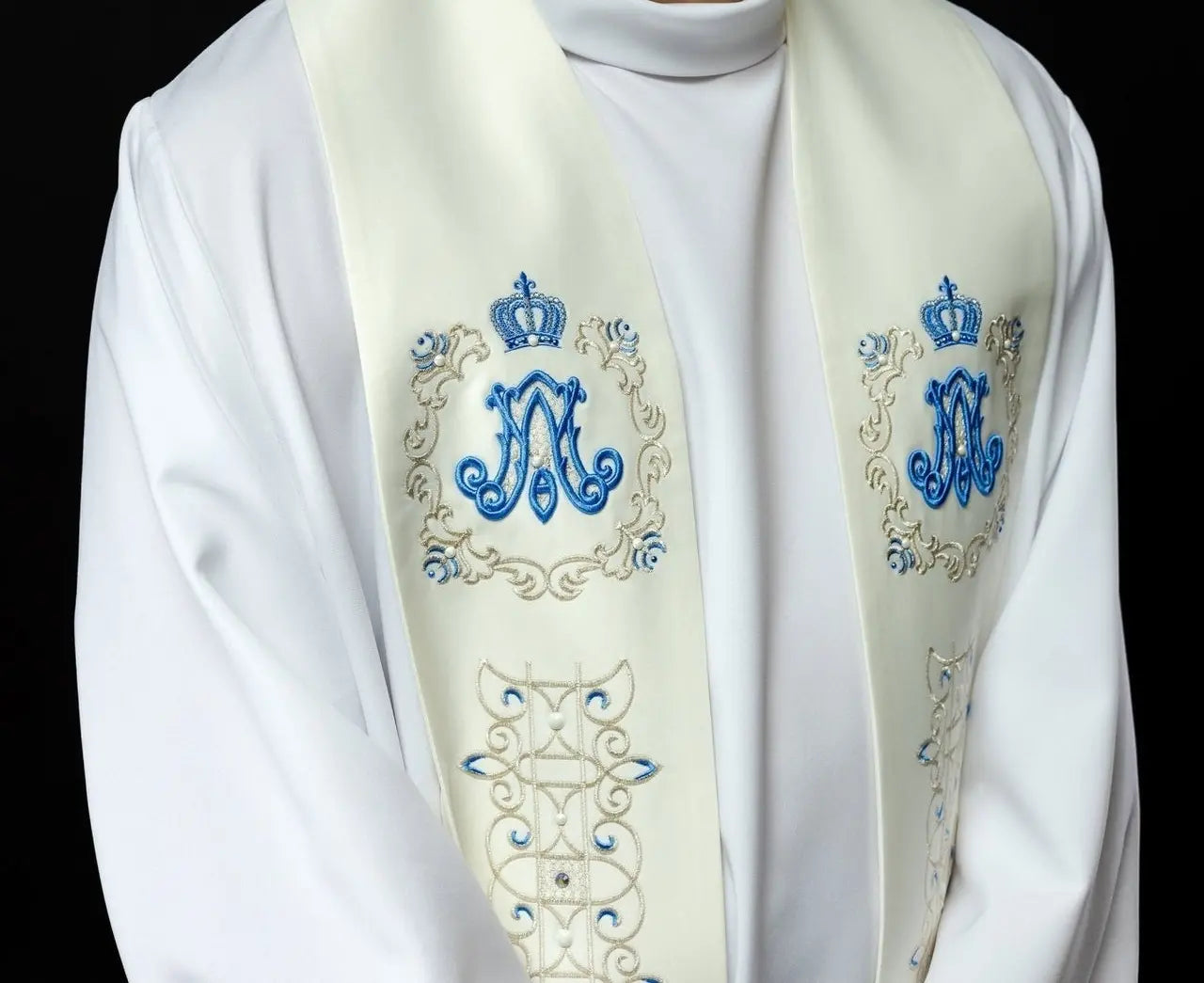
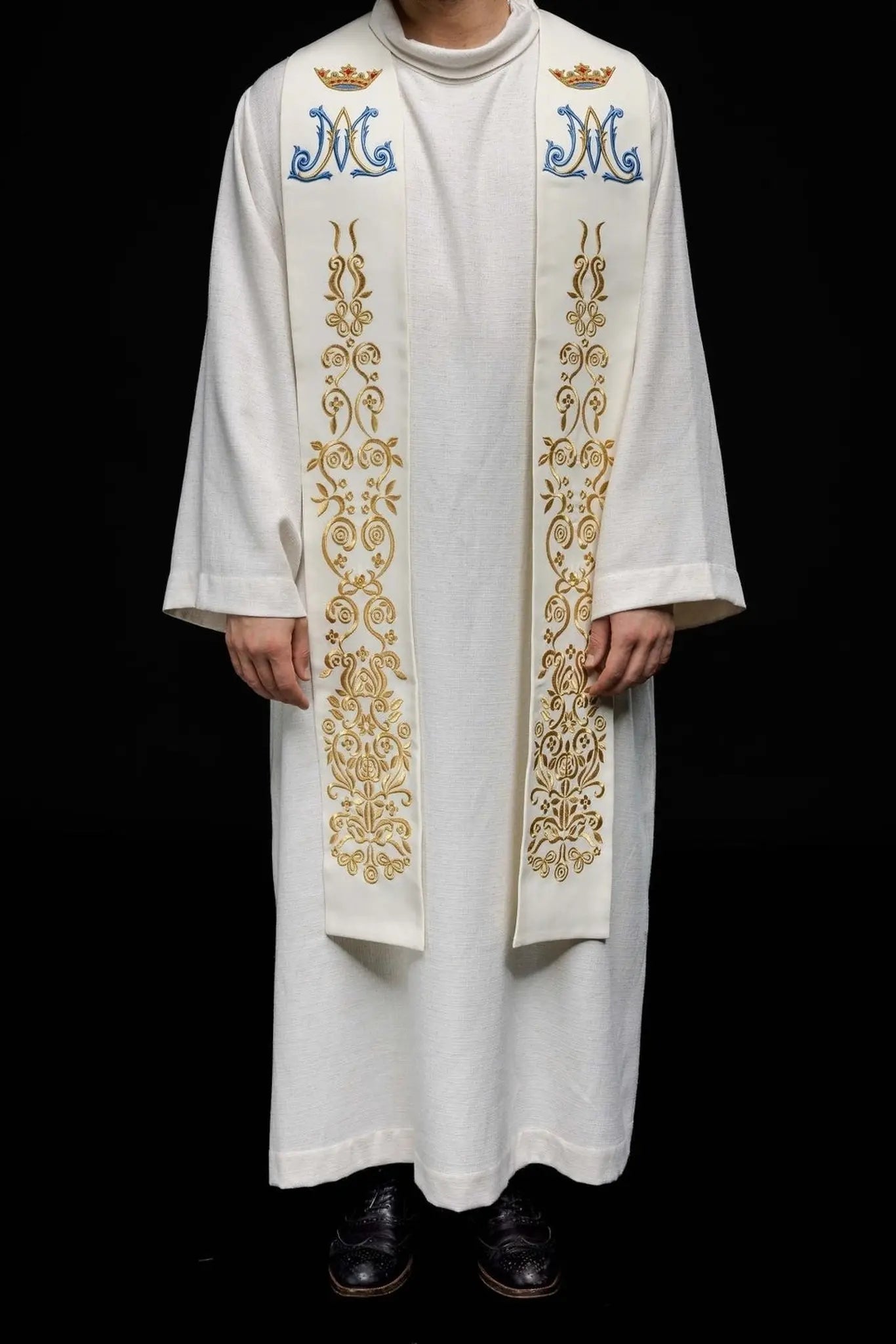
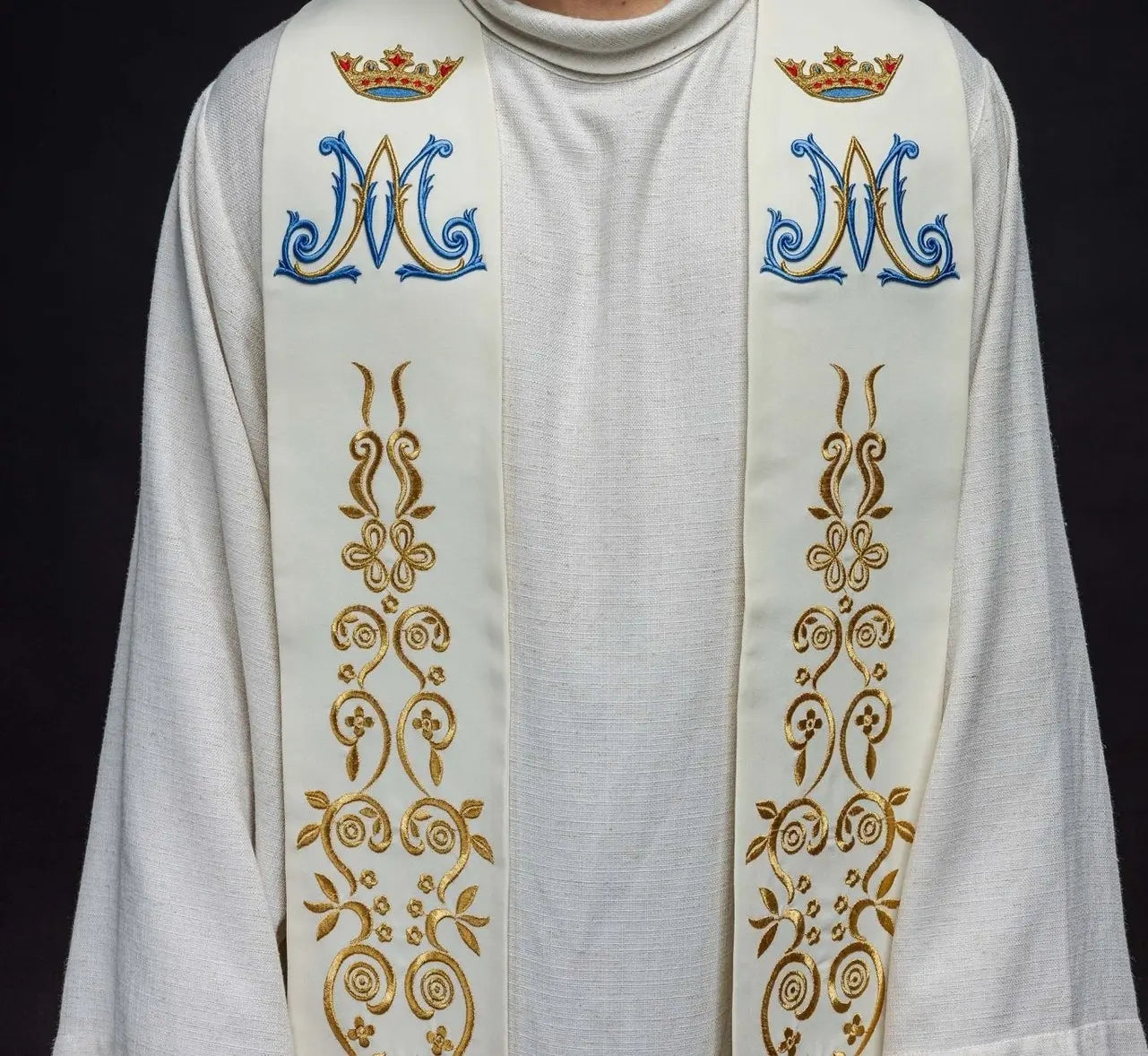
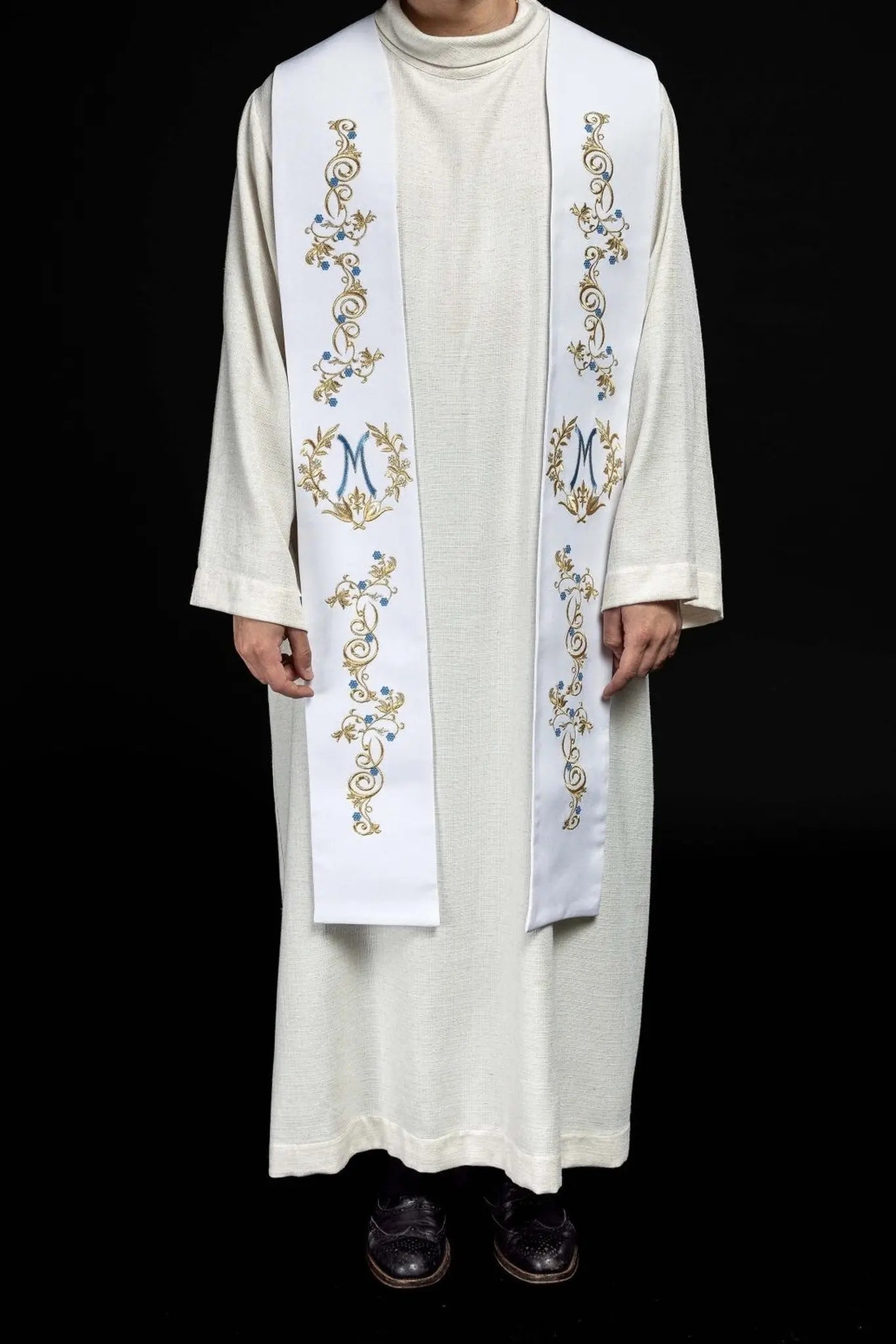
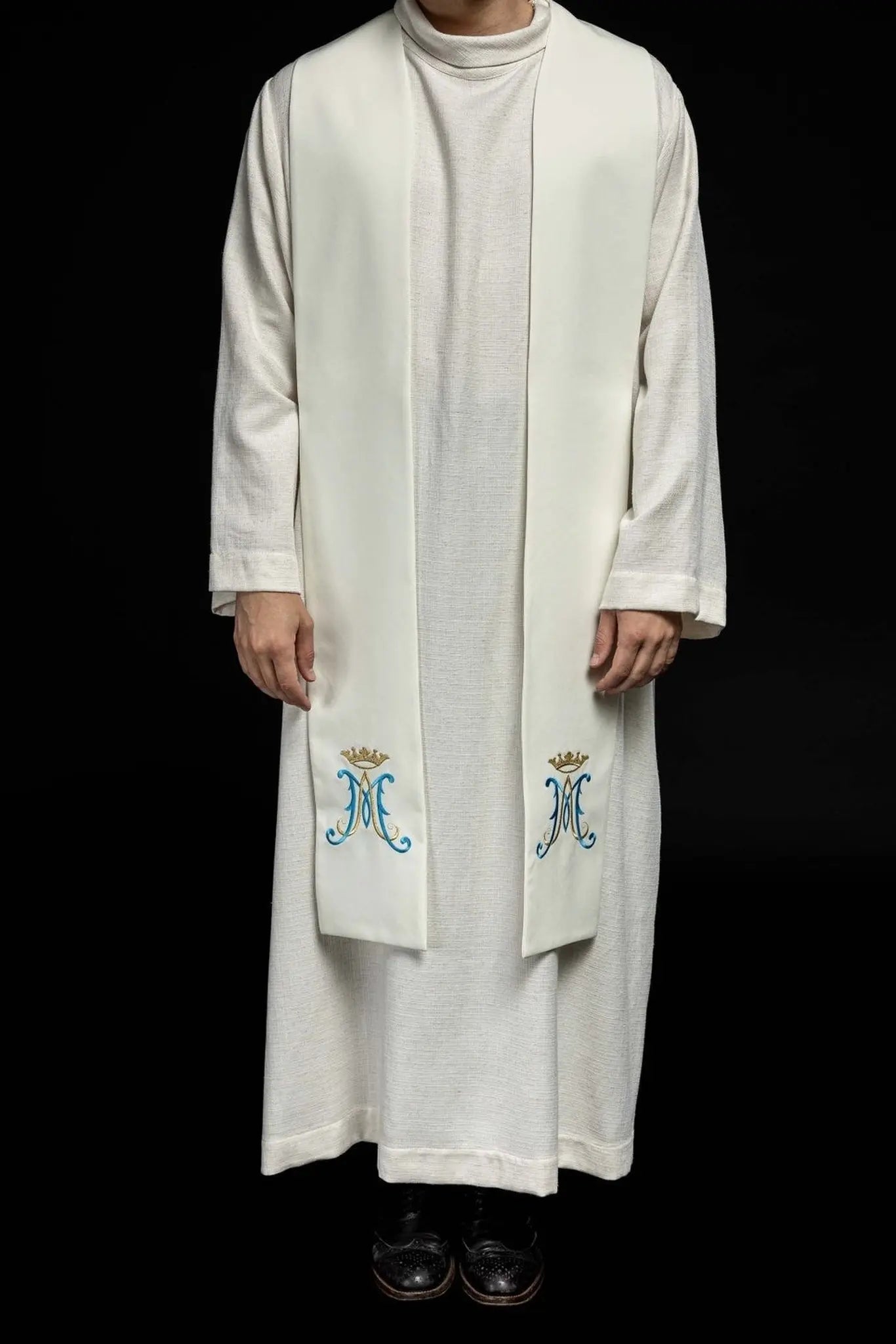
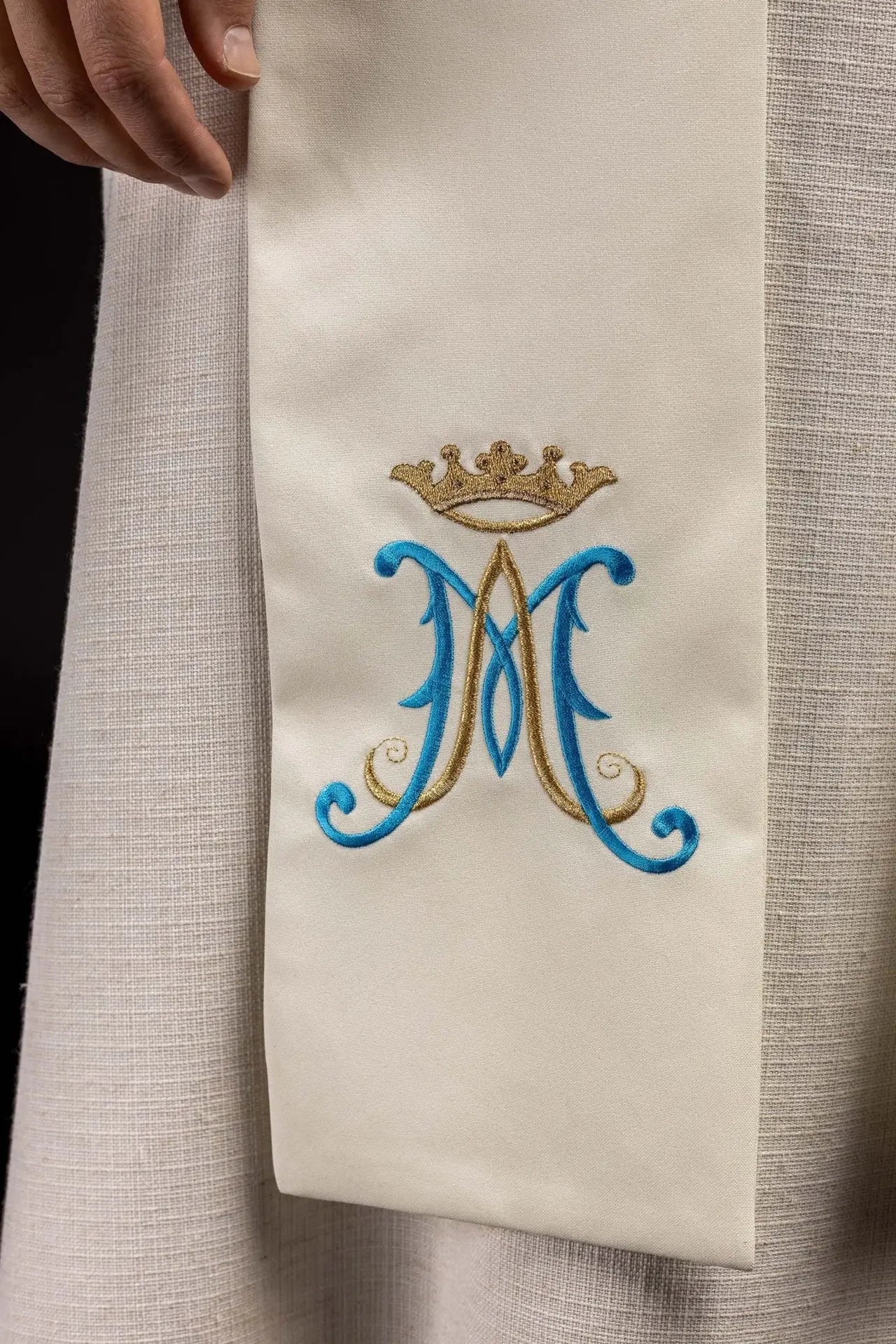
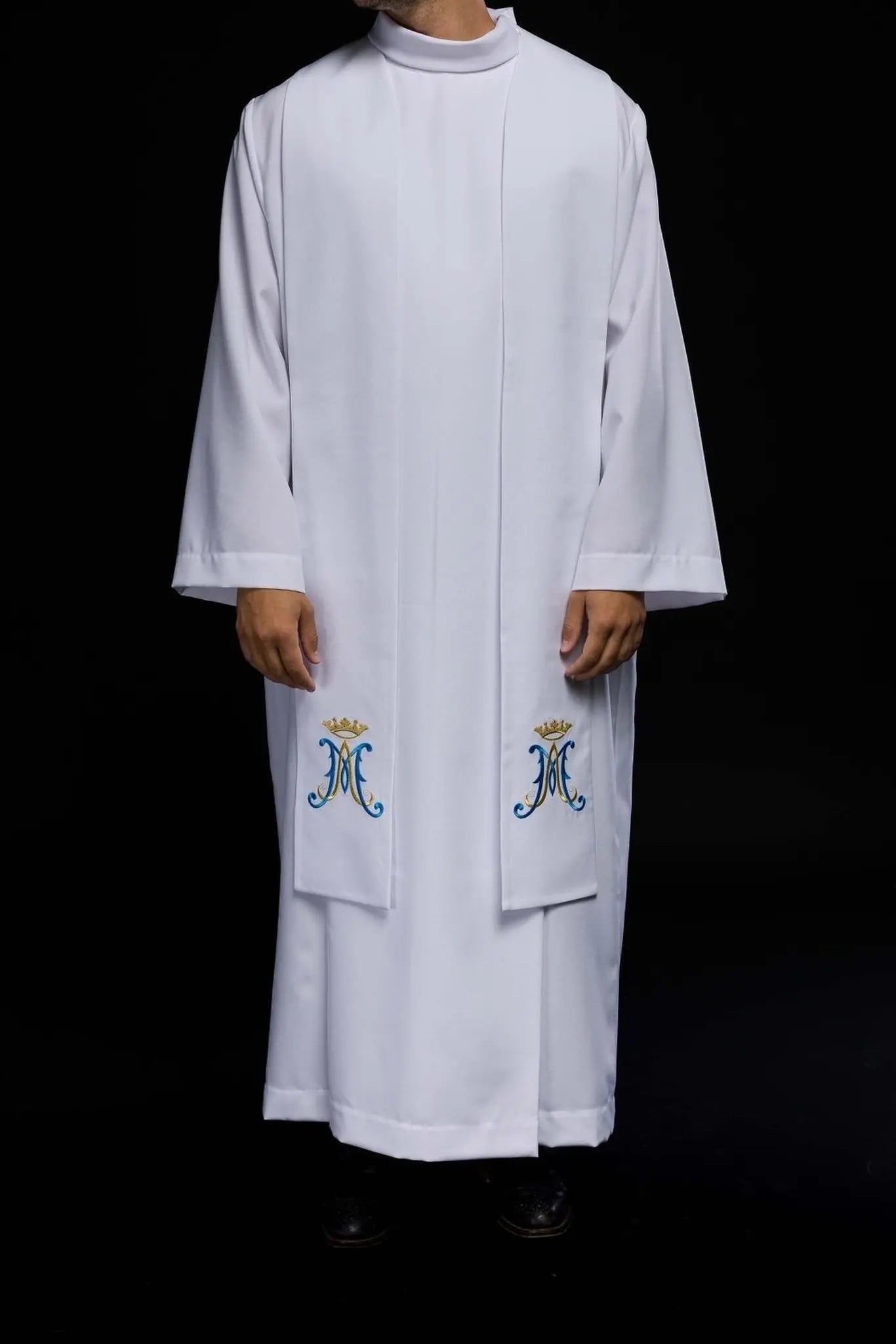
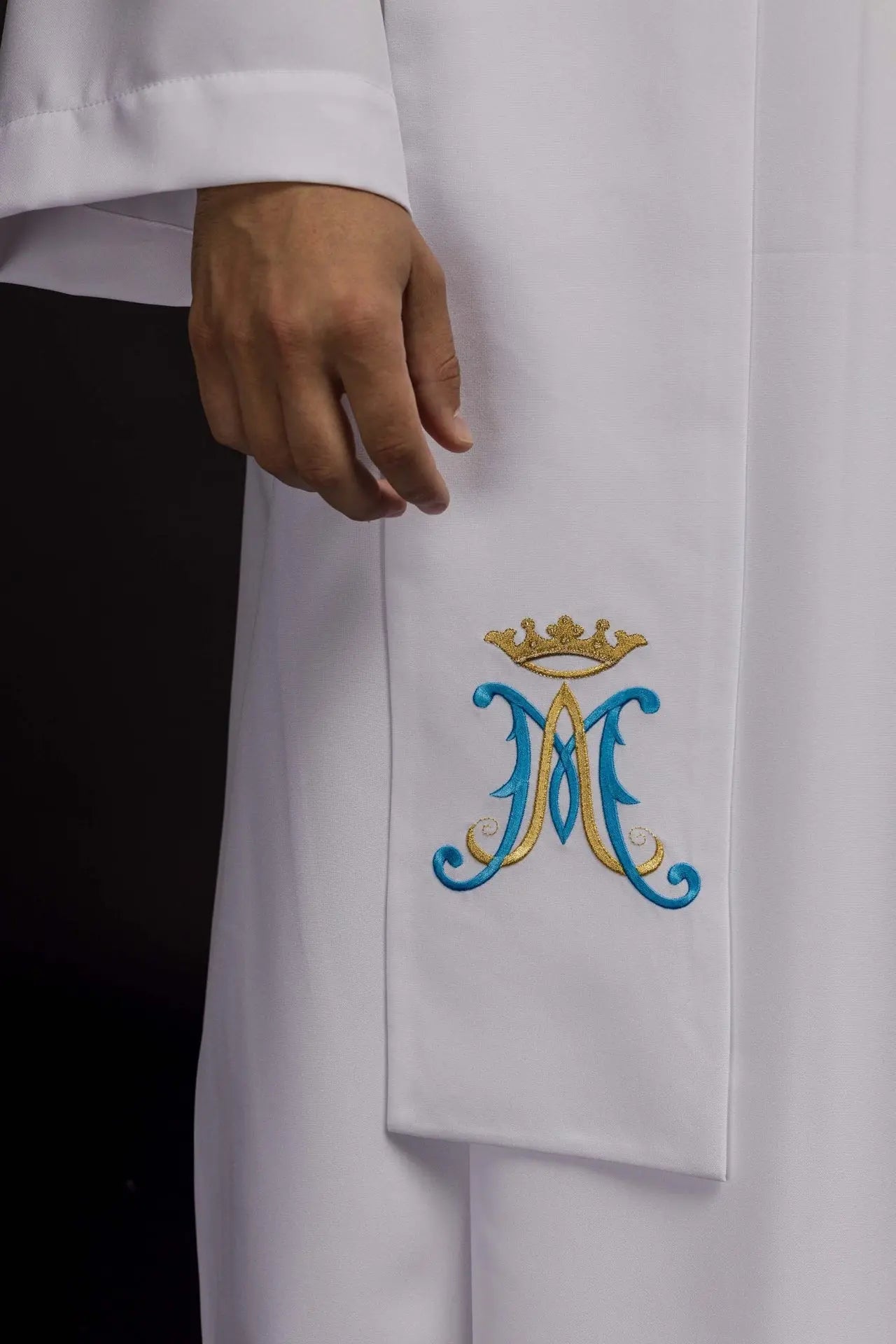
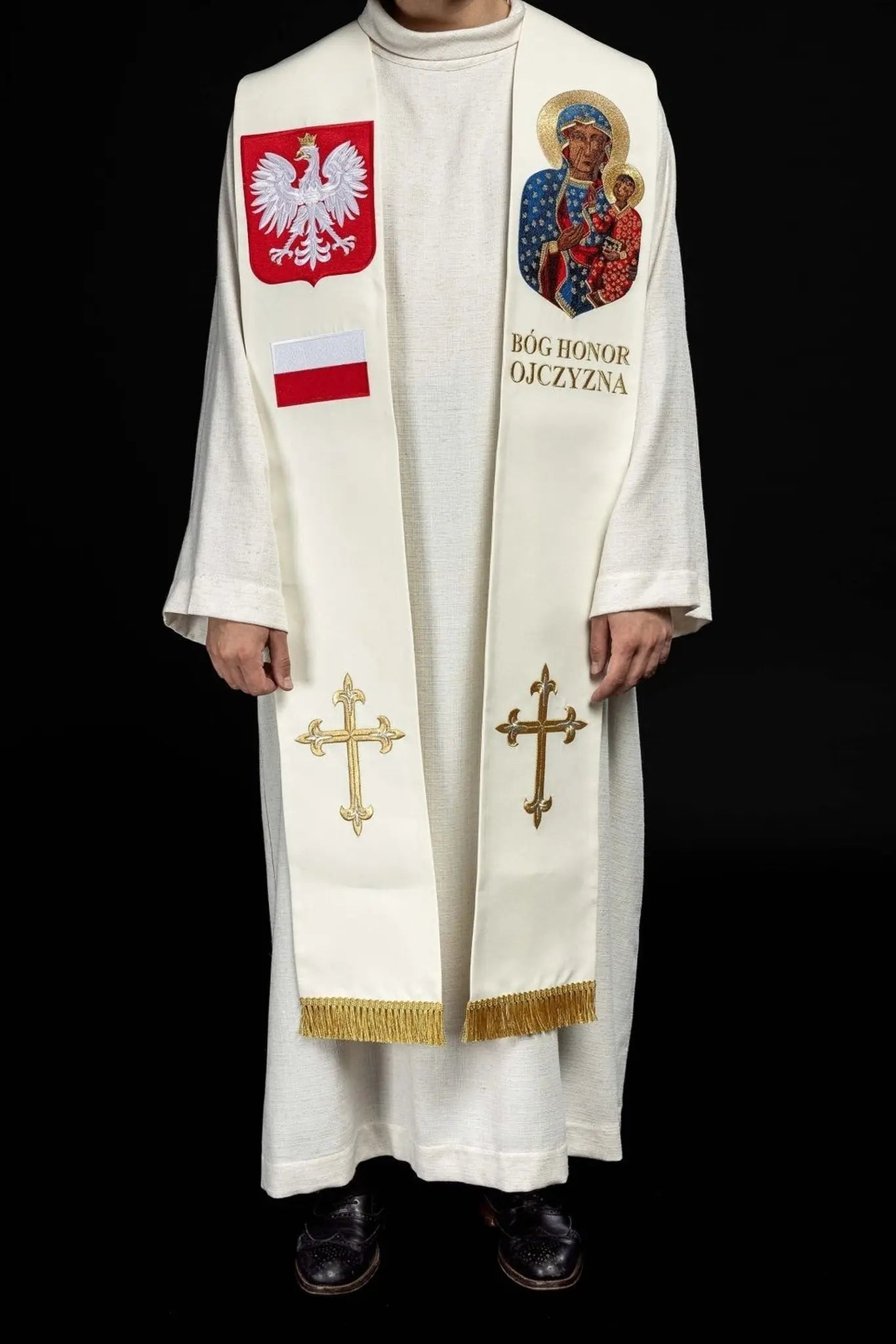
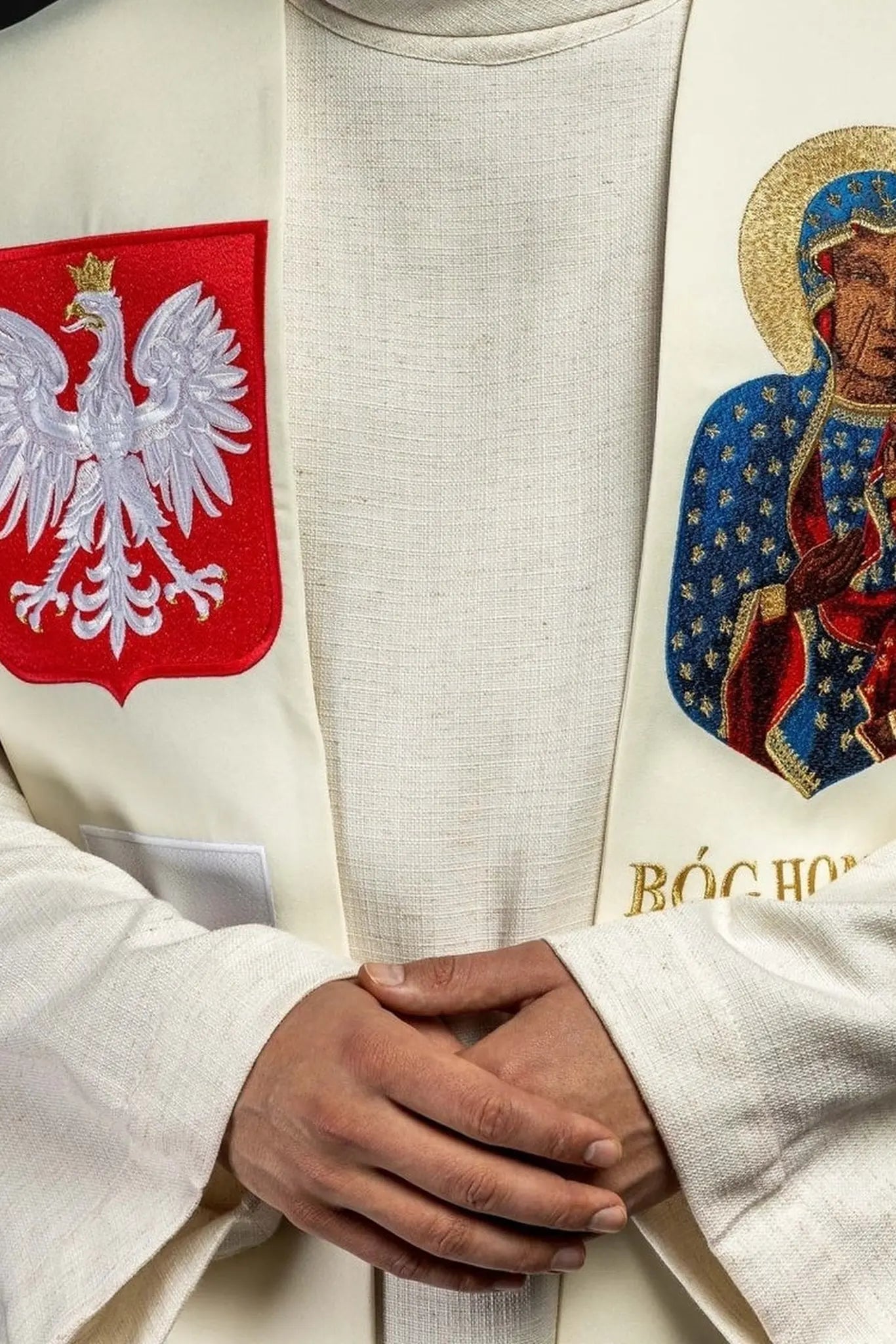
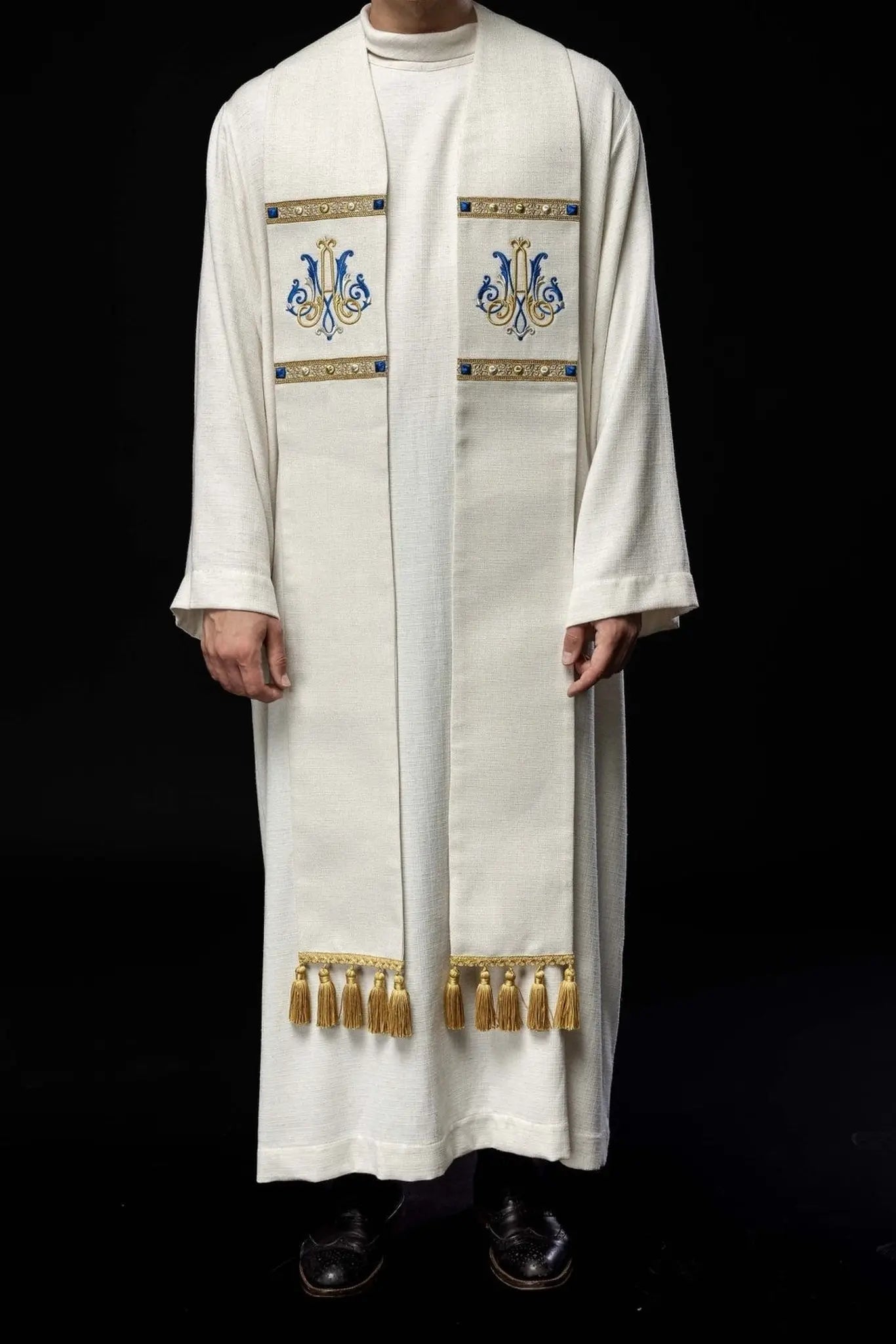
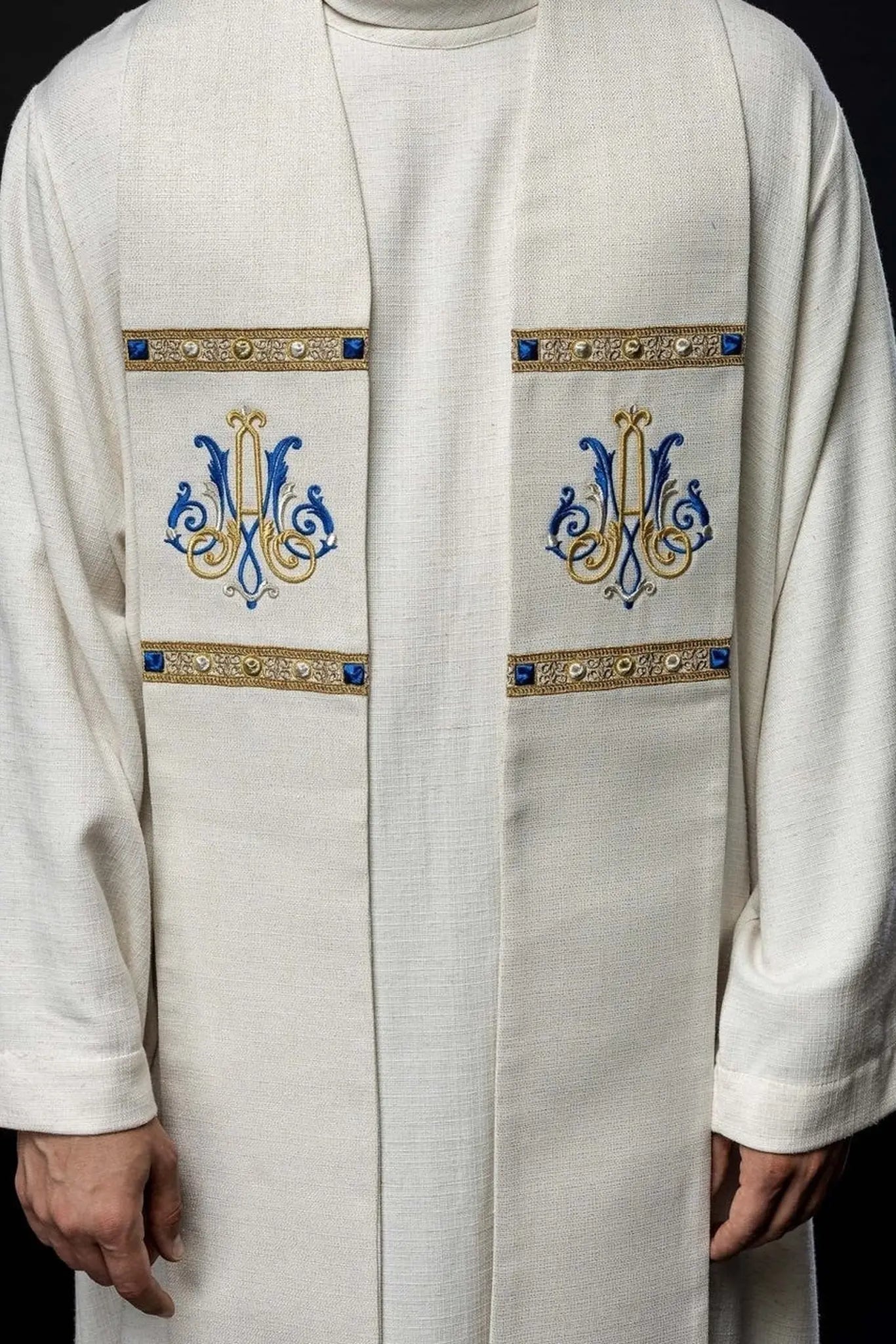
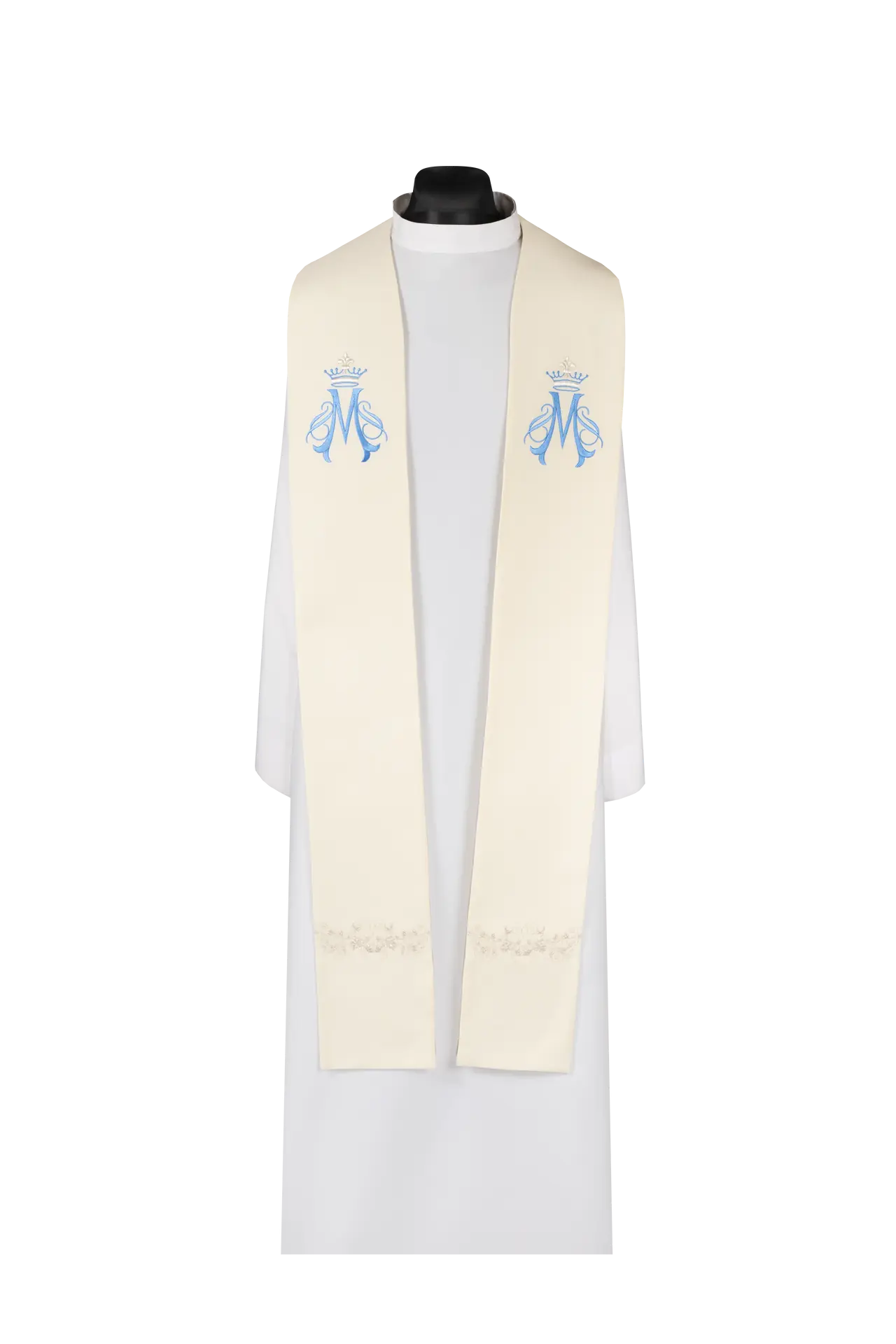
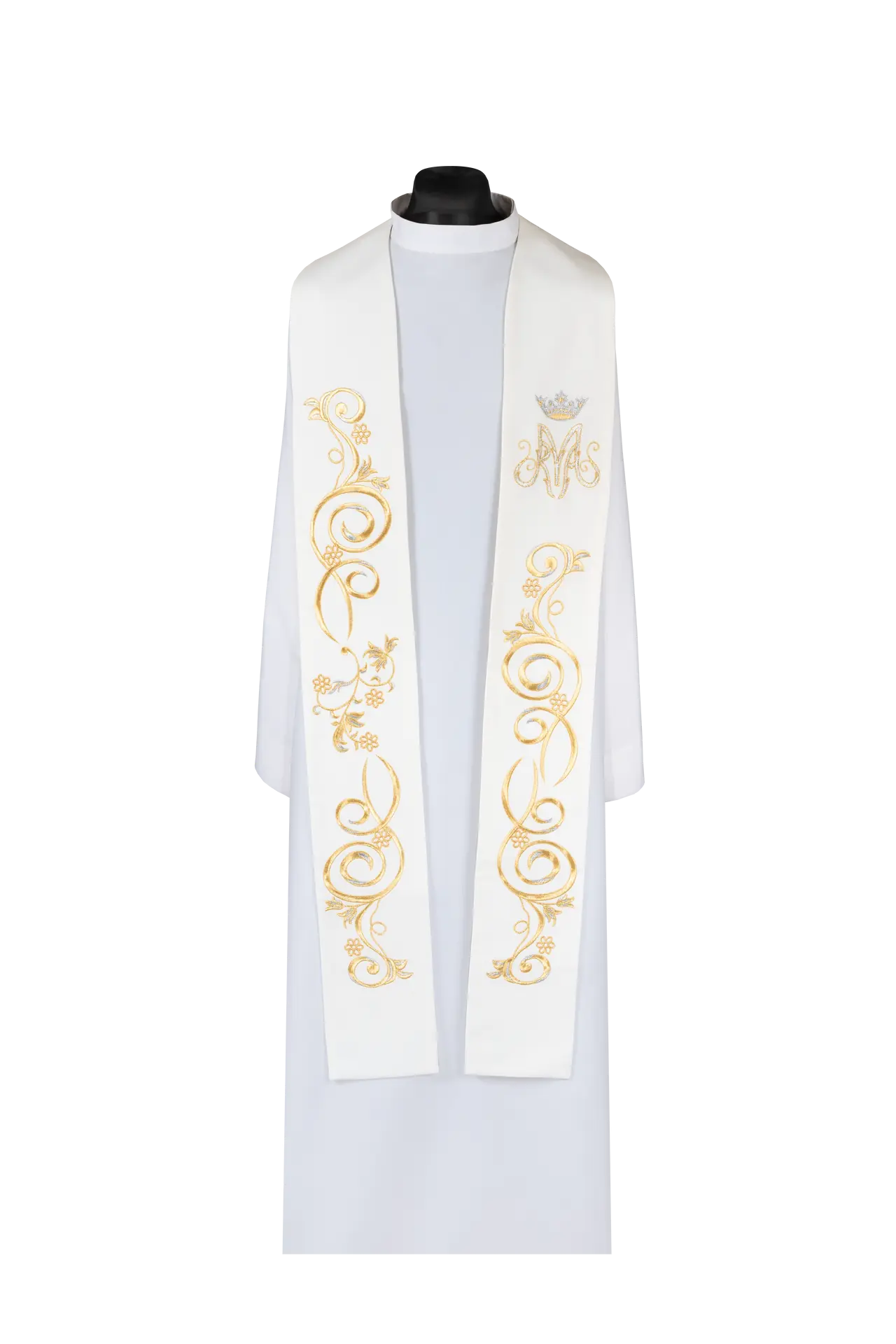
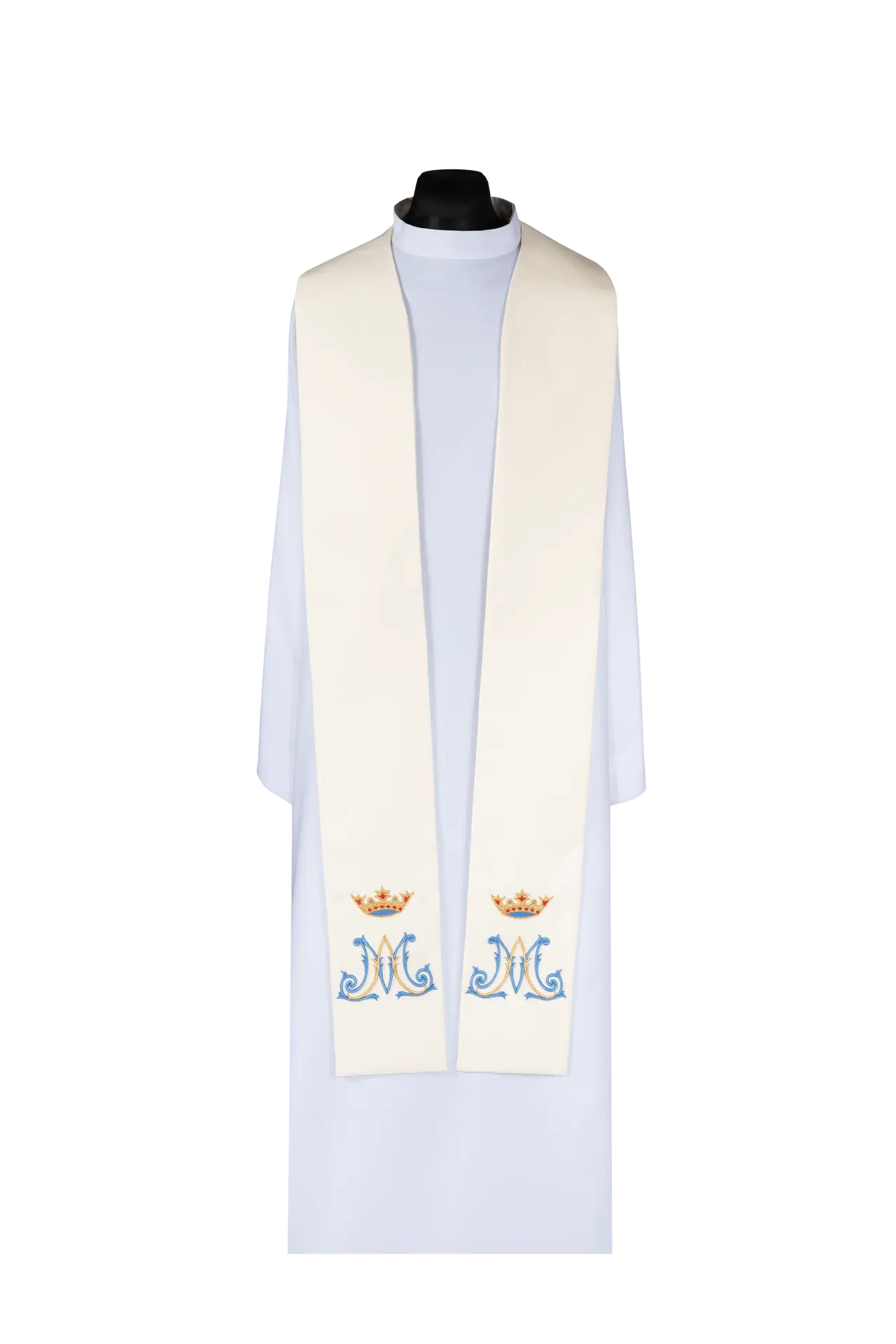
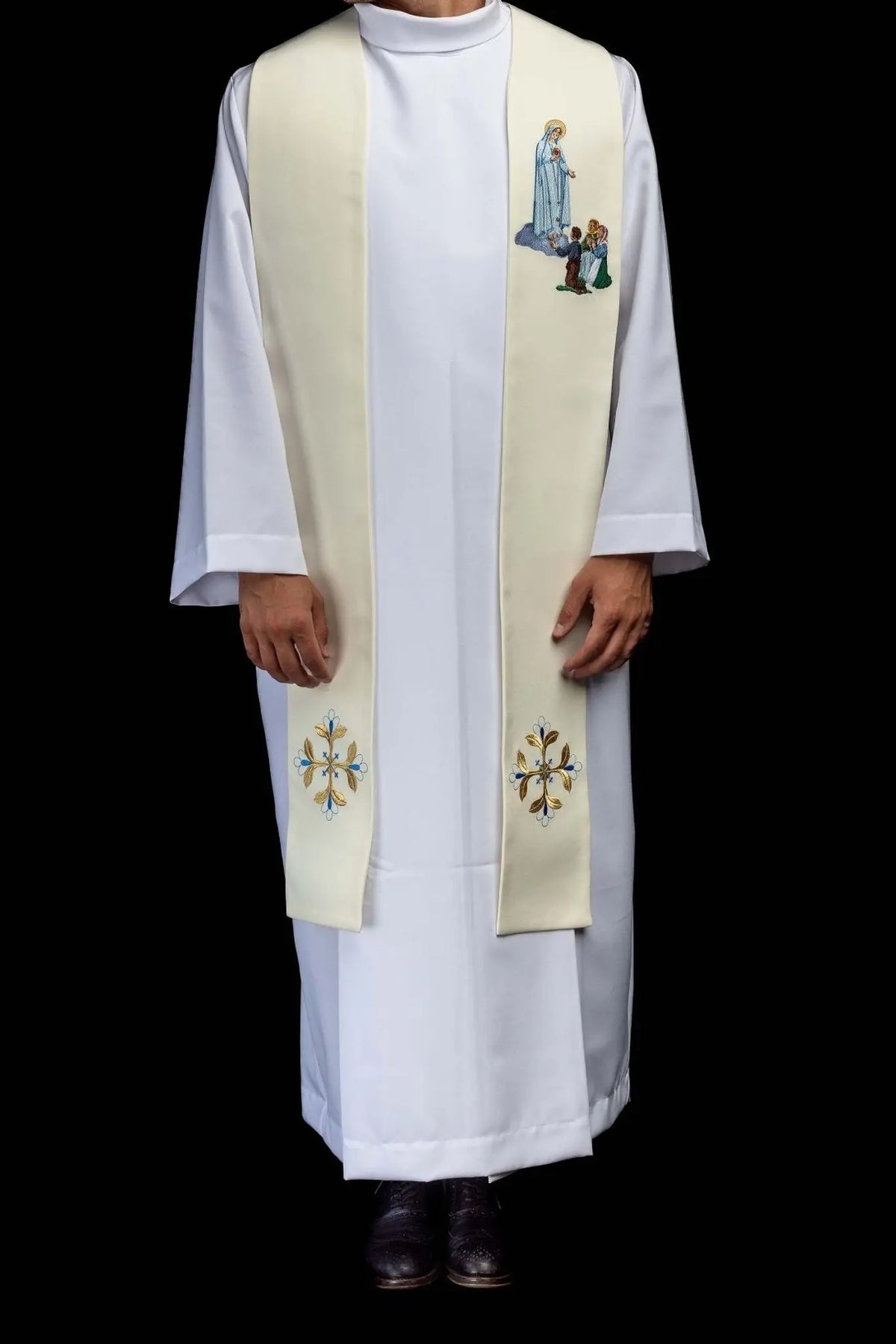
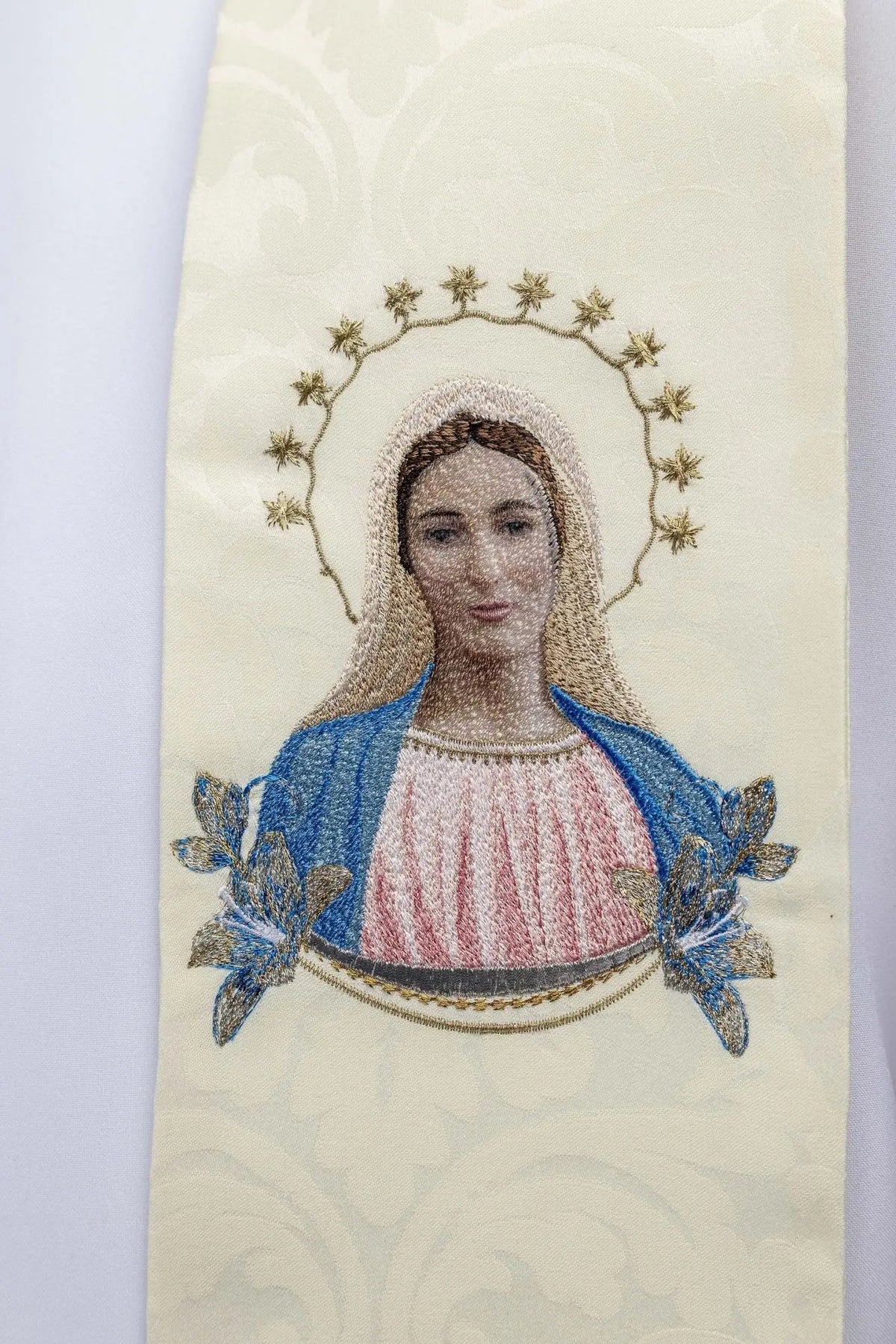
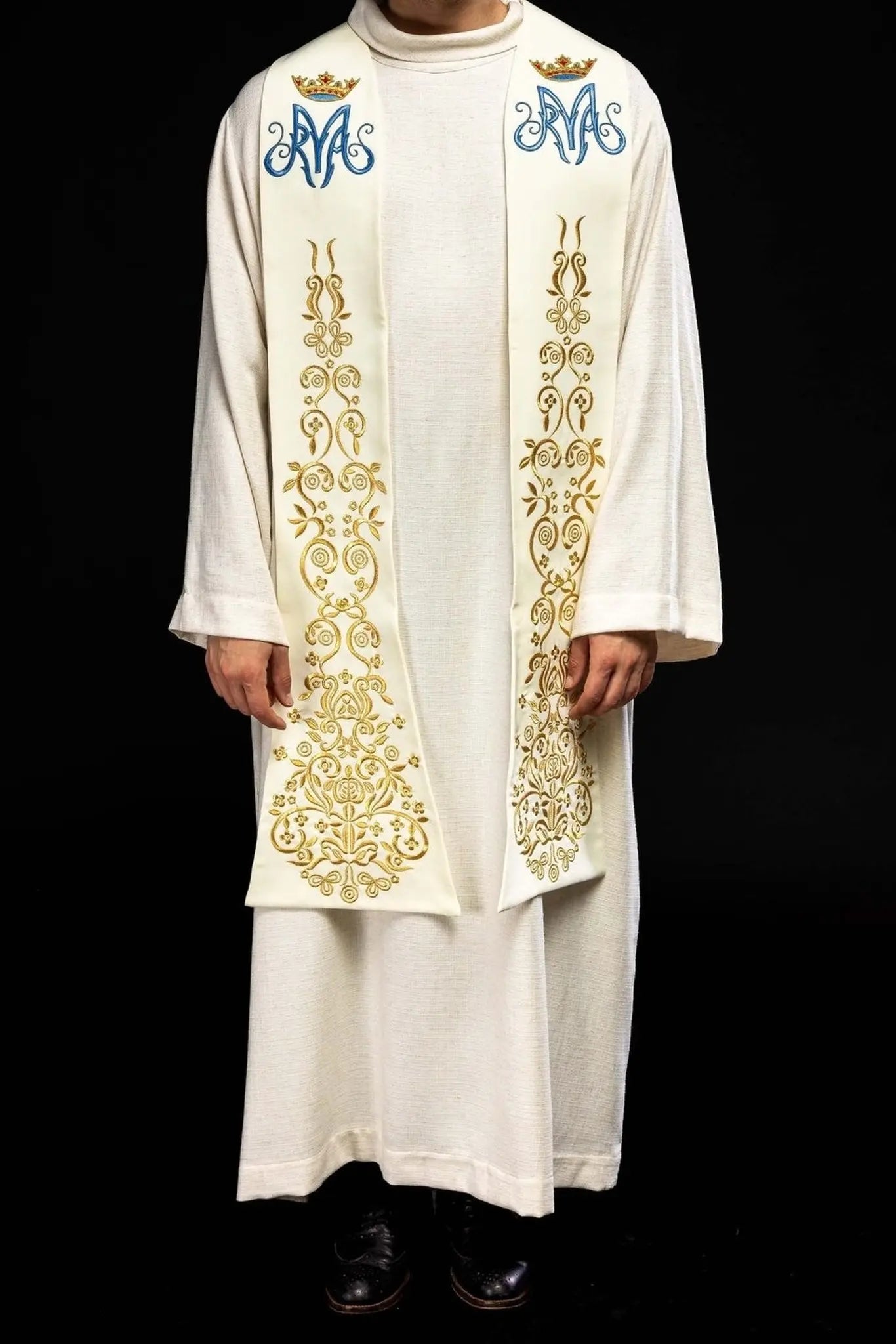
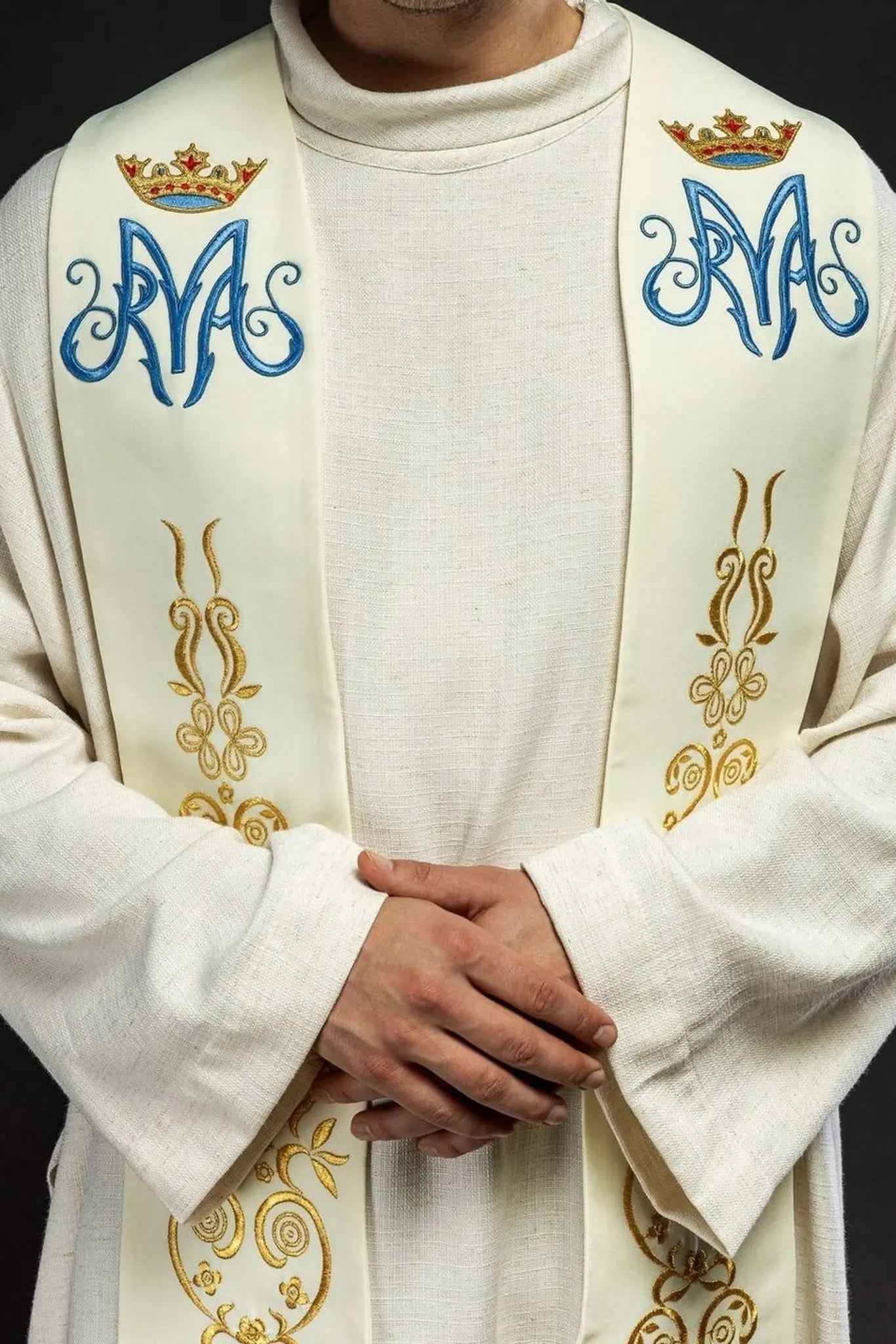
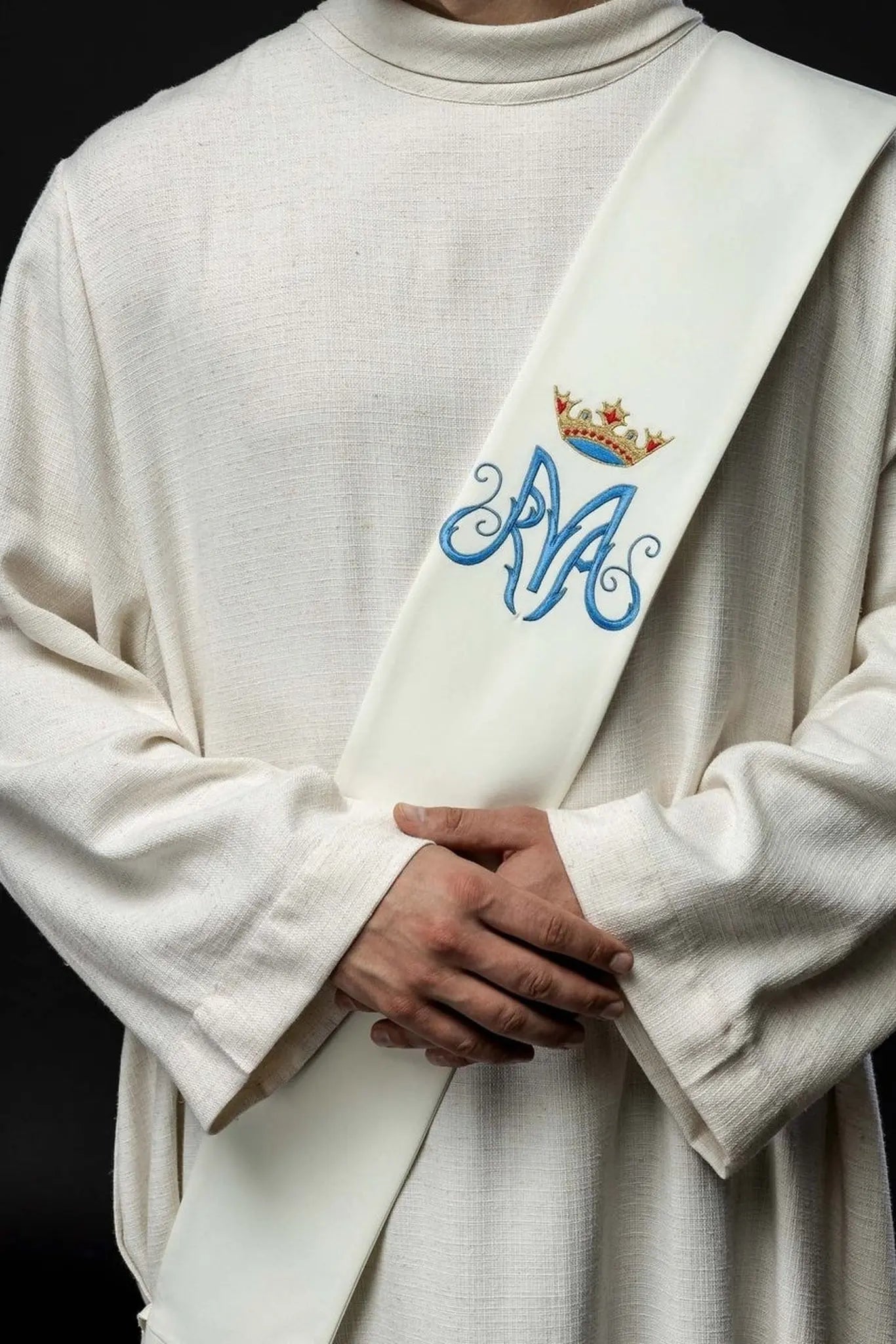
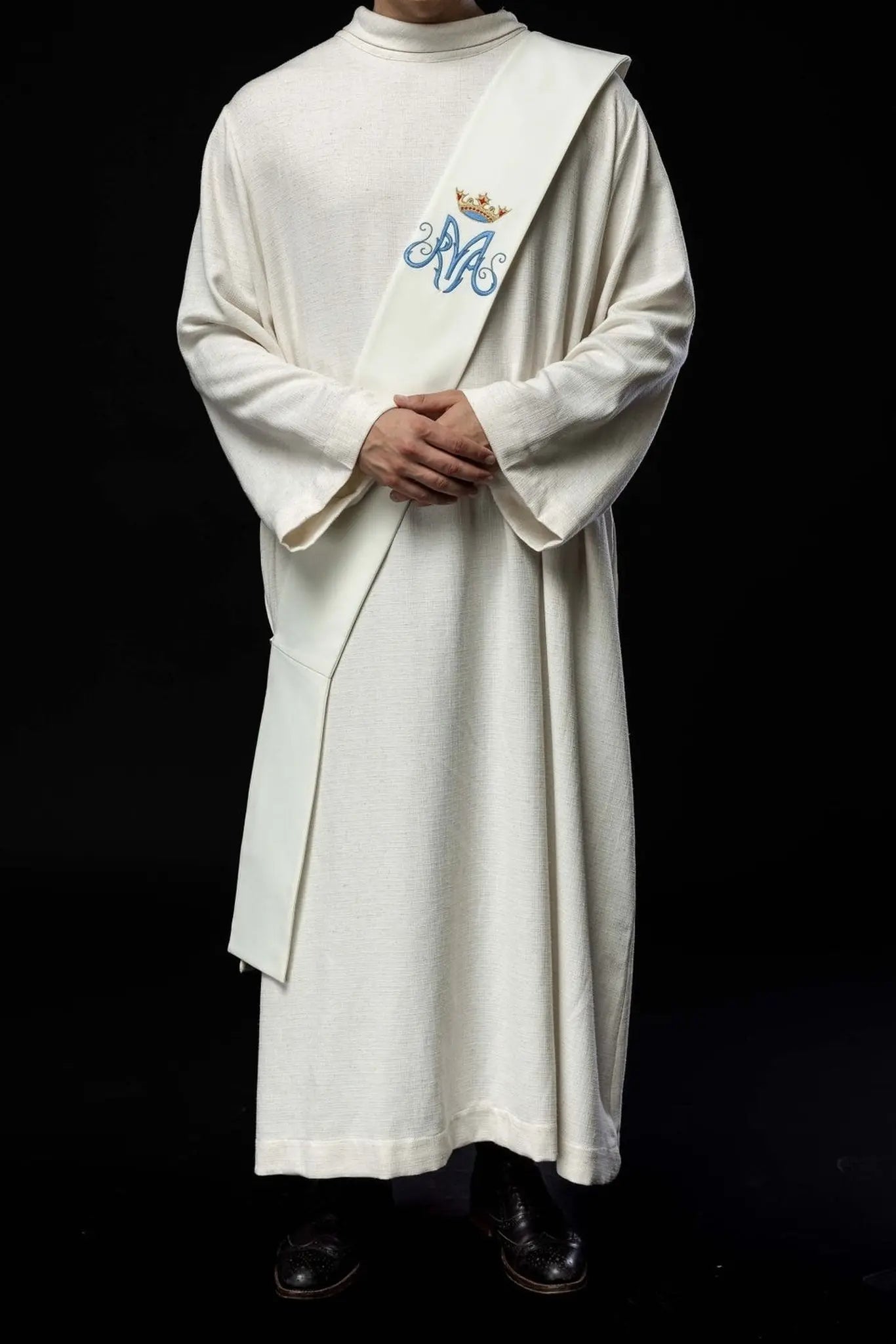
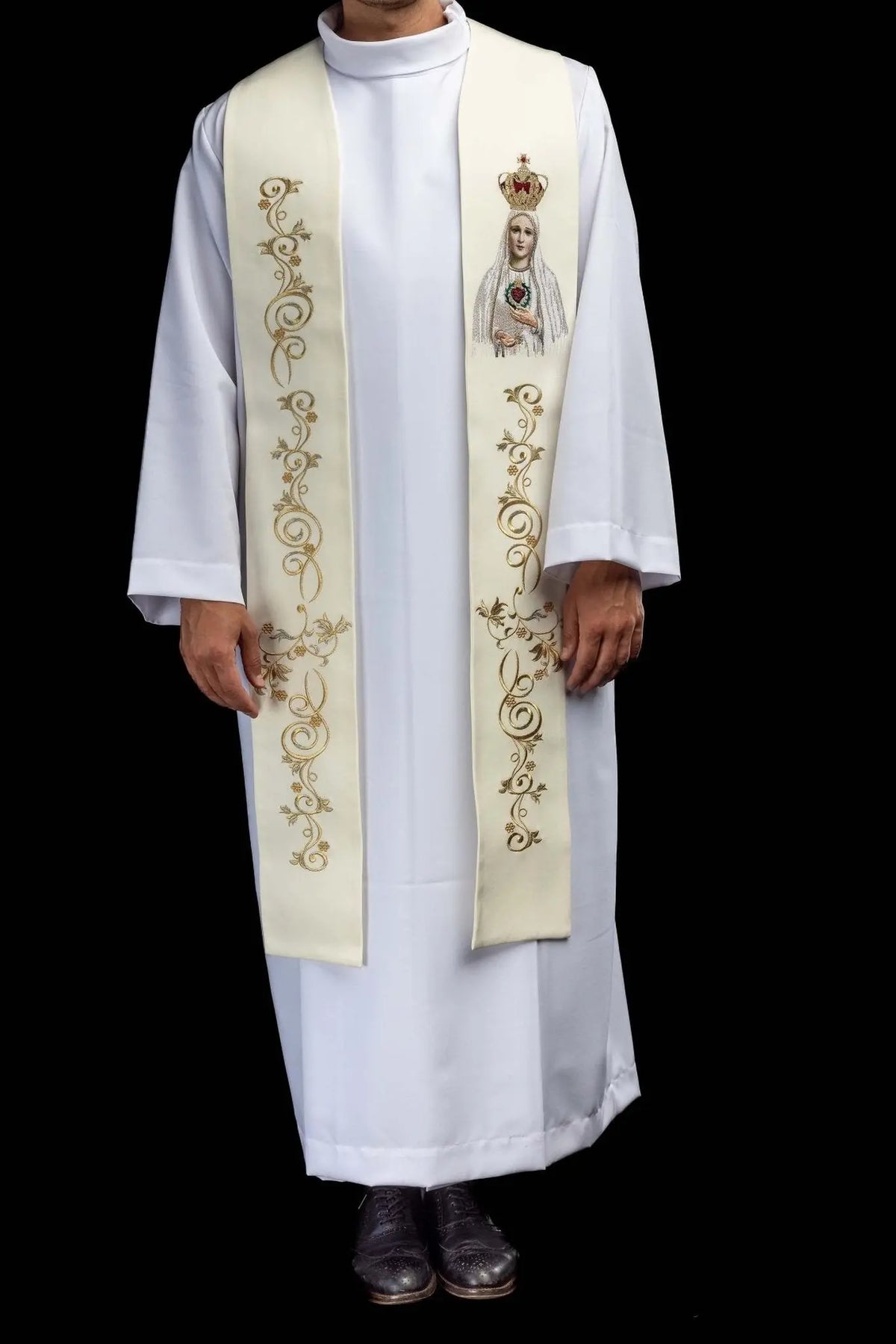
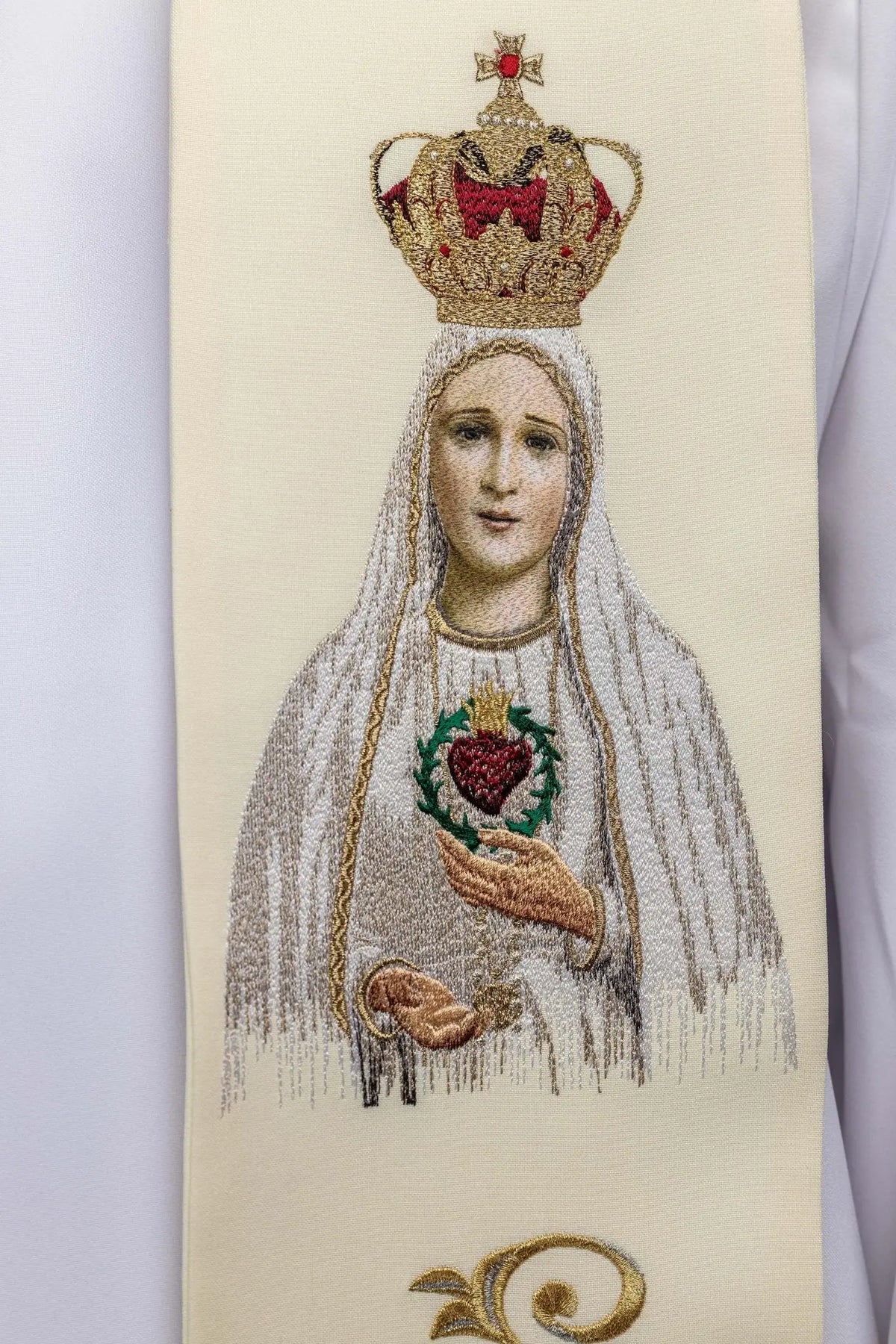


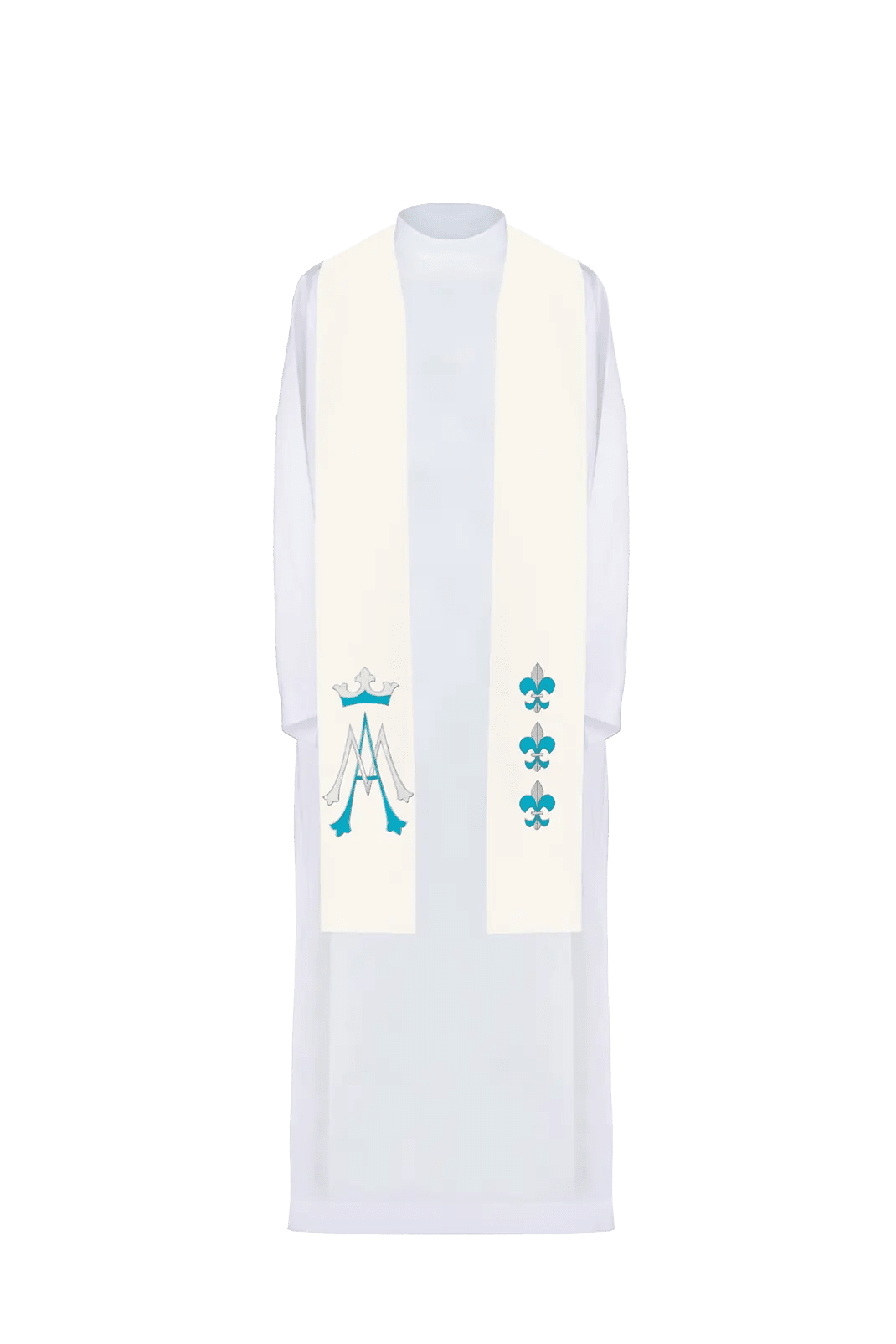
Marian Stoles for Catholic Clergy
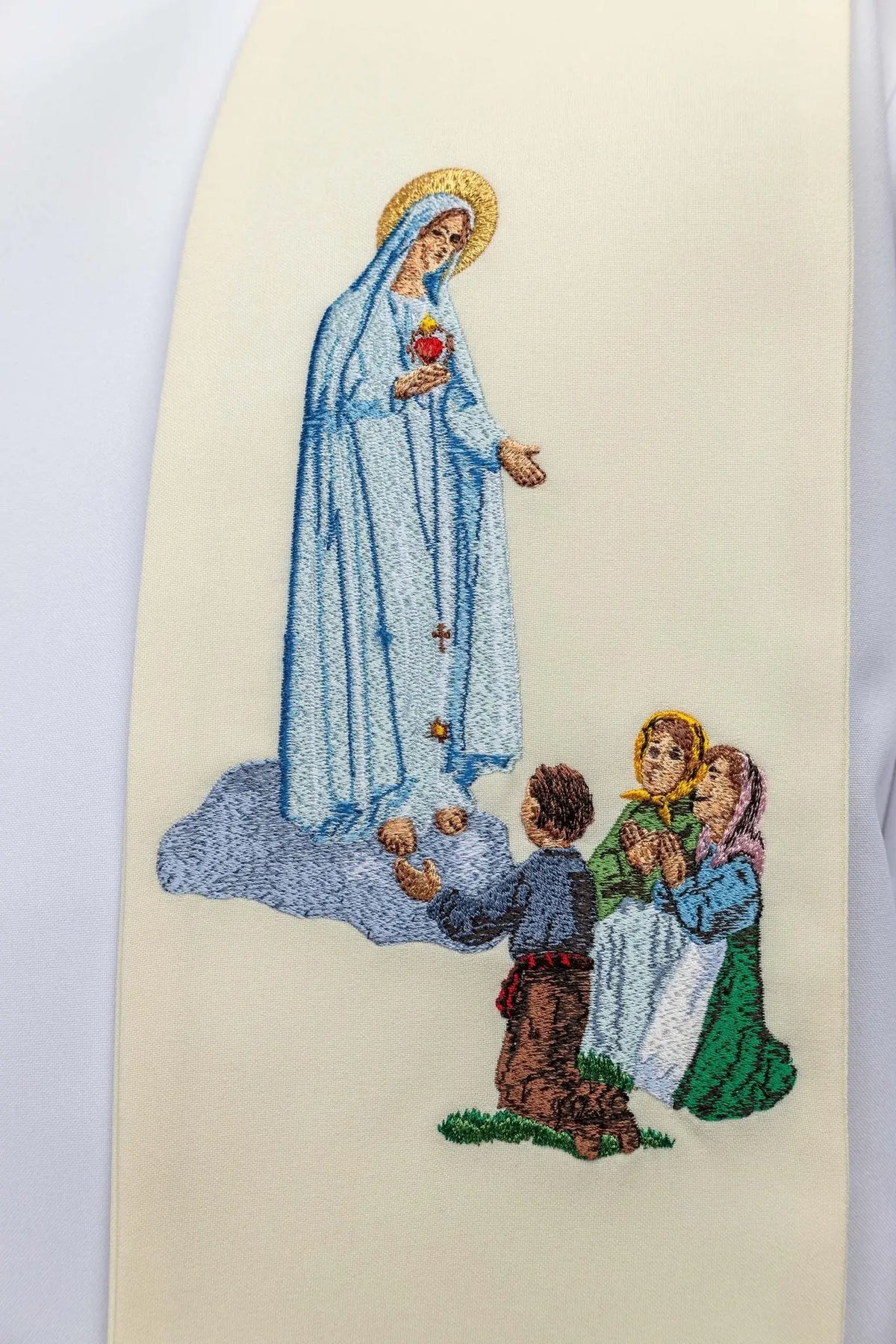
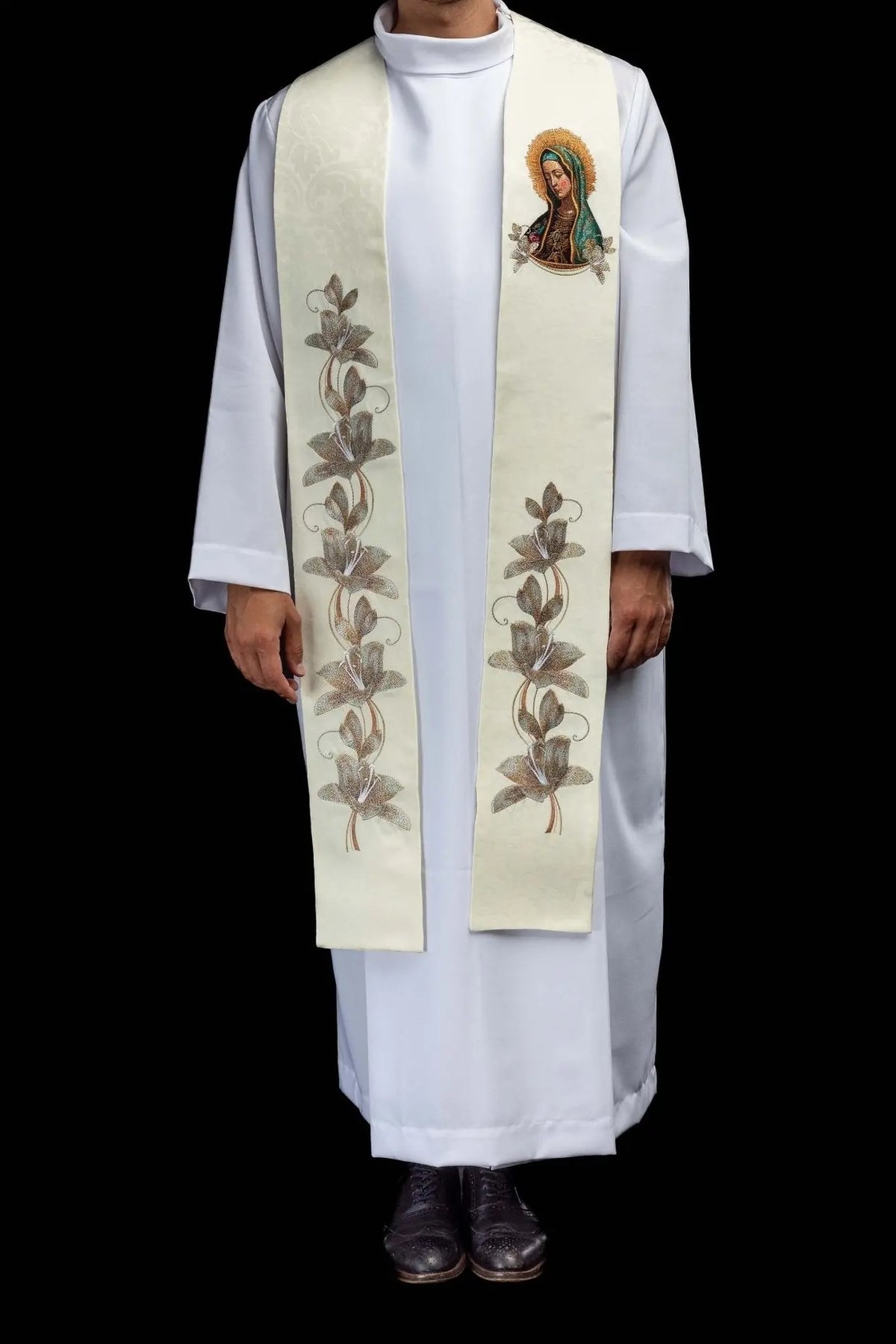
Marian stoles are liturgical stoles designed for celebrations, devotions, and pastoral occasions connected with the Blessed Virgin Mary. In the Catholic tradition the stole is a visible sign of ordained ministry, prayer, and service under the yoke of Christ. A Marian stole keeps that meaning while adding imagery associated with Mary: lilies, roses, stars, Marian monograms, radiant crowns, or embroidered depictions of the Mother of God. This collection is intended for clergy who want a dignified stole for Marian feasts, parish devotions, pilgrimages, processions, May services, First Saturday devotions, and solemn celebrations in which the presence and intercession of Mary are especially honored.
Because this is a collection page, the focus is not one single model but a curated group of Marian stoles with shared devotional character. The designs may be selected as a single vestment for occasional use, as part of a complete Marian set, or as a complement to existing white, ecru, gold, or blue-accented vestments. For the broader category, compare this collection with clergy stoles. For related Marian vestments and altar items, the collection also connects naturally with Blessed Virgin Mary selections across the shop.
What Belongs in the Marian Stoles Collection
A Marian stole is usually recognized by its iconography before anything else. Instead of relying only on a seasonal color, it communicates Marian devotion through embroidery and sacred symbolism. Many pieces use a light base such as white or ecru, which suits solemnities and feasts of the Virgin Mary. Gold details may emphasize queenship, solemnity, and festal celebration. Blue accents are often used as a Marian visual language in devotional art and local custom, although the required liturgical color should always follow the rubrics or diocesan guidance for the celebration.
The collection can include stoles with a central Marian image, a vertical embroidered panel, a monogram, a lily motif, a star motif, or a more discreet border that coordinates with a chasuble. Some styles are suitable for solemn Masses and major parish feasts; others are restrained enough for confession, blessings, Marian novenas, or devotional services outside Mass. When a priest already owns a Marian chasuble, a matching stole helps complete the visual unity of the vestment set. When the parish has only a simple white chasuble, a richly embroidered Marian stole can still add an appropriate devotional emphasis without overwhelming the liturgy.
Liturgical Use and Marian Feasts
Marian stoles are especially appropriate for feasts and memorials of the Blessed Virgin Mary, including the Solemnity of Mary, Mother of God, the Annunciation, the Visitation, Our Lady of Mount Carmel, the Assumption, the Queenship of Mary, the Nativity of the Blessed Virgin Mary, Our Lady of Sorrows, Our Lady of the Rosary, the Presentation of Mary, and the Immaculate Conception. They are also suitable for local patronal feasts, shrine celebrations, Marian processions, parish missions, and votive Masses of the Blessed Virgin Mary when permitted by the liturgical calendar.
For Mass, the stole must harmonize with the liturgical color of the day and with the chasuble. White, ecru, or gold are common choices for many Marian solemnities and feasts because they communicate joy, purity, and festal dignity. A Marian stole with blue embroidery can be visually meaningful, but the celebrant should still follow the applicable liturgical norms for the place and occasion. Rose is not a Marian color by itself; it is a distinct liturgical color for Gaudete Sunday in Advent and Laetare Sunday in Lent. If the need is specifically for those Sundays, see Rose Stoles rather than treating rose as a Marian substitute.
Symbols Found on Marian Stoles
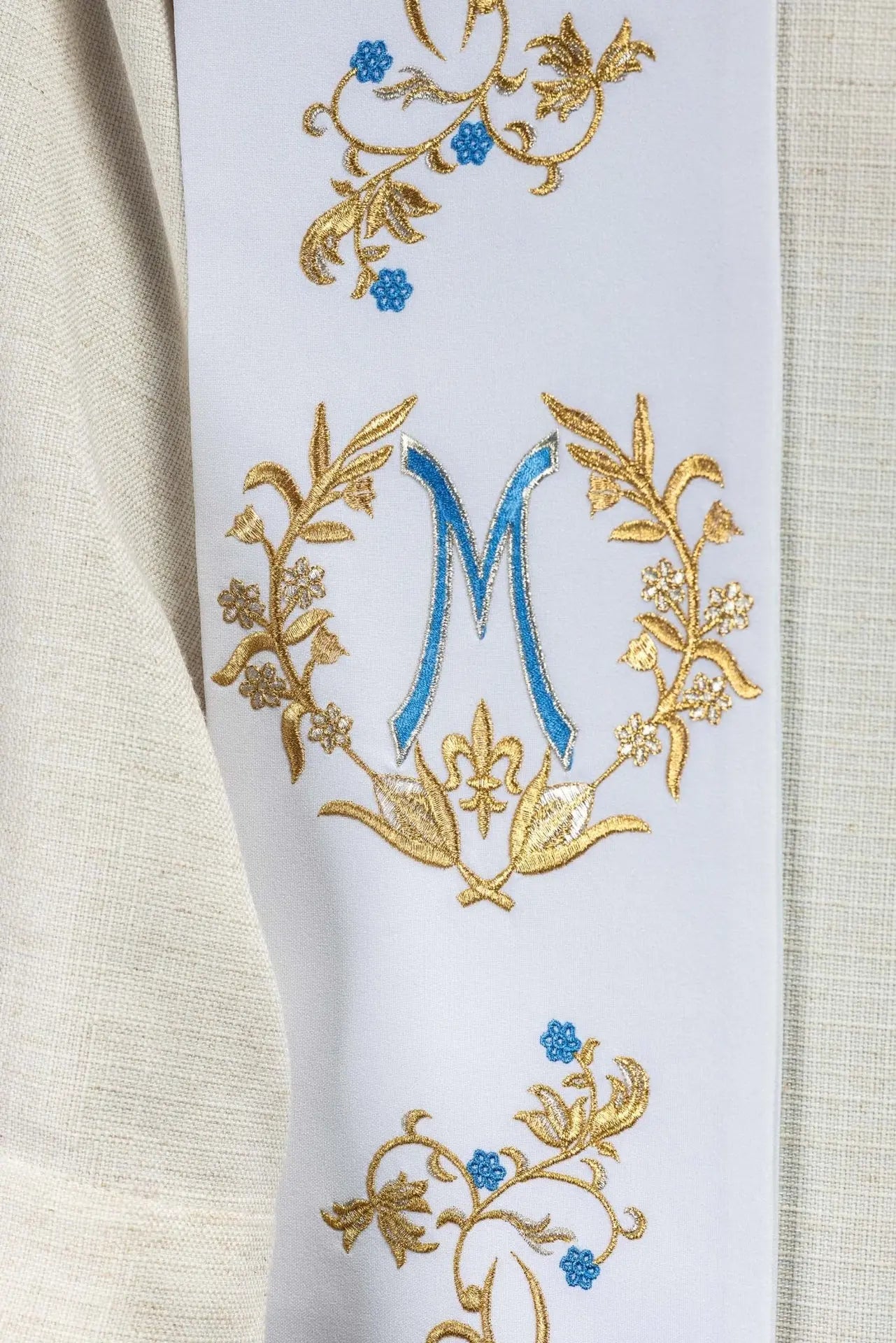
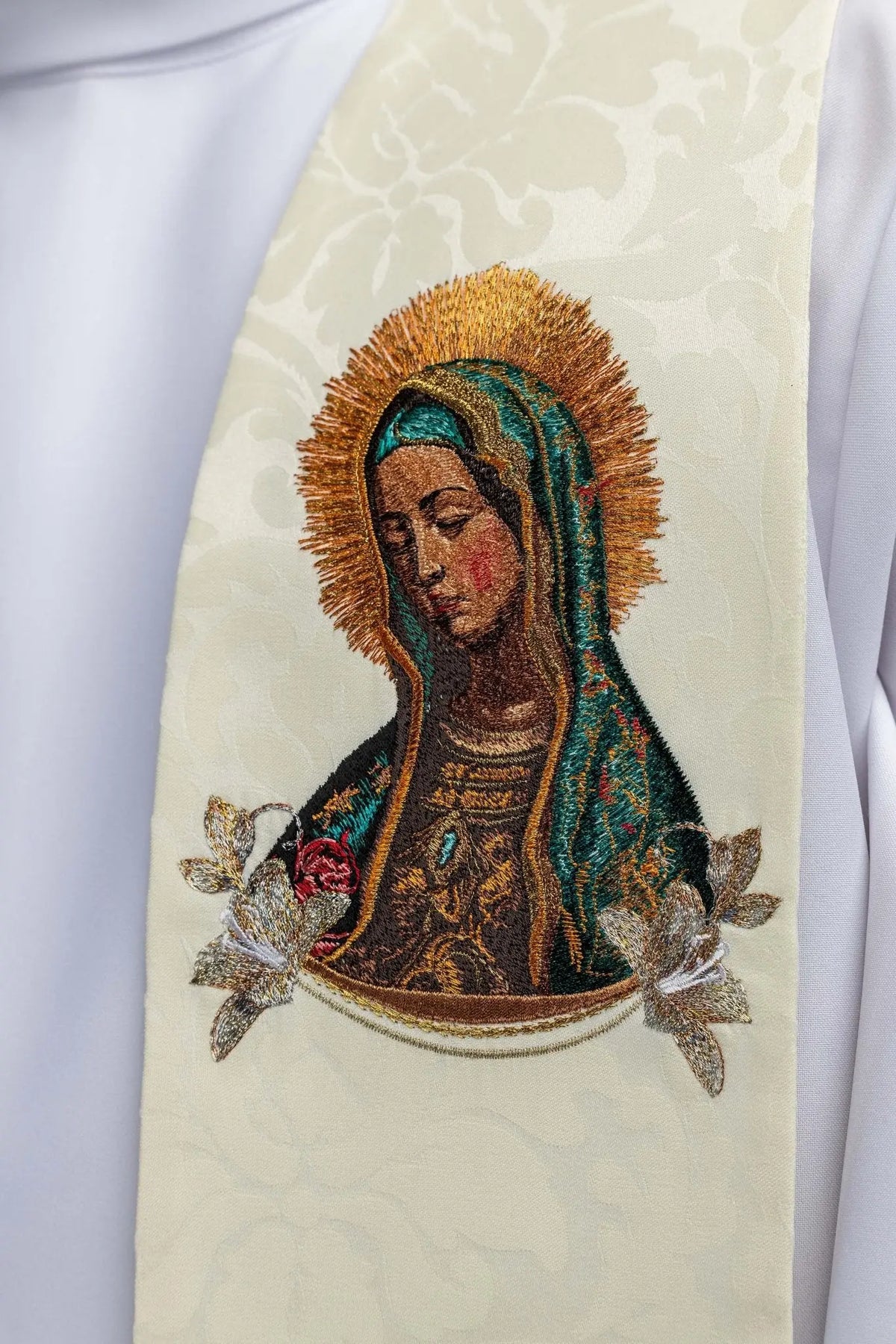
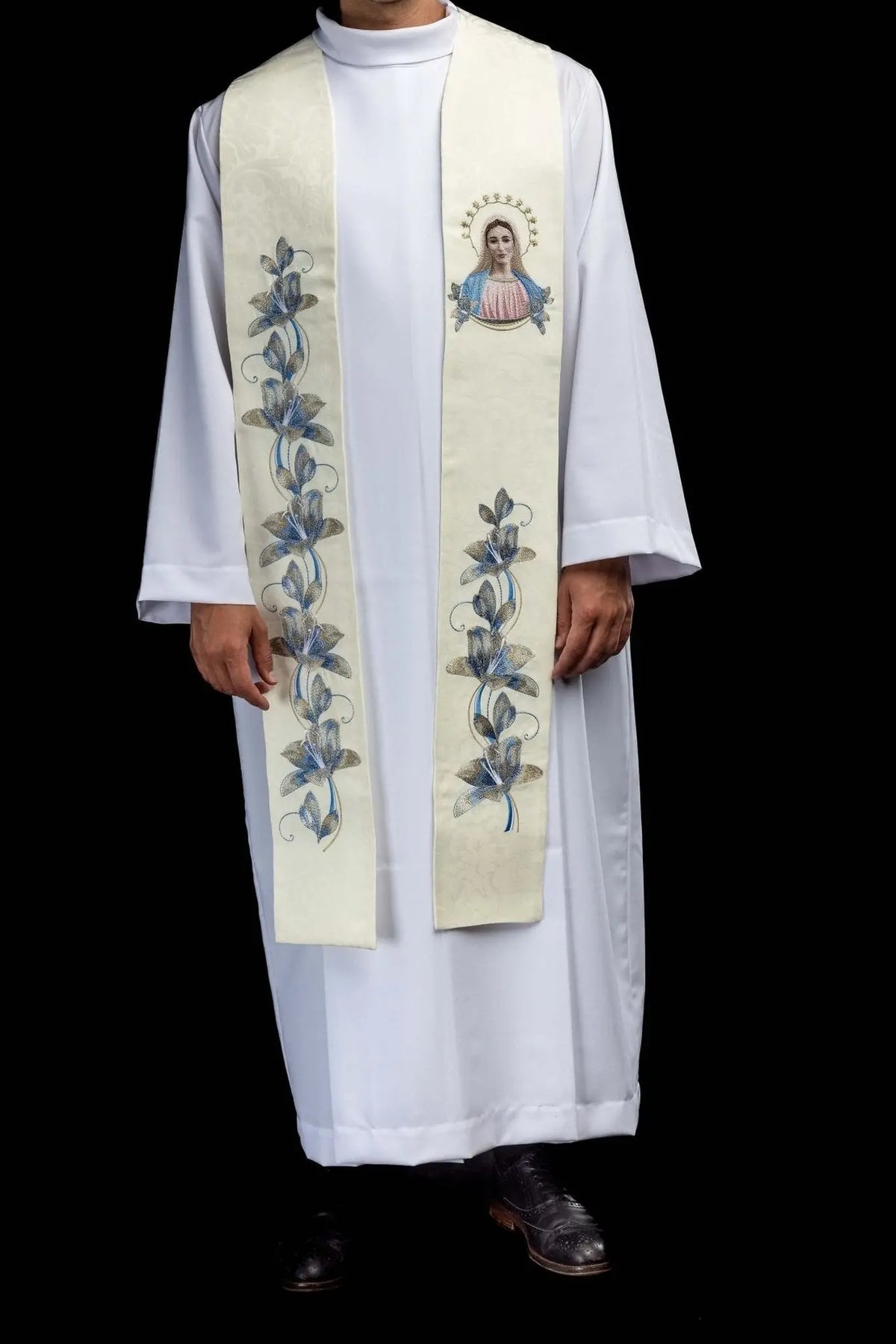
The embroidery on Marian stoles is not decorative in a merely artistic sense. Sacred symbols help the congregation recognize the feast, the devotion, and the theological focus of the celebration. Lilies are connected with purity and the Immaculate Conception. Roses can refer to Mary as a sign of beauty, charity, and the Mystical Rose. Stars recall Stella Maris, the Star of the Sea, and the guidance of Mary for the pilgrim Church. A crown may point to Mary as Queen of Heaven. The letter M, sometimes combined with a cross or rays of grace, can refer to Marian devotion in a concise and recognizable form.
Figural embroidery, when present, should be chosen with the same care as any sacred image used in worship. A stole bearing an image of Our Lady of Czestochowa, the Immaculate Heart, the Miraculous Medal, or another traditional Marian representation should fit the devotion of the parish and the tone of the celebration. More subtle Marian motifs can be better for everyday pastoral use, while a clear image of the Blessed Mother may be preferred for a shrine, a Marian association, or a parish under a Marian title.
How to Choose the Right Marian Stole
When choosing from the Marian stoles collection, start with the context of use. A parish that celebrates several Marian feasts each year may need a stole that coordinates with white, ecru, and gold vestments. A shrine or community with a strong Marian identity may prefer a more elaborate embroidered image. A priest who travels for retreats, pilgrimages, or mission preaching may value a stole that is dignified, easy to transport, and visually clear from a distance. The best choice is the one that supports prayer, respects the rubrics, and remains practical for repeated use.
- For solemn Masses: choose a Marian stole that coordinates with a chasuble and has a balanced level of embroidery.
- For Marian devotions: consider a design with clear symbols such as lilies, roses, stars, a crown, or a Marian monogram.
- For confessions and blessings: a simpler stole can be easier to wear often while still expressing Marian devotion.
- For parish sets: compare the stole with matching or related Marian chasubles so the sanctuary has a coherent visual language.
- For deacons: confirm the cut and manner of wearing; diagonal options belong more naturally with Deacon Stoles.
Coordinating Marian Stoles with Other Liturgical Pieces
A Marian stole often works best when it is selected as part of a broader liturgical setting. If the celebrant wears a Marian chasuble, the stole should not compete with the main vestment but should echo its color, embroidery, and symbolism. A white or ecru chasuble with gold Marian embroidery can be paired with a stole that uses the same thread tones. A chasuble with a strong image of the Blessed Mother may call for a simpler stole; a plain chasuble may allow the stole to carry more of the devotional detail.
For the altar and sanctuary, related pieces can help create a reverent and coherent presentation. Marian altar linens or chalice accessories may be chosen for feasts and votive celebrations when they suit the parish use. See Marian chalice sets for altar linen coordination and Marian pulpit covers when the ambo or pulpit should reflect the same feast. These links are useful when preparing a complete parish set rather than selecting a stole in isolation.
Color, Fabric, and Embroidery Considerations
White and ecru are versatile choices for many Marian celebrations. Gold details add solemnity and are especially fitting when the feast is celebrated with a festive chasuble or cope. Blue embroidery can express Marian devotion in a familiar visual way, but it should be treated as an accent or local custom unless the competent authority permits it as a liturgical color. Green, red, and purple stoles remain tied to their own seasons and celebrations, so they are usually chosen from their dedicated collections rather than from the Marian category.
Fabric and construction influence both appearance and daily use. Smooth fabric gives a clean fall over the alb or chasuble. Brocade or patterned fabric can add richness to a feast-day vestment. Embroidery density matters as well: a large Marian image creates a strong focal point, while a border or monogram keeps the stole more adaptable. Priests who use the stole frequently for devotions may prefer a design that is light, comfortable, and easy to store. Parish sacristies may prefer a more formal stole that remains reserved for the major Marian feasts of the year.
Gold Marian designs may also be appropriate when a parish wants a festive stole that can coordinate with other solemn vestments. In that case, compare this category with Gold Clergy Stoles, especially when the main concern is a gold liturgical color rather than a specifically Marian image. The distinction matters: a gold stole can be festal without being Marian, while a Marian stole should clearly refer to the Blessed Virgin through its design, iconography, or devotional purpose.
Priest Stoles, Deacon Stoles, and Correct Use
The stole is worn differently according to the order of the minister. A priest wears the stole around the neck with both ends hanging down in front, normally under the chasuble at Mass and visibly over the alb or surplice for many other rites. A deacon wears the stole diagonally from the left shoulder to the right side. For that reason, a stole designed for a priest should not be assumed to fit a deacon correctly. When selecting a Marian stole for a deacon, the cut and fastening must match the diagonal form.
This distinction is important for parishes ordering vestments for more than one minister. A Marian celebration may involve a priest celebrant, concelebrants, and one or more deacons. Matching symbolism can be appropriate, but each minister should receive the correct vestment type. The Marian stoles collection is therefore best viewed alongside the wider stole category and, where needed, the deacon-specific category. This avoids confusing devotional theme with liturgical function.
Care and Storage for Marian Stoles
Marian stoles often include detailed embroidery, metallic threads, appliqué elements, or delicate fabric surfaces. Proper care helps protect both the beauty of the vestment and the sacred purpose for which it is used. After each celebration, the stole should be allowed to air before storage, especially if it was worn during a long procession or in a warm church. It should be stored flat or on a suitable hanger, away from moisture and direct sunlight. A breathable vestment cover can protect the embroidery from dust while allowing fabric to remain in good condition.
Cleaning should follow the care instructions for the specific fabric and embroidery. In many cases, professional cleaning is safer than washing, particularly when metallic threads or dense embroidered images are present. If light pressing is needed, the embroidered area should be protected and excessive heat avoided. A Marian stole reserved for feasts may be used only several times a year, but it still deserves regular inspection so loose threads, creases, or storage marks are noticed before the celebration begins.
Frequently Asked Questions (FAQ)
When should a Marian stole be worn?
A Marian stole is most appropriate for Masses, devotions, blessings, processions, and parish celebrations connected with the Blessed Virgin Mary, provided the liturgical color and local norms allow it. It can be used for major feasts such as the Assumption or Immaculate Conception, for Marian memorials, and for votive celebrations when permitted.
Is blue the official color for Marian stoles?
Blue is strongly associated with Marian art and devotion, and it may appear as embroidery or an accent in many designs. Its use as the principal liturgical color depends on the applicable rubrics and local permission. In many places, white, ecru, or gold remain the safest choices for Marian feasts.
Can a Marian stole be matched with a Marian chasuble?
Yes. A Marian stole can be selected to coordinate with a chasuble through color, thread, fabric, or iconography. The best pairing is balanced: if the chasuble has a large Marian image, a simpler stole may be more elegant; if the chasuble is plain, the stole can carry more devotional detail.
Are Marian stoles suitable for deacons?
Only when the stole is made in a deacon form or clearly suited to diagonal wear. The Marian theme can be shared by priests and deacons, but the garment construction is different. For a deacon, choose a proper diagonal stole rather than adapting a priest stole.
What symbols should I look for in a Marian stole?
Common Marian symbols include lilies for purity, roses for beauty and love, stars for Stella Maris, crowns for queenship, and monograms connected with the name of Mary. Choose symbols that match the devotion of the parish, the feast being celebrated, and the level of solemnity desired.
How should a Marian stole be stored between feasts?
Store it clean, dry, and protected from direct sunlight. Avoid folding heavily embroidered areas. A flat drawer, vestment box, or breathable garment cover helps preserve the fabric and threadwork so the stole is ready for the next Marian celebration.