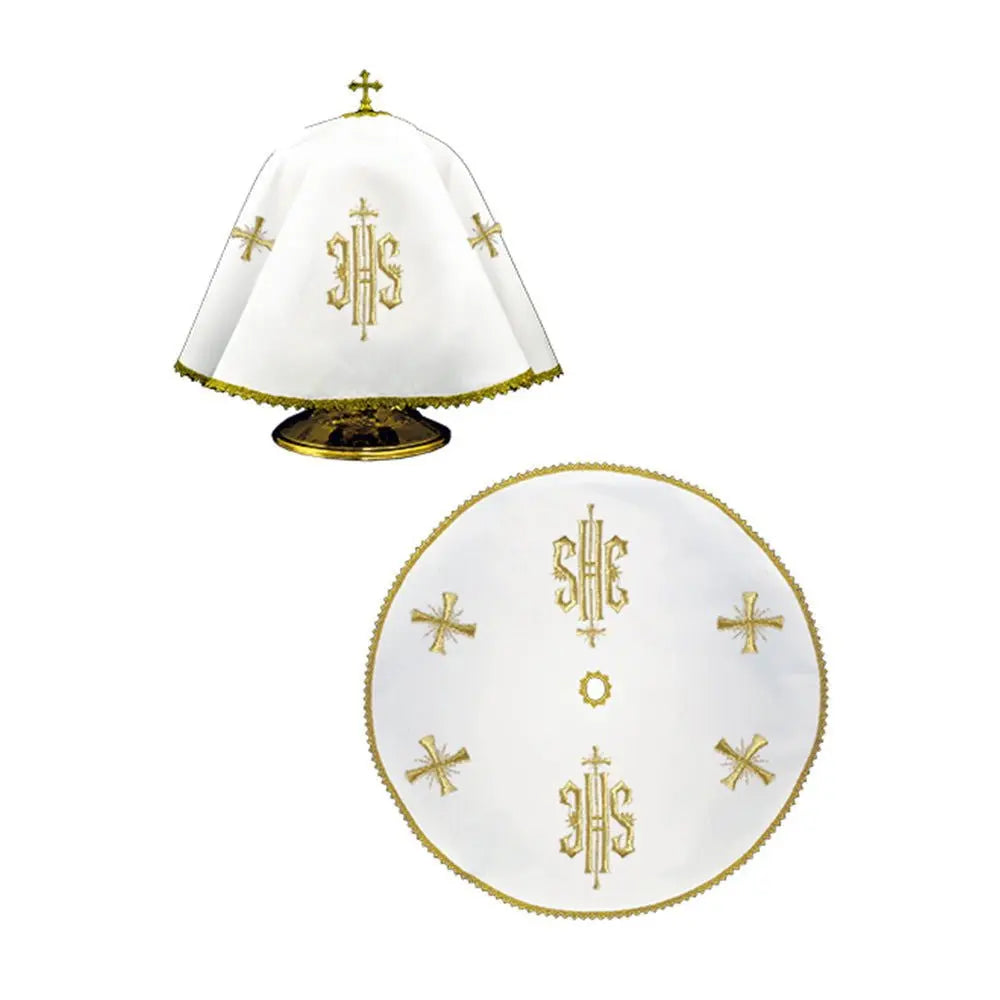
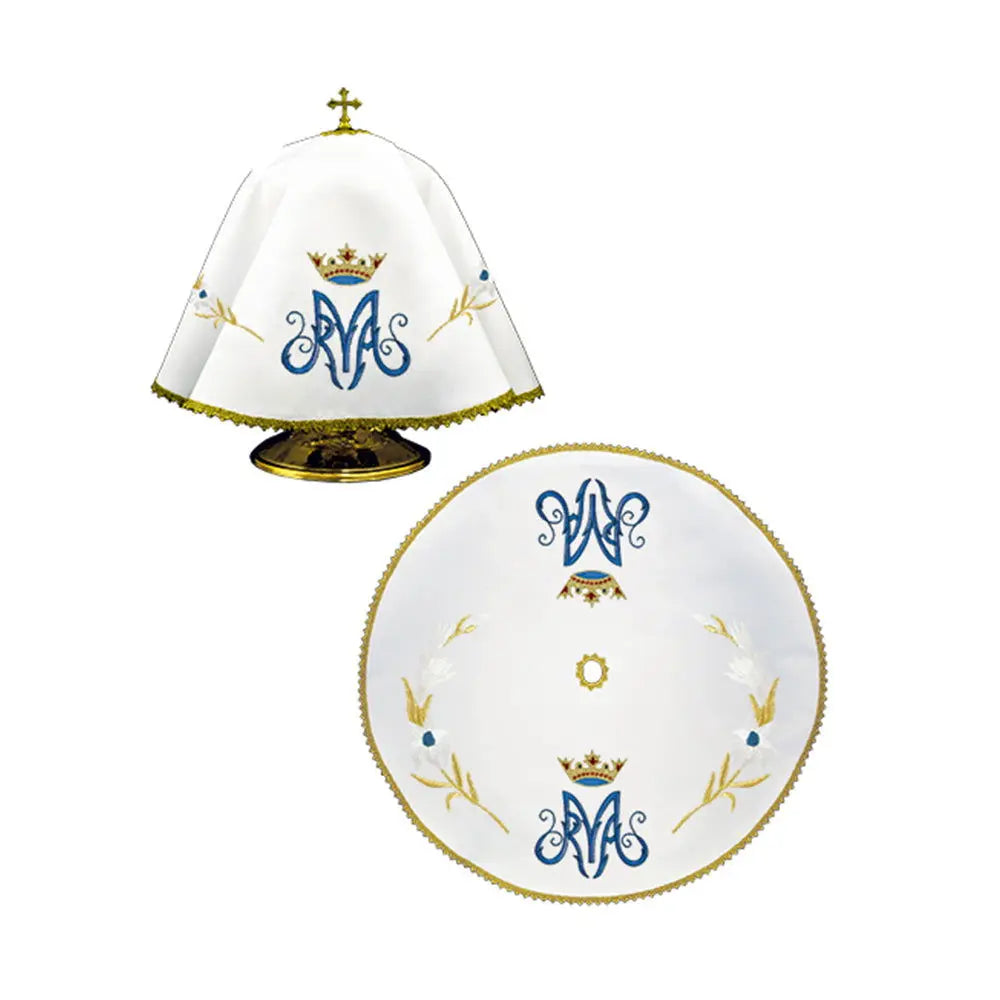
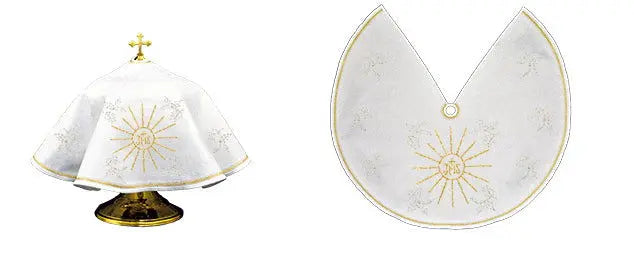
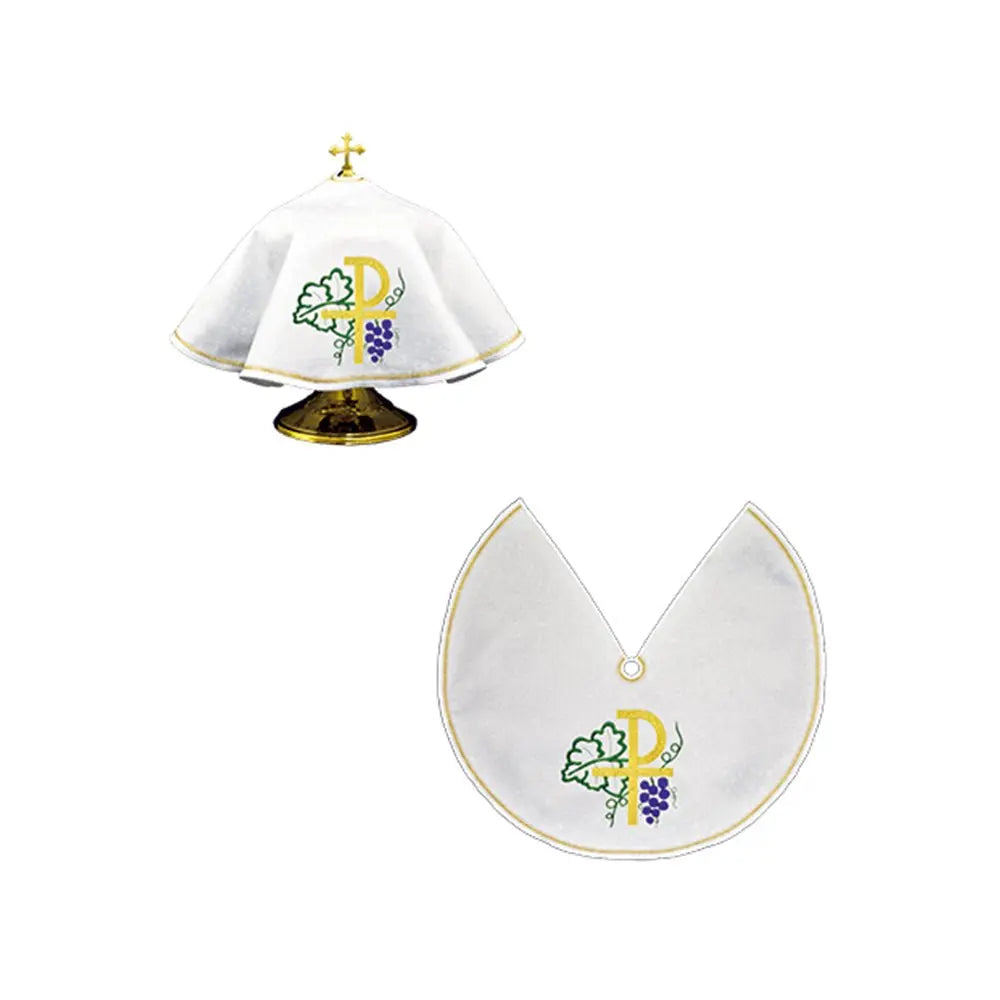
Ciborium Veils for the Blessed Sacrament
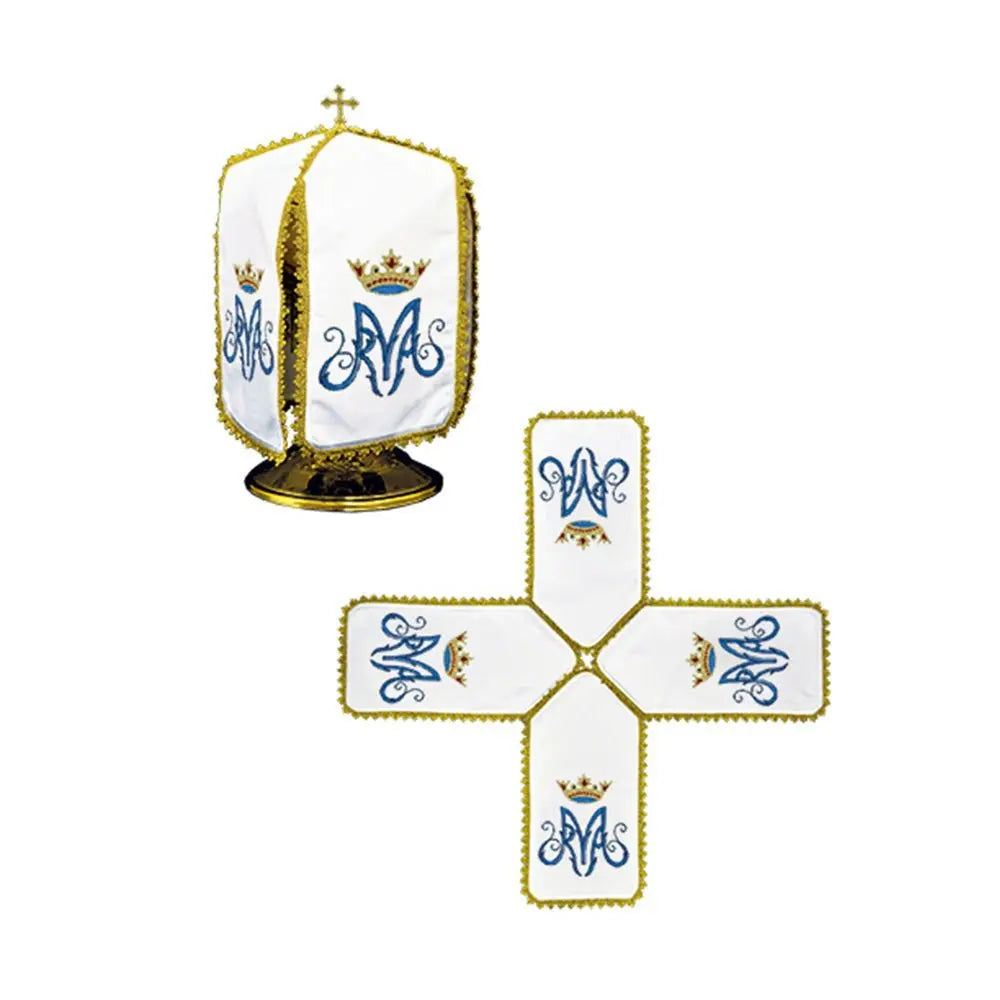
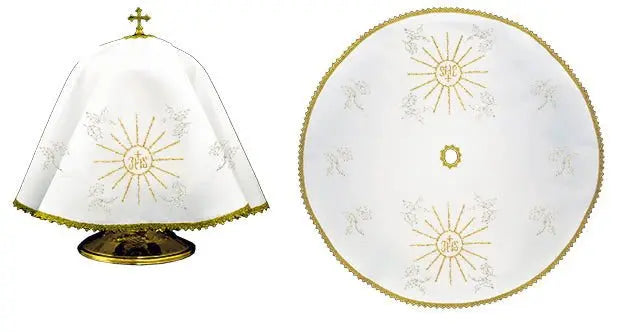
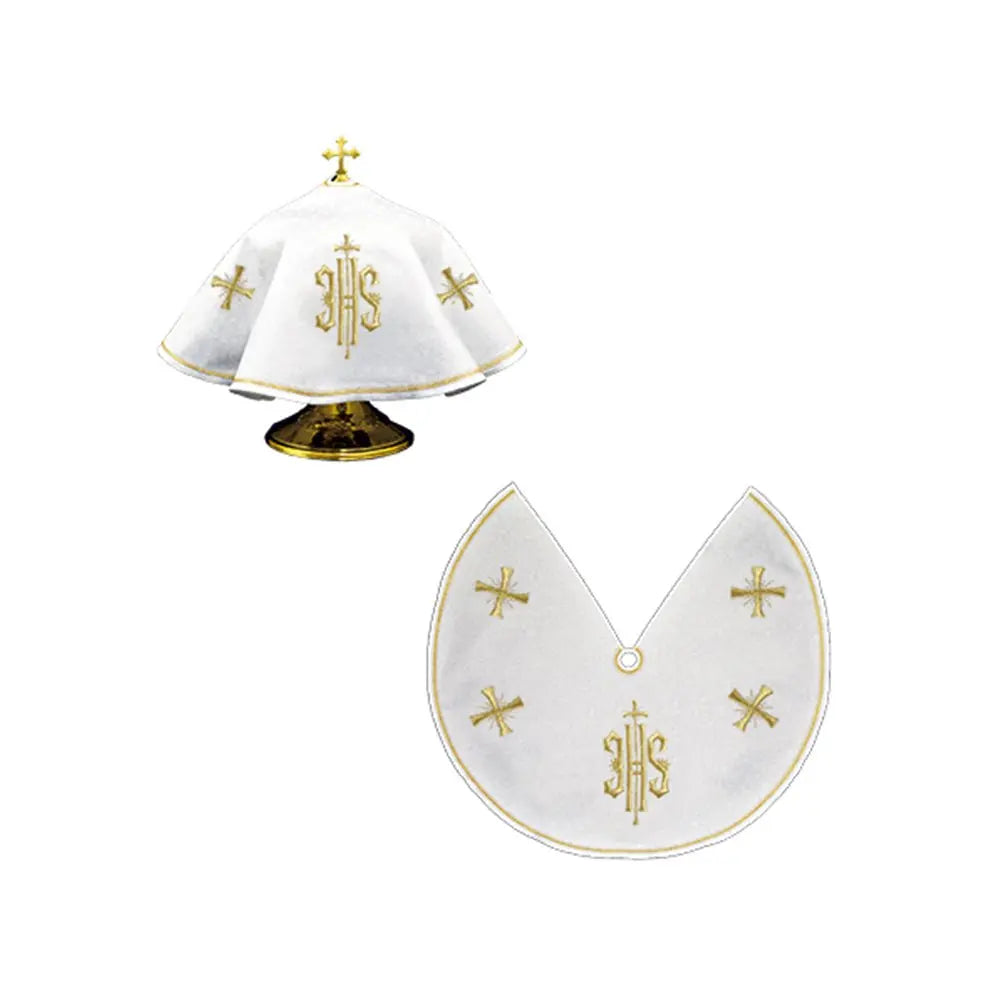
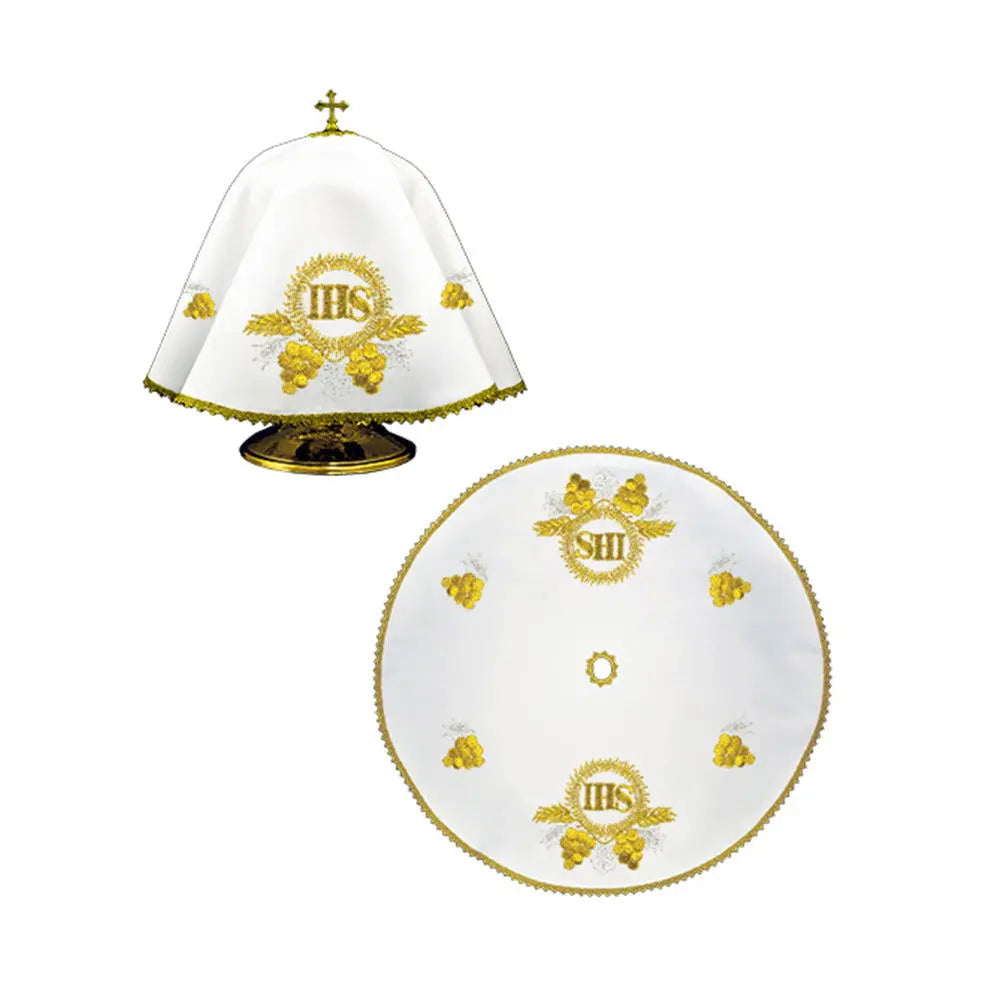
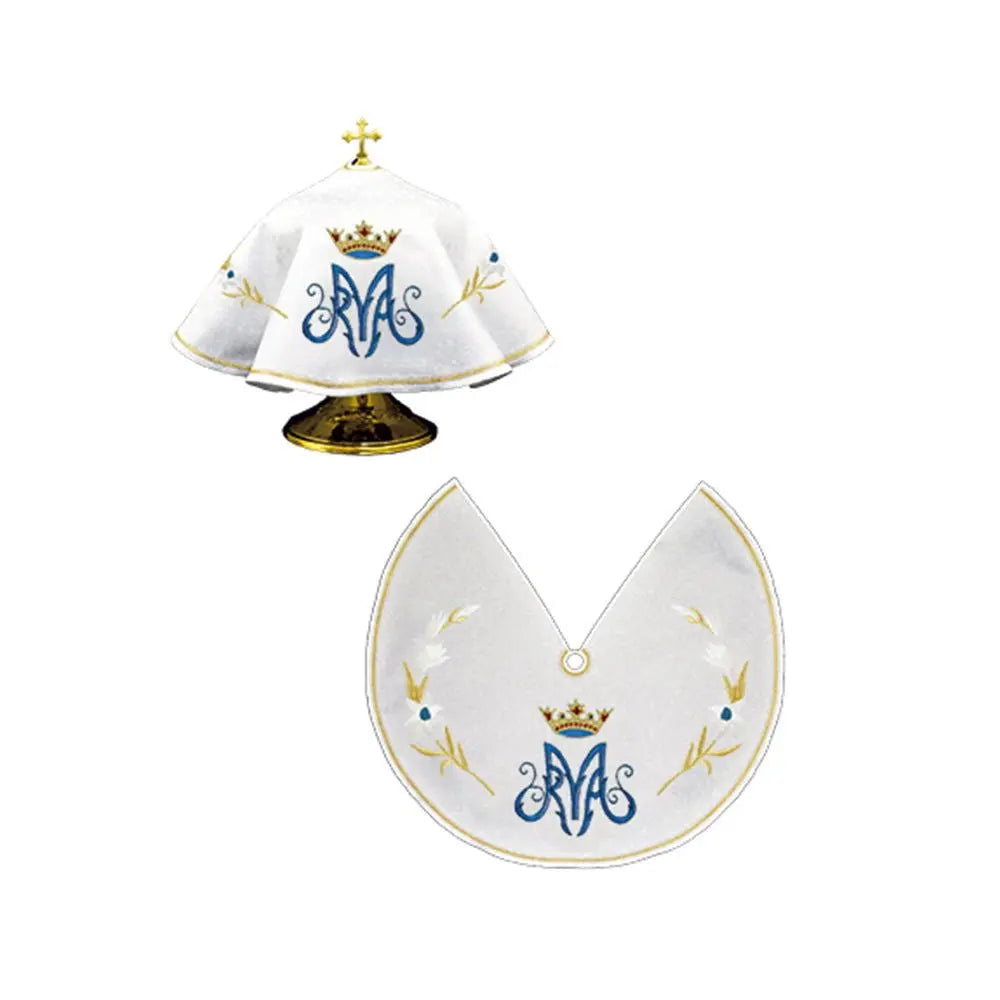
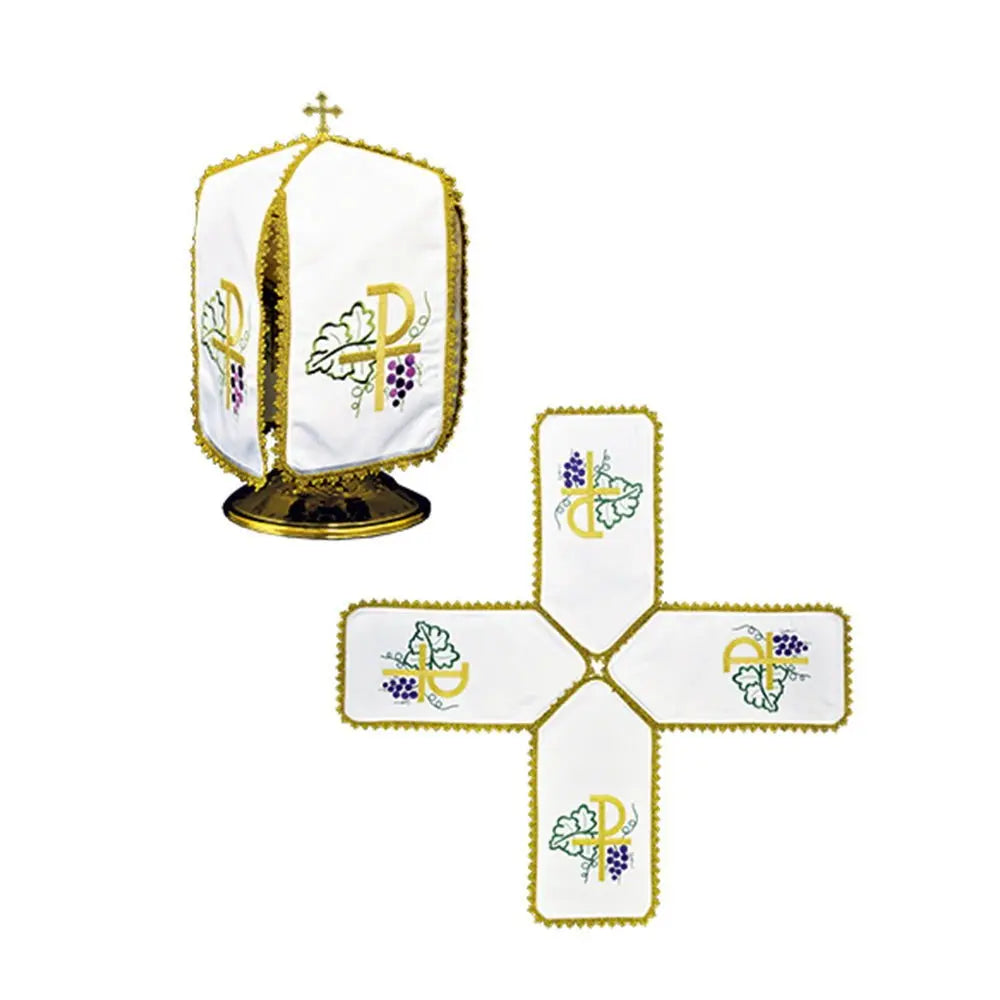
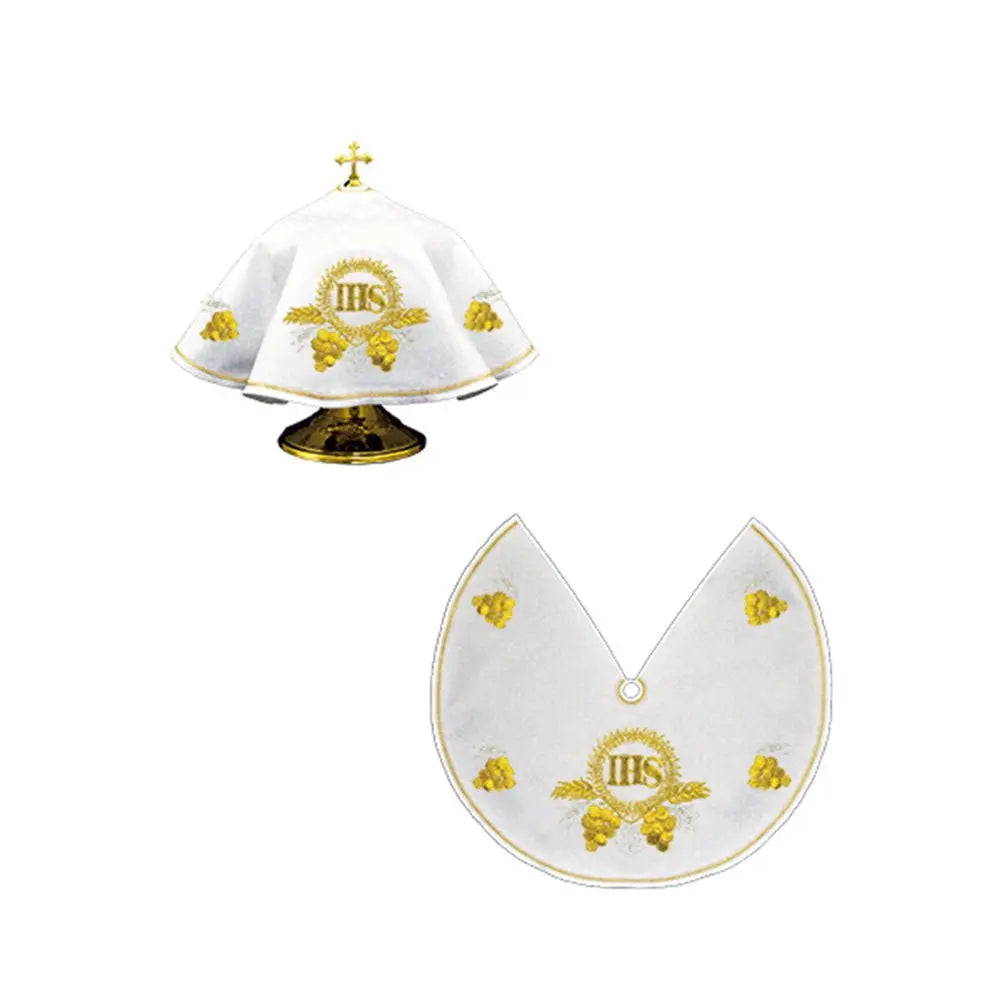
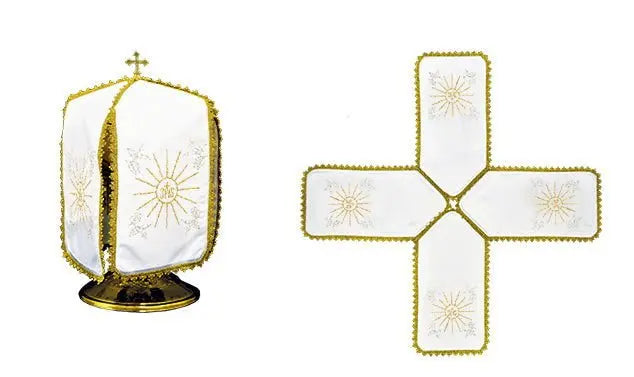
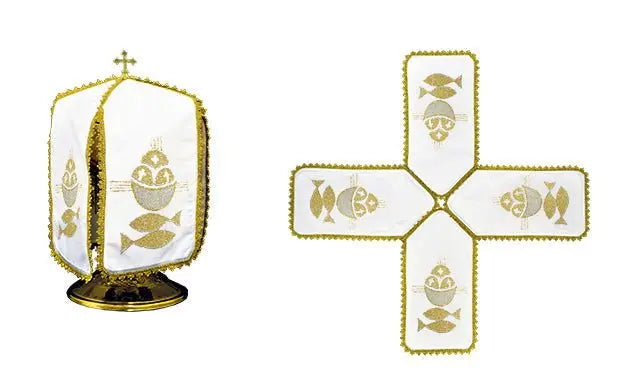
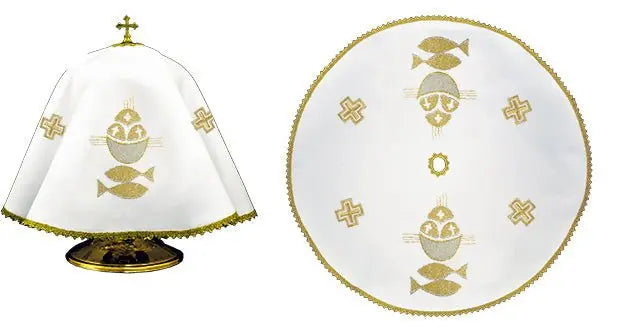
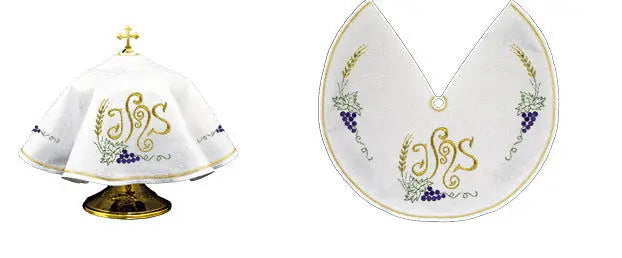
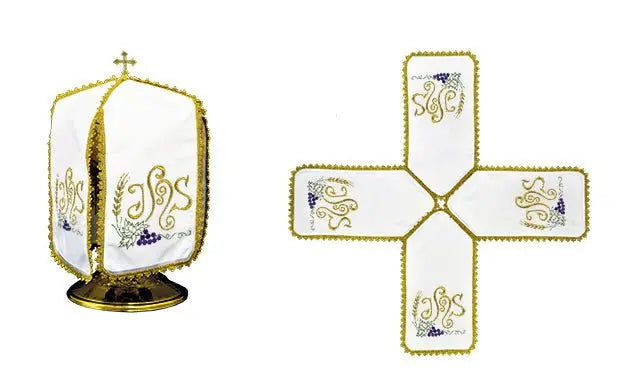
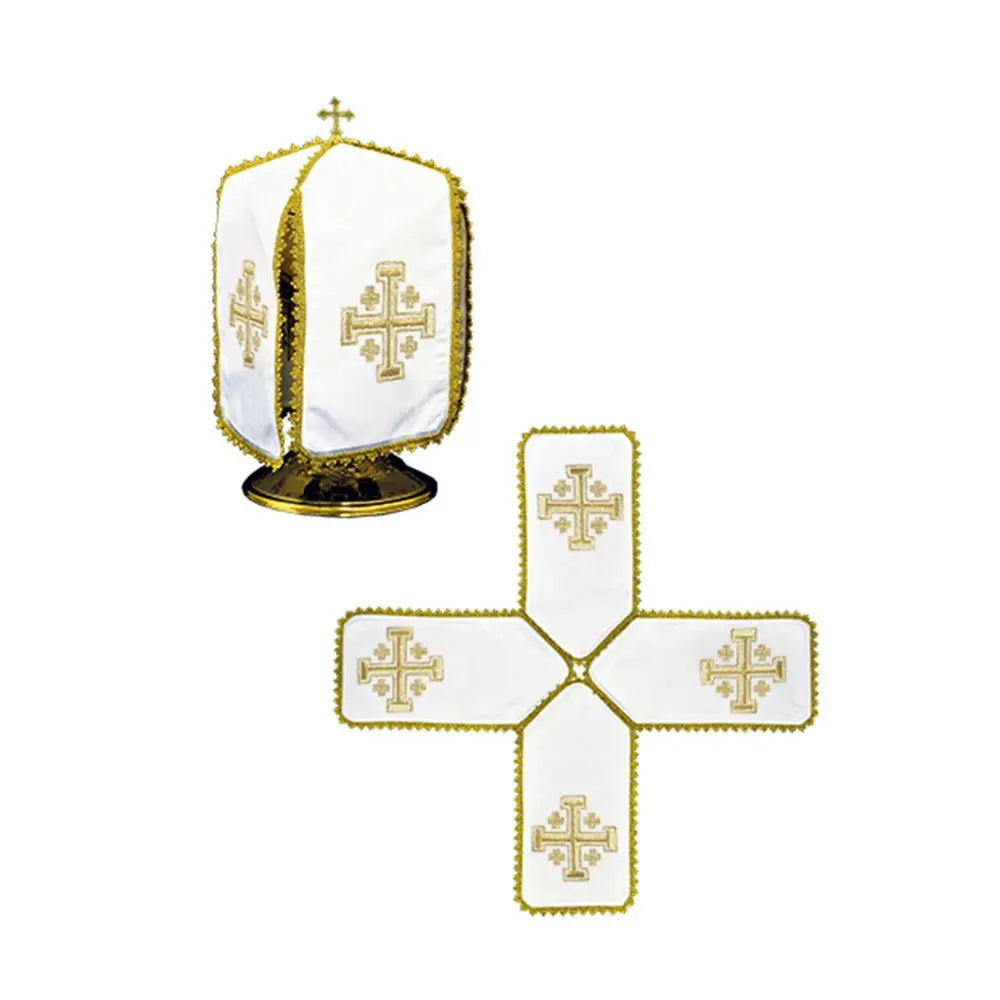
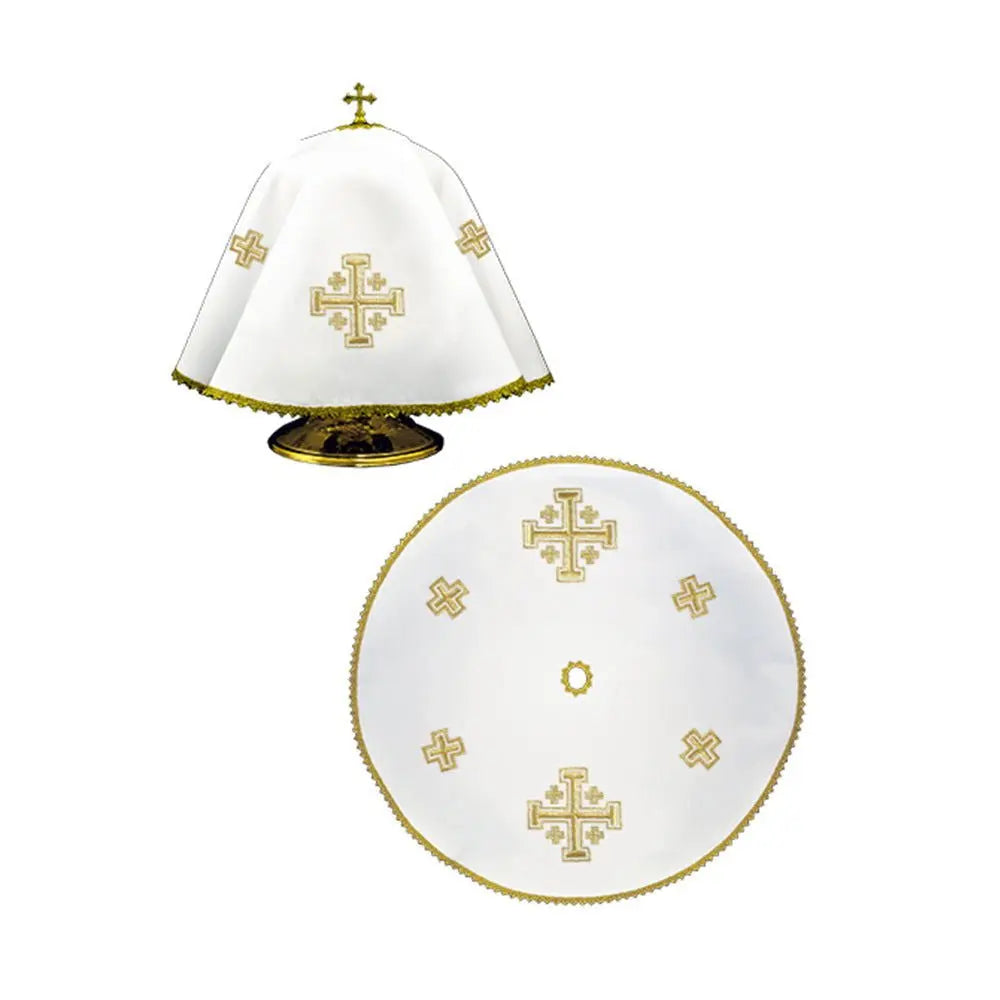
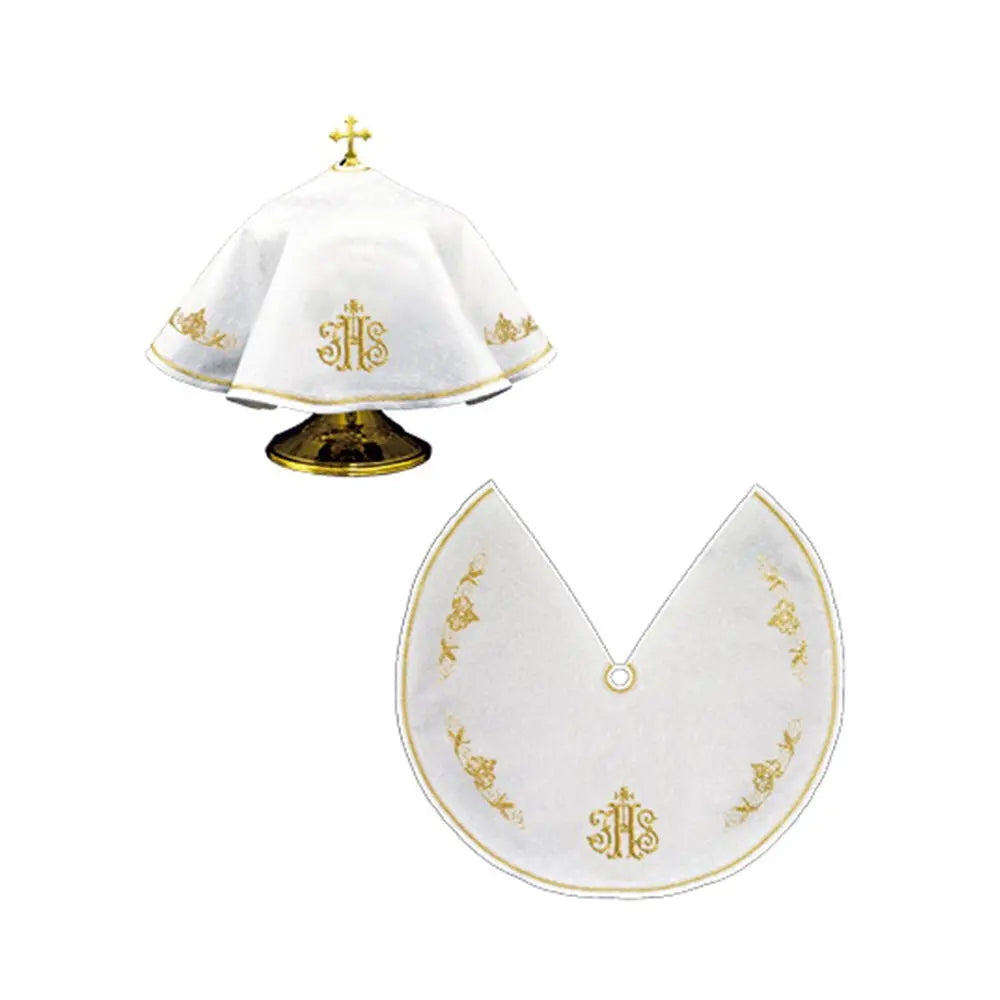
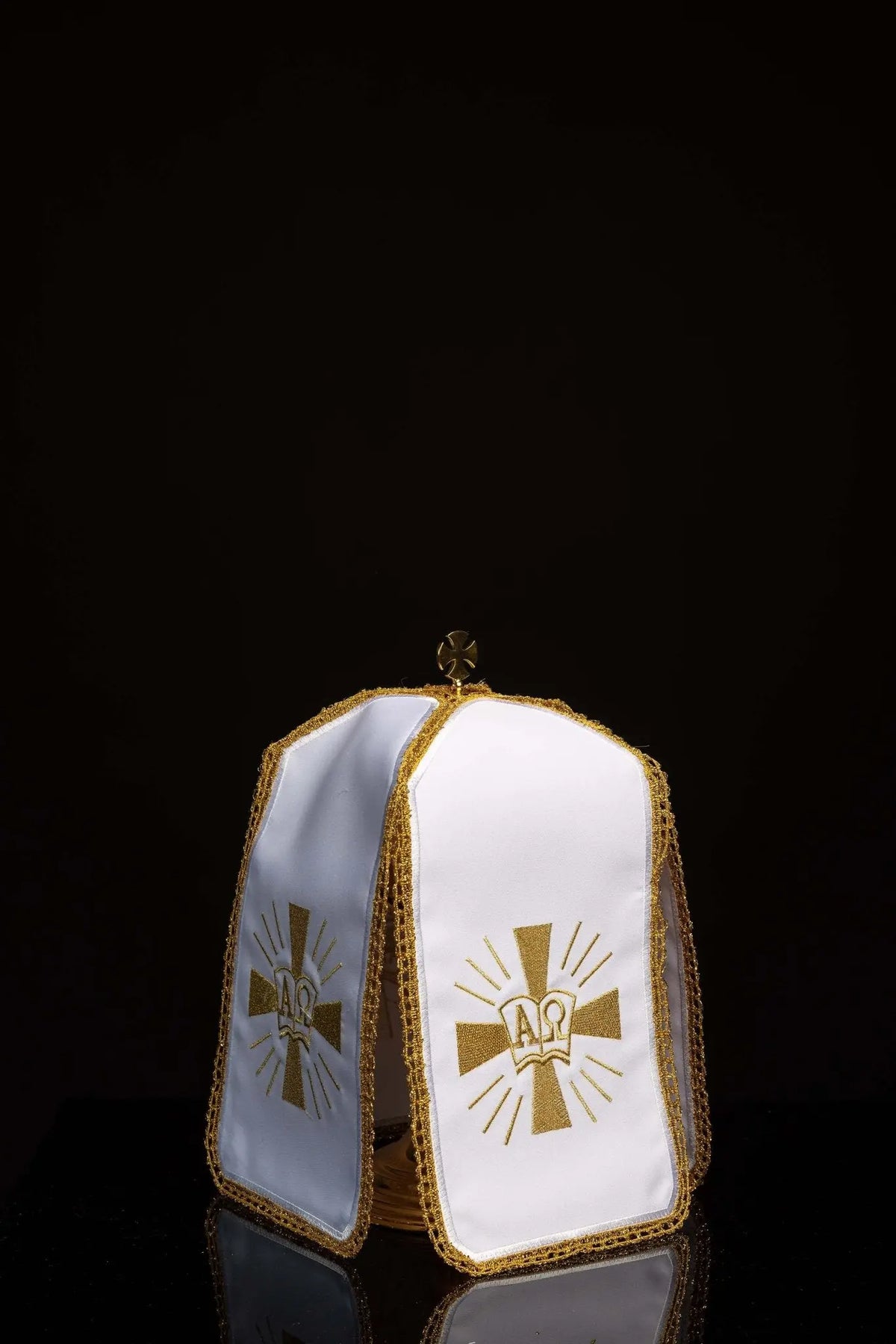
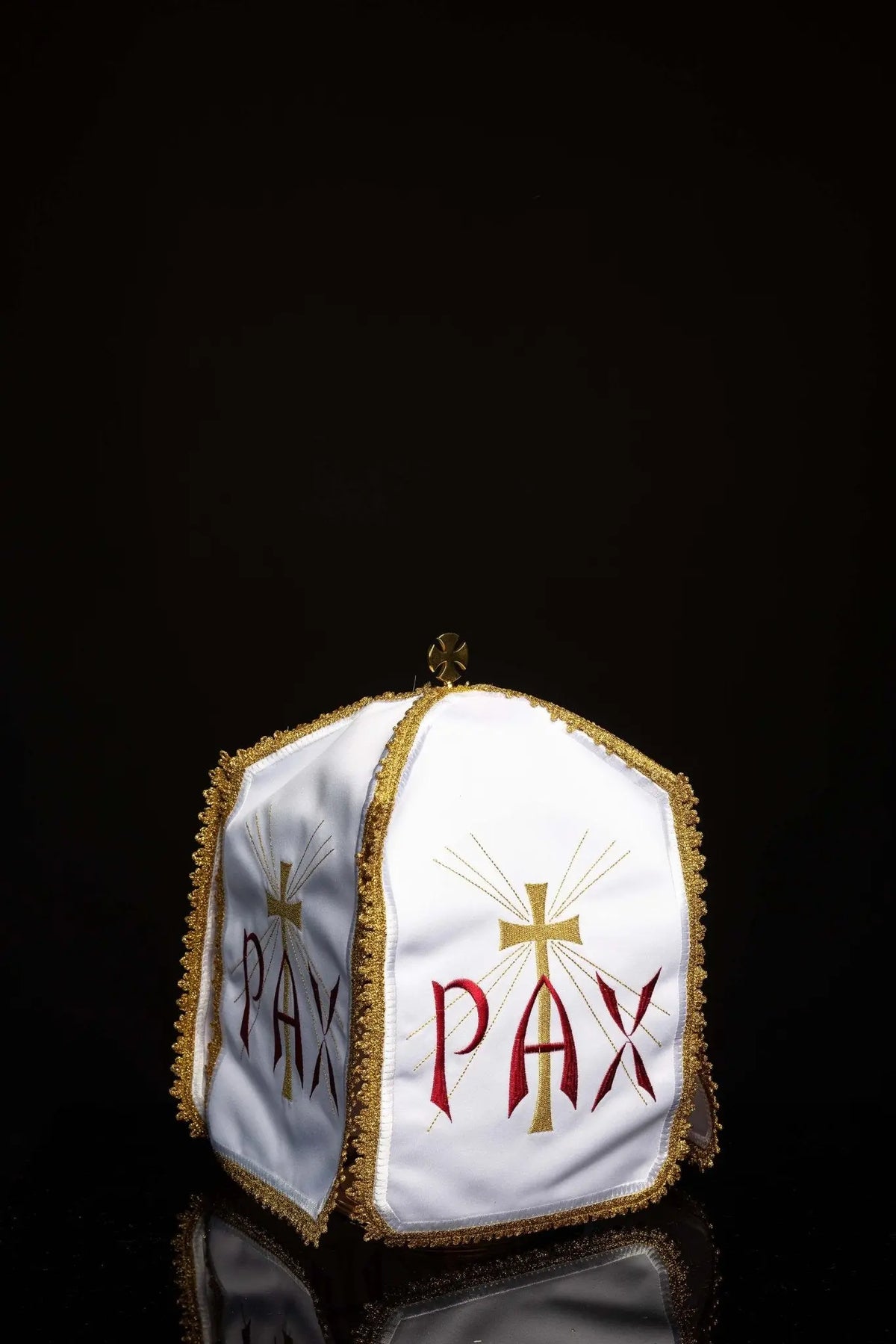
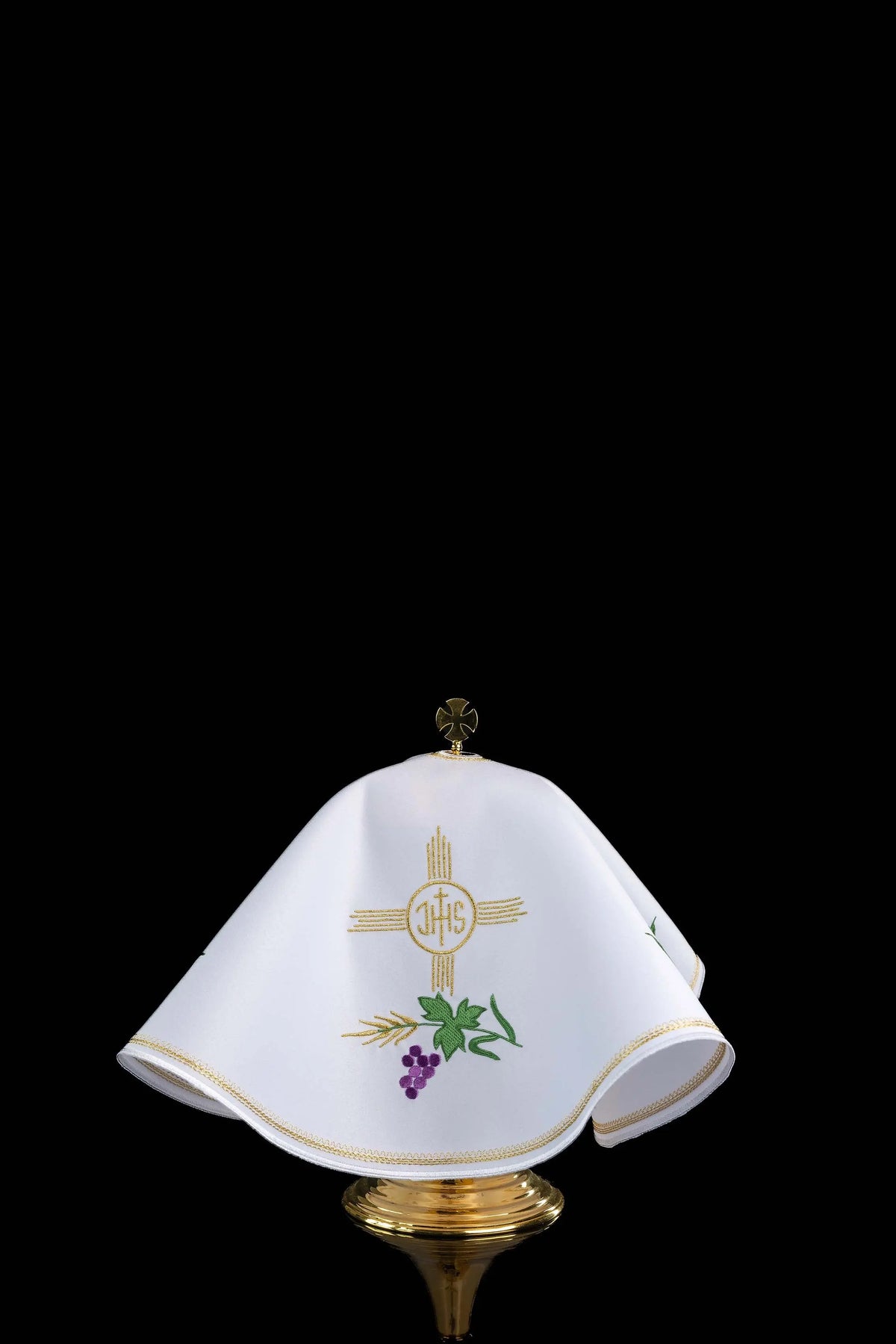
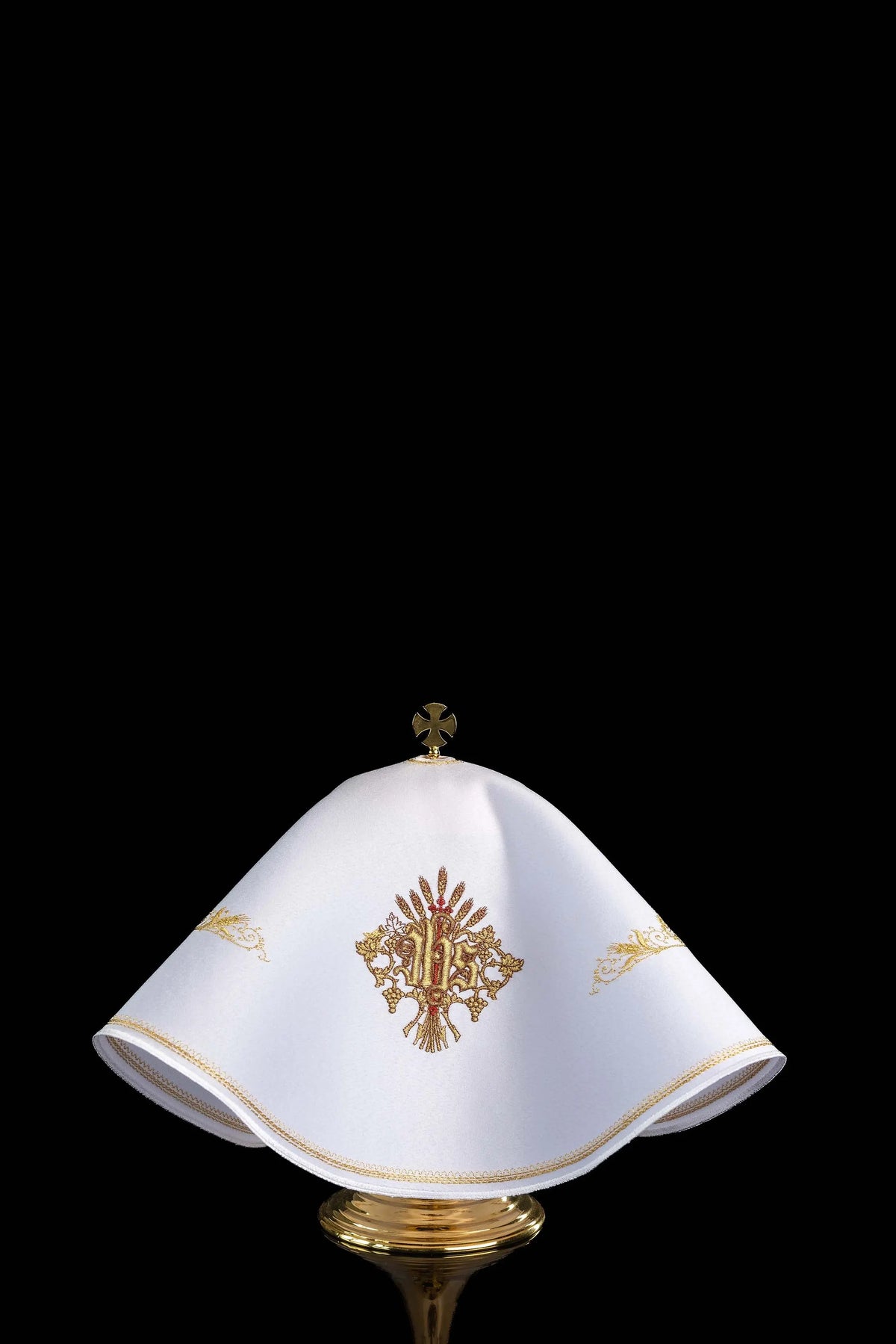
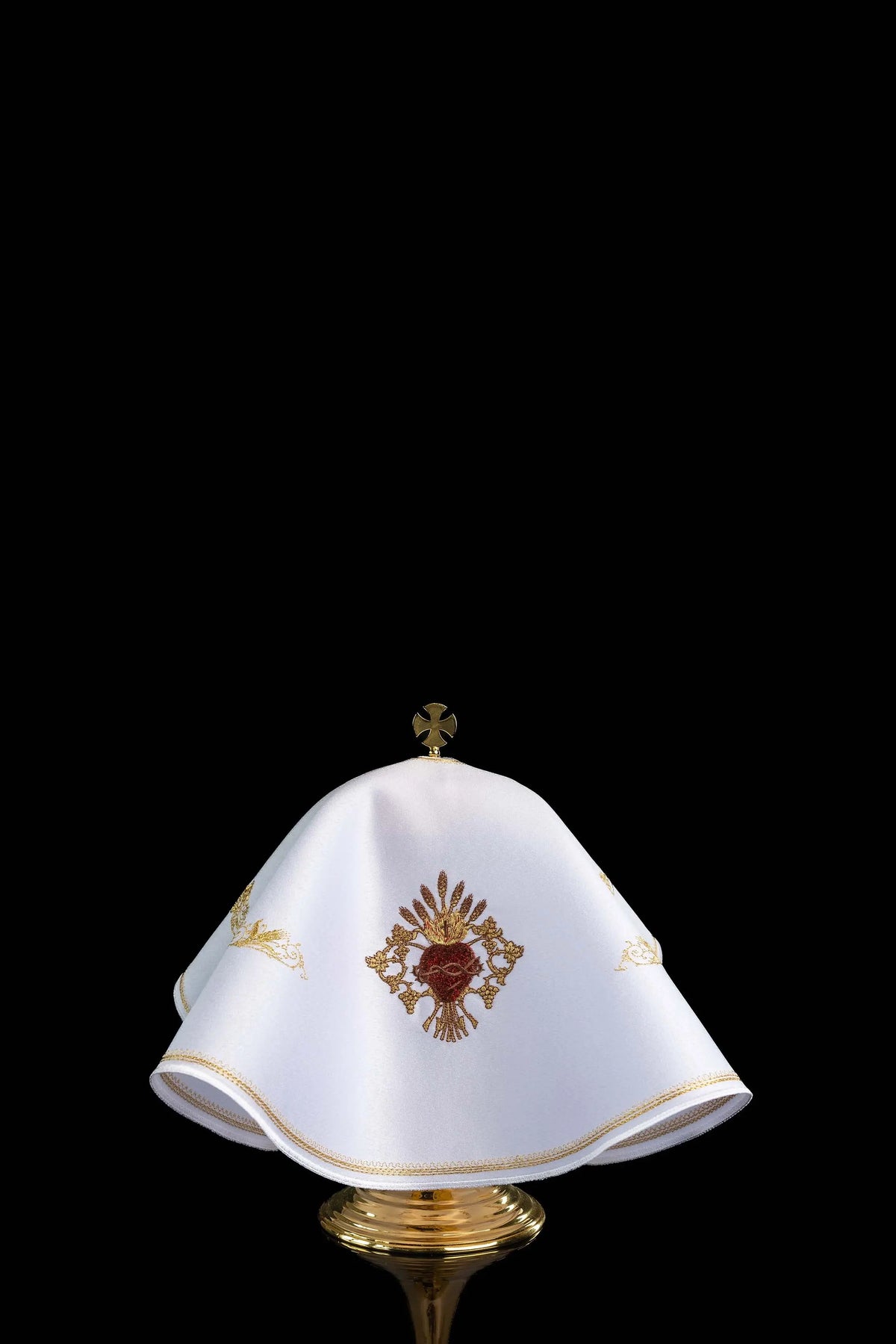
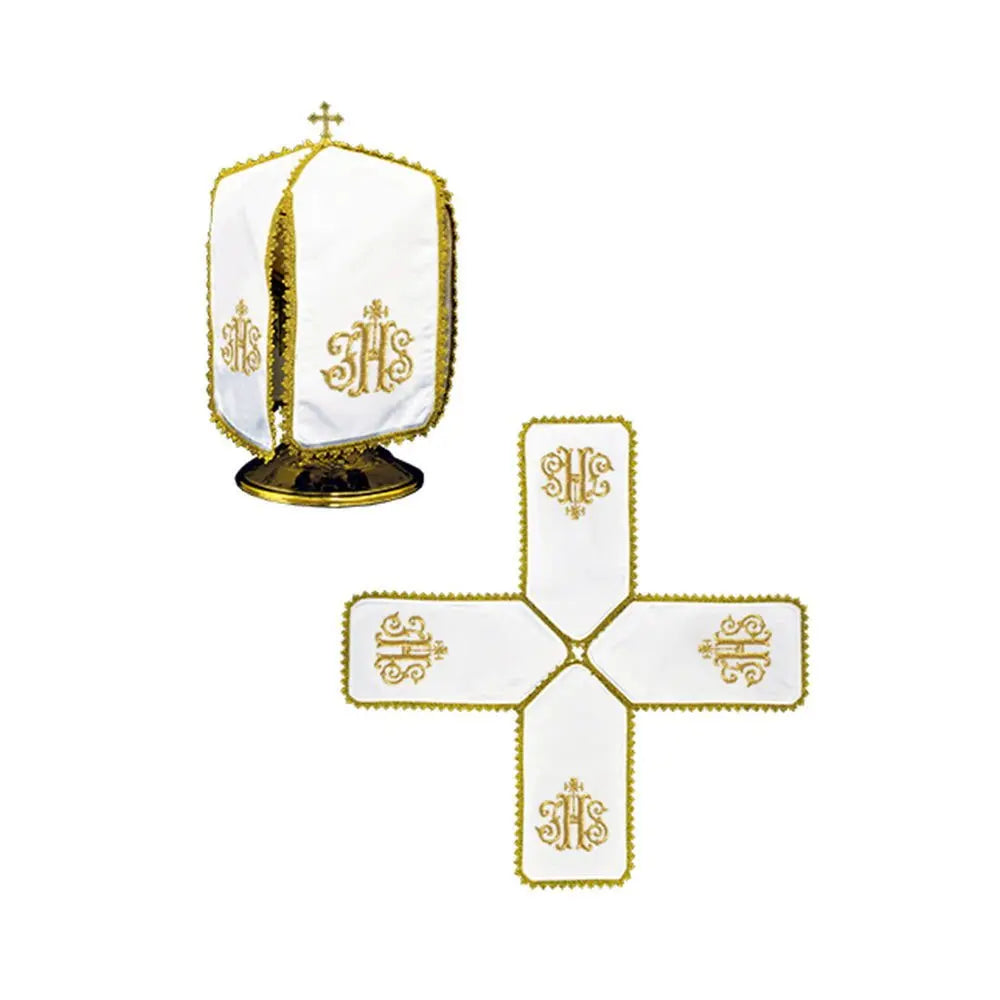
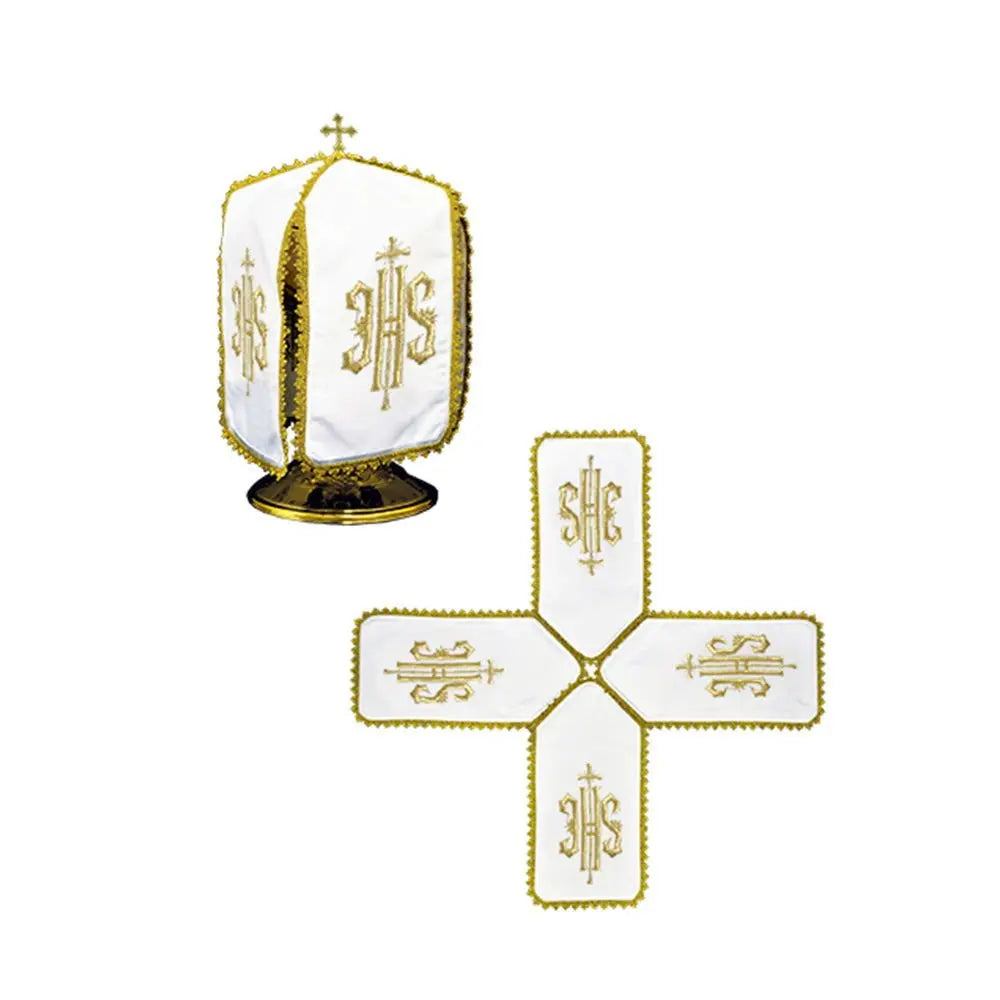
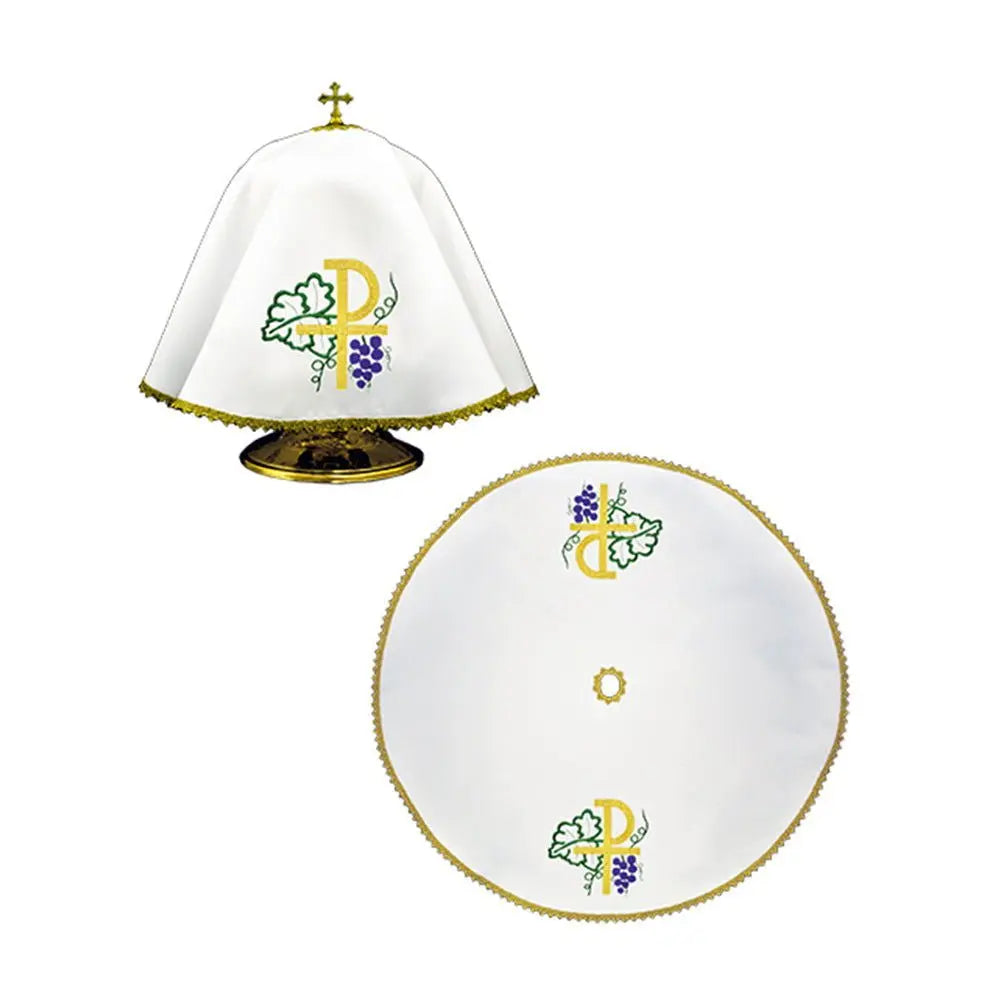
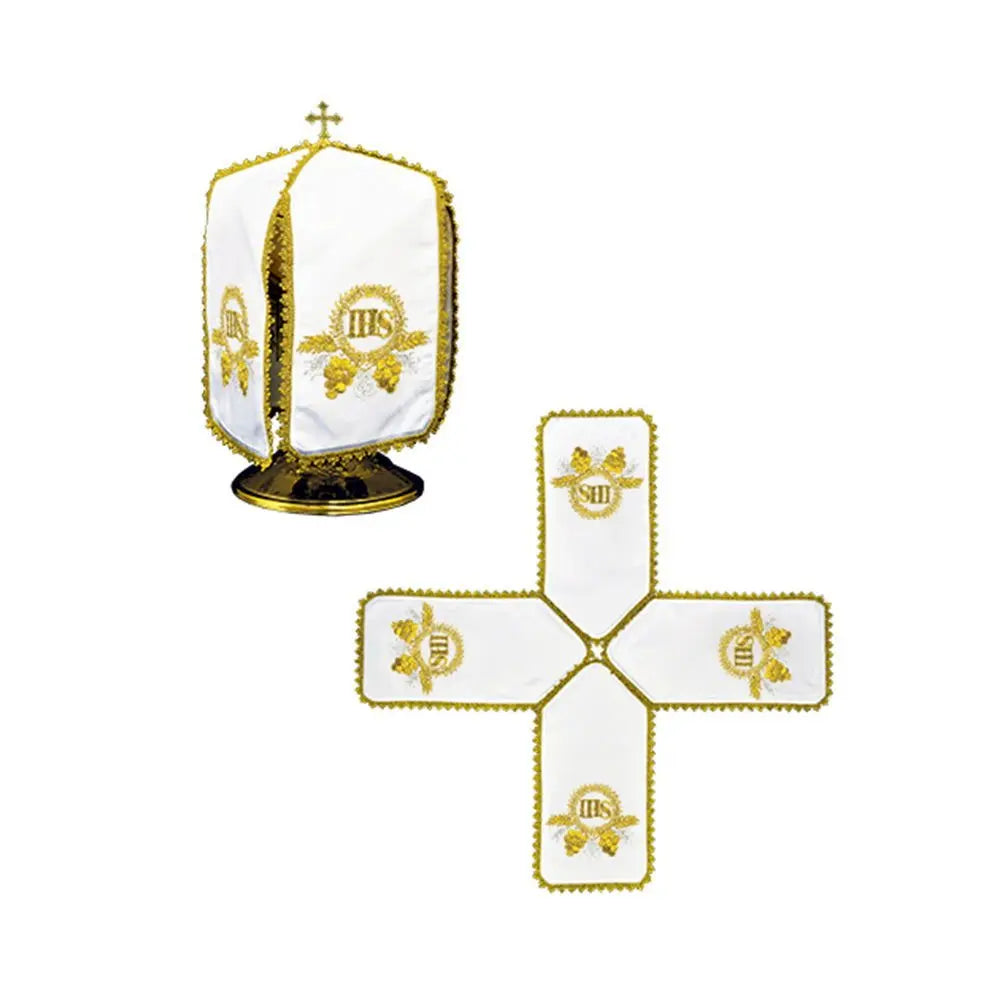
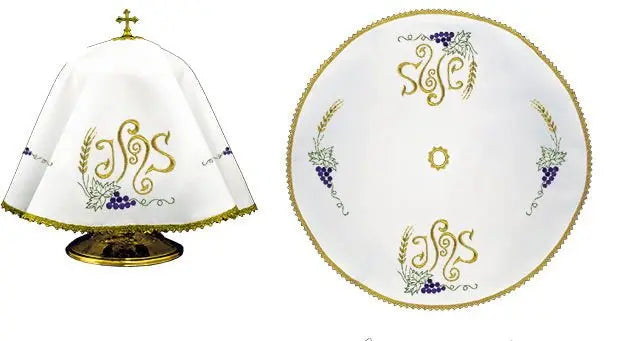
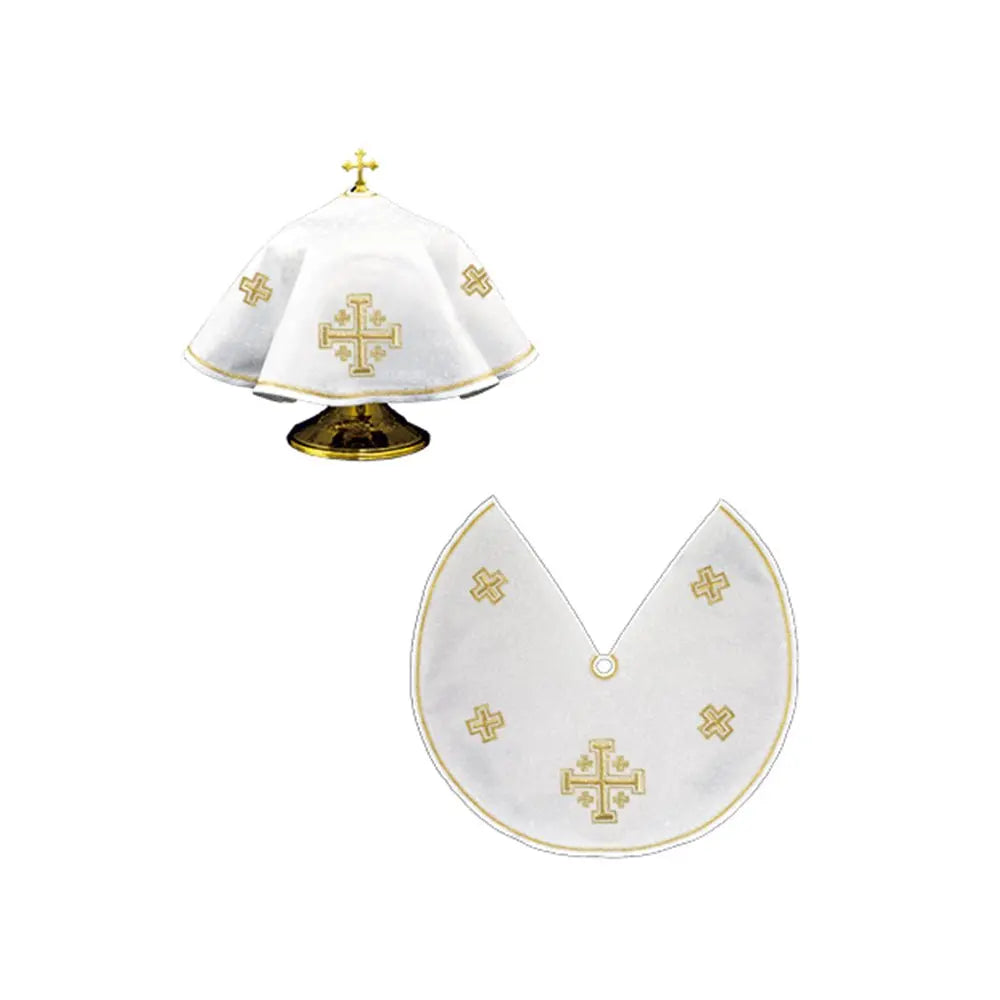
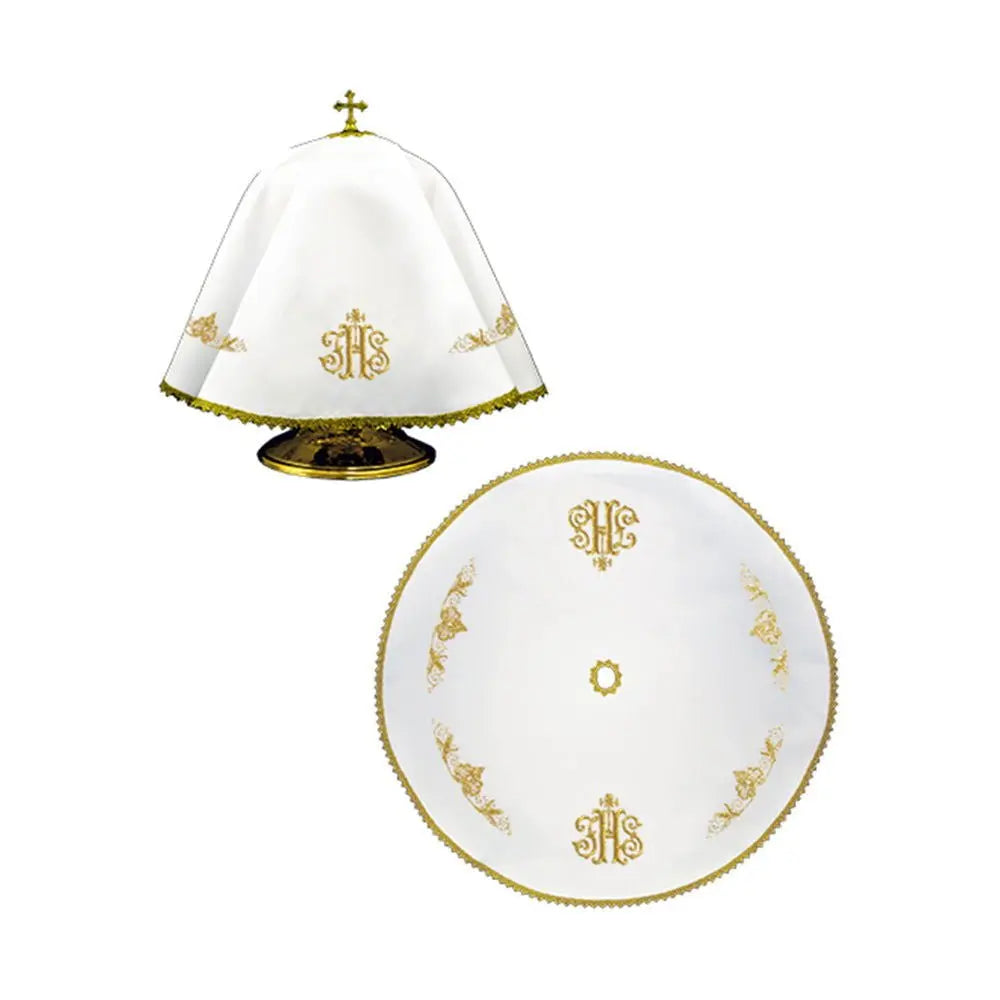
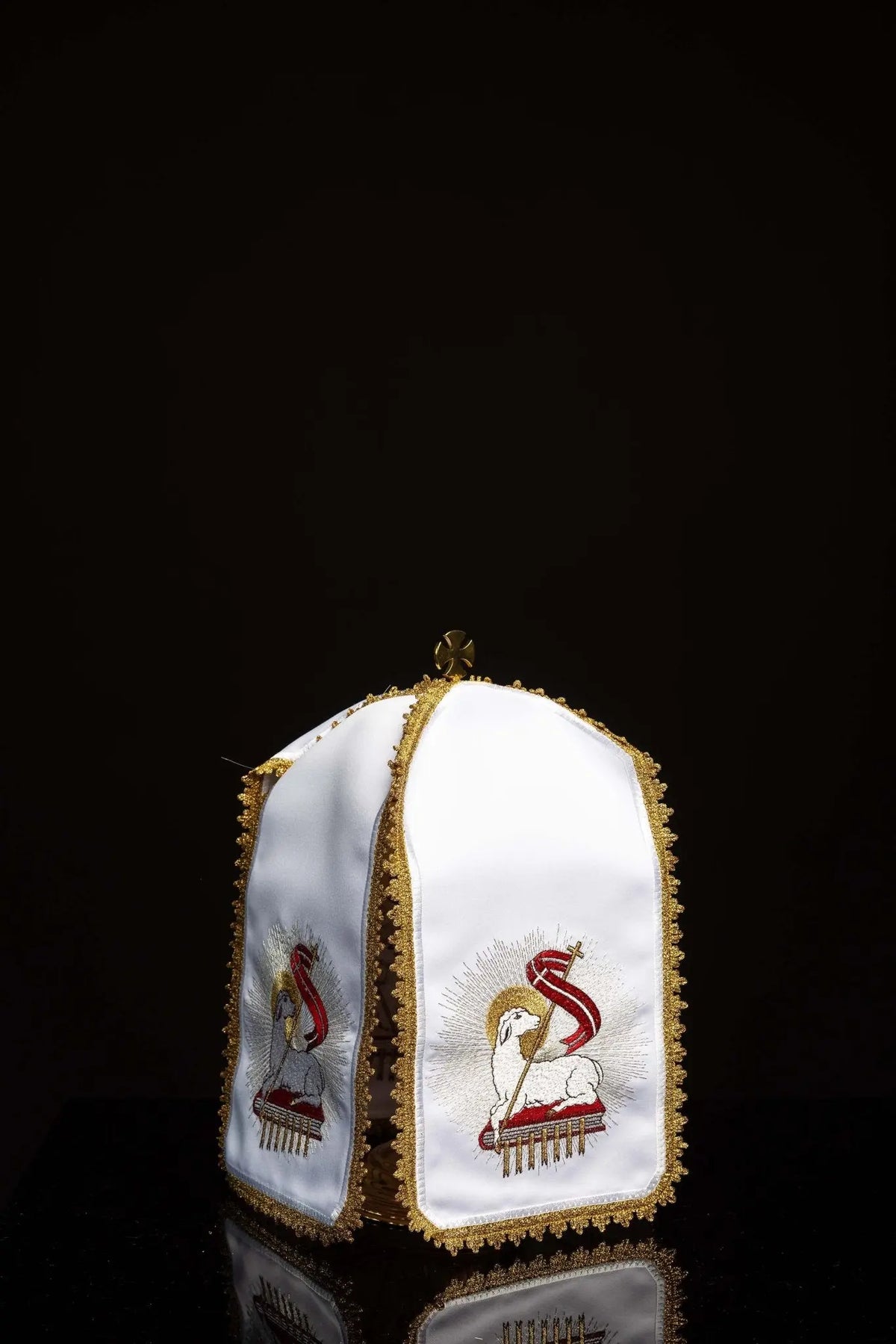
Ciborium veils are reverent liturgical textiles made to cover a ciborium that contains consecrated hosts. In the life of the Church, even the smallest altar accessory has a defined purpose: it protects, identifies and visually honors what is sacred. This collection gathers veils for ciboria in round and fitted forms, with embroidery suited to Eucharistic worship, Marian devotion, solemn feasts and daily parish use. The designs shown in this collection include IHS motifs, Marian embroidery, fish symbols and decorative gold or colored ornamentation, allowing a sacristy to choose a veil that is both practical for the vessel and appropriate for the celebration.
A ciborium veil is not the same item as a humeral veil. The ciborium veil covers the sacred vessel itself, while the humeral veil is worn over the shoulders by the minister during certain liturgical actions. This distinction matters when preparing the sacristy, because each textile serves a different role. The ciborium veil belongs with altar linens and vessel coverings; the humeral veil belongs with processional and Benediction vesture. Choosing the correct textile helps keep the sanctuary orderly, dignified and faithful to Catholic liturgical practice.
What belongs in this collection
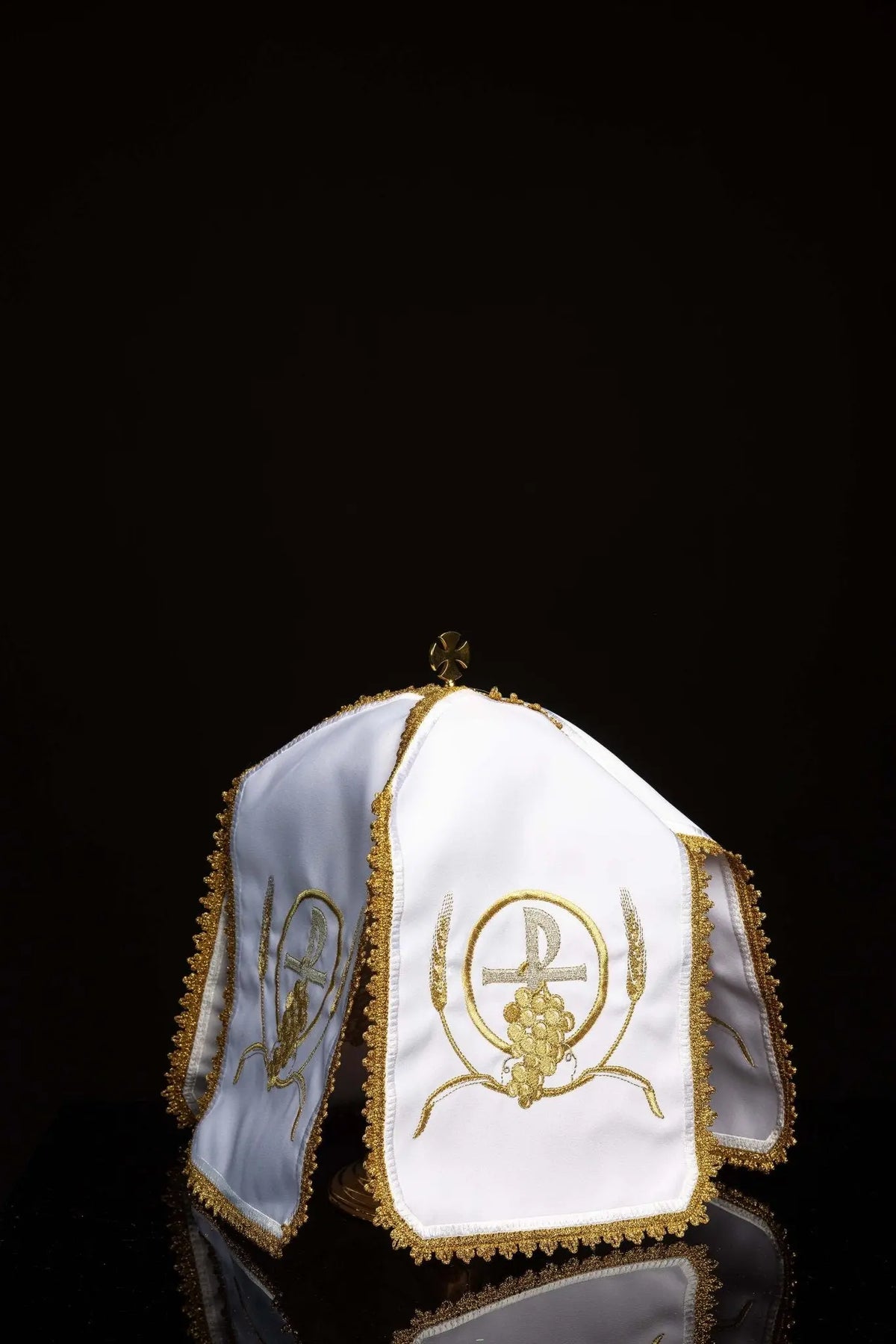
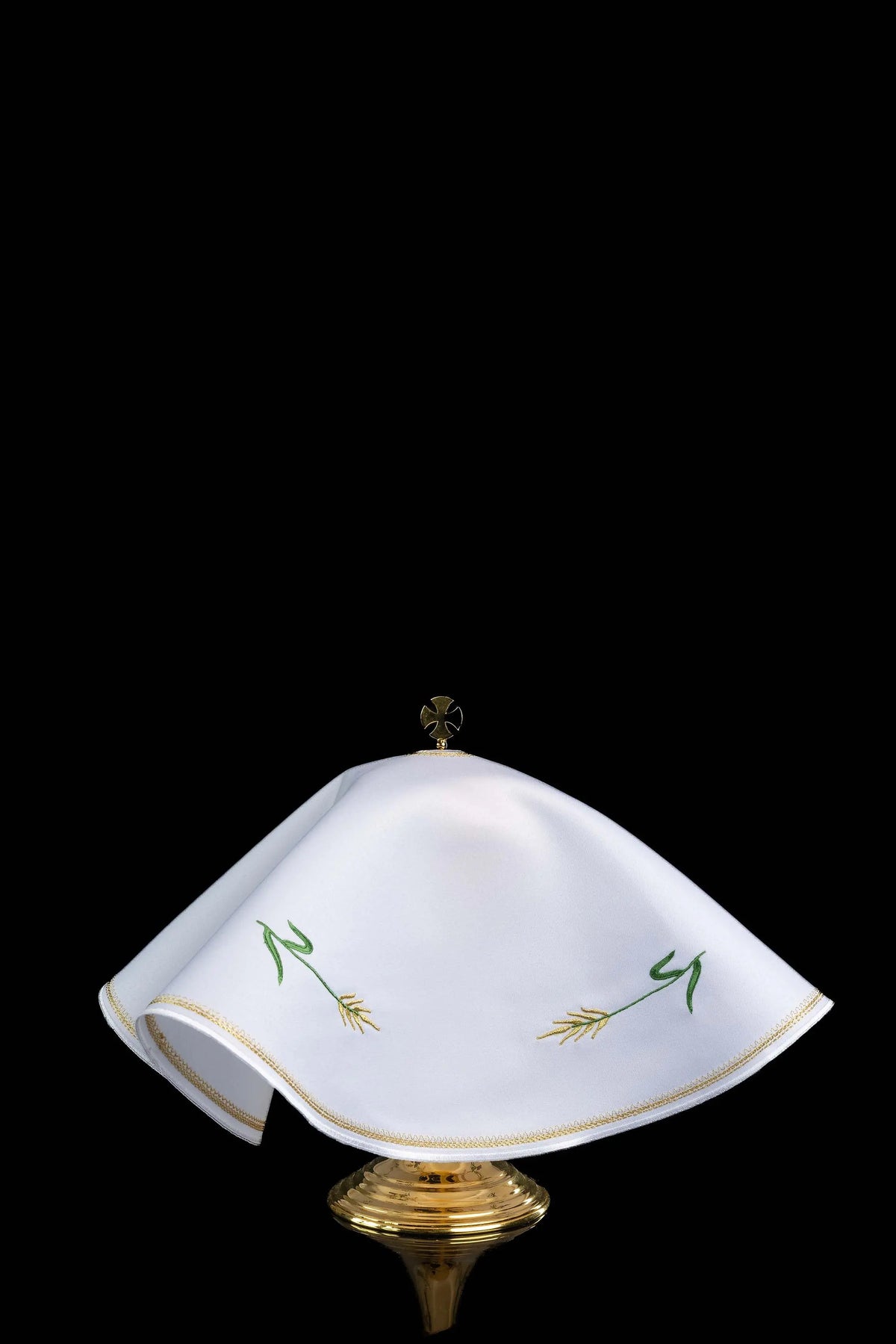
This collection is dedicated to ciborium veils: small sacred covers intended for vessels used to reserve or carry the Blessed Sacrament. Many pieces are designed for round ciboria, with a soft drape that falls evenly over the lid and body of the vessel. Others are more decorative, with embroidery placed prominently on the top or front so that the Eucharistic symbol remains visible when the ciborium is placed on the credence table, altar or in the tabernacle area according to local practice.
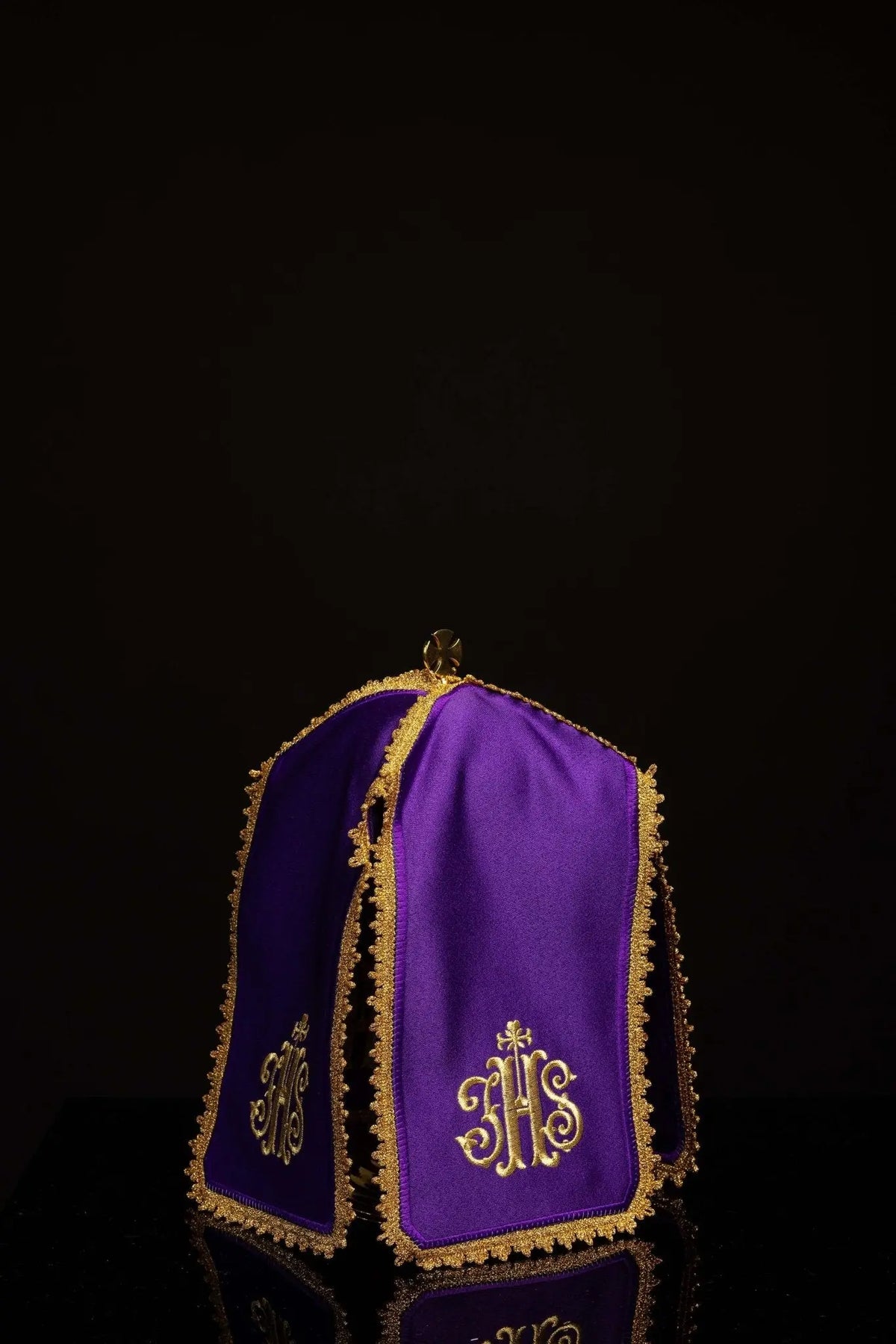
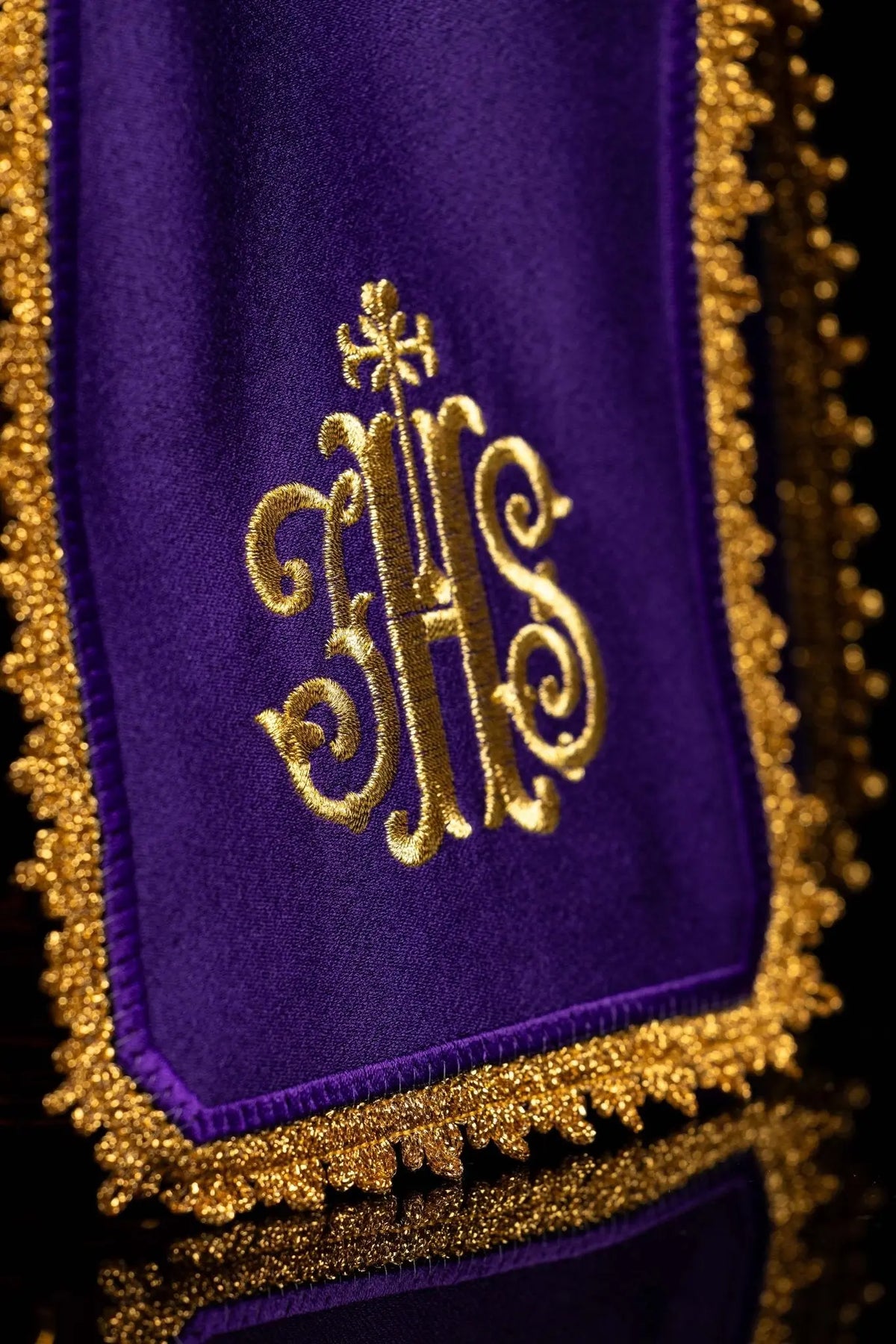
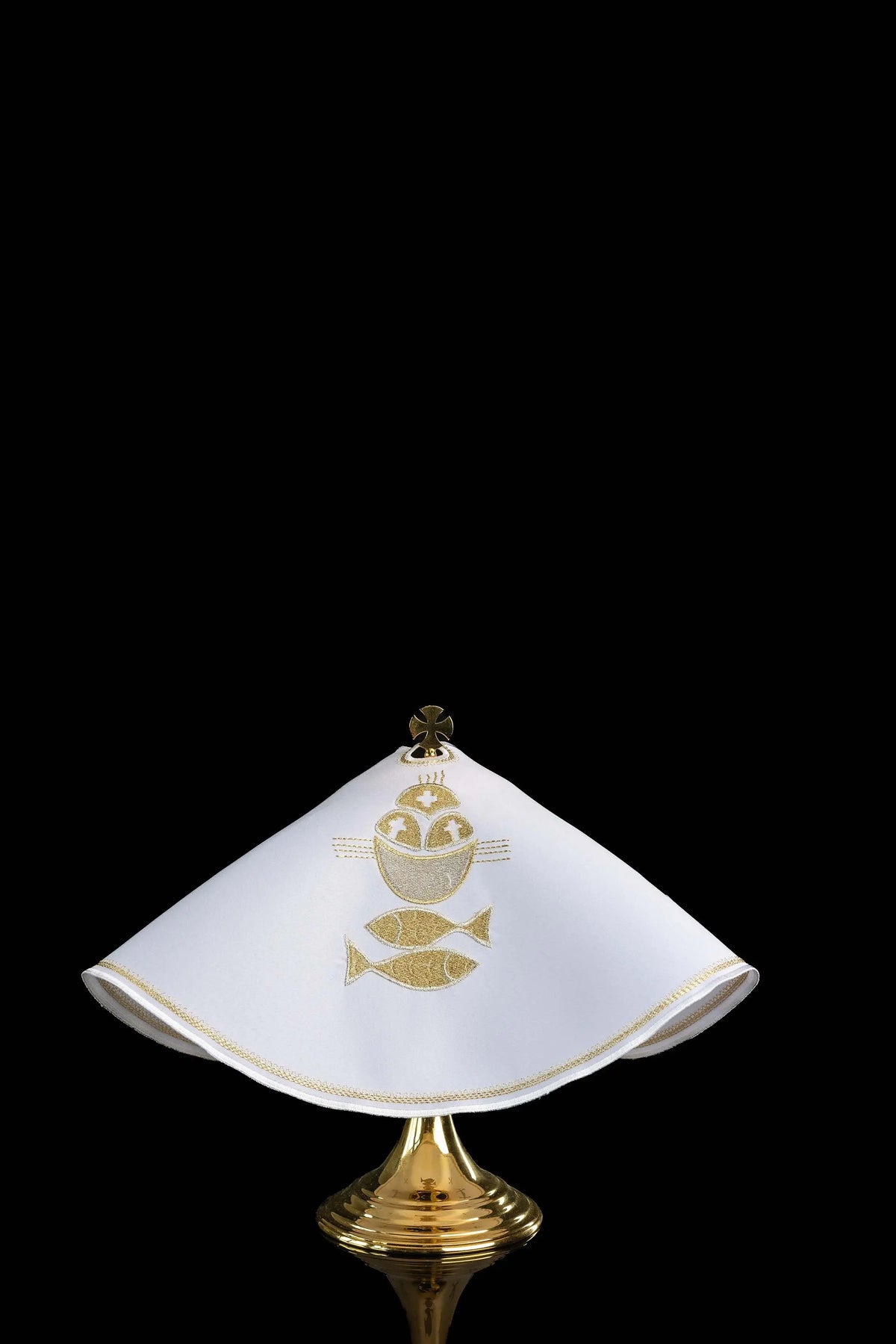
The collection includes veils with classic Eucharistic imagery. The IHS monogram is especially common because it points directly to the Holy Name of Jesus and the Eucharistic presence. Marian motifs may be chosen for churches dedicated to the Blessed Virgin Mary, for Marian feasts, or for a sacristy that coordinates altar textiles with Marian vestments. Fish embroidery is another ancient Christian symbol that can be appropriate for Eucharistic and catechetical settings. Gold decoration is often selected for solemn celebrations, while blue, white or other colored accents can help match a parish’s existing liturgical textiles.
Liturgical use and symbolism
The primary purpose of a ciborium veil is to express reverence for the Blessed Sacrament. When a ciborium contains consecrated hosts, covering the vessel is a visual sign that what is held within is not ordinary bread but the Body of Christ. The veil gives the vessel a dignified appearance and helps distinguish it from empty or non-liturgical containers in the sacristy. In this sense, the veil is both symbolic and practical: it protects the dignity of the vessel while also communicating sacred use.
In many churches, ciborium veils are used in connection with the tabernacle, the preparation of the altar, Eucharistic processions within the church, or the careful handling of the ciborium before and after Mass. Local customs may vary, but the underlying intention remains the same: to treat the Blessed Sacrament with visible care. A well-chosen veil helps the clergy, sacristans and altar servers maintain a consistent visual language of reverence throughout the liturgy.
Because ciborium veils are closely connected to altar preparation, they naturally sit beside other sanctuary textiles. Parishes often coordinate them with altar cloths, altar linens, chalice veils and chalice pall sets. The pieces do not have to be identical, but harmony in fabric, embroidery color and motif helps the sanctuary look intentional rather than assembled from unrelated items.
How to choose a ciborium veil
The first point to consider is the shape and size of the ciborium. A round ciborium usually needs a veil with enough width to fall naturally over the sides without pulling or exposing the lid. The veil should cover the vessel gracefully while still being easy to remove when required. A veil that is too small can look accidental; a veil that is too large may interfere with handling. When possible, compare the diameter and height of the vessel with the proportions of the veil before ordering.
The second point is the liturgical purpose. For regular parish use, a white, ecru or gold-accented ciborium veil is often the most versatile, because it works well for solemnities, feasts of the Lord, Eucharistic devotion and many ordinary celebrations. A Marian design is especially suitable for churches, chapels or religious communities with a Marian dedication. A richly embroidered IHS veil can be reserved for major feasts, First Communion Masses, Corpus Christi, Eucharistic adoration settings or other celebrations where the Eucharistic theme is central.
The third point is coordination. If the sanctuary already uses embroidered altar textiles, choose a ciborium veil that shares a similar motif, thread color or fabric tone. A gold IHS veil pairs naturally with festive gold chasubles and gold-accented altar linens. A Marian veil can be coordinated with Marian chasubles or blue-accented church textiles. A simpler veil may be preferable for a chapel where the liturgical style is understated and the focus is on quiet dignity.
Materials, embroidery and finish
A ciborium veil should be beautiful, but it must also be usable. The fabric should drape softly, resist awkward creasing and remain stable when placed over the vessel. Embroidery should be positioned so that the symbol is readable and balanced. The edge finish matters as well: a carefully finished border helps the veil keep its shape and gives the vessel a clean, dignified outline.
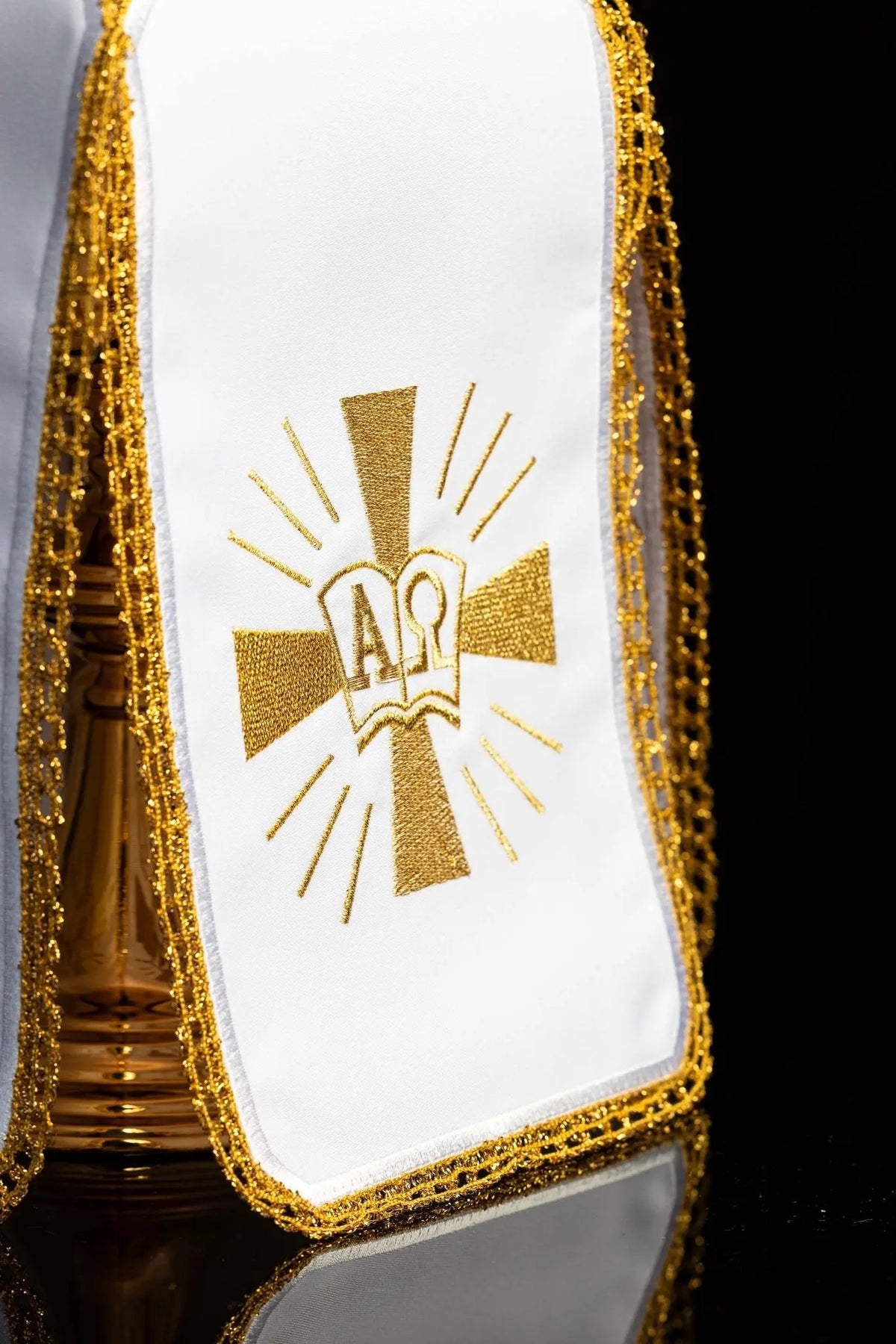
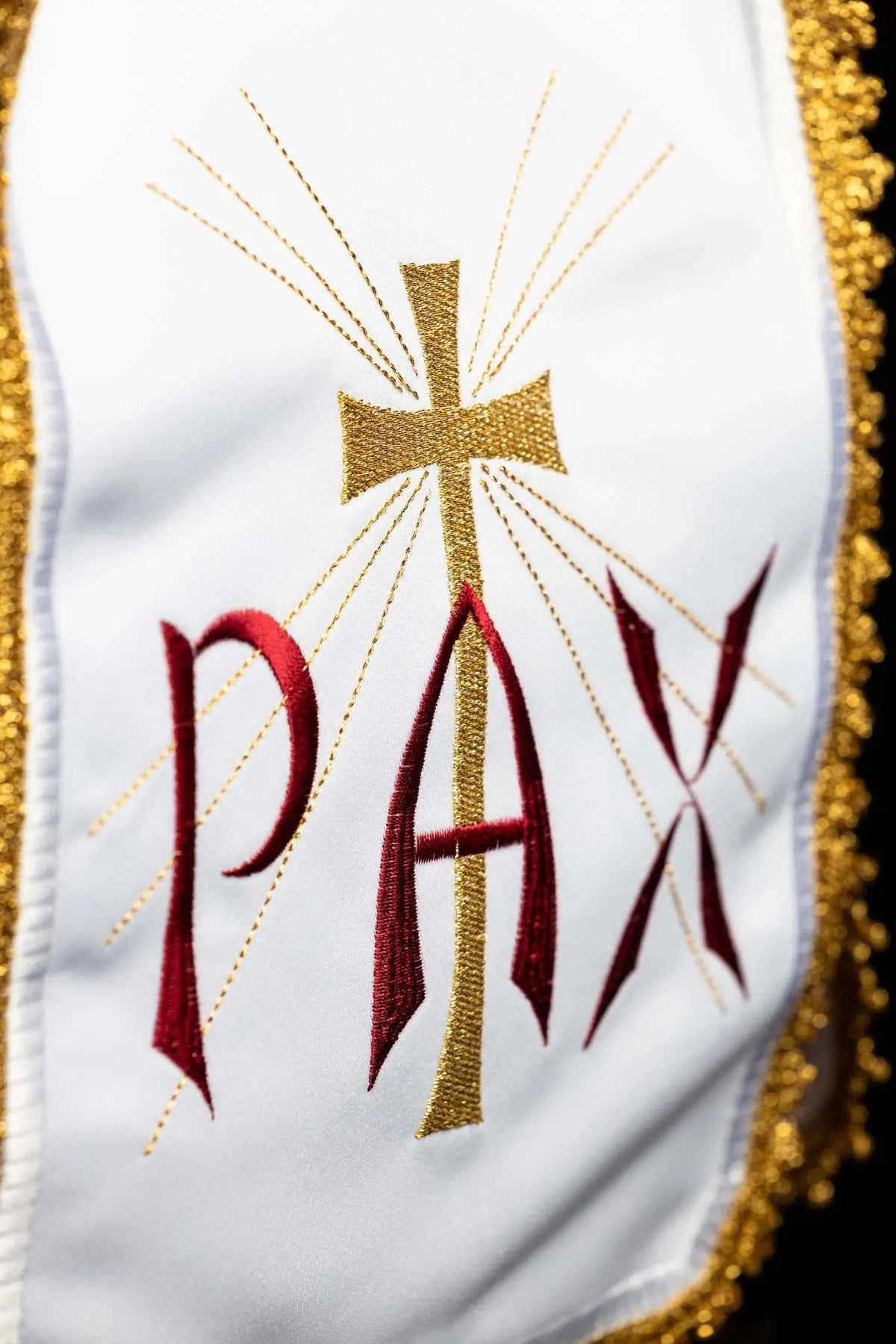
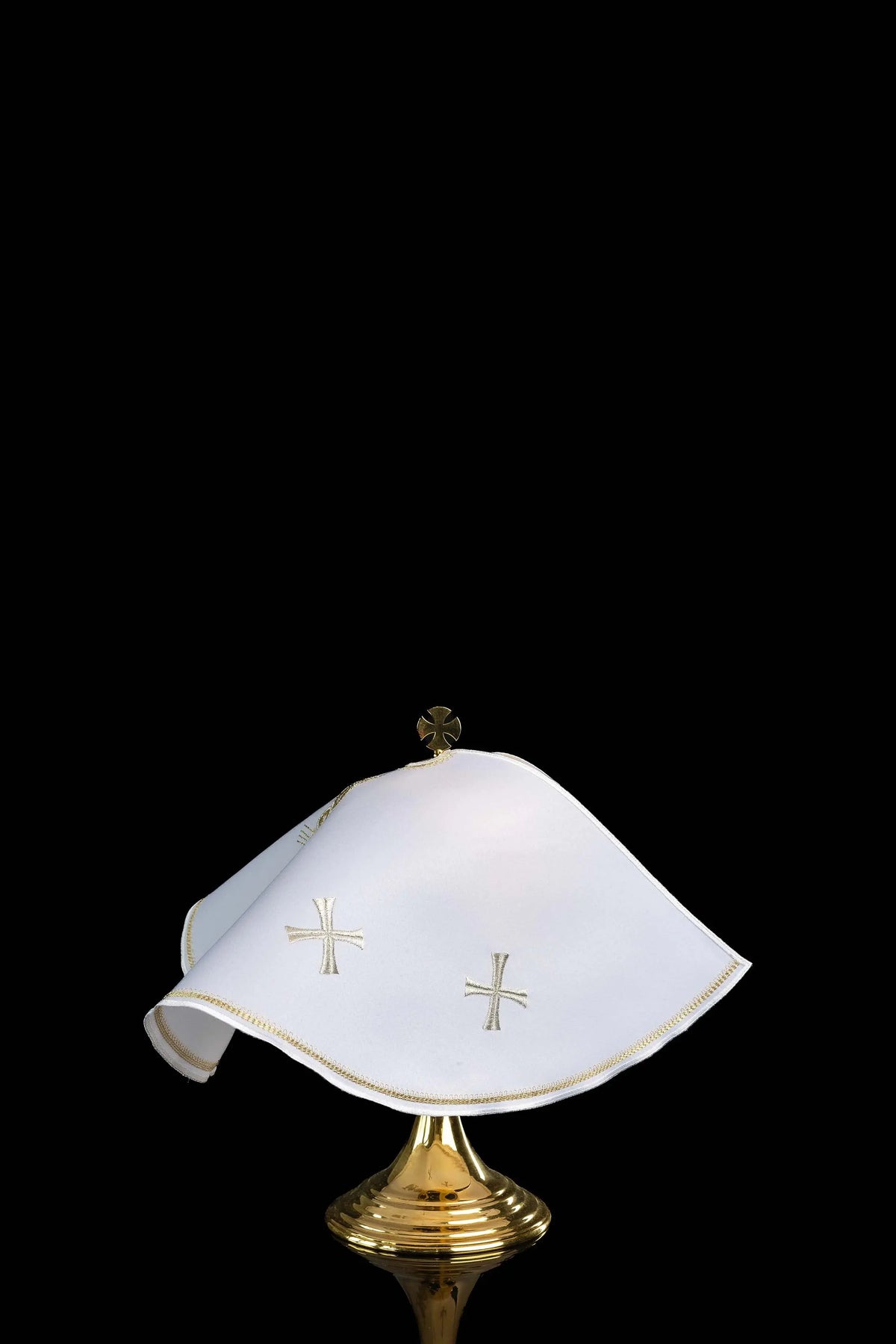
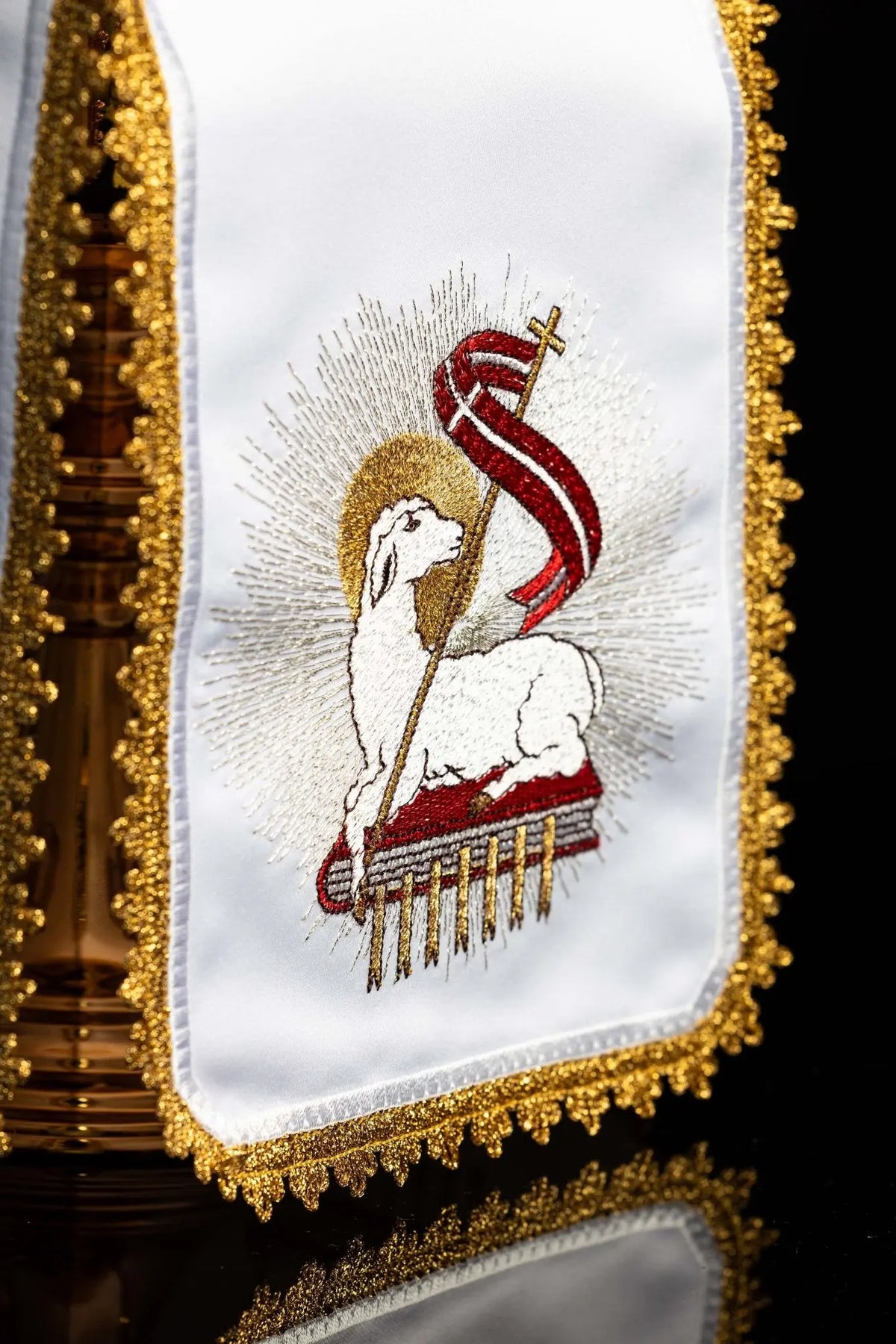
Embroidered details in this collection may include gold thread, colored thread, Marian ornamentation, IHS emblems, fish motifs and decorative borders. Gold embroidery is frequently chosen for its association with solemnity and Eucharistic celebration. Colored embroidery can give a veil a more specific devotional character, especially when the motif is Marian or connected to a particular church dedication. For daily use, a balanced design with moderate ornamentation may be the most practical option, while more elaborate embroidery can be reserved for high feasts and special celebrations.
When evaluating a ciborium veil, look for three practical qualities: a clean central motif, a fabric that falls evenly, and workmanship that can withstand repeated careful handling. Sacristans often handle these textiles frequently, so durability and ease of care are important. A veil should not be so fragile that it becomes difficult to use, but it should still express the dignity of the sacred vessel it covers.
Relationship to chalice veils and other altar textiles
Ciborium veils and chalice veils are related, but they cover different sacred vessels. A chalice veil is used with the chalice and paten, traditionally as part of the prepared chalice set. A ciborium veil is used for the ciborium, especially when it contains consecrated hosts. Both textiles express reverence, but their proportions and use are different. A parish that needs a full set of coordinated vessel textiles should review both this collection and the chalice veils collection so the sacristy has the correct item for each vessel.
For complete altar preparation, ciborium veils may also be chosen alongside corporals, purificators, palls and other altar linens. The chalice pall sets collection is useful when the parish wants the pall and chalice-related linens to coordinate with the embroidery style of the vessel coverings. Larger sanctuary textiles, such as altar tablecloths and superfrontals, serve a different visual role, yet they can still be matched through color and ornamentation for solemn feasts.
Color and occasion
Ciborium veils are often selected in tones that coordinate with the wider liturgical environment. White, ecru and gold are highly versatile because they are suitable for solemnities, Eucharistic devotion, Christmas, Easter, Marian feasts and many parish celebrations. Gold embroidery adds brightness and festive dignity without requiring the entire textile to be gold. Marian blue or blue-accented embroidery is appropriate for Marian contexts, while IHS designs are suitable throughout the year because the symbol is directly Eucharistic and Christological.
For Corpus Christi and Eucharistic processions, a parish may coordinate ciborium veils with processional and Eucharistic textiles from the Corpus Christi collection. When a celebration places particular emphasis on the Blessed Sacrament, matching the ciborium veil with the chasuble, cope, humeral veil, altar cloth and chalice textiles helps the whole sanctuary speak with one visual language. The aim is not excess decoration, but clear and reverent order.
For sacristies, parishes and chapels
A well-equipped sacristy usually benefits from more than one ciborium veil. One simple veil may be kept for regular use, while a more ornate veil can be reserved for solemn celebrations. Churches with multiple ciboria may need veils in different sizes or matching designs for a consistent appearance. Chapels, convents and religious houses may prefer understated designs that are easy to maintain, while large parishes may choose richer embroidery for principal liturgies.
When replacing older veils, compare the new piece not only with the ciborium but also with the sacristy’s existing altar textiles. A new ciborium veil should fit naturally into the larger set of linens and vessel coverings. If the parish already uses a recurring IHS motif, a matching IHS ciborium veil will look intentional. If the sanctuary has Marian imagery, a Marian veil can connect the vessel covering with the dedication of the church or chapel. For broader coordination, the parent altar cloths category offers related textiles for the altar and sanctuary.
Care and storage
Ciborium veils should be handled with clean, dry hands and stored flat or gently folded according to the fabric and embroidery. Avoid crushing raised embroidery or placing heavy objects on top of the veil. If the veil includes metallic thread or decorative edging, it should be protected from moisture and unnecessary friction. Proper storage helps preserve the shape of the textile and keeps the embroidered motif presentable for liturgical use.
Cleaning should be approached carefully. The safest method depends on the fabric, lining and embroidery, so the care guidance supplied with the individual item should be followed. In general, harsh chemicals, vigorous rubbing and high heat are not suitable for embroidered liturgical textiles. For delicate pieces, professional cleaning may be preferable. Regular sacristy care is usually more about prevention than frequent washing: protect the veil from candle wax, dust, damp storage and contact with rough surfaces.
Frequently Asked Questions (FAQ)
What is a ciborium veil used for?
A ciborium veil is used to cover a ciborium, especially when the vessel contains consecrated hosts. It is a sign of reverence for the Blessed Sacrament and helps distinguish the sacred vessel from ordinary containers or empty liturgical vessels.
Is a ciborium veil the same as a humeral veil?
No. A ciborium veil covers the ciborium itself. A humeral veil is a much larger vestment worn over the shoulders by the minister during certain rites, such as Benediction or processions involving the Blessed Sacrament.
How do I choose the right size ciborium veil?
Choose a veil that suits the diameter and height of the ciborium. It should fall smoothly over the vessel without slipping, bunching or leaving the lid exposed. Round ciboria usually need a veil with enough width for an even drape on all sides.
Which motifs are suitable for ciborium veils?
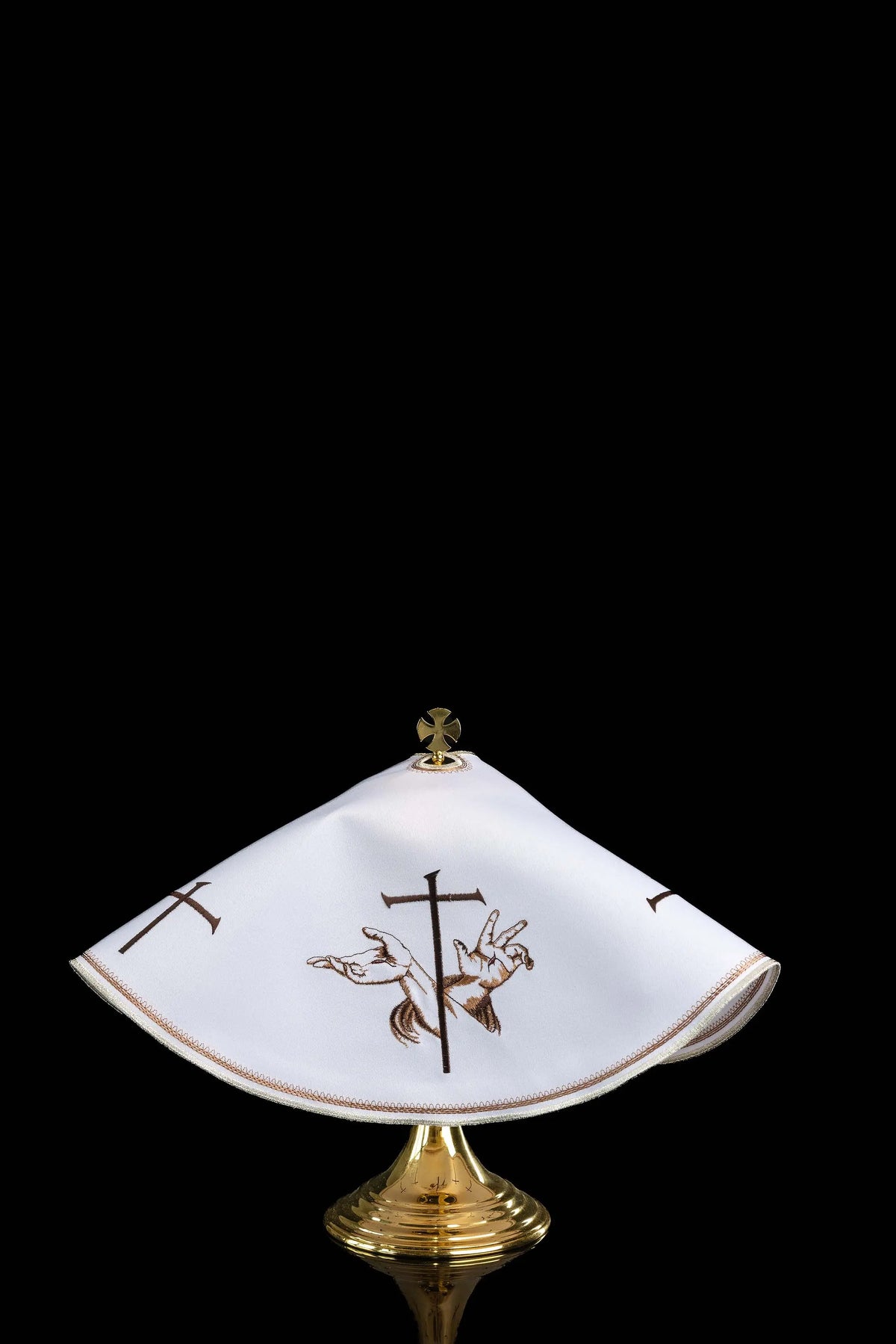
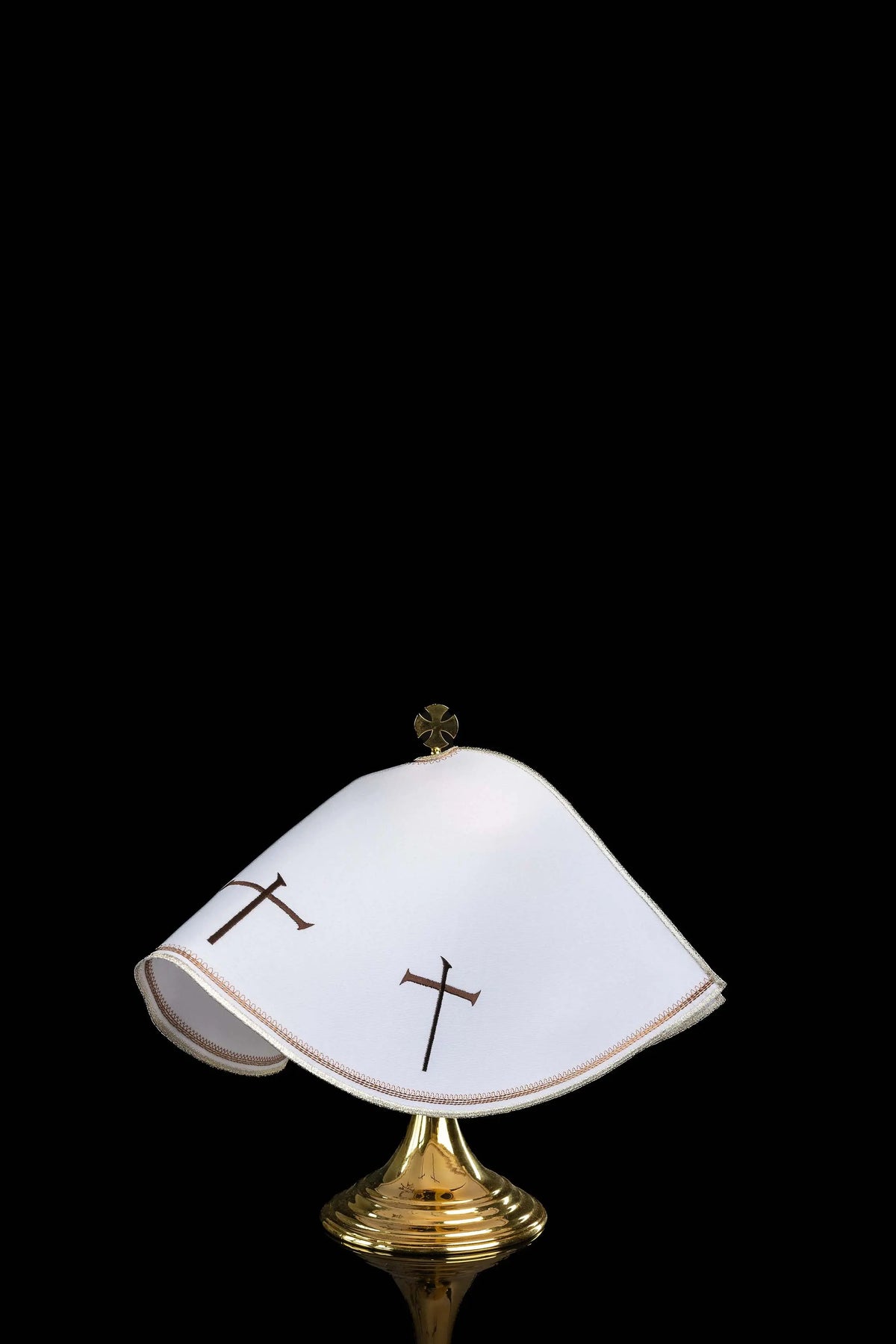
IHS embroidery is one of the most appropriate choices because it refers directly to the Holy Name of Jesus and Eucharistic devotion. Marian motifs, fish symbols, crosses and gold ornamentation can also be suitable depending on the church, feast or devotional setting.
Can ciborium veils be coordinated with other altar textiles?
Yes. Many parishes coordinate the ciborium veil with chalice veils, pall sets, altar linens and larger altar cloths. Matching every textile is not required, but consistent colors, embroidery and symbols help the sanctuary appear unified and carefully prepared.