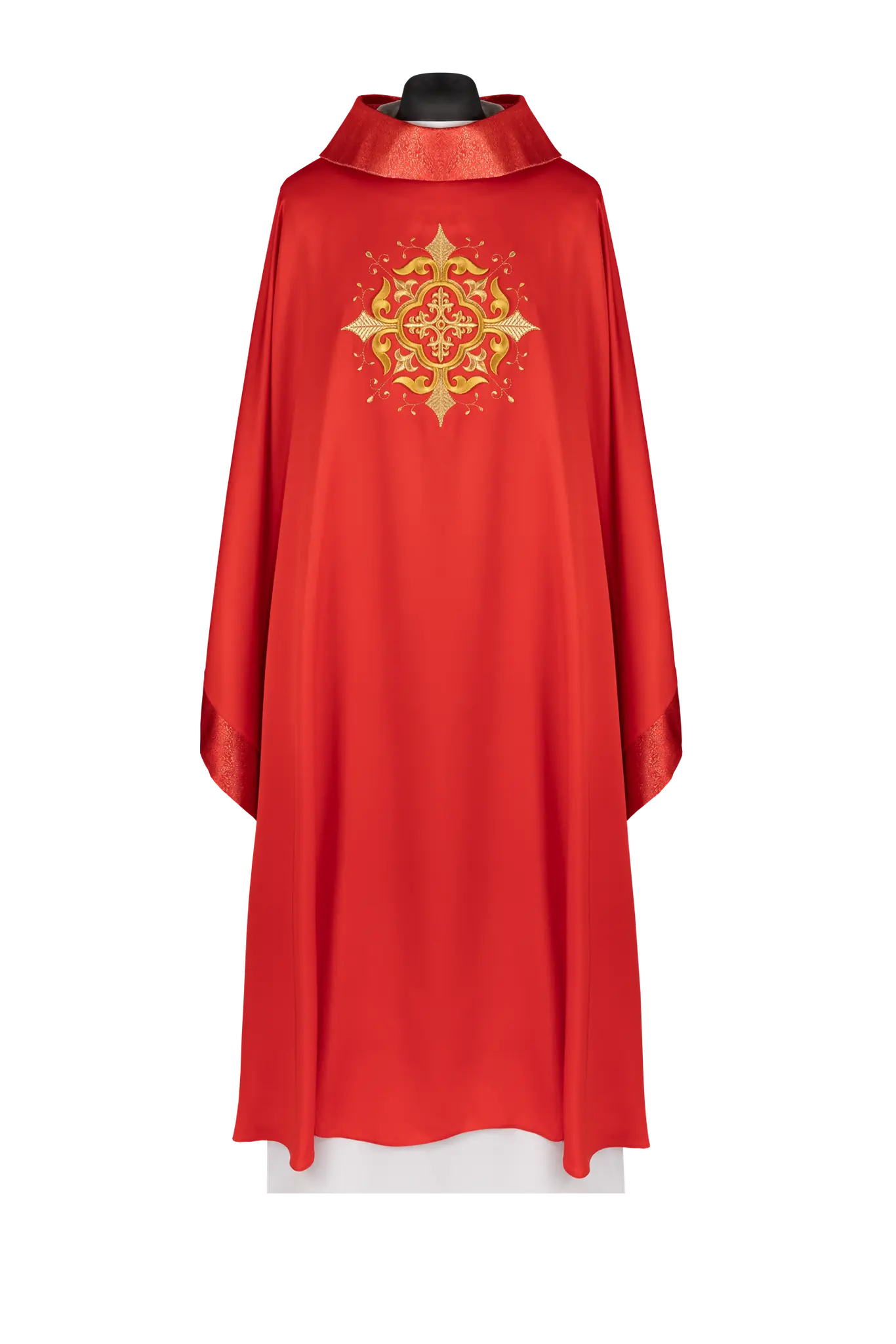
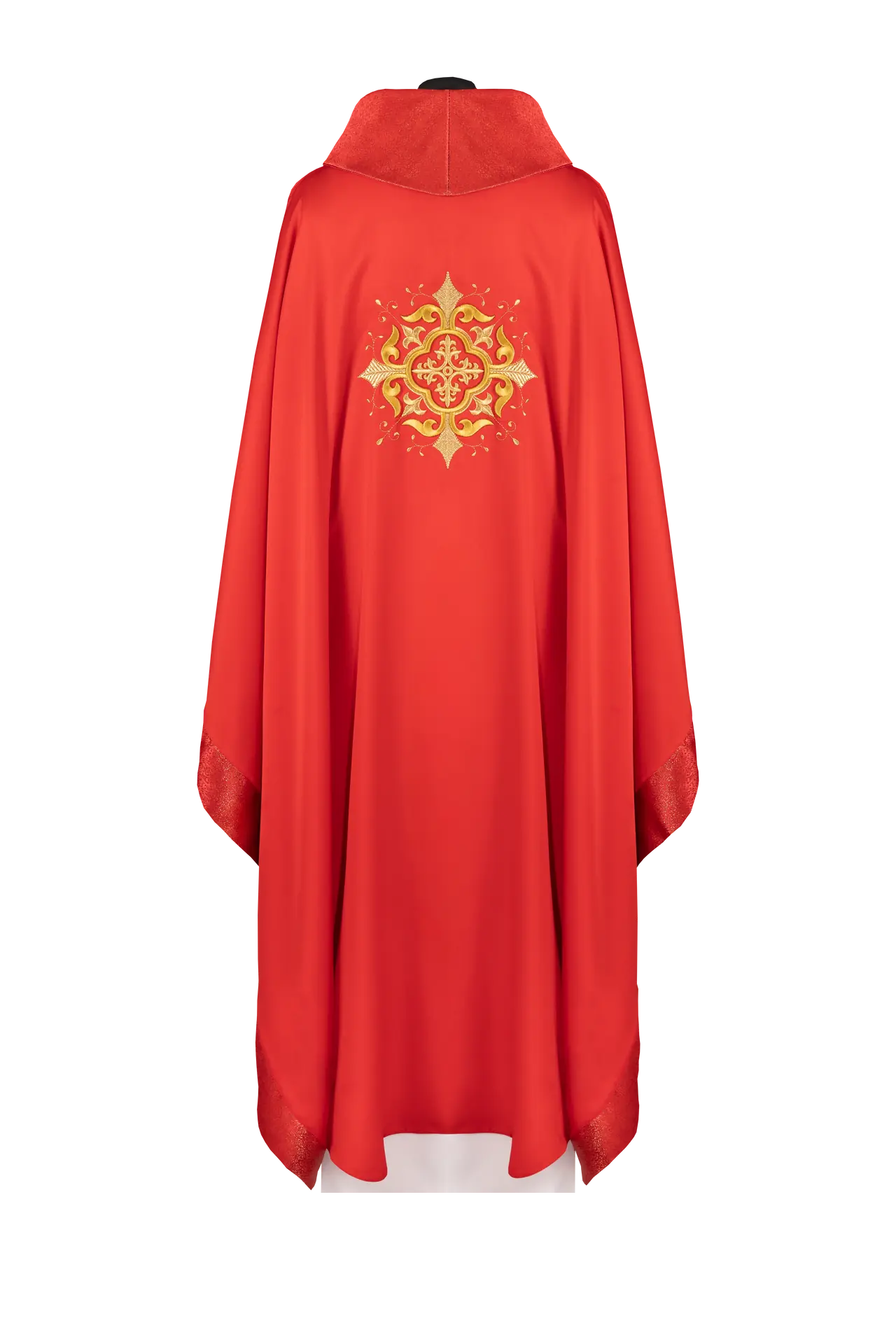
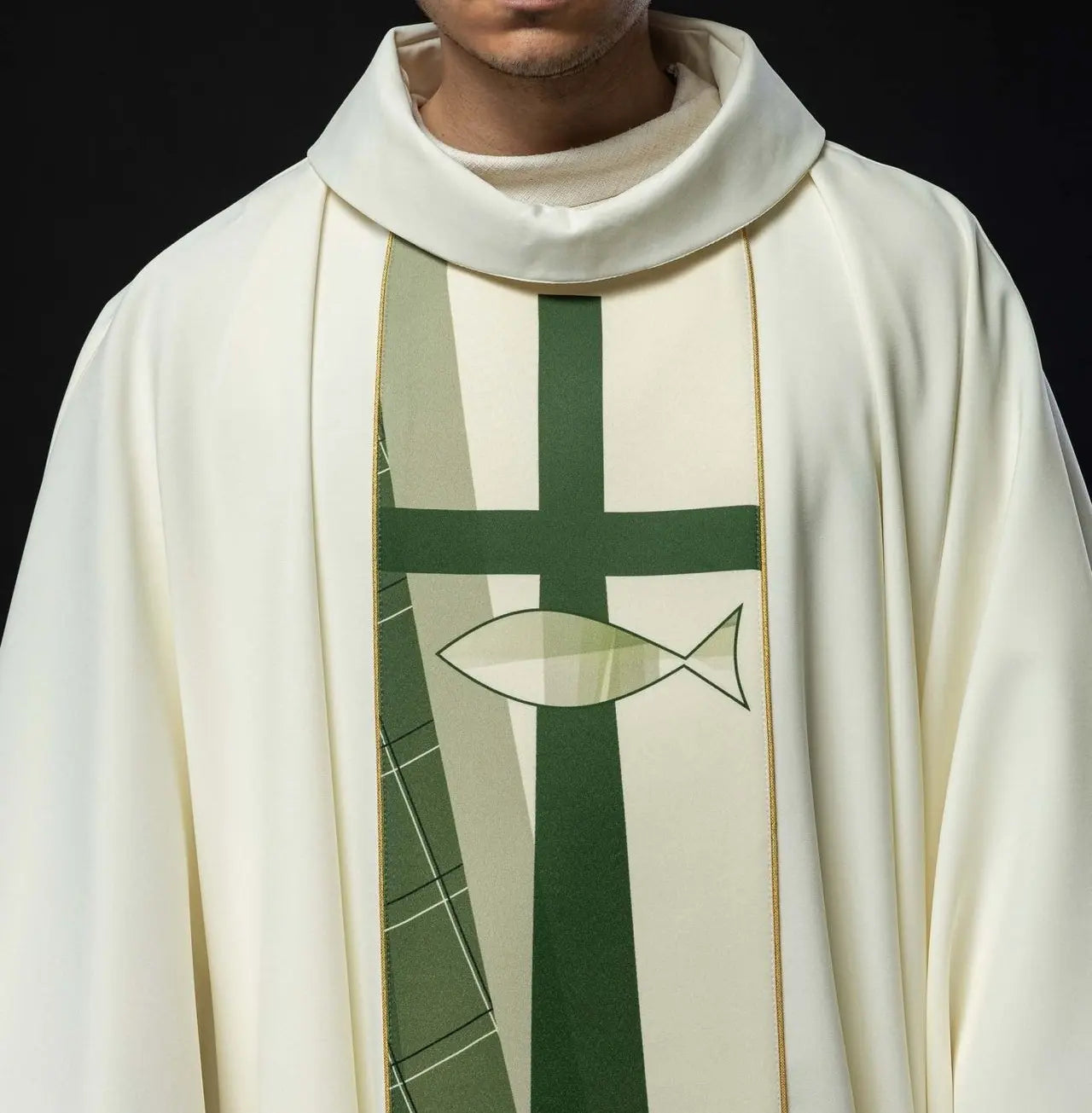
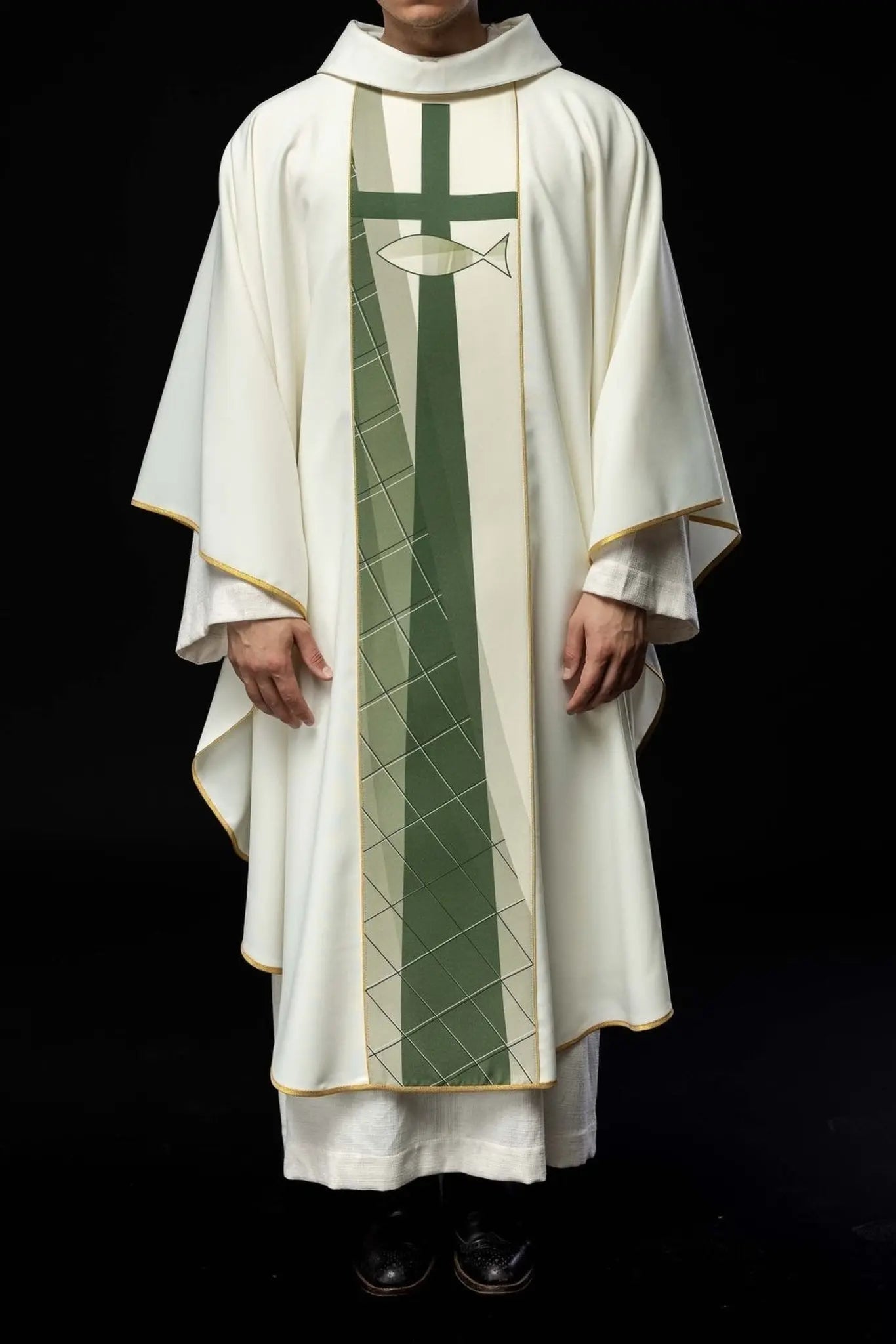
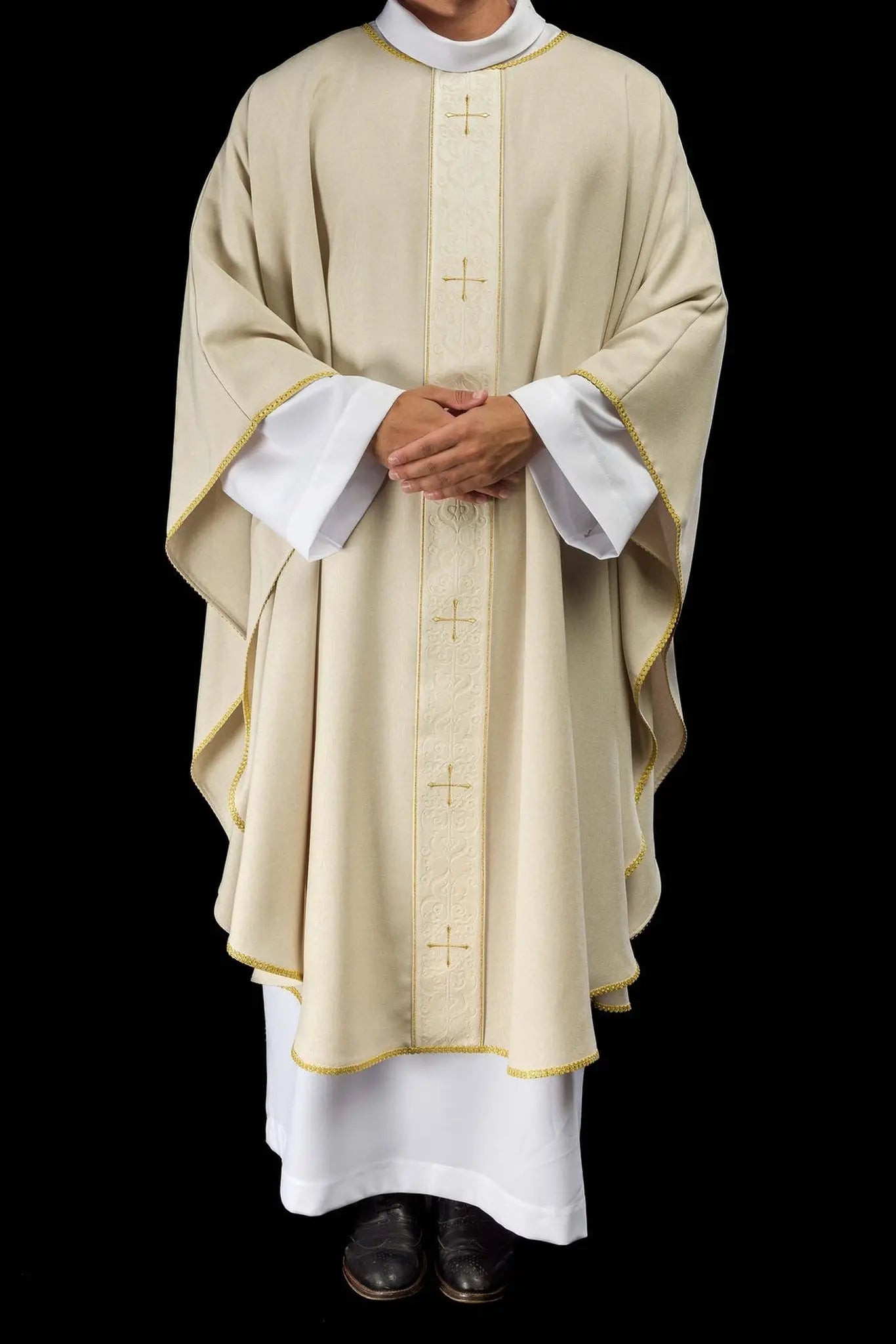
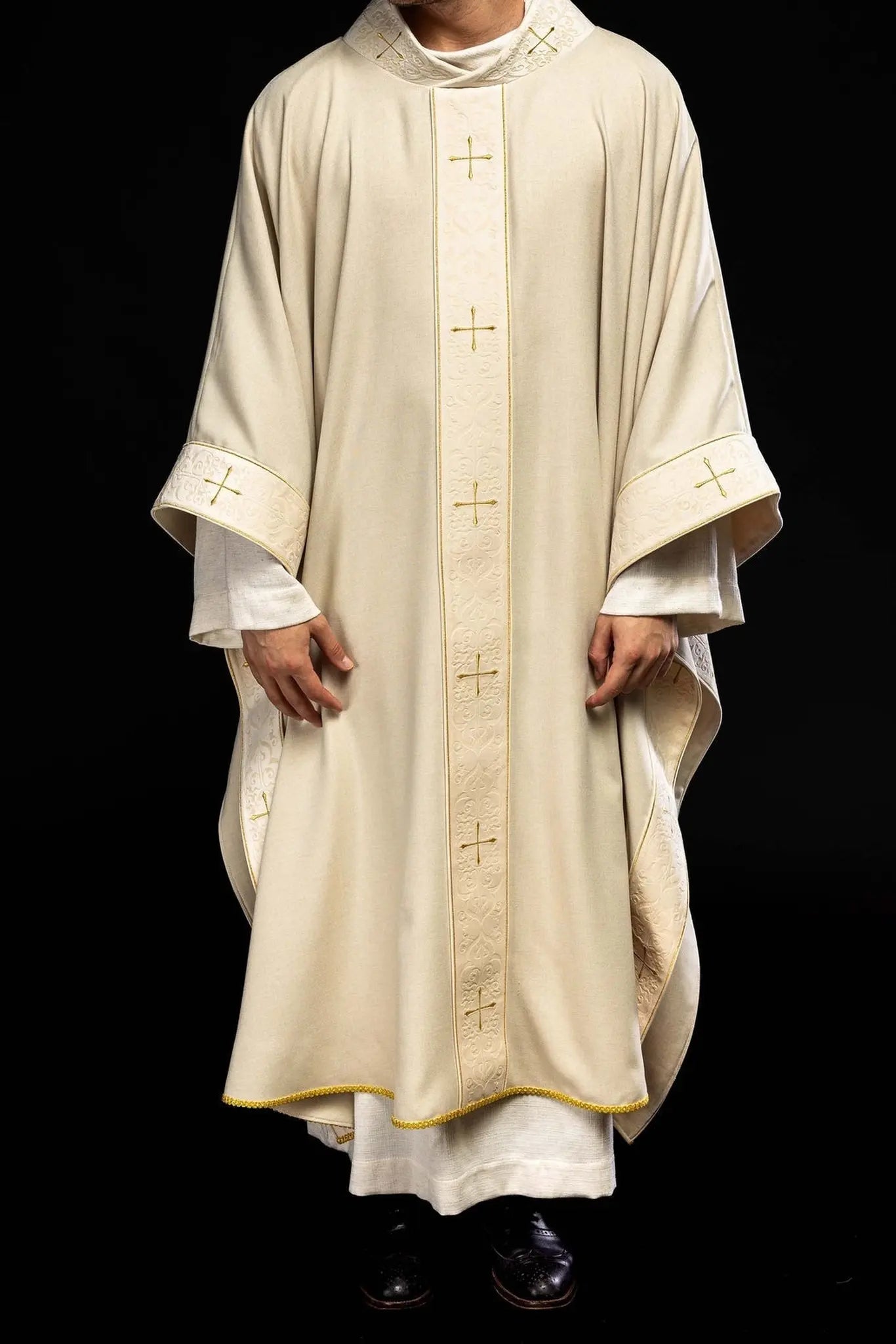
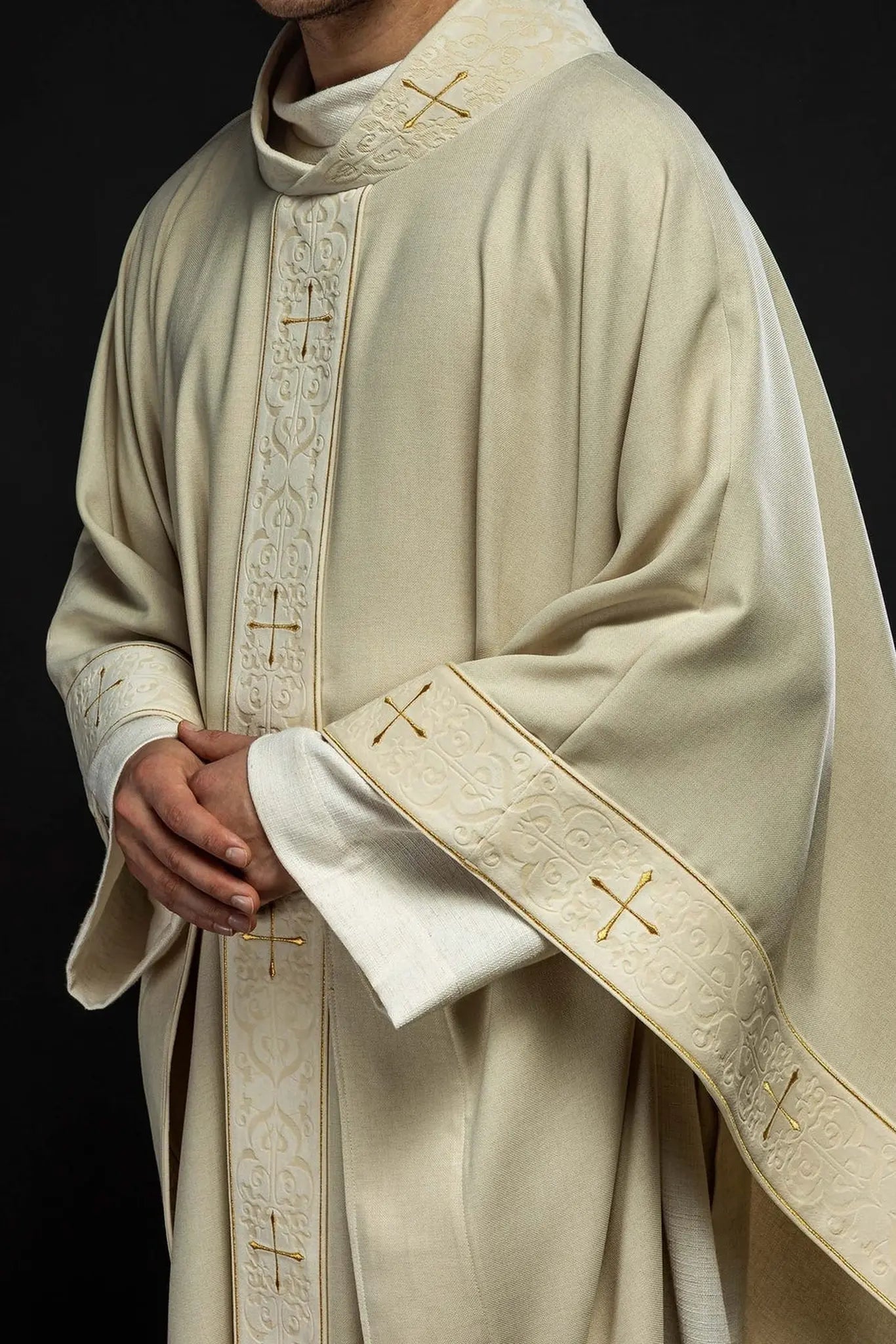
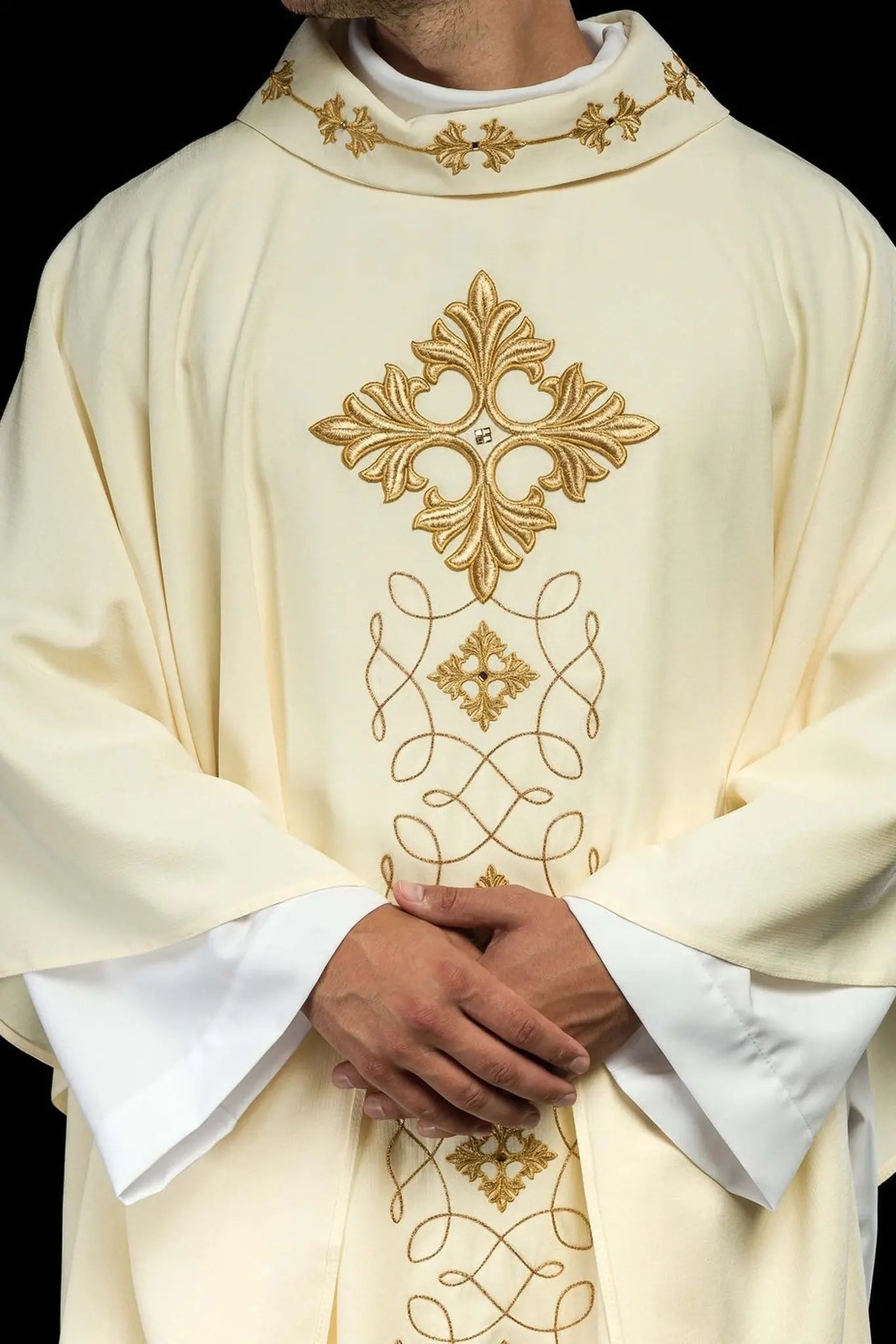
Ecru Chasubles for Mass and Feast Days
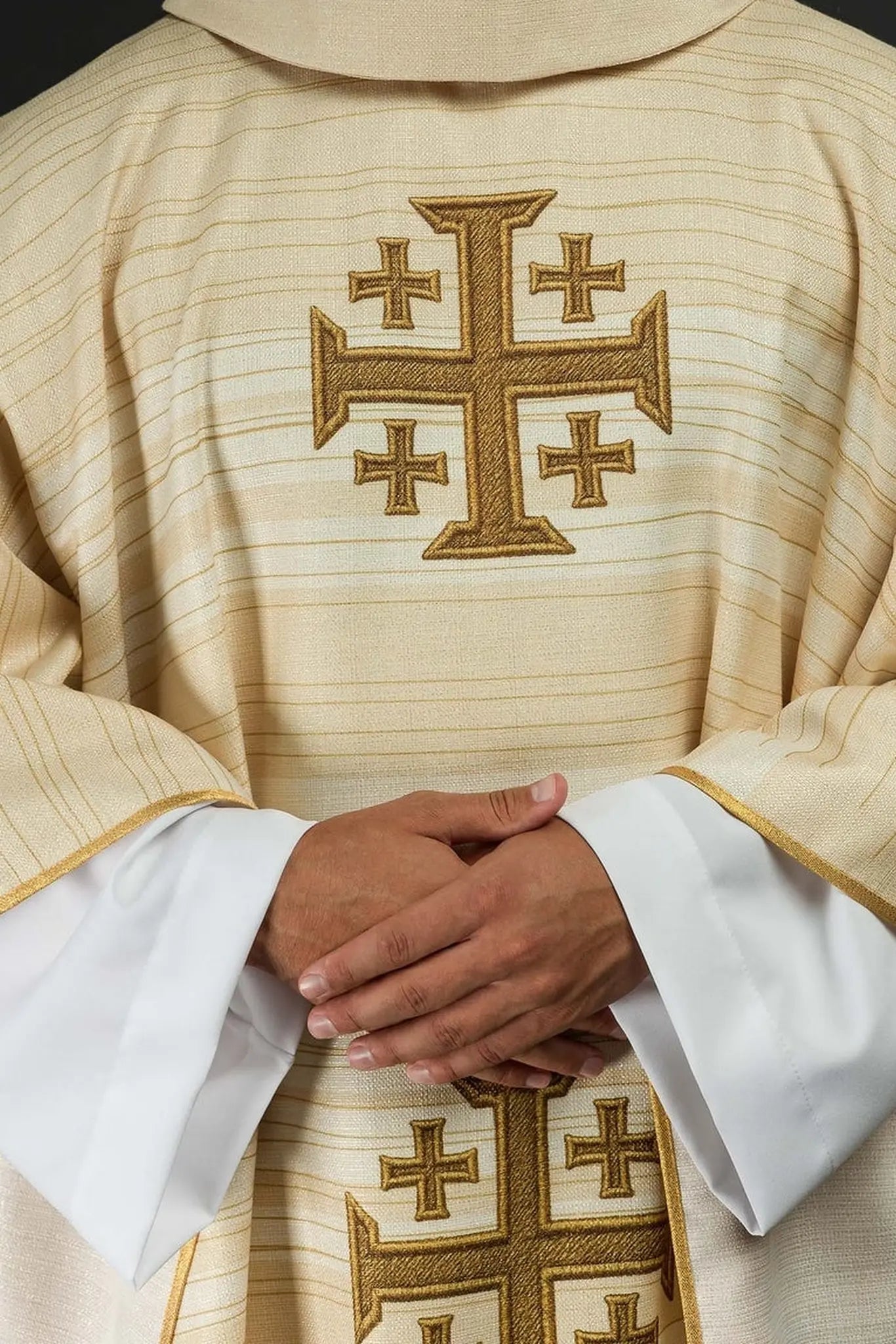
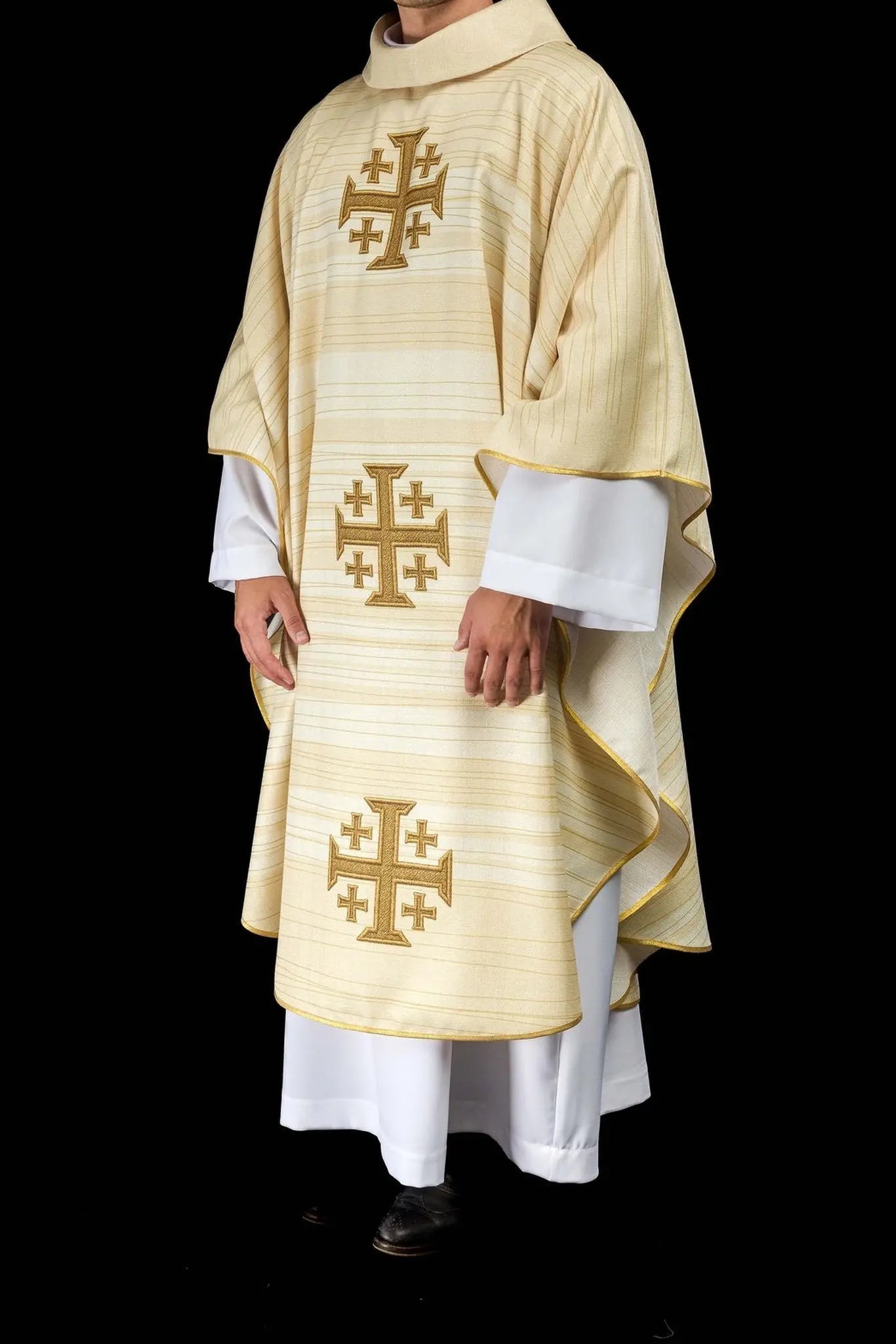
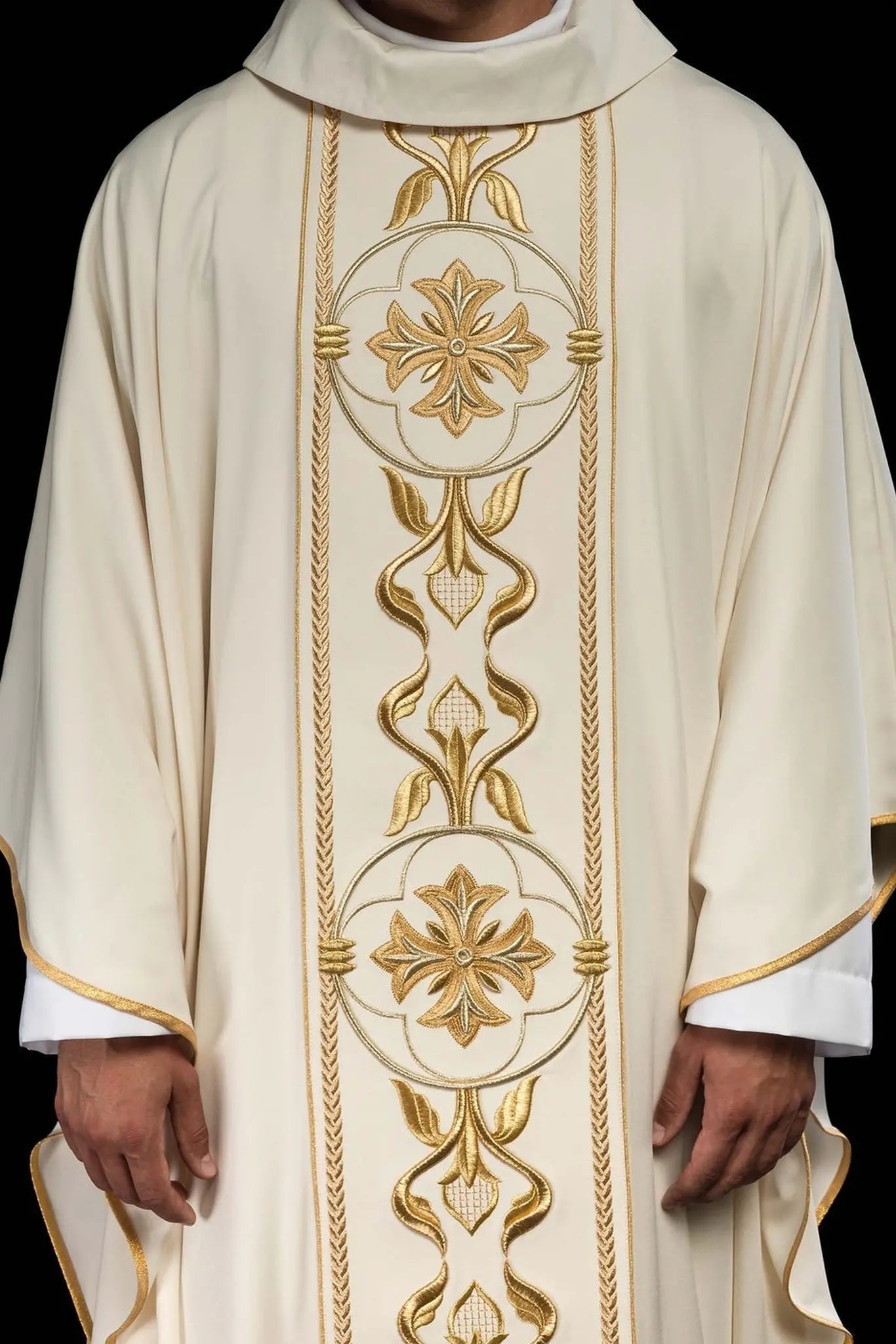
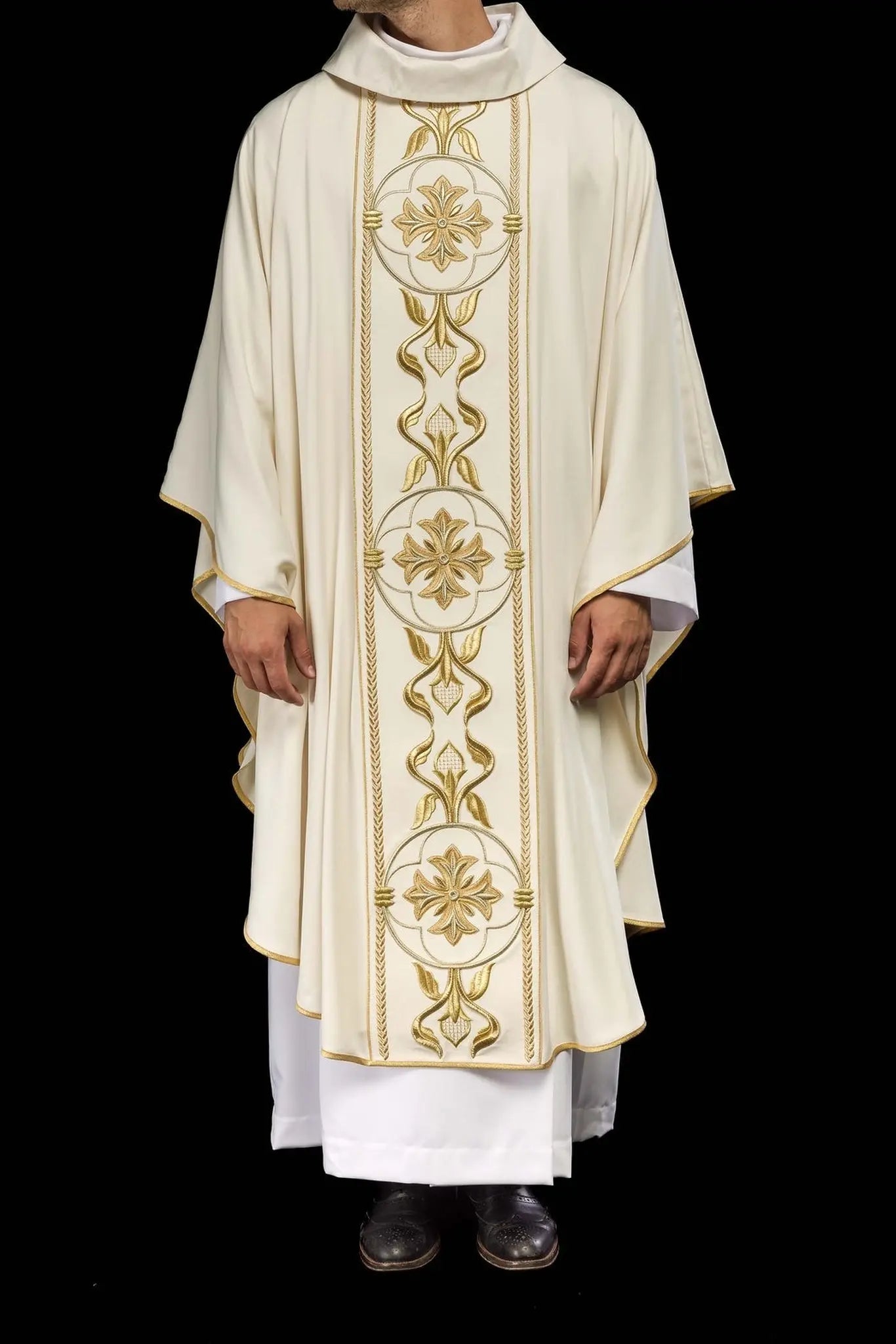
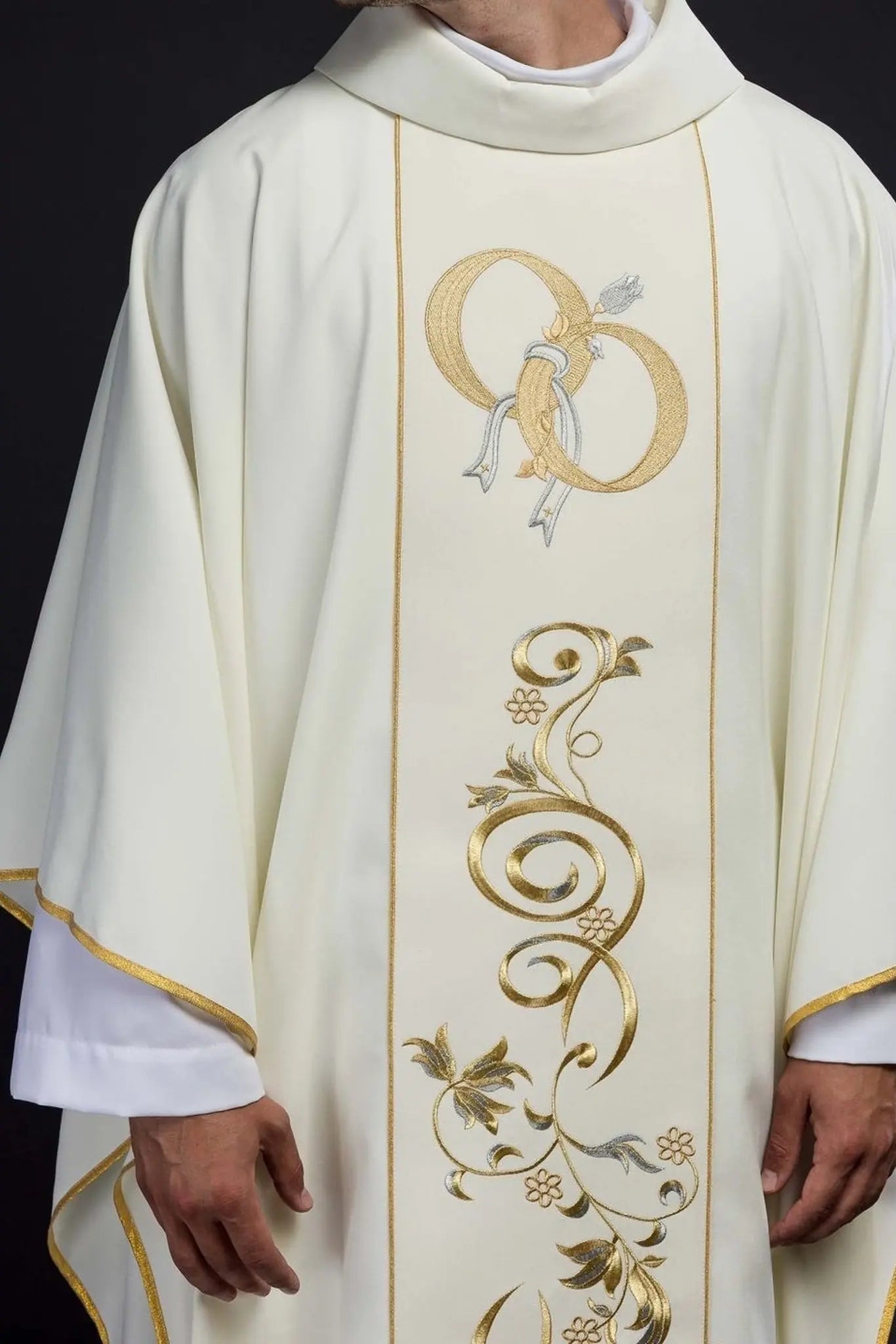
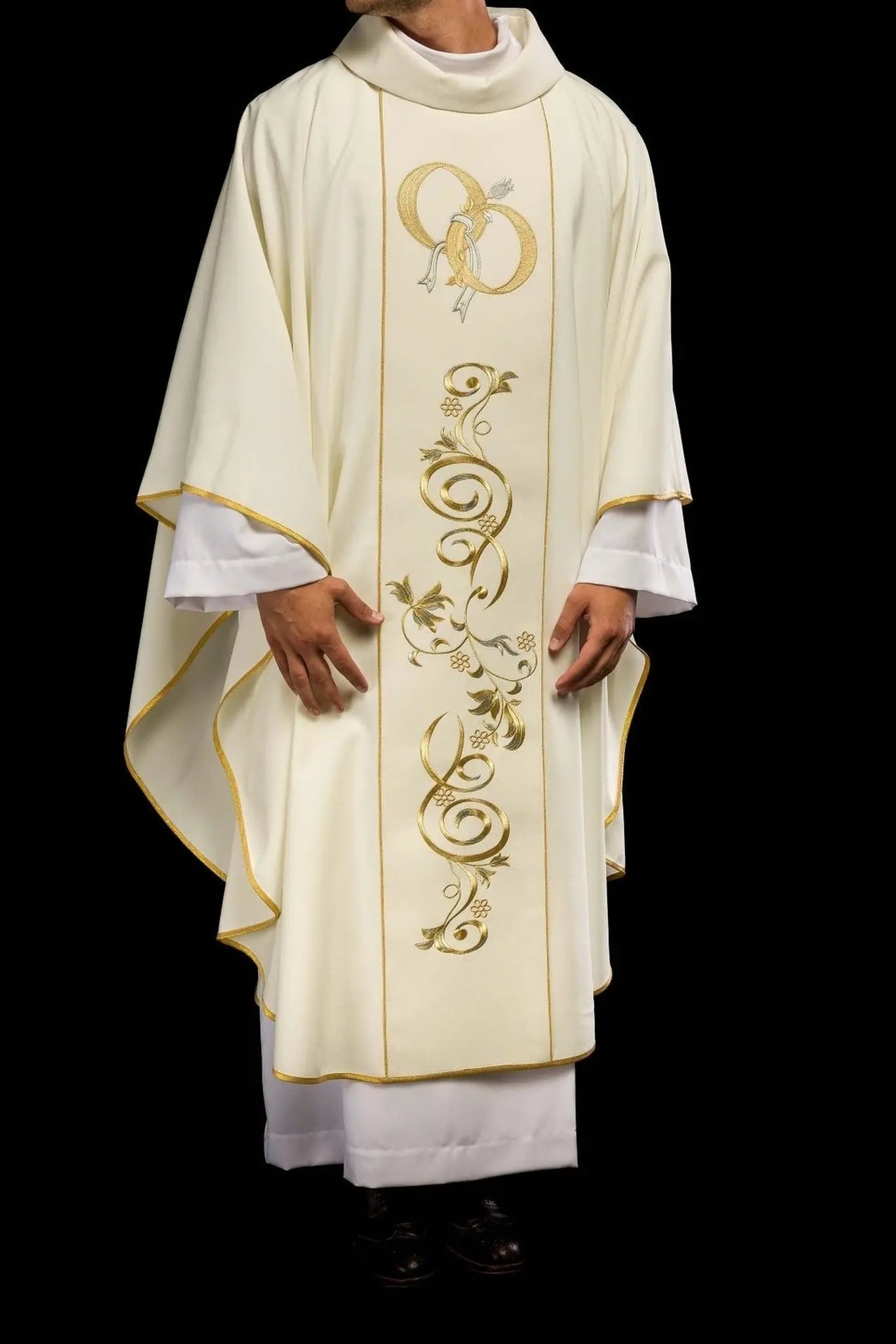
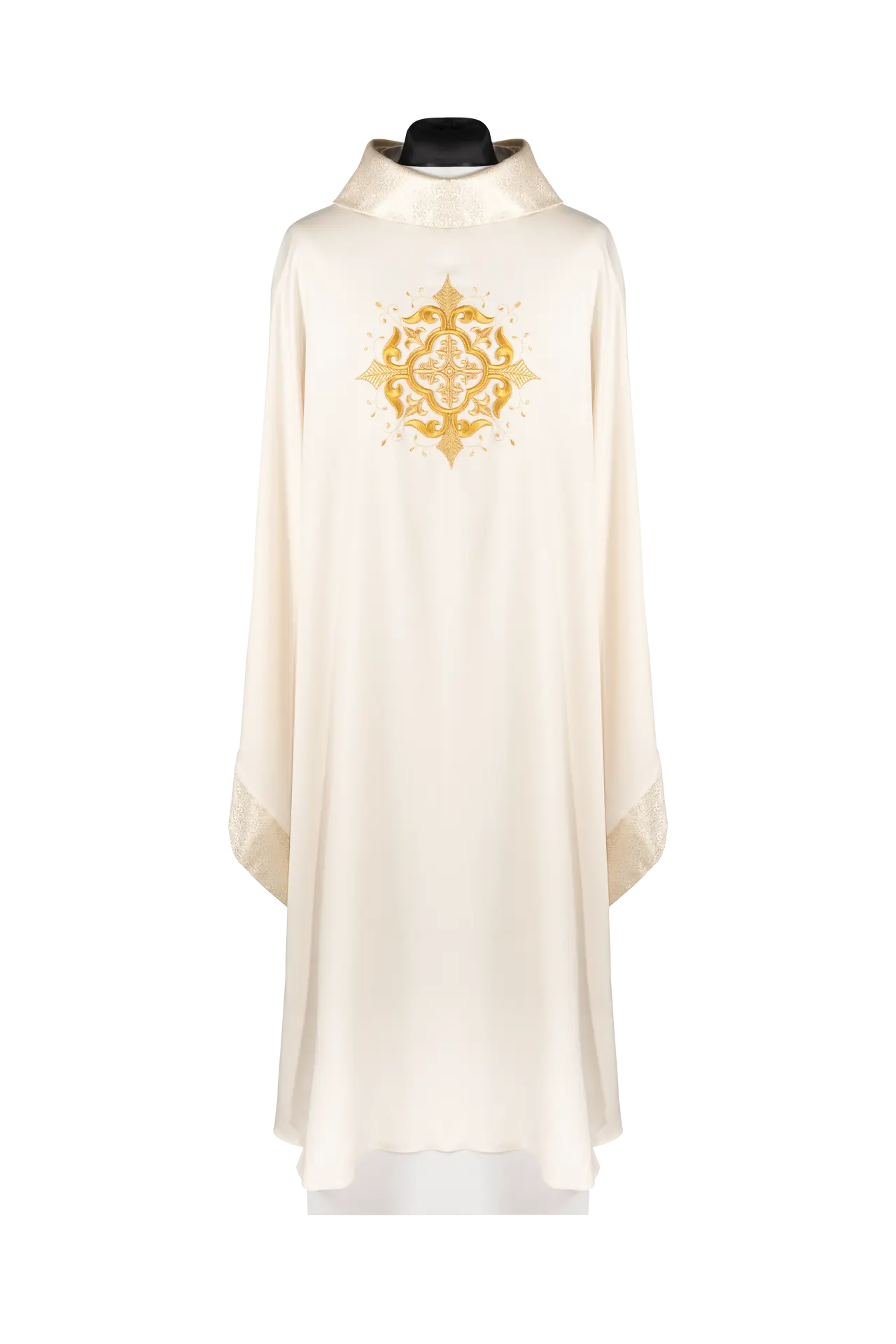
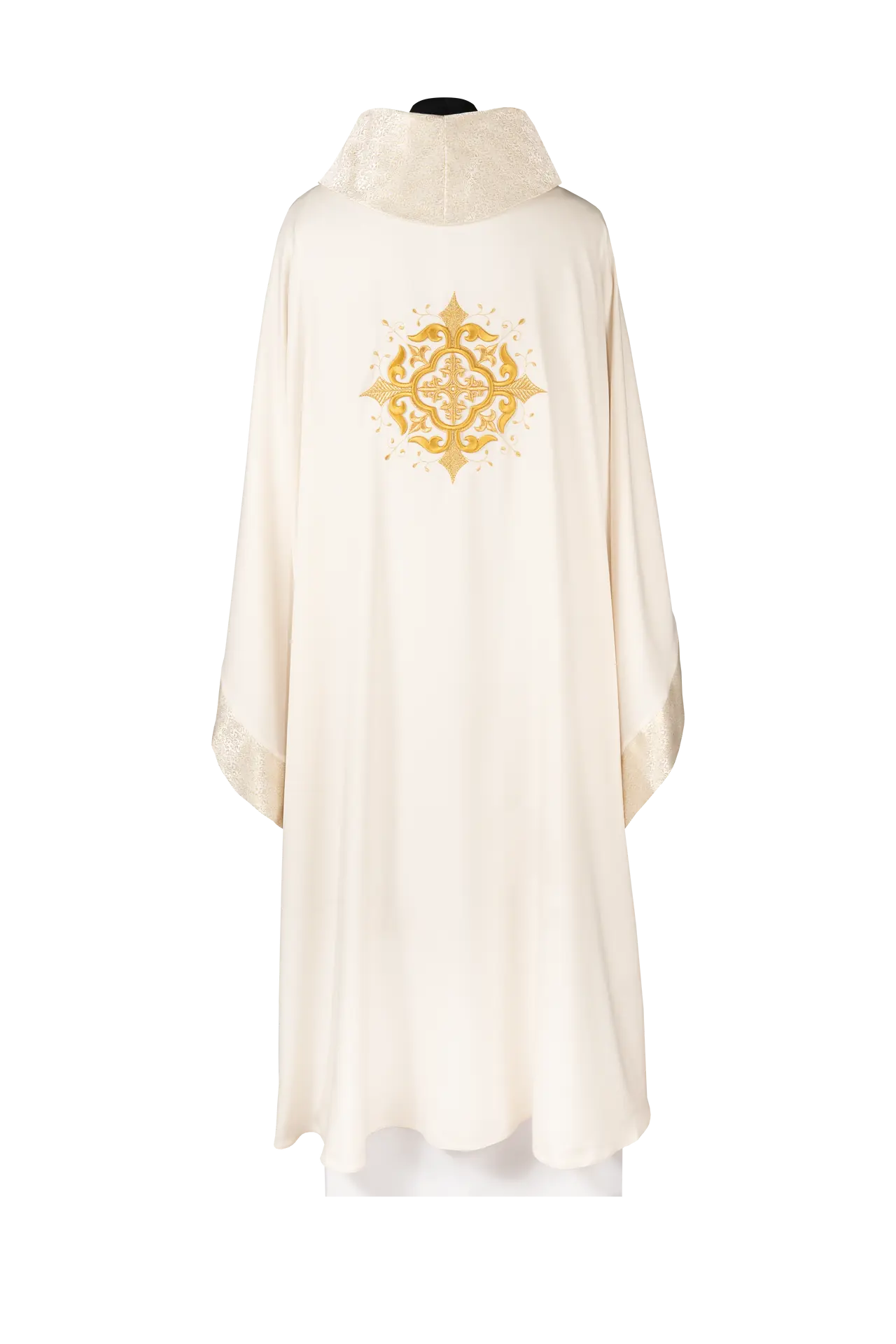
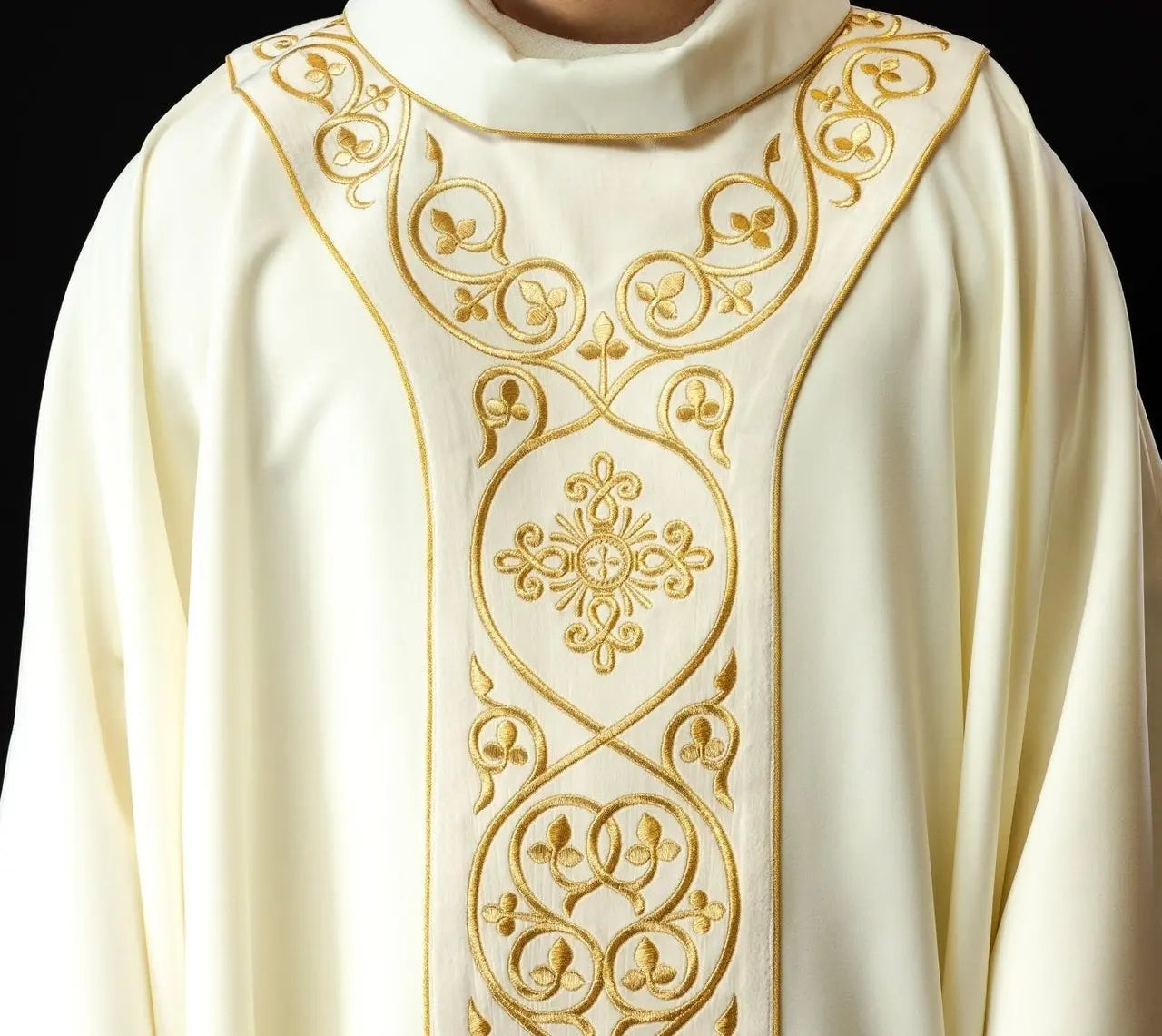
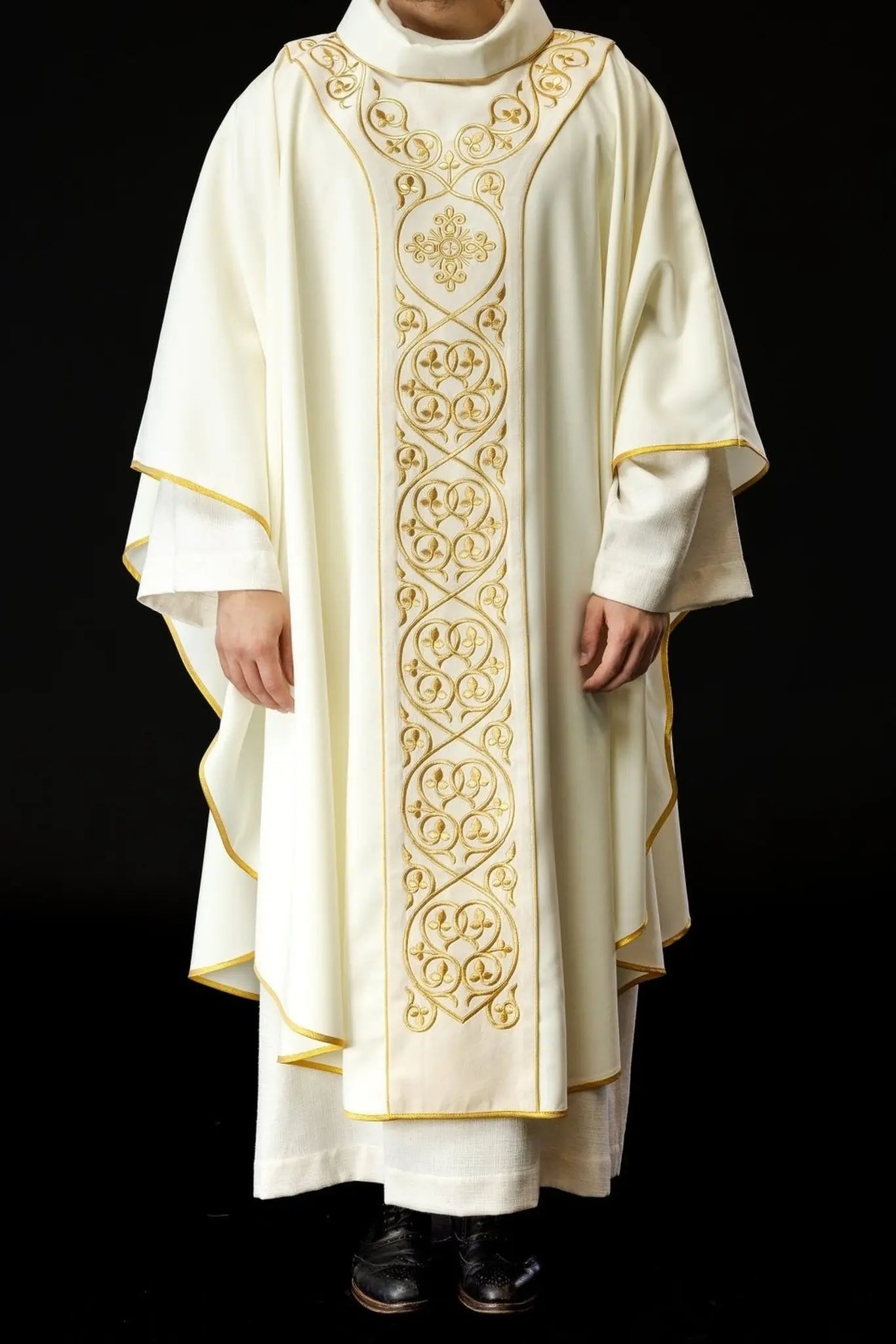
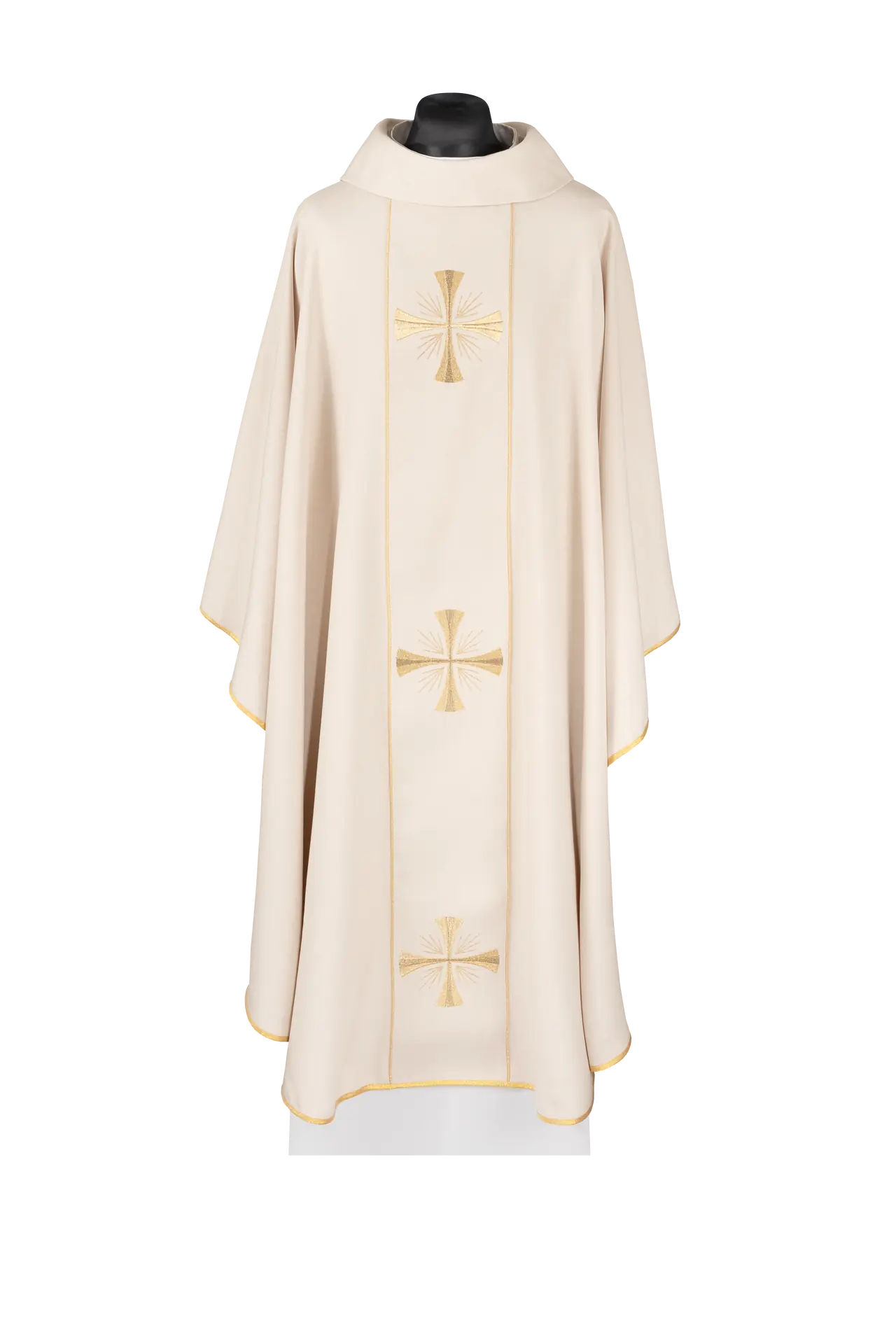
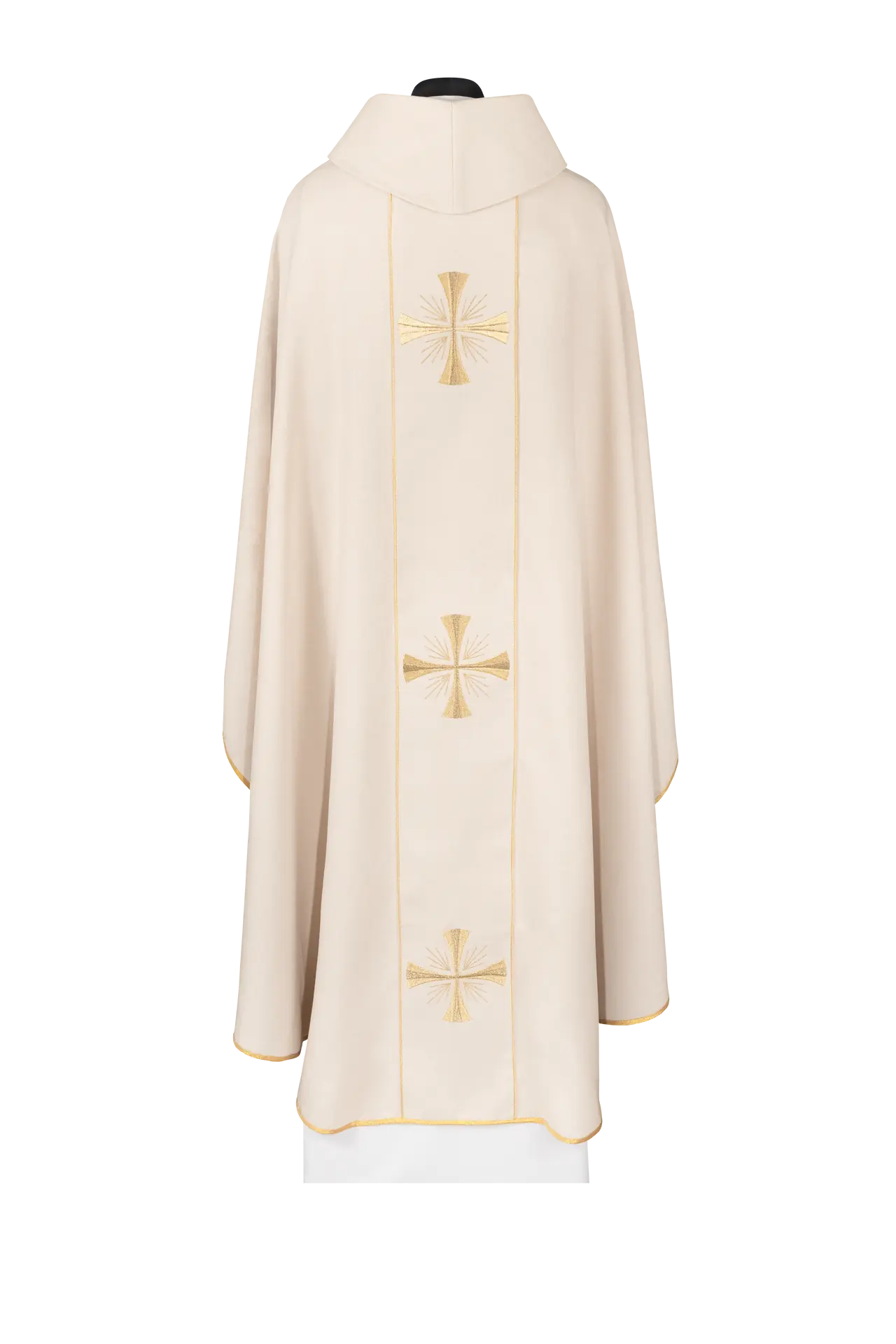
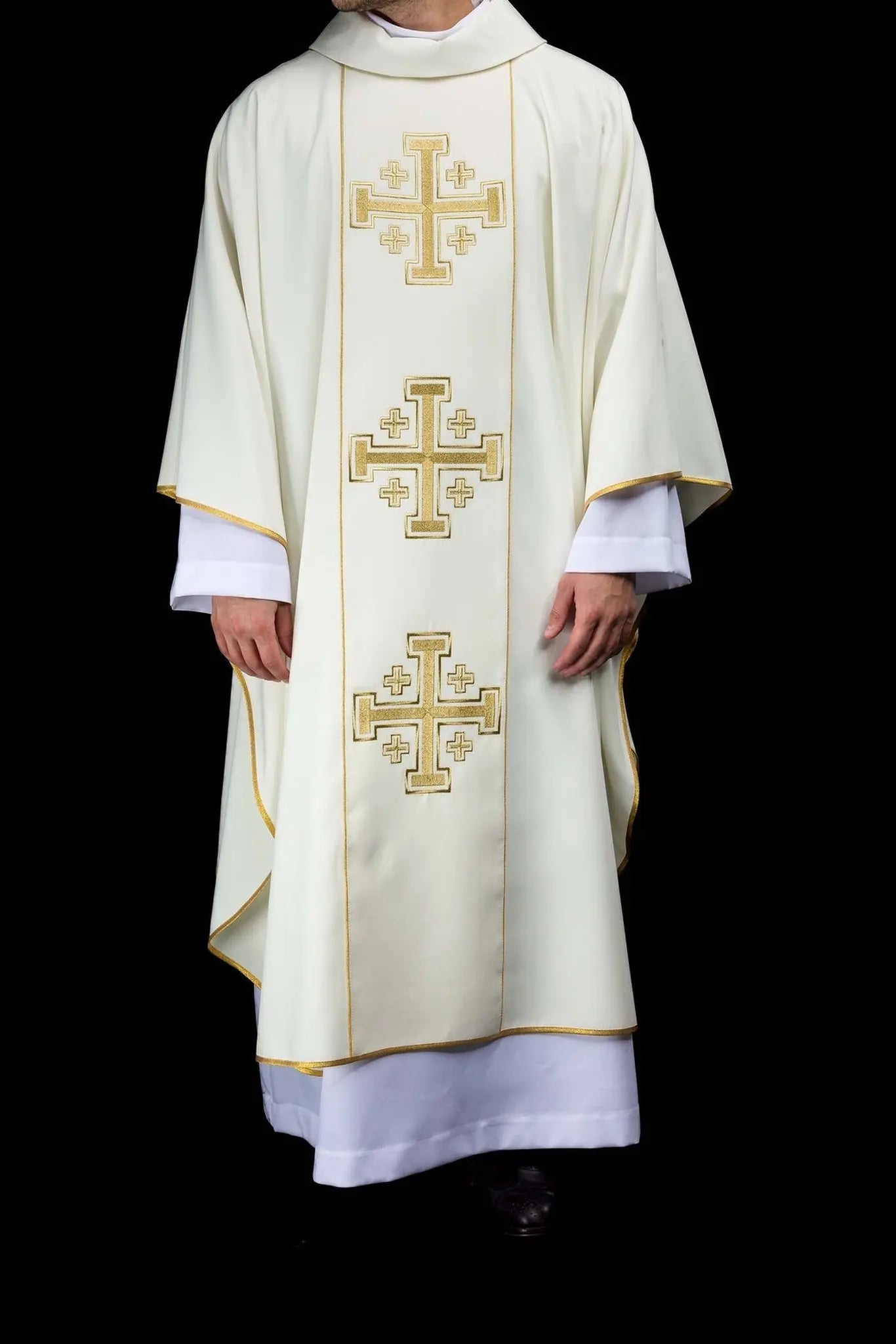
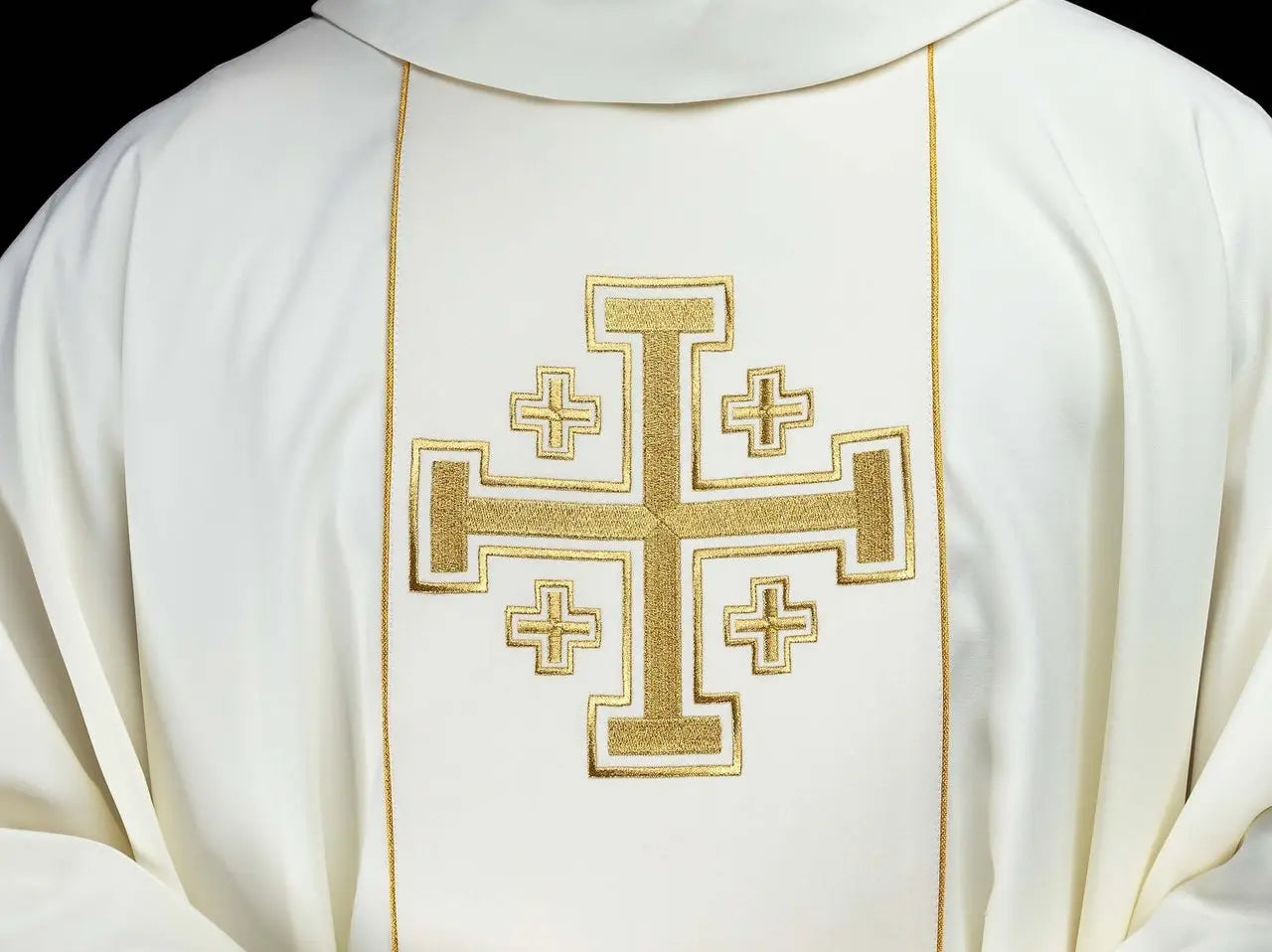
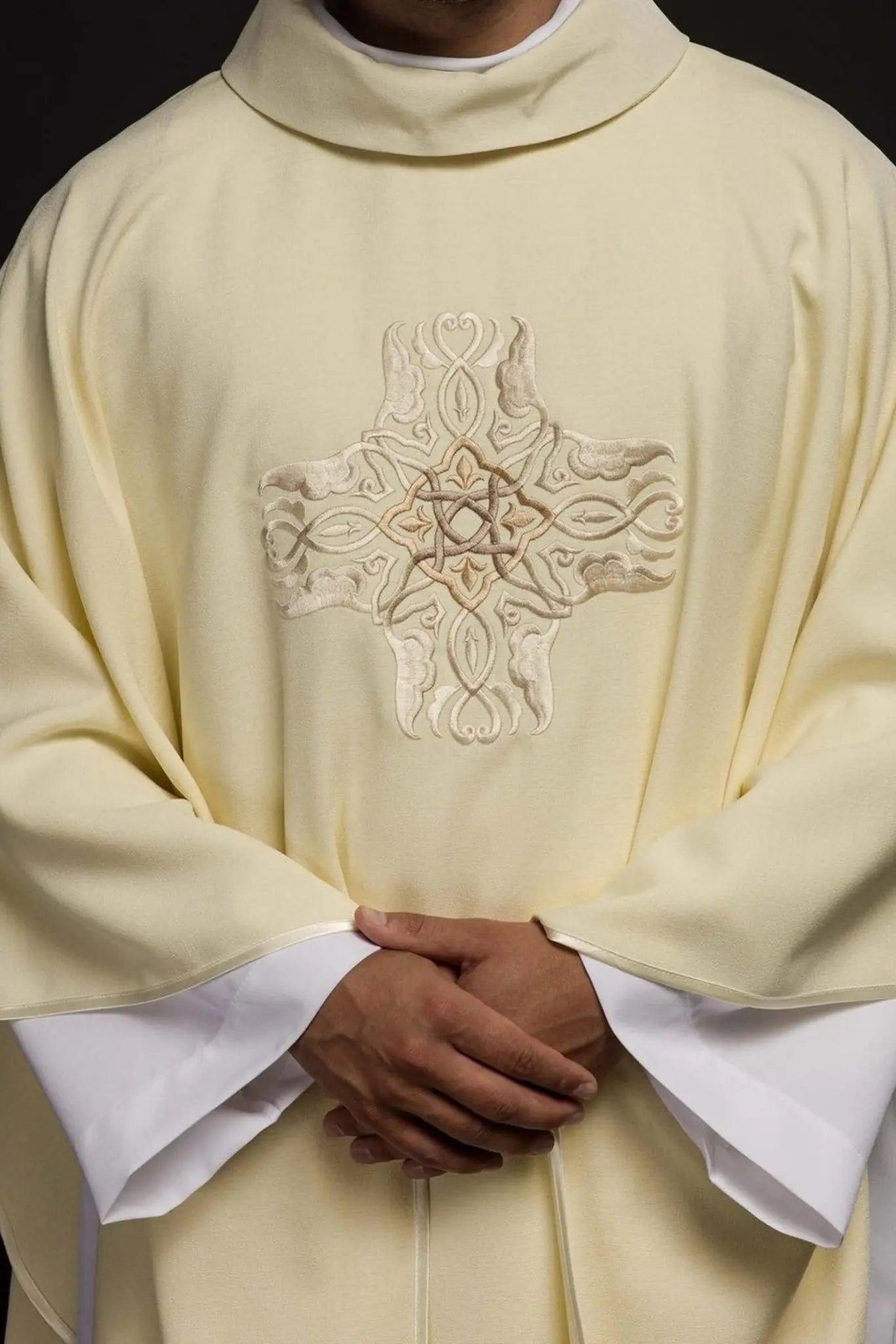
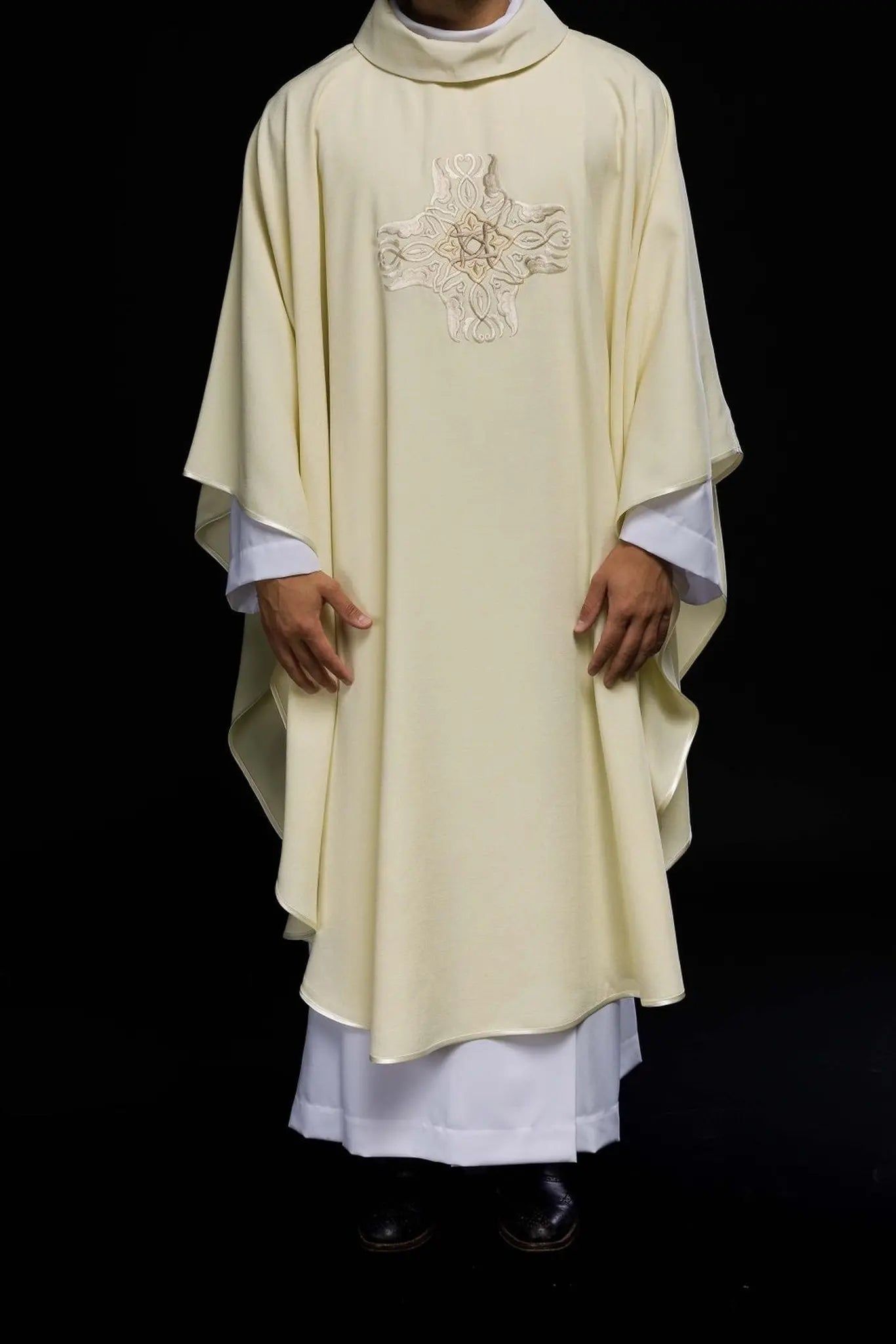
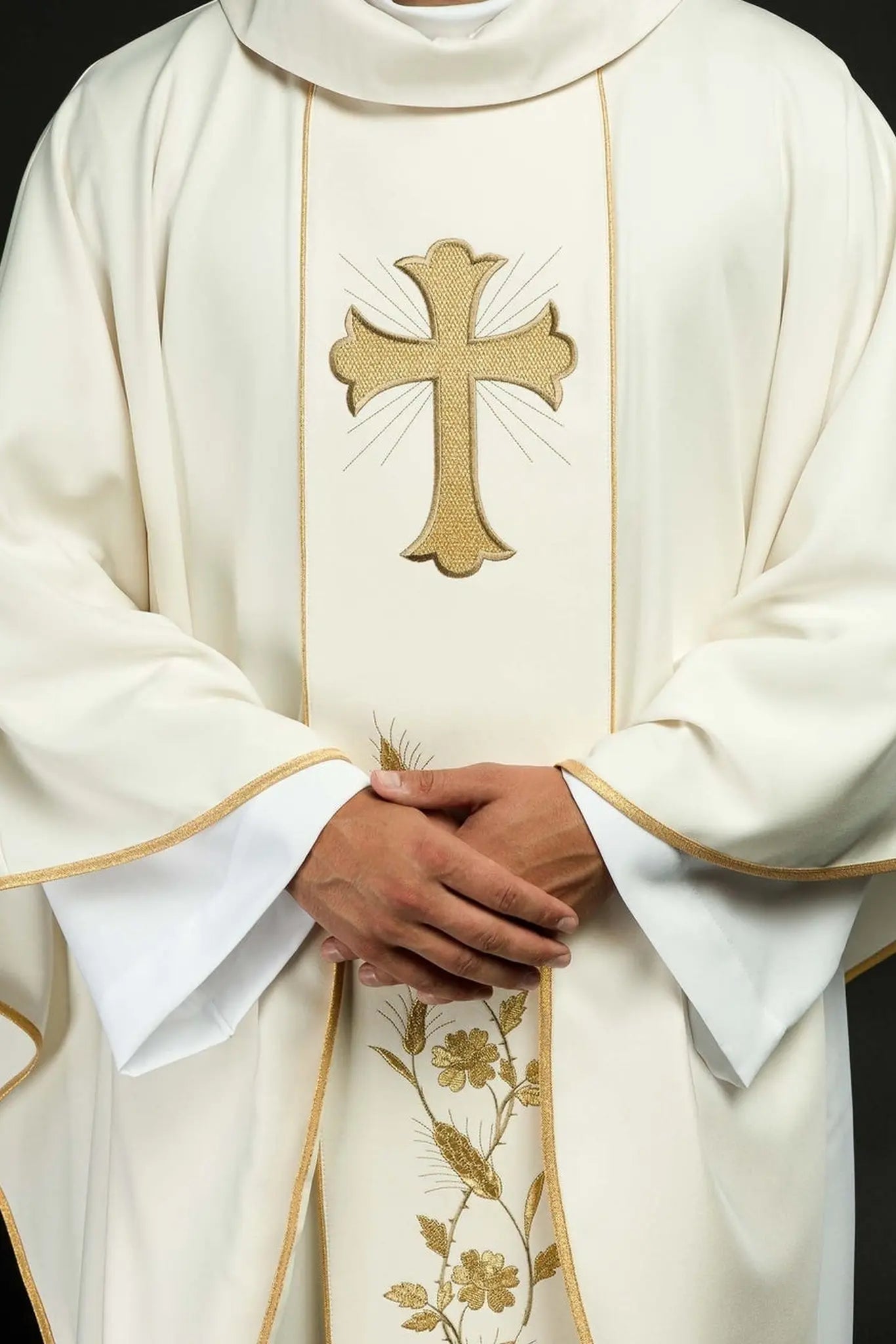
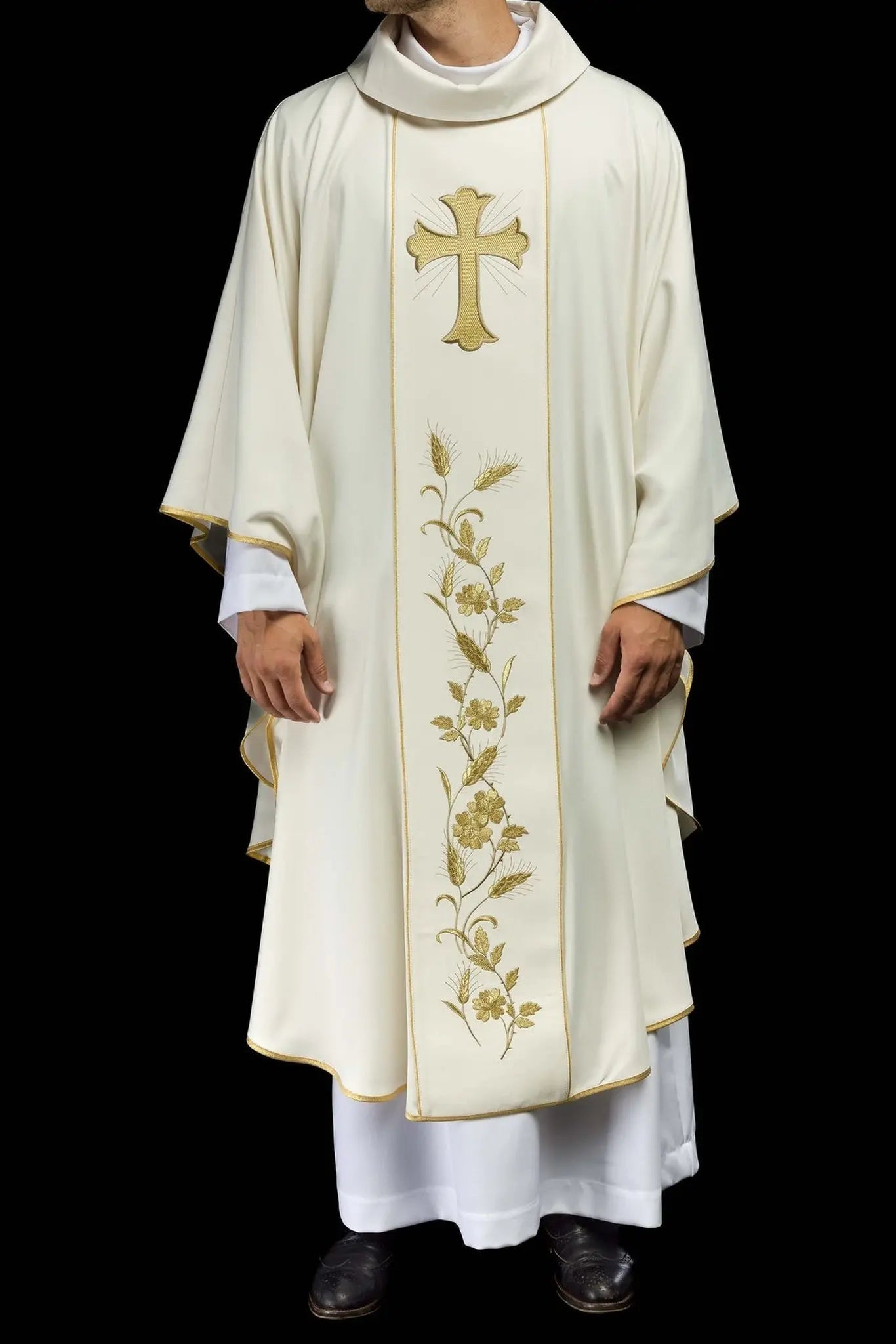
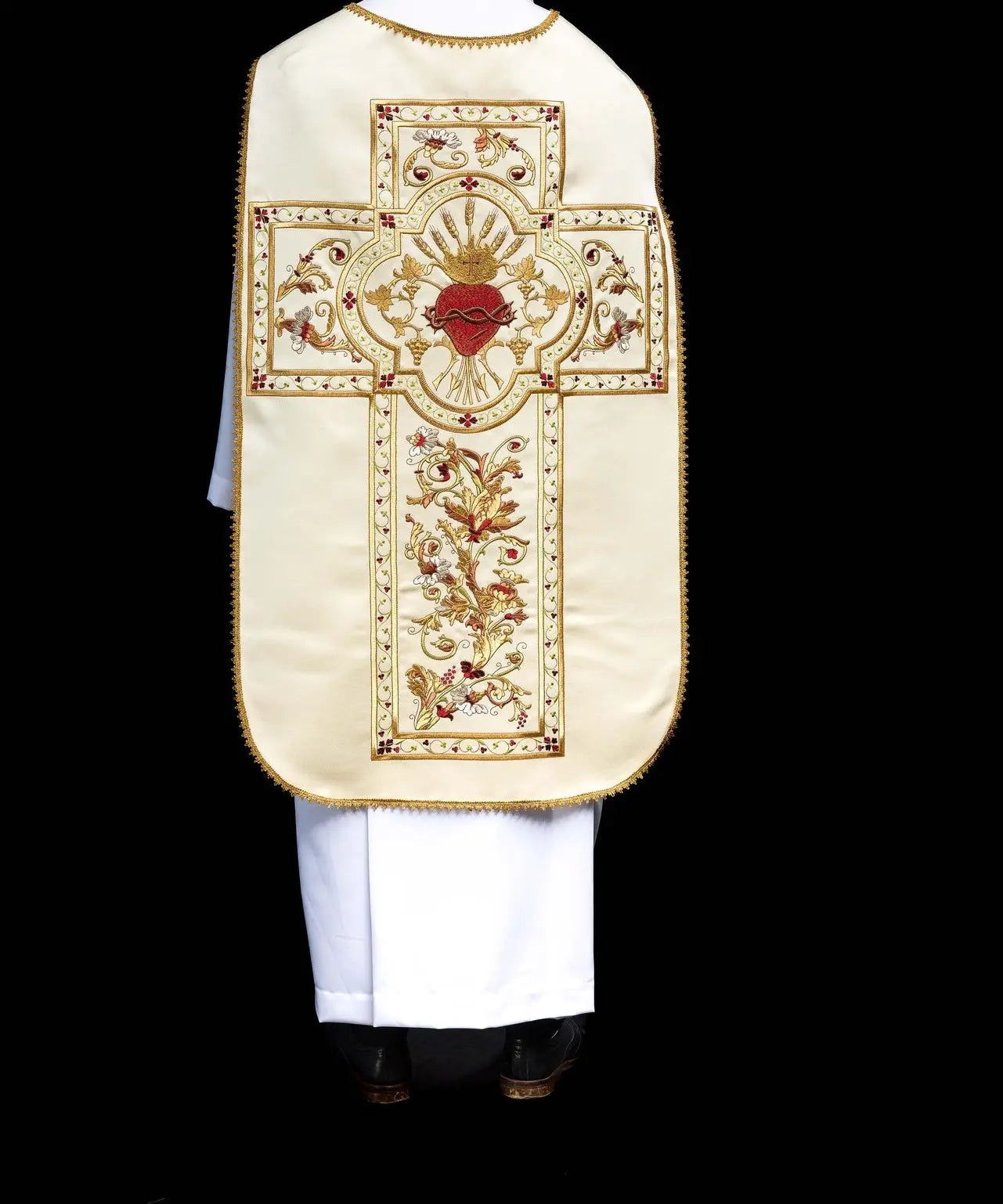
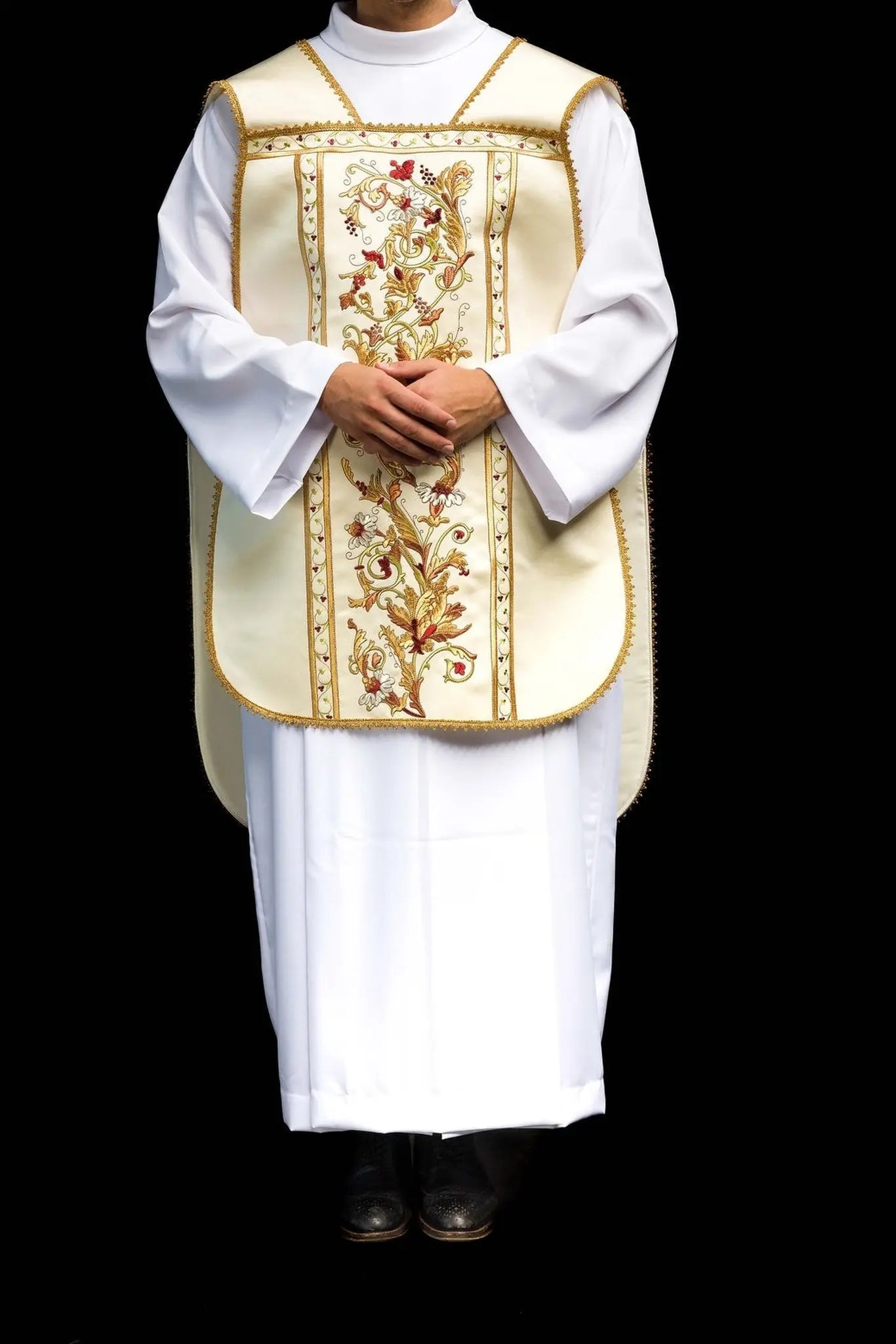
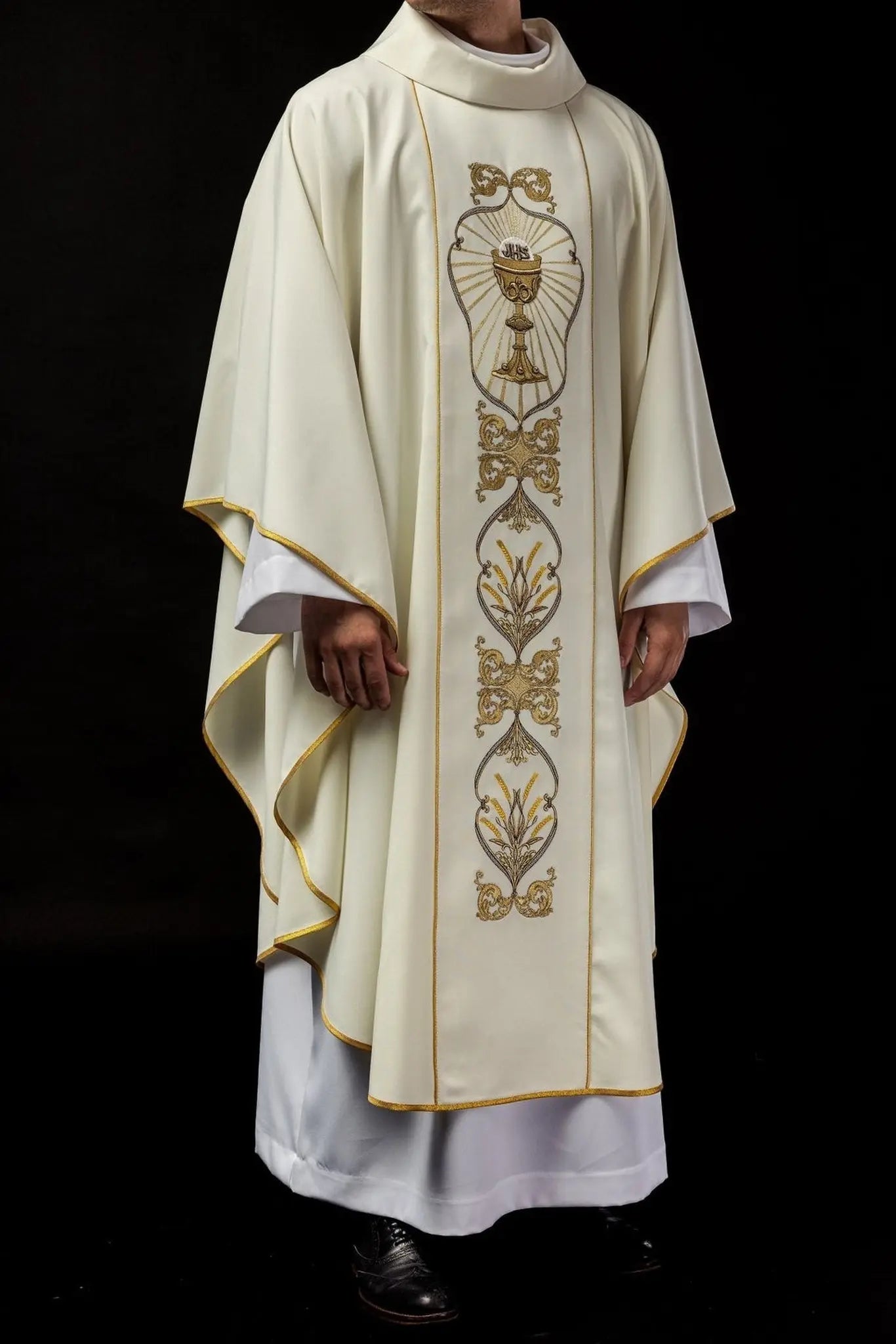
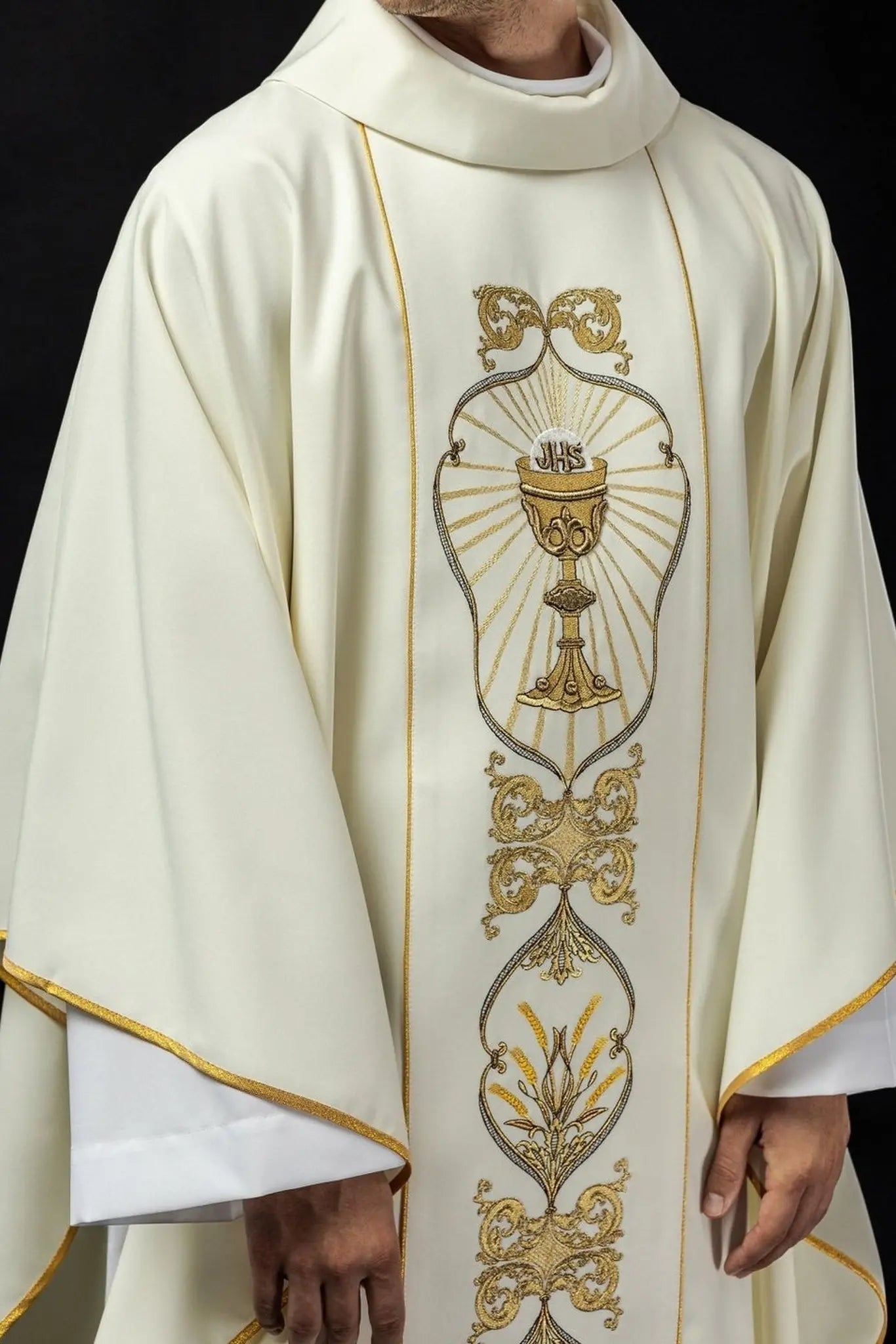
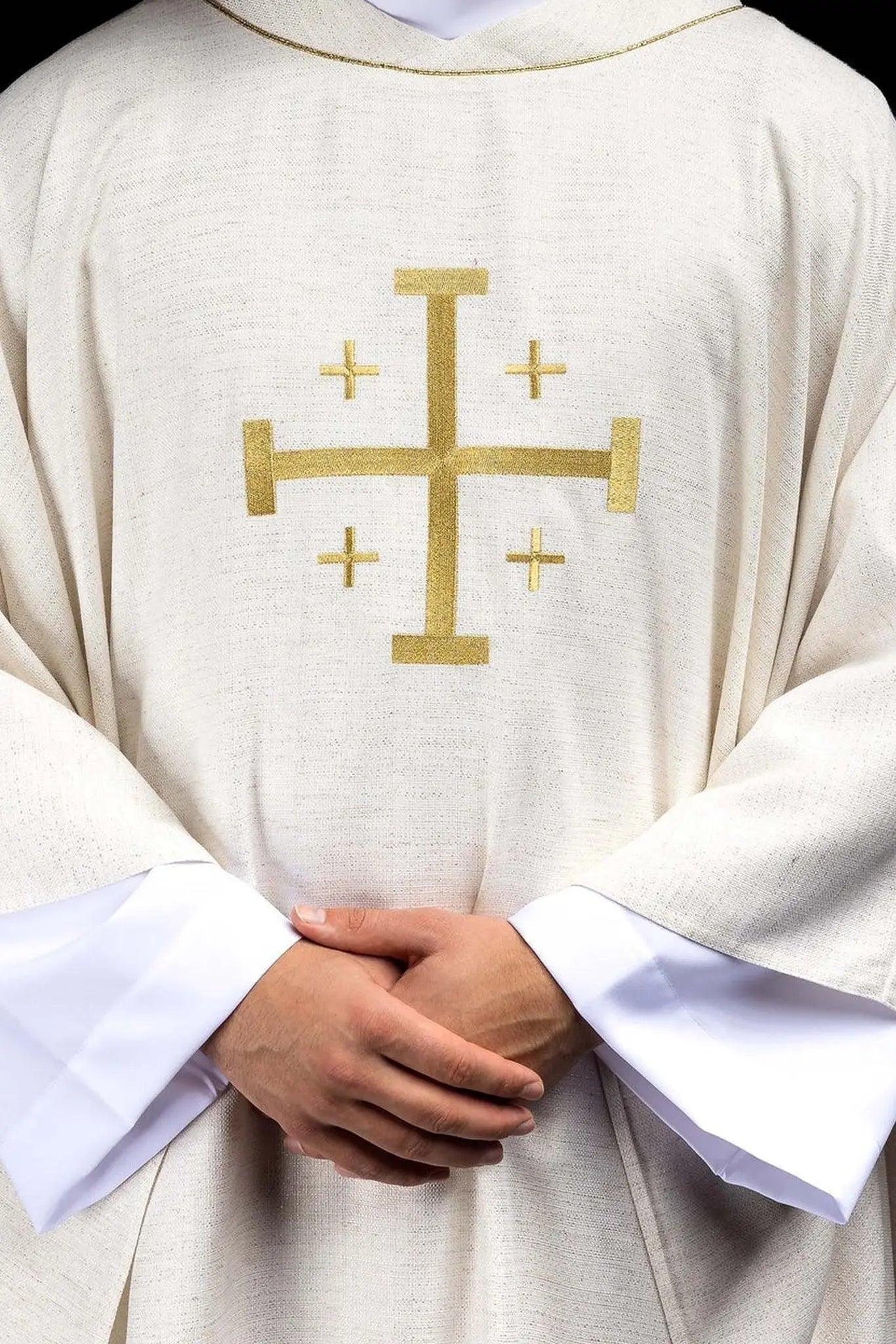
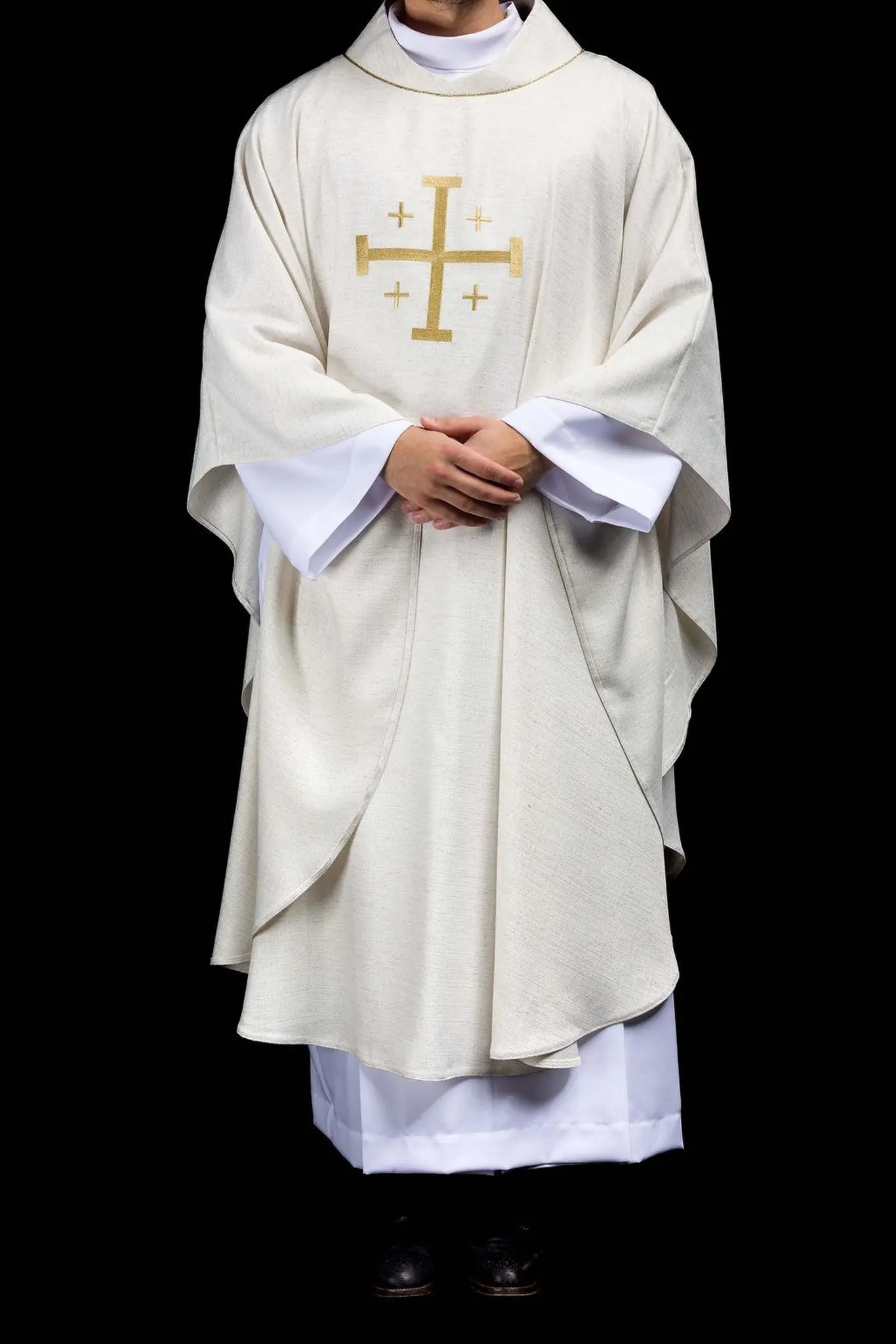
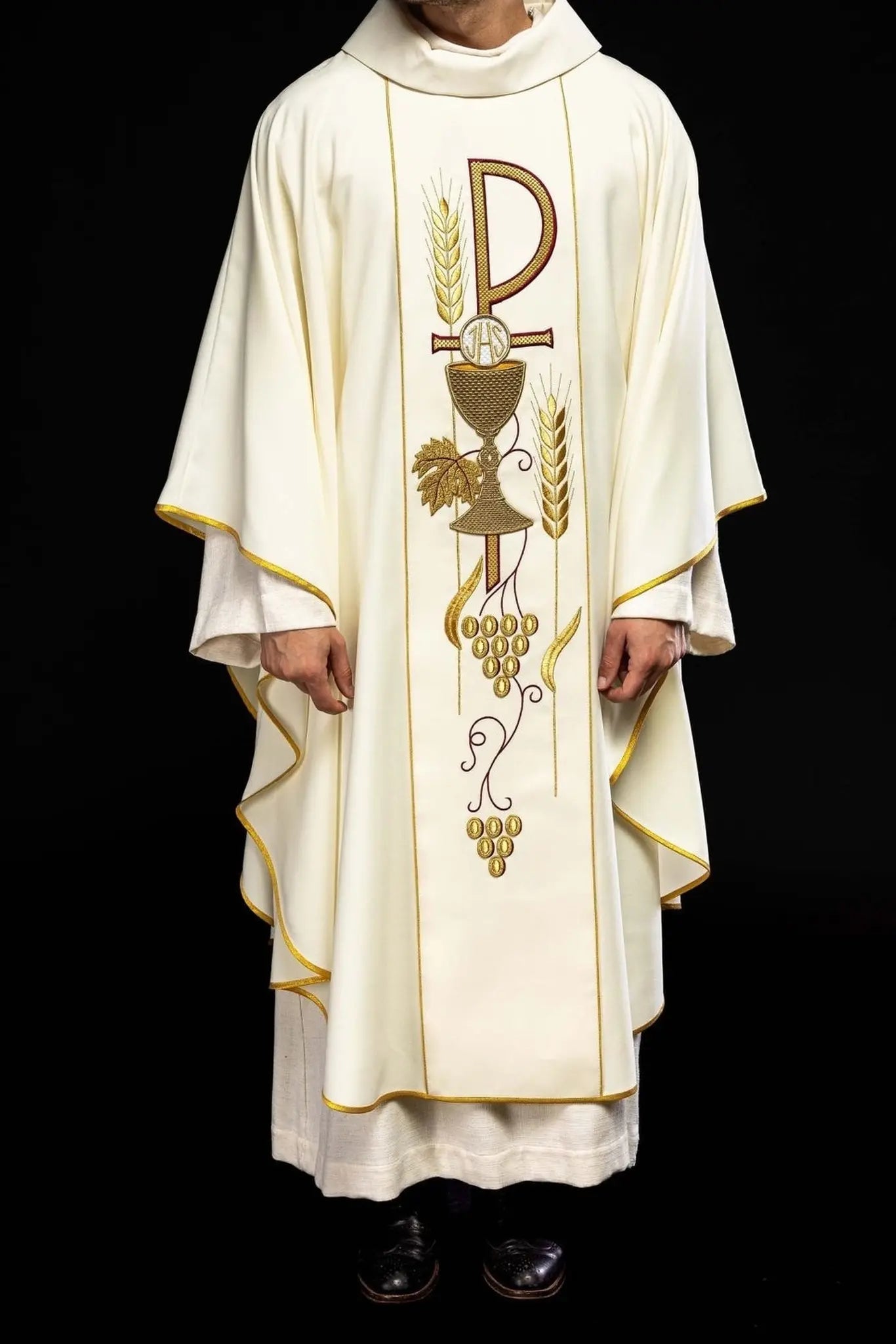
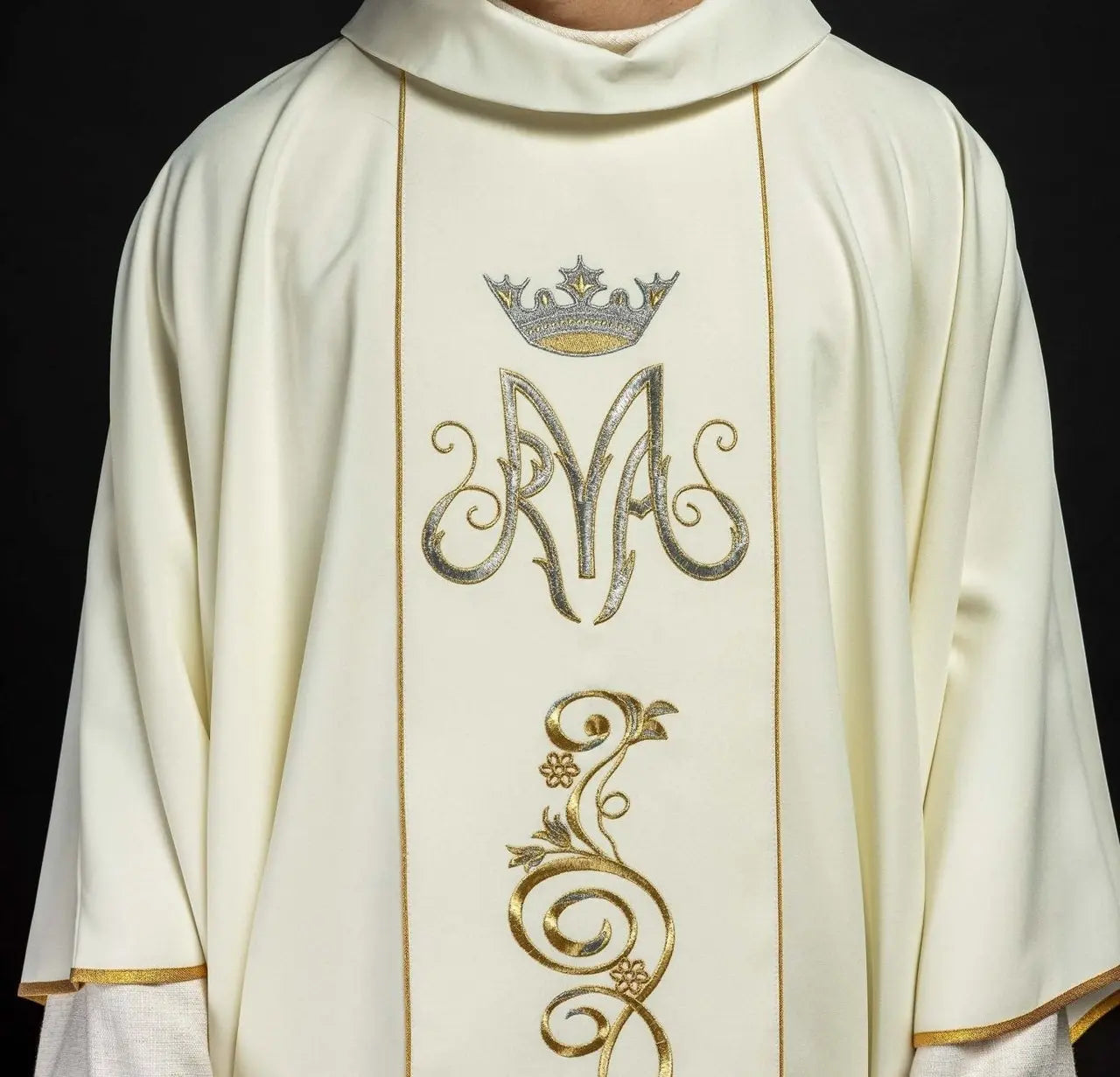
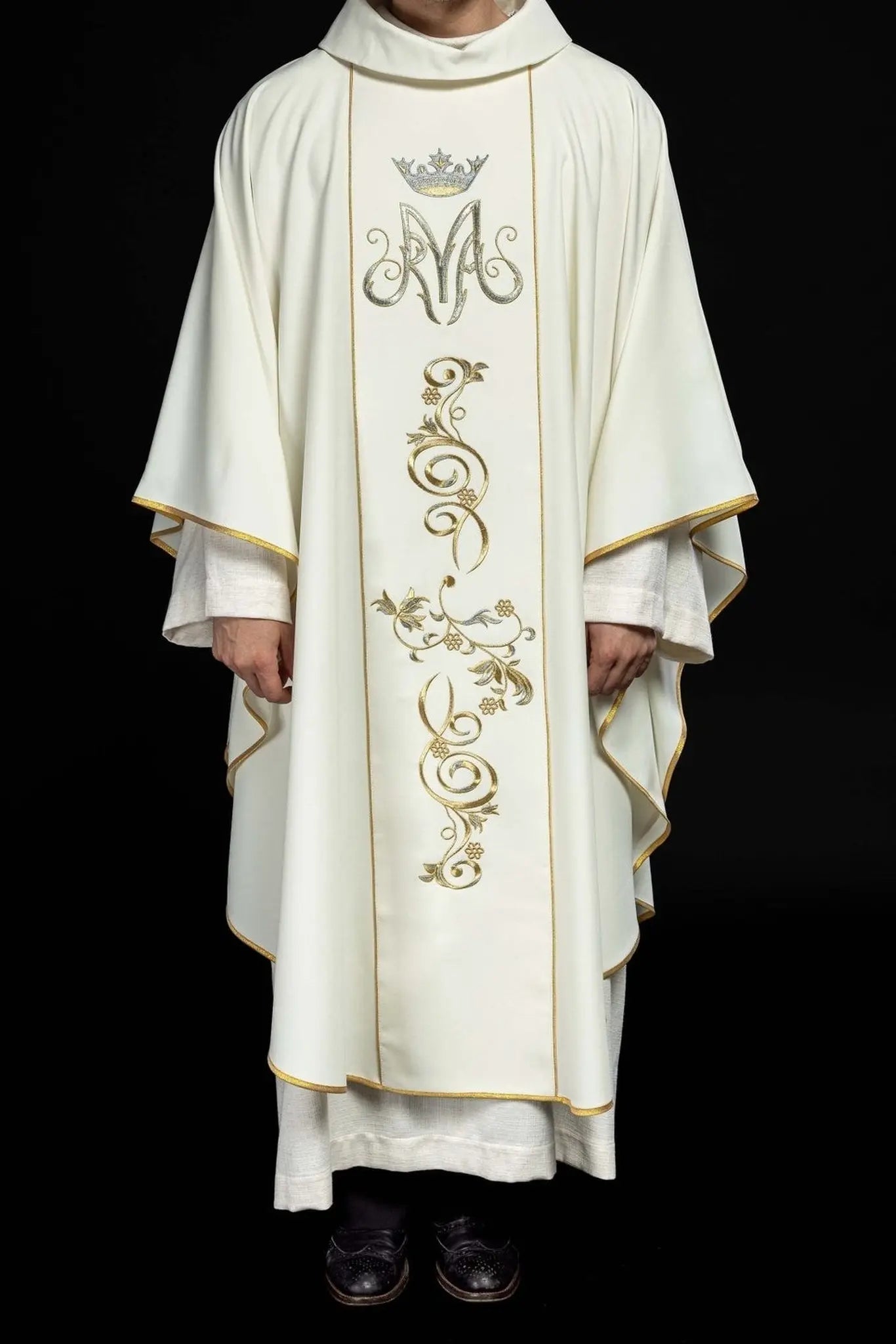
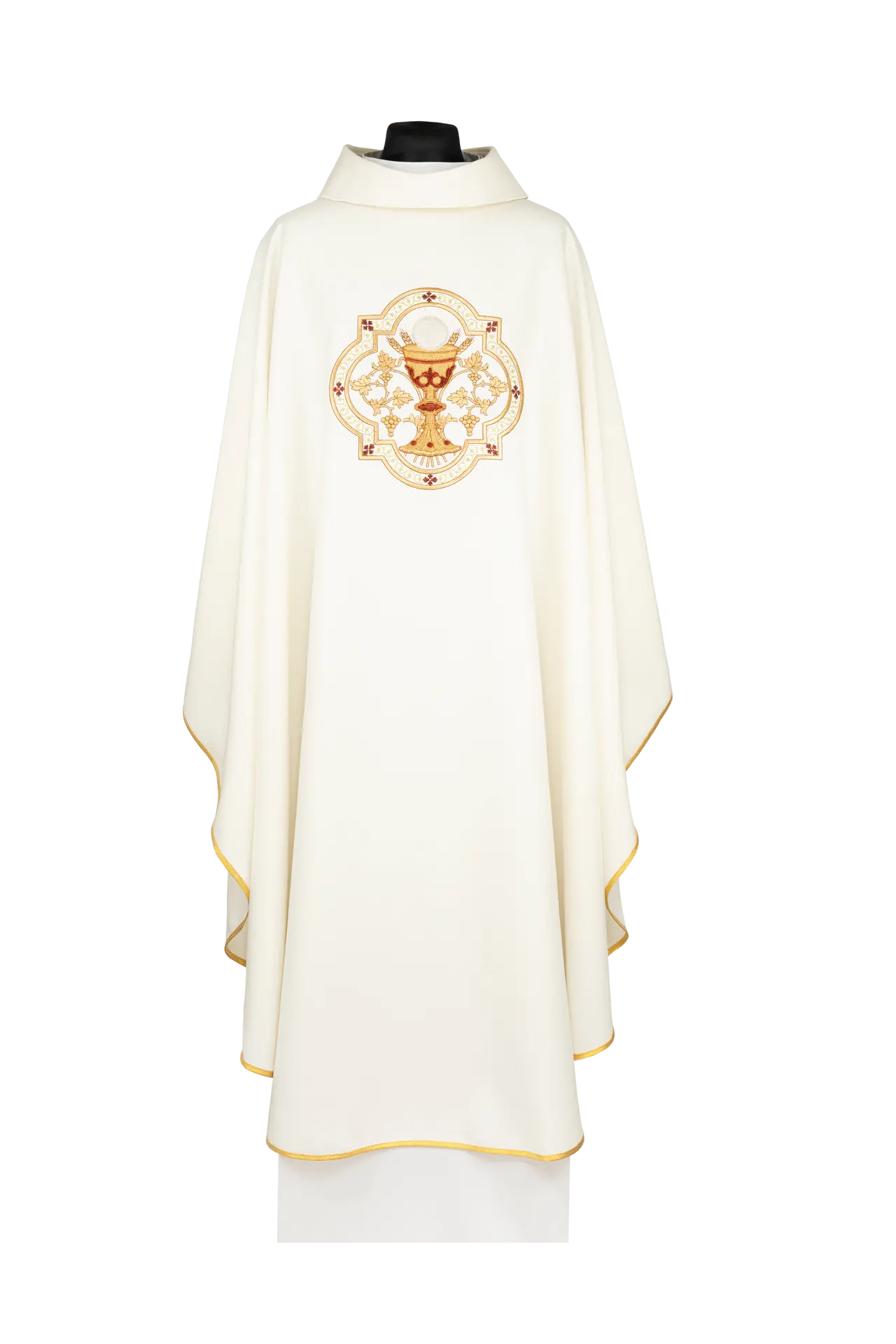
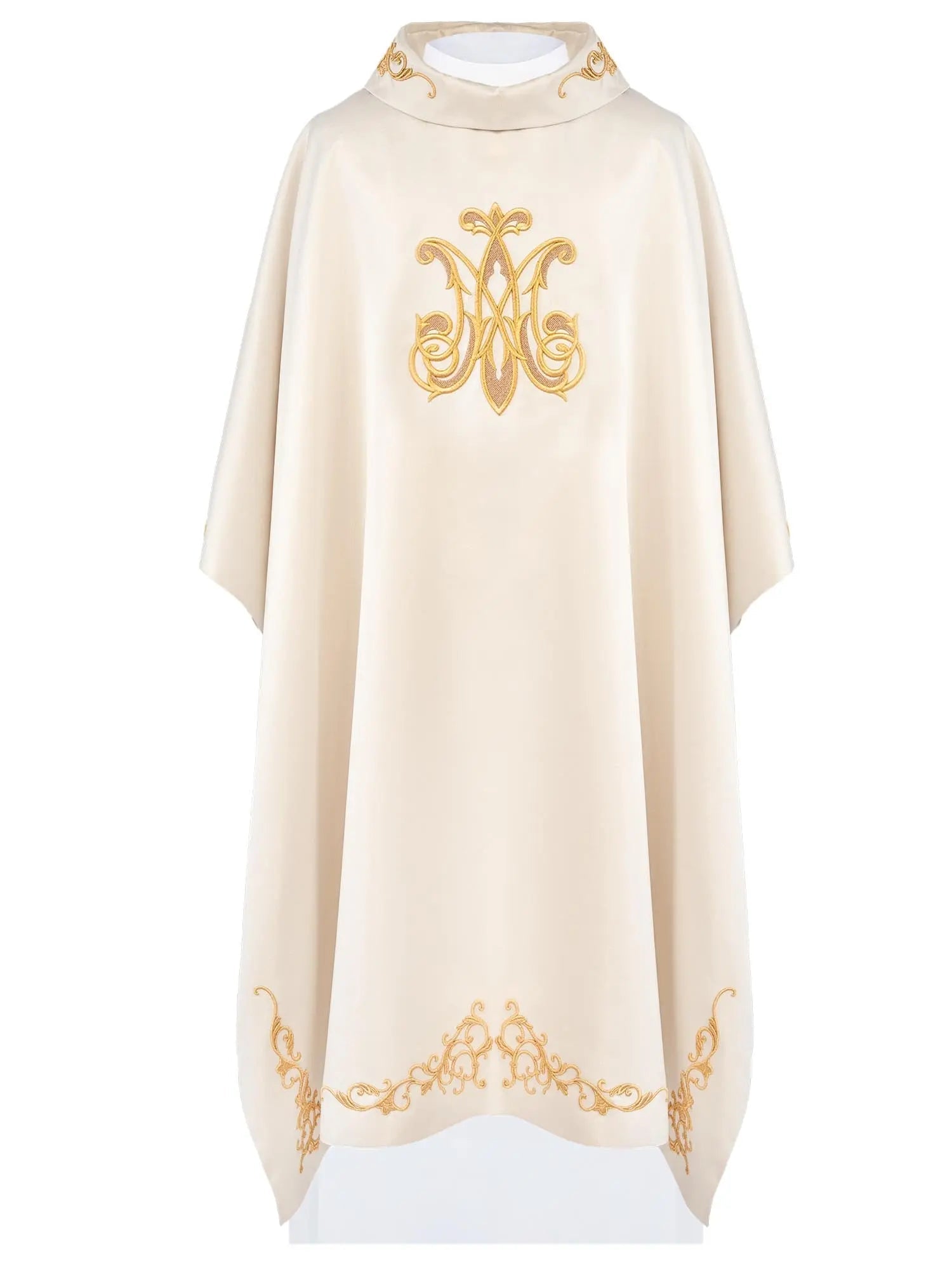
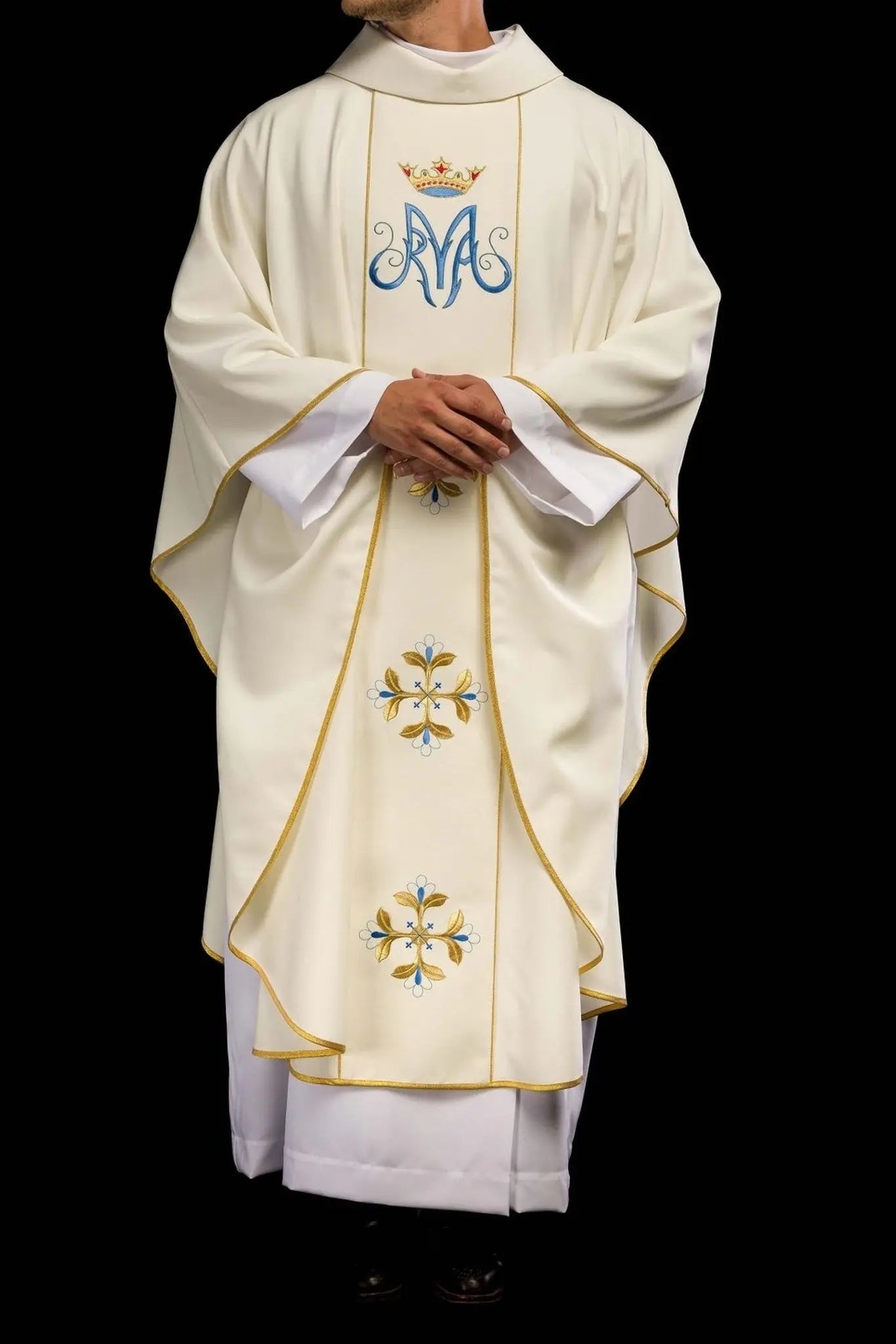
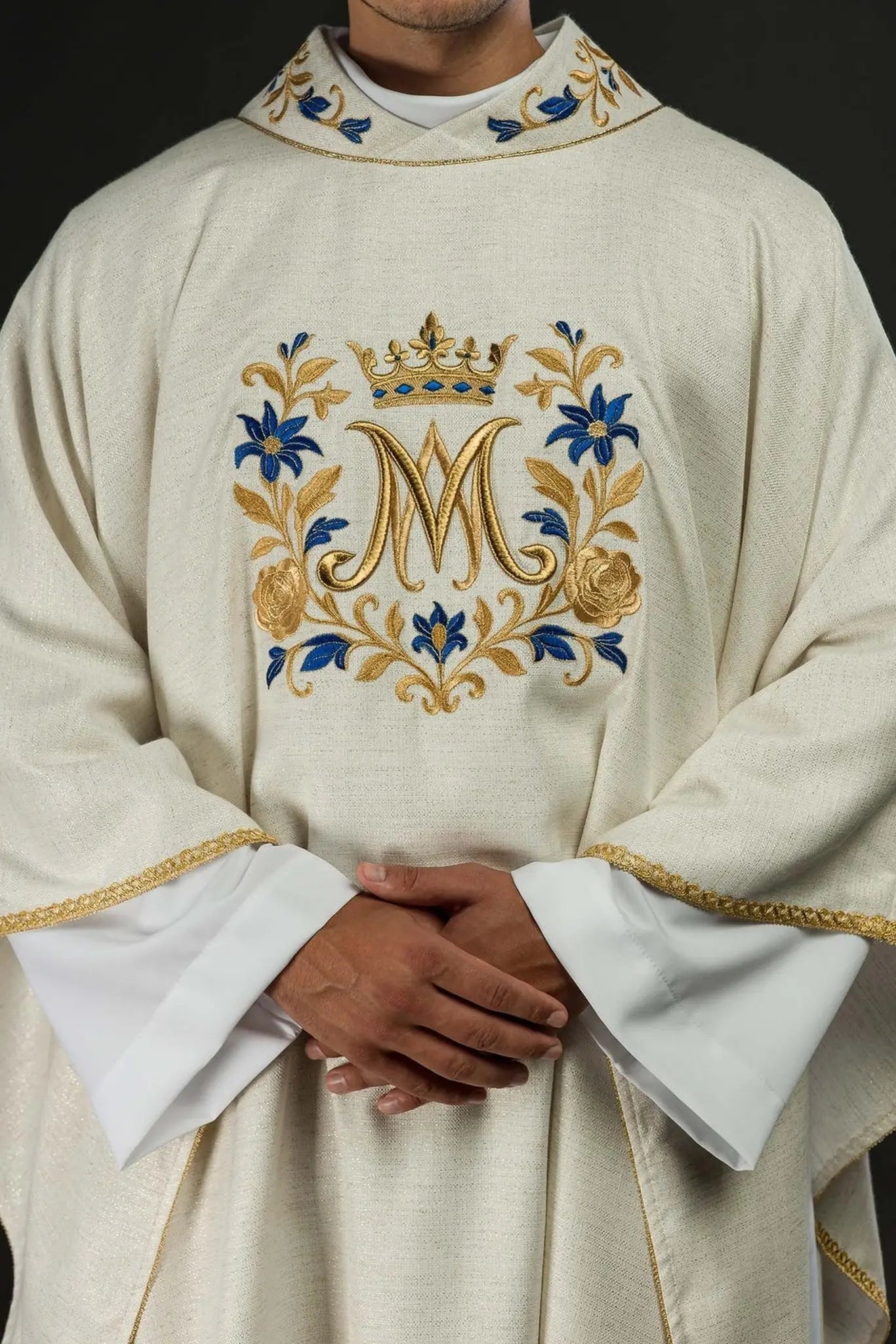
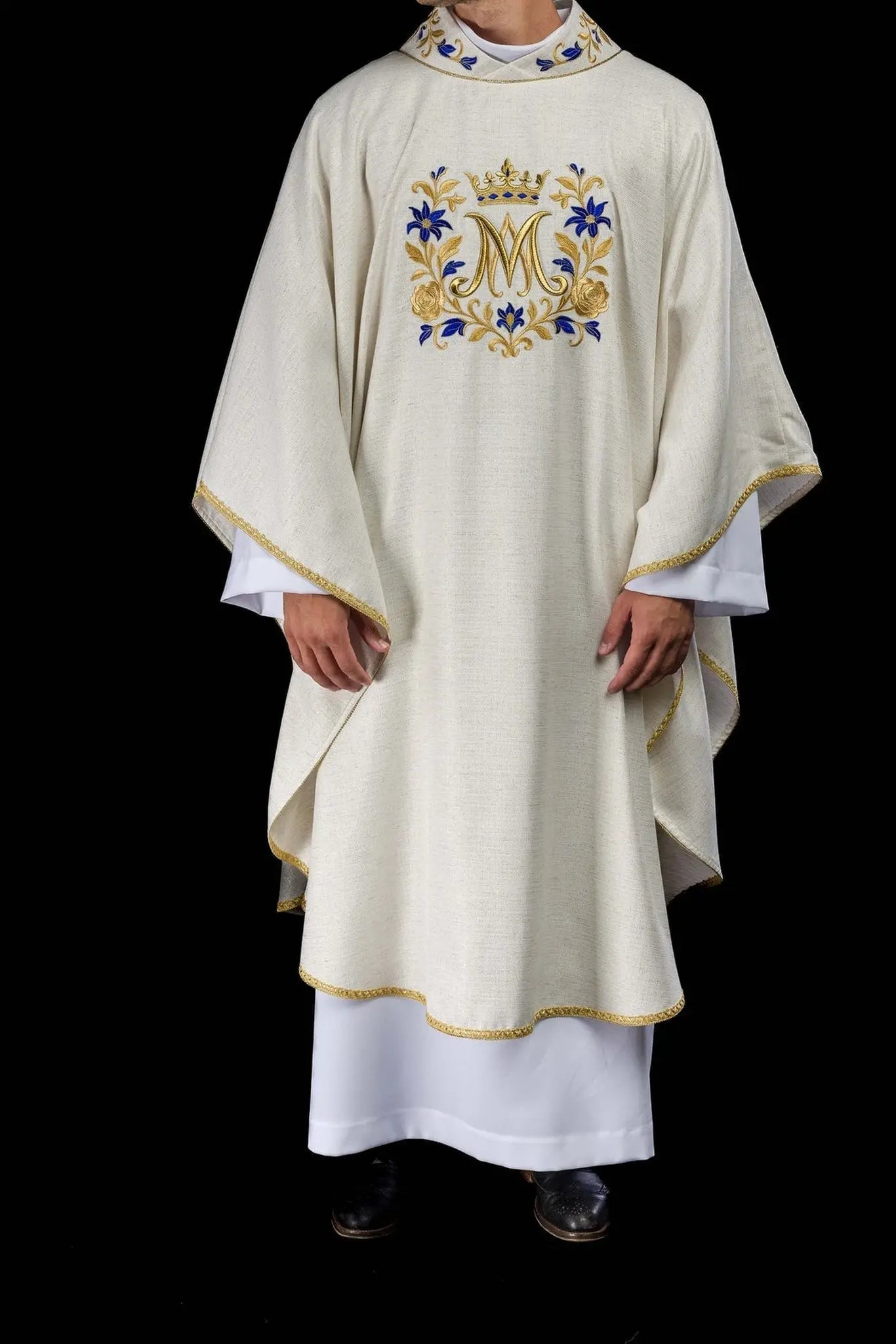
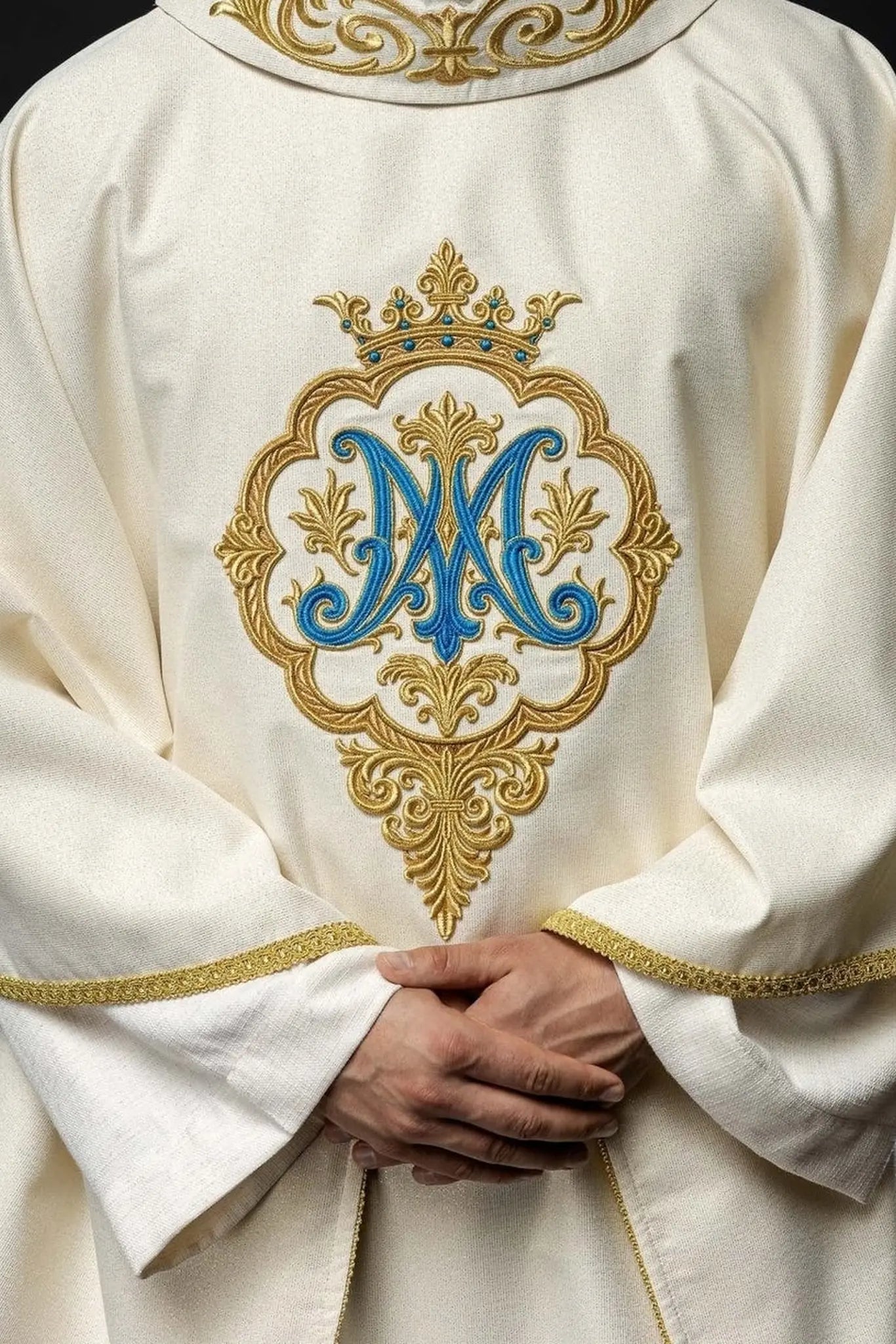
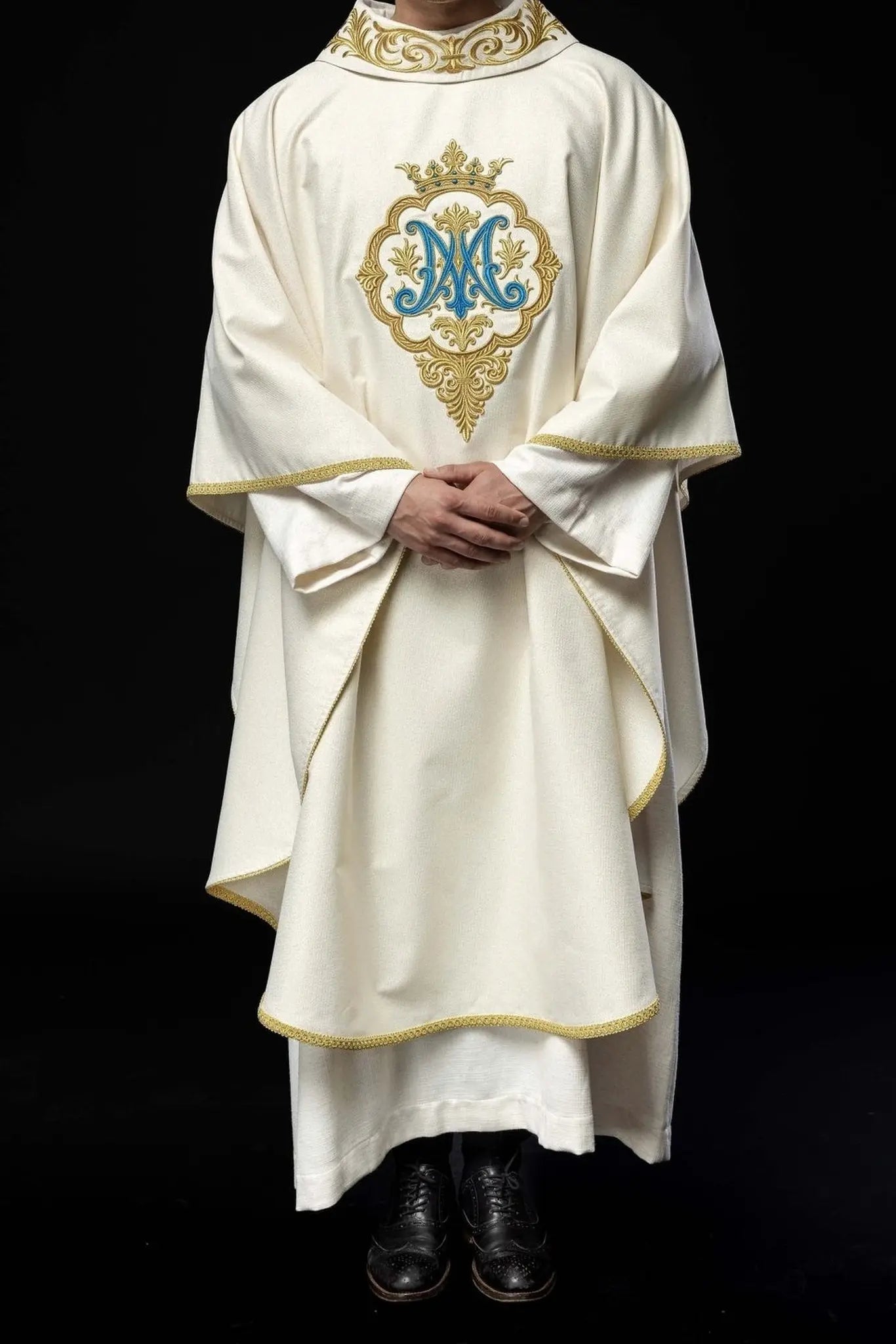
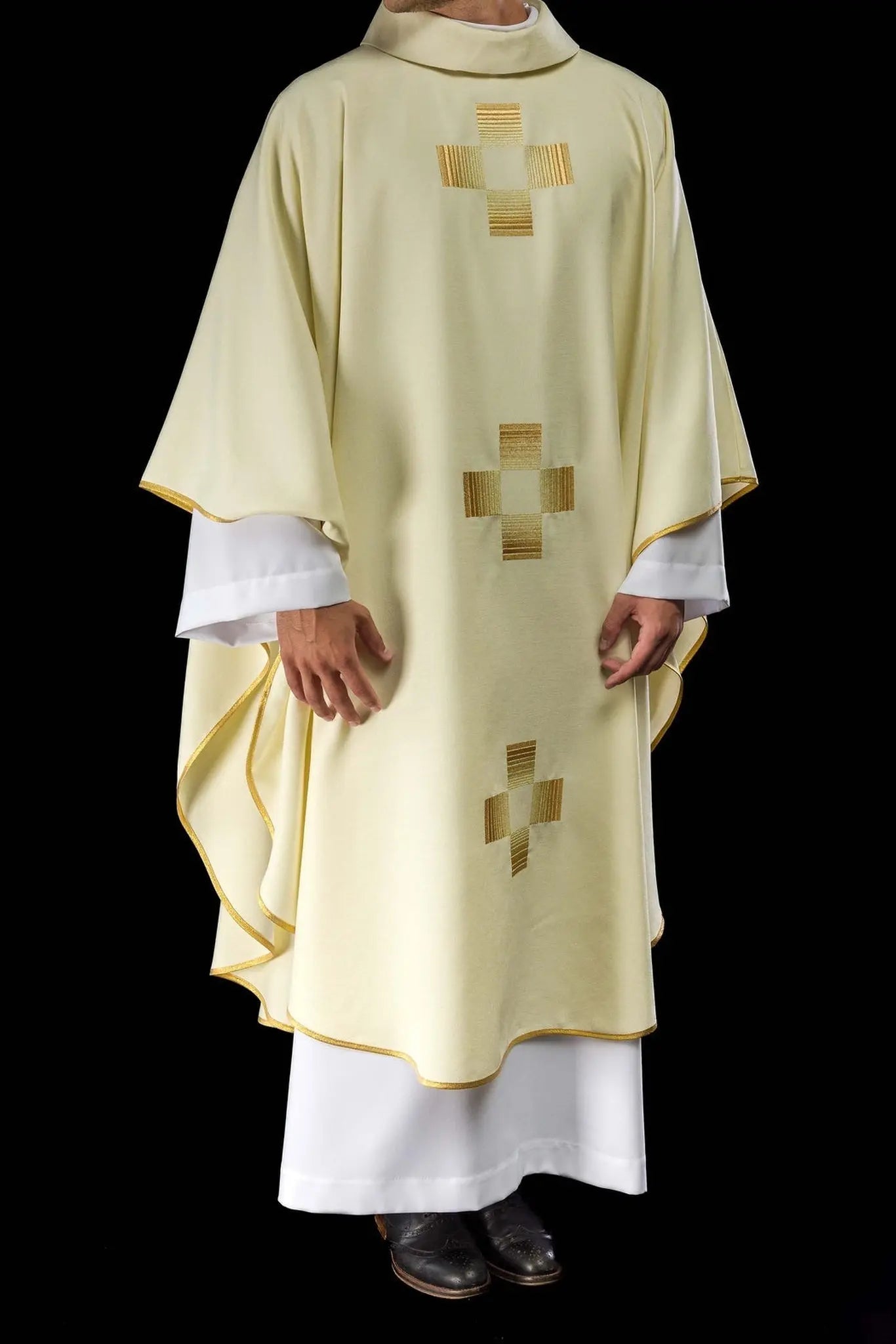
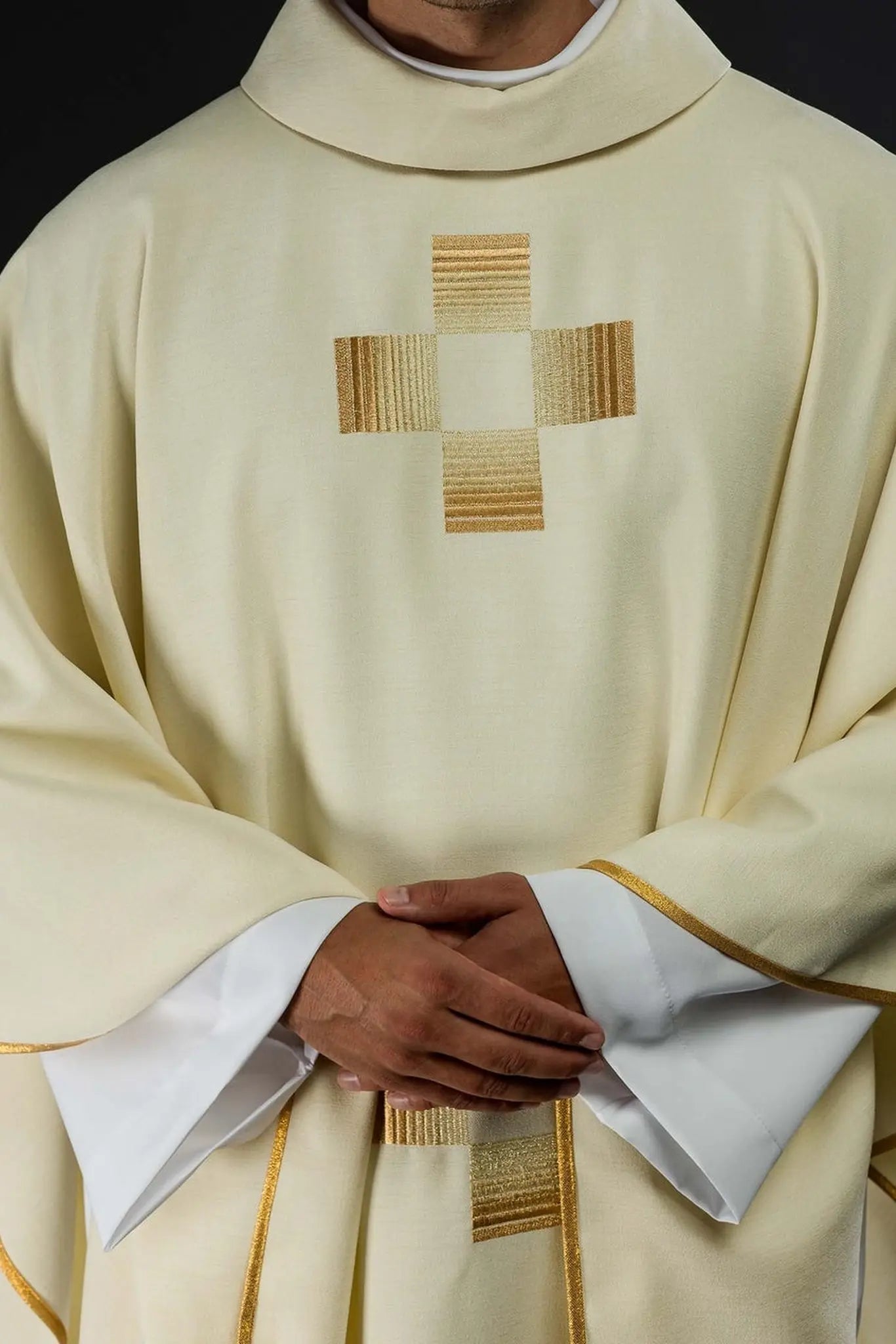
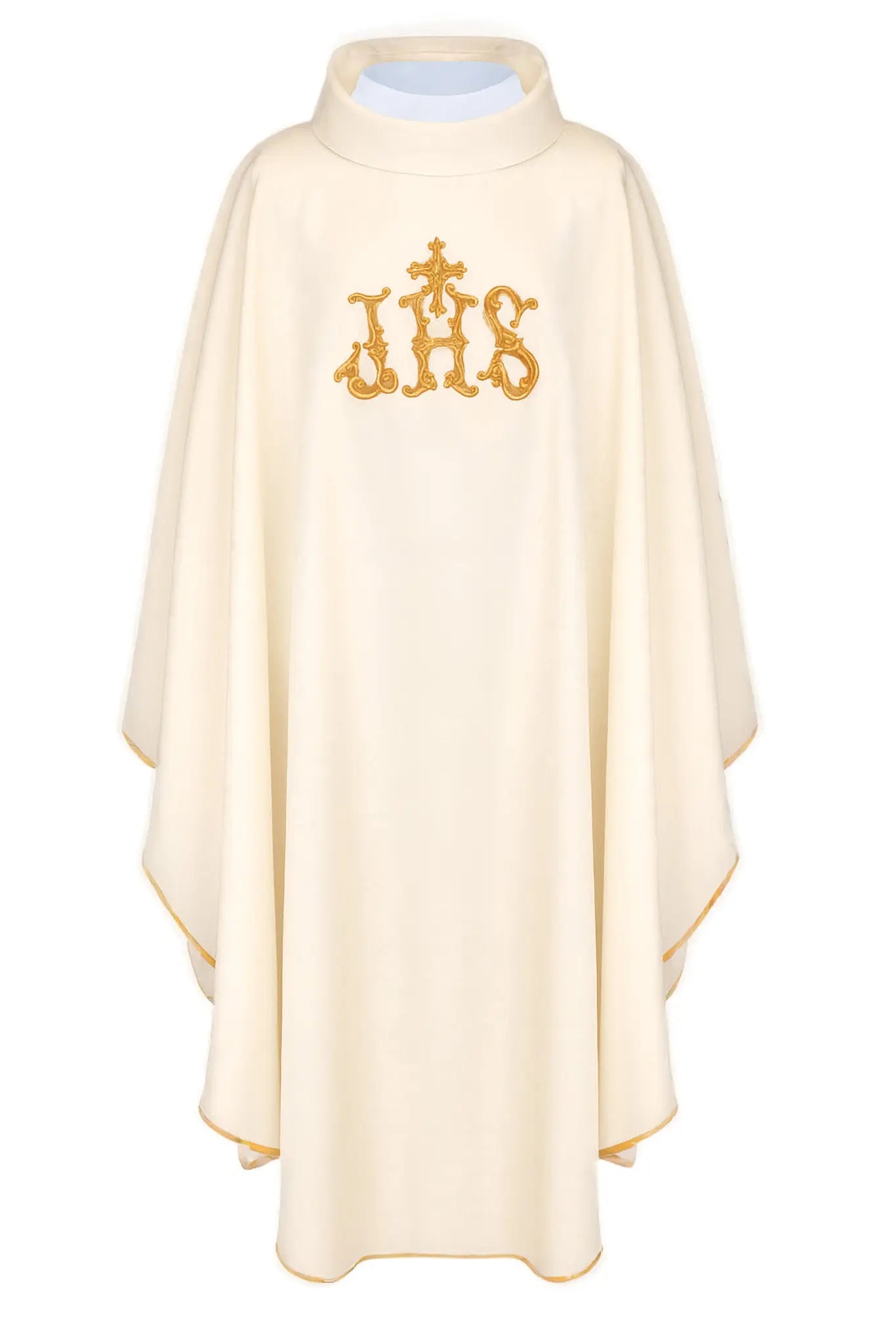
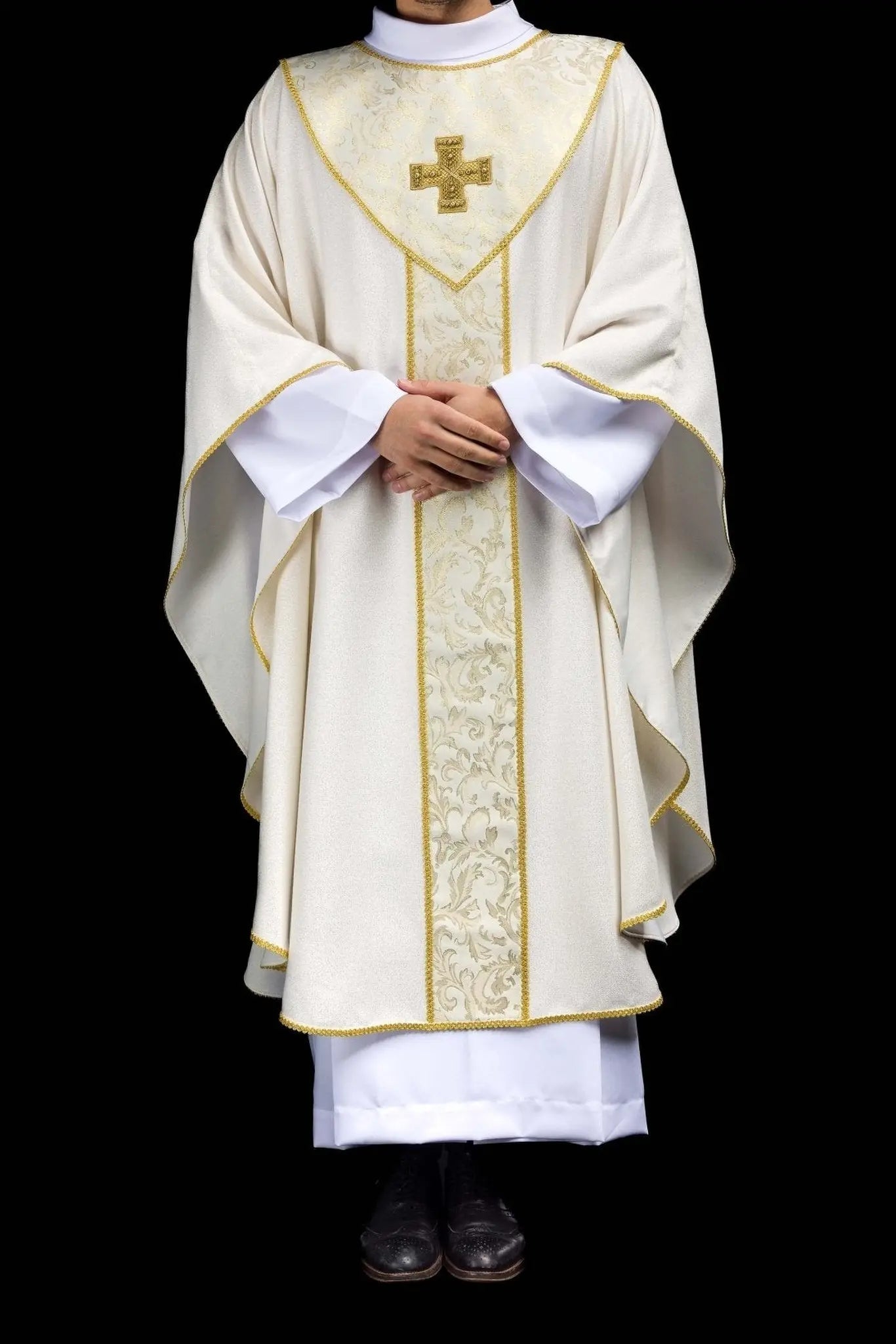
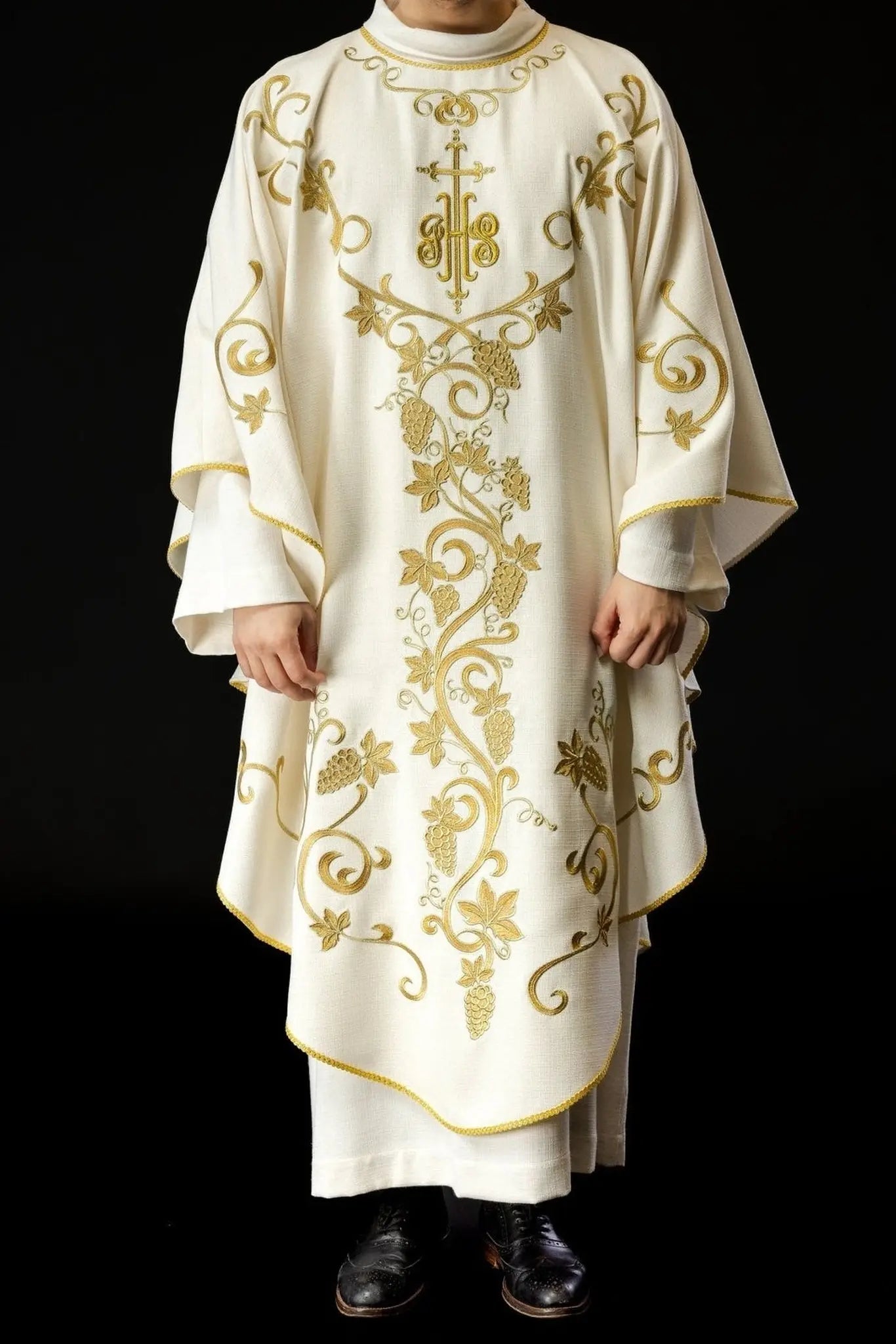
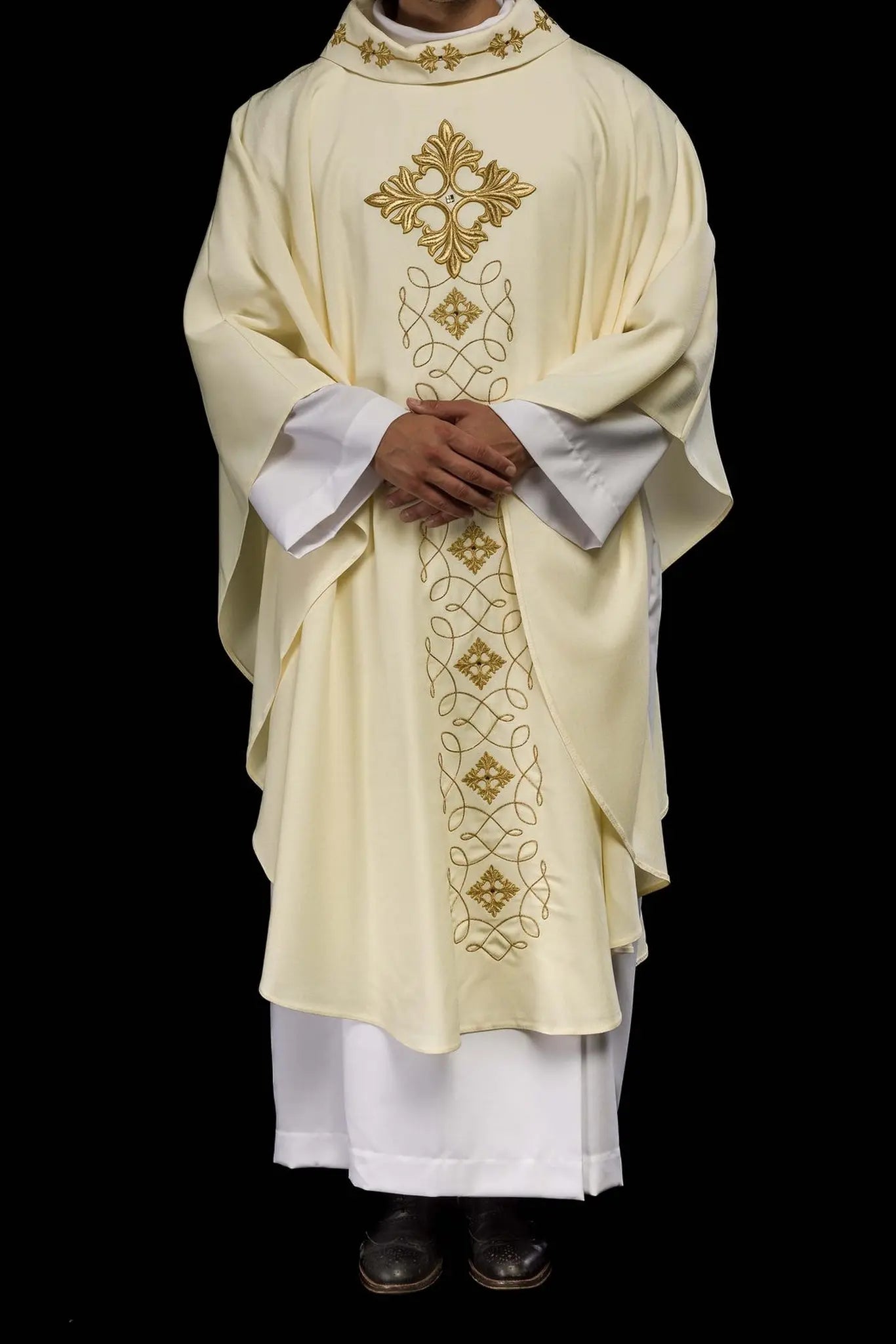
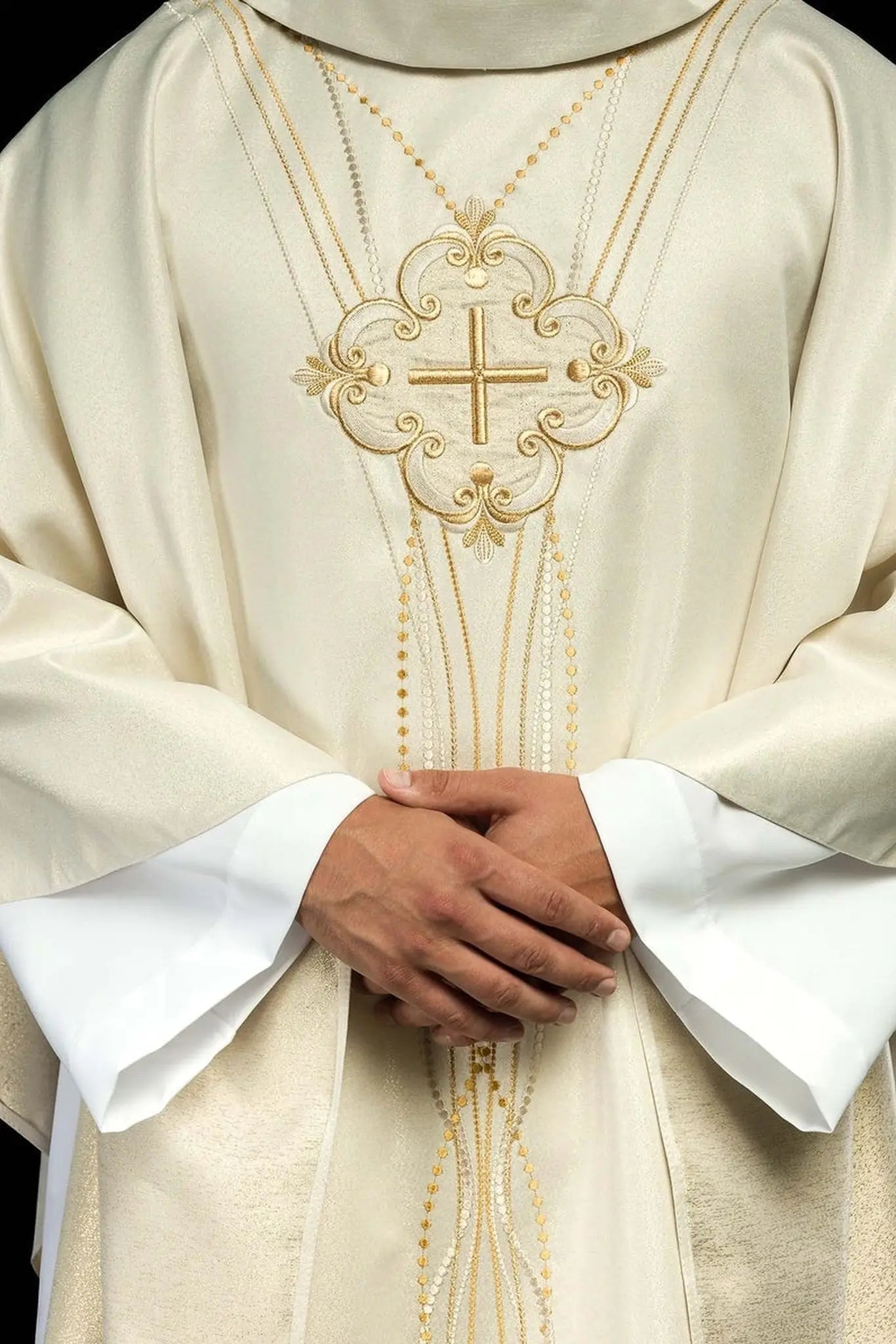
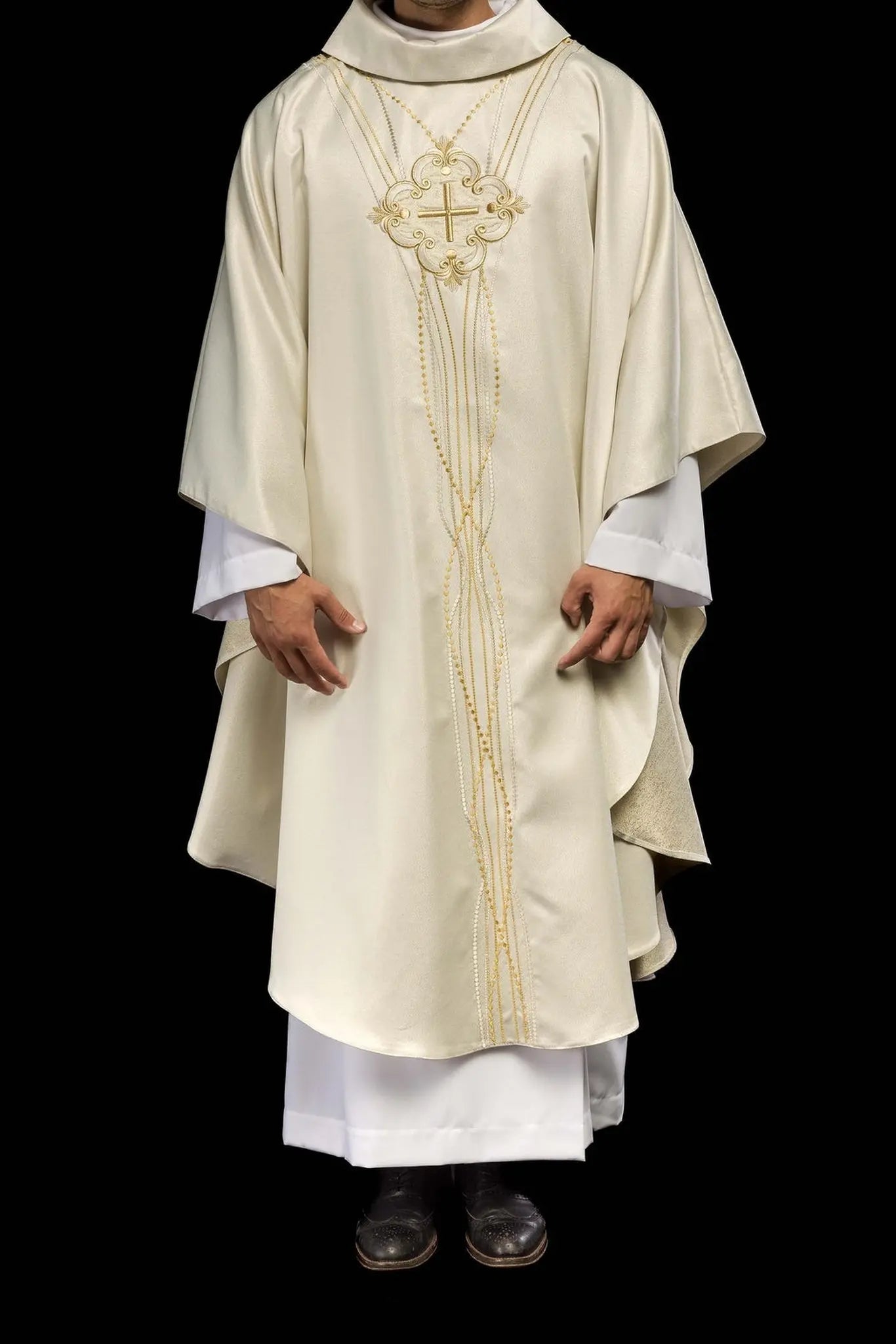
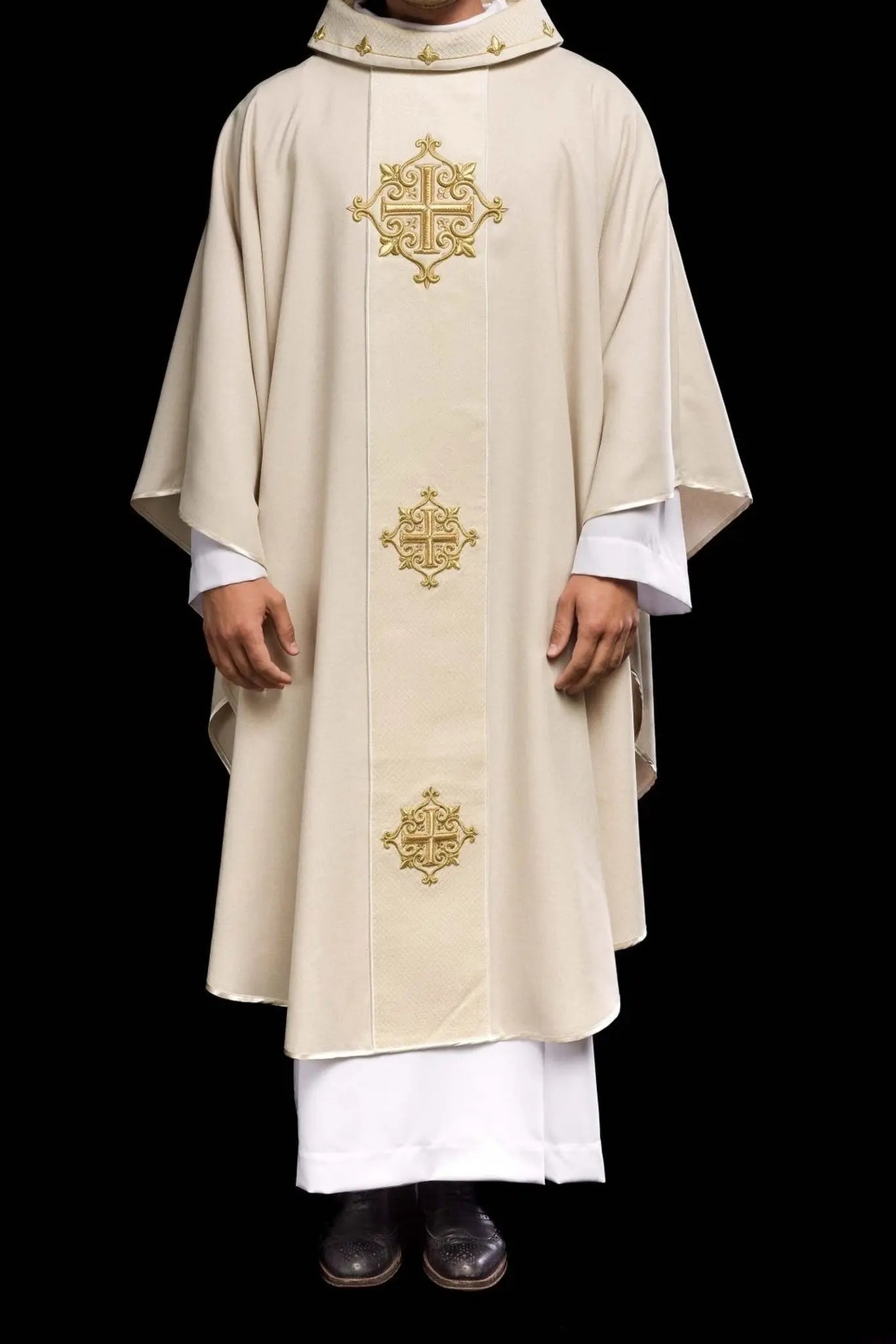
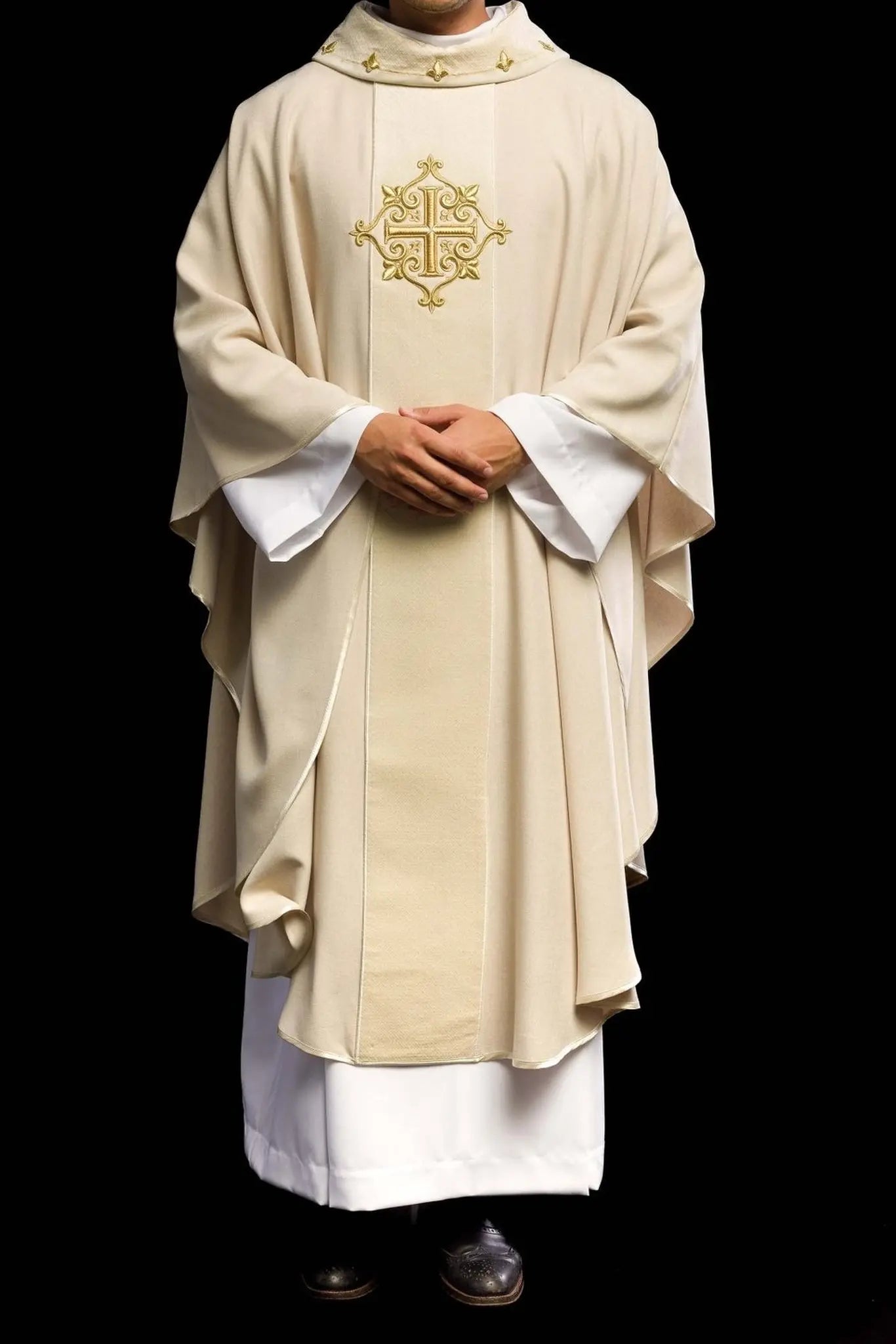
Ecru chasubles offer a warm, ivory-toned alternative to bright white vestments while keeping the visual language of the liturgy calm, solemn, and festive. This collection gathers chasubles intended for priests and bishops celebrating the Holy Mass, with designs suited to solemnities, parish feast days, Marian celebrations, Eucharistic worship, Christmas, Easter, weddings, jubilees, and other occasions where a white or gold-toned vestment is appropriate. The ecru shade softens the appearance of embroidery and woven fabrics, allowing crosses, IHS motifs, Eucharistic symbols, Marian emblems, floral ornament, and gold accents to stand out without making the vestment look heavy.
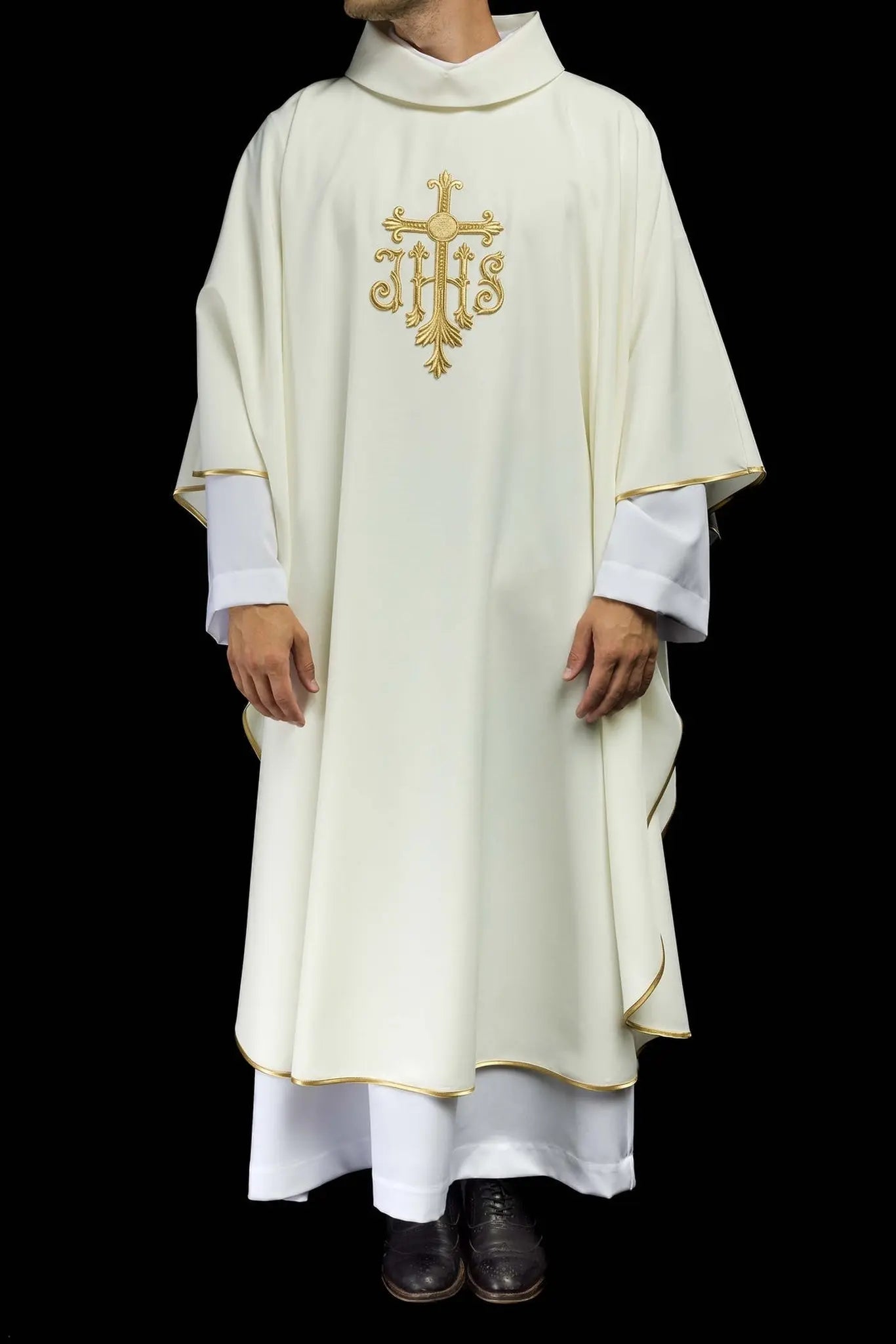
Within the wider range of liturgical vestments, the chasuble is the principal outer vestment of the celebrant at Mass. It is worn over the alb and stole, so its color, cut, and decoration are seen clearly by the congregation and should harmonize with the altar, the sanctuary, and the character of the celebration. Ecru is especially useful when a parish wants a refined vestment that is less stark than pure white but still close to the traditional color family used for celebrations of the Lord, the Blessed Virgin Mary, angels, saints who were not martyrs, and joyful solemnities.
What belongs in the ecru chasuble collection
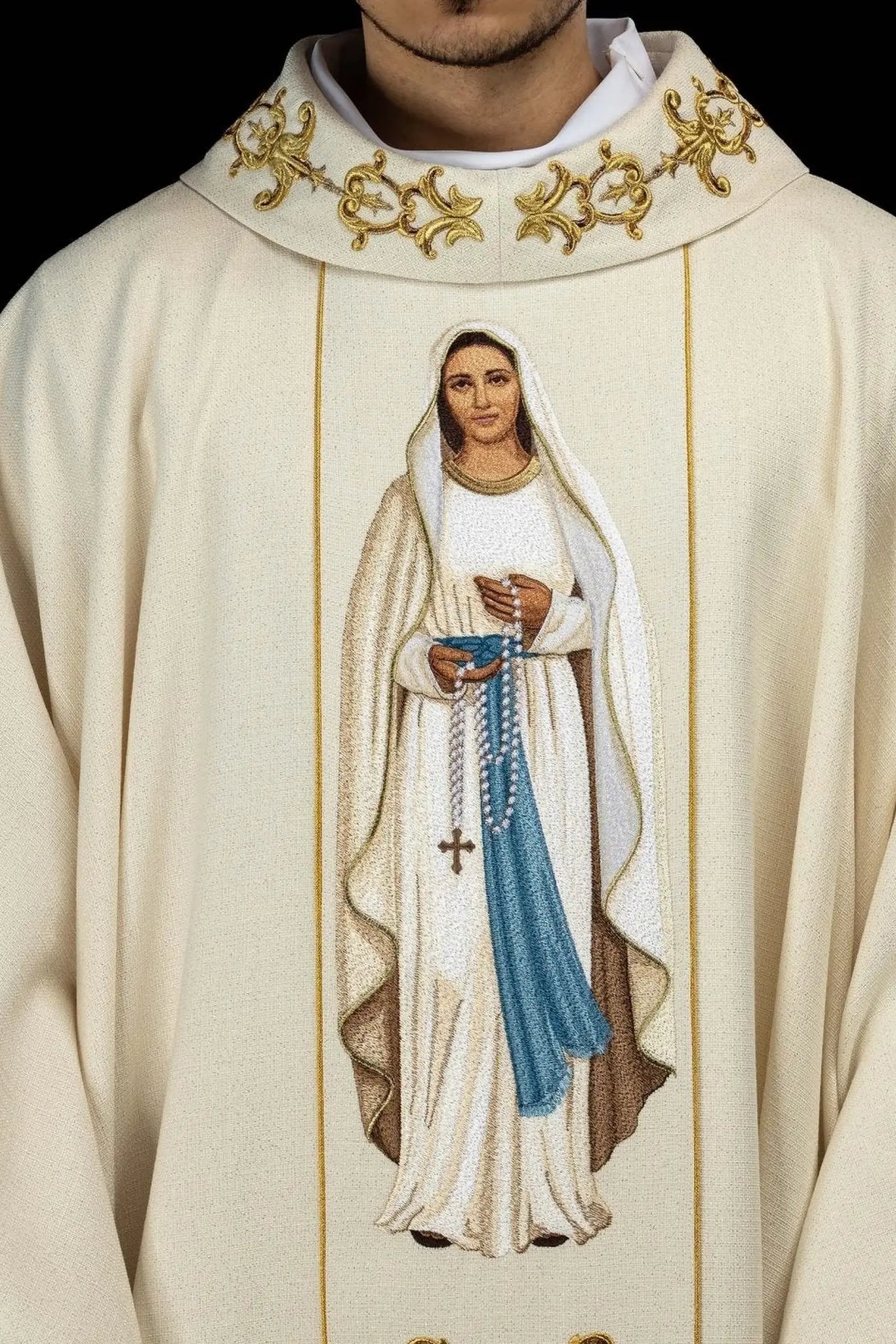
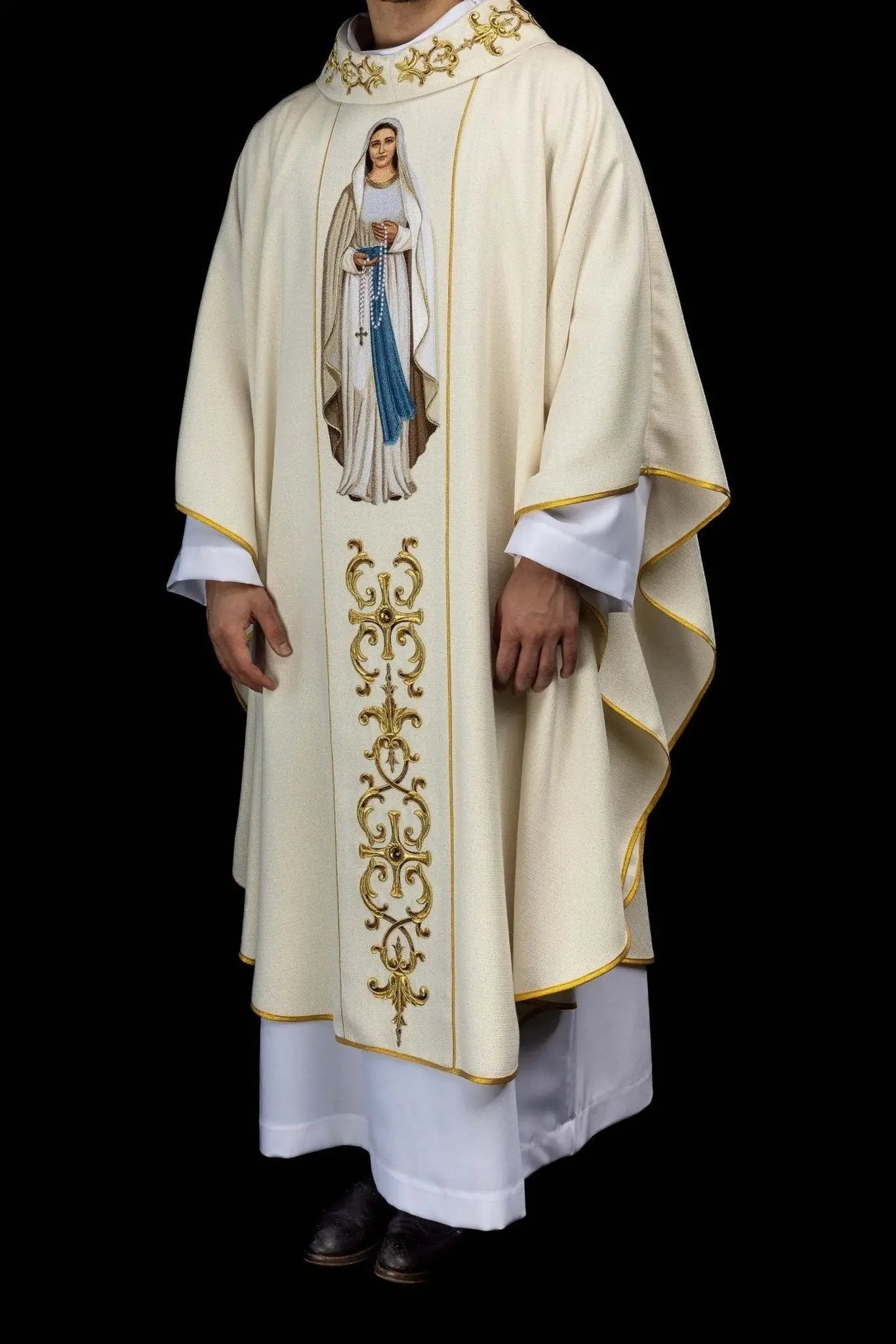
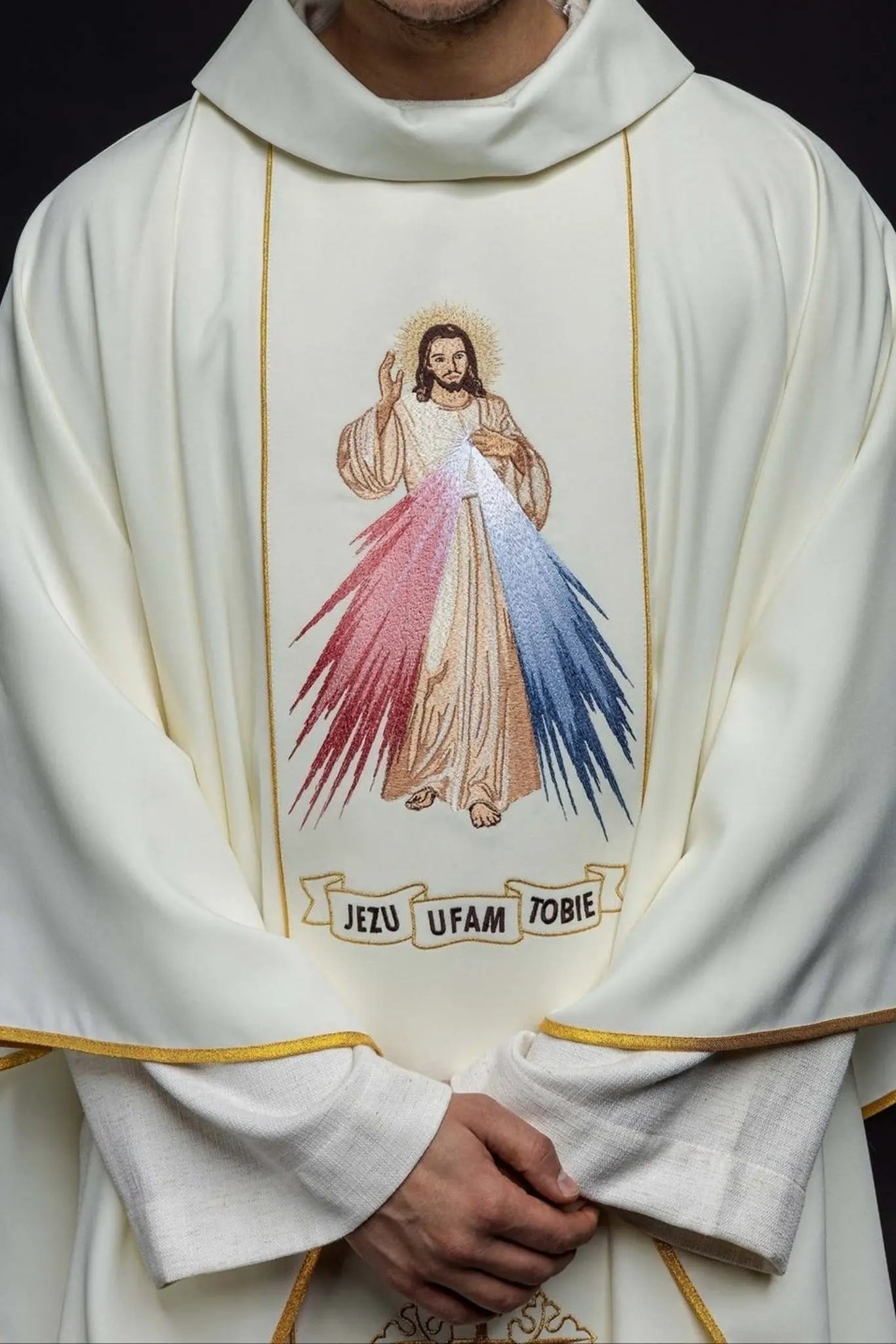
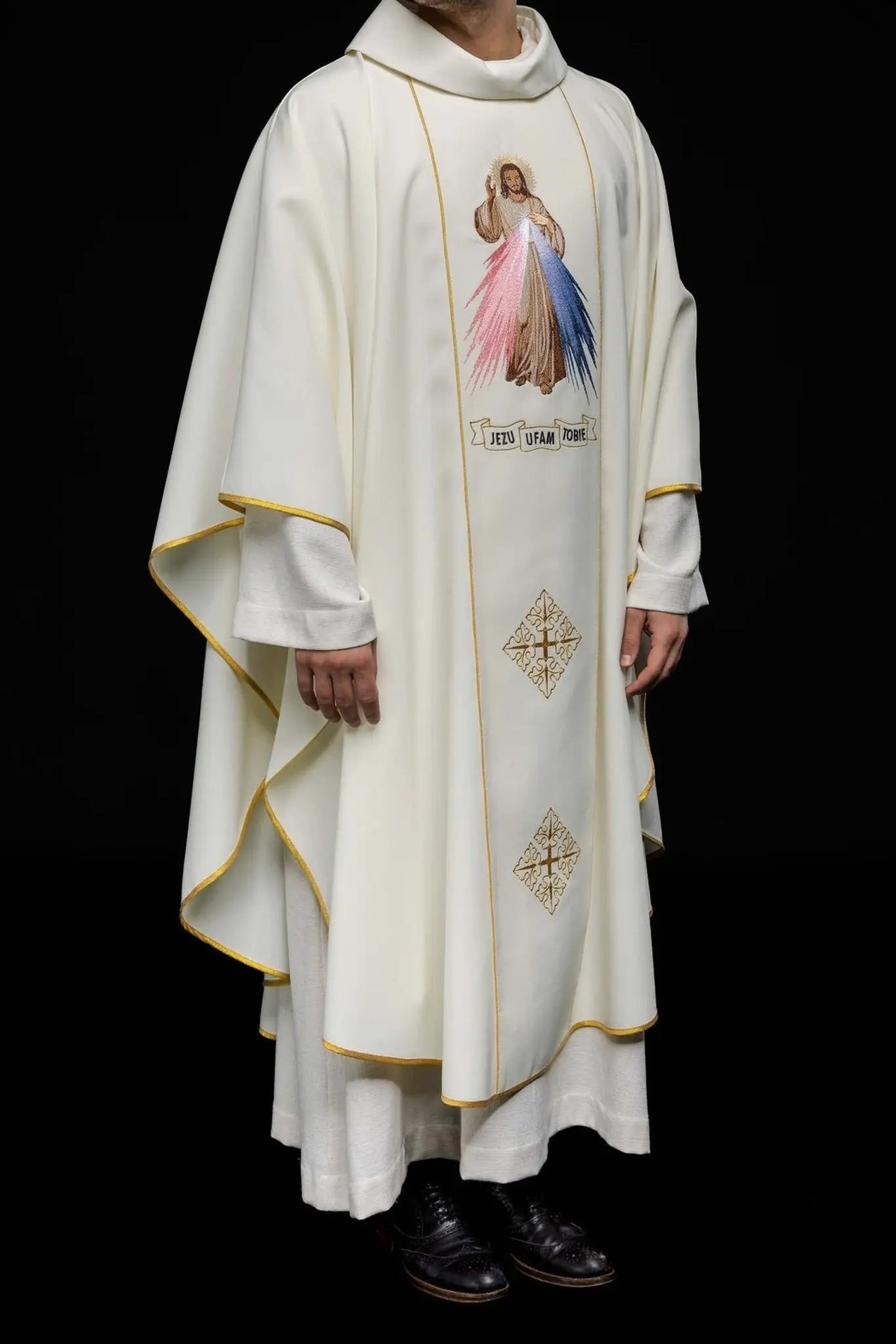
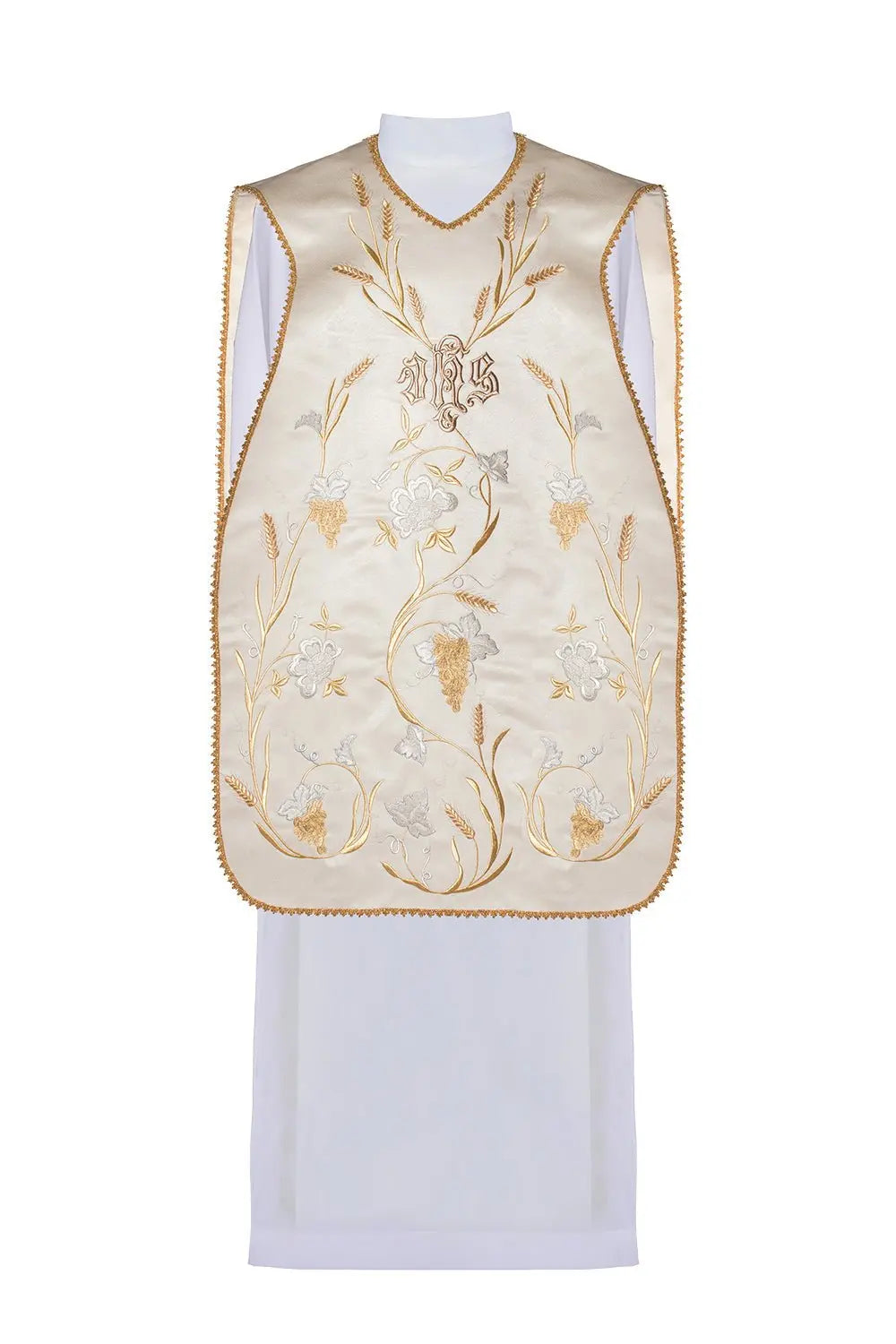
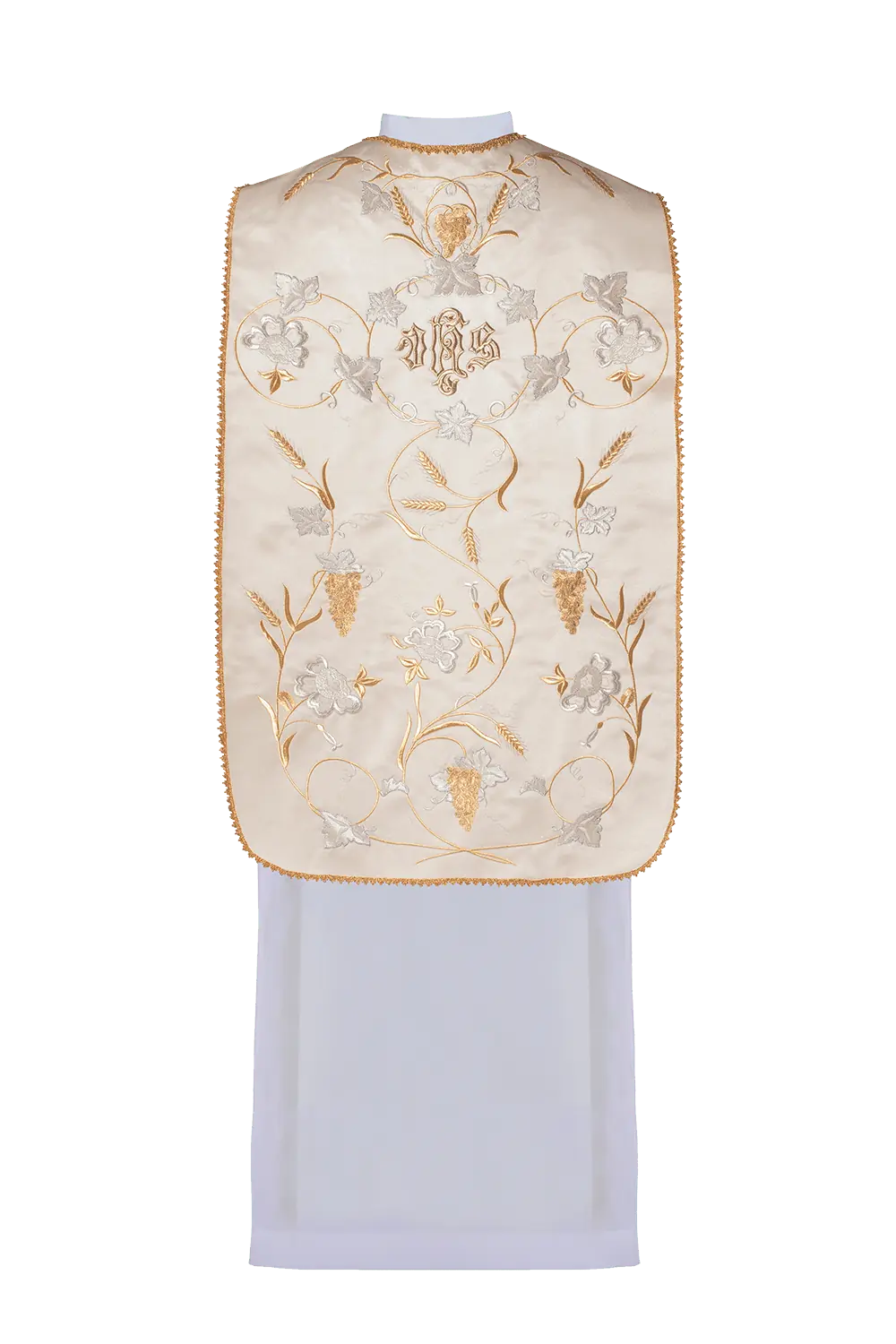
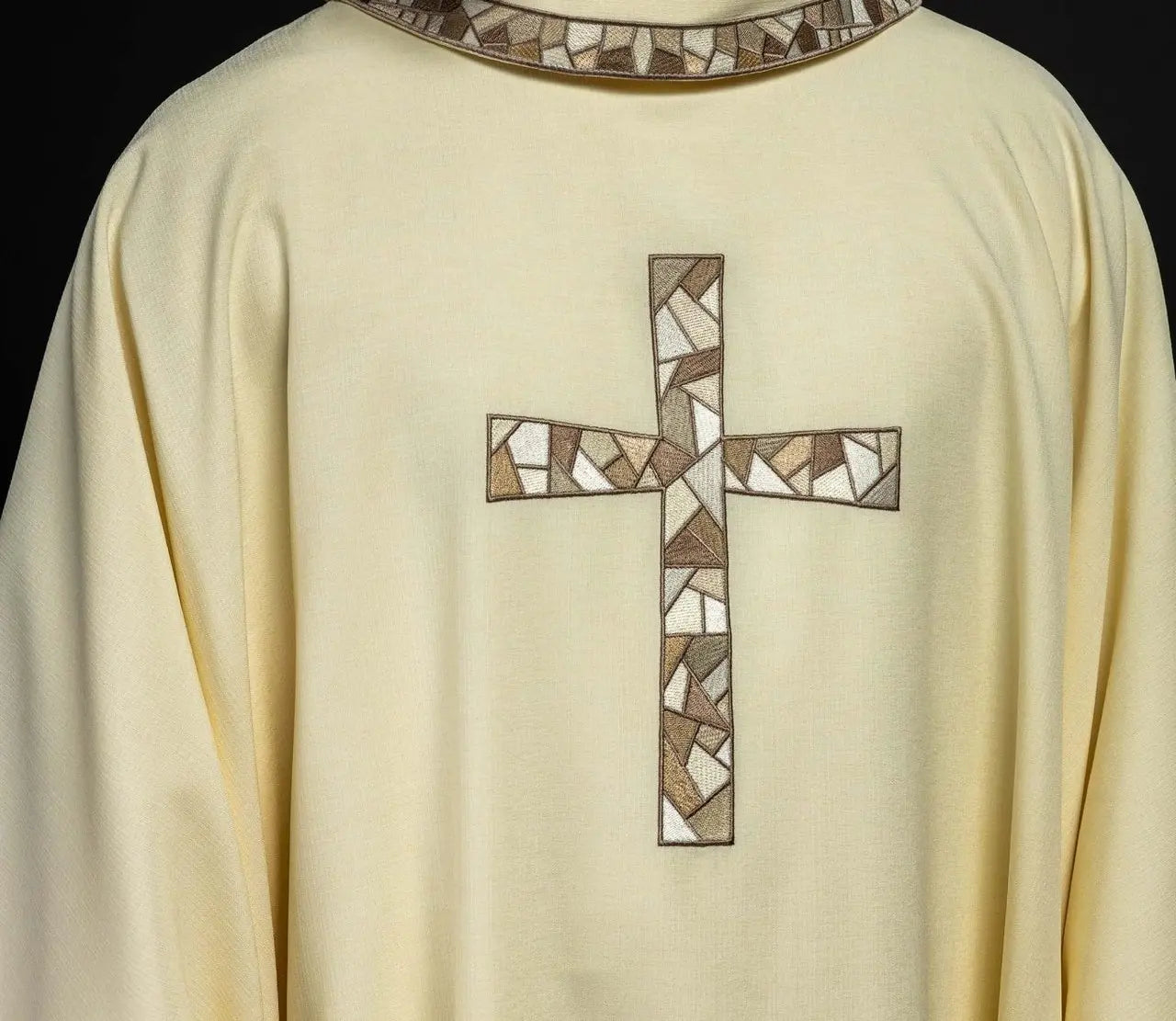
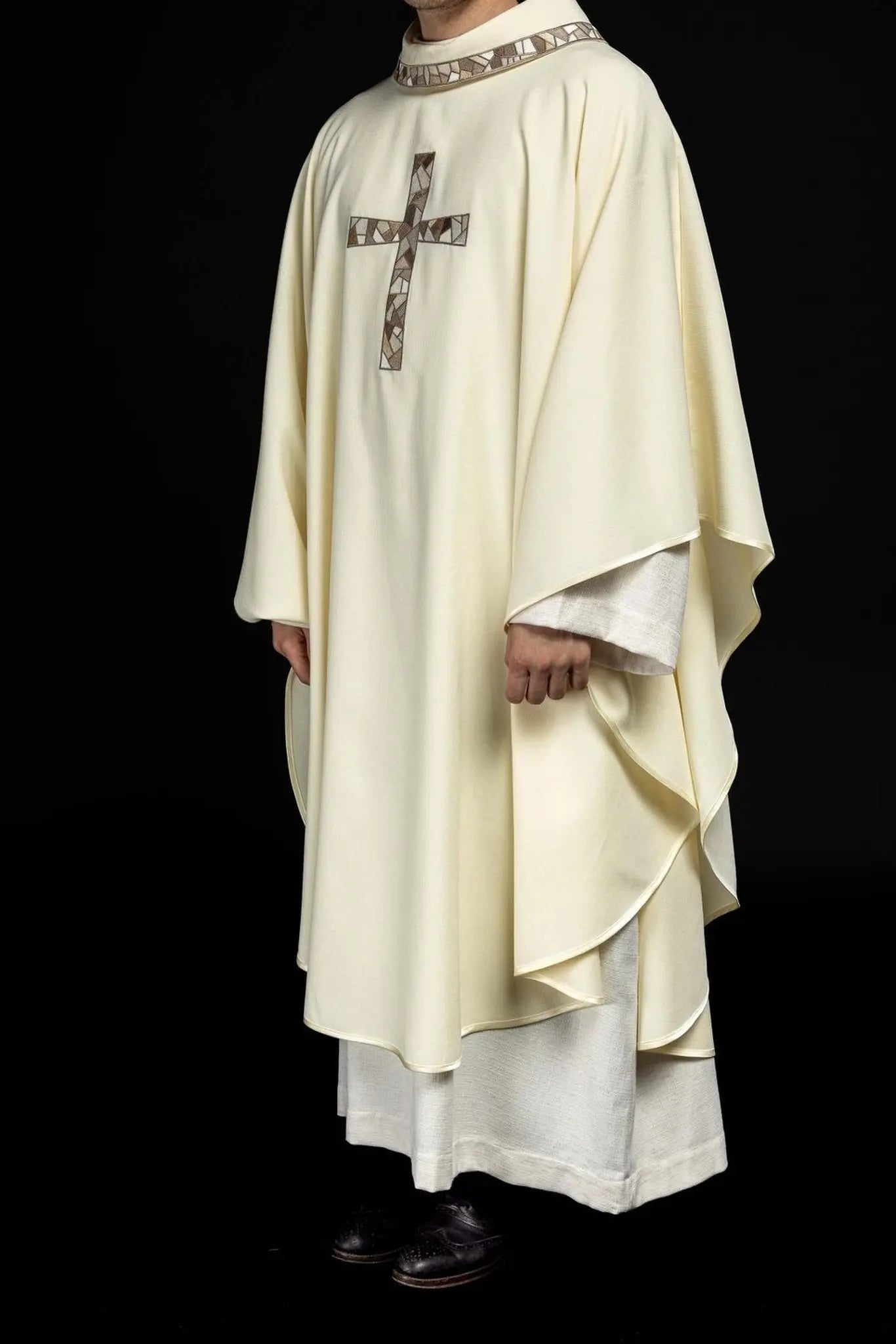
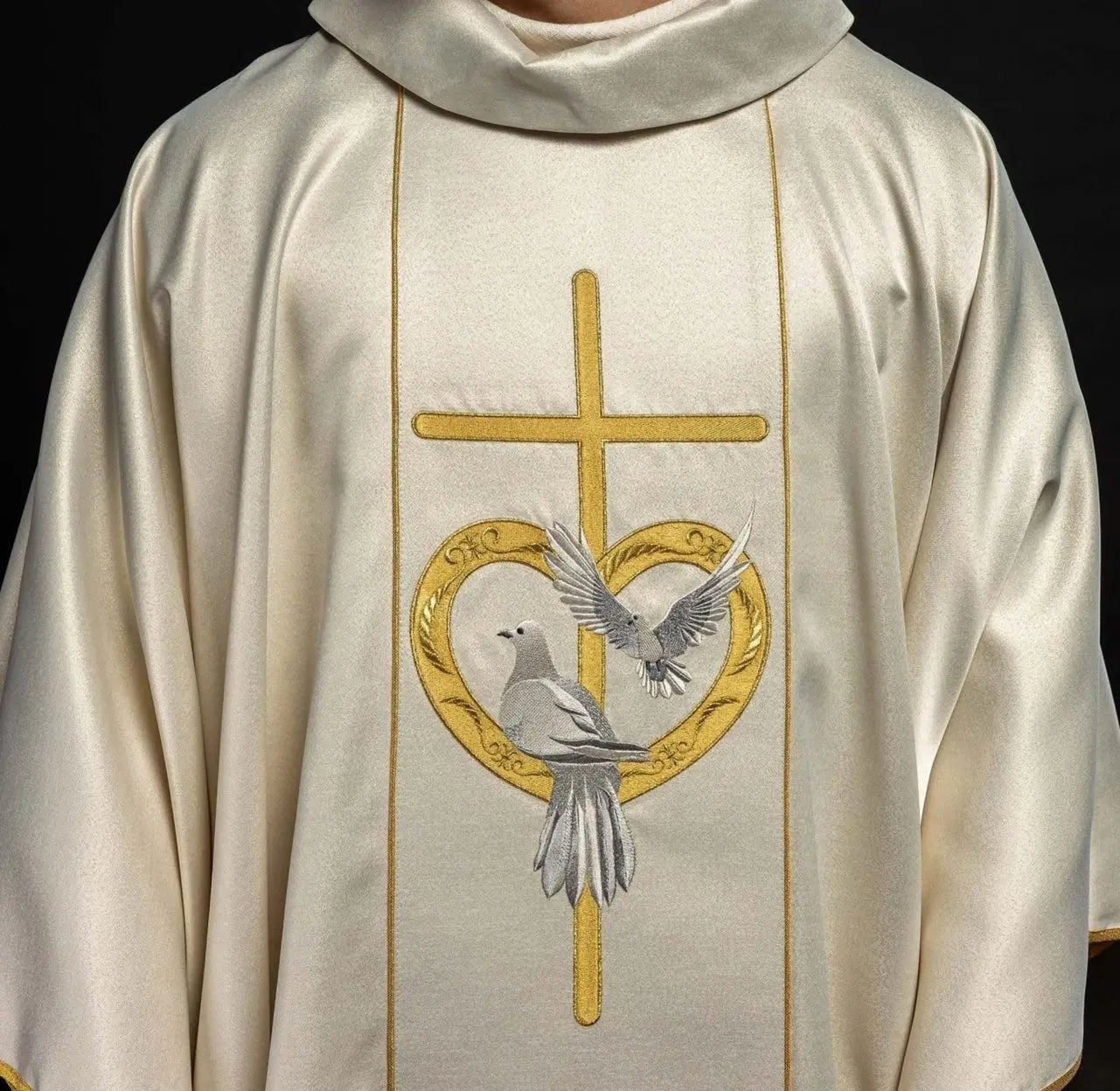
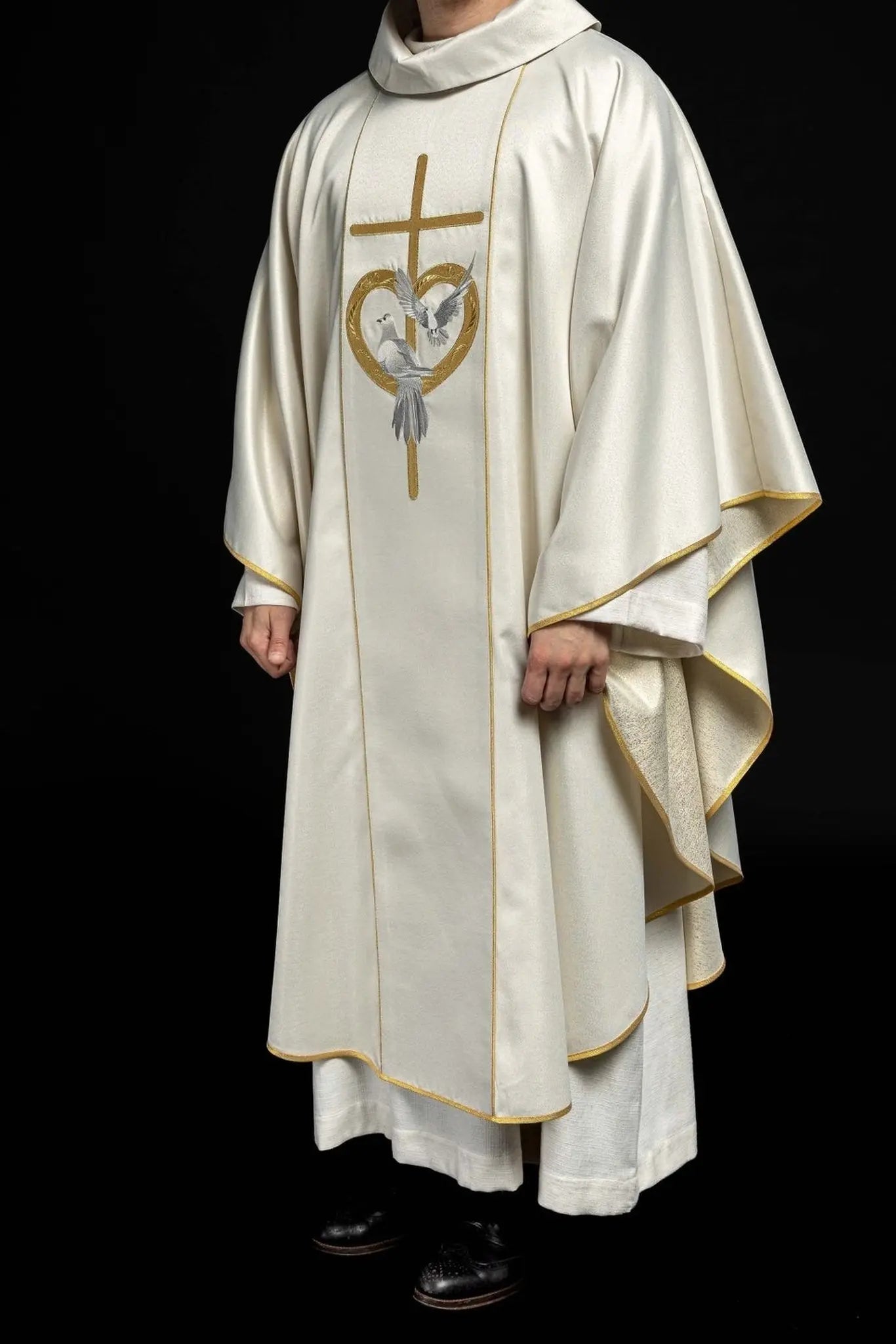
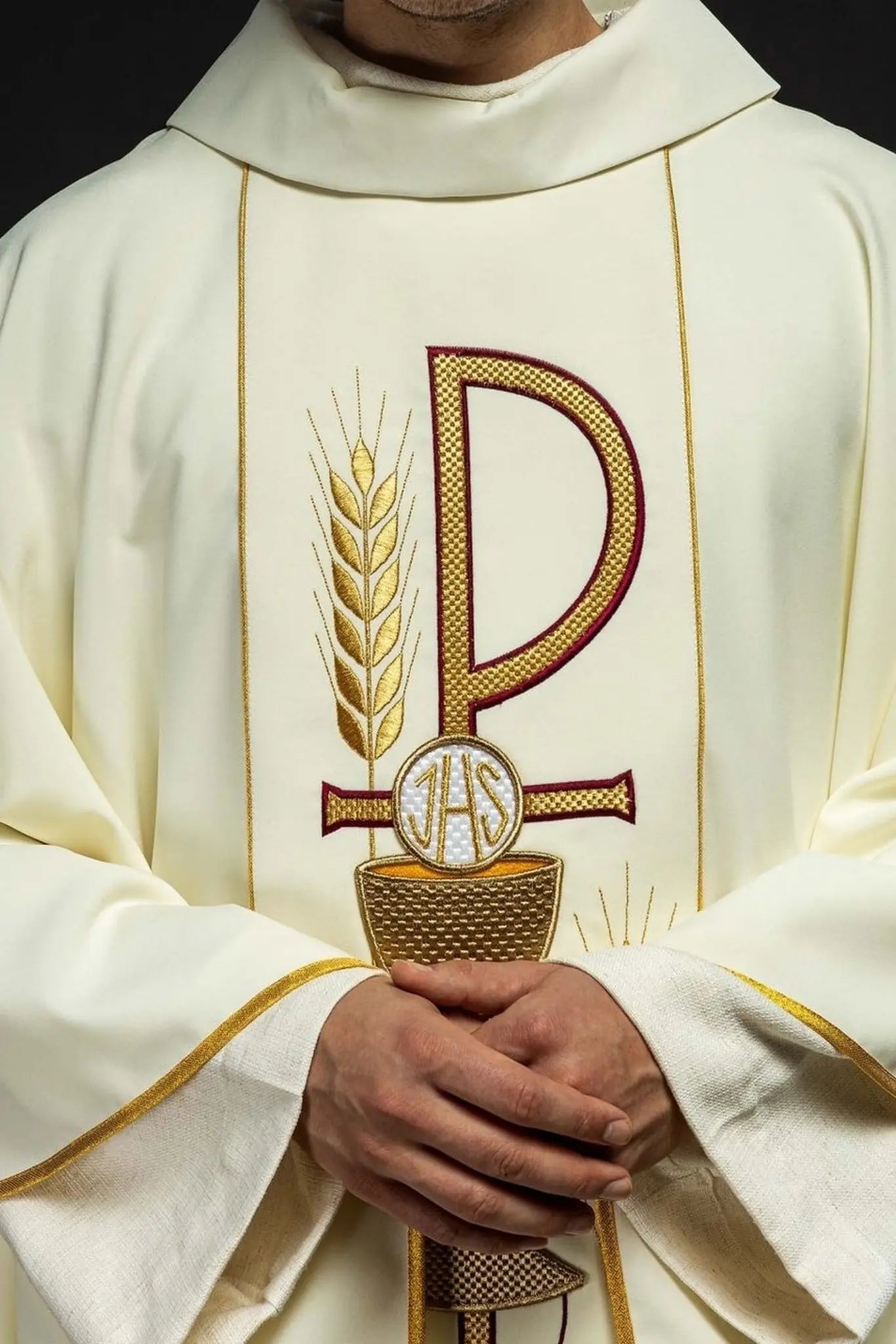
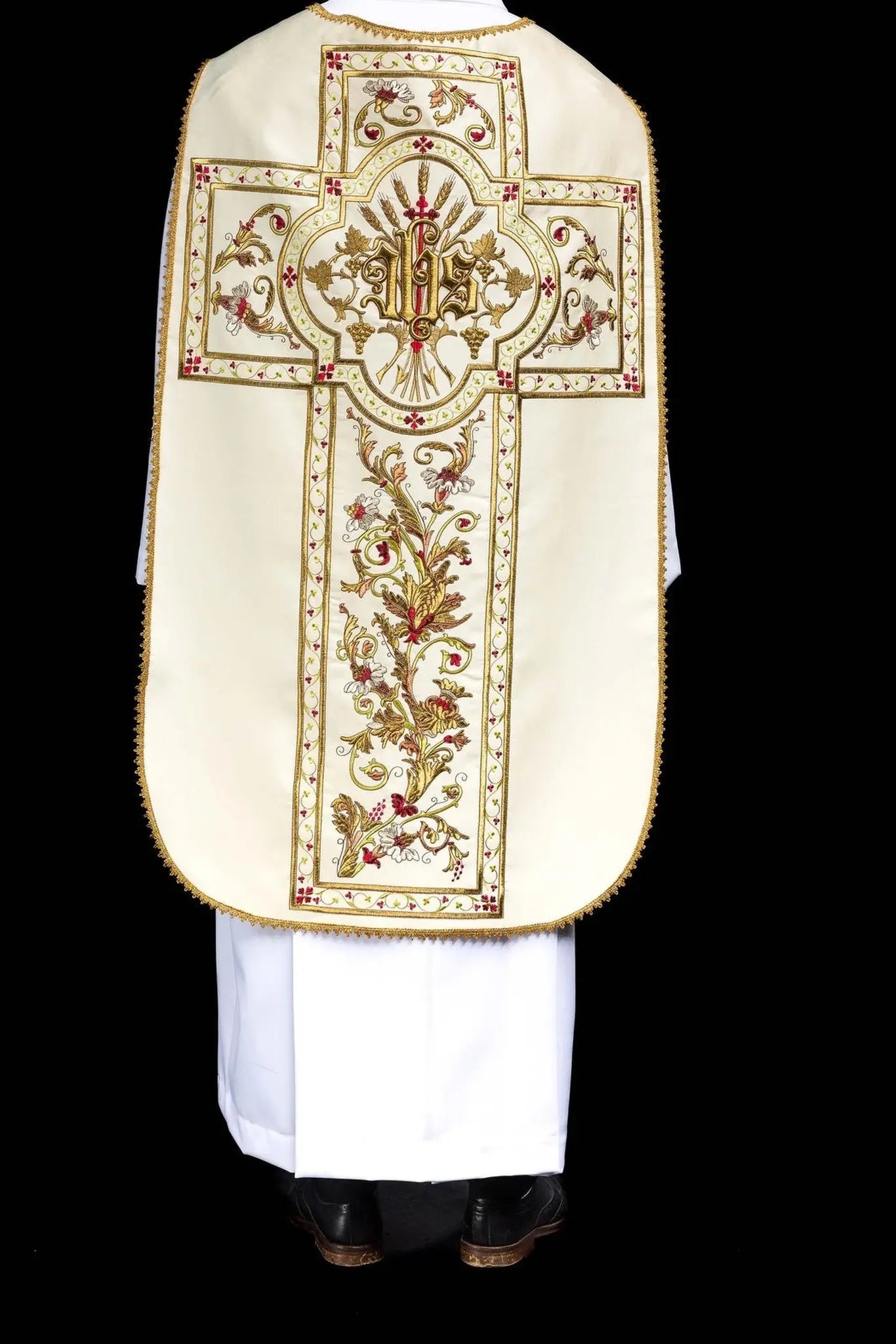
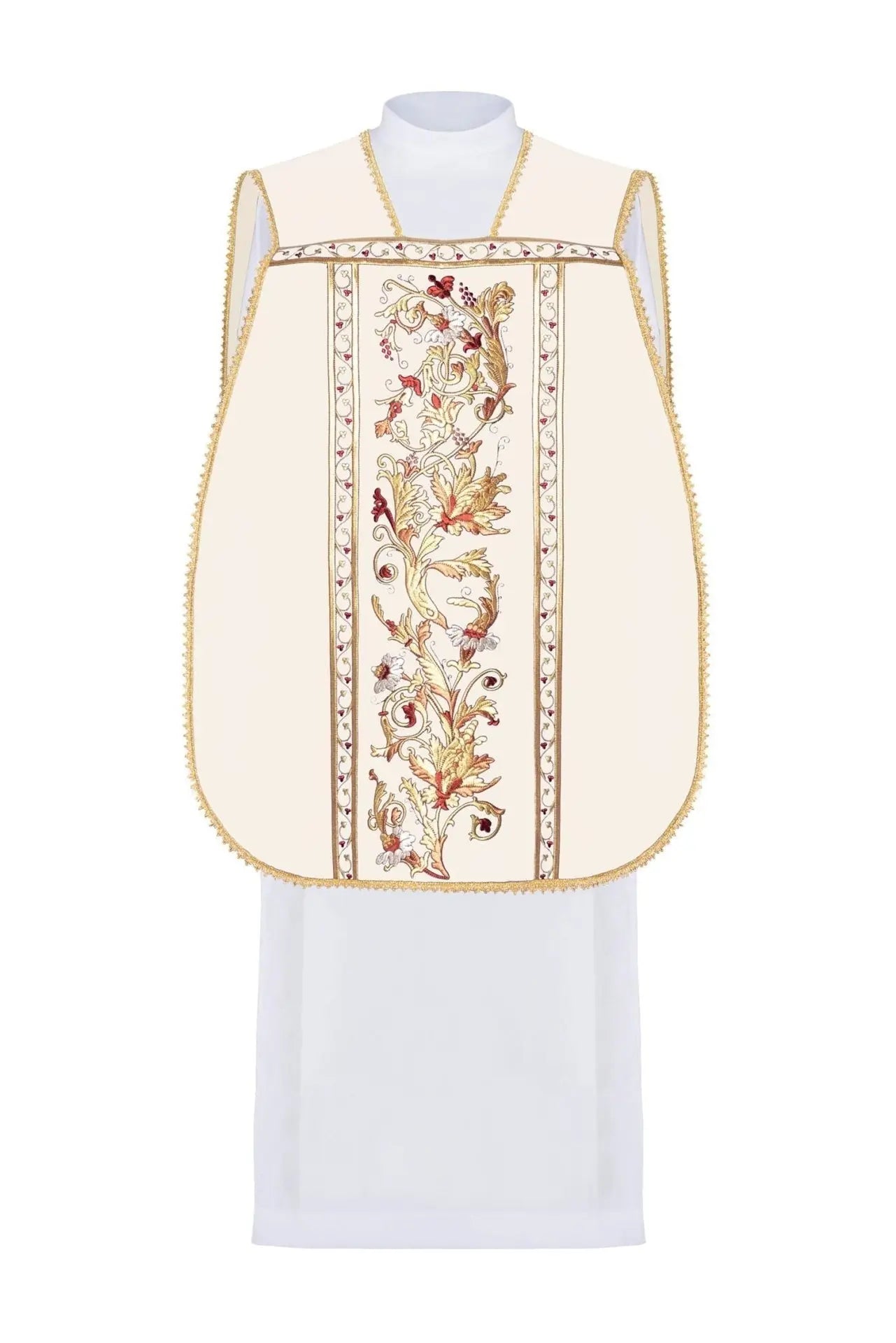
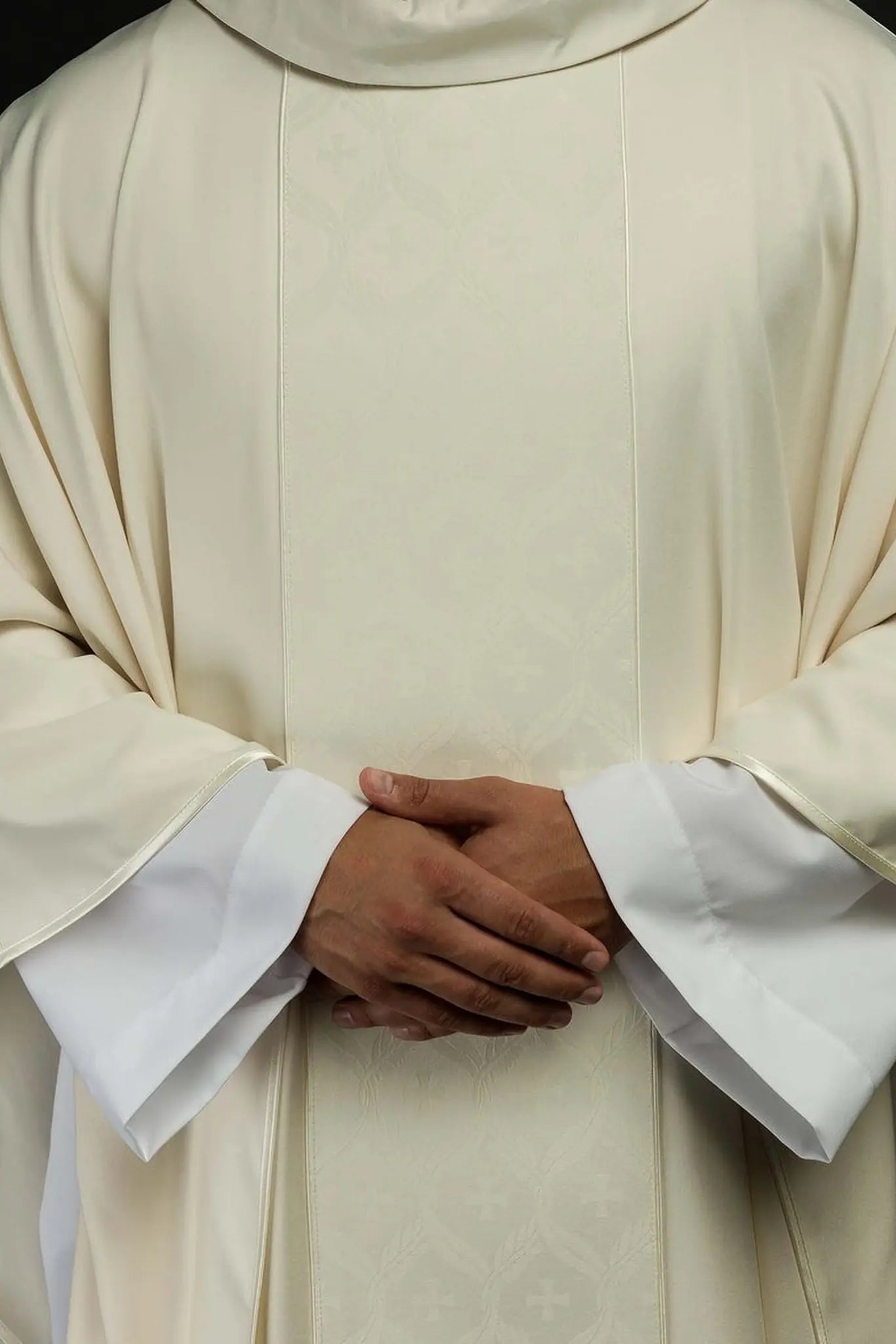
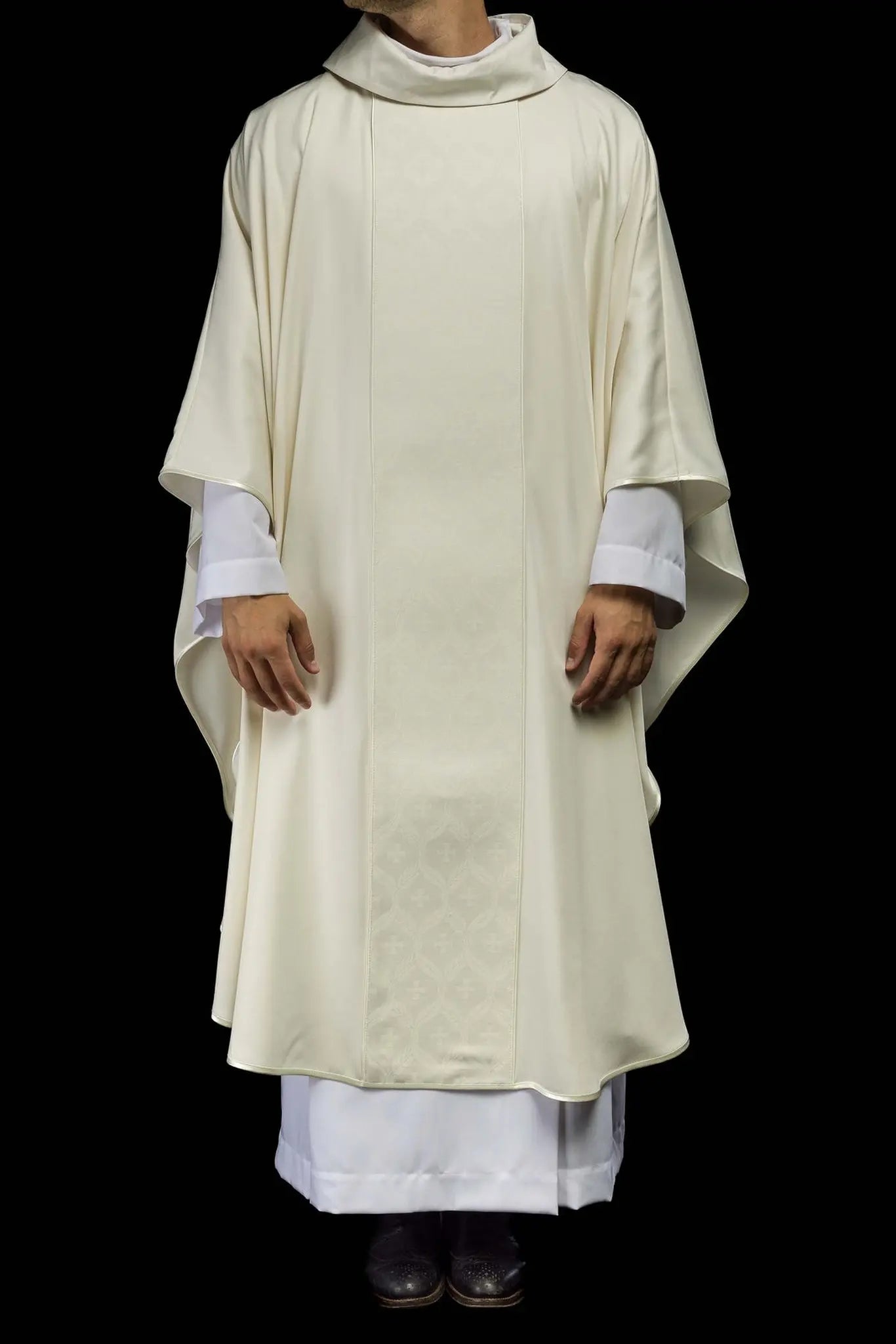
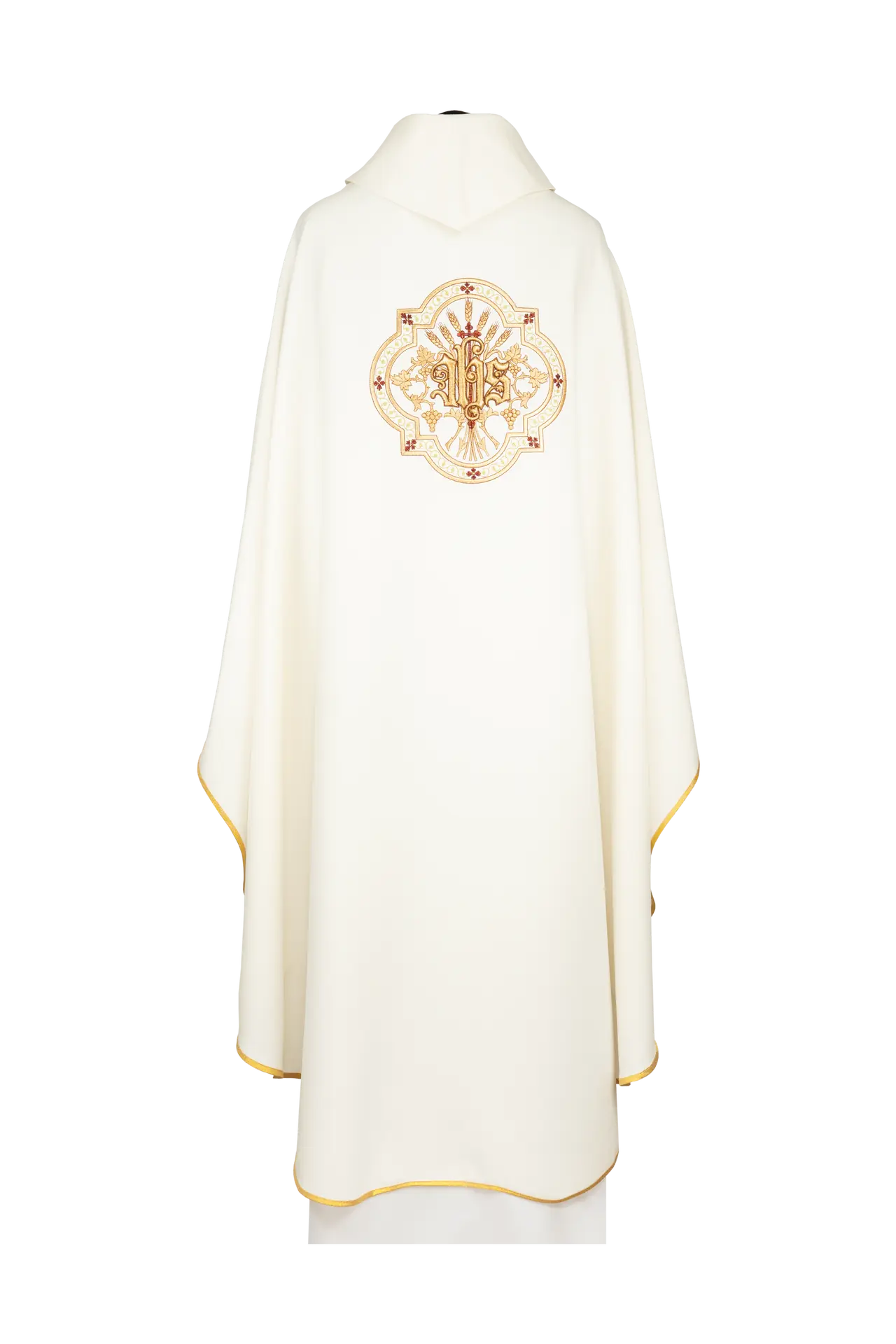
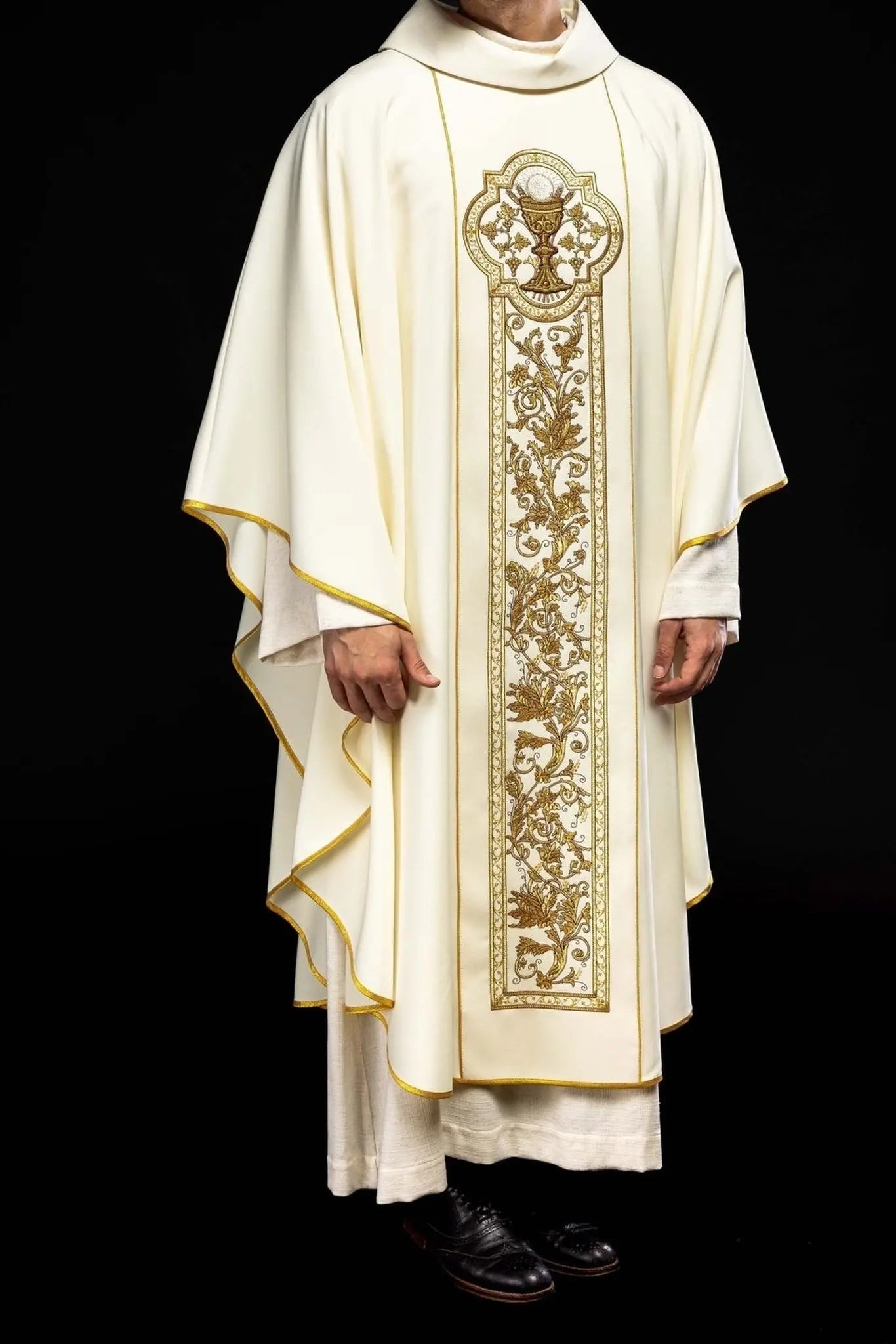
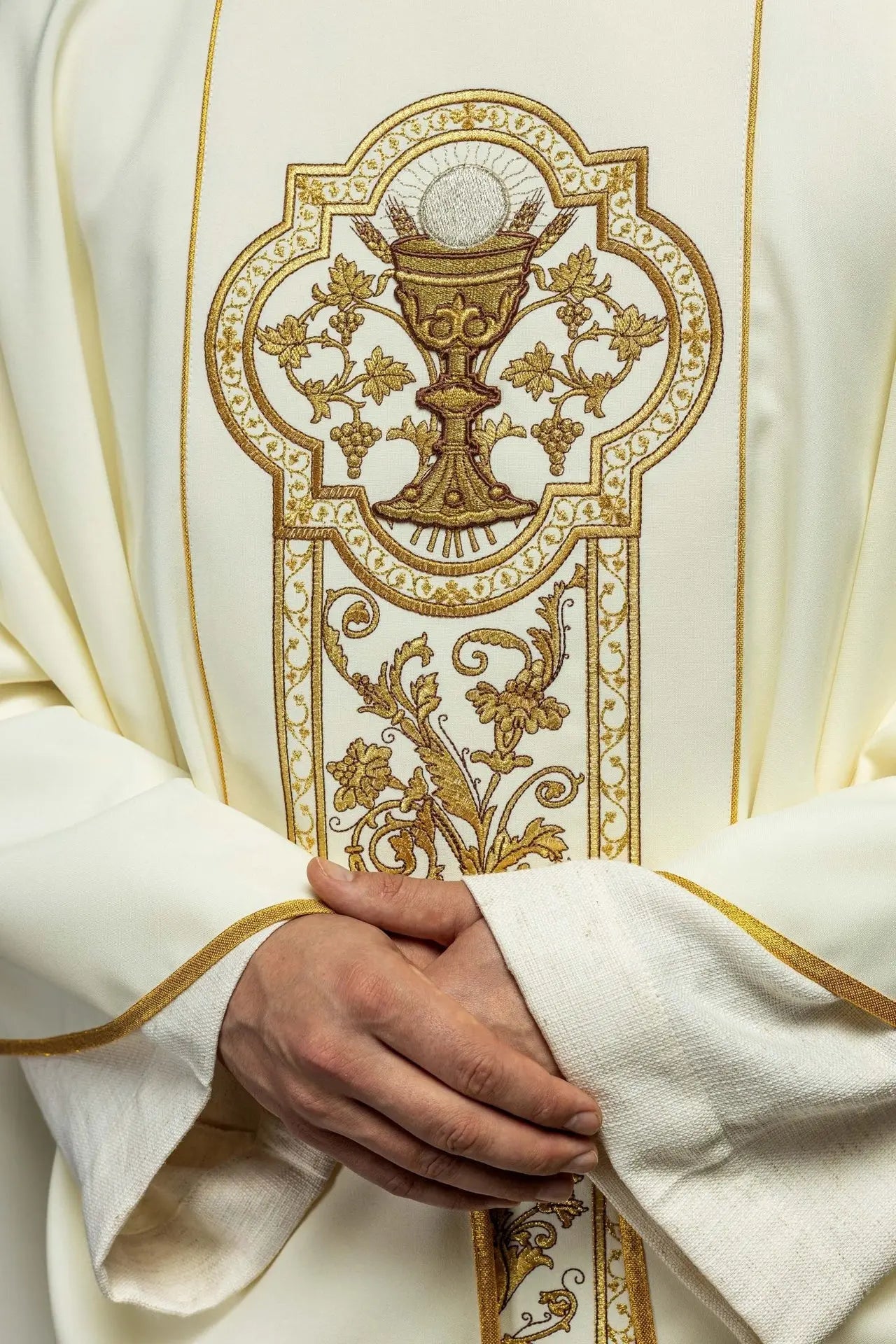
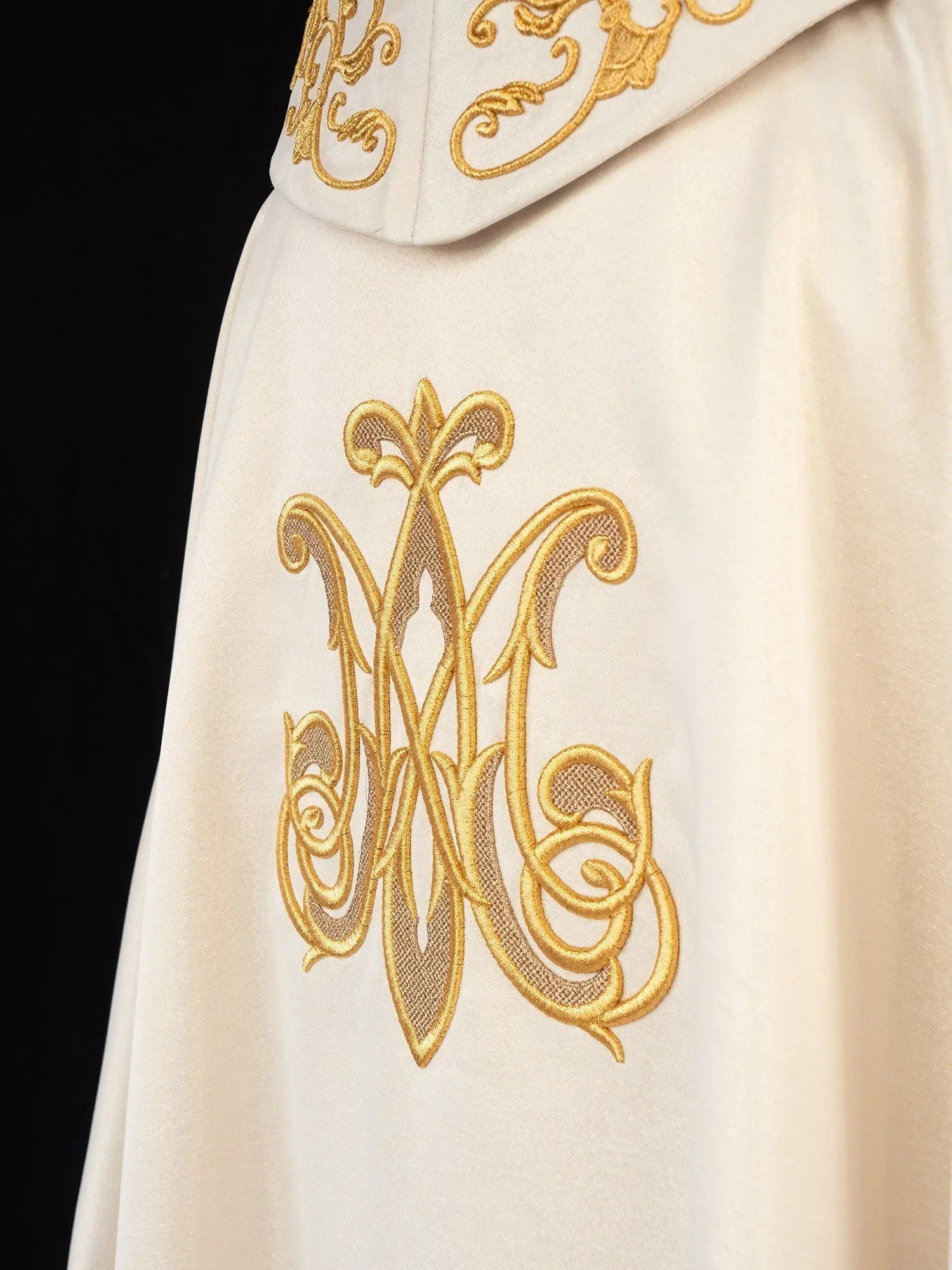
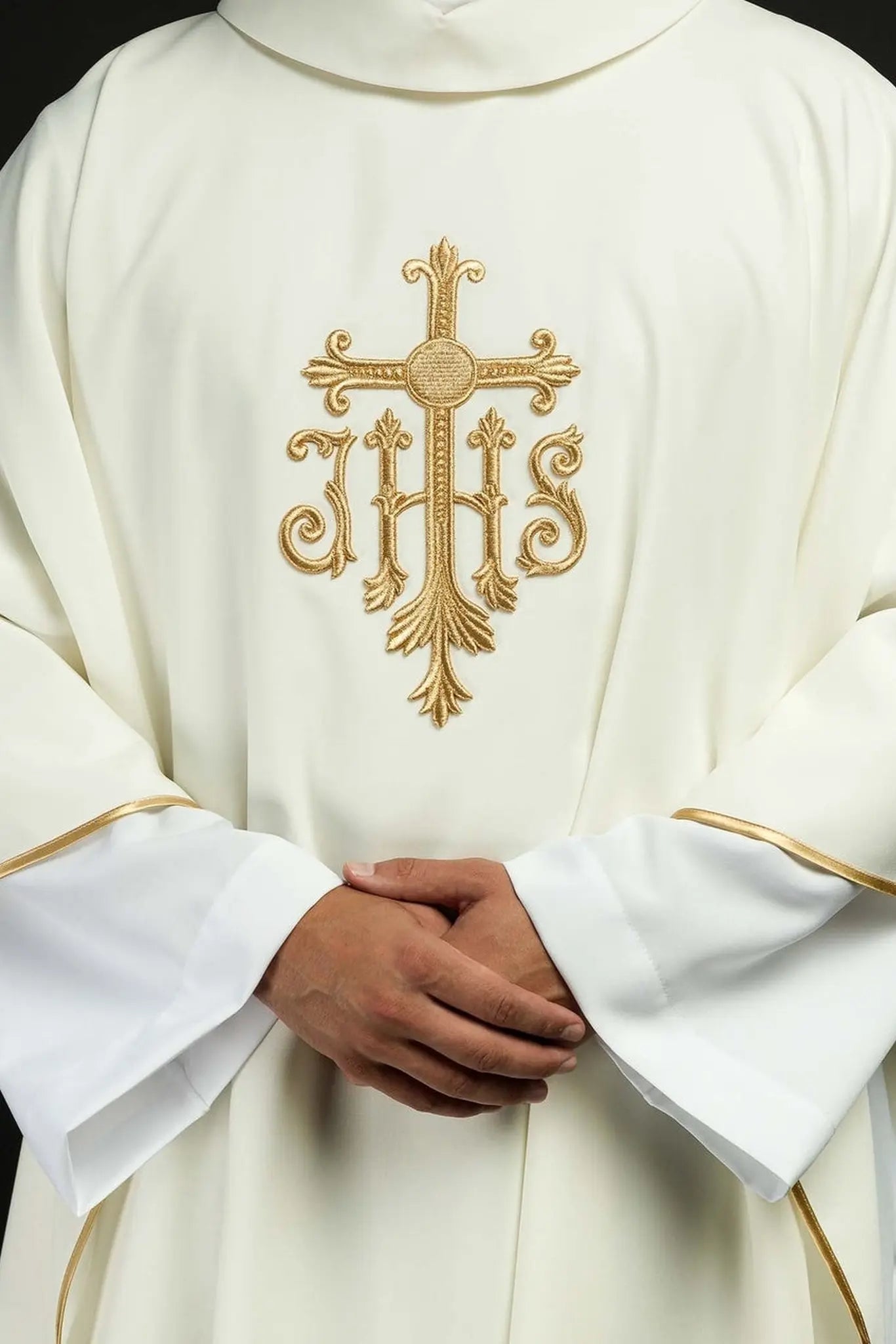
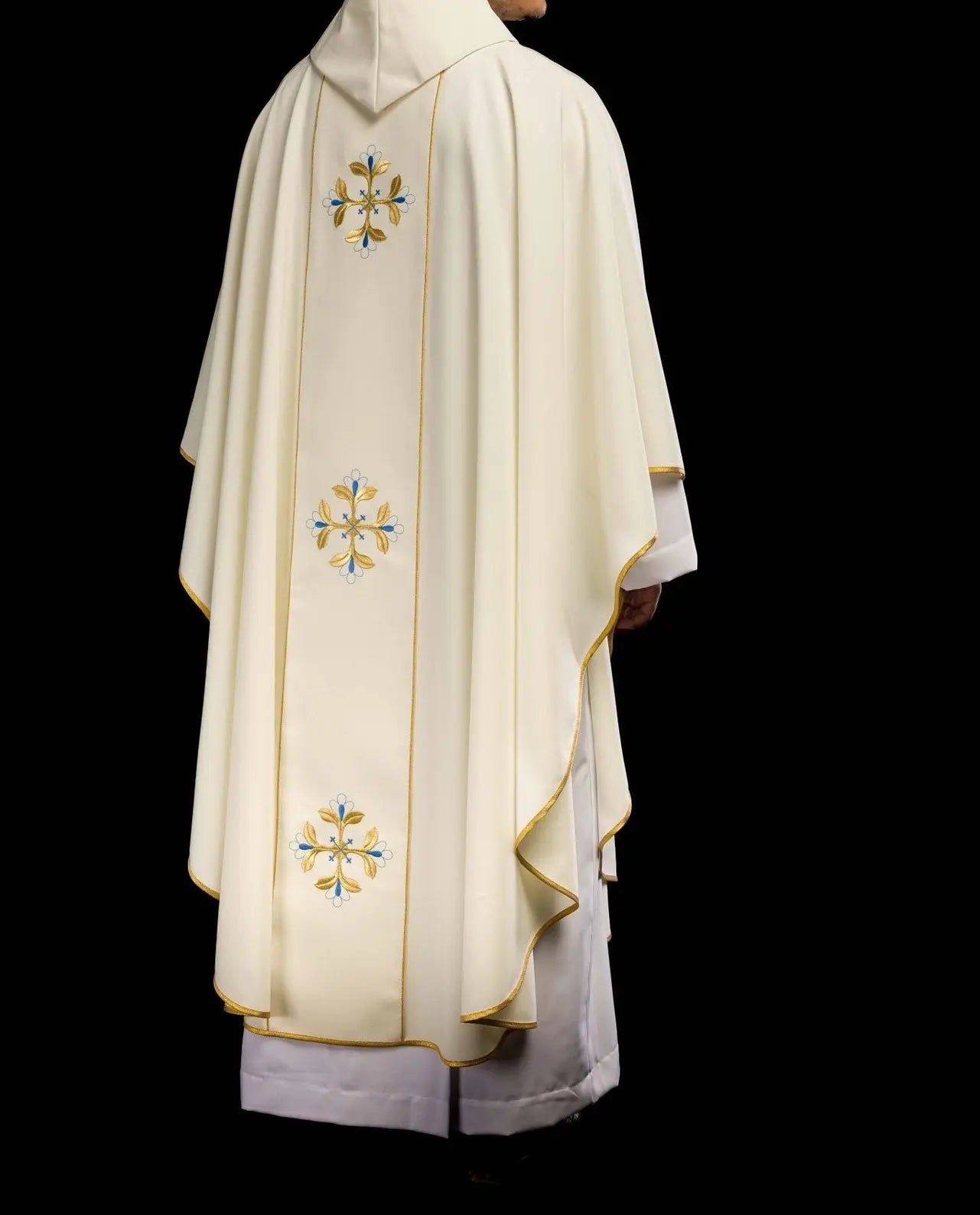
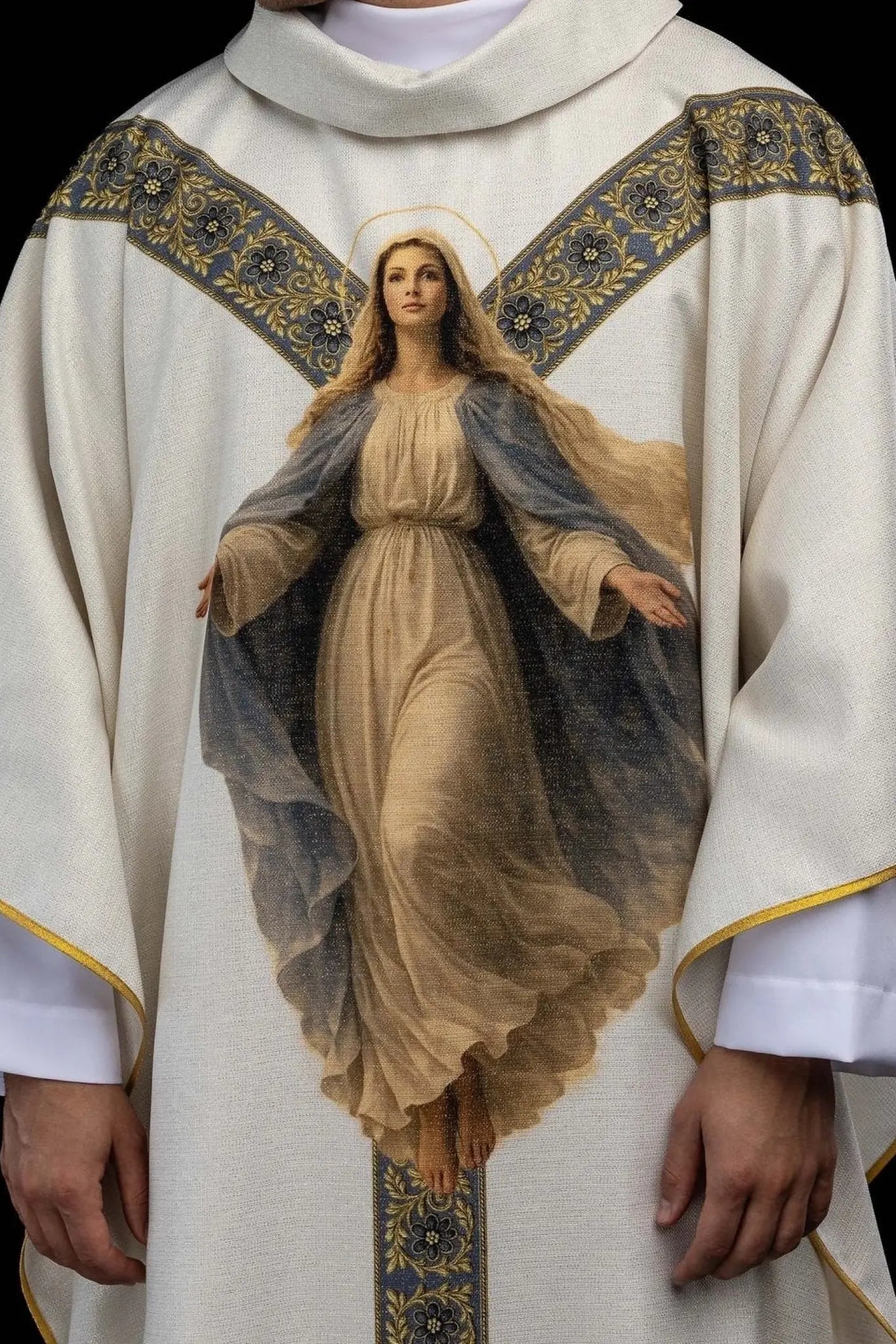
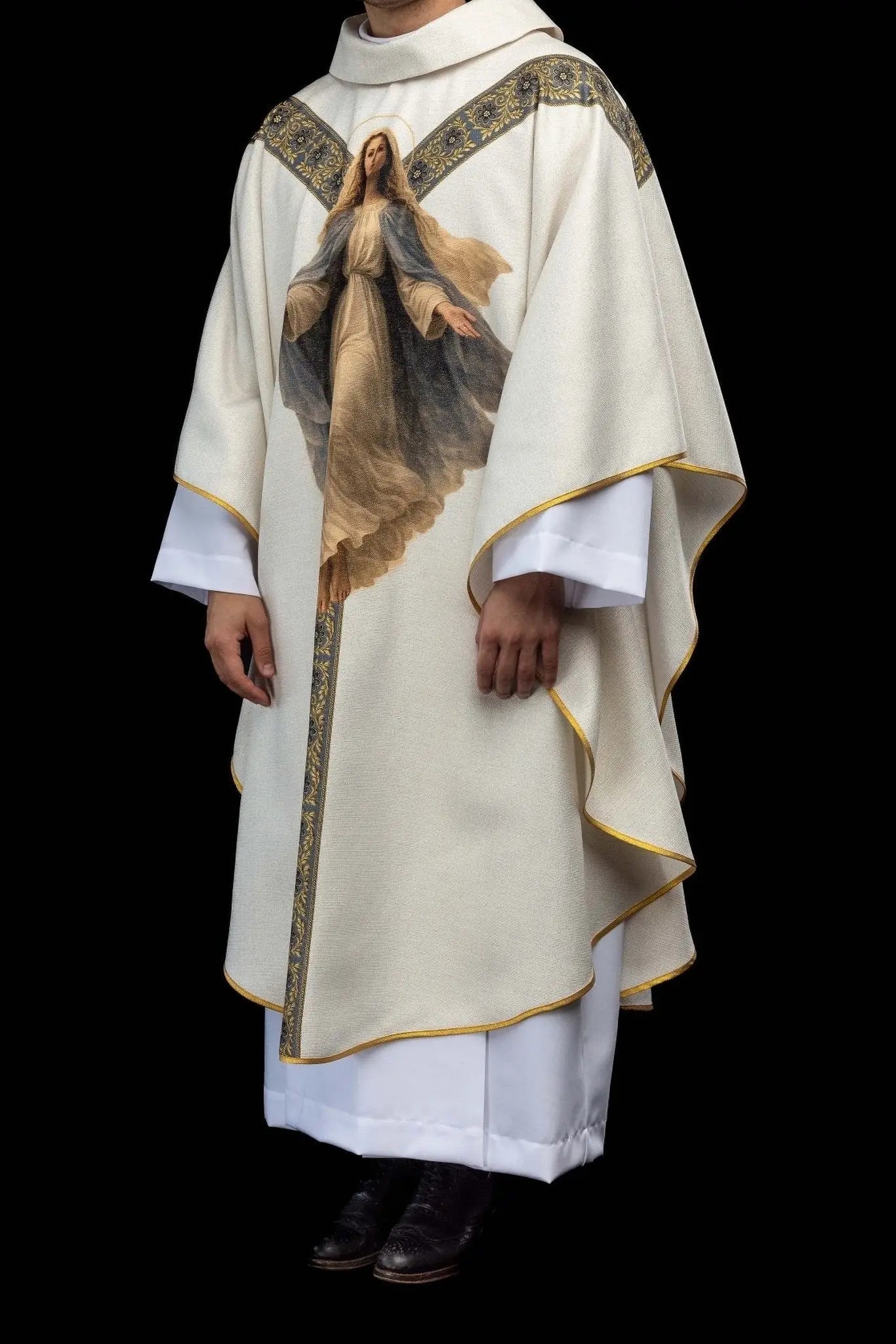
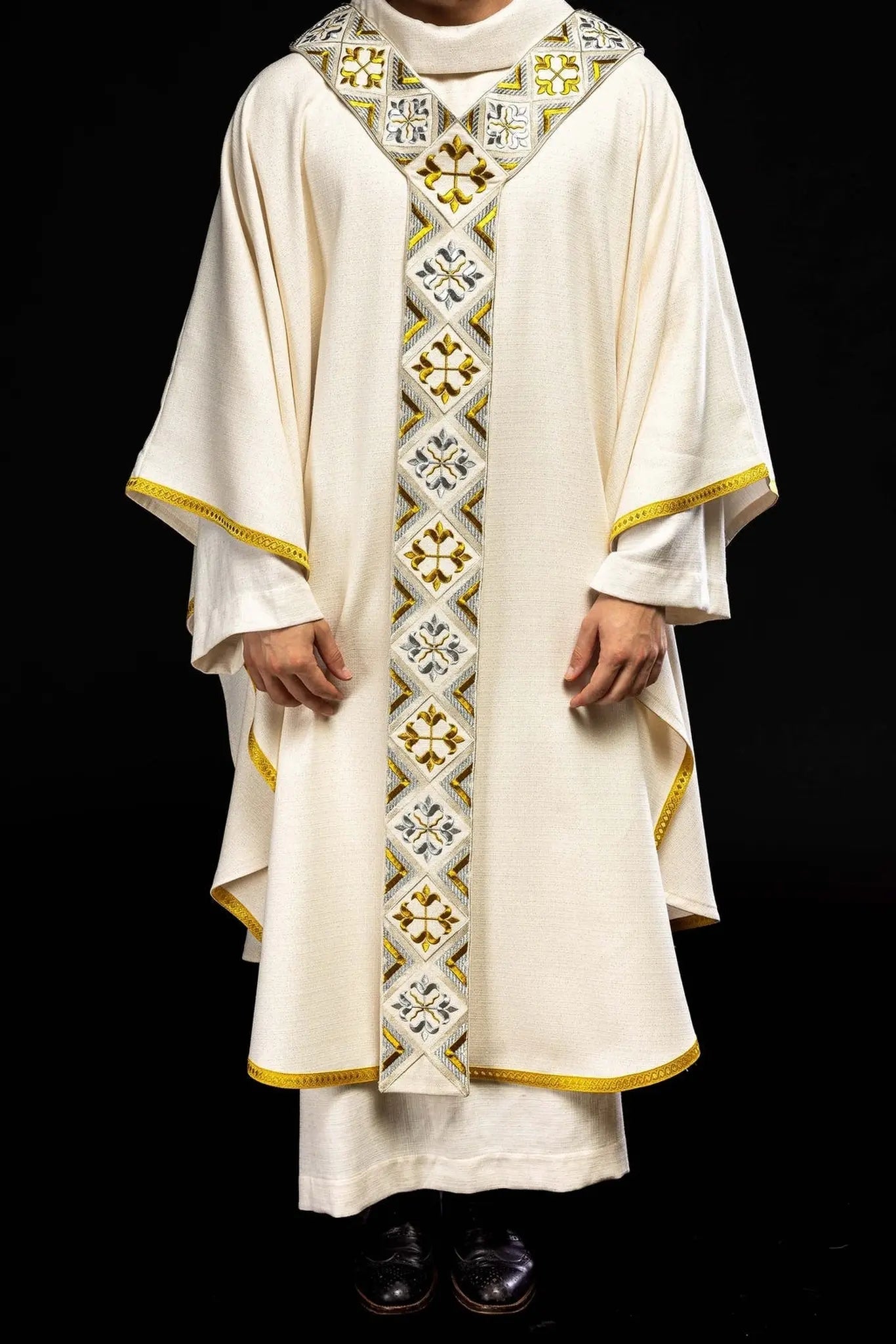
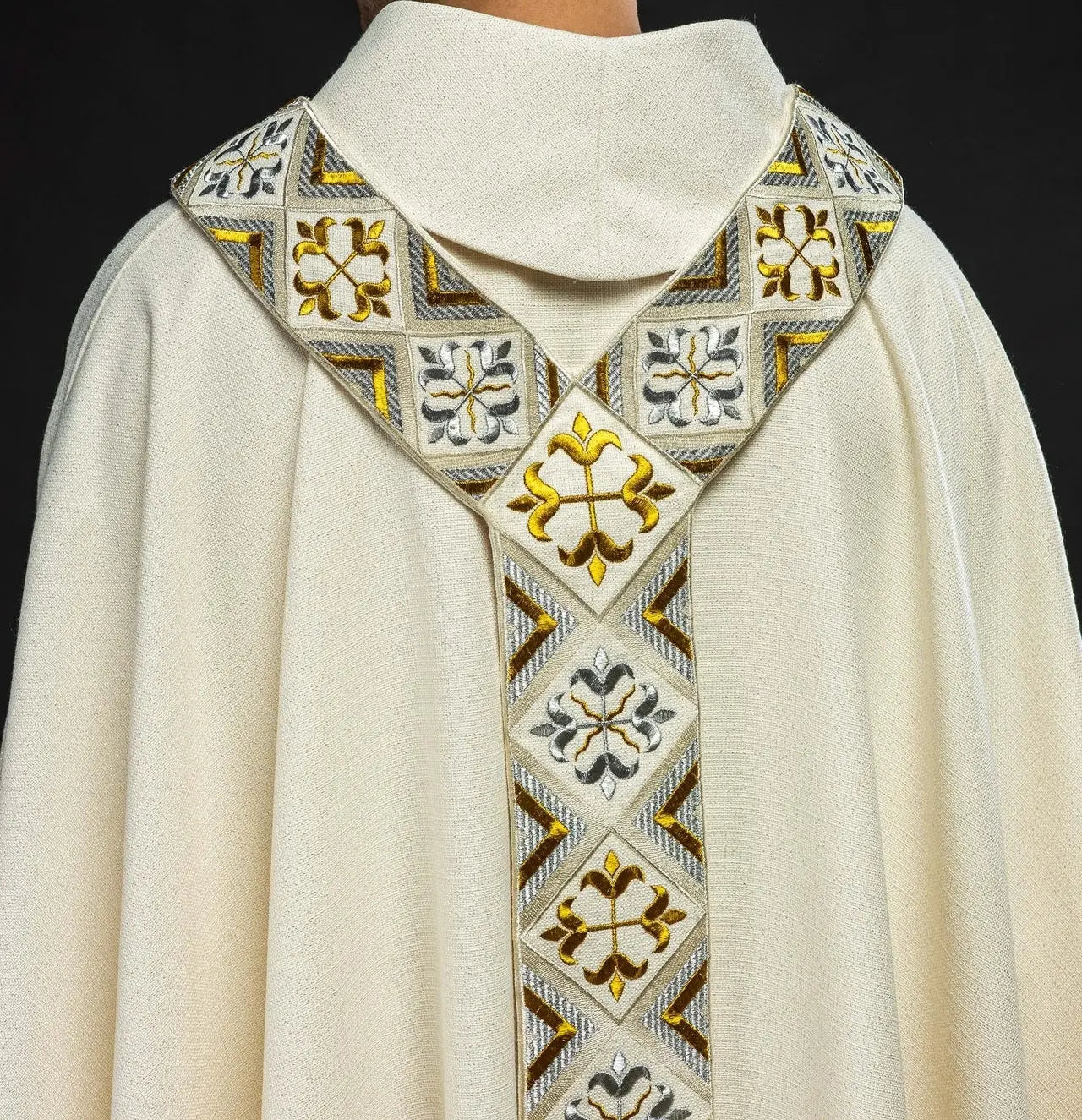
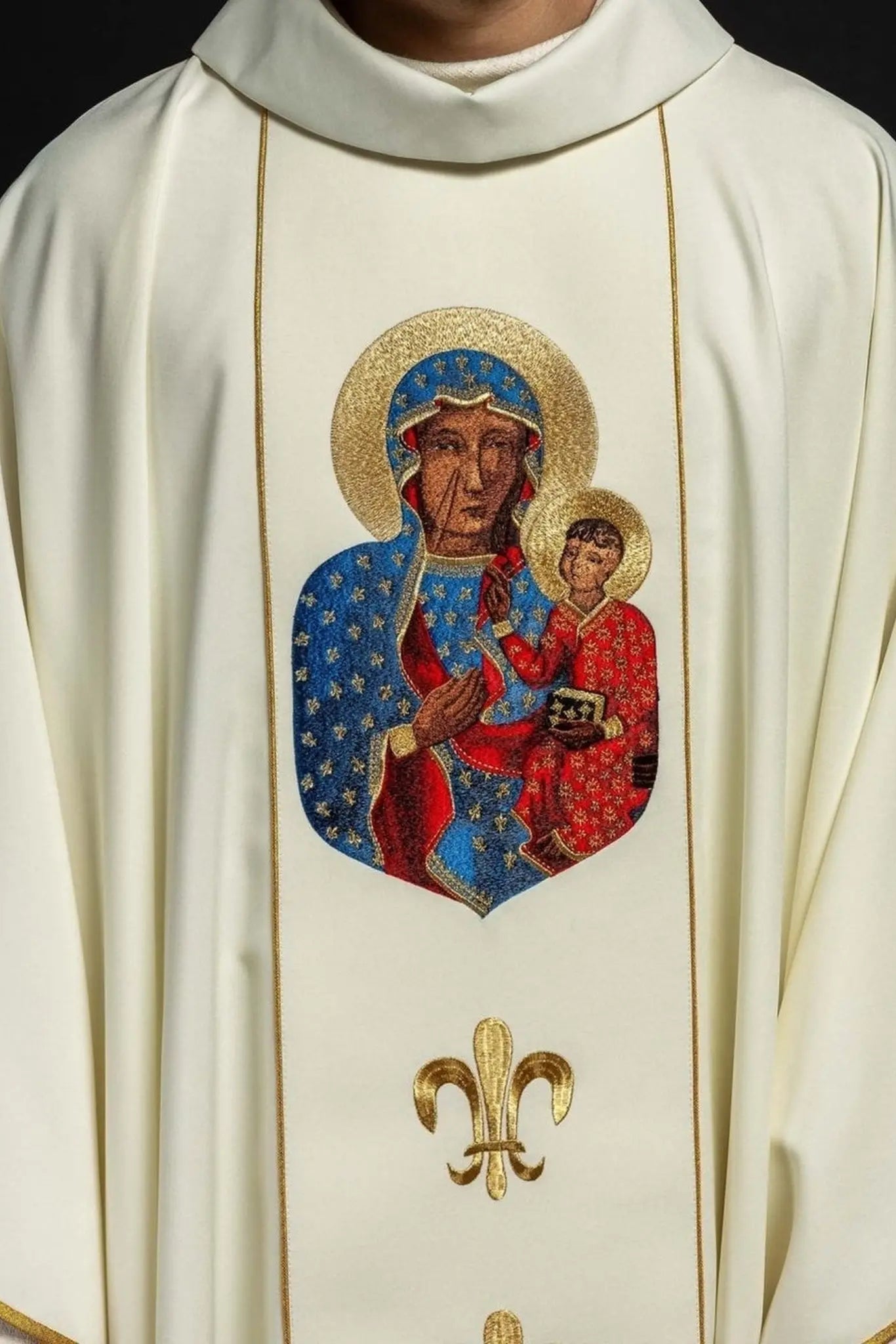
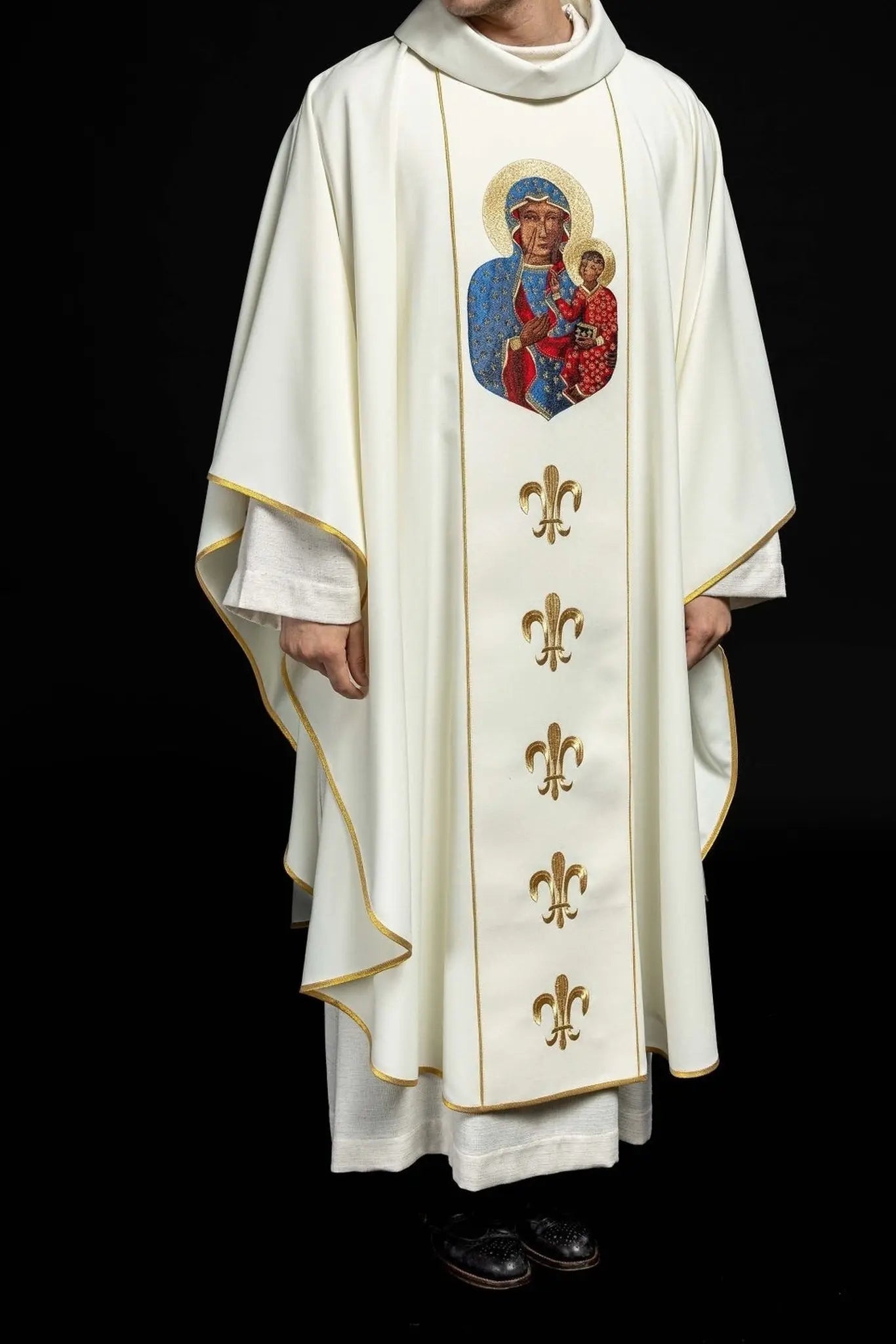
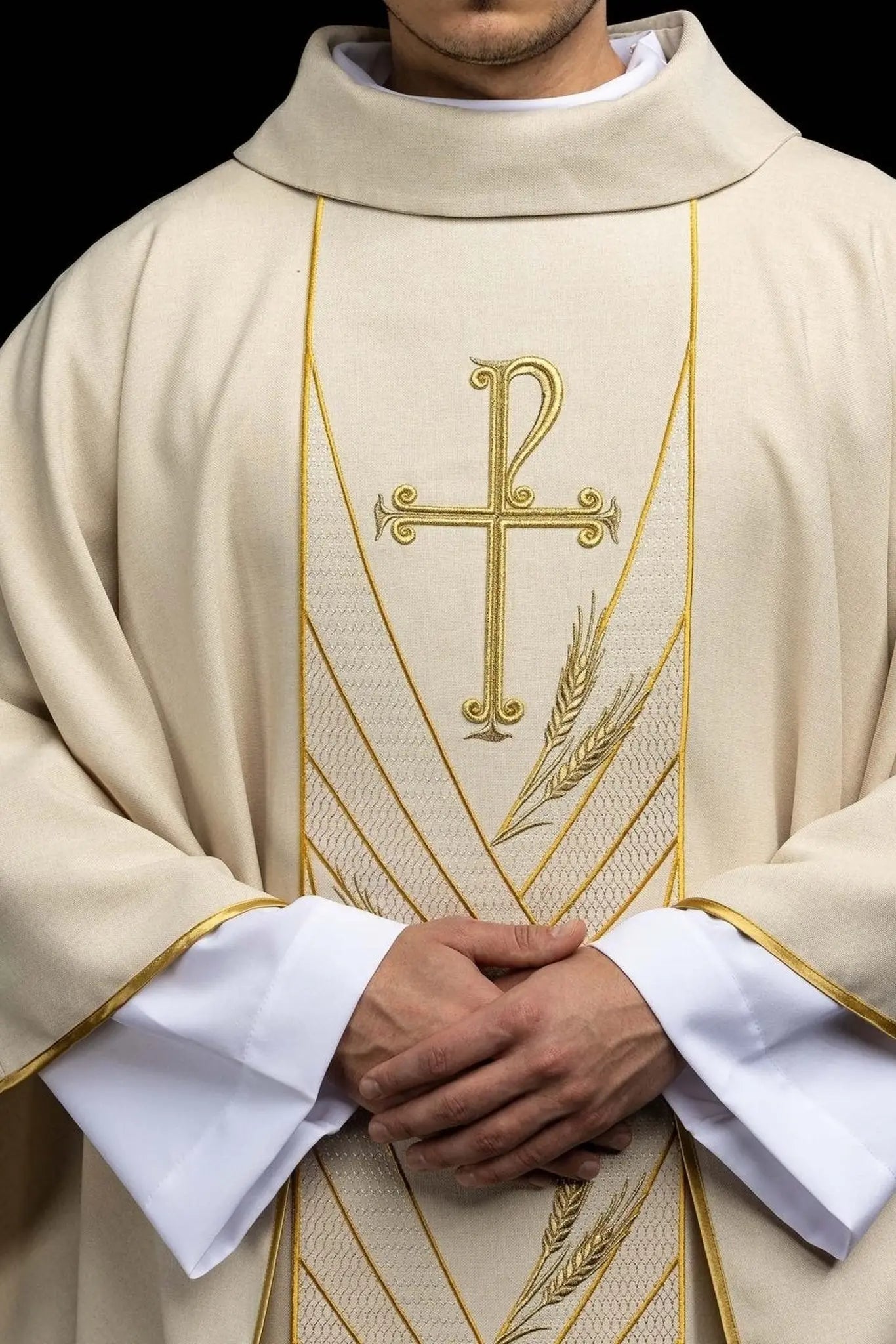
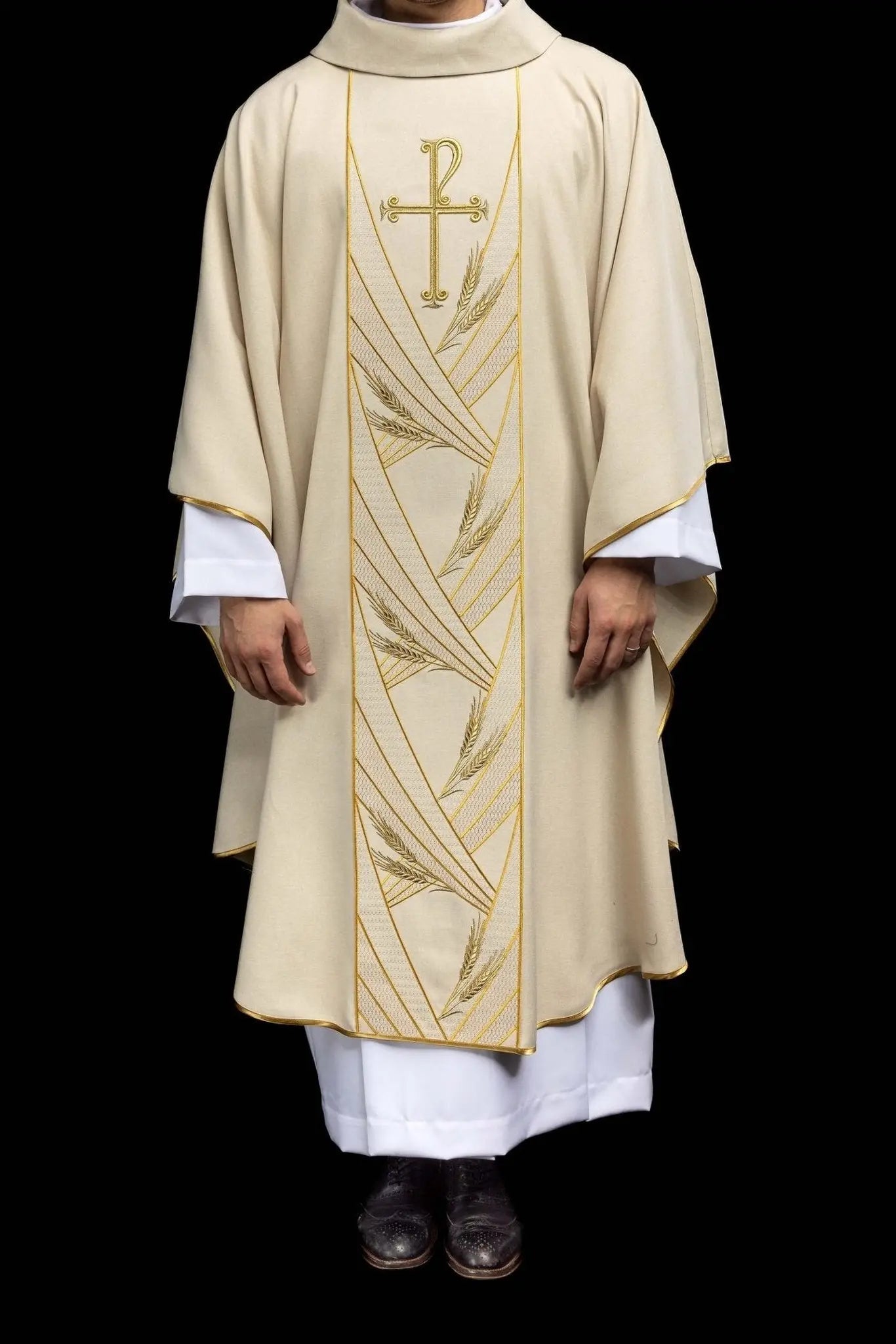
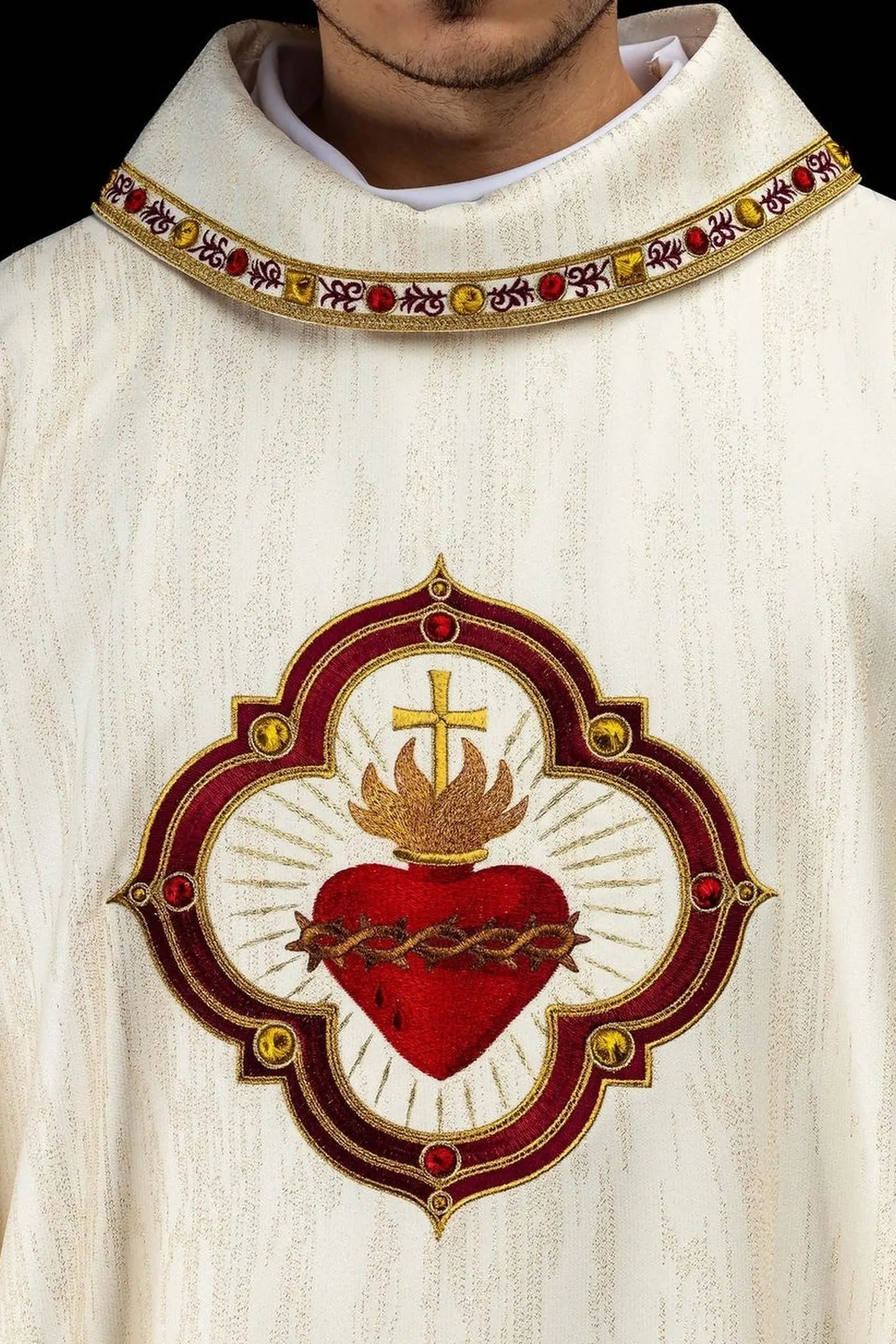
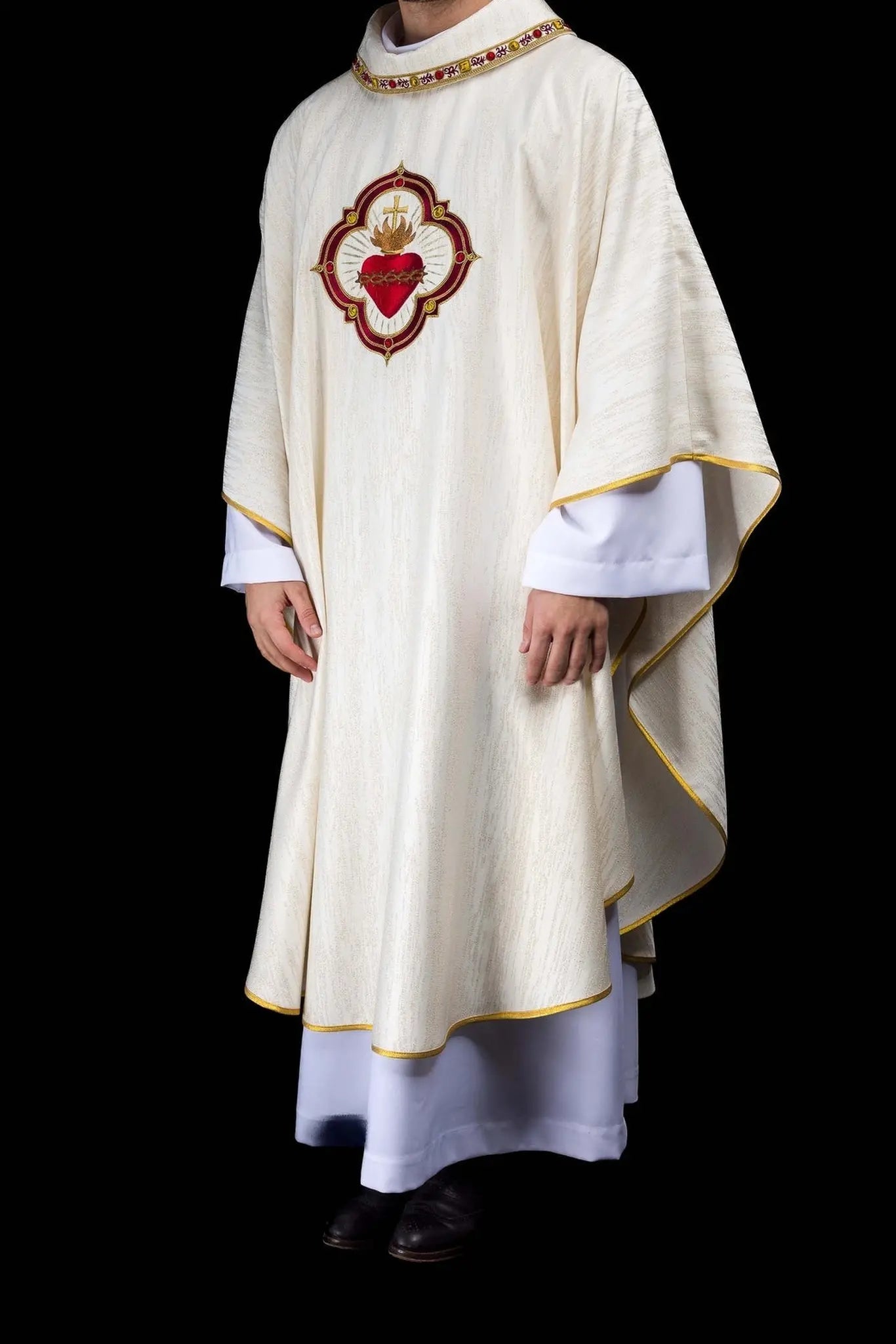
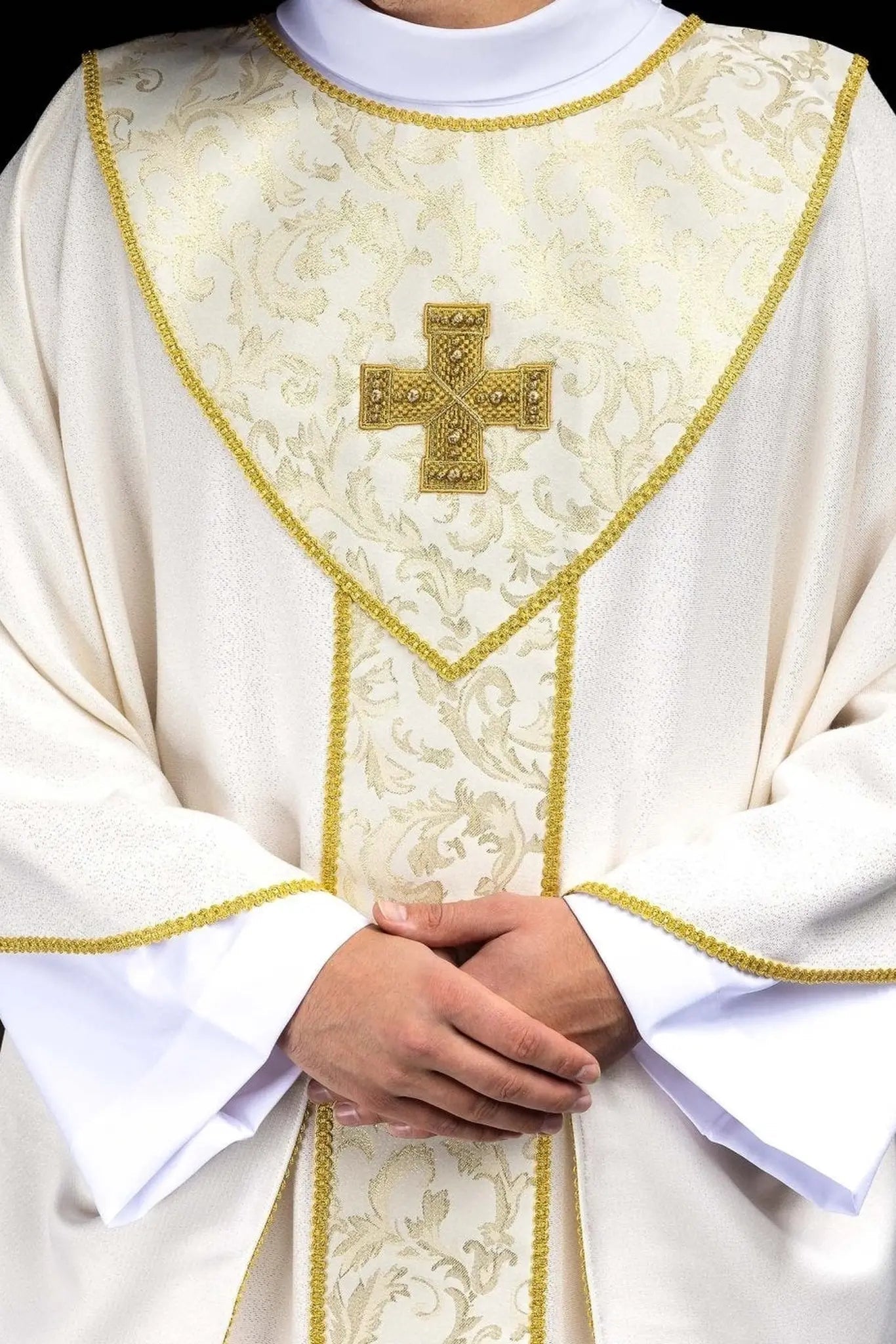
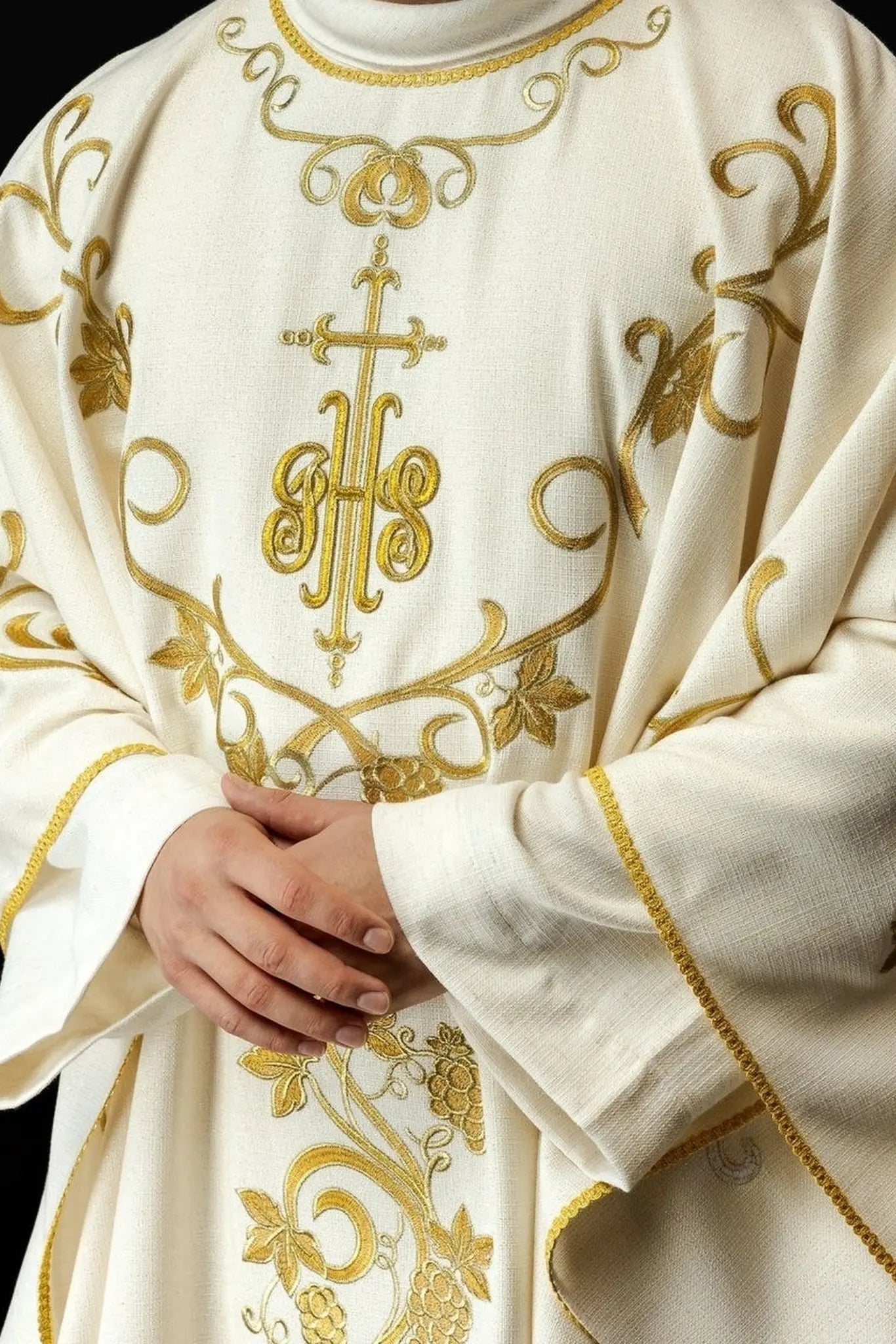
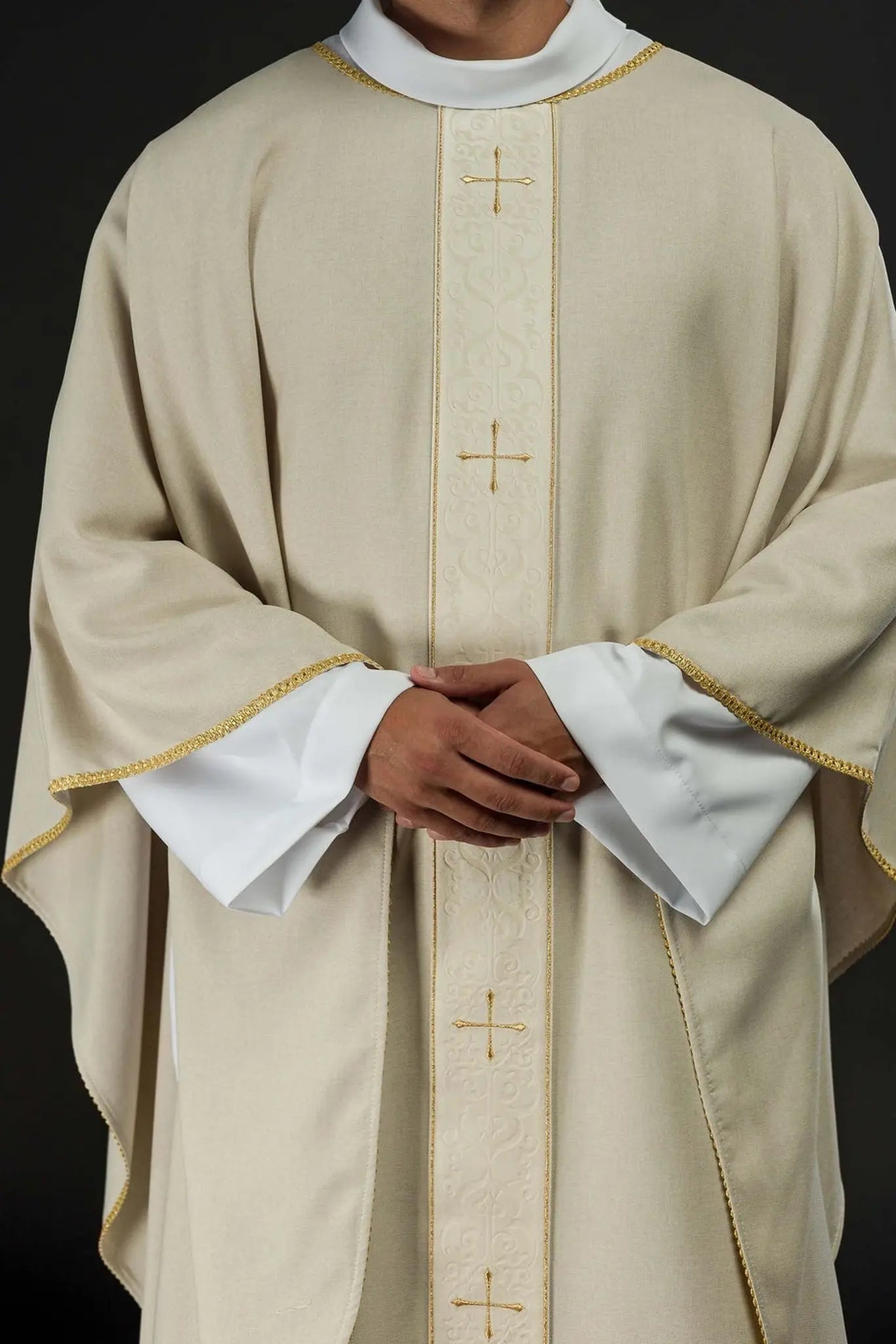
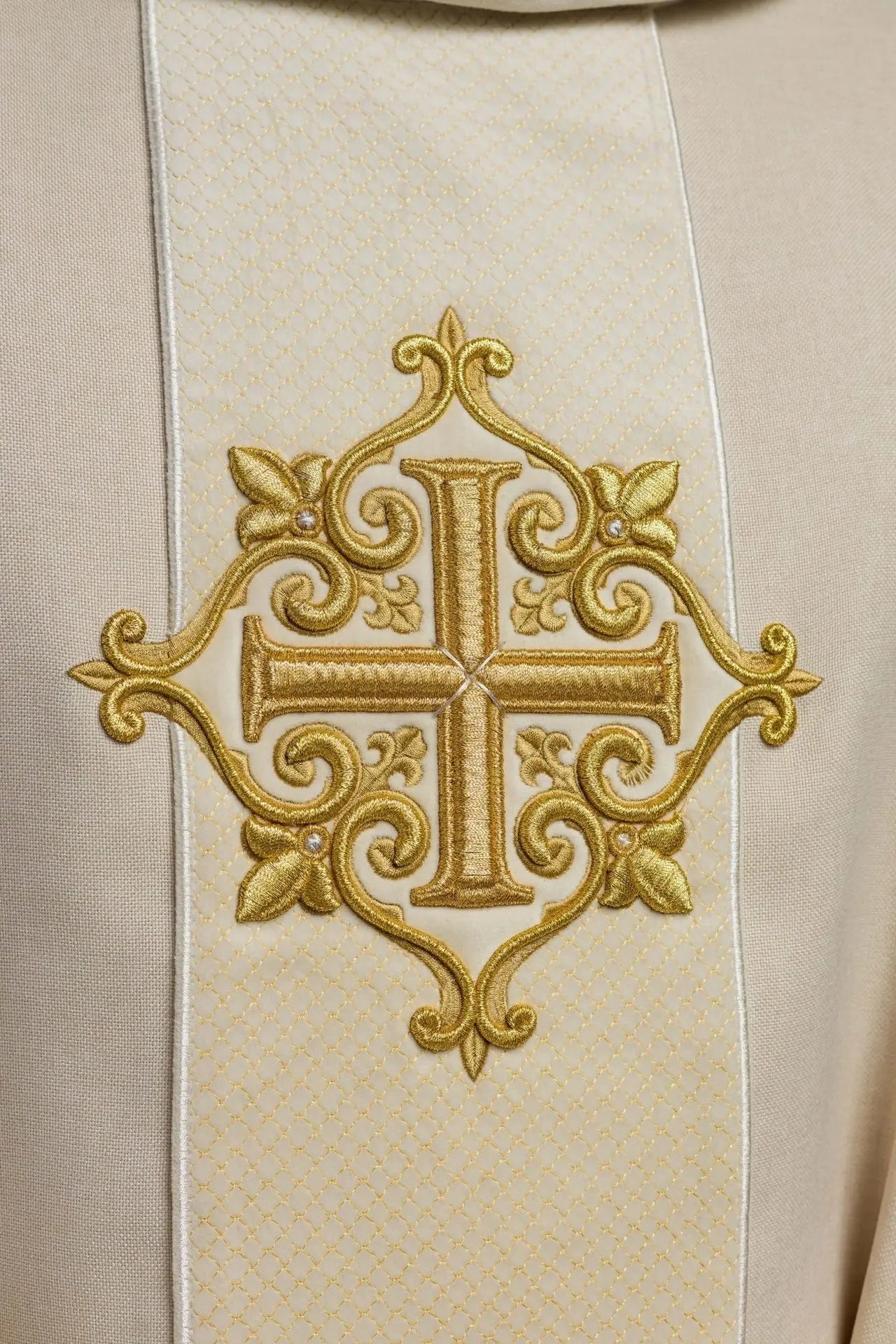
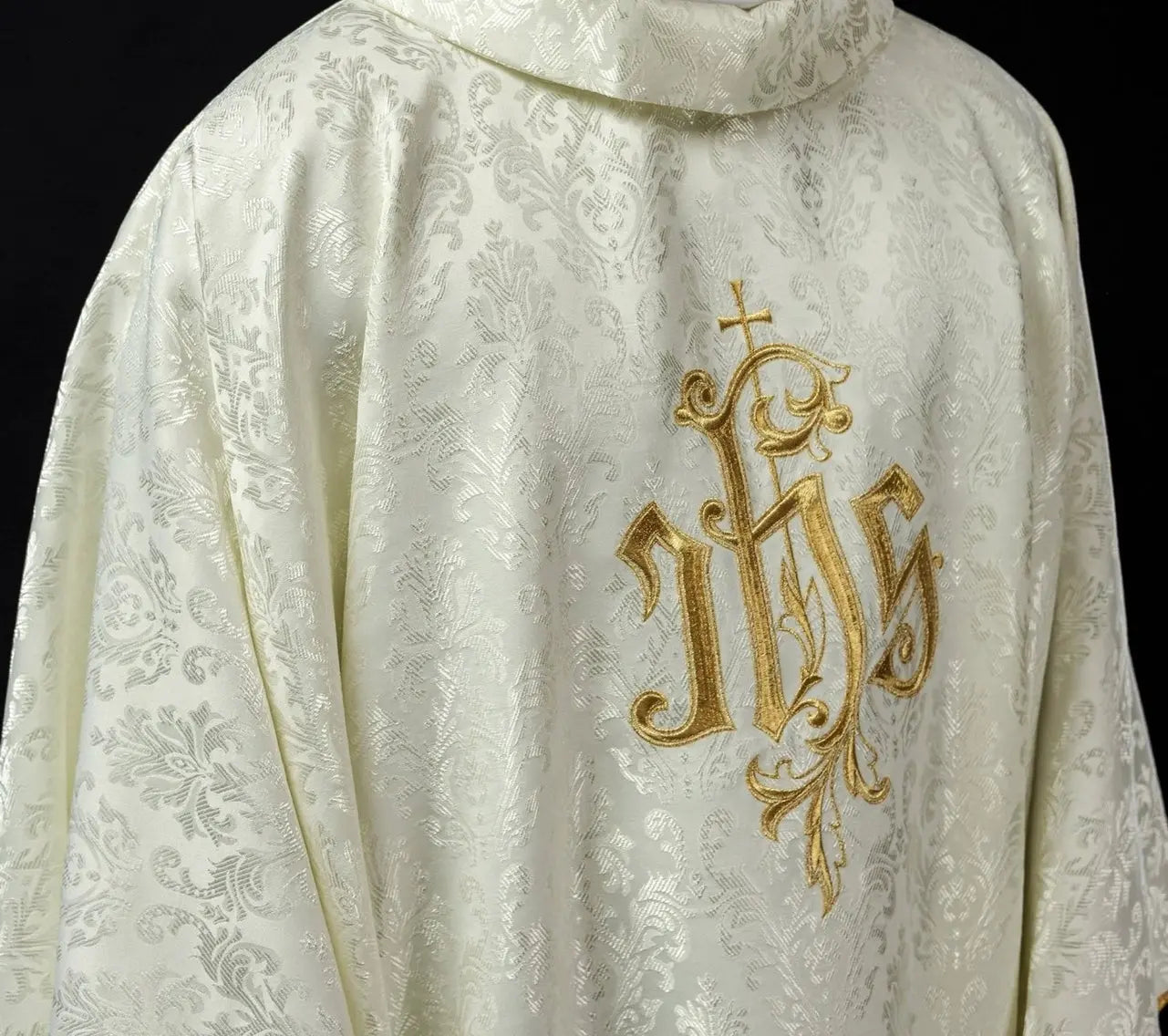
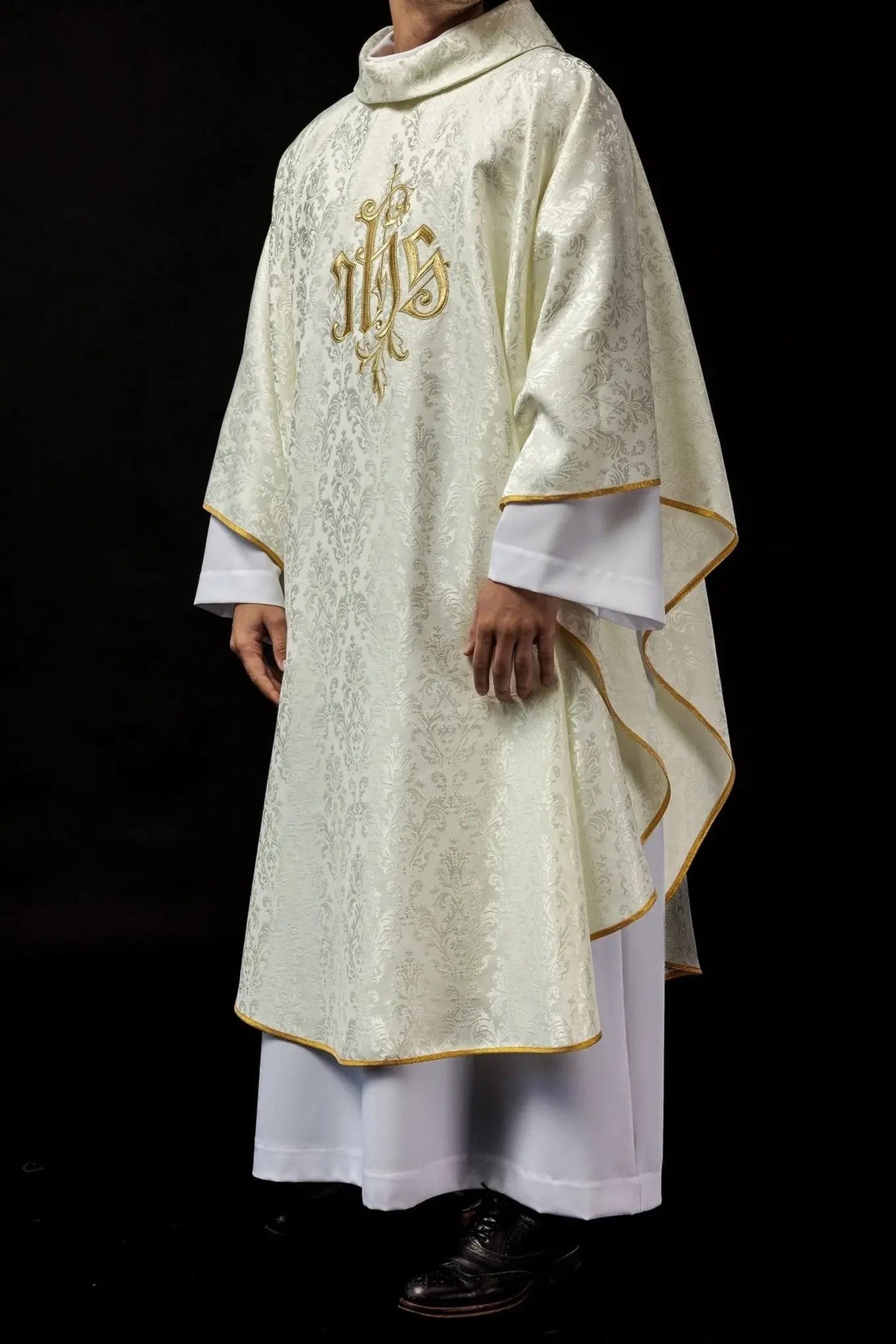
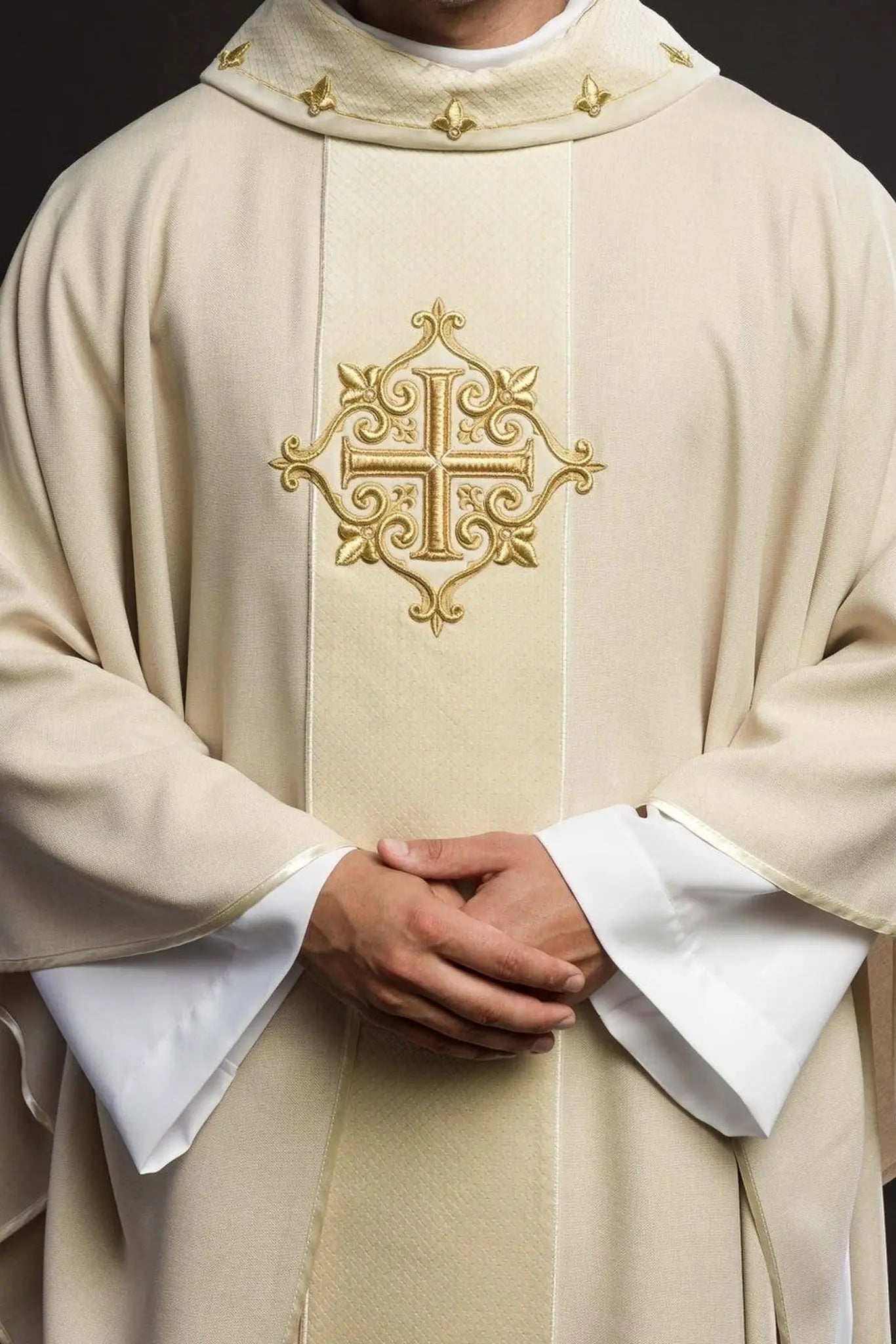
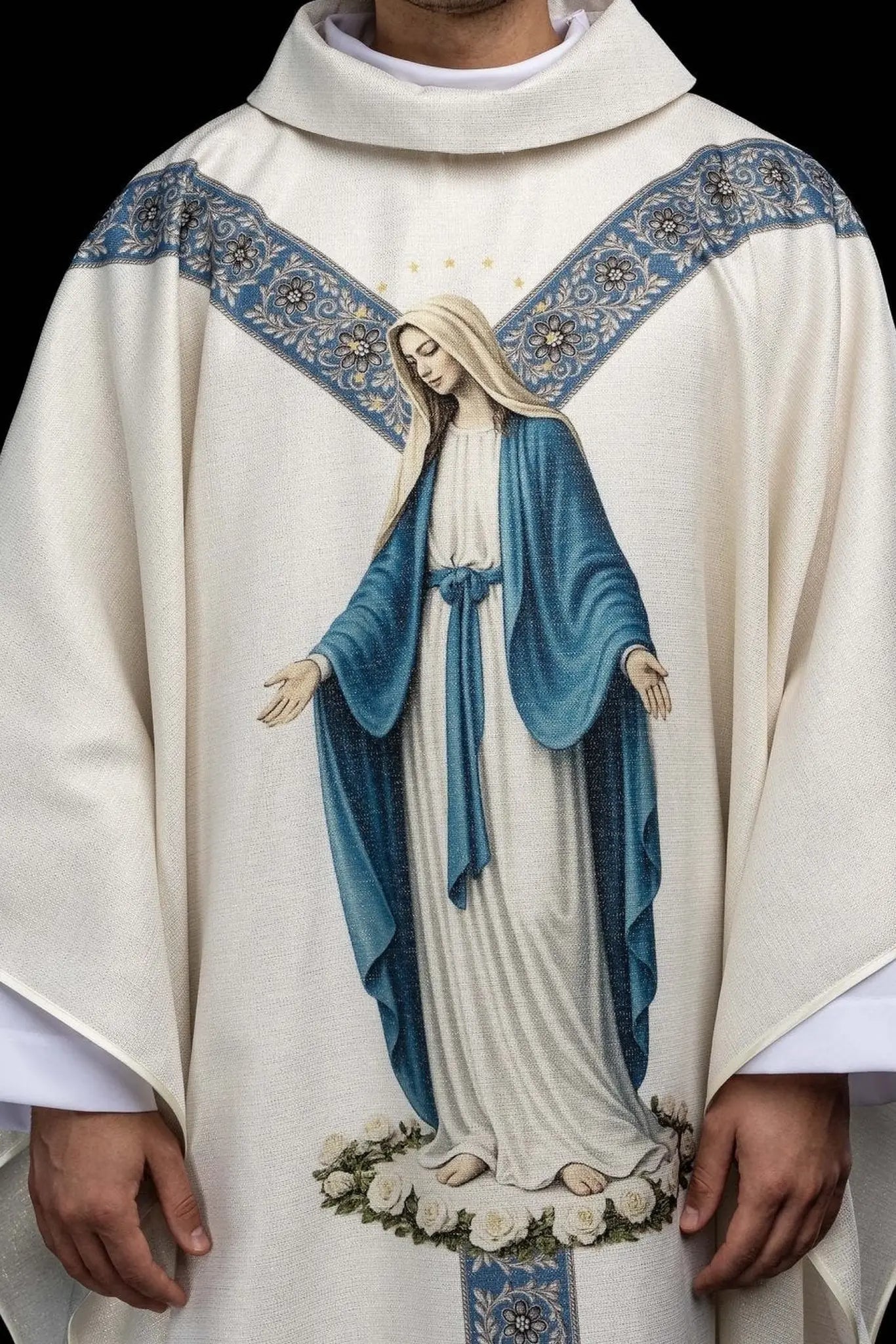
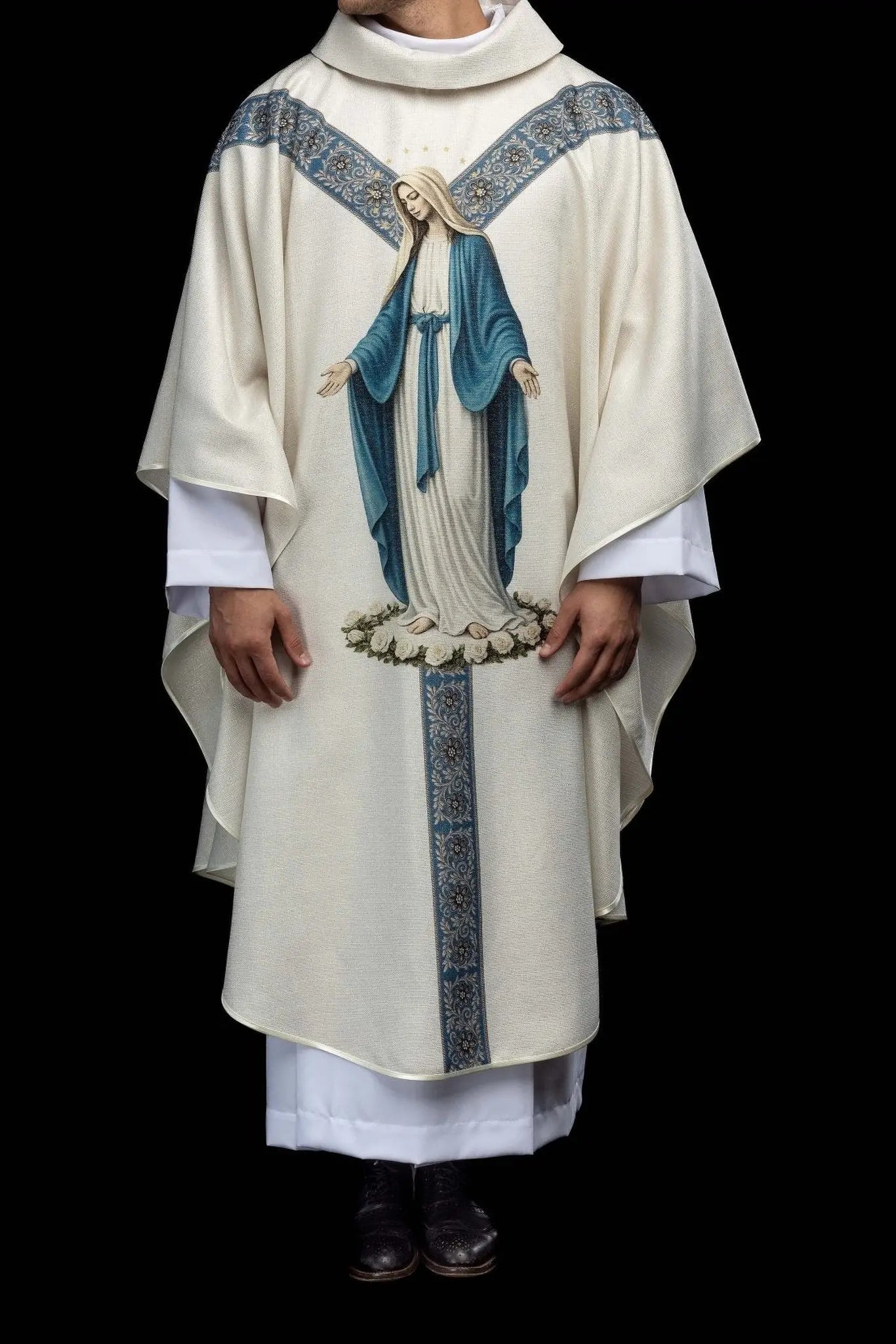
The collection includes ecru chasubles in a wide variety of decorative styles. Some designs are deliberately simple, with restrained embroidery and a clean front panel for daily Mass or smaller chapels. Others are richly ornamented with vertical orphreys, embroidered belts, collars, crosses, IHS monograms, Eucharistic cups, ears of wheat, the Easter Lamb, Marian lilies, images of Our Lady, Sacred Heart motifs, stones, trims, and gold detailing. This range allows the same color family to serve many different parish needs: a discreet chasuble for weekday use, a more symbolic design for a patronal feast, or a richly decorated vestment for a solemn celebration.
Ecru also works well when the sanctuary already uses natural fabrics, warm wood, stone, cream-colored altar linens, or gold furnishings. The color brings a gentle brightness to the celebrant without creating a sharp contrast with the surroundings. When coordinated with ecru clergy stoles, chalice veils, or embroidered altar textiles, it can create a consistent visual setting for the liturgy while keeping the focus on the altar and the Eucharistic action.
Liturgical use of ecru and ivory-toned vestments
Ecru should be understood as a warm expression of the white or ivory vestment family, not as a replacement for every liturgical color. It is most naturally chosen for celebrations in which white or festive light-colored vestments are customary: Christmas, Easter, the feasts of the Lord outside the Passion, solemnities of the Blessed Virgin Mary, feasts of angels, many saints, anniversaries of ordination, weddings, first Masses, jubilees, and other joyful or solemn occasions. For Christmas-related celebrations, the ecru tone can be especially appropriate because it pairs well with gold embroidery, Holy Family imagery, stars, lamb motifs, and other designs found in the Christmas collection.
For penitential seasons such as Advent and Lent, purple remains the normal liturgical color, while rose is reserved for Gaudete and Laetare where it is used. Ecru may appear during particular solemnities that fall within those seasons when the liturgical calendar calls for white, but it should not be treated as a penitential color by itself. This distinction helps sacristans and clergy choose vestments with both beauty and accuracy, especially when coordinating several sets for a parish wardrobe.
How to choose the right ecru chasuble
When choosing an ecru chasuble, begin with the occasion and the level of solemnity. A simple cross, subtle IHS embroidery, or a plain gold-trimmed design is practical for regular parish use and can be worn often without feeling overly ornate. For major celebrations, a richer embroidered band, a Eucharistic cup, ears of wheat, the Easter Lamb, a Pelican motif, or a Marian image adds stronger theological meaning. If the chasuble will be used for celebrations of Our Lady, compare these pieces with Marian chasubles, where blue accents and Marian symbols may be more prominent.
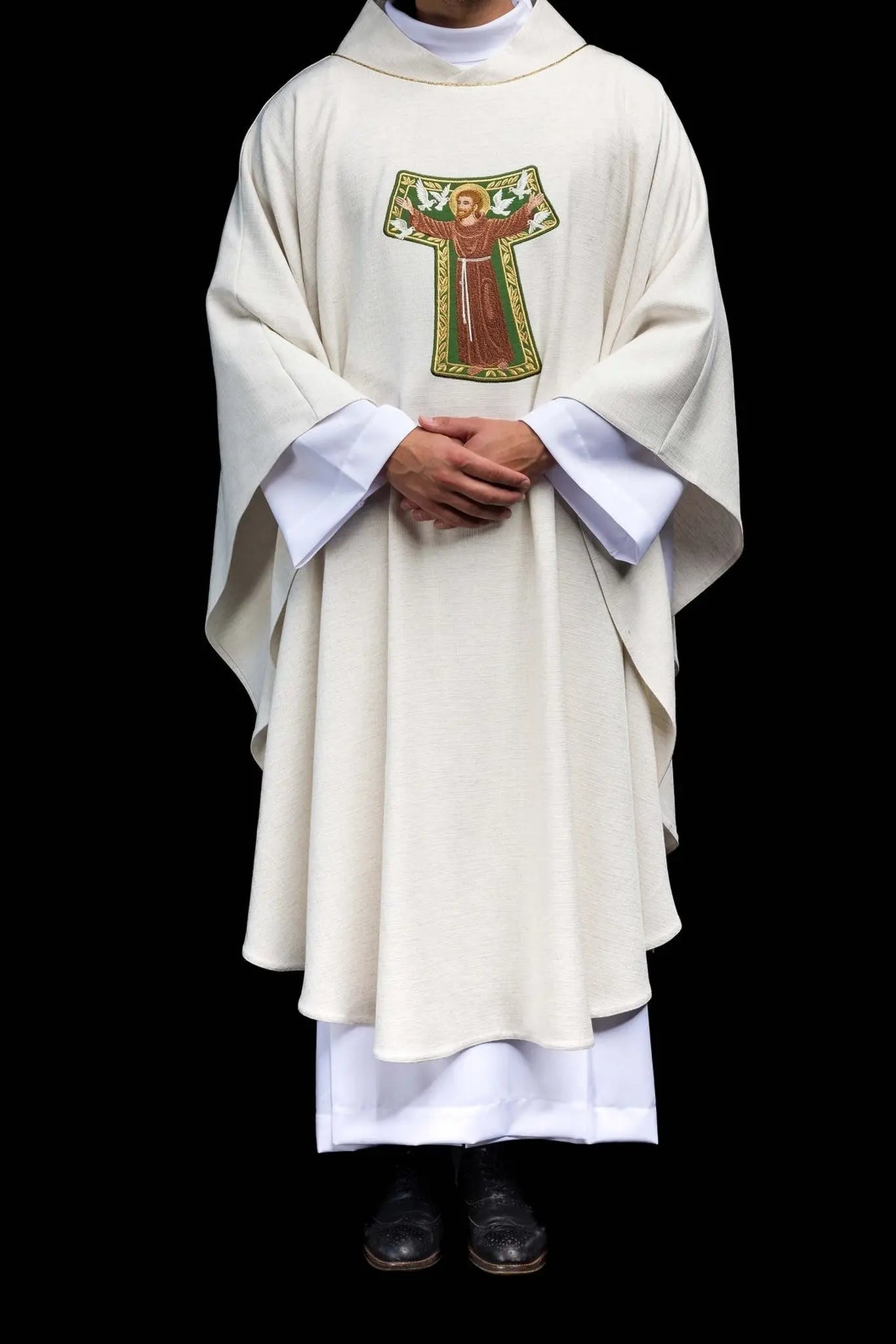
Next, consider cut and movement. A flowing Gothic-style chasuble gives ease at the altar, during processions, and when the celebrant raises his arms in prayer. A more structured design can create a formal appearance for solemn liturgies and photographs. Some parishes prefer a lighter fabric for warm churches or frequent use, while others choose heavier brocade, decorative fabric, or velvet accents for feast days. The individual product details should always be checked for precise fabric composition, lining, included stole, dimensions, and care guidance.
Design details to compare
-
Symbolism: crosses, IHS, Alpha and Omega, the chalice, wheat, lamb, Marian lilies, Sacred Heart motifs, and saint images each give the vestment a more specific liturgical character.
-
Decoration level: a narrow embroidered band is versatile, while richly embroidered belts, collars, stones, and metallic trims are more suitable for solemn celebrations.
-
Color harmony: ecru pairs naturally with gold, ivory, cream, light beige, and muted Marian blue, making it easy to combine with sanctuary textiles.
-
Pastoral purpose: a parish set may need one everyday chasuble, one Marian design, and one highly decorative option for feasts and processions.
Related chasuble colors and adjacent collections
Ecru is not meant to replace the full cycle of liturgical colors. For the broadest overview of priestly Mass vestments, start with the main chasubles collection. When the calendar calls for green during Ordinary Time or red for martyrs, the Passion, or the Holy Spirit, those color collections should be chosen instead. When a celebration calls for a more explicitly festive tone, gold chasubles can be considered alongside ecru, especially for solemnities and high feasts.
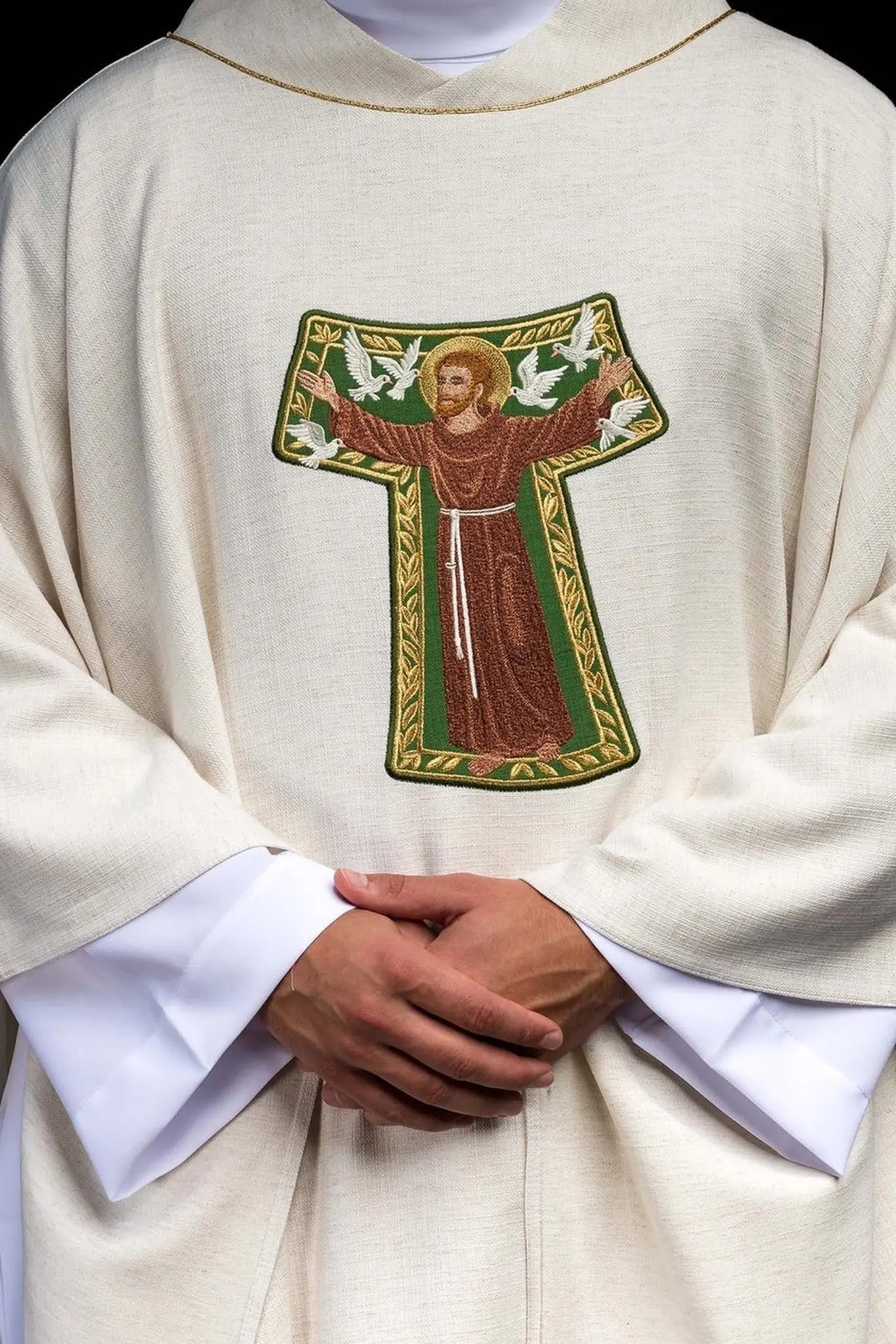
Some ecru chasubles include Marian imagery, saint images, or Eucharistic embroidery. If the main requirement is an image of a saint or a strongly iconographic front panel, the collection of chasubles with saints may offer a more focused starting point. If a parish is building a complete set for a particular altar, ecru vestments can also be coordinated with chalice veils, altar linens, and pulpit covers in related light tones, creating visual unity from the vesting sacristy to the sanctuary.
Craftsmanship, dignity, and care
A chasuble should support the dignity of the liturgy without distracting from it. Ecru fabrics are valued because they allow embroidery and sacred symbols to be visible while preserving a gentle, prayerful appearance. Many designs in this category use decorative fabric, embroidered panels, gold thread, trims, or applied motifs, so the choice should balance visual richness with practical needs. A parish that uses a vestment frequently may prefer a durable, moderate-weight piece that is easy to handle. A cathedral, shrine, or community preparing for a patronal solemnity may choose a more elaborate design with richer ornamentation.
Care is also part of good stewardship. Light-colored vestments should be stored away from dust, direct sunlight, and damp conditions. After use, the chasuble should be hung properly so that folds, embroidery, and collars keep their form. Cleaning should follow the guidance on the individual product page, especially where metallic thread, stones, velvet accents, or printed sacred images are present. This helps preserve both the fabric and the sacred symbolism entrusted to the vestment.
Frequently Asked Questions (FAQ)
When is an ecru chasuble appropriate for Mass?
An ecru chasuble is appropriate when a white or ivory-toned vestment fits the liturgical celebration, such as Christmas, Easter, Marian feasts, many solemnities, weddings, jubilees, and feasts of saints who were not martyrs. It gives a warmer appearance than bright white while remaining festive and dignified.
Is ecru the same as white in liturgical use?
Ecru is best treated as a warm shade within the white or ivory family. It is not a separate liturgical season color, but it can serve the same practical role as white in many celebrations where local custom and rubrical practice allow ivory or cream vestments.
Can ecru chasubles be used during Advent or Lent?
Advent and Lent normally call for purple, not ecru. An ecru chasuble may be used only when the particular Mass or feast calls for white, such as certain solemnities or Marian celebrations that occur during those seasons.
How should I match an ecru chasuble with other vestments and textiles?
For a coherent set, match the chasuble with an ecru or gold stole, a light chalice veil, and altar linens that do not compete with the embroidery. Gold accents, cream textiles, and subtle Marian blue details usually harmonize well with ecru.
What design should I choose for a parish wardrobe?
A versatile parish wardrobe usually benefits from one simple ecru chasuble for regular use and one more decorative design for solemnities. Eucharistic symbols suit Corpus Christi and adoration-related celebrations, while Marian motifs are better for feasts of Our Lady.