Altar Cloths for Catholic Churches and Sacred Spaces
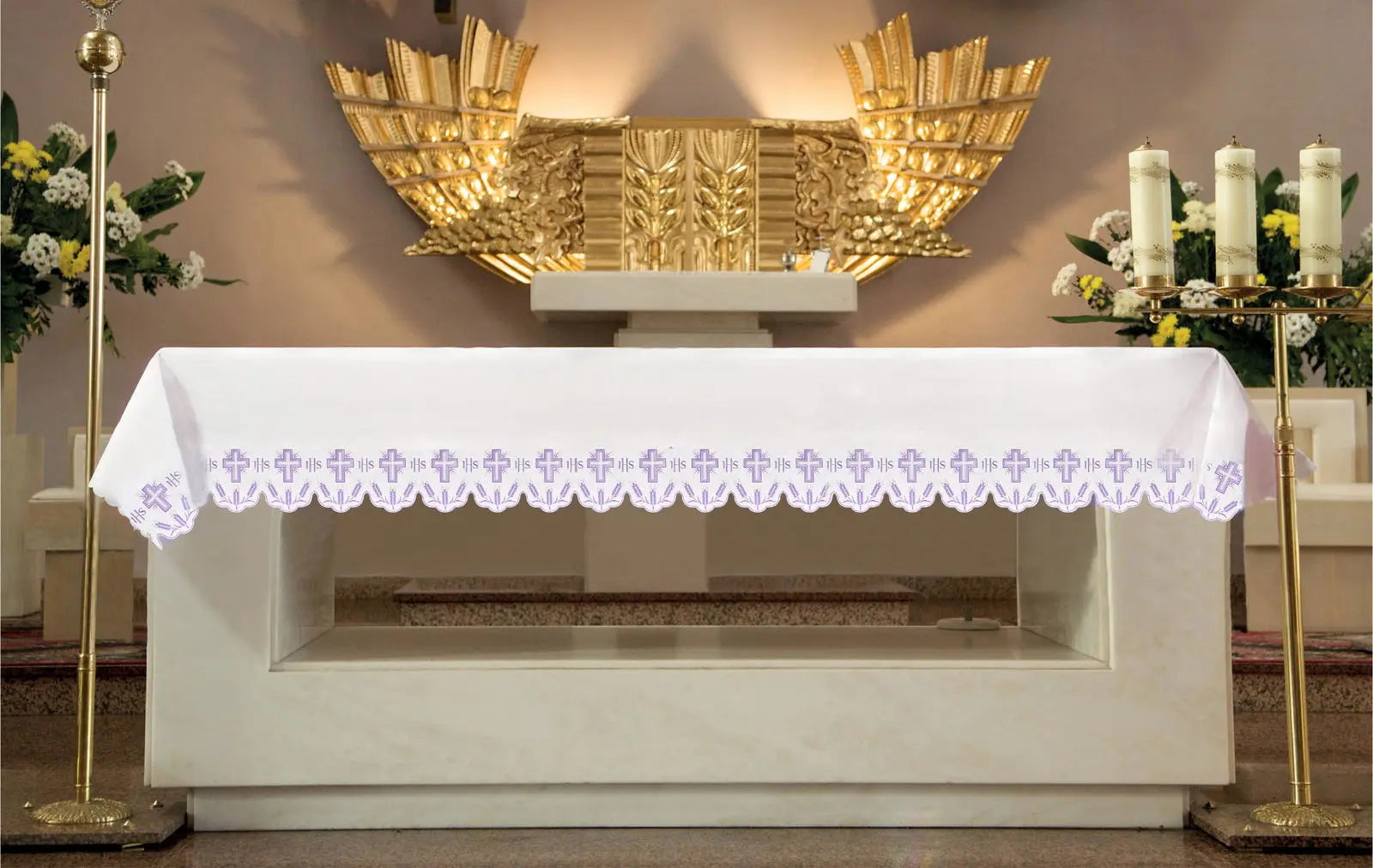
Altar cloths are among the most visible and meaningful textiles used in the sanctuary. They cover and dignify the altar, the place where the Eucharistic sacrifice is celebrated, and they help express the reverence due to the sacred action of the Mass. This collection gathers altar cloths and related altar coverings for parishes, chapels, religious houses, retreat centers and private oratories that need liturgical textiles with a clean appearance, careful finishing and a design suited to worship.
In the Christian tradition, the altar is not treated as ordinary furniture. It is the central liturgical place of the church, associated with Christ, the Eucharist and the prayer of the faithful. For this reason, an altar cloth should be chosen with more care than a decorative table covering. Its fabric, proportions, embroidery and edge finishing all influence how the altar appears during daily Mass, Sunday liturgy, solemn feasts, weddings, funerals and Eucharistic adoration. A well chosen cloth helps the sanctuary look ordered, dignified and ready for prayer without distracting from the rite itself.
What Belongs in This Collection
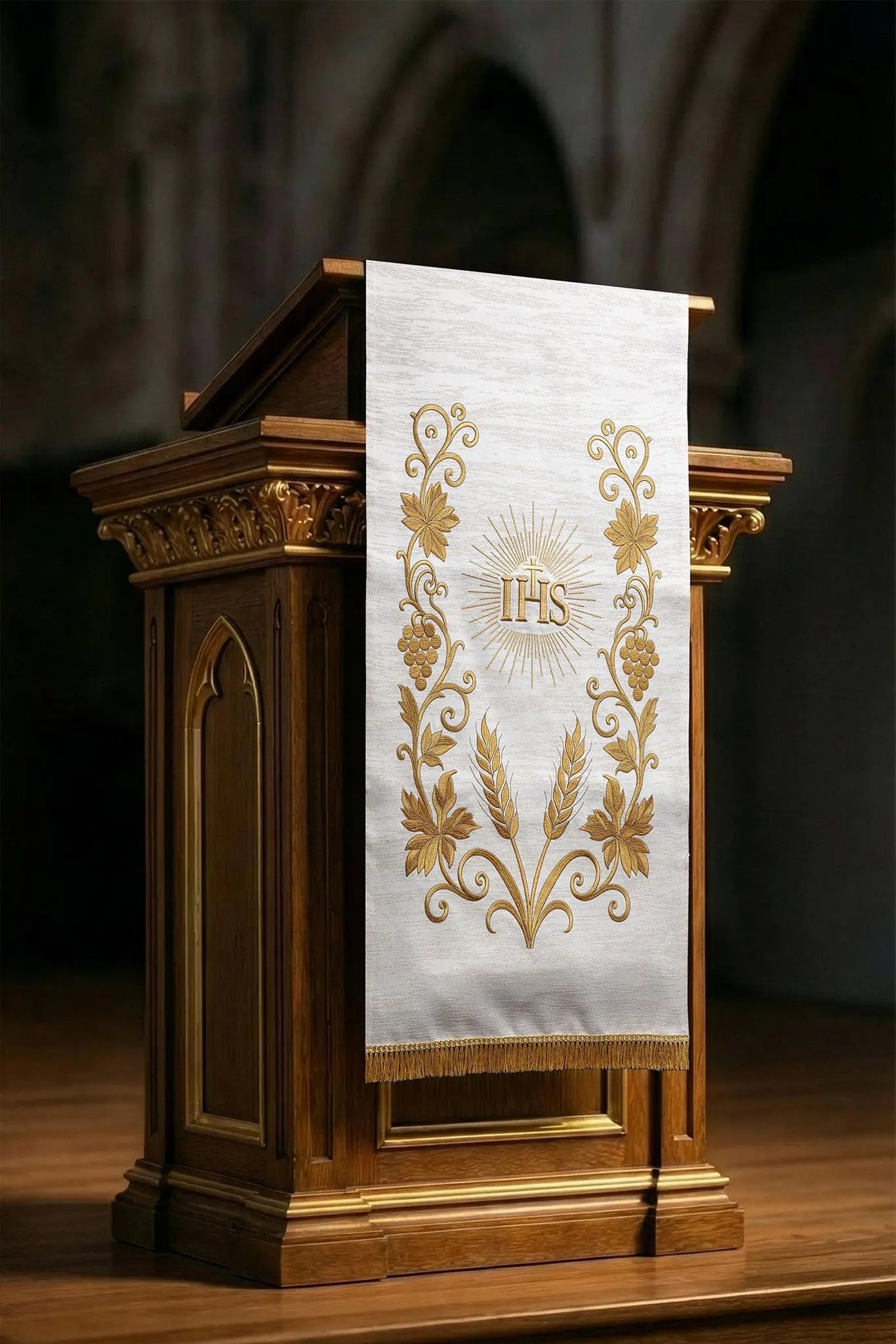
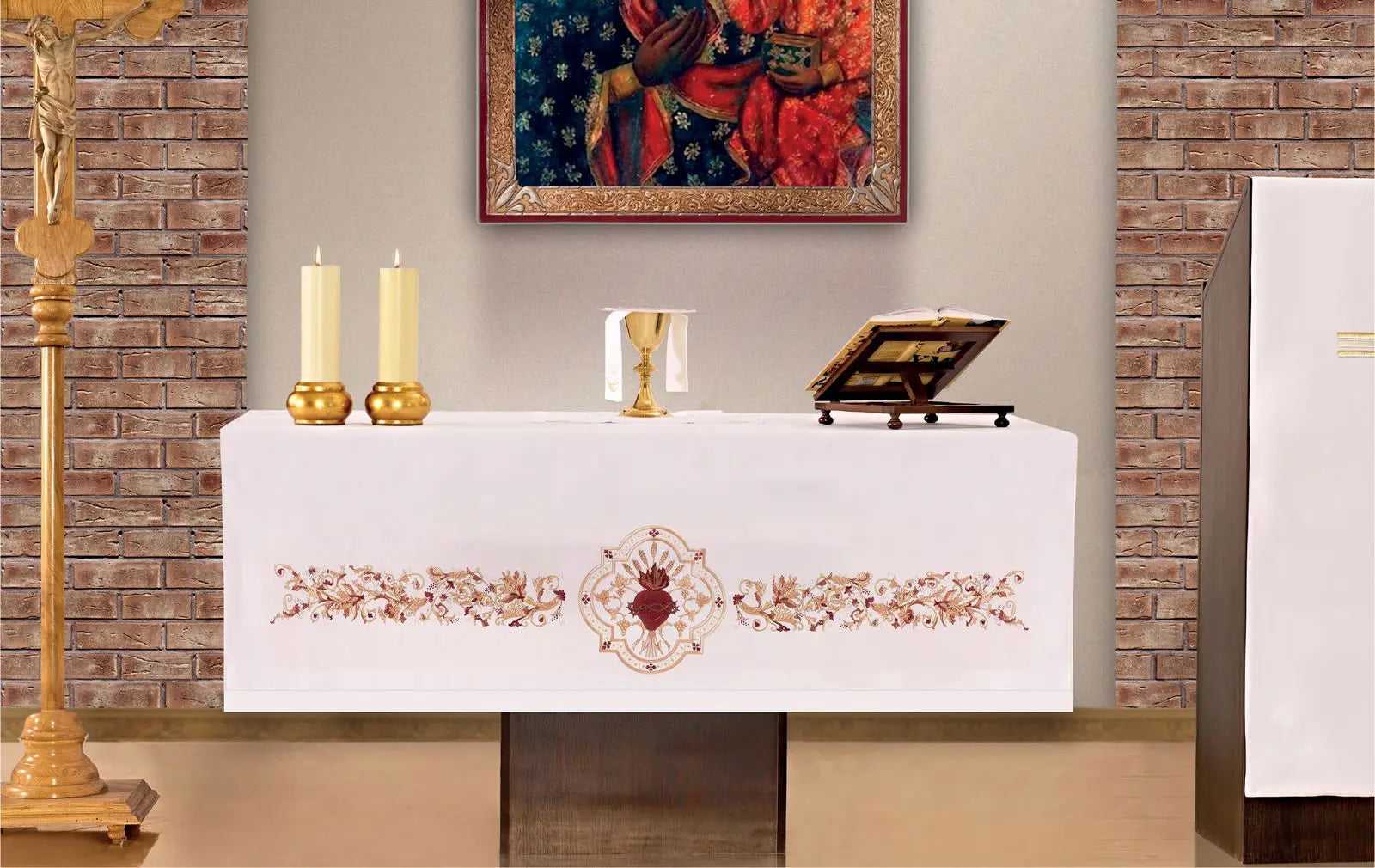
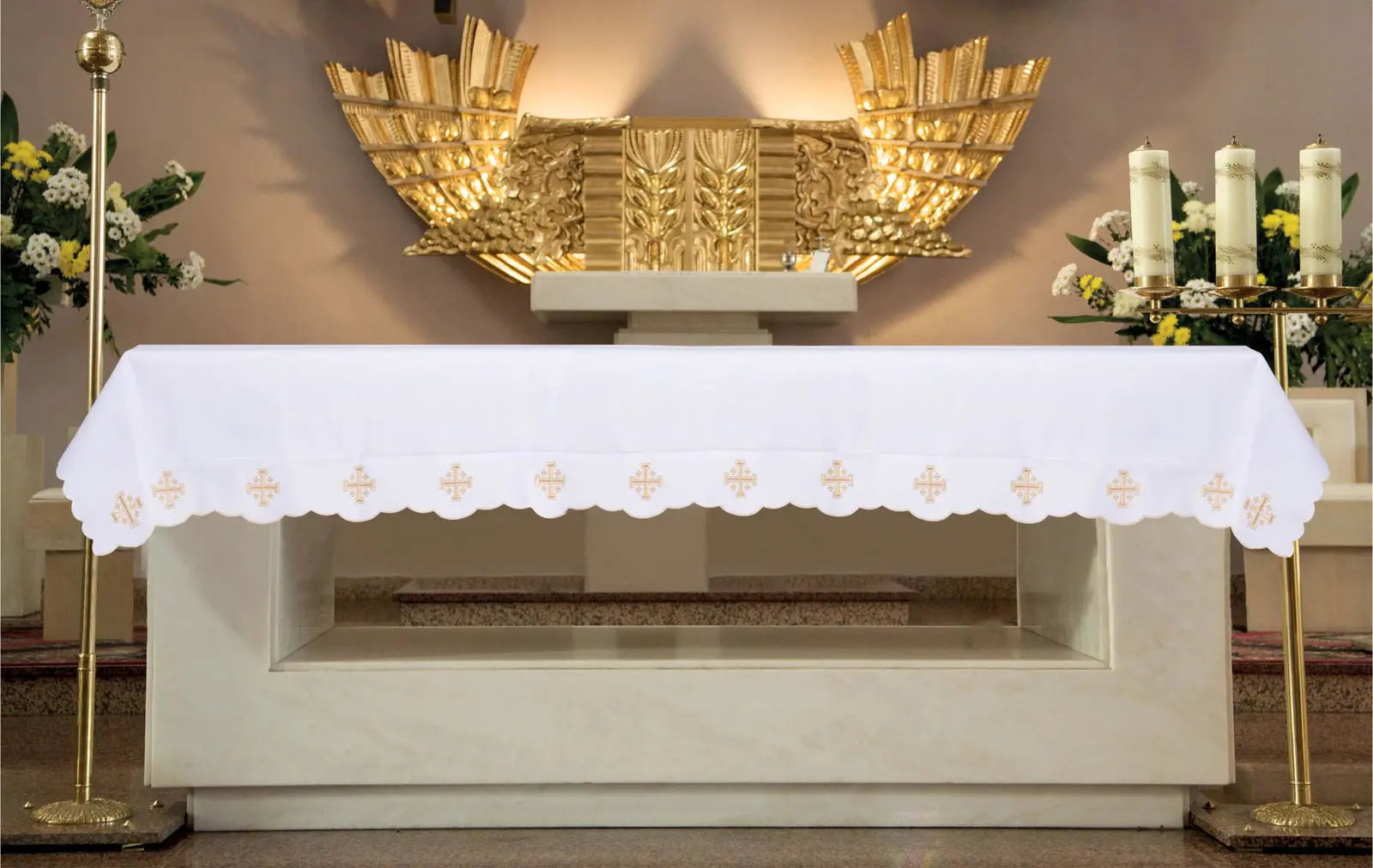
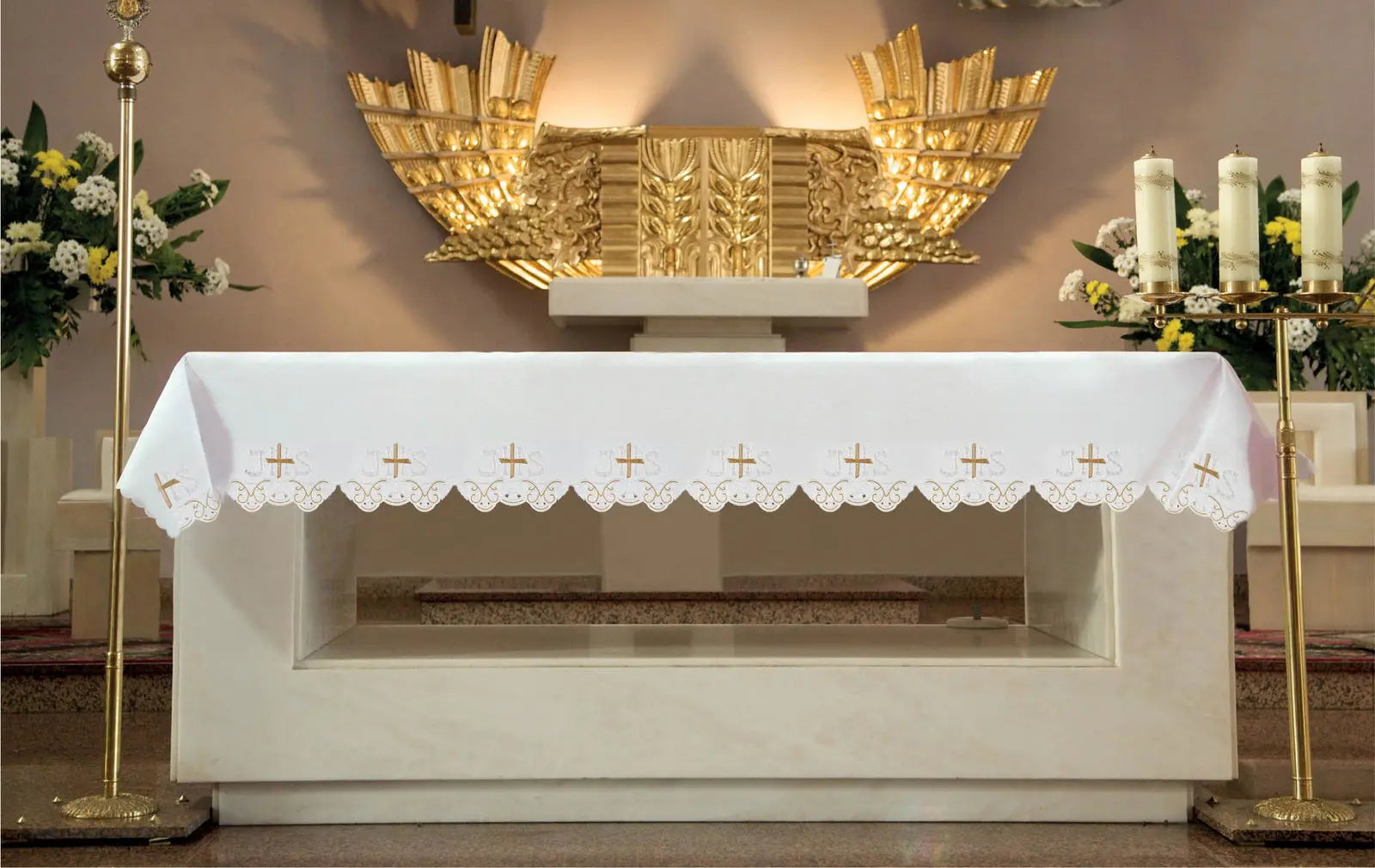
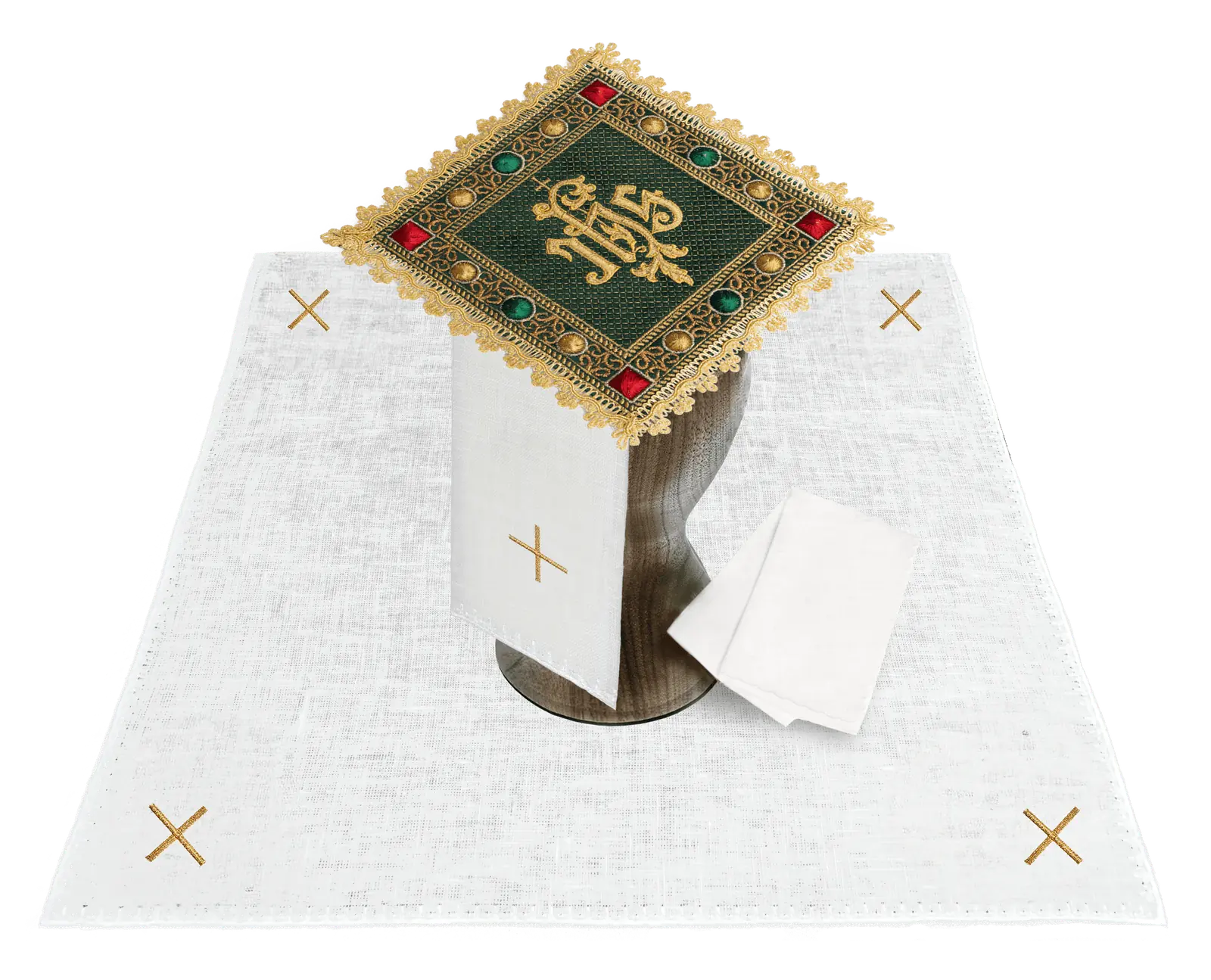
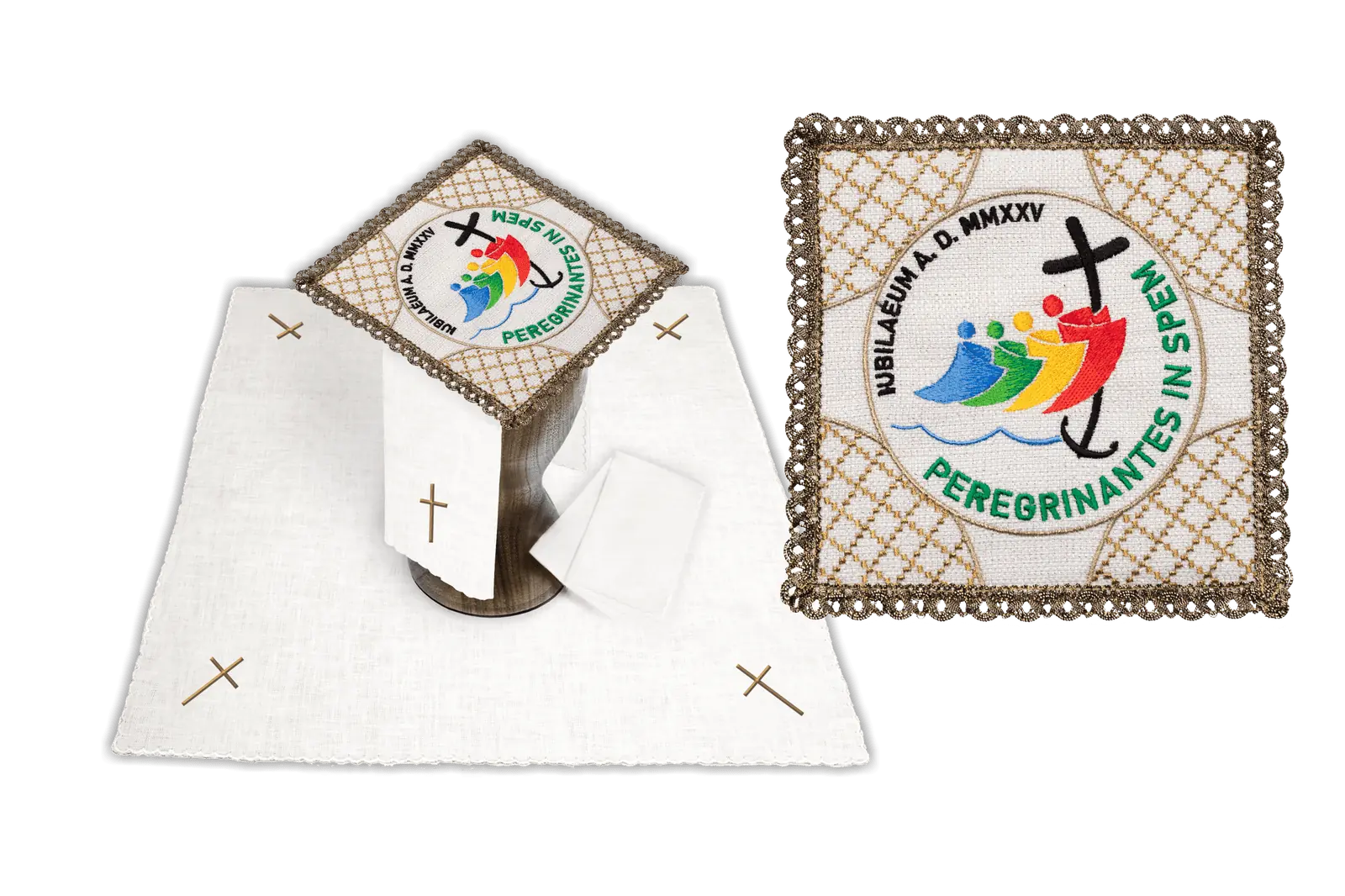
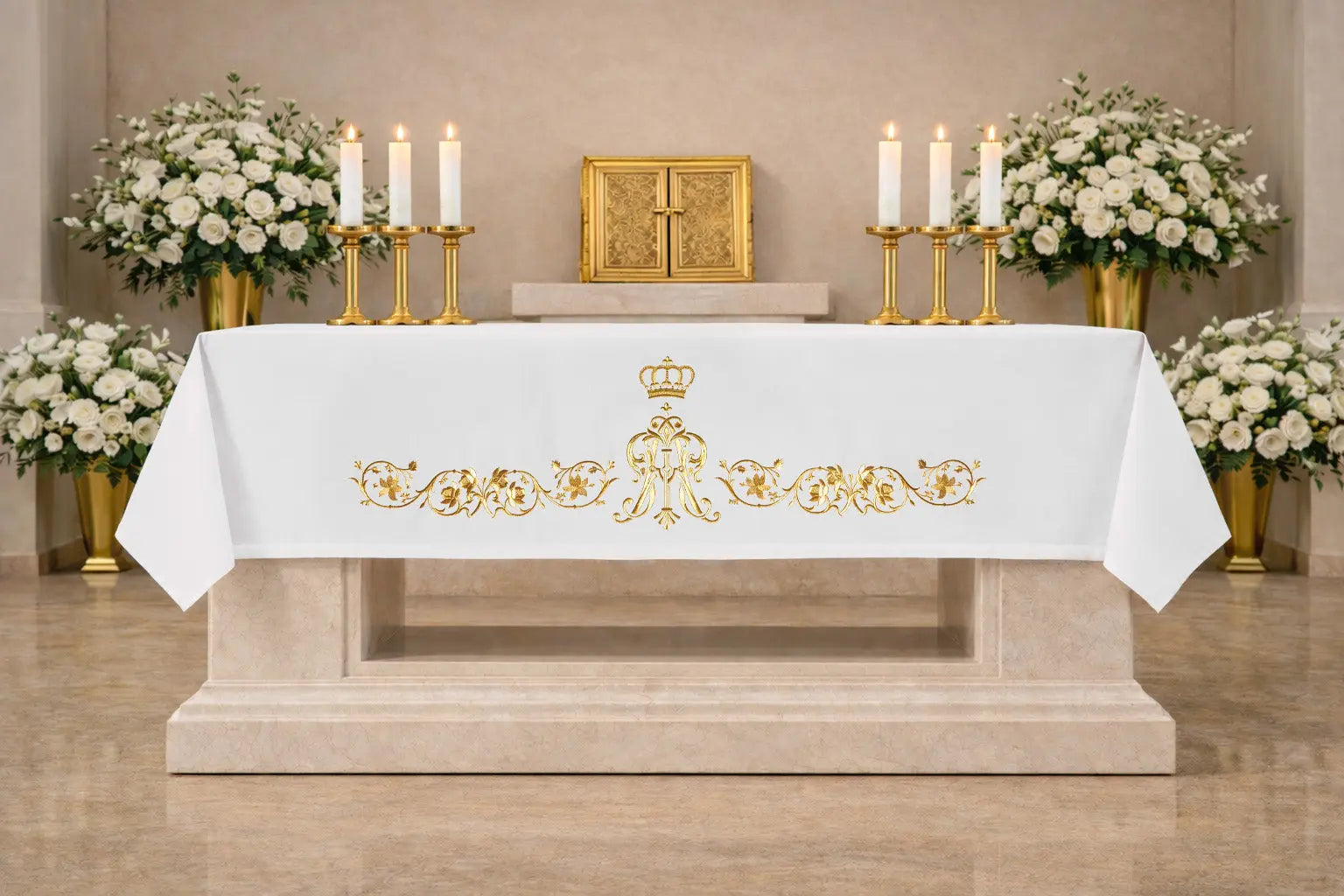
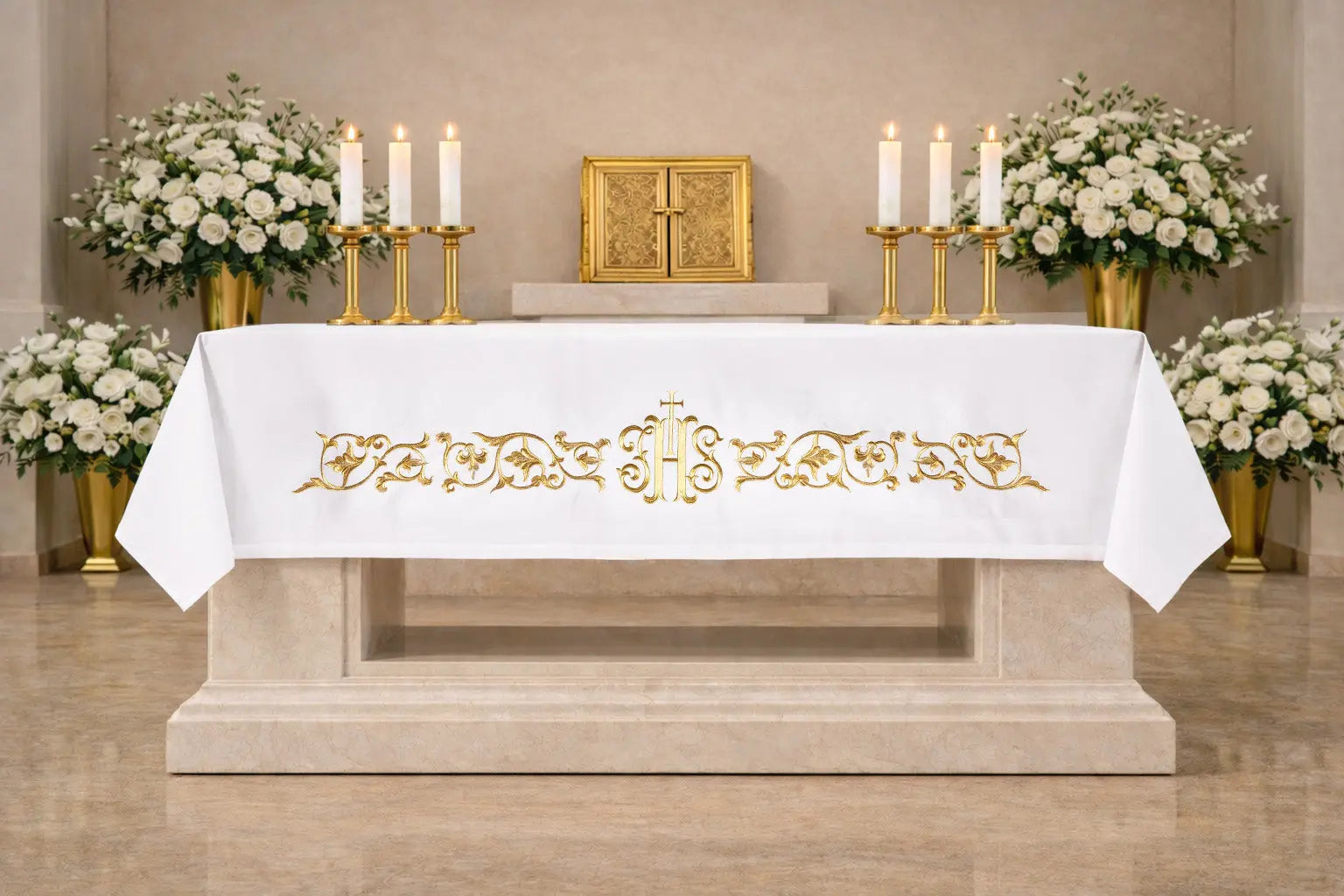
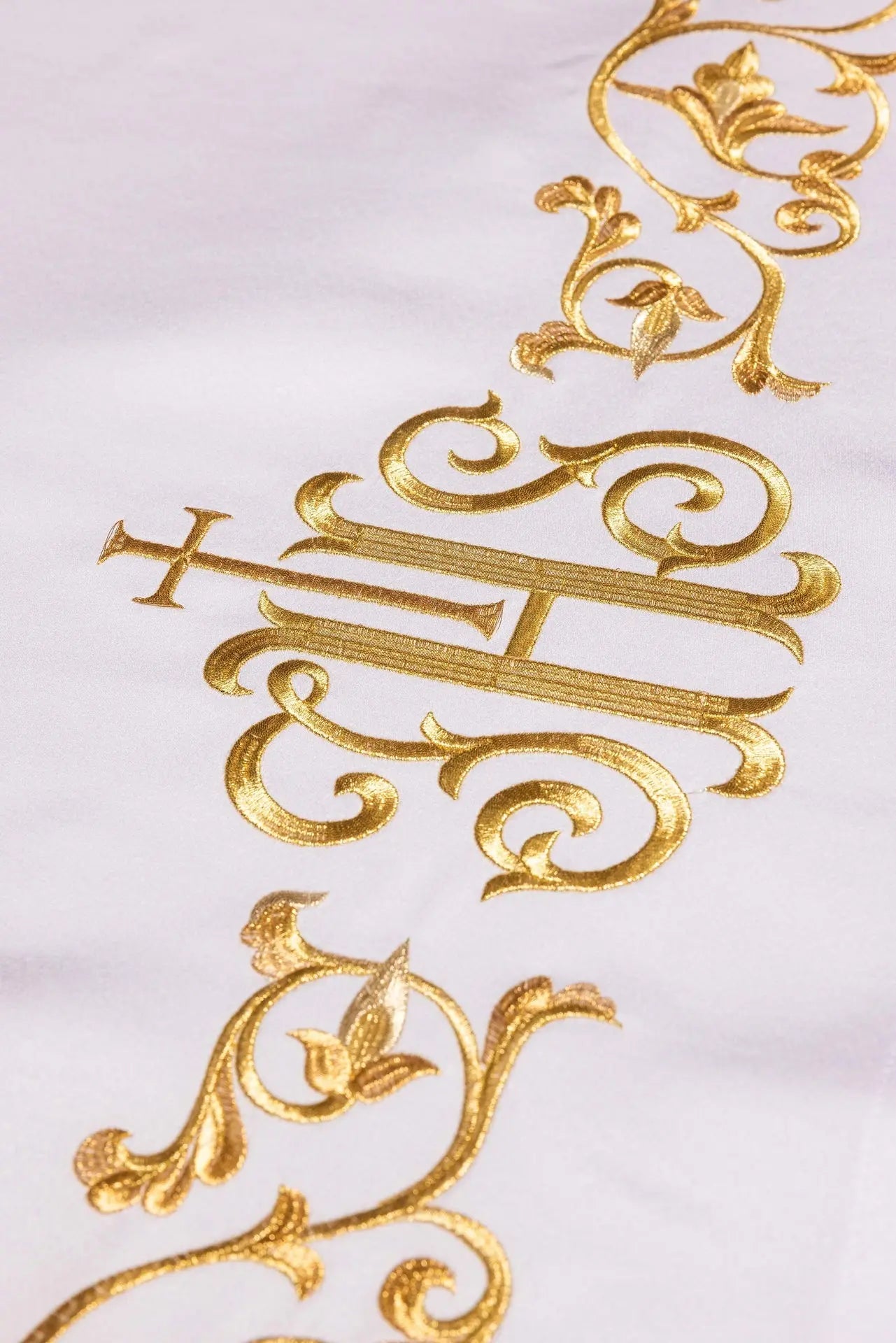
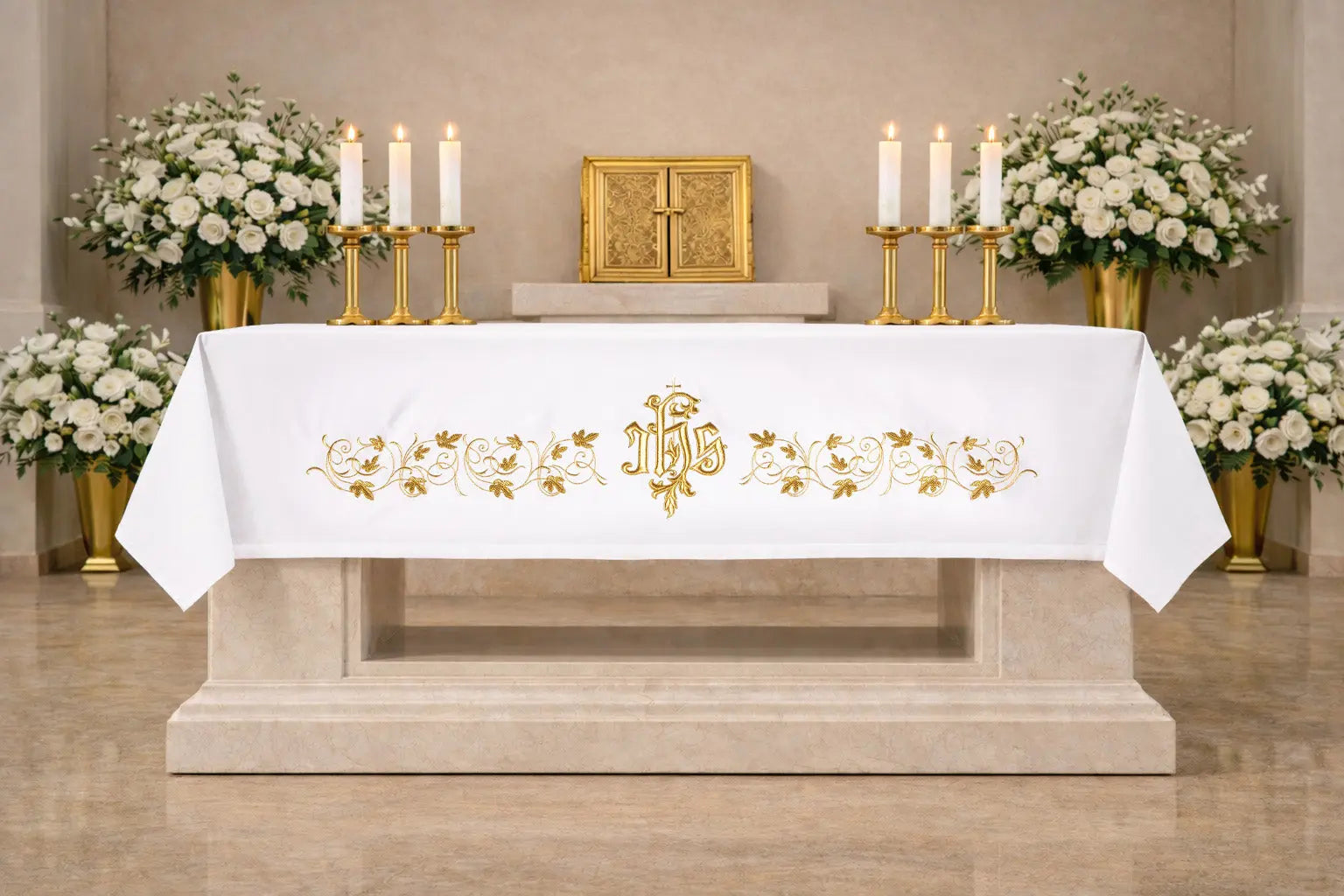
This collection focuses on altar cloths and altar coverings used directly at or around the altar. Depending on the design, they may include simple white altar cloths, embroidered altar tablecloths, cloths with decorative front panels, lace edges, symbolic borders or more elaborate sanctuary textiles. For churches looking for a coordinated arrangement, this category also connects naturally with altar tablecloths with embroidered frontals and altar superfrontals, which can add a more visible decorative element to the front of the altar.
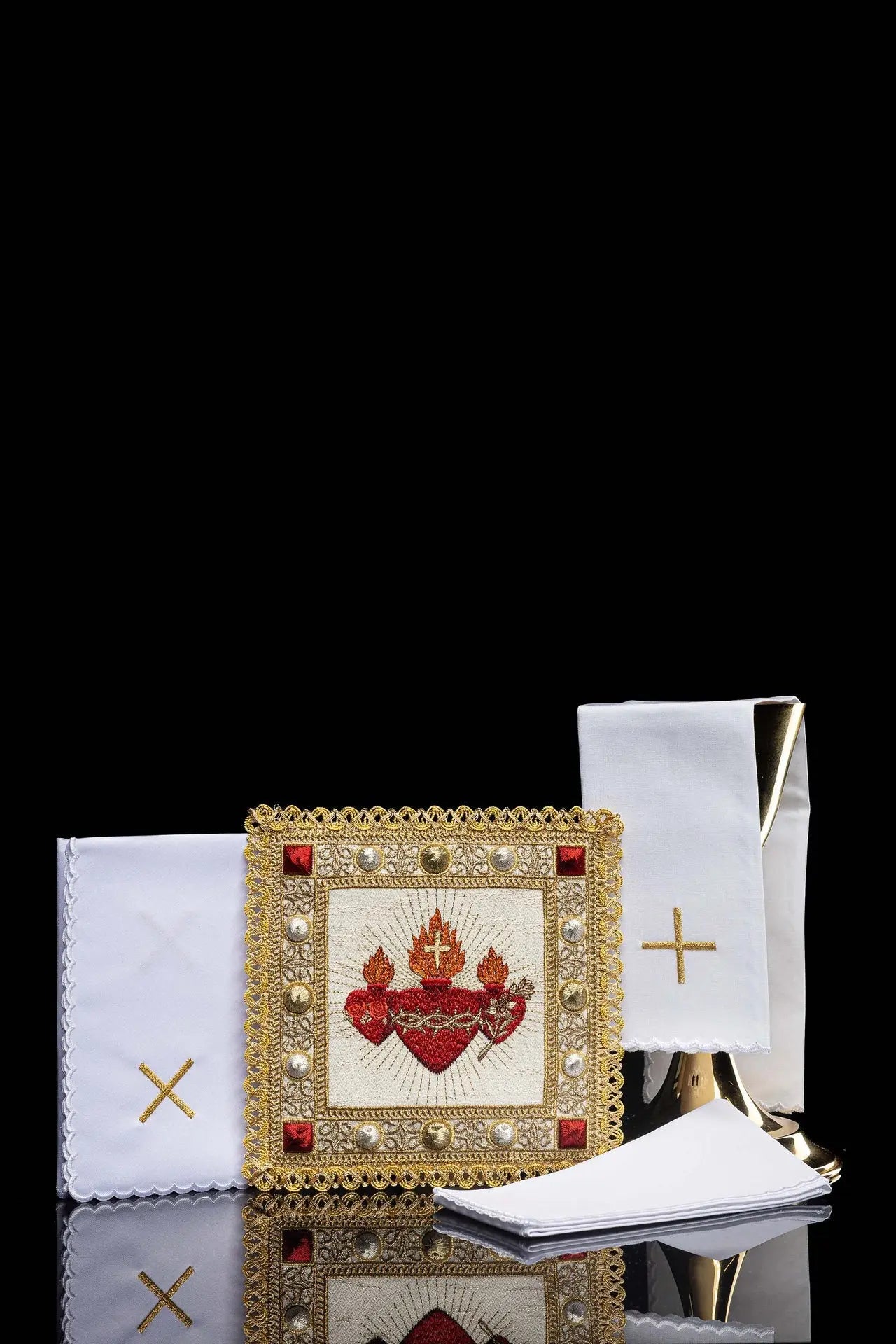
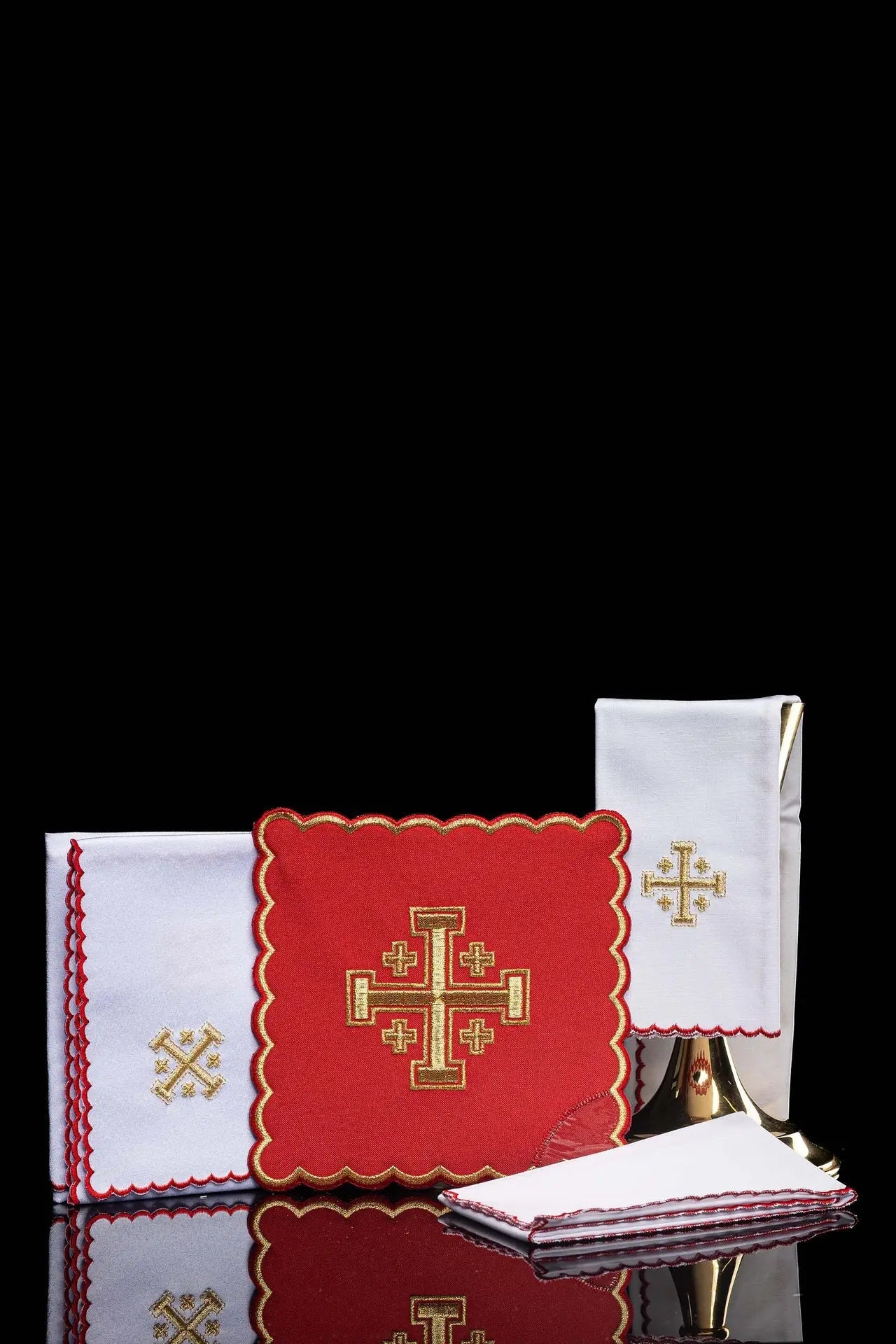
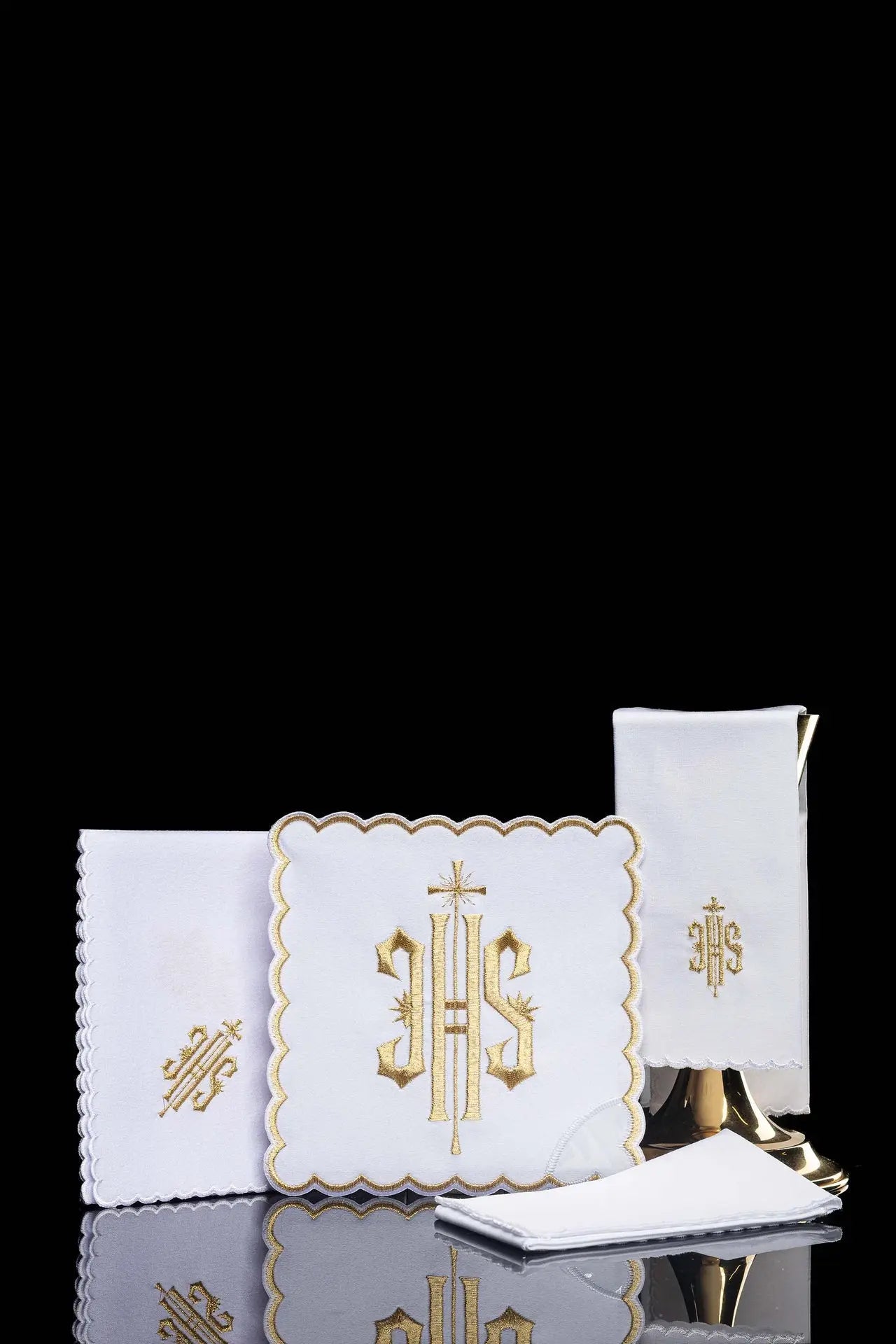
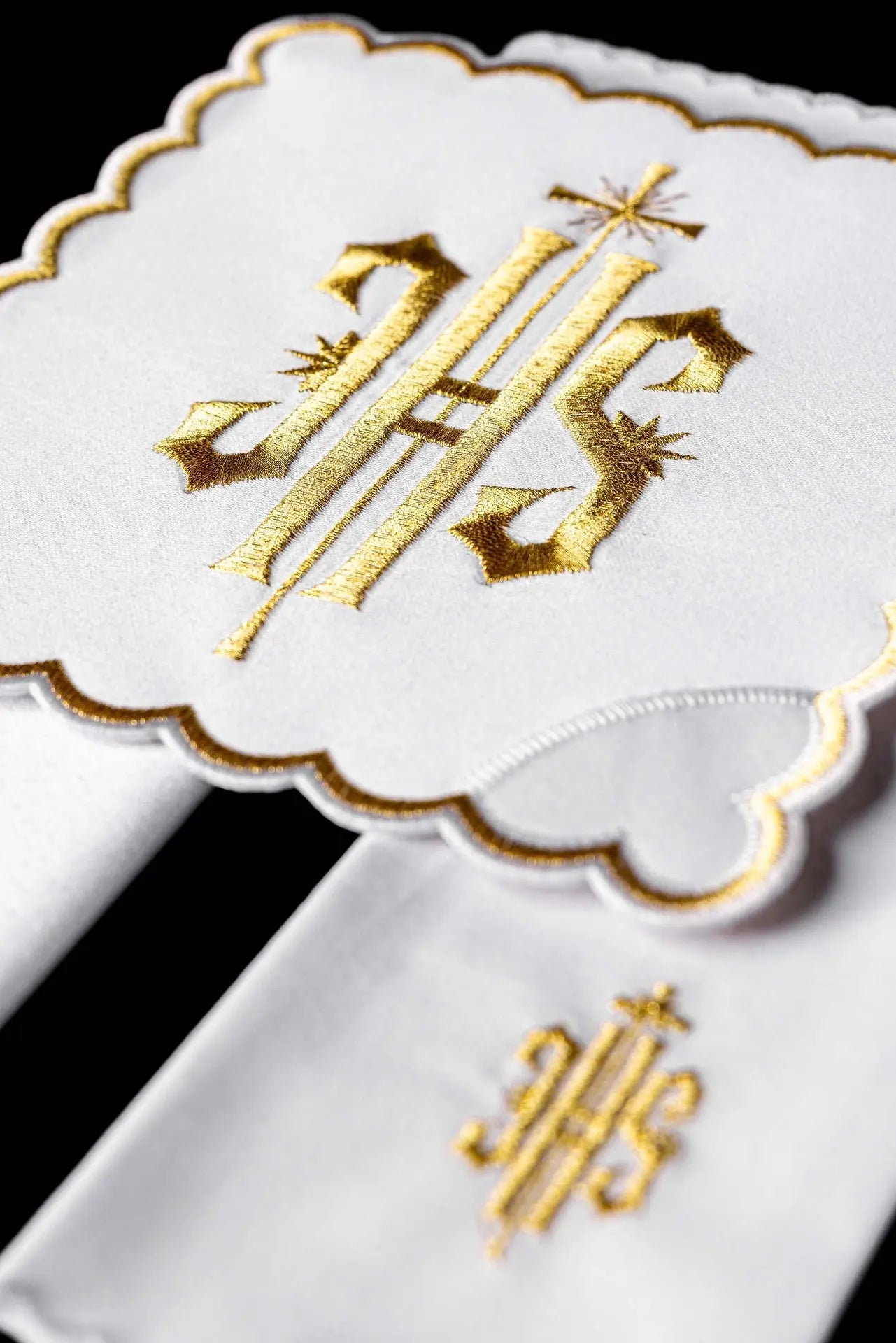
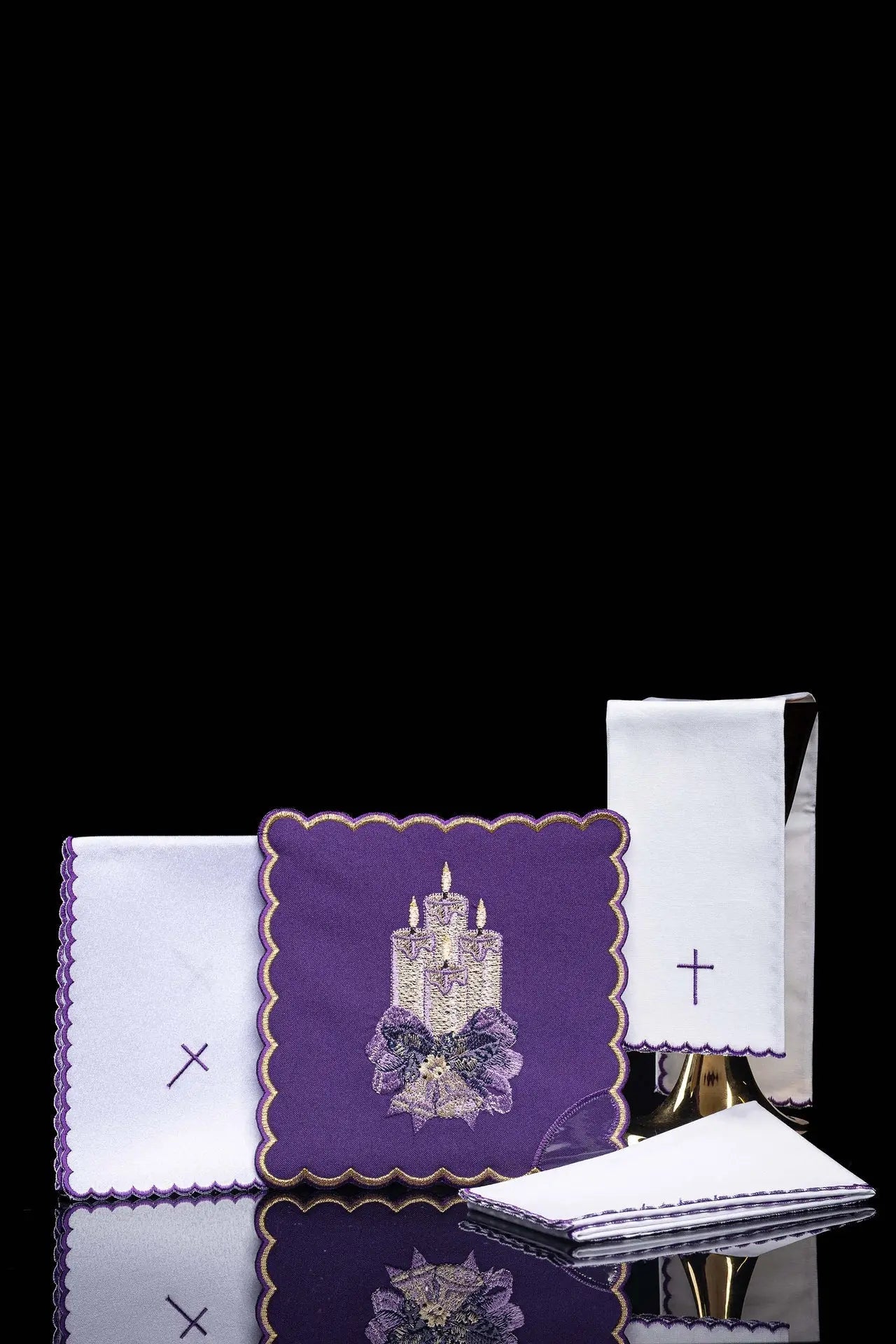
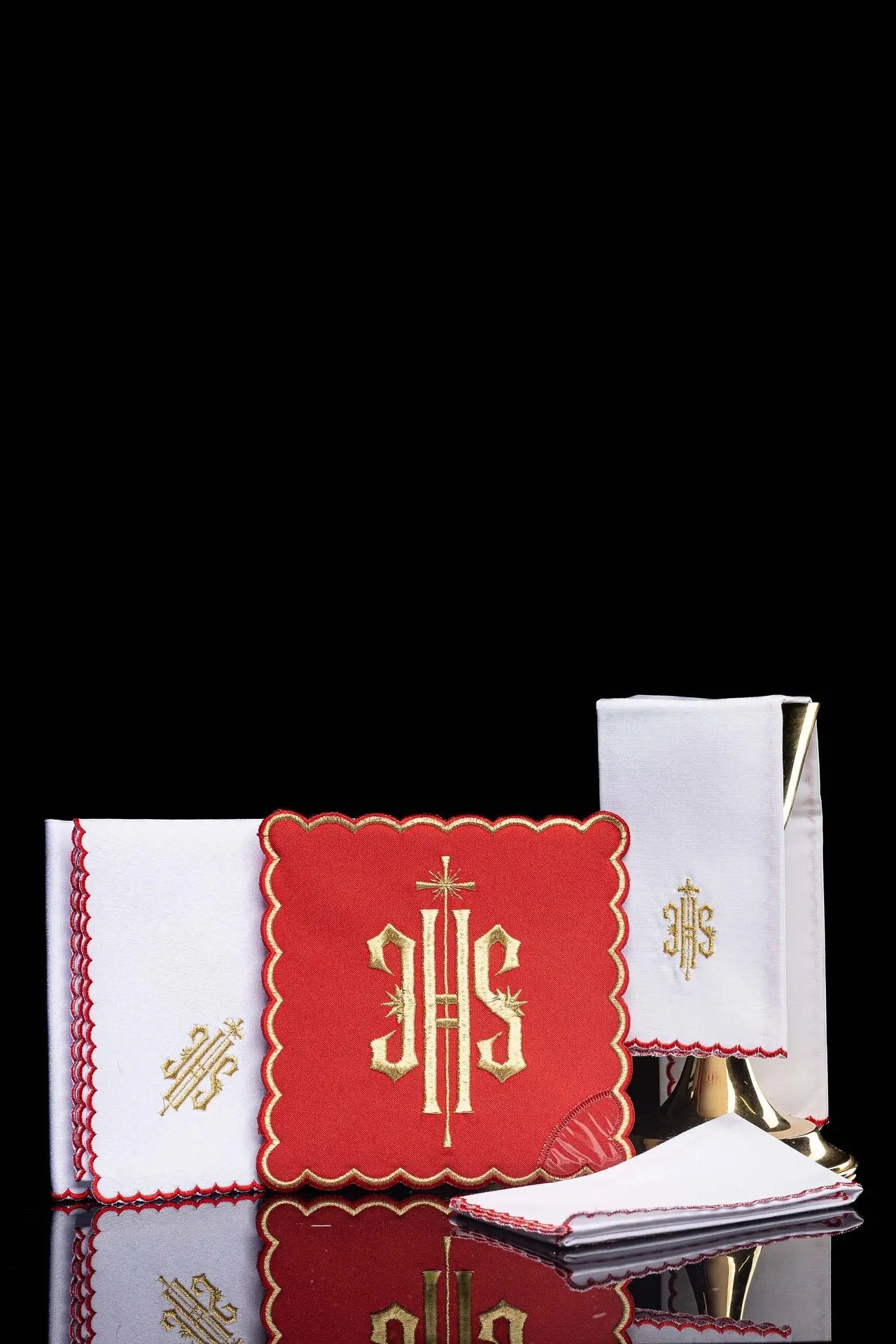
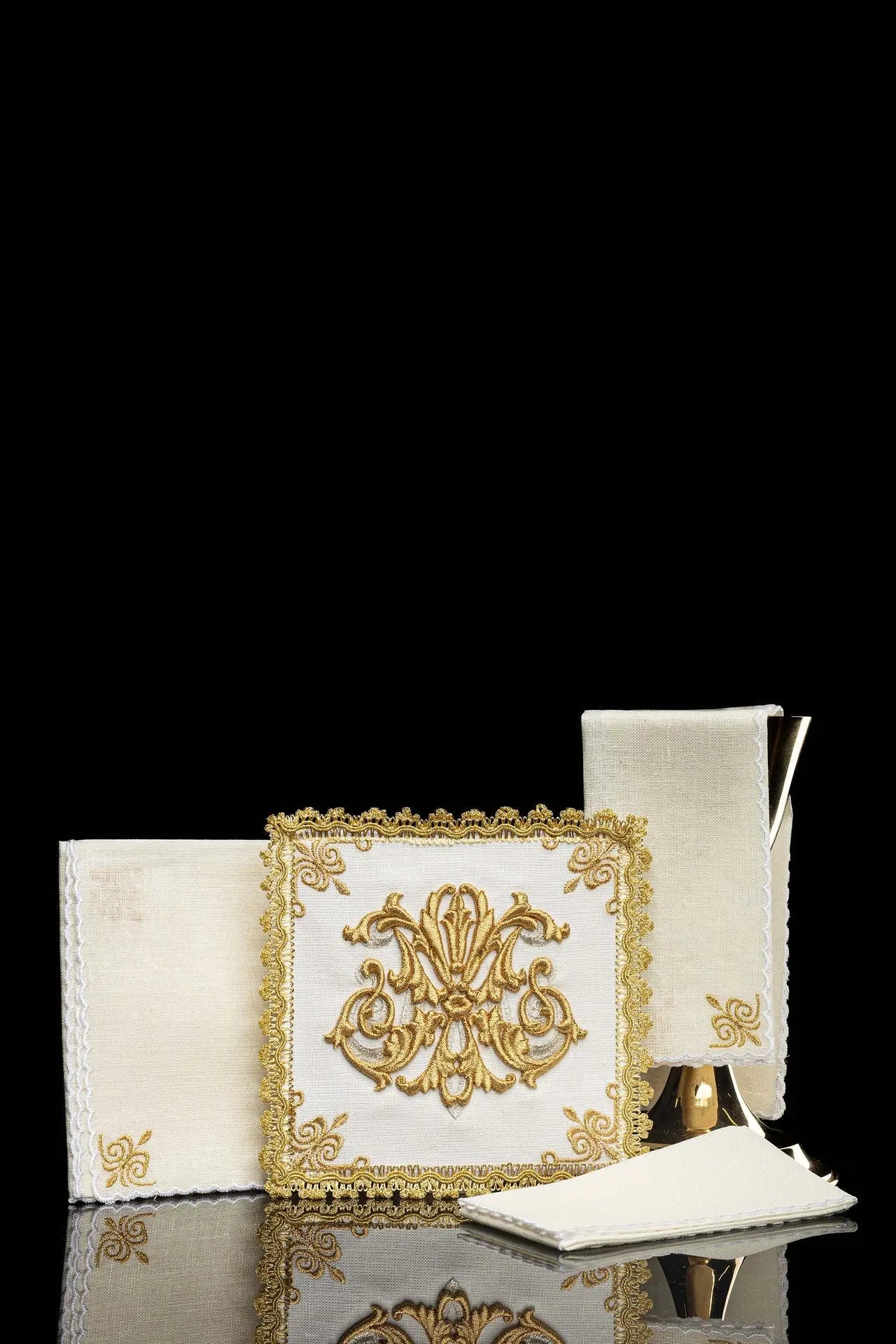
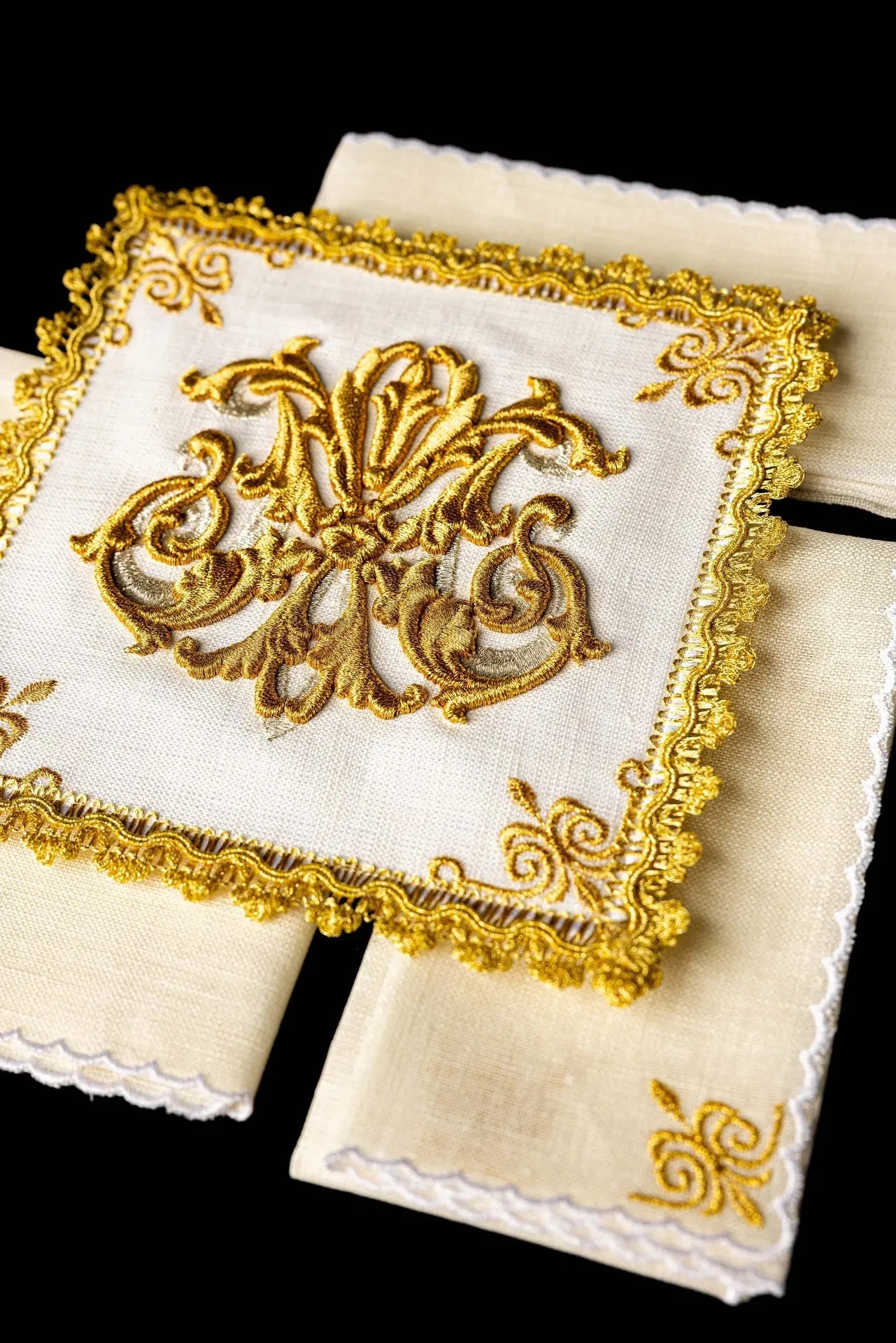
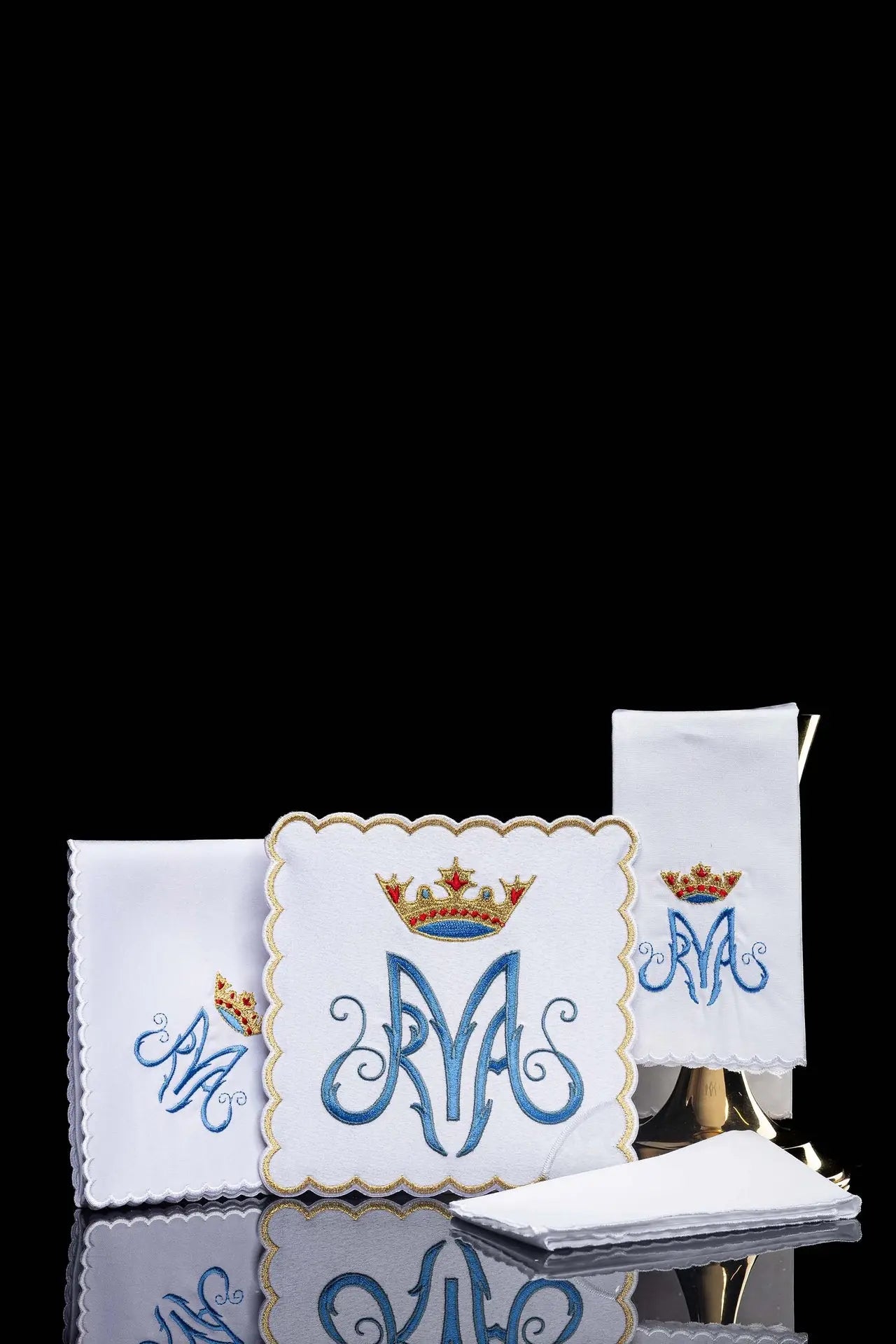
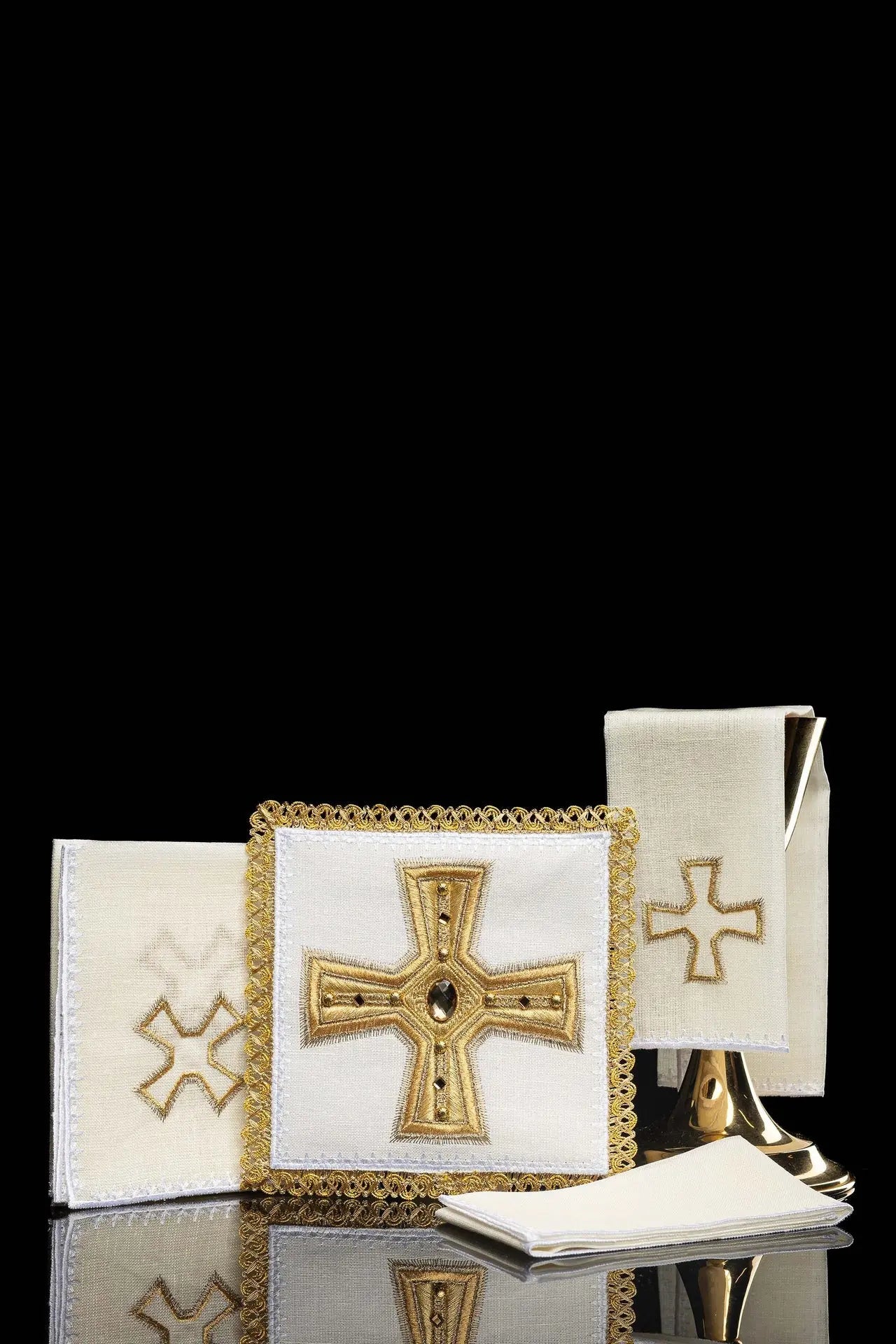
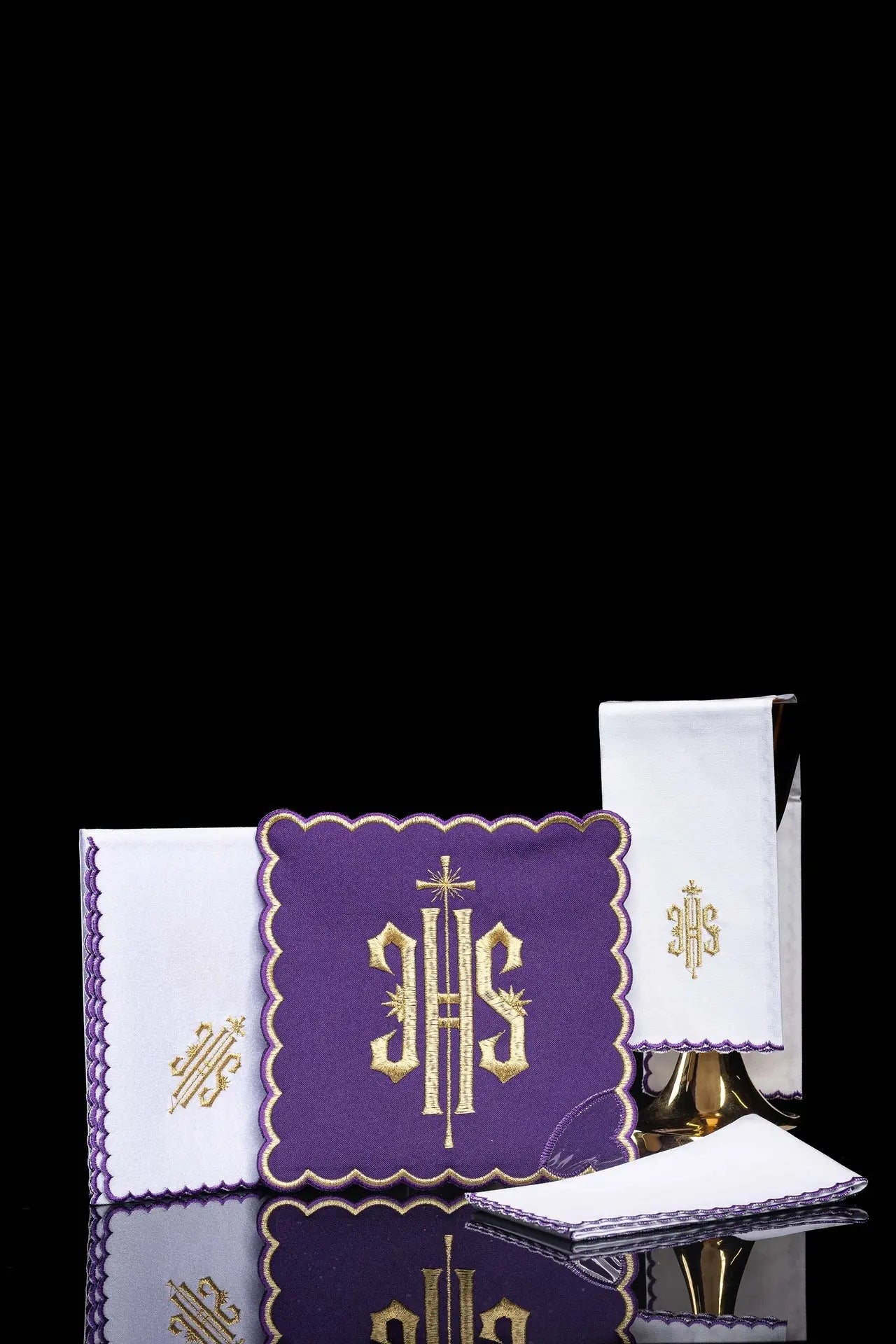
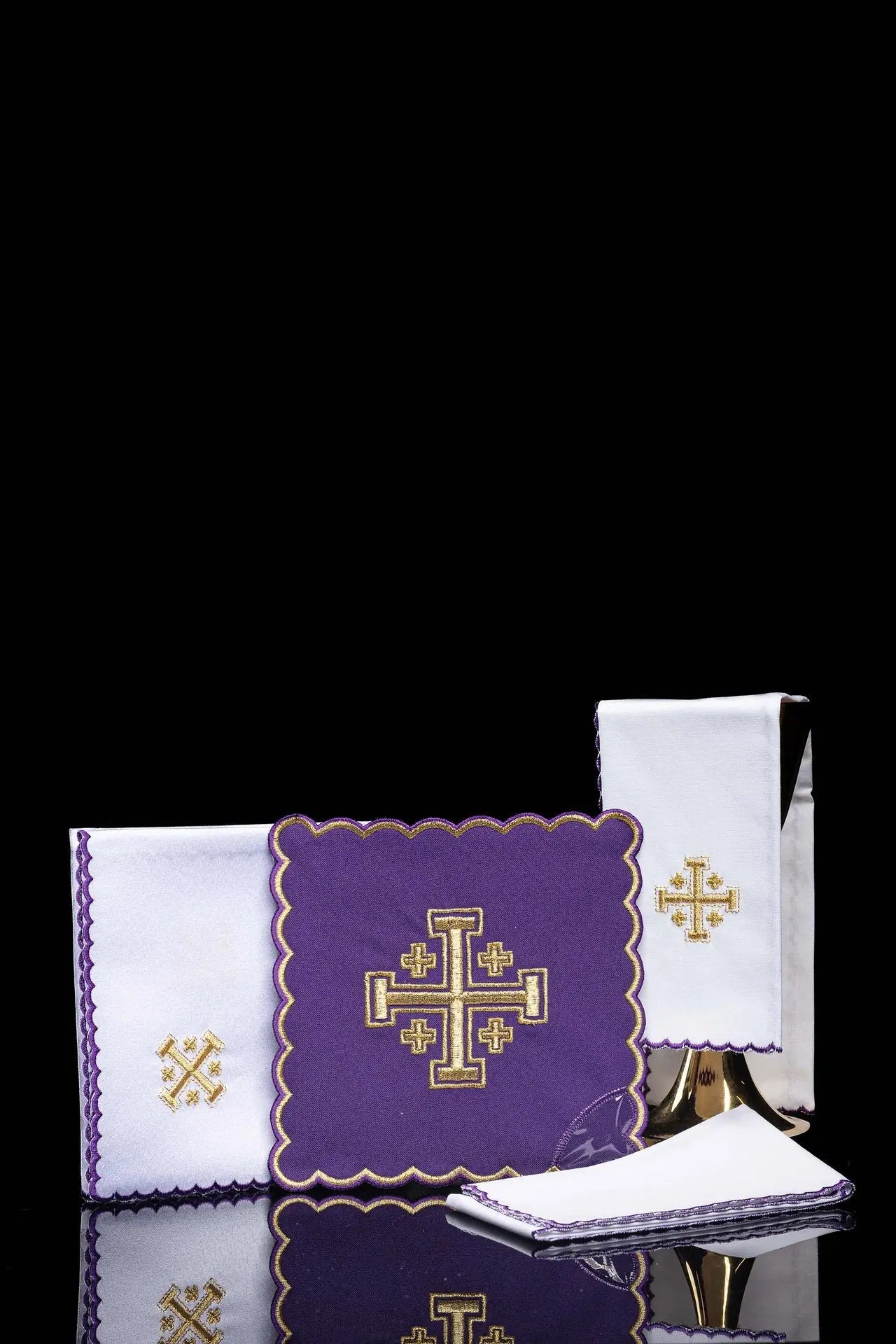
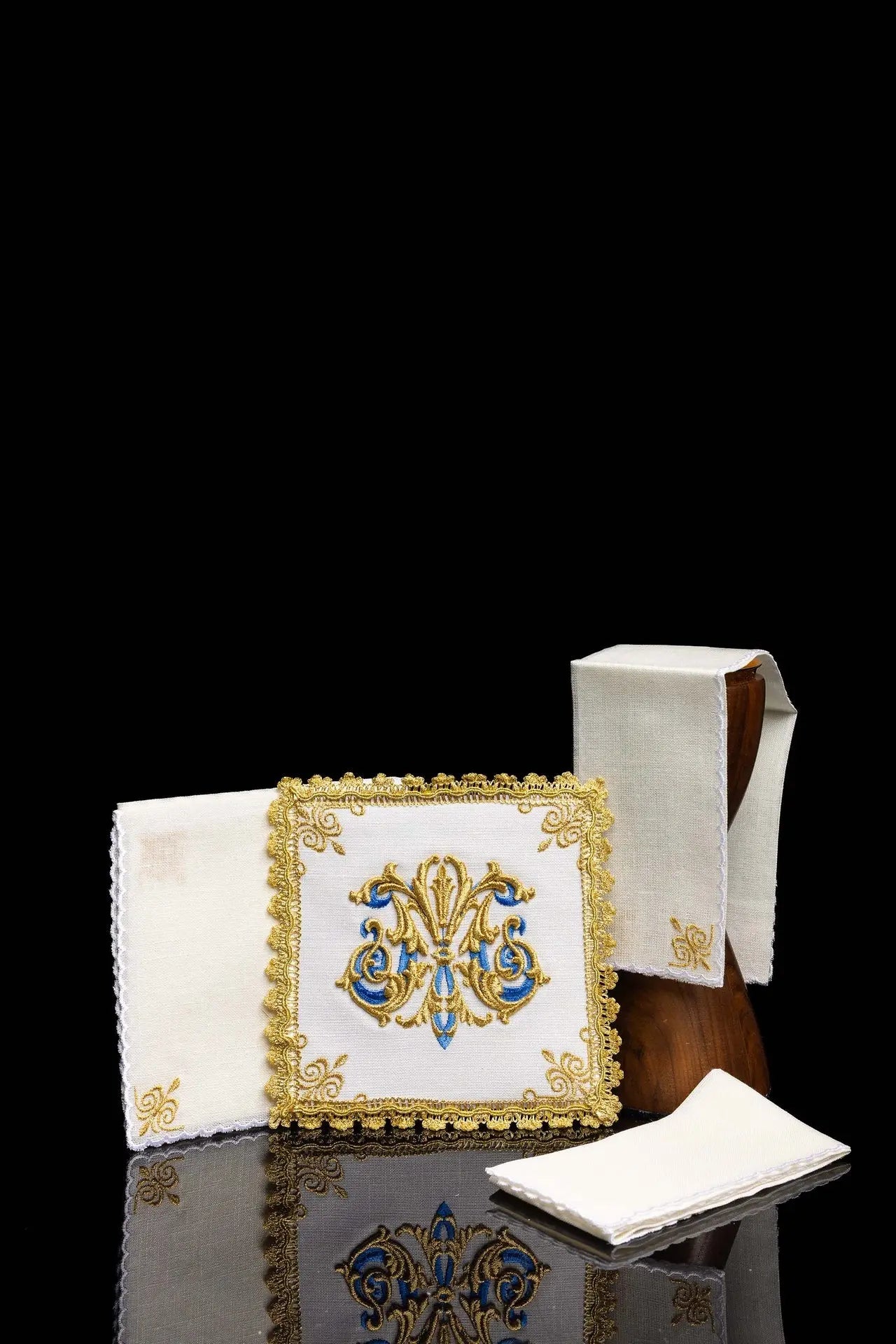
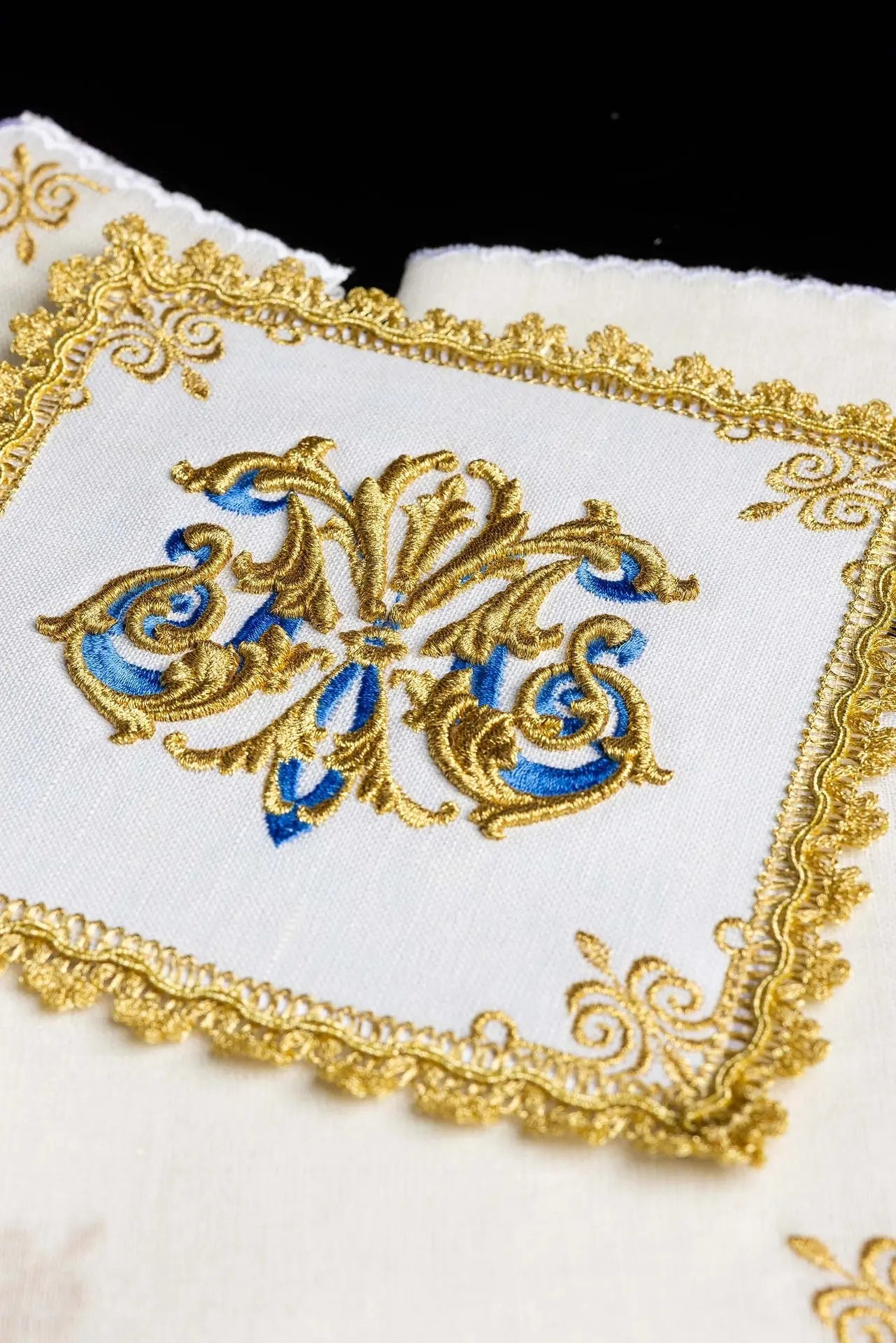
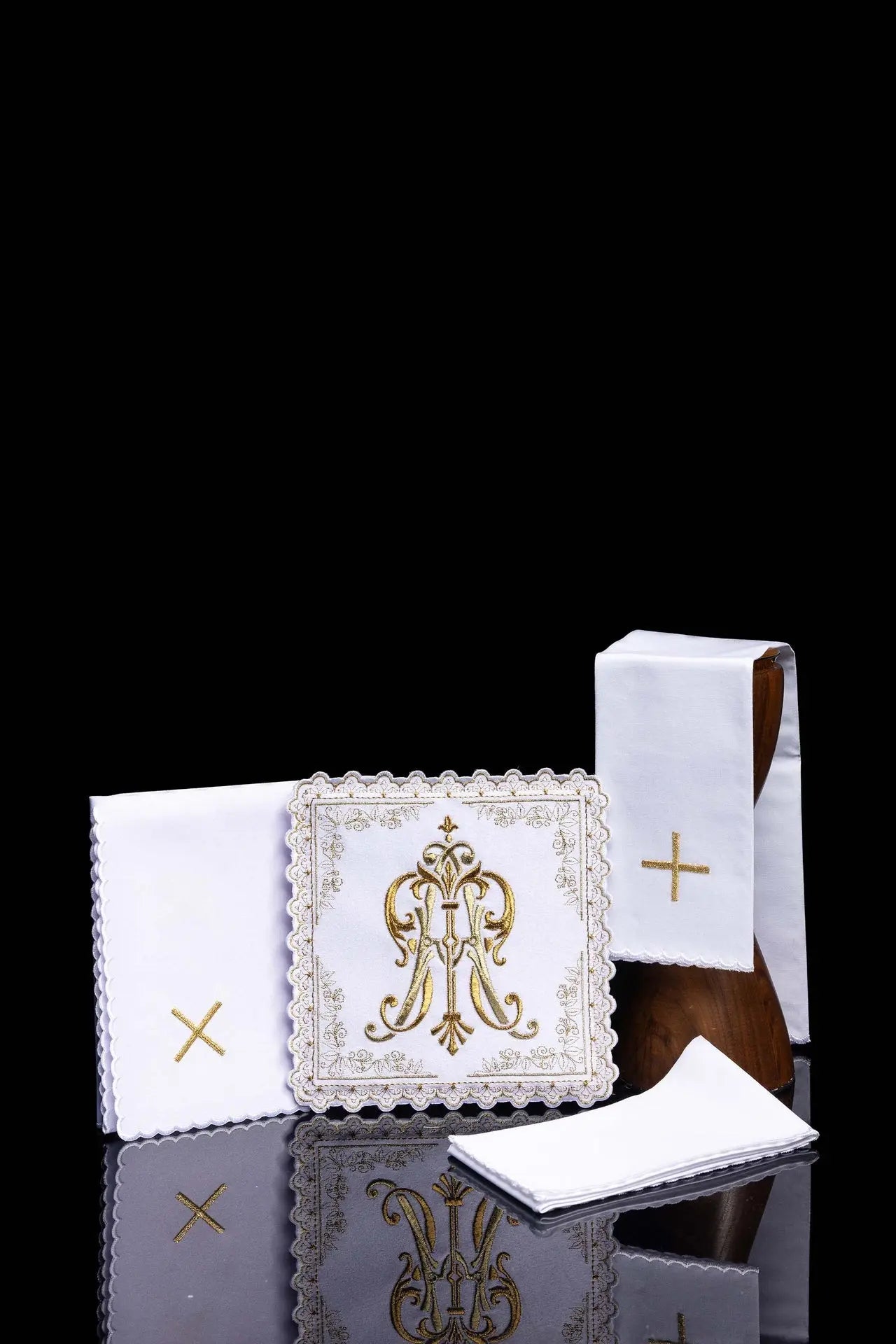
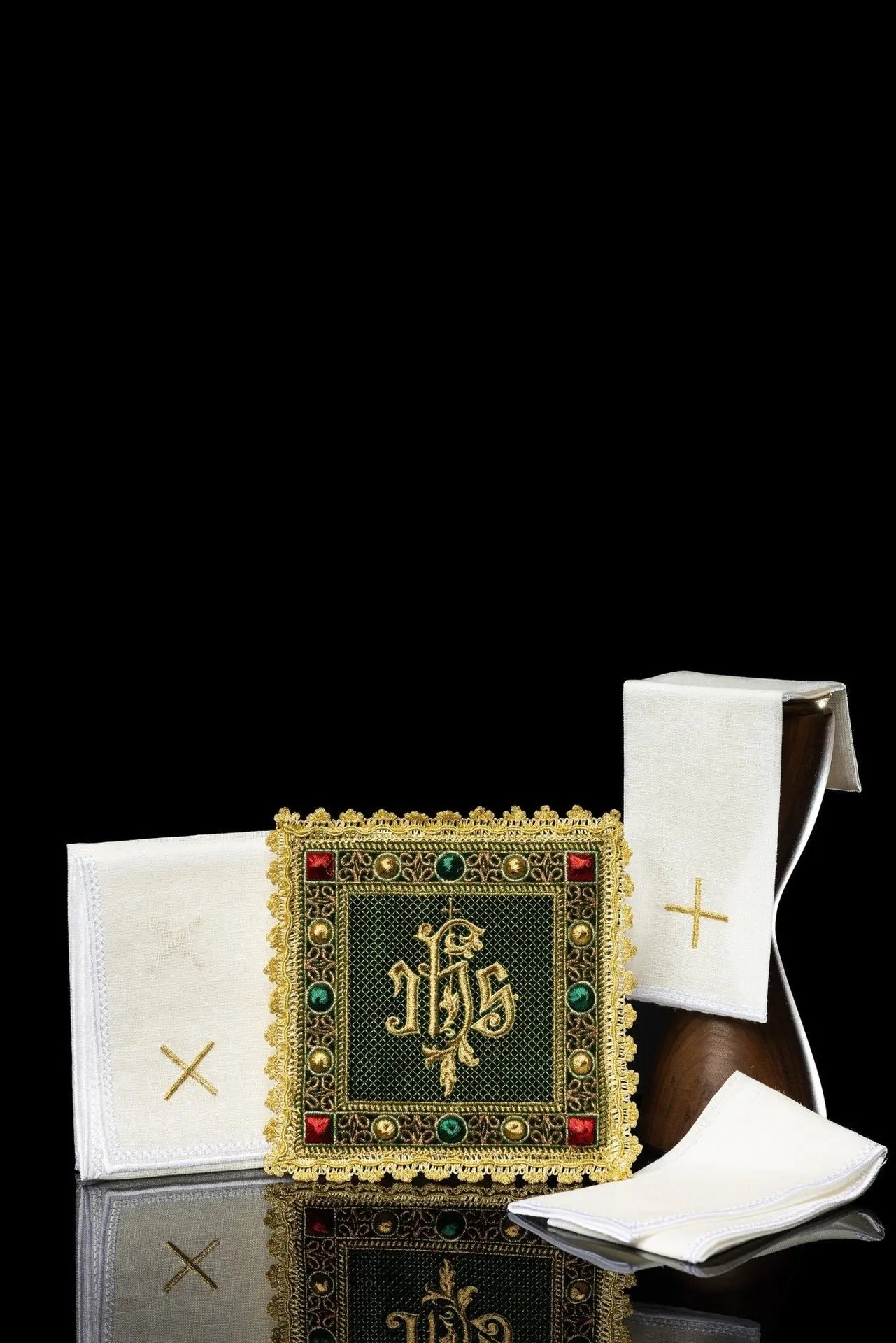
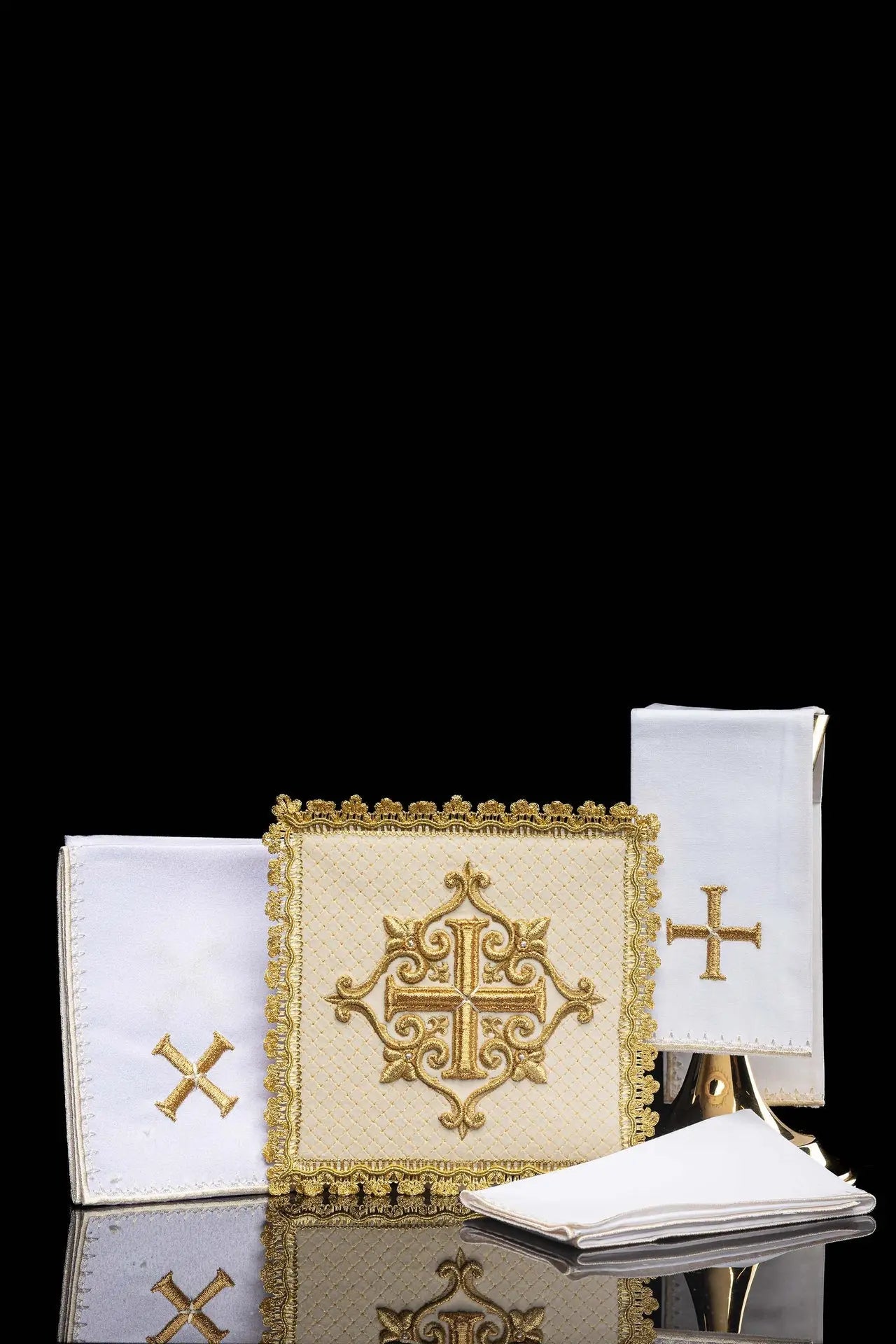
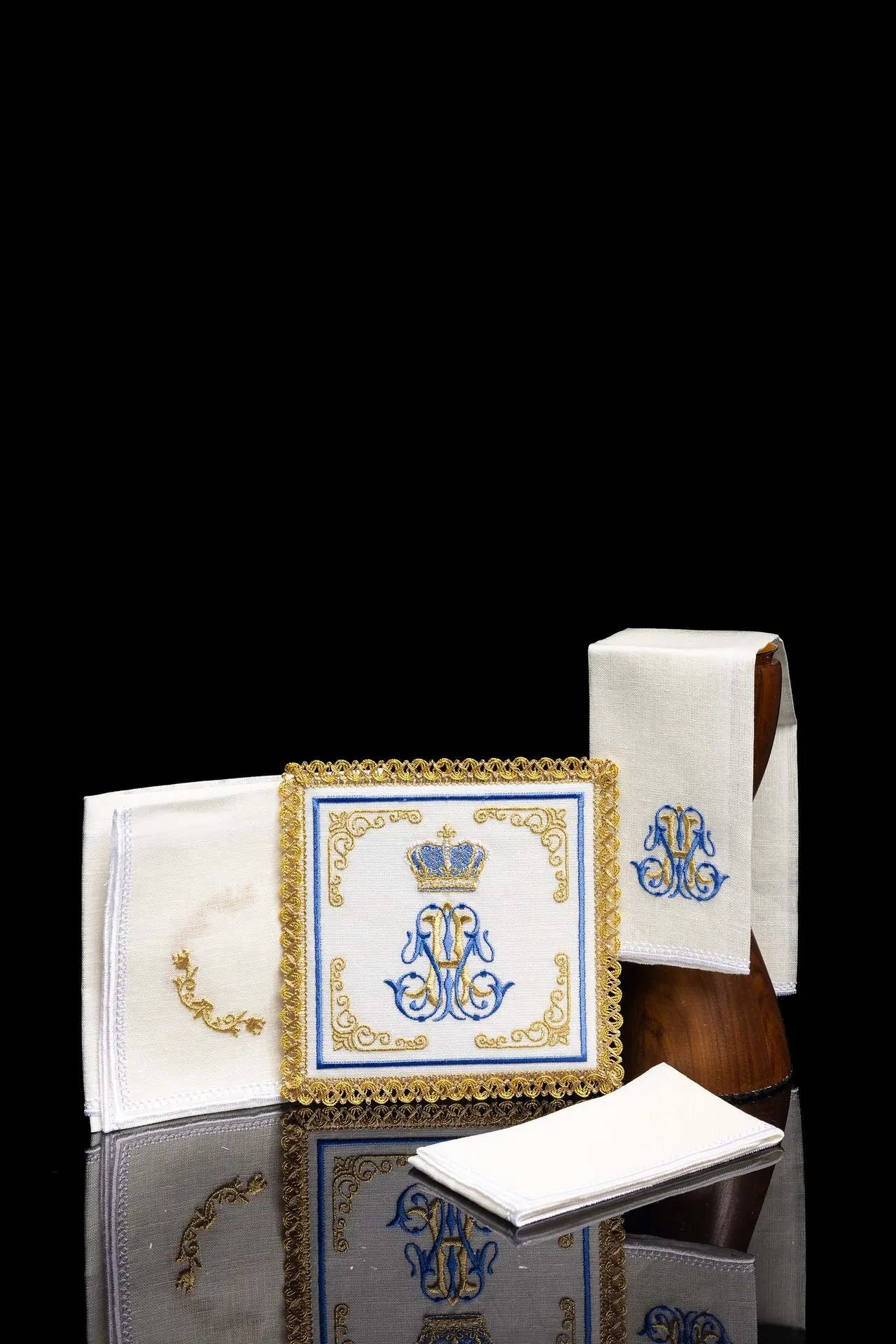
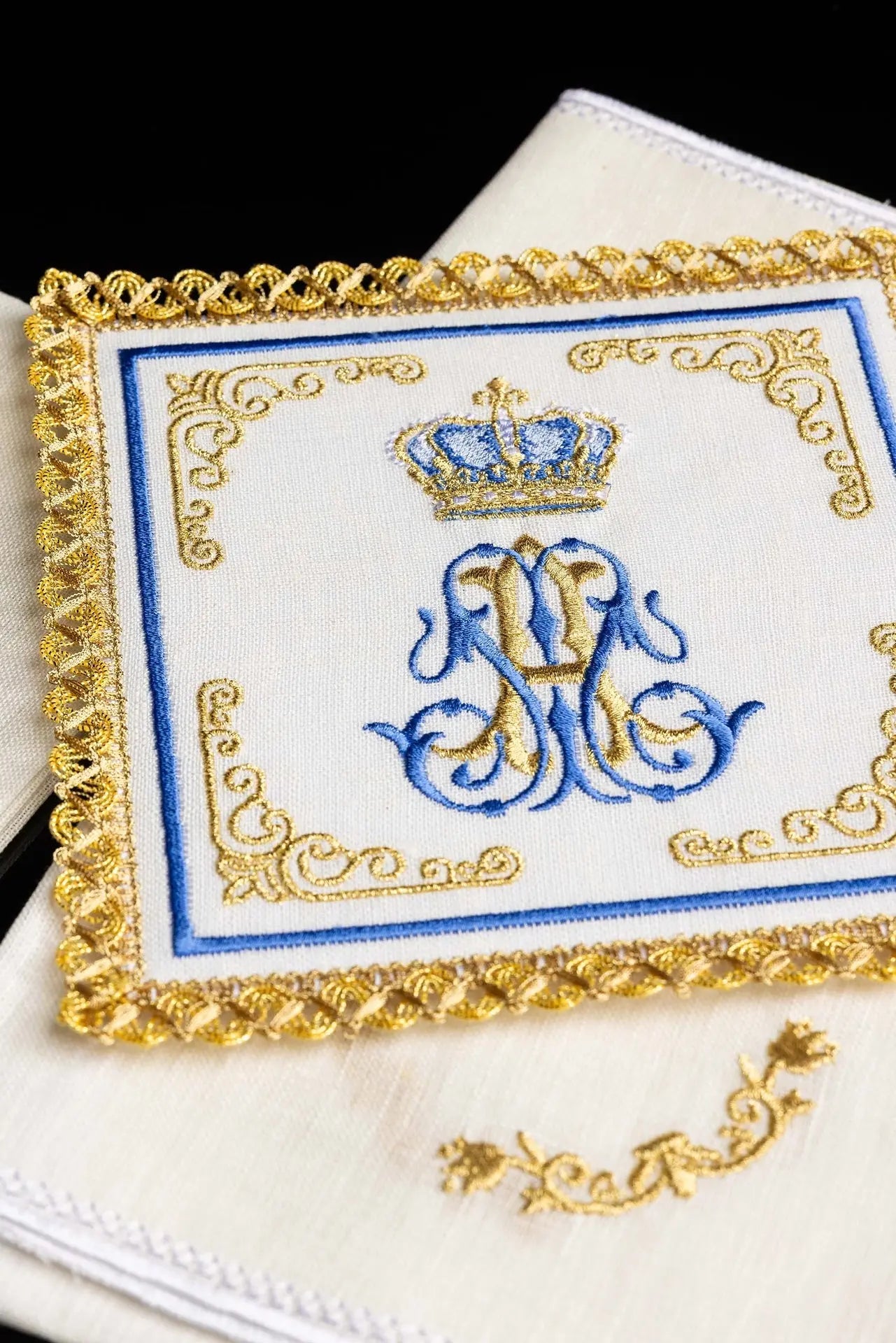
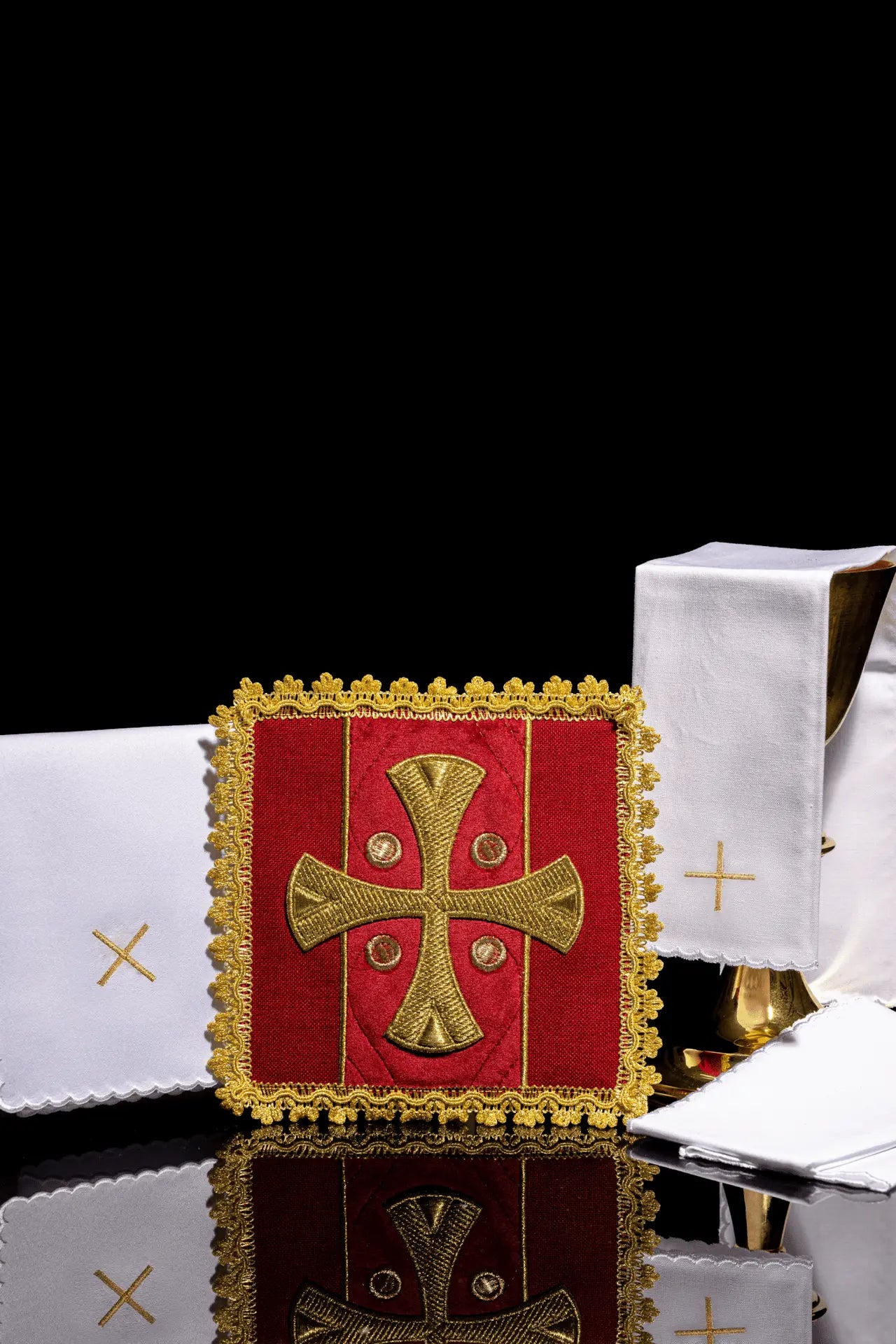
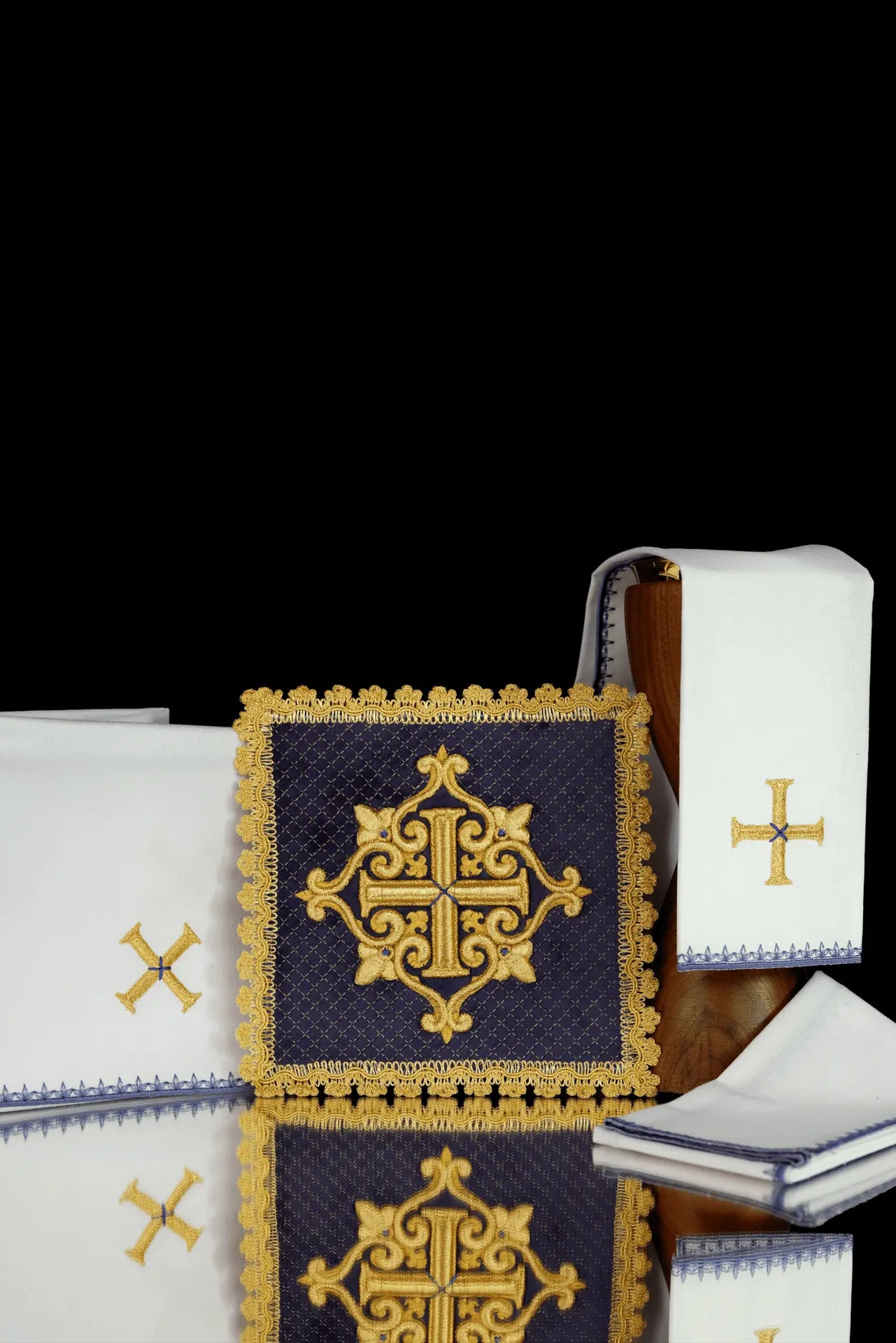
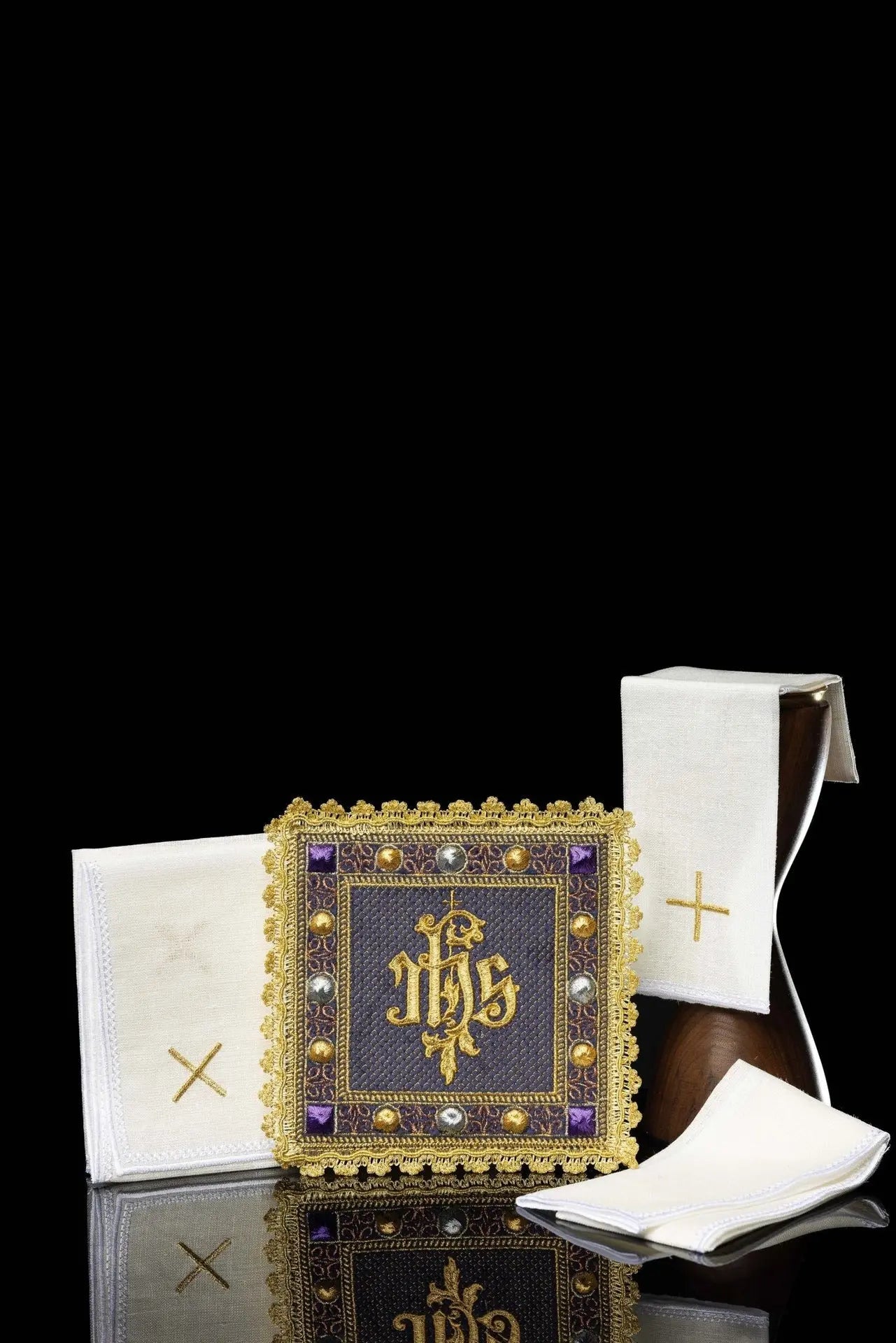
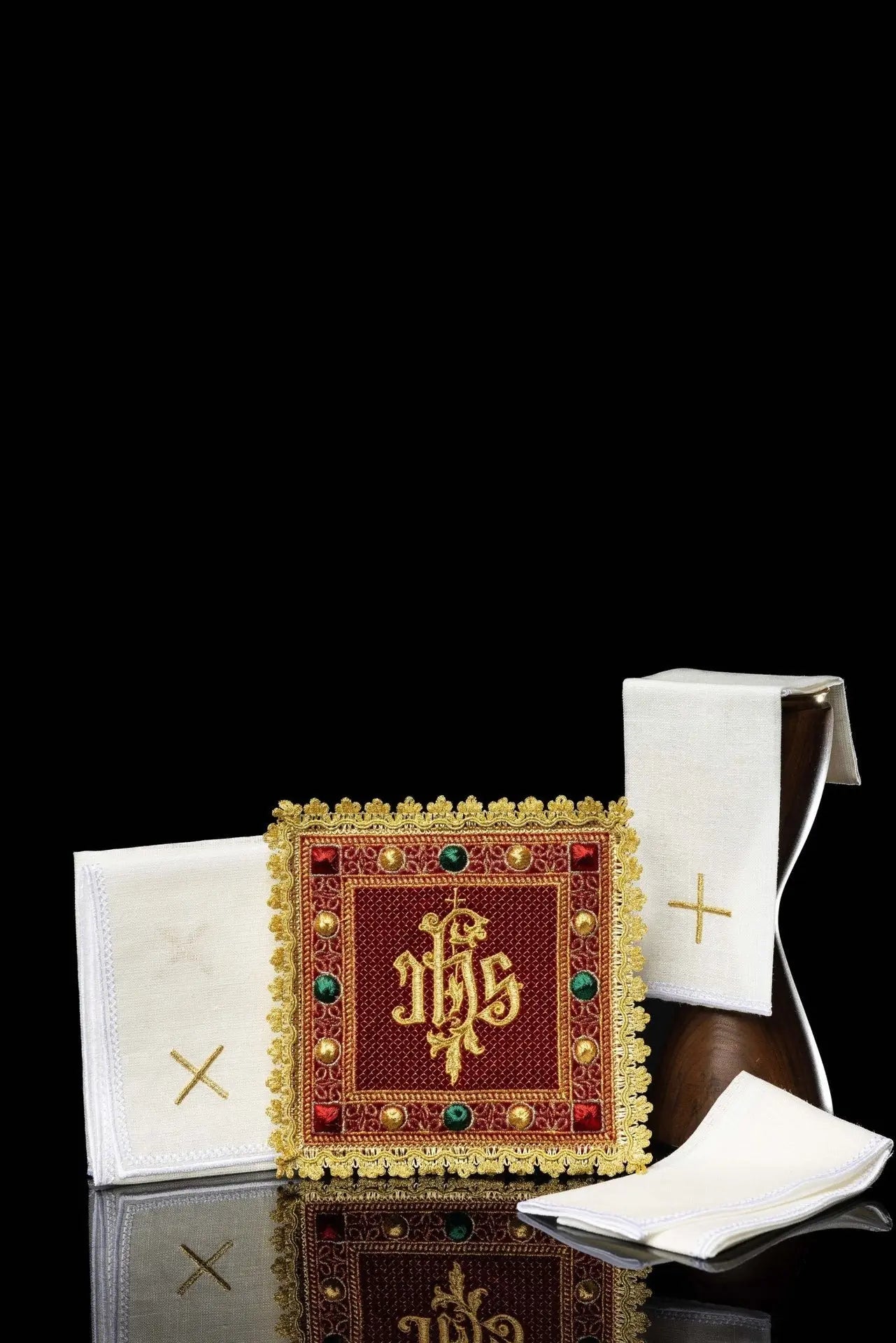
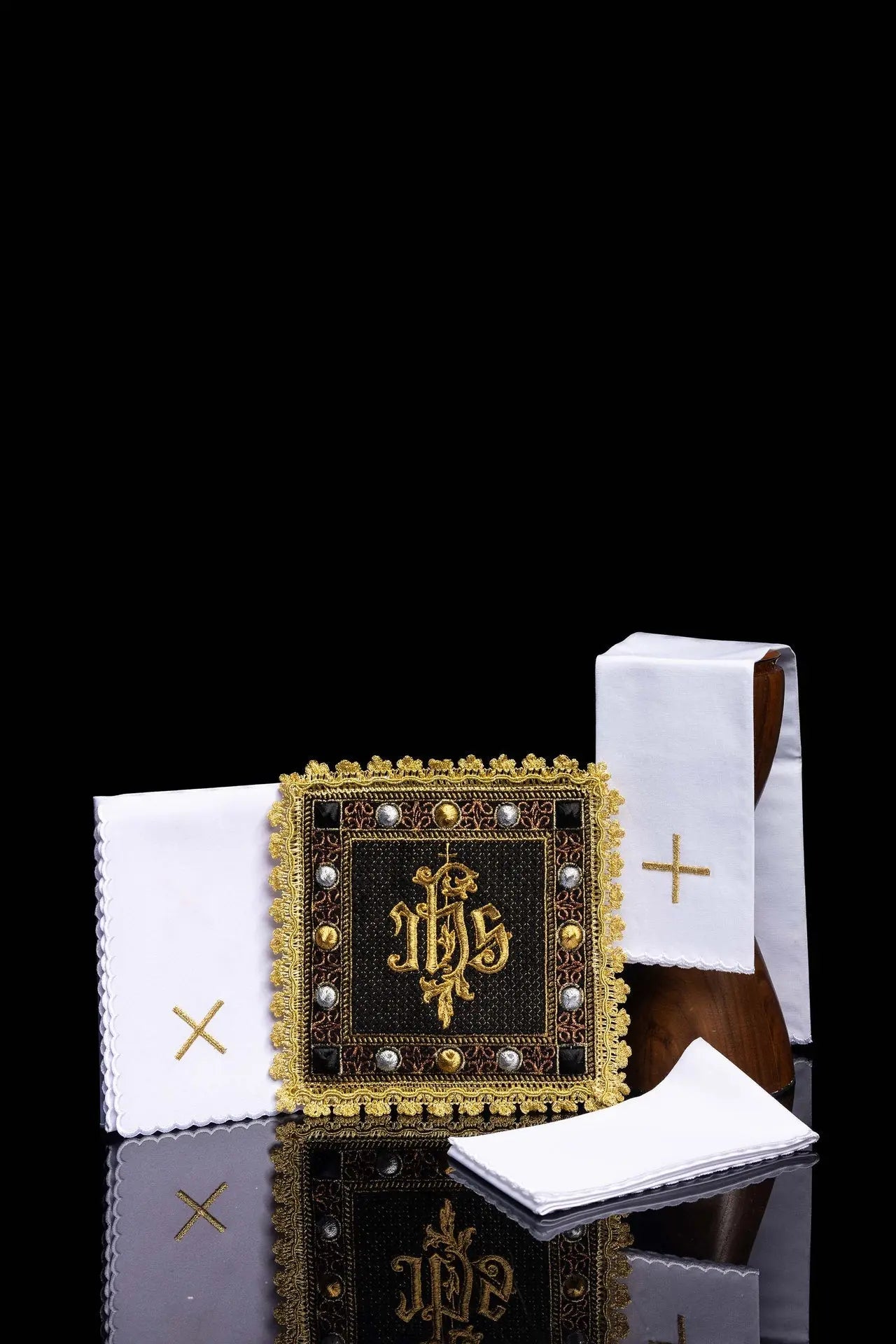
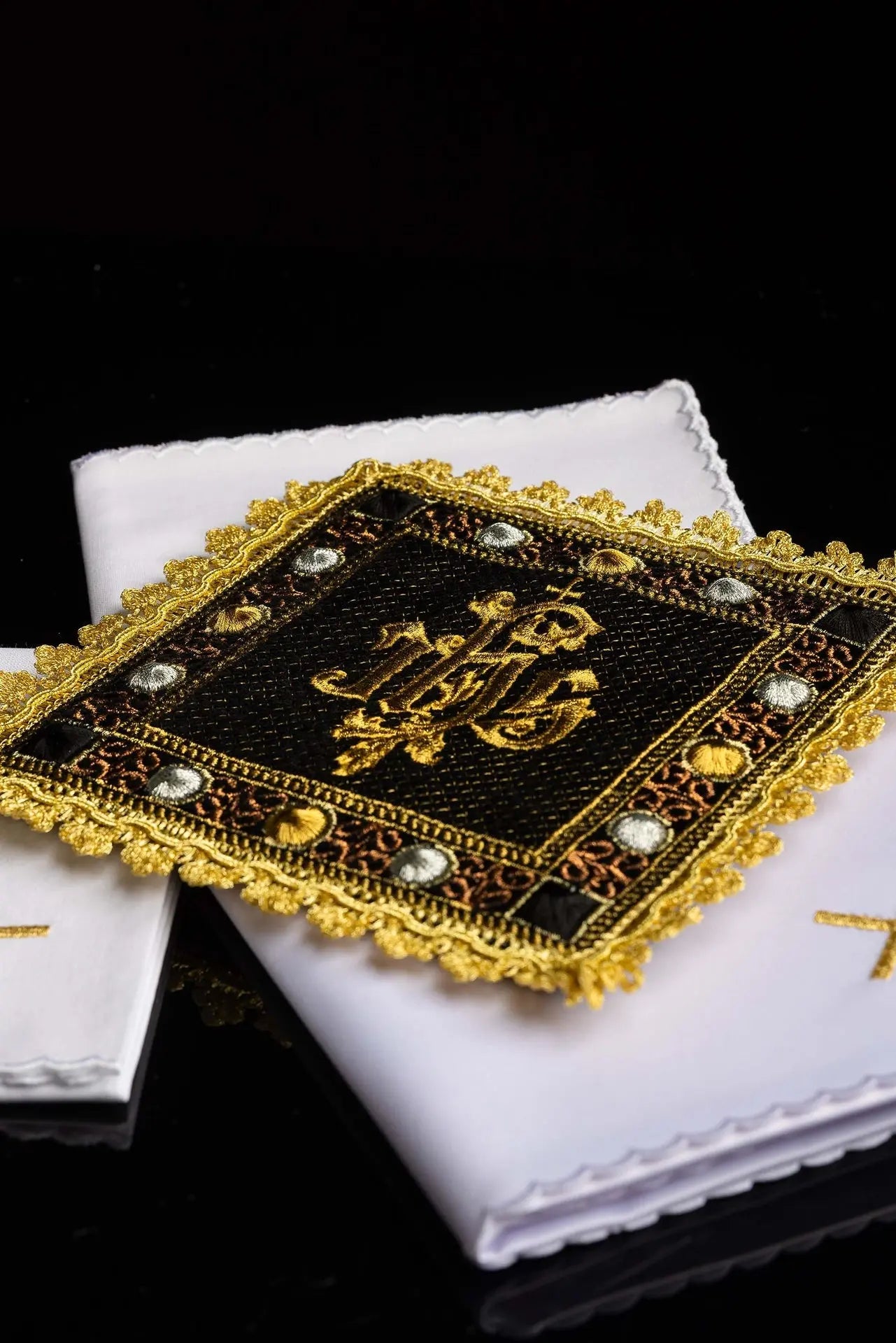
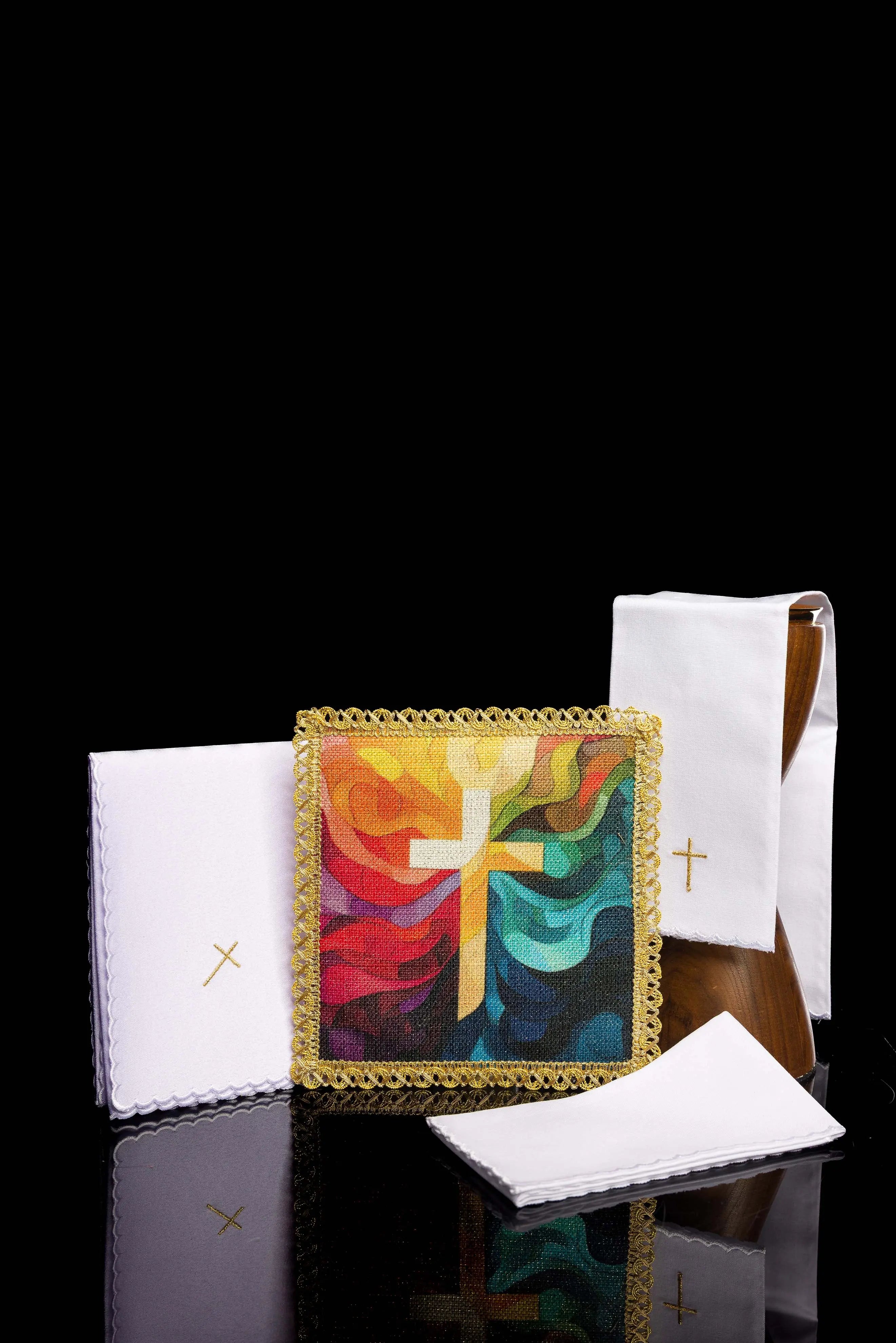
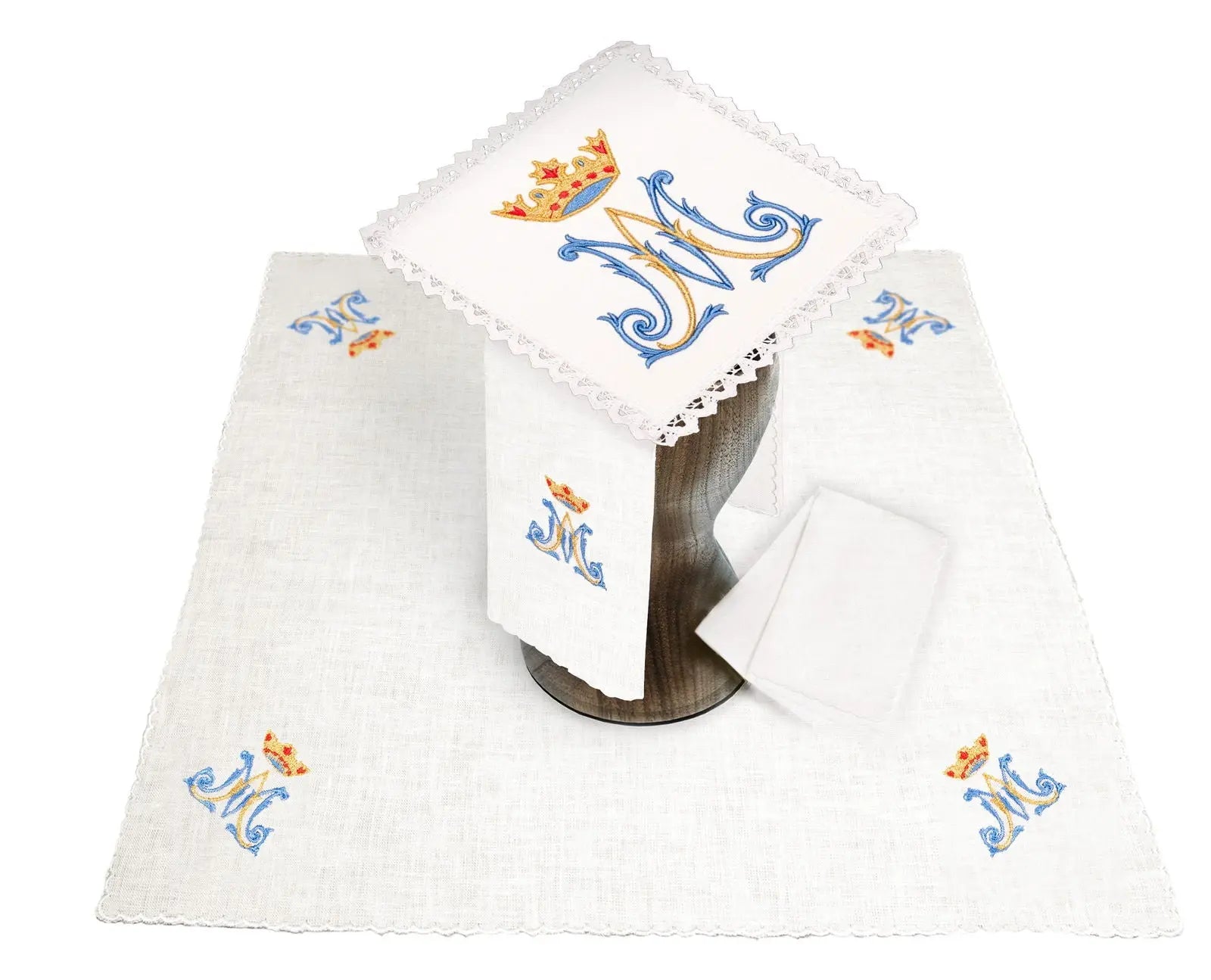
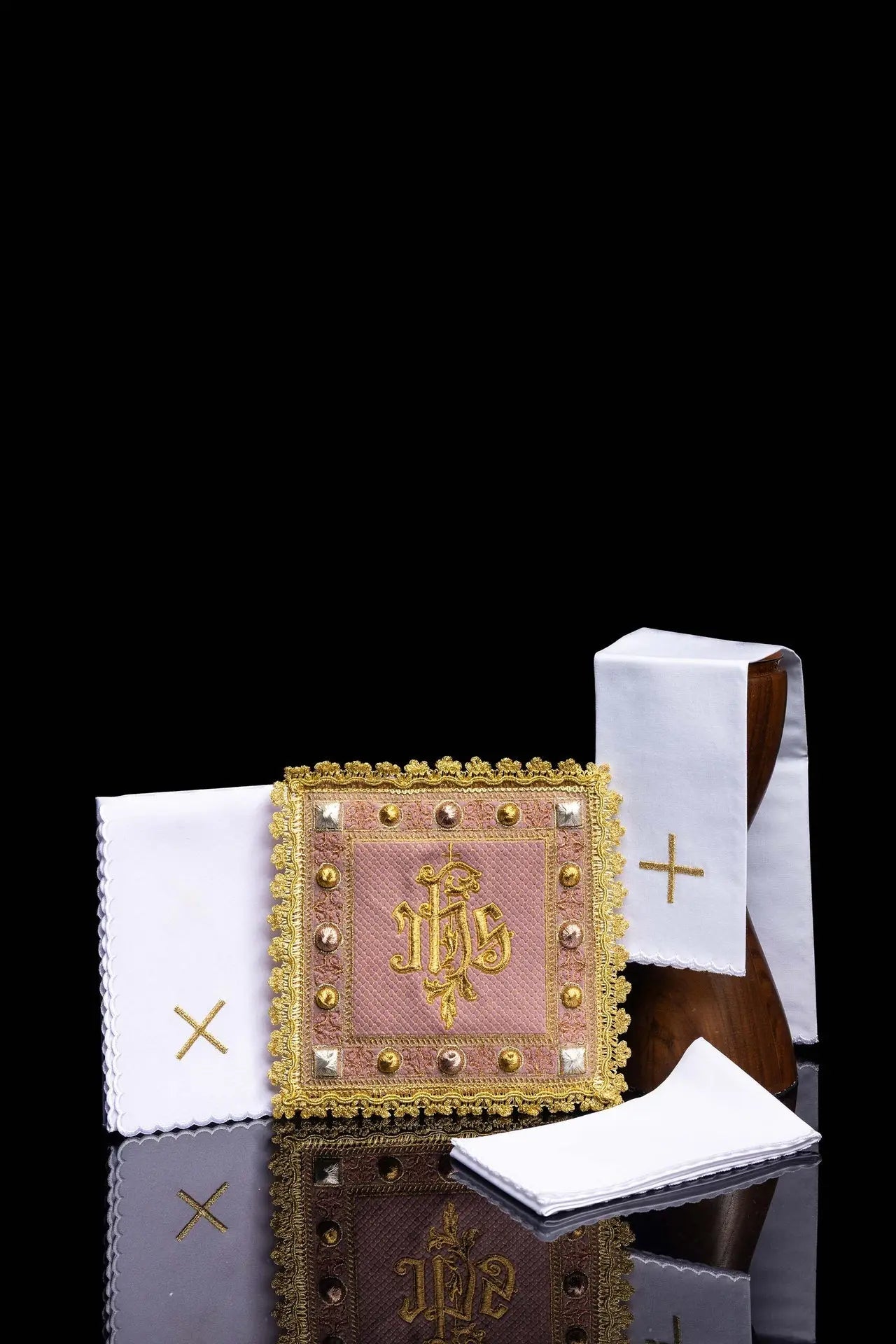
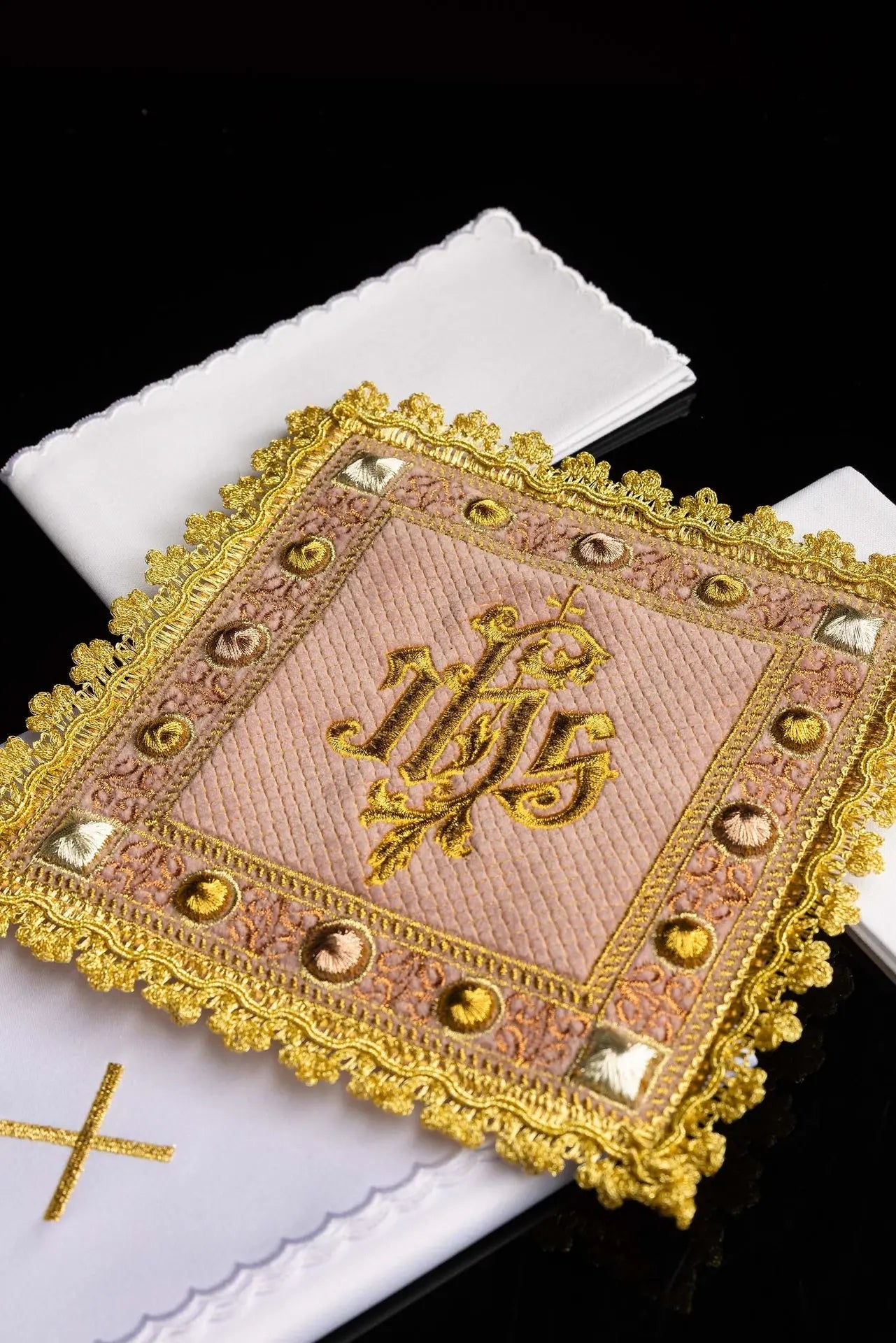
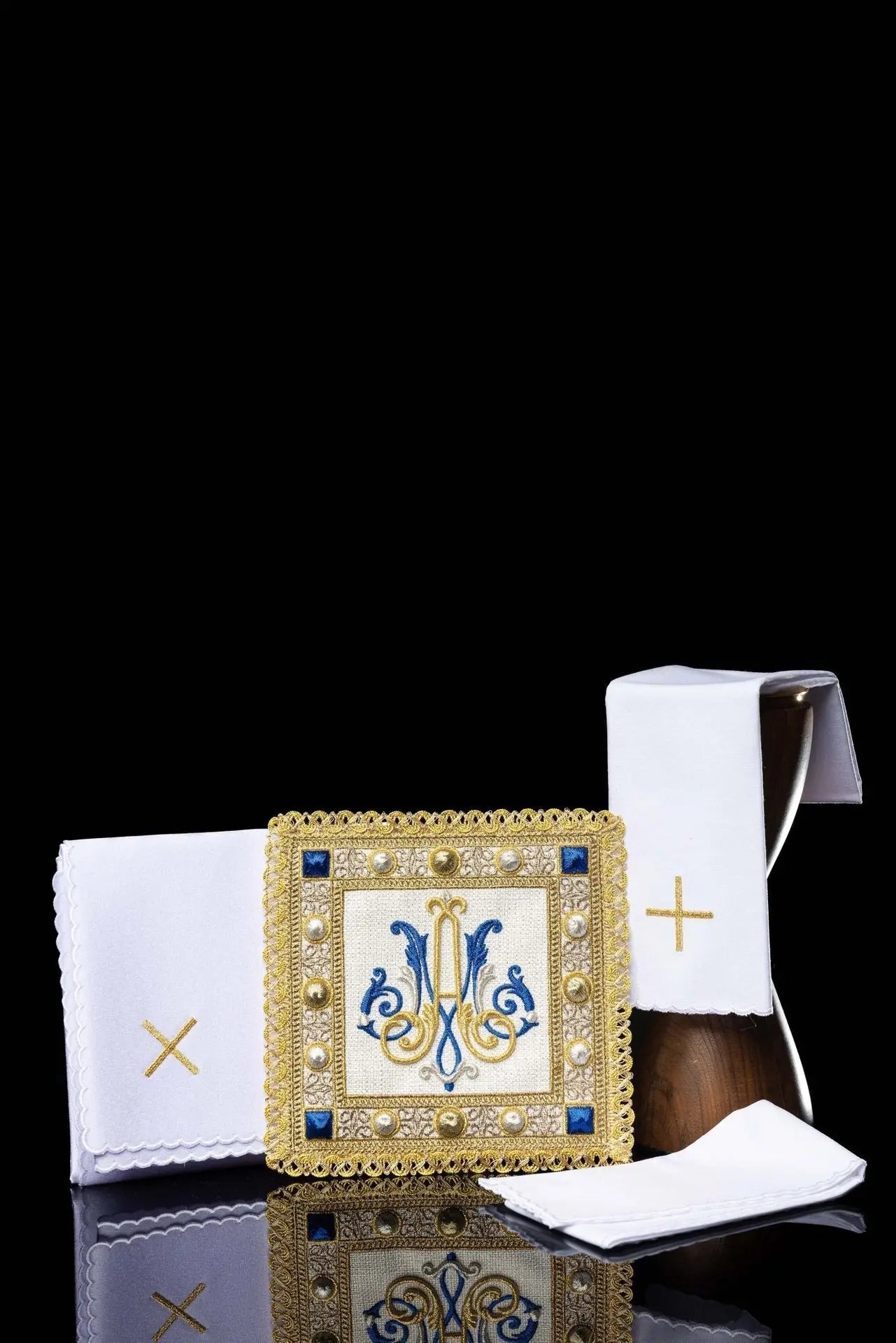
Although altar cloths belong to the wider family of church linens, they should not be confused with smaller Eucharistic linens used with the chalice and paten. Corporals, purificators, palls and lavabo towels have their own specific use at Mass and are found in the related altar linens collection. A complete sacristy often needs both types: larger altar cloths for the altar itself and smaller linens for the vessels and the celebration of the Eucharist.
Liturgical Meaning and Use
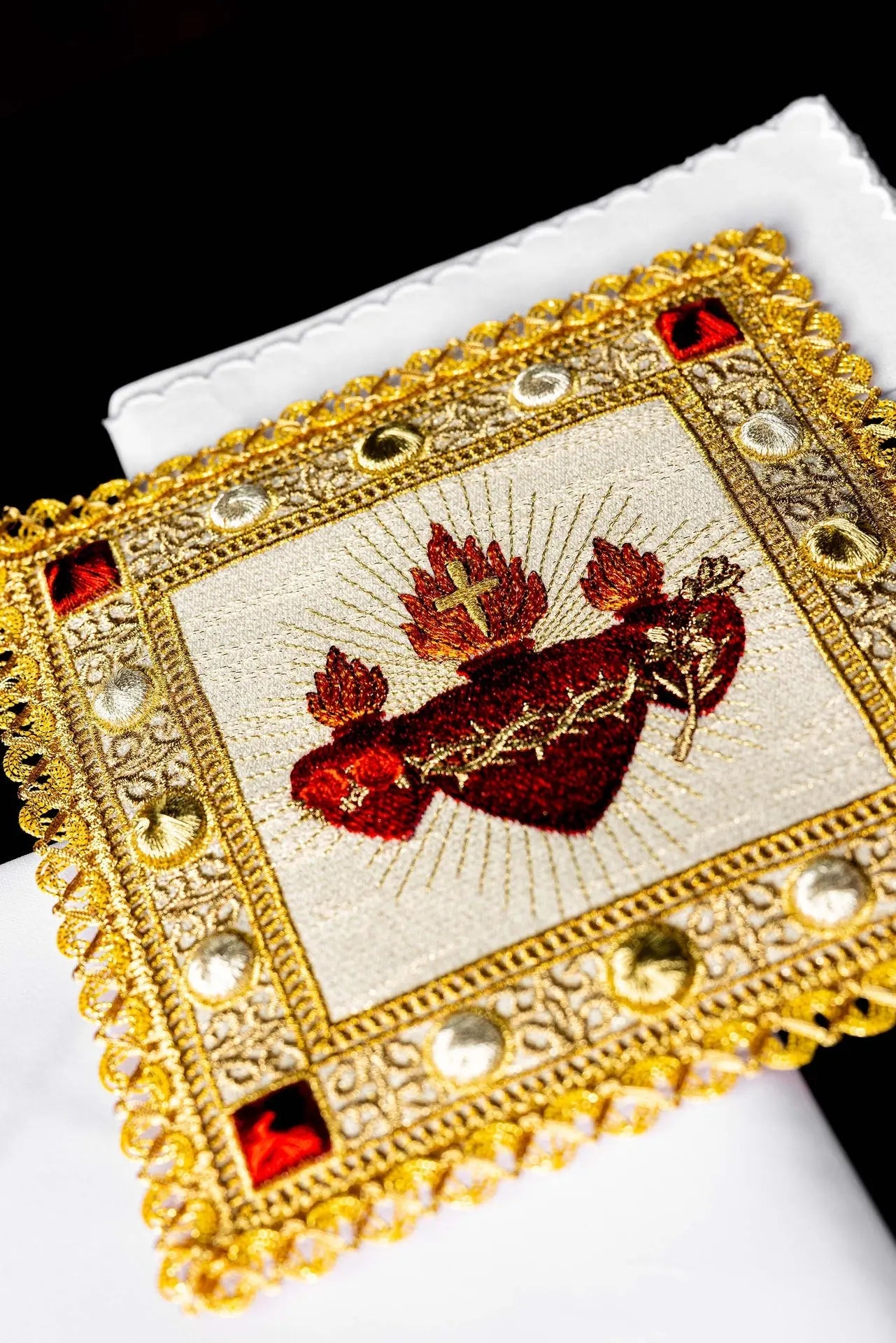
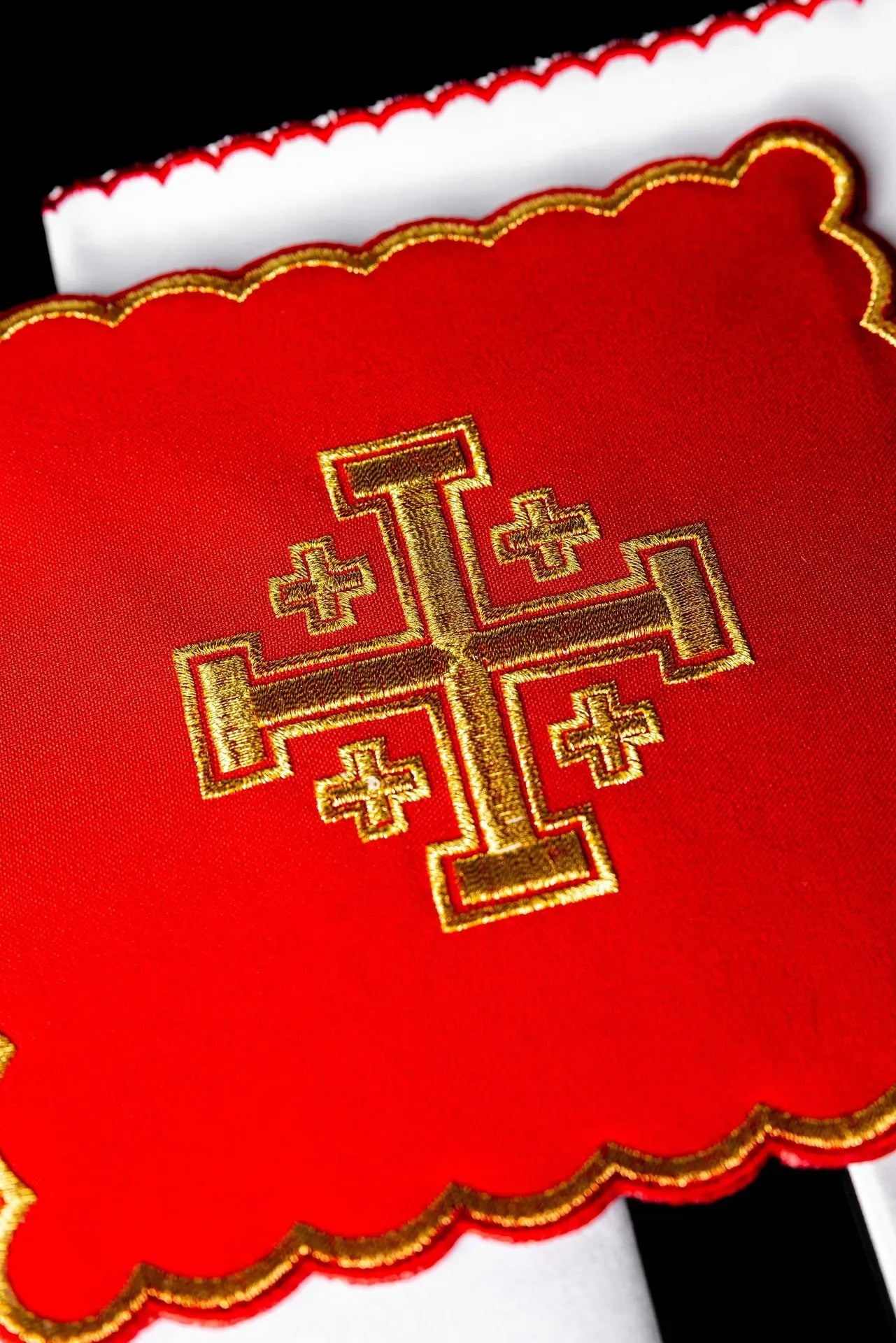
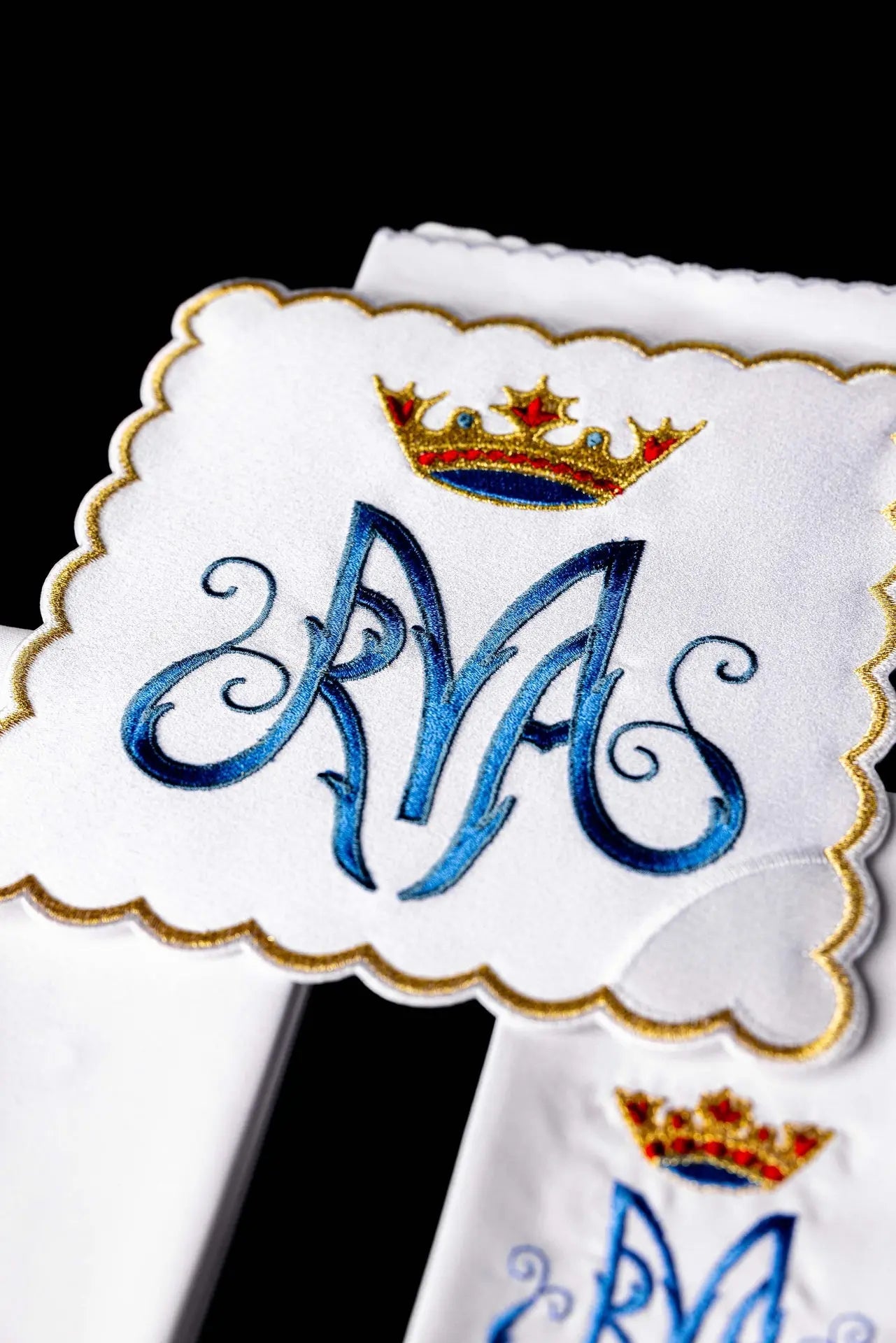
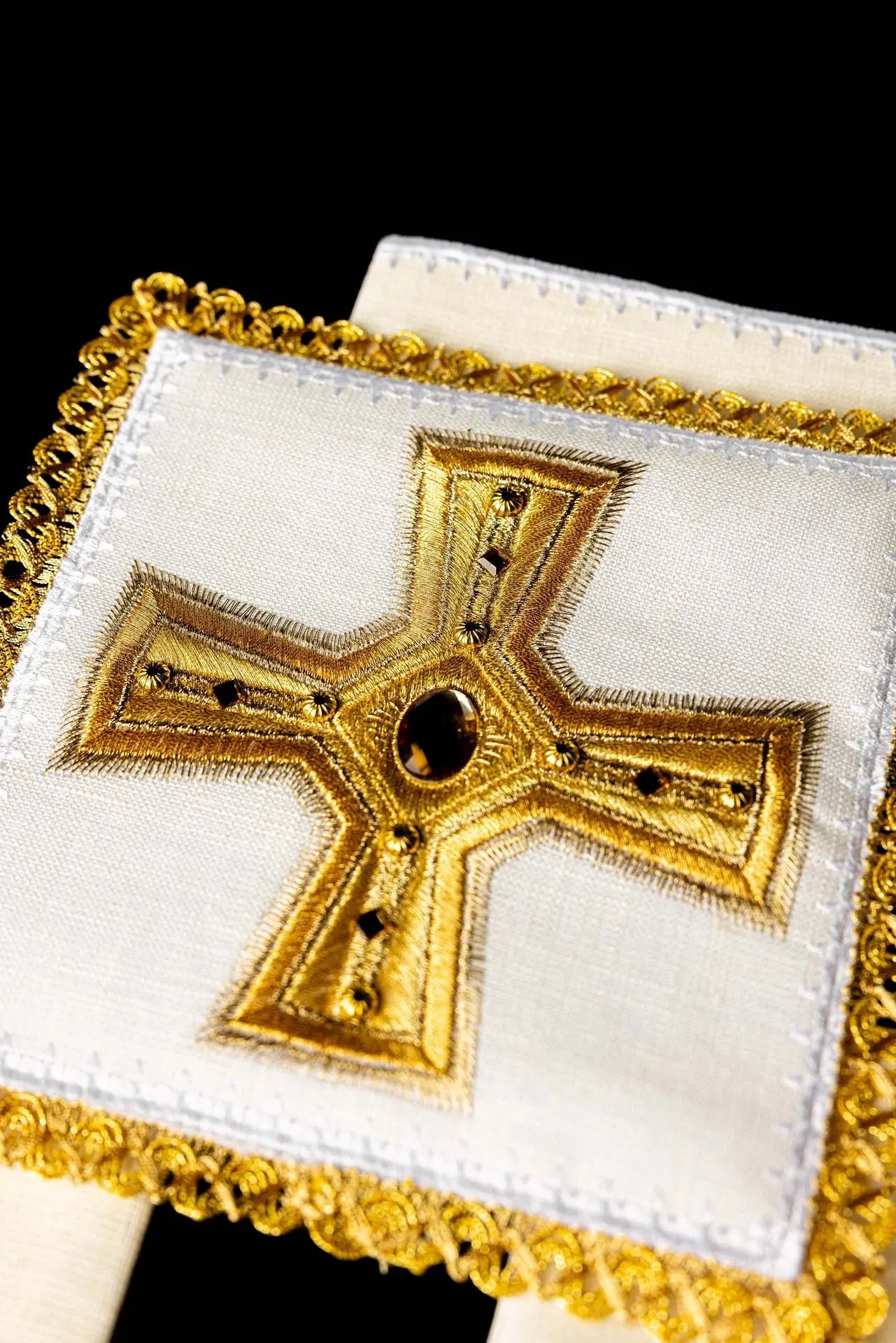
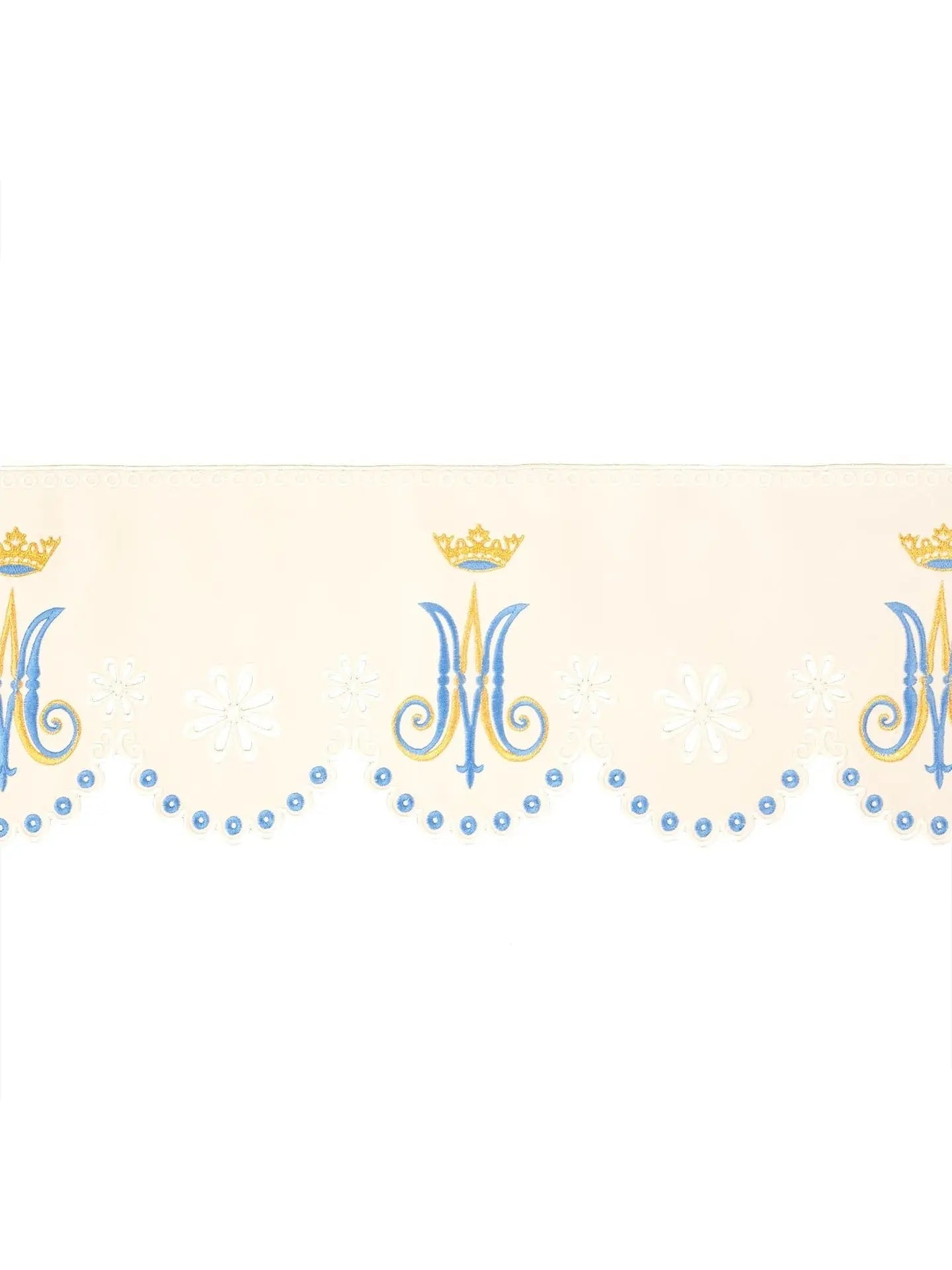
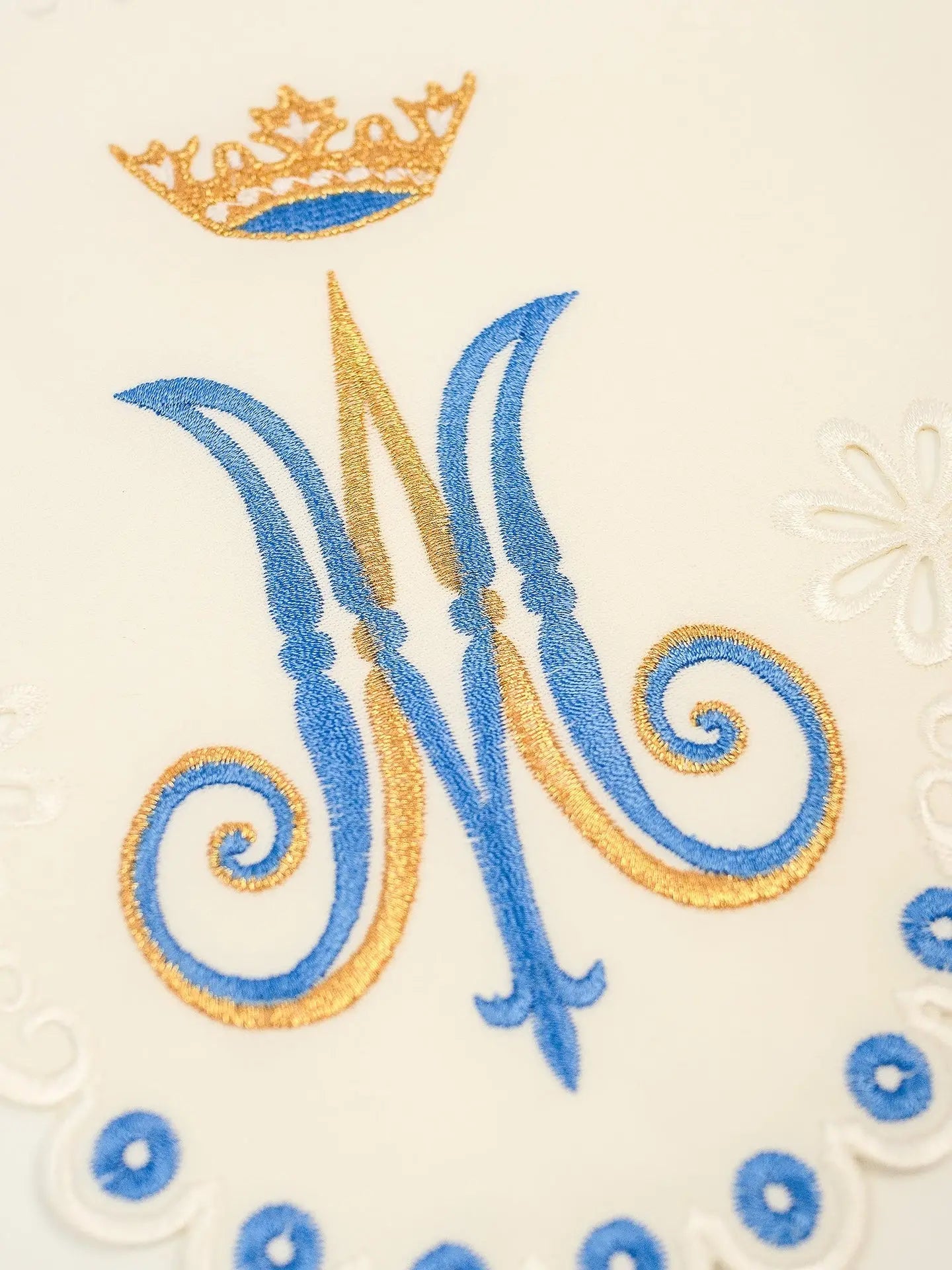
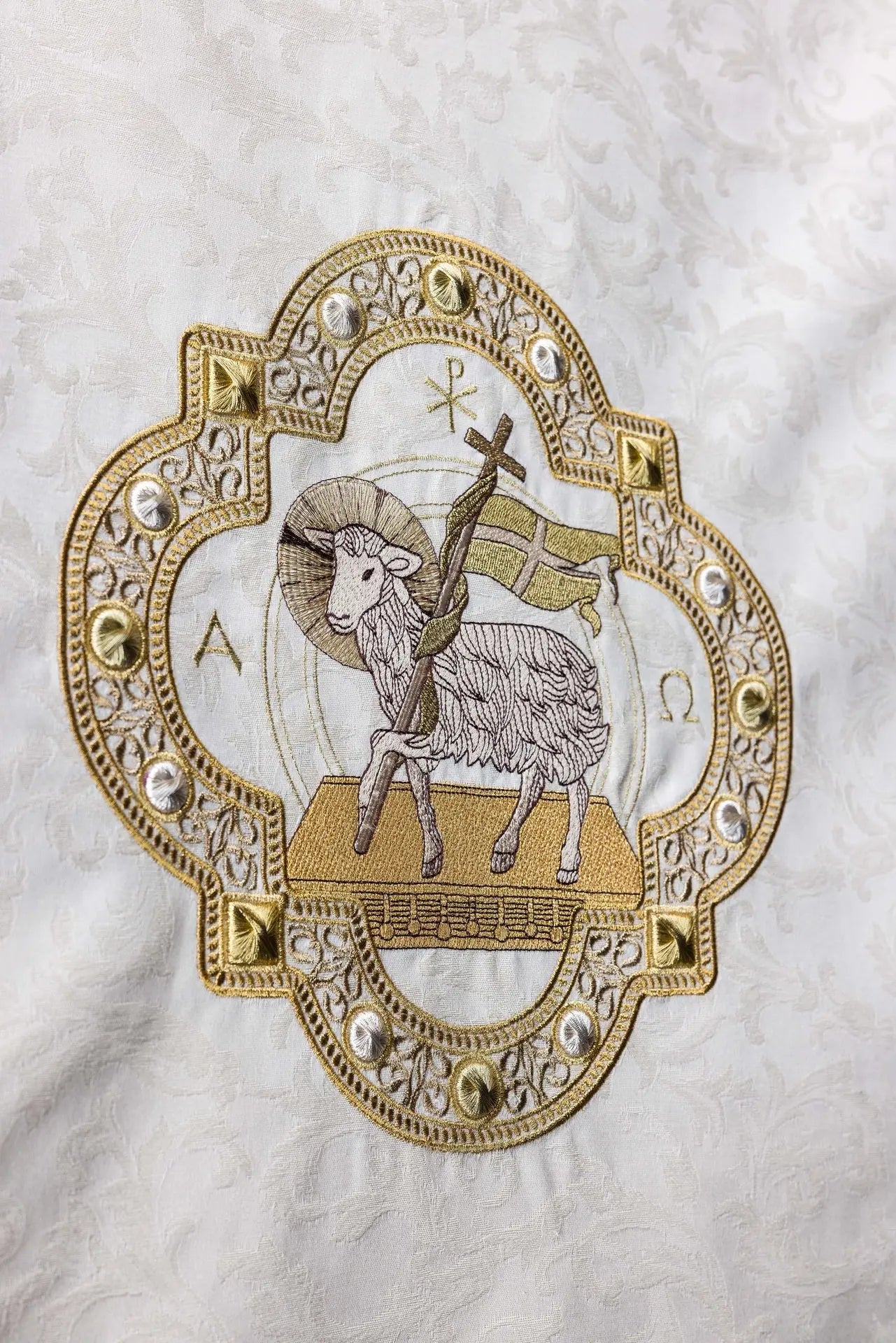
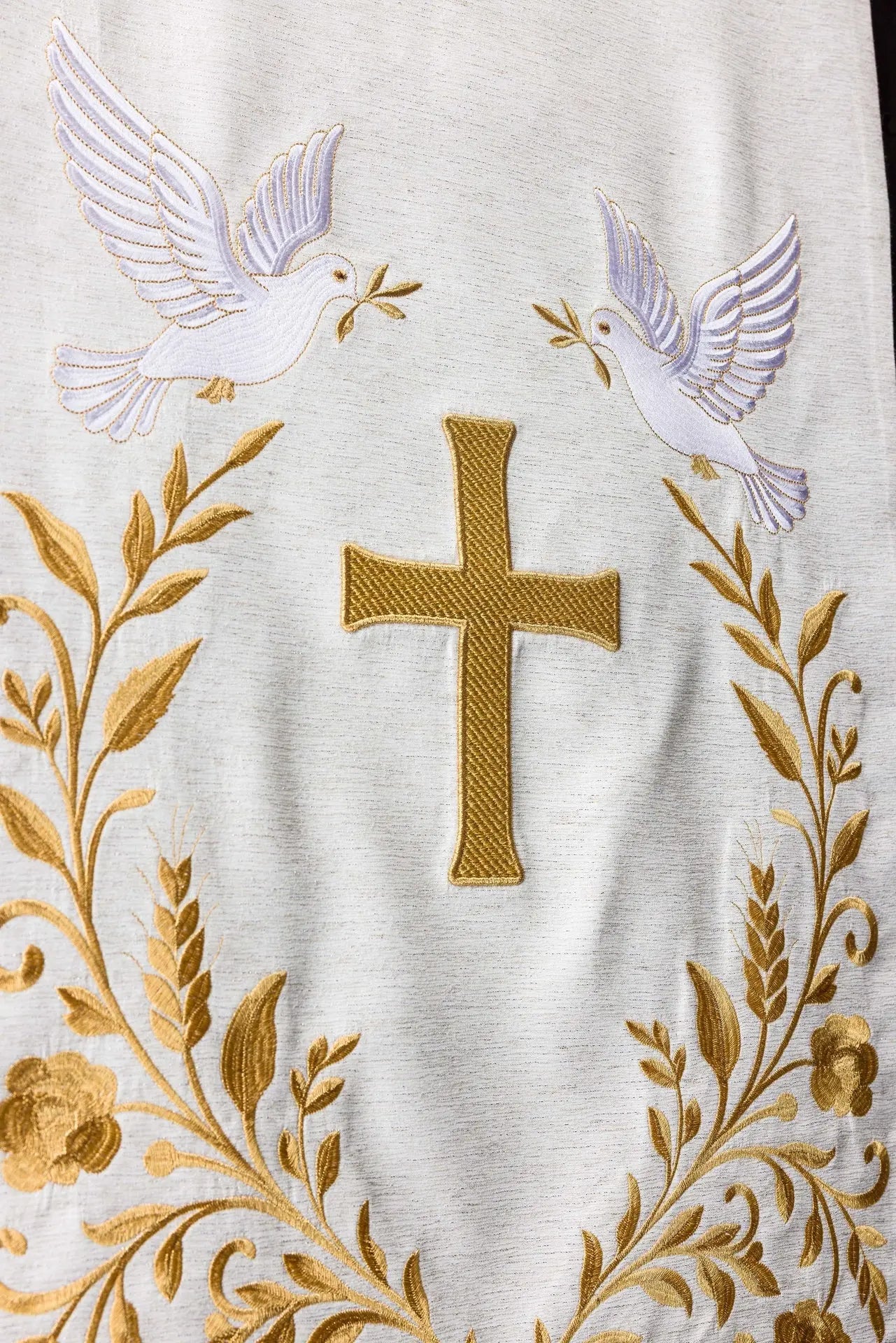
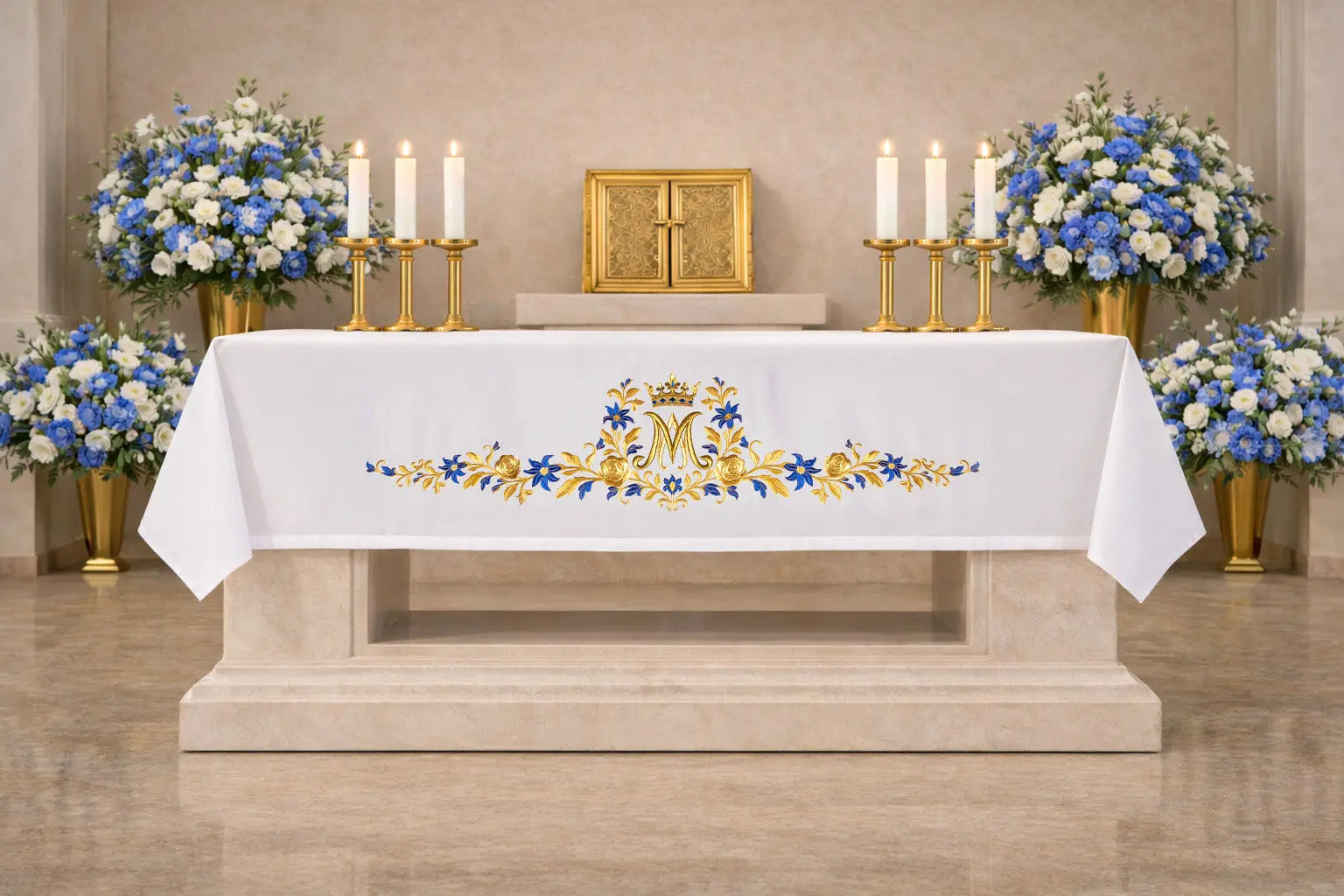
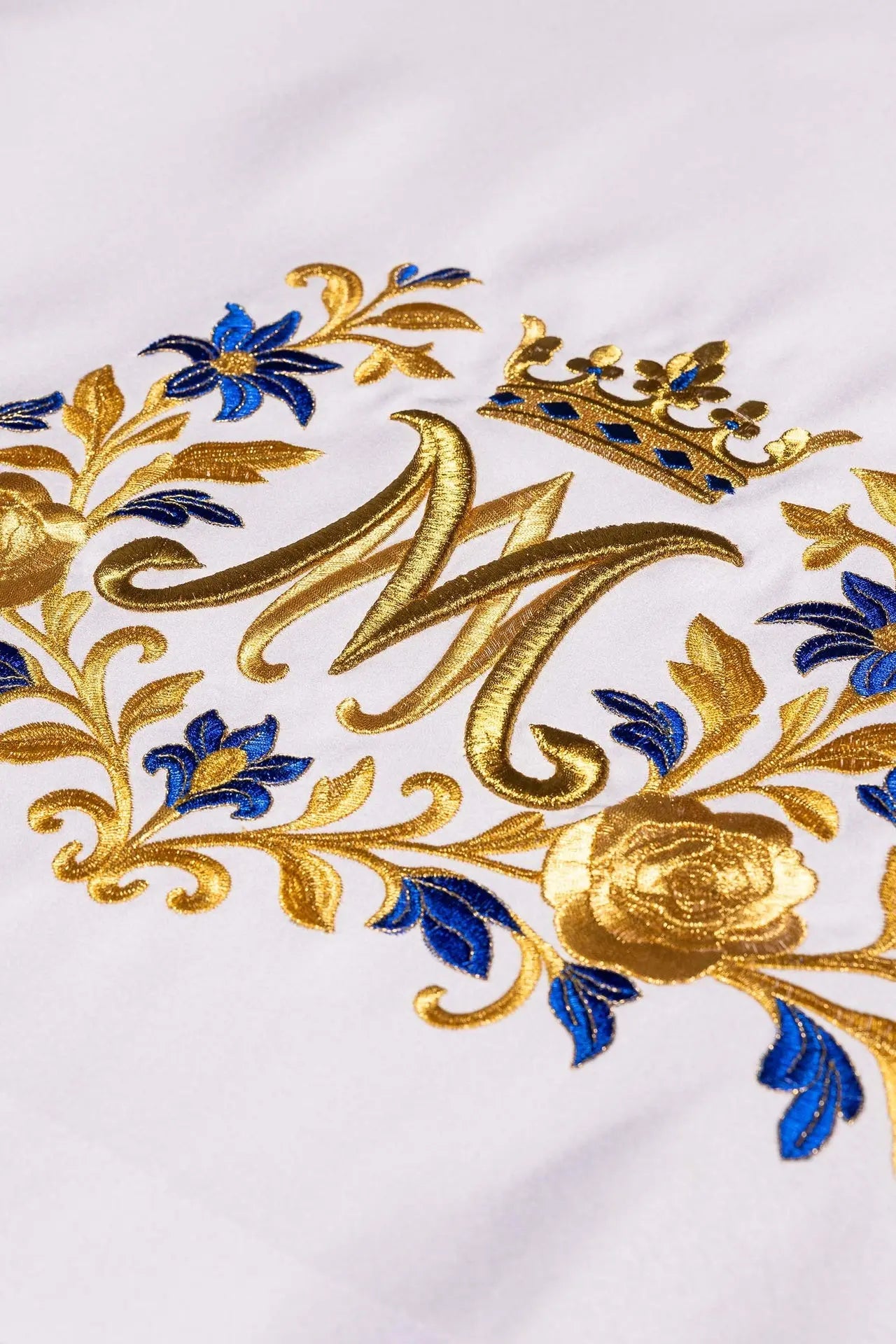
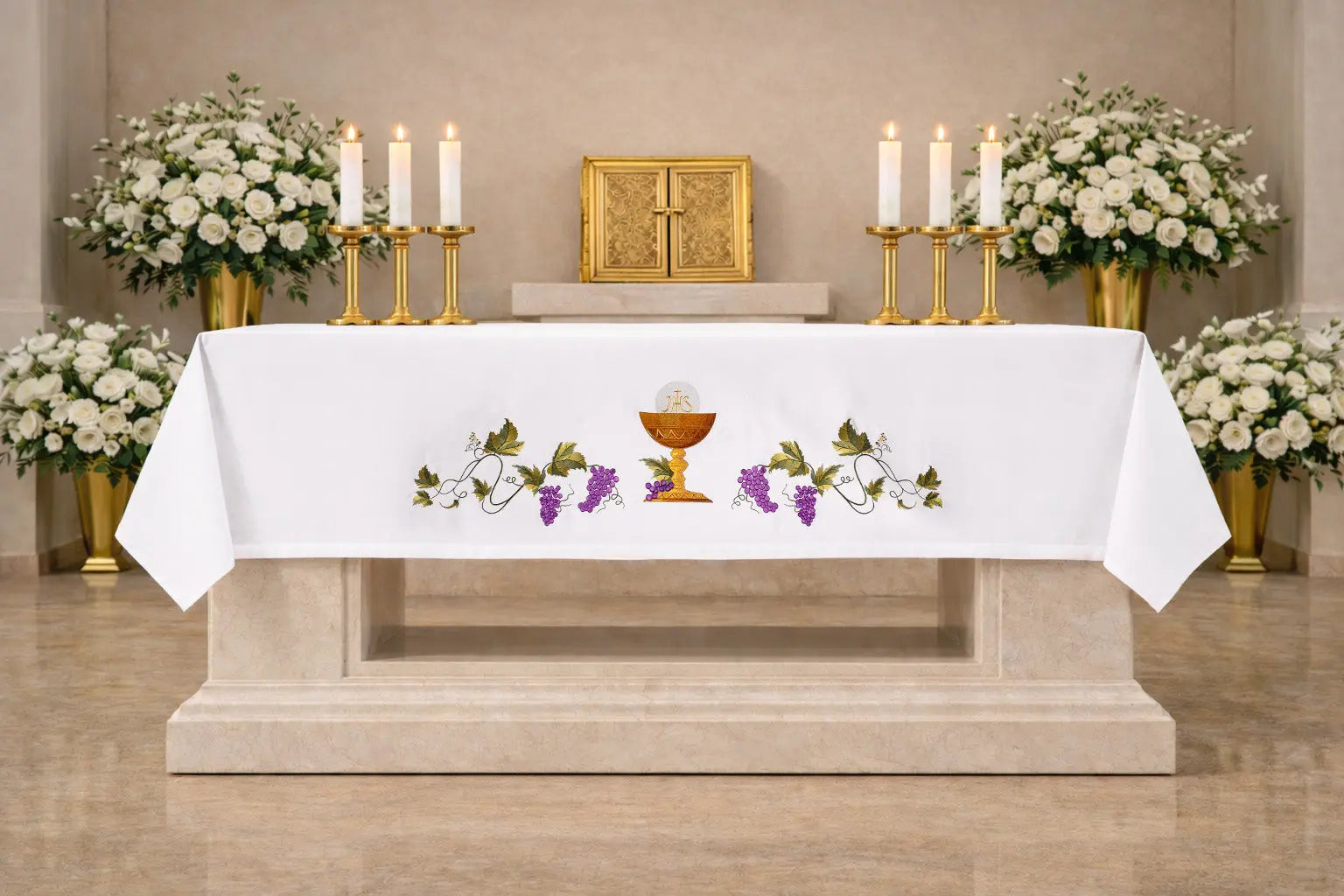
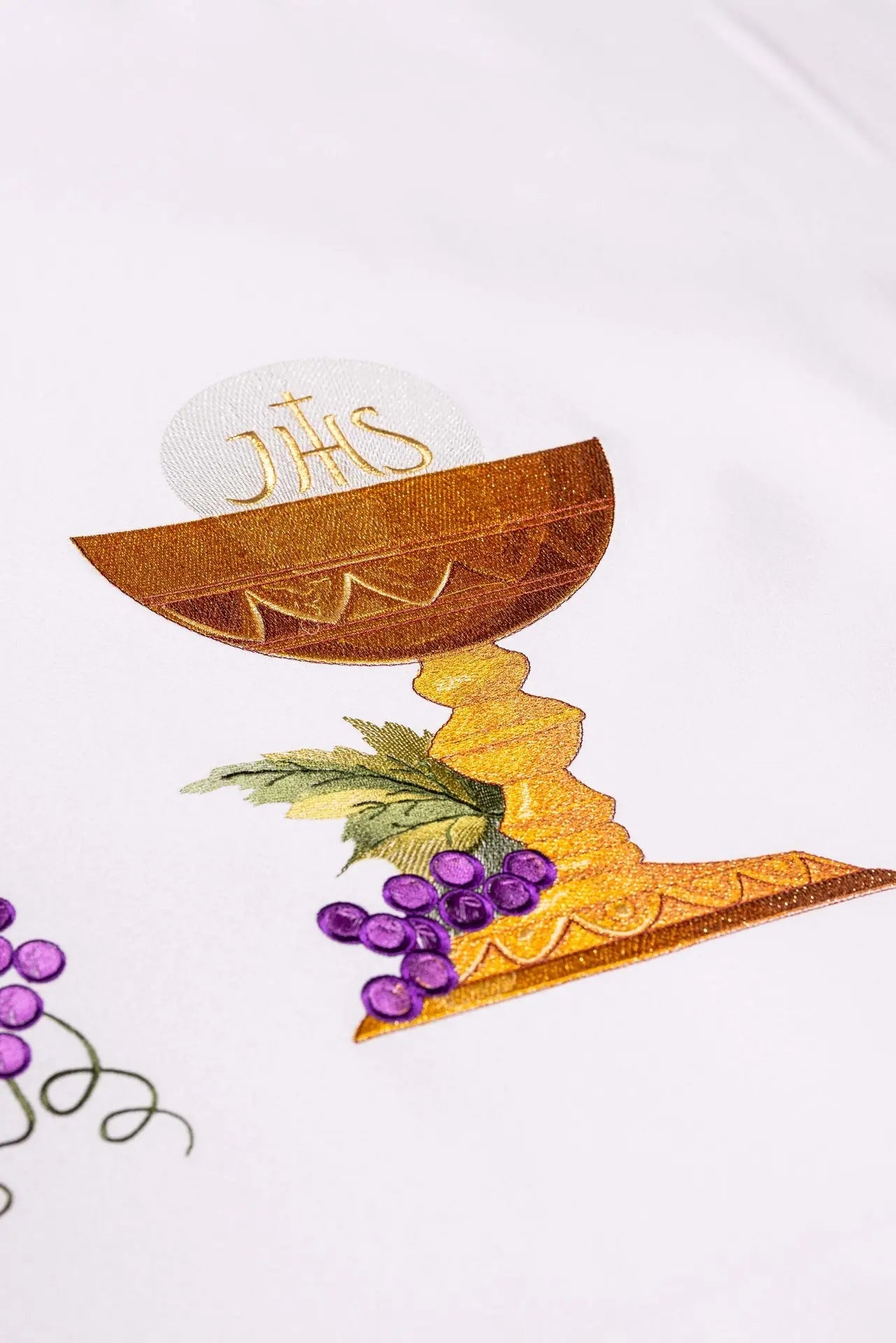
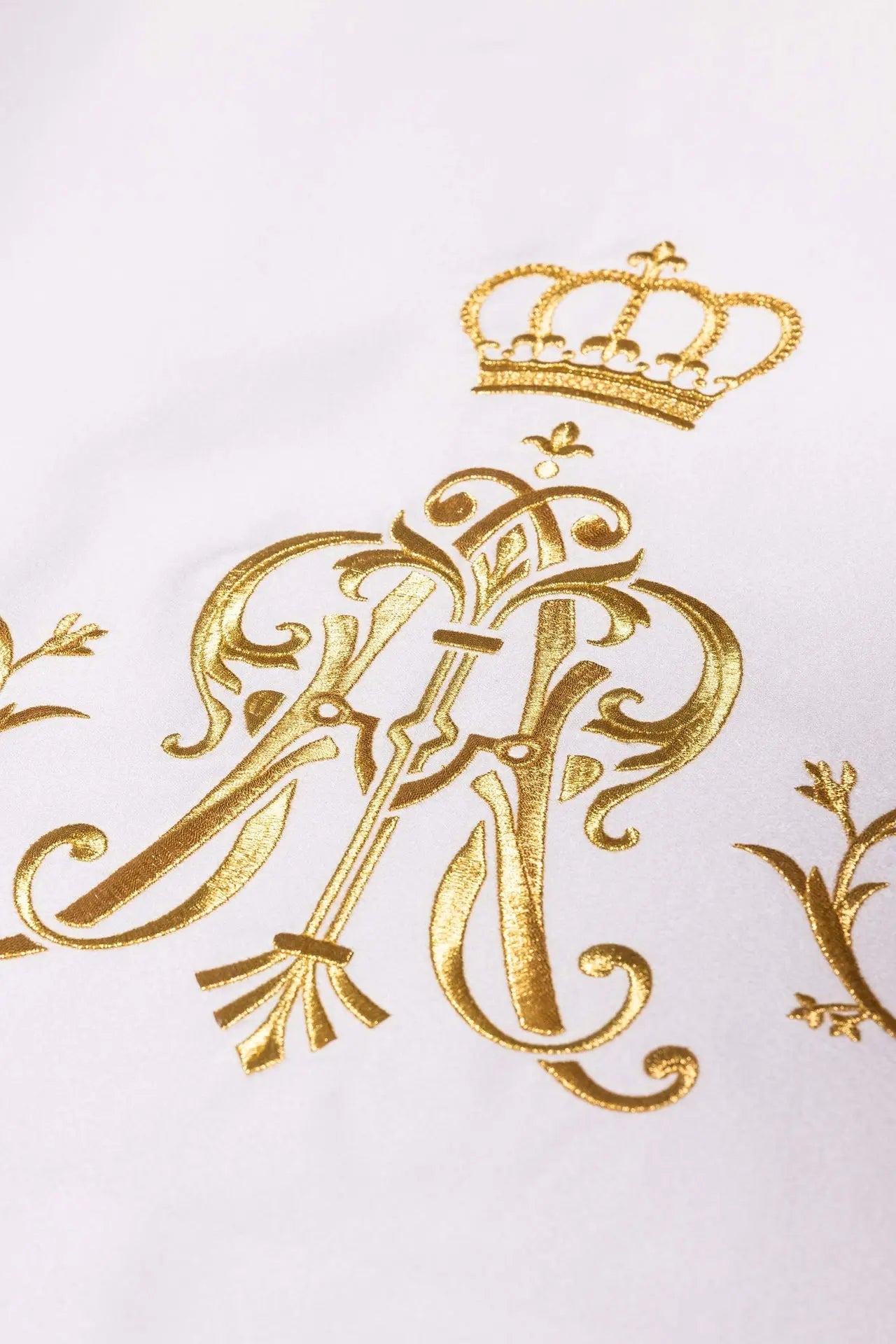
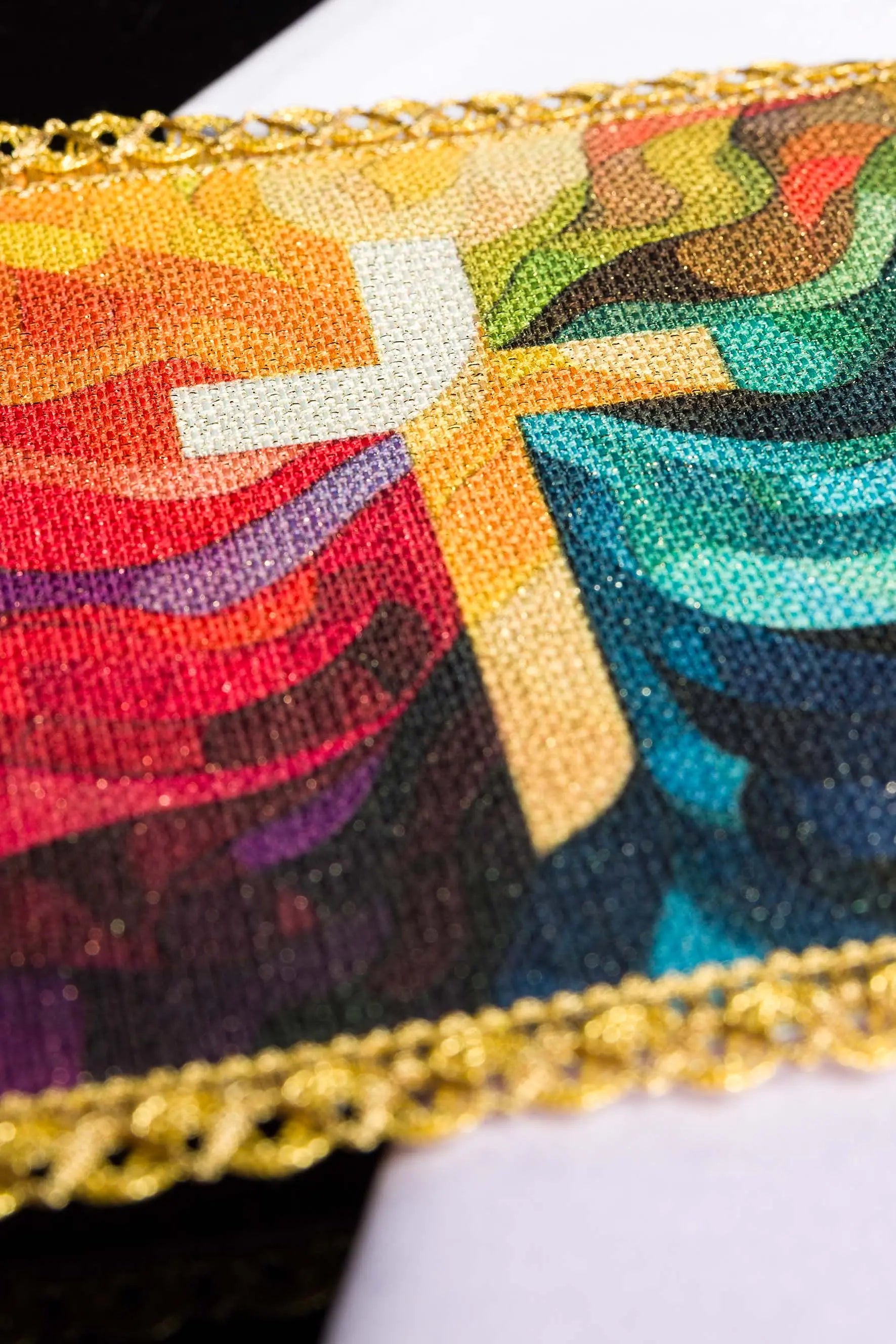
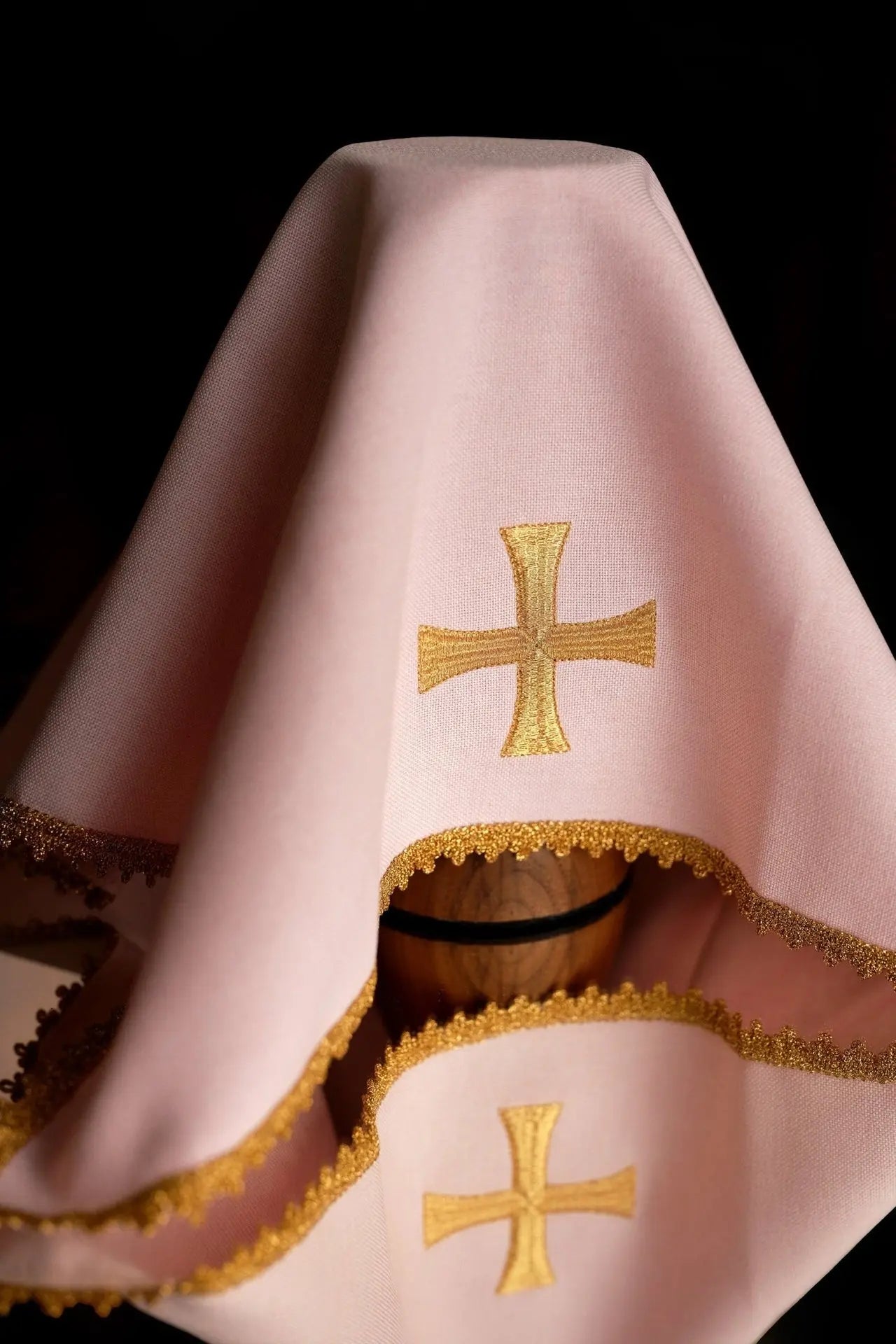
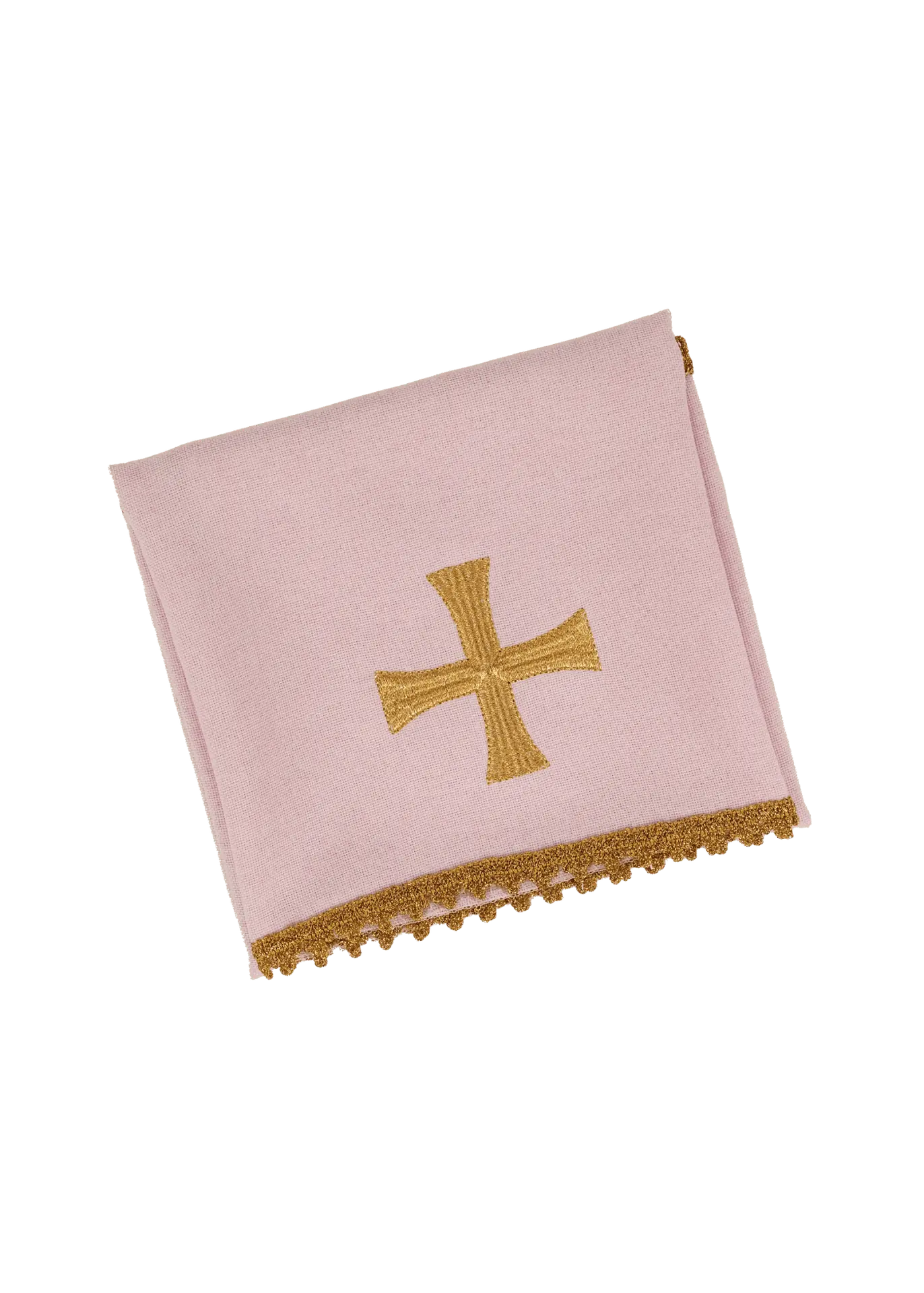
The altar cloth has a practical purpose, but its meaning is also liturgical. It marks the altar as a sacred place, adds visual purity to the sanctuary and gives a fitting setting for the celebration of the Eucharist. White and ecru tones are especially common because they suggest cleanliness, dignity and festal solemnity. Embroidered crosses, Eucharistic symbols, floral motifs or Marian designs can be selected according to the character of the church and the devotion of the community.
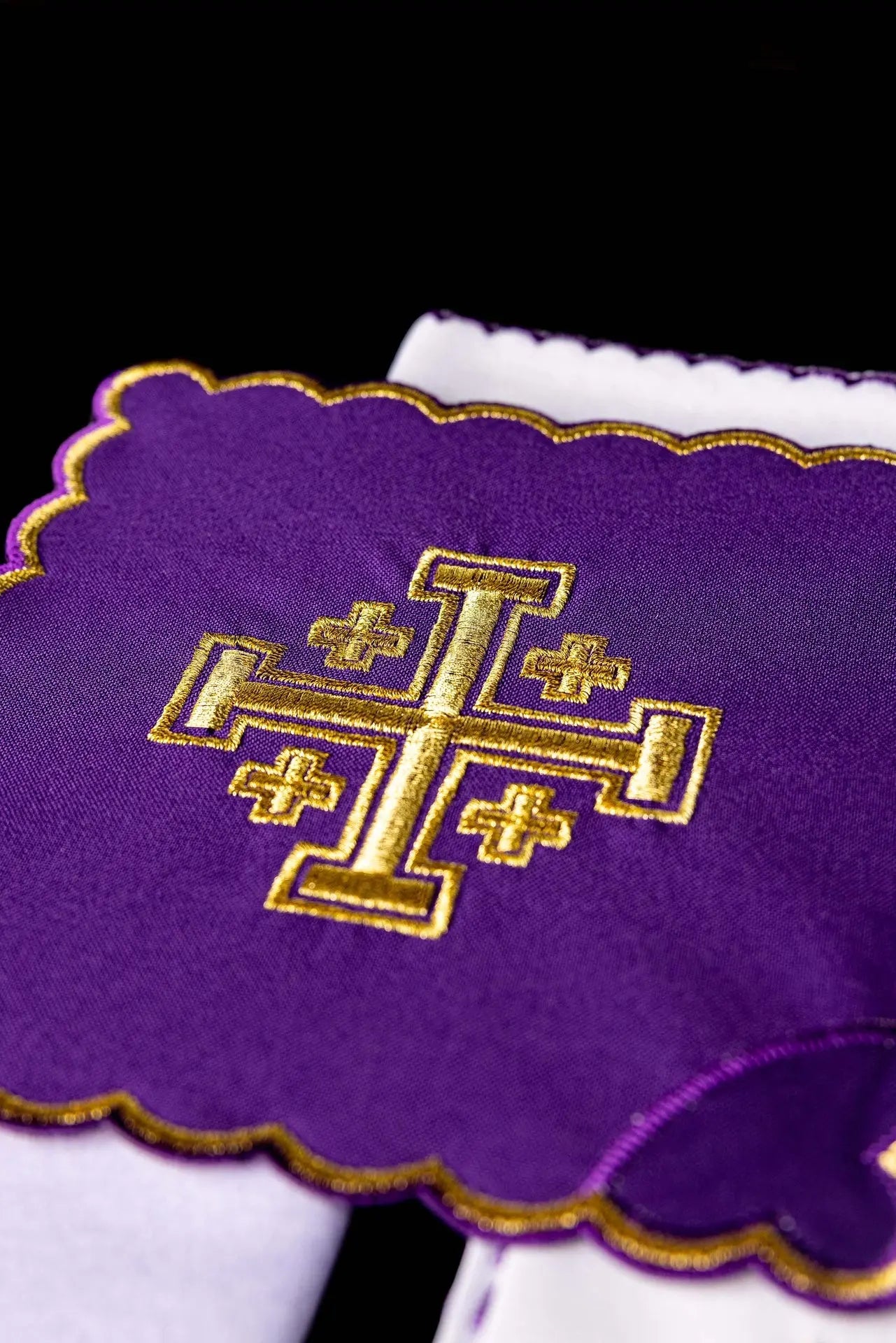
Altar cloths are used throughout the liturgical year. A simple white cloth may be suitable for many celebrations, while richer embroidery can be reserved for Sundays, solemnities and parish feasts. During Advent and Lent, the wider sanctuary arrangement is usually more restrained, and textiles are often coordinated with purple vestments and pulpit covers. During Christmas, Easter, Marian feasts or Corpus Christi, brighter and more festive designs may be chosen to support the joyful character of the celebration. For churches preparing the whole sanctuary by season, related categories such as Advent, Lent and Corpus Christi can help coordinate vestments and textiles.
How to Choose an Altar Cloth
The first consideration is size. An altar cloth should correspond to the dimensions of the altar and should lie smoothly without pulling, bunching or looking too short. The drop at the sides and front depends on the style of the altar and the preference of the parish. Some churches prefer a simple cloth that sits neatly on the mensa, while others choose a longer tablecloth or a frontal style that creates a more ceremonial look from the nave.
The second consideration is fabric. Linen, cotton and high quality blended fabrics are valued because they can combine a respectful drape with durability. A cloth used every day must withstand regular handling, washing and ironing, while a cloth used for major feasts may place more emphasis on decorative embroidery and visual richness. The weave and weight of the material matter because the cloth should remain stable during the liturgy and should not interfere with the placement of the Missal, candles, chalice, paten or other sacred vessels.
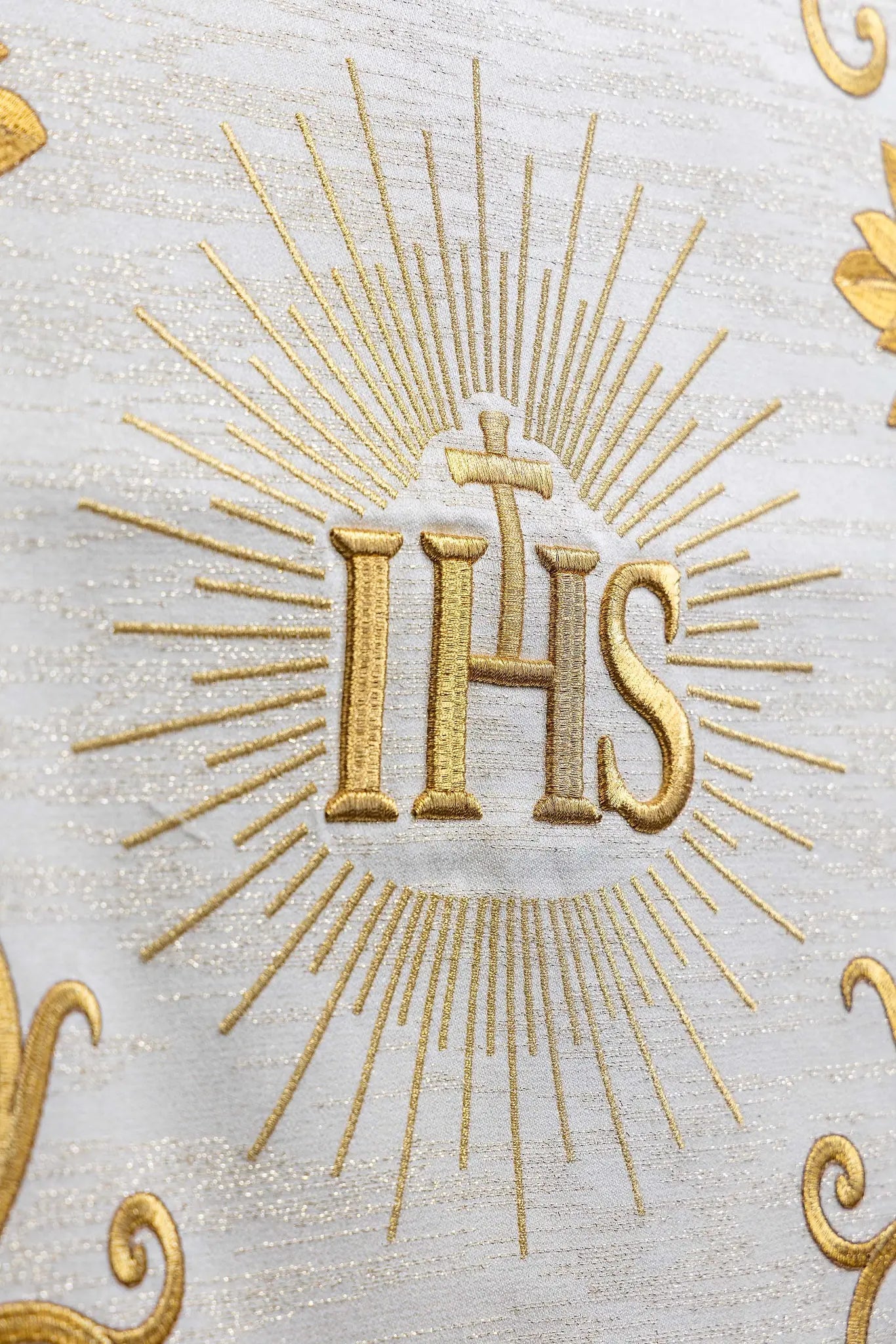
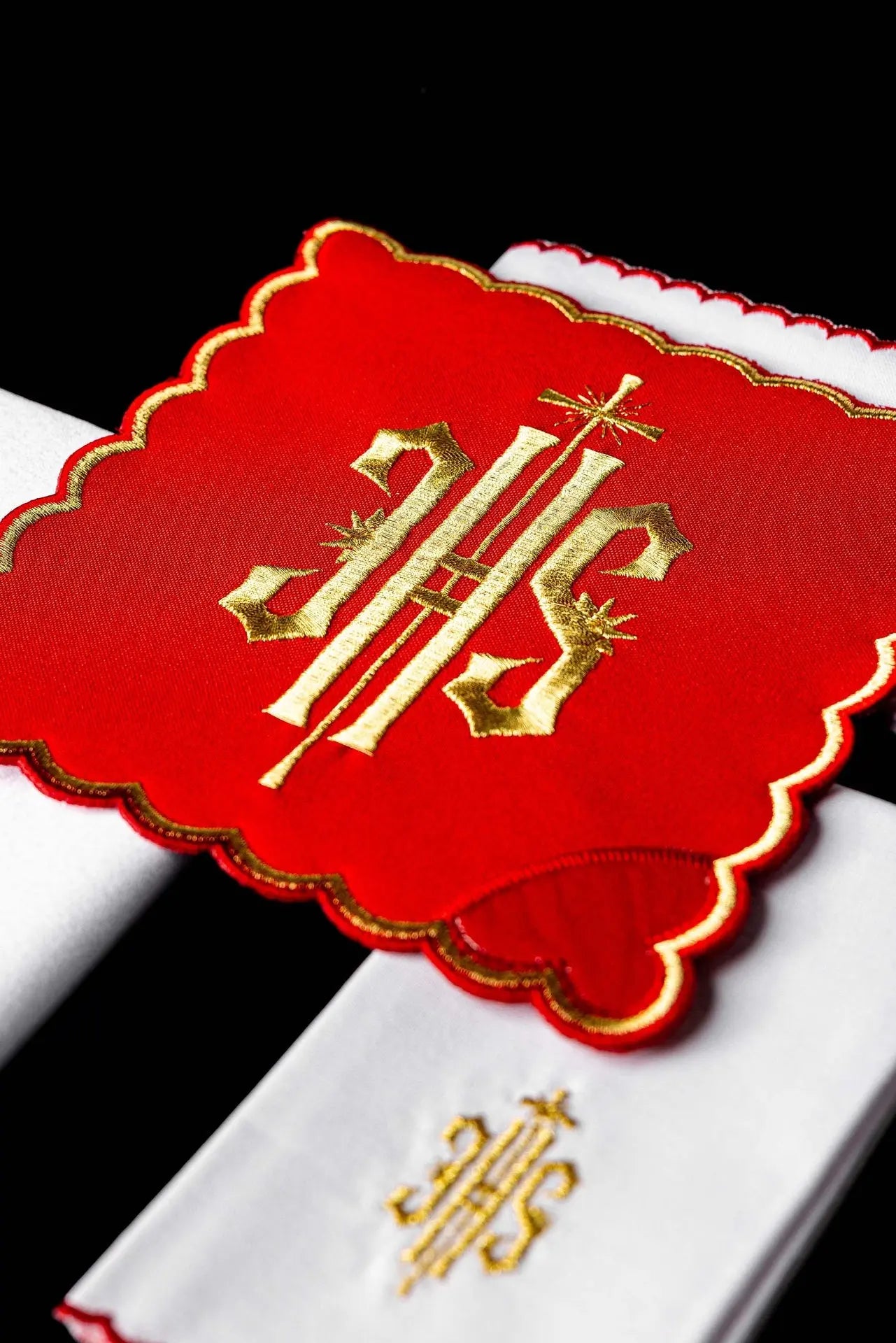
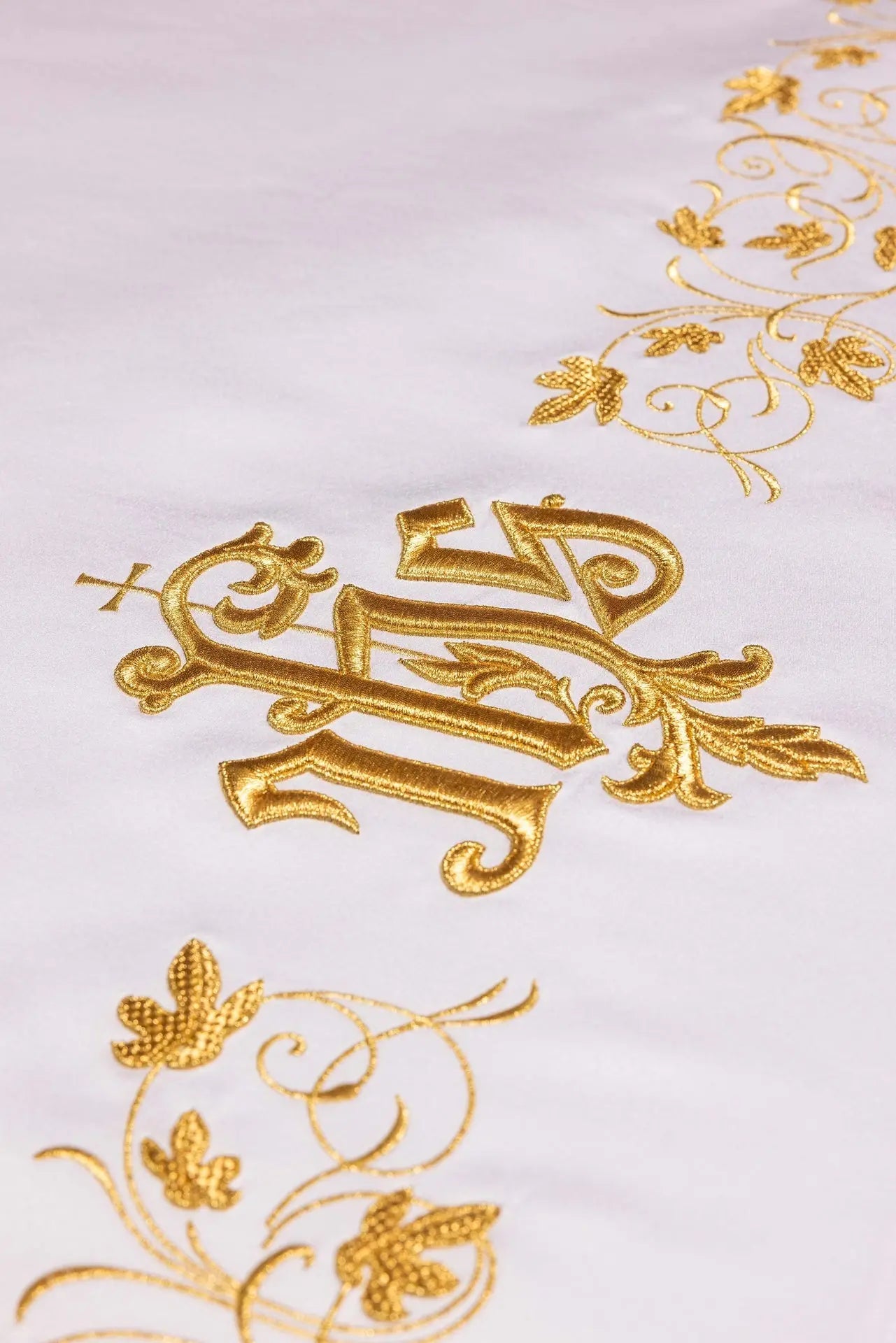
The third consideration is design. A plain altar cloth can be the most appropriate choice in a sanctuary that already has strong architectural detail, prominent candles, flowers or a richly carved altar. An embroidered altar cloth may be better where the church interior is simple or where the parish wants the altar to carry a clearer visual focus. Designs with crosses, Eucharistic wheat and grapes, IHS, Marian symbols or floral ornament can be selected according to the dedication of the church, the liturgical season or the tone of the celebration.
Coordinating the Sanctuary
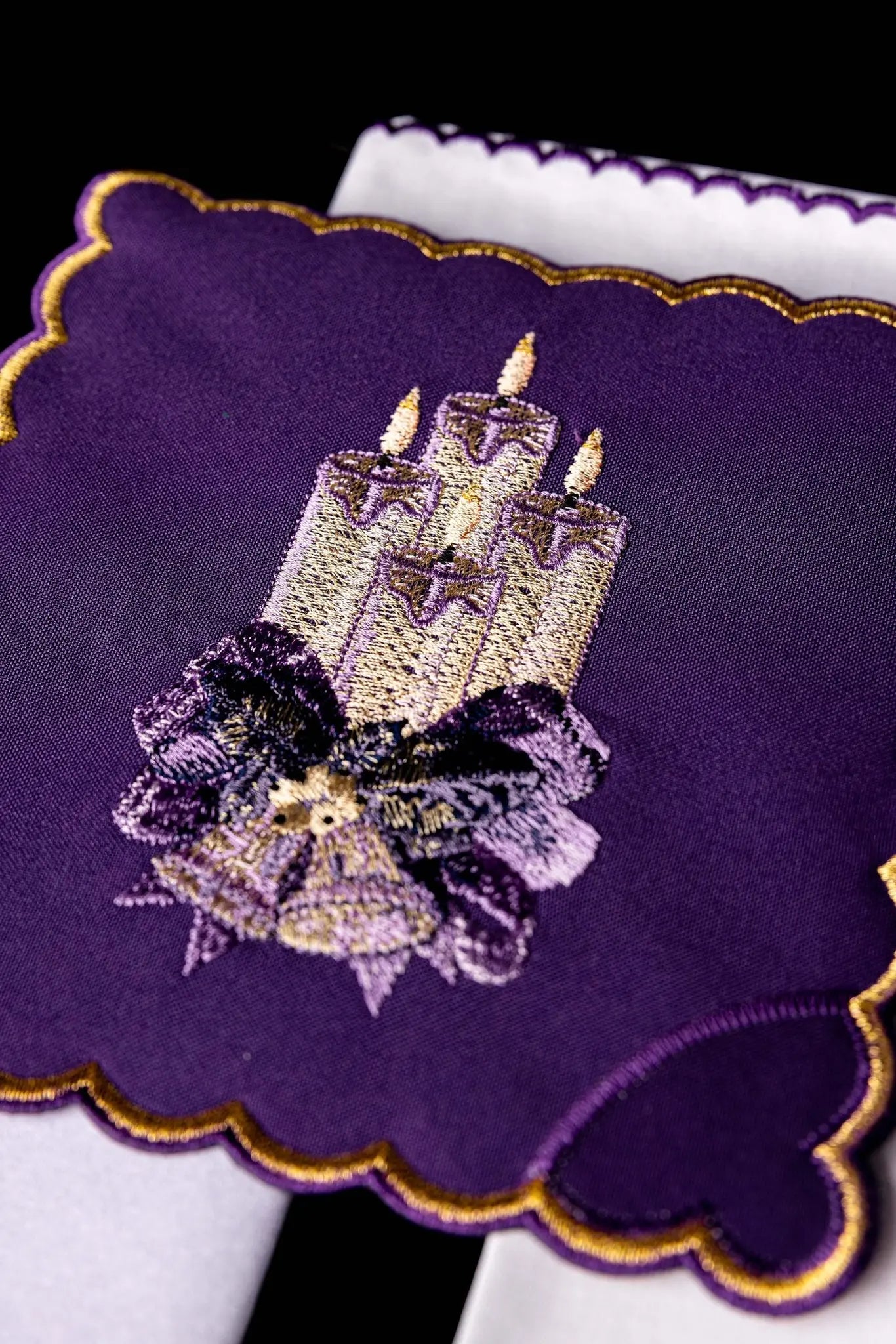
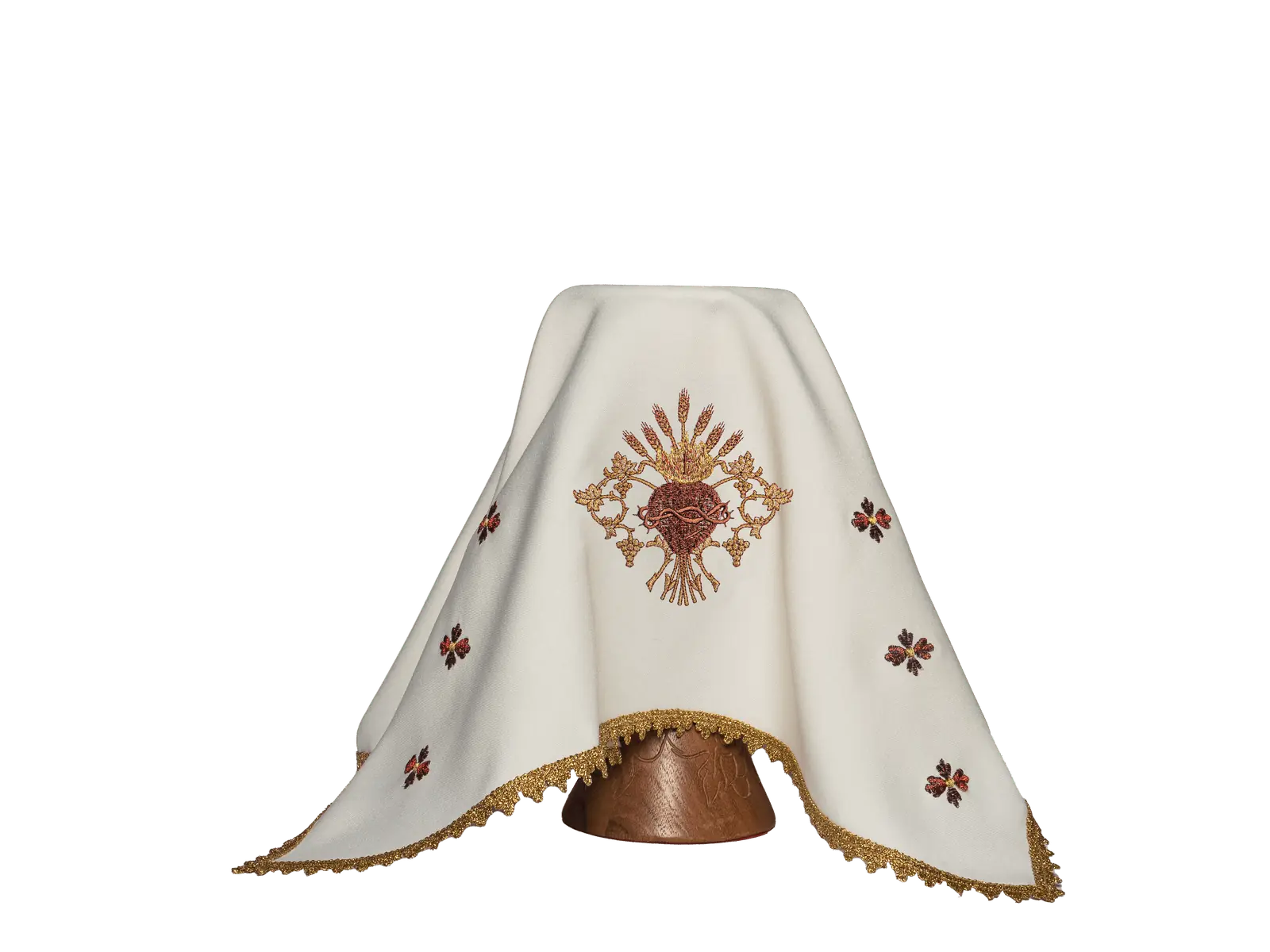
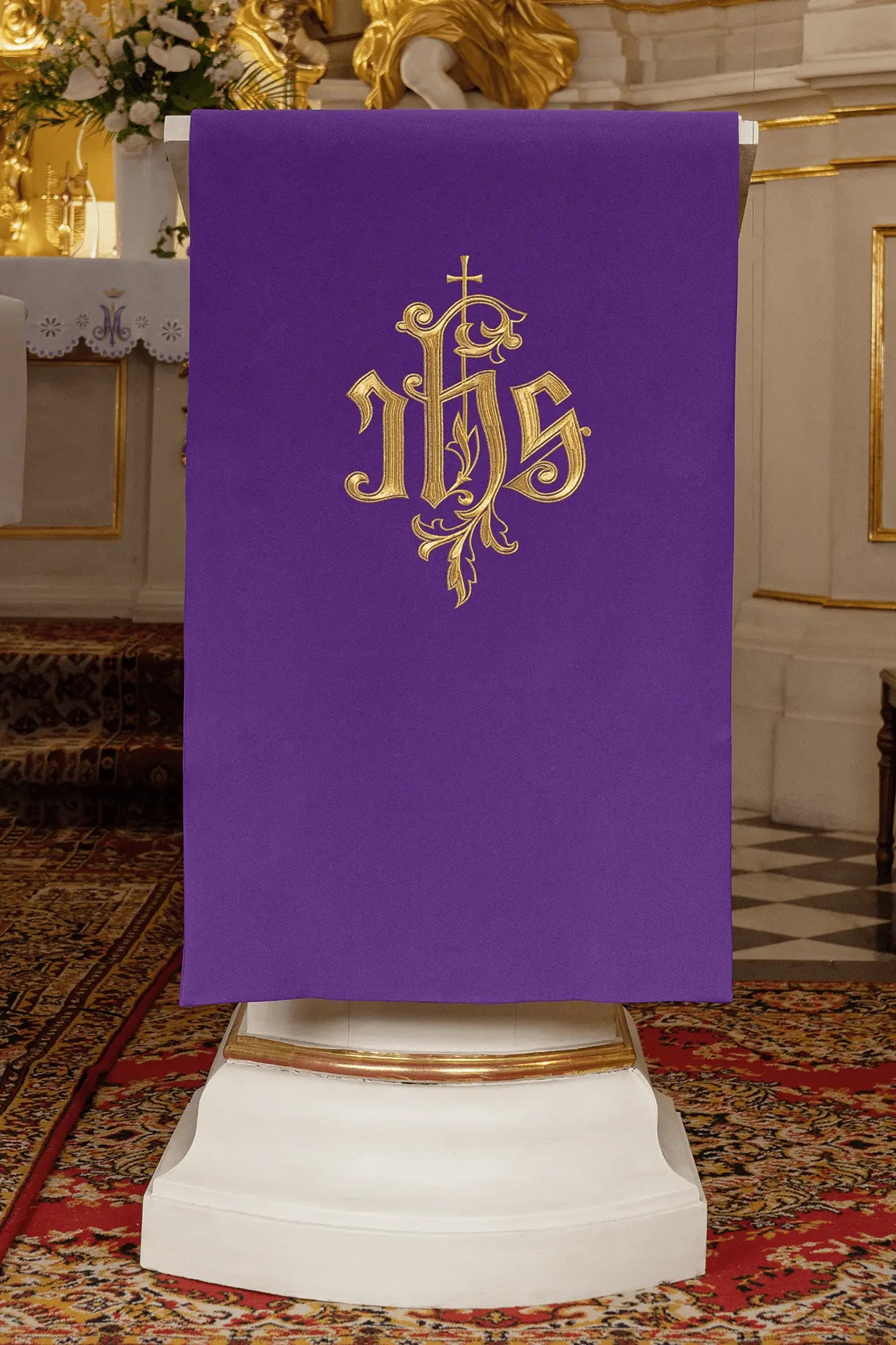
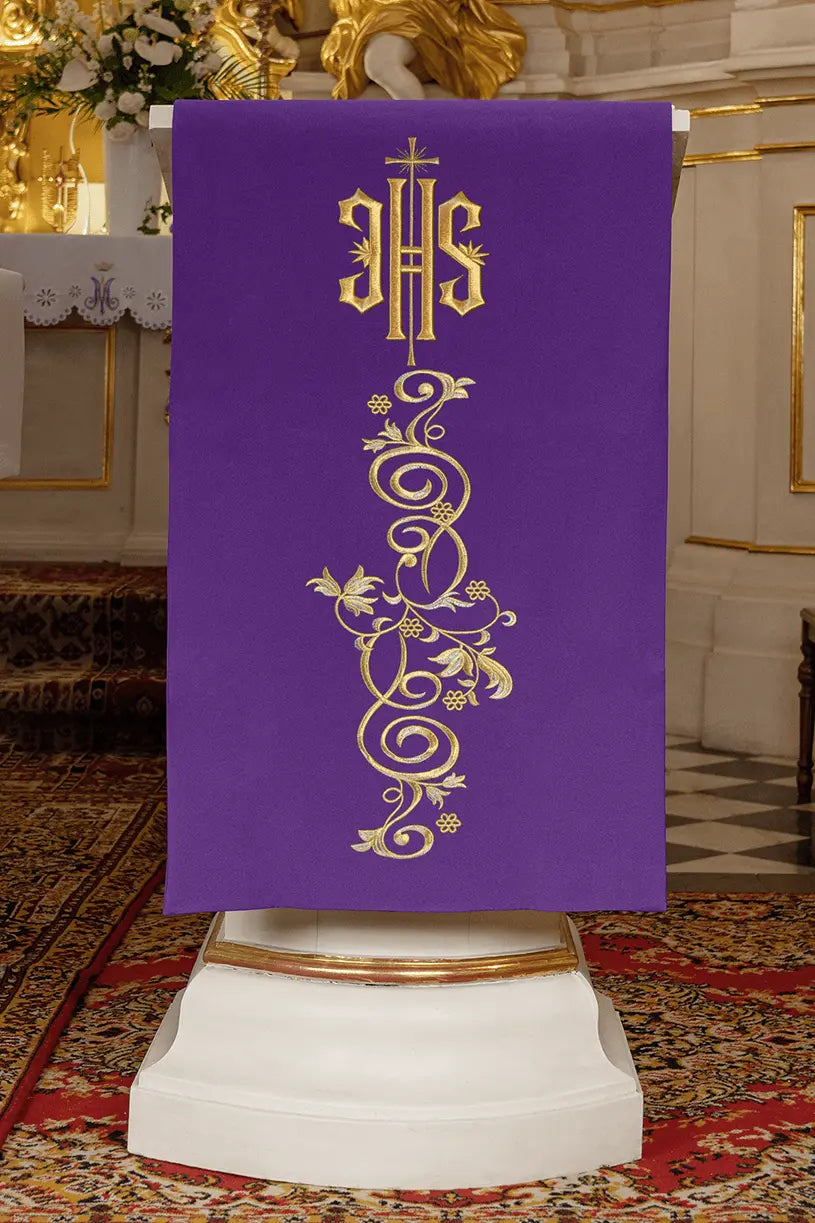
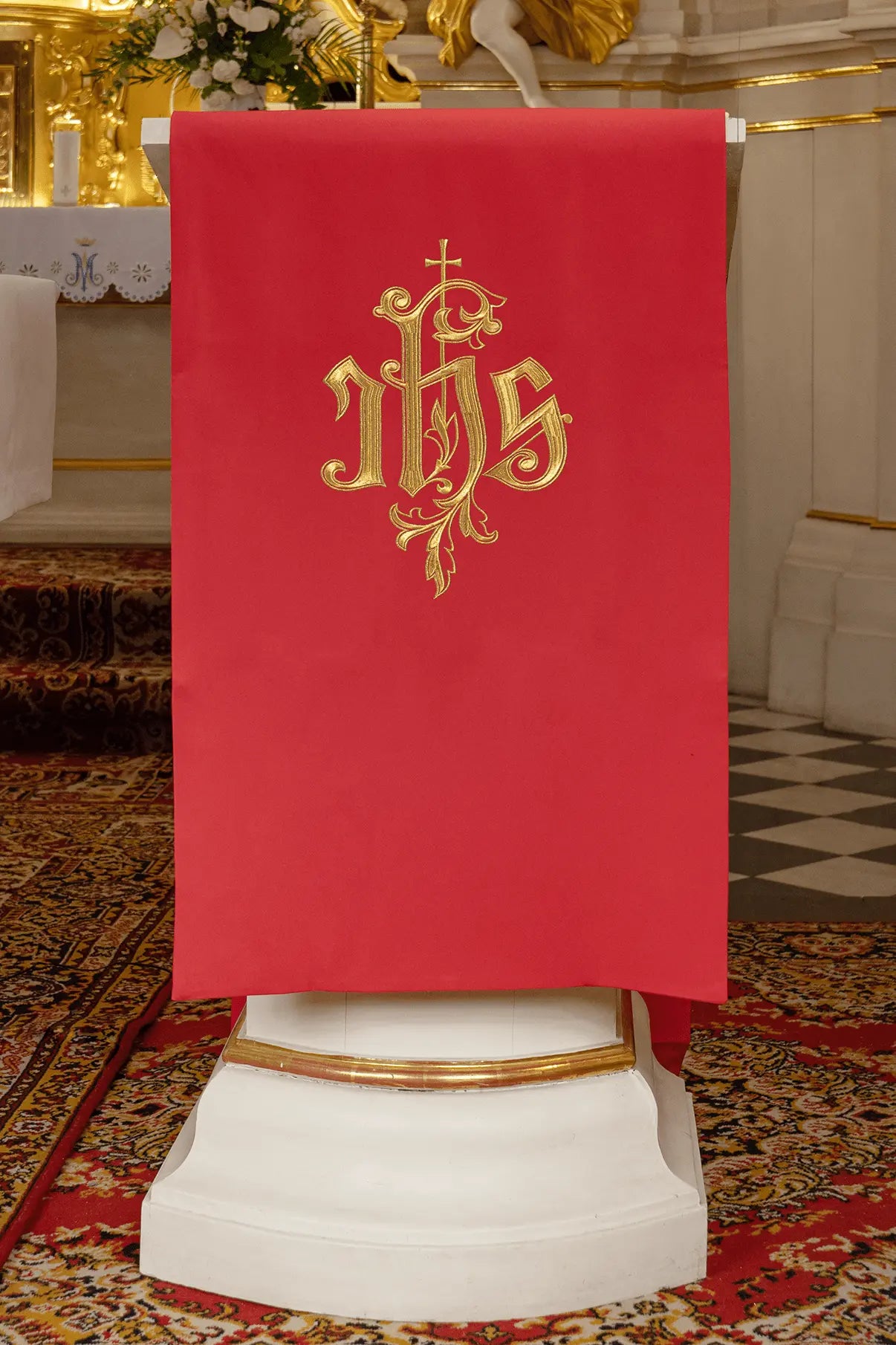
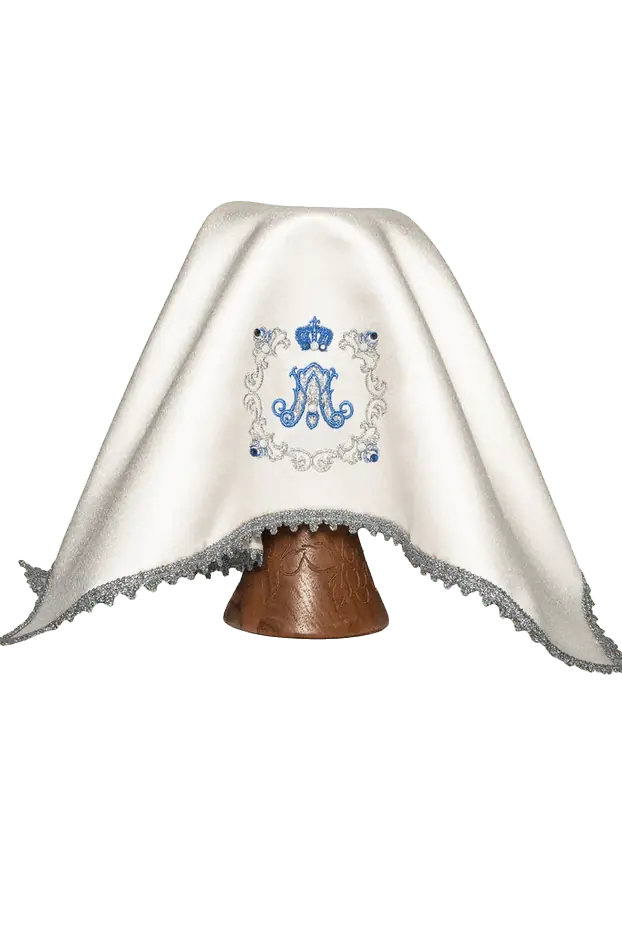
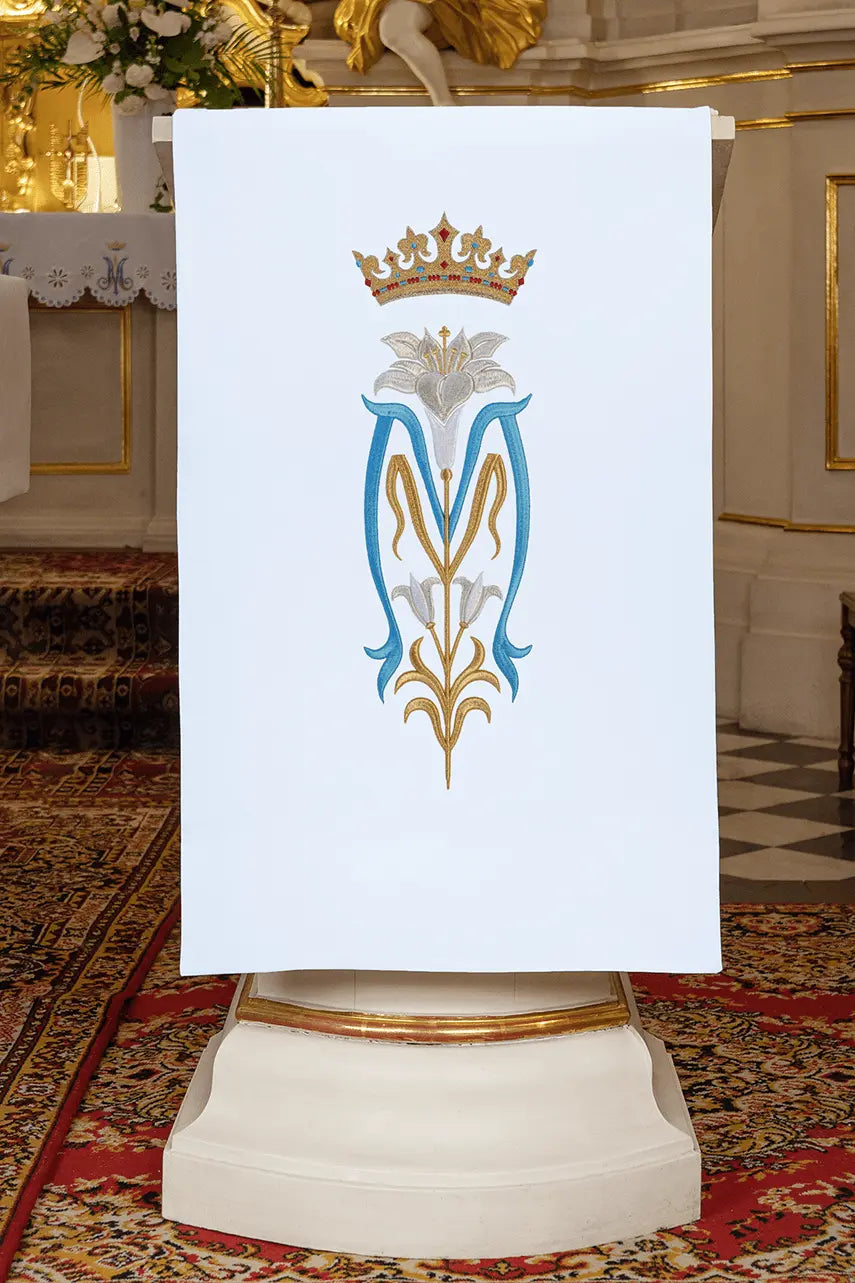
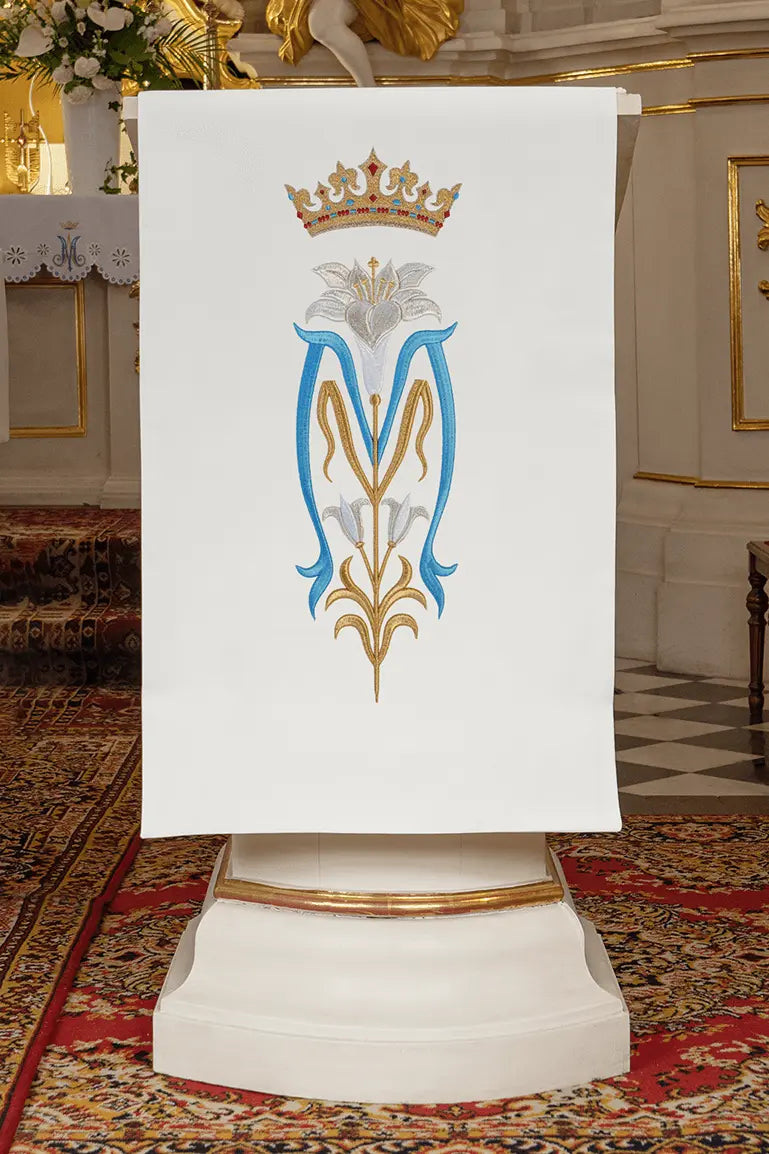
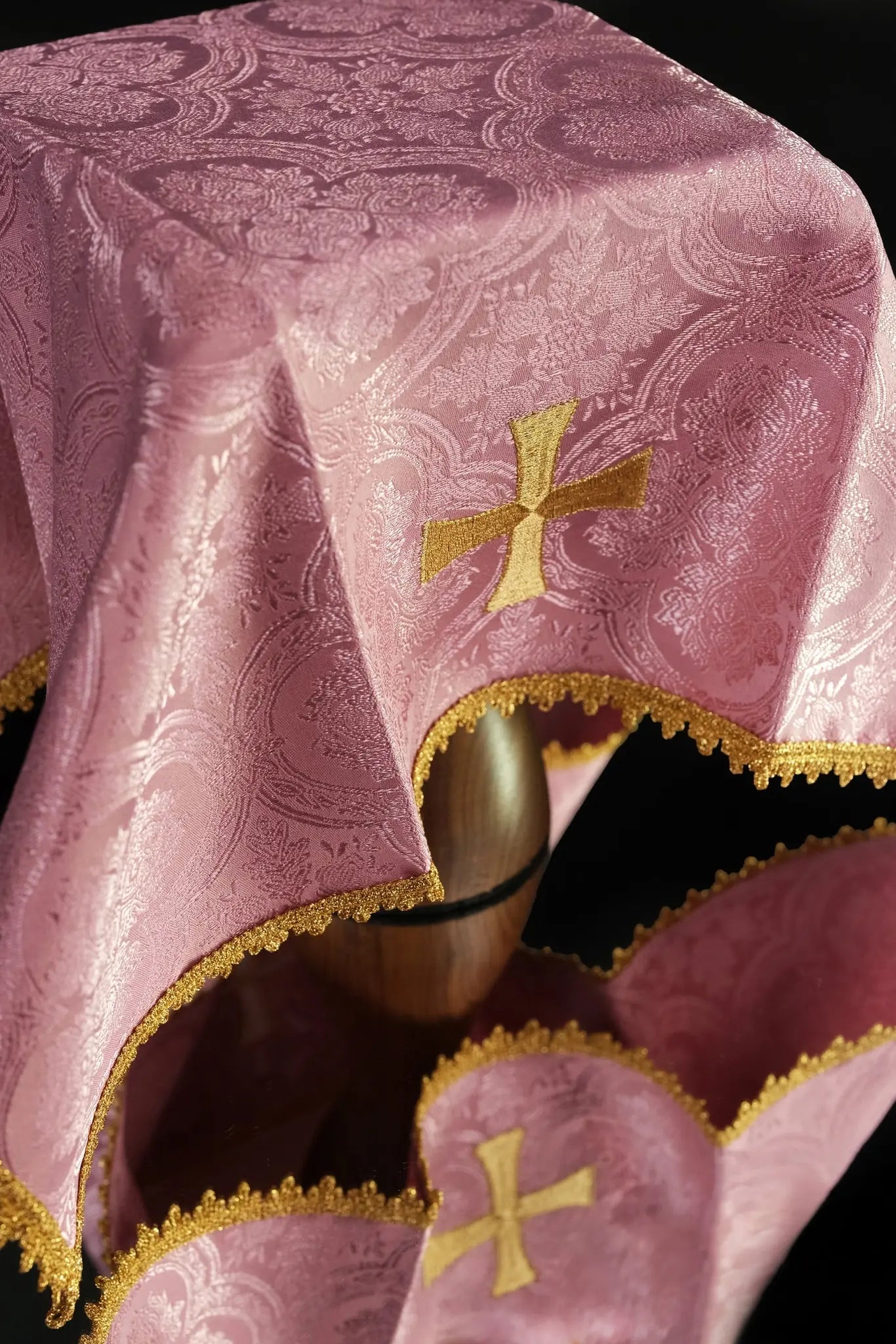
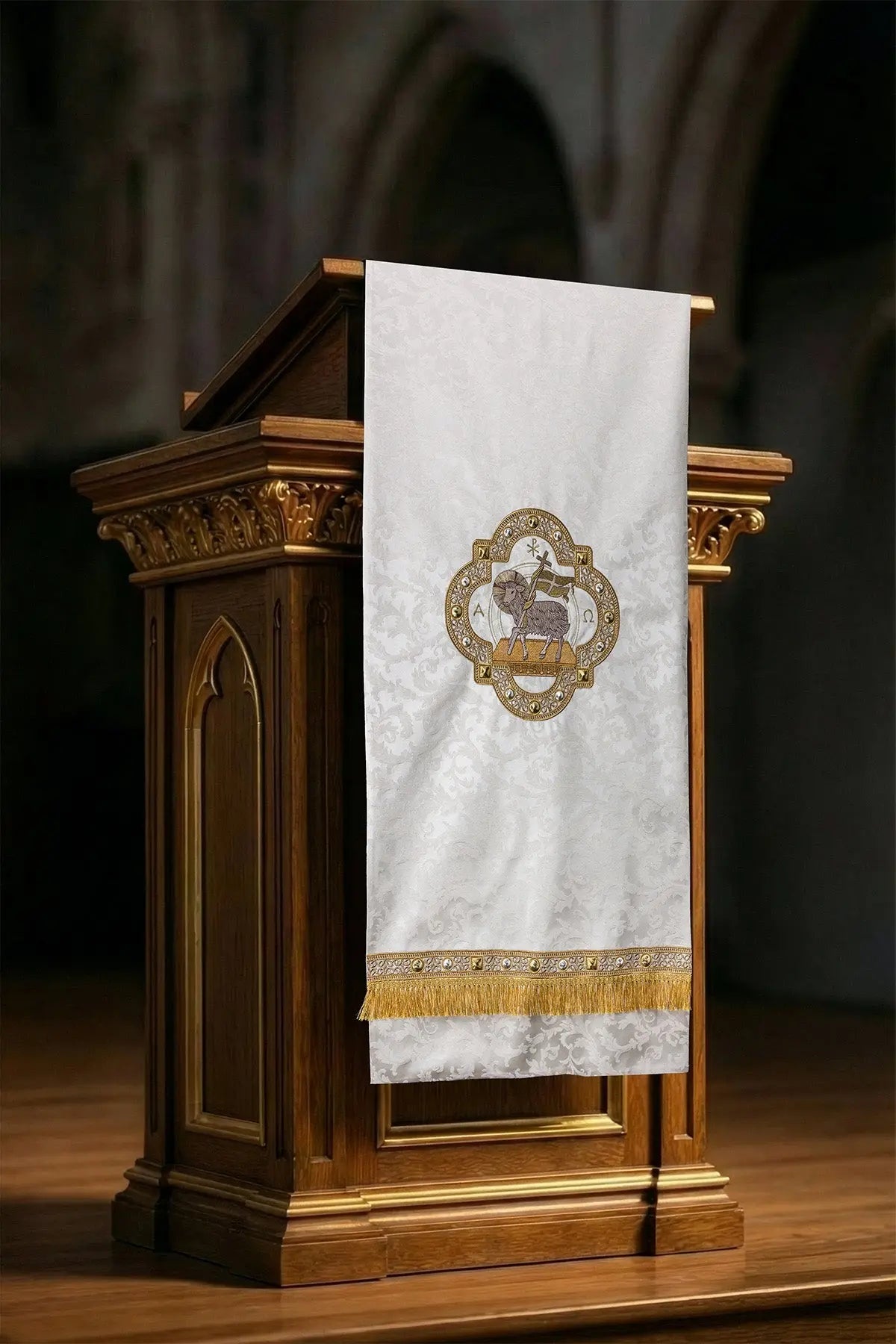
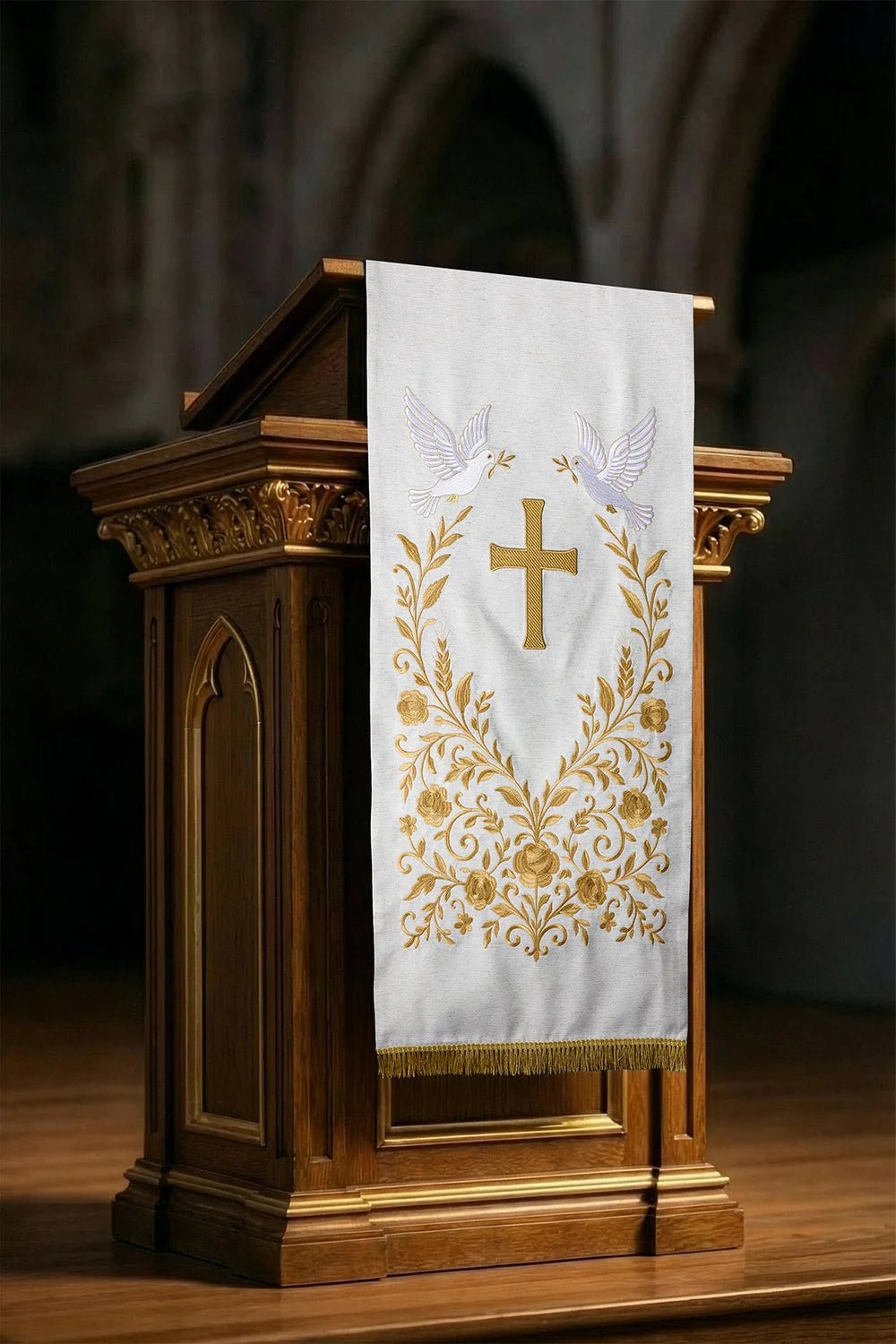
Altar cloths often look best when they are chosen together with nearby sanctuary textiles. A matching or complementary pulpit cover can visually connect the altar and ambo, especially in churches where the Liturgy of the Word and the Liturgy of the Eucharist are both emphasized through textile decoration. When the altar is prepared for more solemn celebrations, chalice-related textiles may also be coordinated through chalice veils, ciborium veils and chalice pall sets.
Coordination does not mean that every item must be identical. In many churches, a shared color family, similar embroidery style or repeated symbol is enough to create harmony. For example, a white altar cloth with gold embroidery may work well with gold or ecru vestments on solemnities, while a simpler cloth can balance richly decorated chasubles. When planning a sanctuary set, it is helpful to consider what will be seen from the pews: the altar front, the ambo, the veiled chalice and the vestments worn by the celebrant.
Materials, Embroidery and Craftsmanship
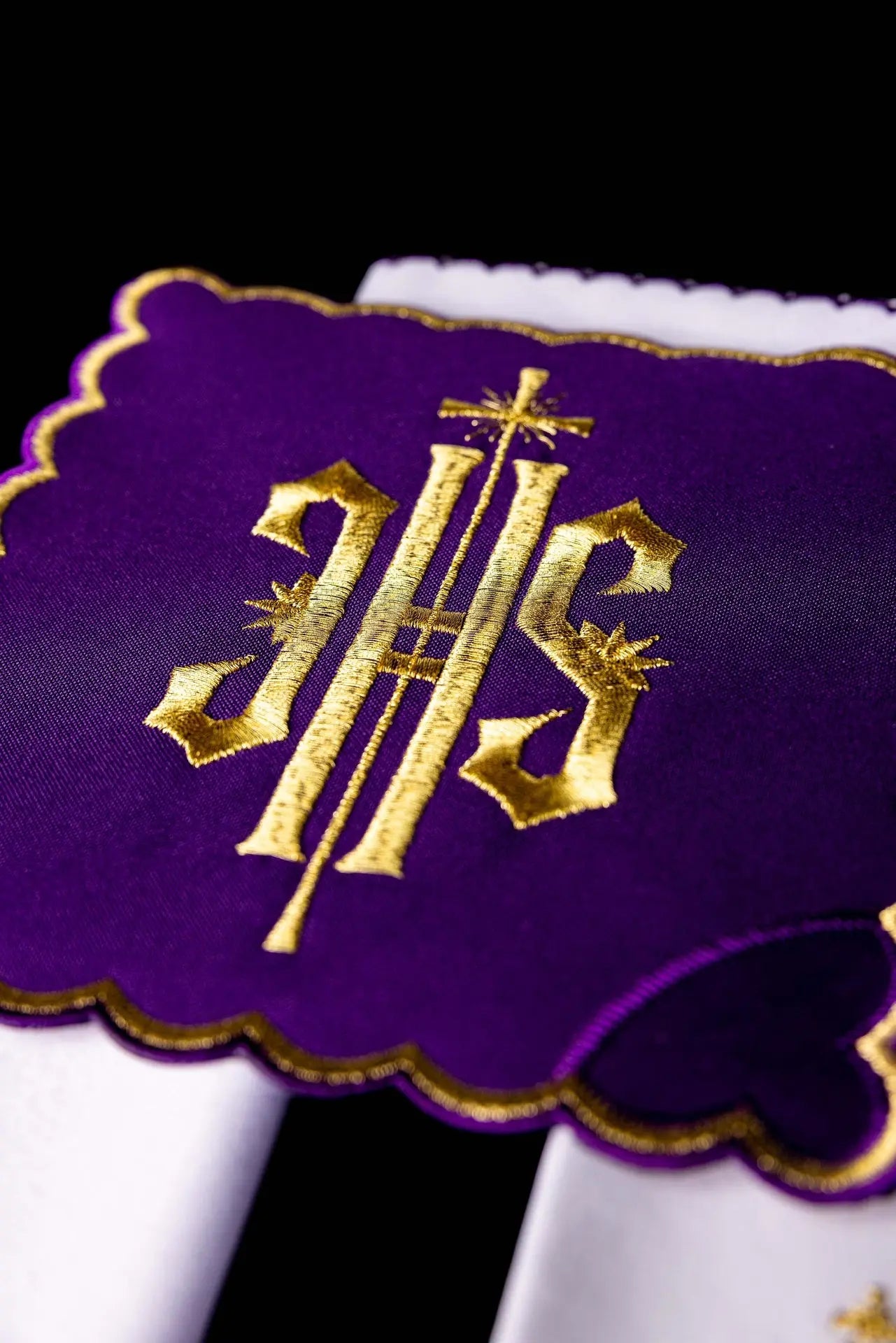
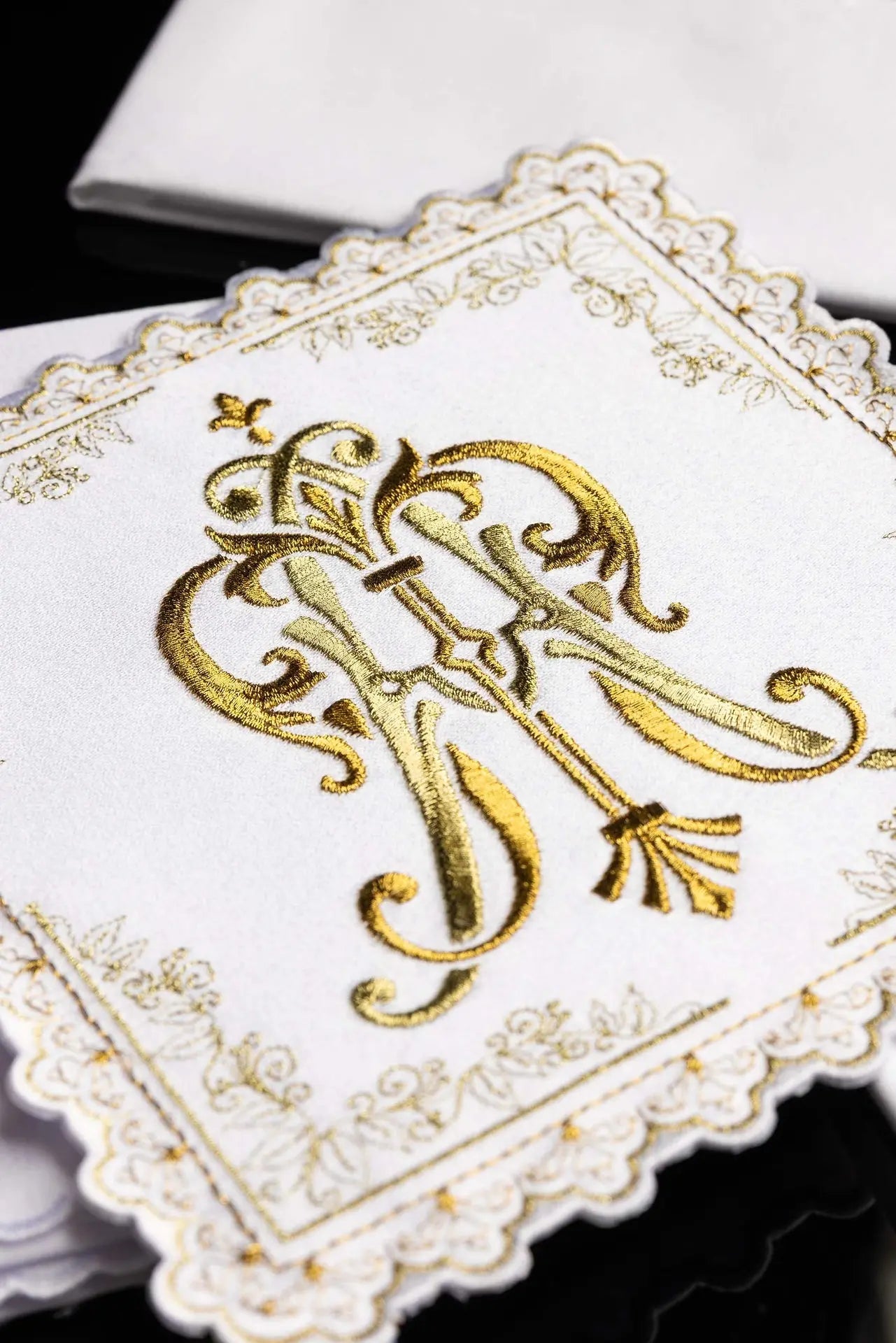
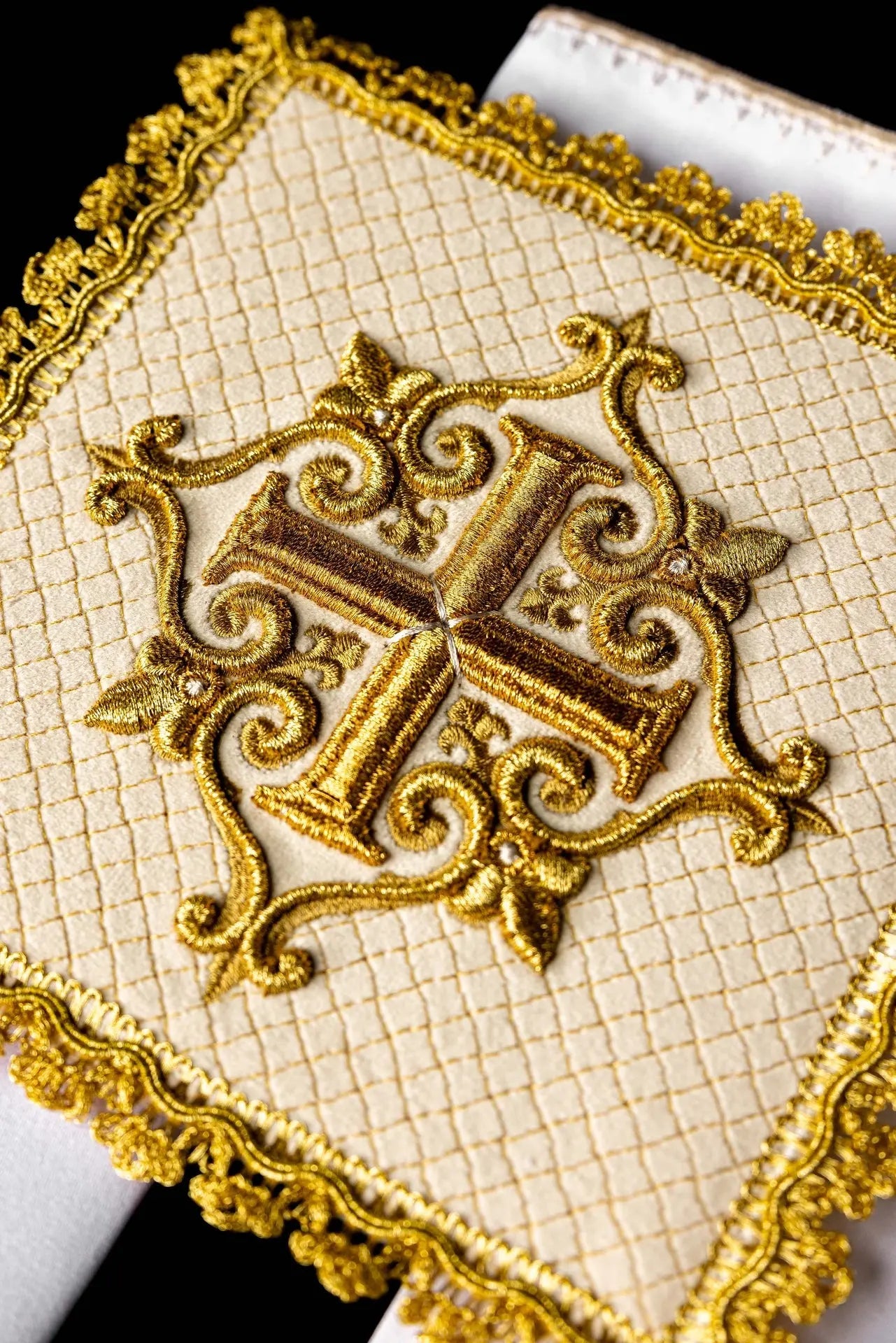
Good altar cloths should be beautiful, but they should also be practical for sacristy use. Clean seams, stable edges and careful embroidery help the cloth keep its form over time. Embroidery should be placed in a way that remains visible without interfering with the vessels or books used during Mass. Border designs and lace finishes can add refinement, but they should remain proportionate to the size of the altar and the style of the sanctuary.
Haftina Atelier designs liturgical textiles with attention to the balance between ornament and function. In an altar cloth, excessive decoration can make the altar look crowded, while too little structure can make the sanctuary appear unfinished. The best choice is usually one that supports prayer, matches the church interior and can be maintained by the sacristy team without difficulty.
Care and Maintenance
Altar cloths should be cared for according to the fabric and embroidery used in the individual item. As a general rule, gentle washing, mild detergents and careful drying help preserve both the textile and the decoration. Harsh chemicals can weaken fibers or affect embroidered details, so they should be avoided unless a specific care label allows them. Ironing is often needed so the cloth lies flat on the altar, but heat should be adjusted to the fabric and any embellishment.
Parishes that use several altar cloths may find it helpful to keep separate cloths for daily use, Sundays and solemn celebrations. This protects more decorative pieces from unnecessary wear and gives the sacristy team flexibility throughout the liturgical year. Proper storage is also important: cloths should be clean, dry and folded or rolled in a way that minimizes hard creases across visible embroidered areas.
Frequently Asked Questions (FAQ)
What is the difference between an altar cloth and altar linens?
An altar cloth covers the altar itself and is usually larger. Altar linens include smaller Eucharistic linens such as corporals, purificators and palls used during Mass with the chalice and paten. Many churches need both categories for a complete sacristy.
Should an altar cloth always be white?
White or ecru is the most common choice because it expresses purity and solemnity and works across much of the liturgical year. Some decorative elements may reflect liturgical colors or devotional themes, but the cloth should remain dignified and appropriate to the altar.
How do I choose the right size altar cloth?
Measure the altar top carefully and decide how much drop is desired at the sides or front. The cloth should lie flat and allow the altar to be prepared without bunching around candles, the Missal, vessels or other items used in the liturgy.
Can altar cloths be coordinated with pulpit covers and chalice veils?
Yes. Coordinating these textiles can bring unity to the sanctuary, especially for solemnities, parish feasts and seasonal celebrations. The design does not need to be identical, but shared color, embroidery or symbols can create a coherent arrangement.
Are embroidered altar cloths suitable for daily Mass?
They can be, provided the fabric and embroidery are durable and easy to maintain. Many parishes keep simpler cloths for frequent use and reserve more ornate embroidered cloths for Sundays, solemnities and special liturgical occasions.
How should altar cloths be stored between uses?
They should be clean and completely dry before storage. Folding along consistent lines or rolling larger cloths can help reduce visible creases, especially across embroidered borders or frontal panels.