


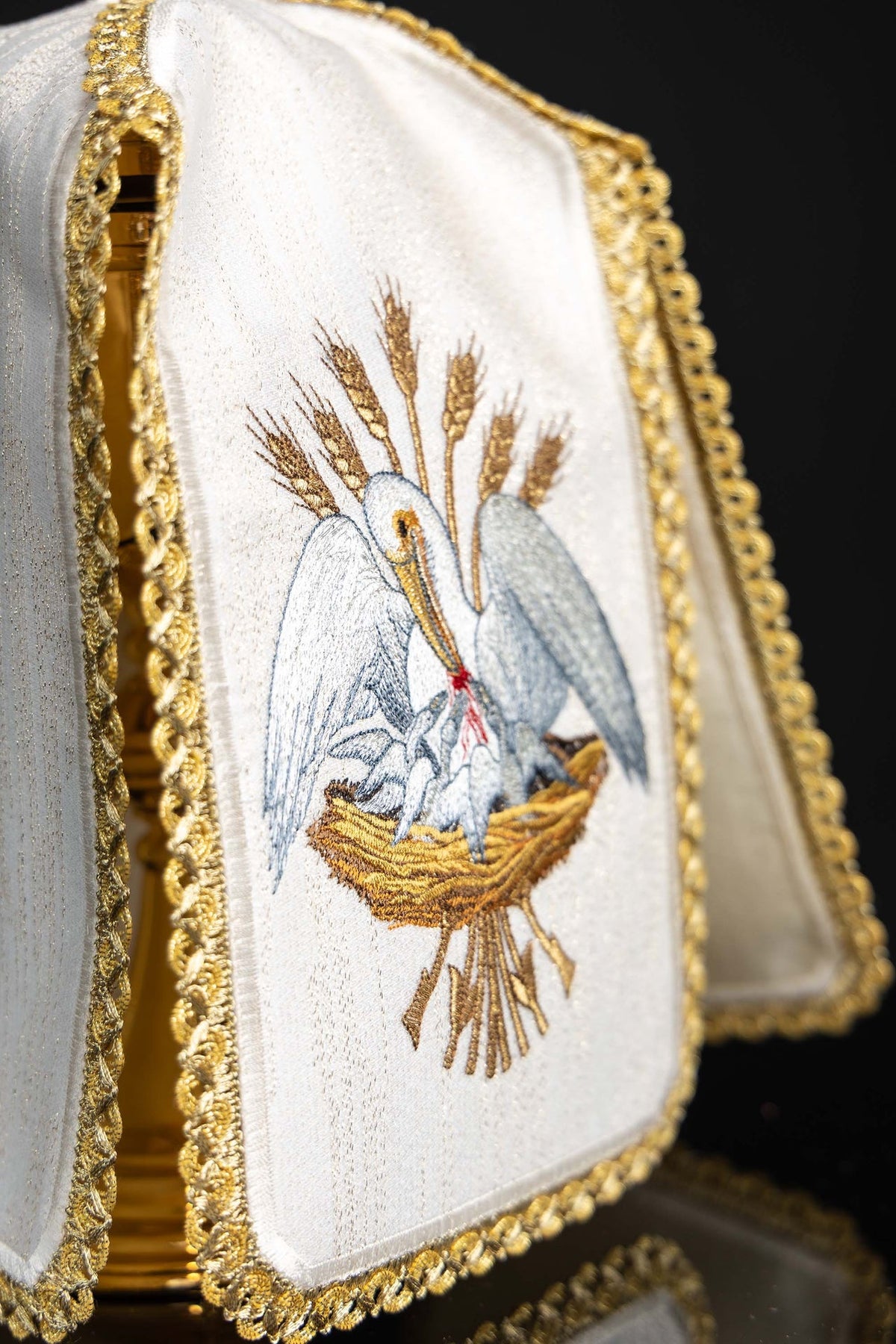
Ciborium Veil with Embroidered Pelican Feeding Its Young
Ready to ship

Handcrafted in Poland
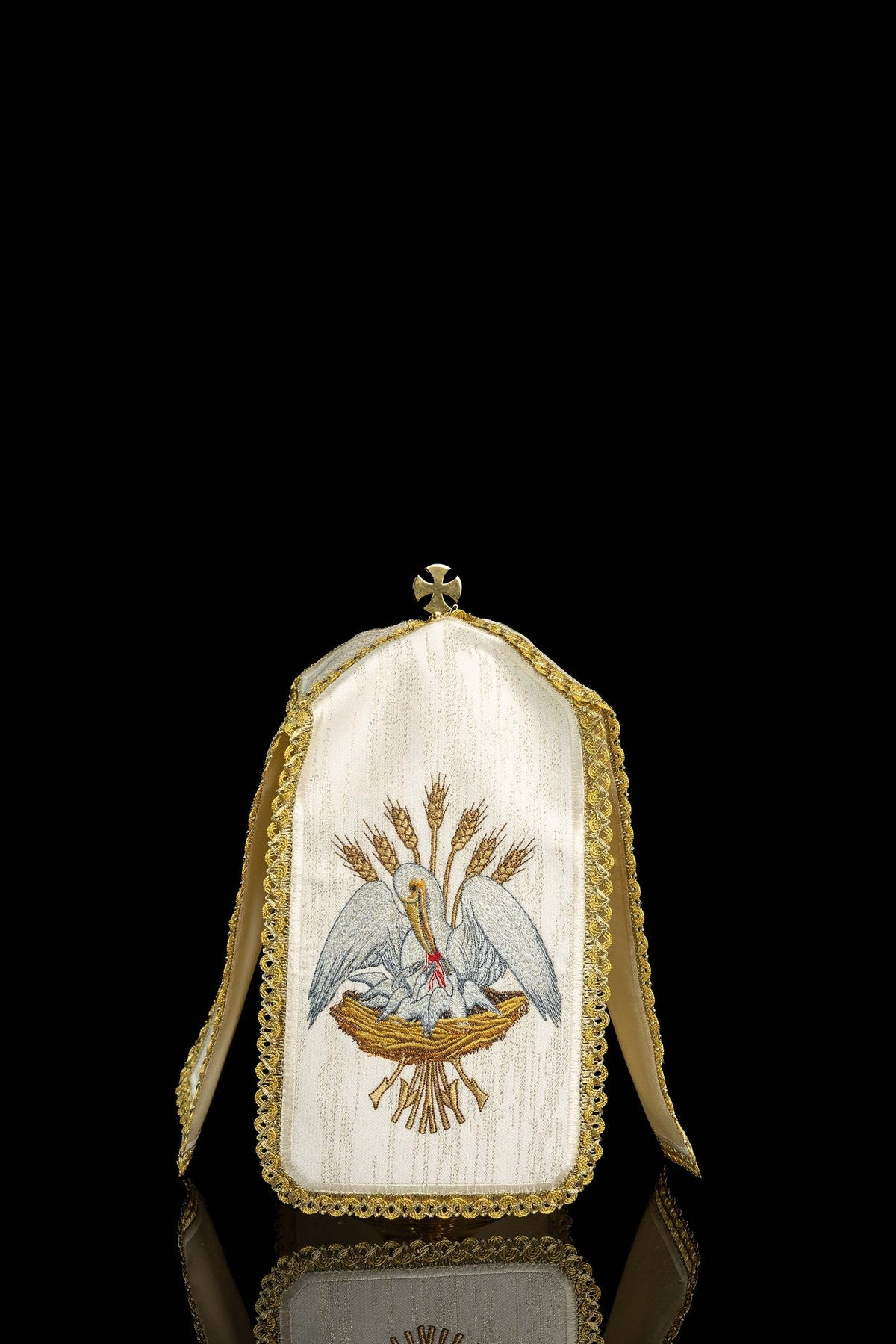
This ciborium veil features an embroidered pelican, a Christian symbol of Christ’s self-giving love and the Eucharist.
Ciborium Veil for Liturgical Use
In the liturgy, it provides a dignified covering for the sacred vessel that holds the Blessed Sacrament. Its intended settings include churches and chapels, as well as religious houses and sacristies.
Pelican and Wheat Symbolism
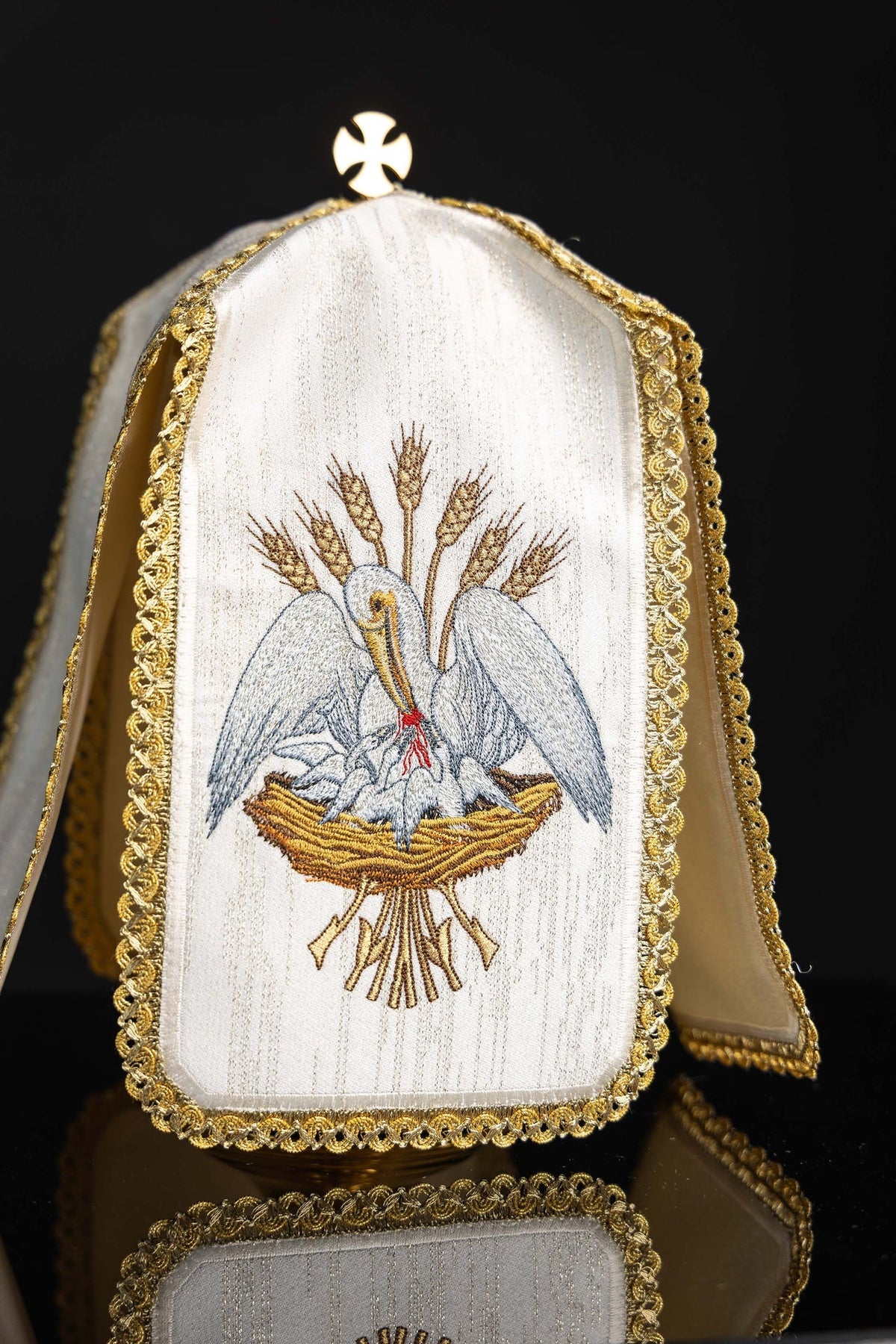
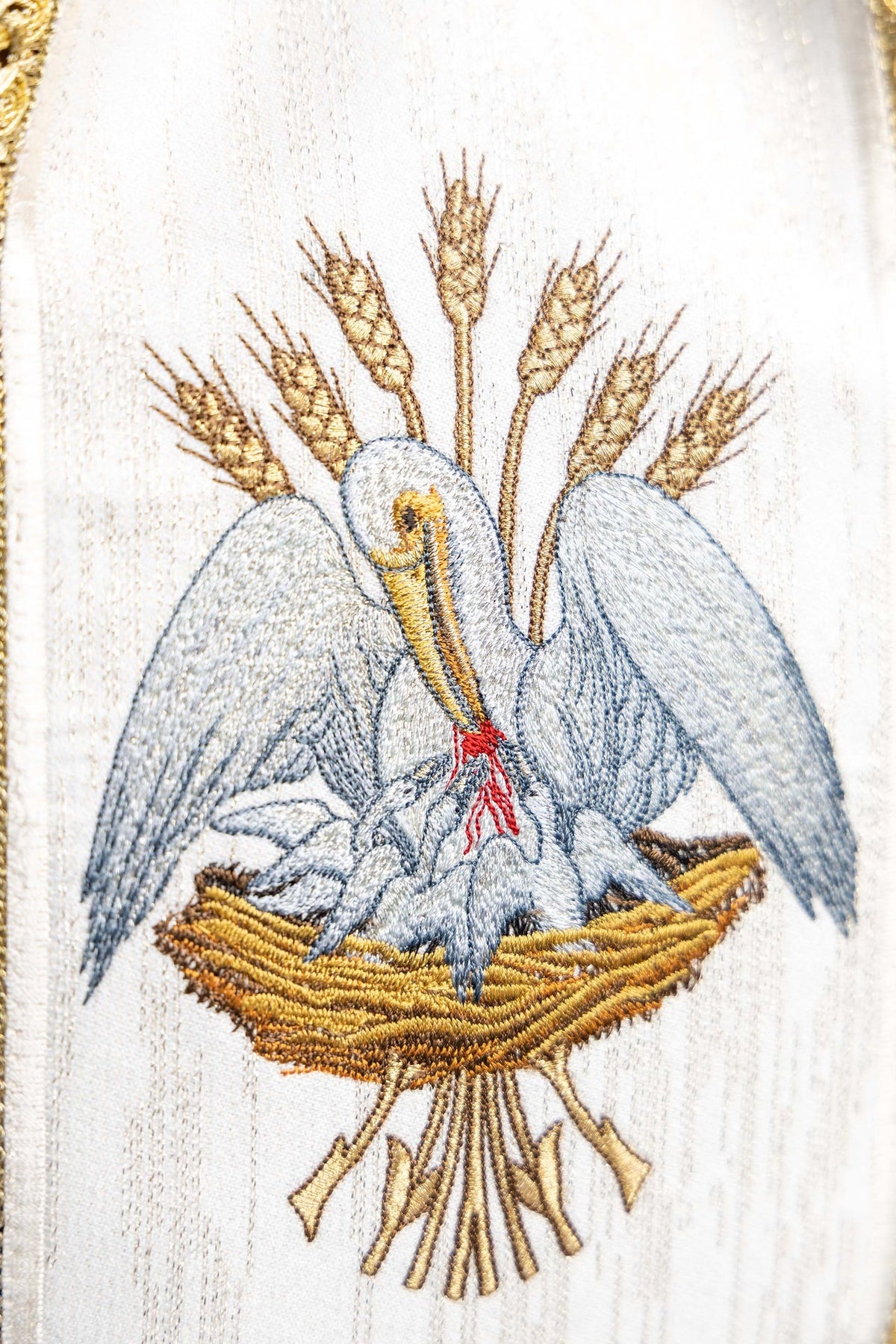
- Embroidered scene: A pelican feeding its young appears amid decorative wheat.
- Pelican symbolism: The pelican carries deep Christian meaning and, for centuries, has represented Christ’s self-offering for humanity. Traditional Christian imagery portrays the bird nourishing its young with its own blood; this is why it came to signify Christ’s sacrificial love and point directly to the Eucharist. In this way, the image draws particular attention to the mystery of Christ’s Body and Blood present in the Blessed Sacrament.
- Wheat symbolism: The wheat points to Eucharistic bread and adds a sacred dimension to the embroidery.
- Color palette: Gold, silver, white, and red appear in the embroidery, which stands out against the light fabric. The light, ceremonial palette contributes to the veil’s solemn appearance.
Size, Fabric and Gold Lace
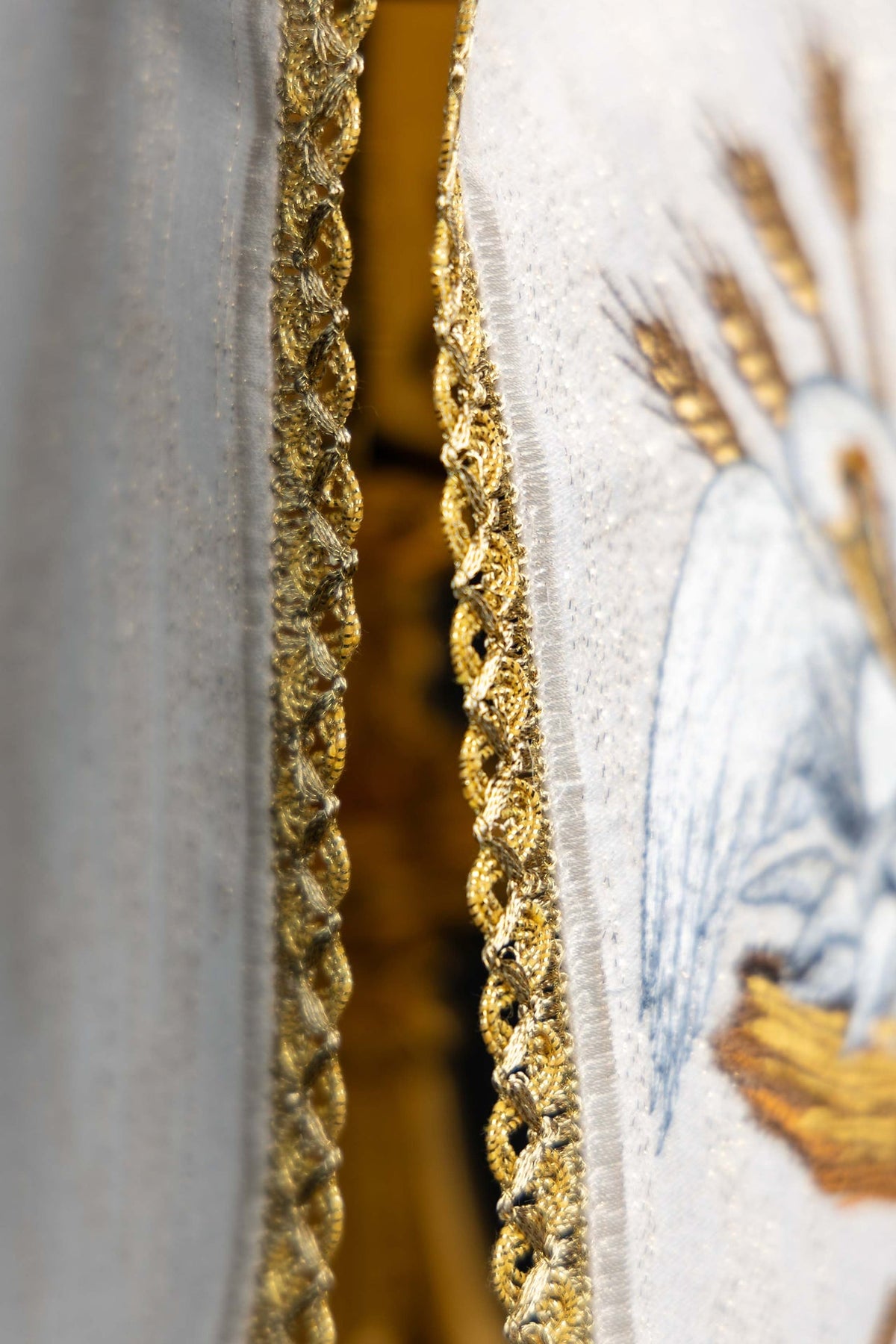
The elegant veil is richly embroidered on light fabric. Decorative gold lace completes the finish and highlights its formal, representative appearance. Its size is 11.5 in (29 cm).
Made with care, it expresses reverence toward the Blessed Sacrament and honors the dignity of the ciborium that holds consecrated altar bread. The clarity of the pelican image makes its connection with Christ’s sacrificial love and the Eucharistic mystery especially direct.
- Embroidery: the pelican nourishes its young; decorative wheat surrounds the figure.
- Symbolism: Eucharistic and Christological.
- Decoration colors: gold, silver, white, and red on a light palette.
- Finish: decorative gold lace.
- Size: 11.5 in (29 cm).
- Places of use: churches and chapels, religious houses, and sacristies.
- Liturgical purpose: a dignified covering for the ciborium that holds the Blessed Sacrament.
Choose options