Embroidered Altar Cloths with Frontals
Altar cloths with frontal embroidery for the sanctuary
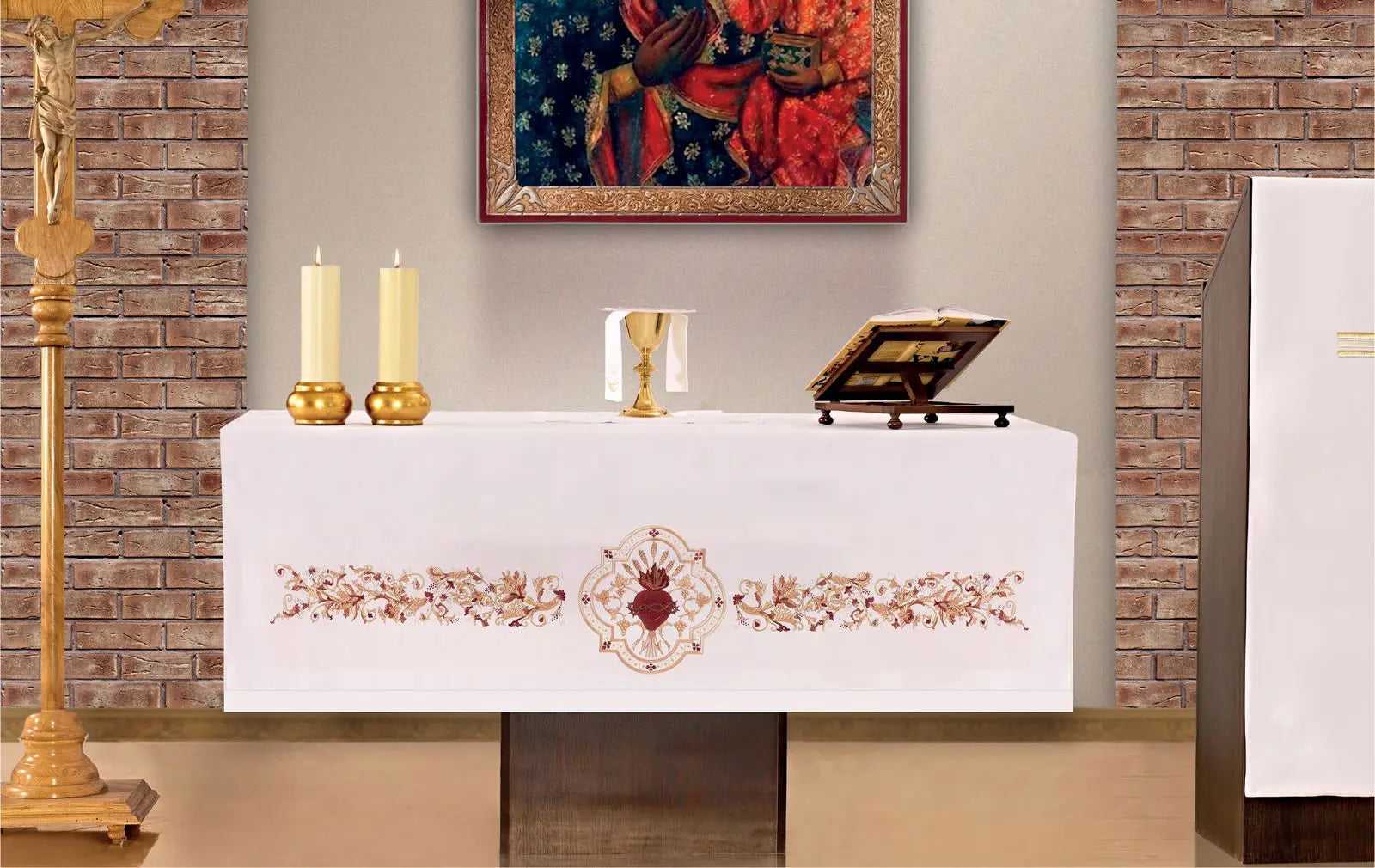
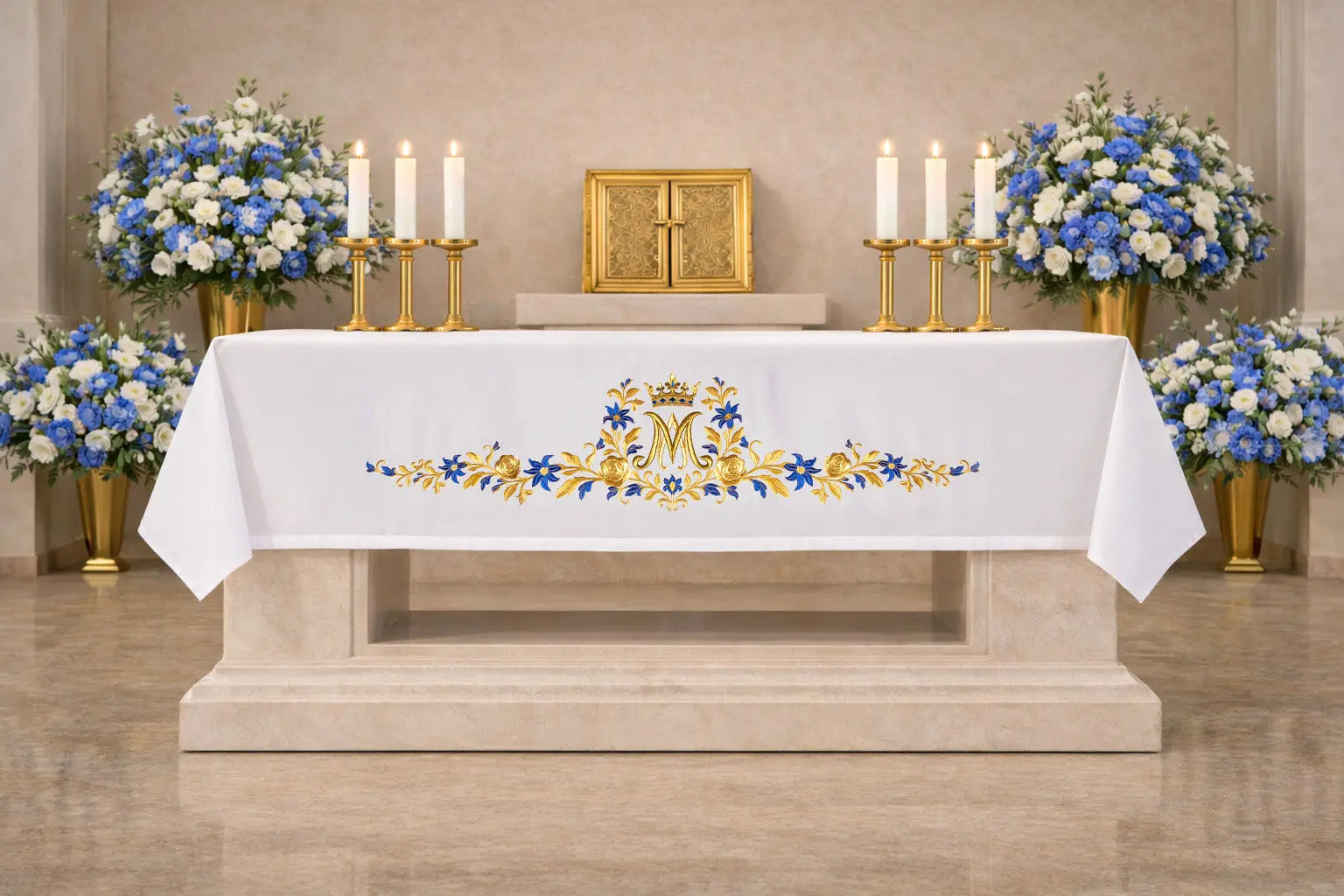
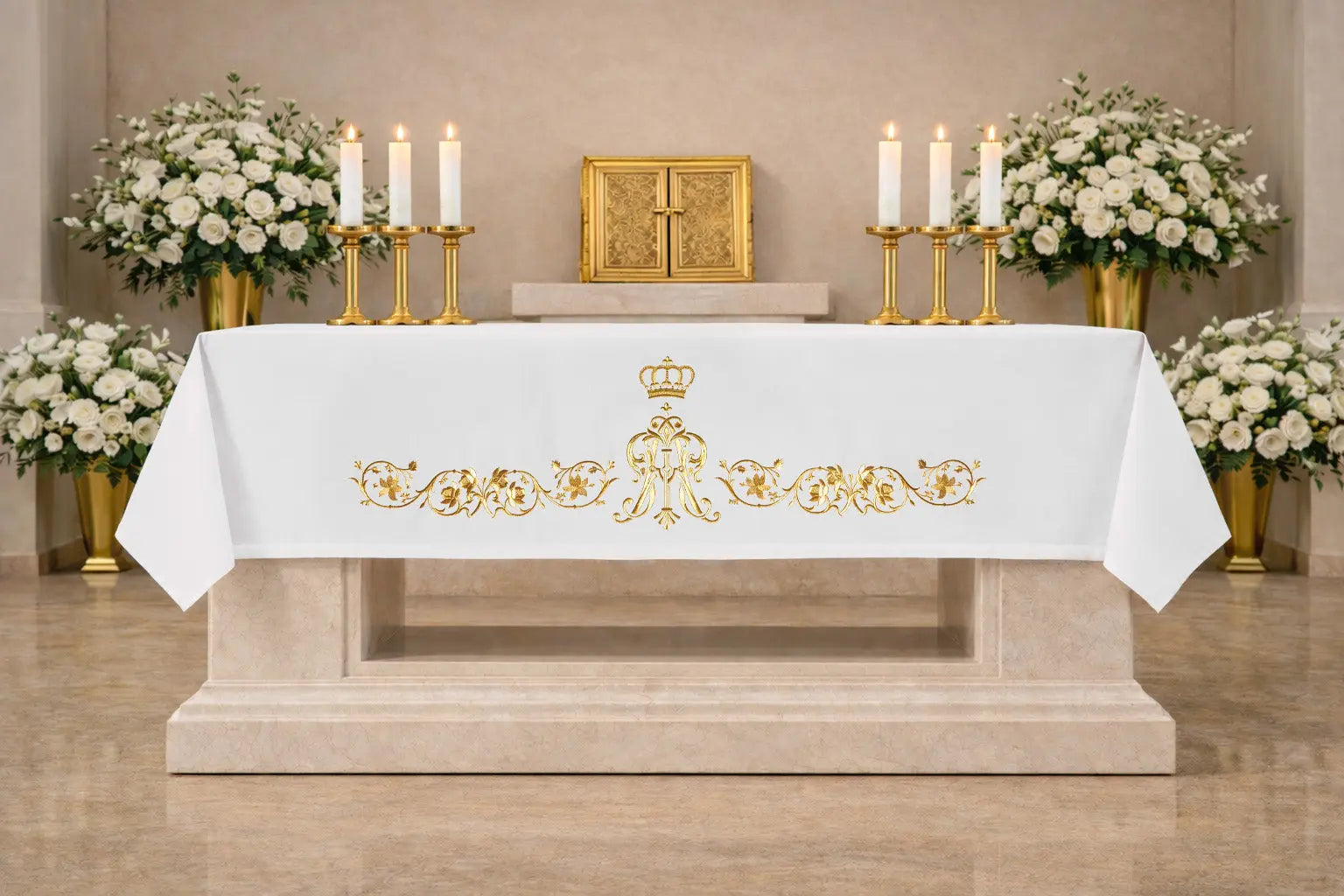
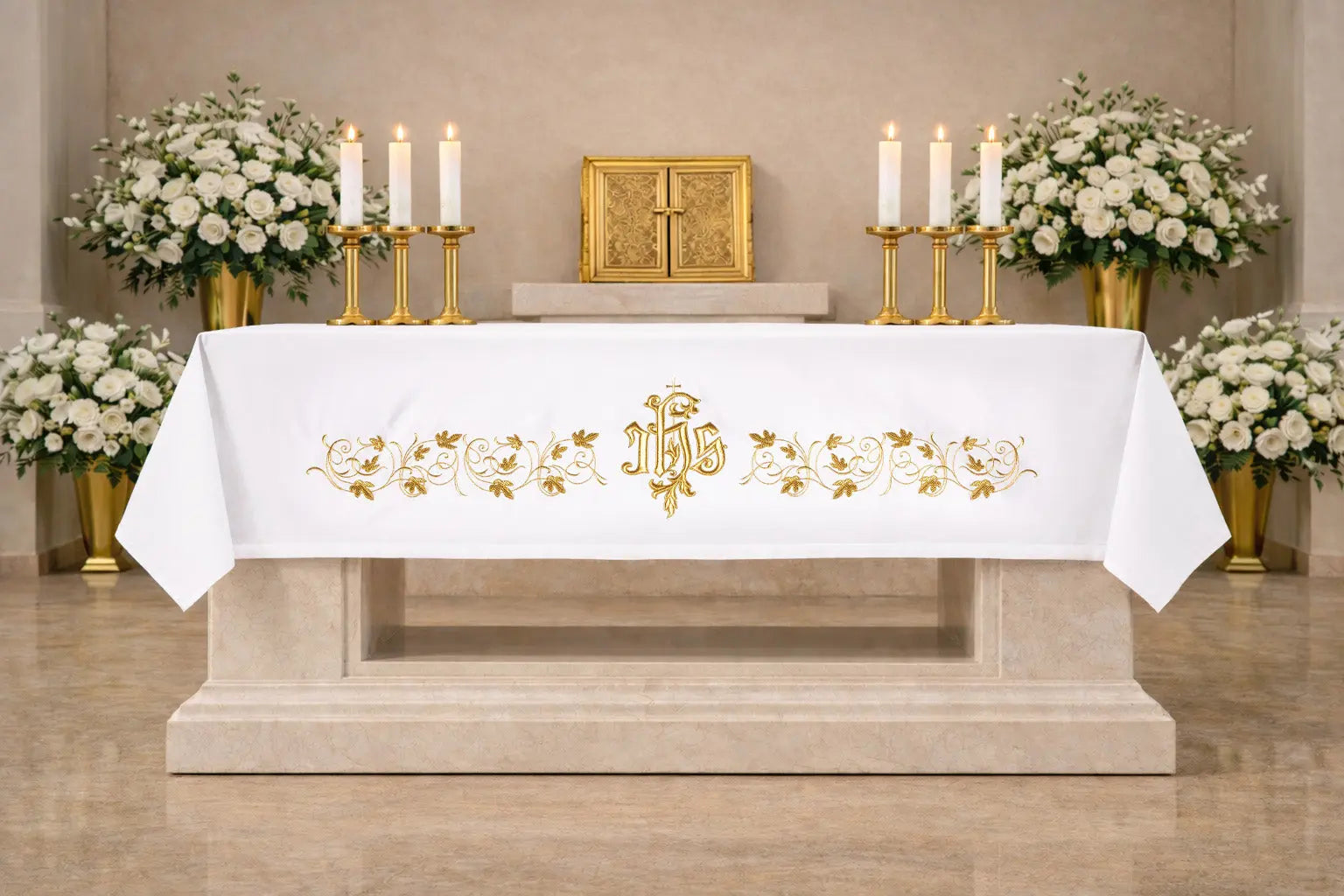
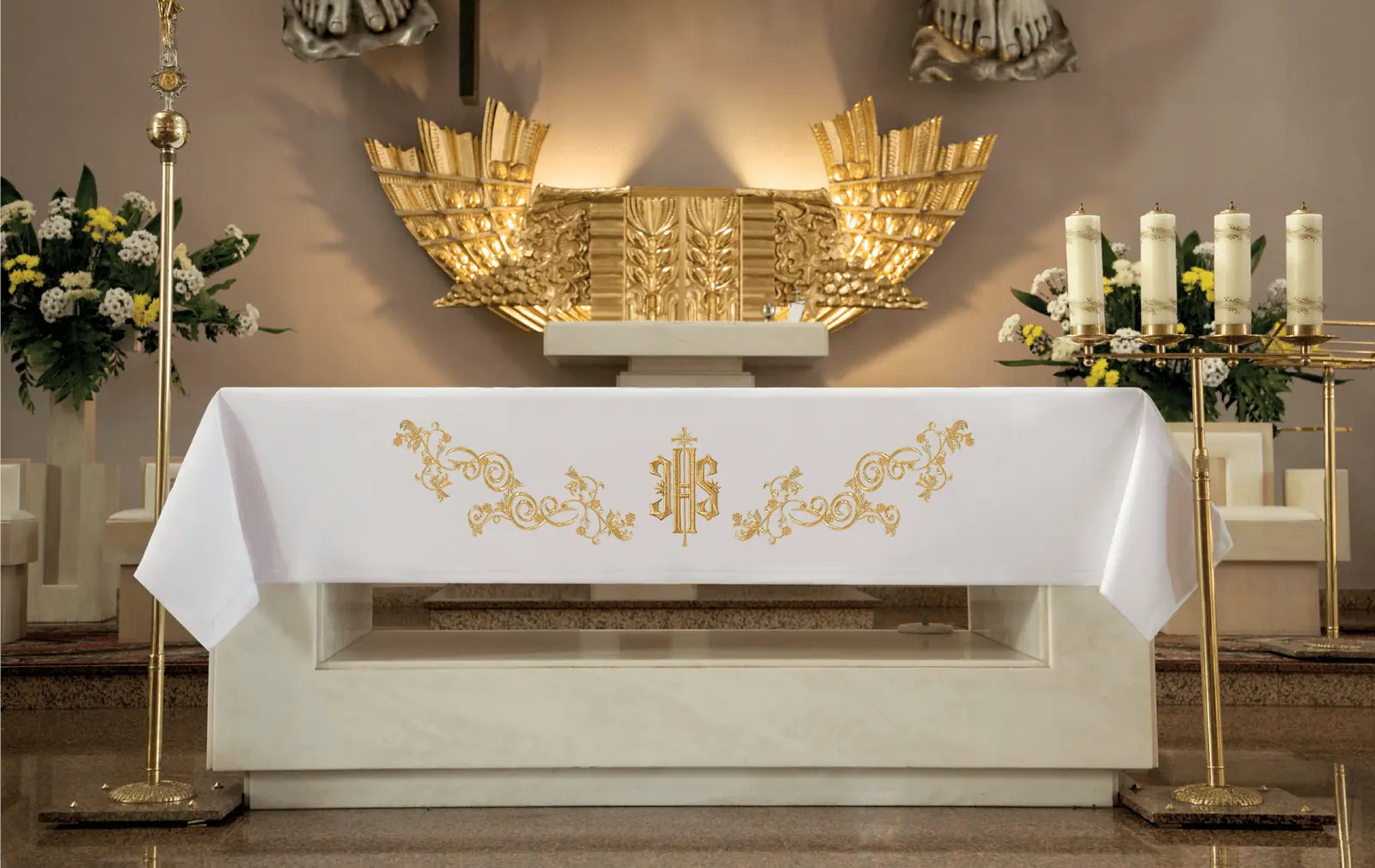
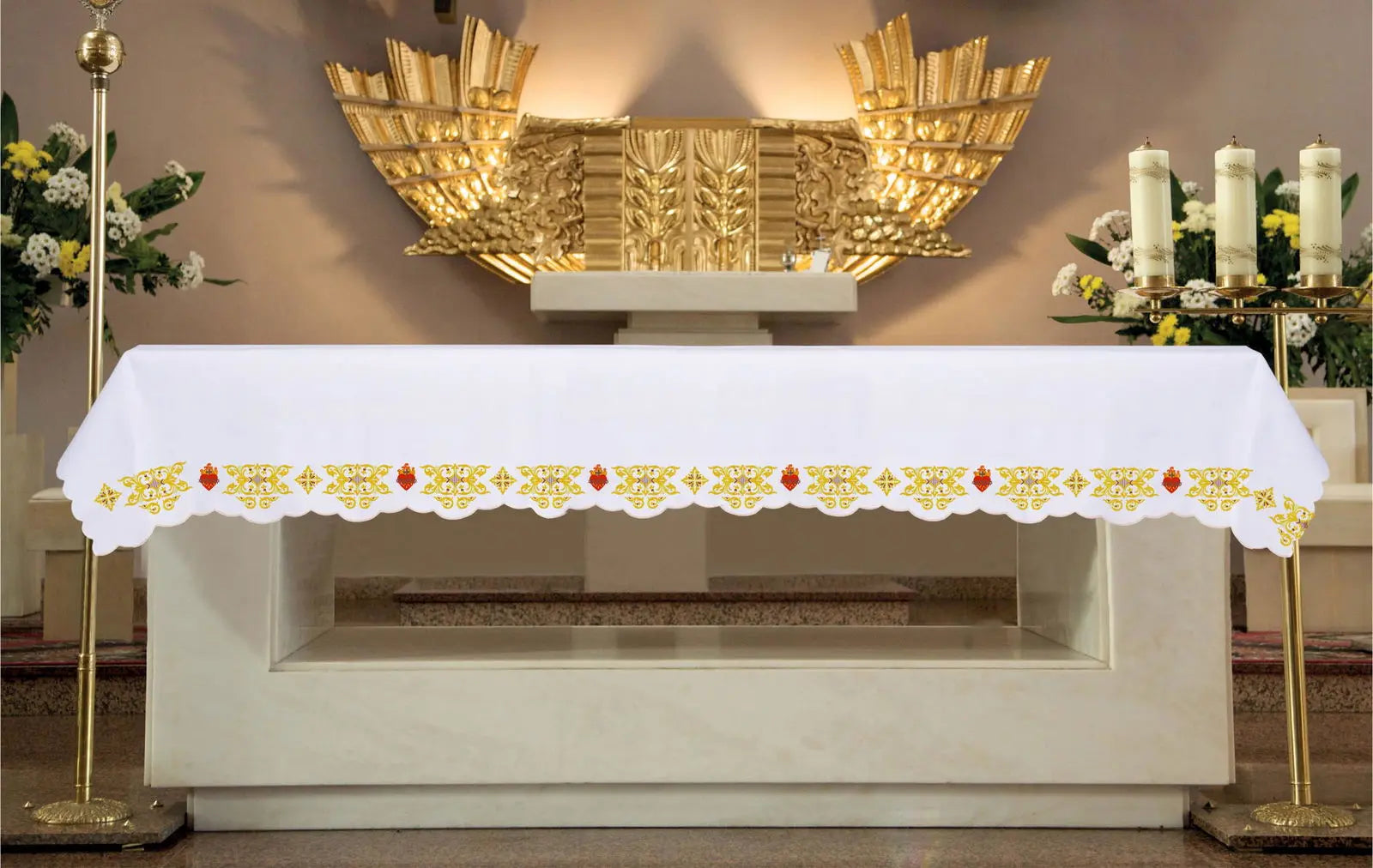
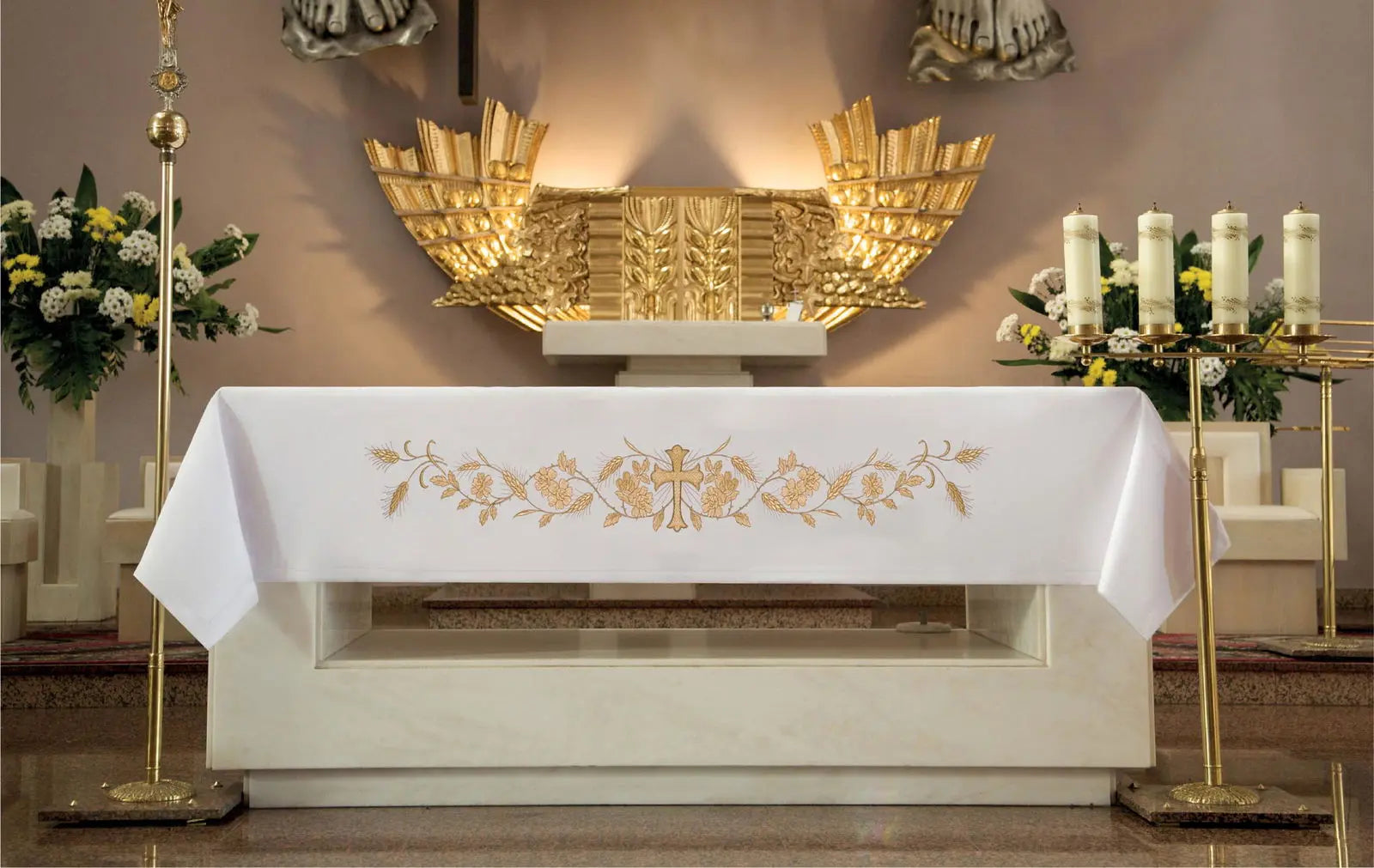
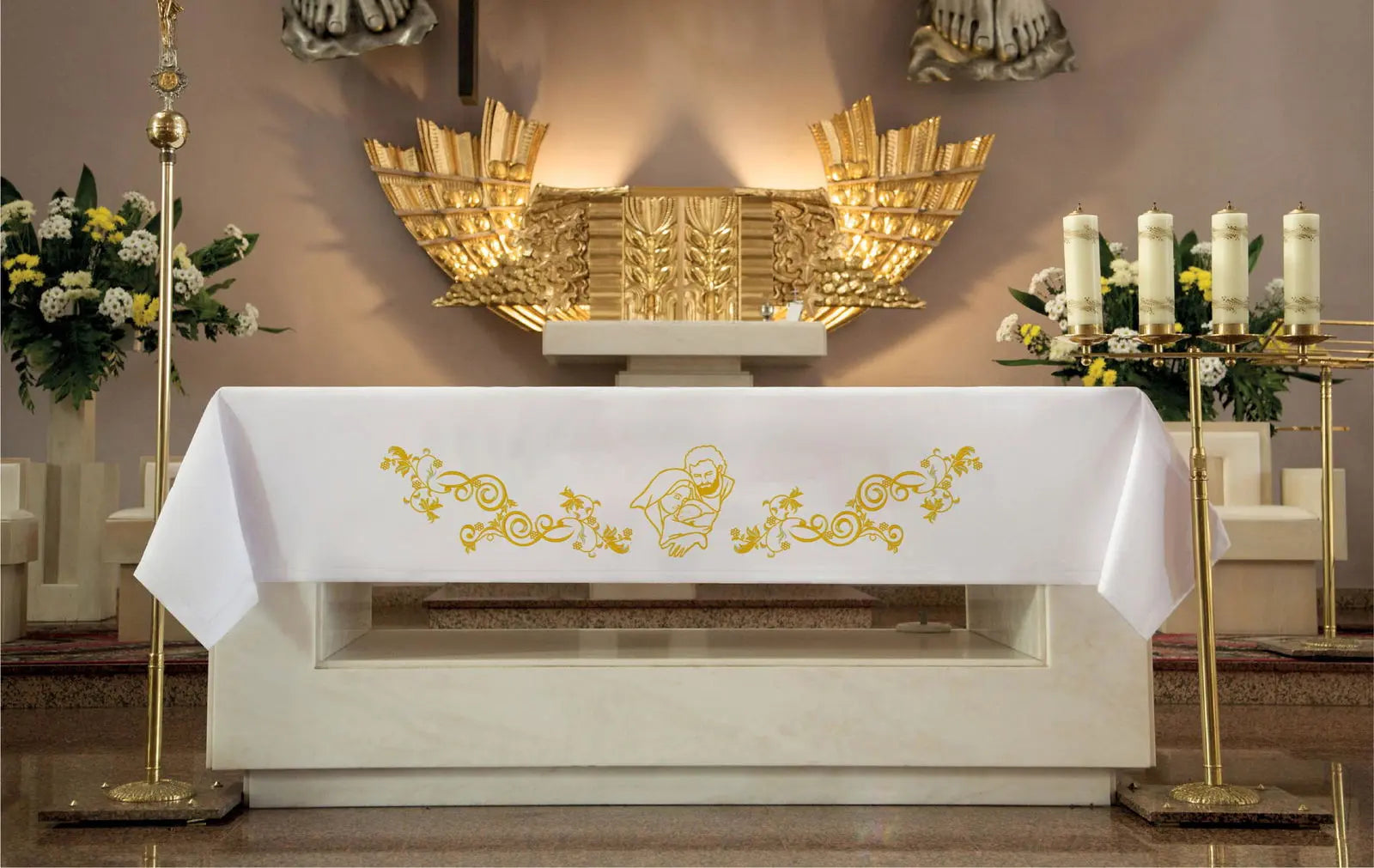
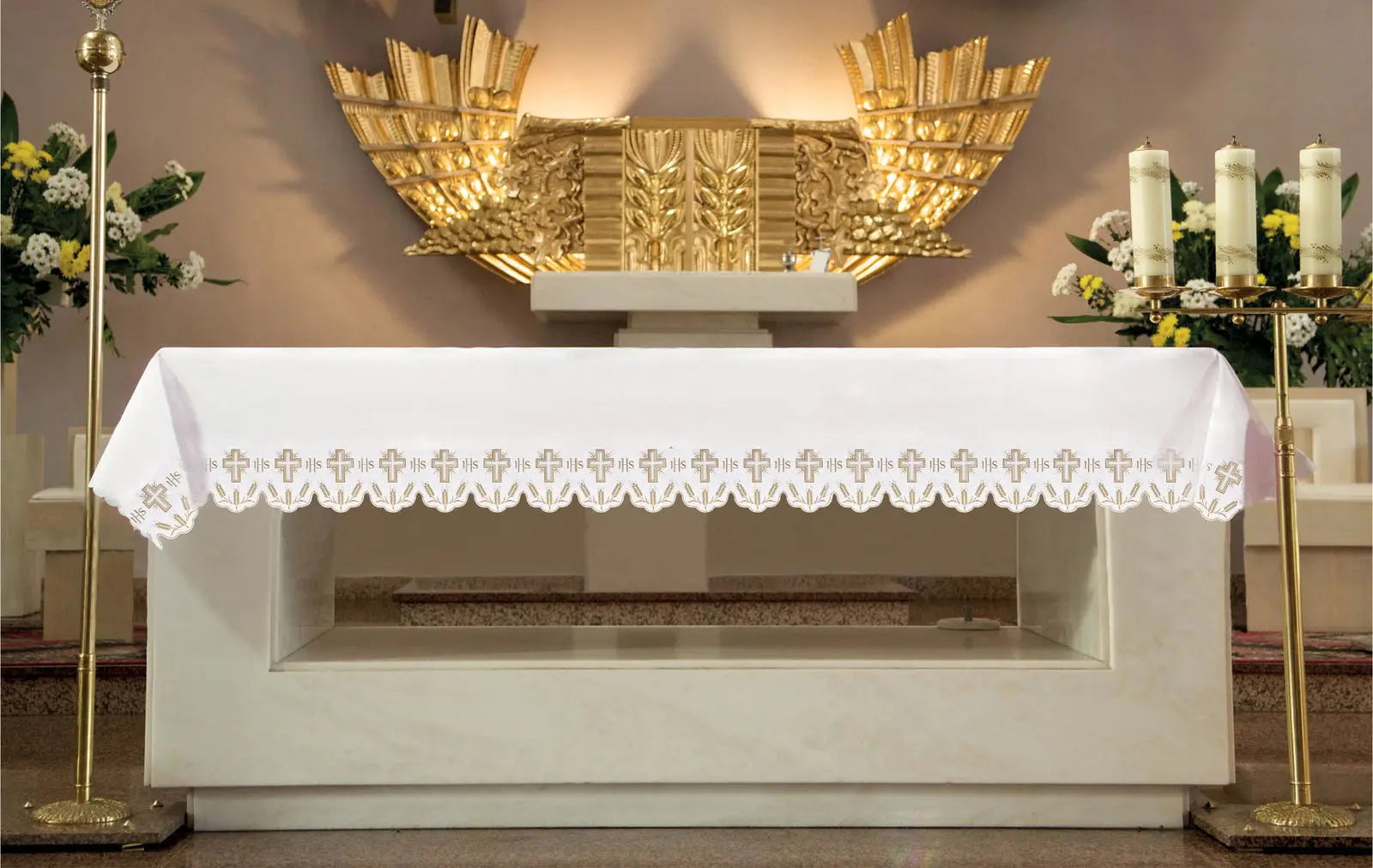
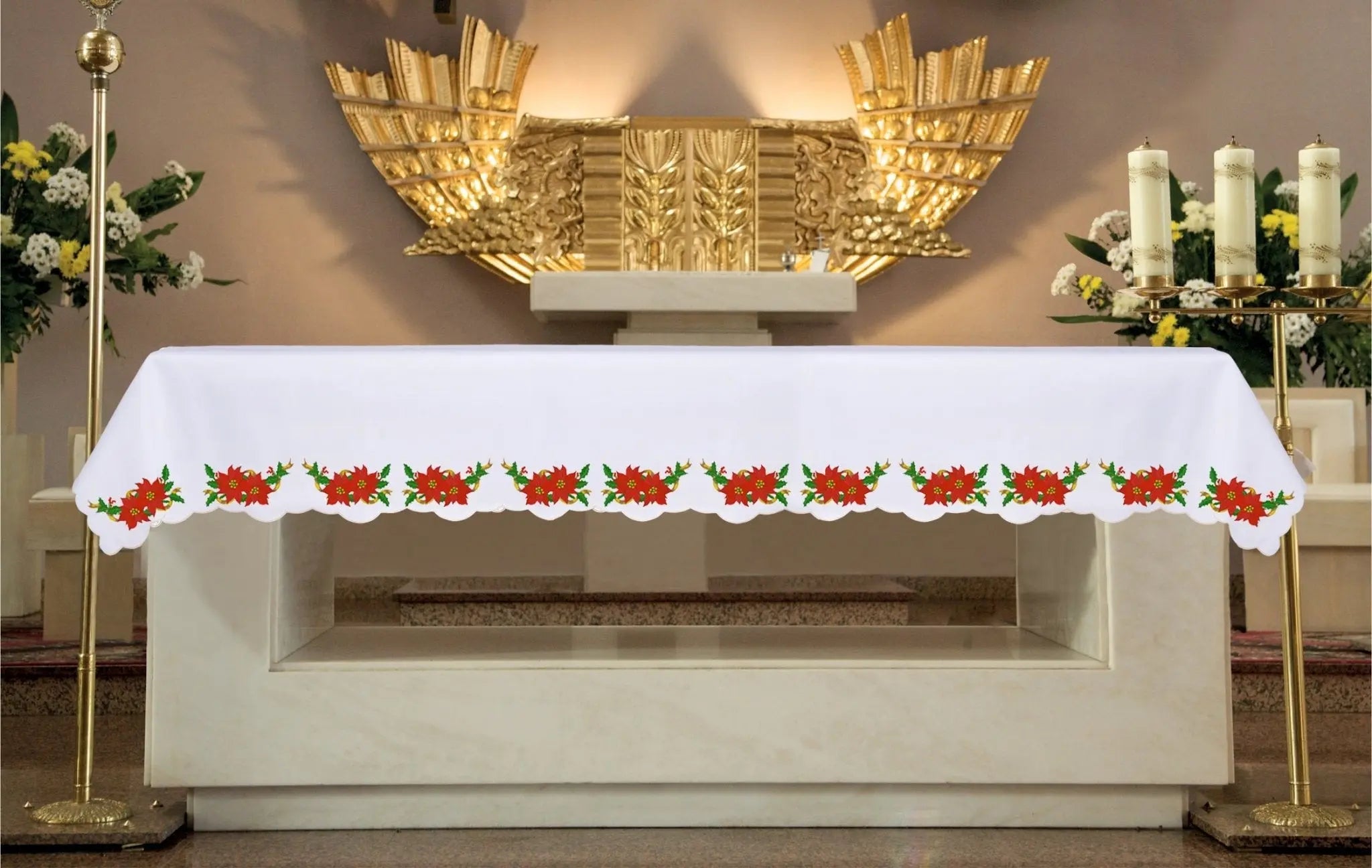
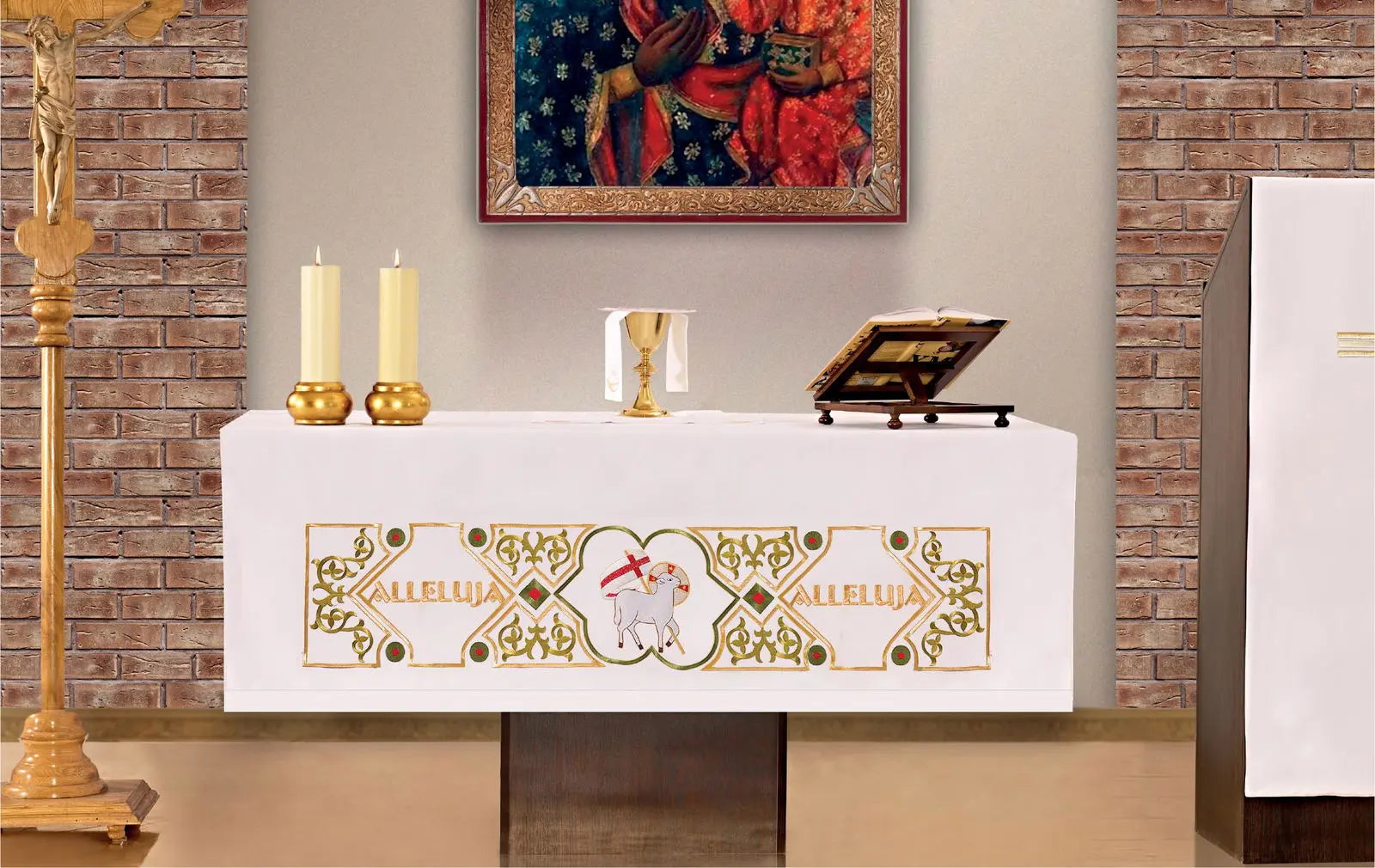
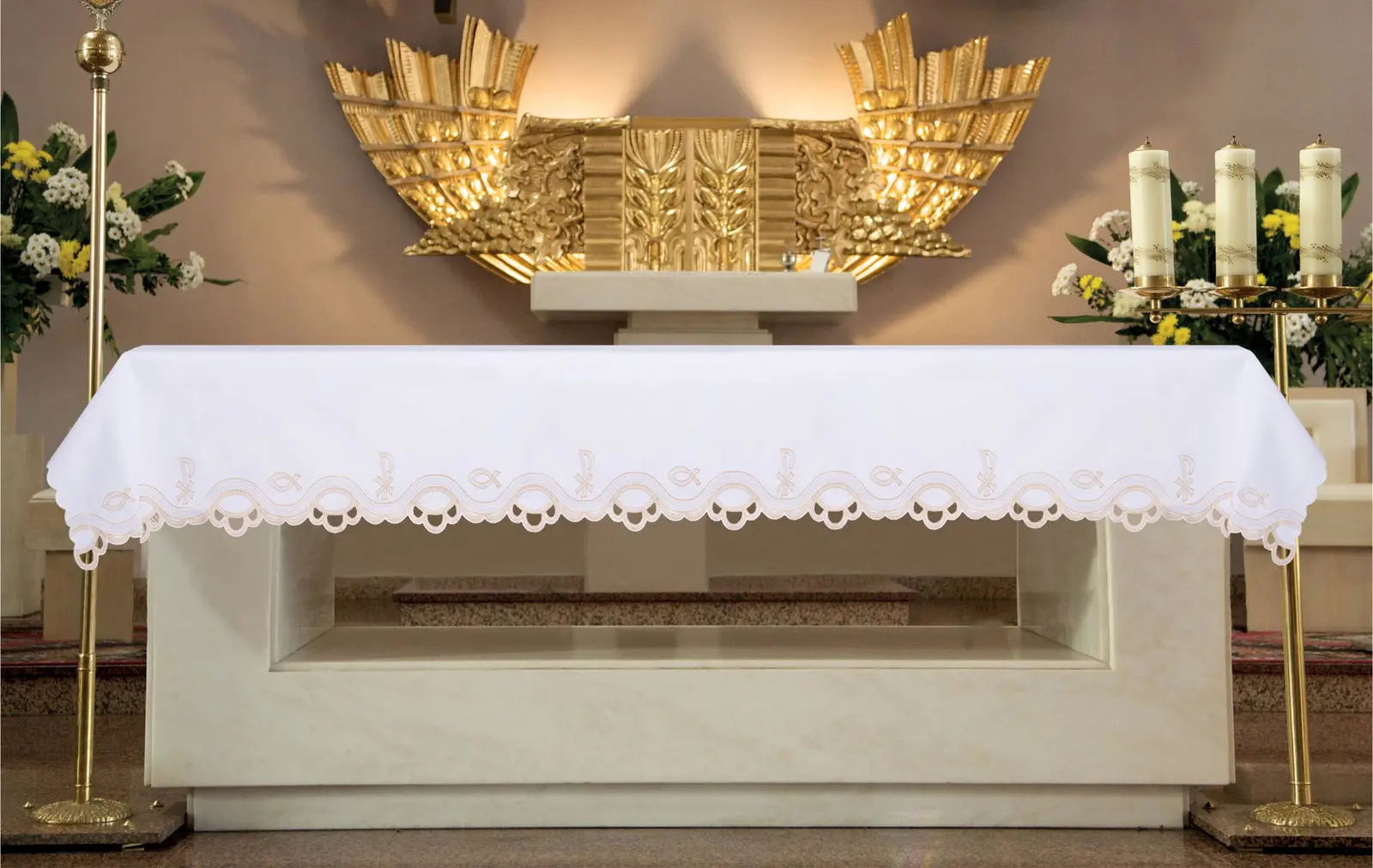
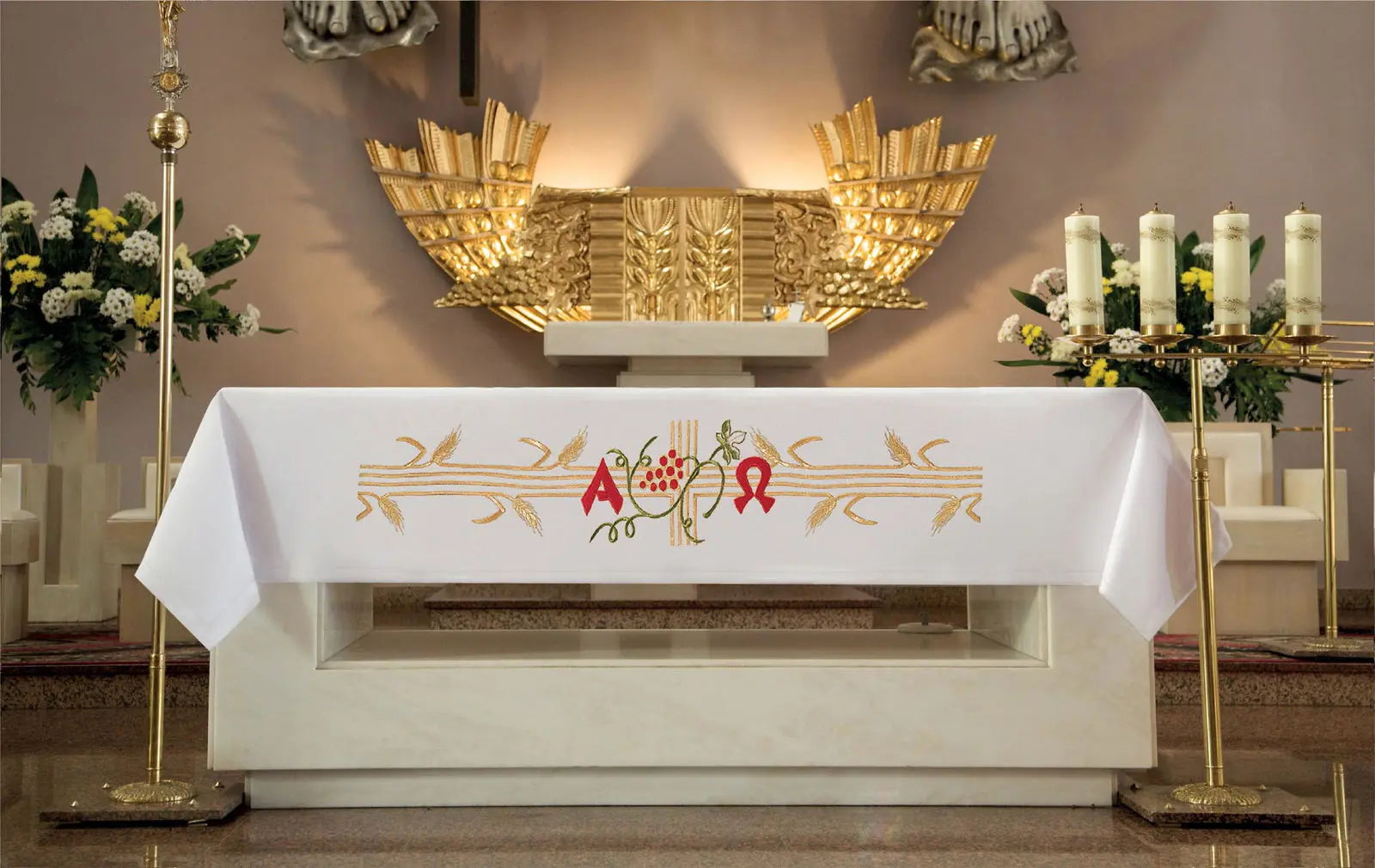
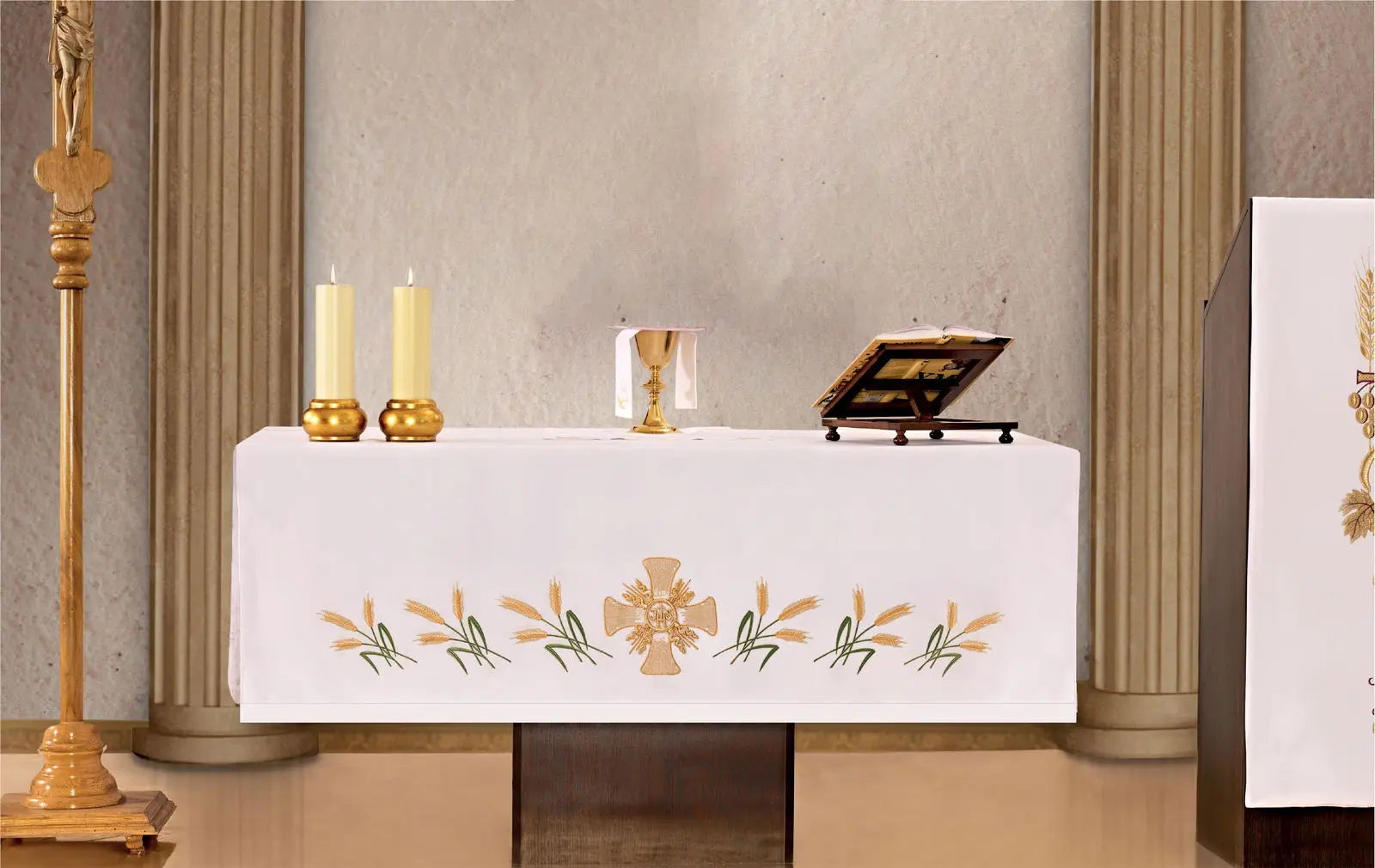
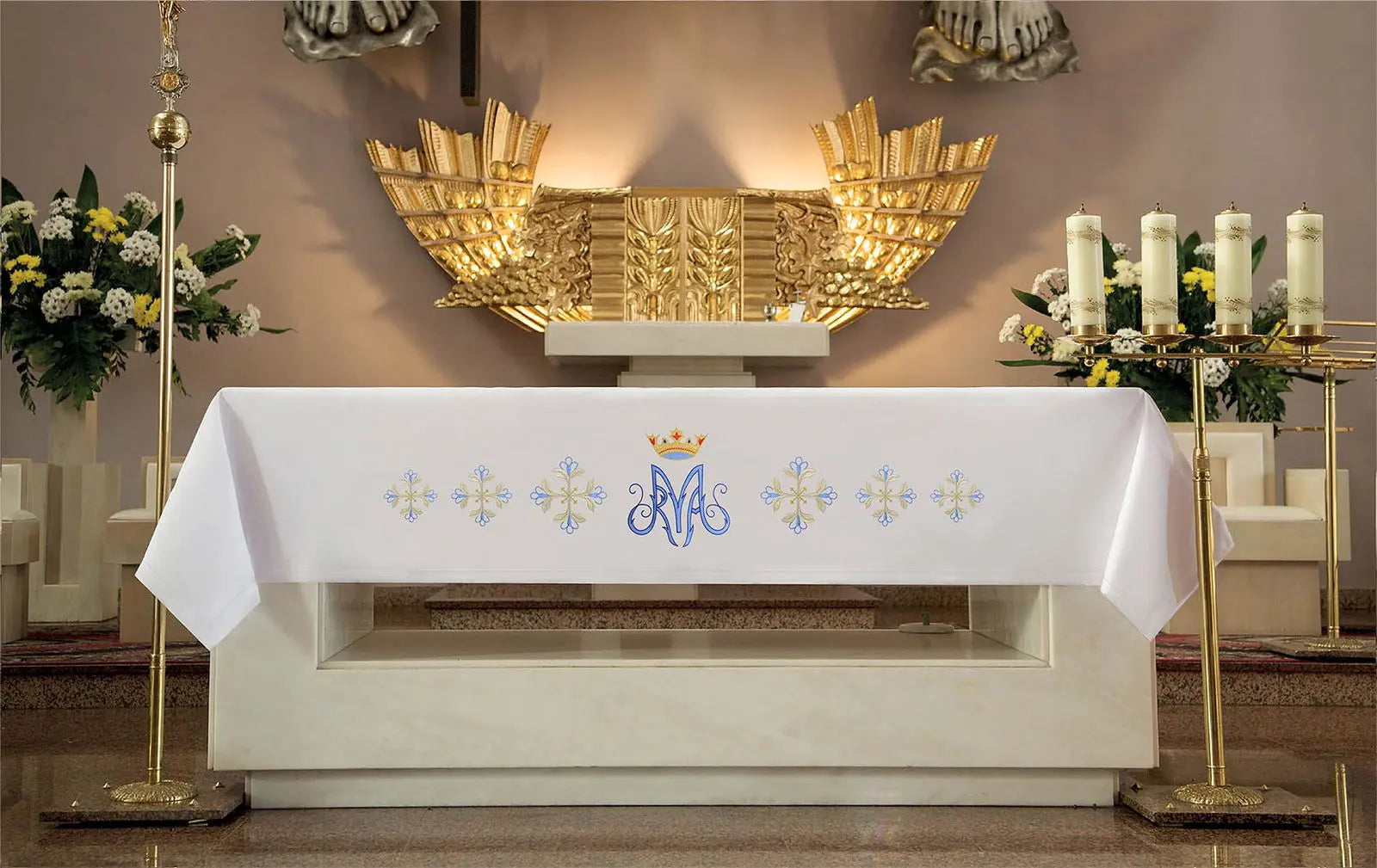
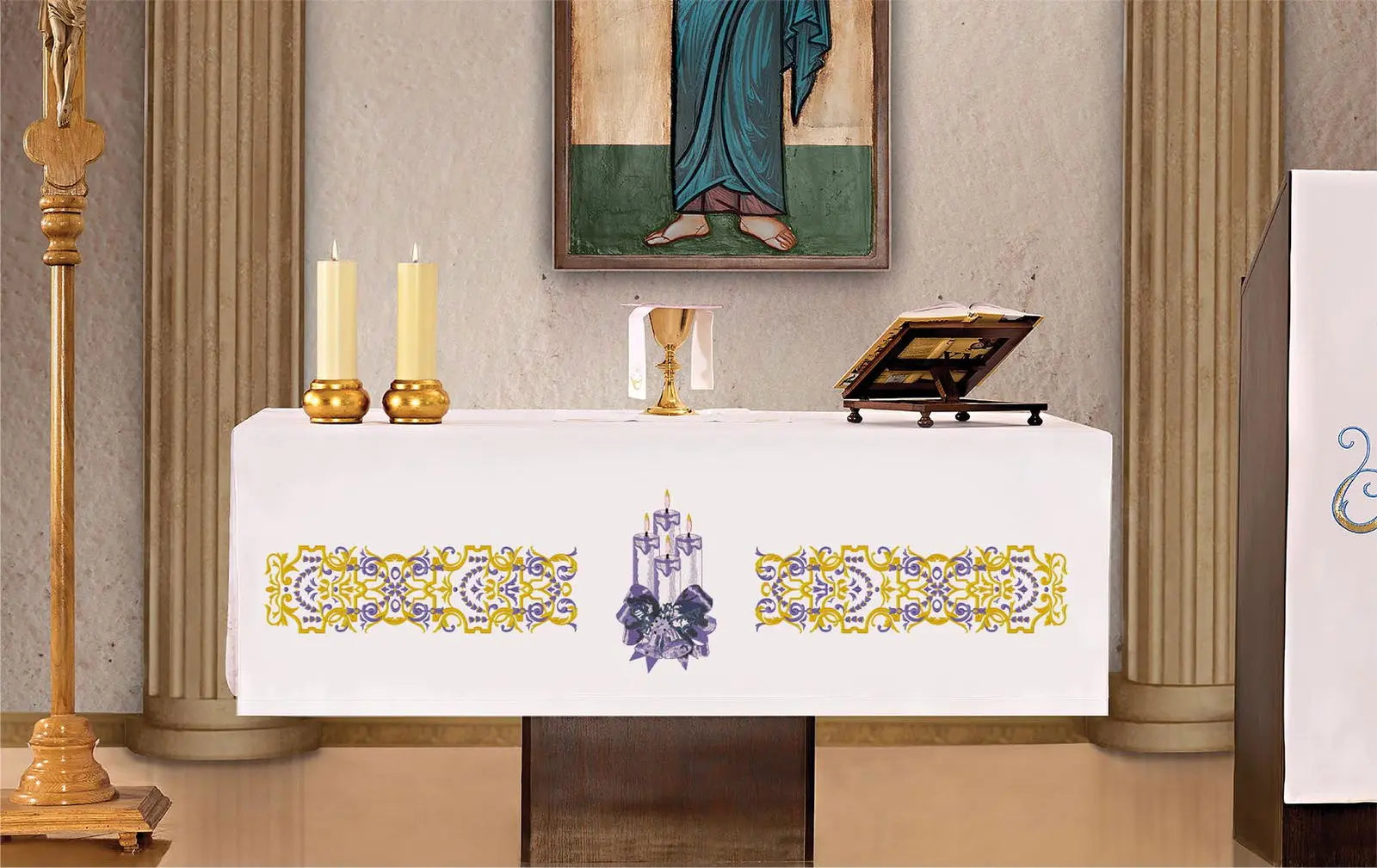
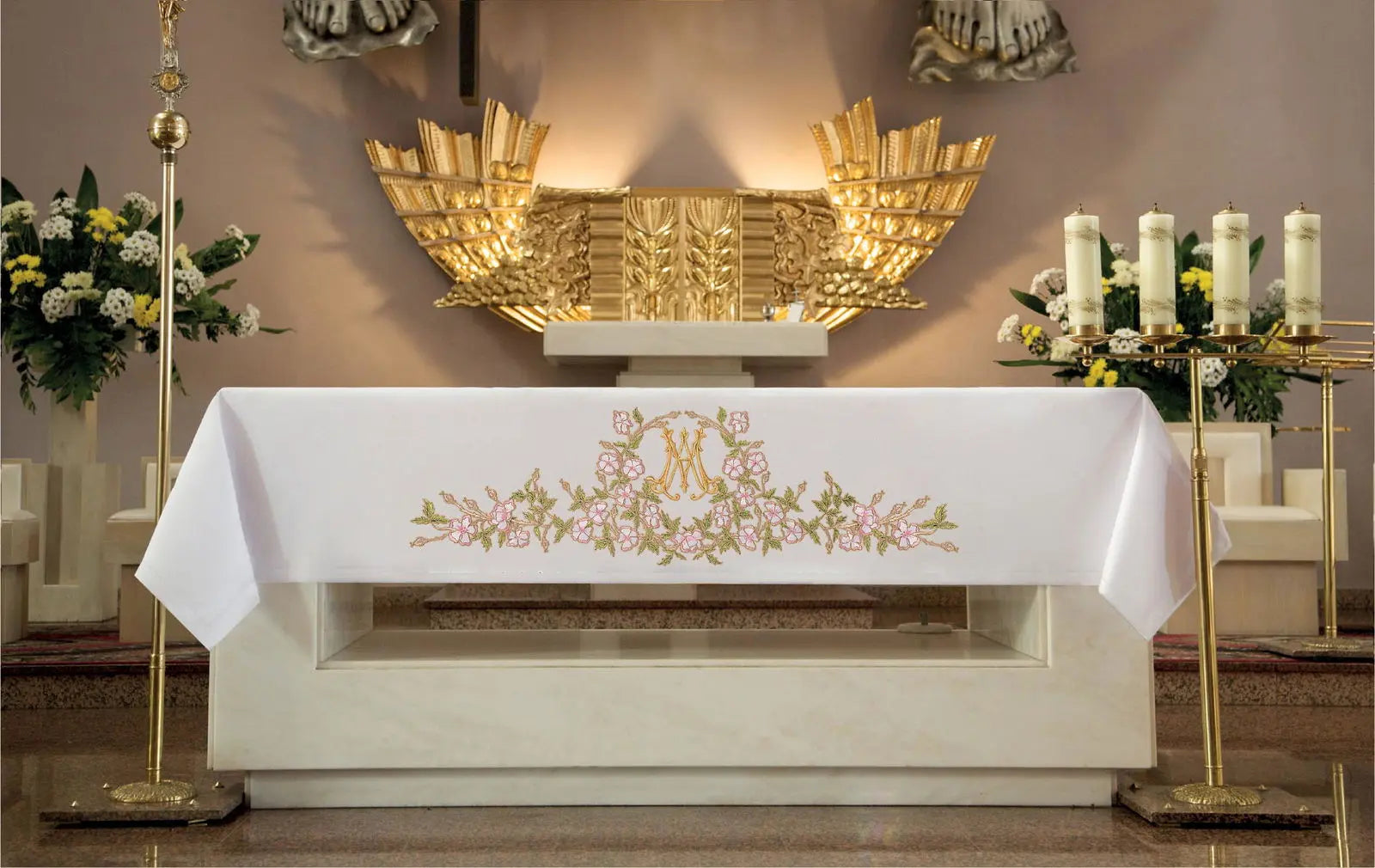
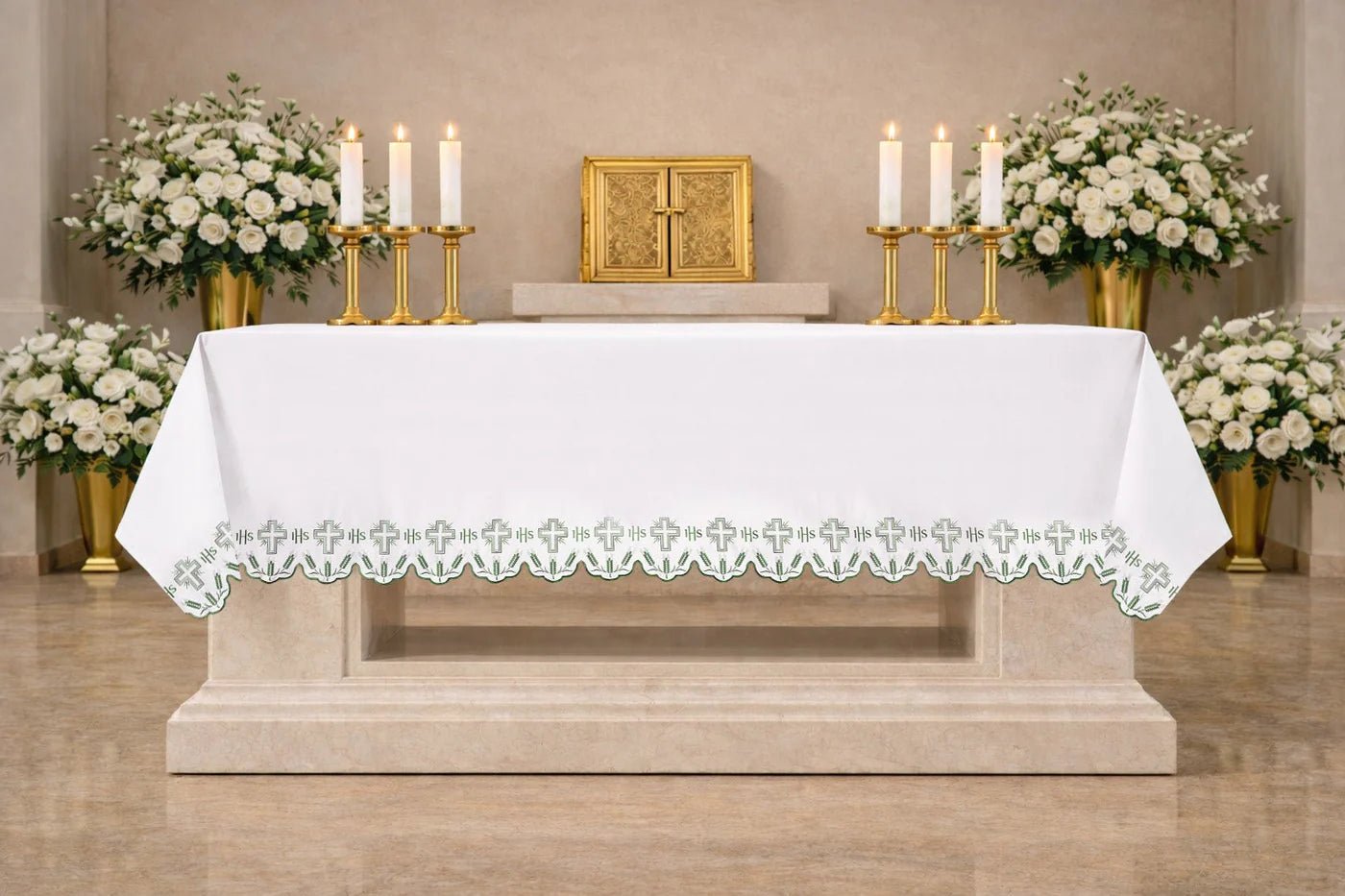
Embroidered altar cloths with frontals are made for the principal table of the church, where the celebration of the Eucharist gives the sanctuary its liturgical focus. In this collection you will find altar cloths with decorative front embroidery designed to hang visibly over the front edge of the altar. The embroidered panel allows the cloth to serve both a practical and symbolic purpose: it covers the altar with dignity, while sacred motifs on the frontal help express the character of the feast, season, parish patronage or devotional setting.
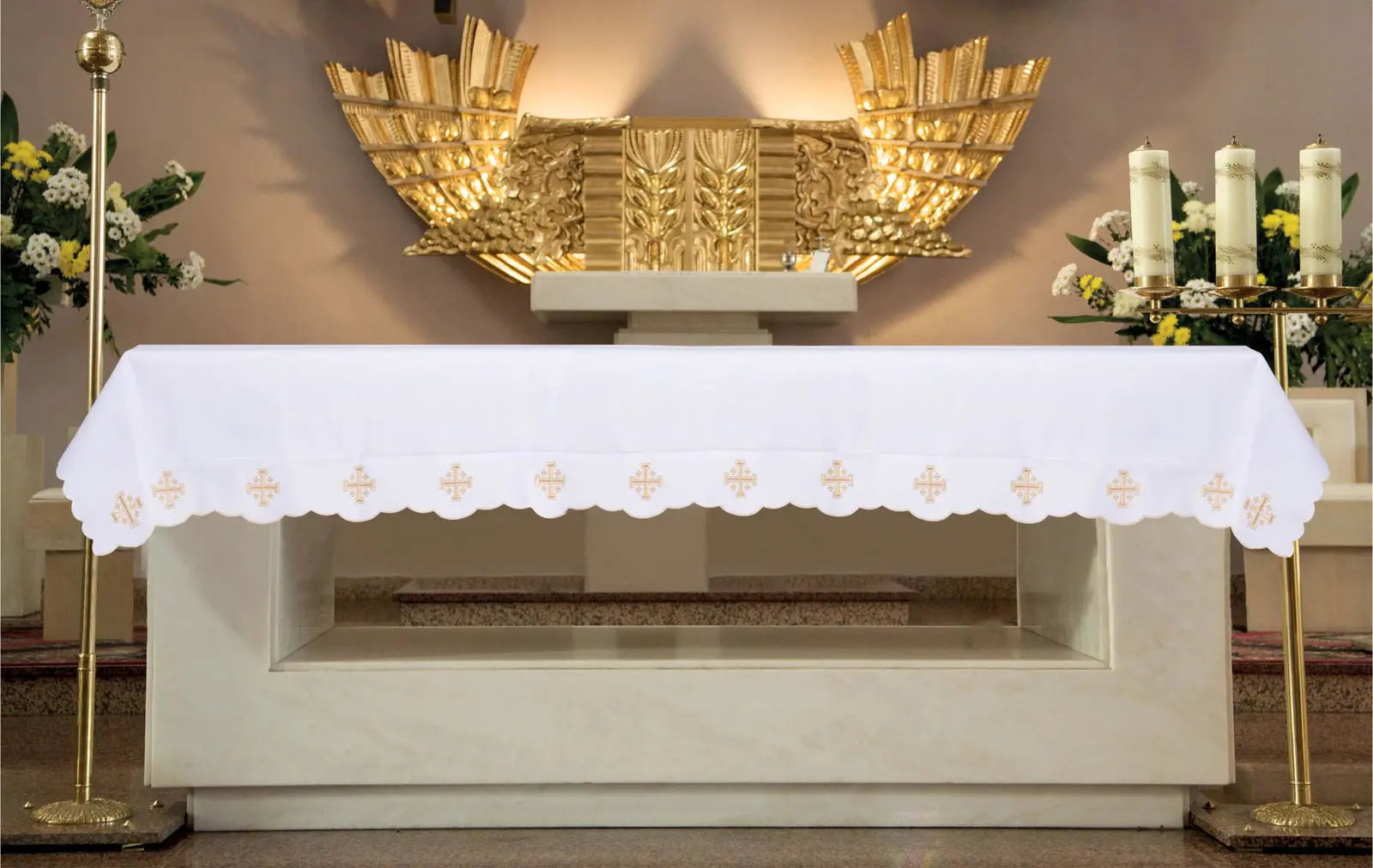
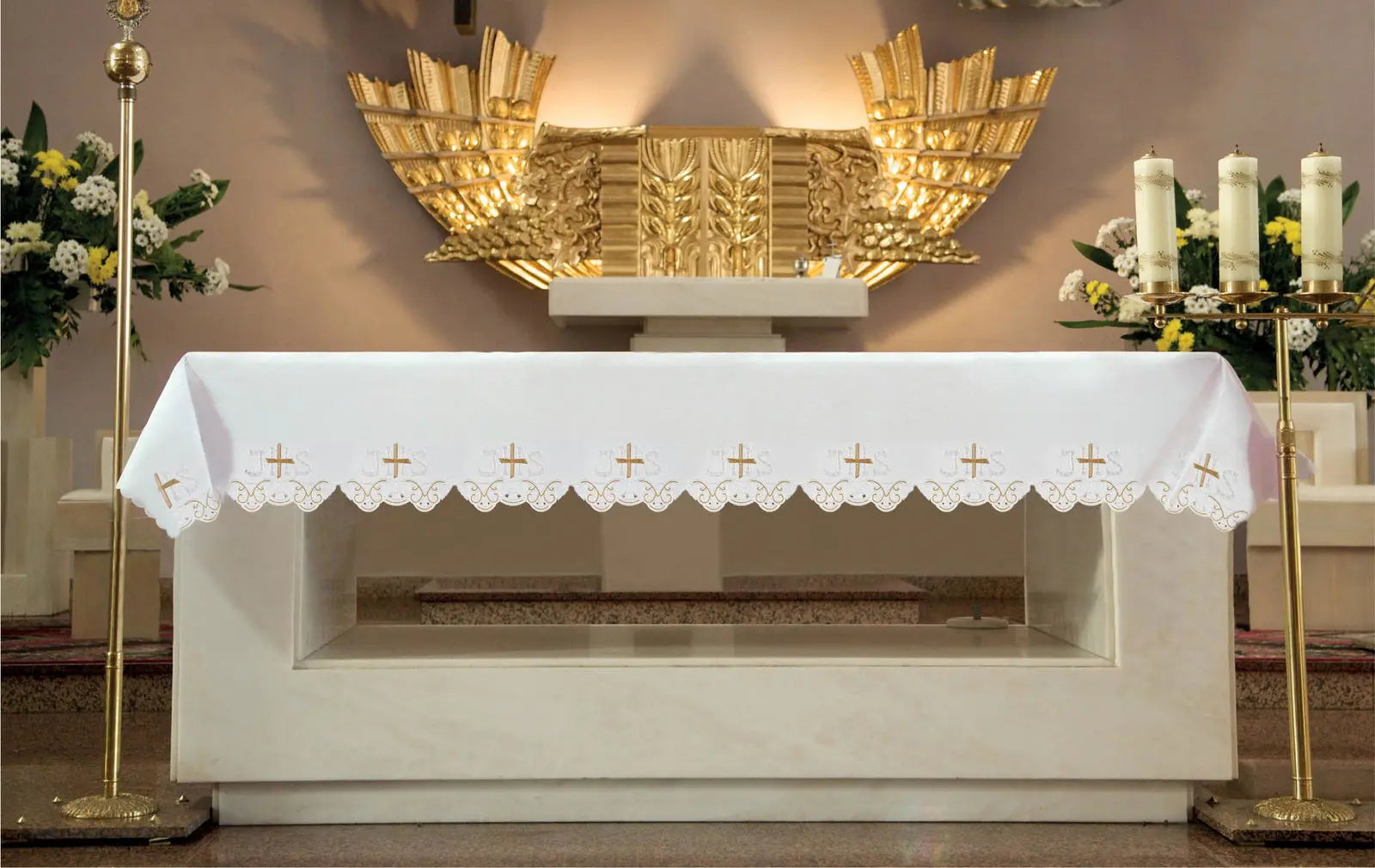
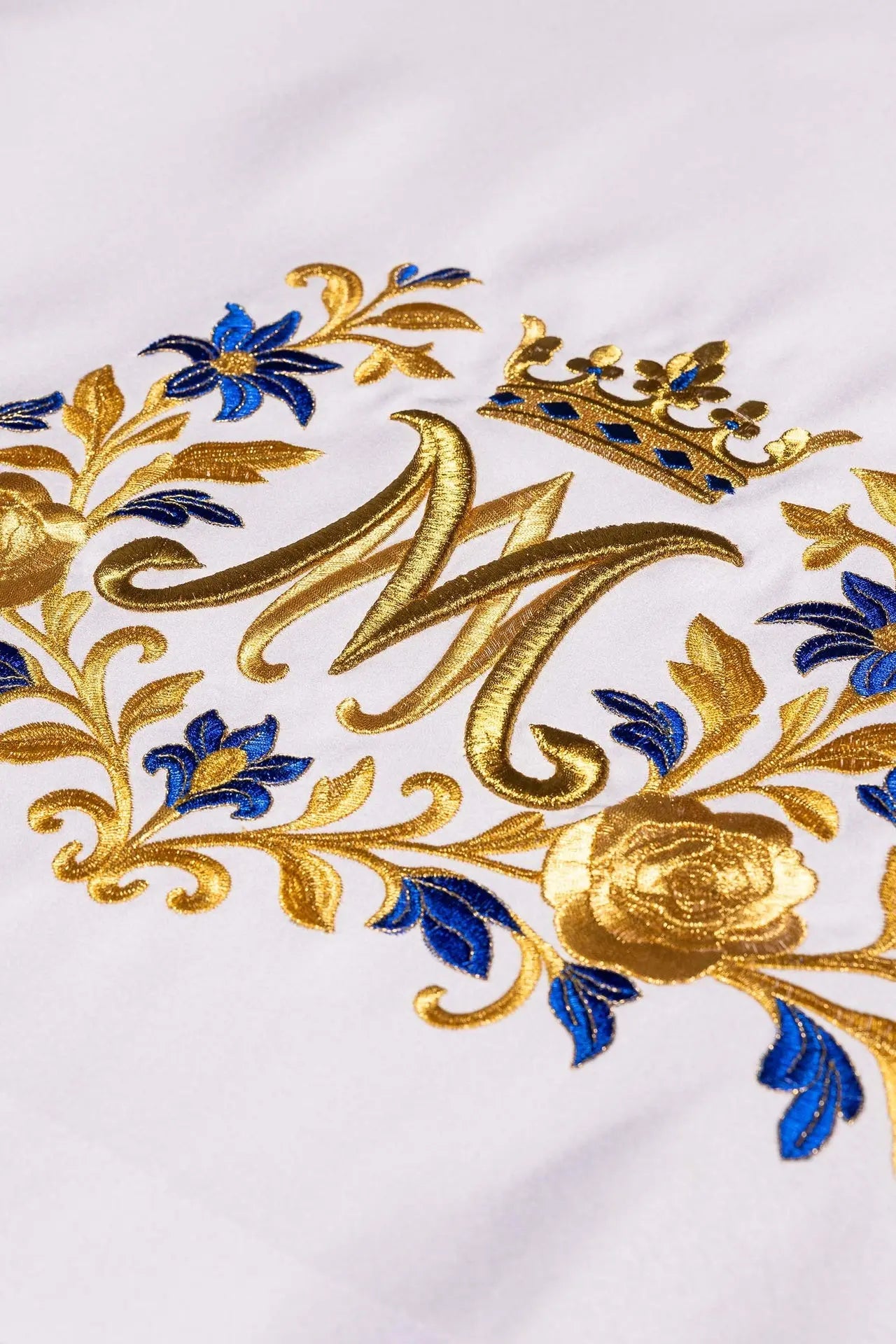
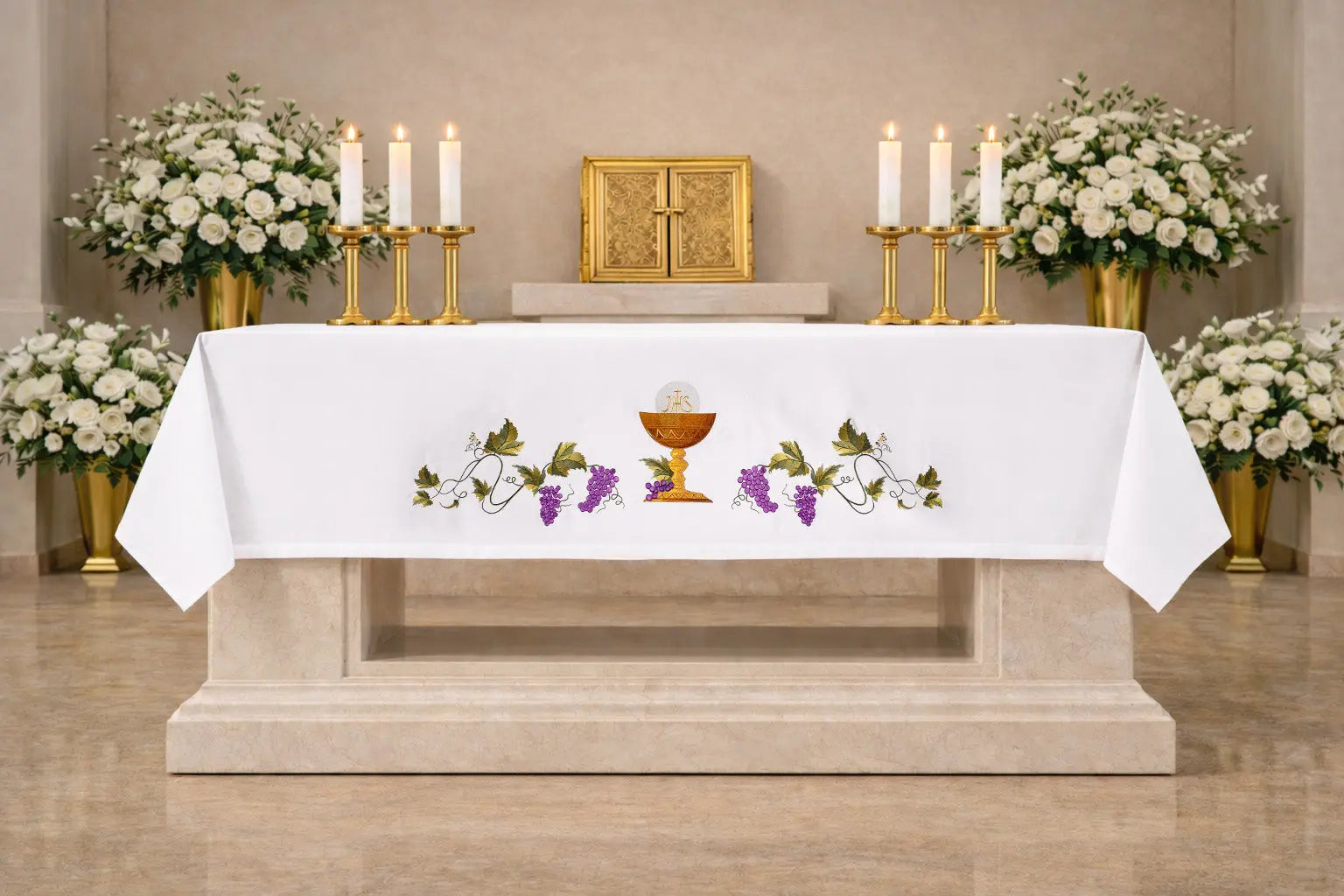
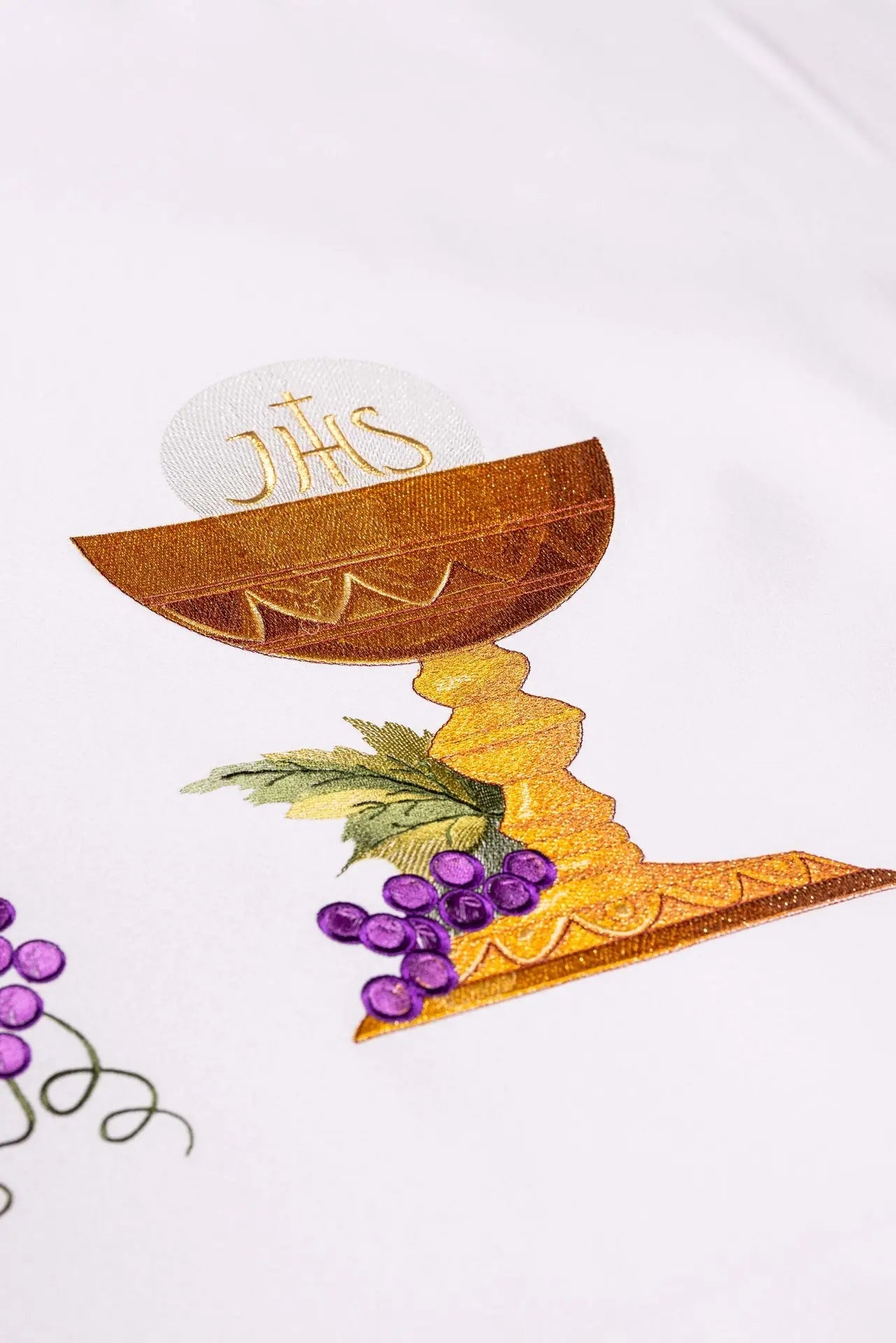
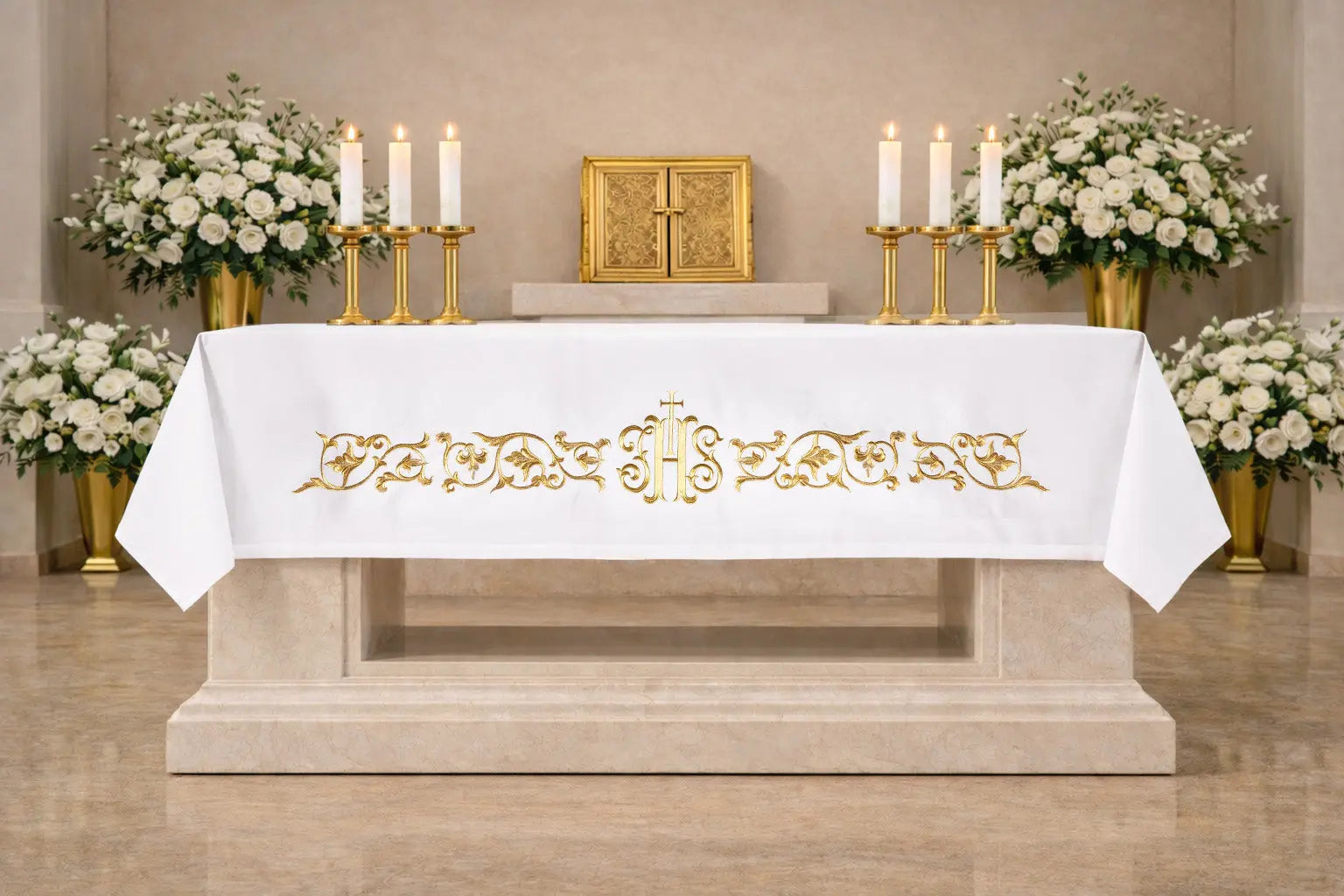
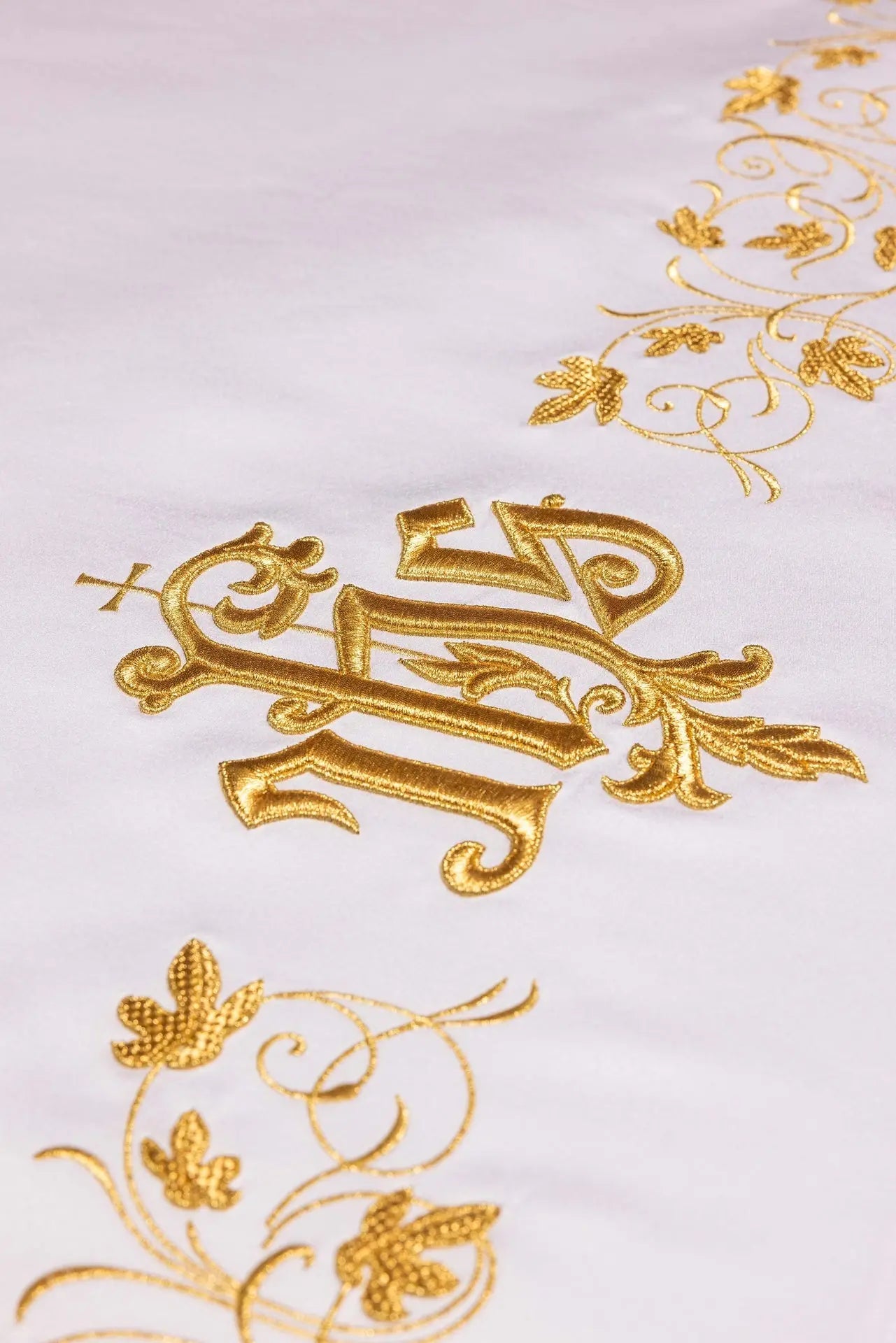
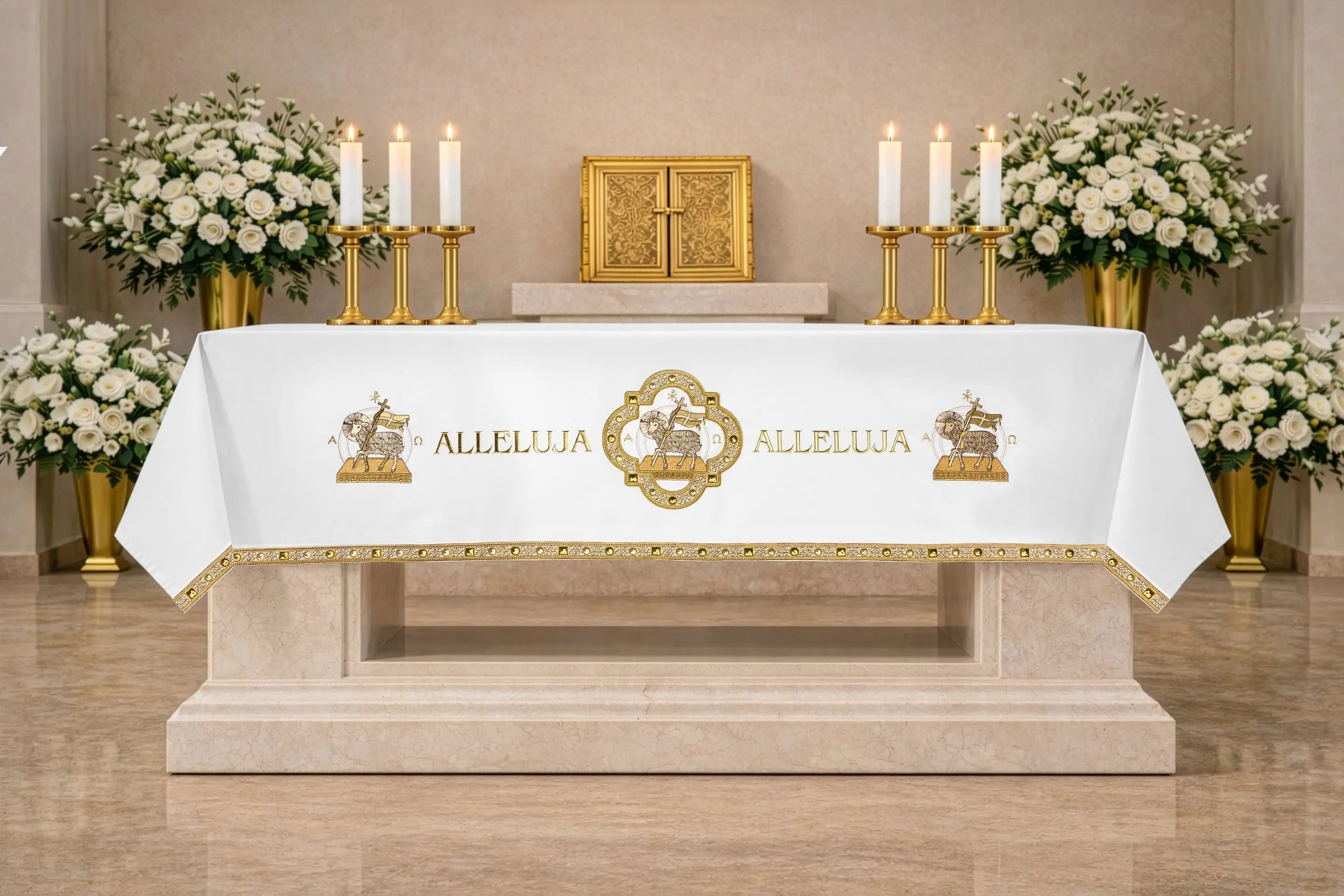
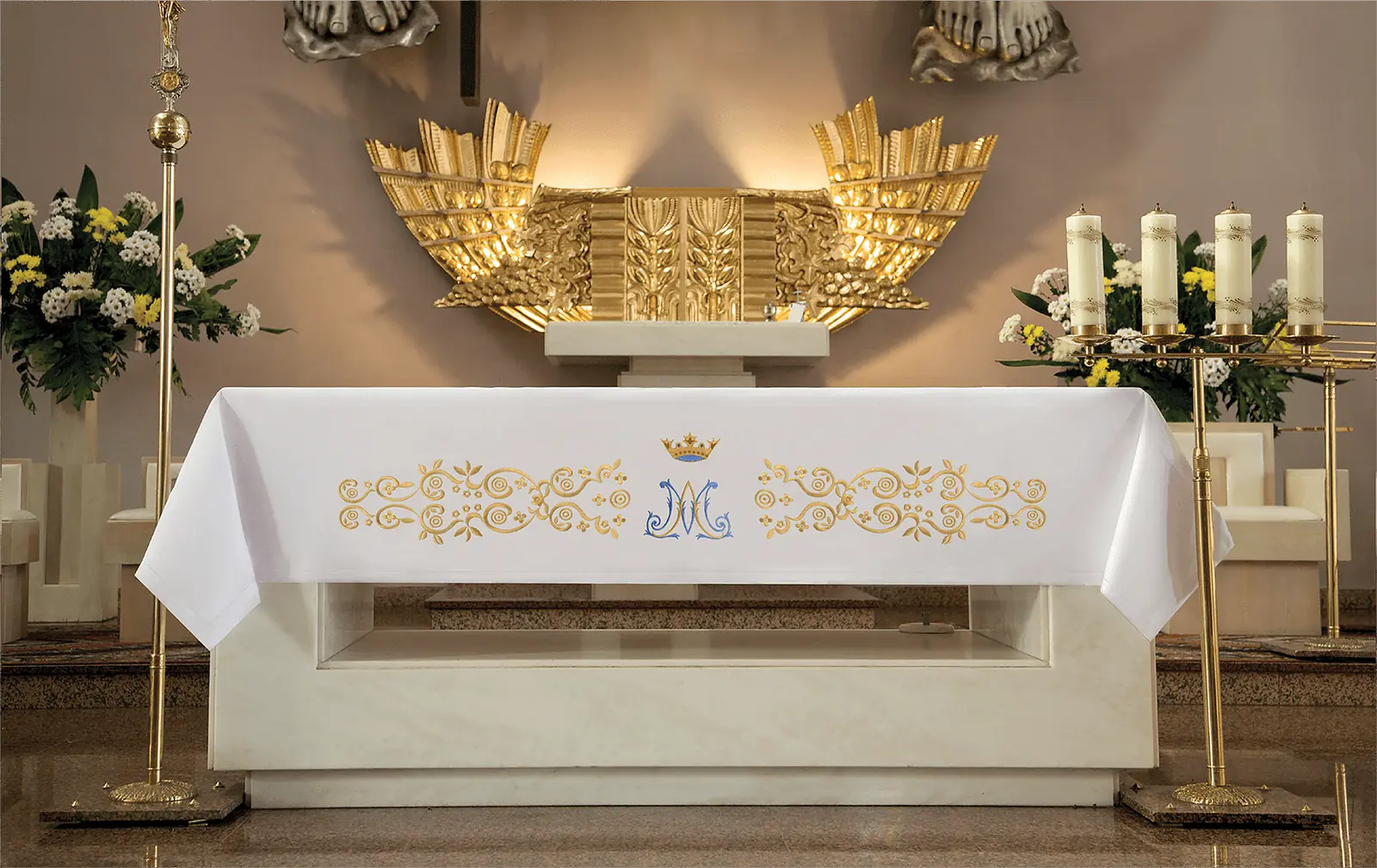
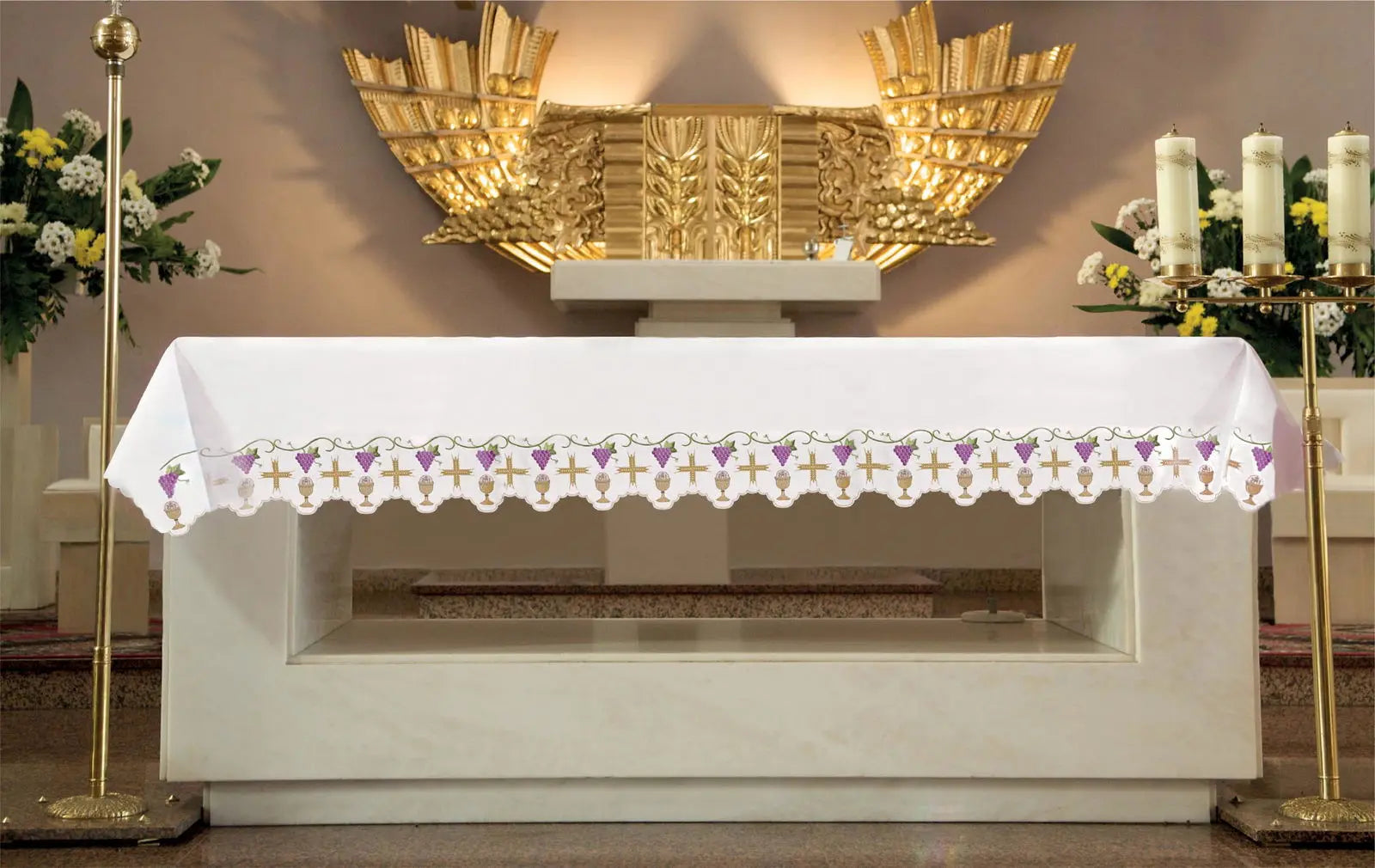
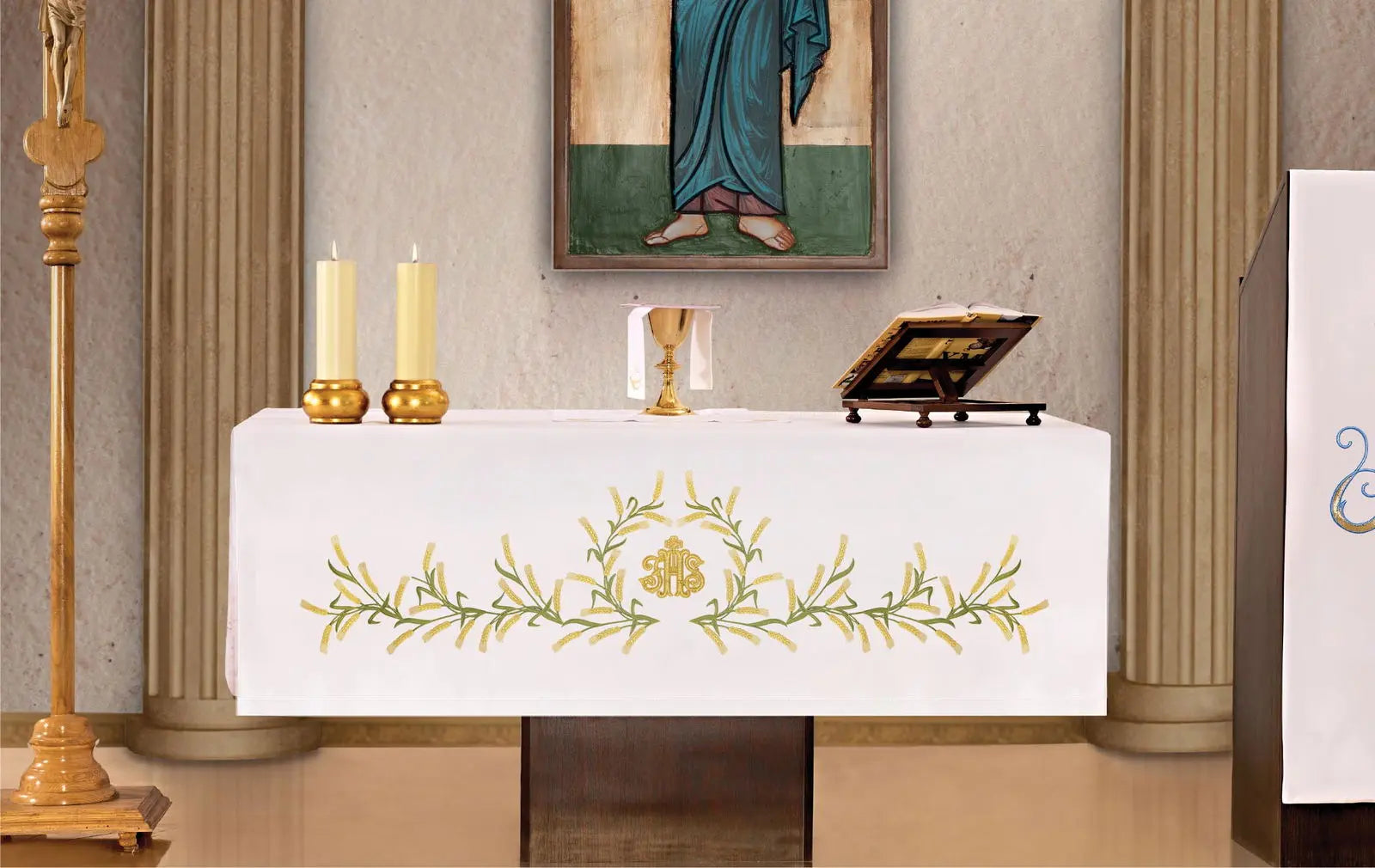
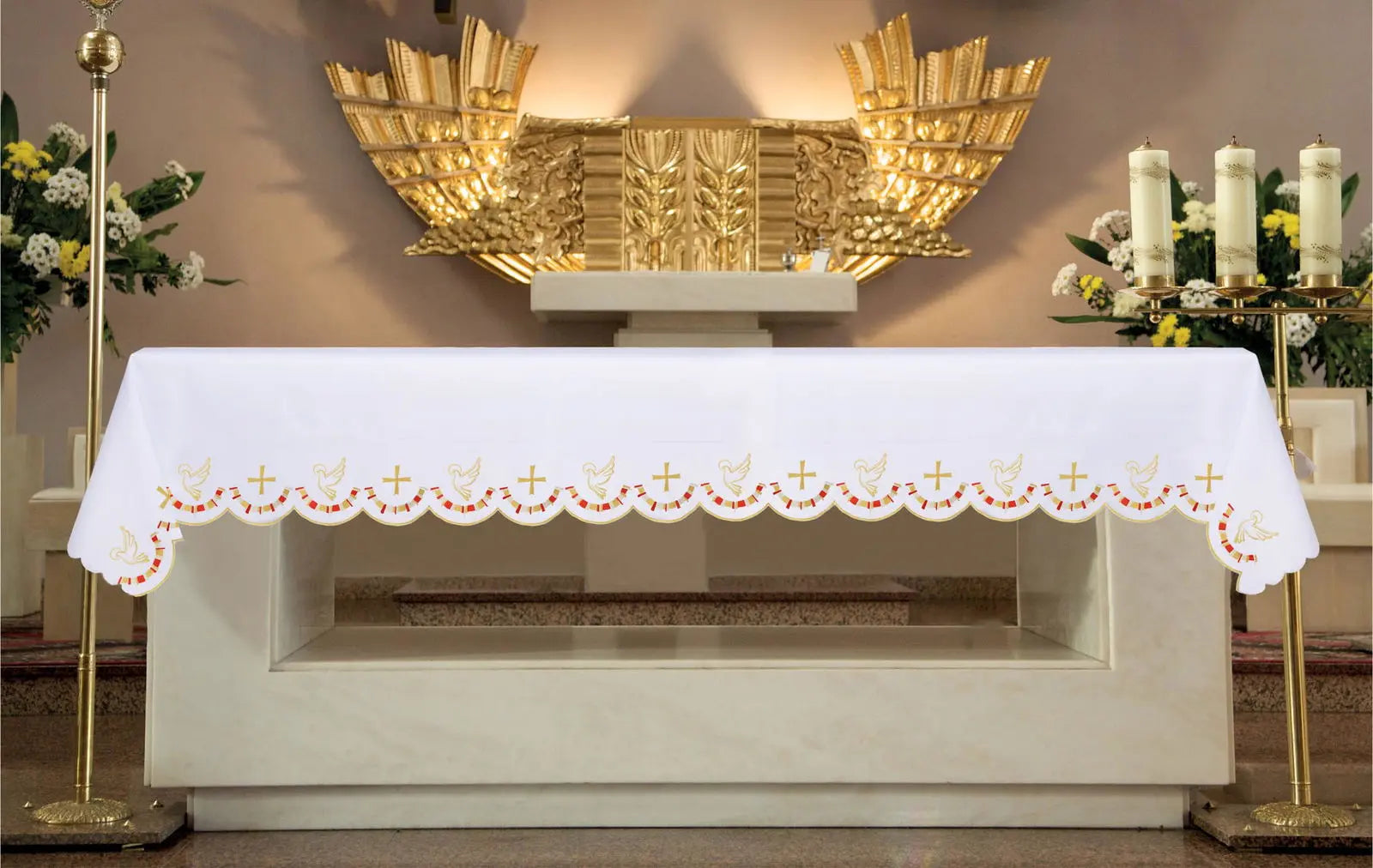
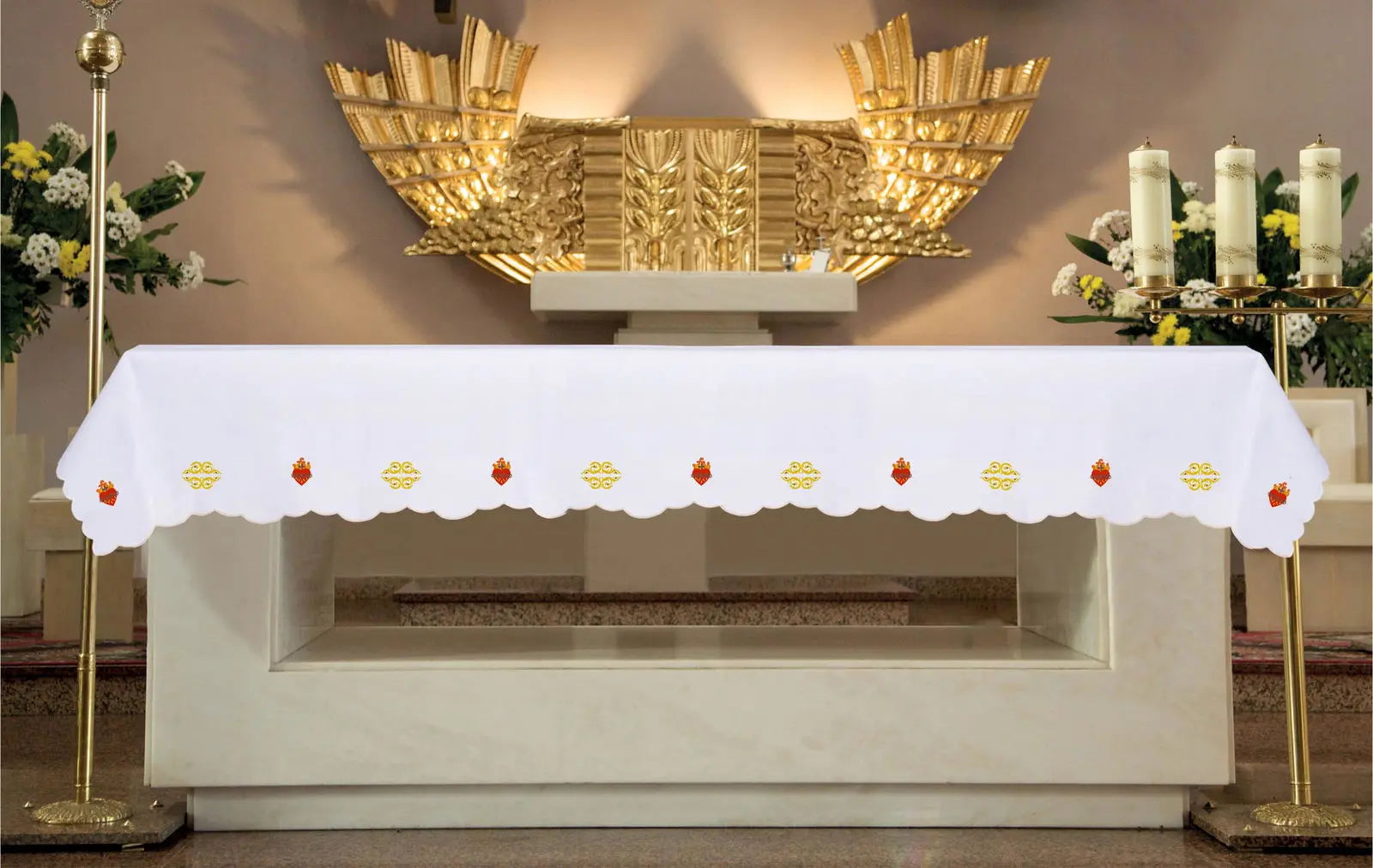
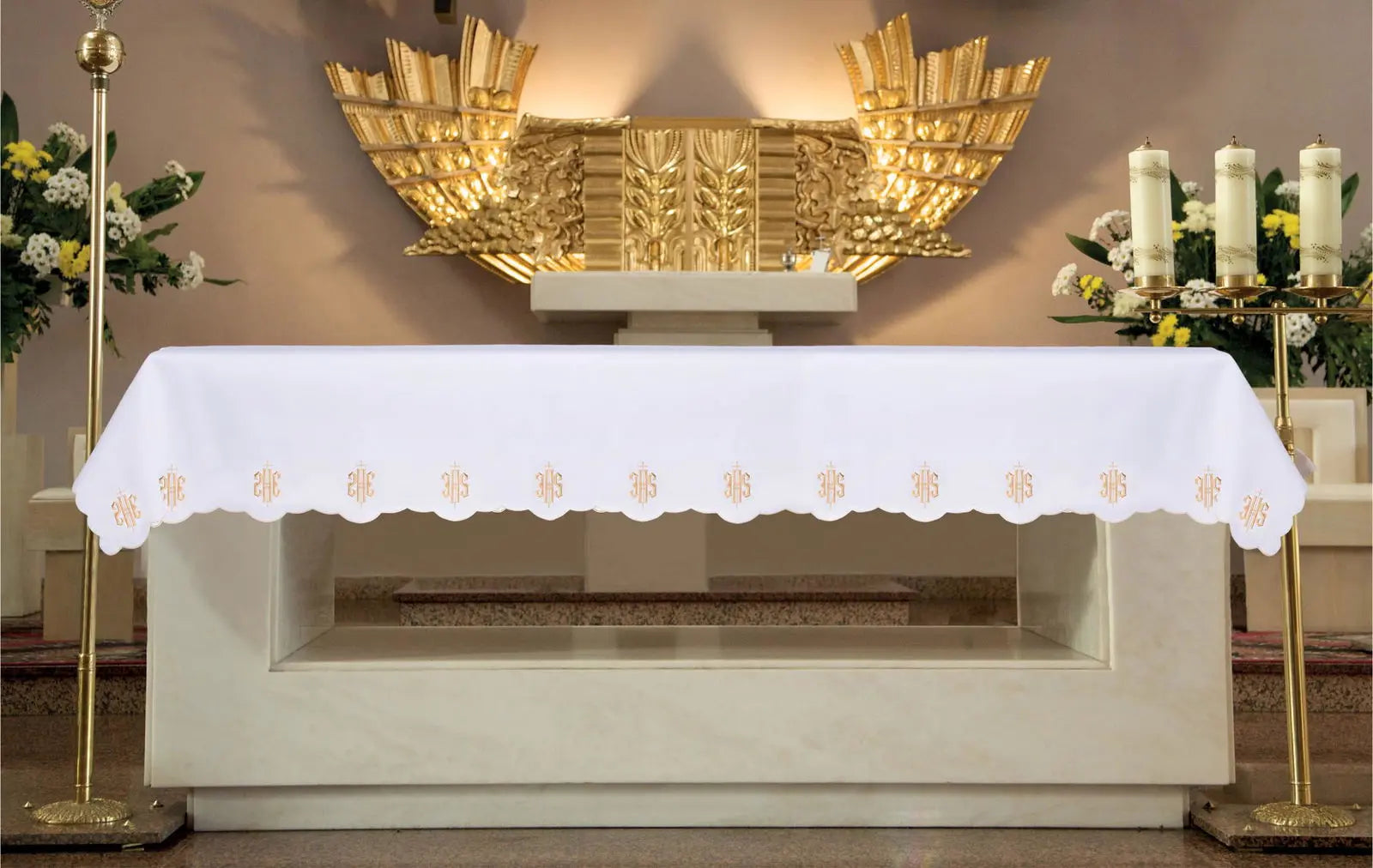
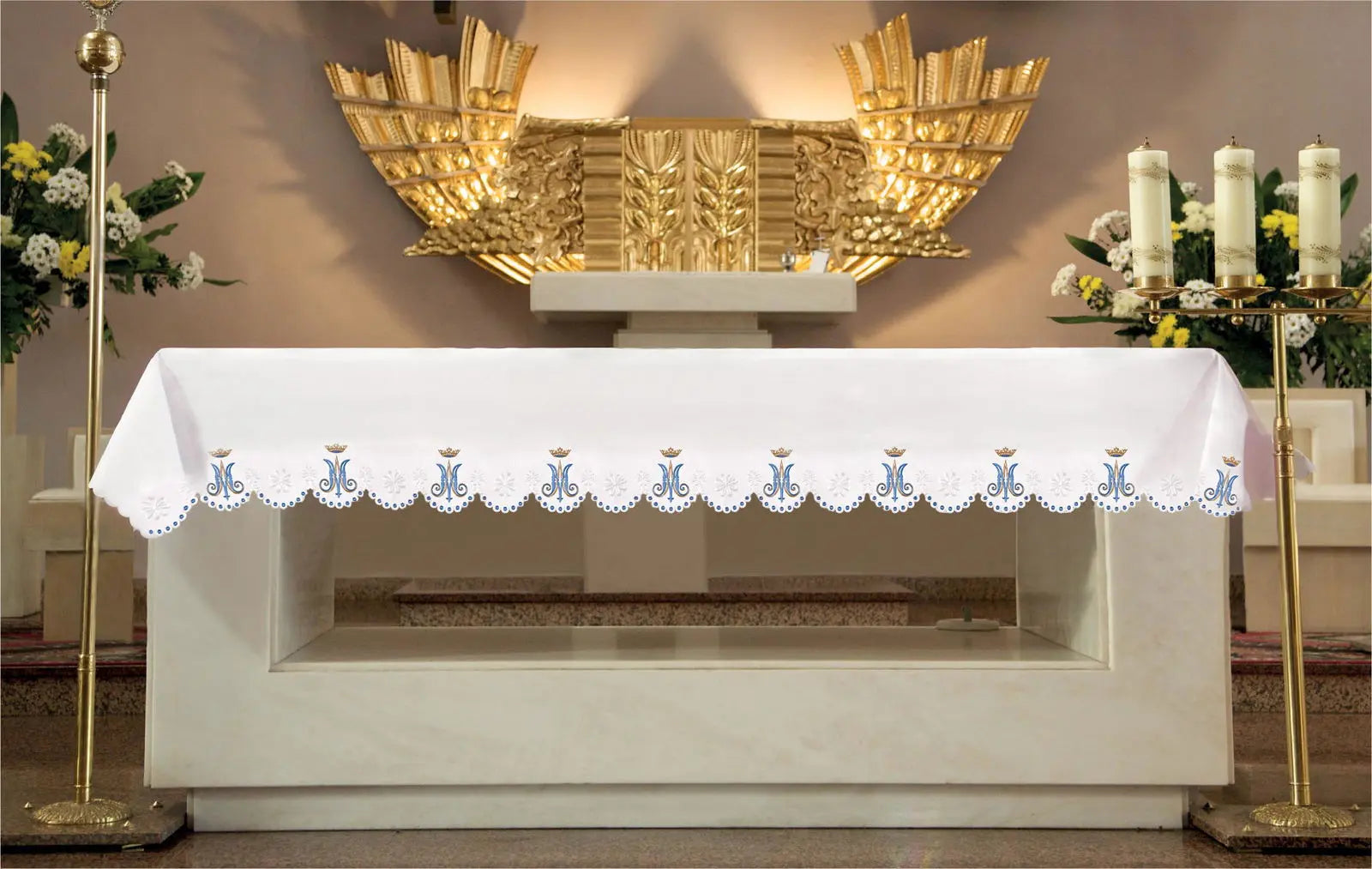
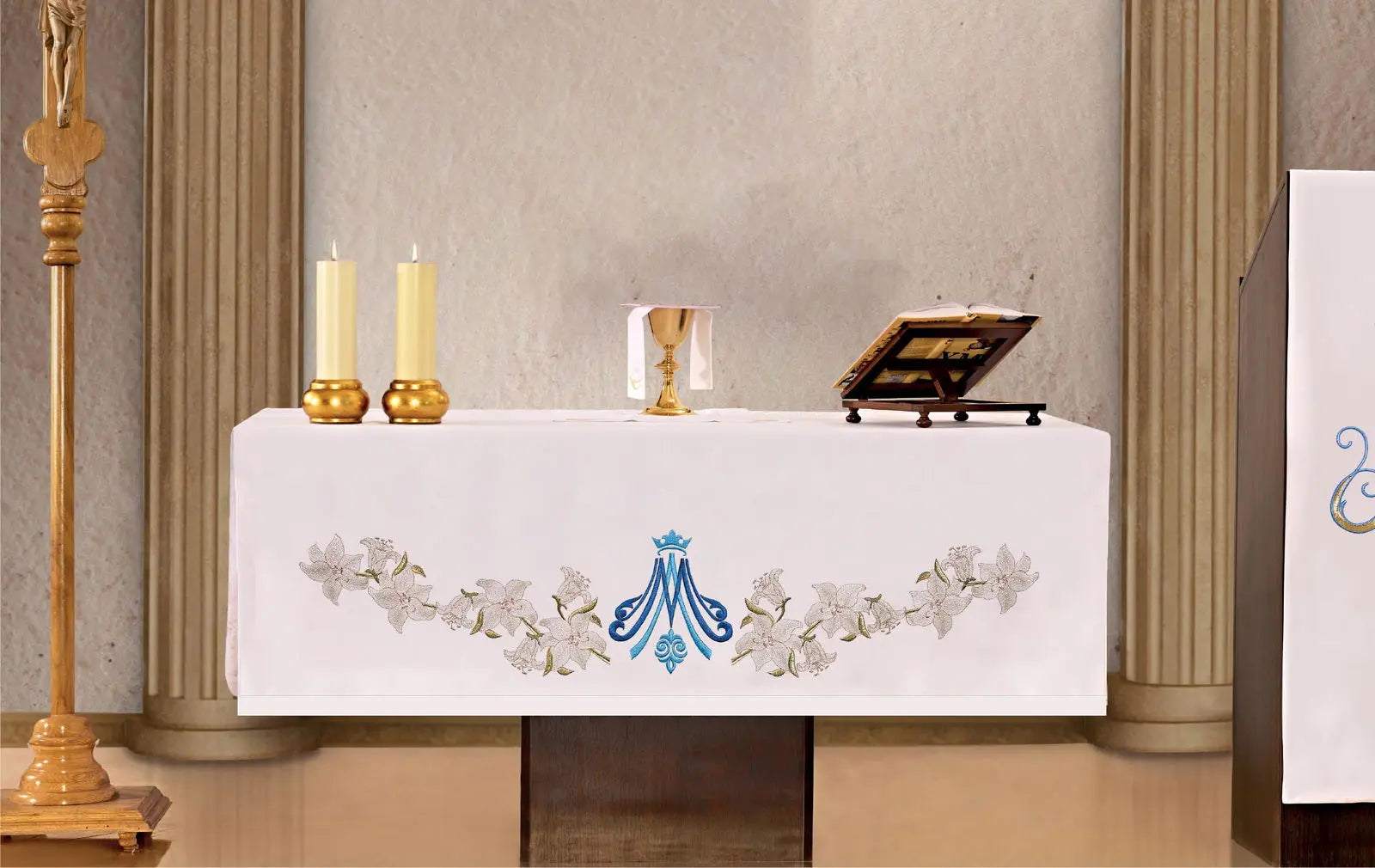
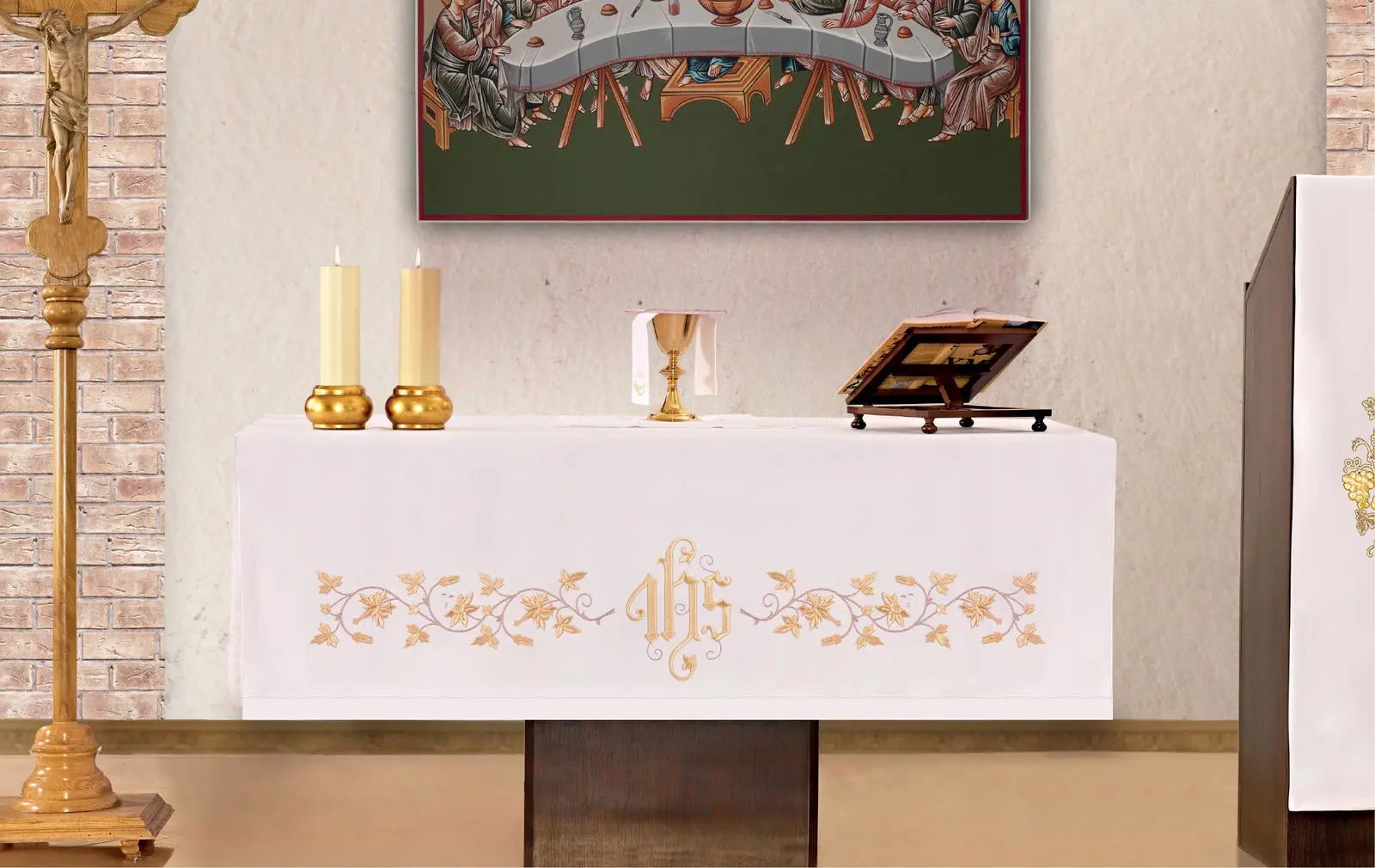
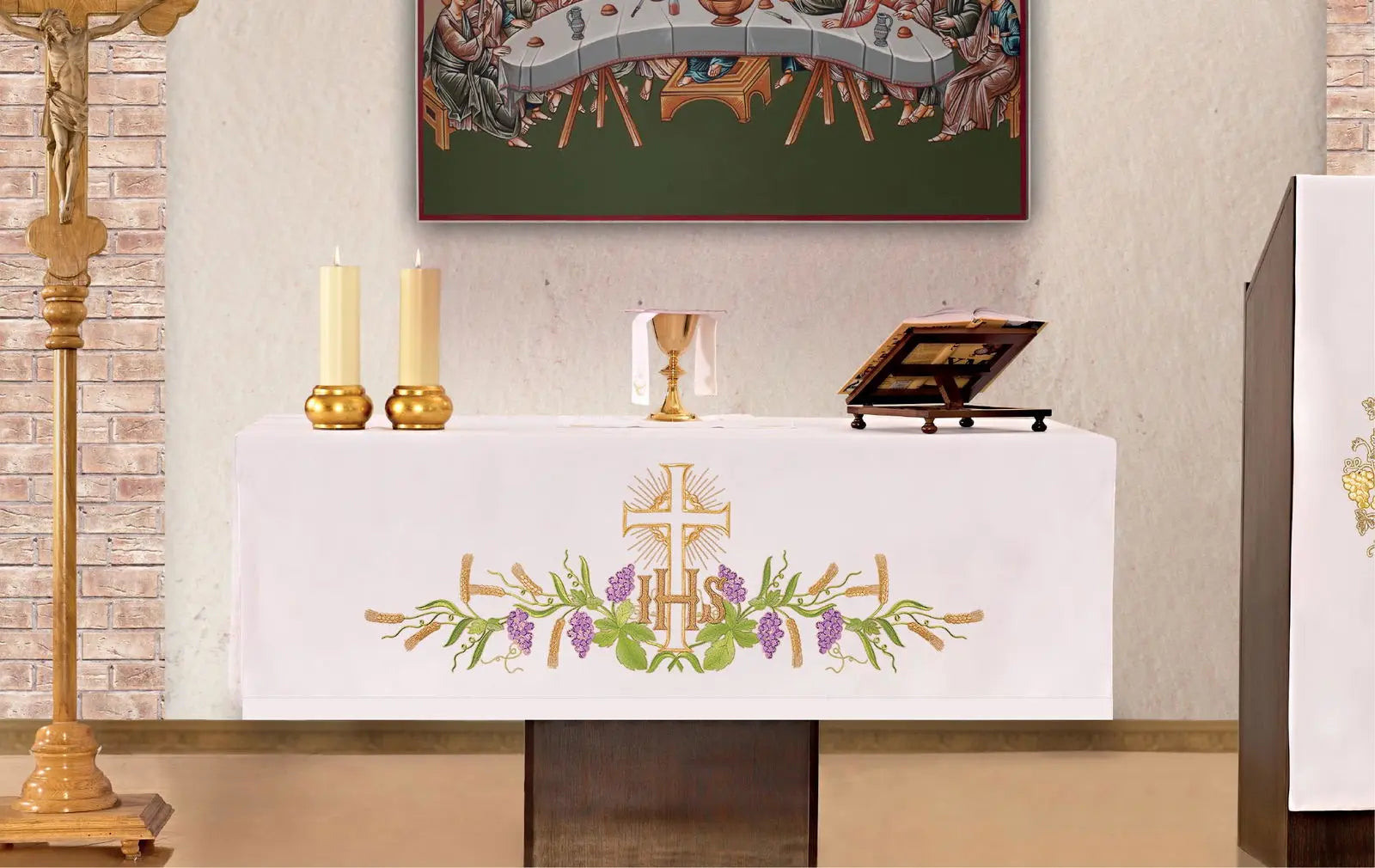
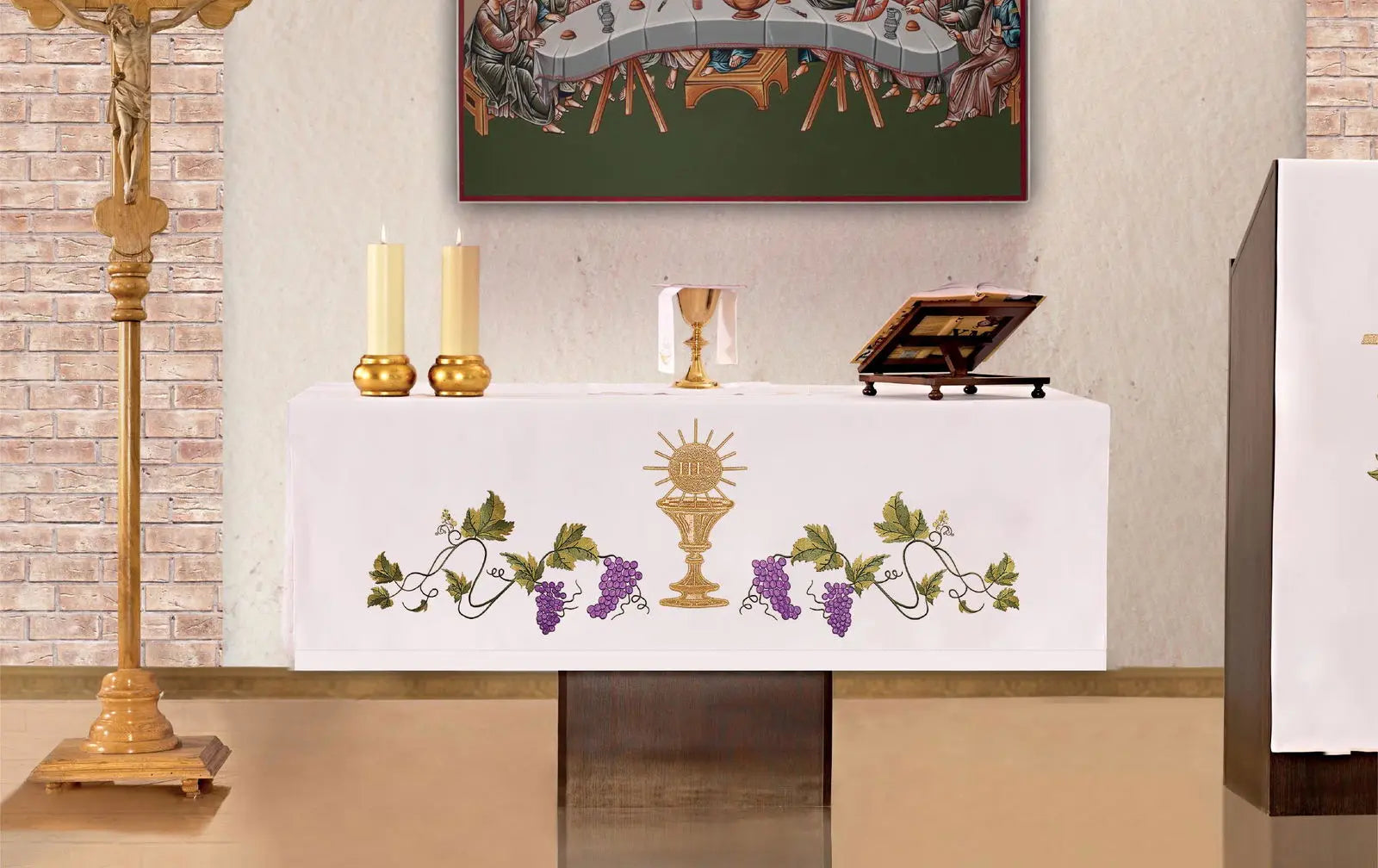
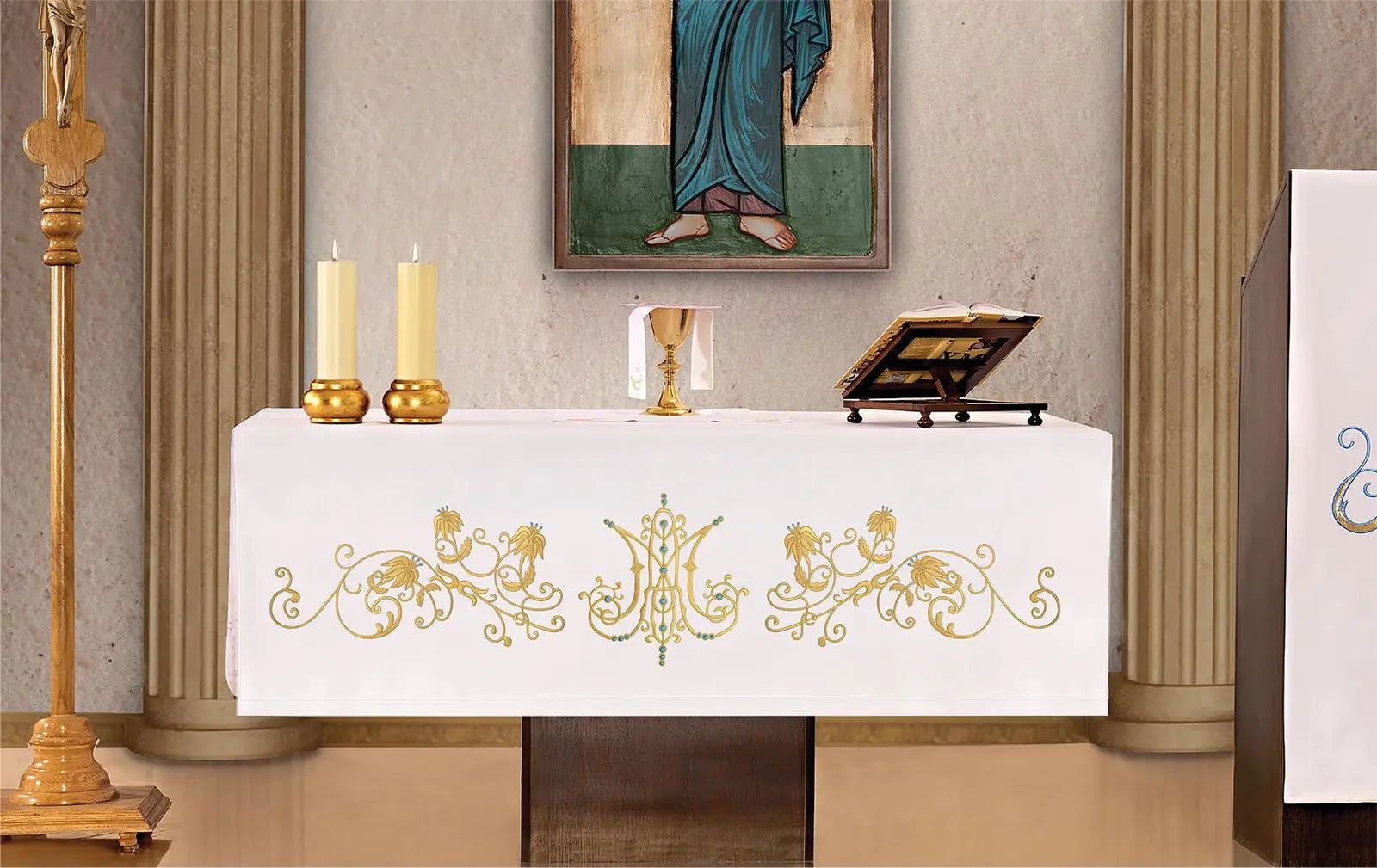
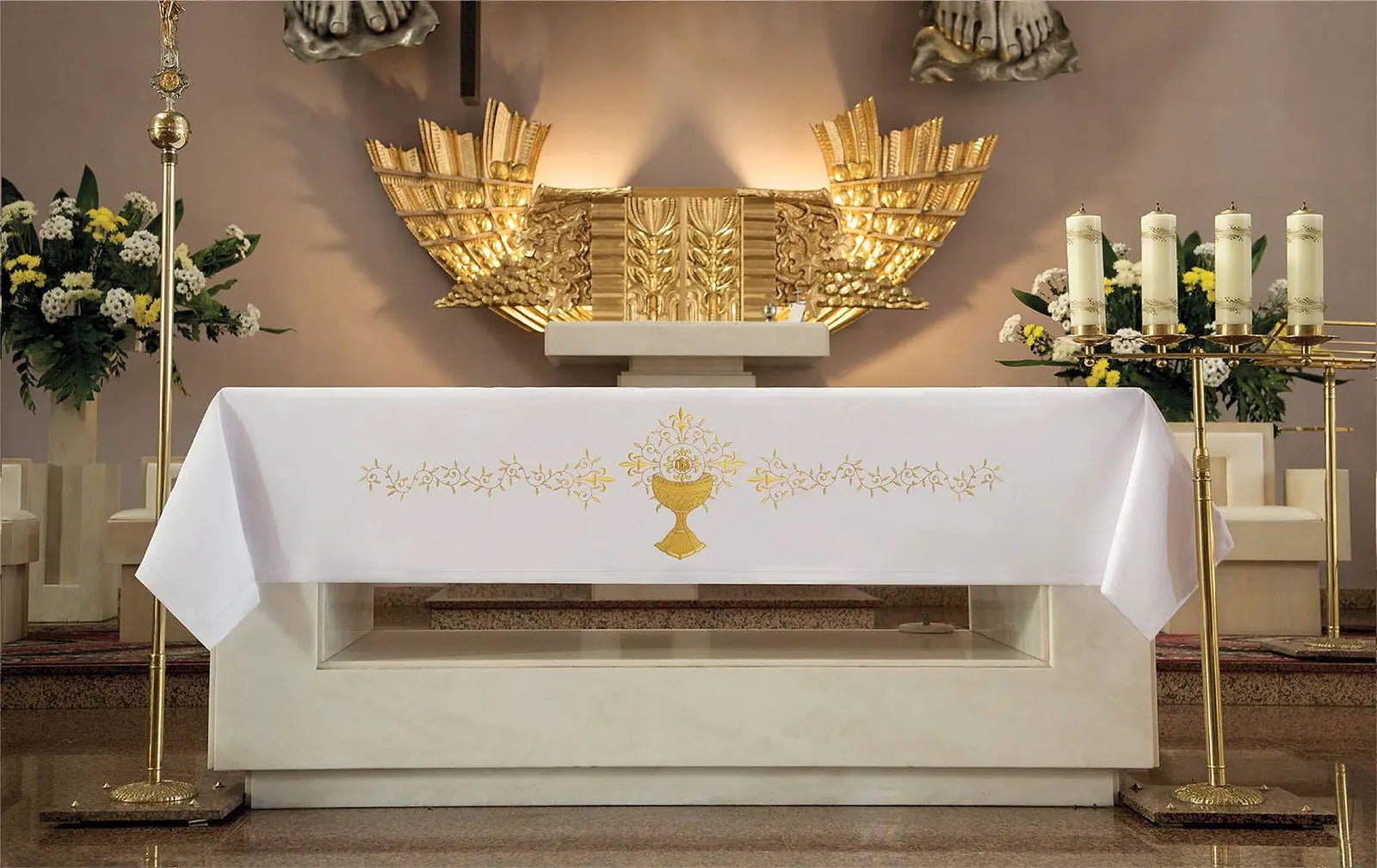
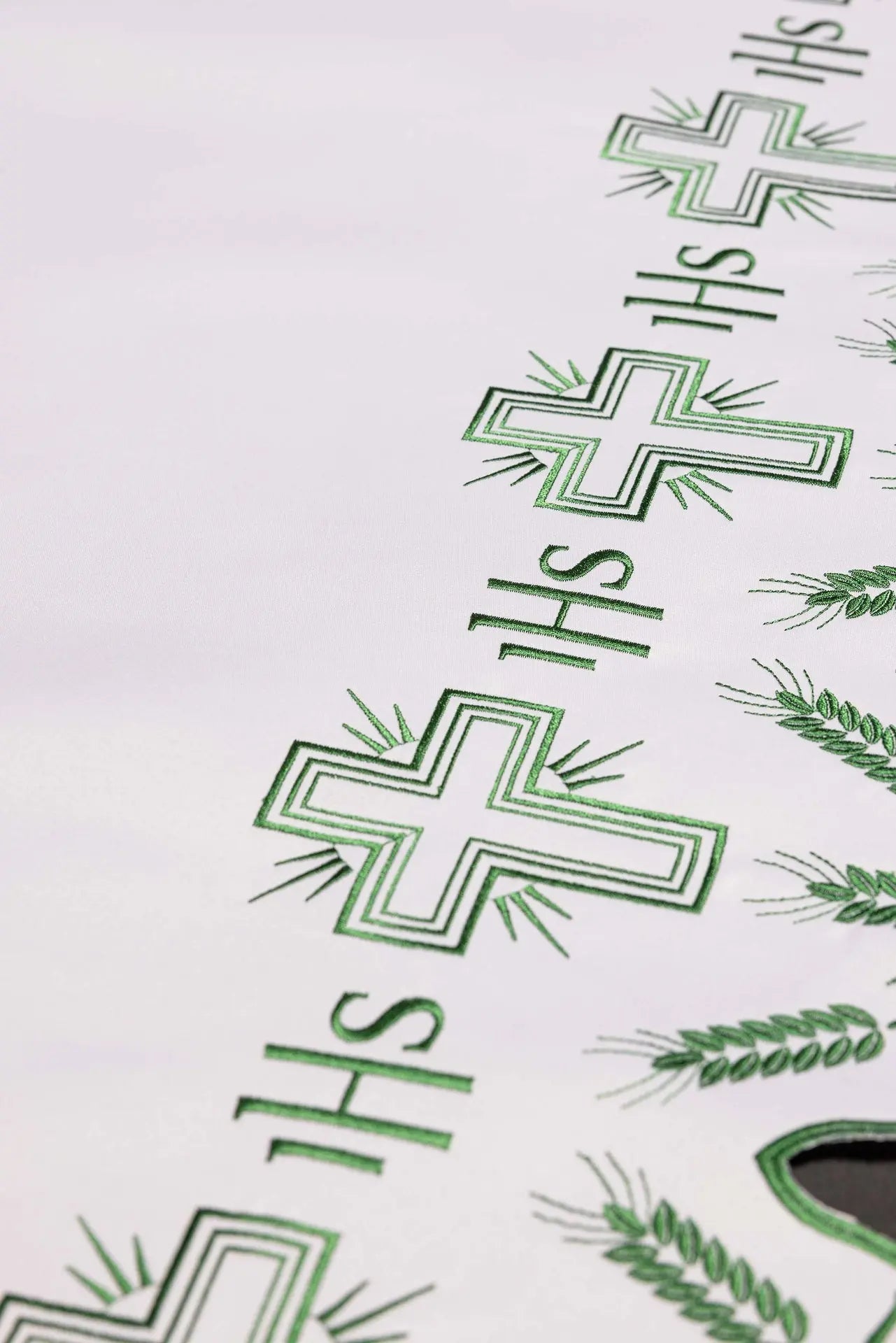
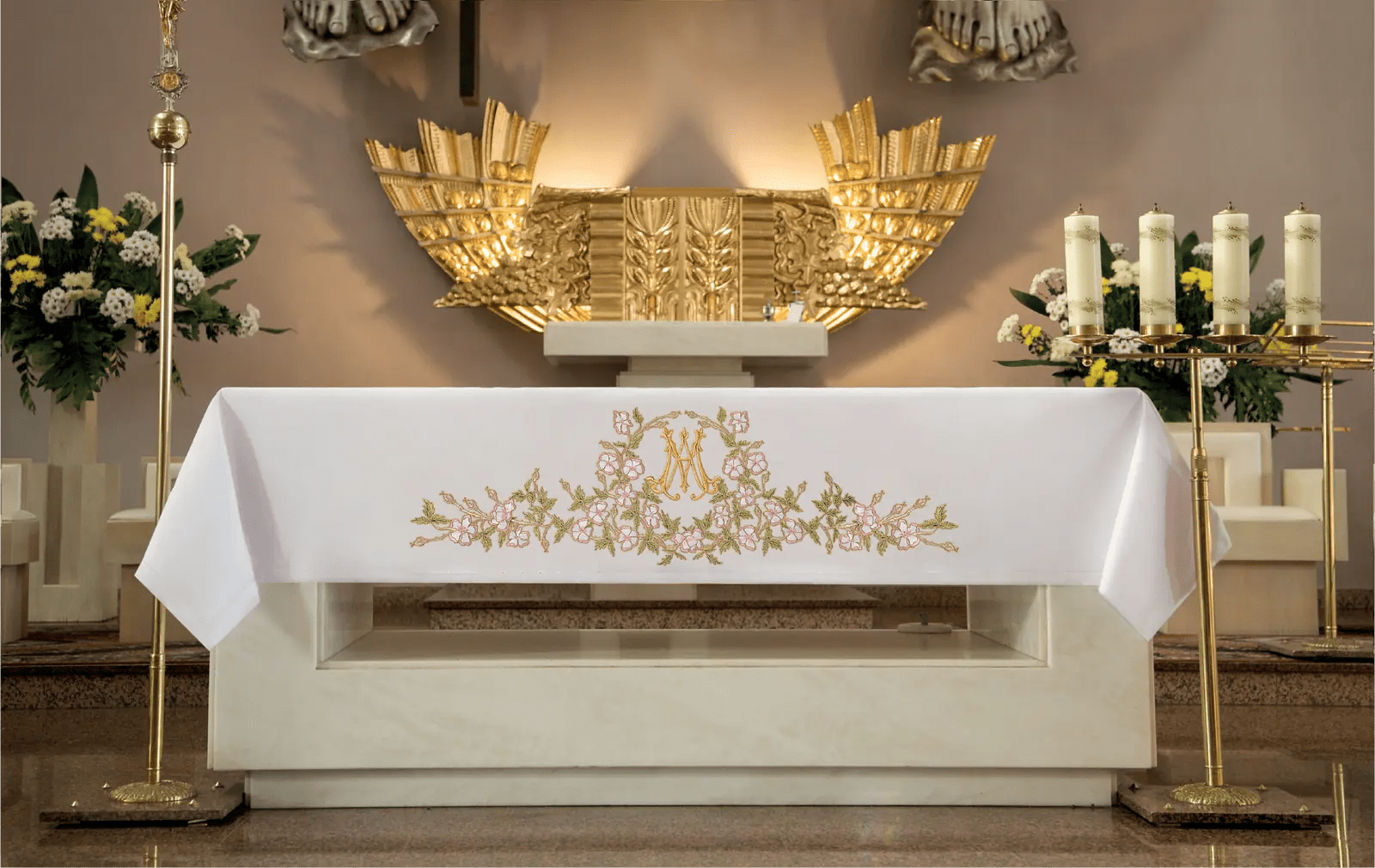
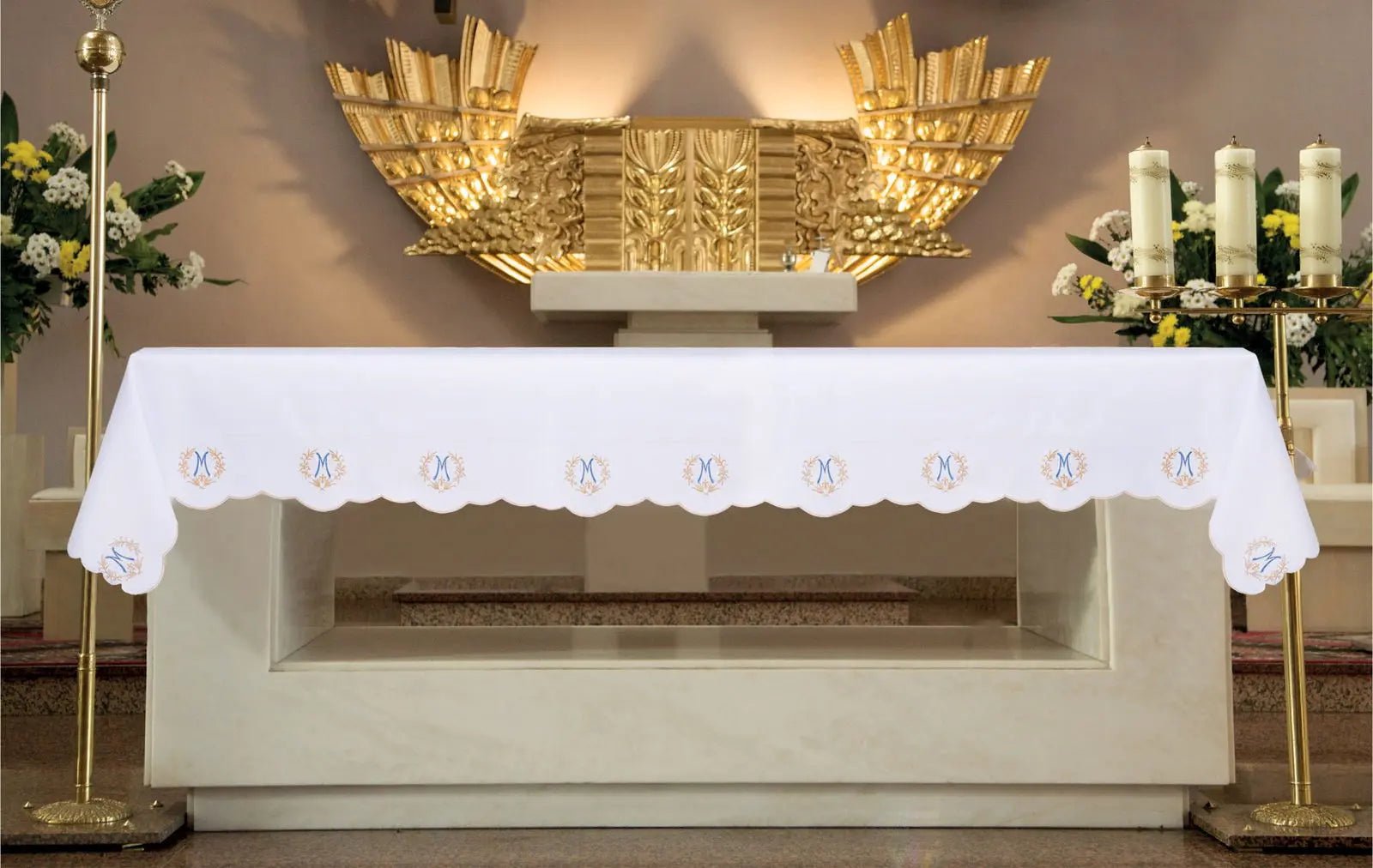
The collection includes altar cloths with front embroidery such as crosses, IHS monograms, chalice and wheat motifs, Marian symbols, Jerusalem crosses, the Heart of Jesus and festive Eucharistic designs. Some pieces are more restrained for regular parish use, while others carry richer front decoration suited to solemnities, feasts and processions connected with the altar. For a broader view of related sanctuary textiles, visit altar cloths, where this collection belongs within the wider range of church linens and altar furnishings.
What makes a frontal altar cloth different
A standard altar cloth primarily covers the altar mensa, while an altar cloth with a frontal places special visual emphasis on the vertical front section. This frontal area can be seen clearly from the nave, so the embroidery becomes part of the visible liturgical setting. It may be chosen to harmonize with the altar, reredos, tabernacle area, ambo textiles or the vestments used by the celebrant. Because the design appears at the front of the altar, it should be balanced, legible and proportionate to the church interior.
These altar tablecloths are especially useful when a parish wants the altar itself to carry a clear seasonal or devotional accent without replacing the entire sanctuary arrangement. A gold IHS motif, a Marian monogram, a chalice with wheat or a cross can provide a strong liturgical focal point. More elaborate frontal embroidery can be reserved for higher feasts, while simpler cross designs may serve throughout much of the year.
How to choose the right embroidered altar tablecloth
Measure the altar carefully
The first step is to check the altar length, width and desired drop. The frontal embroidery should fall evenly and should not be hidden by the altar step, candles, flower arrangements or other sanctuary elements. A cloth that is too short can look unfinished, while a cloth with too much drop may disturb the proportions of the altar. When selecting a piece, consider not only the top surface of the altar but also how the front panel will appear from the main seating area of the church.
Match the motif to the liturgical use
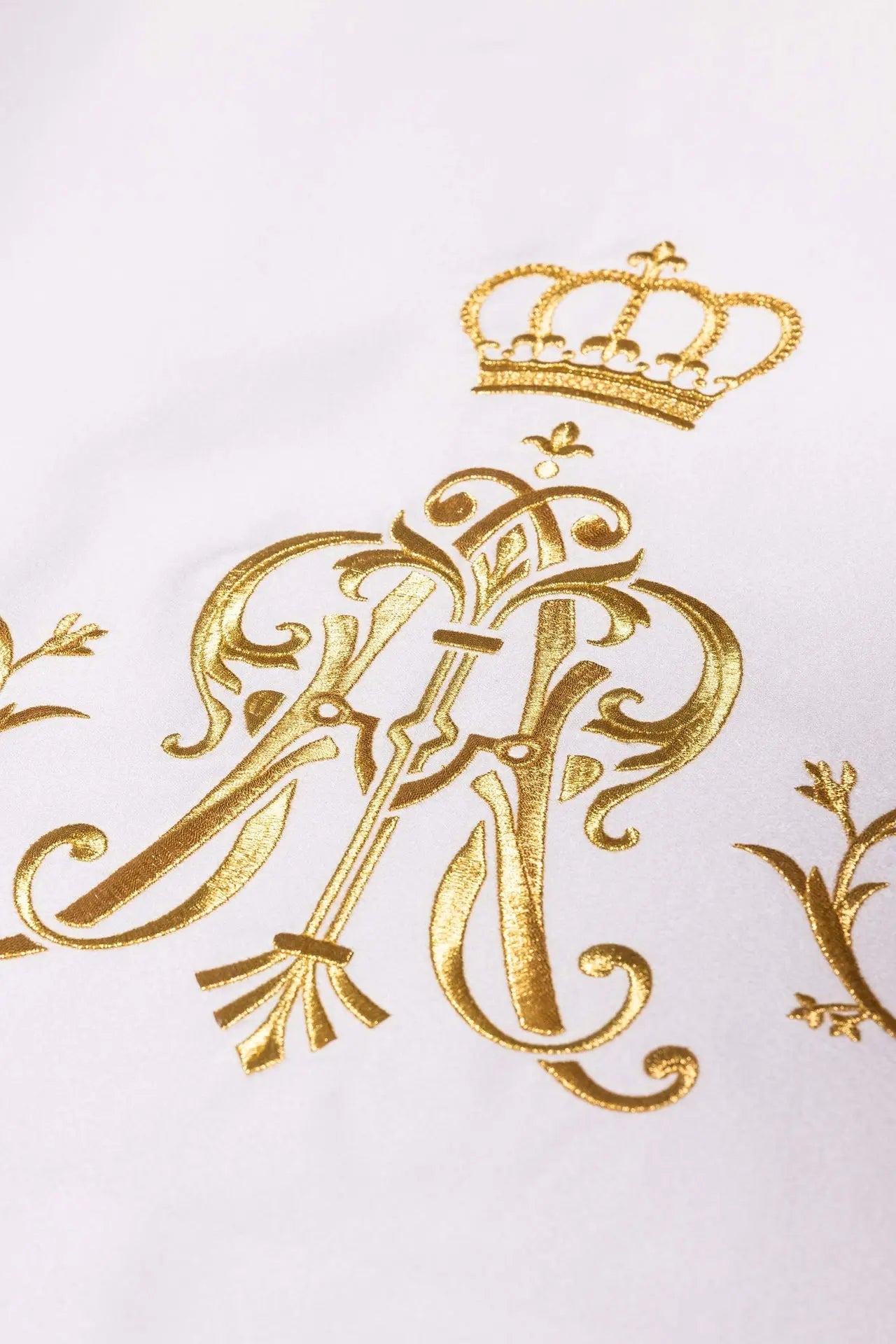
Crosses and IHS symbols are suitable for frequent use because they are central, clear and widely understood. Chalice, wheat and Eucharistic motifs are a natural choice for Mass, First Communion celebrations, Corpus Christi and eucharistic devotion. Marian embroidery is appropriate for feasts of the Blessed Virgin Mary, parish celebrations dedicated to Mary and shrines with a Marian character. The Heart of Jesus motif can support devotion to the Sacred Heart and may be especially meaningful in churches where this devotion is prominent.
Coordinate with other sanctuary textiles
An altar cloth with frontal embroidery should not be chosen in isolation. It works best when it relates to nearby pieces such as chalice linens, veils, pulpit covers or superfrontals. If you are preparing a complete sanctuary arrangement, consider pairing the altar cloth with altar linens for the Eucharistic vessels, chalice veils for the covered chalice and ciborium veils where the ciborium is veiled. This helps create a coherent visual language without making the sanctuary look overcrowded.
Liturgical seasons, feasts and devotional themes
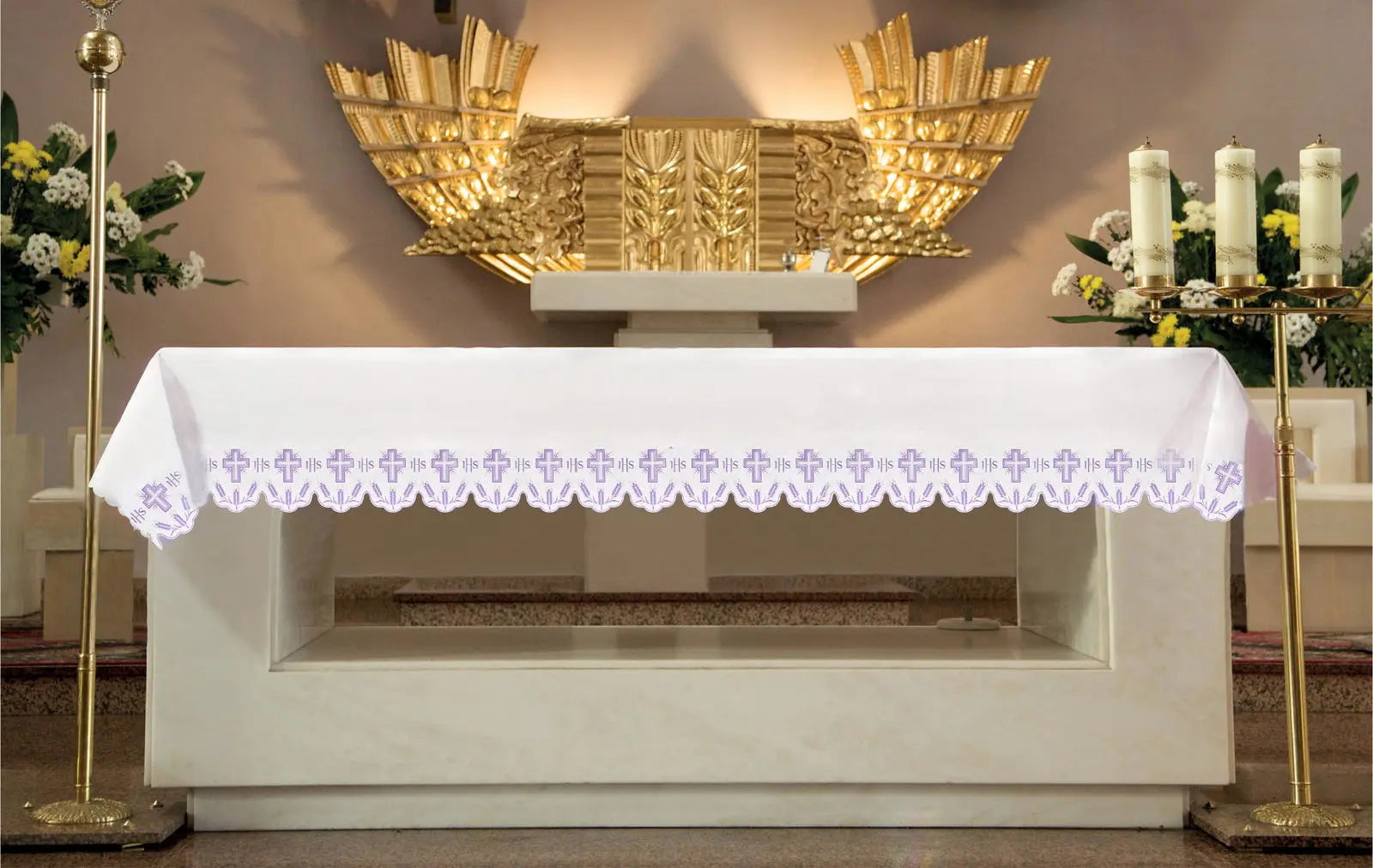
White, ecru and gold embroidery is commonly associated with joy, solemnity and festive celebration, especially during Christmas, Easter, Marian feasts and major parish occasions. Green accents can accompany Ordinary Time, while purple trim or restrained motifs may be appropriate during Advent and Lent. Red details may be used when the liturgical setting points to the Holy Spirit, the Passion of the Lord or martyrs. The altar cloth itself often remains light in tone, while the embroidery and trimming provide the seasonal or devotional emphasis.
For eucharistic celebrations and processions, designs with chalices, wheat, crosses or radiant motifs can be particularly fitting. You may also connect the altar setting with the wider liturgical calendar through collections such as Corpus Christi, Blessed Virgin Mary and Sacred Heart of Jesus. These links help parishes build a consistent setting for feasts that return each year.
Relationship to altar superfrontals and pulpit covers
An embroidered altar cloth with a frontal is not the same as an altar superfrontal. A frontal altar cloth covers the mensa and includes a hanging embroidered section, while altar superfrontals are separate decorative front pieces used to dress the altar face. A superfrontal can be changed independently from the main altar cloth, whereas a frontal cloth combines coverage and decoration in one textile.
The altar cloth should also be distinguished from pulpit covers, which are designed for the ambo or lectern. Both may share motifs or colors, but their liturgical placement is different: the altar is the place of Eucharistic sacrifice, while the ambo is the place from which the Word of God is proclaimed. Coordinating them can be beautiful, but each textile should respect its own function.
Embroidery, fabric and visual balance
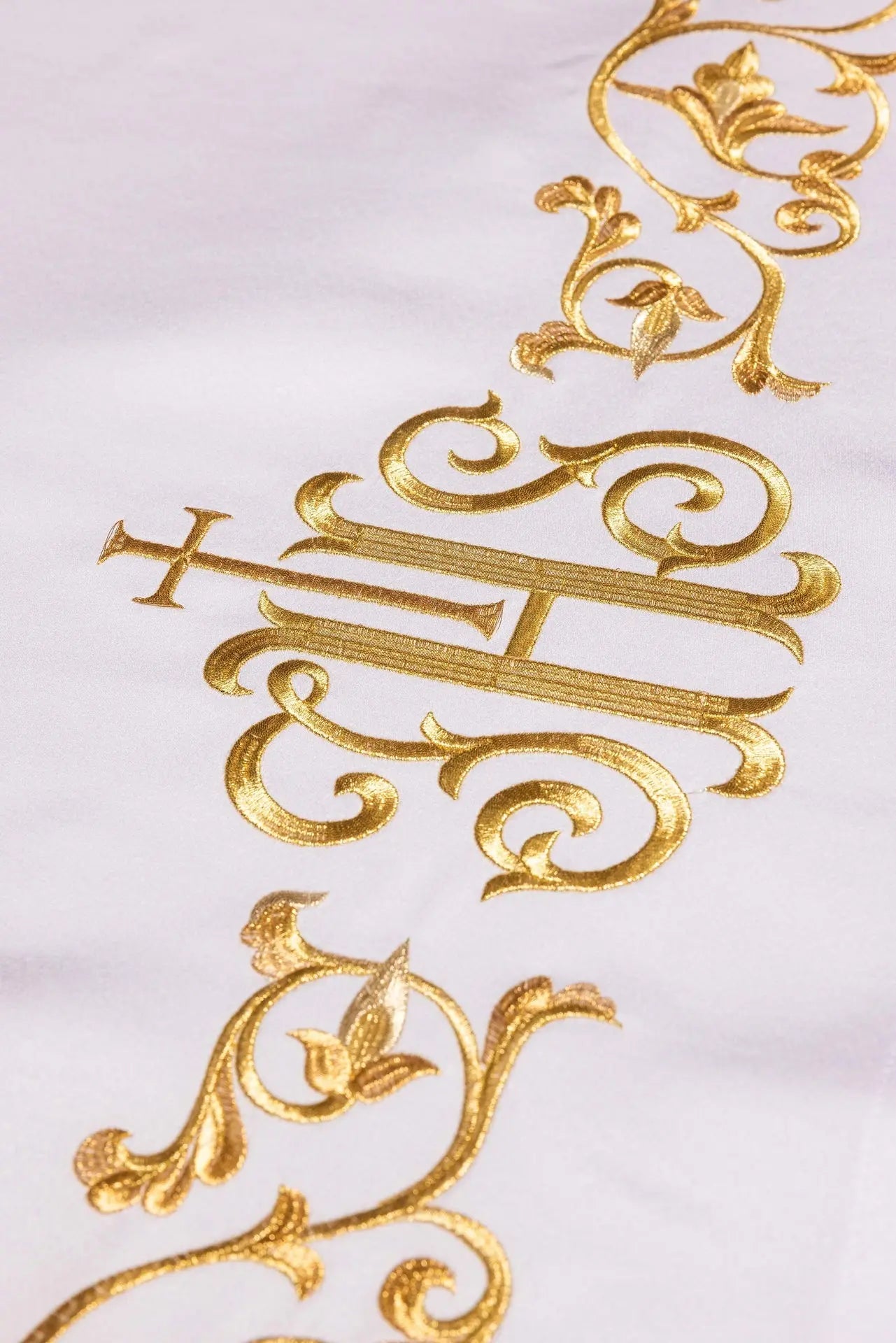
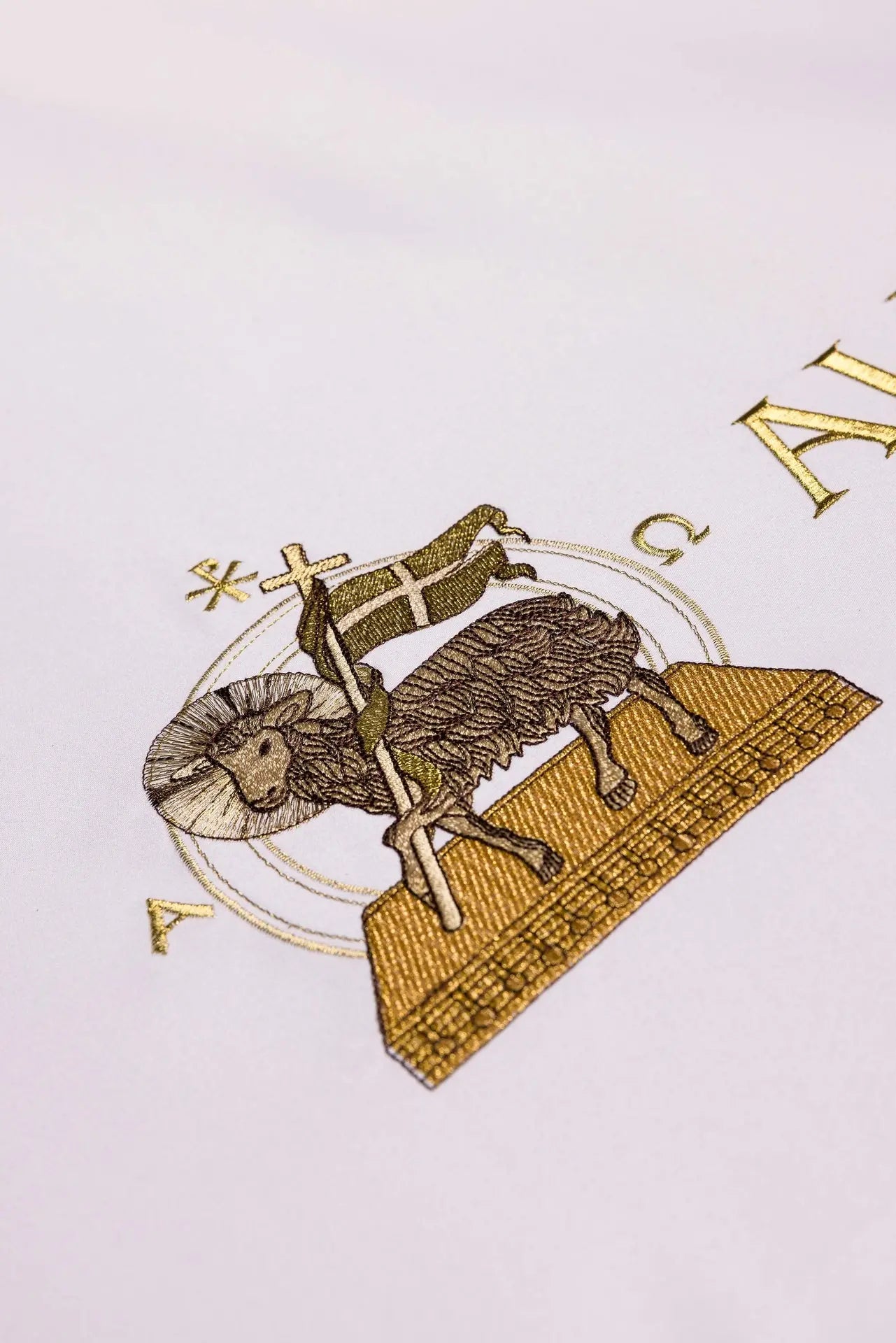
Front embroidery must be strong enough to be visible but refined enough to support the reverence of the liturgy. The best designs do not distract from the altar; they frame and dignify it. Motifs such as a central cross, IHS, Marian monogram or chalice should be placed so that the composition remains symmetrical and calm. The surrounding trim, lace or edging should support the motif rather than compete with it.
Fabric choice is also important. Altar cloths require materials that hang well, remain presentable during repeated use and hold embroidery cleanly. A well-made frontal should fall smoothly, with the embroidered area lying flat. This is especially important in churches where the altar is seen from close range or from multiple angles. Properly selected embroidery can make the cloth suitable for both daily liturgy and more solemn parish celebrations.
Care and storage of embroidered altar cloths
Embroidered altar linens should be handled with care because the front panel is both decorative and visible. Follow the care guidance supplied with the specific cloth, especially when metallic threads, dense embroidery or decorative trim are present. In general, harsh detergents, high heat and aggressive wringing should be avoided. Ironing should be done carefully, protecting embroidered areas so that threads are not flattened or damaged.
When not in use, altar cloths with frontals should be stored clean, dry and properly folded or laid flat where possible. Avoid heavy items pressing directly on the embroidery. Careful storage helps preserve the shape of the frontal and keeps the cloth ready for the next liturgical season or feast day.
Frequently Asked Questions (FAQ)
What is included in this collection?
This collection focuses on embroidered altar cloths with a frontal section. The cloth covers the altar and includes front embroidery visible to the congregation, with motifs such as crosses, IHS, Marian symbols, chalices, wheat, the Heart of Jesus and other liturgical designs.
When should an altar cloth with frontal embroidery be used?
It can be used for regular Masses, solemnities, parish feasts, Marian celebrations, Corpus Christi, Eucharistic devotion and other liturgical occasions. The best choice depends on the motif, color accents and the visual style of the sanctuary.
How is this different from an altar superfrontal?
An altar cloth with a frontal is one textile that covers the altar and hangs down at the front. An altar superfrontal is a separate decorative front piece. Parishes that want one integrated cloth often choose a frontal altar cloth, while those wanting frequent seasonal changes may also use superfrontals.
How do I choose the correct size?
Measure the altar top and decide how much fabric should hang over the front and sides. The frontal embroidery should be centered and visible, with enough drop to look dignified but not so much that it interferes with the altar steps or sanctuary arrangement.
Can the altar cloth be coordinated with other church textiles?
Yes. Many parishes coordinate the altar cloth with chalice veils, ciborium veils, pulpit covers or altar linens. Matching motifs or complementary colors can create a unified setting while still keeping each textile appropriate to its liturgical function.