Ciborium Veils and Canister Cloths
Liturgical covers for ciboria, canisters and sacred vessels
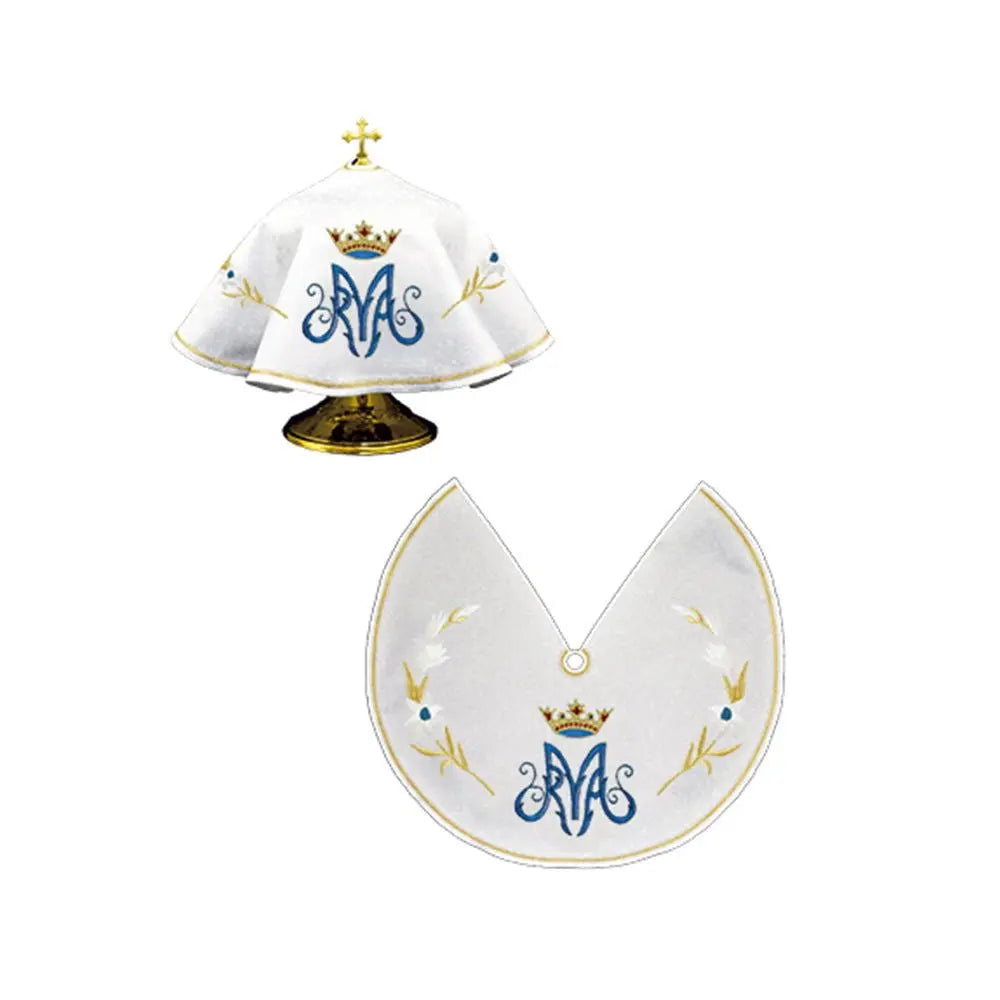
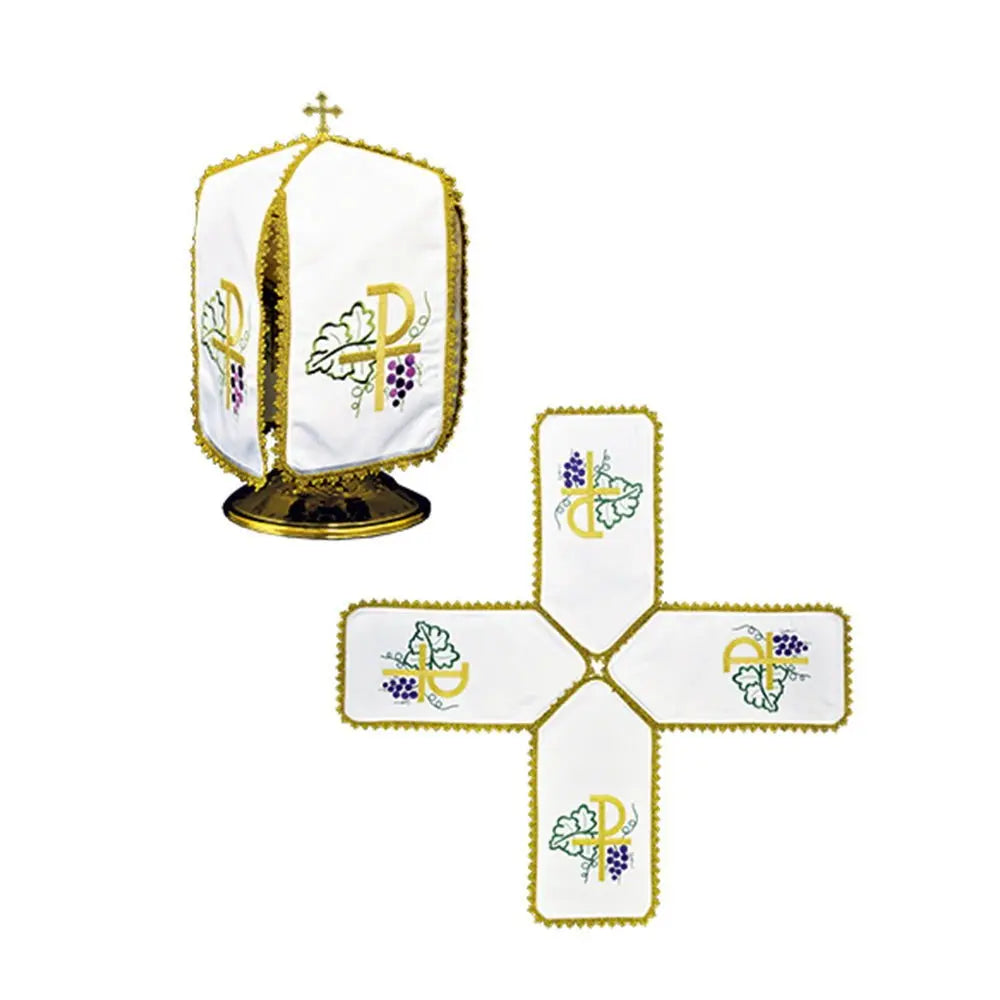
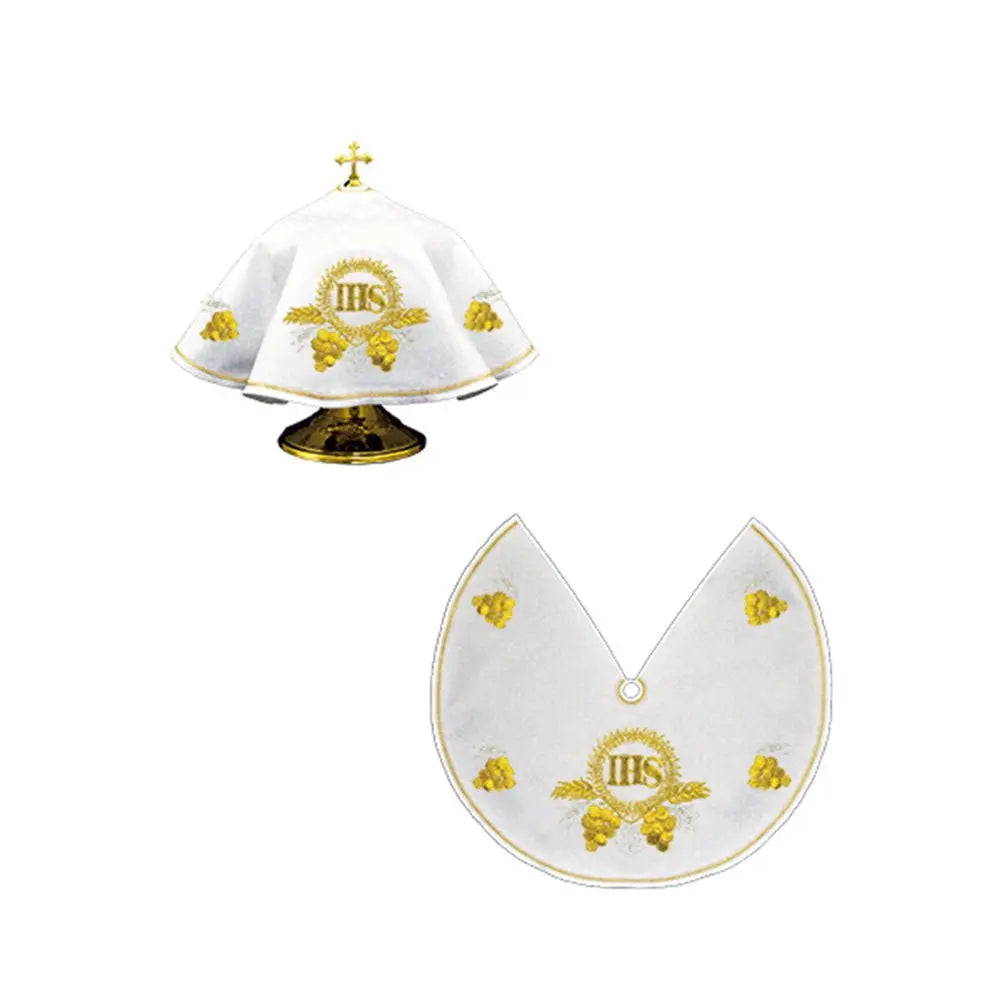
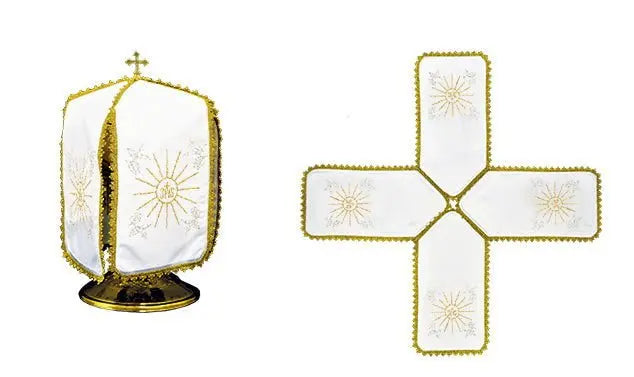
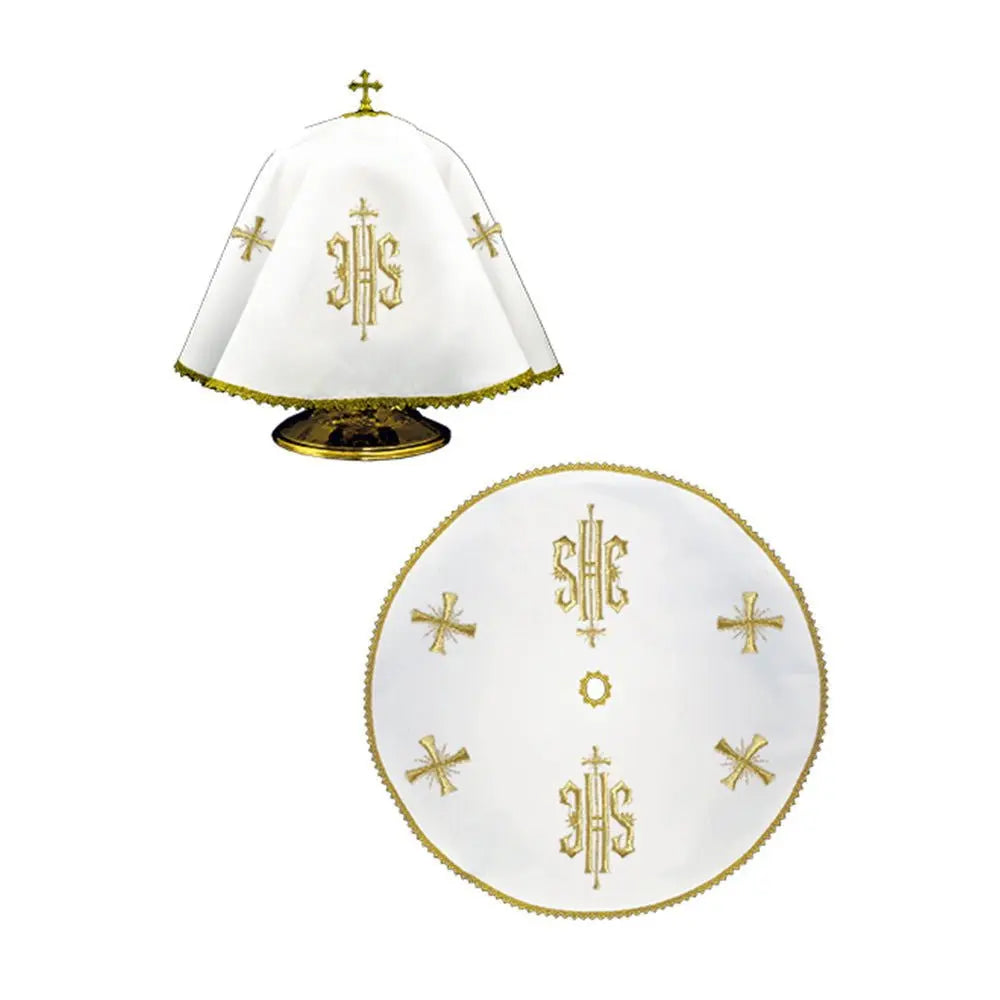
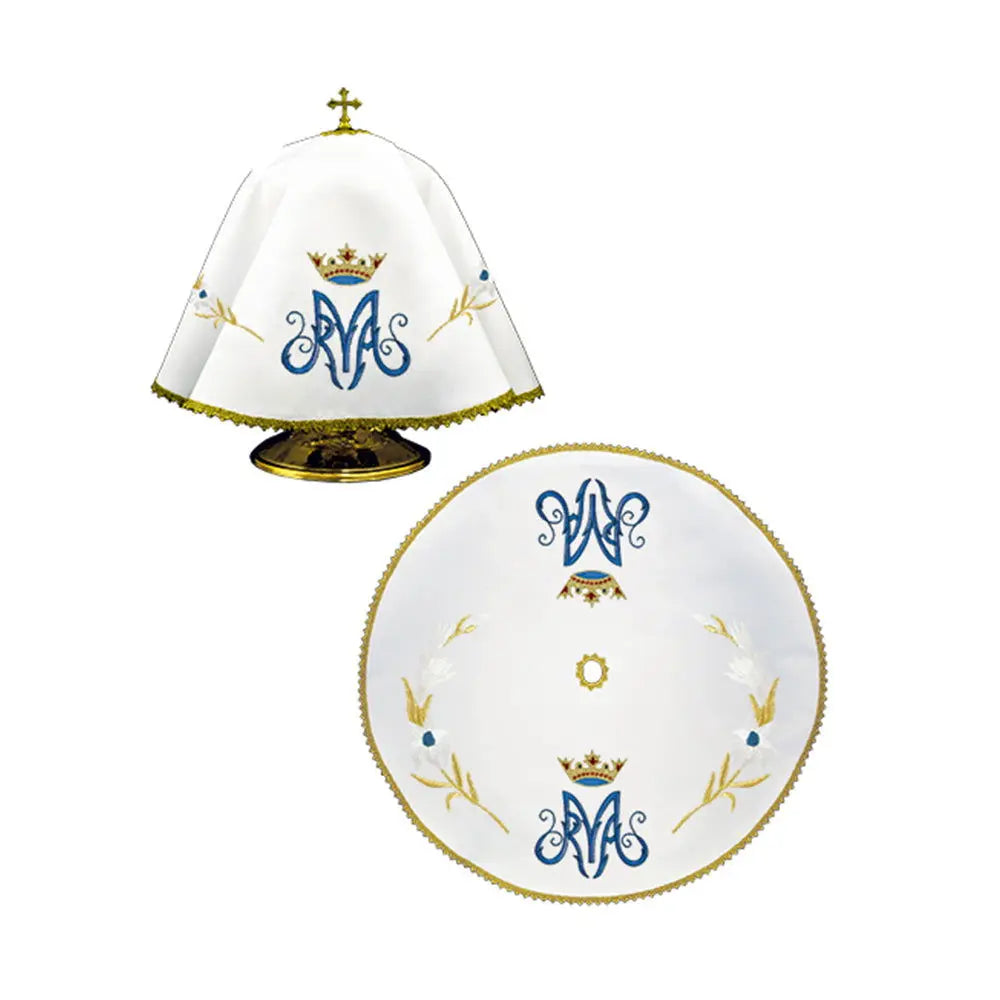
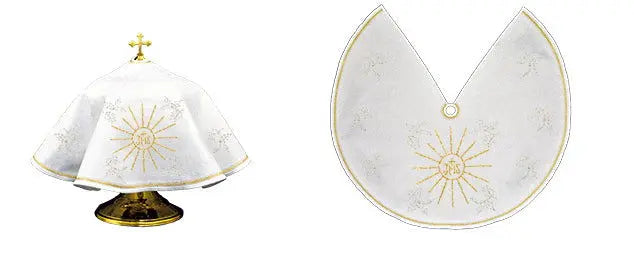
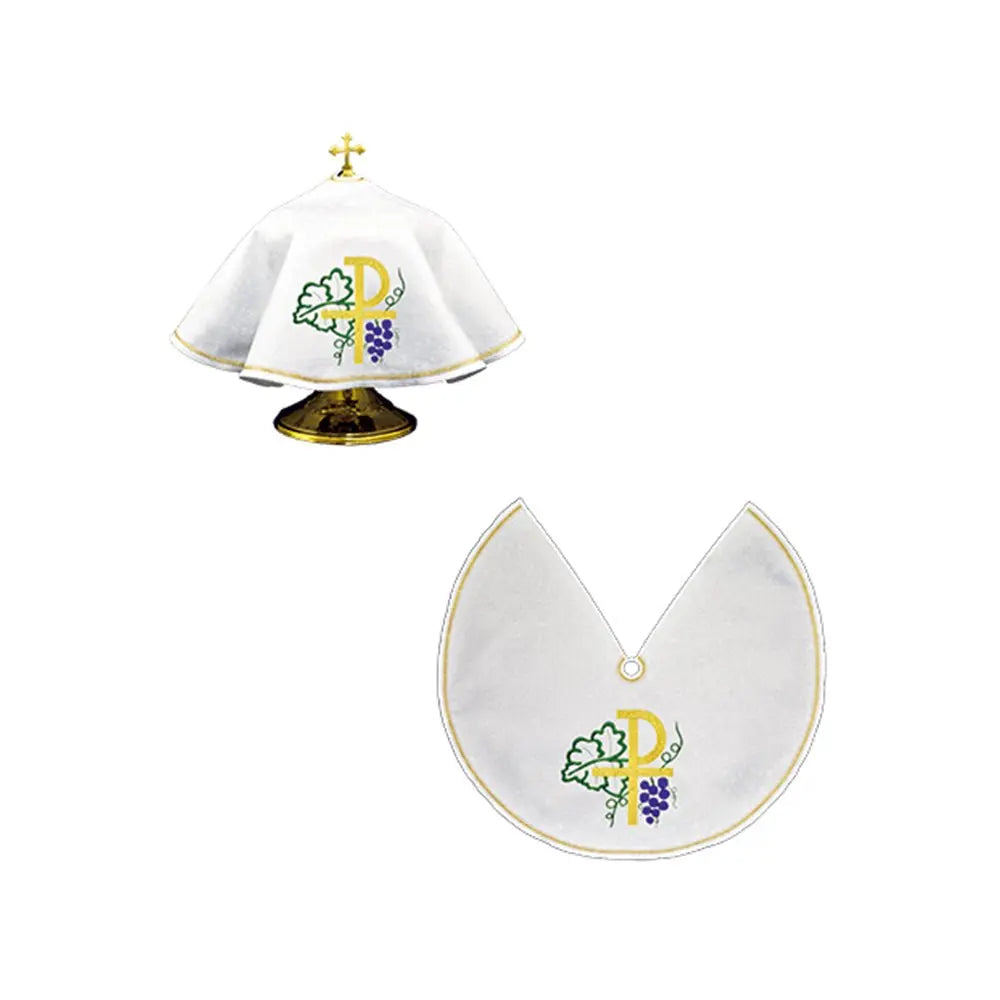
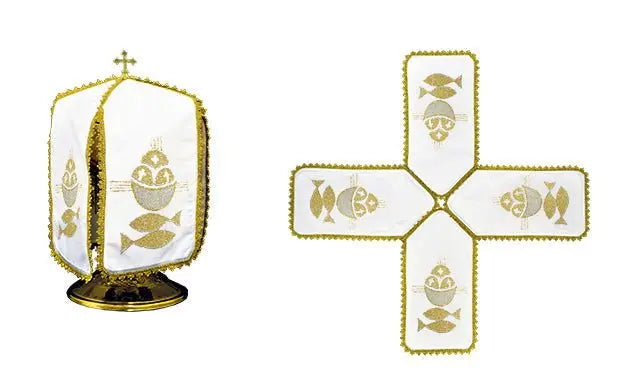
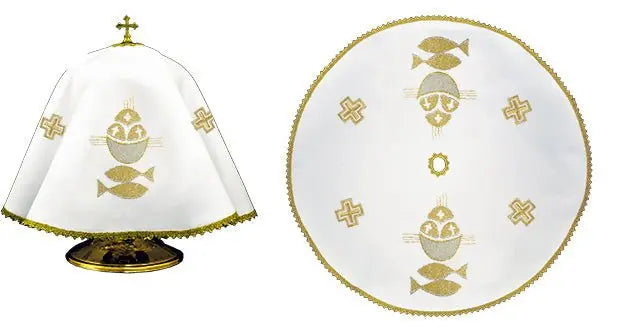
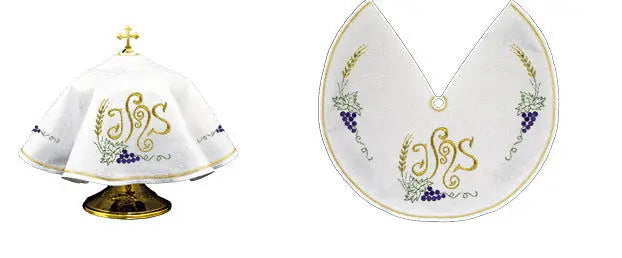
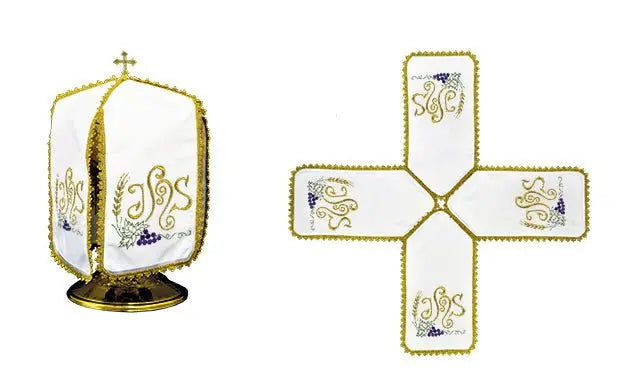
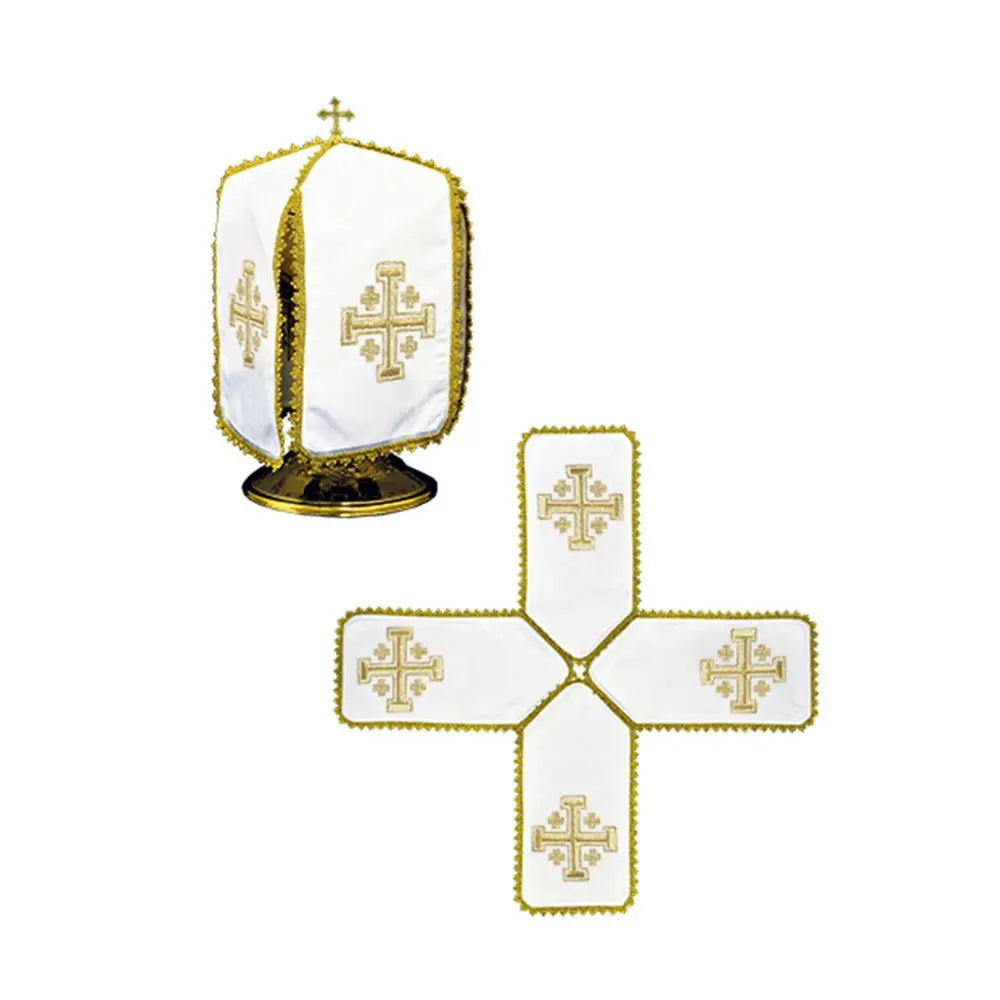
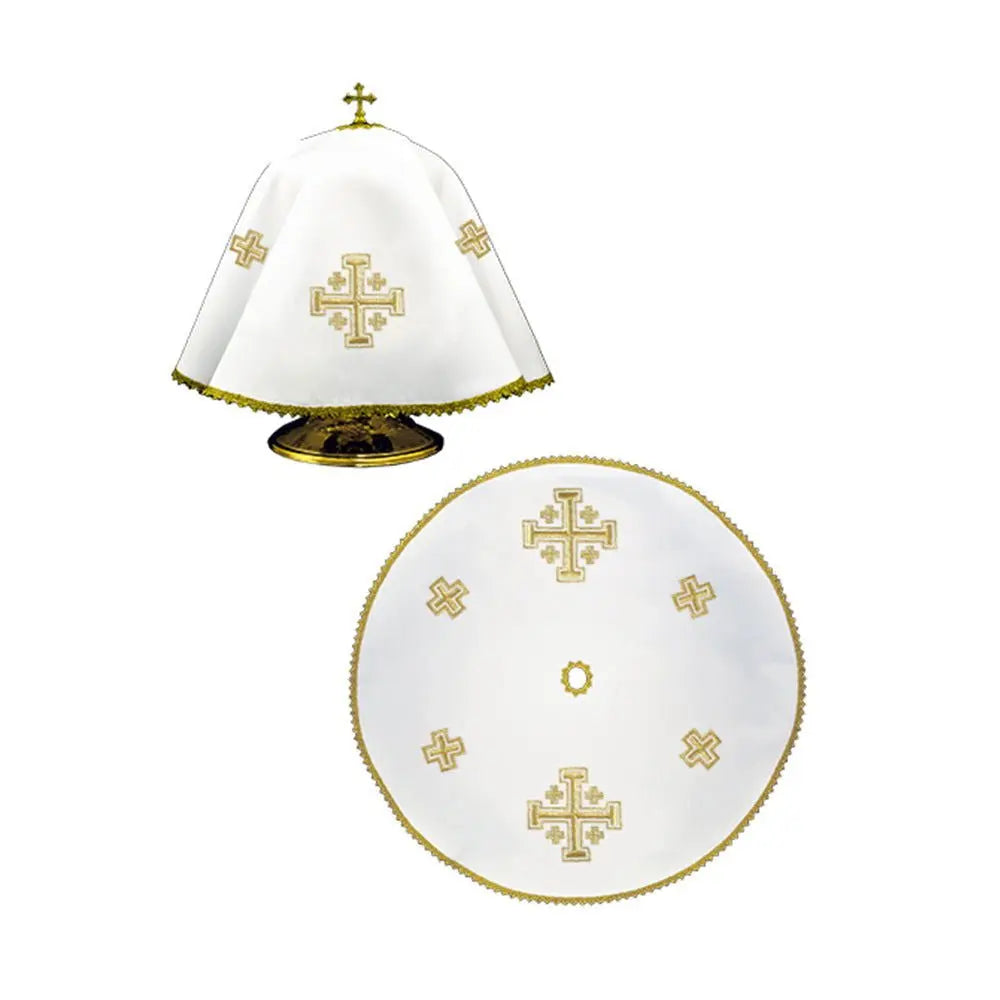
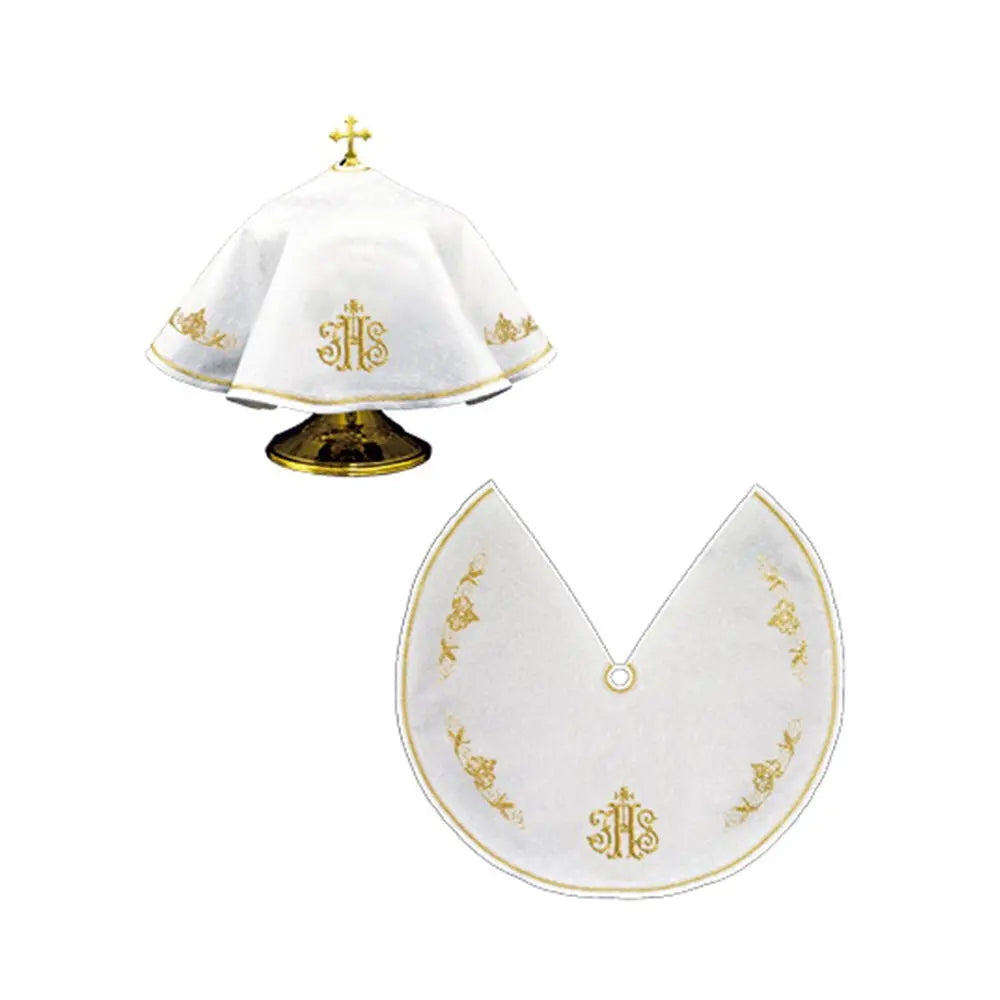
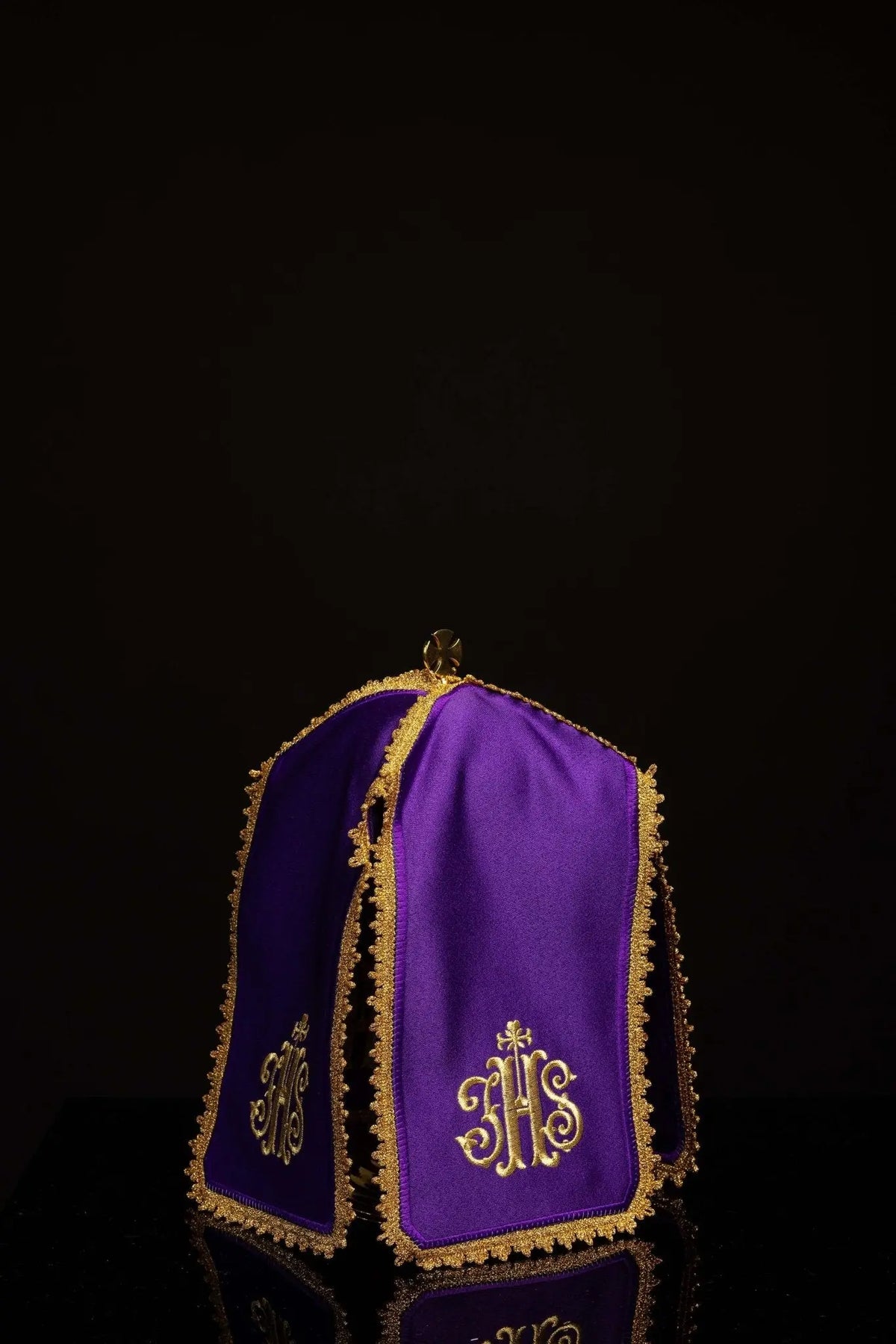
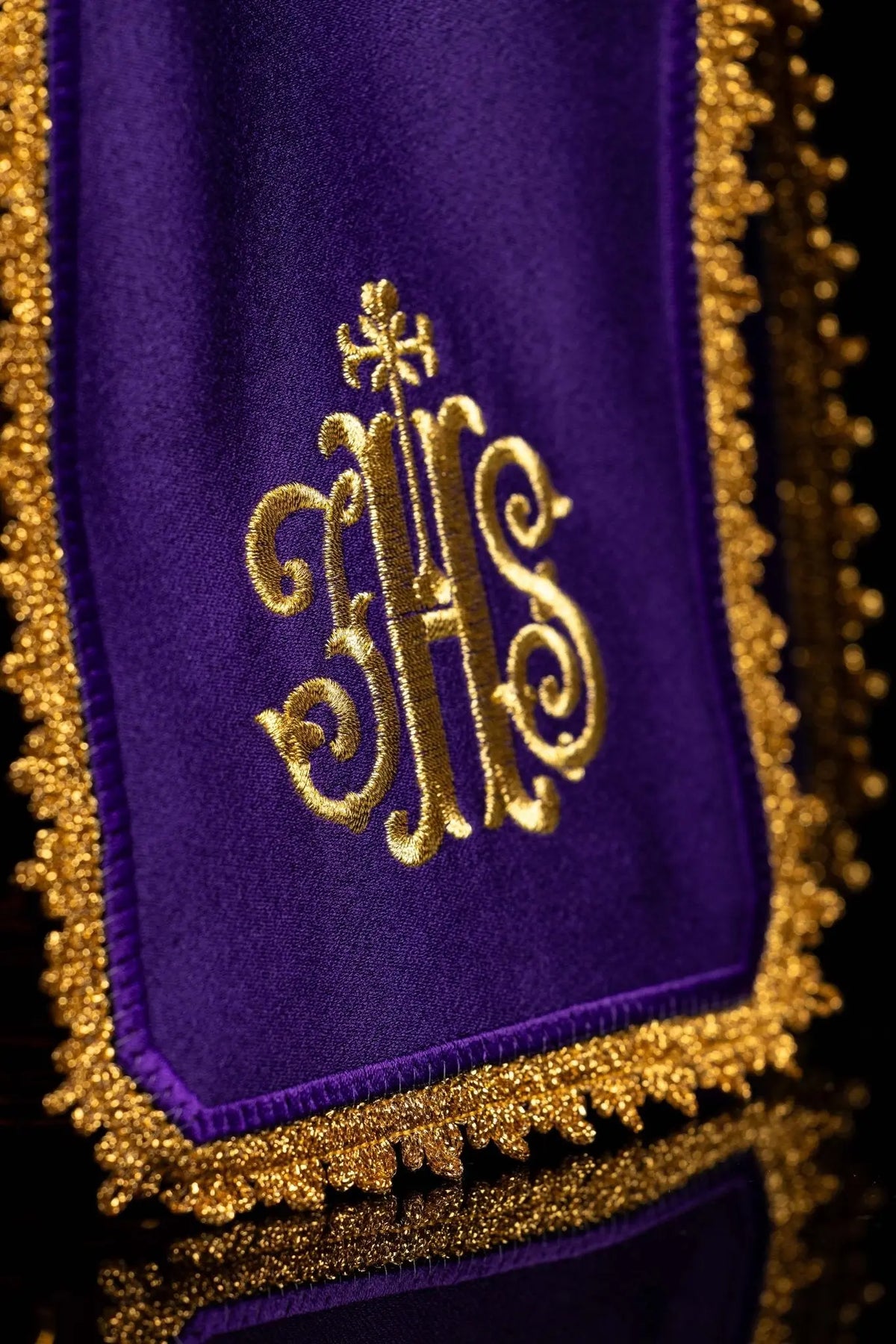
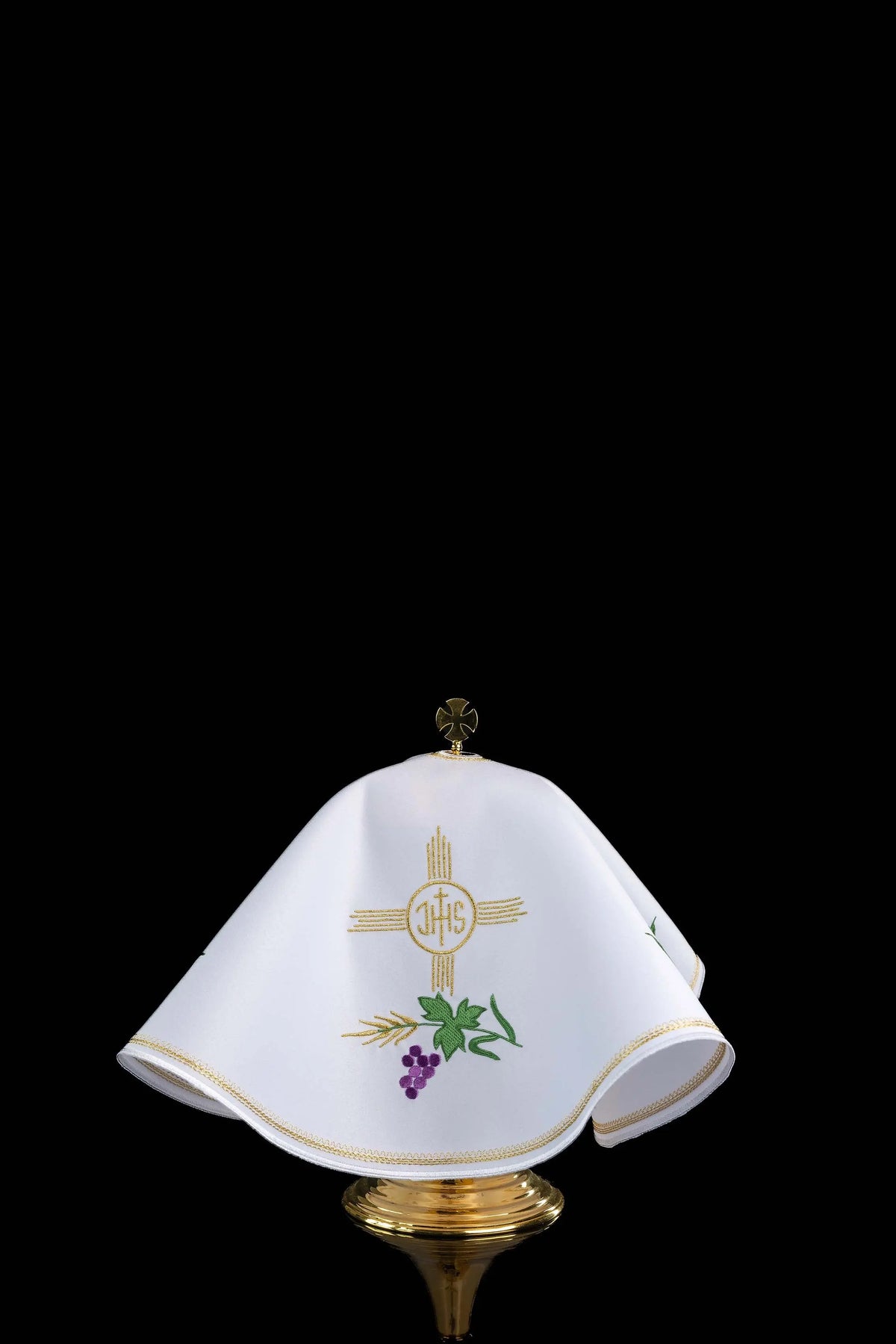
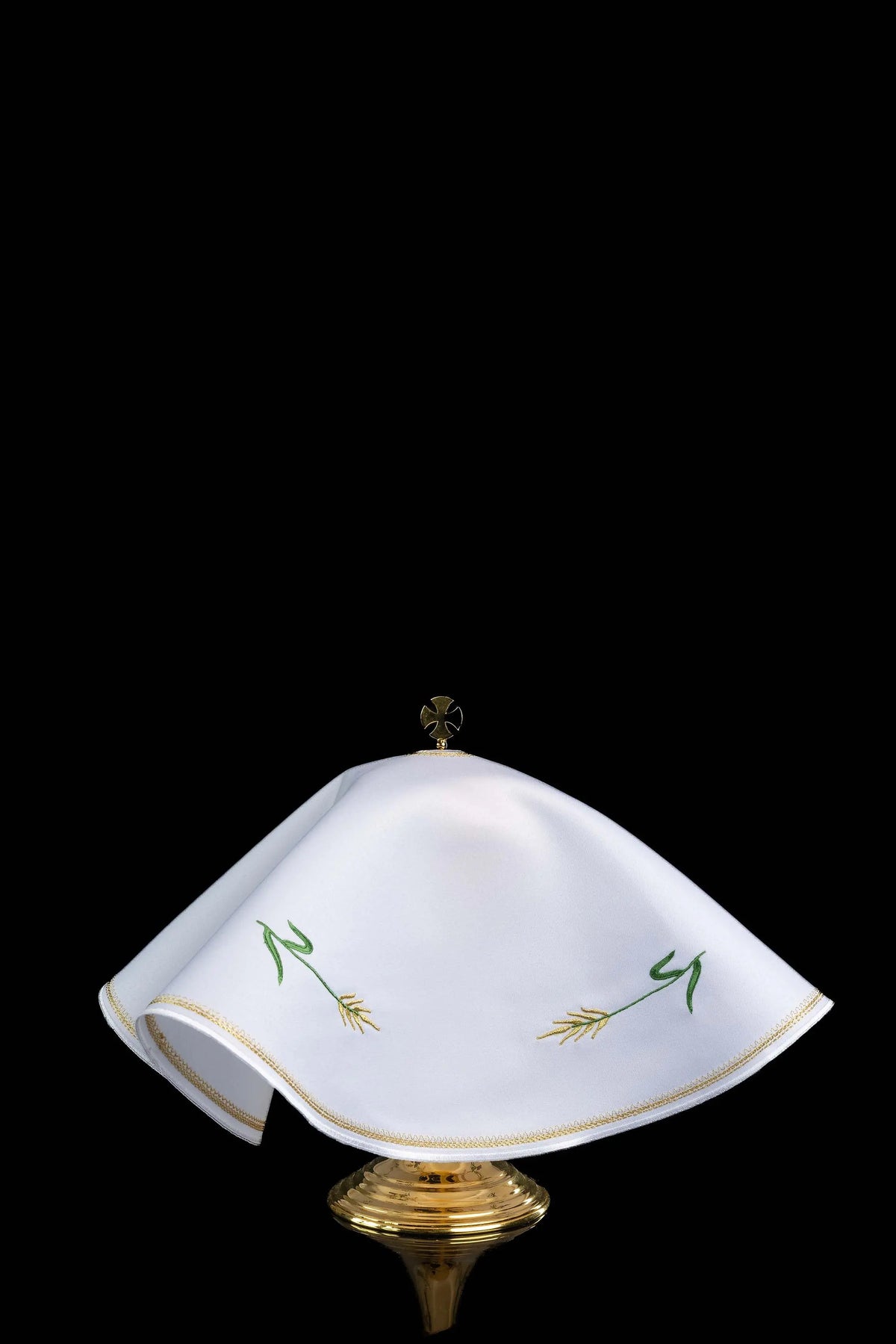
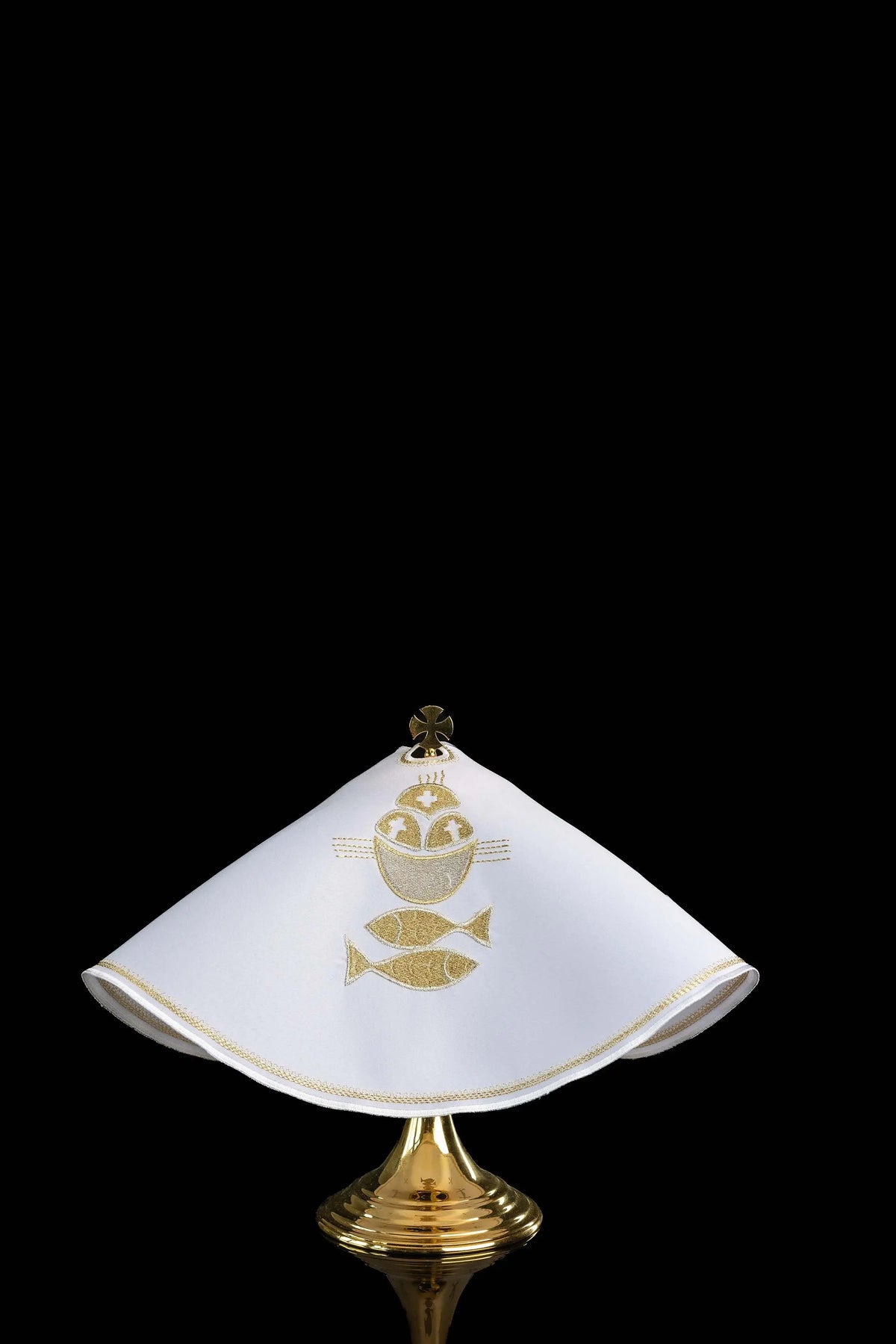
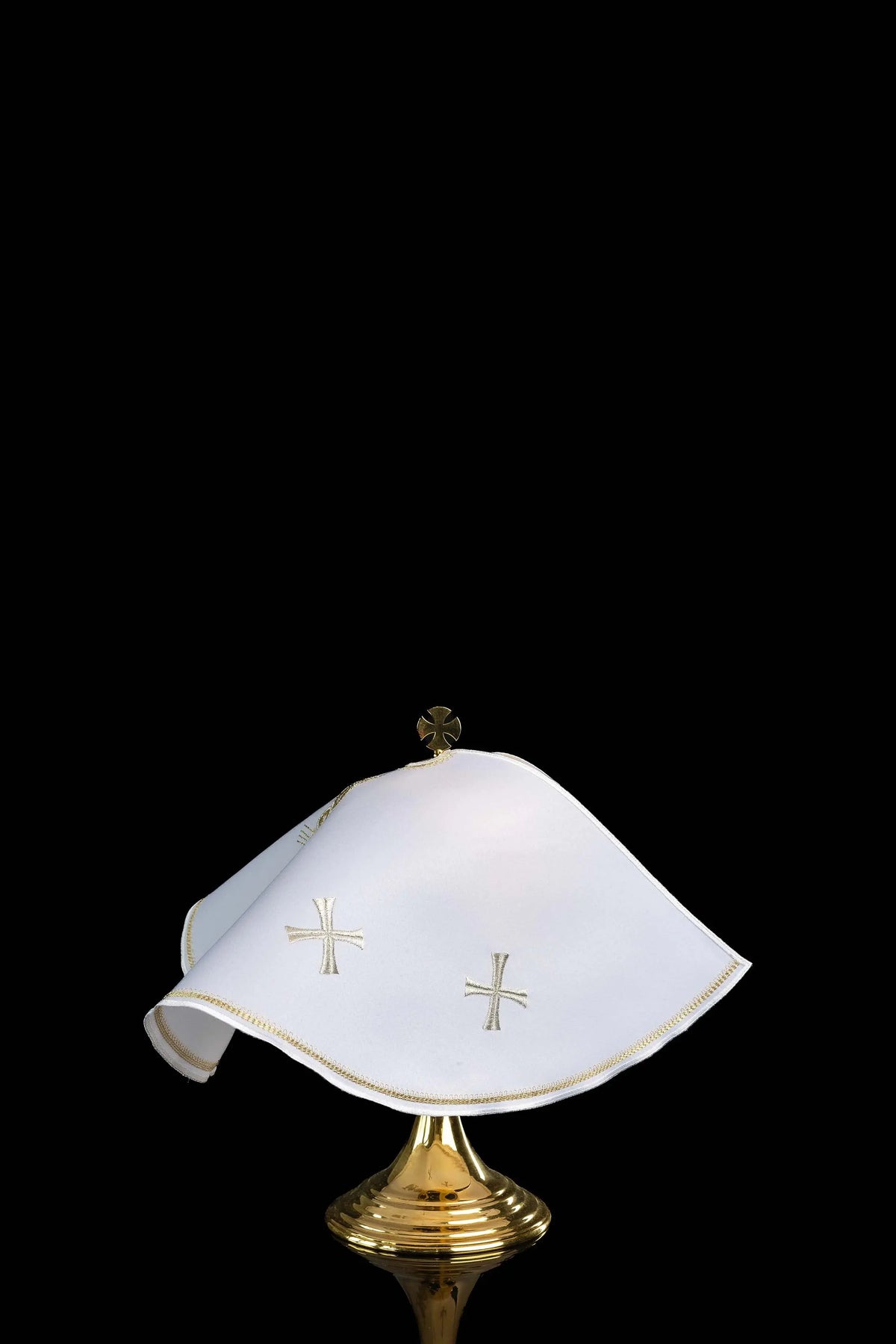
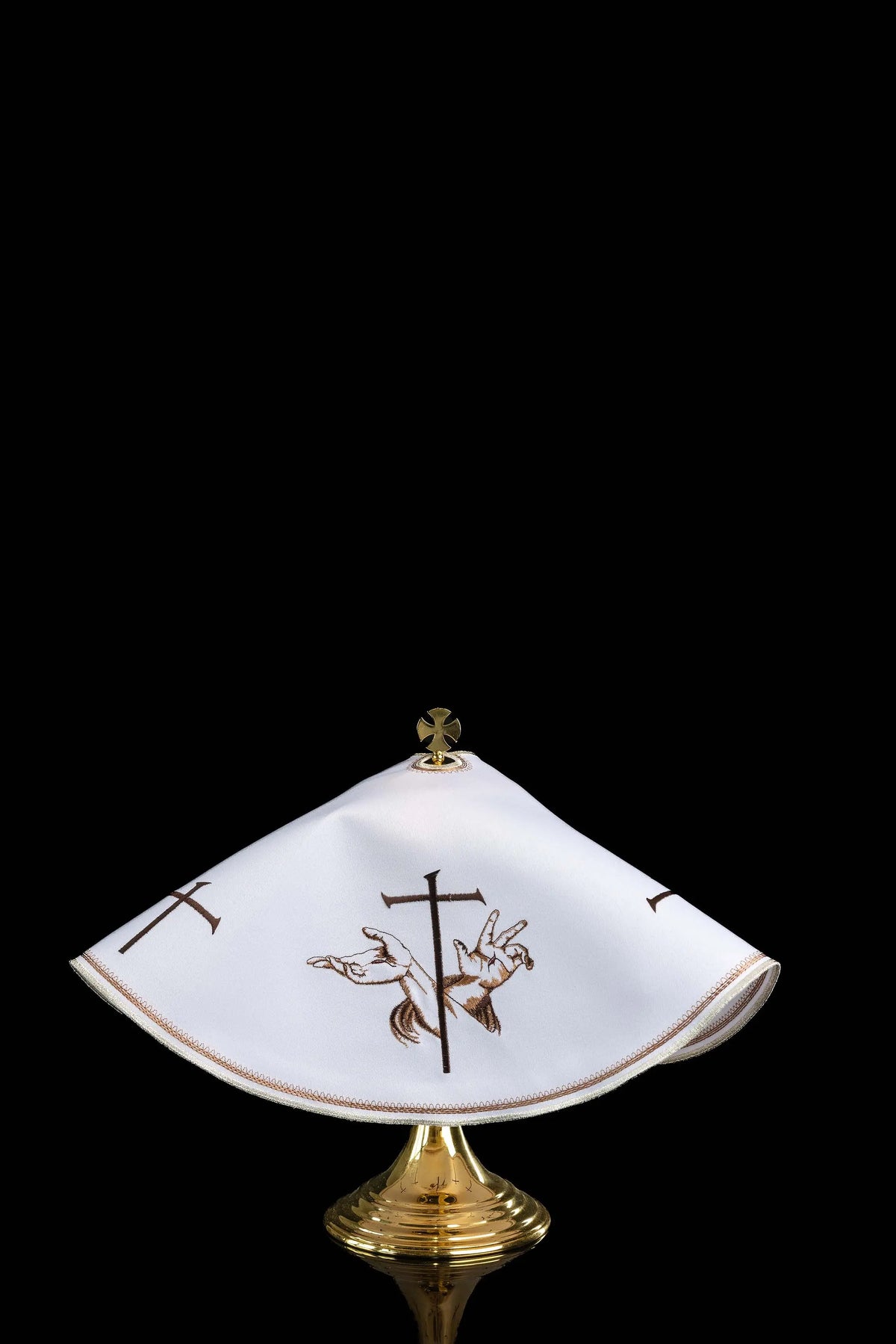
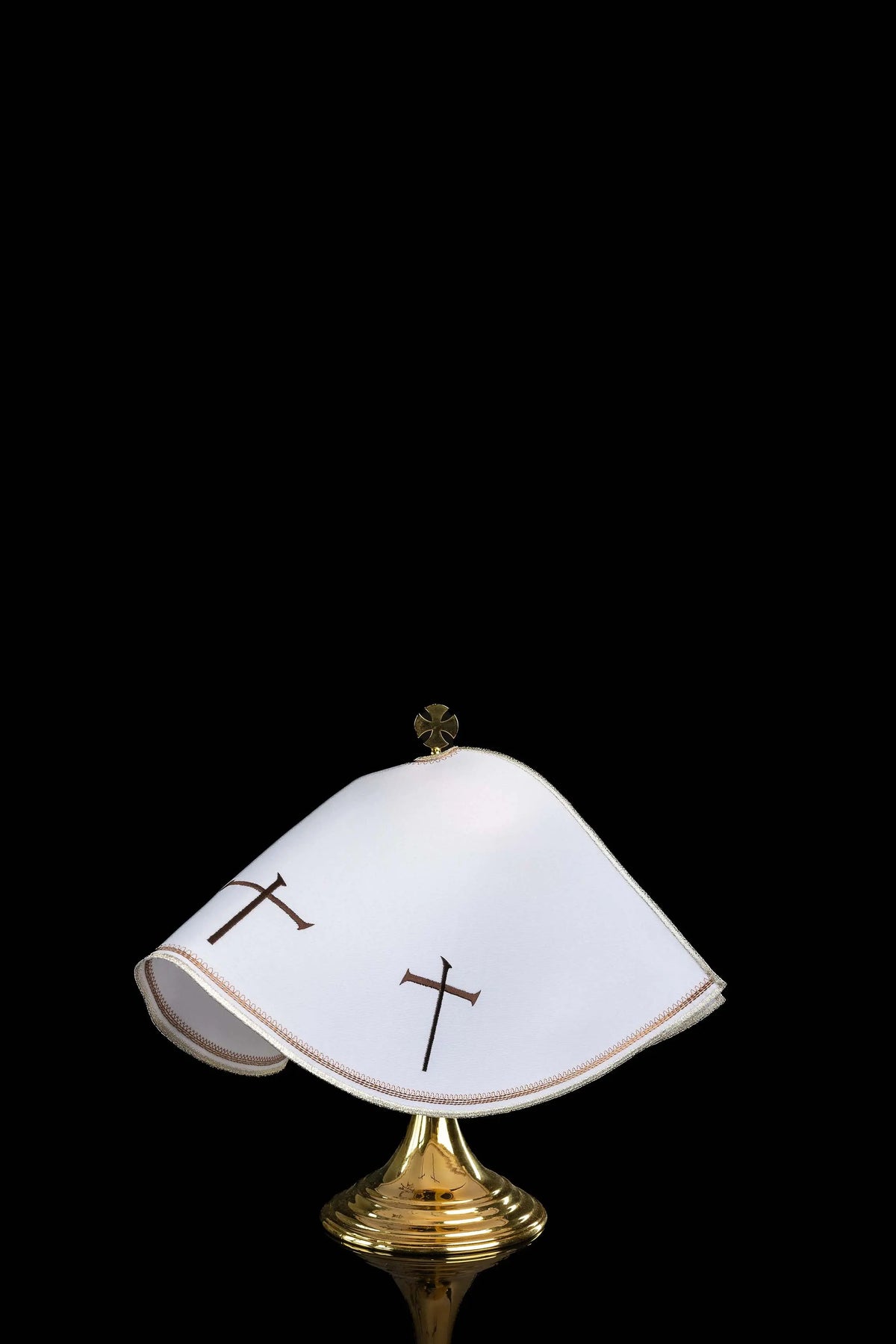
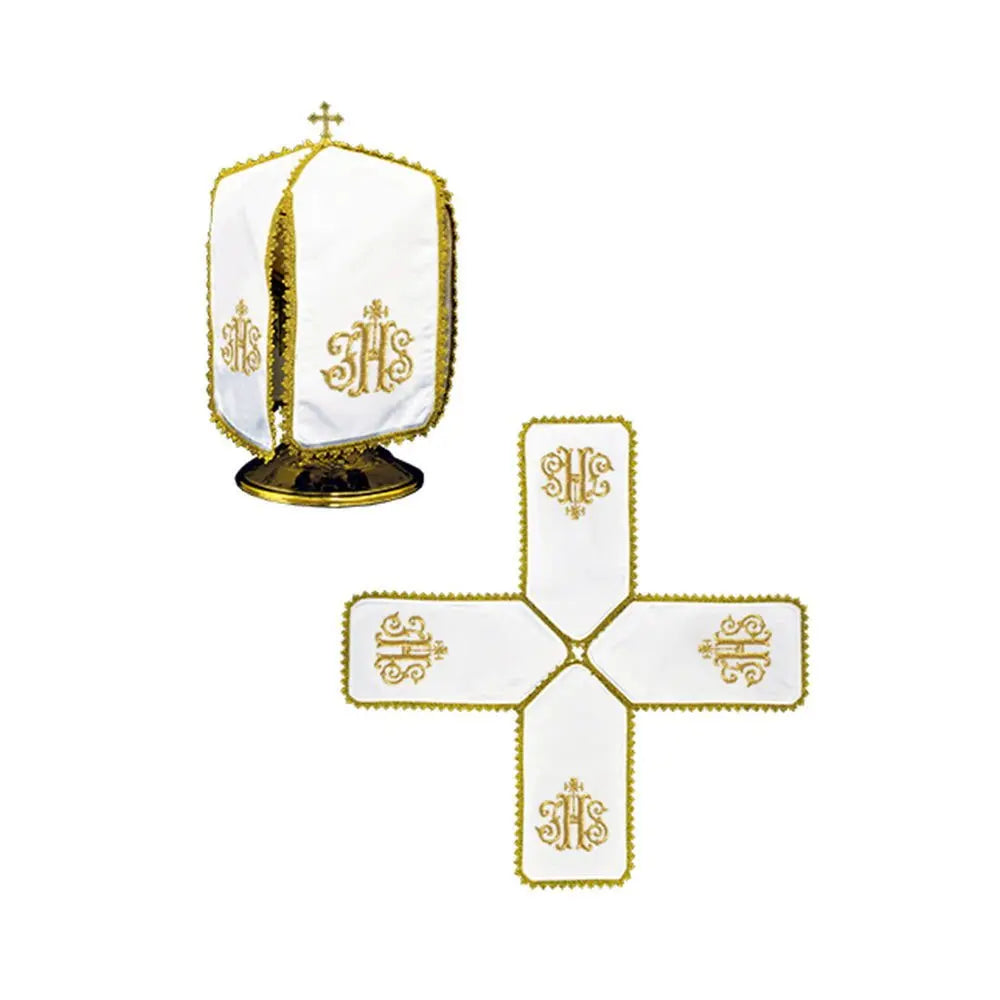
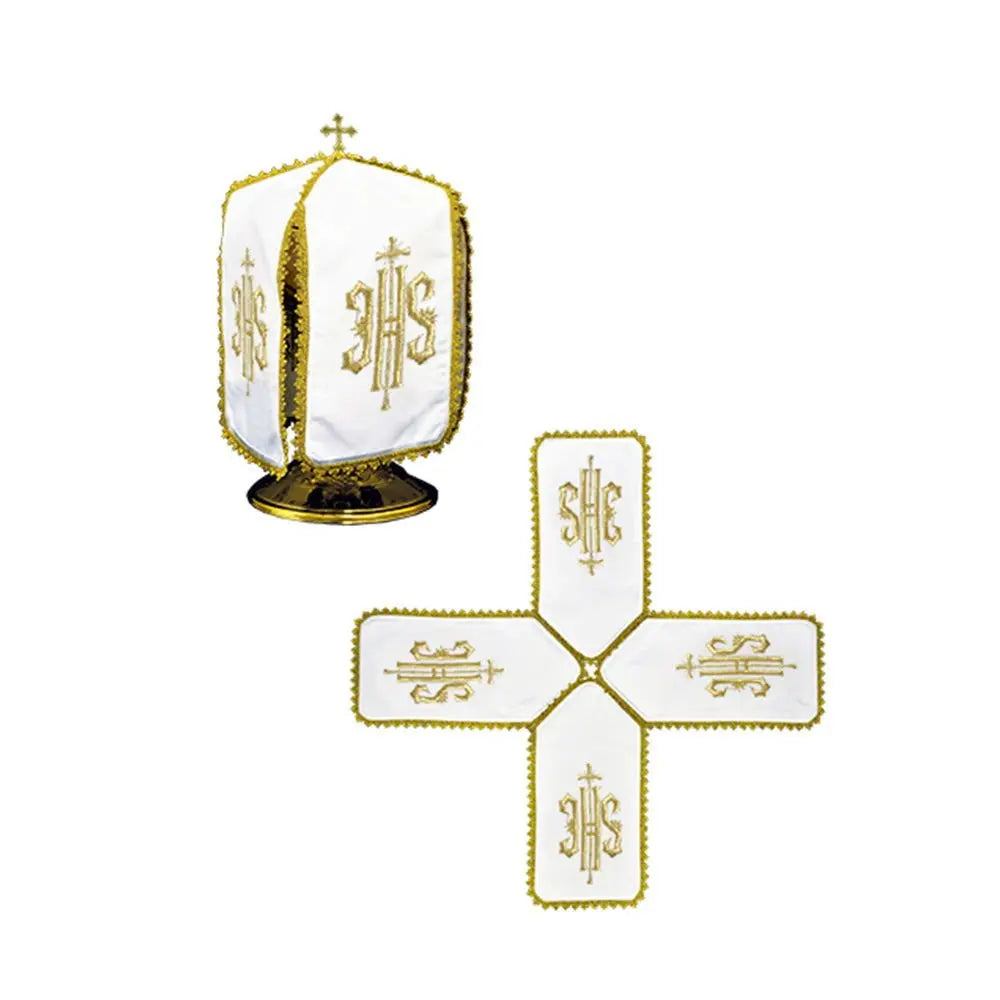
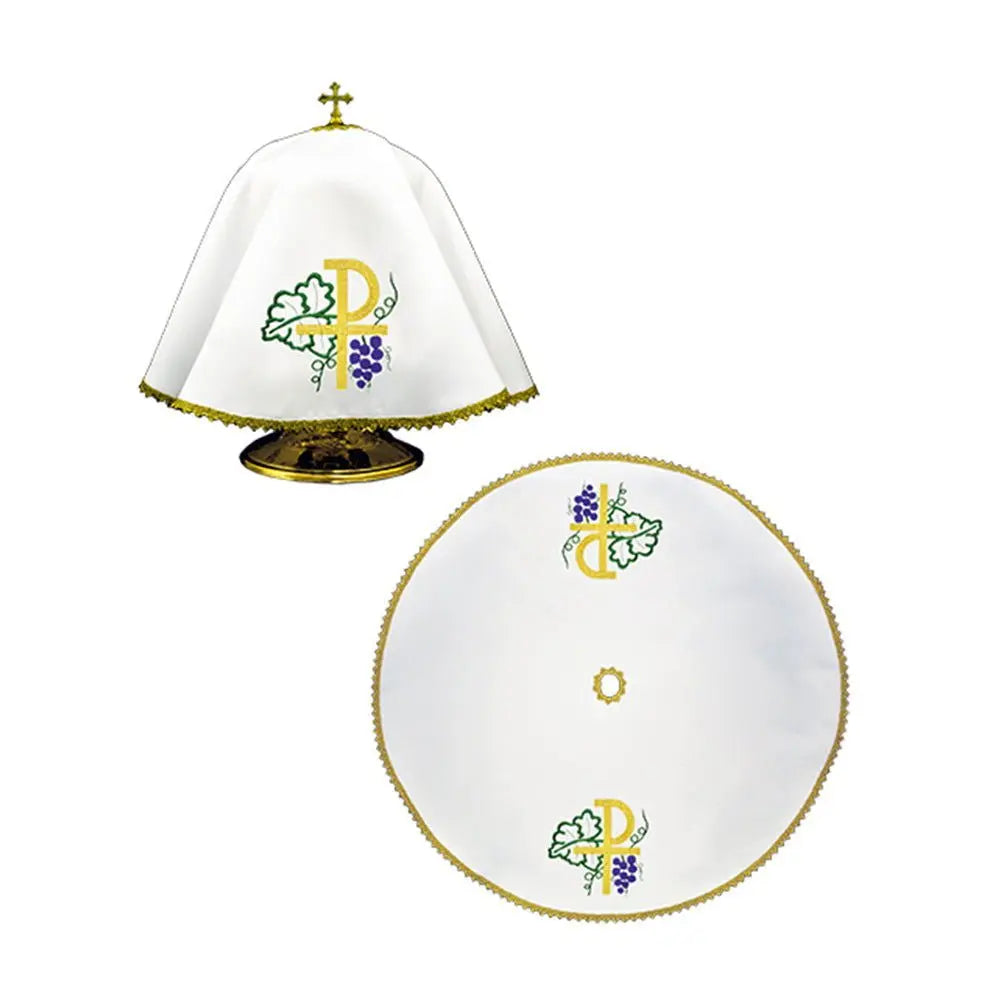
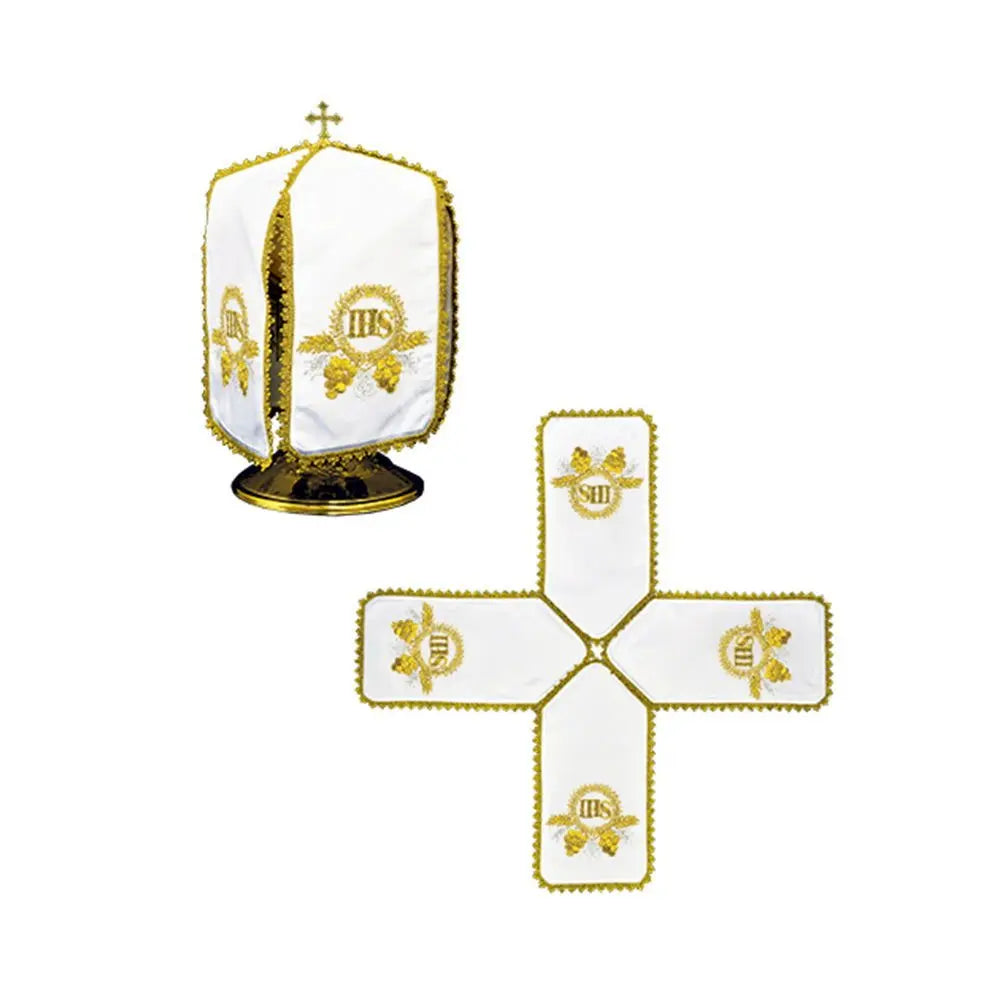
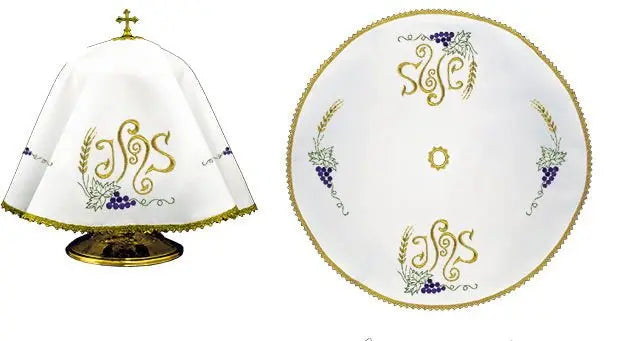
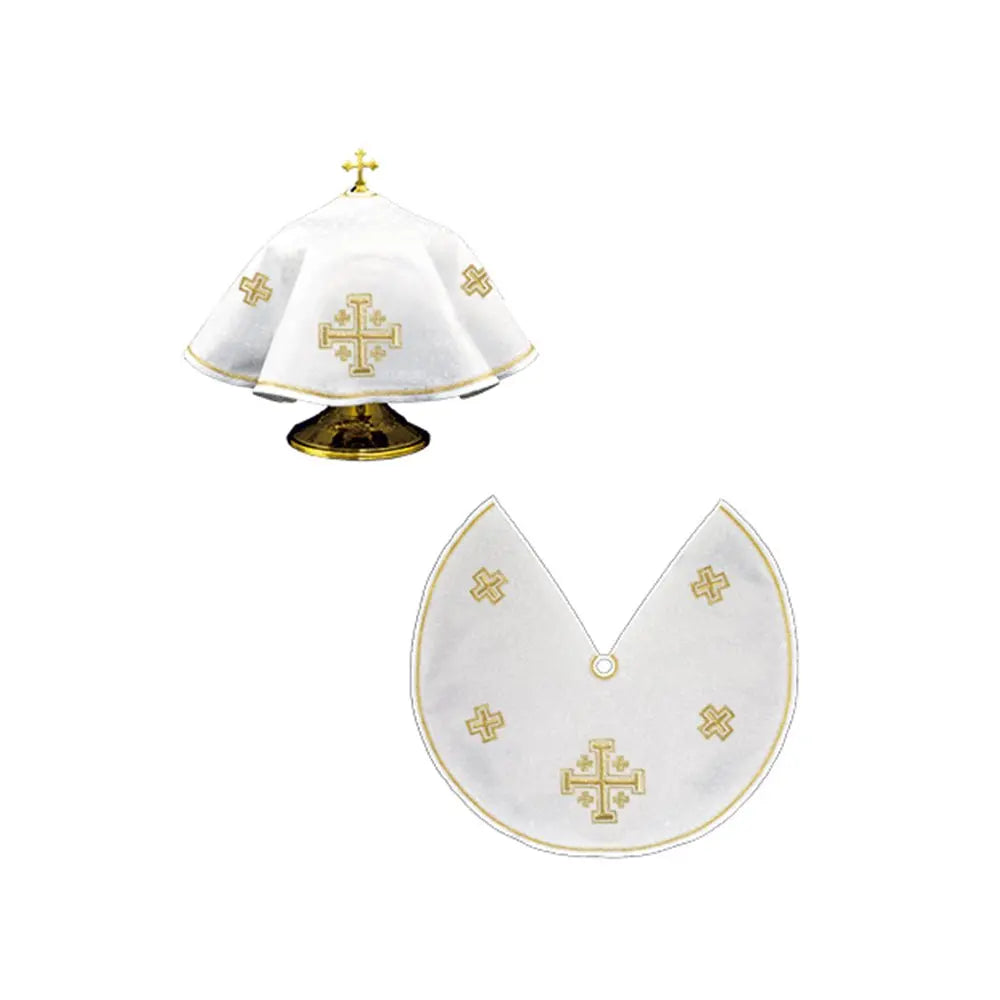
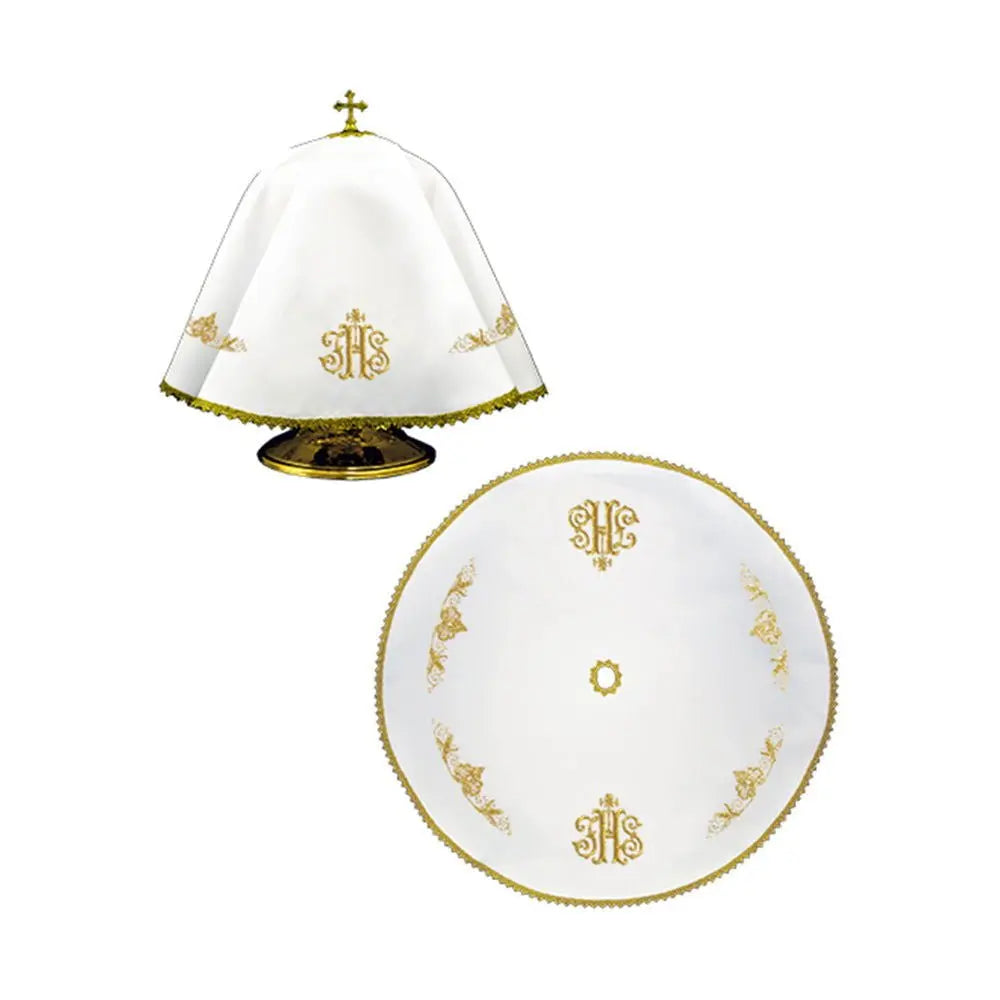
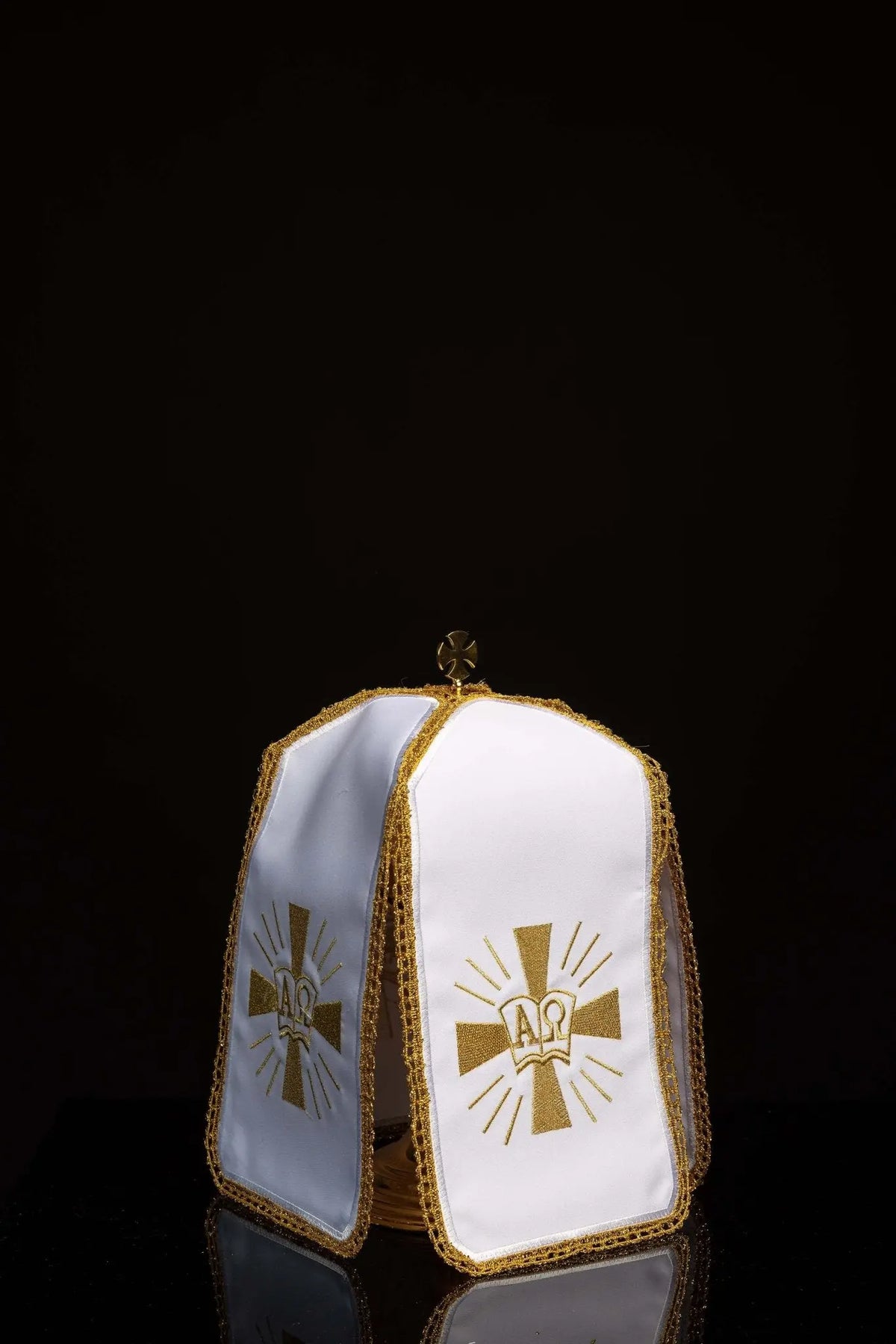
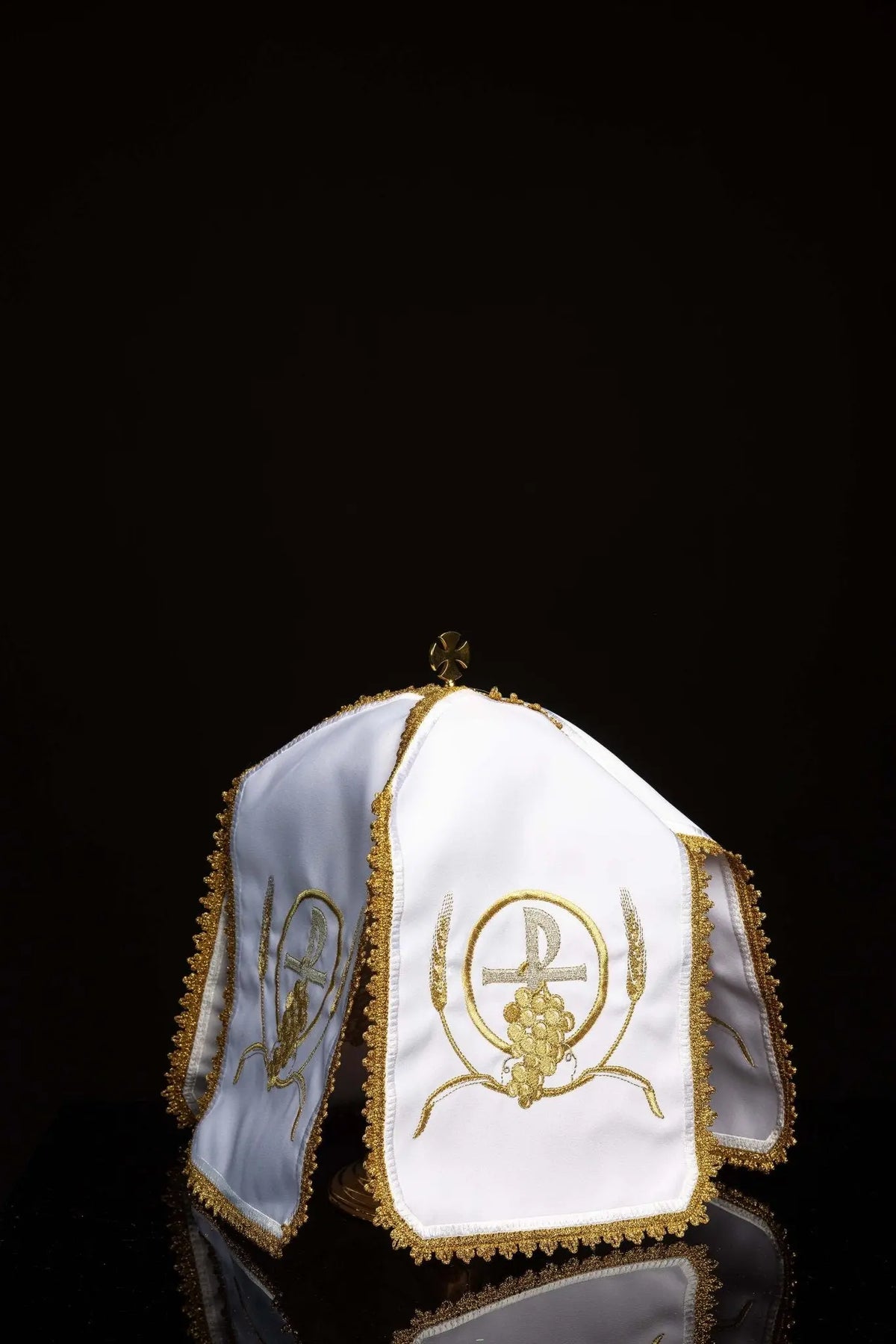
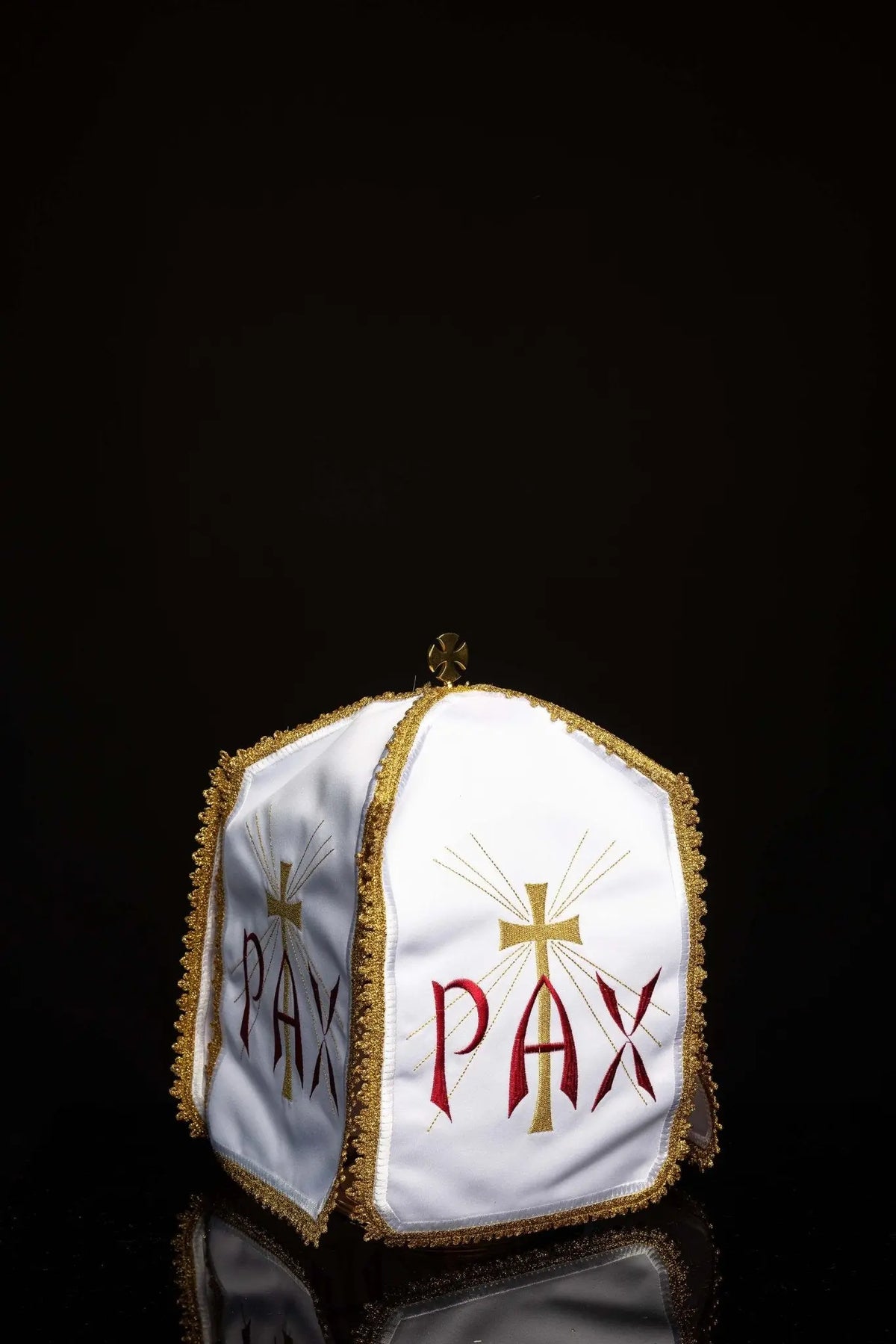
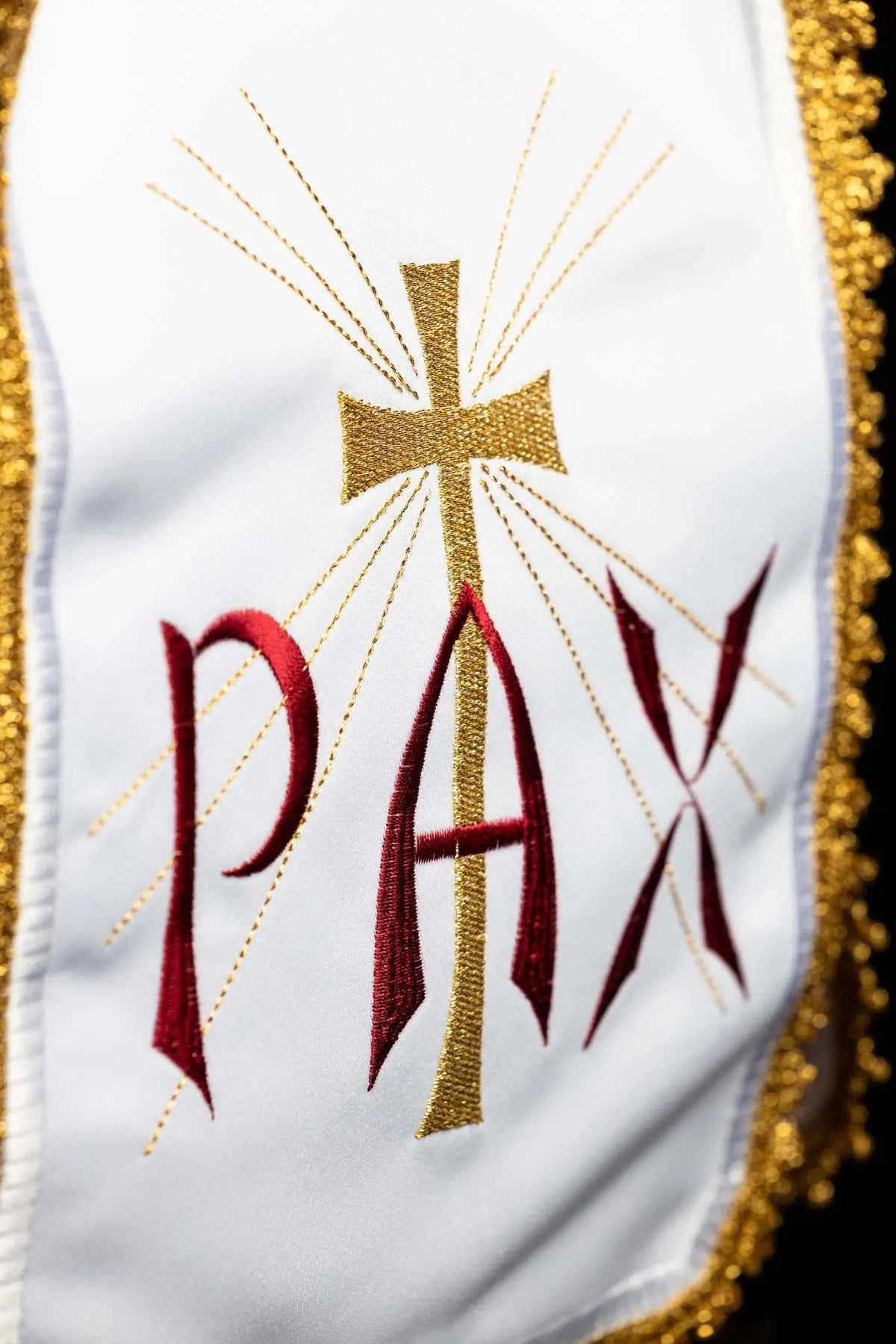
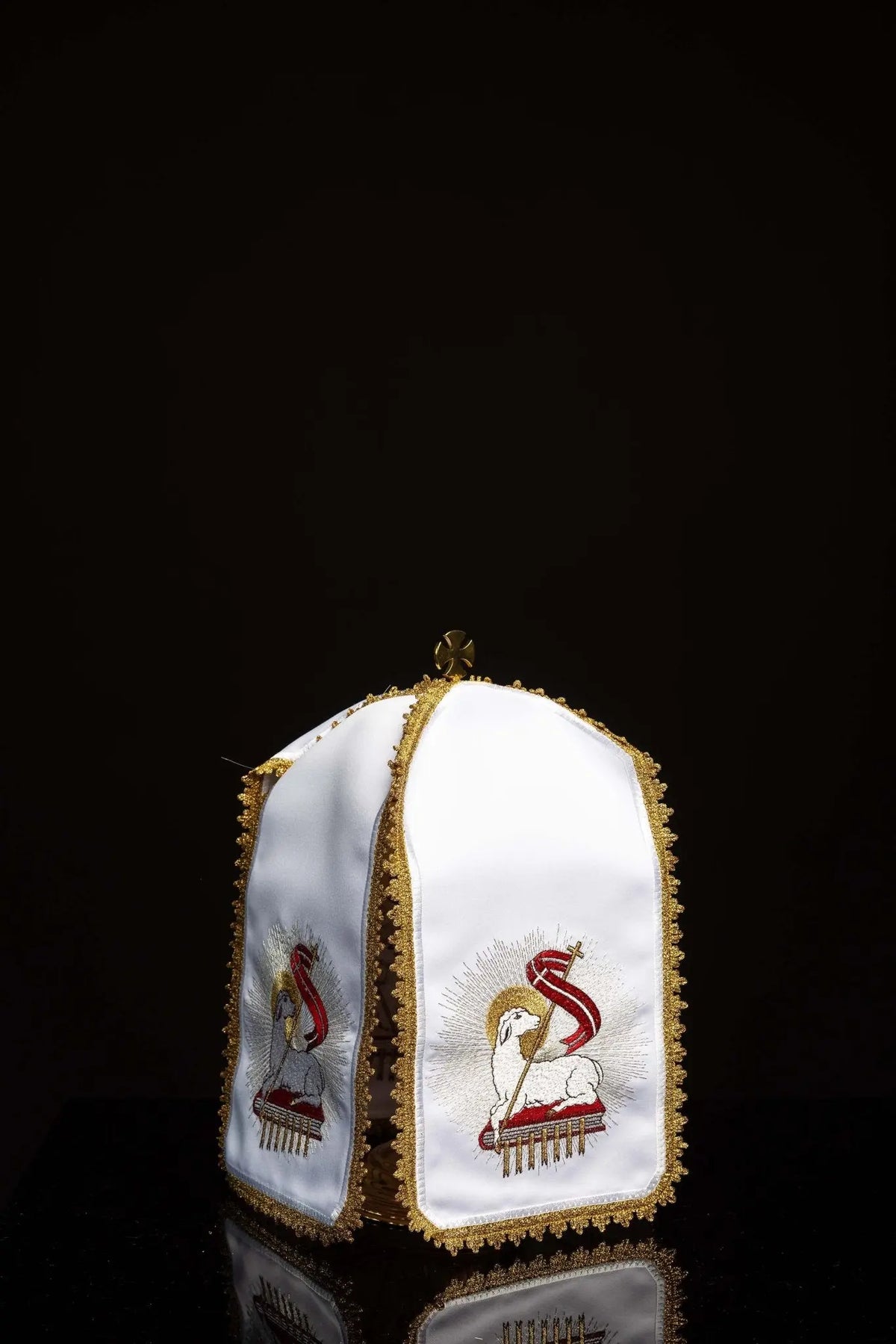
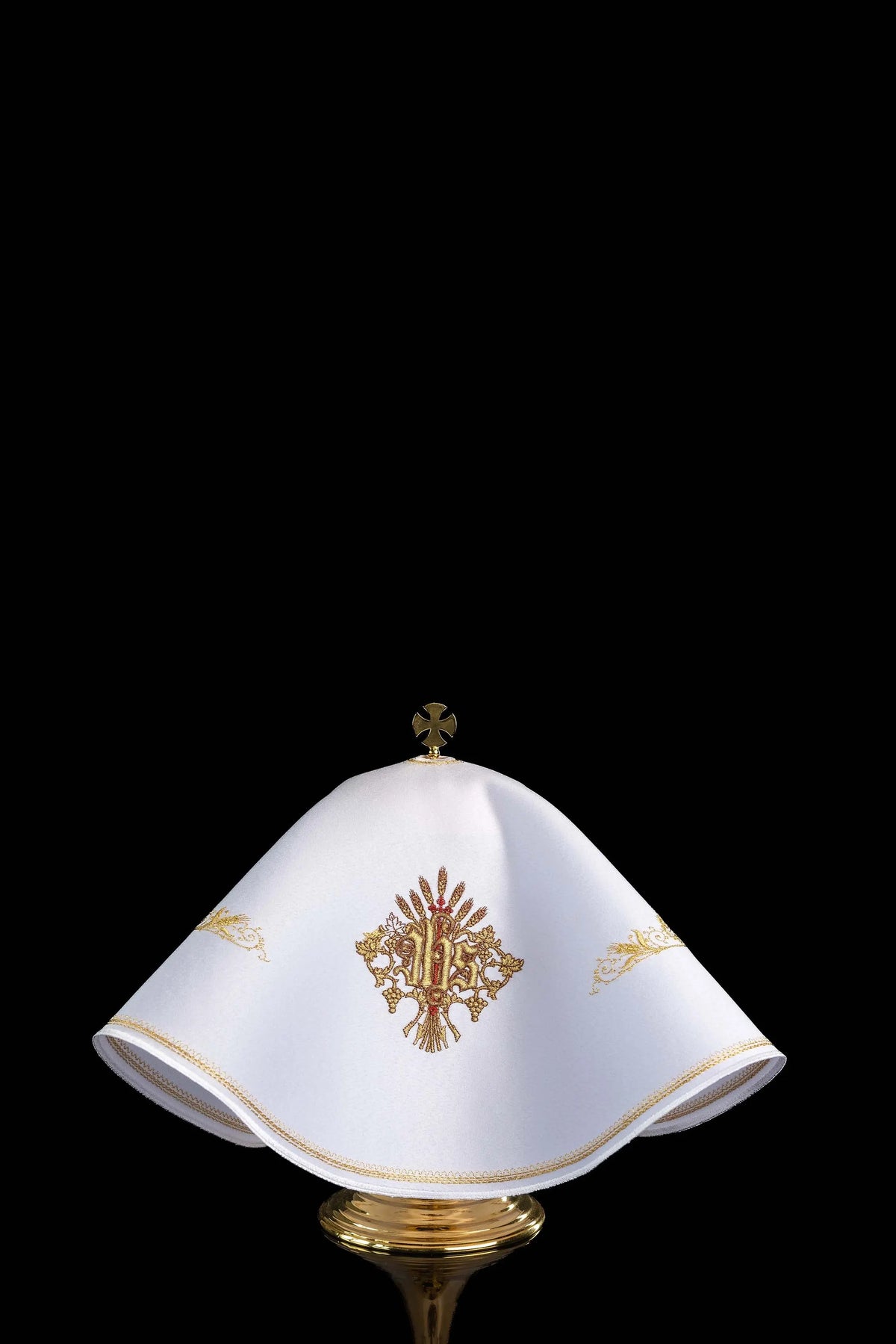
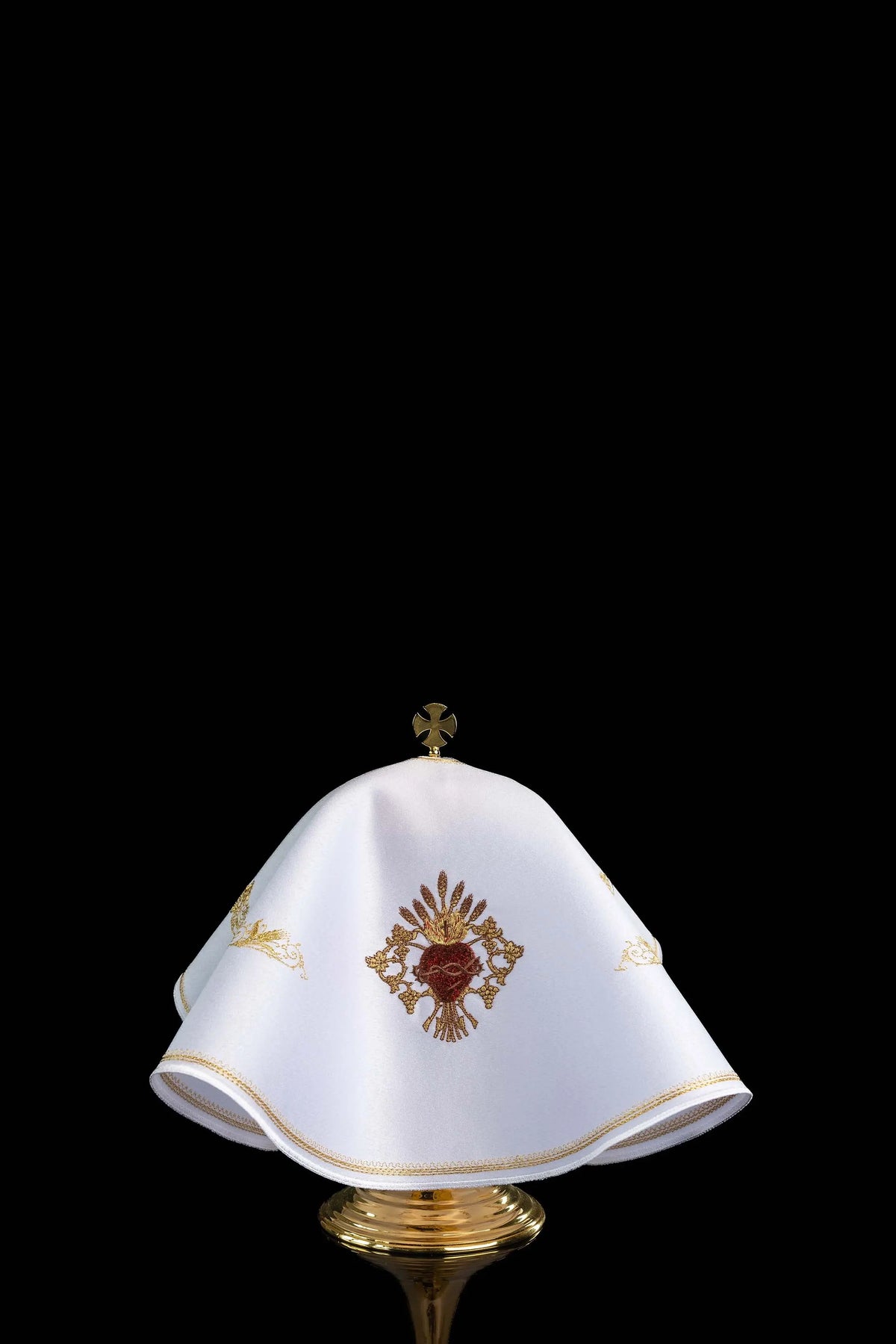
This collection gathers embroidered covers and veils designed for ciboria, canisters and similar sacred vessels used in the church. These textiles help protect the vessel, mark its liturgical purpose and give the sanctuary a coherent visual language during Mass, Eucharistic adoration, processions and other celebrations. The range includes round veils and shaped covers with Eucharistic and Marian embroidery, including IHS motifs, fish symbols, gold ornament and coloured liturgical decoration.
The original collection text referred broadly to altar cloths, but this page is dedicated more precisely to small vessel covers rather than full altar tablecloths. For altar surfaces and larger sanctuary textiles, browse altar cloths and altar linens. Here the focus is on decorative and functional veils placed over a ciborium or canister, especially when a parish wants the sacred vessel to harmonise with the vestments, chalice linens and seasonal colour scheme.
When these veils are used
A ciborium or canister veil is used to cover and dignify a vessel associated with the Eucharist. In parish practice, such covers are chosen for solemn Masses, weekday liturgies, Eucharistic devotion, chapel use and festive celebrations. Their purpose is not only decorative. A well-chosen veil helps distinguish sacred vessels from ordinary objects and supports the careful, reverent handling of the items used around the altar and tabernacle.
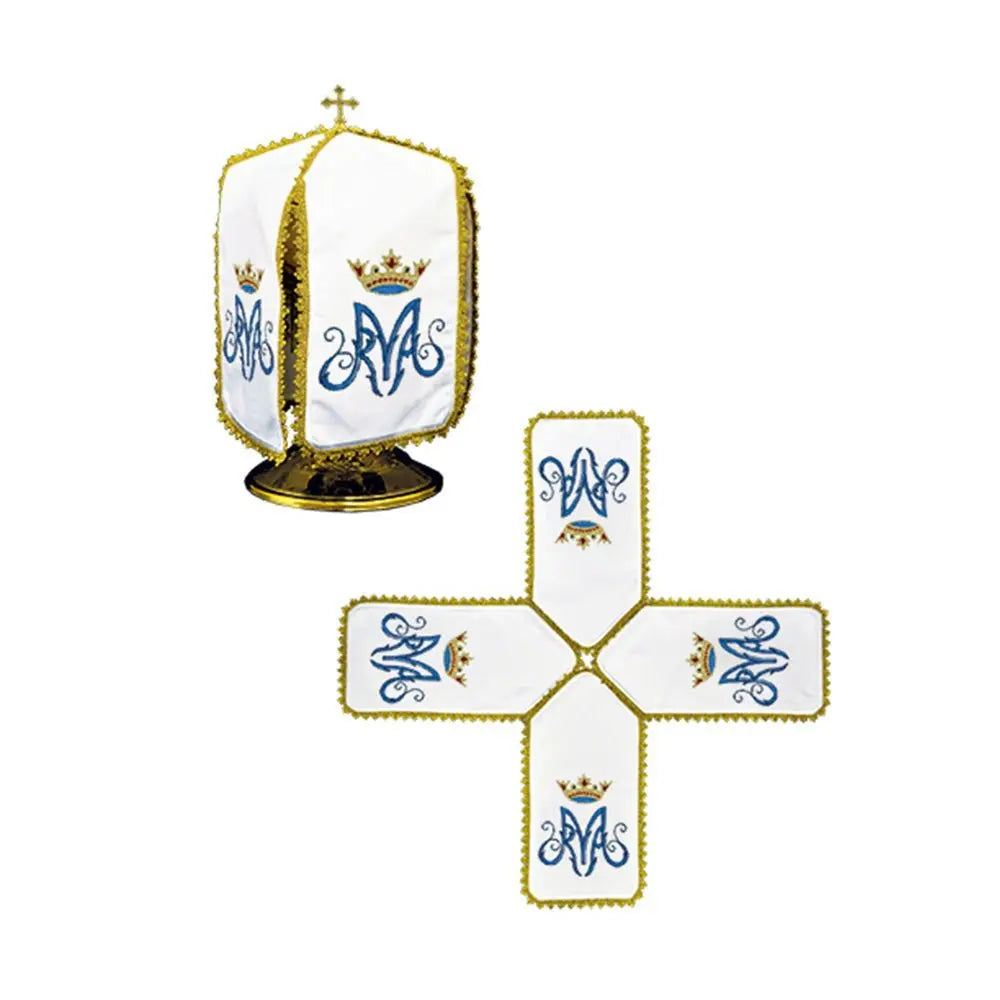
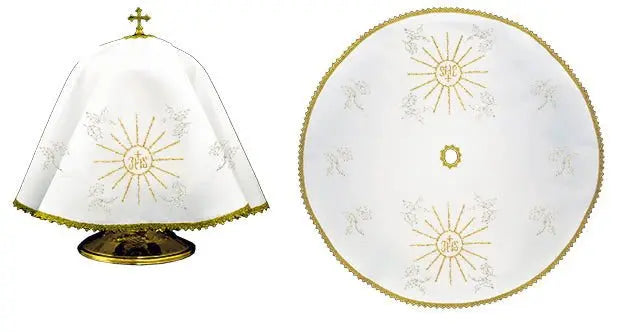
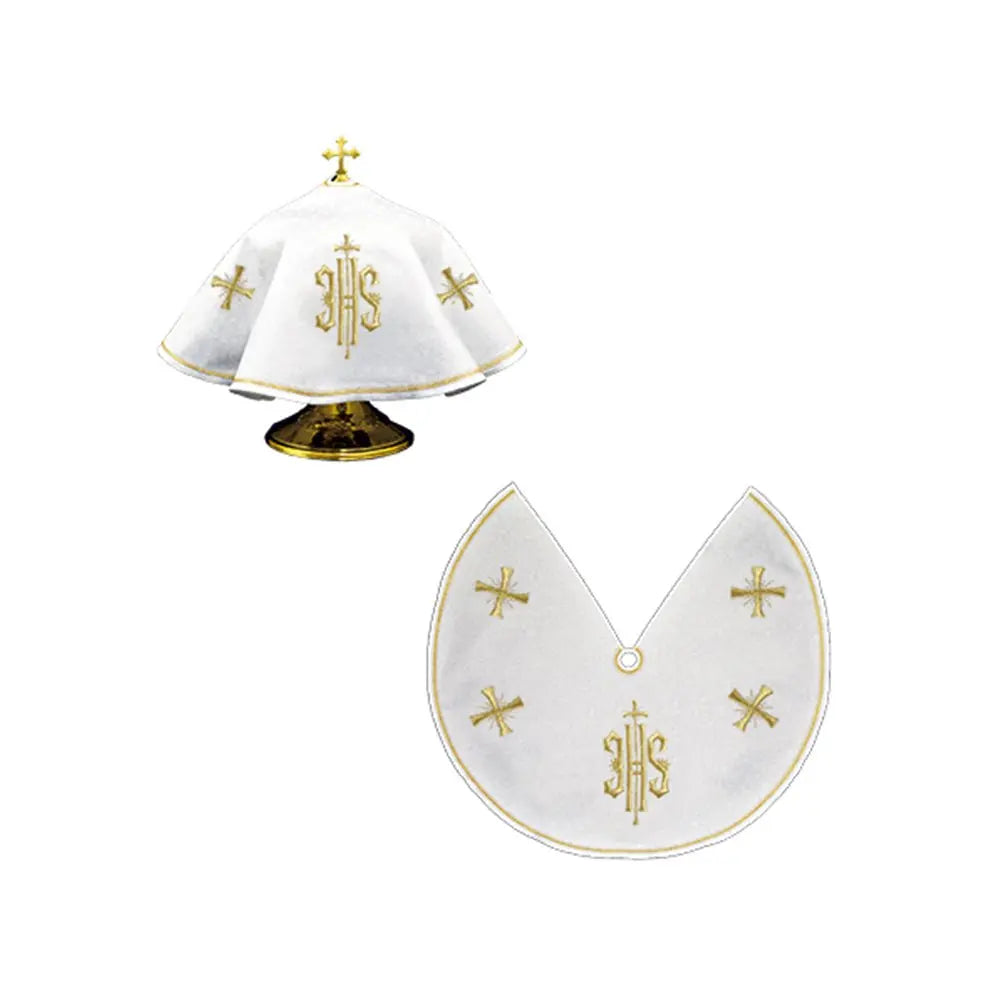
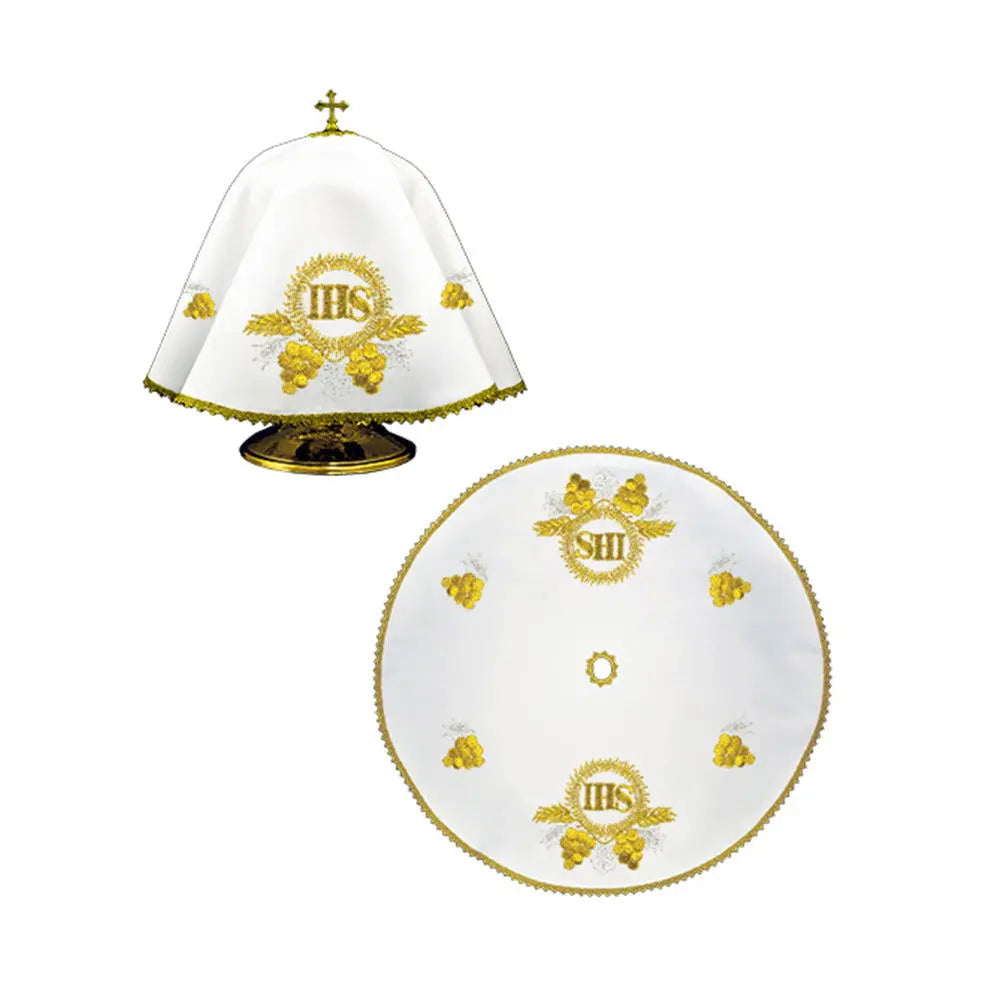
Many churches keep several veils so that the vessel can match the liturgical season or the devotional character of the day. Gold and ecru embroidery often suits solemn feasts and Eucharistic celebrations, while Marian motifs are especially fitting for feasts of the Blessed Virgin Mary, parish devotions, Marian shrines and chapels dedicated to Our Lady. Designs with IHS or fish embroidery clearly express Eucharistic meaning and are suitable for frequent use throughout the year.
How to choose the right canister cloth
Before selecting a veil, check the diameter and height of the vessel it will cover. Round covers should sit neatly over the top without looking strained, while longer or fuller designs should fall evenly around the sides. The best choice is the one that covers the vessel with dignity, stays practical for sacristy use and does not interfere with careful handling during the liturgy.
-
Measure the vessel first: compare the veil size with the canister or ciborium diameter so the fabric falls naturally.
-
Match the embroidery to the occasion: IHS and Eucharistic motifs are versatile, while Marian embroidery is especially suitable for Marian feasts and devotions.
-
Coordinate with other textiles: choose decoration that works with chalice veils, chalice linen sets, altar cloths and vestments already used in the church.
-
Consider daily handling: a veil used frequently should be easy to place, remove and care for while keeping a refined appearance.
Embroidery, colour and liturgical harmony
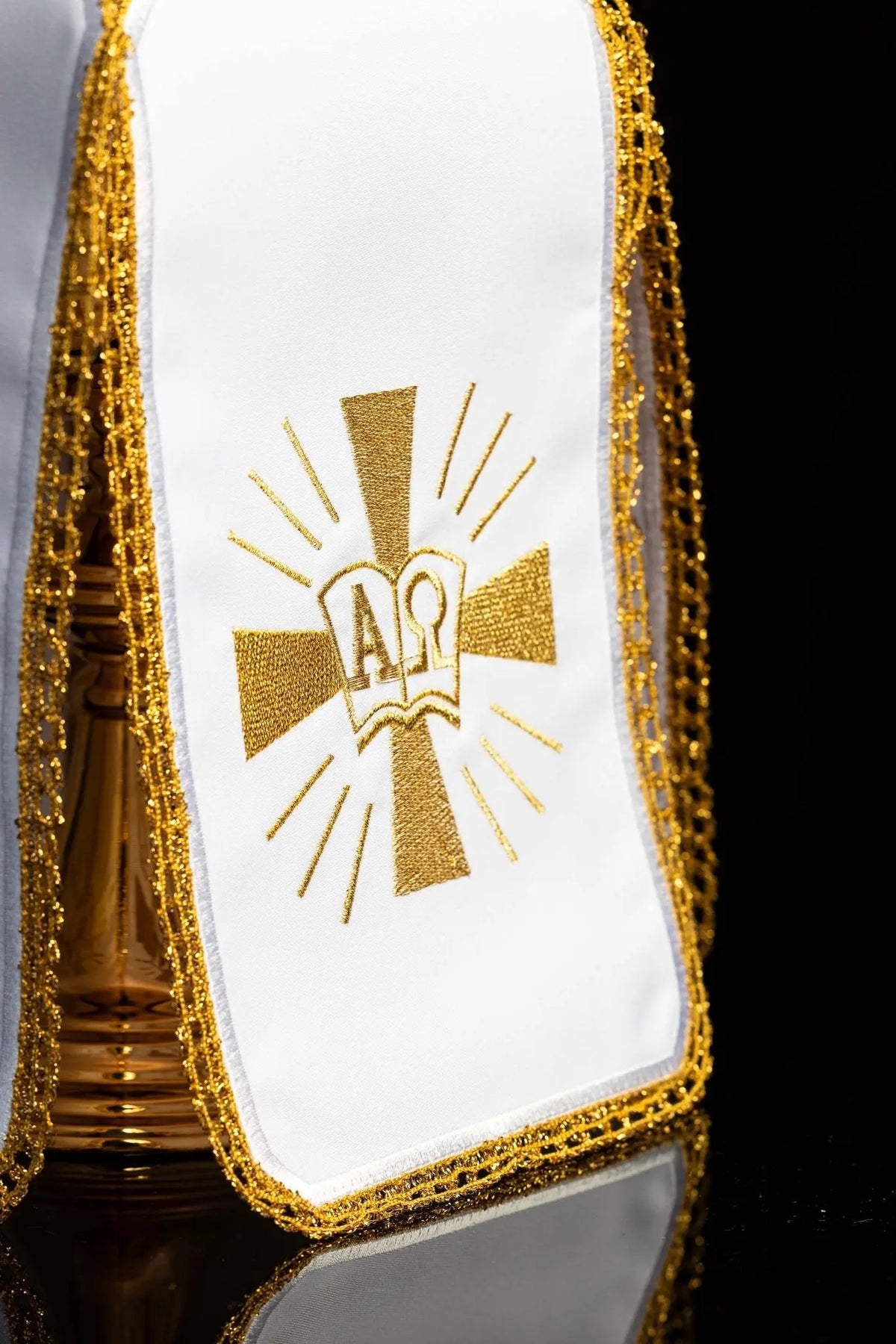
The visible products in this collection show a strong emphasis on gold, IHS, fish and Marian embroidery. Gold decoration brings a solemn Eucharistic character and pairs naturally with white, ecru and festive vestments. Marian designs coordinate well with blue, white, ecru and gold sanctuary textiles. Coloured IHS embroidery can also help connect the veil with seasonal vestments or parish sets used on special days.
For a fully coordinated sanctuary, these covers may be paired with chalice veils, ciborium veils, linen chalice sets or coloured chalice linens. When preparing a more solemn Eucharistic celebration, such as Corpus Christi, it may also be helpful to coordinate them with humeral veils and related processional textiles.
Relationship to nearby church textile collections
Ciborium veils and canister cloths belong to the same broader family of liturgical textiles as altar linens and chalice sets, but they serve a more specific function. A chalice veil covers the chalice, a chalice linen set normally includes small linens used directly at the altar, and an altar cloth covers the altar mensa itself. This collection is for the vessel cover placed over a ciborium or canister, making it a useful addition to a parish sacristy when the church already has complete altar linen sets but needs matching covers for Eucharistic vessels.
Churches building a coherent sacristy set often begin with basic white or ecru linens, then add covers for solemnities, Marian celebrations and Eucharistic devotion. For Marian use, explore Blessed Virgin Mary designs alongside the veils in this collection. For major Eucharistic celebrations, the Corpus Christi collection may provide related vestments and textiles that help create a unified liturgical setting.
Care and practical sacristy use
Liturgical veils should be stored flat or gently folded so that embroidery, lace and decorative edges are not crushed. After use, allow the textile to dry fully before storing it, especially in sacristies where humidity may affect fabric over time. Always follow the care guidance for the specific item, since embroidery, trims and fabric blends may require more careful handling than plain cotton or linen pieces.
For regular parish use, it is helpful to keep veils organised by size, colour and motif. This makes it easier for sacristans to select the correct piece for the vessel and celebration. A practical system may include everyday Eucharistic veils, more ornate festive covers, Marian designs and pieces reserved for solemn liturgies. Such organisation protects the textiles and supports smooth preparation before Mass.
Frequently Asked Questions (FAQ)
What is included in this collection?
This collection includes small liturgical veils and covers for ciboria, canisters and similar sacred vessels. The designs include round covers, IHS embroidery, Marian motifs, fish symbols and gold or coloured decorative elements.
Are these the same as altar cloths?
No. Altar cloths cover the altar table, while these pieces are intended for sacred vessels. They are closer in function to ciborium veils and vessel covers than to large altar tablecloths.
How should I choose the correct size?
Measure the diameter of the vessel and compare it with the product dimensions. A good cover should rest comfortably over the top and fall neatly without being too tight or excessively large.
Which designs are best for Marian celebrations?
Veils with Marian embroidery or blue Marian accents are especially suitable for feasts and devotions connected with the Blessed Virgin Mary. They can be coordinated with Marian vestments, stoles and altar textiles.
Can these veils be matched with chalice veils and linens?
Yes. Many parishes choose vessel covers together with chalice veils and chalice linen sets so the altar, sacred vessels and vestments share the same colour, embroidery style or Eucharistic motif.