Chasubles for Priests: Liturgical Vestments for Mass
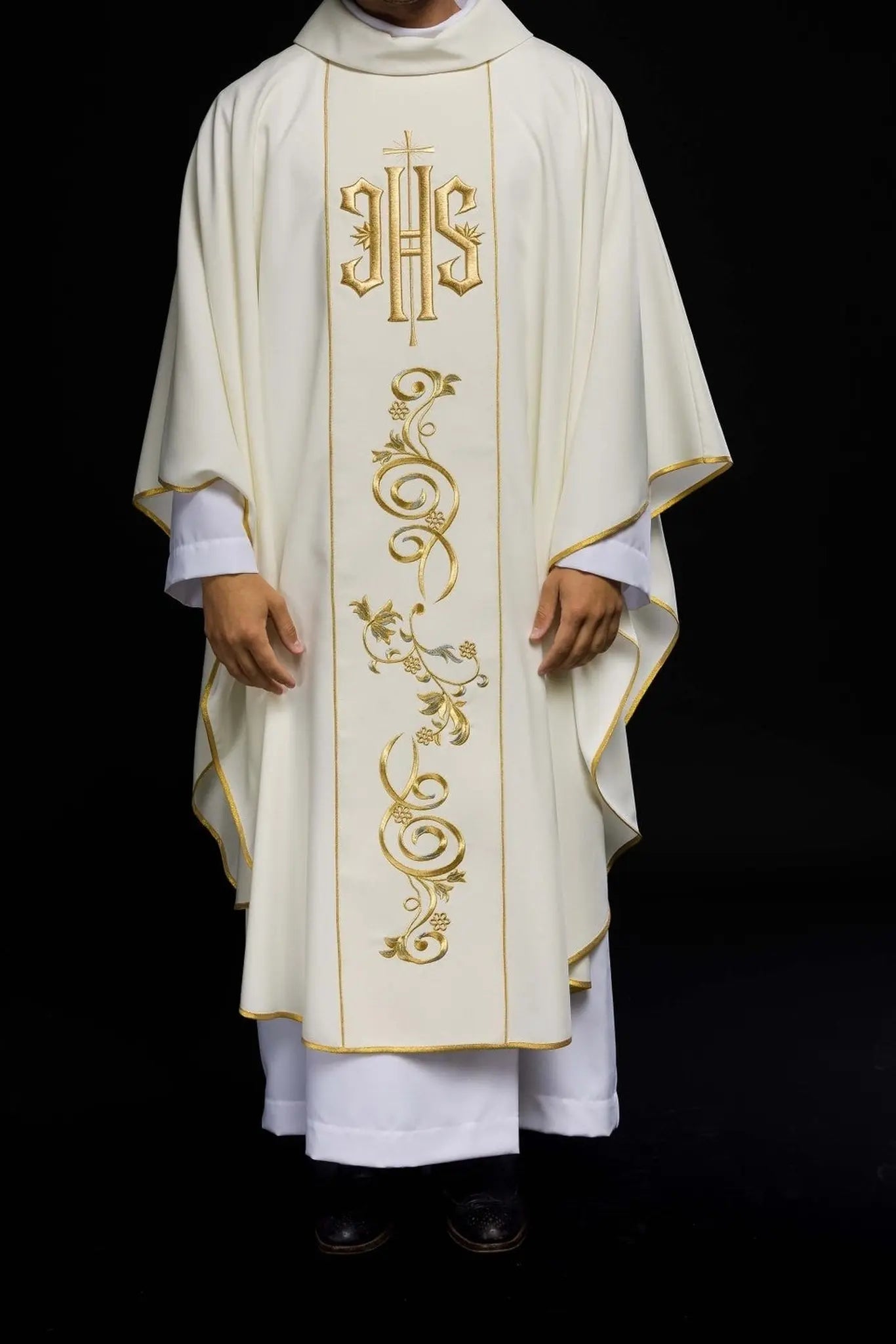
Chasubles are the principal outer vestments worn by priests and bishops when celebrating the Holy Mass. They are placed over the alb and stole and become the most visible vestment of the Eucharistic liturgy. This collection gathers chasubles intended for parish churches, chapels, religious houses, seminaries and diocesan celebrations, with designs suited to daily Mass, Sundays, solemnities, Marian feasts, funerals and important liturgical seasons.
A chasuble is not simply a ceremonial garment. In the Roman Rite it belongs directly to the action of the priest at the altar, where the sacrifice of the Mass is offered. Its form covers the shoulders and falls around the body, expressing the dignity of the sacred ministry and the charity that should clothe the priest. Because it is seen by the whole congregation, the chasuble also helps communicate the character of the celebration through color, fabric, symbol and embroidery.
This collection sits within the wider category of liturgical vestments. It is focused on chasubles for priests and bishops, while adjacent vestments serve other ministries or rites. Deacons normally wear dalmatics for Mass, so vestments for them are found separately in deacon dalmatics. Stoles, albs, copes and humeral veils may be chosen alongside a chasuble, but each has its own liturgical role.
What belongs in this chasuble collection
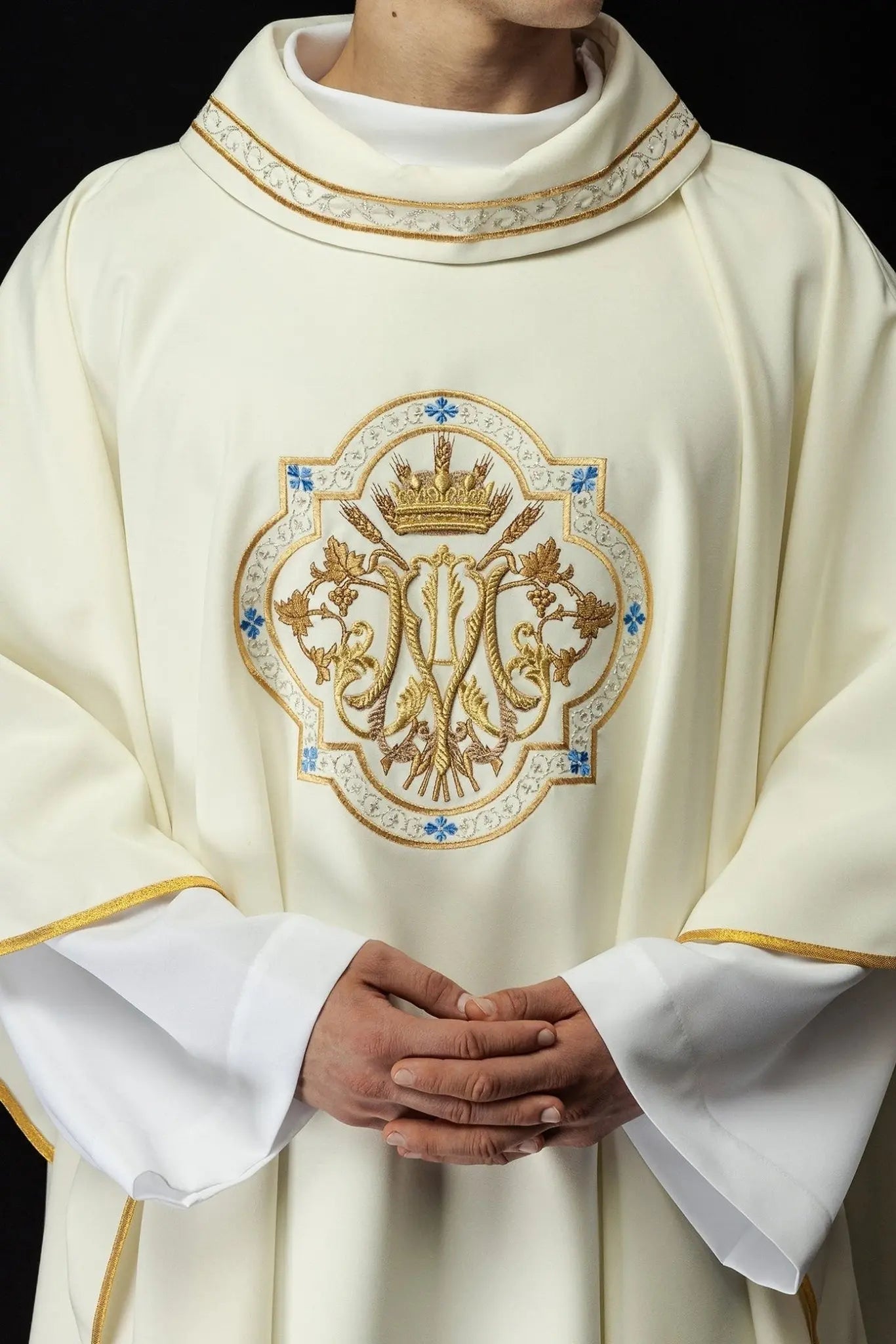
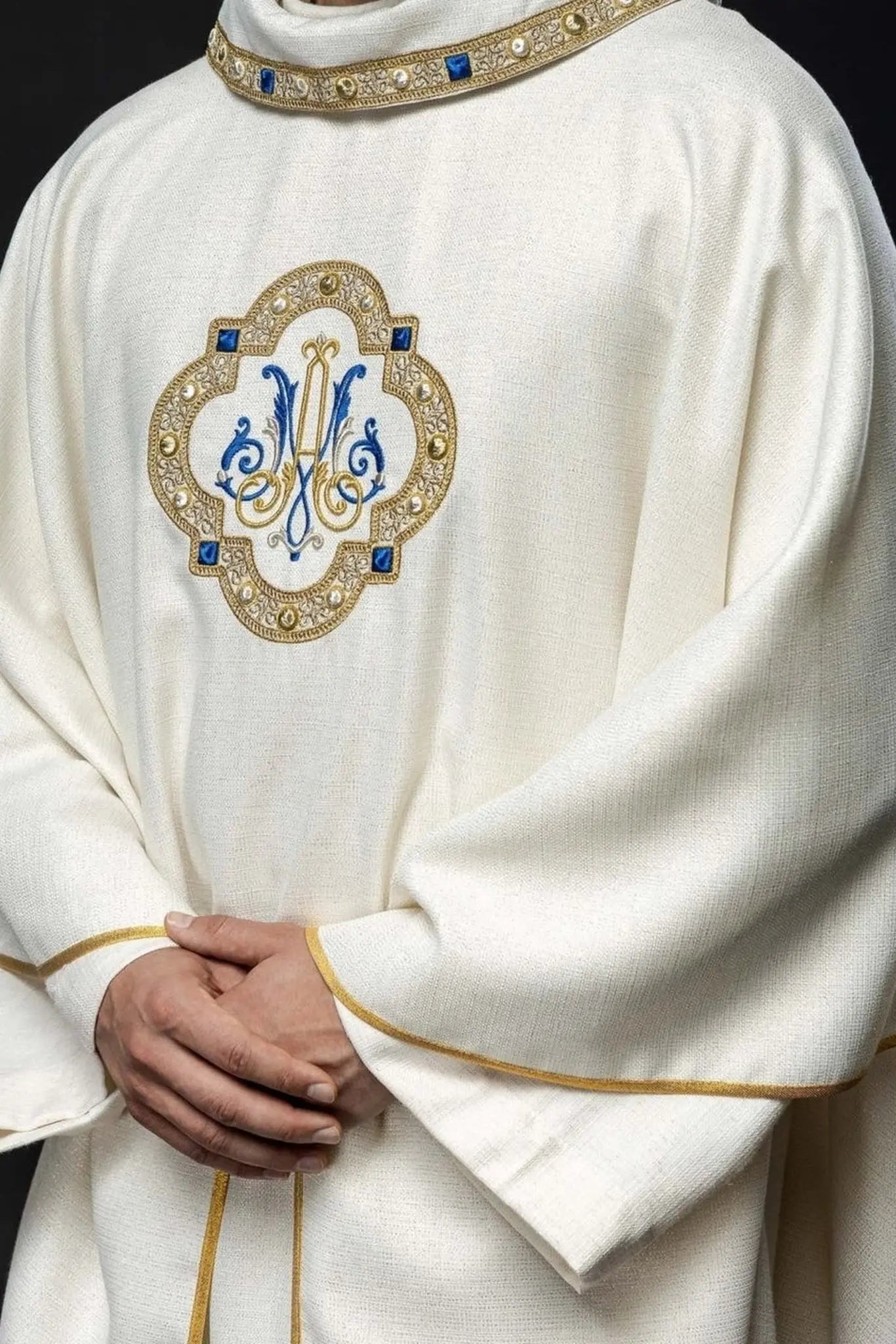
The collection includes chasubles in the main liturgical colors and in several design families. Some pieces are simple and restrained for weekday Masses or concelebration. Others are richer in ornamentation, with embroidered crosses, Eucharistic motifs, Marian symbols, images of saints or decorative orphreys. The aim is to make it possible to choose a vestment that fits both the season of the Church year and the character of the celebration.
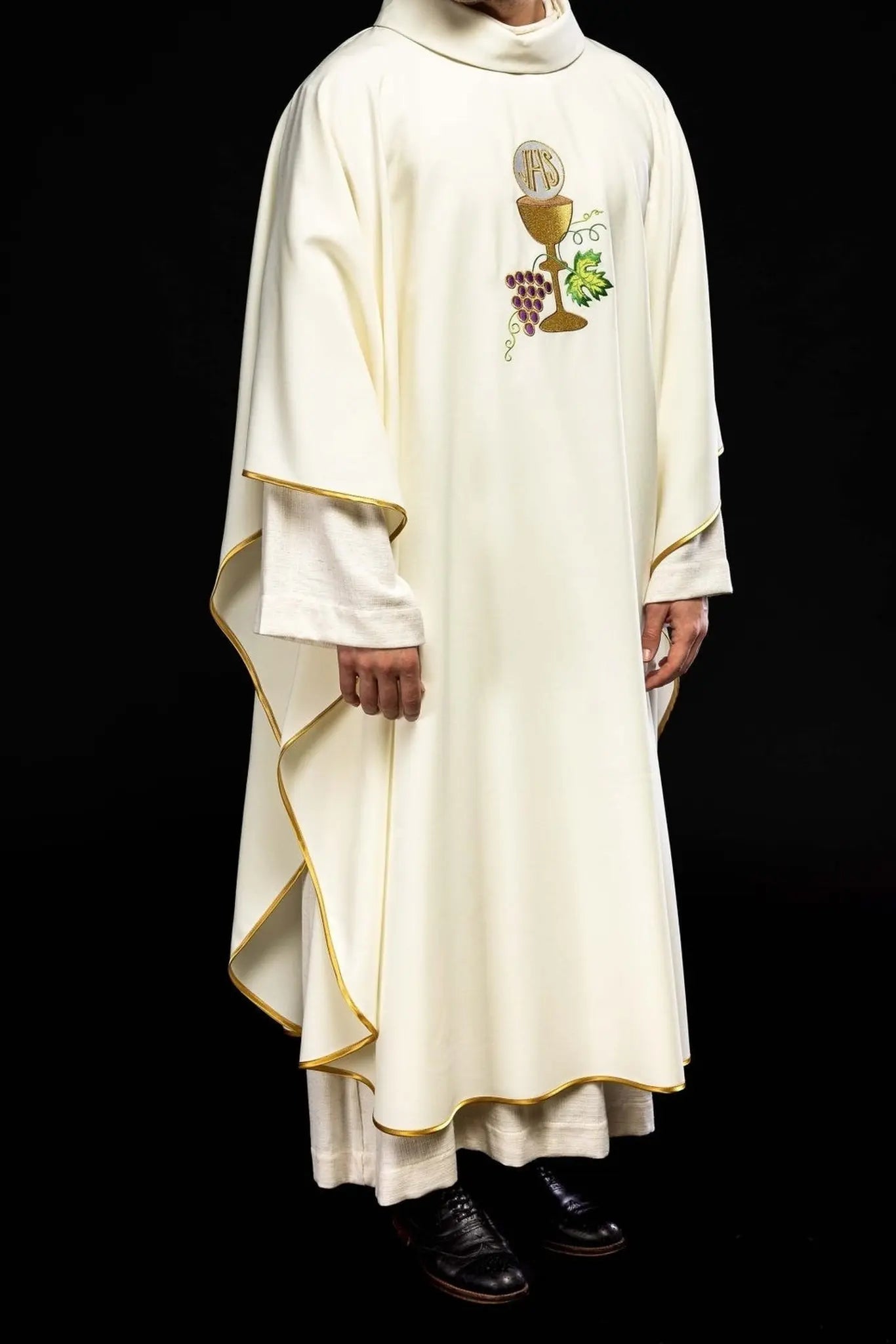
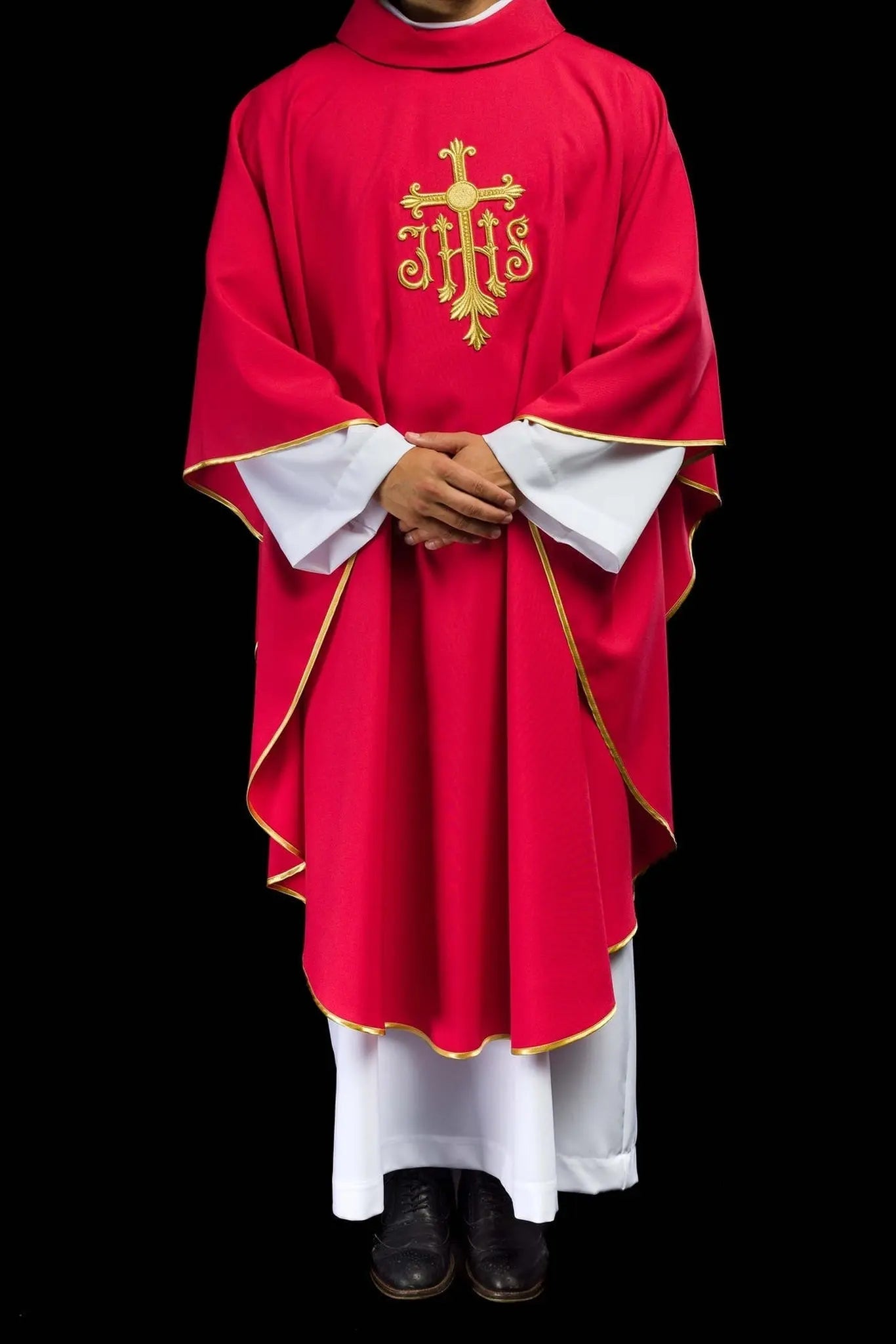
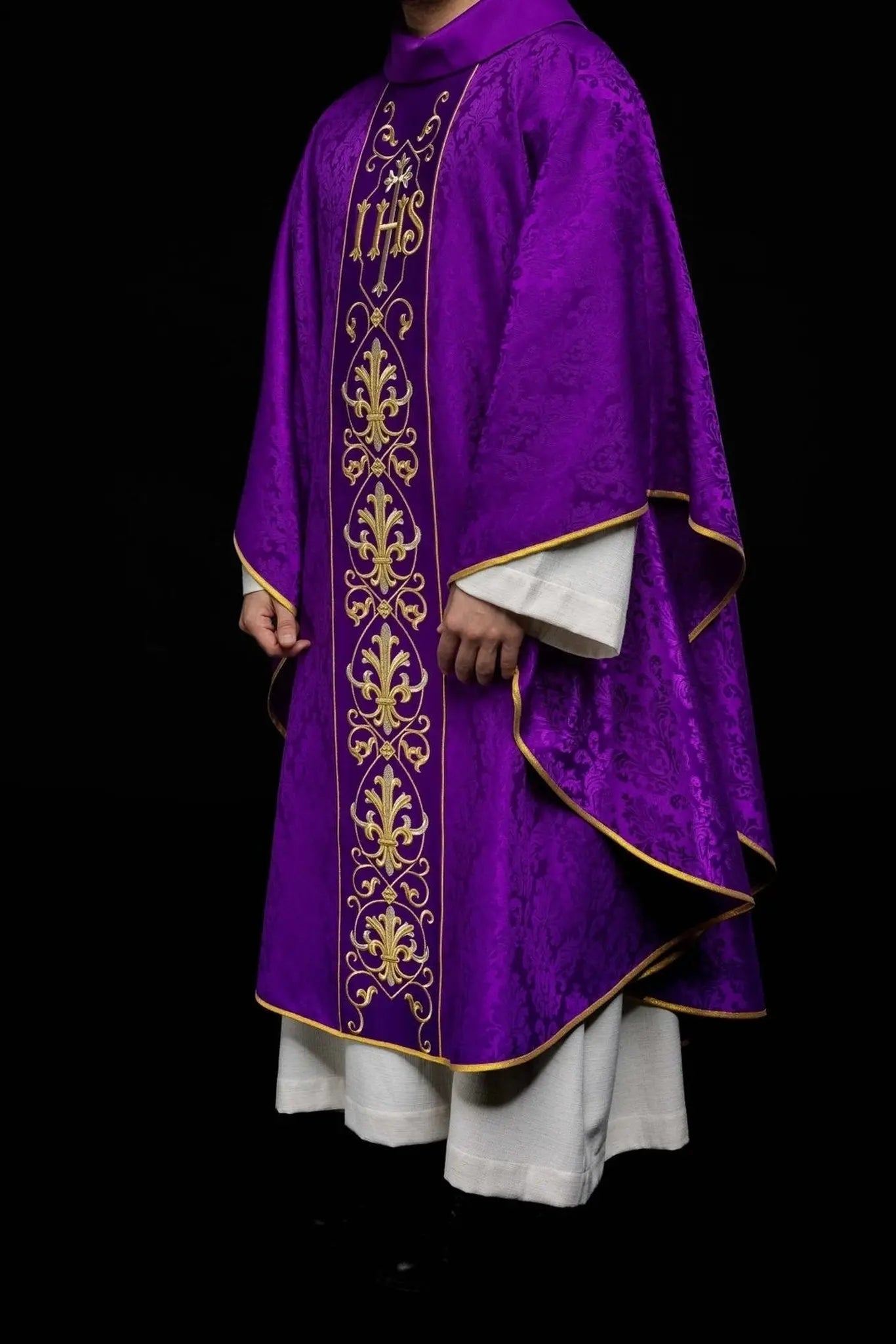
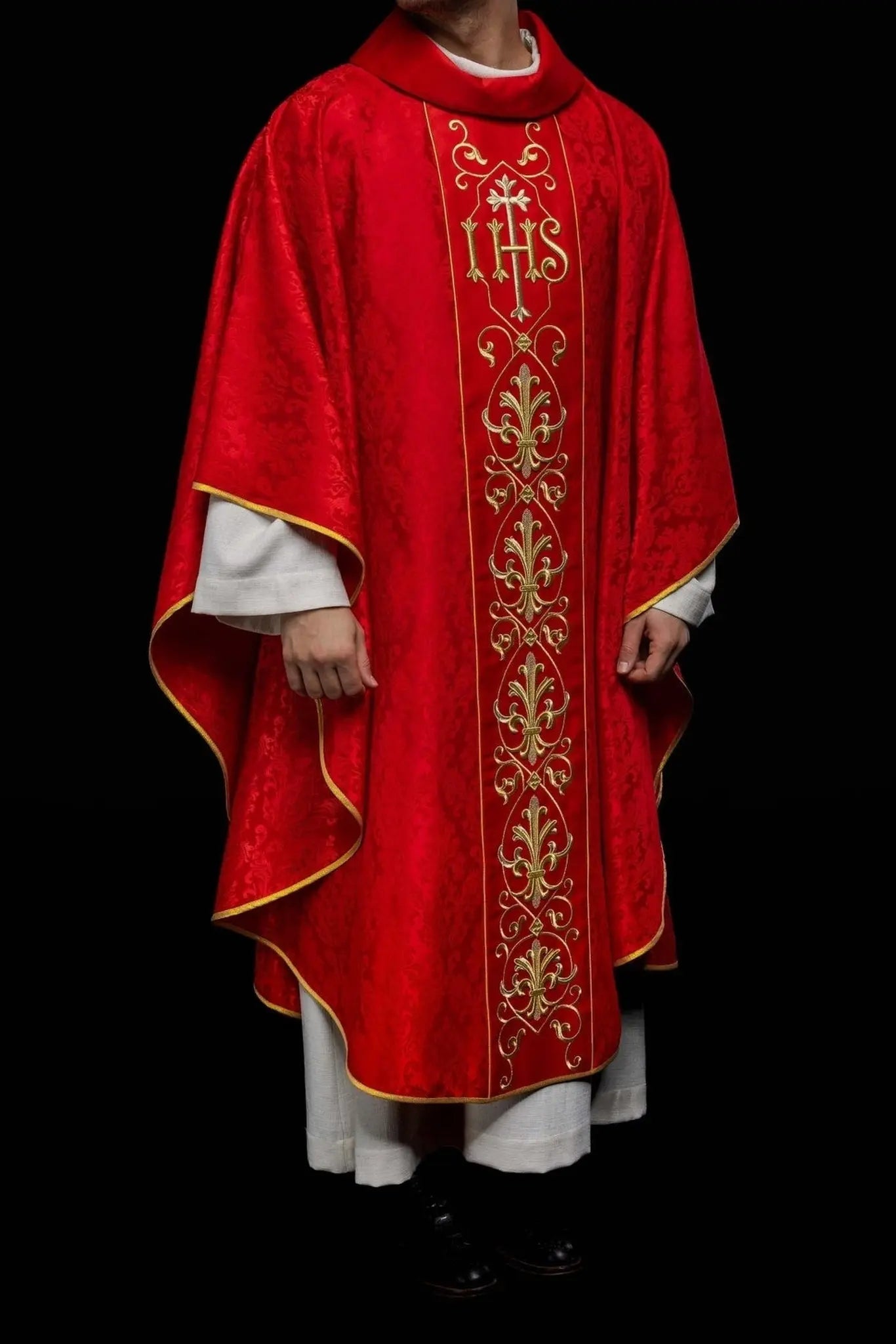
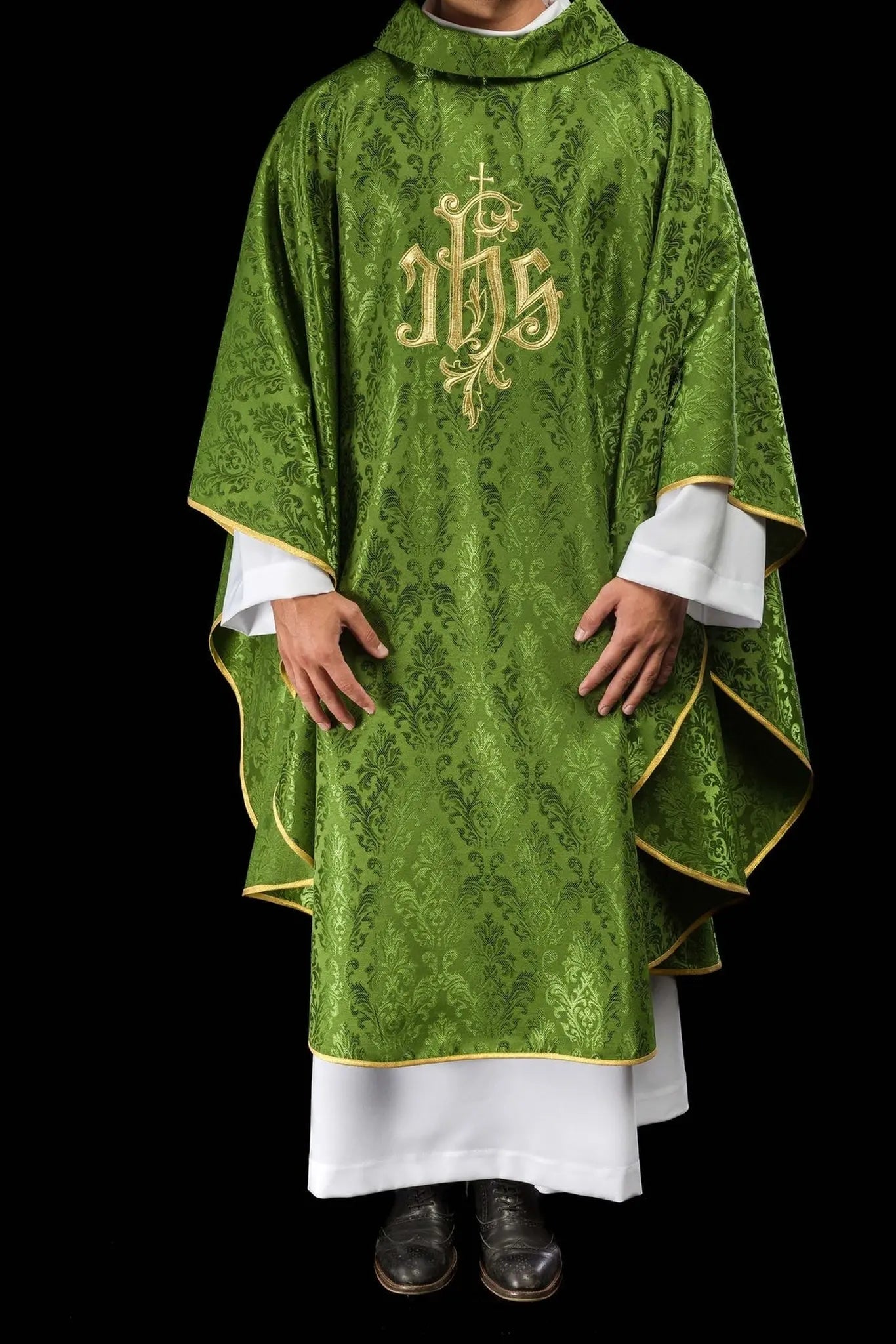
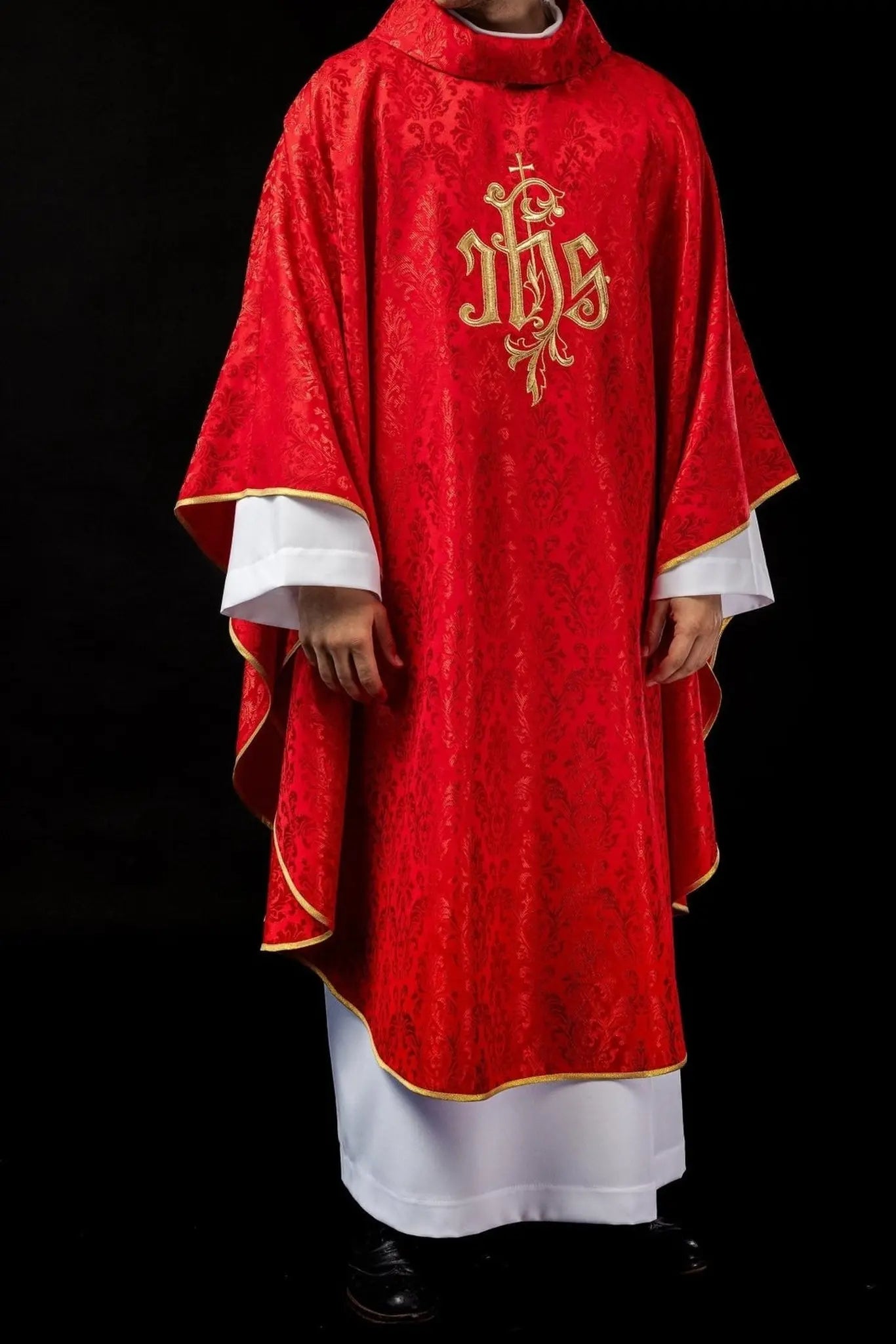
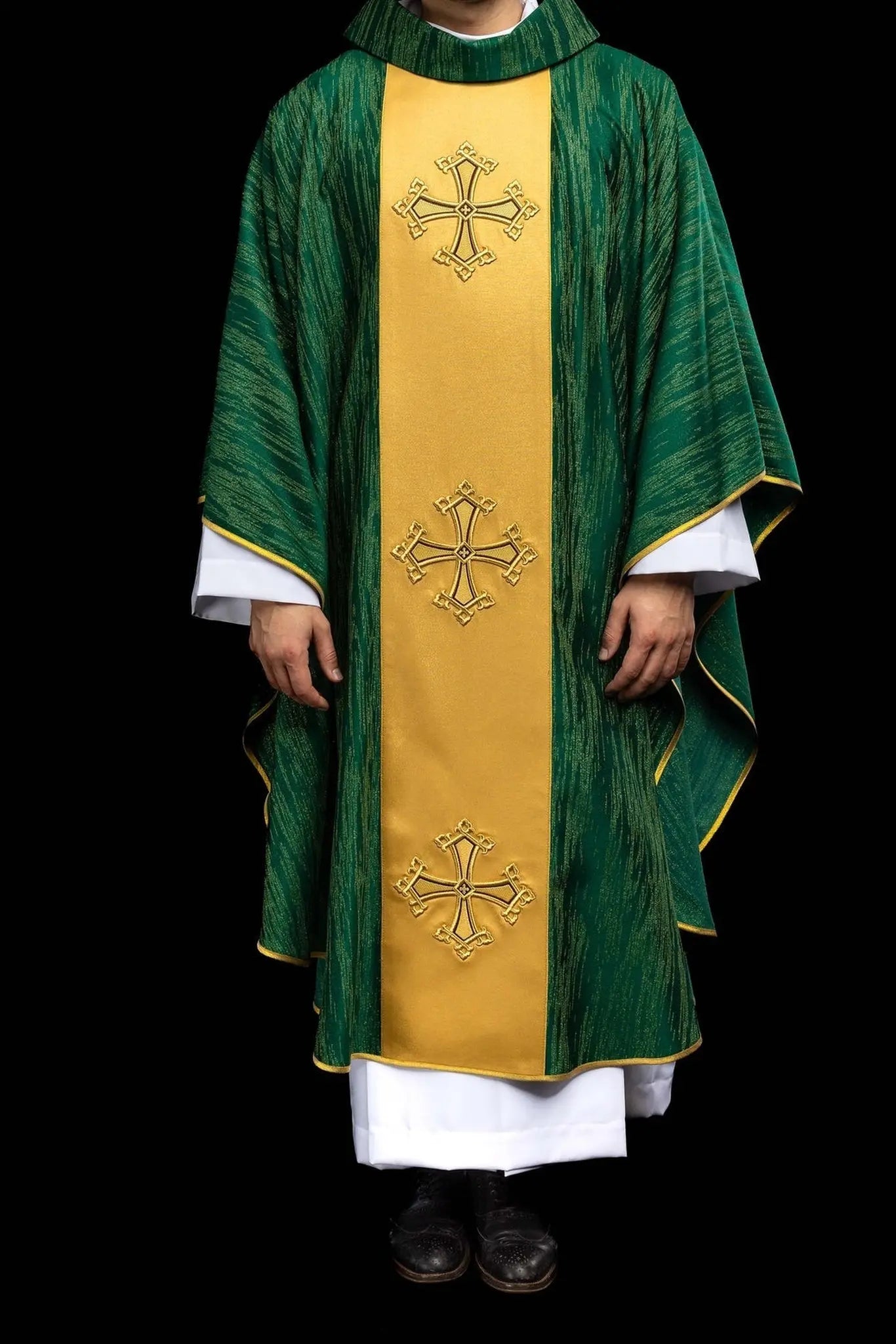
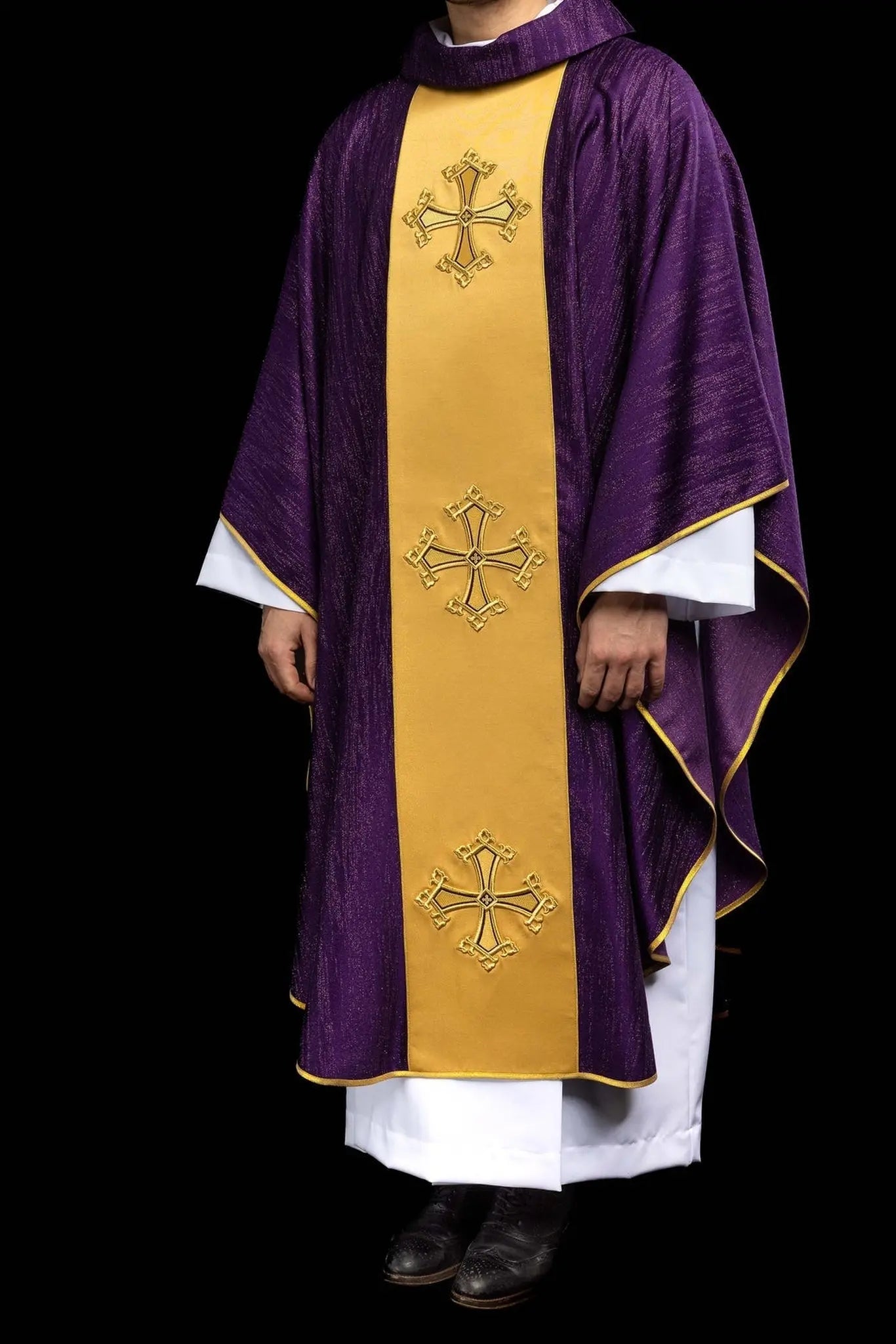
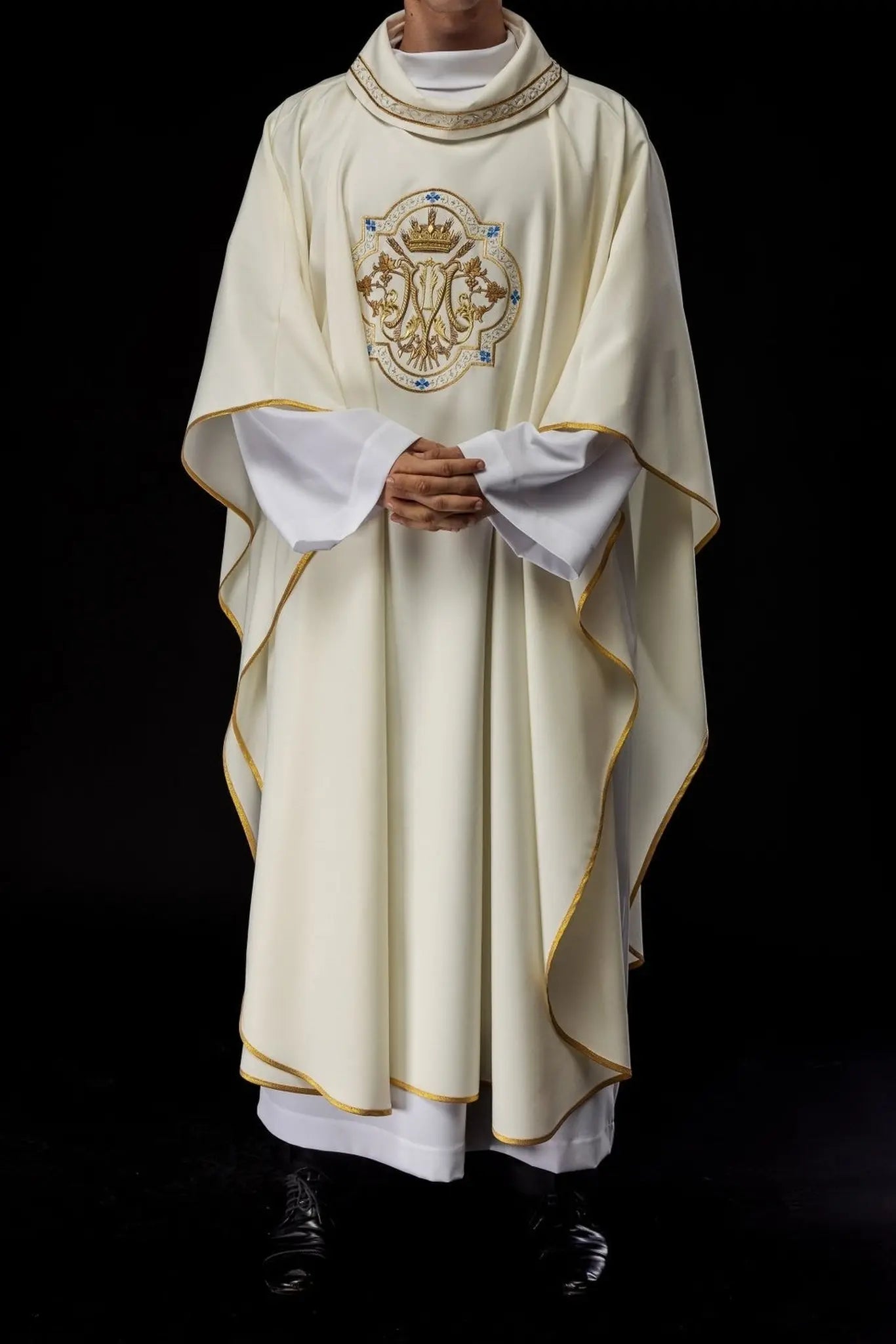
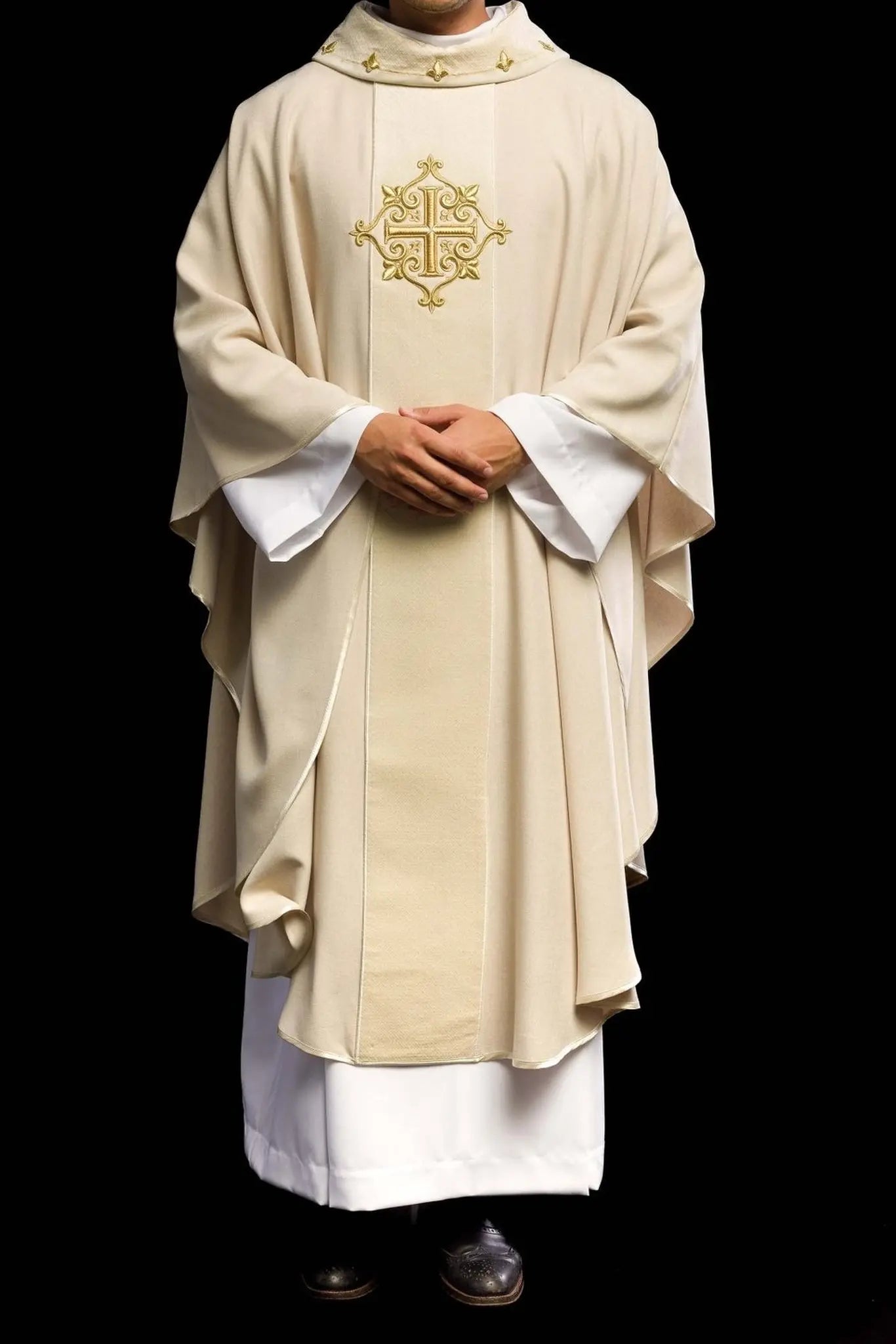
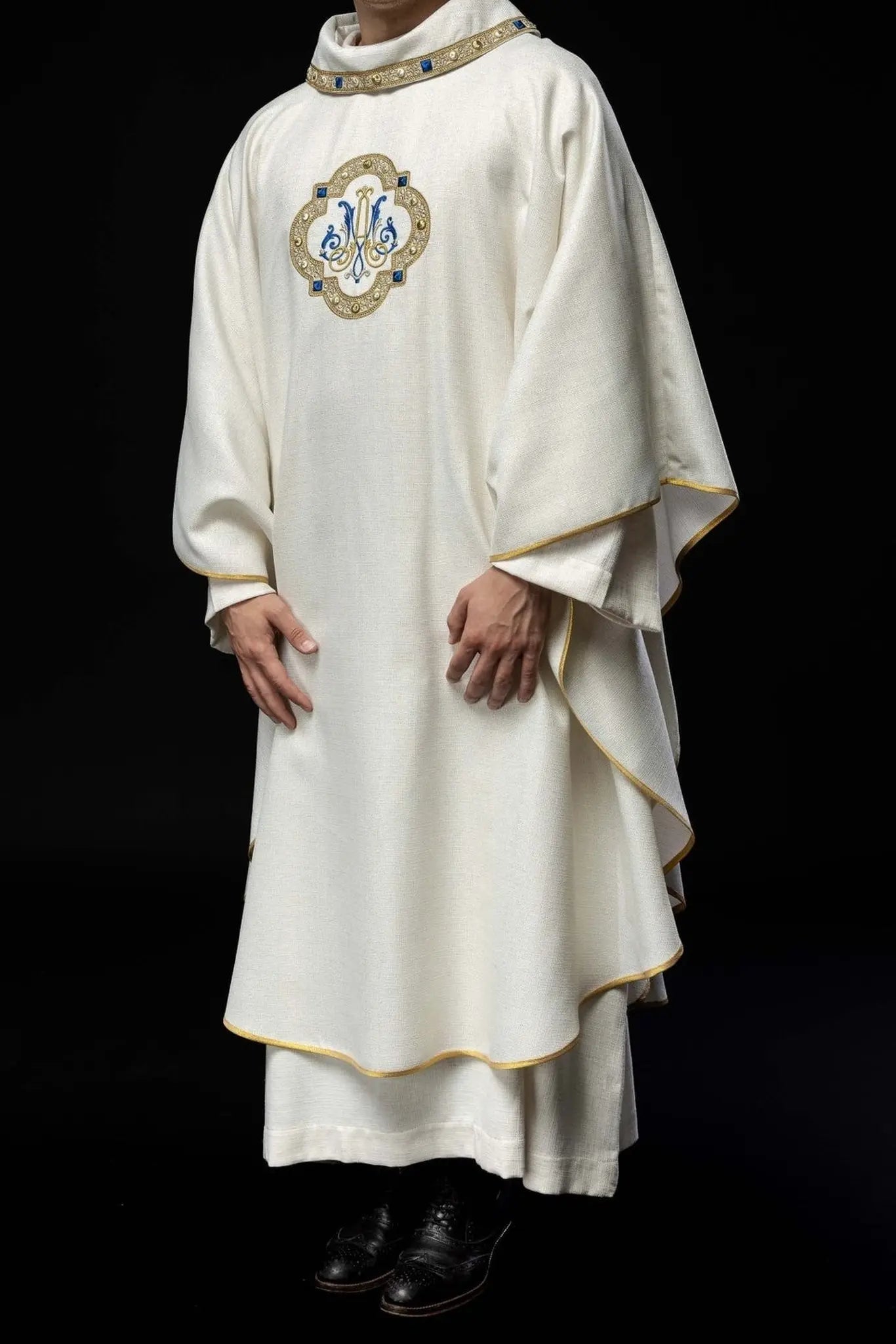
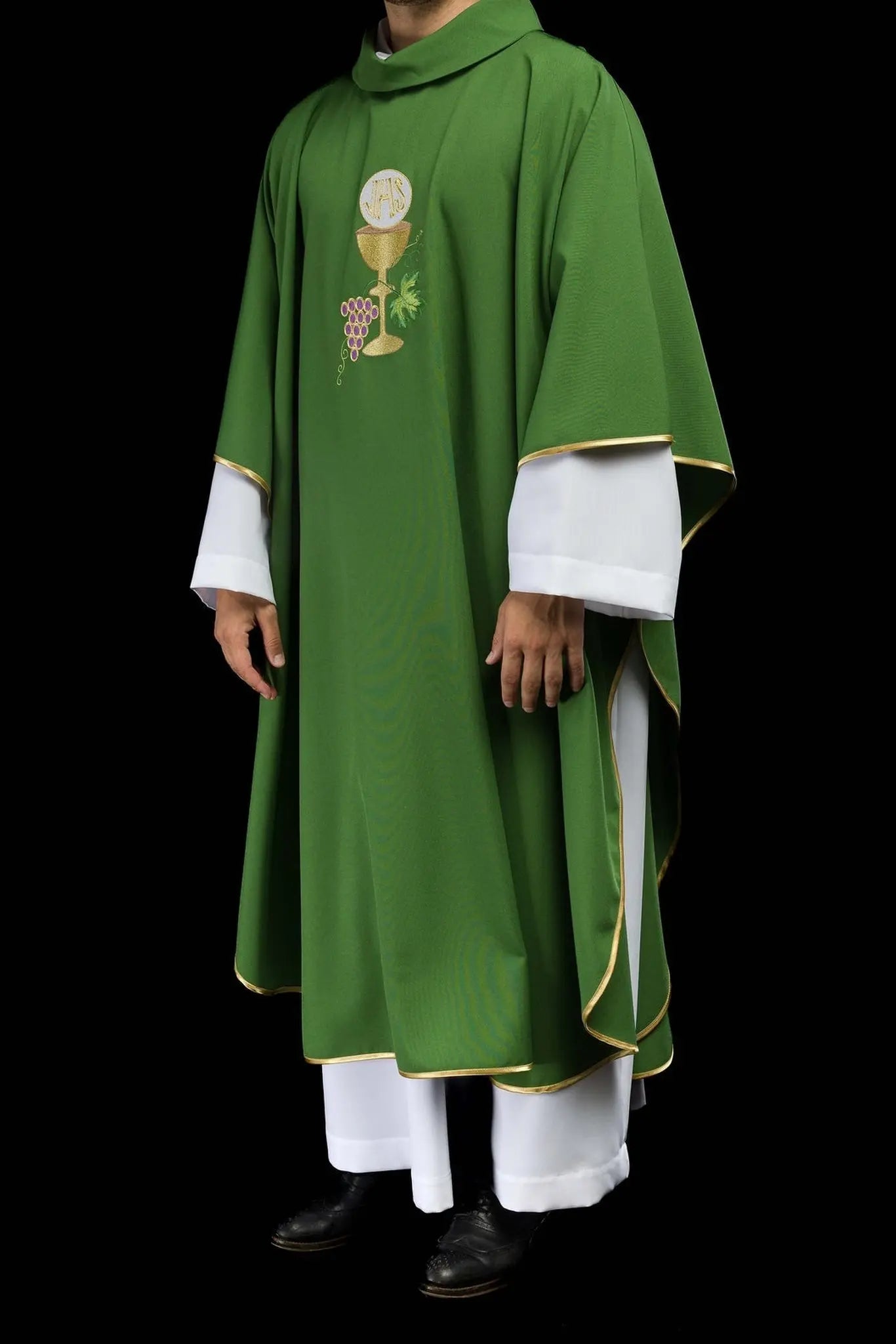
Many chasubles are made in fuller Gothic-style cuts, which are commonly used in contemporary parish liturgy because they drape naturally and allow comfortable movement at the altar. The collection also connects to more structured traditional styles, including Roman chasubles, for communities that prefer a Roman cut or a more historic silhouette. Choosing between these styles is usually a matter of local custom, ceremonial setting and the celebrant's preference.
Chasubles may be selected as individual vestments or as part of a coordinated sacristy wardrobe. A parish will often need one or more green chasubles for the long weeks of Ordinary Time, purple for Advent and Lent, white or ecru for solemnities and feasts, red for Pentecost and martyrs, and rose for the two Sundays when the penitential season is lightened by joy. More specialized designs may be reserved for Marian days, patronal feasts, funerals, Corpus Christi or celebrations connected with a particular devotion.
Liturgical meaning of the chasuble
The word chasuble is traditionally connected with the Latin casula, meaning little house. The vestment surrounds the priest and visually sets him apart for the sacred action. In Christian interpretation, its enveloping shape has often been associated with charity, humility and the yoke of Christ. These meanings are not separate from practical use: the chasuble should be dignified, comfortable and appropriate for prayer, procession, proclamation and celebration at the altar.
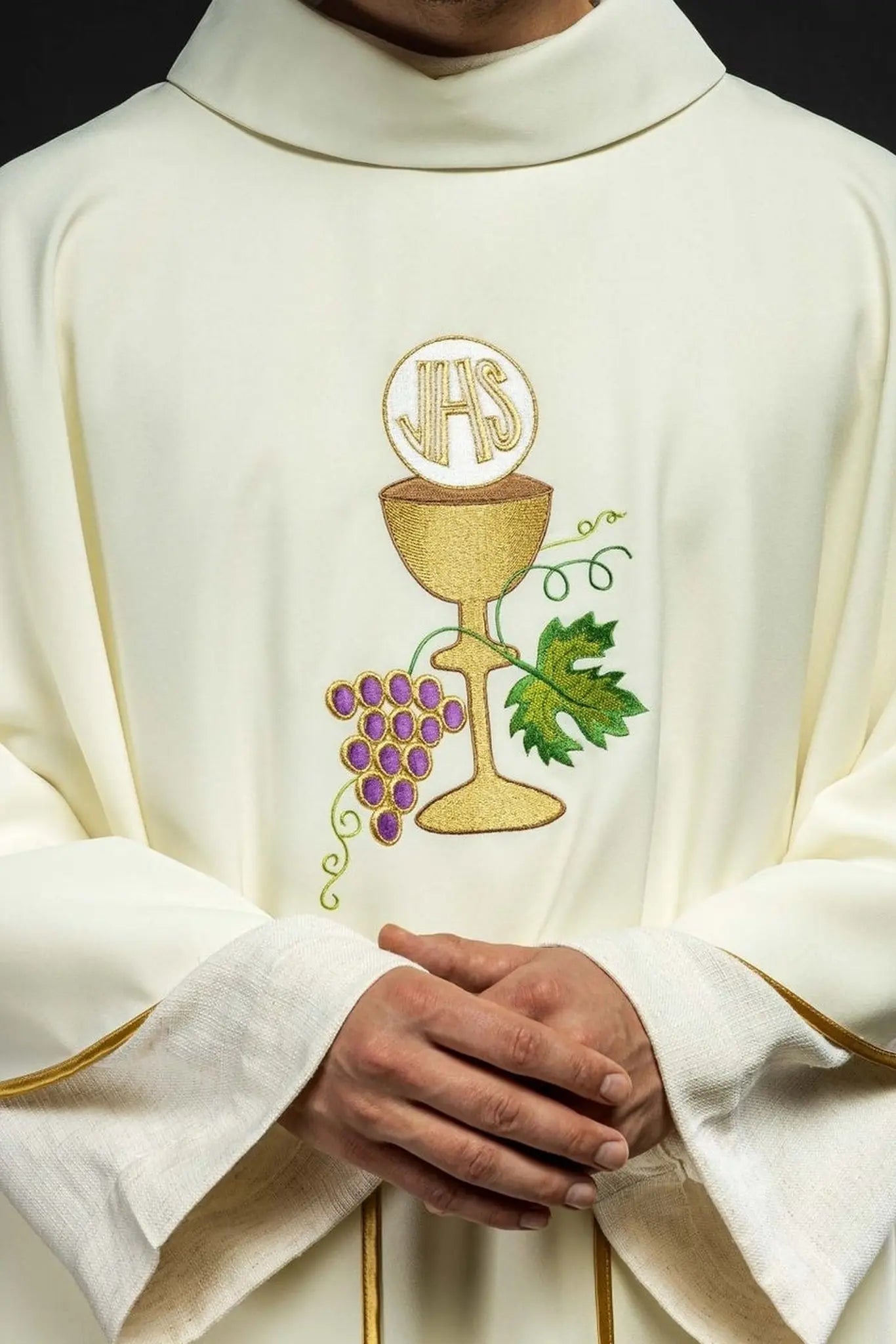
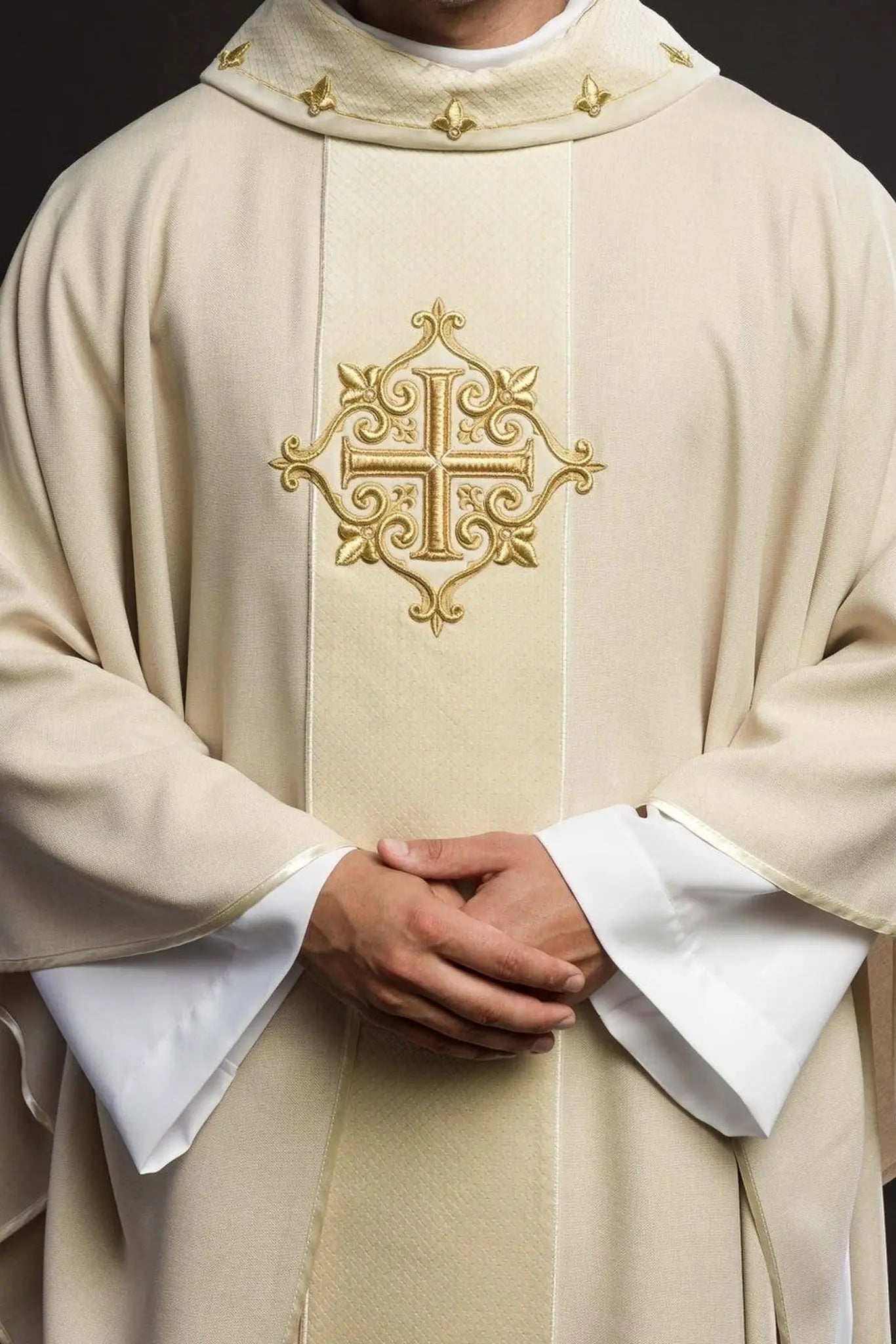
Because the chasuble is worn during Mass, its symbolism should support the liturgy rather than distract from it. A clear cross, a Eucharistic emblem, a Marian monogram or a saint's image can help the faithful recognize the theme of the day. Richer embroidery may be fitting for solemnities, ordinations, jubilees and patronal feasts. More restrained designs are often better for daily use, concelebrated Masses or smaller chapels where simplicity is valued.
How to choose a chasuble by liturgical color
Color is one of the first decisions when choosing a chasuble. Liturgical colors are not decorative trends; they form part of the Church's visual language. A well-planned sacristy wardrobe helps the celebrant and the assembly move through the seasons of the year with clarity and reverence.
-
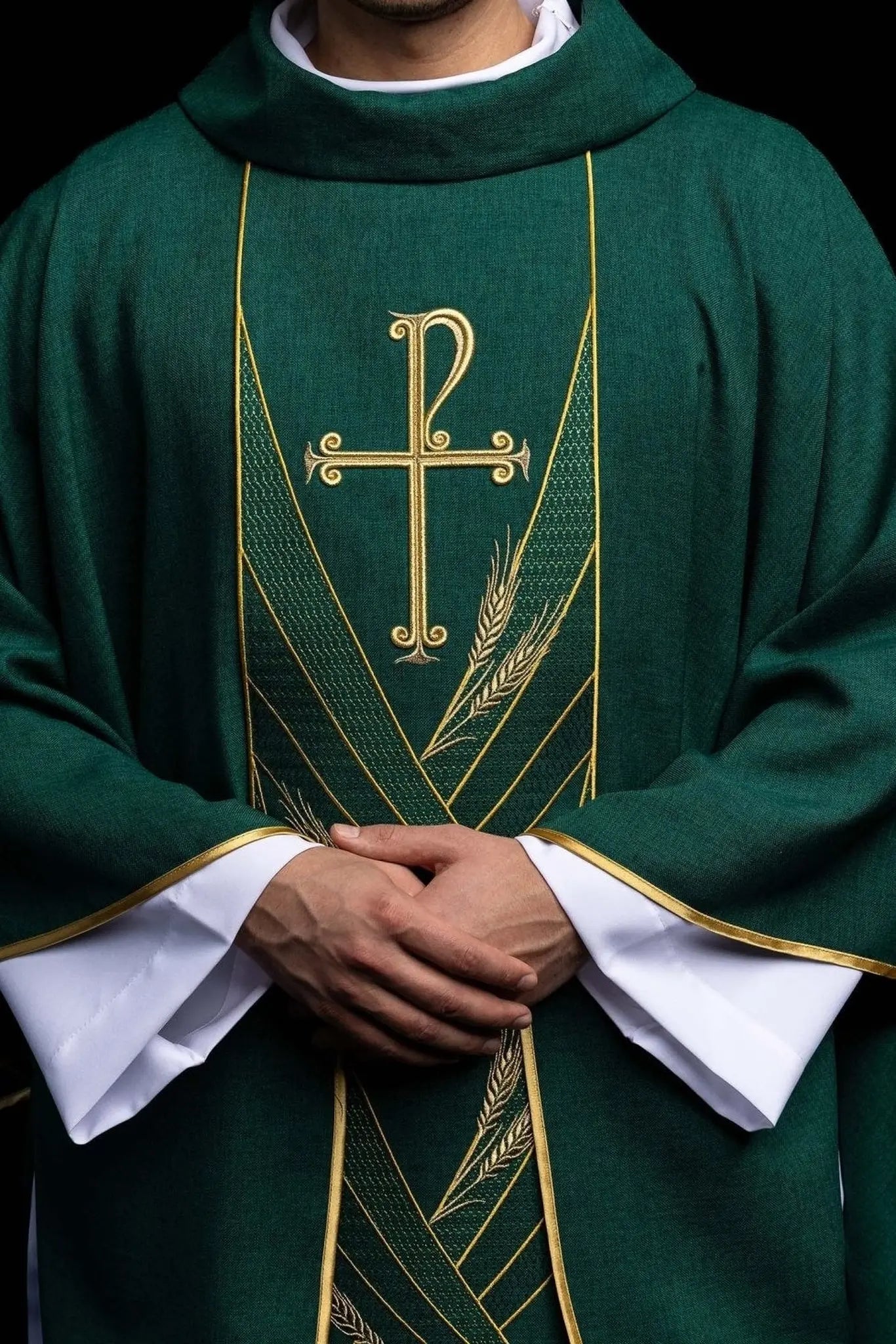
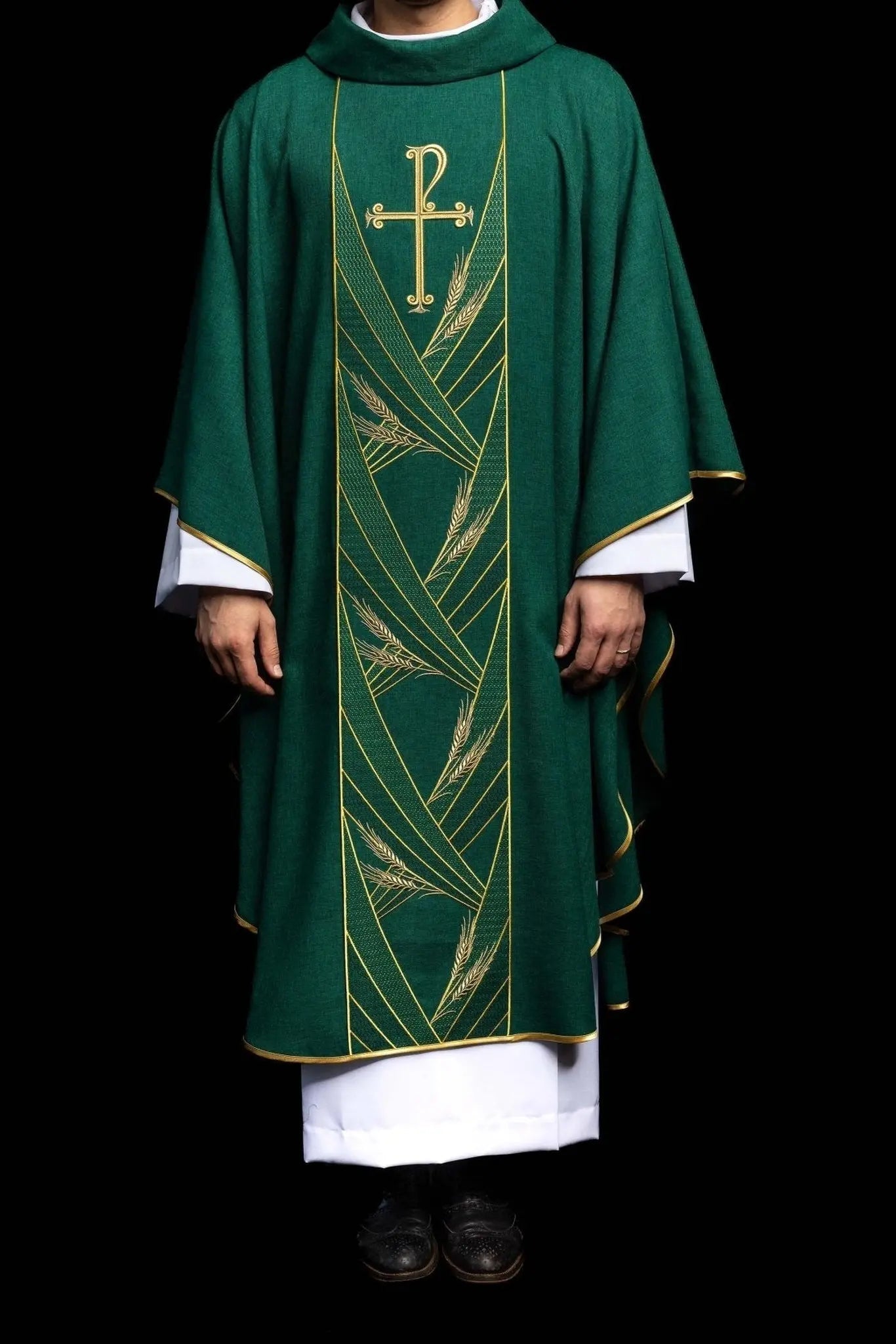
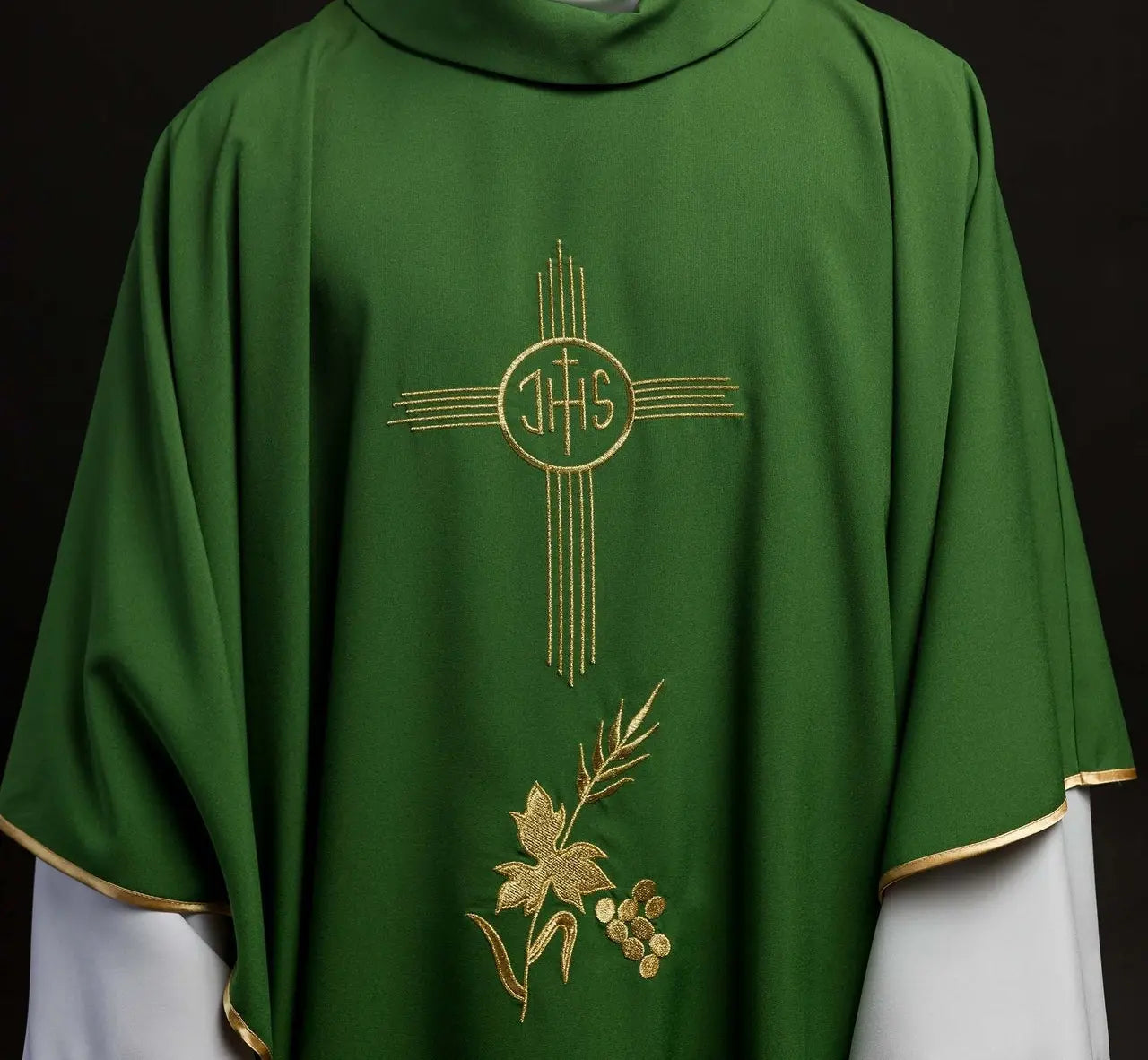
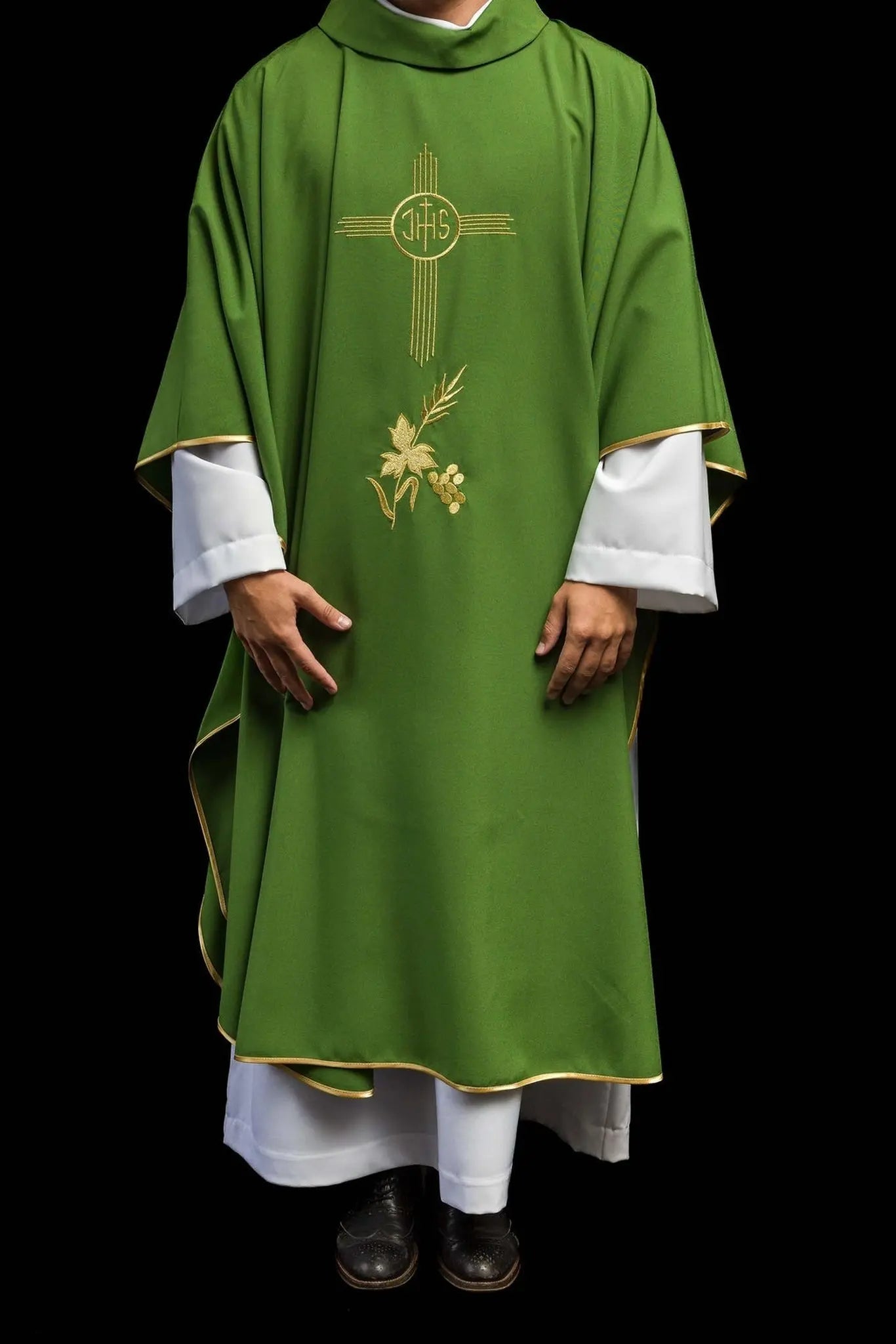
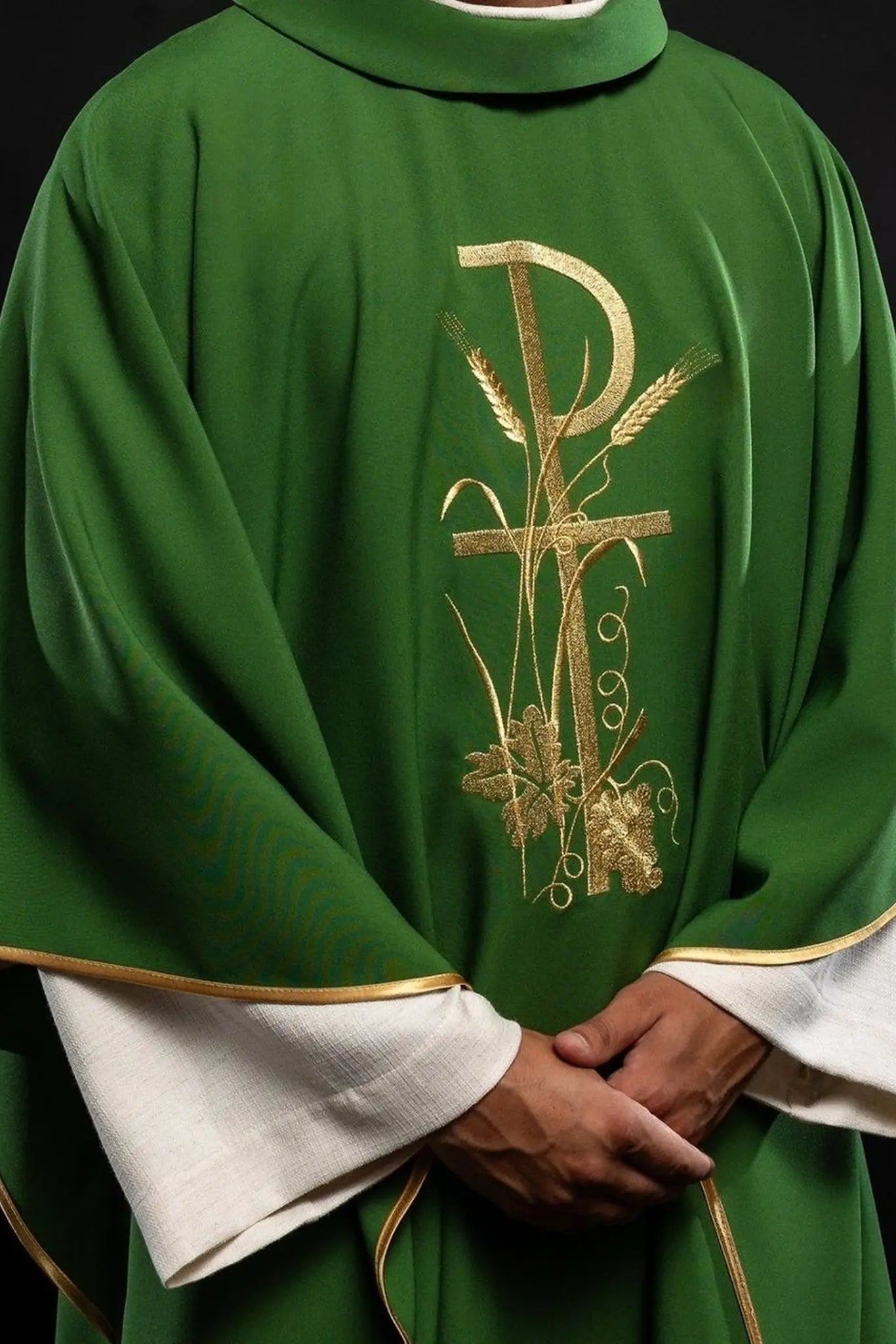
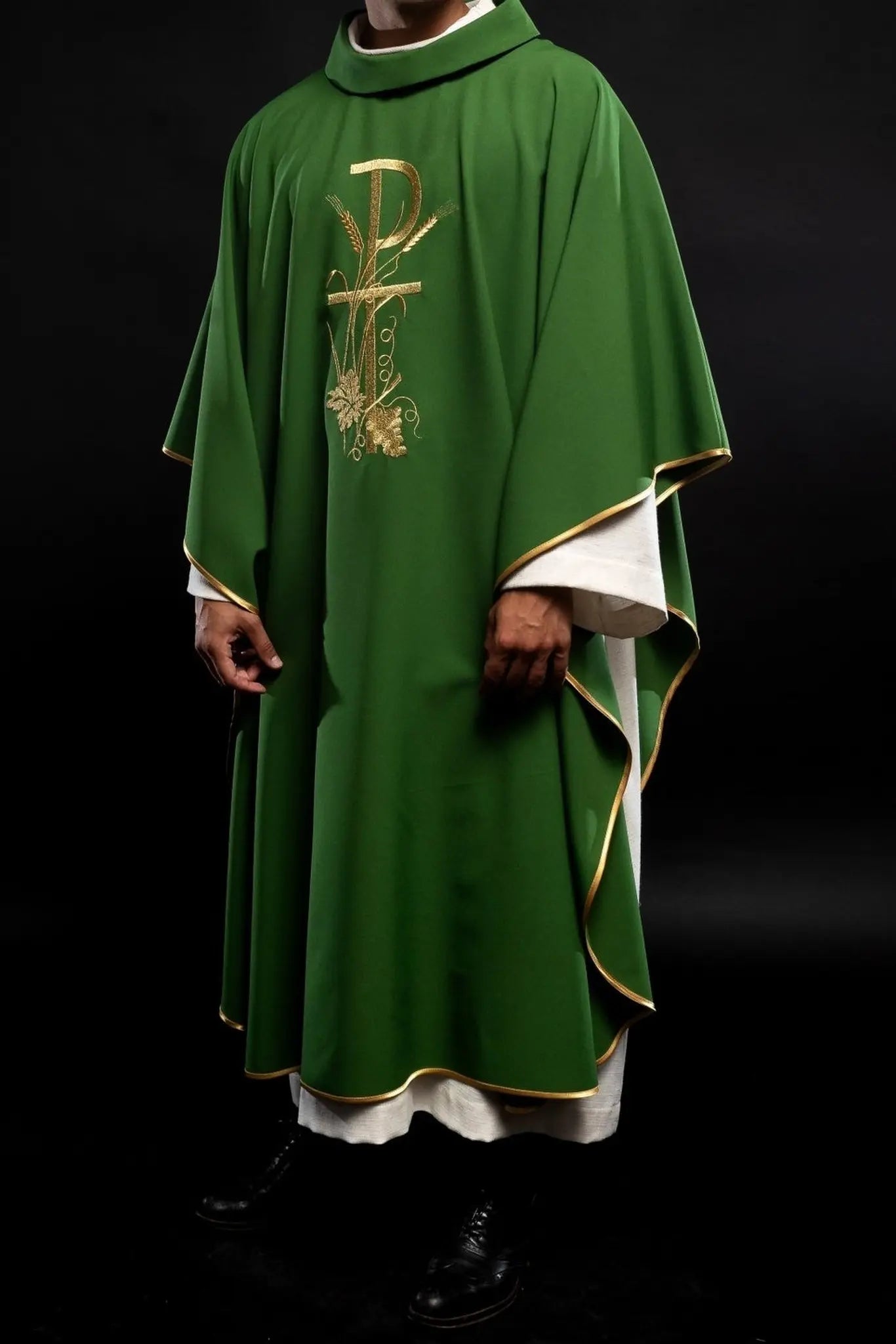
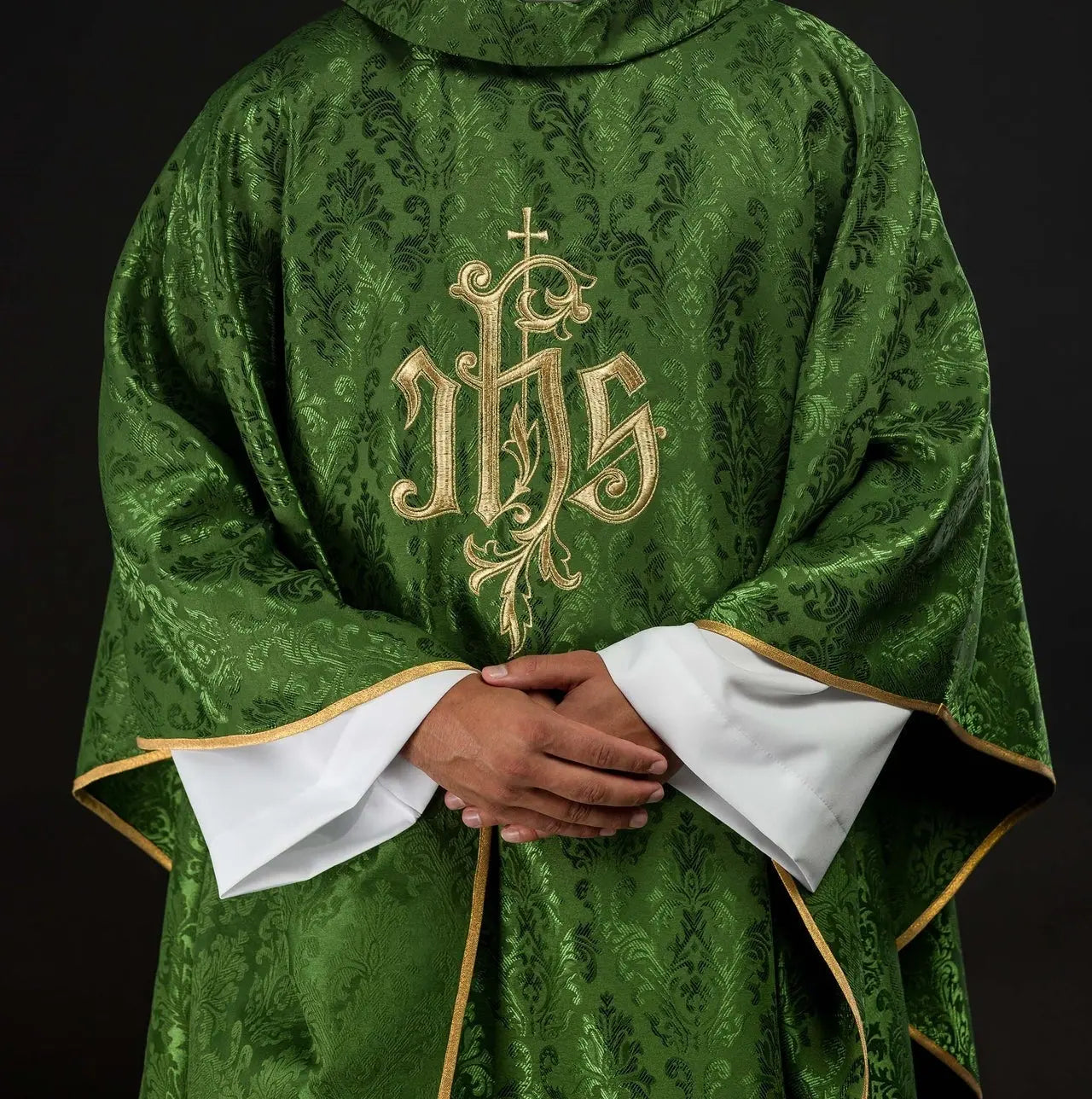
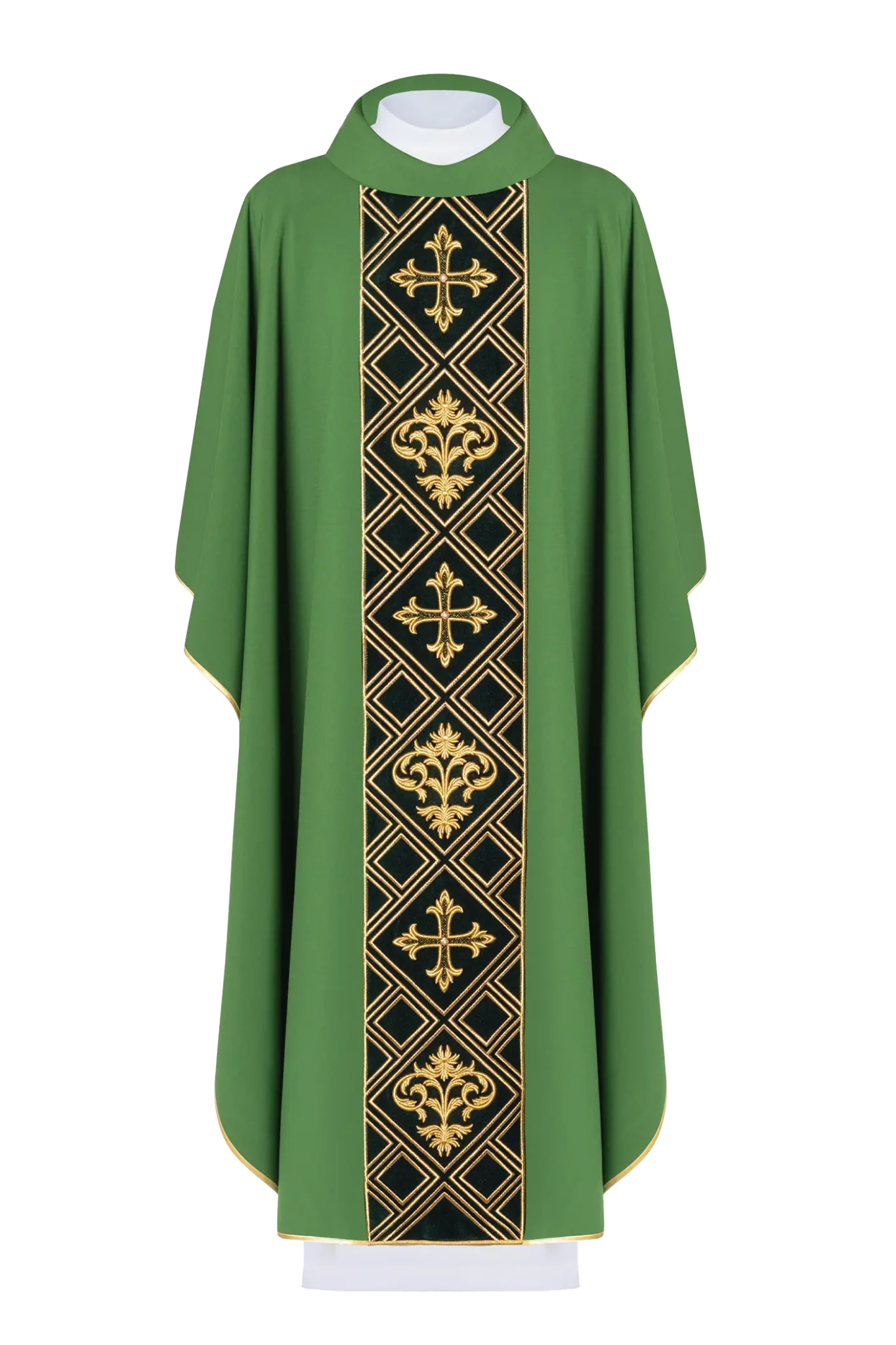
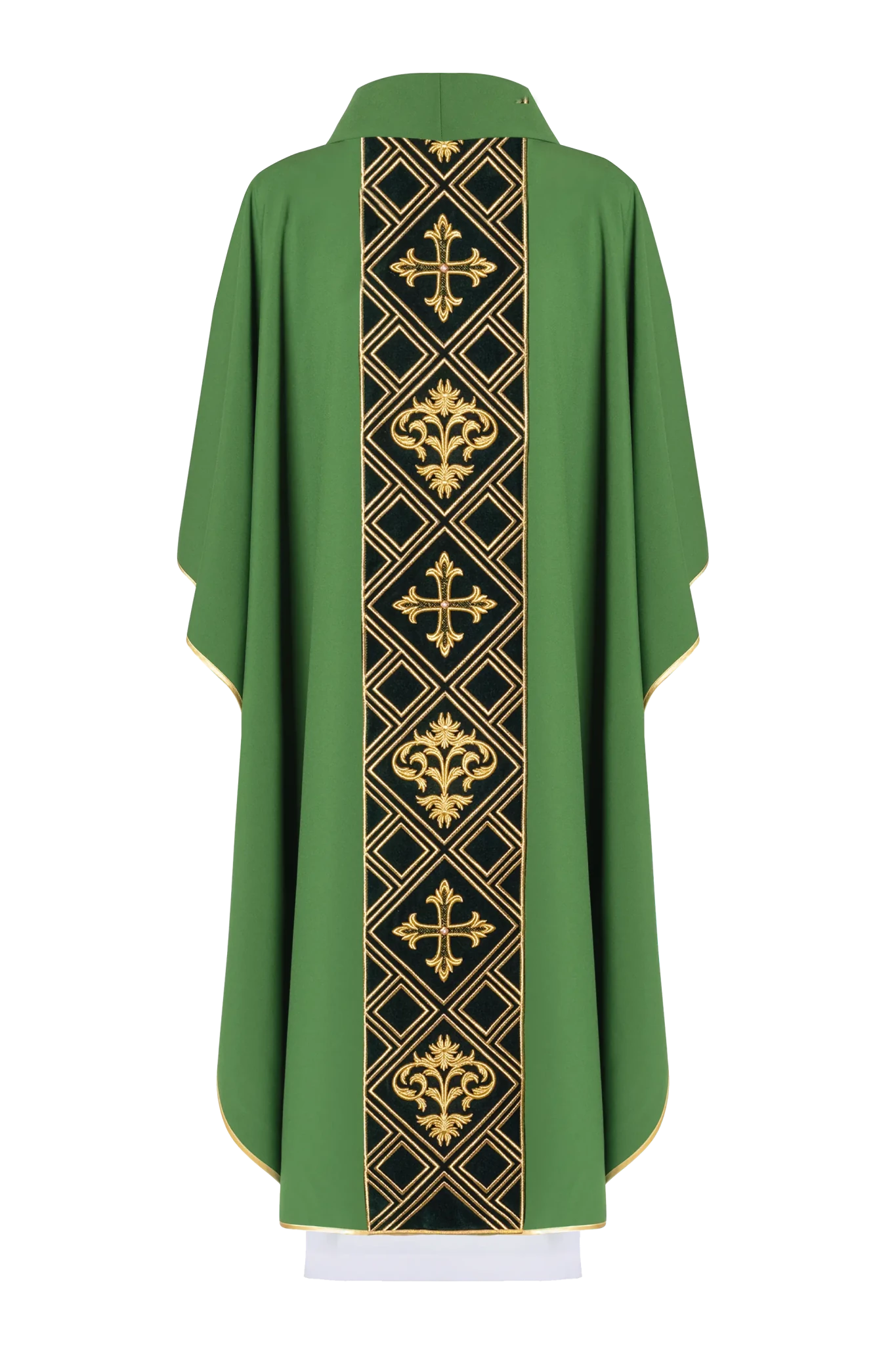
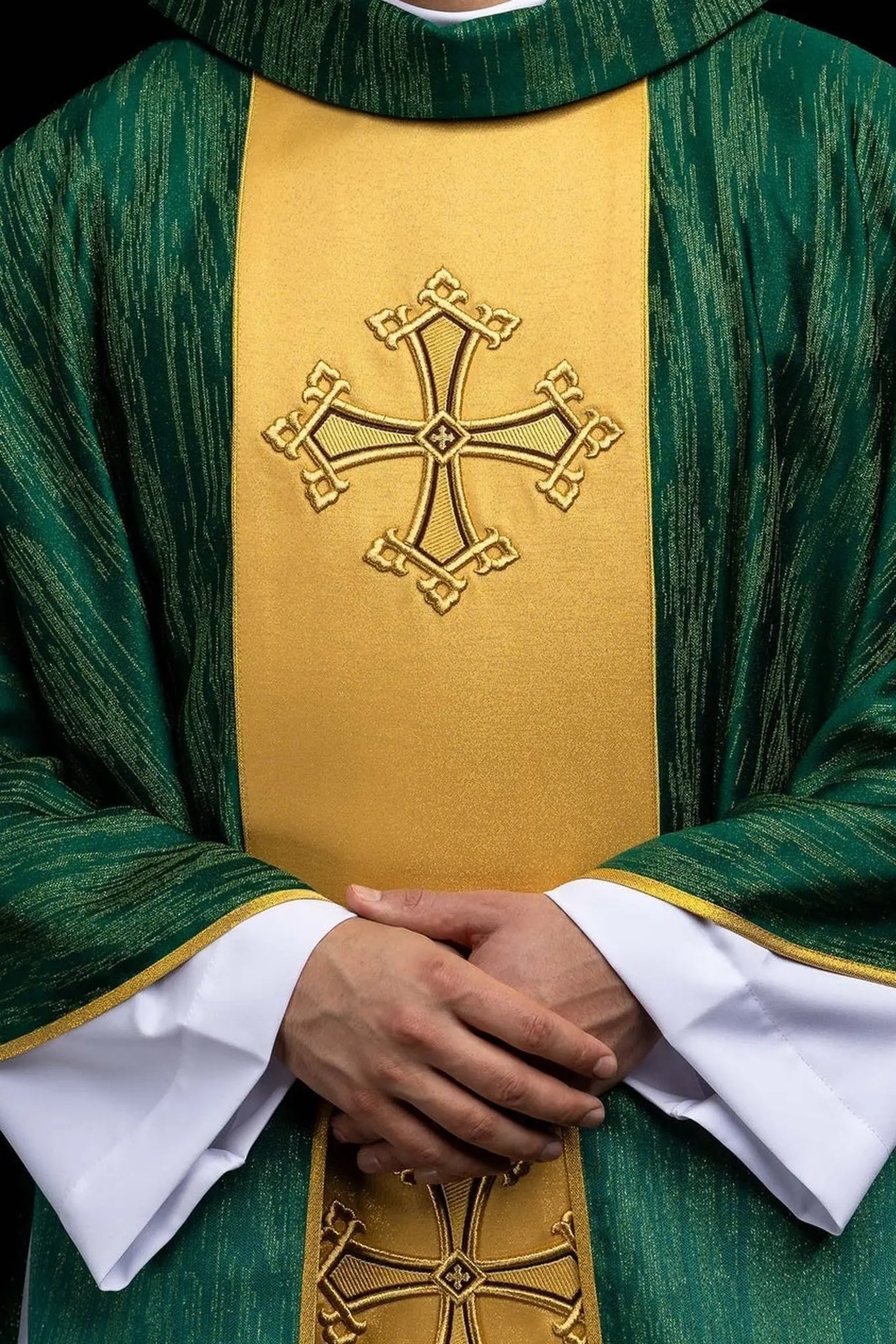
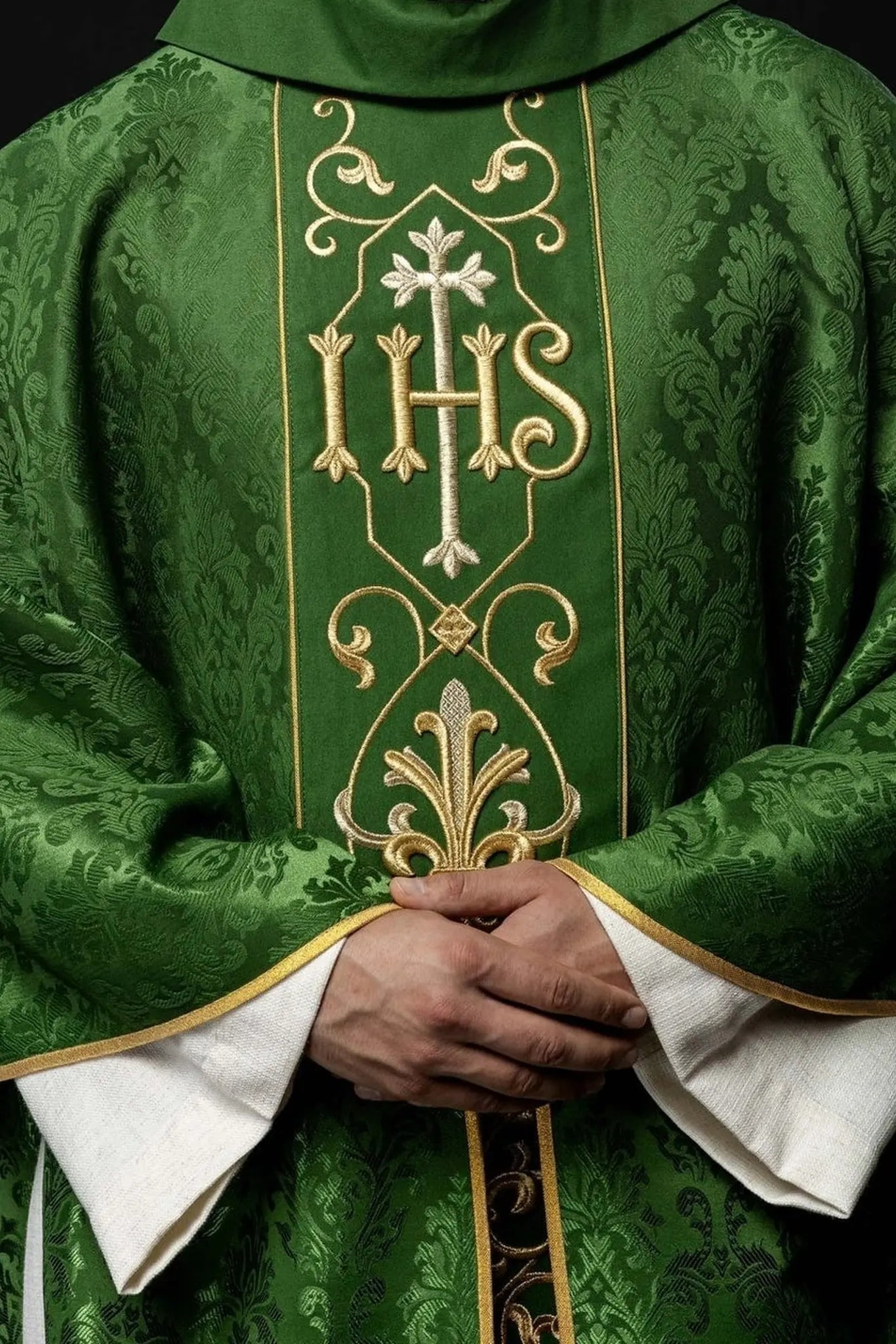
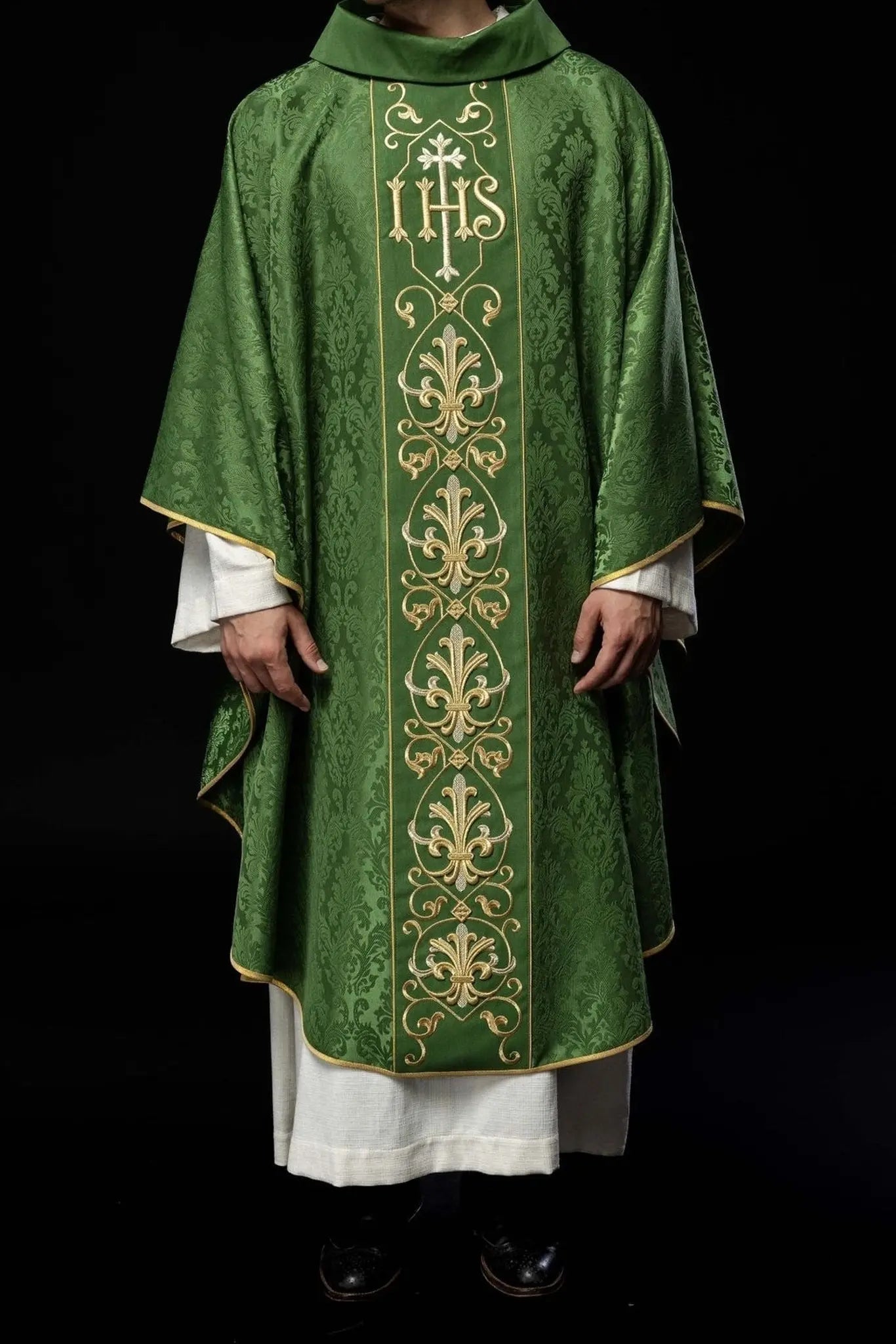
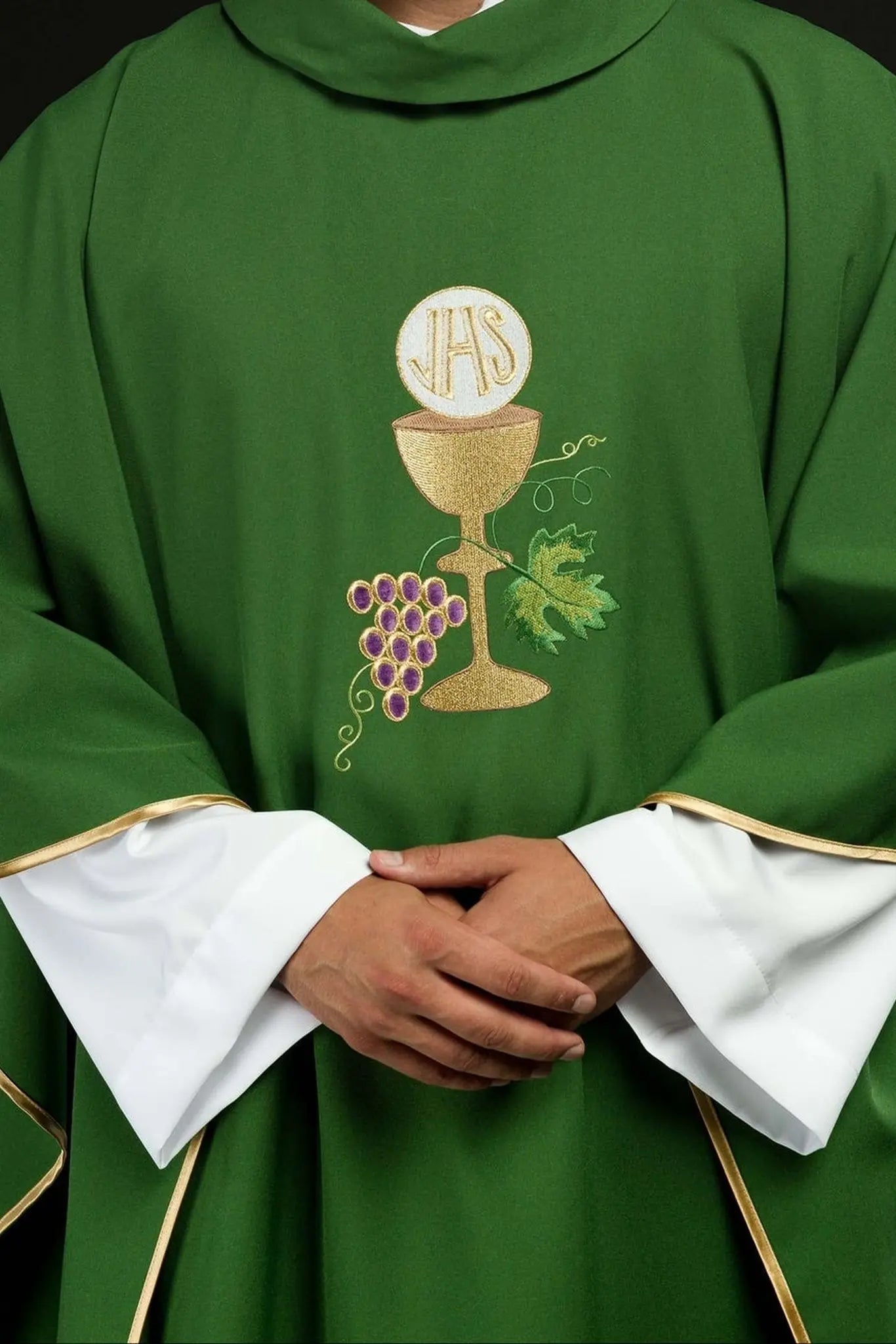
Green: Used during Ordinary Time, green expresses hope, growth and the steady life of discipleship. For the longest part of the liturgical year, many parishes keep more than one option in green chasubles, from simpler everyday vestments to more ornamented Sunday designs.
-
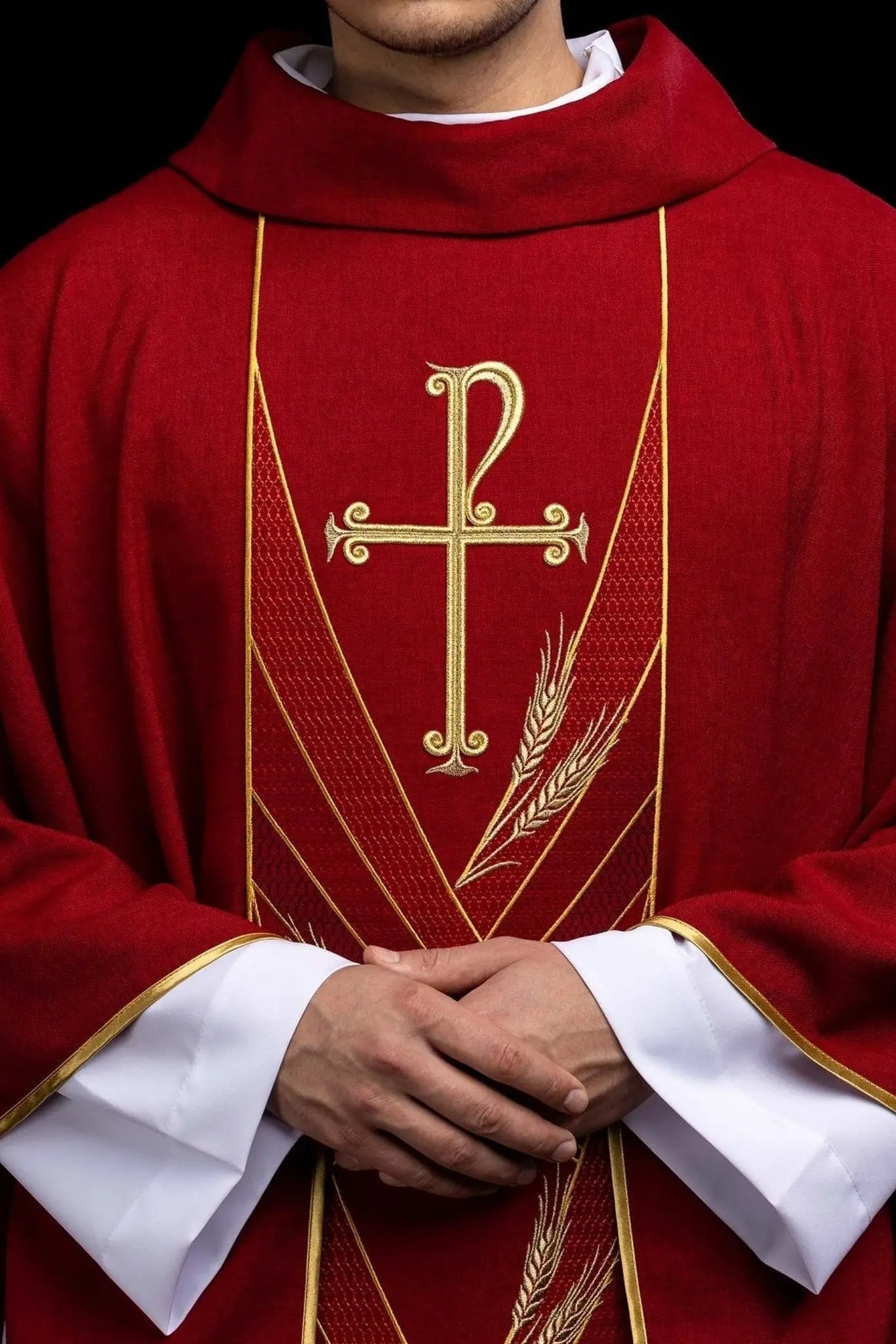
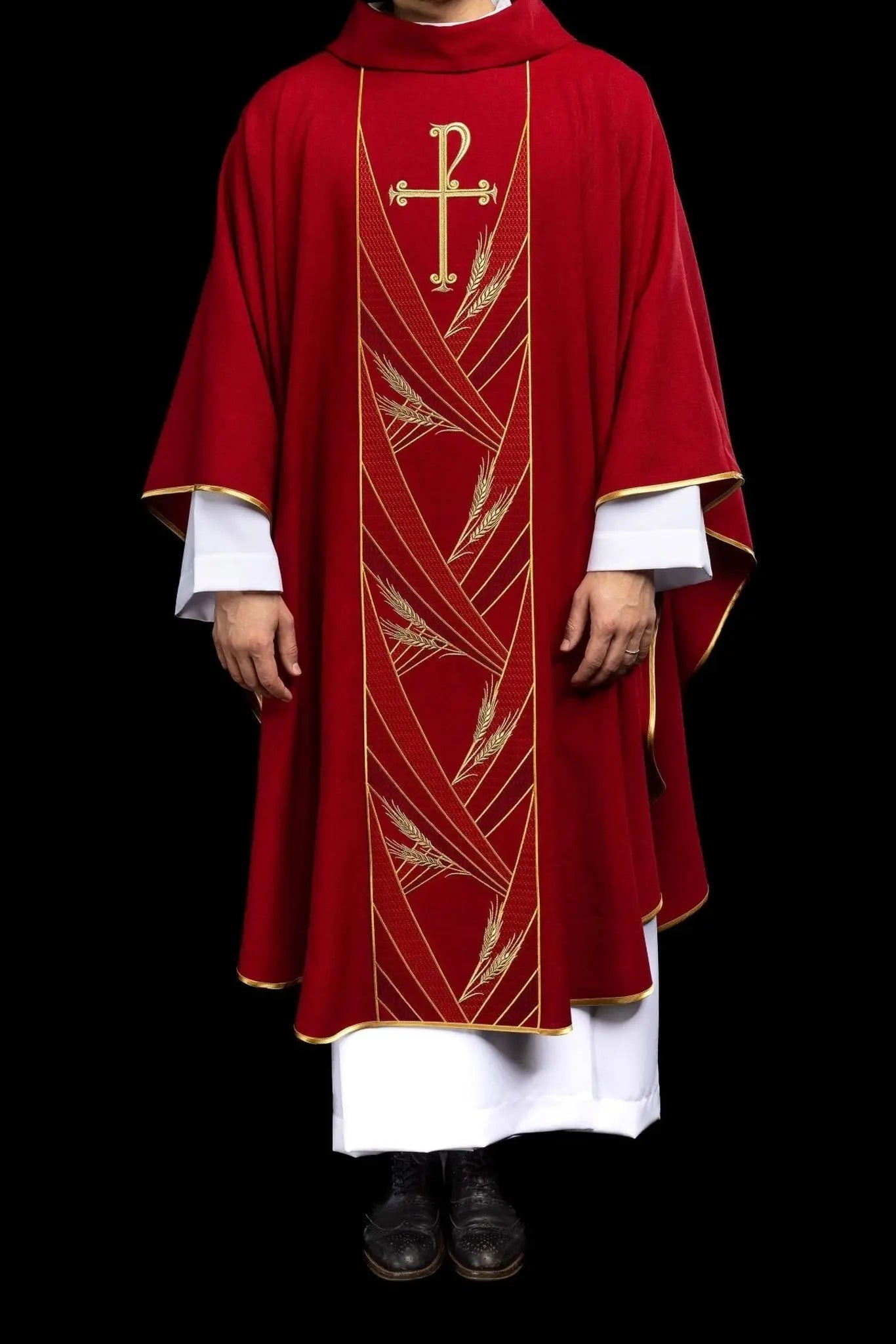
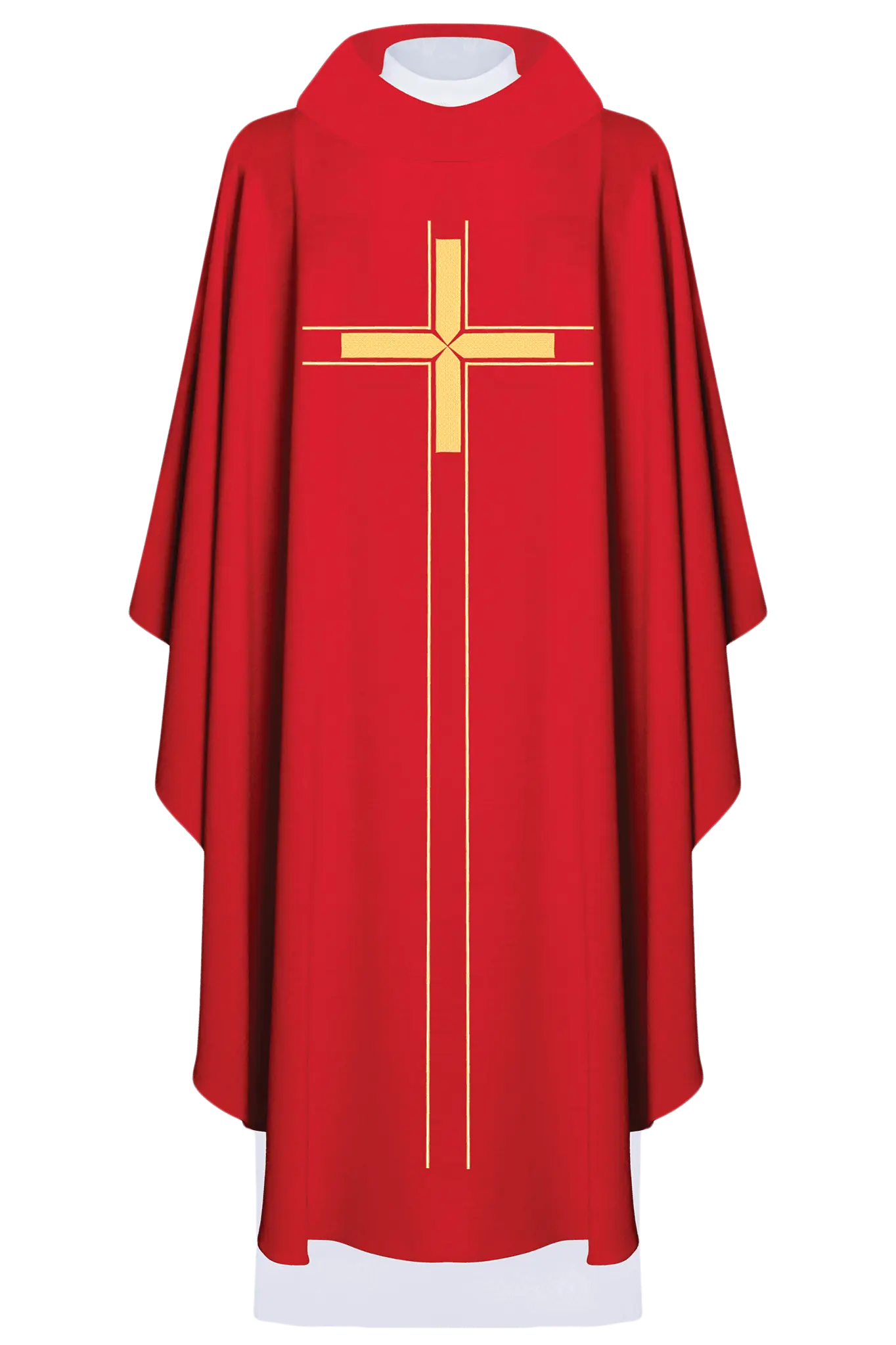
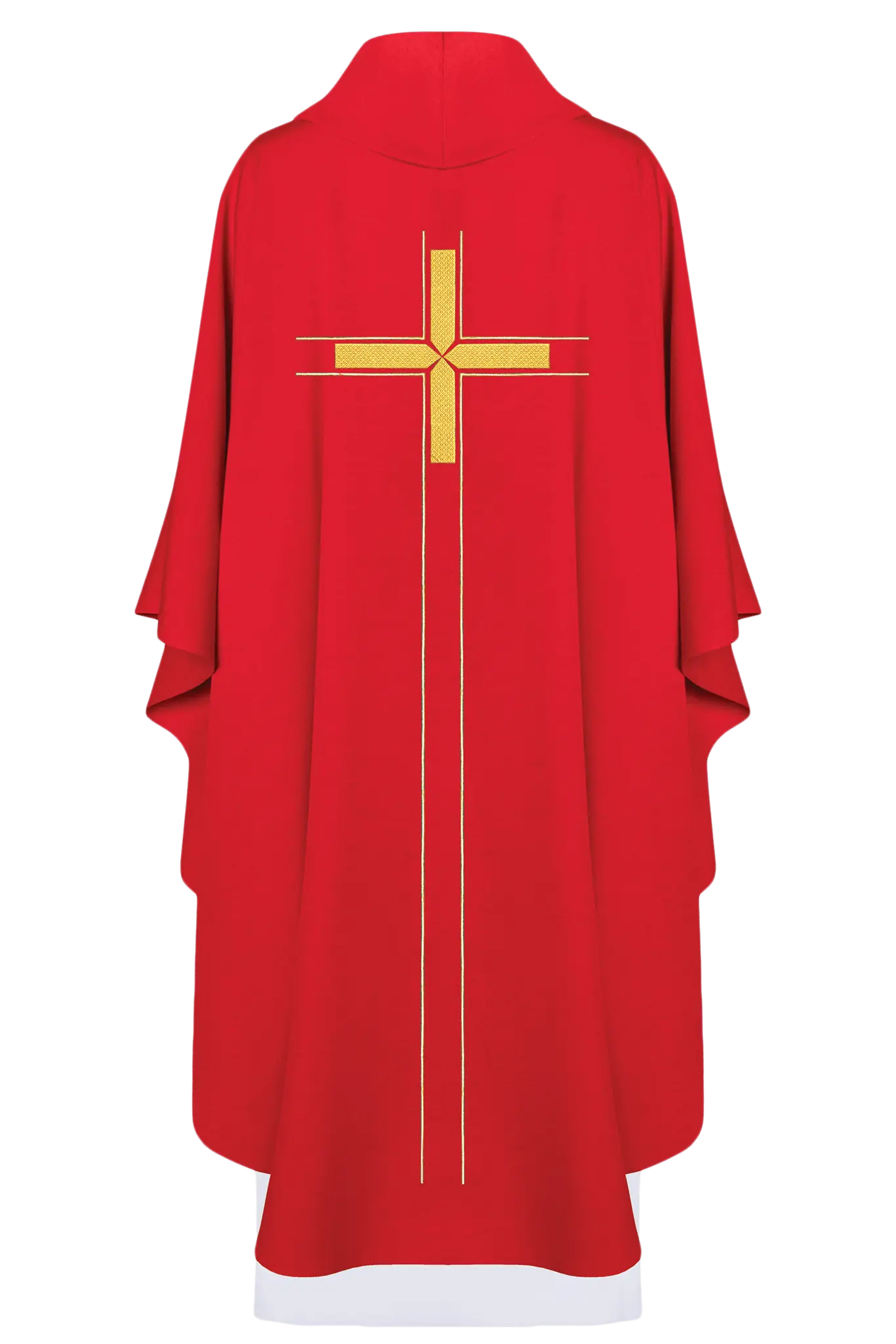
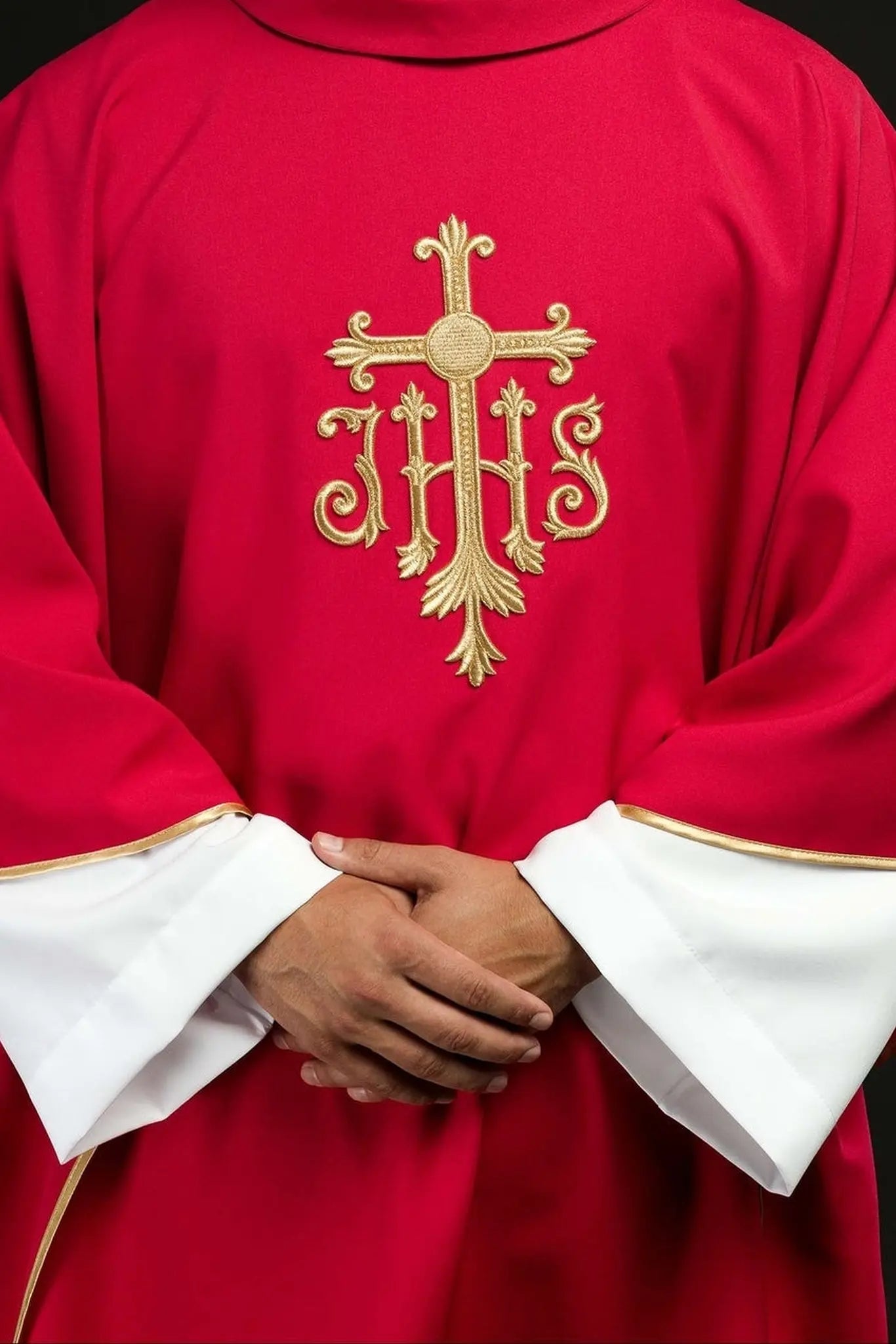
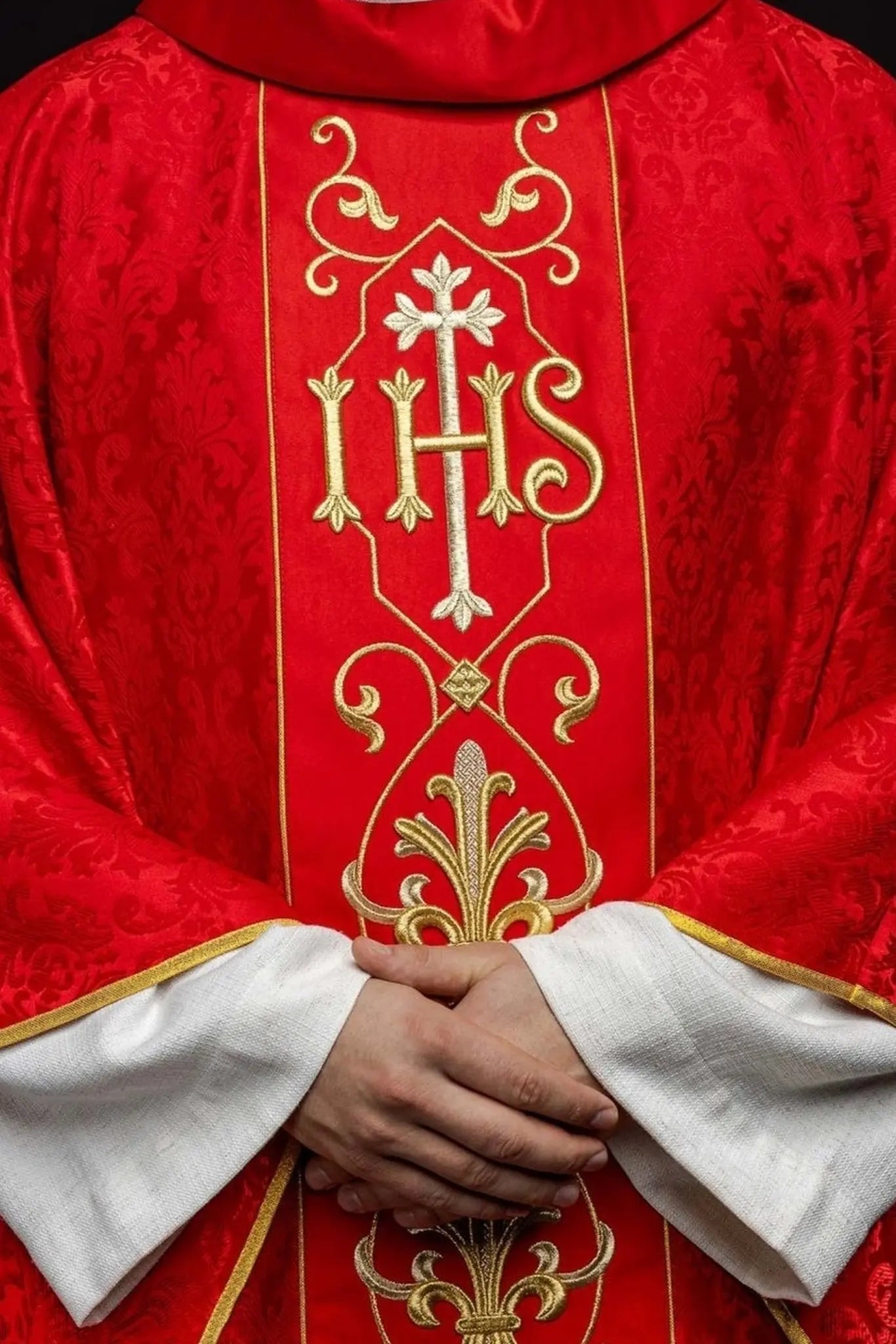
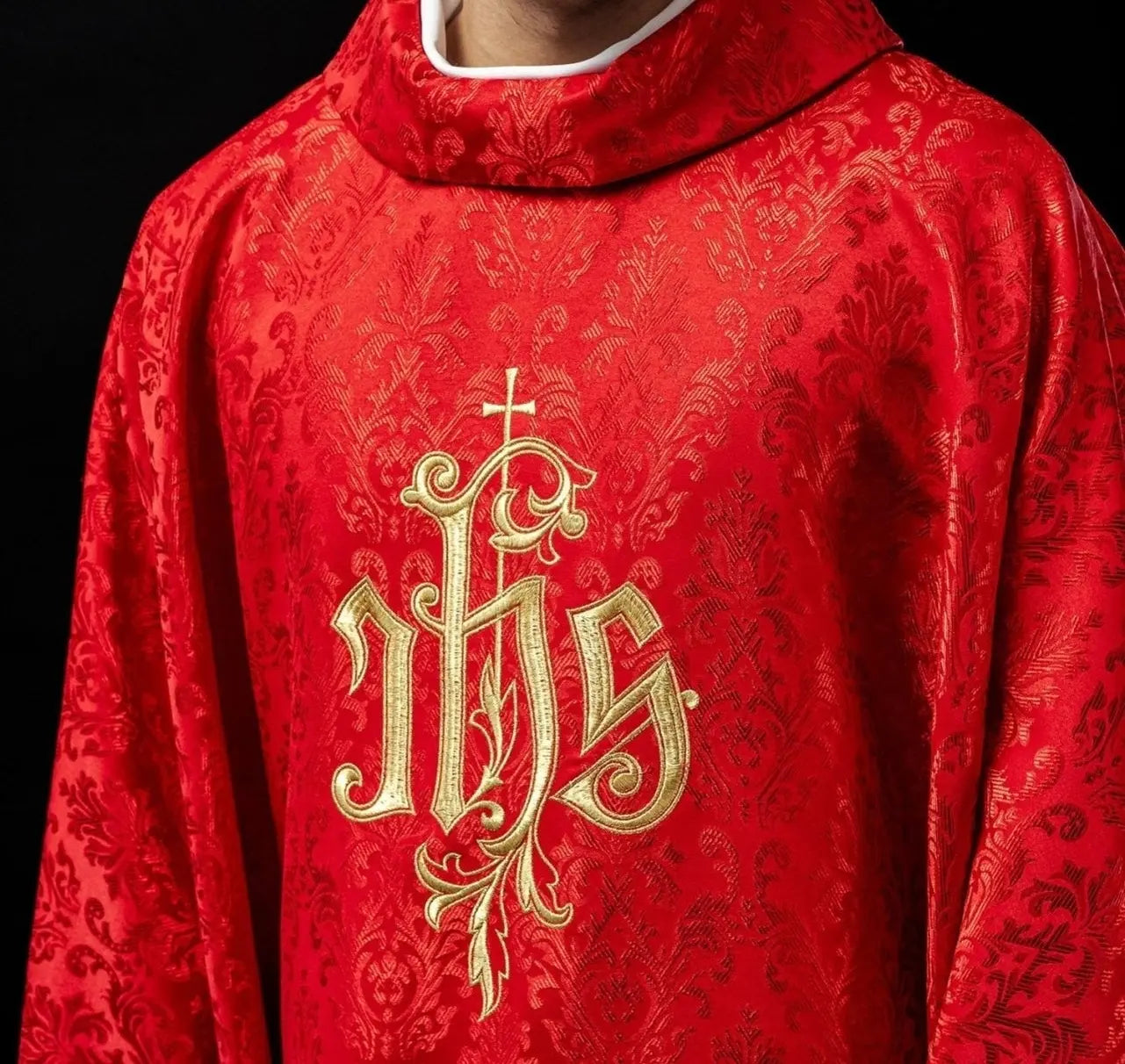
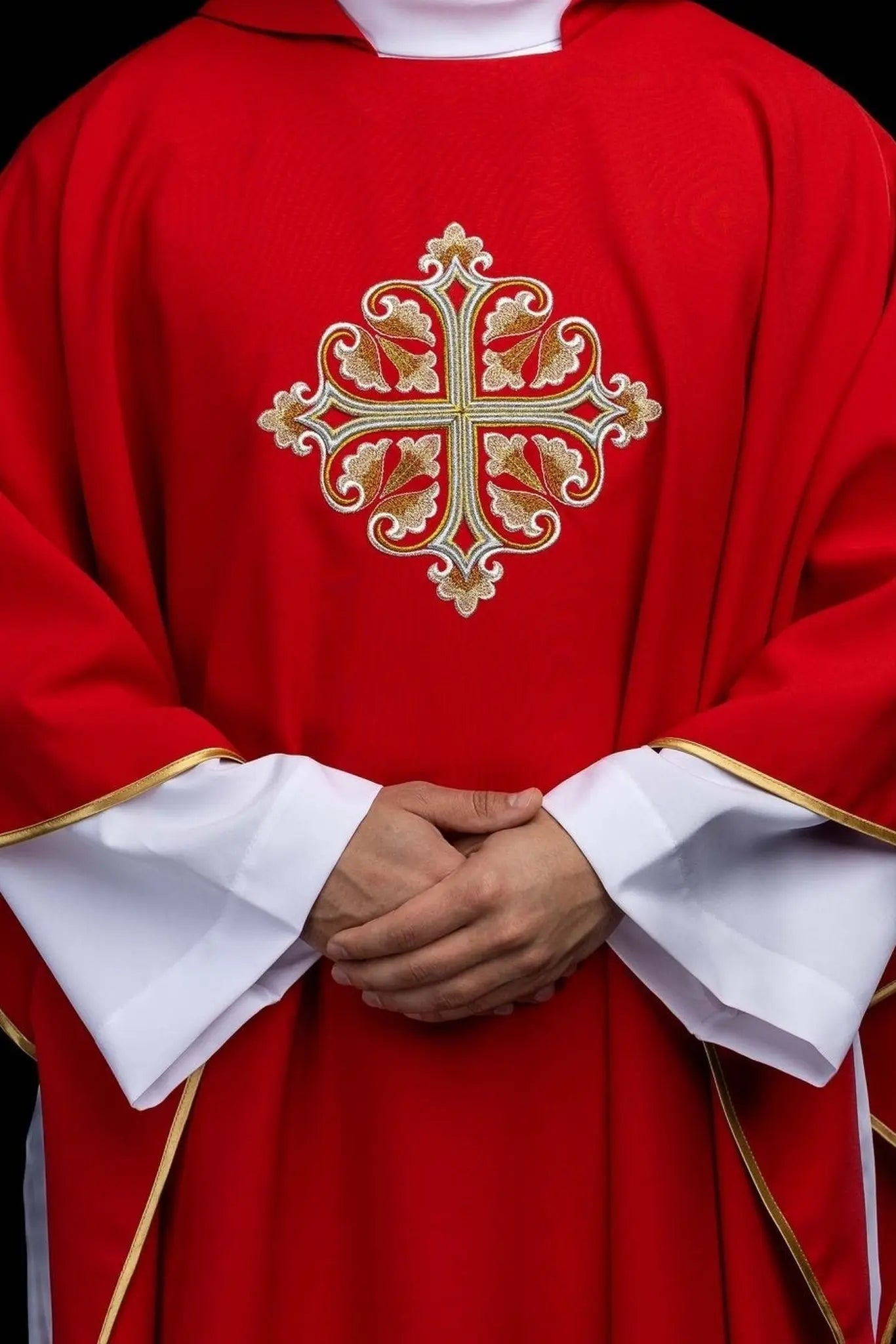
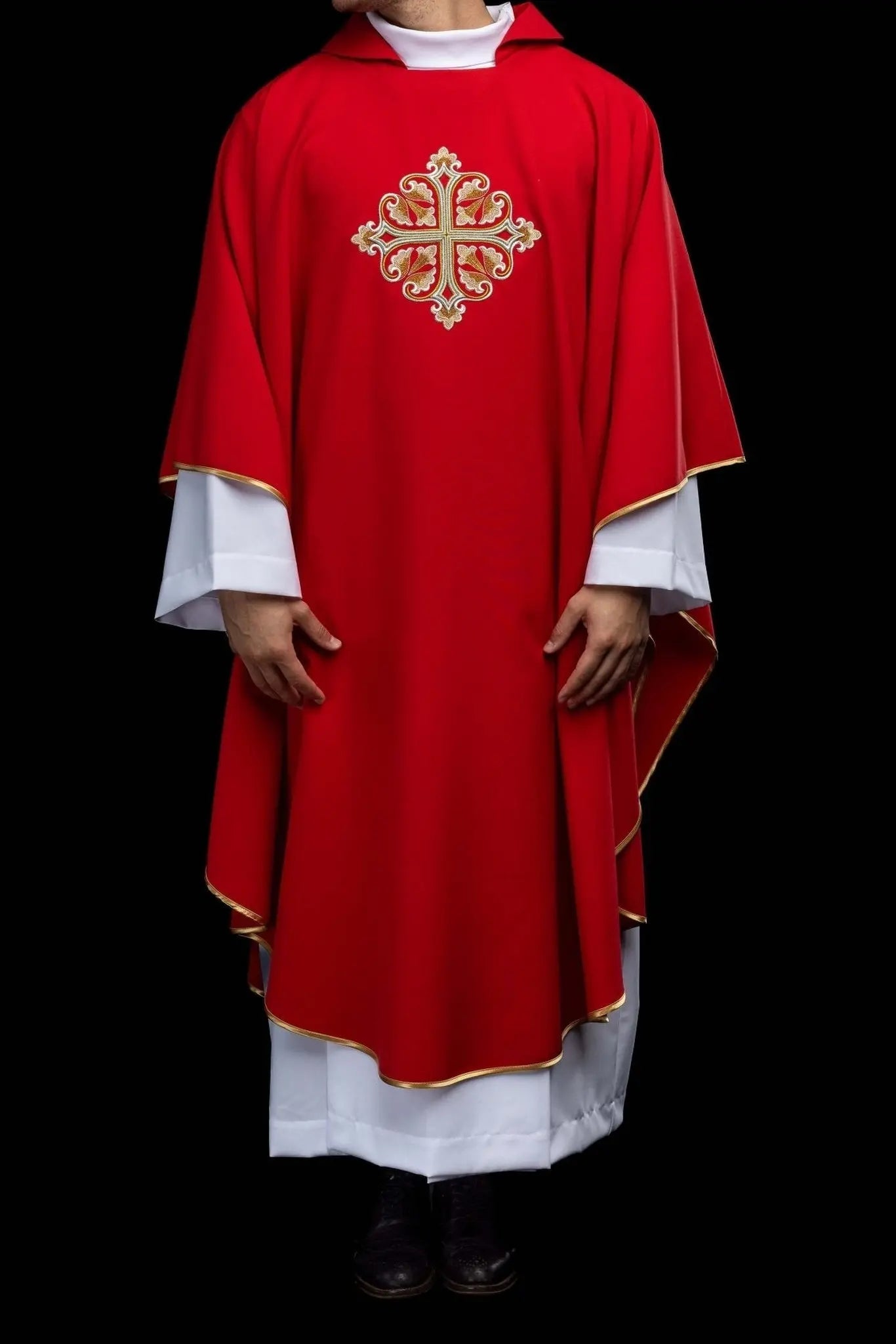
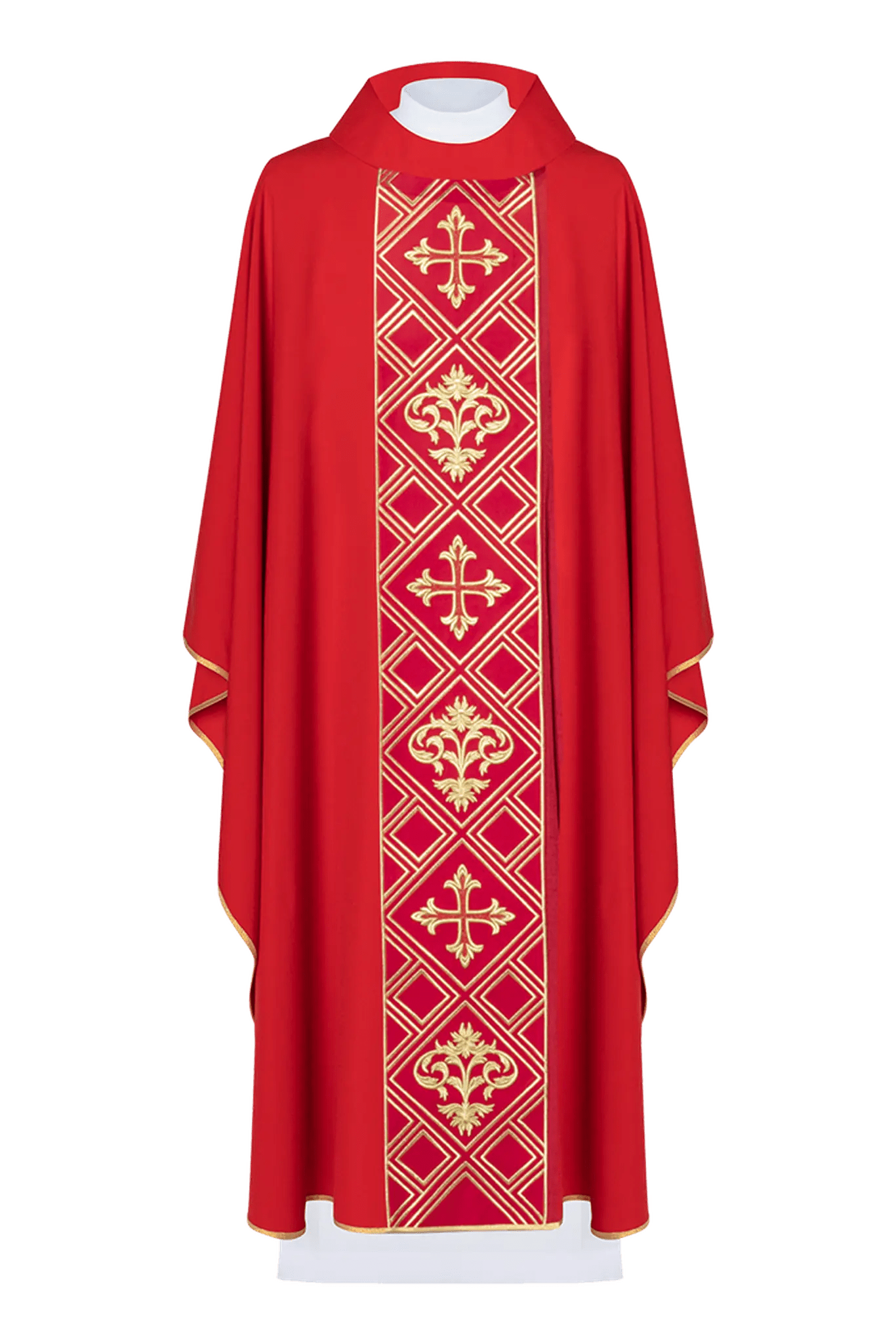
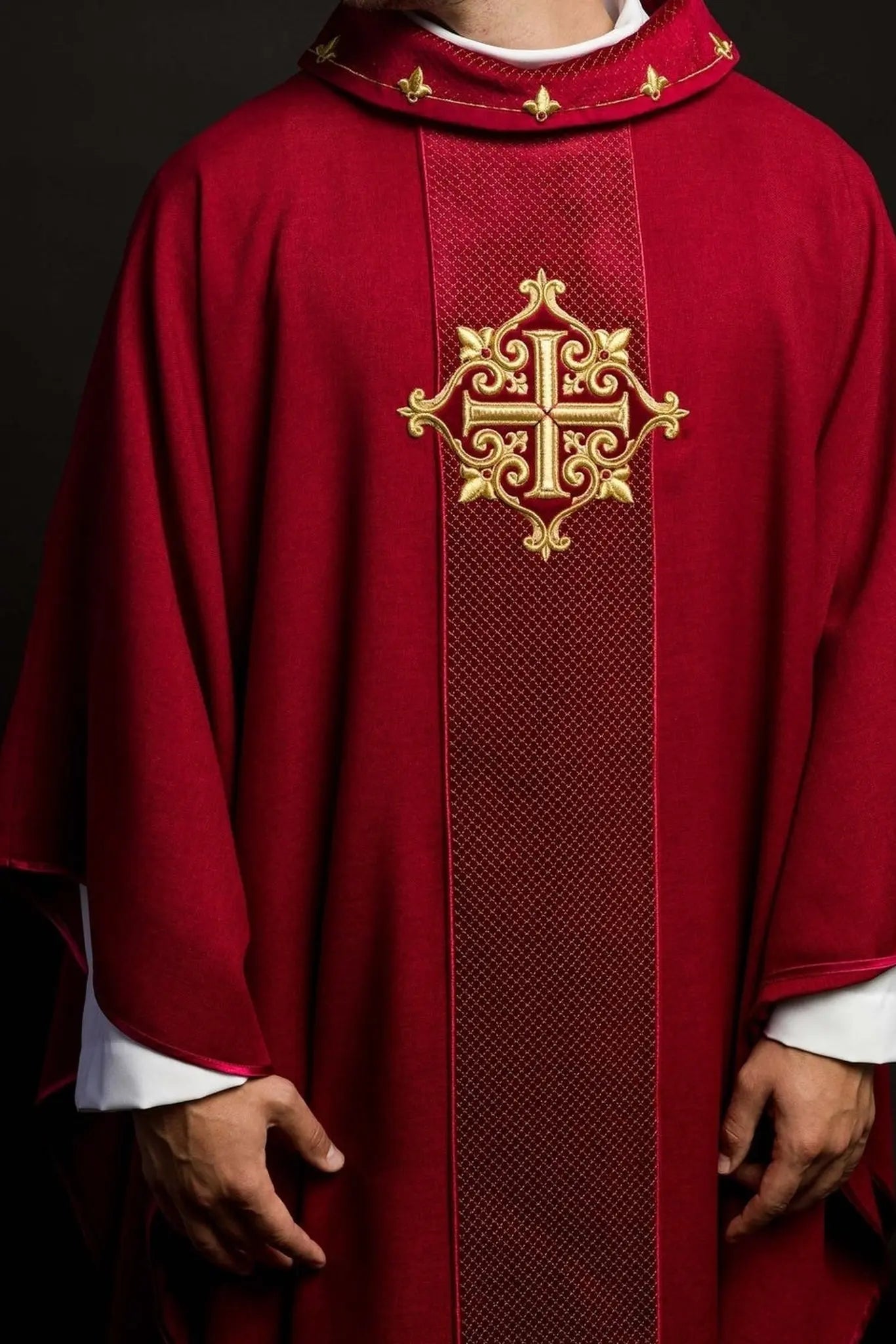
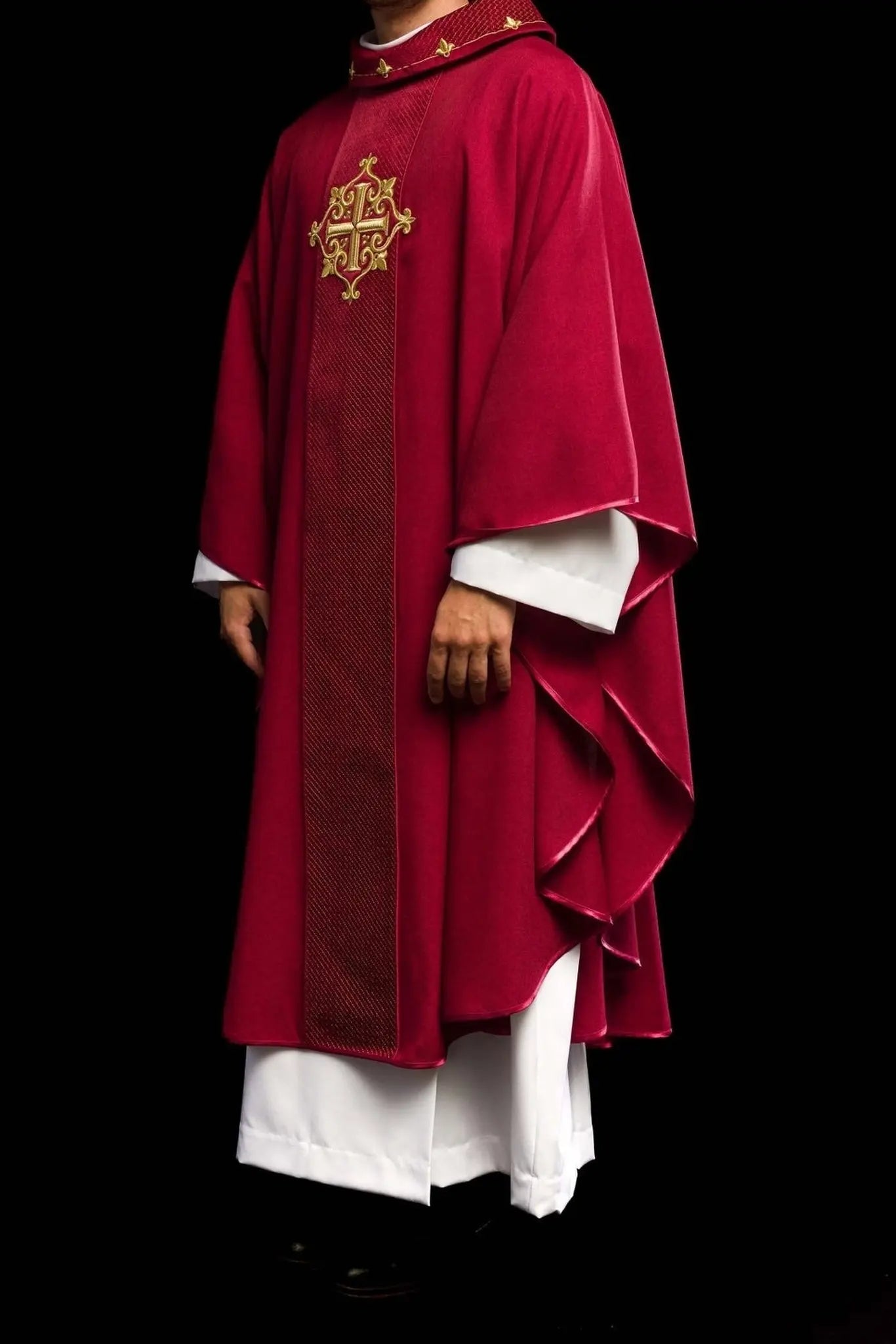
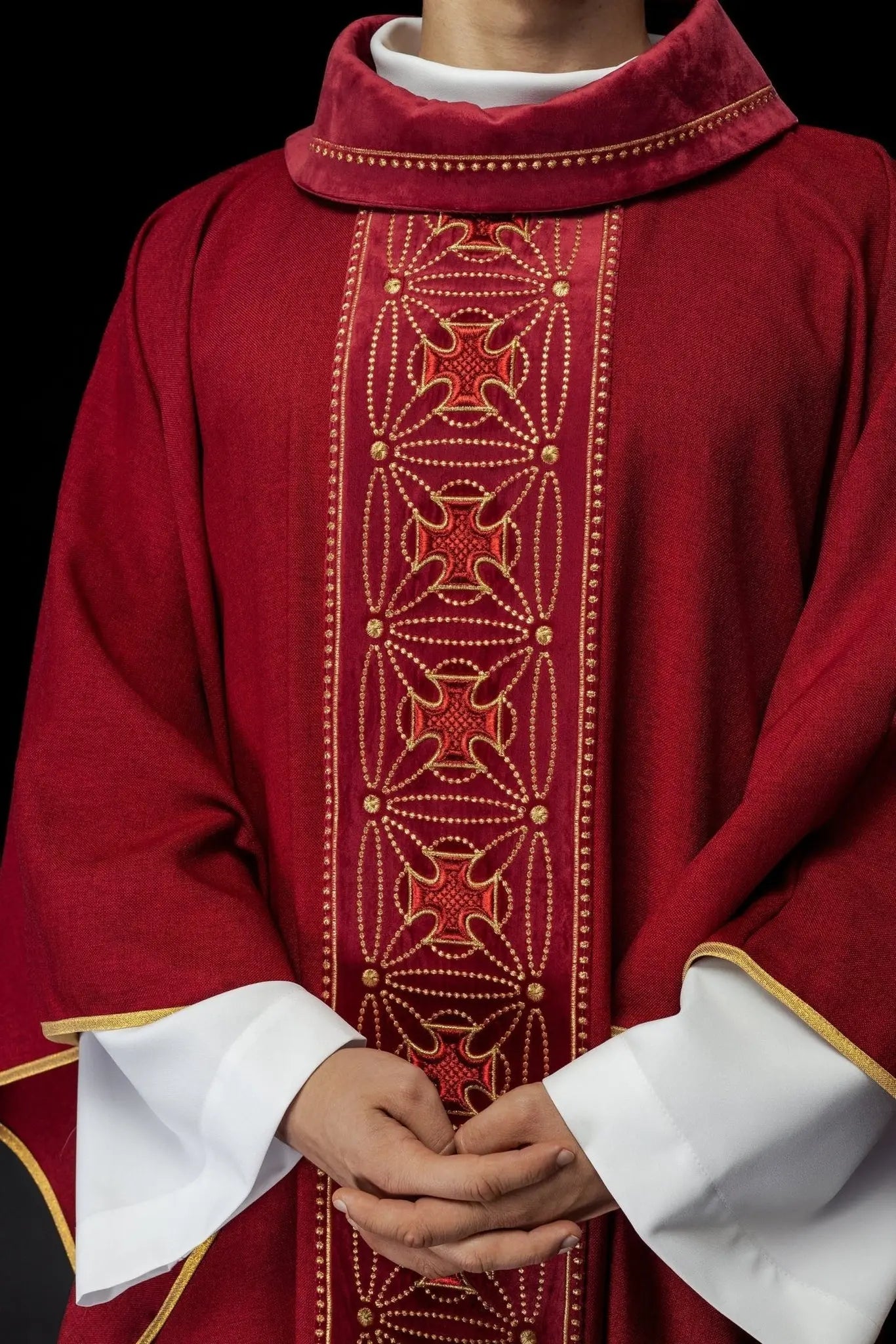
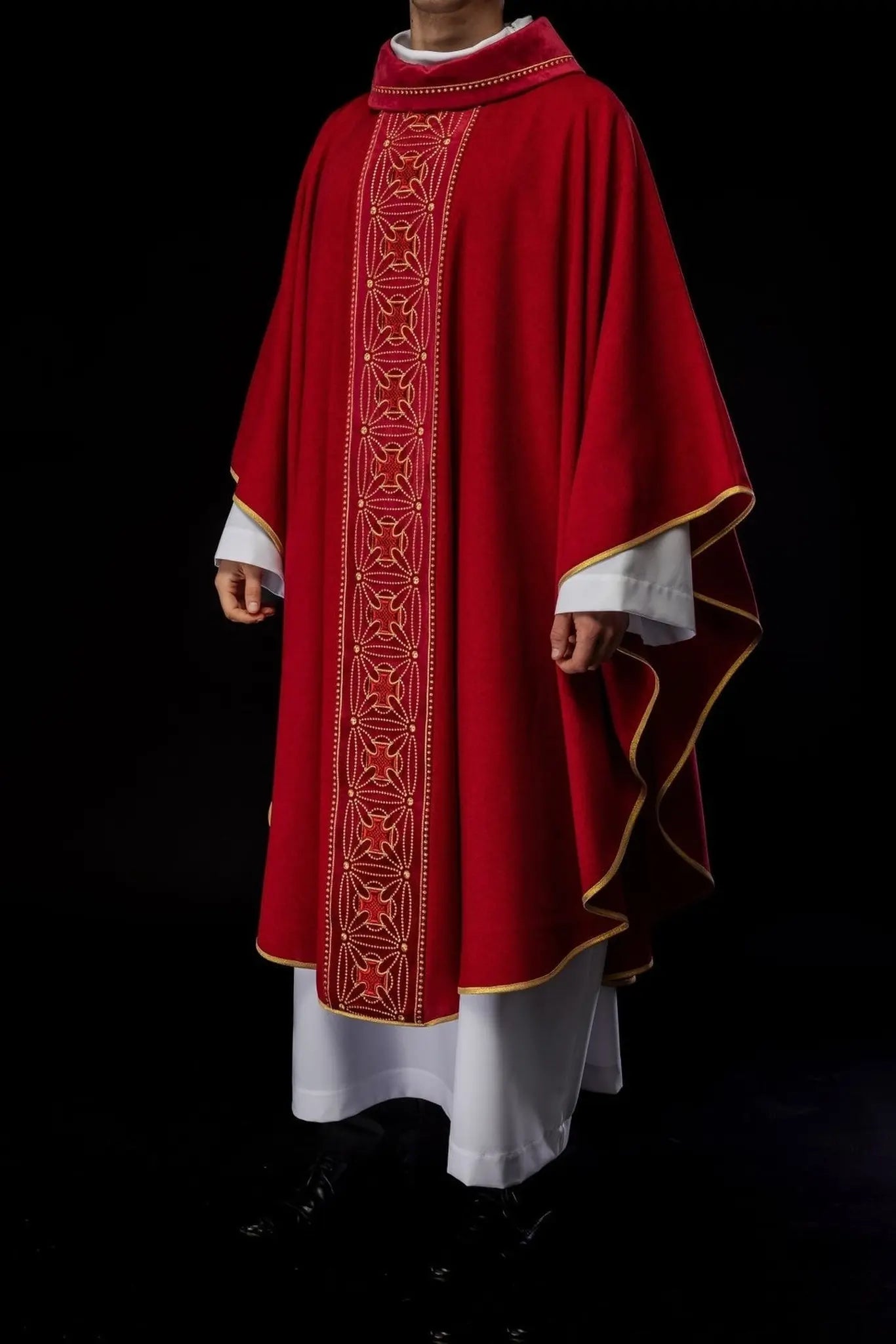
Red: Used for Pentecost, Palm Sunday, Good Friday, feasts of the Apostles and Evangelists, and martyrs. Red points to the Holy Spirit, the Passion of the Lord and the witness of blood. Designs in red chasubles often include crosses, flames, doves or martyr symbols.
-
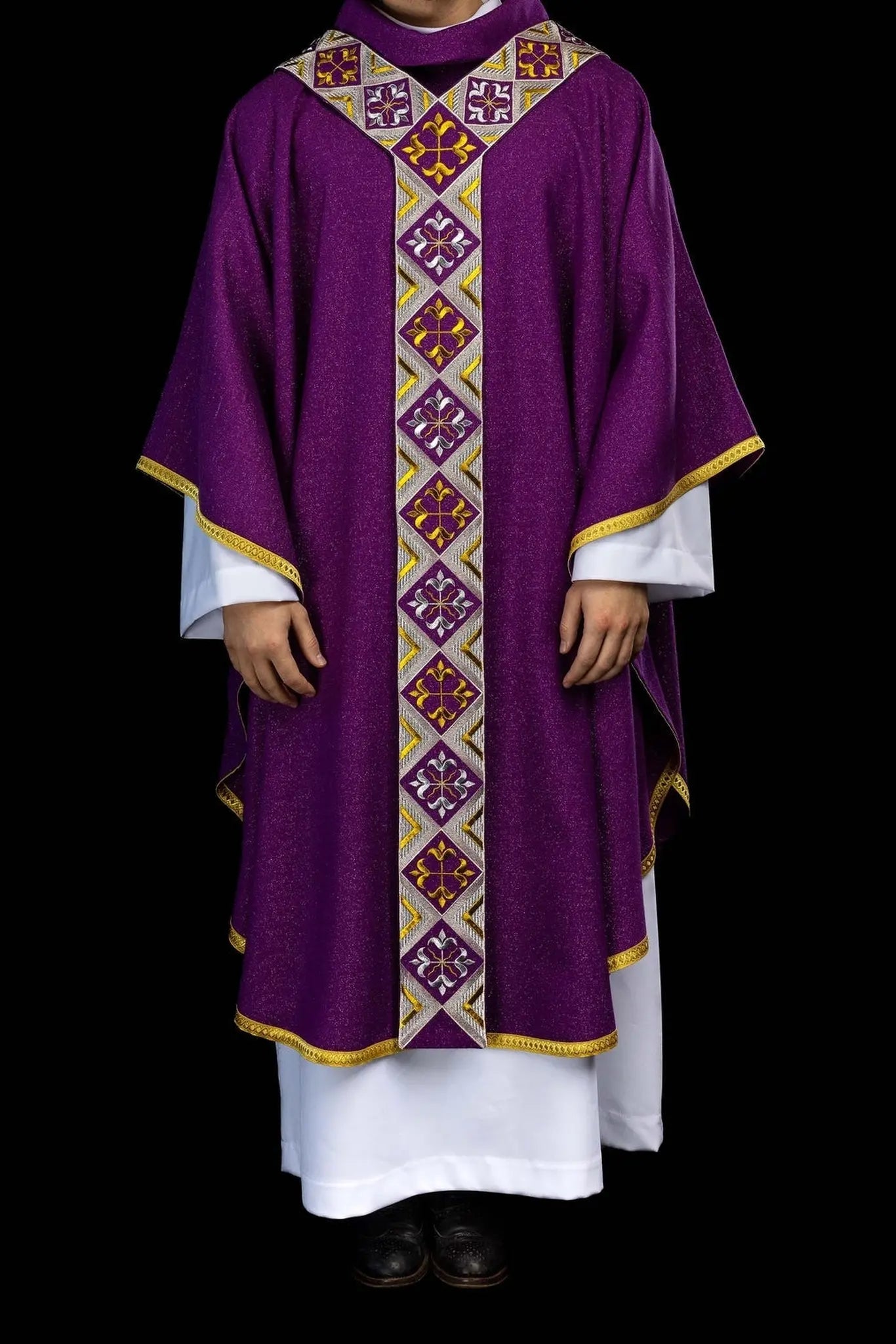
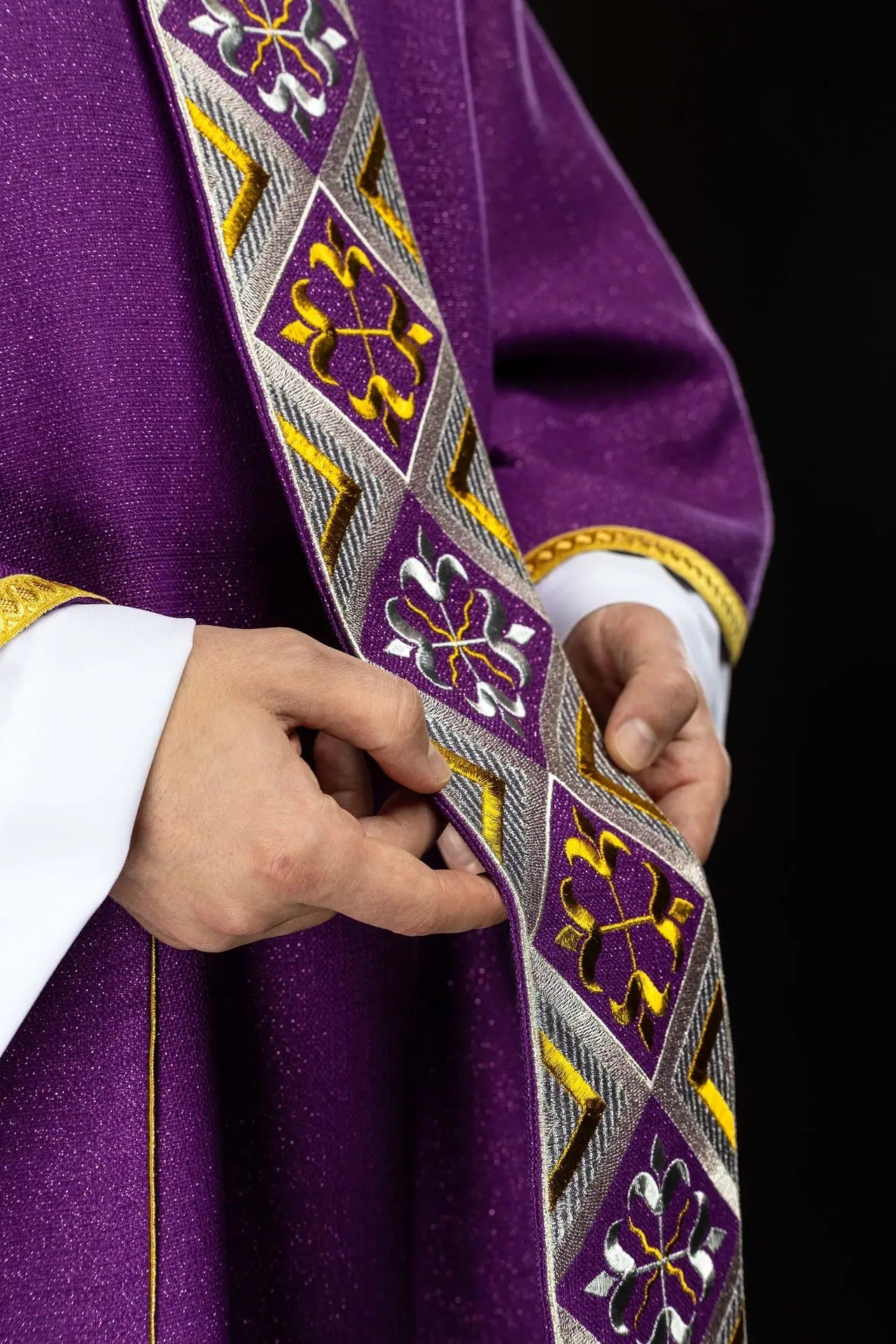
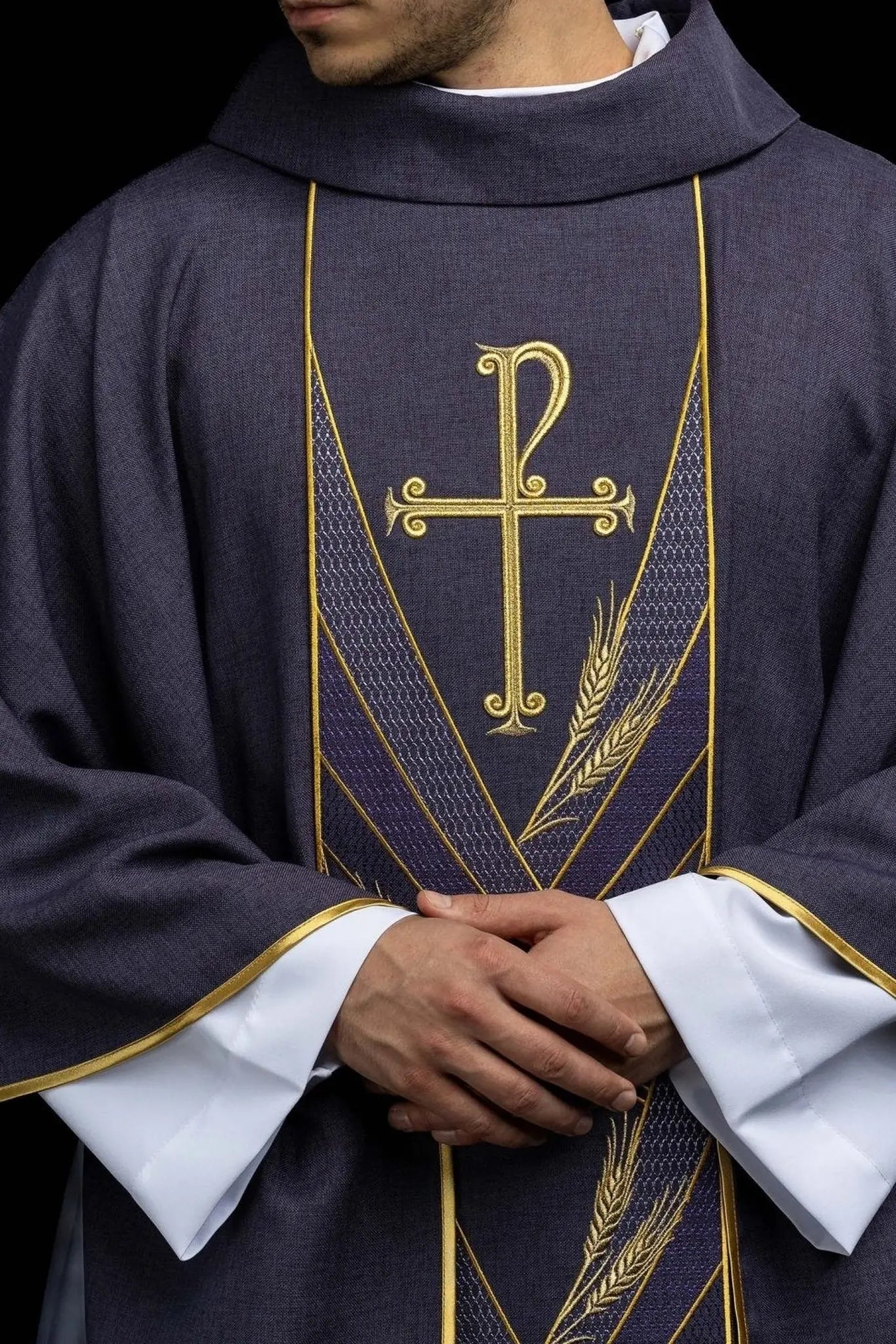
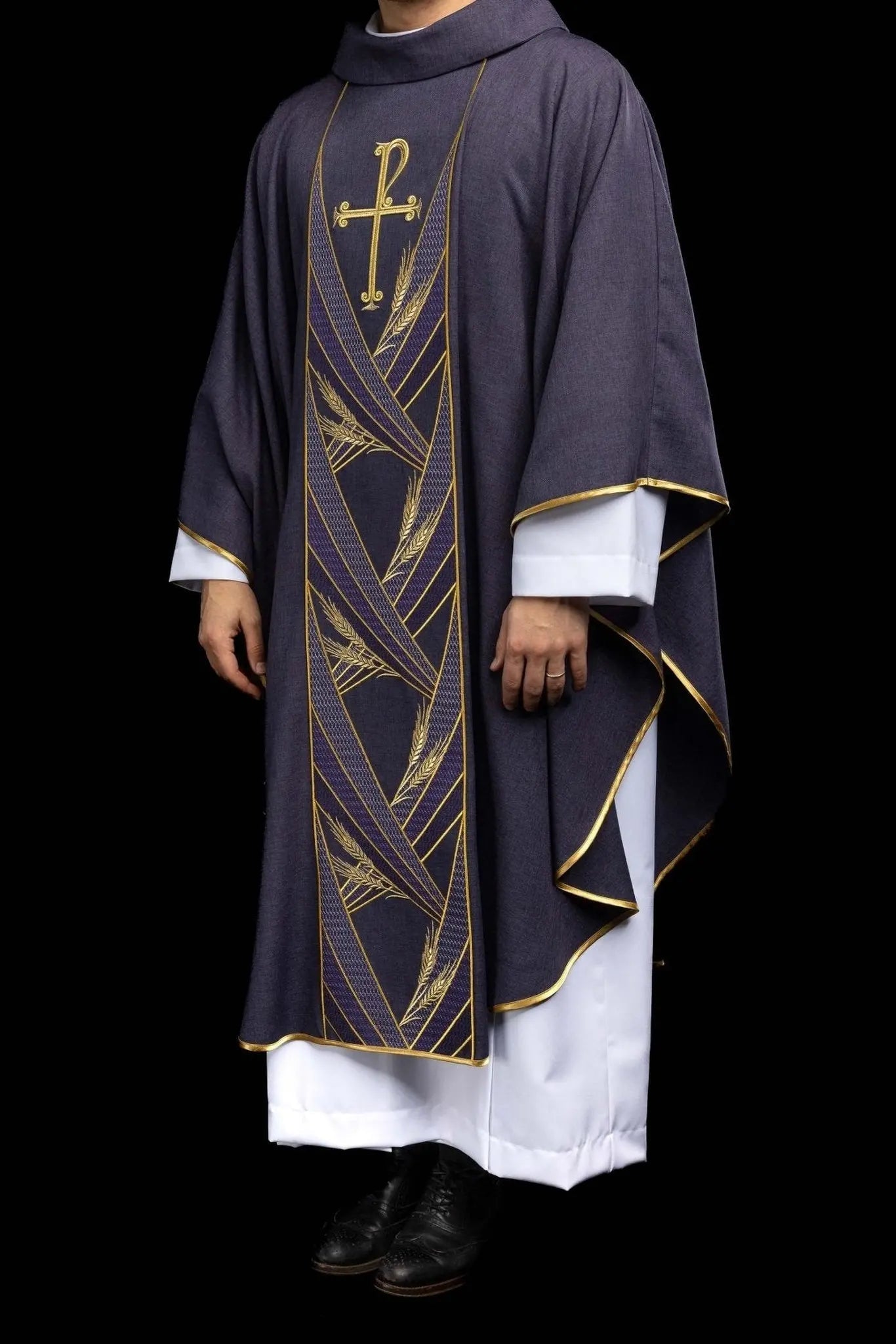
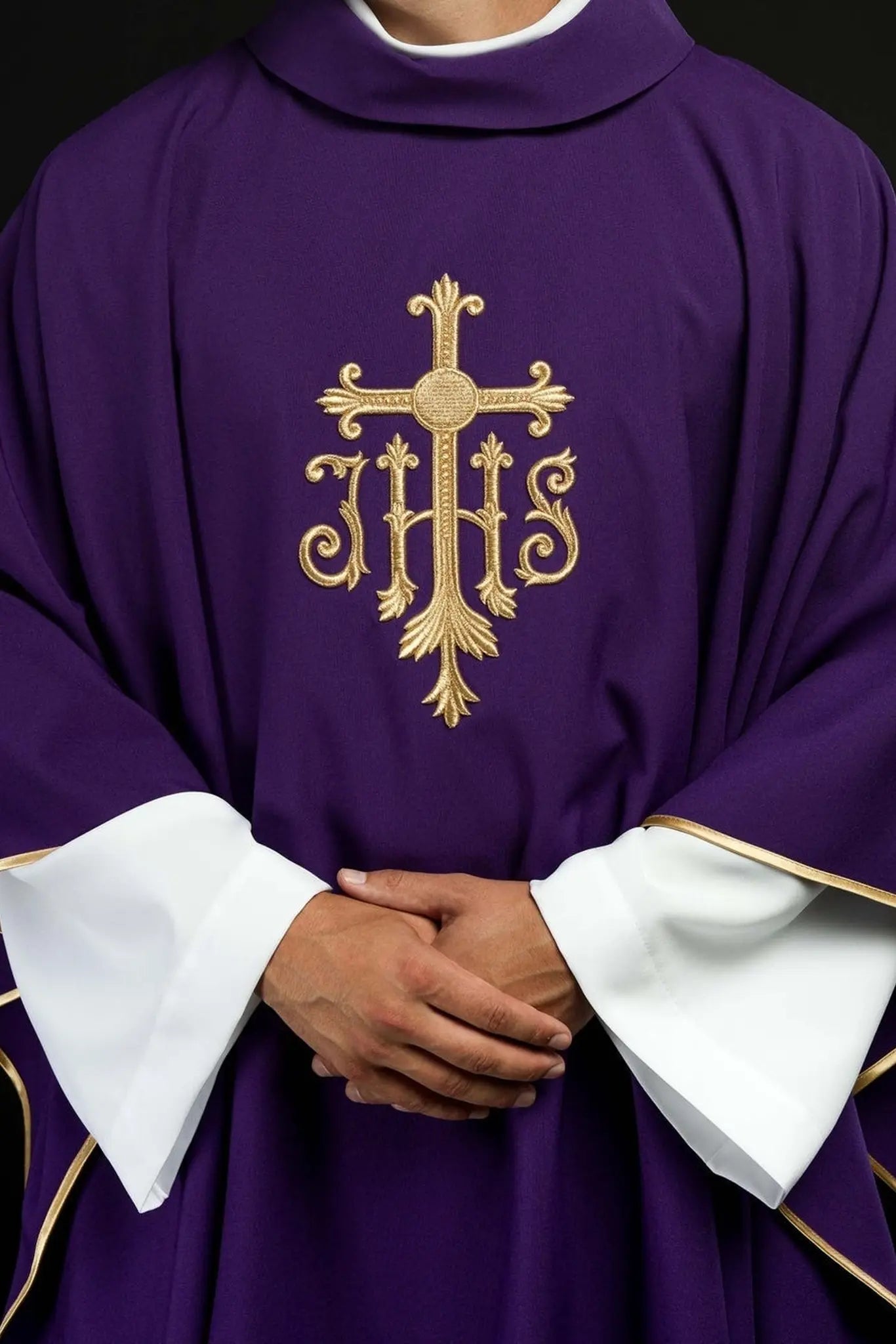
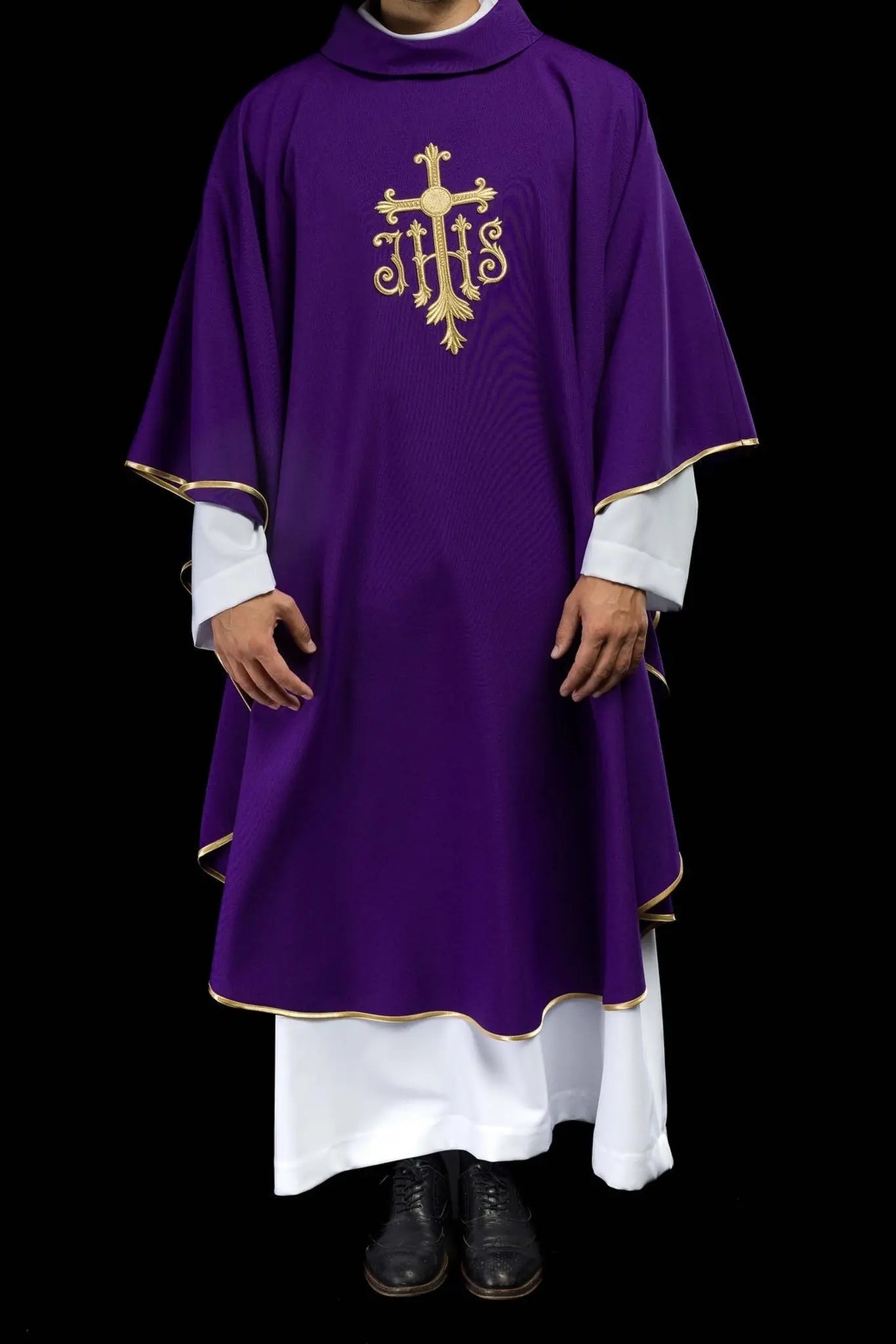
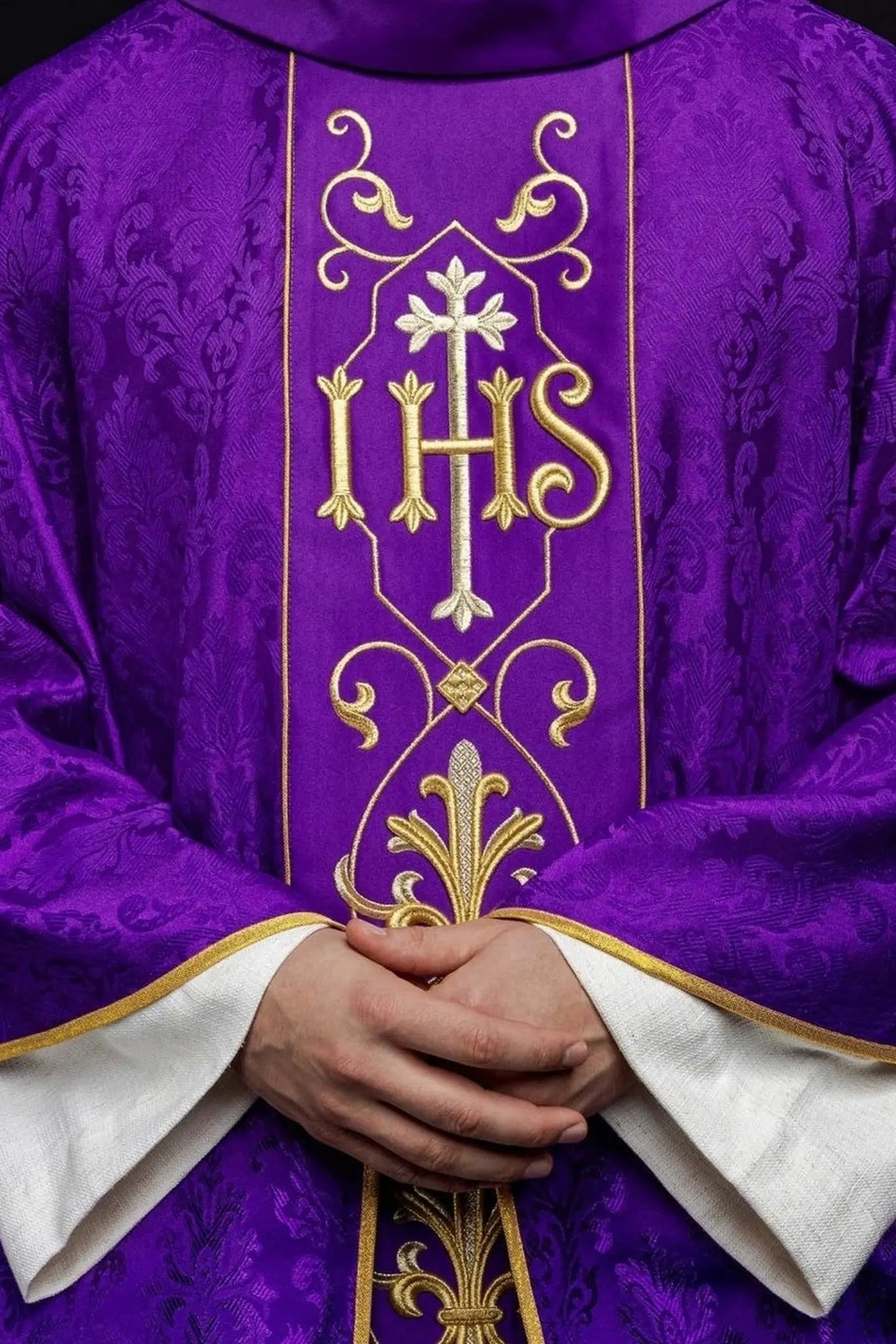
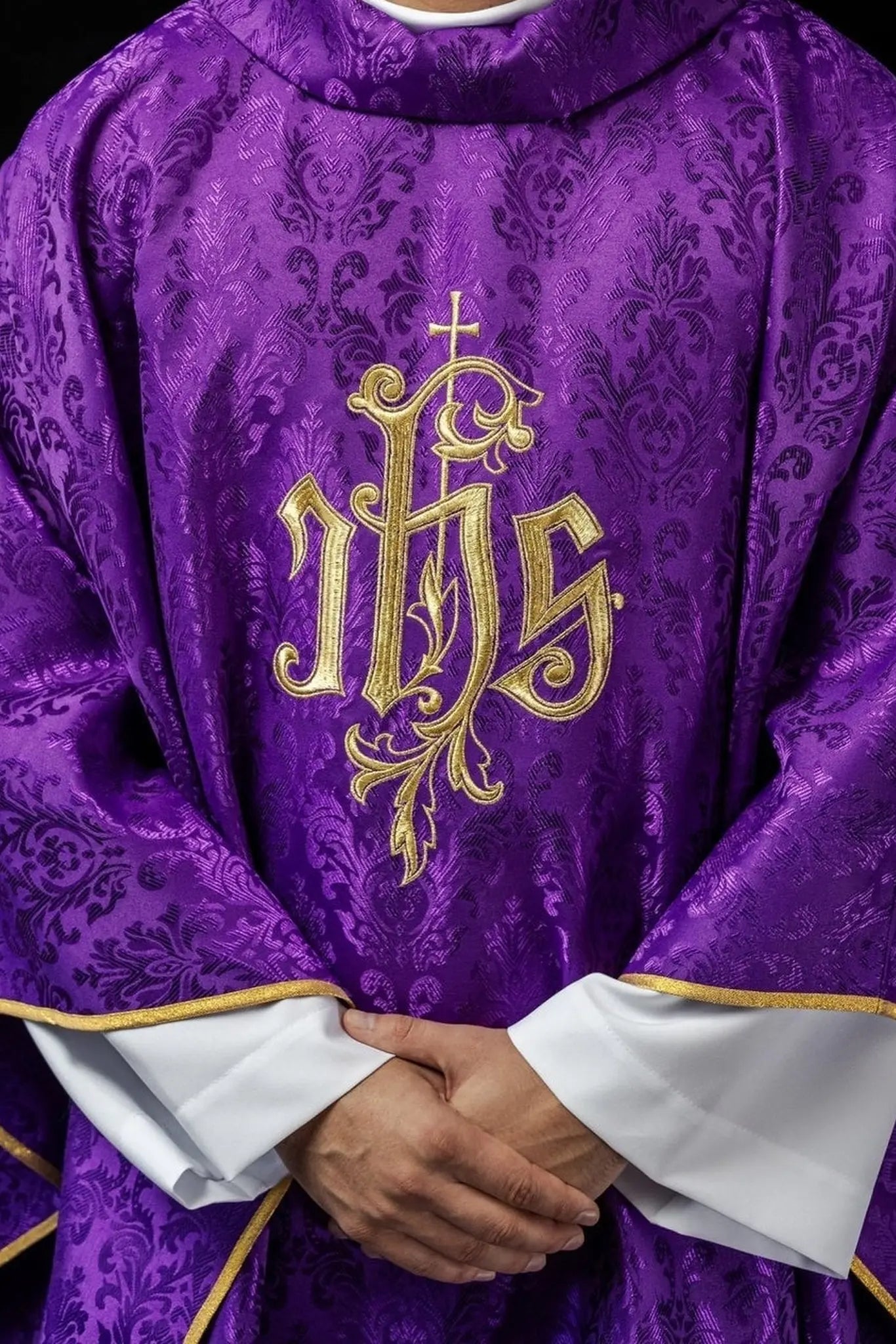
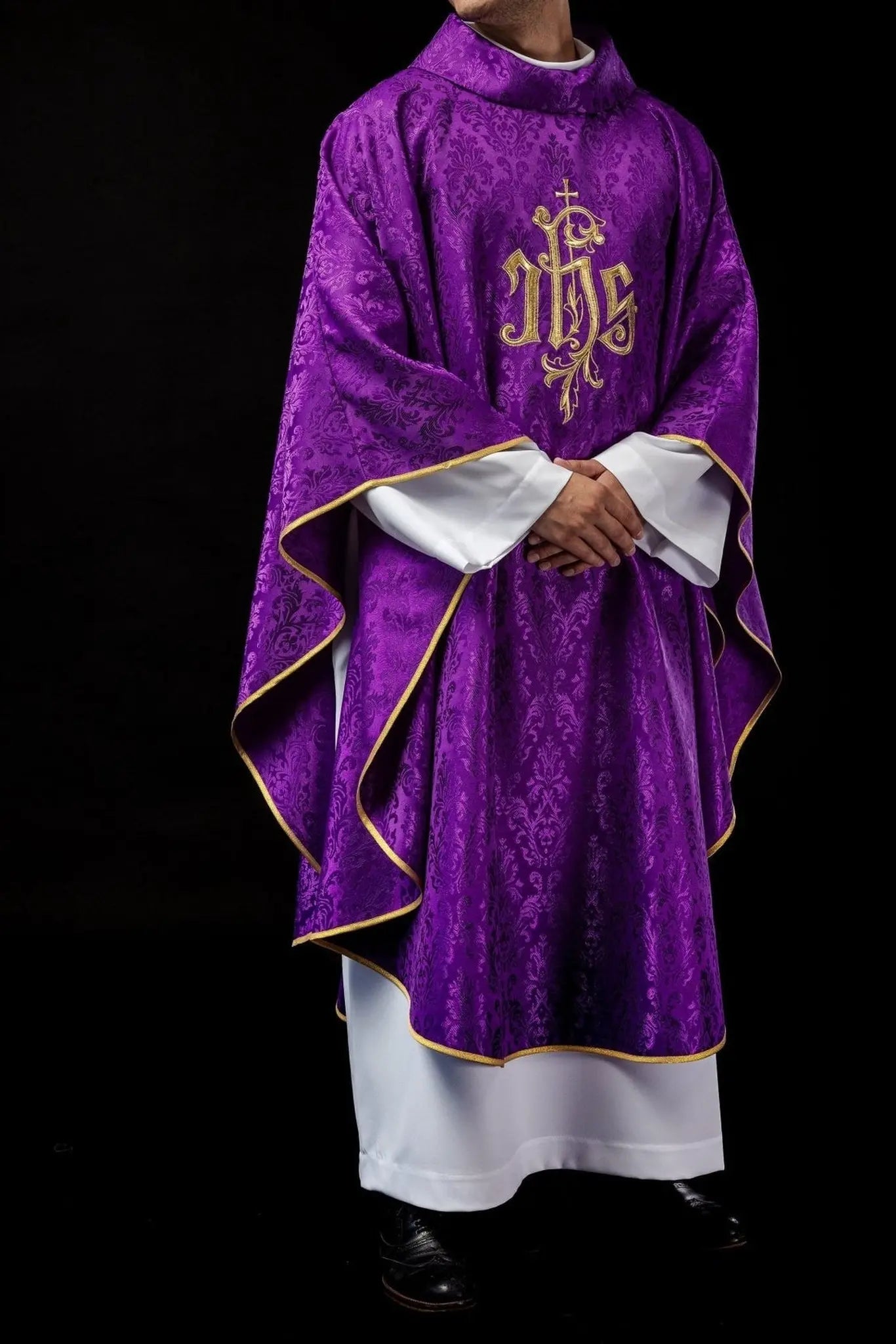
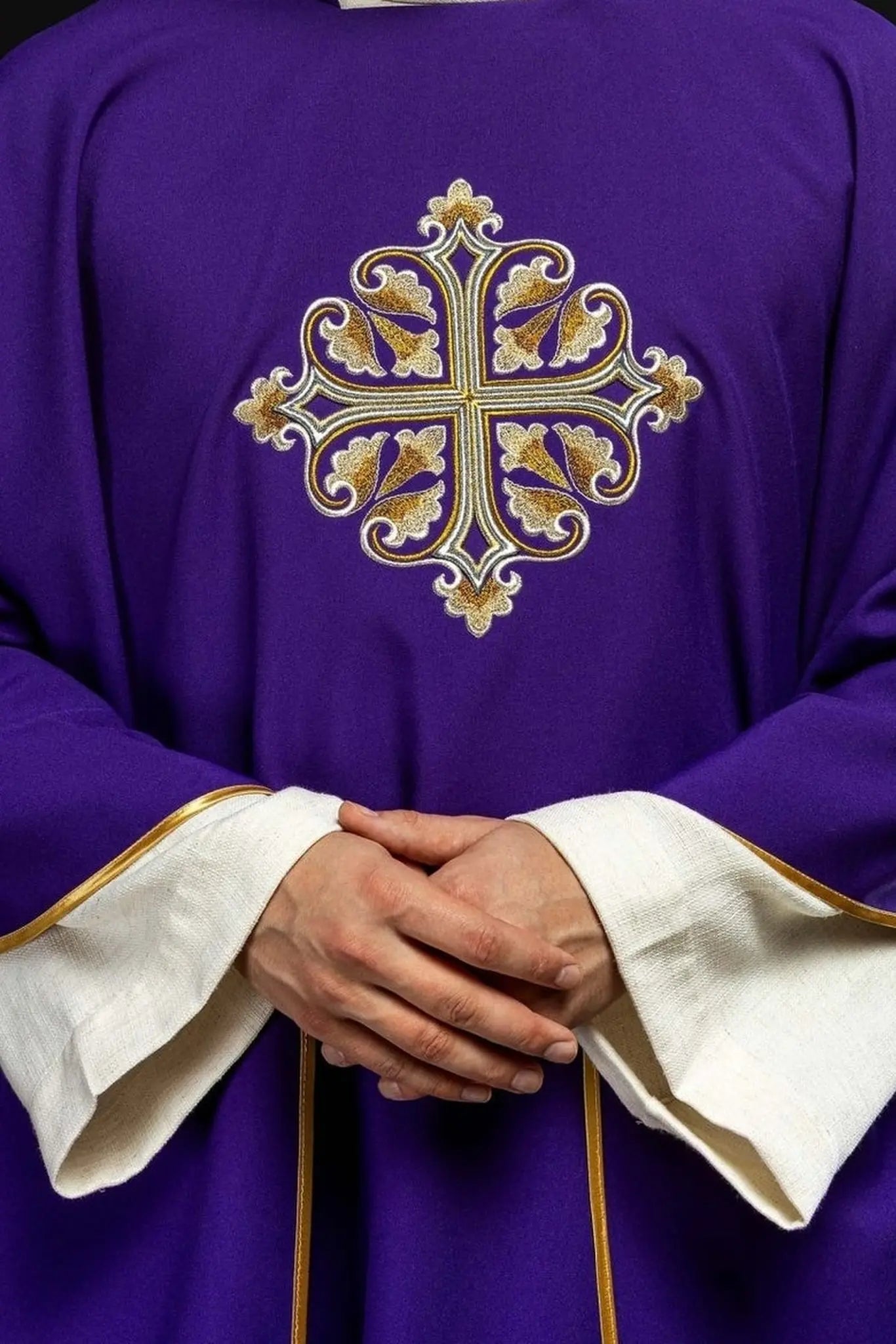
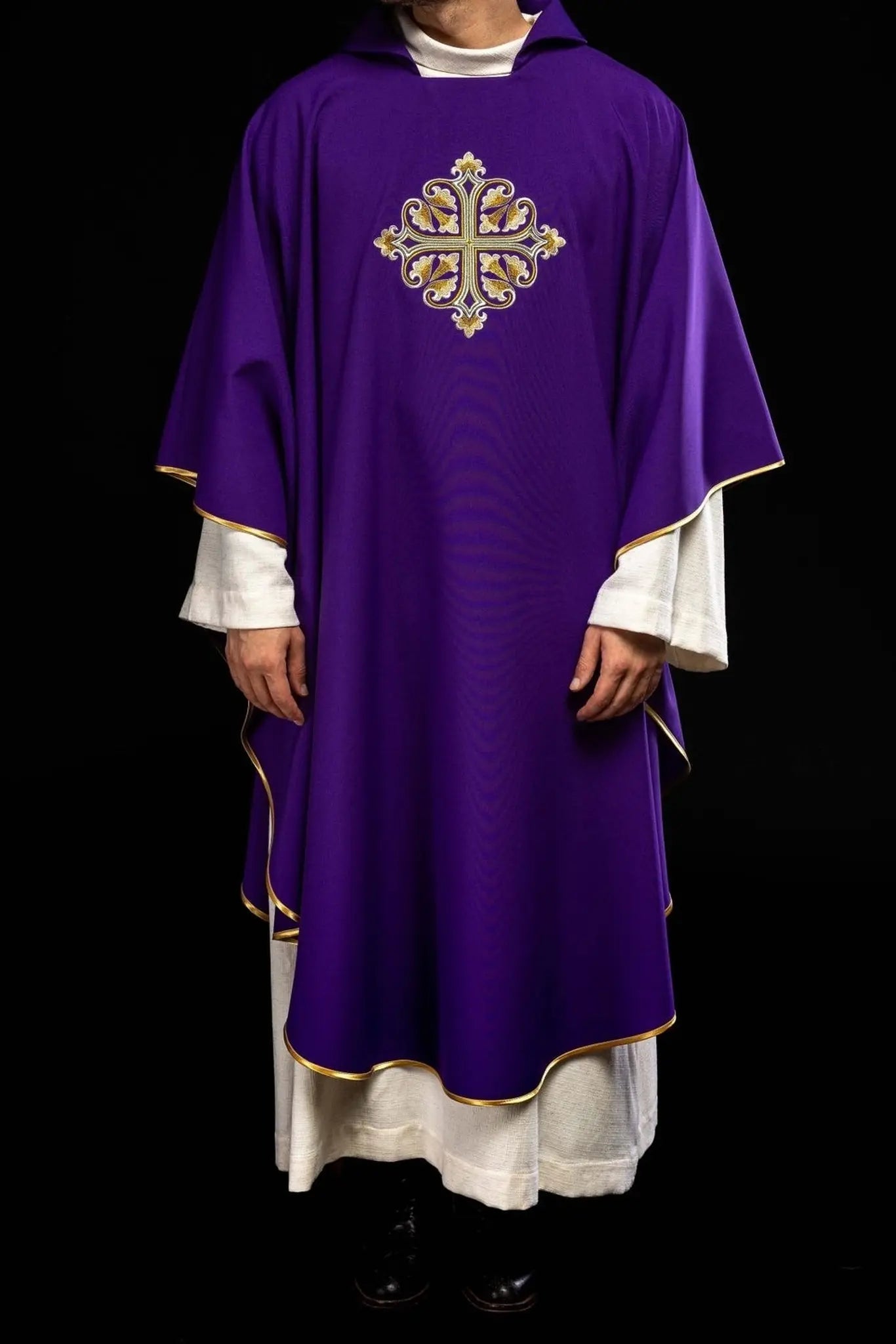
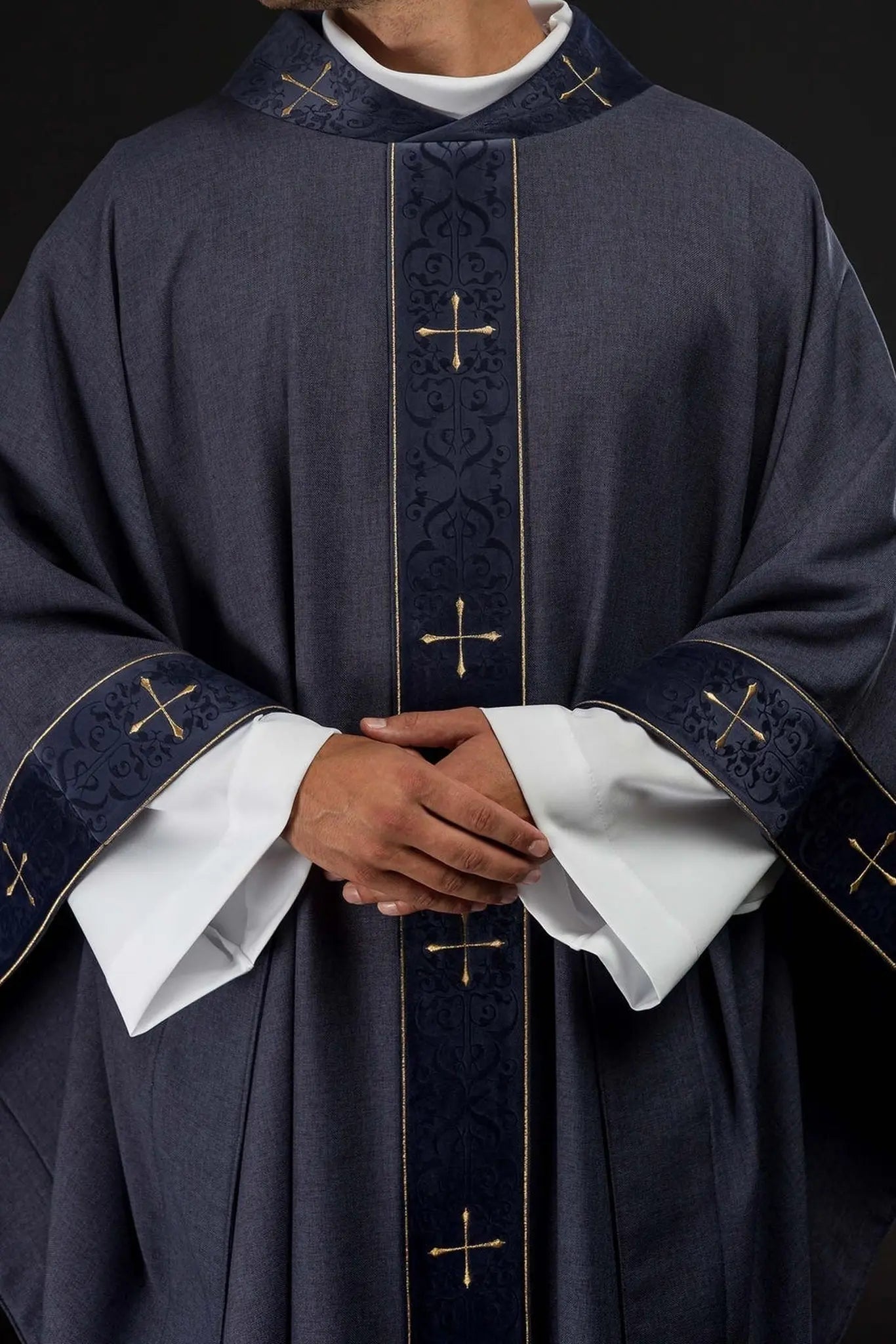
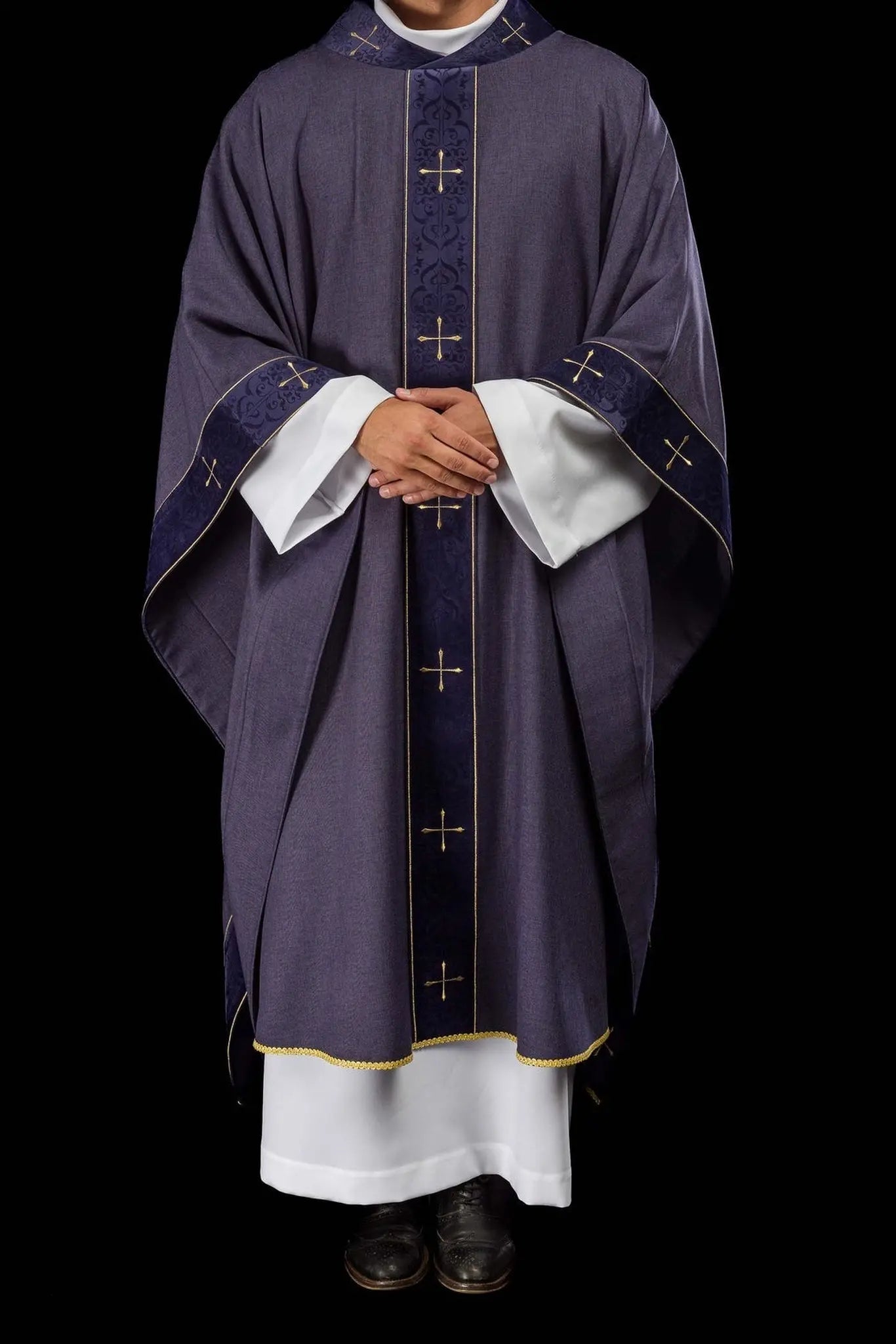
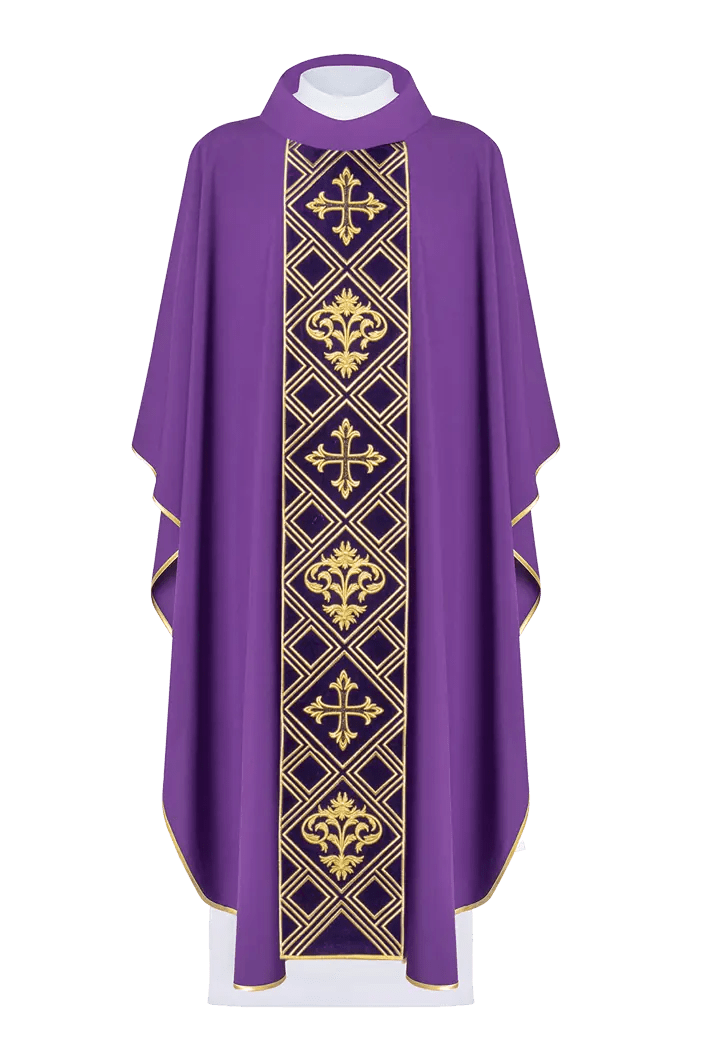
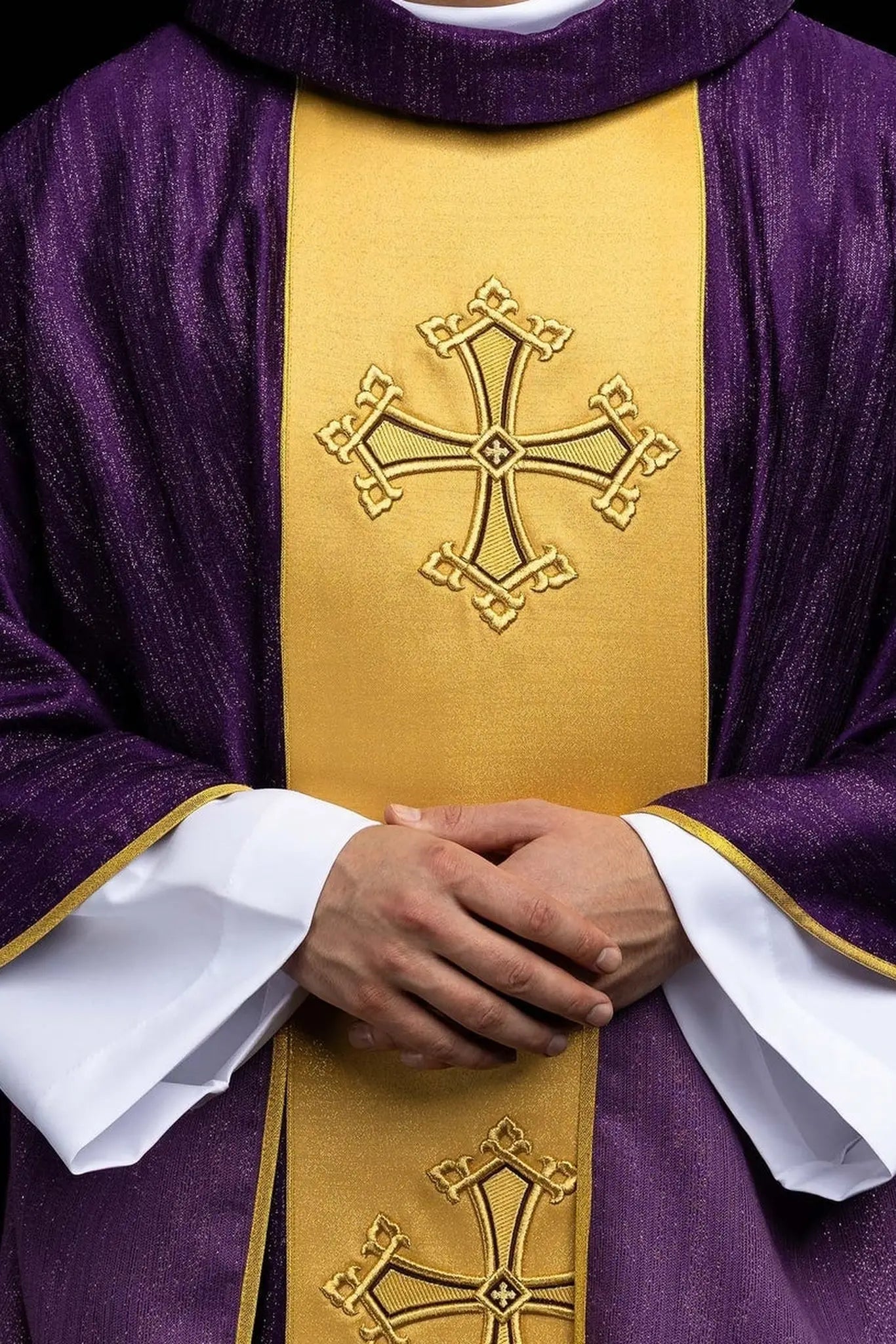
Purple: Used especially in Advent and Lent, purple expresses preparation, penance and conversion. It may also be used in some funeral contexts. Vestments in purple chasubles should be dignified and sober, with embroidery that supports the penitential character of the season.
-
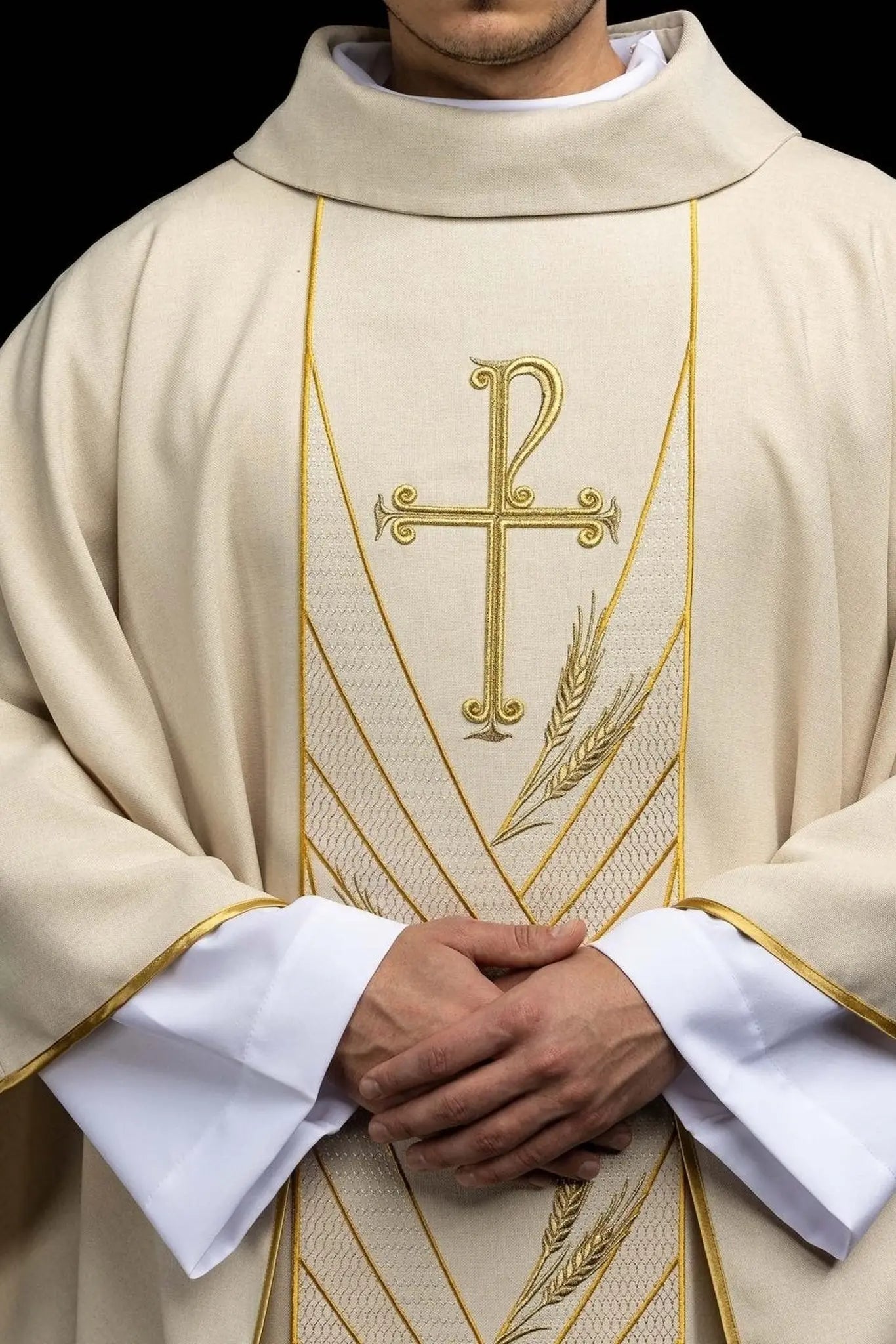
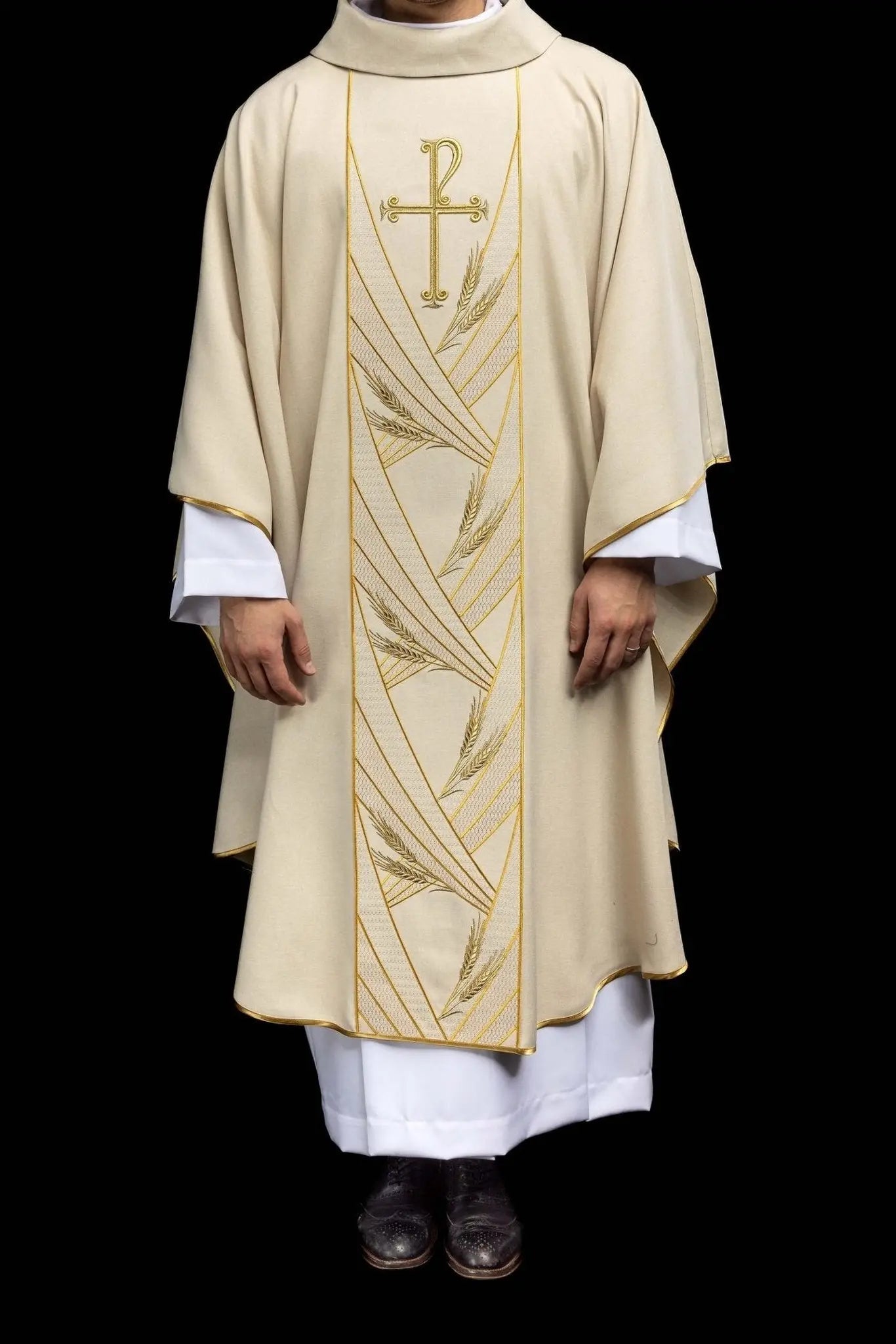
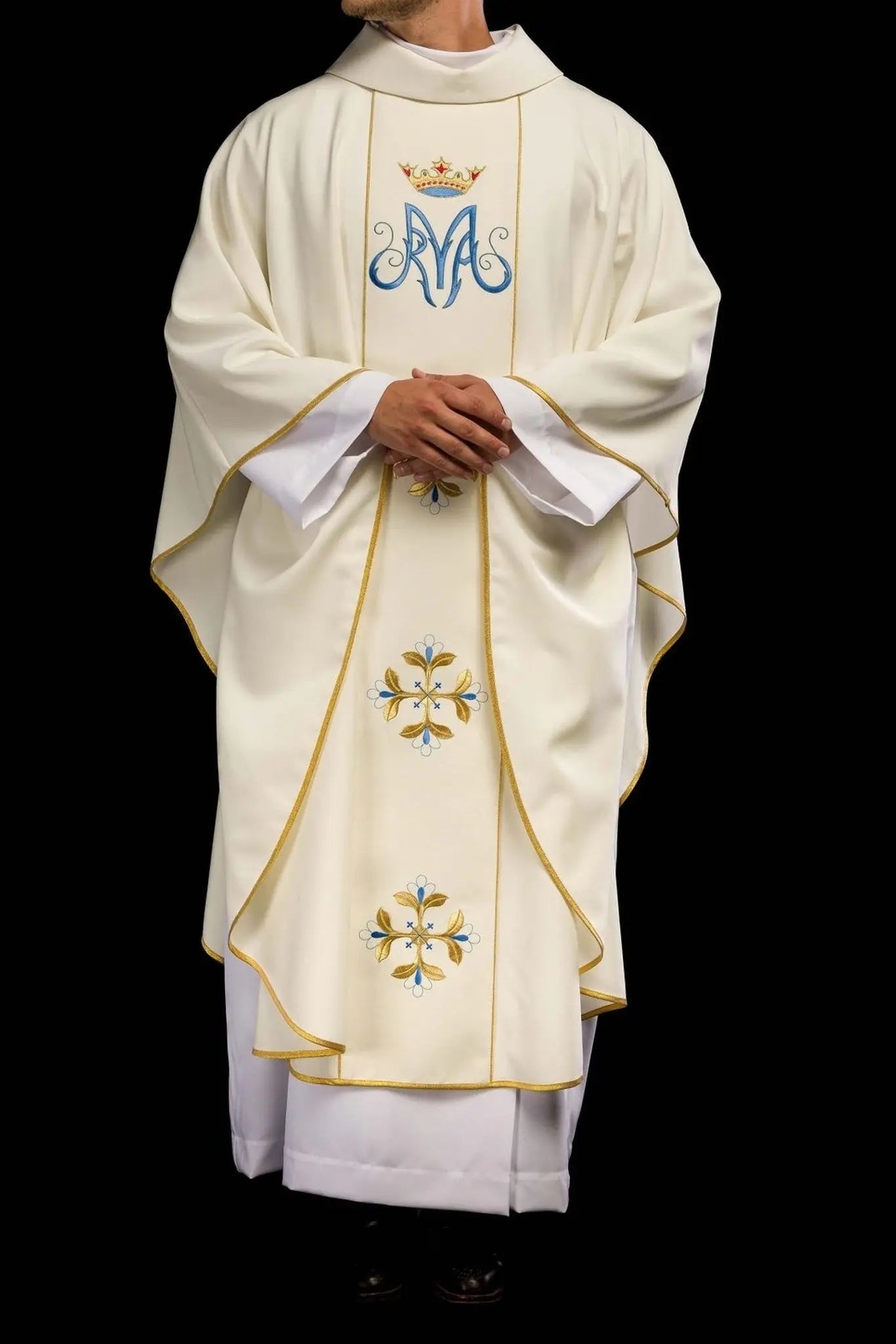
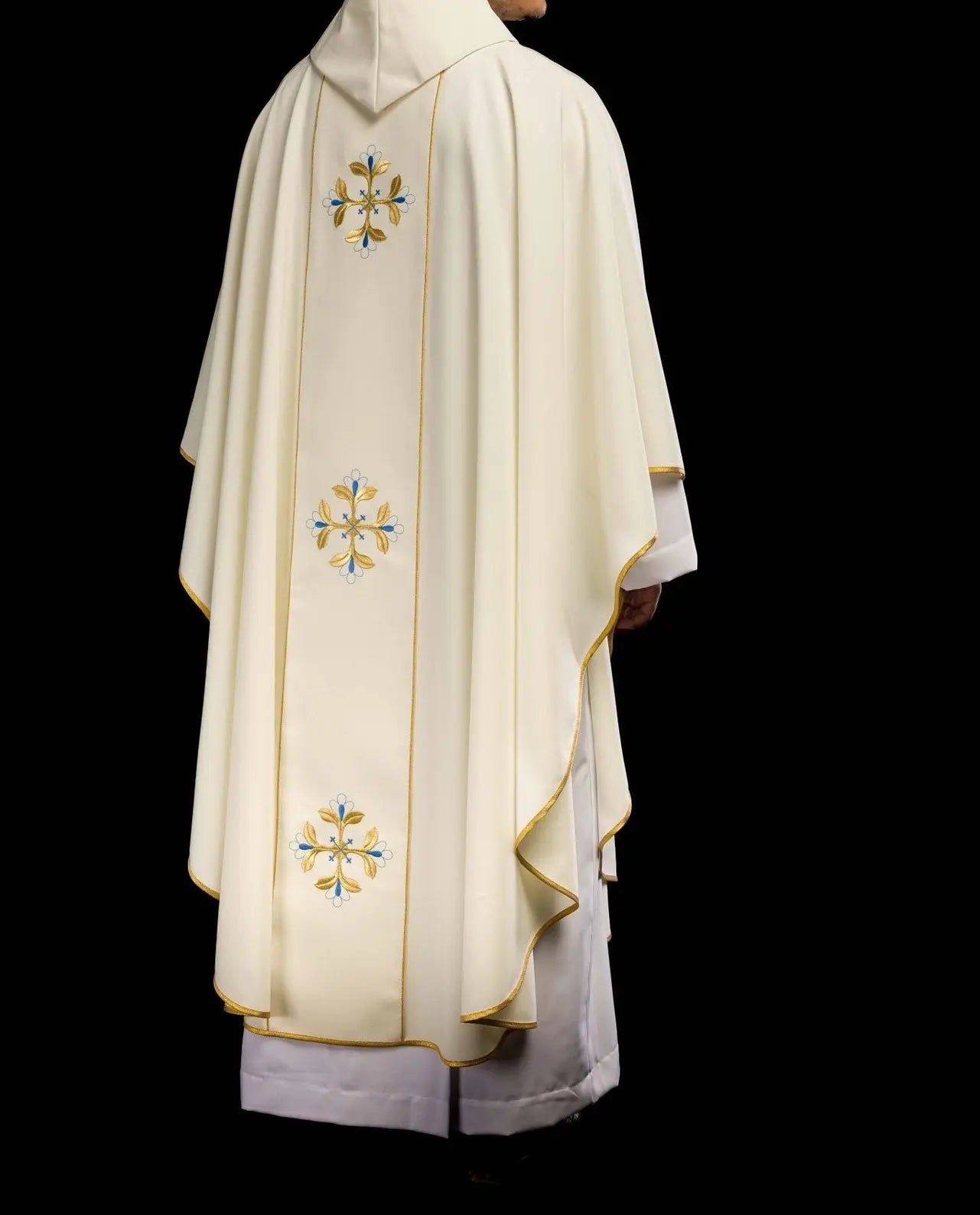
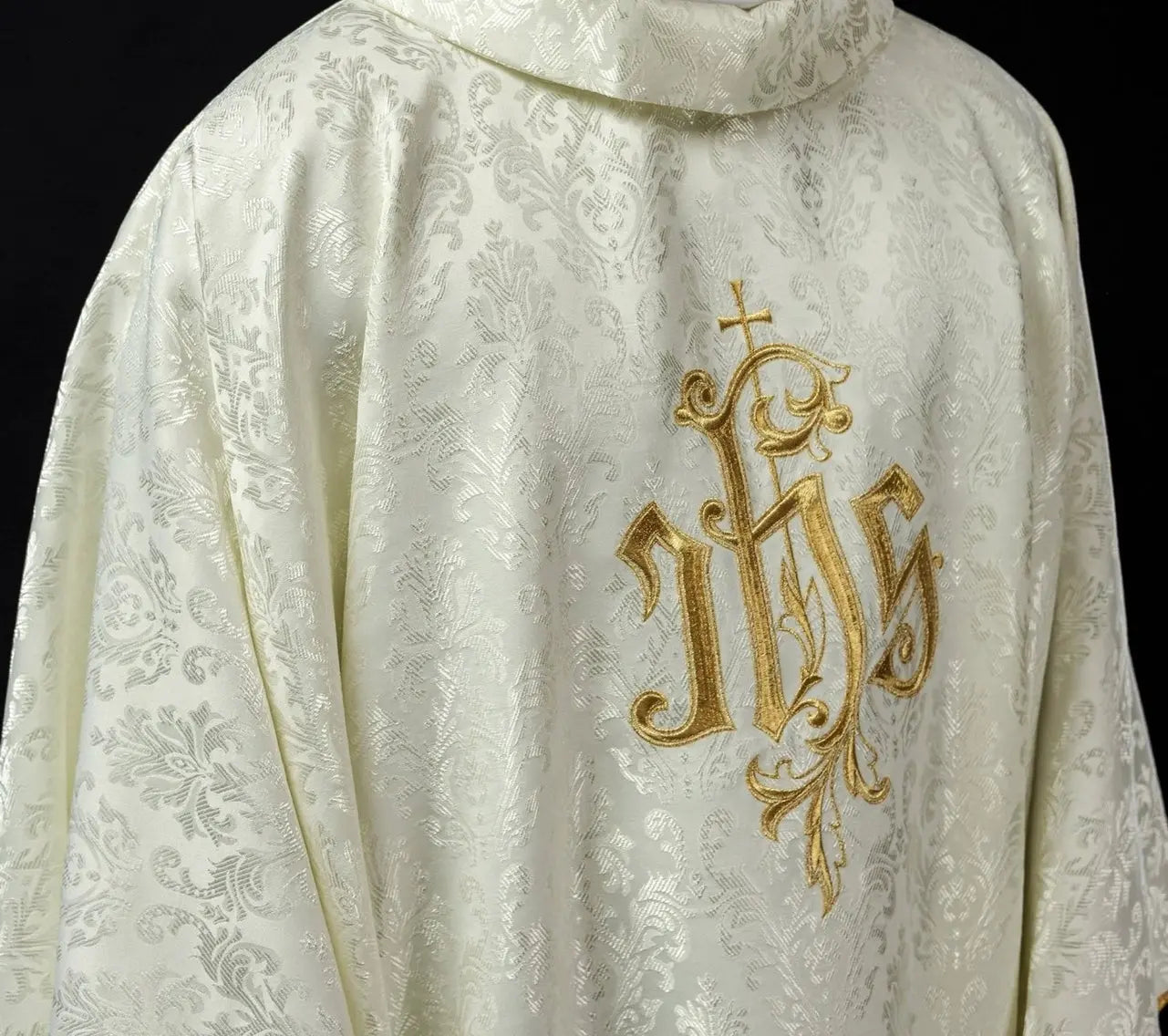
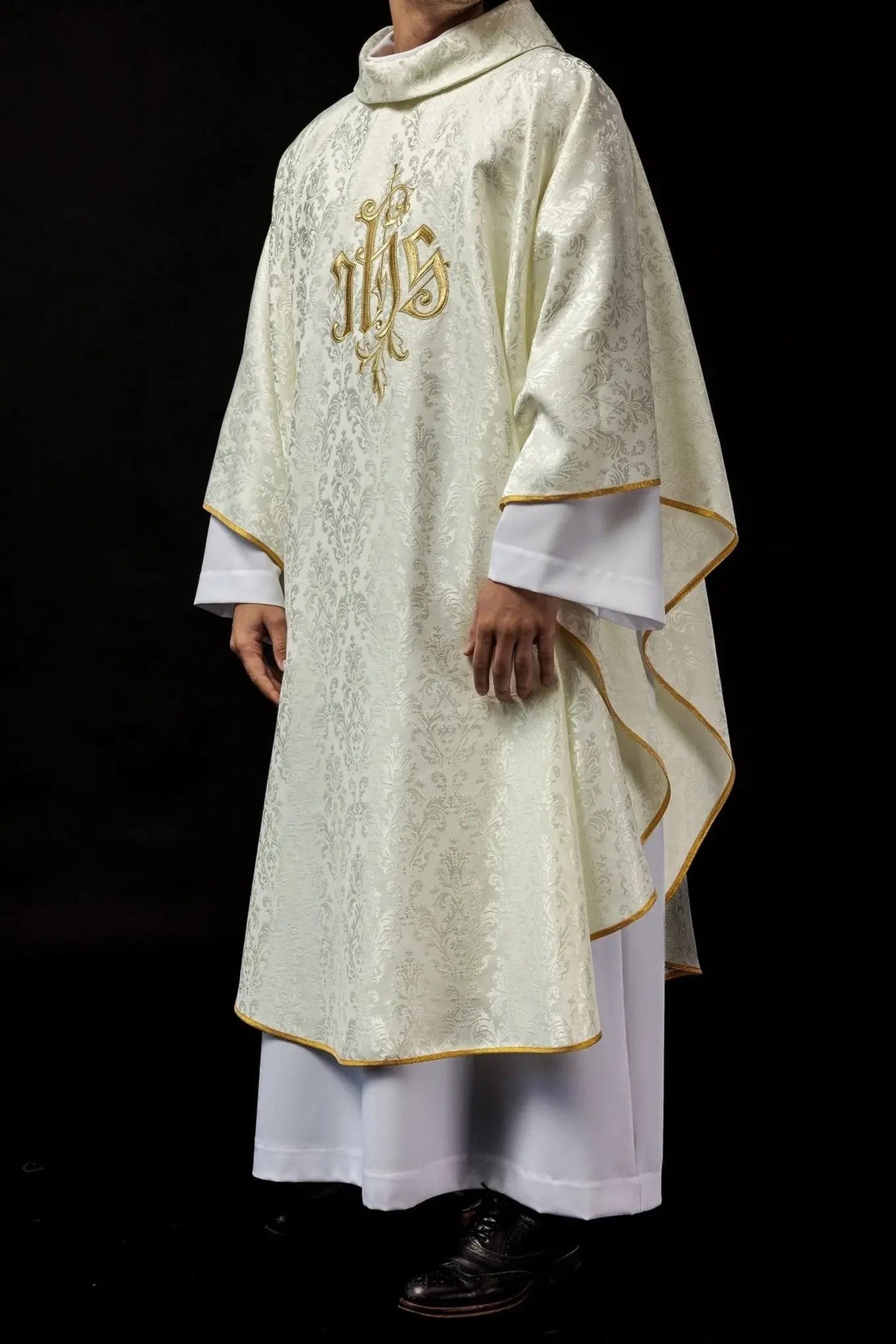
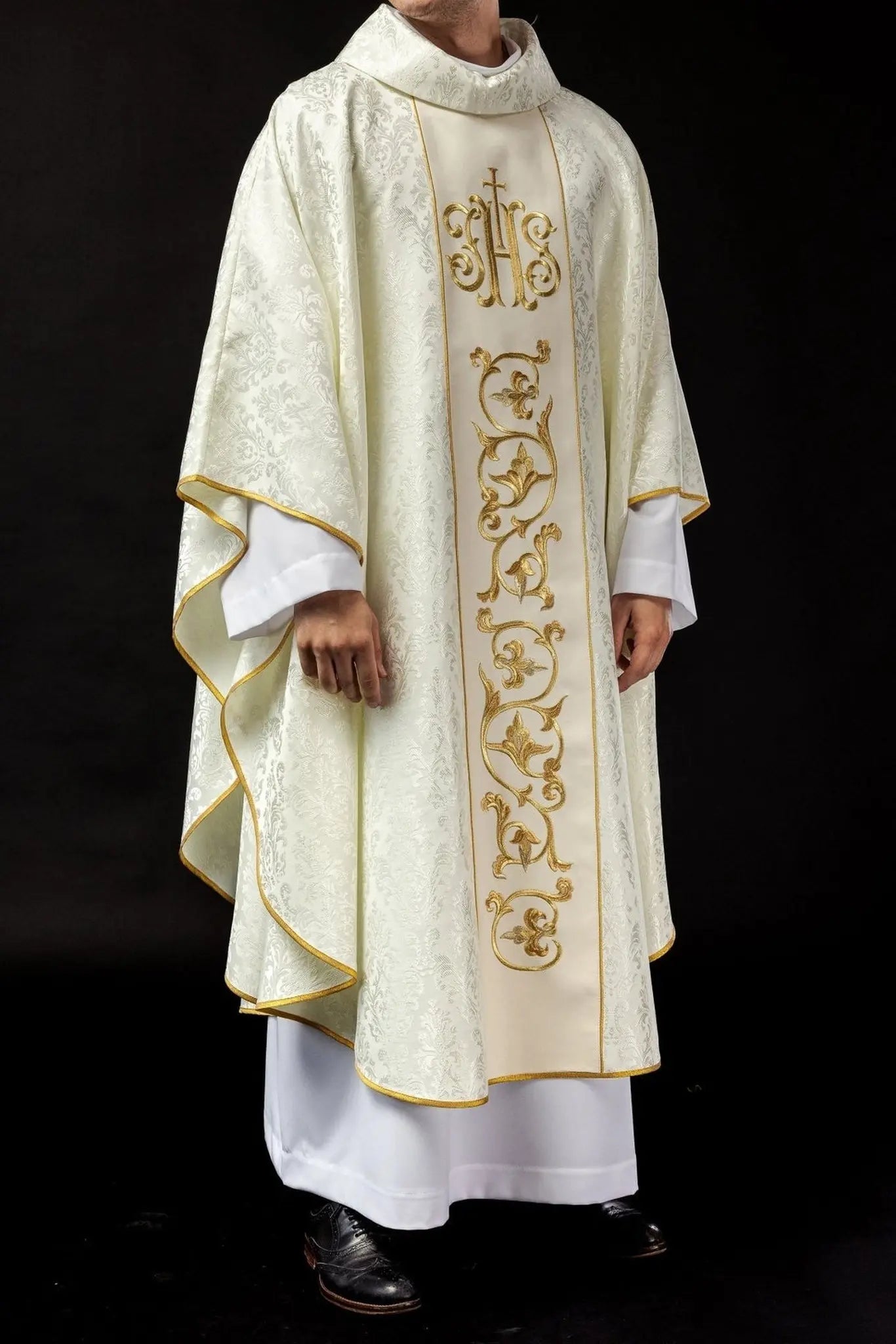
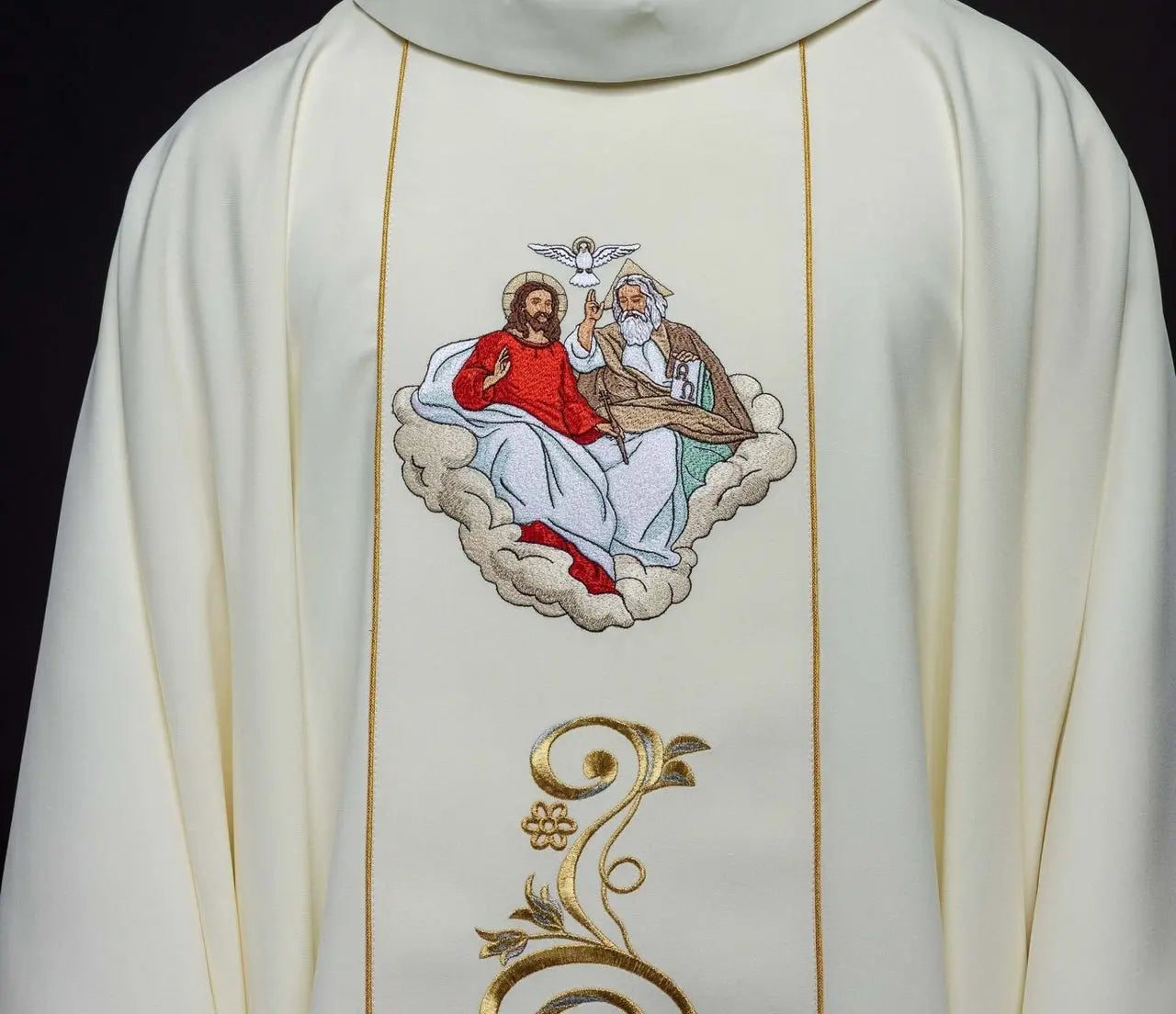
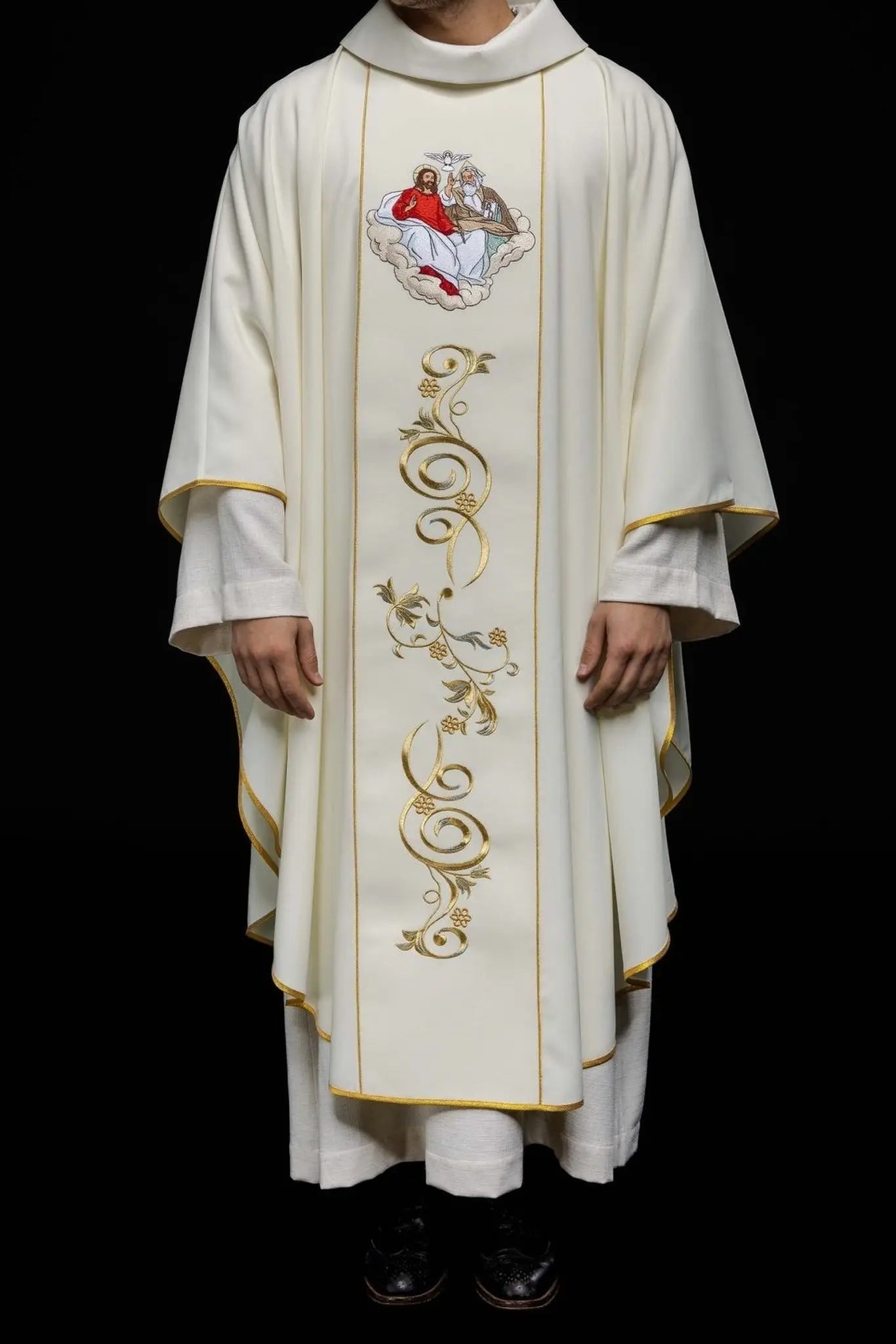
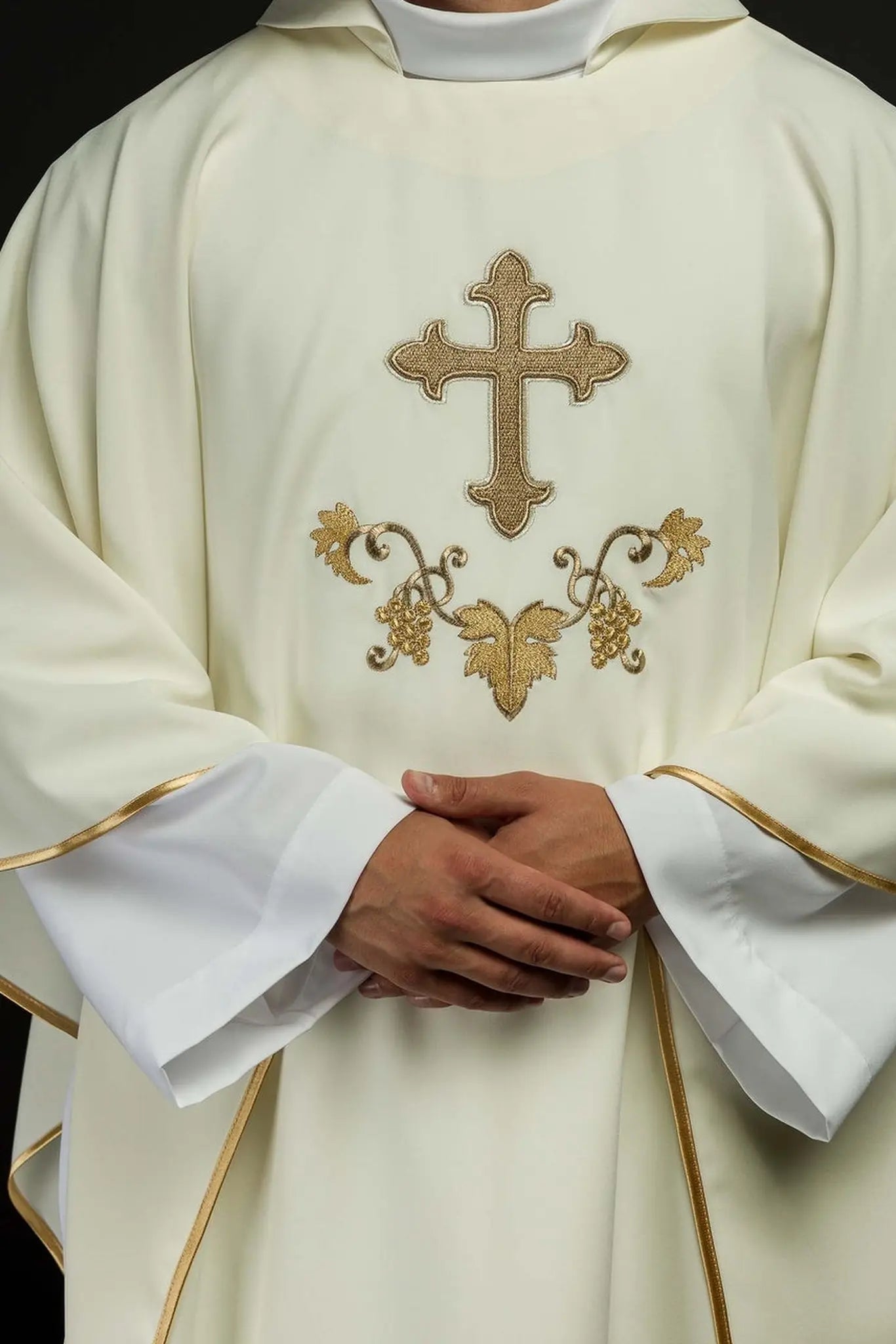
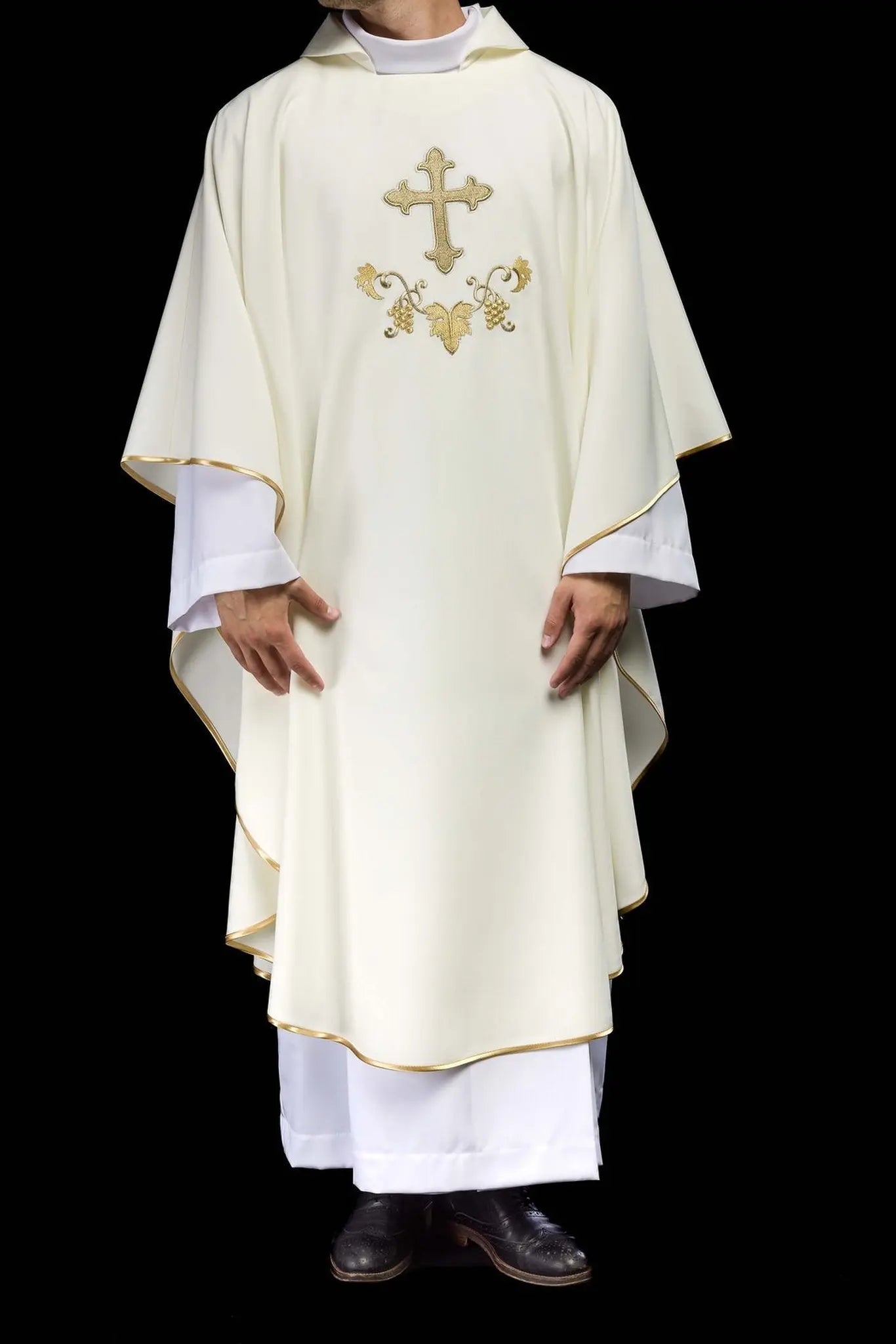
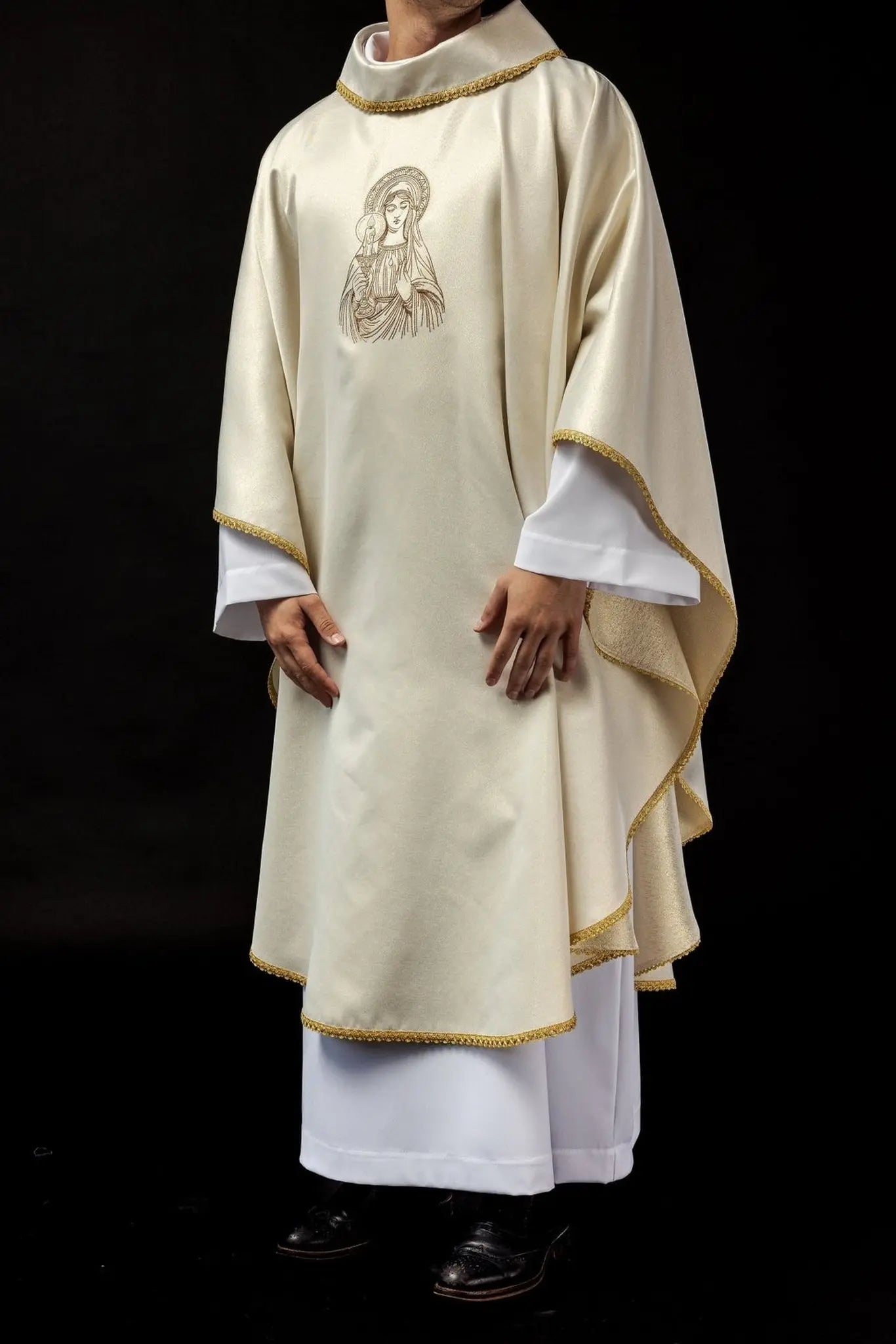
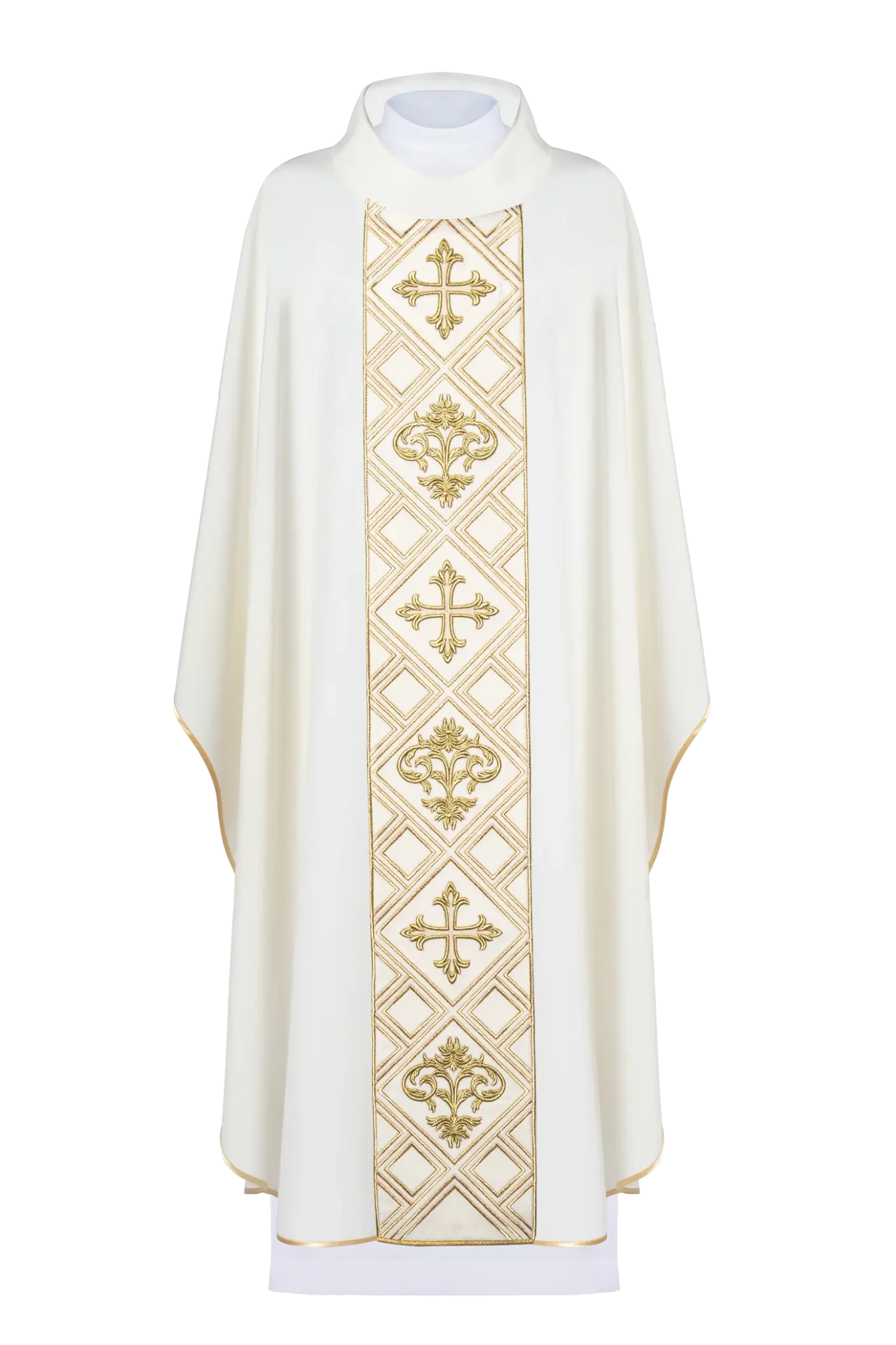
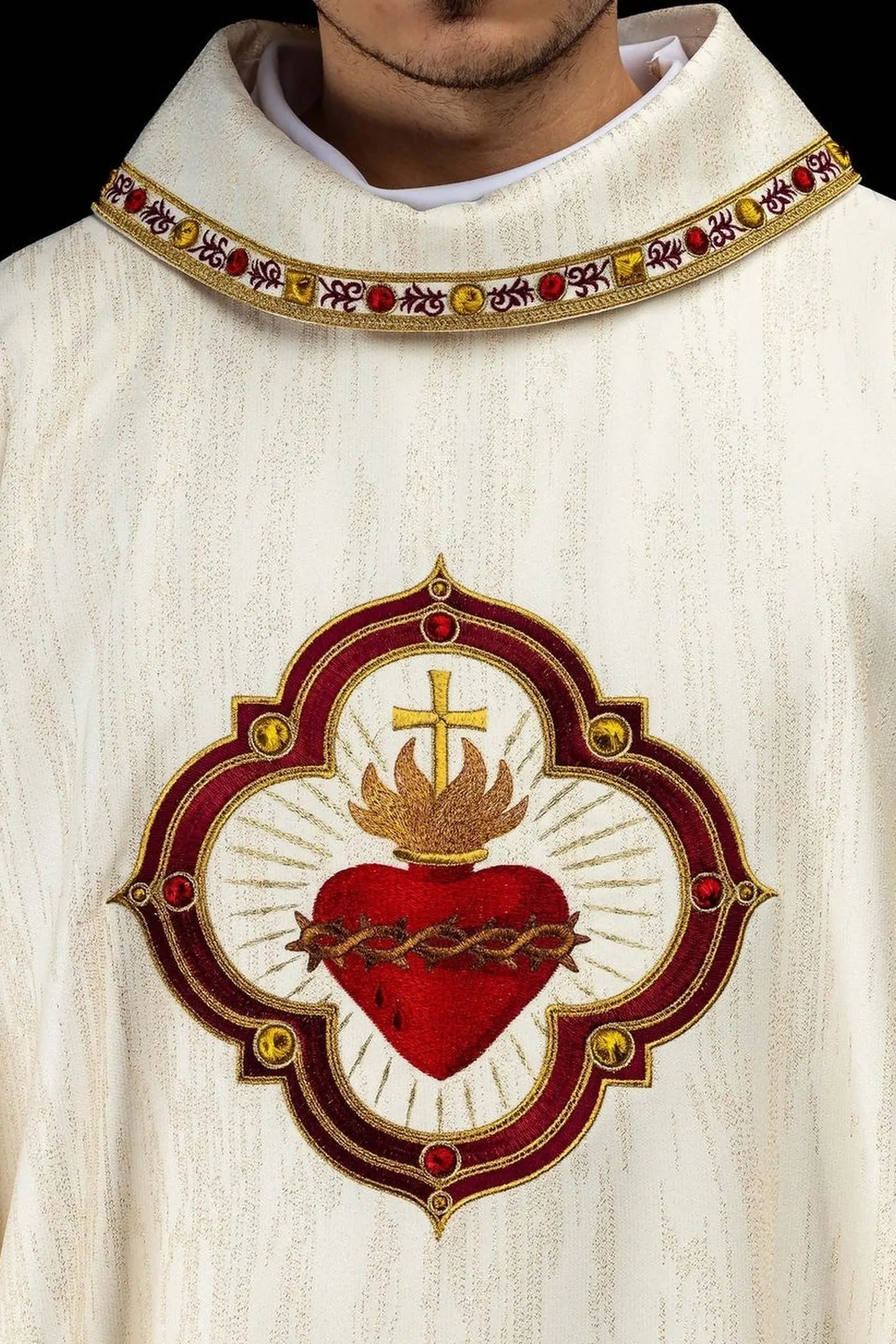
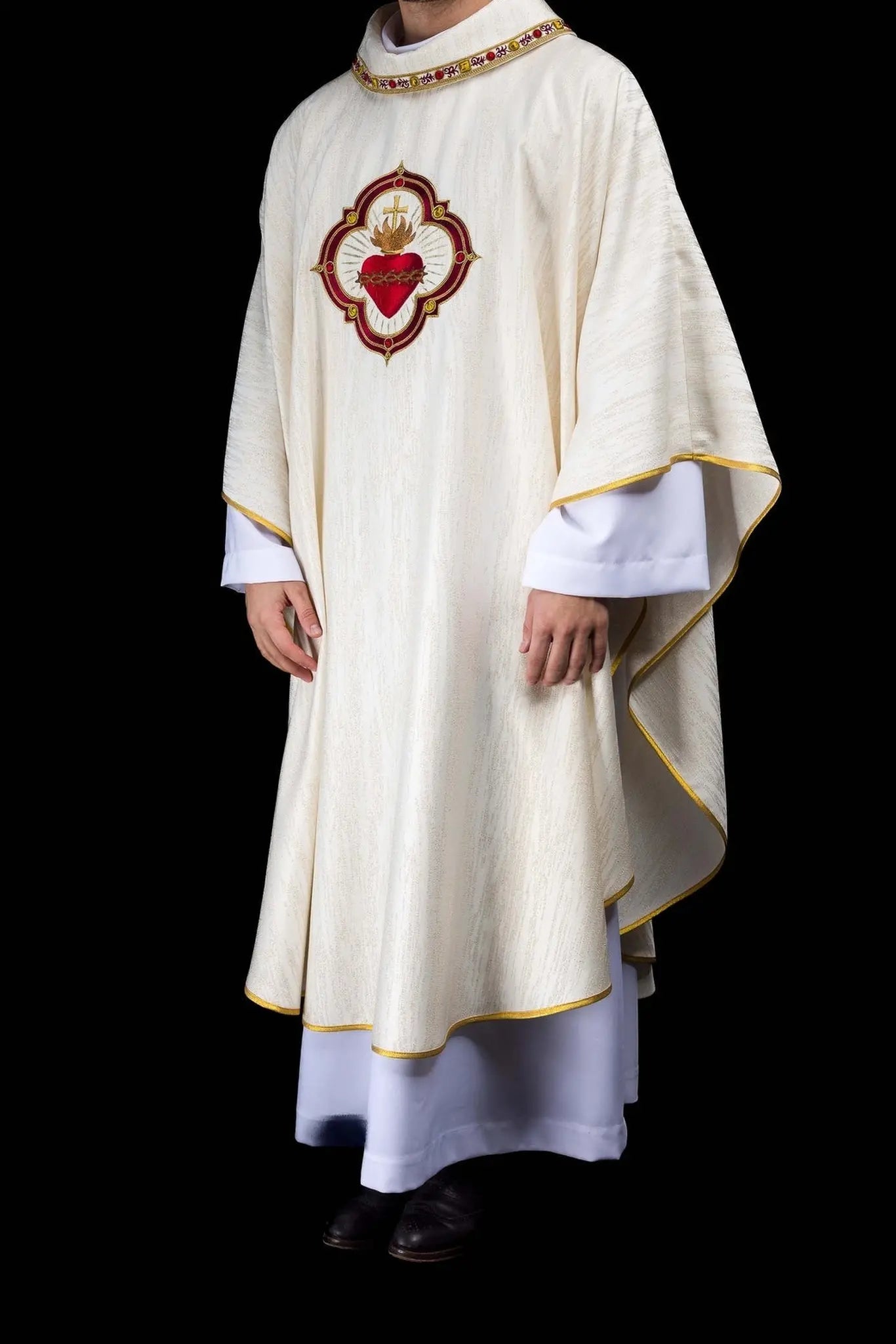
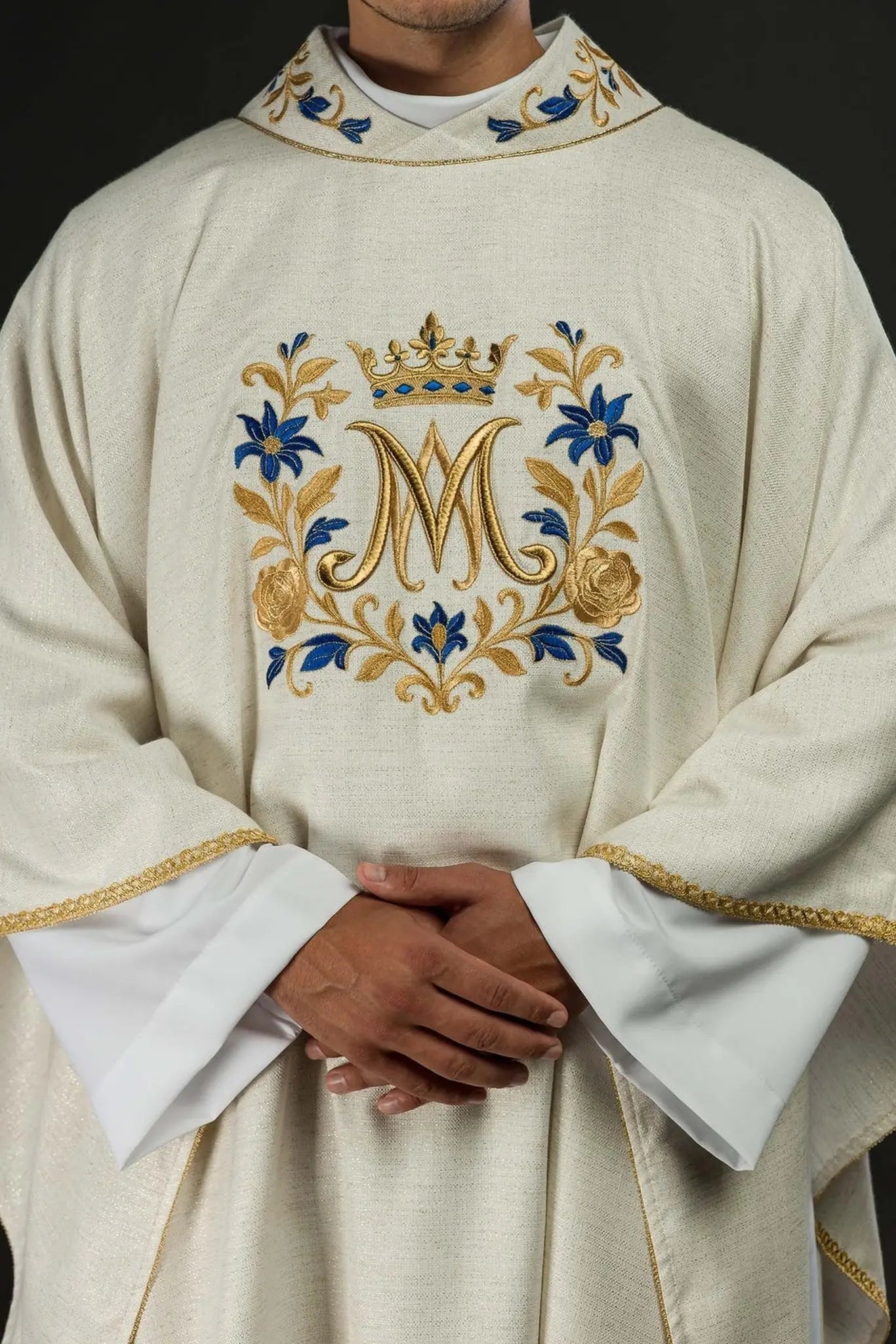
White, ecru and gold: Used for Easter, Christmas, feasts of the Lord, the Blessed Virgin Mary, angels and saints who were not martyrs. Ecru and gold chasubles often serve the same festive purpose as white, especially when the fabric and embroidery give the vestment a solemn character.
-
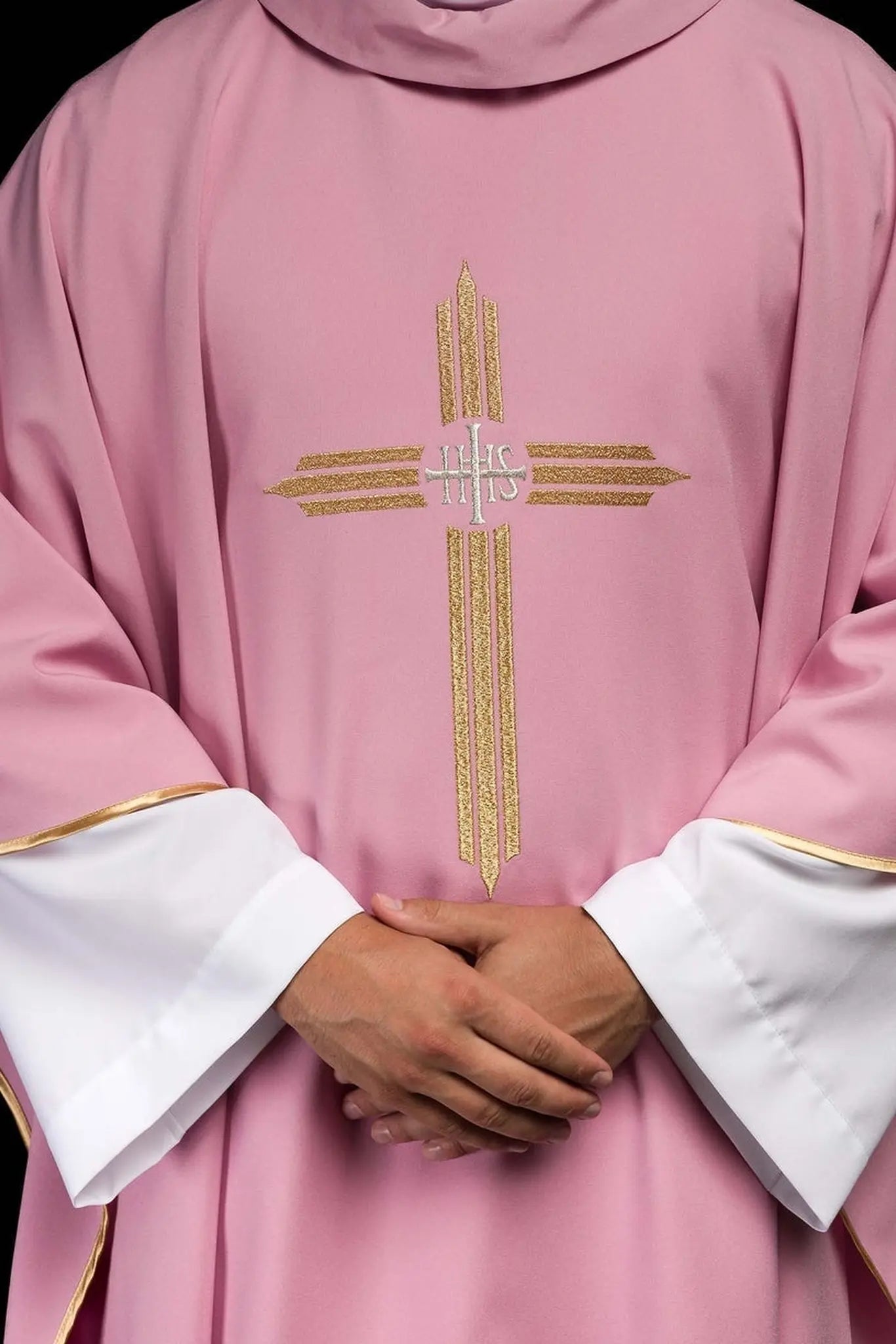
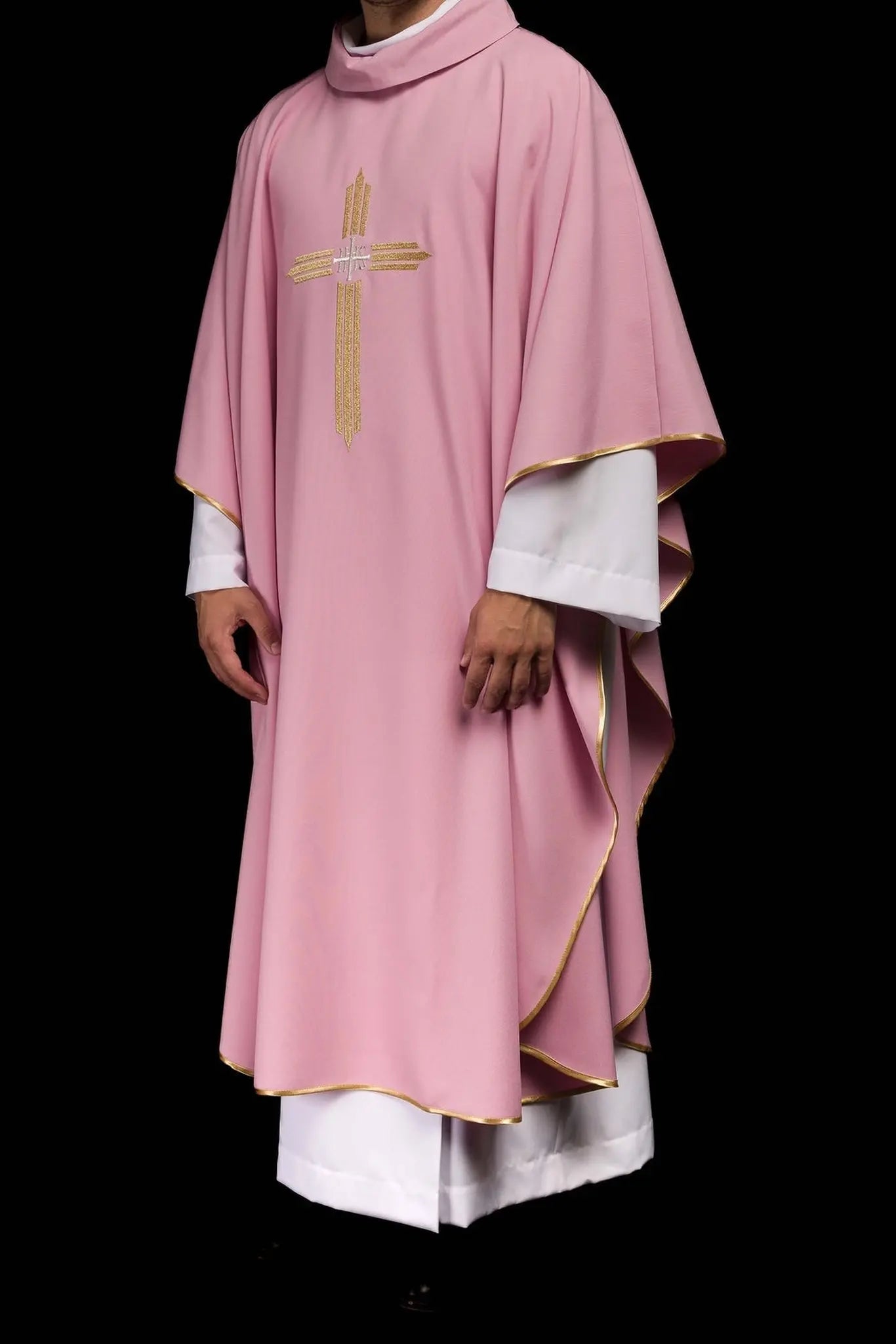
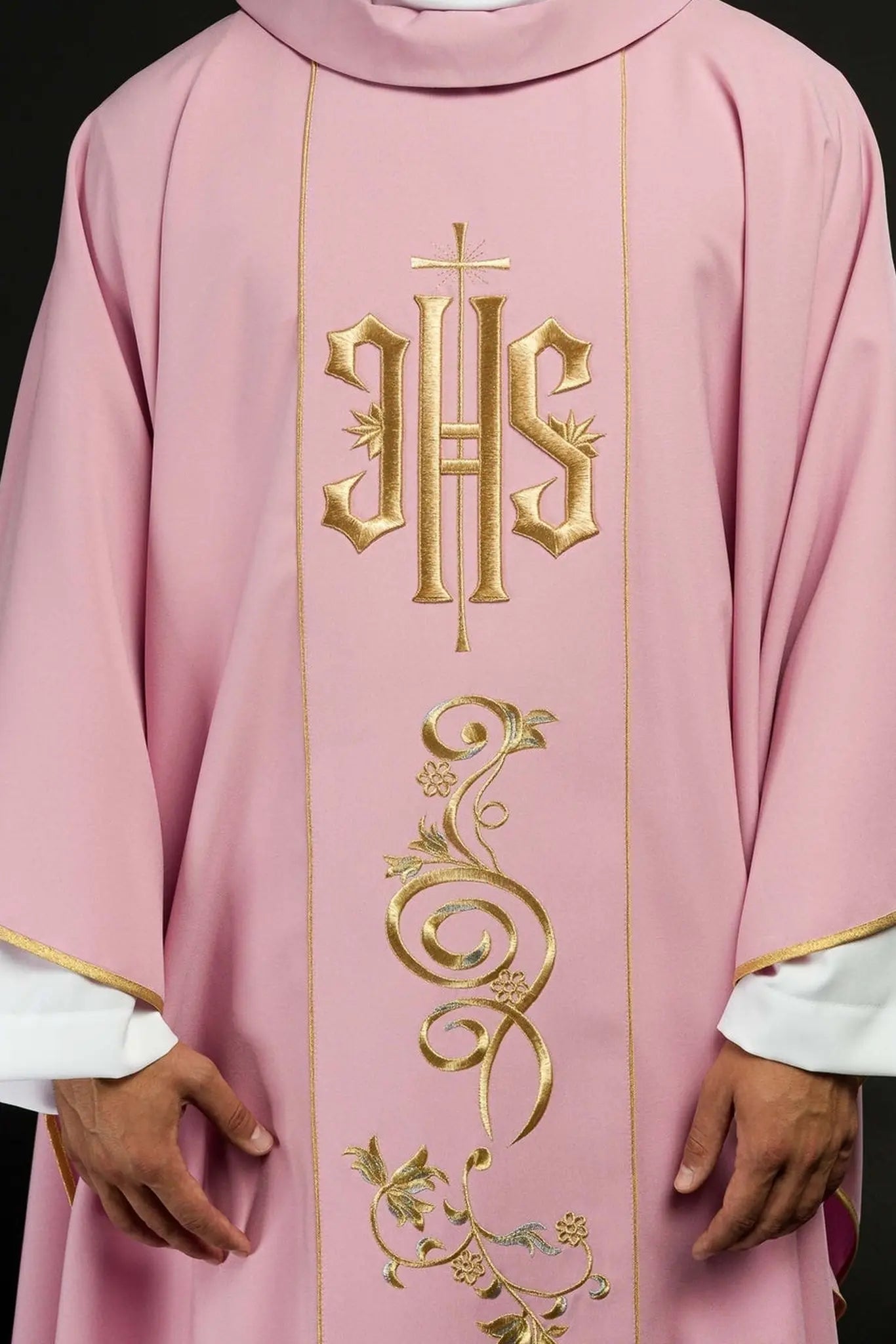
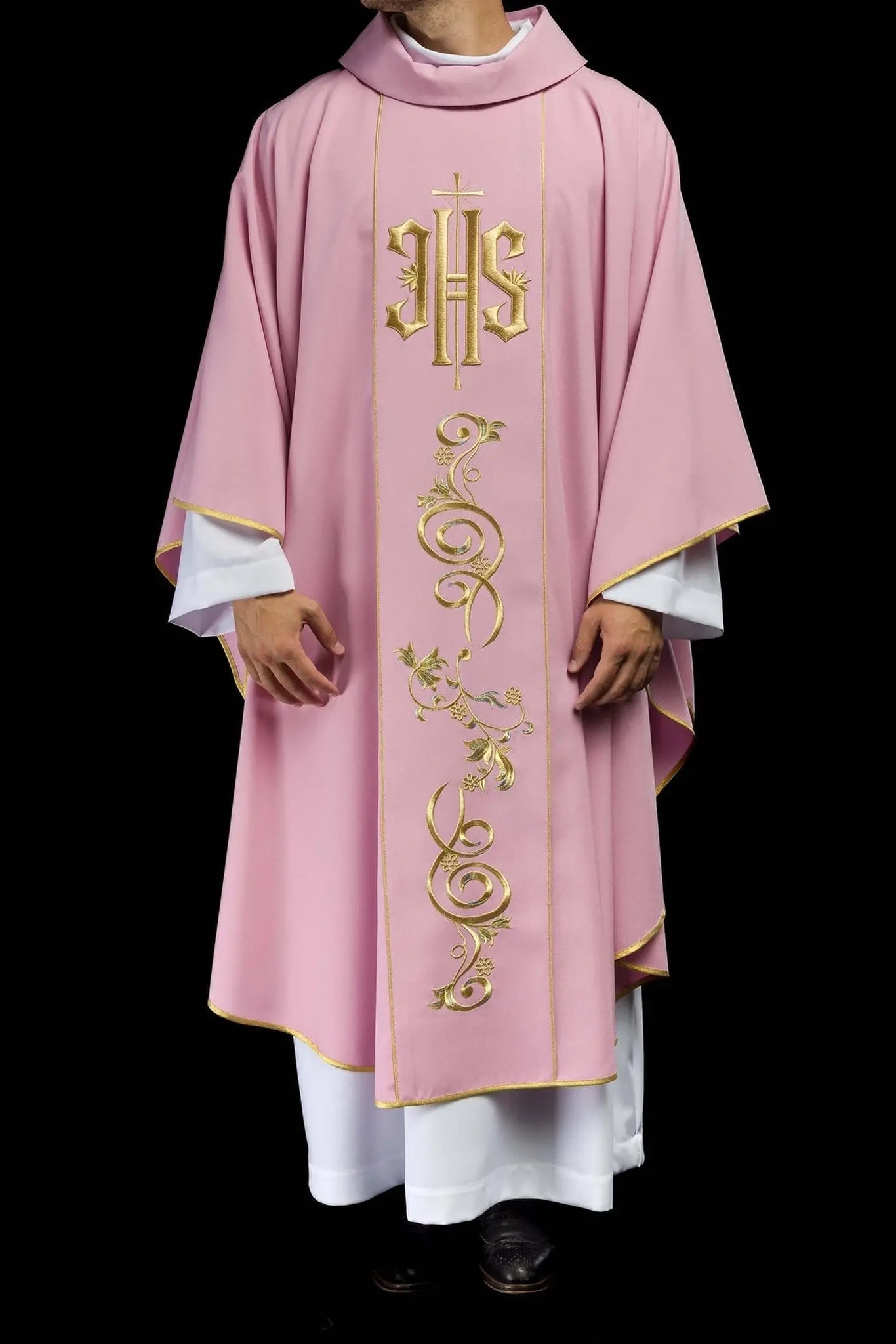
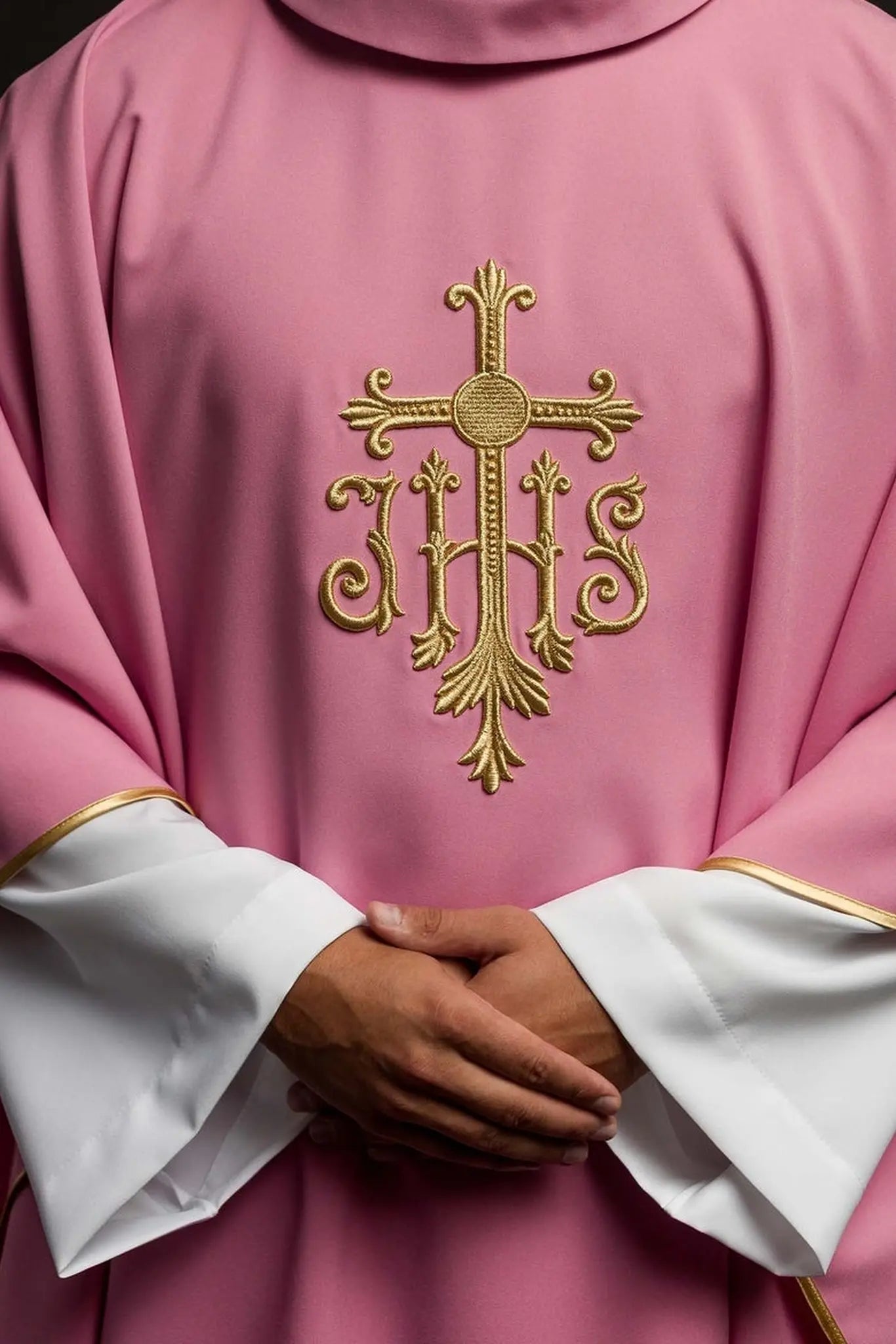
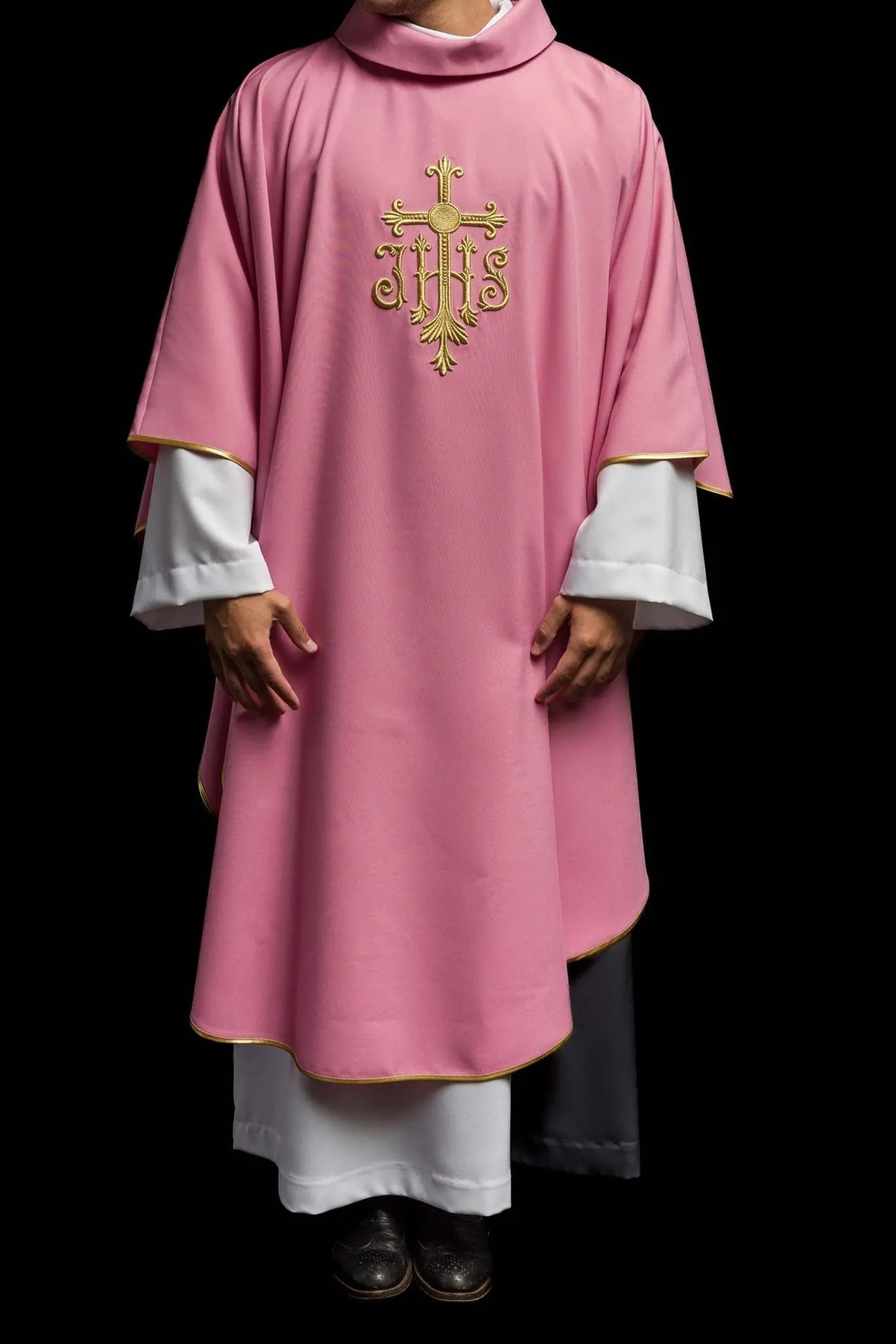
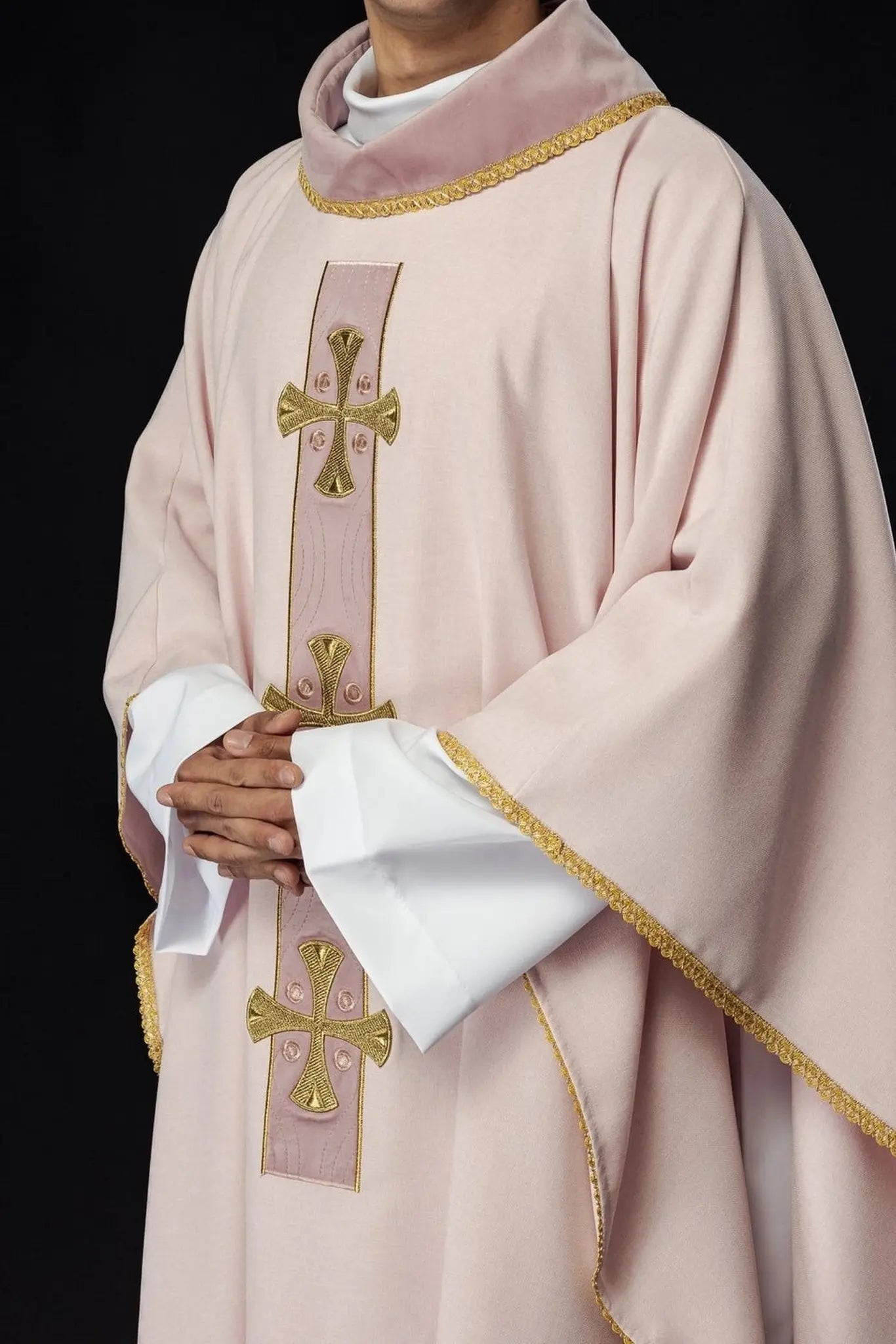
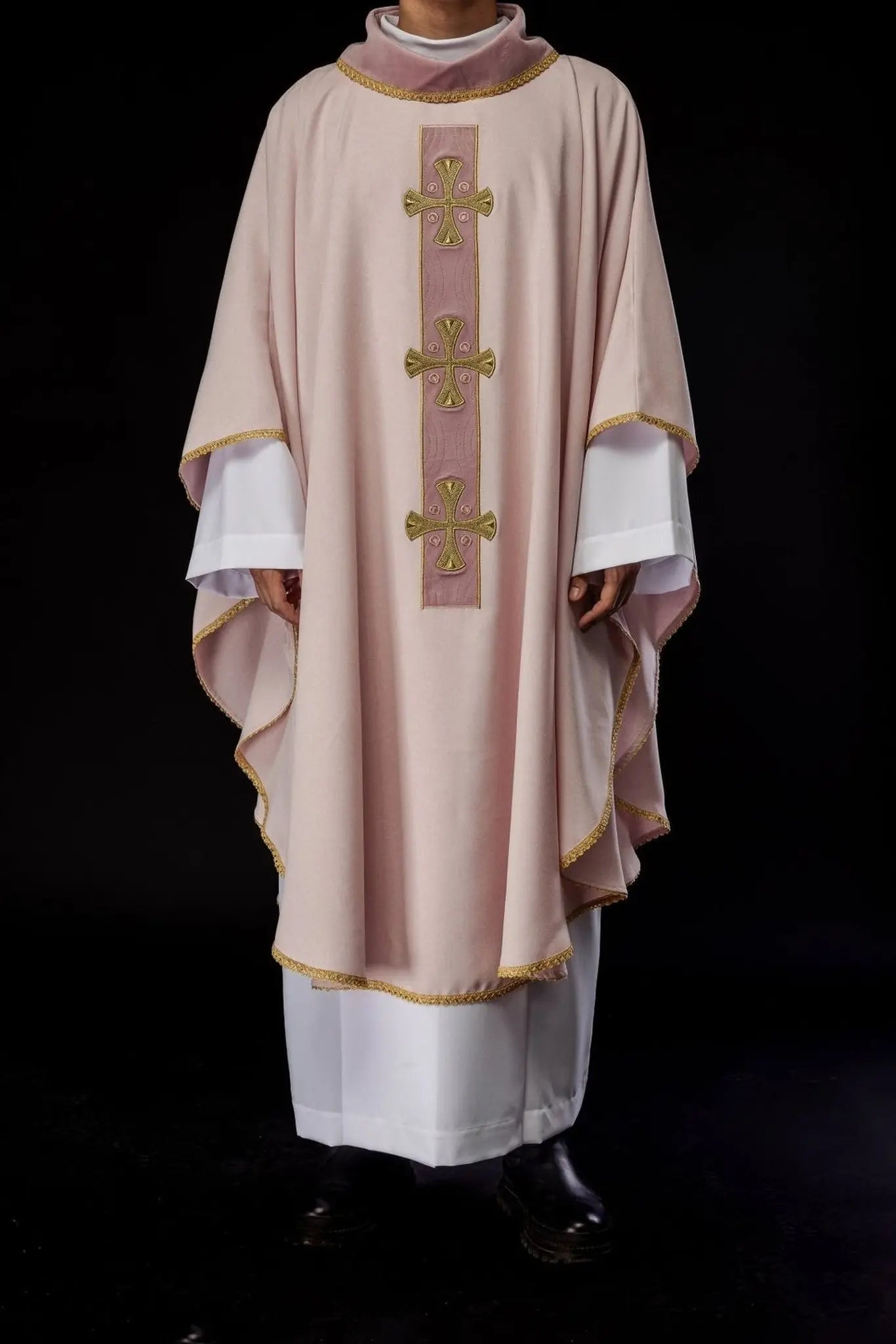
Rose: Used on Gaudete Sunday in Advent and Laetare Sunday in Lent. Rose is the correct liturgical term, rather than ordinary pink, and it expresses restrained joy within a penitential season. The related collection of rose chasubles is useful for churches that celebrate these Sundays with the proper color.
-
Black: Traditionally connected with Masses for the Dead and some funeral liturgies where local custom permits it. Purple or white may also be used for funerals, depending on pastoral and diocesan practice.
Embroidery, symbols and sacred imagery
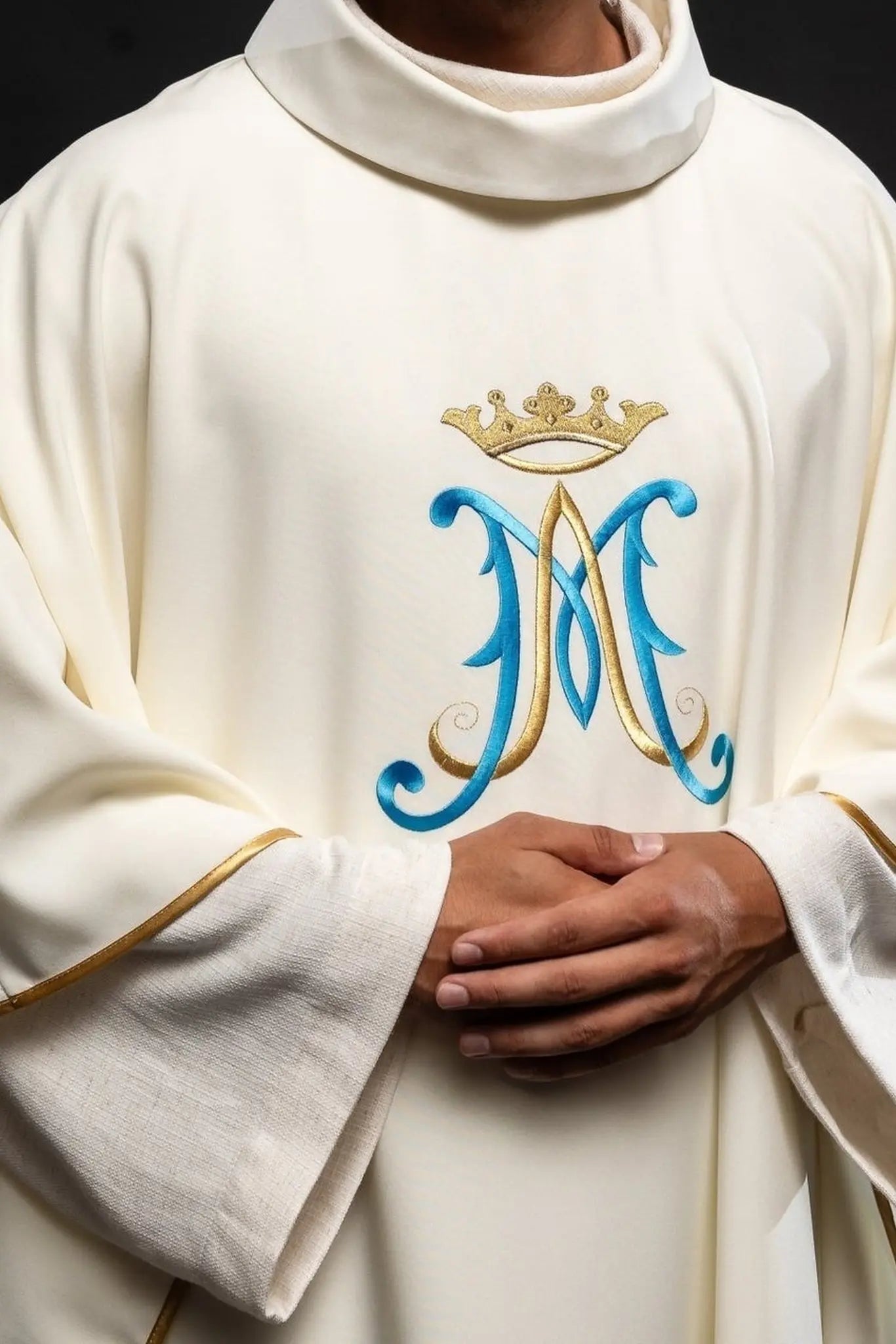
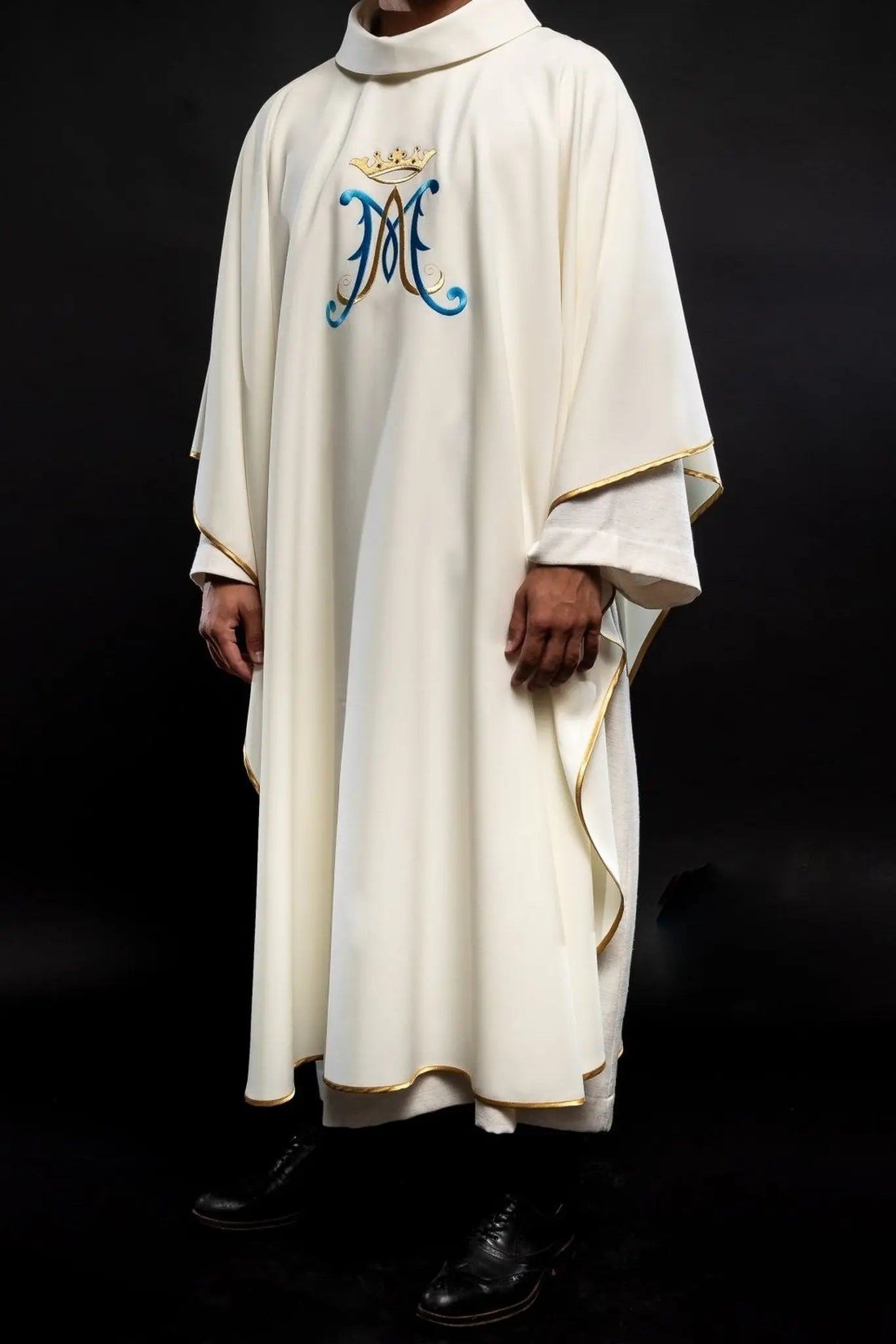
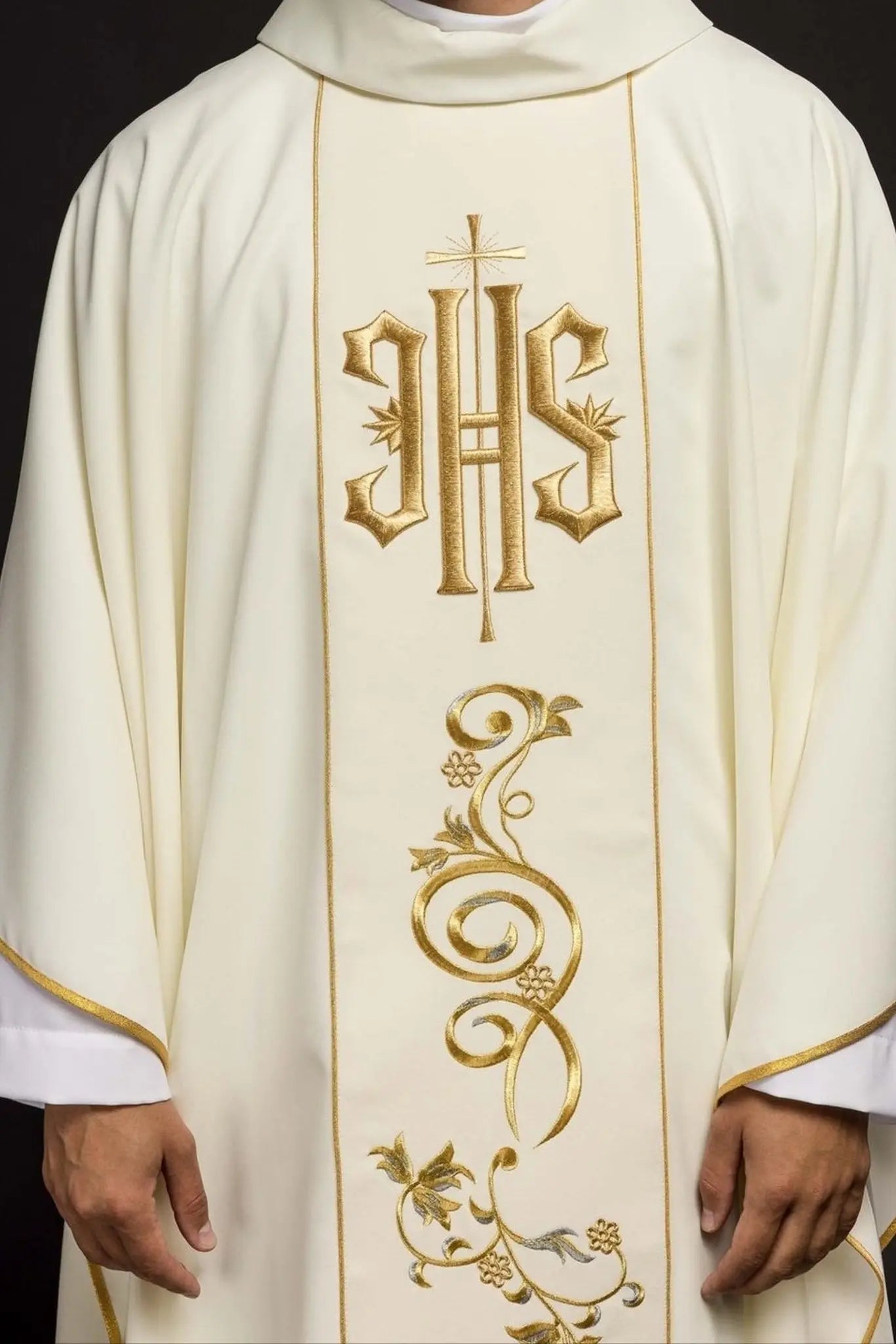
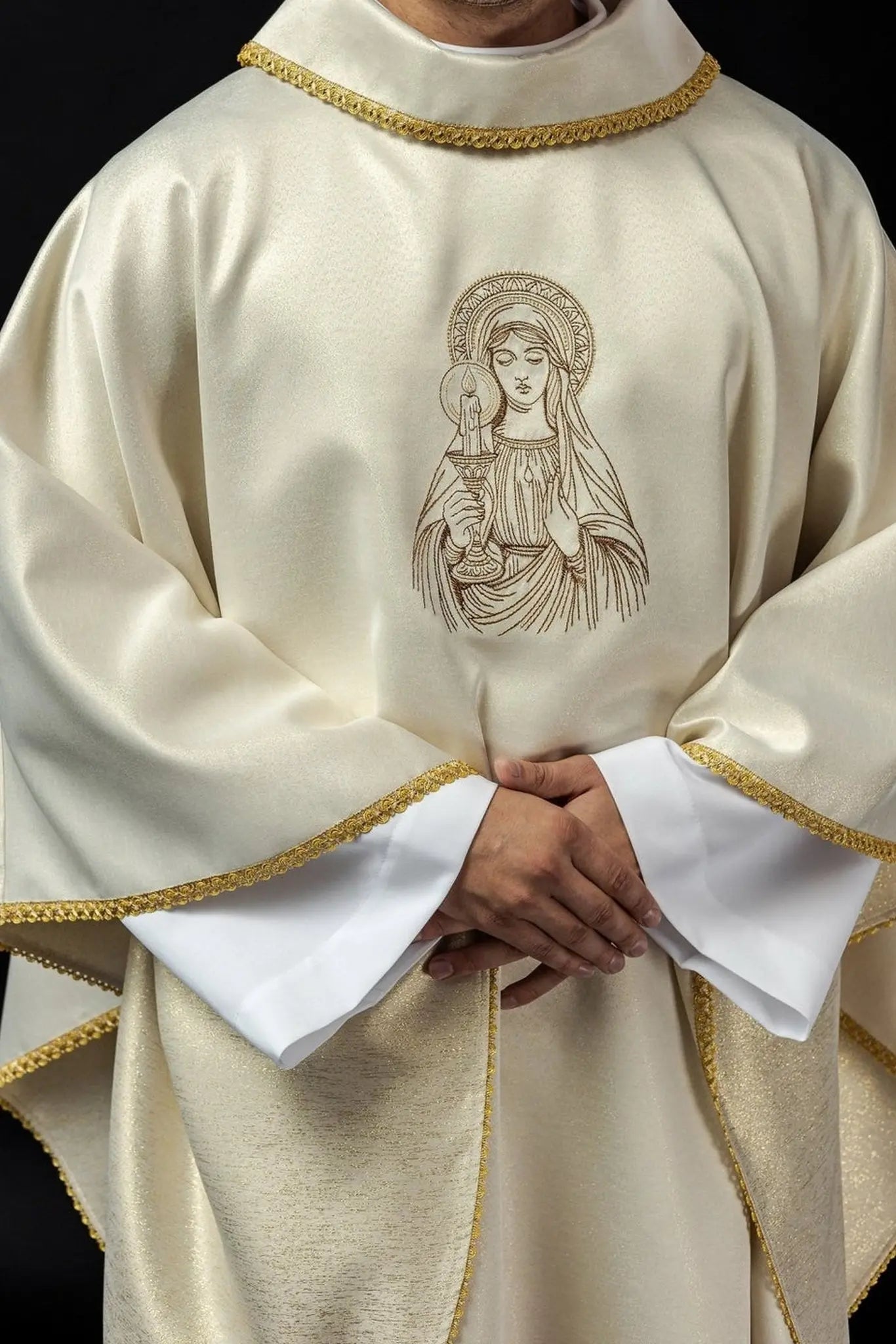
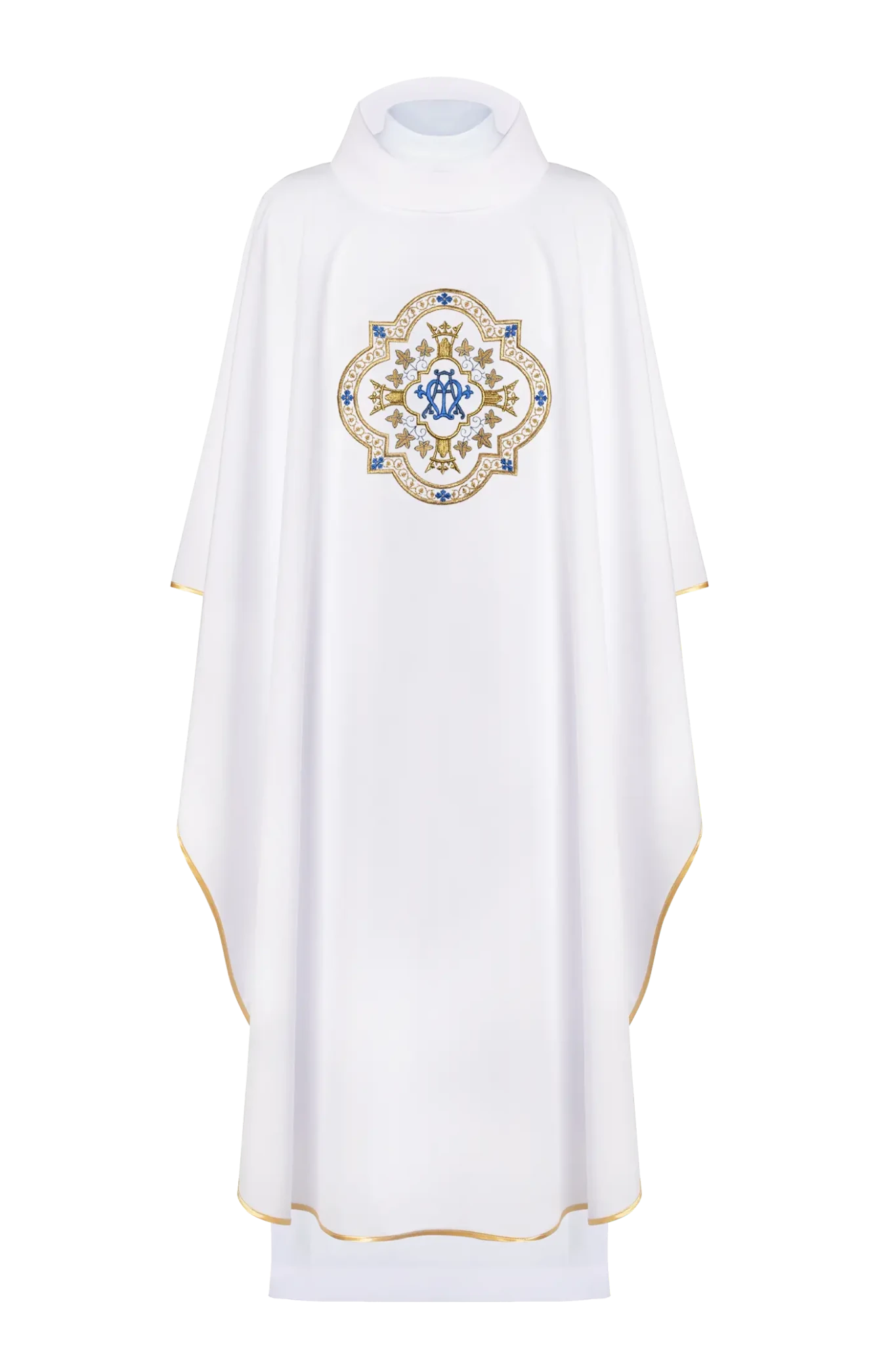
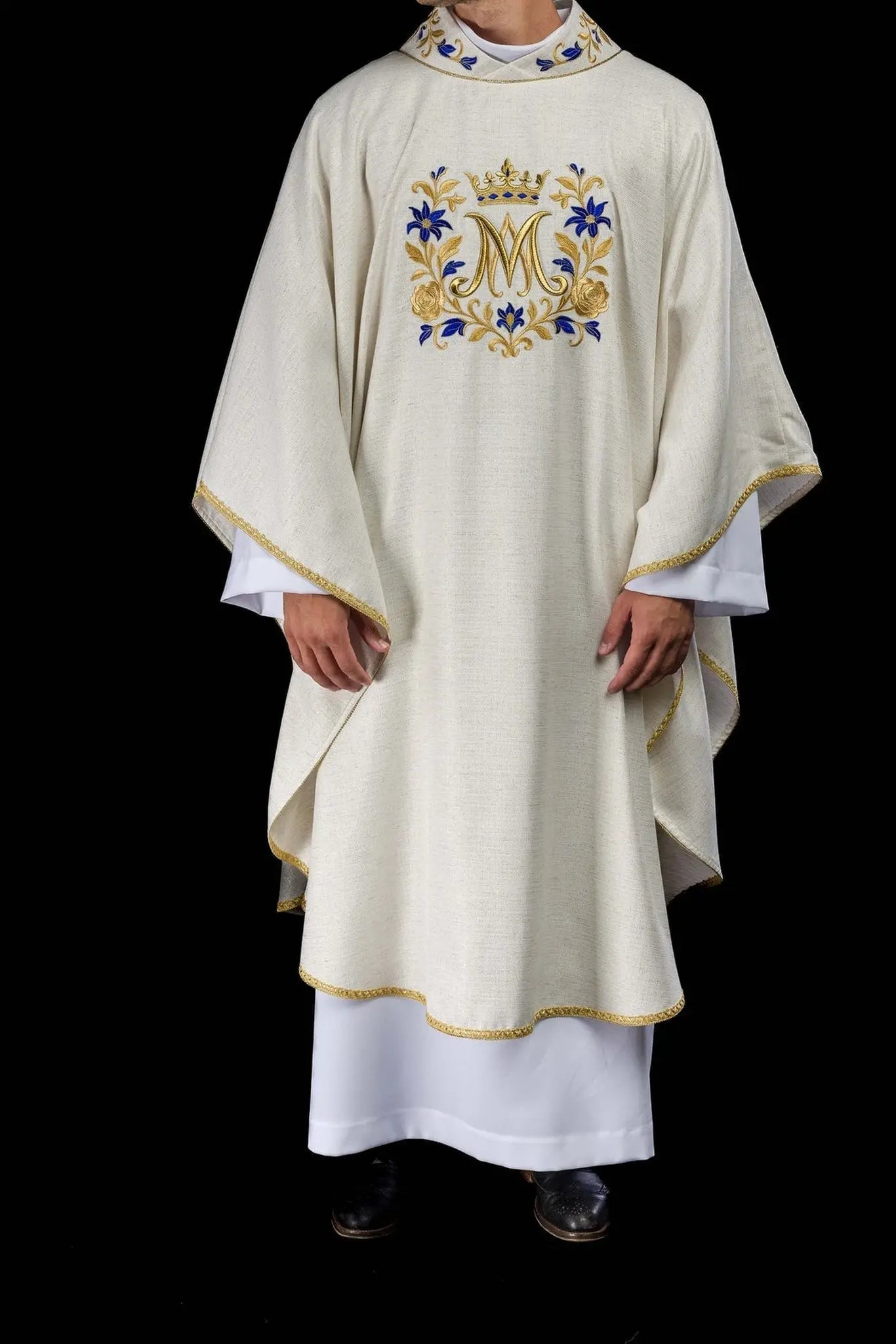
Embroidery gives a chasuble its visible theological focus. A cross may be the simplest and strongest motif, especially for universal use throughout the year. Eucharistic symbols such as wheat, grapes, chalice, host or rays can be especially fitting for Mass, Corpus Christi and parish celebrations of the Blessed Sacrament. The Holy Spirit dove is often chosen for red vestments used at Pentecost and Confirmation. Marian motifs such as lilies, stars, the Immaculate Heart or Marian monograms are suited to feasts of Our Lady and to shrines with a Marian dedication.
Some chasubles include images of saints or blessed figures. These are useful for patronal feasts, parish anniversaries, religious communities, schools and chapels dedicated to a particular saint. For more focused options, the collection of chasubles with saints helps distinguish image-based vestments from general seasonal chasubles. When choosing a saint image, it is worth considering whether the vestment will be used only once a year or whether the saint has broader significance for the parish, community or celebrant.
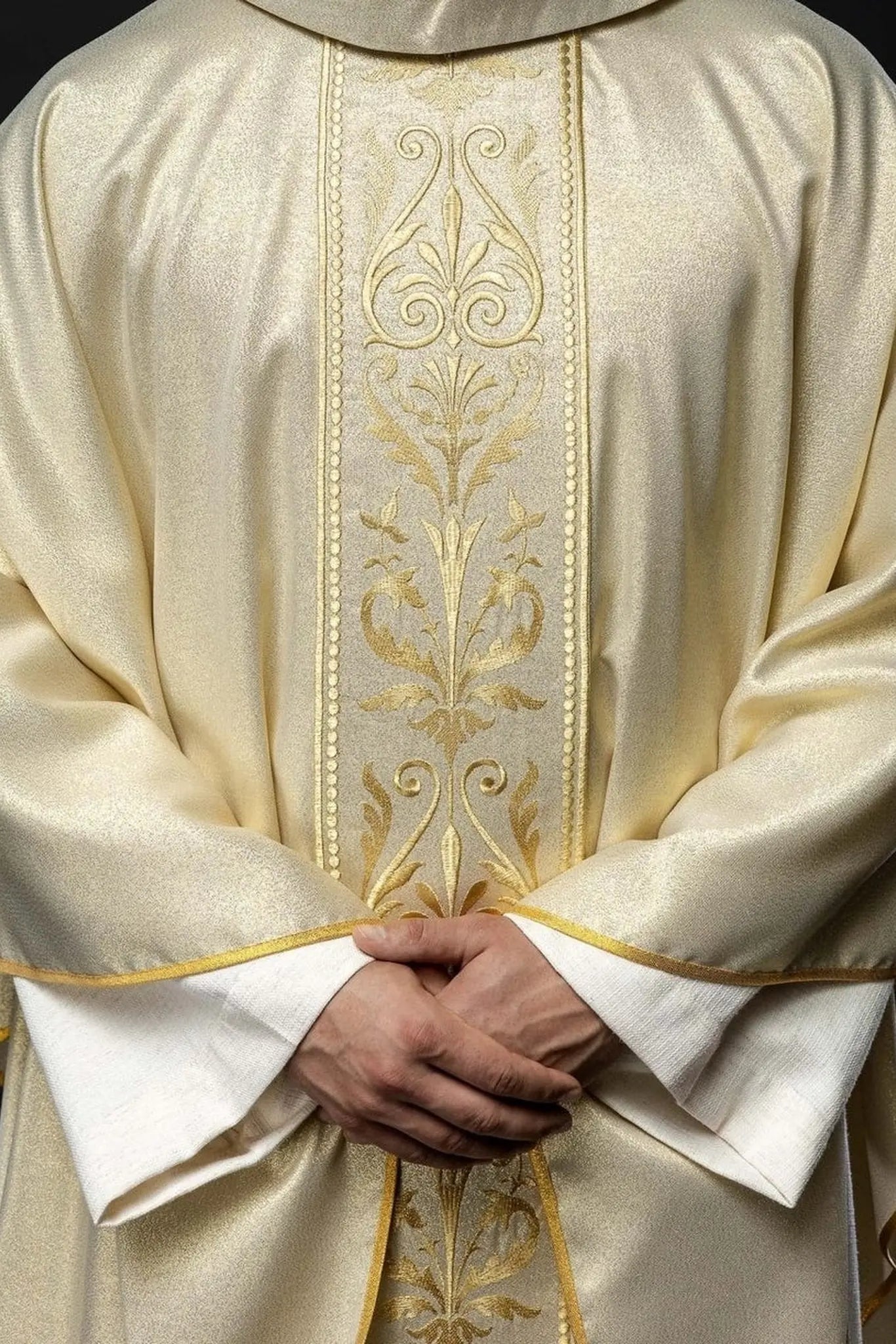
The best embroidery is both beautiful and readable. A motif should be recognizable from a normal viewing distance, especially in a larger church. Very detailed scenes can be meaningful for close viewing, but strong central symbols usually work better during the liturgy. Ornamentation should also harmonize with the cut of the chasuble: vertical bands, central panels, orphreys and border designs all guide the eye differently.
Fabric, cut and comfort at the altar
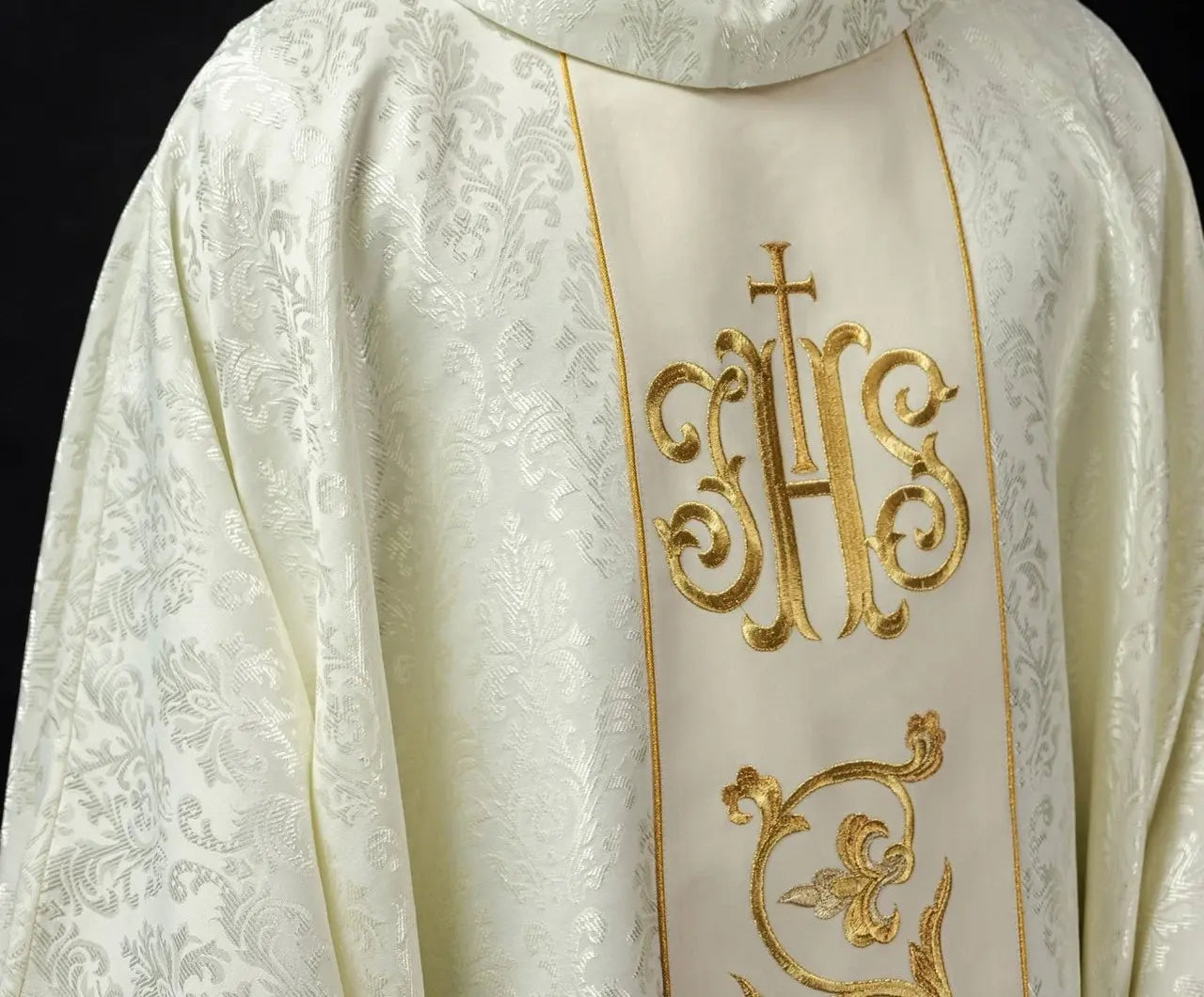
The fabric affects how a chasuble looks, moves and wears over time. Lighter fabrics can be comfortable for long celebrations, warm climates and frequent parish use. More structured or richly woven textiles may be preferred for solemn occasions because they hold their shape and give the vestment greater presence. Brocade, damask-style fabrics and high-quality blended textiles can all be appropriate when they are chosen for durability, drape and reverent appearance.
Comfort matters because the celebrant must move freely while processing, incensing, extending the hands, elevating the chalice and host, and standing at the altar. A good chasuble should not pull at the shoulders, restrict the arms or sit awkwardly over the stole and alb. The neckline should rest properly and the length should suit the height of the priest. For parish use, ease of care and resistance to creasing are also practical considerations.
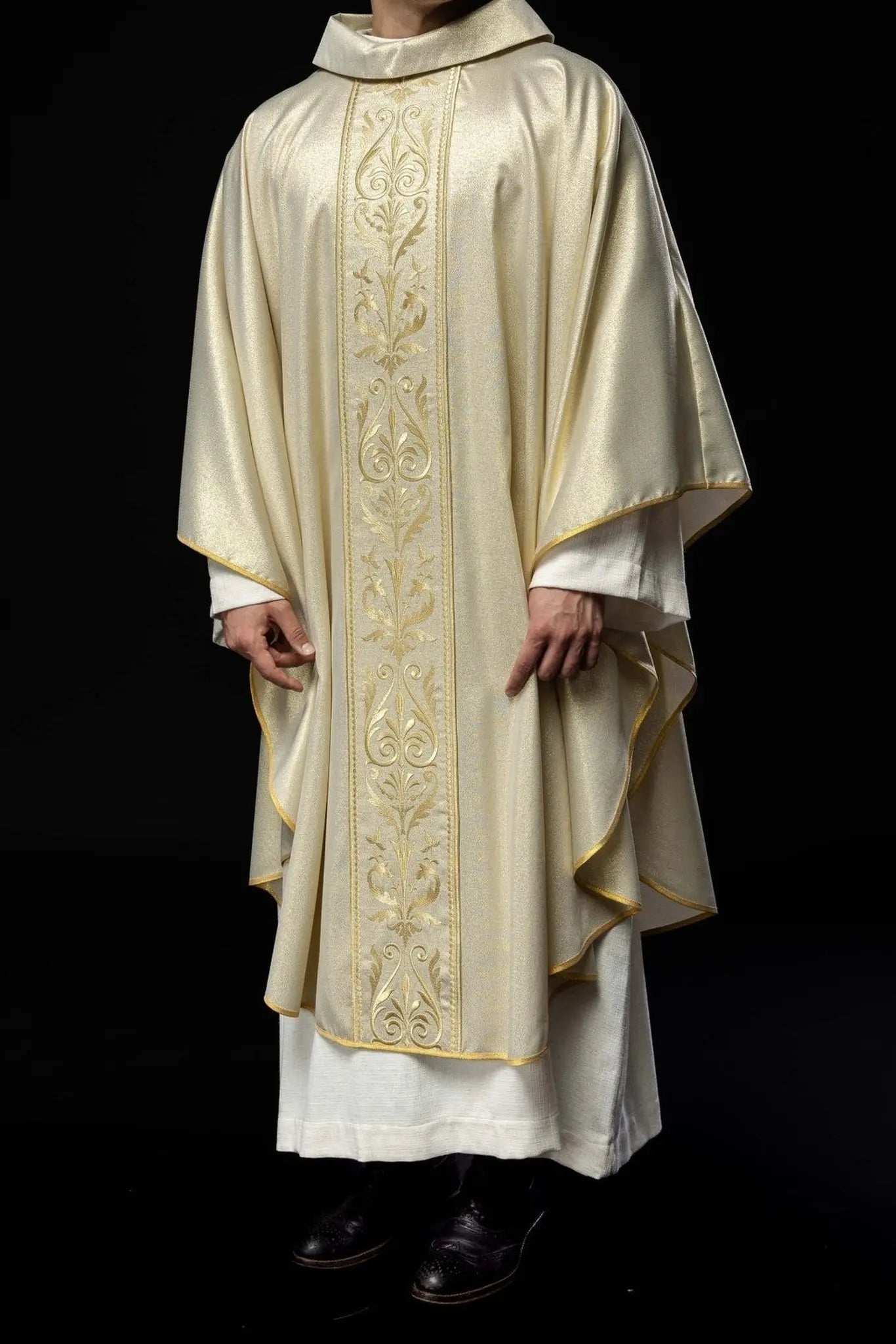
The cut should match the community's liturgical style. Gothic chasubles are often chosen for their flowing form and broad coverage. Roman chasubles offer a more defined traditional shape and are often selected for solemn liturgies, historic churches or communities with a strong attachment to older vestment forms. Neither style should be treated as merely aesthetic; the right choice is the one that serves the rite, the celebrant and the setting.
Choosing chasubles for seasons, feasts and parish needs
For a new parish set, begin with the colors used most often: green, purple, white or ecru, and red. Green receives the heaviest use because Ordinary Time covers many weeks. Purple is needed for both Advent and Lent, and it is helpful to have designs that are penitential without appearing harsh. Red should be suitable for the strong liturgical moments connected with the Holy Spirit and martyrdom. White, ecru or gold chasubles often carry the greatest solemnity and may be used for Christmas, Easter, Corpus Christi, Marian feasts and saints who were not martyrs.
After the basic colors are covered, more specialized vestments can complete the sacristy. Marian chasubles may be chosen for Saturdays dedicated to Our Lady, May devotions, Marian solemnities and parish patronal celebrations. Communities with a strong Marian devotion can compare this general collection with Marian chasubles for more specific symbols and color combinations. Gold chasubles are useful when the celebration calls for extra solemnity, especially if local custom permits gold as a festive substitute for white, red or green.
For funerals, the choice depends on pastoral practice and diocesan custom. Black expresses mourning and prayer for the dead in a traditional visual language. Purple emphasizes penance and hope in God's mercy. White can underline the paschal promise of resurrection. A parish may keep more than one funeral vestment so the celebrant can choose appropriately for the family, community and rite.
How chasubles relate to stoles, albs and other vestments
A chasuble is normally worn over an alb and stole. The alb provides the white baptismal garment beneath the vestments, while the stole signifies ordained priestly ministry. The chasuble completes the vesting for Mass and should visually harmonize with the stole, even when the stole is mostly covered. Parishes that need matching or complementary pieces can also review clergy stoles and albs.
Other liturgical garments have distinct functions. Copes are used for processions, Benediction, certain blessings and parts of the Liturgy of the Hours, rather than as the normal vestment for celebrating Mass. Humeral veils are used in connection with the Blessed Sacrament or certain sacred vessels. Mitres belong to bishops. These adjacent categories can support the same liturgical setting, but they should not be confused with chasubles.
Practical buying guidance
When comparing chasubles, consider the main use first. A daily Mass chasuble should be comfortable, durable and easy to maintain. A Sunday chasuble may carry stronger embroidery or a richer fabric while still remaining practical. A solemnity chasuble can be more ornate, especially if it will be used for Easter, Christmas, Corpus Christi, First Masses, anniversaries or diocesan celebrations. For concelebration, parishes often prefer consistent colors and simpler designs so several priests can vest harmoniously.
Next, consider the church interior. A small chapel may benefit from clear, restrained embroidery and fabrics that do not overpower the space. A large church may require stronger contrast, larger motifs and richer ornamentation so the vestment remains visible from the nave. The style of the altar, sanctuary, candles, altar cloths and other textiles can also guide the choice. A chasuble does not need to match every object exactly, but it should belong naturally to the whole liturgical environment.
Finally, think about long-term use. A chasuble chosen for a single feast can be highly specific, but a parish wardrobe also needs versatile pieces that will serve for many years. Symbols such as the cross, IHS, Chi Rho, wheat and grapes, Marian monograms and simple orphreys tend to remain useful across changing pastoral needs. A balanced collection includes both universal vestments and pieces reserved for special devotions or solemn occasions.
Frequently Asked Questions (FAQ)
Who wears a chasuble during Mass?
A chasuble is worn by a priest or bishop when celebrating Mass. A deacon does not normally wear a chasuble for Mass; the proper outer vestment for a deacon is the dalmatic, worn with a deacon stole.
Which chasuble color should a parish buy first?
For most parishes, green is the most frequently used because it serves Ordinary Time. After that, purple, white or ecru, and red form the core set needed for the main seasons and feasts of the liturgical year.
Is rose the same as pink for liturgical use?
The liturgical term is rose. It is used only on Gaudete Sunday in Advent and Laetare Sunday in Lent. The color is joyful but still restrained, so it should not be treated as a general pastel or decorative pink.
When is a Roman chasuble appropriate?
A Roman chasuble is appropriate when the community or celebrant prefers a more traditional, structured cut. It may be chosen for solemn Masses, historic church settings or liturgies where a classic Roman form is desired.
Can one chasuble be used for several different feasts?
Yes. A chasuble with a universal symbol such as a cross, IHS, Eucharistic motif or gold ornament can serve many feasts. Highly specific saint or Marian images are best when the parish expects regular use for that devotion.
How should a chasuble coordinate with other vestments?
The chasuble should work well with the alb beneath it and with a stole in the same liturgical color. For major celebrations, matching stoles, dalmatics or altar textiles can create a more unified sanctuary without confusing their different liturgical roles.