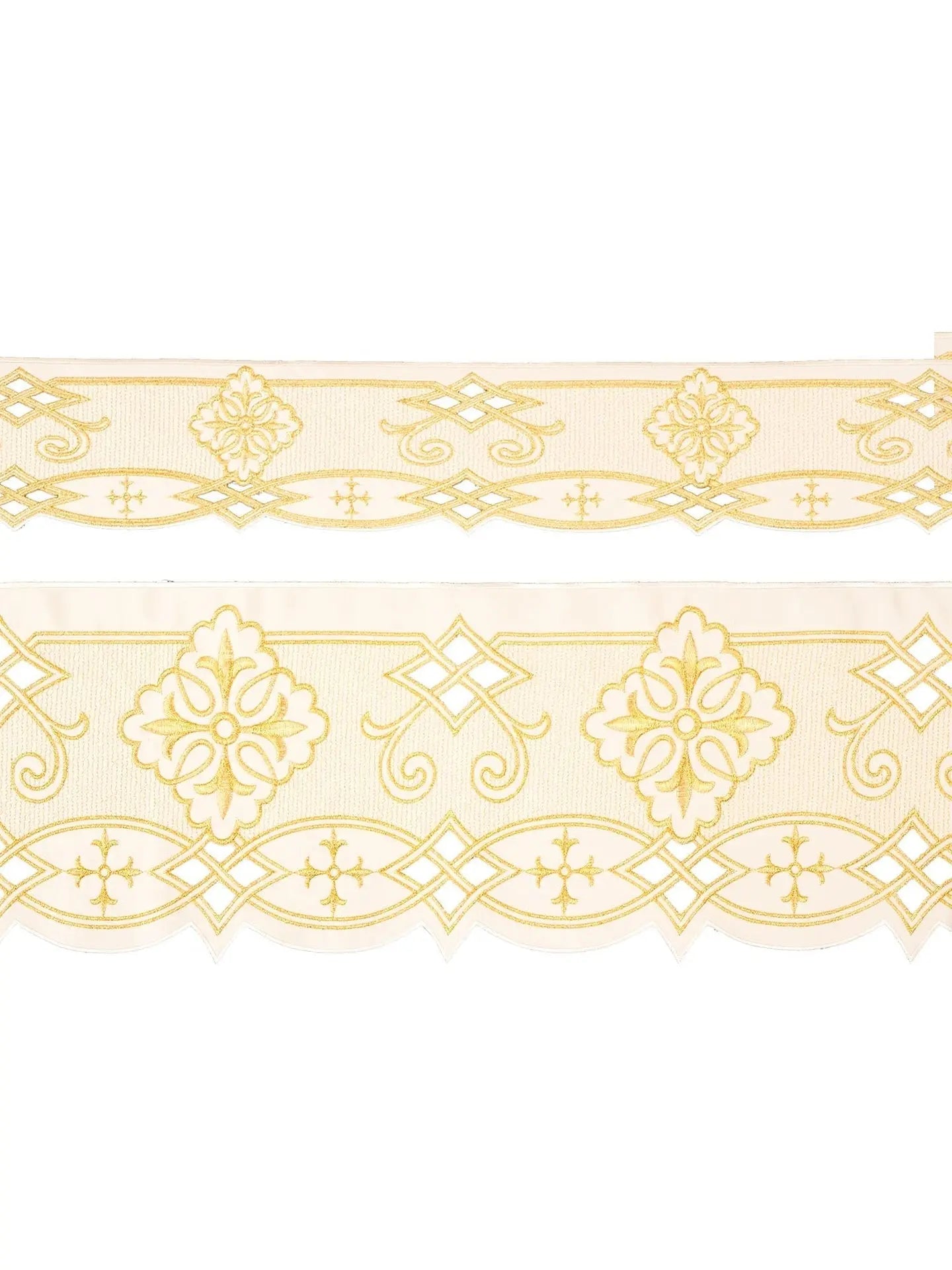
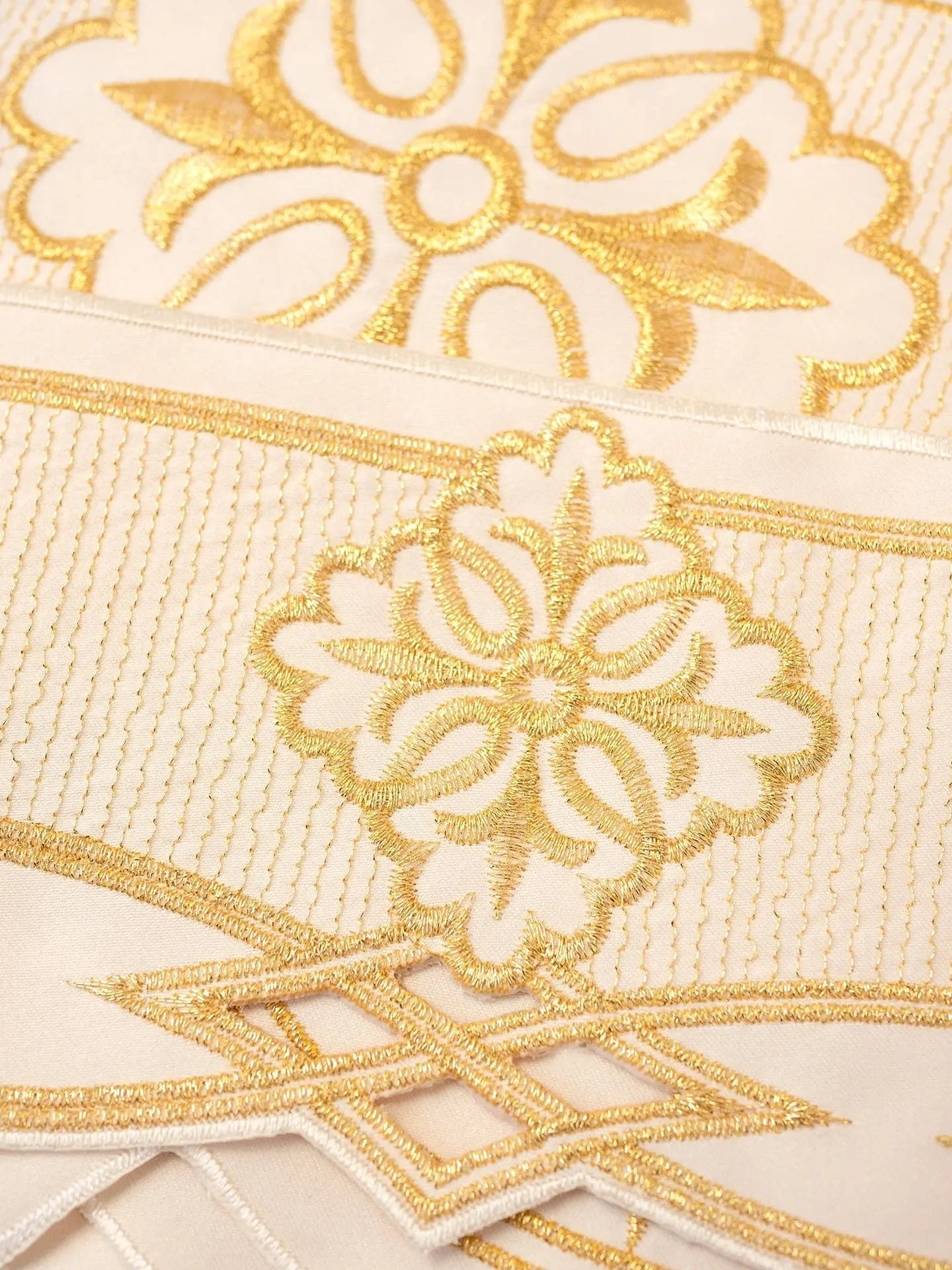
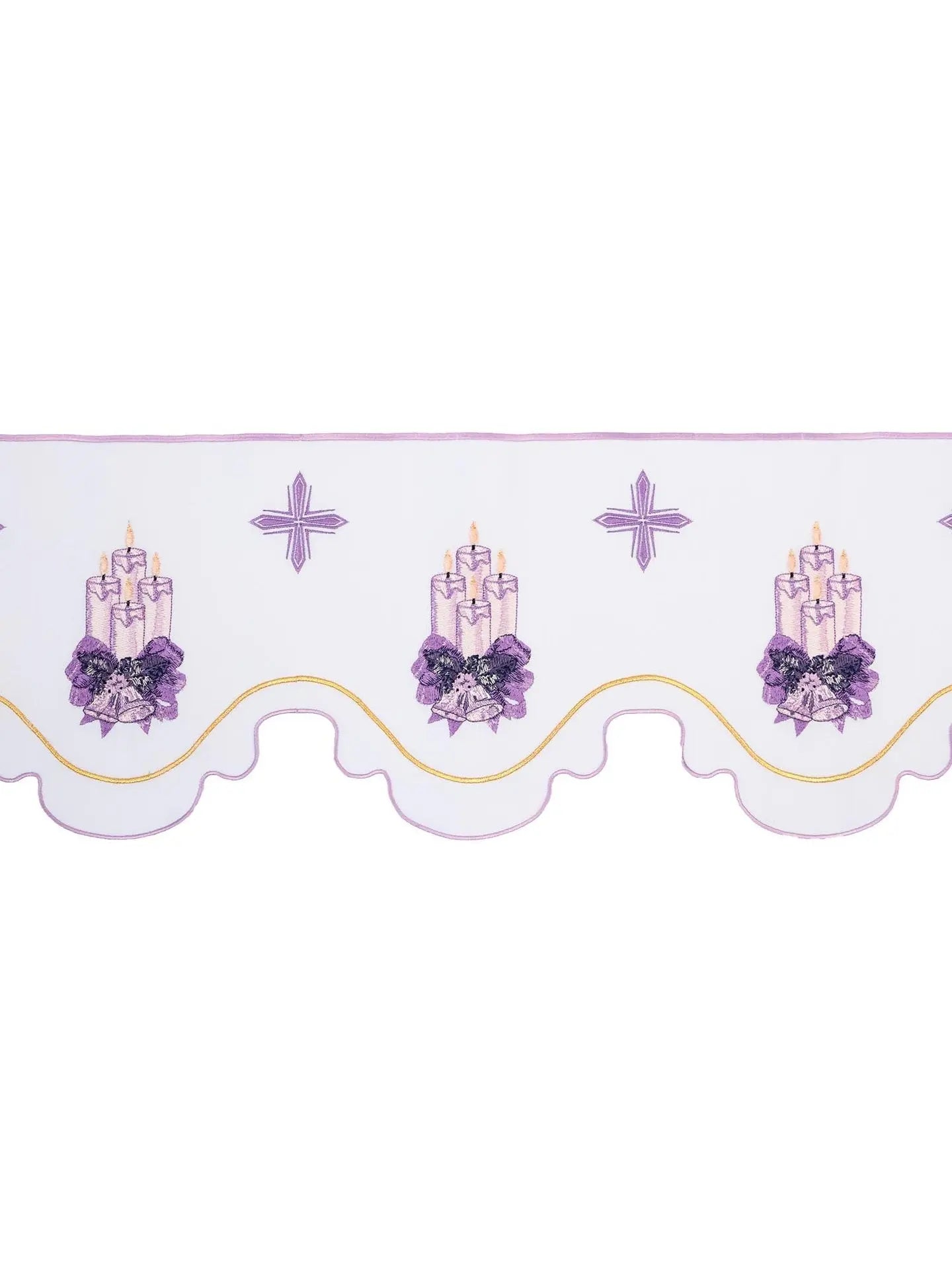
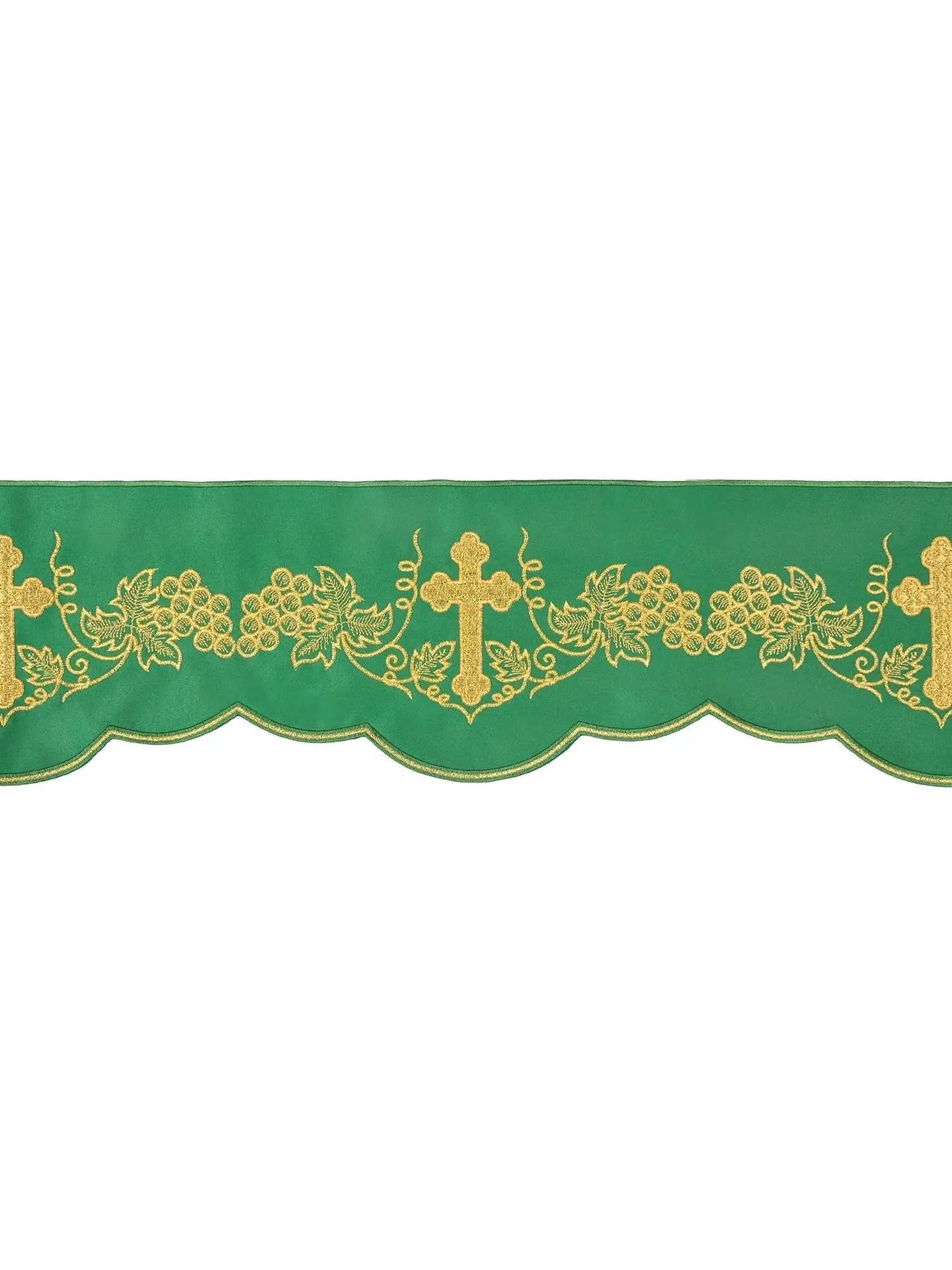
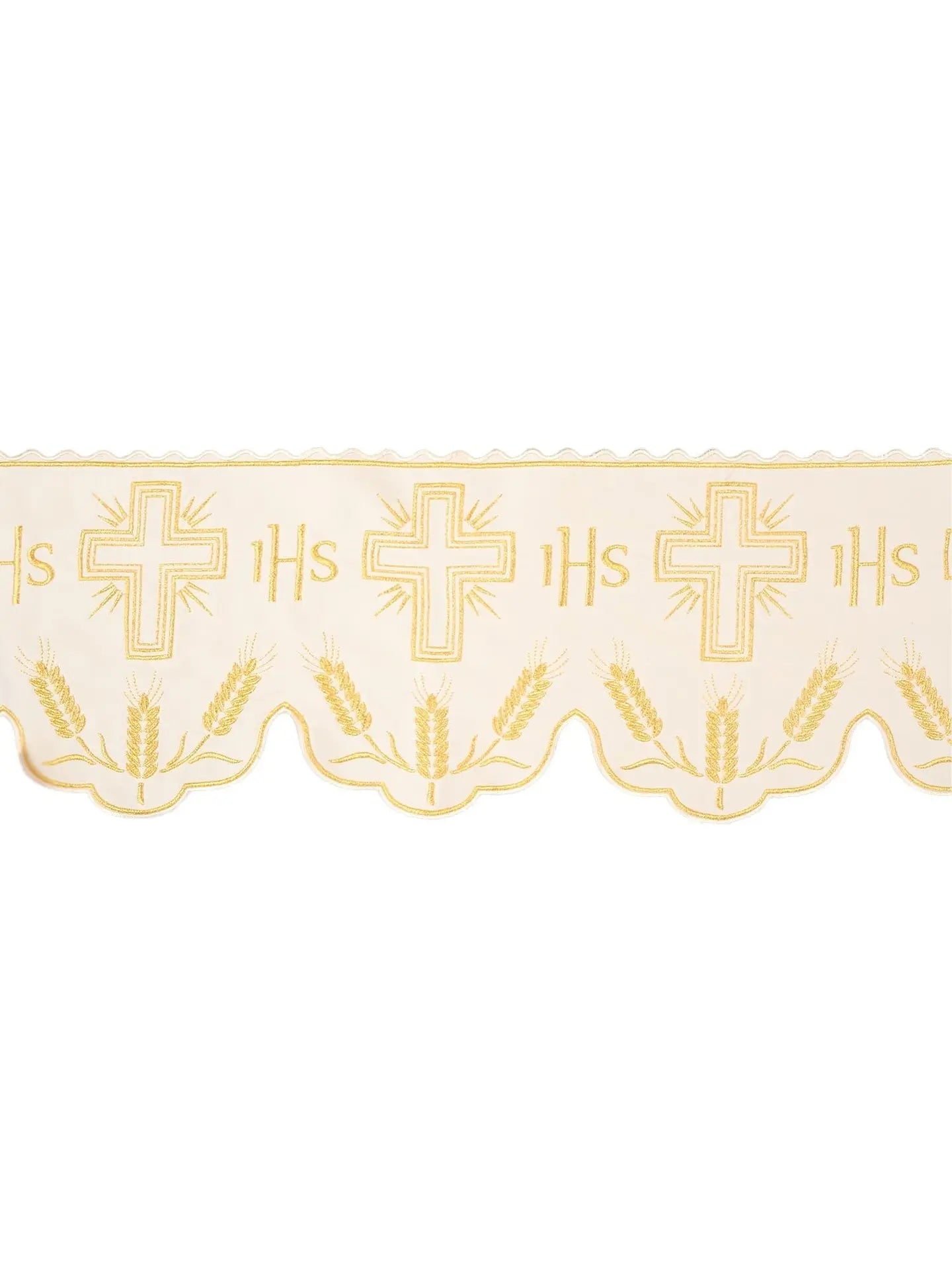
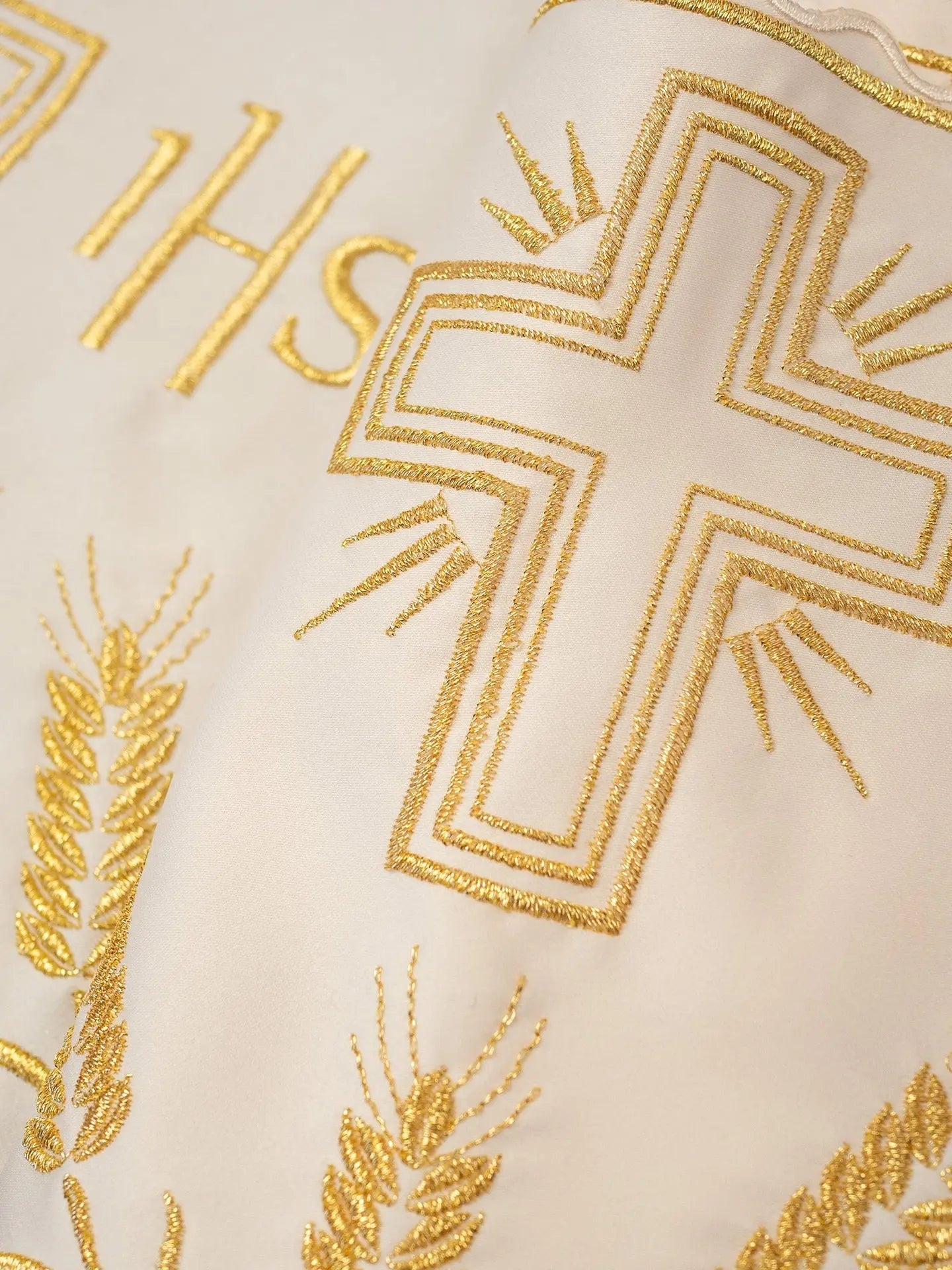
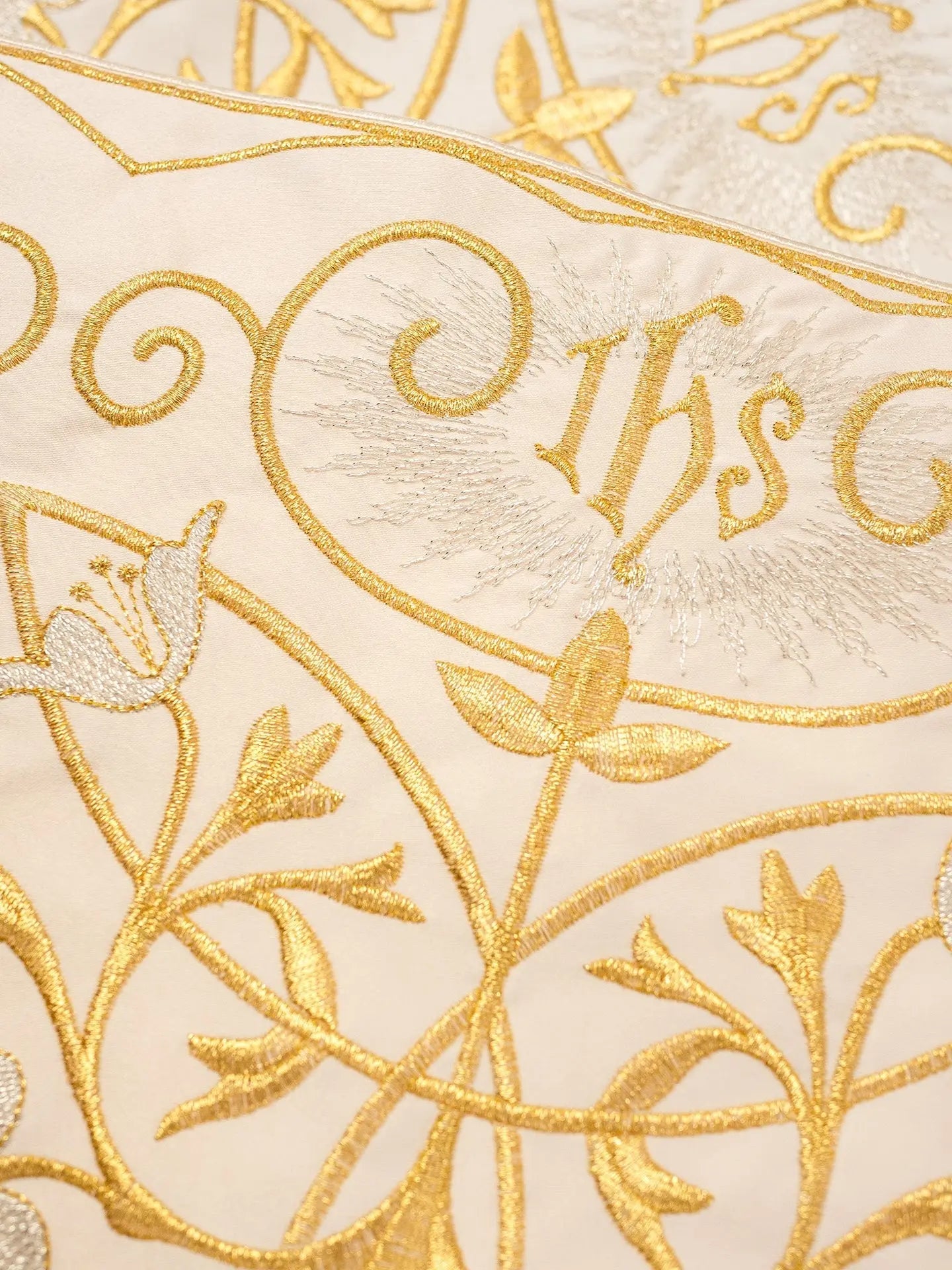
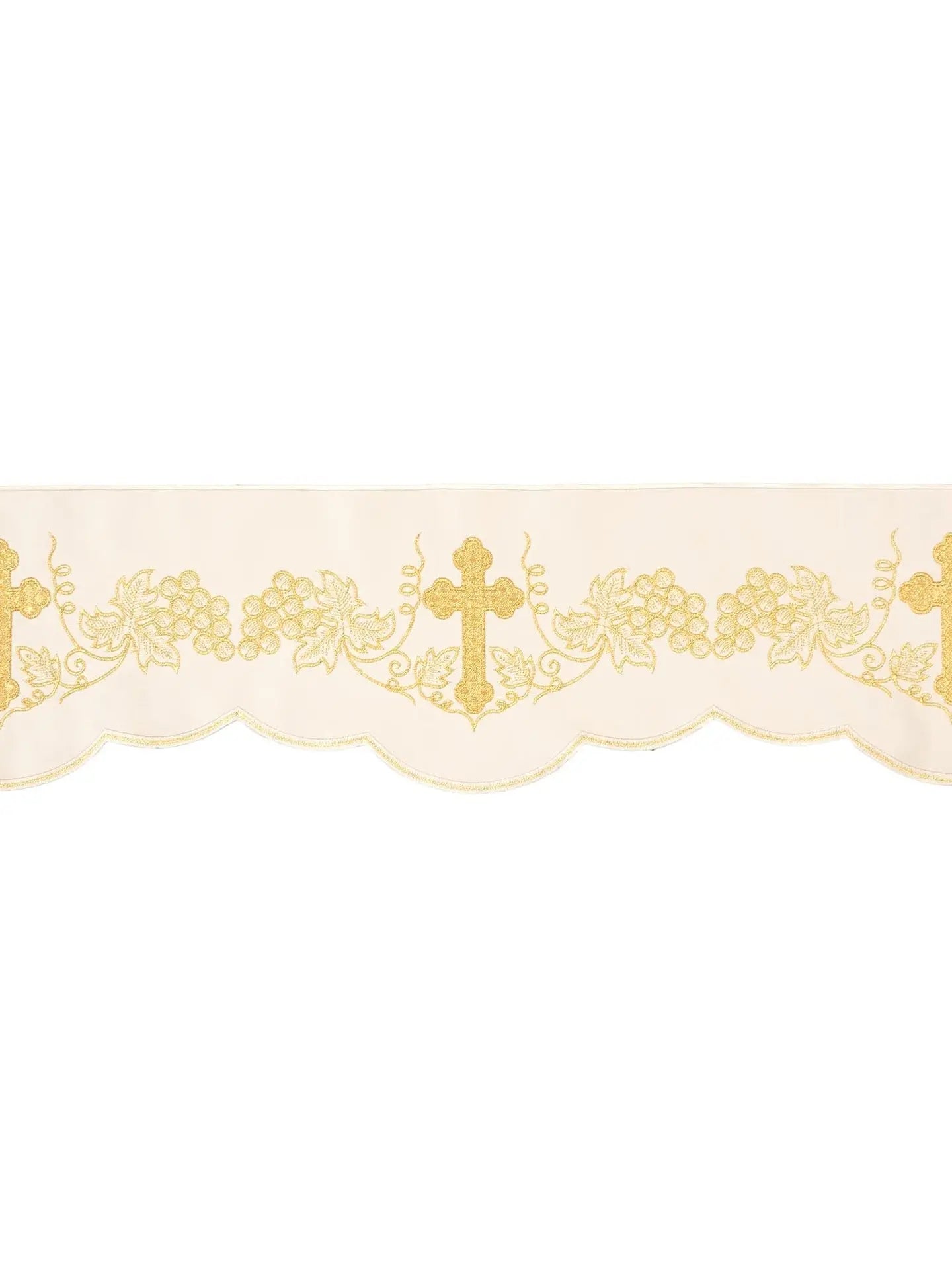
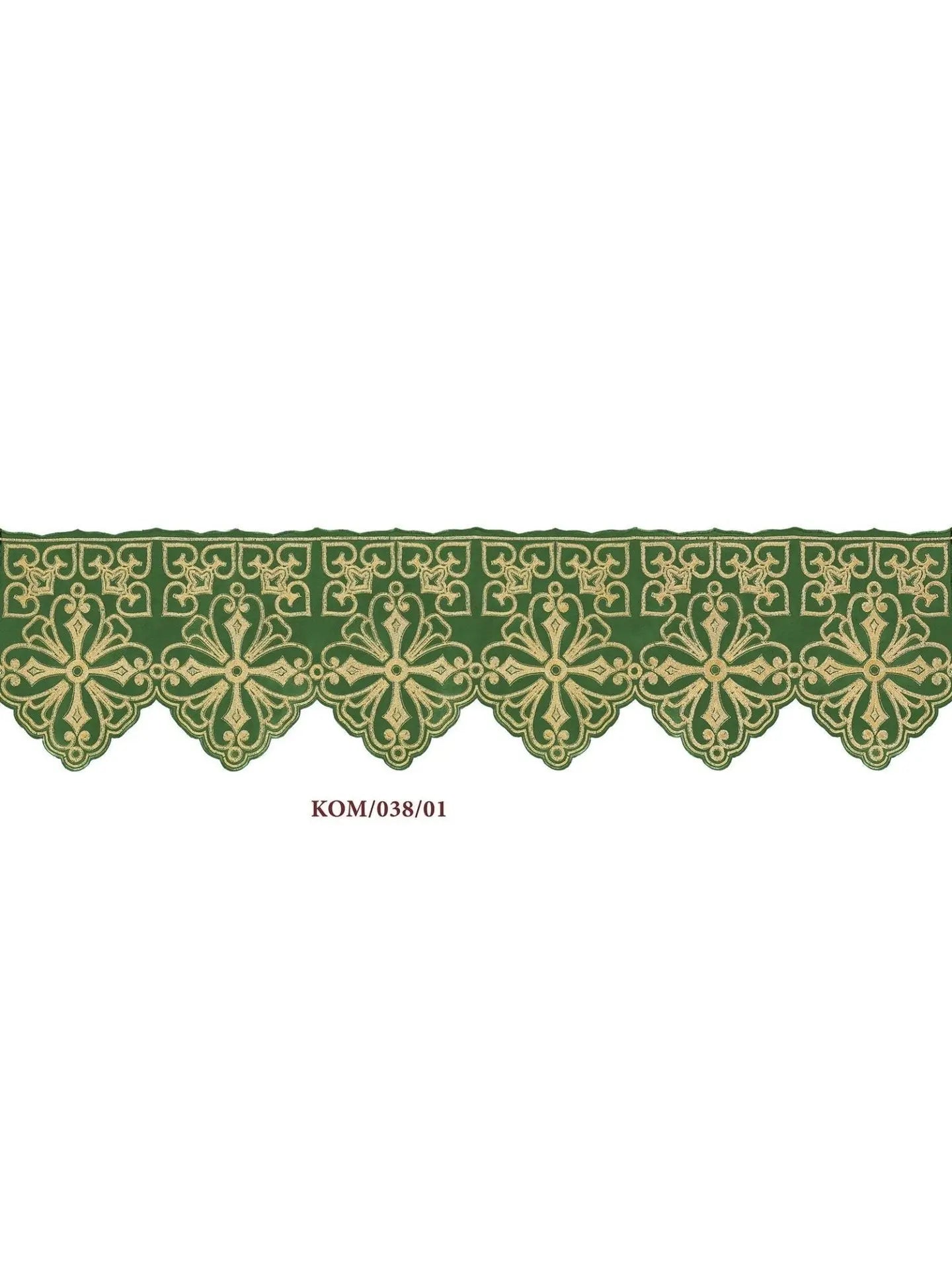
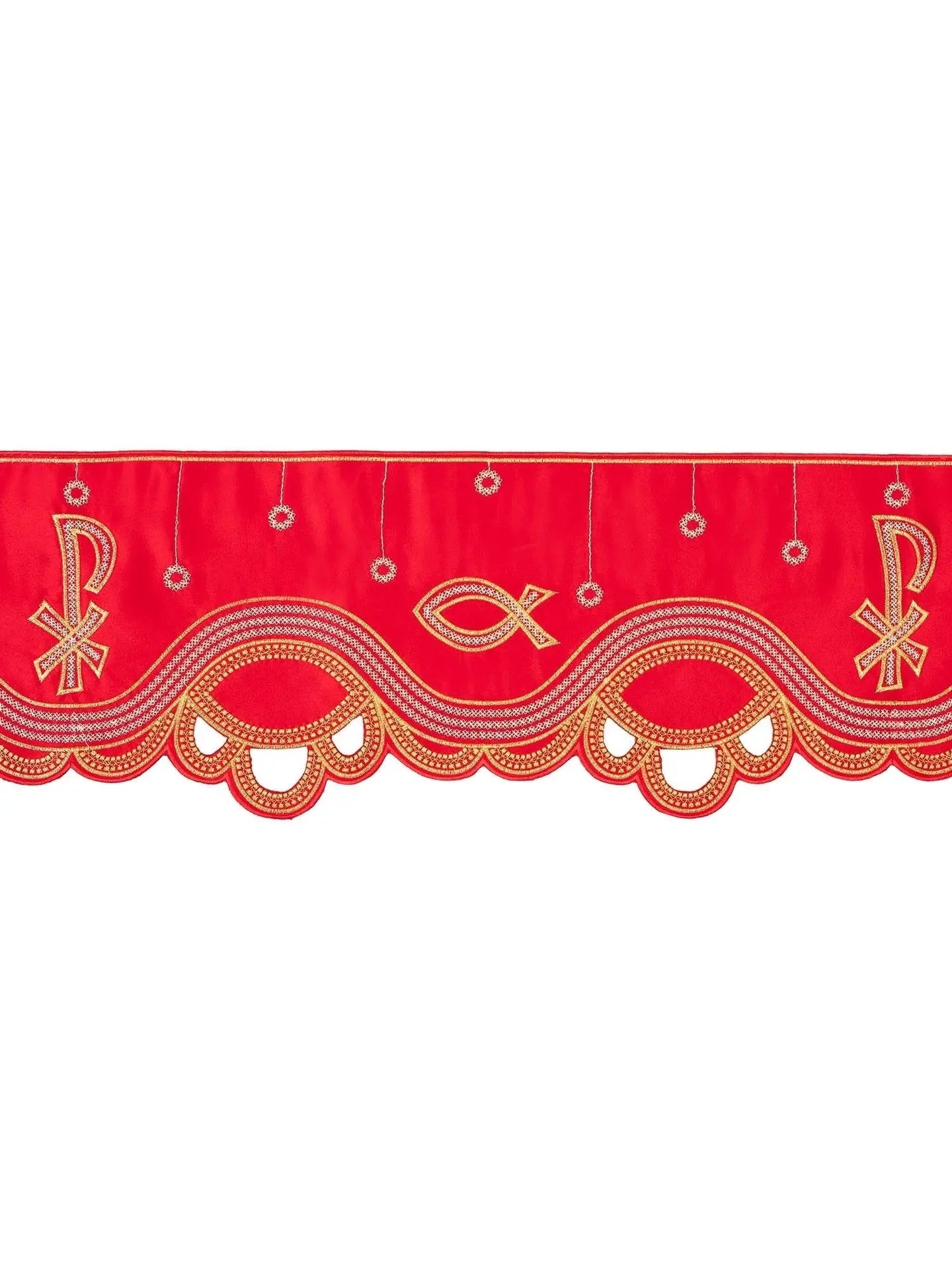
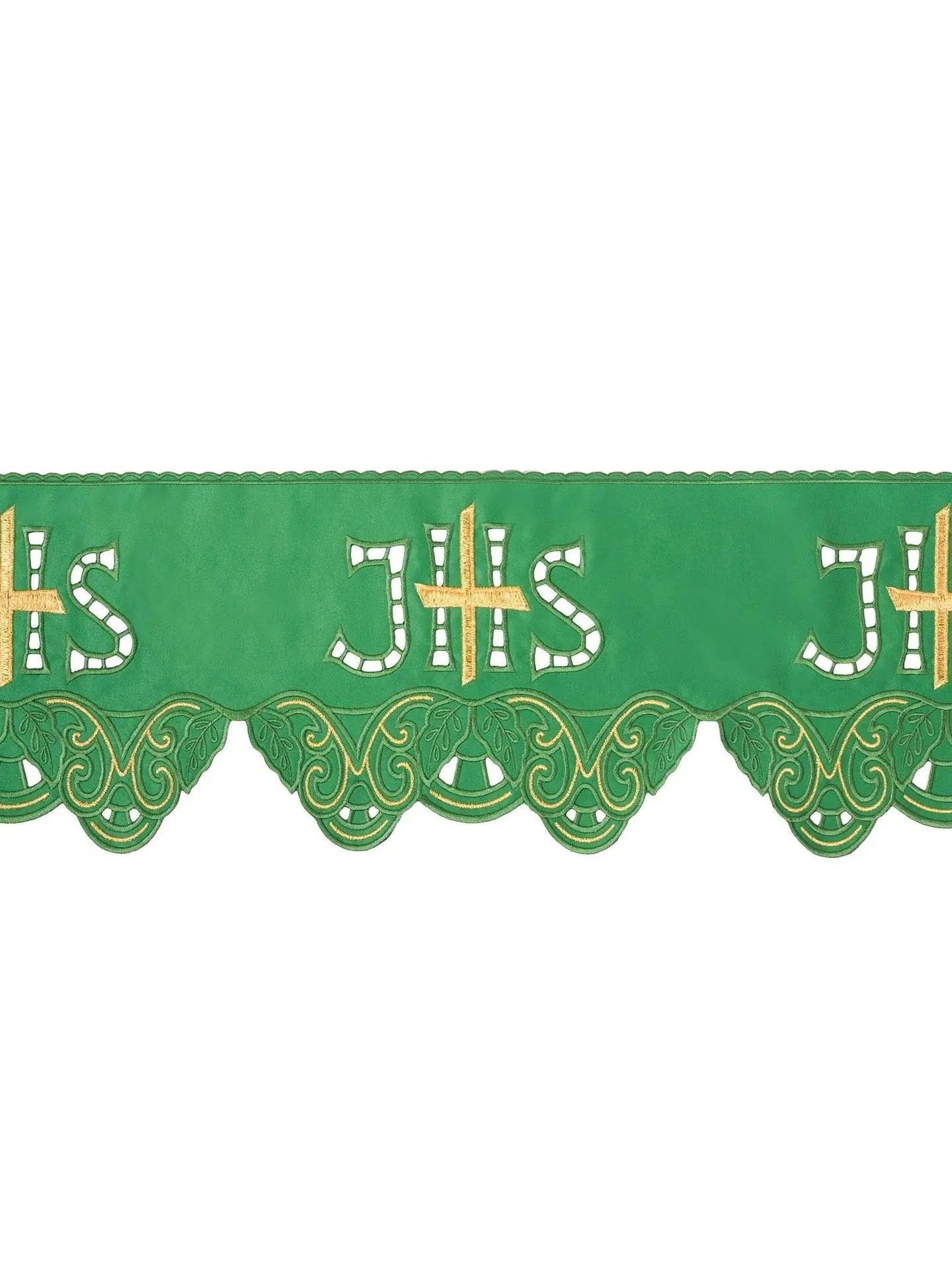
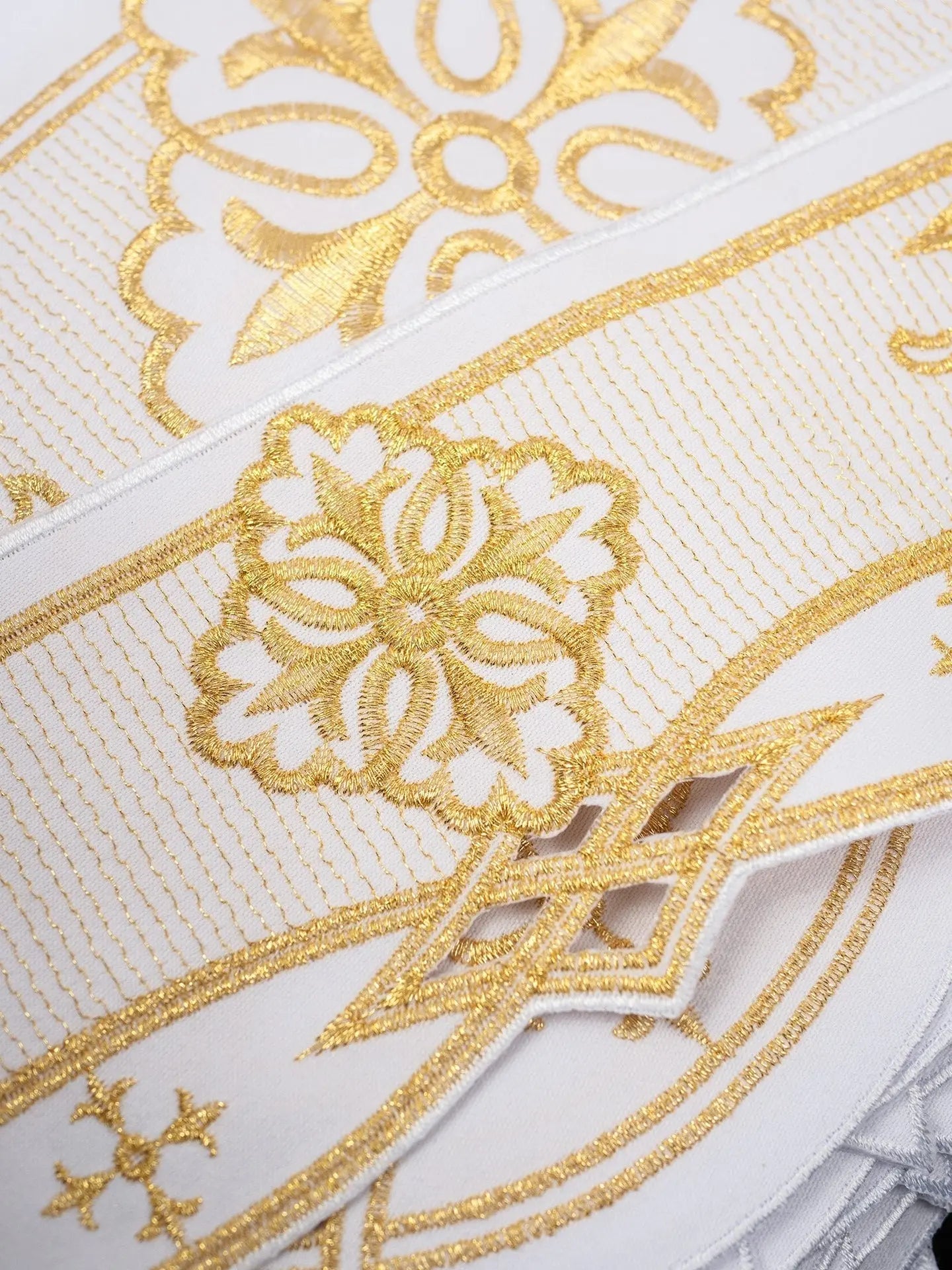
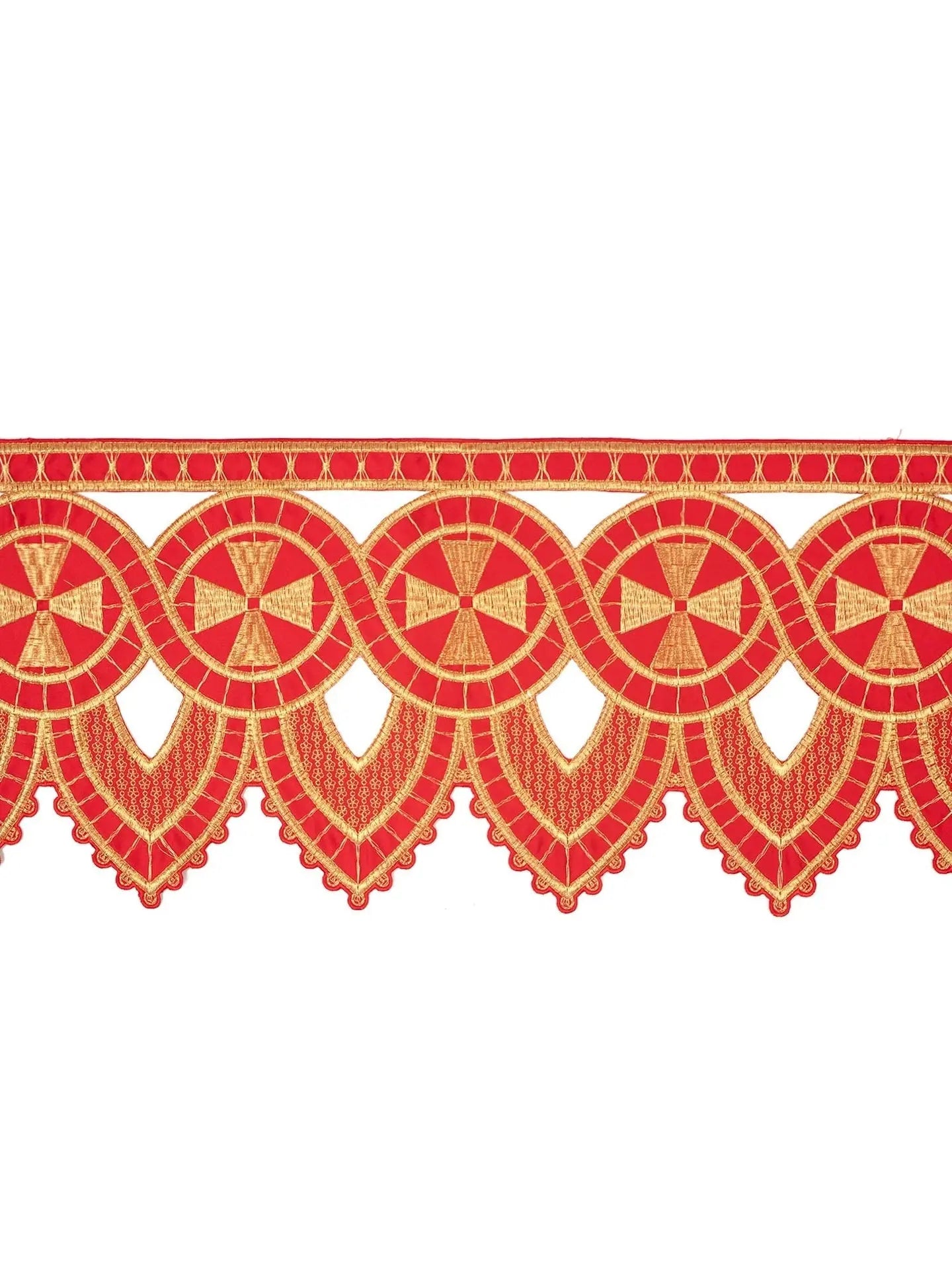
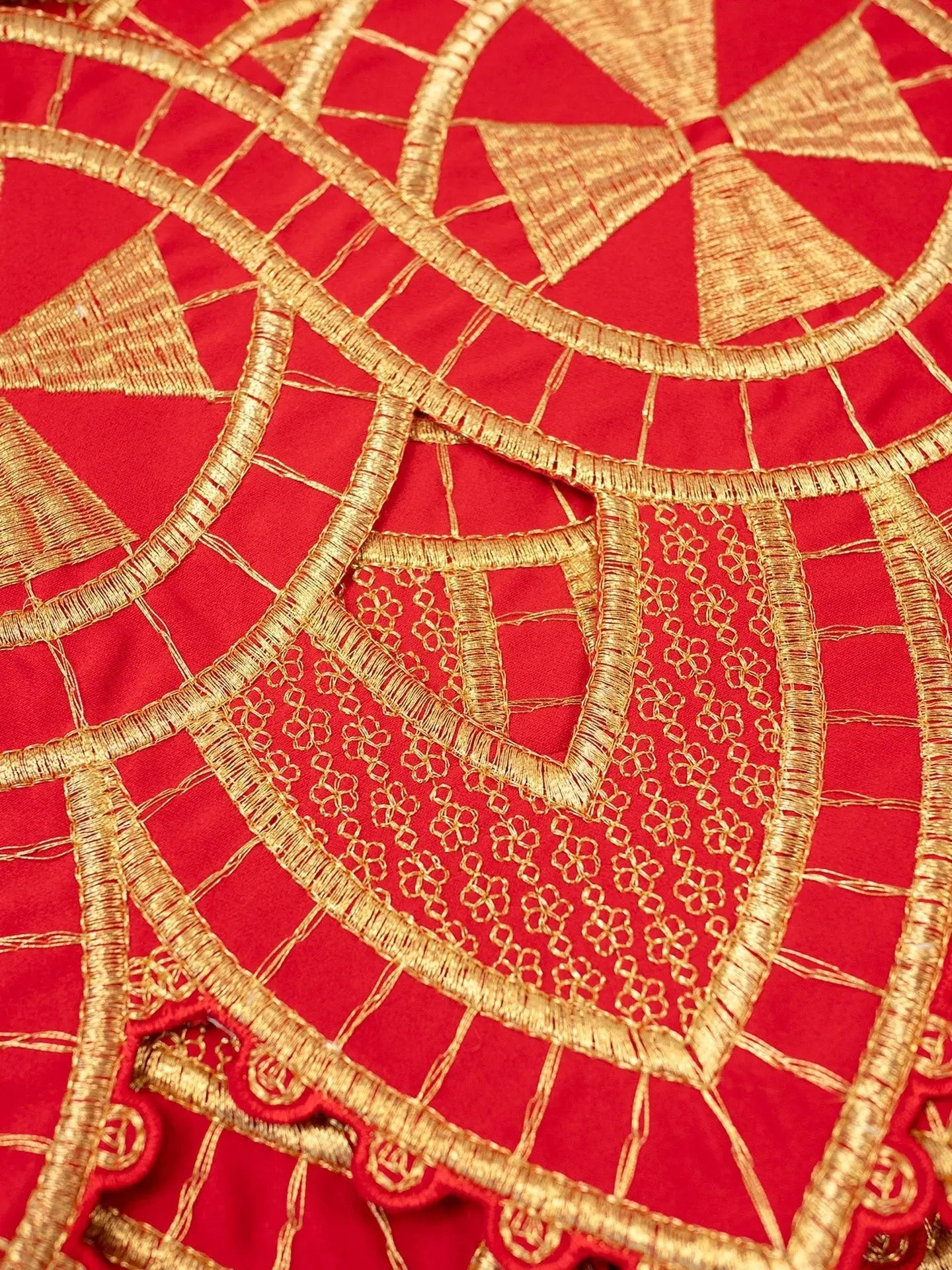
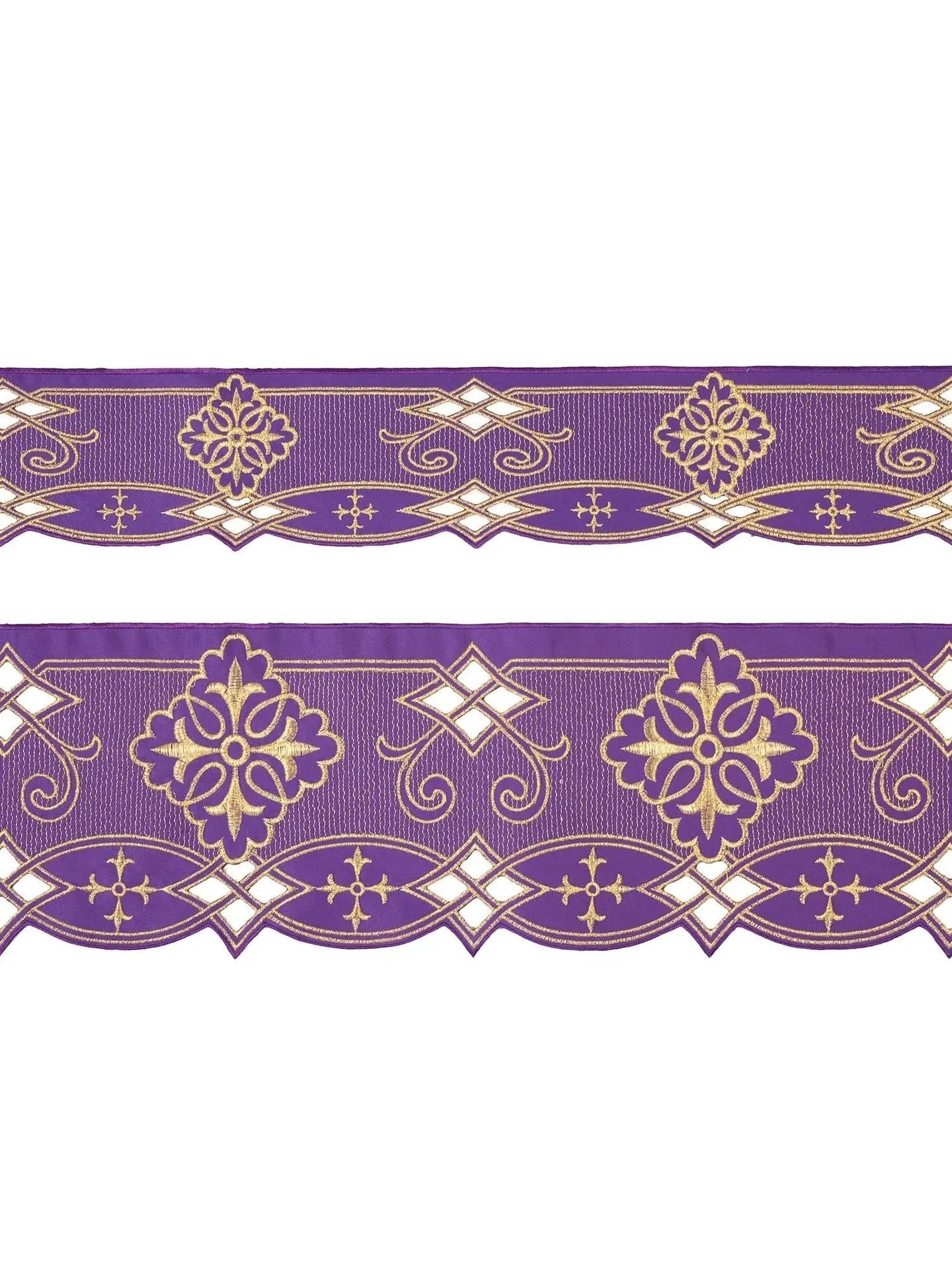
Altar Cloth Trims & Edgings for Liturgical Altars
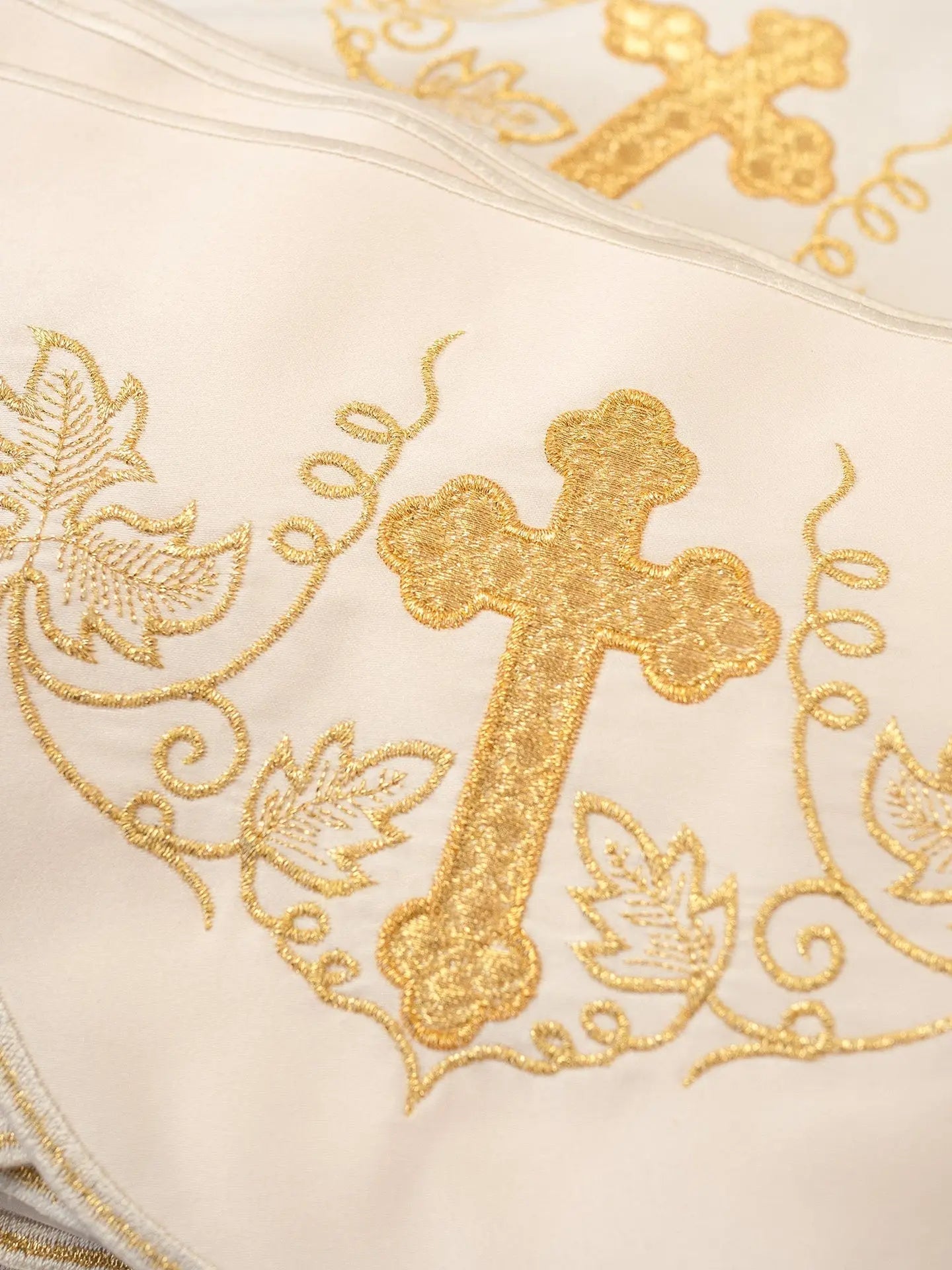
Altar cloth trims and edgings complete the visible edge of the altar linen and help give the sanctuary a finished, reverent appearance. This collection is intended for churches, chapels, religious houses, sacristies and parish workshops looking for decorative finishes that can be used with altar cloths, frontals and related liturgical textiles. A well chosen lace, border, braid, fringe or embroidered edging can make a simple cloth look dignified without distracting from the liturgy. It frames the altar, supports the character of the church interior and helps the textile correspond with the solemnity of the celebration.
The altar is not an ordinary table. It is the place where the Eucharistic sacrifice is celebrated, and its textiles should be clean, appropriate, carefully fitted and visually harmonious. Trims and edgings do not replace the altar cloth itself, but they are an important finishing detail. They can soften the fall of the fabric, emphasize the frontal edge, add symbolic ornament, or connect the altar linen with nearby vestments and sanctuary textiles. When the design is chosen with restraint, it serves the sacred setting rather than drawing attention to itself.
This collection belongs naturally with the wider range of altar cloths and altar linens. It may be useful when preparing a new altar textile, refreshing an existing cloth, coordinating a chapel set, or planning a more complete sanctuary arrangement. Many parishes choose trims and edgings when they want the altar linen to match embroidered frontals, pulpit covers, chalice veils or seasonal vestments already used in the church.
What Belongs in This Collection
Altar cloth trims and edgings include decorative textile elements used along the visible borders of altar linens and other church textiles. Depending on the design, they may be subtle and narrow, or more ornamental for solemn occasions and formal interiors. The purpose is always to finish the fabric cleanly and to support the sacred character of the altar.
-
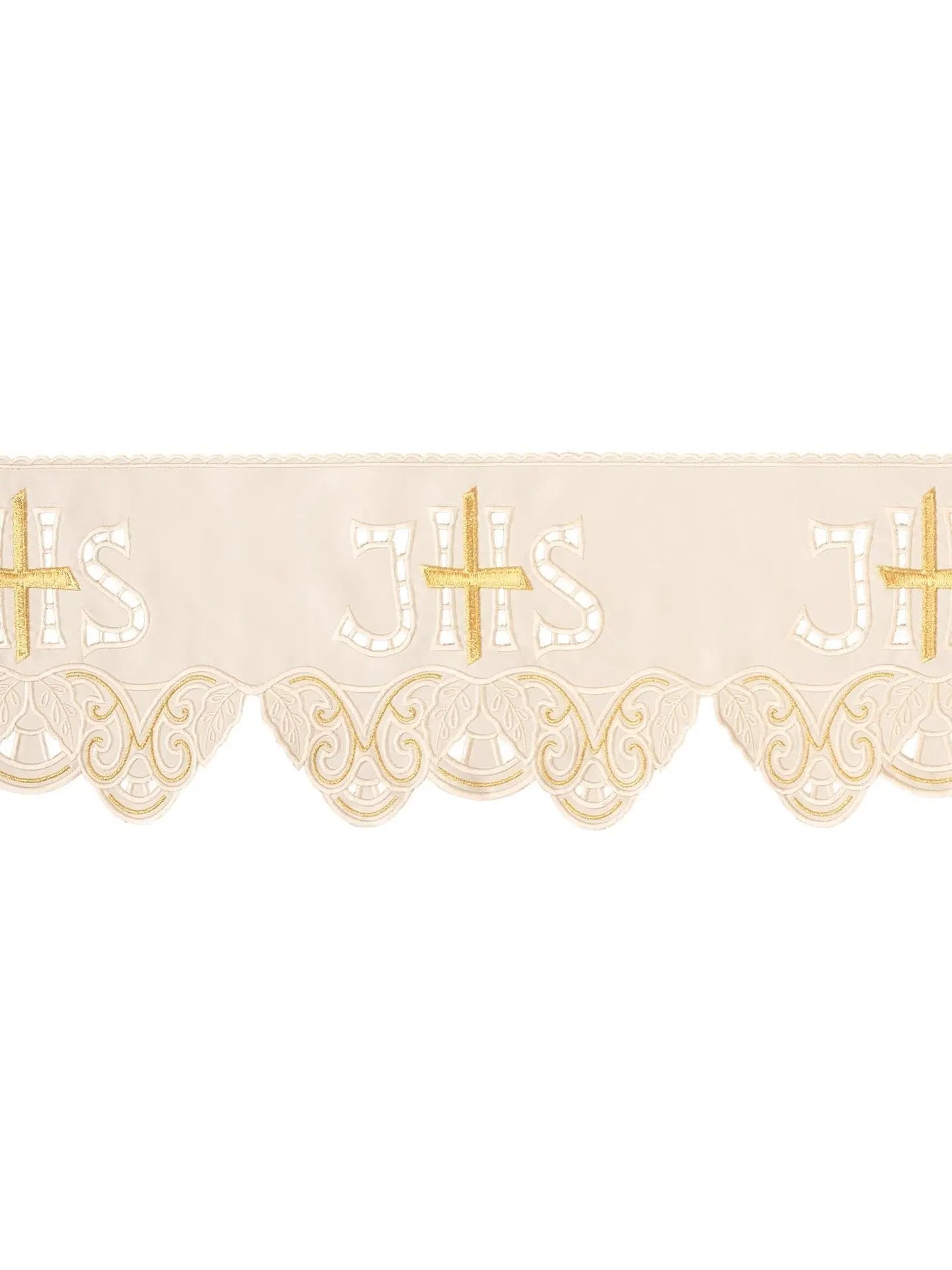
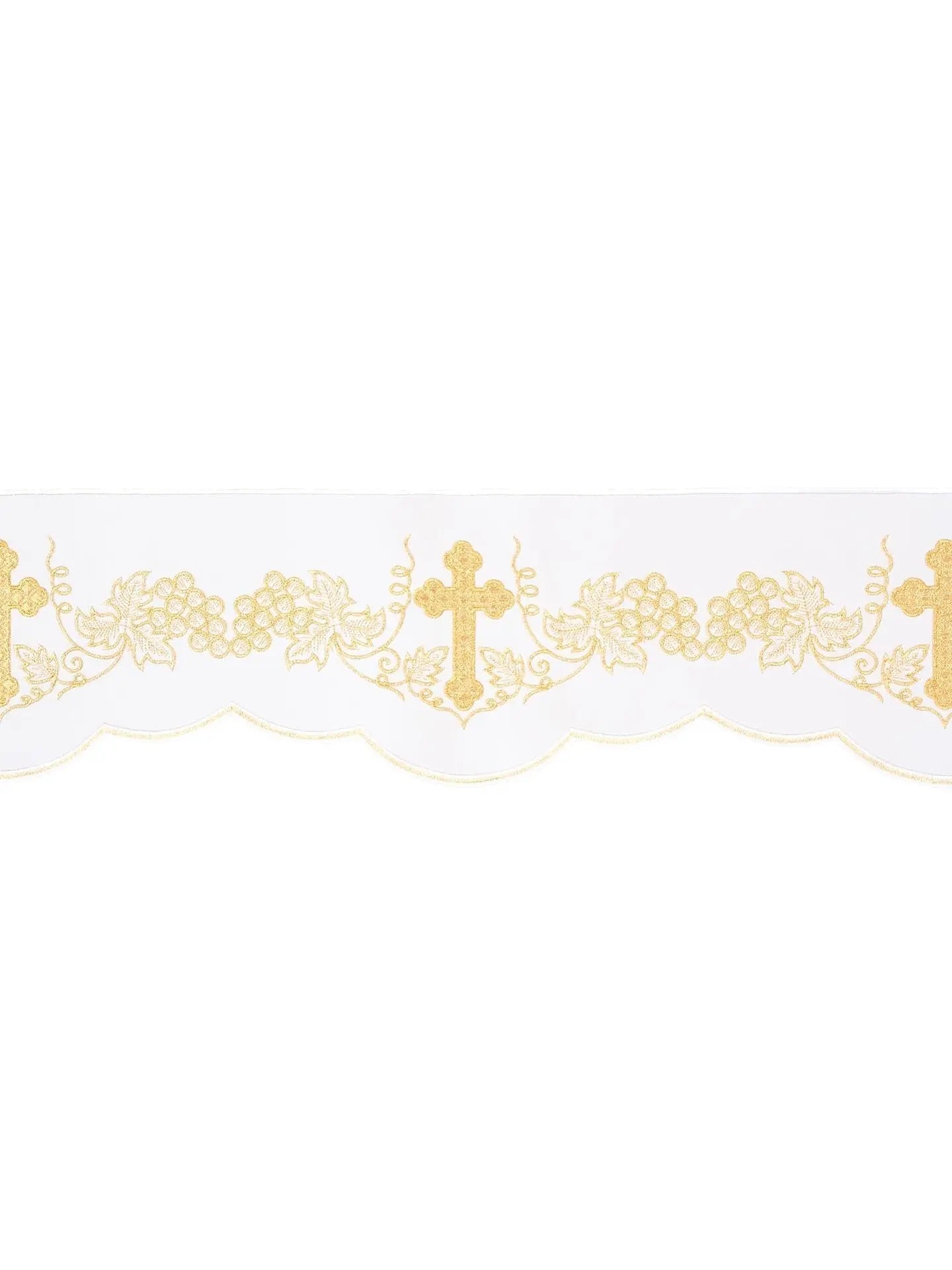
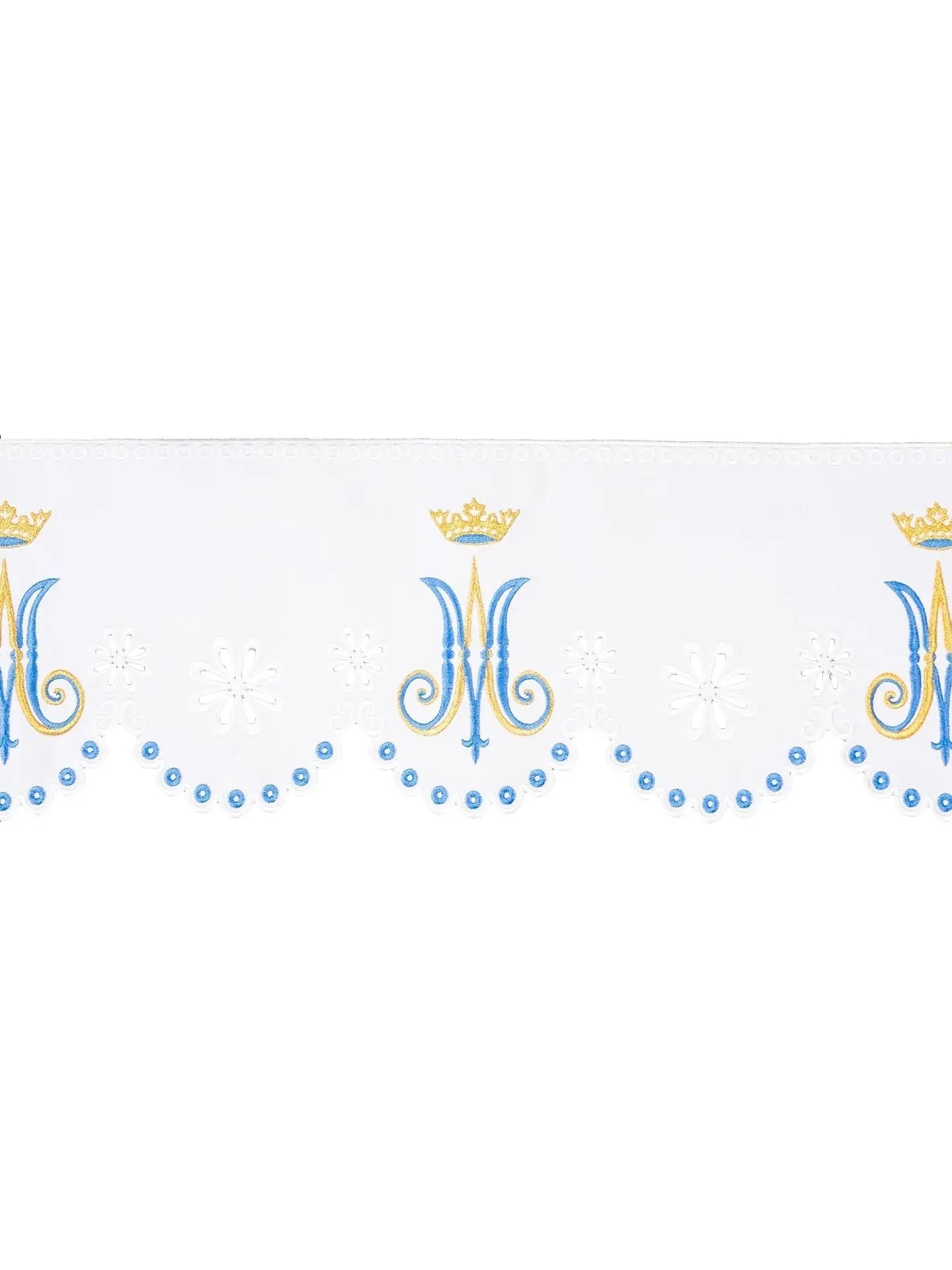
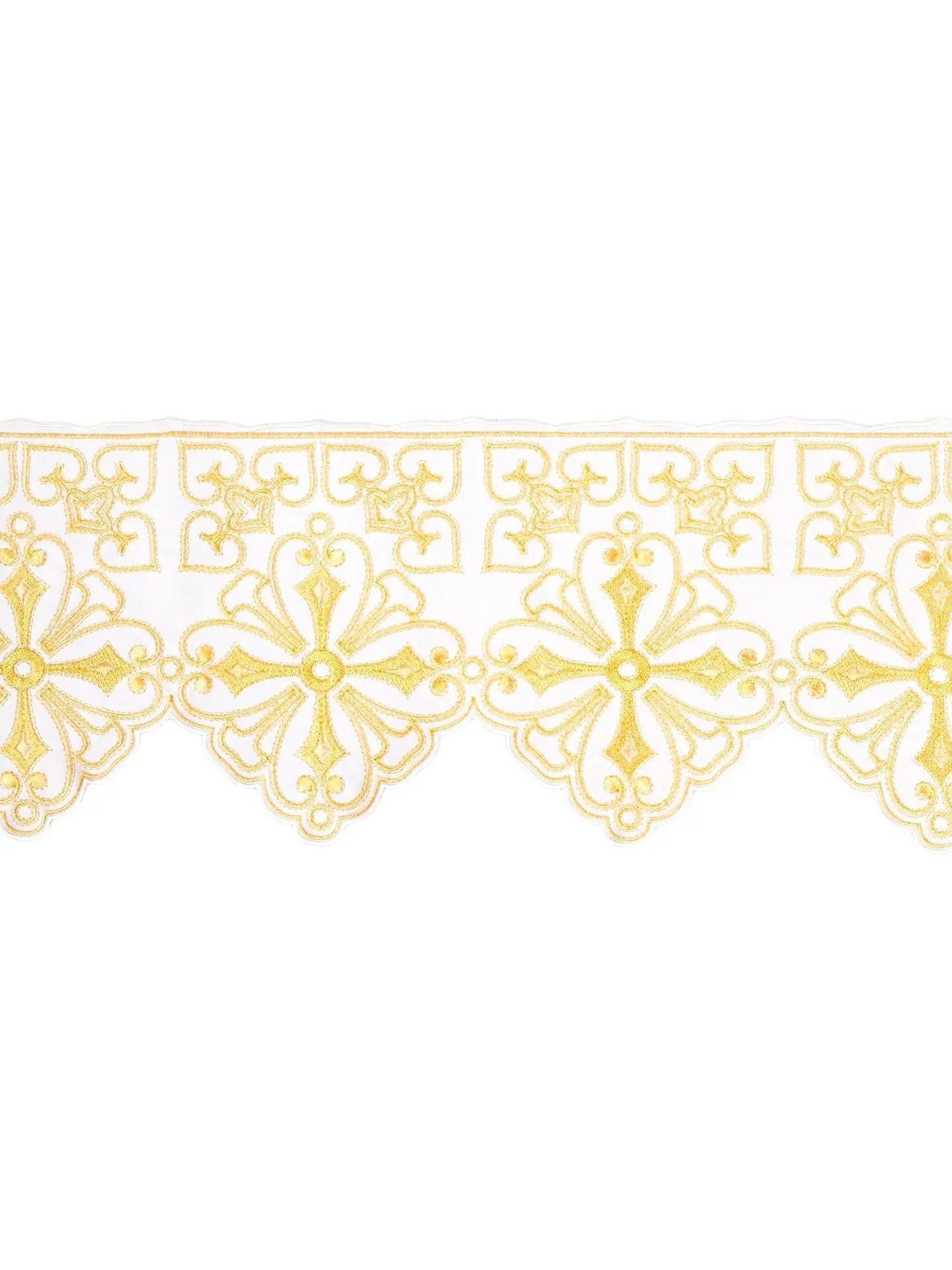
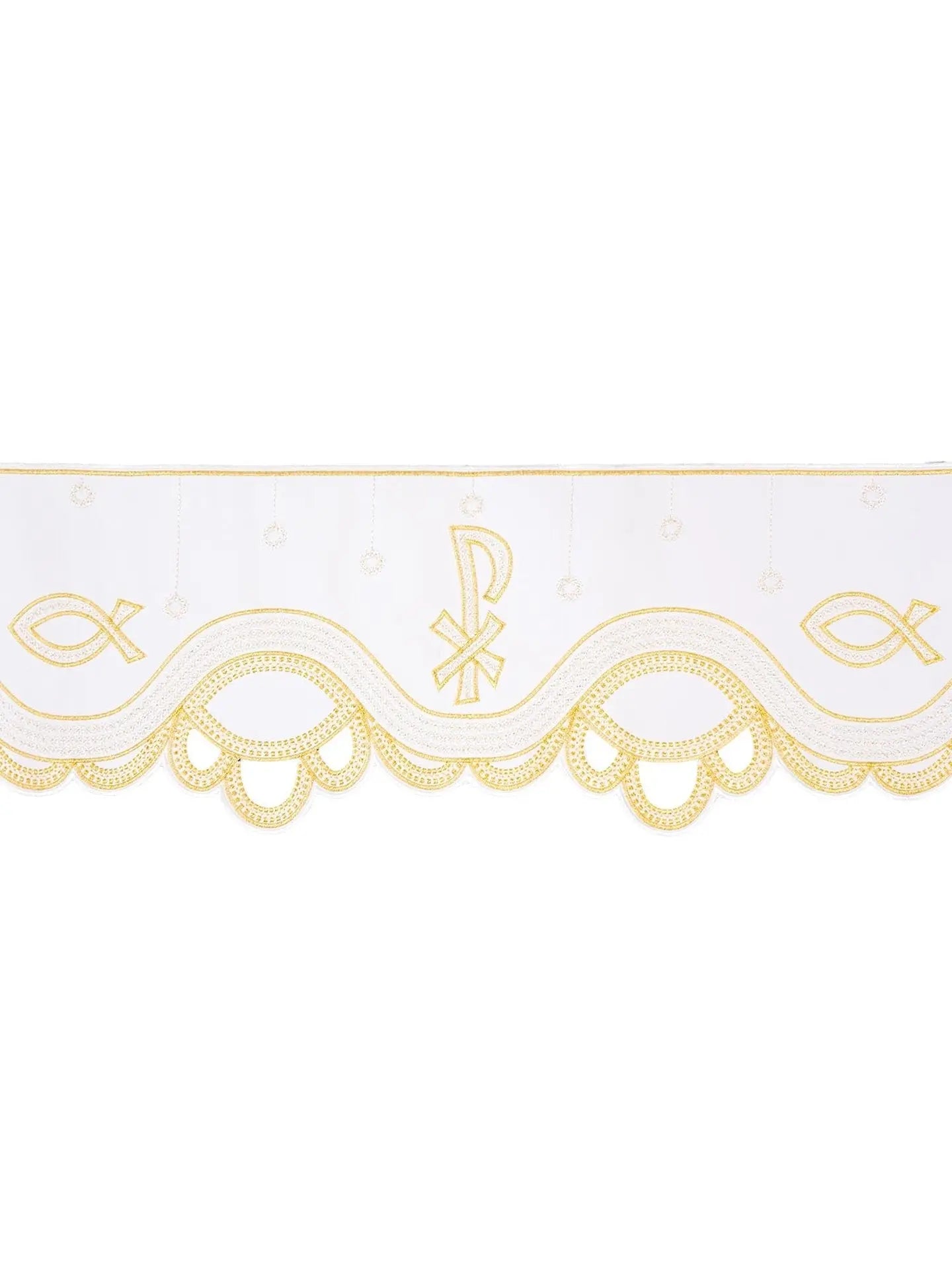
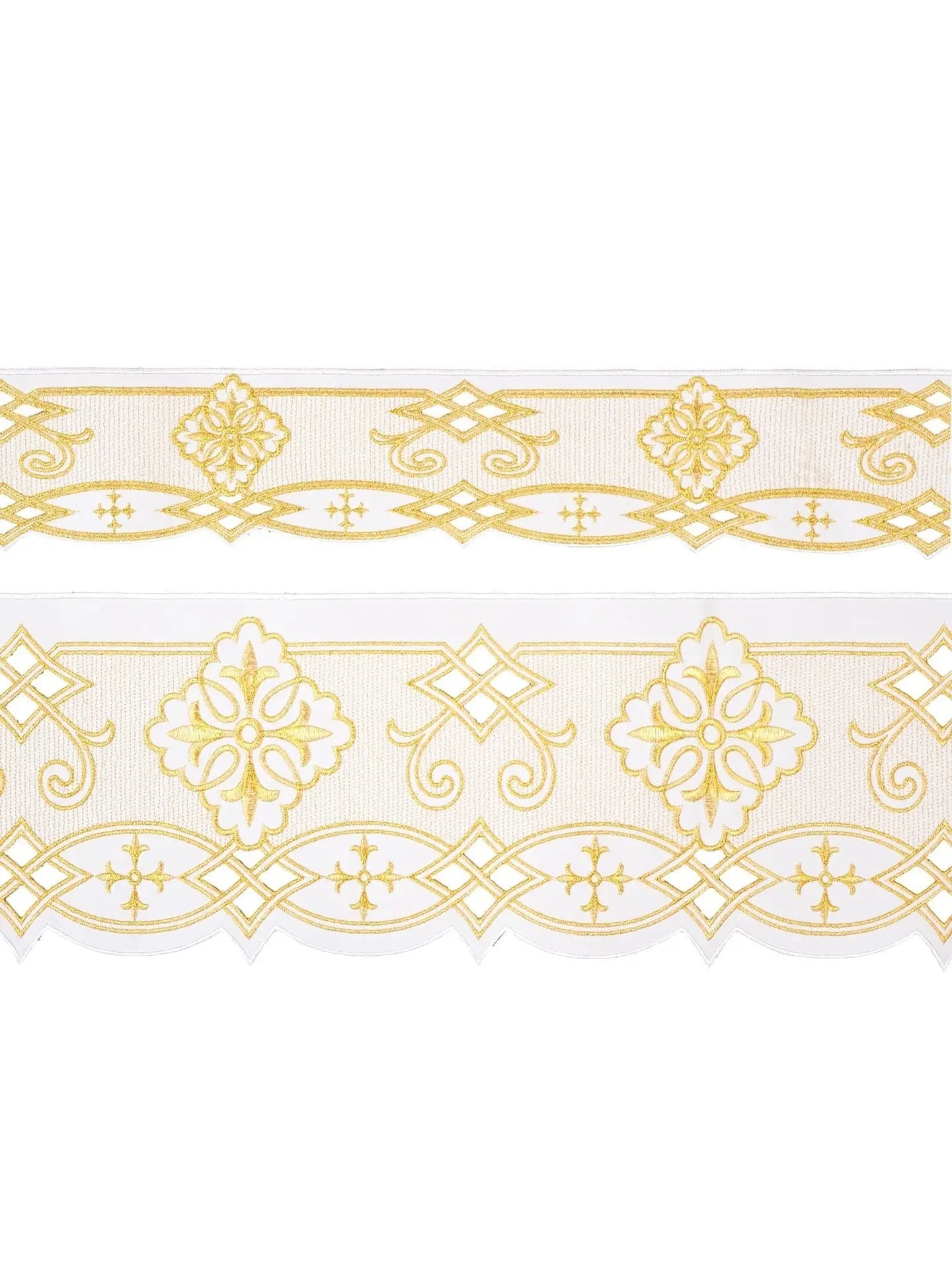
Lace edgings: delicate openwork finishes often chosen for white or ecru altar linens, especially where a traditional, refined appearance is desired.
-
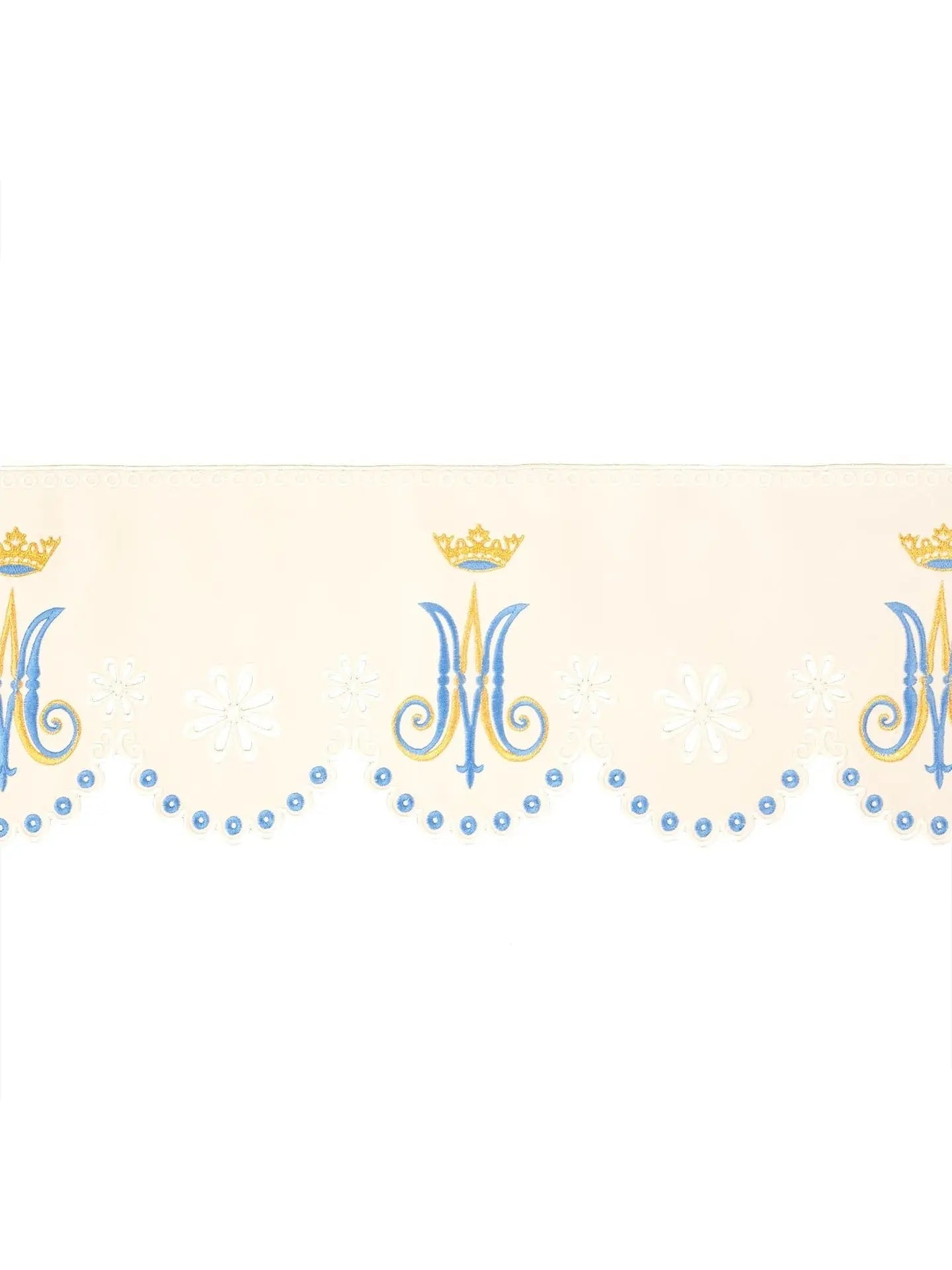
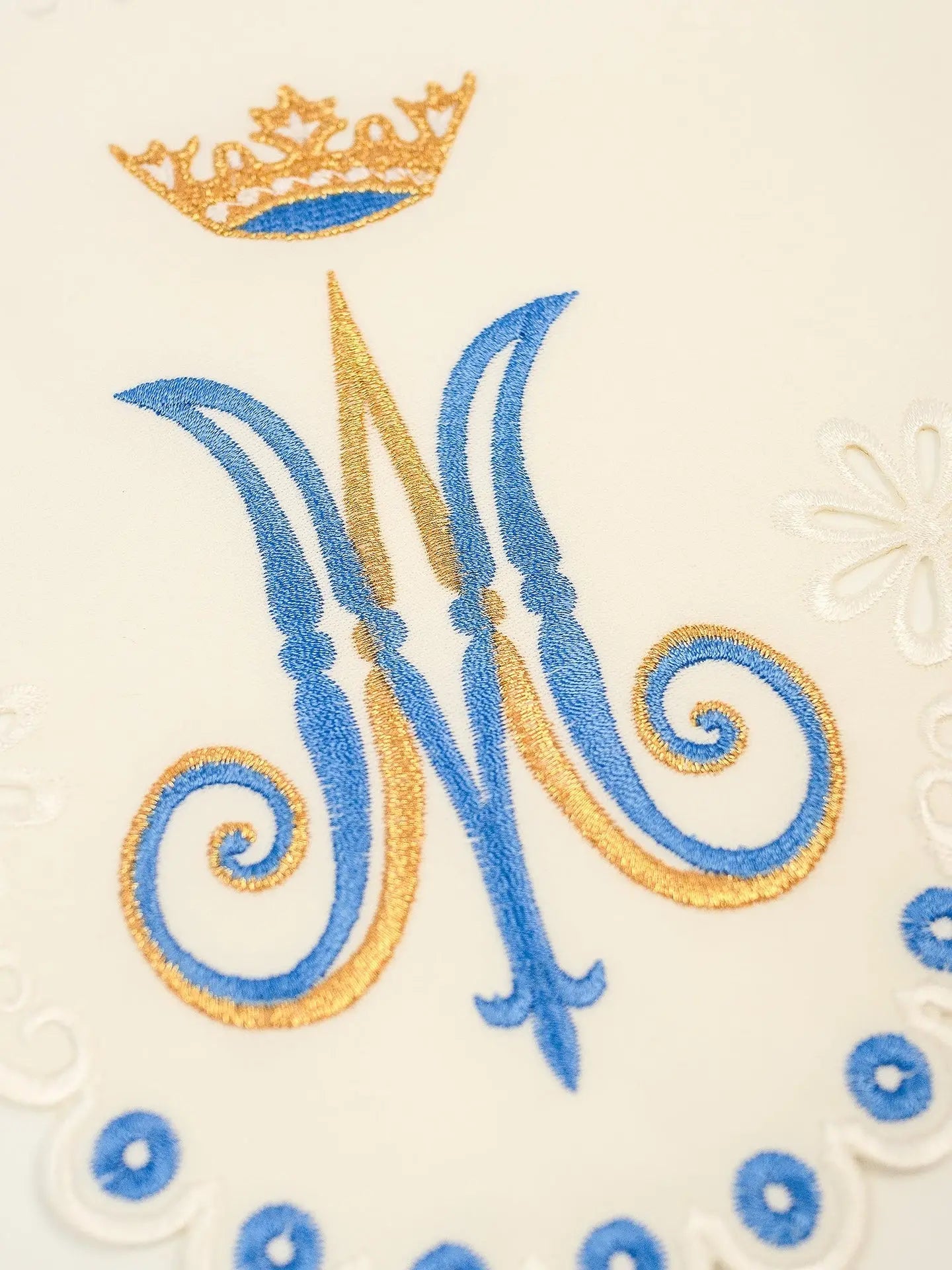
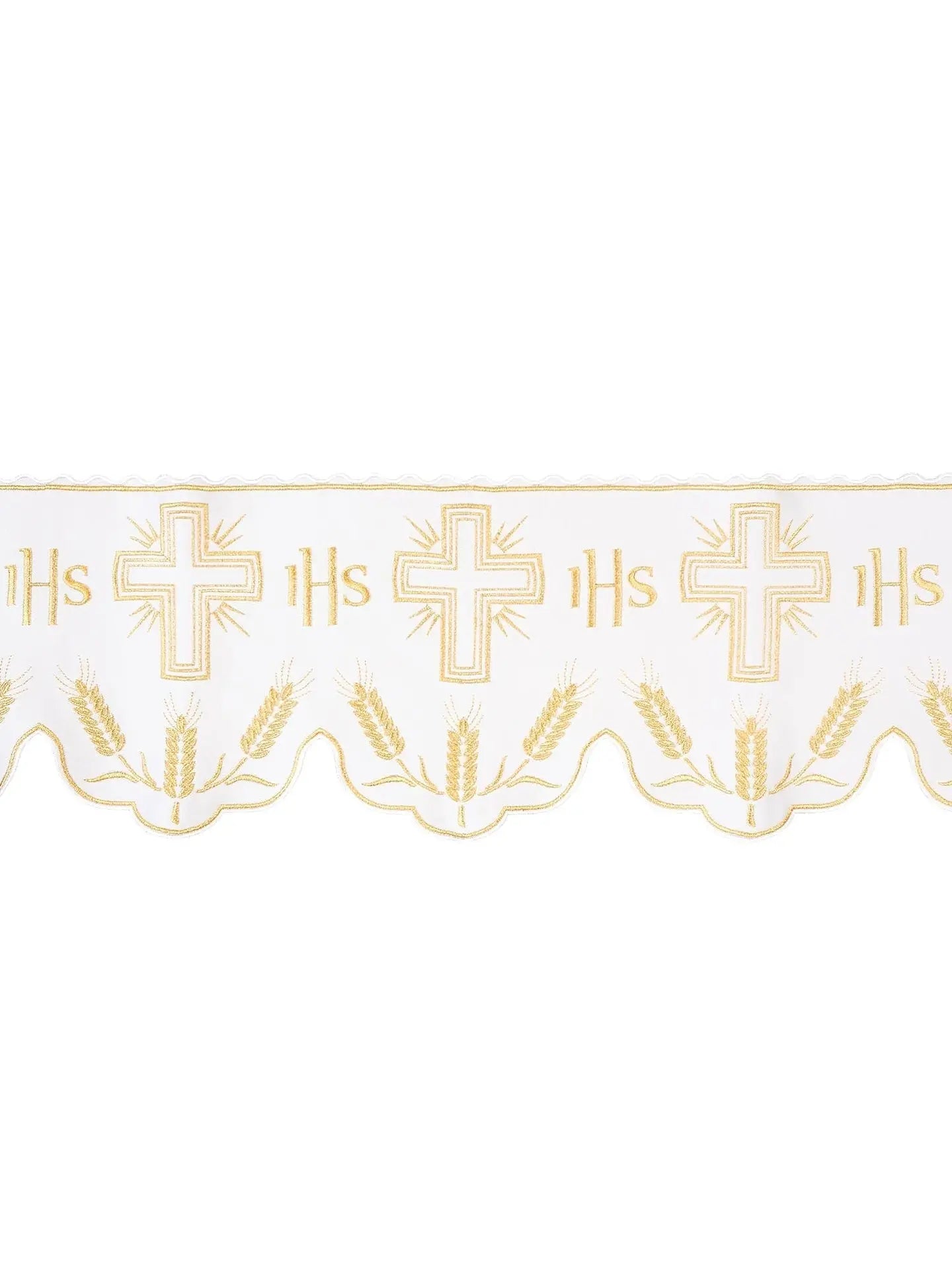
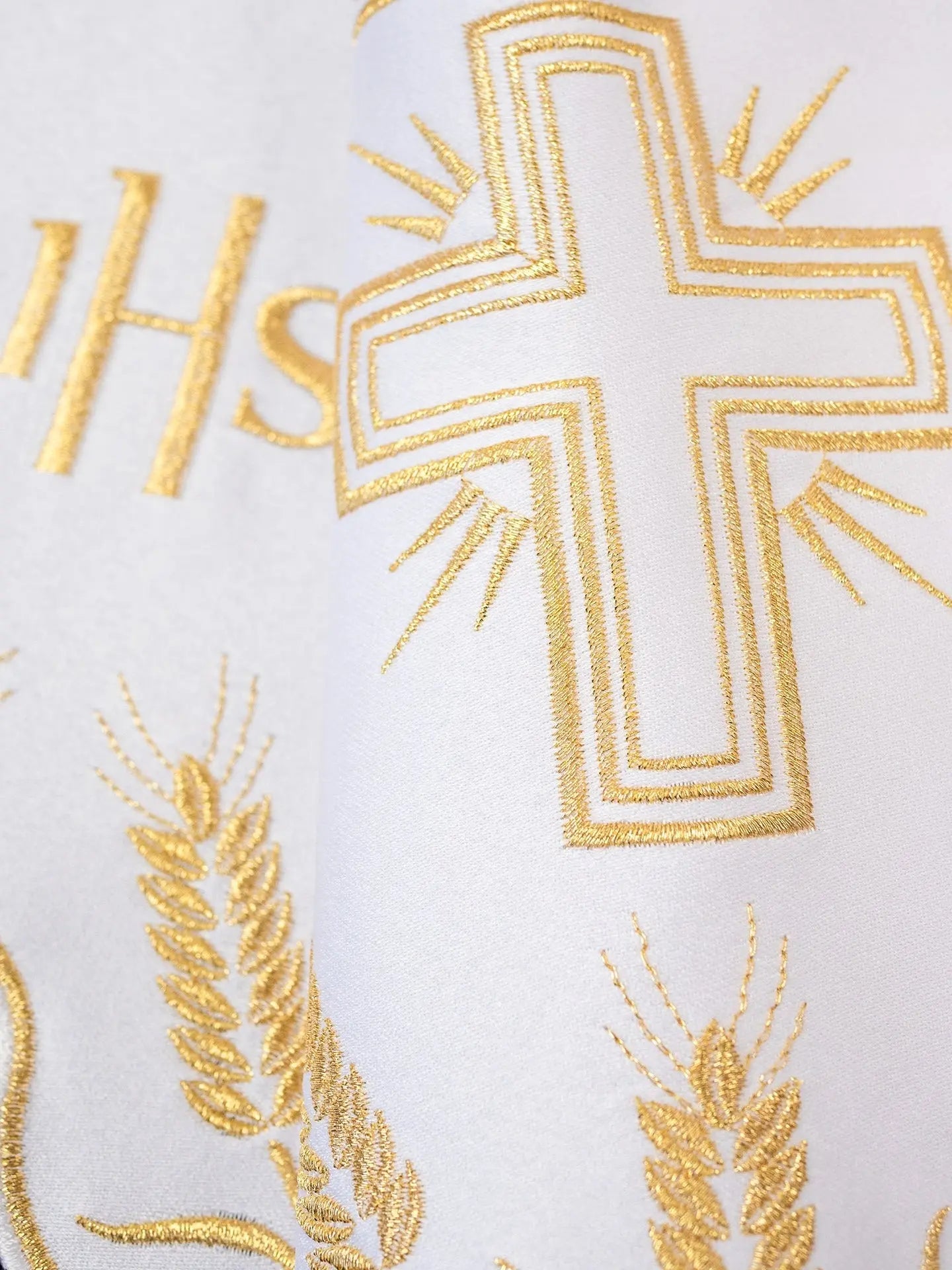
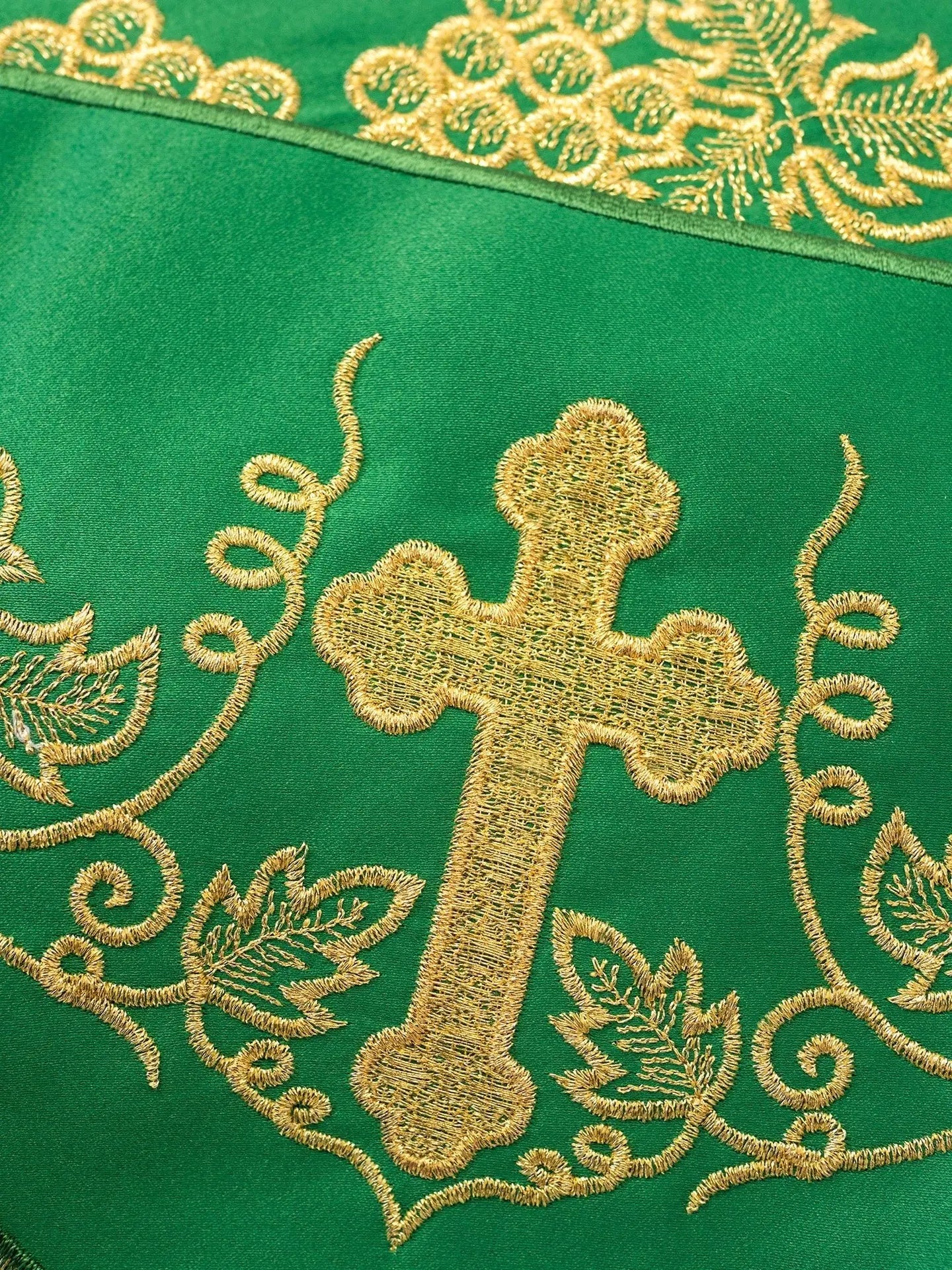
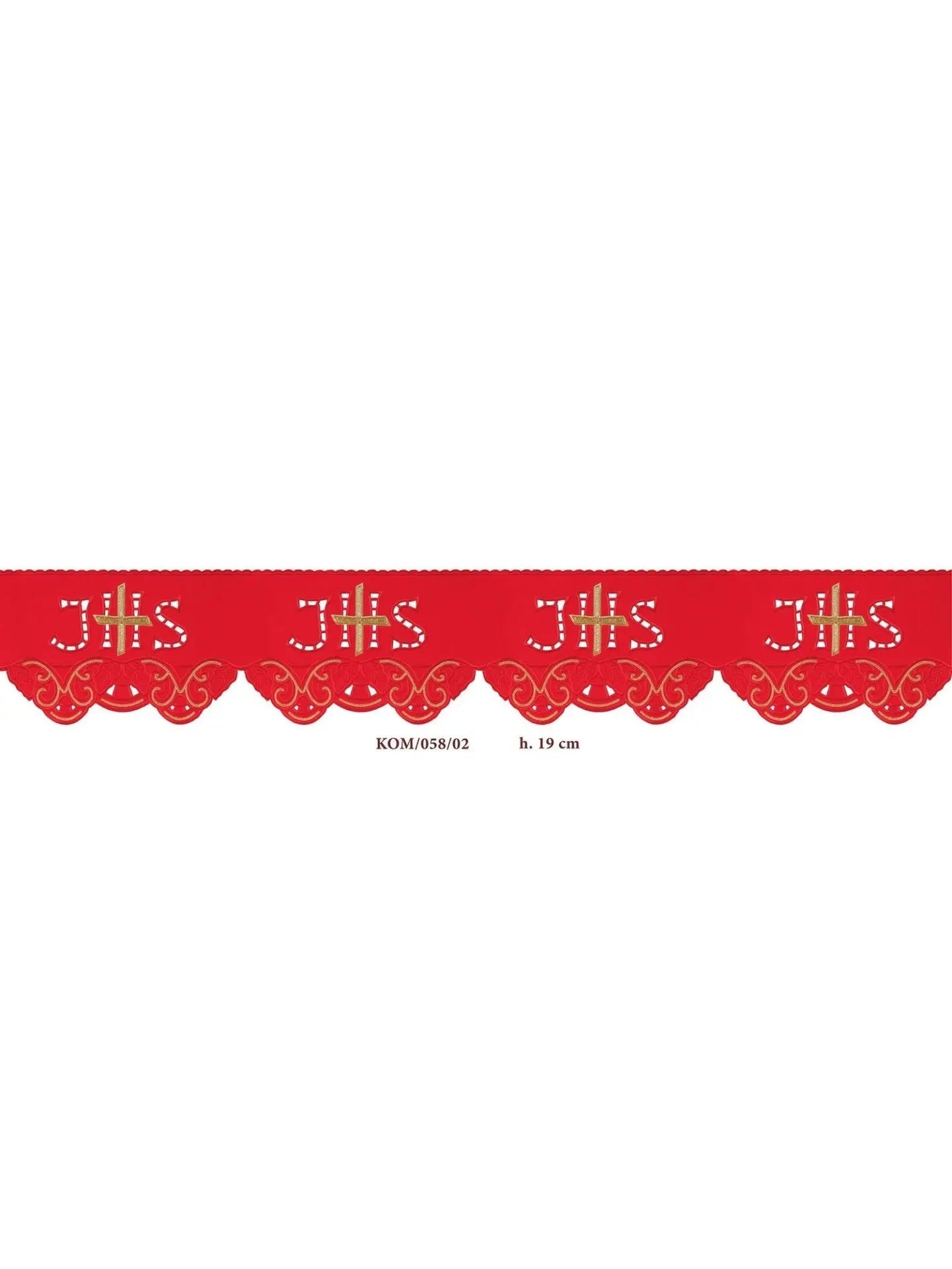
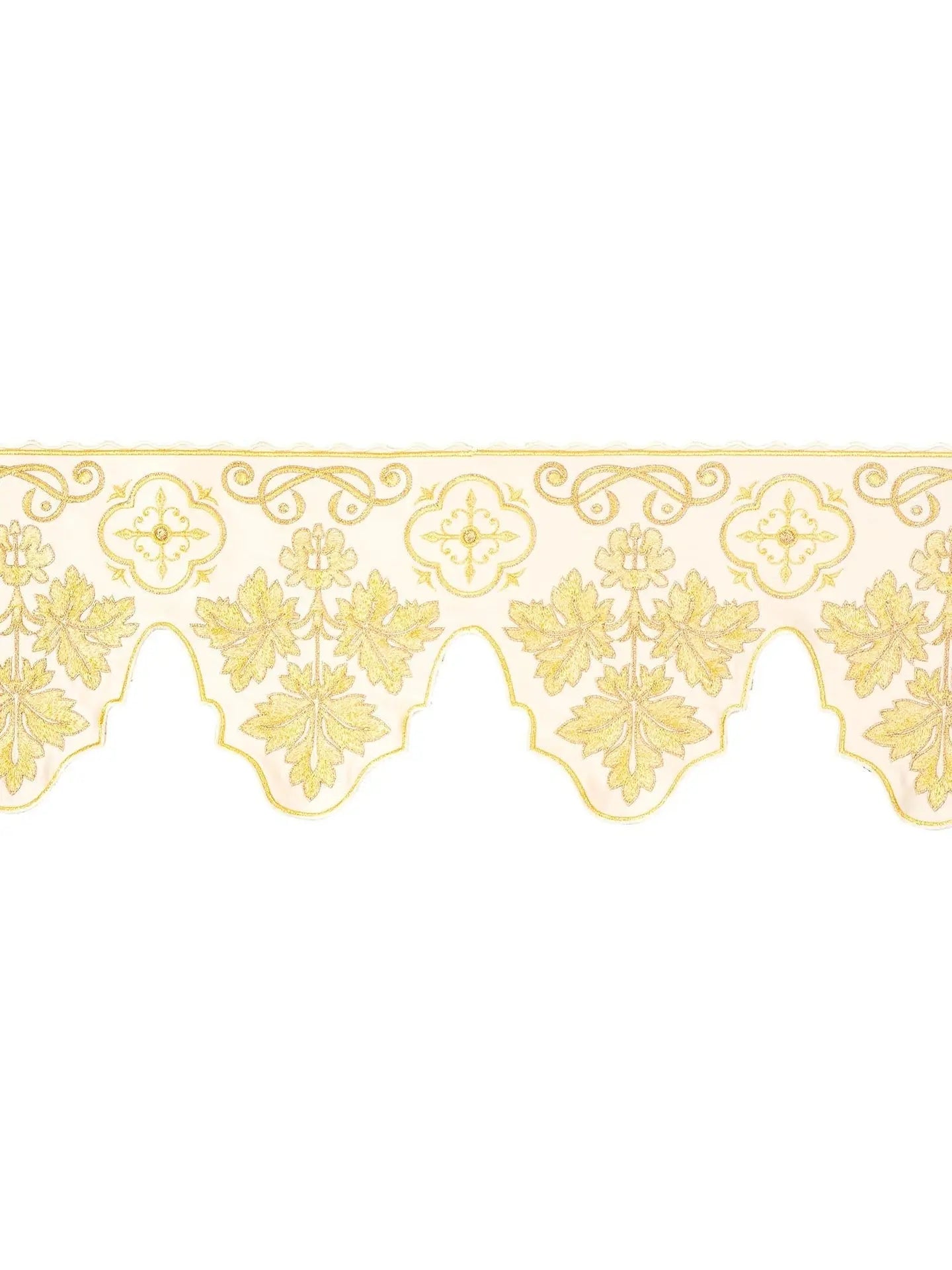
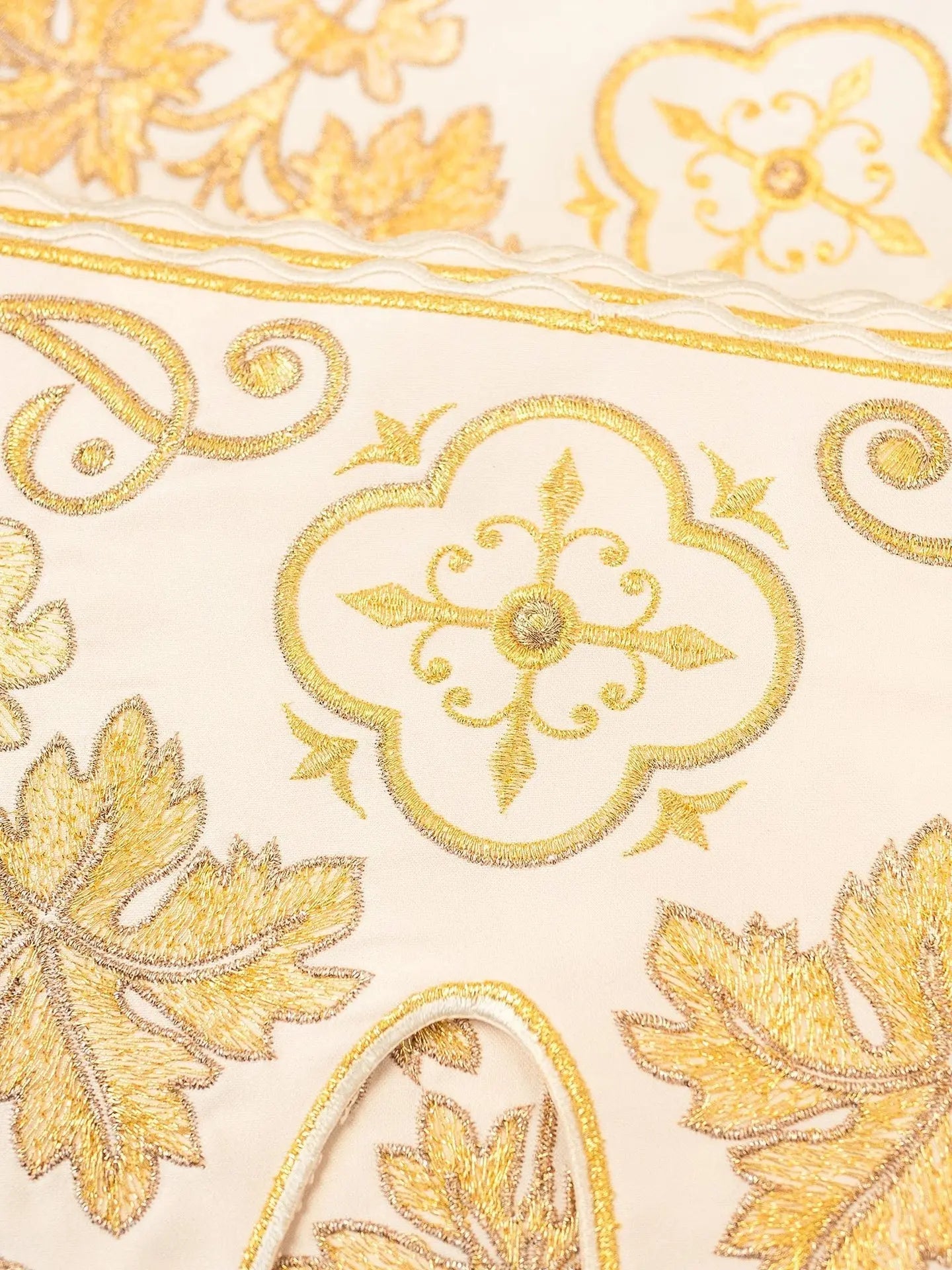
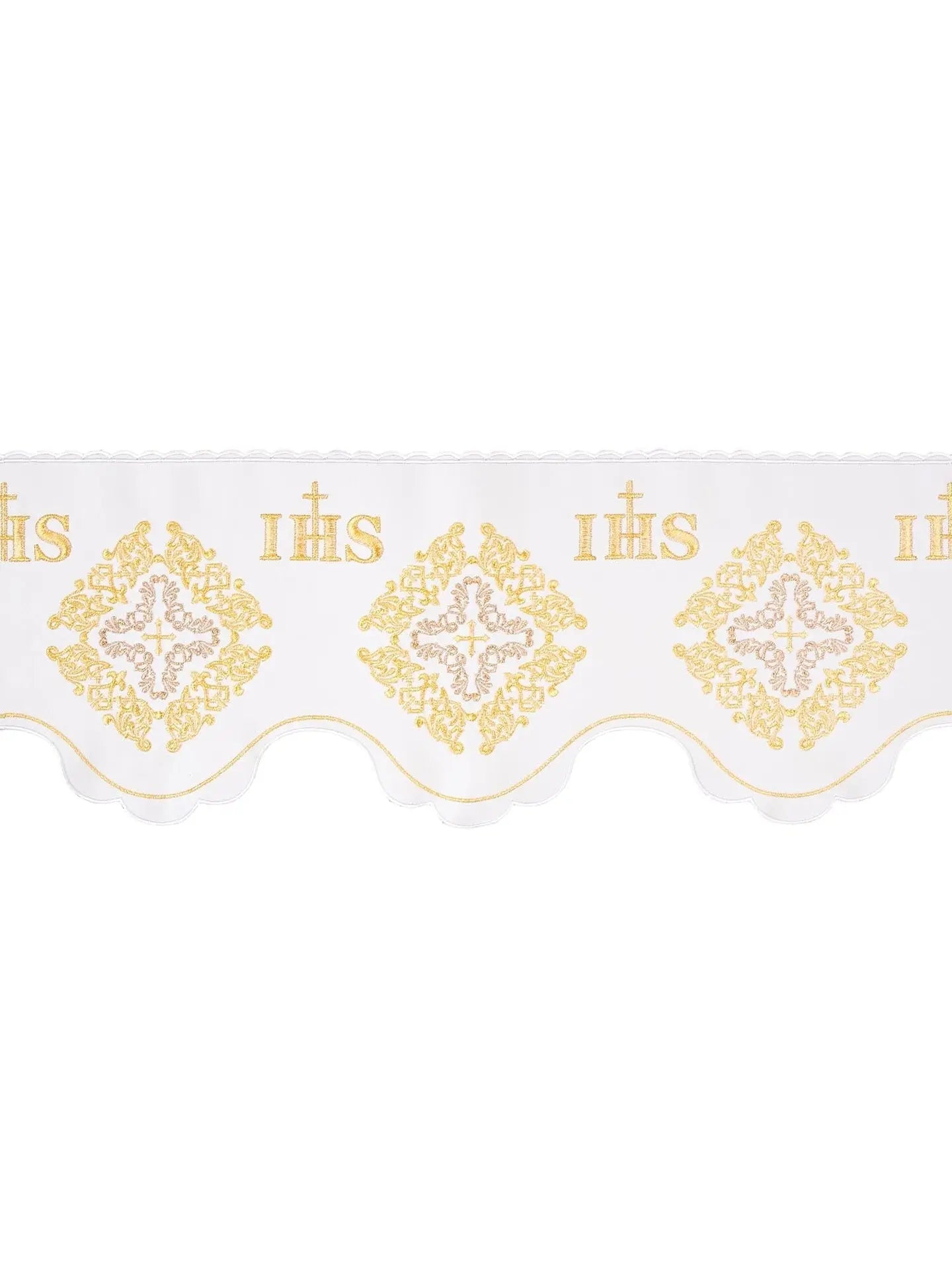
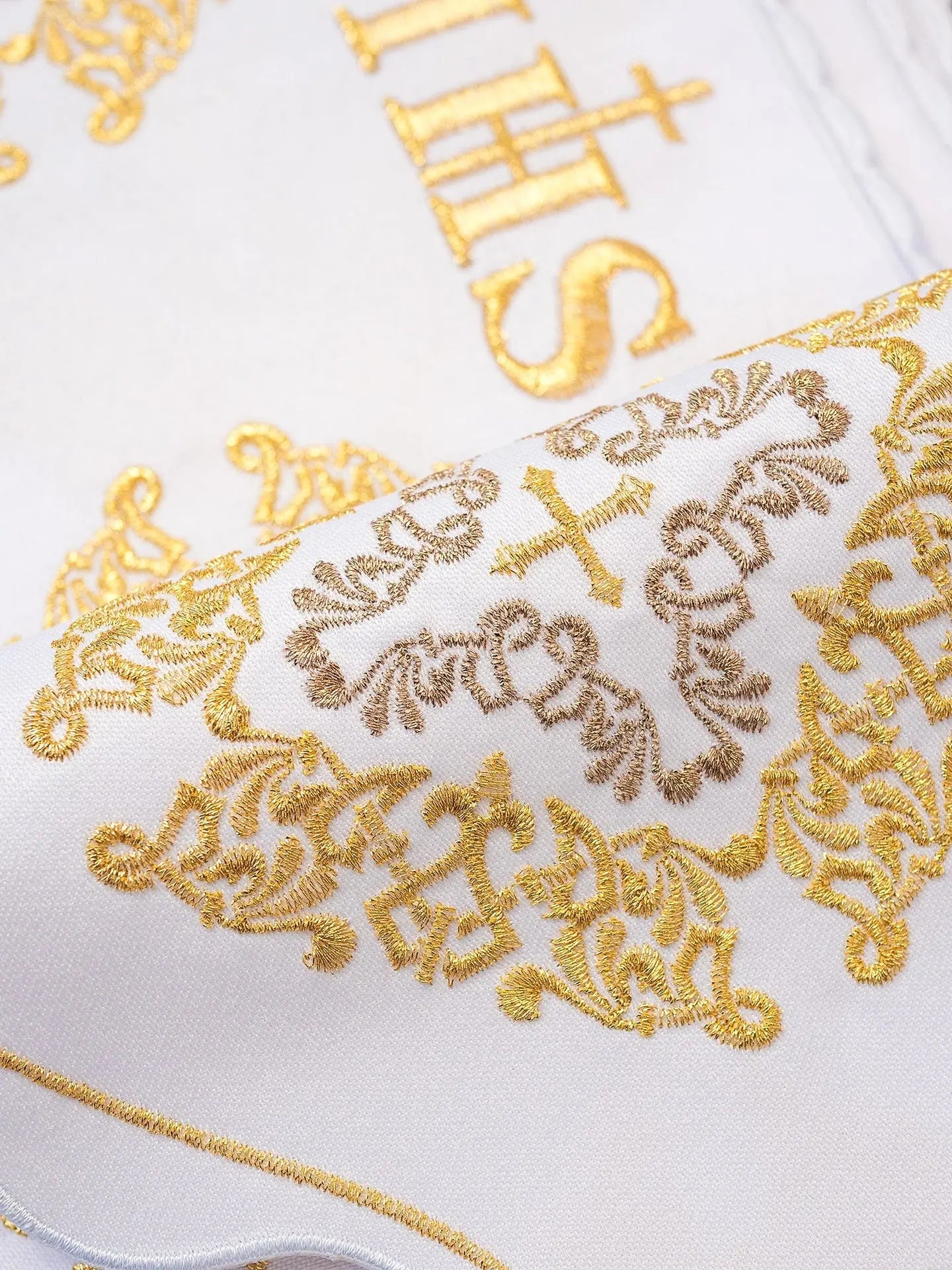
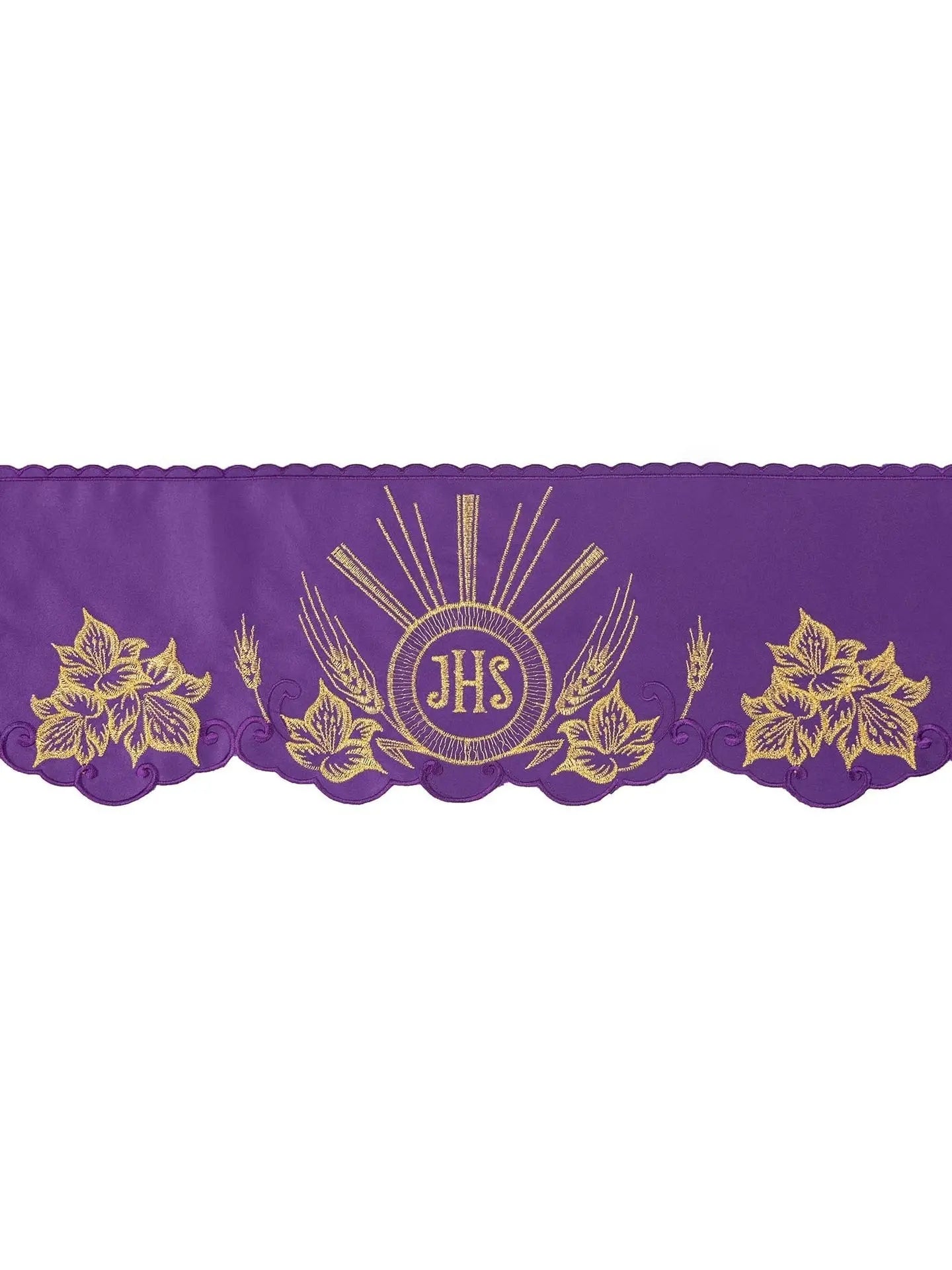
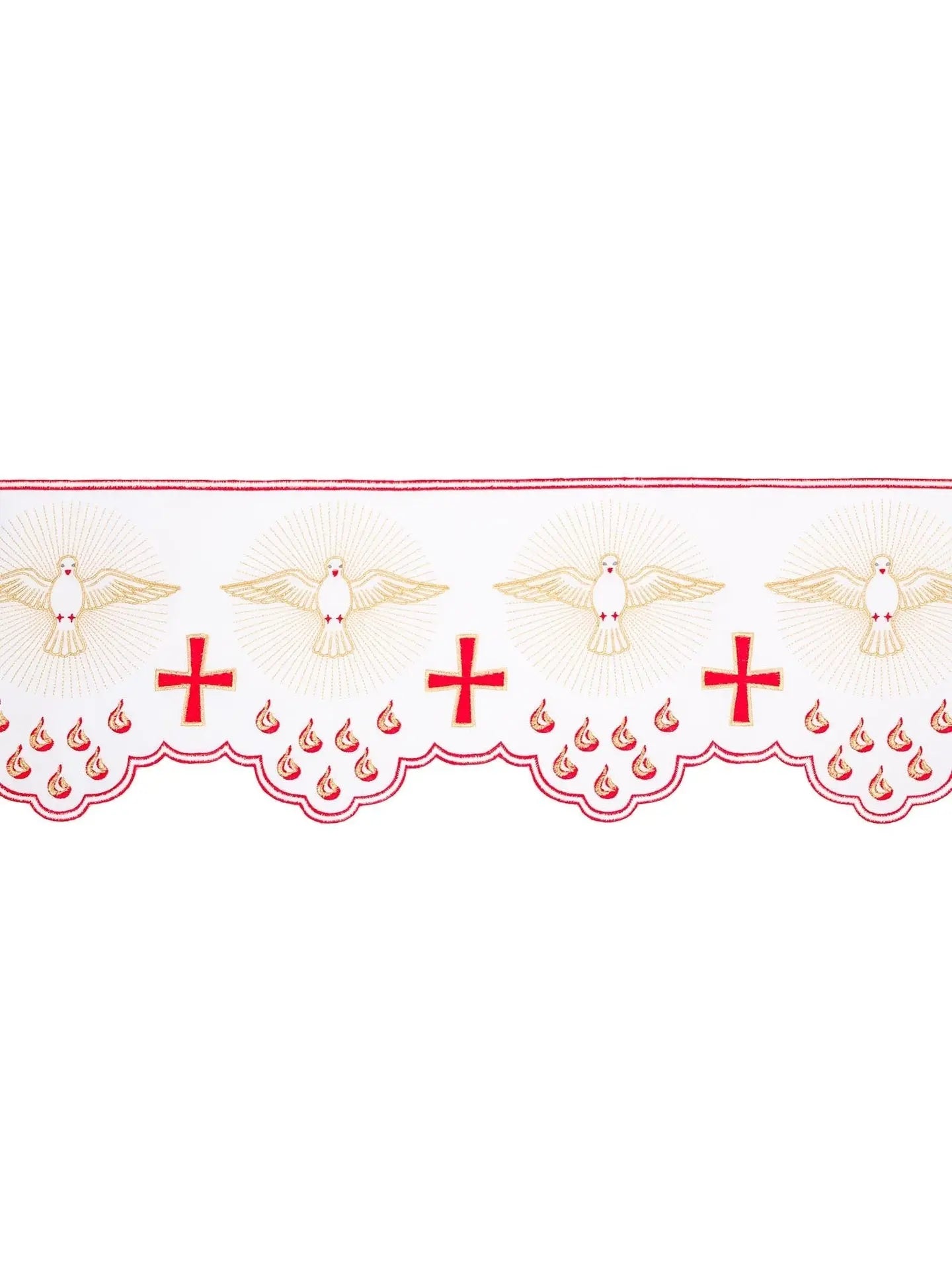
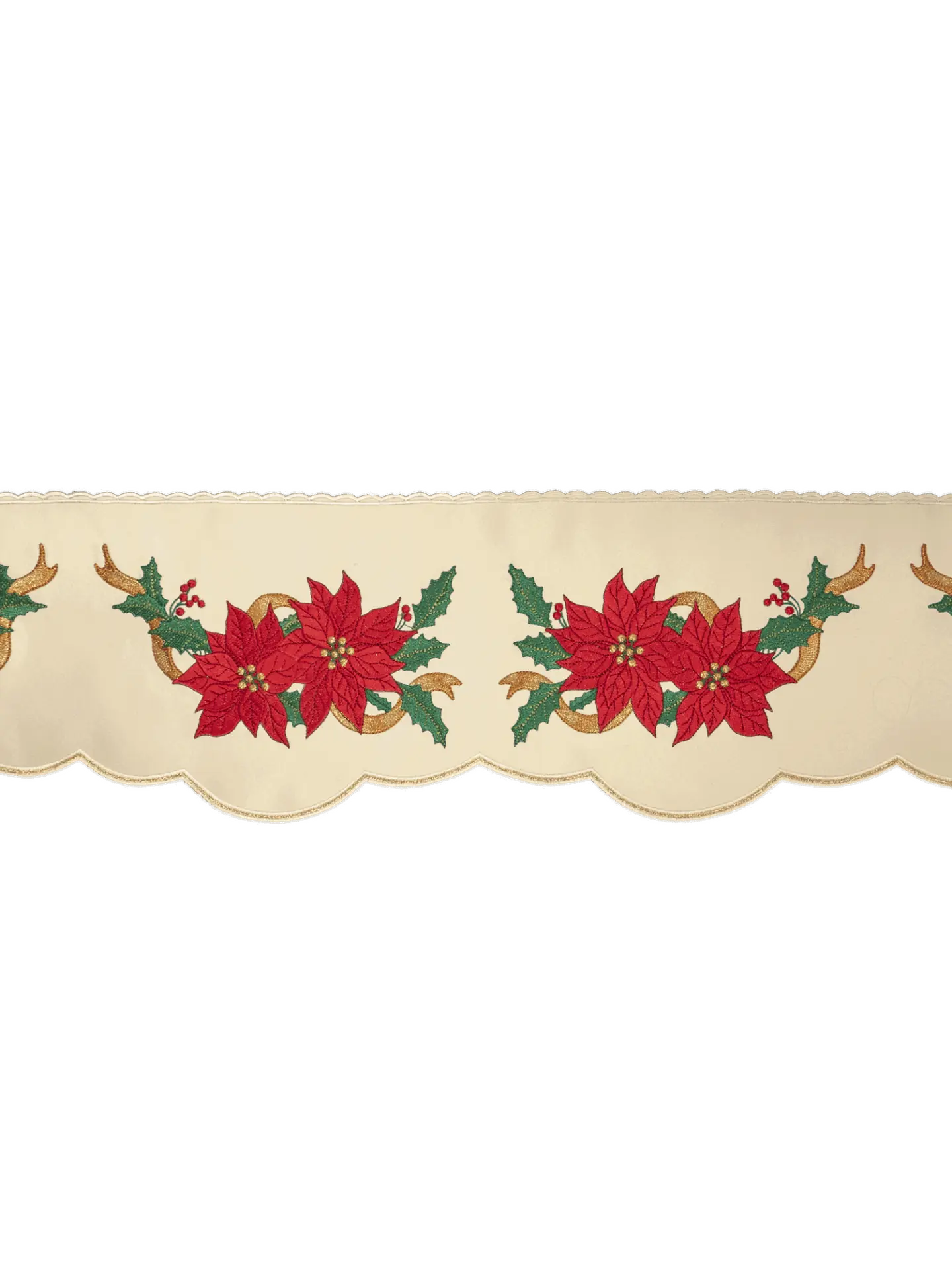
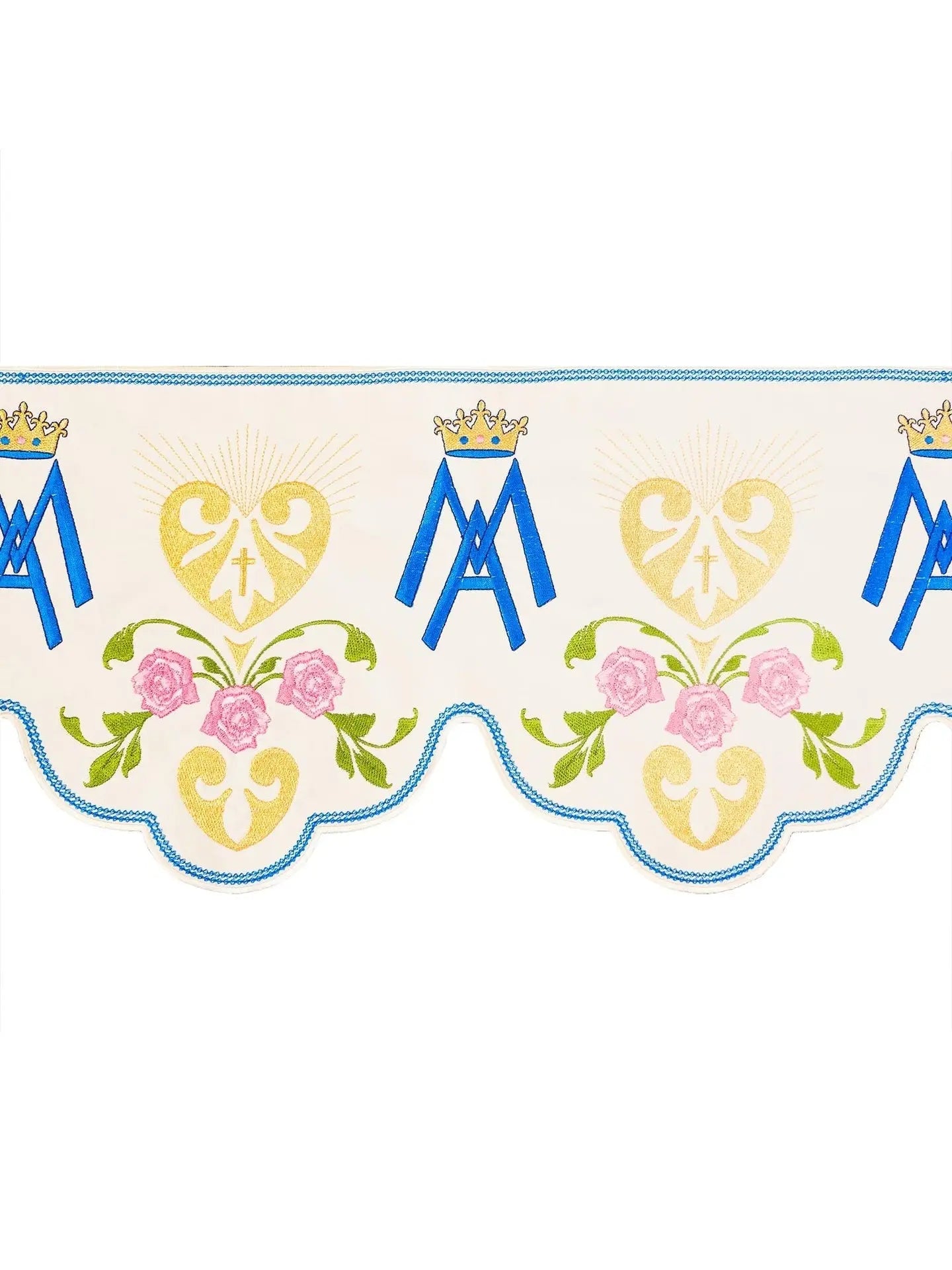
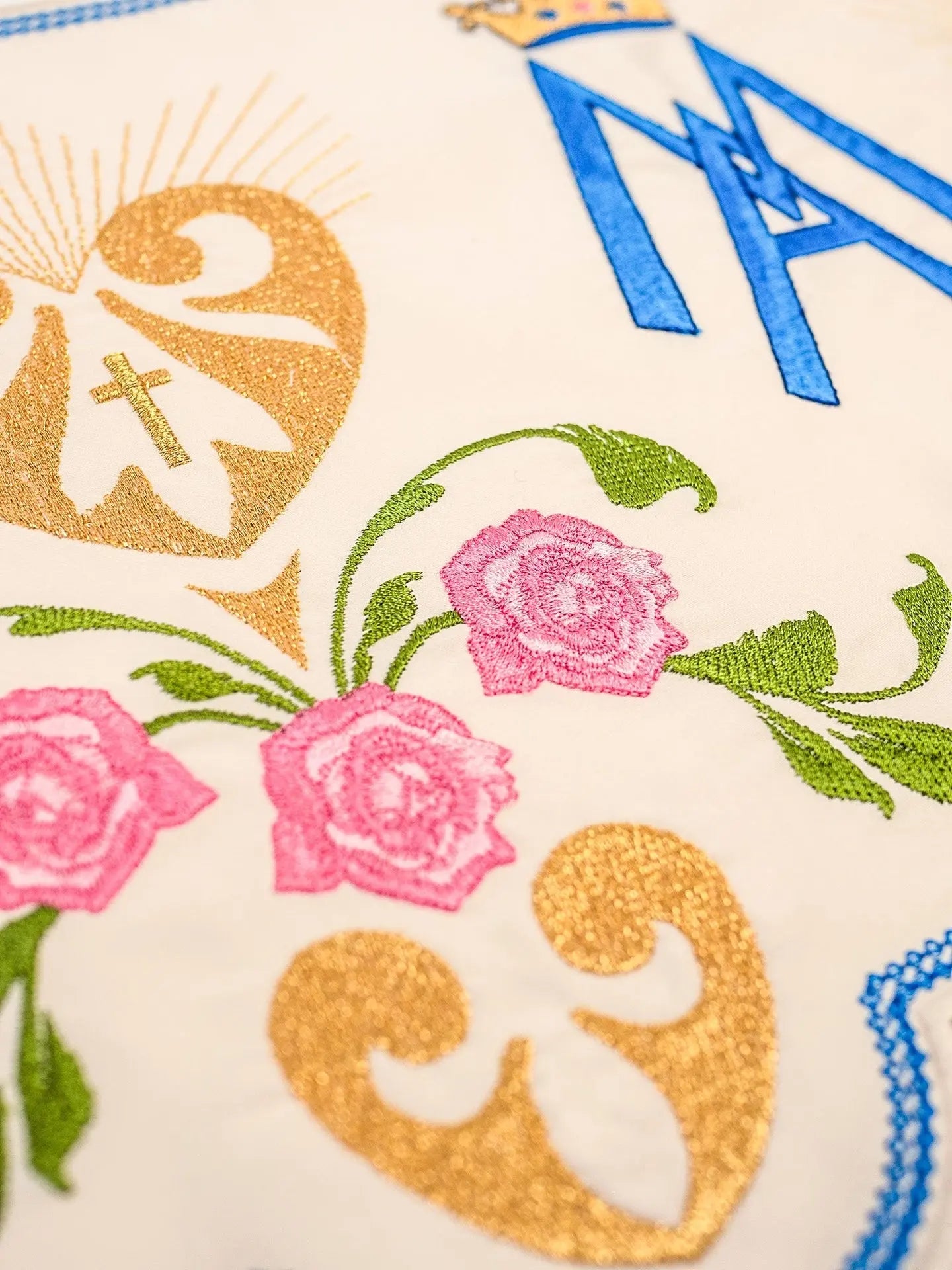
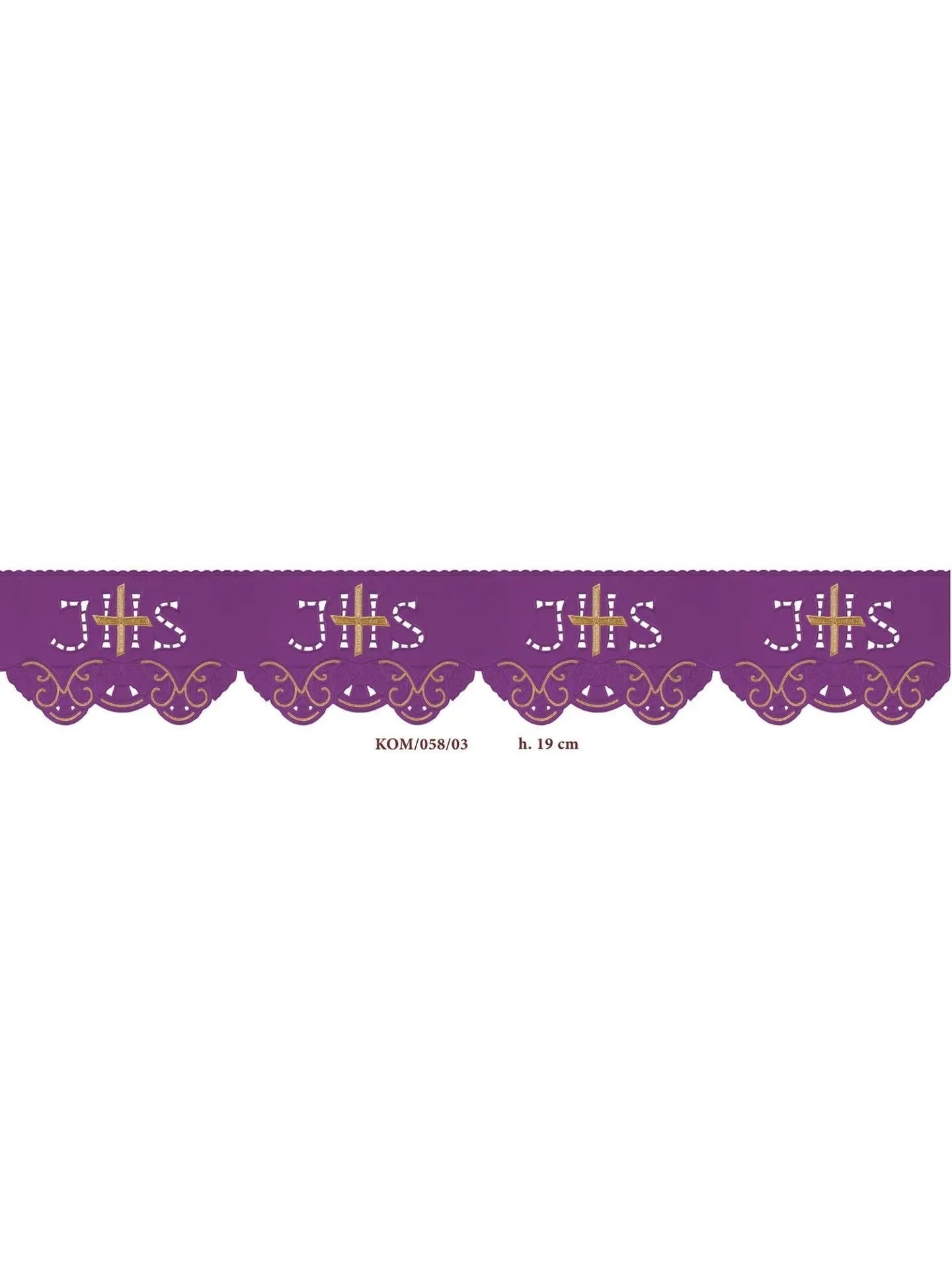
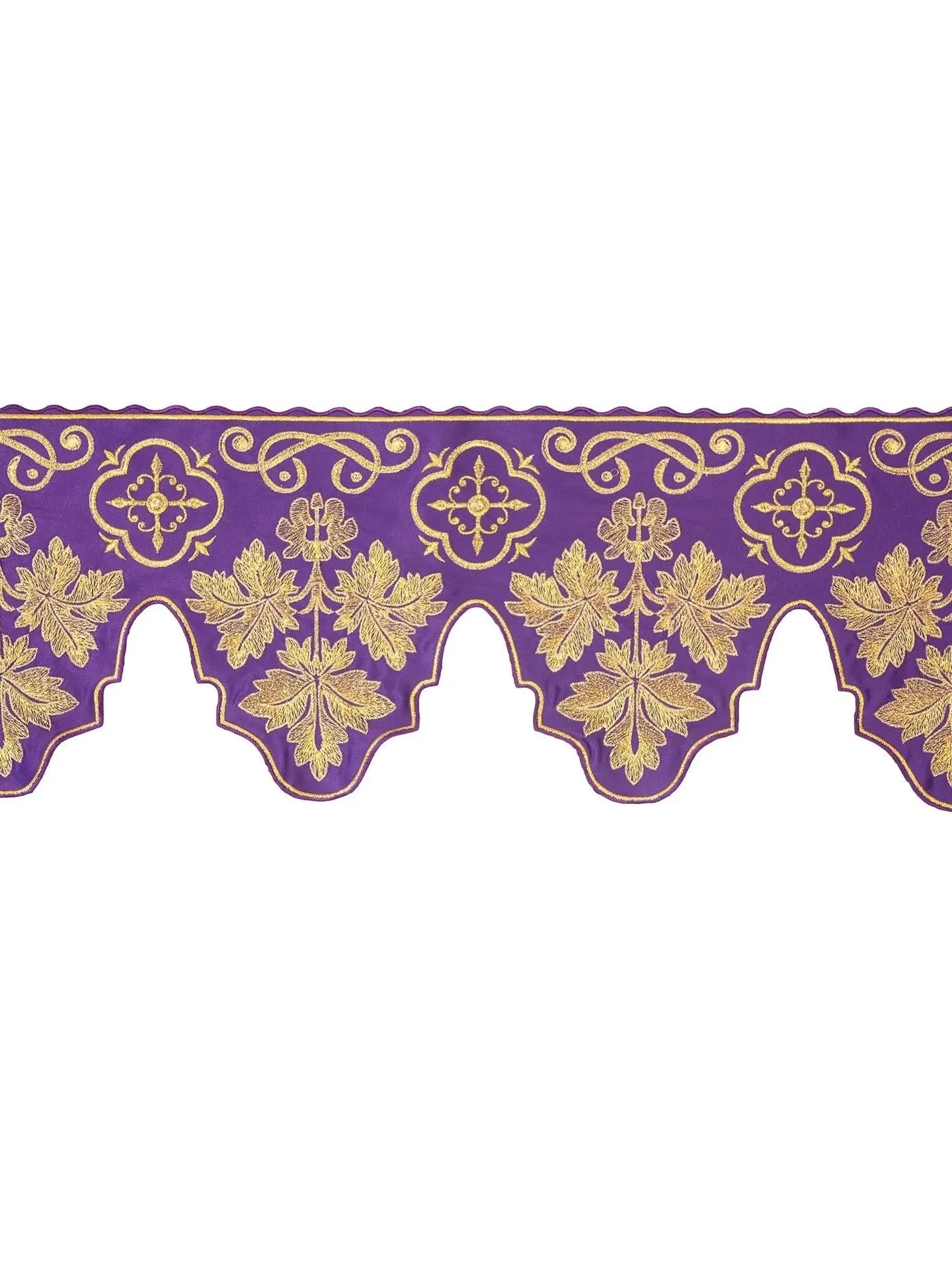
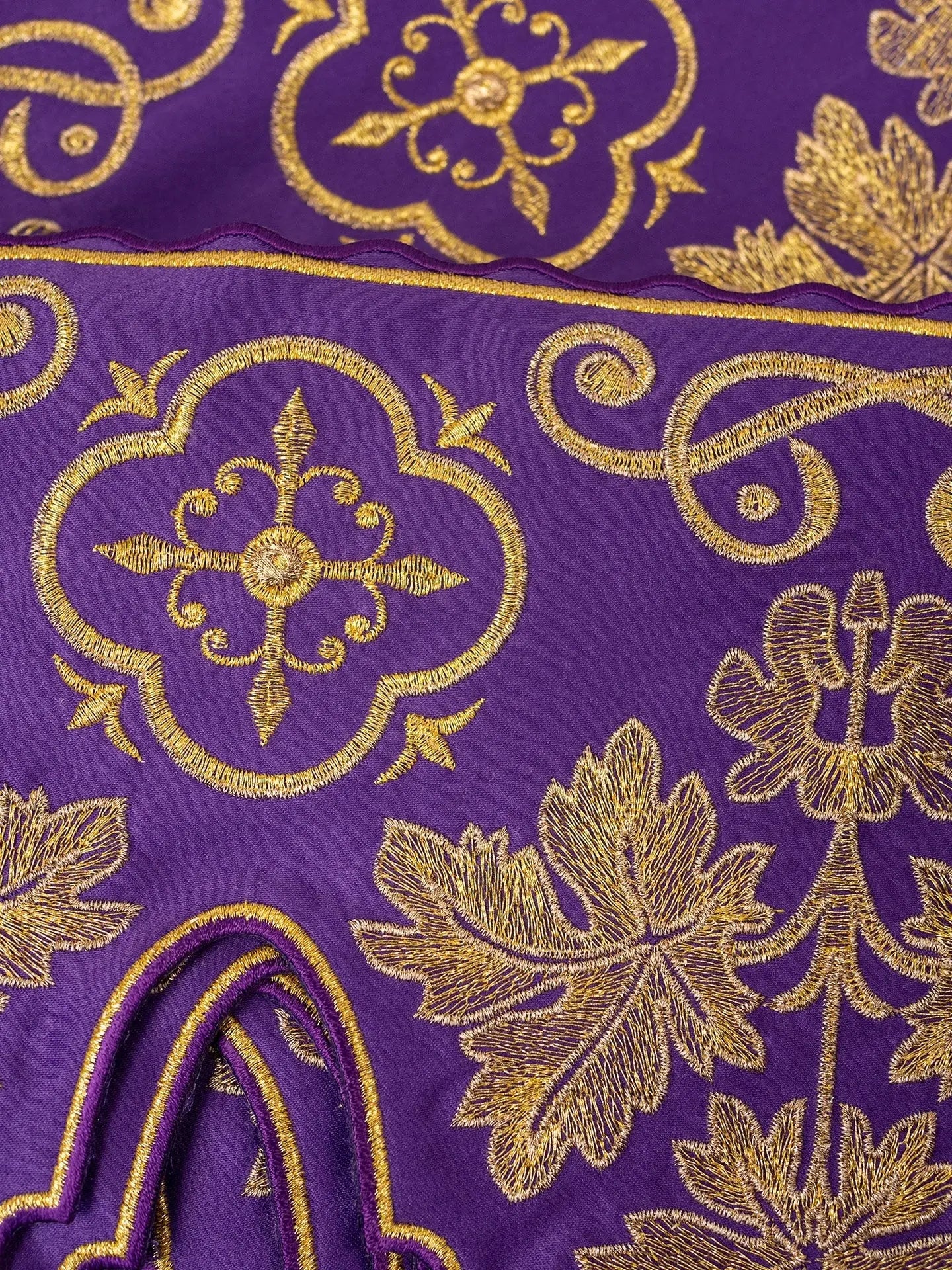
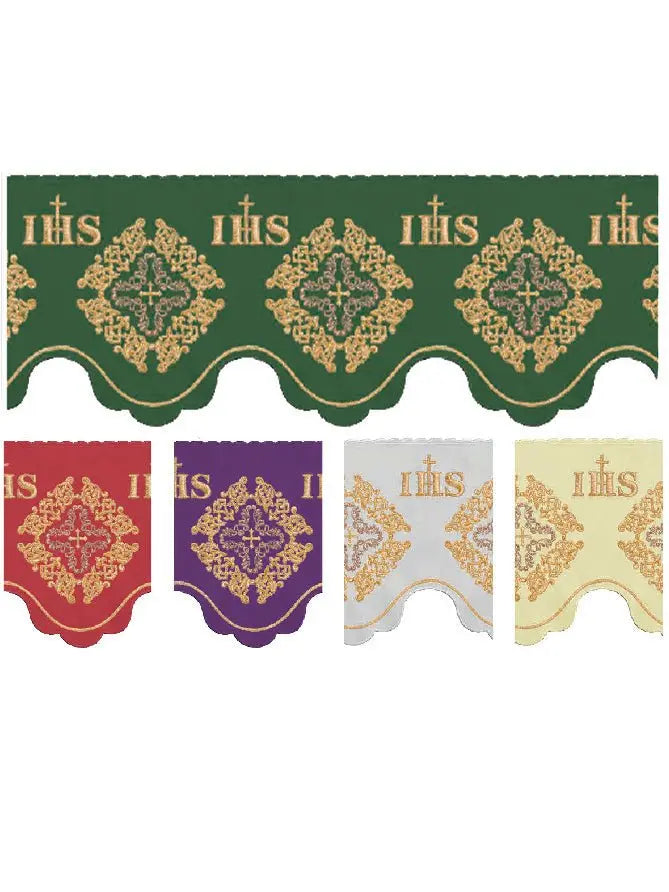
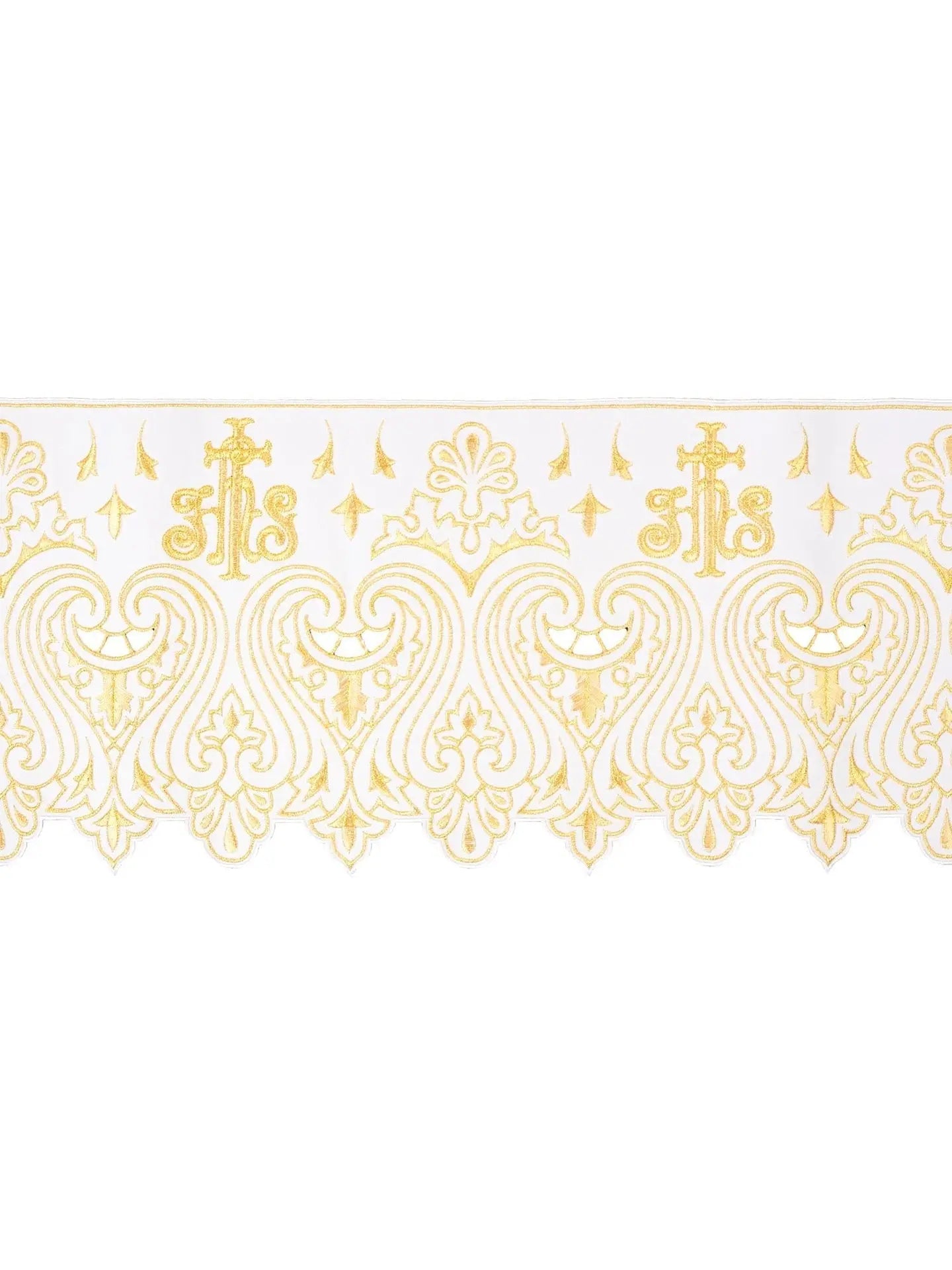
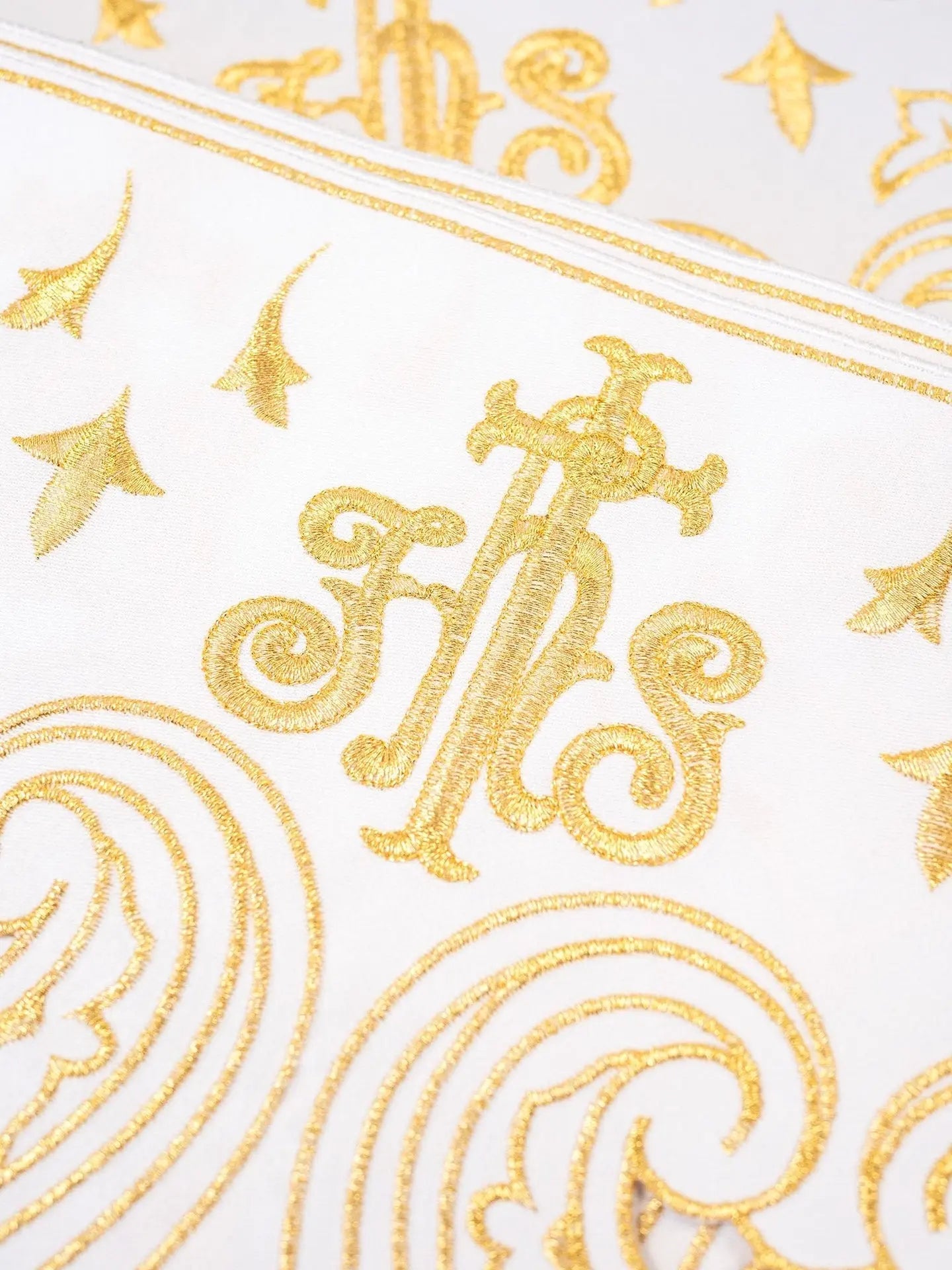
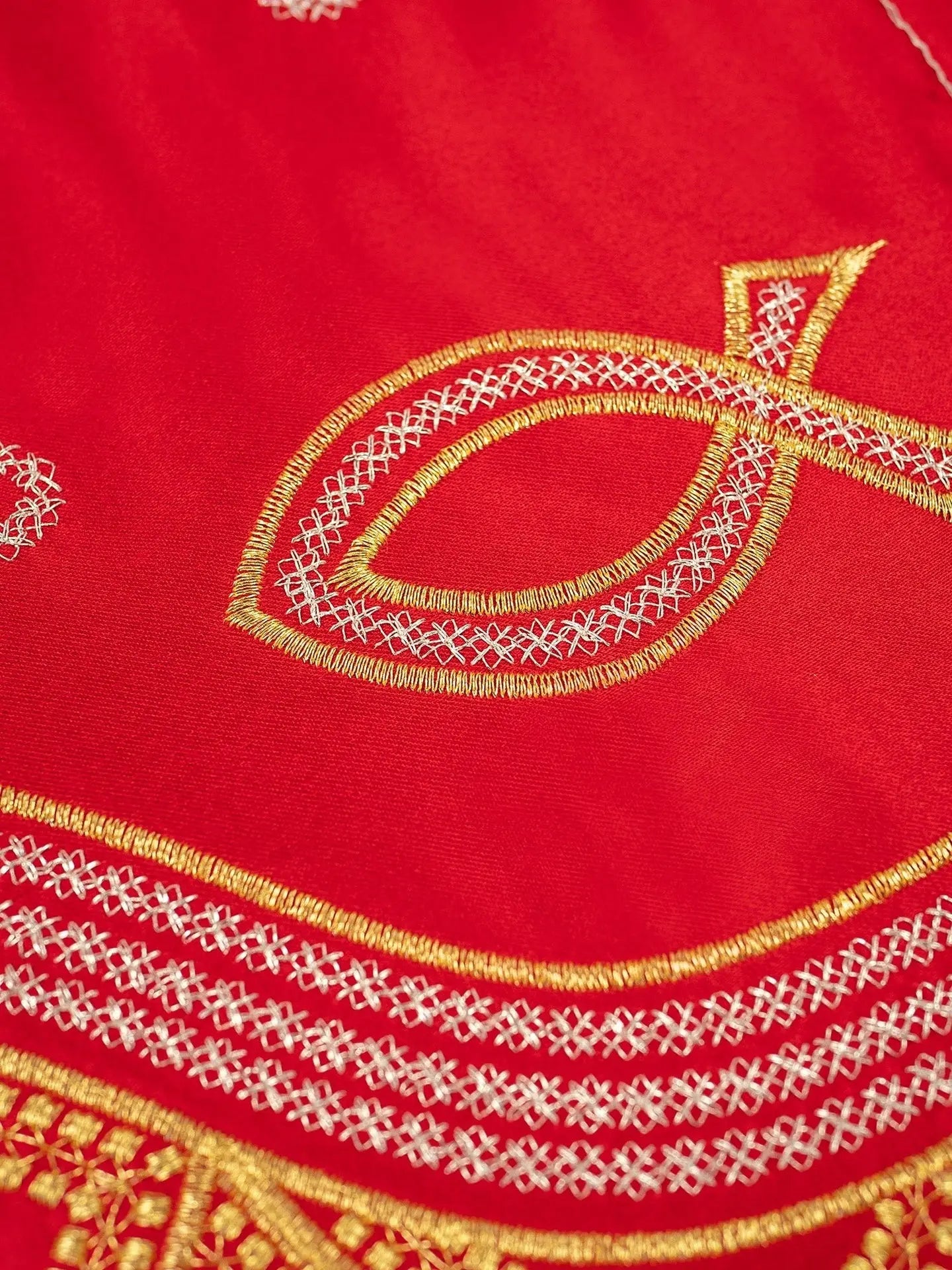
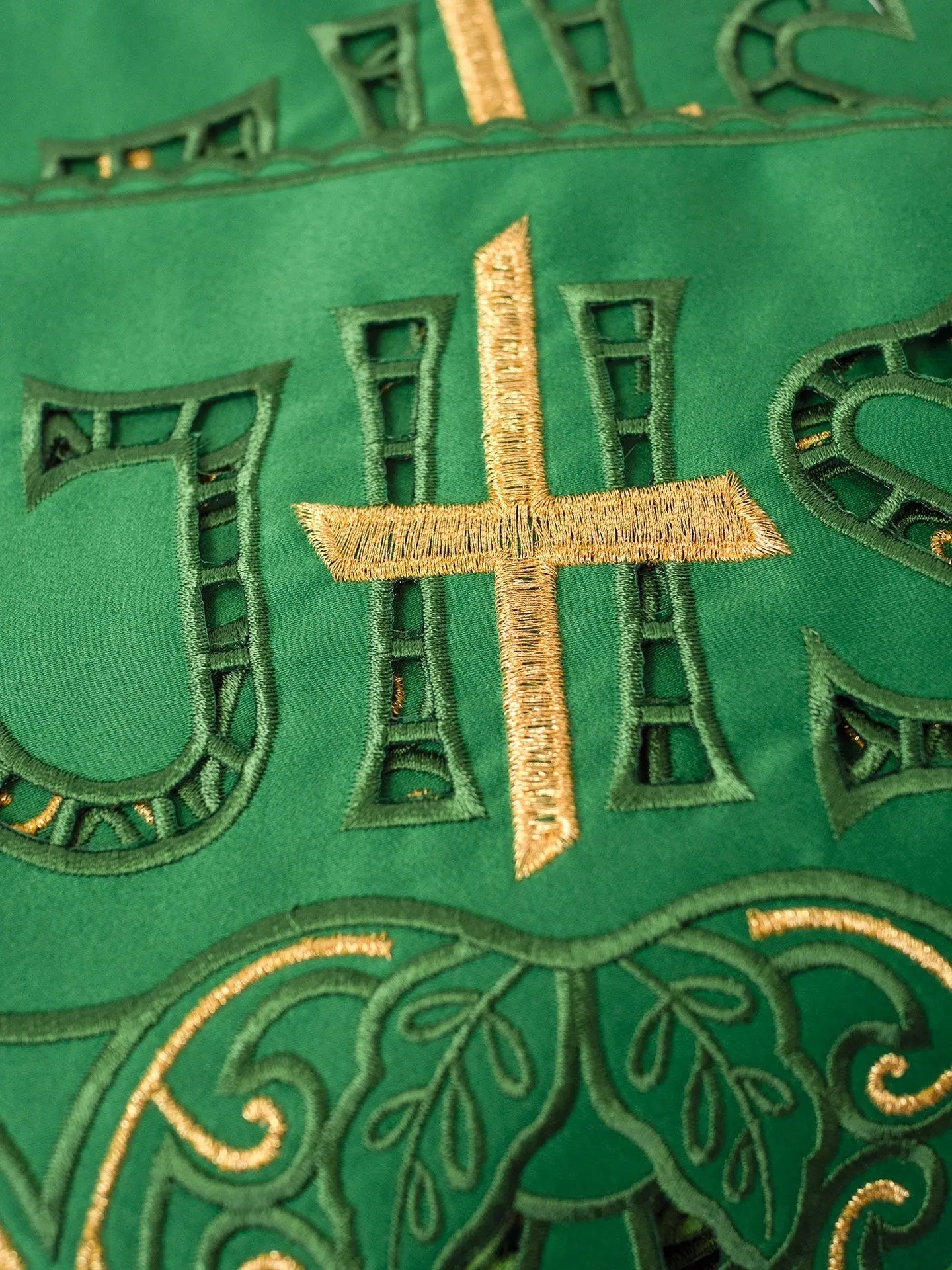
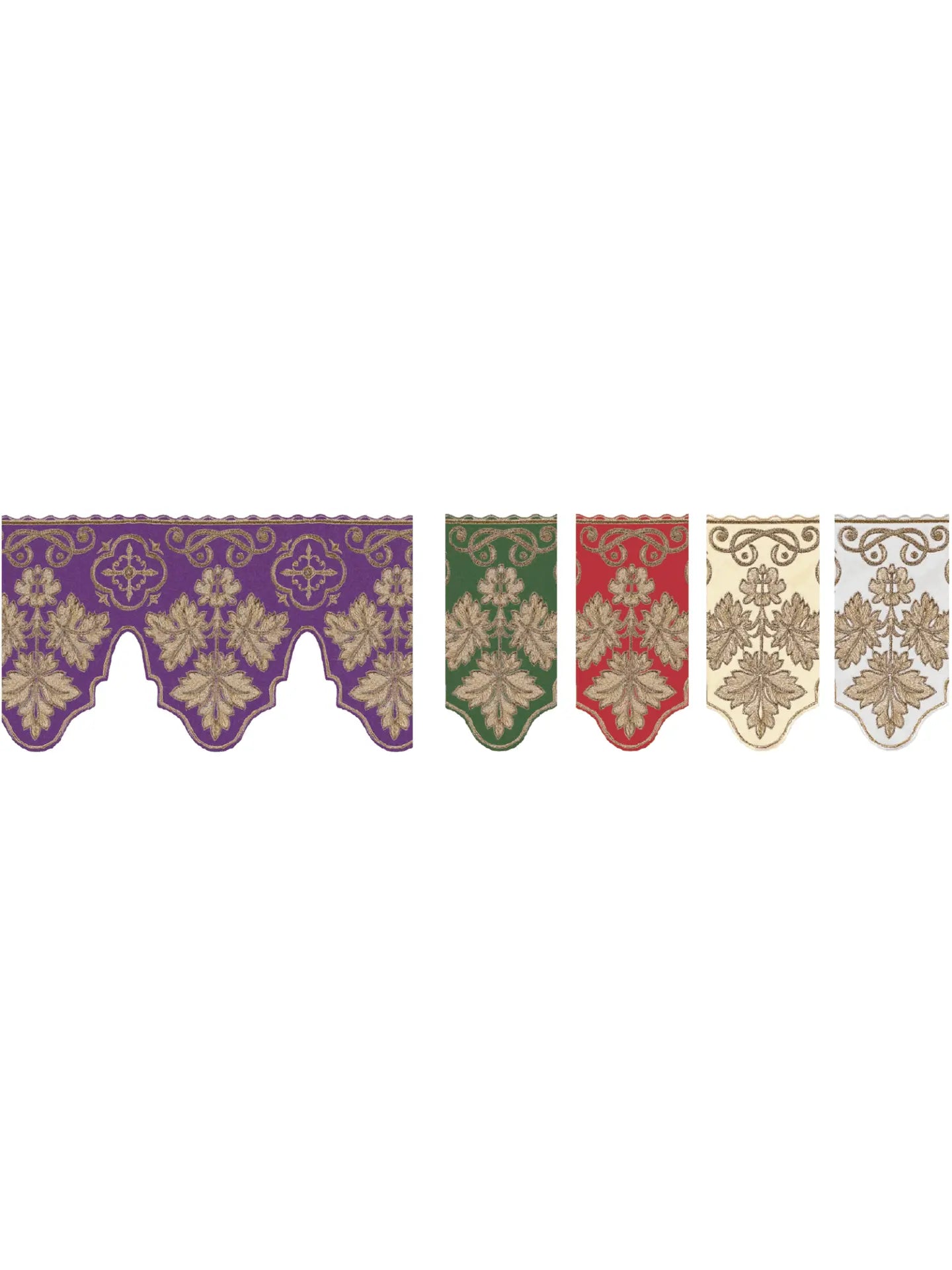
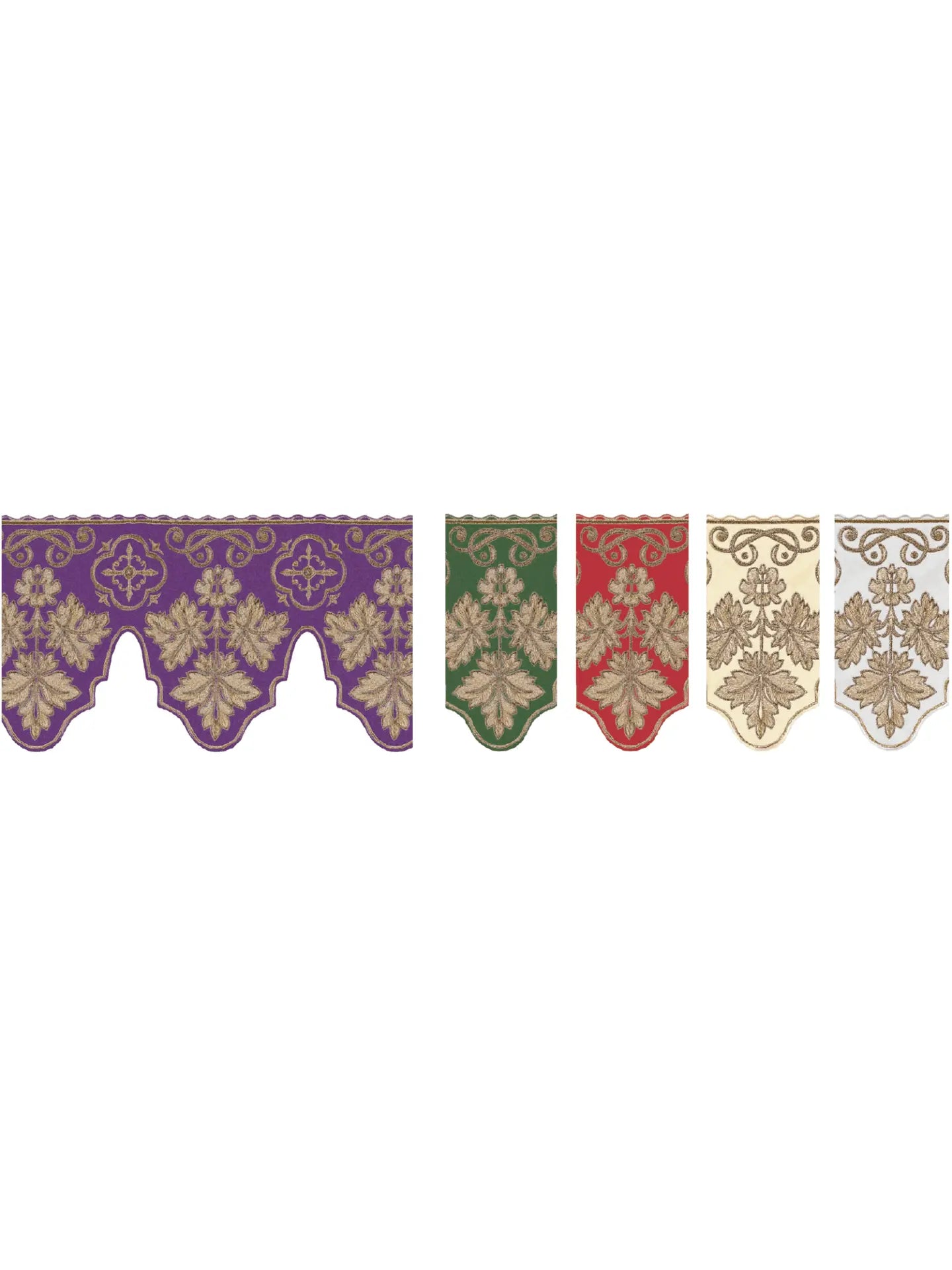
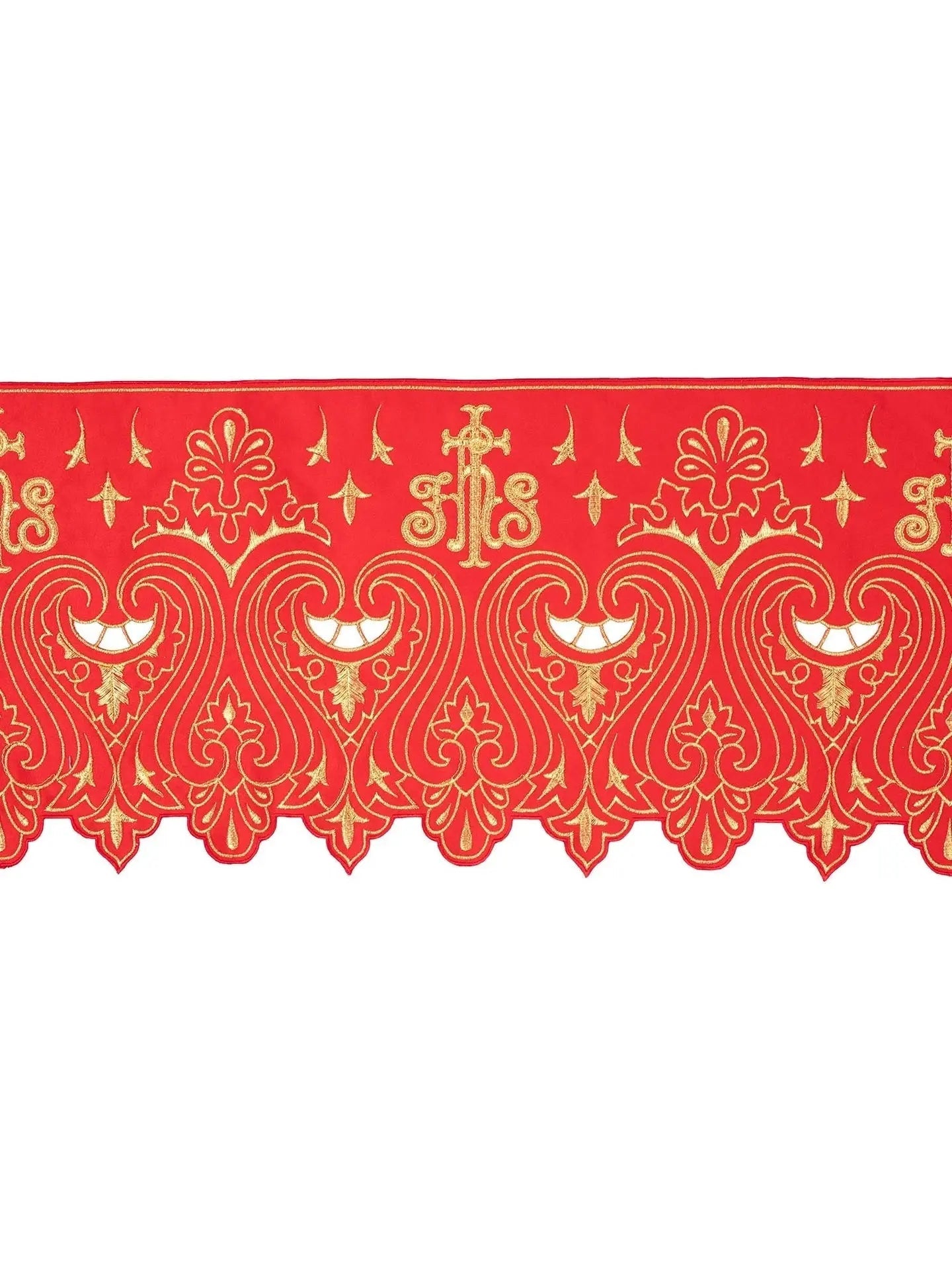
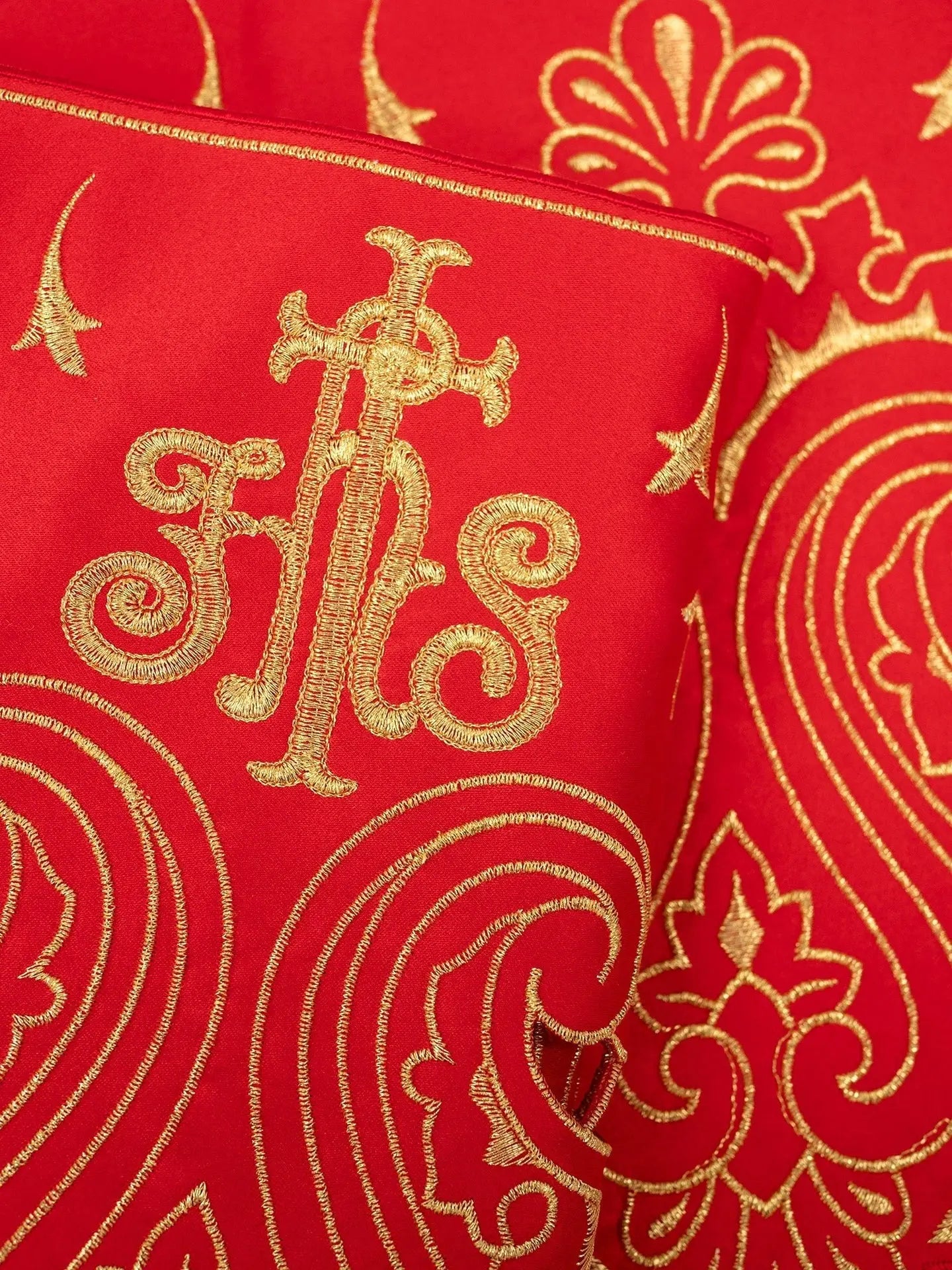
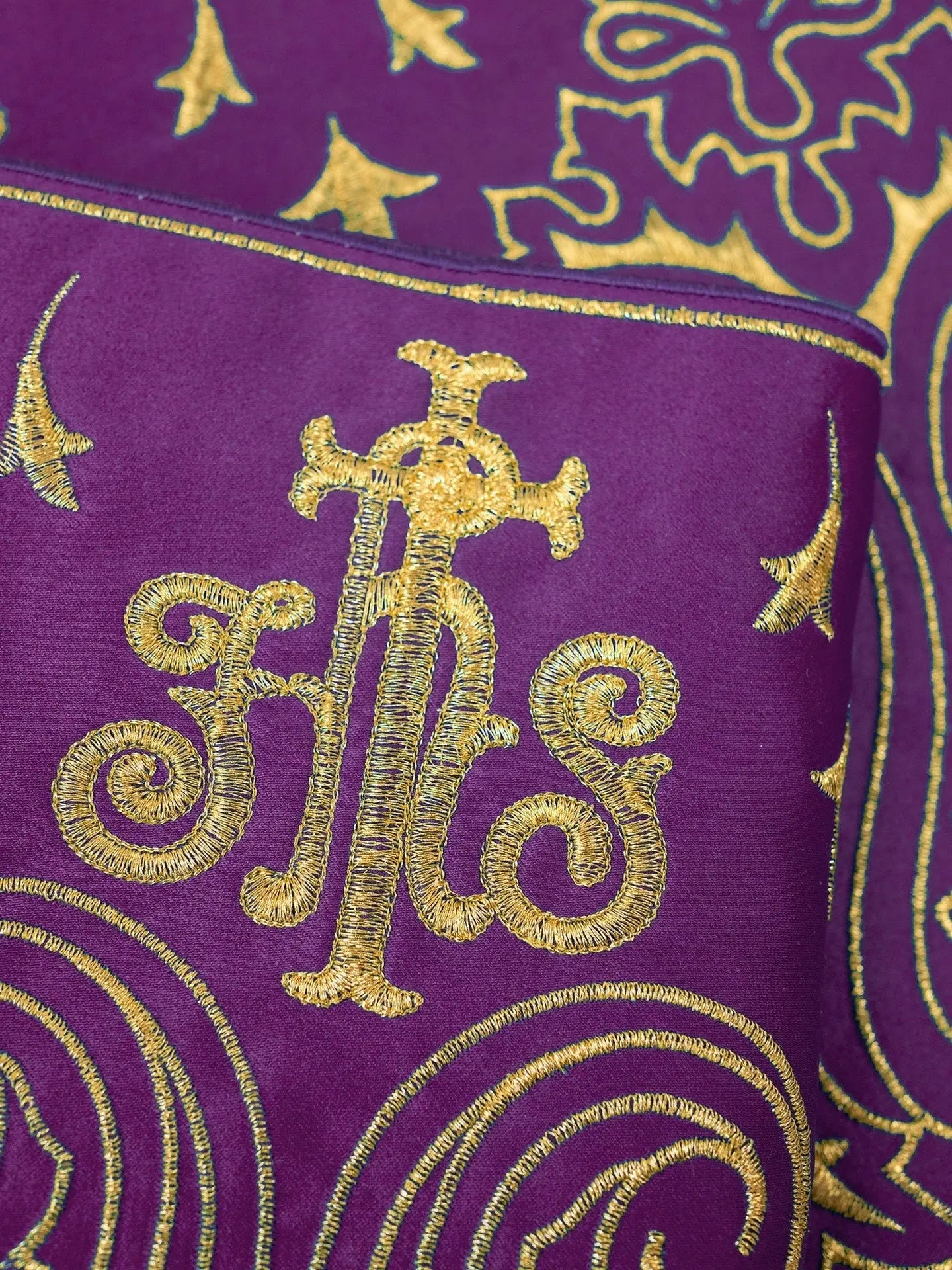
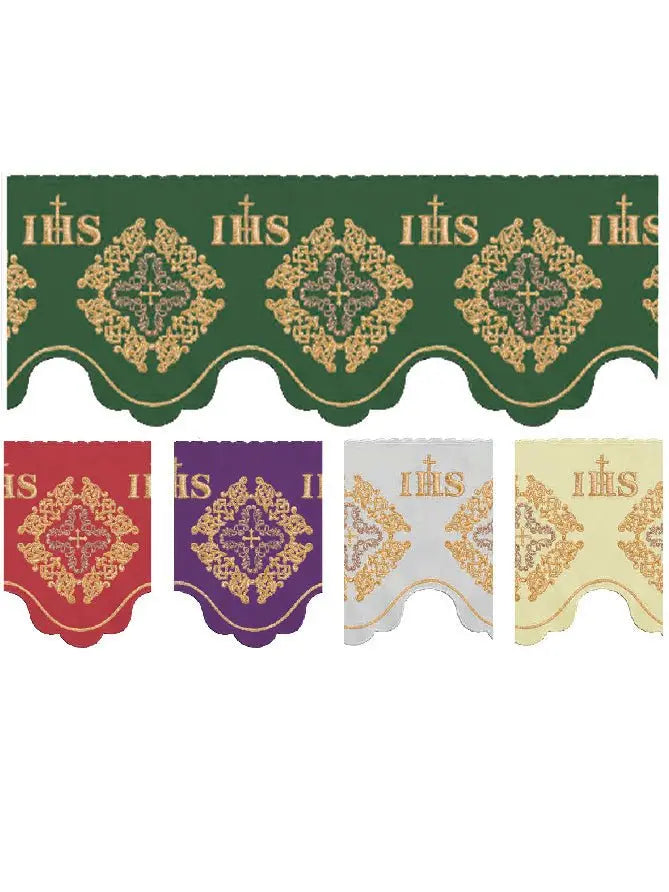
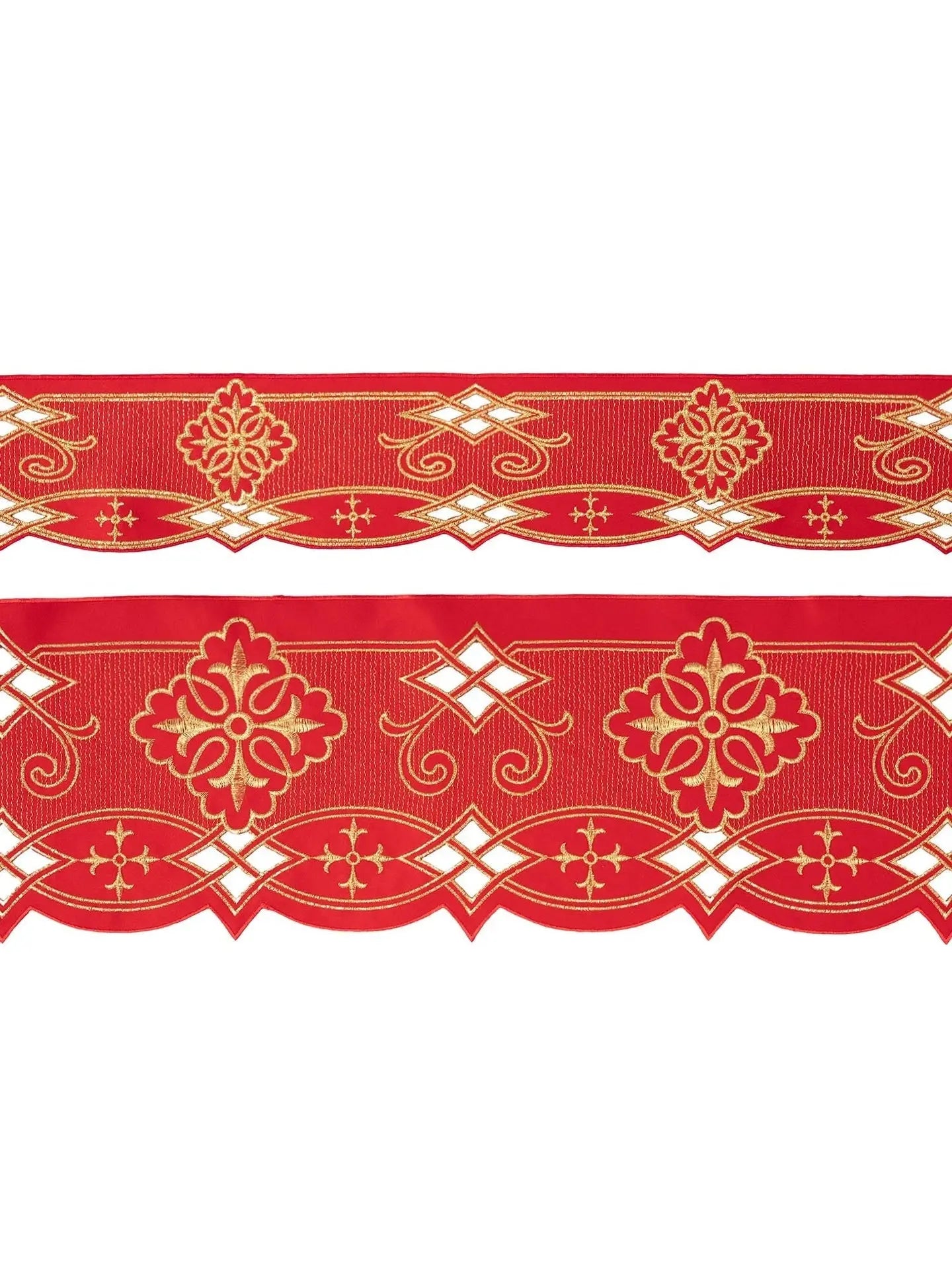
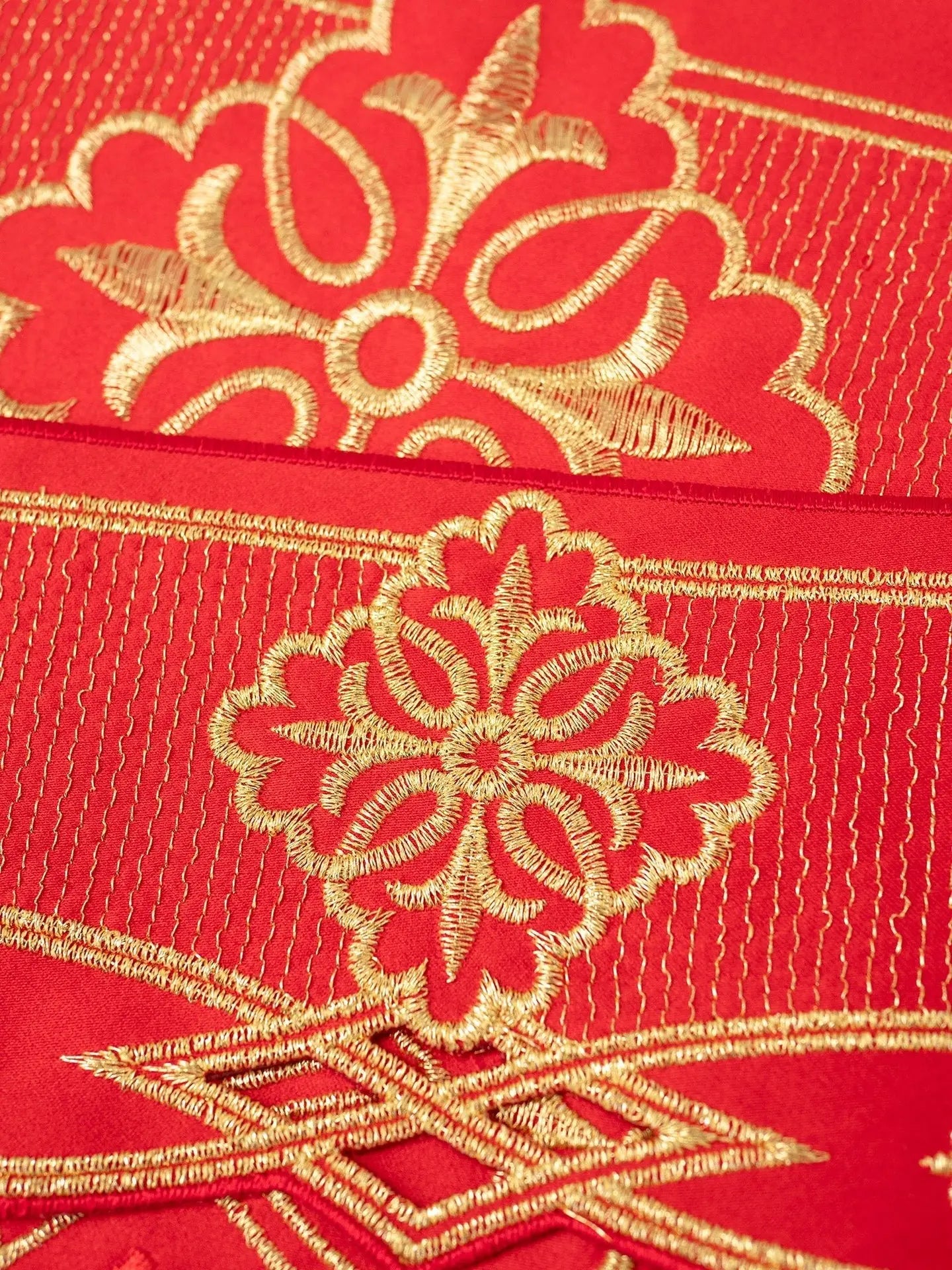
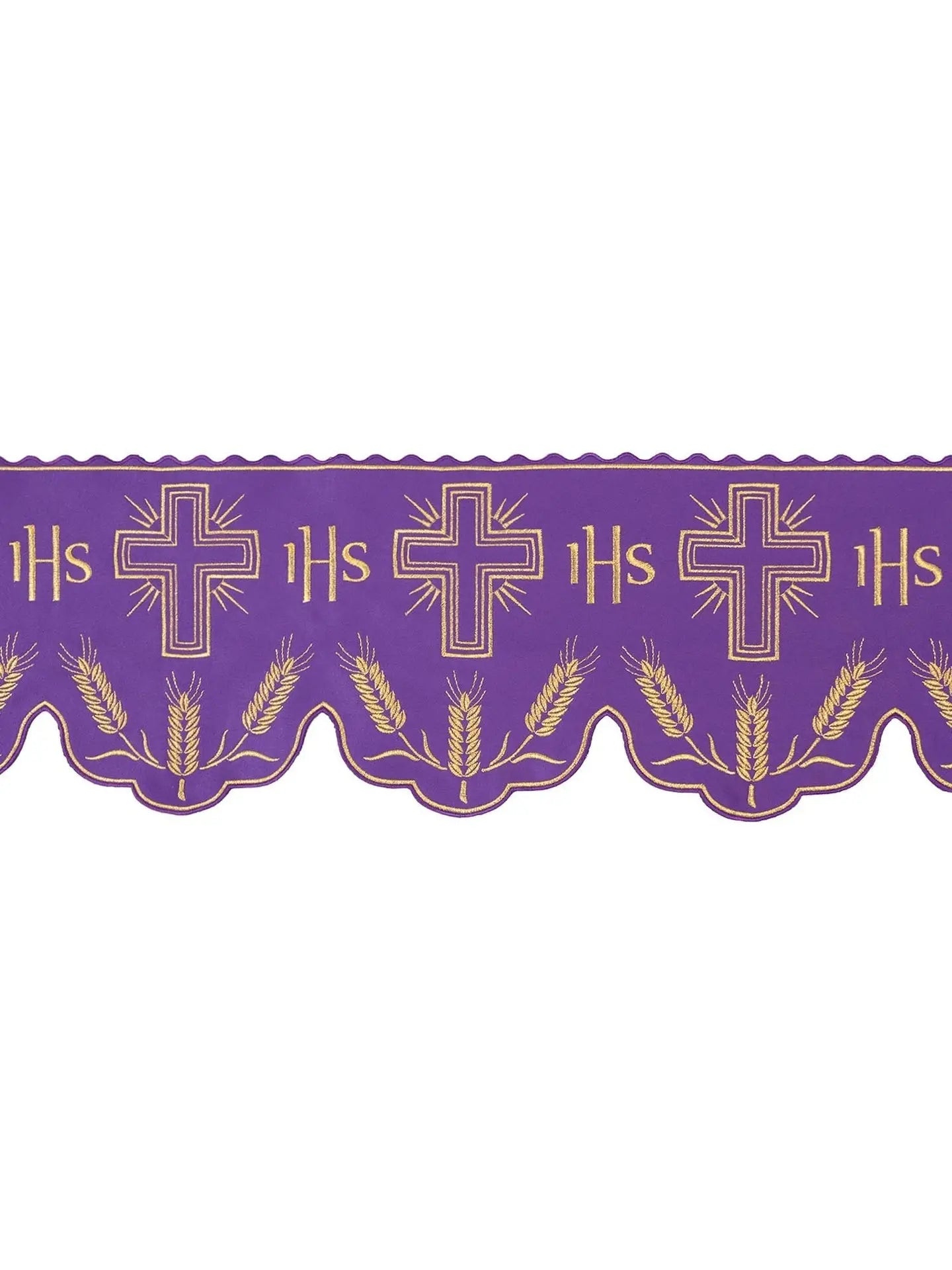
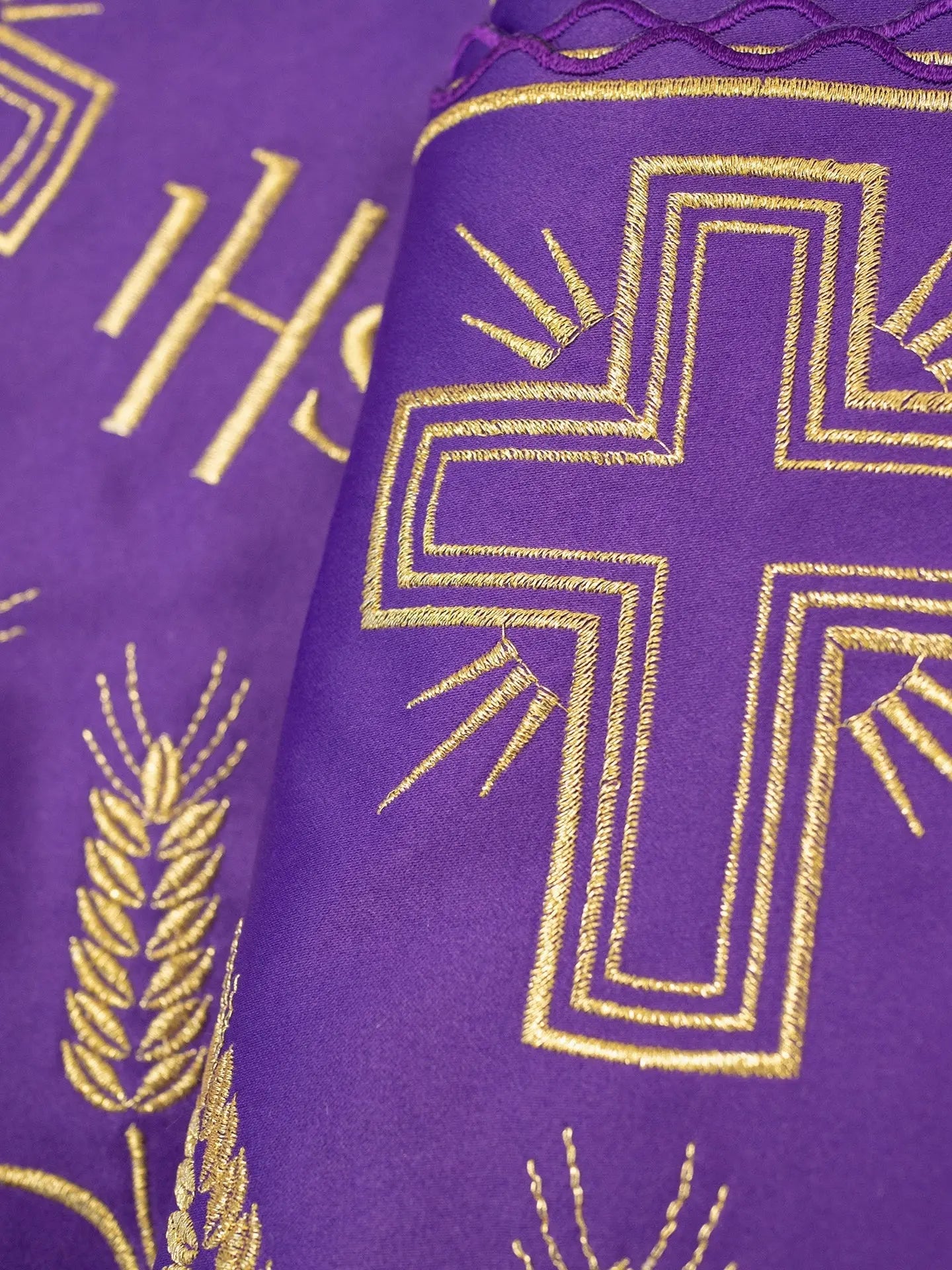
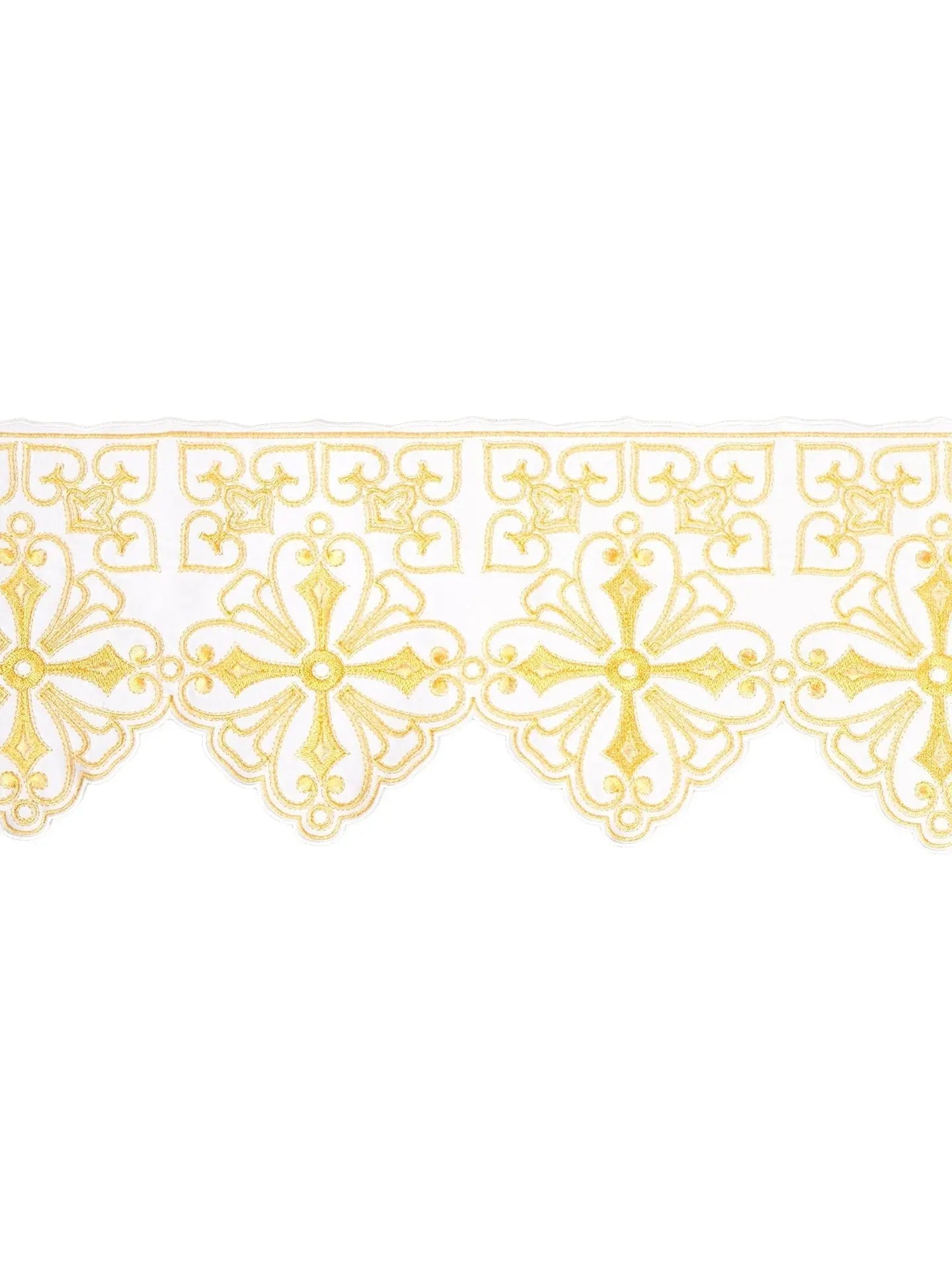
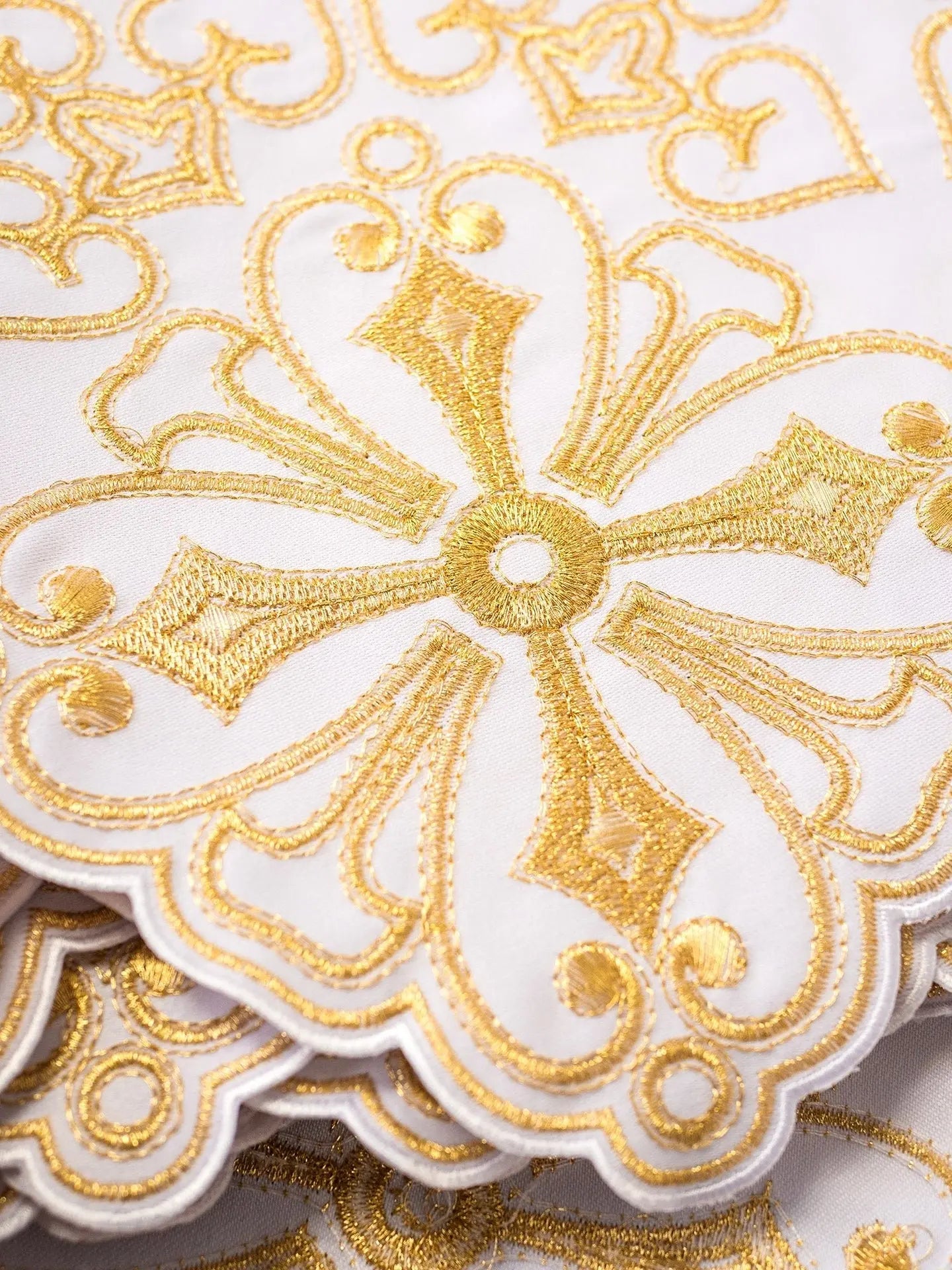
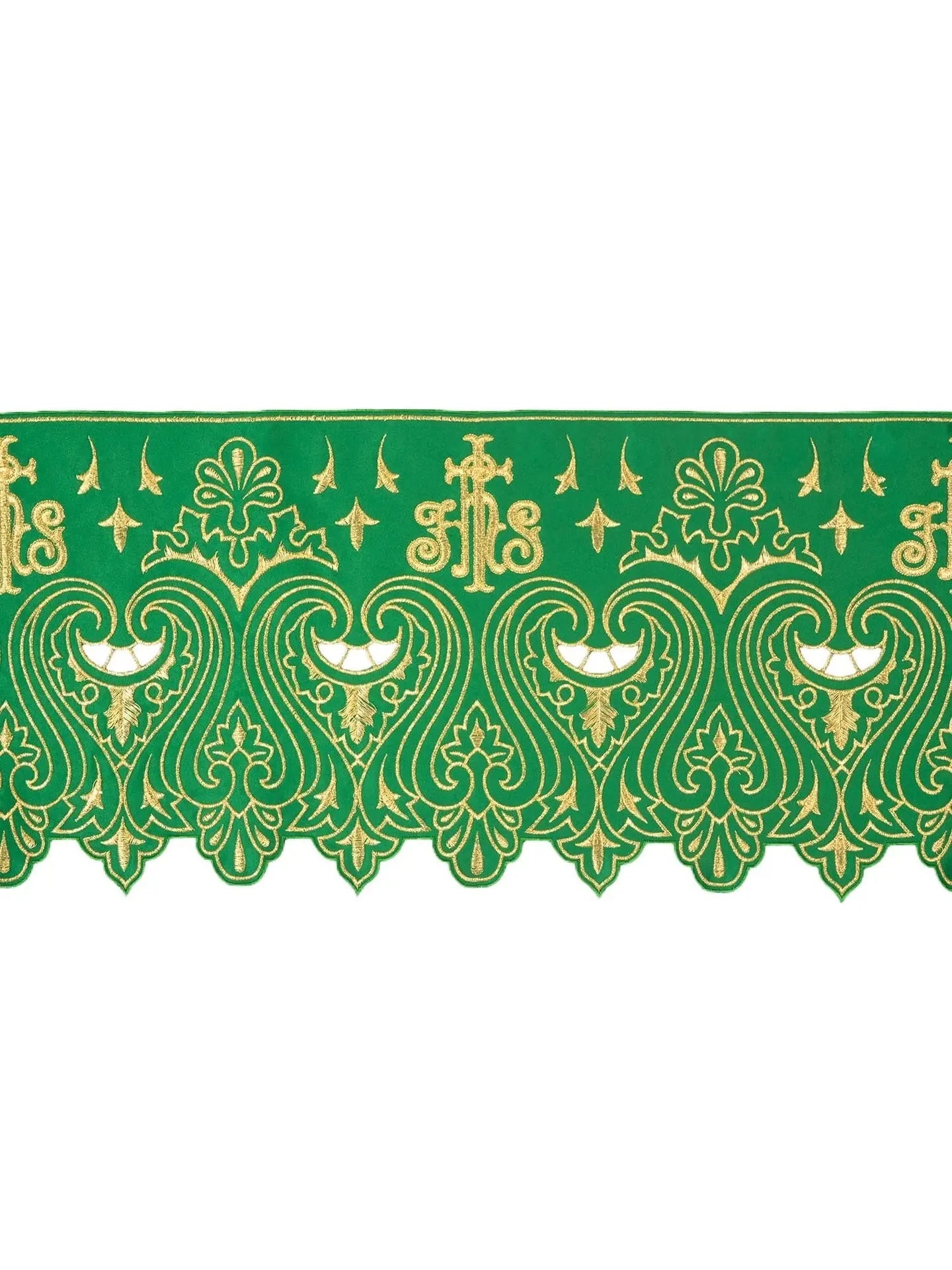
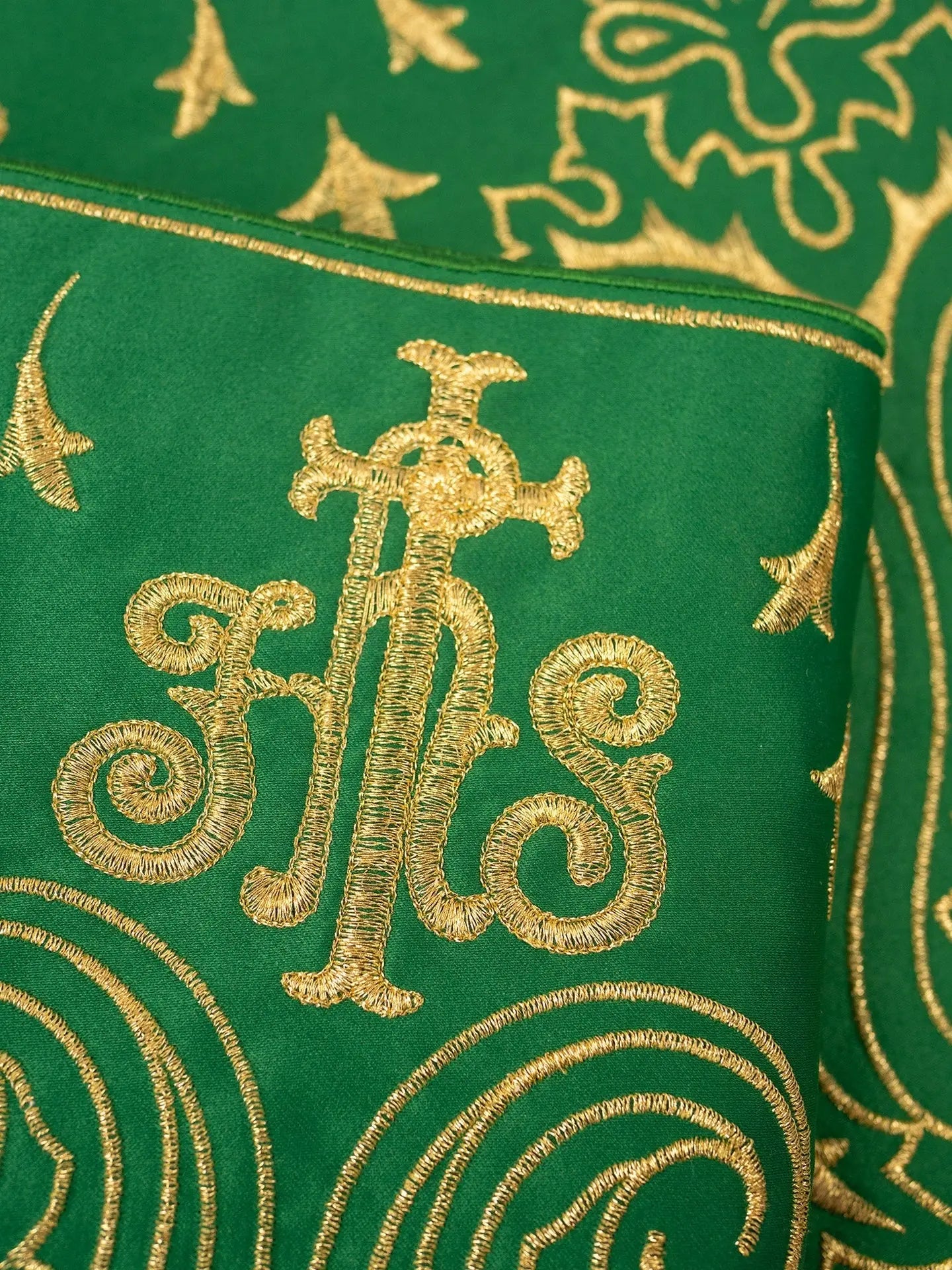
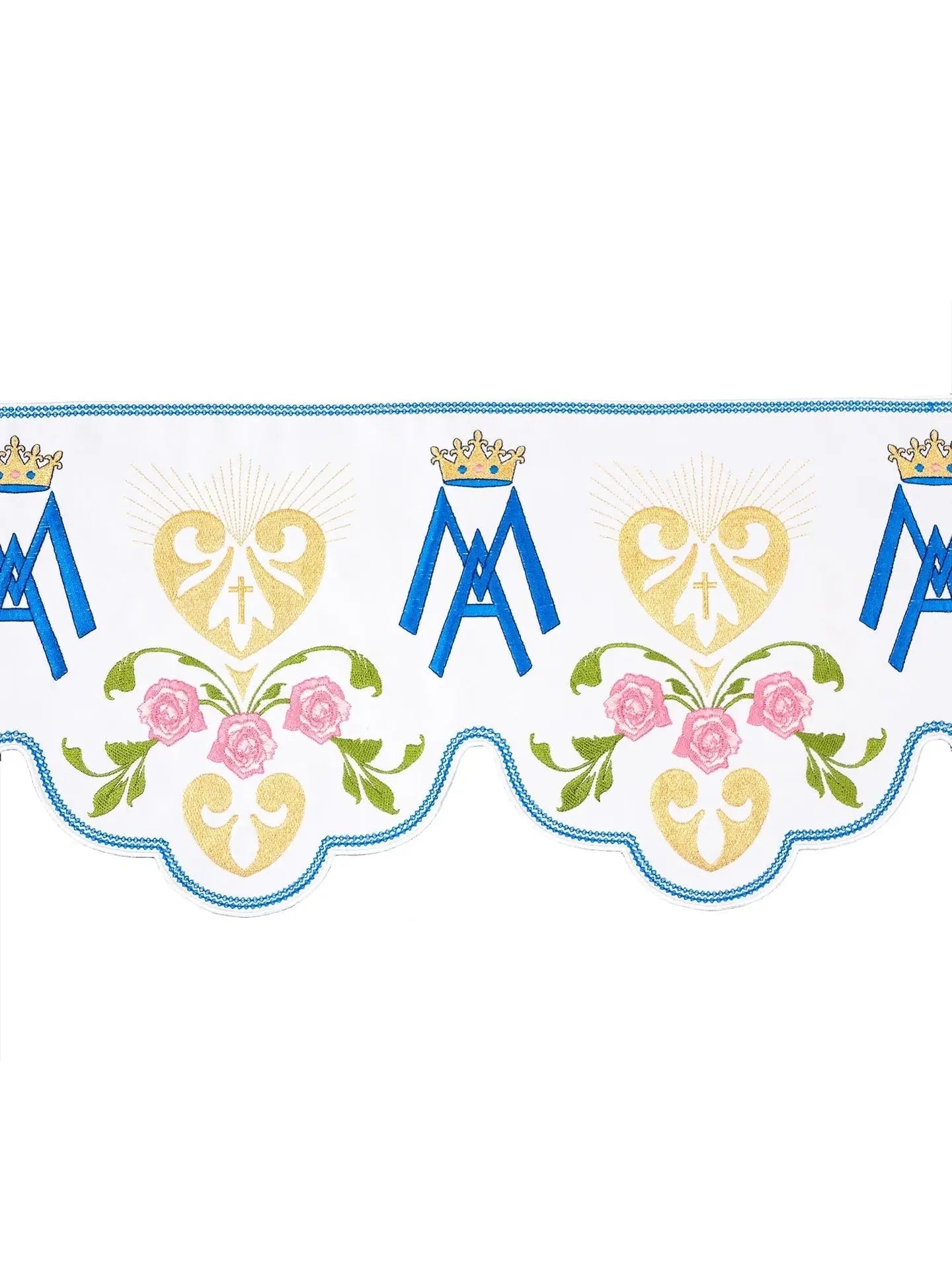
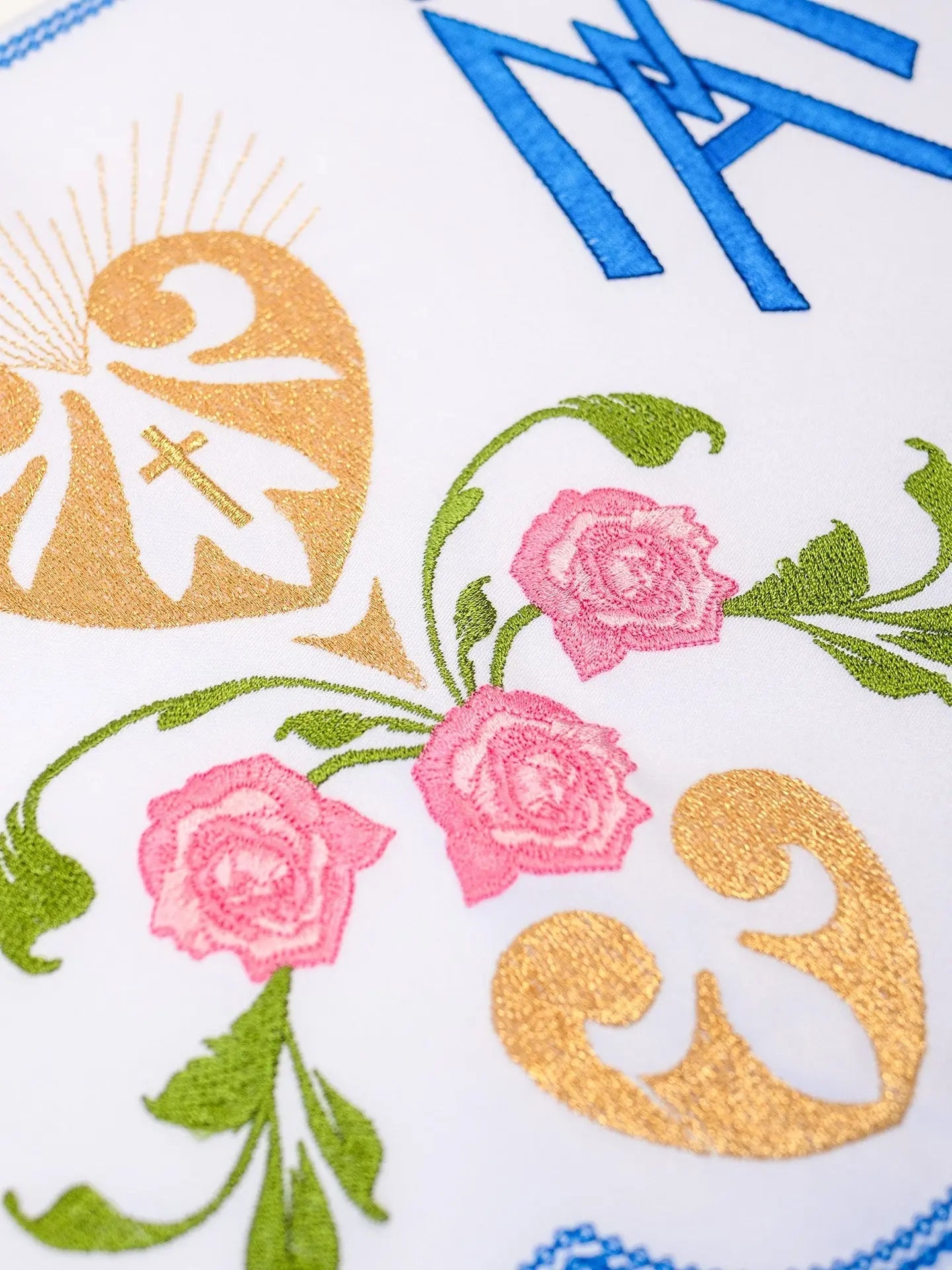
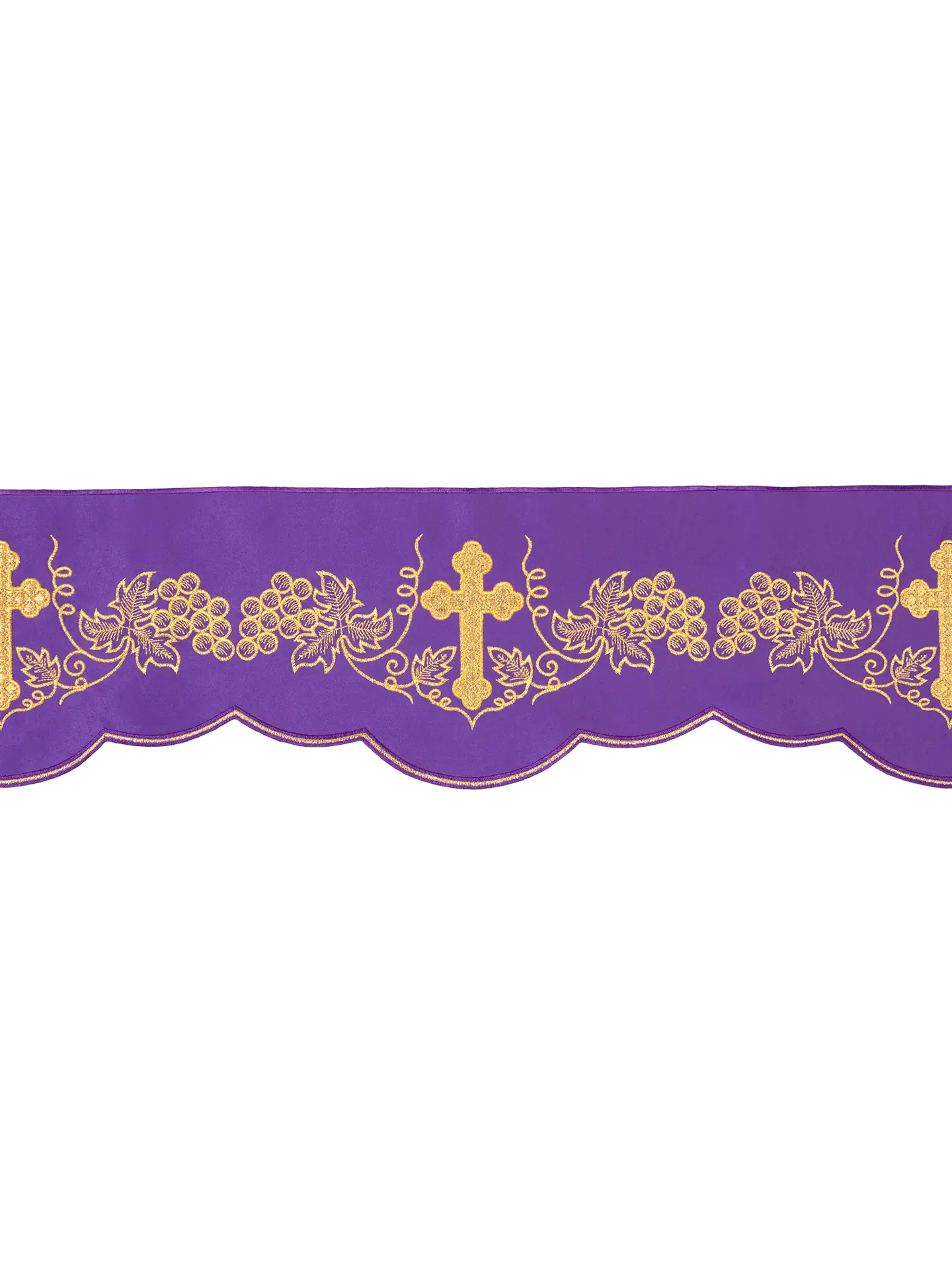
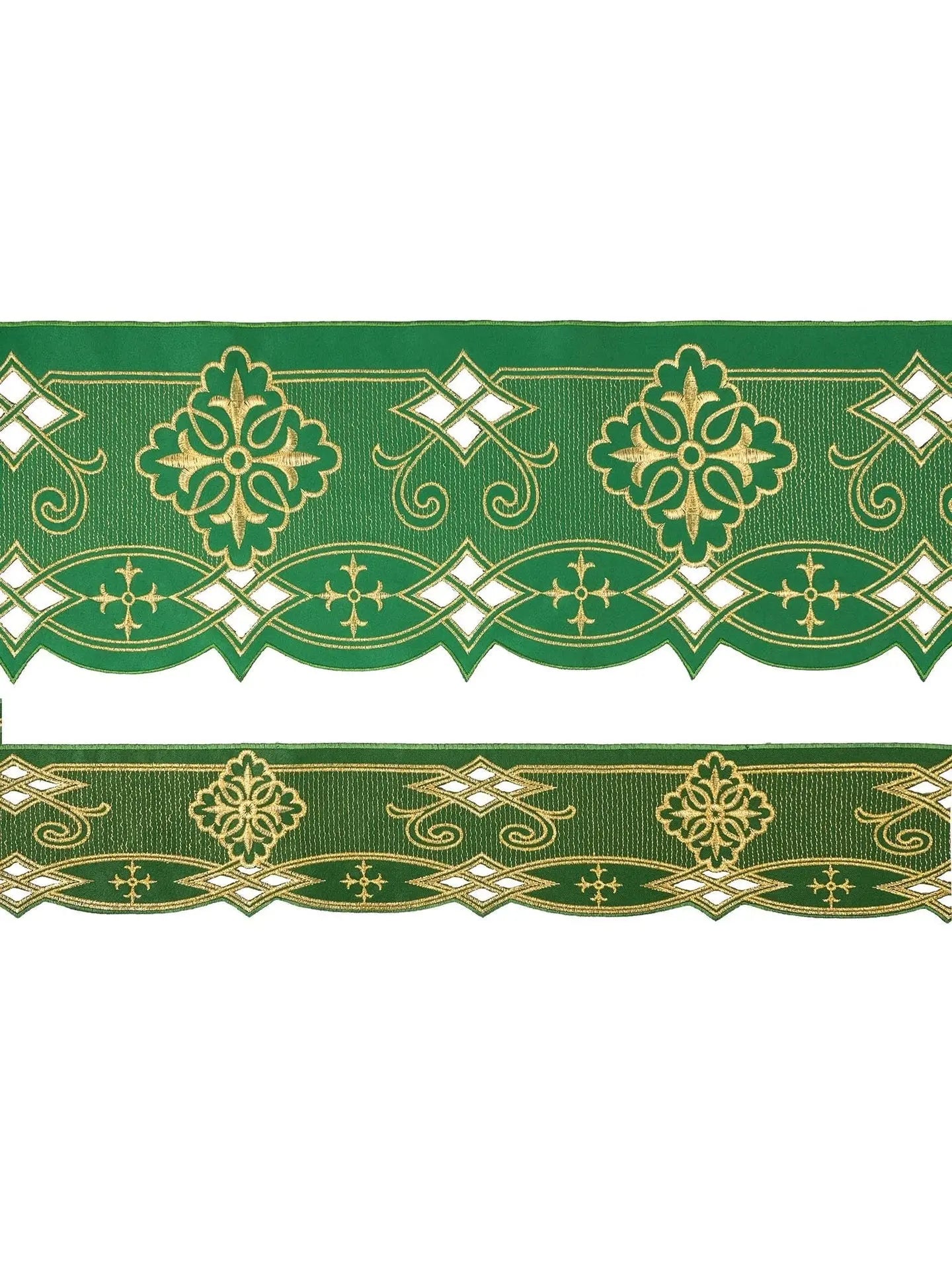
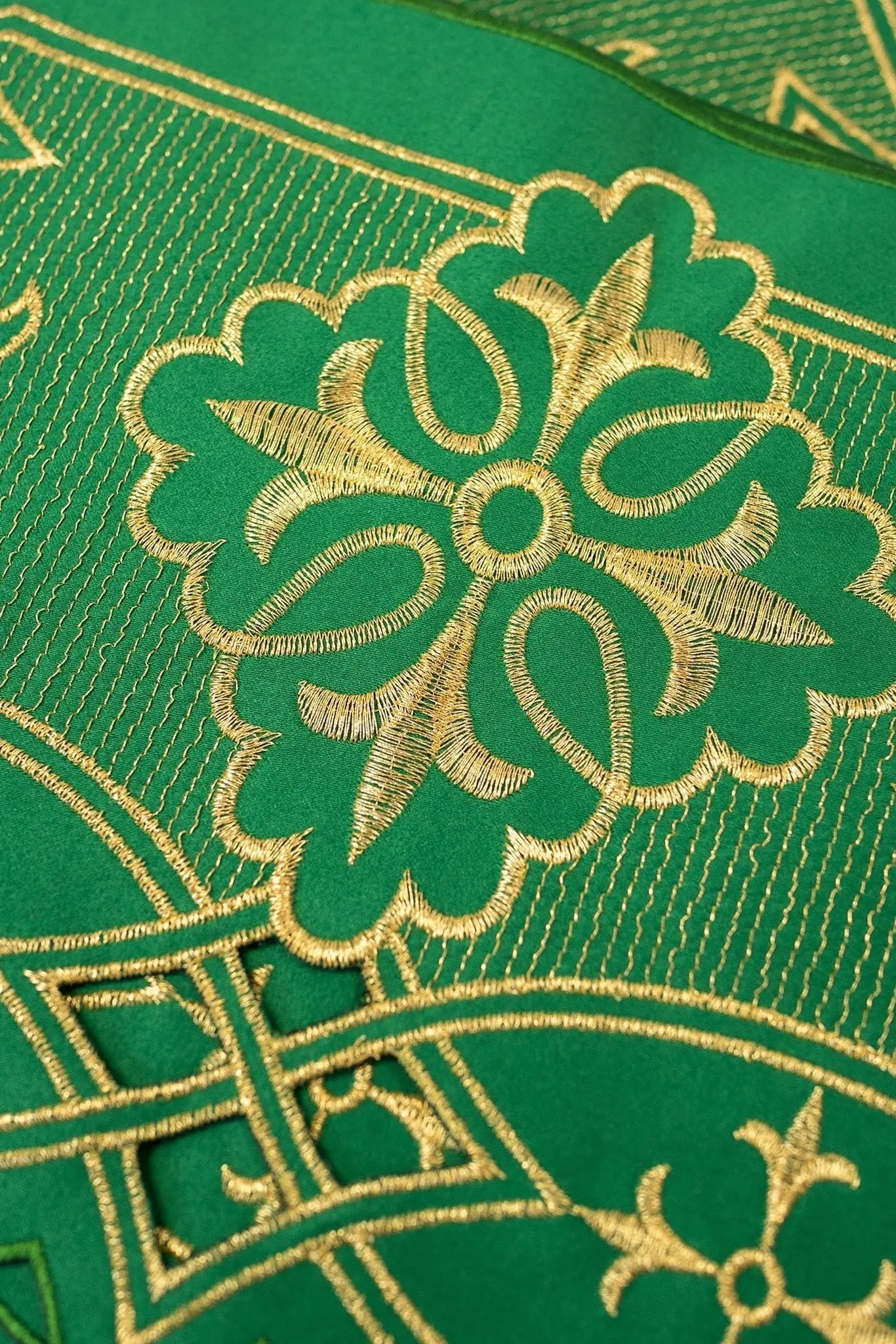
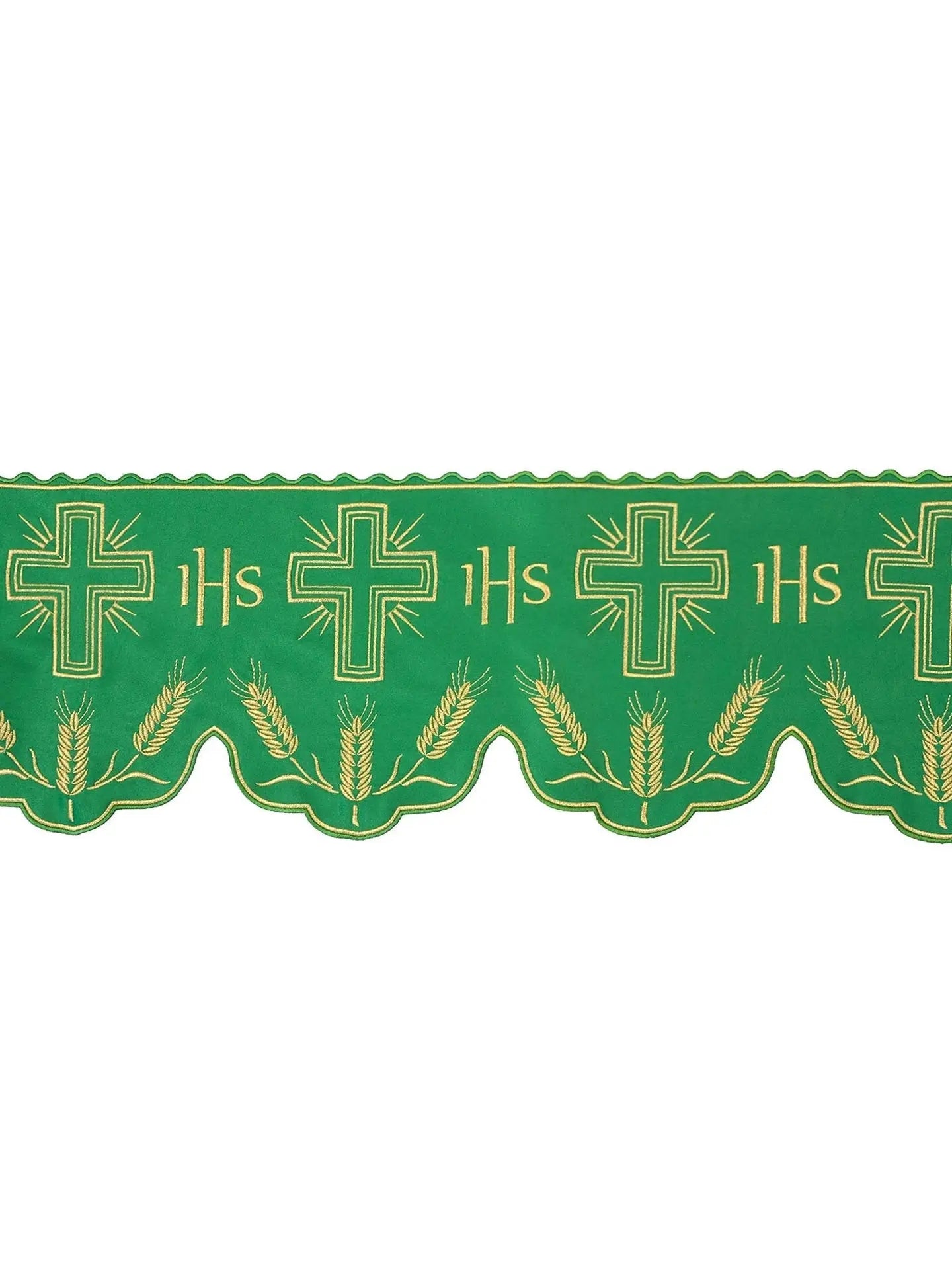
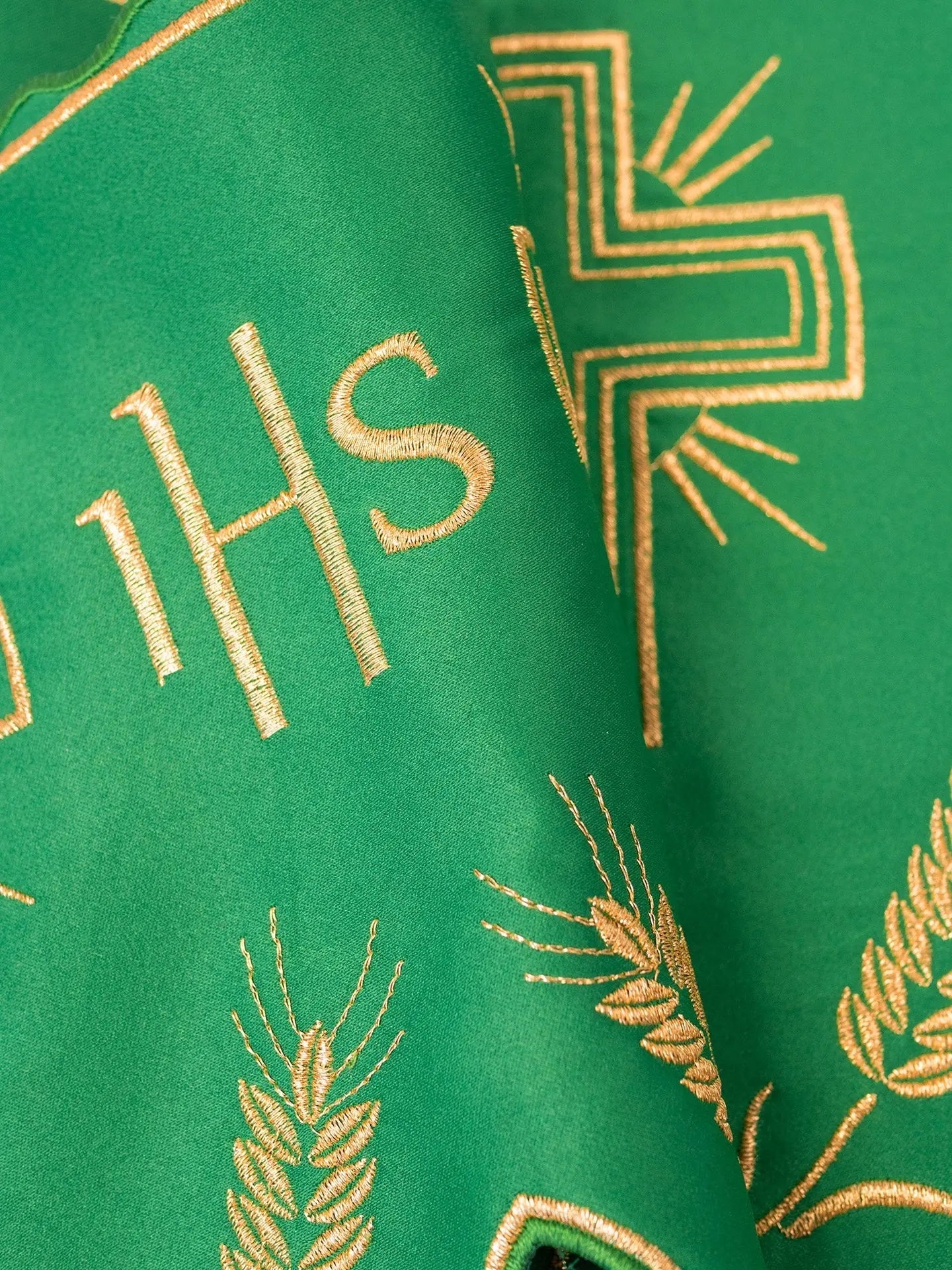
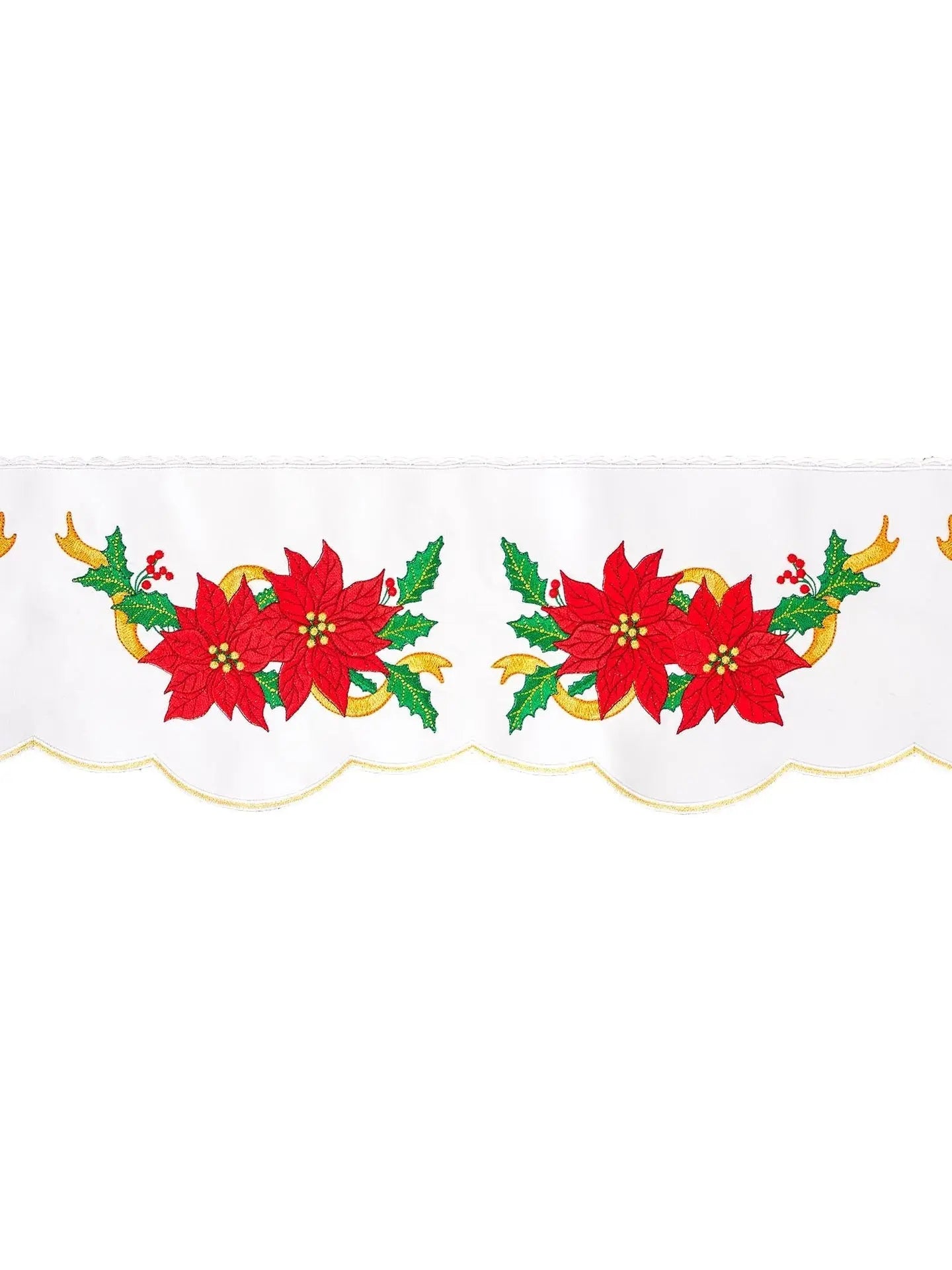
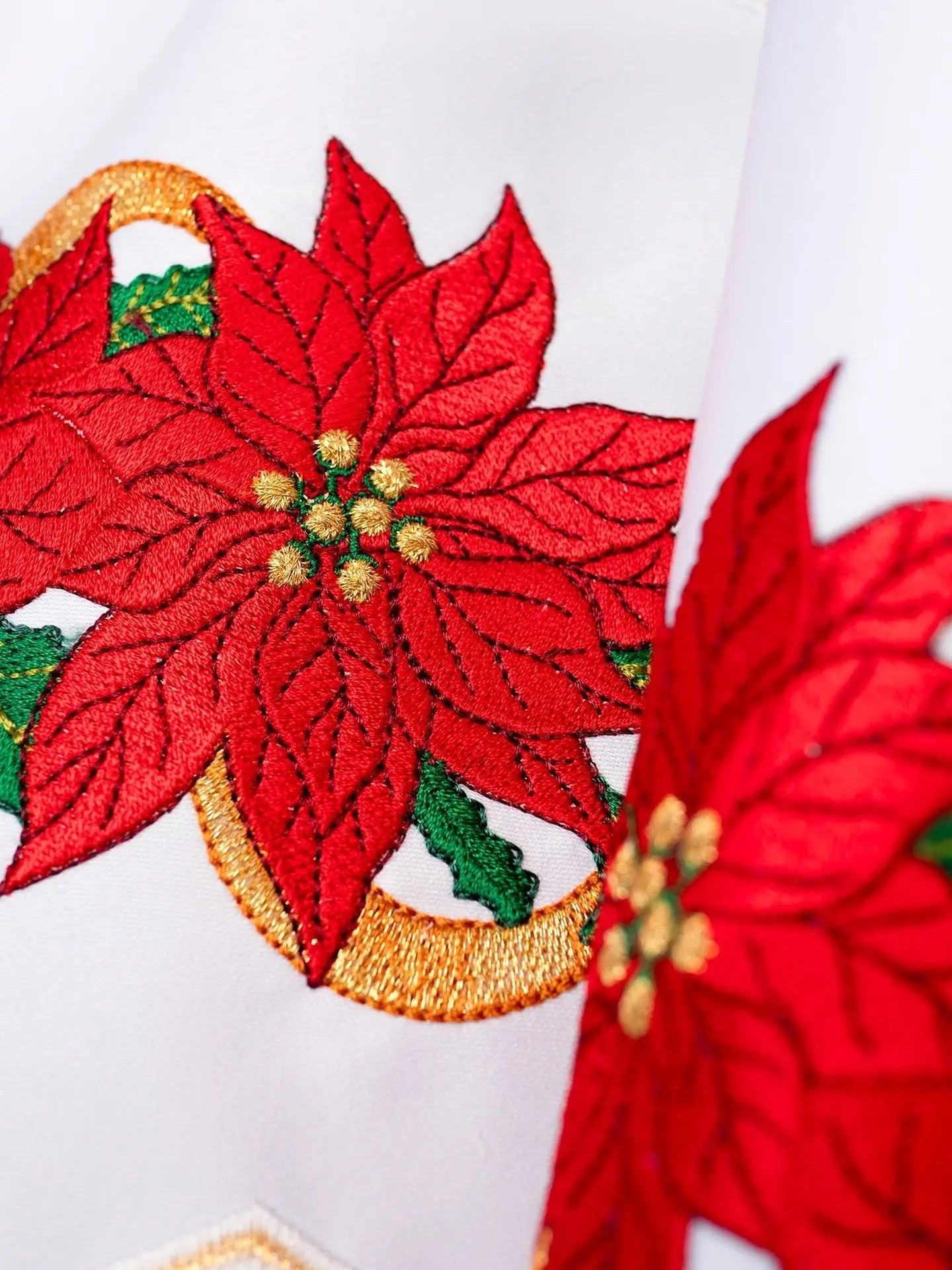
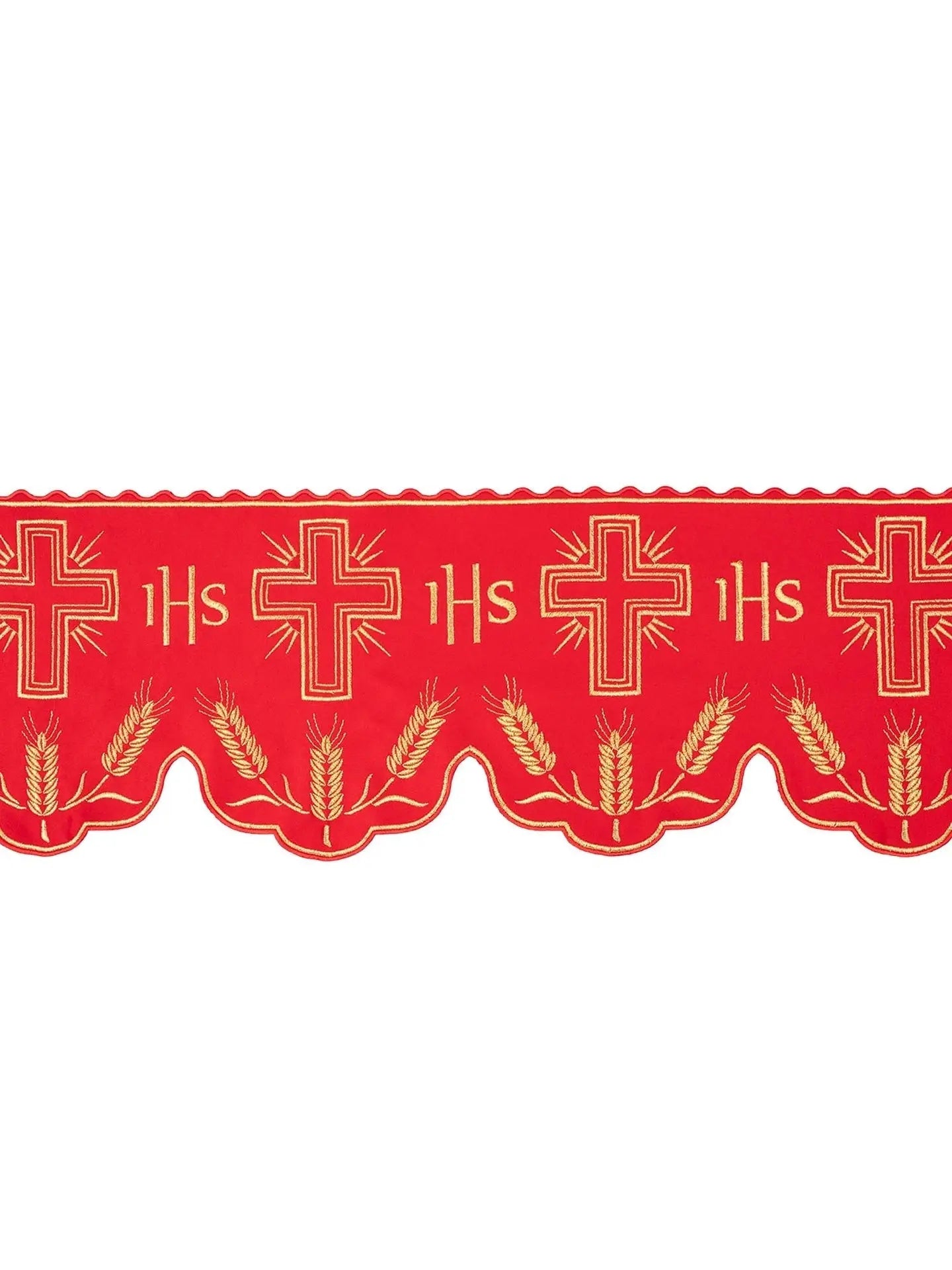
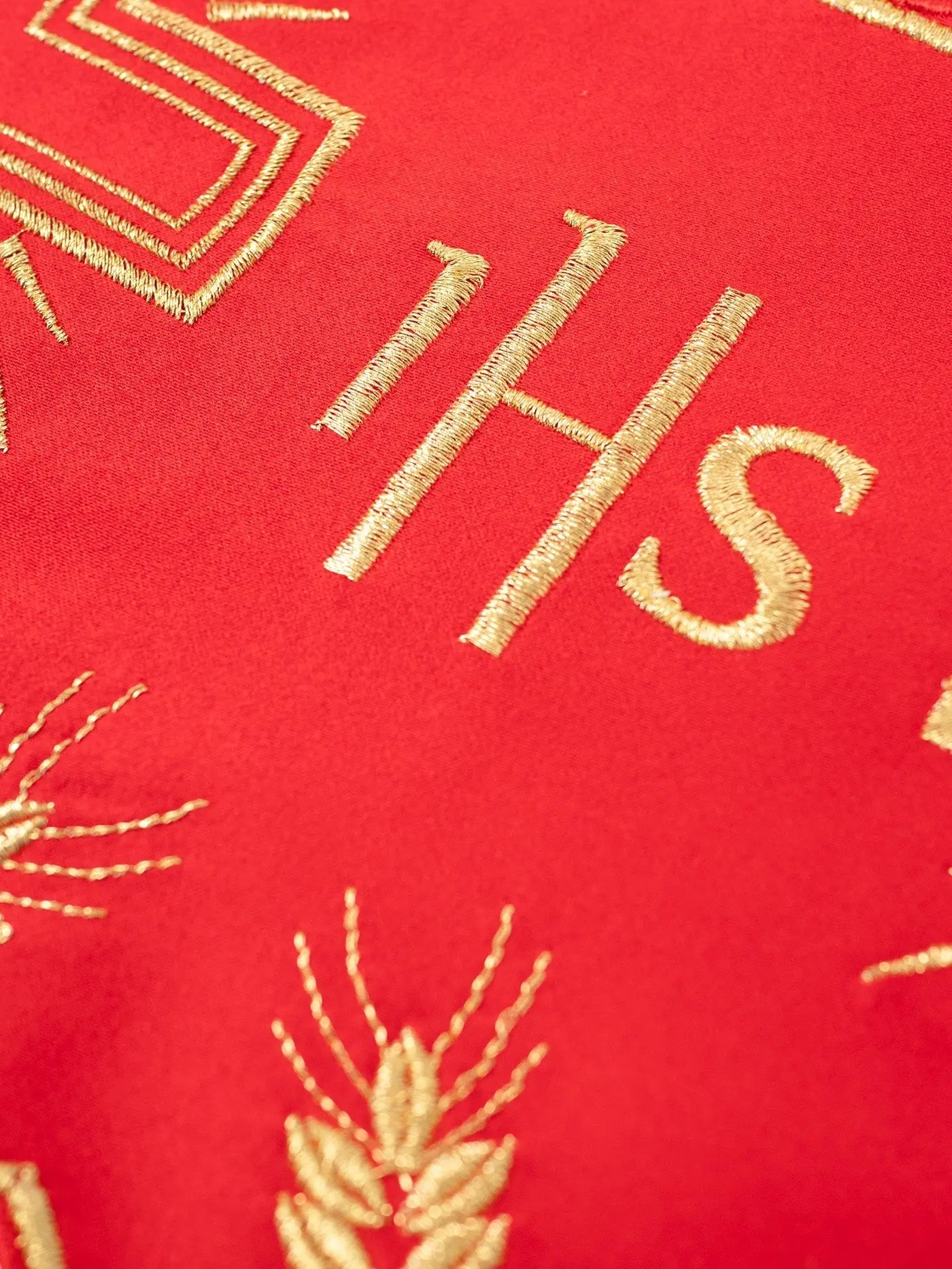
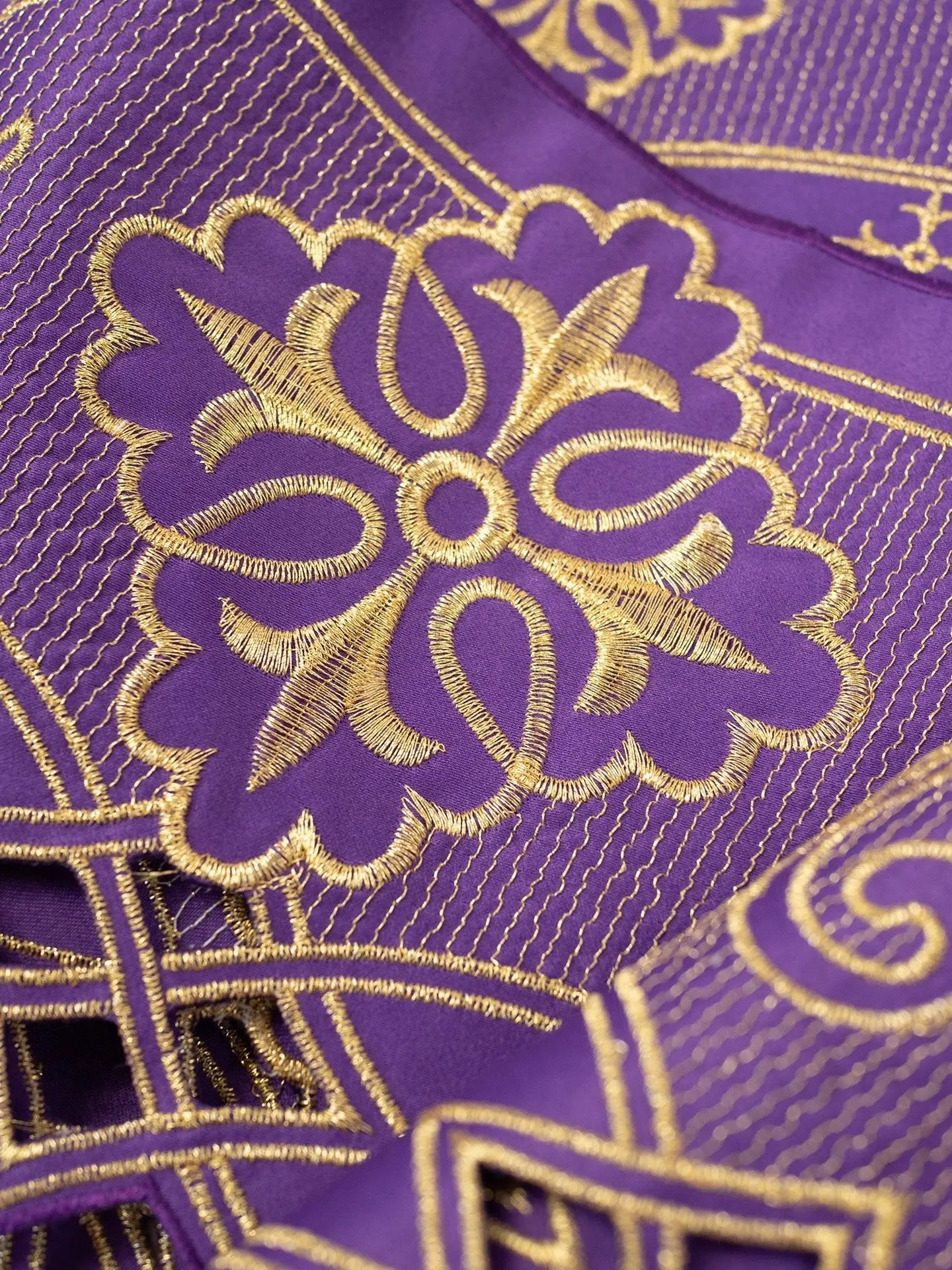
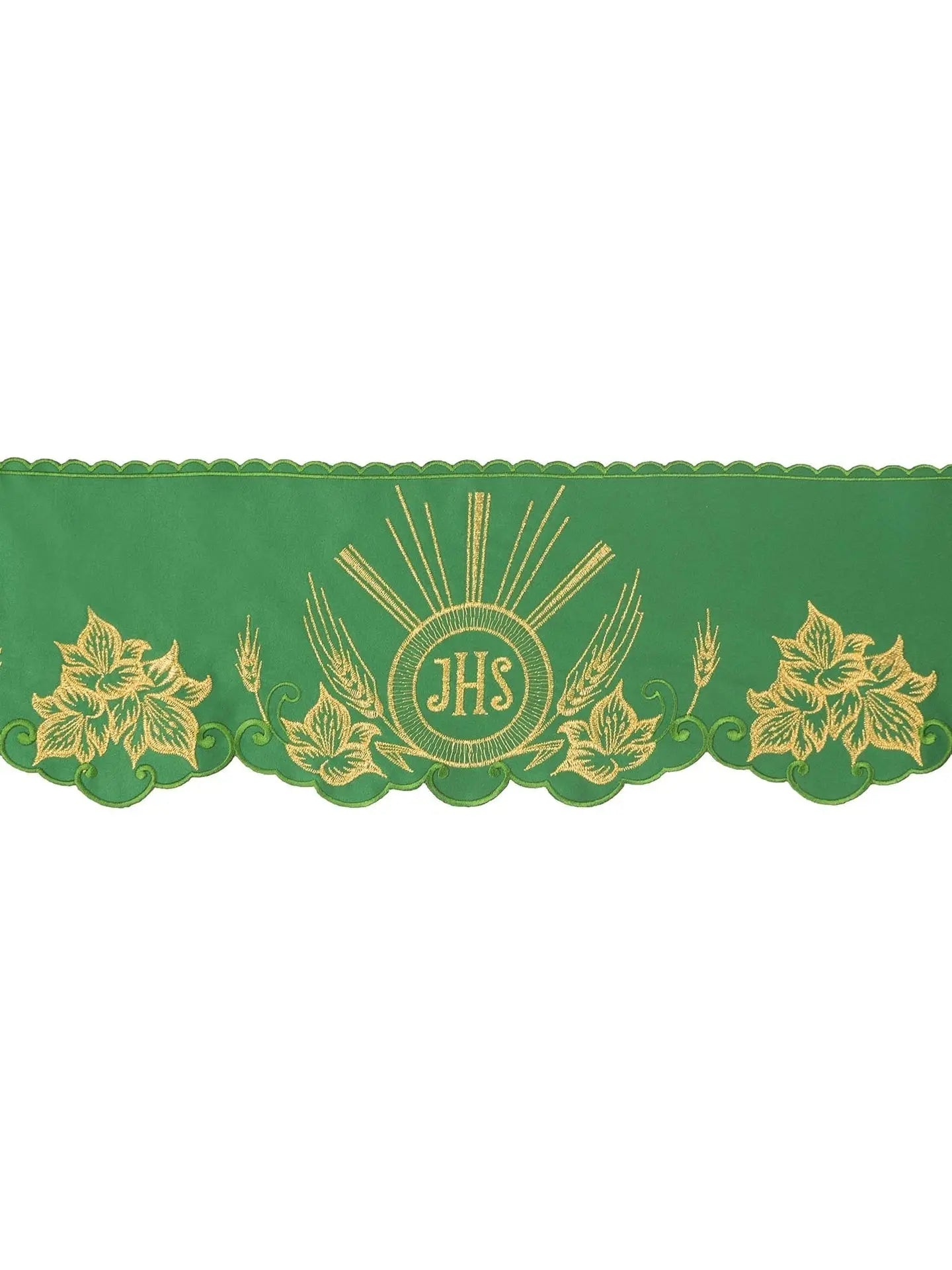
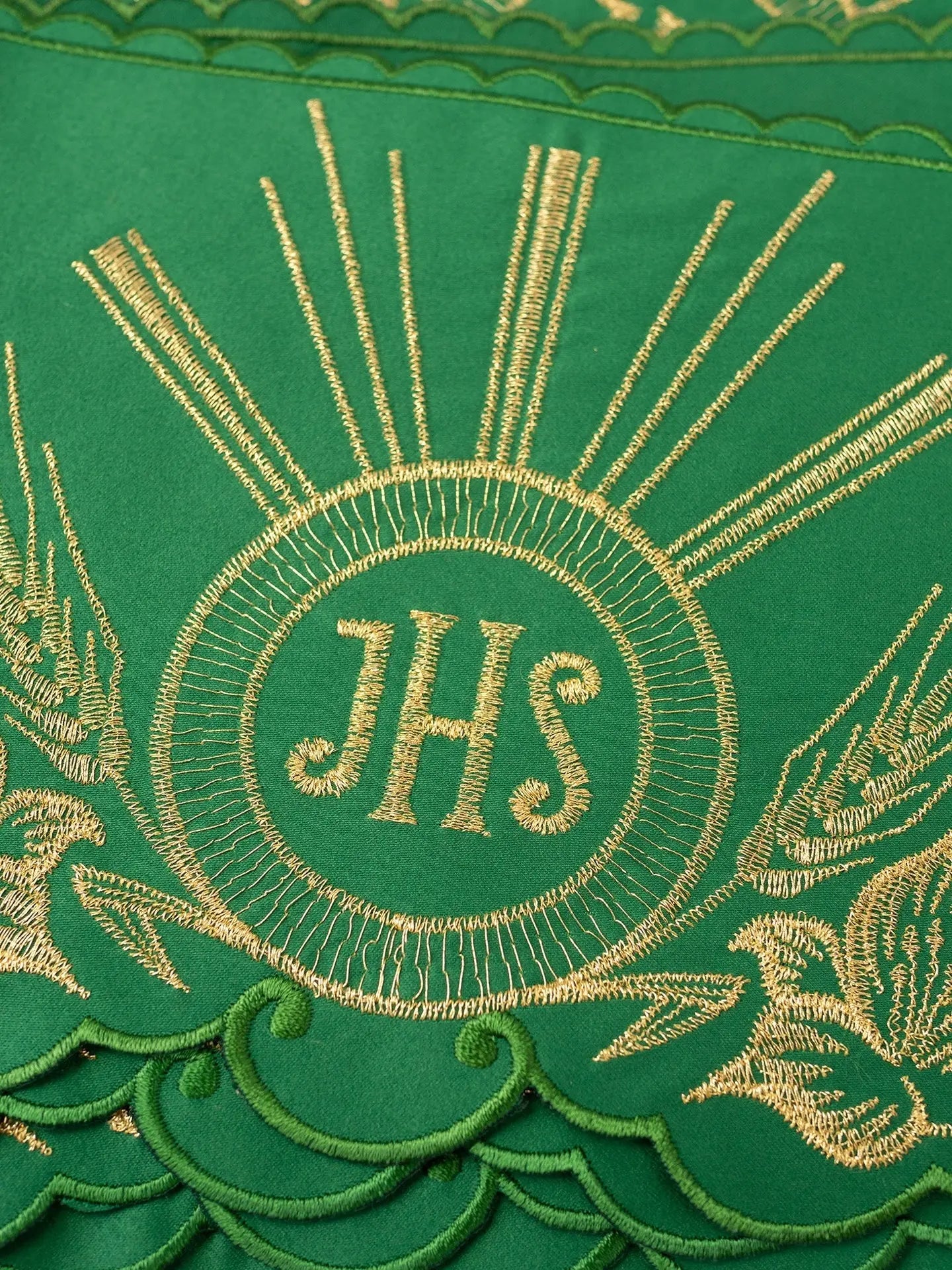
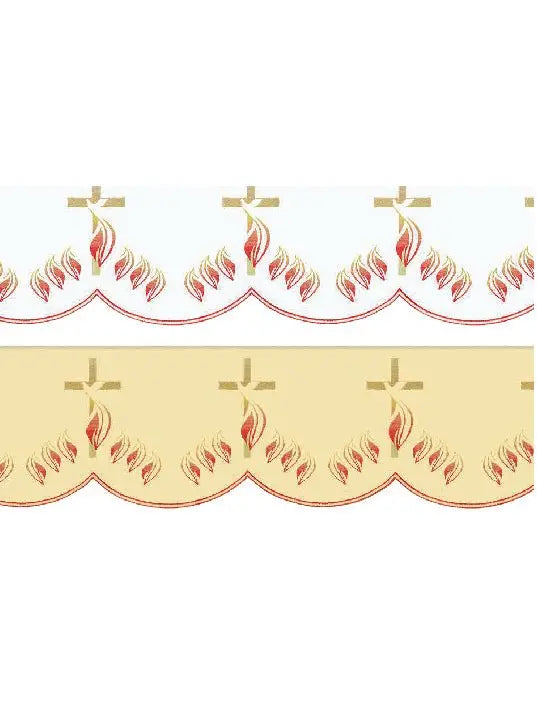
Embroidered borders: decorative bands that may include Christian motifs, floral patterns or liturgical ornament suited to altar textiles.
-
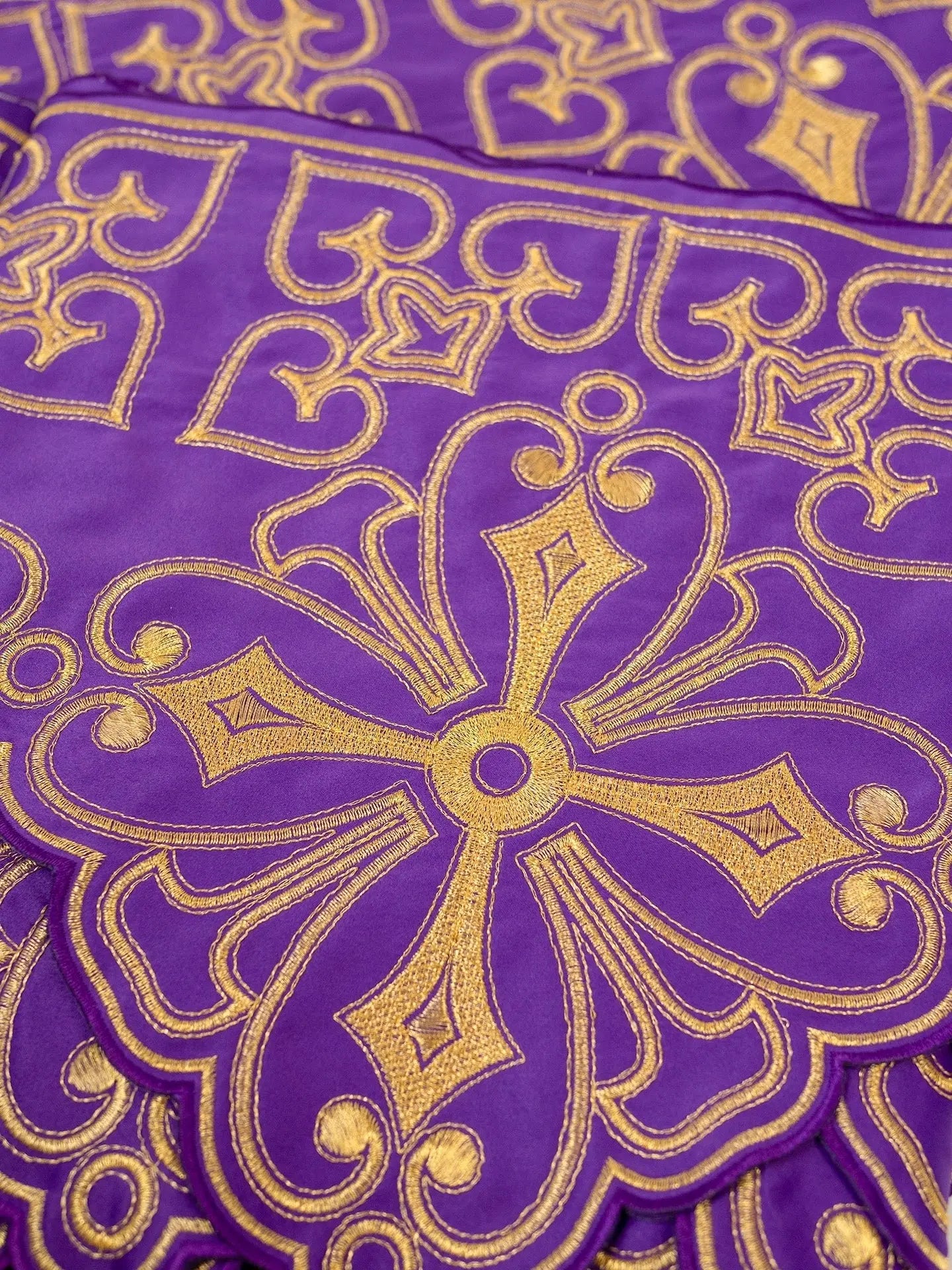
Metallic trims: gold or silver accents used carefully to add dignity, especially for festive settings, solemnities and richer sanctuary designs.
-
Fringes: traditional finishes that add texture and movement to the edge of a cloth or frontal.
-
Braids and cords: structured borders used to define an edge clearly and give the textile a neat, durable finish.
These details can be used on altar cloths, altar tablecloths with embroidered frontals and superfrontals when the textile construction allows it. For complete altar coverings, see altar tablecloths with embroidered frontals and altar superfrontals. Those collections help when the parish needs a finished altar textile, while trims and edgings are most useful when selecting or coordinating the border detail itself.
Liturgical Use and Visual Role
In the liturgical setting, the altar cloth should express dignity, cleanliness and order. Trims and edgings support this by making the textile look intentional and complete. A plain linen cloth may be entirely appropriate, but a carefully chosen border can help the altar harmonize with a more formal sanctuary, a high altar, a side chapel, a Marian chapel or a festive seasonal arrangement.
The edging should never compete with the sacred vessels, the missal, the candles, the cross or the action of the liturgy. For this reason, proportion matters. A narrow lace edge may suit a simple chapel or a smaller altar. A wider embroidered border may be better for a large altar where a very fine trim would disappear visually. Metallic accents should be balanced with the surrounding decor, so the altar remains dignified rather than overly ornate.
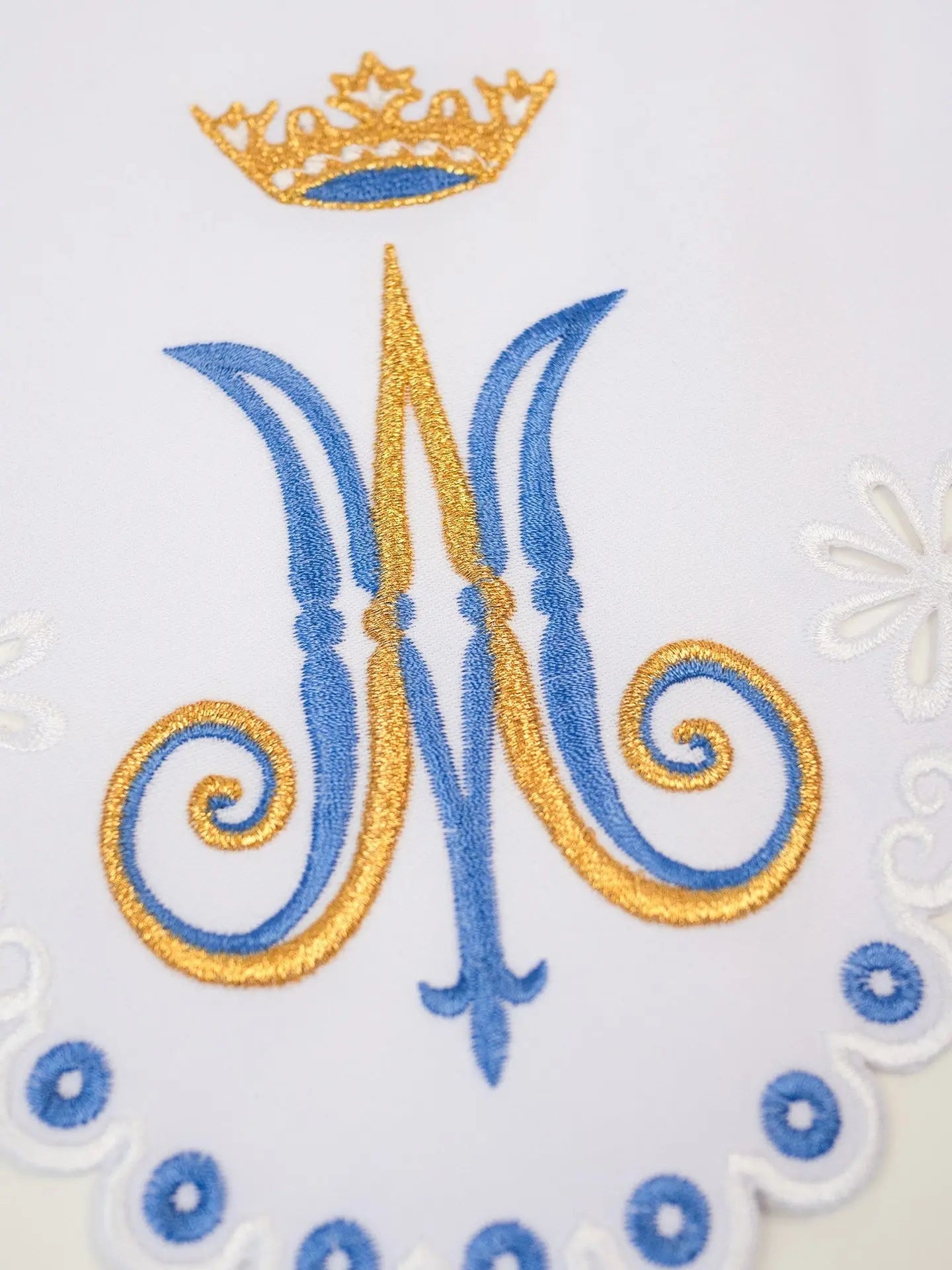
Trims can also help connect the altar cloth with other liturgical textiles used nearby. For example, a white cloth with gold detail may coordinate well with solemn vestments used at Christmas, Easter or Corpus Christi. A Marian motif may be appropriate in a chapel dedicated to the Blessed Virgin Mary. A simpler border may be preferred for Ordinary Time, weekdays or a modern chapel where quiet clarity is more suitable than abundant ornament.
How to Choose the Right Altar Cloth Trim
Start with the altar itself. Measure the visible edges, note the height of the fall and consider how the cloth is seen from the nave. A trim that looks modest on a work table may appear much more prominent when placed at the front of the altar. Likewise, a border that looks rich in a close-up may be too narrow to be visible in a large church. The scale of the sanctuary should guide the scale of the decoration.
Match the fabric weight. A light linen or cotton altar cloth usually works best with a refined lace, narrow embroidery or lighter braid. A heavier cloth, frontal or superfrontal may carry a stronger trim, metallic accent or fringe. If the edging is too heavy for the cloth, it can pull the fabric out of shape. If it is too light for a substantial textile, it may not give the edge the intended structure.
Consider the liturgical color scheme. White, ecru, gold and silver are common choices for altar linens because they coordinate with many seasons. When a trim includes color, it should be chosen carefully. Green relates naturally to Ordinary Time, purple to Advent and Lent, red to feasts of martyrs and the Holy Spirit, and rose to Gaudete Sunday and Laetare Sunday. For seasonal coordination beyond the altar cloth itself, related vestments and sanctuary pieces can be found through the Advent collection, Lent collection and Gaudete and Laetare collection.
Respect the style of the church. A Gothic, Baroque or richly furnished sanctuary may support more decorative borders, while a contemporary chapel may look better with a restrained finish. The aim is not to make every textile elaborate, but to make the altar cloth appropriate to the place where it will be used.
Plan for care and durability. Altar linens are used regularly and must be handled with attention. Edgings should be attached securely and should suit the cleaning method of the cloth. Delicate lace can be beautiful, but it requires careful handling. More structured braids may be more practical for textiles that are moved or cleaned often. Before choosing a highly decorative edge, consider who will care for the linen in the sacristy and how often it will be changed.
Coordinating With Other Sanctuary Textiles
Good liturgical textile planning is not limited to a single cloth. The altar, ambo, chalice area and tabernacle area may each have textiles that should feel related without being identical. Trims and edgings can help create that unity. A repeated lace pattern, a shared gold accent or a similar embroidered motif can connect the altar cloth with other pieces in a subtle way.
For the ambo or lectern area, compare trims with pulpit covers. The pulpit cover should not overpower the altar, but a related border can help the sanctuary look ordered. For the vessels used during Mass, consider how altar cloth details relate to chalice linen sets and chalice veils. A chalice veil or pall may carry a stronger motif than the main altar cloth, while the altar edging provides the quieter background.
Some churches also coordinate altar cloth trims with ciborium veils, humeral veils, copes or chasubles used on solemn days. The coordination should be thoughtful rather than forced. A shared color, a similar cross motif or a compatible metallic thread is often enough. The best result is a sanctuary that feels prepared, unified and reverent, not crowded with competing patterns.
Common Selection Mistakes to Avoid
One common mistake is choosing an edging only because it looks impressive in isolation. The trim must serve the altar cloth, the altar and the liturgy. A border that is too bright, too wide or too ornate can distract from the sacred action. It may also make the altar look visually heavy, especially in a small chapel.
Another mistake is ignoring the construction of the cloth. A delicate linen should not be combined with a rough or overly heavy trim that may damage the fabric. Metallic threads should be used with care if the cloth will need frequent cleaning. A fringe may be traditional and beautiful, but it must suit the way the textile hangs and the way it is stored.
It is also important not to confuse altar cloth decoration with unrelated sanctuary textiles. An altar cloth trim is not the same as a chalice veil, ciborium veil, humeral veil, pulpit cover or full frontal. These items may coordinate, but each has its own liturgical role. When a parish needs a complete set, it is useful to plan the altar linen first and then choose related pieces so the hierarchy of the sanctuary remains clear.
Practical Guidance for Parishes and Sacristies
Before ordering or selecting an edging, note the exact placement: front edge only, side edges, full perimeter, or a specific frontal section. The visible front edge usually matters most, but side edges may be seen clearly depending on the altar position. A freestanding altar often requires more attention to all sides than an altar placed against a wall.
Think also about the frequency of use. A trim for a principal altar cloth used throughout the year should be durable and versatile. A more ornate edging may be reserved for solemnities, patronal feasts, weddings, Christmas, Easter or Corpus Christi. For a parish with several altar cloths, it may be wise to keep one simple everyday cloth and one more decorative cloth for major celebrations.
If the church uses seasonal textiles, a neutral white or ecru base with refined gold or silver trim can work across many celebrations. A more strongly colored trim should be selected only when the parish wants a clear seasonal or devotional focus. This helps avoid buying a beautiful border that can only be used rarely.
Why a Finished Edge Matters
The edge of the altar cloth is one of the most visible parts of the textile. It is seen by the congregation, by ministers approaching the altar and by anyone preparing the sanctuary. A clean and well proportioned edging communicates care. It shows that the altar has been prepared intentionally and that the textile is not merely functional, but part of the worship environment.
A suitable trim can extend the life of an altar cloth by protecting the edge and giving the fabric a stronger finish. It can also make replacement or coordination easier when the parish updates related textiles. When chosen wisely, the edging remains useful for many years because it is not tied to a passing decorative trend, but to liturgical dignity, proportion and craftsmanship.
Frequently Asked Questions (FAQ)
Are altar cloth trims necessary for every altar cloth?
No. A plain altar cloth can be entirely appropriate, especially when the fabric is high quality and correctly fitted. Trims and edgings are chosen when a parish wants a more finished, decorative or coordinated appearance for the altar.
Which edging is best for a traditional altar?
Traditional altars often work well with lace, embroidered borders, fringes or subtle metallic details. The best choice depends on the size of the altar, the fabric weight and the ornament already present in the sanctuary.
Can the same trim be used for altar cloths and pulpit covers?
It can be used as a coordinating idea, but the proportions should be adjusted. The altar should remain the visual center, while the pulpit cover supports the sanctuary design without becoming more prominent than the altar textile.
How should I choose between lace and embroidered edging?
Lace gives a lighter and more classic linen effect, especially on white or ecru cloths. Embroidered edging is better when the parish wants a clearer motif, stronger visual structure or coordination with embroidered frontals and chalice textiles.
Are metallic trims suitable for regular use?
Metallic trims can be suitable when the construction is durable and the cloth is cared for properly. For everyday use, choose a balanced design that is not too heavy and confirm that the cleaning method will not damage the threads.
What should be measured before selecting an altar cloth edging?
Measure the length of the visible altar edge, the side returns if needed, and the depth of the cloth fall. Also consider whether the altar is freestanding, because all sides may be visible and the edging may need to continue around more than one edge.