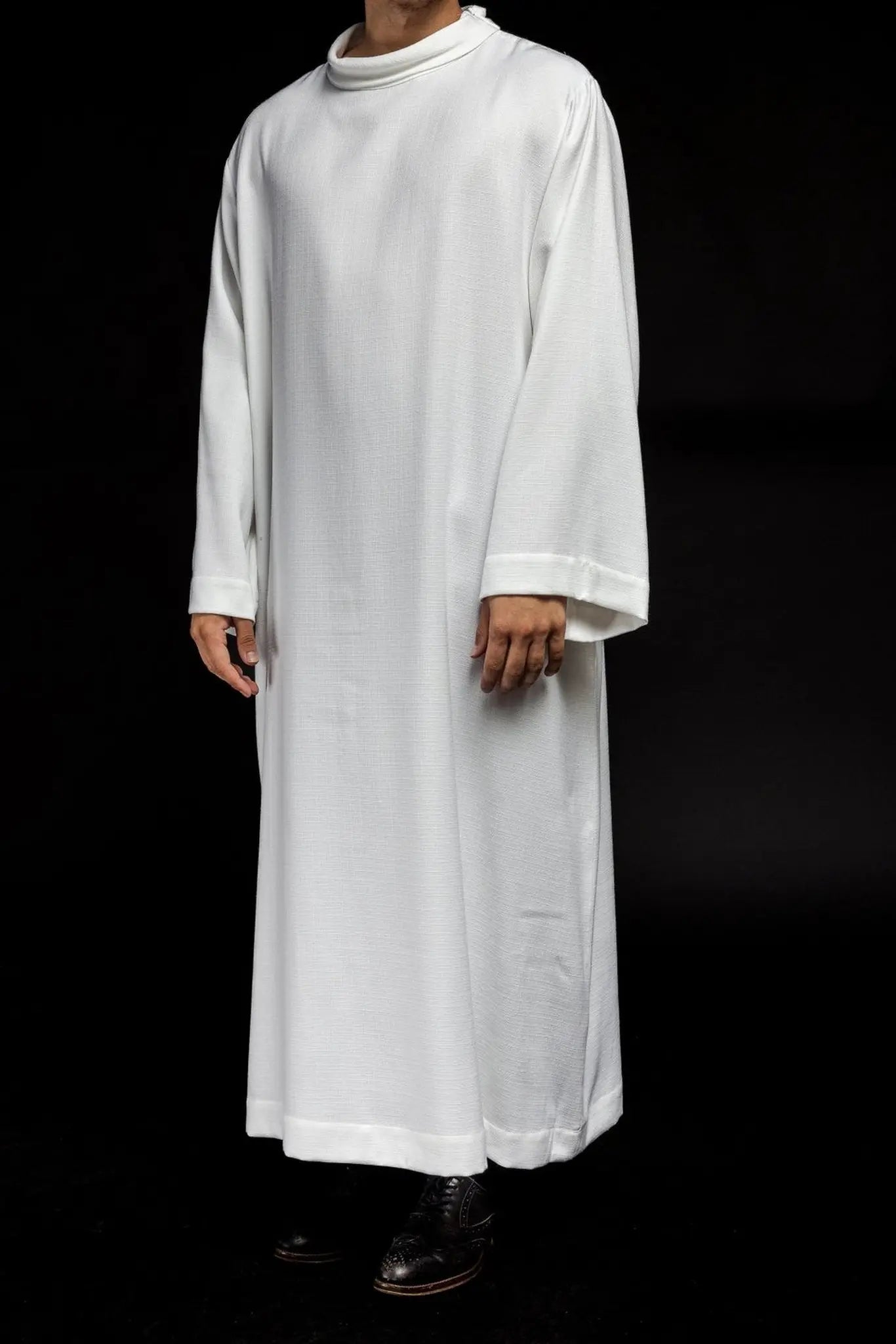
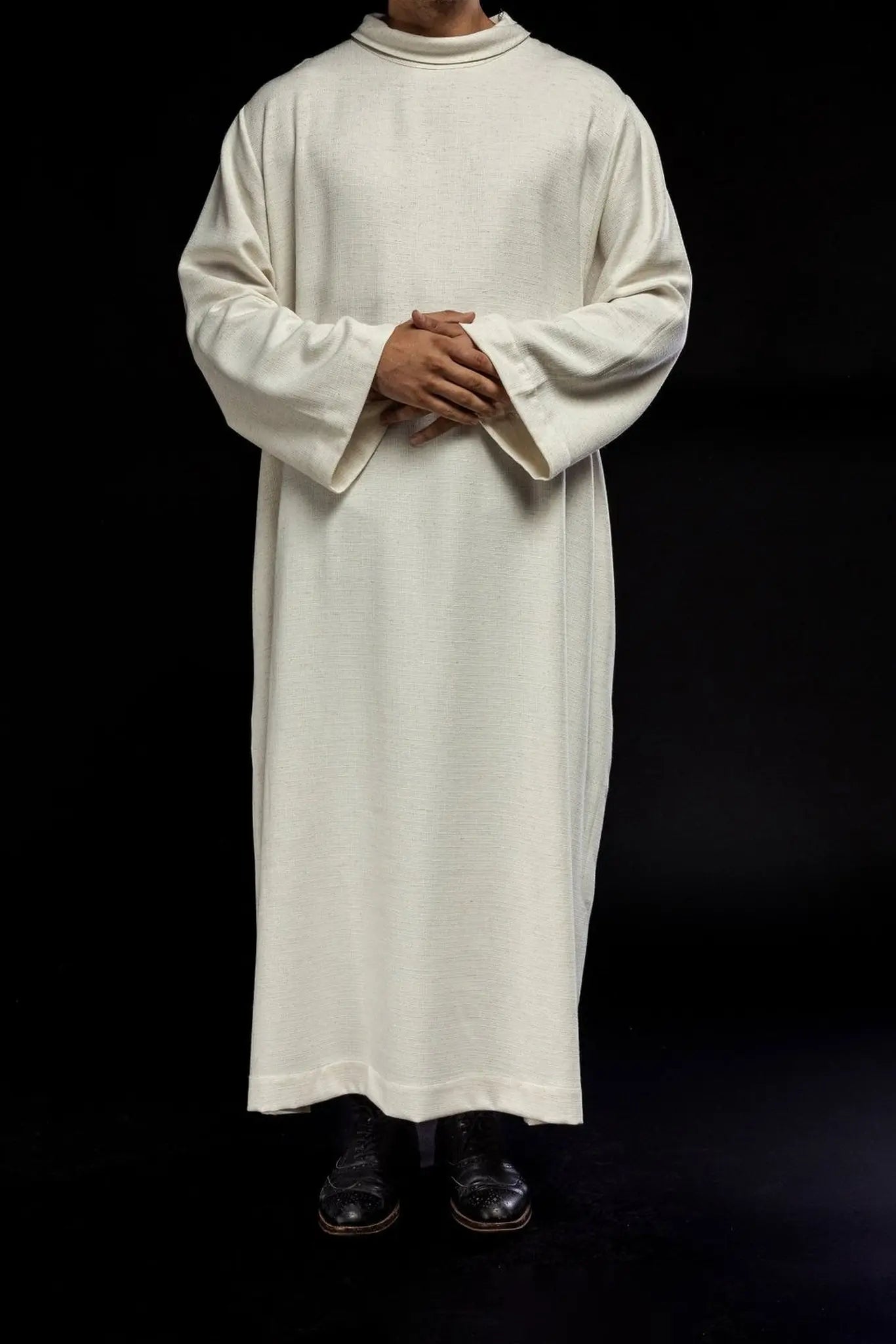
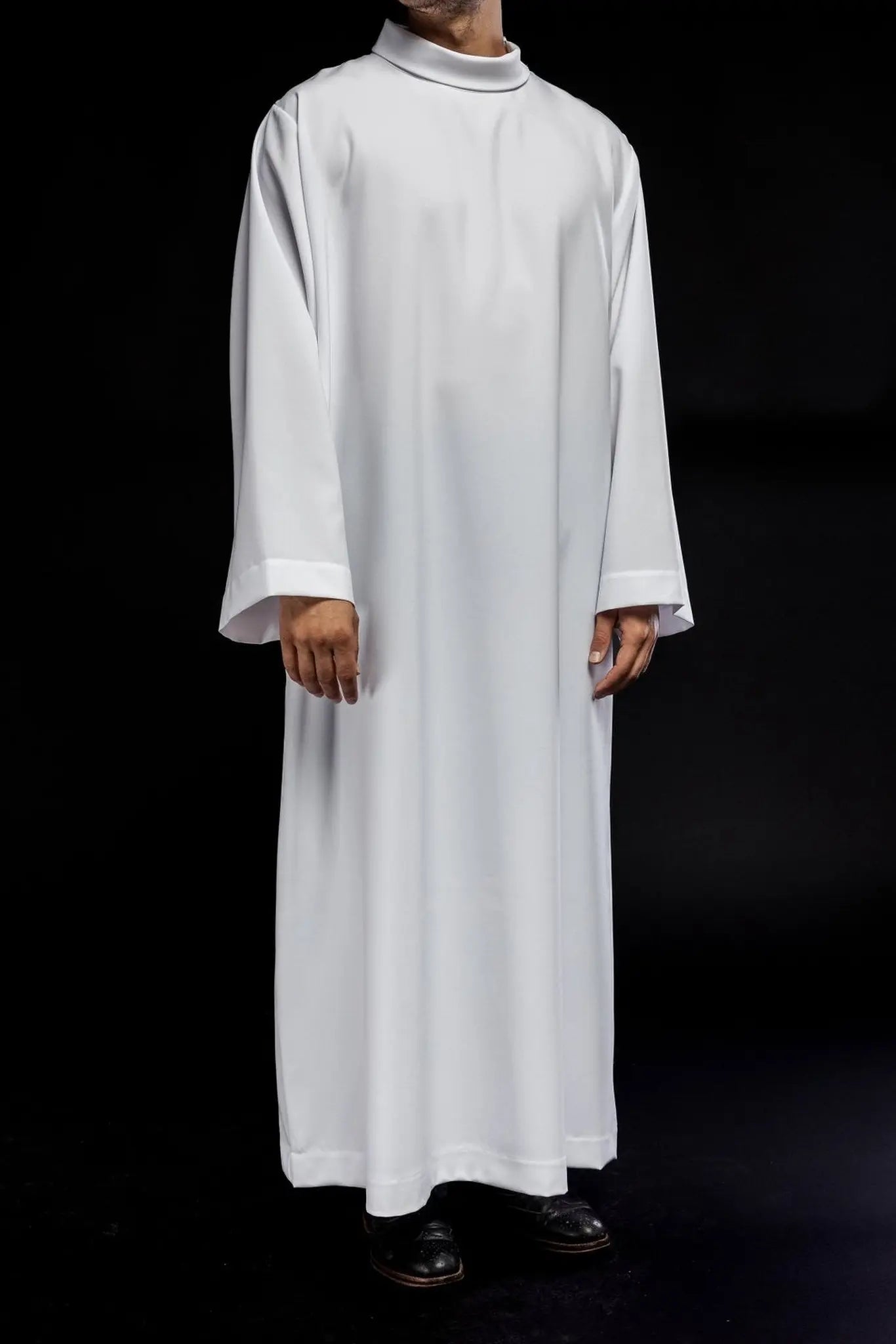
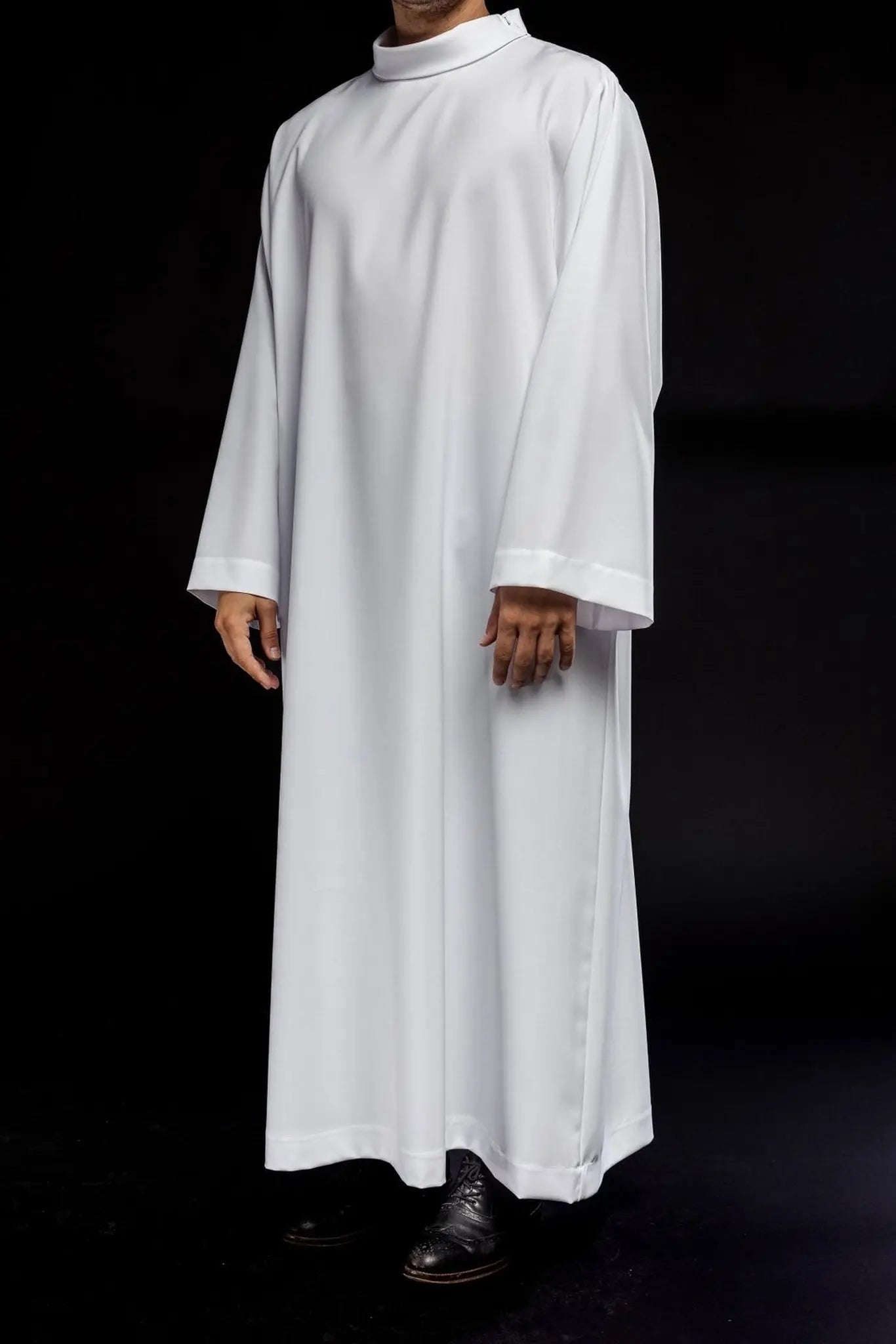
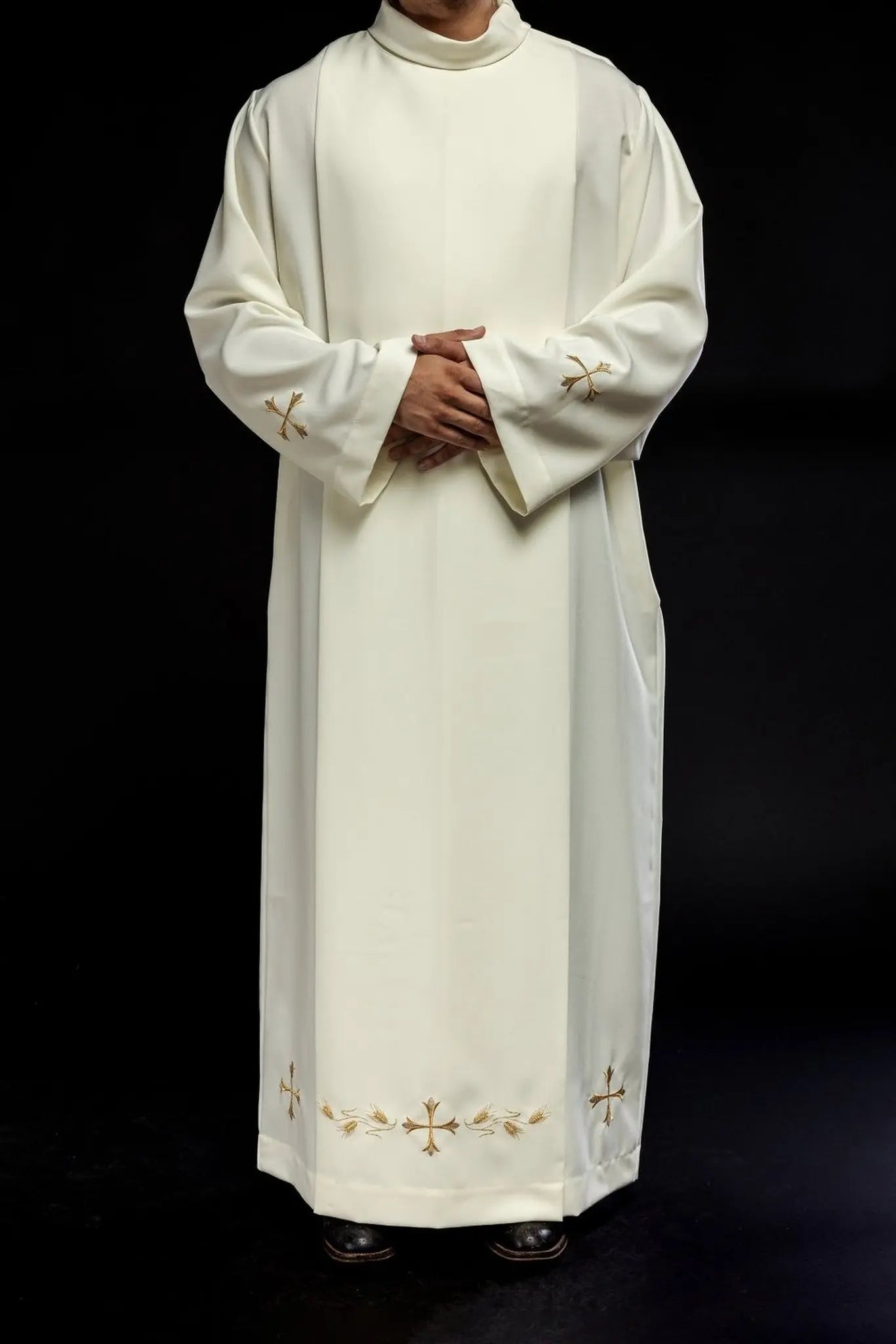
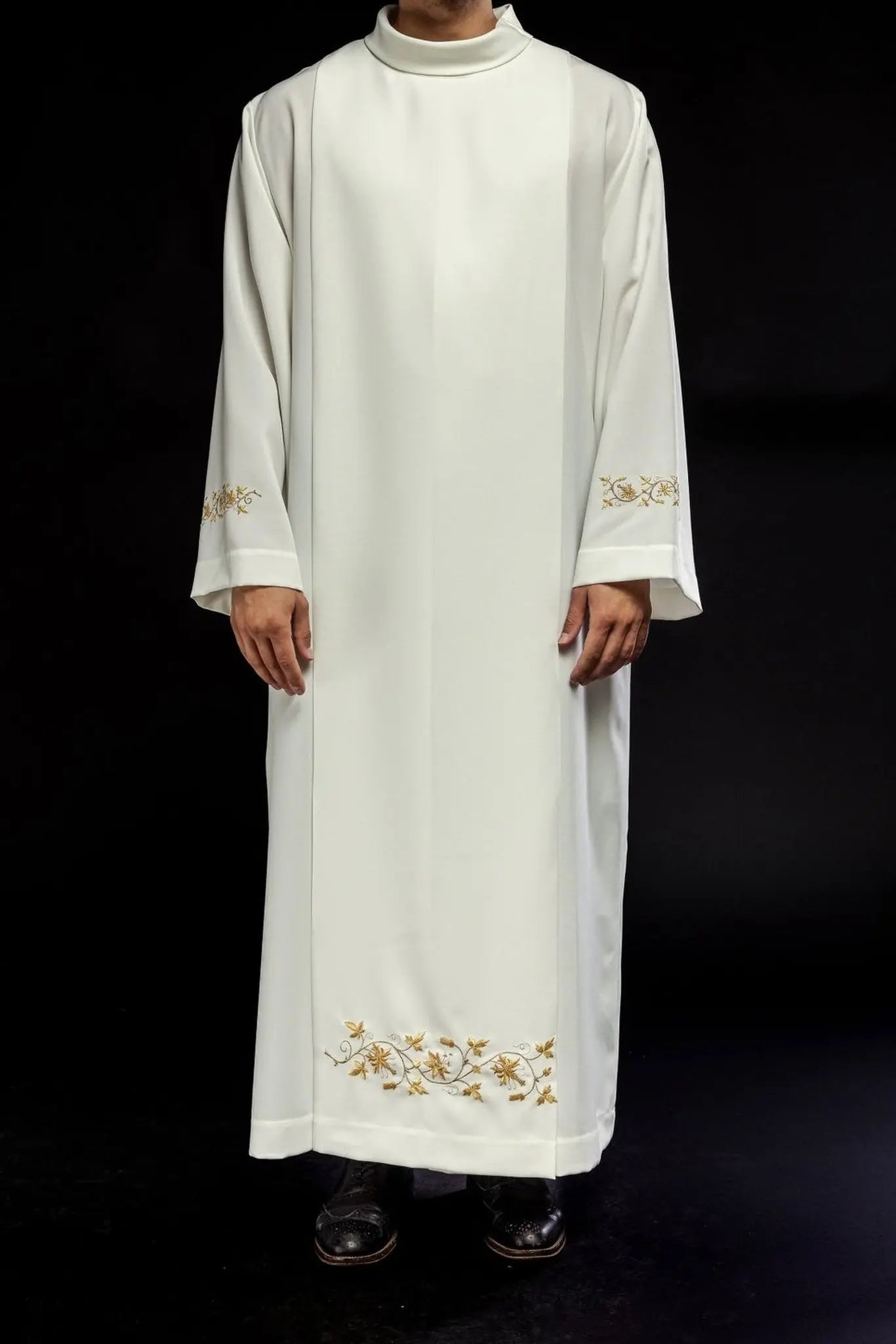
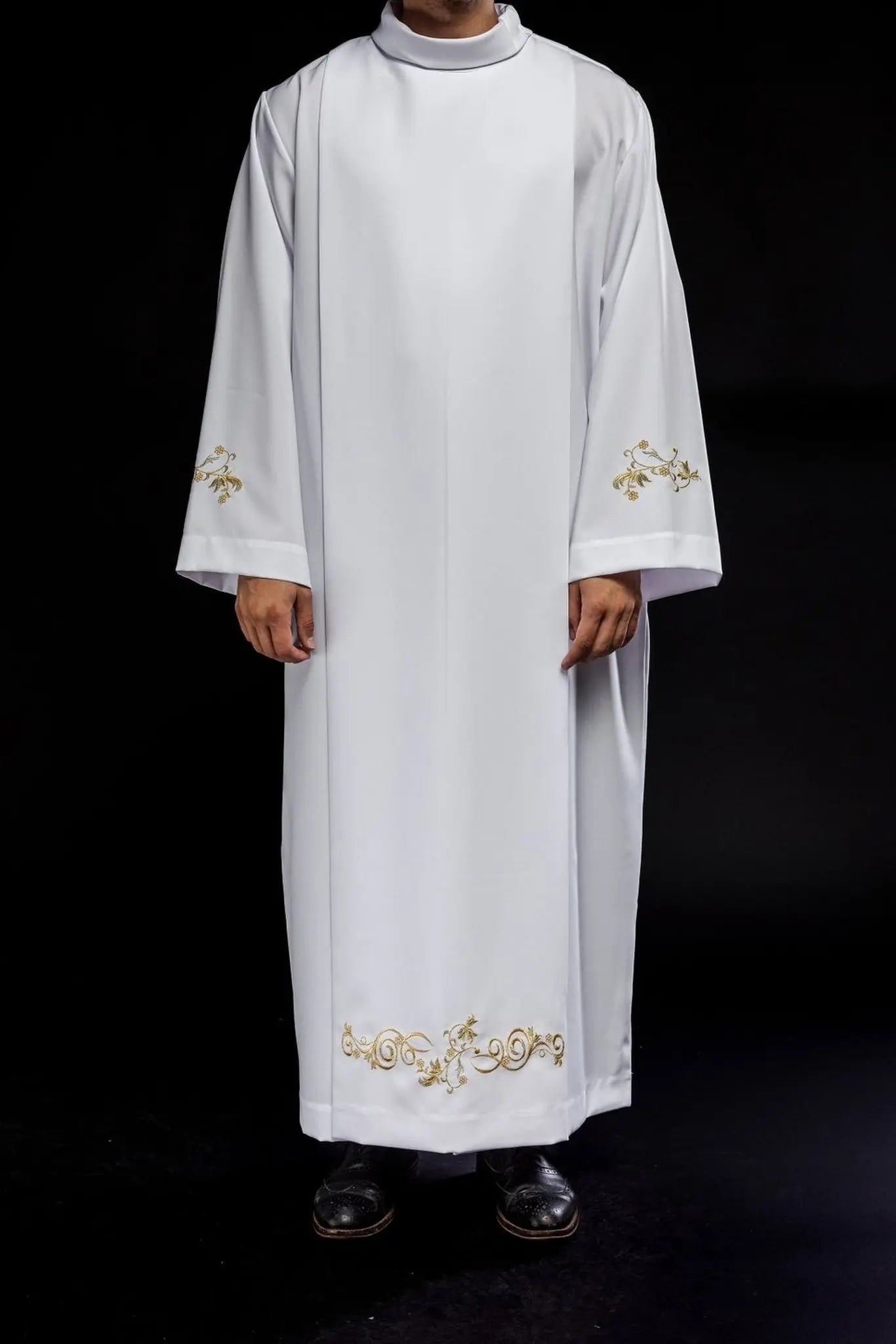
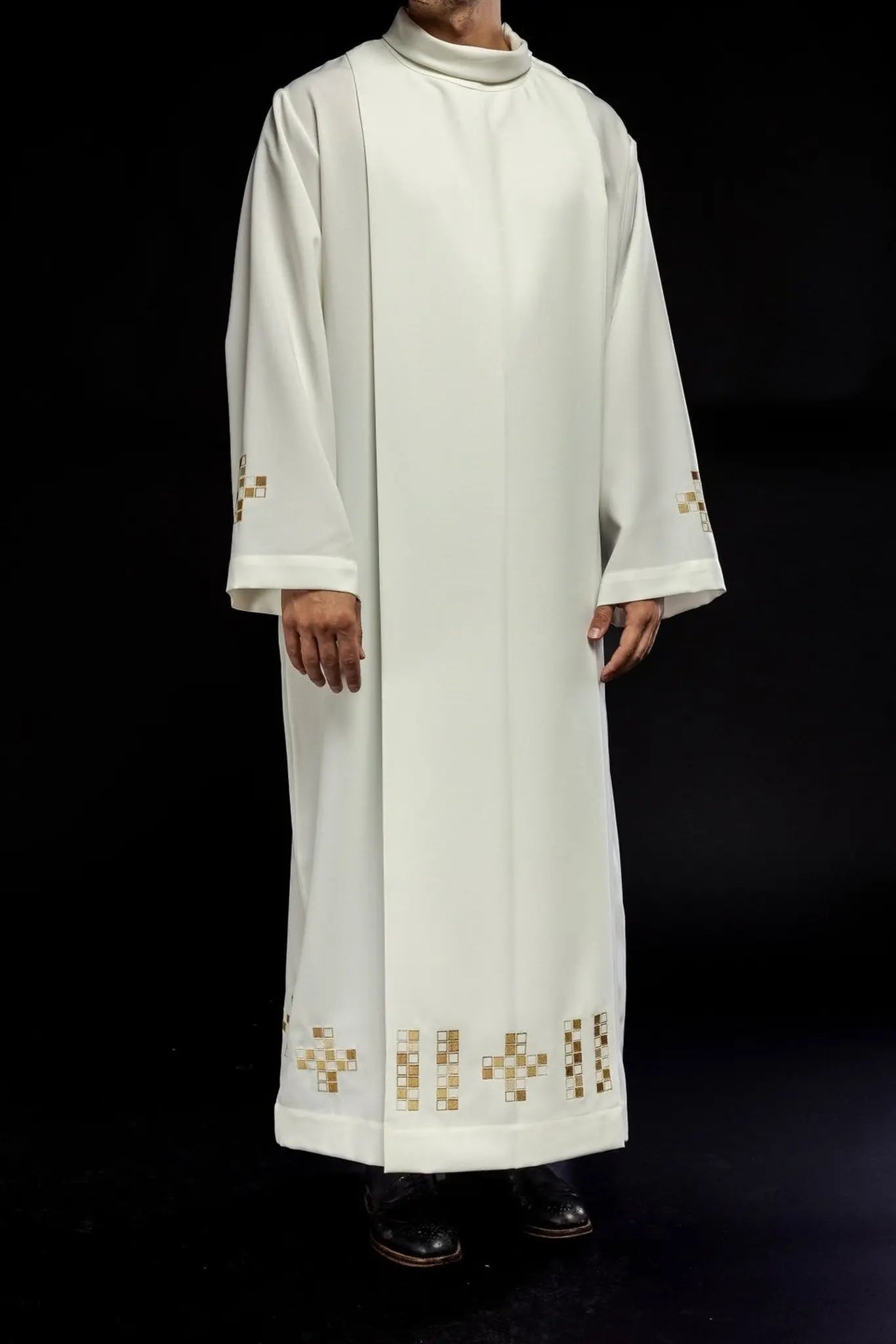
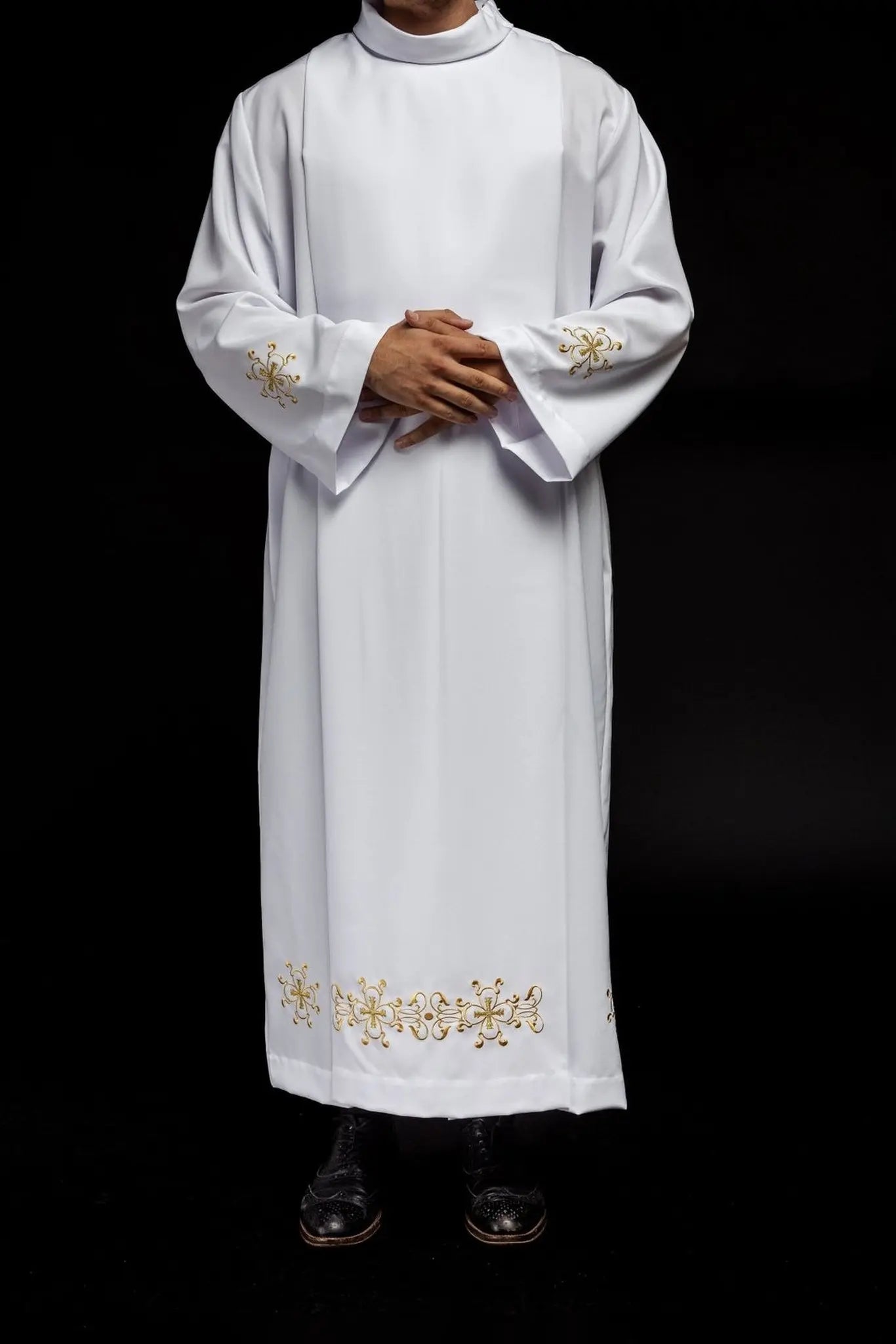
Albs for Clergy and Altar Servers
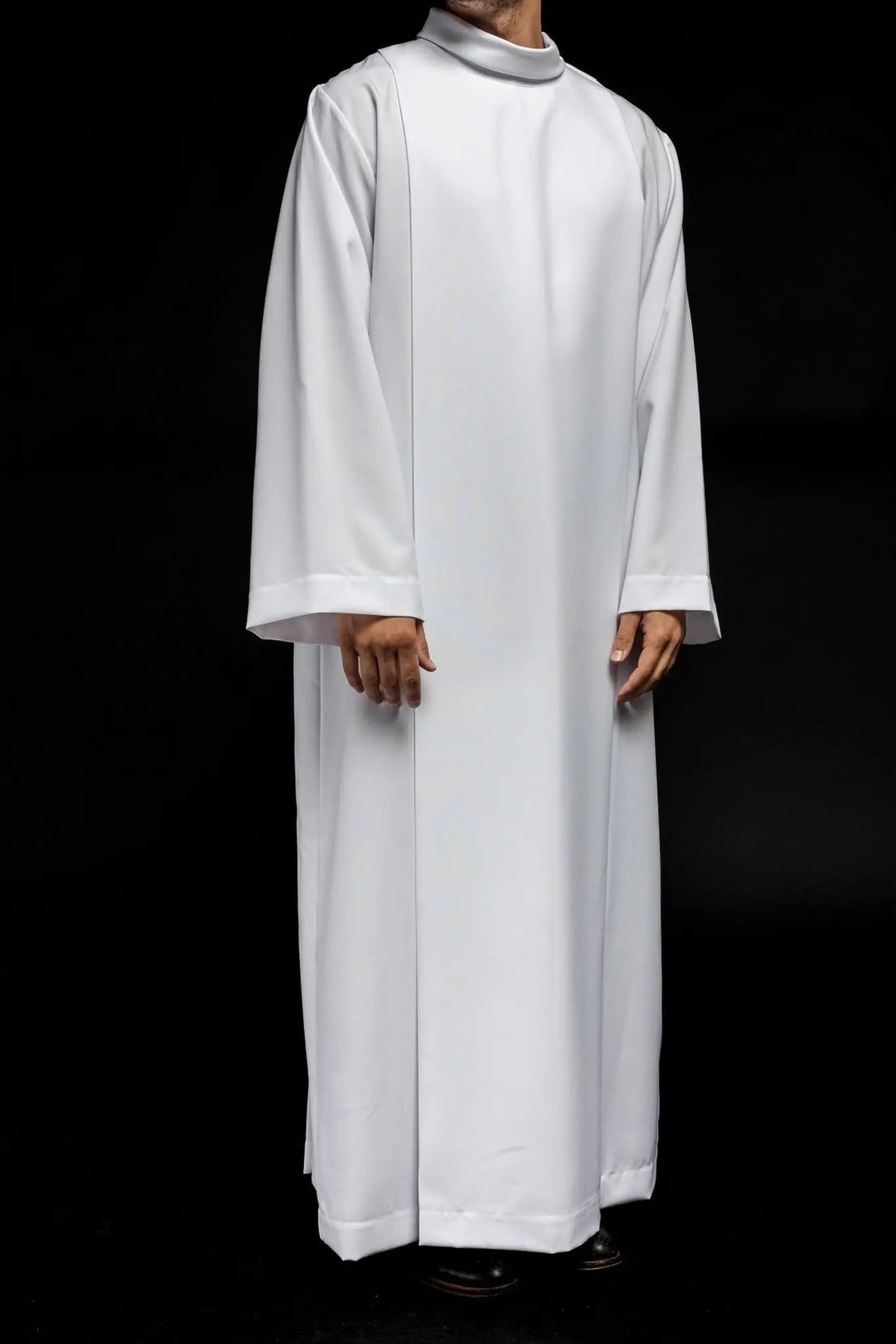
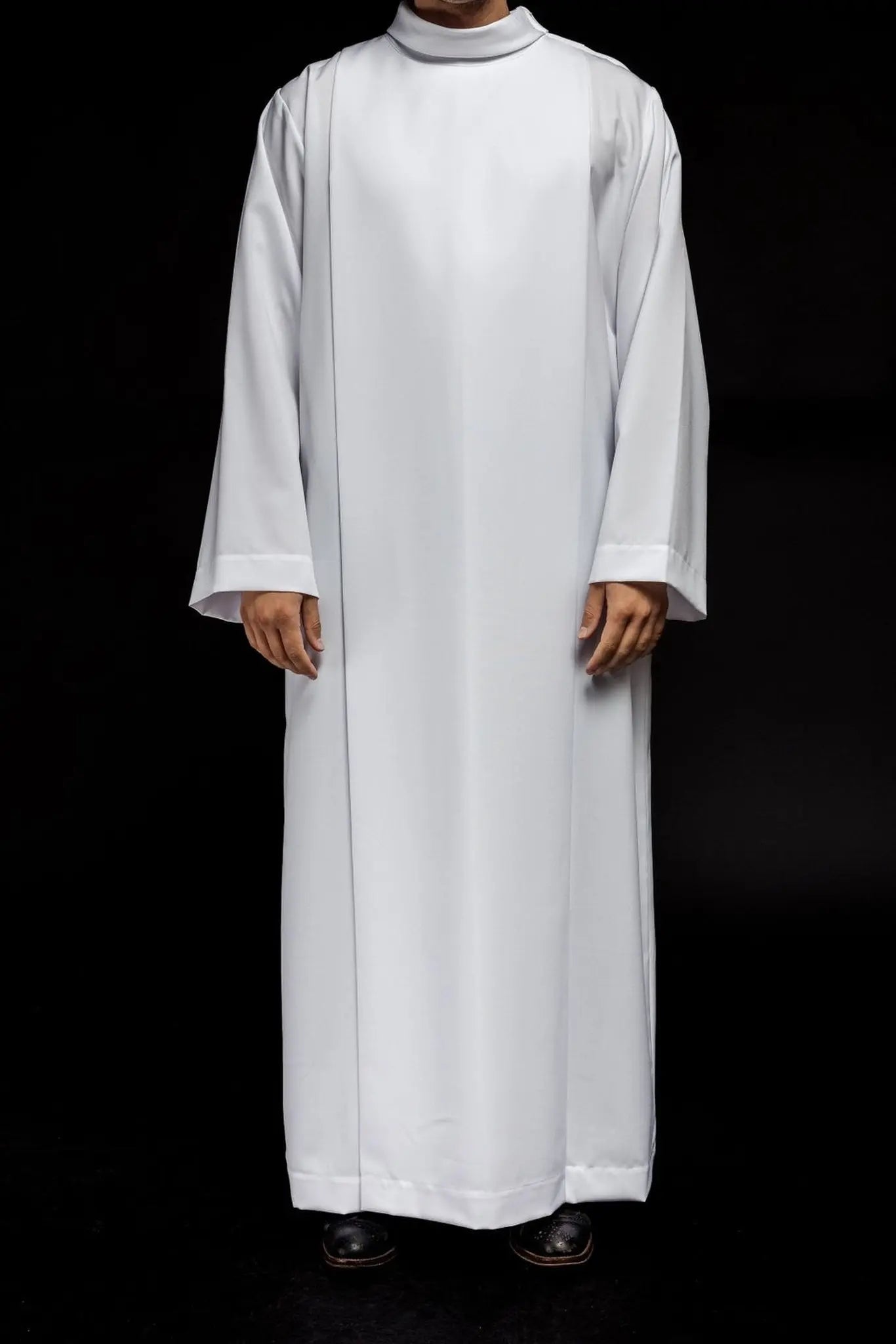
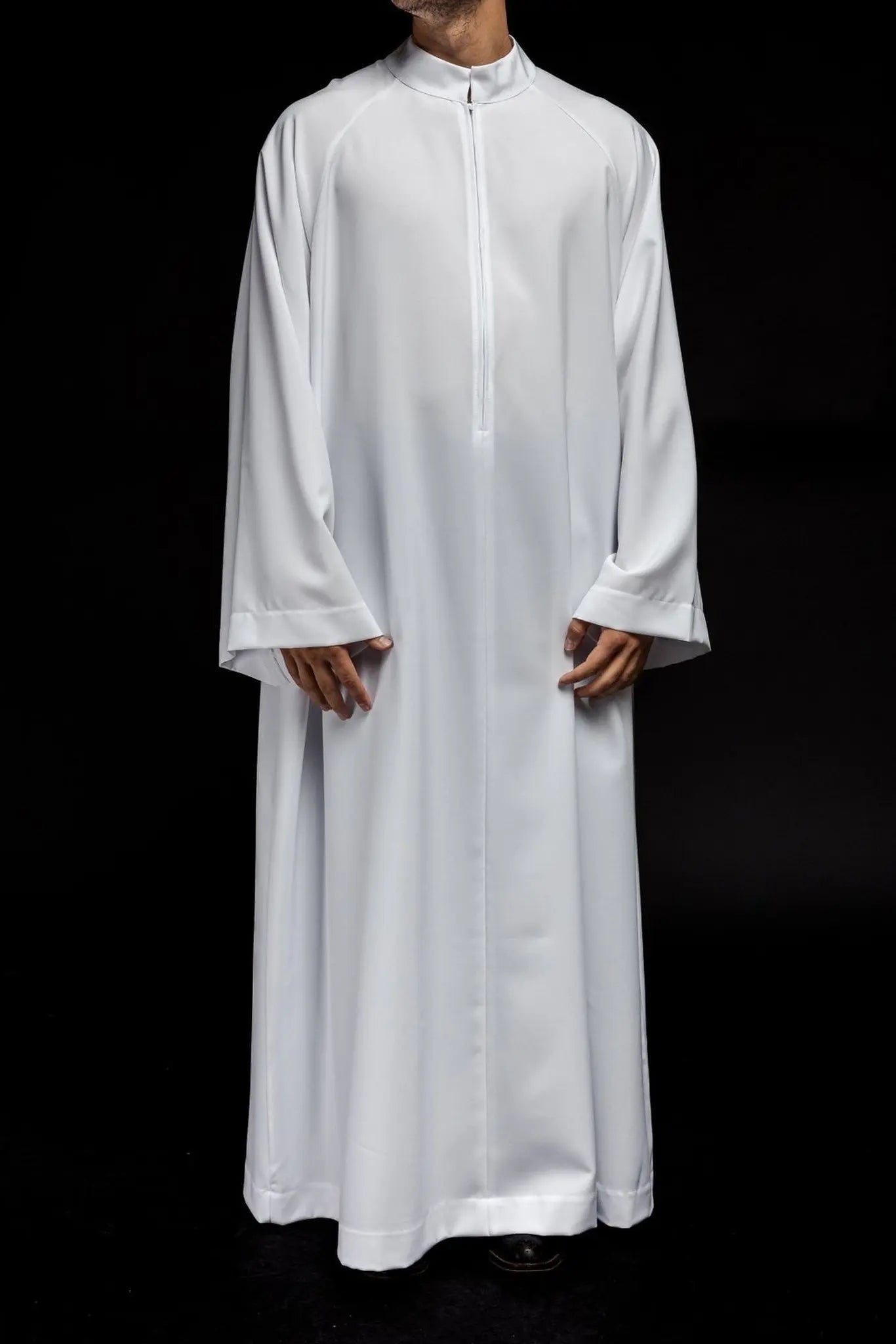
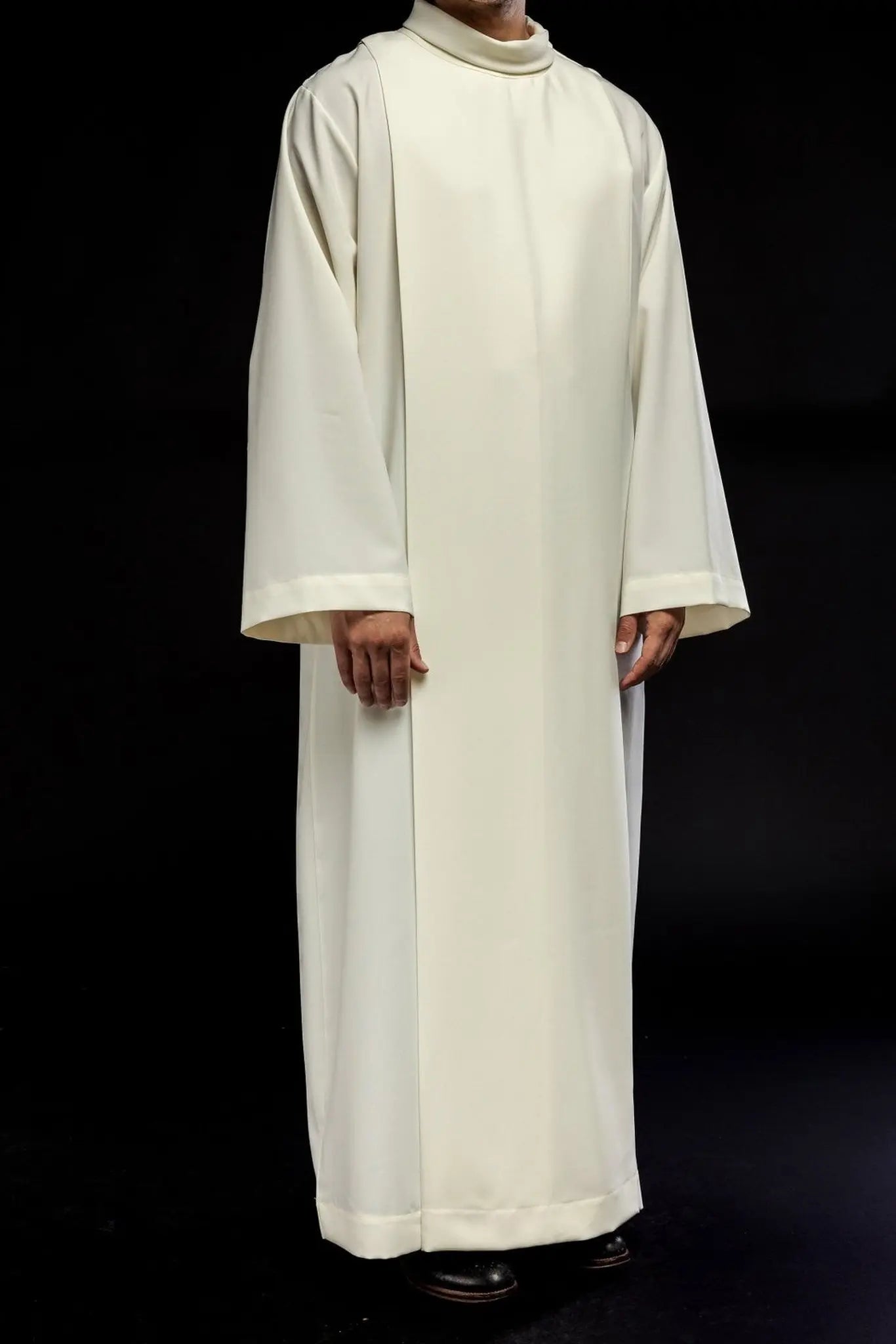
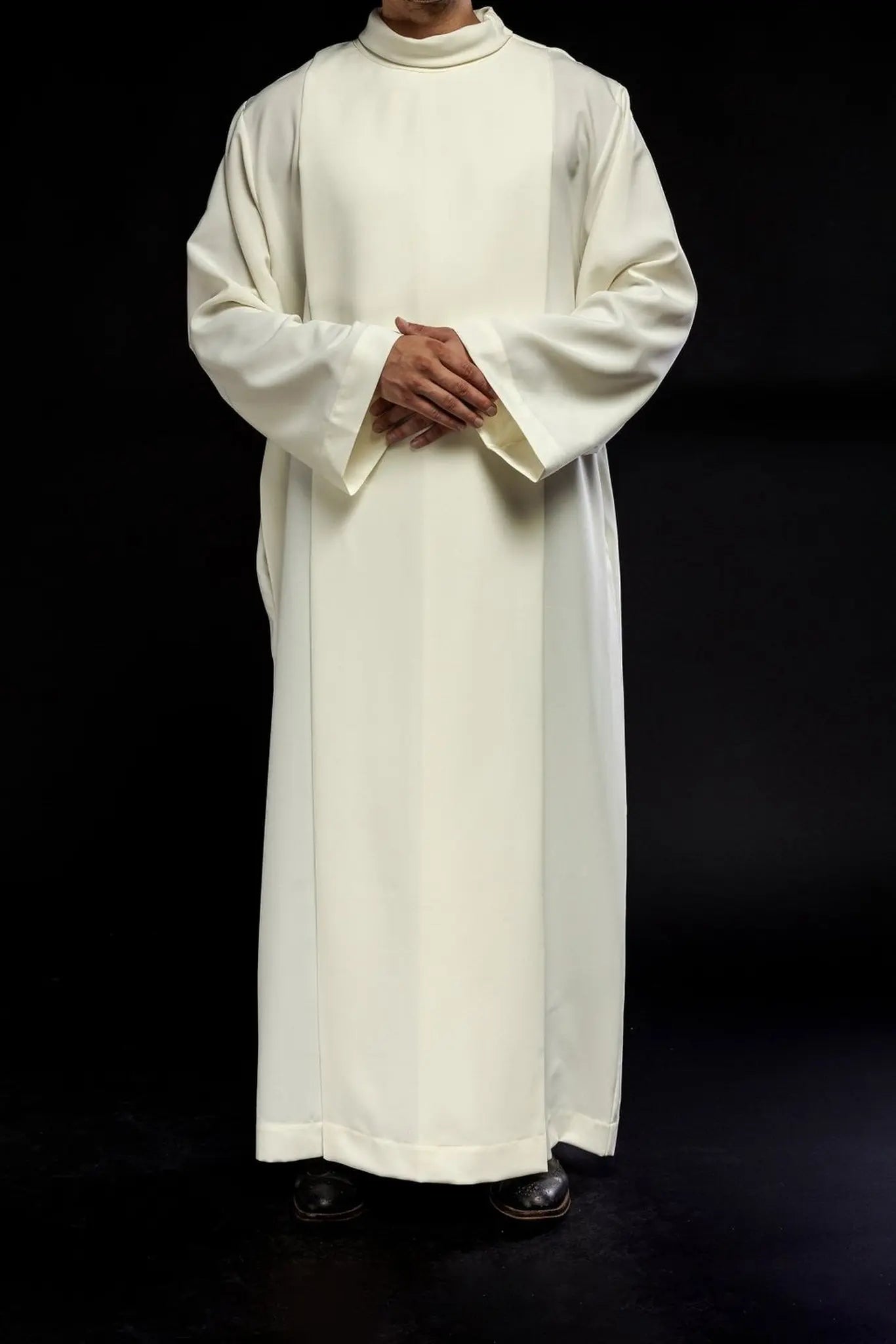
The alb is one of the most recognizable white vestments used in Christian liturgy. Its name comes from the Latin word albus, meaning white, and its clean form expresses baptismal dignity, purity of service, and readiness to participate in the sacred rites. This collection brings together albs for priests, deacons, acolytes, lectors, altar servers, and other ministers who require a dignified garment for Mass, the Liturgy of the Hours, processions, solemn celebrations, and regular parish service.
In the hierarchy of liturgical vestments, the alb serves as a foundational garment. It may be worn on its own by servers and other ministers, or underneath a stole, chasuble, dalmatic, cope, or humeral veil depending on the ministry and celebration. Because it is used so frequently, a well-chosen alb should combine reverent appearance with practical comfort: it must cover the everyday clothing properly, allow calm movement in the sanctuary, and remain neat throughout the liturgy.
What Belongs in the Albs Collection
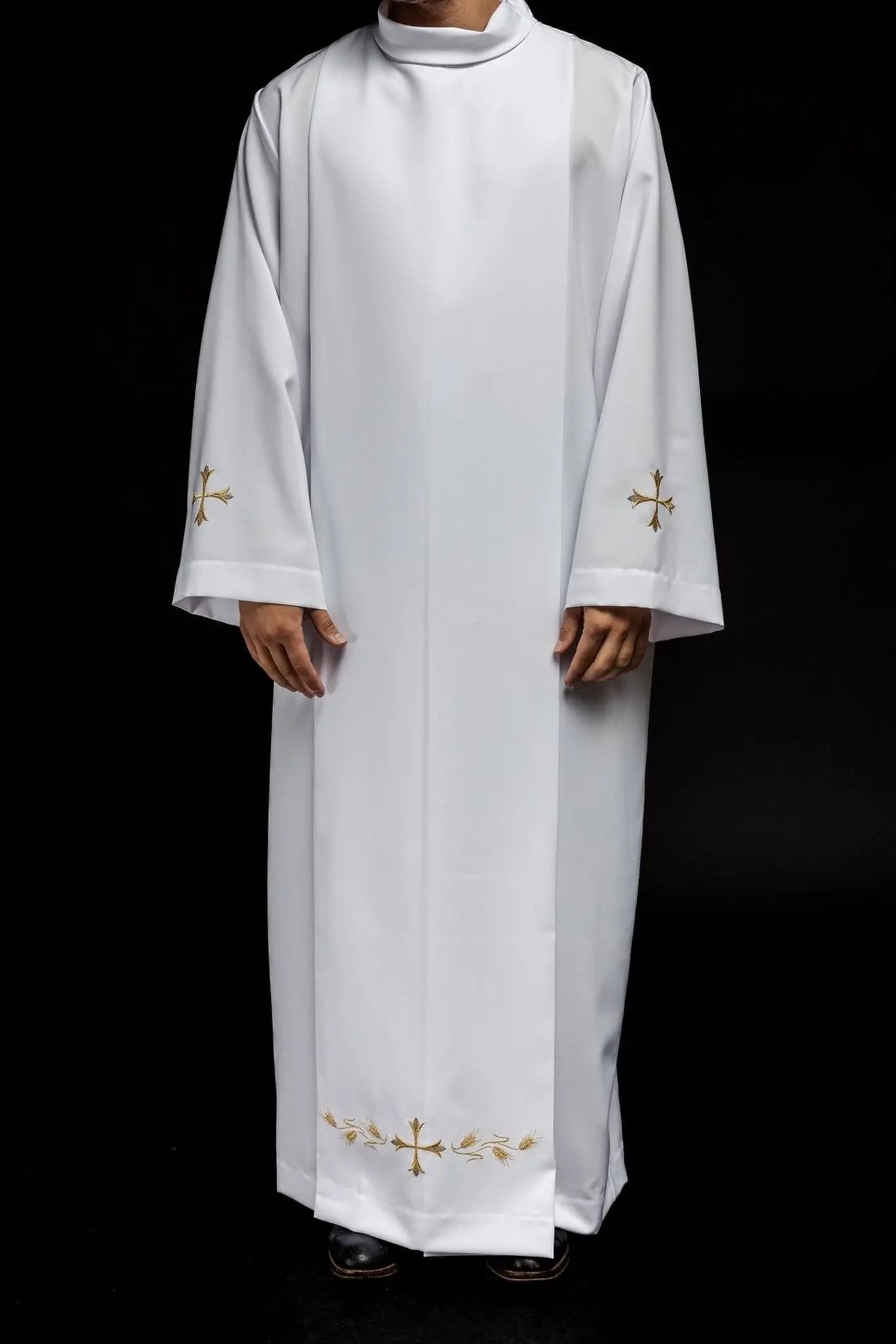
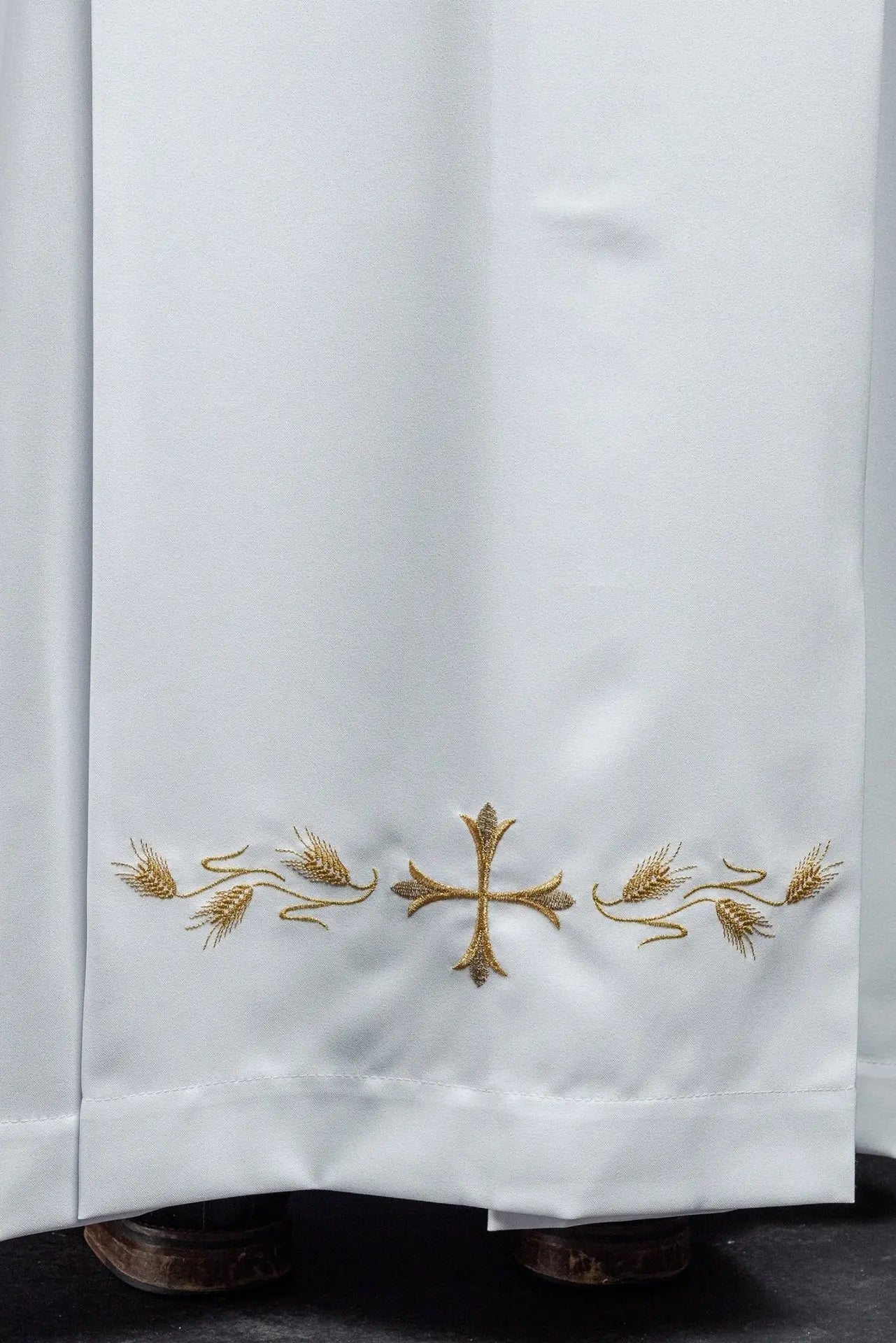
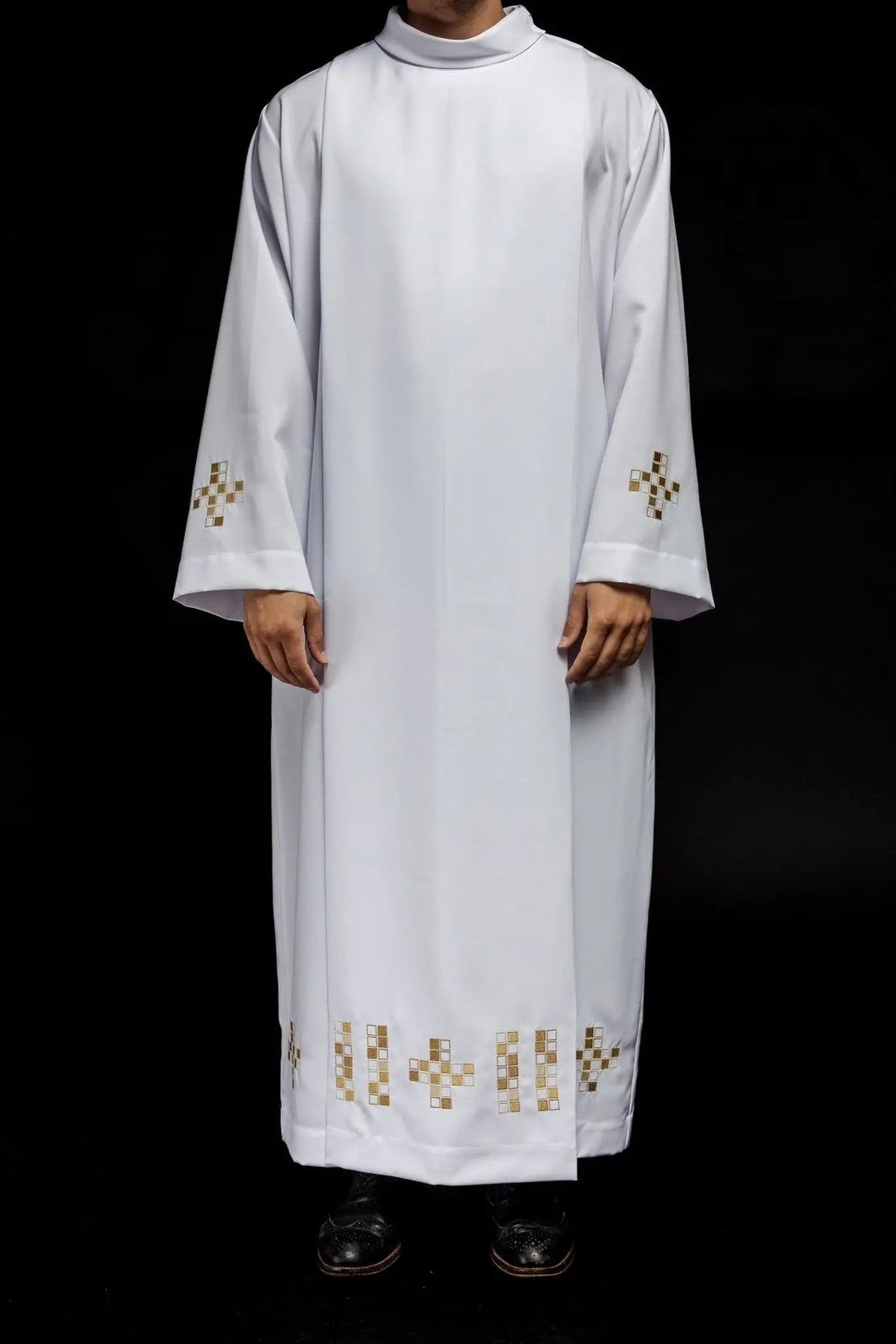
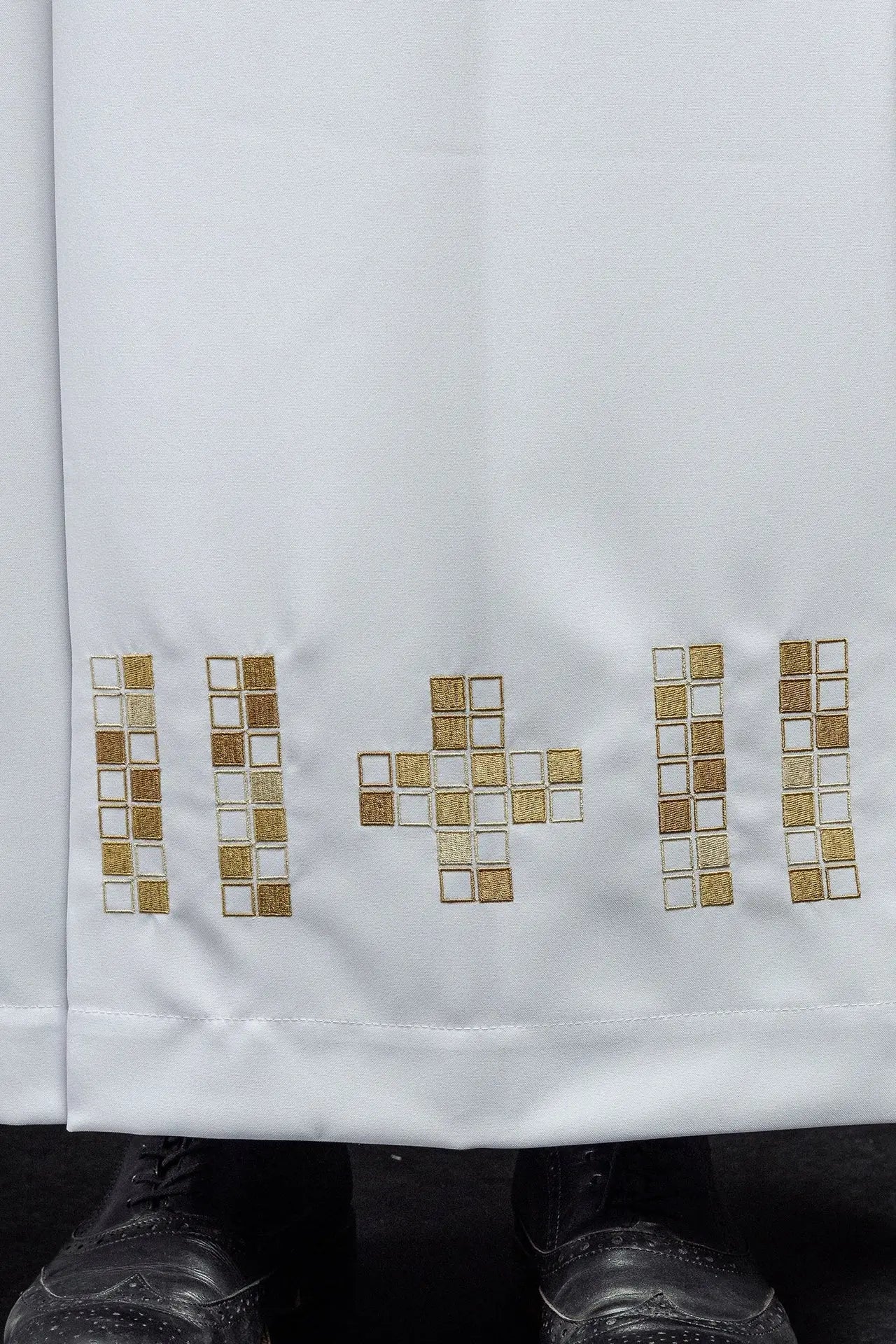
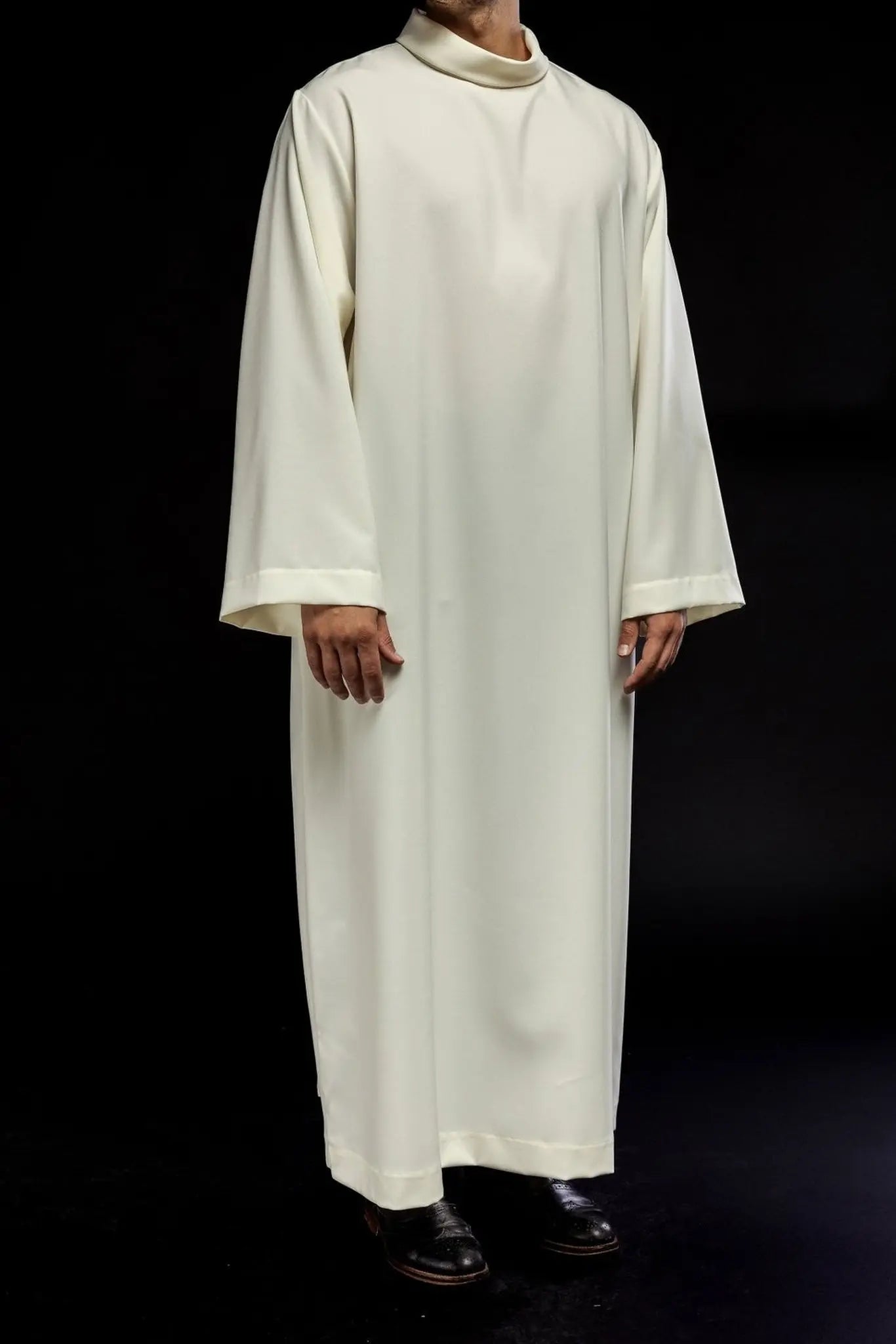
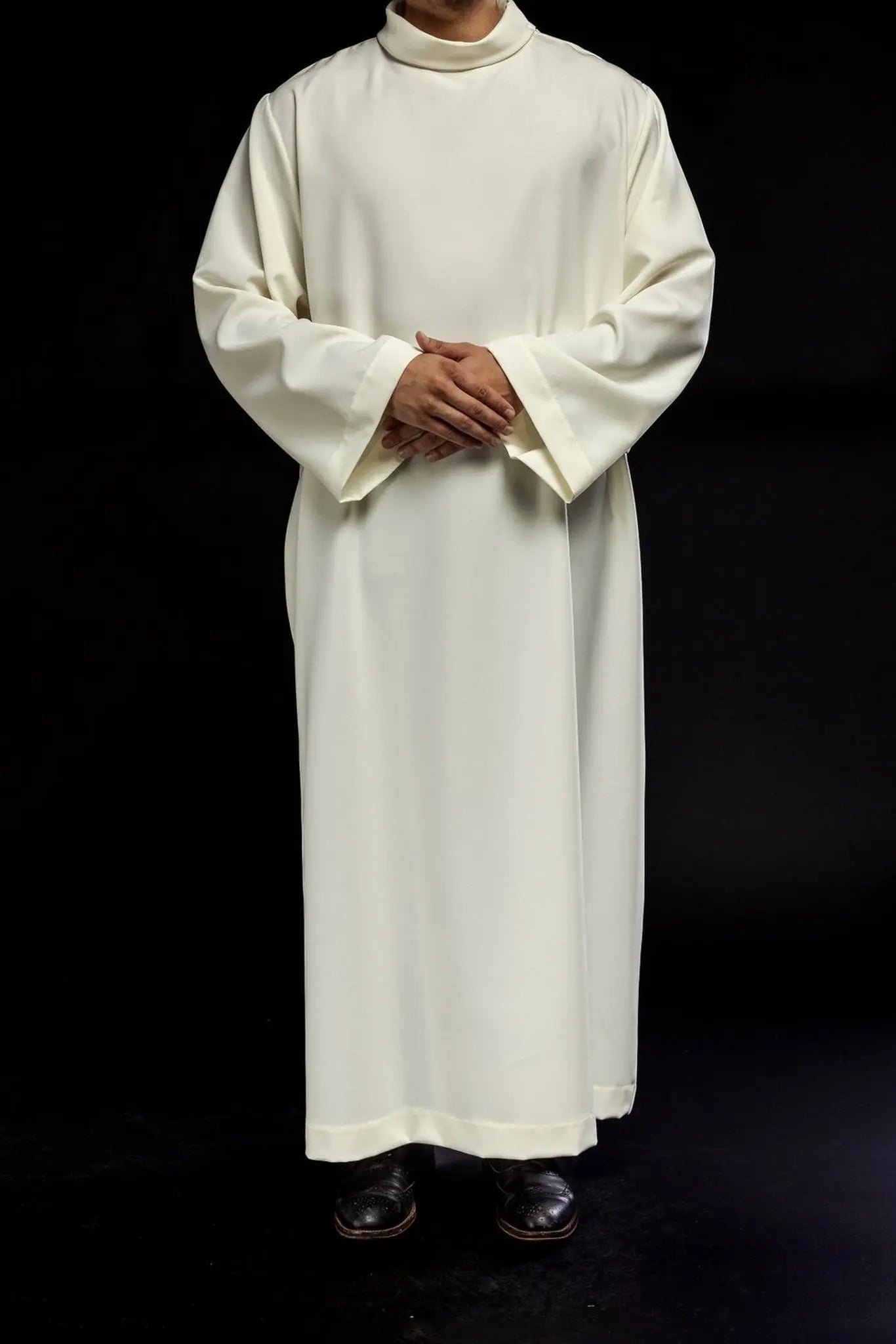
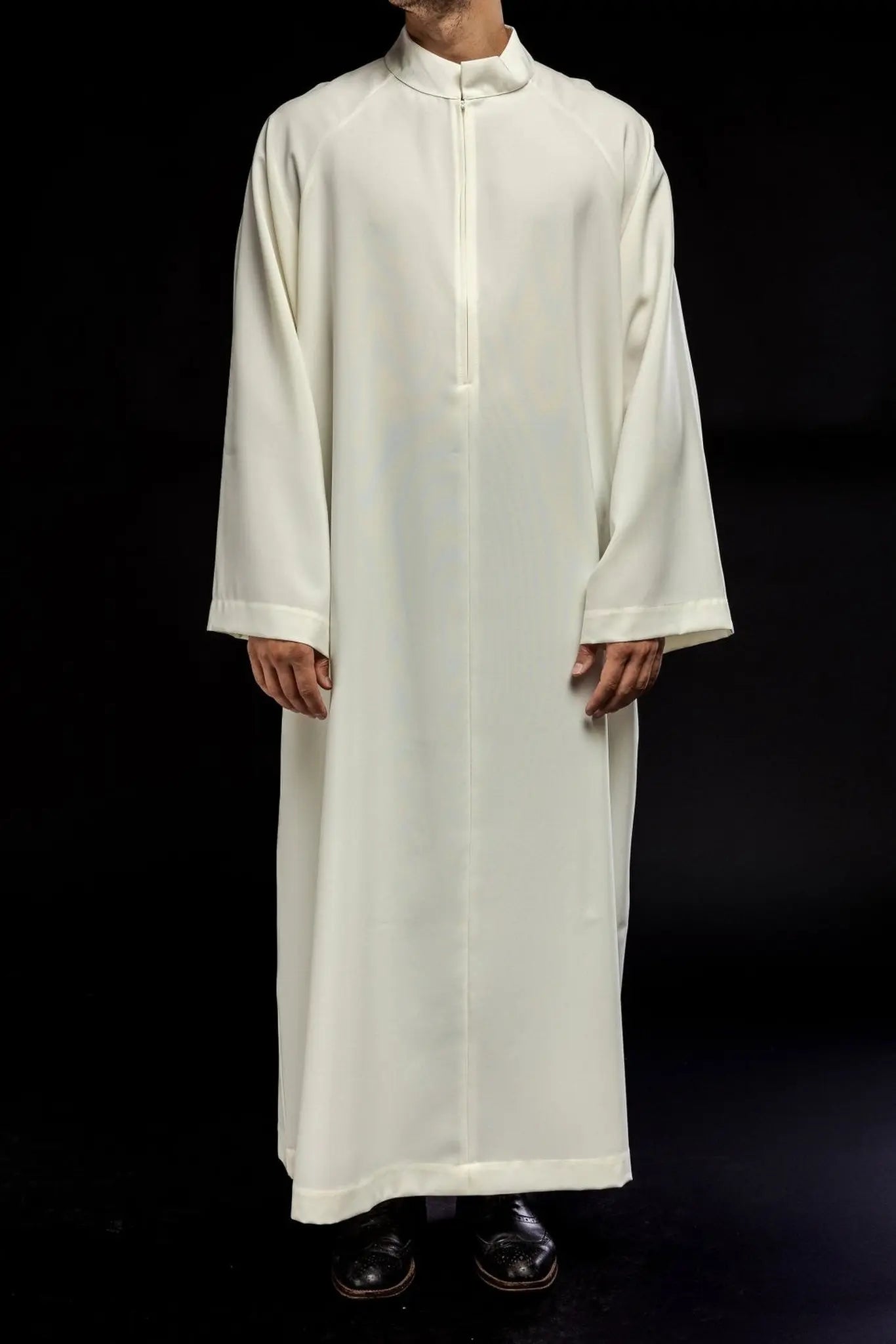
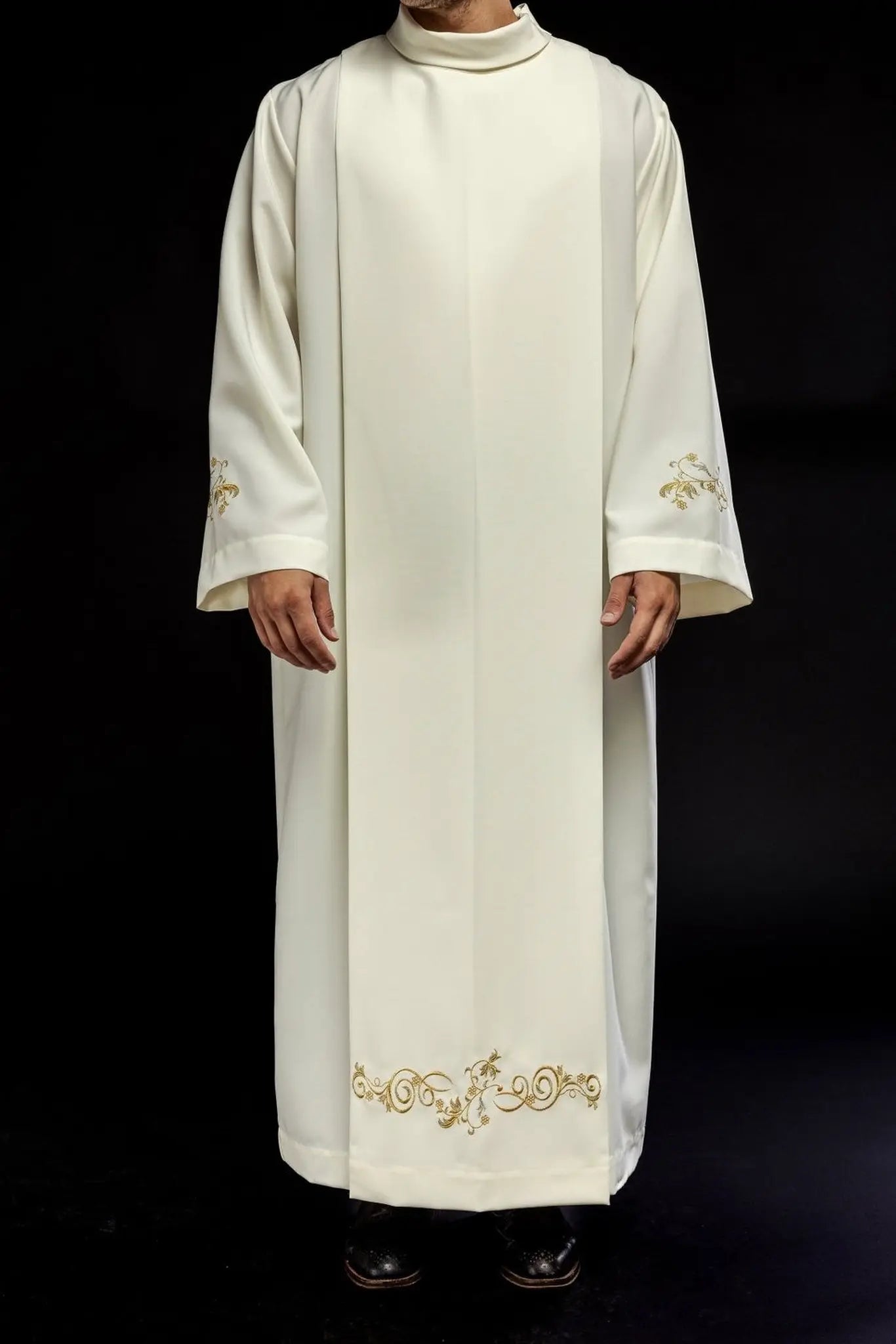
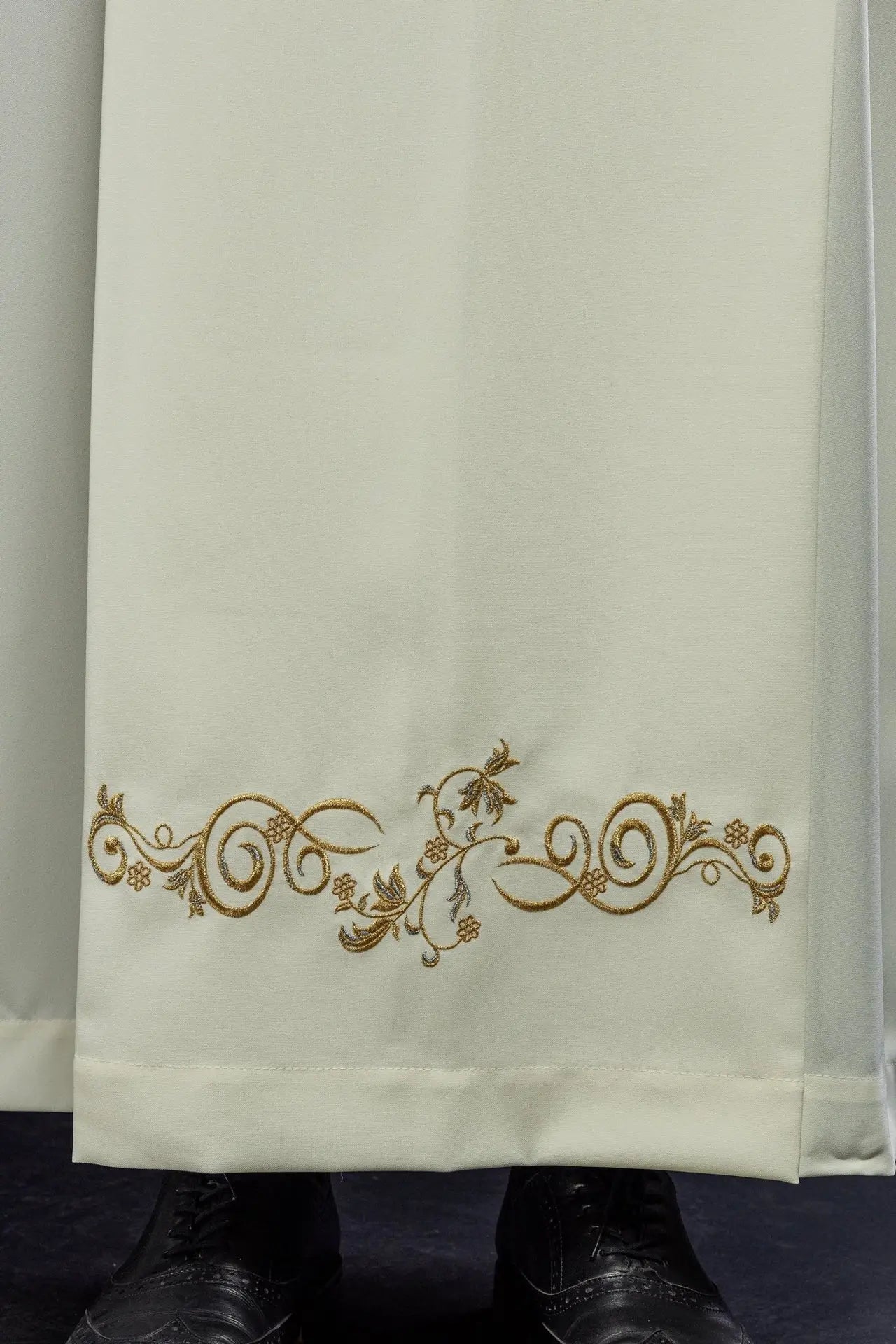
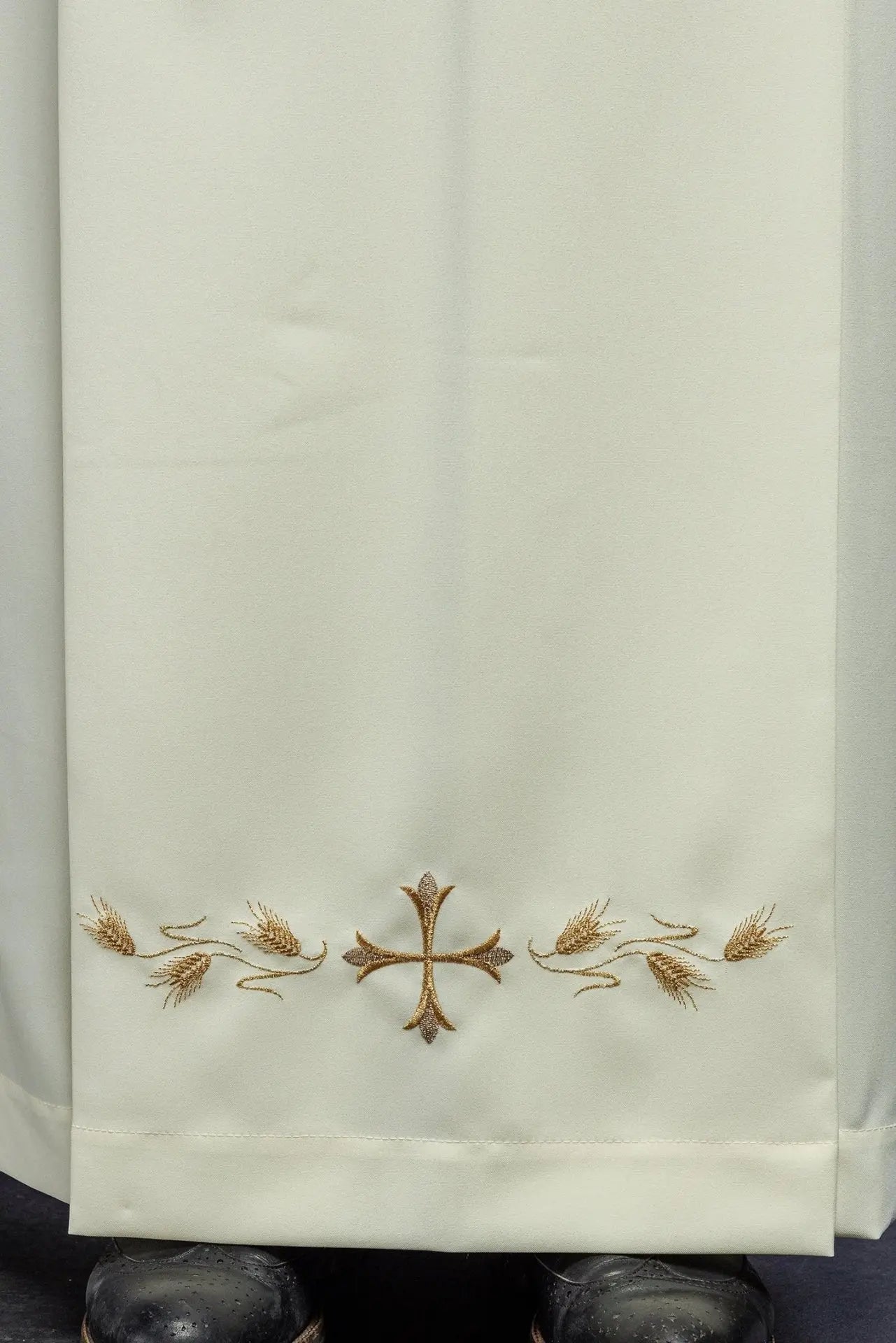
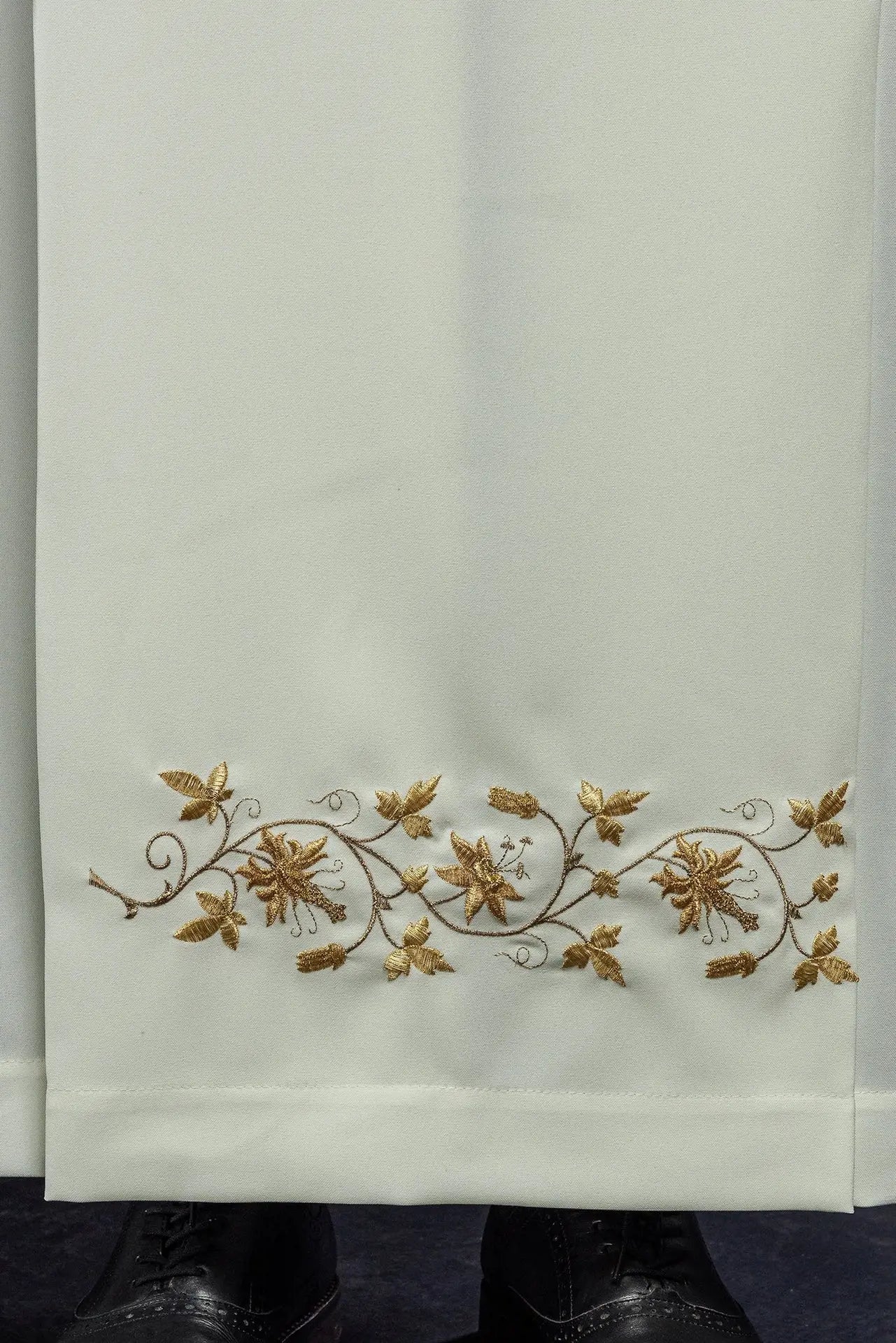
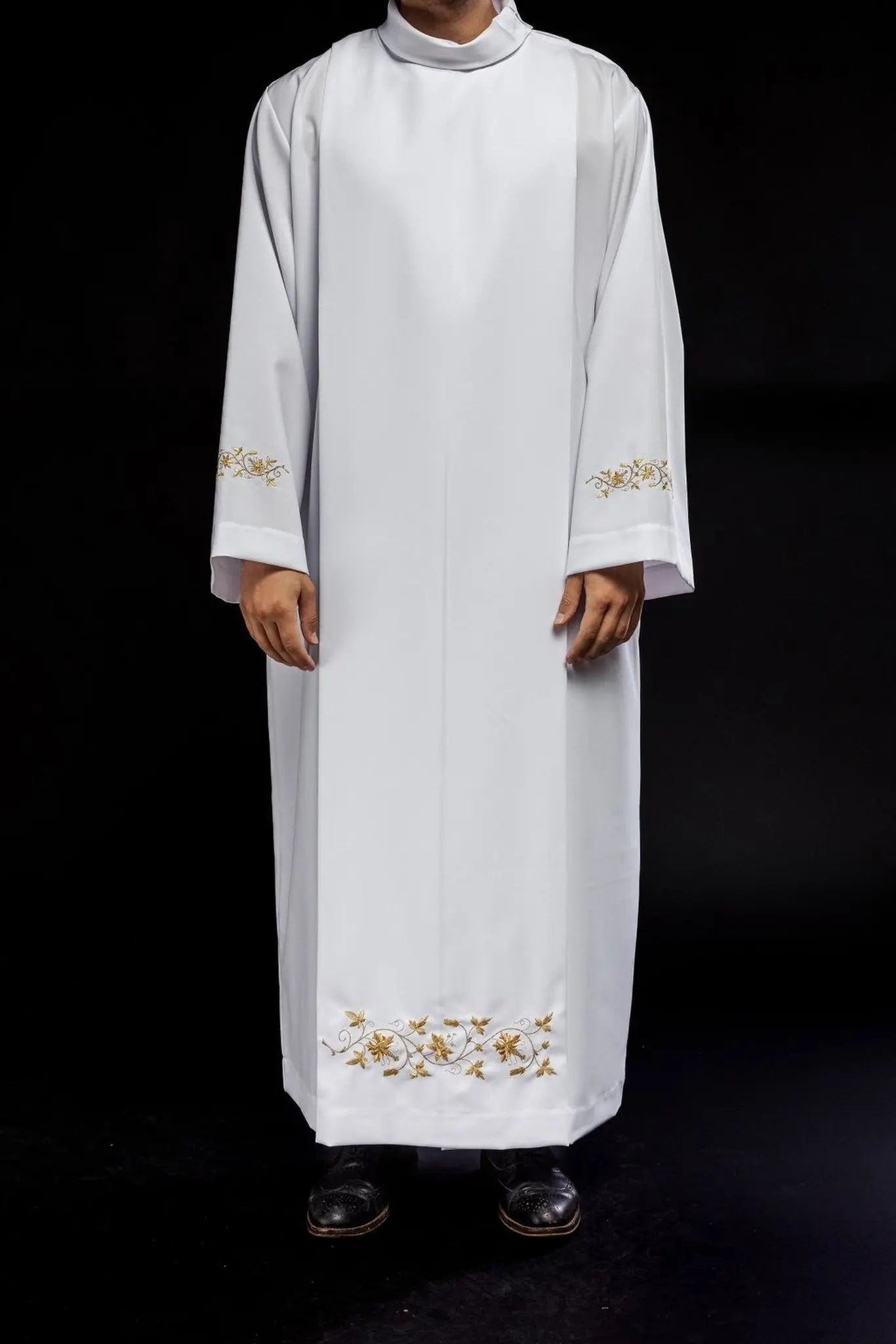
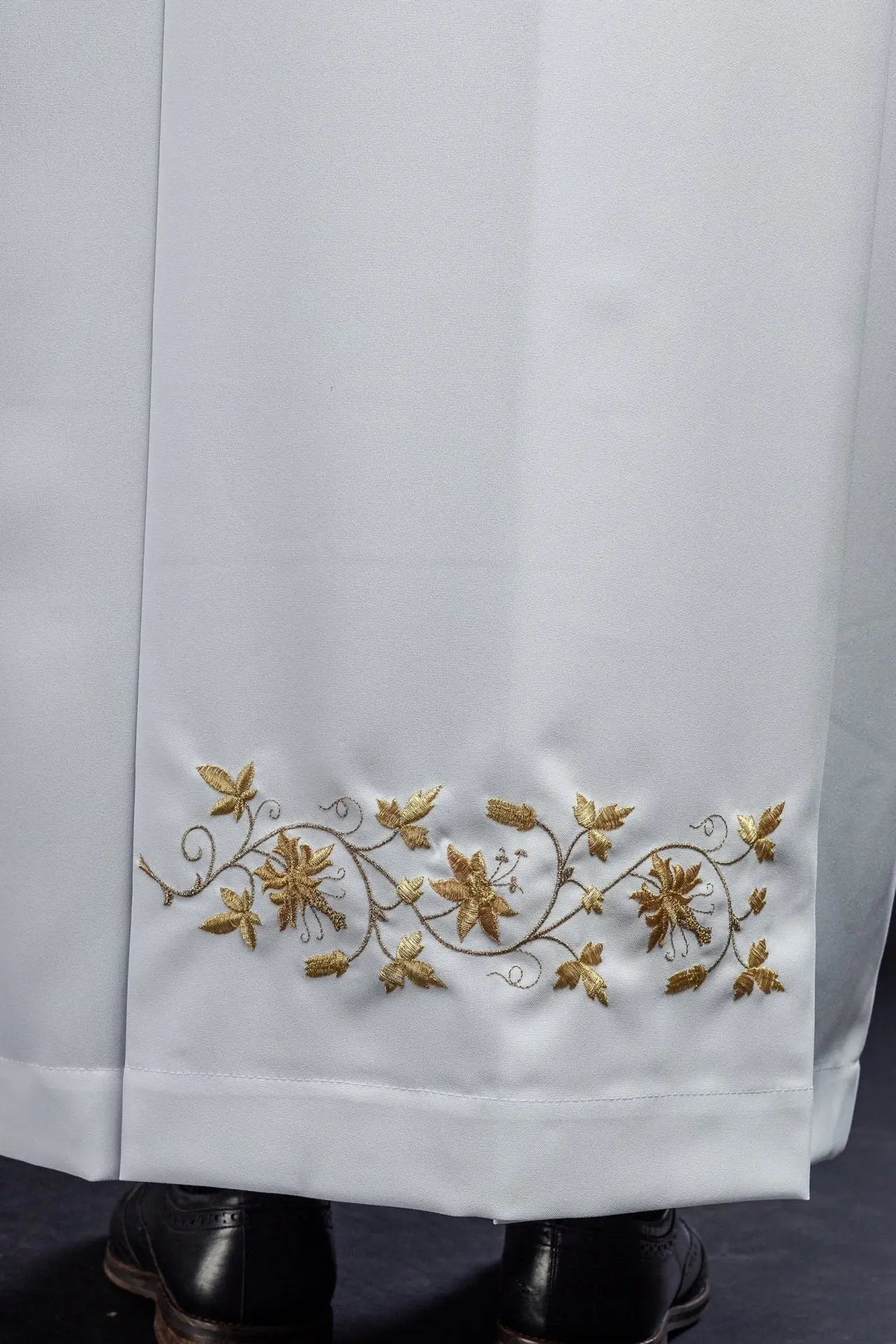
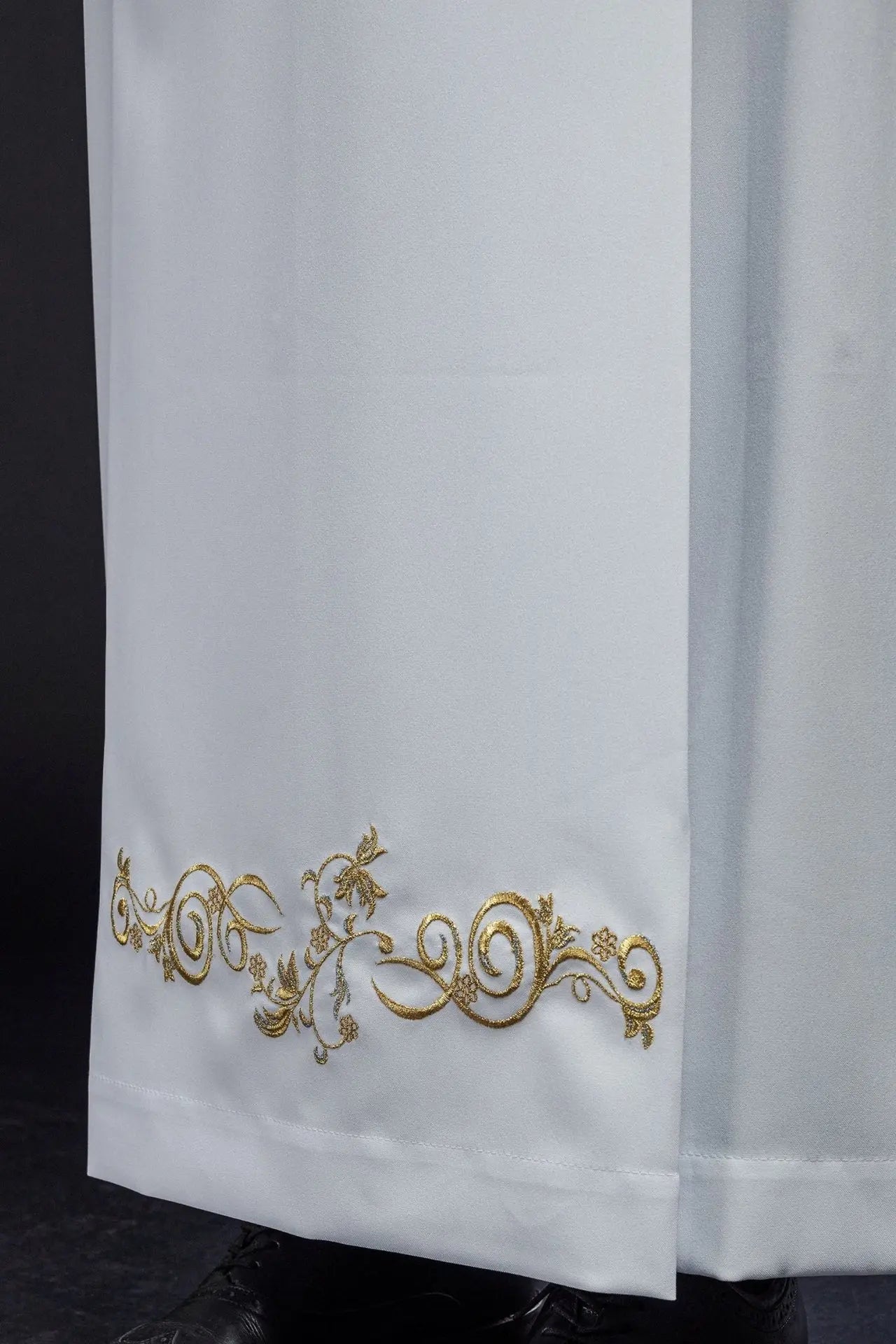
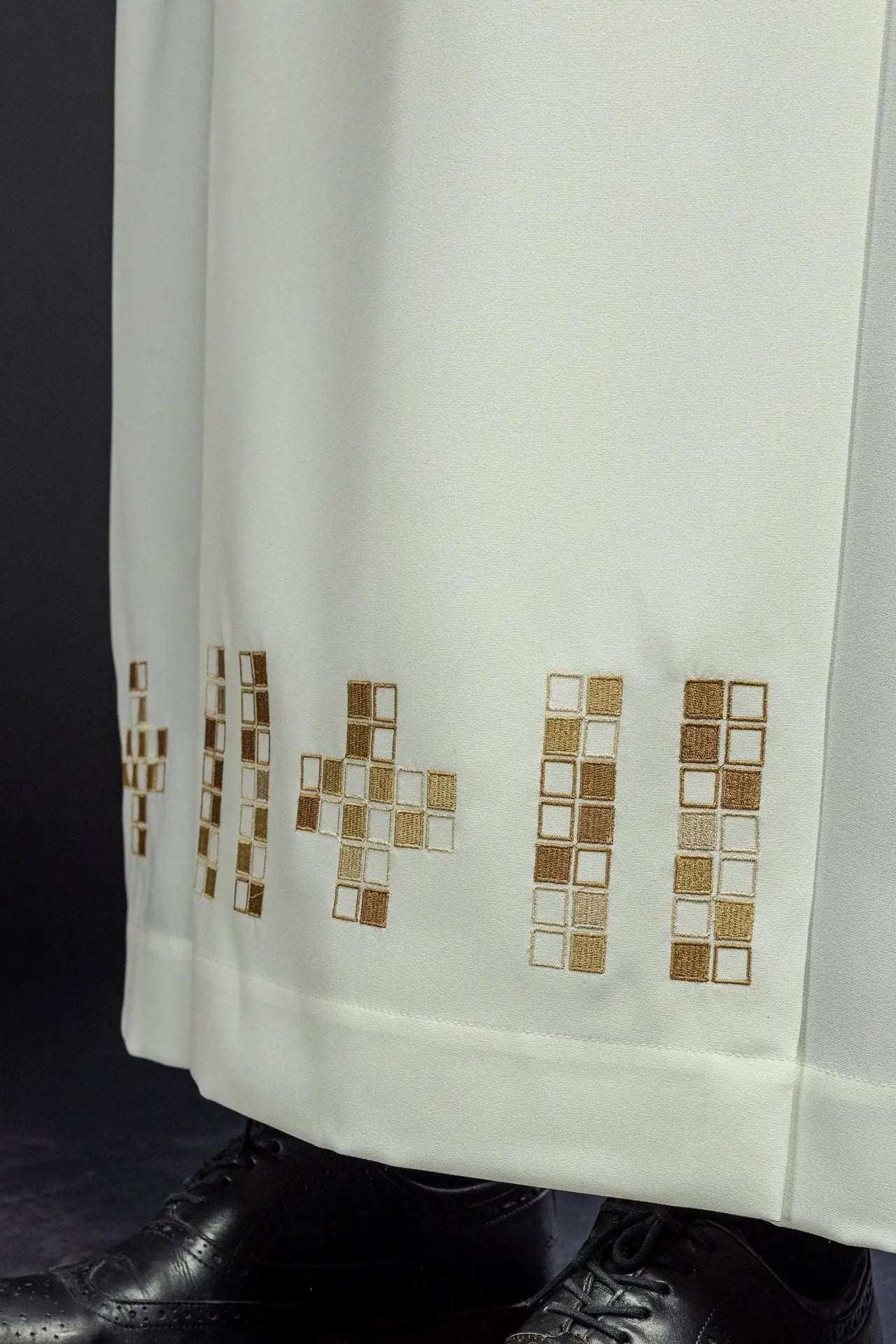
This collection is dedicated to white liturgical albs designed for use at the altar and in other sacred settings. The range may include simple parish albs for daily service, more formal albs for solemn celebrations, models with decorative lace or embroidery, and sizes suitable for adult ministers as well as altar servers. The purpose of the collection is not to replace the outer vestments of the ordained minister, but to provide the proper white garment that supports them.
A priest normally wears an alb beneath a chasuble when celebrating Mass. A deacon may wear an alb beneath a dalmatic or with the appropriate deacon stole. Altar servers, lectors, acolytes, and other instituted or appointed ministers may wear an alb as a sign that their service is connected with the Churchs public prayer rather than with ordinary dress. In many parishes, the alb also helps create visual unity among the sanctuary team.
Liturgical Meaning and Use
The alb is closely connected with the symbolism of the baptismal garment. Its white color points to the new life received in Christ and to the dignity of serving in the liturgy. It is not limited to one liturgical season or color, because it is not used in the same way as a chasuble, stole, dalmatic, or pulpit cover. Instead, the alb remains a stable vestment across the Church year, while the outer vestments or church textiles express the color and theme of the day.
For this reason, an alb may be used during Advent, Christmas, Lent, Easter, Ordinary Time, Marian feasts, Corpus Christi, funerals, weekday Masses, confirmations, first communions, and parish solemnities. When preparing a complete vesting set, the alb forms the base layer, while the seasonally appropriate vestment is chosen from related collections such as clergy stoles, chasubles, or deacon dalmatics.
How to Choose the Right Alb
Choosing an alb begins with the ministry and the setting in which it will be worn. For regular parish use, a simple alb with a clean cut is often the most practical choice. It should be easy to put on, comfortable during longer services, and suitable for frequent laundering or careful maintenance. For solemn feasts, ordinations, first communions, or special celebrations, an alb with lace, embroidery, or decorative finishing may be more appropriate, especially when it will be visible beneath a chasuble or cope.
Fit is especially important. The alb should be long enough to cover clothing without dragging on the floor, and wide enough to permit walking, kneeling, genuflecting, carrying candles, assisting at the altar, or moving in procession. Sleeves should allow the hands to remain free for liturgical actions. If the alb is too short, too narrow, or too heavily decorated for the role, it can distract the minister and reduce the sense of order in the sanctuary.
-
For priests: choose an alb that sits comfortably beneath a chasuble and stole, with a neckline and sleeve shape that do not interfere with vesting.
-
For deacons: select an alb that works well with a deacon stole and, when required, a dalmatic, leaving enough freedom for proclamation and service at the altar.
-
For altar servers: prioritize modest coverage, easy movement, and durable construction suitable for repeated parish use.
-
For solemn liturgies: consider refined lace, embroidery, or a fuller cut when the alb will be part of a more formal vesting arrangement.
Fabric, Comfort, and Practical Details
Because albs may be worn for long periods, fabric choice matters. Breathable materials are valued for warm churches, long processions, and services with many movements. More structured fabrics can help the alb hang neatly and preserve a solemn line. Some ministers prefer a lighter fabric for everyday Mass, while reserving a more decorative or formal alb for feasts and major parish celebrations.
Construction details also make a difference. Reinforced seams, secure closures, balanced proportions, and carefully finished hems help the garment keep its shape. A well-designed alb should not draw unnecessary attention to itself; rather, it should support the dignity of the liturgy through simplicity, whiteness, and order. Decorative elements, when present, should serve this purpose and remain in harmony with the sacred context.
Albs and Related Vestments
The alb belongs to a wider vesting system, so it is helpful to understand how it relates to nearby collections. The alb is the white under-vestment. The stole indicates ordained ministry and is chosen according to the role and liturgical color. The chasuble is worn by the priest celebrant over the alb and stole at Mass. The dalmatic is associated with the deacons ministry. A cope may be used for processions, blessings, the Liturgy of the Hours, and other rites outside Mass, while a humeral veil is used in specific Eucharistic contexts.
When building a complete sacristy set, this collection can therefore be paired naturally with deacon stoles for deacons, with chasubles for priests, and with copes or humeral veils for solemn rites. These related vestments should not be confused with the alb itself. The alb provides the white foundation; the other vestments express office, rite, season, or liturgical function.
Altar Server Albs
Altar server albs should help young and adult servers participate with confidence and reverence. They need to be modest, simple, and manageable. A server who can move comfortably, carry objects safely, and kneel without difficulty is better able to focus on the liturgy. For parish teams with several servers, consistent albs also create a calm visual order around the altar.
When selecting albs for servers, consider the range of heights in the parish, the frequency of use, and the level of care the garments will receive. A durable, well-proportioned alb may be more useful than an overly delicate model in a busy parish. For major celebrations, however, a more refined alb can be appropriate when it remains practical for the assigned role.
Care and Long-Term Use
White vestments require attentive care because they visibly reflect cleanliness and order. Always follow the care instructions for the specific fabric and decoration. In general, albs should be stored clean and dry, hung properly when possible, and protected from dust, candle wax, incense residue, and moisture. Embroidered or lace-trimmed albs may require more careful handling than plain models.
Regular inspection is also helpful. Check hems, closures, sleeves, and lace before major celebrations so that any repair can be made in time. A well-maintained alb preserves the dignity of the minister and the harmony of the sanctuary. Since the alb is used so often, investing in suitable quality and caring for it consistently helps the garment serve the parish for many liturgical seasons.
Choosing Albs for a Parish or Sacristy
For a parish, chapel, monastery, or seminary, it is often useful to keep several types of albs available. Plain albs can serve weekday Masses and regular ministries, while more formal albs may be reserved for feasts and solemn rites. A range of sizes allows different ministers to vest correctly without compromising comfort or appearance. When selecting multiple albs, consistency in color tone, cut, and length can help the sanctuary look orderly.
This collection is intended for customers who need albs that are liturgically appropriate, visually dignified, and practical in real parish life. Whether the alb is worn under a chasuble, combined with a stole, used by a deacon, or assigned to altar servers, its role is to support reverent service. The best choice is the garment that fits the minister, the rite, and the frequency of use while remaining faithful to the simple symbolism of white liturgical dress.
Frequently Asked Questions (FAQ)
Who may wear an alb during the liturgy?
An alb may be worn by priests, deacons, instituted ministers, altar servers, and other ministers according to local liturgical practice. Its purpose is to provide a dignified white vestment for service at the altar and in public worship.
Is an alb the same as a chasuble?
No. The alb is the white foundational vestment. A chasuble is the outer vestment worn by a priest for Mass over the alb and stole. For priestly vesting, both may be needed, but they serve different liturgical functions.
Can altar servers wear the same type of alb as clergy?
They may wear albs of similar form, but server albs are usually chosen for durability, easy movement, and appropriate sizing. Decorative details should remain modest so the garment supports service rather than drawing attention.
What should I consider when selecting an alb for frequent parish use?
Look for comfortable fabric, sufficient length, reliable closures, and a cut that allows walking, kneeling, and serving at the altar. For heavy use, simple and durable construction is often the most practical choice.
Does the alb change according to the liturgical color of the day?
No. The alb remains white and is used across the liturgical year. Seasonal color is usually shown by the stole, chasuble, dalmatic, cope, pulpit cover, or other liturgical textile connected with the celebration.