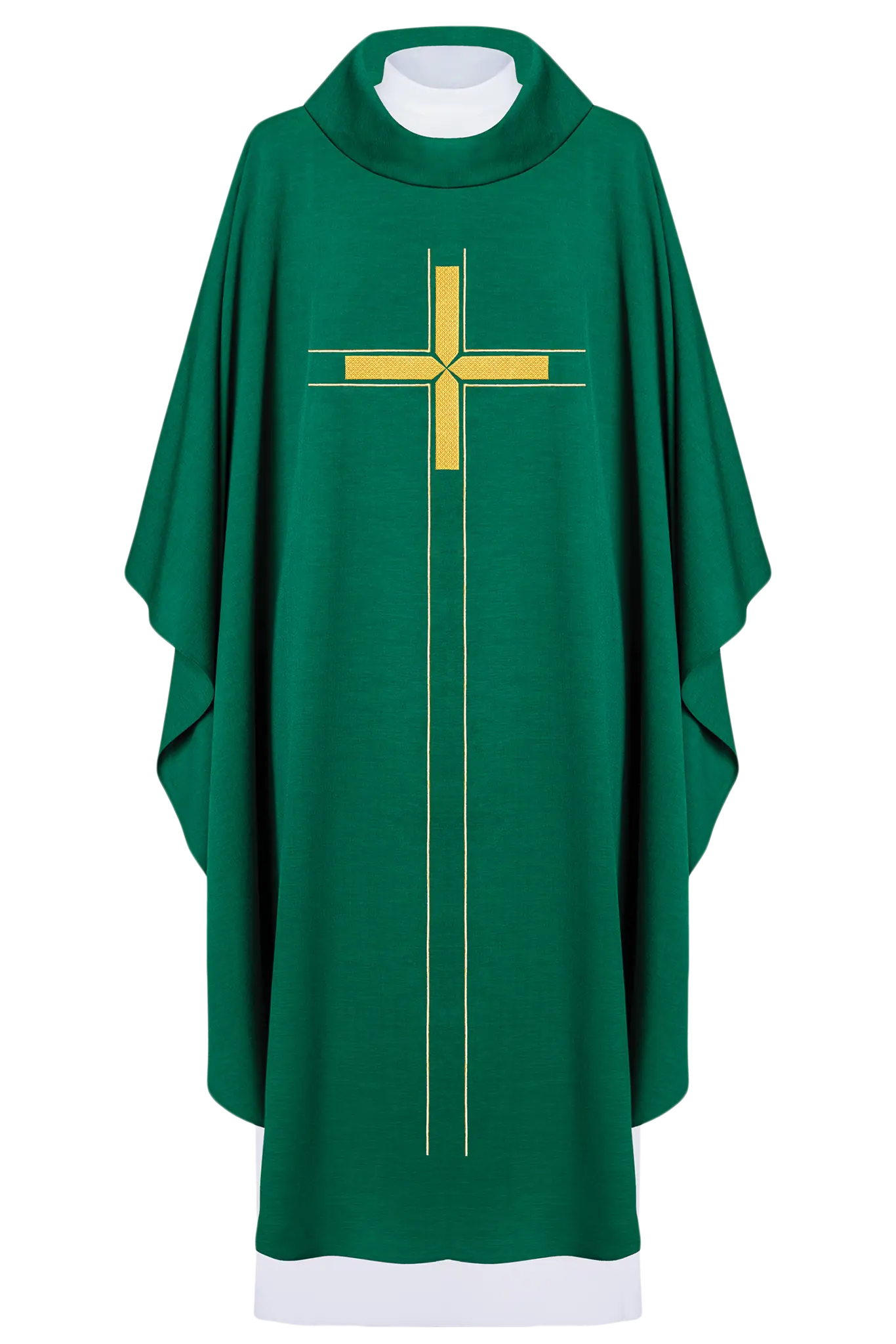
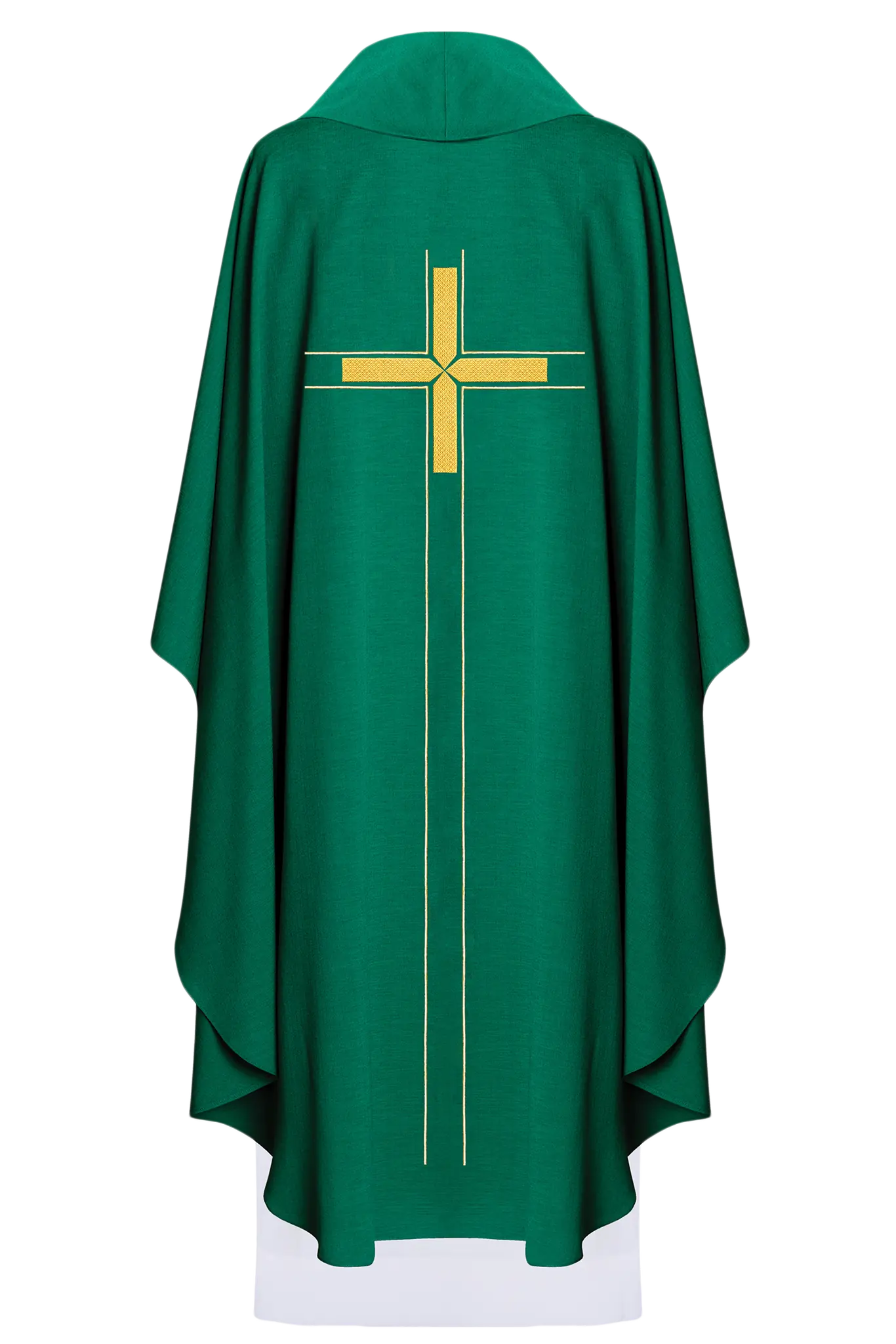
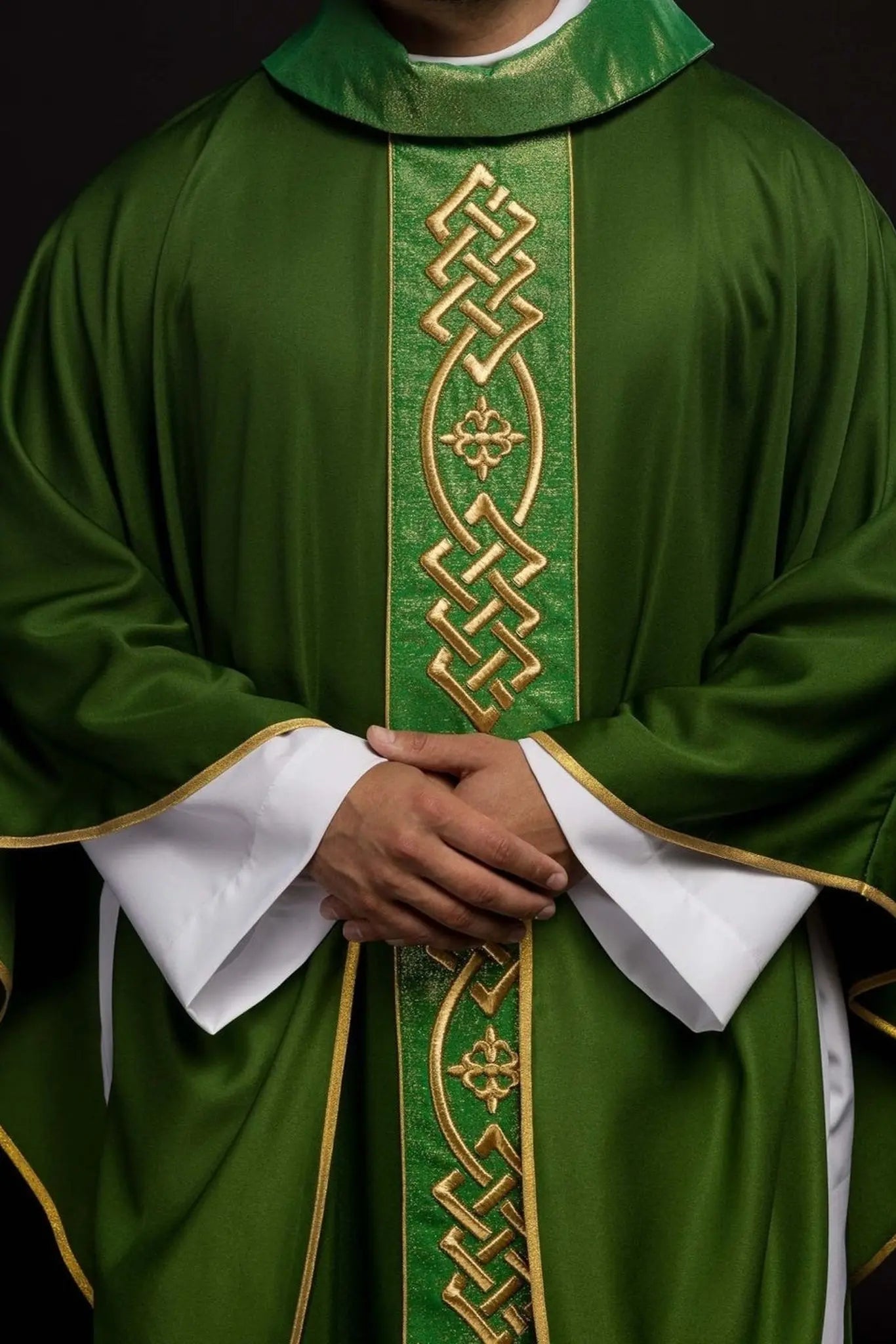
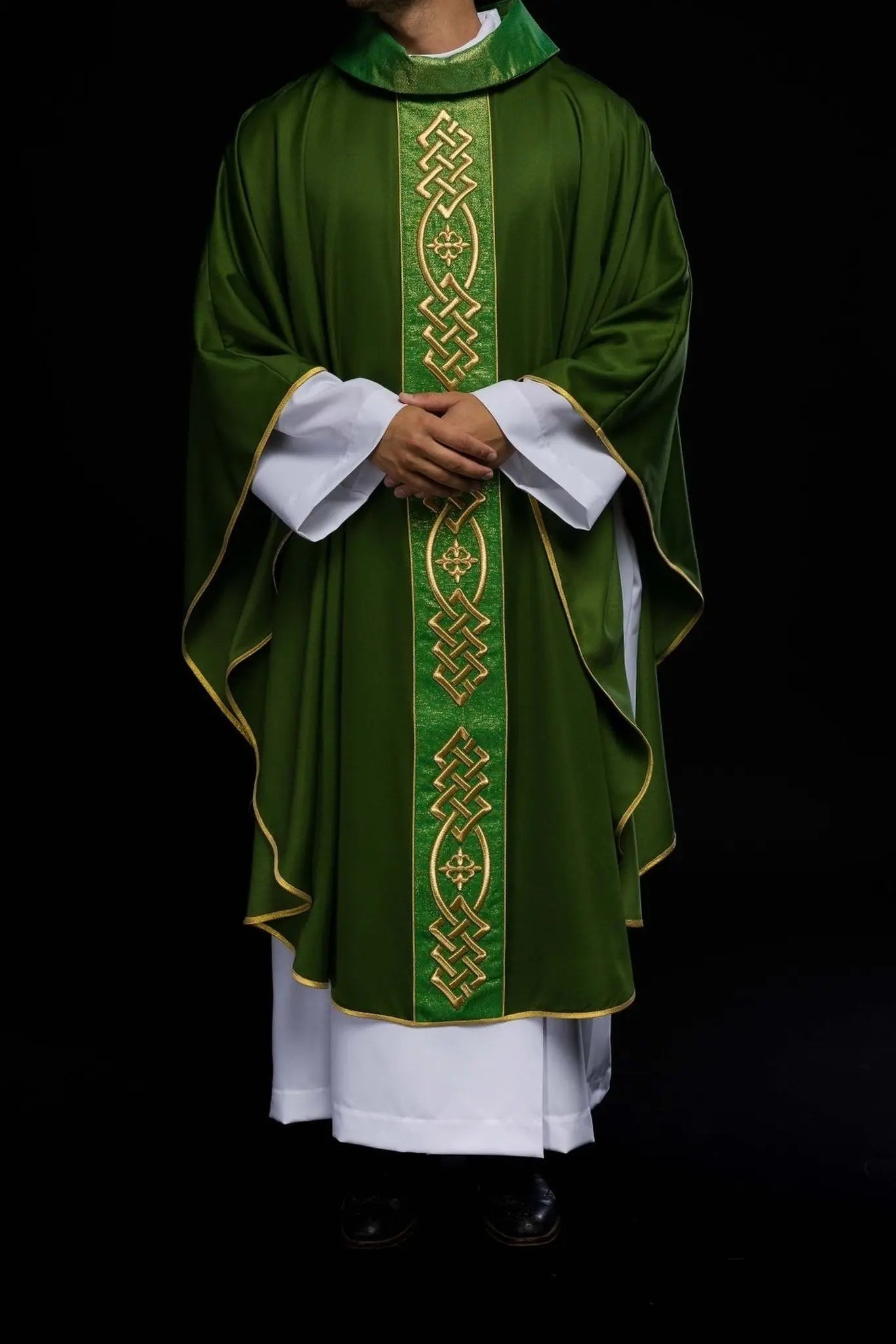
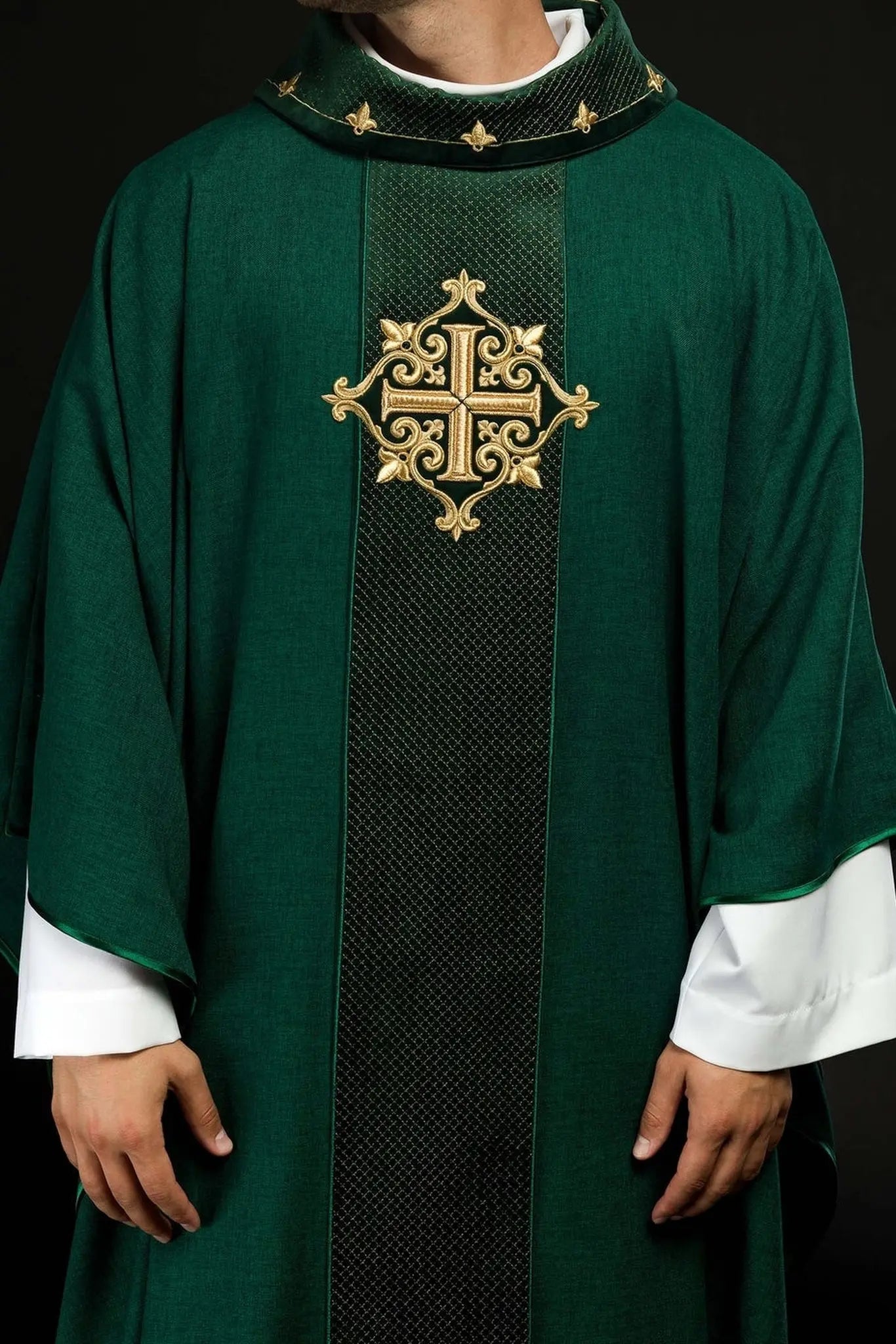
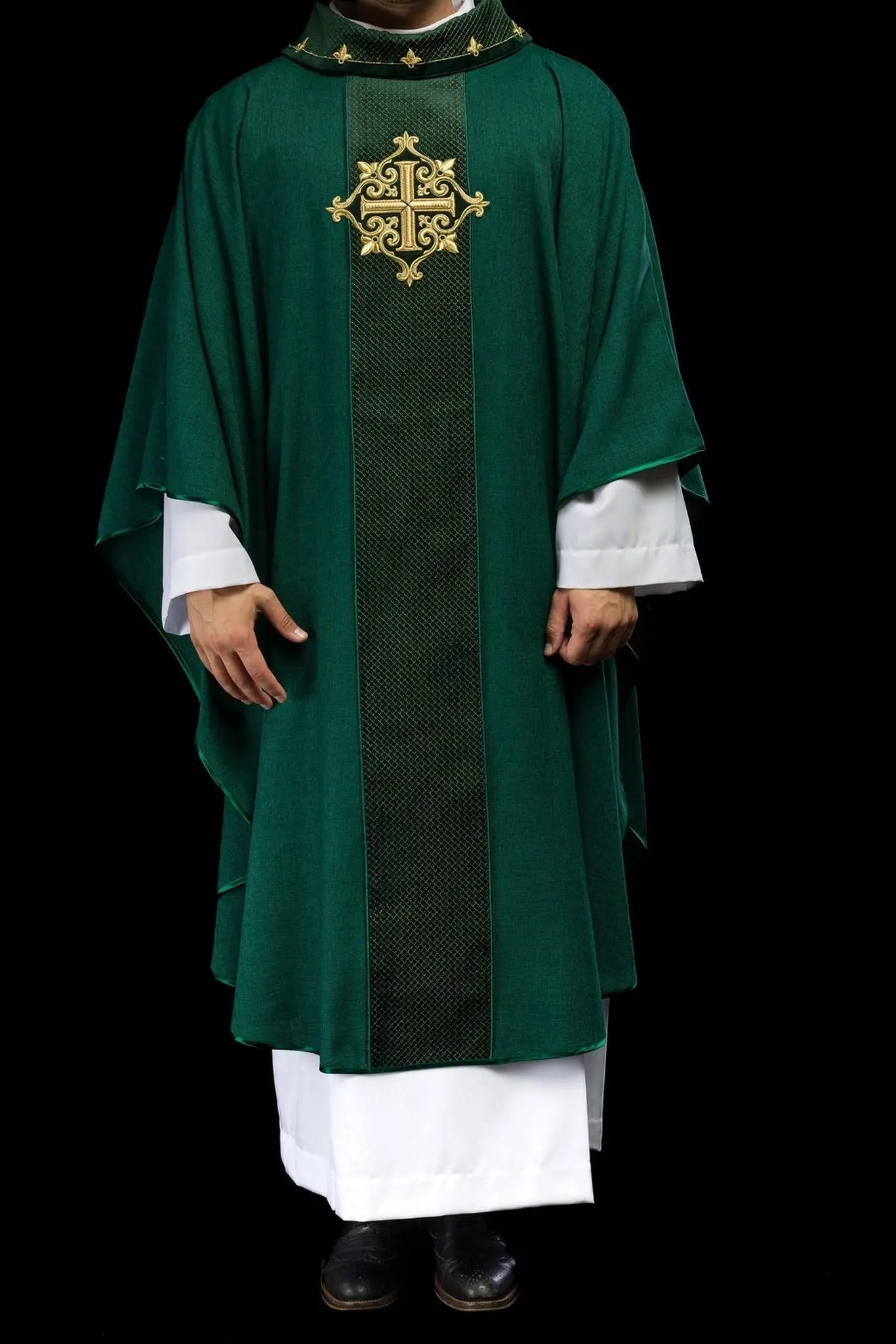
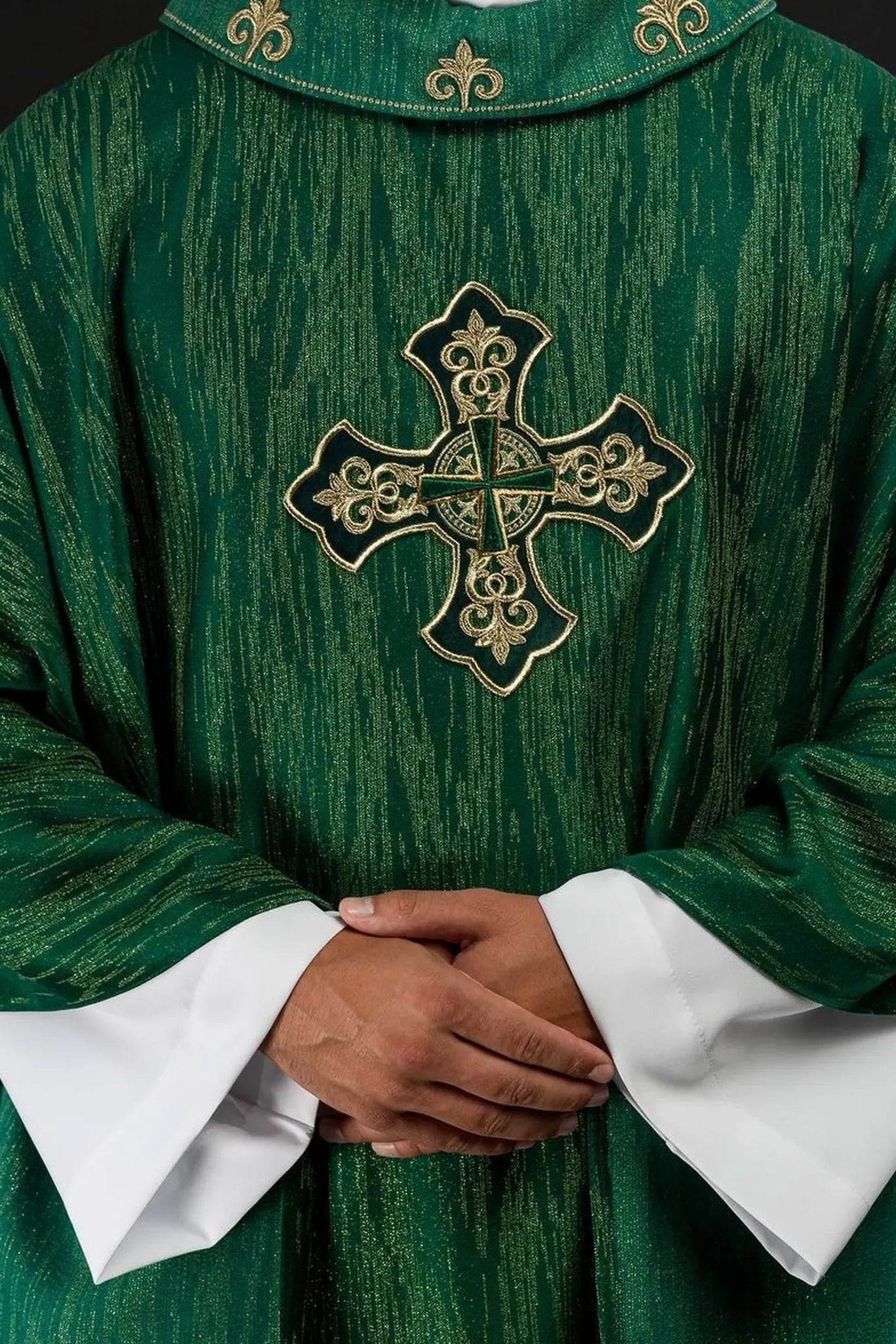
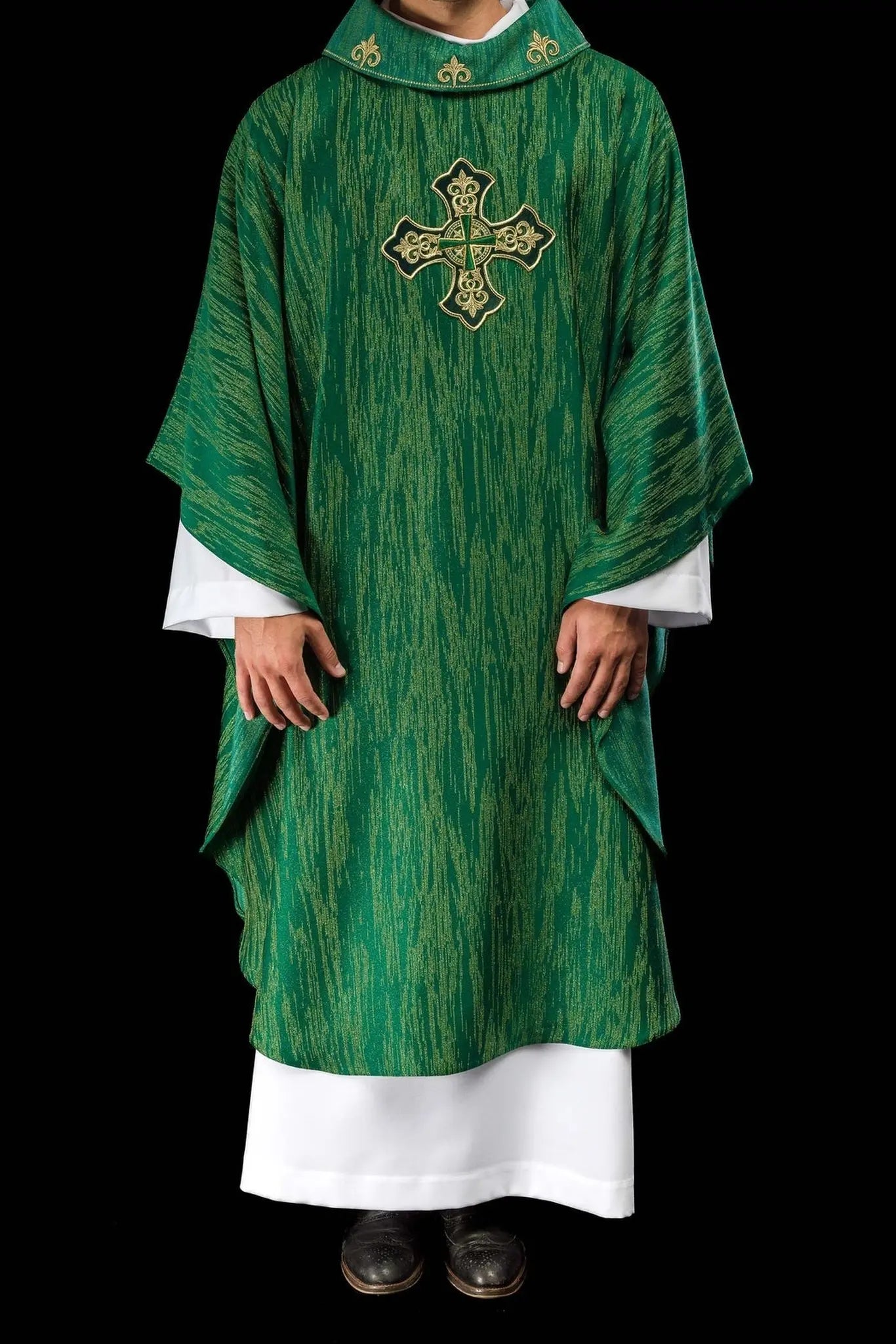
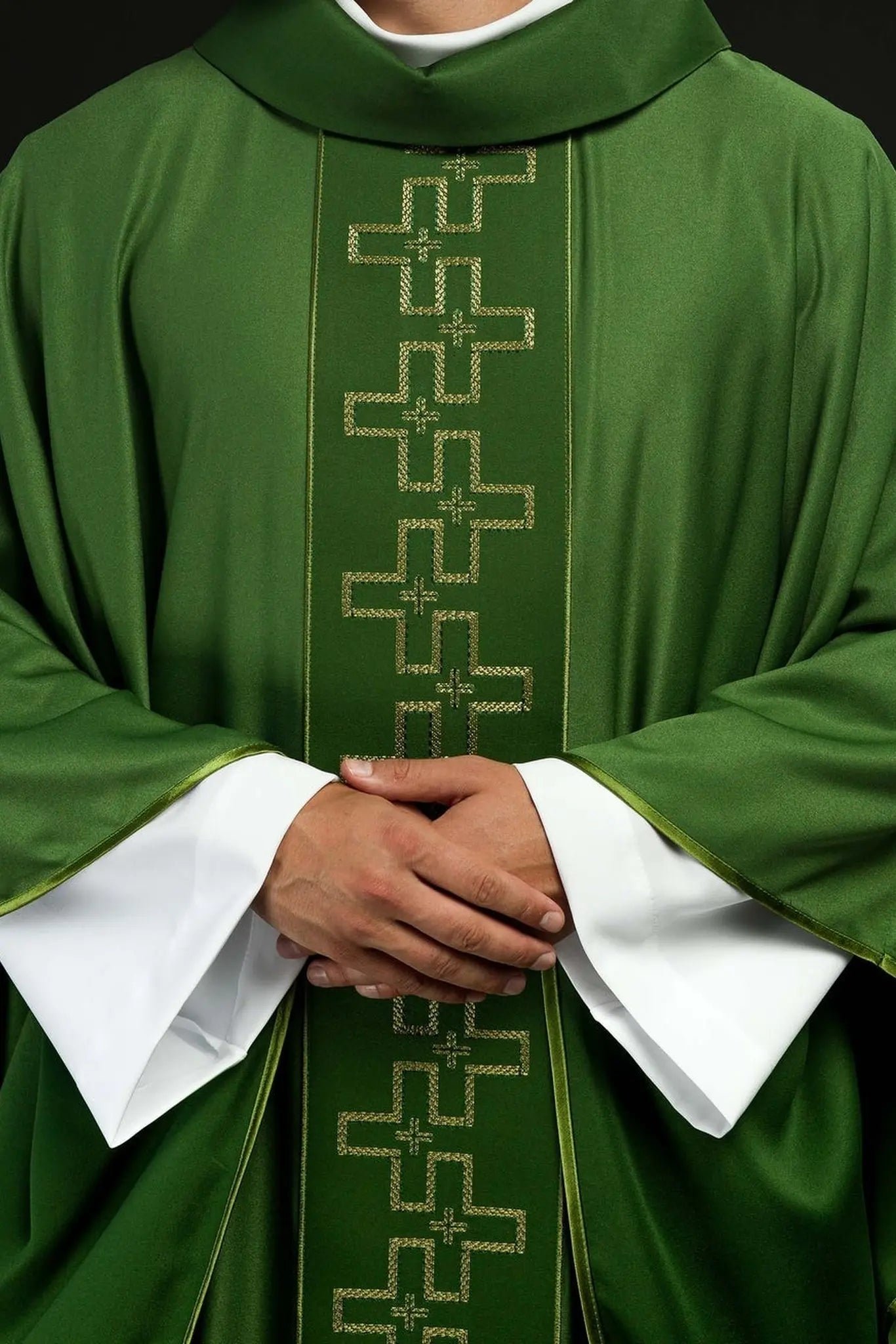
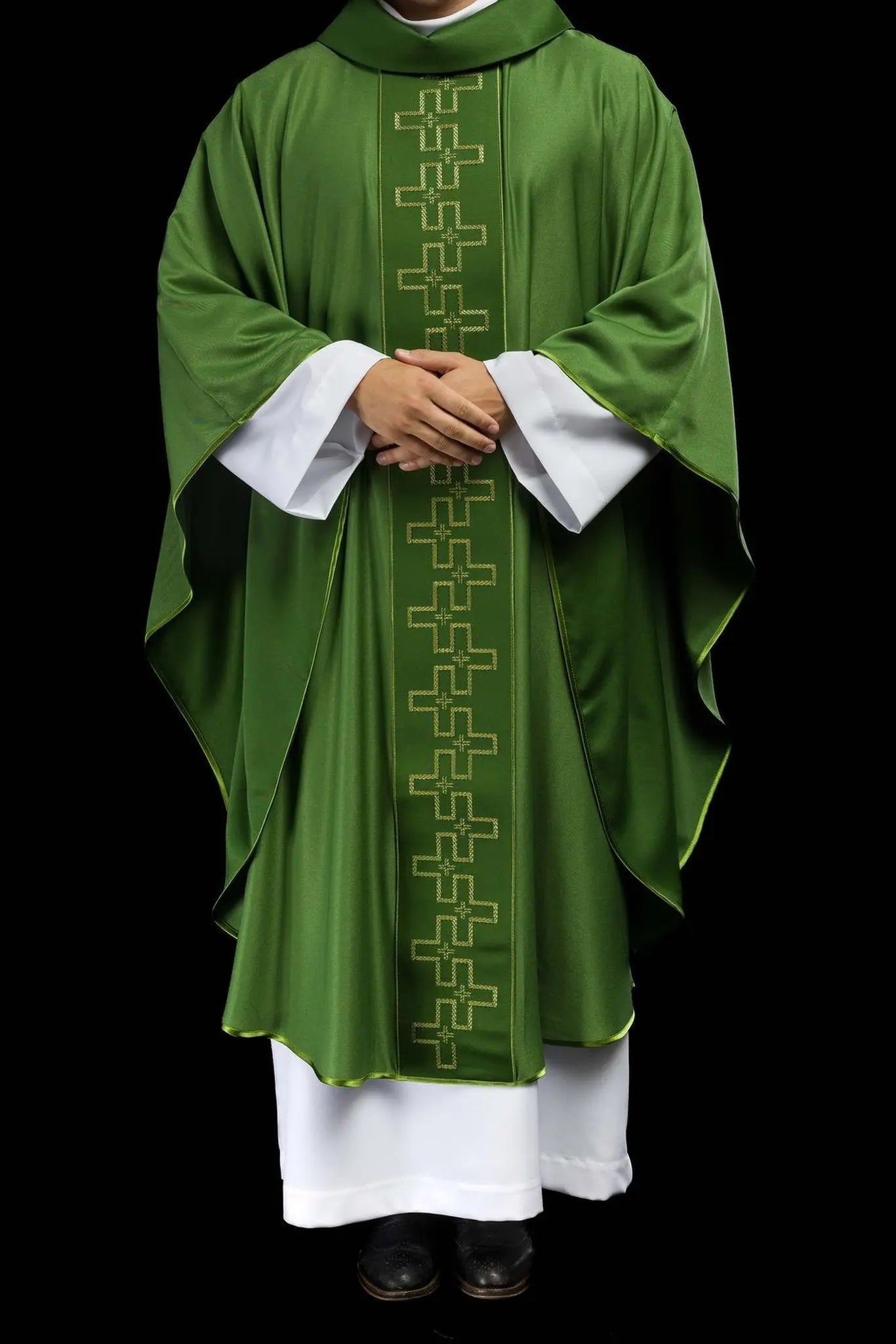
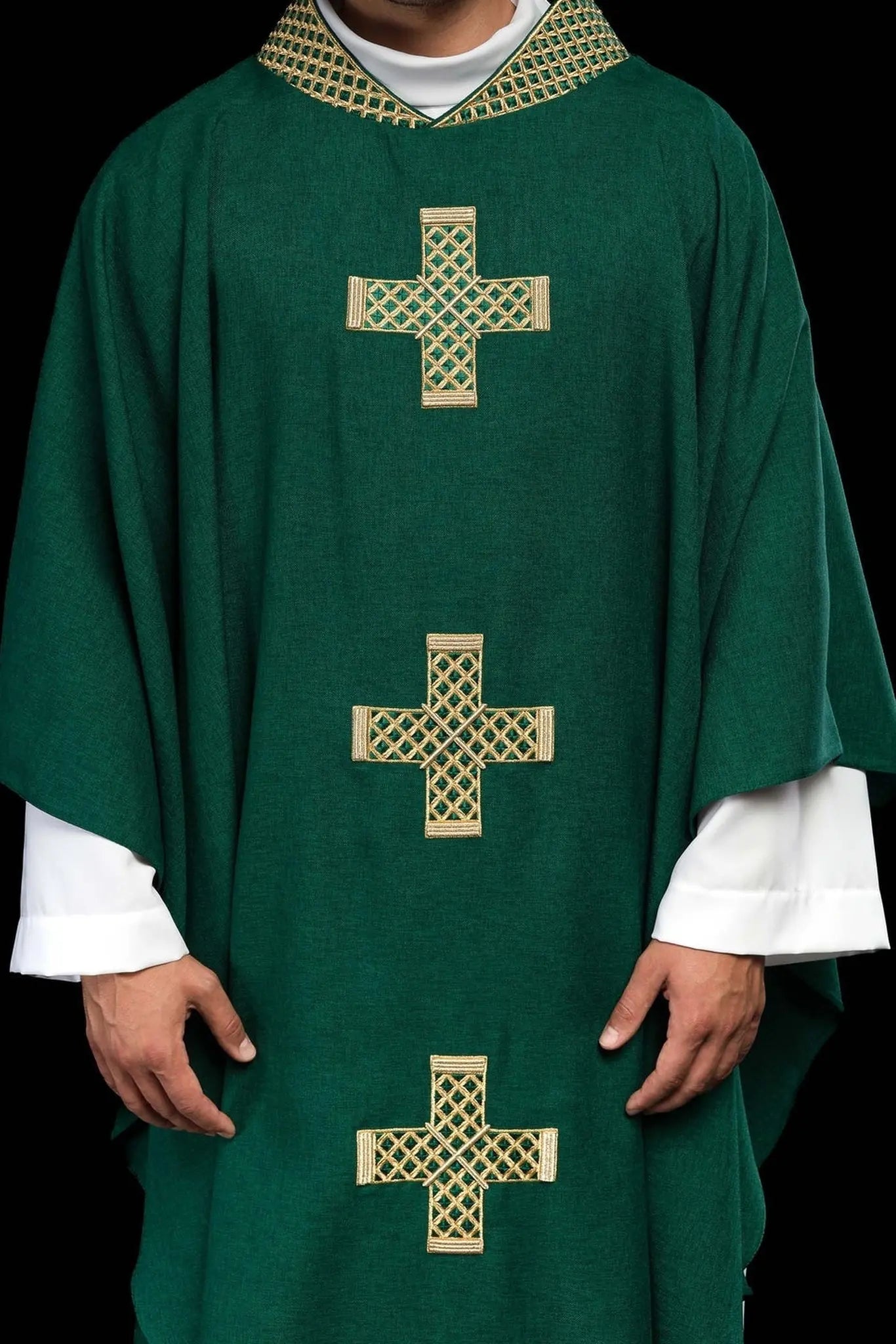
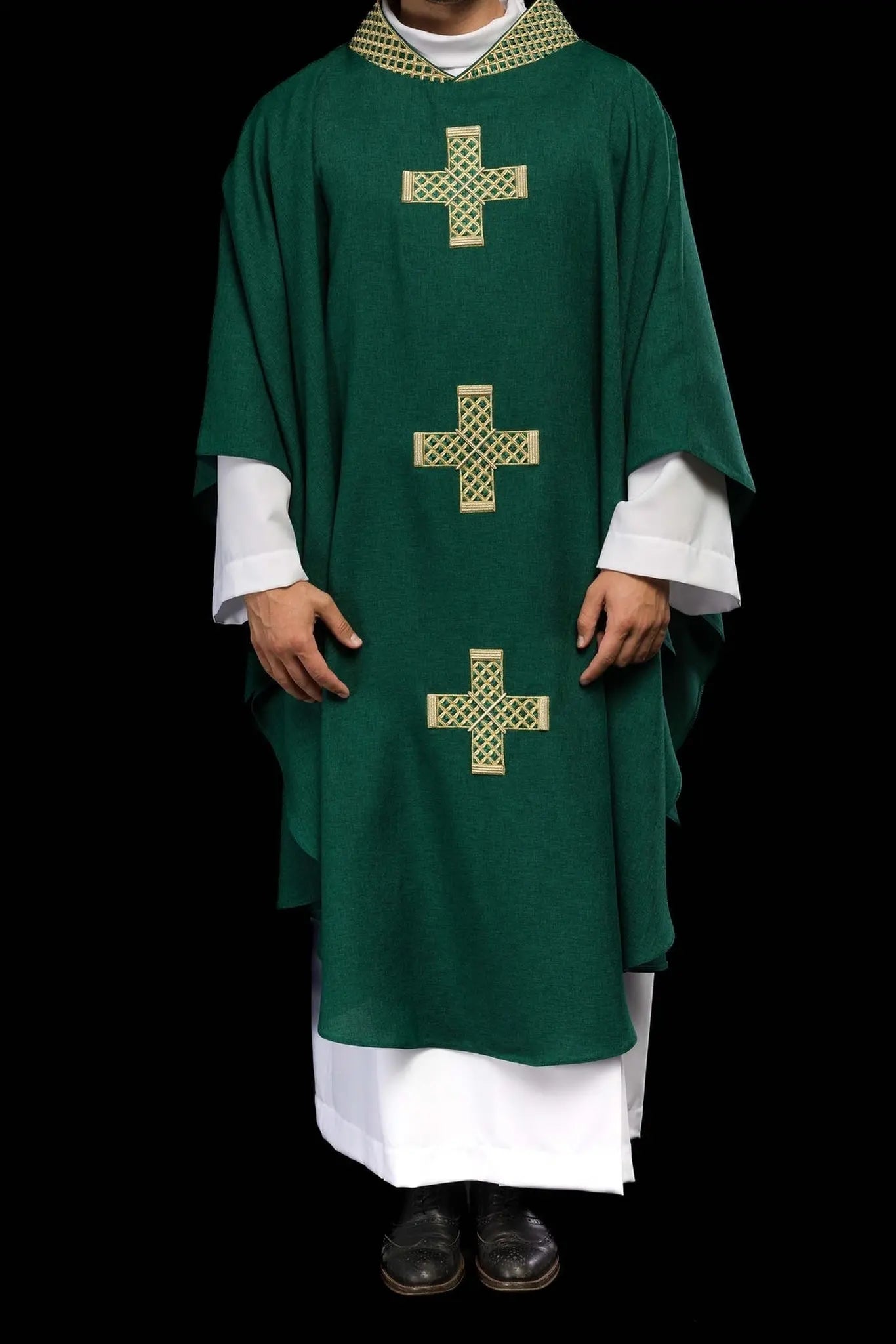
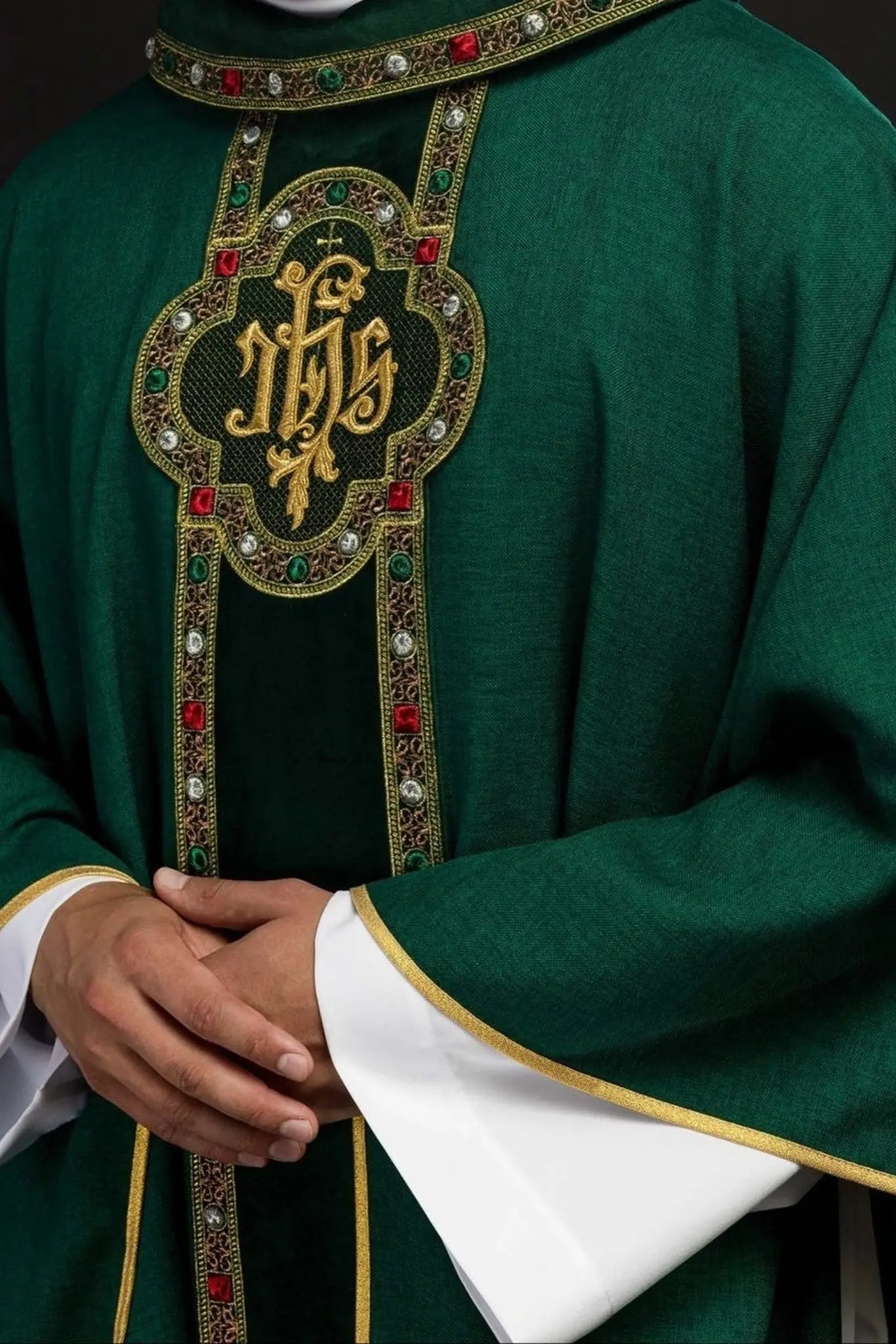
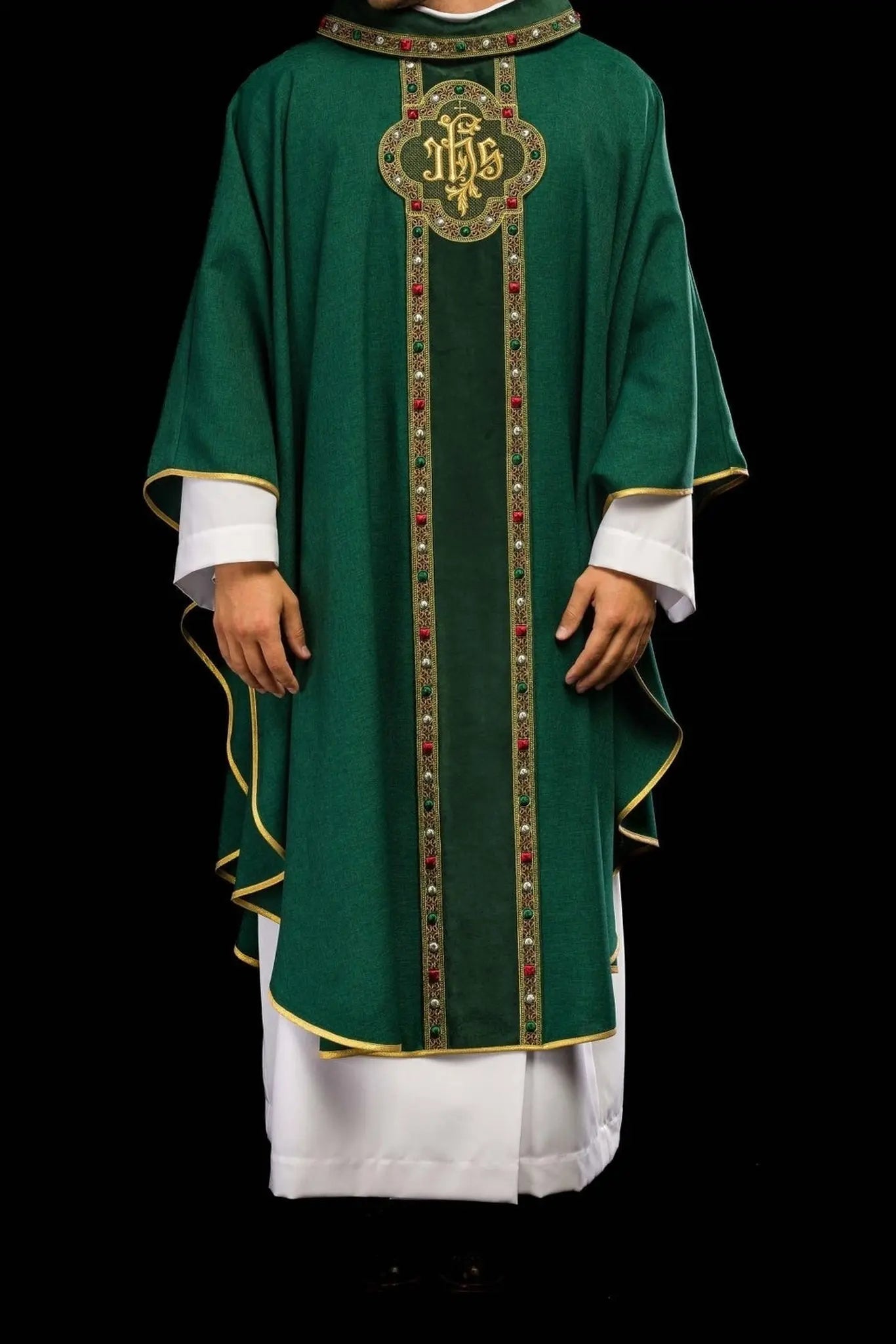
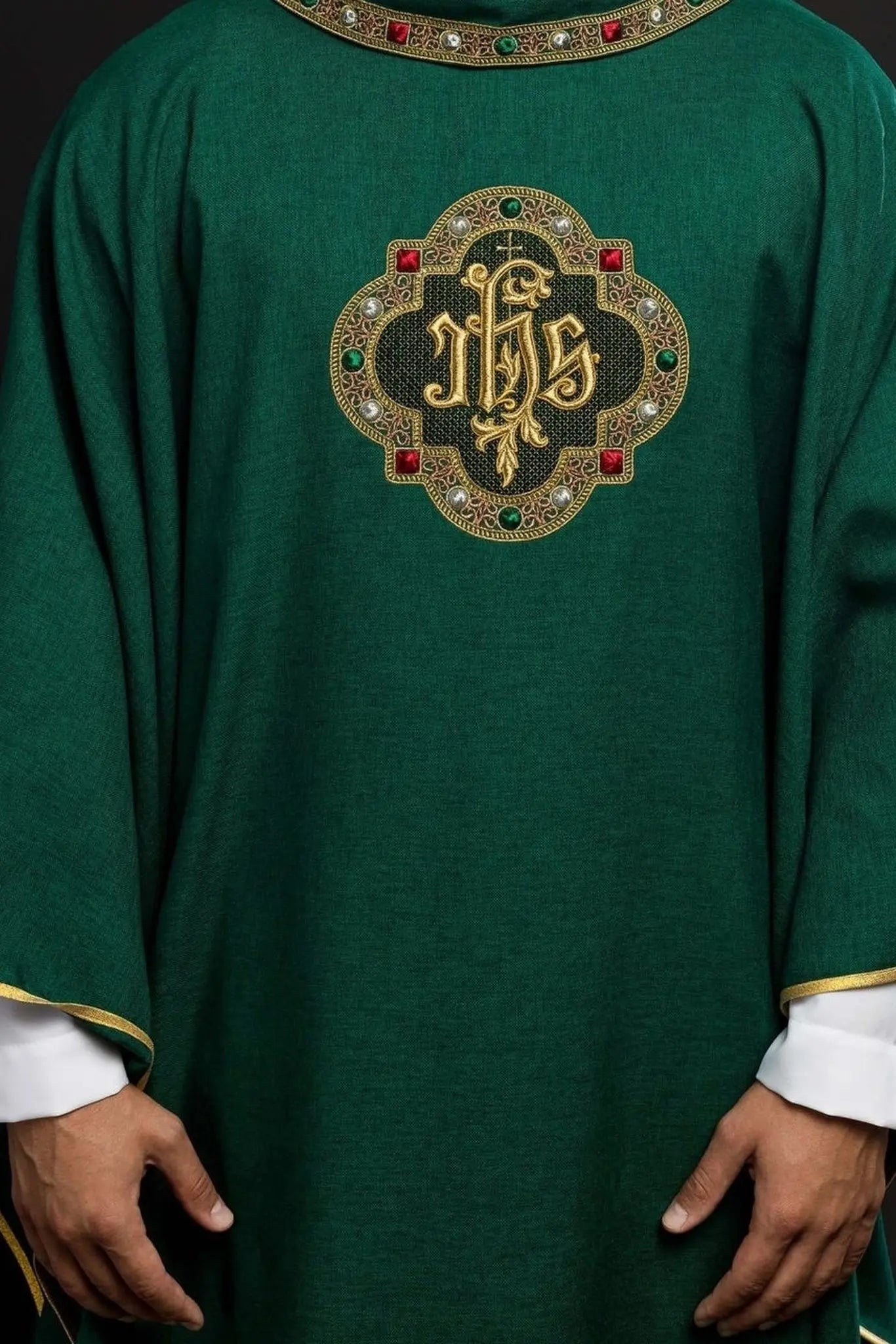
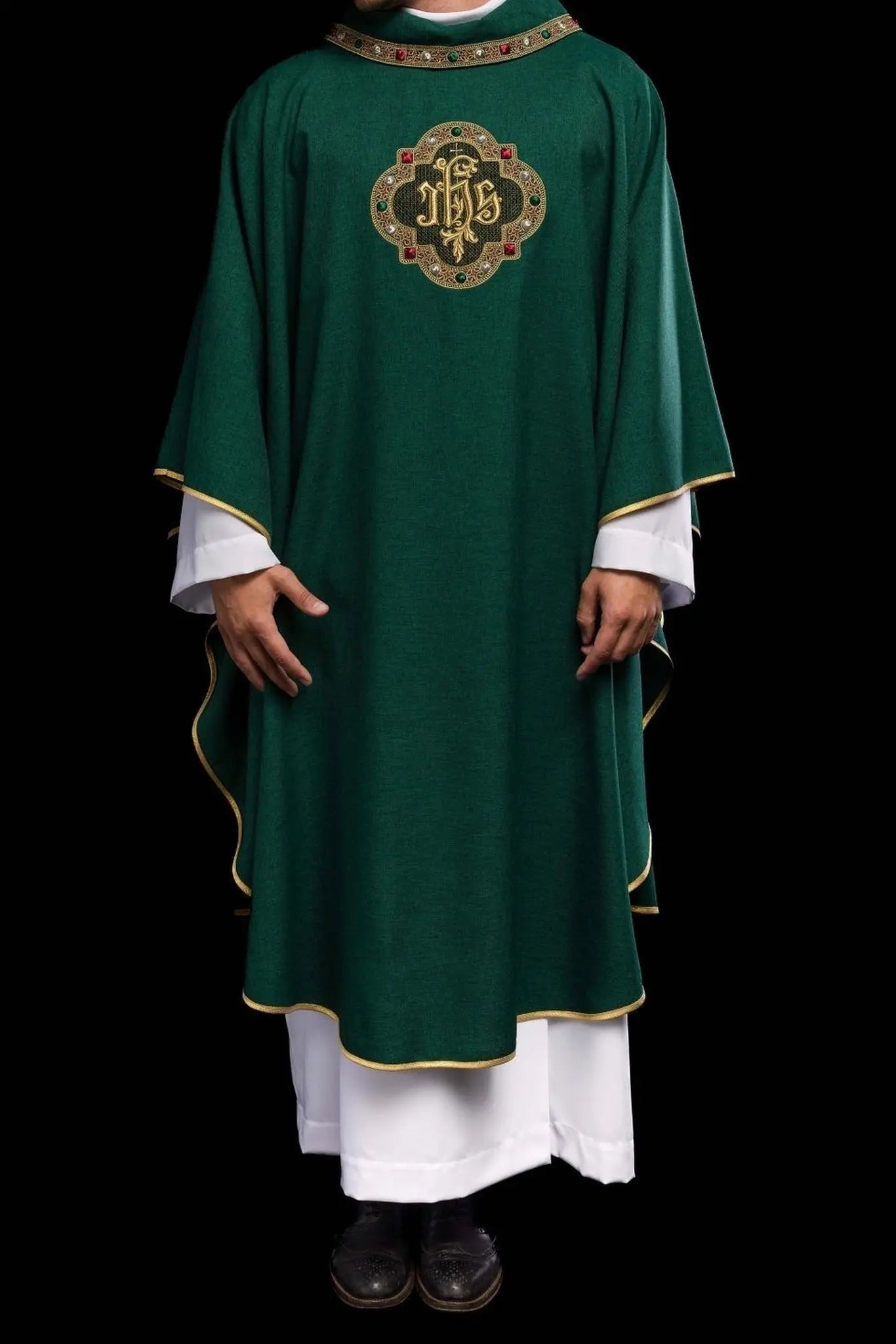
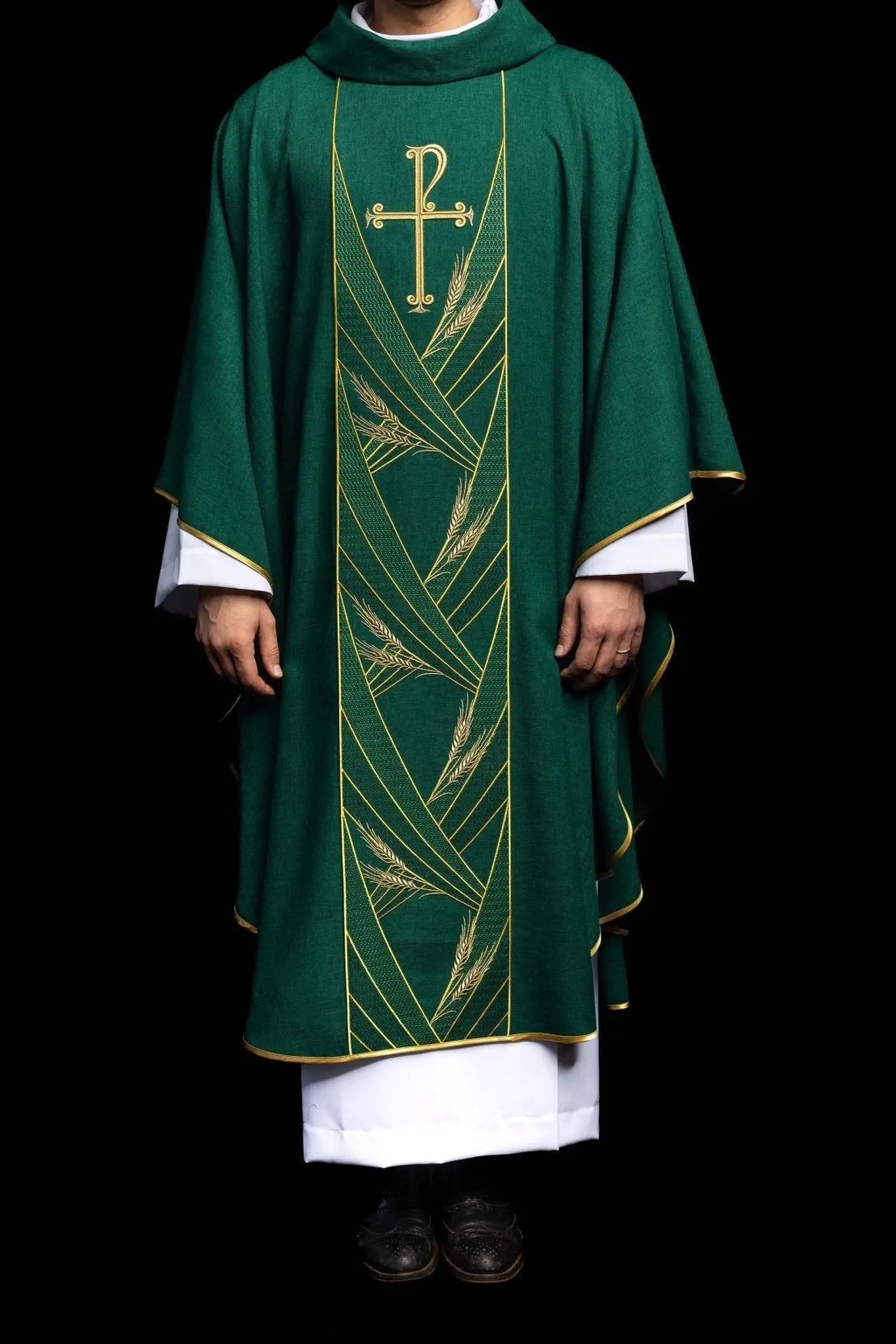
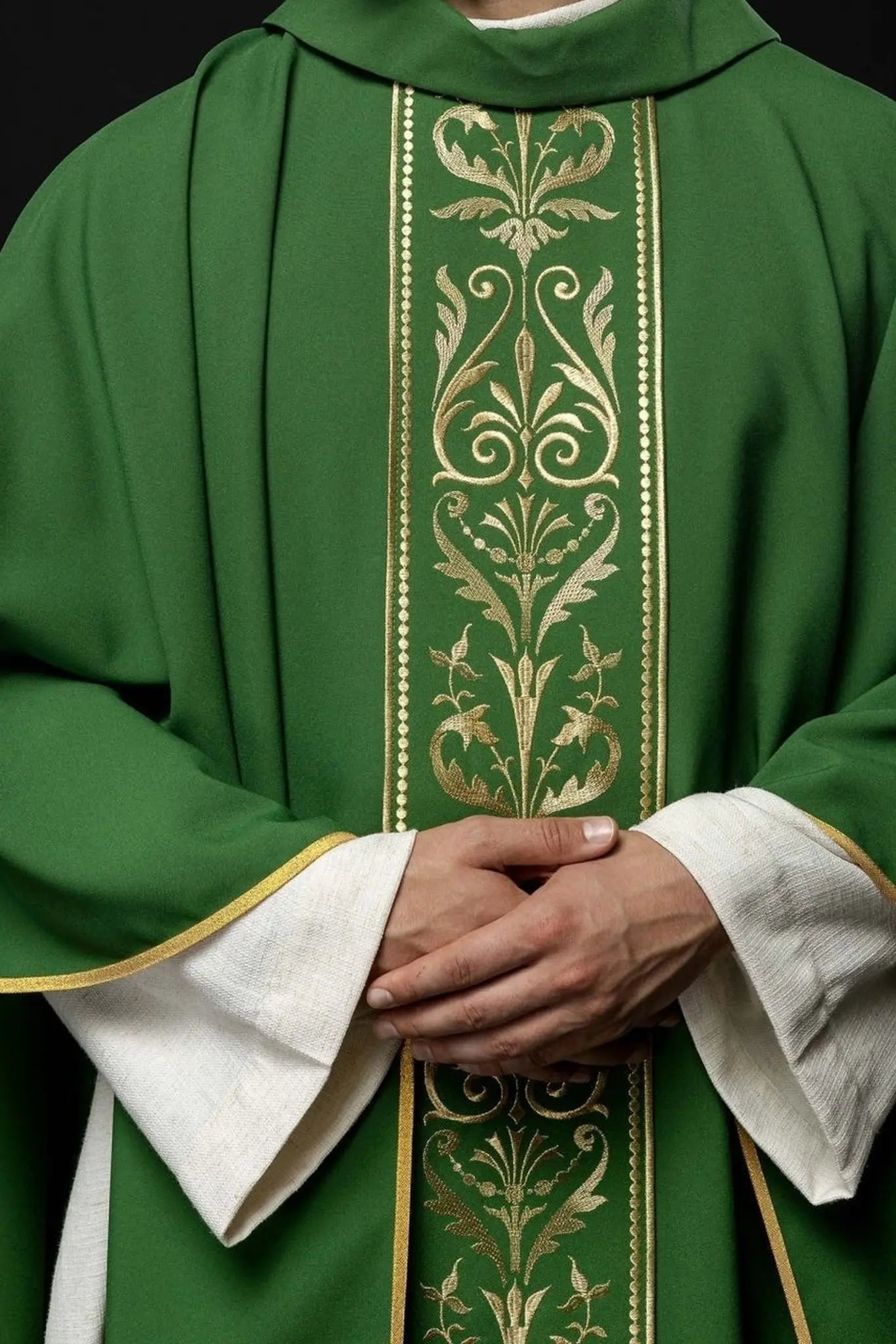
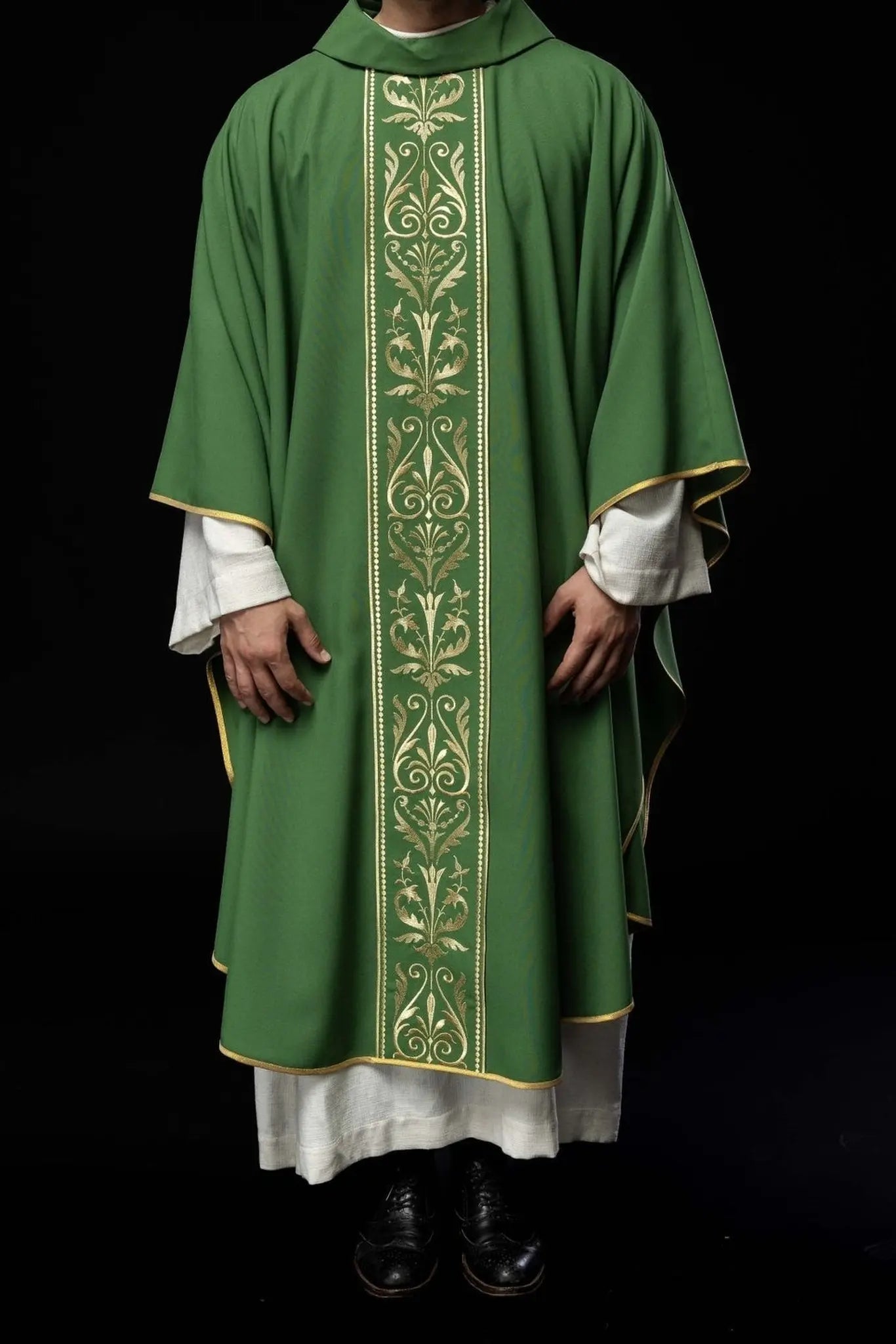
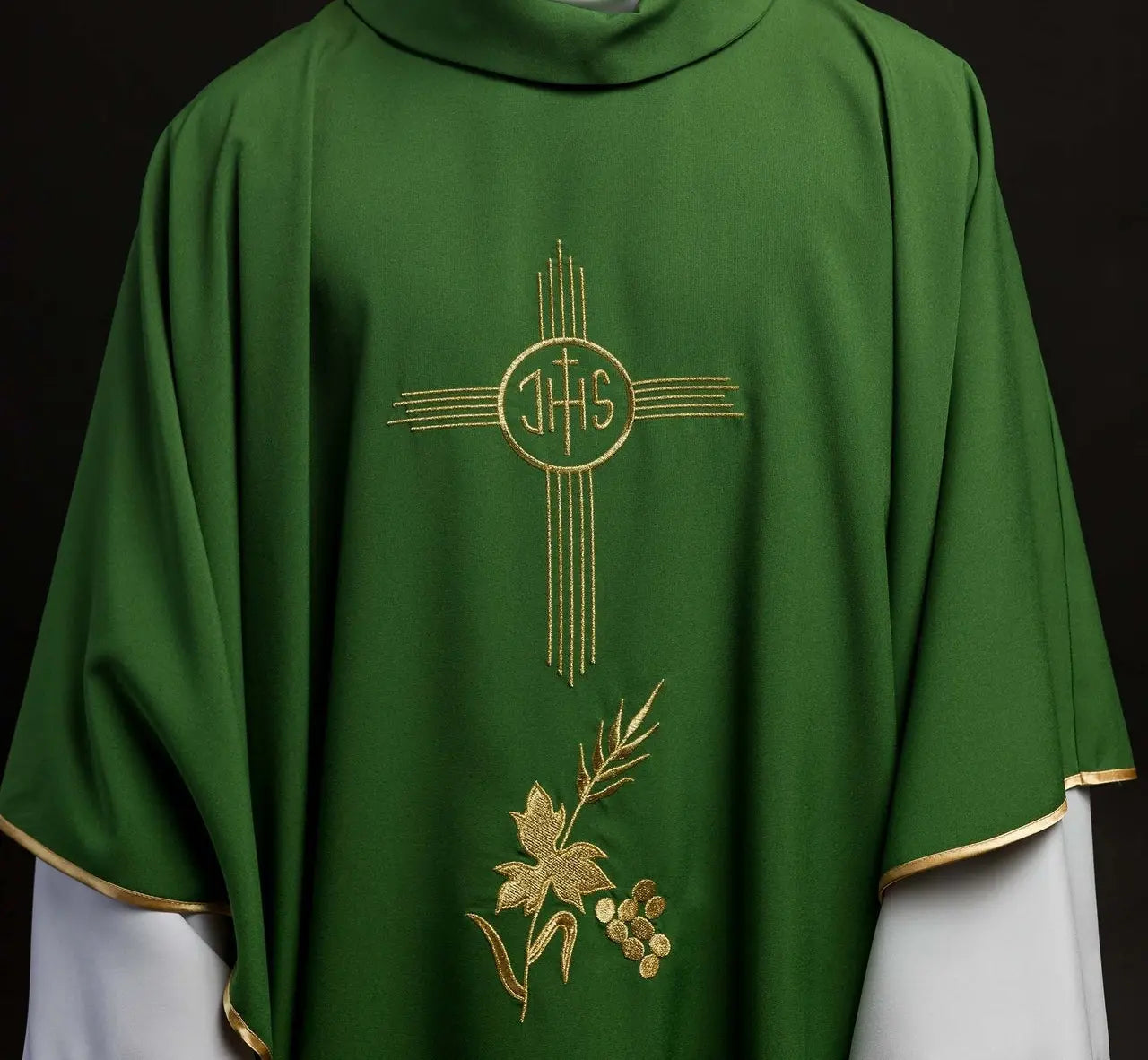
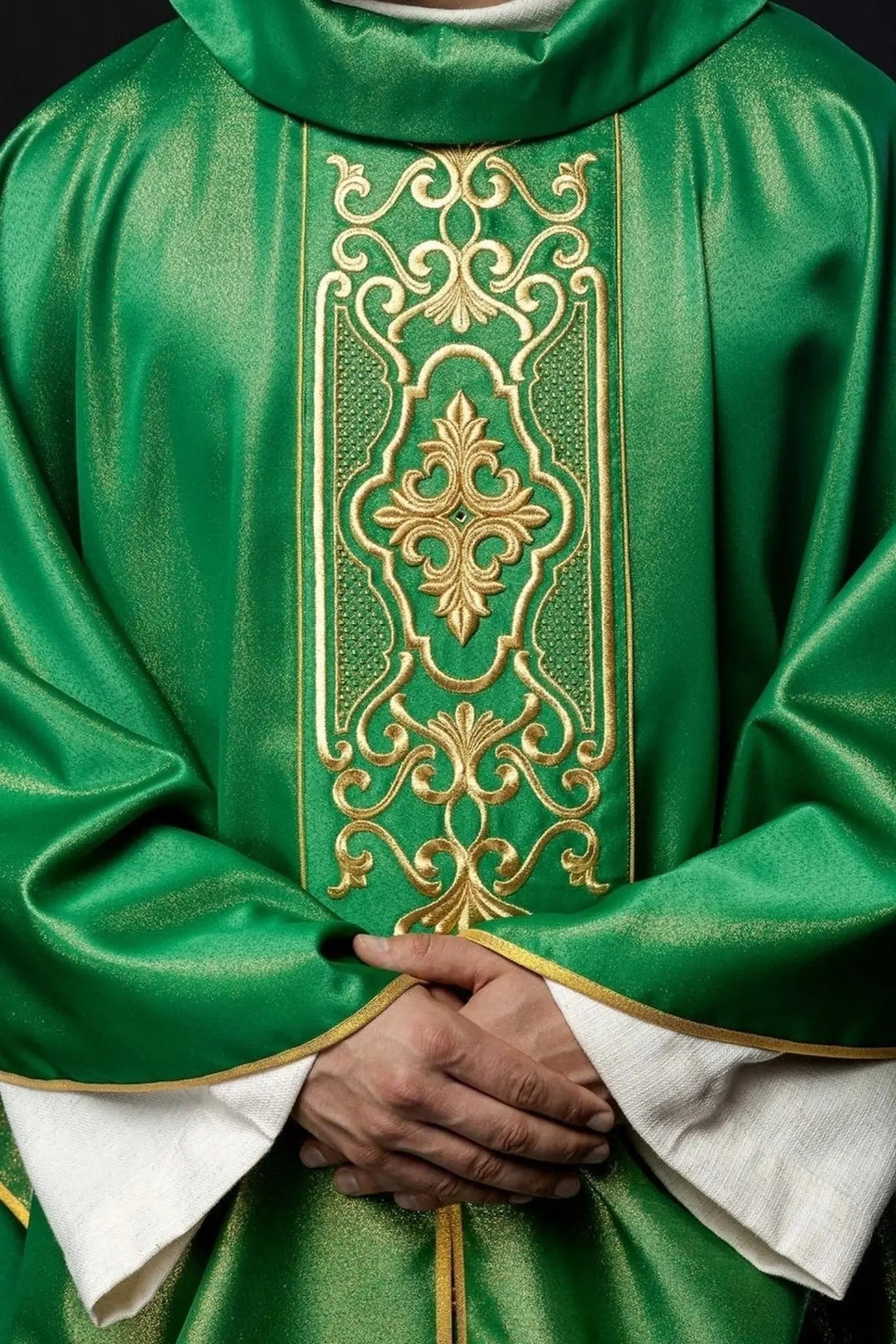
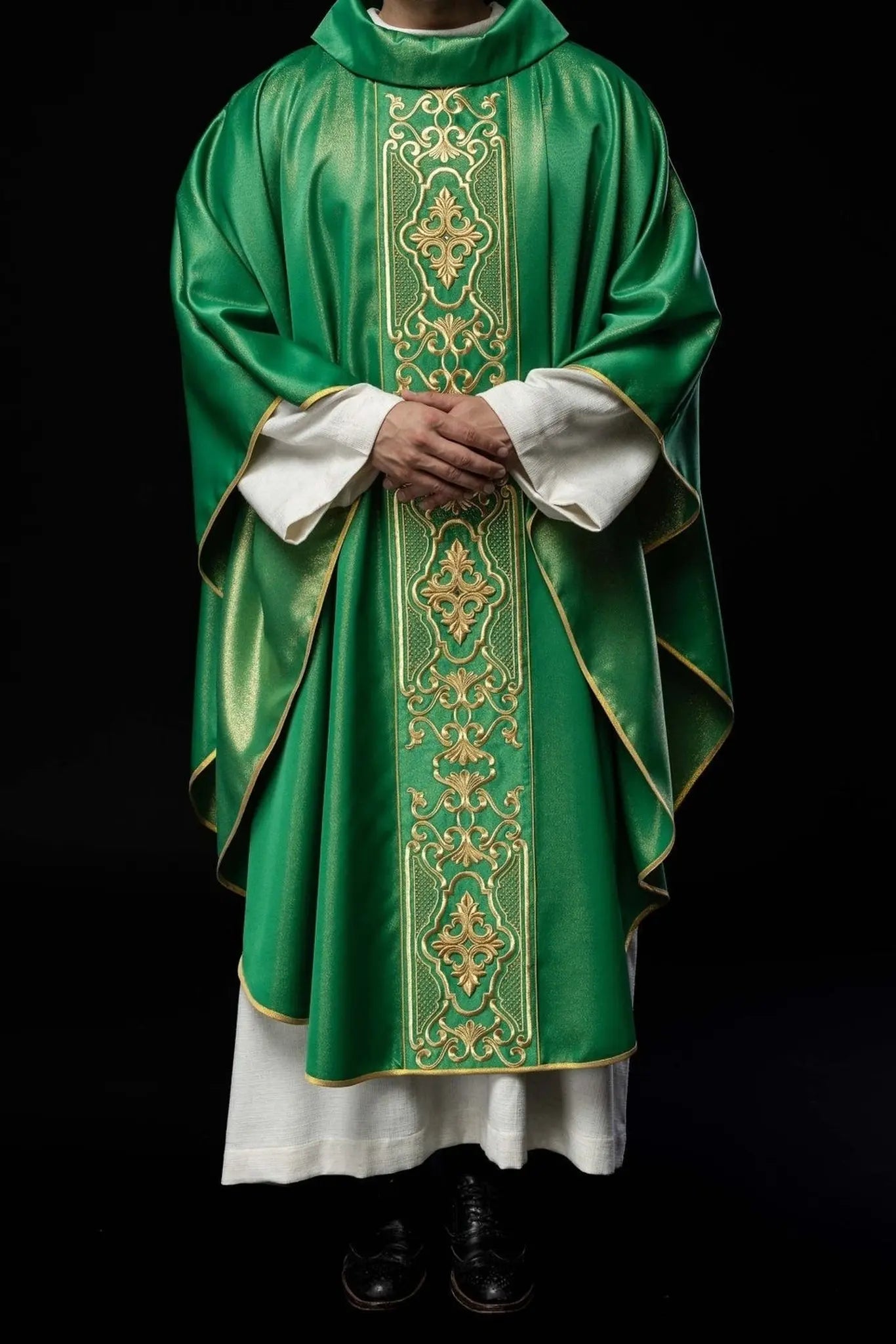
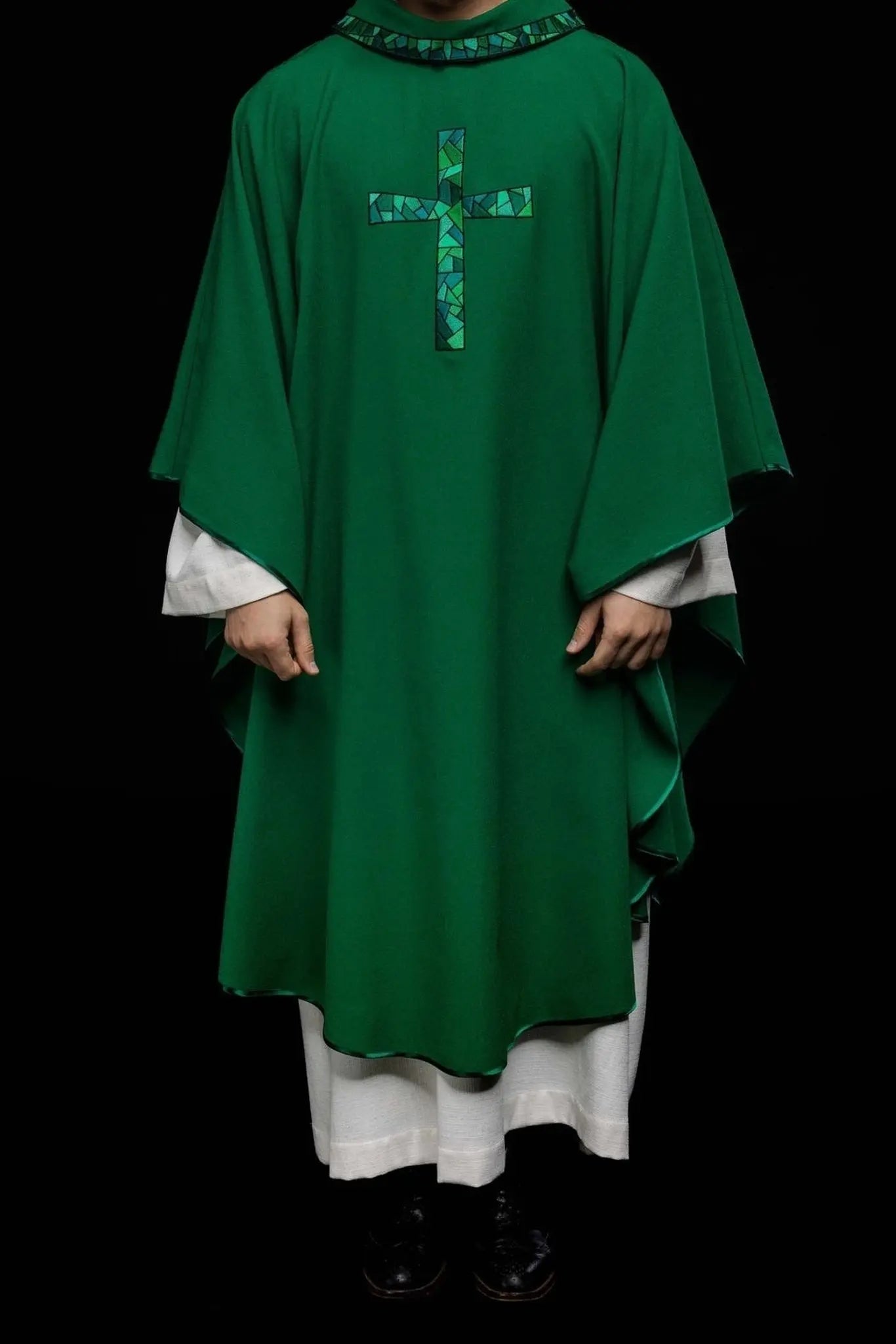
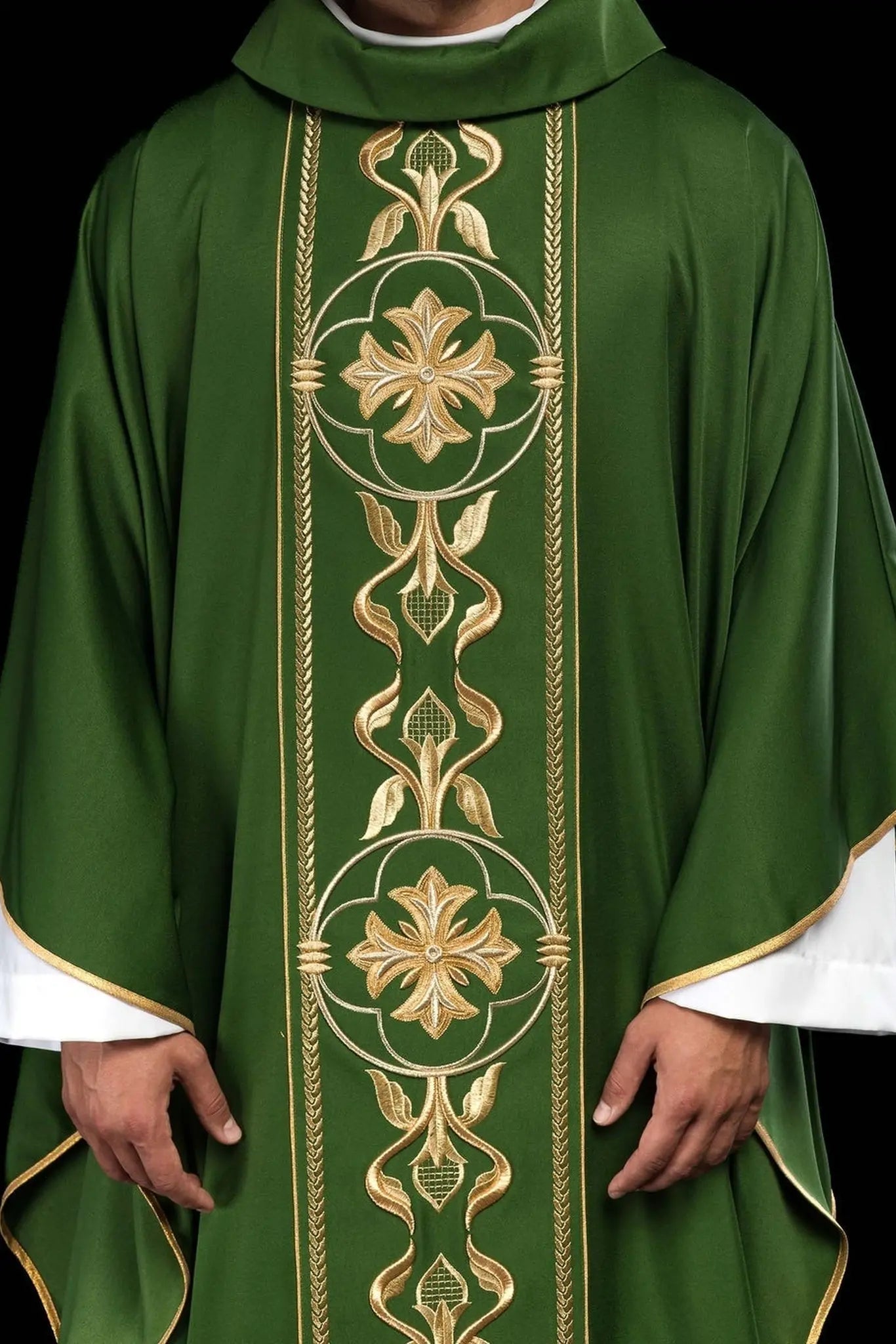
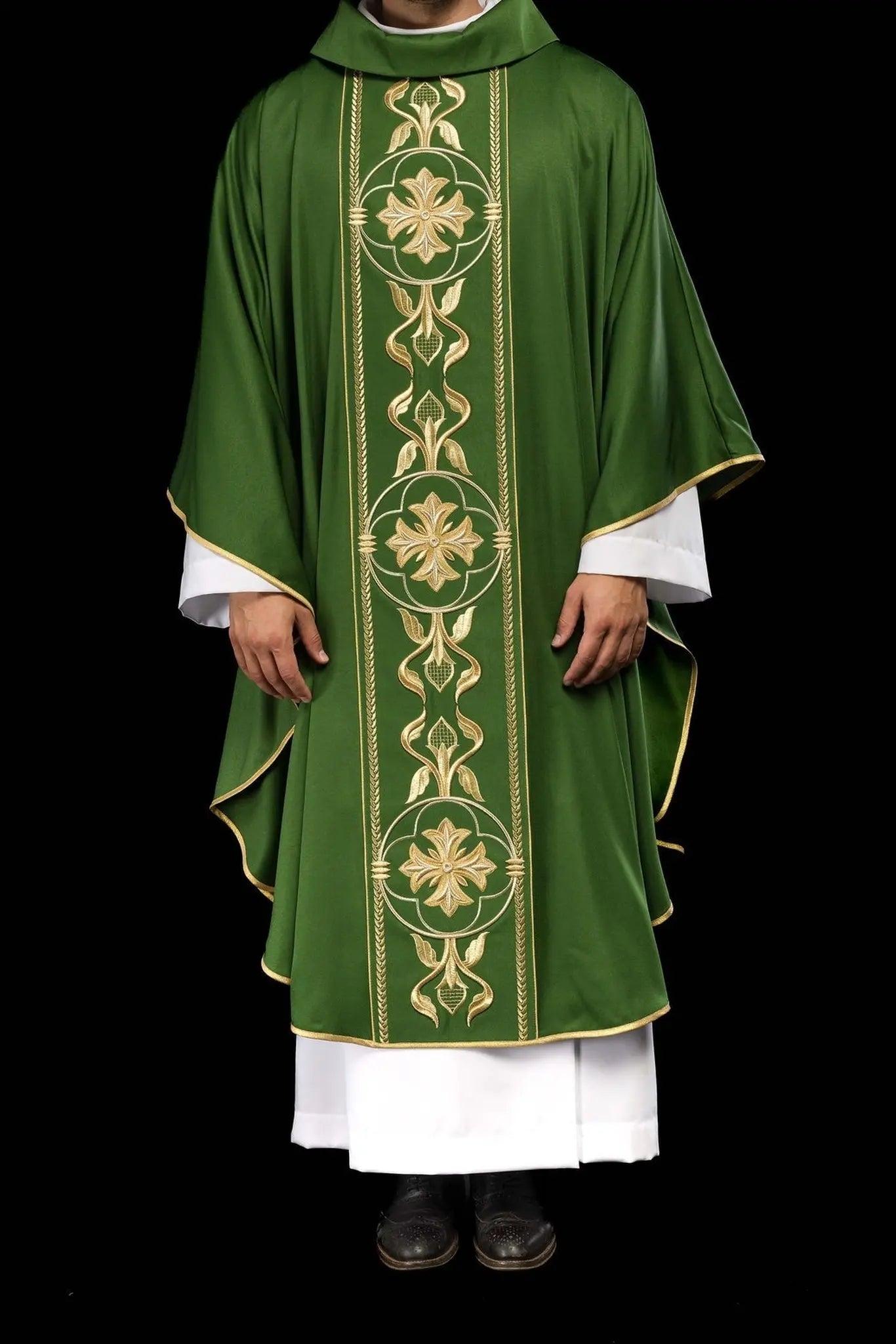
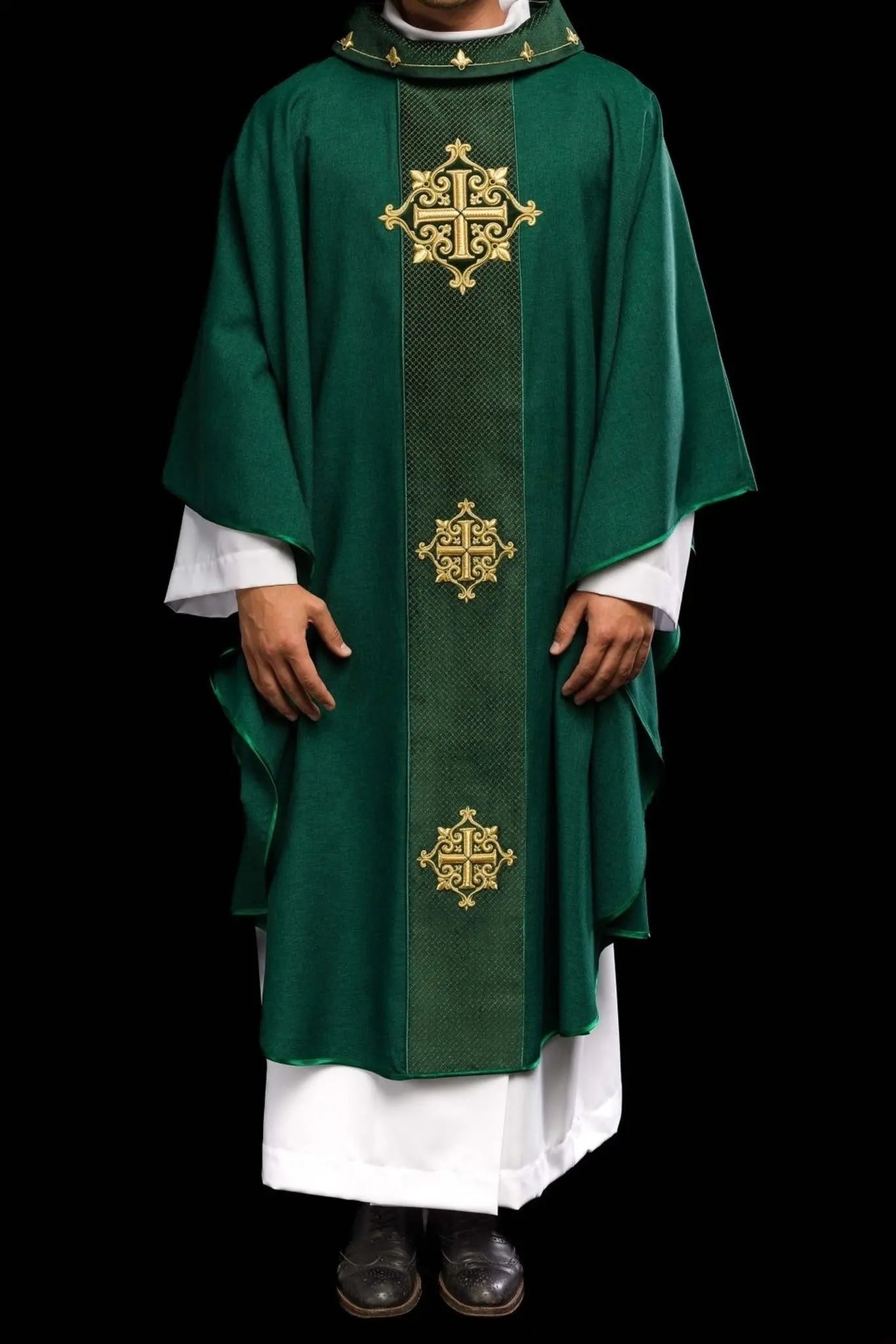
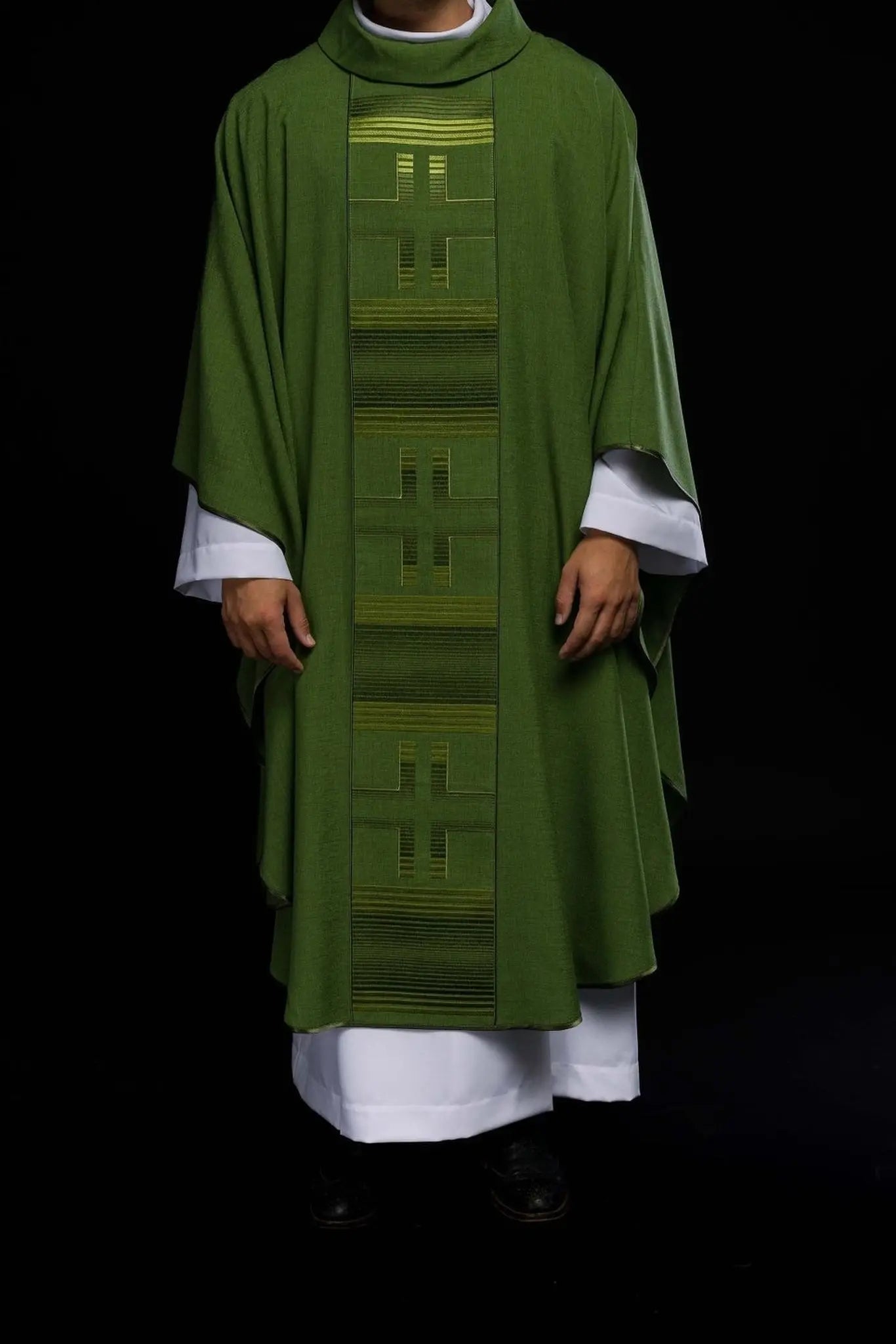
Green Chasubles for Ordinary Time
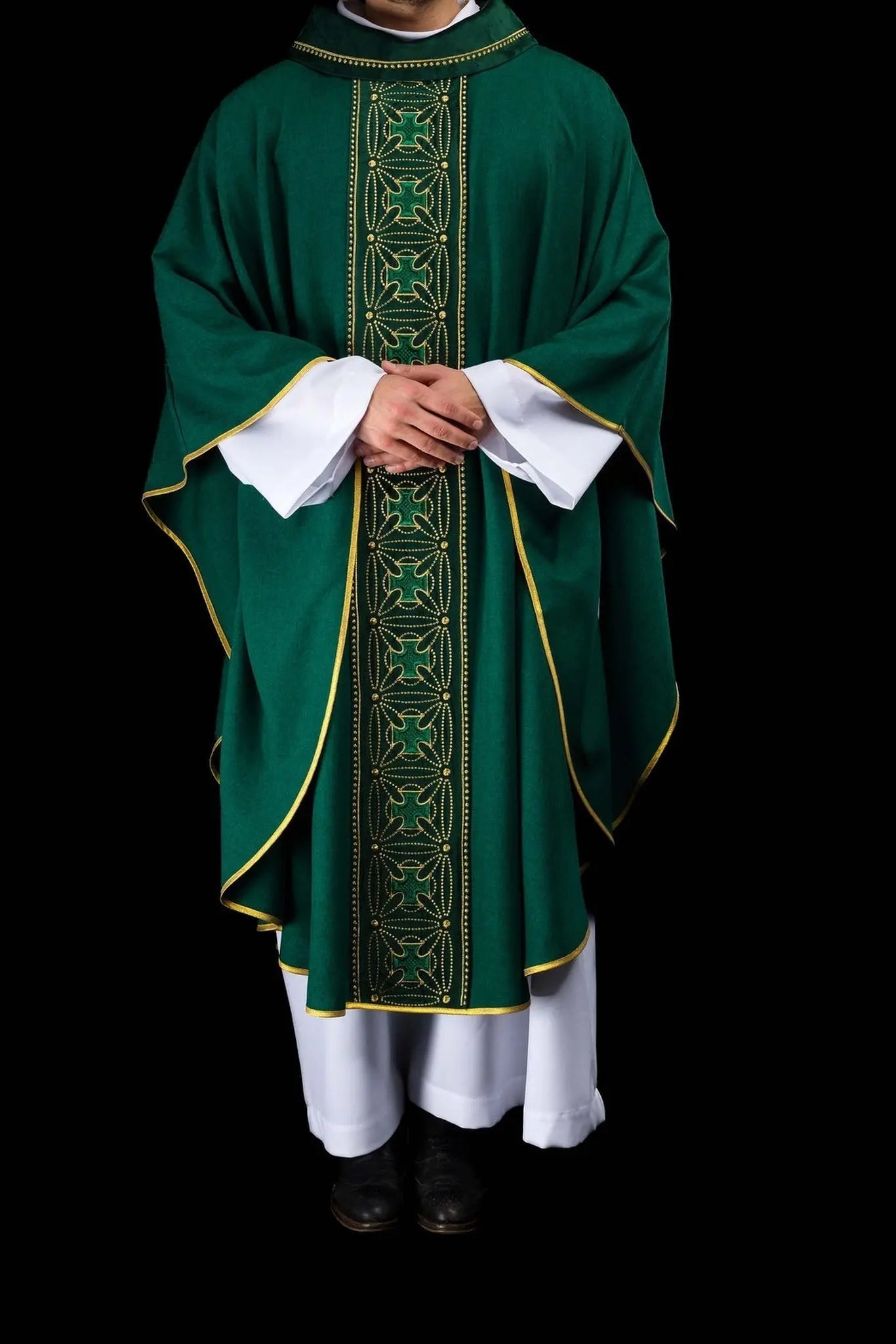
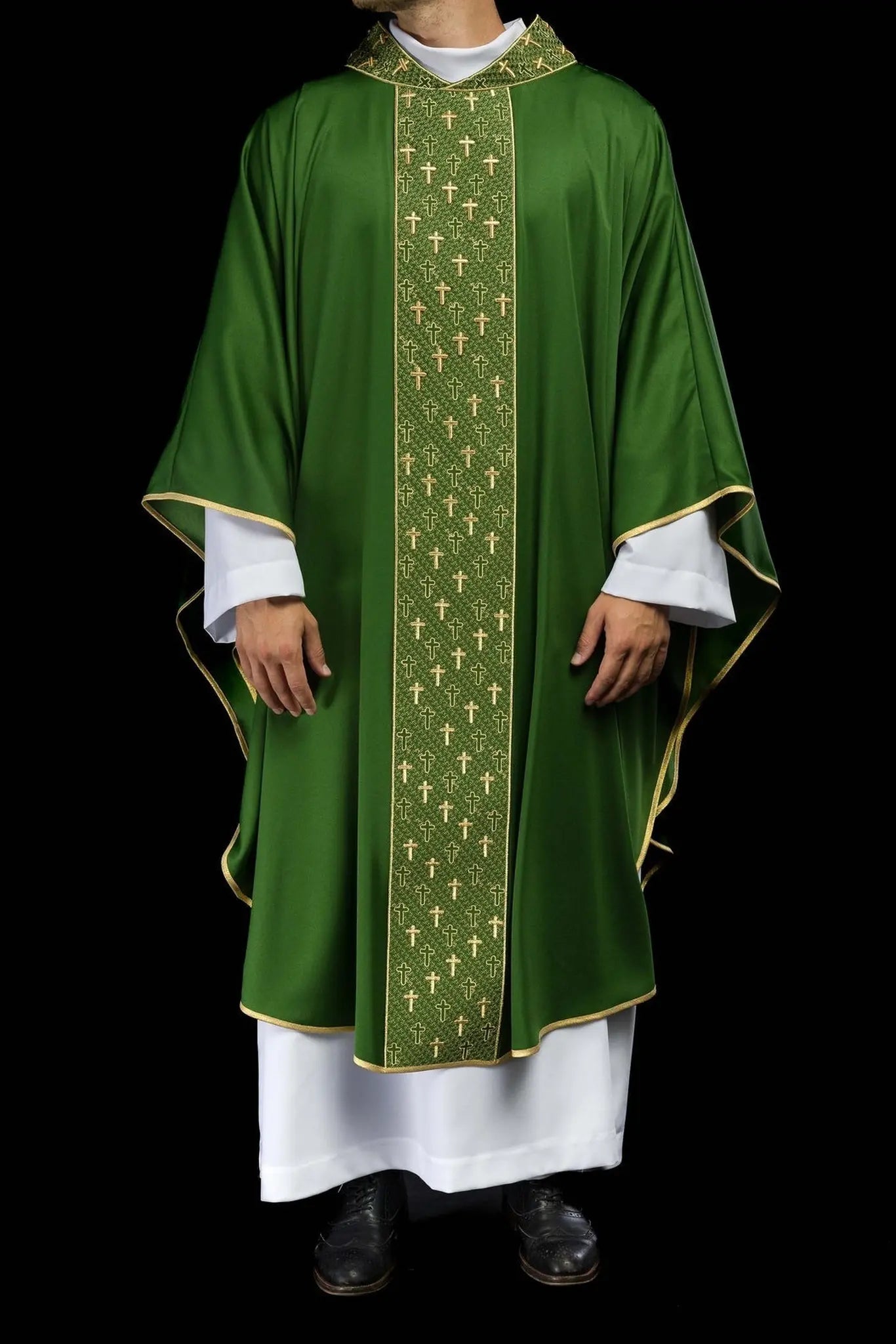
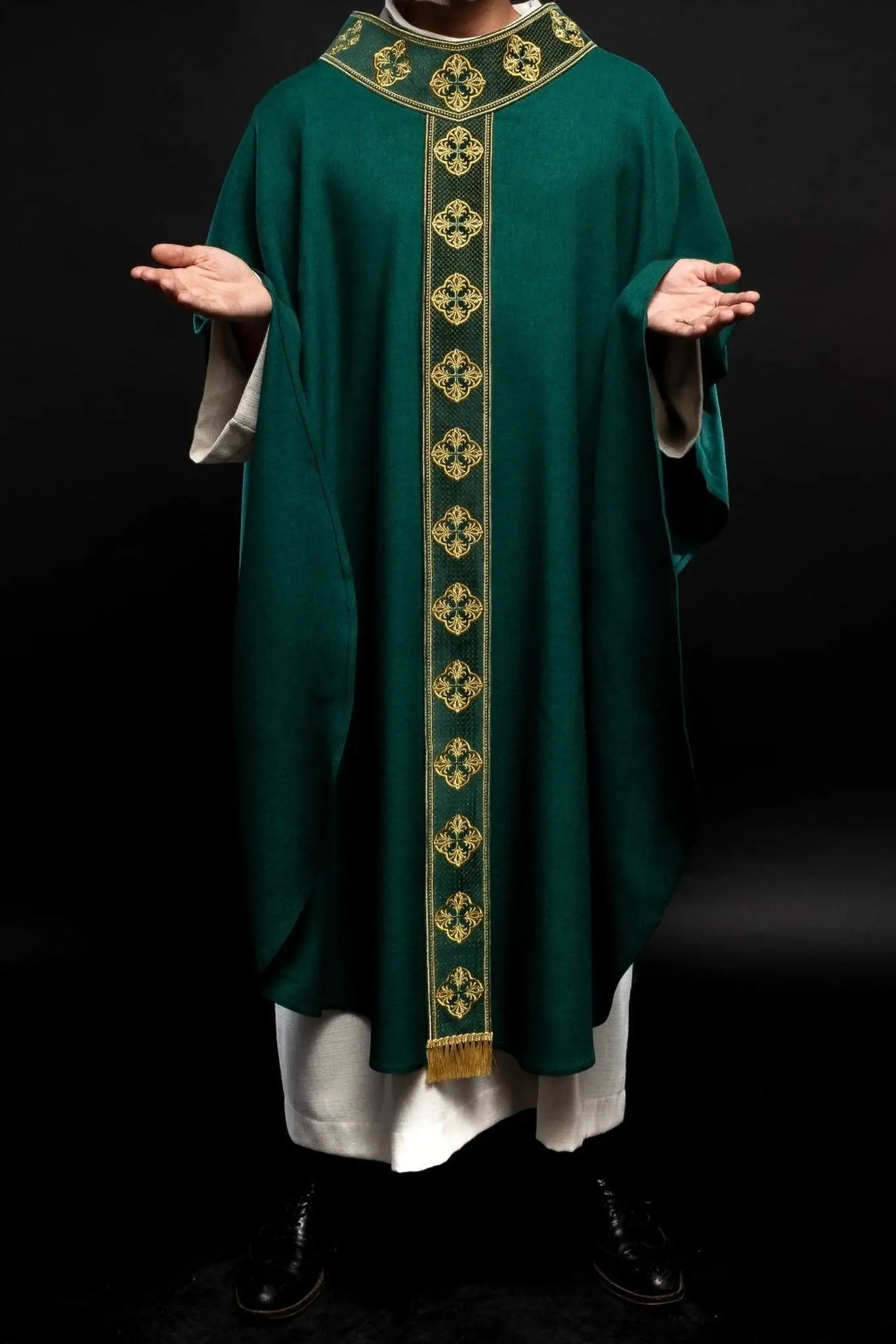
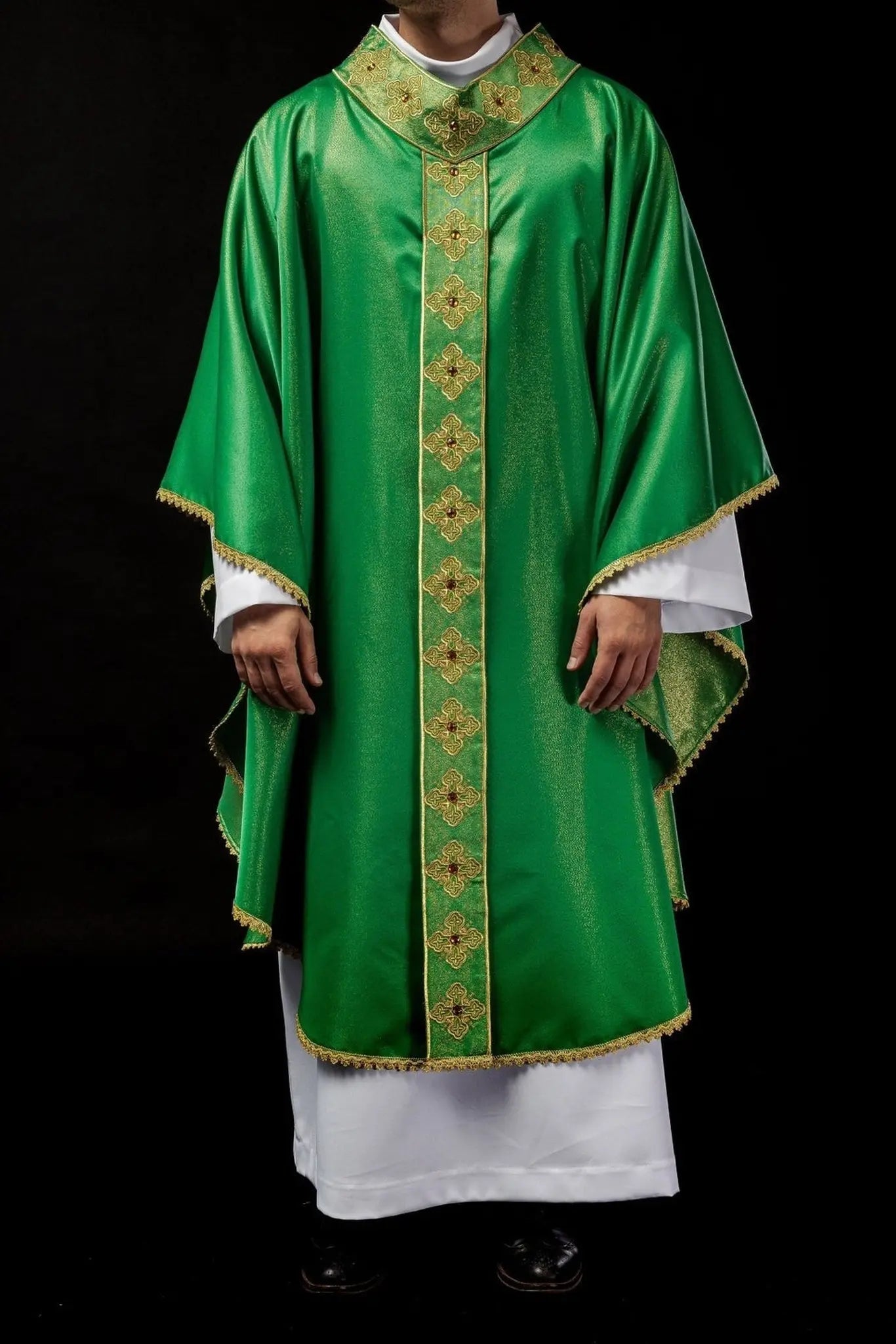
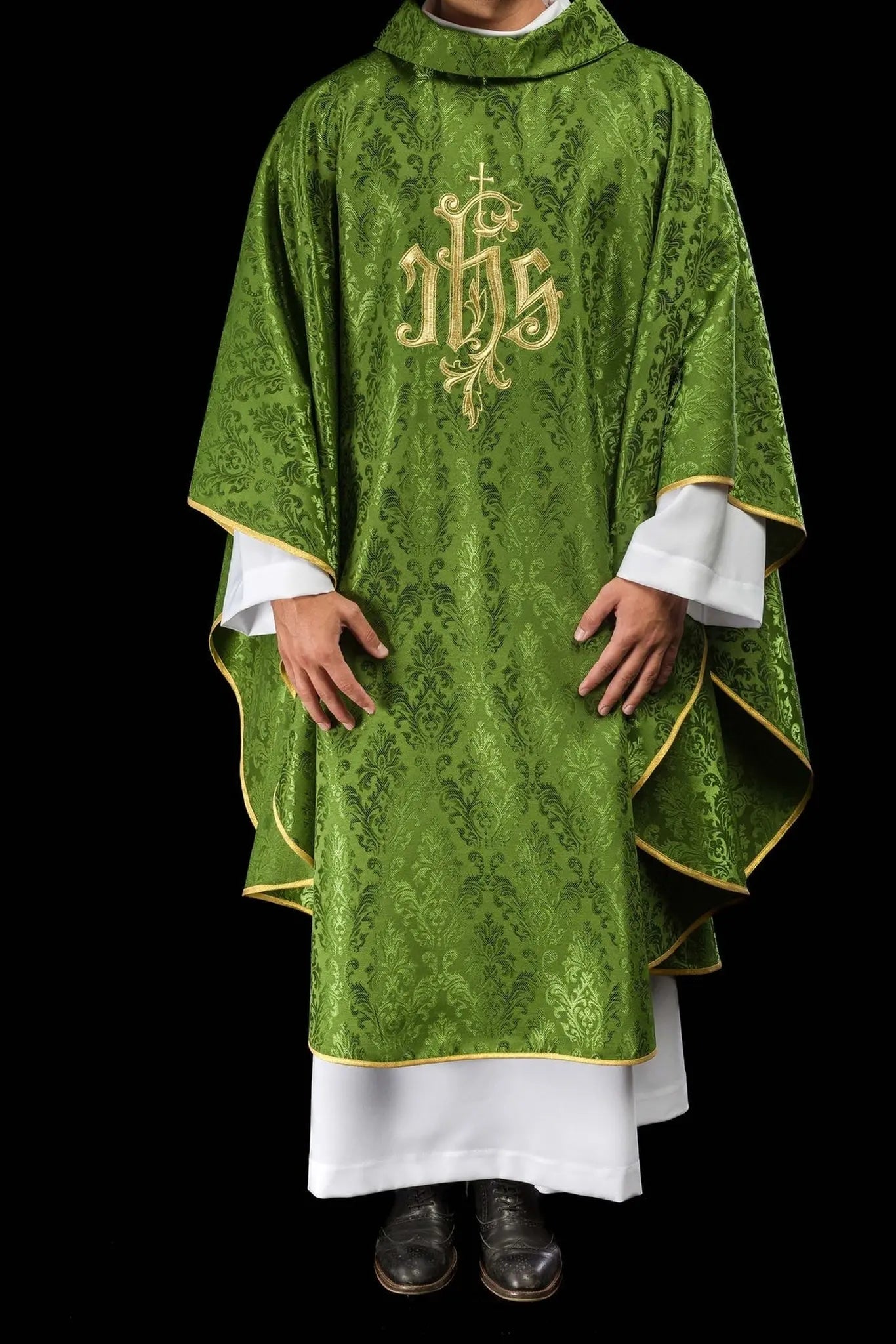
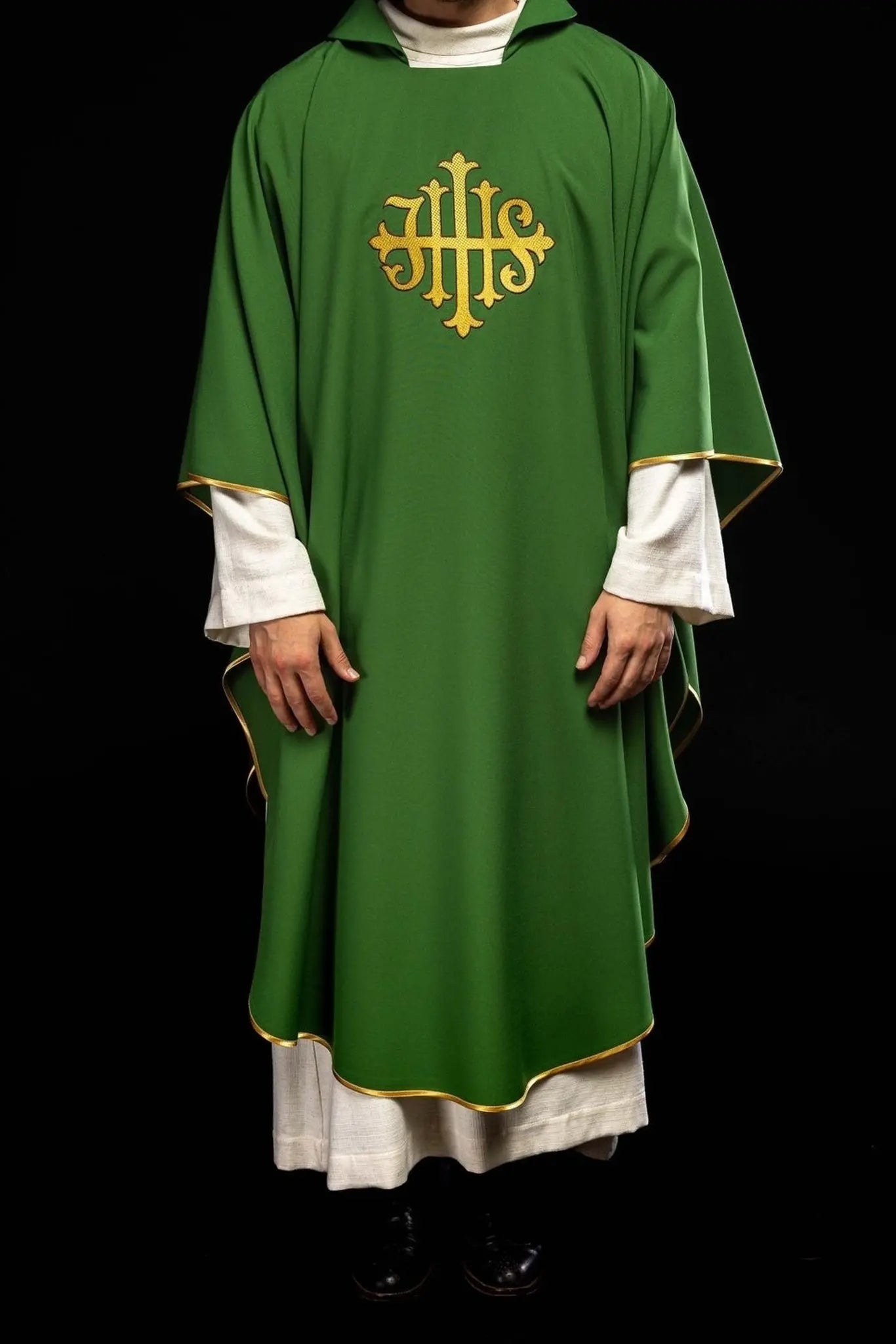
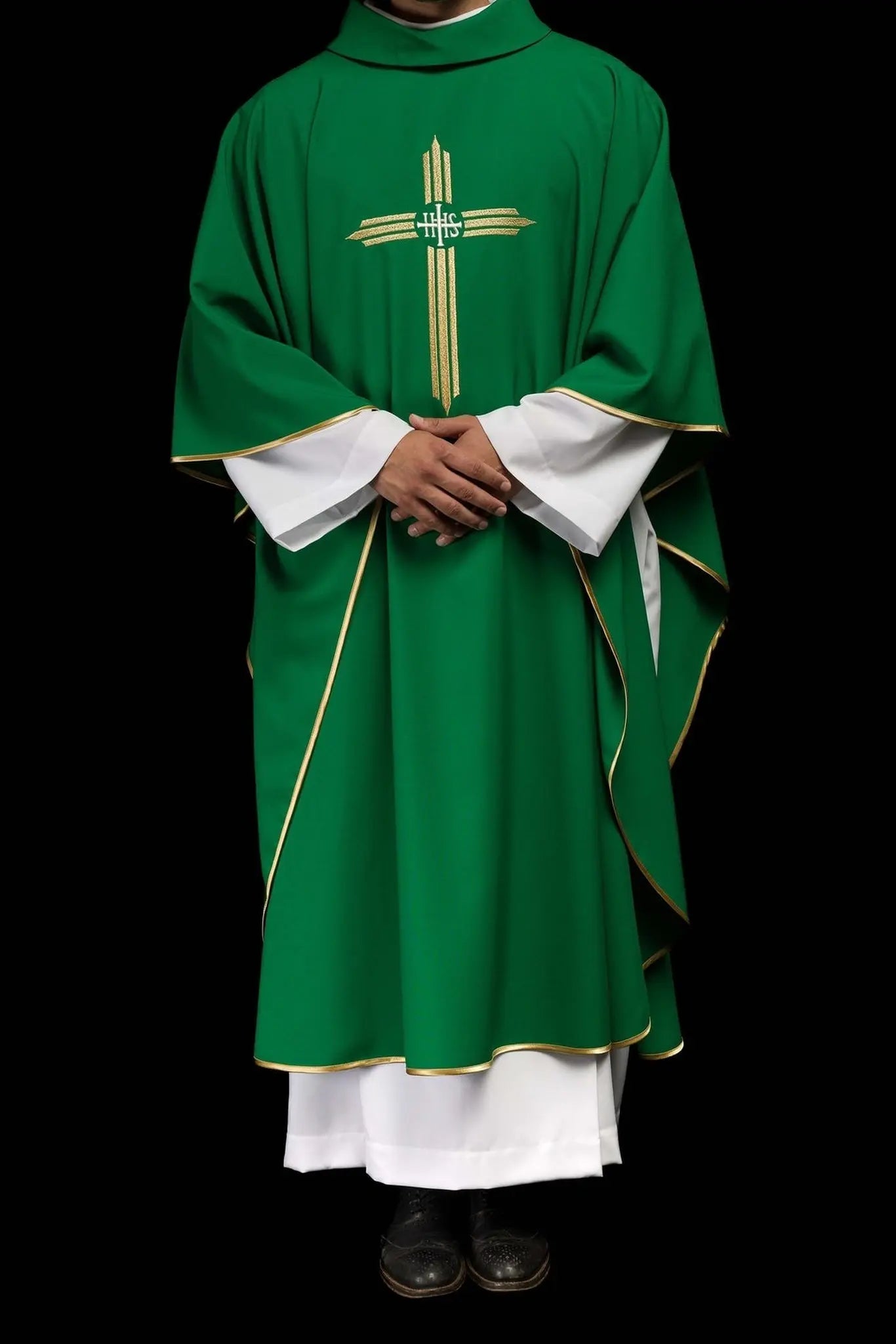
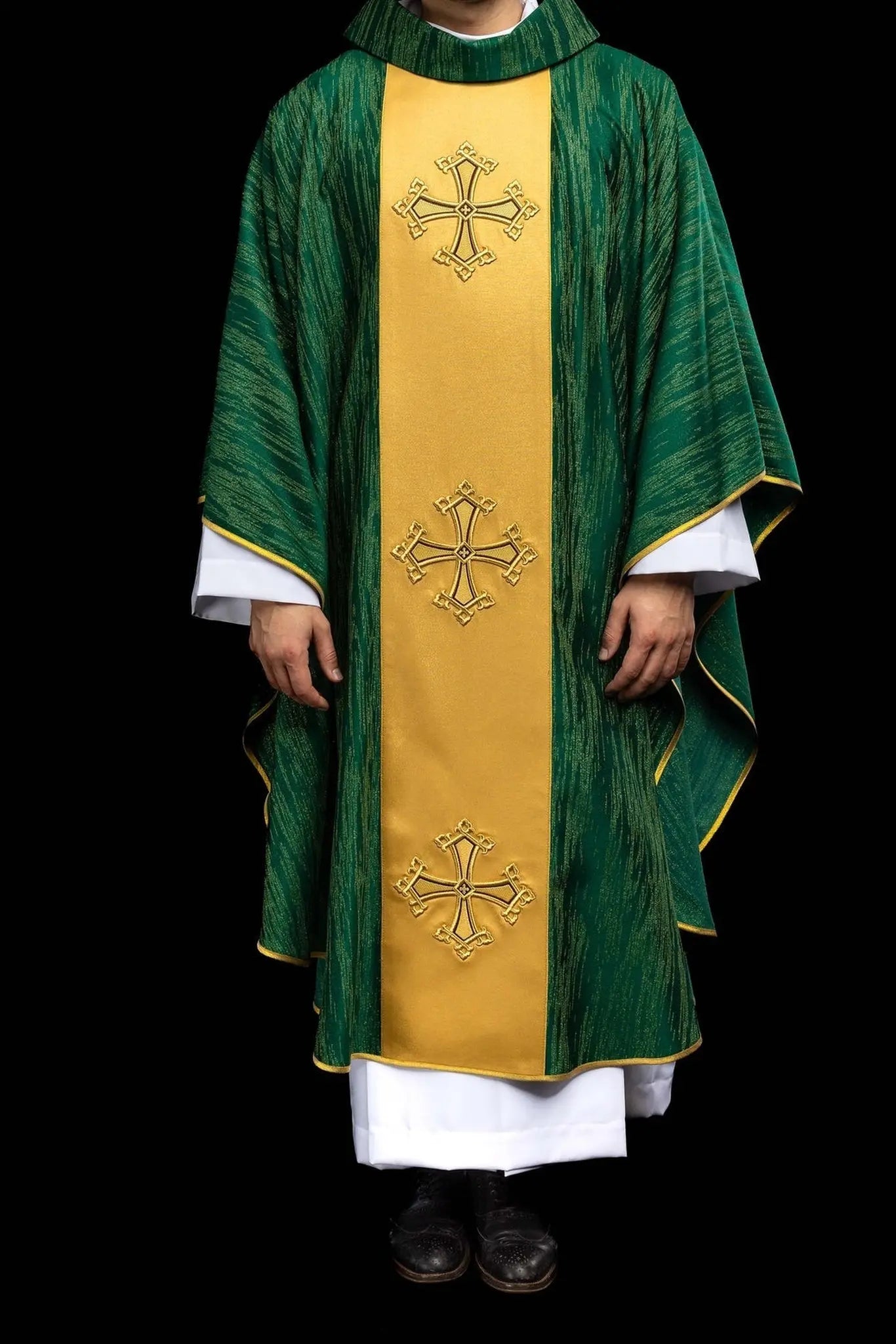
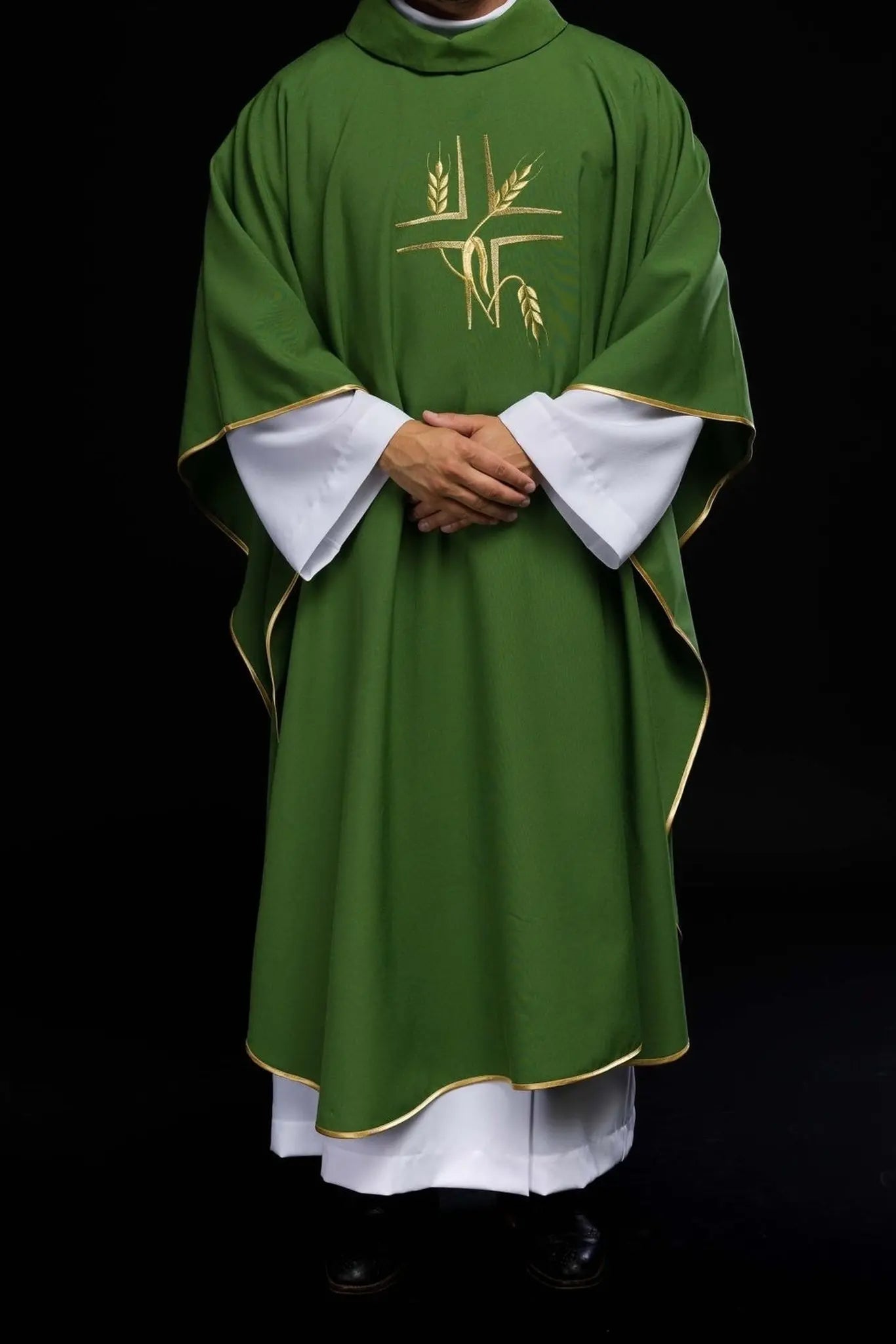
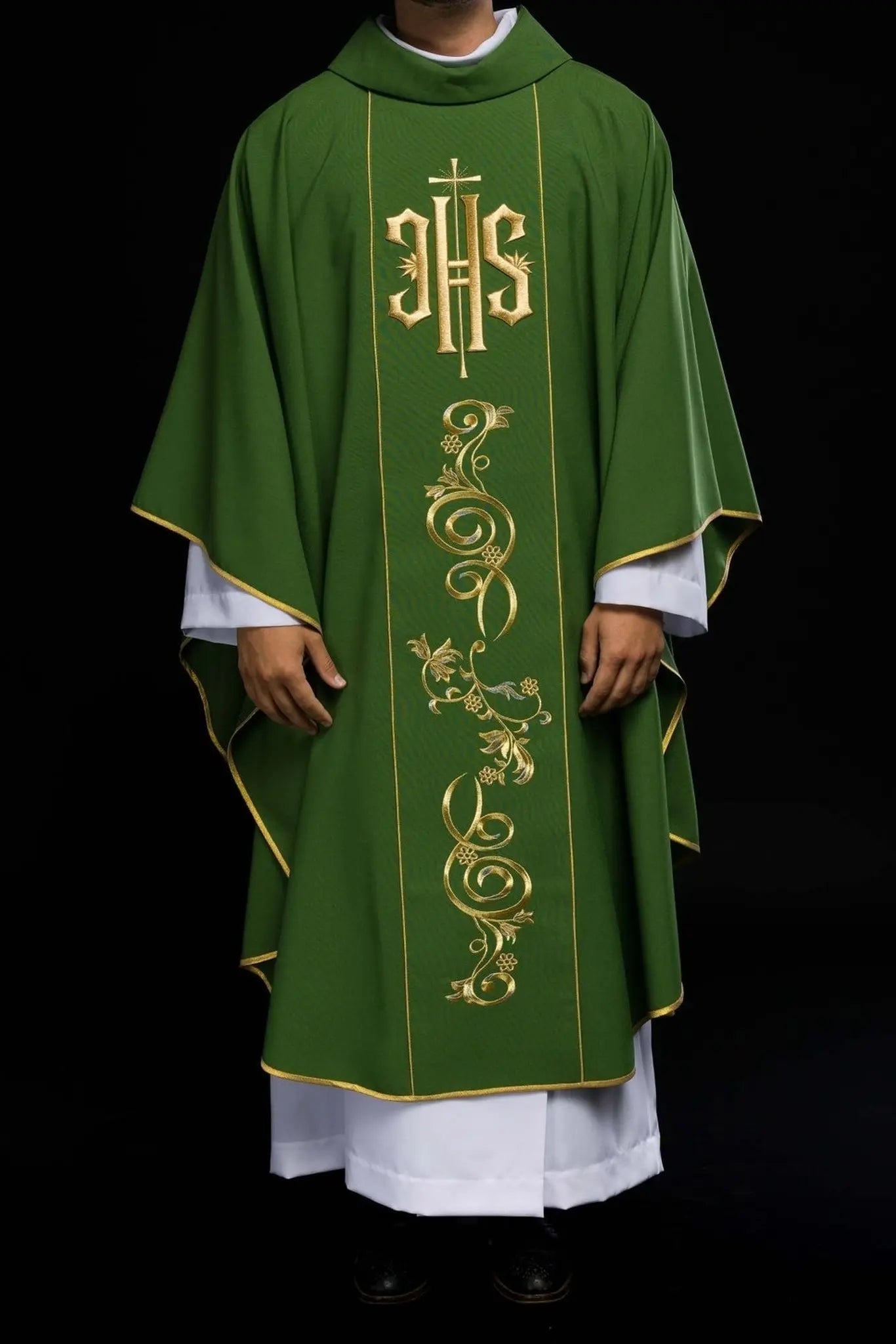
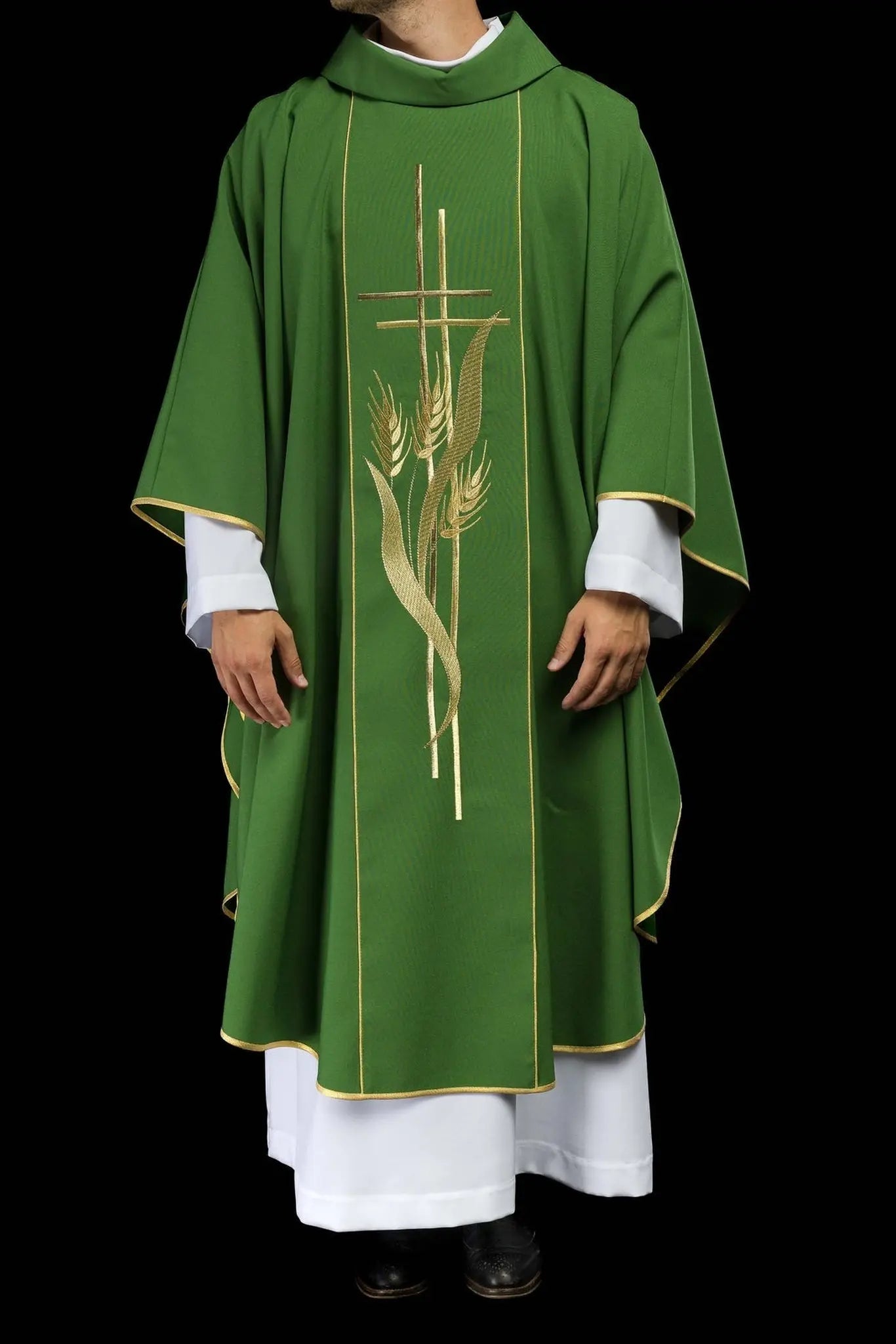
Green chasubles are the principal Eucharistic vestments used during Ordinary Time, the long liturgical season in which the Church listens steadily to the teaching of Christ and reflects on the growth of faith in everyday Christian life. Green is associated with hope, renewal, perseverance, and spiritual fruitfulness. In the sanctuary it gives a clear visual sign that the celebration belongs to the weeks when no other proper liturgical color is appointed. This collection brings together green chasubles for priests and bishops who need dignified vestments for Sunday Masses, weekday Masses, parish celebrations, and the regular rhythm of worship throughout the year.
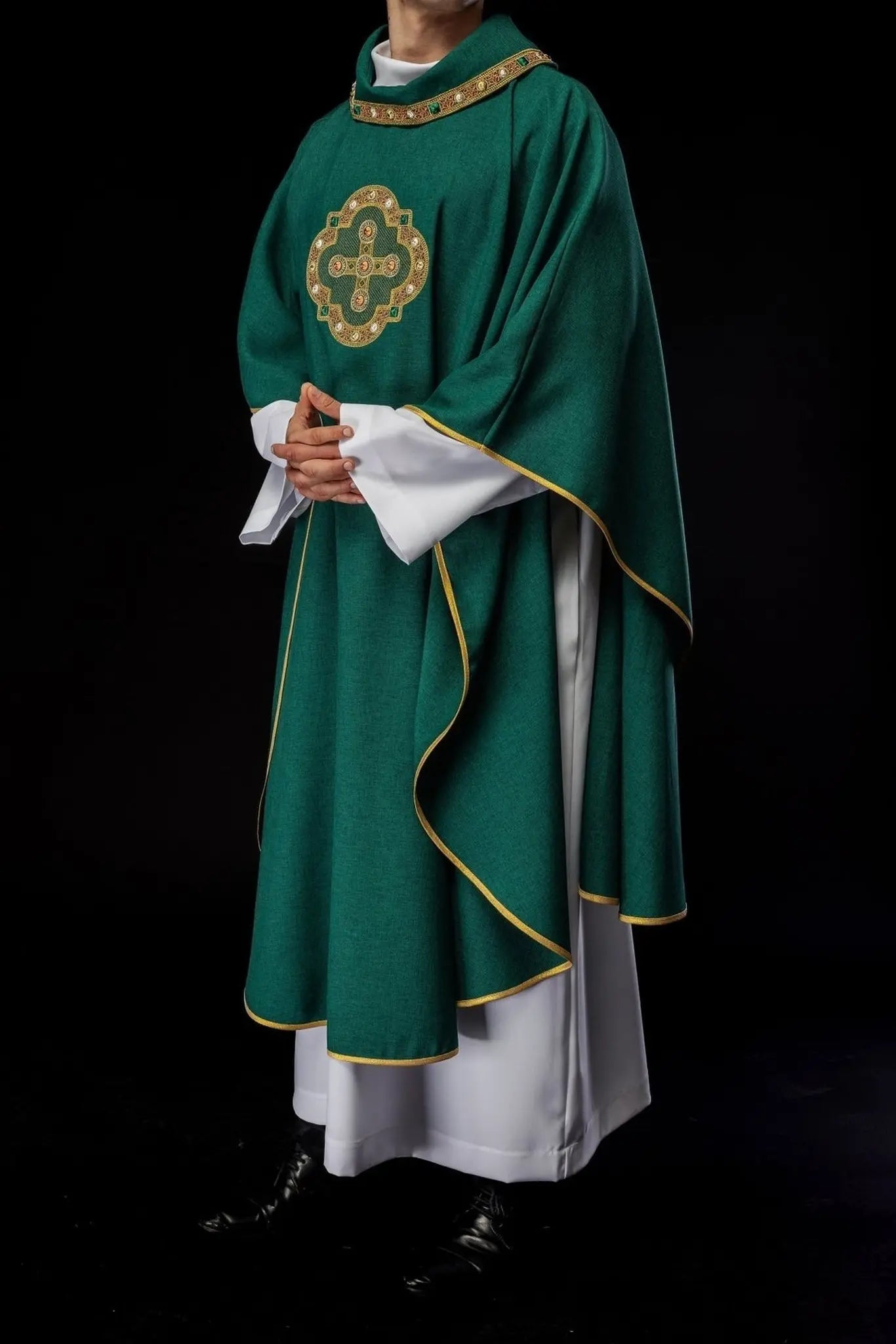
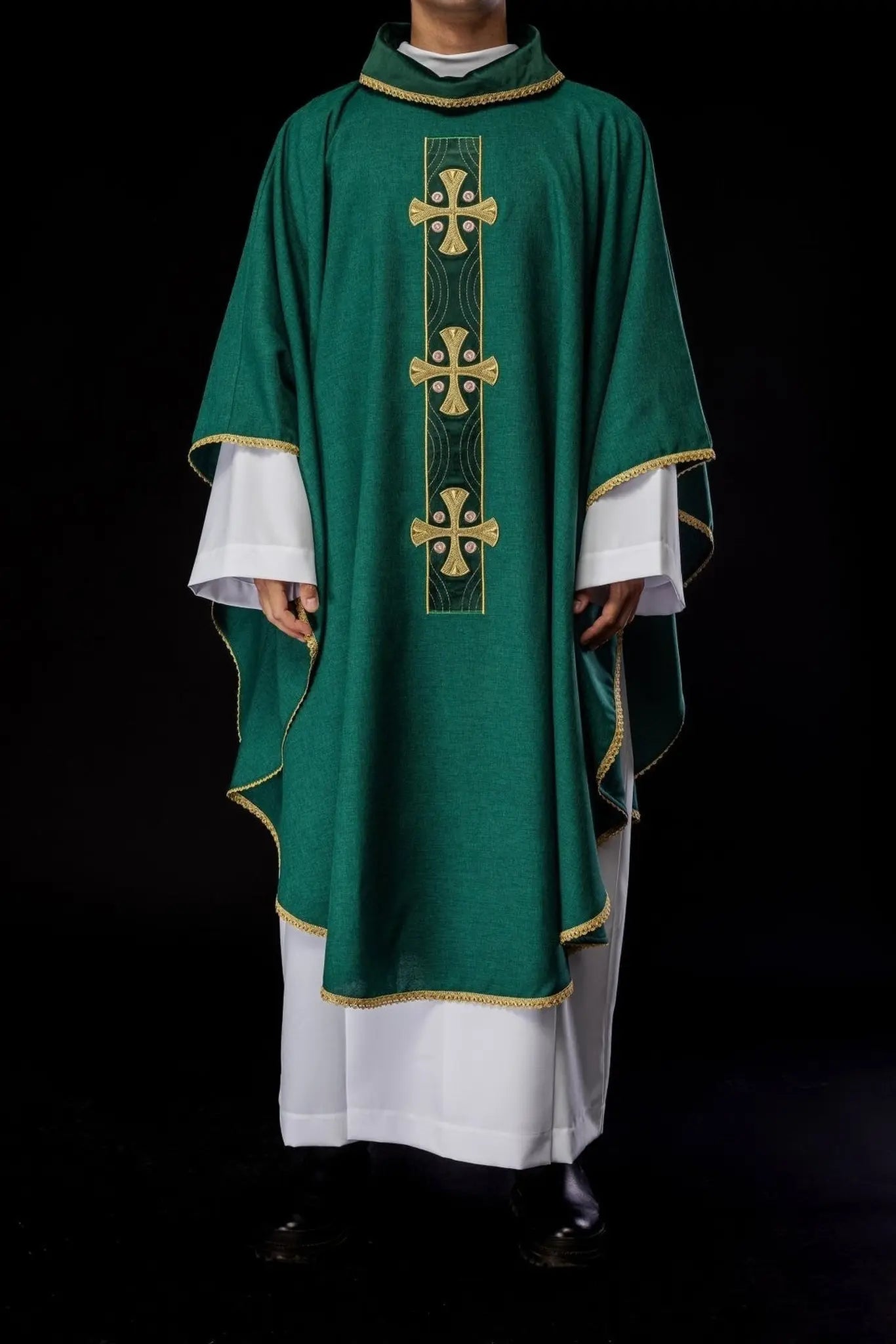
A chasuble is worn over the alb and stole by the priest or bishop who presides at Mass. Because it is the most visible vestment at the altar, its color, cut, fabric, and embroidery should support the prayer of the liturgy without distracting from it. The green chasubles in this collection are intended for parishes, chapels, religious communities, seminaries, and sacristies that need reliable vestments for the weeks of Ordinary Time. For the wider category of Eucharistic vestments, see our chasubles; for the full vestment range, visit liturgical vestments.
The liturgical meaning of green
Green has a strong and stable place in the Roman liturgical tradition. It is used in Ordinary Time, the season that follows the Christmas cycle and later resumes after the Easter cycle. These weeks are not ordinary in the sense of unimportant. They are ordered weeks in which the faithful are formed by the Gospel, nourished by the Eucharist, and invited to grow patiently in holiness. A green chasuble therefore expresses the living quality of the Church's year: the seed of the Word takes root, the life of grace matures, and the community continues its journey of discipleship.
For this reason, green vestments are among the most frequently used pieces in a sacristy. They are suitable for the Sundays and weekdays of Ordinary Time when the calendar does not require another color. They are not meant to replace purple vestments for Advent or Lent, red vestments for Pentecost or martyrs, rose vestments for Gaudete and Laetare Sundays, or white and gold vestments for many solemnities and feasts. When planning a complete sacristy set, it is helpful to keep green chasubles together with the related seasonal collections for Ordinary Time, purple chasubles, and red chasubles so that the correct color can be chosen quickly for each celebration.
What you will find in this collection
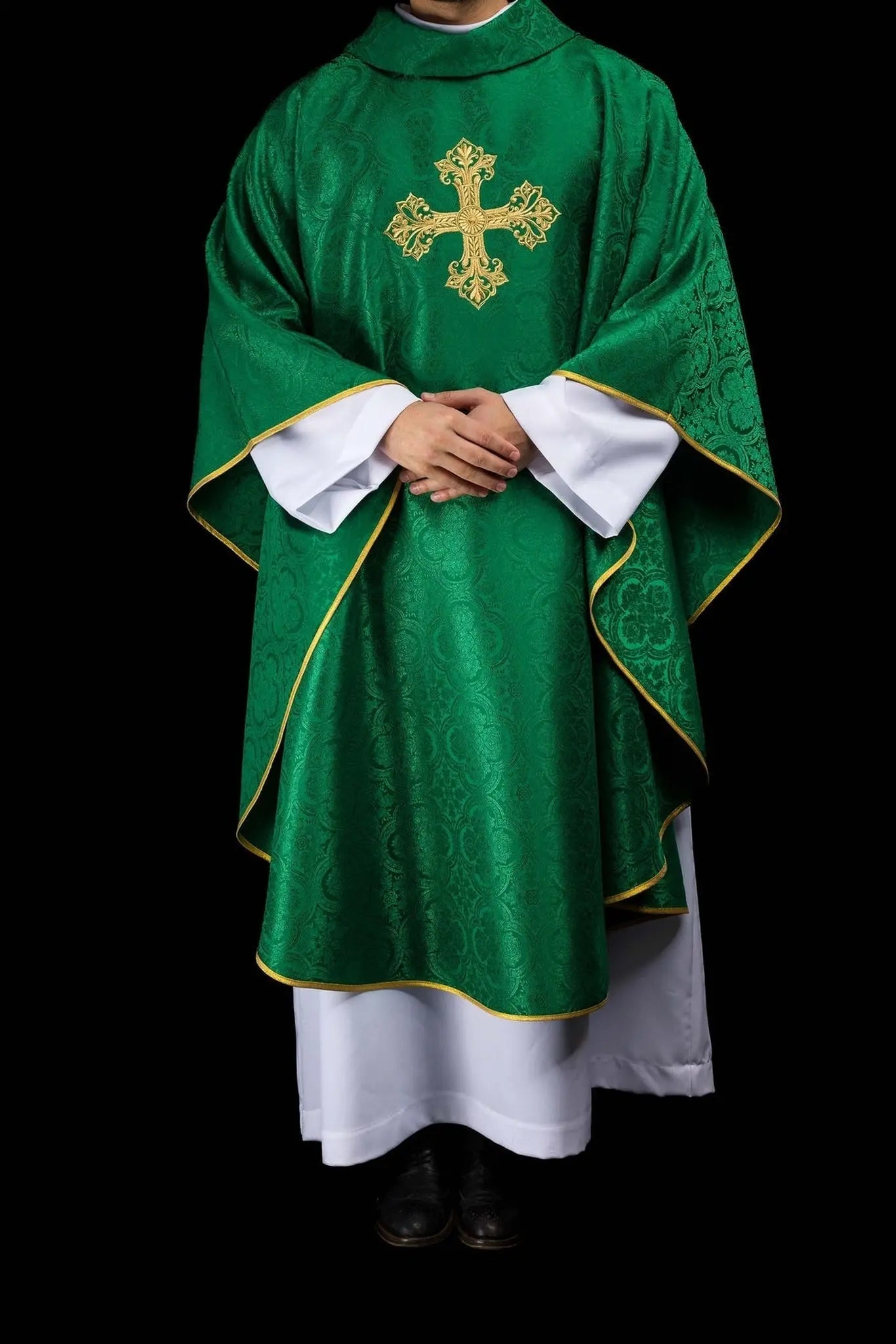
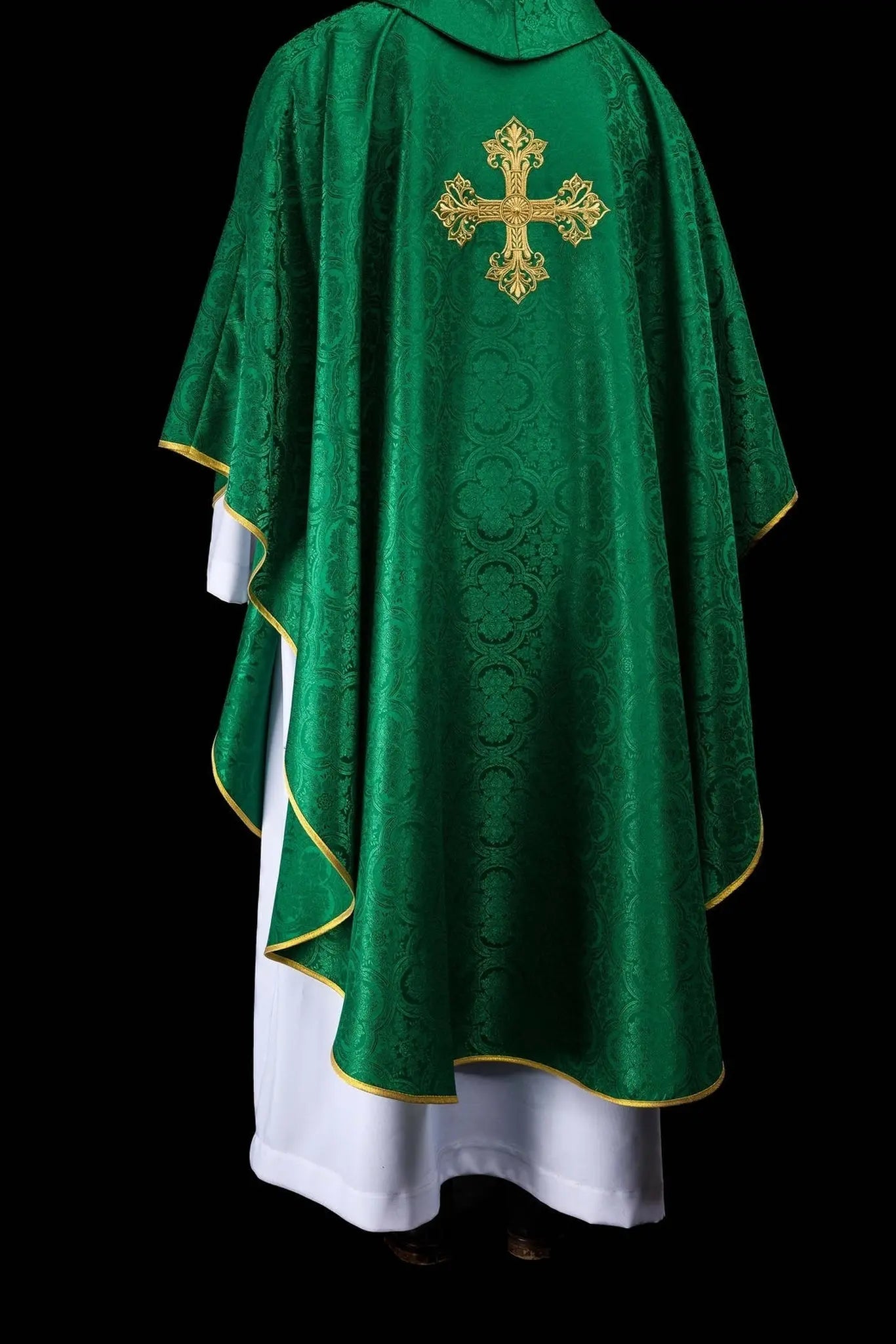
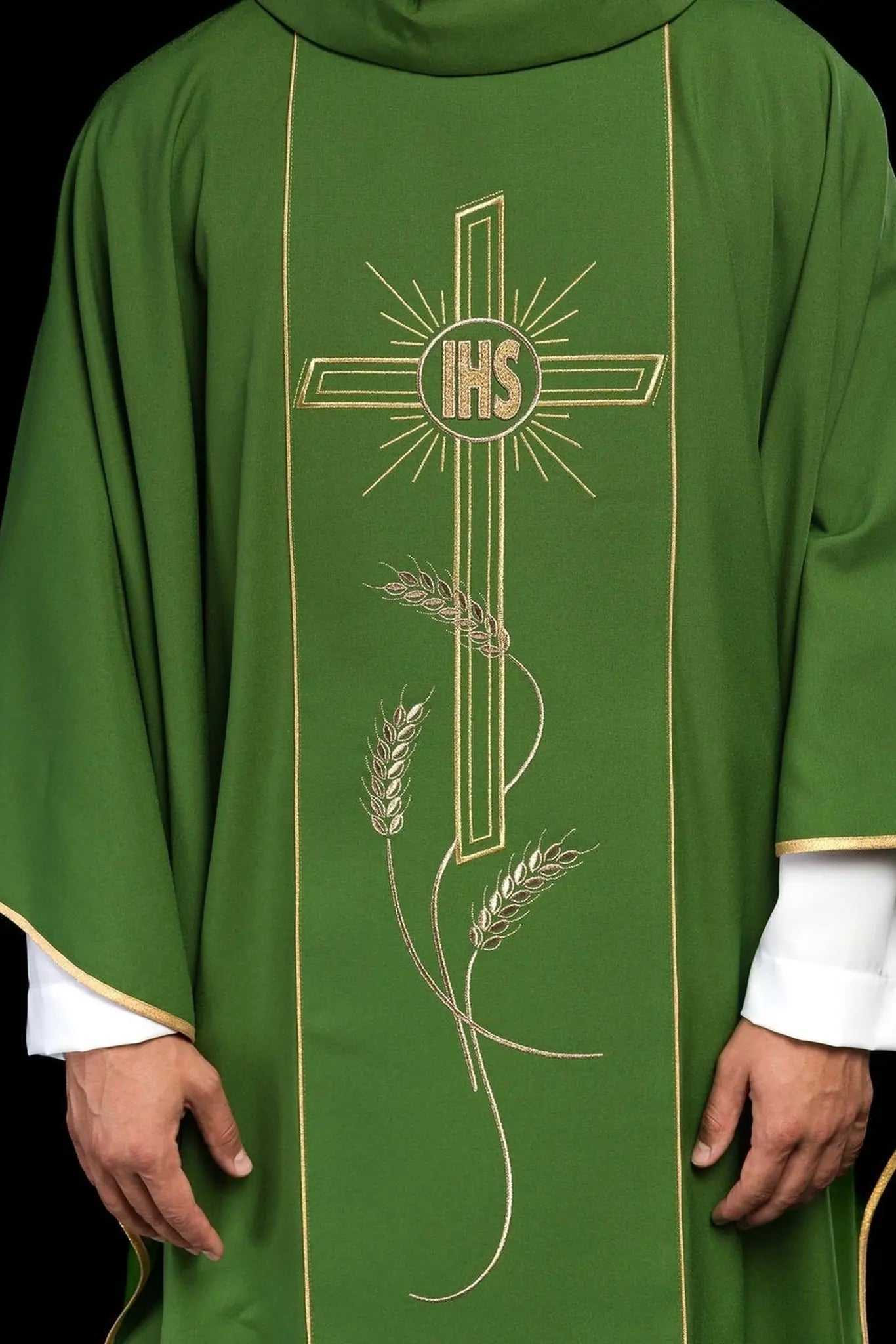
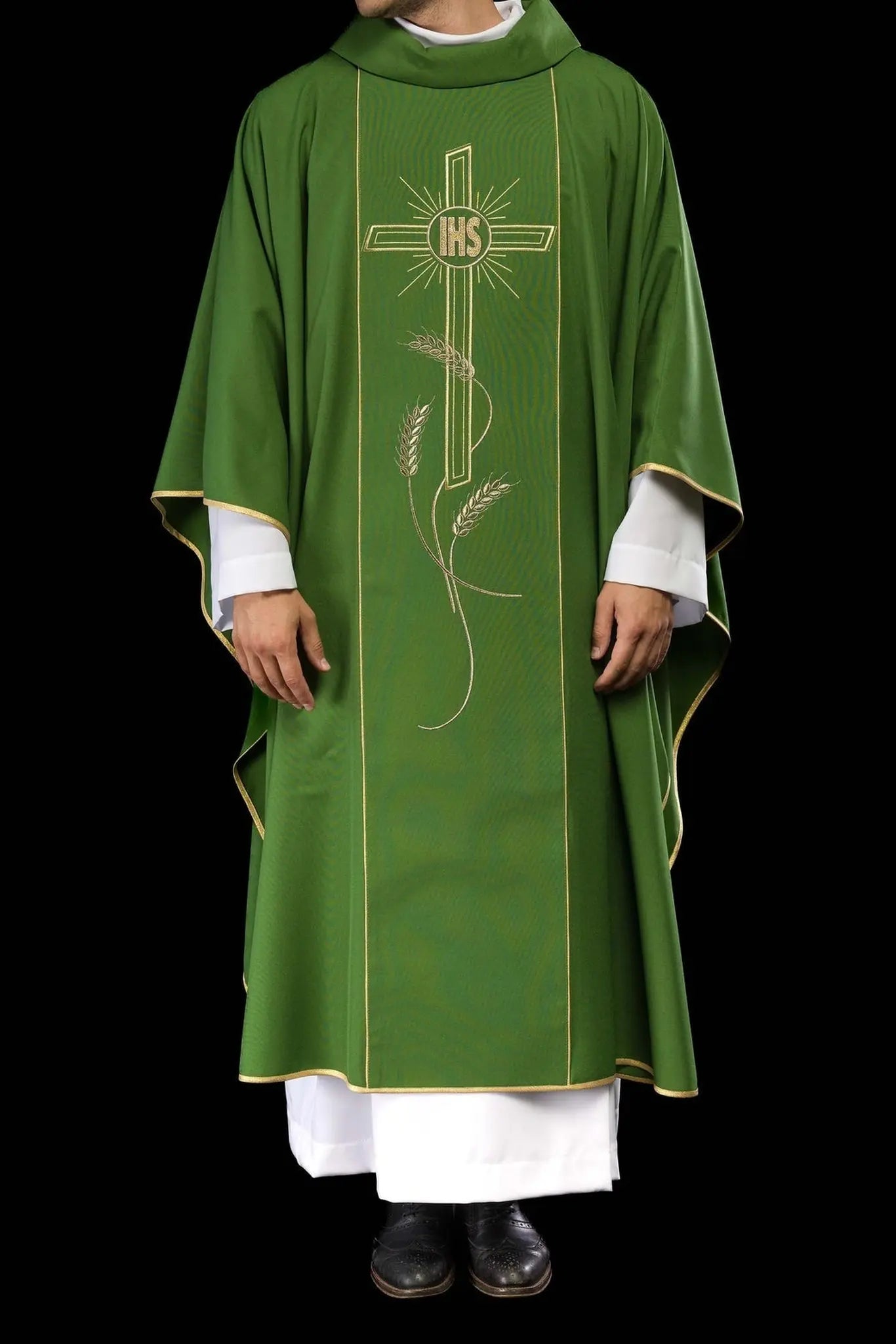
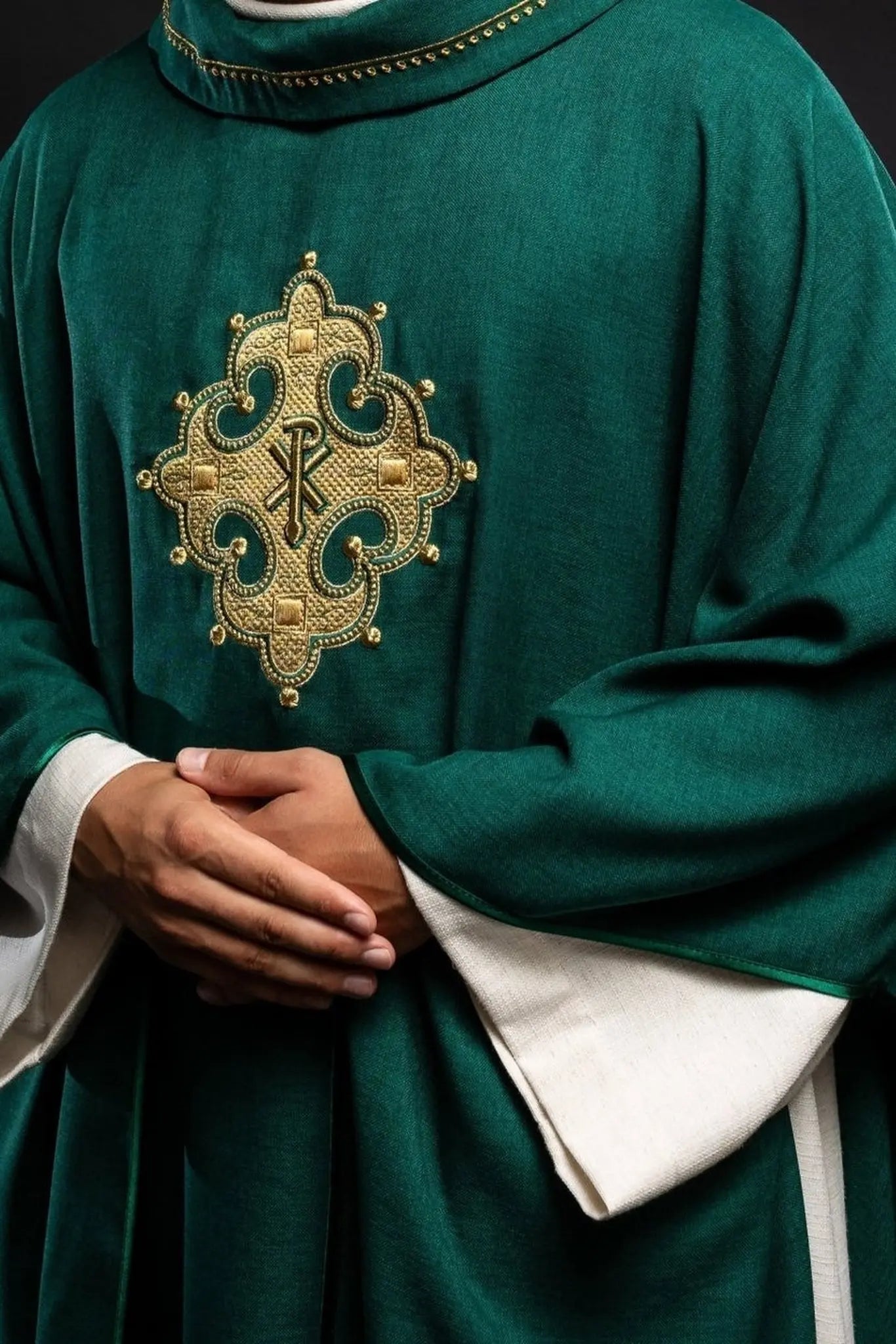
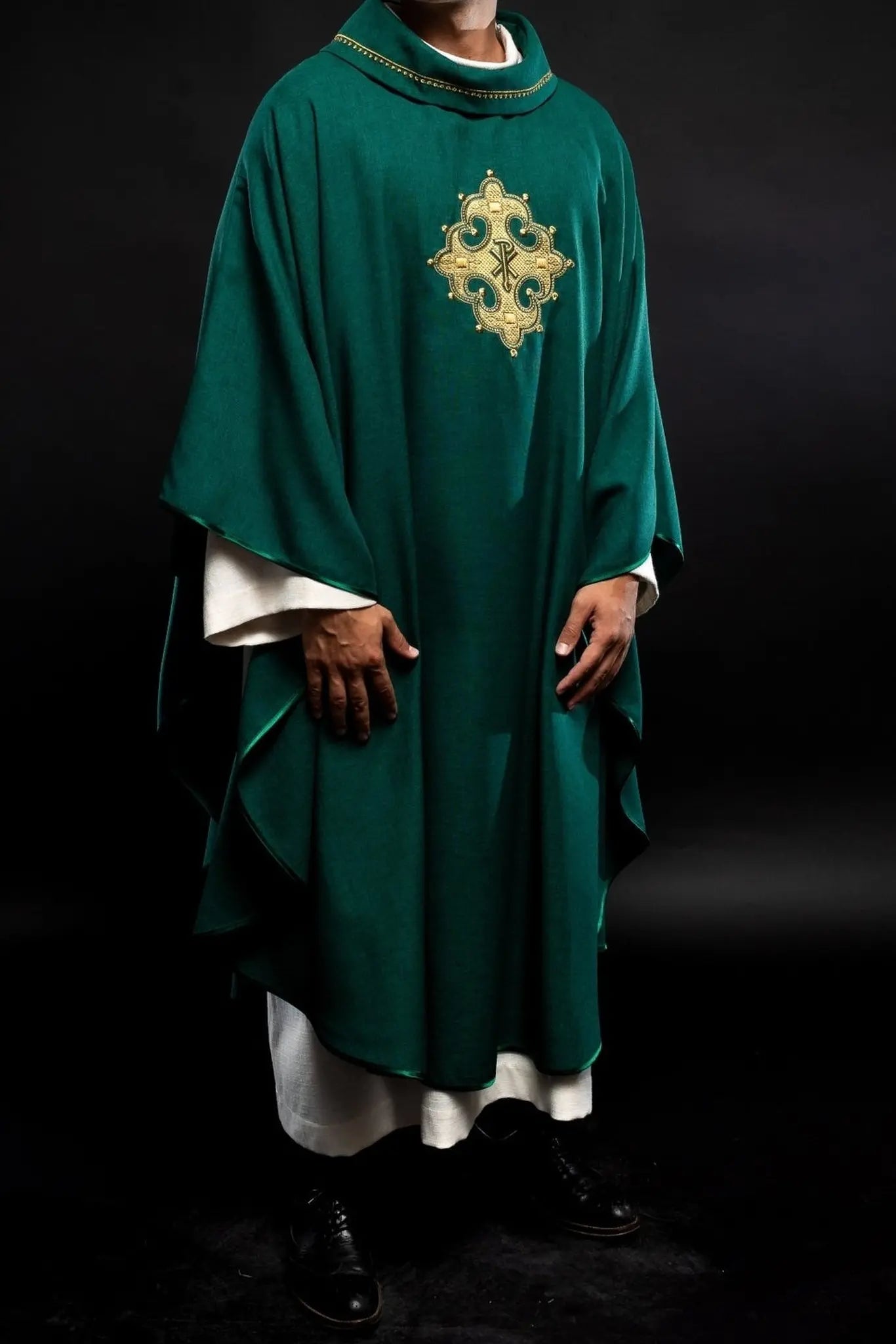
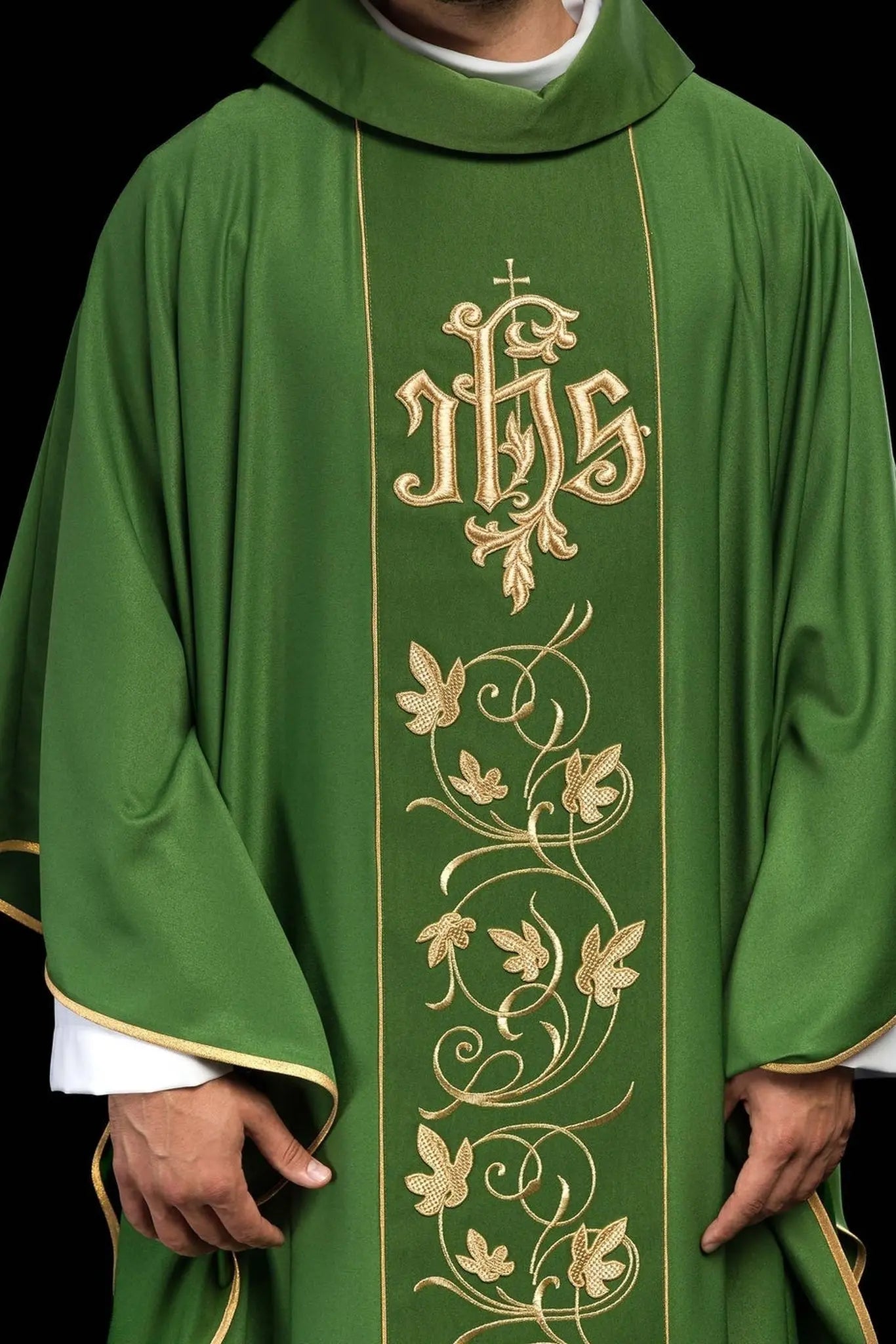
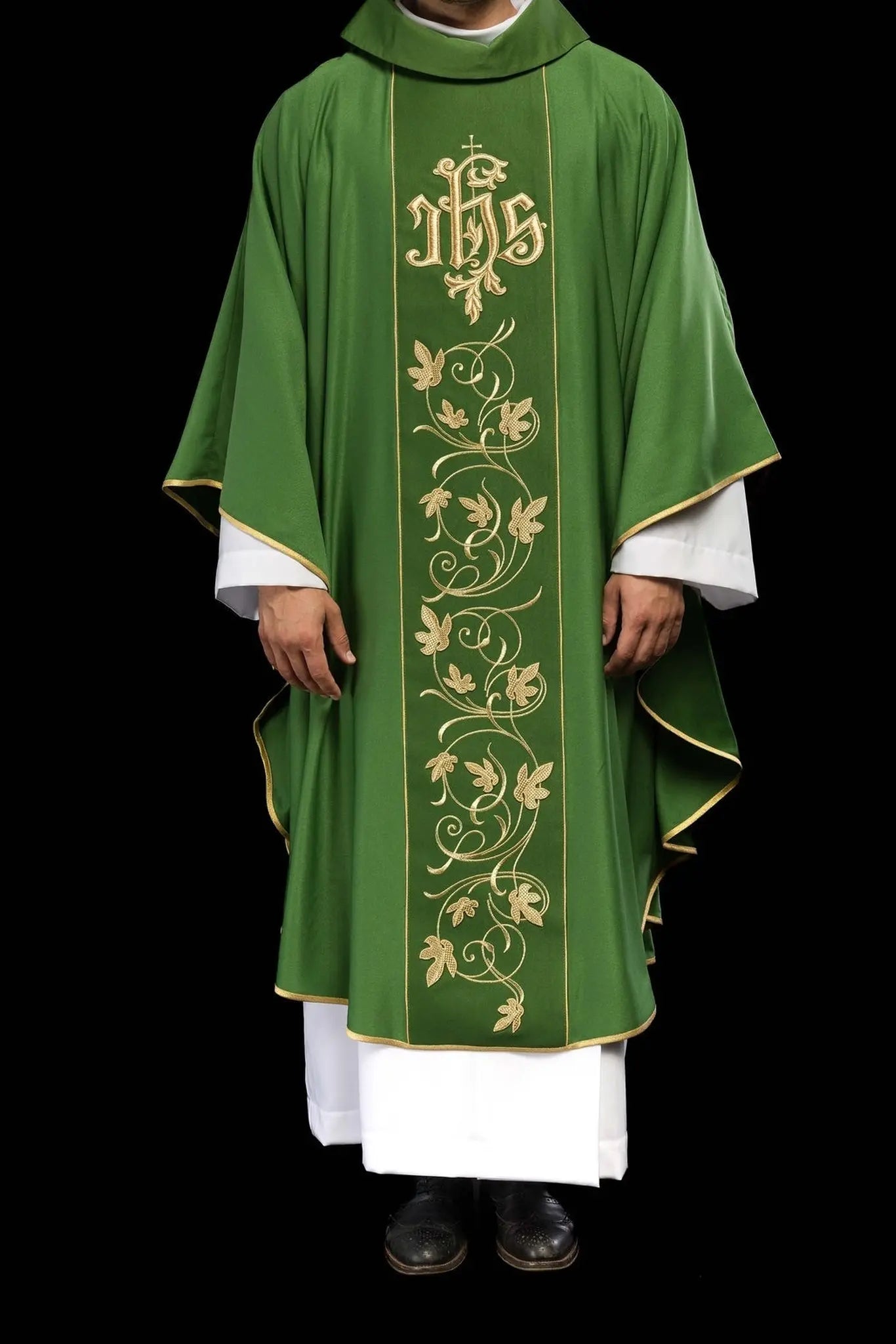
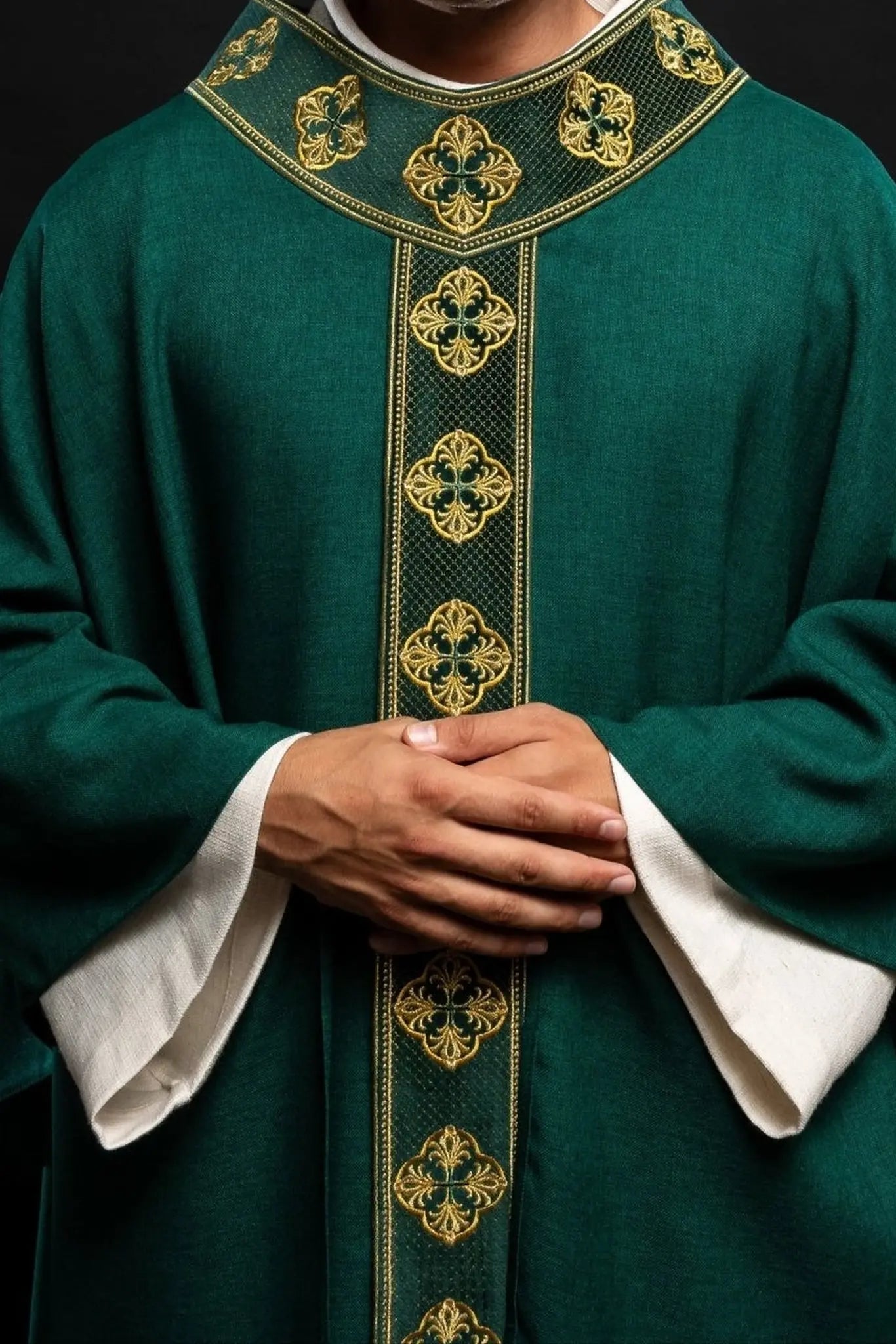
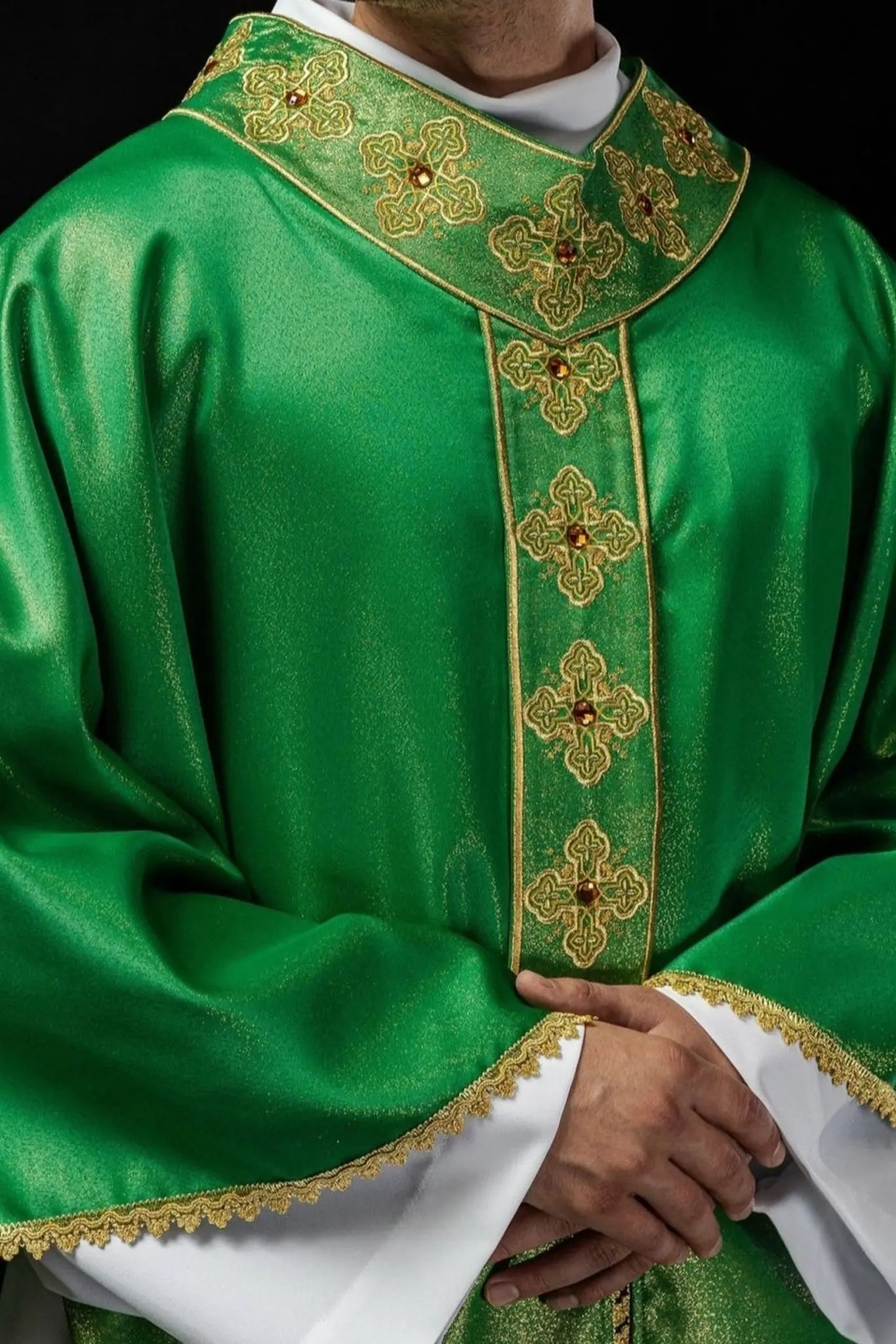
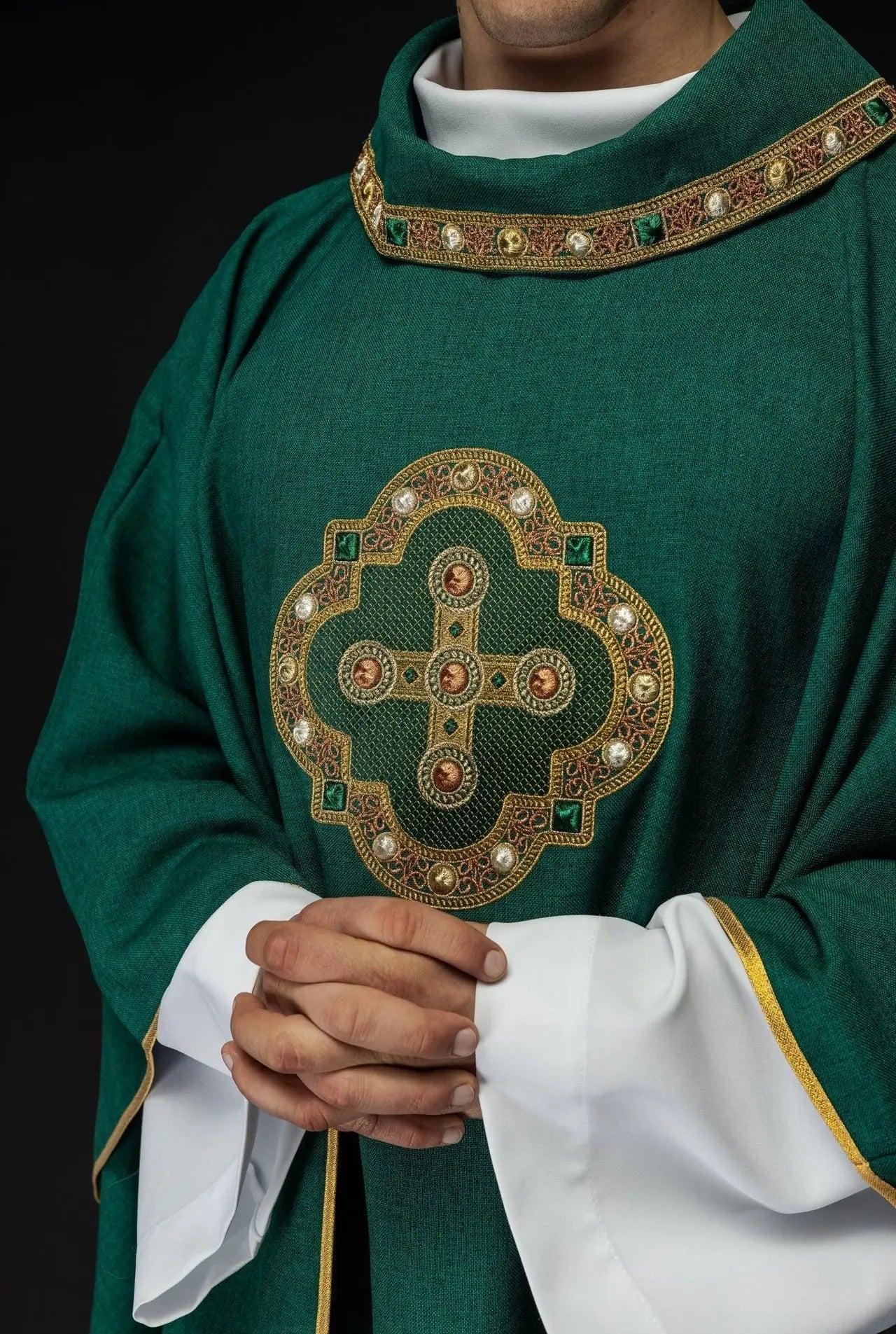
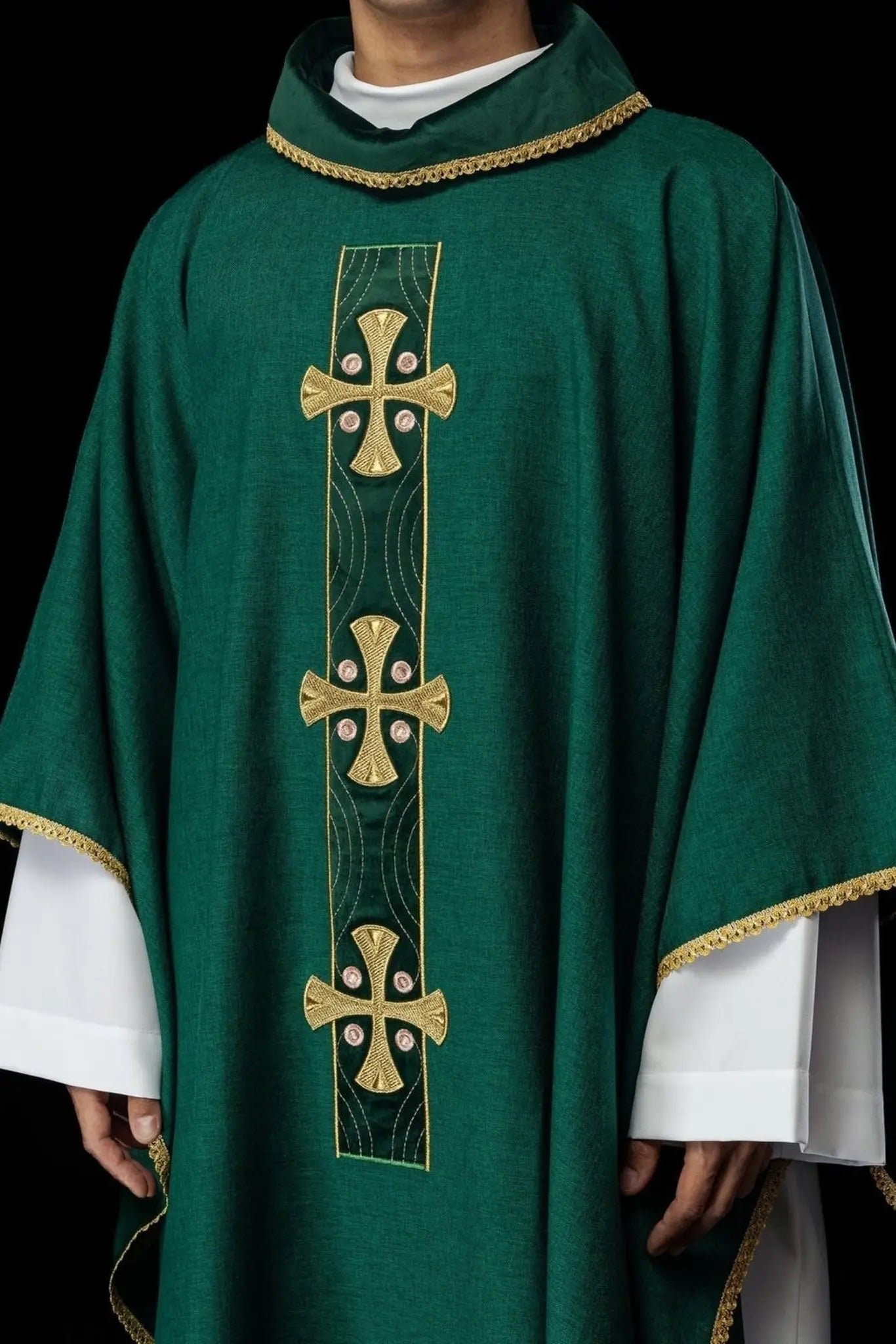
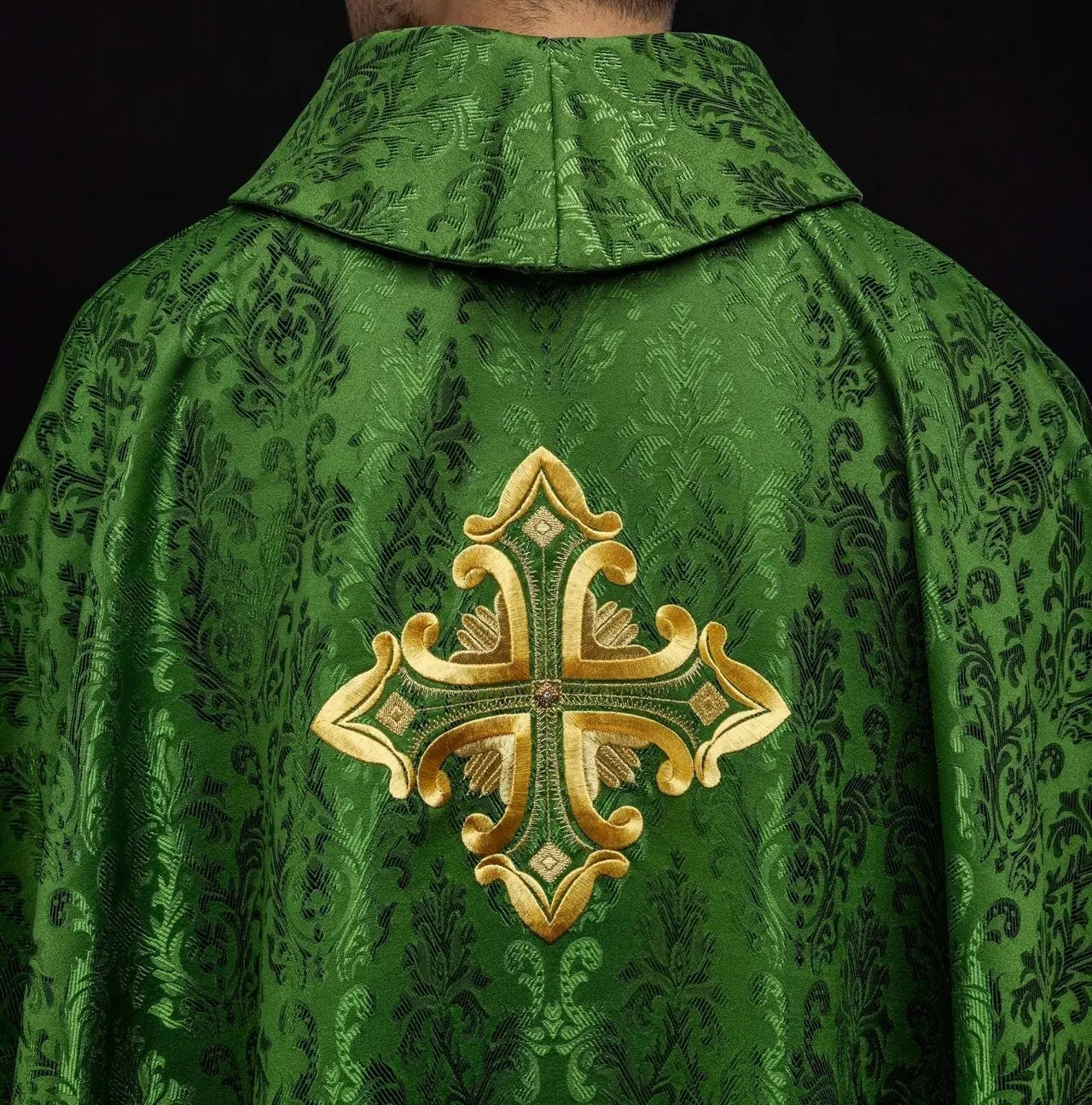
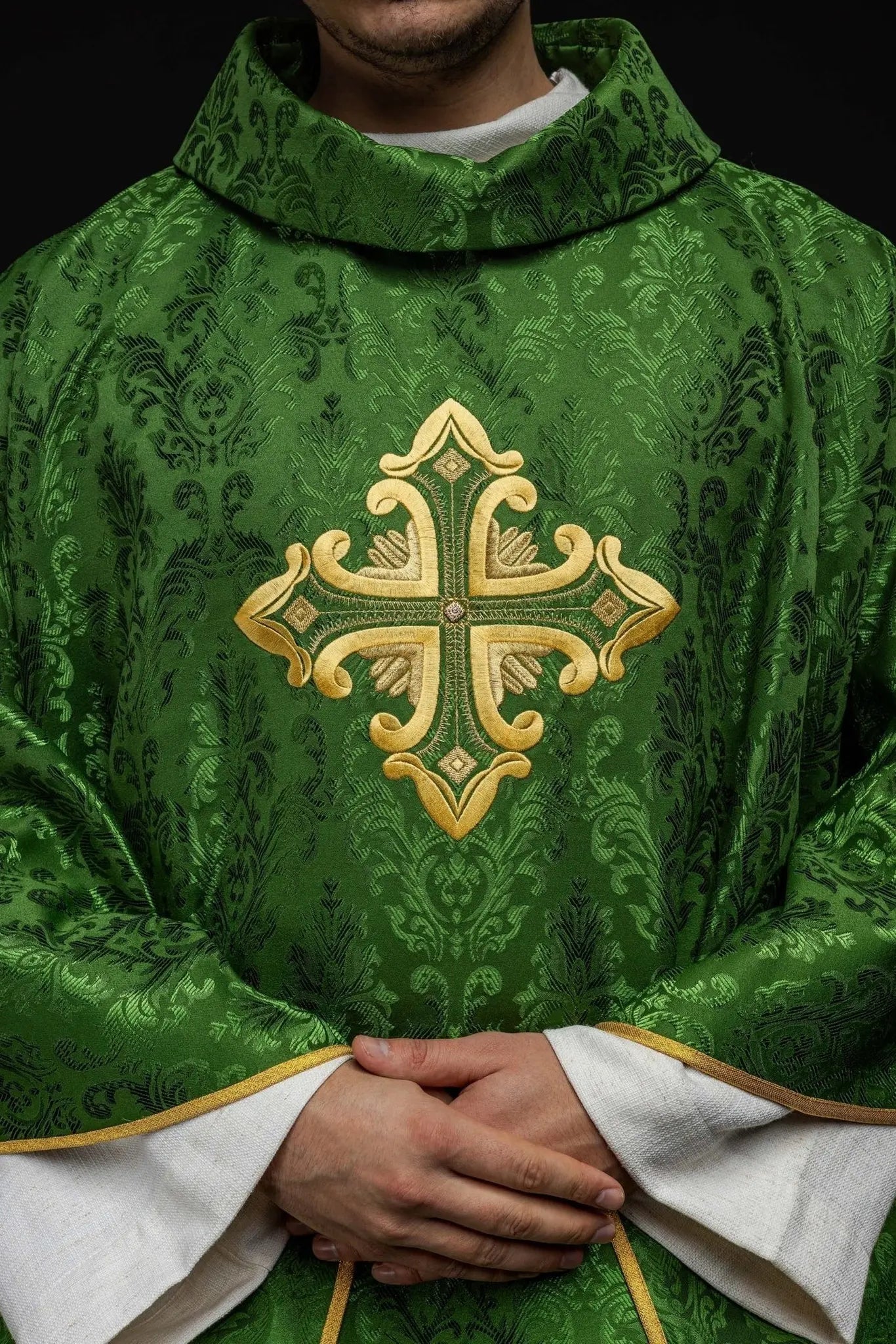
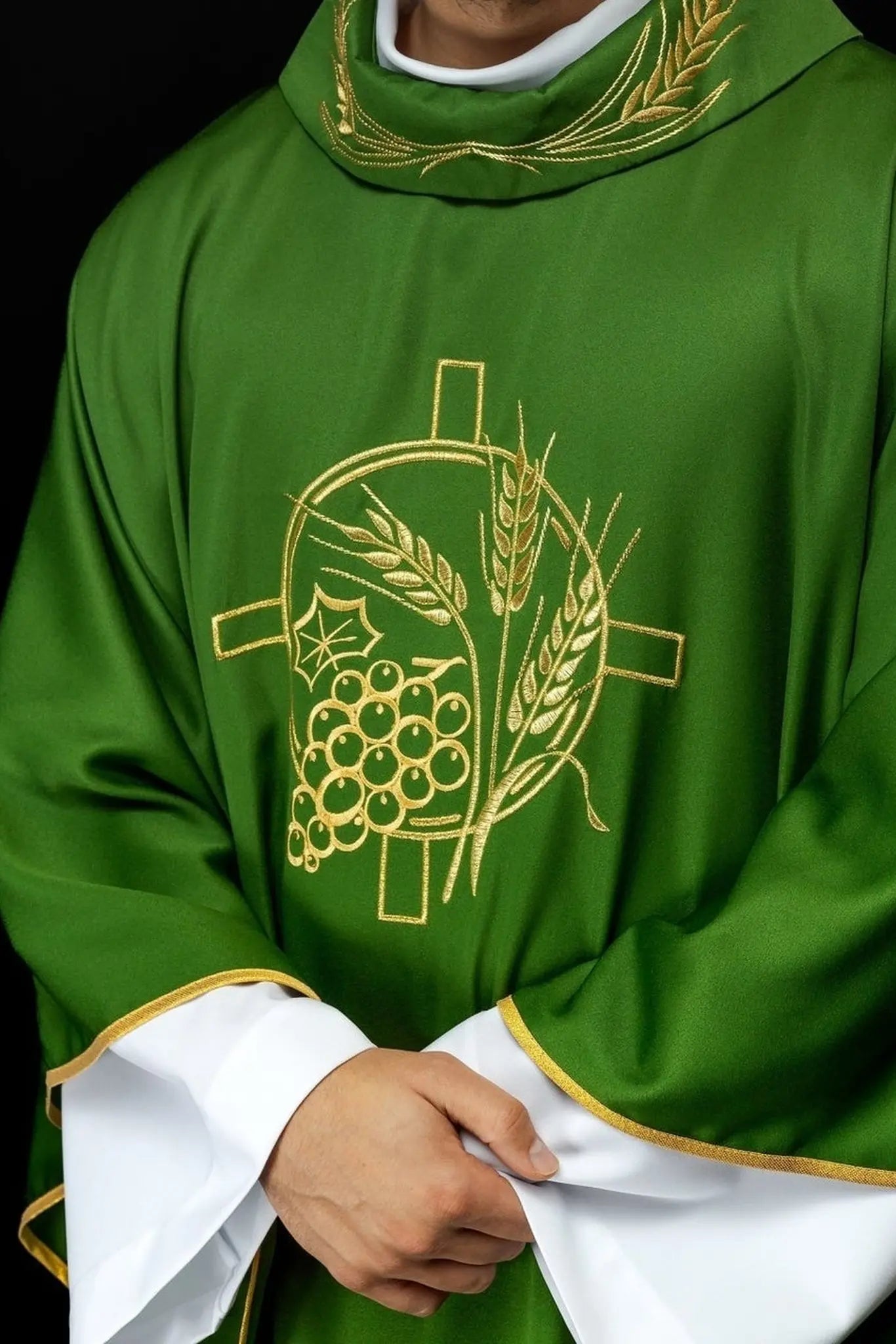
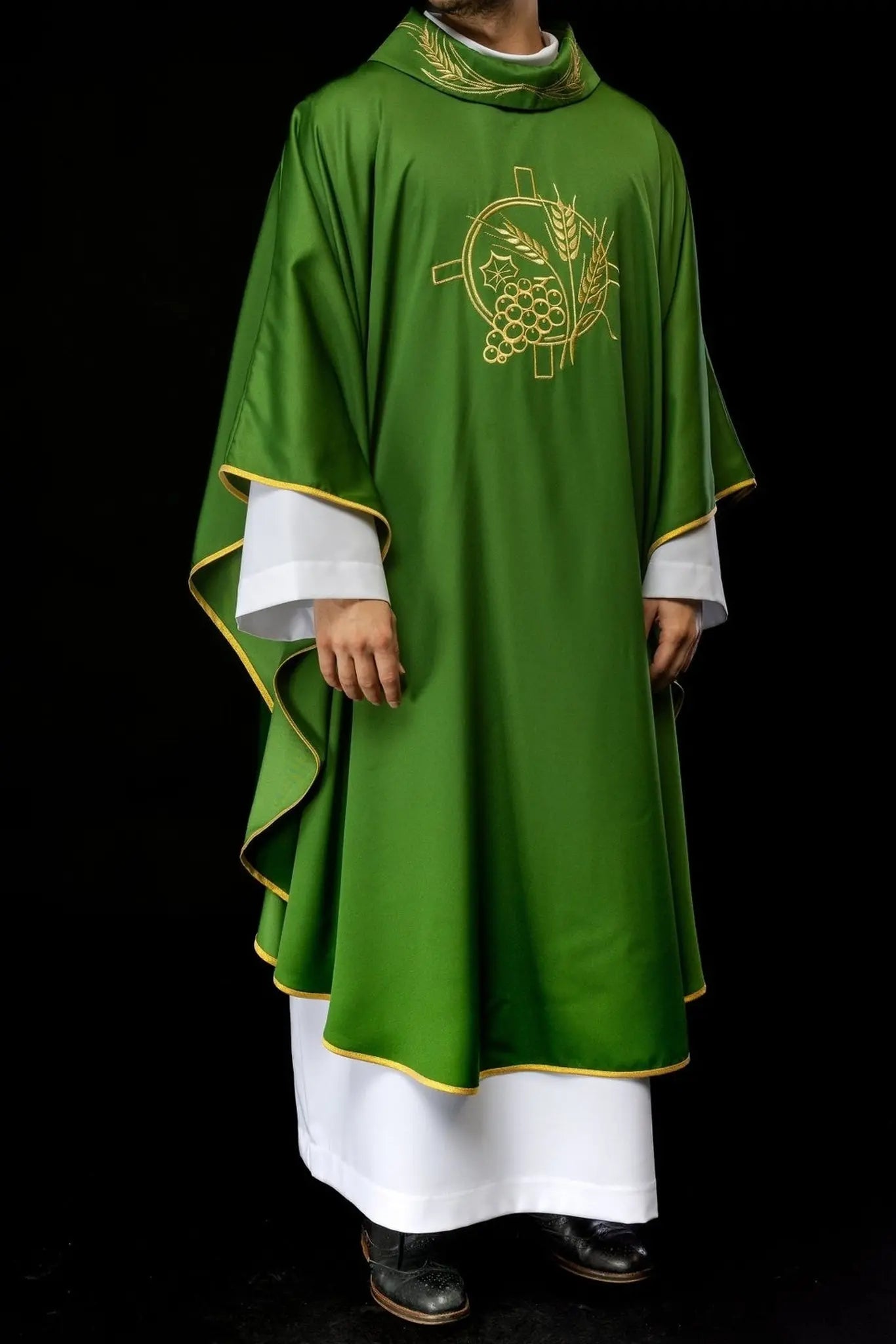
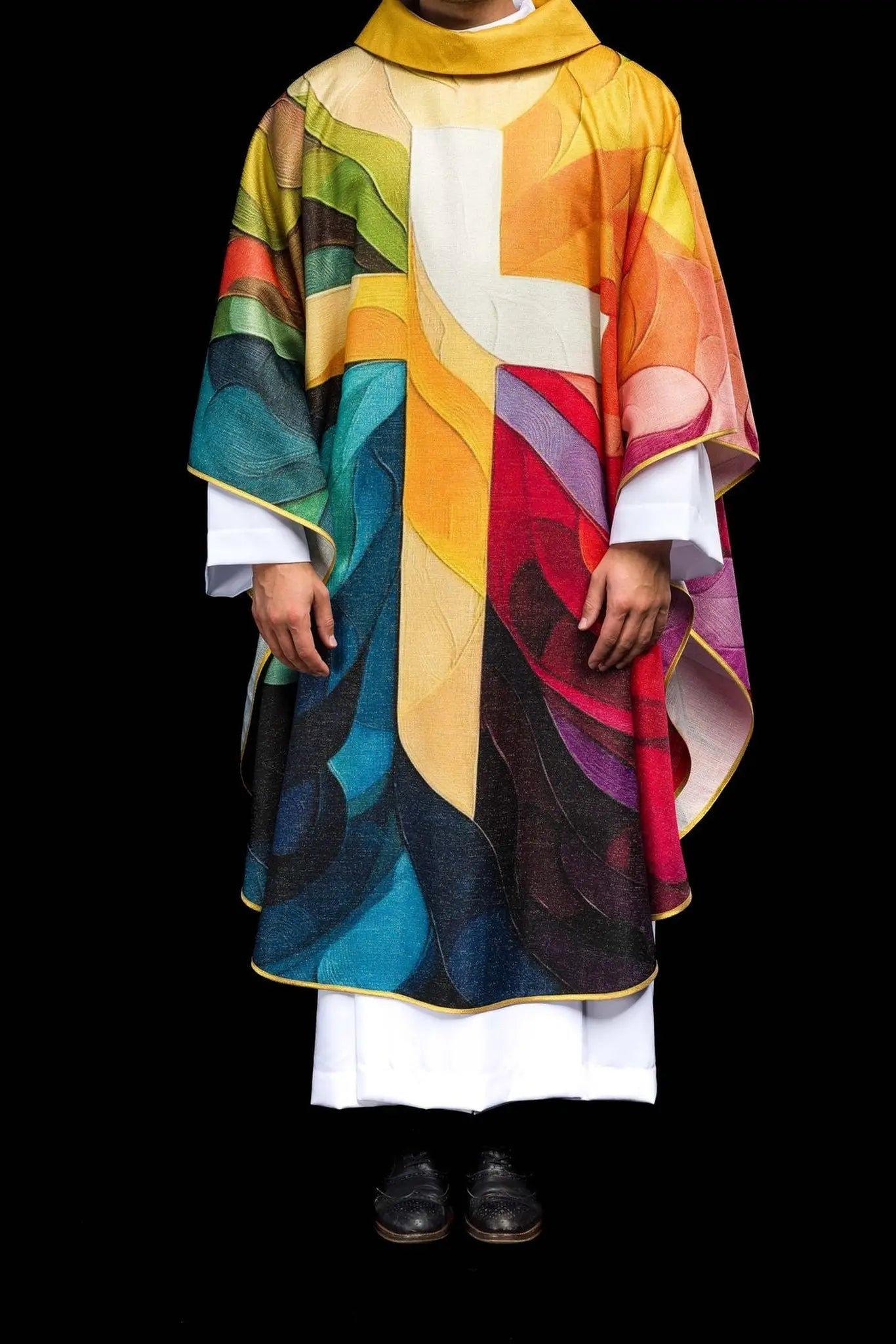
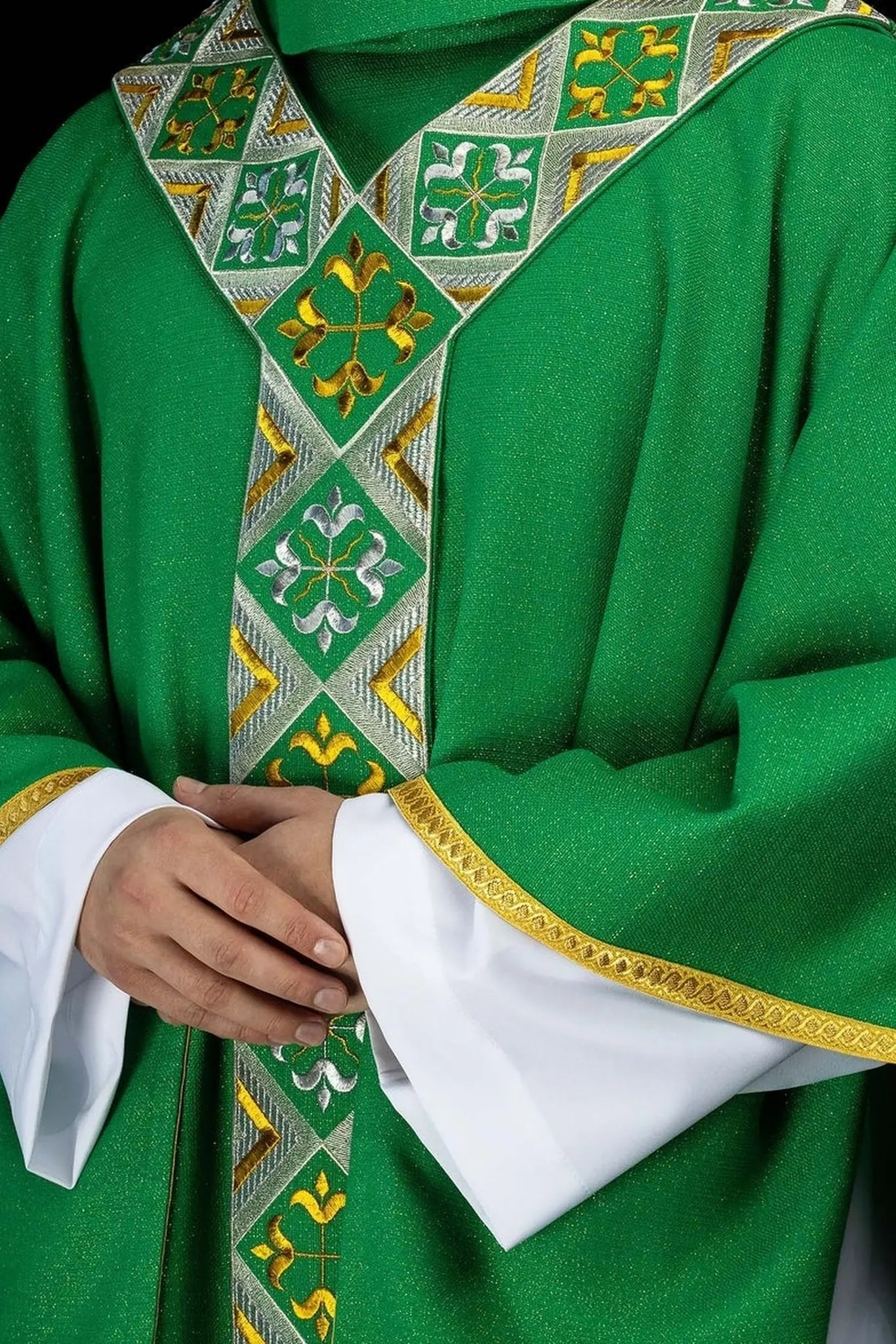
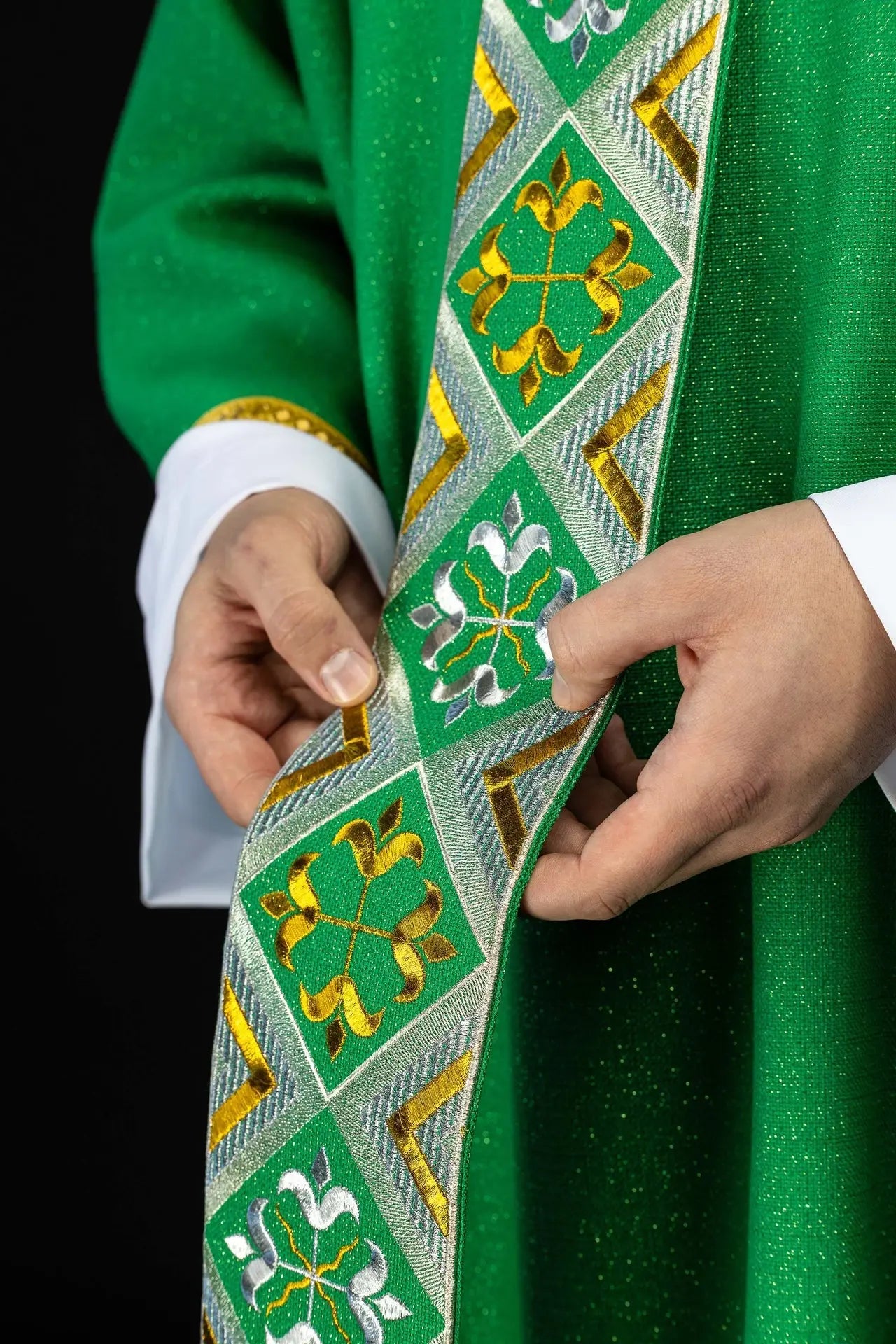
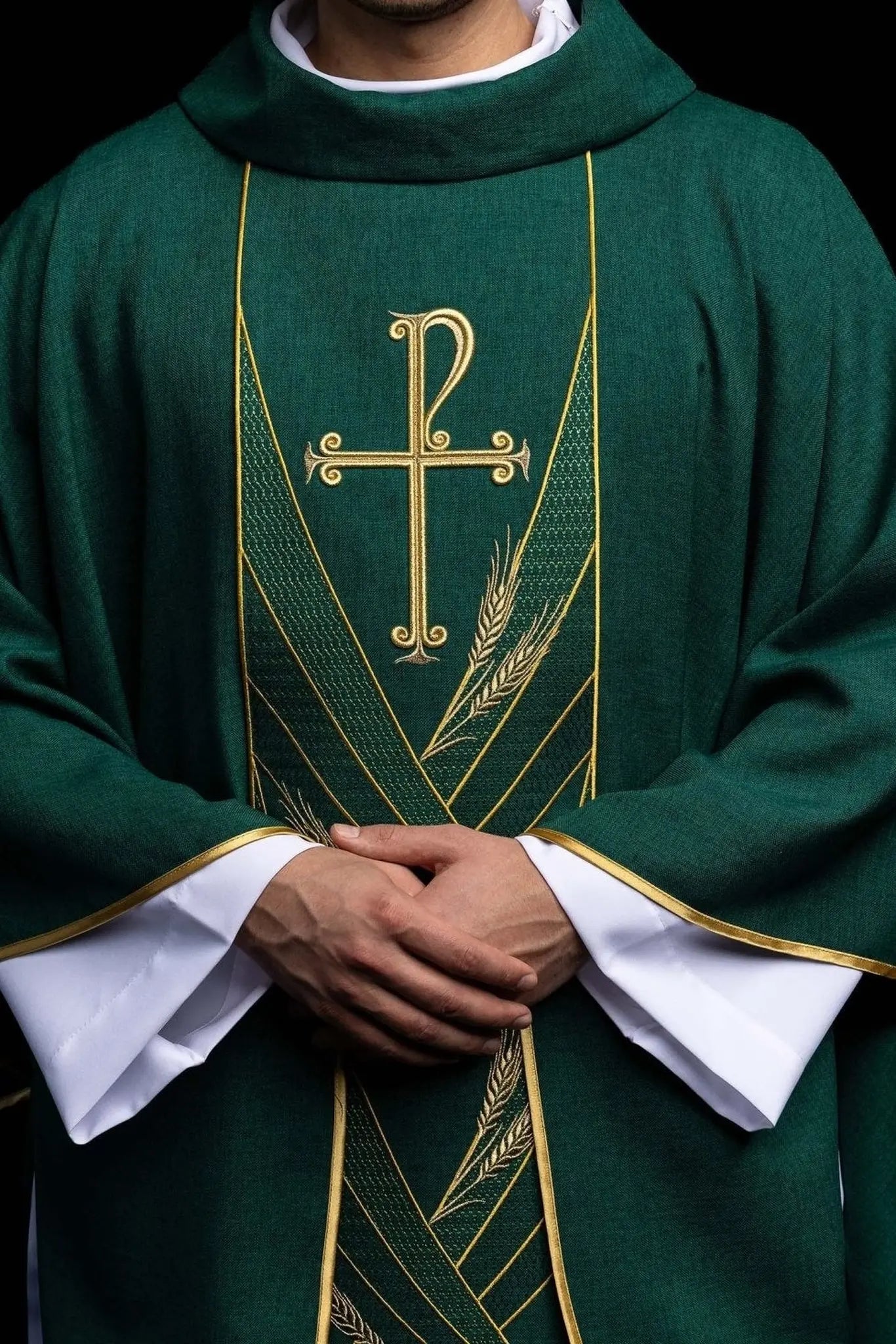
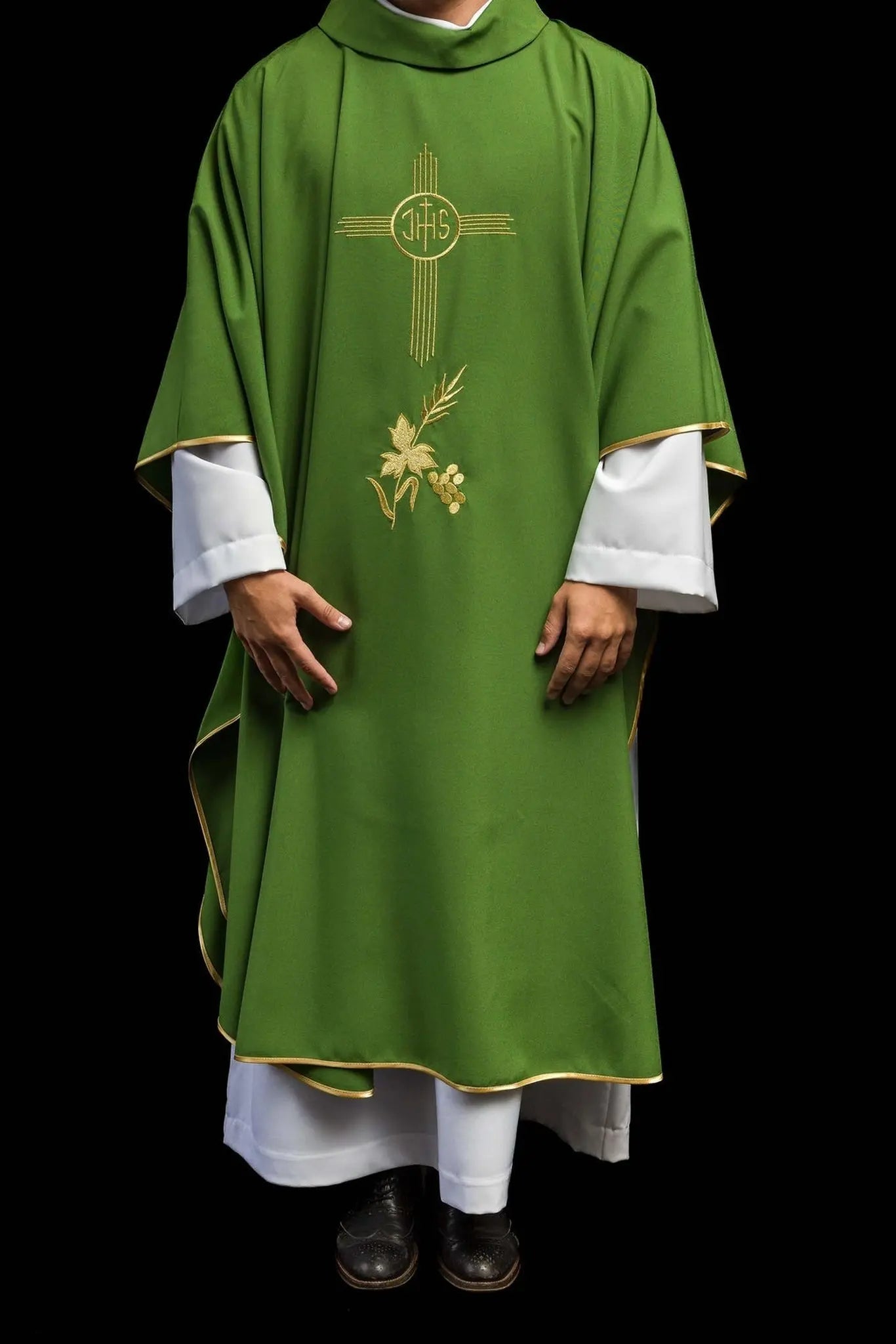
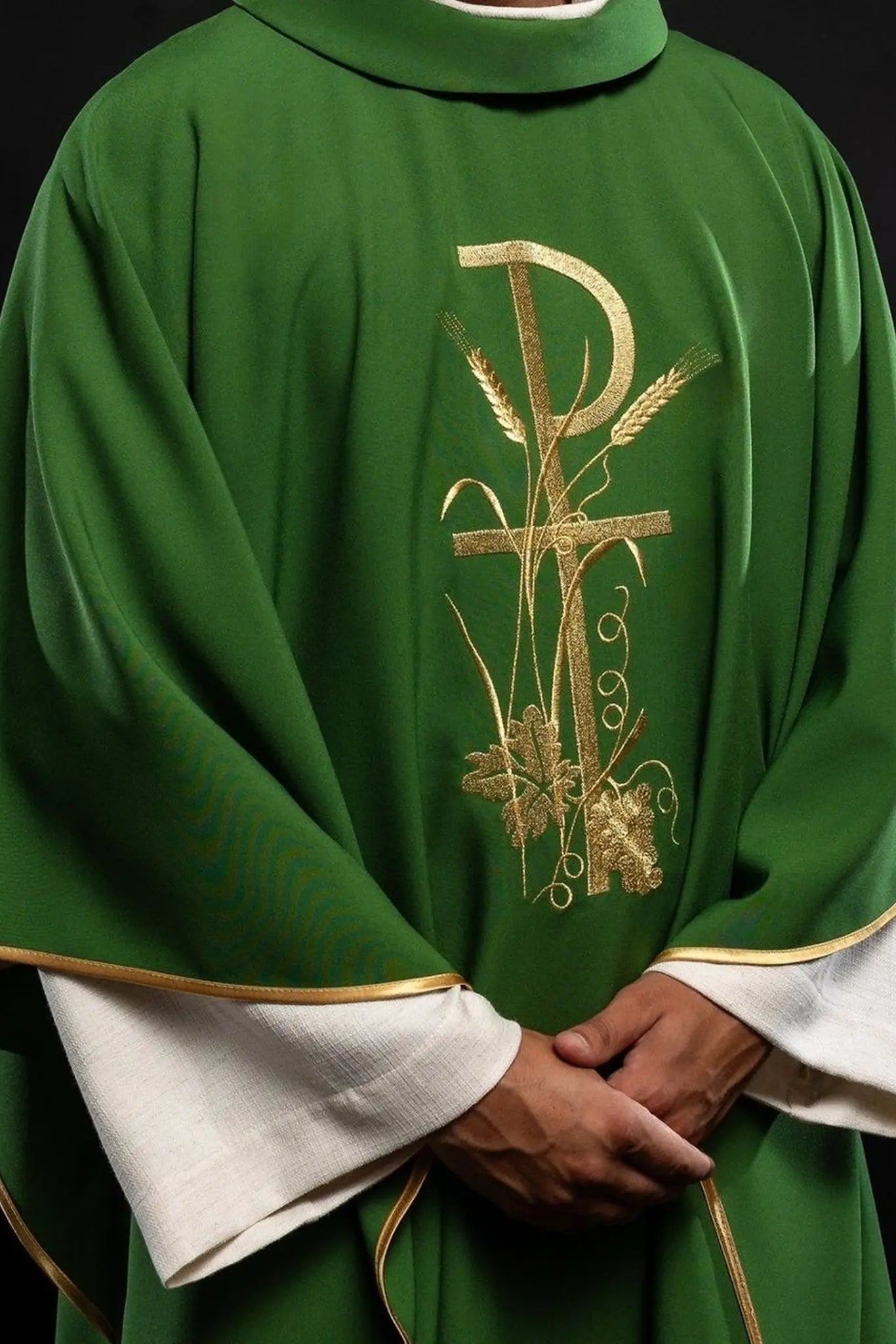
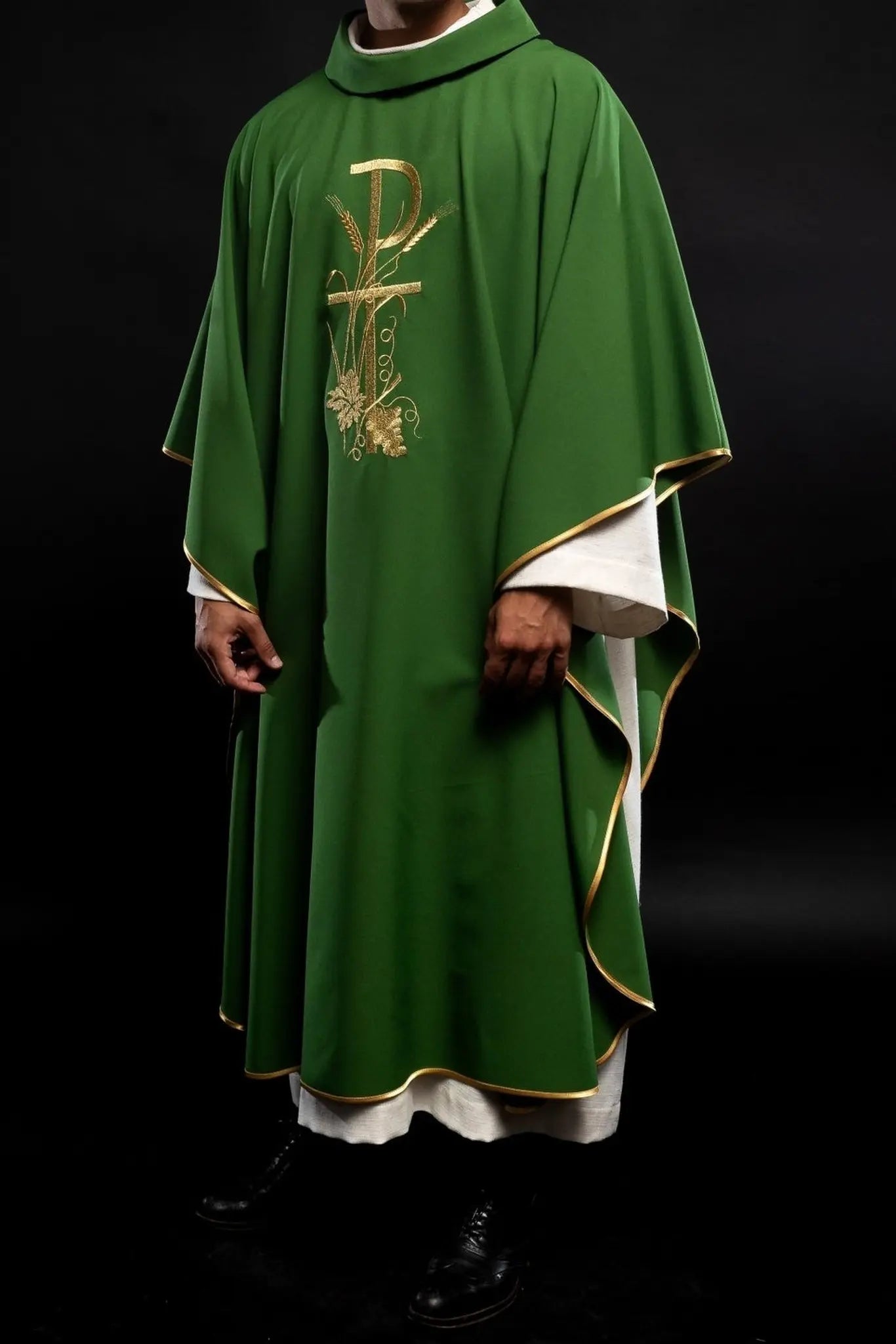
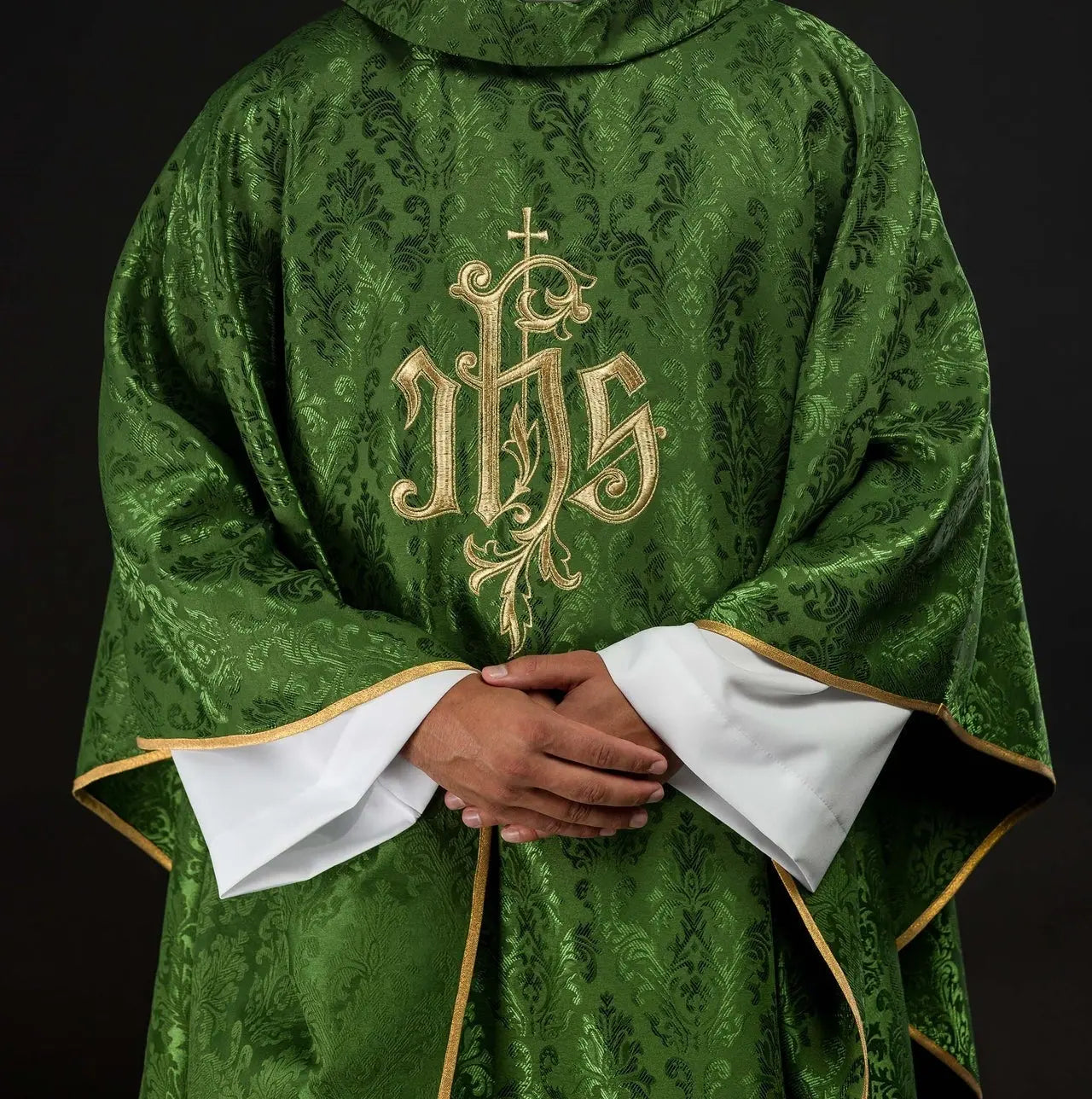
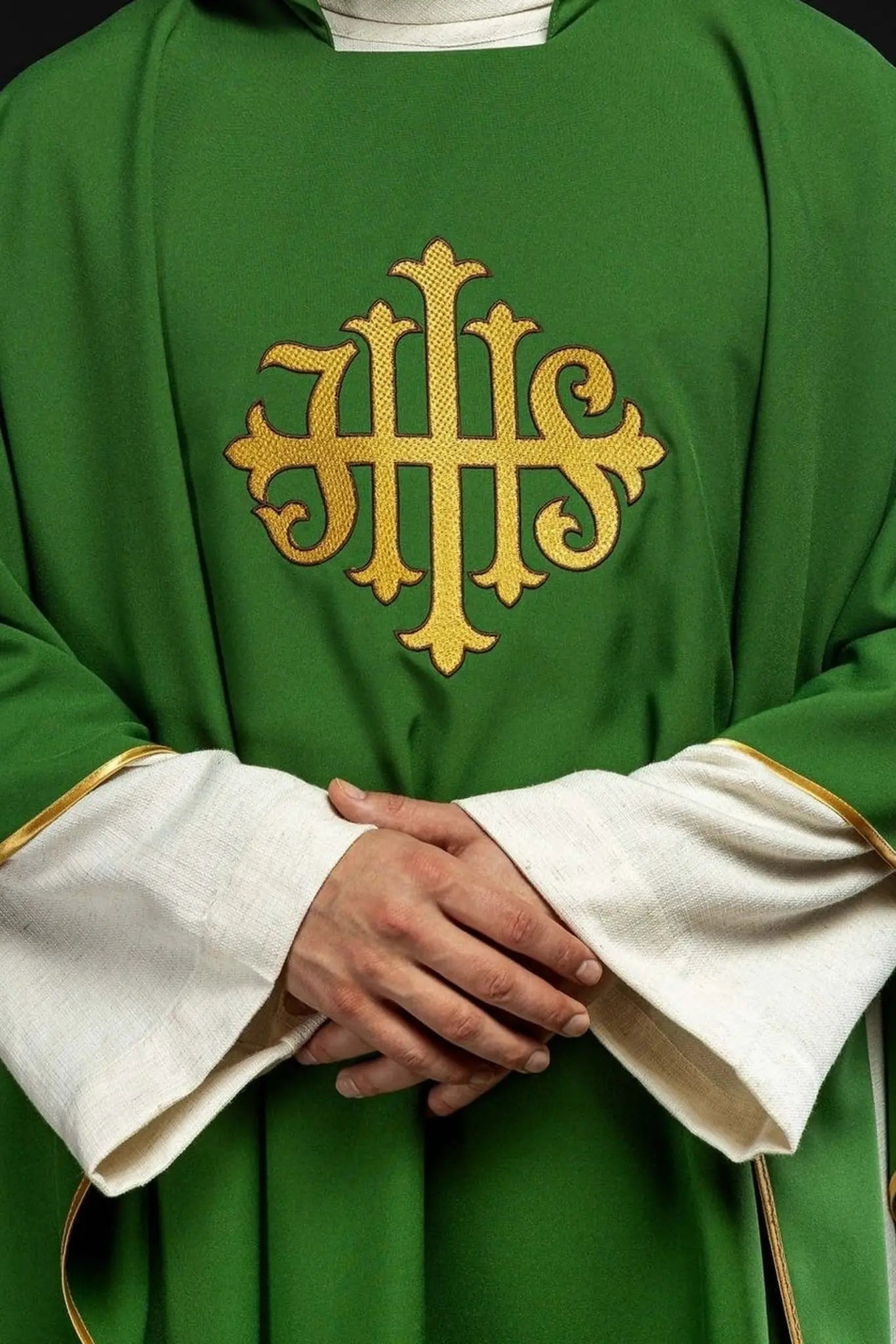
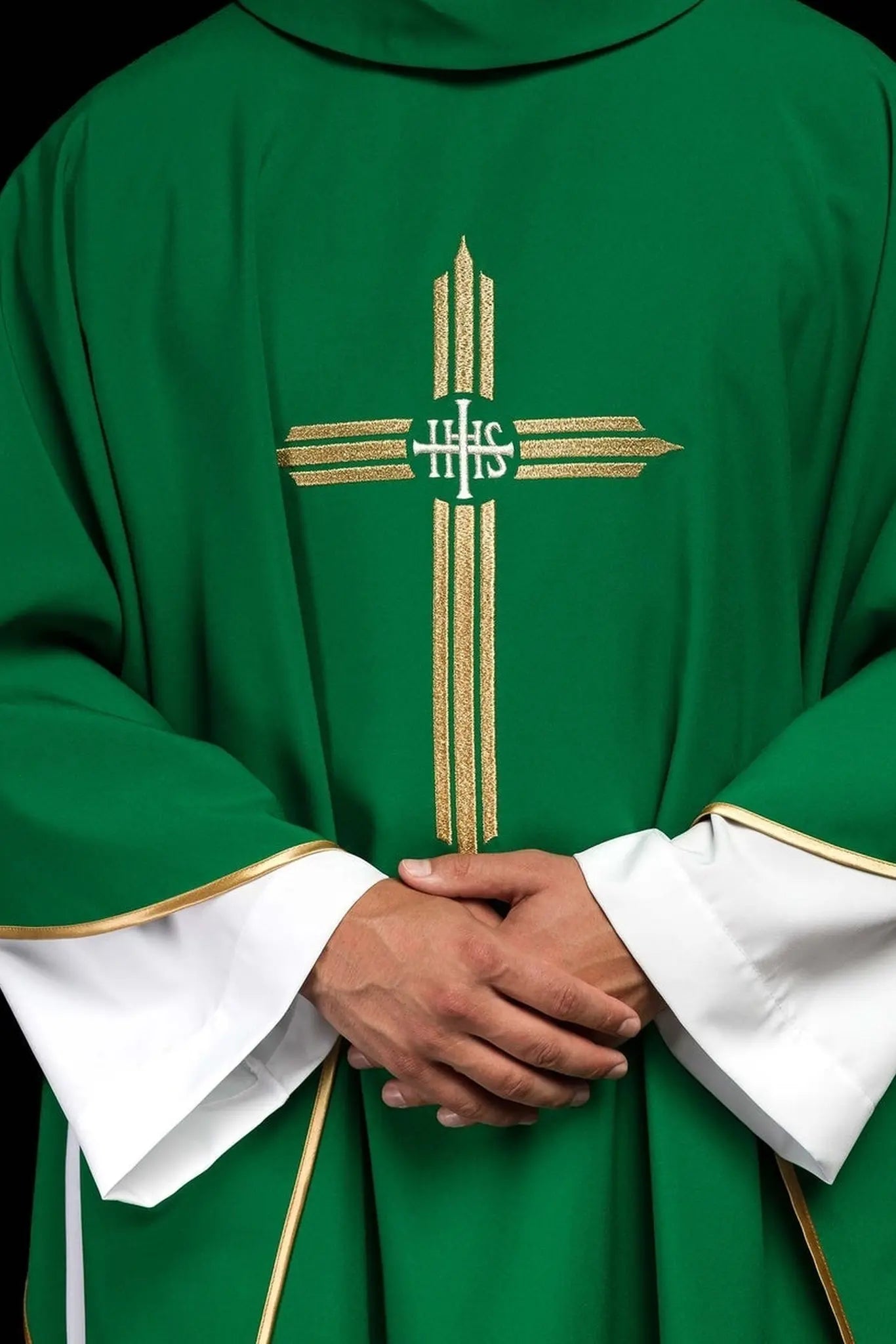
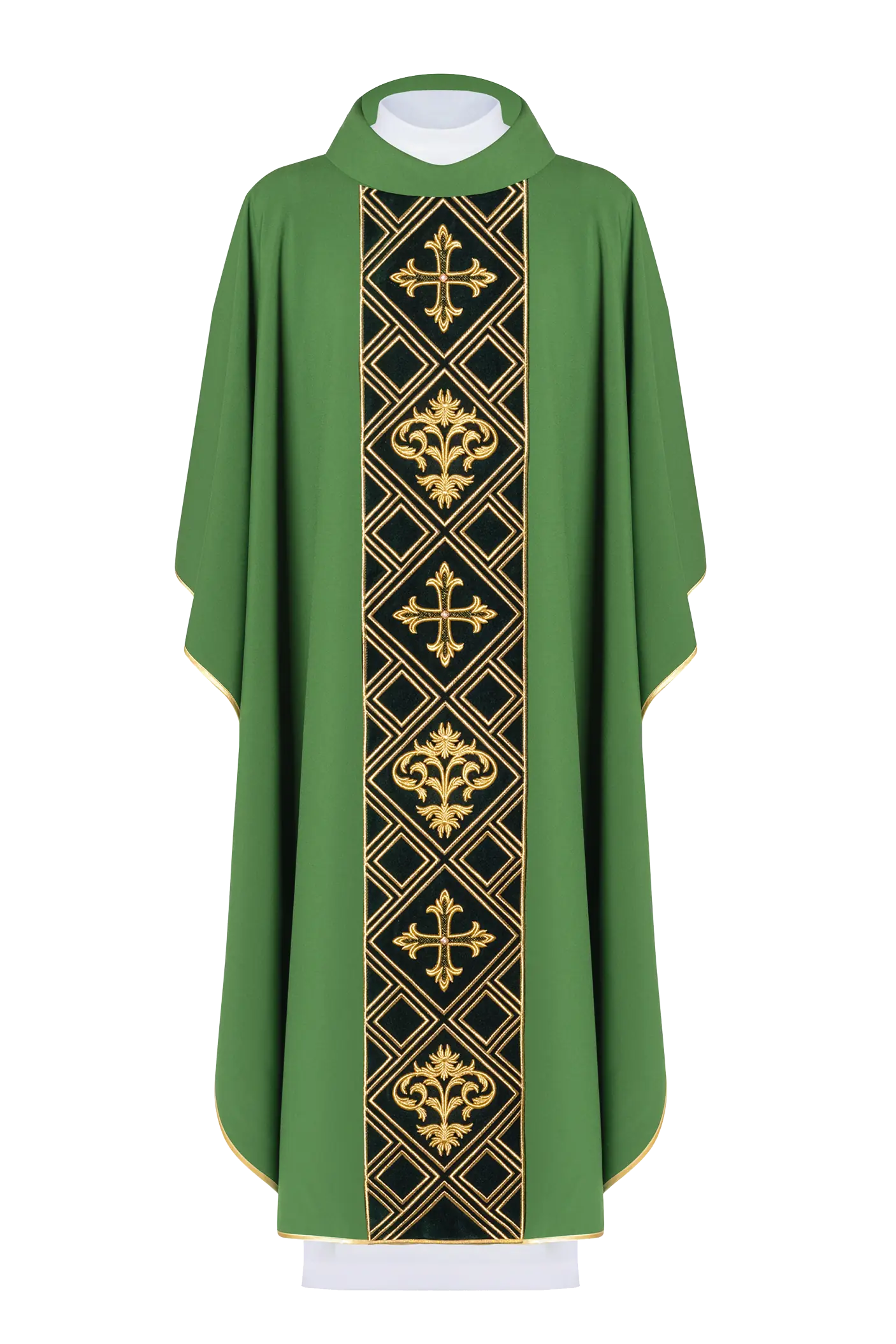
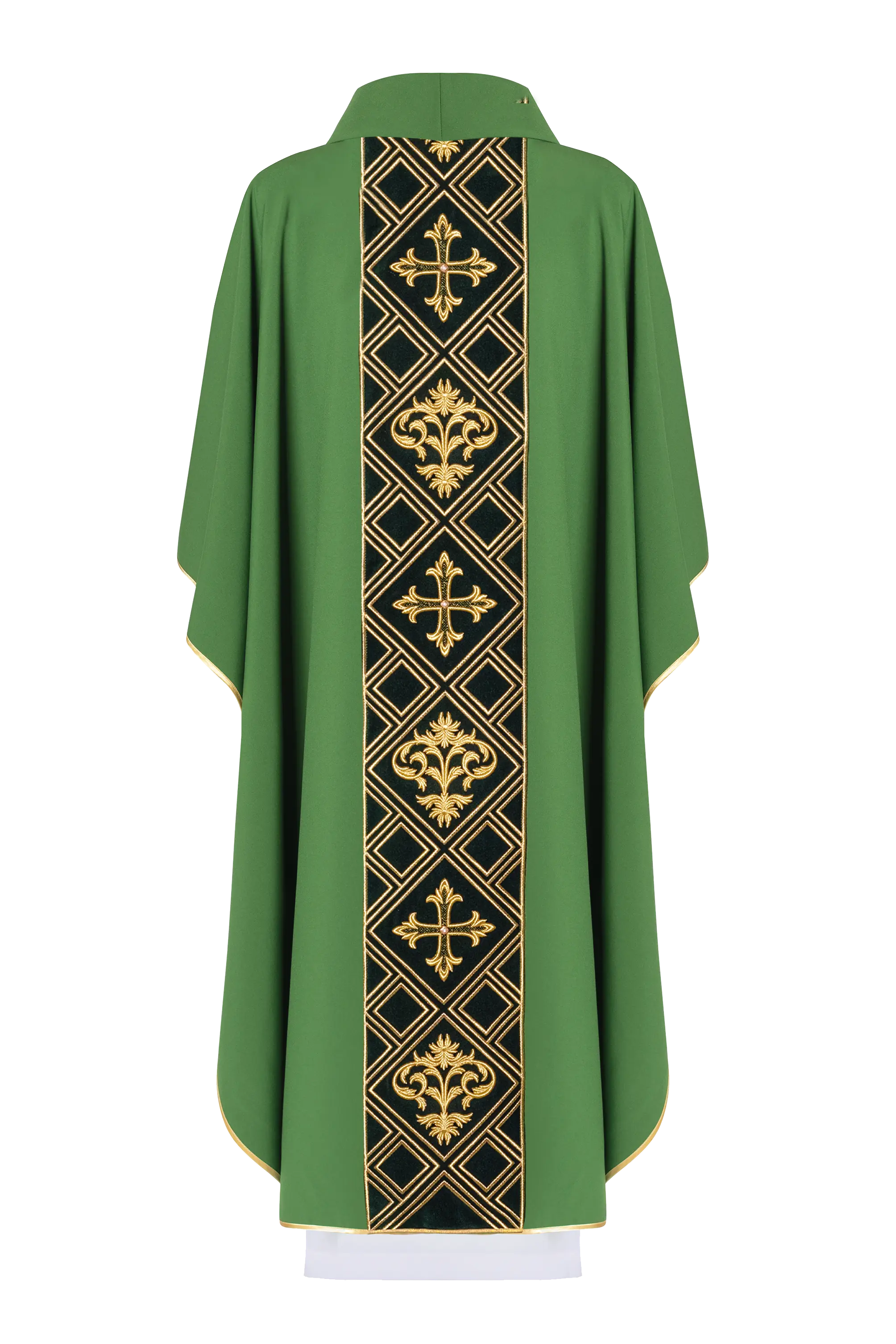
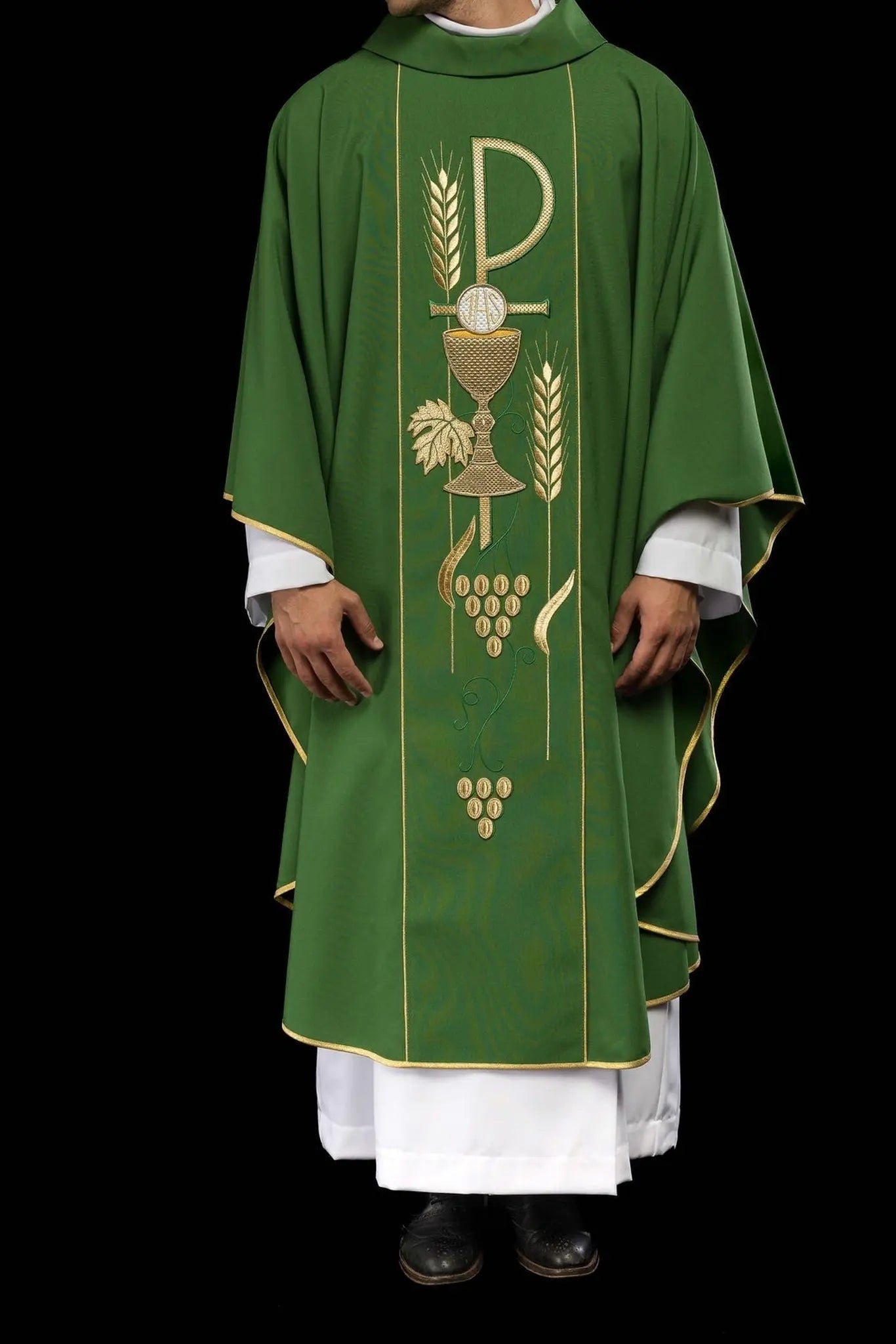
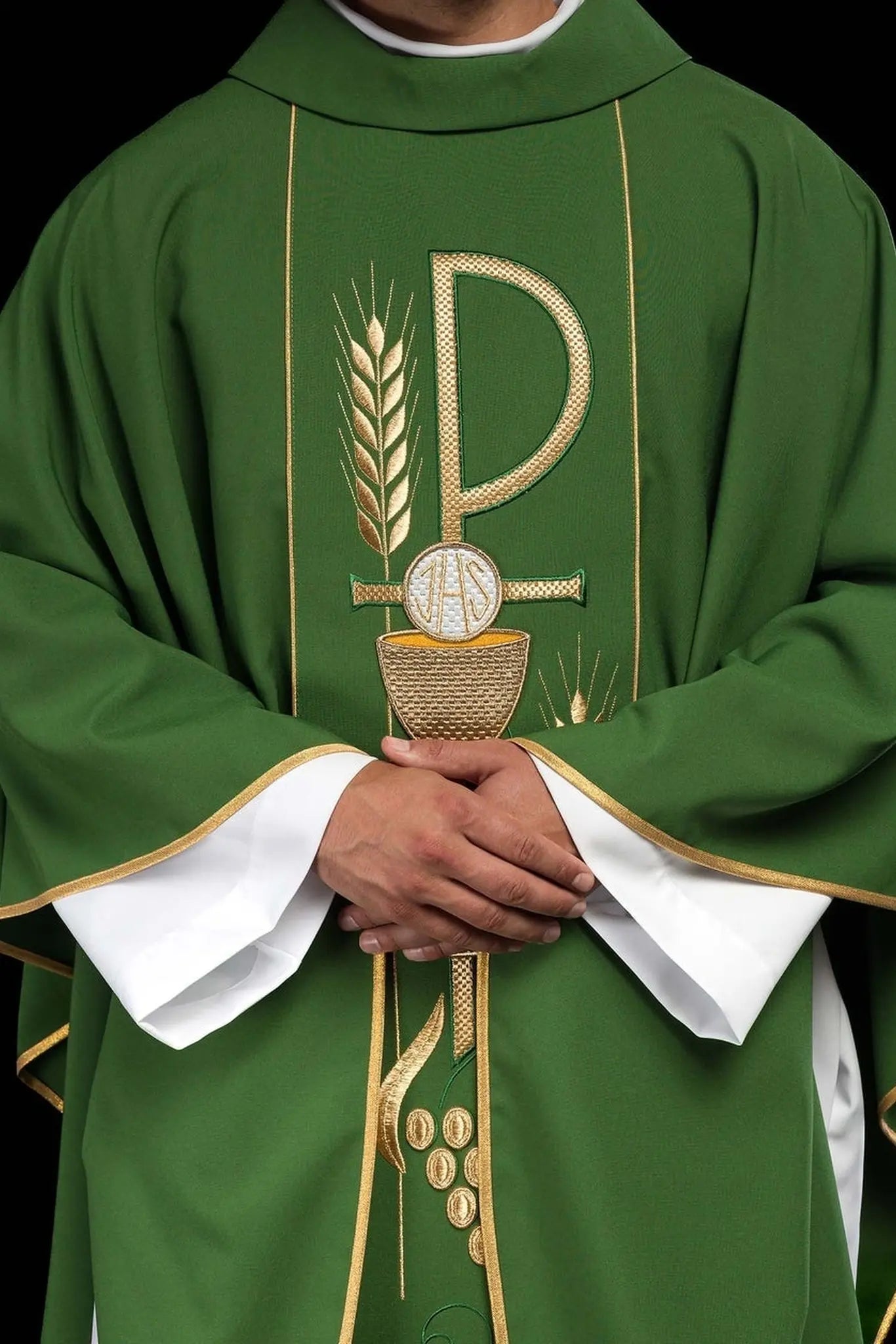
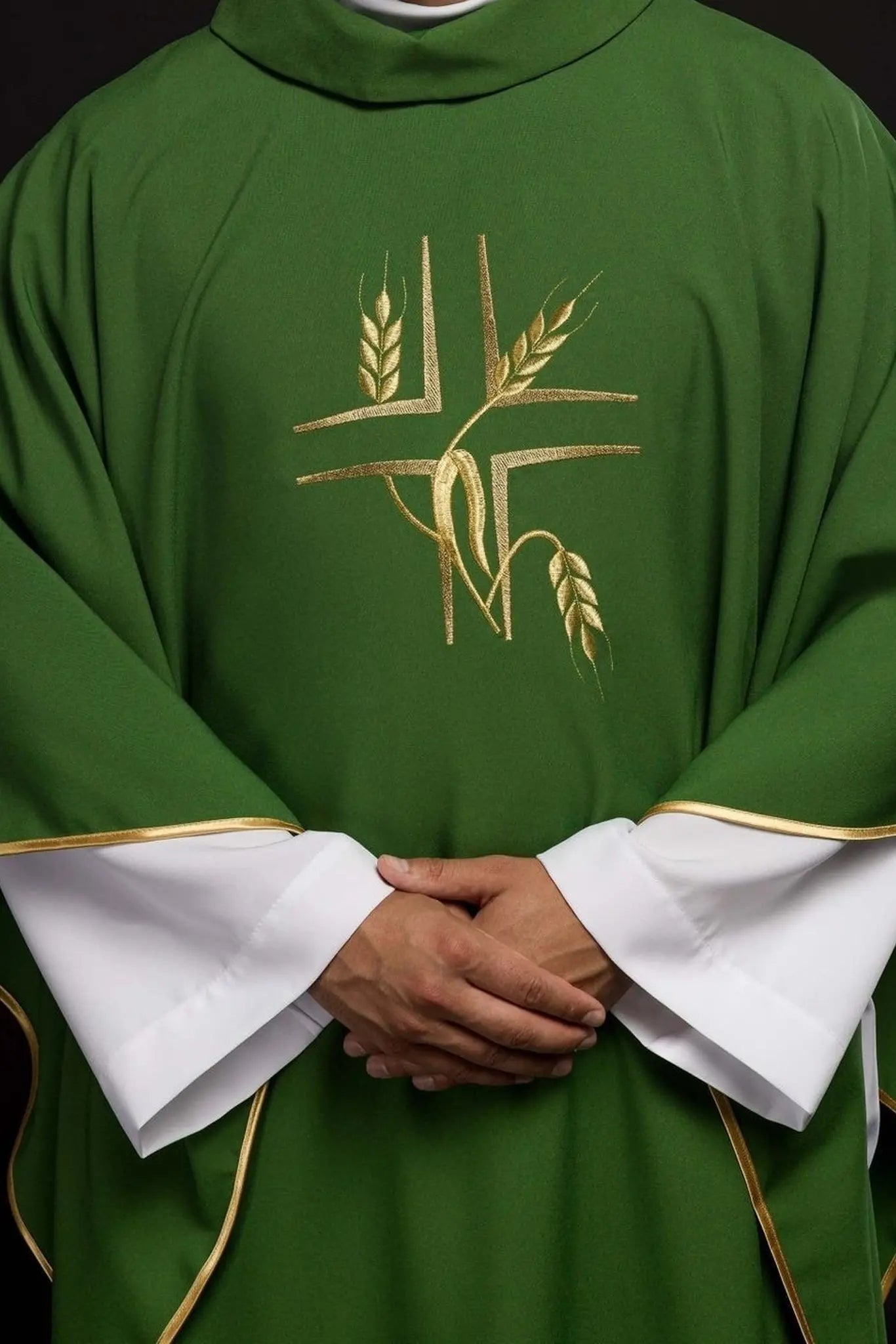
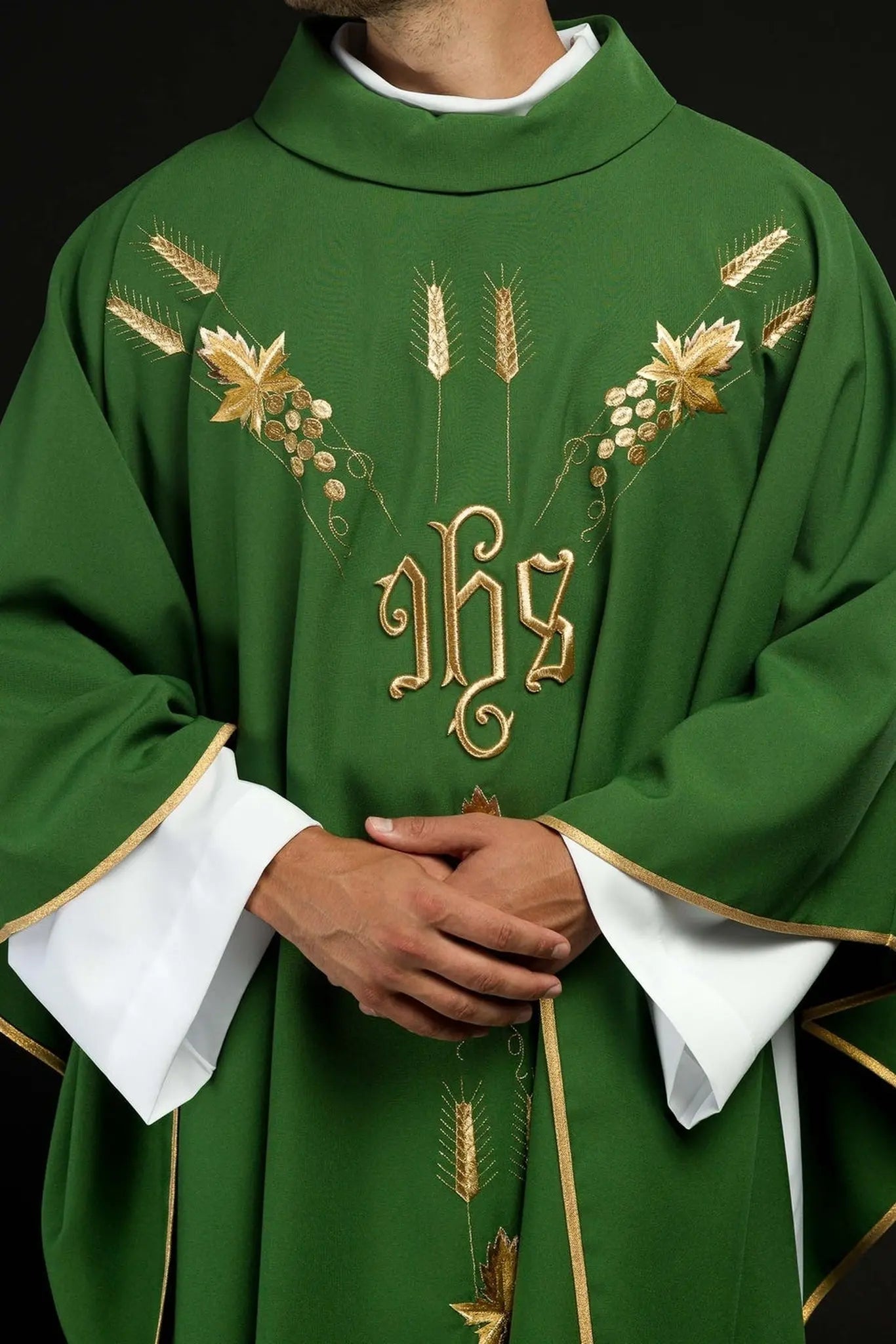
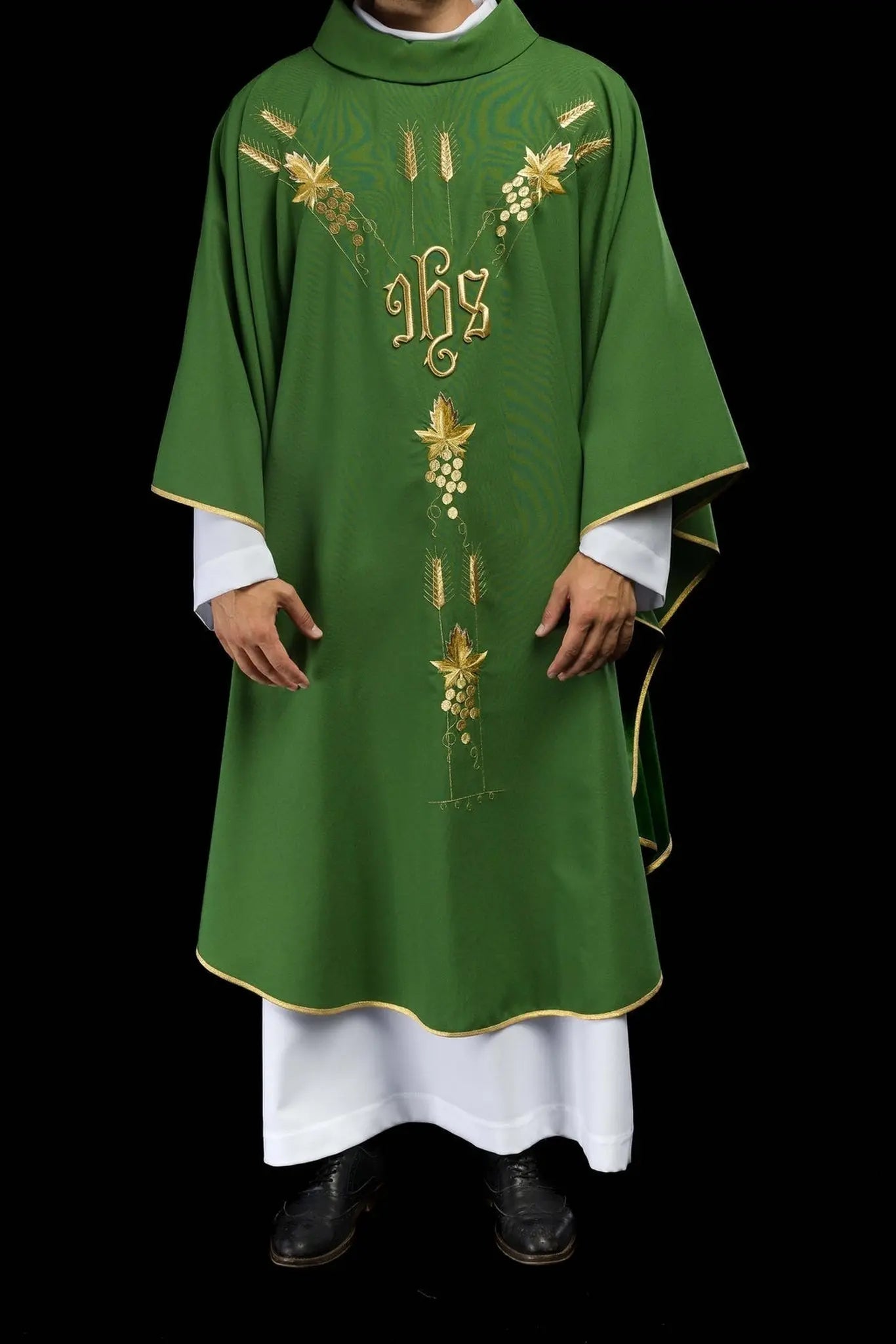
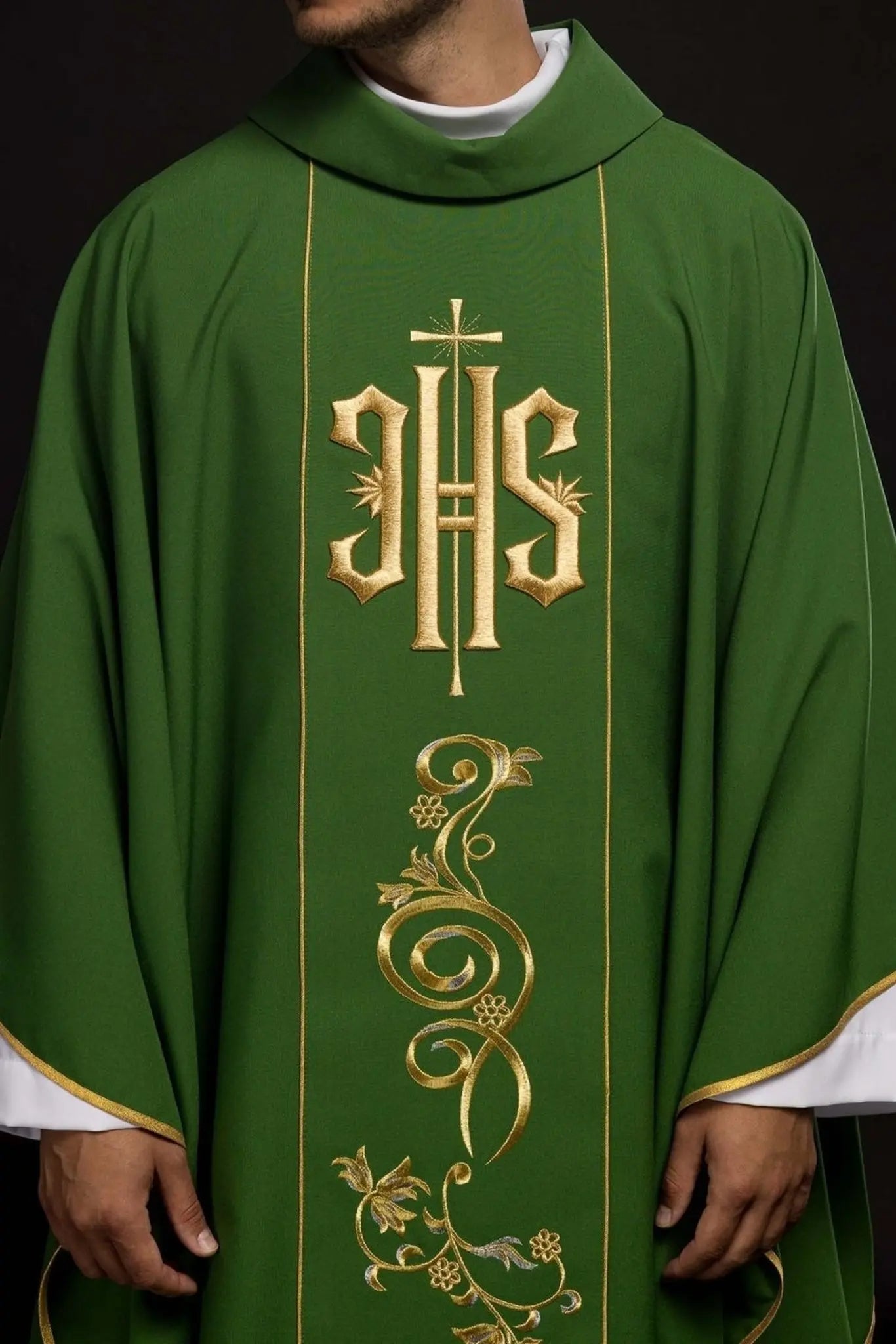
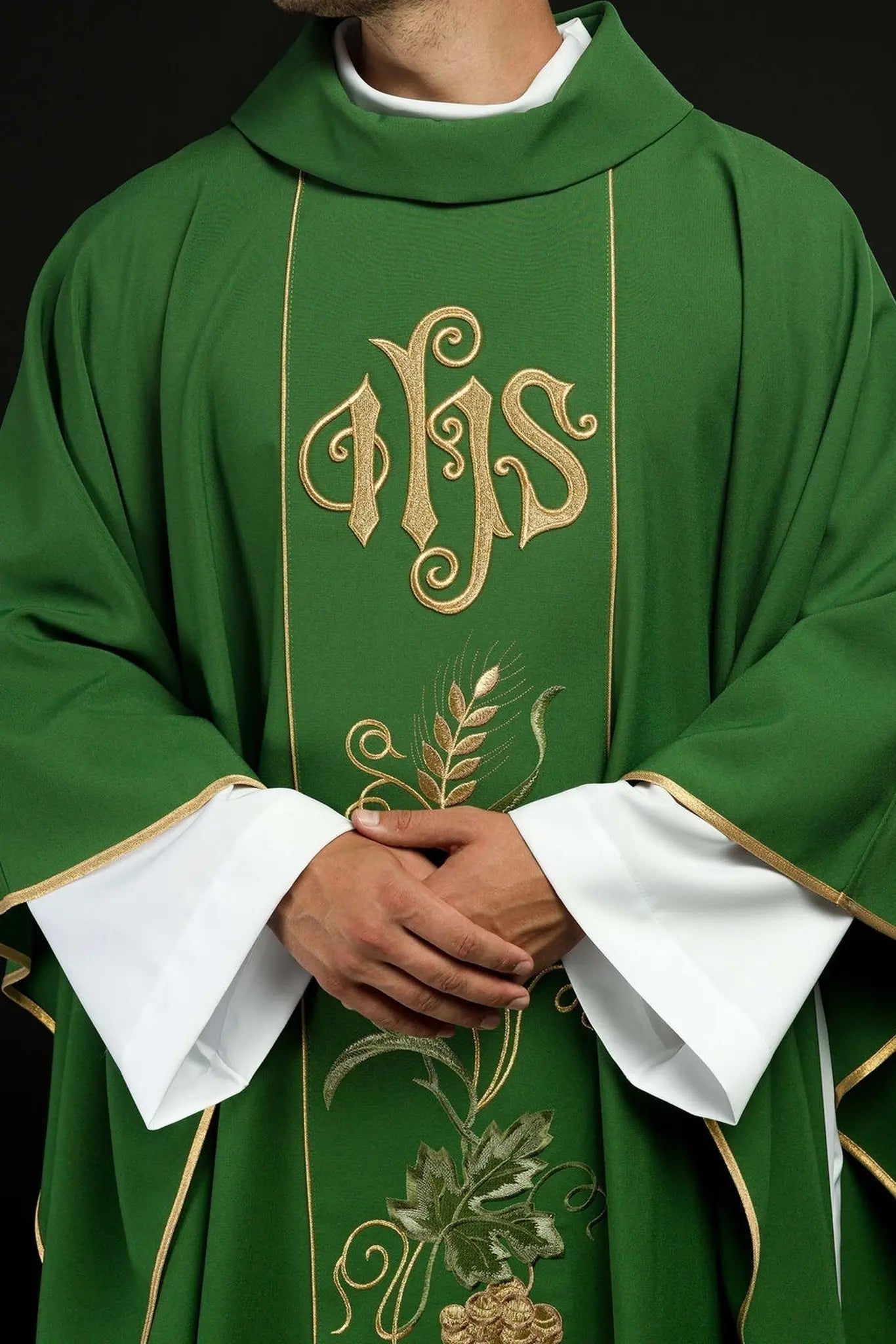
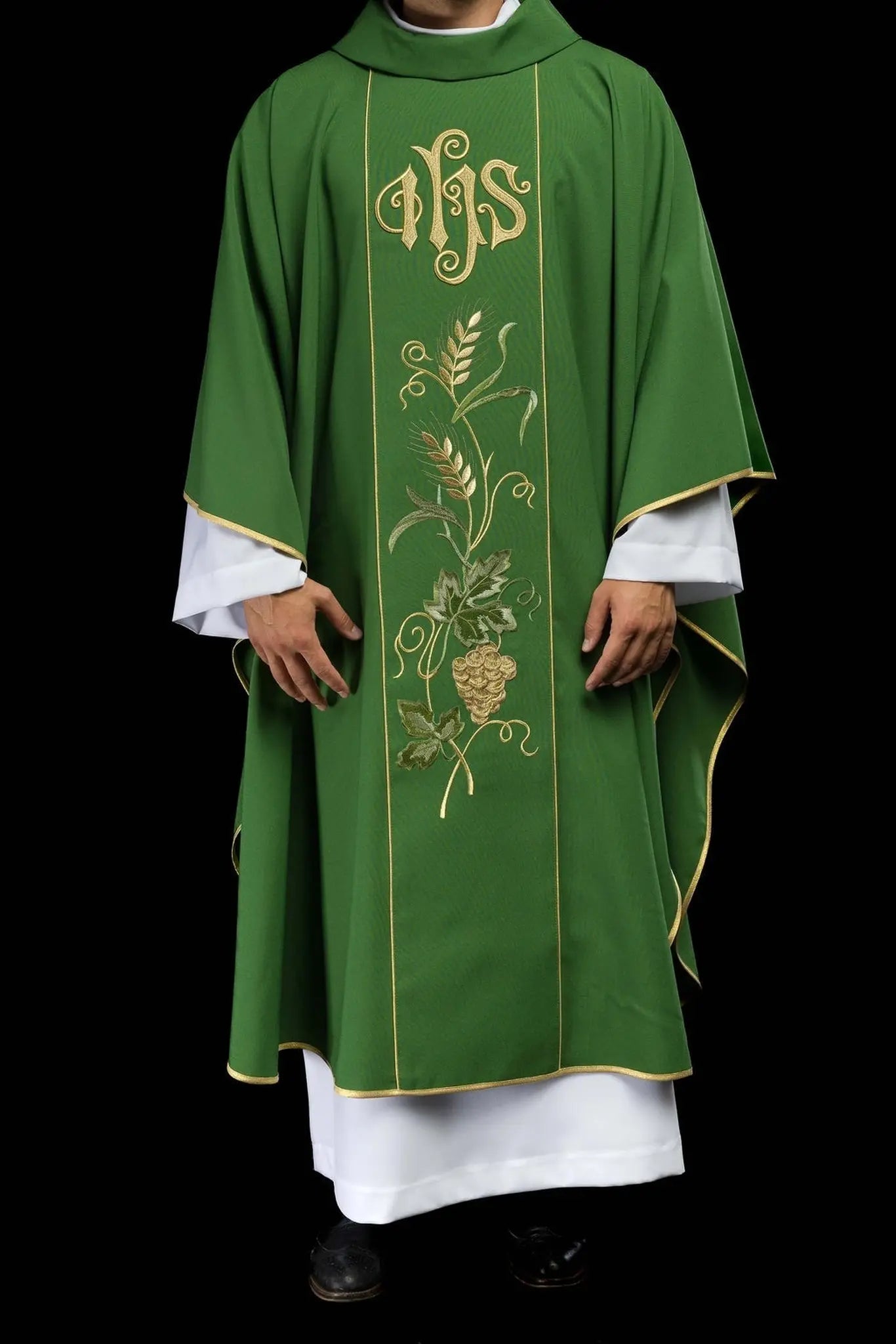
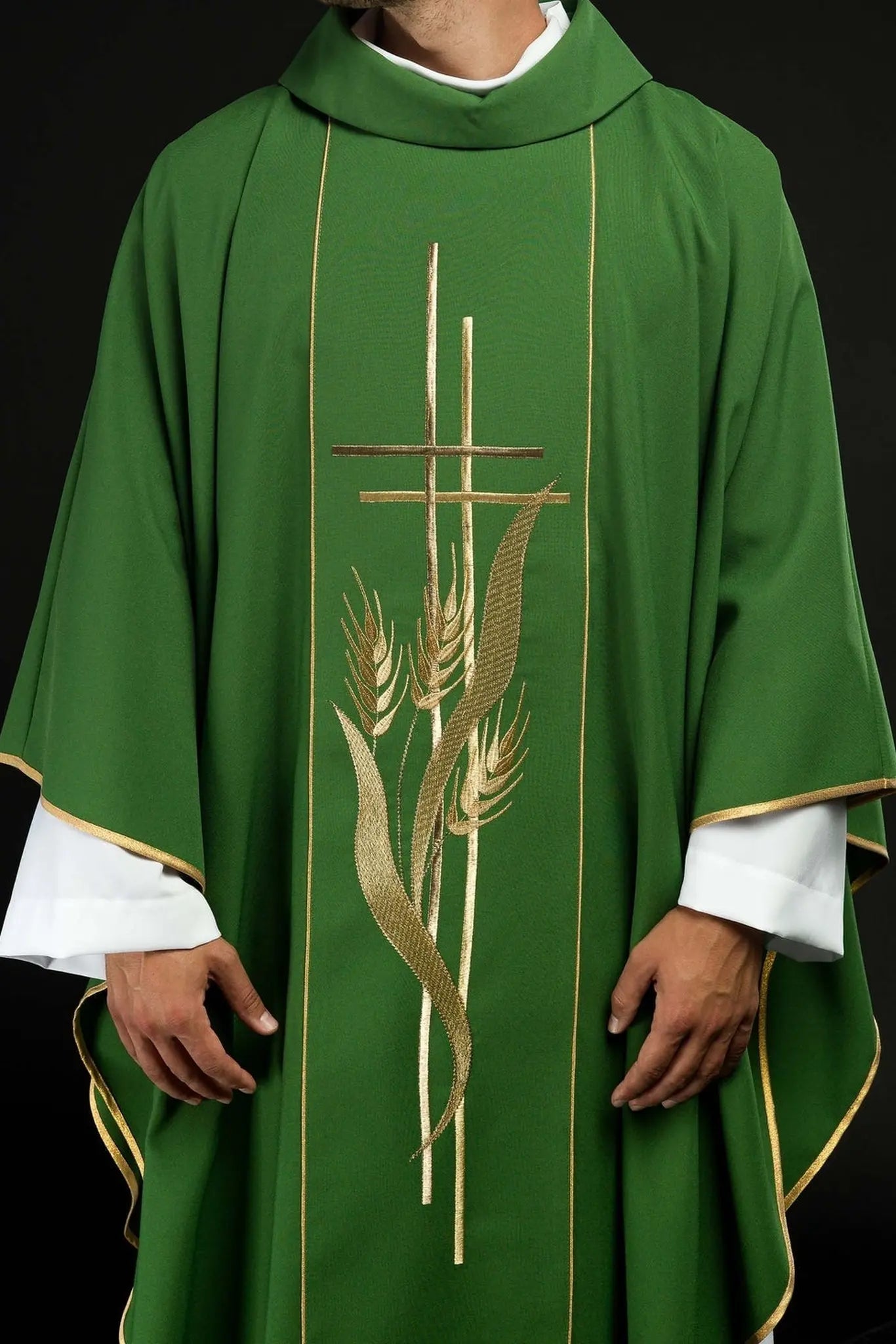
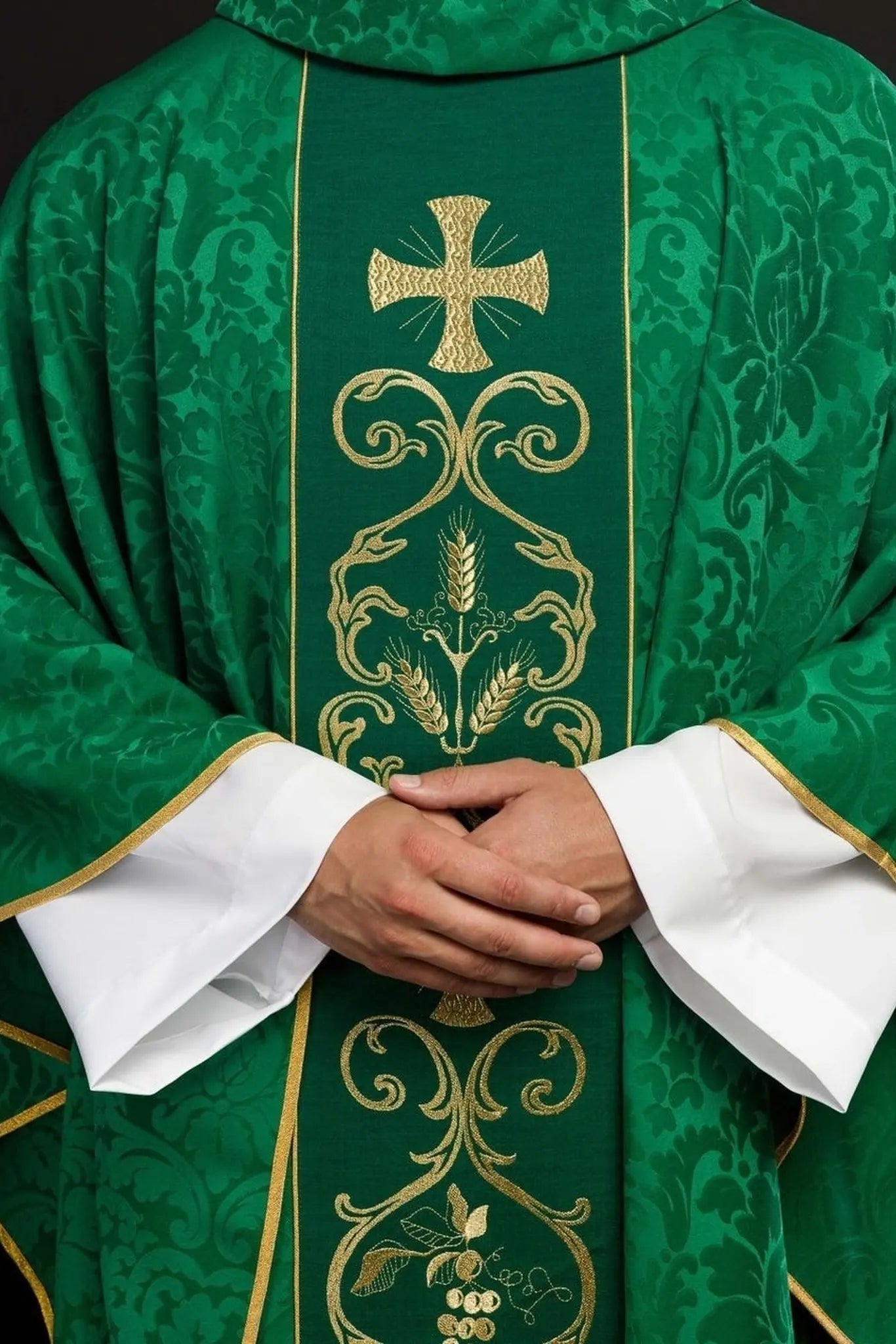
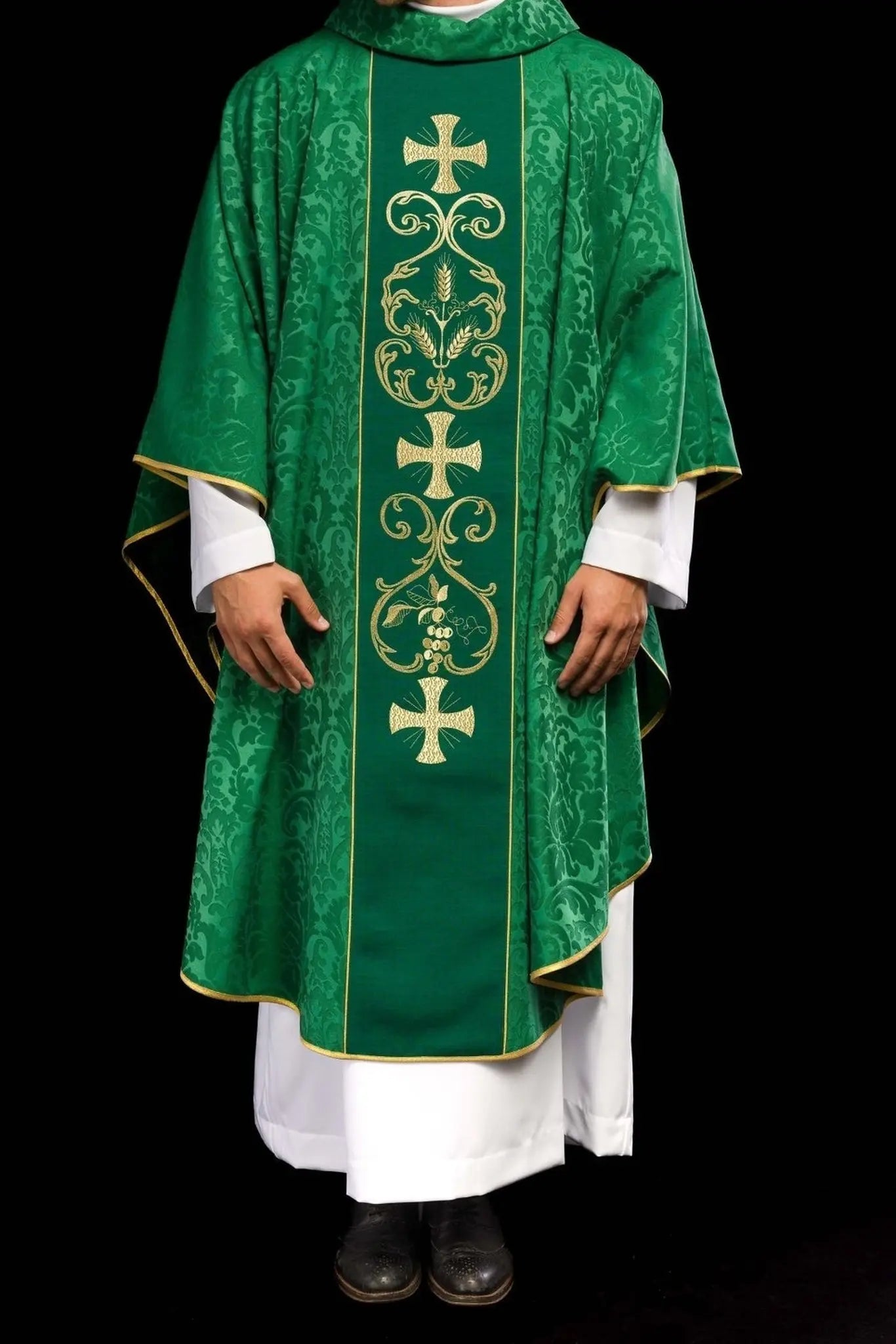
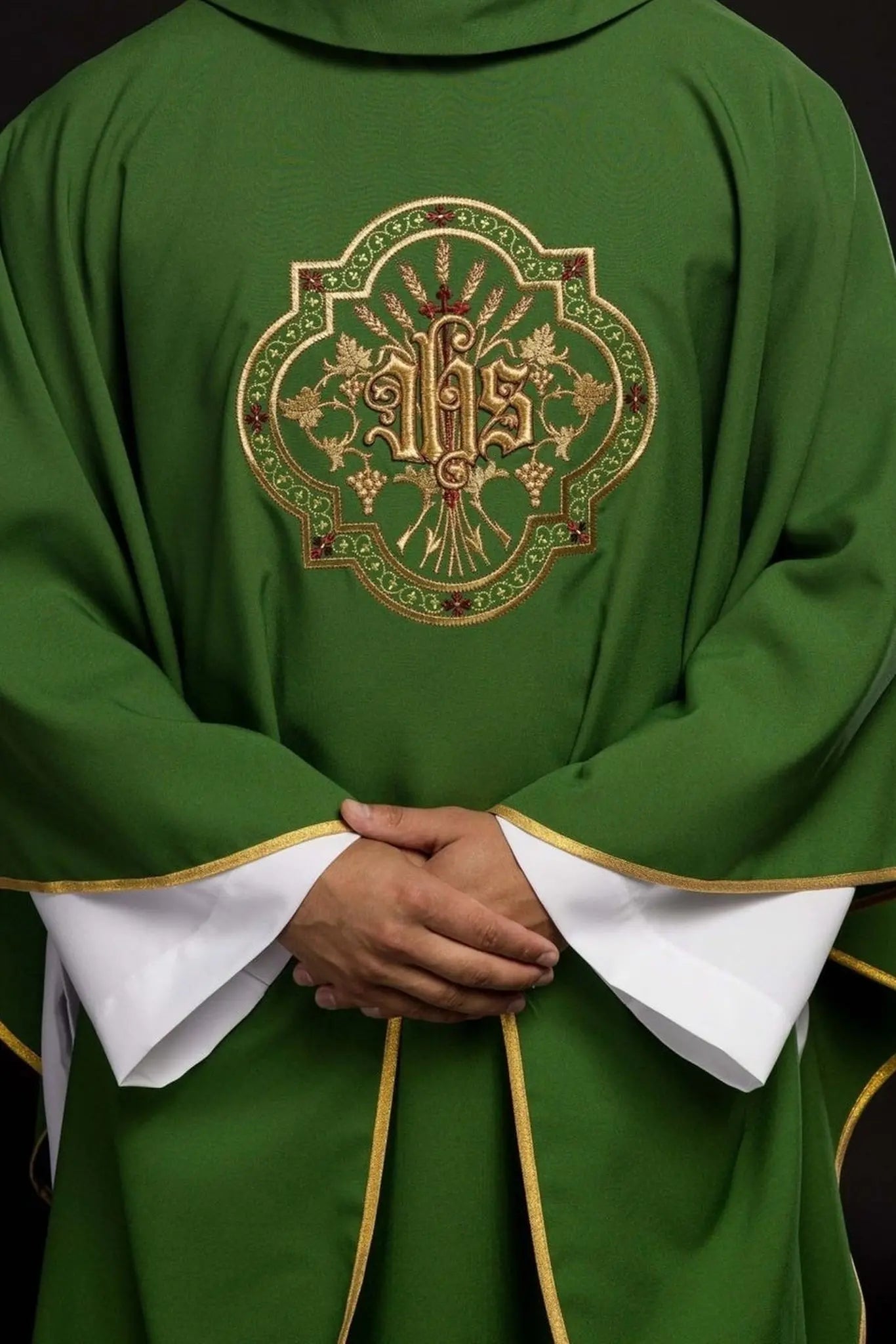
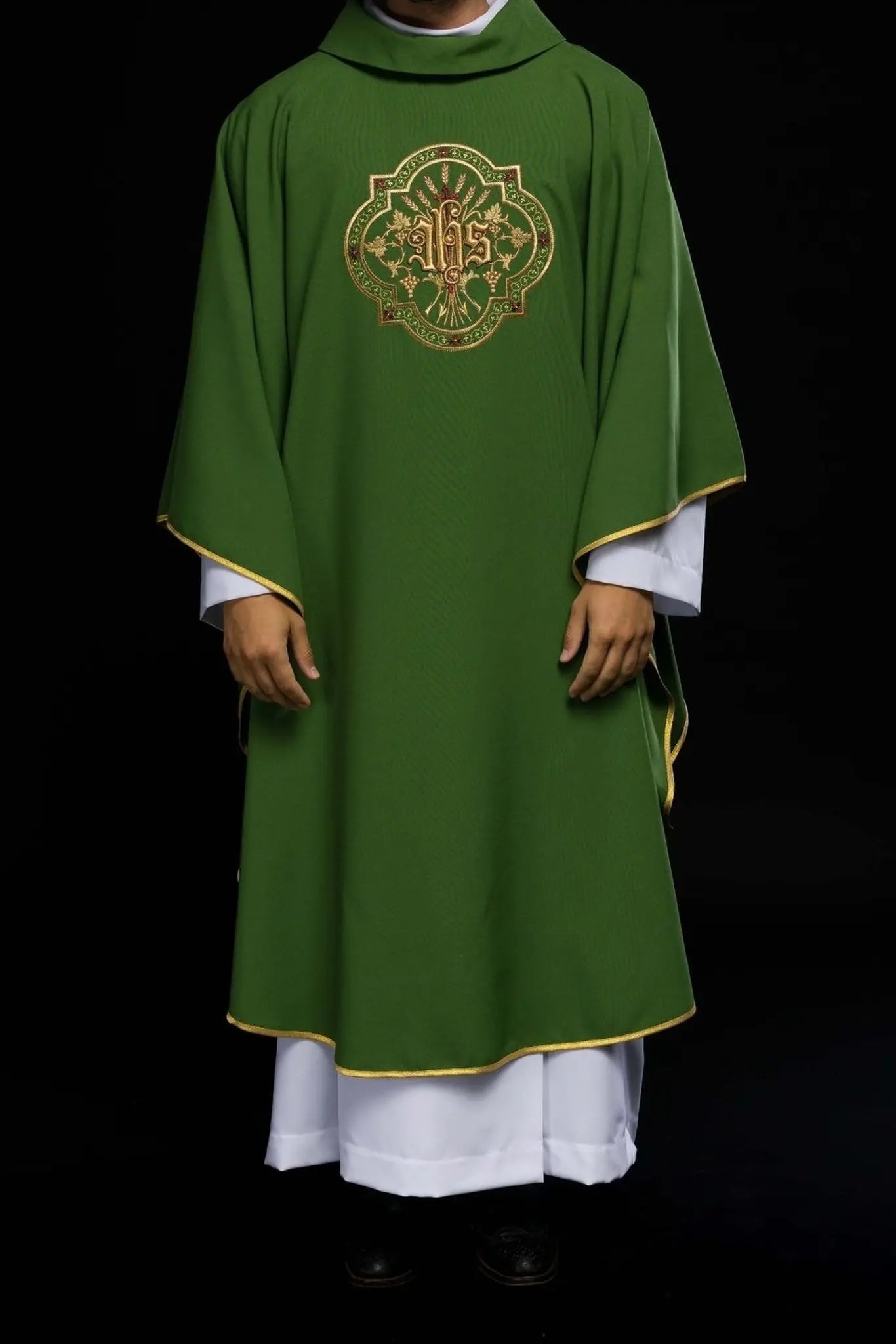
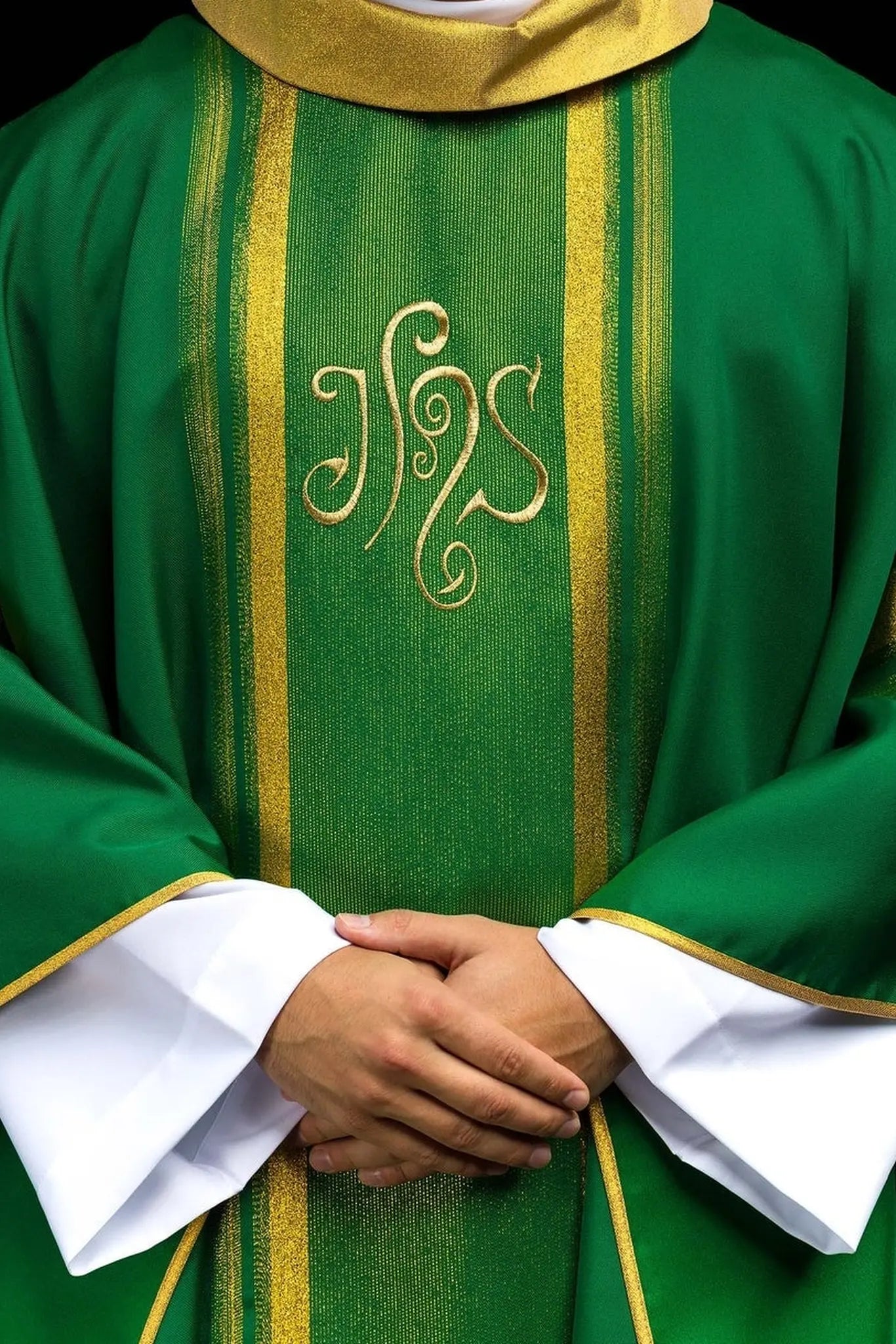
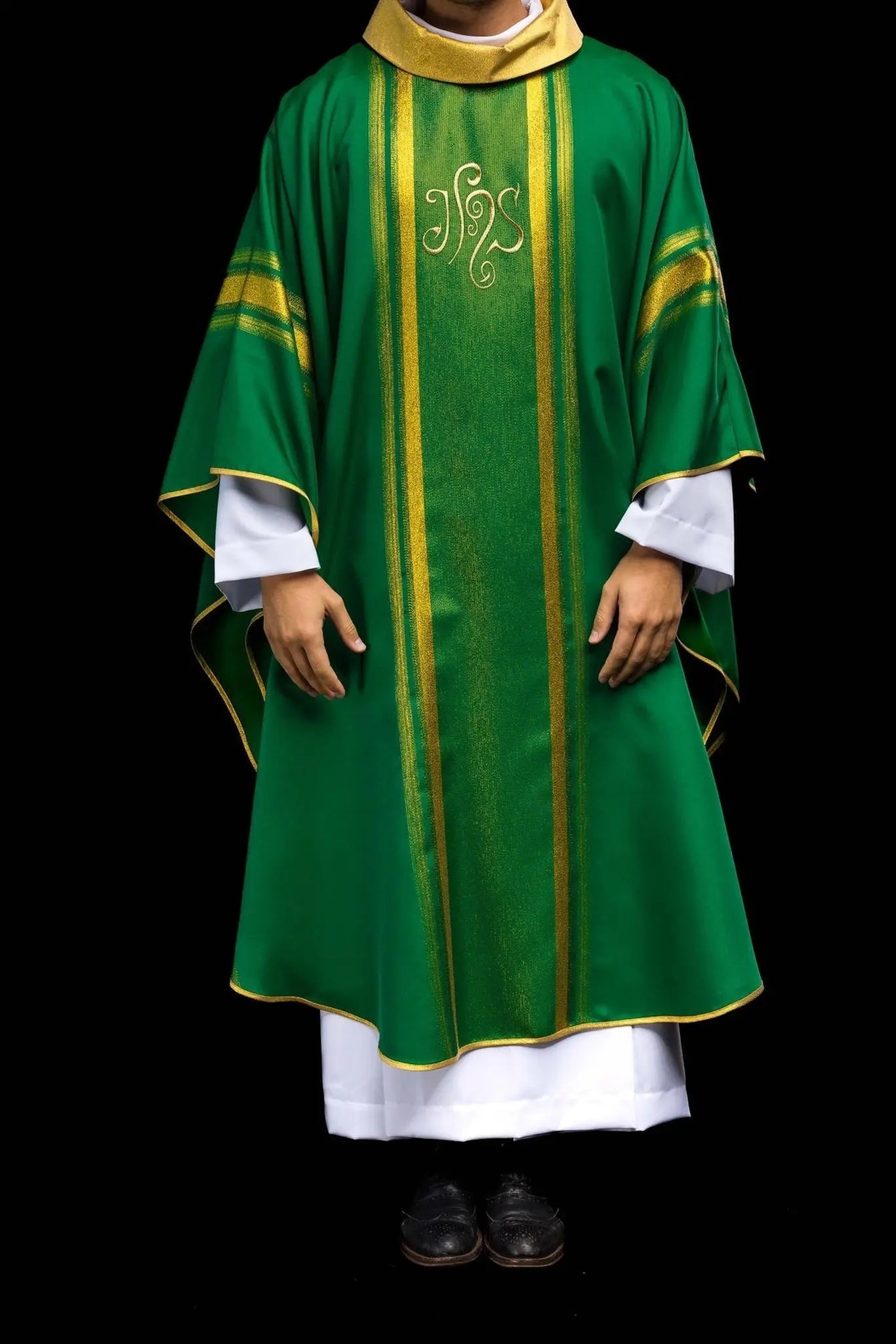
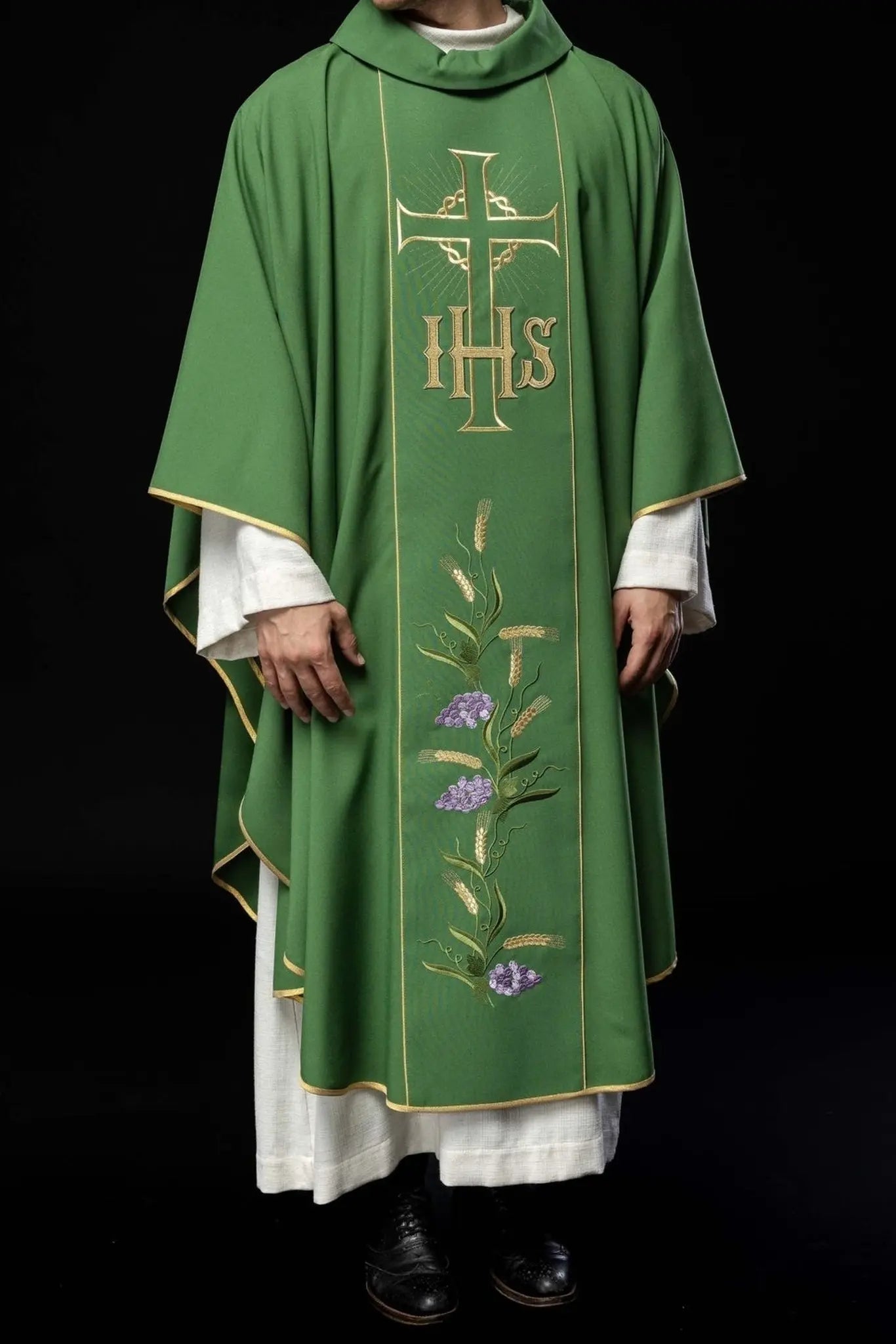
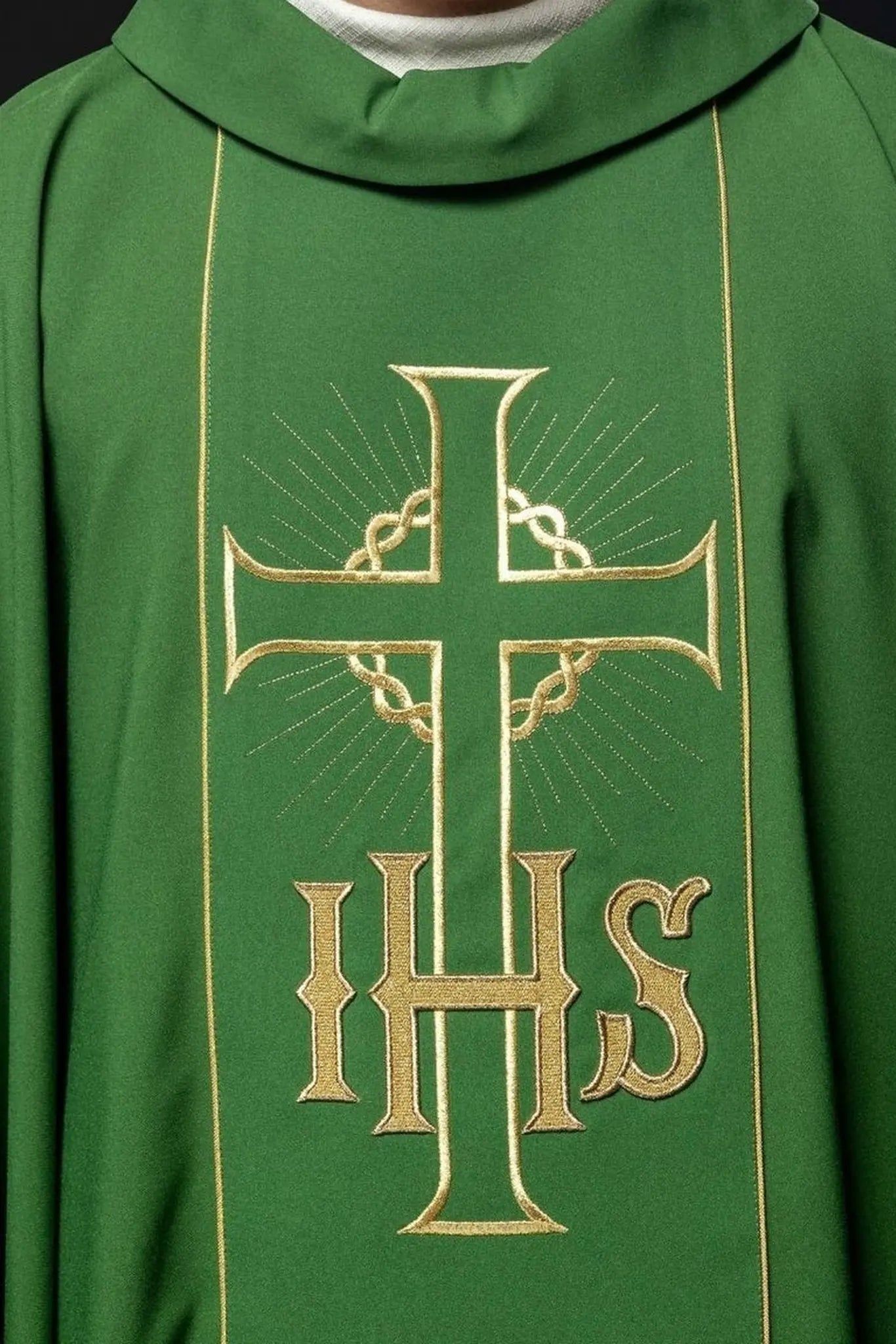
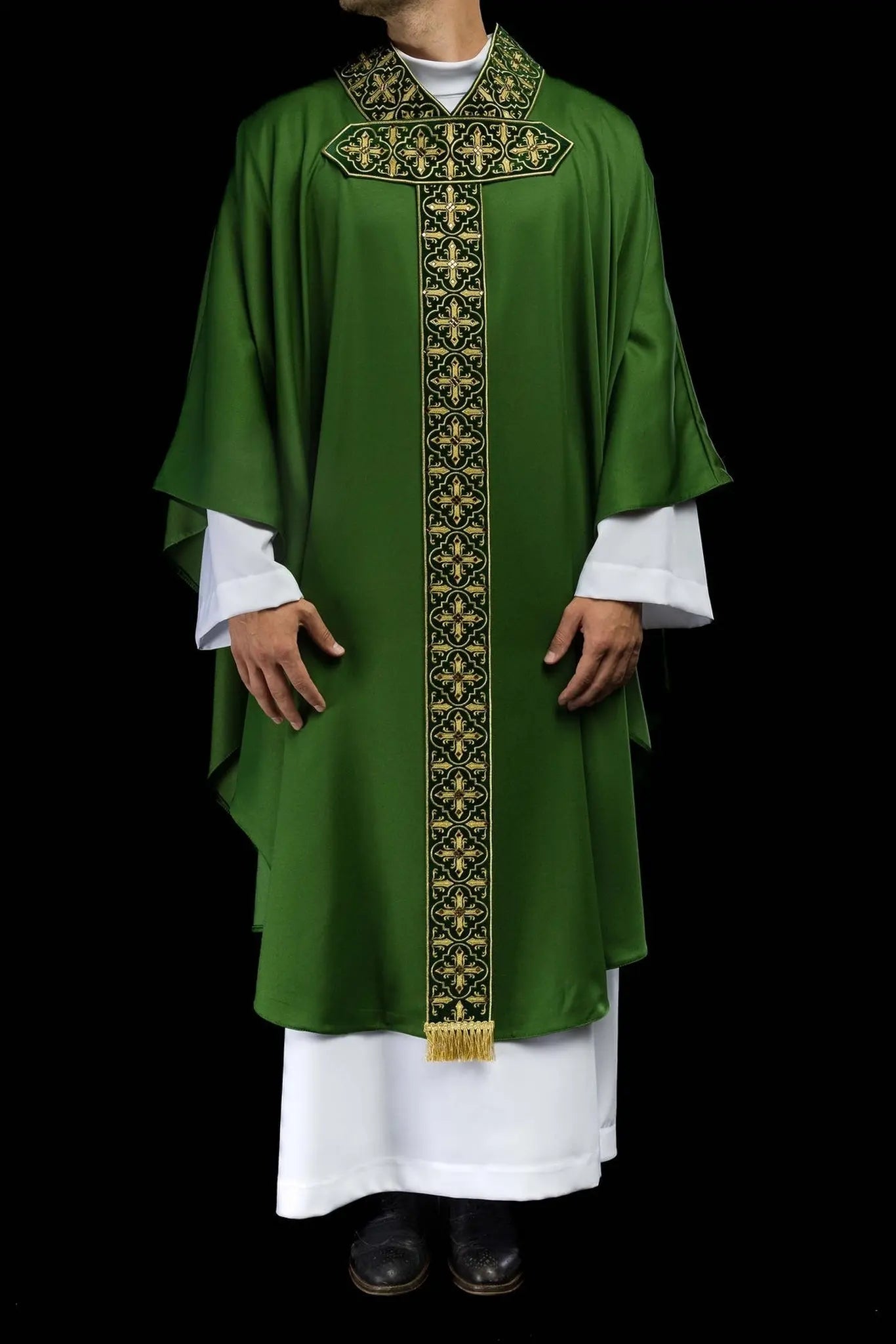
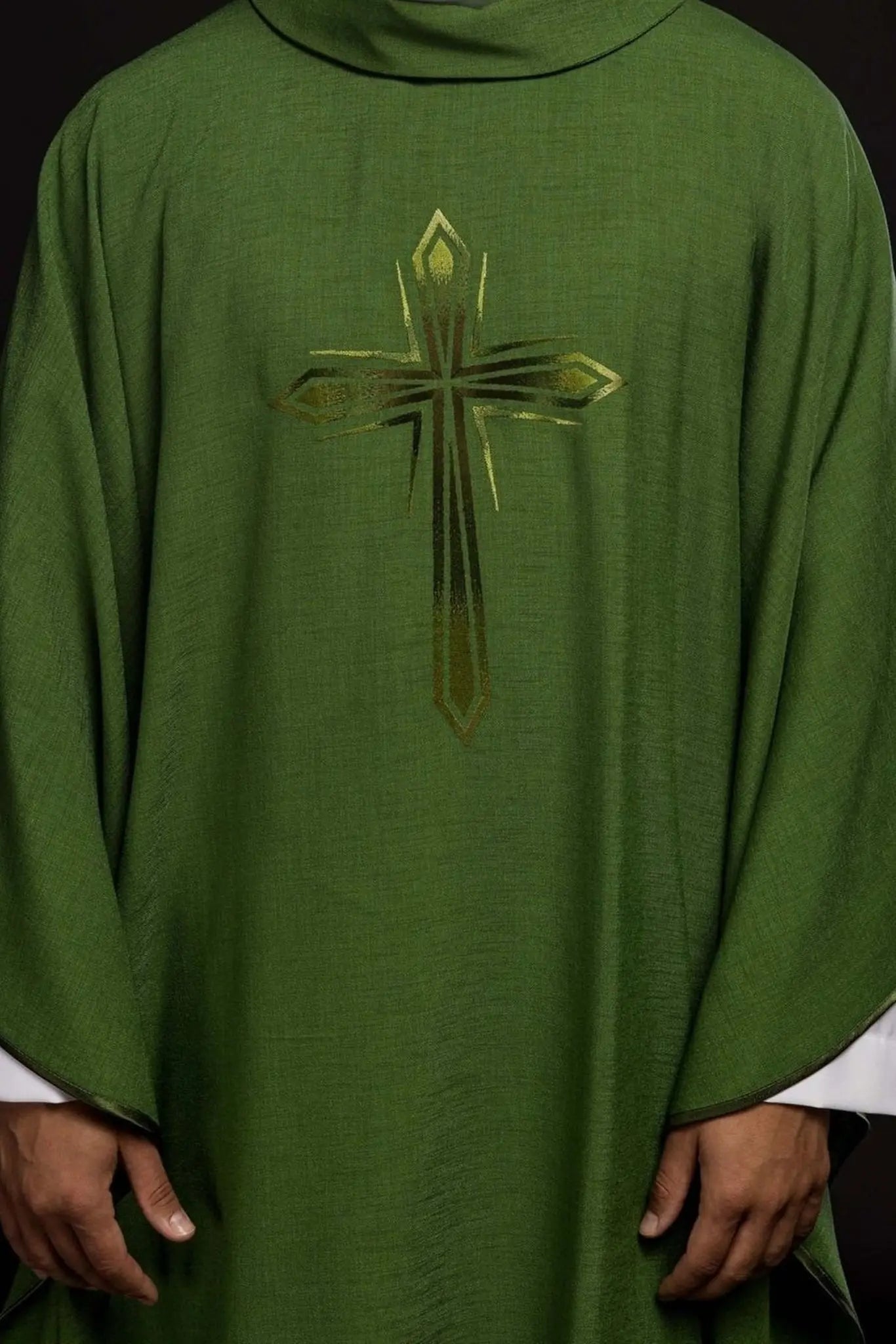
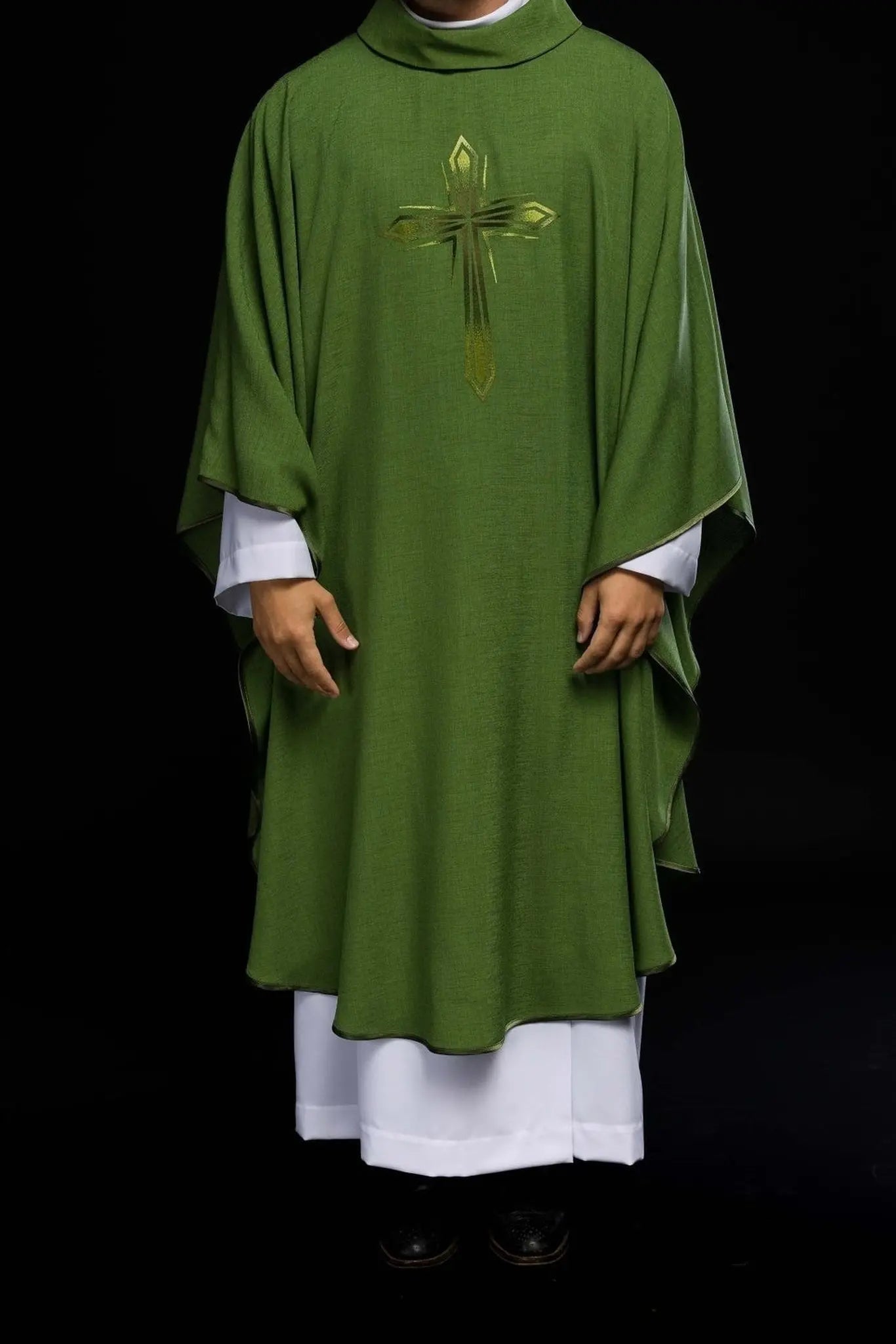
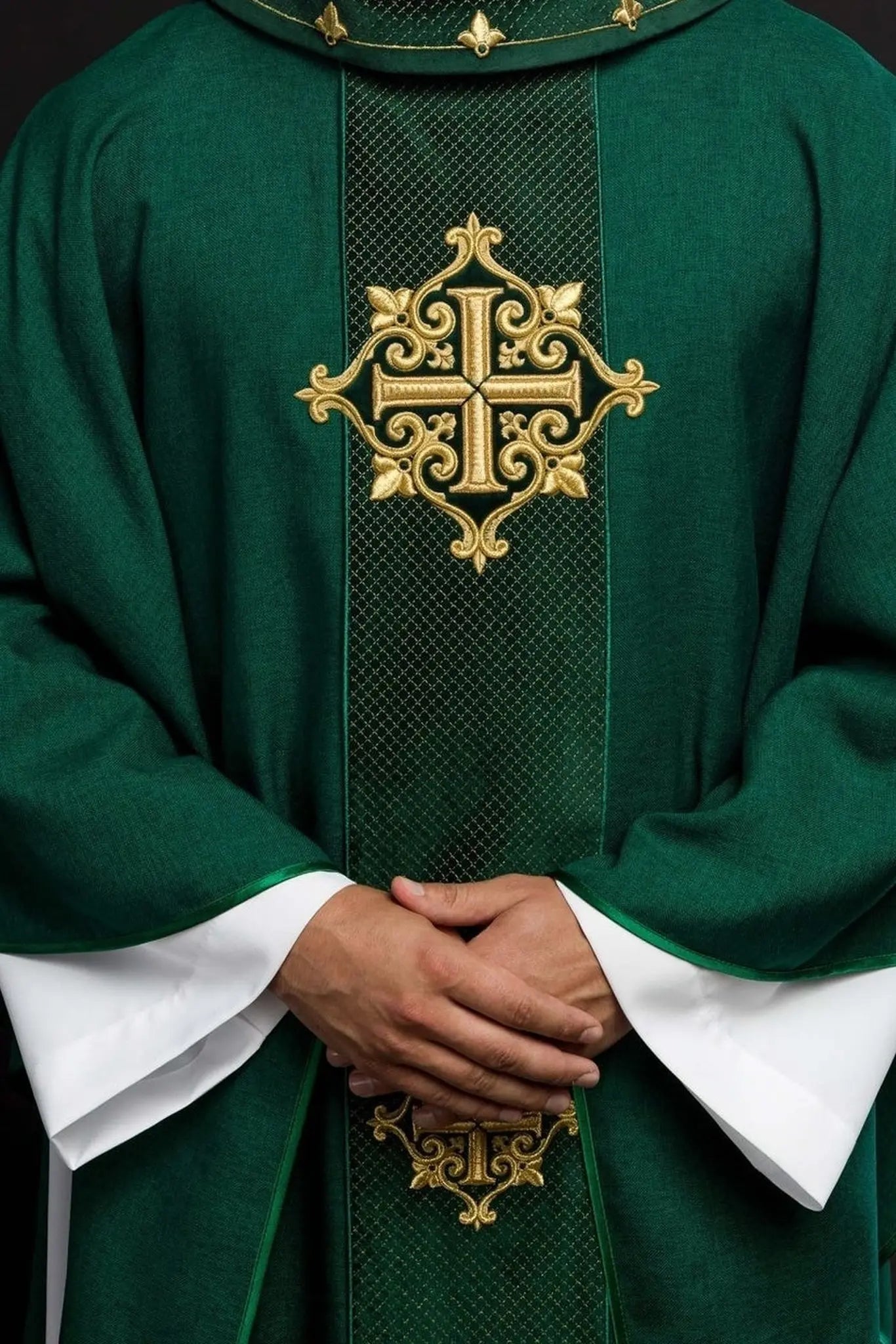
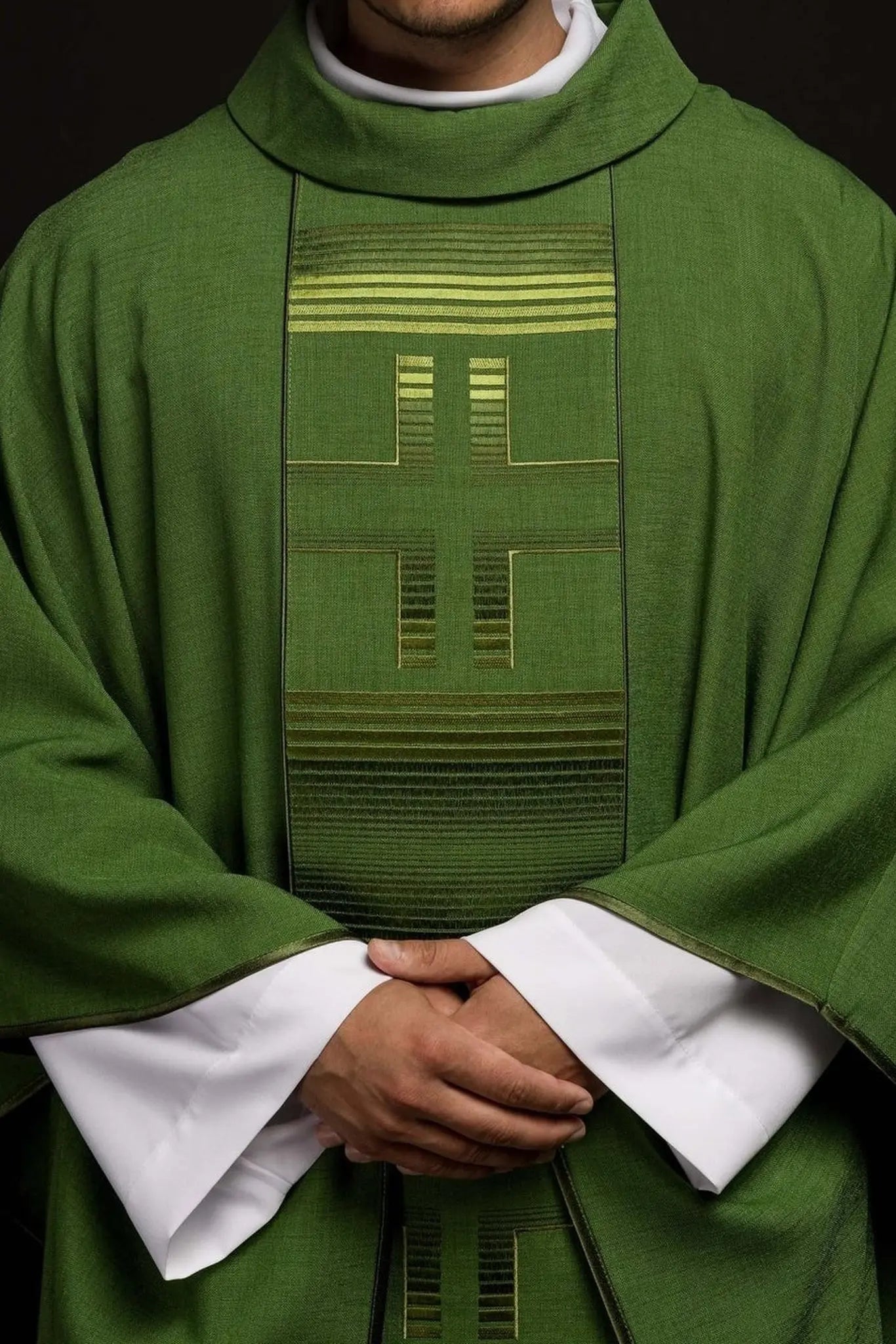
This collection focuses on green chasubles in styles appropriate for repeated liturgical use. Some designs are simple and restrained, with clean lines, subtle orphreys, or a central cross. Others include richer embroidery with Eucharistic motifs, vine and wheat imagery, Marian or saintly references when present in the design, or ornamental patterns that give the vestment a more solemn appearance while remaining suitable for Ordinary Time. The green shades may range from deep forest and emerald tones to softer olive or fresh green tones, allowing each church to choose a vestment that harmonizes with the sanctuary, altar linens, and existing vestment sets.
The source material for this collection emphasized both symbolic meaning and craftsmanship, and both are important. A well-made green chasuble should hang properly, allow comfortable movement at the altar, and retain its shape through frequent use. Product details may include different fabrics, linings, trims, embroidered panels, decorative bands, and cuts. Some chasubles are intended for daily parish service, while others have a more ceremonial presence for principal Sunday Masses. When a collection includes both simpler and more ornate pieces, the choice can be guided by the size of the celebration, the architecture of the church, and the existing tone of the sacristy.
Choosing a green chasuble for parish use
When choosing a green chasuble, begin with the liturgical setting. A parish that celebrates several weekday Masses may benefit from a durable, easy-to-wear design with modest decoration. A cathedral, basilica, monastery, or parish with a more formal Sunday liturgy may prefer a chasuble with a stronger orphrey, denser embroidery, or a fabric with a richer visual texture. The goal is not simply to choose the most decorated vestment, but to select one that supports the dignity of the Mass and can be worn comfortably by the celebrant.
The cut is also important. Gothic-style chasubles usually offer generous drape and freedom of movement, which many priests prefer for regular parish worship. Roman-style chasubles have a more structured shape and a traditional visual language. They may be chosen for communities that value a classic Roman appearance, for solemn celebrations, or for priests who prefer a more defined silhouette. For a dedicated view of that style, explore Roman chasubles. In either form, the vestment should be proportionate to the celebrant, easy to vest, and suitable for the way the liturgy is celebrated in the church.
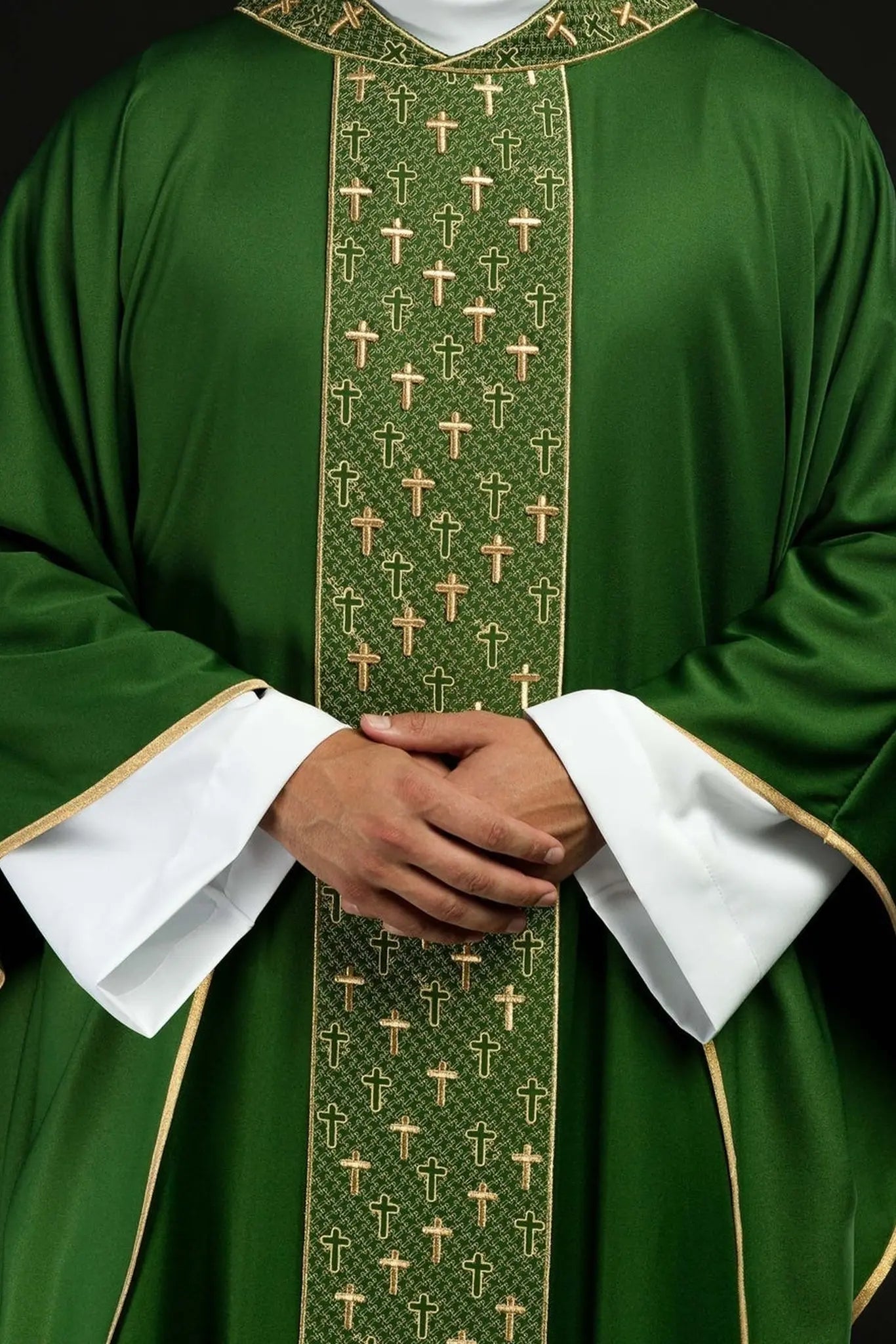
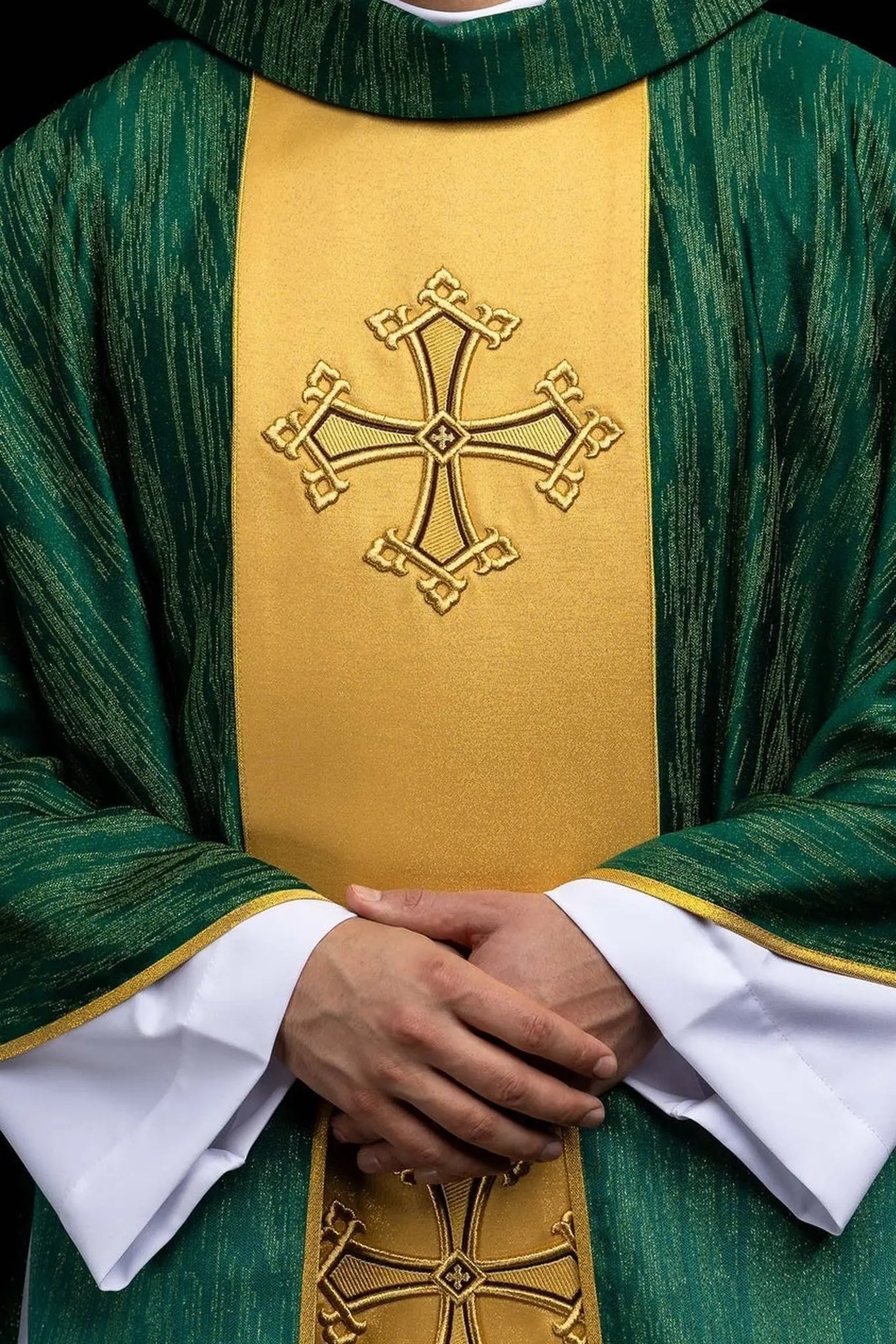
Embroidery should be read in relation to the season. Crosses, vines, wheat, leaves, and other symbols of life and growth are especially fitting for green vestments because they echo the themes of Ordinary Time. Gold or ecru embroidery can make a green chasuble more festive without changing its liturgical color. A very simple green chasuble can be the right choice for weekday Mass or small chapels; a more richly embroidered one can be reserved for Sundays. A sacristy with more than one green chasuble can rotate them according to the solemnity of the celebration and the practical needs of frequent use.
How green chasubles relate to other vestments and church textiles
A complete liturgical setting often includes more than the celebrant's chasuble. Matching or compatible pieces help the sanctuary appear ordered and coherent. Priests may need green stoles for celebrations outside Mass or for concelebration; these can be found in green clergy stoles. Churches that use seasonal ambo decoration may coordinate the vestment with green pulpit covers. The pieces do not have to be identical, but they should respect the same liturgical color and a similar level of ornamentation.
It is also useful to distinguish green chasubles from nearby collections. Purple chasubles belong mainly to penitential seasons such as Advent and Lent, and red chasubles are used for celebrations connected with the Holy Spirit, the Passion, apostles, evangelists, and martyrs. Ecru, white, and gold vestments often serve feasts of the Lord, the Blessed Virgin Mary, saints who were not martyrs, and solemn celebrations. Rose is used only on specific Sundays of rejoicing, Gaudete in Advent and Laetare in Lent. Keeping these distinctions clear helps the sacristan prepare the altar correctly and prevents the green vestment from being used where another color has been appointed.
Craftsmanship, comfort, and durability
Green chasubles are often among the hardest-working vestments in a church because Ordinary Time covers many weeks of the year. For that reason, construction matters. Seams, lining, neck finish, embroidery placement, and the weight of the fabric all influence how the chasuble feels during the liturgy. A vestment that is too heavy may be uncomfortable during long services or warm seasons, while one that is too light may not drape well. A balanced design allows the celebrant to move naturally, lift the hands in prayer, and handle the missal and sacred vessels without obstruction.
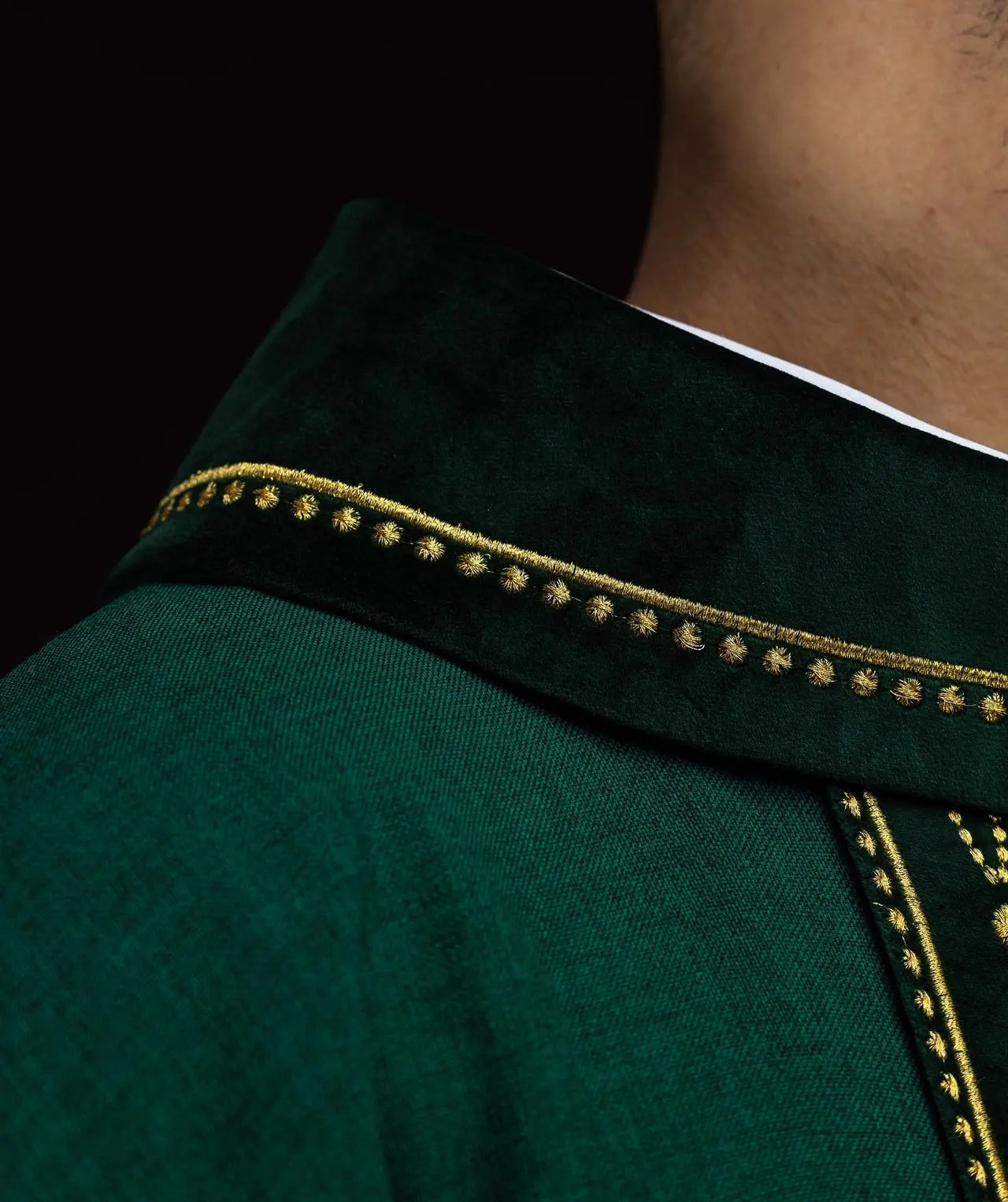
Embroidery should be secure and proportionate. Dense embroidery can add beauty and solemnity, but it should not distort the fabric or make the front of the chasuble pull unevenly. Orphreys and trims should frame the vestment and support the main symbol, not overwhelm the whole design. The best green chasuble for a parish is often the one that combines liturgical clarity, strong construction, and a design that will still look appropriate after many seasons of use.
Care and storage of green liturgical vestments
Proper care helps preserve the color and shape of a chasuble. Always follow the care instructions given on the specific product, because fabric, lining, and embroidery can require different treatment. Many embroidered vestments should be handled gently and cleaned with professional care when needed. Avoid harsh chemicals, rough scrubbing, and high heat, especially around metallic threads, decorative trims, and embroidered motifs. If ironing is permitted for a particular fabric, it should be done cautiously and with protection for the decorated areas.
Storage is just as important as cleaning. Green chasubles should be hung on a broad hanger or stored flat in a clean, dry sacristy space where the fabric is not crushed. Direct sunlight can gradually affect color, so long-term storage should keep the vestment away from strong light. After Mass, allow the vestment to air before placing it back into a garment bag or cabinet. Regular inspection for loose threads, worn lining, or damaged trims makes it easier to repair small issues before they become serious.
Why green chasubles remain essential
Because Ordinary Time forms such a large part of the liturgical year, a green chasuble is not an occasional accessory. It is a core vestment for the ministry of the altar. It appears repeatedly as the parish hears parables, teachings, miracles, and calls to conversion in the Gospel readings. Its color speaks quietly but consistently of the life of grace: faith grows through repetition, prayer matures through fidelity, and the Church continues to bear fruit in ordinary weeks as much as in the great seasons of Christmas and Easter.
Choosing a green chasuble with care is therefore an investment in the regular worship life of the community. Whether the need is a simple weekday vestment, a dignified Sunday chasuble, or a more ornate piece for a principal parish Mass in Ordinary Time, the collection should help the sacristan and celebrant select a vestment that is clear in color, respectful in design, and practical for repeated use.
Frequently Asked Questions (FAQ)
When are green chasubles used?
Green chasubles are used during Ordinary Time on days when no other proper liturgical color is assigned. They are especially common for Sundays and weekdays in that season, making them one of the most regularly used chasuble colors in parish life.
Who wears a green chasuble?
A green chasuble is worn by a priest or bishop when celebrating Mass. A deacon does not wear a chasuble; he wears a dalmatic for Mass and a deacon stole in other appropriate contexts.
Should a parish choose a simple or embroidered green chasuble?
Both can be useful. A simple green chasuble is practical for weekday Masses and smaller chapels, while an embroidered design may be better suited to the main Sunday Mass or a larger church where the vestment needs more visual presence.
Can green be used for every celebration in Ordinary Time?
No. Many days within Ordinary Time can still have a proper color because of a feast, solemnity, memorial, funeral, or ritual Mass. The calendar and rubrics should be checked before vesting, especially when a saint, martyr, or special celebration is observed.
What should be coordinated with a green chasuble?
Useful companion pieces include a green stole for the priest, green pulpit cover for the ambo, and other sanctuary textiles in compatible tones. Matching is not always necessary, but the color family and level of decoration should feel coherent.