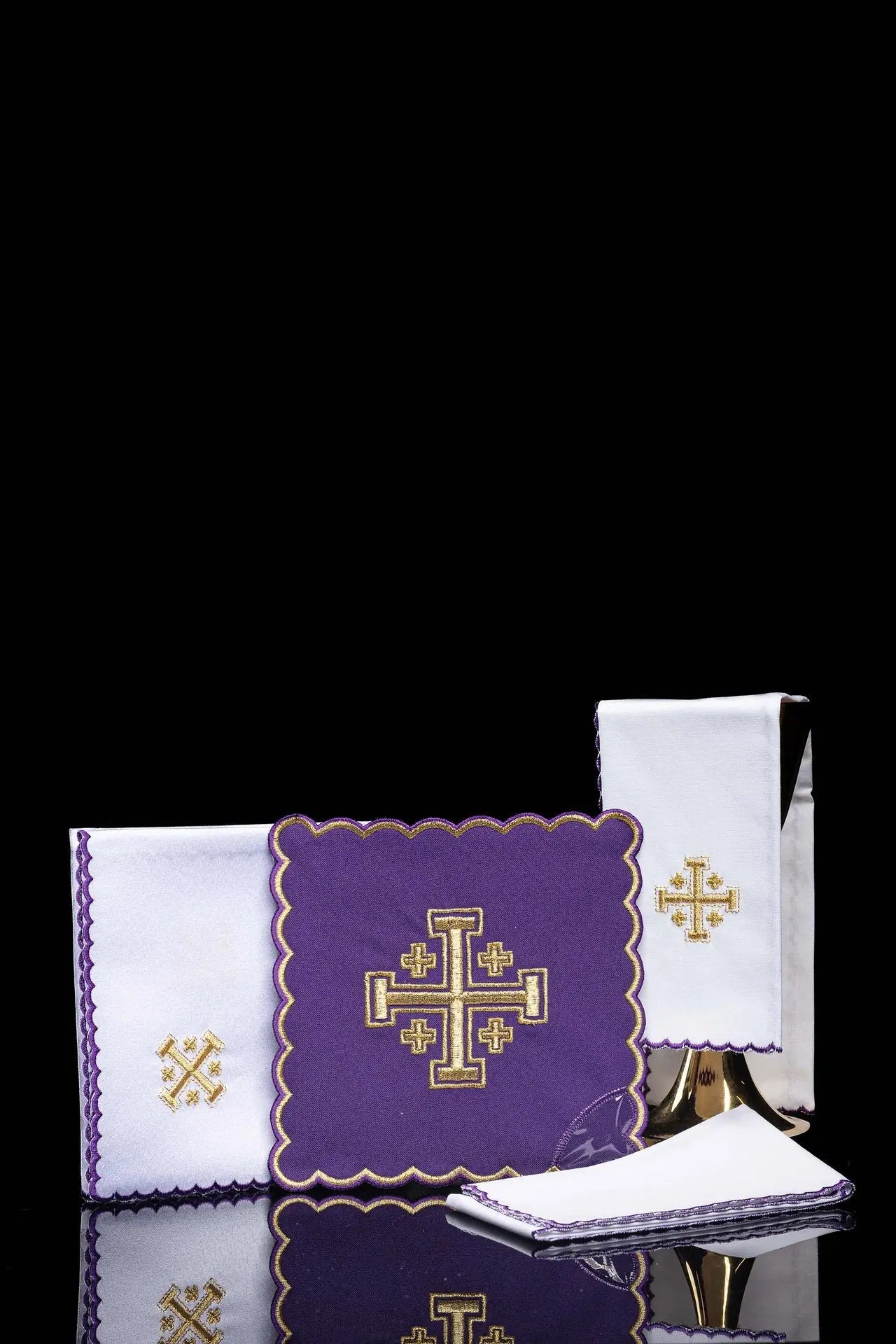
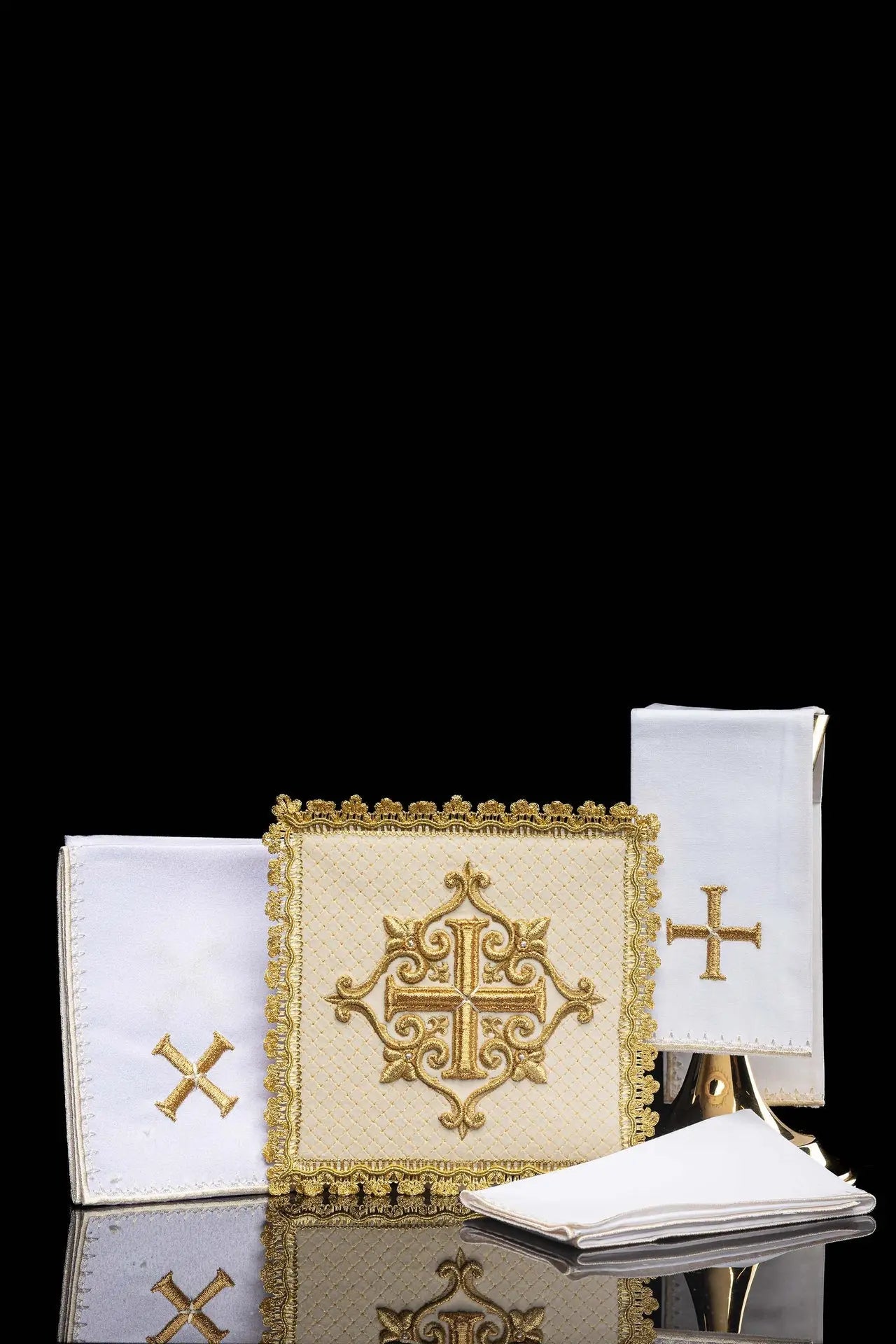
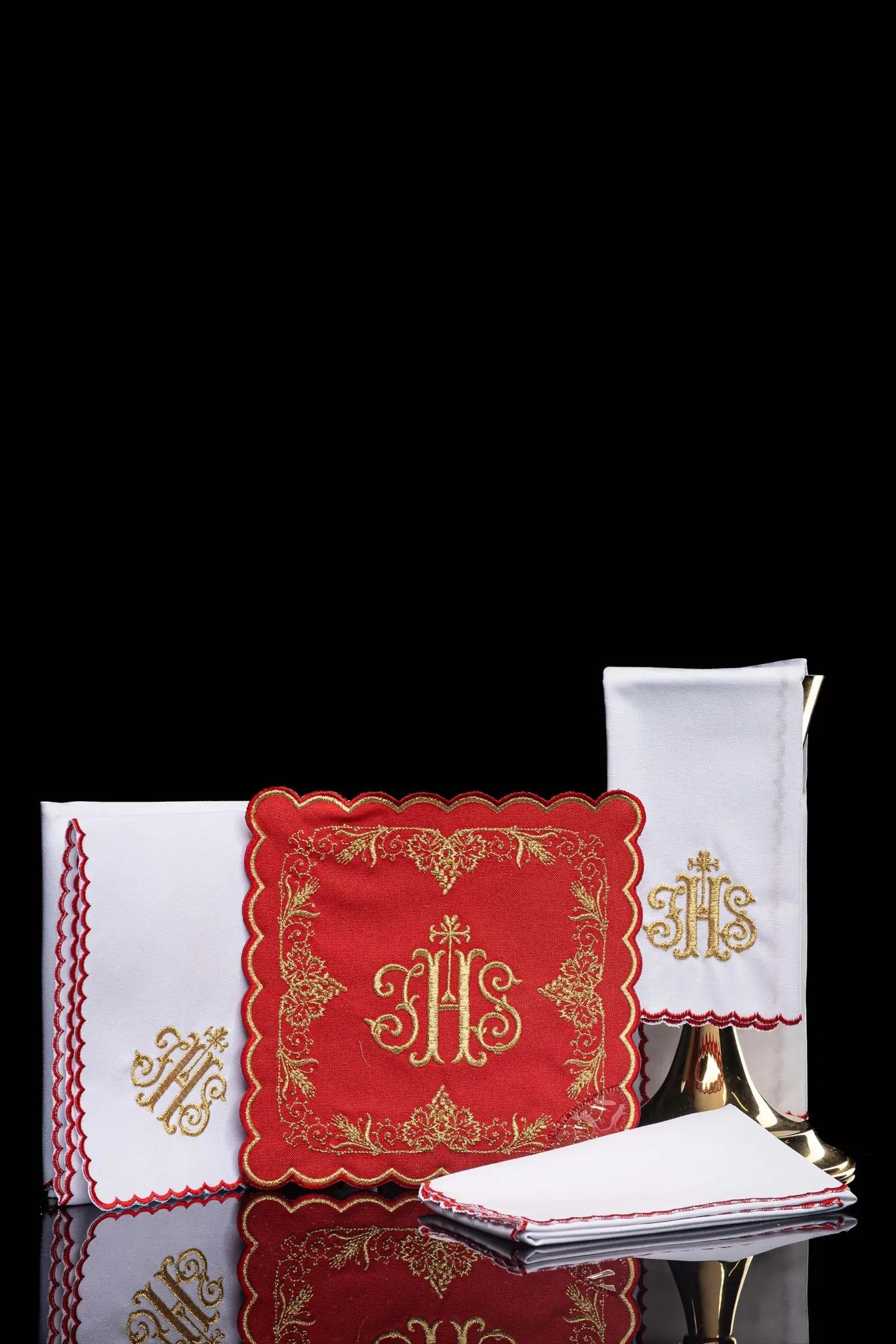
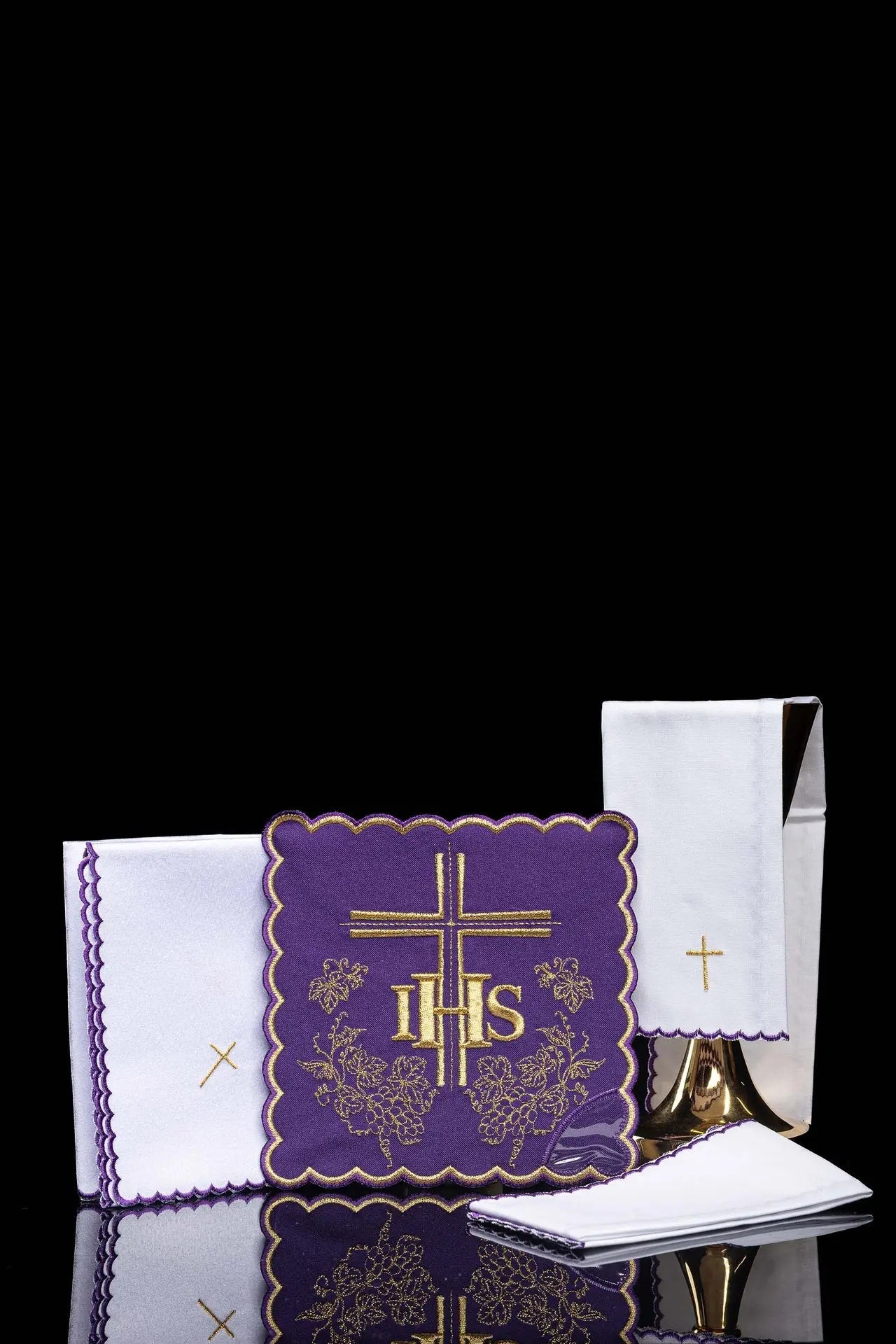
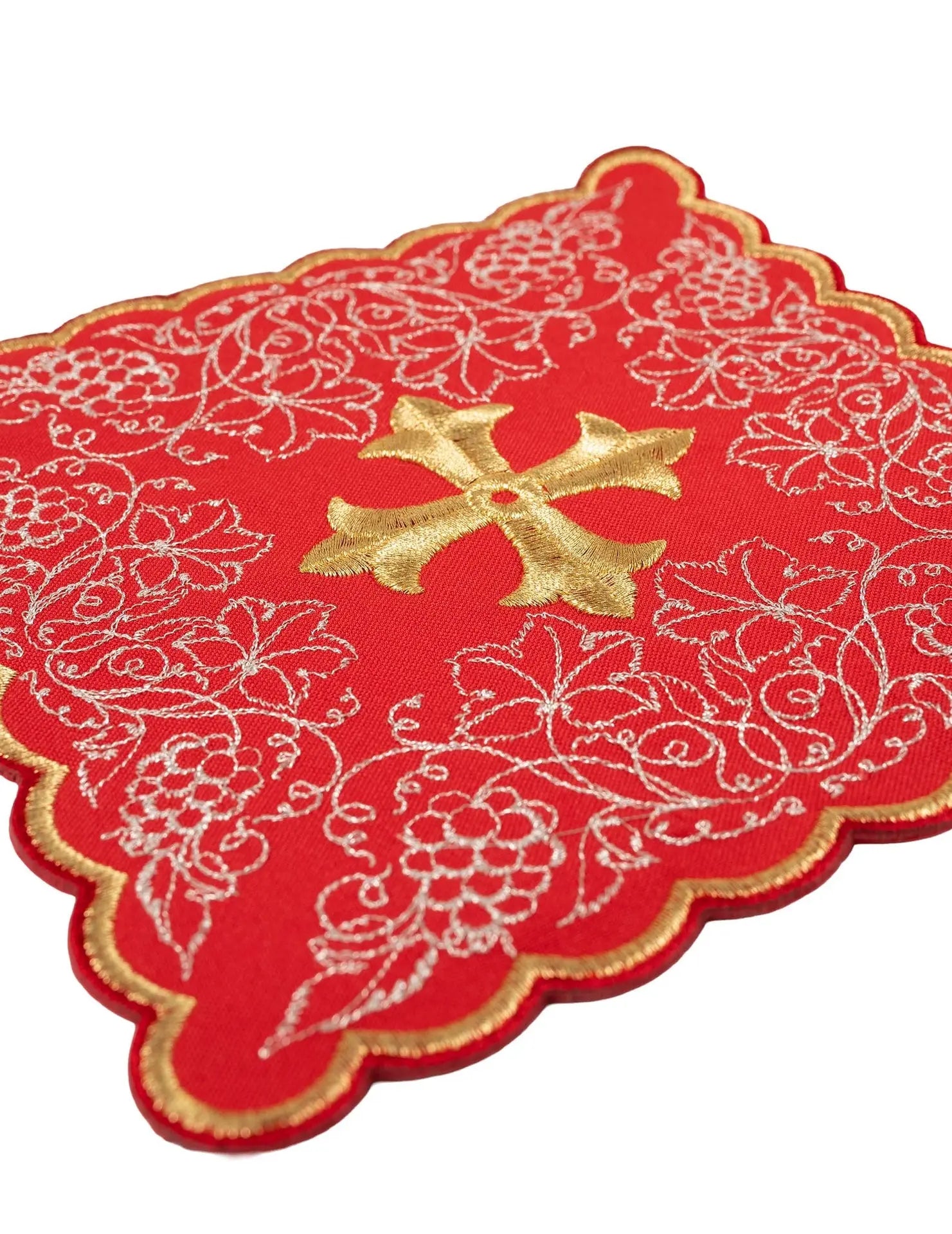
Colored Chalice Linen Sets
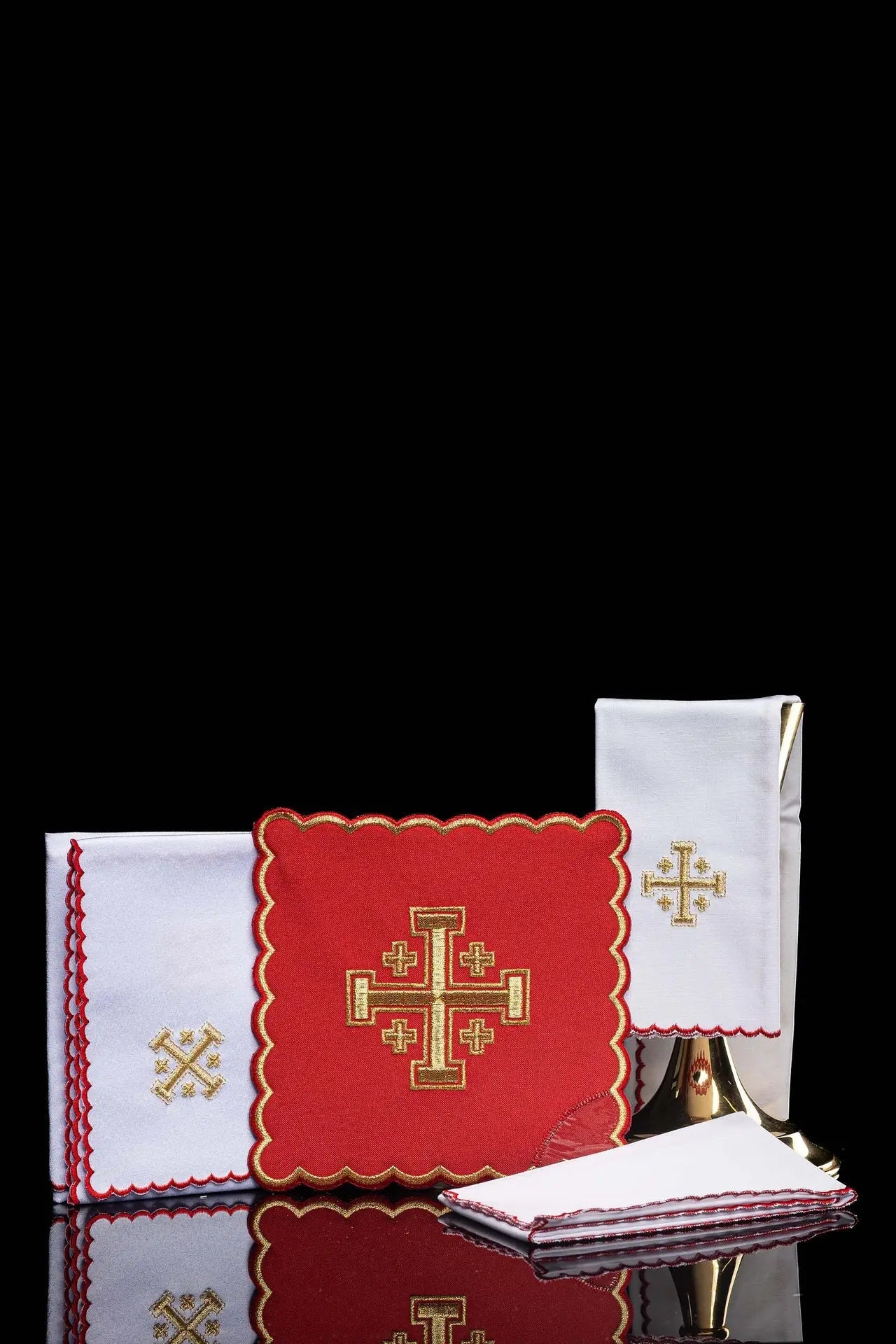
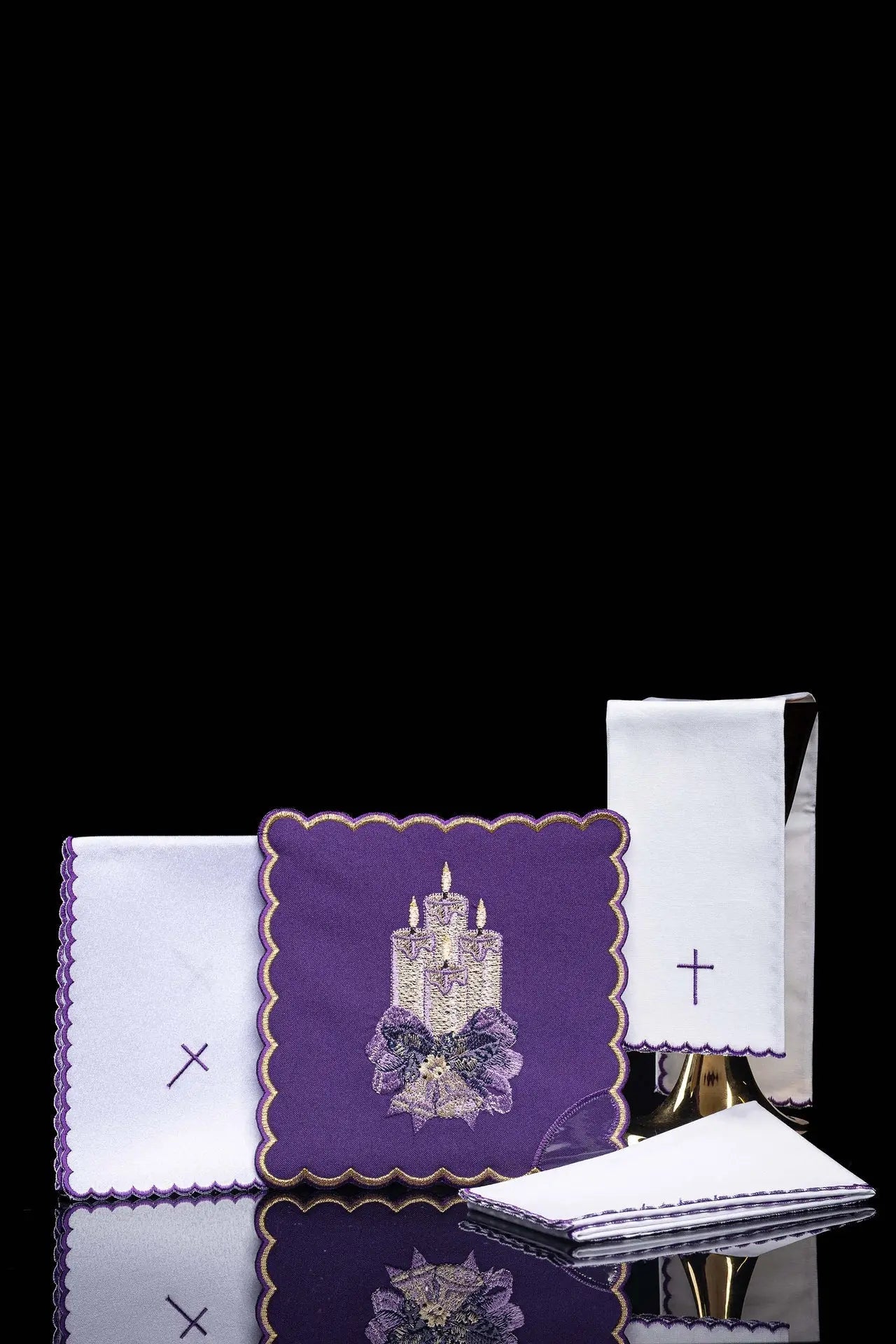
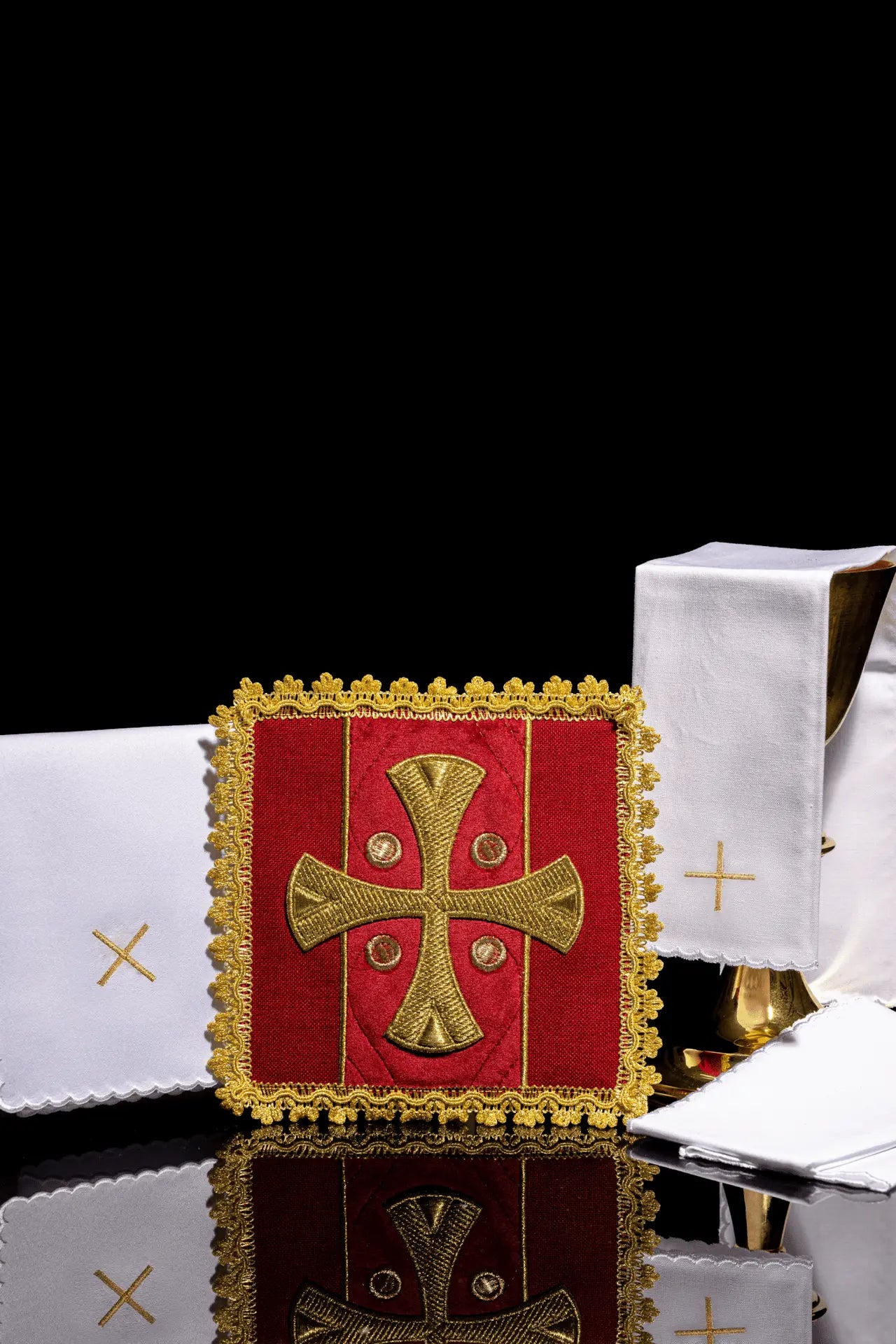
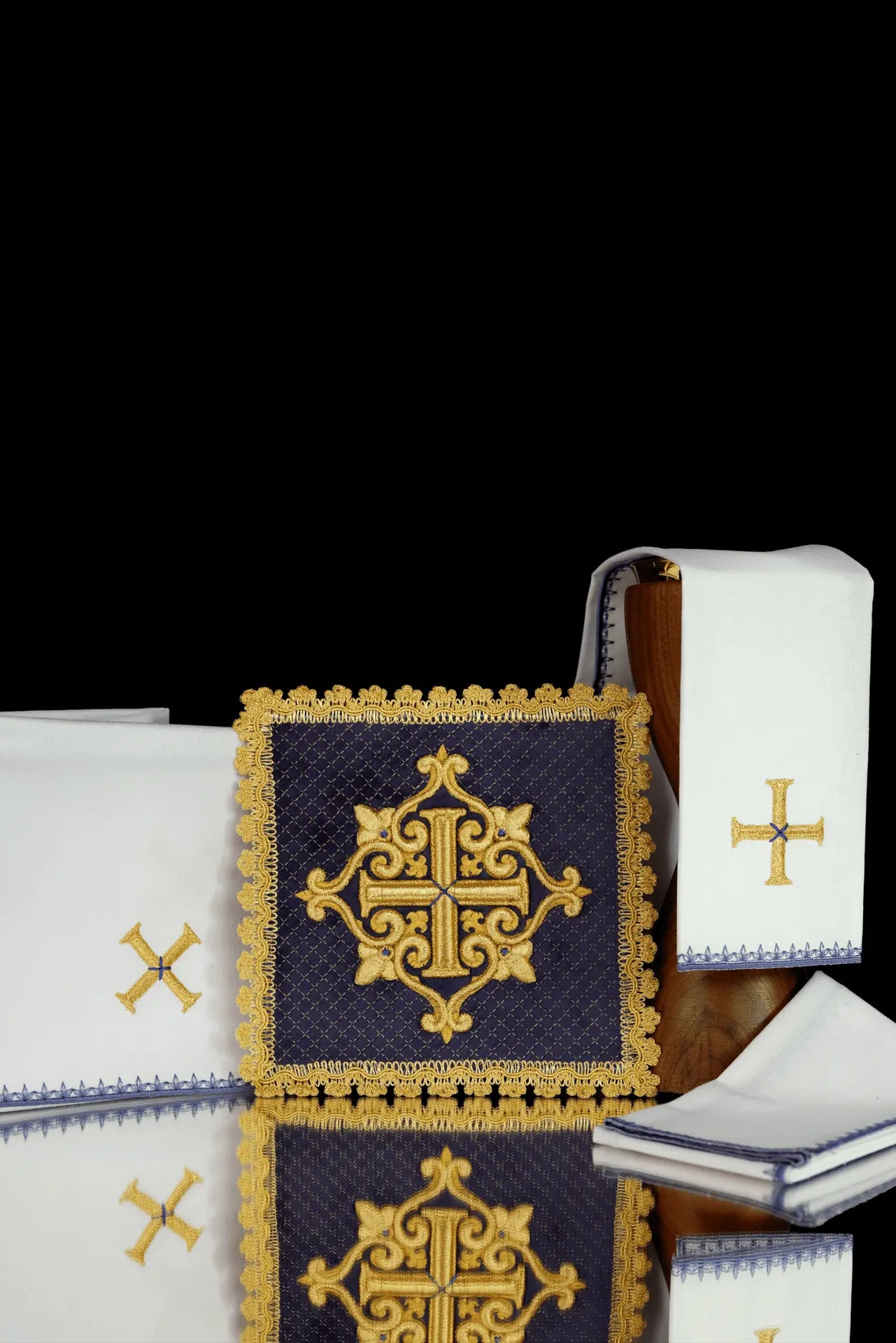
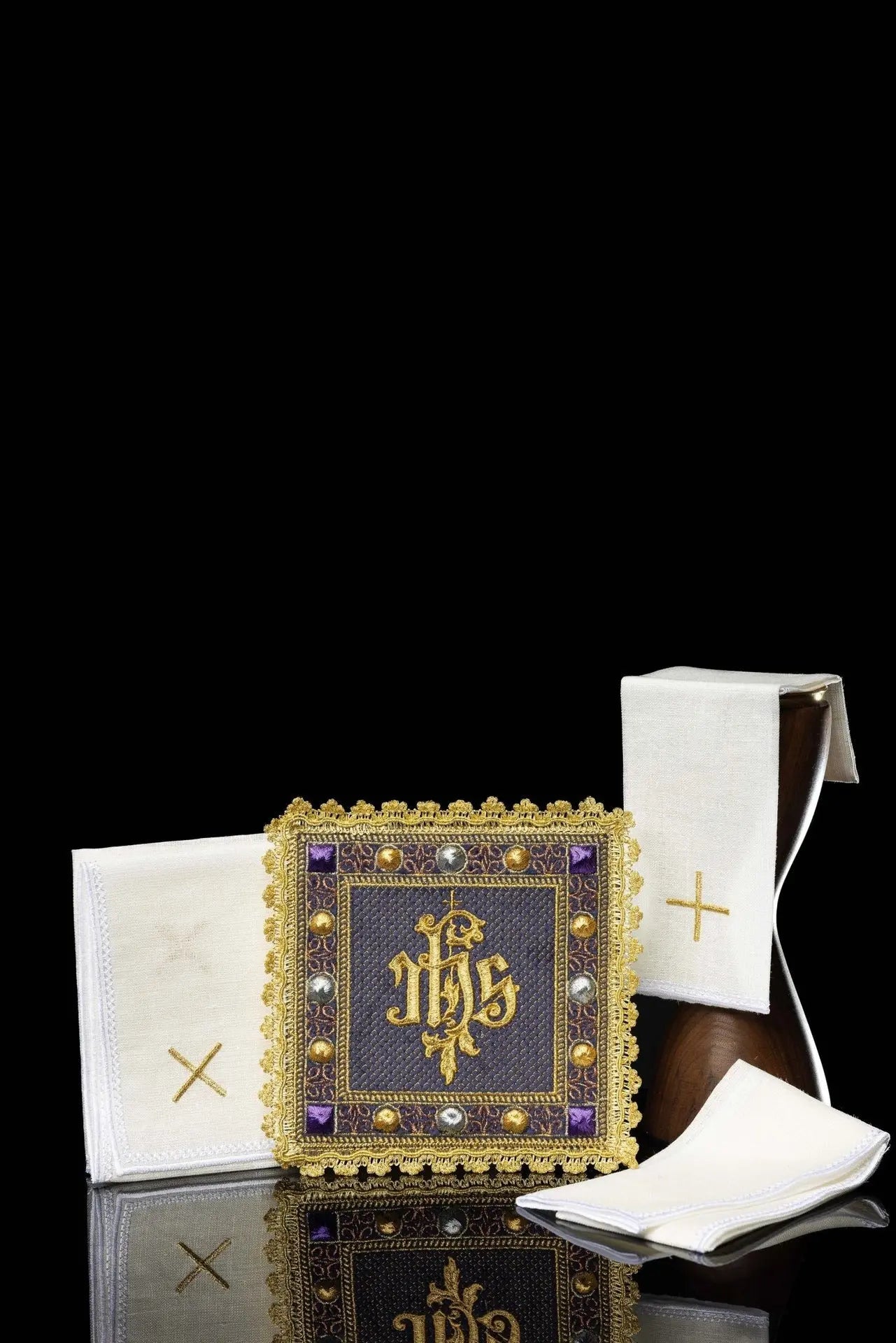
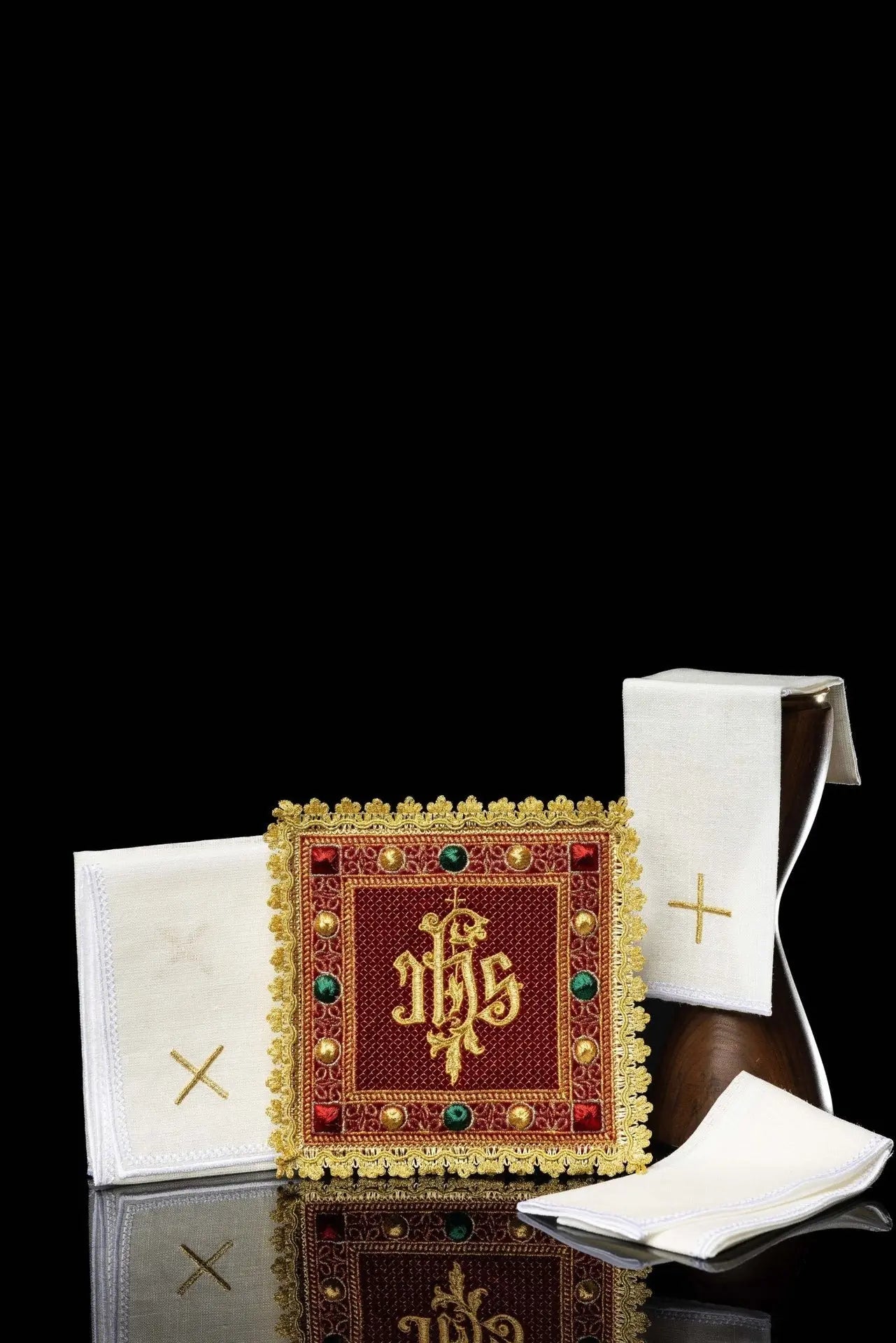
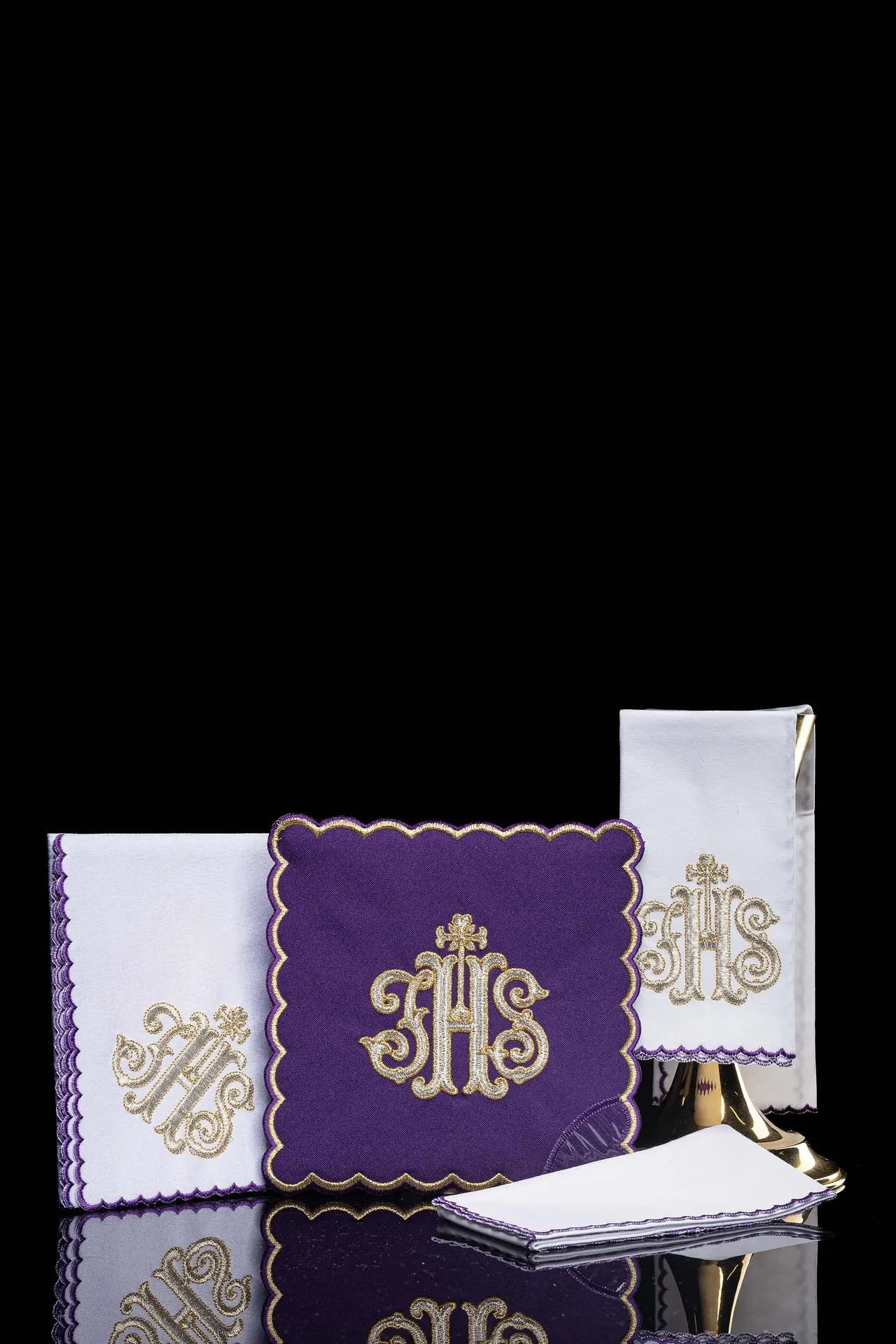
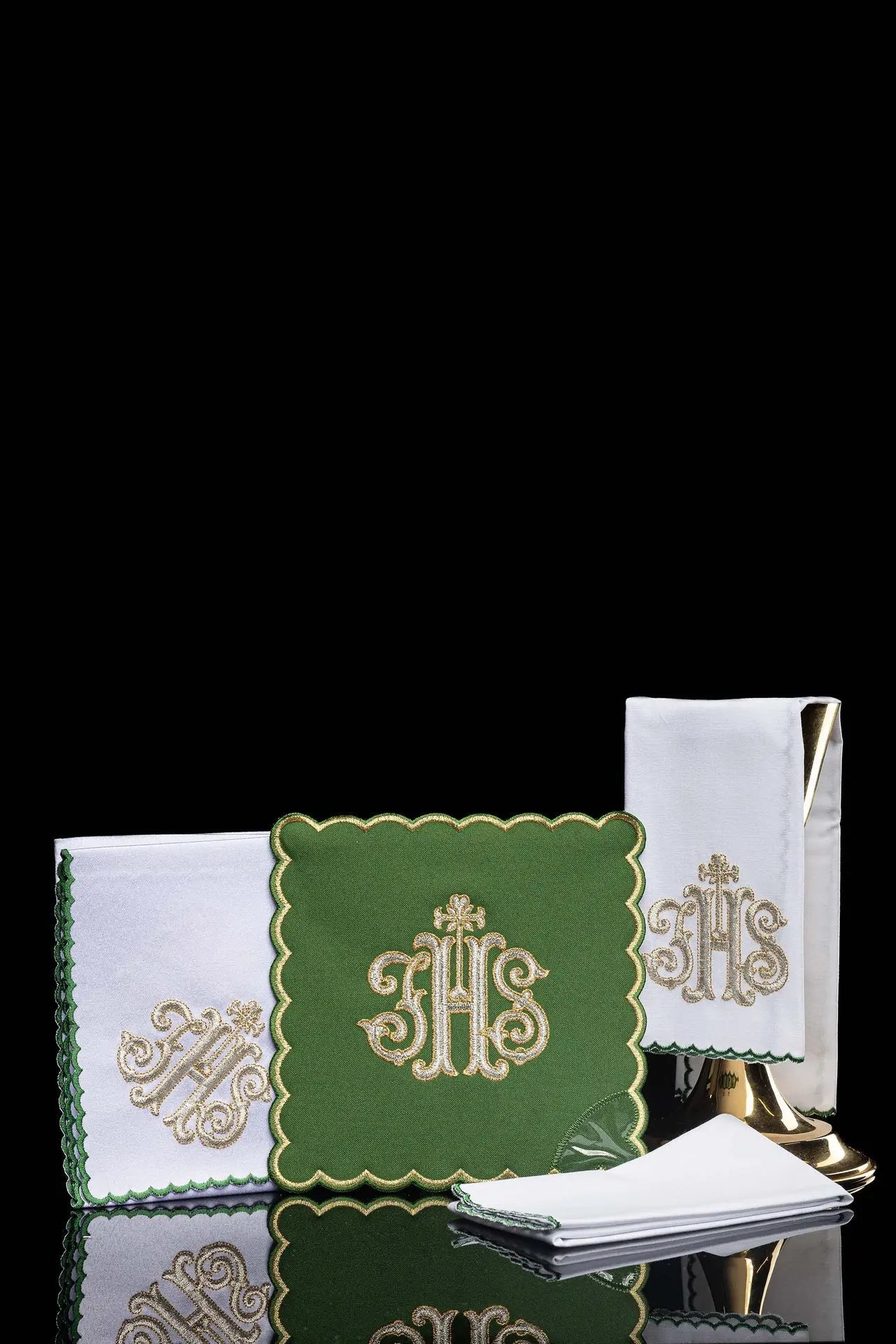
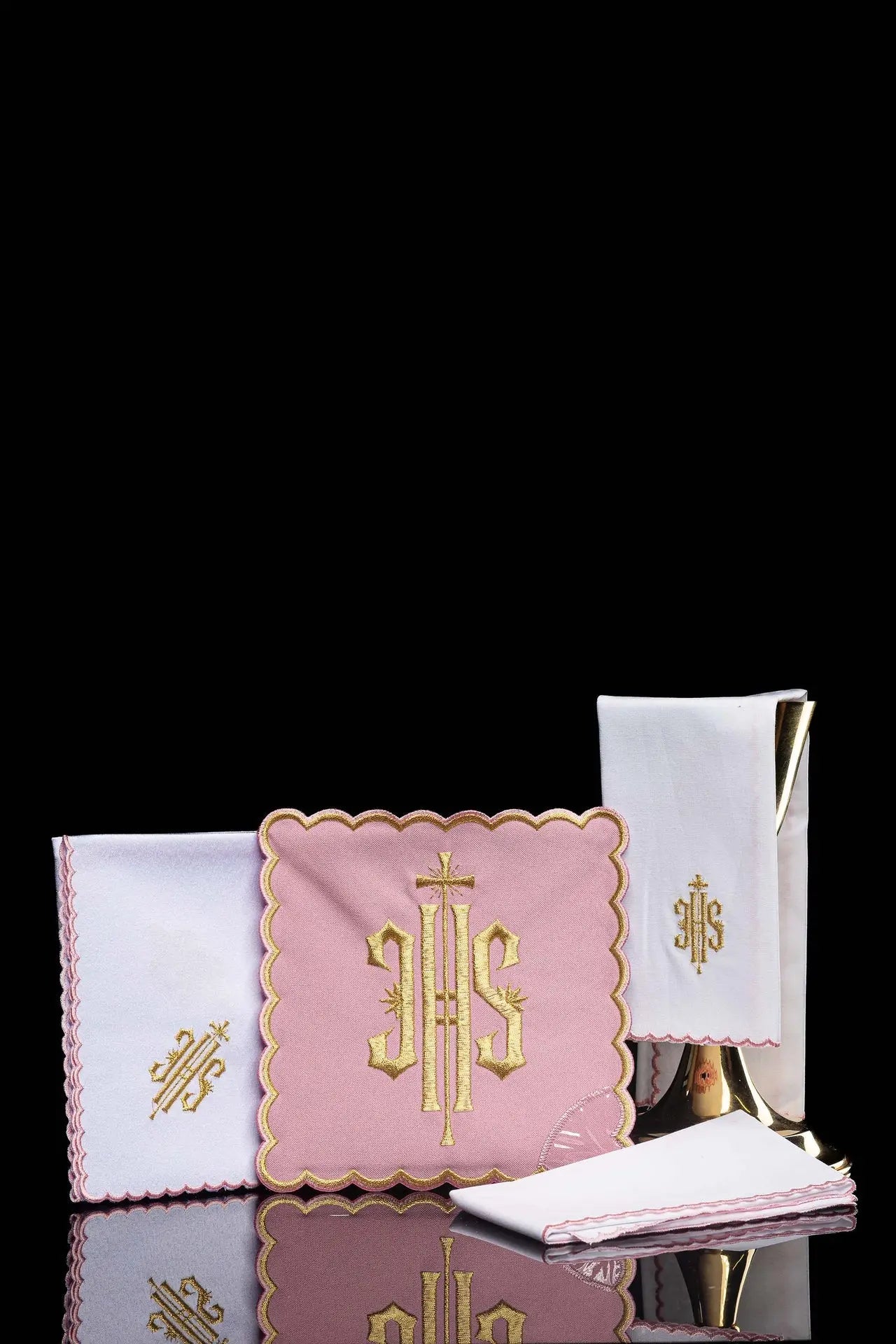
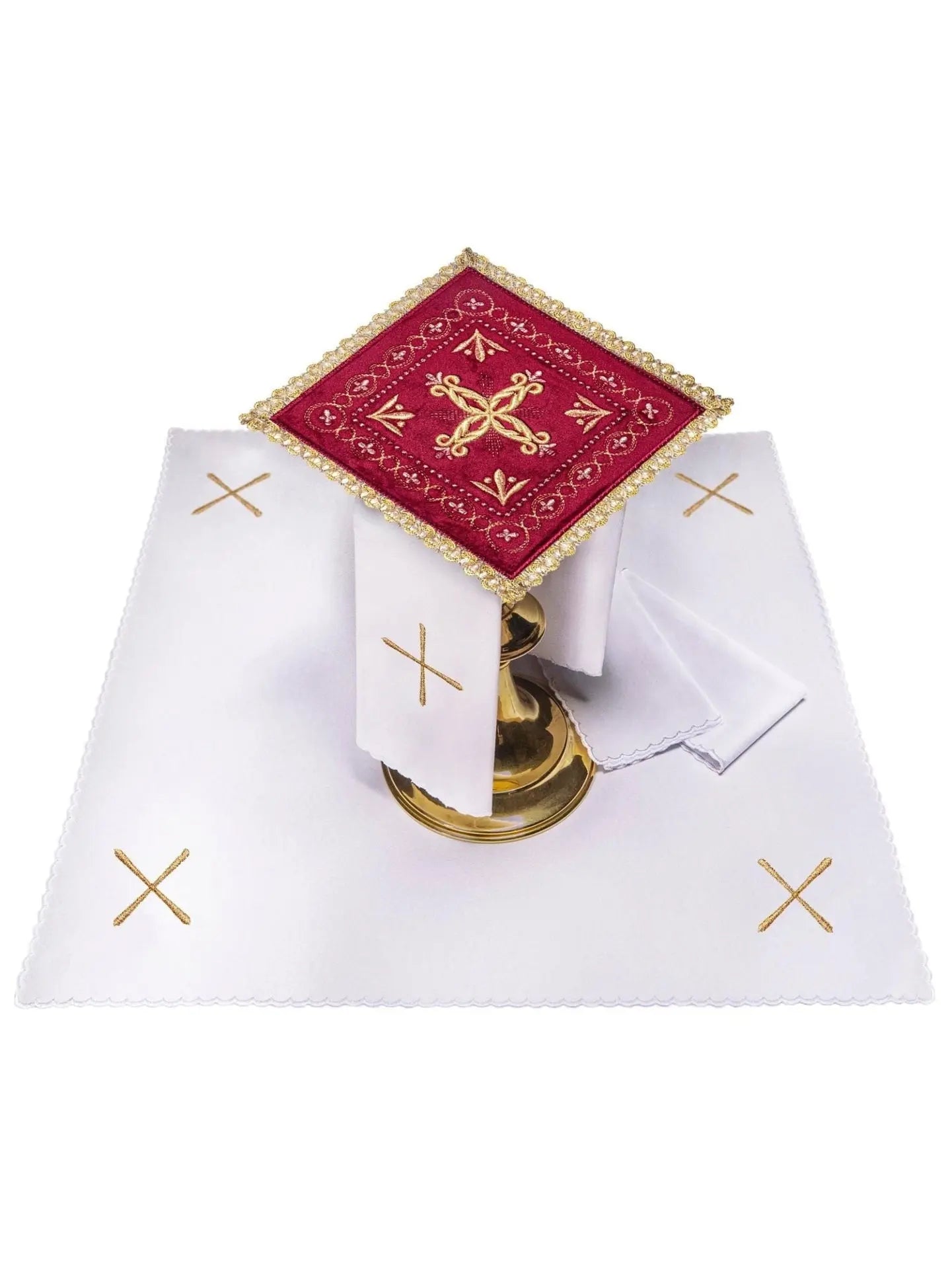
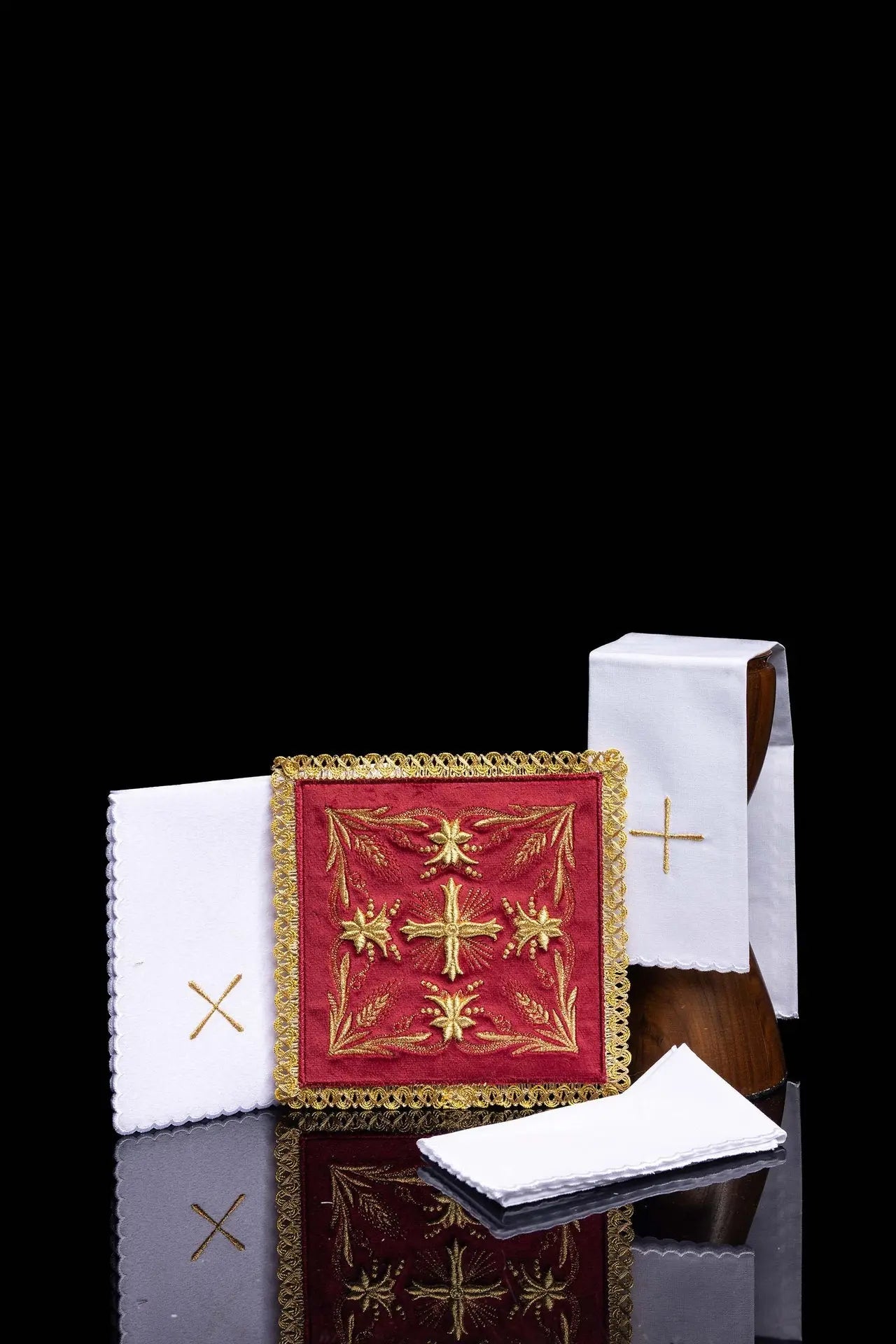
Colored chalice linen sets bring visual harmony to the altar while keeping the sacred vessels served with care, cleanliness, and reverence. This collection is dedicated to chalice linens in liturgical colors, with coordinated pieces such as corporals, purificators, palls, and related chalice accessories used during the celebration of Mass. The purpose of these linens is practical and devotional at the same time: they help prepare the chalice and paten, protect what is placed on the altar, and create a clear visual relationship between the altar, the vestments, and the liturgical day being celebrated.
The collection belongs within the wider family of altar linens, but its focus is narrower than a general altar cloth category. Here the attention is on the chalice area: the linen cloths and small covers used close to the Eucharistic vessels. For parishes, chapels, religious houses, and sacristies, a well-chosen chalice set can make preparation for Mass more orderly because the main elements are coordinated in color, embroidery, fabric, and scale. It also helps the sacristan keep seasonal sets together for Advent, Christmas, Lent, Easter, Ordinary Time, Marian feasts, martyrs, weddings, funerals, and solemnities.
What belongs in this collection
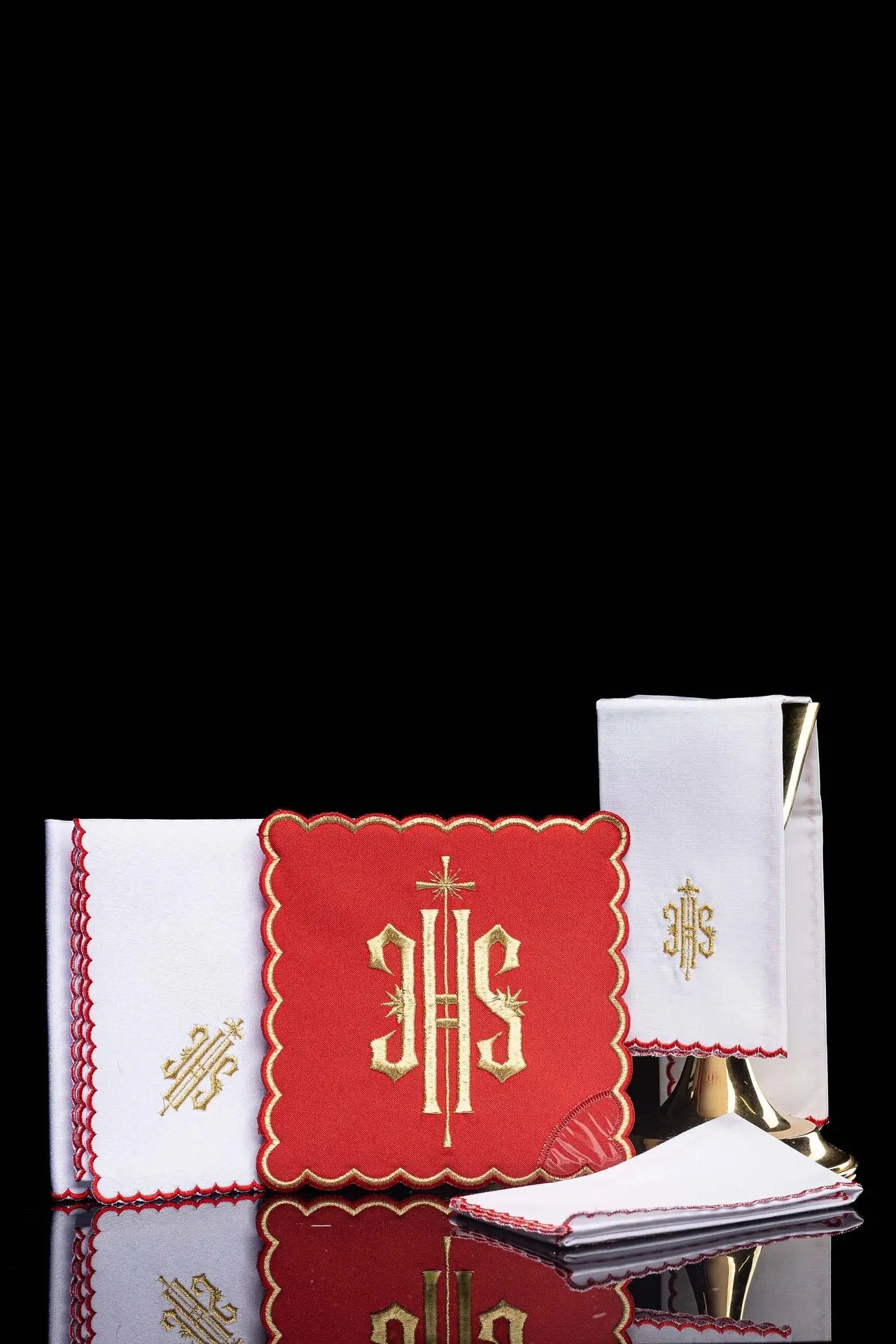
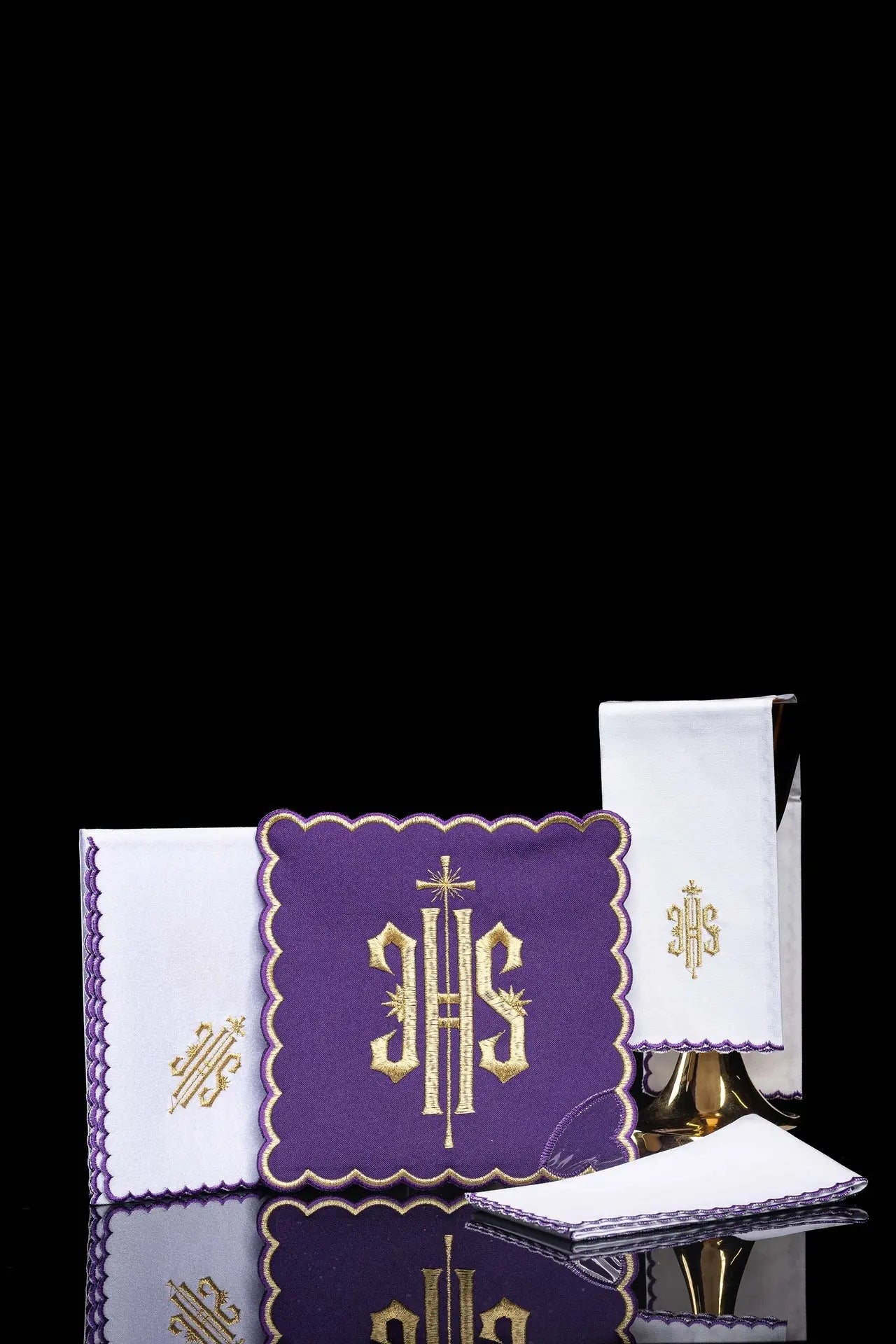
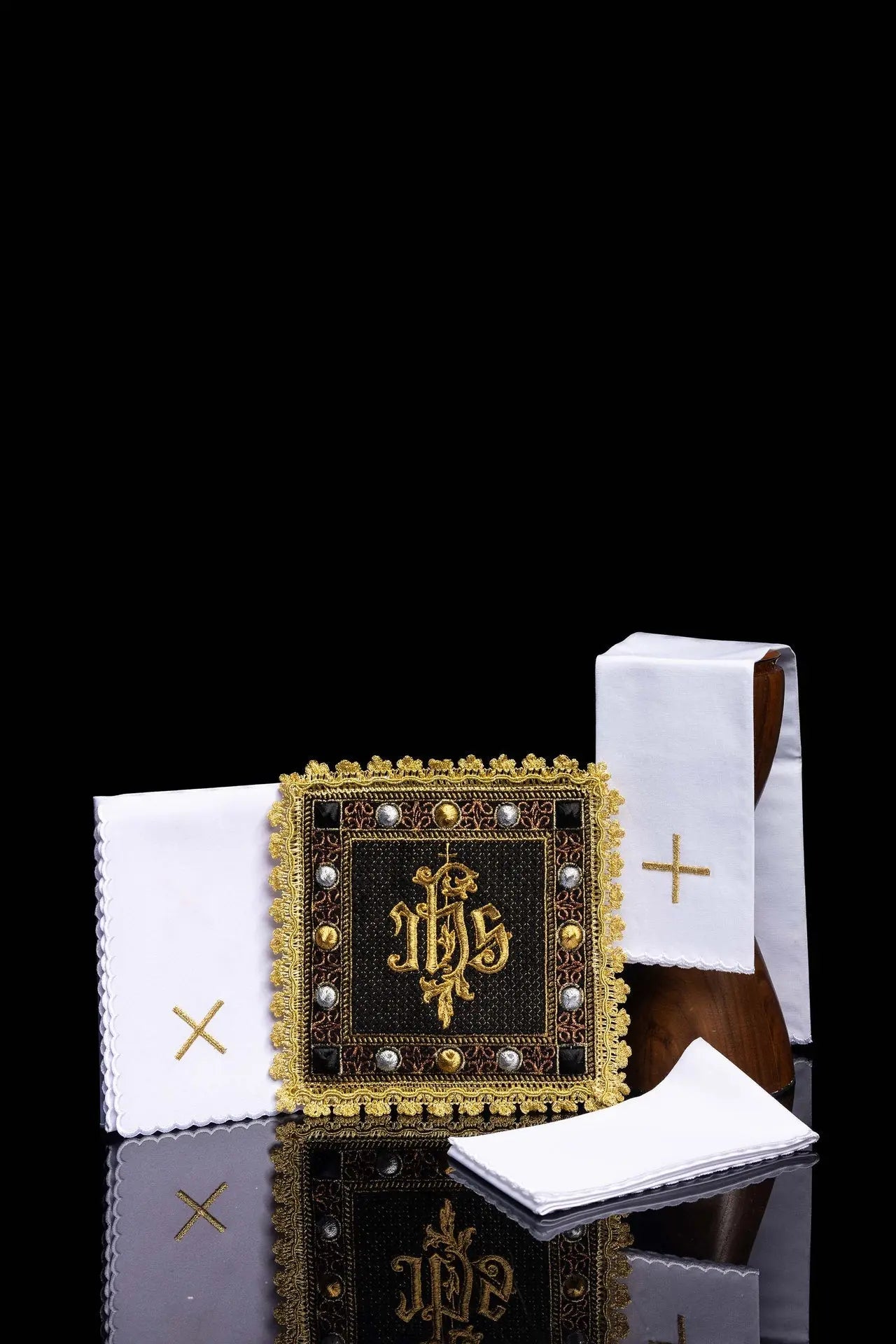
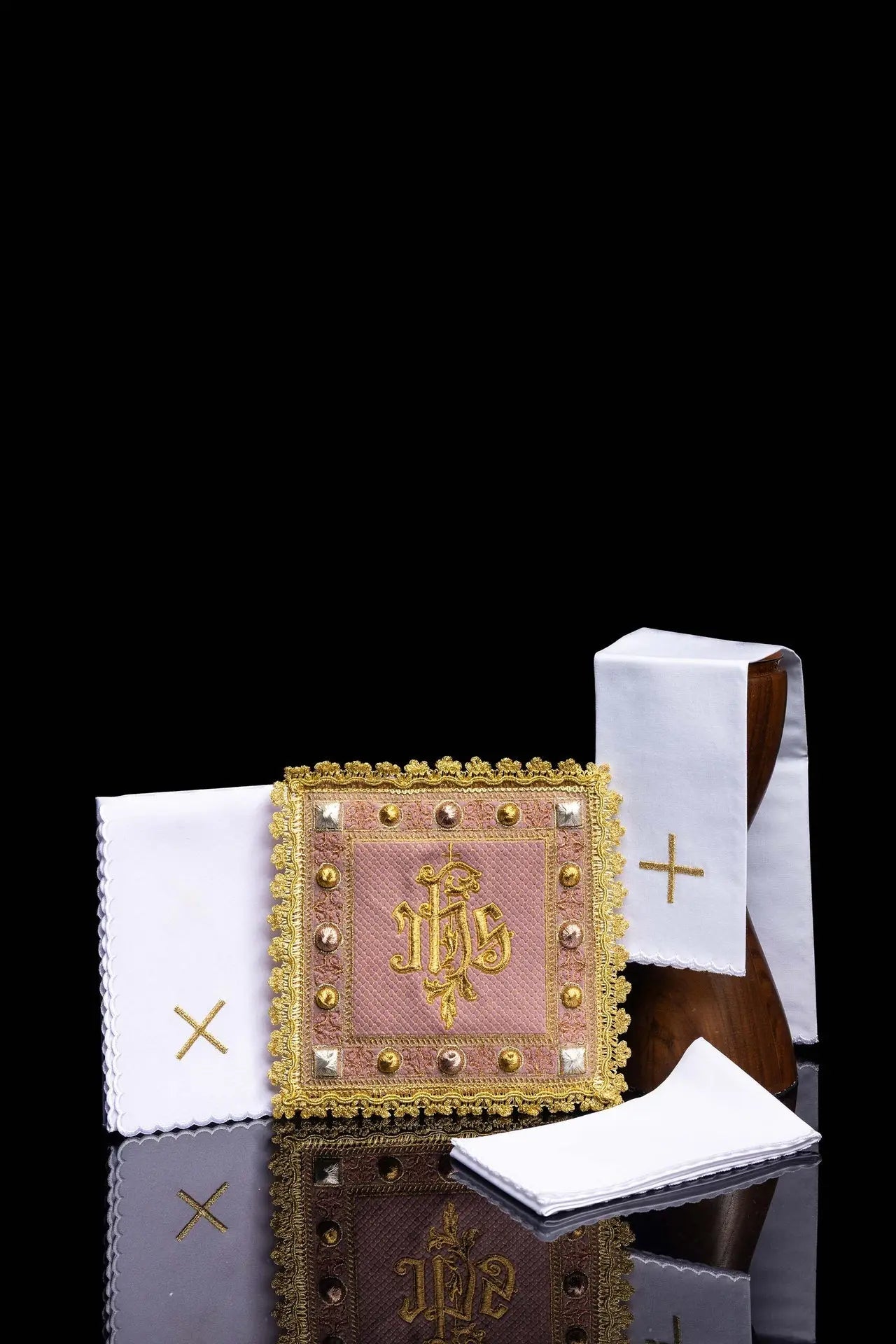
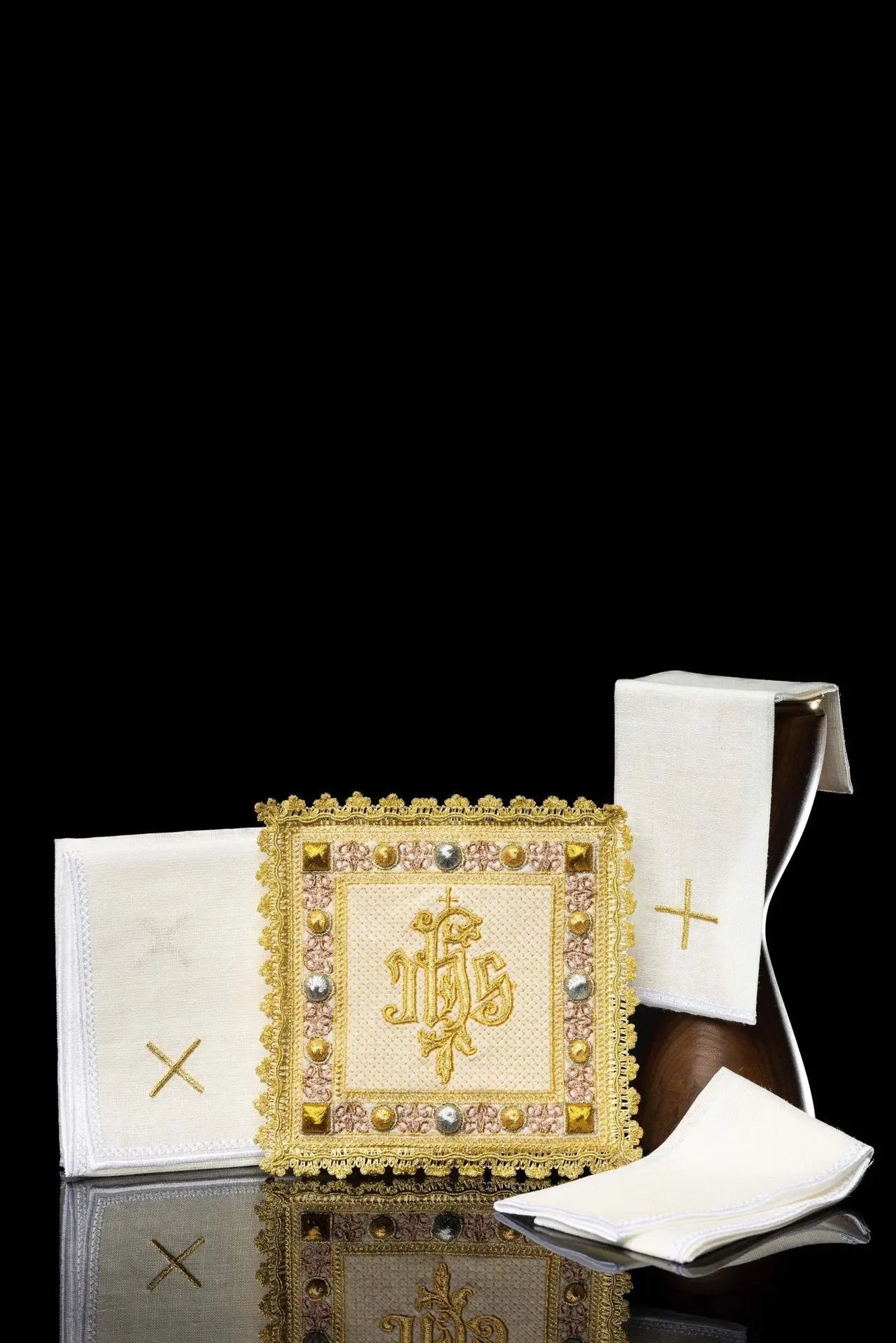
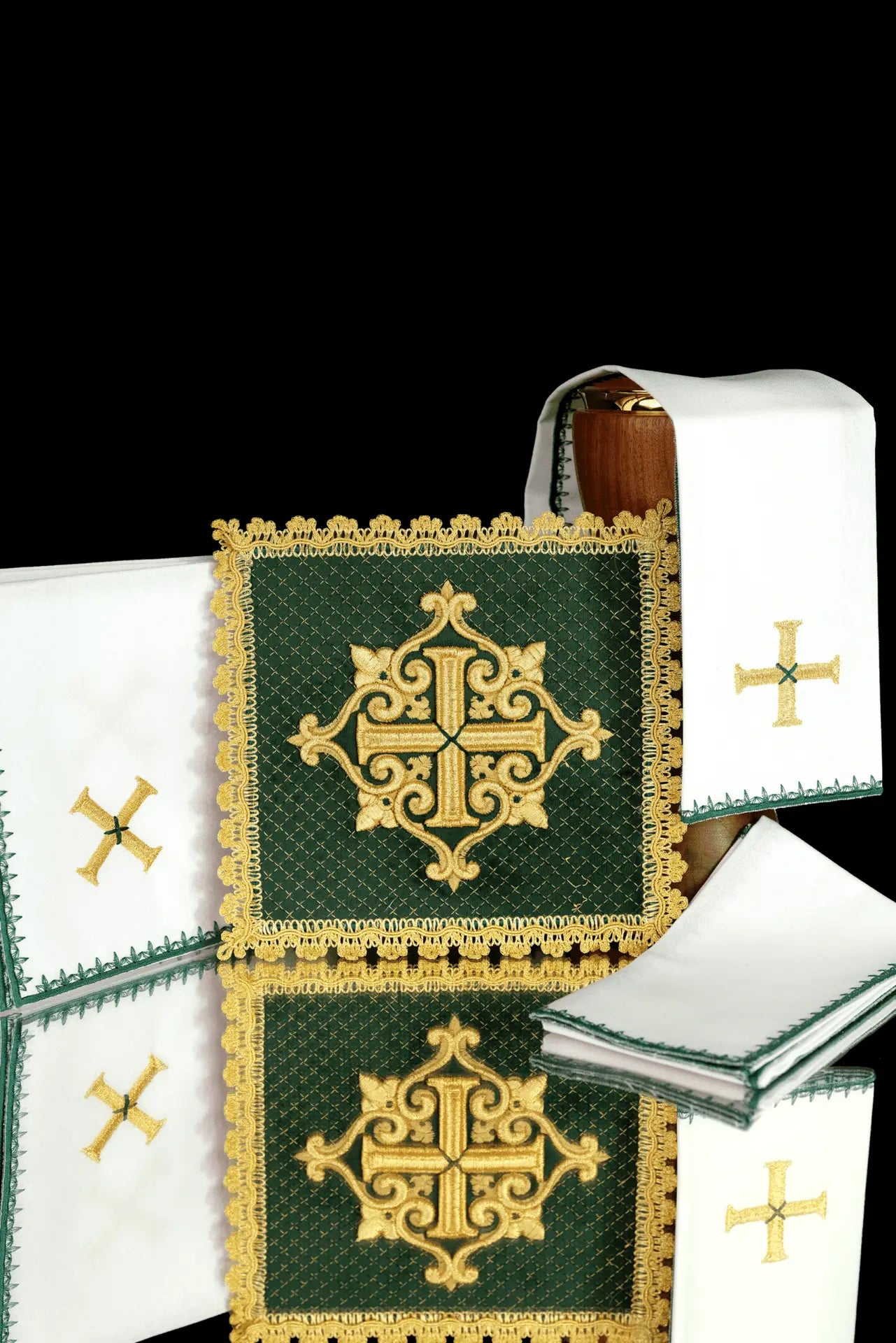
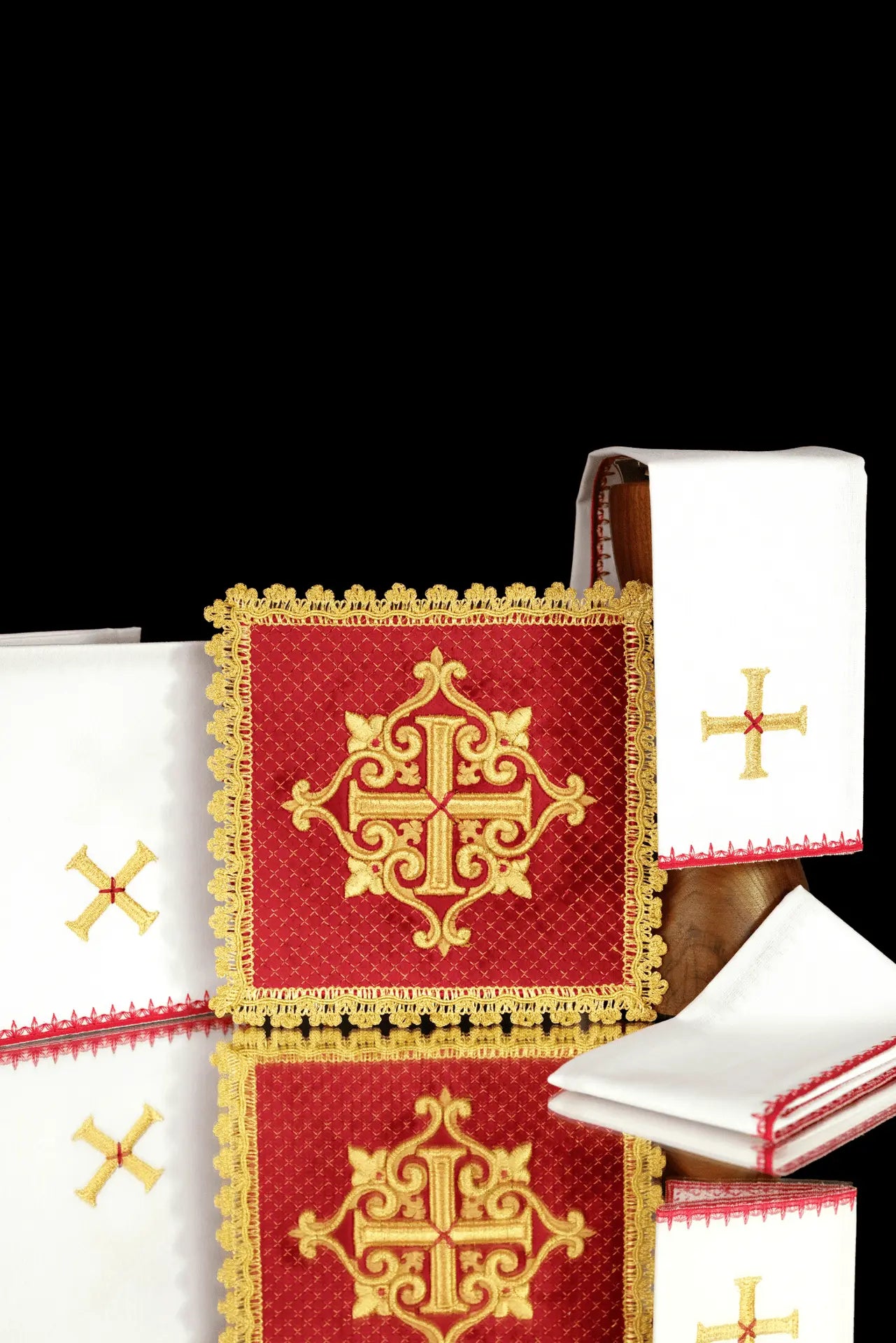
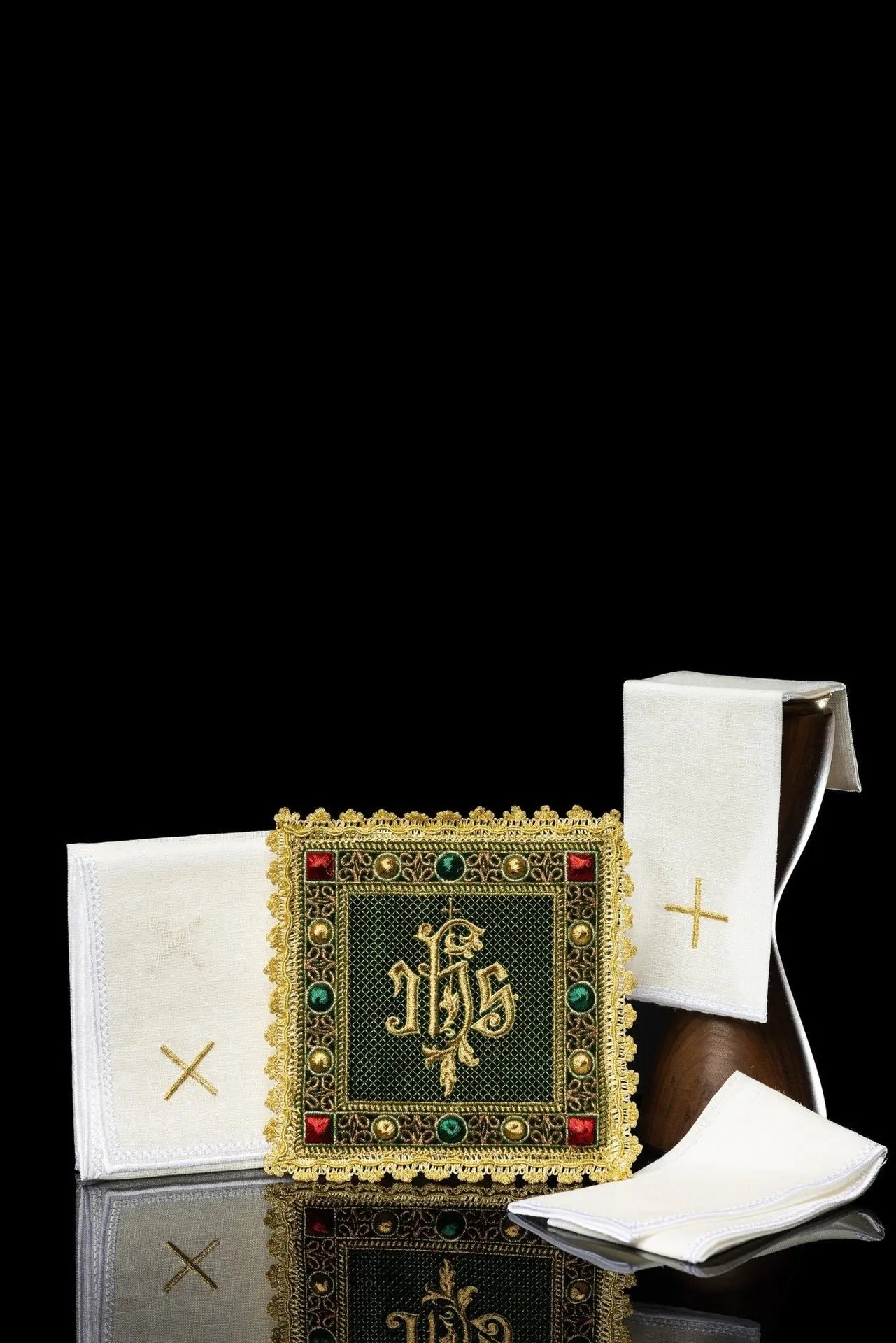
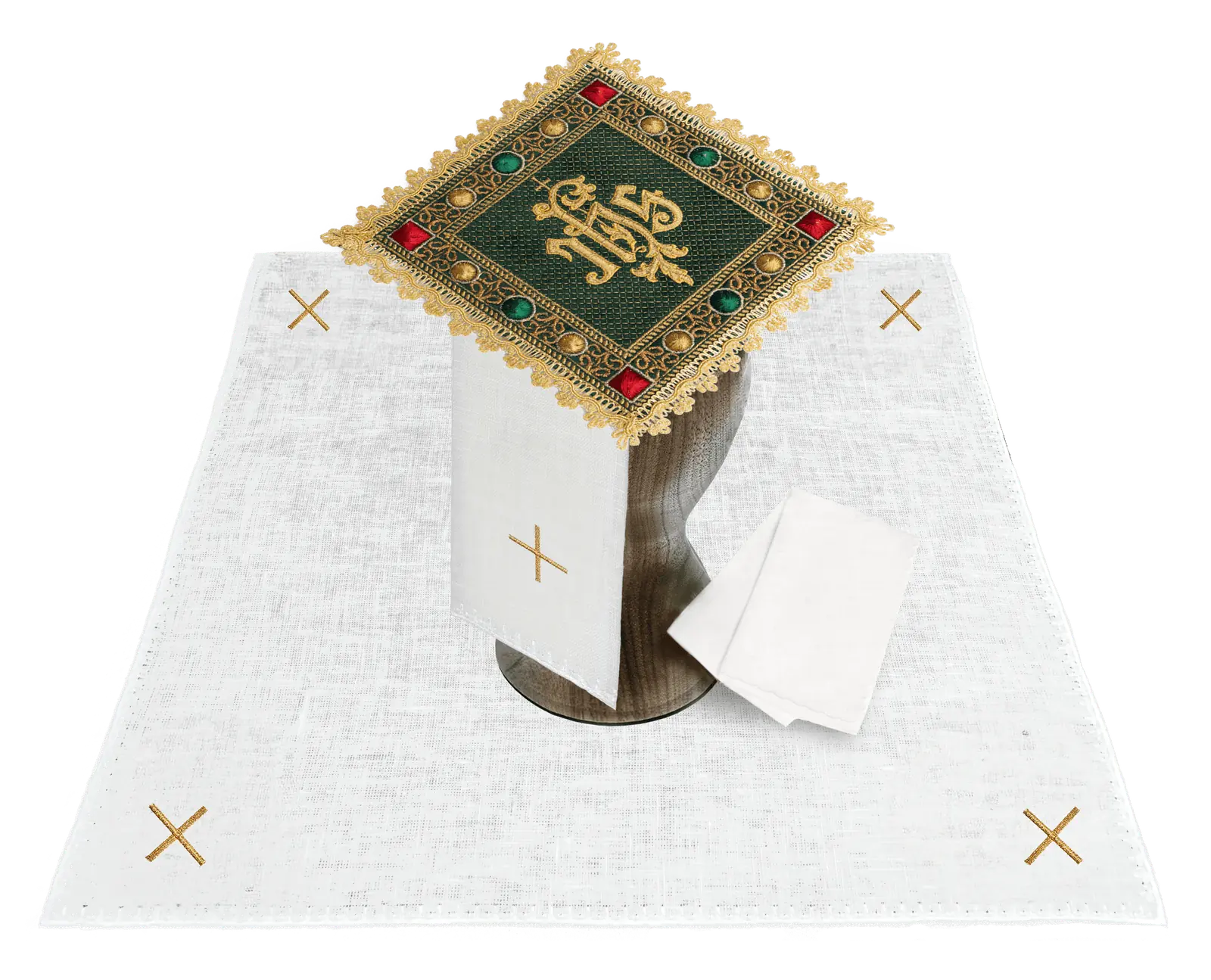
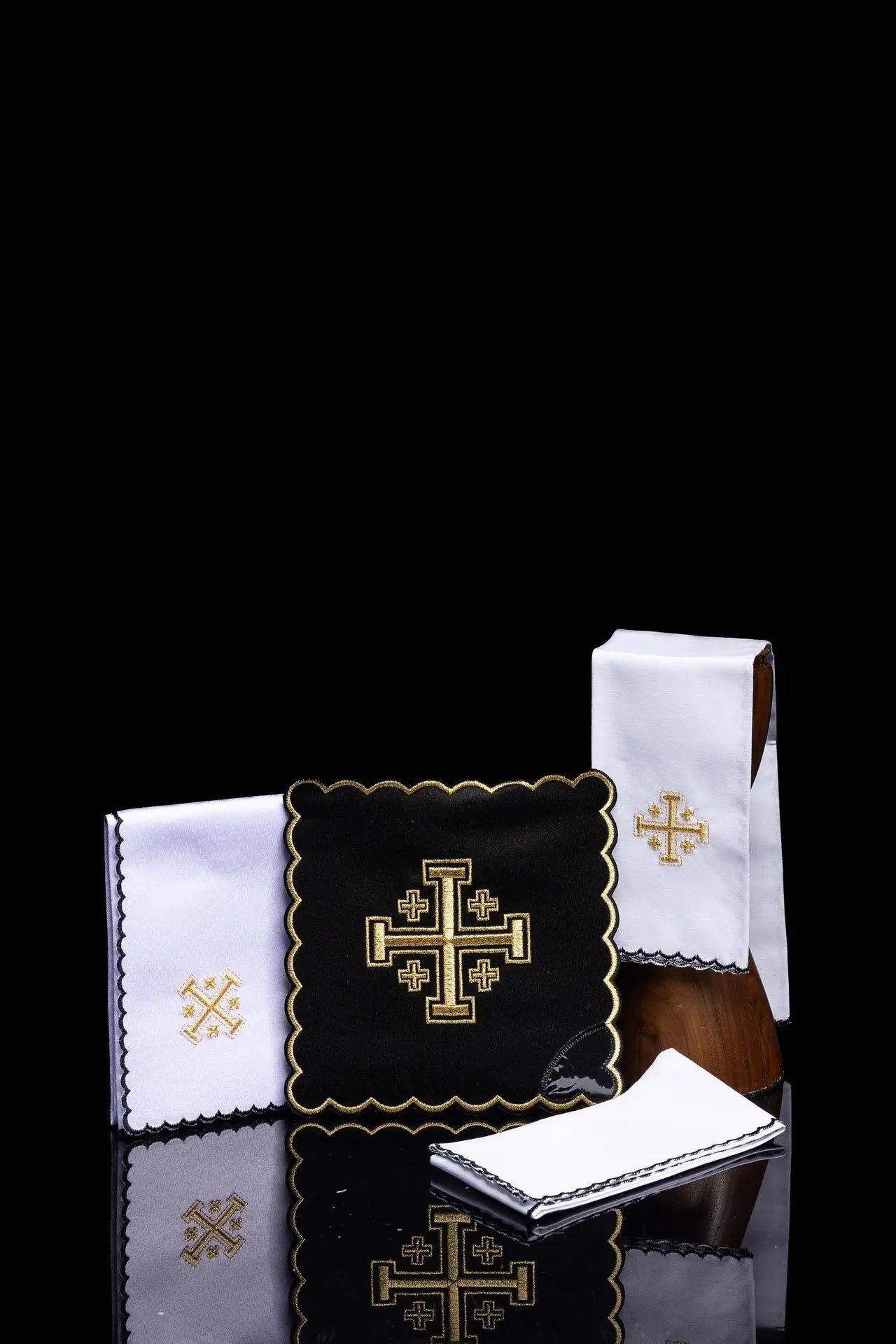
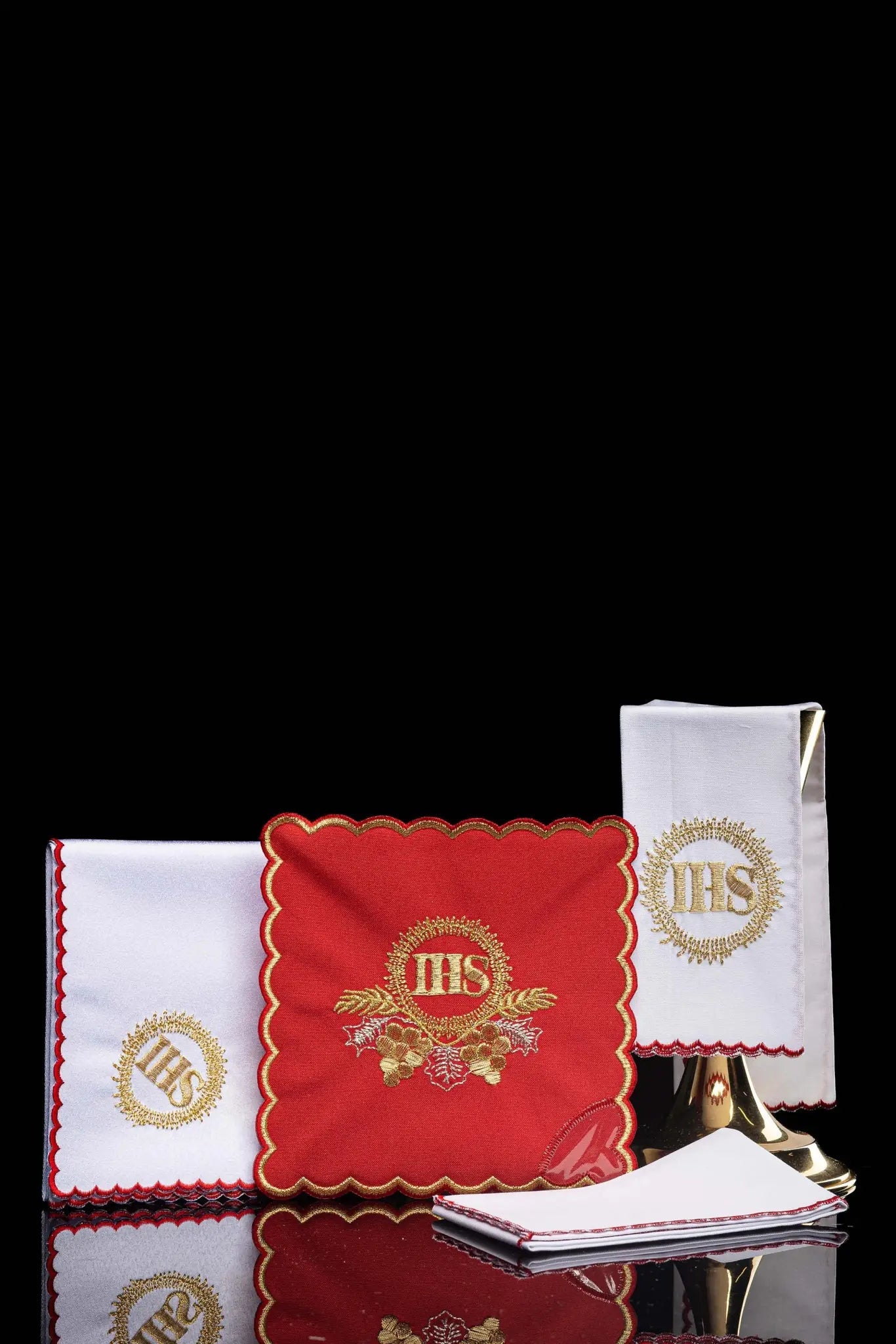
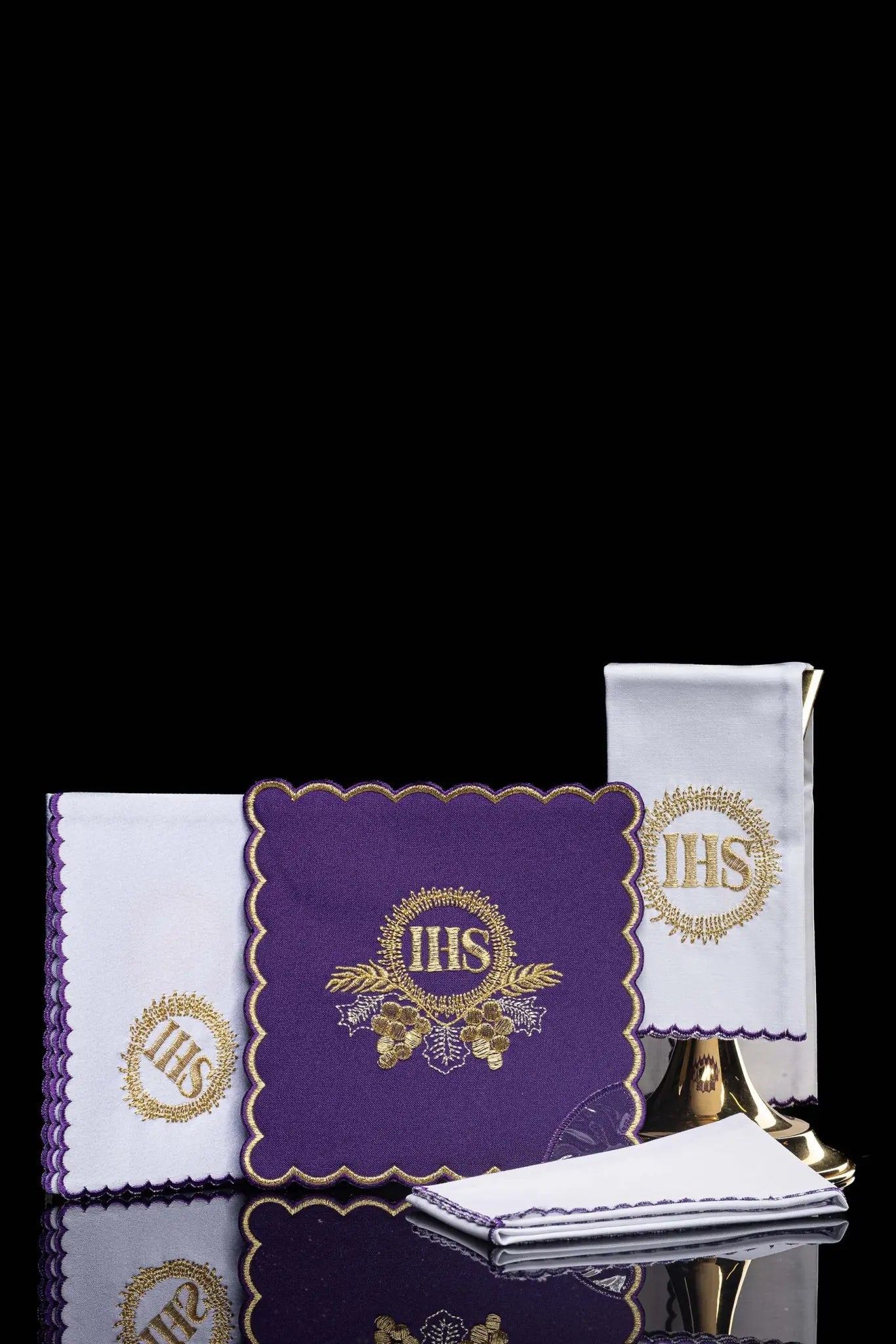
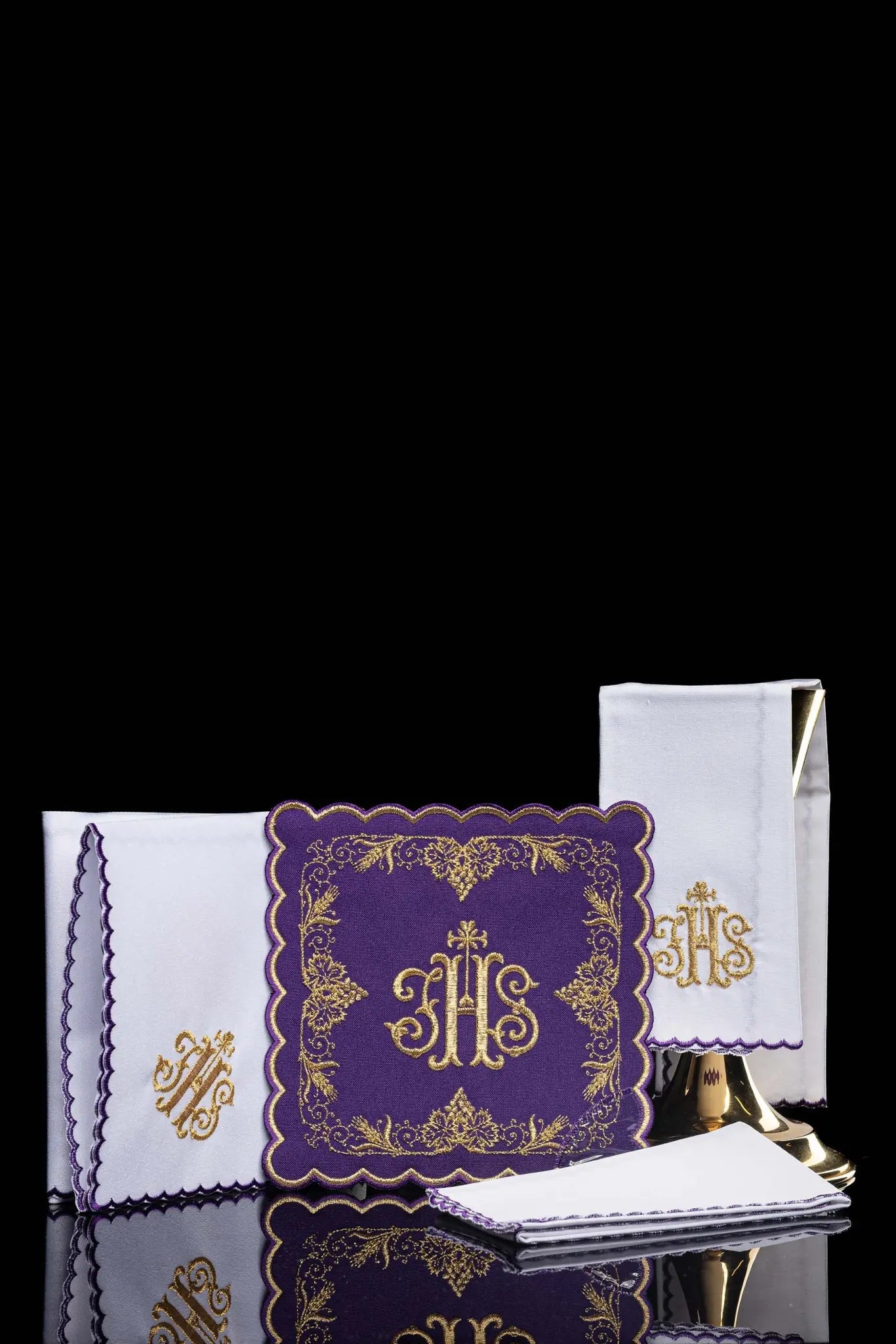
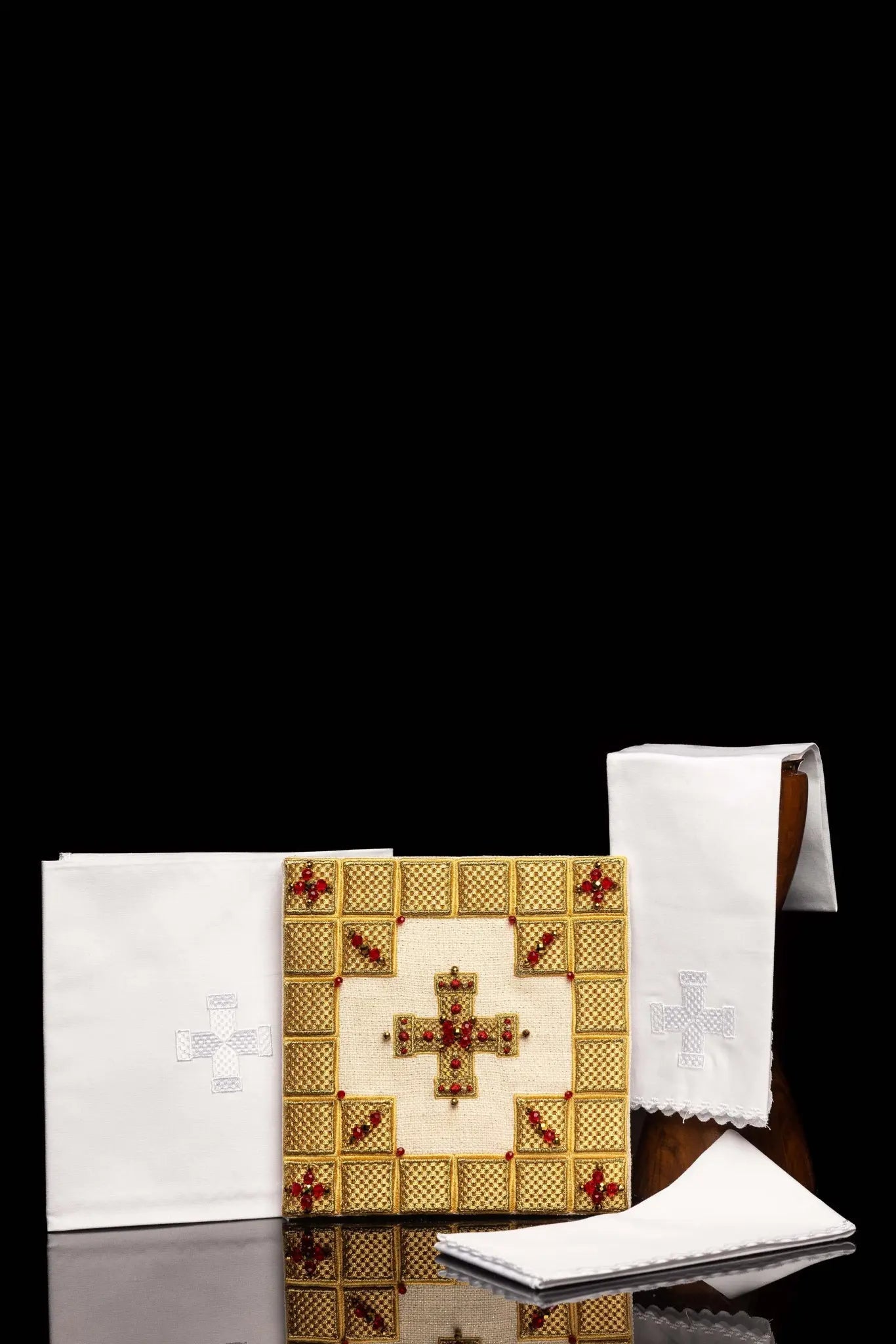
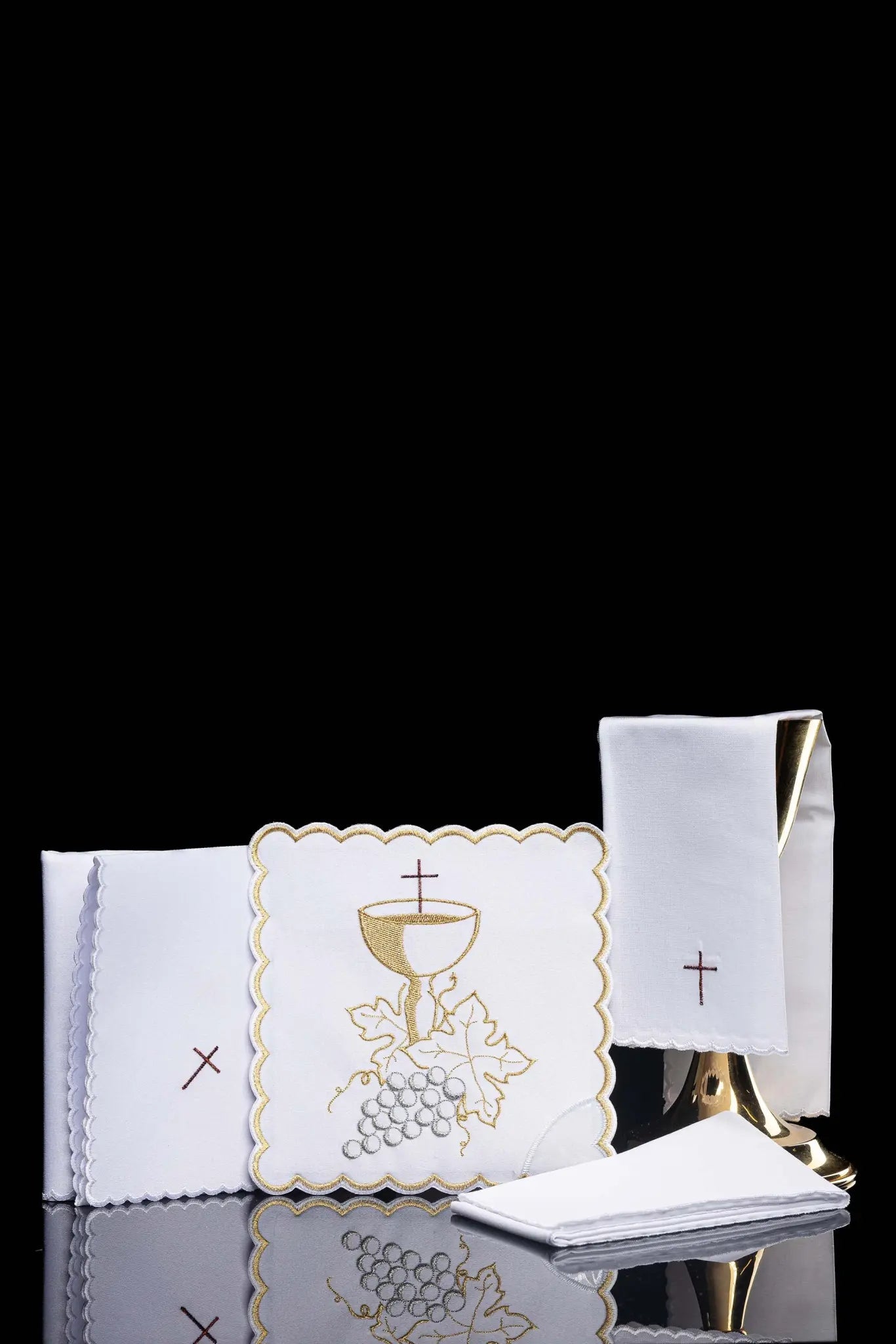
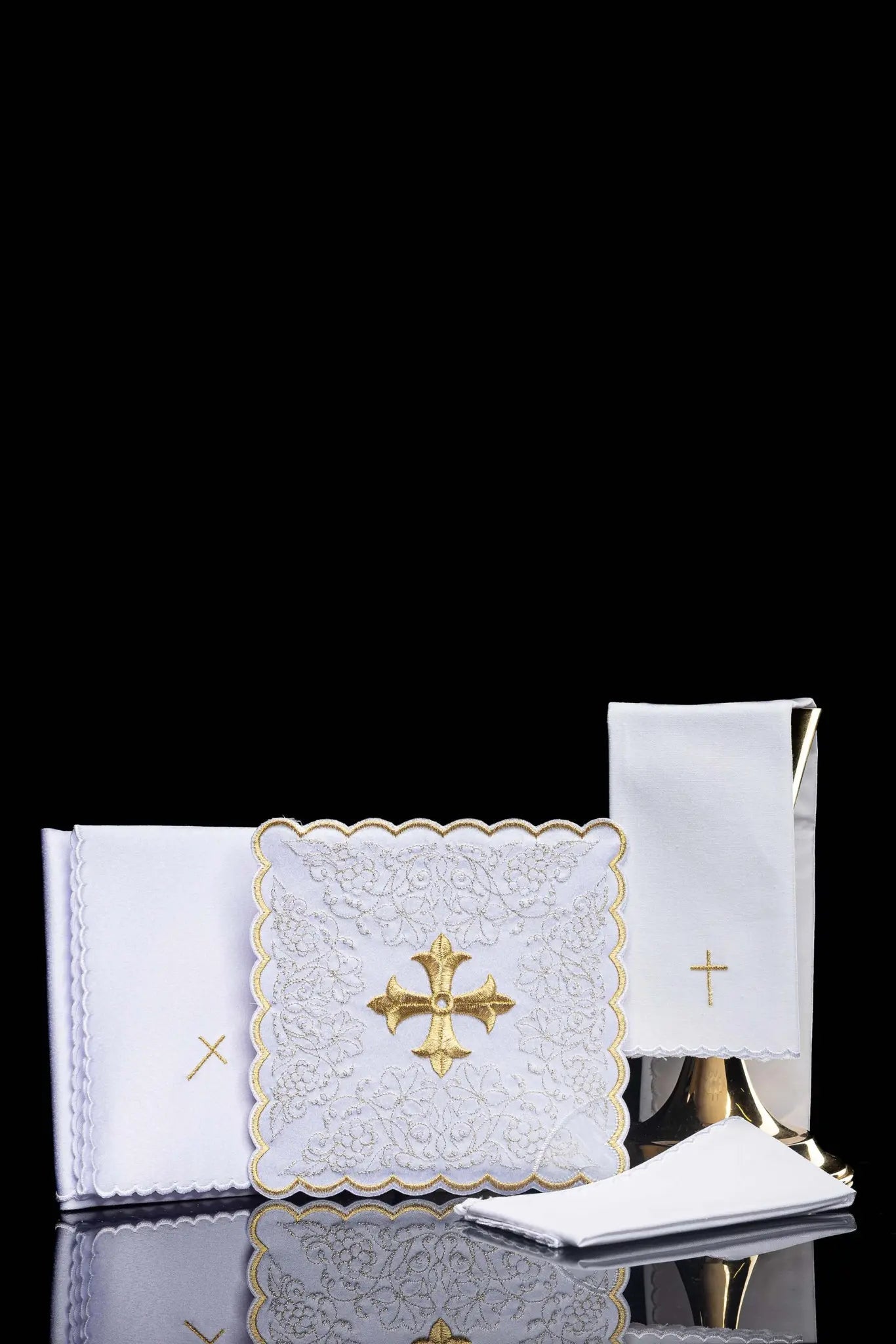
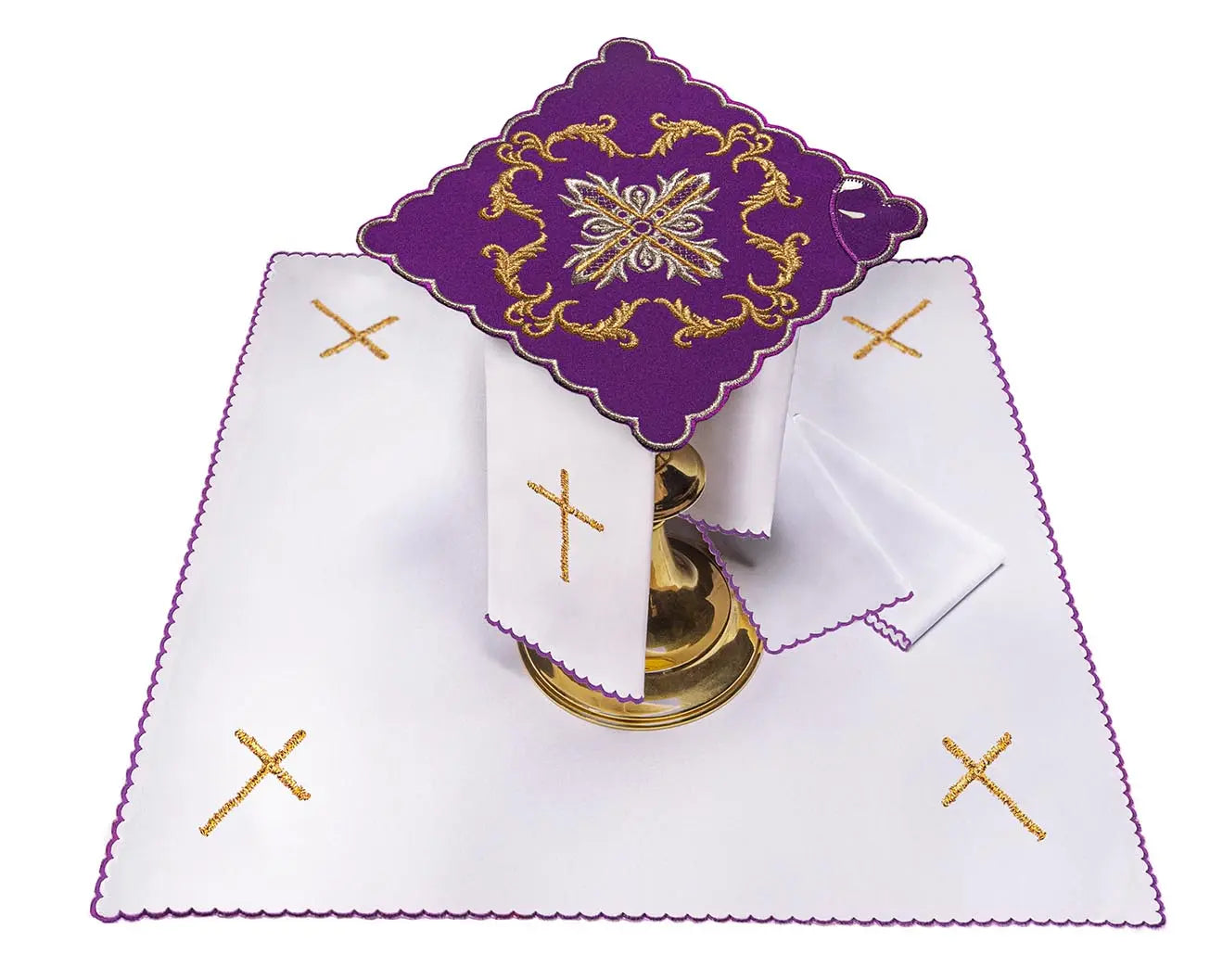
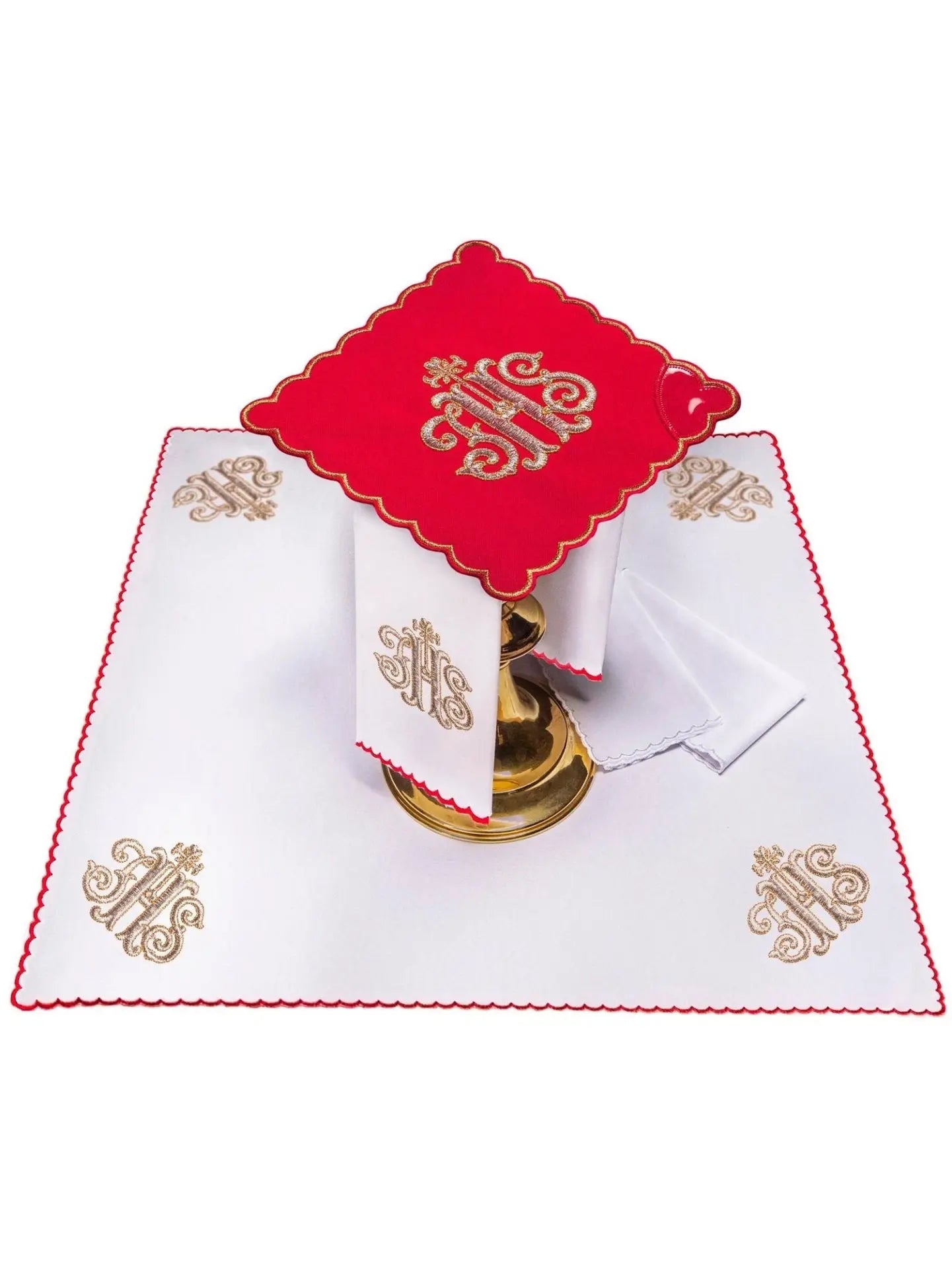
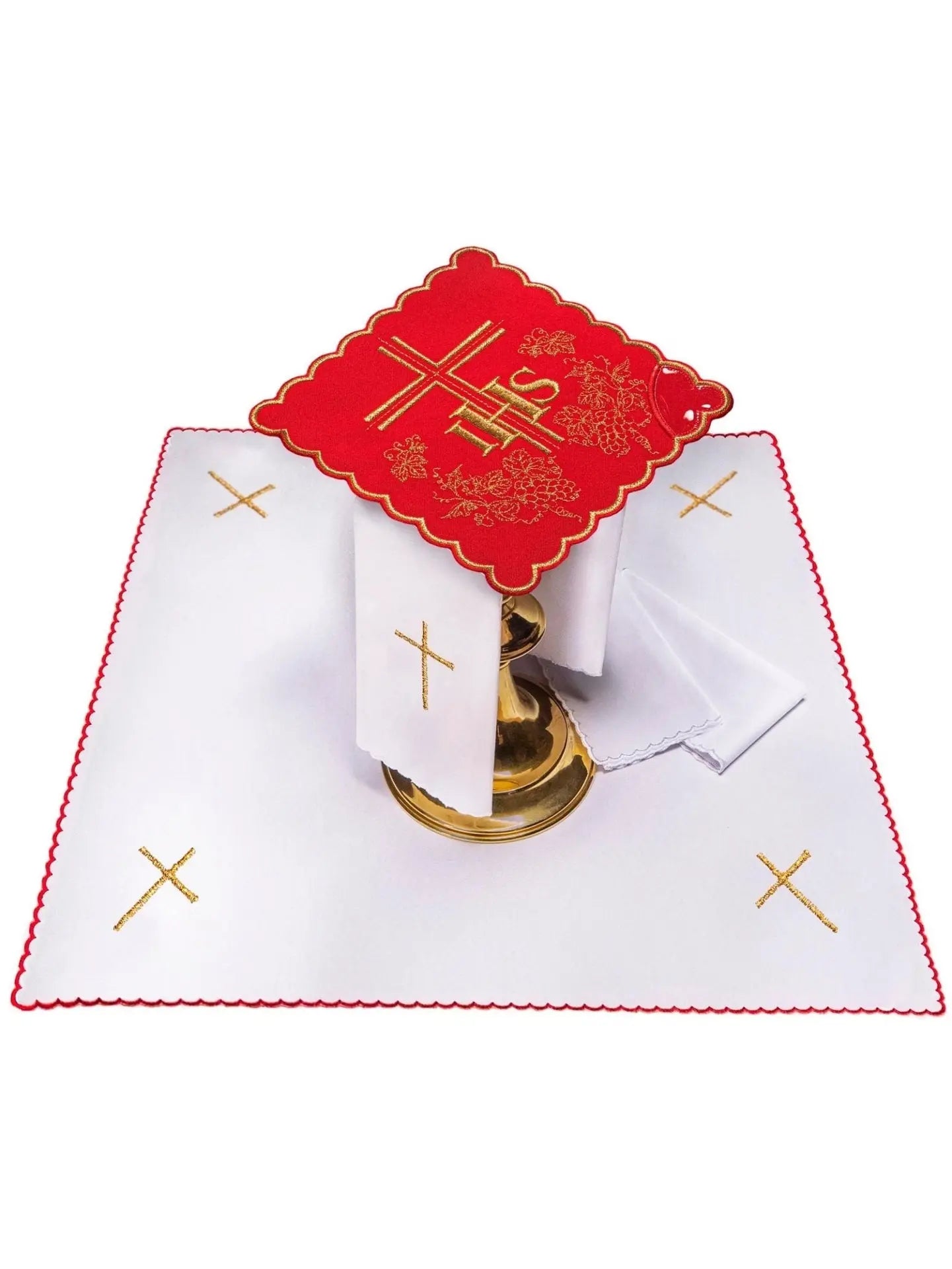
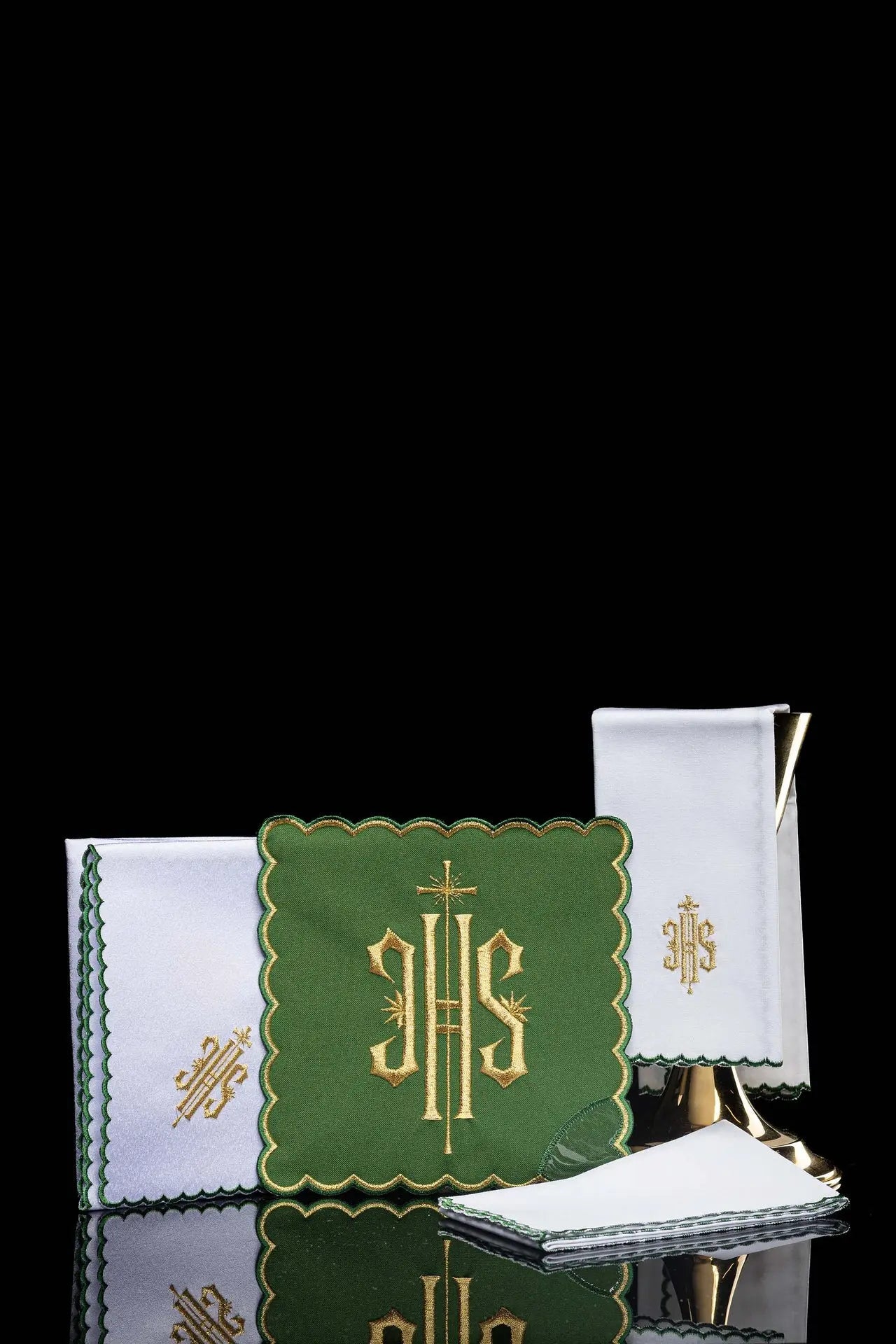
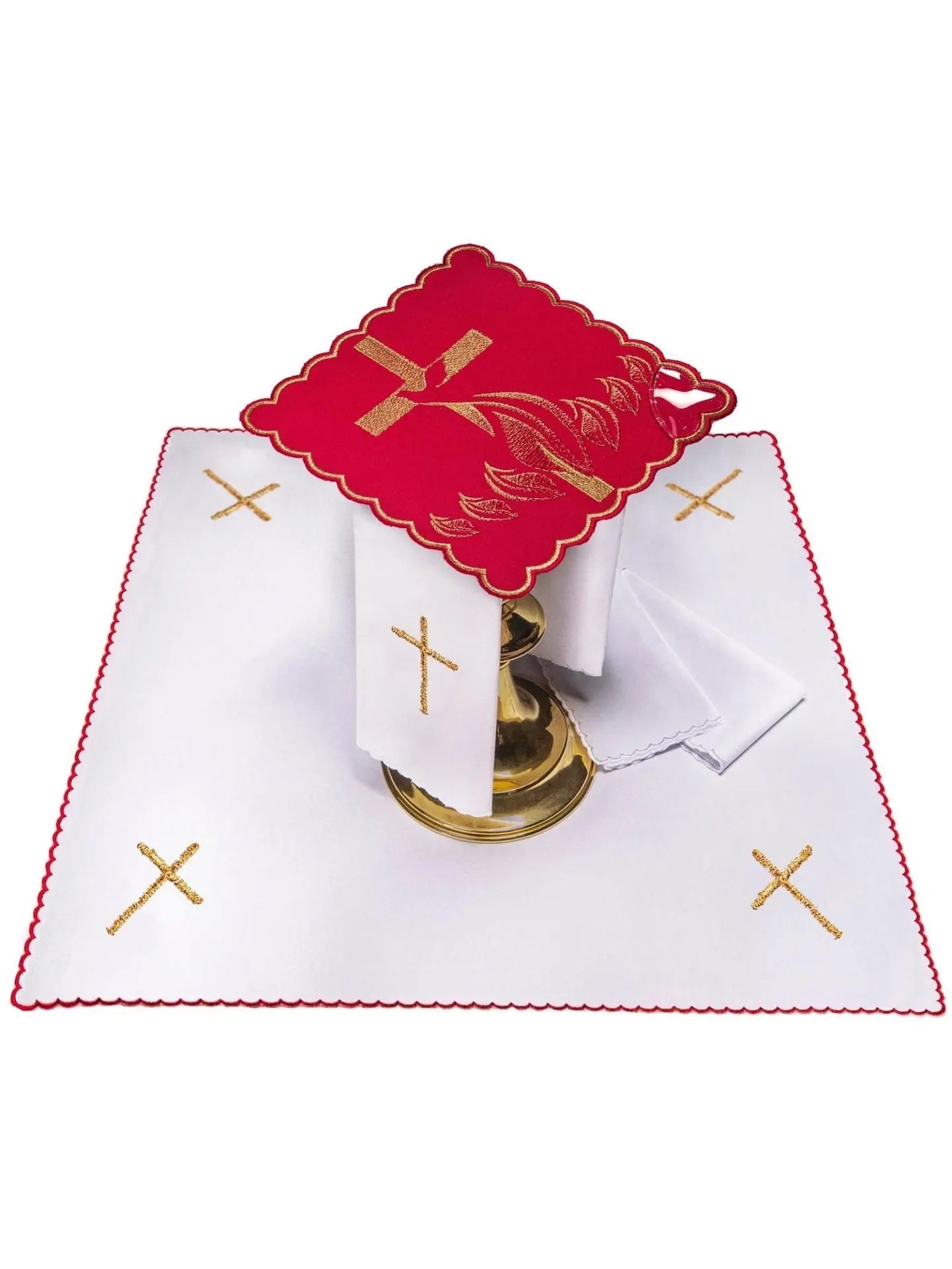
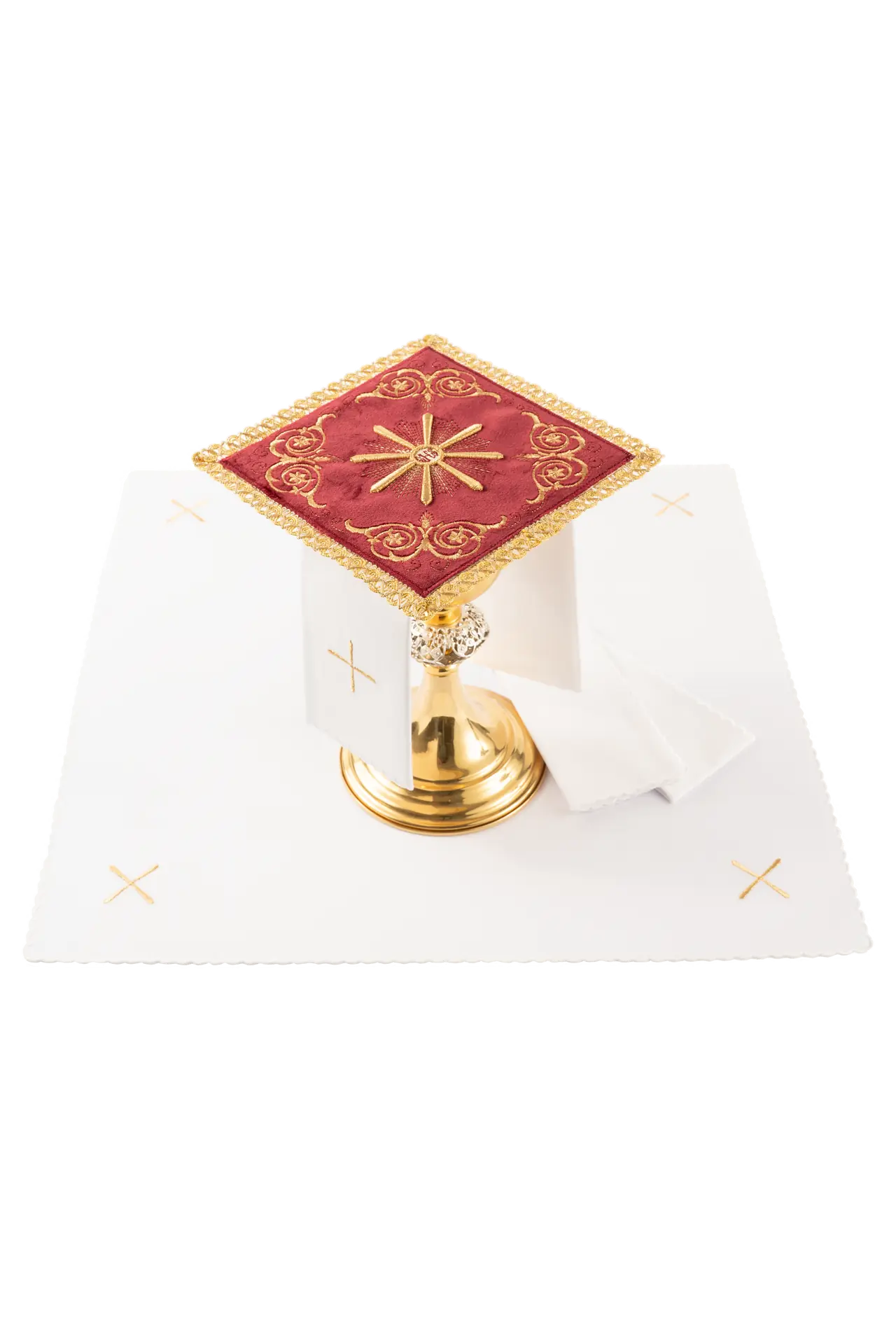
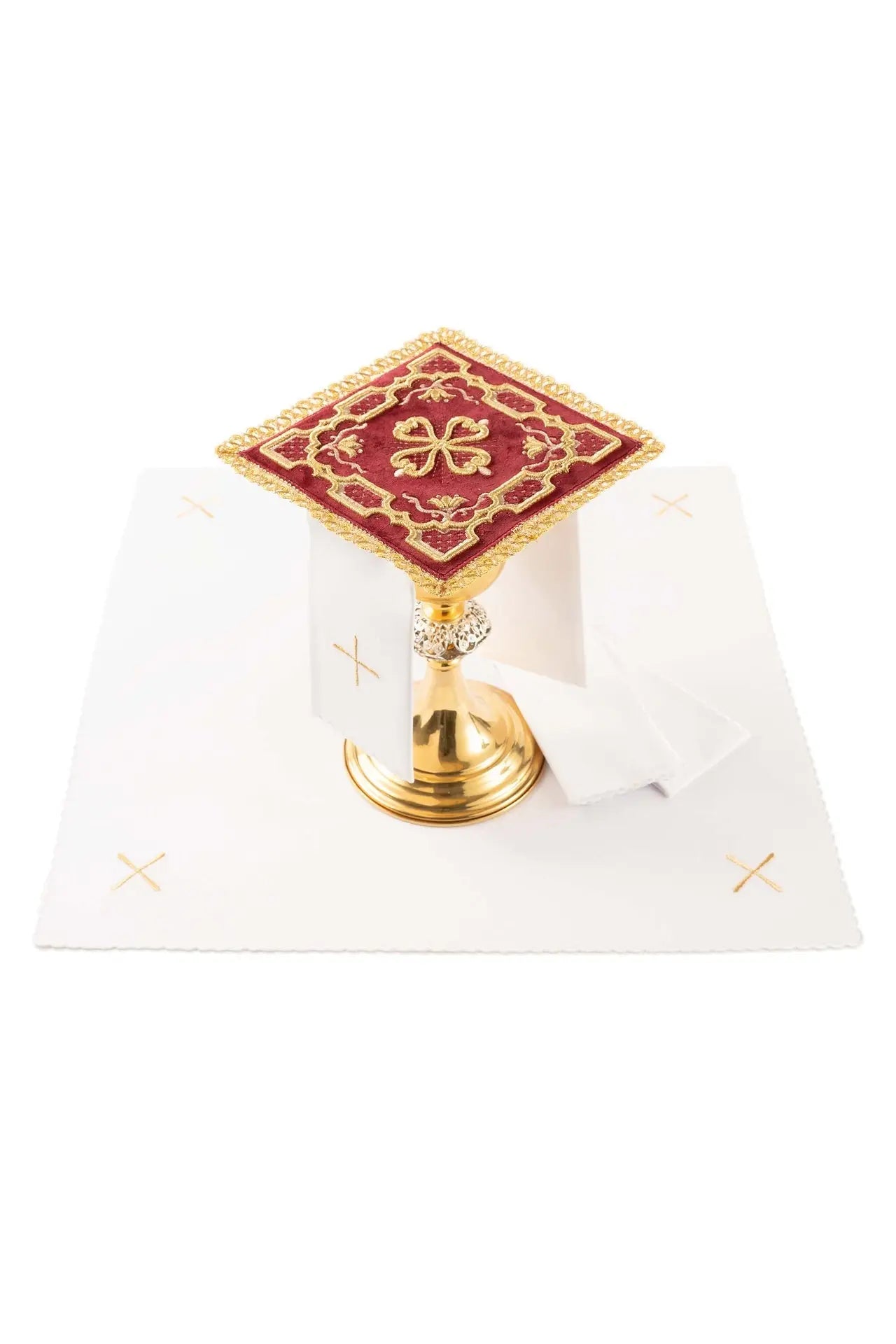
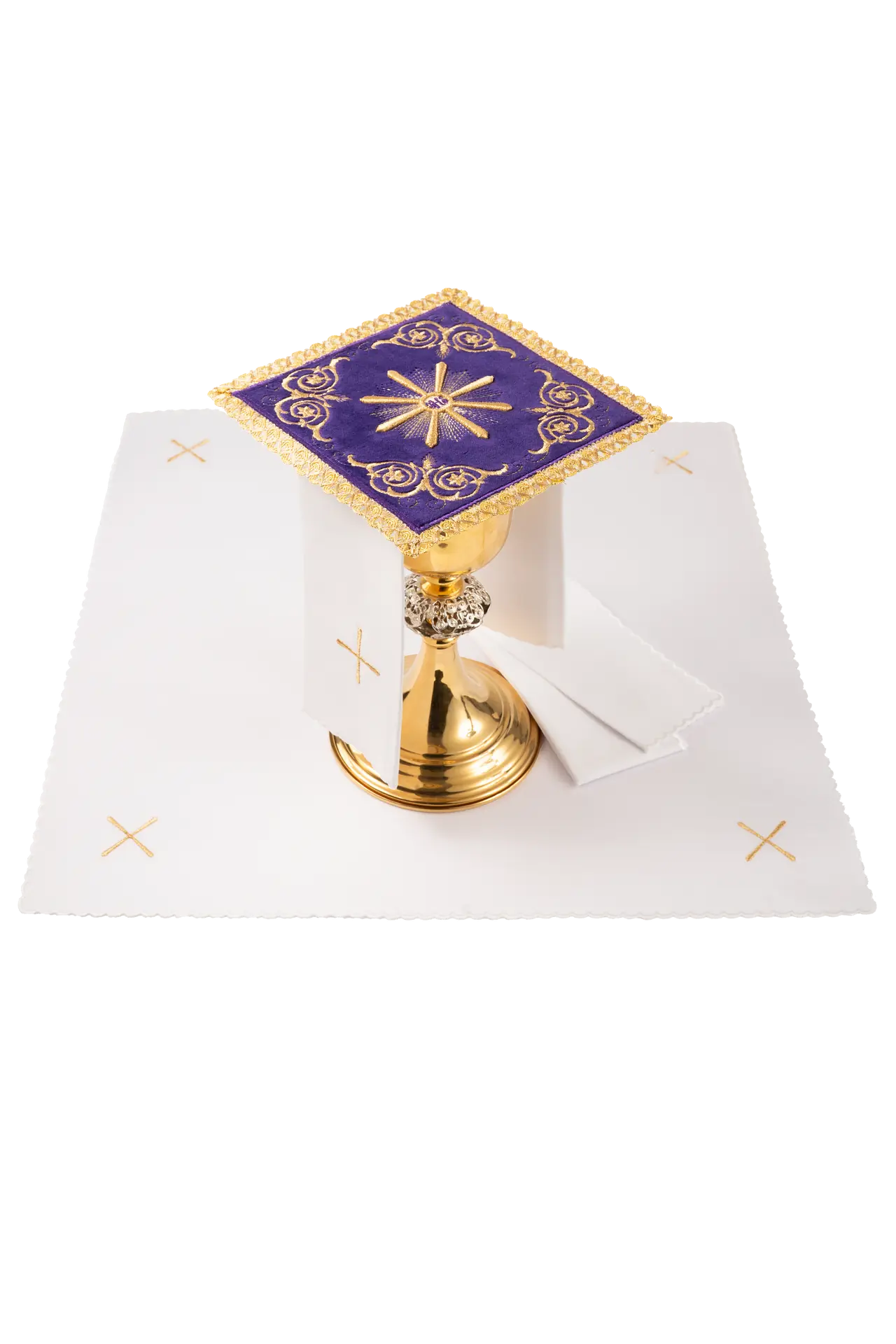
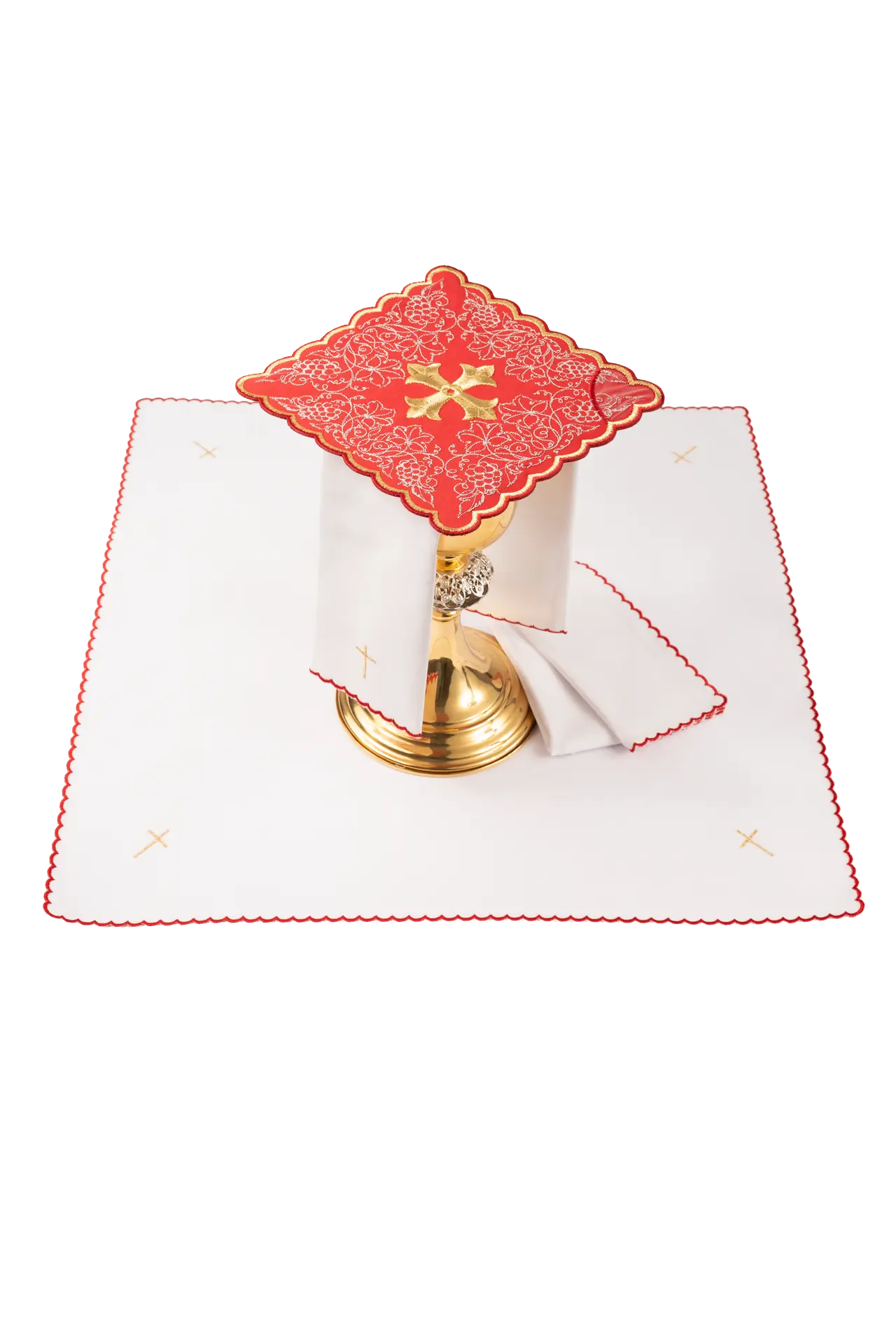
Colored chalice linens usually refer to a coordinated set of small liturgical textiles prepared for use with the chalice and paten. A typical set may include a corporal, a purificator, and a pall, and some designs may also be paired with a chalice veil or another matching textile. The corporal is spread on the altar so that the chalice and paten have a prepared place during the Eucharistic liturgy. The purificator is used for wiping the rim and bowl of the chalice and for the ablutions. The pall covers the chalice and helps protect the wine from dust or other particles before the consecration. Together, these pieces form a quiet but important part of the altar arrangement.
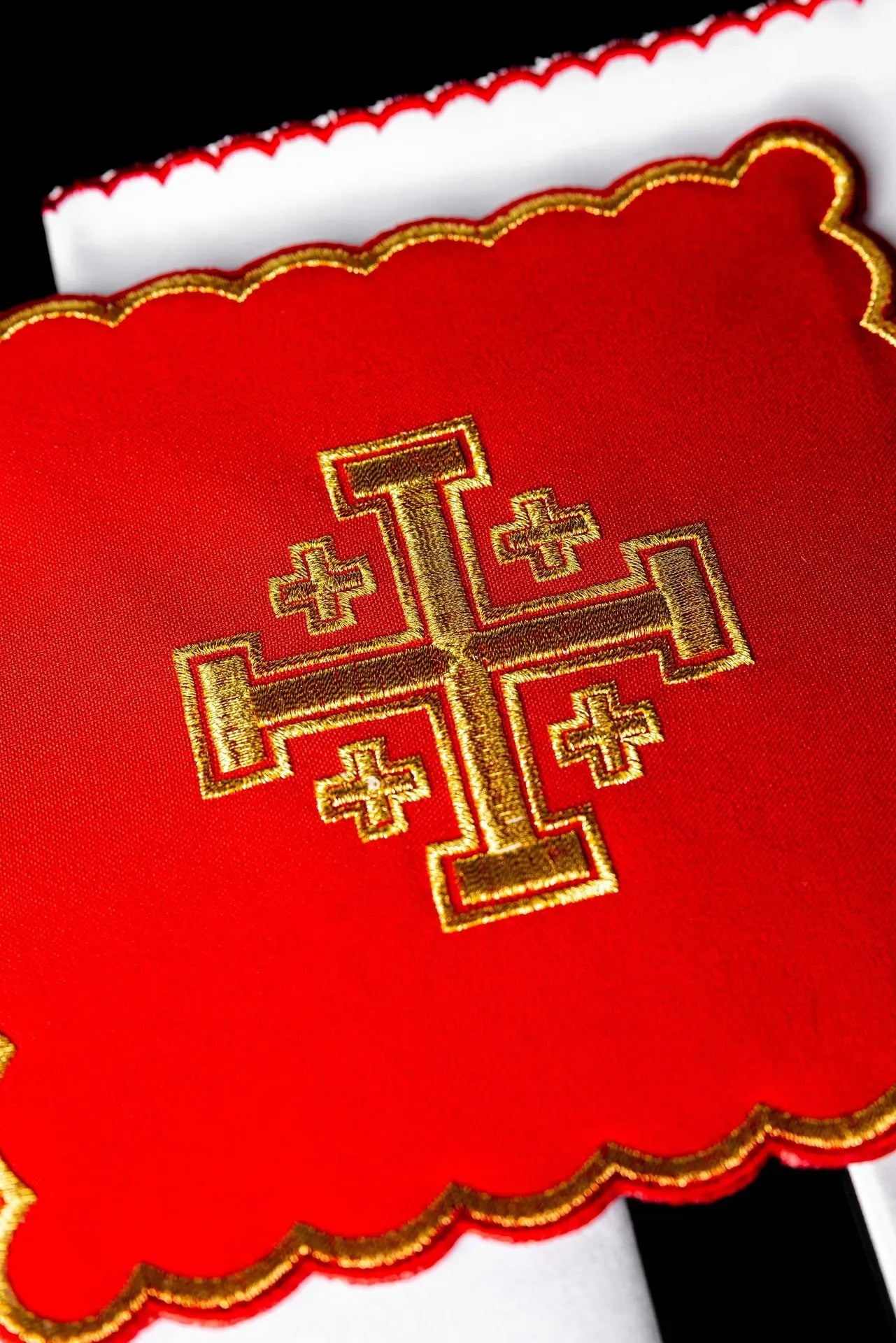
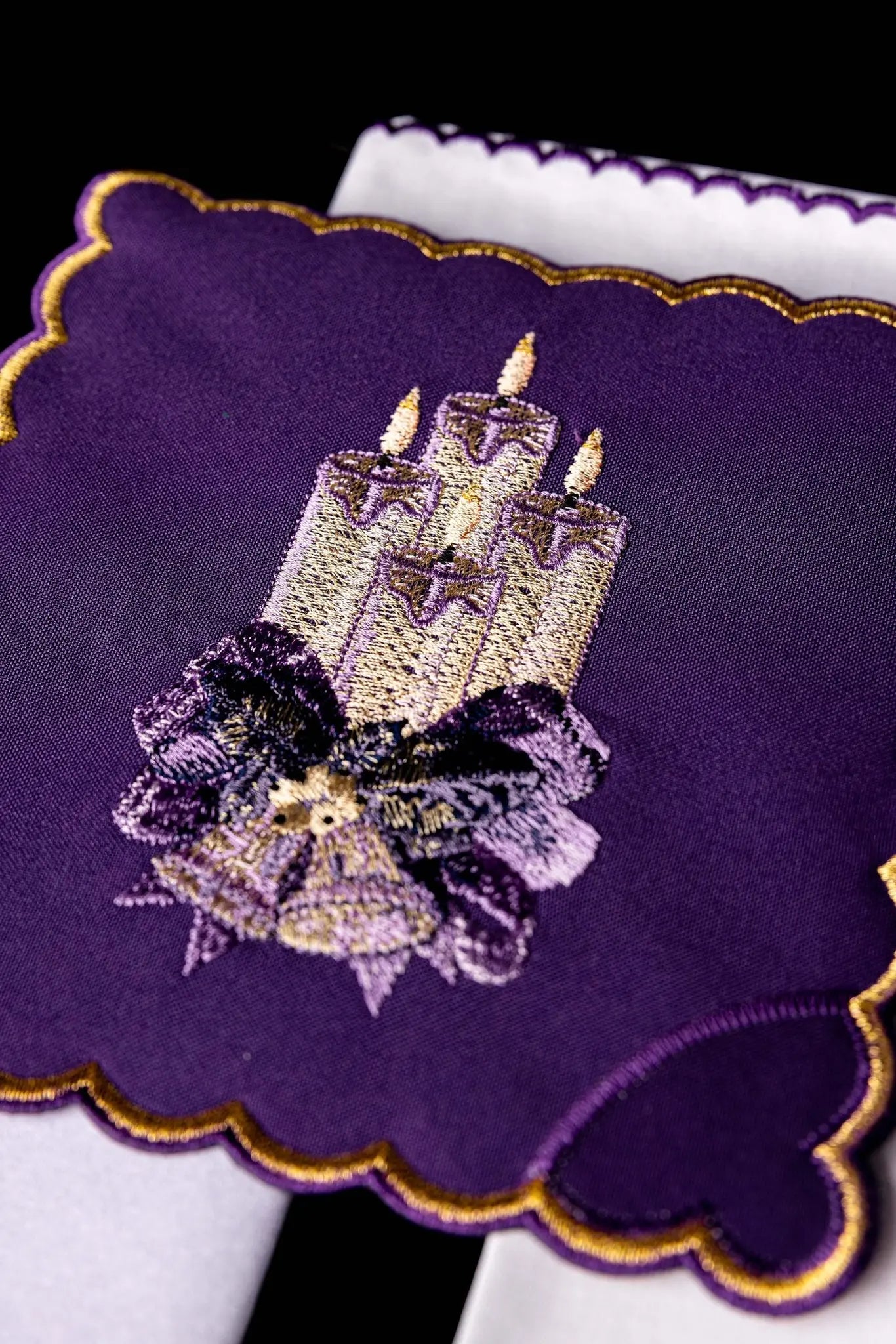
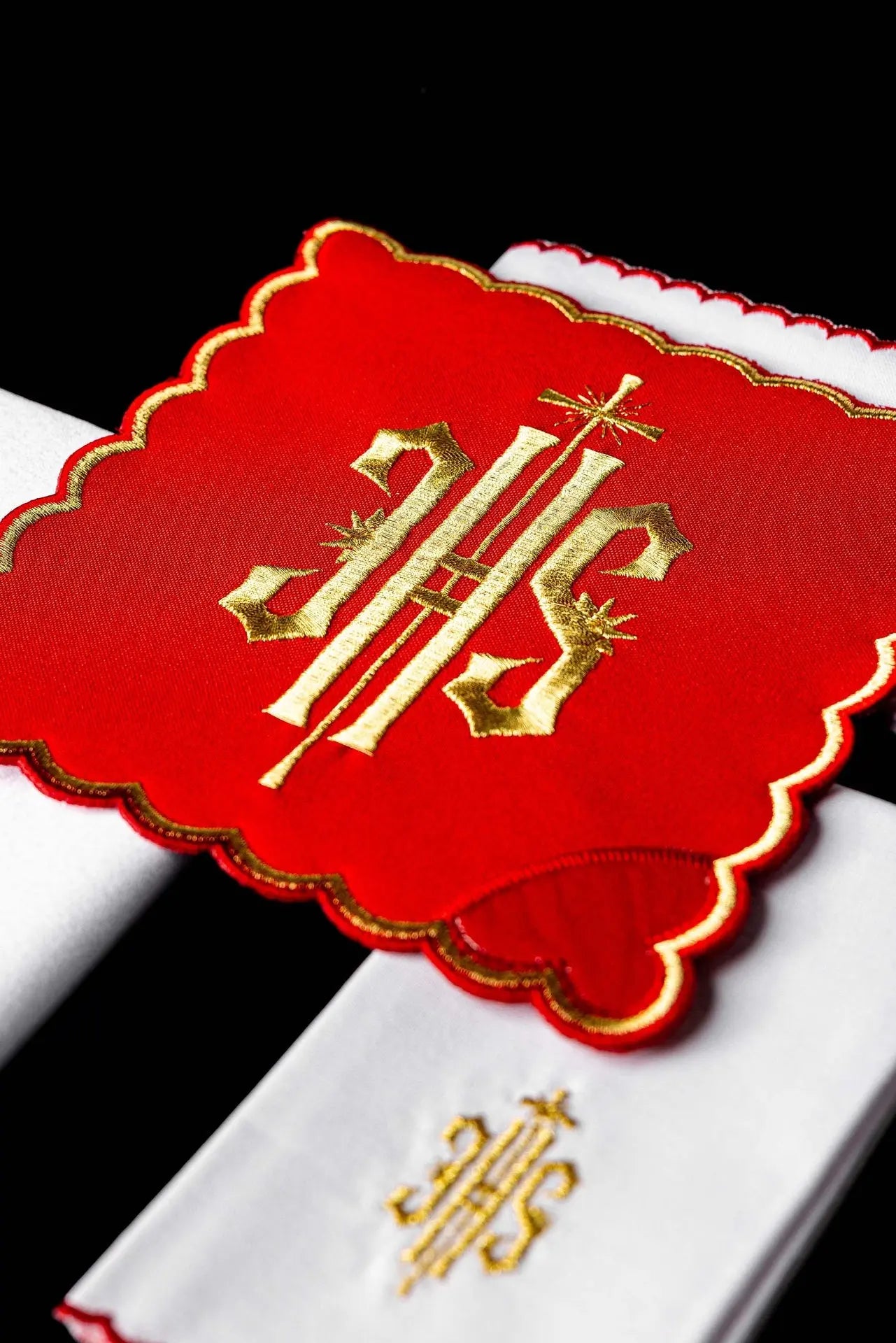
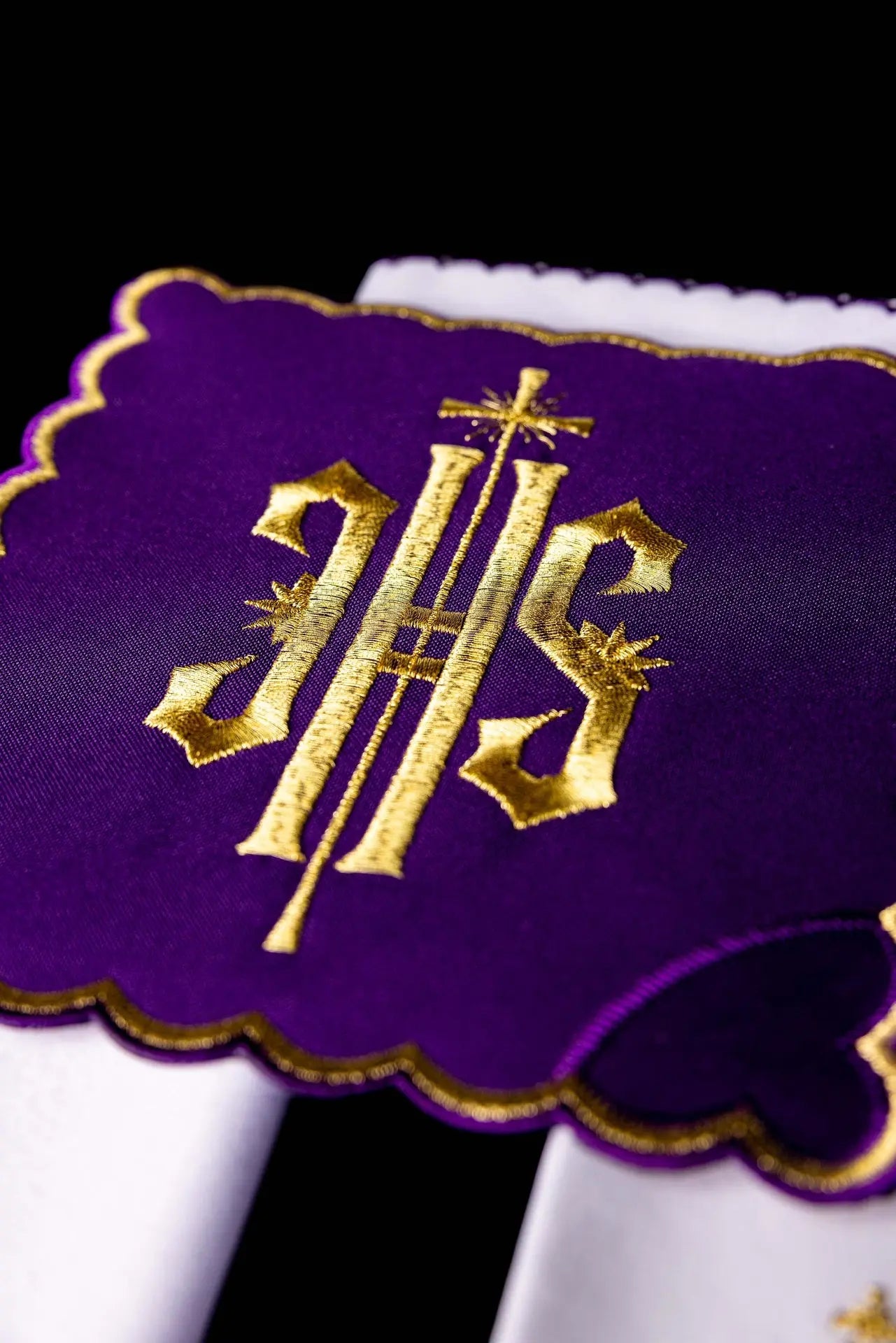
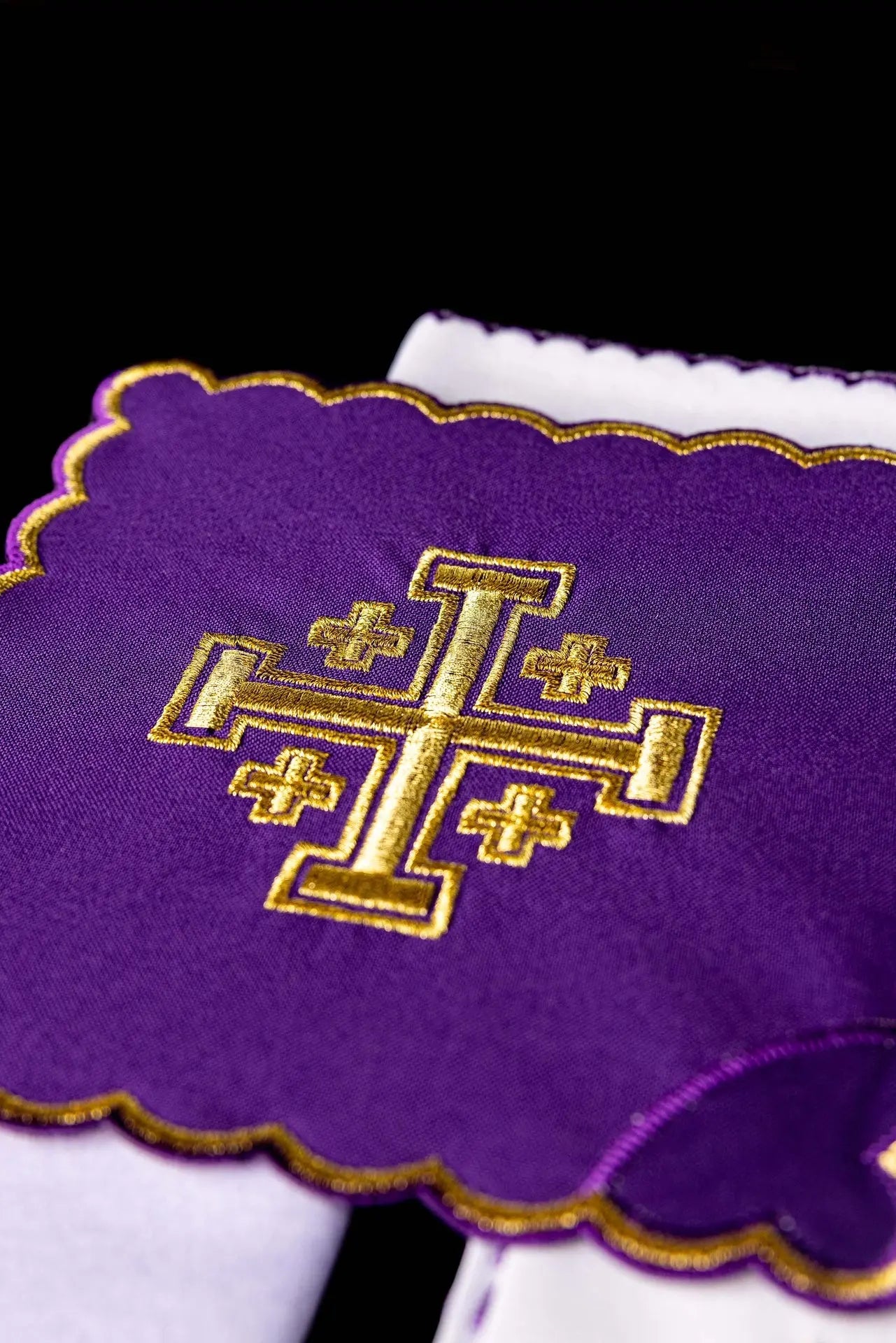
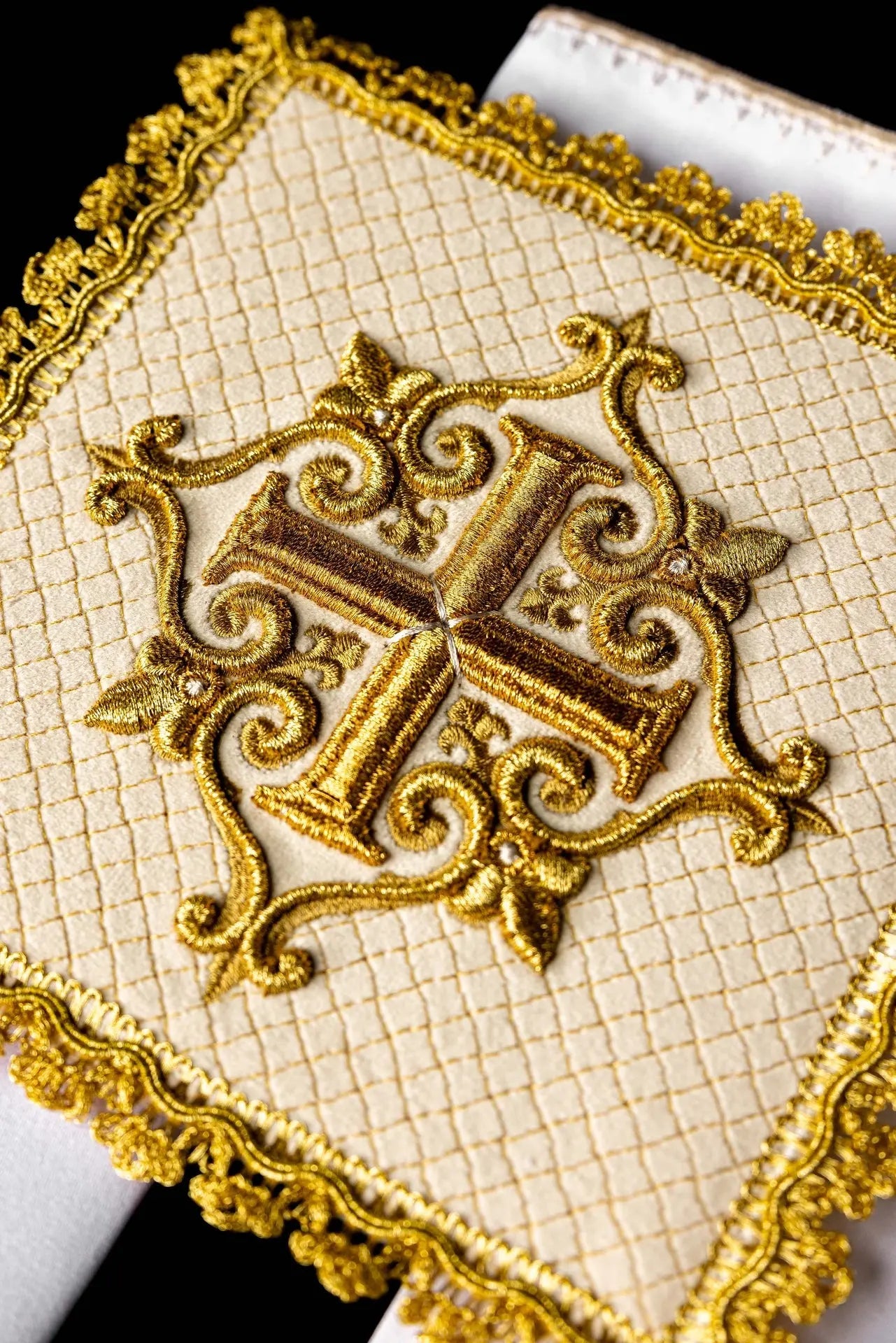
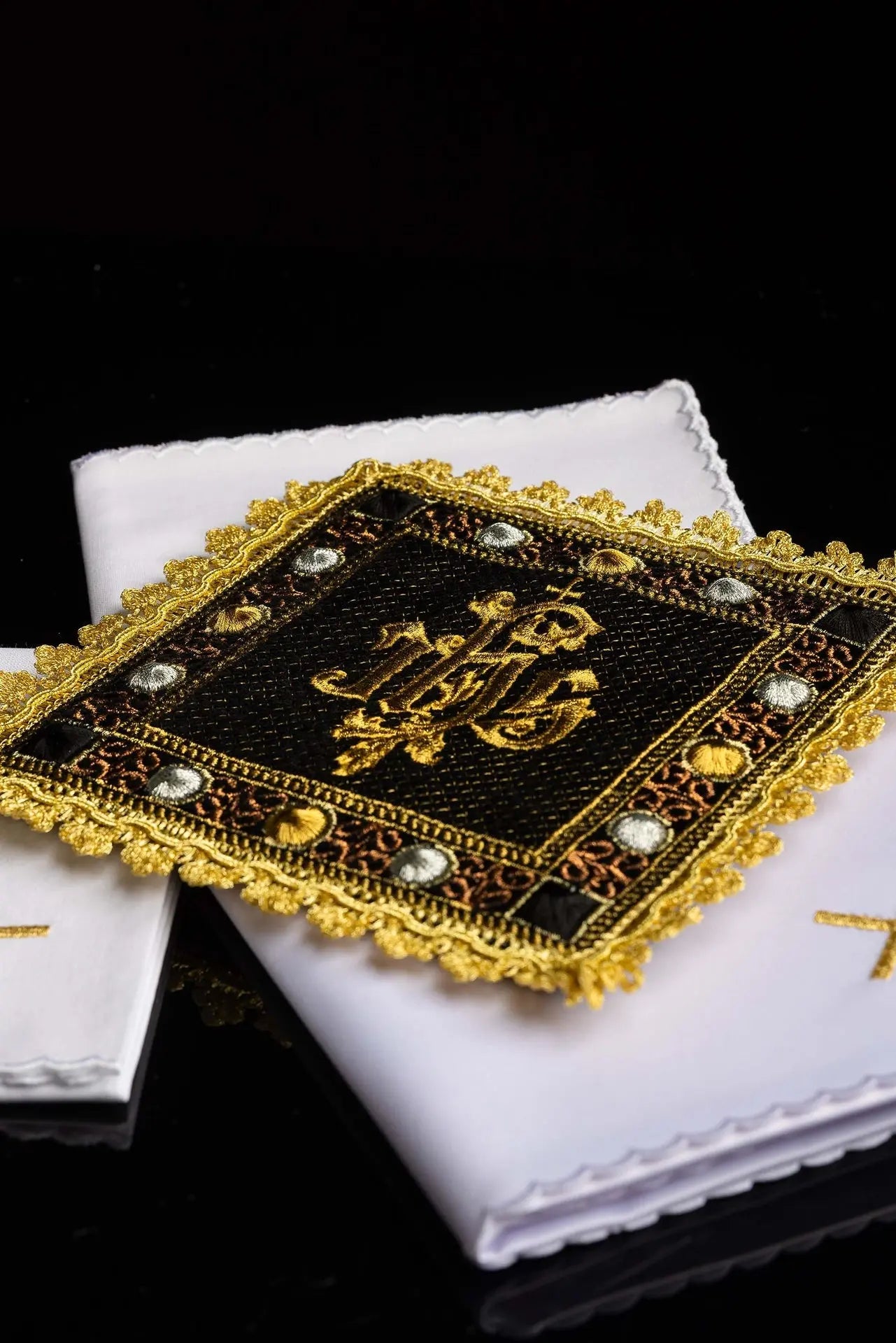
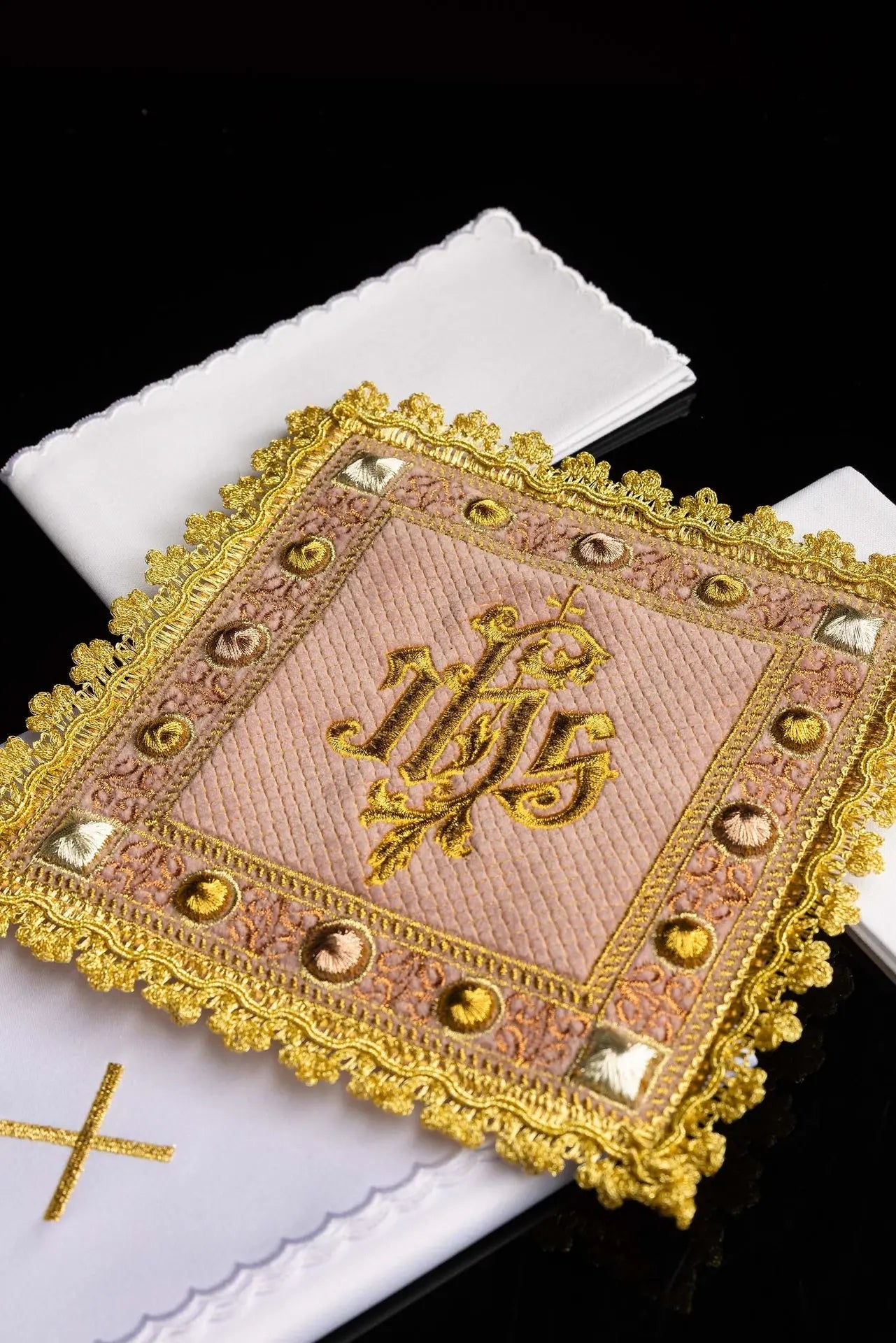
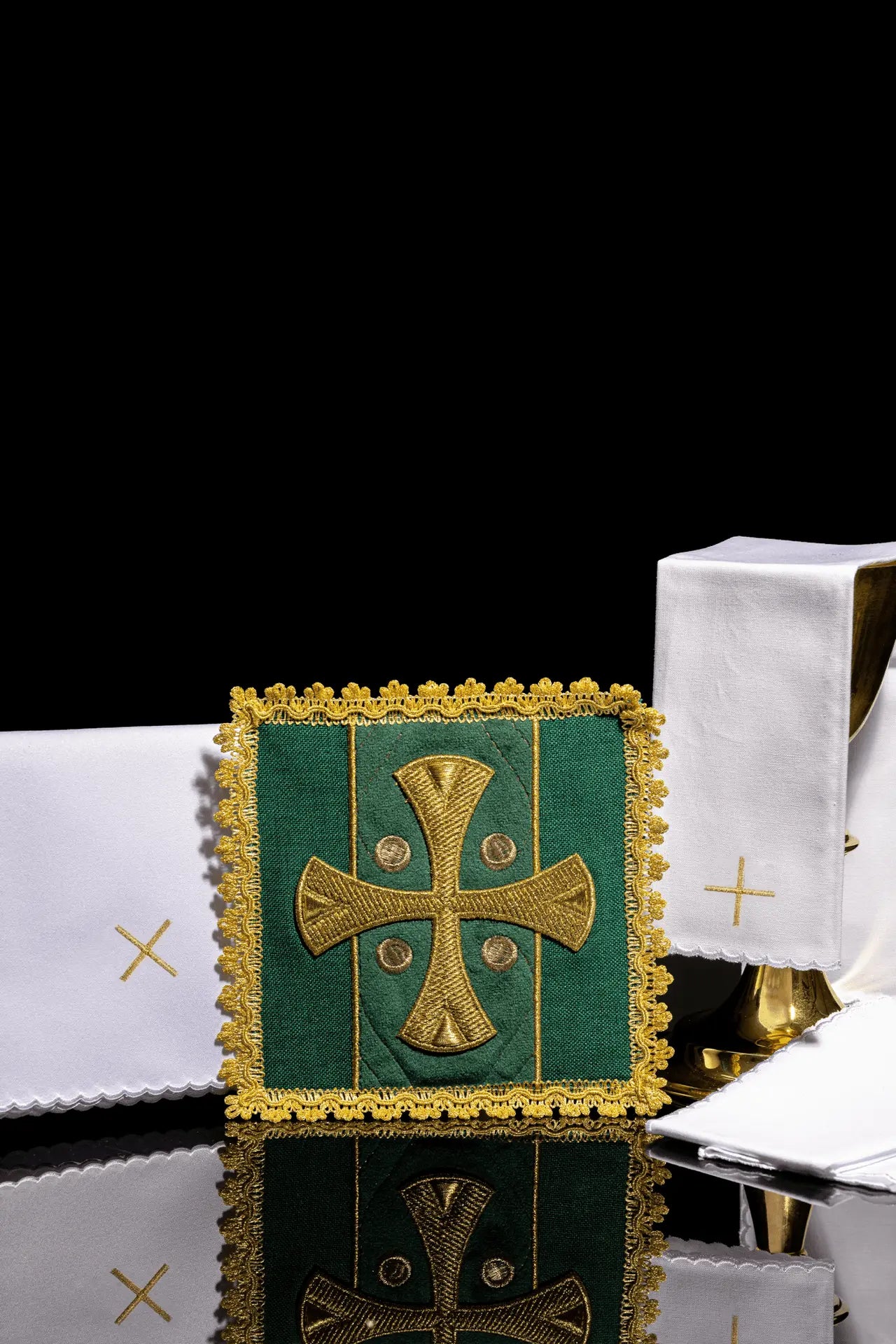
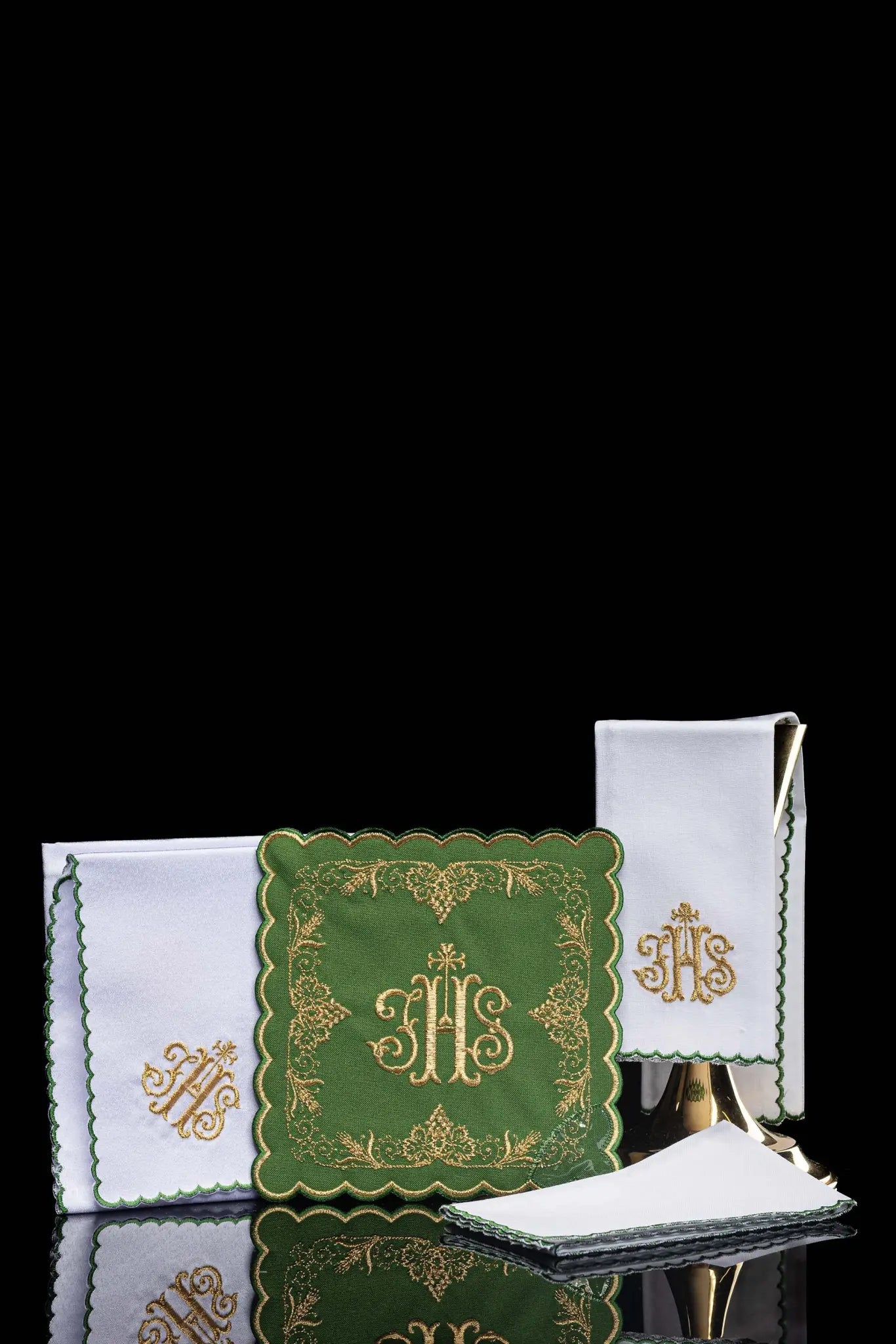
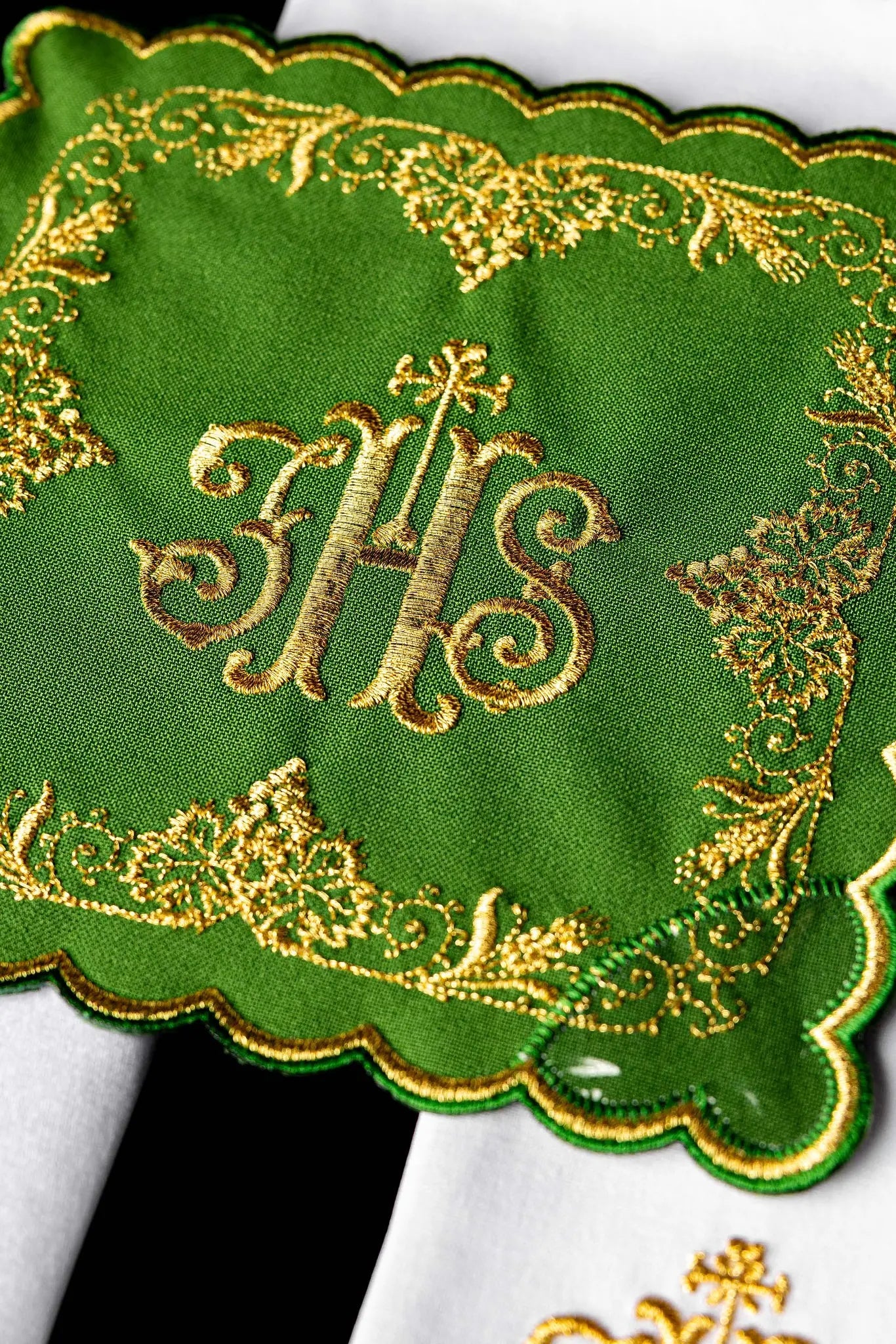
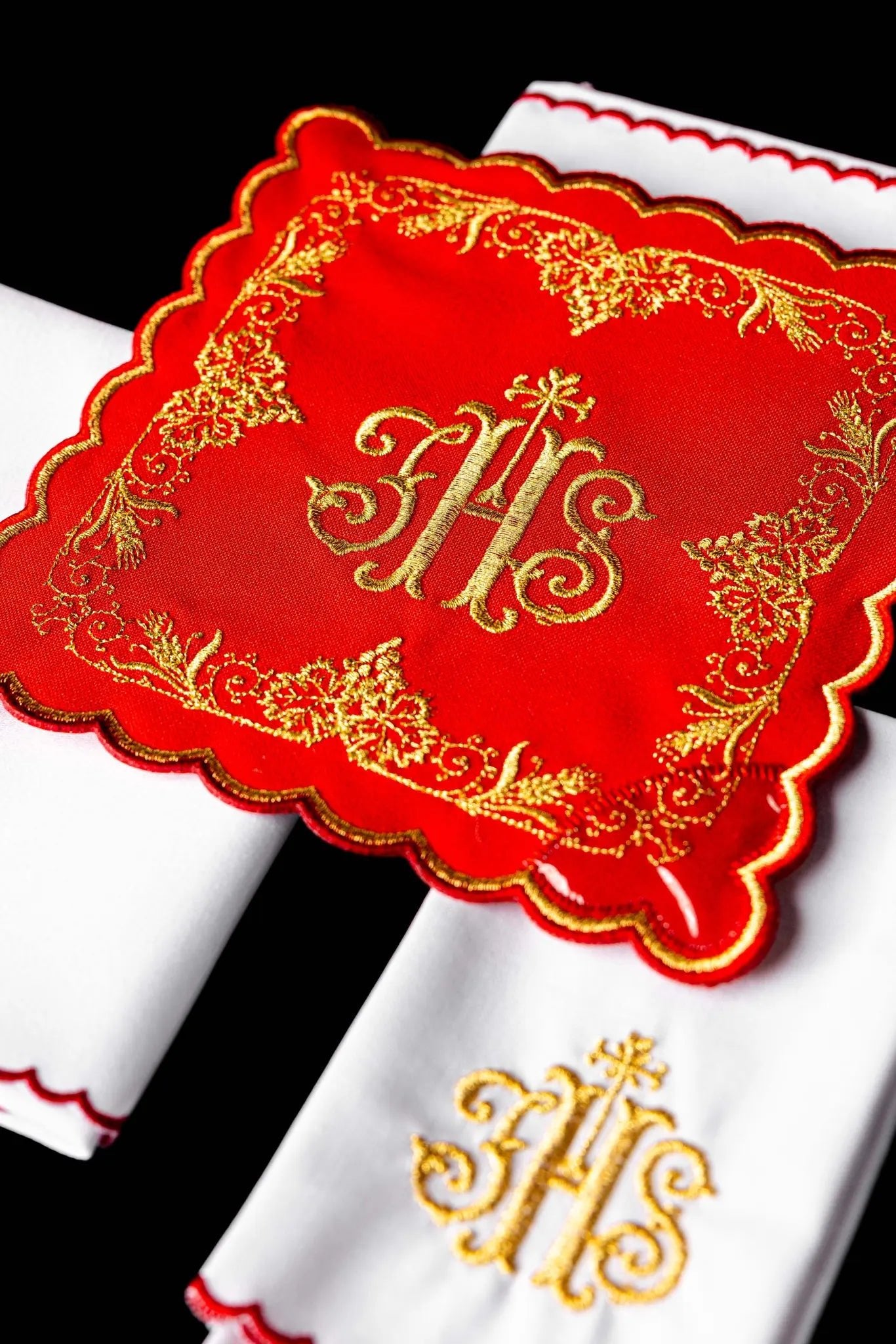
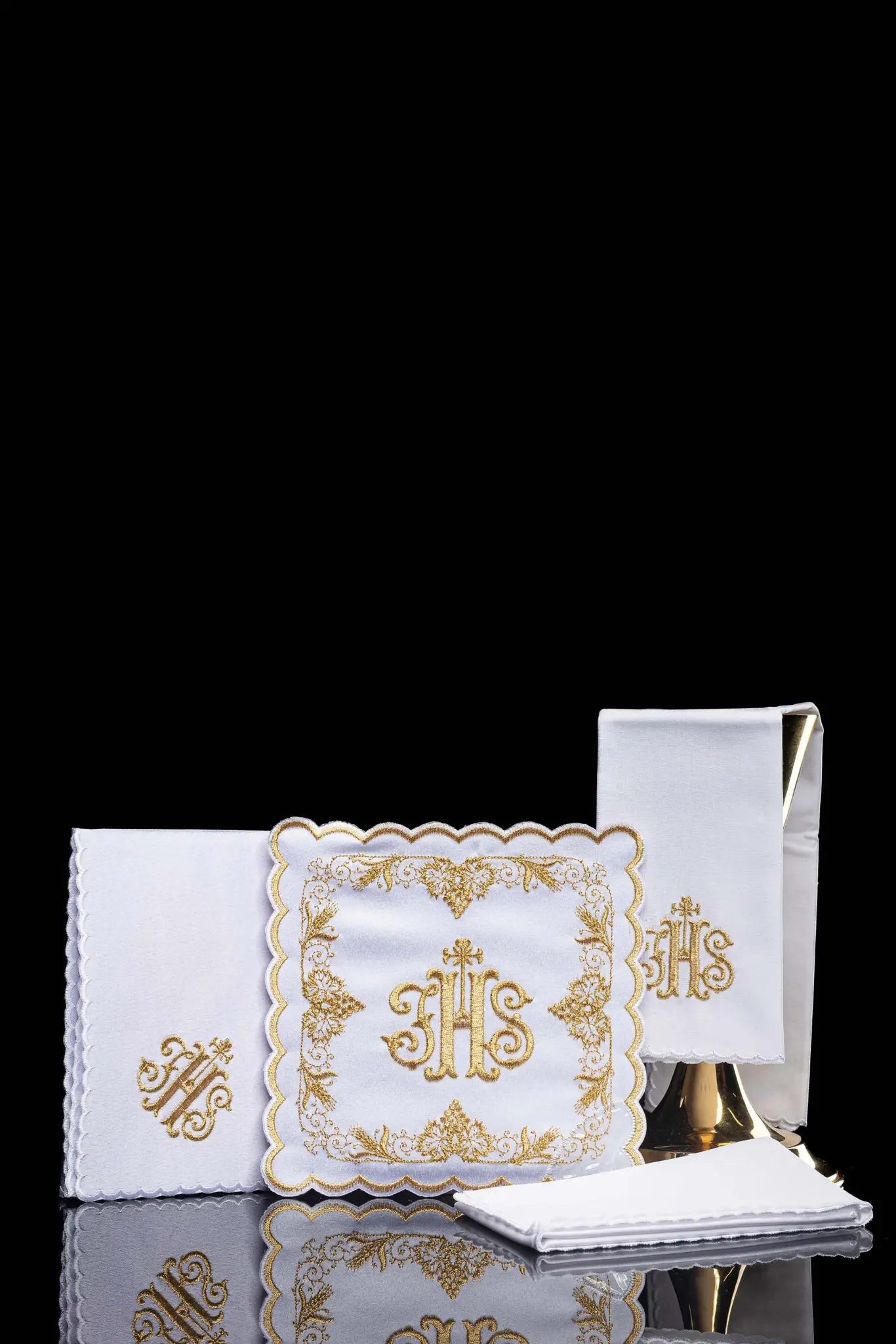
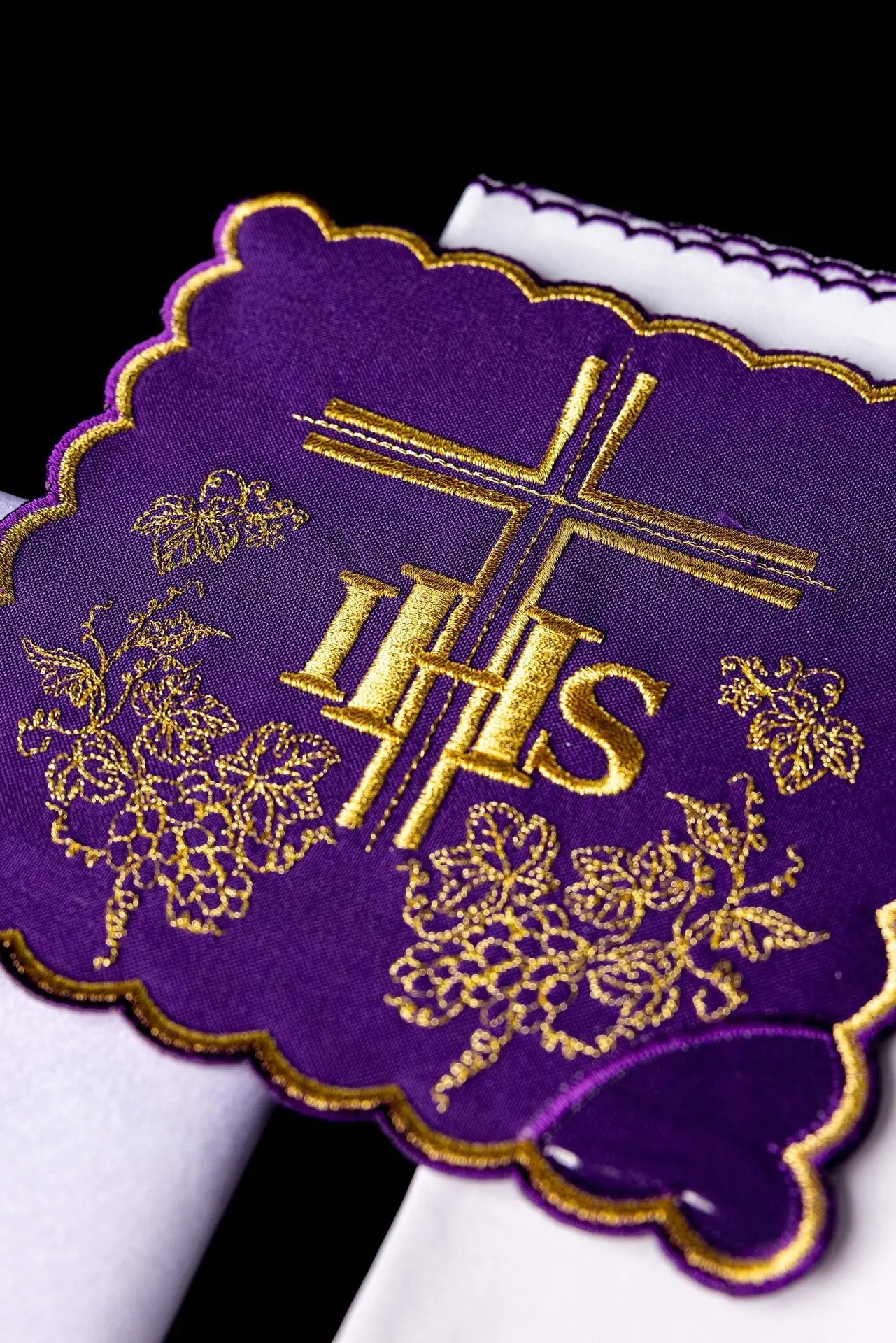
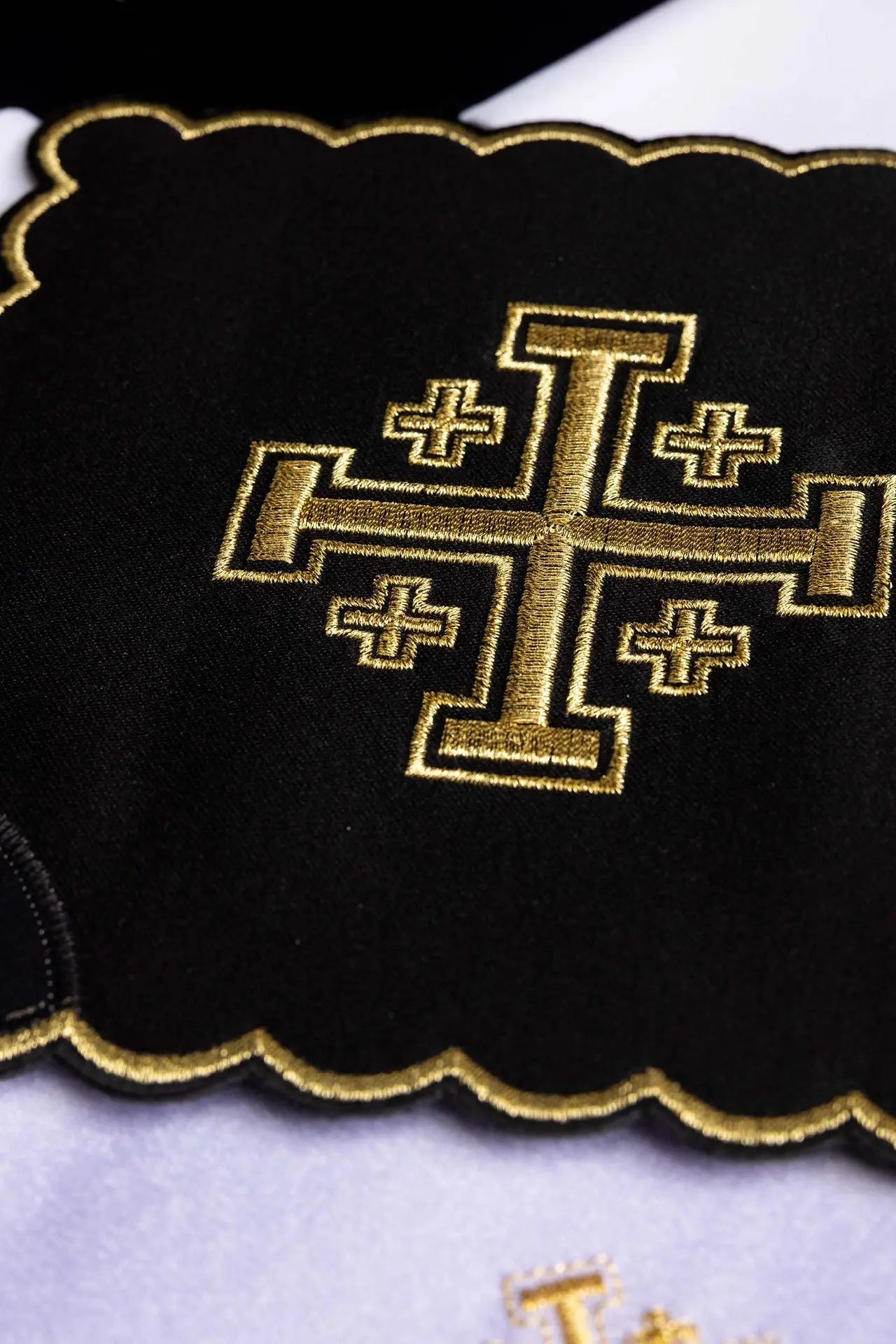
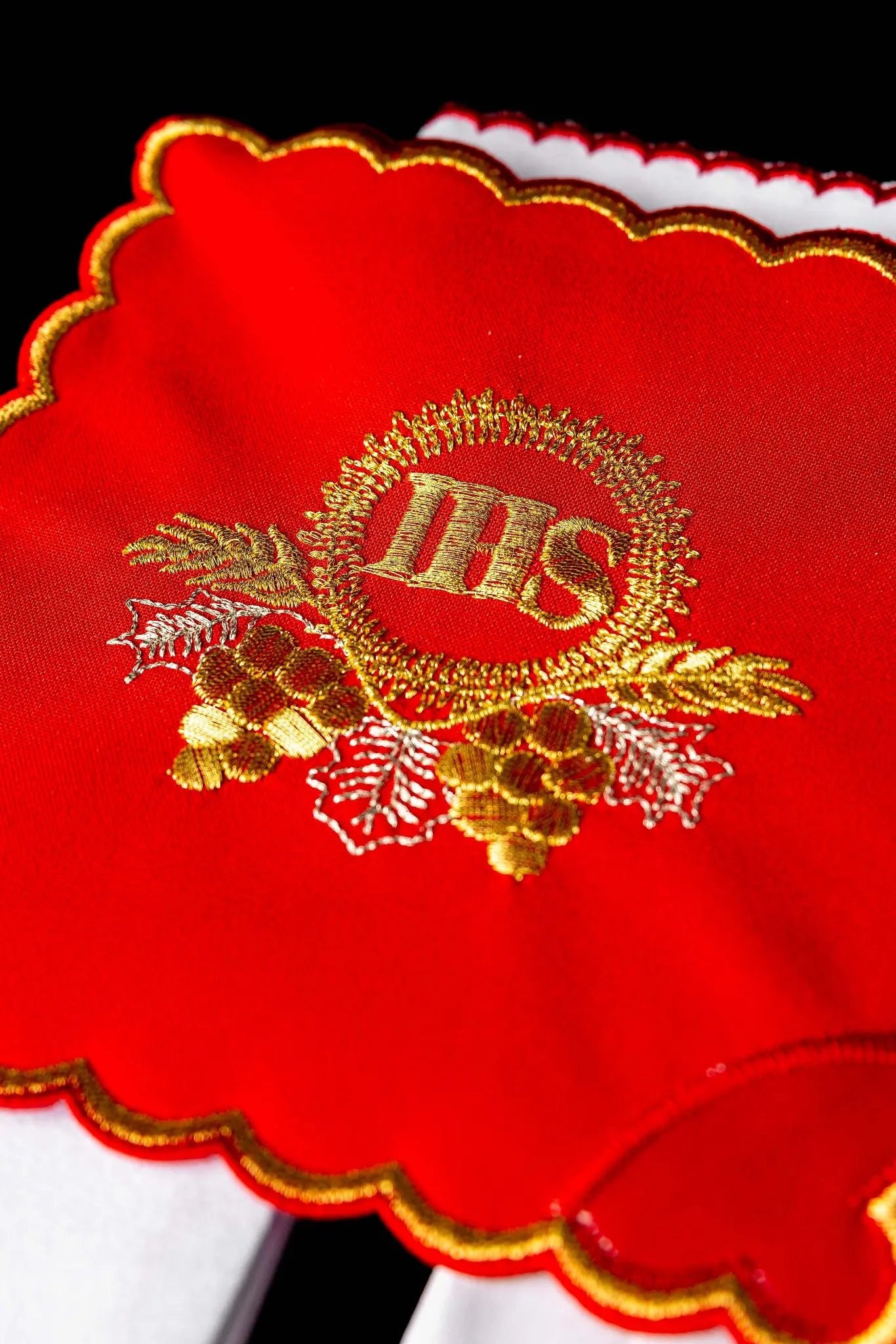
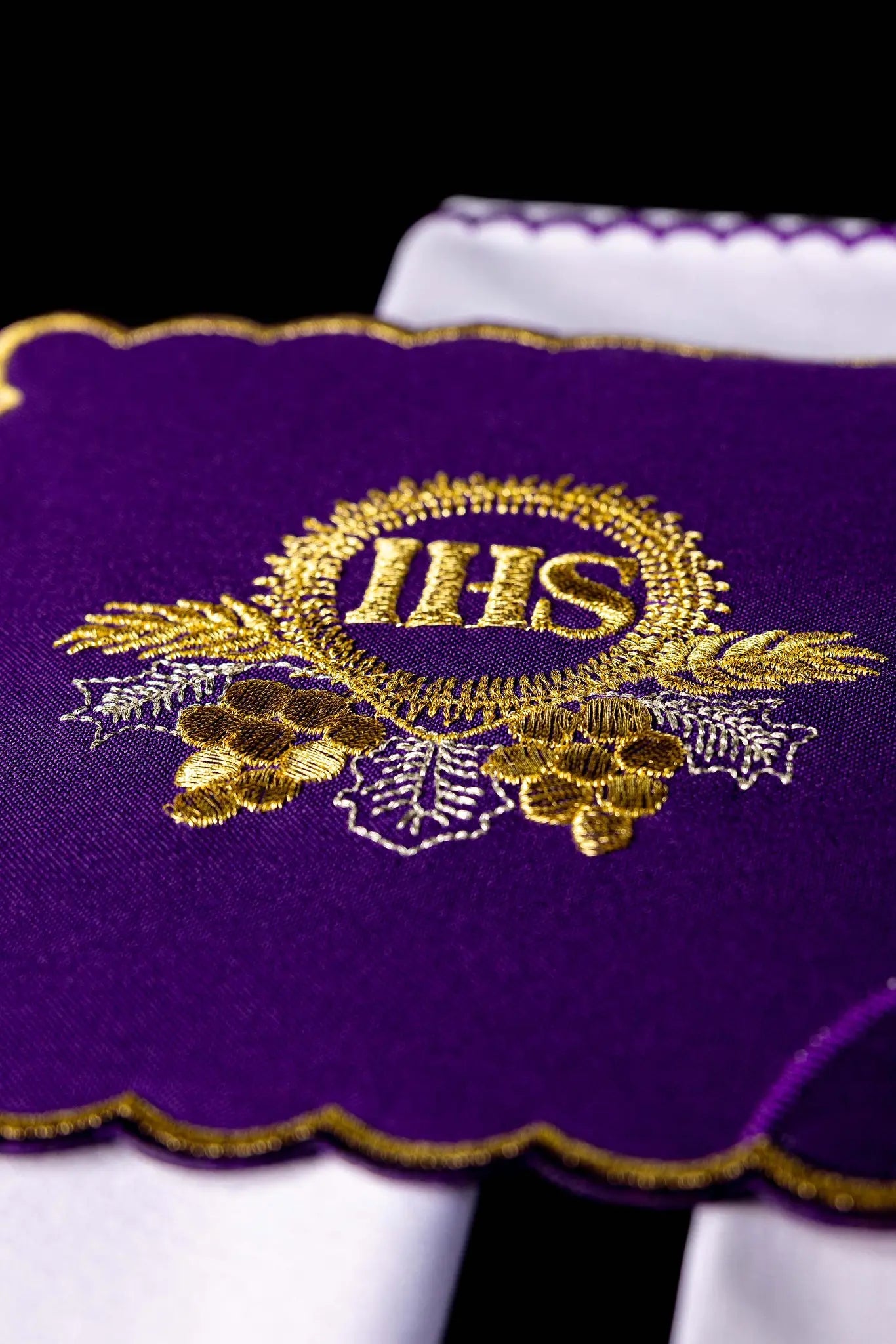
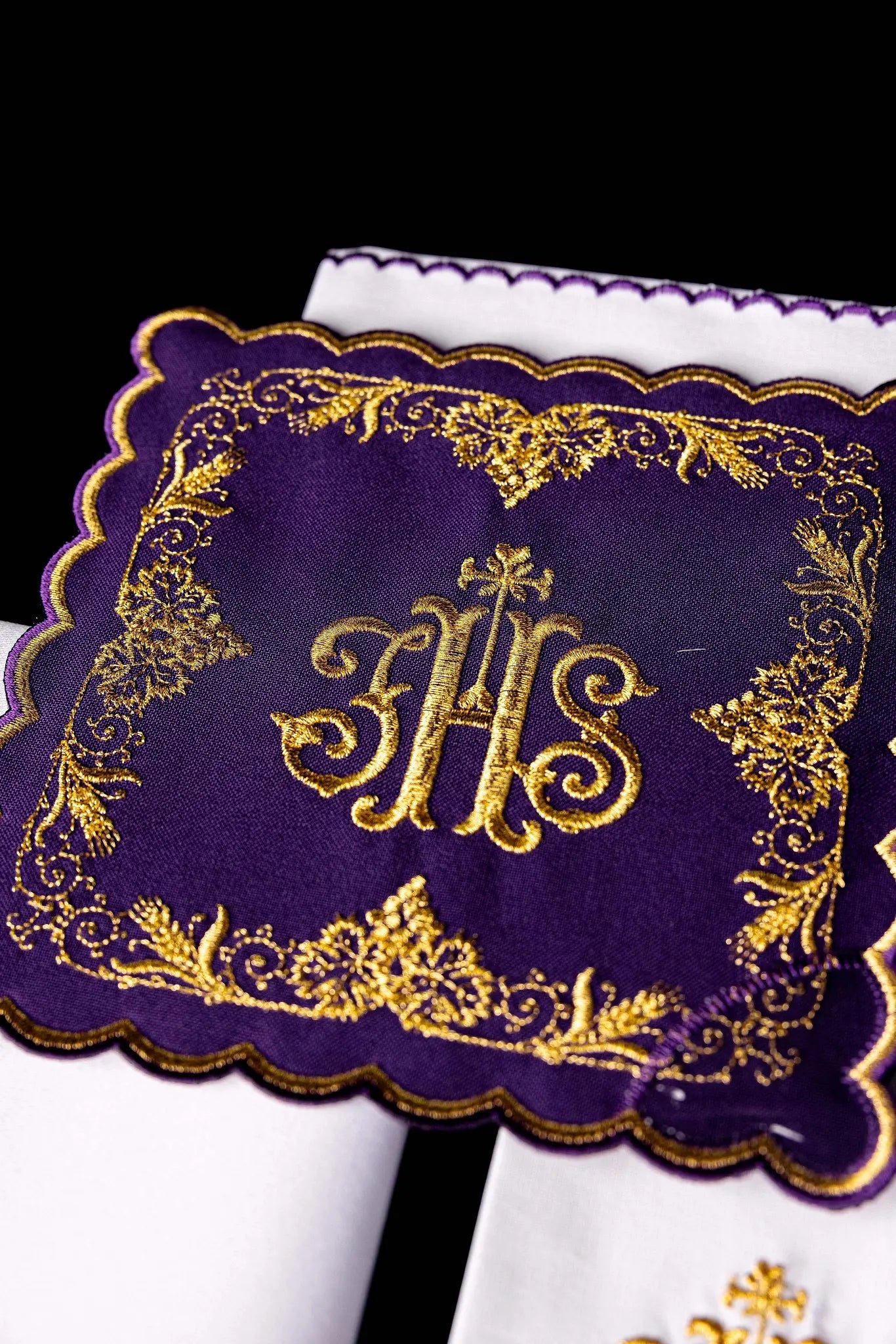
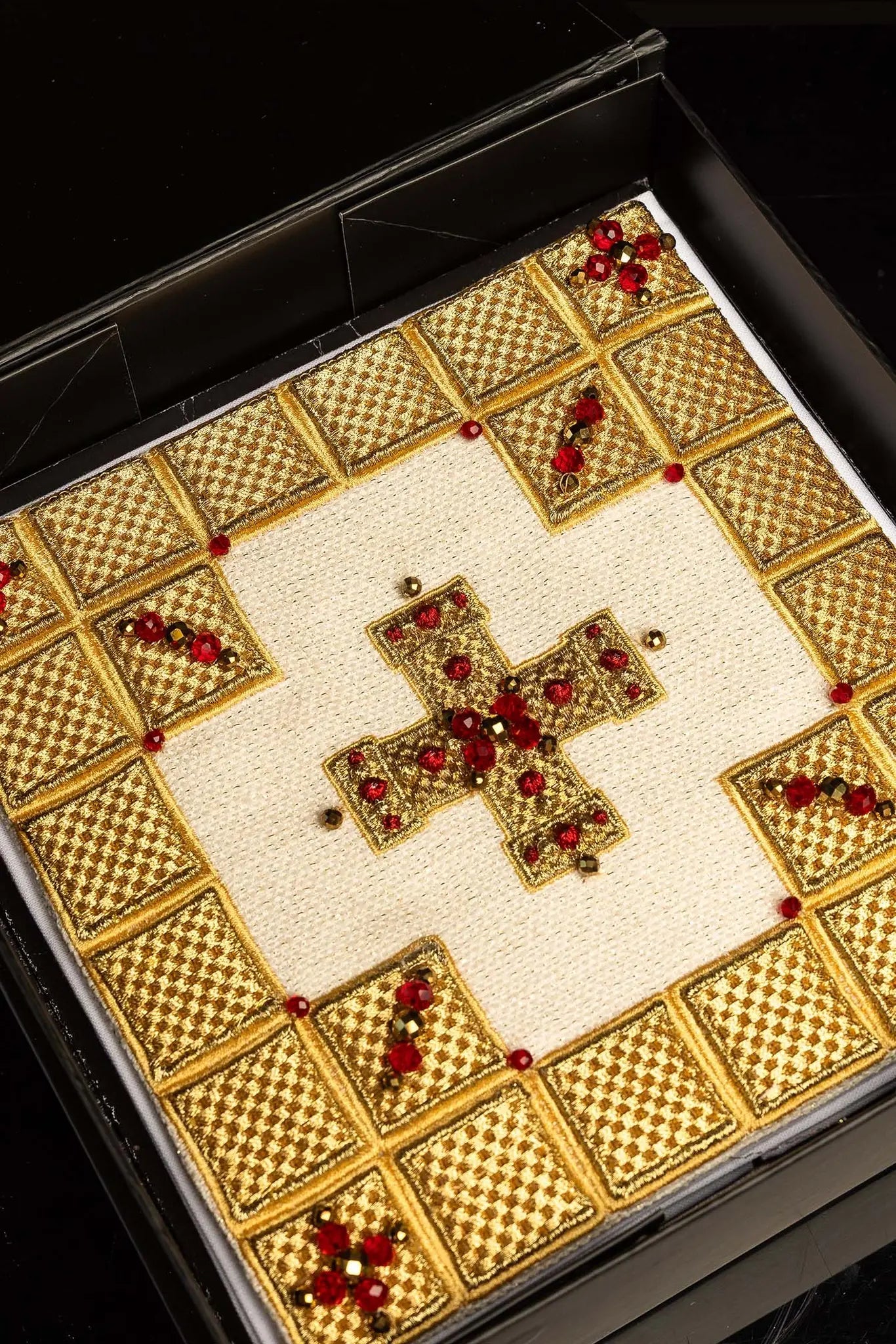
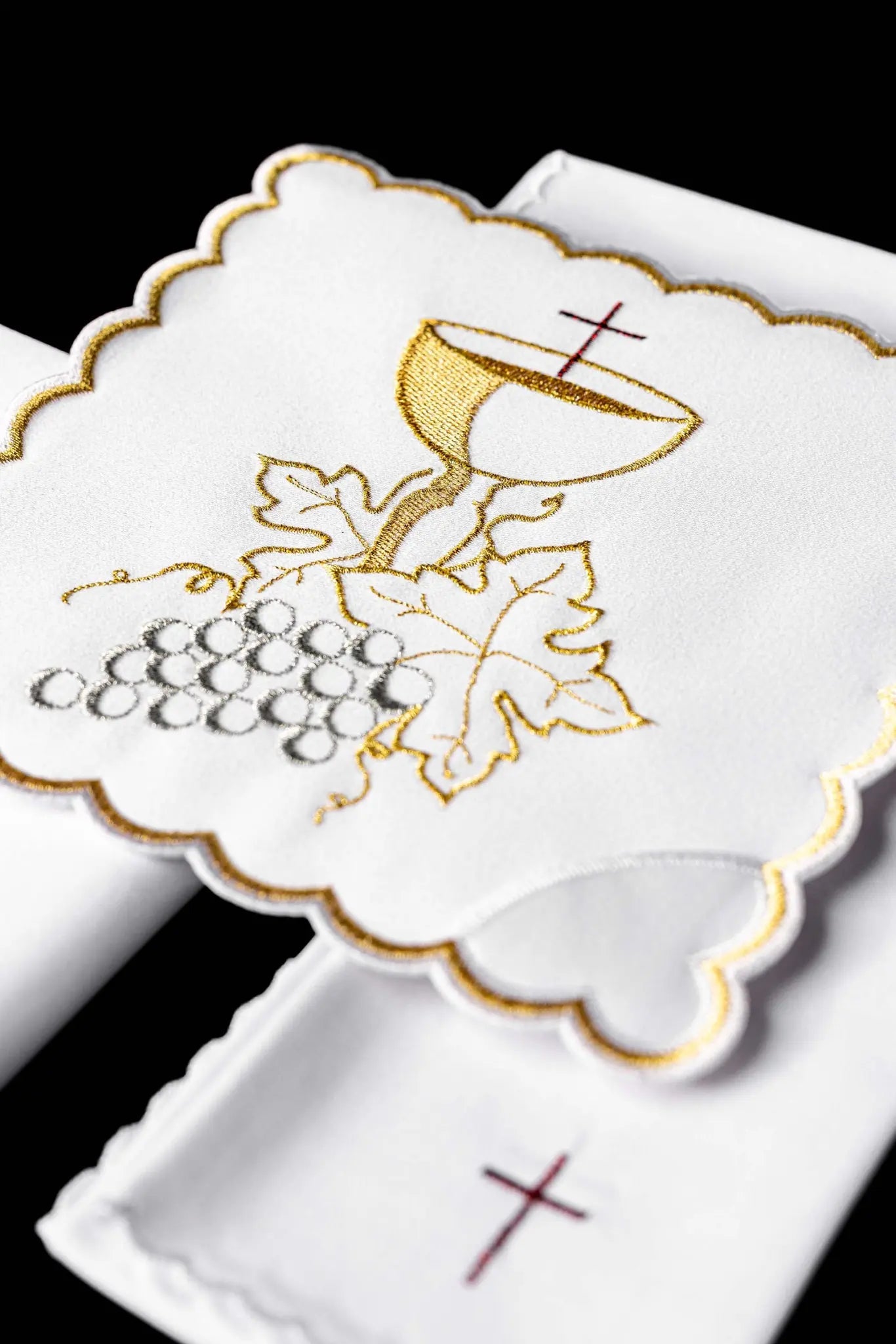
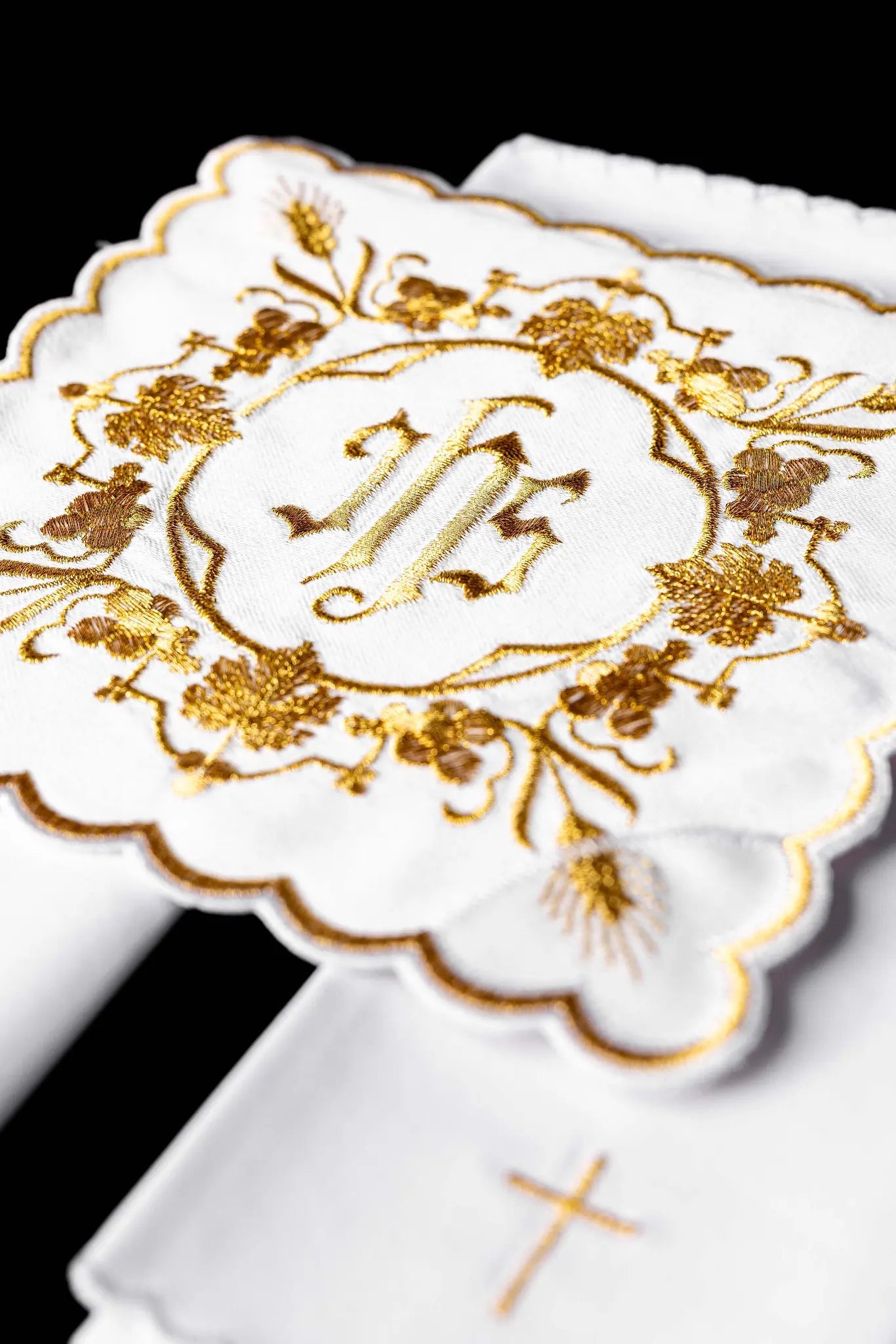
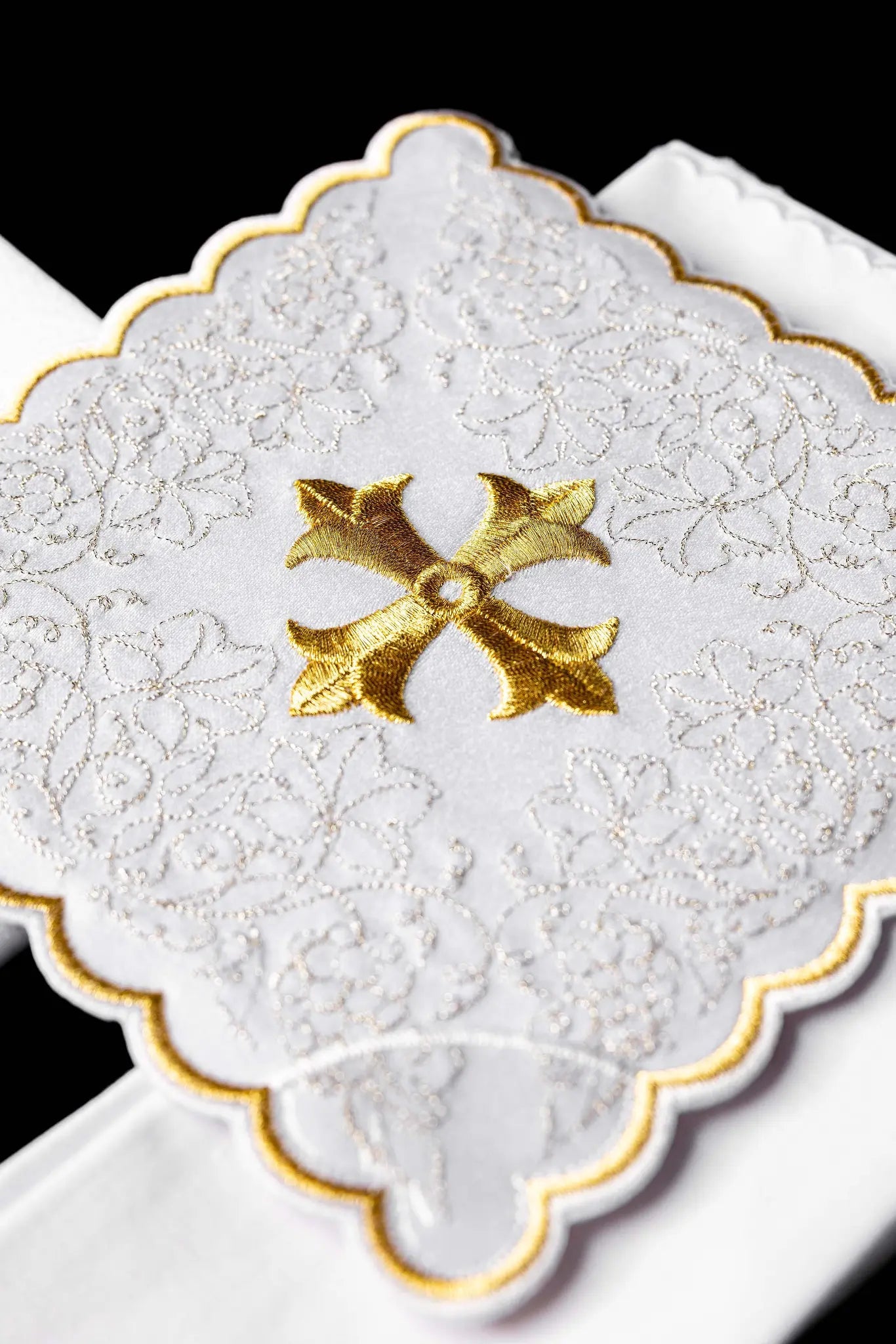
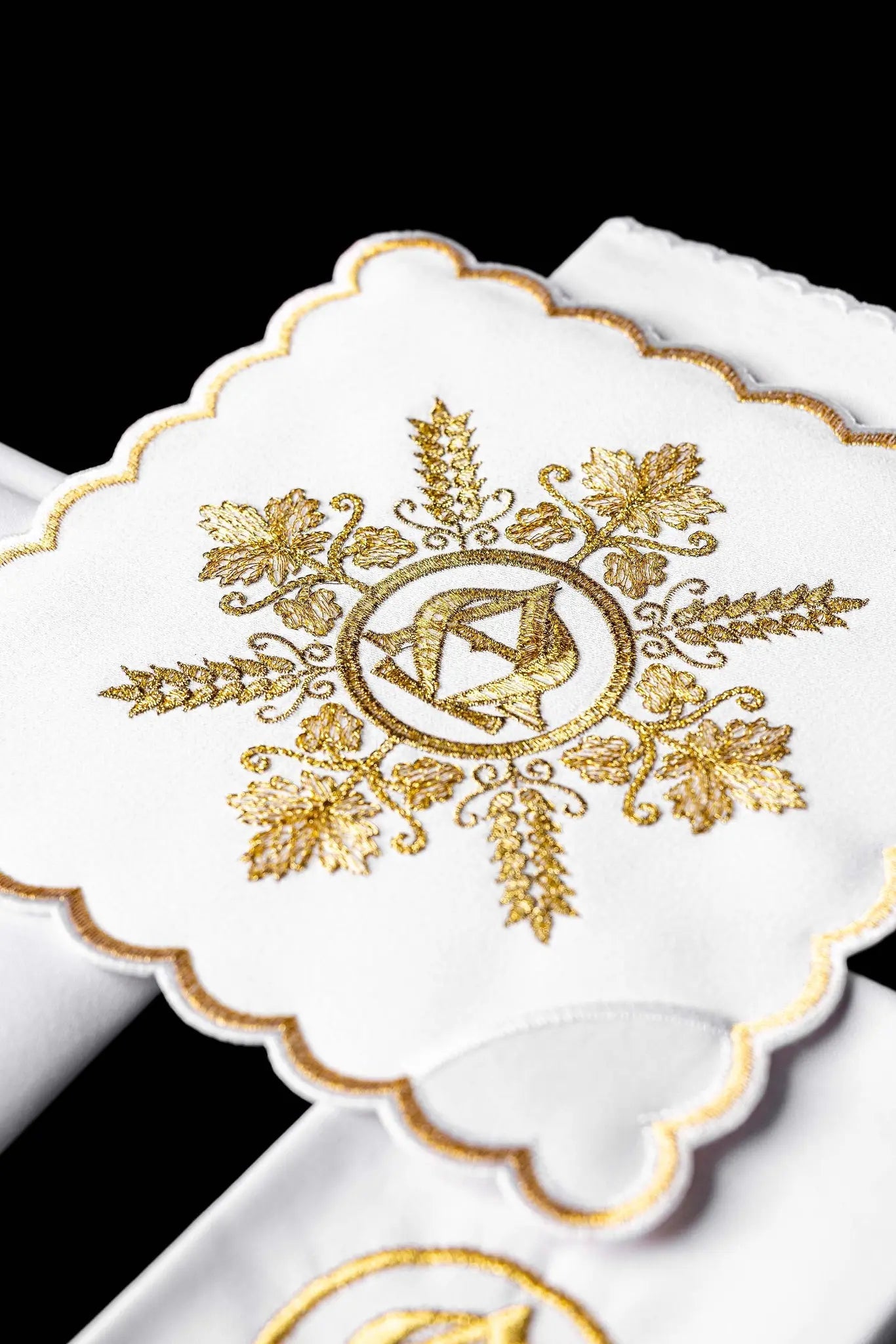
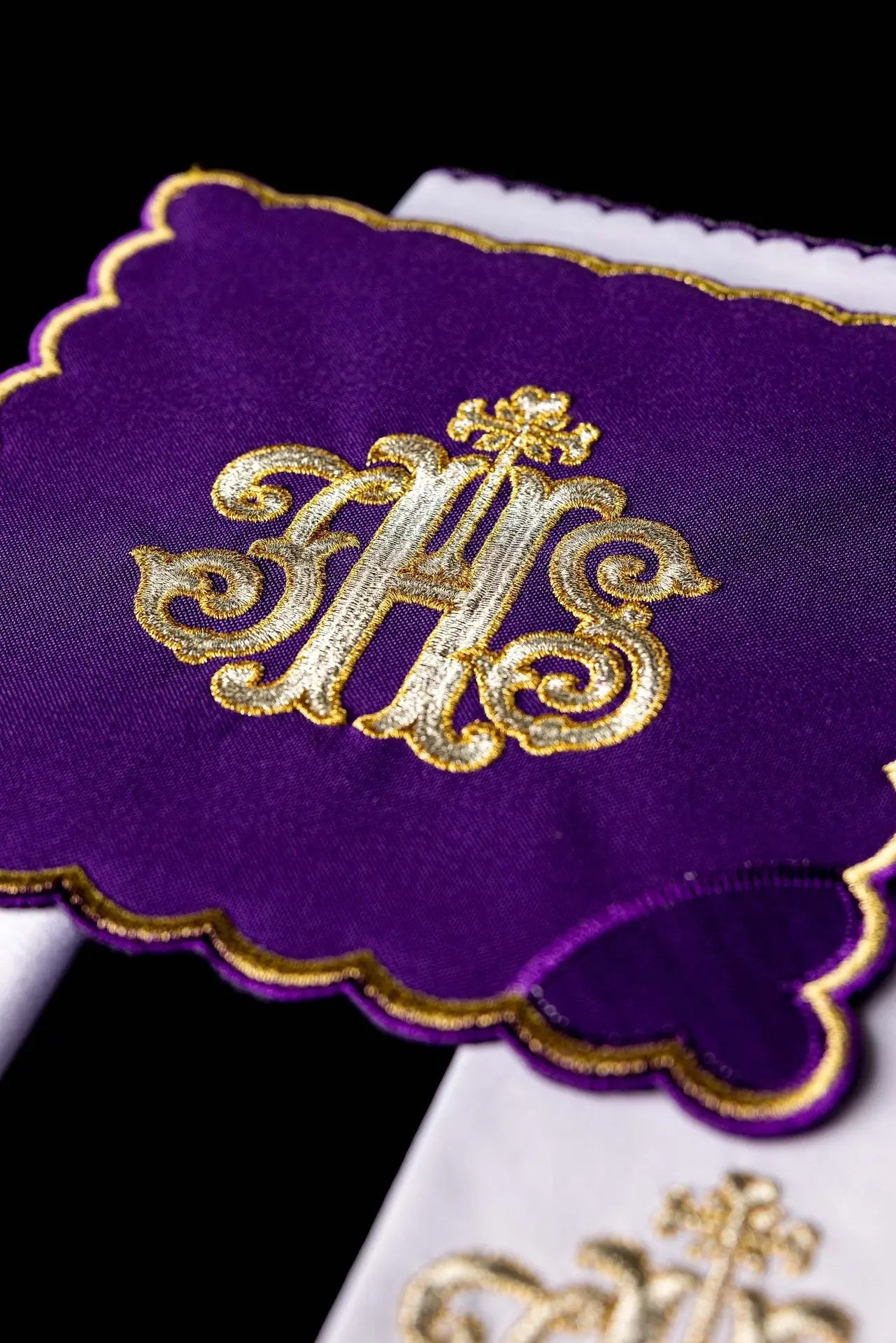
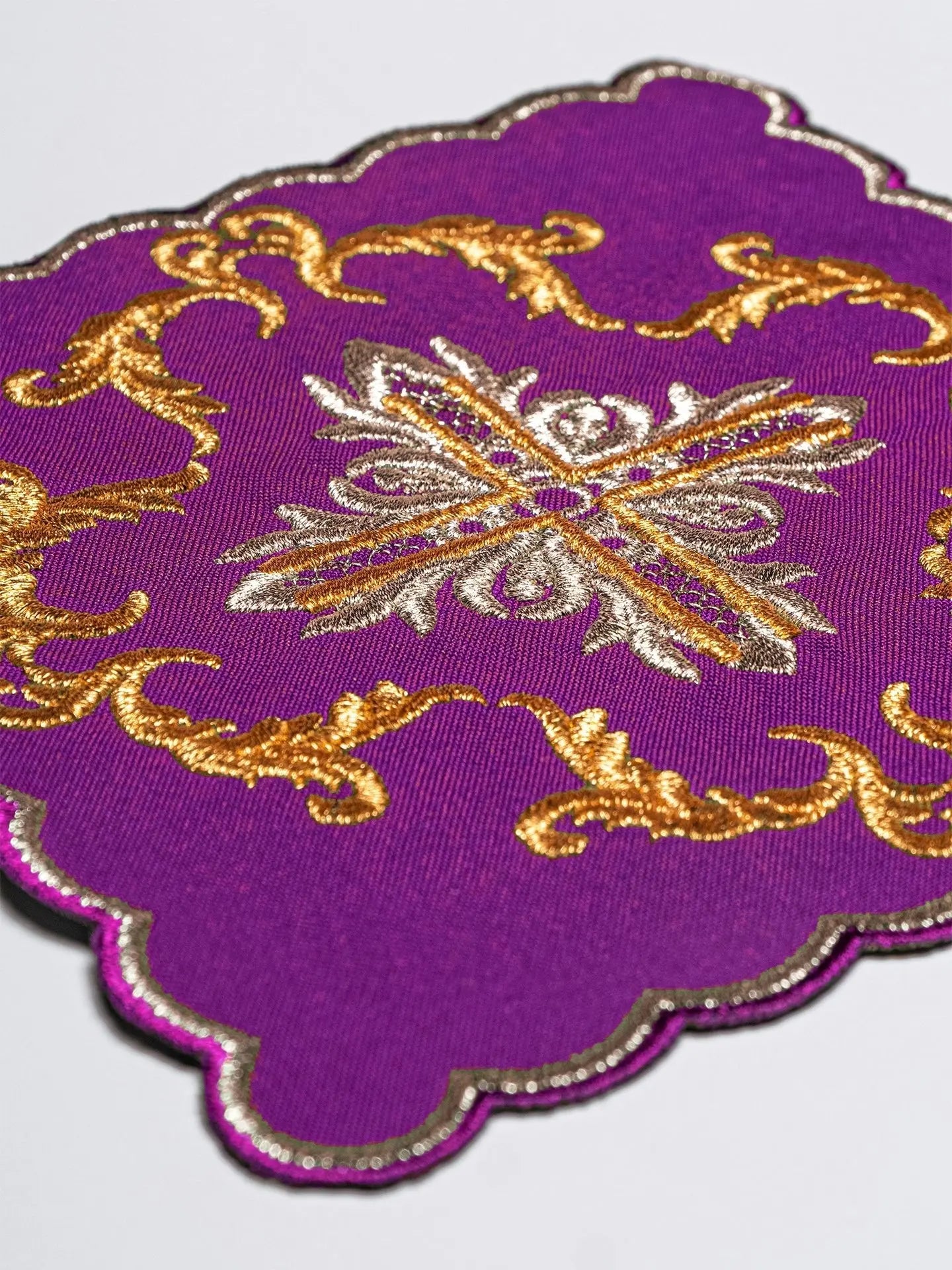
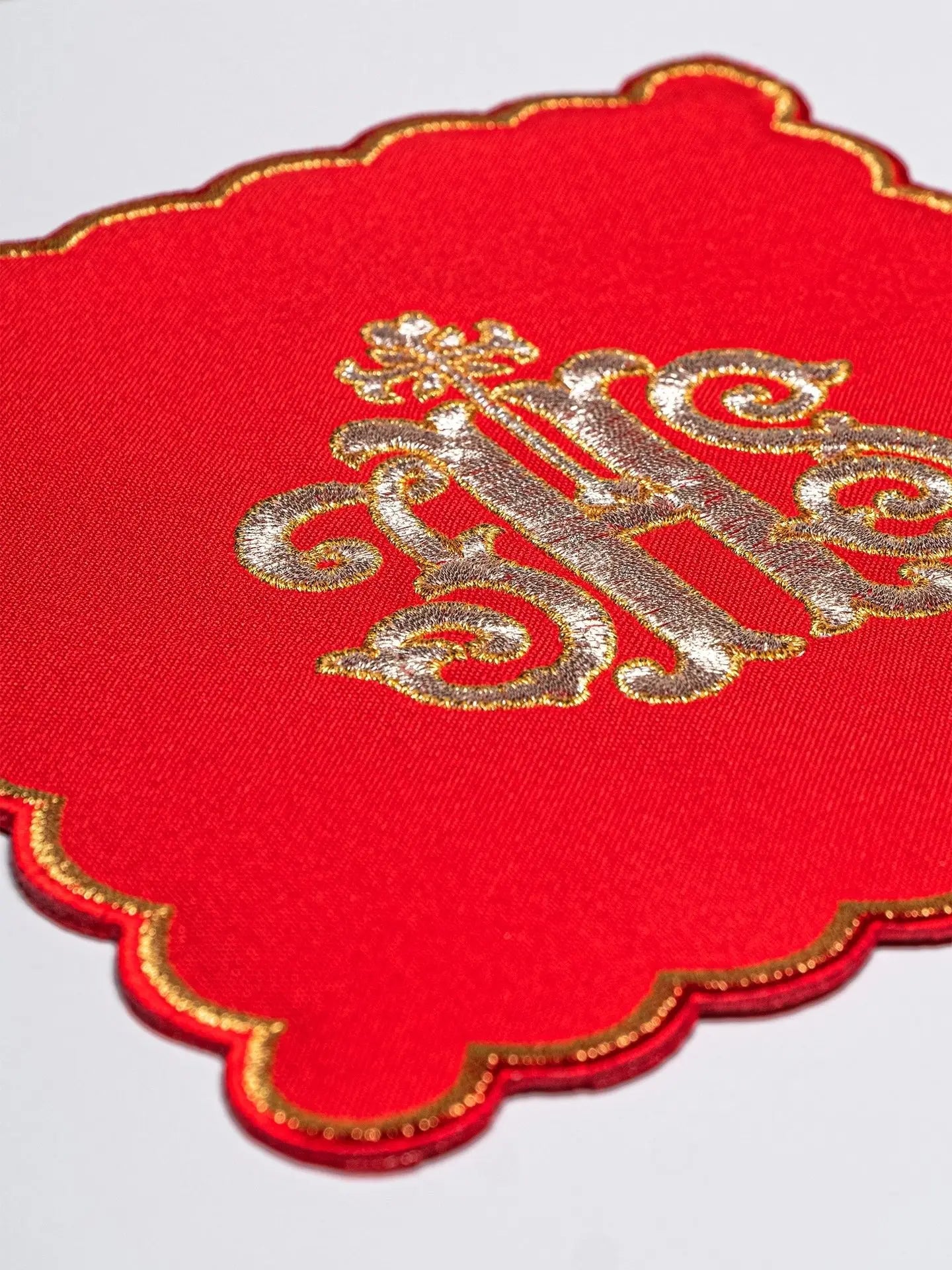
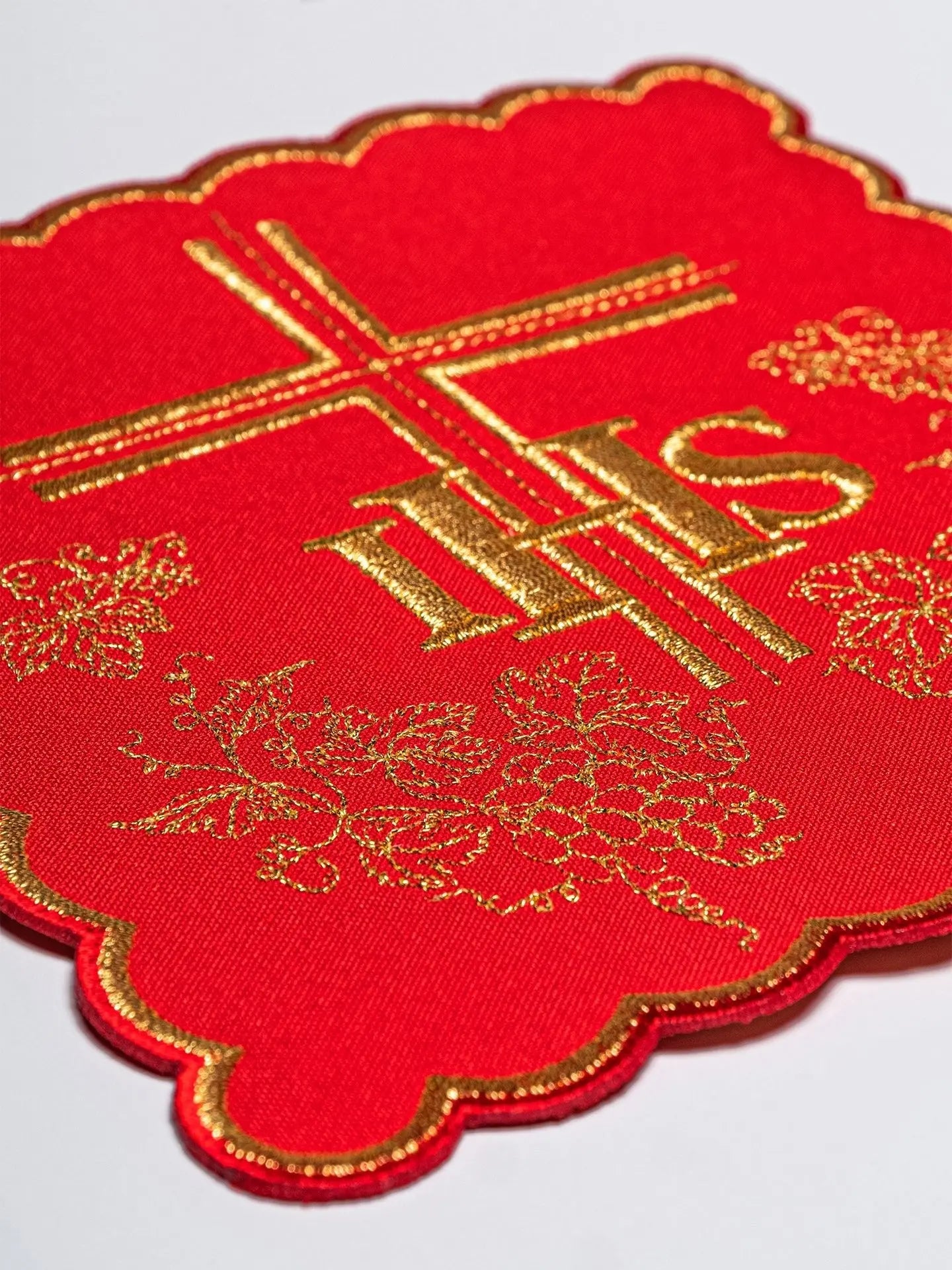
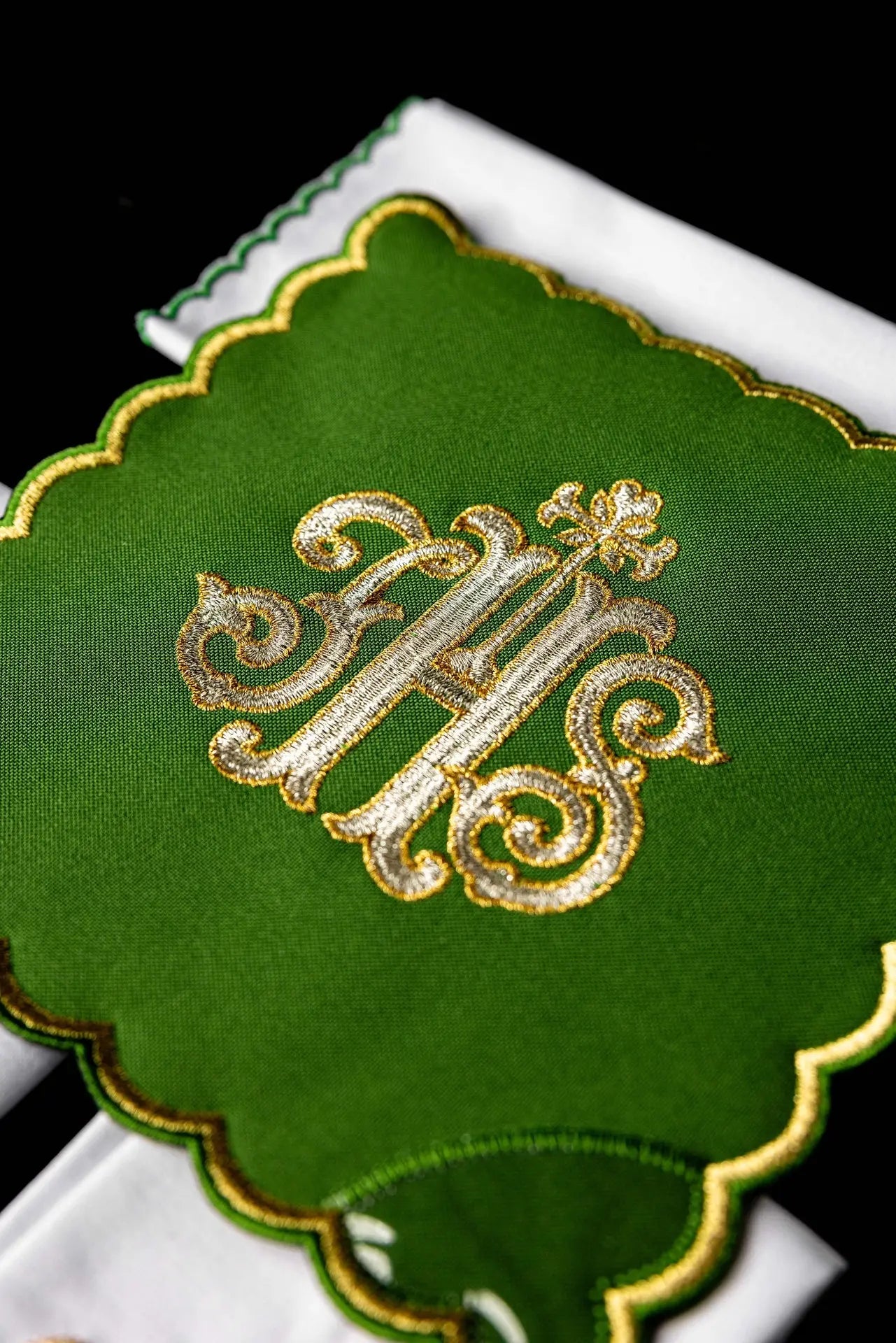
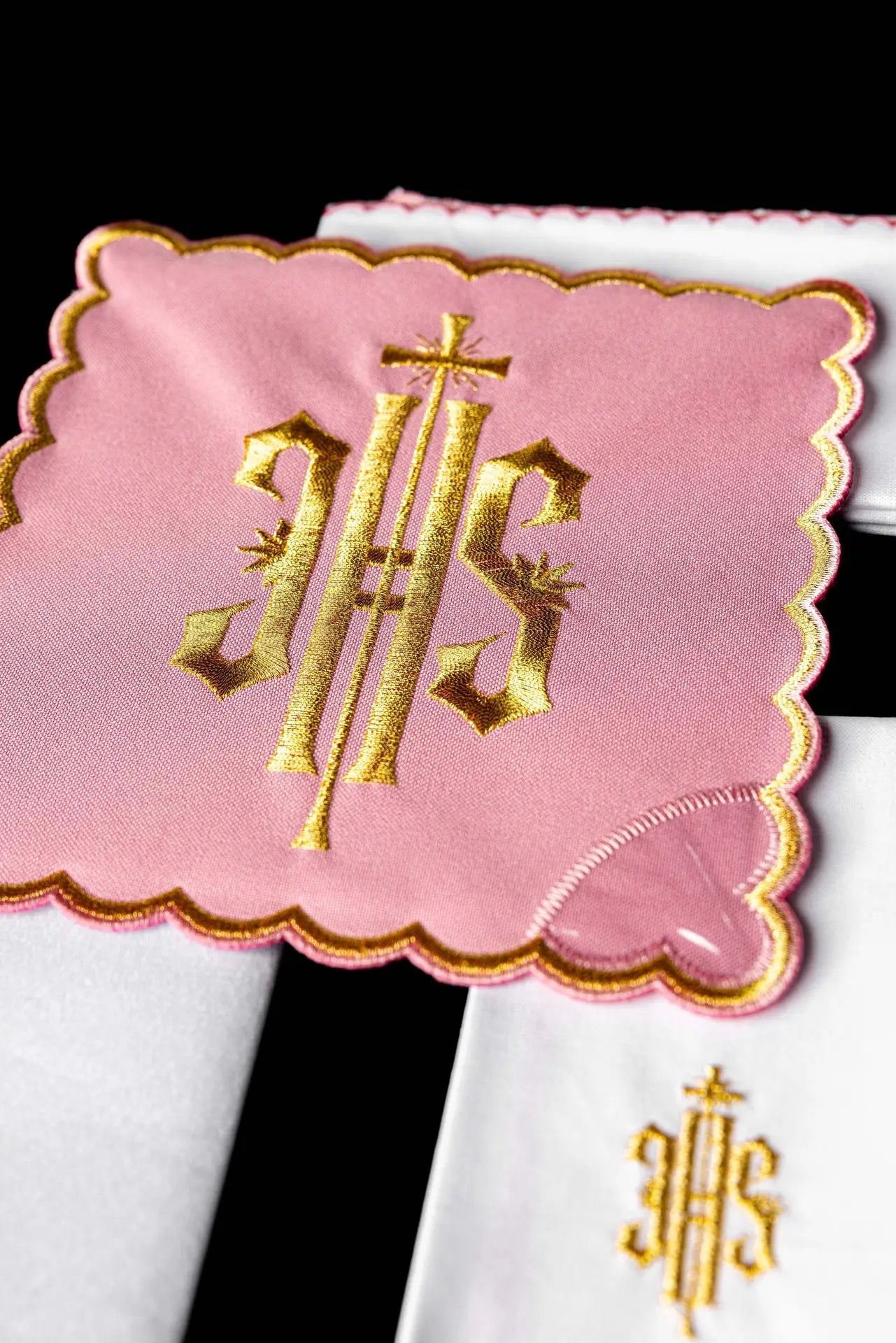
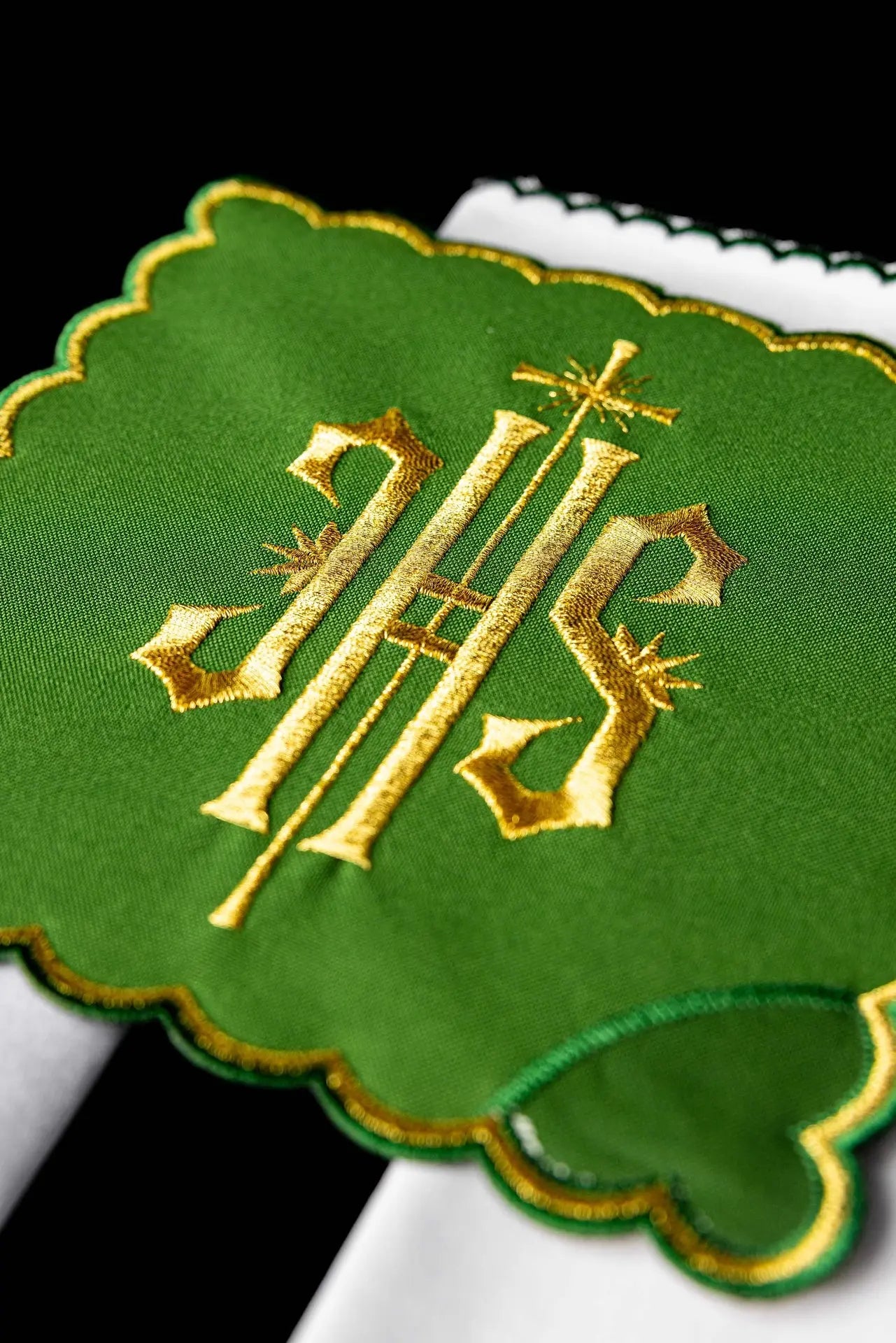
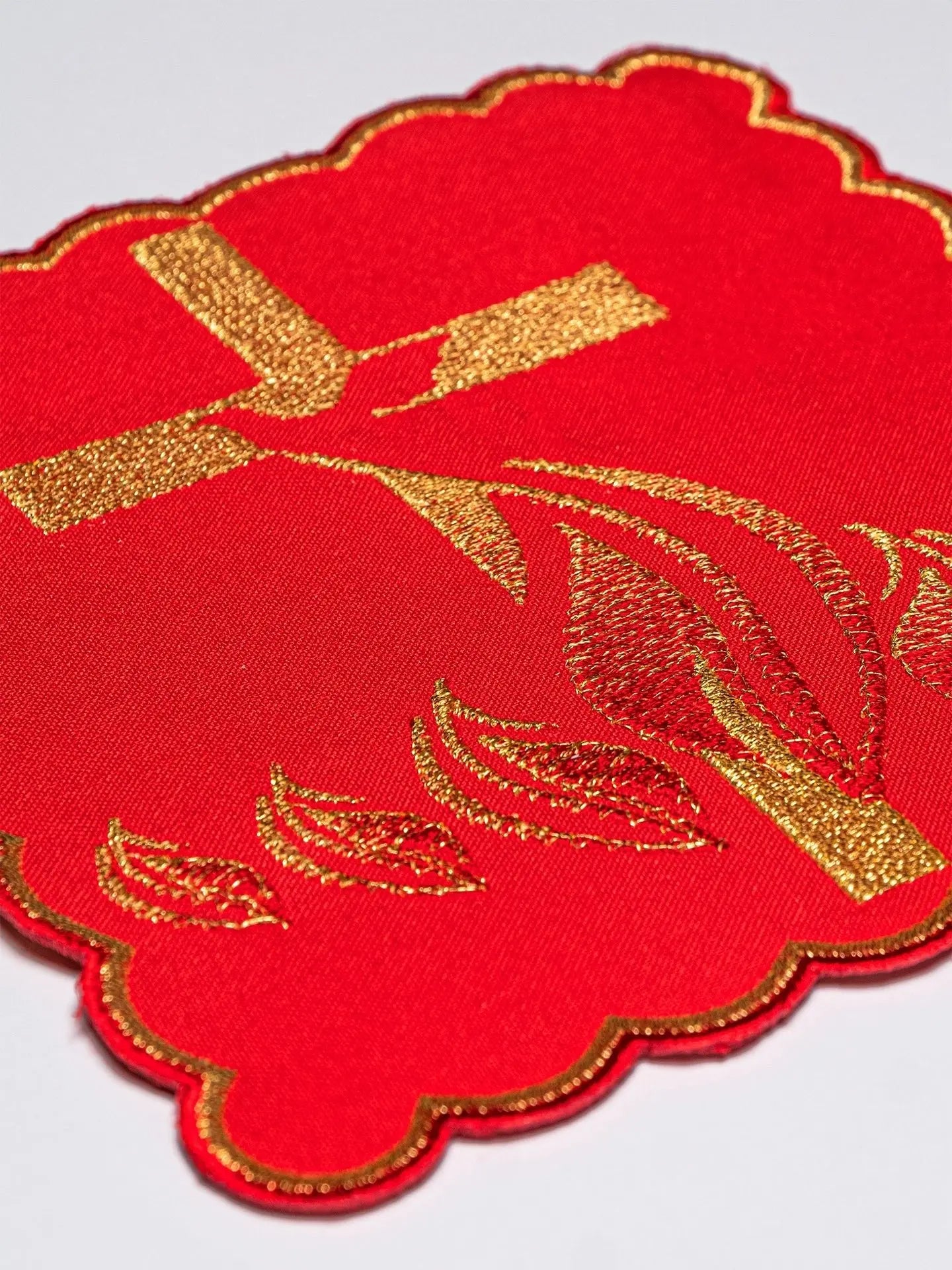
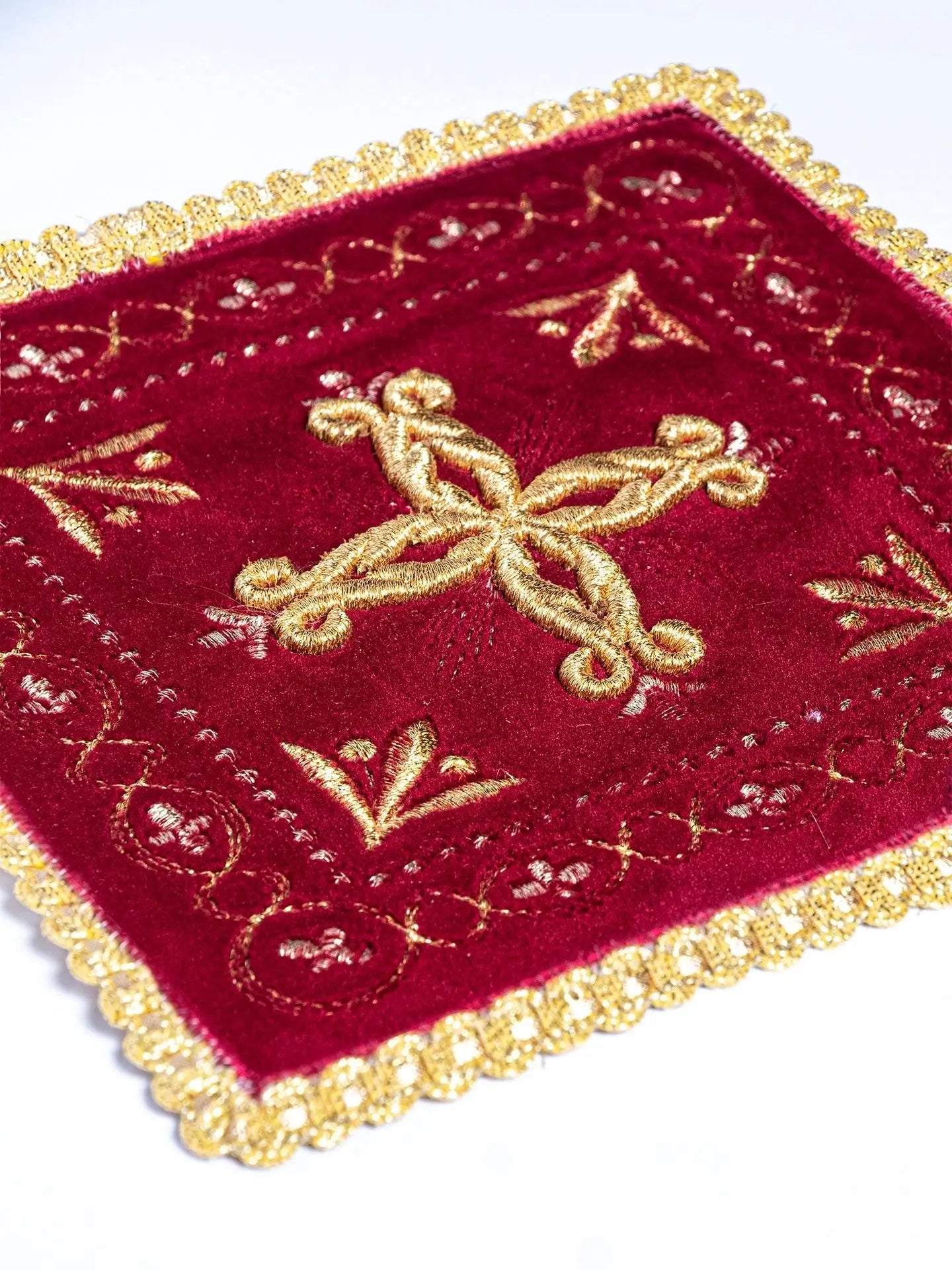
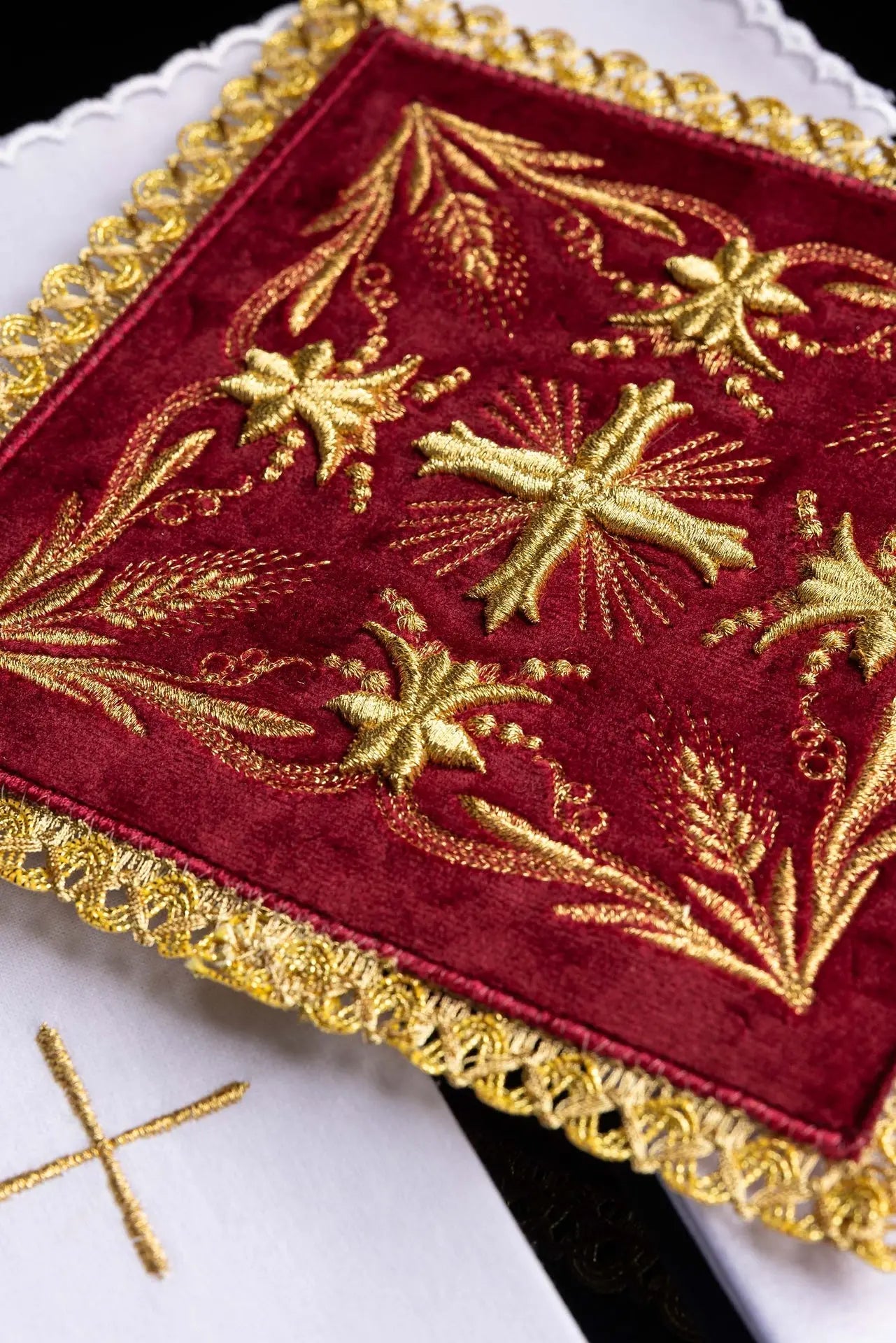
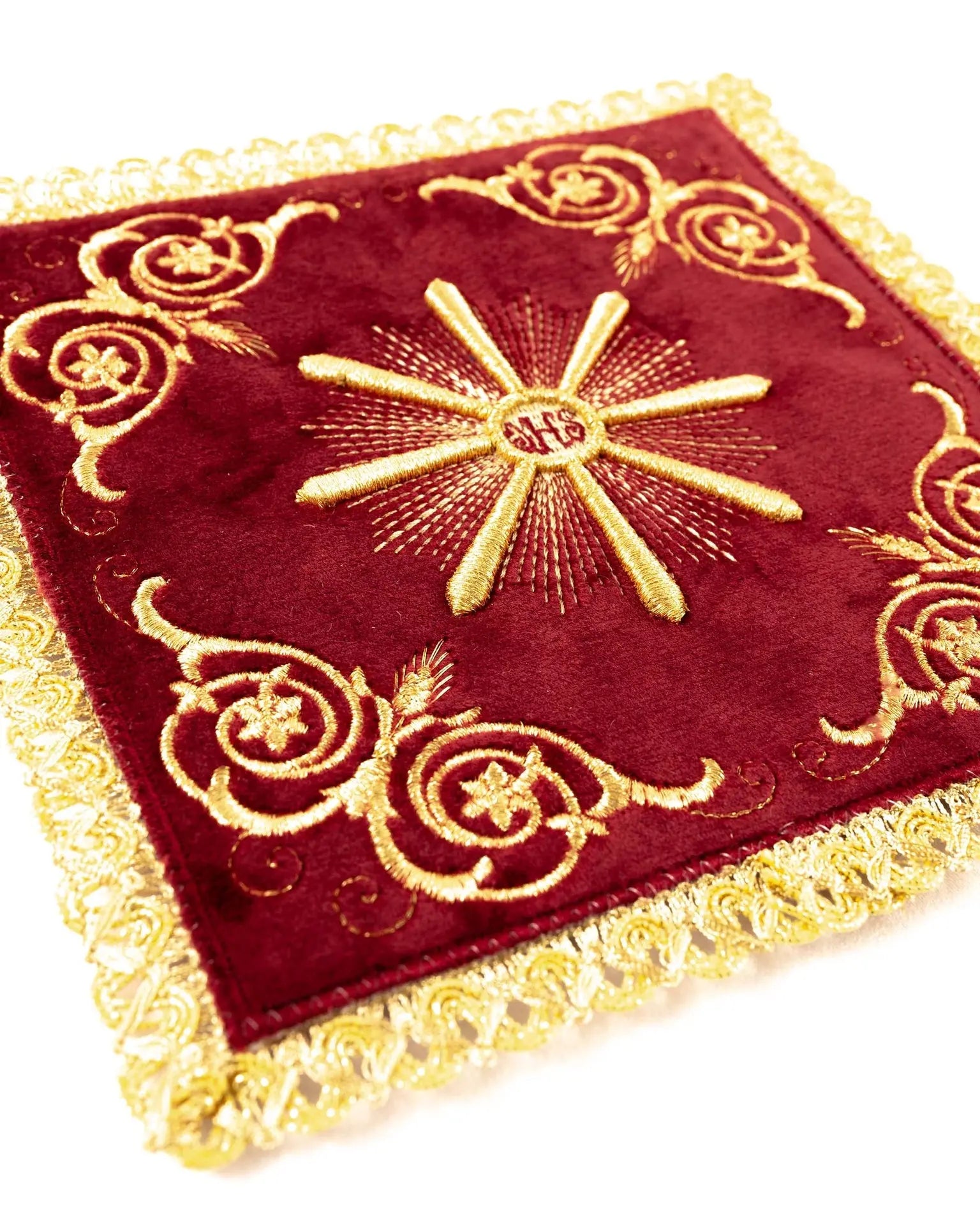
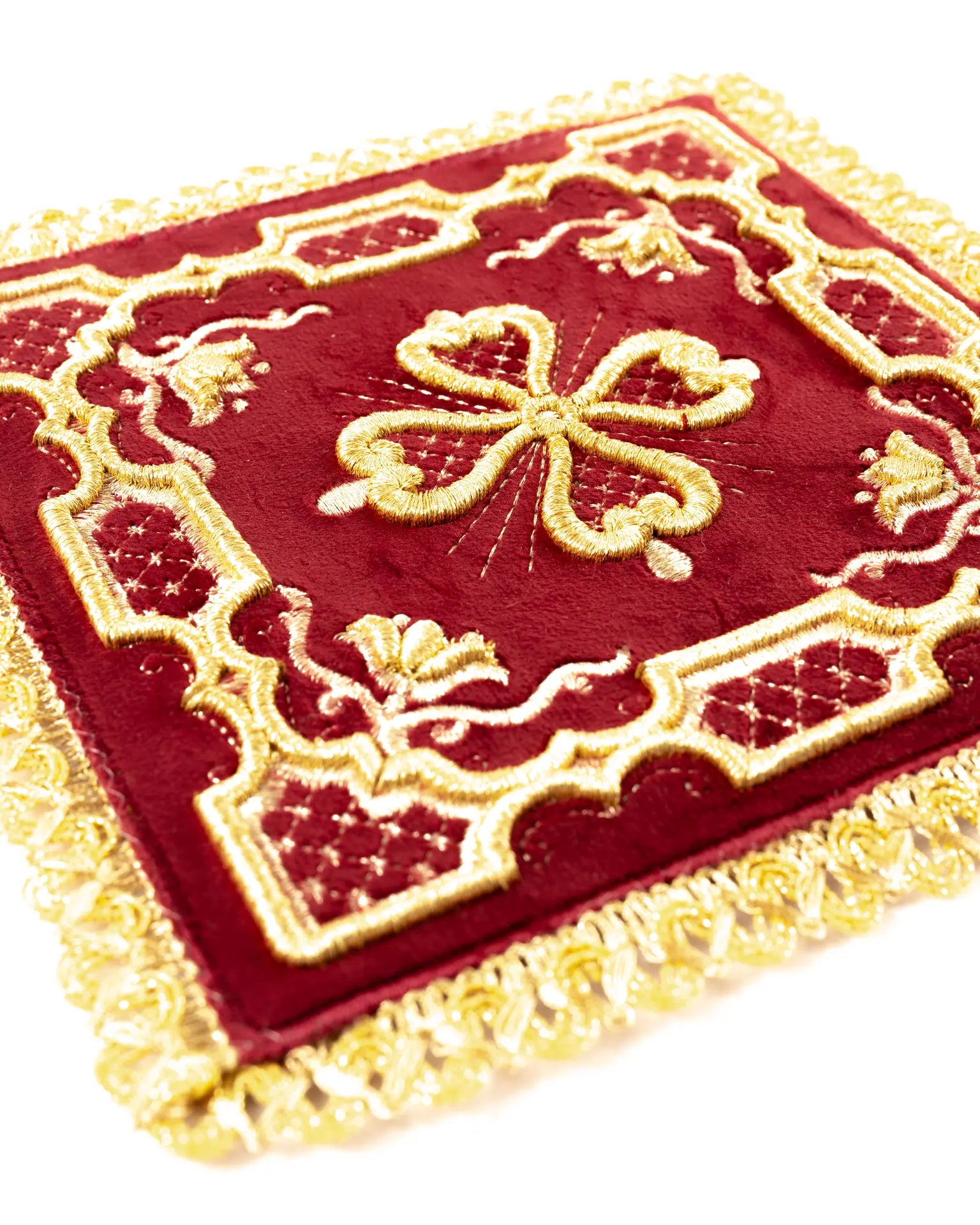
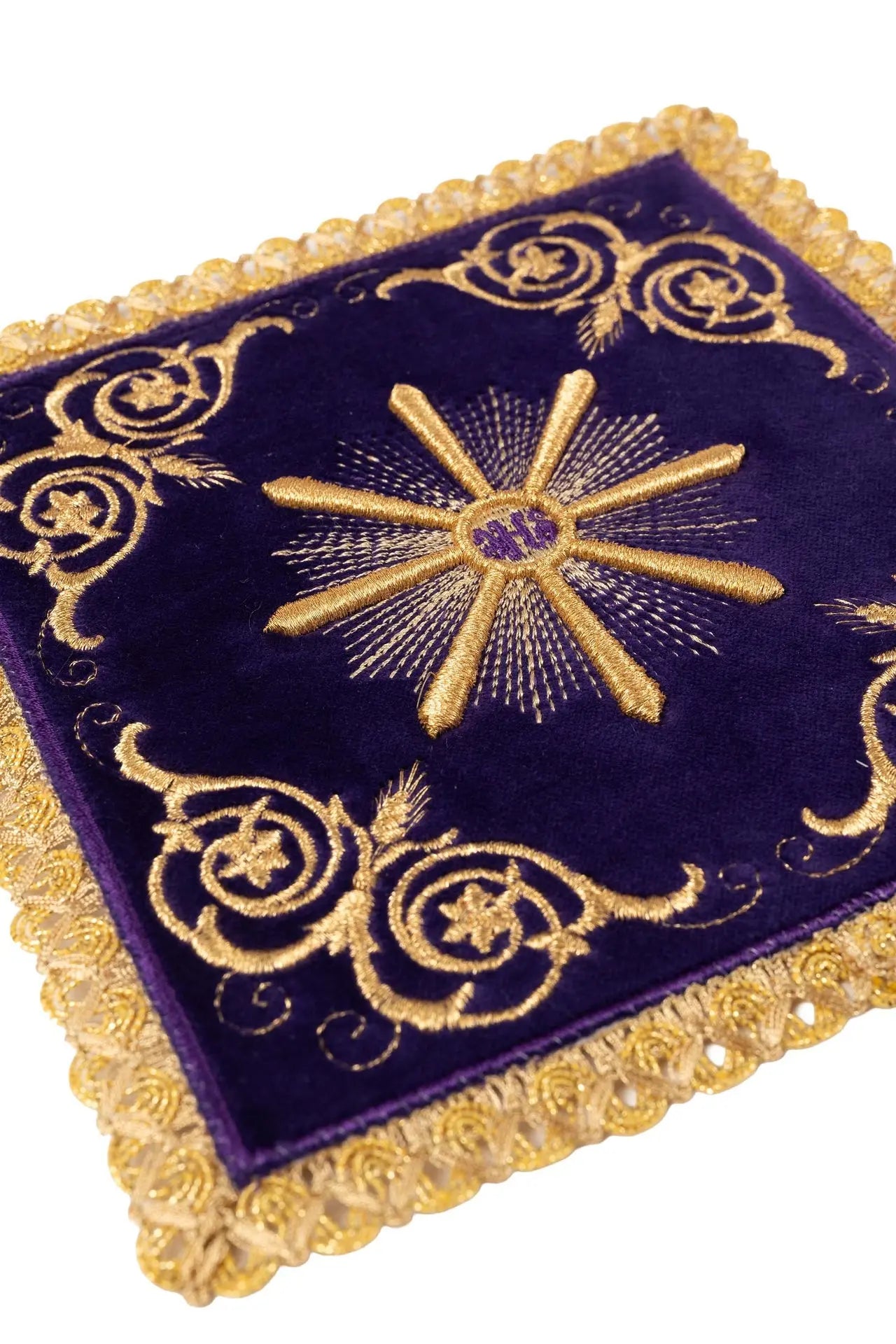
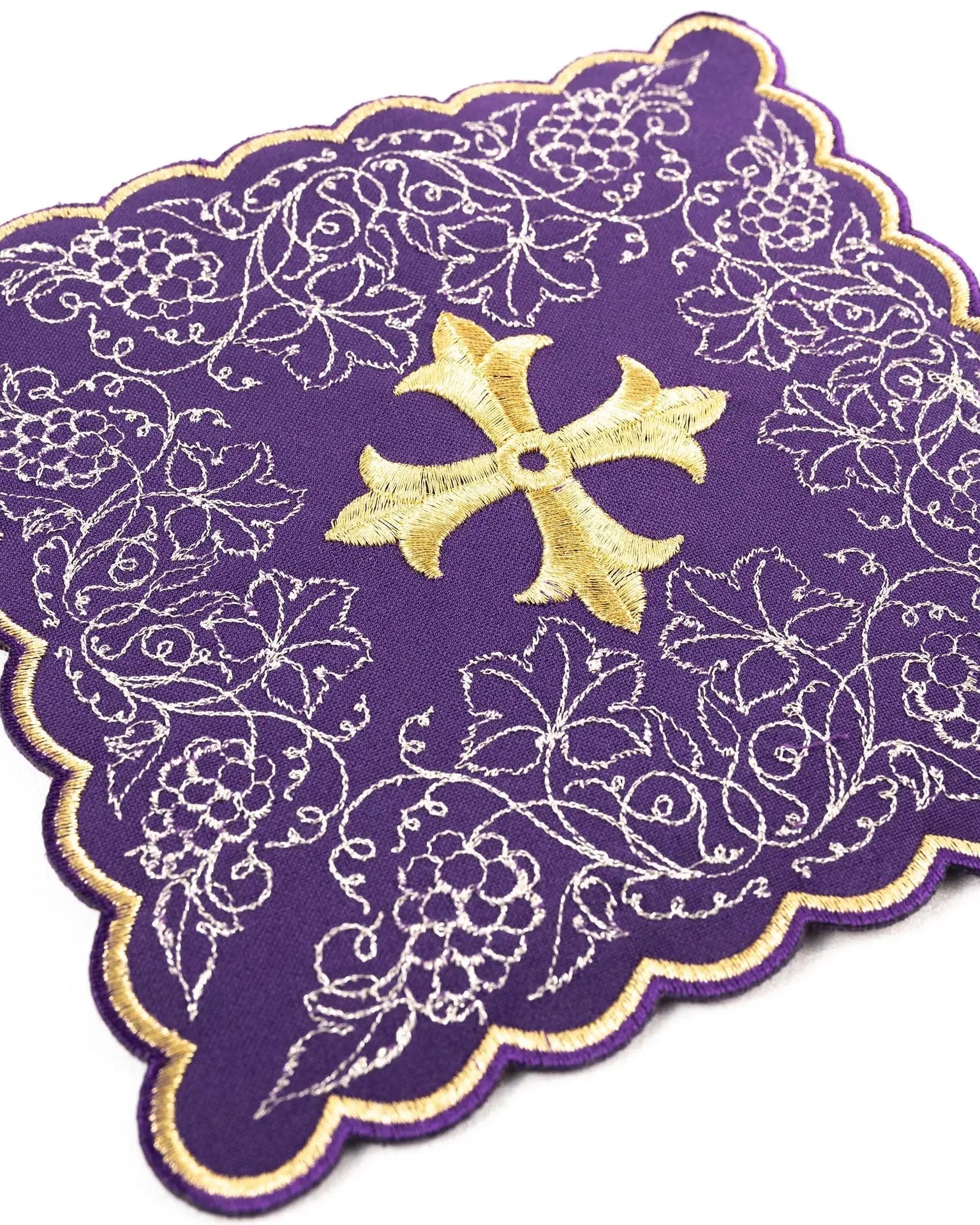
Because these textiles are used so near the Eucharistic vessels, they should be chosen with a higher standard than ordinary decorative fabric. The cloth should be neat, clean, appropriately sized, and dignified in ornament. Colored sets in this category may use colored fabric, colored embroidery, liturgical symbols, metallic thread, or coordinated borders. The most common motifs are crosses, IHS monograms, Eucharistic symbols, Marian symbols, vine and wheat designs, or restrained ornamental patterns. The decoration should support the liturgy rather than distract from it, especially in smaller chapels where the altar is close to the congregation.
Liturgical colors and their meaning
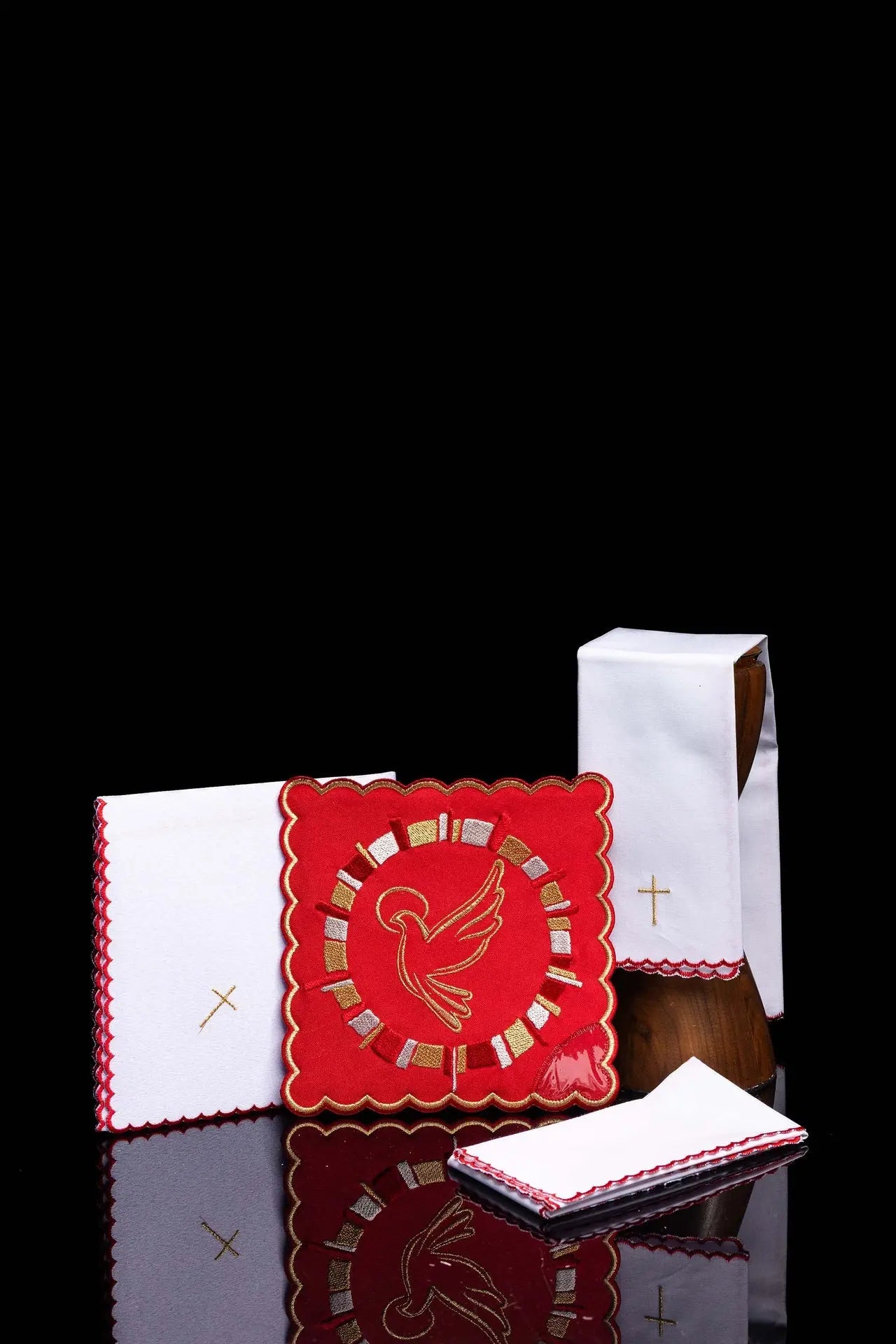
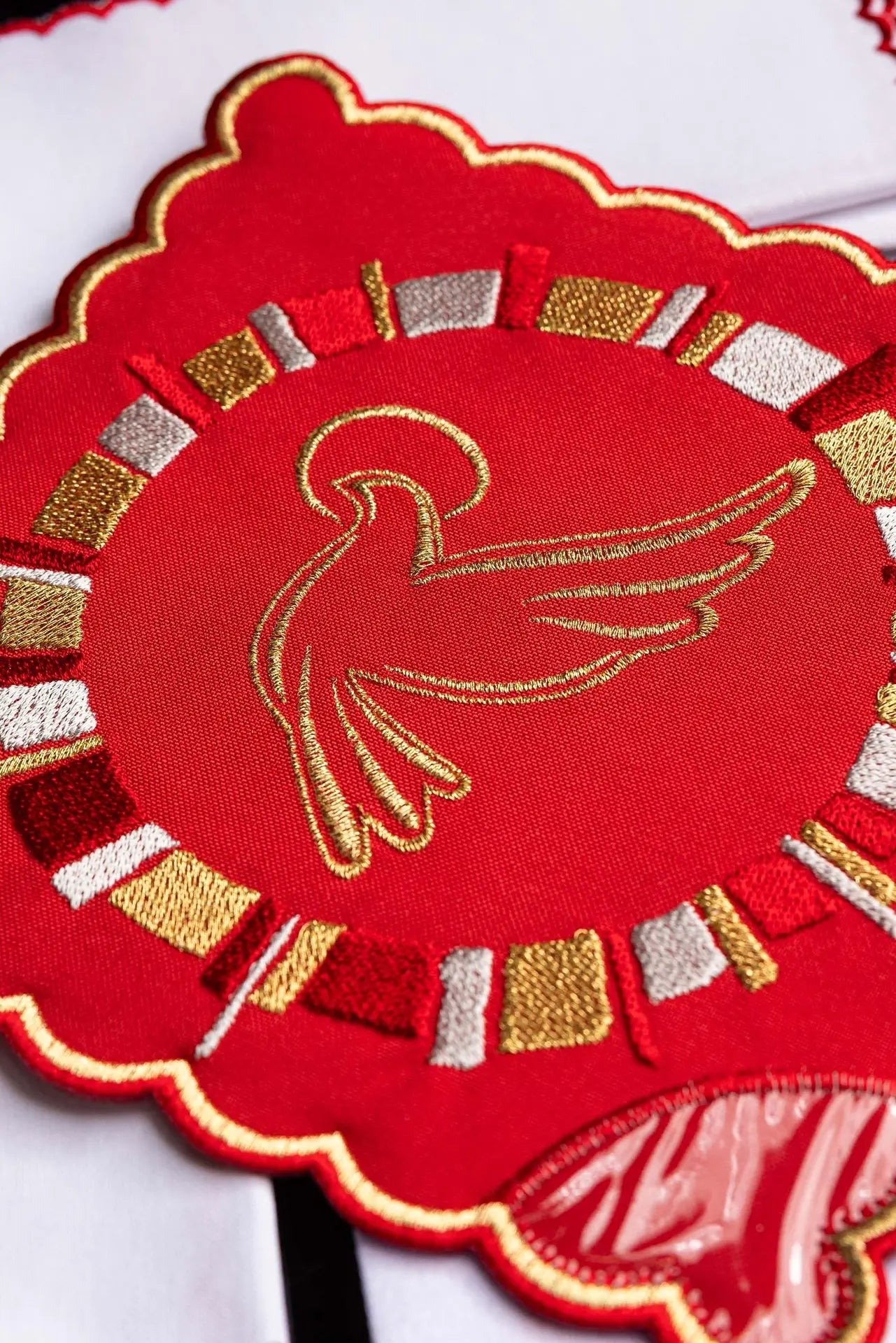
The value of a colored chalice set is strongest when it is chosen with the liturgical calendar in mind. White, ecru, and gold are commonly associated with solemnities, feasts of the Lord other than those of the Passion, Christmas, Easter, weddings, and many saints. Green is used throughout Ordinary Time and is a practical color for regular parish use. Violet is used for Advent and Lent, as well as for penitential celebrations and some funeral contexts according to local practice. Red is used for Palm Sunday, Good Friday, Pentecost, feasts of martyrs, and celebrations connected with the Holy Spirit. Rose is reserved for Gaudete Sunday and Laetare Sunday, not as a general substitute for violet throughout Advent or Lent.
When a parish uses colored vestments and altar textiles as a coherent set, the chalice linens can complete the arrangement without making the altar look crowded. A green chalice set can support the steady rhythm of Ordinary Time, while a red set can underline the solemnity of Pentecost or a martyr feast. Violet pieces can be kept ready for penitential seasons, and rose pieces can be used on the two Sundays when the Church marks a lighter note of expectation and joy. For rose vestments and paraments connected with those days, the related Gaudete and Laetare collection is a natural point of comparison.
Choosing the right colored chalice set
The first question is liturgical use. A sacristy that prepares several Masses each week may need durable and easily organized sets in the main colors: white or ecru, green, violet, red, and rose. A chapel with fewer celebrations may prefer one refined colored set for a patronal feast, Marian solemnity, or a special parish occasion. The second question is material. Linen and cotton are valued for their clean appearance and suitability for sacred linens, while velvet is often chosen for richer palls, covers, and embroidered outer elements. To compare the more traditional white or natural approach, see the sibling collection of chalice sets in linen. For a softer everyday option, compare cotton chalice sets. For a more ceremonial look with stronger texture and color, review velvet chalice linens.
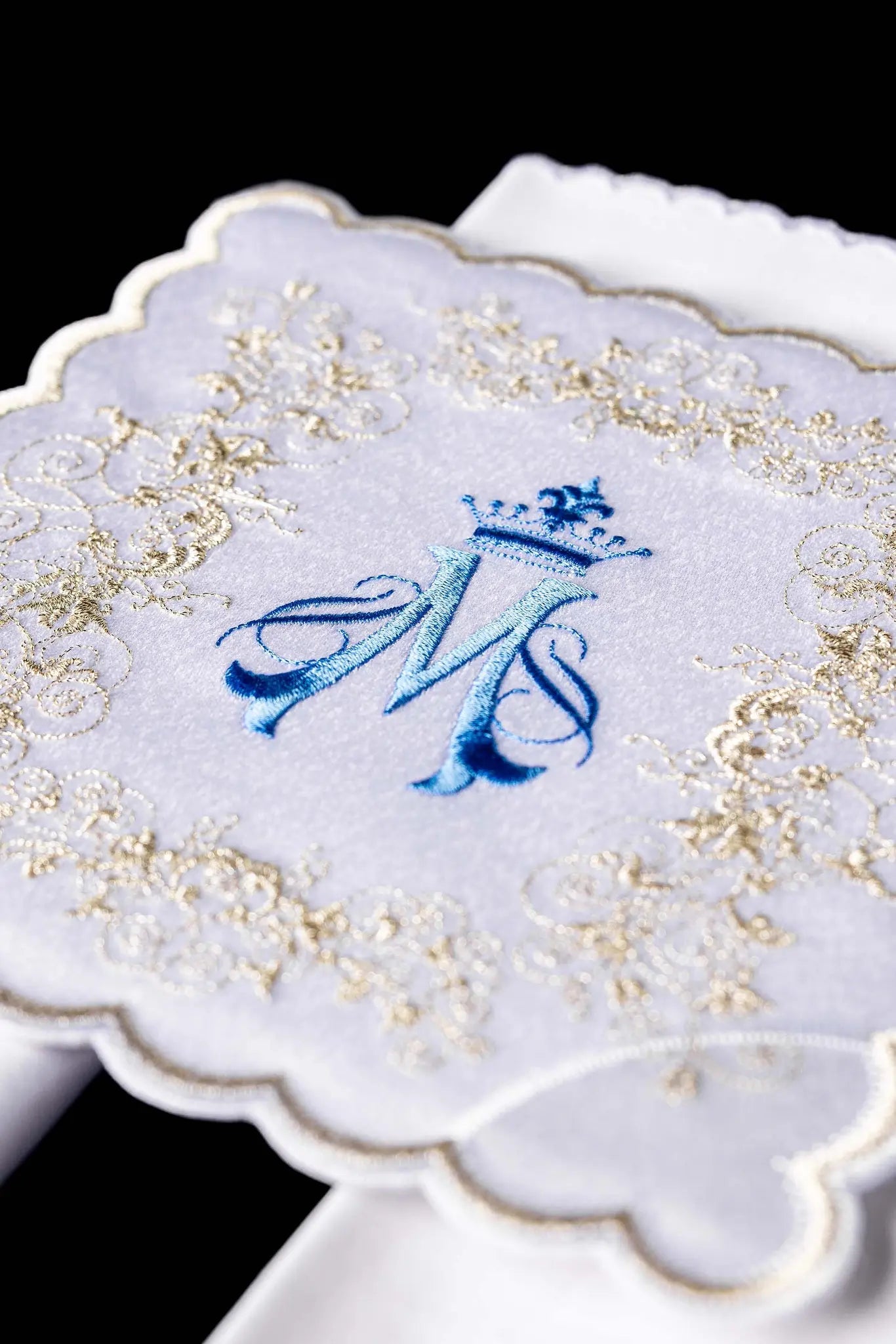
The third question is the visual relationship between the chalice set and the rest of the sanctuary. The set does not need to match every textile exactly, but it should belong to the same liturgical language. A gold cross on a white set can work with many solemn vestments. A violet set with a discreet symbol can coordinate with both Advent and Lent without appearing overly ornate. A red set with an IHS or cross motif can support feasts of the Holy Spirit and martyrs. A Marian design may include white, blue, gold, or a Marian monogram; when that is the main need, the related Marian chalice sets collection may be more precise.
Corporal, purificator, pall, and veil
Although these pieces are often mentioned together, they do not have the same role. The corporal is laid on the altar and receives the chalice and paten during the Eucharistic Prayer. It should be folded, stored, and laundered with care because particles of the consecrated host may remain on it. The purificator is handled repeatedly during Communion and the purification of the vessels, so absorbency and clean finishing matter. The pall is more visible to the congregation because it sits on top of the chalice; for that reason it is often the most decorated piece in a set. A chalice veil is different again: it covers the chalice before the Preparation of the Gifts and may be used after purification, depending on local custom and the form of celebration. Matching veils are available separately in the chalice veils collection.
A separate chalice pall sets category is useful when the pall is the primary item to replace or coordinate. Some sacristies keep several palls in different colors because the pall is highly visible and easier to change seasonally than a complete linen set. Others prefer a full matching set so that the corporal, purificator, and pall share the same embroidery. Both approaches can be reverent. The best choice depends on how often the set will be used, who prepares the altar, and whether the parish already has matching vestments or altar cloths.
Care, preparation, and sacristy organization
Chalice linens should be stored in a clean, dry place and kept separate from ordinary household textiles. Before use, the pieces should be checked for stains, loose threads, creases, and signs of wear. A neat fold is not merely a matter of appearance; it helps the priest, deacon, or sacristan handle the pieces calmly and correctly during the liturgy. Linens used directly with the chalice require careful laundering according to parish practice, especially after they have been used at Mass. Embroidered palls and decorative outer fabrics may need gentler handling than plain cloth, so the care method should respect both the textile and the sacred purpose of the item.
For practical organization, many sacristies keep chalice linens grouped by color and occasion. A simple system can include labeled drawers or pouches for white and gold, green, red, violet, rose, and Marian sets. This prevents last-minute confusion before Mass and helps preserve the pieces from unnecessary handling. When a church has several altars or chapels, duplicate sets may be useful so that each altar can be prepared without moving the same linens back and forth. The wider altar linens category can help complete the same preparation with altar cloths and other necessary textiles.
How these sets relate to adjacent collections
This collection is best understood as the colored branch of the chalice linen range. It is not the same as a general altar cloth collection, because the pieces here are smaller and connected directly with the chalice and paten. It is also not the same as a vestment collection, although it should coordinate with vestments in color and symbol. When the goal is a natural linen finish, the chalice sets in linen category is usually the closest comparison. When the goal is simple daily service, cotton chalice sets may be more practical. When the altar arrangement calls for a richer ceremonial textile, velvet chalice linens offer a stronger visual presence.
For a complete sanctuary arrangement, consider how the chalice set will look with altar cloths, pulpit covers, chasubles, stoles, and veils. A parish may choose a restrained chalice set so that richly embroidered vestments remain the main visual focus. Another parish may use a more decorative pall to echo the main symbol on the chasuble or frontal. The aim is not excess ornament, but unity: the vessels, linens, vestments, and altar should all point toward the same celebration of the Eucharist.
Frequently Asked Questions (FAQ)
What is usually included in a colored chalice linen set?
A colored chalice linen set commonly includes a corporal, purificator, and pall, with coordinated embroidery or fabric details. Some designs may be paired with a chalice veil or another matching piece, so the individual product description should be checked before ordering a complete sacristy set.
When should a parish choose colored chalice linens?
Colored chalice linens are most useful when the parish wants the chalice area to coordinate with the liturgical season or feast. Green, red, violet, white, gold, rose, and Marian colors can help the altar arrangement correspond to the vestments and other church textiles used that day.
Are rose chalice linens for all of Advent and Lent?
No. Rose is used specifically for Gaudete Sunday in Advent and Laetare Sunday in Lent. Violet remains the usual color for most of Advent and Lent, while rose marks the more joyful tone of those two particular Sundays.
What is the difference between a chalice pall and a chalice veil?
The pall is a stiffened square placed directly over the chalice to protect it during Mass. The chalice veil is a larger textile that covers the prepared chalice before the Offertory and may be used again after purification. They can match, but they are different items with different functions.
How should colored chalice linens be coordinated with the altar?
Choose one main connection: color, symbol, embroidery style, or fabric texture. A set can match the chasuble exactly, echo the altar cloth more subtly, or provide a restrained seasonal accent. The best result is balanced and reverent rather than visually busy.