
Sort by
23 products
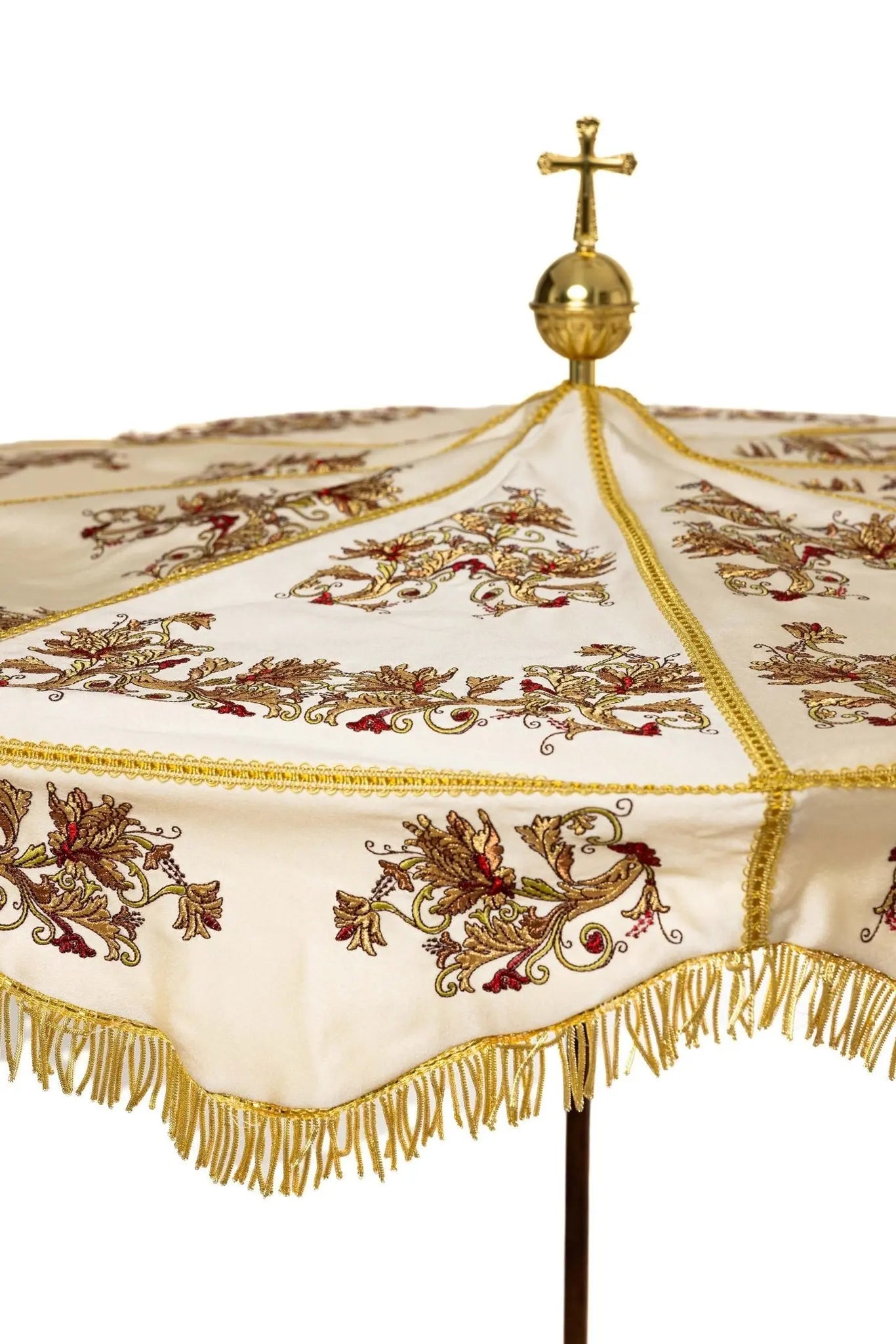
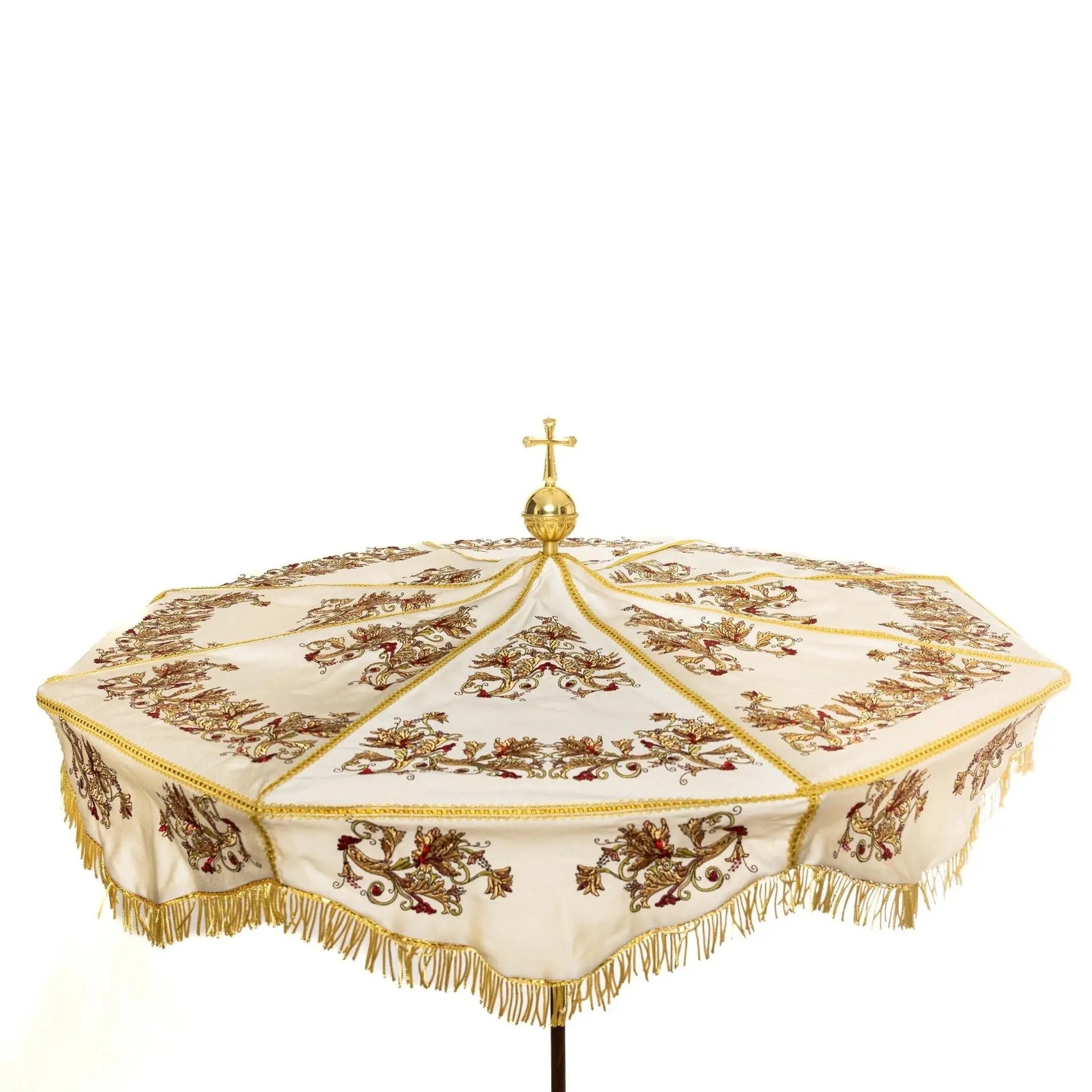
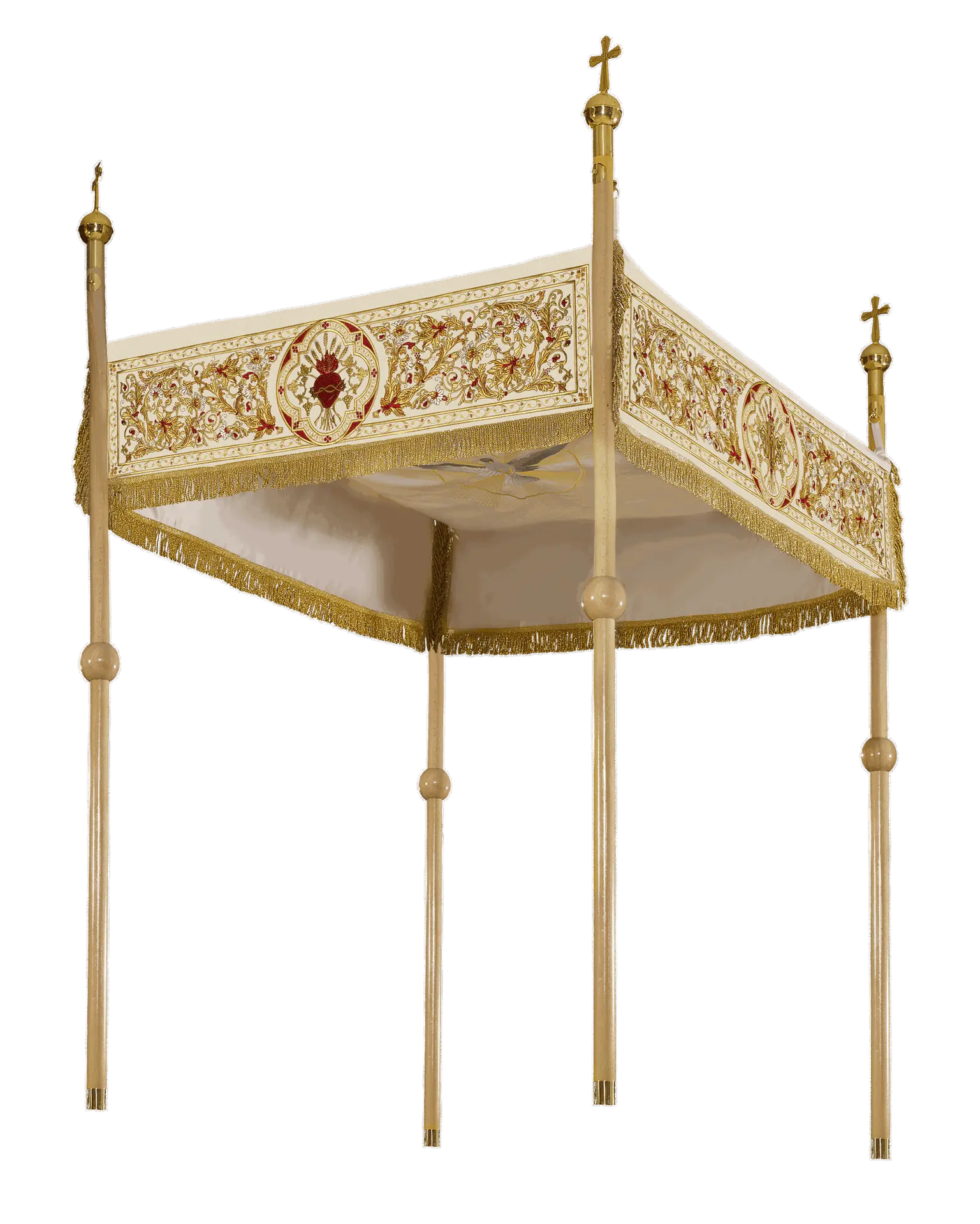
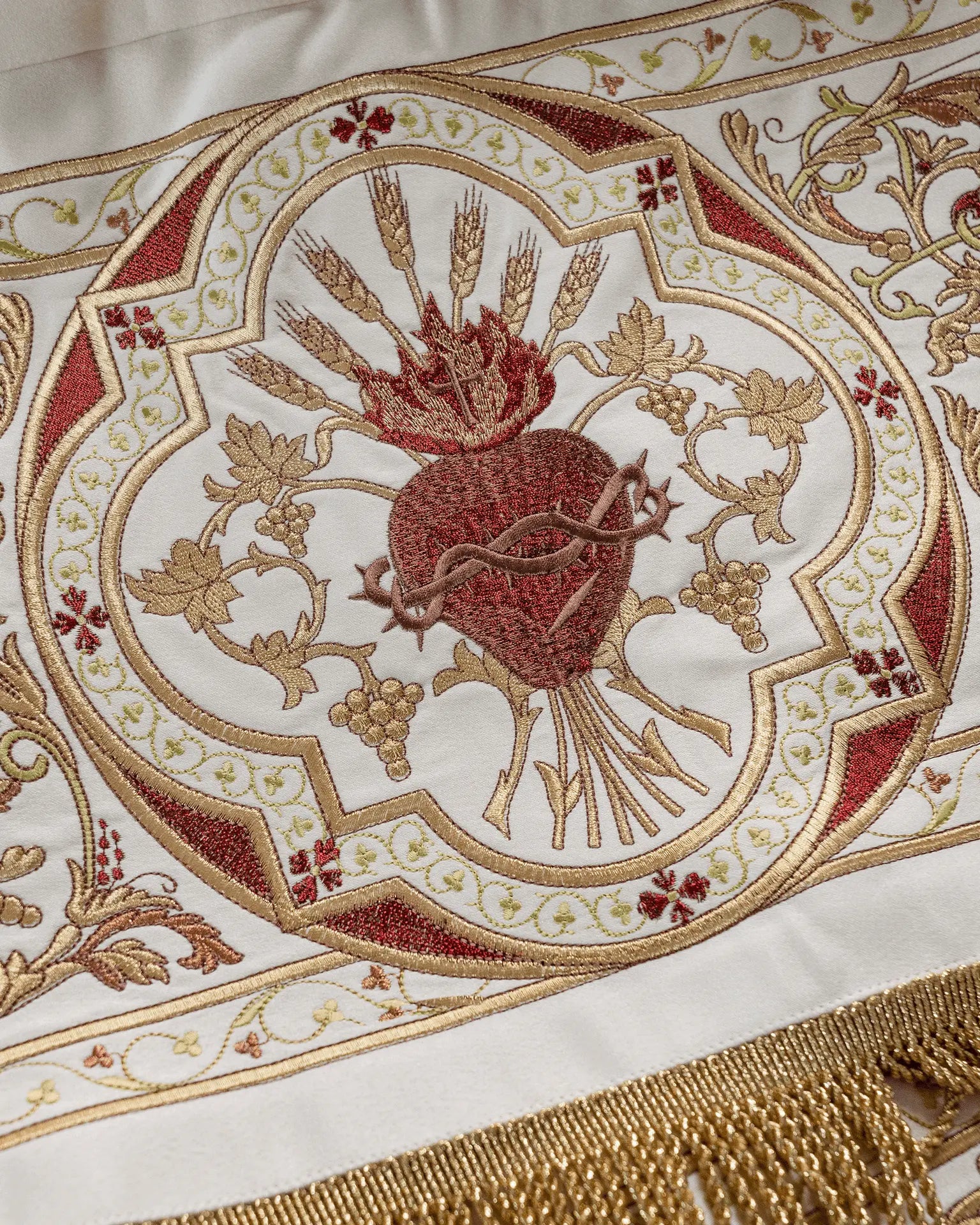
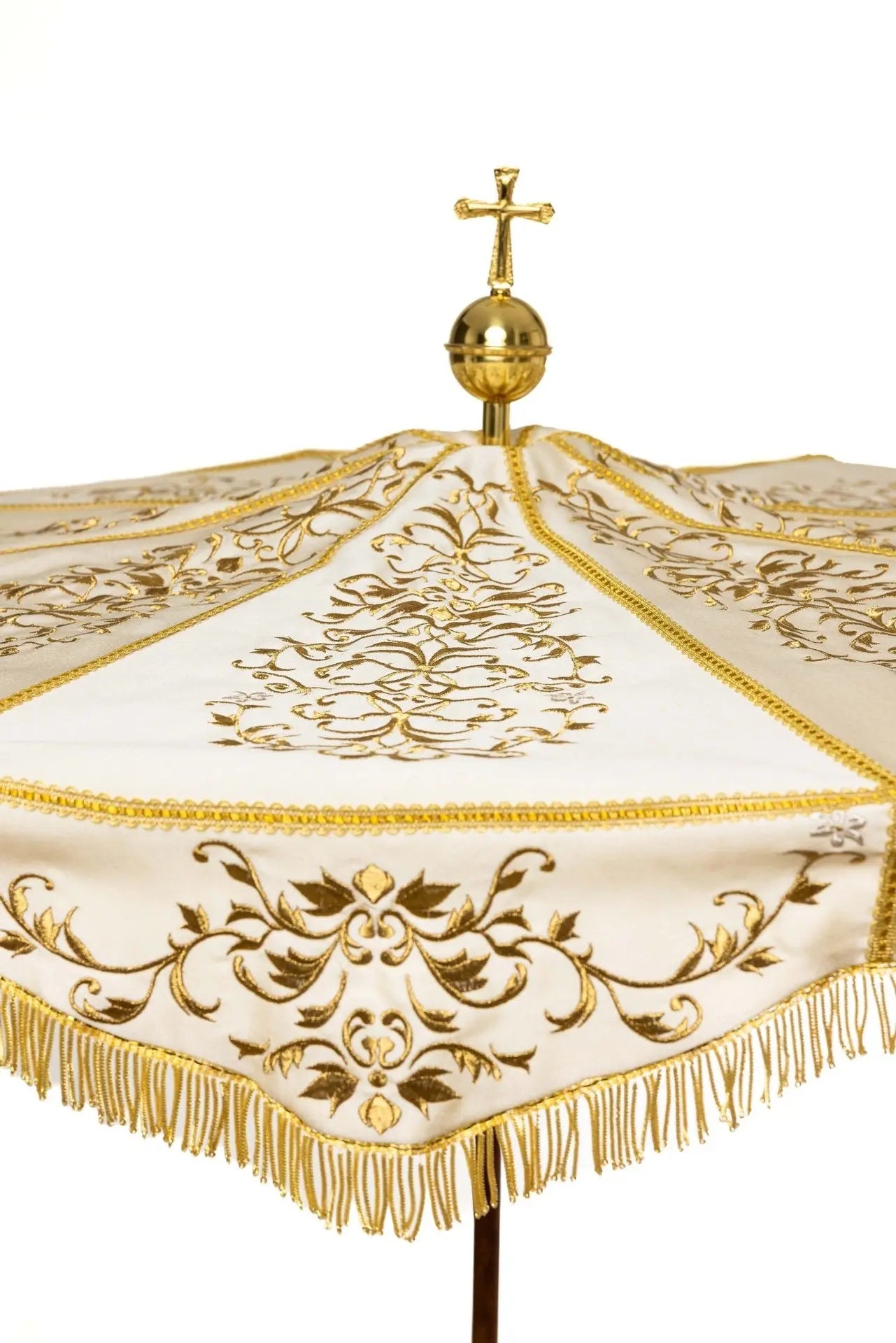
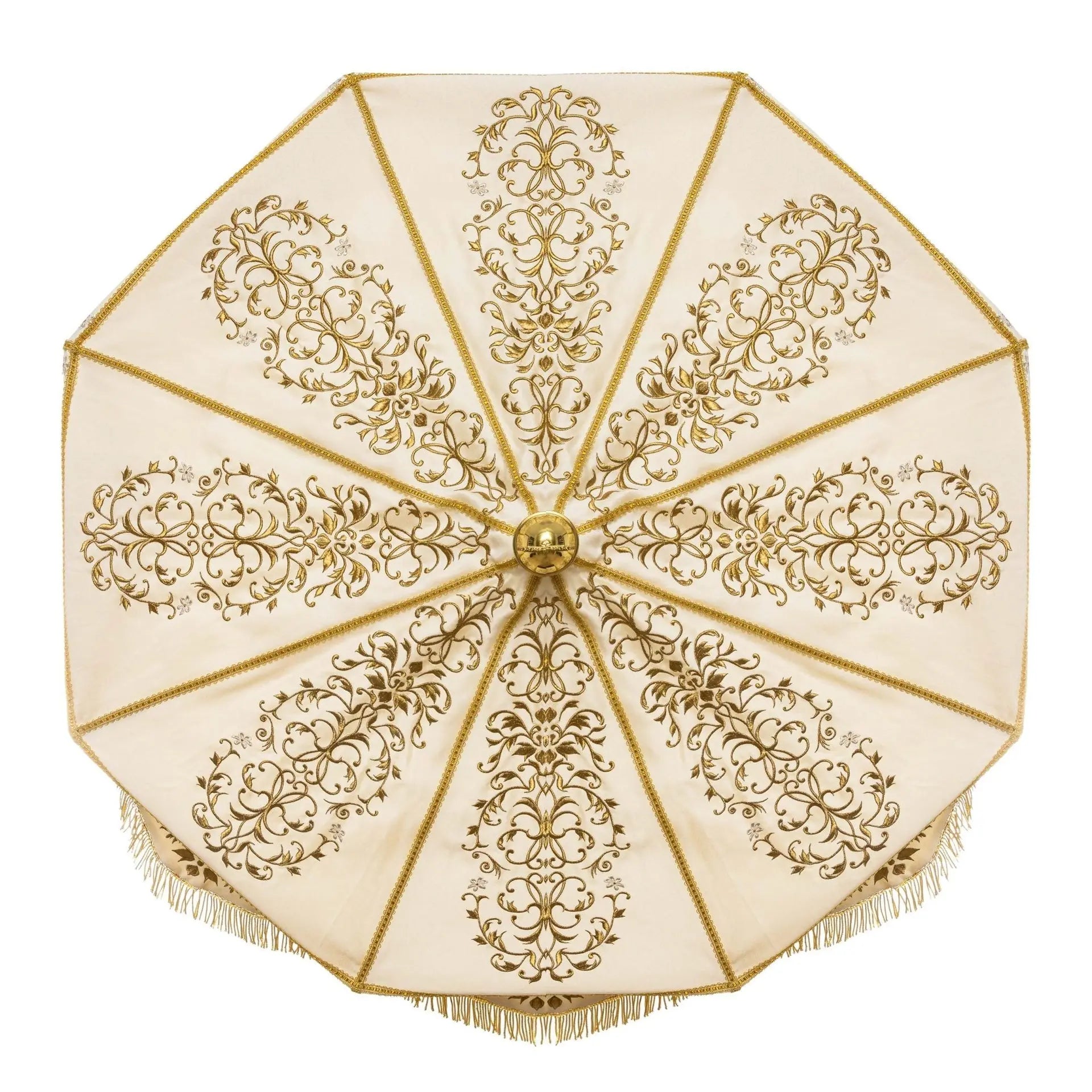
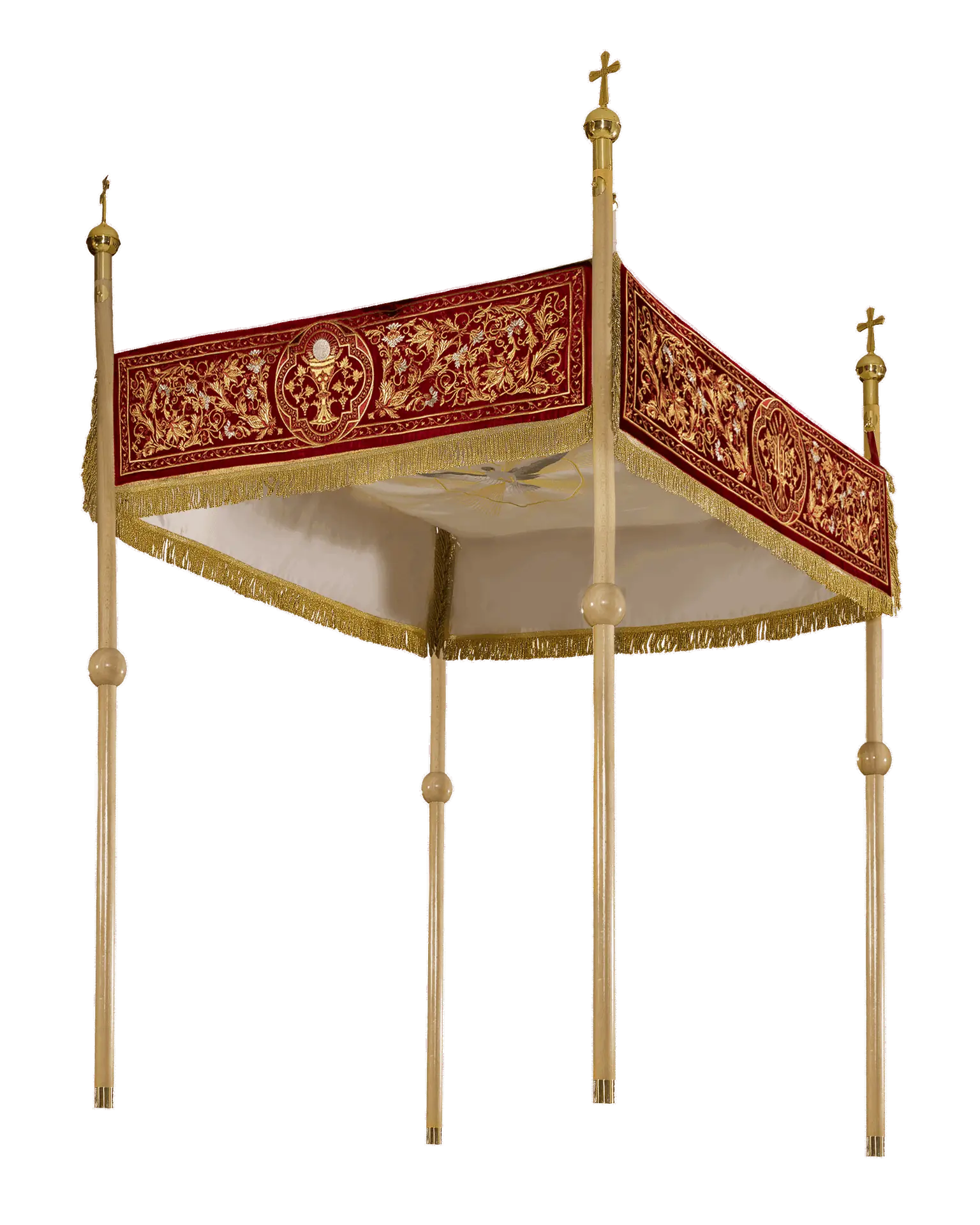
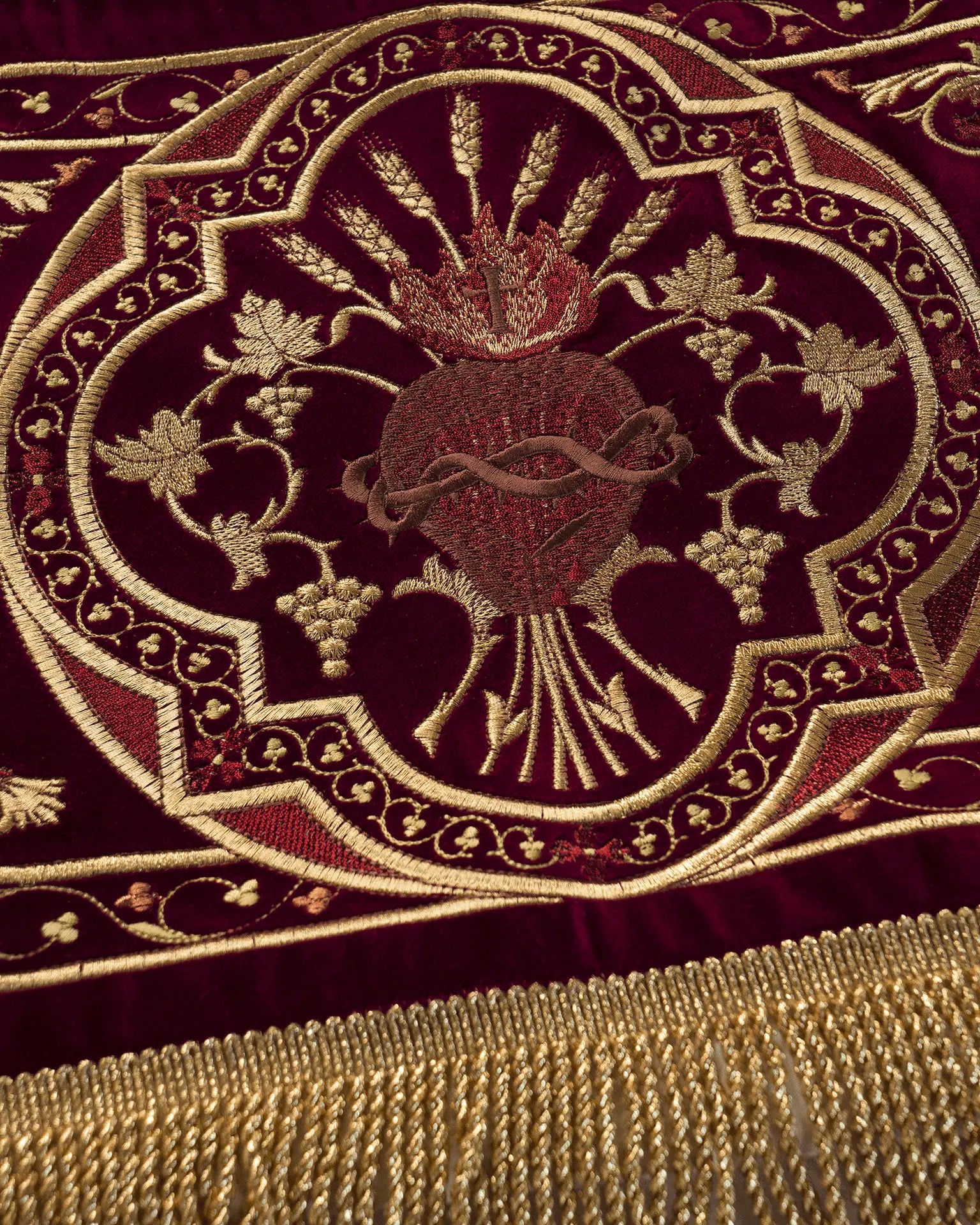
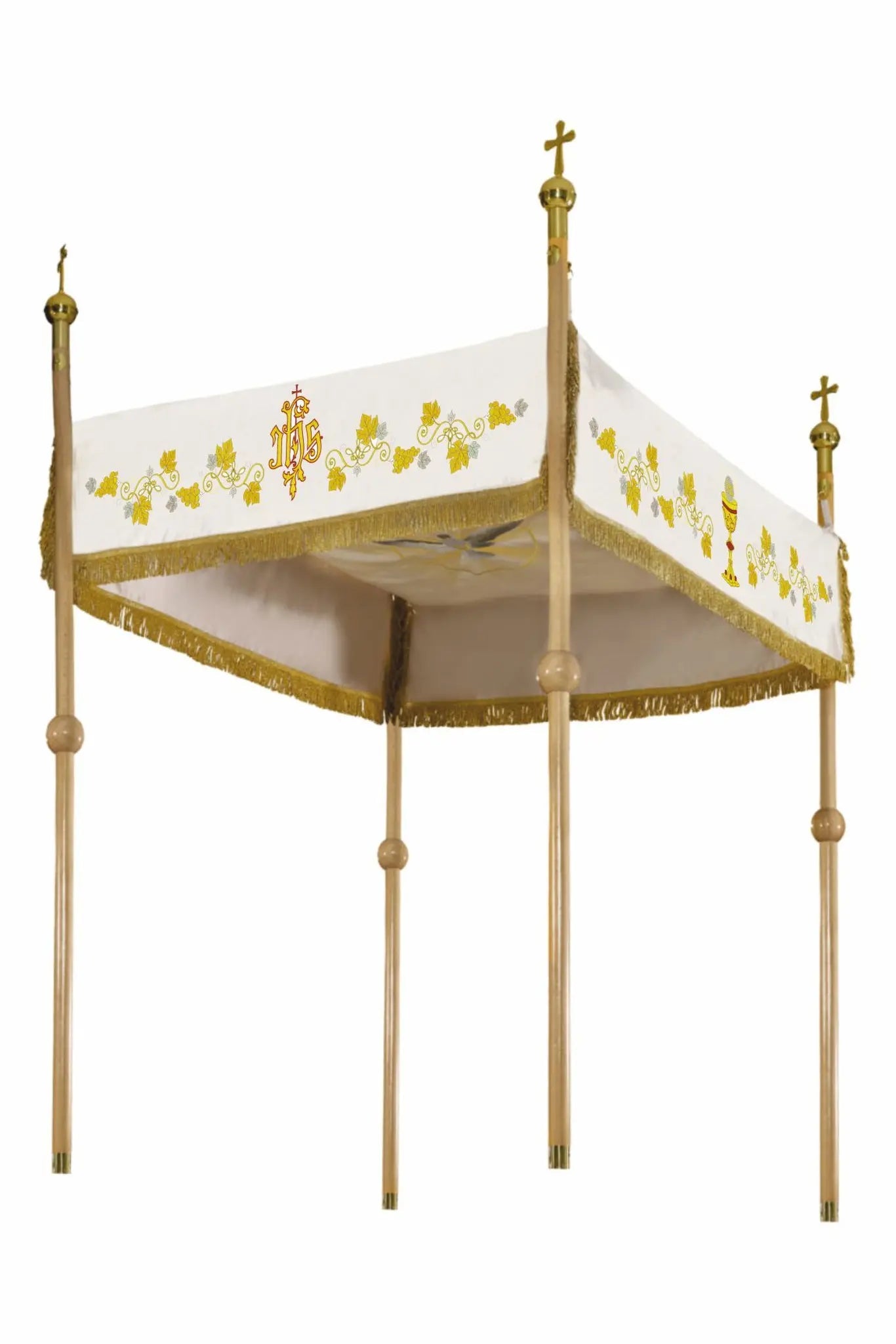
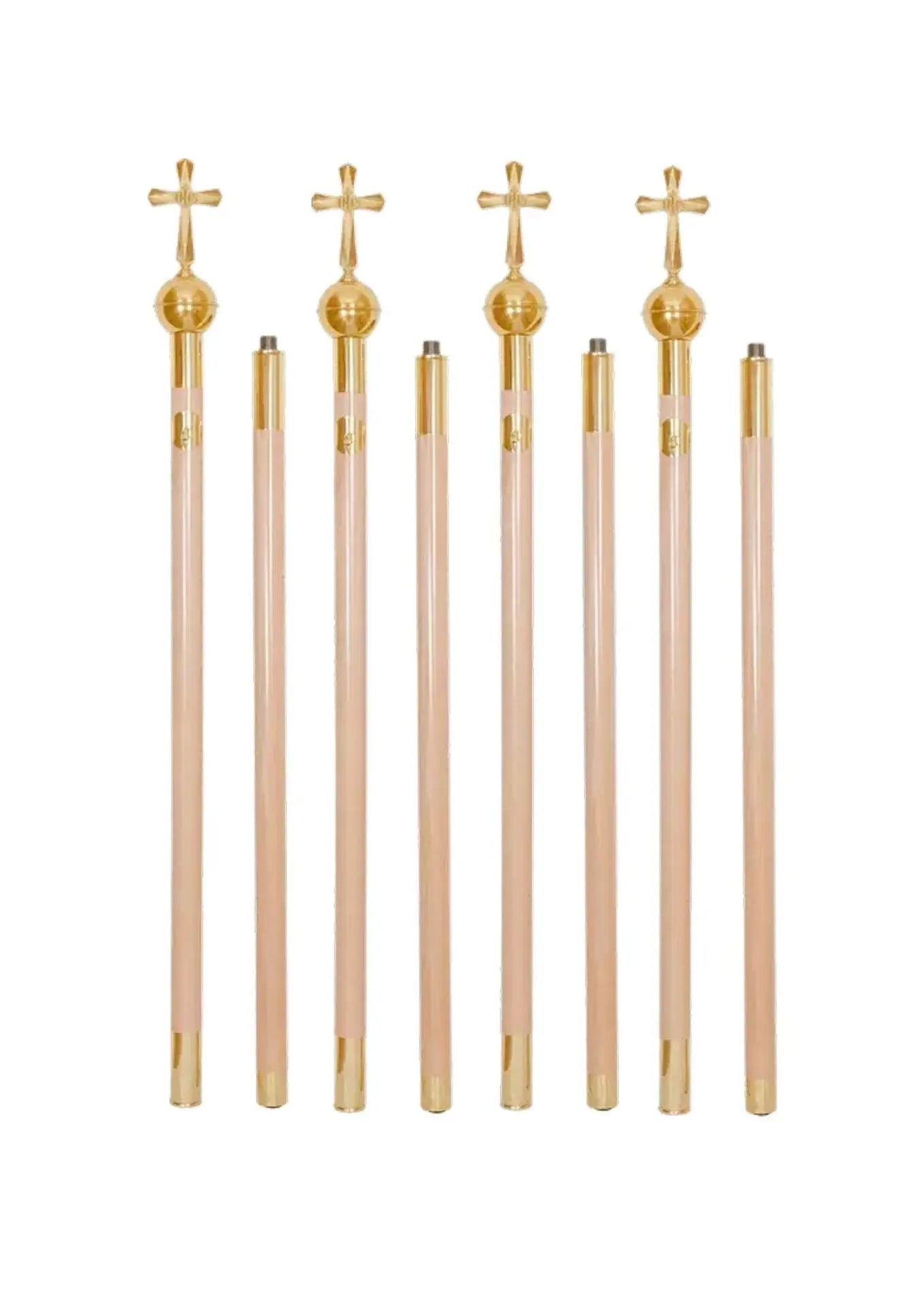
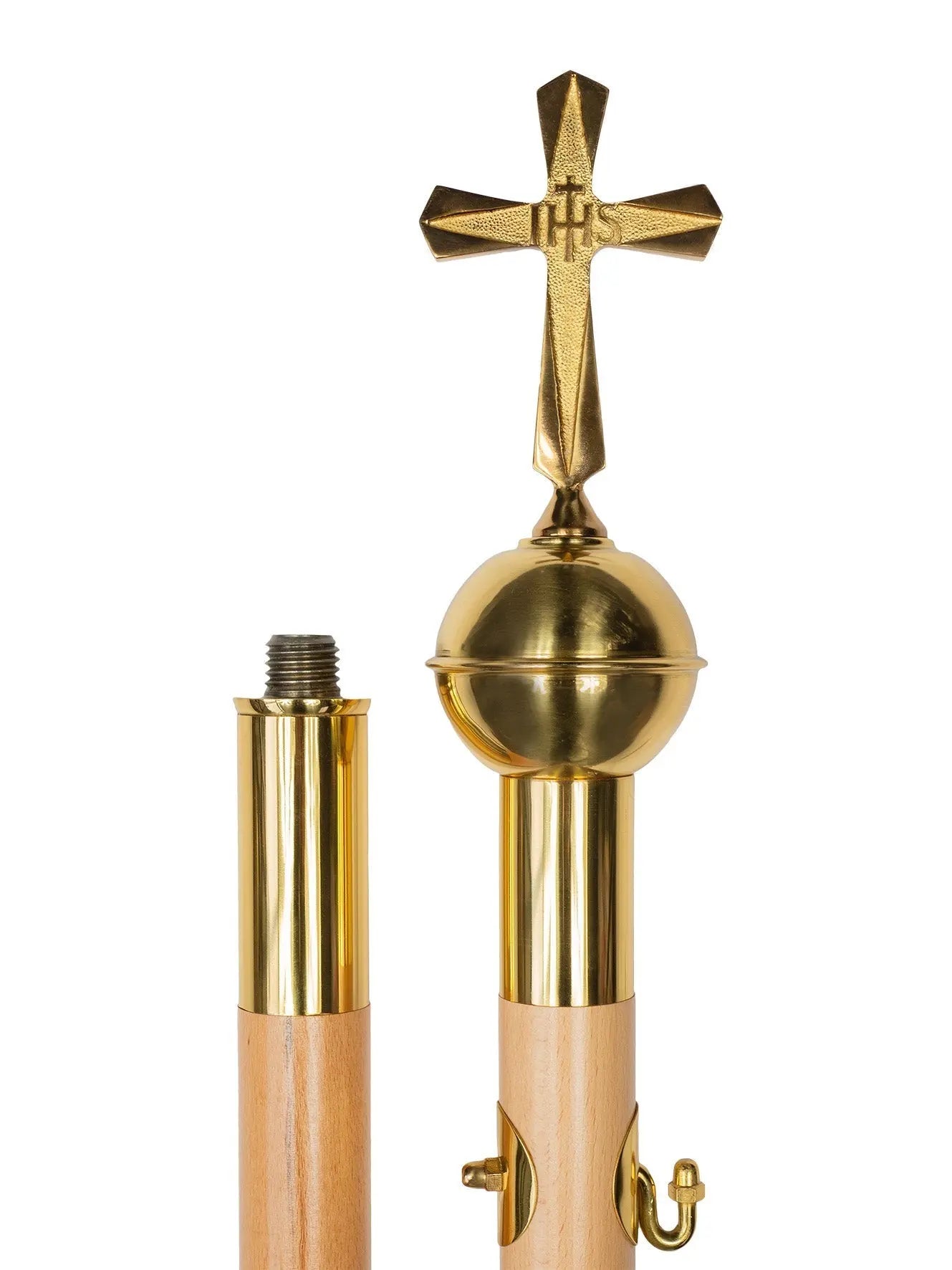
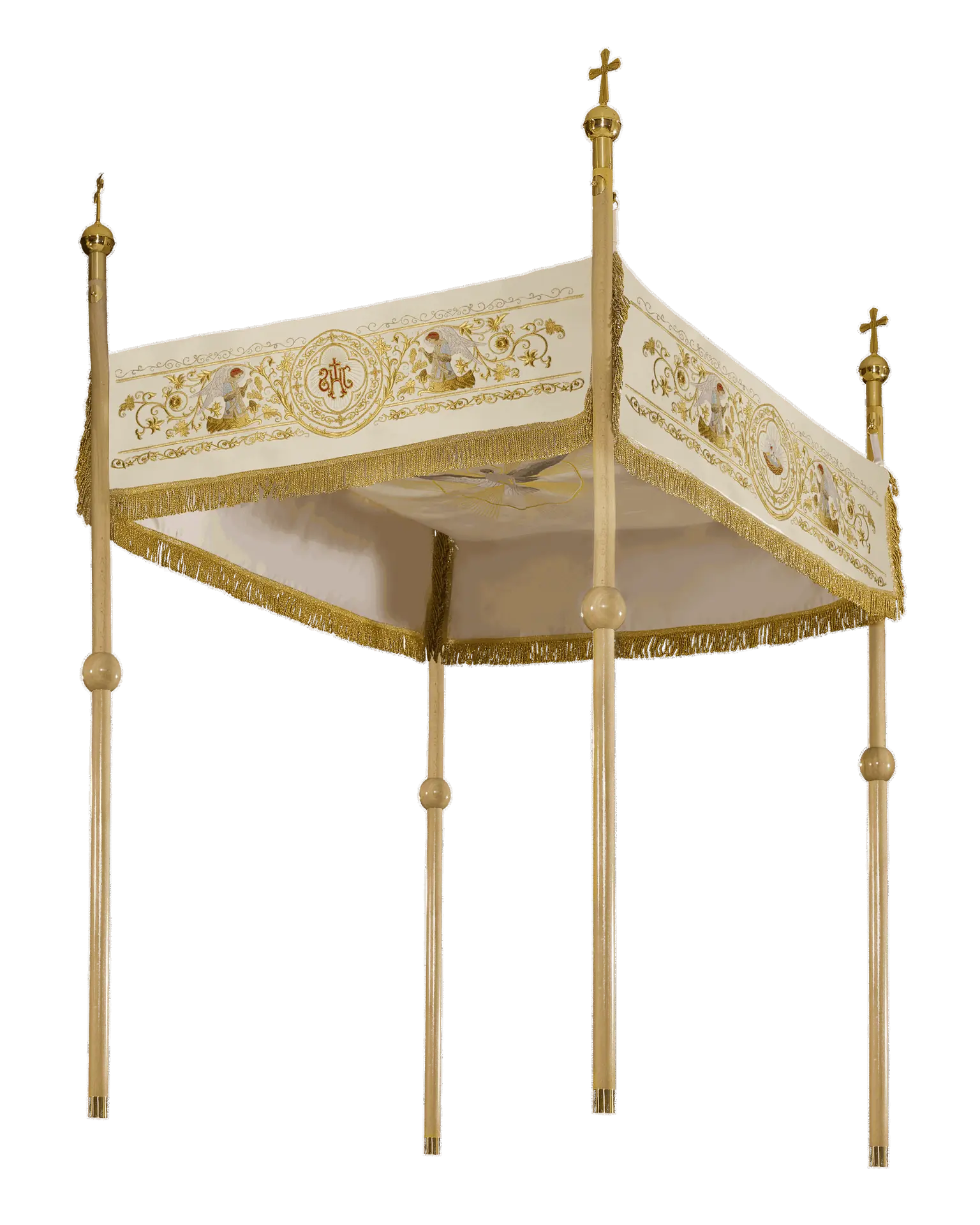


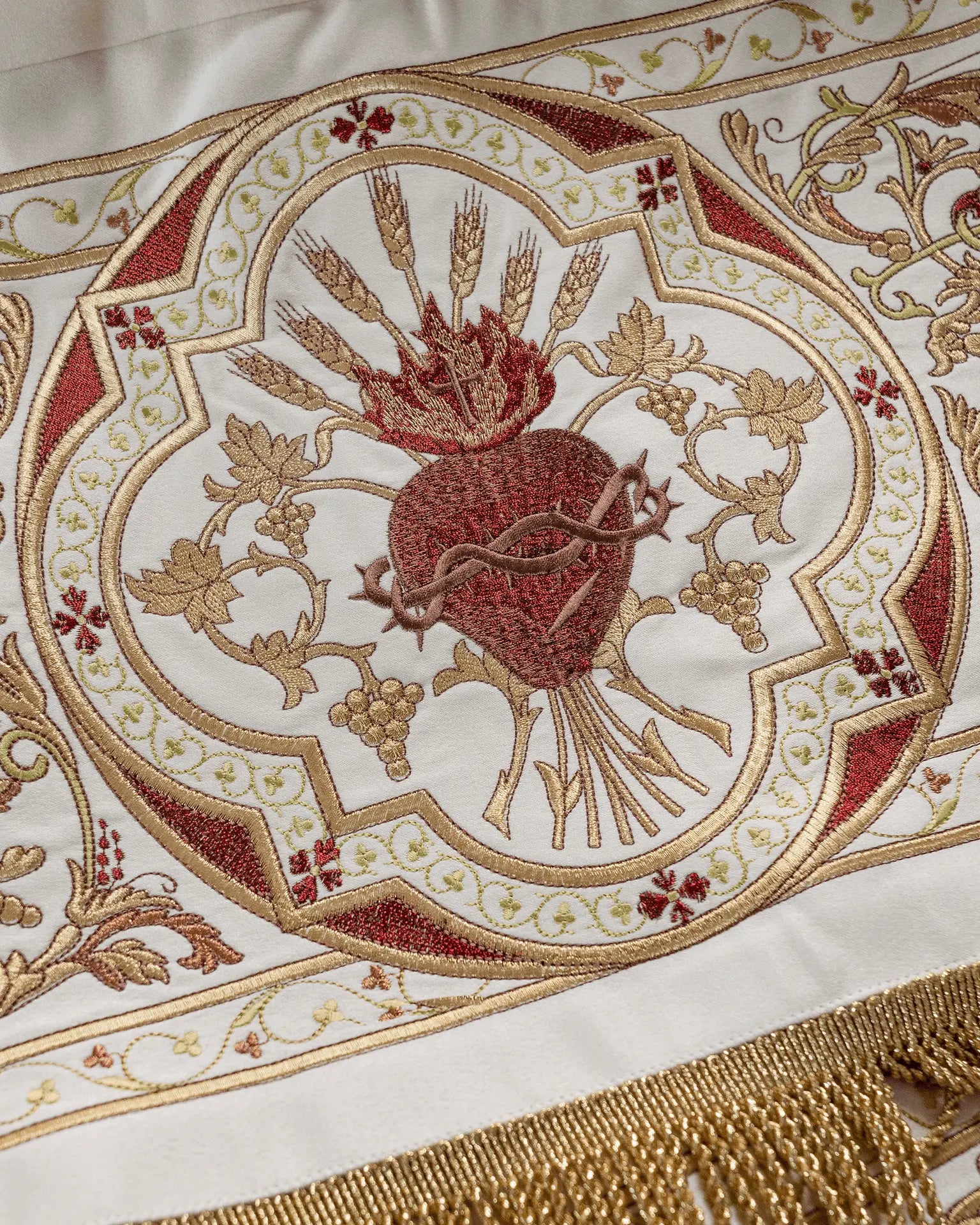

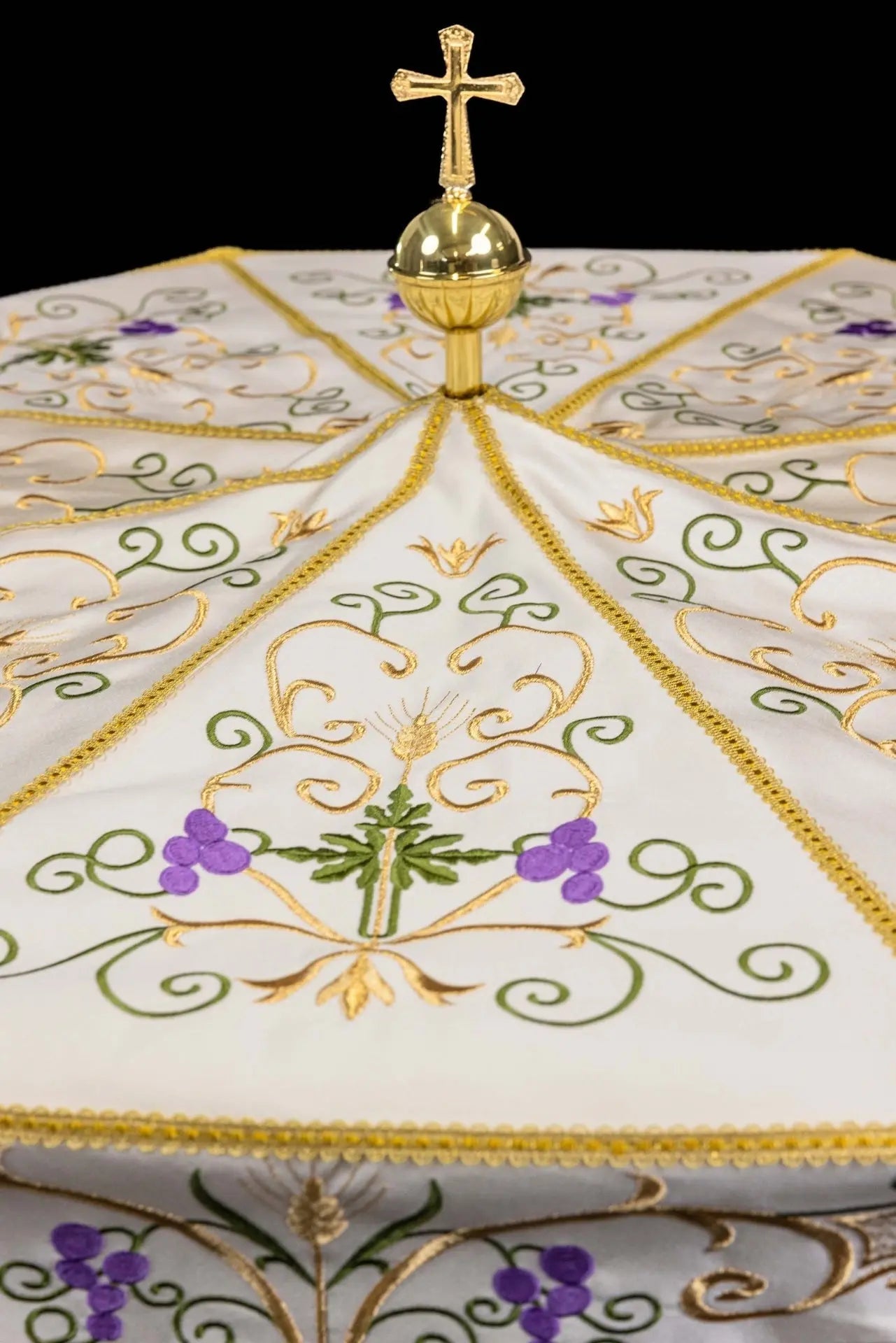
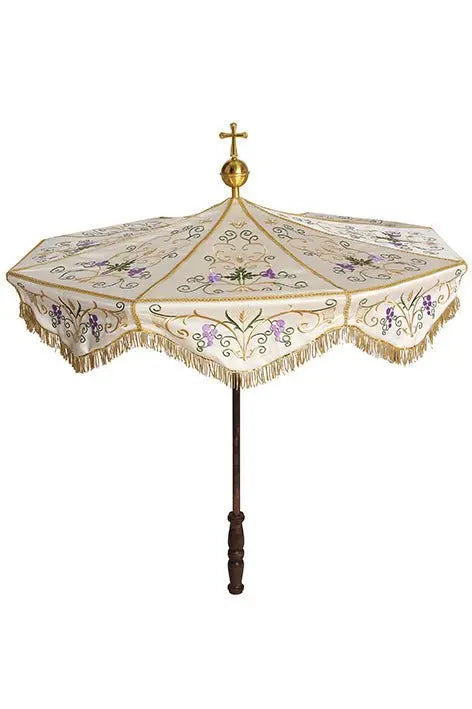
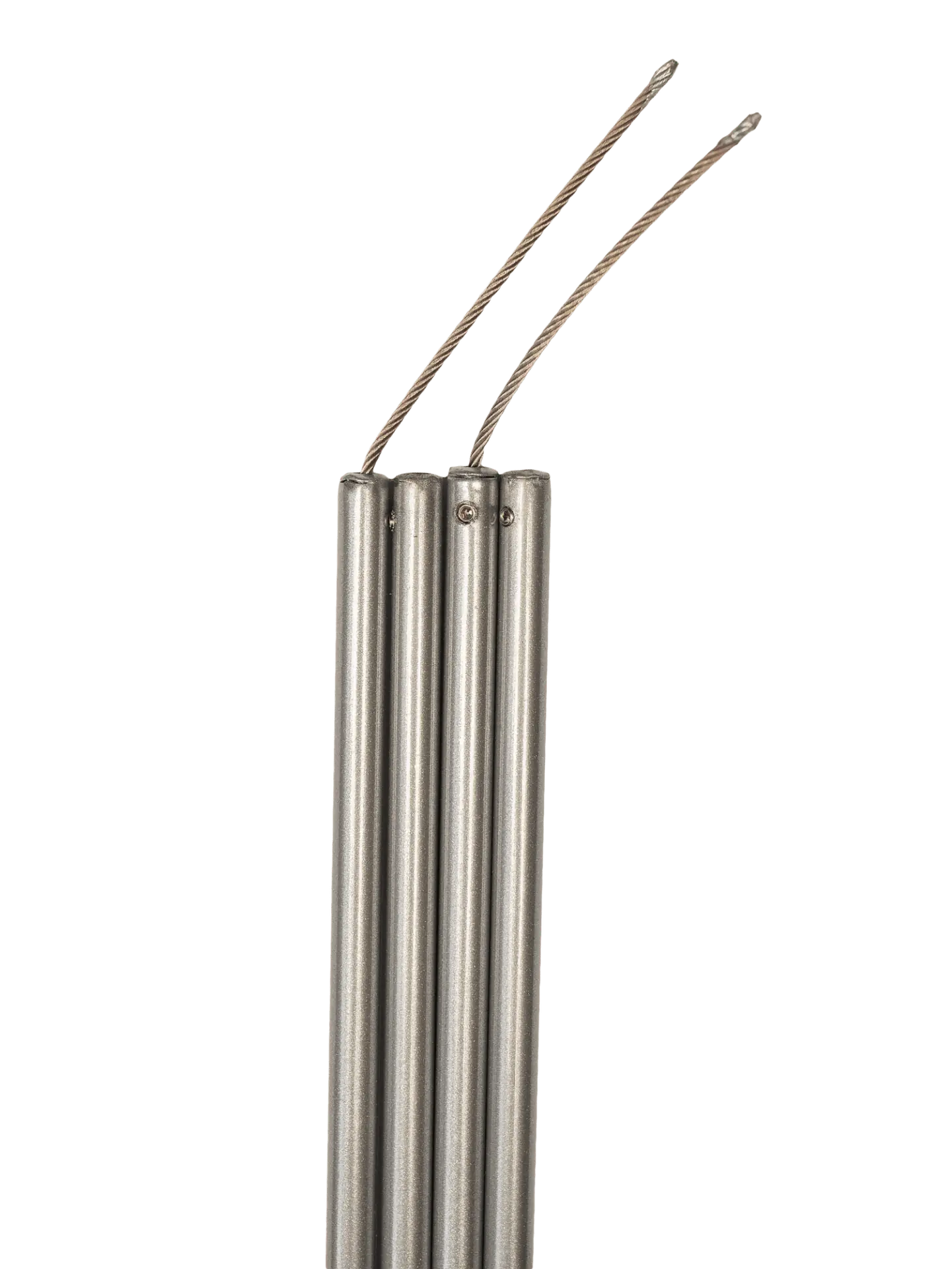
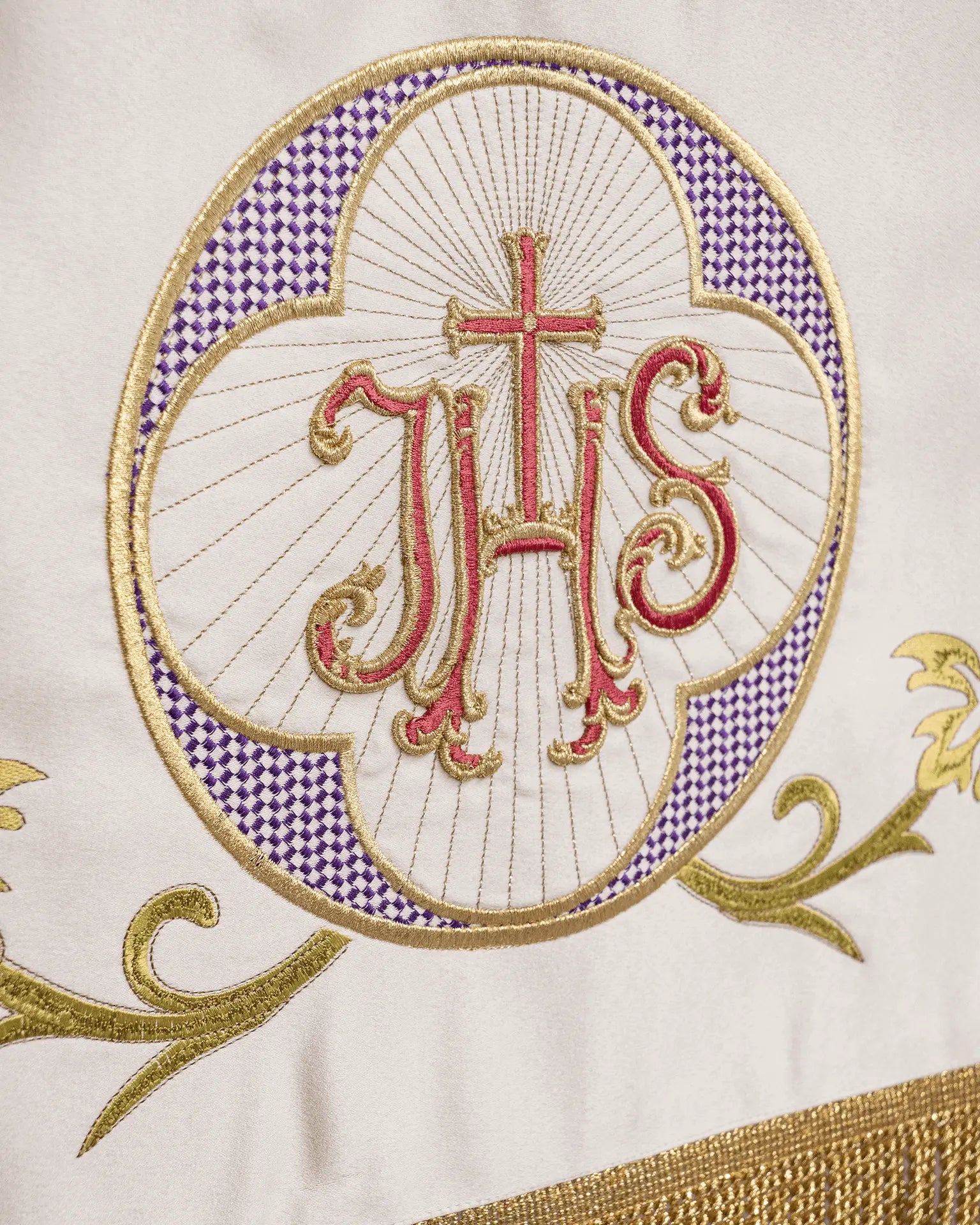
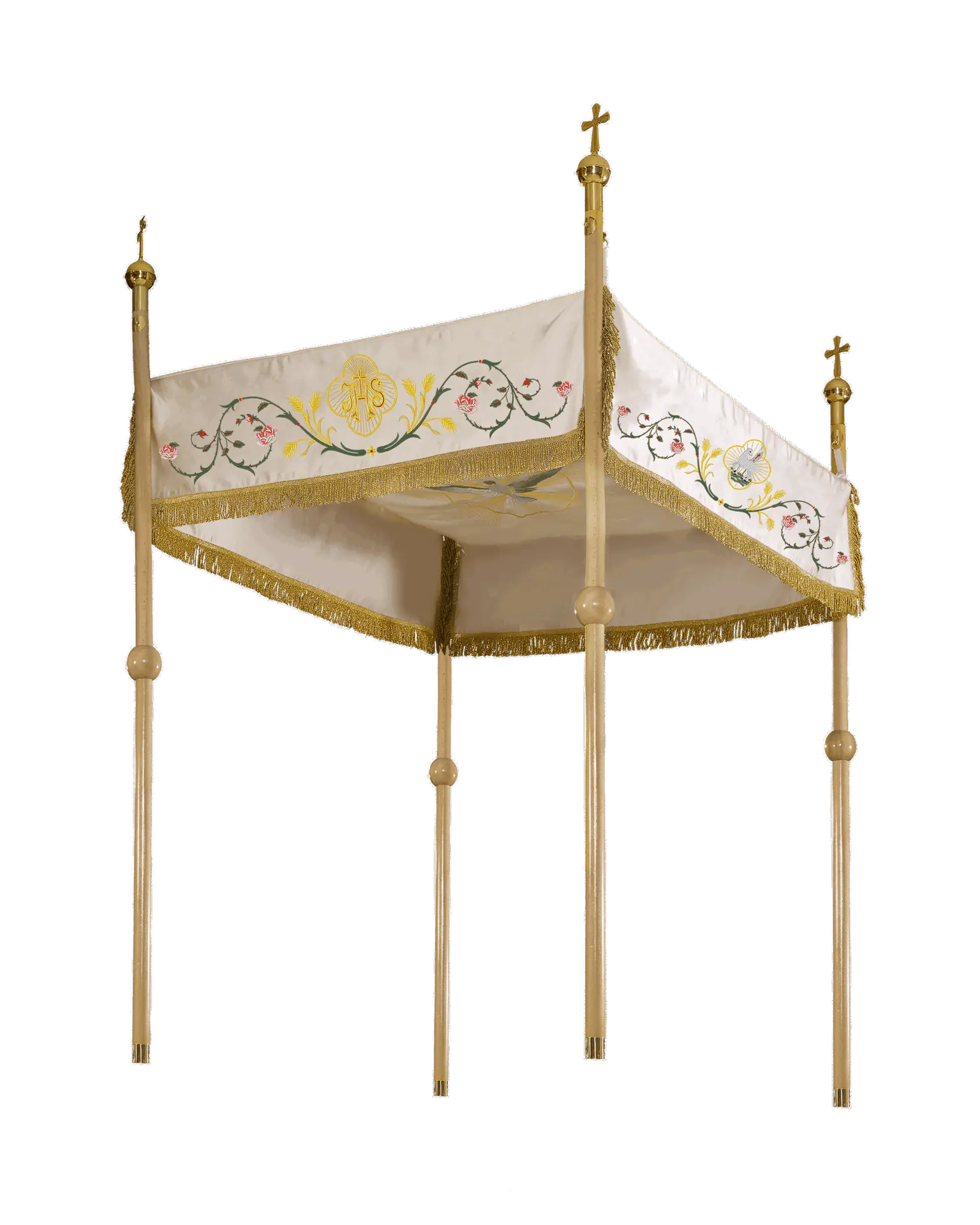
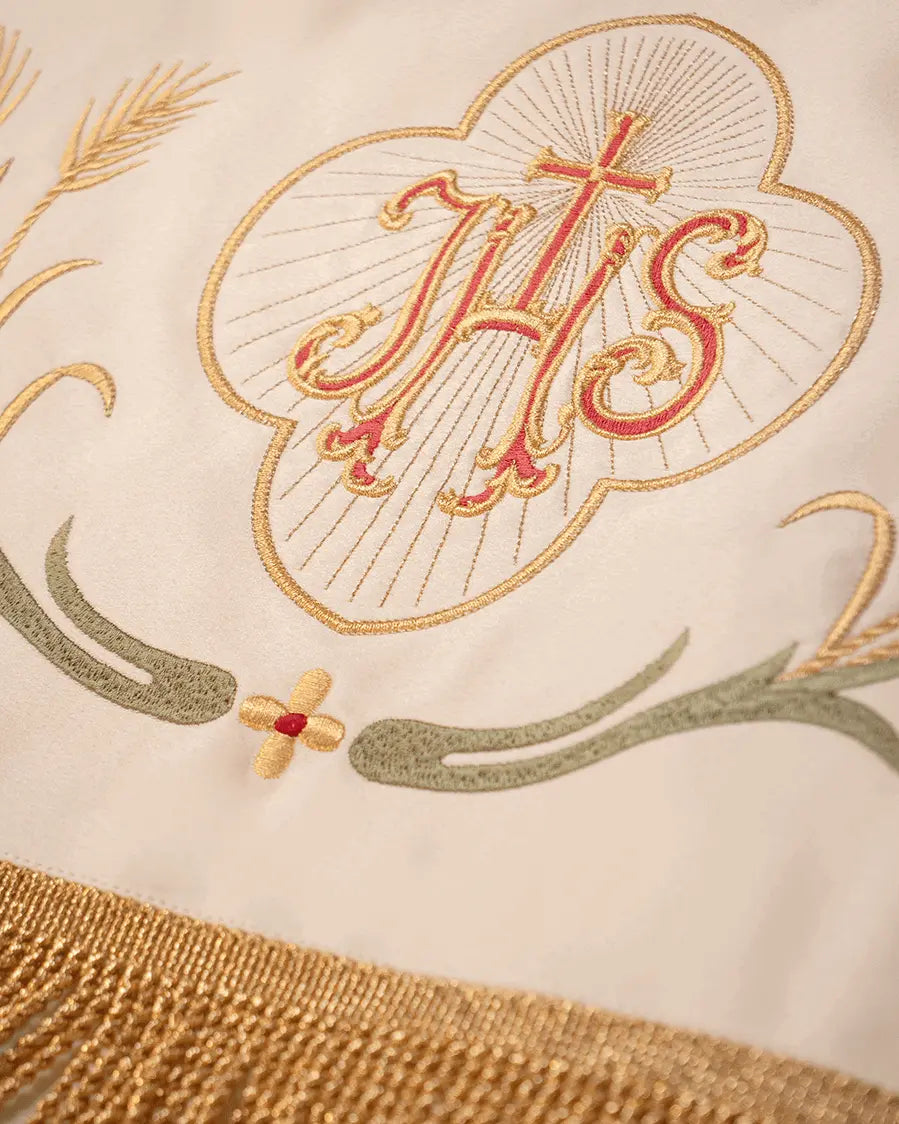
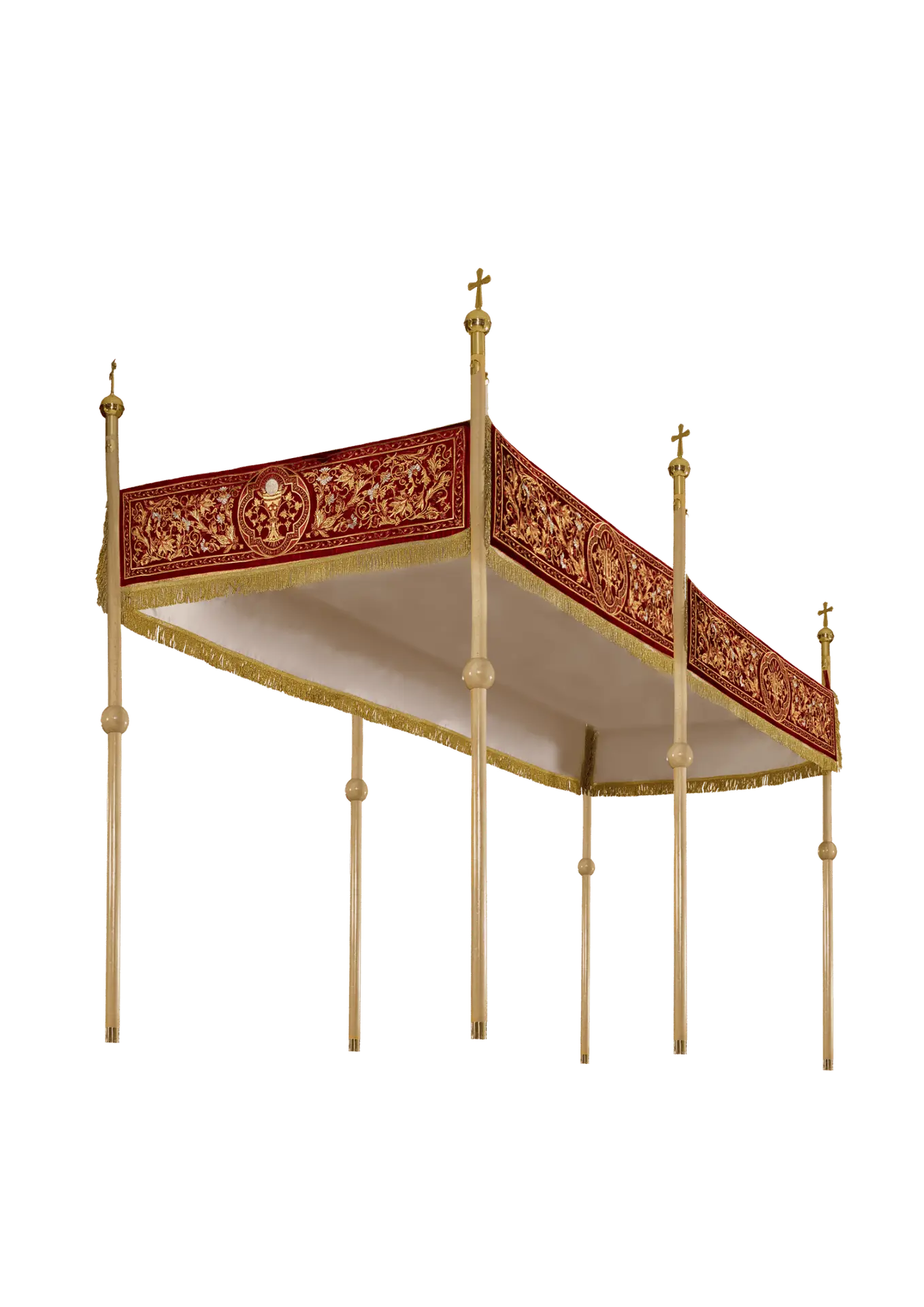
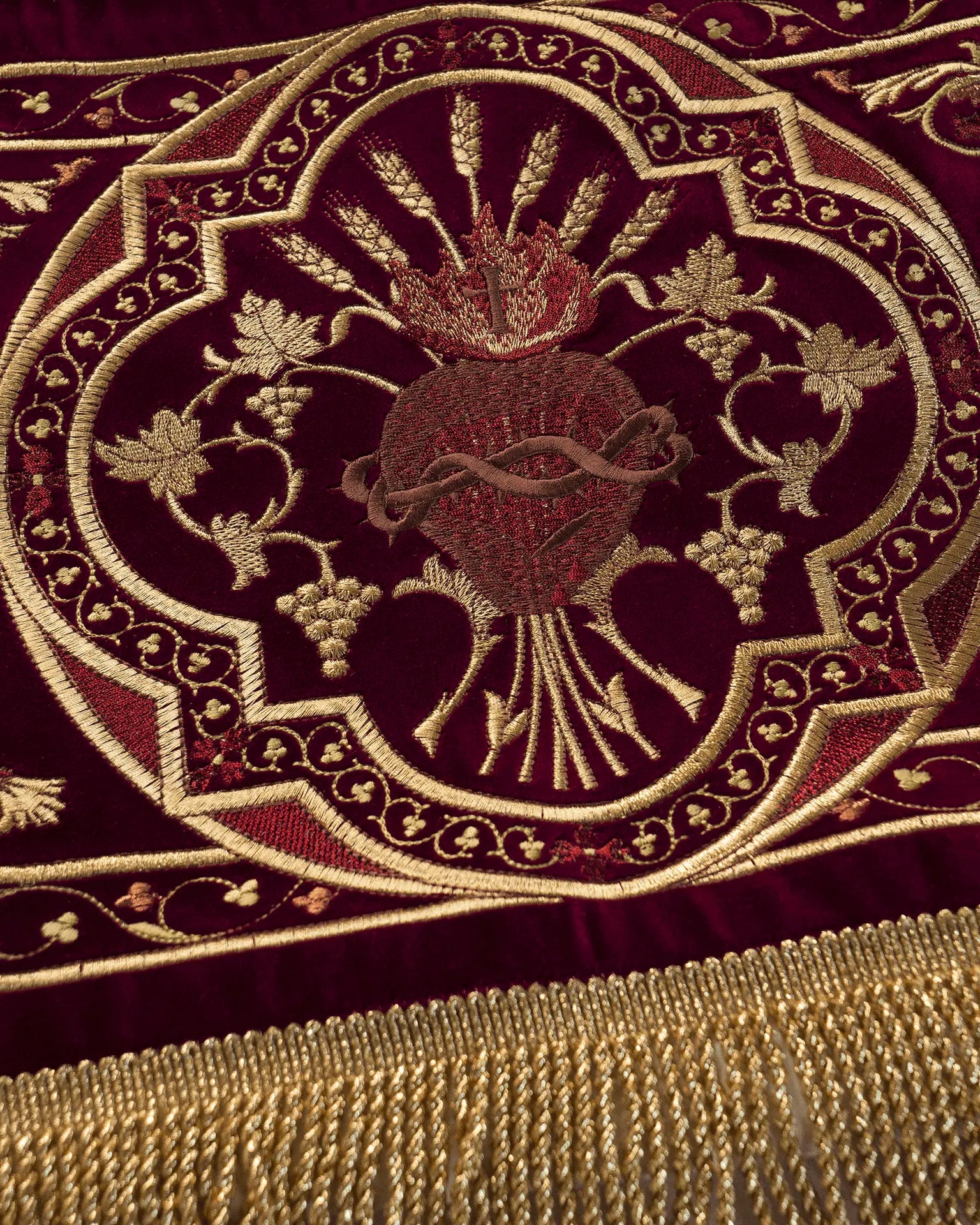
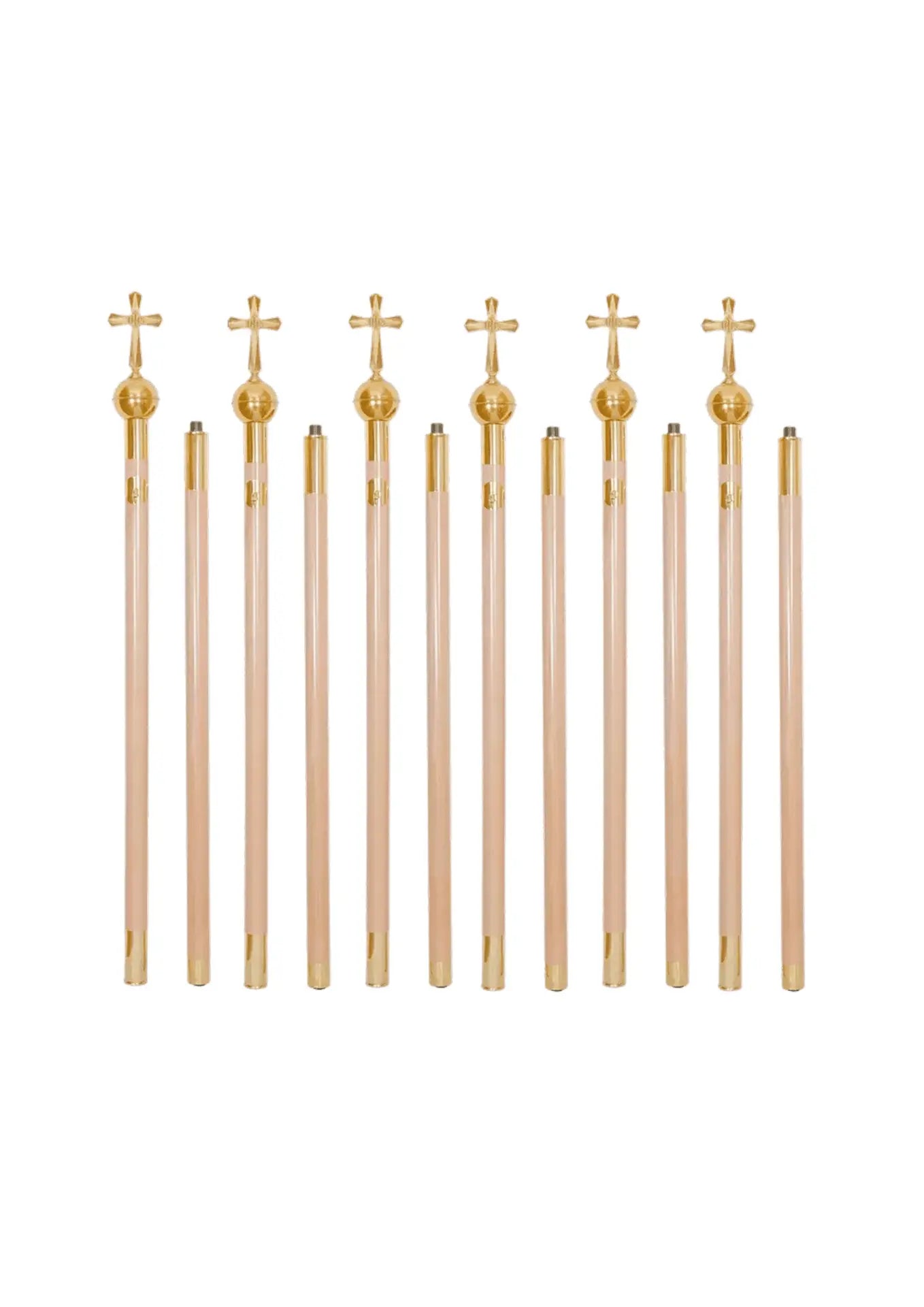
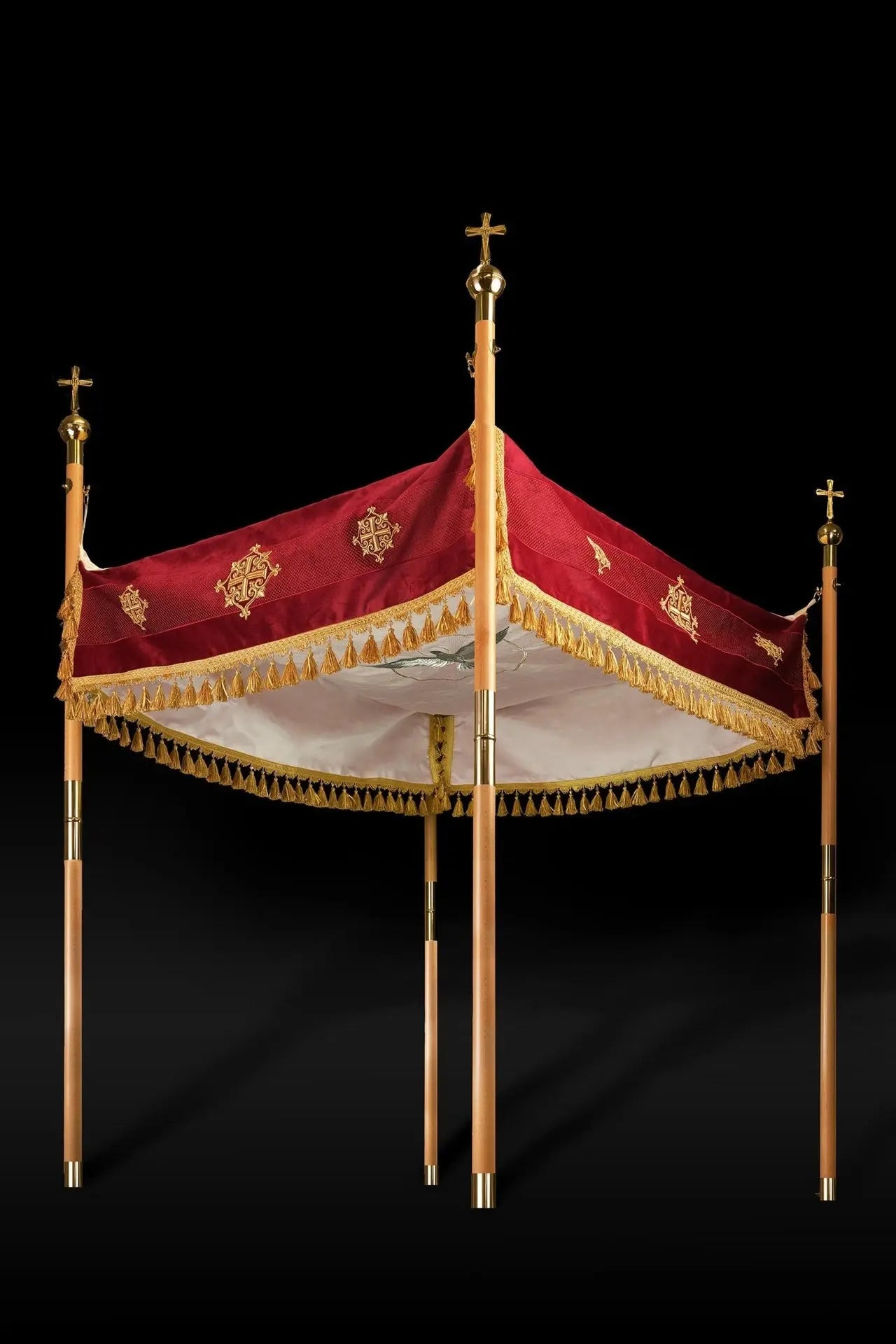
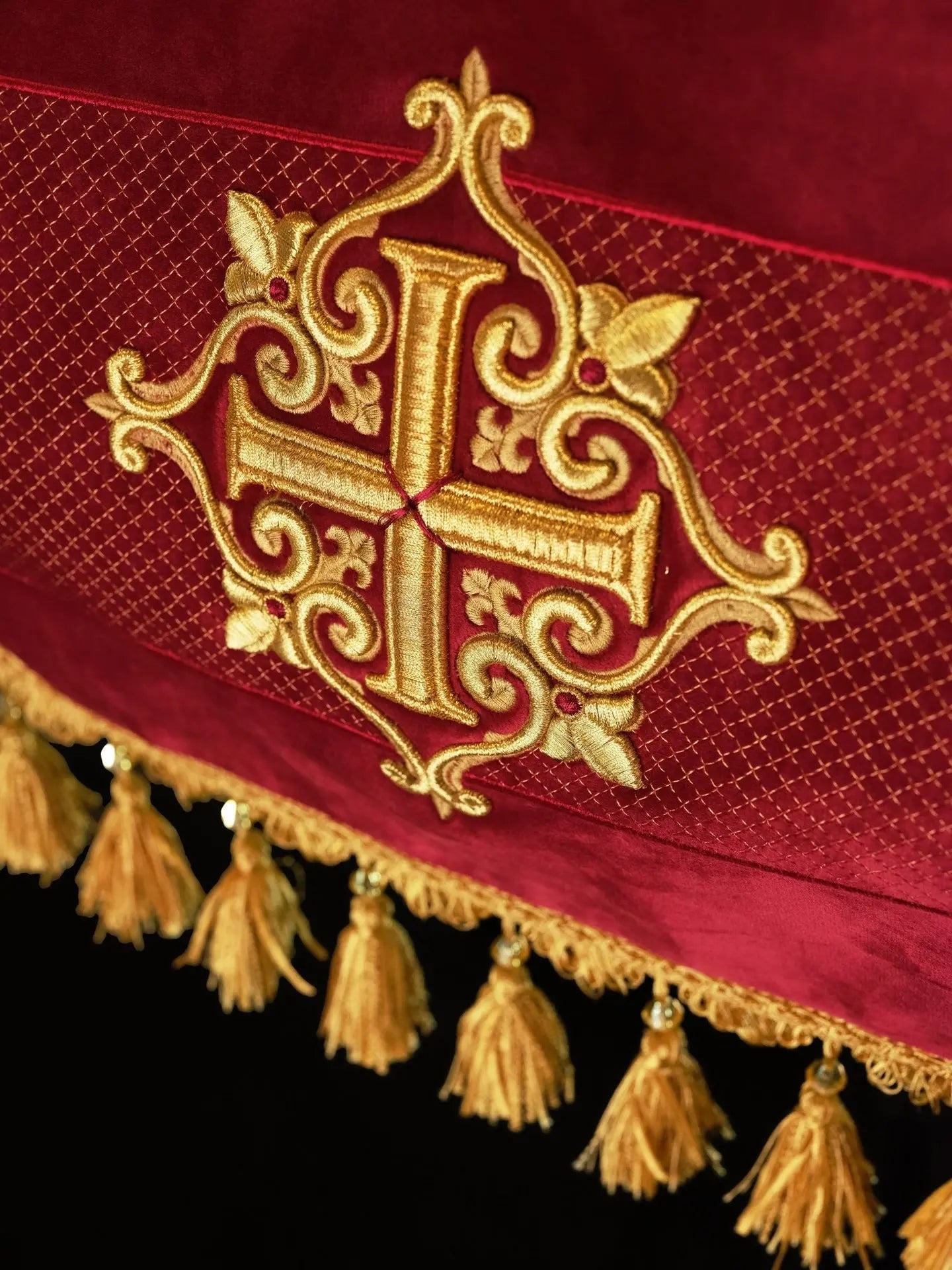
Processional Canopies for Corpus Christi and Eucharistic Processions
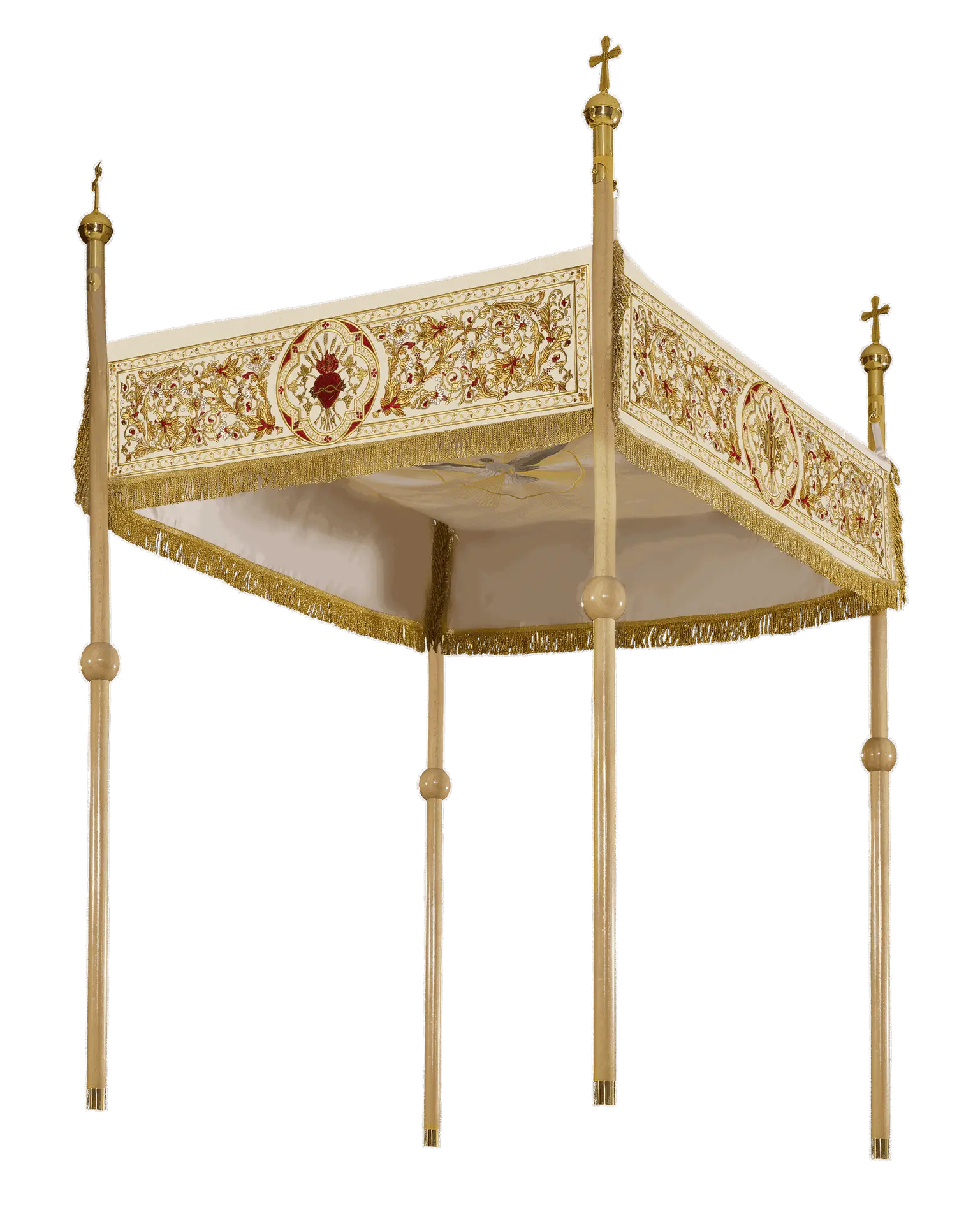
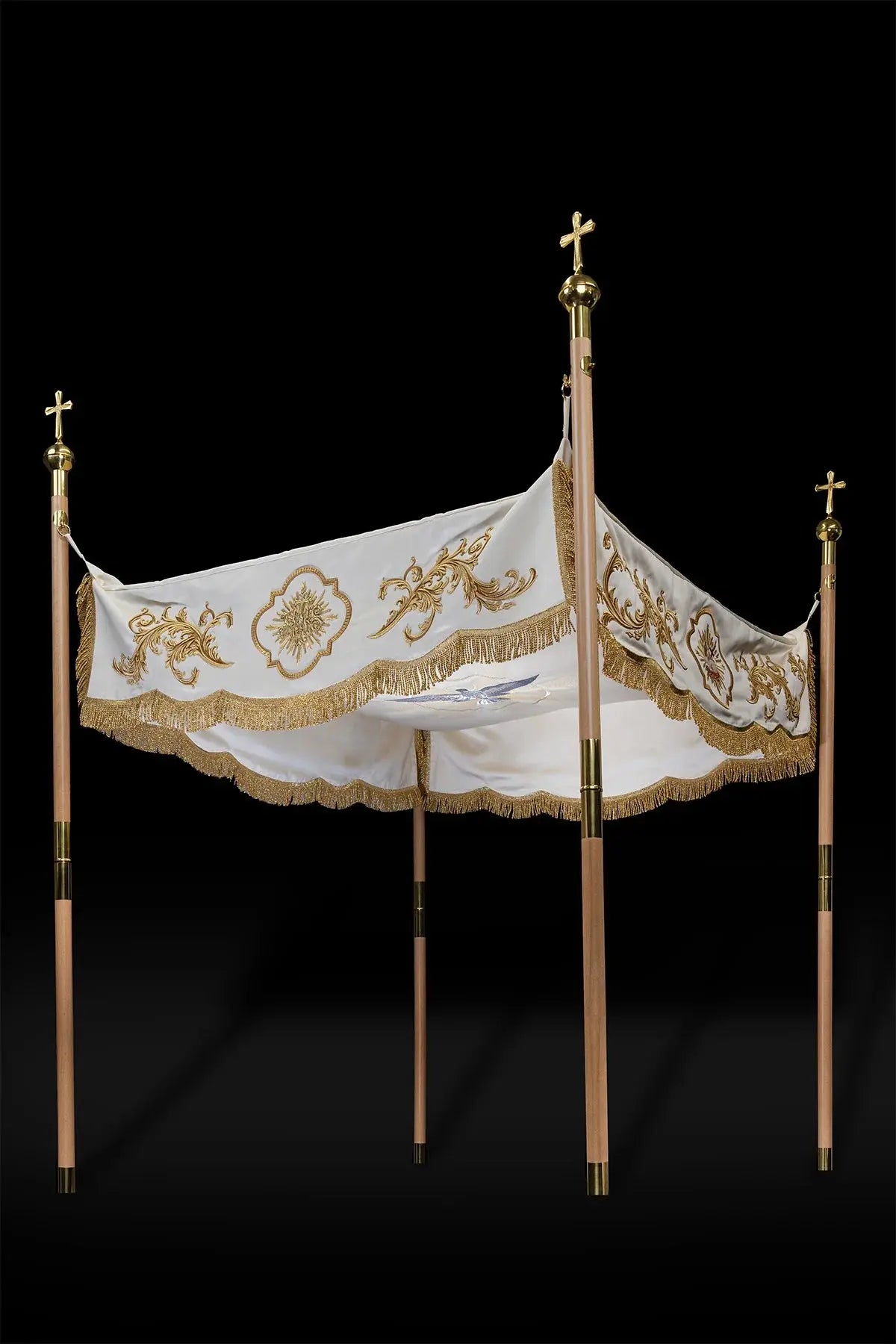
Processional canopies are solemn liturgical accessories used to give visible honor to the Blessed Sacrament during Eucharistic processions, especially on the Feast of Corpus Christi, during parish processions, and on other occasions when the Church carries the Eucharist in public worship. In this collection, the word canopy refers primarily to large processional baldachins carried above the priest or bishop who bears the monstrance, together with related canopy accessories such as canopy poles, braces, and processional umbrellas. These items help form a dignified, recognizable sacred space during movement through the church, around the parish grounds, or through the streets.
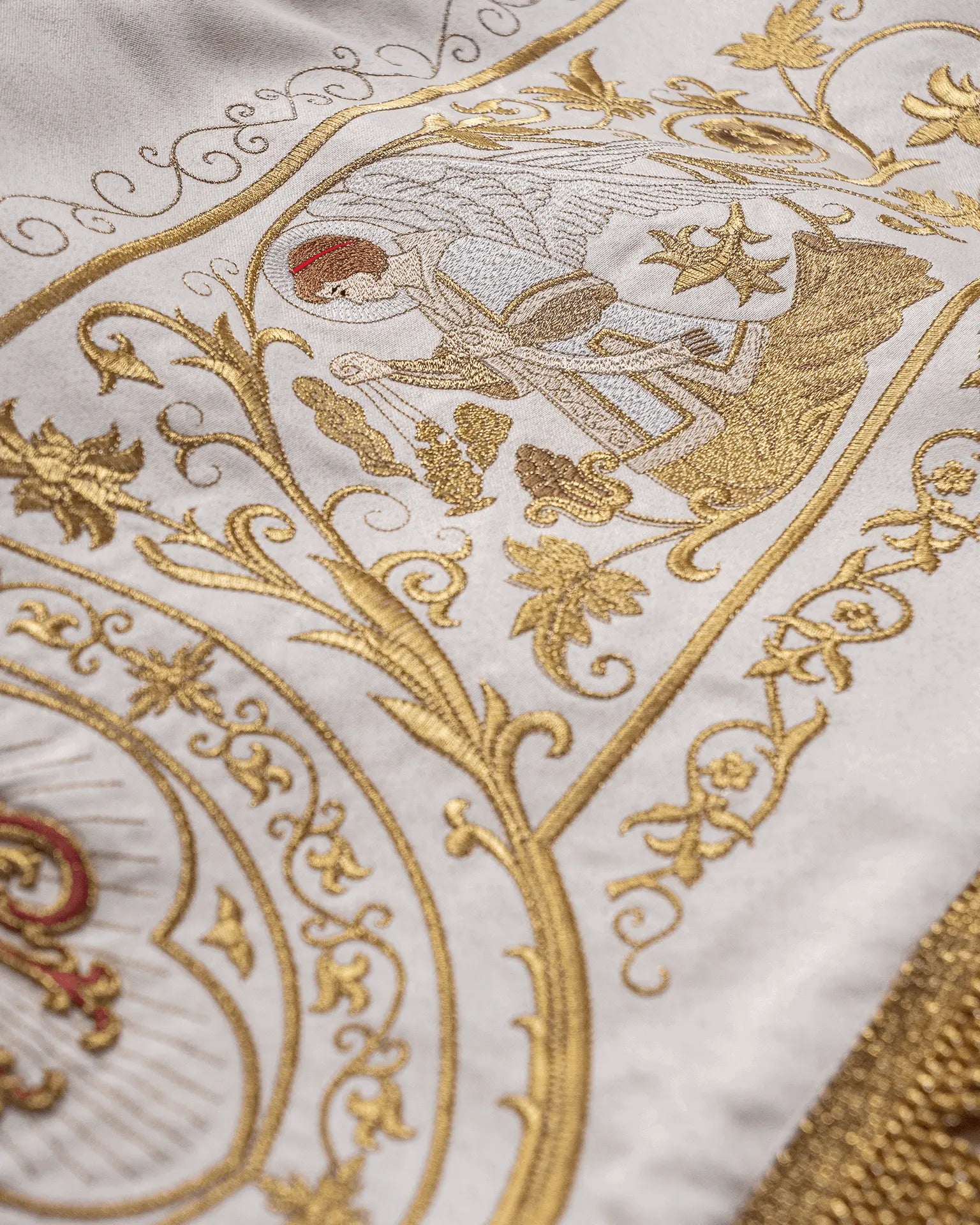
A canopy is not simply a decorative textile. Its form and placement express reverence: the congregation sees that the Eucharistic Lord is being honored, protected, and proclaimed. For this reason, the canopy should be stable, proportionate, and visually appropriate for the scale of the procession. Embroidered fabric, gold ornament, velvet, ecru tones, and carefully finished edges all support the solemn character of the rite without distracting from the Blessed Sacrament itself.
This collection belongs within our wider range of liturgical accessories. It is especially connected with Corpus Christi celebrations, where a baldachin is often carried over the celebrant holding the monstrance. Parishes planning a complete procession may also need processional umbrellas, processional banners, suitable monstrances, and other ceremonial items that help organize the route, mark the liturgical theme, and maintain a unified visual style.
What belongs in the processional canopy collection
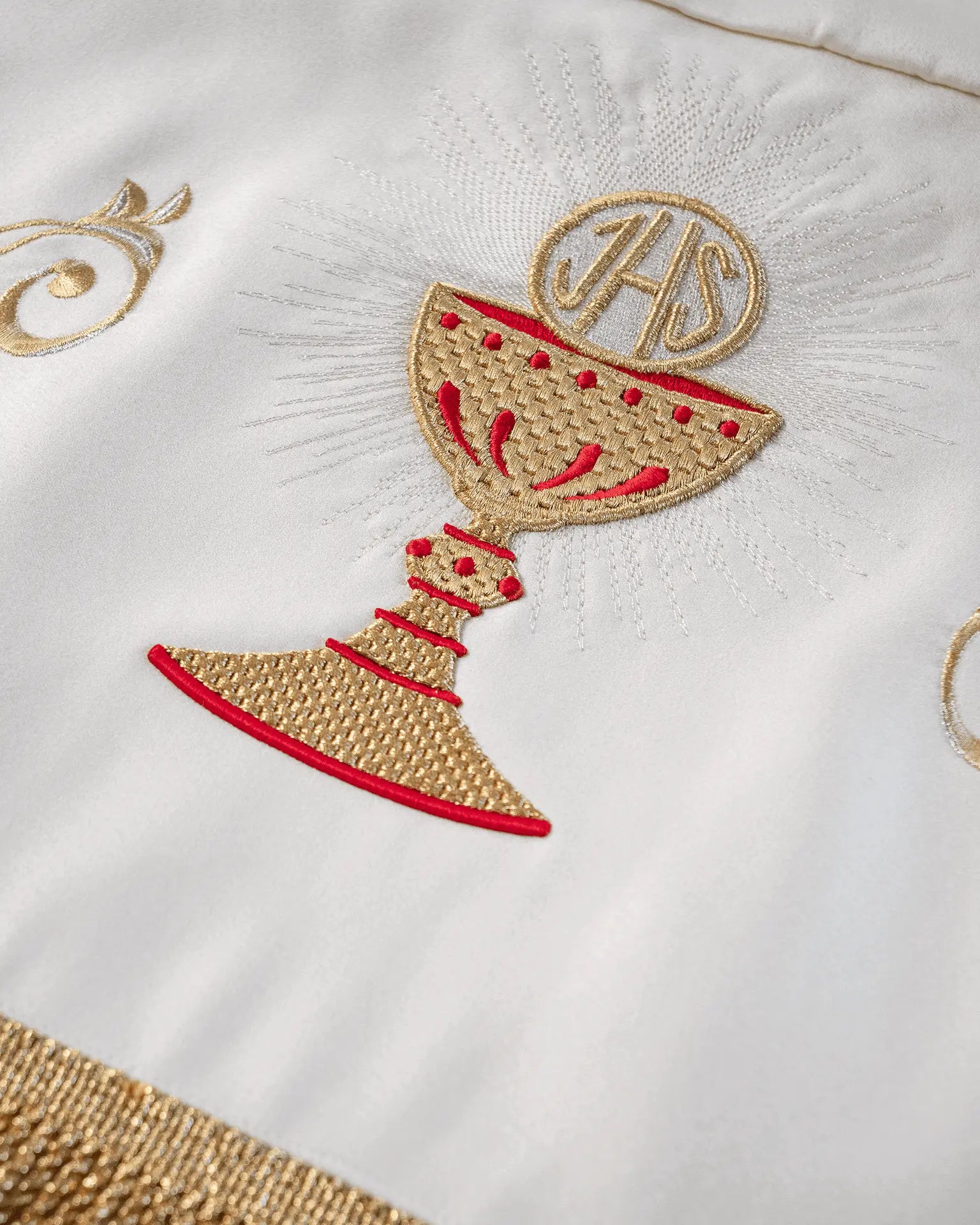
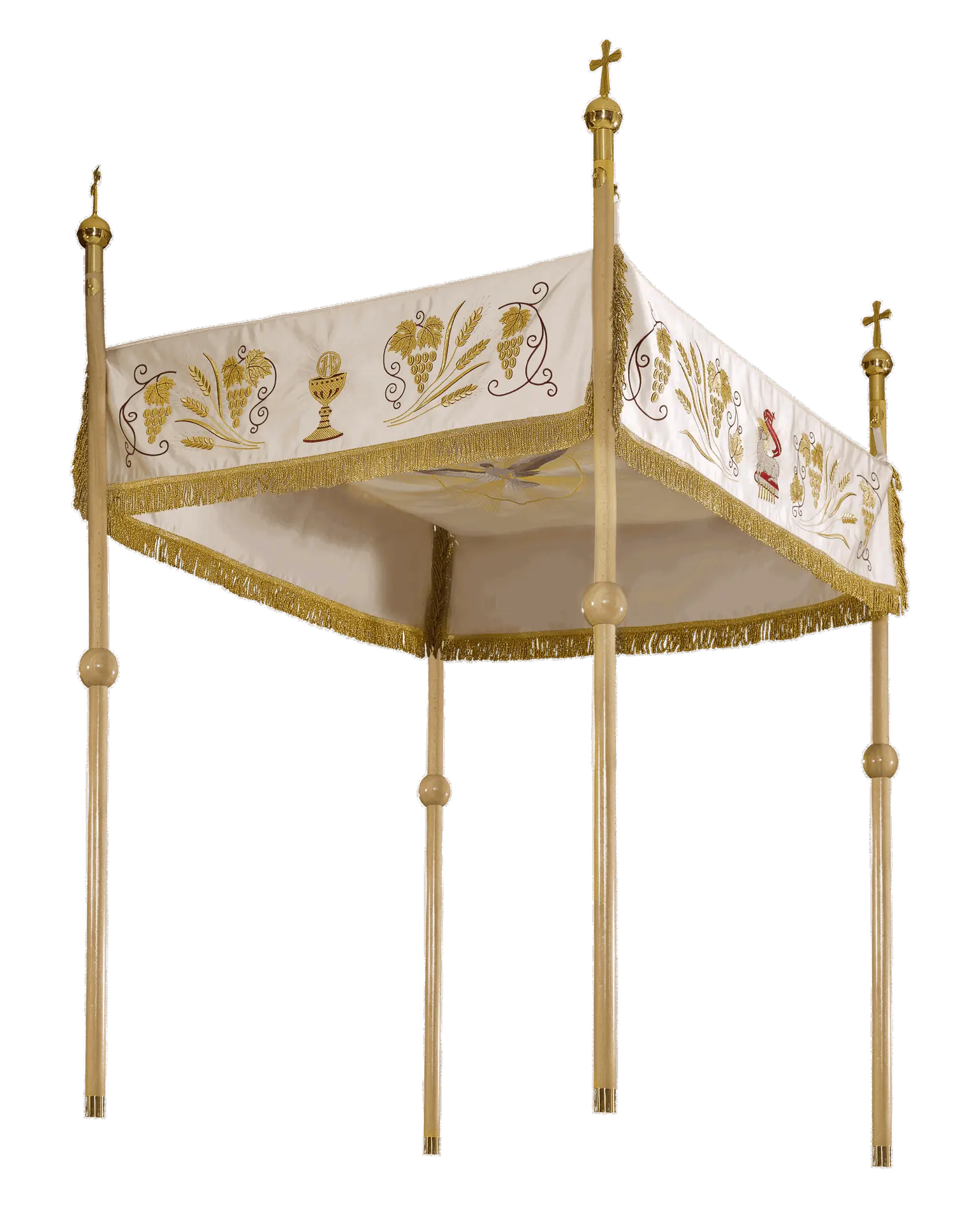
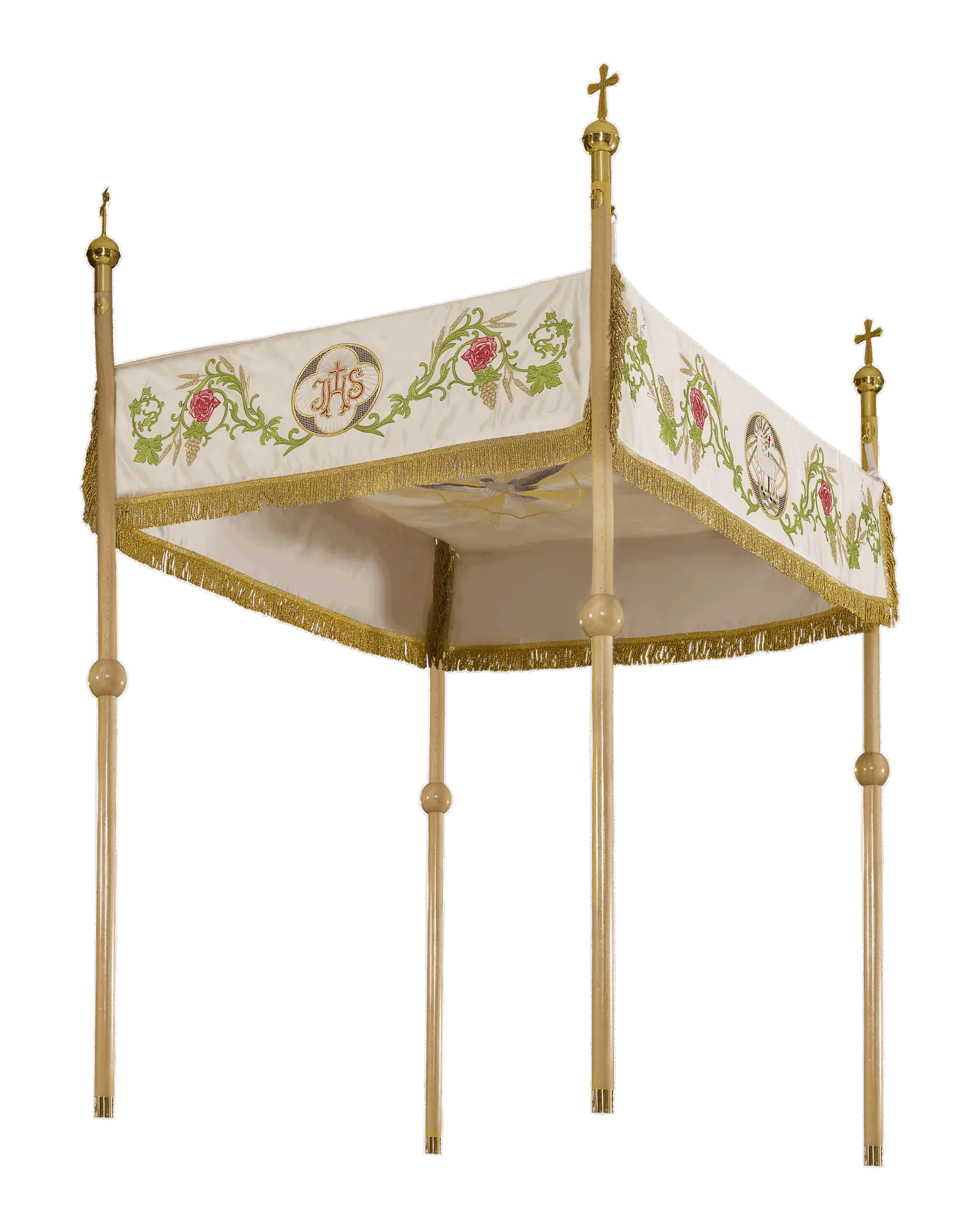
The collection includes processional baldachins in different sizes and finishes, as well as accessories used to carry and stabilize them. Depending on the model, a baldachin may be made for four bearers or adapted for a larger form. Some designs are finished in ecru and gold for a bright Eucharistic appearance, while others use velvet or richer decorative fabrics for a more solemn look. Embroidery often includes Eucharistic, floral, cross, or ornamental motifs that suit major feasts and public worship.
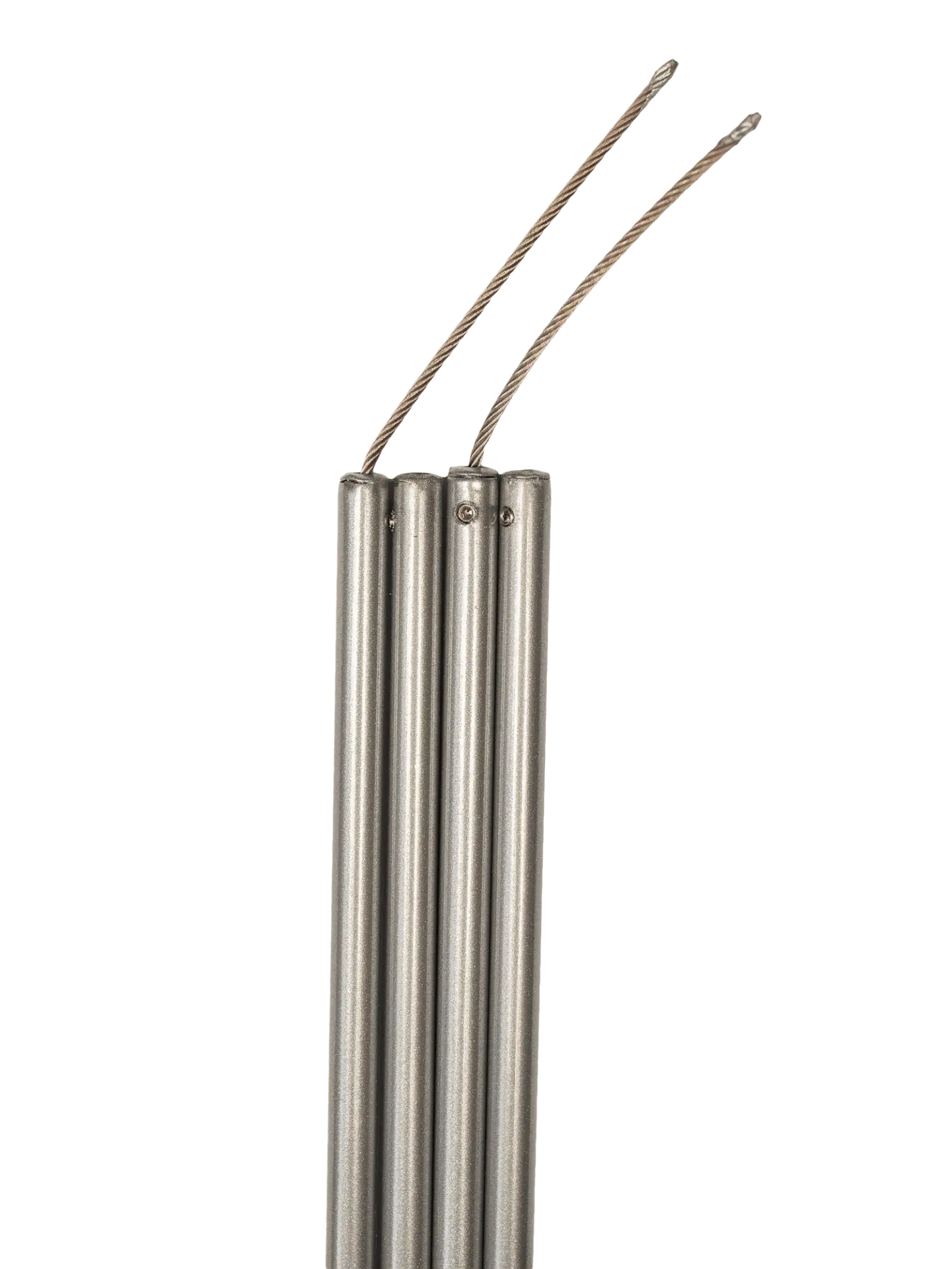
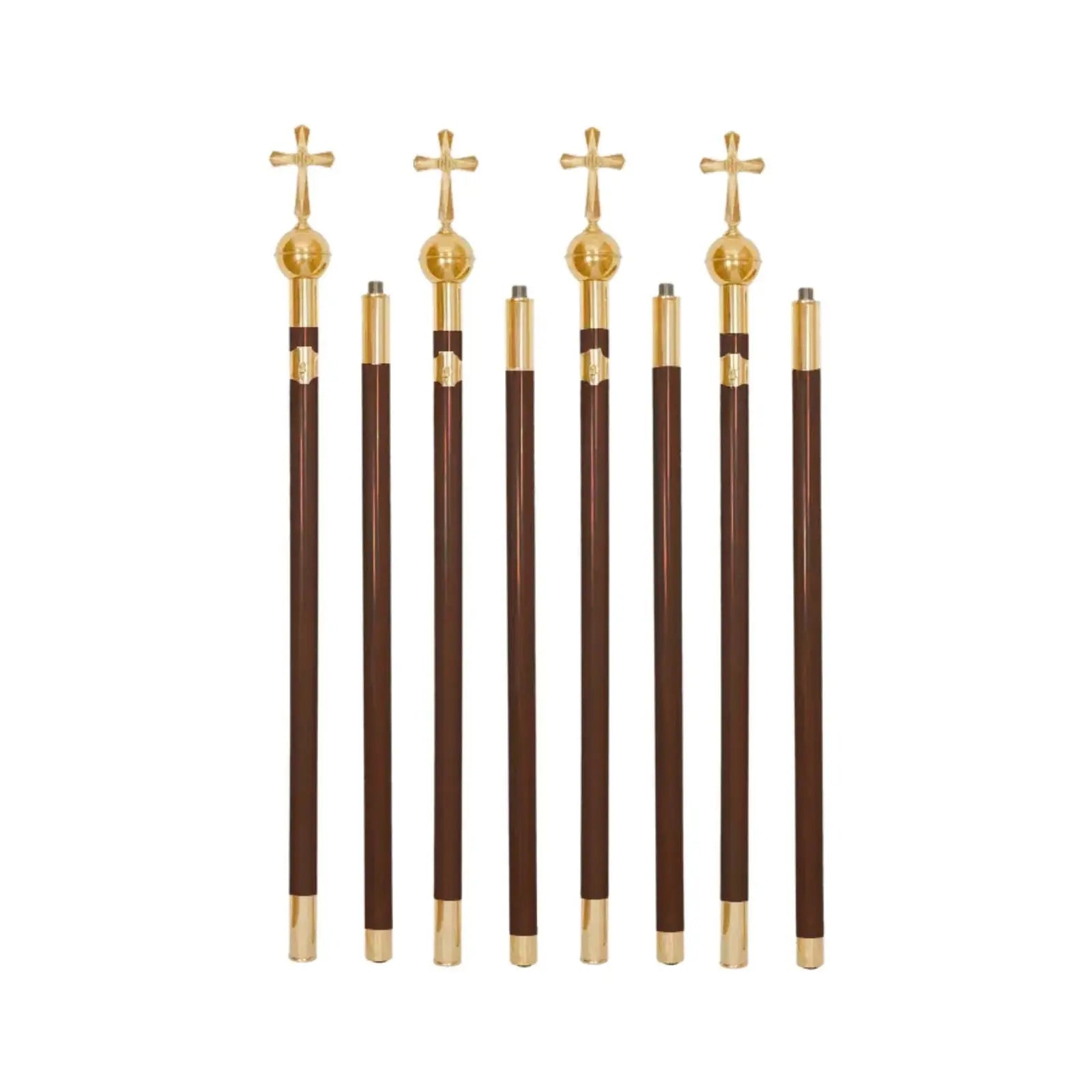
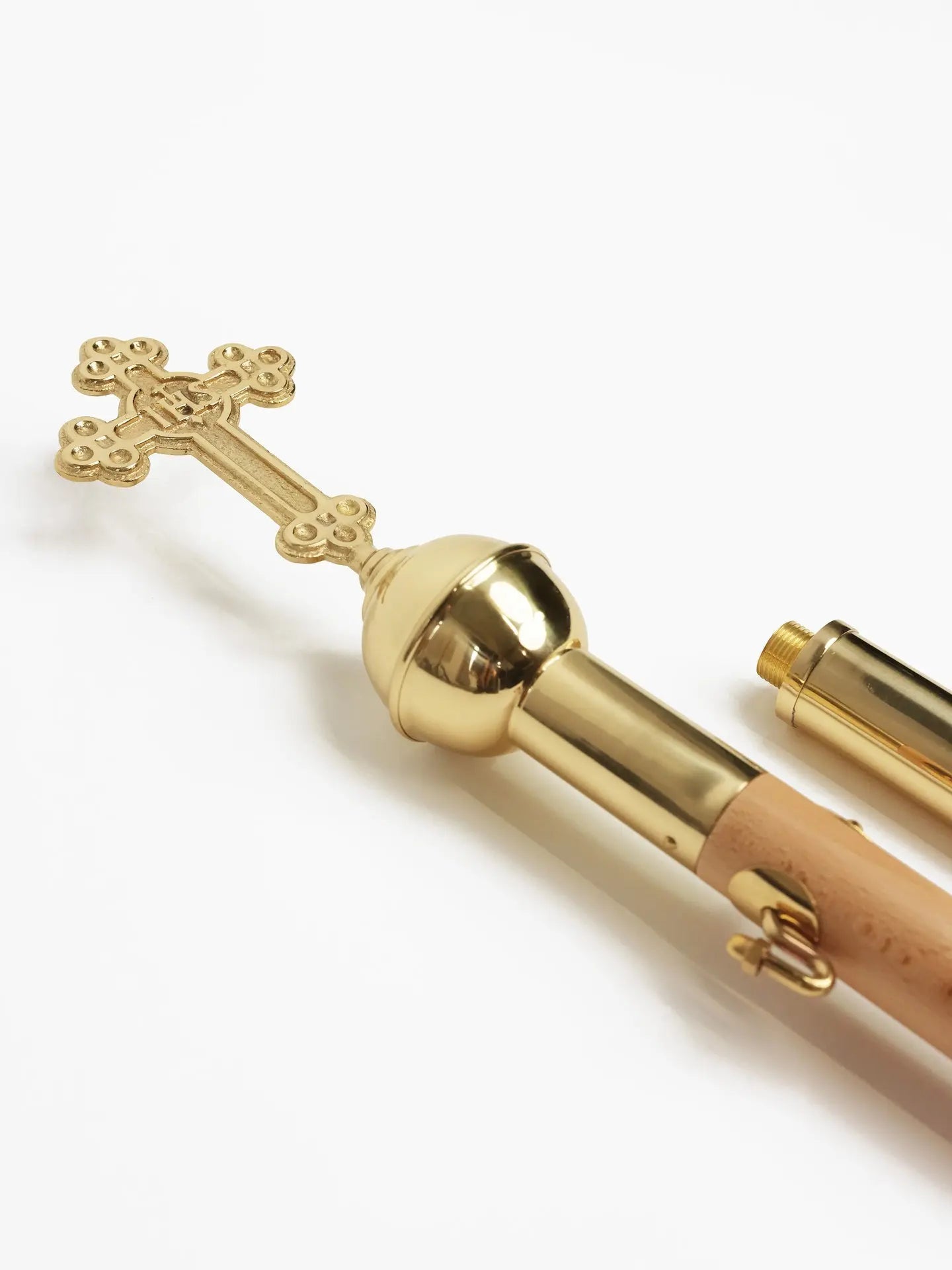
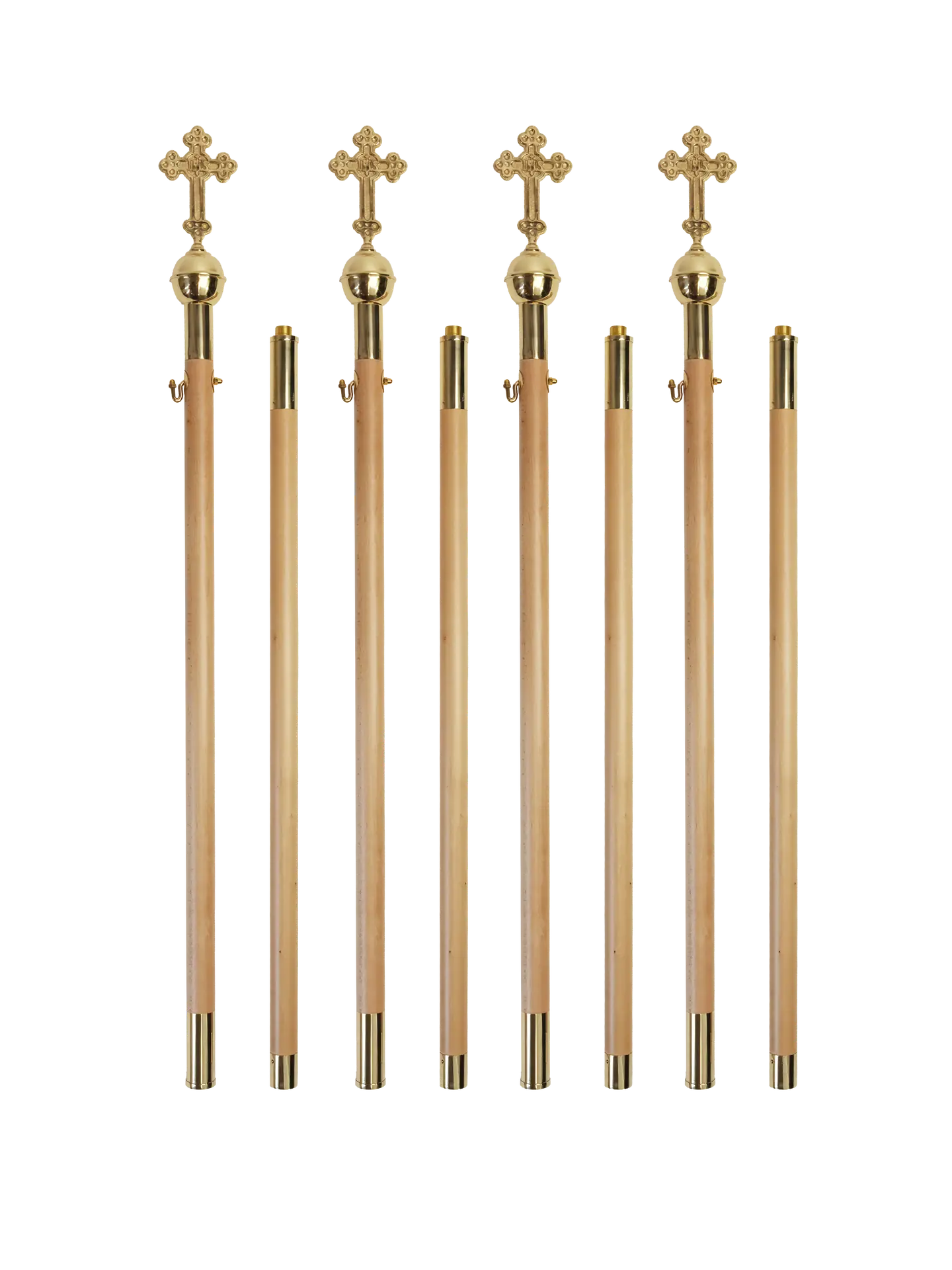
Canopy accessories are also important. Poles, sometimes called canopy trees, allow the baldachin to be carried at an appropriate height. Braces and supports help the structure remain steady during the procession. When replacing only part of an existing canopy set, it is important to check the dimensions, pole fittings, and intended canopy size so the new part works safely with the textiles already owned by the parish.
Liturgical use of a processional baldachin
The most recognized use of a processional canopy is during a Eucharistic procession with the monstrance. The priest or bishop carries the Blessed Sacrament beneath the canopy, while attendants or designated bearers hold the poles. This arrangement is common during Corpus Christi and may also be used during other solemn Eucharistic processions, depending on local custom and the directions of the celebrant.
The canopy visually separates the central sacred action from the surrounding movement of the procession. It also helps people outside the church immediately recognize where the Blessed Sacrament is being carried. When the procession moves outdoors, the canopy must be handled with particular care. Bearers should walk evenly, avoid sudden turns, and maintain enough space around the celebrant, servers, and thurifer.
For Eucharistic rites inside the church, parishes sometimes use related textiles such as humeral veils. A humeral veil is not a canopy; it is worn over the shoulders by the minister when holding the monstrance or ciborium in certain liturgical actions. Because both items may appear in Eucharistic worship, they are often planned together, but they serve different functions and should be chosen according to their proper liturgical use.
How to choose the right canopy size
When choosing a processional canopy, first consider where it will be used. A smaller canopy can be easier to manage inside a church, in narrow aisles, or in parishes with fewer available bearers. A larger canopy gives a stronger ceremonial presence outdoors and may be more suitable for a public Corpus Christi procession, especially when the route is wide and the procession includes servers, clergy, banners, and music.
Common product descriptions may include measurements such as 140 cm x 160 cm or 160 cm x 200 cm. These dimensions help determine the area covered above the celebrant and the overall impression of the canopy. A larger baldachin can look more dignified in open spaces, but it also requires confident handling and the correct poles or braces. The best choice balances beauty, stability, available bearers, and the actual route of the procession.
Before purchase, a parish should check whether it needs a complete canopy set or only a textile canopy, poles, braces, or replacement parts. If the procession includes uneven ground, church steps, outdoor paths, or crowded areas, stability becomes especially important. A well-matched canopy structure makes the procession smoother and helps the celebrant, servers, and bearers remain focused on the liturgy.
Materials, embroidery, and visual style
Processional canopies are often selected for major feasts, so their textile quality should match the solemnity of the occasion. Ecru and gold are widely used because they harmonize with Eucharistic celebrations and many white or gold vestments. Velvet gives a deeper, more formal appearance, while embroidered decorative fabrics create a festive look suitable for outdoor processions and parish celebrations.
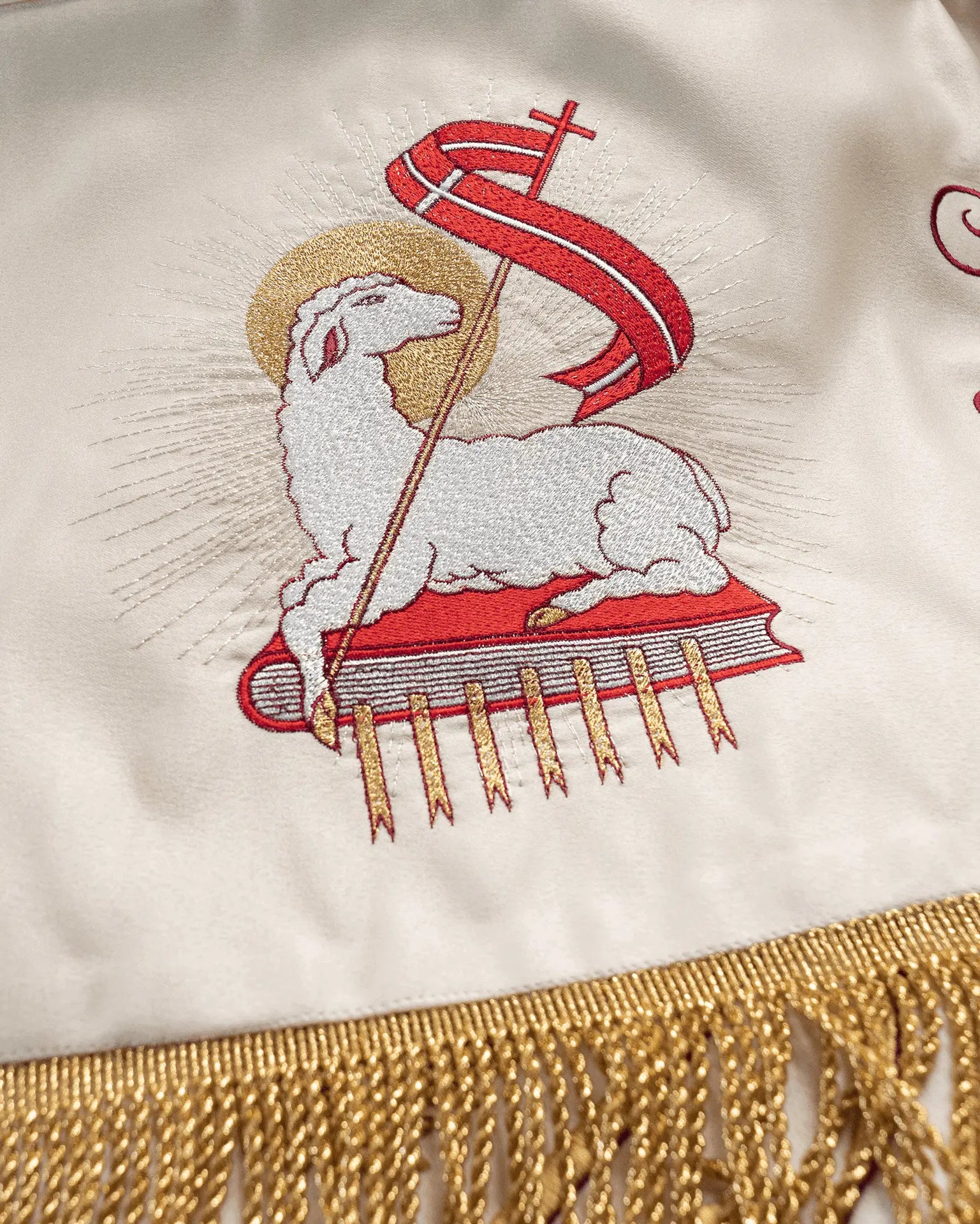
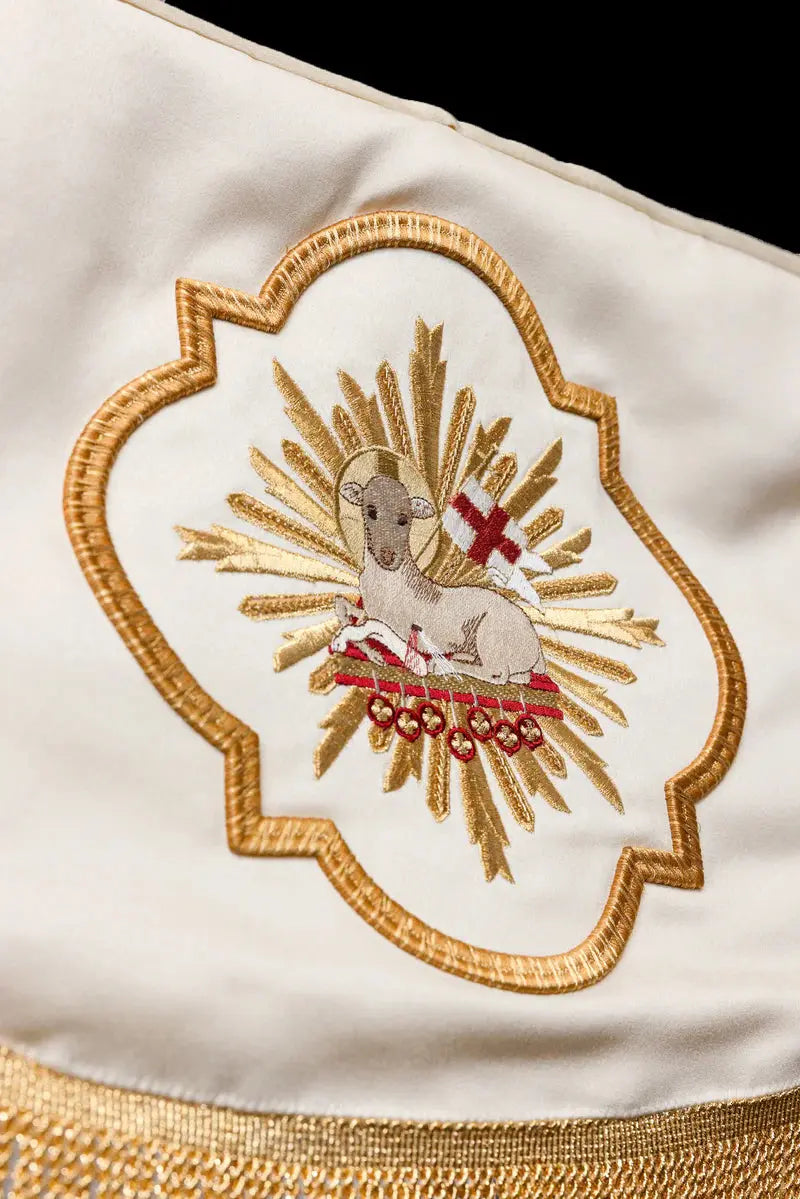
Embroidery should support the meaning of the celebration. Crosses, Eucharistic motifs, ornamental borders, and gold detailing can make the canopy clearly liturgical without making it visually heavy. When the parish already owns gold or white vestments, a canopy in similar tones can create a coordinated appearance with chasubles, copes, banners, altar textiles, and vessels used during the procession.
The finish of the canopy matters as much as the central embroidery. Edges, reinforcements, attachment points, and pole compatibility influence both durability and practical use. A canopy carried outdoors is exposed to movement, wind, and frequent handling, so strong construction helps protect the fabric and maintain a dignified shape over time.
Processional canopies, umbrellas, and banners
Processional canopies, umbrellas, and banners are related accessories, but they are not interchangeable. A baldachin is carried above the Blessed Sacrament during the procession and usually requires several bearers. A processional umbrella is smaller and may be used for more compact ceremonial movement or as part of local custom. Banners help identify a parish, confraternity, feast, or devotional theme, and they usually move ahead of or alongside the main procession.
For a complete Eucharistic procession, many communities coordinate these elements carefully. The canopy marks the place of the Blessed Sacrament, banners help structure the procession, and incense from thuribles and boats adds the traditional sign of honor and prayer. When these items are chosen with compatible colors and motifs, the procession appears ordered, reverent, and easy for the faithful to follow.
Practical preparation before the procession
A processional canopy should be prepared before the liturgy, not assembled at the last moment. The parish team should confirm that all poles, braces, fastenings, and textile parts are present and compatible. Bearers should know their positions and practice lifting, turning, and lowering the canopy if they have not carried it before. This is especially important for large baldachins and outdoor routes.
The canopy should be placed where it can be taken up smoothly when the procession begins. It should not block the movement of servers, the thurifer, candle bearers, or the celebrant. If the canopy is used outdoors, the team should consider wind, narrow passages, and changes in ground level. Careful preparation protects the textile and helps the rite unfold with calm dignity.
Care and storage of liturgical canopies
After use, the canopy fabric should be inspected for dust, moisture, creases, or strain around attachment points. If the procession took place outdoors, allow the textile to dry fully before storage. Damp fabric should never be folded tightly, as this can damage embroidery and lining. Poles and braces should be cleaned as needed and stored together so the set remains complete for the next feast.
Store canopy textiles in a dry, ventilated place away from direct sunlight. Large pieces should be folded carefully along natural lines or stored in a way that avoids sharp creasing over embroidered areas. Heavier fabrics such as velvet require particular care so the pile is not crushed. With careful handling, a processional canopy can serve the parish for many years and remain a dignified sign of Eucharistic devotion.
Frequently Asked Questions (FAQ)
What is a processional canopy used for?
A processional canopy, also called a baldachin, is carried above the Blessed Sacrament during solemn Eucharistic processions. It is most closely associated with Corpus Christi, but it may also be used in other processions according to parish custom and liturgical direction.
Is a humeral veil the same as a canopy?
No. A humeral veil is worn by the priest, bishop, or deacon over the shoulders when handling the monstrance or ciborium in certain rites. A processional canopy is carried by bearers above the minister and the Blessed Sacrament. Both can be used in Eucharistic worship, but they have different purposes.
How many people are needed to carry a canopy?
Many processional canopies are carried by four bearers, one at each pole. Larger models or more demanding outdoor routes may require additional coordination. The number of bearers should match the structure, size, and weight of the canopy so it remains steady and dignified.
Which canopy size is best for Corpus Christi?
For outdoor Corpus Christi processions, a larger canopy can provide stronger visual presence and better ceremonial proportion. For smaller churches, narrow aisles, or short indoor processions, a more compact model may be easier to handle. The route and available bearers should guide the choice.
Can I replace only poles or braces instead of buying a full canopy?
Replacement parts may be suitable when the textile canopy is still in good condition. Check the dimensions of the baldachin, the fitting points, and the type of support needed. Matching the accessories correctly is essential for safe carrying and stable movement during the procession.
How should a processional canopy be stored after use?
Let the textile dry completely, remove surface dust if needed, and fold or store it so embroidery is not sharply creased. Keep poles, braces, and fastenings together with the canopy set. Dry, shaded storage helps preserve the fabric, color, and decorative finish.