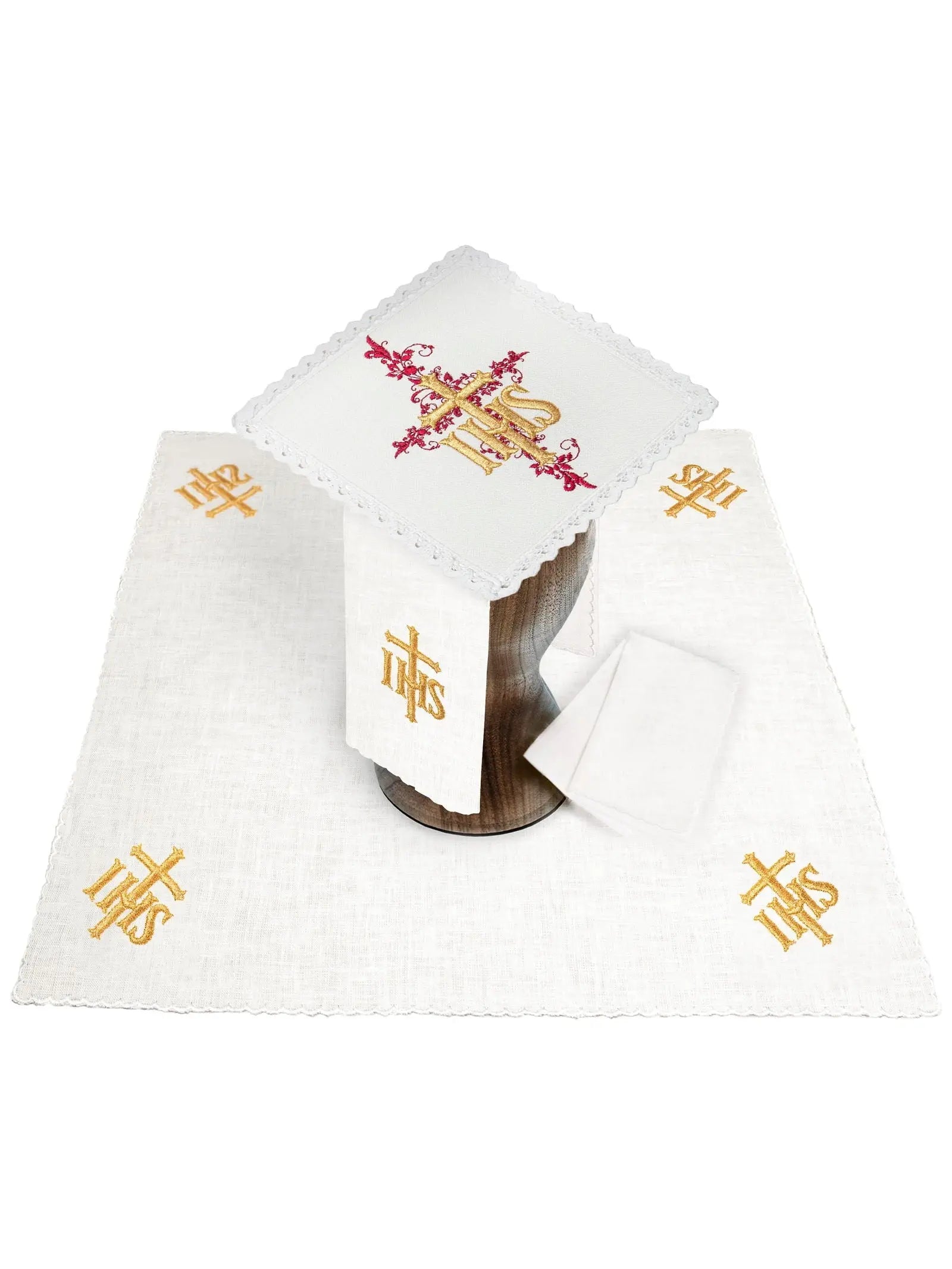
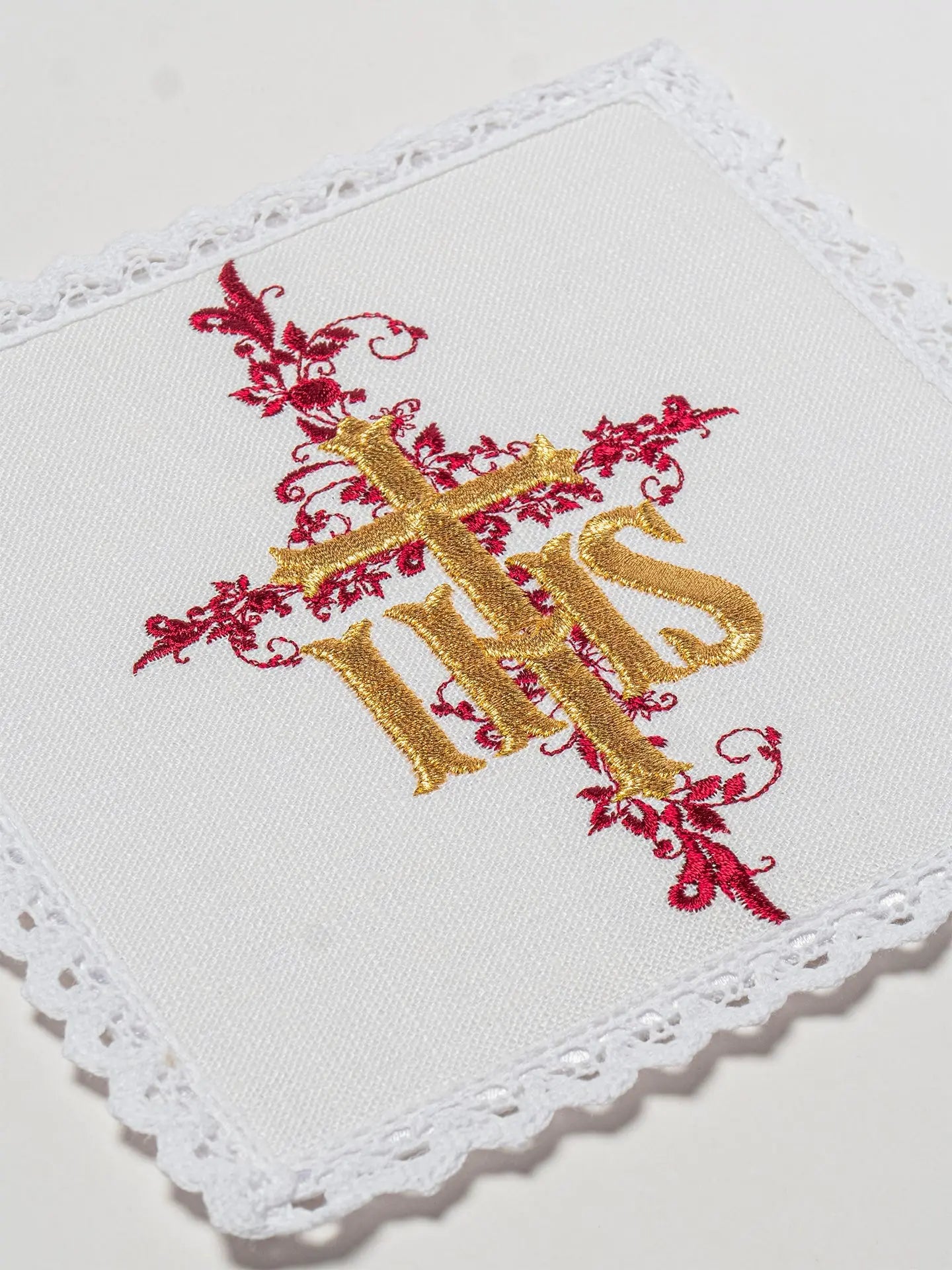
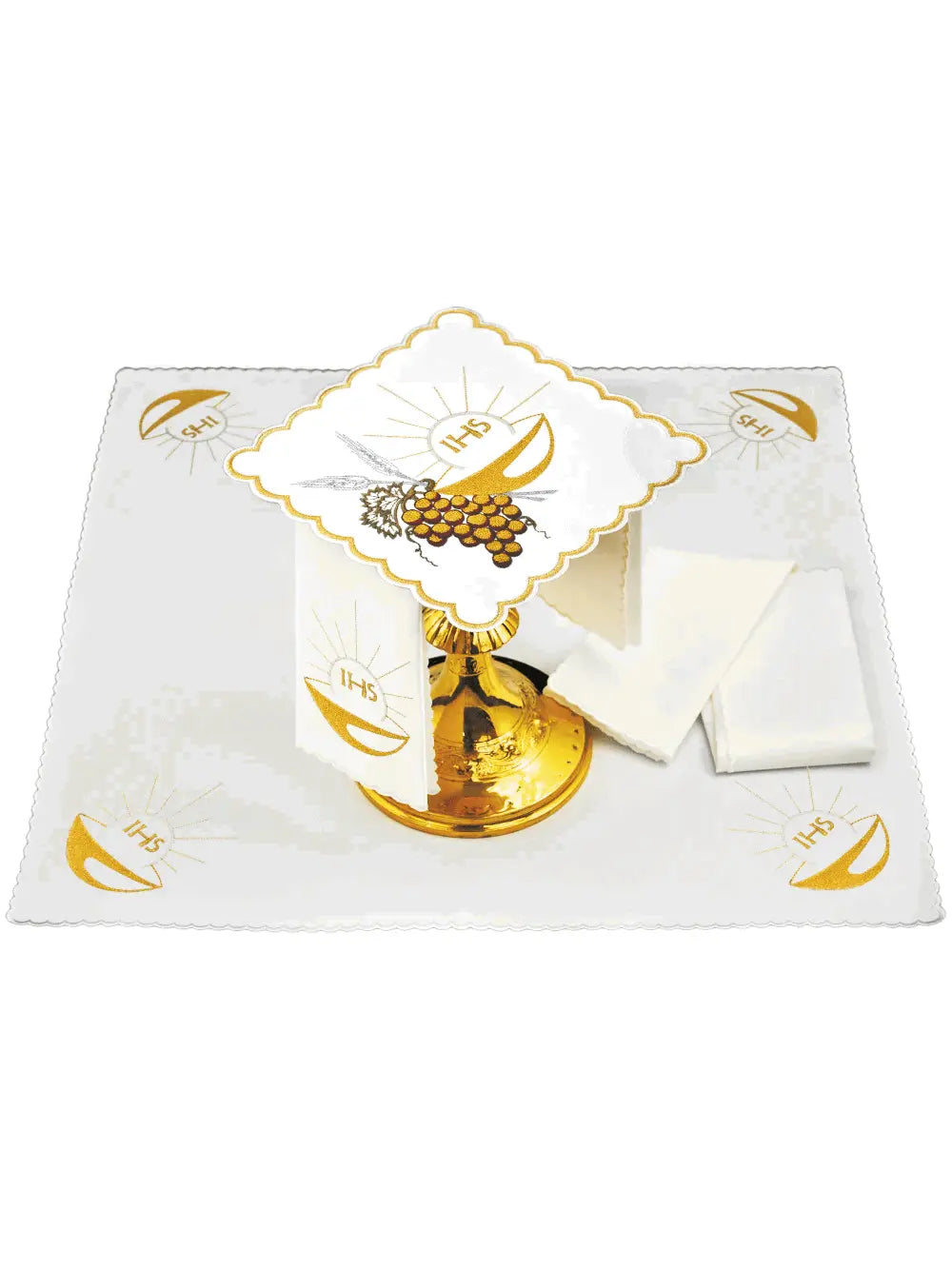
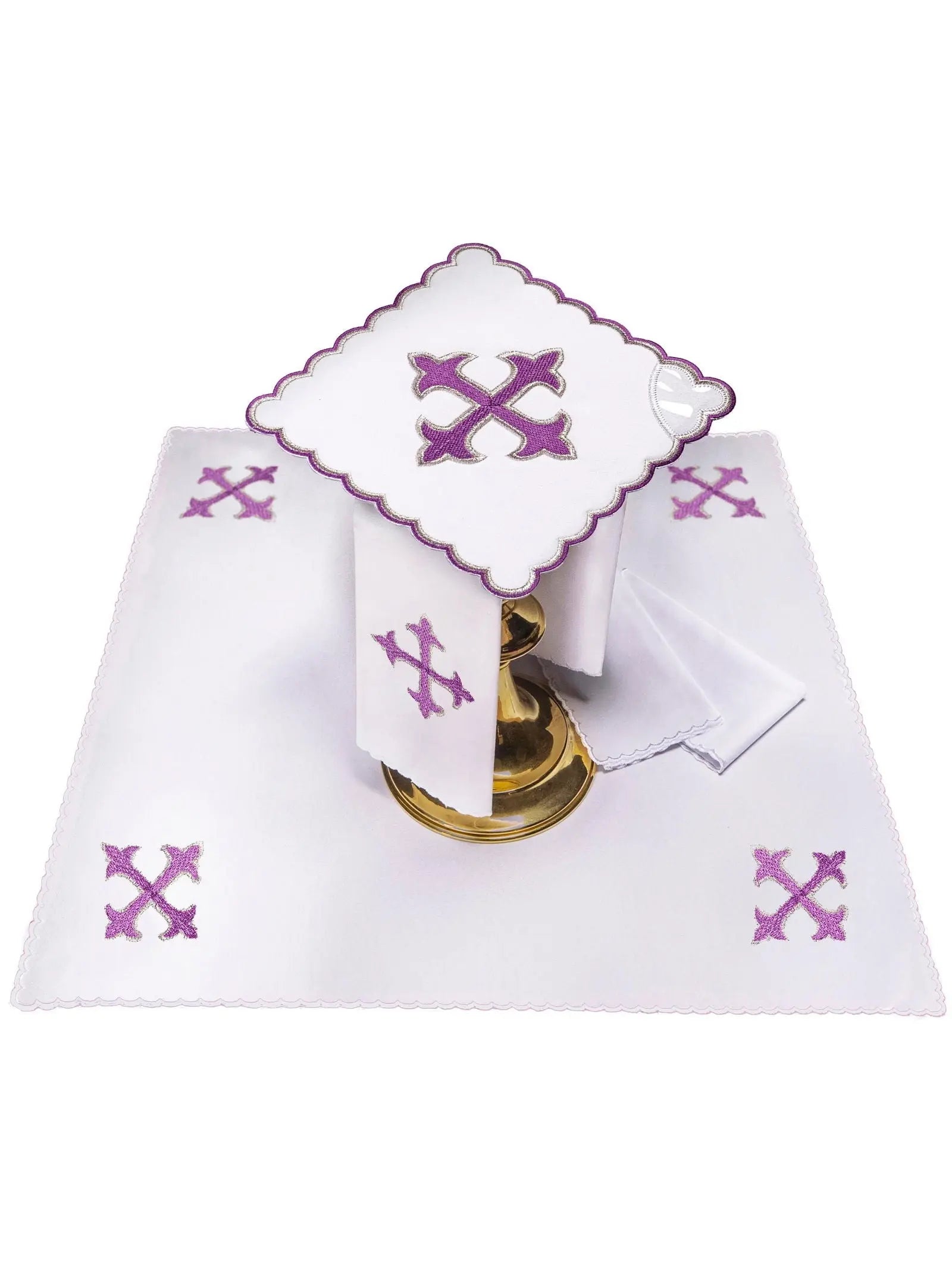
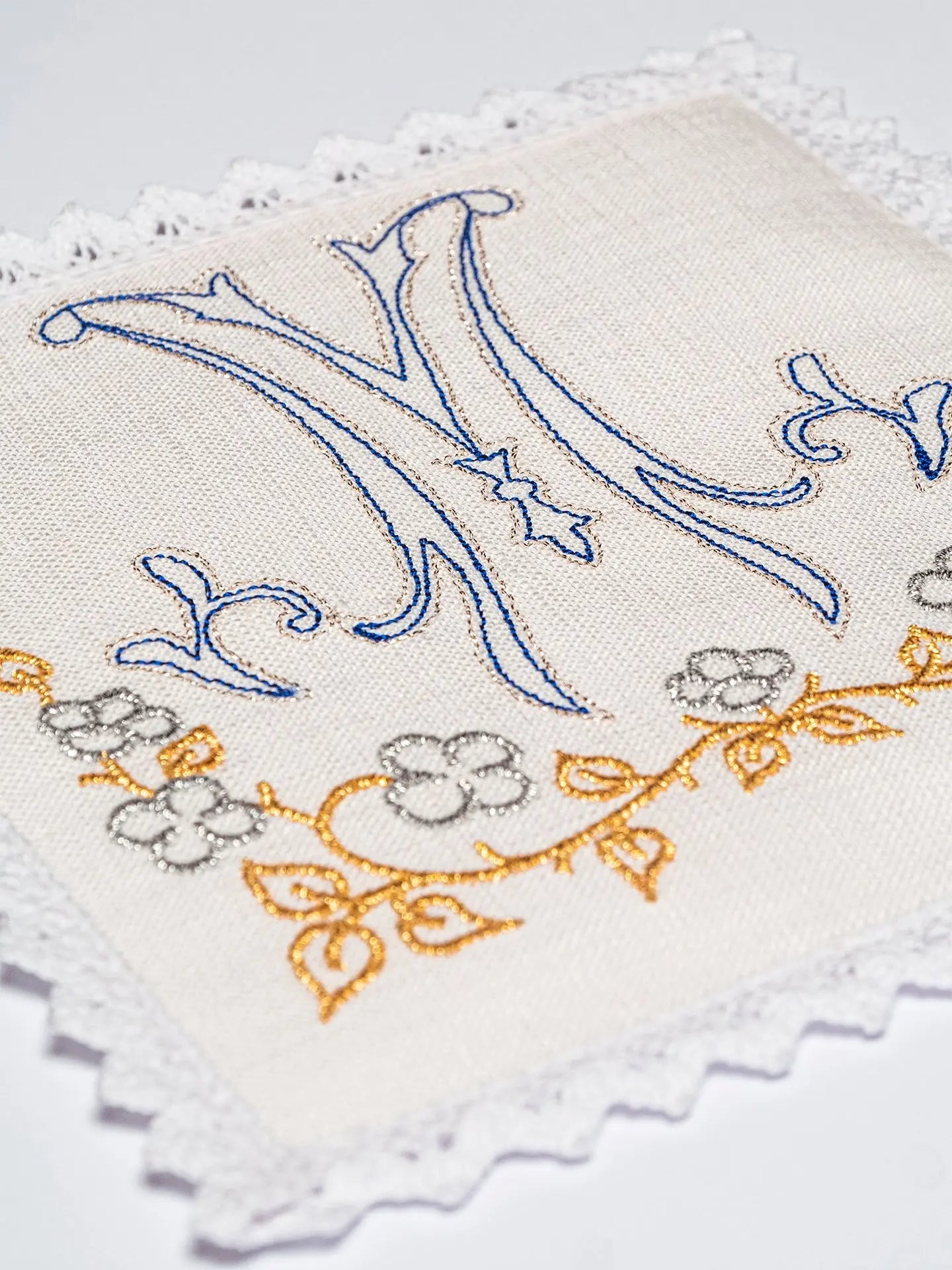
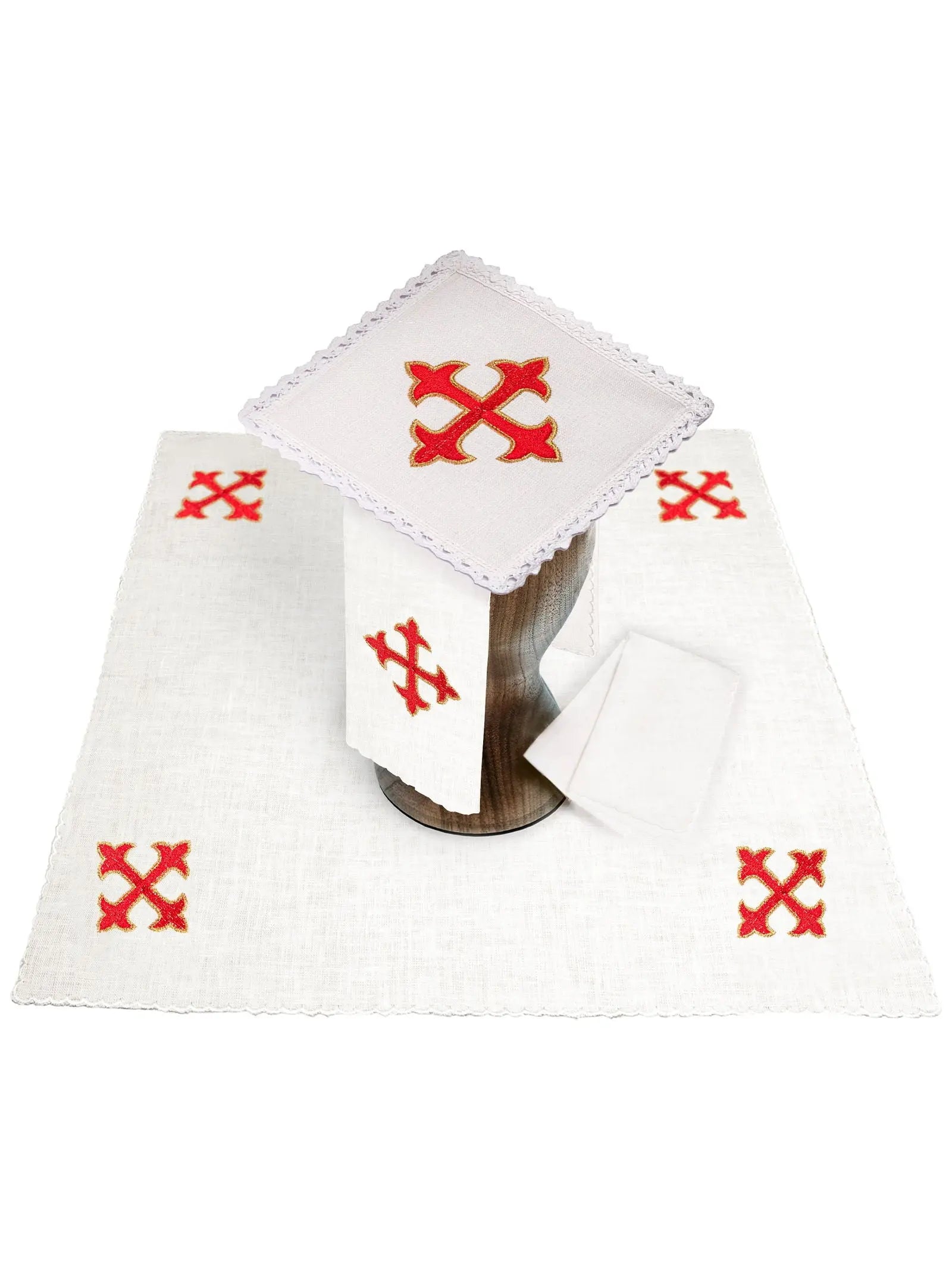
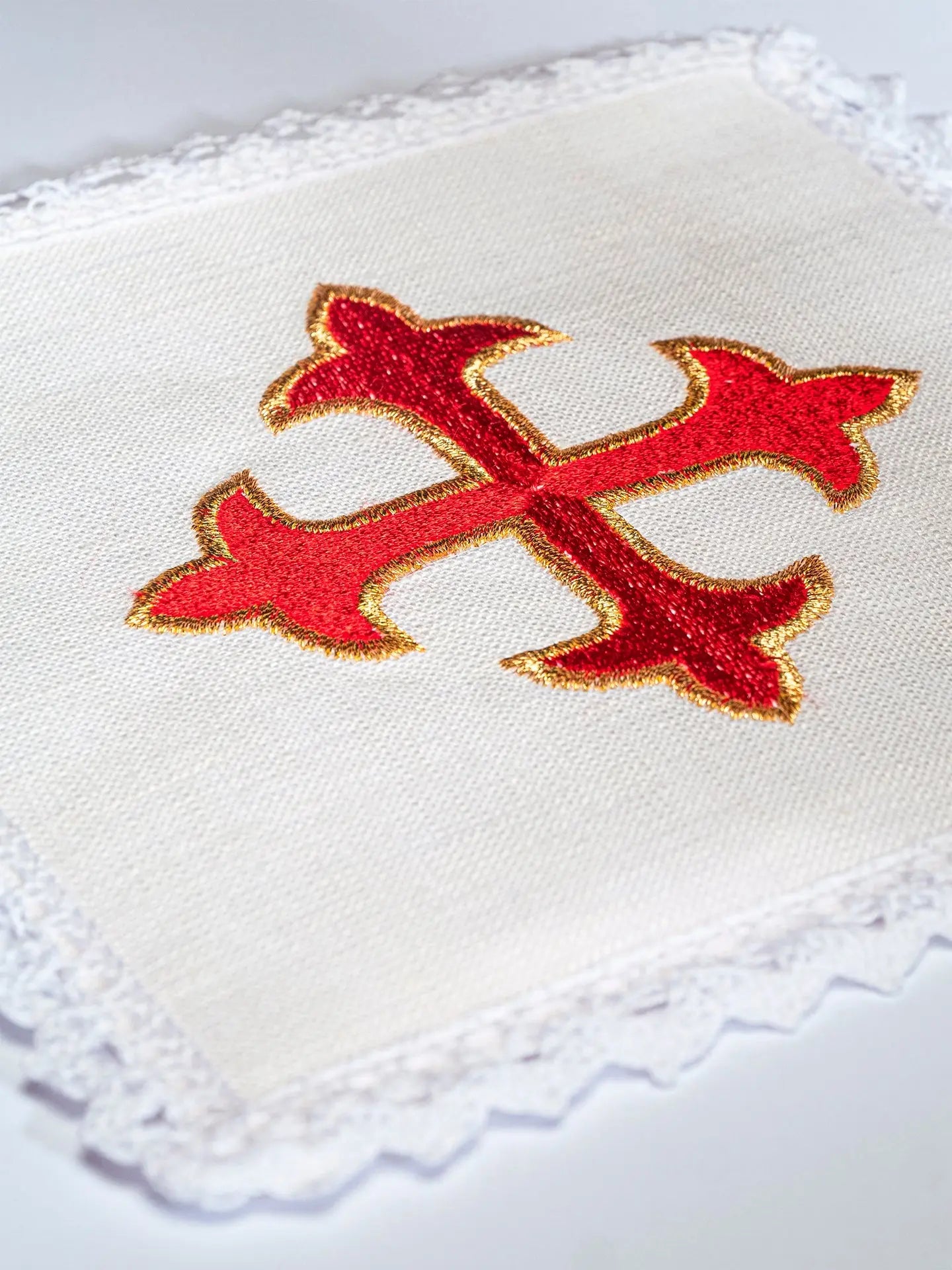
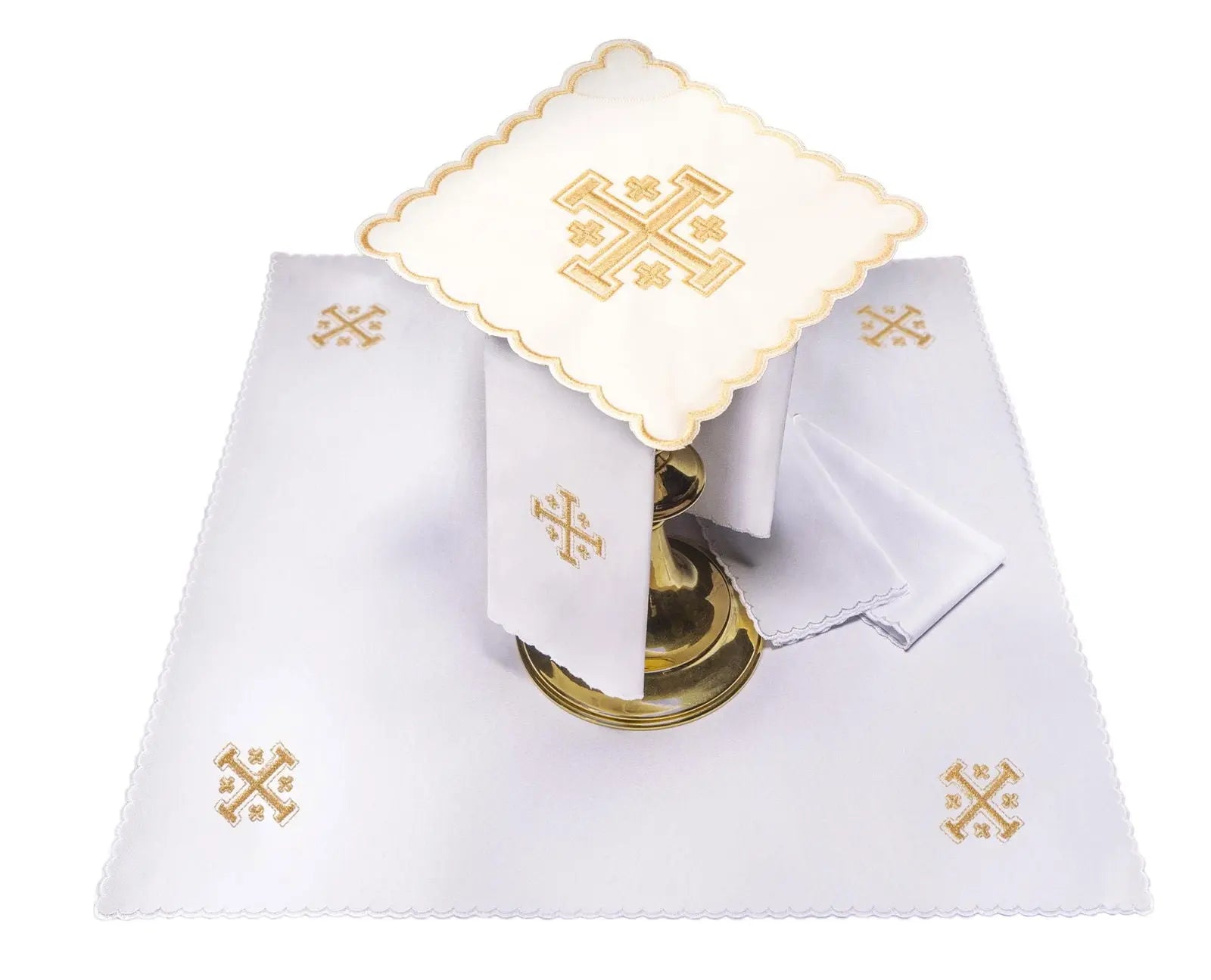
Altar Linens for the Celebration of Mass
Altar linens are among the most important textile elements used in the sanctuary. They prepare the altar and sacred vessels for the Eucharistic liturgy, help maintain reverence during Mass, and give every celebration an ordered, dignified appearance. This collection gathers linens and related chalice accessories used by parishes, chapels, religious communities, and sacristies when setting the altar for daily Mass, Sunday liturgy, solemnities, feasts, funerals, and devotional celebrations.
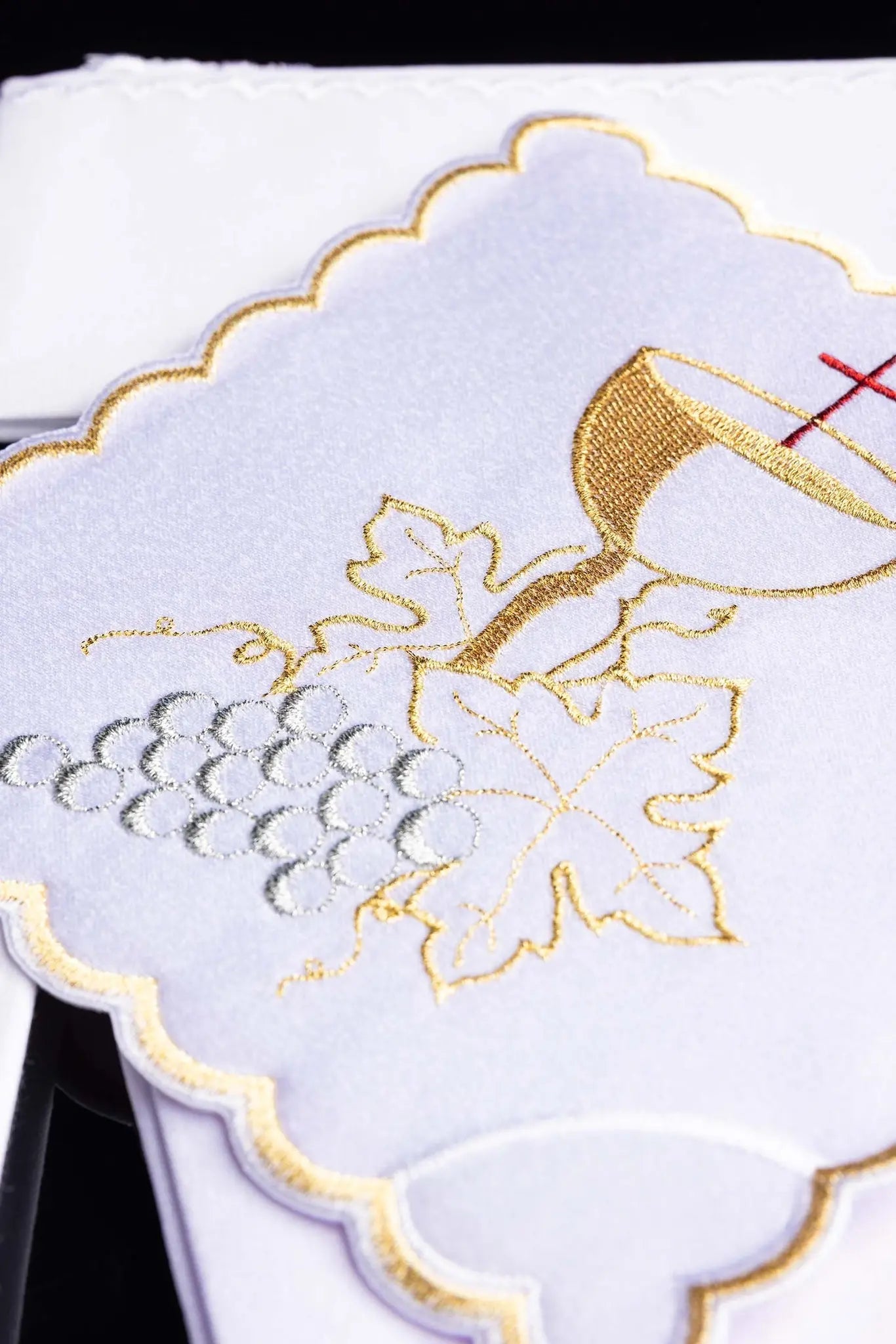
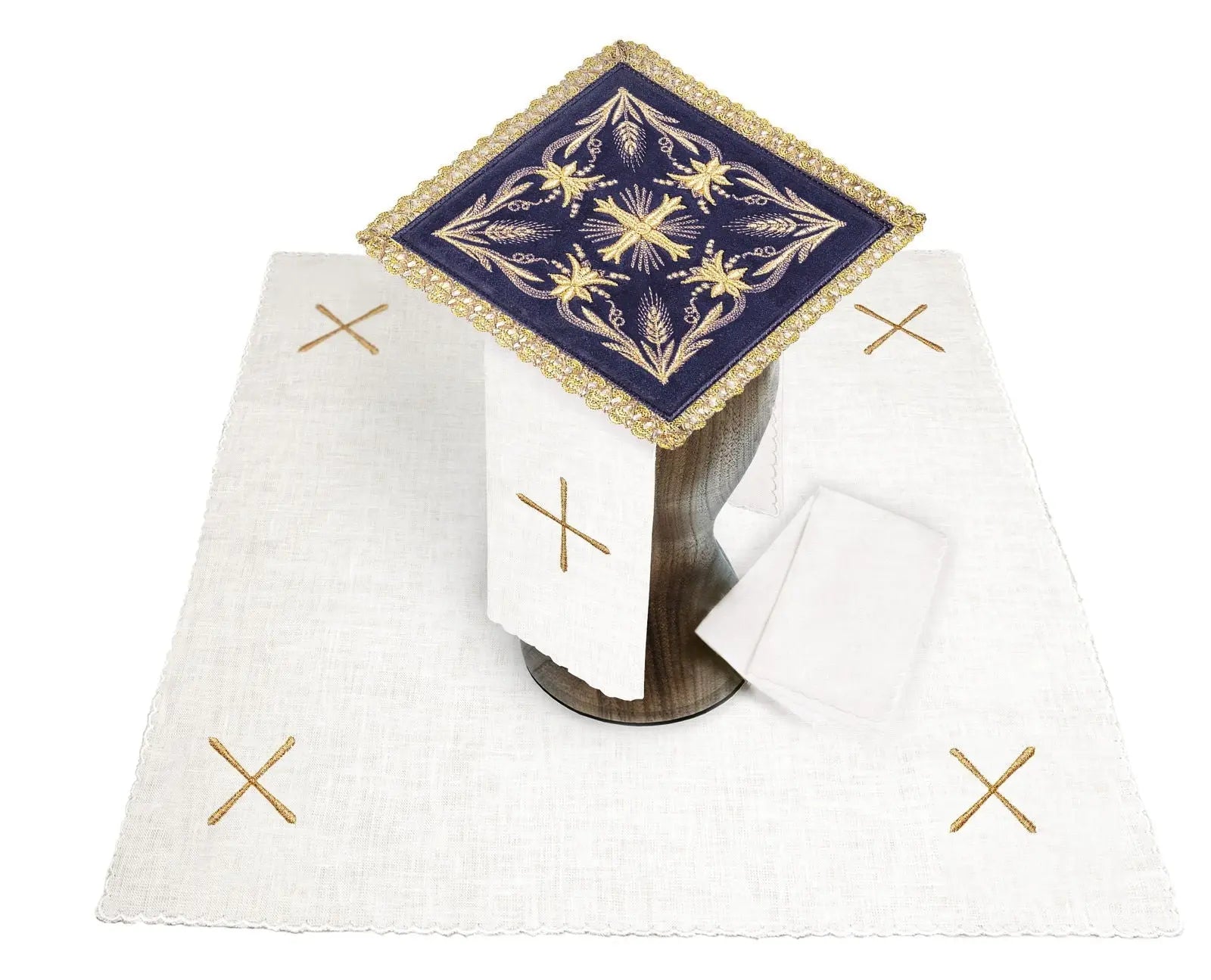
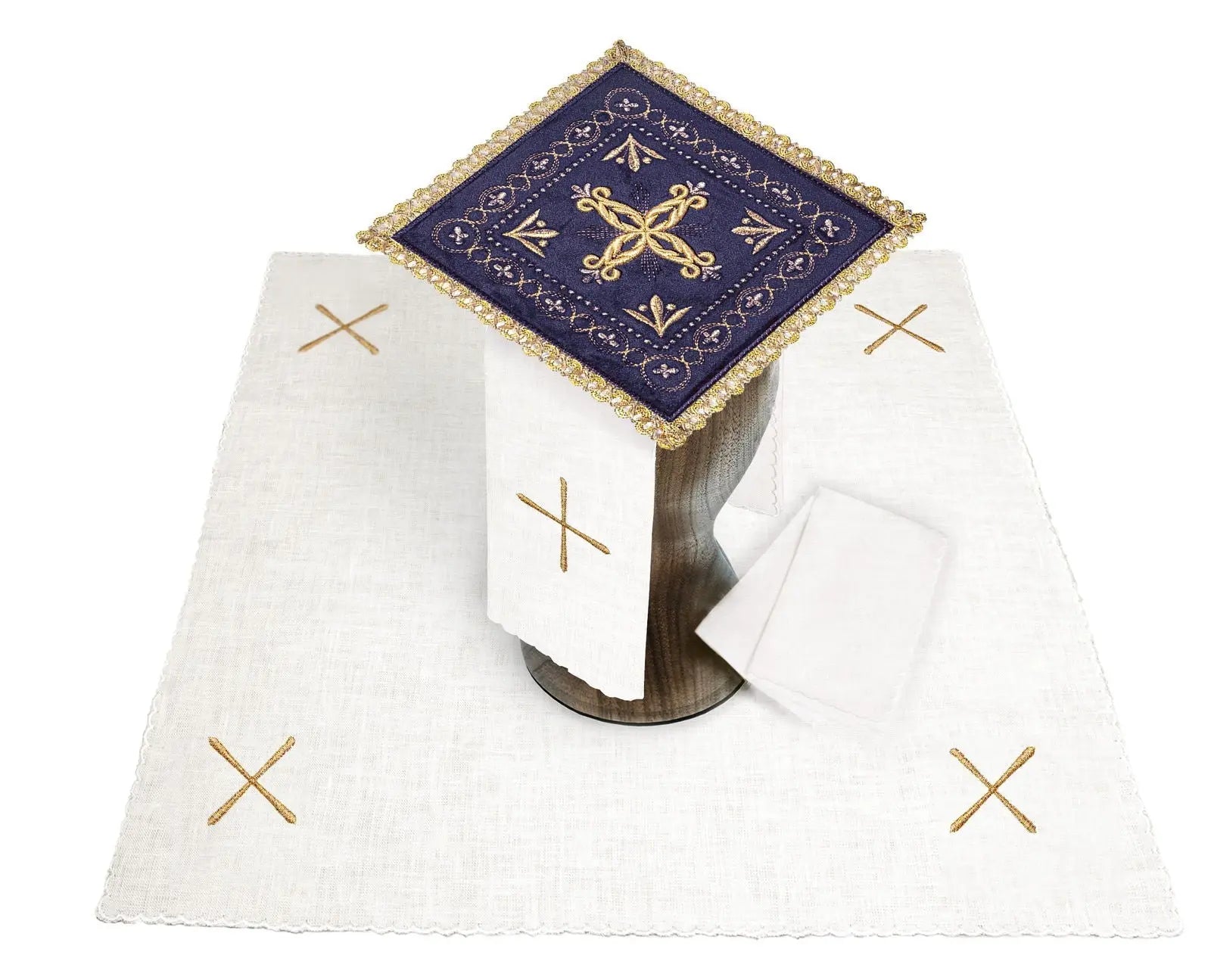
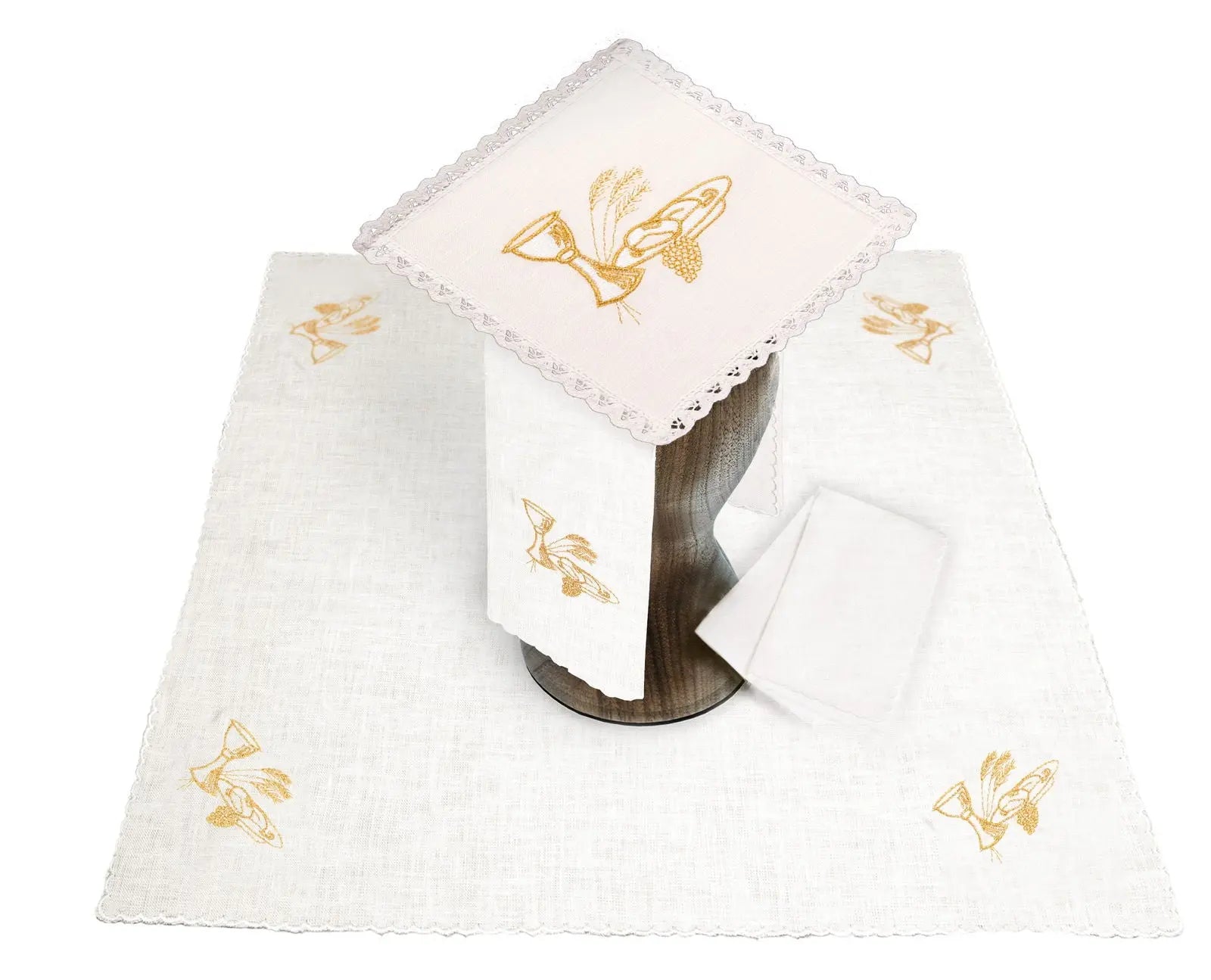
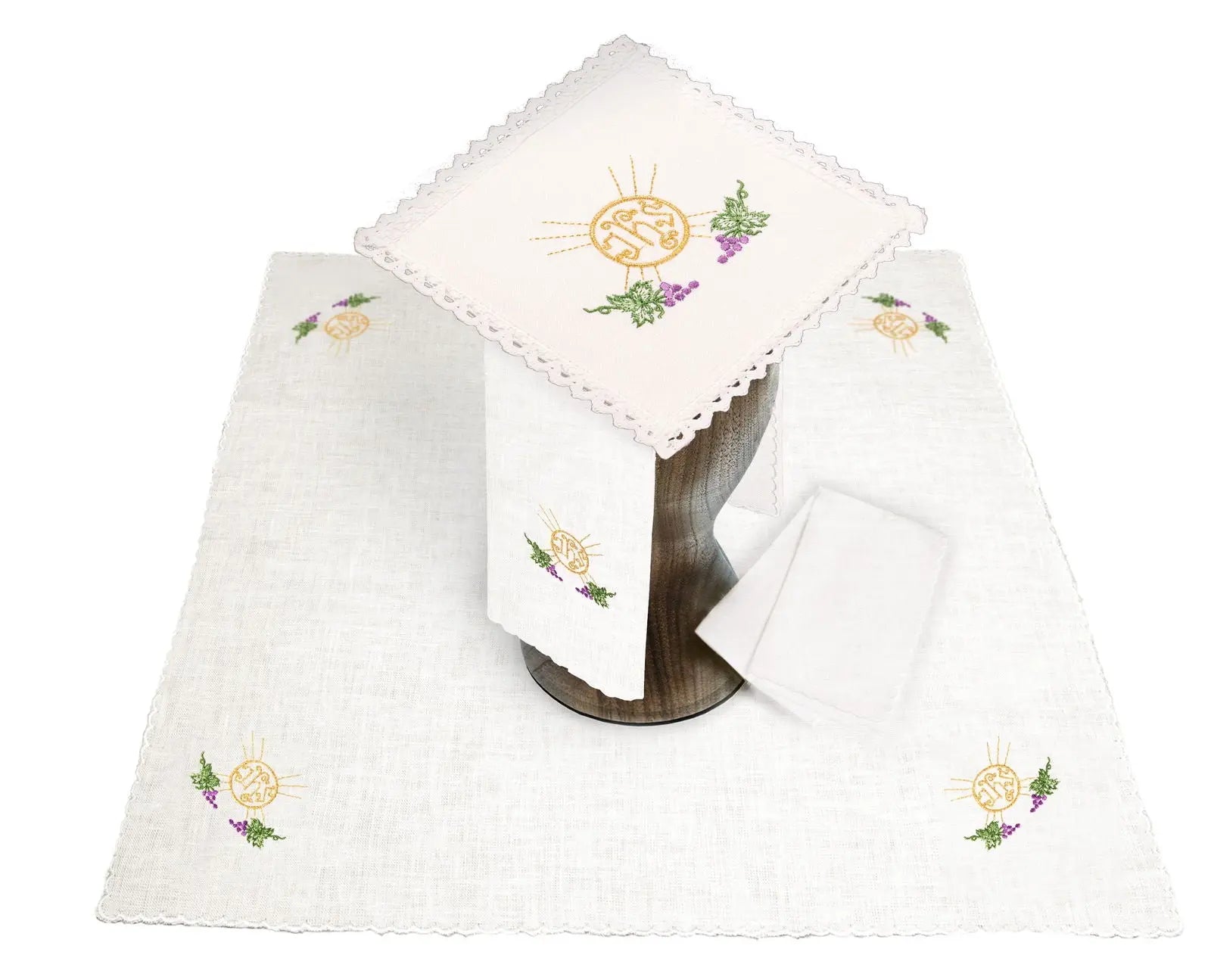
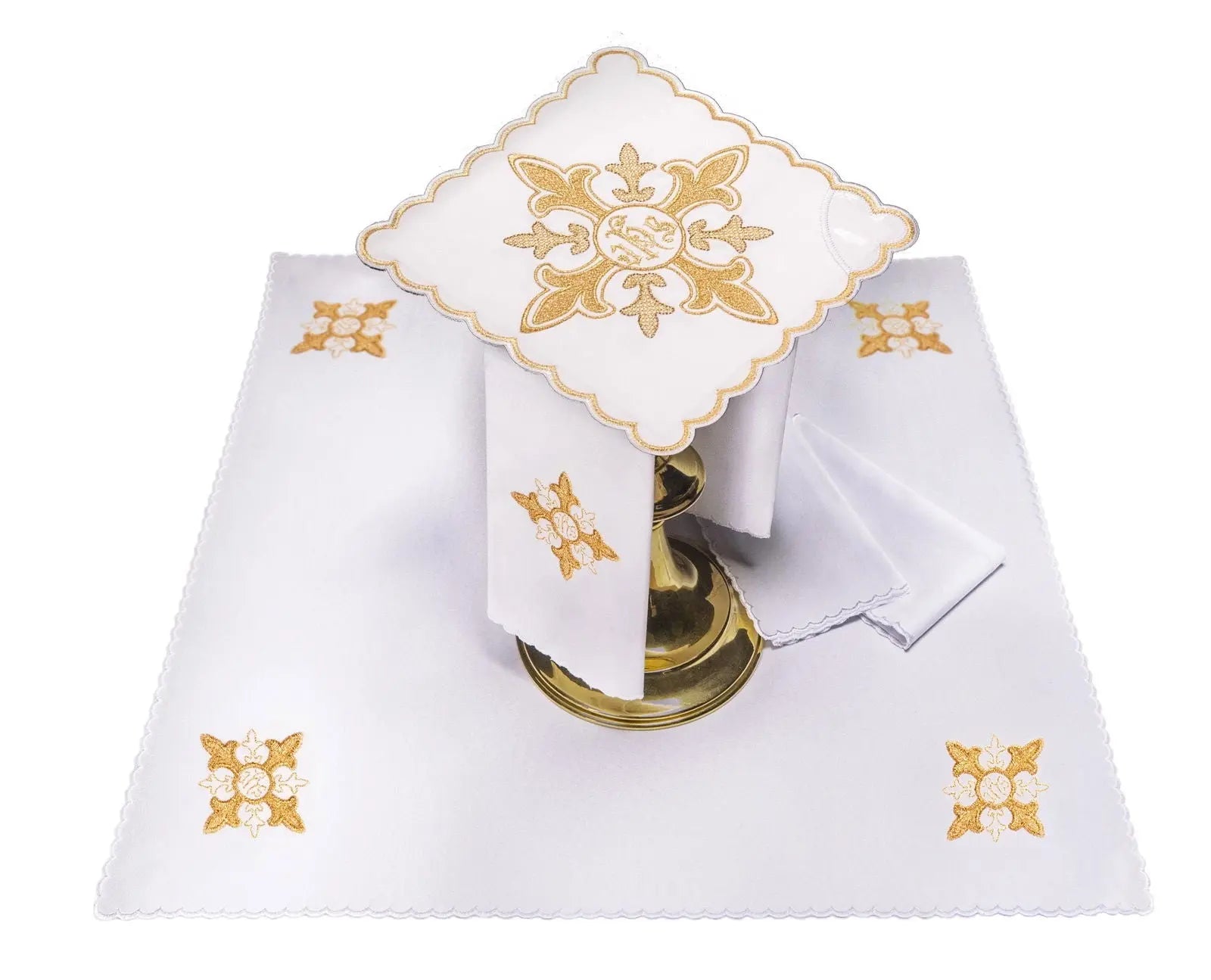
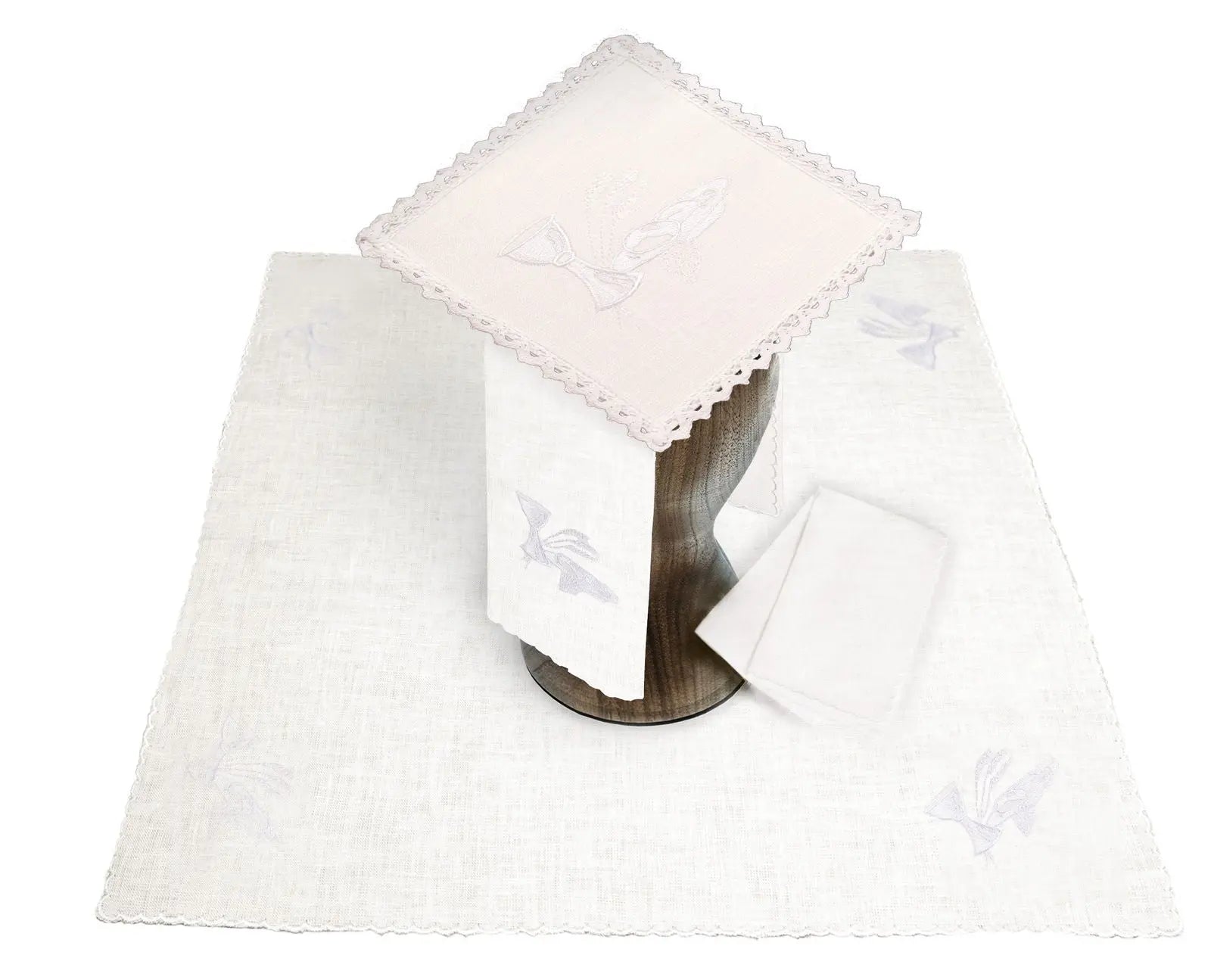
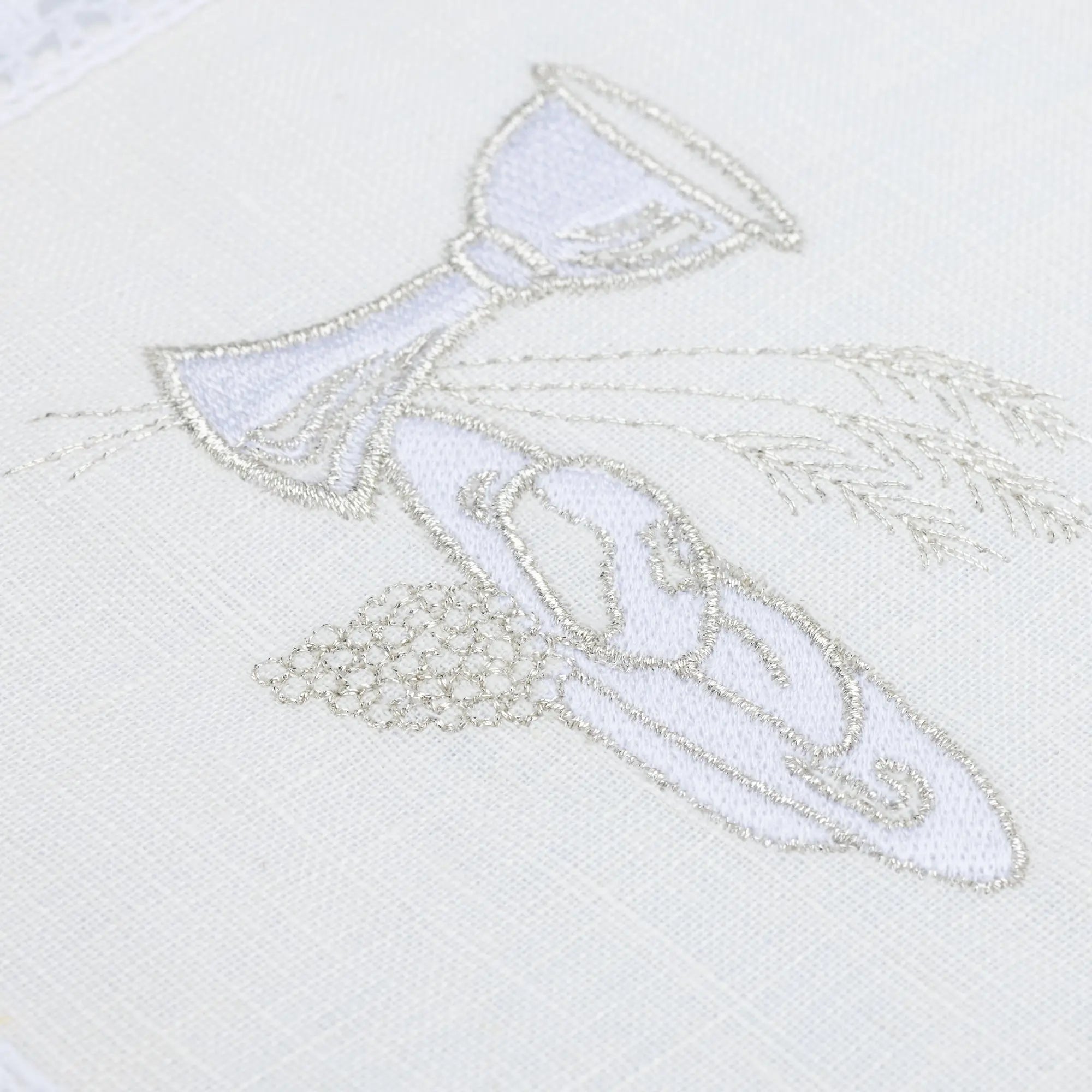
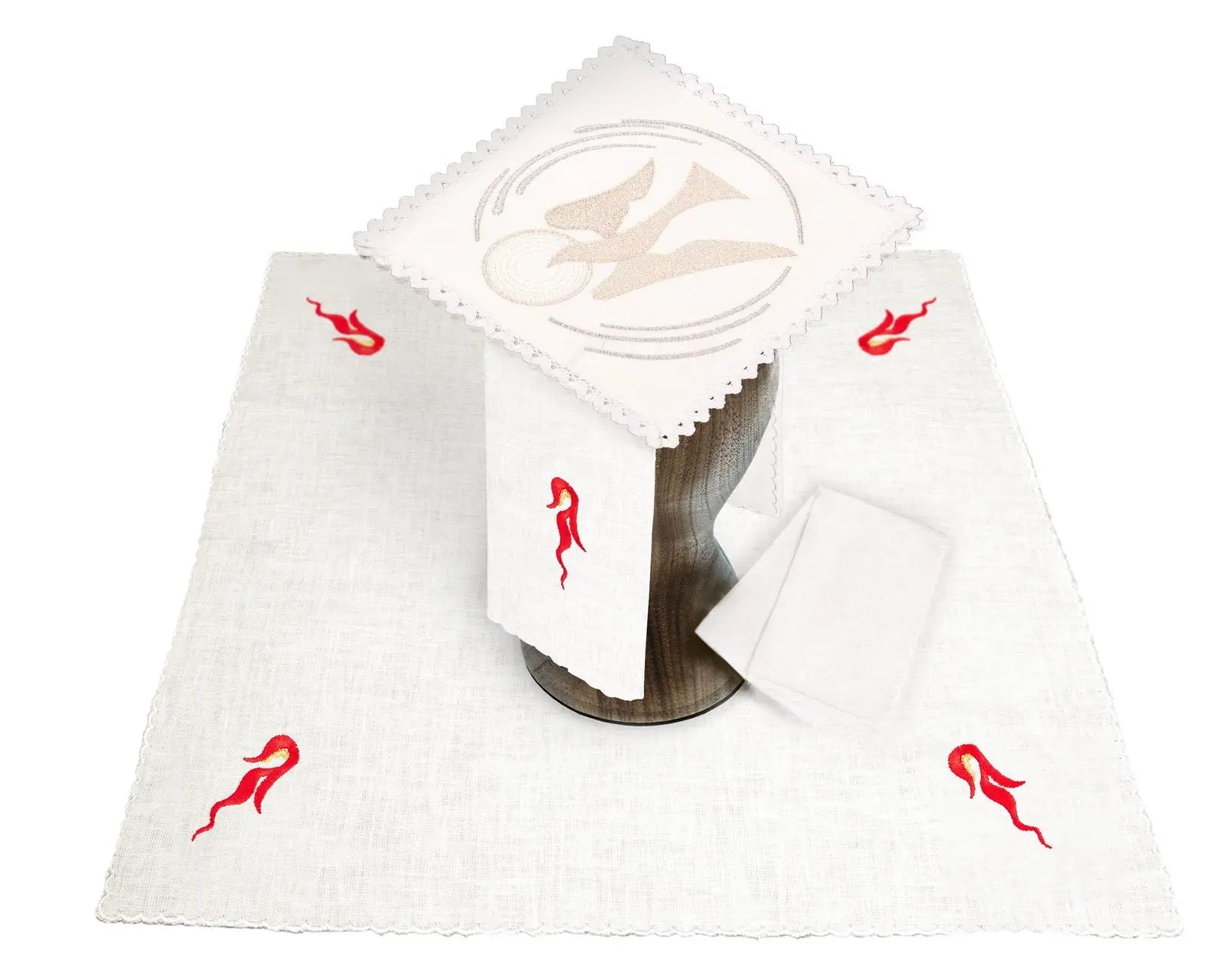
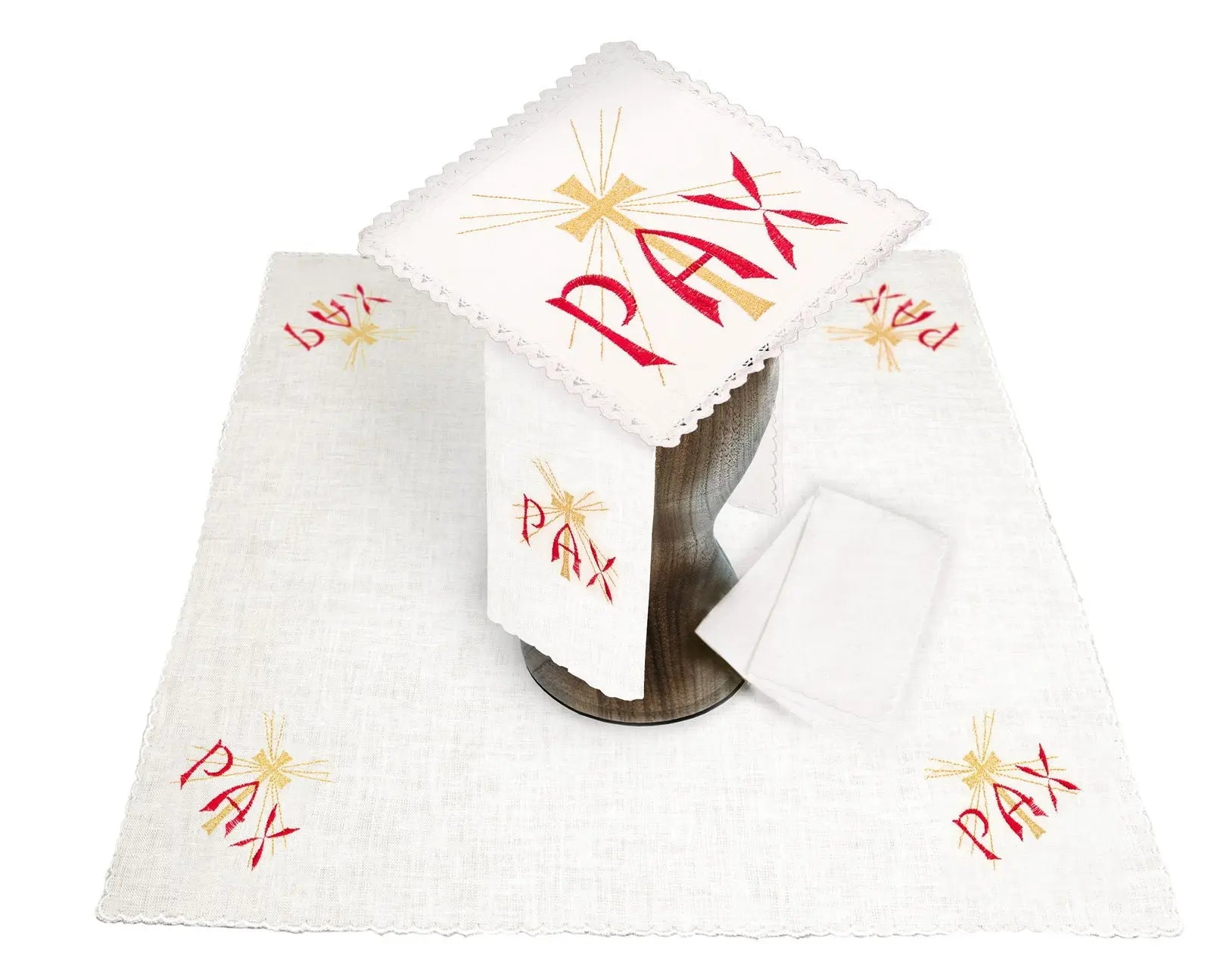
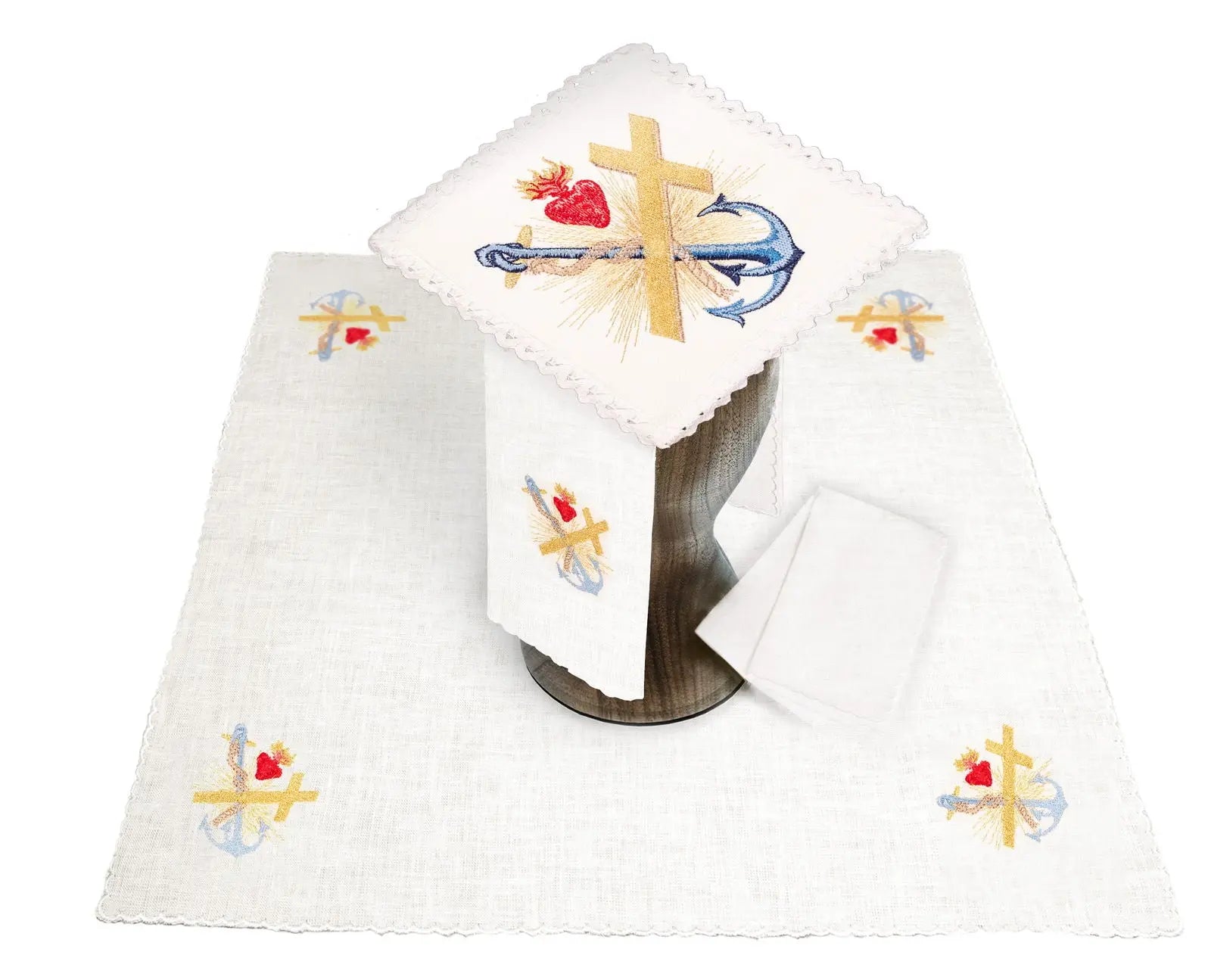
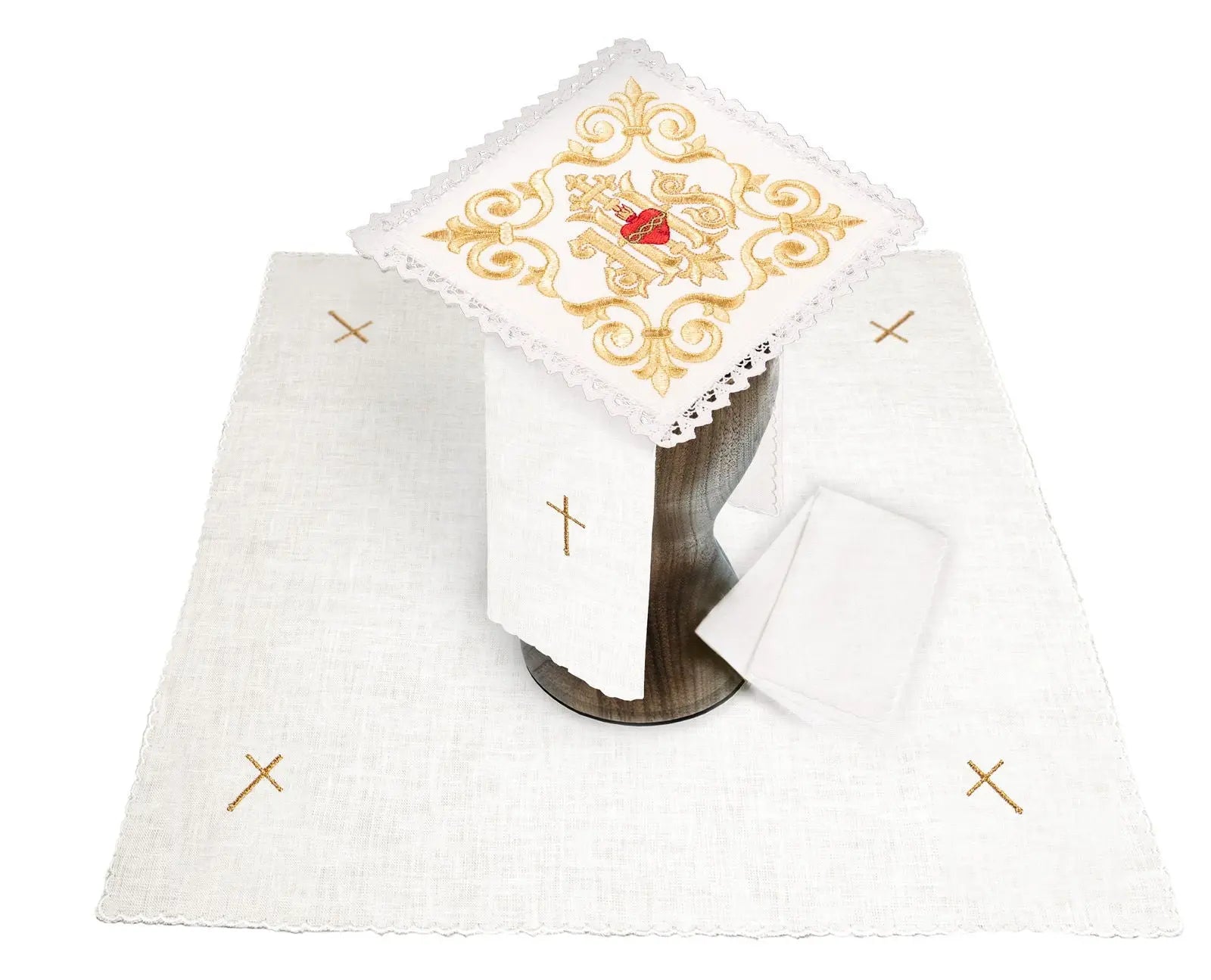
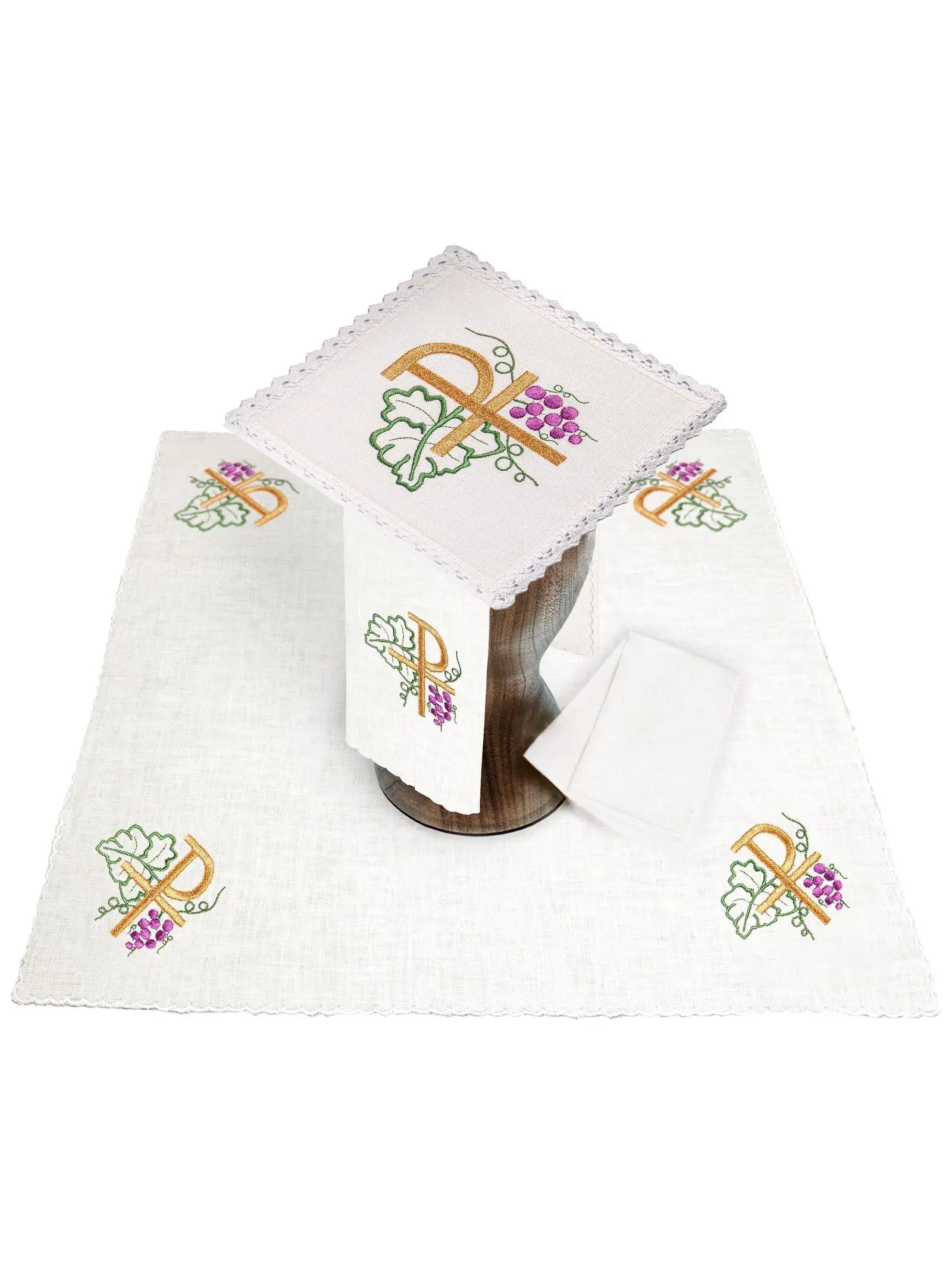
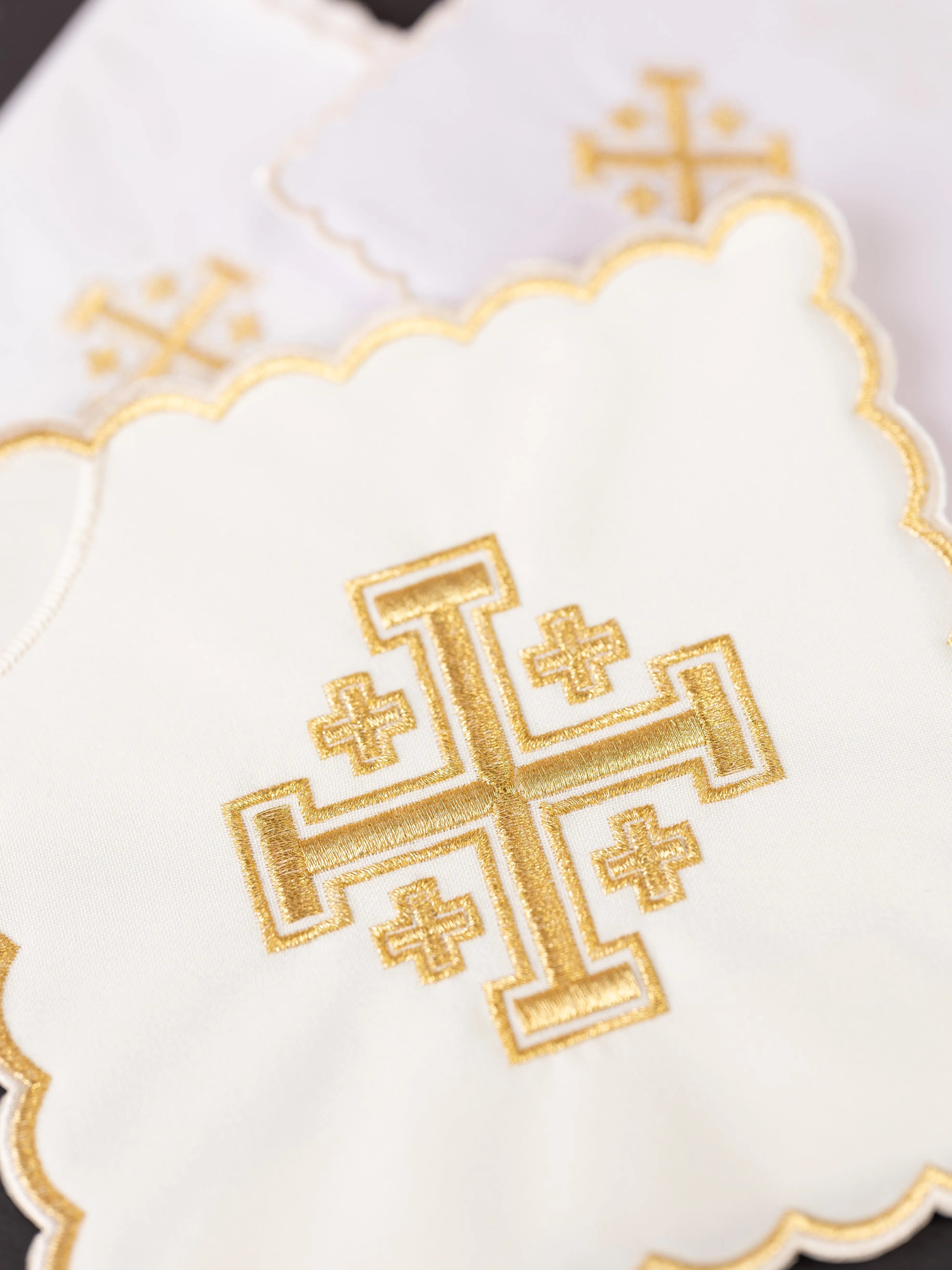
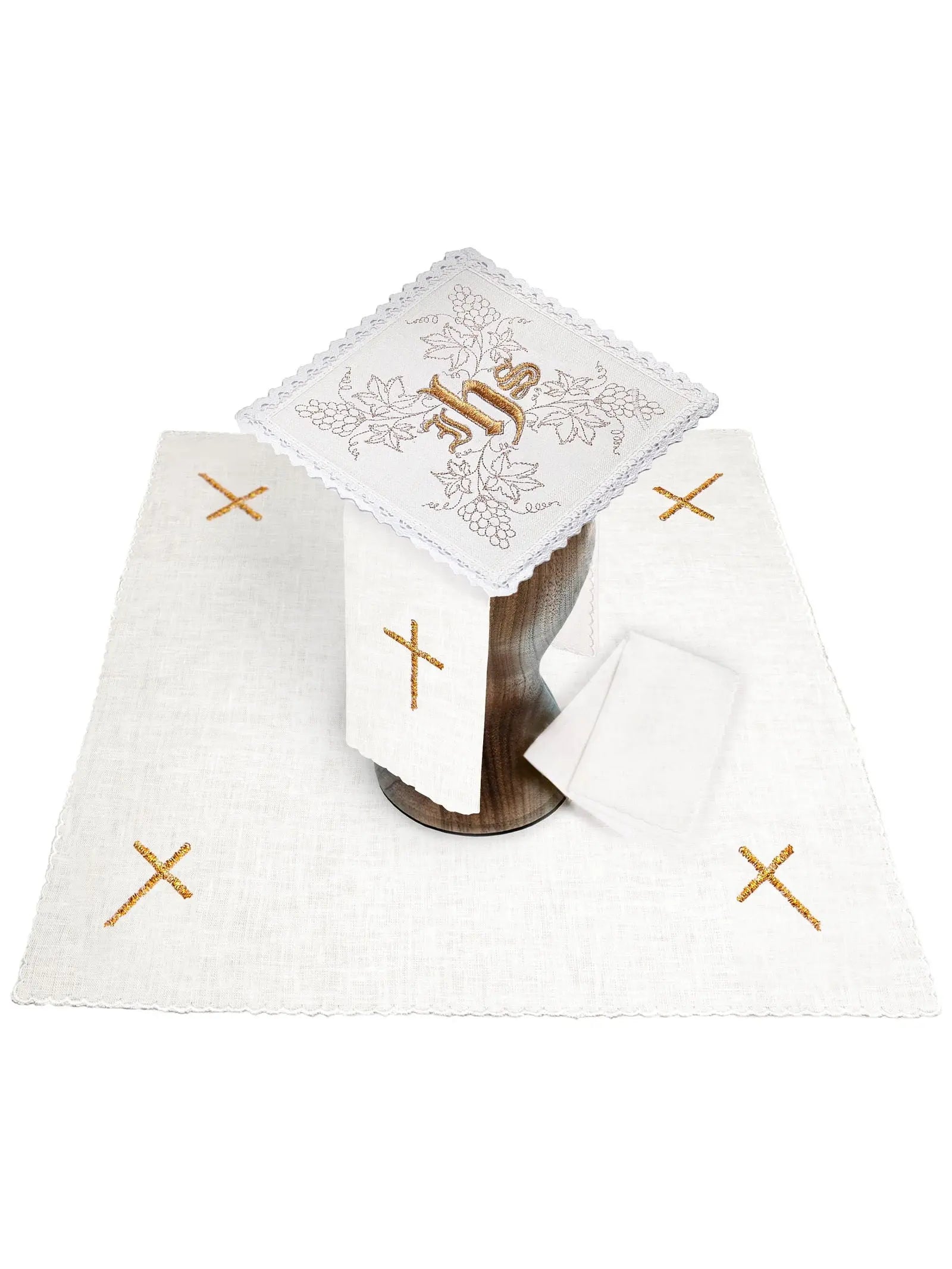
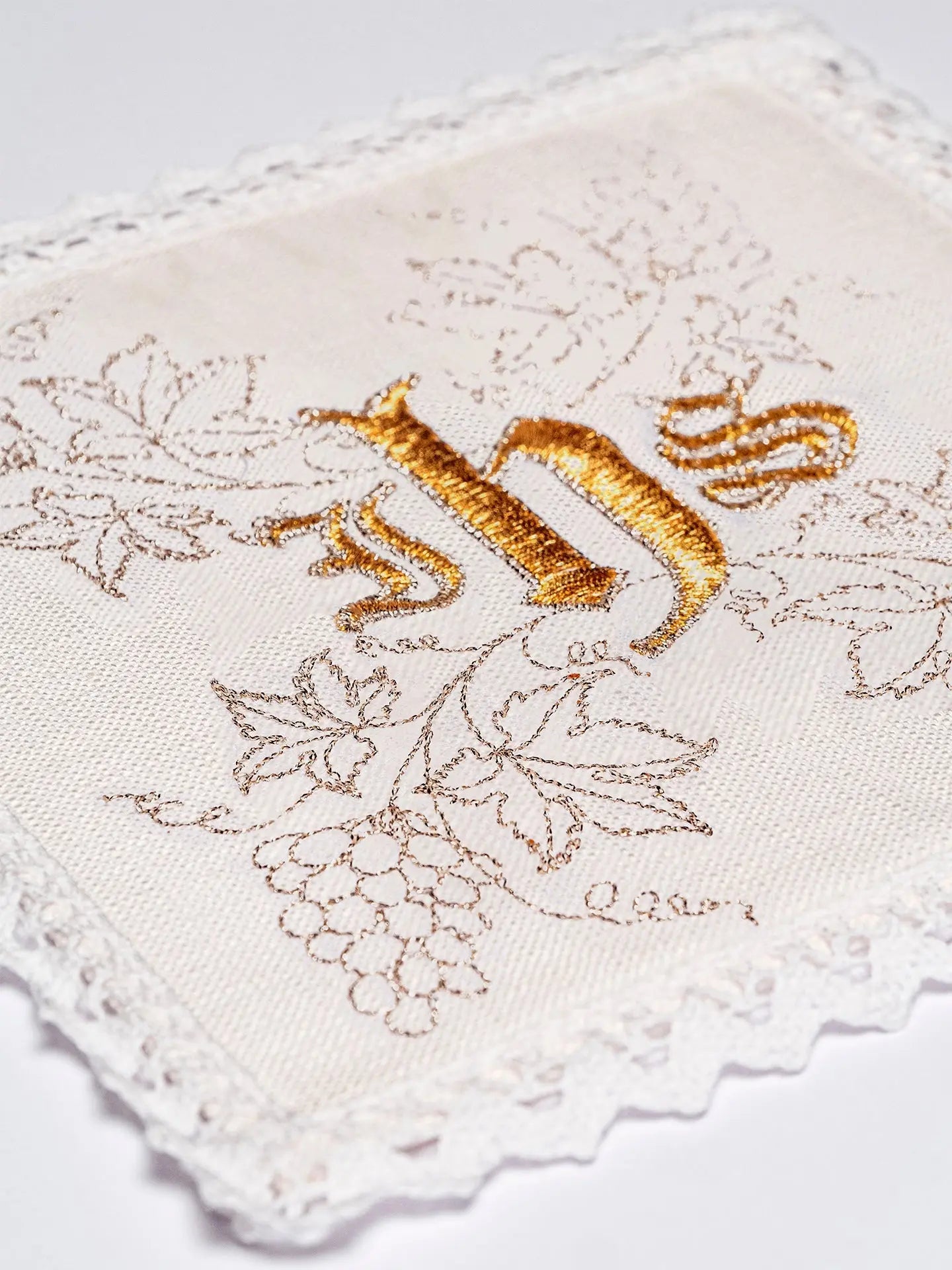
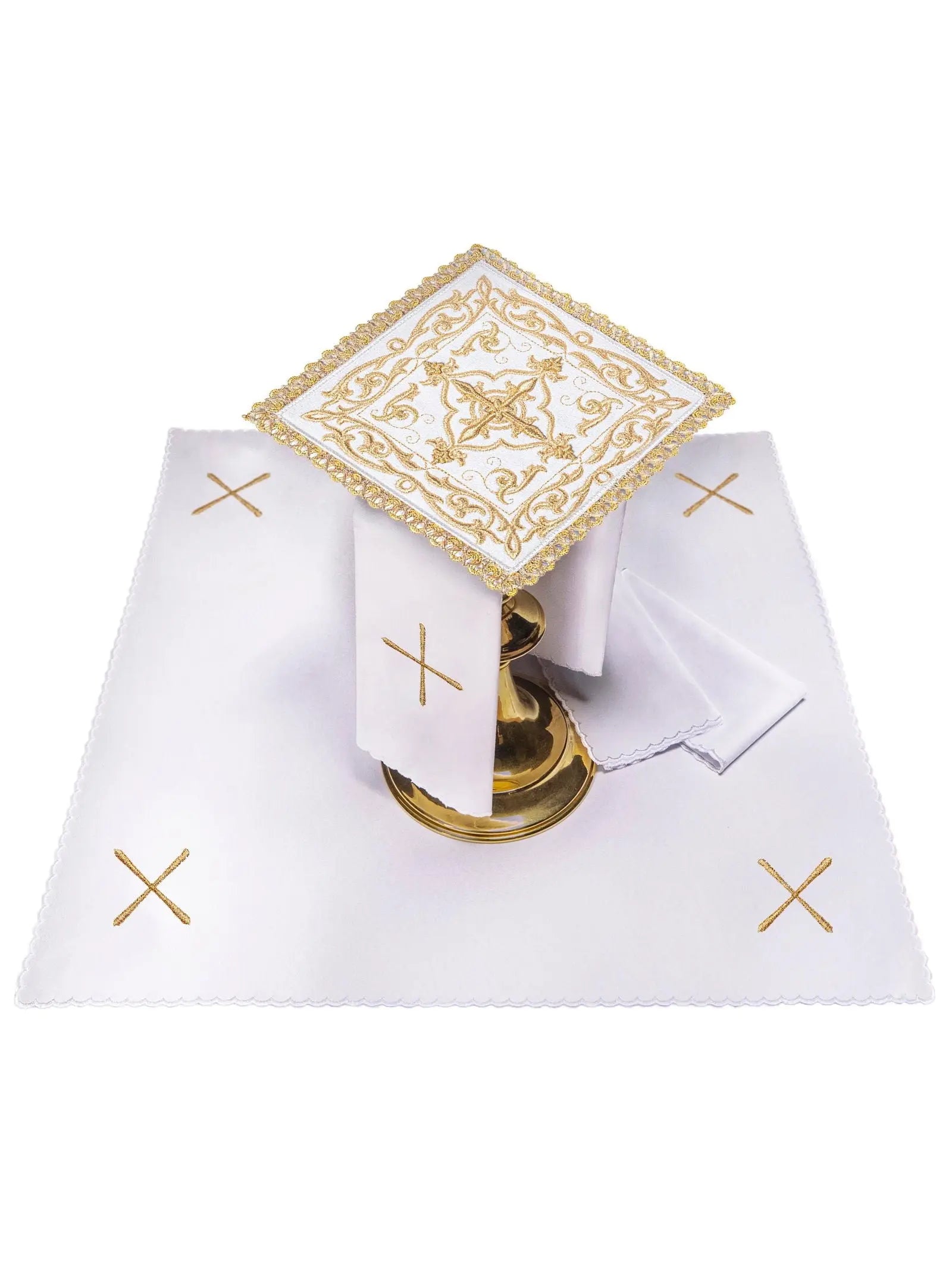
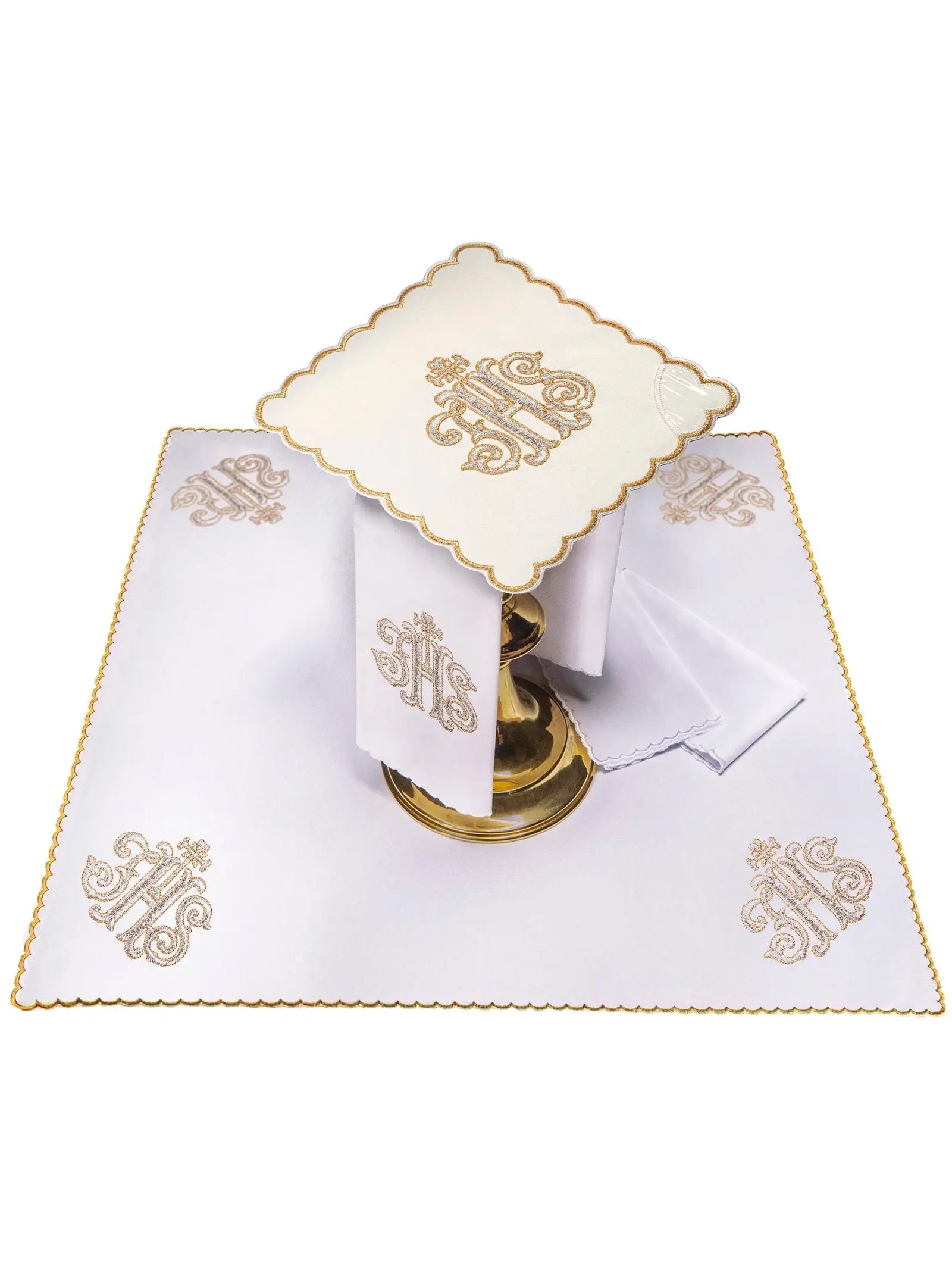
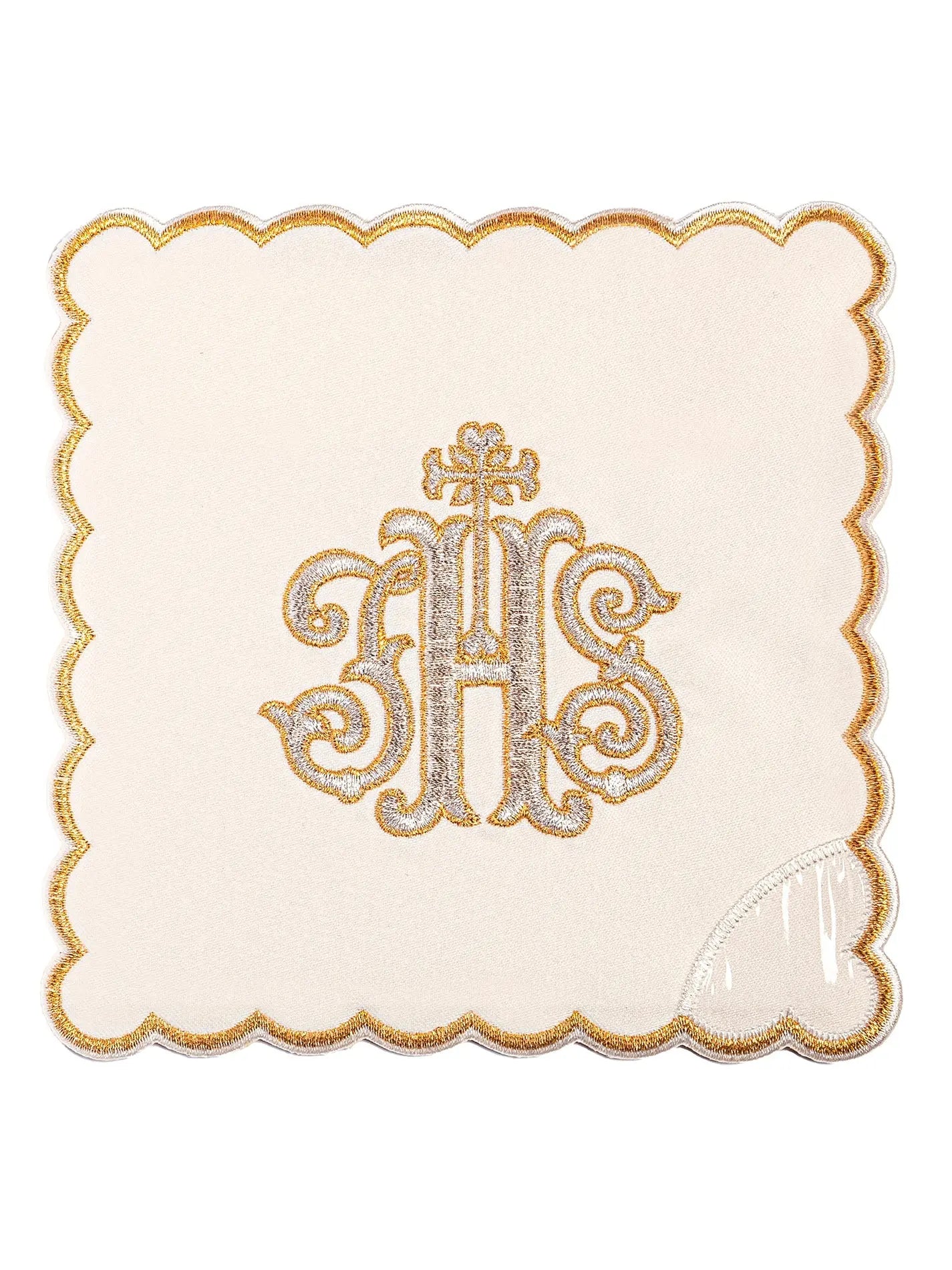
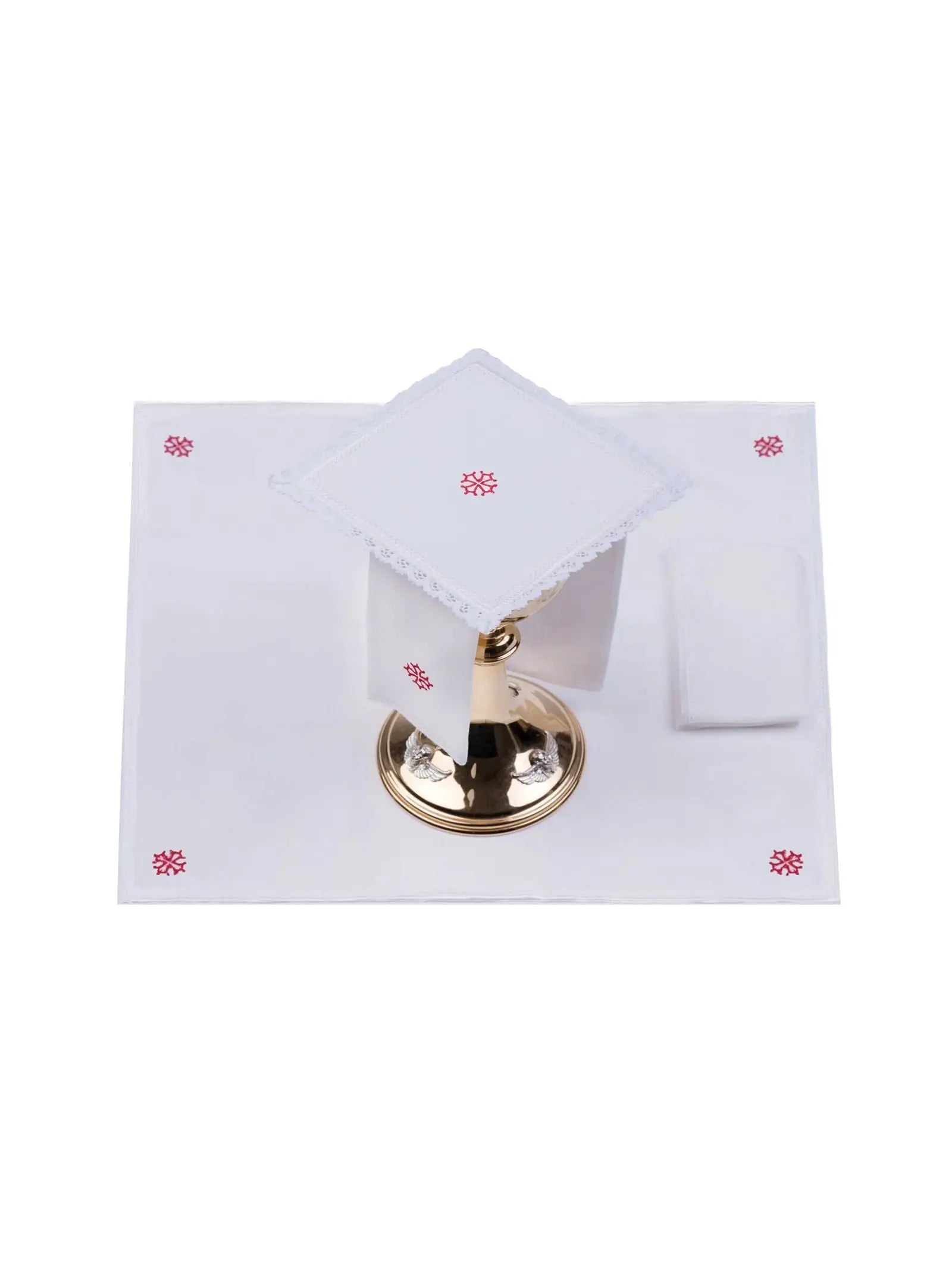
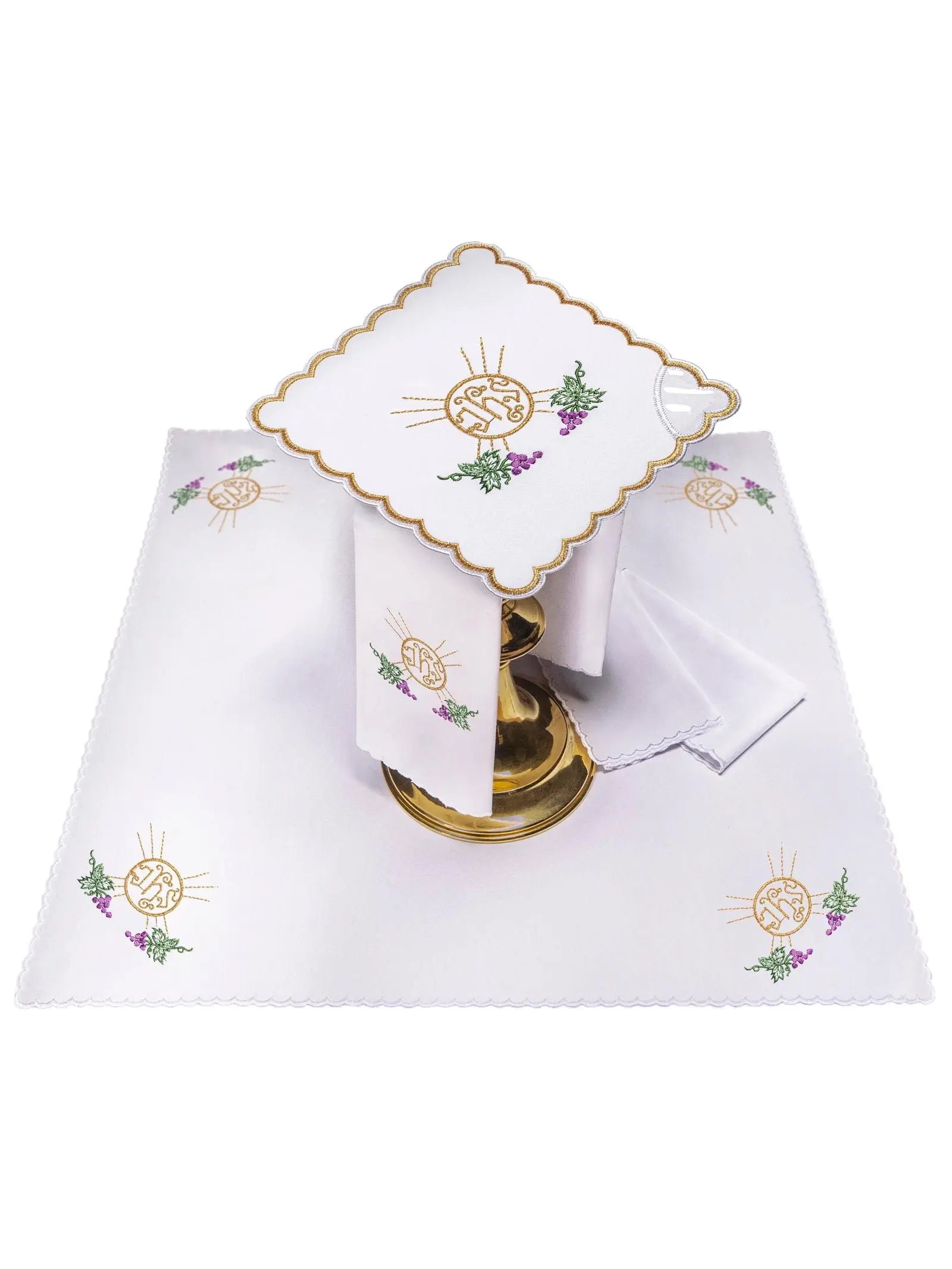
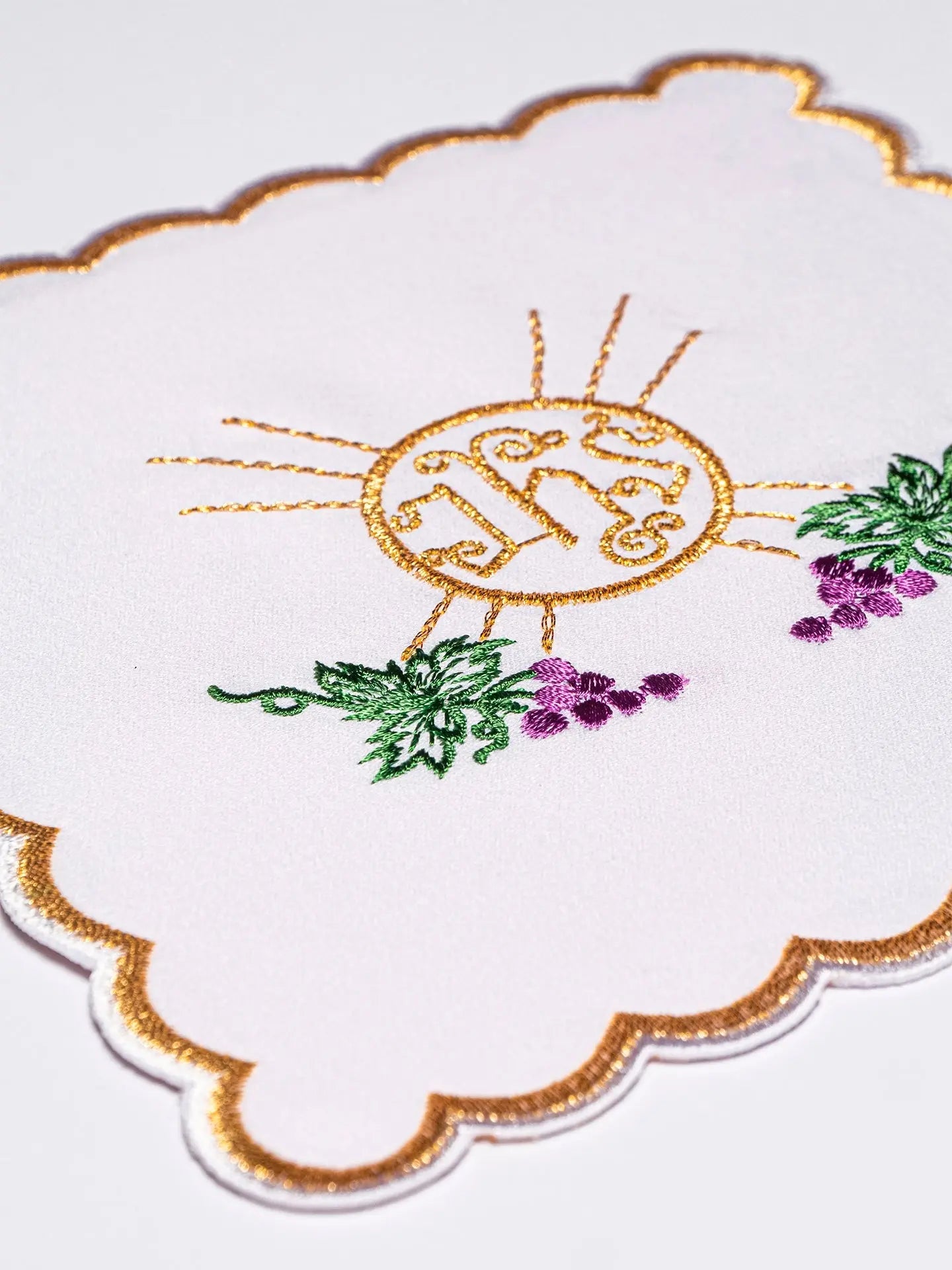
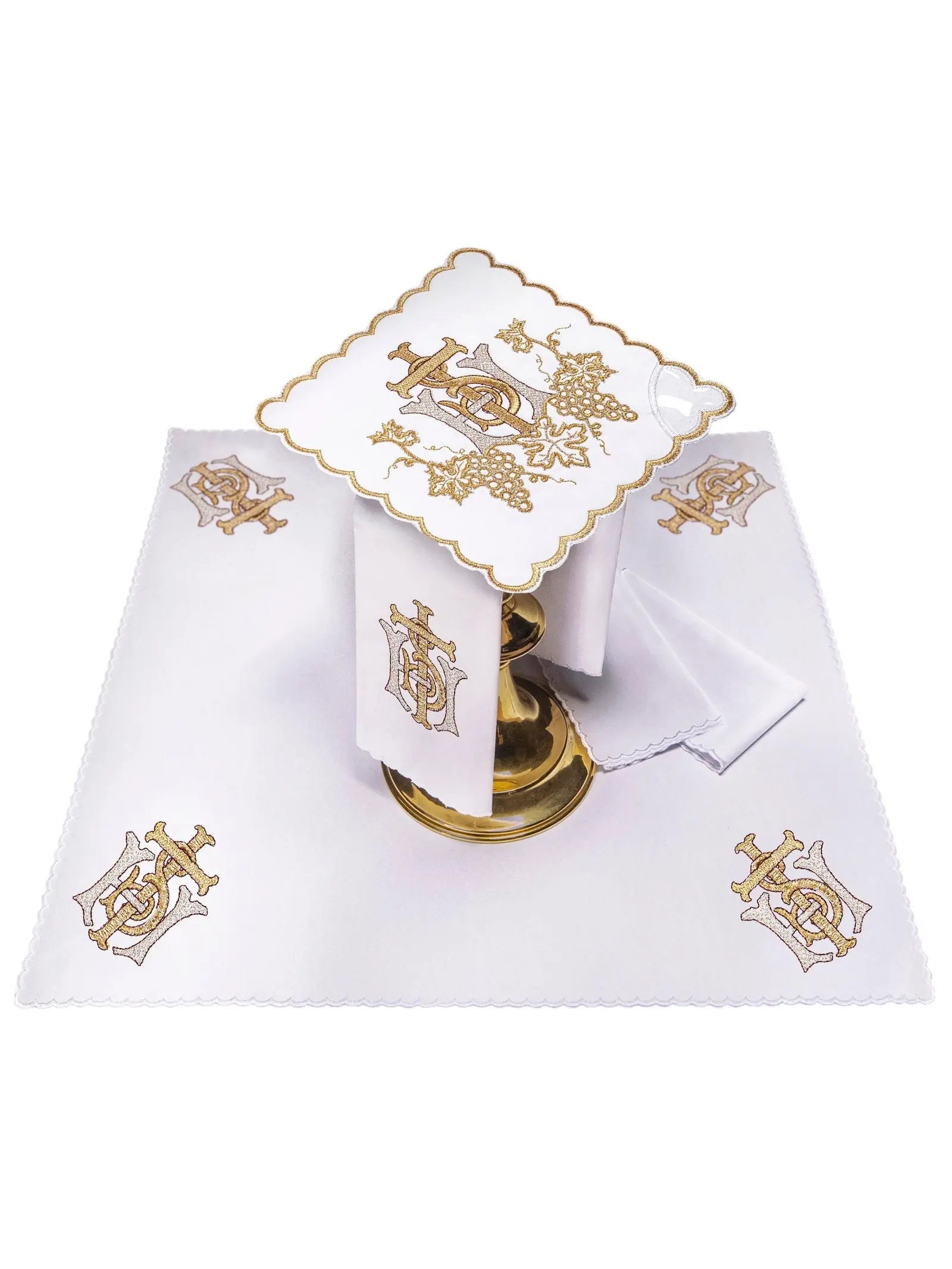
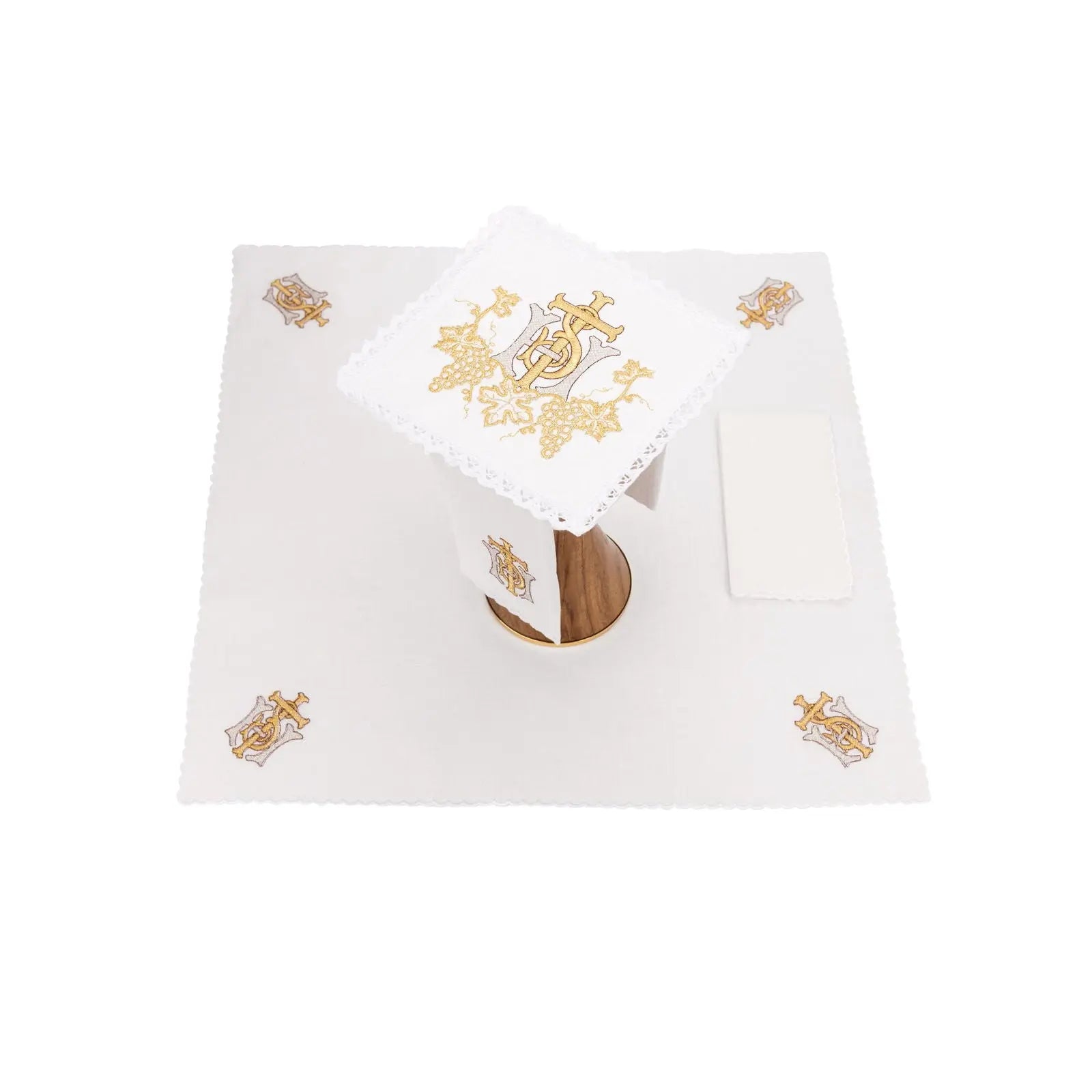
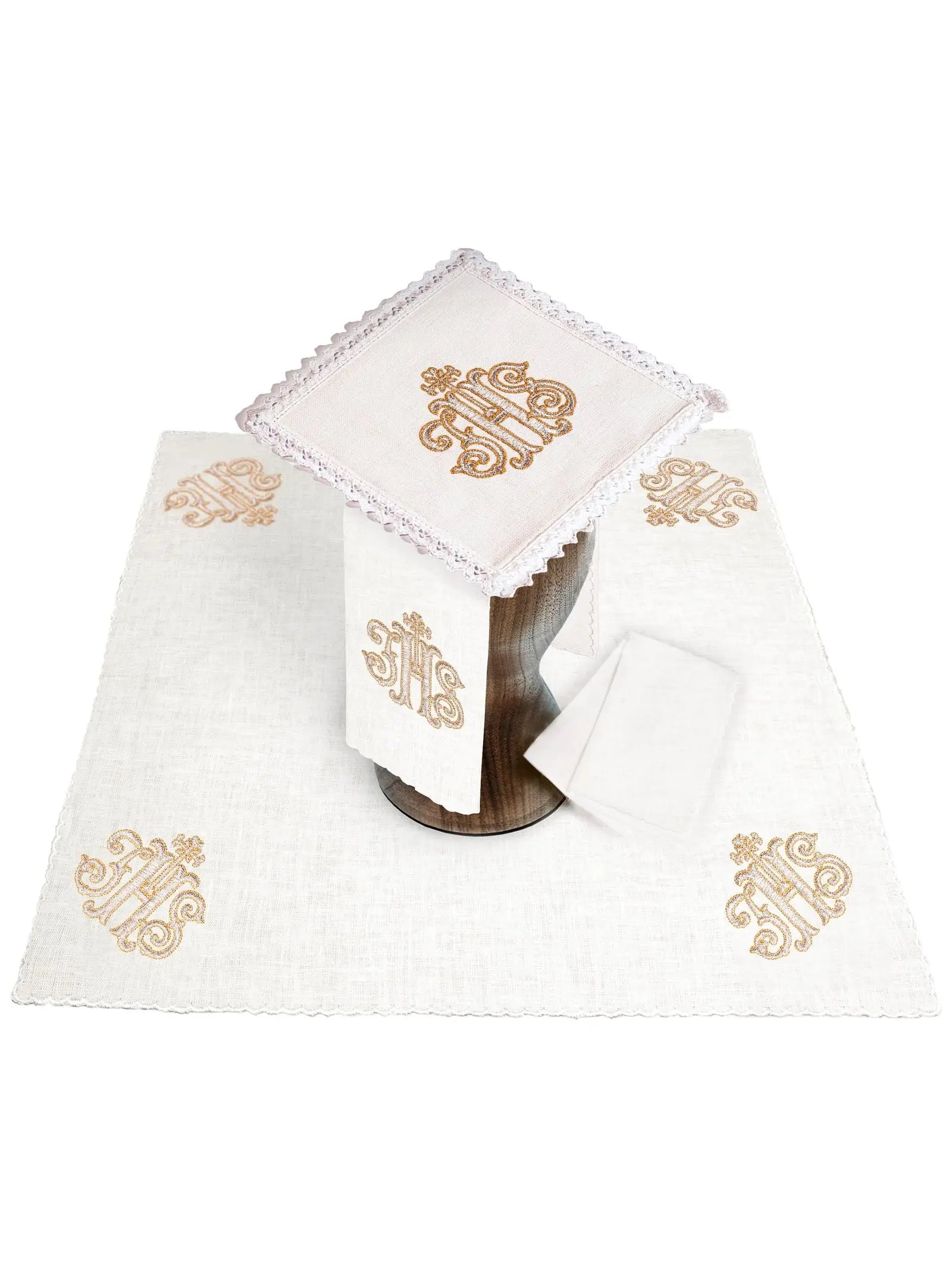
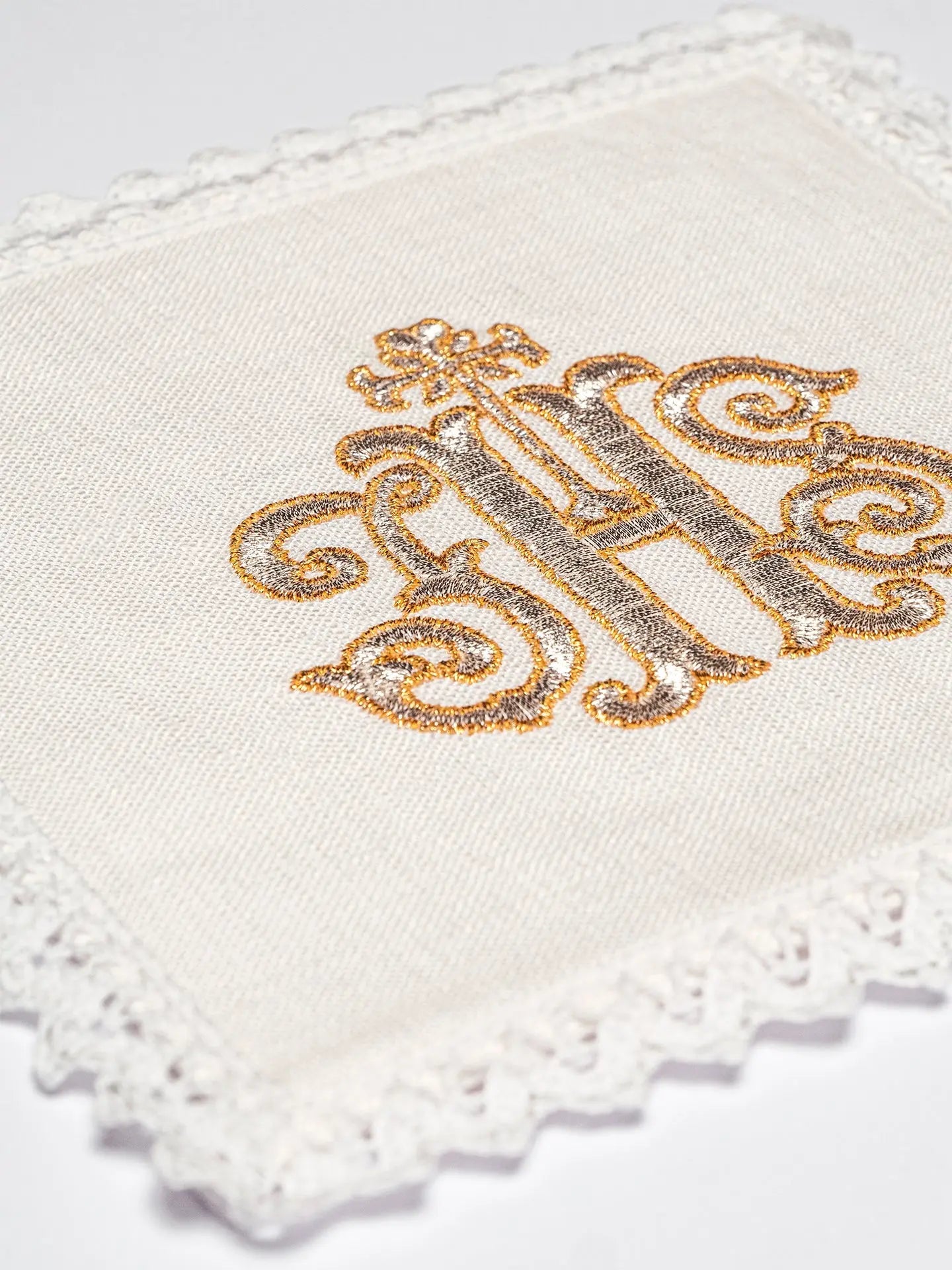
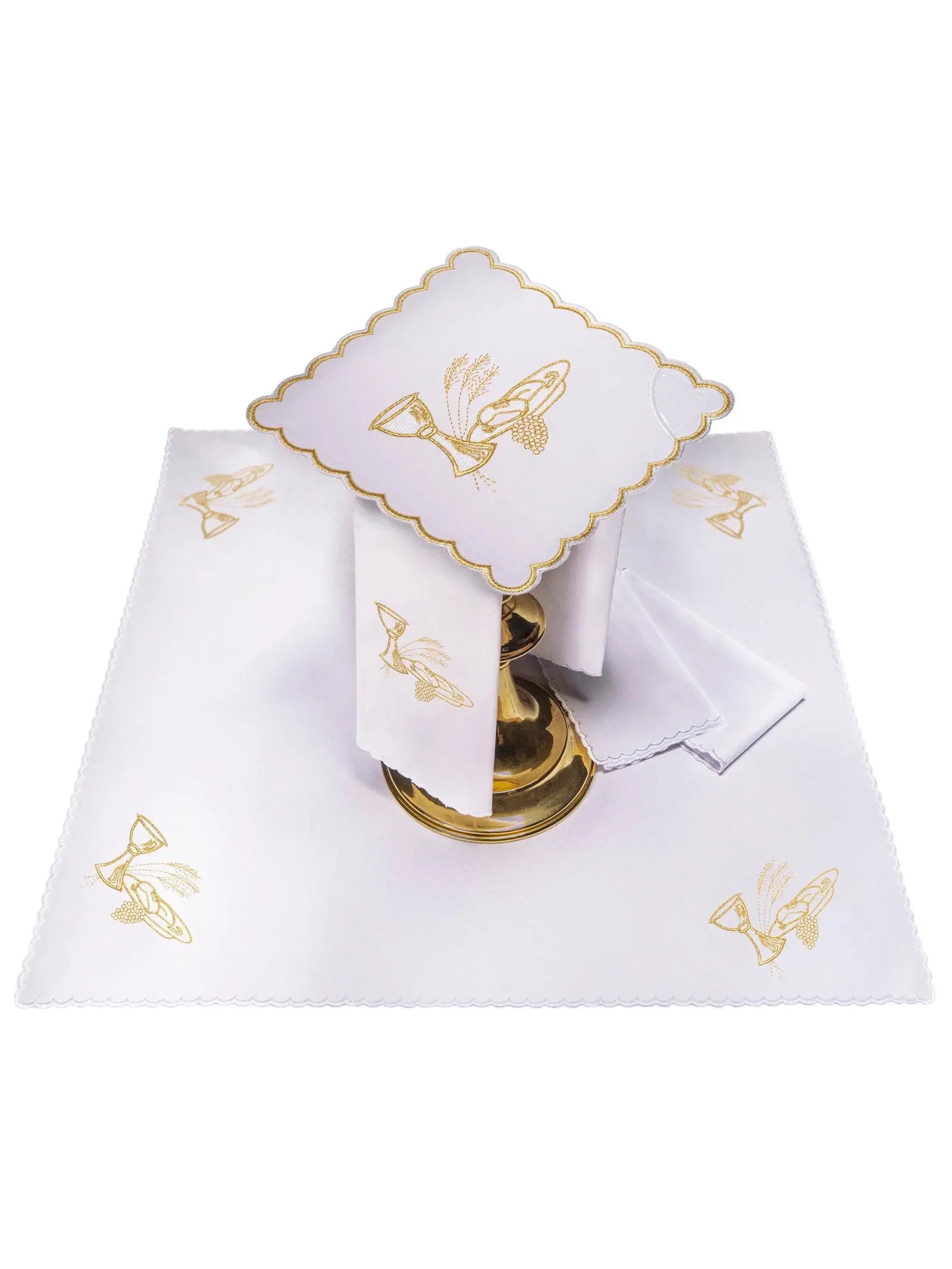
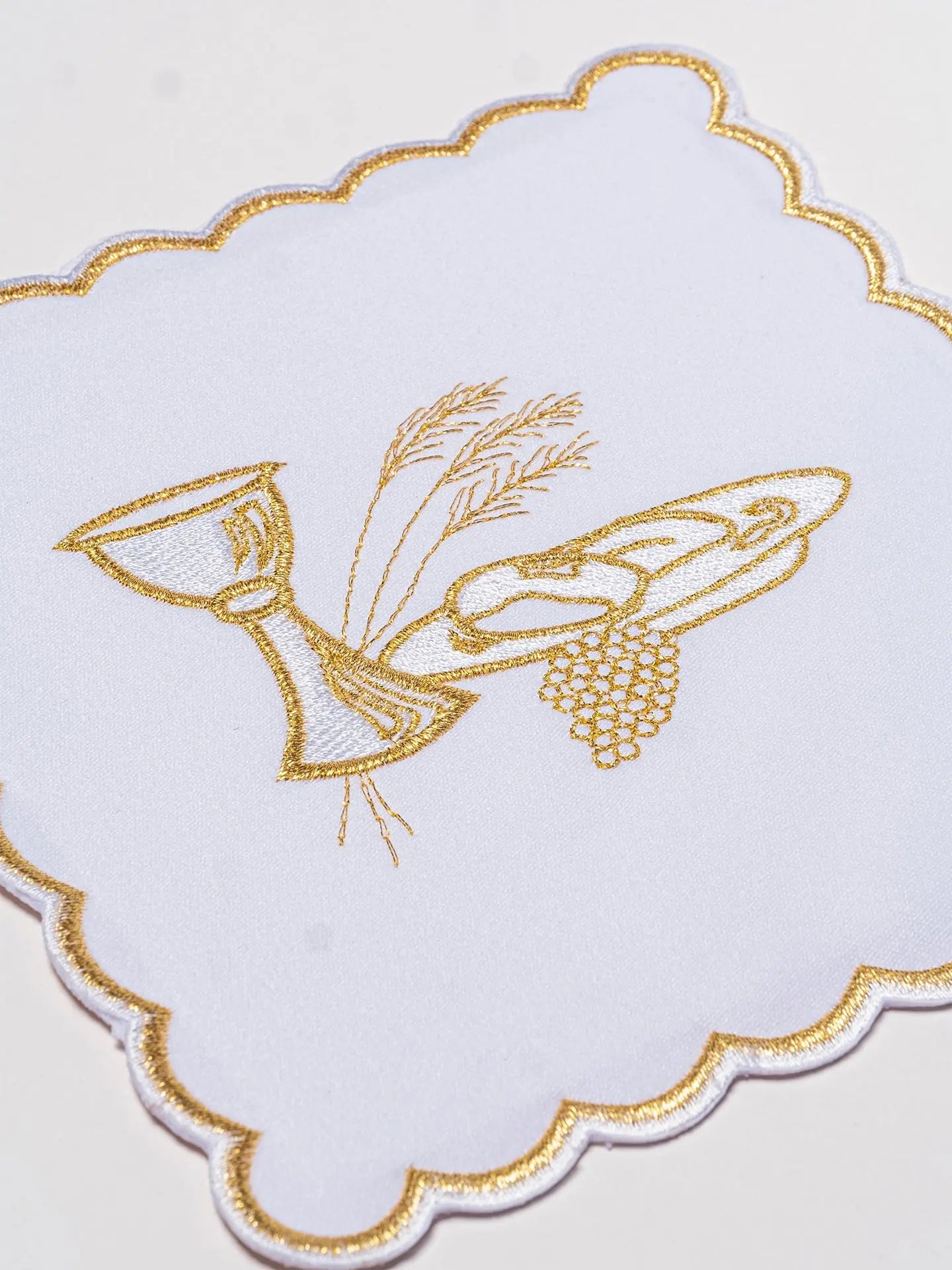
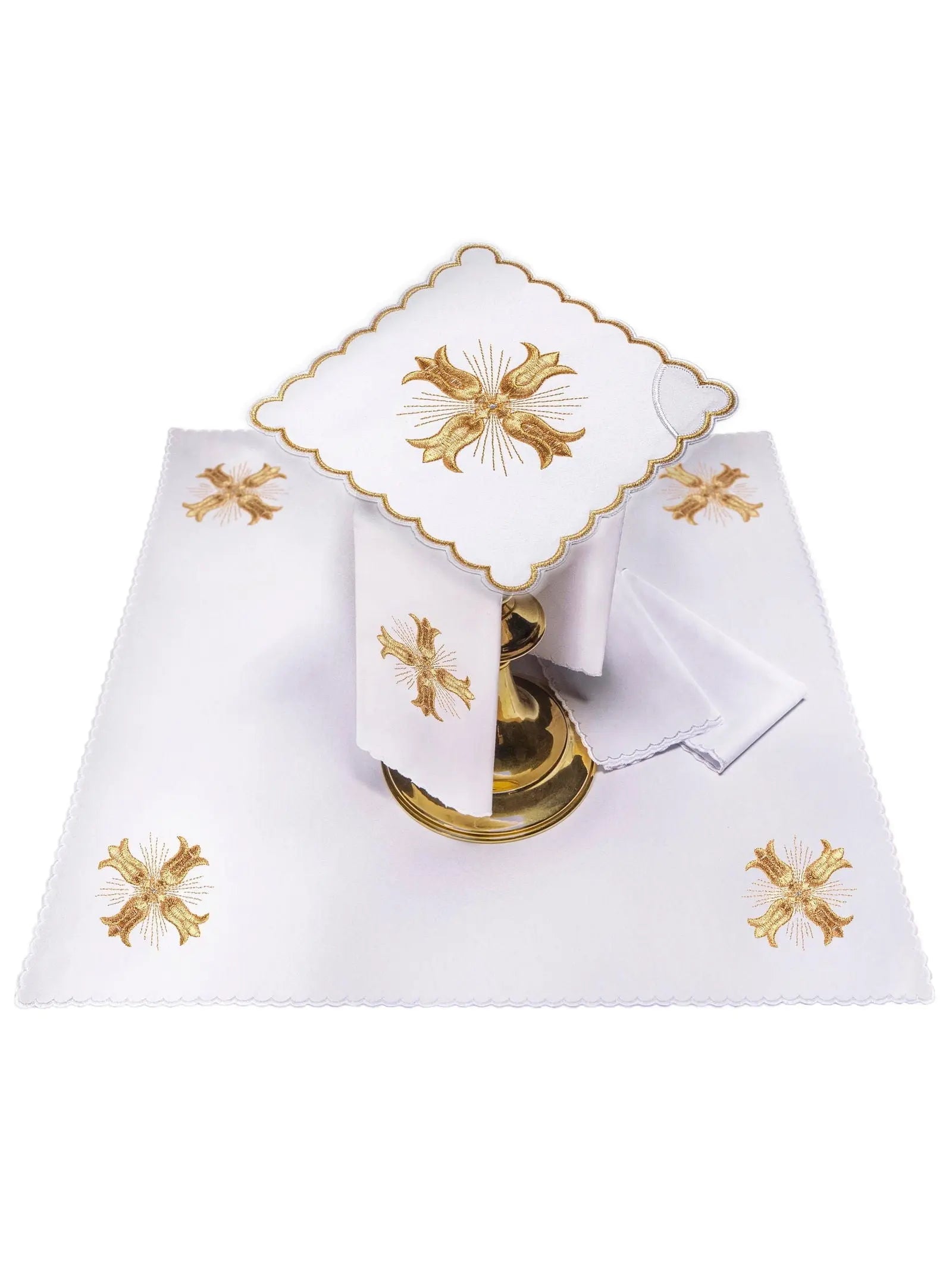
The range includes pieces that serve different liturgical functions: altar cloths placed on the altar itself, corporals used beneath the sacred vessels, purificators used with the chalice, palls that cover the chalice, and coordinated chalice sets prepared for regular sacristy use. Some items are simple and practical for frequent services, while others include embroidery, lace, Marian motifs, Eucharistic symbols, or seasonal colors. For larger altar textiles, see the wider altar cloths collection, where altar tablecloths, superfrontals, and related sanctuary textiles can be selected for a complete arrangement.
What belongs in the altar linens collection?
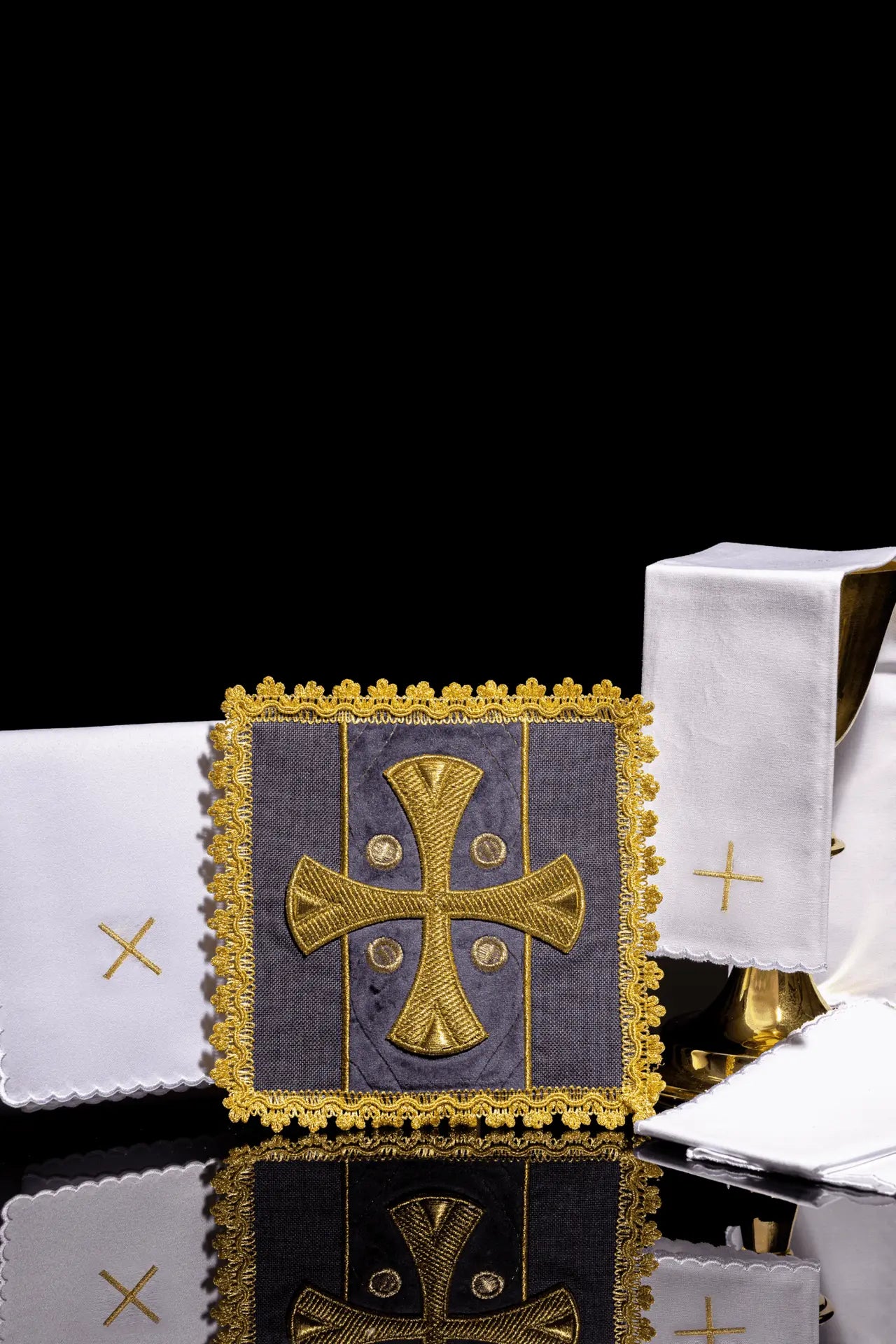
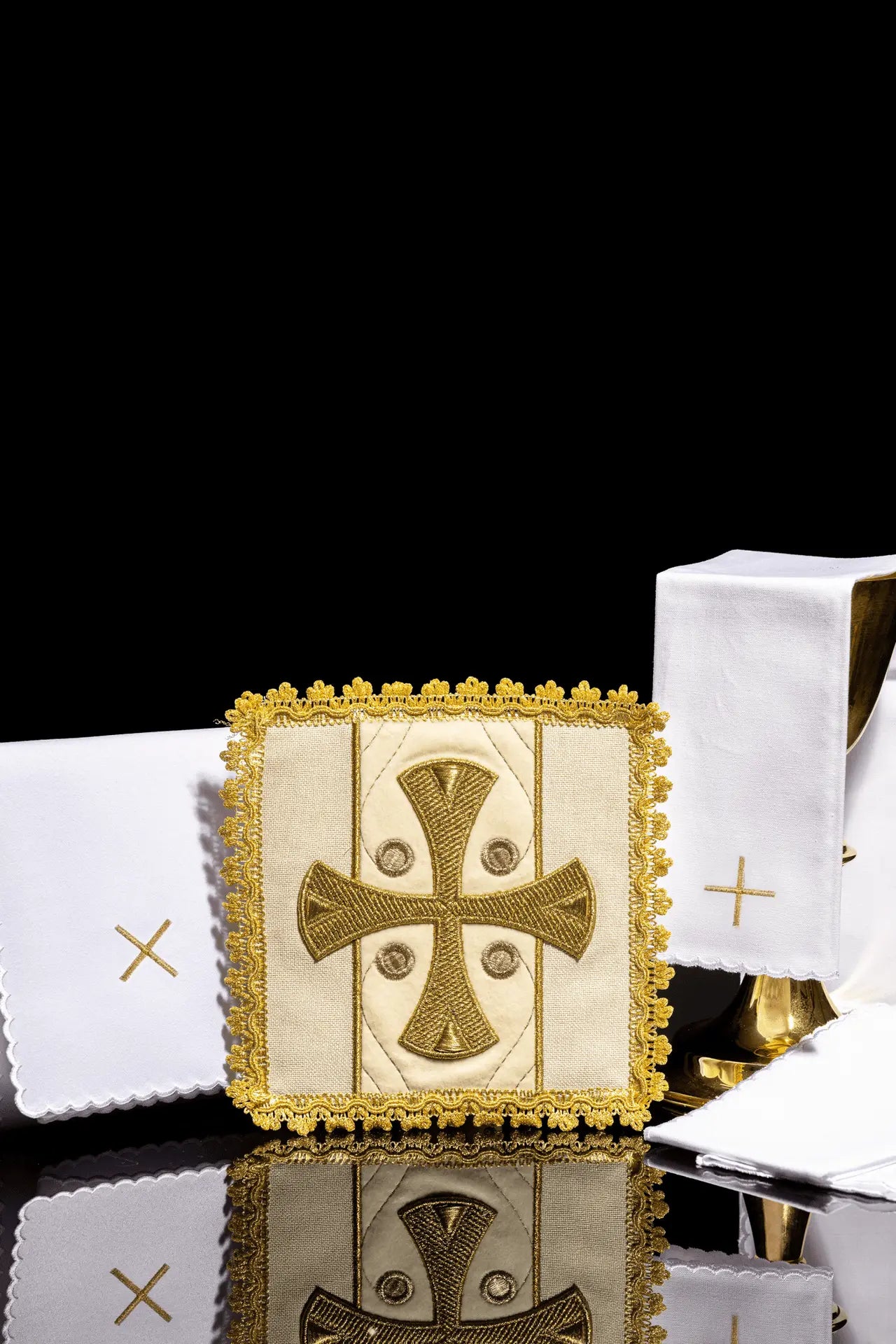
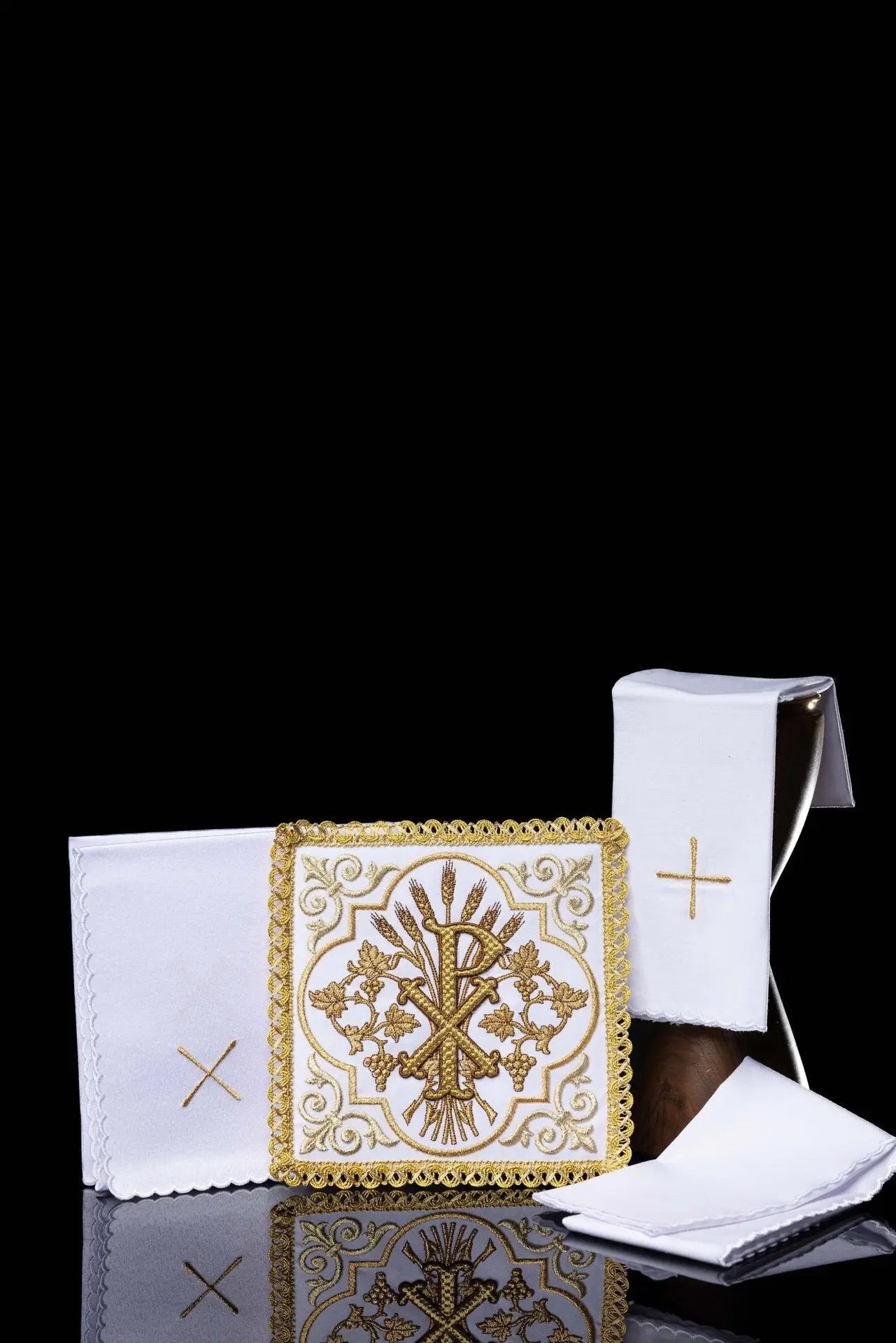
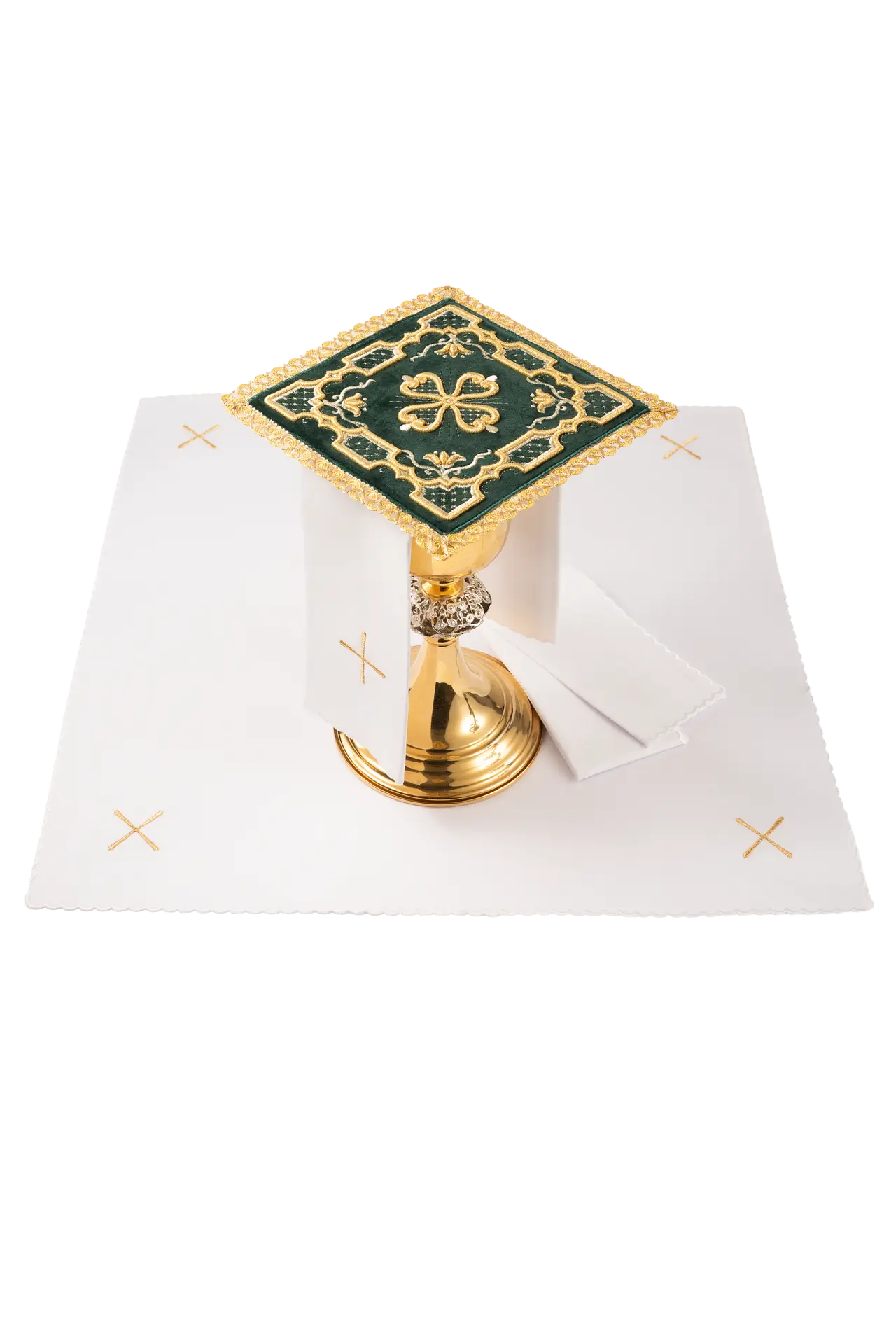
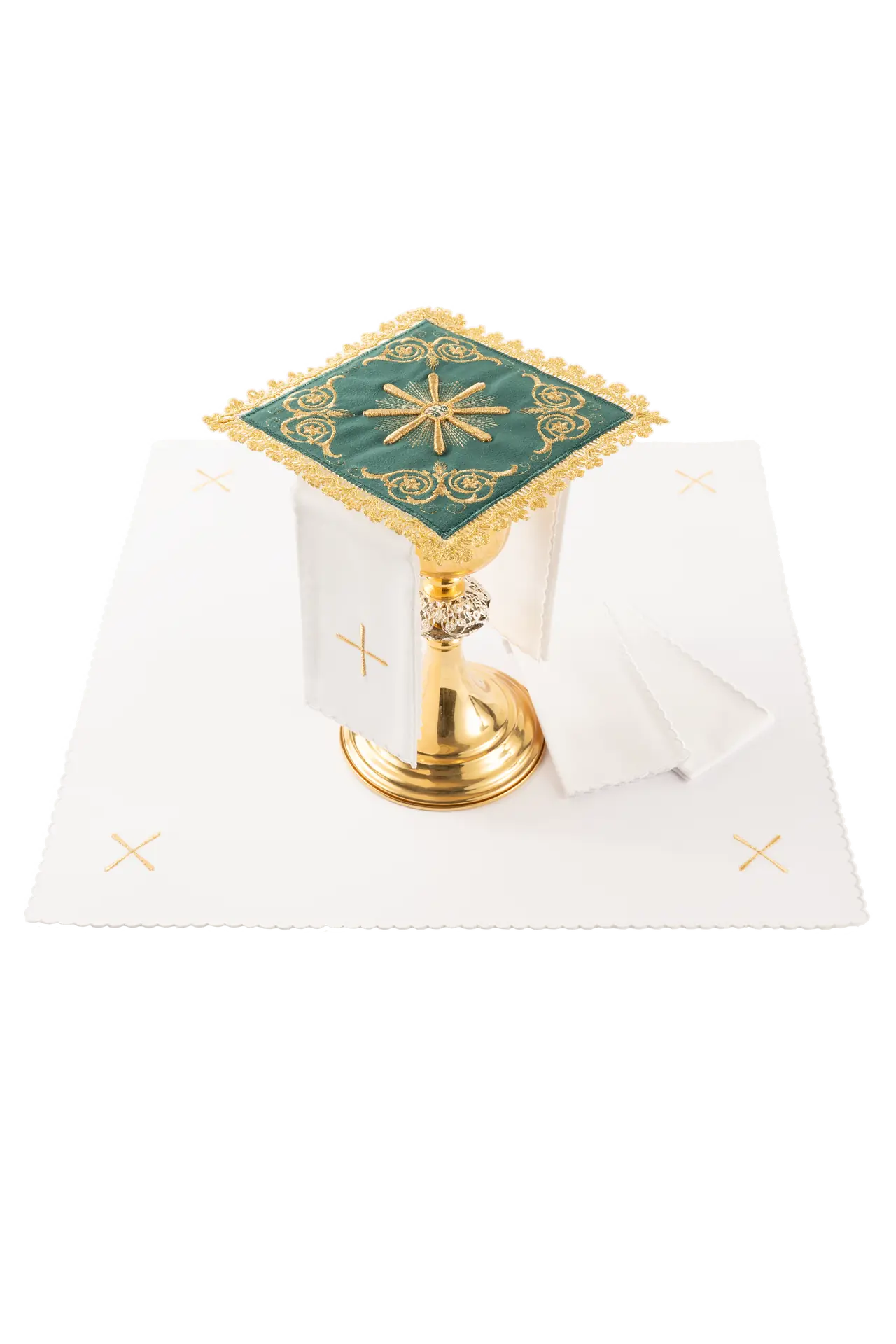
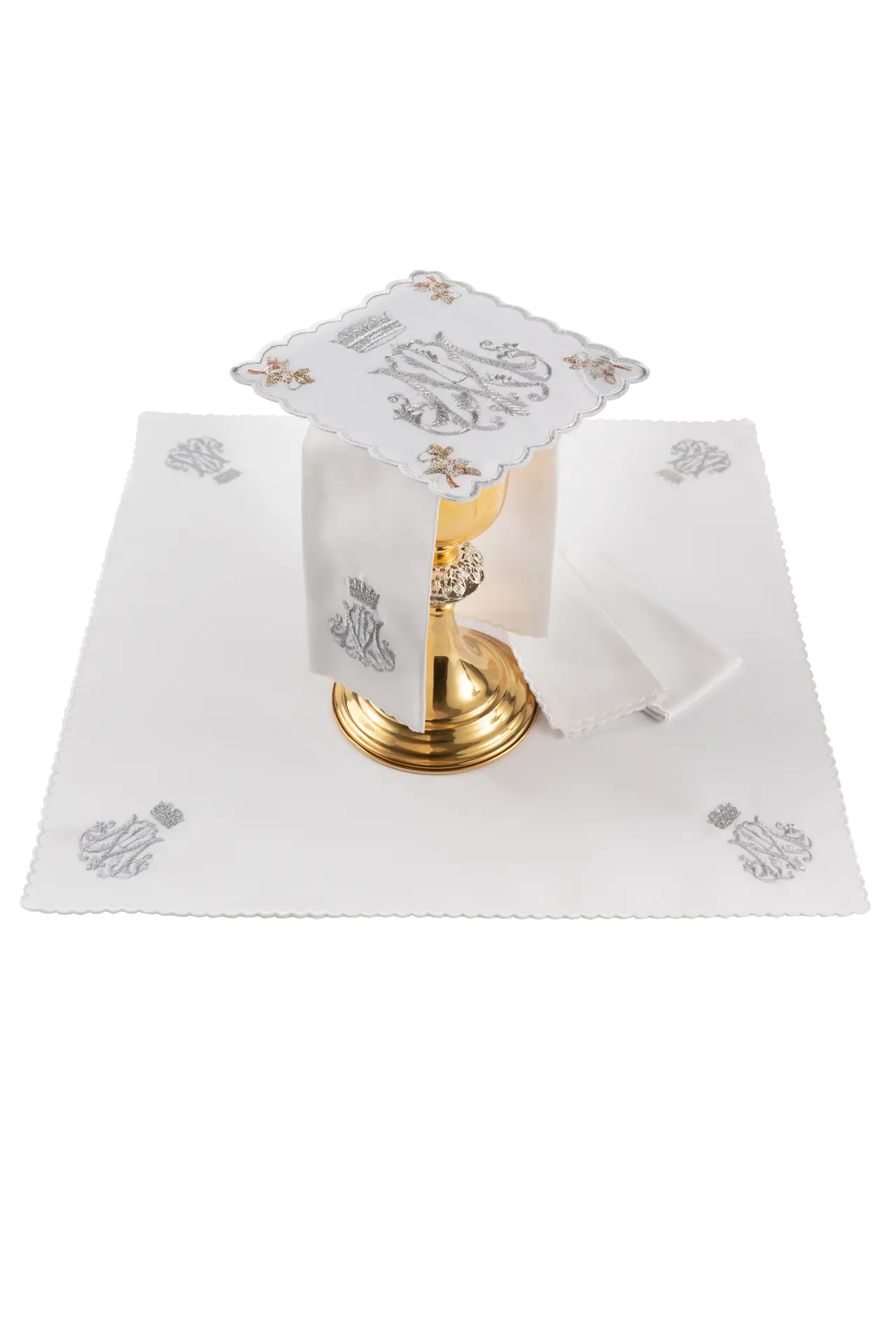
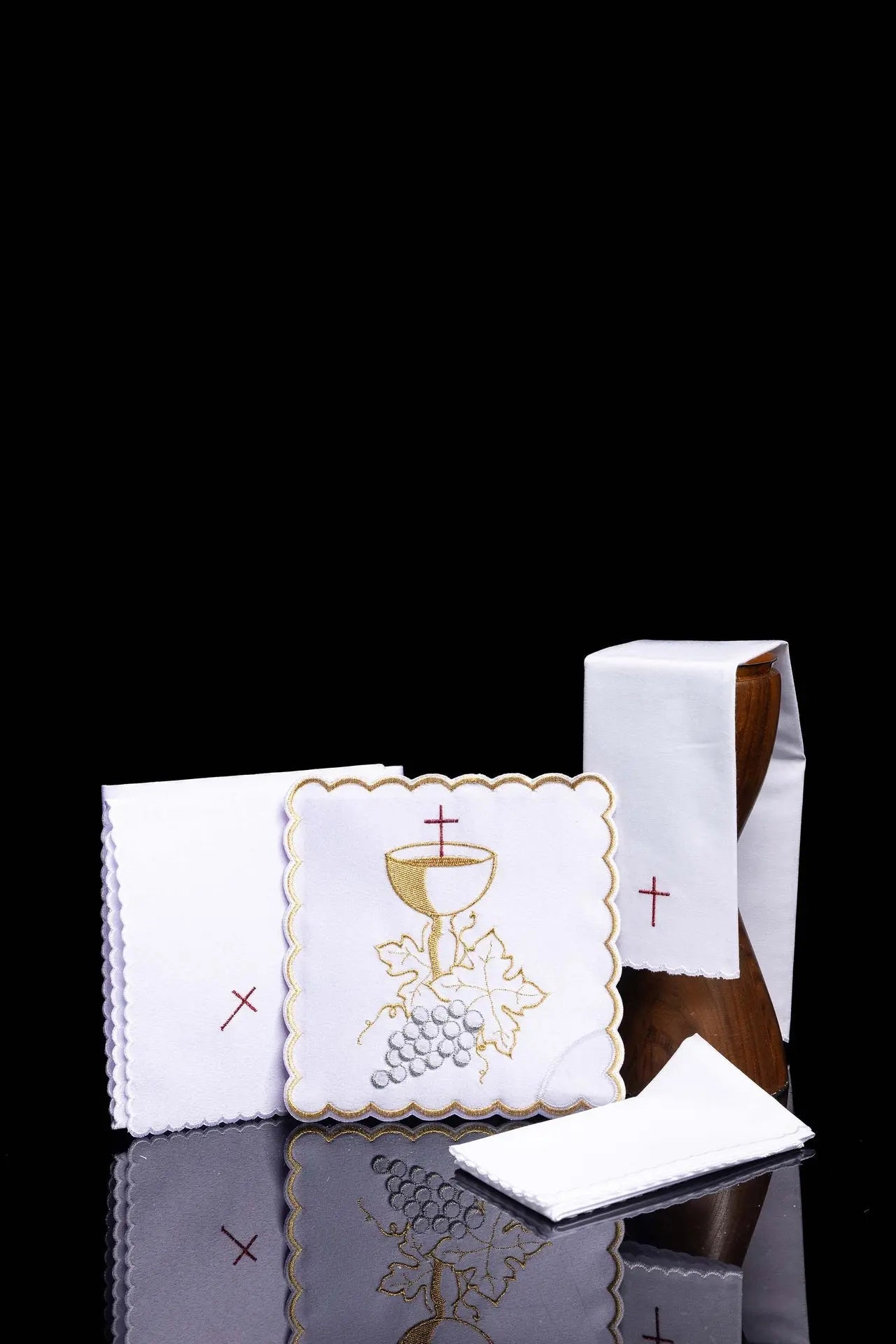
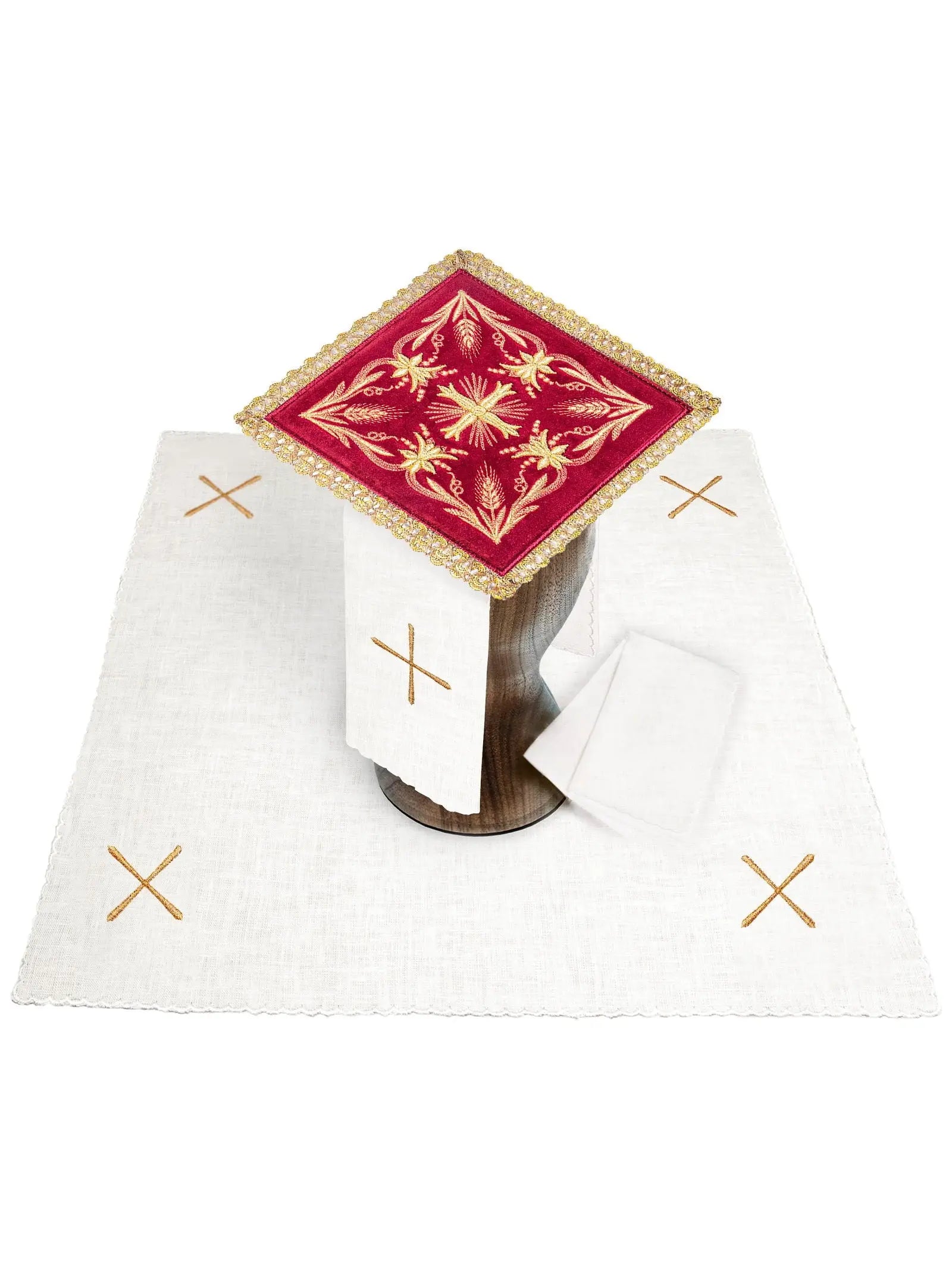
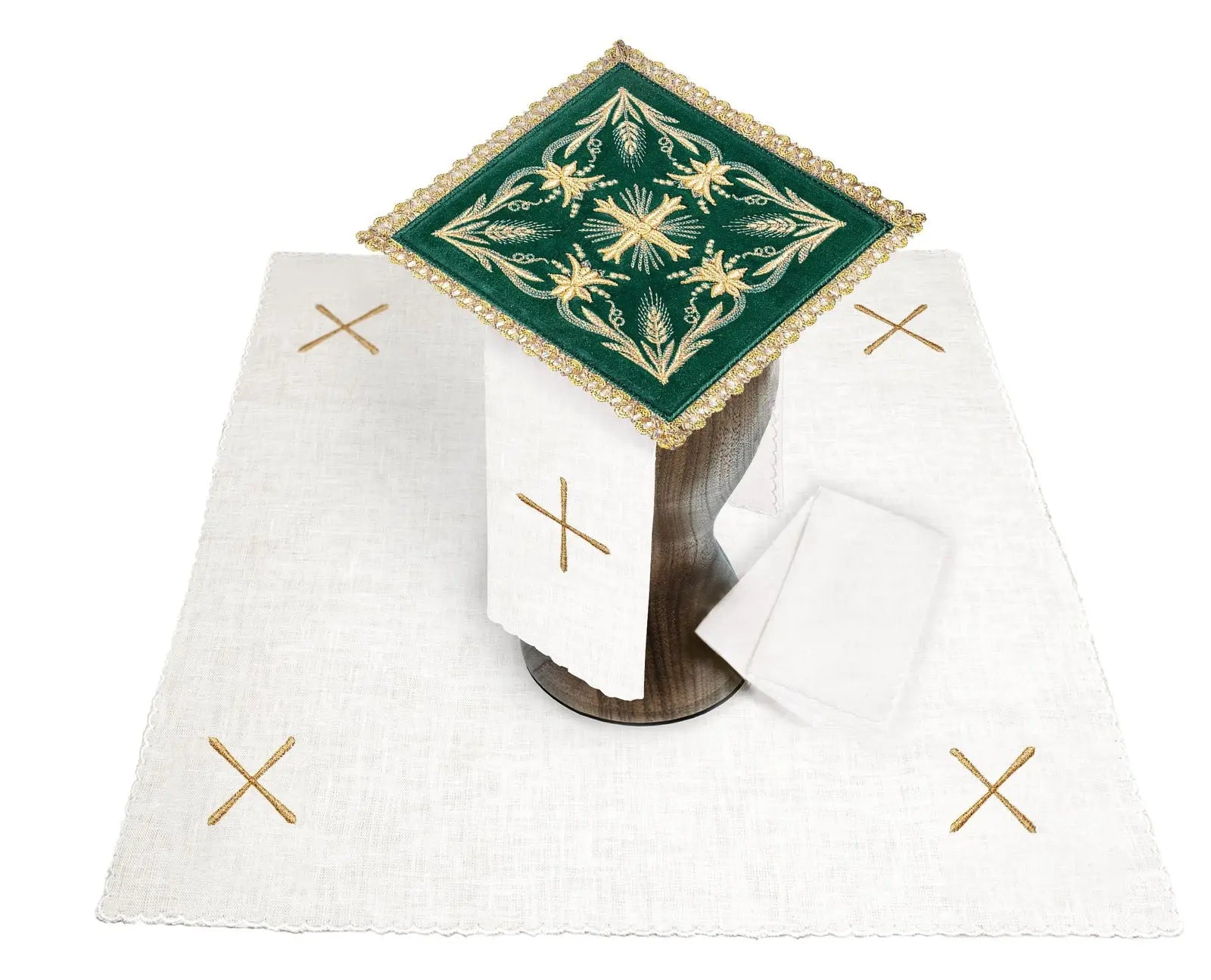
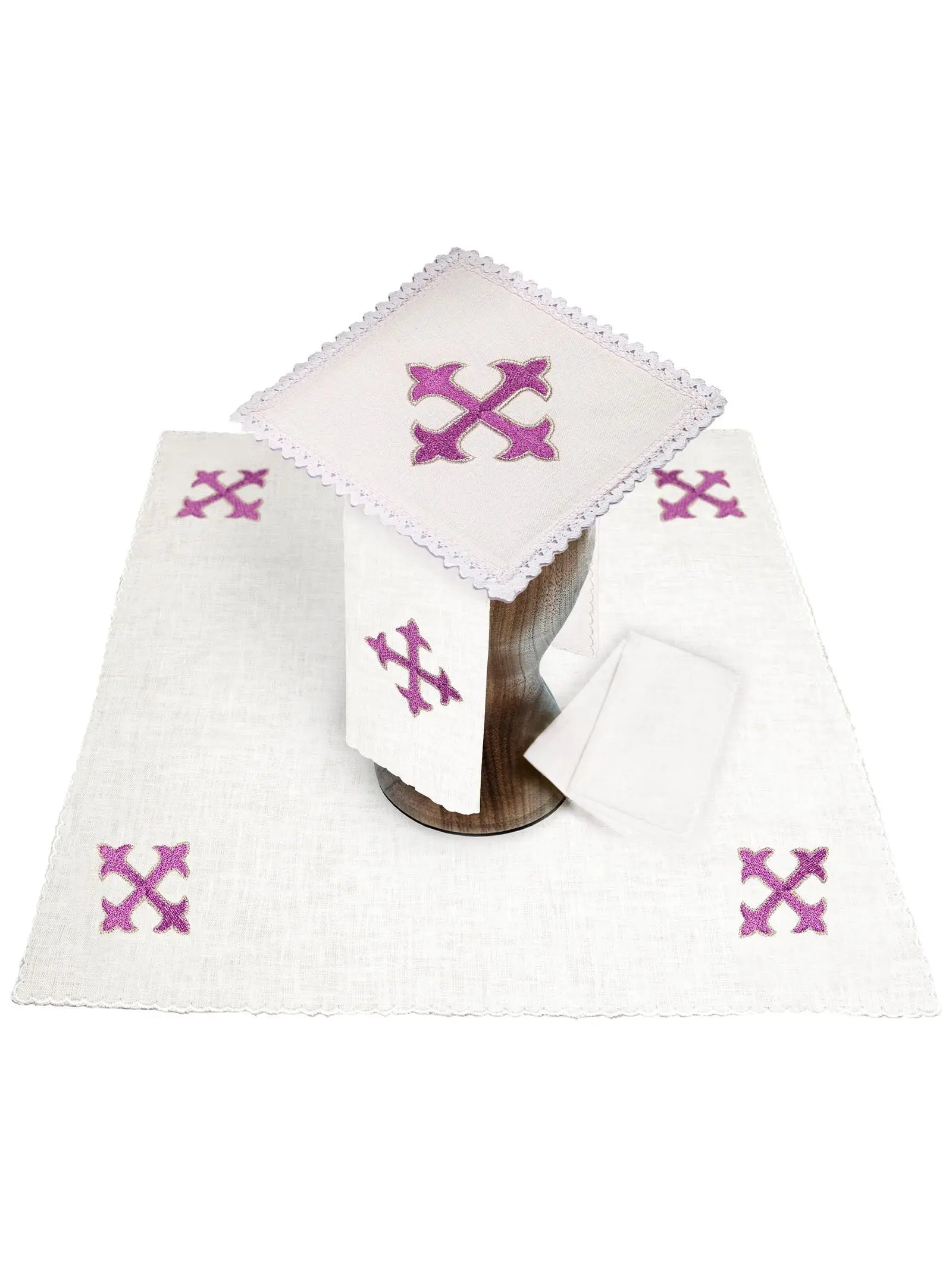
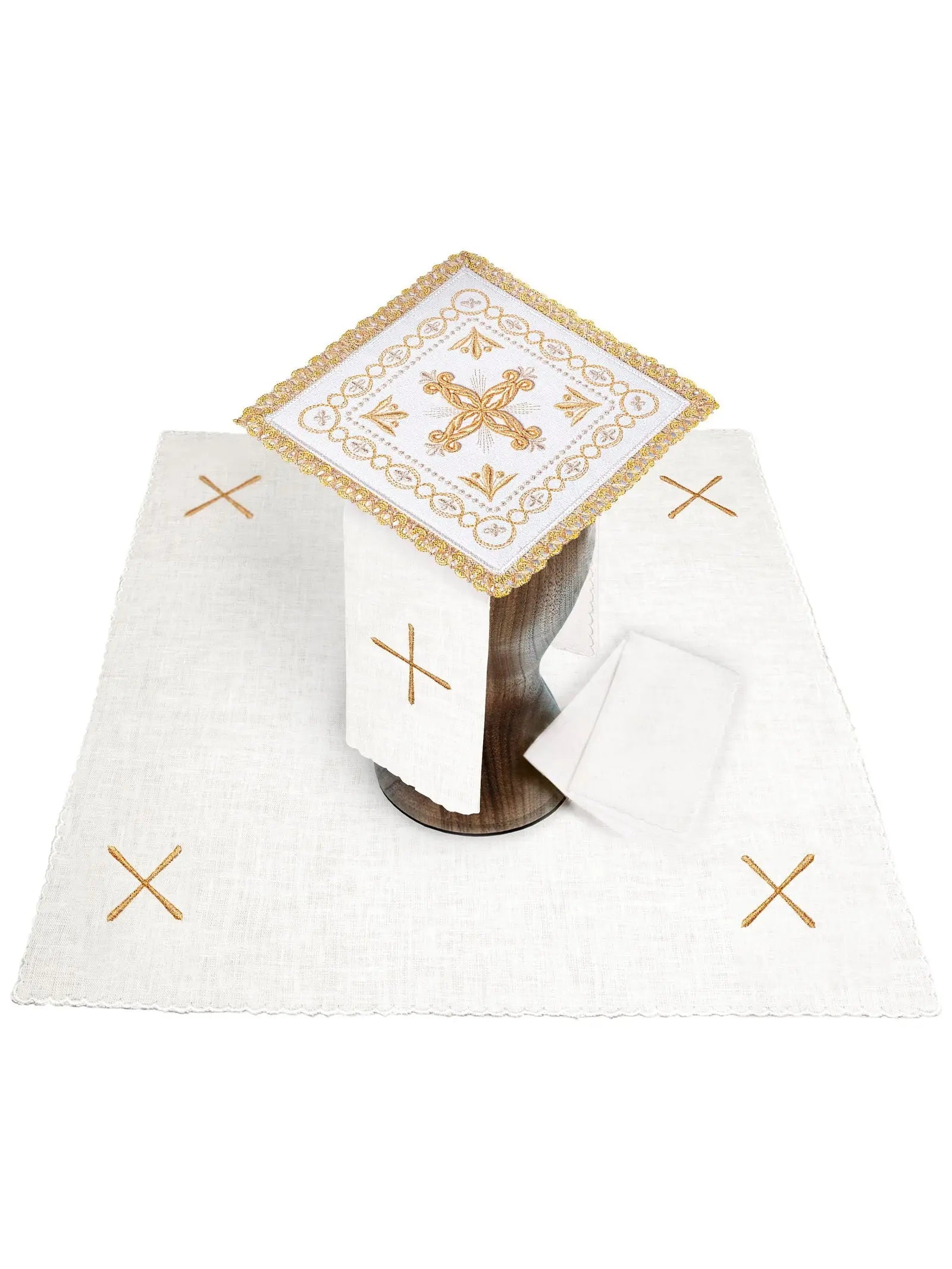
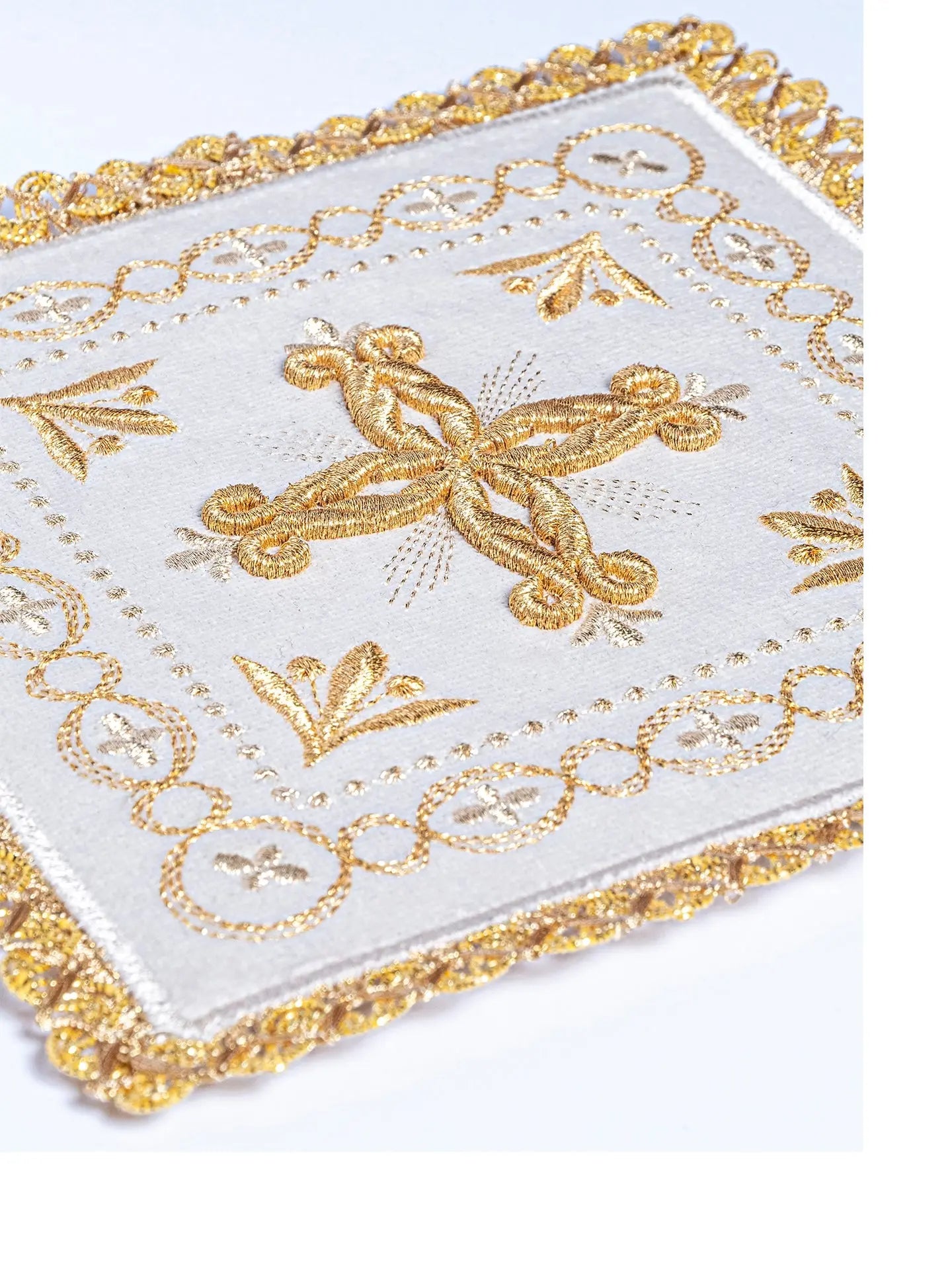
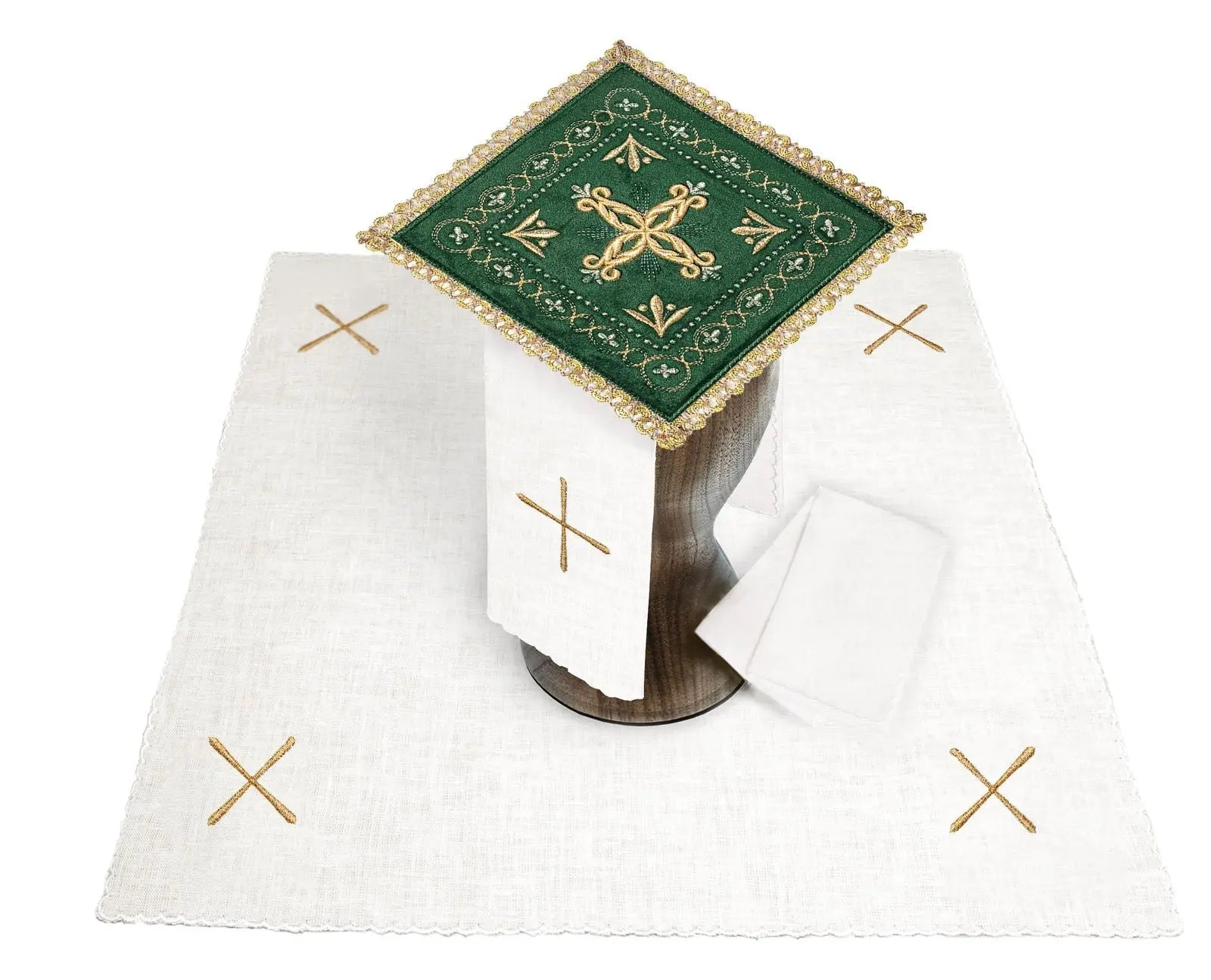
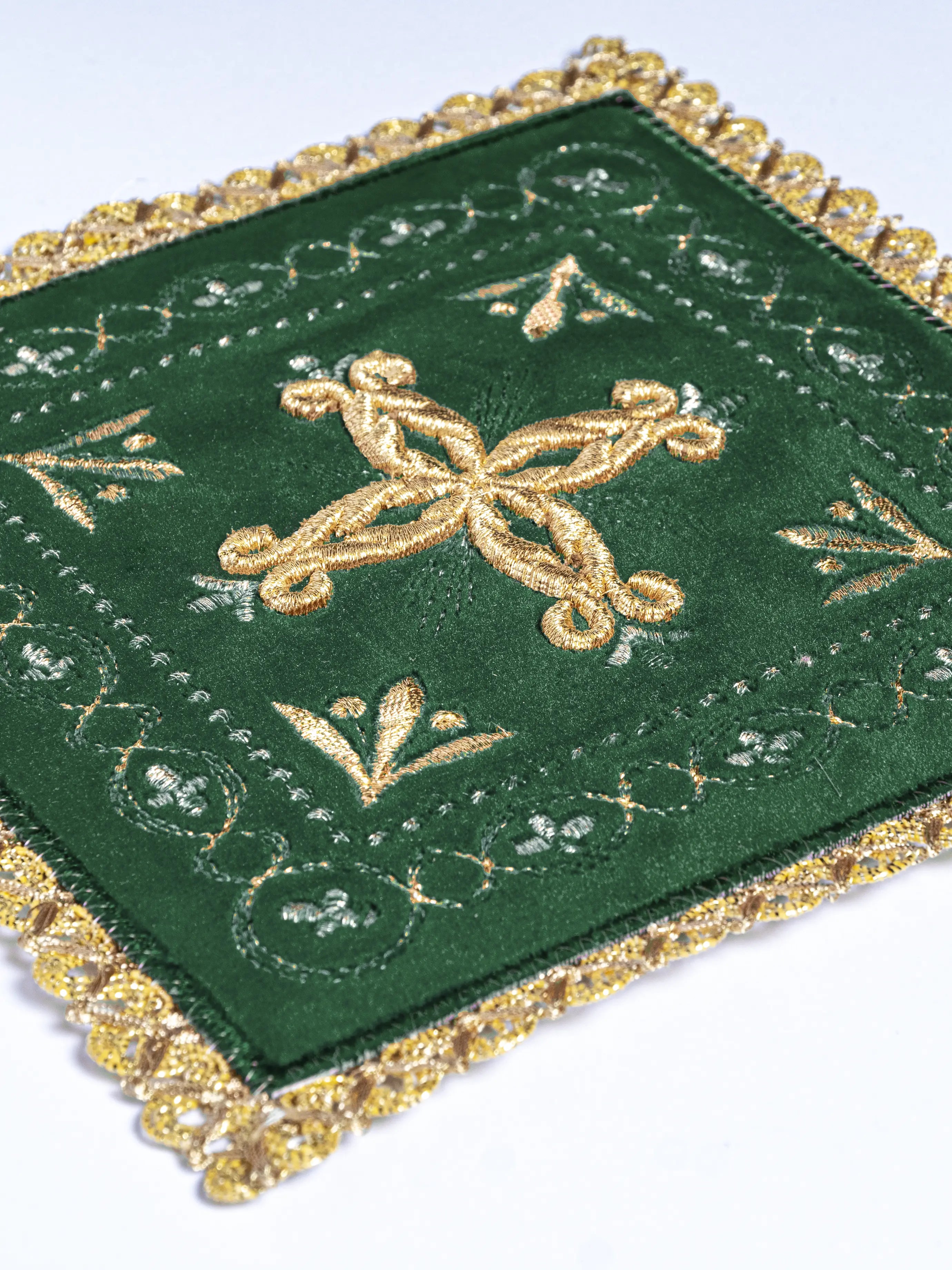
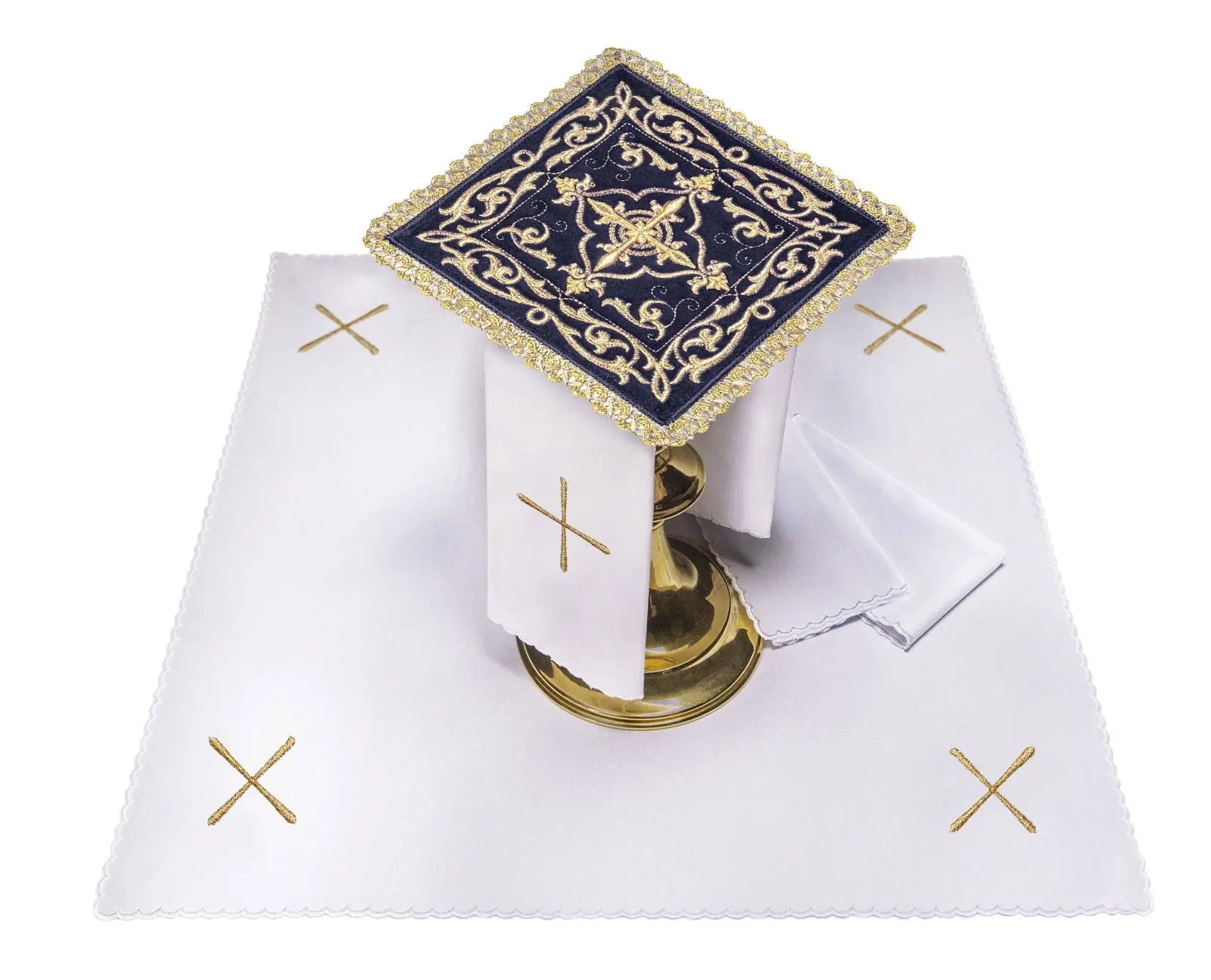
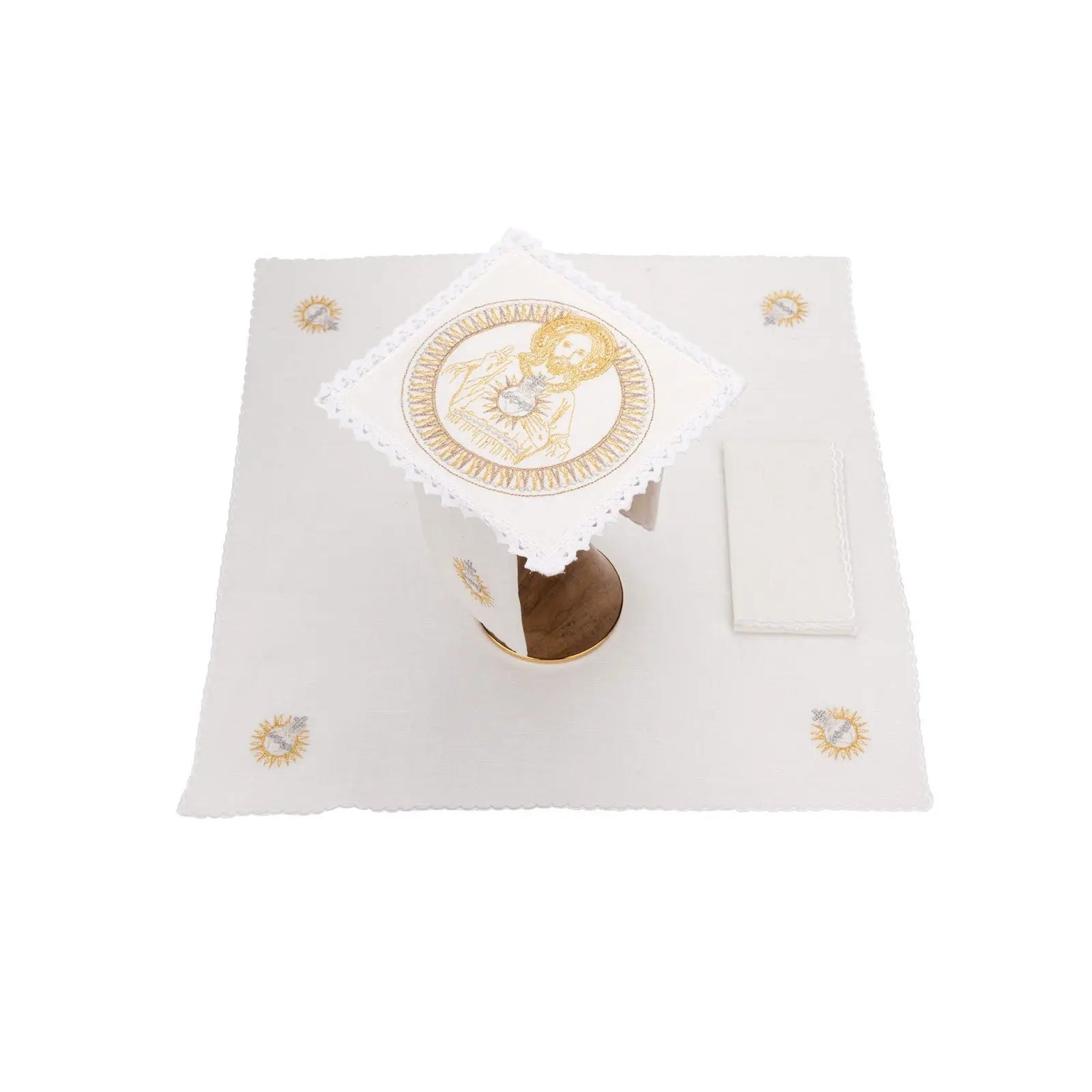
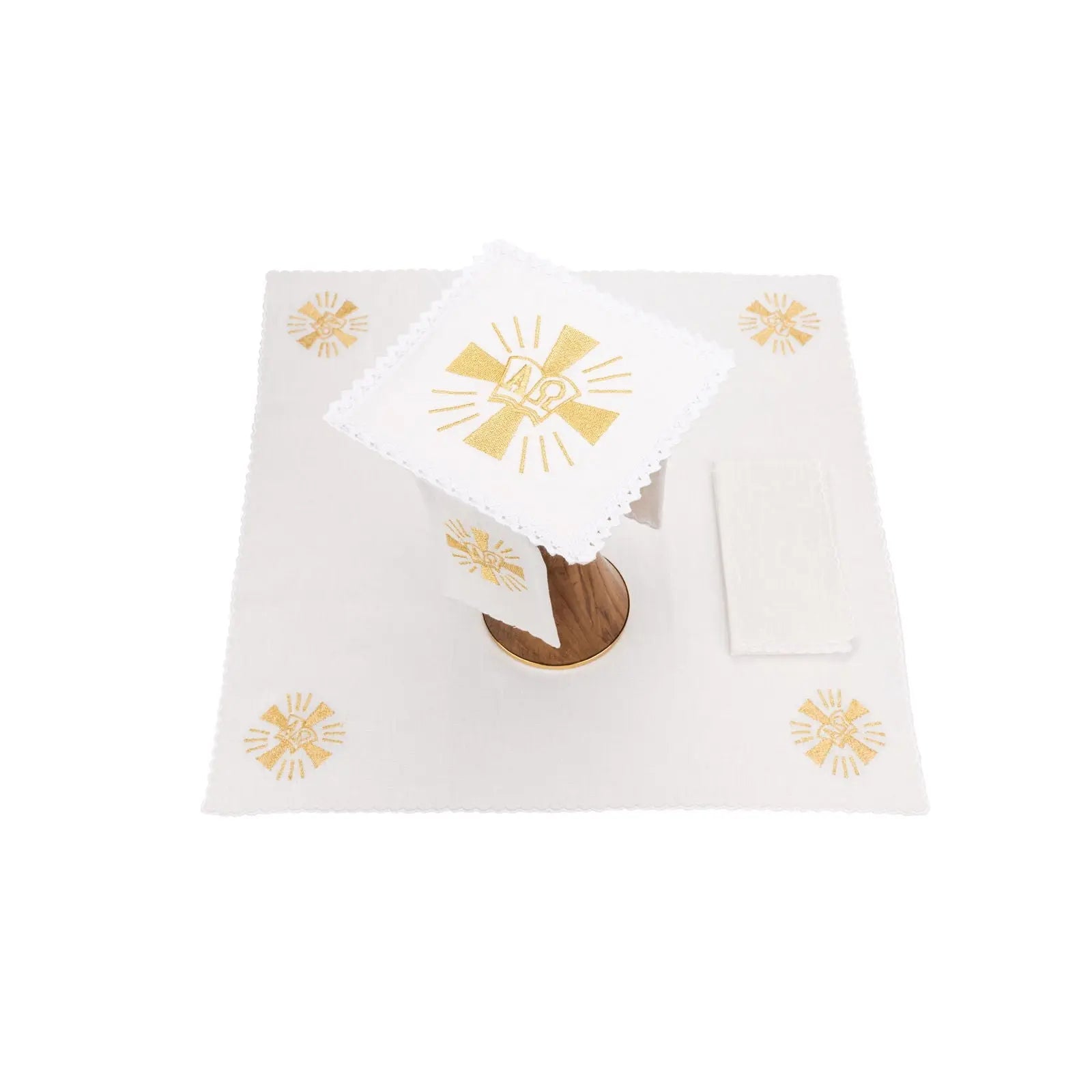
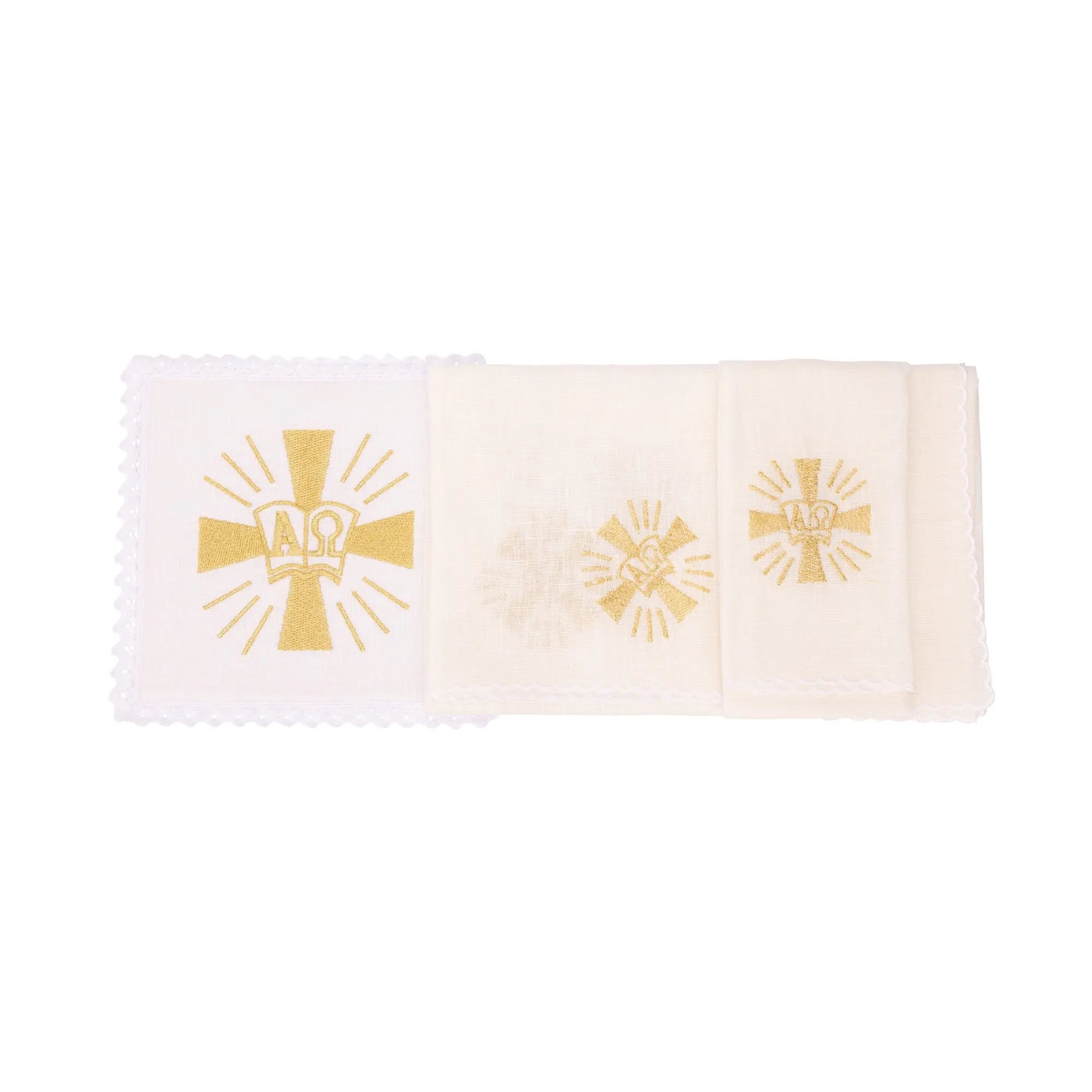
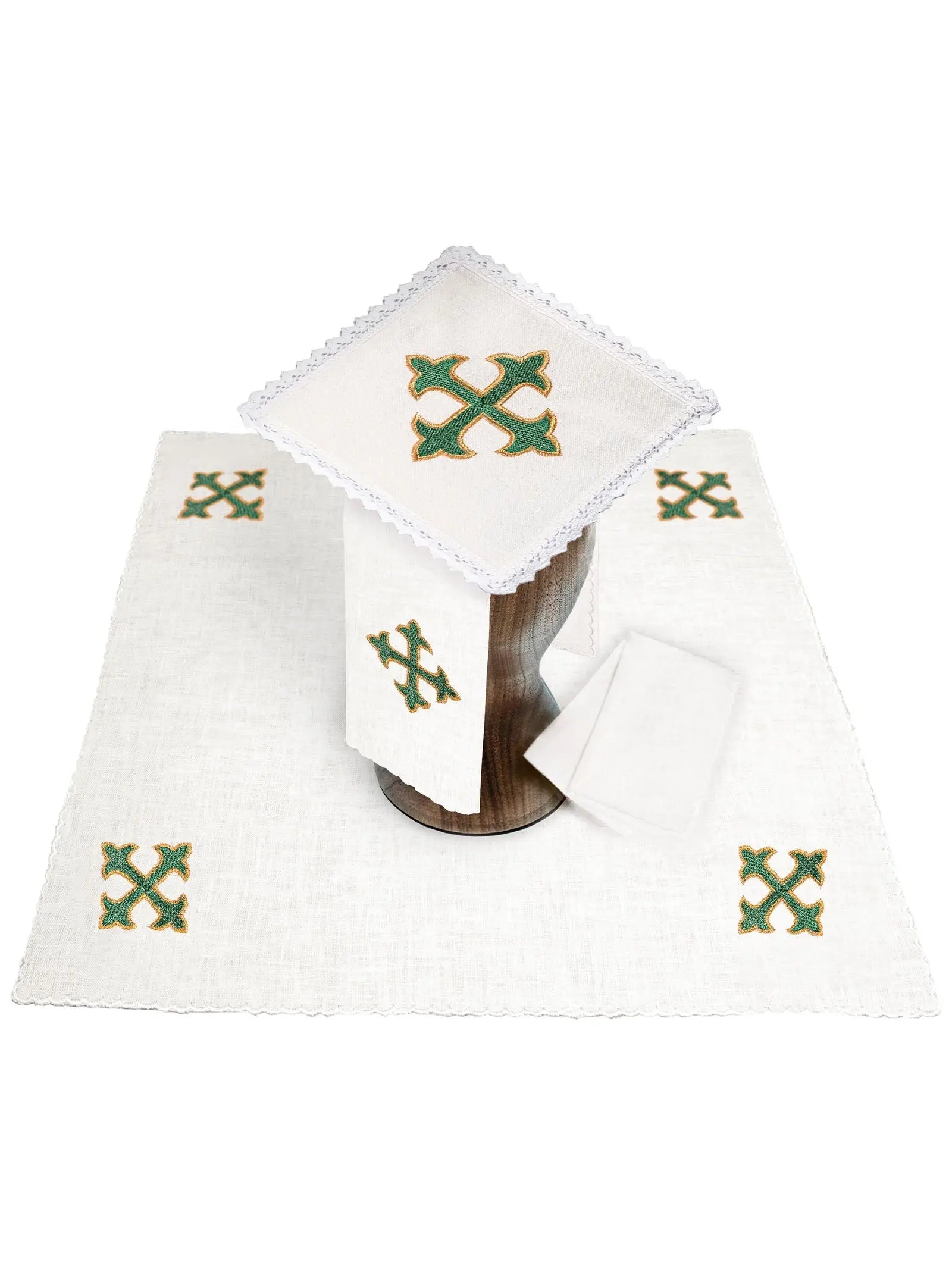
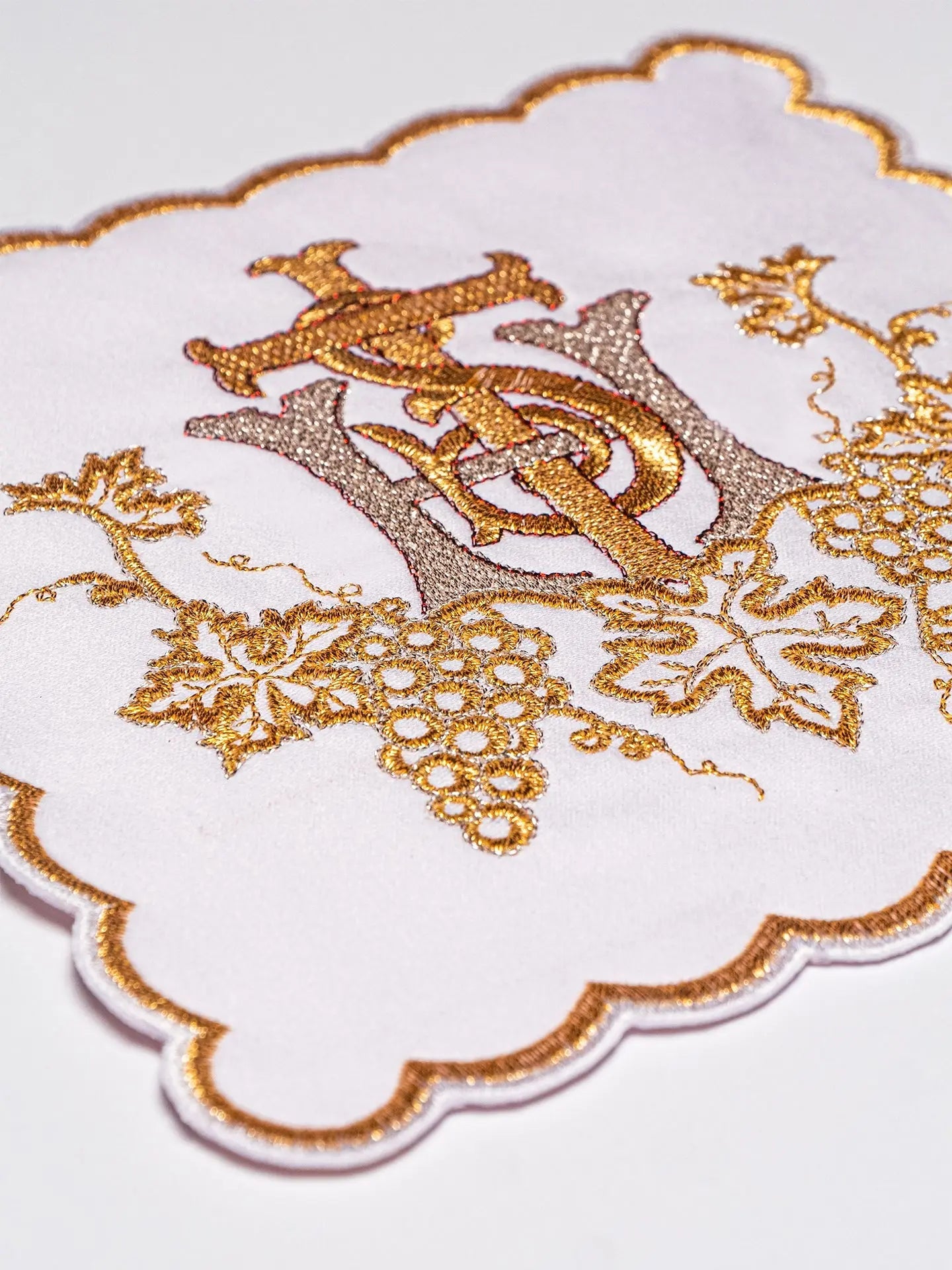
This collection focuses on textiles that are used directly in the preparation of the altar and the chalice. A sacristy usually needs several sets so that clean linens are always available and so that different celebrations can be prepared without rushing. The most common pieces include the corporal, purificator, pall, chalice veil, and burse or coordinated case, depending on the set. Where the collection includes chalice sets, the pieces are designed to work together visually and practically, giving the celebrant and sacristan a coherent arrangement for the Liturgy of the Eucharist.
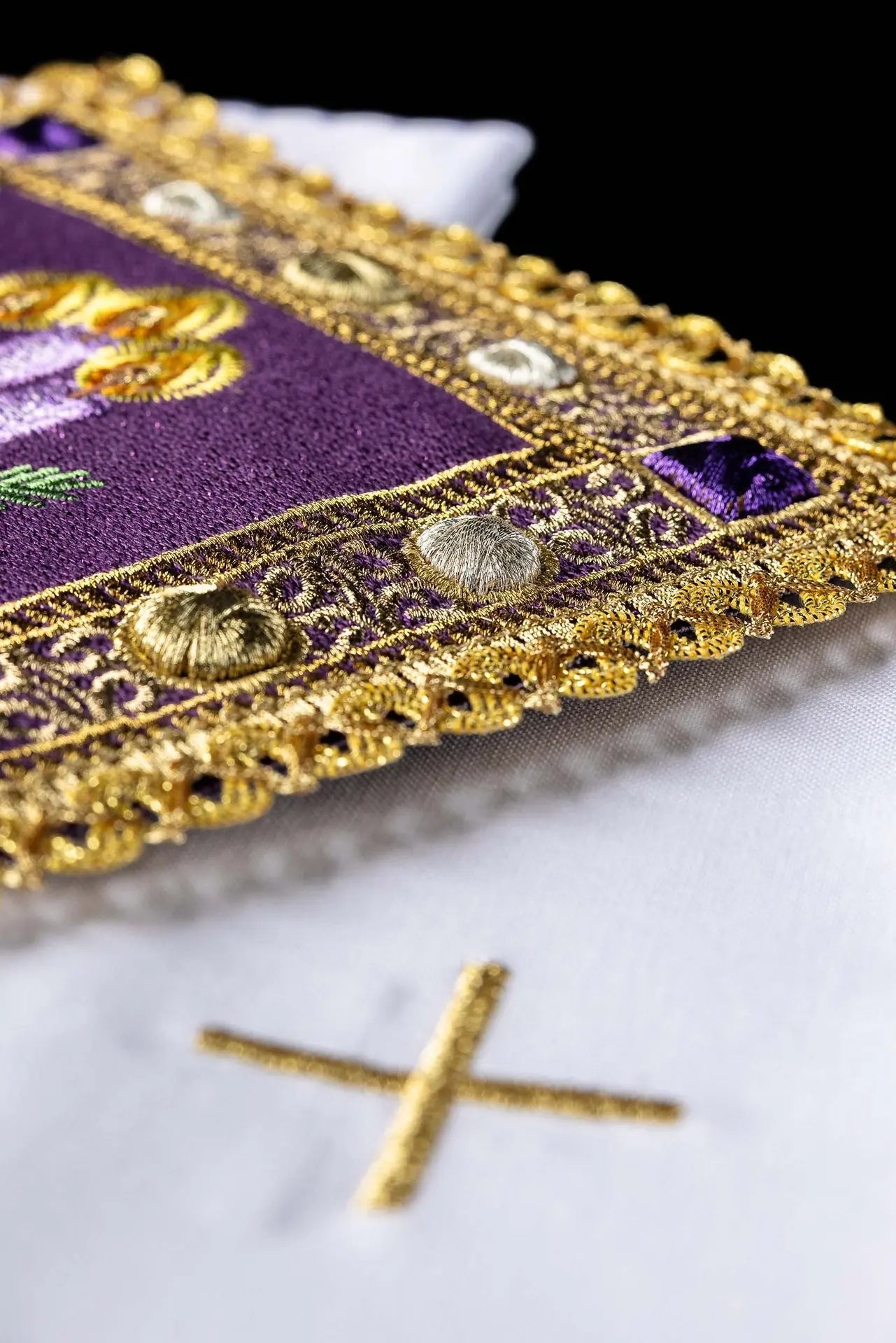
For a traditional setup, the corporal is placed on the altar where the chalice and paten rest during the Eucharistic Prayer. The purificator is kept with the chalice and used during the purification of the sacred vessels. The pall covers the chalice when appropriate, helping protect the contents during the celebration. Chalice veils and burses are not the same as altar cloths, but they often belong to the same sanctuary arrangement because they complete the visual presentation of the prepared chalice. Separate designs can be browsed in chalice veils when a parish needs veils without replacing the rest of the linen set.
Liturgical use and reverence
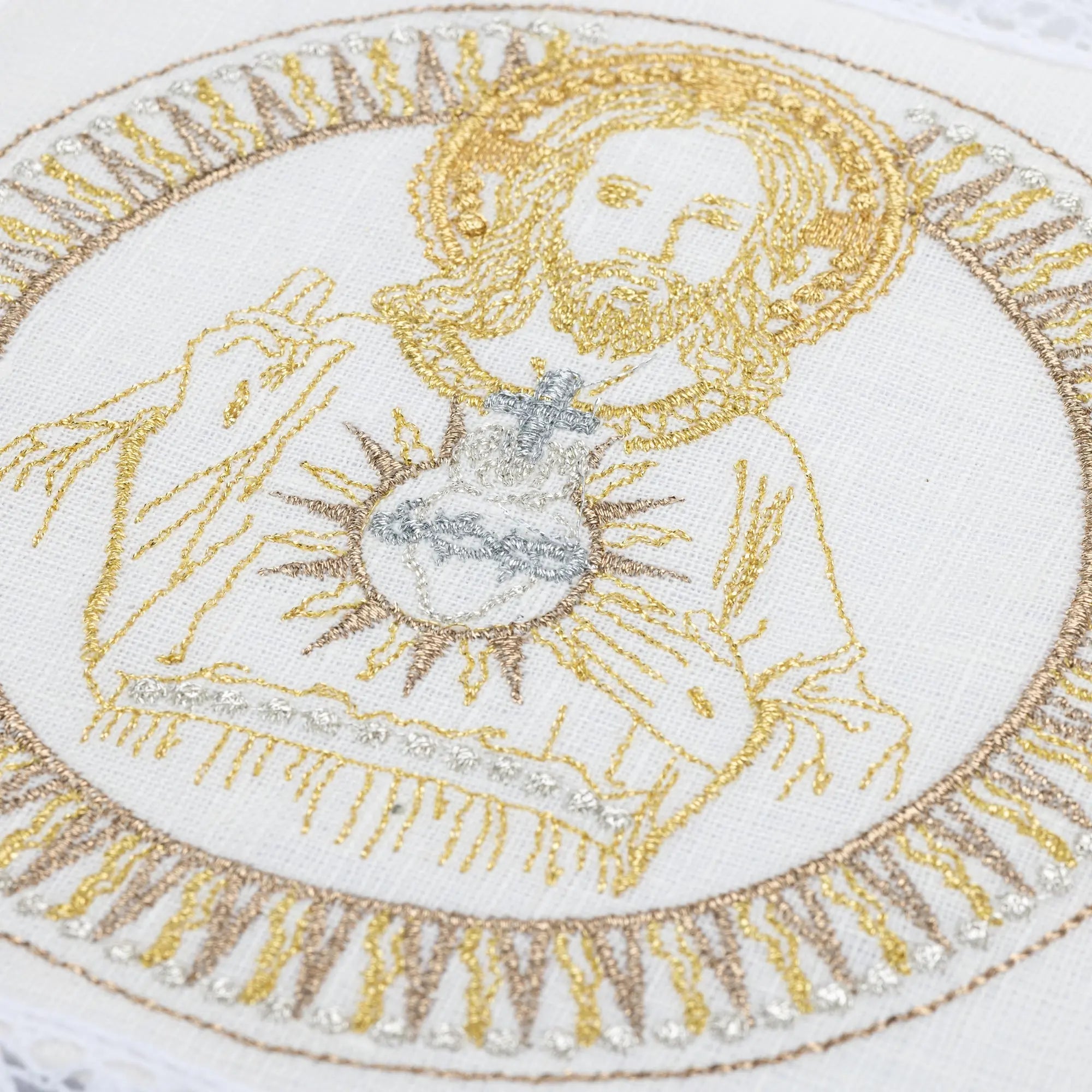
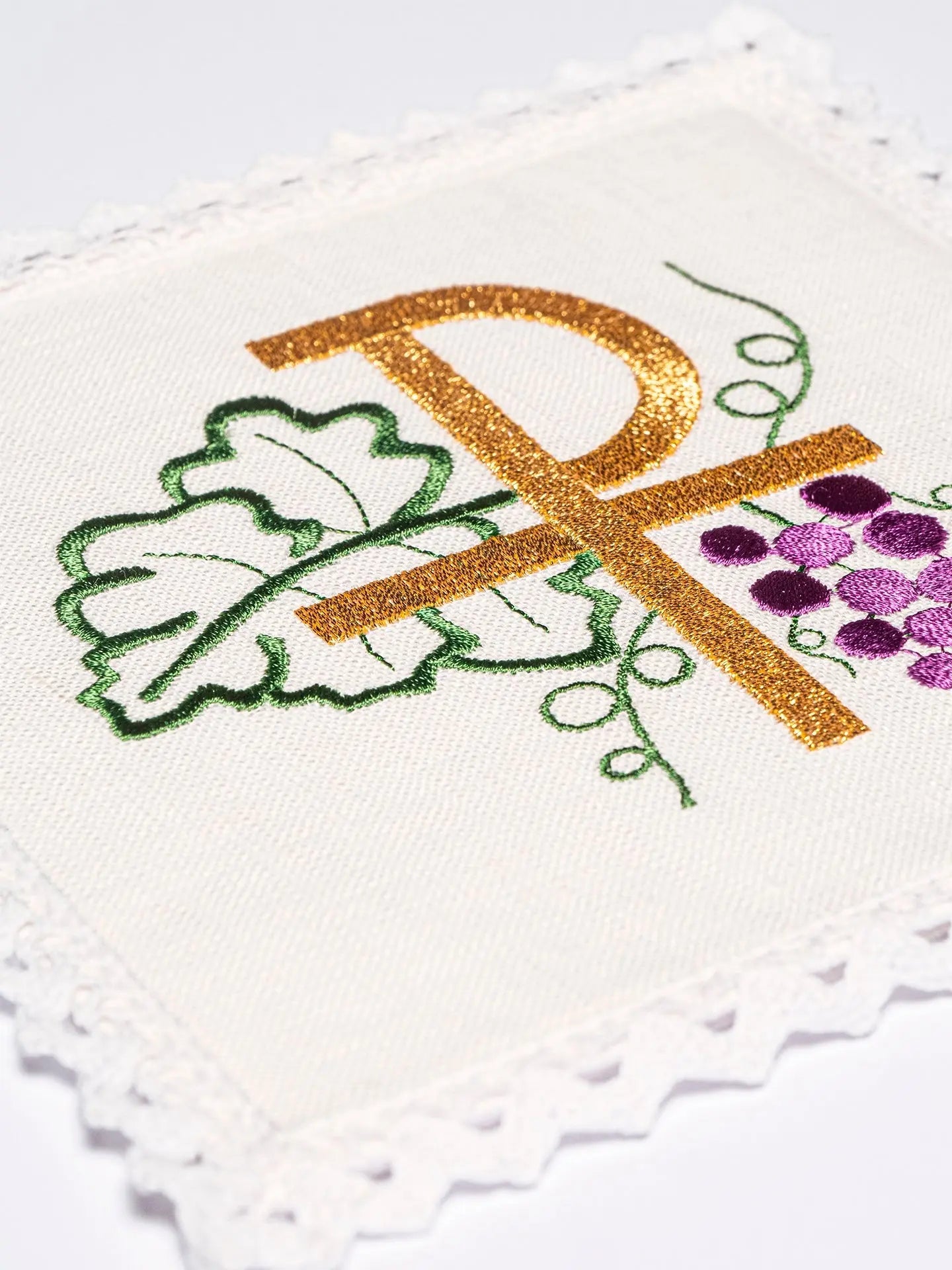
Altar linens are not decorative textiles only. Their shape, placement, and care are connected with the celebration of the Mass and the handling of sacred vessels. A well-prepared set helps the altar remain orderly and gives the liturgy a calm visual structure. Plain white linen or cotton pieces are often chosen for regular parish use, while embroidered or lace-trimmed pieces may be selected for major solemnities, patronal feasts, Marian celebrations, Corpus Christi, first communions, ordinations, and other important occasions.
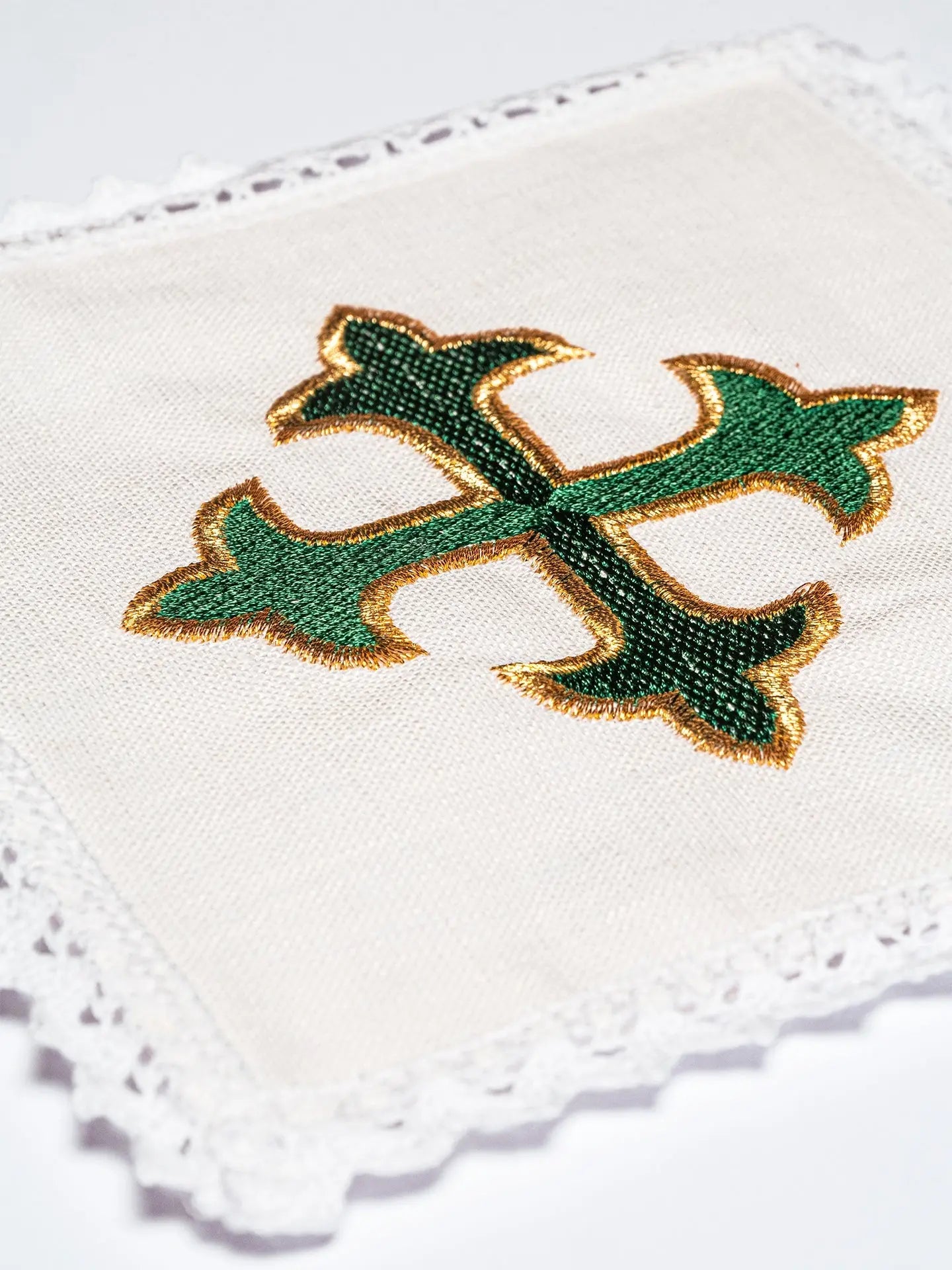
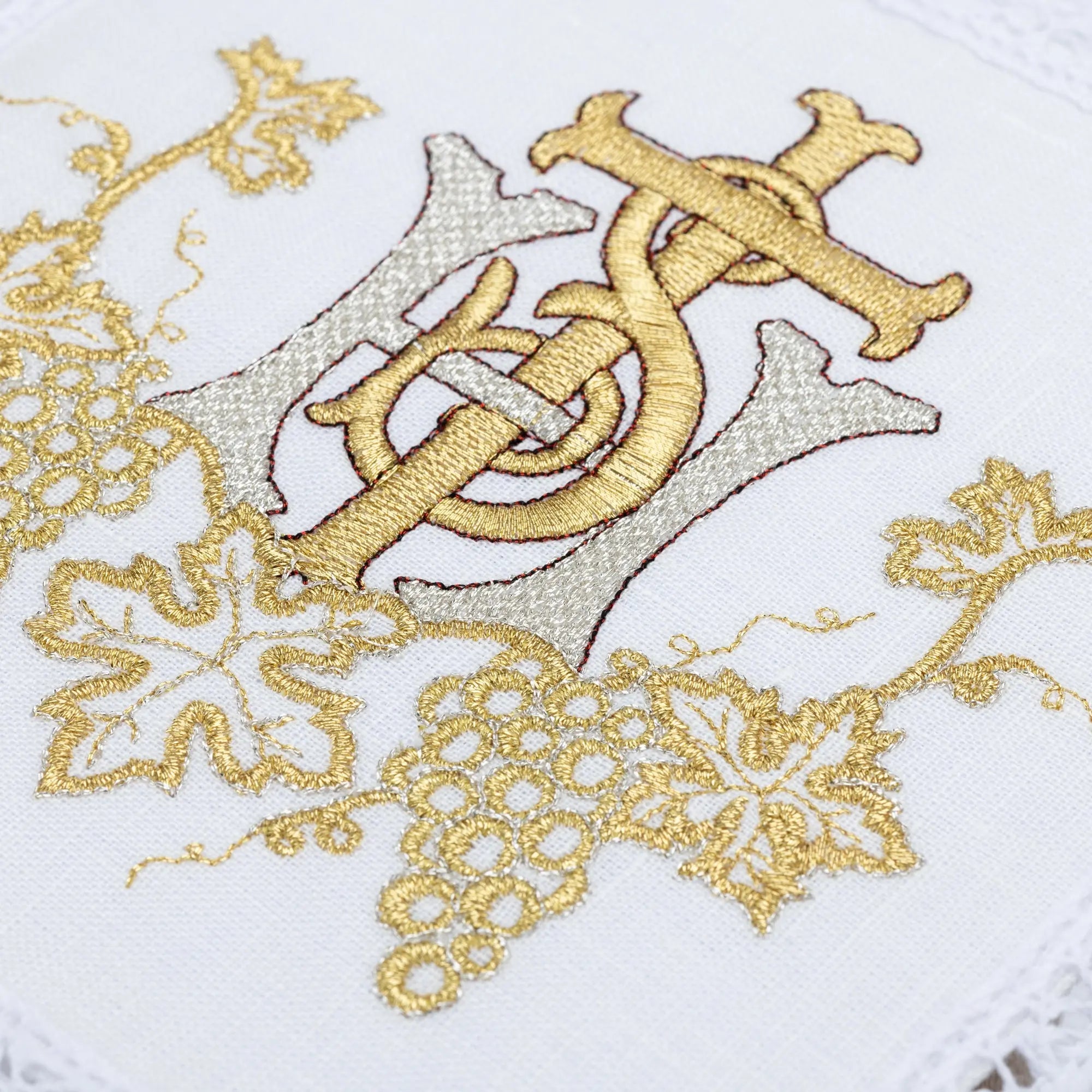
The altar cloth itself is closely associated with the dignity of the altar, while smaller linens are connected with the chalice and paten. Because these textiles are used near the Eucharist, it is important to choose items that are suitable for liturgical use rather than ordinary household cloths. The fabric should be clean, stable, properly finished, and easy to fold and store in the sacristy. Embroidery should support the sacred character of the celebration without making the linen difficult to use or care for.
How to choose altar linens for a parish or chapel
When choosing altar linens, begin with the size and style of the altar, then consider how often Mass is celebrated and how many complete sets the sacristy needs. A parish with daily Mass will usually require several corporals, purificators, and palls so that used linens can be washed and prepared correctly. A chapel or smaller community may need fewer pieces, but should still keep enough linens for ordinary services and special liturgical days.
-
For frequent use: choose simple, durable linens with clean finishing and easy maintenance.
-
For solemn celebrations: consider embroidered pieces, lace borders, Eucharistic motifs, or coordinated chalice sets.
-
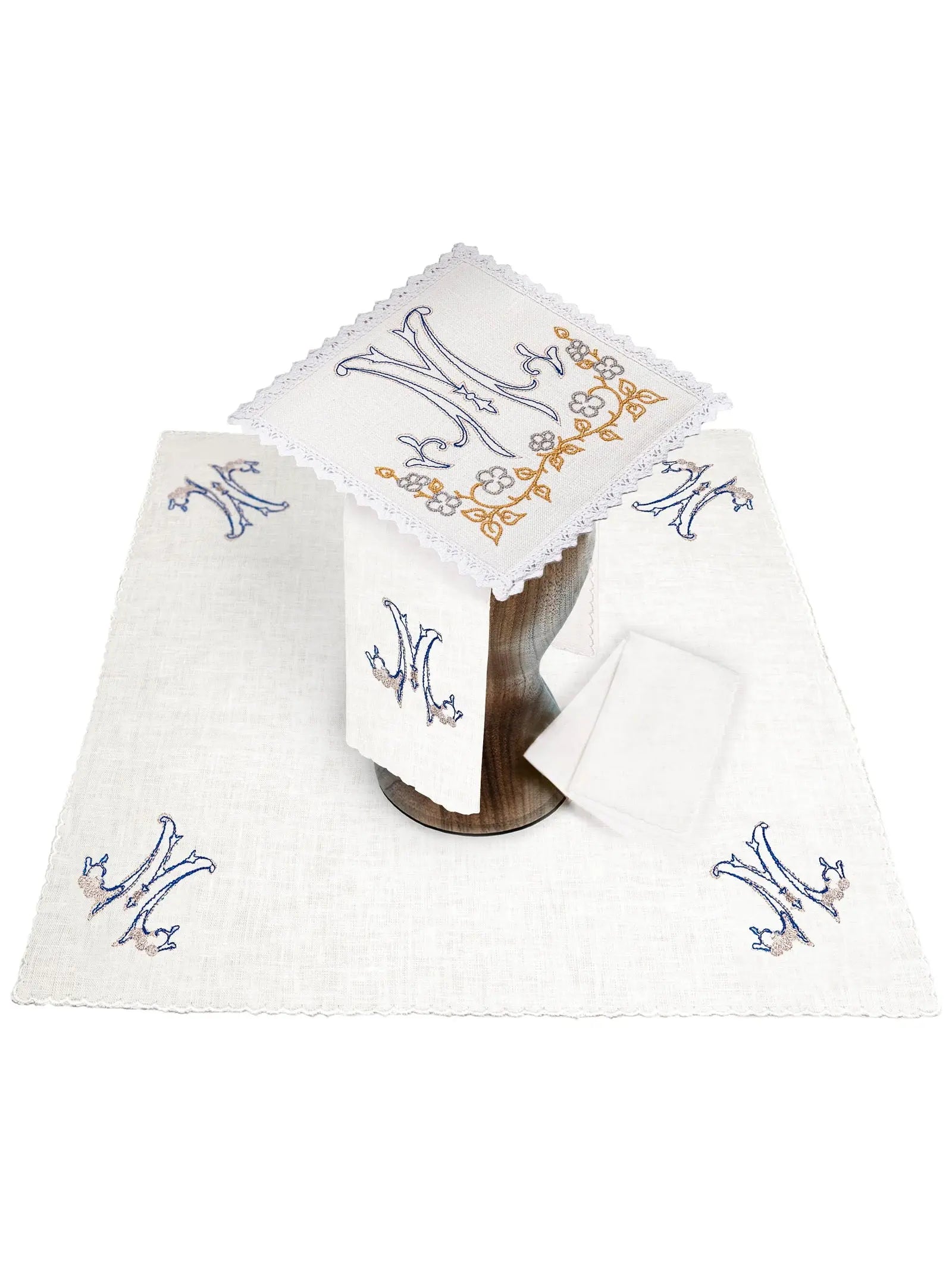
For Marian feasts: select designs with Marian symbols or blue accents where appropriate to the local custom and the wider sanctuary setting.
-
For seasonal coordination: match chalice accessories with the liturgical color used in vestments and other sanctuary textiles.
-
For sacristy organization: keep sets grouped together so the corporal, purificator, pall, veil, and related pieces are easy to prepare before Mass.
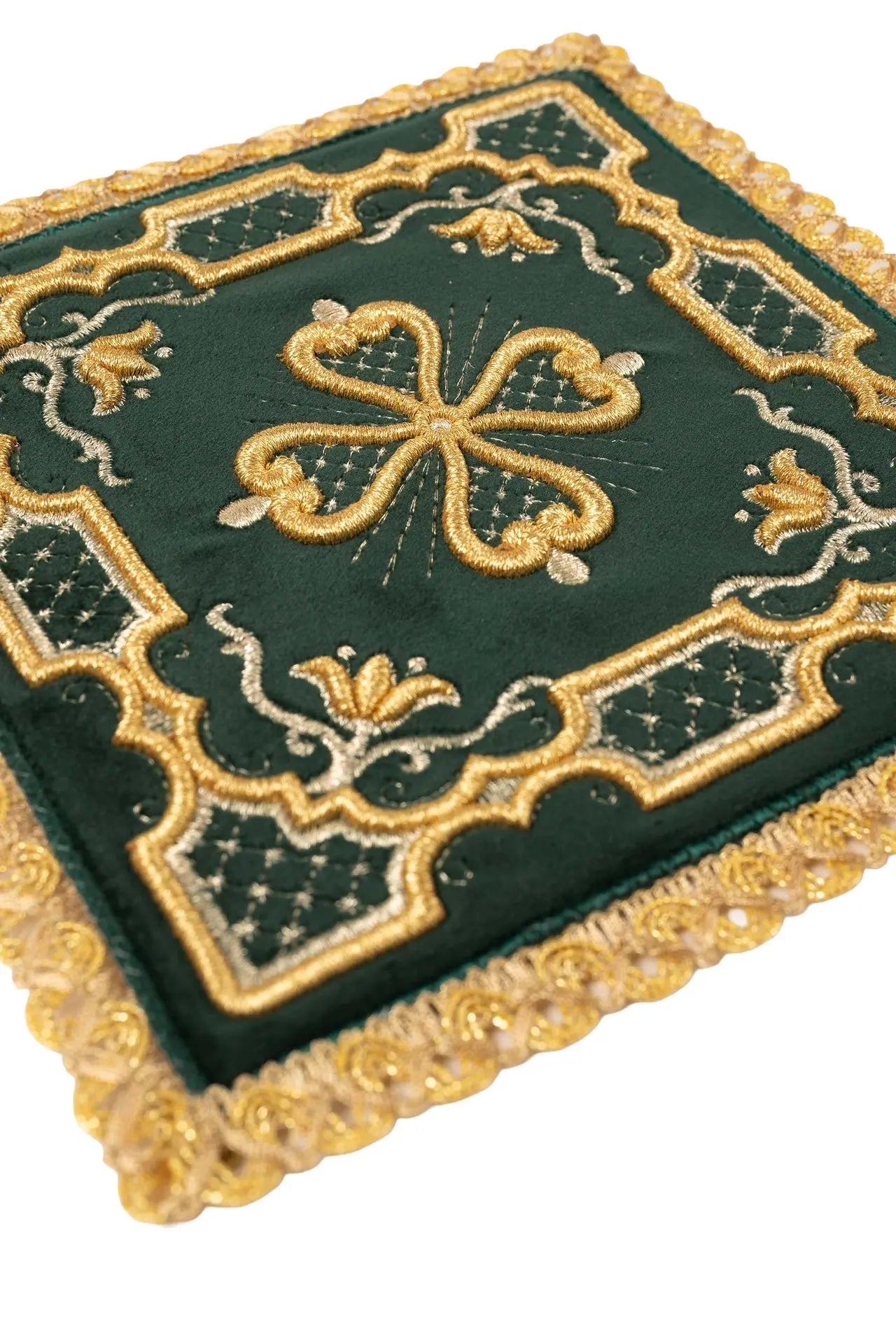
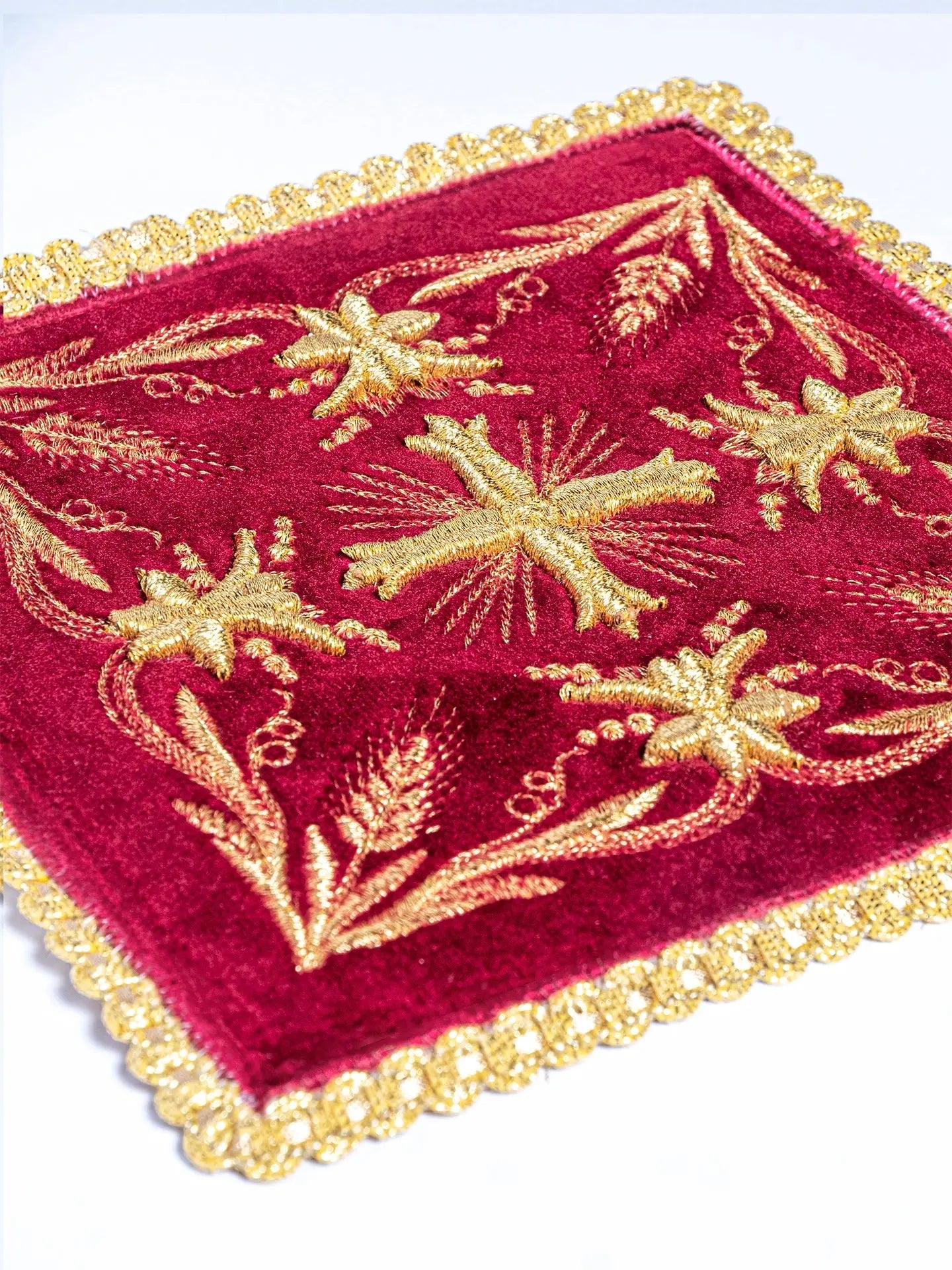
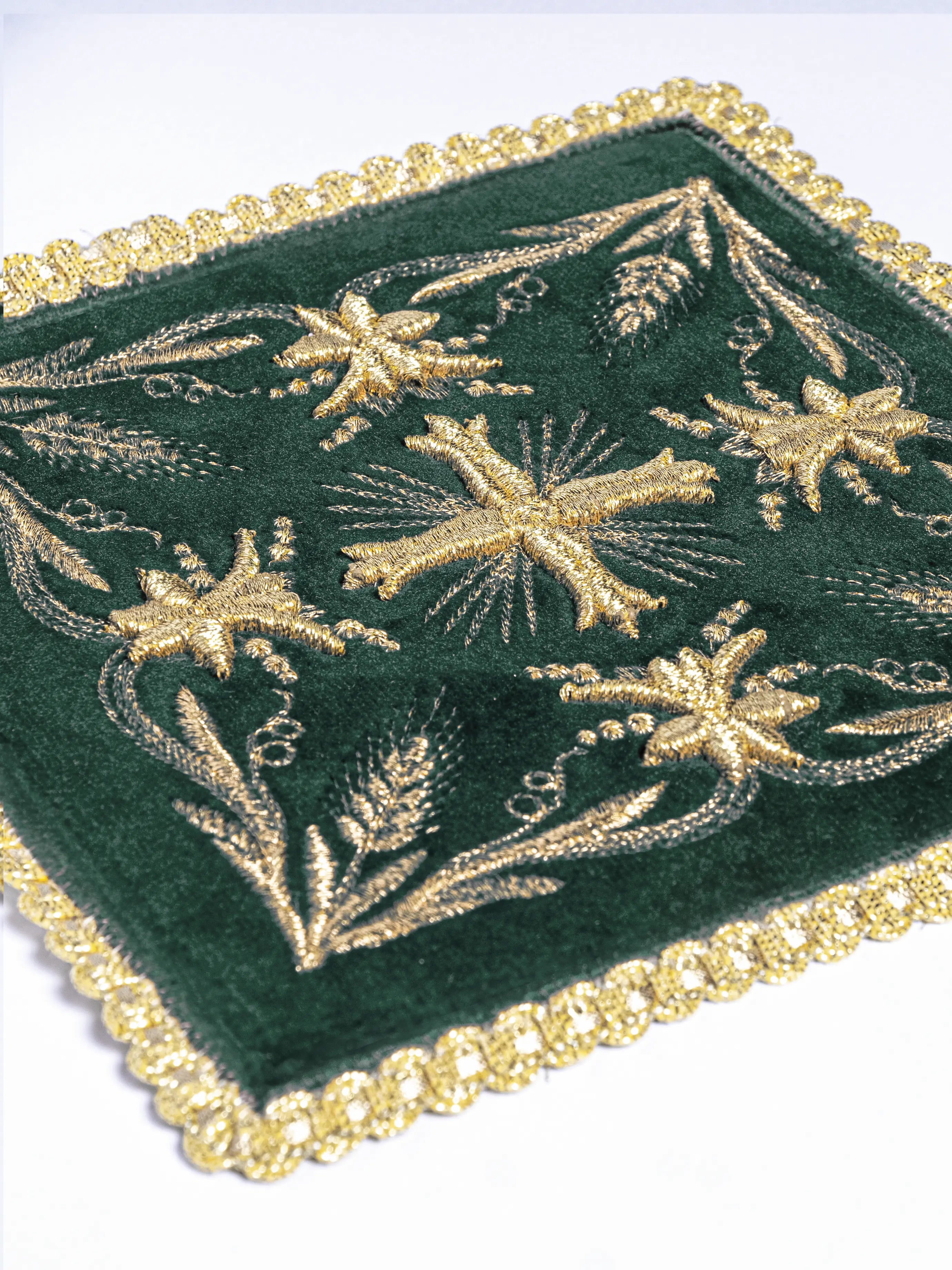
Parishes looking for ready coordinated sets may compare linen chalice sets with cotton chalice sets. Linen is often chosen for its traditional character and crisp appearance, while cotton can be practical for regular use and easier handling. For celebrations where a more decorative texture is desired, velvet chalice linens may suit a richer sanctuary arrangement, especially when paired with solemn vestments and carefully prepared altar textiles.
Matching linens with the liturgical year
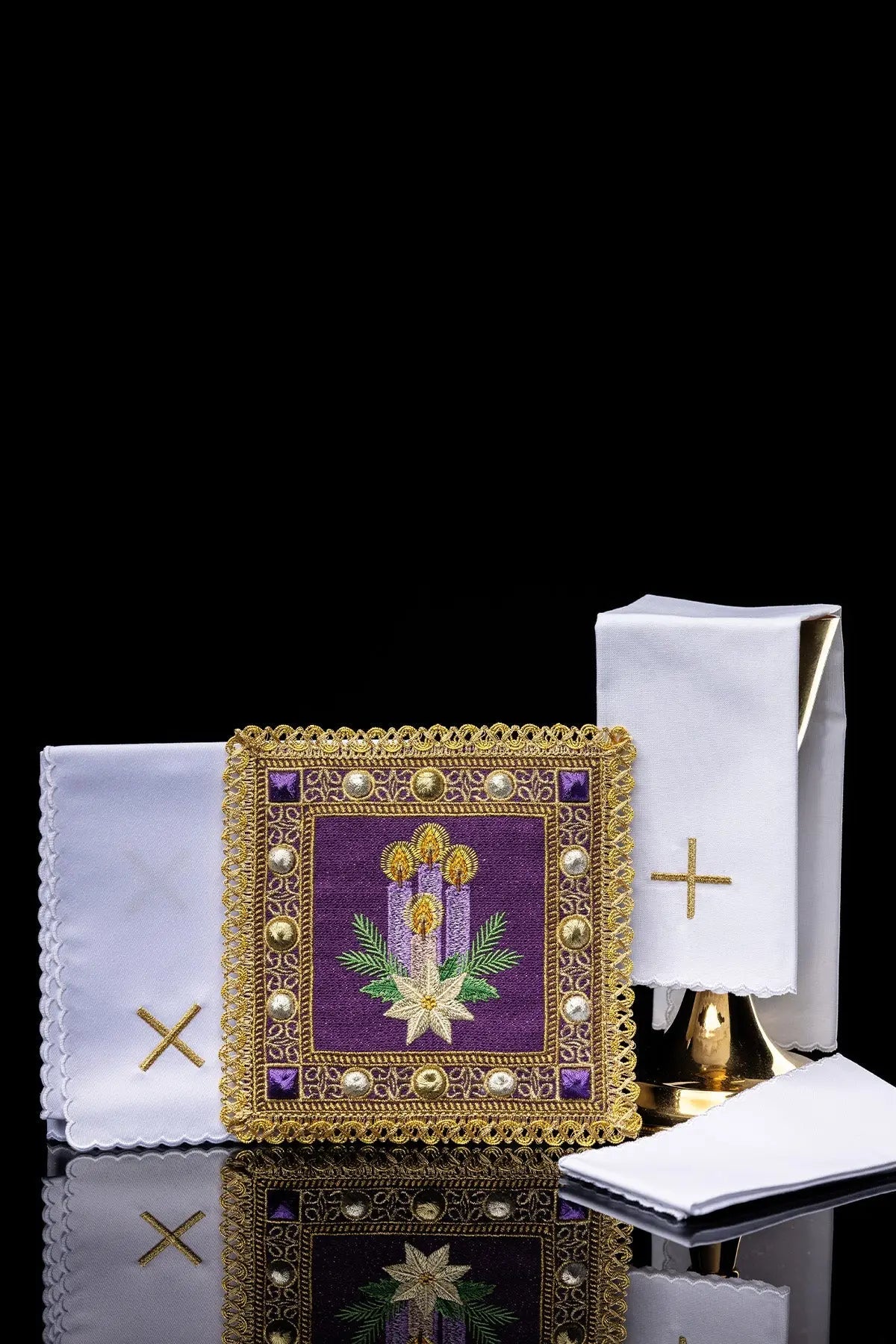
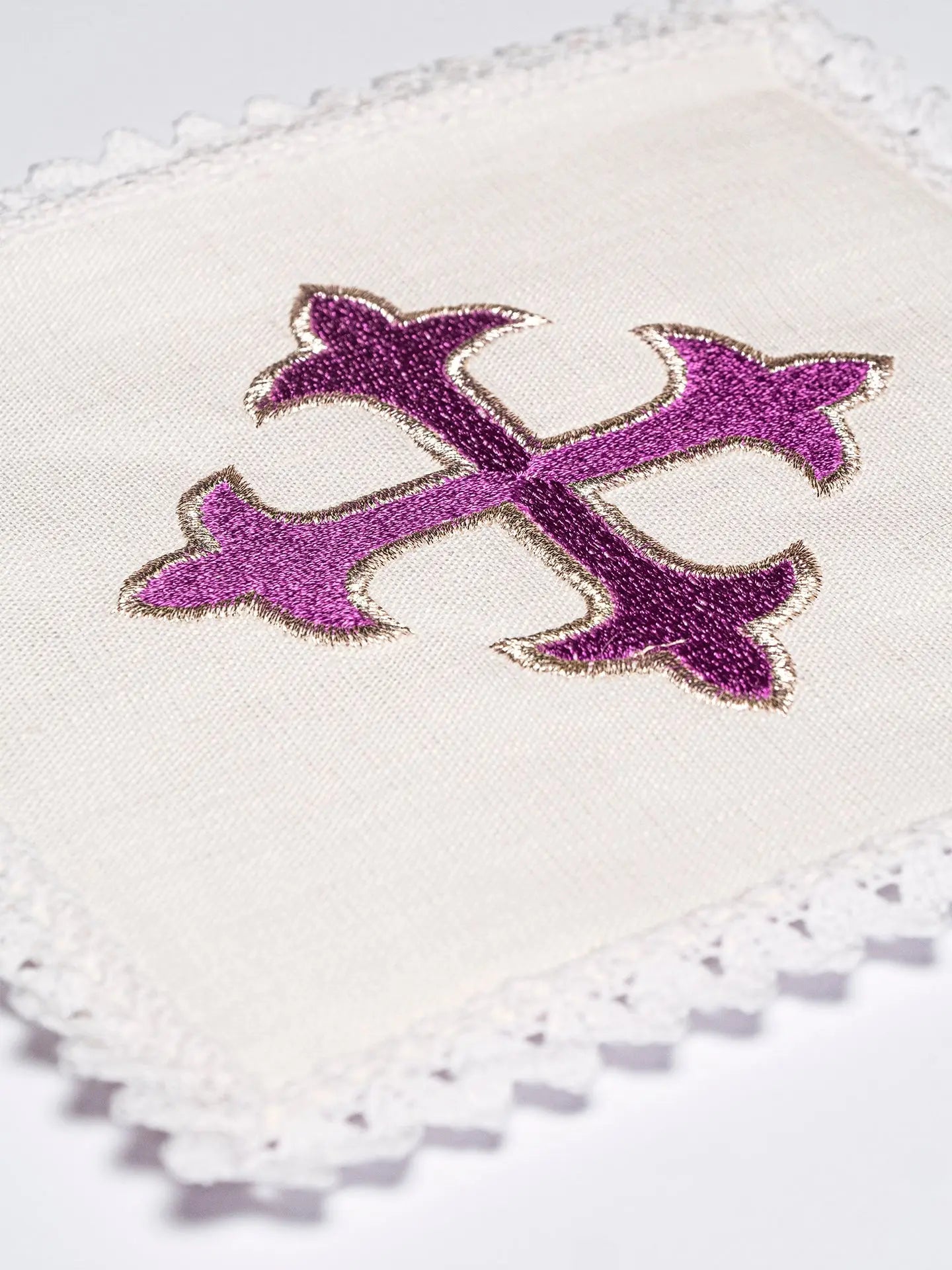
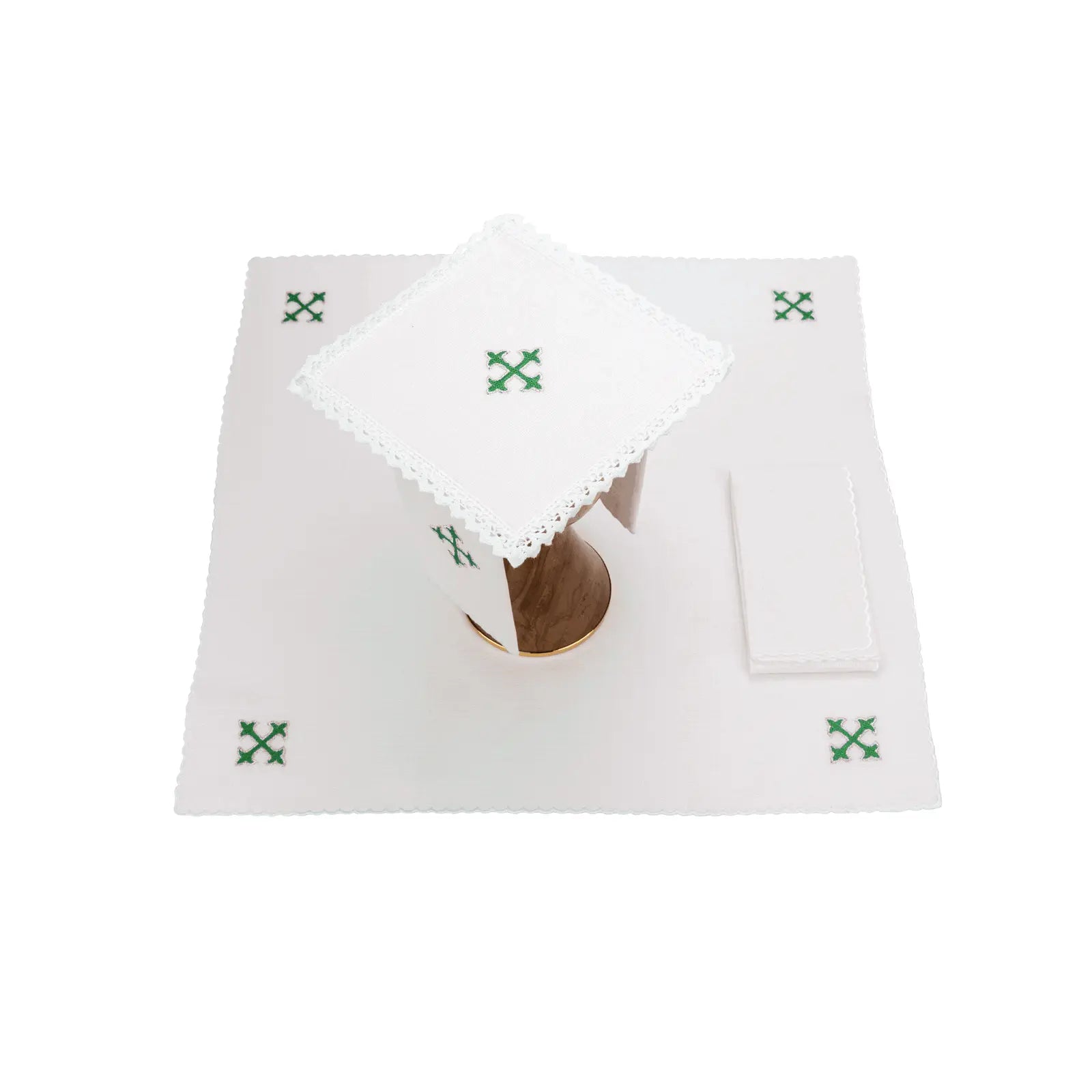
Altar linens are often white or natural in tone, but chalice veils, burses, and coordinated sets may follow the color of the liturgical season. White or ecru is common for feasts of the Lord, Easter, Christmas, Marian celebrations, weddings, and many solemnities. Green is used in Ordinary Time, purple in Advent and Lent, red for celebrations of the Holy Spirit, martyrs, and the Passion, and rose for Gaudete Sunday in Advent and Laetare Sunday in Lent where the parish uses rose vestments and accessories.
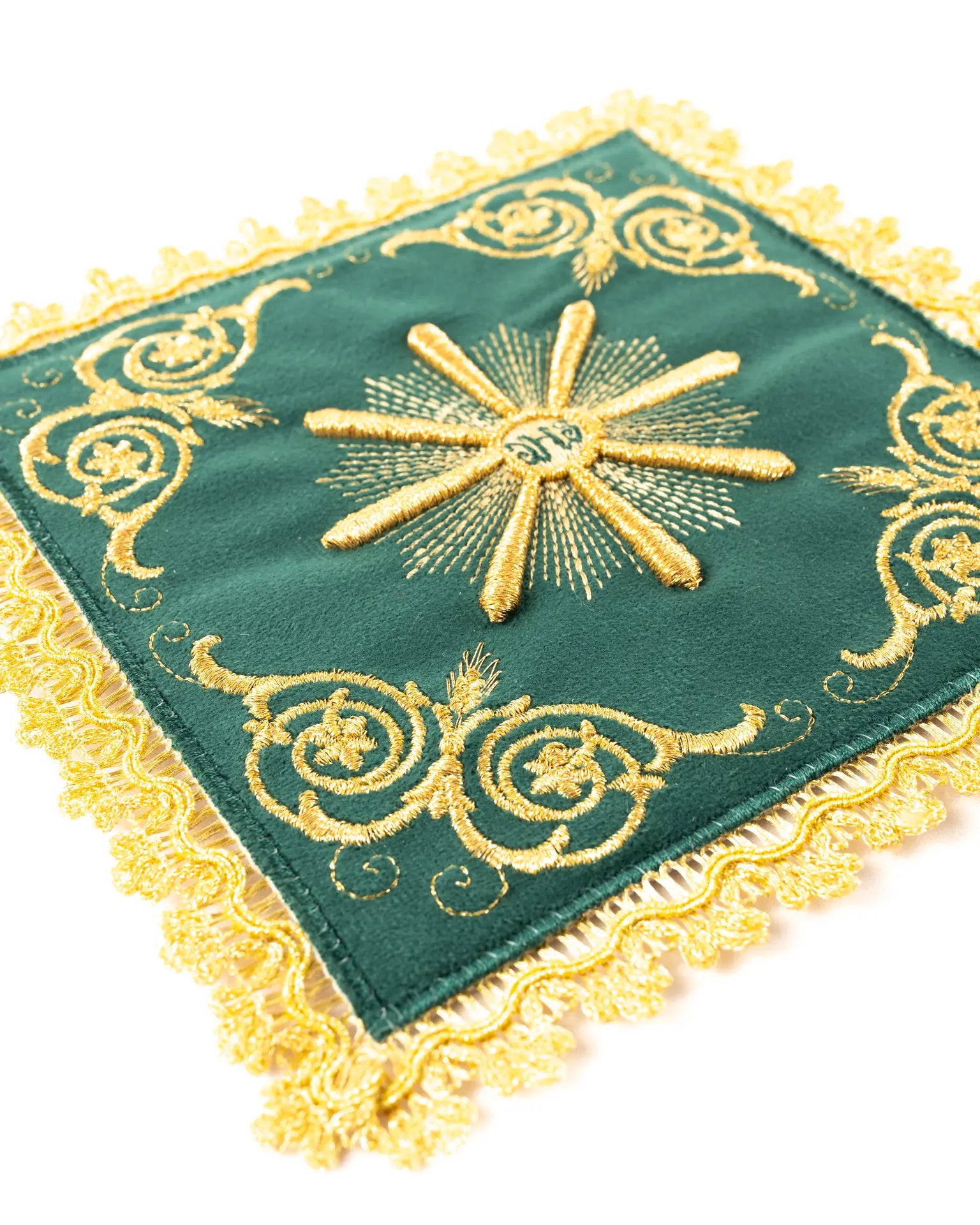
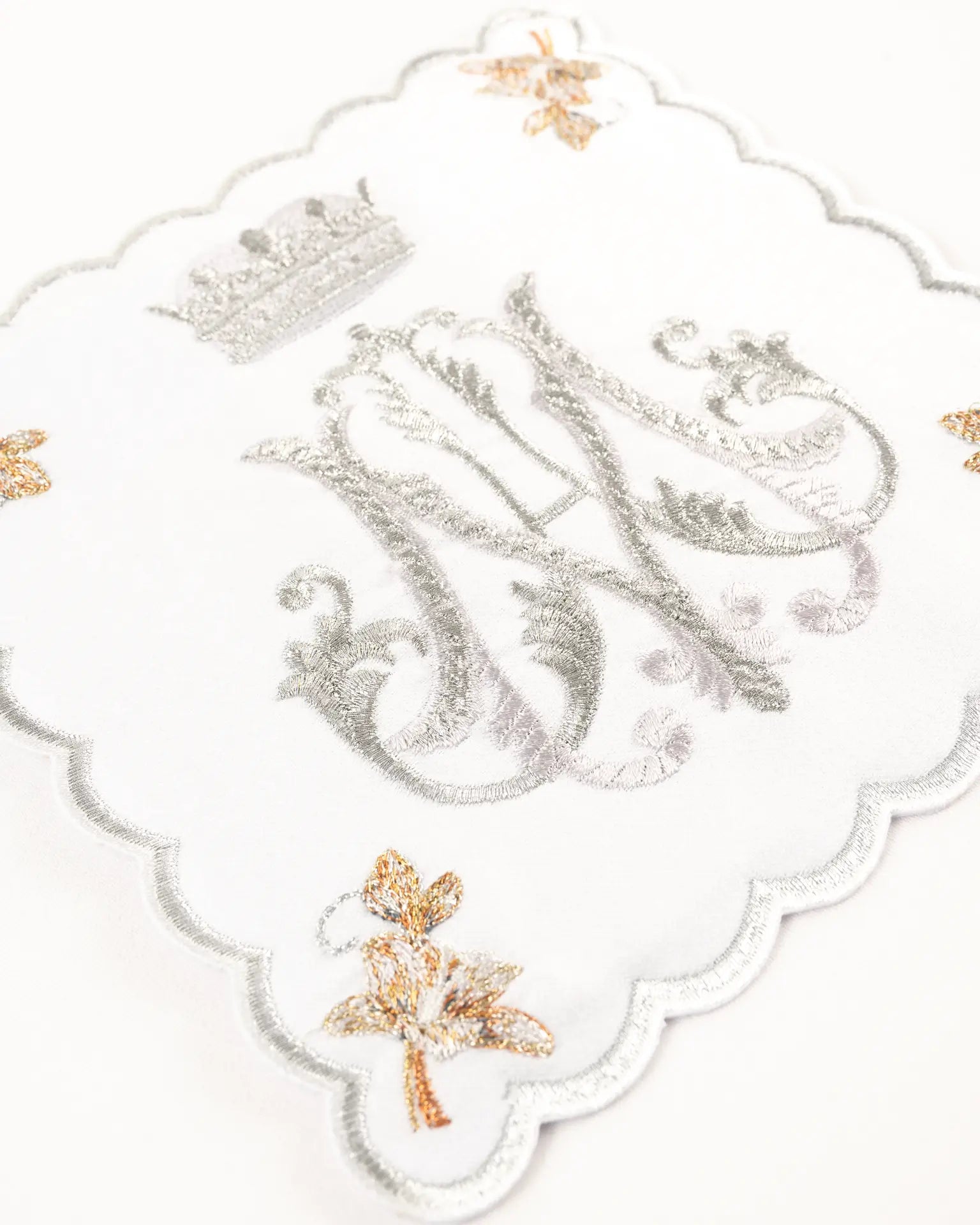
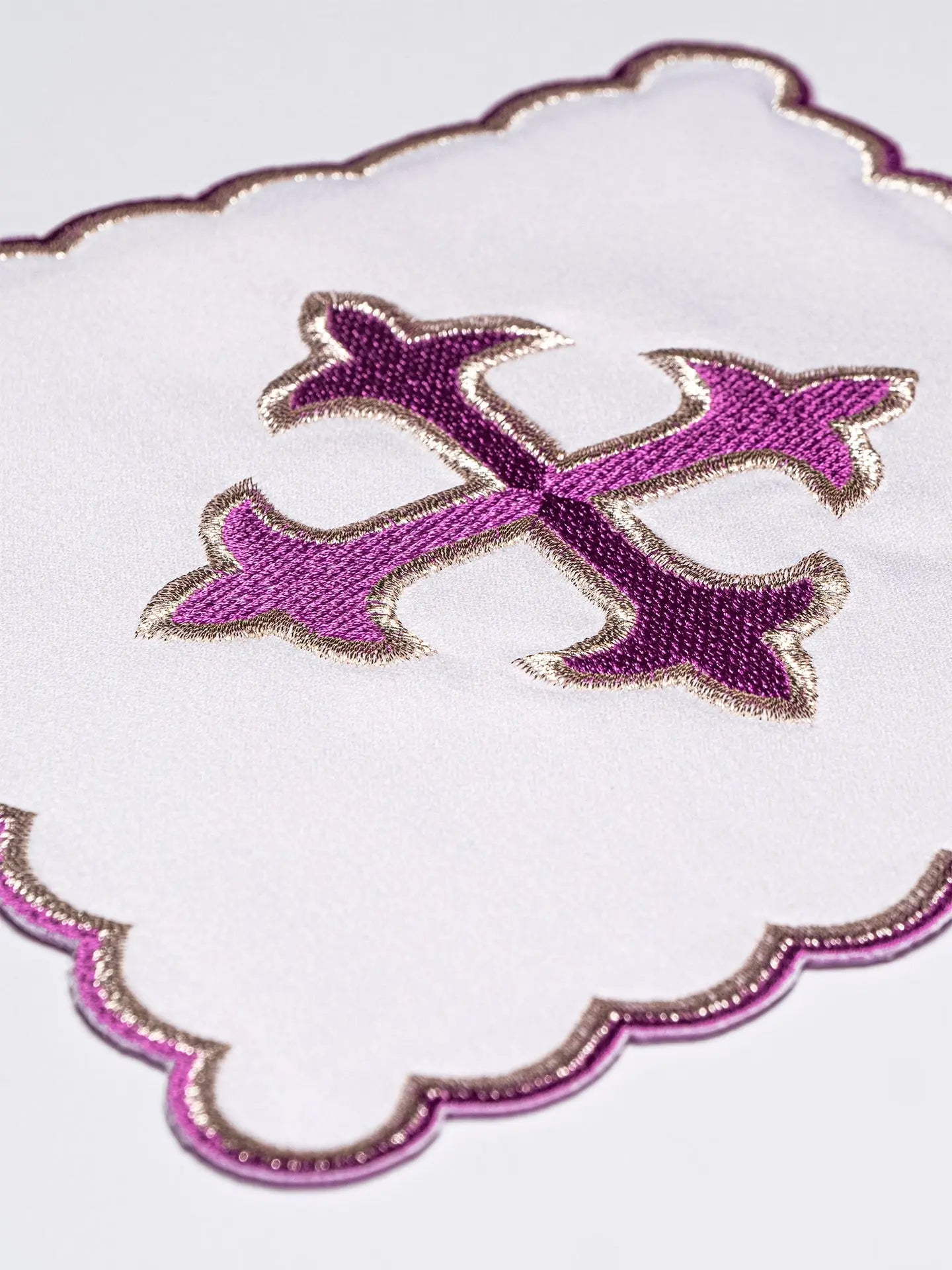
When the sanctuary uses colored chalice accessories, they should harmonize with the celebrant’s vestments rather than compete with them. A parish using a green chasuble in Ordinary Time may choose a matching chalice veil or set for a consistent visual language. For Marian liturgies, Marian chalice sets can help connect the chalice arrangement with Marian vestments, altar decoration, and devotional celebrations. For broader seasonal matching, colored chalice linens provide options that relate to the colors most often used during the liturgical year.
Altar linens, altar tablecloths, and related sanctuary textiles
It is useful to distinguish altar linens from other sanctuary textiles. Altar linens in this collection are connected with the altar and chalice preparation. An altar tablecloth covers the altar surface and may include a frontal or decorative embroidered panel. Altar superfrontals dress the front edge of the altar and are chosen for visibility from the nave. Pulpit covers belong to the ambo or lectern area and should not be confused with chalice or altar linens.
For a complete sanctuary arrangement, altar linens may be selected together with an altar tablecloth with embroidered frontal, matching superfrontals, or pulpit covers in the appropriate color. The goal is not to make every textile identical, but to keep a coherent liturgical style. Simple white linens on the altar can be paired with more decorative frontal embroidery, while a richly embroidered chalice set may be balanced with a simpler altar cloth.
Care and sacristy preparation
Proper care helps preserve the beauty and dignity of altar linens. Pieces used during Mass should be handled respectfully and cleaned according to their fabric and embroidery. Many sacristies wash liturgical linens separately from ordinary laundry, using mild detergent and avoiding harsh treatment that could weaken fibers, damage lace, or distort embroidery. Ironing while the fabric is slightly damp can help keep corporals and purificators flat, crisp, and easy to fold.
Storage is also important. Corporals should be folded carefully so that they can be opened on the altar without confusion. Purificators should be kept clean and ready near the chalice preparation area. Palls should be stored flat so they keep their shape. Veils and burses should be grouped with matching sets when possible, especially if the sacristy uses several colors or designs. Clear organization saves time before Mass and reduces the risk of mixing pieces from different sets.
Frequently Asked Questions (FAQ)
Which altar linens are needed for Mass?
A typical preparation includes a corporal, purificator, pall, and altar cloth. Depending on local practice and the formality of the celebration, a chalice veil and burse may also be used. Parishes that celebrate Mass daily usually keep multiple sets so clean linens are always available.
What is the difference between a corporal and a purificator?
The corporal is spread on the altar and receives the chalice and paten during the Eucharistic liturgy. The purificator is a smaller cloth used with the chalice during and after Communion. Because they serve different functions, they should be chosen and stored as separate liturgical linens.
Should altar linens always be white?
The principal linens used directly on the altar are commonly white or natural in tone, emphasizing cleanliness and reverence. Chalice veils, burses, and coordinated sets may follow liturgical colors, allowing the prepared chalice to match the season or feast being celebrated.
How many sets should a parish keep in the sacristy?
The number depends on the frequency of Masses and the cleaning routine. A parish with daily liturgy should keep several sets of corporals, purificators, and palls. Extra sets are also useful for funerals, weddings, solemnities, and times when laundry cannot be completed immediately.
Are chalice veils and ciborium veils the same?
No. A chalice veil is used with the chalice and paten, while a ciborium veil is made for covering a ciborium, especially in connection with the reservation or handling of consecrated hosts according to local practice. Browse ciborium veils separately when that is the item needed.