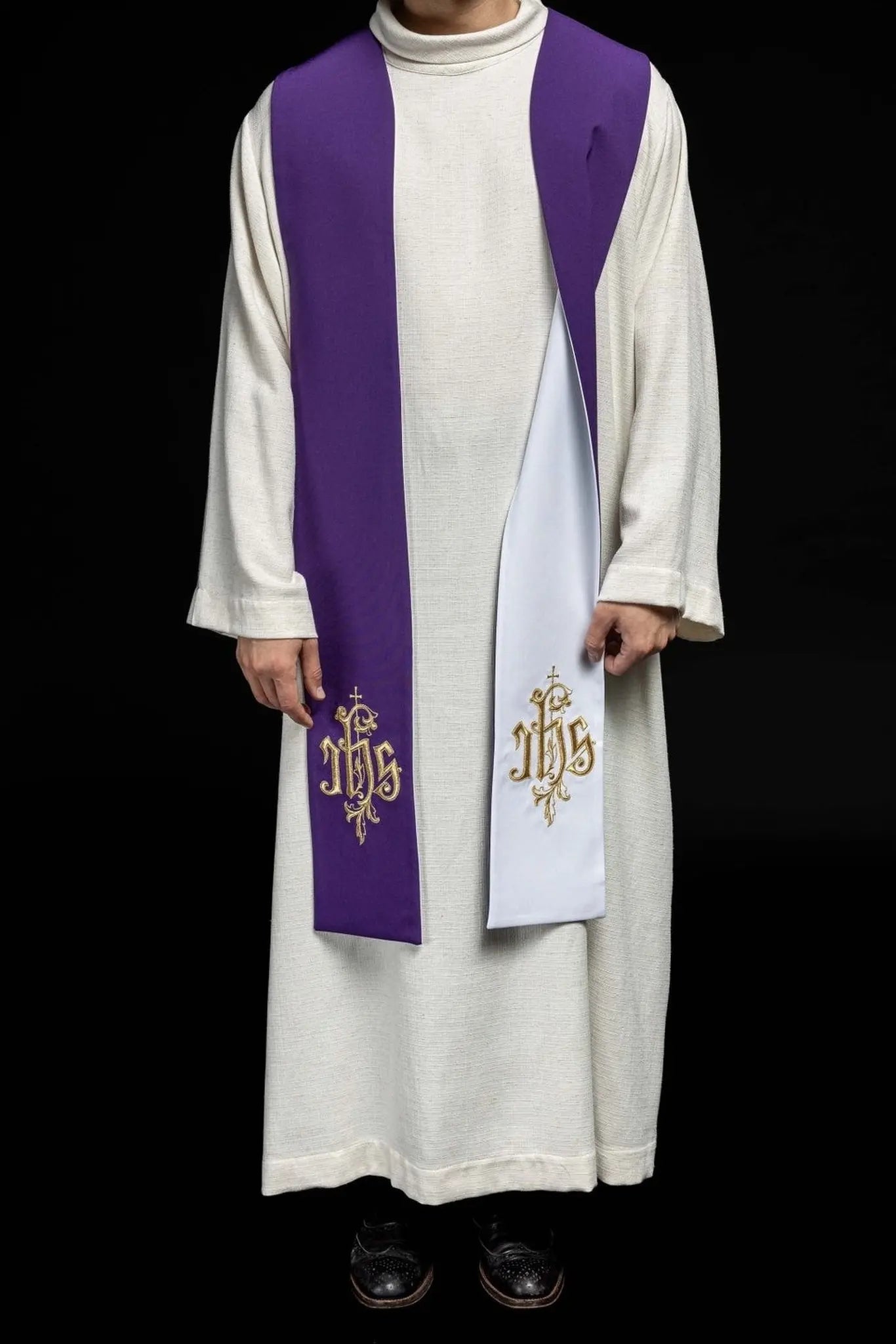
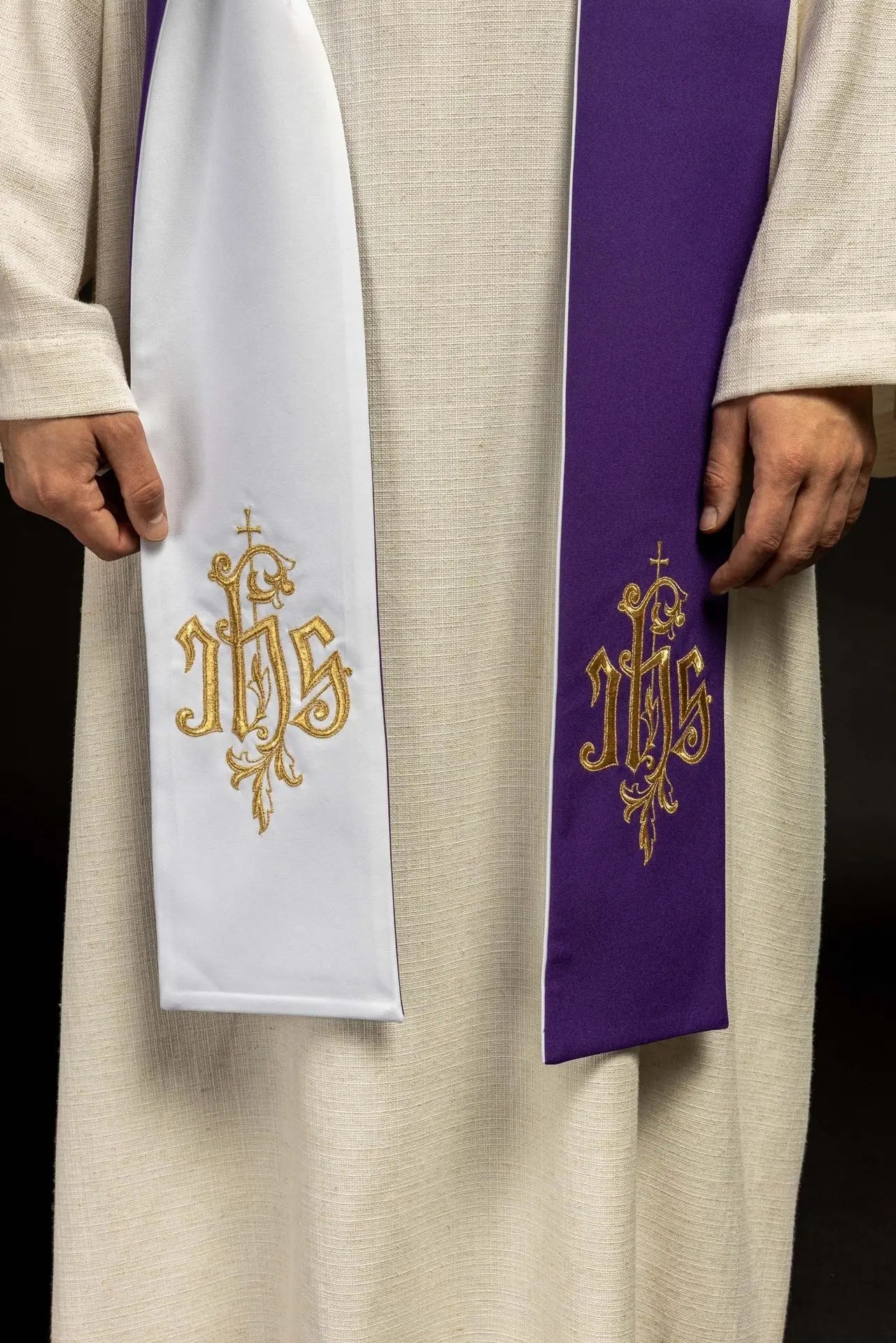
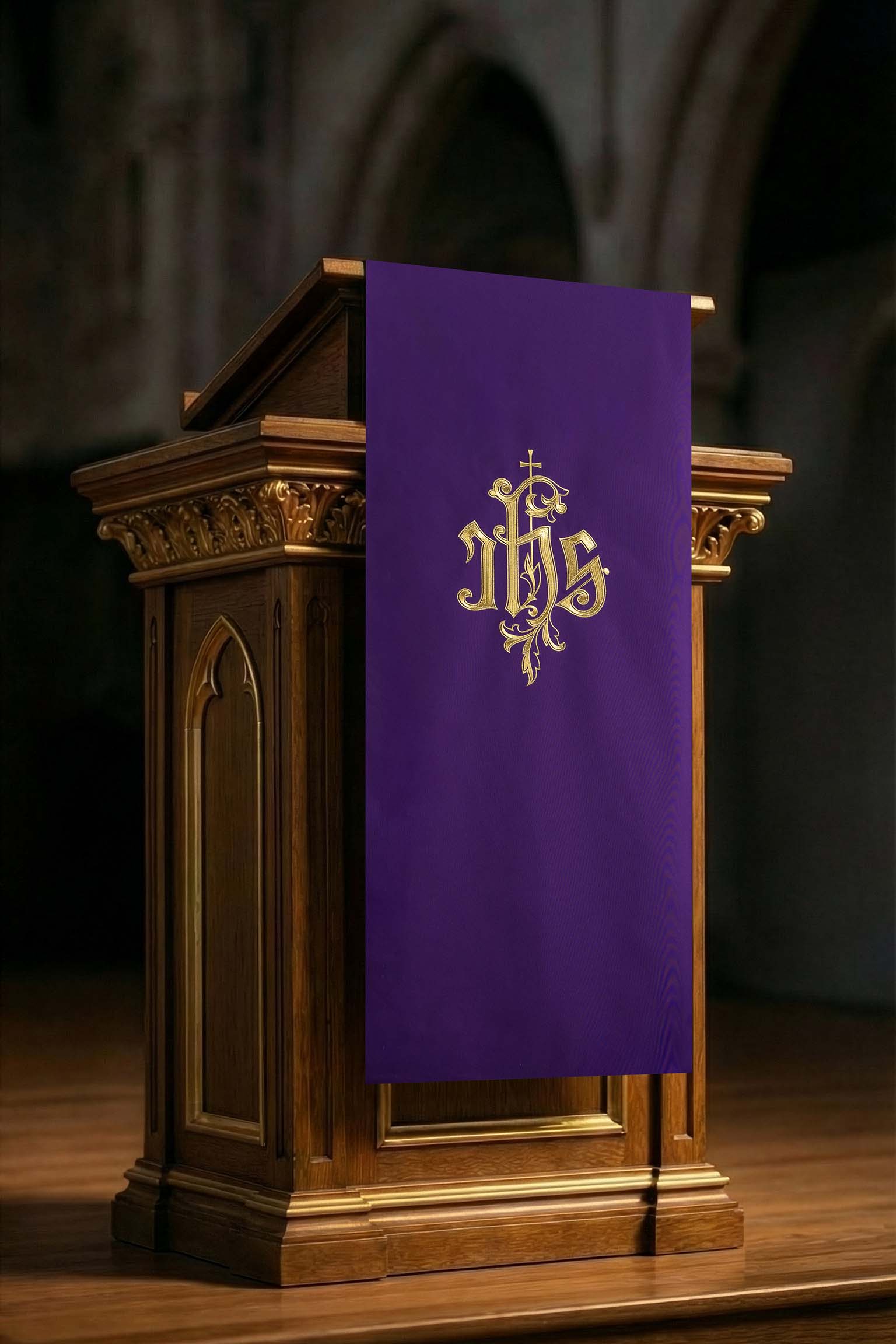
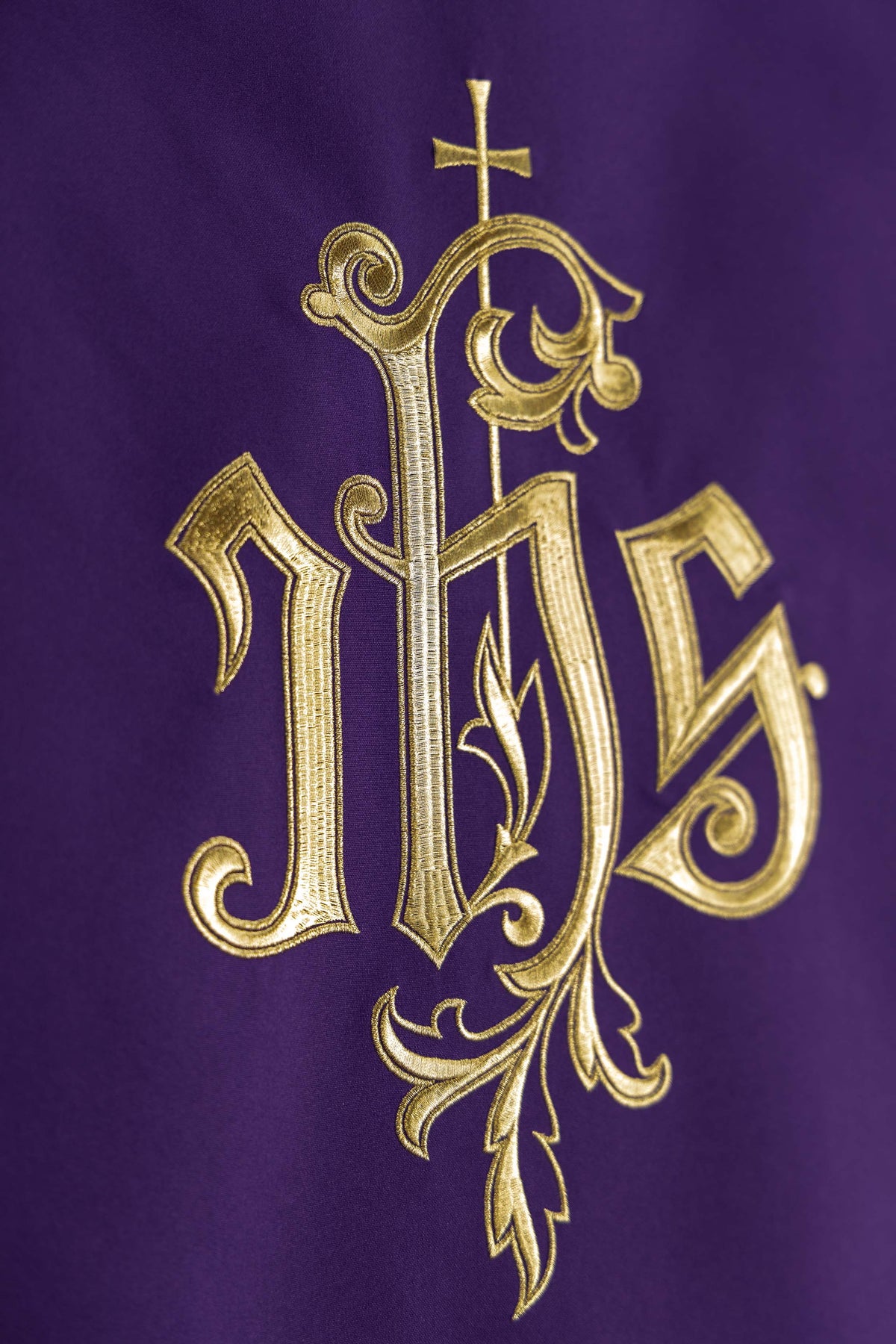
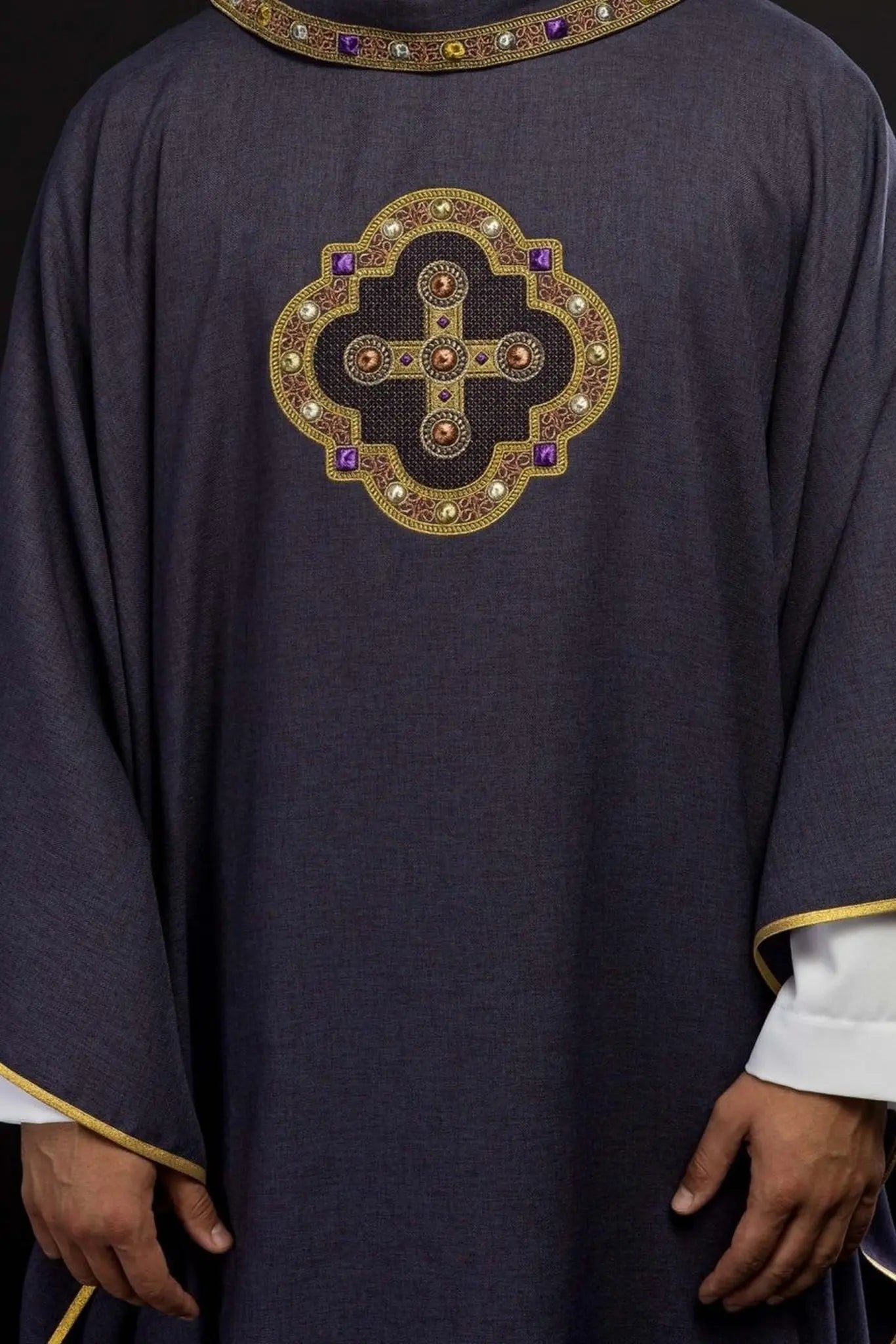
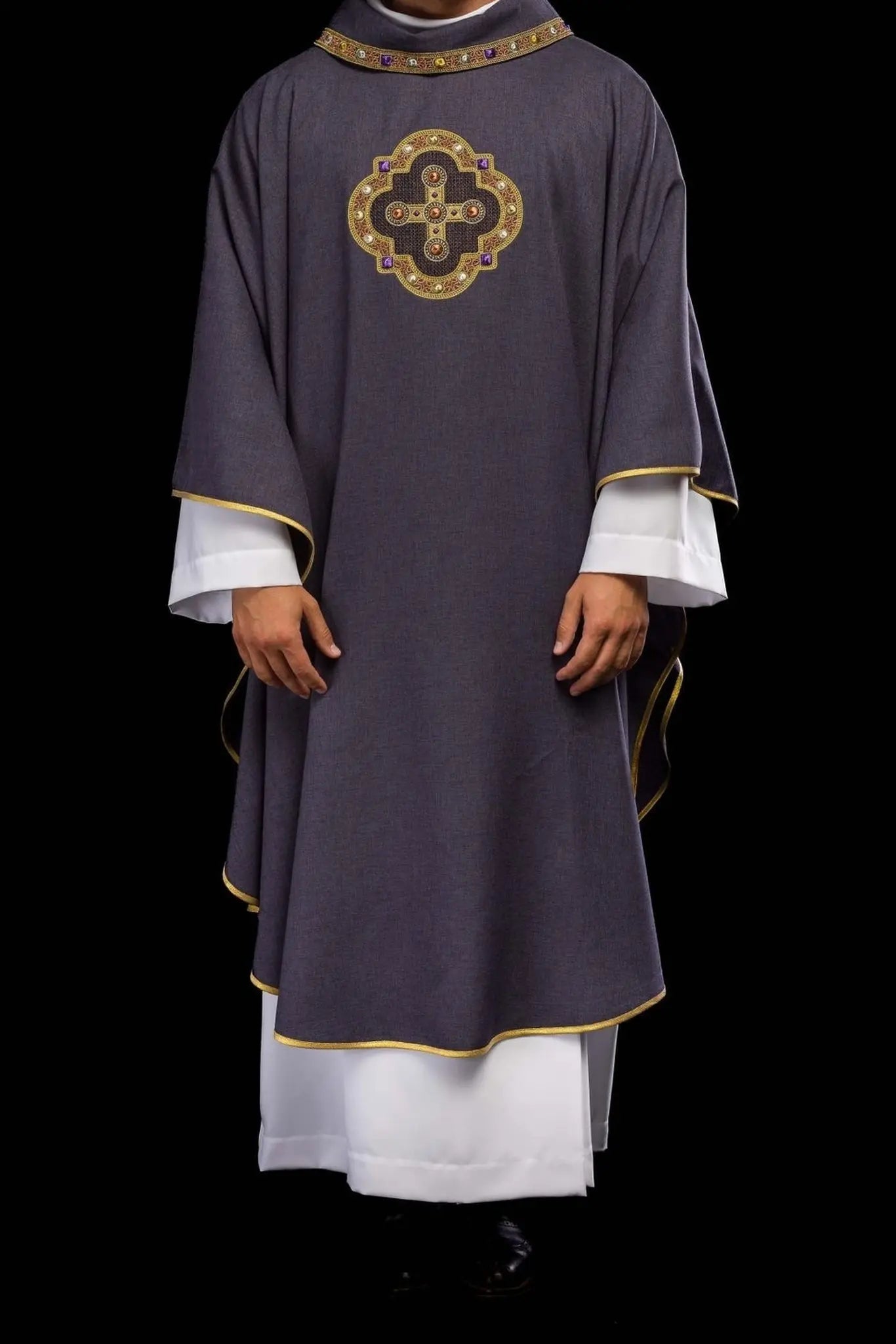
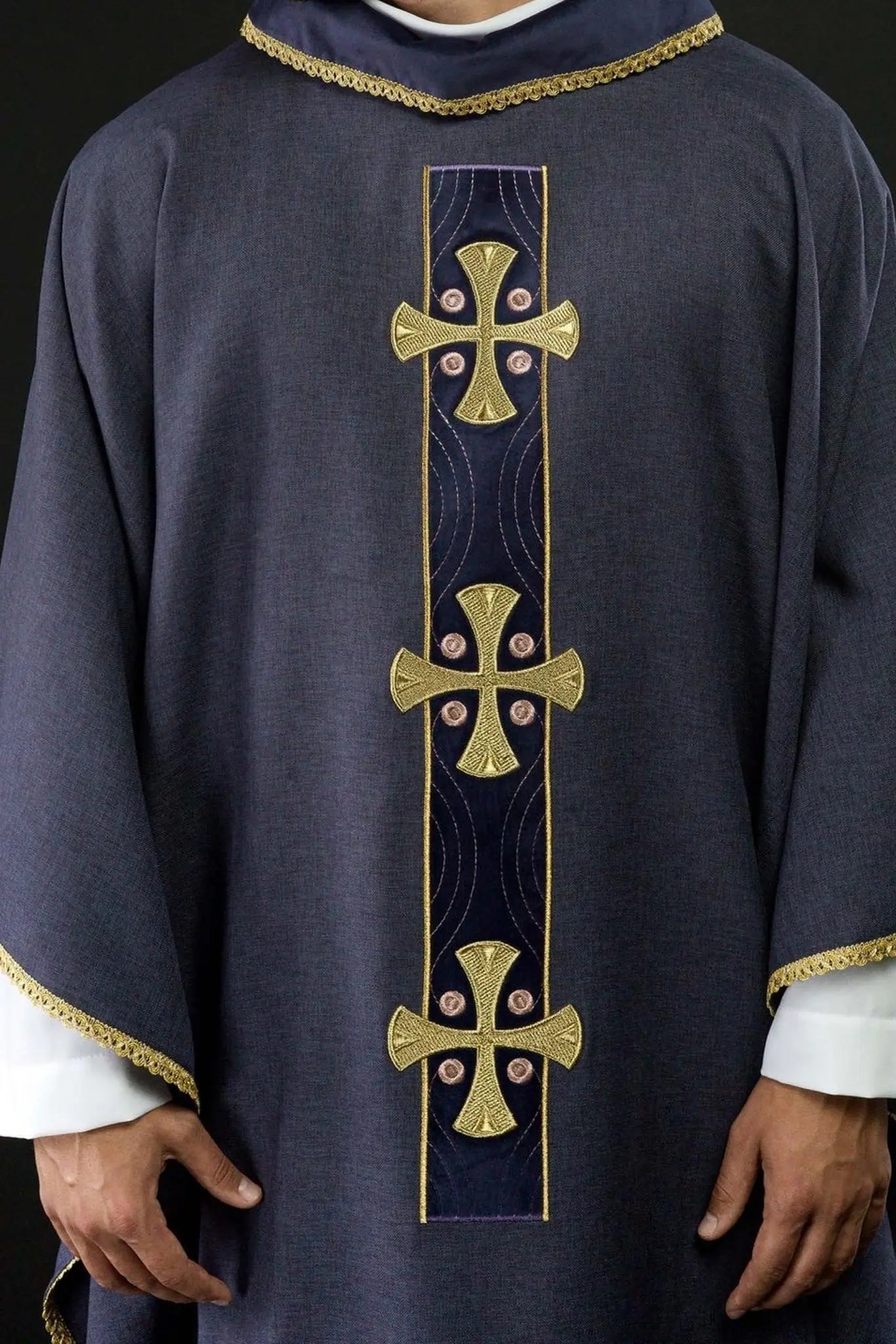
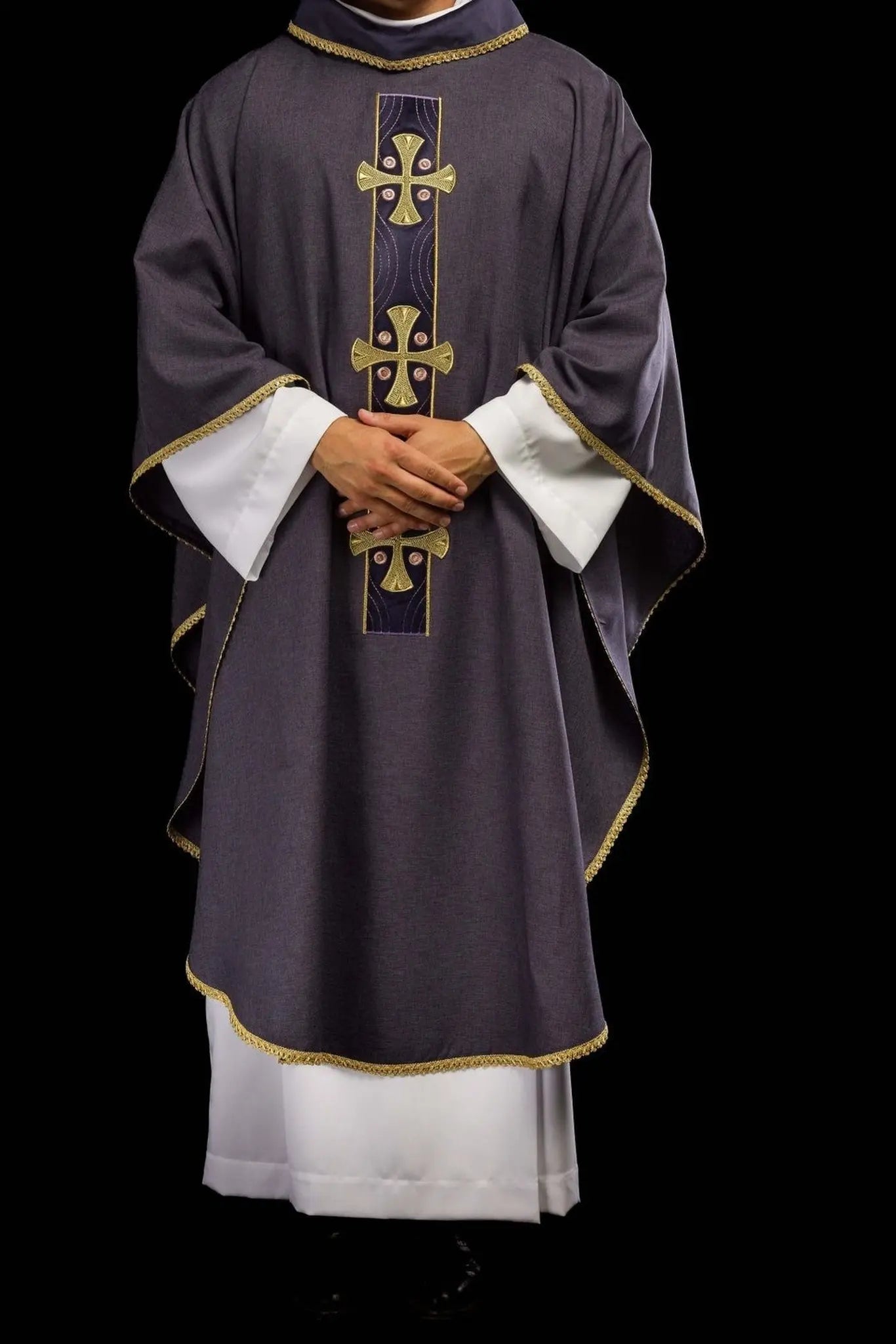
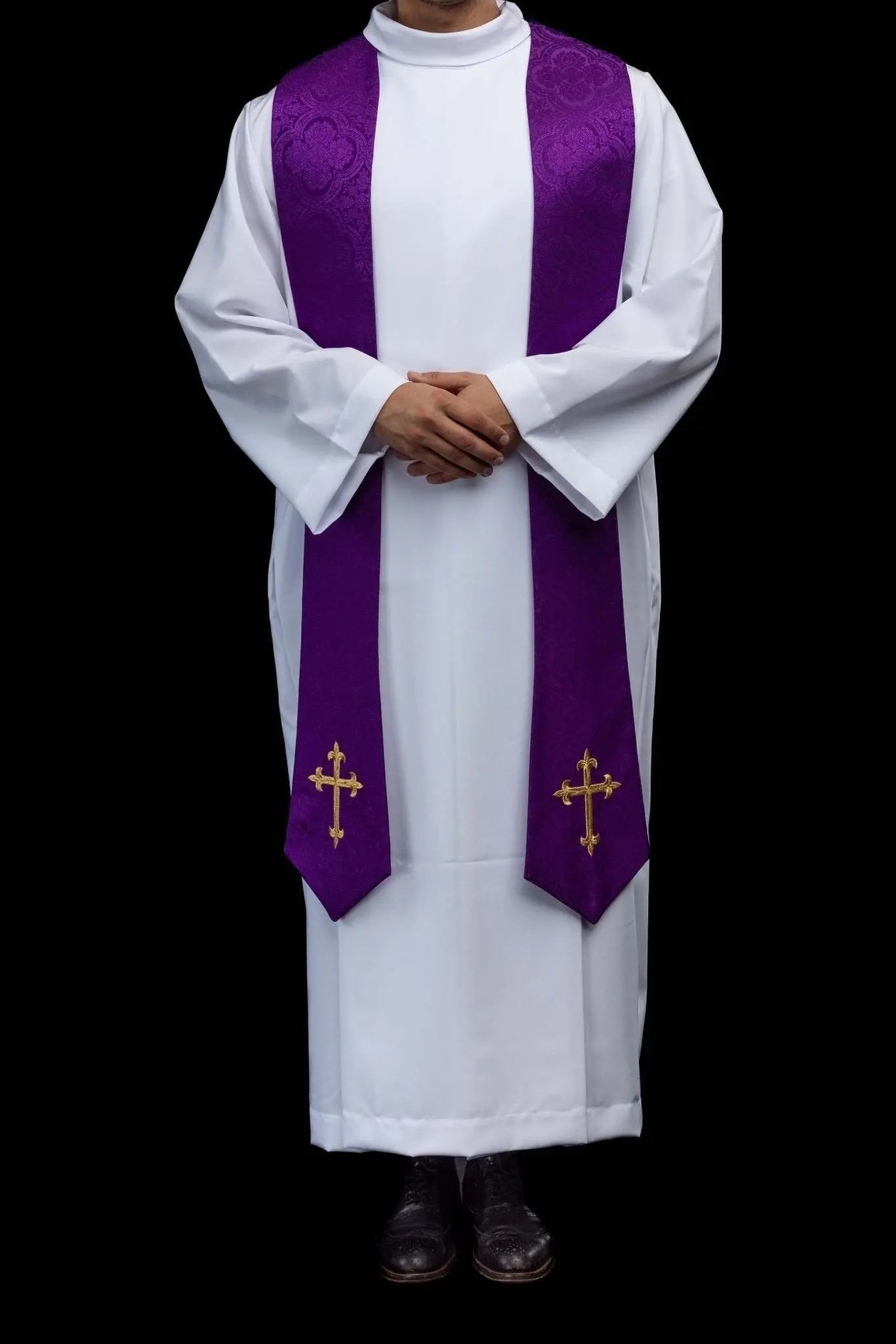
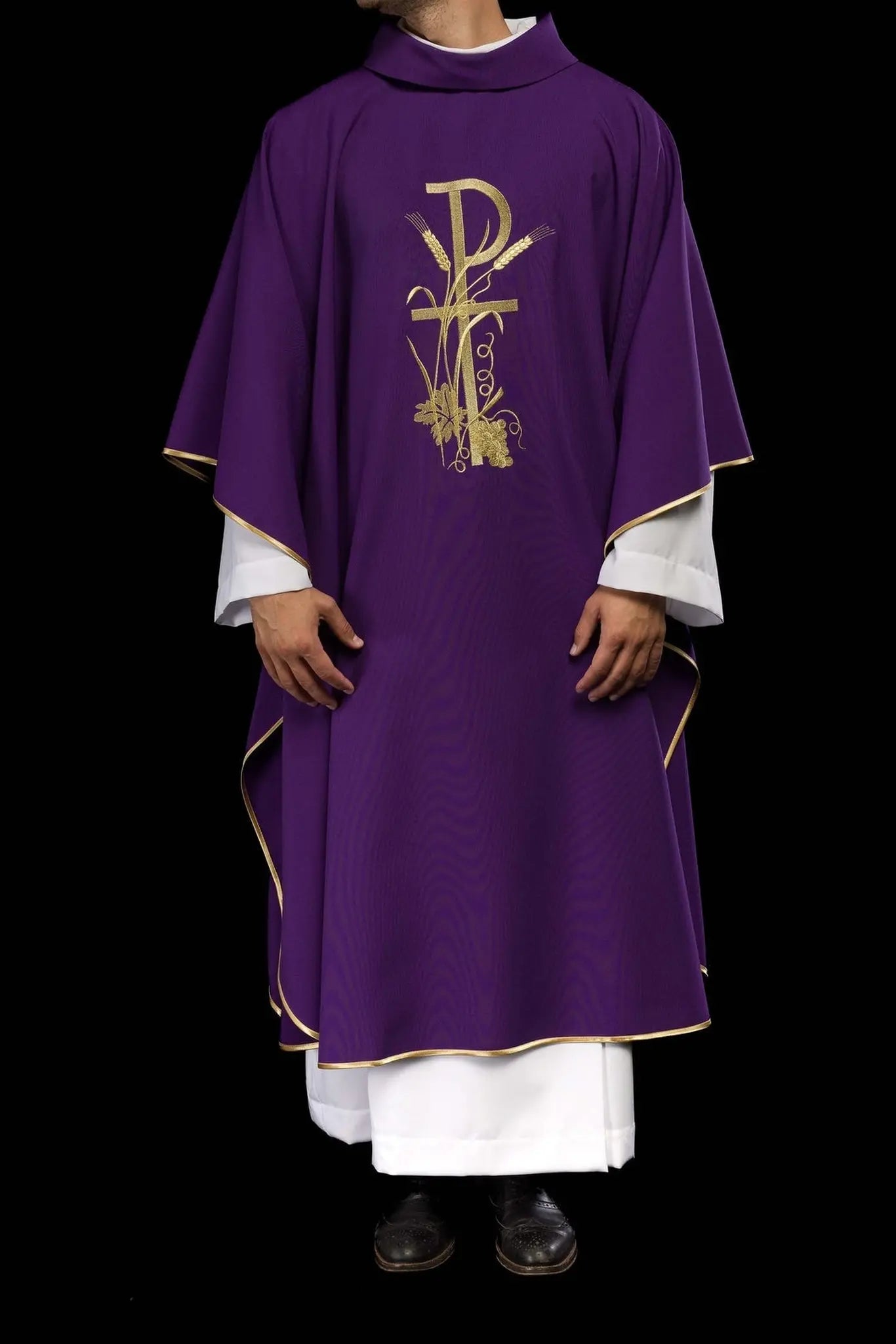
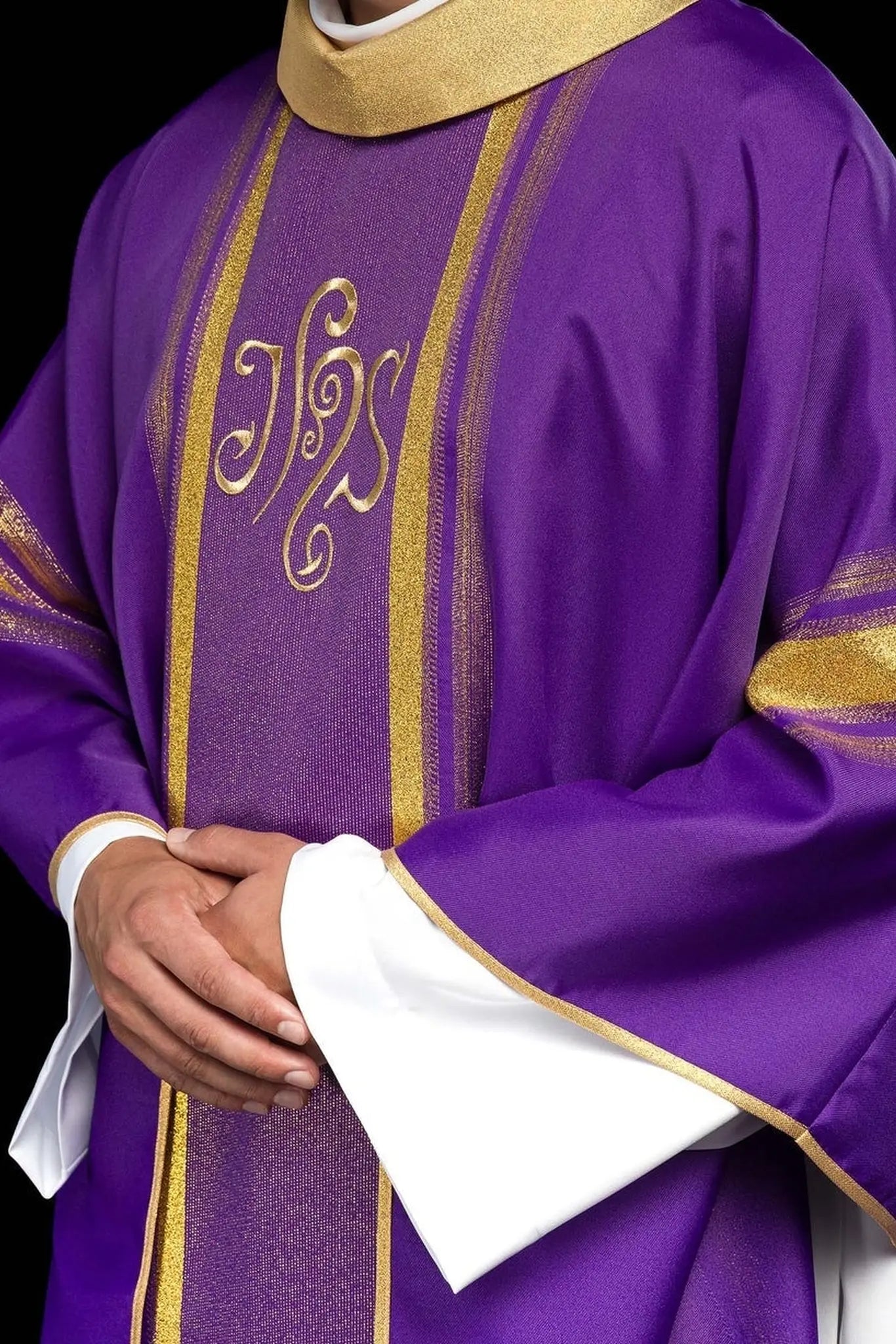
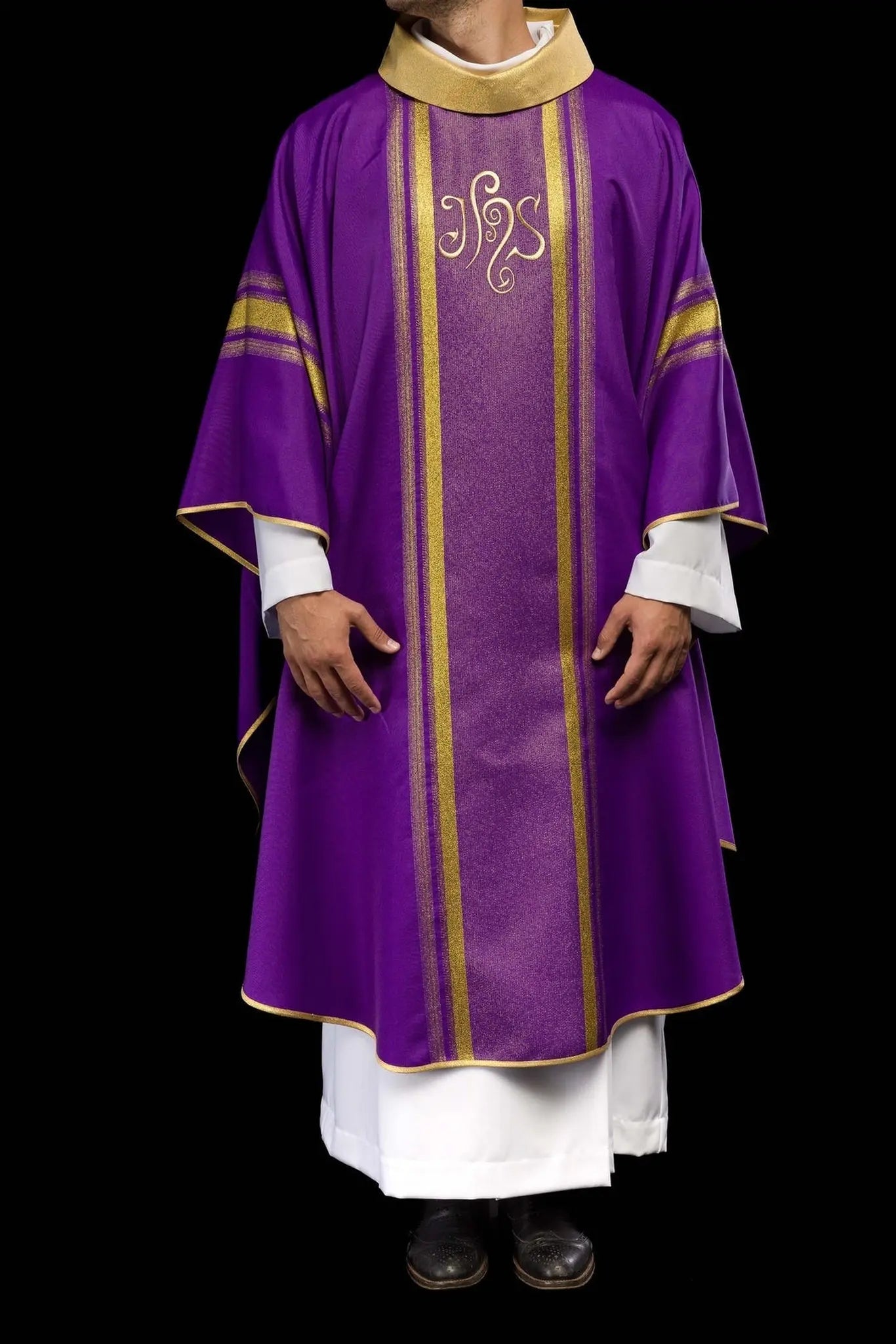
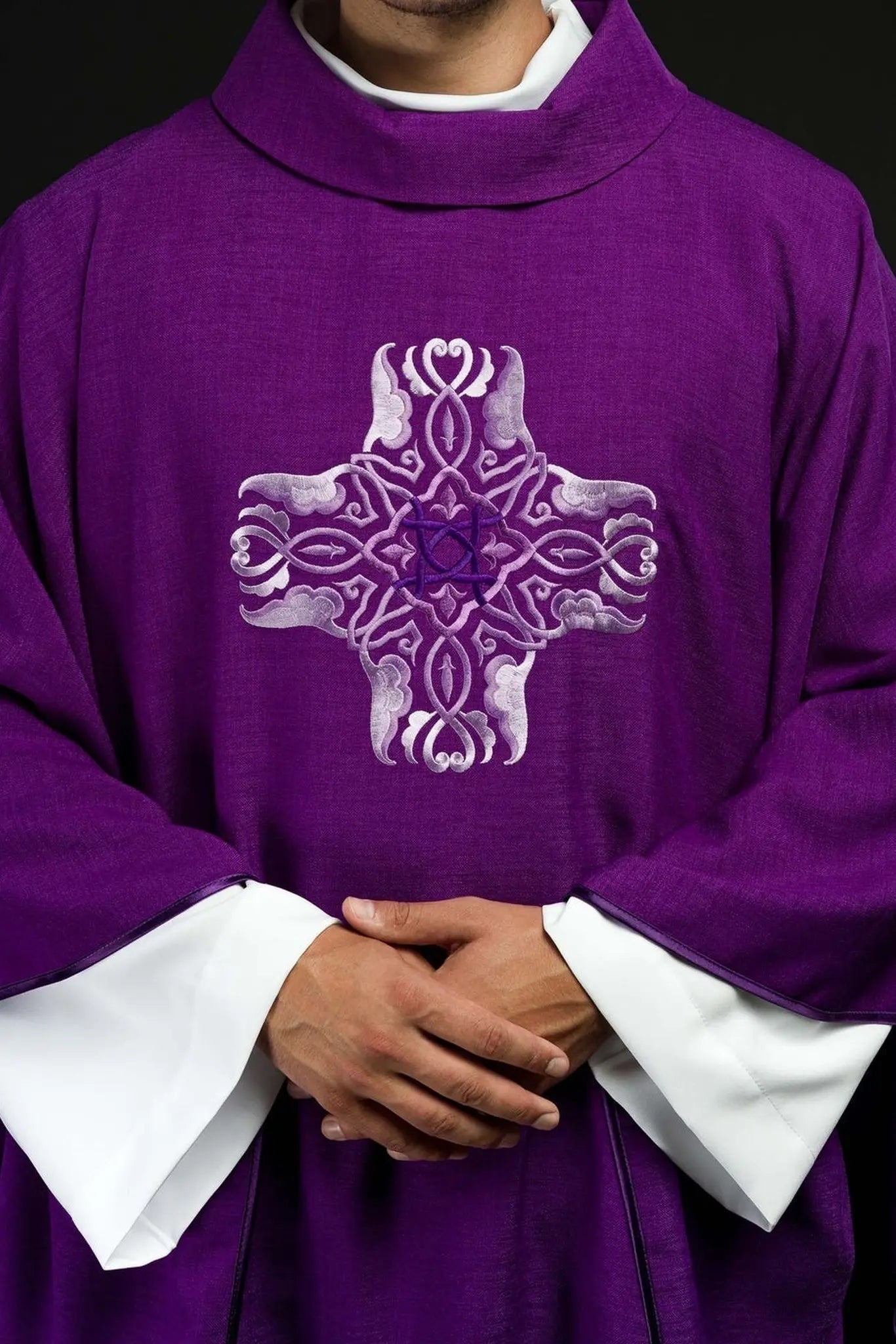
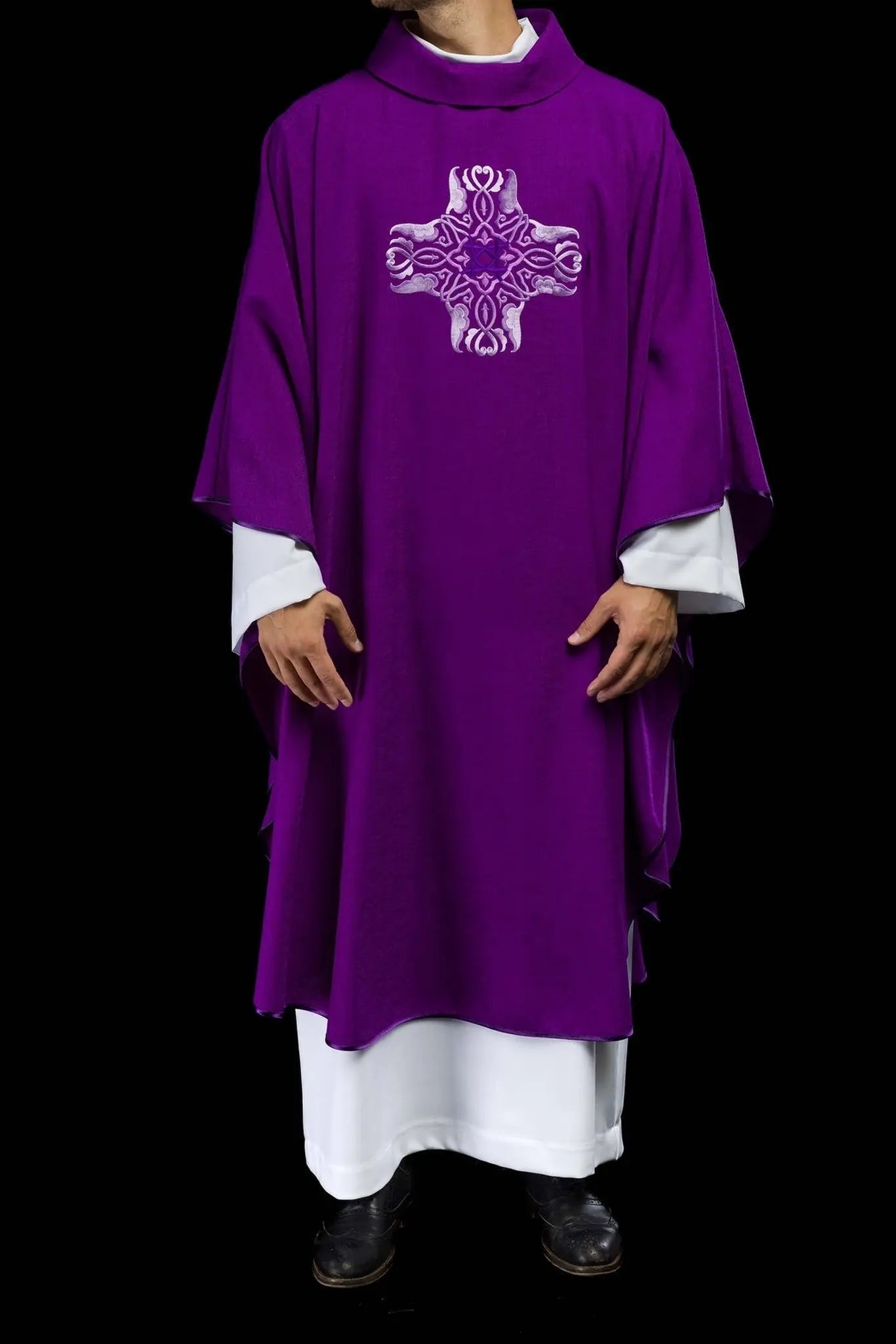
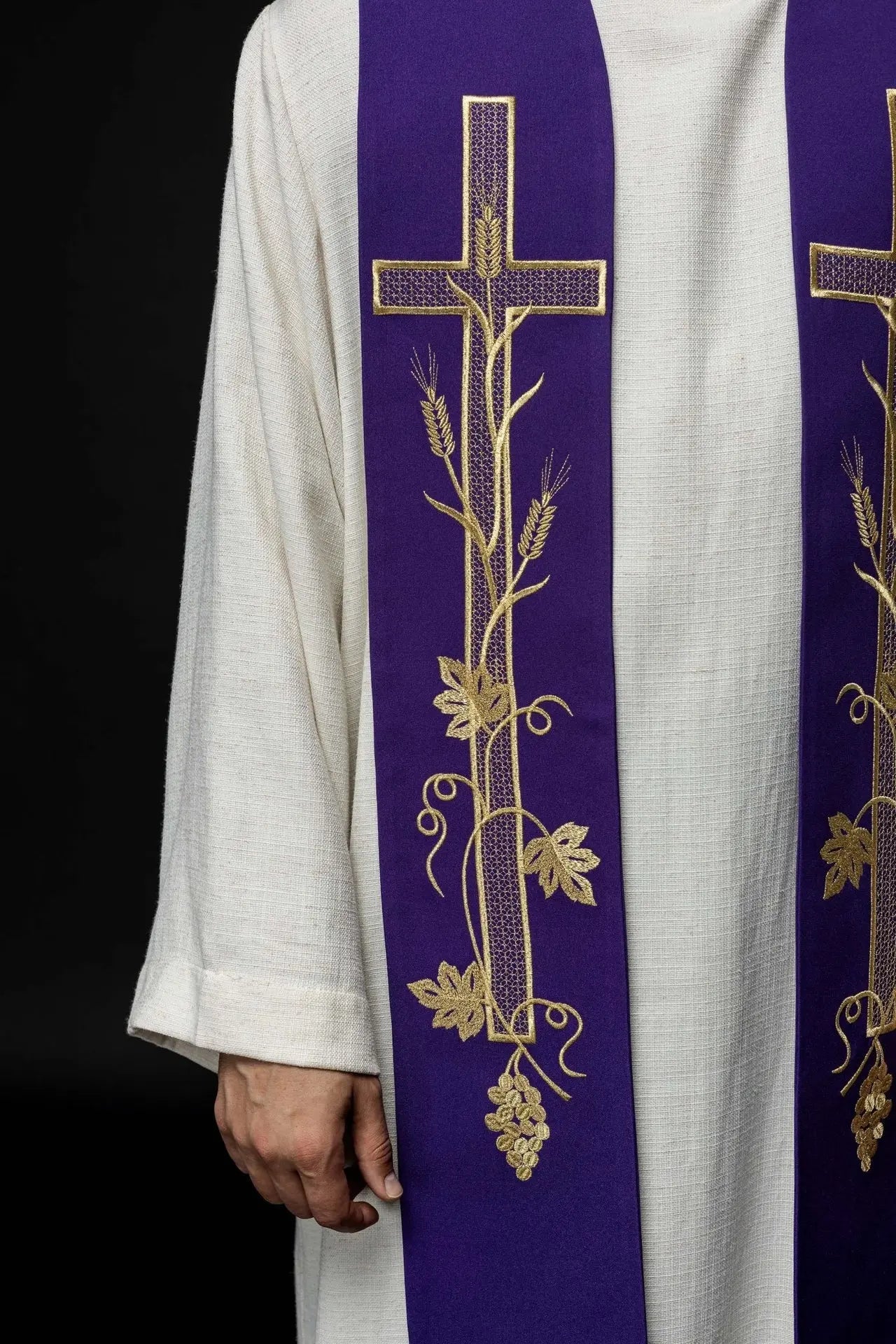
Advent Vestments for the Season of Preparation
Liturgical vestments for the Advent season
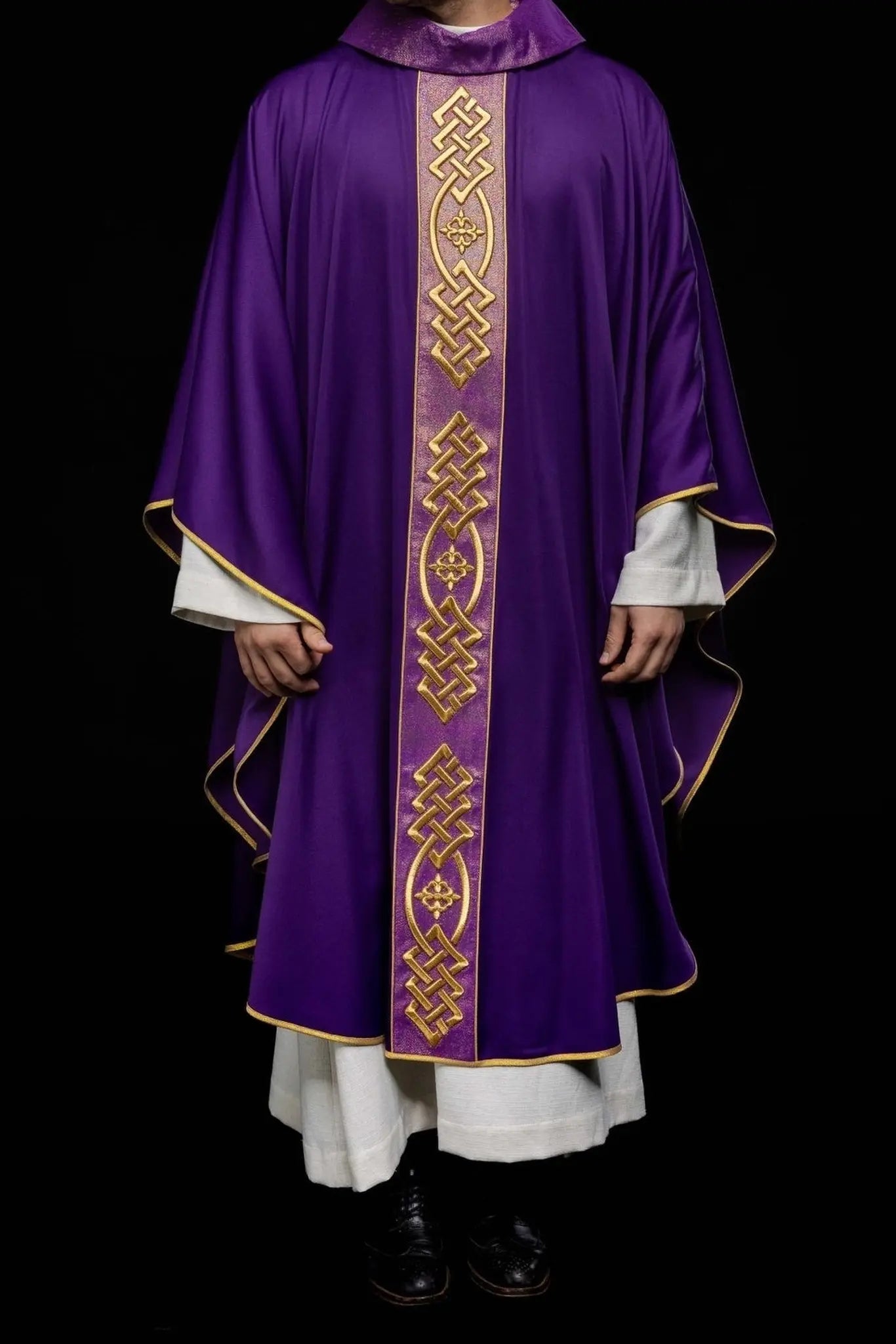
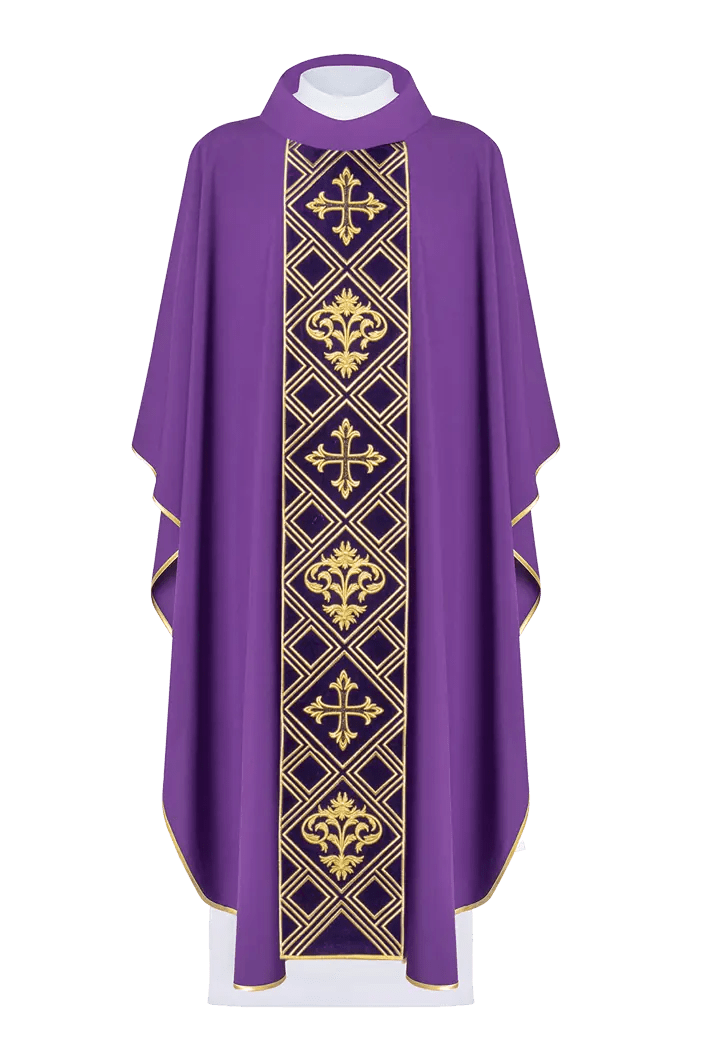
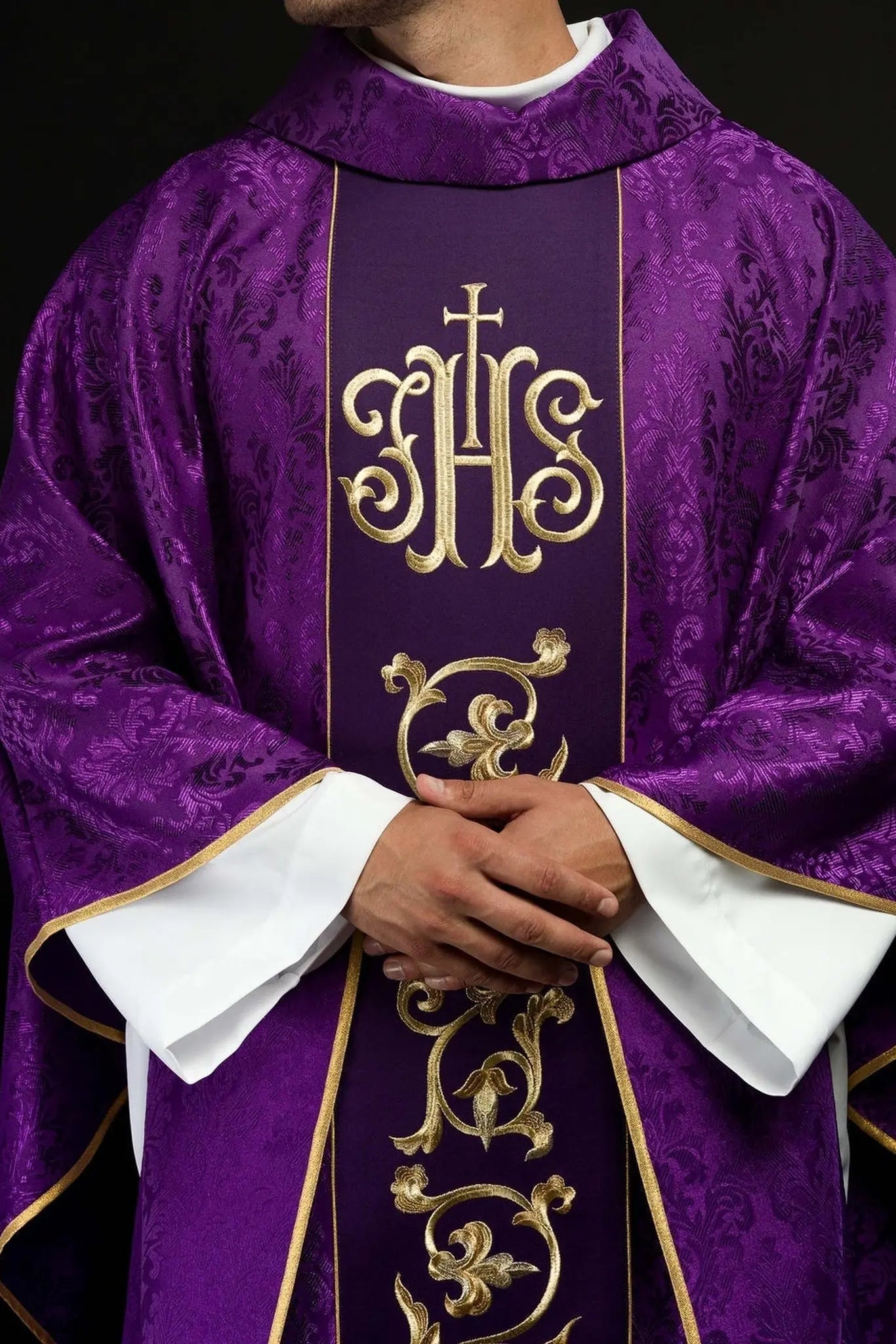
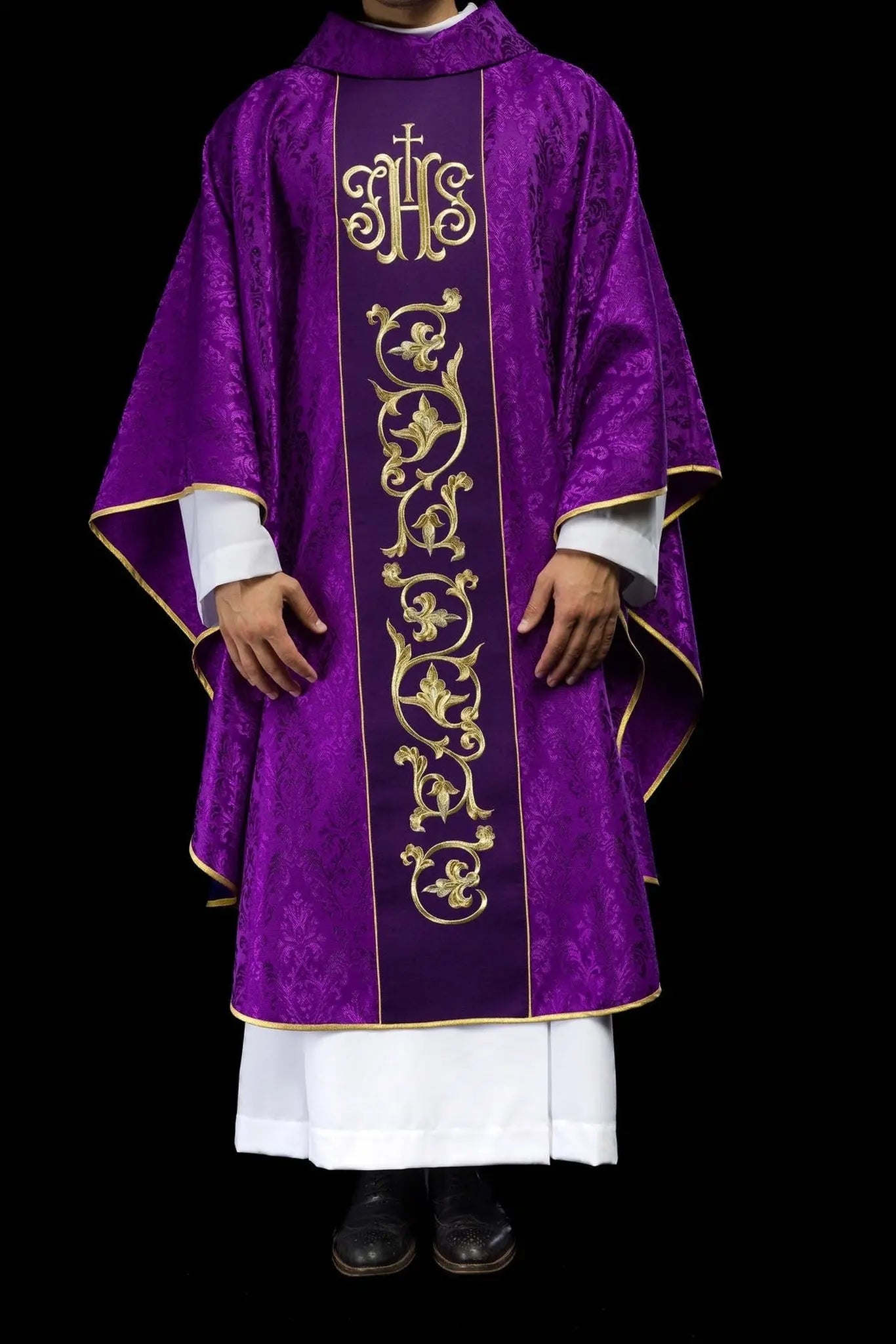
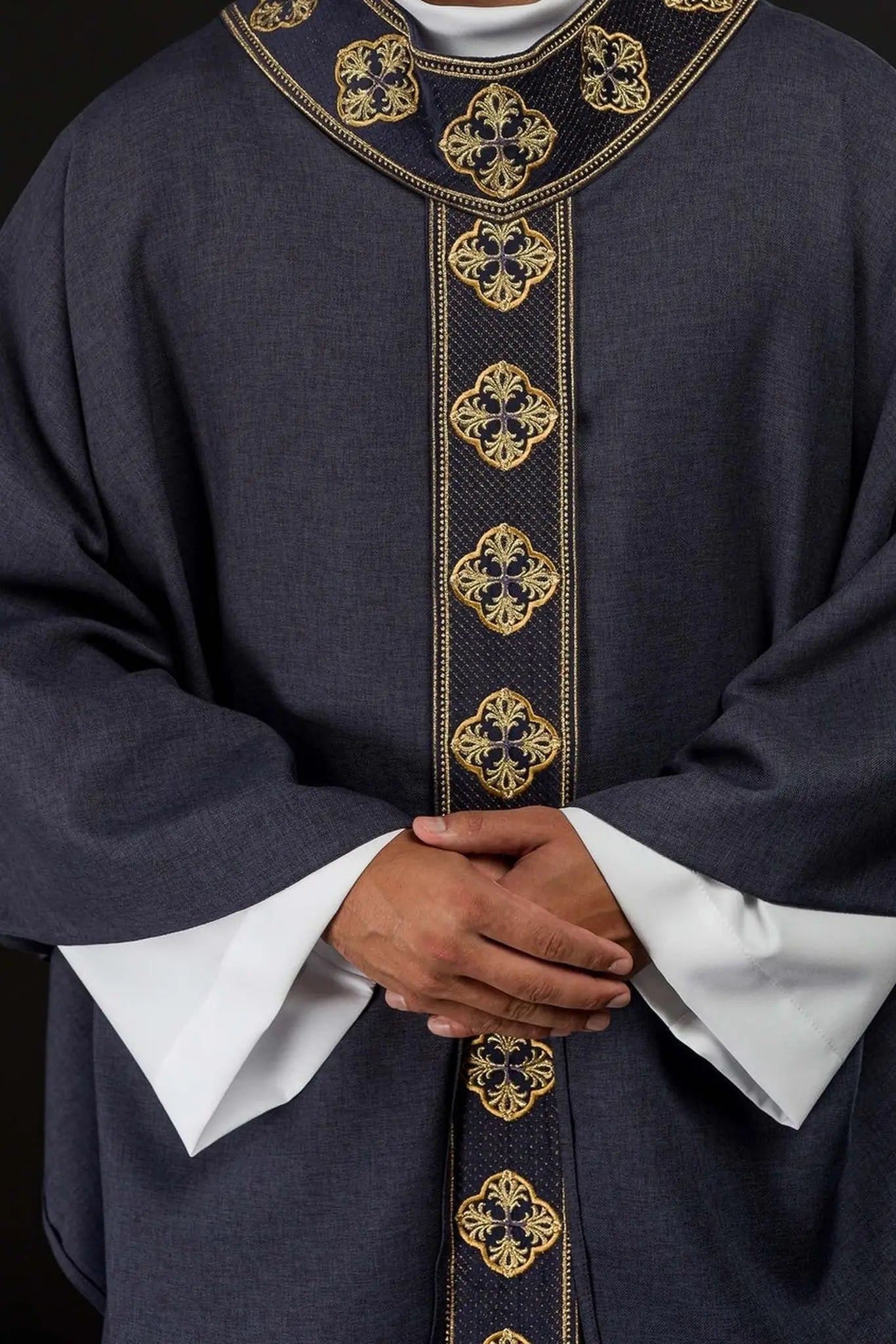
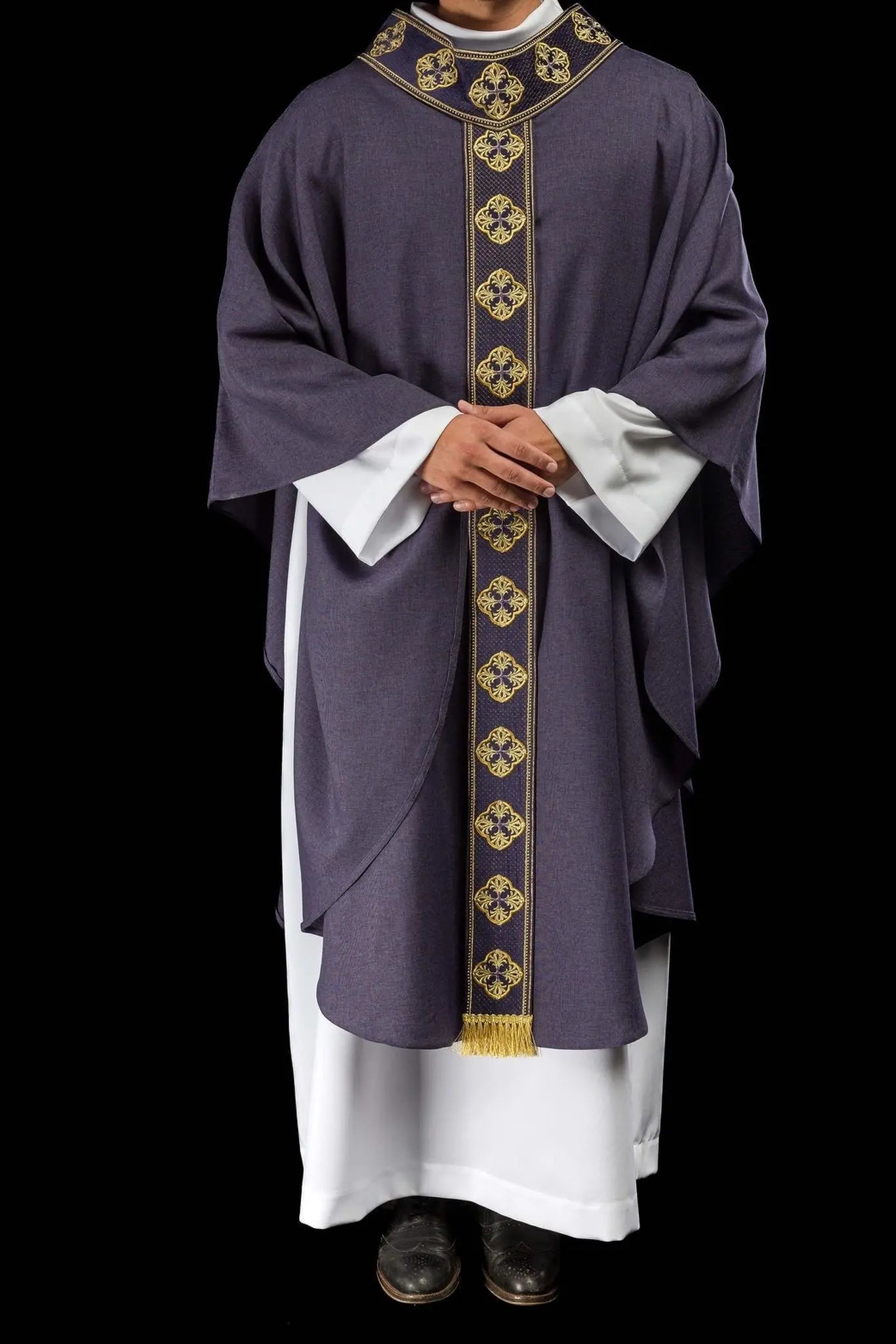
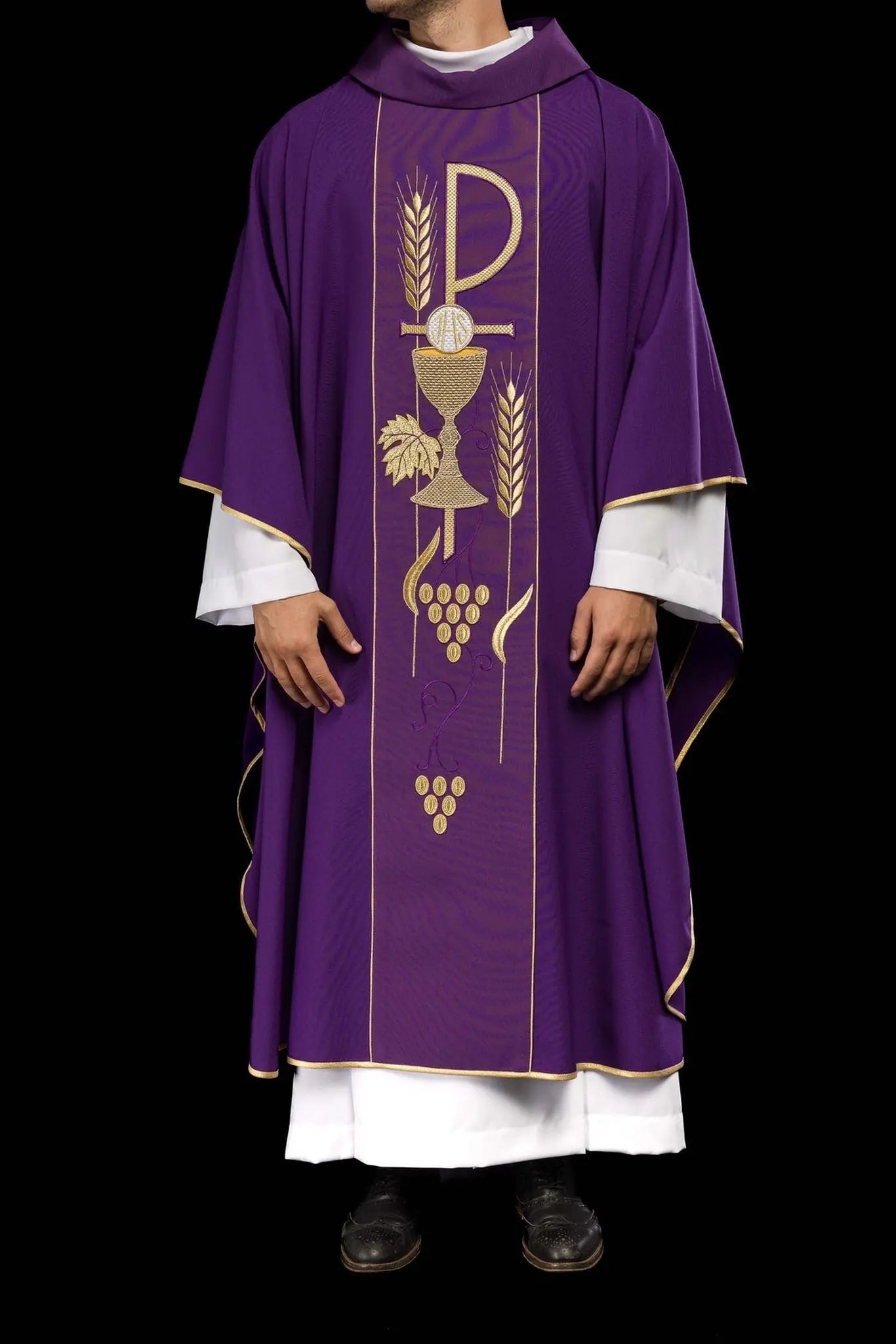
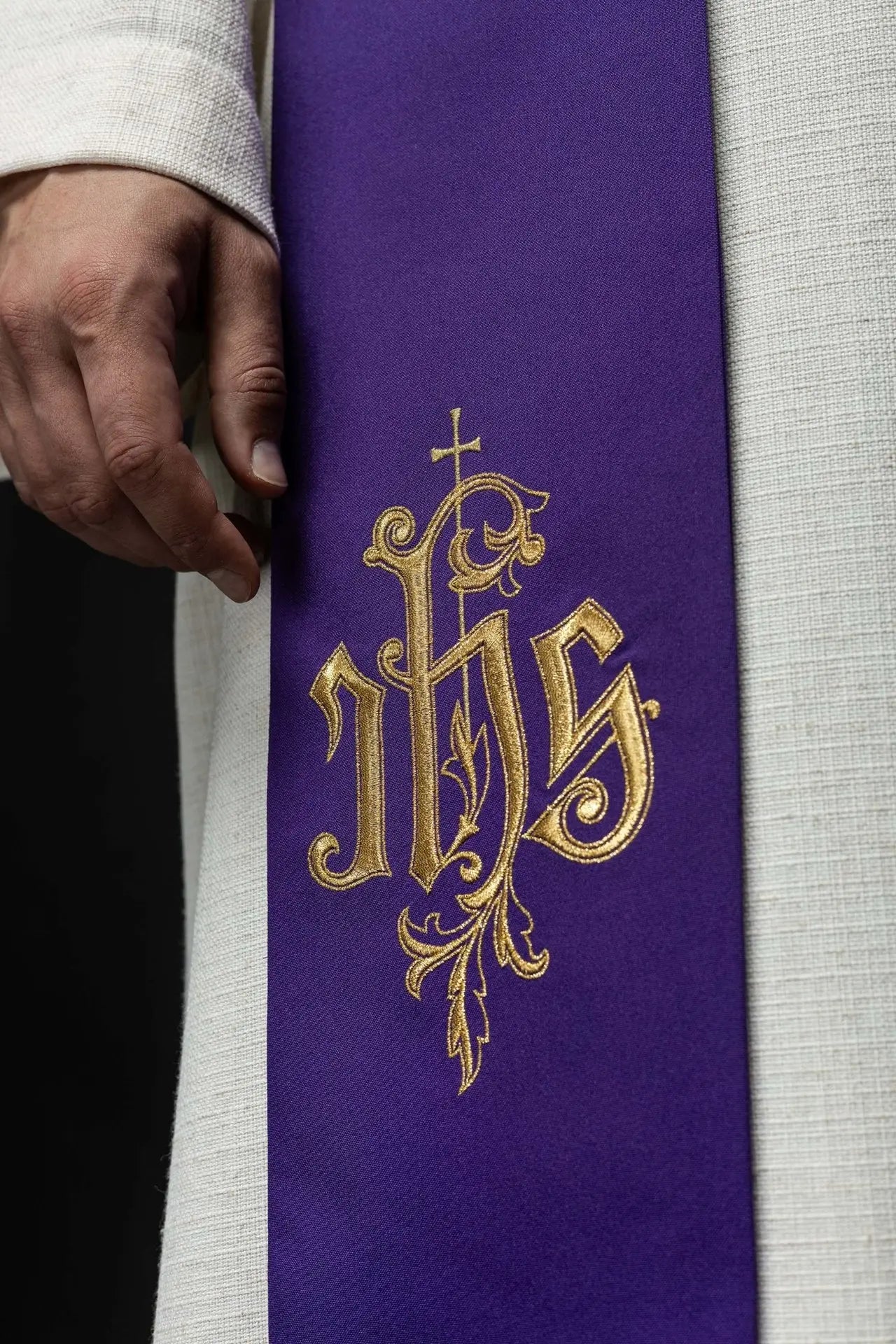
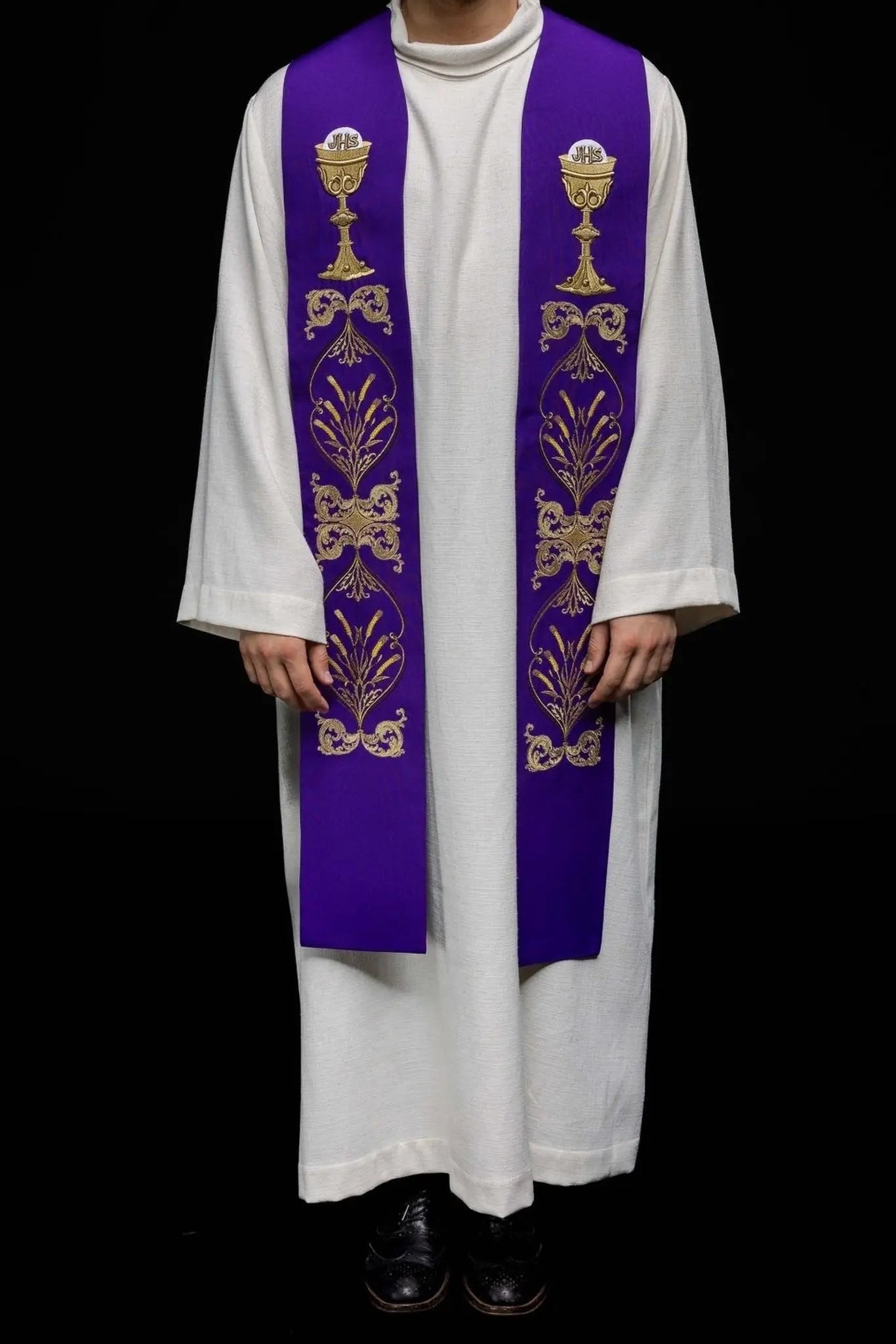
Advent is the season in which the Church enters a time of watchful expectation, conversion of heart, and joyful preparation for the coming of Christ. The liturgy does not present this period as a simple introduction to Christmas, but as a distinct season with its own tone, prayers, readings, and sacred signs. The vestments used during Advent should therefore support a mood of recollection, dignity, and hope. This collection gathers Advent vestments and related liturgical textiles chosen for celebrations in the weeks before Christmas, especially in the violet or purple color proper to the season and, where the rite and local custom permit, rose for Gaudete Sunday.
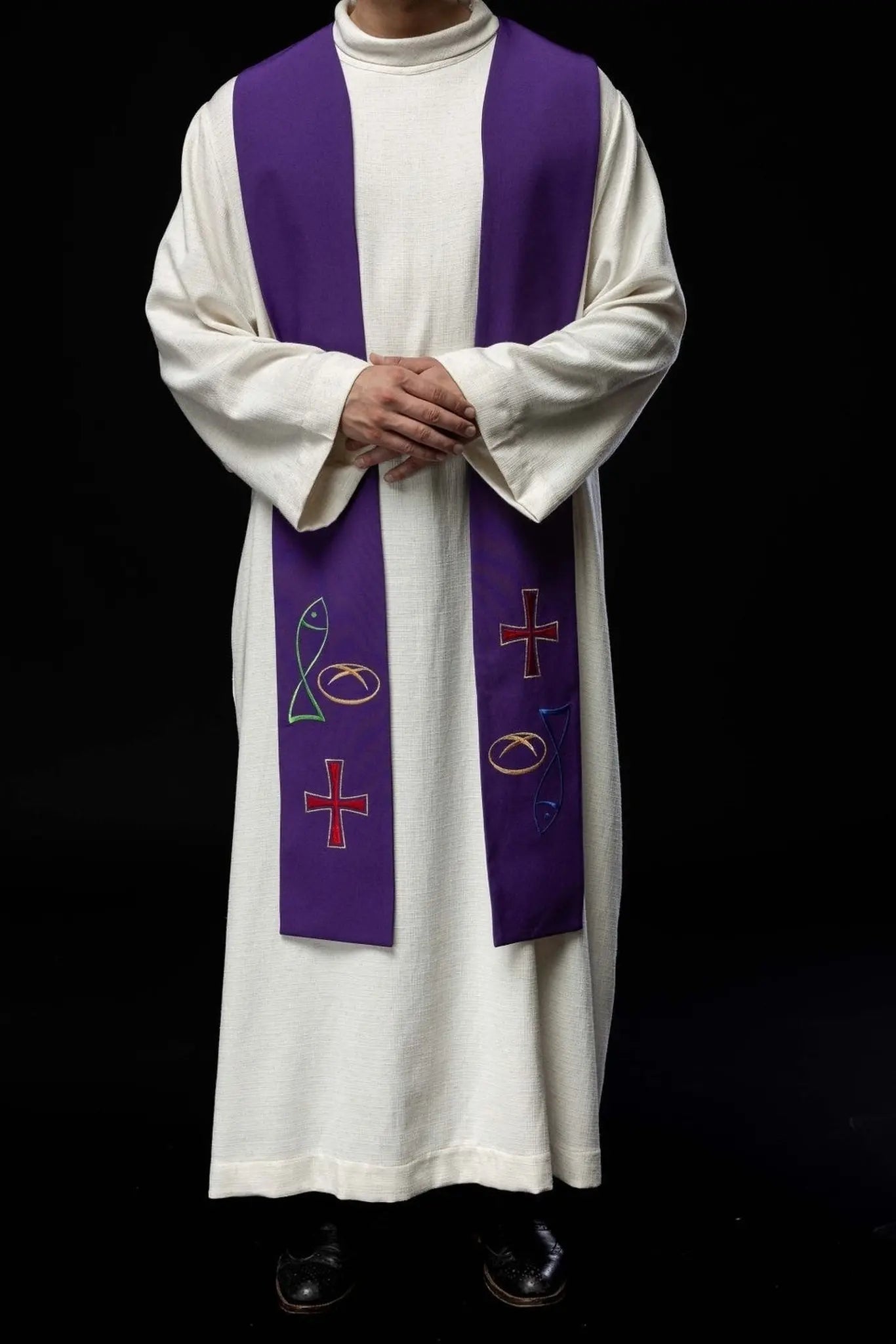
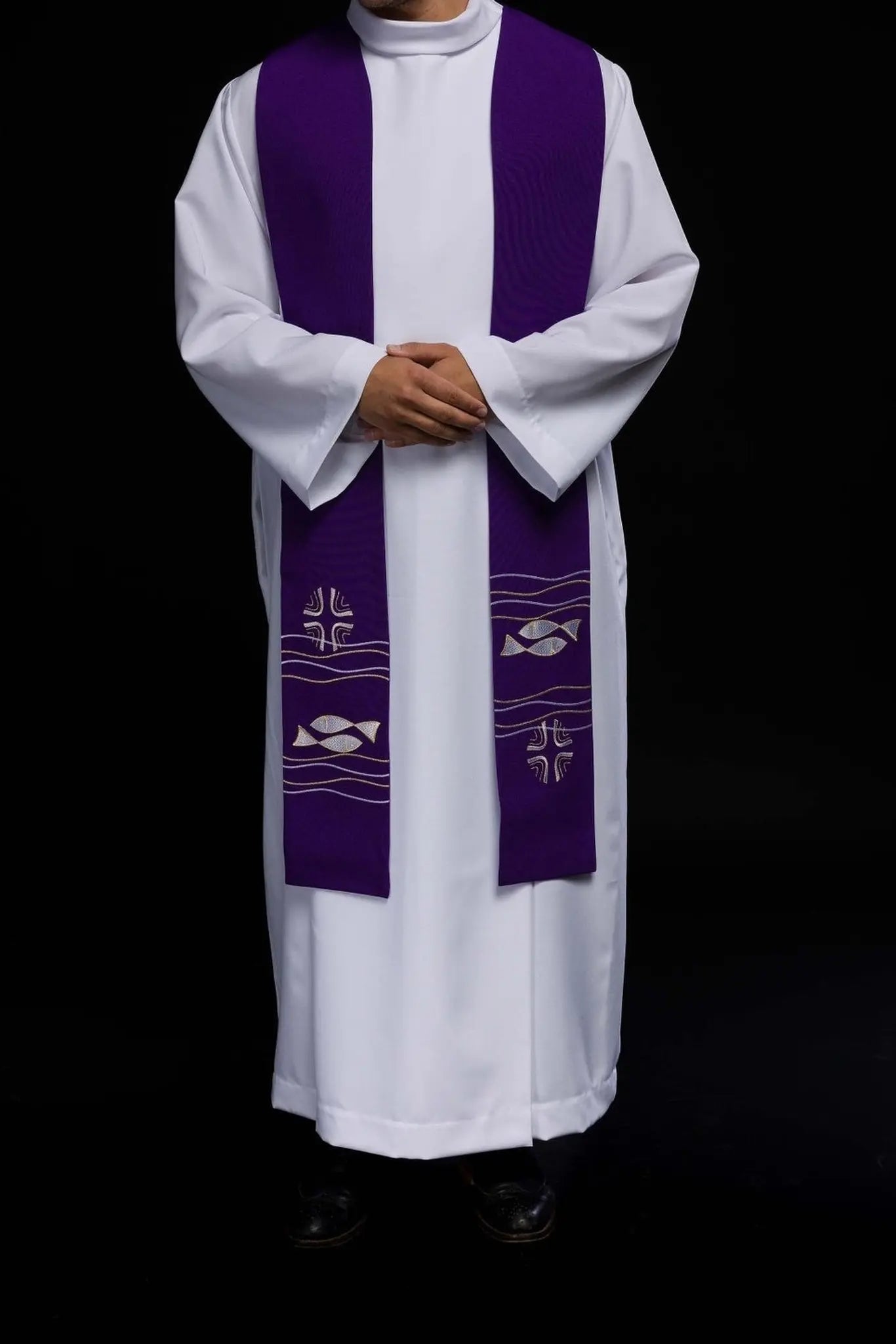
The purpose of Advent vestments is both practical and symbolic. They identify the season immediately for the congregation, help the celebrant and ministers enter the rhythm of the liturgical year, and bring visual unity to the sanctuary. Chasubles, stoles, copes, chalice veils, altar linens, and other coordinated textiles can all contribute to a coherent Advent setting. A parish may need a single chasuble for weekday Masses, a more solemn set for Sundays, matching clergy stoles for sacramental ministry, or altar pieces that continue the violet tone beyond the garment worn by the priest. The right choice depends on the parish calendar, the style of the sanctuary, the number of ministers, and the desired level of ornamentation.
The meaning of violet and purple in Advent
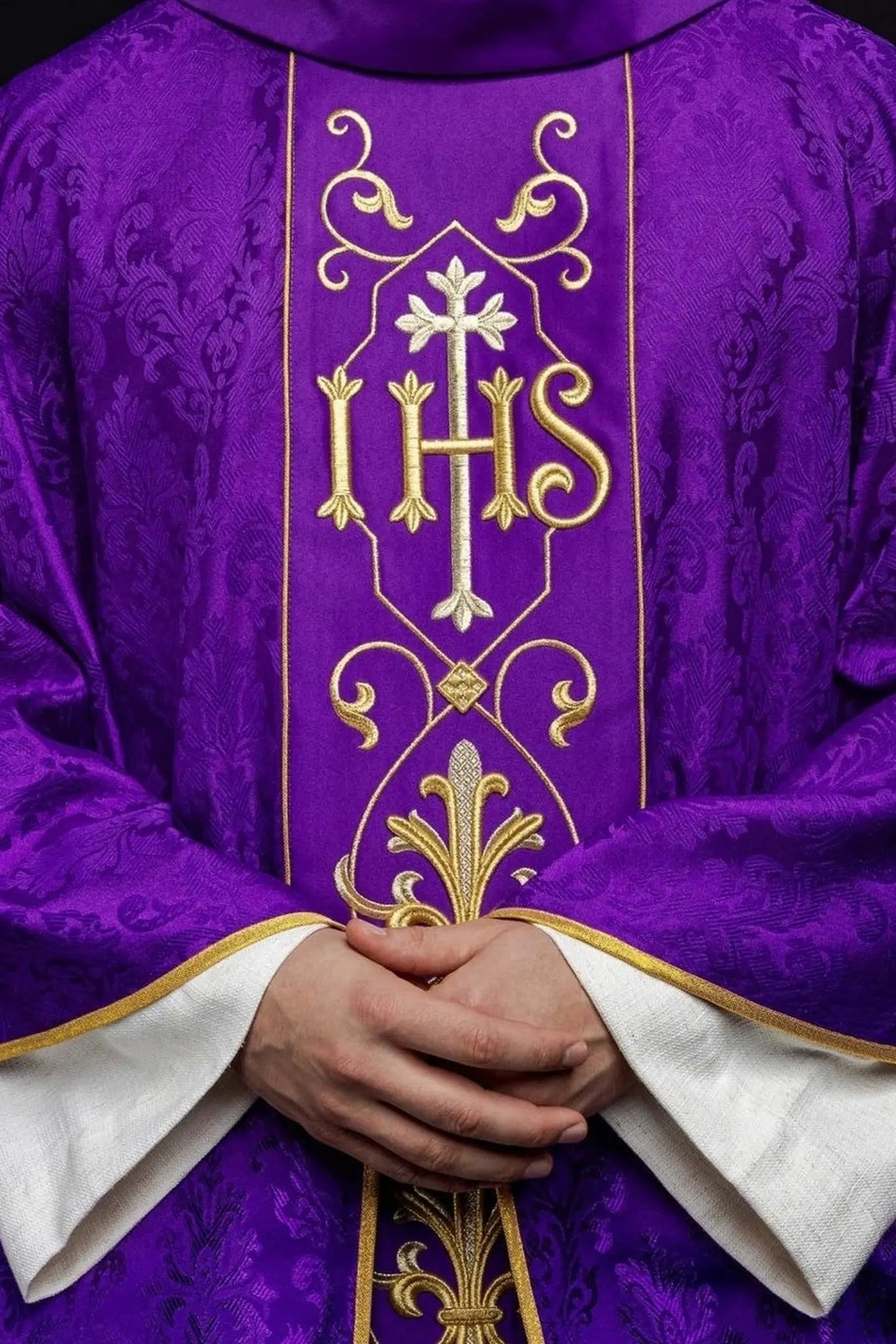
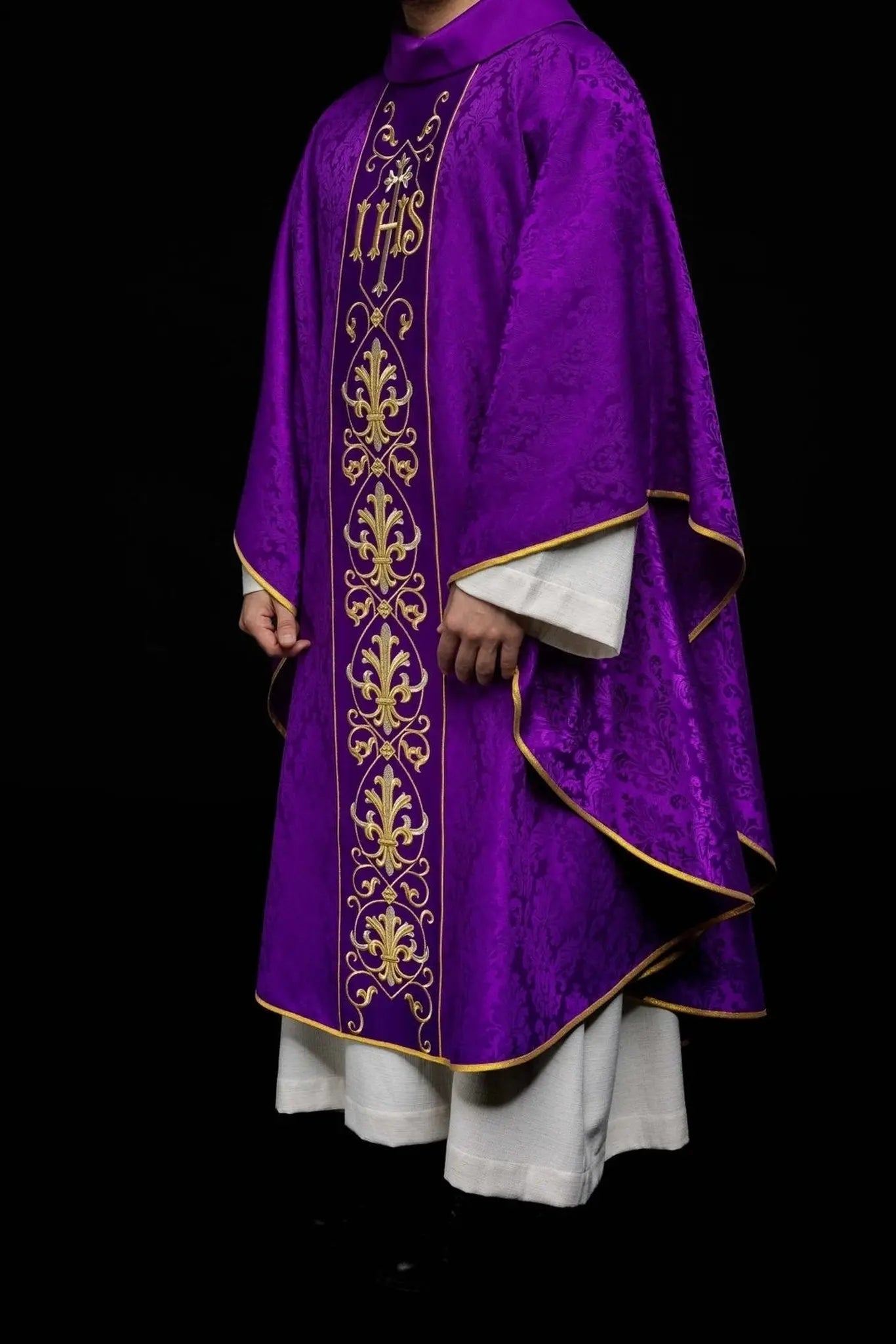
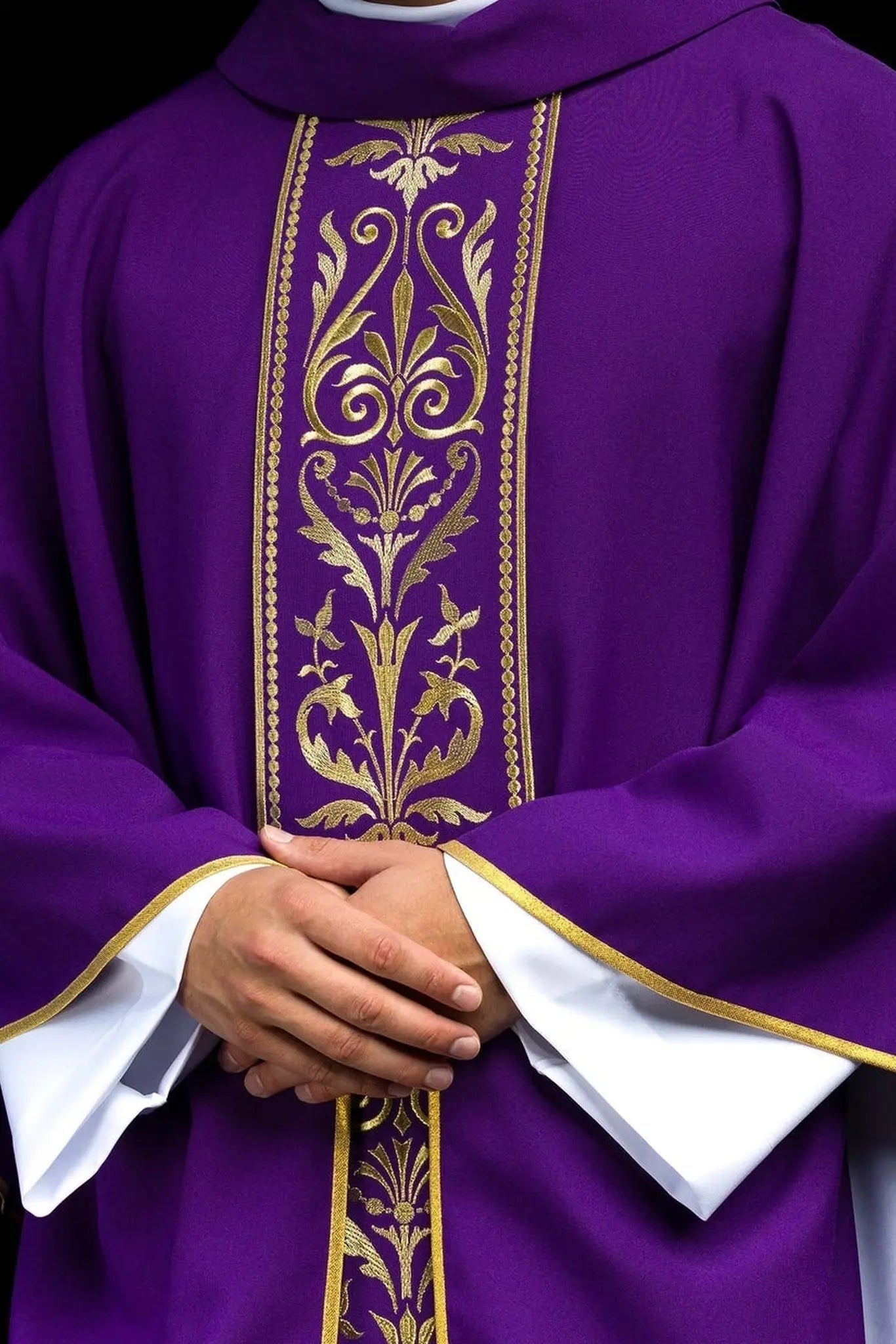
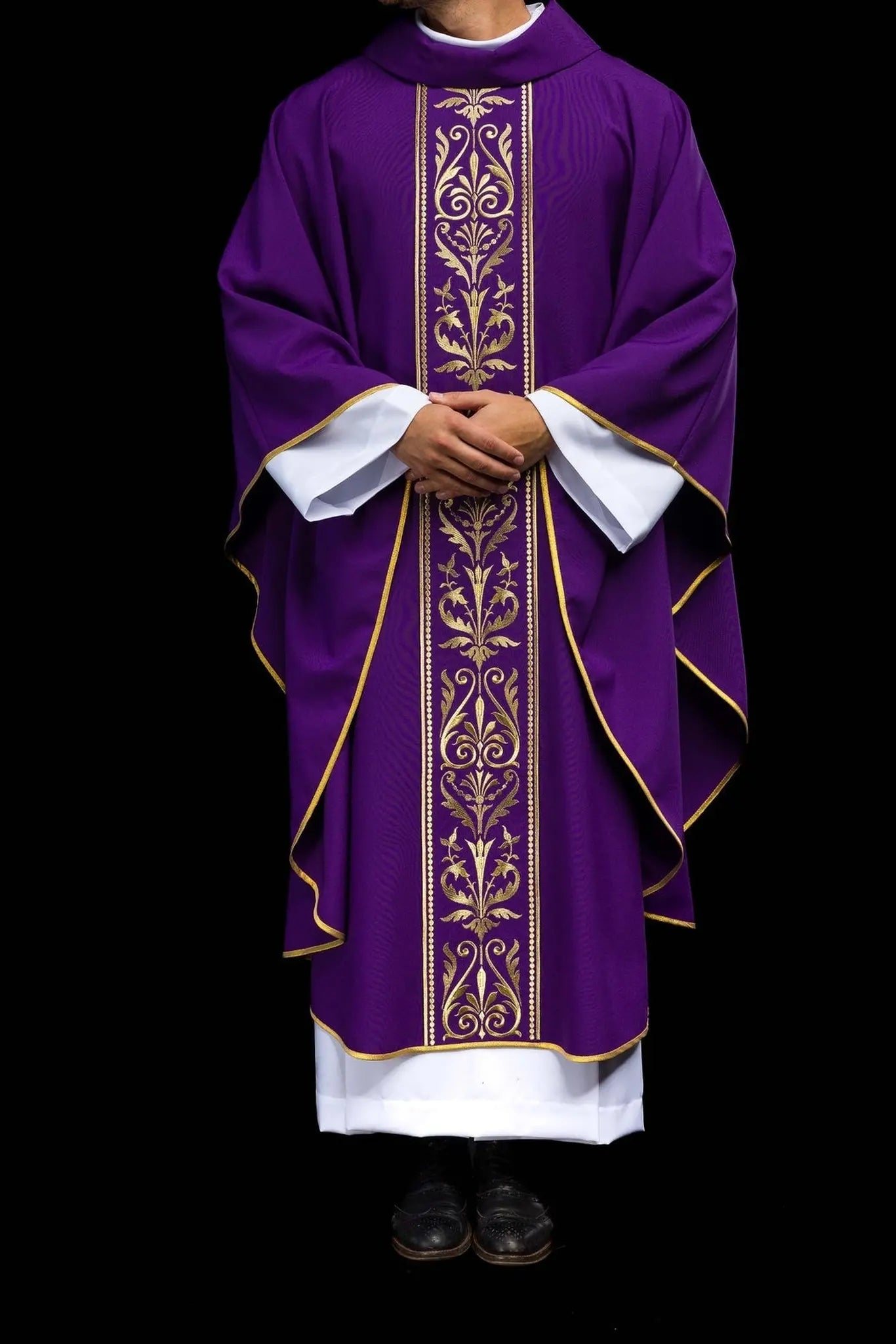
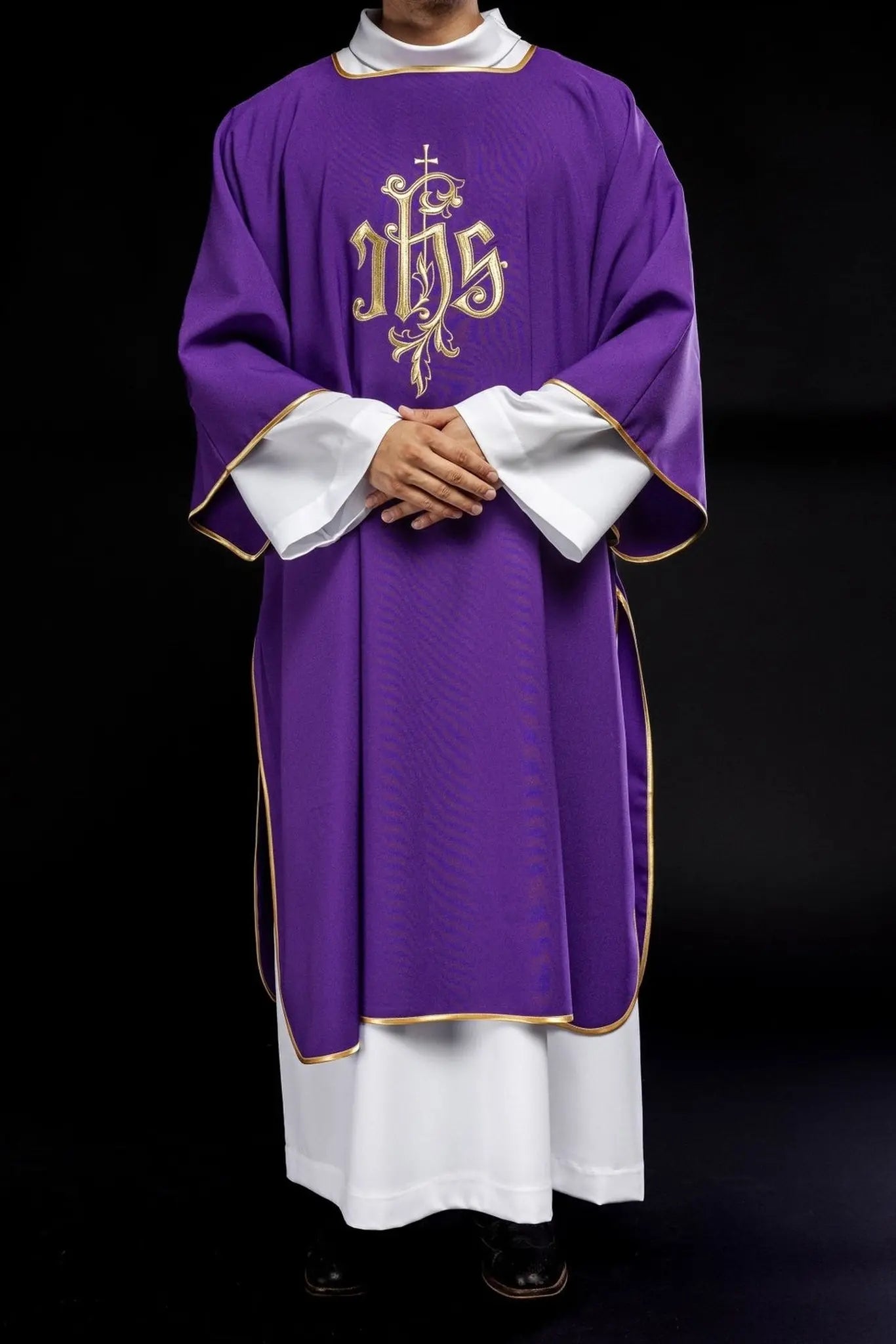
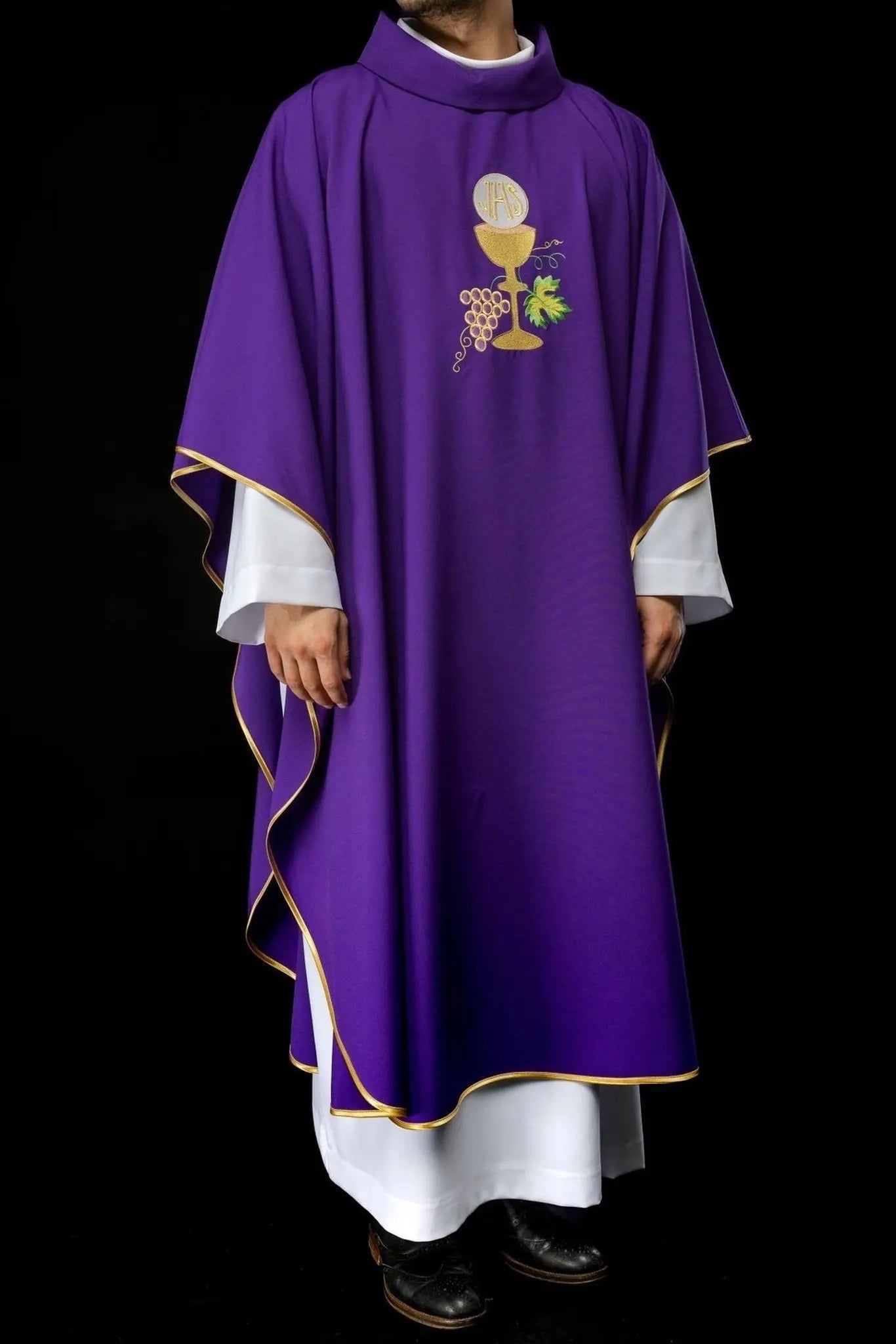
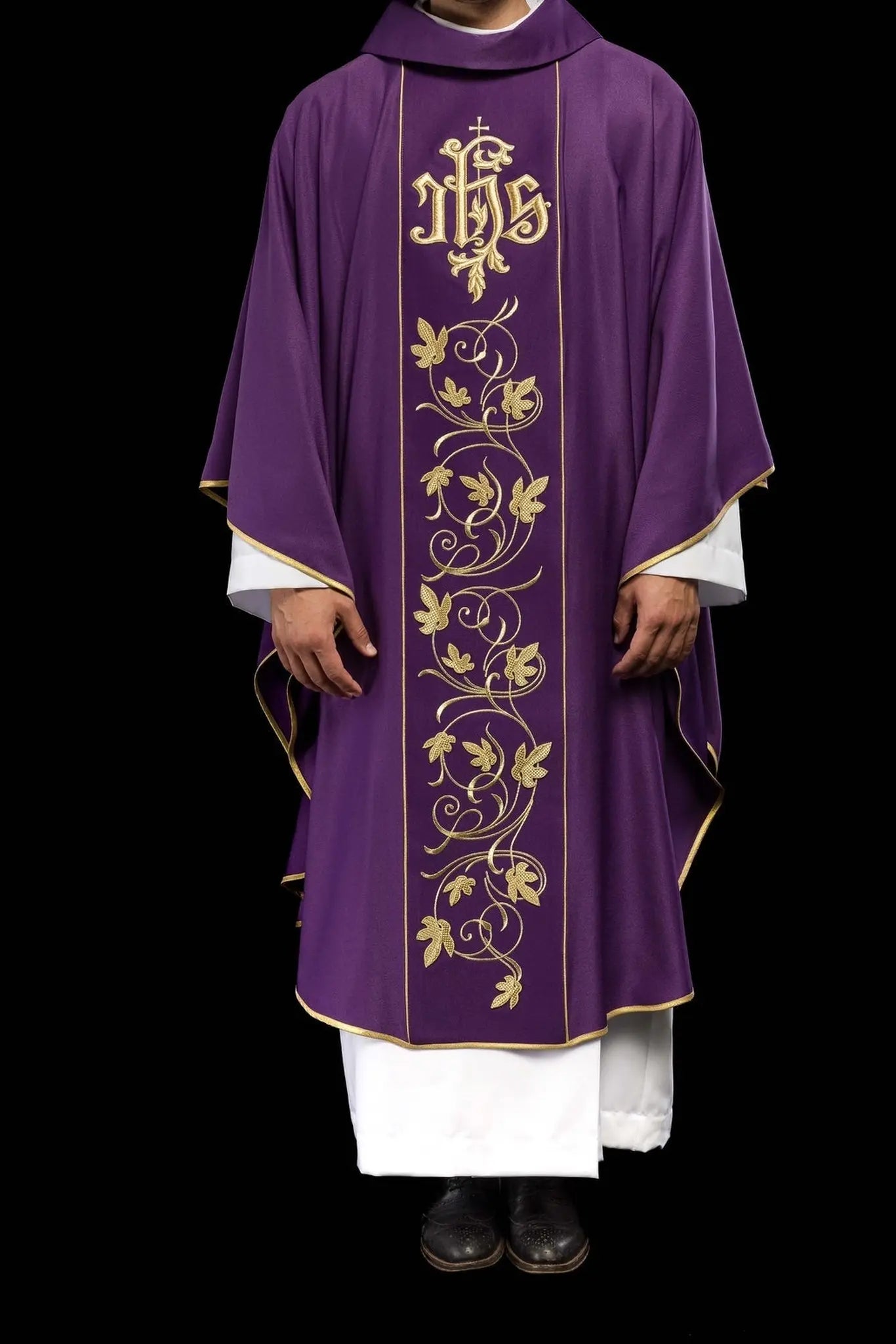
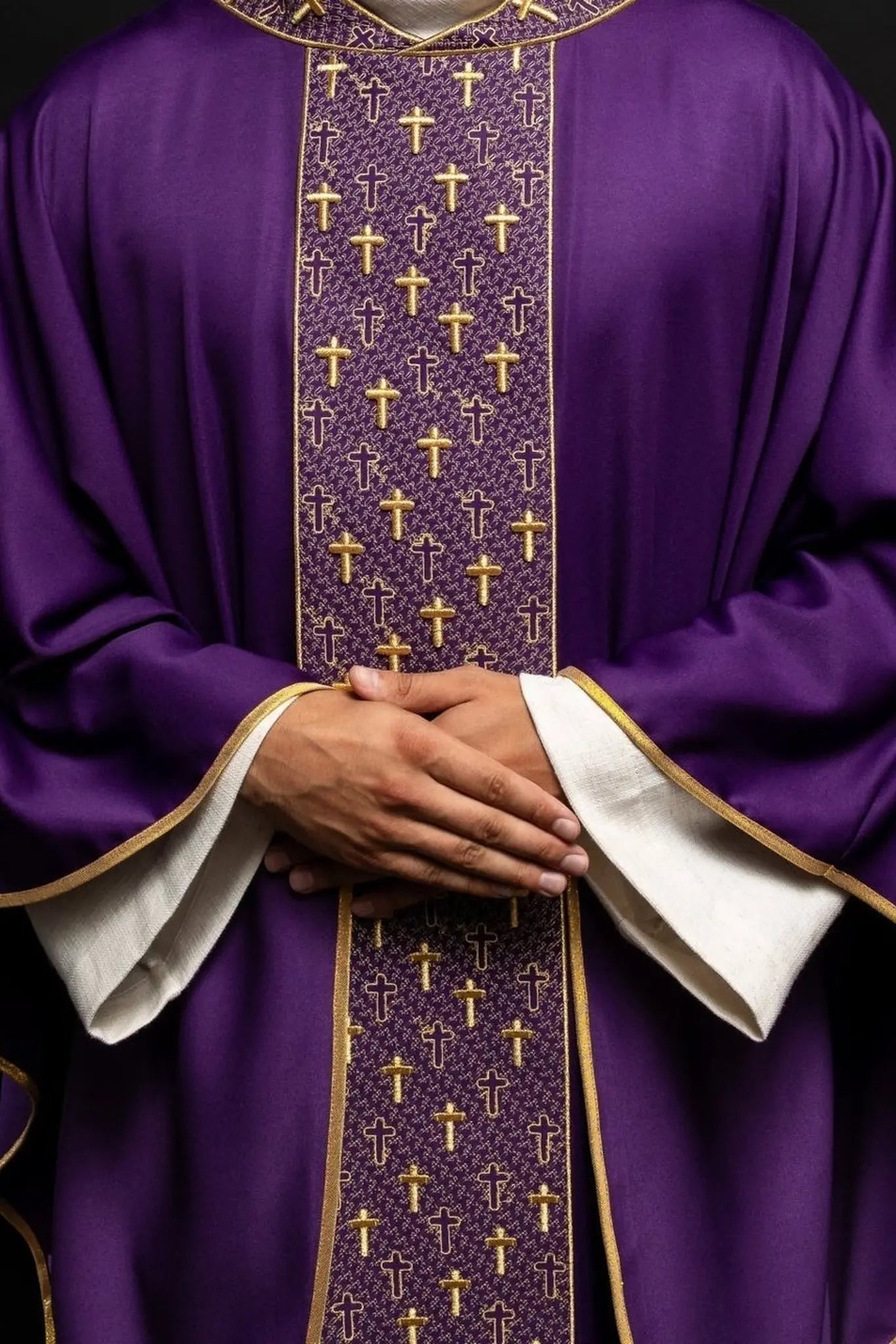
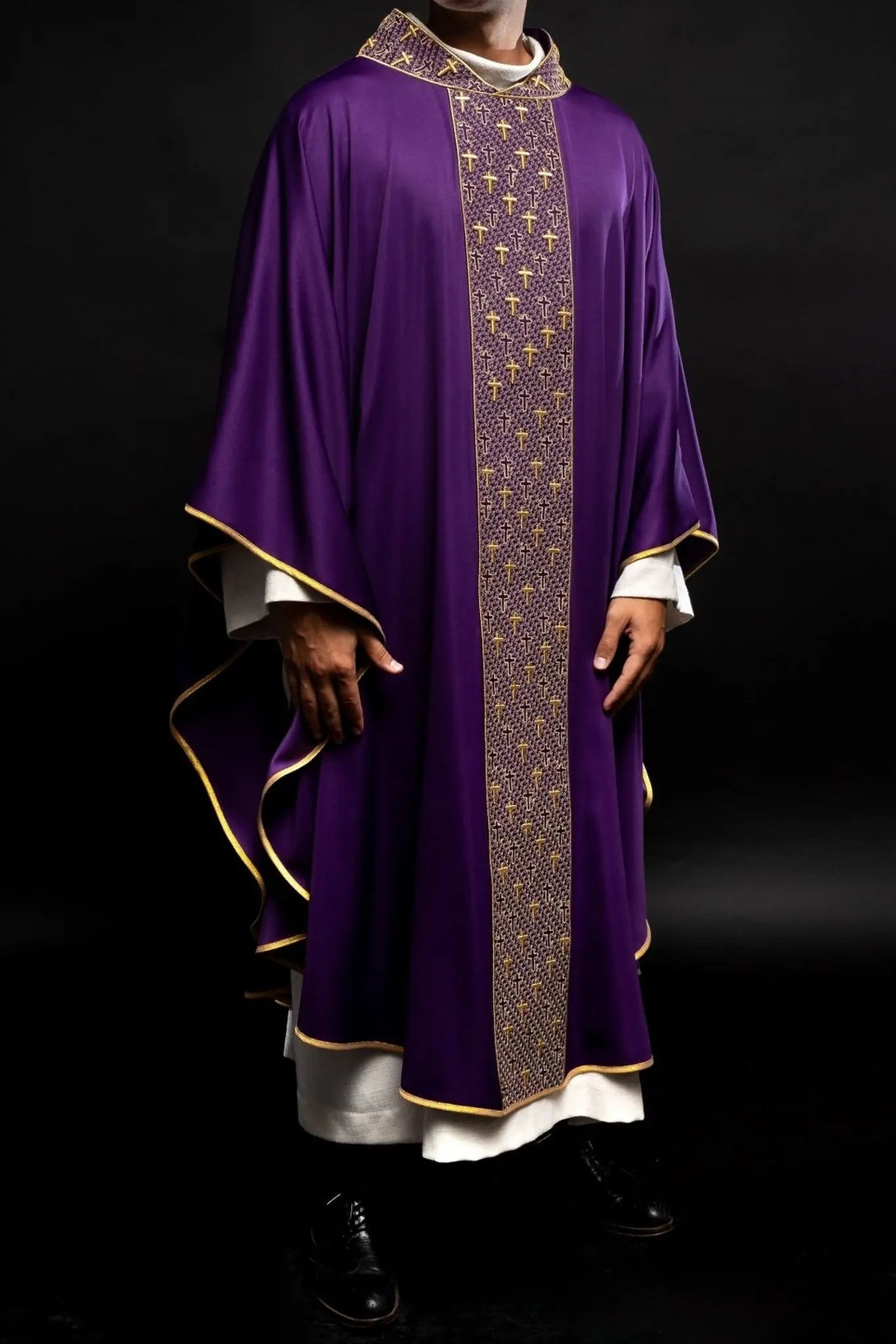
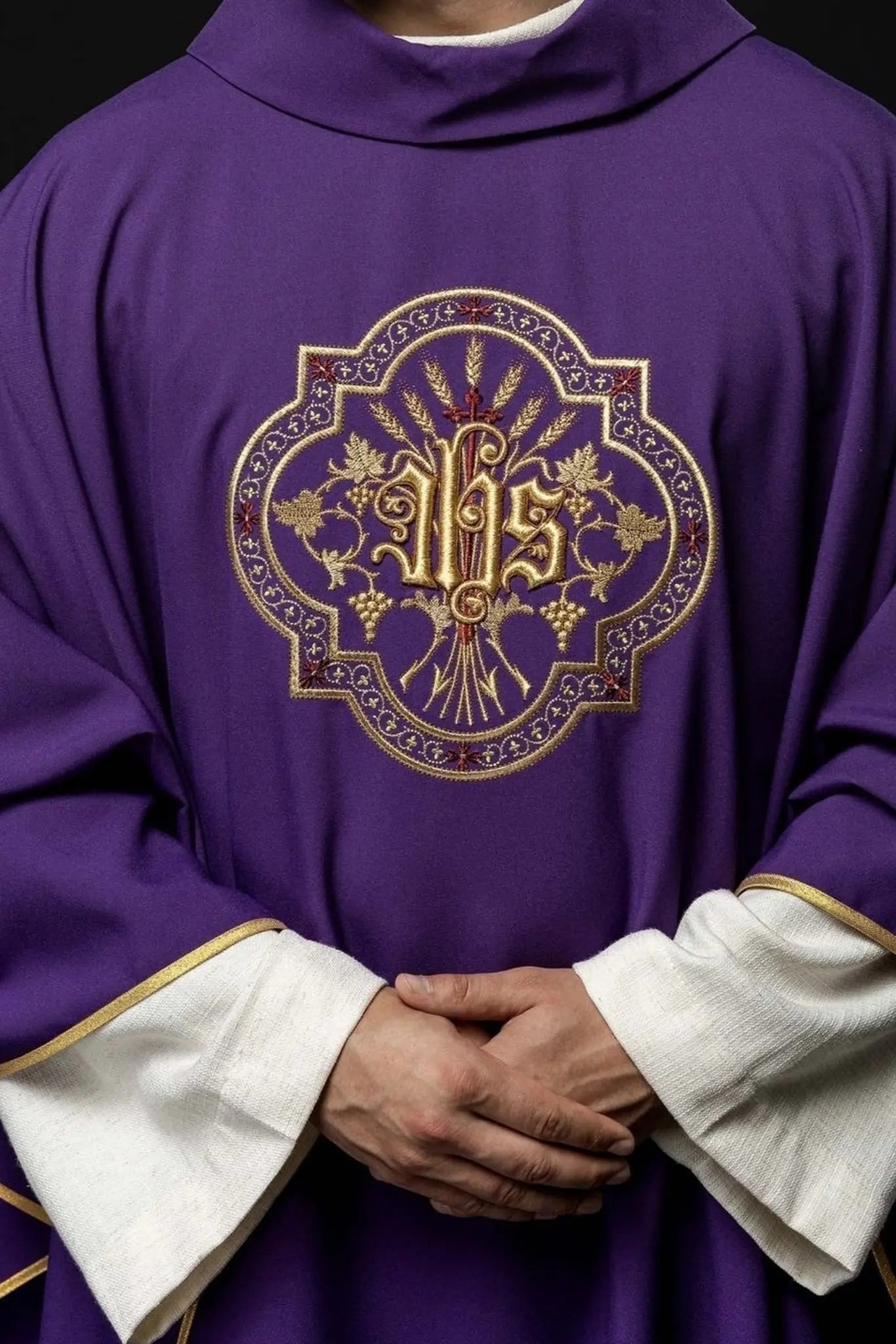
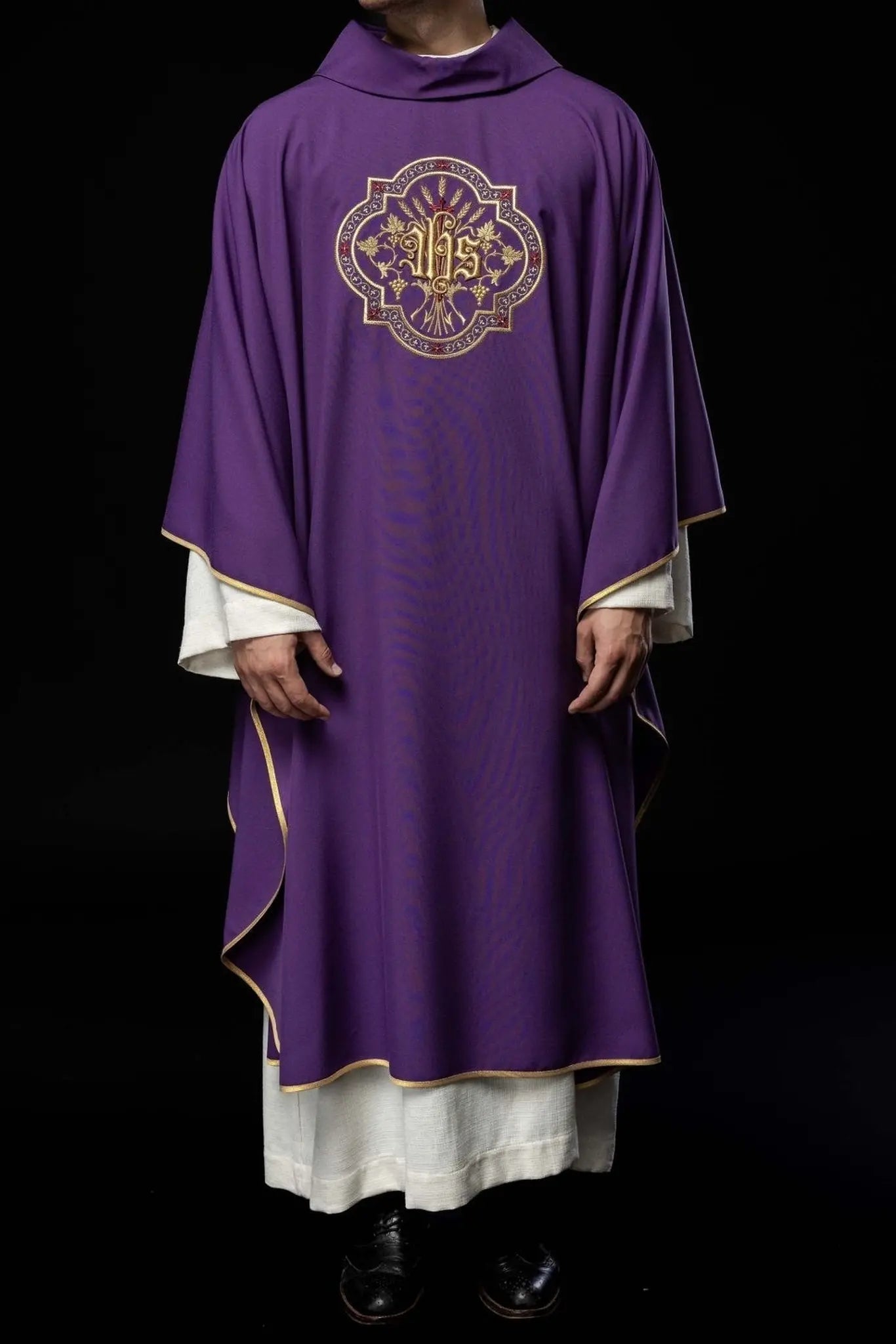
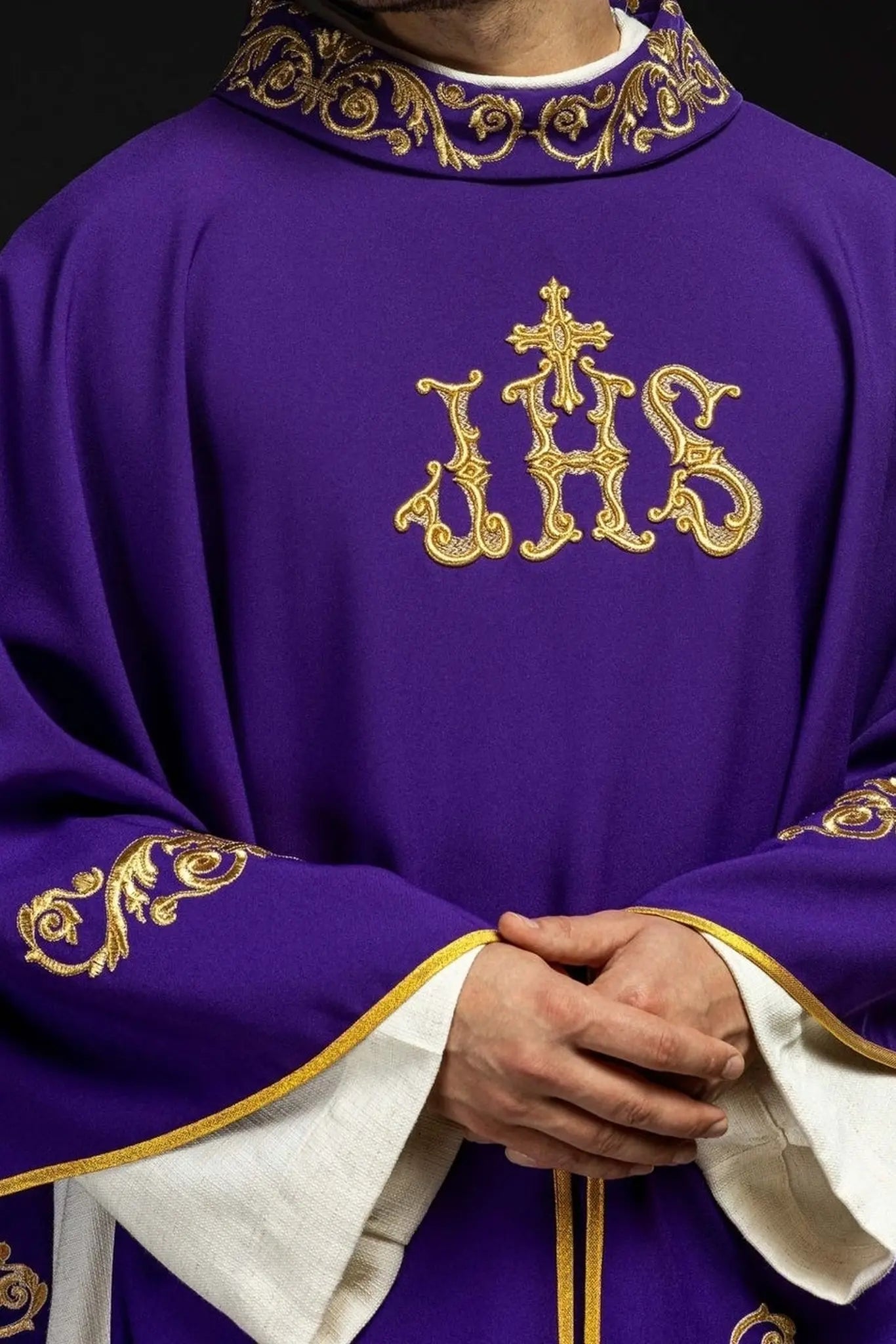
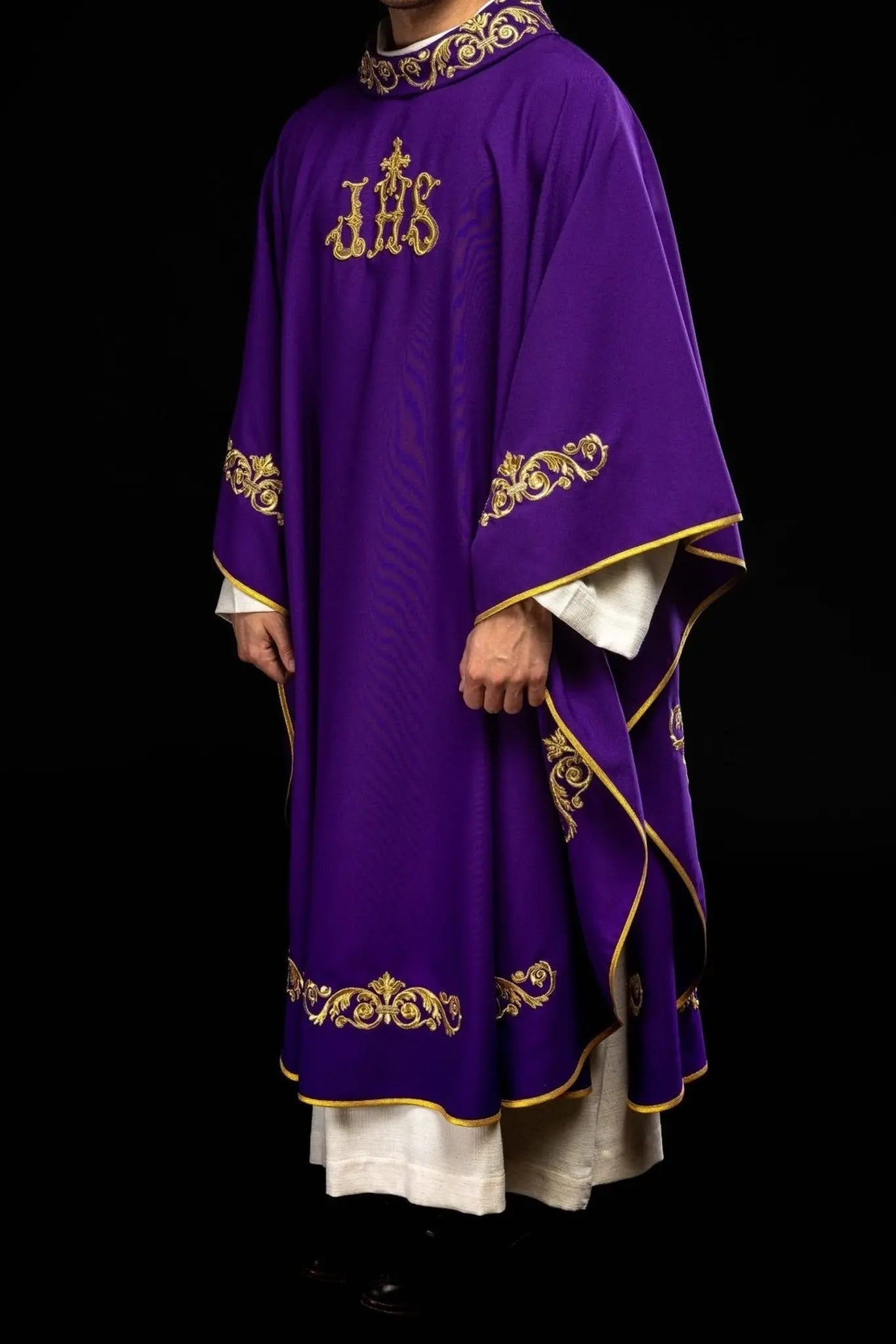
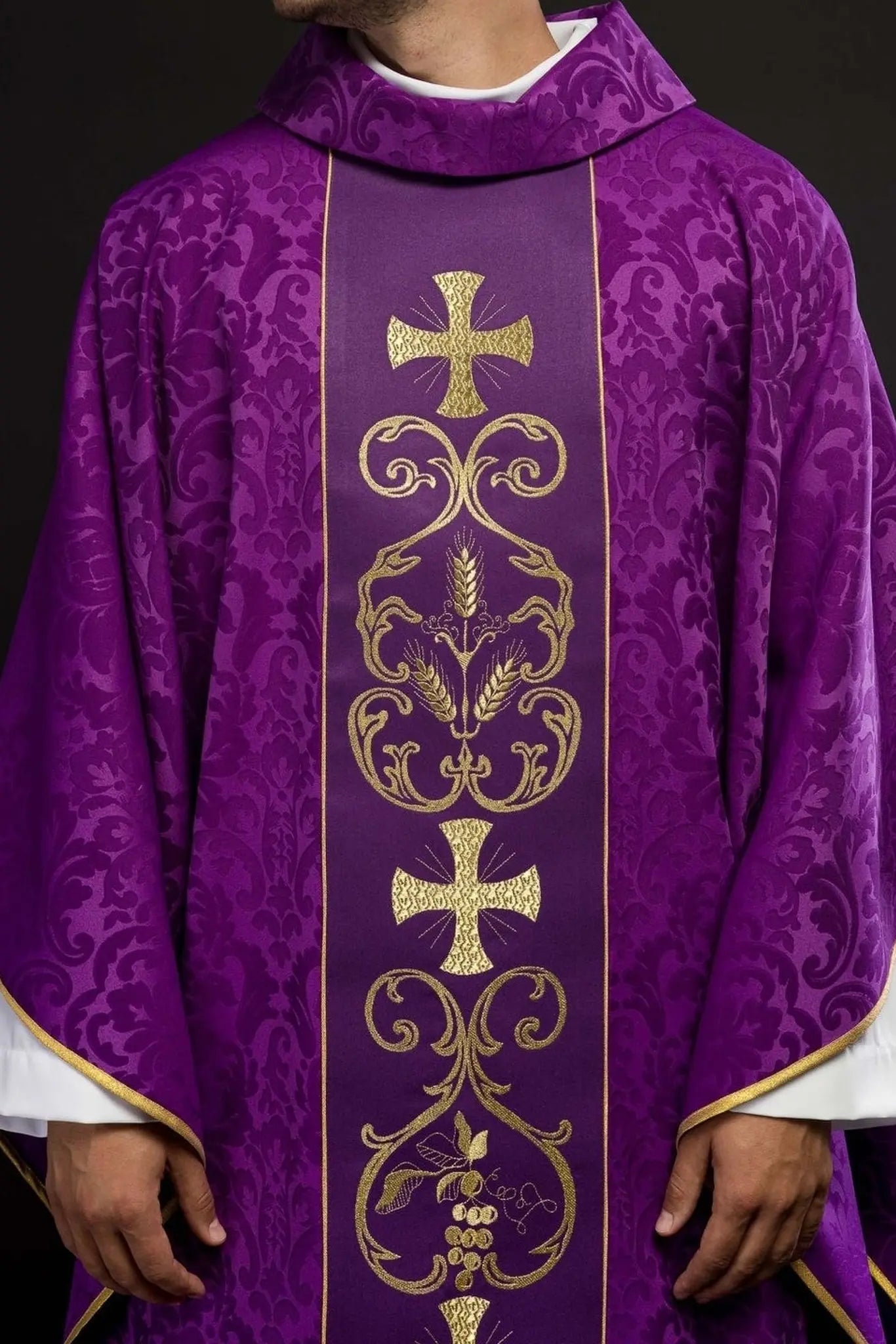
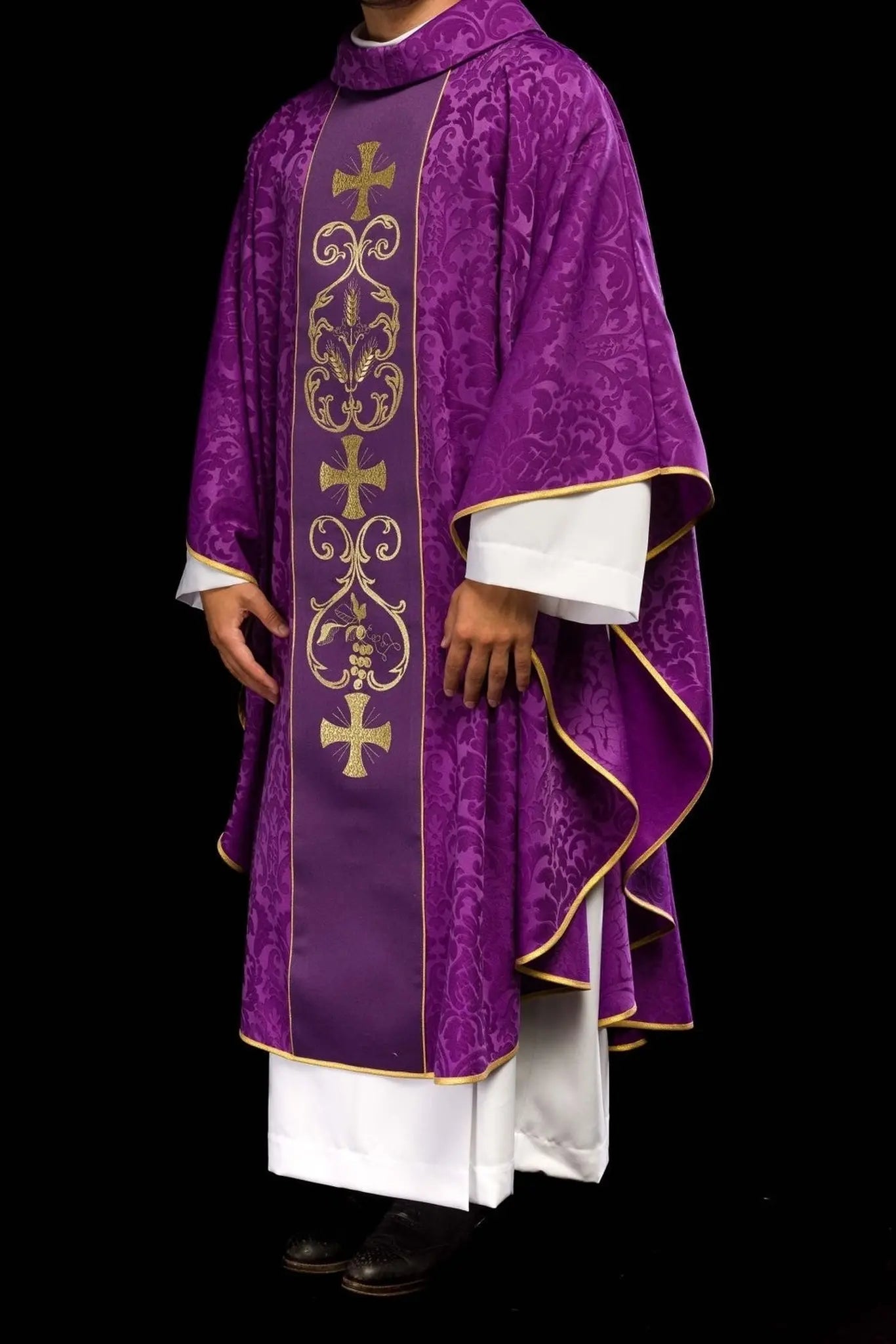
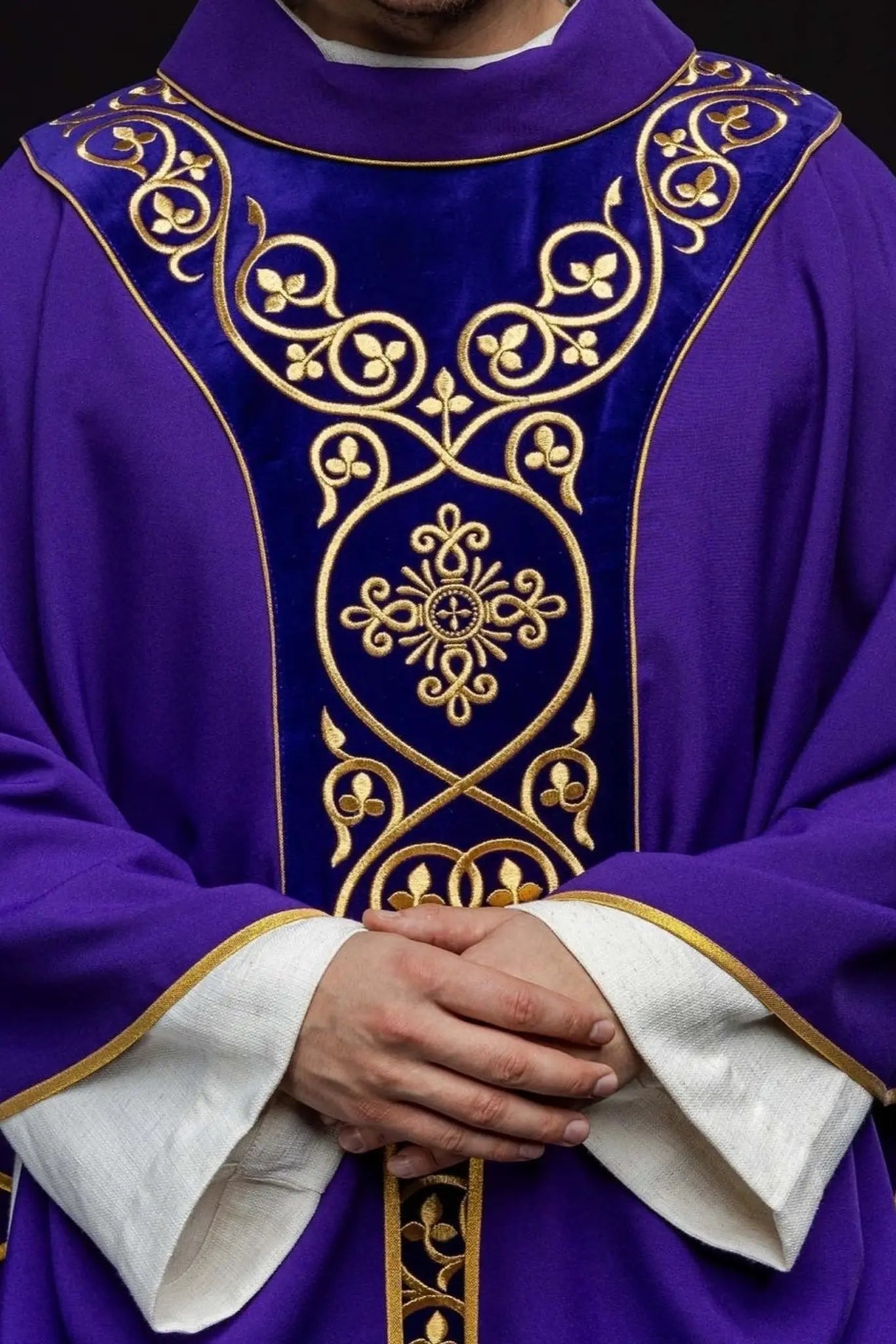
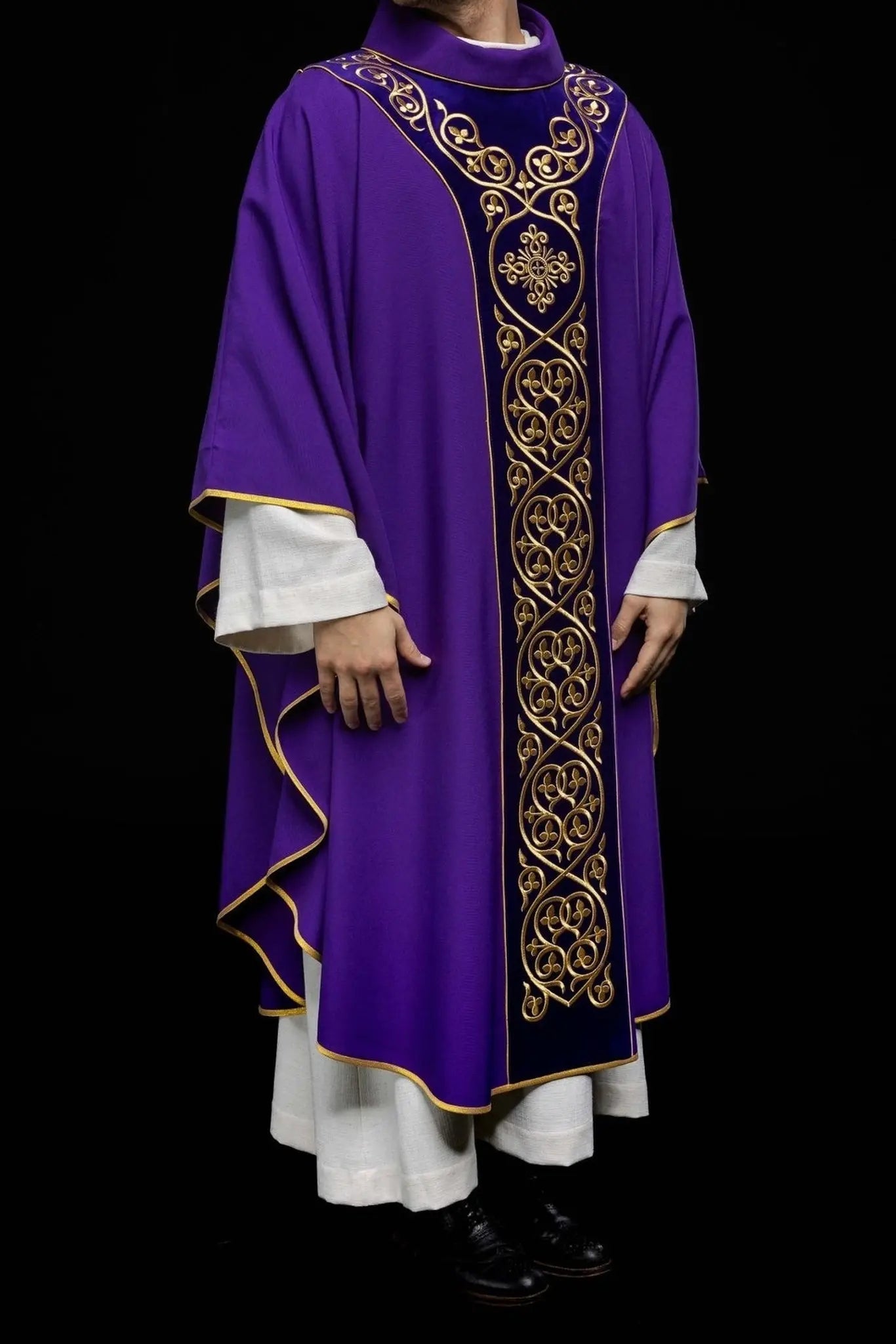
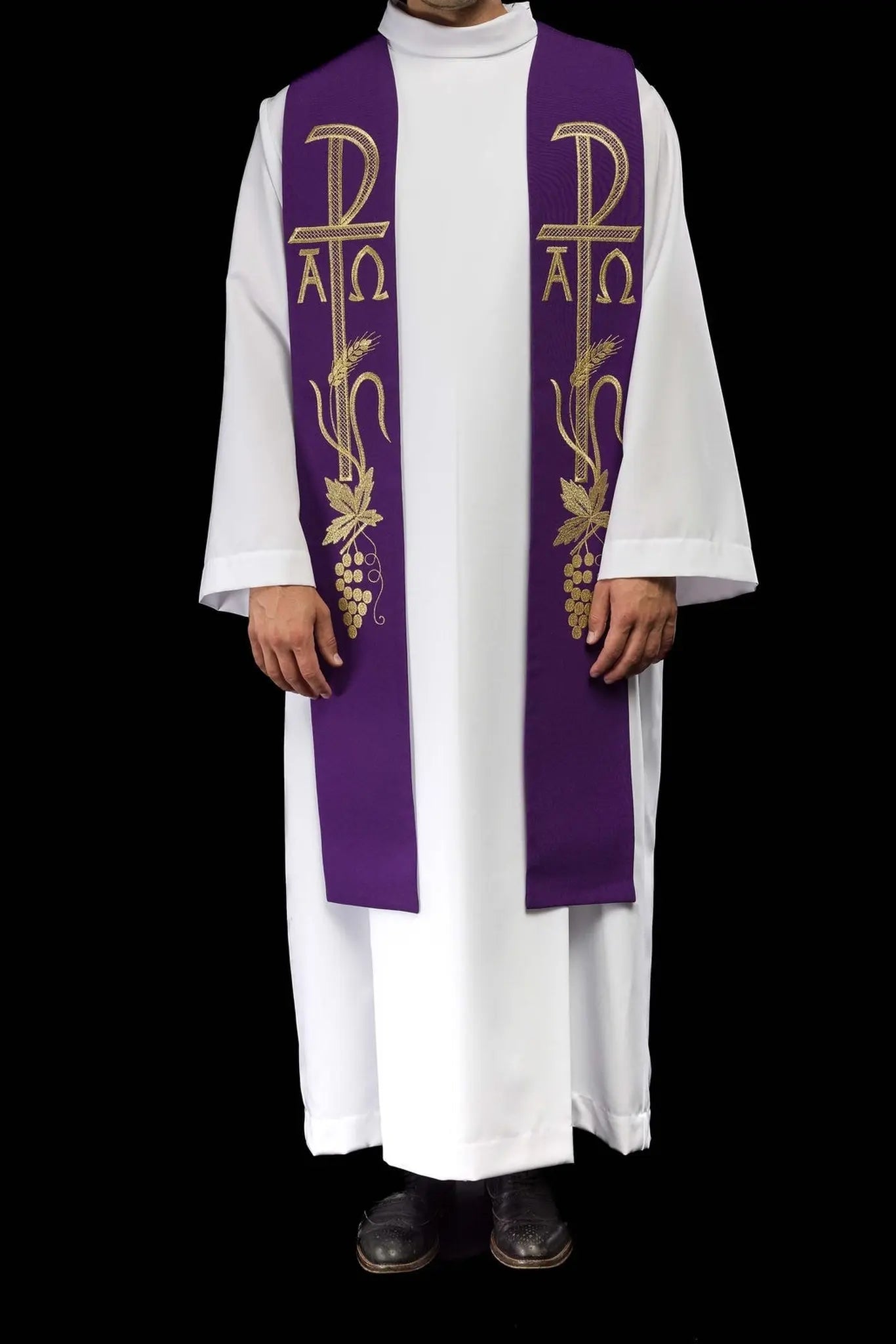
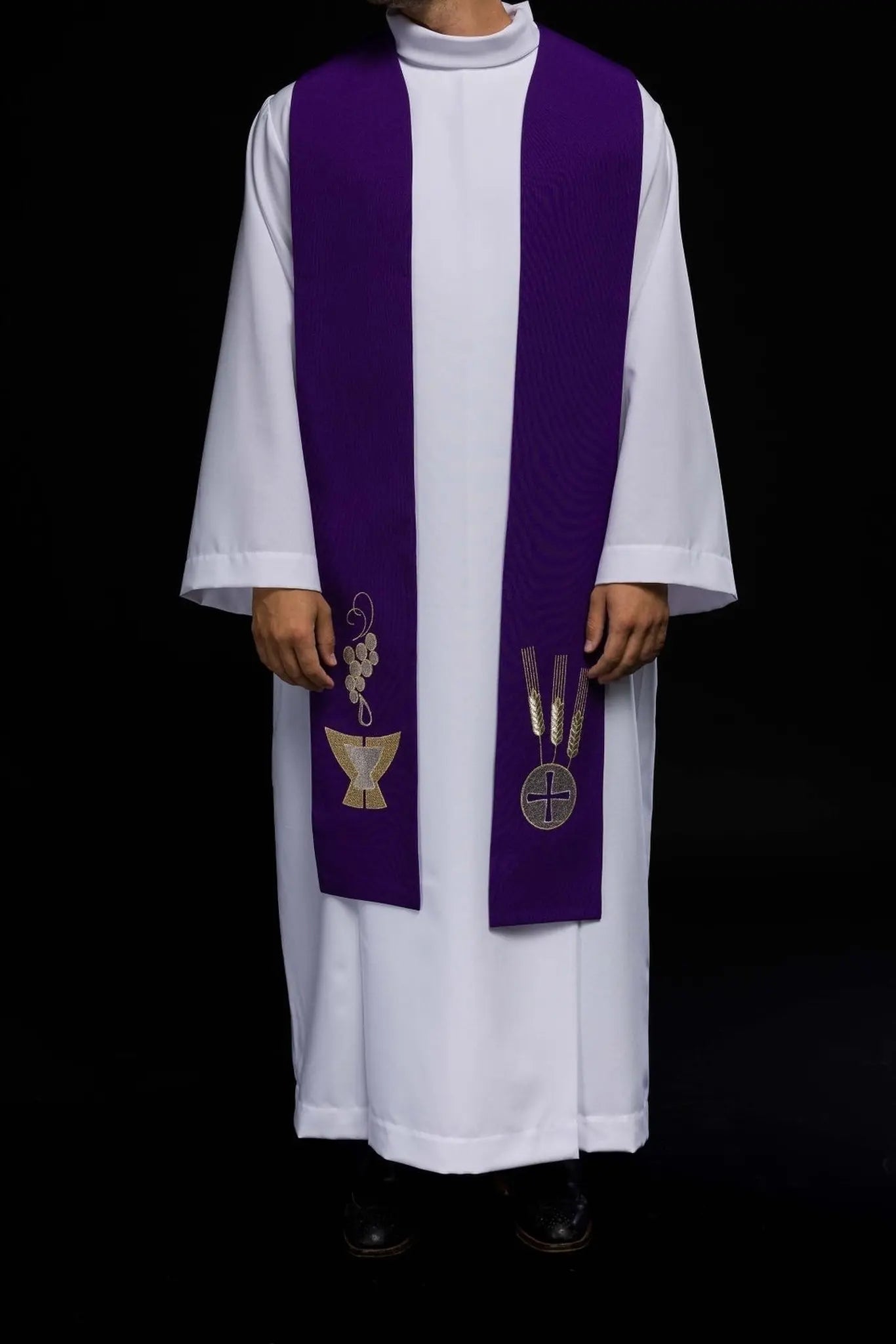
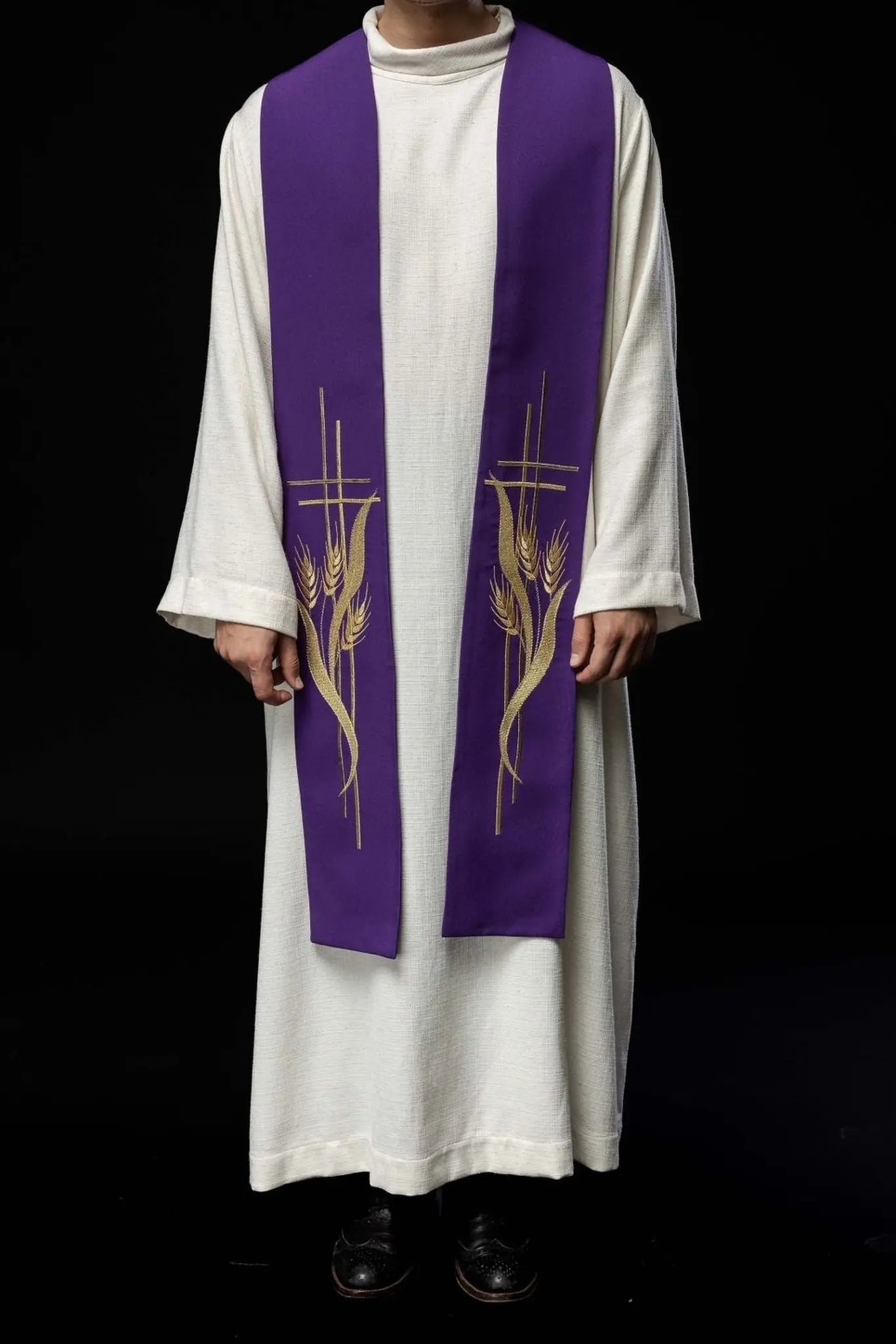
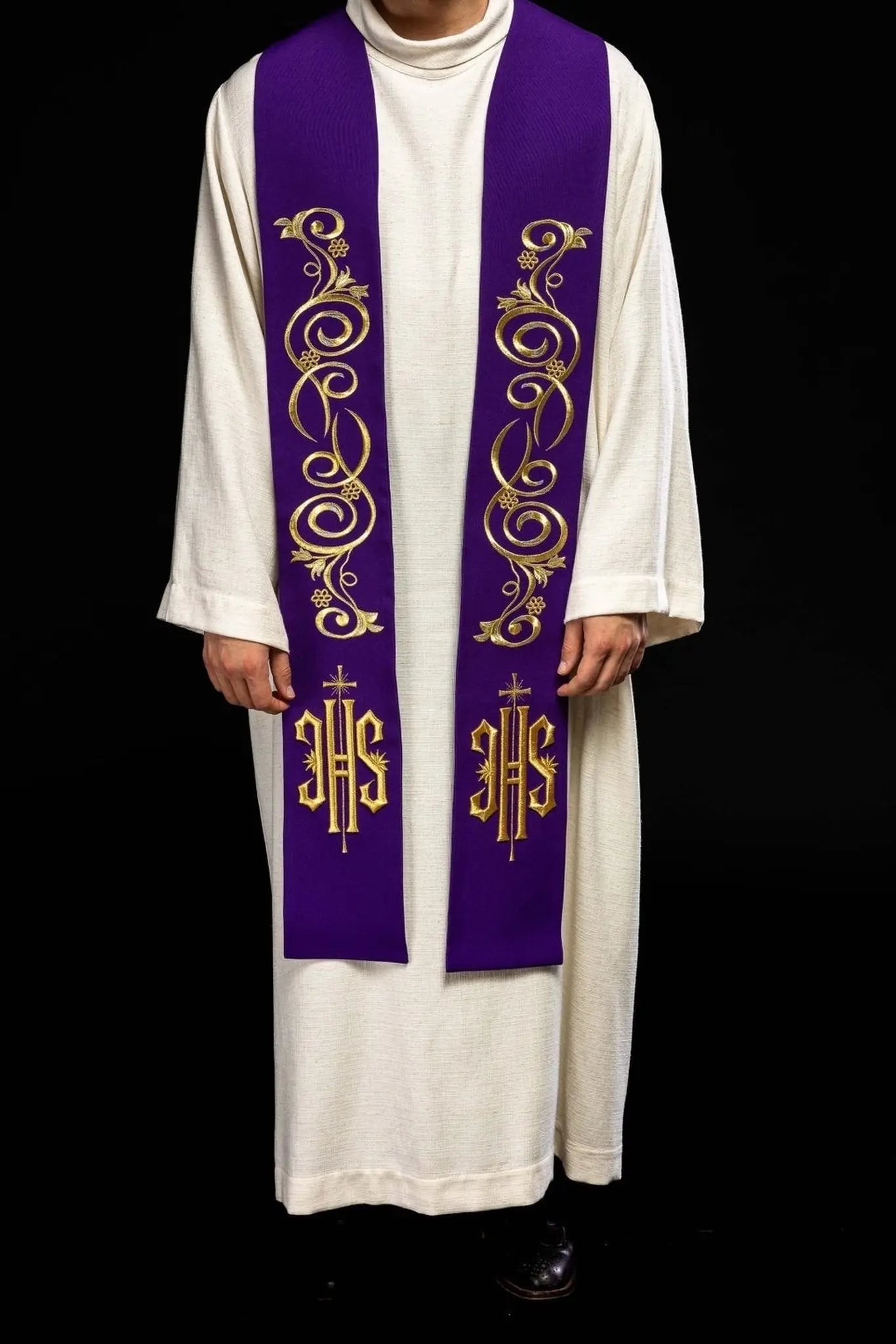
The principal liturgical color for Advent is violet, often described in church use as purple. This color expresses preparation, penitence, prayer, and royal expectation. Advent points to the coming of Christ in history at Bethlehem, to His coming in grace, and to His return in glory. For that reason, Advent vestments should not be treated as merely dark or decorative garments. Their color carries a theological message: the Church waits, listens, repents, and hopes. A violet chasuble or stole can communicate this tone clearly even when the embroidery is simple.
In many parishes, Advent violet is visually related to, but not always identical with, the purple used in Lent. Advent designs often emphasize expectation, prophecy, light in darkness, the Blessed Virgin Mary, the Star of Bethlehem, the Jesse Tree, or discreet ornamental patterns. Lenten designs may carry stronger themes of penance, the Cross, and Passiontide. When choosing from this collection, it is helpful to consider whether the vestment will be used only during Advent or also during other penitential seasons. For a wider selection by color, parishes can also compare dedicated purple chasubles and purple clergy stoles with the Advent pieces selected here.
The shade itself matters. Some churches prefer deep violet for a solemn and traditional appearance. Others choose a warmer purple that reads clearly under sanctuary lighting and coordinates well with embroidered gold, silver, or ecru motifs. If the sanctuary already has purple altar frontals, pulpit covers, or chalice veils, matching the tone helps the entire liturgical space appear intentional rather than assembled from unrelated pieces. In a very bright interior, a deeper violet can maintain the season's contemplative character. In a darker chapel, embroidery with light thread may help the vestment remain visible without losing reverence.
Rose vestments for Gaudete Sunday
The third Sunday of Advent, traditionally known as Gaudete Sunday, introduces a note of restrained joy within the season of preparation. Where rose vestments are used, they mark this moment with a lighter liturgical color that anticipates the joy of Christmas while Advent continues. Rose is not the same as casual pink in liturgical language; it is a traditional color with its own purpose and dignity. A rose chasuble, rose stole, or coordinated textile set should therefore be chosen with the same care given to violet Advent vestments.
Because rose is used only on particular days, many parishes build their wardrobe gradually. A priest's rose chasuble may be the first priority, followed by matching stoles, chalice veils, or pulpit textiles. Communities that celebrate both Gaudete Sunday in Advent and Laetare Sunday in Lent may prefer a design that is suitable for both days. To compare related items for these occasions, see the Gaudete and Laetare vestments collection, which is closely connected to Advent but focused specifically on the rose liturgical color.
Advent chasubles for priests and bishops
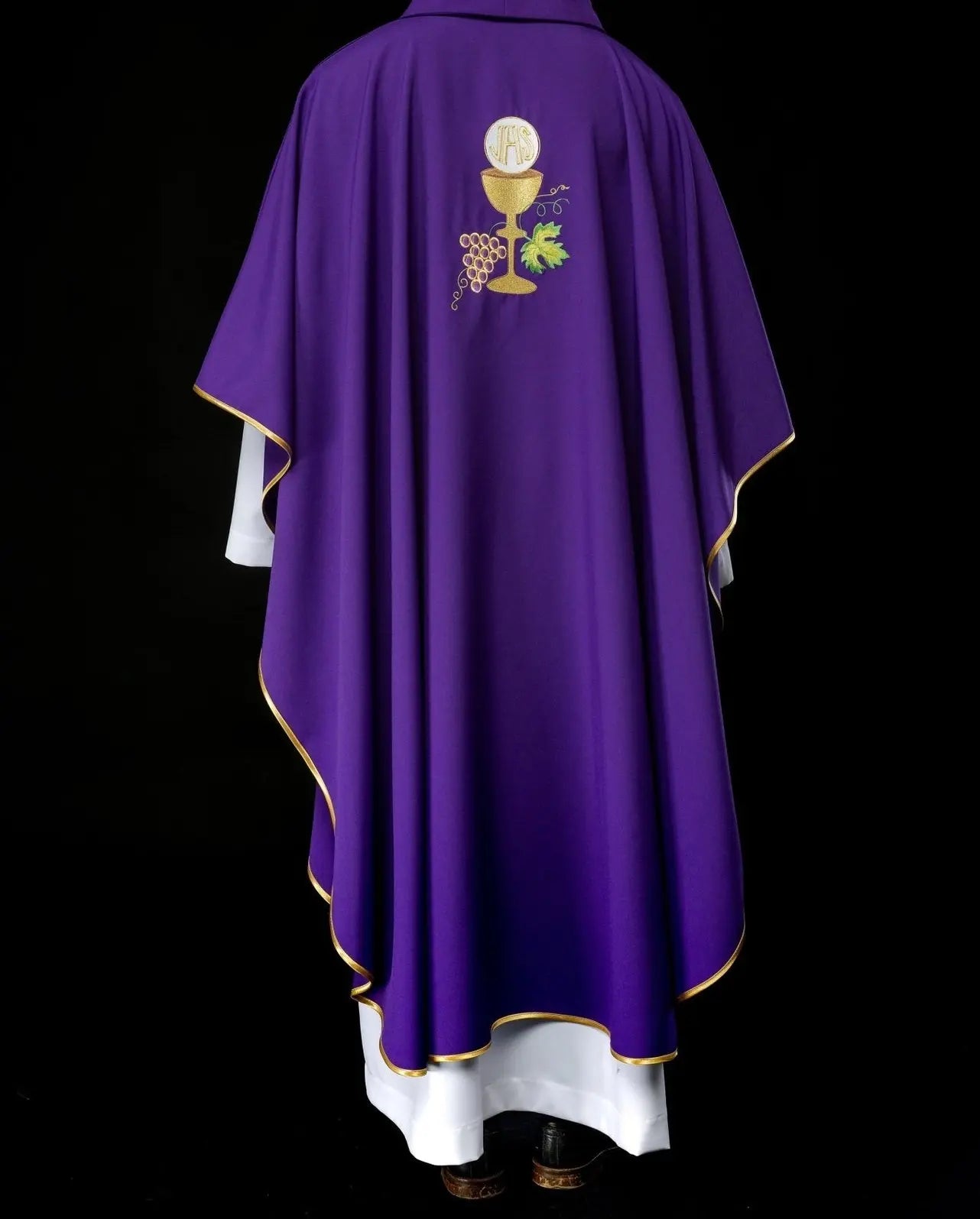
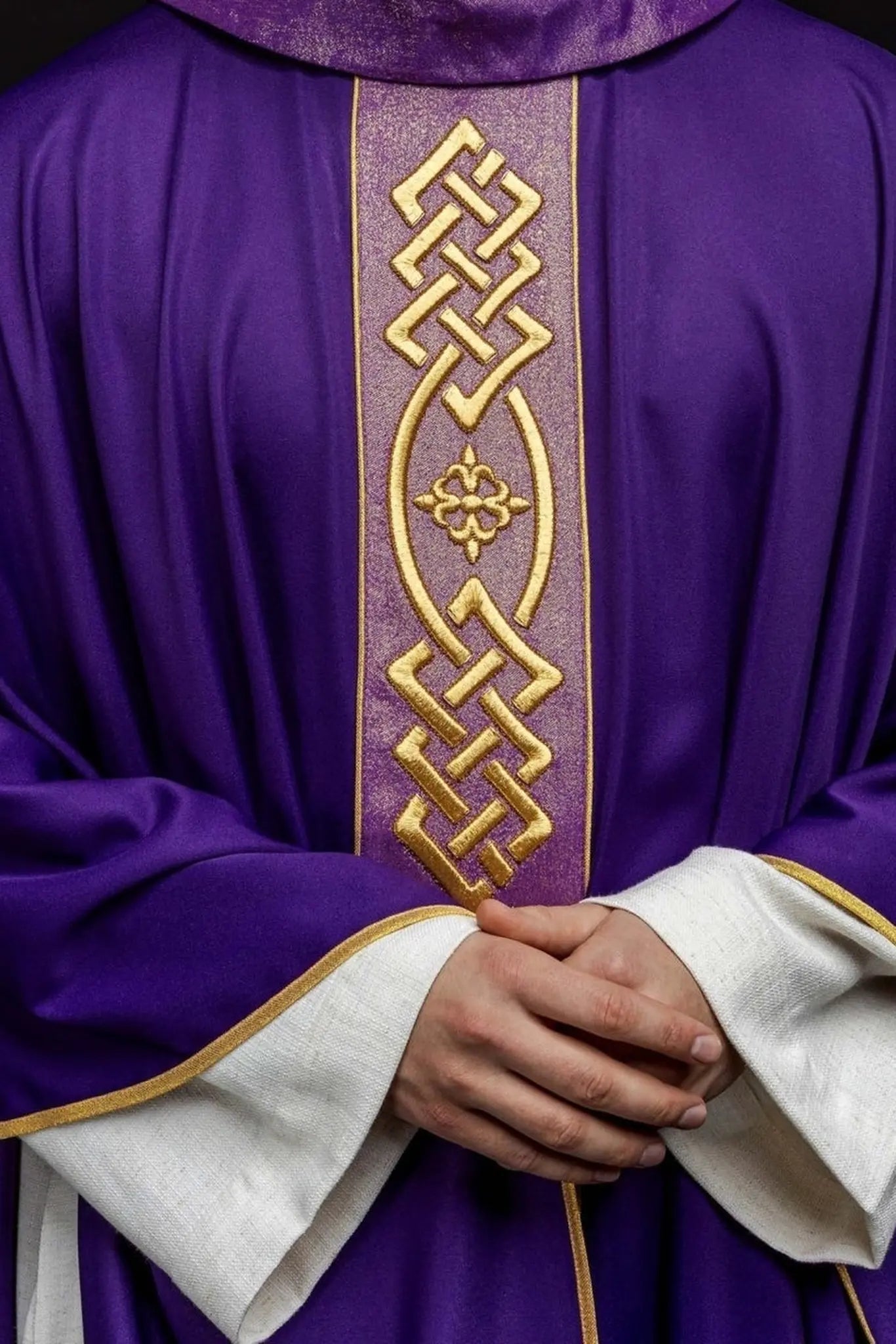
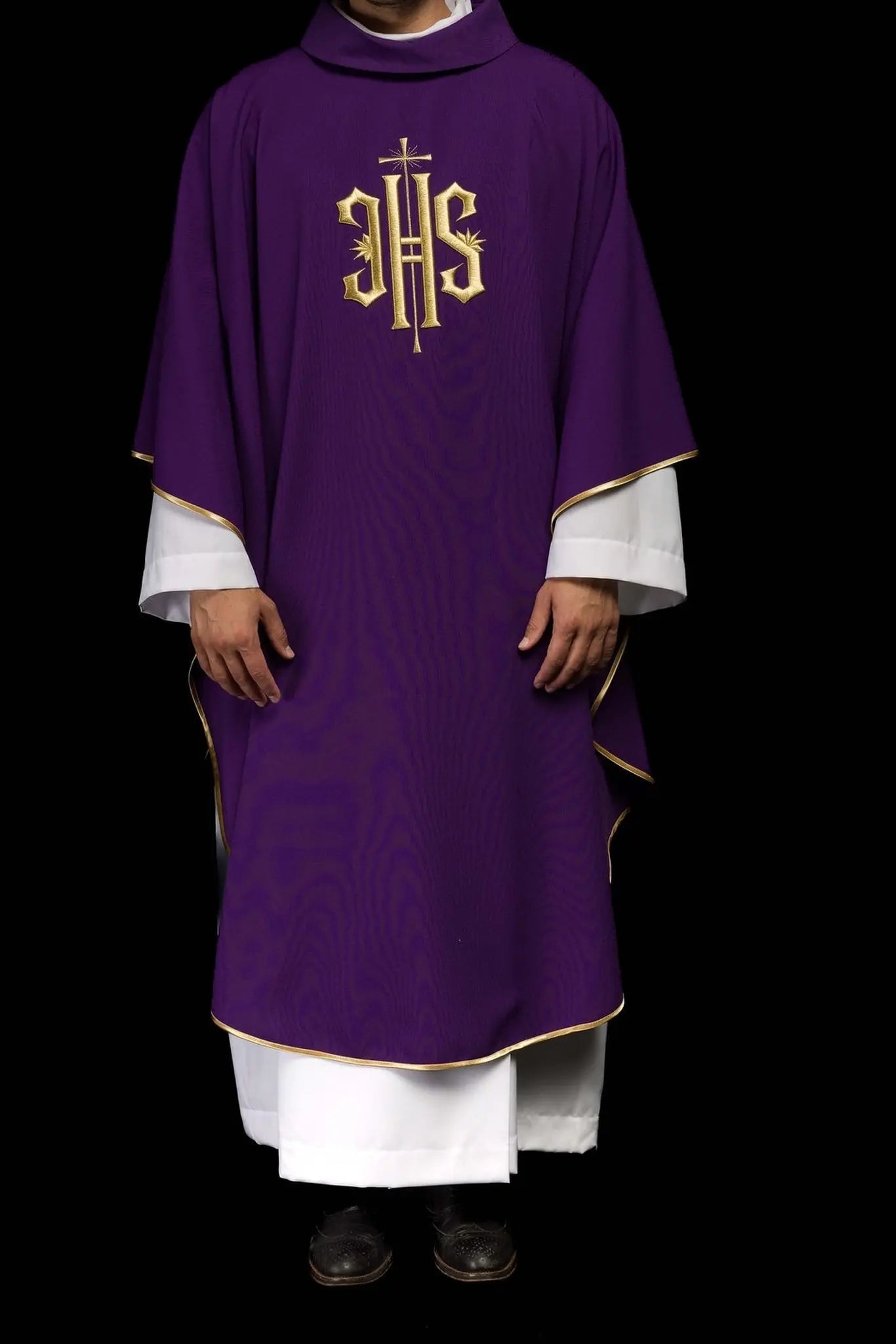
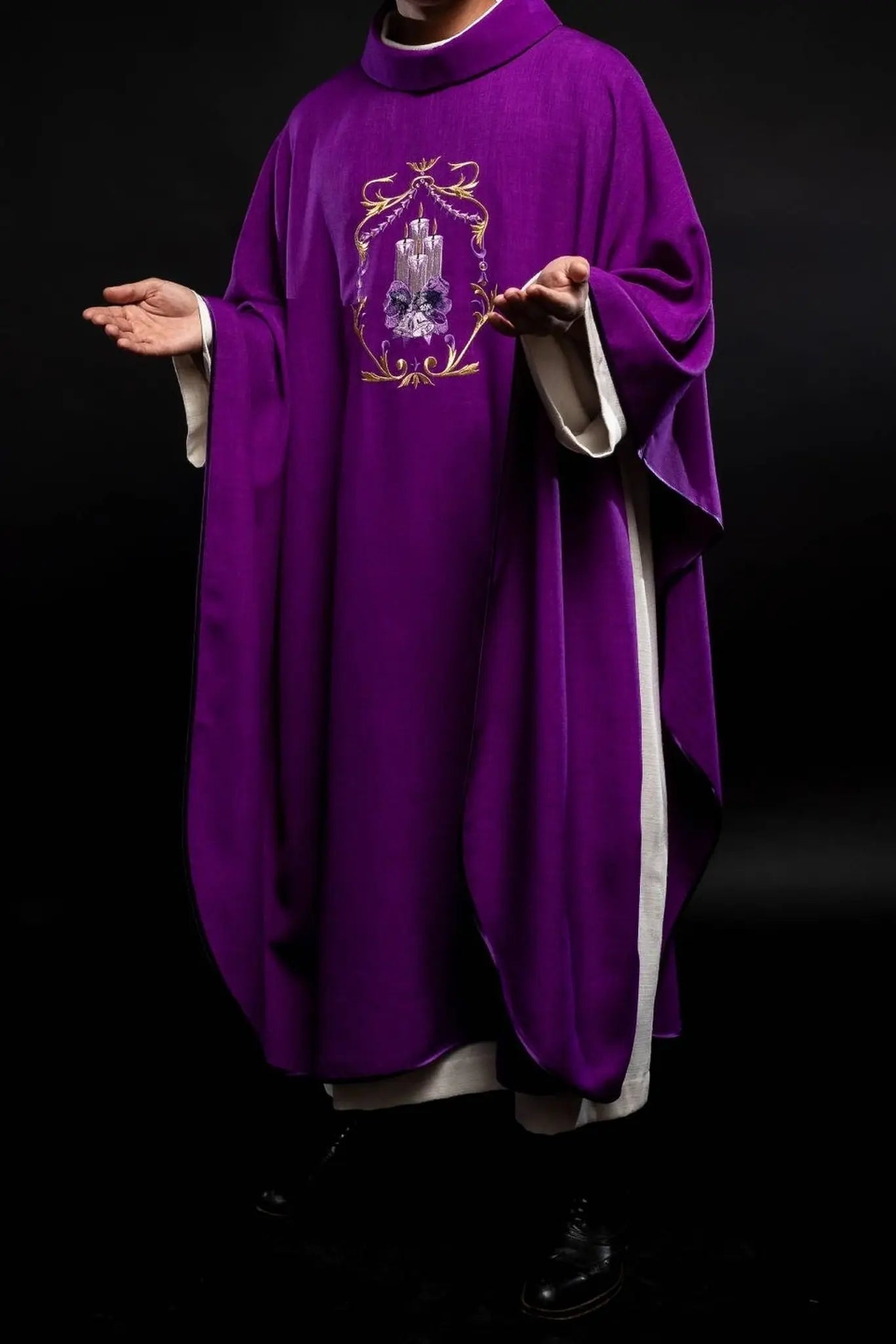
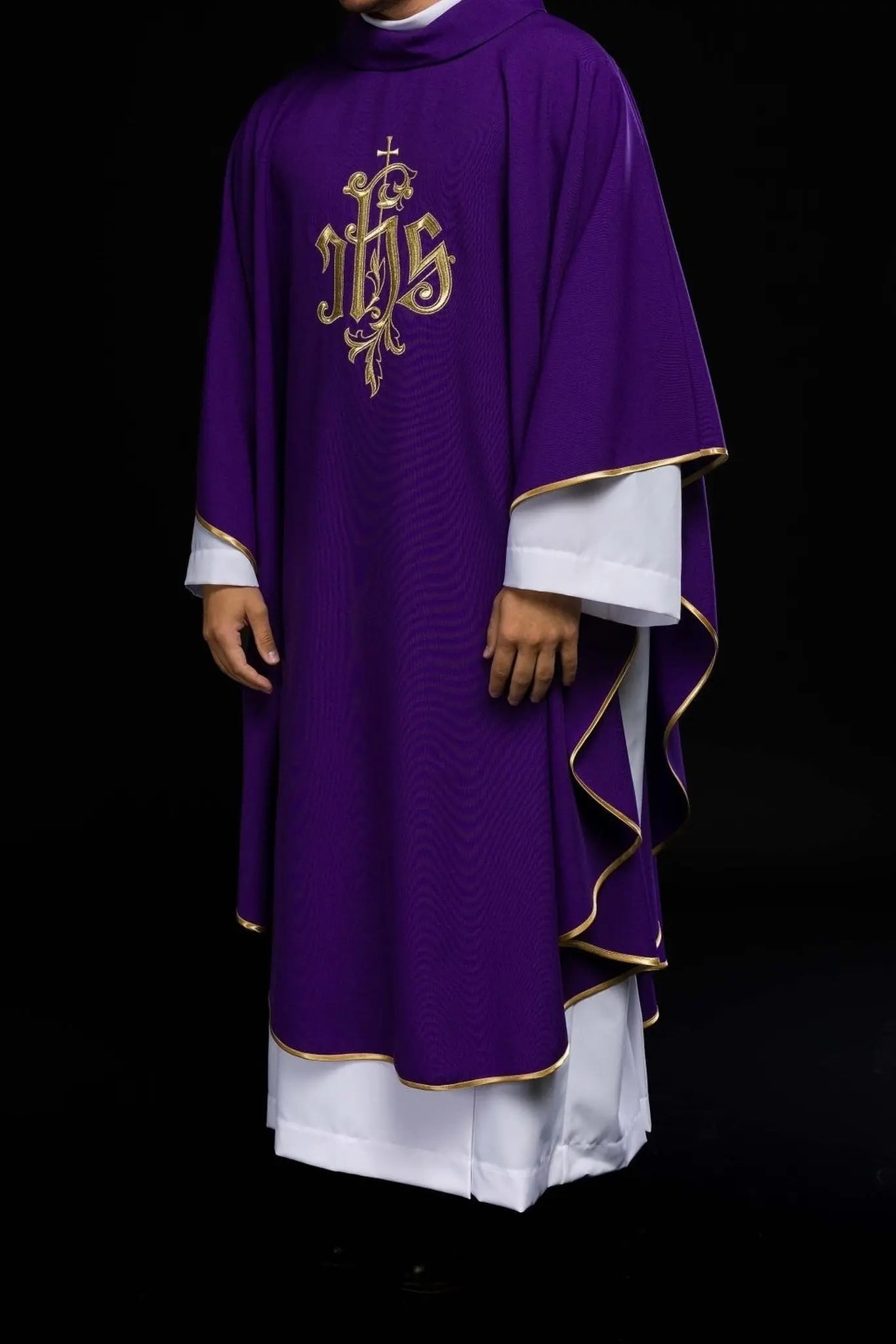
The chasuble is the primary Eucharistic vestment worn by a priest or bishop at Mass. For Advent, it should combine liturgical correctness with comfort, durability, and visual clarity. A well-chosen Advent chasuble supports the solemn character of Sunday Mass, weekday celebrations, parish missions, Rorate Masses where observed, and other liturgies during the season. The cut, fabric, weight, collar, lining, and embroidery all influence how the vestment looks and feels during use.
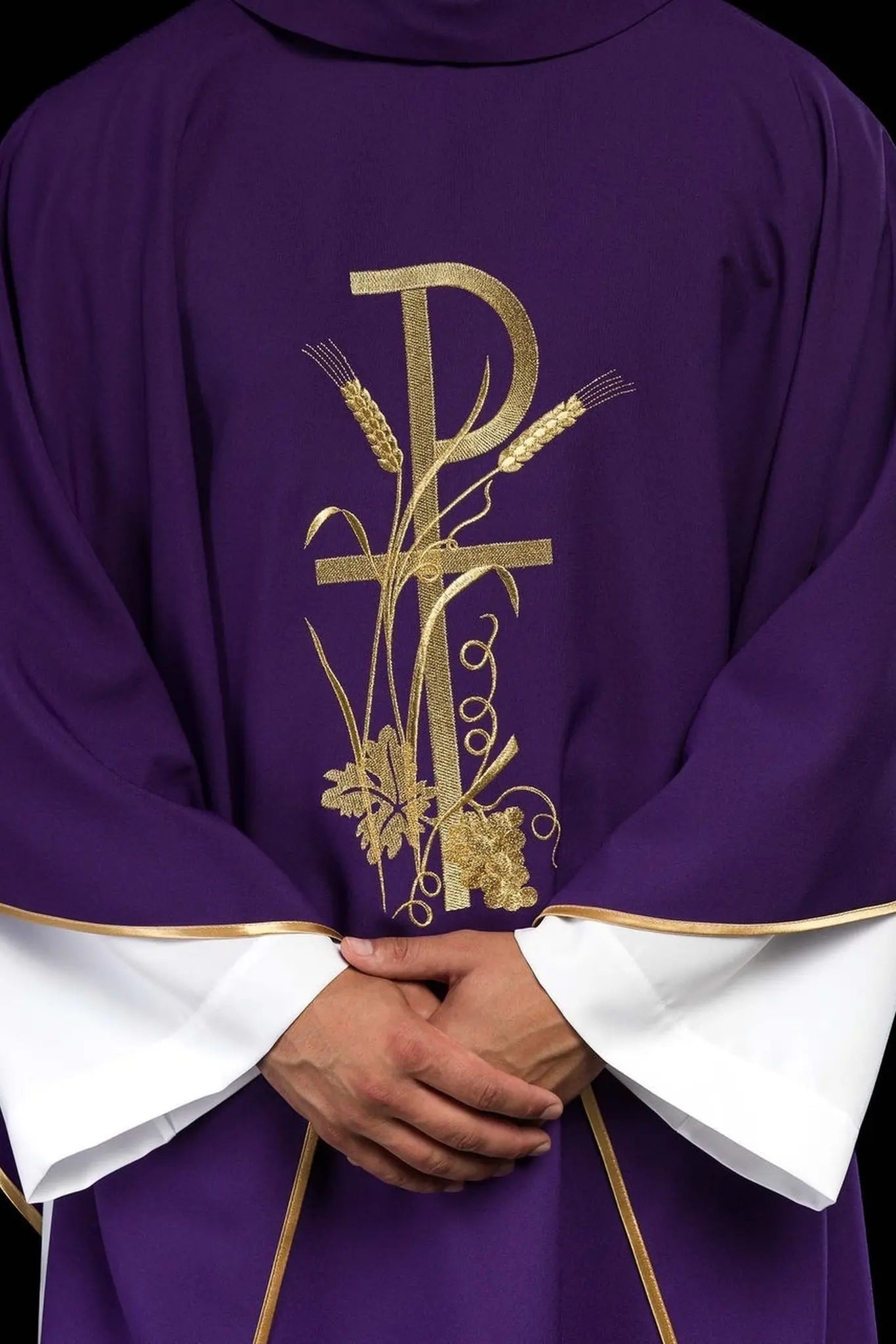
Gothic chasubles are widely chosen for parish liturgies because their fuller shape drapes freely and allows ease of movement. Roman chasubles have a more structured historical appearance and may be preferred for traditional celebrations or sanctuaries with a more formal visual language. Some Advent designs are intentionally restrained, using a central orphrey, a cross, or a narrow band of embroidery. Others include richer motifs that connect the season with prophecy, Marian expectation, light, stars, vines, or royal symbolism. The best option is not always the most ornate one. A weekday chapel may benefit from a simple violet chasuble, while the main Sunday Mass may call for more detailed embroidery.
When selecting an Advent chasuble, consider how it will coordinate with the rest of the church's vestment wardrobe. A parish with several concelebrants may need matching or complementary chasubles. A small chapel may prefer one versatile design that can serve throughout the season. A cathedral, shrine, or religious house may use different chasubles for Sundays, weekday Masses, Marian Advent celebrations, and Gaudete Sunday. For broader comparison across vestment categories, the main liturgical vestments collection can help place Advent pieces alongside other seasonal and devotional options.
Clergy stoles and Advent sacramental ministry
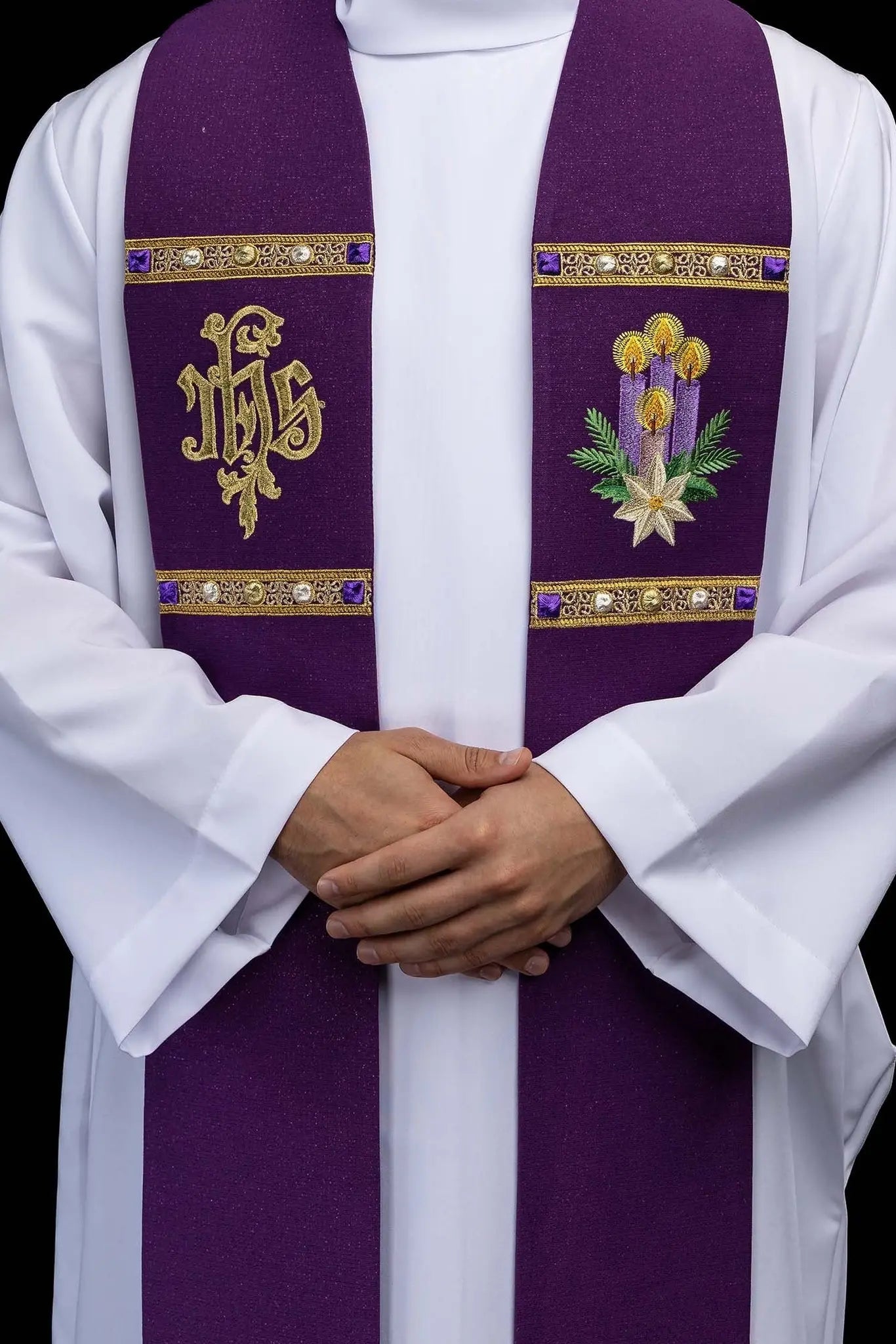
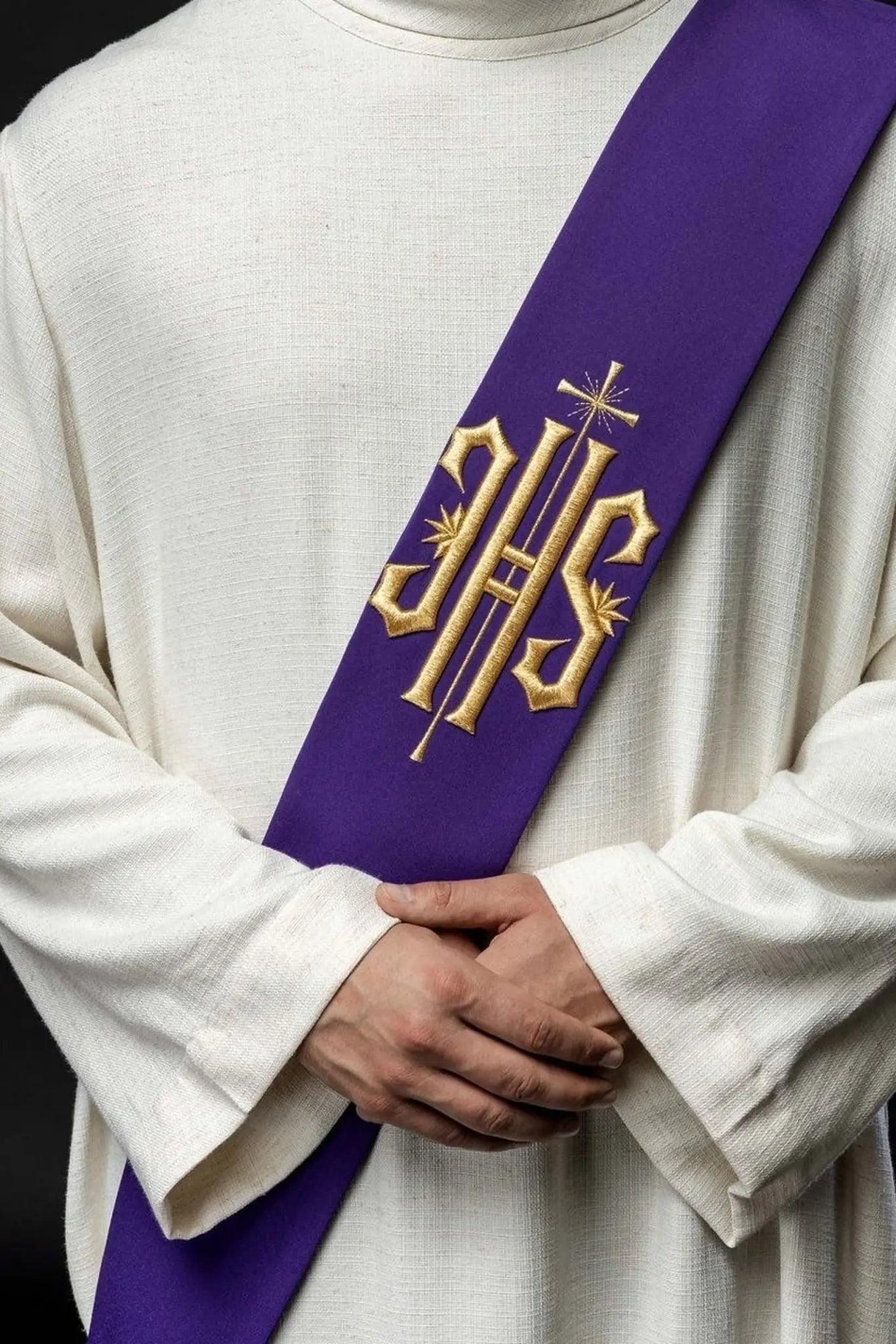
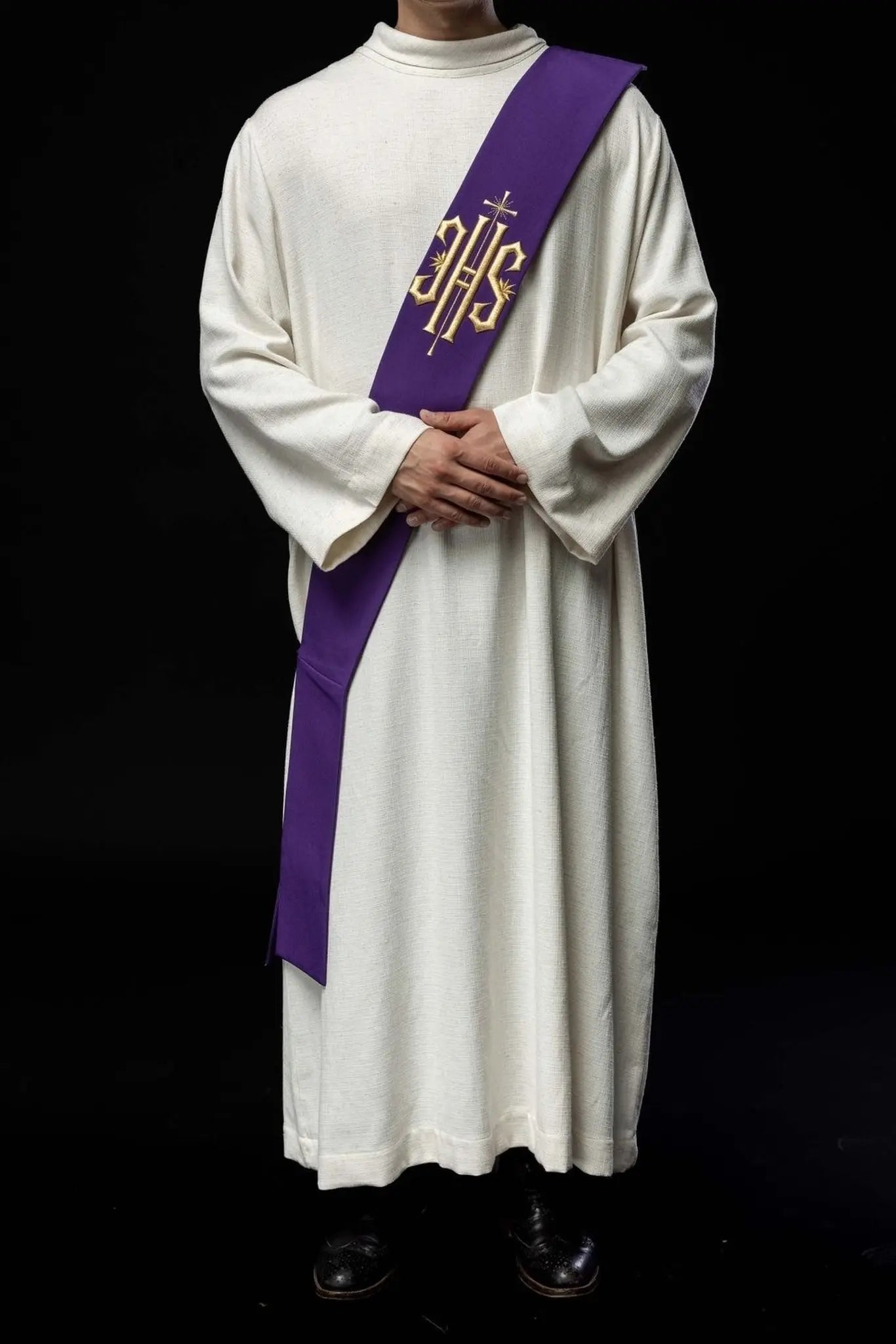
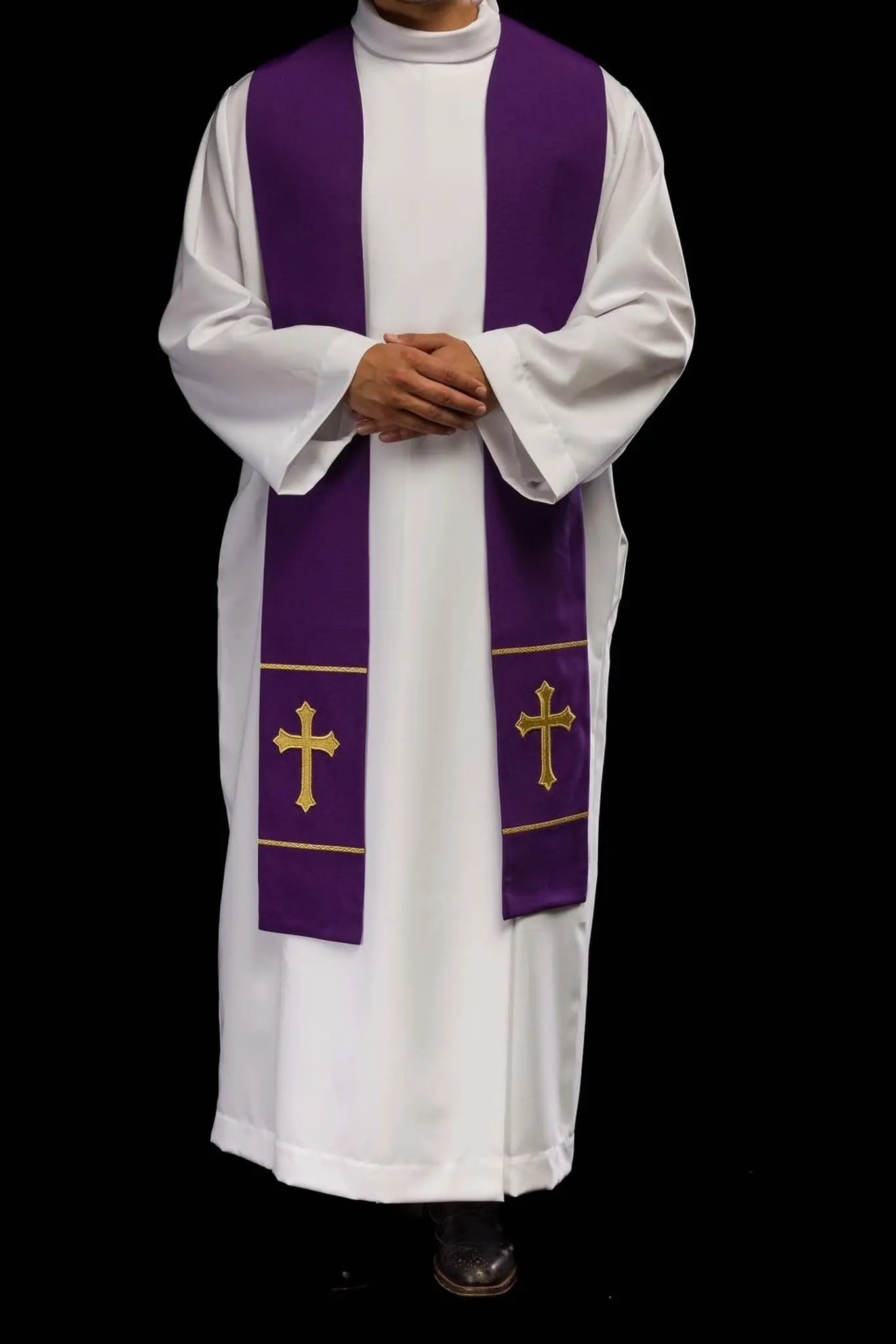
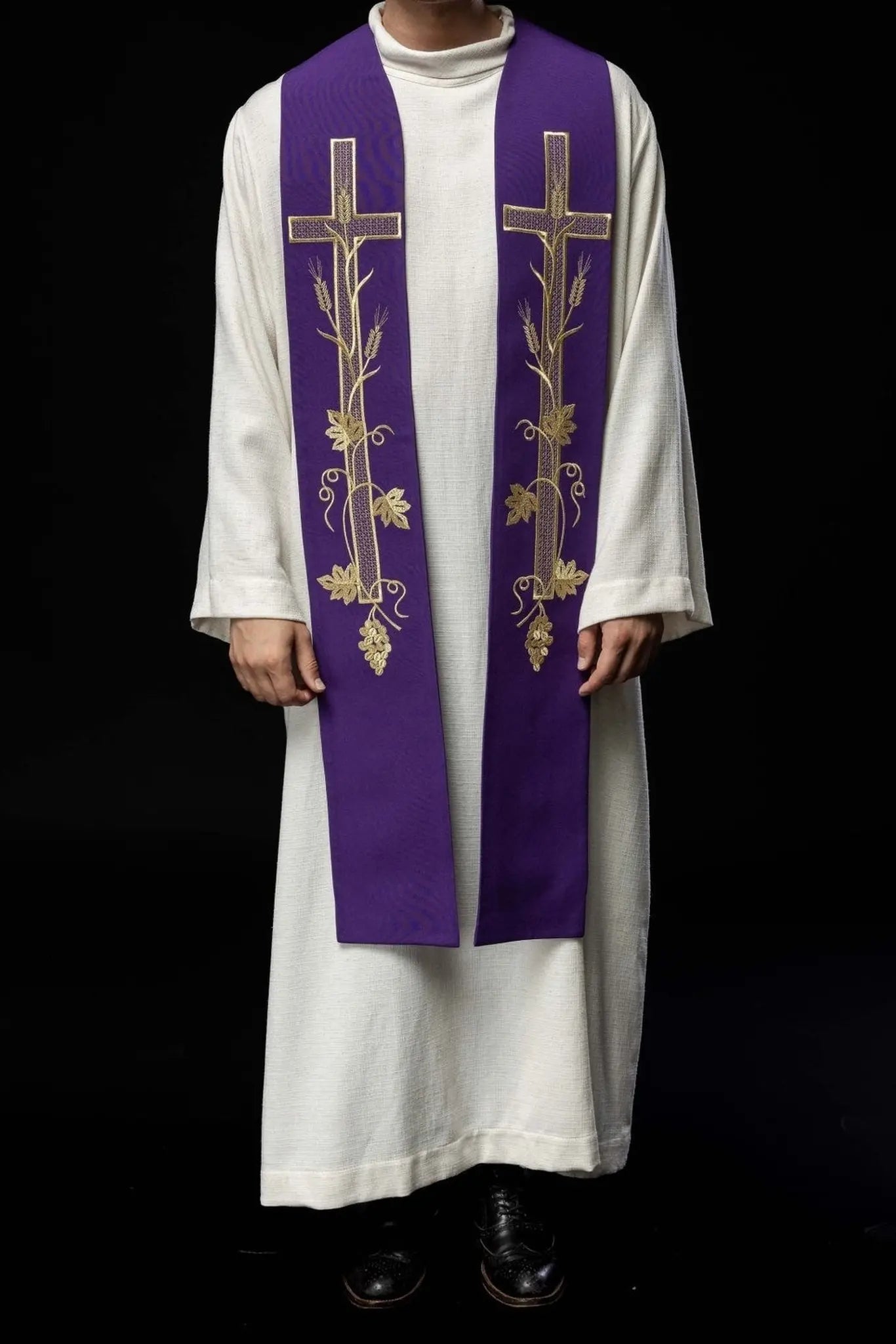
The stole is essential for sacramental and pastoral ministry. During Advent it is especially useful not only at Mass, but also for Confession, blessings, services of the Word, parish retreats, penance services, visits to the sick, and other pastoral encounters. A violet clergy stole communicates the same seasonal tone as the chasuble while remaining practical for rites that do not require a full Eucharistic vestment. For deacons, the appropriate diagonal deacon stole is used according to the liturgical role and rite.
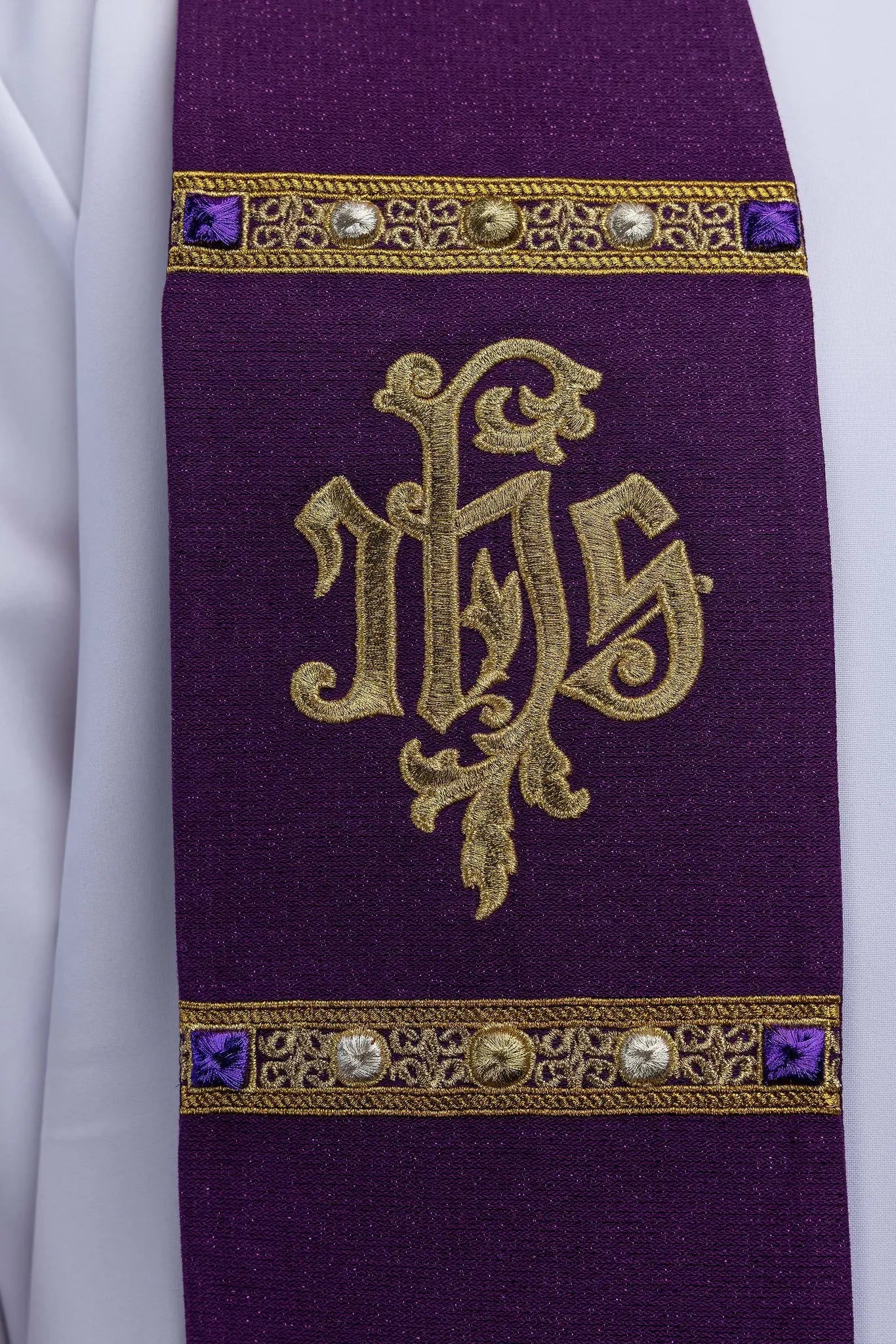
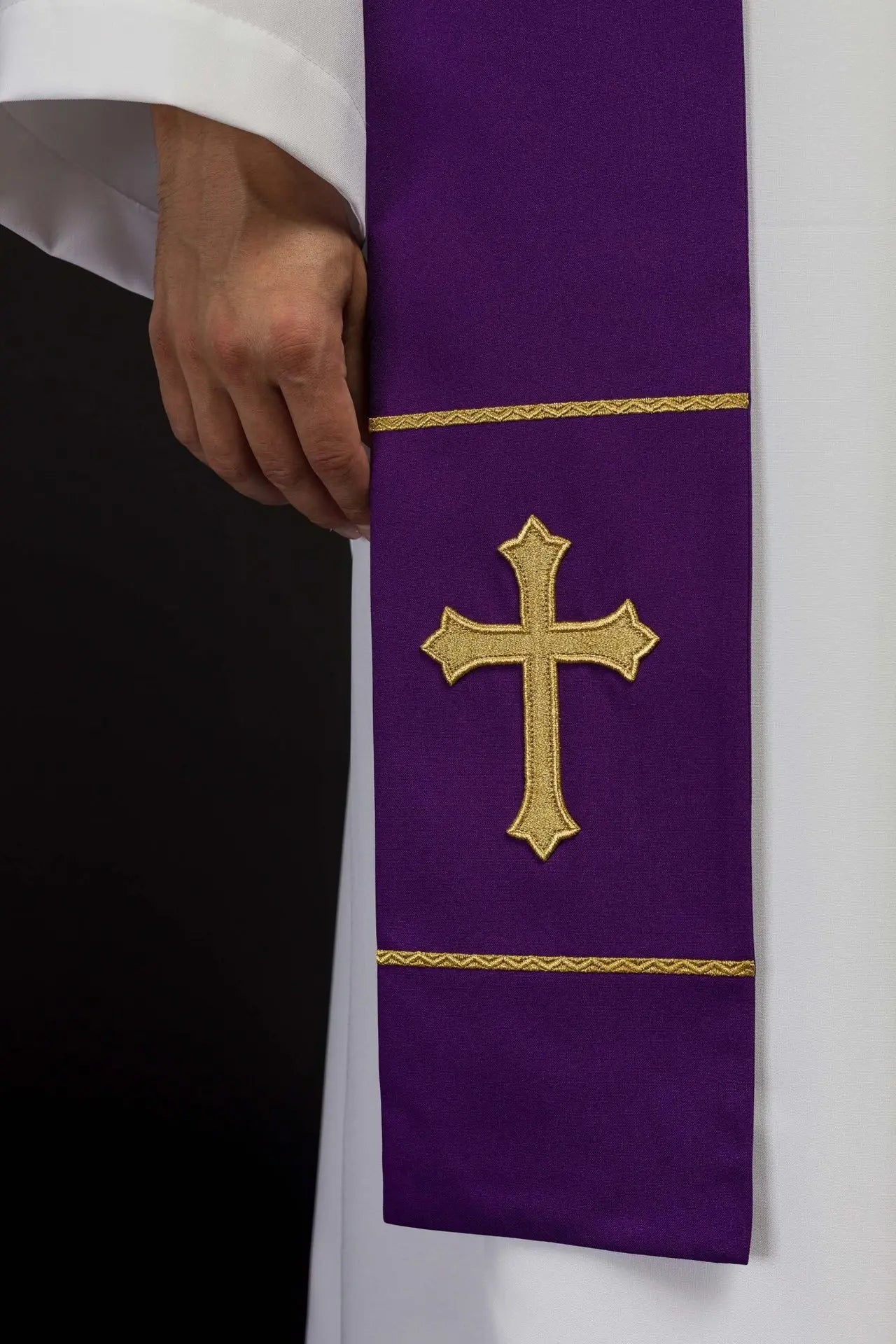
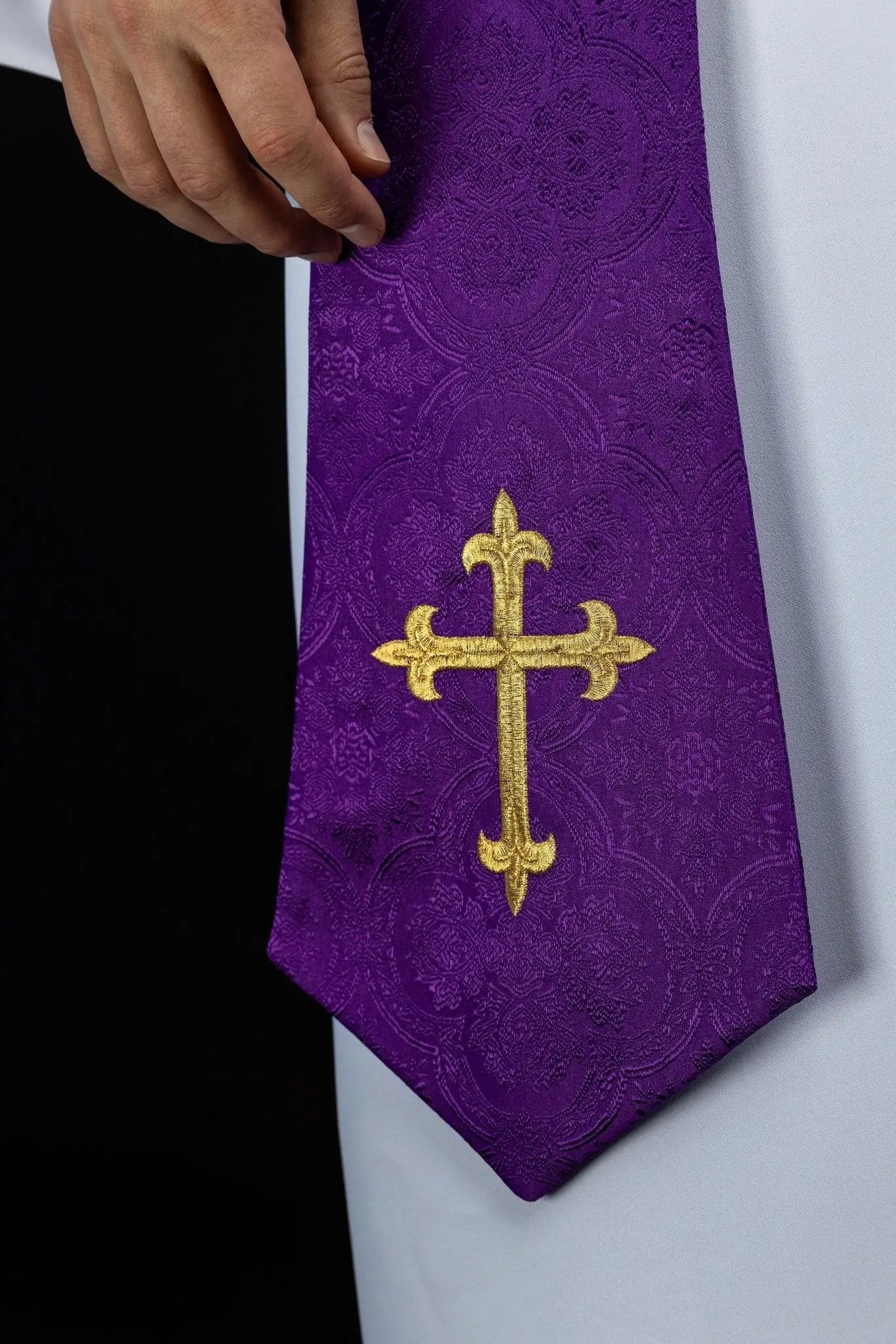
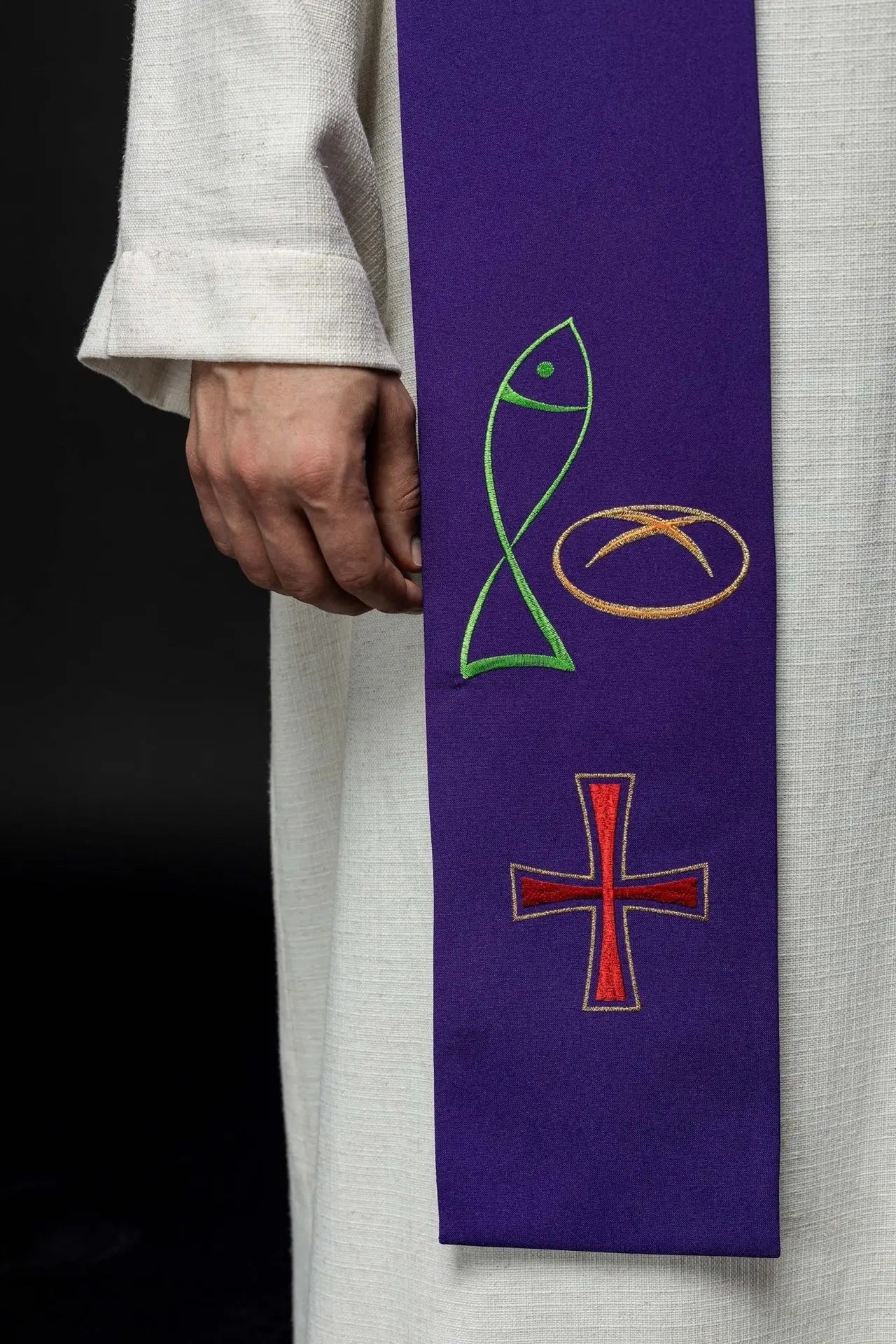
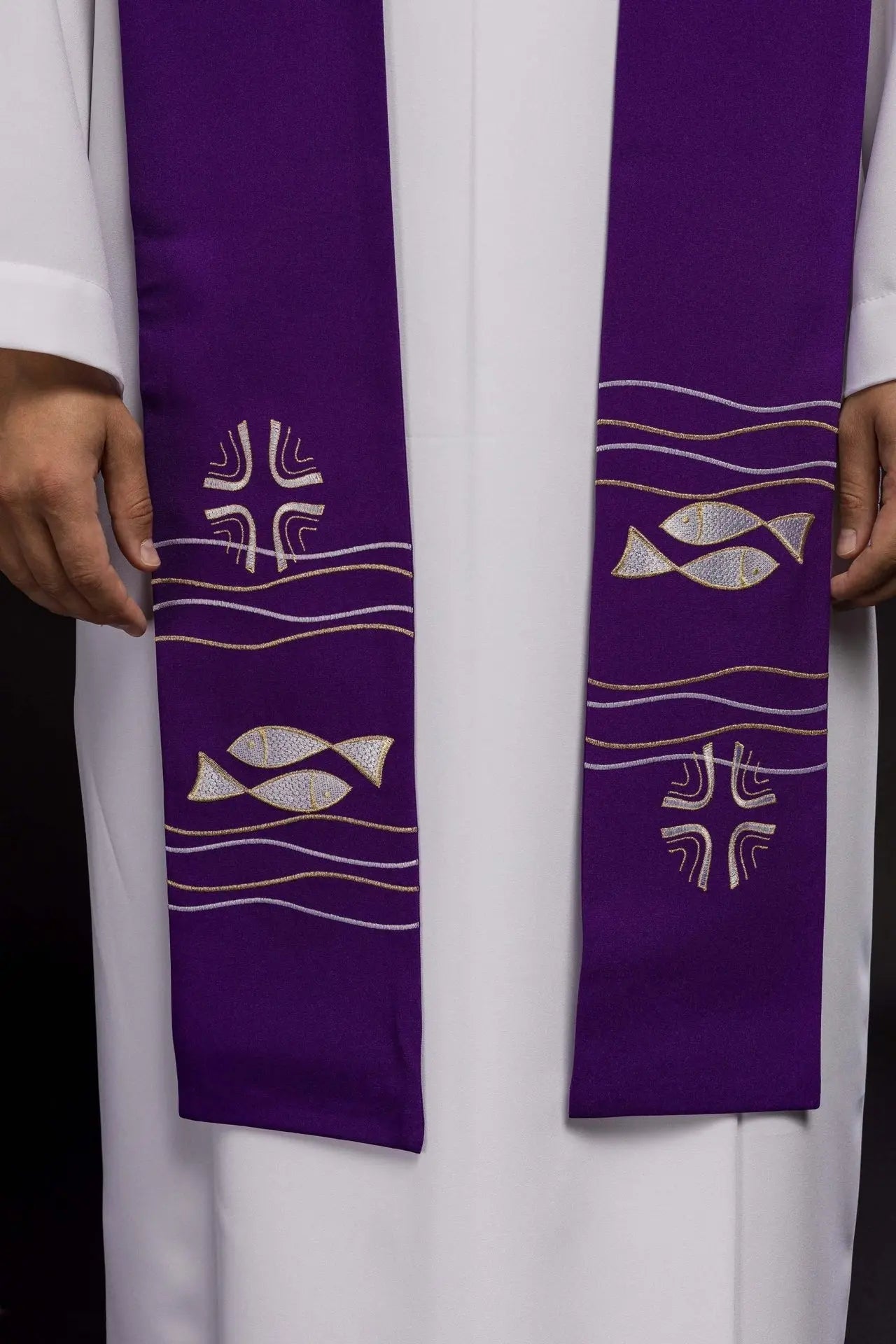
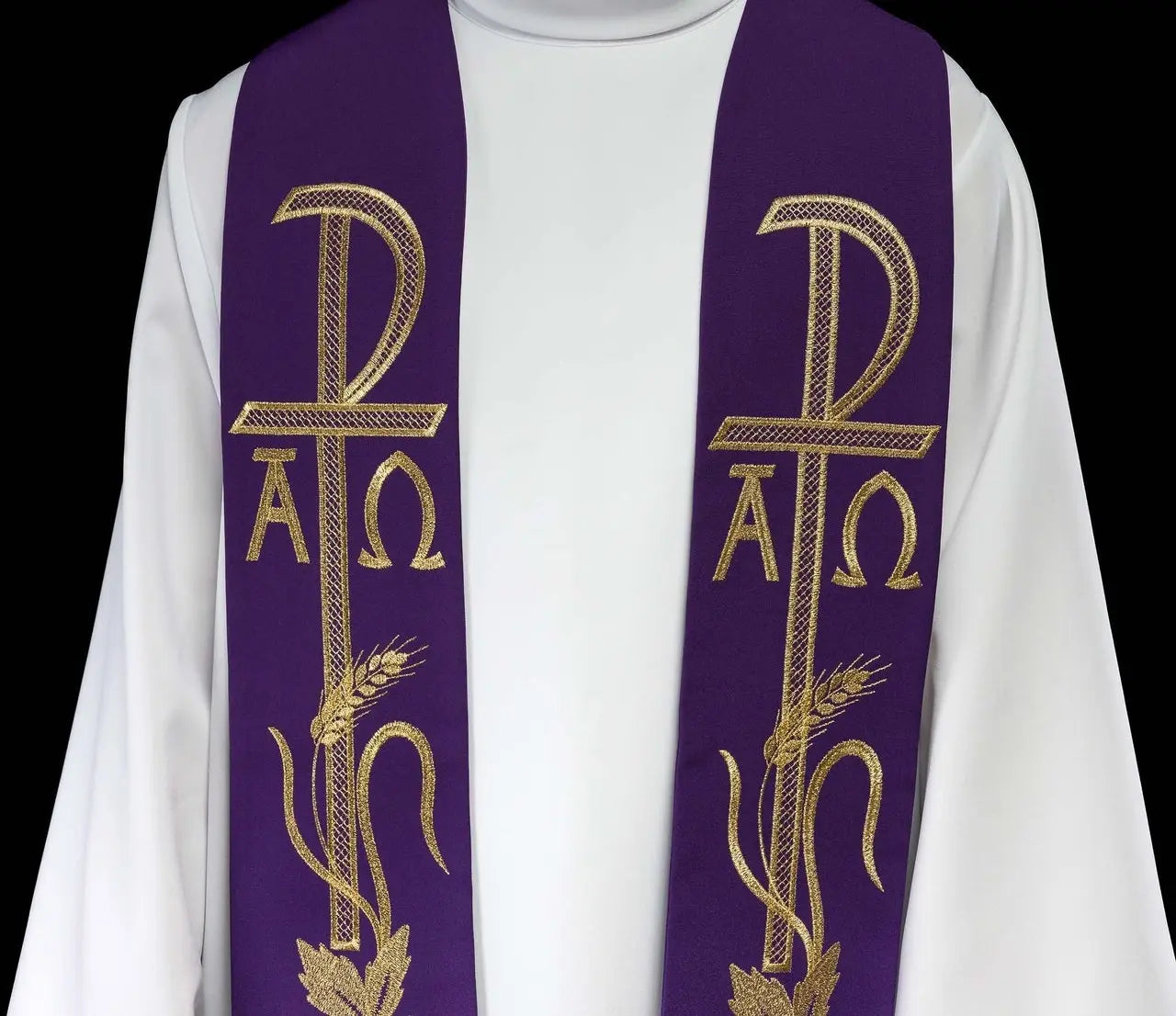
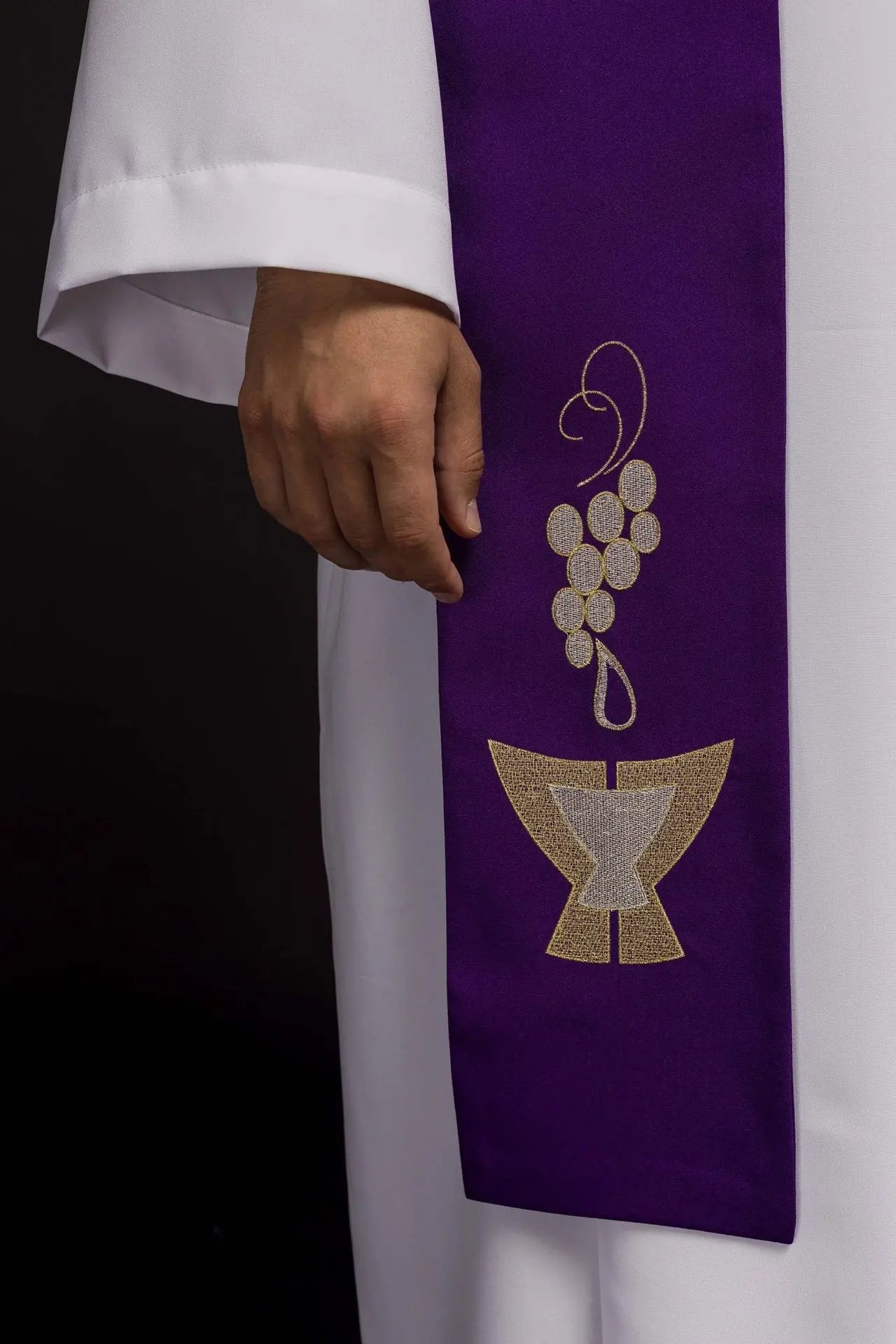
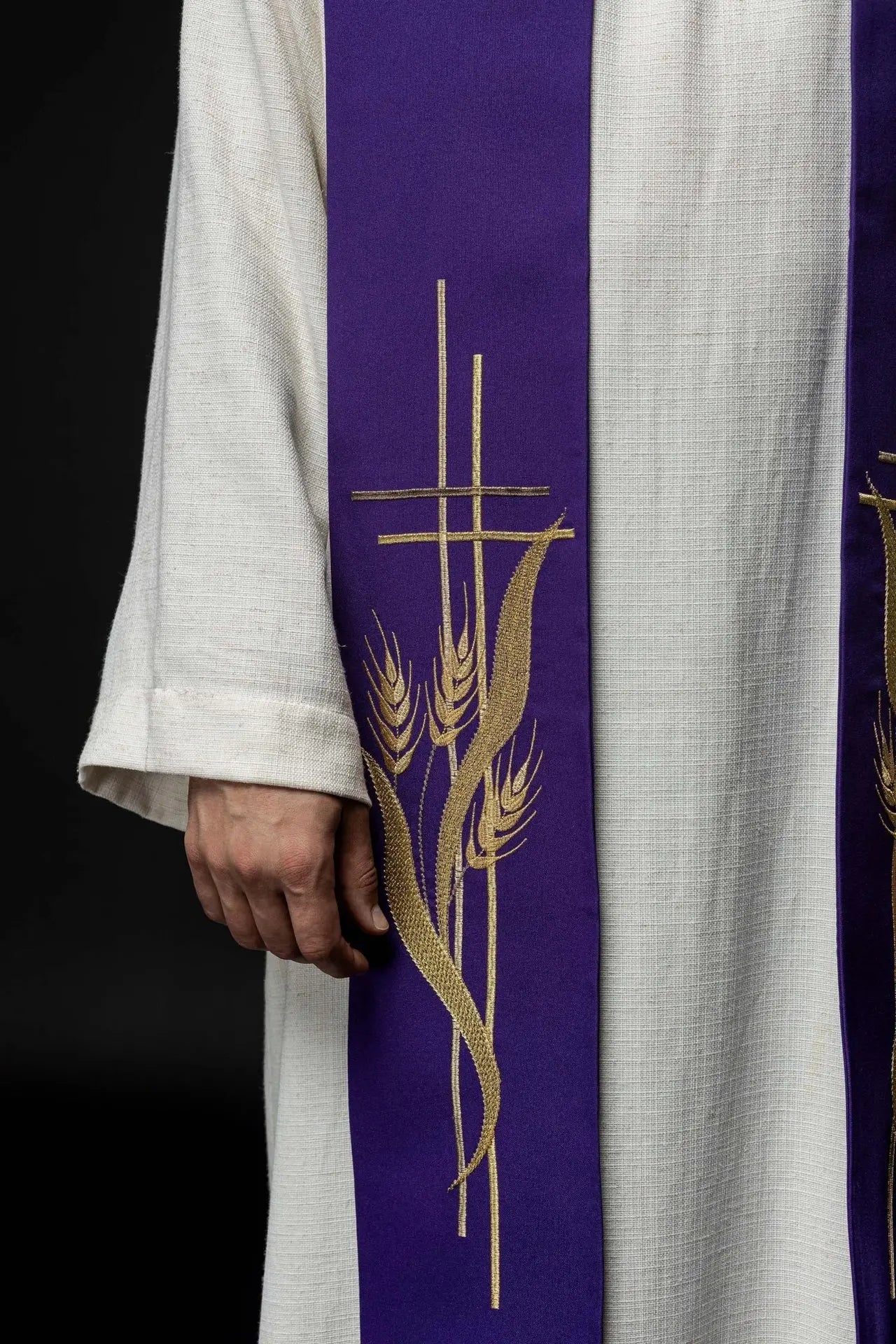
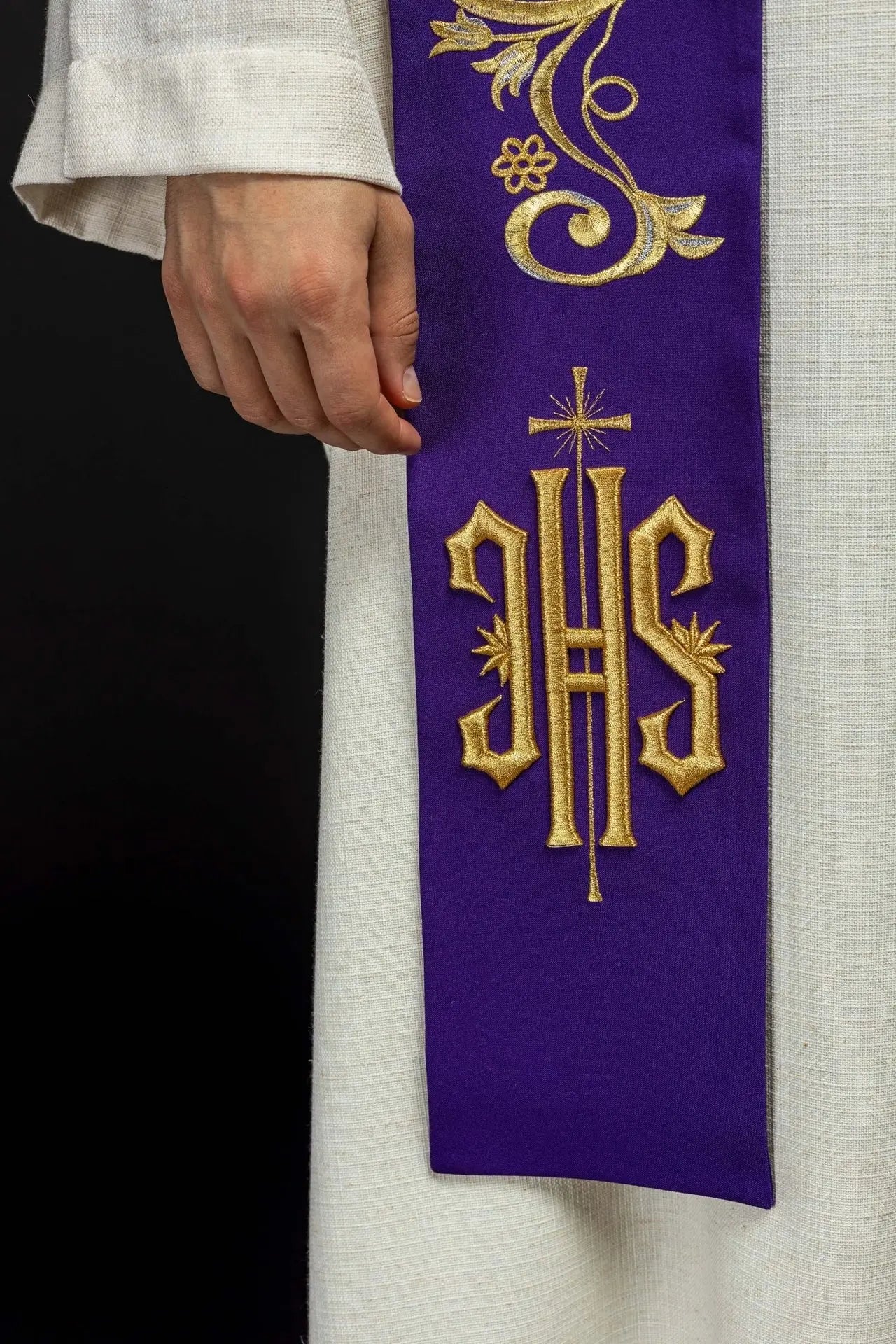
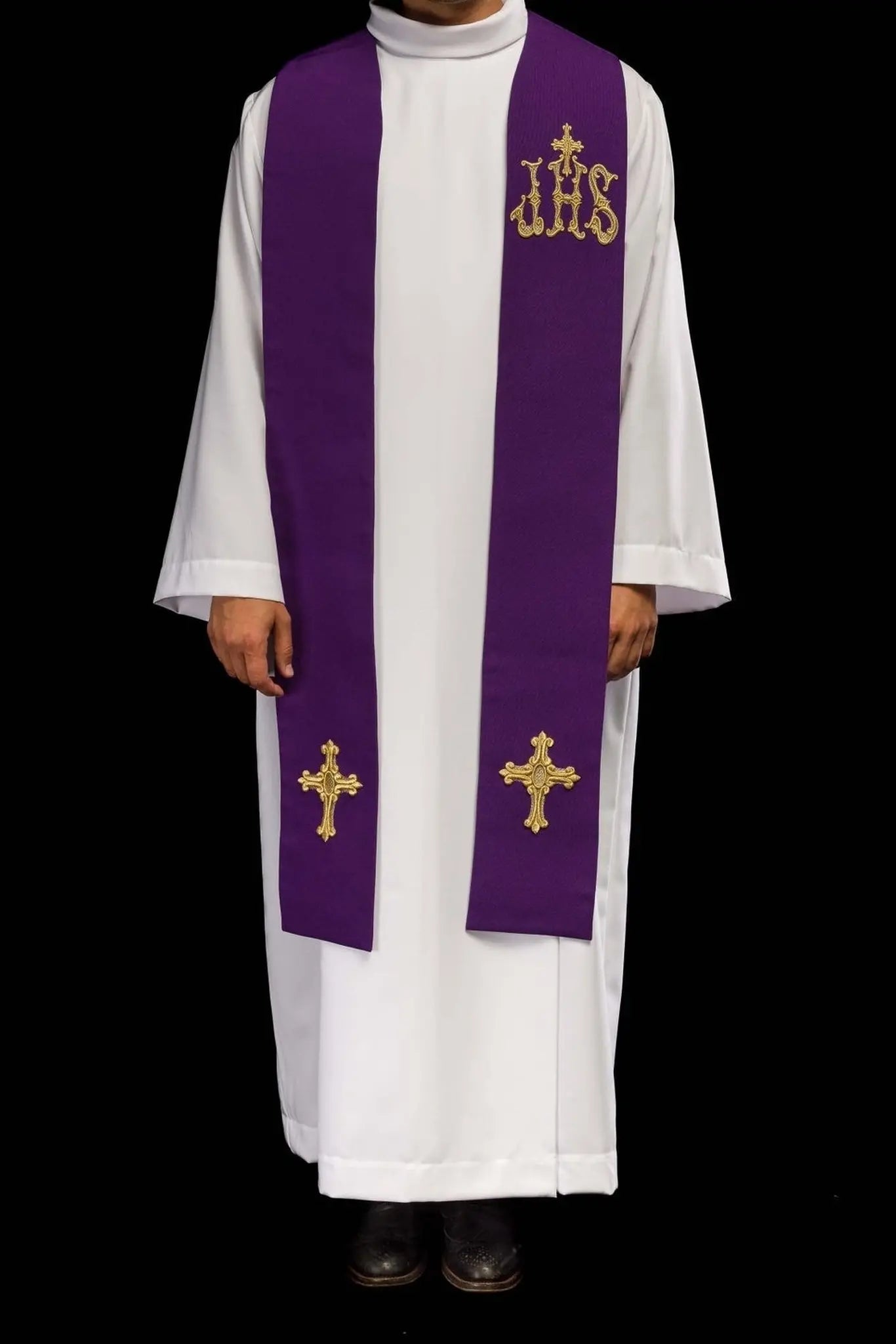
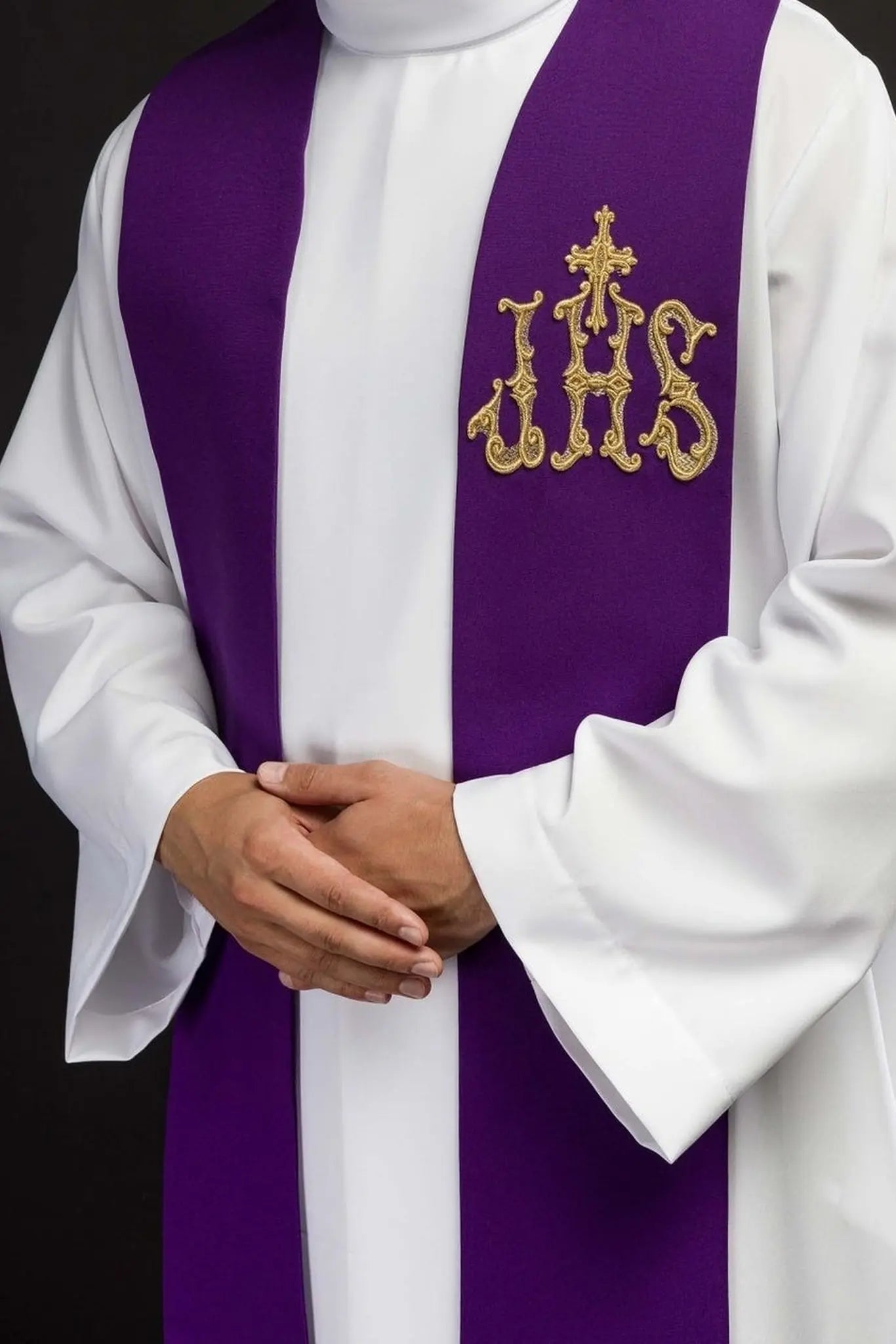
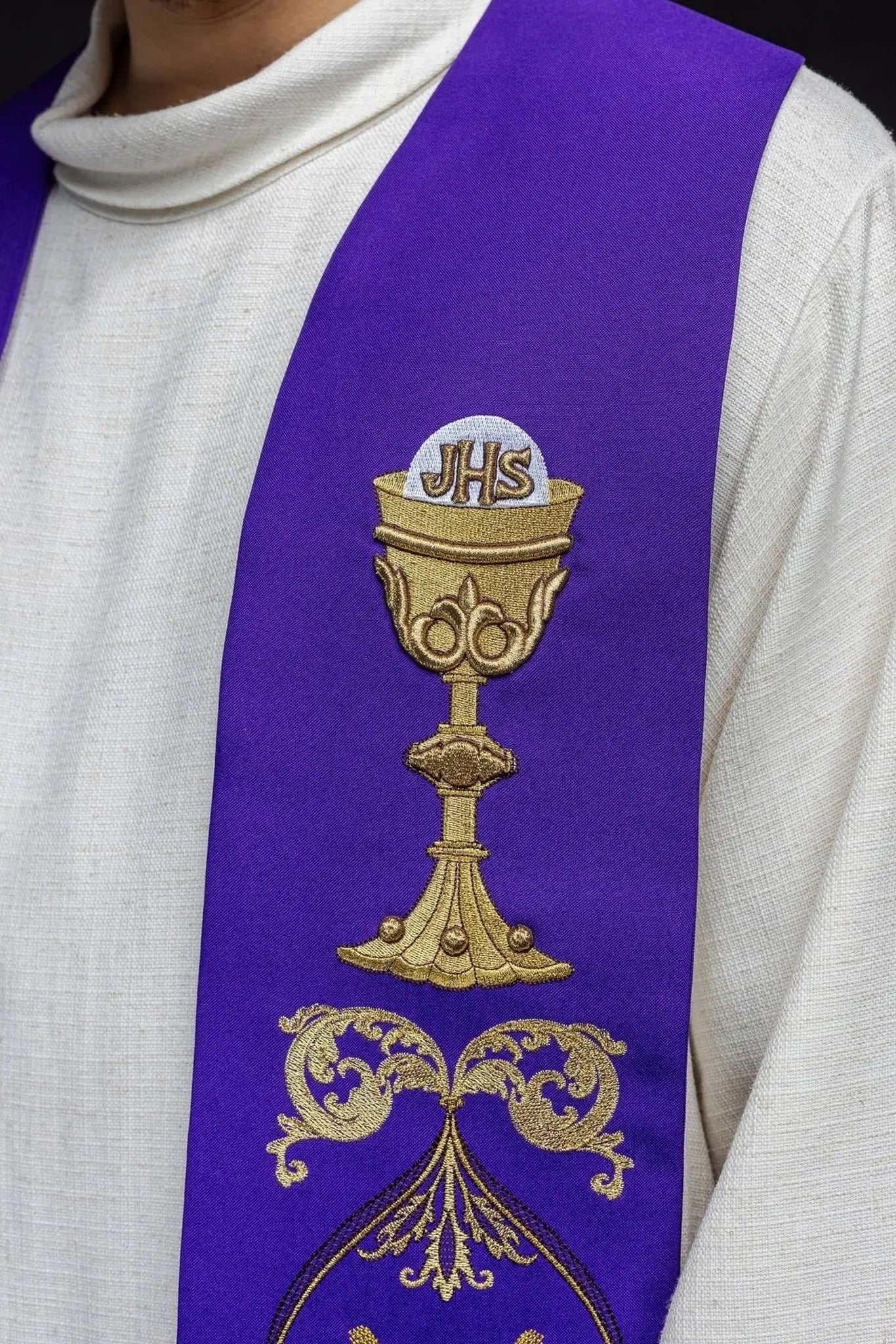
Matching a stole to an Advent chasuble creates a polished and consistent appearance, but many clergy also keep separate Advent stoles for frequent pastoral use. A simple purple stole may be the most useful piece in a parish wardrobe, especially where Confession is offered more often during Advent. Embroidered stoles can include crosses, subtle Marian references, stars, or ornamental bands. When the stole is used repeatedly, fabric stability, lining, and the quality of stitching are important, because the piece must retain its shape through many liturgical and pastoral occasions.
For a parish purchasing gradually, the usual order of priority is a violet chasuble for Mass, a matching violet stole, a rose set for Gaudete Sunday if used, and then additional textiles for the altar and sanctuary. This approach keeps the most visible vestments correct first while allowing the rest of the Advent environment to be completed over time.
Copes, veils, and solemn Advent celebrations
Advent includes more than Mass. Many communities celebrate Vespers, Eucharistic adoration, parish missions, processions, blessings, and devotional services during the weeks of preparation. For such occasions, a cope may be appropriate depending on the rite. A violet cope gives solemnity to celebrations outside Mass and can coordinate with stoles, humeral veils, altar textiles, or other sanctuary appointments. A cope with restrained embroidery can be used across multiple Advent services, while a more elaborate piece may be reserved for major parish celebrations.
Humeral veils are used in specific Eucharistic rites, especially when handling the Blessed Sacrament according to liturgical norms. If a parish holds Advent adoration or Benediction, a humeral veil in a suitable color or a more general solemn design may be part of the liturgical set. Copes and humeral veils should be selected according to actual parish practice, because they have defined liturgical uses and should not be treated as interchangeable decorations. A coordinated set can help the ministers appear visually united without obscuring the ritual purpose of each vestment.
Altar linens, chalice veils, and sanctuary coordination
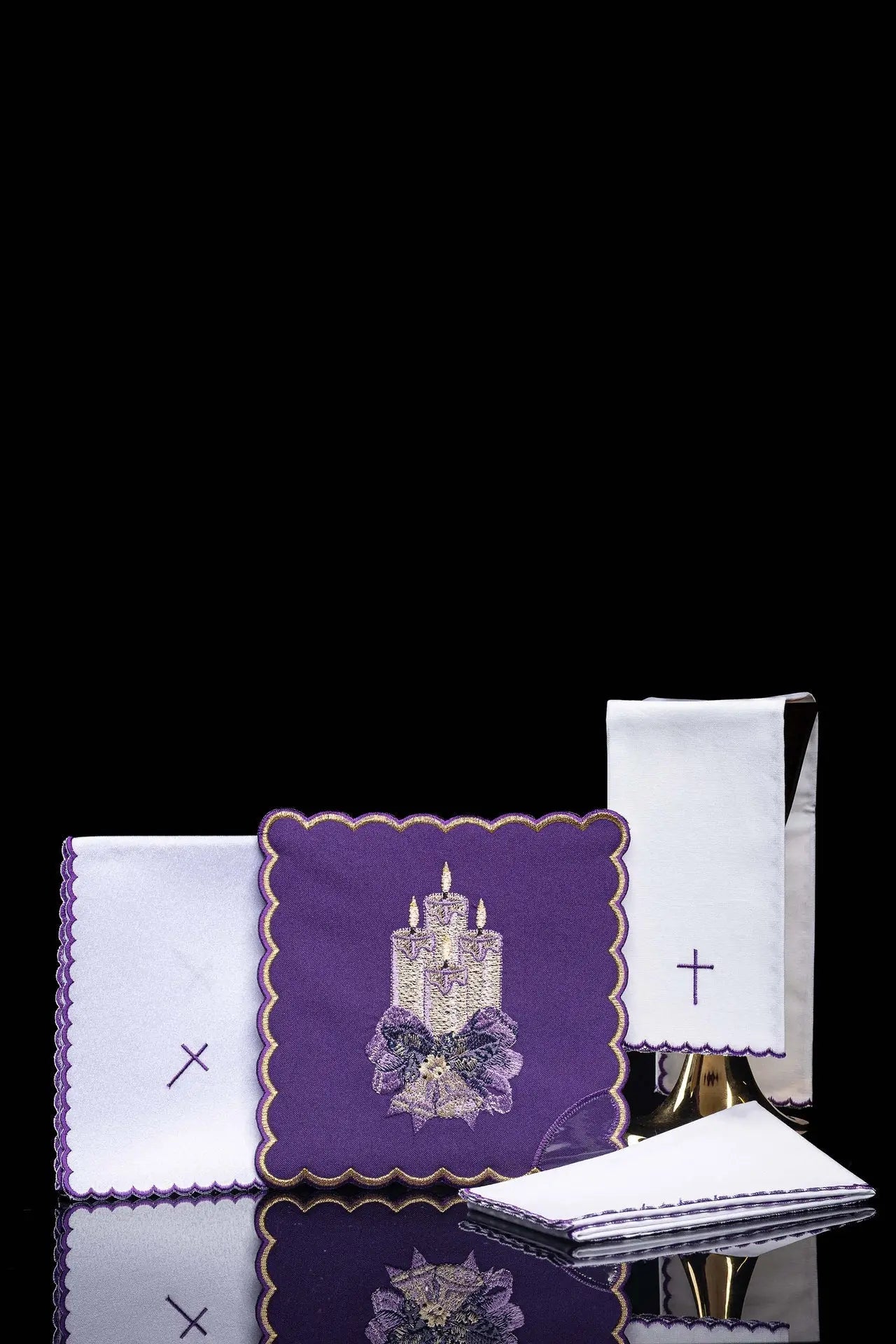
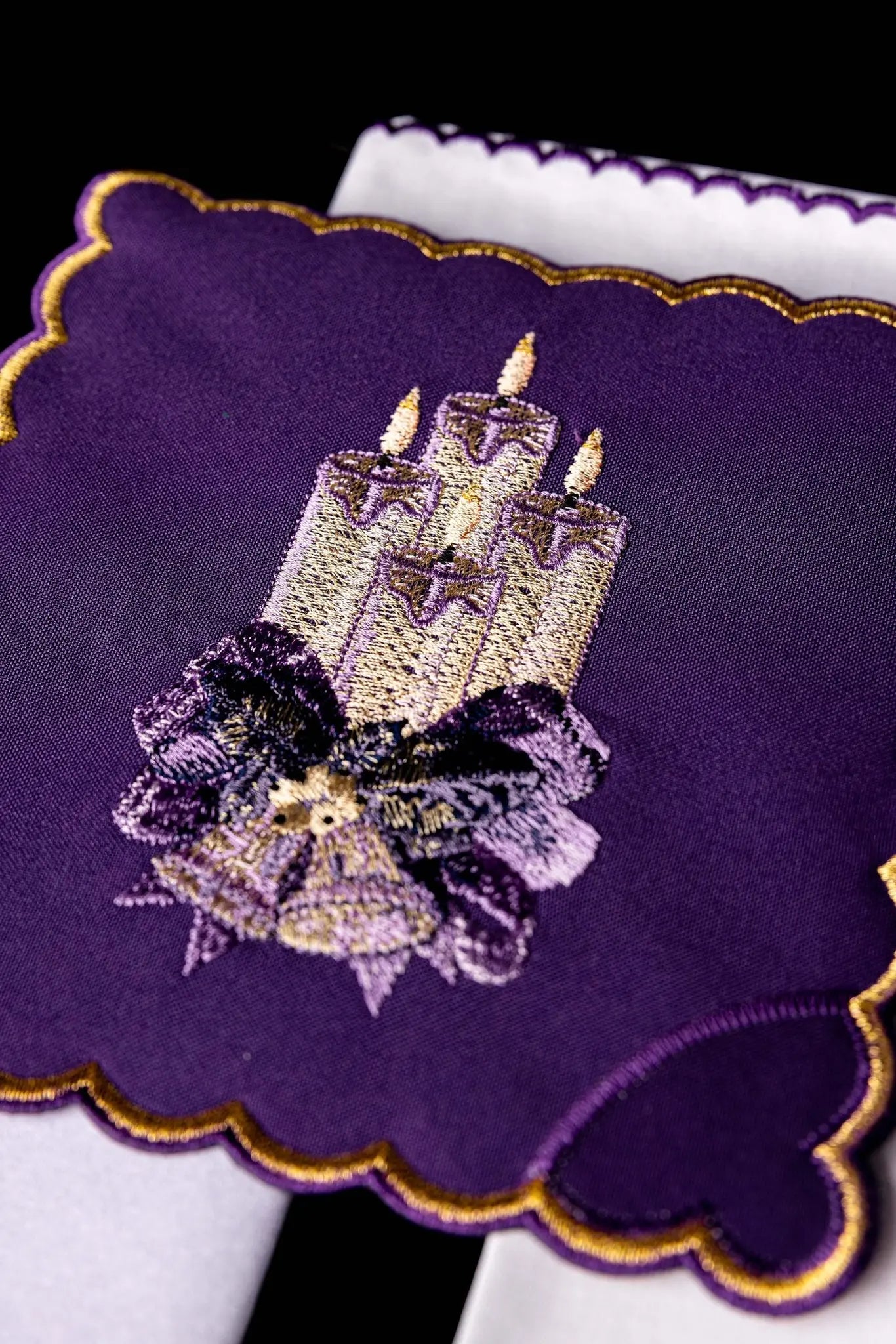
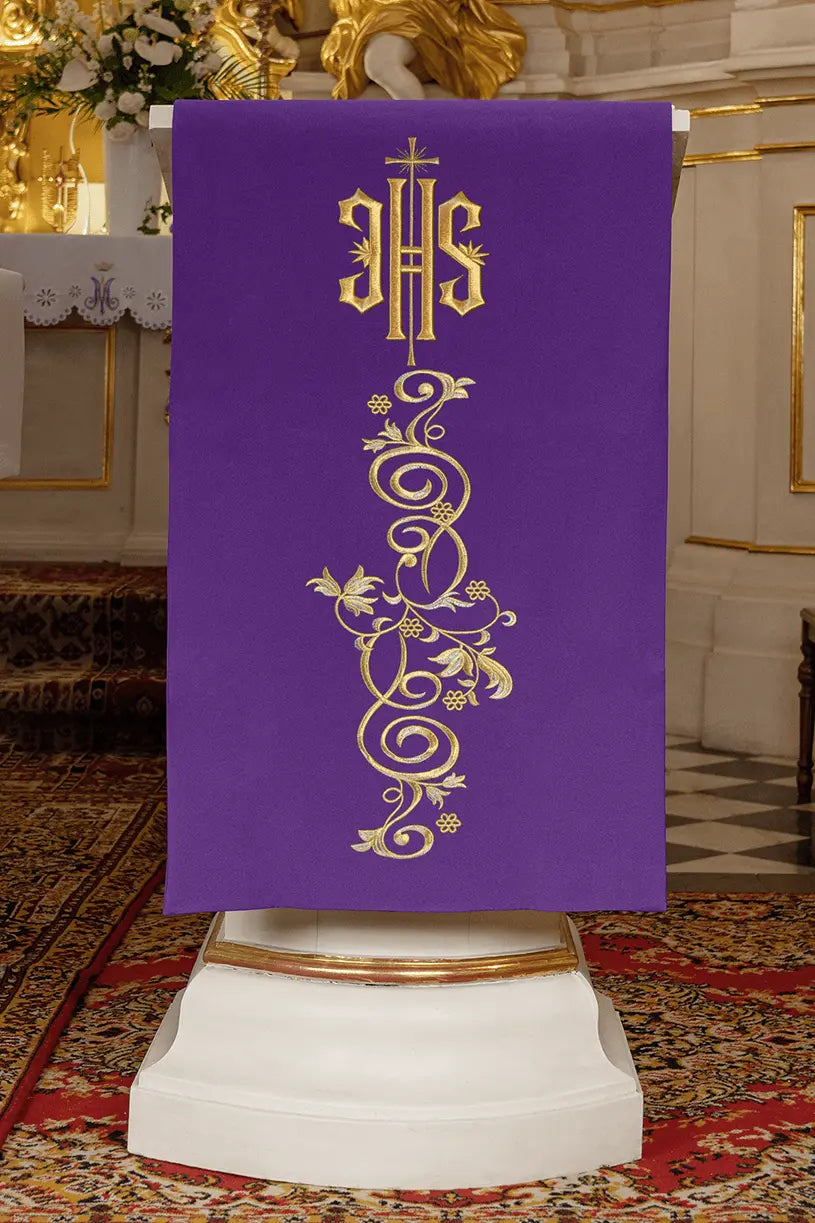
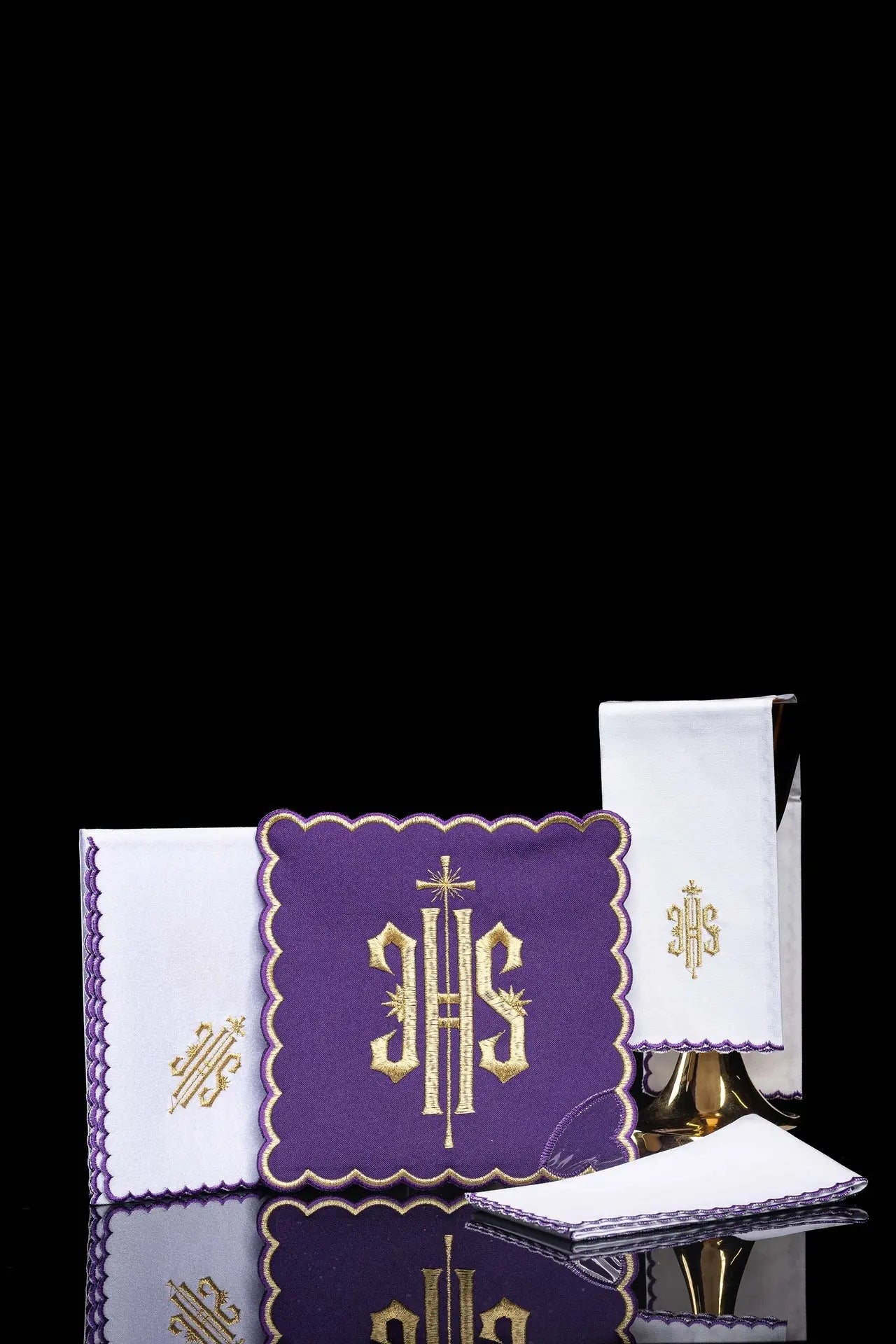
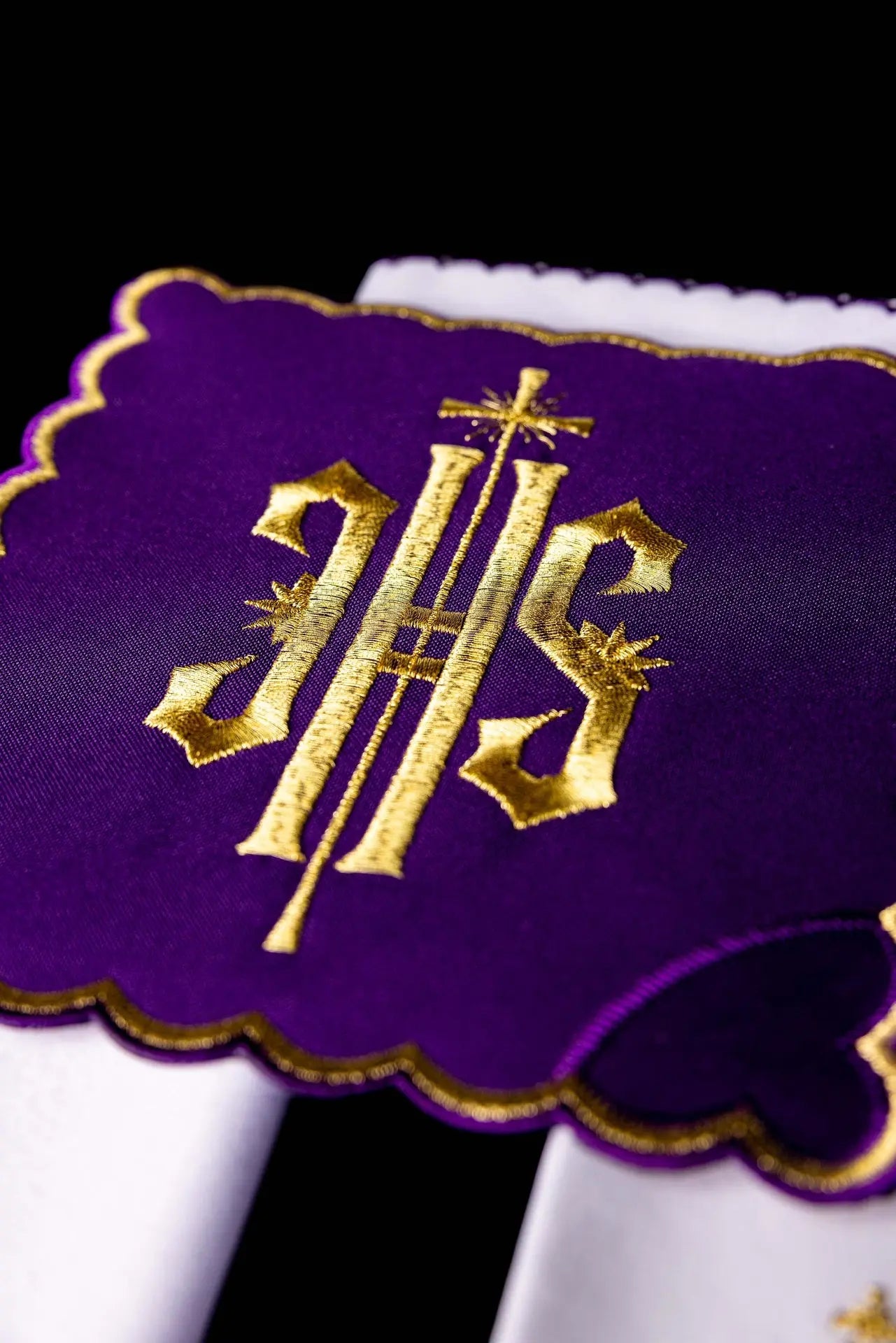
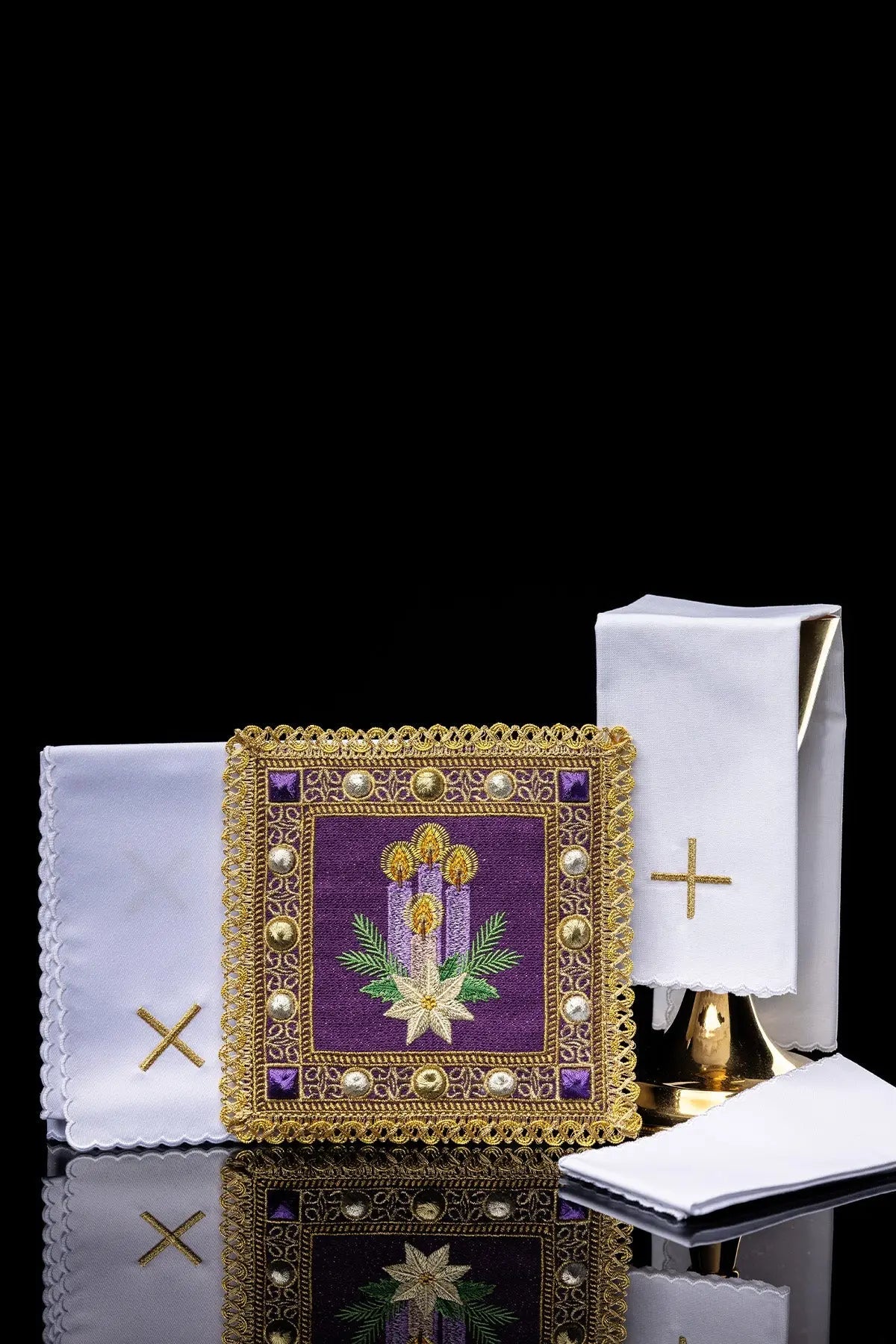
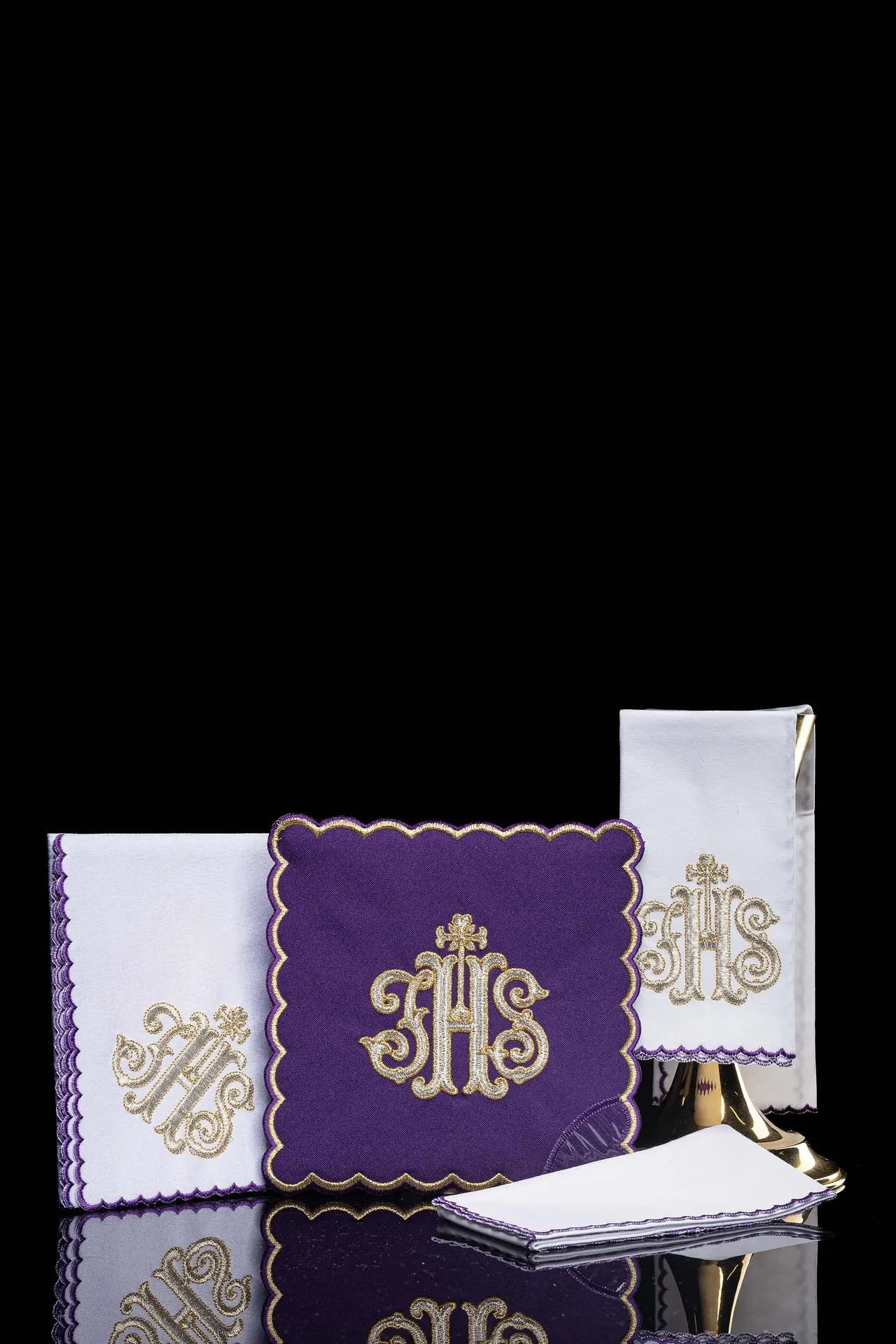
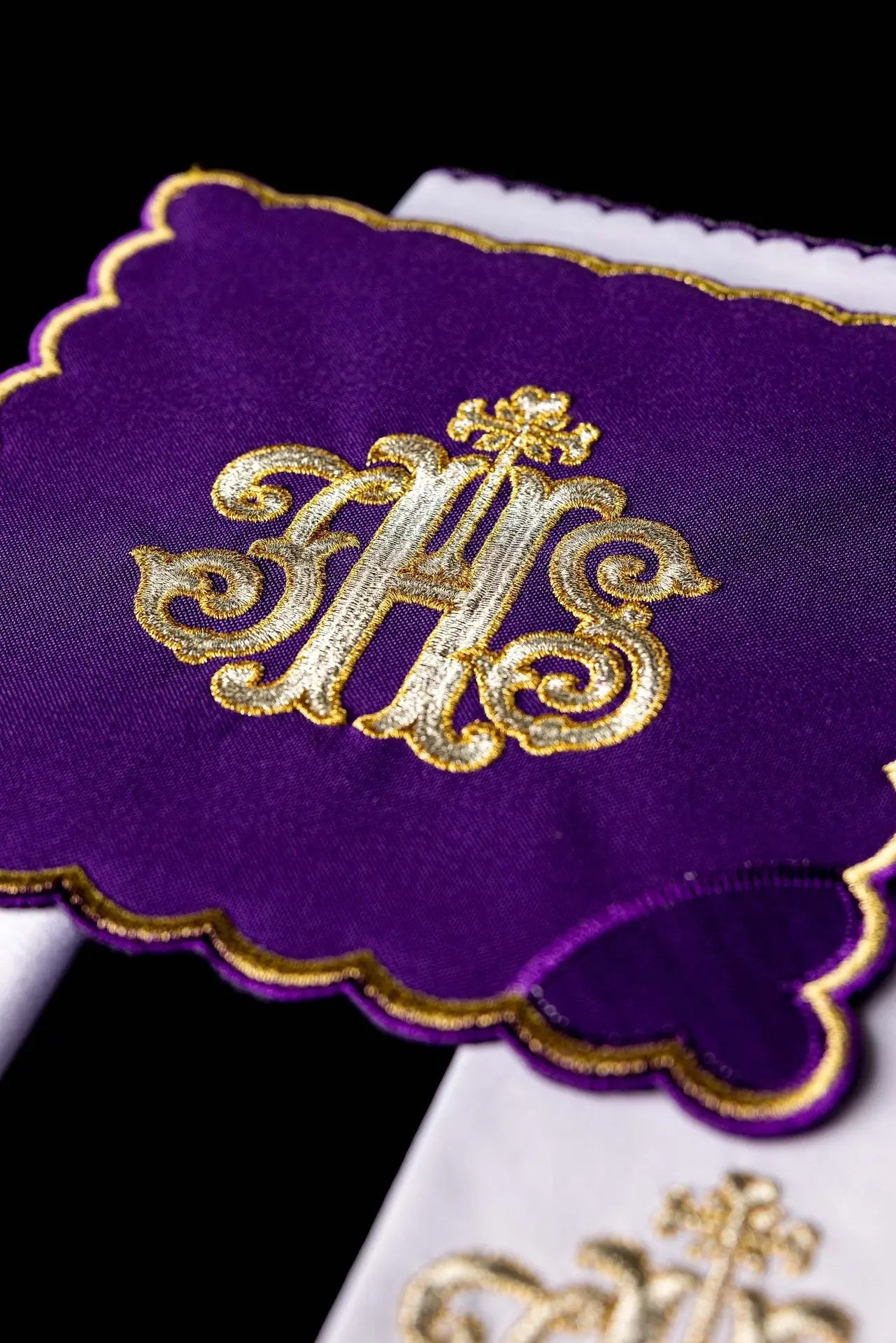
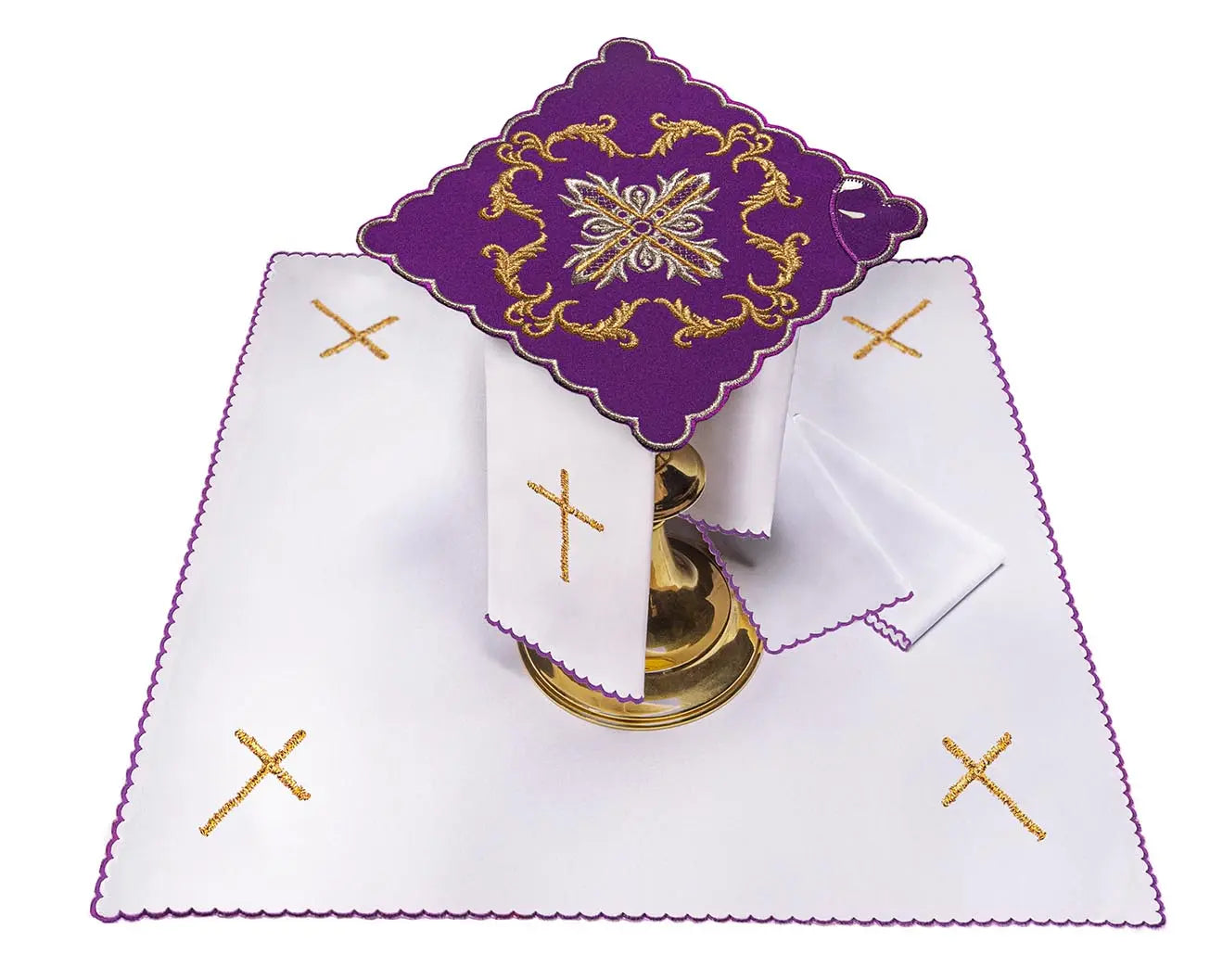
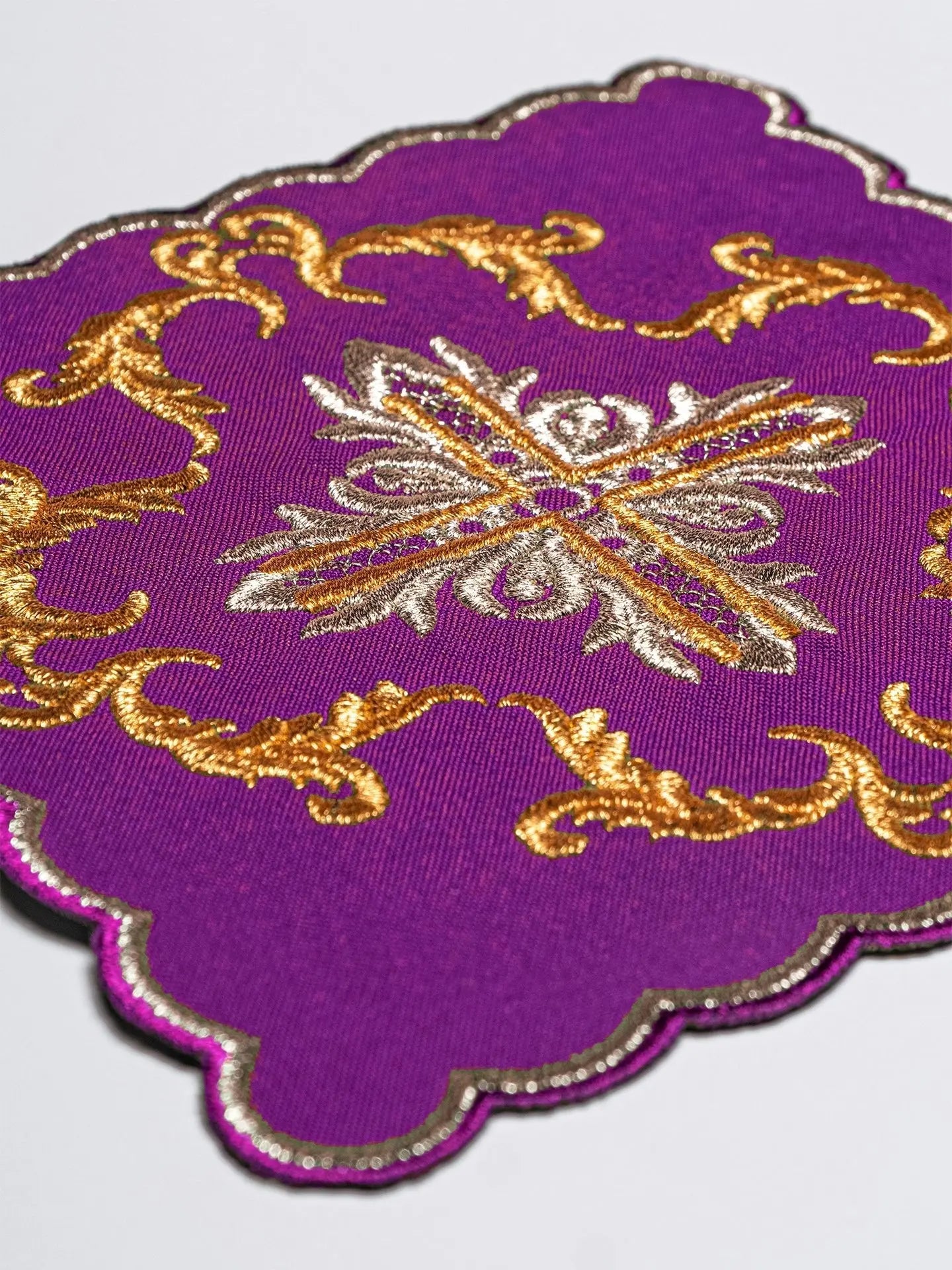
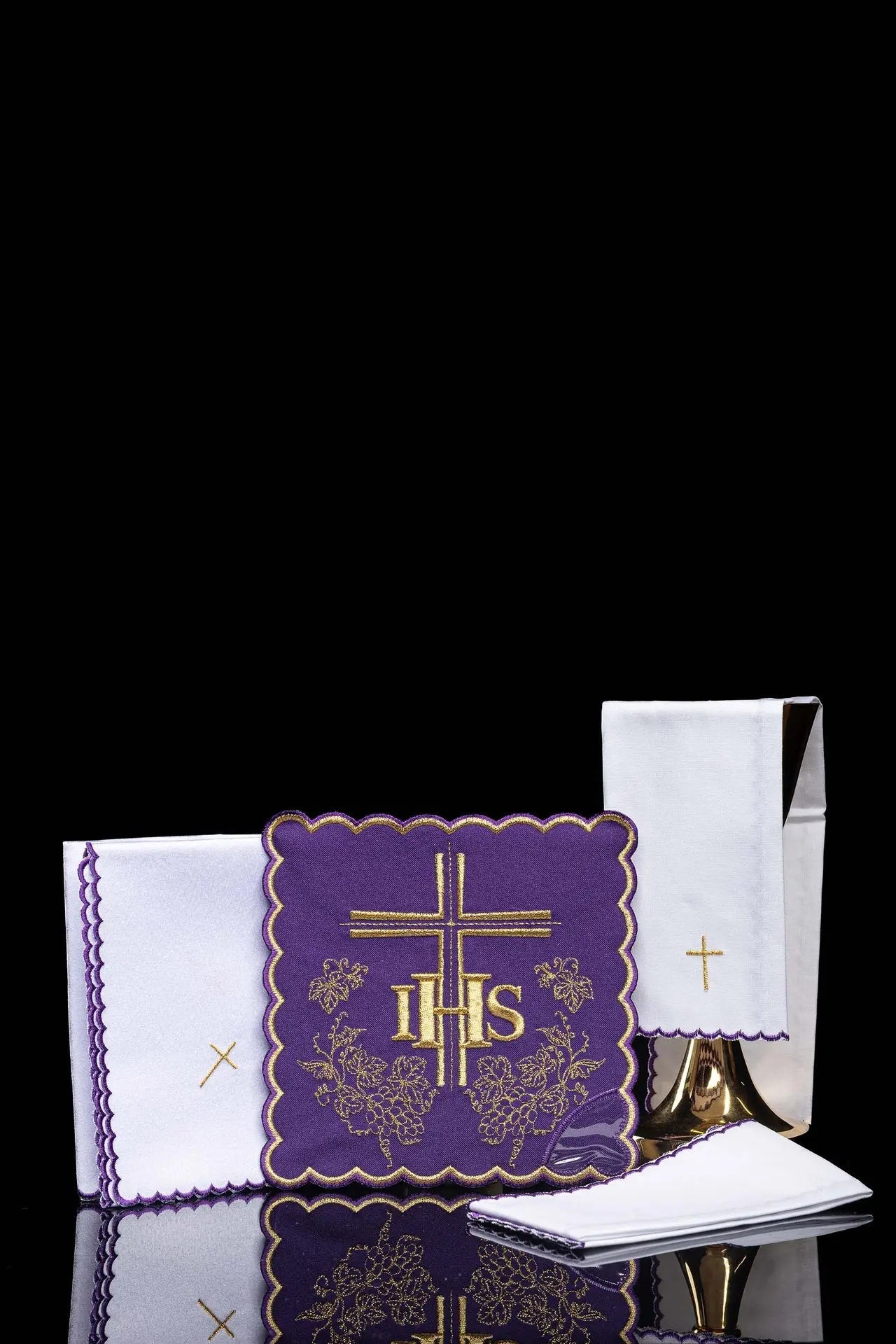
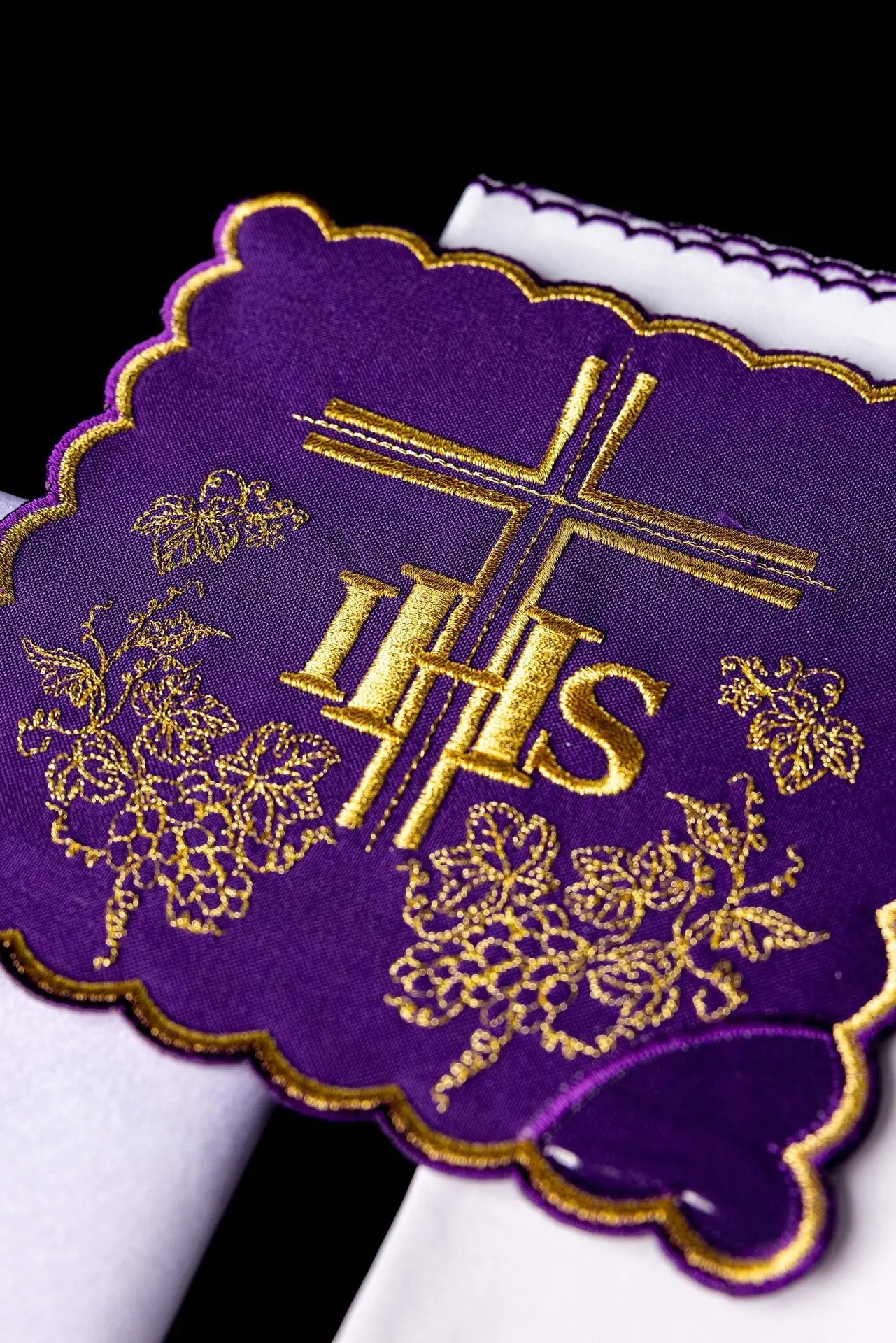
The Advent atmosphere is shaped not only by what the celebrant wears, but also by what is placed in the sanctuary. Chalice veils, altar linens, pulpit covers, and other textiles can extend the liturgical color of the season with dignity. A violet chalice veil, for example, can accompany the Mass vestments and reinforce the Advent color at the altar. Chalice linen sets should remain appropriate to their sacred function, while decorative elements should be chosen with restraint and clarity. For related altar textiles, parishes may compare altar linens and chalice veils to complete the seasonal arrangement.
Coordination does not require every textile to carry the same embroidery. In fact, a sanctuary often looks more dignified when one main motif is supported by simpler pieces. A richly embroidered chasuble can be paired with a plain or lightly decorated chalice veil. A simple chasuble may be strengthened visually by a coordinated altar frontal or pulpit cover. The goal is not visual excess, but a prayerful unity that serves the liturgy. Advent asks for beauty that is restrained, expectant, and clear.
When selecting altar pieces for Advent, pay attention to the size and visibility of the sanctuary. Embroidery that looks balanced on a small chapel altar may appear too subtle in a large church. A frontal or pulpit cover seen from a distance may need clearer contrast than a chalice veil viewed close to the altar. The color of candles, flowers, wood, stone, and existing furnishings also affects the final impression. Violet textiles with gold or ecru accents often harmonize well with traditional church interiors, while silver or white details can create a cooler and more contemplative tone.
Advent motifs and embroidery
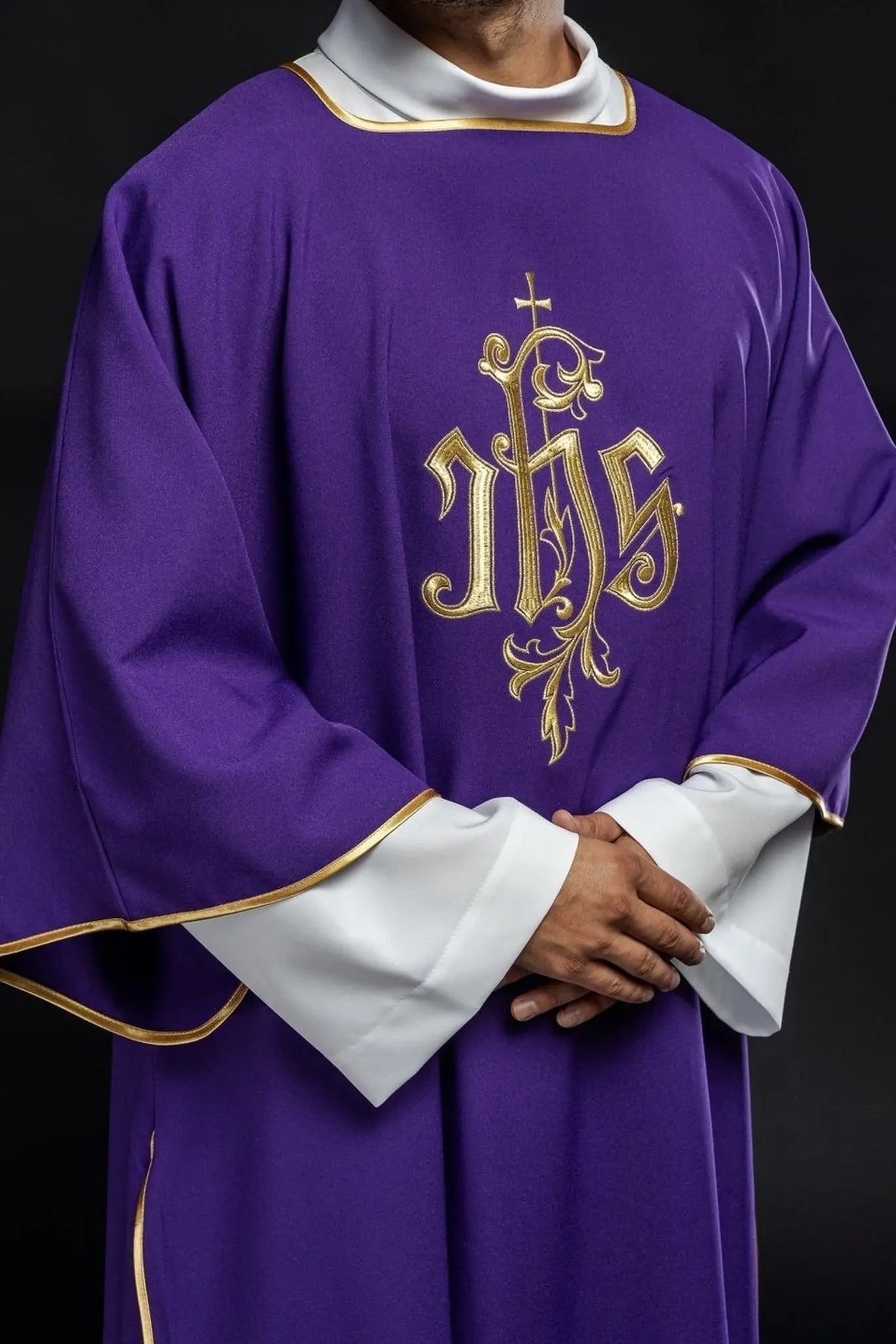
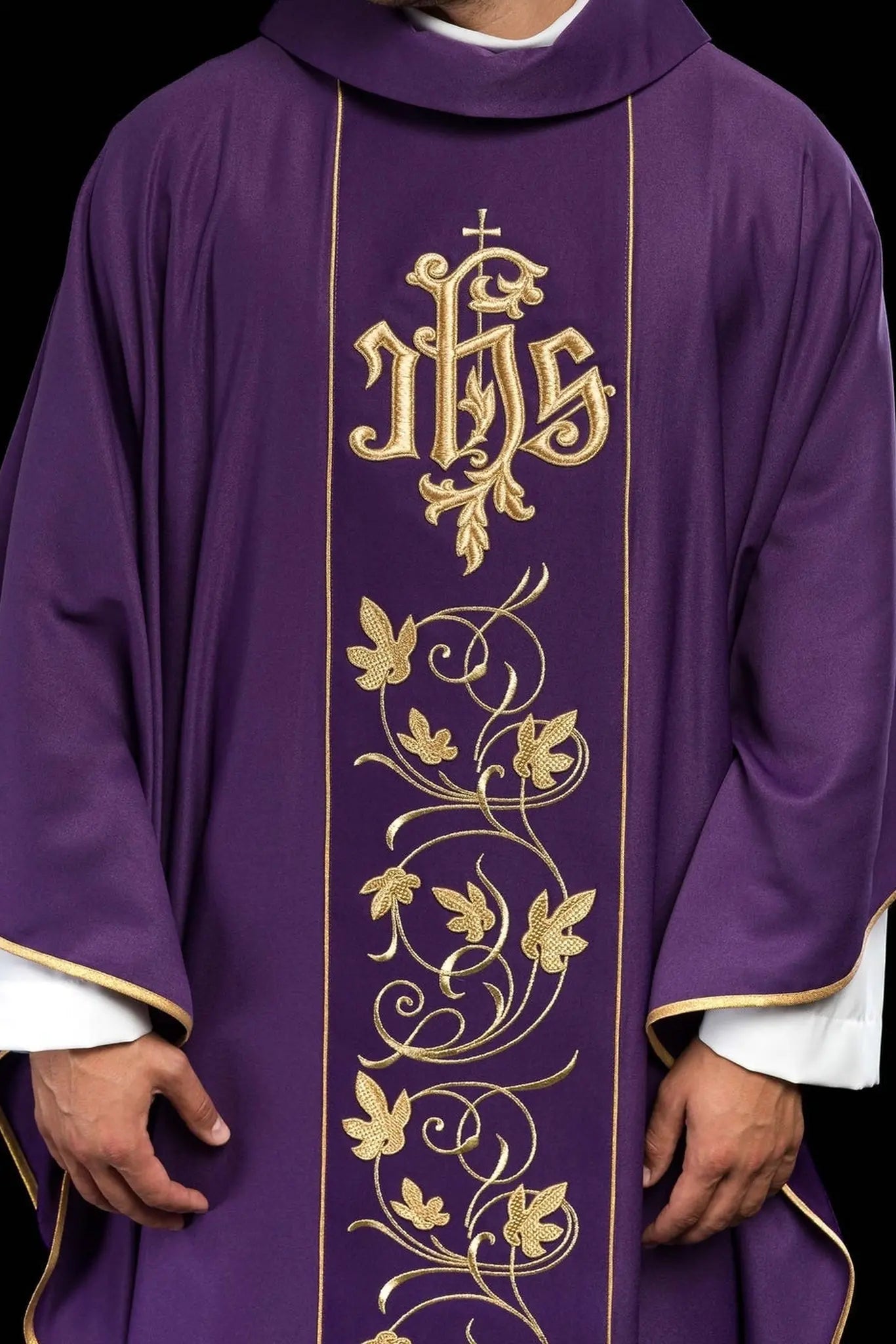
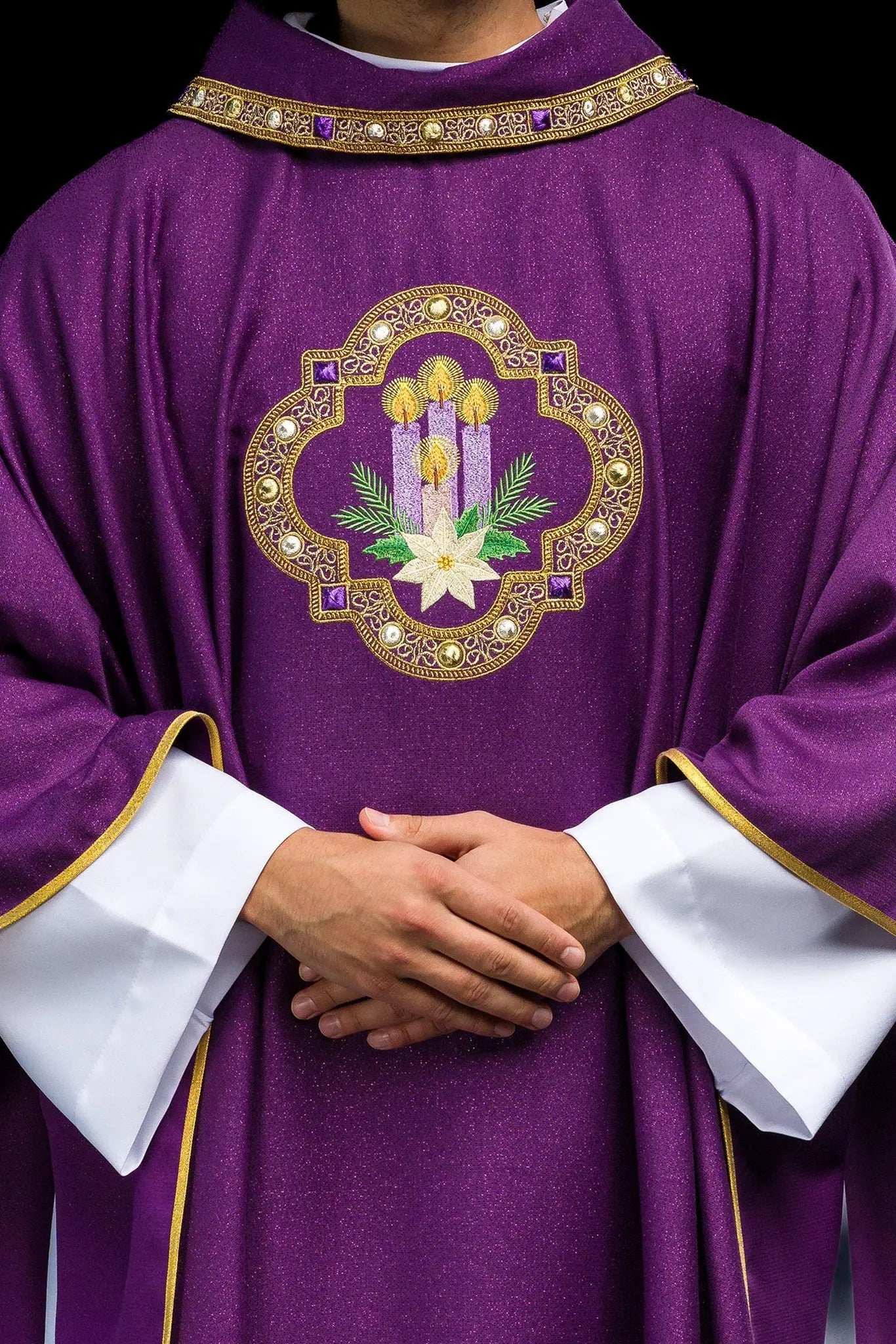
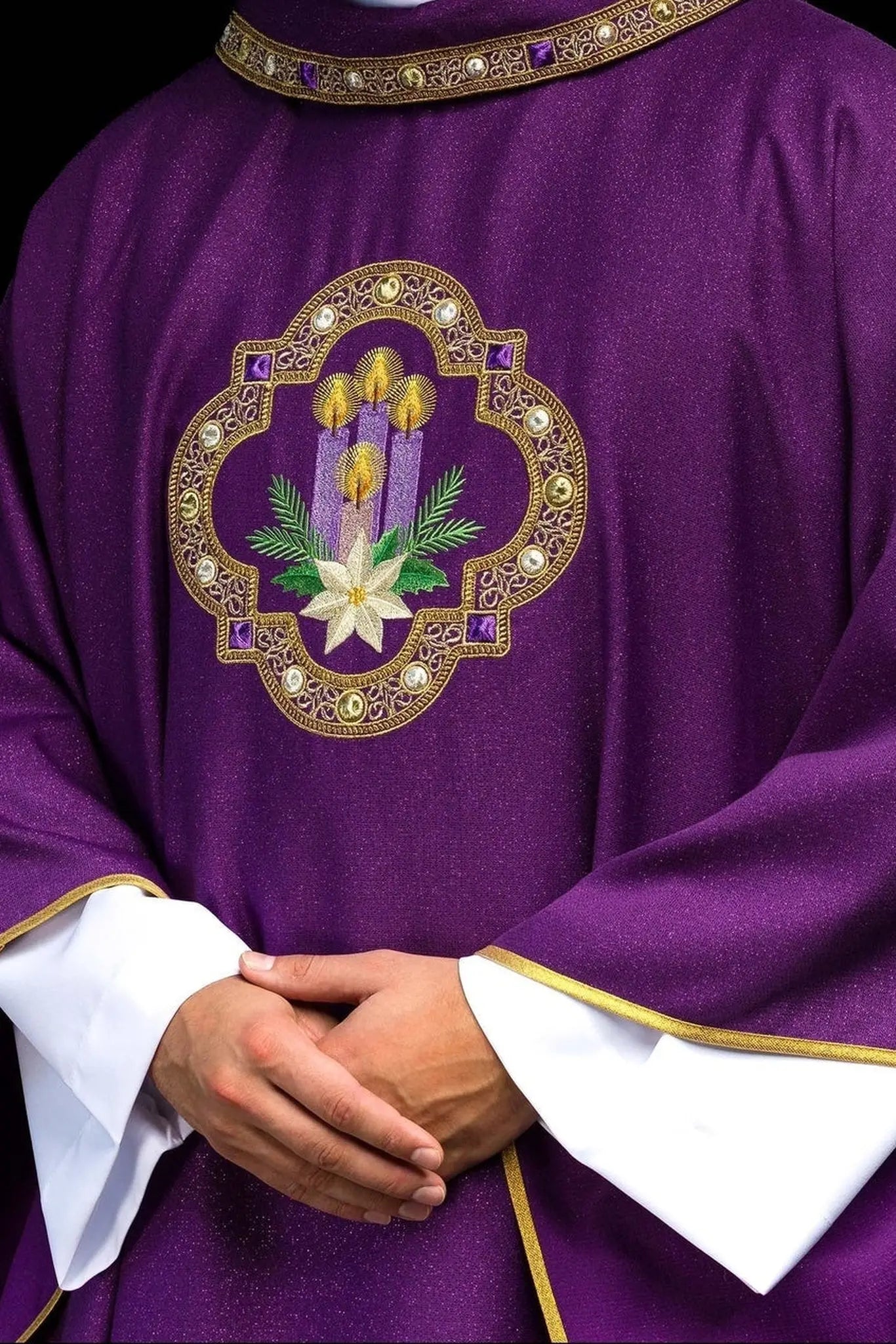
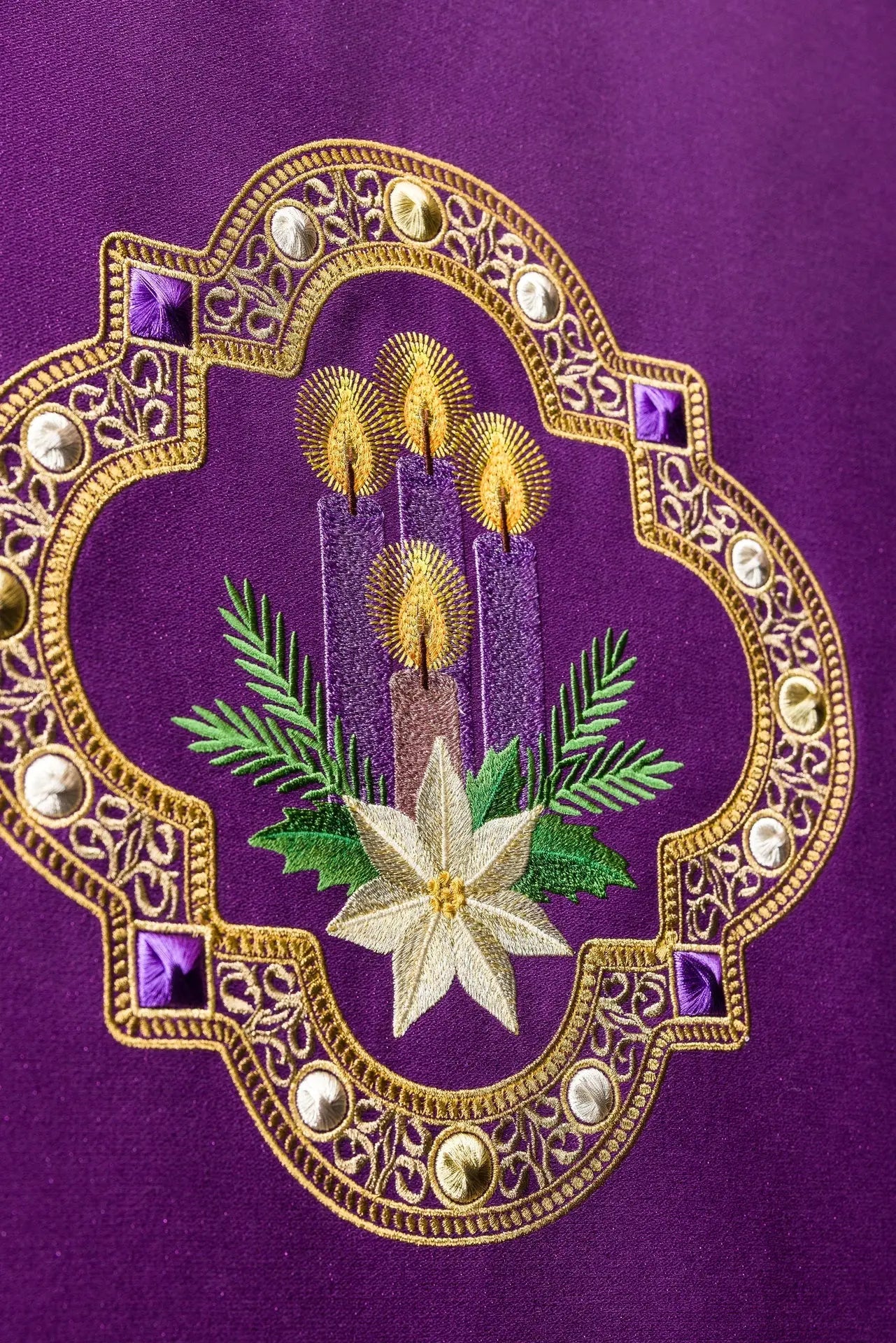
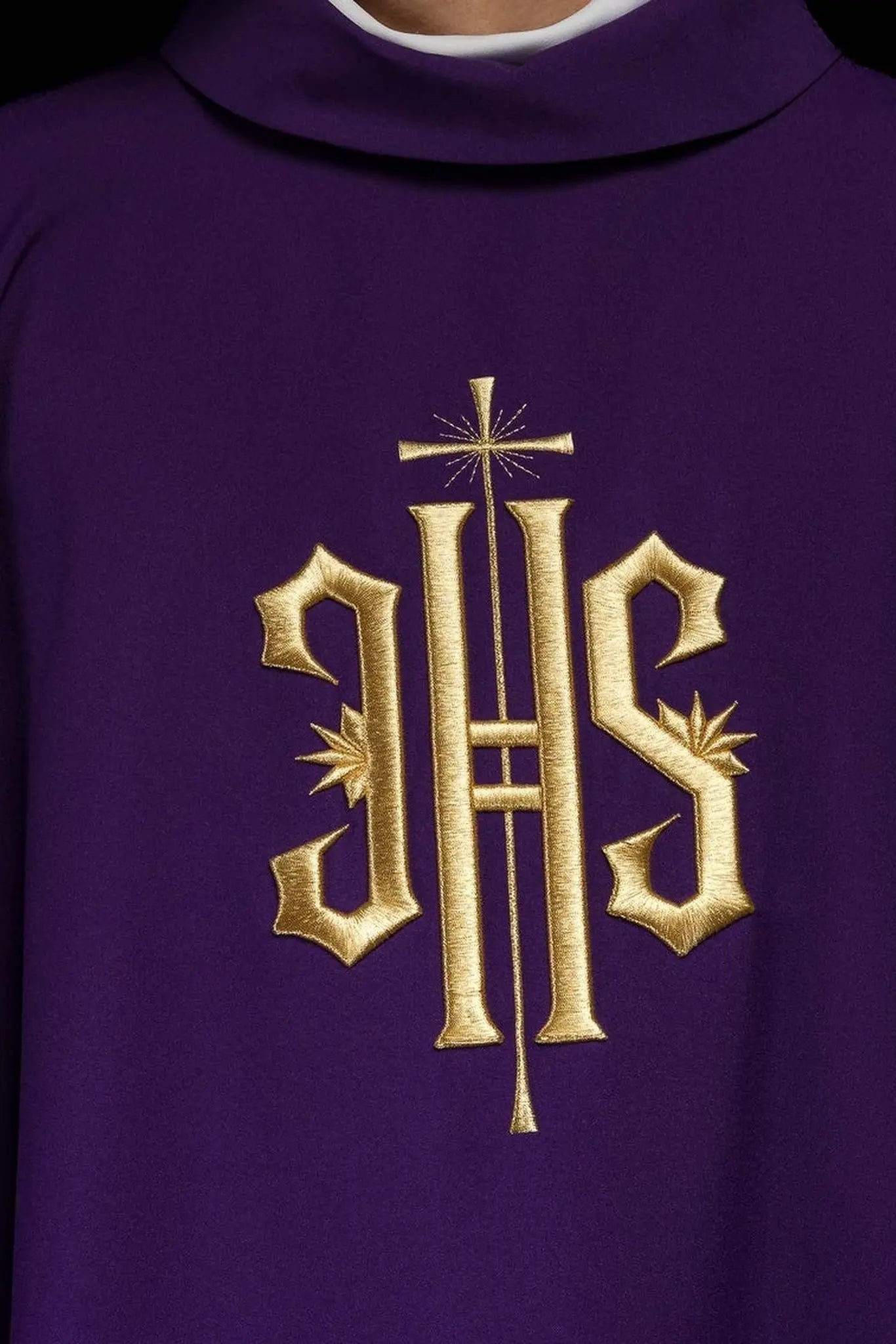
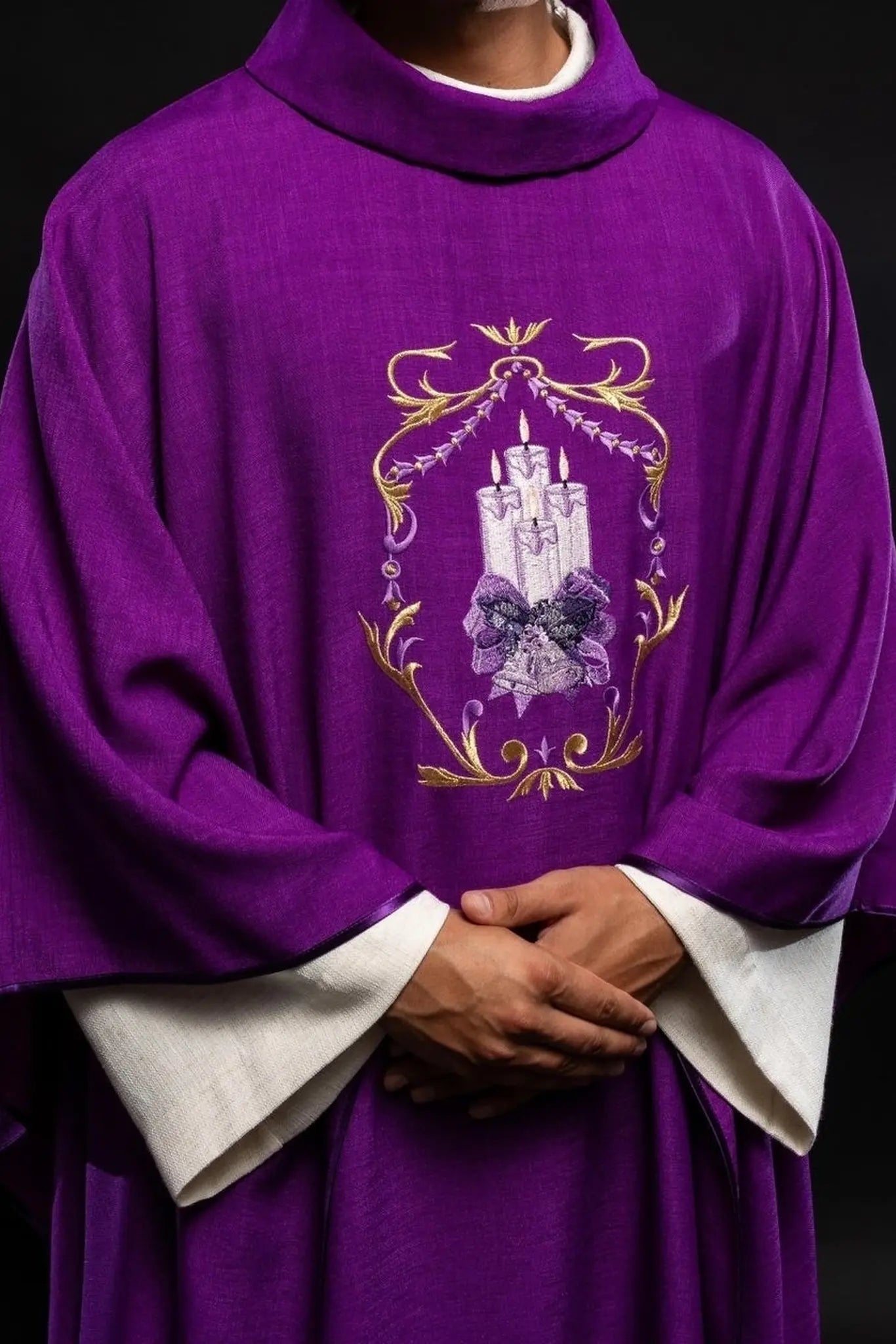
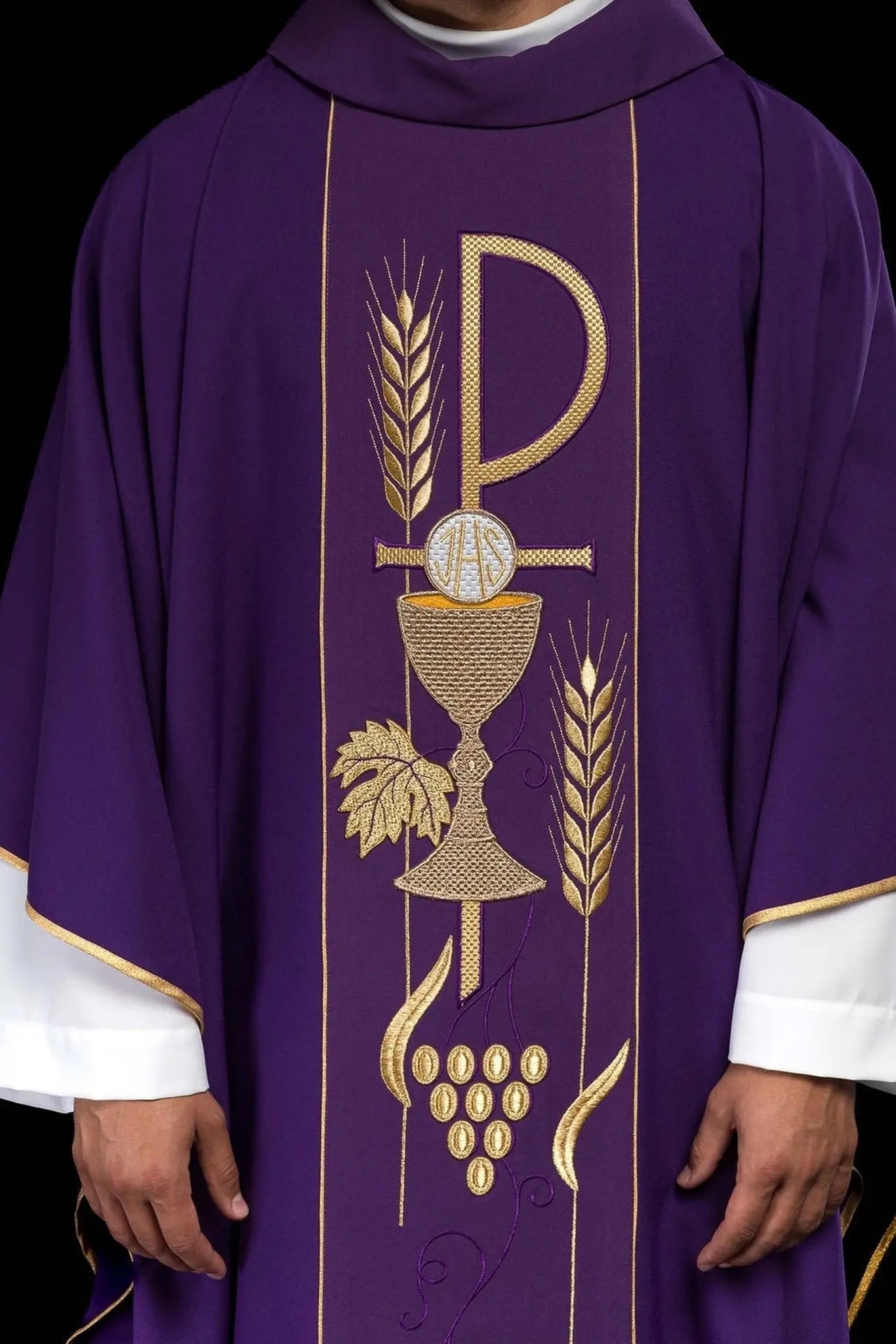
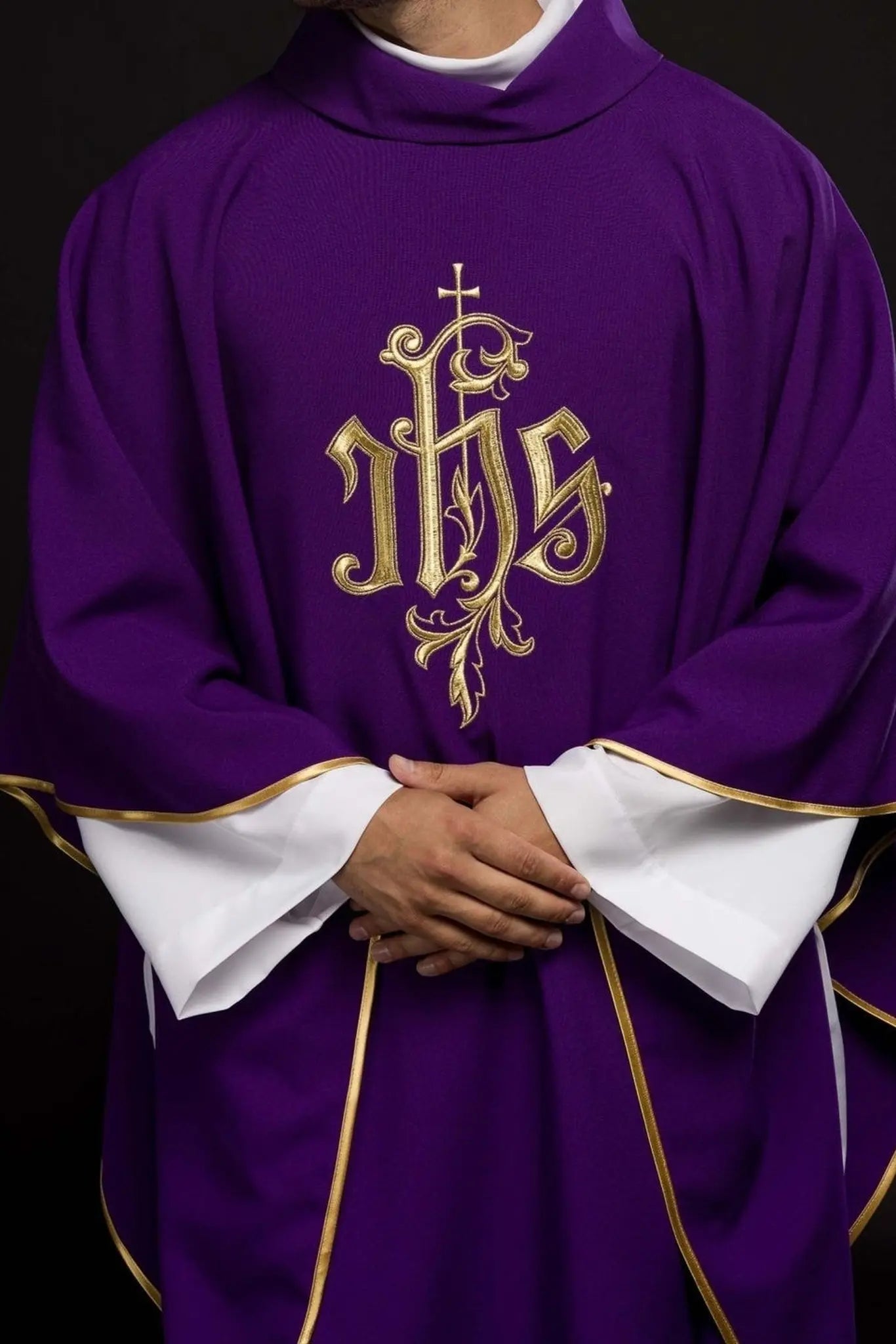
Embroidery on Advent vestments should support the season's theology. Common motifs include the cross, stars, light, vines, Marian symbols, prophetic imagery, and ornamental patterns that suggest waiting and hope. A star can point toward the coming of Christ and the light that shines in darkness. Vine or branch motifs can recall the expectation of the Messiah from the line of Jesse. Marian elements may be fitting where the local community gives particular attention to the Blessed Virgin Mary during Advent, especially in celebrations connected with expectation, humility, and the Incarnation.
Not every Advent vestment needs a literal seasonal image. Some of the most useful parish pieces are those with timeless sacred ornamentation in violet, because they can be worn throughout Advent and also on other occasions where purple is permitted. More specific designs can be reserved for Advent Sundays, missions, or Rorate celebrations. When a parish already owns general purple vestments, adding one clearly Advent-themed chasuble can enrich the wardrobe without duplicating what is already available.
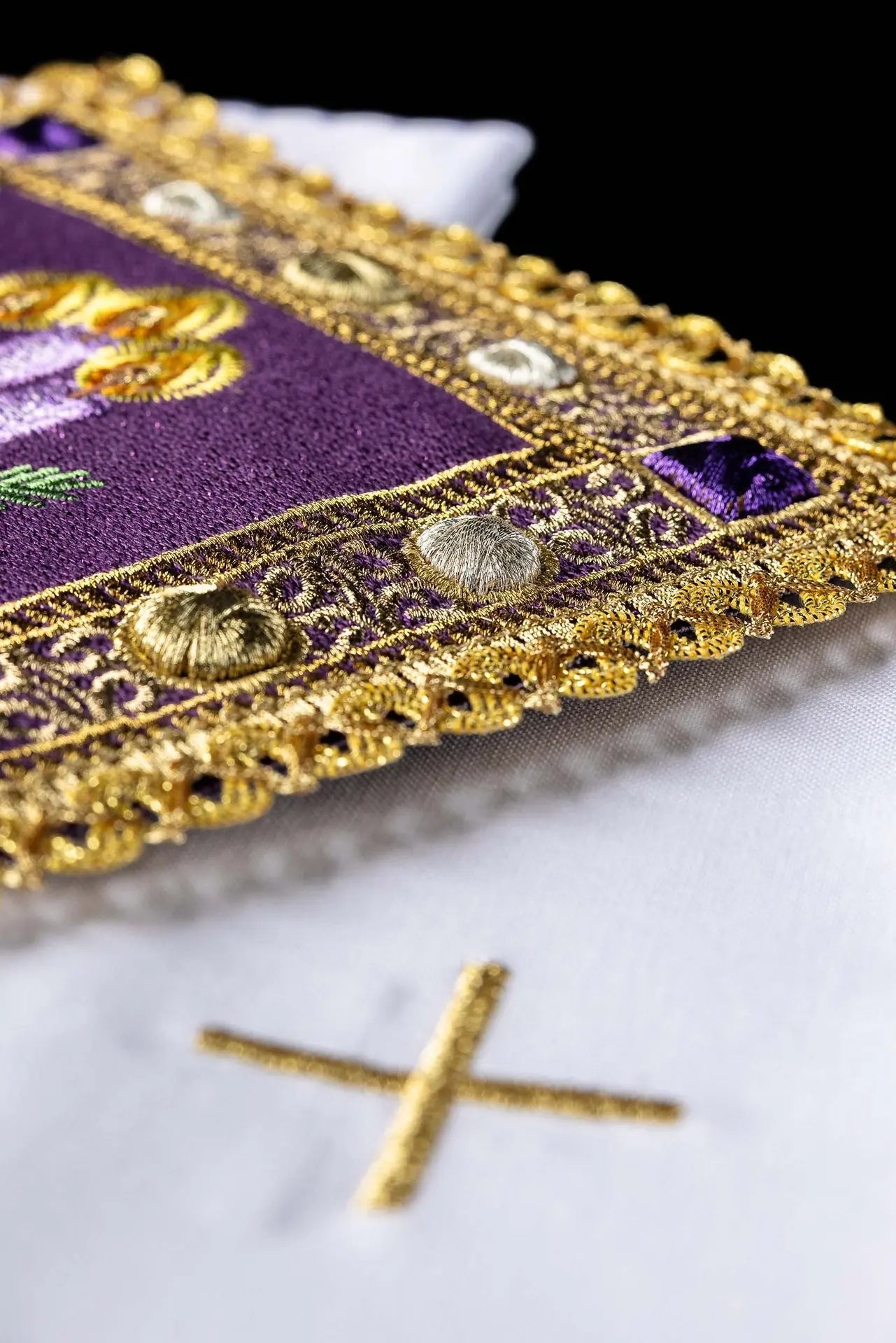
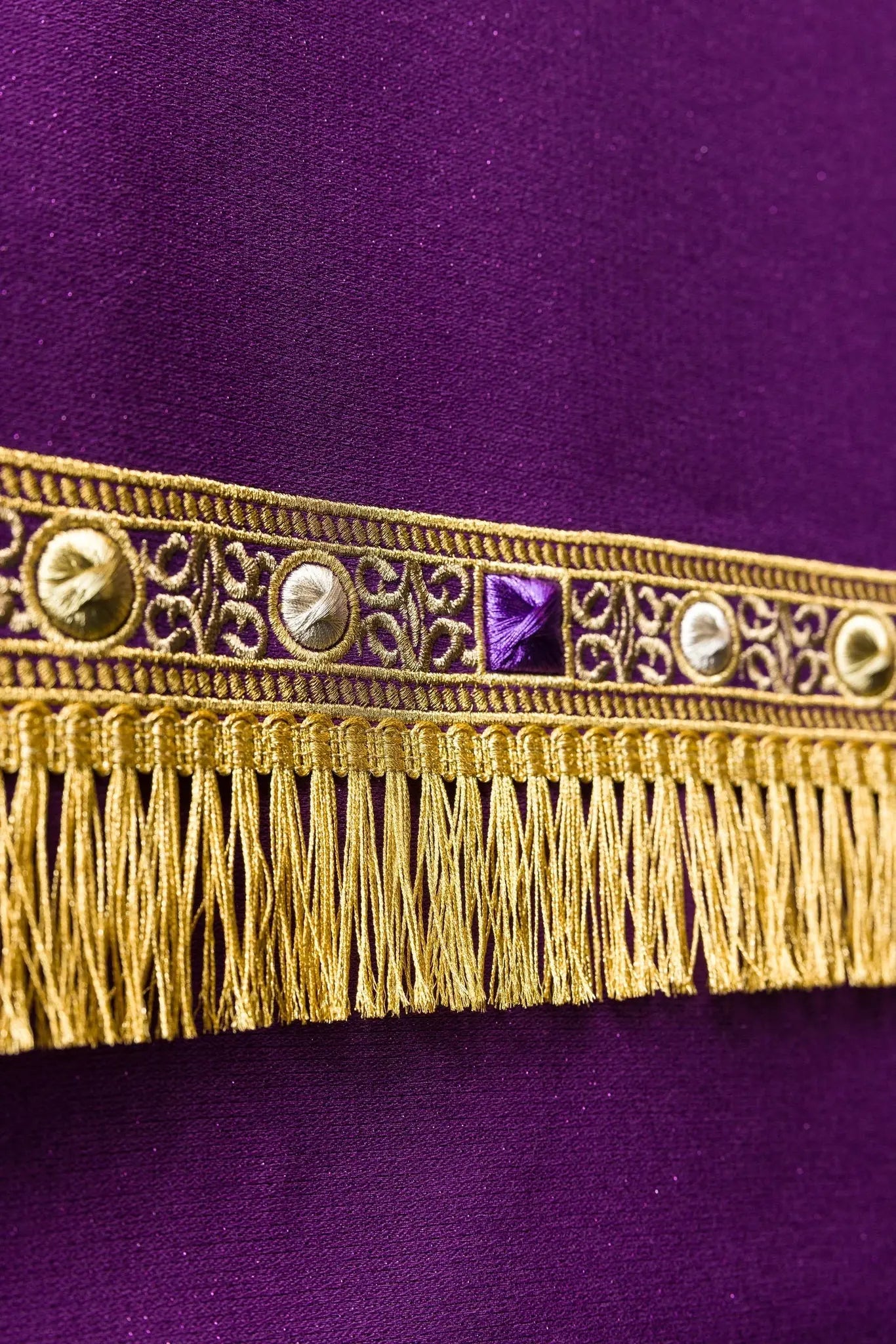
Quality embroidery is important because liturgical garments are viewed repeatedly and often from different distances. Fine details should be clear up close, while the main design should remain legible from the nave. Thread color, density, and placement influence the final effect. Heavy embroidery may look solemn and ceremonial, but it should not make the garment uncomfortable or stiff. Lighter embroidery can be elegant and practical for frequent use. The best Advent designs combine durability with a visual language that remains prayerful year after year.
Choosing Advent vestments for different parish needs
A parish preparing for Advent should begin by identifying how the vestments will be used. A small parish may need one reliable violet chasuble and one matching stole. A larger parish may need multiple chasubles, deacon stoles, copes, chalice veils, and altar textiles. A community with solemn Sunday liturgies may prefer richer embroidery, while a mission chapel or weekday chapel may benefit from simpler, lightweight garments. Religious houses and retreat centers may need vestments that endure frequent use during Advent days of recollection, penance services, and spiritual conferences.
It is also useful to consider the order in which Advent and Christmas appear in the liturgical calendar. Advent vestments should not look like Christmas vestments. Their tone is expectant rather than festive. Violet and rose belong to the season before Christmas, while white, gold, and festive designs are typically associated with the celebration of the Nativity. When planning a complete seasonal wardrobe, Advent pieces can be selected alongside the Christmas collection so that the transition from preparation to celebration is visually clear.
Another important distinction is between Advent and Lent. Both seasons use violet, but their spiritual accents differ. Advent looks toward the coming of Christ with hope and watchfulness. Lent emphasizes penance, conversion, and preparation for Easter. Some purple vestments may serve both seasons, especially when the design is simple. However, a parish that wants clearer seasonal identity may choose separate Advent and Lenten pieces. For comparison, the Lent vestments collection can help distinguish penitential designs from those more closely associated with Advent expectation.
Fabric, cut, and comfort
Because Advent includes several weeks of repeated use, practical construction matters. A chasuble should sit comfortably over the alb, allow the celebrant to move naturally, and retain a dignified drape during the Eucharistic Prayer and other liturgical actions. Stoles should hang correctly without twisting or pulling. Copes should close securely and fall evenly over the shoulders. Chalice veils should be properly sized for the chalice and easy to handle reverently. Altar linens should be proportioned to the altar and finished with care appropriate to sacred use.
Fabric choice influences both appearance and maintenance. Durable blends are often suitable for regular parish use because they hold shape well and are easier to care for. More refined fabrics may be selected for solemn Sunday or feast-related use, provided that their care requirements are respected. Lining, seams, edging, and embroidery backing all affect longevity. A vestment that looks impressive but is uncomfortable or difficult to maintain may not serve the parish well over many seasons. Conversely, a well-made simple vestment can become one of the most frequently used pieces in the sacristy.
Before selecting a vestment, check the product details for measurements, cut, included pieces, fabric information, and care guidance. Some items may be sold as individual pieces, while others may belong to coordinated sets. A chasuble may include a matching stole, or the stole may need to be selected separately. Chalice veils and altar textiles may be coordinated by color or design but should still be verified for size and liturgical suitability. Careful reading prevents mismatched expectations and helps the sacristan build a practical Advent set.
Building a coherent Advent set
A complete Advent arrangement may include a violet chasuble, matching stole, optional deacon stole, chalice veil, altar linens, pulpit cover, cope, and humeral veil where needed. Not every parish needs every piece, and not every piece must be purchased at the same time. The most important point is coherence. When the priest's vestment, altar textiles, and other visible elements share a liturgical color and restrained design language, the congregation experiences the season more clearly.
For weekday Masses, simple violet vestments may be the most practical. For Sundays of Advent, a richer chasuble or a coordinated set may be preferred. For Gaudete Sunday, rose vestments provide a distinct sign of joy in the middle of preparation. For parish missions and penance services, stoles are particularly important. For adoration, Vespers, or Benediction, a cope and humeral veil may be needed according to the rite. Thinking in terms of actual liturgical moments helps avoid unnecessary purchases and ensures that each textile has a purpose.
Advent vestments also need to work with the existing sacristy wardrobe. If the parish already owns a strong set of purple stoles, the next useful addition may be a chasuble or chalice veil. If the altar already has violet frontals, matching the celebrant's vestments may be the priority. If the church has no rose items, adding one rose chasuble for Gaudete Sunday may bring a clear and traditional sign to the liturgy. The collection is best used as a planning tool for the whole season, not only as a list of individual garments.
Advent vestments in the wider liturgical year
Advent is one part of the Church's annual cycle, and its vestments should be understood in relation to the seasons around it. Ordinary Time uses green and presents the steady life of discipleship. Advent changes the tone to watchfulness and preparation. Christmas then brings festive white, gold, or ecru tones connected with the Nativity. Lent returns to violet with a more penitential emphasis. Seeing these relationships makes it easier to choose colors and designs that do not blur the character of each season.
For parishes building a complete annual wardrobe, Advent often becomes the starting point for a broader review of seasonal vestments. Purple and rose pieces should be checked before the season begins, along with stoles for Confession, altar textiles, and any items needed for special Advent devotions. If the parish has limited storage or budget, versatile designs may be preferable. If the parish has a full sacristy and solemn liturgical program, more specific Advent designs can enrich the visual rhythm of the year.
Care and storage for Advent vestments
Proper care preserves the beauty and dignity of Advent vestments. Embroidered garments should be handled with clean hands, hung on suitable hangers, and stored away from moisture and direct sunlight. Chasubles and copes should not be folded tightly through embroidered areas, because repeated pressure can damage thread and fabric. Stoles should be stored flat or hung in a way that prevents creasing. Chalice veils and altar linens should be kept clean, dry, and separated from items that could snag delicate embroidery.
Always follow the care instructions provided with the particular item. Some textiles may require professional cleaning, while others may permit careful maintenance according to the fabric. Sacristans should also inspect Advent pieces after the season ends, noting loose threads, stains, damaged clasps, or signs of wear. Repairing and storing the vestments properly immediately after Advent makes the following year's preparation much easier. Liturgical textiles serve the worship of the Church, and their care is part of the same reverence shown in their use.
Frequently Asked Questions (FAQ)
What color vestments are used during Advent?
Violet, often called purple in common usage, is the principal liturgical color for Advent. It expresses preparation, conversion, and expectation. Rose may be used on Gaudete Sunday where the liturgical practice of the community includes it. When choosing pieces, make sure the color and design match the intended day or season.
Are Advent vestments the same as Lenten vestments?
Some purple vestments can be used in both Advent and Lent, especially when the design is simple and not tied to a specific theme. However, Advent has a distinct character of watchful hope, while Lent has a stronger penitential and Passion-oriented focus. Parishes that want a clearer seasonal identity often keep separate Advent and Lenten designs.
What should a parish buy first for Advent?
The most useful first pieces are usually a violet chasuble for Mass and a matching violet stole for the priest. After that, many parishes add stoles for sacramental ministry, a rose chasuble for Gaudete Sunday, and coordinated altar textiles such as a chalice veil or pulpit cover. The best order depends on how many Advent liturgies the parish celebrates and which items are missing from the sacristy.
When are rose vestments used in Advent?
Rose vestments may be used on the Third Sunday of Advent, known as Gaudete Sunday. They mark a moment of joyful anticipation within the season, without turning Advent into Christmas ahead of time. A rose chasuble or stole can also serve Laetare Sunday in Lent if the design is suitable for both occasions.
Can Advent vestments include Marian symbols?
Yes, Marian symbols can be appropriate when they are used with theological care. Advent includes a strong focus on the expectation of the Incarnation, and the Blessed Virgin Mary has an important place in that mystery. Designs should remain clearly suited to Advent and should not be confused with purely Marian feast-day vestments unless that is the intended use.
How can altar textiles be coordinated with Advent vestments?
Choose altar textiles that repeat the violet or rose tone without overwhelming the sanctuary. A chalice veil, pulpit cover, or altar linen detail can echo the celebrant's vestment while keeping the altar dignified. Matching every element exactly is not required; what matters is a coherent color, restrained ornamentation, and respect for the function of each sacred textile.