
Sort by
4 products
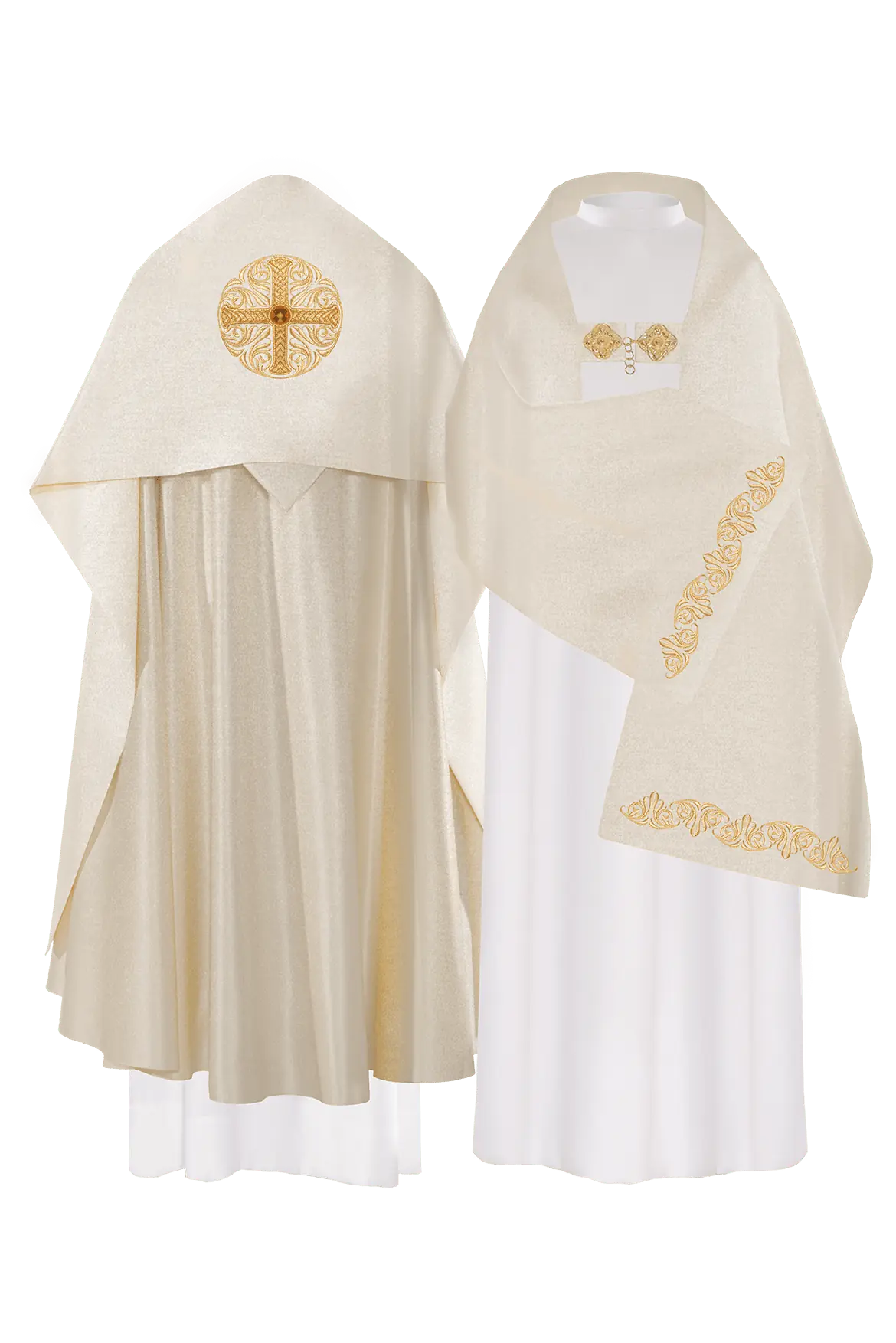

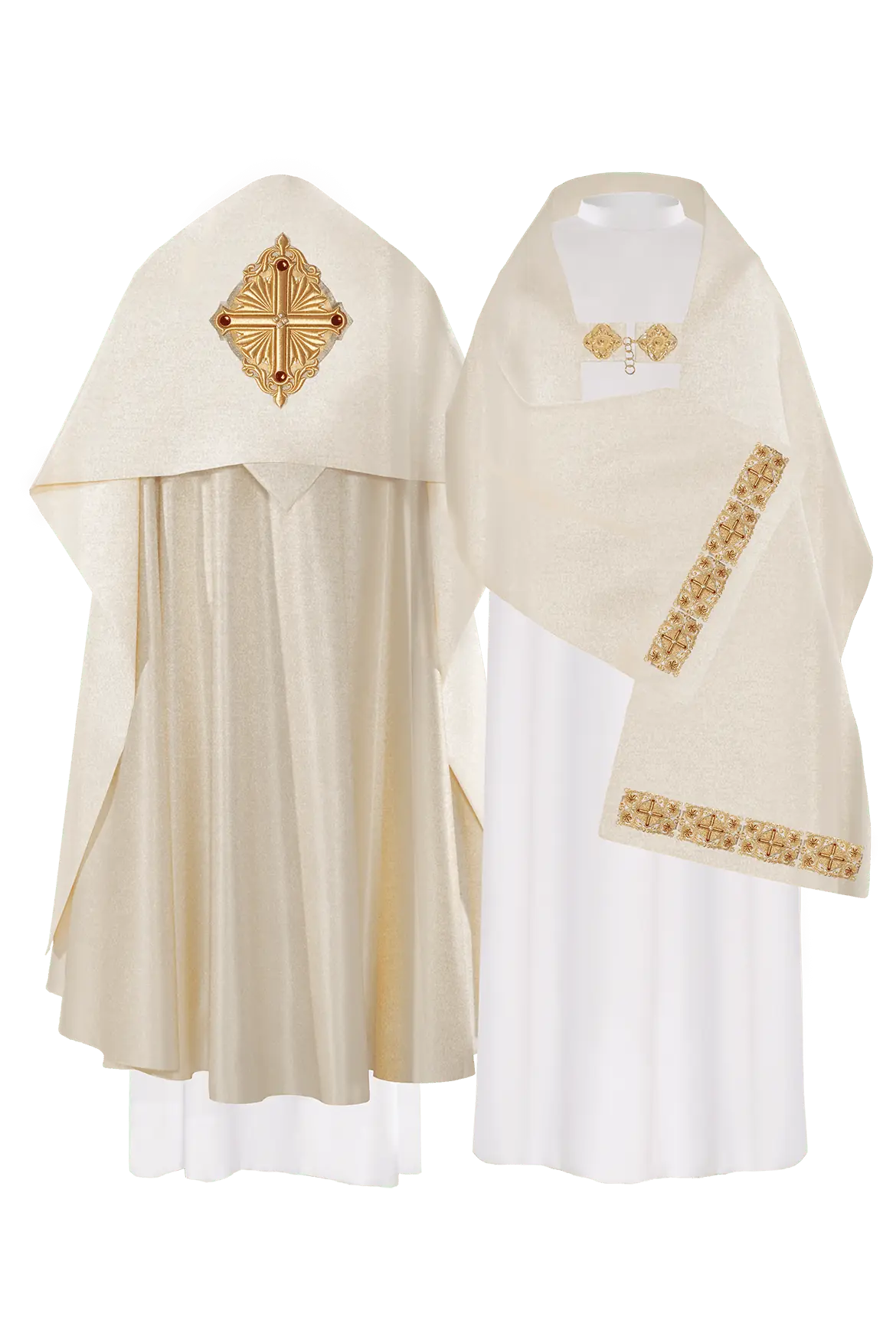
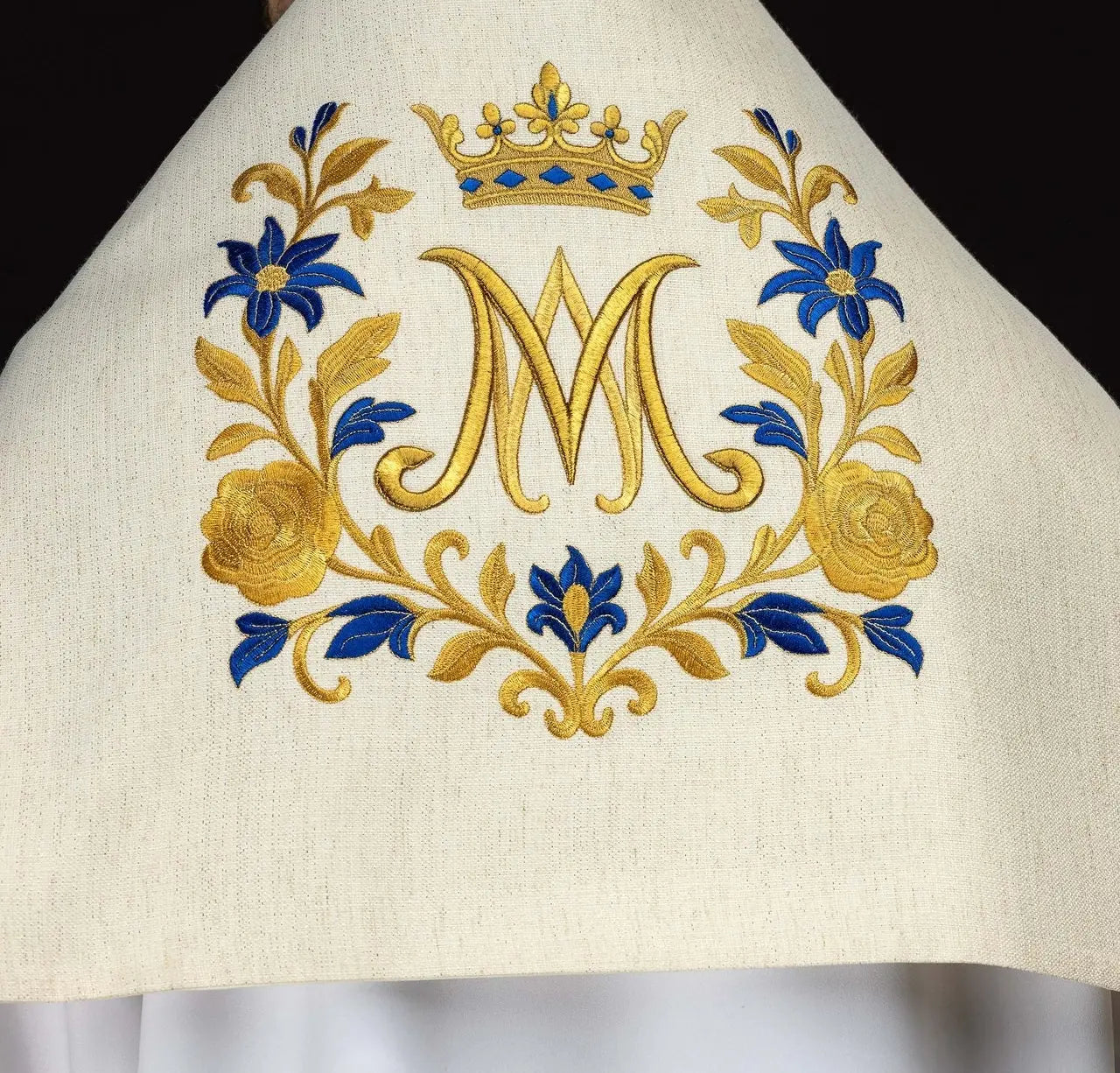
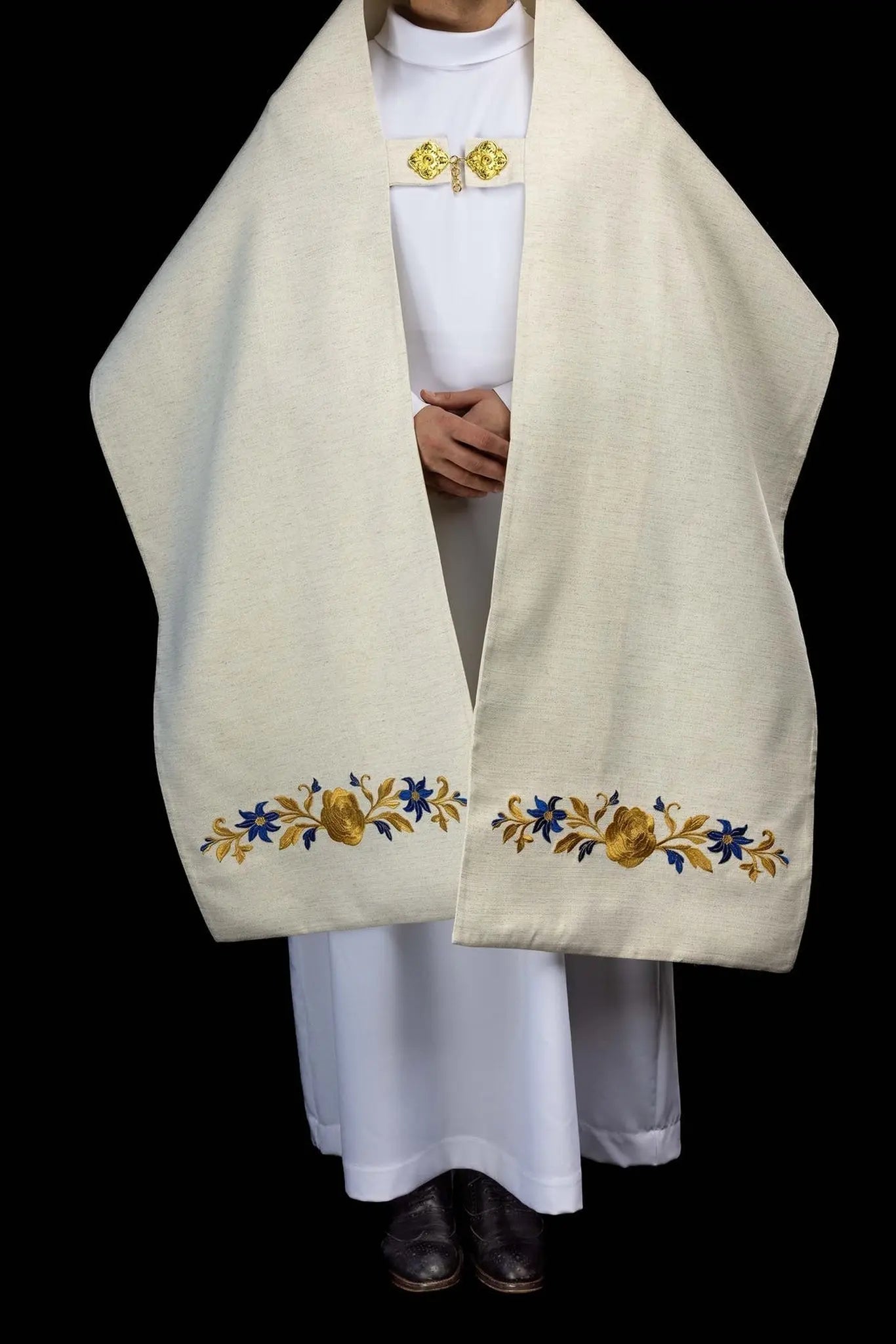
Humeral Veils Limited Edition
The Humeral Veils Limited Edition collection gathers solemn Eucharistic veils created for the most reverent moments of Catholic worship. A humeral veil is worn over the shoulders and around the arms so that the minister can hold the monstrance or another sacred vessel with covered hands during Benediction, Eucharistic procession, exposition, reposition, or other rites connected with the Blessed Sacrament. In this limited selection, the focus is on richly finished humeral veils with gold, ecru, Marian, and cross embroidery, chosen for liturgies where visual dignity, symbolic clarity, and careful textile work are especially important.
Unlike everyday vestment accessories, limited edition humeral veils are selected when a parish, chapel, religious community, or shrine wants one distinctive piece for solemn celebrations. The visible range includes gold veils with cross designs and ecru or blue Marian embroidery, making the collection especially relevant for Eucharistic devotion, Marian feasts, Corpus Christi, parish jubilees, and festive adoration services. For the broader category, visit humeral veils; for other rare seasonal pieces, see Limited Edition.
What belongs in this limited edition collection?
This collection is dedicated to humeral veils rather than chasubles, stoles, chalice veils, or altar cloths. The pieces are long liturgical veils worn across the shoulders, with enough width and drape to cover the hands during the handling of the sacred vessel. Their form is practical, but their purpose is theological: the veil helps express that the blessing is given through the Eucharistic Lord, not as a personal gesture of the minister. For that reason, a humeral veil should be dignified, balanced, and clearly suited to Eucharistic worship.
The limited edition character of this page is reflected in more distinctive embroidery, refined color combinations, and designs that are not simply standard utility veils. Gold cross motifs emphasize Eucharistic solemnity and festal celebration. Marian embroidery, especially in ecru and blue, connects naturally with celebrations of the Blessed Virgin Mary while remaining suitable for adoration and Benediction. When selecting a veil for Marian liturgies, it can also be helpful to compare related vestments in the Blessed Virgin Mary collection, so the sanctuary textiles and vestments form one coherent visual language.
Liturgical use and meaning of the humeral veil
The humeral veil is one of the clearest examples of a vestment whose form serves a specific liturgical action. It is placed over the shoulders, often fastened or held at the front, and its ends cover the hands. During Benediction of the Blessed Sacrament, this gesture underlines reverence toward the monstrance and the Eucharistic mystery. It also helps distinguish the moment of blessing from ordinary liturgical movement, making the action visibly solemn for the faithful.
Humeral veils are most often associated with Eucharistic adoration, Corpus Christi processions, and Benediction. They may also appear in solemn celebrations where a ciborium or other sacred vessel is carried with particular reverence, according to the rite and local practice. For celebrations centered on the Eucharist outside the church building, the veil can be coordinated with processional elements from the Corpus Christi collection, as well as with vestments already used by the clergy and altar servers.
How to choose a limited edition humeral veil
Choosing a humeral veil is not only a question of appearance. The veil should match the intended liturgical use, the church interior, and the vestments worn during the rite. A gold humeral veil with an embroidered cross is a strong choice for Benediction, Eastertide, Christmas, solemn parish feasts, and Eucharistic processions. Ecru designs offer a softer, classic alternative that pairs well with white, gold, and Marian vestments. Blue Marian embroidery is especially meaningful when the celebration honors the Mother of God or when the parish has a strong Marian dedication.
- For Eucharistic solemnity: choose a design where the central symbol, such as a cross, is visible and proportionate when the veil is worn.
- For Marian celebrations: consider ecru or blue embroidery that harmonizes with Marian chasubles, stoles, banners, or altar textiles.
- For processions: prioritize fabric that drapes well, stays composed in movement, and gives the minister enough coverage for the hands.
- For a coordinated sanctuary: compare the veil with related copes, chalice veils, and vestments used on the same day.
- For long-term parish use: select embroidery that is solemn rather than overly seasonal, so the veil can serve for many Eucharistic occasions.
Relationship to nearby liturgical collections
A humeral veil is often chosen alongside other vestments, but it should not be confused with them. A cope is worn for processions, Benediction, and other solemn rites, while the humeral veil covers the shoulders and hands at the specific moment of handling the monstrance or sacred vessel. Chalice veils belong to the altar and cover the chalice, not the minister. Chasubles are Eucharistic vestments for the priest celebrant at Mass. Keeping these distinctions clear helps a parish build a set that is both beautiful and liturgically correct.
For a complete Eucharistic or Marian celebration, this collection may be paired with Gold Chasubles for festal Masses, Marian vestments for celebrations of Our Lady, or altar linens and chalice textiles when the sanctuary needs a unified arrangement. The humeral veil should support the whole celebration without visually overpowering the monstrance or the sacred action. In a well-coordinated set, embroidery, color, and fabric weight work together to create reverence rather than distraction.
Design, embroidery, and practical details
The limited edition humeral veils in this collection emphasize embroidery that can be read from a distance while still showing refined detail up close. Cross motifs are especially suitable because they connect the Eucharistic presence with the sacrifice of Christ. Marian embroidery brings devotional warmth and can be chosen for churches, chapels, and communities with a Marian patronage. Gold details are often used for solemnity, while ecru provides a dignified neutral base and blue can express Marian symbolism in a clear but tasteful way.
When comparing individual items, pay attention to the visible composition of the embroidery, the placement of the motif, and the overall balance of the veil. The best choice is usually the one that fits the most important liturgical purpose of the community: regular Benediction, annual Corpus Christi procession, Marian feast days, or a special chapel setting. Because this is a limited edition collection, availability may be narrower than in the standard humeral veil range, so it is worth choosing with both the immediate celebration and future use in mind.
Care and storage for embroidered humeral veils
Embroidered liturgical textiles should be handled with care before and after use. A humeral veil is frequently worn during processions or near candles, flowers, incense, and metal vessels, so it should be inspected after solemn celebrations and stored properly. Avoid folding heavy embroidery in a way that presses the threadwork. When possible, keep the veil flat or gently folded along natural lines, away from moisture and direct sunlight.
Cleaning should follow the instructions supplied with the individual item. For delicate embroidery, professional cleaning by a service experienced with liturgical fabrics is usually safer than machine washing. Gentle handling helps preserve the drape, surface, and symbolic clarity of the veil, especially when it is used only for the most solemn Eucharistic celebrations of the year.
Frequently Asked Questions (FAQ)
When is a humeral veil used?
A humeral veil is used mainly during Benediction of the Blessed Sacrament, Eucharistic exposition and reposition, and solemn processions such as Corpus Christi. It covers the shoulders and hands of the minister when holding the monstrance or sacred vessel, emphasizing reverence for the Eucharistic mystery.
Is this collection different from the standard humeral veils collection?
Yes. This page focuses on limited edition humeral veils with more distinctive embroidery, color combinations, or devotional motifs. For a wider and more regular selection, the main humeral veils collection is the best related category.
Which color should be chosen for Benediction or Corpus Christi?
Gold and ecru are especially suitable for solemn Eucharistic celebrations because they coordinate well with festive white and gold vestments. For Corpus Christi, a gold humeral veil with a cross design is often a strong choice, particularly when paired with a cope and other processional textiles.
Can a Marian humeral veil be used for Eucharistic adoration?
Yes, a Marian design can be appropriate when the overall liturgy or church setting has a Marian character, provided the veil remains dignified and suitable for the handling of the Blessed Sacrament. Blue or Marian embroidery can be especially fitting for celebrations connected with Our Lady.
How should a parish coordinate a humeral veil with other vestments?
Begin with the main celebration: Benediction, procession, Marian feast, or a parish solemnity. Then match the veil with the cope, chasuble color, altar linens, and chalice textiles so the sanctuary has one coherent style. The humeral veil should be visible and solemn, but it should not compete with the monstrance.