
Sort by
7 products
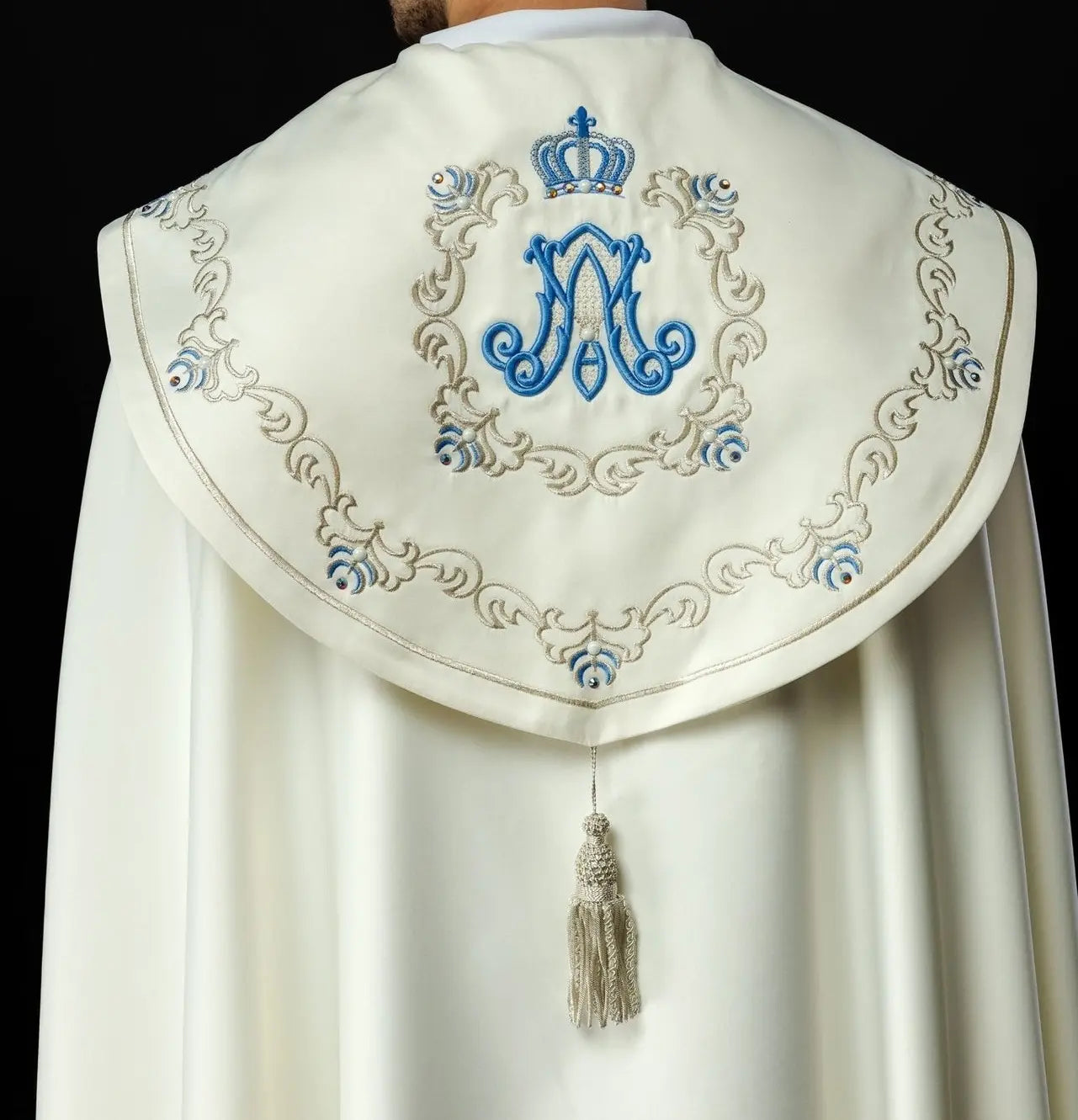
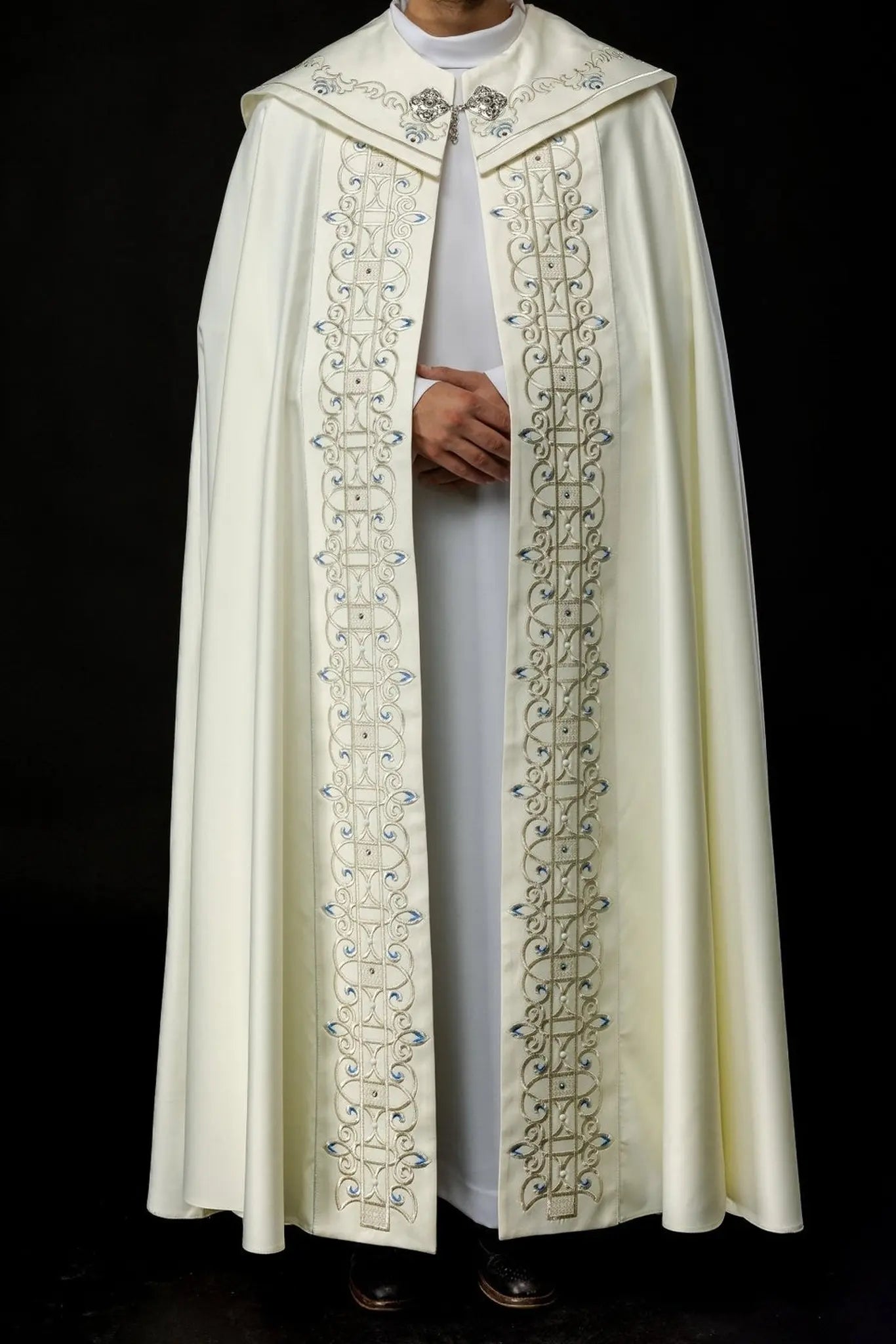
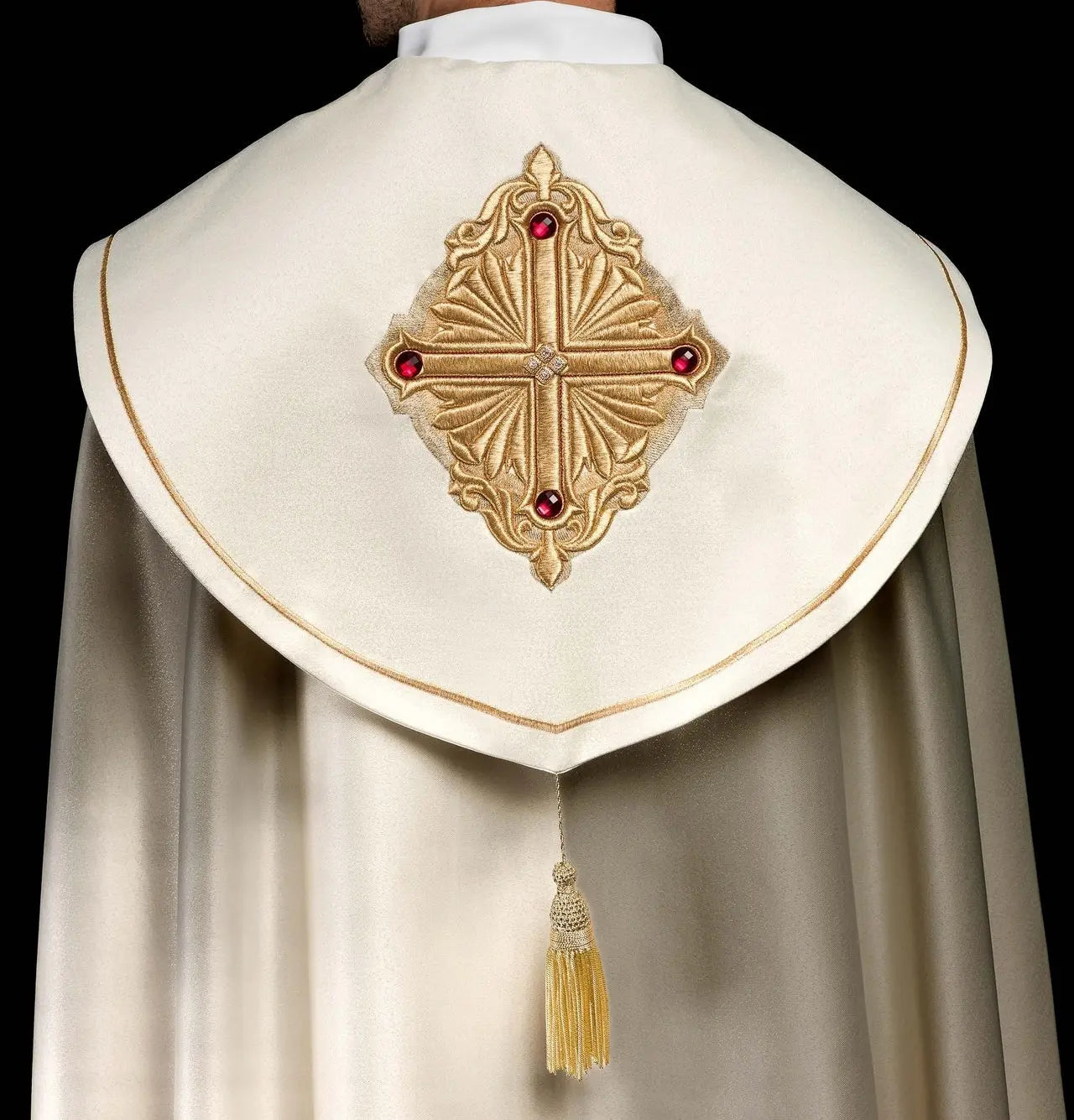
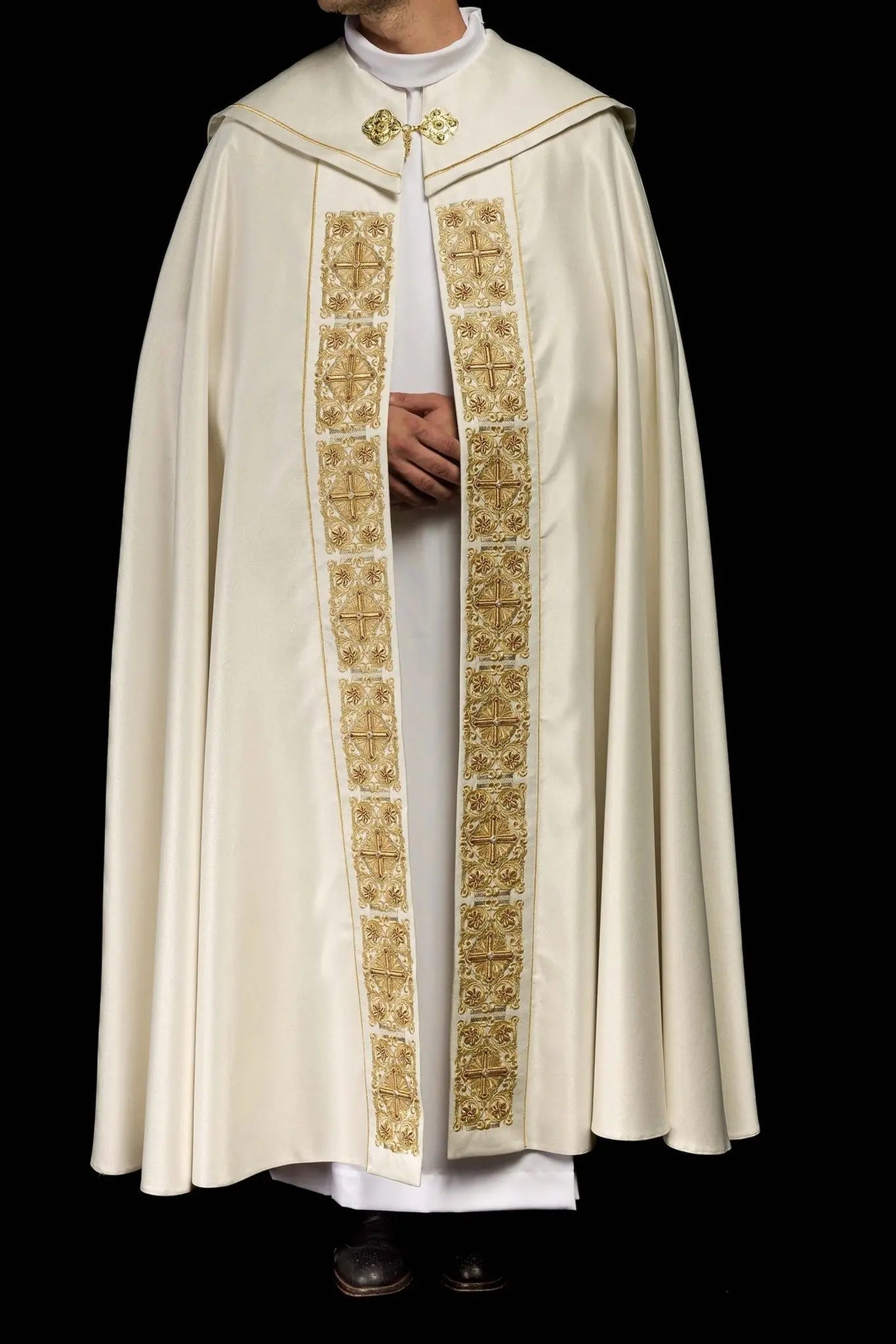
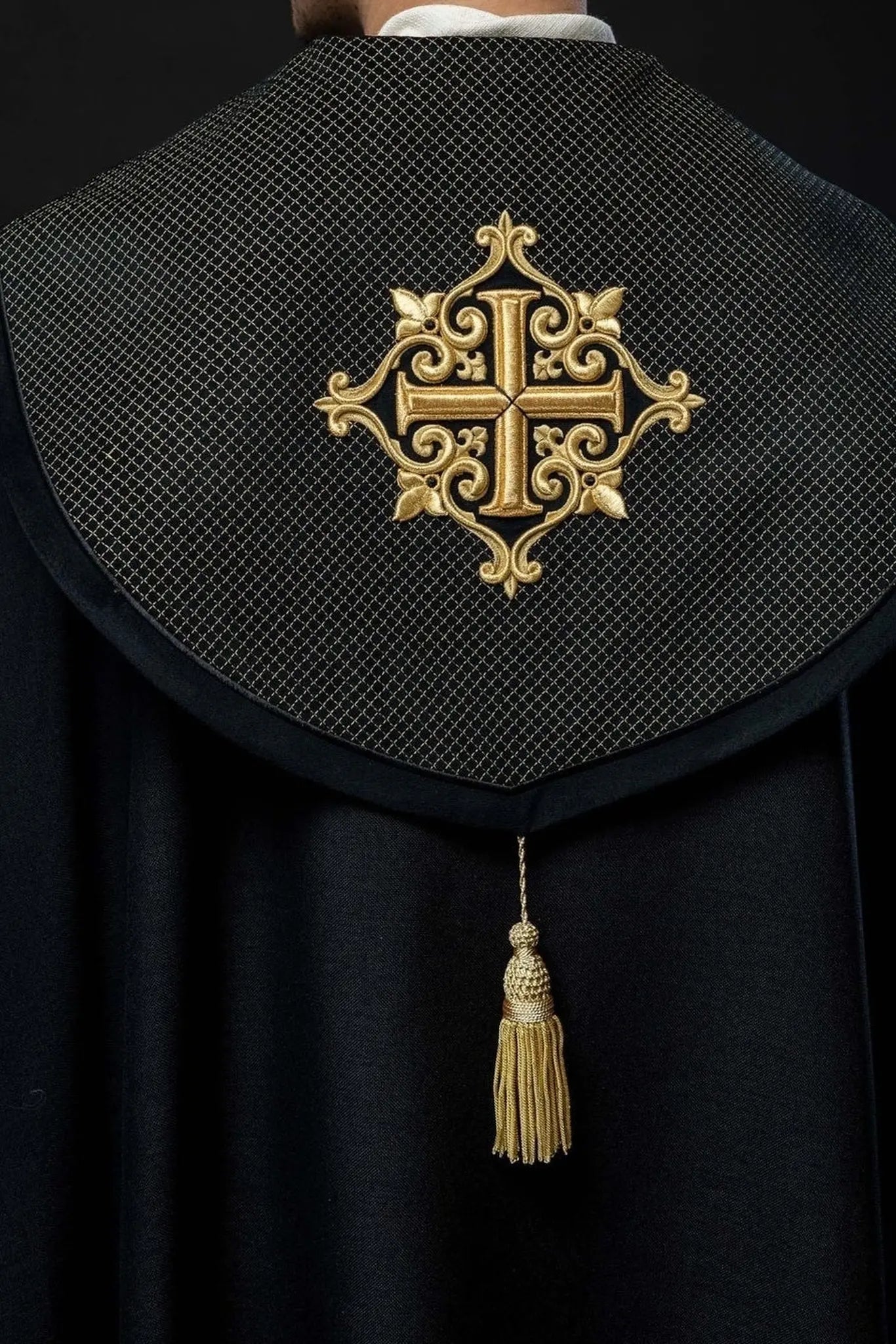
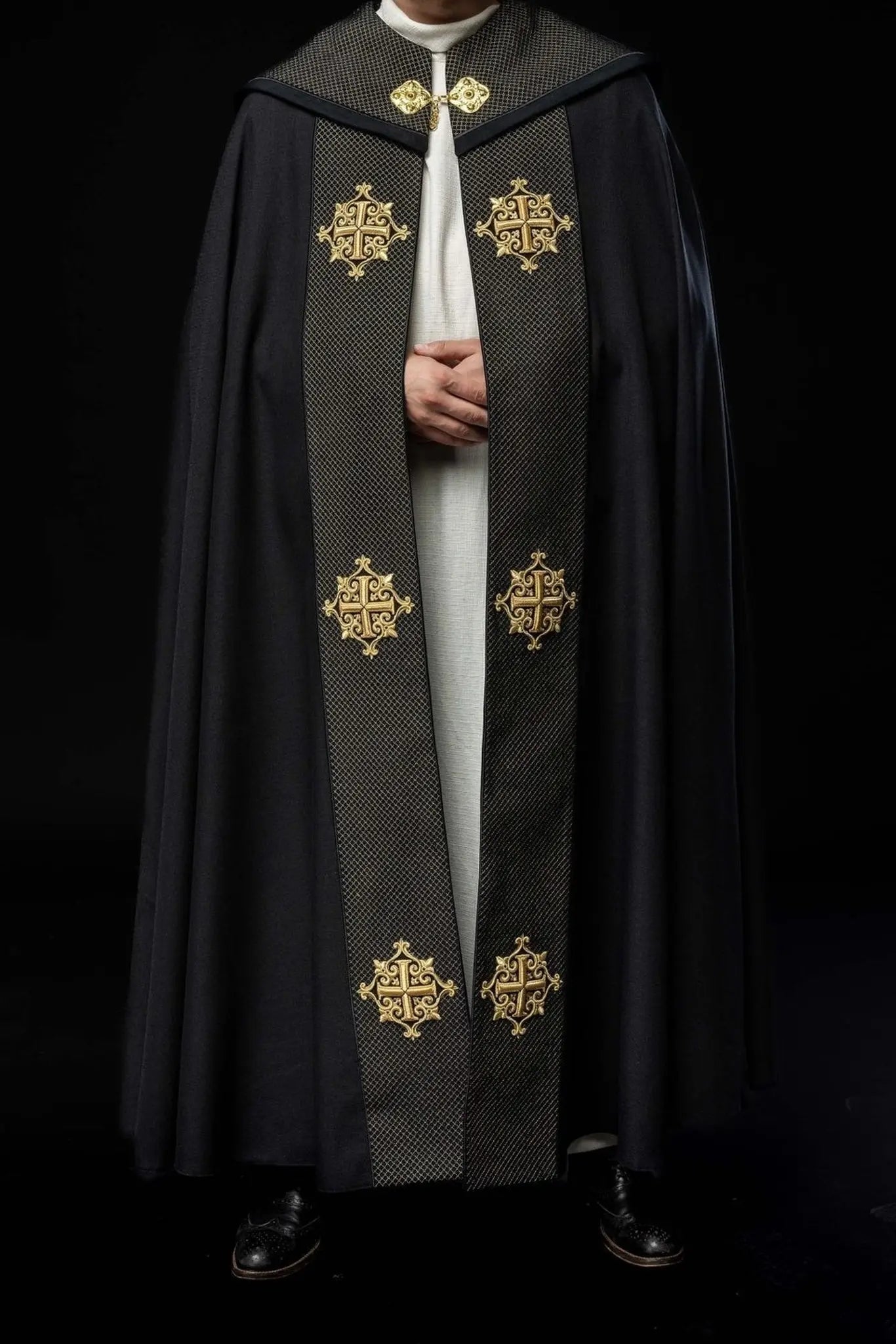
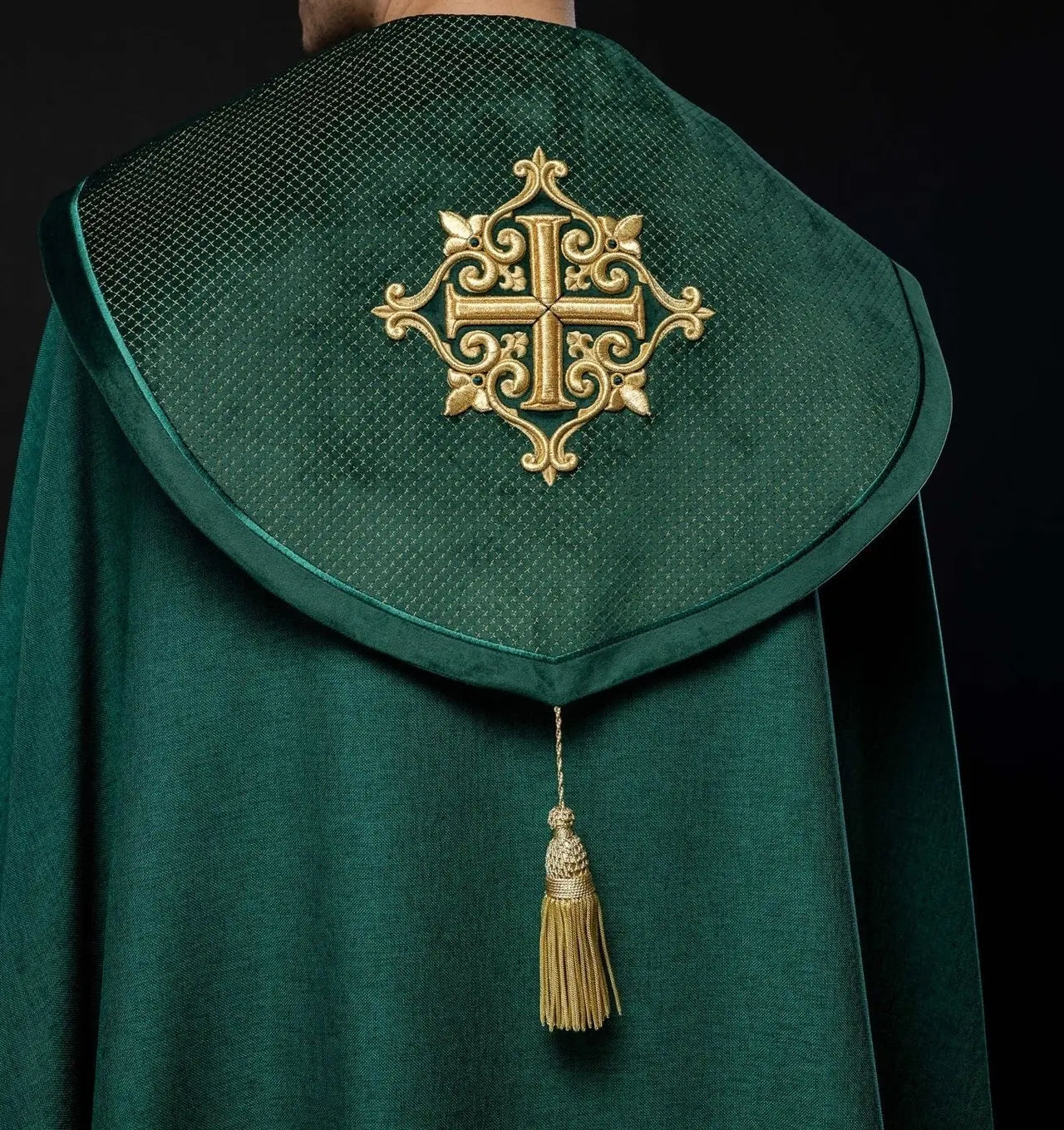
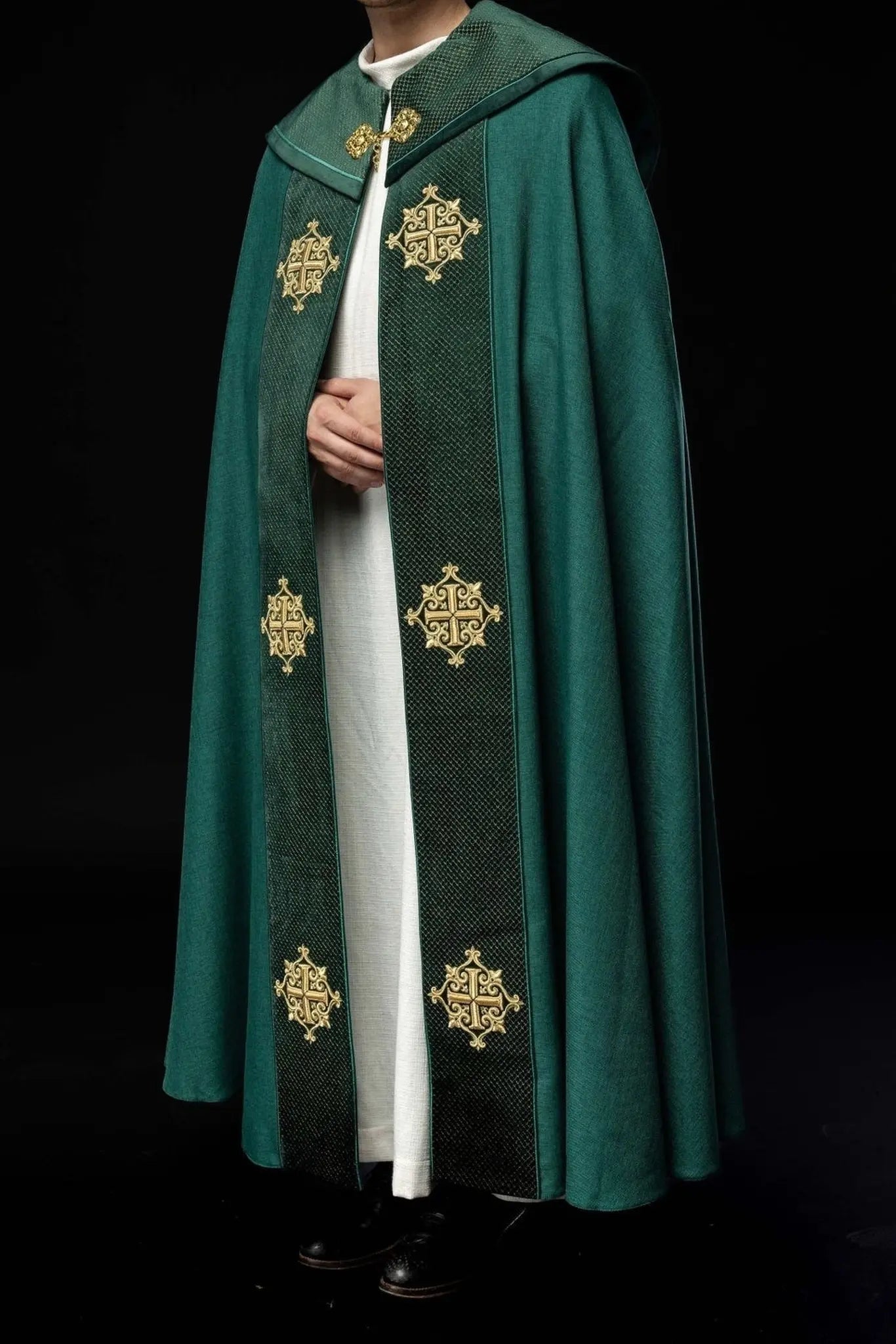
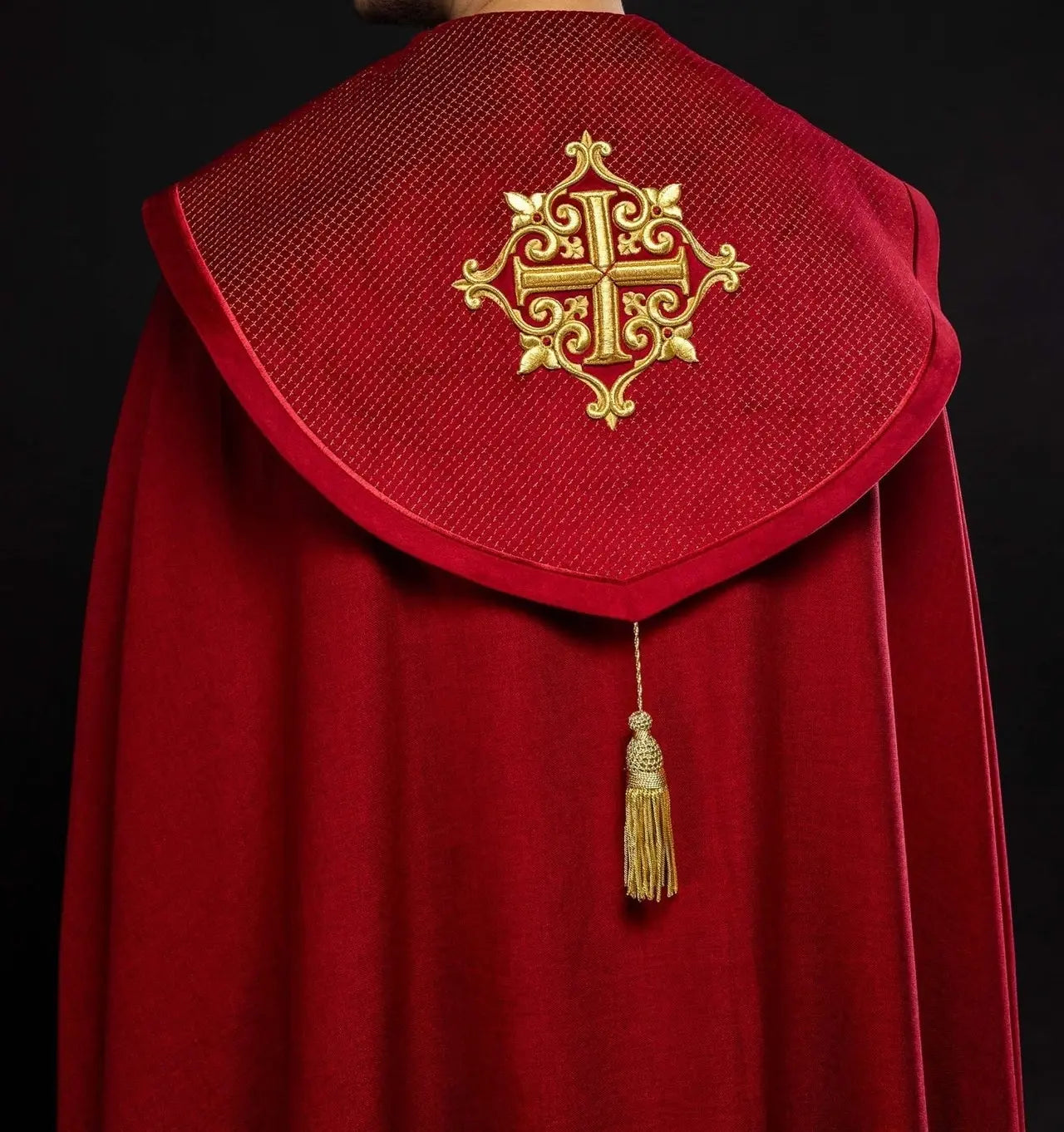
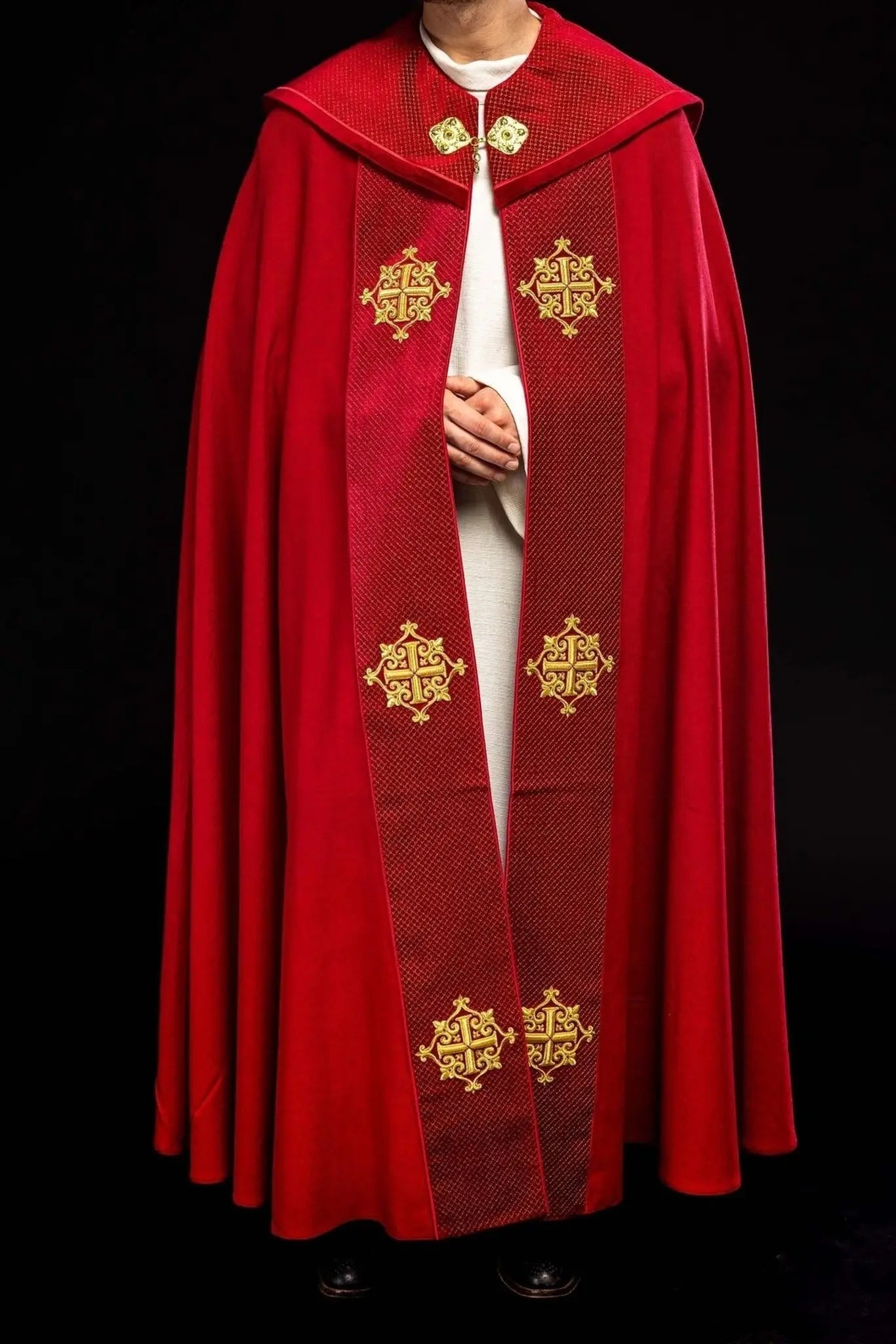
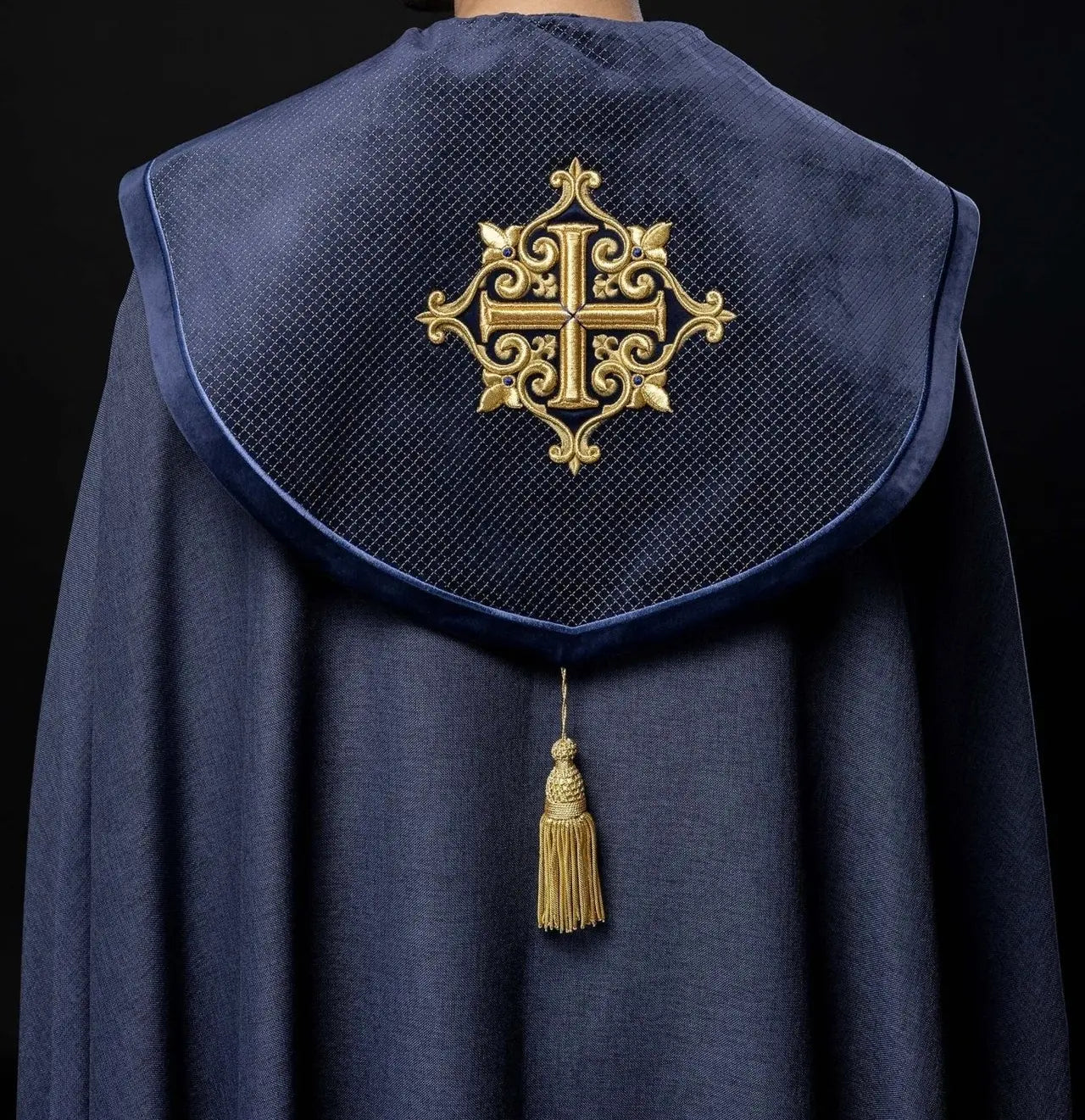
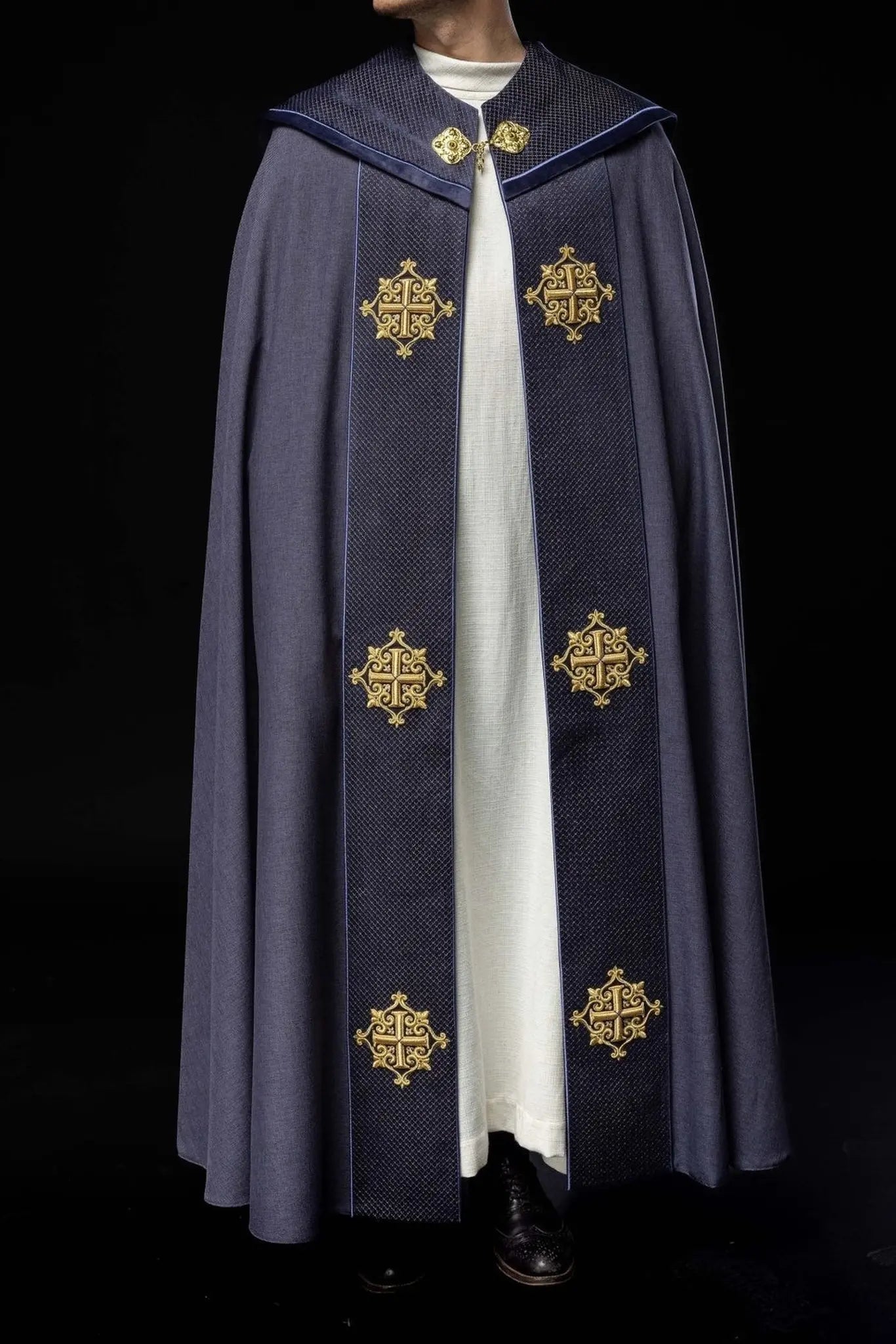
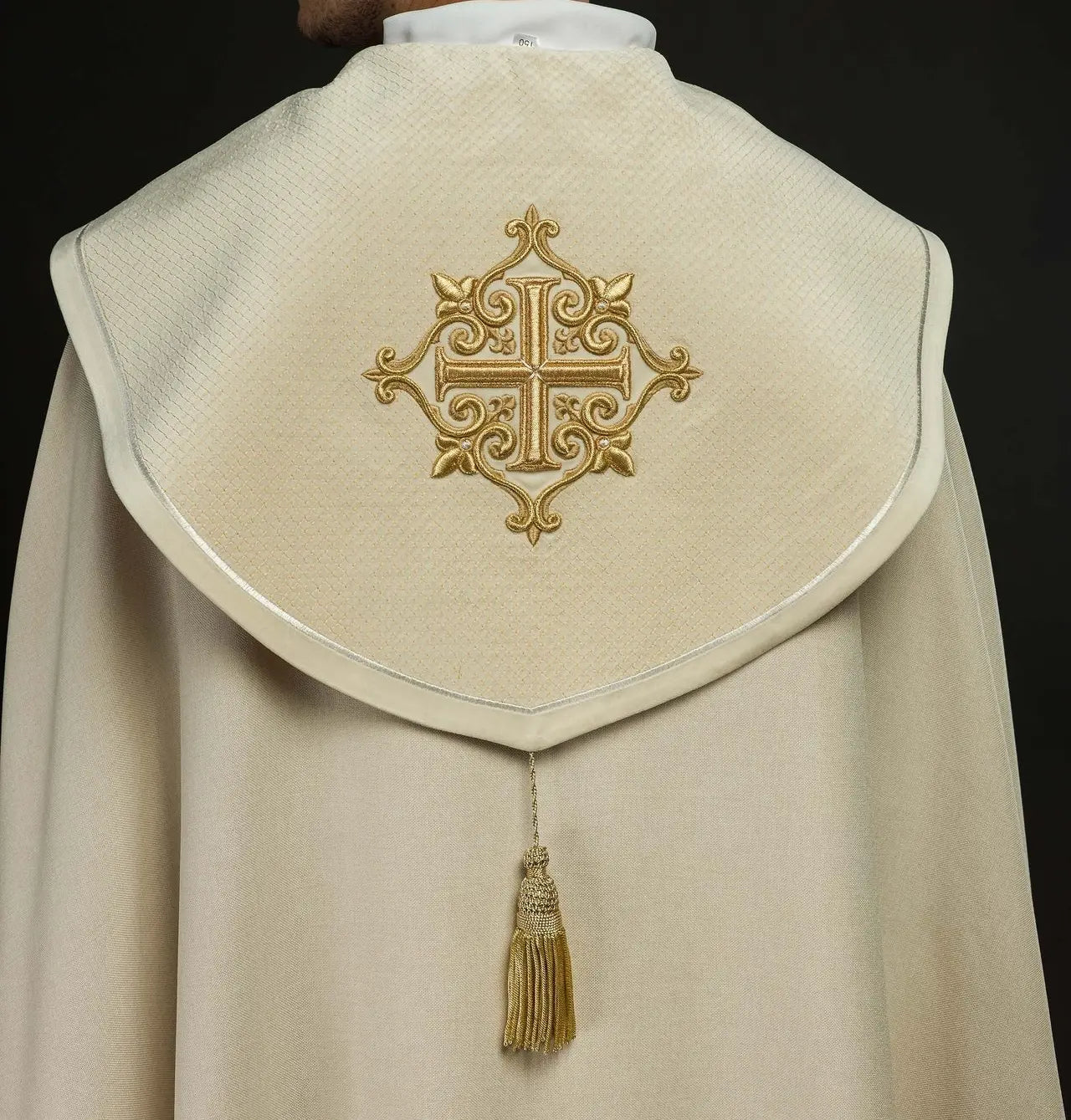
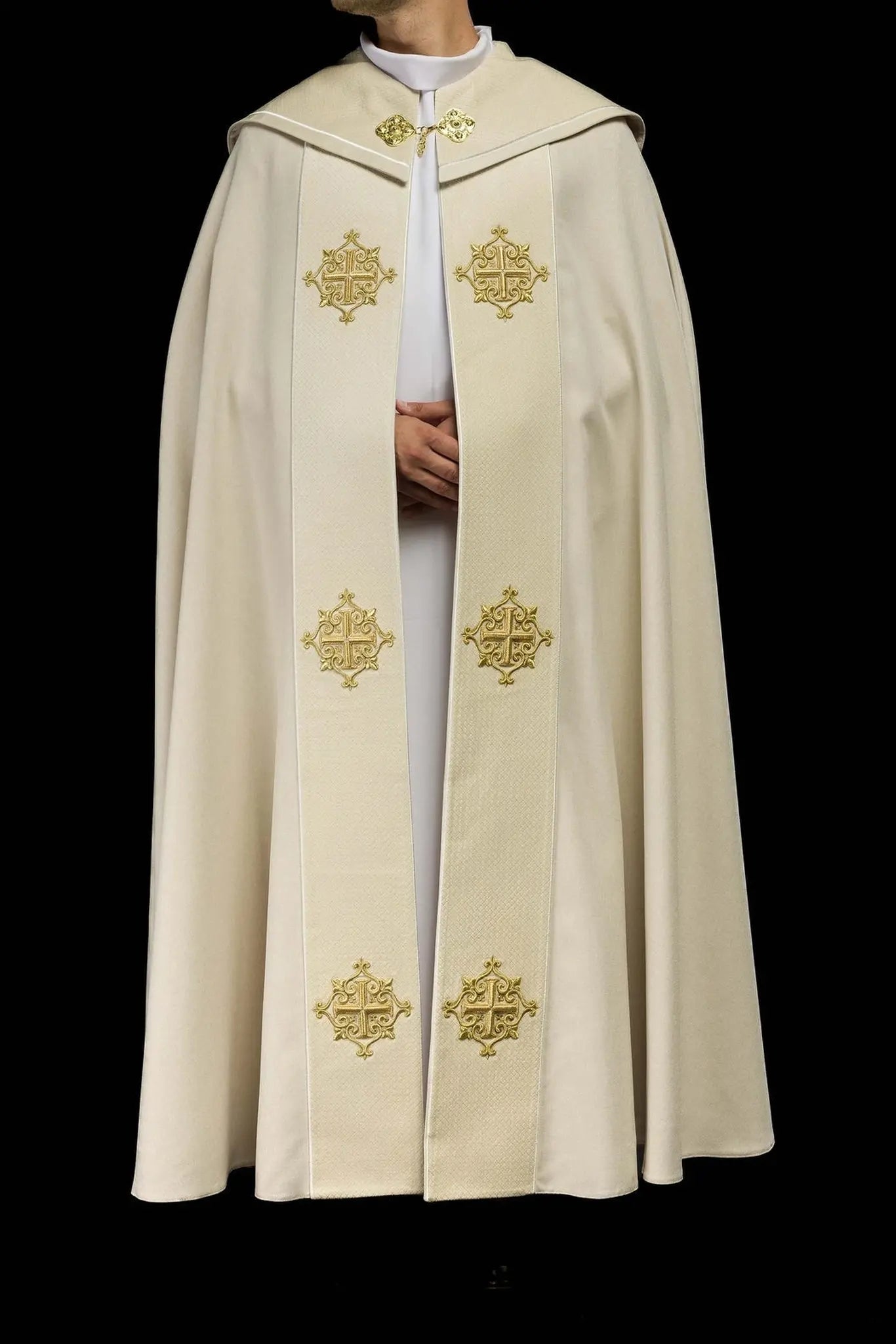
Copes Limited Edition
The Copes Limited Edition collection brings together distinctive liturgical copes and ceremonial capes prepared for solemn worship, processions, Eucharistic adoration, blessings, feast days, jubilees and other celebrations that call for a vestment with a more ceremonial character. A cope is not worn in the same way as a chasuble used for Mass by a priest or bishop. It is a processional and devotional vestment, chosen especially for rites outside the Eucharistic Prayer, for entrance and recessional processions, for Benediction of the Blessed Sacrament, for the Liturgy of the Hours, for solemn blessings and for parish or diocesan celebrations where the visual language of the liturgy should be dignified, coherent and expressive.
This limited edition selection focuses on copes with refined embroidery, carefully selected fabrics and decorative bands that give each vestment a strong liturgical presence. The live collection includes liturgical capes with velvet bands in red, black, green, purple and ecru, as well as designs with cross embroidery, Marian symbolism and richly ornamented front bands. These pieces are intended for communities seeking a cope that stands apart from everyday vestments while remaining clearly rooted in Catholic liturgical tradition.
What belongs in this limited edition cope collection?
In this collection you will find ceremonial copes, also described in some product names as liturgical capes, designed for use by clergy during solemn services. The distinctive shape of a cope gives it a flowing, processional form, while the decorated band, clasp area and embroidered motifs help the vestment harmonize with the celebration. Compared with standard everyday vestments, limited edition copes often include richer fabrics, more elaborate embroidery, stronger symbolic compositions and a more ceremonial visual finish.
The product mix is especially suited to churches, chapels, religious houses and sacristies that need a special cope for major moments in the liturgical year. Cross motifs can serve well for many solemn occasions, while Marian embroidery is especially meaningful for feasts and devotions connected with the Blessed Virgin Mary. When a celebration requires a full set of coordinated vestments, this collection can be viewed alongside the wider copes category and the main liturgical vestments collection.
Liturgical use and color selection
Choosing a cope begins with the celebration for which it will be used. Green copes are appropriate for Ordinary Time, when the Church emphasizes growth in faith and the steady rhythm of parish life. Purple copes are connected with penitential seasons and services, especially Advent and Lent, as well as some devotional contexts. Red copes are used for celebrations associated with the Holy Spirit, martyrs and the Passion of the Lord, while ecru, white or light-toned copes are often chosen for feasts of the Lord, Eucharistic celebrations outside Mass, Marian occasions and solemn festive rites. Black copes may be selected for funeral rites, memorial services and other liturgies of mourning where local custom permits their use.
Because this is a limited edition collection, color should be considered together with embroidery, fabric and the character of the parish or chapel space. A cope with a velvet band and cross embroidery may be a strong choice for a parish procession or solemn blessing. A Marian design may be better suited to celebrations connected with the Blessed Virgin Mary, parish patronal feasts, Marian devotions or processions. For Eucharistic celebrations outside Mass, many communities also coordinate the cope with humeral veils, chalice veils and other altar textiles.
Design details: embroidery, velvet bands and sacred symbolism
The character of a limited edition cope is shaped by more than color alone. Embroidered crosses, Marian symbols, decorated bands and carefully balanced ornamentation help the vestment communicate the meaning of the rite without overwhelming it. A cross motif offers a clear and universal Christian symbol suitable for many solemn occasions. Marian imagery gives the cope a devotional focus that can be especially appropriate for Marian feasts, rosary services, processions and parish celebrations dedicated to the Mother of God.
Velvet bands add visual depth and a formal finish to the front of the cope. They frame the vestment, emphasize its processional movement and create a dignified contrast with the main fabric. When selecting among limited edition designs, consider how the embroidery will appear from a distance, how the color will relate to the church interior, and whether the cope will be used mainly for annual feasts, Eucharistic devotion, funerals, Marian services or broader solemn liturgical use.
How to choose a limited edition cope for your sacristy
A good cope should be beautiful, practical and liturgically appropriate. First, choose the color according to the principal celebrations for which the vestment is needed. Second, review the motif: crosses offer broad use across many rites, while Marian symbols are more focused and devotional. Third, consider the fabric and decorative band. Velvet details and rich embroidery create a more solemn impression, making the cope especially suitable for important parish celebrations, processions and public acts of worship.
It is also worth thinking about coordination with other vestments already in the sacristy. A cope may be paired visually with clergy stoles, altar cloths, chalice veils or humeral veils, even when each item is purchased separately. For celebrations where a more complete ceremonial set is desired, the broader Limited Edition selection may help locate related vestments and church textiles with a similar level of ornamentation. For Marian celebrations, the Blessed Virgin Mary collection offers a useful adjacent category.
For solemn feasts, processions and Eucharistic devotion
Limited edition copes are particularly suitable when the liturgy includes a public or ceremonial movement: processions, blessings, vespers, Benediction, patronal celebrations, jubilees and important parish anniversaries. They are also a natural choice for celebrations such as Corpus Christi, when the cope is often used in Eucharistic processions together with a humeral veil and other liturgical accessories. In these settings, the cope becomes part of the visible order of worship, supporting the solemnity of the rite through form, color and sacred ornament.
For smaller chapels or communities, one carefully chosen limited edition cope can serve many years of special services. For larger sacristies, several colors may be useful so that the vestment can correspond more precisely to the liturgical calendar. In either case, the aim is not simply decoration, but a dignified visual language that serves prayer, reverence and the sacred action being celebrated.
Related vestments and accessories
A cope is often selected together with related items used in the same celebration. A humeral veil is needed for Benediction and Eucharistic processions when the Blessed Sacrament is carried. A cope clasp, sometimes called a morse, helps fasten the cope properly and can become an important visual detail at the front of the vestment. Matching or harmonizing altar textiles help create a coherent sanctuary arrangement. To complete the setting, you may also review cope clasps and related altar textile categories according to the needs of the celebration.
When comparing this collection with standard cope categories, remember that limited edition pieces are selected for their distinctive finish and ceremonial character. They are especially appropriate when a parish, shrine, chapel or religious community wants a vestment reserved for the most solemn occasions. The broader cope category may be useful for regular liturgical needs, while this collection focuses on designs with a stronger decorative identity and a more exclusive character.
Frequently Asked Questions (FAQ)
When is a cope used in the liturgy?
A cope is commonly used for processions, Benediction of the Blessed Sacrament, solemn blessings, the Liturgy of the Hours and other rites outside the celebration of Mass. It is a ceremonial vestment with a processional form, chosen for dignity and solemnity.
How is a cope different from a chasuble?
A chasuble is worn by a priest or bishop for Mass, while a cope is used for various solemn services and processions. The cope has an open front and is usually fastened at the chest, giving it a different function and appearance from a Mass vestment.
Which color cope should I choose?
Choose the color according to the liturgical celebration. Green is associated with Ordinary Time, purple with Advent, Lent and penitential services, red with the Holy Spirit, martyrs and the Passion, light tones with festive and Eucharistic celebrations, and black with funeral or memorial rites where customary.
Are limited edition copes suitable for parish use?
Yes. A limited edition cope is especially useful when a parish wants one vestment reserved for major feasts, processions, jubilees or special devotions. It can also serve as a ceremonial vestment for shrines, chapels and religious communities.
What should be coordinated with a cope?
For Eucharistic devotion, a humeral veil is often needed. Depending on the celebration, the cope may also be visually coordinated with stoles, altar cloths, chalice veils or a cope clasp so that the sanctuary and clergy vestments form a coherent liturgical setting.